window.__IS_SSR__=true
window.__INITIAL_STATE__={
"attachmentsReducer": {
"audio_0": {
"type": "attachments",
"id": "audio_0",
"imgSizes": {
"kqedFullSize": {
"file": "https://ww2.kqed.org/news/wp-content/themes/KQED-unified/img/audio_bgs/background0.jpg"
}
}
},
"audio_1": {
"type": "attachments",
"id": "audio_1",
"imgSizes": {
"kqedFullSize": {
"file": "https://ww2.kqed.org/news/wp-content/themes/KQED-unified/img/audio_bgs/background1.jpg"
}
}
},
"audio_2": {
"type": "attachments",
"id": "audio_2",
"imgSizes": {
"kqedFullSize": {
"file": "https://ww2.kqed.org/news/wp-content/themes/KQED-unified/img/audio_bgs/background2.jpg"
}
}
},
"audio_3": {
"type": "attachments",
"id": "audio_3",
"imgSizes": {
"kqedFullSize": {
"file": "https://ww2.kqed.org/news/wp-content/themes/KQED-unified/img/audio_bgs/background3.jpg"
}
}
},
"audio_4": {
"type": "attachments",
"id": "audio_4",
"imgSizes": {
"kqedFullSize": {
"file": "https://ww2.kqed.org/news/wp-content/themes/KQED-unified/img/audio_bgs/background4.jpg"
}
}
},
"placeholder": {
"type": "attachments",
"id": "placeholder",
"imgSizes": {
"thumbnail": {
"file": "https://cdn.kqed.org/wp-content/uploads/2024/12/KQED-Default-Image-816638274-2000x1333-1-160x107.jpg",
"width": 160,
"height": 107,
"mimeType": "image/jpeg"
},
"medium": {
"file": "https://cdn.kqed.org/wp-content/uploads/2024/12/KQED-Default-Image-816638274-2000x1333-1-800x533.jpg",
"width": 800,
"height": 533,
"mimeType": "image/jpeg"
},
"medium_large": {
"file": "https://cdn.kqed.org/wp-content/uploads/2024/12/KQED-Default-Image-816638274-2000x1333-1-768x512.jpg",
"width": 768,
"height": 512,
"mimeType": "image/jpeg"
},
"large": {
"file": "https://cdn.kqed.org/wp-content/uploads/2024/12/KQED-Default-Image-816638274-2000x1333-1-1020x680.jpg",
"width": 1020,
"height": 680,
"mimeType": "image/jpeg"
},
"1536x1536": {
"file": "https://cdn.kqed.org/wp-content/uploads/2024/12/KQED-Default-Image-816638274-2000x1333-1-1536x1024.jpg",
"width": 1536,
"height": 1024,
"mimeType": "image/jpeg"
},
"fd-lrg": {
"file": "https://cdn.kqed.org/wp-content/uploads/2024/12/KQED-Default-Image-816638274-2000x1333-1-1536x1024.jpg",
"width": 1536,
"height": 1024,
"mimeType": "image/jpeg"
},
"fd-med": {
"file": "https://cdn.kqed.org/wp-content/uploads/2024/12/KQED-Default-Image-816638274-2000x1333-1-1020x680.jpg",
"width": 1020,
"height": 680,
"mimeType": "image/jpeg"
},
"fd-sm": {
"file": "https://cdn.kqed.org/wp-content/uploads/2024/12/KQED-Default-Image-816638274-2000x1333-1-800x533.jpg",
"width": 800,
"height": 533,
"mimeType": "image/jpeg"
},
"post-thumbnail": {
"file": "https://cdn.kqed.org/wp-content/uploads/2024/12/KQED-Default-Image-816638274-2000x1333-1-672x372.jpg",
"width": 672,
"height": 372,
"mimeType": "image/jpeg"
},
"twentyfourteen-full-width": {
"file": "https://cdn.kqed.org/wp-content/uploads/2024/12/KQED-Default-Image-816638274-2000x1333-1-1038x576.jpg",
"width": 1038,
"height": 576,
"mimeType": "image/jpeg"
},
"xxsmall": {
"file": "https://cdn.kqed.org/wp-content/uploads/2024/12/KQED-Default-Image-816638274-2000x1333-1-160x107.jpg",
"width": 160,
"height": 107,
"mimeType": "image/jpeg"
},
"xsmall": {
"file": "https://cdn.kqed.org/wp-content/uploads/2024/12/KQED-Default-Image-816638274-2000x1333-1-672x372.jpg",
"width": 672,
"height": 372,
"mimeType": "image/jpeg"
},
"small": {
"file": "https://cdn.kqed.org/wp-content/uploads/2024/12/KQED-Default-Image-816638274-2000x1333-1-672x372.jpg",
"width": 672,
"height": 372,
"mimeType": "image/jpeg"
},
"xlarge": {
"file": "https://cdn.kqed.org/wp-content/uploads/2024/12/KQED-Default-Image-816638274-2000x1333-1-1020x680.jpg",
"width": 1020,
"height": 680,
"mimeType": "image/jpeg"
},
"full-width": {
"file": "https://cdn.kqed.org/wp-content/uploads/2024/12/KQED-Default-Image-816638274-2000x1333-1-1920x1280.jpg",
"width": 1920,
"height": 1280,
"mimeType": "image/jpeg"
},
"guest-author-32": {
"file": "https://cdn.kqed.org/wp-content/uploads/2025/01/KQED-Default-Image-816638274-1333x1333-1-160x160.jpg",
"width": 32,
"height": 32,
"mimeType": "image/jpeg"
},
"guest-author-50": {
"file": "https://cdn.kqed.org/wp-content/uploads/2025/01/KQED-Default-Image-816638274-1333x1333-1-160x160.jpg",
"width": 50,
"height": 50,
"mimeType": "image/jpeg"
},
"guest-author-64": {
"file": "https://cdn.kqed.org/wp-content/uploads/2025/01/KQED-Default-Image-816638274-1333x1333-1-160x160.jpg",
"width": 64,
"height": 64,
"mimeType": "image/jpeg"
},
"guest-author-96": {
"file": "https://cdn.kqed.org/wp-content/uploads/2025/01/KQED-Default-Image-816638274-1333x1333-1-160x160.jpg",
"width": 96,
"height": 96,
"mimeType": "image/jpeg"
},
"guest-author-128": {
"file": "https://cdn.kqed.org/wp-content/uploads/2025/01/KQED-Default-Image-816638274-1333x1333-1-160x160.jpg",
"width": 128,
"height": 128,
"mimeType": "image/jpeg"
},
"detail": {
"file": "https://cdn.kqed.org/wp-content/uploads/2025/01/KQED-Default-Image-816638274-1333x1333-1-160x160.jpg",
"width": 160,
"height": 160,
"mimeType": "image/jpeg"
},
"kqedFullSize": {
"file": "https://cdn.kqed.org/wp-content/uploads/2024/12/KQED-Default-Image-816638274-2000x1333-1.jpg",
"width": 2000,
"height": 1333
}
}
},
"mindshift_43395": {
"type": "attachments",
"id": "mindshift_43395",
"meta": {
"index": "attachments_1716263798",
"site": "mindshift",
"id": "43395",
"found": true
},
"parent": 43374,
"imgSizes": {
"twentyfourteen-full-width": {
"file": "https://ww2.kqed.org/app/uploads/sites/23/2016/01/iPad-1038x576.jpg",
"width": 1038,
"mimeType": "image/jpeg",
"height": 576
},
"thumbnail": {
"file": "https://ww2.kqed.org/app/uploads/sites/23/2016/01/iPad-400x225.jpg",
"width": 400,
"mimeType": "image/jpeg",
"height": 225
},
"fd-sm": {
"file": "https://ww2.kqed.org/app/uploads/sites/23/2016/01/iPad-960x540.jpg",
"width": 960,
"mimeType": "image/jpeg",
"height": 540
},
"post-thumbnail": {
"file": "https://ww2.kqed.org/app/uploads/sites/23/2016/01/iPad-672x372.jpg",
"width": 672,
"mimeType": "image/jpeg",
"height": 372
},
"kqedFullSize": {
"file": "https://ww2.kqed.org/app/uploads/sites/23/2016/01/iPad.jpg",
"width": 1920,
"height": 1080
},
"large": {
"file": "https://ww2.kqed.org/app/uploads/sites/23/2016/01/iPad-1440x810.jpg",
"width": 1440,
"mimeType": "image/jpeg",
"height": 810
},
"guest-author-96": {
"file": "https://ww2.kqed.org/app/uploads/sites/23/2016/01/iPad-96x96.jpg",
"width": 96,
"mimeType": "image/jpeg",
"height": 96
},
"medium": {
"file": "https://ww2.kqed.org/app/uploads/sites/23/2016/01/iPad-800x450.jpg",
"width": 800,
"mimeType": "image/jpeg",
"height": 450
},
"guest-author-64": {
"file": "https://ww2.kqed.org/app/uploads/sites/23/2016/01/iPad-64x64.jpg",
"width": 64,
"mimeType": "image/jpeg",
"height": 64
},
"guest-author-32": {
"file": "https://ww2.kqed.org/app/uploads/sites/23/2016/01/iPad-32x32.jpg",
"width": 32,
"mimeType": "image/jpeg",
"height": 32
},
"cat_post_thumb_sizecategory-posts-2": {
"file": "https://ww2.kqed.org/app/uploads/sites/23/2016/01/iPad-50x50.jpg",
"width": 50,
"mimeType": "image/jpeg",
"height": 50
},
"fd-lrg": {
"file": "https://ww2.kqed.org/app/uploads/sites/23/2016/01/iPad-1920x1080.jpg",
"width": 1920,
"mimeType": "image/jpeg",
"height": 1080
},
"fd-med": {
"file": "https://ww2.kqed.org/app/uploads/sites/23/2016/01/iPad-1180x664.jpg",
"width": 1180,
"mimeType": "image/jpeg",
"height": 664
},
"detail": {
"file": "https://ww2.kqed.org/app/uploads/sites/23/2016/01/iPad-75x75.jpg",
"width": 75,
"mimeType": "image/jpeg",
"height": 75
},
"medium_large": {
"file": "https://ww2.kqed.org/app/uploads/sites/23/2016/01/iPad-768x432.jpg",
"width": 768,
"mimeType": "image/jpeg",
"height": 432
},
"guest-author-128": {
"file": "https://ww2.kqed.org/app/uploads/sites/23/2016/01/iPad-128x128.jpg",
"width": 128,
"mimeType": "image/jpeg",
"height": 128
}
},
"publishDate": 1452673386,
"modified": 1452673393,
"caption": null,
"description": null,
"title": "iPad",
"credit": "iStock",
"status": "inherit",
"isLoading": false,
"fetchFailed": false
},
"mindshift_38125": {
"type": "attachments",
"id": "mindshift_38125",
"meta": {
"index": "attachments_1716263798",
"site": "mindshift",
"id": "38125",
"found": true
},
"parent": 38102,
"imgSizes": {
"thumbnail": {
"file": "https://ww2.kqed.org/app/uploads/sites/23/2014/10/Student-Voice-Collaborative-1-400x225.png",
"width": 400,
"mimeType": "image/png",
"height": 225
},
"fd-sm": {
"file": "https://ww2.kqed.org/app/uploads/sites/23/2014/10/Student-Voice-Collaborative-1-320x180.png",
"width": 320,
"mimeType": "image/png",
"height": 180
},
"post-thumbnail": {
"file": "https://ww2.kqed.org/app/uploads/sites/23/2014/10/Student-Voice-Collaborative-1-672x372.png",
"width": 672,
"mimeType": "image/png",
"height": 372
},
"kqedFullSize": {
"file": "https://ww2.kqed.org/app/uploads/sites/23/2014/10/Student-Voice-Collaborative-1.png",
"width": 895,
"height": 504
},
"fd-med": {
"file": "https://ww2.kqed.org/app/uploads/sites/23/2014/10/Student-Voice-Collaborative-1-768x432.png",
"width": 768,
"mimeType": "image/png",
"height": 432
},
"guest-author-96": {
"file": "https://ww2.kqed.org/app/uploads/sites/23/2014/10/Student-Voice-Collaborative-1-96x96.png",
"width": 96,
"mimeType": "image/png",
"height": 96
},
"medium": {
"file": "https://ww2.kqed.org/app/uploads/sites/23/2014/10/Student-Voice-Collaborative-1-800x451.png",
"width": 800,
"mimeType": "image/png",
"height": 451
},
"guest-author-64": {
"file": "https://ww2.kqed.org/app/uploads/sites/23/2014/10/Student-Voice-Collaborative-1-64x64.png",
"width": 64,
"mimeType": "image/png",
"height": 64
},
"guest-author-32": {
"file": "https://ww2.kqed.org/app/uploads/sites/23/2014/10/Student-Voice-Collaborative-1-32x32.png",
"width": 32,
"mimeType": "image/png",
"height": 32
},
"guest-author-128": {
"file": "https://ww2.kqed.org/app/uploads/sites/23/2014/10/Student-Voice-Collaborative-1-128x128.png",
"width": 128,
"mimeType": "image/png",
"height": 128
}
},
"publishDate": 1413569329,
"modified": 1413569329,
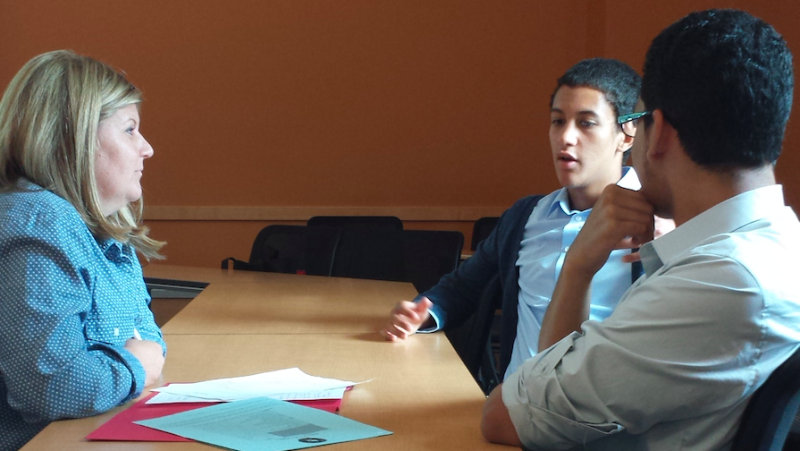
"caption": "A principal works with Student Voice Collaborative students on how to use the organization's rubric to assess and improve her school. (Courtesy Ari Sussman)\n",
"description": null,
"title": "Student Voice Collaborative 1",
"credit": null,
"status": "inherit",
"isLoading": false,
"fetchFailed": false
},
"mindshift_35133": {
"type": "attachments",
"id": "mindshift_35133",
"meta": {
"index": "attachments_1716263798",
"site": "mindshift",
"id": "35133",
"found": true
},
"parent": 35015,
"imgSizes": {
"thumbnail": {
"file": "https://ww2.kqed.org/app/uploads/sites/23/2014/04/school-400x225.jpg",
"width": 400,
"mimeType": "image/jpeg",
"height": 225
},
"fd-sm": {
"file": "https://ww2.kqed.org/app/uploads/sites/23/2014/04/school-320x180.jpg",
"width": 320,
"mimeType": "image/jpeg",
"height": 180
},
"kqedFullSize": {
"file": "https://ww2.kqed.org/app/uploads/sites/23/2014/04/school.jpg",
"width": 640,
"height": 360
},
"guest-author-96": {
"file": "https://ww2.kqed.org/app/uploads/sites/23/2014/04/school-96x96.jpg",
"width": 96,
"mimeType": "image/jpeg",
"height": 96
},
"guest-author-64": {
"file": "https://ww2.kqed.org/app/uploads/sites/23/2014/04/school-64x64.jpg",
"width": 64,
"mimeType": "image/jpeg",
"height": 64
},
"guest-author-32": {
"file": "https://ww2.kqed.org/app/uploads/sites/23/2014/04/school-32x32.jpg",
"width": 32,
"mimeType": "image/jpeg",
"height": 32
},
"guest-author-128": {
"file": "https://ww2.kqed.org/app/uploads/sites/23/2014/04/school-128x128.jpg",
"width": 128,
"mimeType": "image/jpeg",
"height": 128
}
},
"publishDate": 1397770765,
"modified": 1397770765,
"caption": null,
"description": null,
"title": "school",
"credit": null,
"status": "inherit",
"isLoading": false,
"fetchFailed": false
},
"mindshift_33856": {
"type": "attachments",
"id": "mindshift_33856",
"meta": {
"index": "attachments_1716263798",
"site": "mindshift",
"id": "33856",
"found": true
},
"parent": 33796,
"imgSizes": {
"thumbnail": {
"file": "https://ww2.kqed.org/app/uploads/sites/23/2014/02/erinscott_-7346-400x225.jpg",
"width": 400,
"mimeType": "image/jpeg",
"height": 225
},
"fd-sm": {
"file": "https://ww2.kqed.org/app/uploads/sites/23/2014/02/erinscott_-7346-320x180.jpg",
"width": 320,
"mimeType": "image/jpeg",
"height": 180
},
"kqedFullSize": {
"file": "https://ww2.kqed.org/app/uploads/sites/23/2014/02/erinscott_-7346.jpg",
"width": 640,
"height": 360
},
"guest-author-96": {
"file": "https://ww2.kqed.org/app/uploads/sites/23/2014/02/erinscott_-7346-96x96.jpg",
"width": 96,
"mimeType": "image/jpeg",
"height": 96
},
"guest-author-64": {
"file": "https://ww2.kqed.org/app/uploads/sites/23/2014/02/erinscott_-7346-64x64.jpg",
"width": 64,
"mimeType": "image/jpeg",
"height": 64
},
"guest-author-32": {
"file": "https://ww2.kqed.org/app/uploads/sites/23/2014/02/erinscott_-7346-32x32.jpg",
"width": 32,
"mimeType": "image/jpeg",
"height": 32
},
"guest-author-128": {
"file": "https://ww2.kqed.org/app/uploads/sites/23/2014/02/erinscott_-7346-128x128.jpg",
"width": 128,
"mimeType": "image/jpeg",
"height": 128
}
},
"publishDate": 1391644822,
"modified": 1391644822,
"caption": null,
"description": null,
"title": "erinscott_-7346",
"credit": null,
"status": "inherit",
"isLoading": false,
"fetchFailed": false
}
},
"audioPlayerReducer": {
"postId": "stream_live",
"isPaused": true,
"isPlaying": false,
"pfsActive": false,
"pledgeModalIsOpen": true,
"playerDrawerIsOpen": false,
"liveAudioPlayStartedAt": 0,
"liveAudioPlayContext": ""
},
"authorsReducer": {
"hollykorbey": {
"type": "authors",
"id": "4445",
"meta": {
"index": "authors_1716337520",
"id": "4445",
"found": true
},
"name": "Holly Korbey",
"firstName": "Holly",
"lastName": "Korbey",
"slug": "hollykorbey",
"email": "holly@hollykorbey.com",
"display_author_email": false,
"staff_mastheads": [],
"title": null,
"bio": "Holly Korbey's work on parenting and education has appeared in The New York Times, The Atlantic, Babble, Brain, Child Magazine, and others. She lives in Nashville with her family. Follow her on Twitter: @HKorbey",
"avatar": "https://secure.gravatar.com/avatar/f385f7a3b90e52ecd5e85c24fbd0a363?s=600&d=blank&r=g",
"twitter": null,
"facebook": null,
"instagram": null,
"linkedin": null,
"sites": [
{
"site": "mindshift",
"roles": [
"contributor"
]
}
],
"headData": {
"title": "Holly Korbey | KQED",
"description": null,
"ogImgSrc": "https://secure.gravatar.com/avatar/f385f7a3b90e52ecd5e85c24fbd0a363?s=600&d=blank&r=g",
"twImgSrc": "https://secure.gravatar.com/avatar/f385f7a3b90e52ecd5e85c24fbd0a363?s=600&d=blank&r=g"
},
"isLoading": false,
"link": "/author/hollykorbey"
},
"luba": {
"type": "authors",
"id": "4537",
"meta": {
"index": "authors_1716337520",
"id": "4537",
"found": true
},
"name": "Luba Vangelova",
"firstName": "Luba",
"lastName": "Vangelova",
"slug": "luba",
"email": "luba@catalystcommunicationsllc.com",
"display_author_email": false,
"staff_mastheads": [],
"title": null,
"bio": "Luba Vangelova’s work has appeared in numerous print, online and broadcast media outlets, including The New York Times, Smithsonian, The Atlantic, and Salon. She is also working on a book about self-directed learning. Her web site is \u003ca title=\"Luba Vangelova\" href=\"http://www.LubaVangelova.com\" target=\"_blank\">www.LubaVangelova.com\u003c/a>. She also posts on \u003ca title=\"@LubaSays\" href=\"http://www.twitter.com/LubaSays\" target=\"_blank\">Twitter\u003c/a> and on her official \u003ca title=\"Facebook - Luba Vangelova\" href=\"http://www.facebook.com/LubaSays\" target=\"_blank\">Facebook\u003c/a> page.",
"avatar": "https://secure.gravatar.com/avatar/0c49027042bcd2ffbce1f5f200e2172e?s=600&d=blank&r=g",
"twitter": "LubaSays",
"facebook": null,
"instagram": null,
"linkedin": "lvangelova",
"sites": [
{
"site": "mindshift",
"roles": [
"contributor"
]
}
],
"headData": {
"title": "Luba Vangelova | KQED",
"description": null,
"ogImgSrc": "https://secure.gravatar.com/avatar/0c49027042bcd2ffbce1f5f200e2172e?s=600&d=blank&r=g",
"twImgSrc": "https://secure.gravatar.com/avatar/0c49027042bcd2ffbce1f5f200e2172e?s=600&d=blank&r=g"
},
"isLoading": false,
"link": "/author/luba"
}
},
"pagesReducer": {
"mindshift_tag_student-engagement": {
"type": "terms",
"id": "mindshift_20616",
"meta": {
"index": "terms_1716263798",
"site": "mindshift",
"id": "20616",
"score": 10.403393
},
"featImg": null,
"name": "student engagement",
"description": null,
"taxonomy": "tag",
"headData": {
"twImgId": null,
"twTitle": null,
"ogTitle": null,
"ogImgId": null,
"twDescription": null,
"description": null,
"title": "student engagement Archives | KQED Mindshift",
"ogDescription": null
},
"ttid": 19893,
"slug": "student-engagement",
"isLoading": false,
"title": "student engagement",
"pageMeta": {
"site": "mindshift",
"WpPageTemplate": "page-topic-editorial",
"currentPage": 3
},
"blocks": [
{
"blockName": "kqed/post-list",
"attrs": {
"layout": "cardArticle2",
"query": "posts/mindshift?tag=student-engagement",
"seeMore": false,
"paginated": true,
"page": 3
}
},
{
"blockName": "kqed/ad"
}
]
}
},
"pfsSessionReducer": {},
"postsReducer": {
"stream_live": {
"type": "live",
"id": "stream_live",
"audioUrl": "https://streams.kqed.org/kqedradio",
"title": "Live Stream",
"excerpt": "Live Stream information currently unavailable.",
"link": "/radio",
"featImg": "",
"label": {
"name": "KQED Live",
"link": "/"
}
},
"stream_kqedNewscast": {
"type": "posts",
"id": "stream_kqedNewscast",
"audioUrl": "https://www.kqed.org/.stream/anon/radio/RDnews/newscast.mp3?_=1",
"title": "KQED Newscast",
"featImg": "",
"label": {
"name": "88.5 FM",
"link": "/"
}
},
"mindshift_43374": {
"type": "posts",
"id": "mindshift_43374",
"meta": {
"index": "posts_1716263798",
"site": "mindshift",
"id": "43374",
"score": null,
"sort": [
1452777961000
]
},
"parent": 0,
"labelTerm": {
"site": "mindshift"
},
"blocks": [],
"publishDate": 1452777961,
"format": "standard",
"disqusTitle": "How to Determine if Student Engagement is Leading to Learning",
"title": "How to Determine if Student Engagement is Leading to Learning",
"headTitle": "MindShift | KQED News",
"content": "\u003cp>\u003cem>Excerpted from the book, \"UnCommon Learning: Creating Schools That Work for Kids,\" by Eric Sheninger\u003cem>, published by Corwin, 2015\u003c/em>. \u003c/em>\u003c/p>\n\u003cp class=\"p2\">\u003cb>Engagement Does Not Always Equate to Learning \u003c/b>\u003c/p>\n\u003cp class=\"p2\">No matter where I am, whether it is a physical location or virtual, I am always hearing conversations about how technology can be used to engage students effectively. This is extremely important as the majority of students spend six to eight hours a day in schools where they are completely disengaged. I for one can’t blame today’s learner for being bored in school when I all have to do is observe my own son at home playing Minecraft to see firsthand his high level of engagement. His Minecraft experiences provide meaning and relevance in an environment that is intellectually stimulating but, more importantly, fun. Schools and educators would be wise to take cues from the real world and make concerted efforts to integrate technology with the purpose to increase student engagement. Engagement, after all, is the impetus for learning in my opinion.\u003c/p>\n\u003cp class=\"p2\">Hidden Curriculum (2014) provides the following definition of engagement:\u003c/p>\n\u003cblockquote>\n\u003cp class=\"p2\">In education, student engagement refers to the degree of attention, curiosity, interest, optimism, and passion that students show when they are learning or being taught, which extends to the level of motivation they have to learn and progress in their education. Generally speaking, the concept of \"student engagement\" is predicated on the belief that learning improves when students are inquisitive, interested, or inspired, and that learning tends to suffer when students are bored, dispassionate, disaffected, or otherwise \"disengaged.\" Stronger student engagement or improved student engagement are common instructional objectives expressed by educators.\u003c/p>\n\u003c/blockquote>\n\u003cp class=\"p2\">The last line in this description elicits a great deal of concern for me. With or without technology, there always seems to be a great deal of emphasis on student engagement, but the fact of the matter is that engagement does not necessarily equate to learning. I have observed numerous lessons where students were obviously engaged through the integration of technology, but there was no clear indication that students were learning. Having fun, collaborating, communicating, and being creative are all very important elements that should be embedded elements of pedagogically sound lessons, but we must not lose sight of the importance of the connection to, and evidence of, learning. Thus, students can walk away from a lesson or activity having been very engaged but with very little in the form of new knowledge construction, conceptual mastery, or evidence of applied skills. When speaking at events I often ask leaders and teachers how they measure the impact of technology on learning. More often than not I receive blank stares or an open admission that they have no idea. The allure of engagement can be blinding as well as misleading.\u003c/p>\n\u003cp>[ad fullwidth]\u003c/p>\n\u003cp class=\"p2\">\u003cimg class=\"alignleft size-full wp-image-43378\" src=\"http://ww2.kqed.org/mindshift/wp-content/uploads/sites/23/2016/01/Sheninger_UnCommon-Learning-e1452630758954.jpg\" alt=\"Sheninger_UnCommon Learning\" width=\"200\" height=\"300\">\u003c/p>\n\u003cp class=\"p2\">It is so important to look beyond mere student engagement when it comes to technology. If the emphasis is on digital learning, we must not get caught up in the bells and whistles or smoke and mirrors that are commonly associated with the digital aspect alone. Engagement should always translate into deeper learning opportunities where technology provides students the means to think critically and solve problems while demonstrating what they know and can do in a variety of ways. Technology should be implemented to increase engagement, but that engagement must lead to support, enhancement, or an increase in student learning. It should not be used as a digital pacifier or gimmick to get students to be active participants in class. With technology there should be a focus on active learning where students are doing.\u003c/p>\n\u003cp class=\"p2\">Here are some questions that will assist in determining if engagement is leading to actual learning:\u003c/p>\n\u003cp class=\"p2\">• Is the technology being integrated in a purposeful way, grounded in sound pedagogy?\u003cbr>\n• What are the learning objectives or outcomes?\u003cbr>\n• Are students demonstrating the construction of new knowledge? Are they creating a learning product or artifact?\u003cbr>\n• How are students applying essential skills they have acquired to demonstrate conceptual mastery?\u003cbr>\n• What assessments (formative or summative) are being used to determine standard attainment?\u003cbr>\n• How are students being provided feedback about their progress toward the specific learning objectives or outcomes?\u003cbr>\n• Is there alignment to current observation or evaluation tools?\u003c/p>\n\u003cp class=\"p2\">Engagement, relevance, and fun are great, but make sure there is observable evidence that students are learning when integrating technology.\u003c/p>\n\u003cp>\u003c/p>\n\u003cp class=\"p2\">\u003cem>Excerpted from the book, \"\u003ca href=\"http://www.amazon.com/UnCommon-Learning-Creating-Schools-That/dp/1483365751\">UnCommon Learning: Creating Schools That Work for Kids\u003c/a>\" by\u003ca href=\"http://ericsheninger.com\"> Eric Sheninger\u003c/a>, published by Corwin, 2015. He is a Senior Fellow and Thought Leader on Digital Leadership with the \u003ca href=\"http://www.leadered.com/services/digital-leadership.php\" target=\"_blank\">International Center for Leadership in Education (ICLE)\u003c/a>. Prior to this he was the award-winning principal at New Milford High School. You can follow him on Twitter at \u003ca class=\"ProfileHeaderCard-screennameLink u-linkComplex js-nav\" href=\"https://twitter.com/E_Sheninger\">@\u003cspan class=\"u-linkComplex-target\">E_Sheninger\u003c/span>\u003c/a>.\u003c/em>\u003c/p>\n\n",
"disqusIdentifier": "43374 http://ww2.kqed.org/mindshift/?p=43374",
"disqusUrl": "https://ww2.kqed.org/mindshift/2016/01/14/how-to-determine-if-student-engagement-is-leading-to-learning/",
"stats": {
"hasVideo": false,
"hasChartOrMap": false,
"hasAudio": false,
"hasPolis": false,
"wordCount": 791,
"hasGoogleForm": false,
"hasGallery": false,
"hasHearkenModule": false,
"iframeSrcs": [],
"paragraphCount": 3
},
"modified": 1452777961,
"excerpt": "Student engagement is a top priority for educators, but engagement doesn't always mean the kids are learning. ",
"headData": {
"twImgId": "",
"twTitle": "",
"ogTitle": "",
"ogImgId": "",
"twDescription": "",
"description": "Student engagement is a top priority for educators, but engagement doesn't always mean the kids are learning. ",
"title": "How to Determine if Student Engagement is Leading to Learning | KQED",
"ogDescription": "",
"schema": {
"@context": "https://schema.org",
"@type": "Article",
"headline": "How to Determine if Student Engagement is Leading to Learning",
"datePublished": "2016-01-14T05:26:01-08:00",
"dateModified": "2016-01-14T05:26:01-08:00",
"image": "https://cdn.kqed.org/wp-content/uploads/2020/02/KQED-OG-Image@1x.png"
}
},
"guestAuthors": [],
"slug": "how-to-determine-if-student-engagement-is-leading-to-learning",
"status": "publish",
"path": "/mindshift/43374/how-to-determine-if-student-engagement-is-leading-to-learning",
"audioTrackLength": null,
"parsedContent": [
{
"type": "contentString",
"content": "\u003cdiv class=\"post-body\">\u003cp>\u003cp>\u003cem>Excerpted from the book, \"UnCommon Learning: Creating Schools That Work for Kids,\" by Eric Sheninger\u003cem>, published by Corwin, 2015\u003c/em>. \u003c/em>\u003c/p>\n\u003cp class=\"p2\">\u003cb>Engagement Does Not Always Equate to Learning \u003c/b>\u003c/p>\n\u003cp class=\"p2\">No matter where I am, whether it is a physical location or virtual, I am always hearing conversations about how technology can be used to engage students effectively. This is extremely important as the majority of students spend six to eight hours a day in schools where they are completely disengaged. I for one can’t blame today’s learner for being bored in school when I all have to do is observe my own son at home playing Minecraft to see firsthand his high level of engagement. His Minecraft experiences provide meaning and relevance in an environment that is intellectually stimulating but, more importantly, fun. Schools and educators would be wise to take cues from the real world and make concerted efforts to integrate technology with the purpose to increase student engagement. Engagement, after all, is the impetus for learning in my opinion.\u003c/p>\n\u003cp class=\"p2\">Hidden Curriculum (2014) provides the following definition of engagement:\u003c/p>\n\u003cblockquote>\n\u003cp class=\"p2\">In education, student engagement refers to the degree of attention, curiosity, interest, optimism, and passion that students show when they are learning or being taught, which extends to the level of motivation they have to learn and progress in their education. Generally speaking, the concept of \"student engagement\" is predicated on the belief that learning improves when students are inquisitive, interested, or inspired, and that learning tends to suffer when students are bored, dispassionate, disaffected, or otherwise \"disengaged.\" Stronger student engagement or improved student engagement are common instructional objectives expressed by educators.\u003c/p>\n\u003c/blockquote>\n\u003cp class=\"p2\">The last line in this description elicits a great deal of concern for me. With or without technology, there always seems to be a great deal of emphasis on student engagement, but the fact of the matter is that engagement does not necessarily equate to learning. I have observed numerous lessons where students were obviously engaged through the integration of technology, but there was no clear indication that students were learning. Having fun, collaborating, communicating, and being creative are all very important elements that should be embedded elements of pedagogically sound lessons, but we must not lose sight of the importance of the connection to, and evidence of, learning. Thus, students can walk away from a lesson or activity having been very engaged but with very little in the form of new knowledge construction, conceptual mastery, or evidence of applied skills. When speaking at events I often ask leaders and teachers how they measure the impact of technology on learning. More often than not I receive blank stares or an open admission that they have no idea. The allure of engagement can be blinding as well as misleading.\u003c/p>\n\u003cp>\u003c/p>\u003c/div>",
"attributes": {
"named": {},
"numeric": []
}
},
{
"type": "component",
"content": "",
"name": "ad",
"attributes": {
"named": {
"label": "fullwidth"
},
"numeric": [
"fullwidth"
]
}
},
{
"type": "contentString",
"content": "\u003cdiv class=\"post-body\">\u003cp>\u003c/p>\n\u003cp class=\"p2\">\u003cimg class=\"alignleft size-full wp-image-43378\" src=\"http://ww2.kqed.org/mindshift/wp-content/uploads/sites/23/2016/01/Sheninger_UnCommon-Learning-e1452630758954.jpg\" alt=\"Sheninger_UnCommon Learning\" width=\"200\" height=\"300\">\u003c/p>\n\u003cp class=\"p2\">It is so important to look beyond mere student engagement when it comes to technology. If the emphasis is on digital learning, we must not get caught up in the bells and whistles or smoke and mirrors that are commonly associated with the digital aspect alone. Engagement should always translate into deeper learning opportunities where technology provides students the means to think critically and solve problems while demonstrating what they know and can do in a variety of ways. Technology should be implemented to increase engagement, but that engagement must lead to support, enhancement, or an increase in student learning. It should not be used as a digital pacifier or gimmick to get students to be active participants in class. With technology there should be a focus on active learning where students are doing.\u003c/p>\n\u003cp class=\"p2\">Here are some questions that will assist in determining if engagement is leading to actual learning:\u003c/p>\n\u003cp class=\"p2\">• Is the technology being integrated in a purposeful way, grounded in sound pedagogy?\u003cbr>\n• What are the learning objectives or outcomes?\u003cbr>\n• Are students demonstrating the construction of new knowledge? Are they creating a learning product or artifact?\u003cbr>\n• How are students applying essential skills they have acquired to demonstrate conceptual mastery?\u003cbr>\n• What assessments (formative or summative) are being used to determine standard attainment?\u003cbr>\n• How are students being provided feedback about their progress toward the specific learning objectives or outcomes?\u003cbr>\n• Is there alignment to current observation or evaluation tools?\u003c/p>\n\u003cp class=\"p2\">Engagement, relevance, and fun are great, but make sure there is observable evidence that students are learning when integrating technology.\u003c/p>\n\u003cp>\u003c/p>\n\u003cp class=\"p2\">\u003cem>Excerpted from the book, \"\u003ca href=\"http://www.amazon.com/UnCommon-Learning-Creating-Schools-That/dp/1483365751\">UnCommon Learning: Creating Schools That Work for Kids\u003c/a>\" by\u003ca href=\"http://ericsheninger.com\"> Eric Sheninger\u003c/a>, published by Corwin, 2015. He is a Senior Fellow and Thought Leader on Digital Leadership with the \u003ca href=\"http://www.leadered.com/services/digital-leadership.php\" target=\"_blank\">International Center for Leadership in Education (ICLE)\u003c/a>. Prior to this he was the award-winning principal at New Milford High School. You can follow him on Twitter at \u003ca class=\"ProfileHeaderCard-screennameLink u-linkComplex js-nav\" href=\"https://twitter.com/E_Sheninger\">@\u003cspan class=\"u-linkComplex-target\">E_Sheninger\u003c/span>\u003c/a>.\u003c/em>\u003c/p>\n\n\u003c/div>\u003c/p>",
"attributes": {
"named": {},
"numeric": []
}
}
],
"link": "/mindshift/43374/how-to-determine-if-student-engagement-is-leading-to-learning",
"authors": [
"4354"
],
"categories": [
"mindshift_192"
],
"tags": [
"mindshift_20784",
"mindshift_1040",
"mindshift_20616"
],
"featImg": "mindshift_43395",
"label": "mindshift"
},
"mindshift_38102": {
"type": "posts",
"id": "mindshift_38102",
"meta": {
"index": "posts_1716263798",
"site": "mindshift",
"id": "38102",
"score": null,
"sort": [
1413572971000
]
},
"parent": 0,
"labelTerm": {
"site": "mindshift"
},
"blocks": [],
"publishDate": 1413572971,
"format": "aside",
"disqusTitle": "How Can Students Have More Say in School Decisions? ",
"title": "How Can Students Have More Say in School Decisions? ",
"headTitle": "MindShift | KQED News",
"content": "\u003cfigure id=\"attachment_38125\" class=\"wp-caption alignnone\" style=\"max-width: 640px\">\u003ca href=\"http://ww2.kqed.org/mindshift/wp-content/uploads/sites/23/2014/10/Student-Voice-Collaborative-1.png\">\u003cimg class=\"size-large wp-image-38125\" src=\"http://ww2.kqed.org/mindshift/wp-content/uploads/sites/23/2014/10/Student-Voice-Collaborative-1-640x360.png\" alt=\"A principal is consults with Student Voice Collaborative students about how to use the organization's rubric to assess and improve her school. (Courtesy Ari Sussman) \" width=\"640\" height=\"360\">\u003c/a>\u003cfigcaption class=\"wp-caption-text\">A principal works with Student Voice Collaborative students on how to use the \u003ca href=\"http://nebula.wsimg.com/a8bfbb41d72ec1b4838f6d885f59c73b?AccessKeyId=477CBFF51112C7C068EE&disposition=0&alloworigin=1\">organization's rubric\u003c/a> to assess and improve her school. (Courtesy Ari Sussman)\u003c/figcaption>\u003c/figure>\n\u003cp class=\"dropcap-serif\">Two years ago, Zak Malamed and a few friends held their first Twitter chat for students who were feeling frustrated about how little say they had in the school reform debates going on all around them. At the time, Malamed and two other friends were still in high school, and one friend was in college. But when they formed Student Voice, the group that rose out of that first chat, they agreed that “Revolutionizing education through the voices and actions of students,” in whatever form that would take, would be their mission.\u003c/p>\n\u003cp>\"\u003cspan style=\"color: #222222\">Students want to achieve in school. They want to find purpose being in school.\" said Malamed. \"They want to discover their talents. Without students having a voice, we cannot collectively ensure that this will all happen for every student.\"\u003c/span>\u003c/p>\n\u003cp>The group has grown in numbers and visibility, recently moving from grassroots effort to official nonprofit. Their now-popular \u003ca href=\"https://twitter.com/hashtag/StuVoice?src=hash\">#StuVoice\u003c/a> Twitter chats have included education heavyweights, like U.S. Secretary of Education Arne Duncan. The group also hosted Student Voice Live, their recent all-student produced event in New York City, which gained sponsorship from Dell and Microsoft.\u003c/p>\n\u003cp>The event hosted 230 ninth through twelfth graders as well as the dozen-plus members of the Student Voice “executive staff,” and featured student-led panels like “Redesign: STEM Diversity,” and “Think Tank: The Power of Diverse Learners.” Big names headlined, like Amanda Ripley, author of \u003cem>The Smartest Kids in the World\u003c/em>, and teen cancer researcher Jack Andraka. Malamed said that what began as a social media awareness campaign to promote the “philosophy of student voice in education” has become a way to connect students who long to be a part of the education process with the tools and organizations they need to get there.\u003c/p>\n\u003caside class=\"pullquote alignleft\">“Here’s what the students told us: when they feel a sense of self-worth, they’re five times more likely to be academically motivated.”\u003c/aside>\n\u003cp>Student Voice clearly has students’ attention - at least the ones who are interested in changing their schools - but trying to nail down what students really want is trickier, and varies from school to school. Malamed said that there will always be the kids who want to change things through student government, but his plans go beyond student council. “Student government represents an important vehicle,” Malamed said, “but there’s a certain kind of student who goes for student government. What about the underrepresented students who don’t necessarily sign up for student council?” He said that the traditional role of students coming to the institution saying, ‘this is what we want,’ should be flipped. According to Malamed, in a world where the student voice matters, the institution comes to students to say, ‘what can we do to improve this school?’\u003c/p>\n\u003cp>[ad fullwidth]\u003c/p>\n\u003cp>\u003cstrong>Asking Students What They Want\u003c/strong>\u003c/p>\n\u003cp>Professor Russell Quaglia, founder of the Quaglia Institute for Student Aspirations and author of \u003cem>Student Voice: Instrument of Change\u003c/em>, says that the student voice in education is ‘the elephant in the room’ - the missing piece to the puzzle of how to reform schools. He has been studying and advocating for student voice for over 30 years - for much of that time feeling like the “the guy with the long hair who ranted” about how students needed to play a bigger role in their education. But now he sees, with the rise of groups like Student Voice and \u003ca href=\"http://ww2.kqed.org/mindshift/2014/10/how-dream-coordinators-at-schools-help-students-reach-goals/\" target=\"_blank\">The Future Project\u003c/a>, that students are taking notice and tides are beginning to turn.\u003c/p>\n\u003cp>“When I became a professor at the University of Maine, I kept on hearing that the kids were the problem, and we needed to fix them” said Quaglia. “I just got tired of hearing it. I wasn’t a great student, but I wasn’t broken! I flipped the whole thing on its head, and started looking at students as potential and not the problem.” He founded the institute to study how student voice affects both student achievement and schools.\u003c/p>\n\u003cp>Quaglia surveyed 66,314 sixth through twelfth-grade students across the country as well as conducted focus groups in order to put together the \u003ca href=\"http://www.qisa.org/dmsView/My_Voice_2013-2014_National_Report_8_25\">2014 My Voice National Student Report\u003c/a>, an in-depth look at what it takes for students to feel like they matter.\u003c/p>\n\u003cp>“When I look at the data [from the survey],” he said, “two things jump out at me: we’re missing about half our students. Half the students are engaged, have a sense of self-worth. The other half isn’t dropping out, but they don’t feel a part of anything, either.”\u003c/p>\n\u003cp>The other thing students told him in the survey is that they want teachers to value them as individuals and as a group, but also that teachers matter to them. “Students want adults to know, ‘You matter to me.’ You’re a hero, a role model, whether you want to be or not.”\u003c/p>\n\u003cp>[contextly_sidebar id=\"SrzeGwHqUgc5HOPmeLuqmf4QrOwGGPjq\"]\u003c/p>\n\u003cp>Using students’ answers, Quaglia and his researchers created an odds analysis to try to predict school behaviors. “Here’s what the students told us: when they feel a sense of self-worth, they’re five times more likely to be academically motivated,” Quaglia said. According to the report, students who feel “engaged” are 16 times more likely to want to do well; “having a sense of purpose” makes them 18 times more likely to be academically motivated. For Quaglia, it’s clear: students who feel respected and have a sense of control and purpose over what they do at school have a much greater chance of doing well.\u003c/p>\n\u003cp>Yet Quaglia is beginning to understand one of the issues to bestowing self-worth and engagement on students - the teachers. “The more I talk about student voice, I realize the teachers need to have a voice as well,” he said. “If teachers have confidence that they’re being listened to, then student voice won’t become just another fad or cute idea.”\u003c/p>\n\u003cfigure id=\"attachment_38127\" class=\"wp-caption alignnone\" style=\"max-width: 640px\">\u003ca href=\"http://ww2.kqed.org/mindshift/wp-content/uploads/sites/23/2014/10/Student-Voice-Collaborative-3.jpg\">\u003cimg class=\"size-large wp-image-38127\" src=\"http://ww2.kqed.org/mindshift/wp-content/uploads/sites/23/2014/10/Student-Voice-Collaborative-3-640x360.jpg\" alt=\"At Landmark High School, students organized a school improvement campaign to improve attendance and engagement. The result was a peer mentoring program and a retreat. (Courtesy of Ari Sussman)\" width=\"640\" height=\"360\">\u003c/a>\u003cfigcaption class=\"wp-caption-text\">At Landmark High School, students organized a school improvement campaign to improve attendance and engagement. The result was a peer mentoring program and a retreat. (Courtesy of Ari Sussman)\u003c/figcaption>\u003c/figure>\n\u003cp>\u003cstrong>Applying Voices in the School\u003c/strong>\u003c/p>\n\u003cp>“When we first started, we didn’t have the clearest, widest vision of what we were looking for,” said Ari Sussman, founder of the \u003ca href=\"http://www.studentvoicecollaborative.com/\">Student Voice Collaborative\u003c/a> (SVC), a progressively-minded project started by the New York City Department of Education five years ago to help students learn how to bring improvement to themselves and their schools. The initial project began as an experiment in five city high schools; it has since expanded into seventeen high schools across five school networks.\u003c/p>\n\u003cp>“We were just doing good projects in schools, trying to make an impact here or there. Over the last five years, in order to make real, sustainable change in schools, we go beyond projects, and are trying to find a way to systemize student voice in schools.”\u003c/p>\n\u003cp>The first thing high school kids who sign up for the voluntary, after school program are shown is how the system already works. Students’ first assignment is to interview school leaders, then make a one-page map showing how decisions get made in their school. The SVC then gives them the tools to navigate decision-makers with their ideas.\u003c/p>\n\u003cp>“Considering how little time and capacity schools have, the goal is, in order to make the most change, you make the little change,” said Sussman. “Rather than creating new groups, students see they don’t have to run around and flag people down each time they want to make a change.” Sussman wants to show students they can bring change by working within the existing system.\u003c/p>\n\u003cp>The Student Voice Collaborative consists of four parts. First, kids interview key officials in the Department of Education in order to see the landscape and how they fit into the bigger picture. Then, members of the SVC are invited along on ‘quality reviews’ - one of the two forms of school accountability for the city, where students get paired with a quality reviewer and see how schools are judged according to officials. Next, students conduct research and identify a challenge in their school, and come up with a student-led campaign to address that challenge. Finally, they’re asked to set a city-wide agenda - things that will benefit all students, not just the ones at their school. One group, Sussman said, came up with six recommendations for New York City schools and sent them in a letter to Carmen Fariña, the New York City Schools Chancellor.\u003c/p>\n\u003cfigure id=\"attachment_38126\" class=\"wp-caption alignnone\" style=\"max-width: 640px\">\u003ca href=\"http://ww2.kqed.org/mindshift/wp-content/uploads/sites/23/2014/10/Student-Voice-Collaborative-2.png\">\u003cimg class=\"size-large wp-image-38126\" src=\"http://ww2.kqed.org/mindshift/wp-content/uploads/sites/23/2014/10/Student-Voice-Collaborative-2-640x360.png\" alt=\"Student Voice Collaborative participants present their proposal for school improvement: a forum where students provide regular feedback to teachers to improve communication and instruction. (Courtesy of Ari Sussman)\" width=\"640\" height=\"360\">\u003c/a>\u003cfigcaption class=\"wp-caption-text\">Student Voice Collaborative participants present their proposal for school improvement: a forum where students provide regular feedback to teachers to improve communication and instruction. (Courtesy of Ari Sussman)\u003c/figcaption>\u003c/figure>\n\u003cp>But even if districts and schools don’t have the resources for an attempt at a system-wide overhaul like SVC, Malamed said they can take action with small steps. To that end, Malamed and his partner, Carnegie Mellon senior Adil Majid, created \u003ca href=\"http://stuvoice.org/box/\">Student Voice in a Box\u003c/a>, a series of posts and videos made for students and teachers to give them ideas on how to incorporate student voice into classrooms. Malamed said he thinks of the Box like “a student voice rubric.”\u003c/p>\n\u003cp>Ideas from Student Voice in Box include: detailed instructions on how to, and the benefits of, \u003ca href=\"http://stuvoice.org/wp-content/uploads/2014/08/Class-Project-5-Policy-Papers.pdf\">assigning the writing of policy papers\u003c/a> for students; a class project in which students \u003ca href=\"http://stuvoice.org/wp-content/uploads/2014/09/Class-Project-6-Conferences-v4.pdf\">organize a conference\u003c/a>; how to set up a student voice-friendly classroom environment; and even how to create a \u003ca href=\"http://stuvoice.org/wp-content/uploads/2014/09/Class-Project-8-Comedy-Routines-v4.pdf\">stand up comedy project\u003c/a>, which Student Voice describes as a way to “deliver social commentary in an accessible manner.”\u003c/p>\n\u003cp>[ad floatright]\u003c/p>\n\u003cp>Sussman brought some of his students to Student Voice Live so they could get an up-close look at the work of Malamed and his partners. Sussman's students were able to see a college student like Malamed connect, network, and create important partnerships. “It was a really cool event - and I think it will only get better,” he said.\u003c/p>\n\n",
"disqusIdentifier": "38102 http://blogs.kqed.org/mindshift/?p=38102",
"disqusUrl": "https://ww2.kqed.org/mindshift/2014/10/17/how-can-students-have-more-say-in-school-decisions/",
"stats": {
"hasVideo": false,
"hasChartOrMap": false,
"hasAudio": false,
"hasPolis": false,
"wordCount": 1765,
"hasGoogleForm": false,
"hasGallery": false,
"hasHearkenModule": false,
"iframeSrcs": [],
"paragraphCount": 24
},
"modified": 1413587727,
"excerpt": "Administrators, educators and students are discovering ways to include students in the programs that affect them most. Some programs help students speak directly to the people in charge. ",
"headData": {
"twImgId": "",
"twTitle": "",
"ogTitle": "",
"ogImgId": "",
"twDescription": "",
"description": "Administrators, educators and students are discovering ways to include students in the programs that affect them most. Some programs help students speak directly to the people in charge. ",
"title": "How Can Students Have More Say in School Decisions? | KQED",
"ogDescription": "",
"schema": {
"@context": "https://schema.org",
"@type": "Article",
"headline": "How Can Students Have More Say in School Decisions? ",
"datePublished": "2014-10-17T12:09:31-07:00",
"dateModified": "2014-10-17T16:15:27-07:00",
"image": "https://cdn.kqed.org/wp-content/uploads/2020/02/KQED-OG-Image@1x.png"
}
},
"guestAuthors": [],
"slug": "how-can-students-have-more-say-in-school-decisions",
"status": "publish",
"path": "/mindshift/38102/how-can-students-have-more-say-in-school-decisions",
"audioTrackLength": null,
"parsedContent": [
{
"type": "contentString",
"content": "\u003cdiv class=\"post-body\">\u003cp>\u003cfigure id=\"attachment_38125\" class=\"wp-caption alignnone\" style=\"max-width: 640px\">\u003ca href=\"http://ww2.kqed.org/mindshift/wp-content/uploads/sites/23/2014/10/Student-Voice-Collaborative-1.png\">\u003cimg class=\"size-large wp-image-38125\" src=\"http://ww2.kqed.org/mindshift/wp-content/uploads/sites/23/2014/10/Student-Voice-Collaborative-1-640x360.png\" alt=\"A principal is consults with Student Voice Collaborative students about how to use the organization's rubric to assess and improve her school. (Courtesy Ari Sussman) \" width=\"640\" height=\"360\">\u003c/a>\u003cfigcaption class=\"wp-caption-text\">A principal works with Student Voice Collaborative students on how to use the \u003ca href=\"http://nebula.wsimg.com/a8bfbb41d72ec1b4838f6d885f59c73b?AccessKeyId=477CBFF51112C7C068EE&disposition=0&alloworigin=1\">organization's rubric\u003c/a> to assess and improve her school. (Courtesy Ari Sussman)\u003c/figcaption>\u003c/figure>\n\u003cp class=\"dropcap-serif\">Two years ago, Zak Malamed and a few friends held their first Twitter chat for students who were feeling frustrated about how little say they had in the school reform debates going on all around them. At the time, Malamed and two other friends were still in high school, and one friend was in college. But when they formed Student Voice, the group that rose out of that first chat, they agreed that “Revolutionizing education through the voices and actions of students,” in whatever form that would take, would be their mission.\u003c/p>\n\u003cp>\"\u003cspan style=\"color: #222222\">Students want to achieve in school. They want to find purpose being in school.\" said Malamed. \"They want to discover their talents. Without students having a voice, we cannot collectively ensure that this will all happen for every student.\"\u003c/span>\u003c/p>\n\u003cp>The group has grown in numbers and visibility, recently moving from grassroots effort to official nonprofit. Their now-popular \u003ca href=\"https://twitter.com/hashtag/StuVoice?src=hash\">#StuVoice\u003c/a> Twitter chats have included education heavyweights, like U.S. Secretary of Education Arne Duncan. The group also hosted Student Voice Live, their recent all-student produced event in New York City, which gained sponsorship from Dell and Microsoft.\u003c/p>\n\u003cp>The event hosted 230 ninth through twelfth graders as well as the dozen-plus members of the Student Voice “executive staff,” and featured student-led panels like “Redesign: STEM Diversity,” and “Think Tank: The Power of Diverse Learners.” Big names headlined, like Amanda Ripley, author of \u003cem>The Smartest Kids in the World\u003c/em>, and teen cancer researcher Jack Andraka. Malamed said that what began as a social media awareness campaign to promote the “philosophy of student voice in education” has become a way to connect students who long to be a part of the education process with the tools and organizations they need to get there.\u003c/p>\n\u003caside class=\"pullquote alignleft\">“Here’s what the students told us: when they feel a sense of self-worth, they’re five times more likely to be academically motivated.”\u003c/aside>\n\u003cp>Student Voice clearly has students’ attention - at least the ones who are interested in changing their schools - but trying to nail down what students really want is trickier, and varies from school to school. Malamed said that there will always be the kids who want to change things through student government, but his plans go beyond student council. “Student government represents an important vehicle,” Malamed said, “but there’s a certain kind of student who goes for student government. What about the underrepresented students who don’t necessarily sign up for student council?” He said that the traditional role of students coming to the institution saying, ‘this is what we want,’ should be flipped. According to Malamed, in a world where the student voice matters, the institution comes to students to say, ‘what can we do to improve this school?’\u003c/p>\n\u003cp>\u003c/p>\u003c/div>",
"attributes": {
"named": {},
"numeric": []
}
},
{
"type": "component",
"content": "",
"name": "ad",
"attributes": {
"named": {
"label": "fullwidth"
},
"numeric": [
"fullwidth"
]
}
},
{
"type": "contentString",
"content": "\u003cdiv class=\"post-body\">\u003cp>\u003c/p>\n\u003cp>\u003cstrong>Asking Students What They Want\u003c/strong>\u003c/p>\n\u003cp>Professor Russell Quaglia, founder of the Quaglia Institute for Student Aspirations and author of \u003cem>Student Voice: Instrument of Change\u003c/em>, says that the student voice in education is ‘the elephant in the room’ - the missing piece to the puzzle of how to reform schools. He has been studying and advocating for student voice for over 30 years - for much of that time feeling like the “the guy with the long hair who ranted” about how students needed to play a bigger role in their education. But now he sees, with the rise of groups like Student Voice and \u003ca href=\"http://ww2.kqed.org/mindshift/2014/10/how-dream-coordinators-at-schools-help-students-reach-goals/\" target=\"_blank\">The Future Project\u003c/a>, that students are taking notice and tides are beginning to turn.\u003c/p>\n\u003cp>“When I became a professor at the University of Maine, I kept on hearing that the kids were the problem, and we needed to fix them” said Quaglia. “I just got tired of hearing it. I wasn’t a great student, but I wasn’t broken! I flipped the whole thing on its head, and started looking at students as potential and not the problem.” He founded the institute to study how student voice affects both student achievement and schools.\u003c/p>\n\u003cp>Quaglia surveyed 66,314 sixth through twelfth-grade students across the country as well as conducted focus groups in order to put together the \u003ca href=\"http://www.qisa.org/dmsView/My_Voice_2013-2014_National_Report_8_25\">2014 My Voice National Student Report\u003c/a>, an in-depth look at what it takes for students to feel like they matter.\u003c/p>\n\u003cp>“When I look at the data [from the survey],” he said, “two things jump out at me: we’re missing about half our students. Half the students are engaged, have a sense of self-worth. The other half isn’t dropping out, but they don’t feel a part of anything, either.”\u003c/p>\n\u003cp>The other thing students told him in the survey is that they want teachers to value them as individuals and as a group, but also that teachers matter to them. “Students want adults to know, ‘You matter to me.’ You’re a hero, a role model, whether you want to be or not.”\u003c/p>\n\u003cp>\u003c/p>\u003cp>\u003c/p>\u003cp>\u003c/p>\n\u003cp>Using students’ answers, Quaglia and his researchers created an odds analysis to try to predict school behaviors. “Here’s what the students told us: when they feel a sense of self-worth, they’re five times more likely to be academically motivated,” Quaglia said. According to the report, students who feel “engaged” are 16 times more likely to want to do well; “having a sense of purpose” makes them 18 times more likely to be academically motivated. For Quaglia, it’s clear: students who feel respected and have a sense of control and purpose over what they do at school have a much greater chance of doing well.\u003c/p>\n\u003cp>Yet Quaglia is beginning to understand one of the issues to bestowing self-worth and engagement on students - the teachers. “The more I talk about student voice, I realize the teachers need to have a voice as well,” he said. “If teachers have confidence that they’re being listened to, then student voice won’t become just another fad or cute idea.”\u003c/p>\n\u003cfigure id=\"attachment_38127\" class=\"wp-caption alignnone\" style=\"max-width: 640px\">\u003ca href=\"http://ww2.kqed.org/mindshift/wp-content/uploads/sites/23/2014/10/Student-Voice-Collaborative-3.jpg\">\u003cimg class=\"size-large wp-image-38127\" src=\"http://ww2.kqed.org/mindshift/wp-content/uploads/sites/23/2014/10/Student-Voice-Collaborative-3-640x360.jpg\" alt=\"At Landmark High School, students organized a school improvement campaign to improve attendance and engagement. The result was a peer mentoring program and a retreat. (Courtesy of Ari Sussman)\" width=\"640\" height=\"360\">\u003c/a>\u003cfigcaption class=\"wp-caption-text\">At Landmark High School, students organized a school improvement campaign to improve attendance and engagement. The result was a peer mentoring program and a retreat. (Courtesy of Ari Sussman)\u003c/figcaption>\u003c/figure>\n\u003cp>\u003cstrong>Applying Voices in the School\u003c/strong>\u003c/p>\n\u003cp>“When we first started, we didn’t have the clearest, widest vision of what we were looking for,” said Ari Sussman, founder of the \u003ca href=\"http://www.studentvoicecollaborative.com/\">Student Voice Collaborative\u003c/a> (SVC), a progressively-minded project started by the New York City Department of Education five years ago to help students learn how to bring improvement to themselves and their schools. The initial project began as an experiment in five city high schools; it has since expanded into seventeen high schools across five school networks.\u003c/p>\n\u003cp>“We were just doing good projects in schools, trying to make an impact here or there. Over the last five years, in order to make real, sustainable change in schools, we go beyond projects, and are trying to find a way to systemize student voice in schools.”\u003c/p>\n\u003cp>The first thing high school kids who sign up for the voluntary, after school program are shown is how the system already works. Students’ first assignment is to interview school leaders, then make a one-page map showing how decisions get made in their school. The SVC then gives them the tools to navigate decision-makers with their ideas.\u003c/p>\n\u003cp>“Considering how little time and capacity schools have, the goal is, in order to make the most change, you make the little change,” said Sussman. “Rather than creating new groups, students see they don’t have to run around and flag people down each time they want to make a change.” Sussman wants to show students they can bring change by working within the existing system.\u003c/p>\n\u003cp>The Student Voice Collaborative consists of four parts. First, kids interview key officials in the Department of Education in order to see the landscape and how they fit into the bigger picture. Then, members of the SVC are invited along on ‘quality reviews’ - one of the two forms of school accountability for the city, where students get paired with a quality reviewer and see how schools are judged according to officials. Next, students conduct research and identify a challenge in their school, and come up with a student-led campaign to address that challenge. Finally, they’re asked to set a city-wide agenda - things that will benefit all students, not just the ones at their school. One group, Sussman said, came up with six recommendations for New York City schools and sent them in a letter to Carmen Fariña, the New York City Schools Chancellor.\u003c/p>\n\u003cfigure id=\"attachment_38126\" class=\"wp-caption alignnone\" style=\"max-width: 640px\">\u003ca href=\"http://ww2.kqed.org/mindshift/wp-content/uploads/sites/23/2014/10/Student-Voice-Collaborative-2.png\">\u003cimg class=\"size-large wp-image-38126\" src=\"http://ww2.kqed.org/mindshift/wp-content/uploads/sites/23/2014/10/Student-Voice-Collaborative-2-640x360.png\" alt=\"Student Voice Collaborative participants present their proposal for school improvement: a forum where students provide regular feedback to teachers to improve communication and instruction. (Courtesy of Ari Sussman)\" width=\"640\" height=\"360\">\u003c/a>\u003cfigcaption class=\"wp-caption-text\">Student Voice Collaborative participants present their proposal for school improvement: a forum where students provide regular feedback to teachers to improve communication and instruction. (Courtesy of Ari Sussman)\u003c/figcaption>\u003c/figure>\n\u003cp>But even if districts and schools don’t have the resources for an attempt at a system-wide overhaul like SVC, Malamed said they can take action with small steps. To that end, Malamed and his partner, Carnegie Mellon senior Adil Majid, created \u003ca href=\"http://stuvoice.org/box/\">Student Voice in a Box\u003c/a>, a series of posts and videos made for students and teachers to give them ideas on how to incorporate student voice into classrooms. Malamed said he thinks of the Box like “a student voice rubric.”\u003c/p>\n\u003cp>Ideas from Student Voice in Box include: detailed instructions on how to, and the benefits of, \u003ca href=\"http://stuvoice.org/wp-content/uploads/2014/08/Class-Project-5-Policy-Papers.pdf\">assigning the writing of policy papers\u003c/a> for students; a class project in which students \u003ca href=\"http://stuvoice.org/wp-content/uploads/2014/09/Class-Project-6-Conferences-v4.pdf\">organize a conference\u003c/a>; how to set up a student voice-friendly classroom environment; and even how to create a \u003ca href=\"http://stuvoice.org/wp-content/uploads/2014/09/Class-Project-8-Comedy-Routines-v4.pdf\">stand up comedy project\u003c/a>, which Student Voice describes as a way to “deliver social commentary in an accessible manner.”\u003c/p>\n\u003cp>\u003c/p>\u003c/div>",
"attributes": {
"named": {},
"numeric": []
}
},
{
"type": "component",
"content": "",
"name": "ad",
"attributes": {
"named": {
"label": "floatright"
},
"numeric": [
"floatright"
]
}
},
{
"type": "contentString",
"content": "\u003cdiv class=\"post-body\">\u003cp>\u003c/p>\n\u003cp>Sussman brought some of his students to Student Voice Live so they could get an up-close look at the work of Malamed and his partners. Sussman's students were able to see a college student like Malamed connect, network, and create important partnerships. “It was a really cool event - and I think it will only get better,” he said.\u003c/p>\n\n\u003c/div>\u003c/p>",
"attributes": {
"named": {},
"numeric": []
}
}
],
"link": "/mindshift/38102/how-can-students-have-more-say-in-school-decisions",
"authors": [
"4445"
],
"categories": [
"mindshift_192"
],
"tags": [
"mindshift_20769",
"mindshift_1040",
"mindshift_20616",
"mindshift_20624"
],
"featImg": "mindshift_38125",
"label": "mindshift"
},
"mindshift_35015": {
"type": "posts",
"id": "mindshift_35015",
"meta": {
"index": "posts_1716263798",
"site": "mindshift",
"id": "35015",
"score": null,
"sort": [
1397594239000
]
},
"parent": 0,
"labelTerm": {
"site": "mindshift"
},
"blocks": [],
"publishDate": 1397594239,
"format": "aside",
"disqusTitle": "How Engaged Are Students and Teachers in American Schools?",
"title": "How Engaged Are Students and Teachers in American Schools?",
"headTitle": "MindShift | KQED News",
"content": "\u003cfigure id=\"attachment_35133\" class=\"wp-caption center\" style=\"max-width: 640px\">\u003ca href=\"https://www.flickr.com/photos/wwworks/2458666314/in/photolist-9s6BDJ-9s3GaR-c8bYnQ-bgJhVT-4mRzxa-bn2knk-tqYrp-cUB2o7-4KgiQw-7CfGYe-zLD1f-63rXR9-bkiYKy-Zzmot-9eCYvh-dDaBgC-6r26iv-97keFD-fQXXFq-9sjeDW-4vRDKr-5zRiDT-2K75xM-bqgt9z-4i9Bgd-6gCwA7-9s6CX1-9s6xJW-9s6xuy-9s3GmD-9s3wfx-9s6wSL-9s3ye4-9s3yCr-9s3yRr-9s6yzj-9s3zGt-9s6xVG-9s6ymf-7Lvaxu-7Lrbqi-bvWfFQ-c8GNhh-eFvzgN-brjVja-brjVj4-brjViT-brjViK-brjViv-brjViX\">\u003cimg class=\"size-full wp-image-35133\" src=\"http://ww2.kqed.org/mindshift/wp-content/uploads/sites/23/2014/04/school.jpg\" alt=\"school\" width=\"640\" height=\"360\" srcset=\"https://ww2.kqed.org/app/uploads/sites/23/2014/04/school.jpg 640w, https://ww2.kqed.org/app/uploads/sites/23/2014/04/school-400x225.jpg 400w, https://ww2.kqed.org/app/uploads/sites/23/2014/04/school-320x180.jpg 320w\" sizes=\"(max-width: 640px) 100vw, 640px\">\u003c/a>\u003cfigcaption class=\"wp-caption-text\"> \u003c/figcaption>\u003c/figure>\n\u003cp>\u003cstrong>By Anya Kamenetz, Hechinger Report\u003c/strong>\u003c/p>\n\u003cp class=\"dropcap-serif\">Gallup recently released a major report on the State of American Schools. Their data paints a picture of schools performing as a complex ecosystem, with the wellbeing, engagement, and performance of teachers, students, and principals all intertwined.\u003c/p>\n\u003cp>The report combines decades of surveys of 5 million American teachers and principals with the results of the \u003ca href=\"http://www.gallupstudentpoll.com/home.aspx\" target=\"_blank\">Gallup Student Poll\u003c/a>, now billed as the largest survey of American students with 600,000 5th through 12 grade participants, and several large follow-up studies. Gallup’s also drawing on its background developing the Employee Engagement Survey, which has been administered to a total of almost 30 million people in all professions.\u003c/p>\n\u003caside class=\"pullquote alignleft\">“The real bummer is [teachers] don’t feel their opinions matter.”\u003c/aside>\n\u003cp>The Gallup polls ask students, teachers, principals, and other professionals about their levels of hope, emotional engagement, and well-being at work or school. While these qualities may seem like frills, they’ve been demonstrated over time to have powerful correlations with harder metrics, like a company’s profits or a school’s test scores. For example, in 2009, Gallup studied 78,000 students in 160 schools in eight states, finding that a one-percentage-point uptick in a school’s average student engagement was connected to an average six-point increase in reading achievement and eight points in math. Similarly, Gallup researchers have found in peer-reviewed studies that their “hope” measure was a better predictor of grades in college than SATs, ACTs or high school GPA. In a third study, students’ levels of hope accounted for almost half of the variation in math achievement and at least one-third of their variation in reading and science scores.\u003c/p>\n\u003cp>Brandon Busteed, the executive director of Gallup Education, says that in some ways, the point Gallup is making with this line of research is even more “provocative.” “We definitely want to show that these quote unquote ‘soft’ measures move the quote unquote ‘hard’ measures, like grades and test scores,” he said. “But we’re also asking: is engagement more important or are grades more important? If you ask a parent whether they’d rather have a kid who is getting mostly As and is only mildly interested in what they’re learning or mostly Bs and is super engaged, I can tell you what most parents would pick.”\u003c/p>\n\u003cp>[ad fullwidth]\u003c/p>\n\u003cp>So how are we doing on these soft measures? According to the survey, 55% of American students scored high on engagement, and just one in three score high on all three measures of hope, engagement and well-being.\u003c/p>\n\u003cp>[contextly_sidebar id=\"af4aca7bf17a9c72cc32c65c4ff340db\"]\u003c/p>\n\u003cp>Engagement measures have a lot to do with relationships and feeling valued. So it’s not surprising that there’s an intimate connection between the schoolroom engagement of students, and the workplace engagement of teachers. As the saying goes, “Our working conditions are our students’ learning conditions.”\u003c/p>\n\u003cp>Gallup found that students who agreed with the following two statements: 1. “My school is committed to building the strengths of each student” and 2. “I have at least one teacher who makes me excited about the future” were 30 times more likely to be engaged.\u003c/p>\n\u003cp>Unfortunately, most teachers are not in a position to share excitement with students. About 70% are classified as disengaged, which puts them on par with the workforce as a whole. This is surprising in some ways, because teachers score close to the top on measures that indicate that they find meaning in their life and see work as a calling. Unfortunately, the structures that teachers are working in–which may include high-stakes standardized testing and value-added formulas that evaluate their performance based on outside factors–seem to tug against their happiness. “The real bummer is they don’t feel their opinions matter,” Busteed says. K-12 teachers scored dead last among 12 occupational groups in agreeing with the statement that their opinions count at work, and also dead last on “My supervisor creates an open and trusting environment.”\u003c/p>\n\u003cp>This takes the measure directly to the top. Gallup’s study found that principal talent had a powerful impact on teacher engagement, which in turn affects student engagement. They recommend that principals adopt a more collaborative management style and help new teachers acclimate by putting them together to form partnerships with more experienced teachers.\u003c/p>\n\u003cp>Surveys and polls aren’t perfect, of course. But overall, the message of this research is a powerful indicator that we need to do a better job at looking at the full range of factors that affect school performance. Gallup is promoting its student poll to districts as another means of making decisions about what really counts in school.\u003c/p>\n\u003cp>\u003c/p>\n\u003cp>\u003cem>This post originally appeared on \u003ca href=\"http://digital.hechingerreport.org/content/almost-70-teachers-engaged-heres-matters-much_1429/\" target=\"_blank\">The Hechinger Report\u003c/a>.\u003c/em>\u003c/p>\n\n",
"disqusIdentifier": "35015 http://blogs.kqed.org/mindshift/?p=35015",
"disqusUrl": "https://ww2.kqed.org/mindshift/2014/04/15/how-engaged-are-students-and-teachers-in-american-schools/",
"stats": {
"hasVideo": false,
"hasChartOrMap": false,
"hasAudio": false,
"hasPolis": false,
"wordCount": 830,
"hasGoogleForm": false,
"hasGallery": false,
"hasHearkenModule": false,
"iframeSrcs": [],
"paragraphCount": 14
},
"modified": 1397871618,
"excerpt": "A recent Gallup poll indicates that students' emotional engagement and well-being at school is powerfully tied to academic achievement.",
"headData": {
"twImgId": "",
"twTitle": "",
"ogTitle": "",
"ogImgId": "",
"twDescription": "",
"description": "A recent Gallup poll indicates that students' emotional engagement and well-being at school is powerfully tied to academic achievement.",
"title": "How Engaged Are Students and Teachers in American Schools? | KQED",
"ogDescription": "",
"schema": {
"@context": "https://schema.org",
"@type": "Article",
"headline": "How Engaged Are Students and Teachers in American Schools?",
"datePublished": "2014-04-15T13:37:19-07:00",
"dateModified": "2014-04-18T18:40:18-07:00",
"image": "https://cdn.kqed.org/wp-content/uploads/2020/02/KQED-OG-Image@1x.png"
}
},
"guestAuthors": [],
"slug": "how-engaged-are-students-and-teachers-in-american-schools",
"status": "publish",
"path": "/mindshift/35015/how-engaged-are-students-and-teachers-in-american-schools",
"audioTrackLength": null,
"parsedContent": [
{
"type": "contentString",
"content": "\u003cdiv class=\"post-body\">\u003cp>\u003cfigure id=\"attachment_35133\" class=\"wp-caption center\" style=\"max-width: 640px\">\u003ca href=\"https://www.flickr.com/photos/wwworks/2458666314/in/photolist-9s6BDJ-9s3GaR-c8bYnQ-bgJhVT-4mRzxa-bn2knk-tqYrp-cUB2o7-4KgiQw-7CfGYe-zLD1f-63rXR9-bkiYKy-Zzmot-9eCYvh-dDaBgC-6r26iv-97keFD-fQXXFq-9sjeDW-4vRDKr-5zRiDT-2K75xM-bqgt9z-4i9Bgd-6gCwA7-9s6CX1-9s6xJW-9s6xuy-9s3GmD-9s3wfx-9s6wSL-9s3ye4-9s3yCr-9s3yRr-9s6yzj-9s3zGt-9s6xVG-9s6ymf-7Lvaxu-7Lrbqi-bvWfFQ-c8GNhh-eFvzgN-brjVja-brjVj4-brjViT-brjViK-brjViv-brjViX\">\u003cimg class=\"size-full wp-image-35133\" src=\"http://ww2.kqed.org/mindshift/wp-content/uploads/sites/23/2014/04/school.jpg\" alt=\"school\" width=\"640\" height=\"360\" srcset=\"https://ww2.kqed.org/app/uploads/sites/23/2014/04/school.jpg 640w, https://ww2.kqed.org/app/uploads/sites/23/2014/04/school-400x225.jpg 400w, https://ww2.kqed.org/app/uploads/sites/23/2014/04/school-320x180.jpg 320w\" sizes=\"(max-width: 640px) 100vw, 640px\">\u003c/a>\u003cfigcaption class=\"wp-caption-text\"> \u003c/figcaption>\u003c/figure>\n\u003cp>\u003cstrong>By Anya Kamenetz, Hechinger Report\u003c/strong>\u003c/p>\n\u003cp class=\"dropcap-serif\">Gallup recently released a major report on the State of American Schools. Their data paints a picture of schools performing as a complex ecosystem, with the wellbeing, engagement, and performance of teachers, students, and principals all intertwined.\u003c/p>\n\u003cp>The report combines decades of surveys of 5 million American teachers and principals with the results of the \u003ca href=\"http://www.gallupstudentpoll.com/home.aspx\" target=\"_blank\">Gallup Student Poll\u003c/a>, now billed as the largest survey of American students with 600,000 5th through 12 grade participants, and several large follow-up studies. Gallup’s also drawing on its background developing the Employee Engagement Survey, which has been administered to a total of almost 30 million people in all professions.\u003c/p>\n\u003caside class=\"pullquote alignleft\">“The real bummer is [teachers] don’t feel their opinions matter.”\u003c/aside>\n\u003cp>The Gallup polls ask students, teachers, principals, and other professionals about their levels of hope, emotional engagement, and well-being at work or school. While these qualities may seem like frills, they’ve been demonstrated over time to have powerful correlations with harder metrics, like a company’s profits or a school’s test scores. For example, in 2009, Gallup studied 78,000 students in 160 schools in eight states, finding that a one-percentage-point uptick in a school’s average student engagement was connected to an average six-point increase in reading achievement and eight points in math. Similarly, Gallup researchers have found in peer-reviewed studies that their “hope” measure was a better predictor of grades in college than SATs, ACTs or high school GPA. In a third study, students’ levels of hope accounted for almost half of the variation in math achievement and at least one-third of their variation in reading and science scores.\u003c/p>\n\u003cp>Brandon Busteed, the executive director of Gallup Education, says that in some ways, the point Gallup is making with this line of research is even more “provocative.” “We definitely want to show that these quote unquote ‘soft’ measures move the quote unquote ‘hard’ measures, like grades and test scores,” he said. “But we’re also asking: is engagement more important or are grades more important? If you ask a parent whether they’d rather have a kid who is getting mostly As and is only mildly interested in what they’re learning or mostly Bs and is super engaged, I can tell you what most parents would pick.”\u003c/p>\n\u003cp>\u003c/p>\u003c/div>",
"attributes": {
"named": {},
"numeric": []
}
},
{
"type": "component",
"content": "",
"name": "ad",
"attributes": {
"named": {
"label": "fullwidth"
},
"numeric": [
"fullwidth"
]
}
},
{
"type": "contentString",
"content": "\u003cdiv class=\"post-body\">\u003cp>\u003c/p>\n\u003cp>So how are we doing on these soft measures? According to the survey, 55% of American students scored high on engagement, and just one in three score high on all three measures of hope, engagement and well-being.\u003c/p>\n\u003cp>\u003c/p>\u003cp>\u003c/p>\u003cp>\u003c/p>\n\u003cp>Engagement measures have a lot to do with relationships and feeling valued. So it’s not surprising that there’s an intimate connection between the schoolroom engagement of students, and the workplace engagement of teachers. As the saying goes, “Our working conditions are our students’ learning conditions.”\u003c/p>\n\u003cp>Gallup found that students who agreed with the following two statements: 1. “My school is committed to building the strengths of each student” and 2. “I have at least one teacher who makes me excited about the future” were 30 times more likely to be engaged.\u003c/p>\n\u003cp>Unfortunately, most teachers are not in a position to share excitement with students. About 70% are classified as disengaged, which puts them on par with the workforce as a whole. This is surprising in some ways, because teachers score close to the top on measures that indicate that they find meaning in their life and see work as a calling. Unfortunately, the structures that teachers are working in–which may include high-stakes standardized testing and value-added formulas that evaluate their performance based on outside factors–seem to tug against their happiness. “The real bummer is they don’t feel their opinions matter,” Busteed says. K-12 teachers scored dead last among 12 occupational groups in agreeing with the statement that their opinions count at work, and also dead last on “My supervisor creates an open and trusting environment.”\u003c/p>\n\u003cp>This takes the measure directly to the top. Gallup’s study found that principal talent had a powerful impact on teacher engagement, which in turn affects student engagement. They recommend that principals adopt a more collaborative management style and help new teachers acclimate by putting them together to form partnerships with more experienced teachers.\u003c/p>\n\u003cp>Surveys and polls aren’t perfect, of course. But overall, the message of this research is a powerful indicator that we need to do a better job at looking at the full range of factors that affect school performance. Gallup is promoting its student poll to districts as another means of making decisions about what really counts in school.\u003c/p>\n\u003cp>\u003c/p>\n\u003cp>\u003cem>This post originally appeared on \u003ca href=\"http://digital.hechingerreport.org/content/almost-70-teachers-engaged-heres-matters-much_1429/\" target=\"_blank\">The Hechinger Report\u003c/a>.\u003c/em>\u003c/p>\n\n\u003c/div>\u003c/p>",
"attributes": {
"named": {},
"numeric": []
}
}
],
"link": "/mindshift/35015/how-engaged-are-students-and-teachers-in-american-schools",
"authors": [
"4354"
],
"categories": [
"mindshift_192"
],
"tags": [
"mindshift_1040",
"mindshift_20616"
],
"featImg": "mindshift_35133",
"label": "mindshift"
},
"mindshift_33796": {
"type": "posts",
"id": "mindshift_33796",
"meta": {
"index": "posts_1716263798",
"site": "mindshift",
"id": "33796",
"score": null,
"sort": [
1392130844000
]
},
"parent": 0,
"labelTerm": {
"site": "mindshift"
},
"blocks": [],
"publishDate": 1392130844,
"format": "aside",
"disqusTitle": "Are We Taking Our Students' Work Seriously Enough?",
"title": "Are We Taking Our Students' Work Seriously Enough?",
"headTitle": "MindShift | KQED News",
"content": "\u003cfigure id=\"attachment_33856\" class=\"wp-caption alignnone\" style=\"max-width: 640px\">\u003cimg class=\"size-full wp-image-33856\" src=\"http://ww2.kqed.org/mindshift/wp-content/uploads/sites/23/2014/02/erinscott_-7346.jpg\" alt=\"erinscott_-7346\" width=\"640\" height=\"360\" srcset=\"https://ww2.kqed.org/app/uploads/sites/23/2014/02/erinscott_-7346.jpg 640w, https://ww2.kqed.org/app/uploads/sites/23/2014/02/erinscott_-7346-400x225.jpg 400w, https://ww2.kqed.org/app/uploads/sites/23/2014/02/erinscott_-7346-320x180.jpg 320w\" sizes=\"(max-width: 640px) 100vw, 640px\">\u003cfigcaption class=\"wp-caption-text\"> \" credit=\"Erin Scott\u003c/figcaption>\u003c/figure>\n\u003cp class=\"dropcap-serif\">In the course of studying different aspects of children’s environments, \u003ca href=\"http://en.wikipedia.org/wiki/Roger_Hart\">Dr. Roger Hart\u003c/a> noticed that “a lot of supposedly participatory projects had a distinct air of tokenism. Children were being put on display, so to speak, as though they were actively participating, but they were not taken seriously.”\u003c/p>\n\u003cp>To get people talking about this issue, Hart, who serves as director of the \u003ca href=\"http://cergnyc.org\">Children’s Environments Research Group\u003c/a> at the City University of New York and helps lead the \u003ca href=\"http://crc15.org\">Article 15 Project,\u003c/a> a children's rights organization, adapted a colleague’s ladder metaphor. He labeled the rungs:\u003c/p>\n\u003cp>\u003cstrong>1.\u003c/strong> Manipulation\u003c/p>\n\u003cp>\u003cstrong>2. \u003c/strong>Decoration\u003c/p>\n\u003cp>\u003cstrong>3. \u003c/strong>Tokenism\u003c/p>\n\u003cp>[ad fullwidth]\u003c/p>\n\u003cp>\u003cstrong>4. \u003c/strong>Assigned but informed\u003c/p>\n\u003cp>\u003cstrong>5. \u003c/strong>Consulted and informed\u003c/p>\n\u003cp>\u003cstrong>6. \u003c/strong>Adult-initiated, share decisions with children\u003c/p>\n\u003cp>\u003cstrong>7. \u003c/strong>Child-initiated and directed\u003c/p>\n\u003cp>\u003cstrong>8.\u003c/strong> Child-initiated, share decisions with adults\u003c/p>\n\u003cp>This became known as “Hart’s ladder of participation” after it was featured in a 1992 \u003ca href=\"http://www.unicef-irc.org/publications/pdf/childrens_participation.pdf\">booklet\u003c/a> promoting the U.N. Convention on the Rights of the Child. The globally popular convention (which was not ratified by the U.S.) prompted many high-level debates regarding children’s civil rights, and their right to participate in society. “The idea was that children aren’t being prepared for citizenship; they are citizens from birth,” Hart says. “That turns things upside down when people think about participation—it takes them from discussing ‘when should we give children a voice’ to ‘why NOT give them a voice?’”\u003c/p>\n\u003cp>Two decades later, \"choice and voice\" are some of the buzzwords used by educators seeking to help children develop into independent and responsible adults, making Hart's Ladder (which is better known outside the U.S.) worth a closer look.\u003c/p>\n\u003cp>Hart, who was born in England, says: “People think American children already have a lot of voice. I thought the same thing when I first came here. But having rights implies being listened to, as well as speaking, and being taken seriously. Being listened to is even more important than having the freedom to make a lot of noise.”\u003c/p>\n\u003caside class=\"pullquote alignleft\">\"[Adults] don’t involve them, because they don’t think the child will contribute anything serious that will really make a difference.\"\u003c/aside>\n\u003cp>Hart's ladder has made an impact -- educators around the world are using it as a gauge. The ideal situation, Hart says, involves children operating at the highest level at which they feel competent and confident, as long as it’s above the bottom three rungs, which represent different levels of non-participation. “The fourth rung is where kids are mobilized to have a voice, so it’s okay to start there before moving up,” he says, as long as kids are given the opportunity to critically reflect on the subject matter and seriously challenge it.\u003c/p>\n\u003cp>Hart considers the top three rungs equally acceptable. “Whether the children or the adults initiate something, and whether responsibilities are shared—those distinctions are not important,” he says. And the top rung is not about children being in charge: “I don’t want children to always be in charge any more than I want adults to always be in charge.”\u003c/p>\n\u003cp>He also cautions against using the ladder to categorize people. “Someone can be on different levels at different times,” he says. “It depends where they are in the project.” The ladder also needs to be adapted to account for different cultural contexts, such as the collectivist sensibilities prevalent in Asia.\u003c/p>\n\u003cp>\u003cstrong>IN PRACTICE AT SCHOOLS\u003c/strong>\u003c/p>\n\u003cp>Hart says his ladder has most commonly been applied to non-school activities, because schools are a “special kind of institution”—they require attendance and typically have hierarchical power structures that place teachers themselves on the lower rungs of the participation ladder, with little leeway to grant greater freedom to others. Students’ participation in school governance is therefore greatly constrained. And students tend to be either completely left out of broader school-reform debates, or only represented by one or two “star” students. “It’s a system that is not about inclusive, participatory decision making,” Hart says.\u003c/p>\n\u003cfigure id=\"attachment_33850\" class=\"wp-caption alignnone\" style=\"max-width: 300px\">\u003cimg class=\"size-medium wp-image-33850\" src=\"http://ww2.kqed.org/mindshift/wp-content/uploads/sites/23/2014/02/Screen-Shot-2014-02-05-at-3.17.02-PM-300x393.png\" alt=\"YouthPolicy\" width=\"300\" height=\"393\">\u003cfigcaption class=\"wp-caption-text\"> \" credit=\"YouthPolicy.org\u003c/figcaption>\u003c/figure>\n\u003cp>He’s intrigued by the exceptions — democratic schools around the world that operate on the ladder’s highest rungs — and how such school cultures can reverberate throughout communities. Research on Colombia’s very inclusive \u003ca href=\"http://www.escuelanueva.org/portal/en/escuela-nueva-model.html\">Escuela Nueva schools \u003c/a>(which started in low-income rural regions and have been replicated elsewhere) showed that communities with such schools became much more democratic and developed more social capital, with deeper and more caring bonds developing among community members. (The effect was less profound in less homogeneous urban settings, but Hart considers it a valuable model nonetheless.)\u003c/p>\n\u003cp>Even at more conventional schools, the ladder has sometimes been used to assess projects and identify opportunities for greater participation. Most school projects, he says, are conceived and designed by teachers, representing lost opportunities for more engaged and profound learning.\u003c/p>\n\u003cp>That was the approach taken at one school in England. Rather than giving explicit instructions on a project, a teacher operating on a higher rung asked students to reflect on what aspects of their neighborhood could be improved, discuss their ideas, settle on one, and find ways to improve it. Students decided that dog excrement was the biggest problem in their environment. With the support of teachers, they mapped the problem areas, designed a pooper scooper, and devised ways to discuss the issue with the community. They intercepted dog owners, sold them scoopers, and convinced stores to advertise them and journalists to write about them.\u003c/p>\n\u003cp>“After two years, the neighborhood was free of dog poo,” Hart says. “That’s a project kids will recall for the rest of their lives, knowing they can see a problem and do something to change it.\" That's a much more powerful way to learn about environmental issues than simply following a teacher's instructions to collect and test water samples, and it promotes the kind of thinking that will be needed if humanity is to learn to live sustainably on this planet, says Hart, who also wrote a book called \u003ca href=\"http://www.amazon.com/Childrens-Participation-Involving-Development-Environmental/dp/1853833223\">Children’s Participation: The Theory And Practice Of Involving Young Citizens In Community Development and Environmental Care\u003c/a>.\u003c/p>\n\u003cp>\u003cstrong>HOW TO CLIMB THE RUNGS\u003c/strong>\u003c/p>\n\u003cp>The key to moving up the rungs, Hart says, is to ask groups of adults and children to reflect on examples of the rungs from their own lives. “A lot of adults are genuinely trying to be helpful,” Hart says, “but they don’t maximize a child’s chance to contribute in a way that allows the child to prepare and be confident and give an opinion that is really likely to be listened to. They don’t involve them, because they don’t think the child will contribute anything serious that will really make a difference.\"\u003c/p>\n\u003cp>For many years, the higher rungs were more evident in early childhood education, Hart says, “where teachers were trained to observe and listen to children while they’re playing, and to build on that. It’s a very child-centered and respectful way of working with people.” But the encroachment of standardized testing and curricula into the youngest classrooms has introduced a rigidity that is not compatible with such approaches.\u003c/p>\n\u003cp>[contextly_sidebar id=\"1081592df99cf95cec899d61d1b33a64\"]\u003c/p>\n\u003cp>Hart is inspired by innovative programs at schools that are free of such restrictions. In Bogota, Colombia, city leaders began allowing teachers to experiment with ideas for developing citizenship, starting in preschool. Hart saw the process unfold when he dropped in on a classroom unannounced. “The teacher told the kids: ‘We have a guest. Shall we ask his name and why he’s here?’” he recalls. “She then asked them what they do when they have a guest in their home, and each kid answered. She then told them, ‘So you’ve heard everyone’s idea; what would be good for us to do with our guest?’ They then created a whole script of what to do with a guest, built on what children liked from their own experience, reflected on, and chose. … It was such an obvious yet unusual kind of preschool program, with four-year-olds being talked with as part of an intelligent, democratic community.”\u003c/p>\n\u003cp>Some teachers are resistant (at least initially) about moving up the ladder’s rungs, because they worry about losing their familiar roles, and about feeling ignorant for not knowing the answers to children’s questions. Hart says these challenges can easily be overcome. For example, Escuela Nueva made its teacher training “horizontal,” engaging teachers from existing Escuela Nueva schools to educate newer colleagues and put them at ease. The schools also established well-stocked libraries to which the teachers could refer the children when they didn’t know the answers.\u003c/p>\n\u003cp>“It sounds simple,” Hart says, “but it made a big impact.”\u003c/p>\n\u003cp>[ad floatright]\u003c/p>\n\u003cp> \u003c/p>\n\n",
"disqusIdentifier": "33796 http://blogs.kqed.org/mindshift/?p=33796",
"disqusUrl": "https://ww2.kqed.org/mindshift/2014/02/11/are-we-taking-our-students-work-seriously-enough/",
"stats": {
"hasVideo": false,
"hasChartOrMap": false,
"hasAudio": false,
"hasPolis": false,
"wordCount": 1544,
"hasGoogleForm": false,
"hasGallery": false,
"hasHearkenModule": false,
"iframeSrcs": [],
"paragraphCount": 30
},
"modified": 1399583609,
"excerpt": "In the course of studying different aspects of children’s environments, Dr. Roger Hart noticed that “a lot of supposedly participatory projects had a distinct air of tokenism. Children were being put on display, so to speak, as though they were actively participating, but they were not taken seriously.” He created Hart's Ladder to help measure the authenticity of the work educators ask students to do.",
"headData": {
"twImgId": "",
"twTitle": "",
"ogTitle": "",
"ogImgId": "",
"twDescription": "",
"description": "In the course of studying different aspects of children’s environments, Dr. Roger Hart noticed that “a lot of supposedly participatory projects had a distinct air of tokenism. Children were being put on display, so to speak, as though they were actively participating, but they were not taken seriously.” He created Hart's Ladder to help measure the authenticity of the work educators ask students to do.",
"title": "Are We Taking Our Students' Work Seriously Enough? | KQED",
"ogDescription": "",
"schema": {
"@context": "https://schema.org",
"@type": "Article",
"headline": "Are We Taking Our Students' Work Seriously Enough?",
"datePublished": "2014-02-11T07:00:44-08:00",
"dateModified": "2014-05-08T14:13:29-07:00",
"image": "https://cdn.kqed.org/wp-content/uploads/2020/02/KQED-OG-Image@1x.png"
}
},
"guestAuthors": [],
"slug": "are-we-taking-our-students-work-seriously-enough",
"status": "publish",
"path": "/mindshift/33796/are-we-taking-our-students-work-seriously-enough",
"audioTrackLength": null,
"parsedContent": [
{
"type": "contentString",
"content": "\u003cdiv class=\"post-body\">\u003cp>\u003cfigure id=\"attachment_33856\" class=\"wp-caption alignnone\" style=\"max-width: 640px\">\u003cimg class=\"size-full wp-image-33856\" src=\"http://ww2.kqed.org/mindshift/wp-content/uploads/sites/23/2014/02/erinscott_-7346.jpg\" alt=\"erinscott_-7346\" width=\"640\" height=\"360\" srcset=\"https://ww2.kqed.org/app/uploads/sites/23/2014/02/erinscott_-7346.jpg 640w, https://ww2.kqed.org/app/uploads/sites/23/2014/02/erinscott_-7346-400x225.jpg 400w, https://ww2.kqed.org/app/uploads/sites/23/2014/02/erinscott_-7346-320x180.jpg 320w\" sizes=\"(max-width: 640px) 100vw, 640px\">\u003cfigcaption class=\"wp-caption-text\"> \" credit=\"Erin Scott\u003c/figcaption>\u003c/figure>\n\u003cp class=\"dropcap-serif\">In the course of studying different aspects of children’s environments, \u003ca href=\"http://en.wikipedia.org/wiki/Roger_Hart\">Dr. Roger Hart\u003c/a> noticed that “a lot of supposedly participatory projects had a distinct air of tokenism. Children were being put on display, so to speak, as though they were actively participating, but they were not taken seriously.”\u003c/p>\n\u003cp>To get people talking about this issue, Hart, who serves as director of the \u003ca href=\"http://cergnyc.org\">Children’s Environments Research Group\u003c/a> at the City University of New York and helps lead the \u003ca href=\"http://crc15.org\">Article 15 Project,\u003c/a> a children's rights organization, adapted a colleague’s ladder metaphor. He labeled the rungs:\u003c/p>\n\u003cp>\u003cstrong>1.\u003c/strong> Manipulation\u003c/p>\n\u003cp>\u003cstrong>2. \u003c/strong>Decoration\u003c/p>\n\u003cp>\u003cstrong>3. \u003c/strong>Tokenism\u003c/p>\n\u003cp>\u003c/p>\u003c/div>",
"attributes": {
"named": {},
"numeric": []
}
},
{
"type": "component",
"content": "",
"name": "ad",
"attributes": {
"named": {
"label": "fullwidth"
},
"numeric": [
"fullwidth"
]
}
},
{
"type": "contentString",
"content": "\u003cdiv class=\"post-body\">\u003cp>\u003c/p>\n\u003cp>\u003cstrong>4. \u003c/strong>Assigned but informed\u003c/p>\n\u003cp>\u003cstrong>5. \u003c/strong>Consulted and informed\u003c/p>\n\u003cp>\u003cstrong>6. \u003c/strong>Adult-initiated, share decisions with children\u003c/p>\n\u003cp>\u003cstrong>7. \u003c/strong>Child-initiated and directed\u003c/p>\n\u003cp>\u003cstrong>8.\u003c/strong> Child-initiated, share decisions with adults\u003c/p>\n\u003cp>This became known as “Hart’s ladder of participation” after it was featured in a 1992 \u003ca href=\"http://www.unicef-irc.org/publications/pdf/childrens_participation.pdf\">booklet\u003c/a> promoting the U.N. Convention on the Rights of the Child. The globally popular convention (which was not ratified by the U.S.) prompted many high-level debates regarding children’s civil rights, and their right to participate in society. “The idea was that children aren’t being prepared for citizenship; they are citizens from birth,” Hart says. “That turns things upside down when people think about participation—it takes them from discussing ‘when should we give children a voice’ to ‘why NOT give them a voice?’”\u003c/p>\n\u003cp>Two decades later, \"choice and voice\" are some of the buzzwords used by educators seeking to help children develop into independent and responsible adults, making Hart's Ladder (which is better known outside the U.S.) worth a closer look.\u003c/p>\n\u003cp>Hart, who was born in England, says: “People think American children already have a lot of voice. I thought the same thing when I first came here. But having rights implies being listened to, as well as speaking, and being taken seriously. Being listened to is even more important than having the freedom to make a lot of noise.”\u003c/p>\n\u003caside class=\"pullquote alignleft\">\"[Adults] don’t involve them, because they don’t think the child will contribute anything serious that will really make a difference.\"\u003c/aside>\n\u003cp>Hart's ladder has made an impact -- educators around the world are using it as a gauge. The ideal situation, Hart says, involves children operating at the highest level at which they feel competent and confident, as long as it’s above the bottom three rungs, which represent different levels of non-participation. “The fourth rung is where kids are mobilized to have a voice, so it’s okay to start there before moving up,” he says, as long as kids are given the opportunity to critically reflect on the subject matter and seriously challenge it.\u003c/p>\n\u003cp>Hart considers the top three rungs equally acceptable. “Whether the children or the adults initiate something, and whether responsibilities are shared—those distinctions are not important,” he says. And the top rung is not about children being in charge: “I don’t want children to always be in charge any more than I want adults to always be in charge.”\u003c/p>\n\u003cp>He also cautions against using the ladder to categorize people. “Someone can be on different levels at different times,” he says. “It depends where they are in the project.” The ladder also needs to be adapted to account for different cultural contexts, such as the collectivist sensibilities prevalent in Asia.\u003c/p>\n\u003cp>\u003cstrong>IN PRACTICE AT SCHOOLS\u003c/strong>\u003c/p>\n\u003cp>Hart says his ladder has most commonly been applied to non-school activities, because schools are a “special kind of institution”—they require attendance and typically have hierarchical power structures that place teachers themselves on the lower rungs of the participation ladder, with little leeway to grant greater freedom to others. Students’ participation in school governance is therefore greatly constrained. And students tend to be either completely left out of broader school-reform debates, or only represented by one or two “star” students. “It’s a system that is not about inclusive, participatory decision making,” Hart says.\u003c/p>\n\u003cfigure id=\"attachment_33850\" class=\"wp-caption alignnone\" style=\"max-width: 300px\">\u003cimg class=\"size-medium wp-image-33850\" src=\"http://ww2.kqed.org/mindshift/wp-content/uploads/sites/23/2014/02/Screen-Shot-2014-02-05-at-3.17.02-PM-300x393.png\" alt=\"YouthPolicy\" width=\"300\" height=\"393\">\u003cfigcaption class=\"wp-caption-text\"> \" credit=\"YouthPolicy.org\u003c/figcaption>\u003c/figure>\n\u003cp>He’s intrigued by the exceptions — democratic schools around the world that operate on the ladder’s highest rungs — and how such school cultures can reverberate throughout communities. Research on Colombia’s very inclusive \u003ca href=\"http://www.escuelanueva.org/portal/en/escuela-nueva-model.html\">Escuela Nueva schools \u003c/a>(which started in low-income rural regions and have been replicated elsewhere) showed that communities with such schools became much more democratic and developed more social capital, with deeper and more caring bonds developing among community members. (The effect was less profound in less homogeneous urban settings, but Hart considers it a valuable model nonetheless.)\u003c/p>\n\u003cp>Even at more conventional schools, the ladder has sometimes been used to assess projects and identify opportunities for greater participation. Most school projects, he says, are conceived and designed by teachers, representing lost opportunities for more engaged and profound learning.\u003c/p>\n\u003cp>That was the approach taken at one school in England. Rather than giving explicit instructions on a project, a teacher operating on a higher rung asked students to reflect on what aspects of their neighborhood could be improved, discuss their ideas, settle on one, and find ways to improve it. Students decided that dog excrement was the biggest problem in their environment. With the support of teachers, they mapped the problem areas, designed a pooper scooper, and devised ways to discuss the issue with the community. They intercepted dog owners, sold them scoopers, and convinced stores to advertise them and journalists to write about them.\u003c/p>\n\u003cp>“After two years, the neighborhood was free of dog poo,” Hart says. “That’s a project kids will recall for the rest of their lives, knowing they can see a problem and do something to change it.\" That's a much more powerful way to learn about environmental issues than simply following a teacher's instructions to collect and test water samples, and it promotes the kind of thinking that will be needed if humanity is to learn to live sustainably on this planet, says Hart, who also wrote a book called \u003ca href=\"http://www.amazon.com/Childrens-Participation-Involving-Development-Environmental/dp/1853833223\">Children’s Participation: The Theory And Practice Of Involving Young Citizens In Community Development and Environmental Care\u003c/a>.\u003c/p>\n\u003cp>\u003cstrong>HOW TO CLIMB THE RUNGS\u003c/strong>\u003c/p>\n\u003cp>The key to moving up the rungs, Hart says, is to ask groups of adults and children to reflect on examples of the rungs from their own lives. “A lot of adults are genuinely trying to be helpful,” Hart says, “but they don’t maximize a child’s chance to contribute in a way that allows the child to prepare and be confident and give an opinion that is really likely to be listened to. They don’t involve them, because they don’t think the child will contribute anything serious that will really make a difference.\"\u003c/p>\n\u003cp>For many years, the higher rungs were more evident in early childhood education, Hart says, “where teachers were trained to observe and listen to children while they’re playing, and to build on that. It’s a very child-centered and respectful way of working with people.” But the encroachment of standardized testing and curricula into the youngest classrooms has introduced a rigidity that is not compatible with such approaches.\u003c/p>\n\u003cp>\u003c/p>\u003cp>\u003c/p>\u003cp>\u003c/p>\n\u003cp>Hart is inspired by innovative programs at schools that are free of such restrictions. In Bogota, Colombia, city leaders began allowing teachers to experiment with ideas for developing citizenship, starting in preschool. Hart saw the process unfold when he dropped in on a classroom unannounced. “The teacher told the kids: ‘We have a guest. Shall we ask his name and why he’s here?’” he recalls. “She then asked them what they do when they have a guest in their home, and each kid answered. She then told them, ‘So you’ve heard everyone’s idea; what would be good for us to do with our guest?’ They then created a whole script of what to do with a guest, built on what children liked from their own experience, reflected on, and chose. … It was such an obvious yet unusual kind of preschool program, with four-year-olds being talked with as part of an intelligent, democratic community.”\u003c/p>\n\u003cp>Some teachers are resistant (at least initially) about moving up the ladder’s rungs, because they worry about losing their familiar roles, and about feeling ignorant for not knowing the answers to children’s questions. Hart says these challenges can easily be overcome. For example, Escuela Nueva made its teacher training “horizontal,” engaging teachers from existing Escuela Nueva schools to educate newer colleagues and put them at ease. The schools also established well-stocked libraries to which the teachers could refer the children when they didn’t know the answers.\u003c/p>\n\u003cp>“It sounds simple,” Hart says, “but it made a big impact.”\u003c/p>\n\u003cp>\u003c/p>\u003c/div>",
"attributes": {
"named": {},
"numeric": []
}
},
{
"type": "component",
"content": "",
"name": "ad",
"attributes": {
"named": {
"label": "floatright"
},
"numeric": [
"floatright"
]
}
},
{
"type": "contentString",
"content": "\u003cdiv class=\"post-body\">\u003cp>\u003c/p>\n\u003cp> \u003c/p>\n\n\u003c/div>\u003c/p>",
"attributes": {
"named": {},
"numeric": []
}
}
],
"link": "/mindshift/33796/are-we-taking-our-students-work-seriously-enough",
"authors": [
"4537"
],
"categories": [
"mindshift_192"
],
"tags": [
"mindshift_1040",
"mindshift_20629",
"mindshift_20628",
"mindshift_20616"
],
"featImg": "mindshift_33856",
"label": "mindshift"
},
"mindshift_33441": {
"type": "posts",
"id": "mindshift_33441",
"meta": {
"index": "posts_1716263798",
"site": "mindshift",
"id": "33441",
"score": null,
"sort": [
1390325192000
]
},
"parent": 0,
"labelTerm": {
"site": "mindshift"
},
"blocks": [],
"publishDate": 1390325192,
"format": "aside",
"disqusTitle": "Are Your Students Engaged? Don't Be So Sure",
"title": "Are Your Students Engaged? Don't Be So Sure",
"headTitle": "MindShift | KQED News",
"content": "\u003cfigure id=\"attachment_33529\" class=\"wp-caption center\" style=\"max-width: 640px\">\u003cimg class=\"size-full wp-image-33529\" src=\"http://ww2.kqed.org/mindshift/wp-content/uploads/sites/23/2014/01/3813941041_4af32fbde1_z-e1390324463665.jpg\" alt=\"3813941041_4af32fbde1_z\" width=\"640\" height=\"360\" srcset=\"https://ww2.kqed.org/app/uploads/sites/23/2014/01/3813941041_4af32fbde1_z-e1390324463665.jpg 640w, https://ww2.kqed.org/app/uploads/sites/23/2014/01/3813941041_4af32fbde1_z-e1390324463665-400x225.jpg 400w, https://ww2.kqed.org/app/uploads/sites/23/2014/01/3813941041_4af32fbde1_z-e1390324463665-320x180.jpg 320w\" sizes=\"(max-width: 640px) 100vw, 640px\">\u003cfigcaption class=\"wp-caption-text\"> \u003c/figcaption>\u003c/figure>\n\u003cp>\u003cstrong>By David Price\u003c/strong>\u003c/p>\n\u003cp class=\"dropcap-serif\">It might be time we re-thought student engagement. Are we measuring the right things? Are we taking disengagement seriously enough? January is a time for resolutions. Perhaps educators, in 2014, need to resolve to better understand student engagement, challenge the myths around it, and make it a higher priority in their relationships with students.\u003c/p>\n\u003cp>Let’s deal with the issue of the importance of engagement first. A \u003ca href=\"http://onlinelibrary.wiley.com/doi/10.1002/berj.3031/abstract\">recent longitudinal study\u003c/a> of Australian students has published conclusions that every government minister for education should heed. Tracking students over a 20-year period, researchers found that the more children felt connected to their school community and felt engaged (rather than bored), the greater their likelihood of achieving a higher educational qualification and going on to a professional or managerial career, over and above their academic attainment or socio-economic background. In other words, an engaged child from a low socio-economic background will have better opportunities in life than a disengaged child from a more privileged background. This is a crucial message for ministers grappling with the inequality gap.\u003c/p>\n\u003cp>But for these findings to translate into actions, we have to re-think what we mean by engagement. For too long we have confused engagement with compliance or, worse still, \"fun.\" This confusion has led to a number of myths distorting how we act, and what we look for, in the classroom.\u003c/p>\n\u003ch3>\u003cstrong>Myth #1: \"I can see when my students are engaged.\"\u003c/strong>\u003c/h3>\n\u003cp>Don’t be so sure. Those who have switched off are often only the visible tip of the disengagement iceberg. The ones below the surface could be \"invisibly disengaged\" -- complying but not engaging. A great empathetic principal once told me of her shock in discovering that one of her best students (in terms of behavior and achievement) had been bored every day in school.\u003c/p>\n\u003cp>[ad fullwidth]\u003c/p>\n\u003cp>“But why didn’t any of your teachers spot this?” she asked.\u003c/p>\n\u003cp>He replied, “I learned how to fall asleep with my eyes open.\"\u003c/p>\n\u003cp>Students are learning to modify their behavior in class so that they appear to be engaged while, in reality, they’ve intellectually checked-out.\u003c/p>\n\u003ch3>Myth #2 : \"They must be engaged -- look at their test scores!\"\u003c/h3>\n\u003cp>In a culture driven by test results, it’s understandable that teachers should assume that students must be engaged when their grades improve. But this culture has given rise to a relatively new phenomenon: the disengaged achiever. I speak from personal experience, being the father of two bright sons who got good high school grades, but they reasoned that the control and direction over their learning that they sought was best achieved by leaving formal education and continuing to learn socially, outside school.\u003c/p>\n\u003ch3>Myth #3 : \"They must be engaged -- they’re having fun.\"\u003c/h3>\n\u003cp>The wise-cracking, charismatic teacher might look great in the movies, but that doesn’t always lead to deep student engagement. Humor is important, of course, but students need intellectual stretch -- shallow engagement isn’t enough. Seymour Papert coined the phrase \"hard fun\" to describe learning activities that absorb and challenge students, because they have rigor, relevance and stretch.\u003c/p>\n\u003cp>So, if we recalibrate what we mean by deeper, more challenging, forms of engagement how do we achieve it? Current research suggests that there’s no single magic ingredient. \u003ca href=\"http://www.sciencedirect.com/science/article/pii/S0959475213000327\">Another important study\u003c/a>, published at the end of 2013 by University of Pennsylvania and University of Michigan, indicates that success is likely to be found in combining a number of motivators: agency, choice, purpose and relevance:\u003c/p>\n\u003cp>\"Opportunities for decision making or freedom of action are less important than the extent to which the decision making and action opportunities available reflect personal goals, interests, or values.”\u003c/p>\n\u003cp>The revered Indian philosopher and educator, Sri Aurobindo, knew a thing or two about engagement. His three principles for learning still serve as an important guide in designing engaging learning:\u003c/p>\n\u003cul>\n\u003cli>Nothing can be \"taught\" -- engagement precedes learning, so students need to actively buy in to their learning, in order to bring discretionary activity to the process (that is, above and beyond the required outcomes)\u003c/li>\n\u003c/ul>\n\u003cul>\n\u003cli>The mind must be consulted in its own growth. Activities need to personally matter to students, tapping in to their values and passions.\u003c/li>\n\u003c/ul>\n\u003cul>\n\u003cli>Work from the near to the far. Make activities relevant to the world students inhabit, but build in intellectual stretch to take them beyond their cognitive \"comfort zone.\"\u003c/li>\n\u003c/ul>\n\u003cp>So, we know engagement can’t be done to students; we are realizing its importance in improving the life-chances of some of our poorer students; we now know it’s a lot more than just compliance.\u003c/p>\n\u003cp>Our challenge, in 2014 is this: Can we become designers of learning, rather than deliverers of worksheets? Can we create opportunities for learning which simultaneously inspire, challenge and deepen students’ innate love of learning?\u003c/p>\n\u003cp>\u003c/p>\n\u003cp>\u003cem>\u003ca href=\"https://twitter.com/DavidPriceOBE\">David Price\u003c/a> is an author, learning futurist and senior associate at the Innovation Unit in London, England. His new book is \u003ca href=\"http://www.amazon.com/OPEN-well-work-learn-future-ebook/dp/B00FLYFS98\">OPEN: How We’ll Work, Live And Learn In The Future\u003c/a> is available on Amazon\u003c/em>.\u003c/p>\n\n",
"disqusIdentifier": "33441 http://blogs.kqed.org/mindshift/?p=33441",
"disqusUrl": "https://ww2.kqed.org/mindshift/2014/01/21/are-your-students-engaged-dont-be-so-sure/",
"stats": {
"hasVideo": false,
"hasChartOrMap": false,
"hasAudio": false,
"hasPolis": false,
"wordCount": 853,
"hasGoogleForm": false,
"hasGallery": false,
"hasHearkenModule": false,
"iframeSrcs": [],
"paragraphCount": 17
},
"modified": 1390418777,
"excerpt": "January is a time for resolutions. Perhaps educators, in 2014, need to resolve to better understand student engagement, challenge the myths around it, and make it a higher priority in their relationships with students.",
"headData": {
"twImgId": "",
"twTitle": "",
"ogTitle": "",
"ogImgId": "",
"twDescription": "",
"description": "January is a time for resolutions. Perhaps educators, in 2014, need to resolve to better understand student engagement, challenge the myths around it, and make it a higher priority in their relationships with students.",
"title": "Are Your Students Engaged? Don't Be So Sure | KQED",
"ogDescription": "",
"schema": {
"@context": "https://schema.org",
"@type": "Article",
"headline": "Are Your Students Engaged? Don't Be So Sure",
"datePublished": "2014-01-21T09:26:32-08:00",
"dateModified": "2014-01-22T11:26:17-08:00",
"image": "https://cdn.kqed.org/wp-content/uploads/2020/02/KQED-OG-Image@1x.png"
}
},
"guestAuthors": [],
"slug": "are-your-students-engaged-dont-be-so-sure",
"status": "publish",
"path": "/mindshift/33441/are-your-students-engaged-dont-be-so-sure",
"audioTrackLength": null,
"parsedContent": [
{
"type": "contentString",
"content": "\u003cdiv class=\"post-body\">\u003cp>\u003cfigure id=\"attachment_33529\" class=\"wp-caption center\" style=\"max-width: 640px\">\u003cimg class=\"size-full wp-image-33529\" src=\"http://ww2.kqed.org/mindshift/wp-content/uploads/sites/23/2014/01/3813941041_4af32fbde1_z-e1390324463665.jpg\" alt=\"3813941041_4af32fbde1_z\" width=\"640\" height=\"360\" srcset=\"https://ww2.kqed.org/app/uploads/sites/23/2014/01/3813941041_4af32fbde1_z-e1390324463665.jpg 640w, https://ww2.kqed.org/app/uploads/sites/23/2014/01/3813941041_4af32fbde1_z-e1390324463665-400x225.jpg 400w, https://ww2.kqed.org/app/uploads/sites/23/2014/01/3813941041_4af32fbde1_z-e1390324463665-320x180.jpg 320w\" sizes=\"(max-width: 640px) 100vw, 640px\">\u003cfigcaption class=\"wp-caption-text\"> \u003c/figcaption>\u003c/figure>\n\u003cp>\u003cstrong>By David Price\u003c/strong>\u003c/p>\n\u003cp class=\"dropcap-serif\">It might be time we re-thought student engagement. Are we measuring the right things? Are we taking disengagement seriously enough? January is a time for resolutions. Perhaps educators, in 2014, need to resolve to better understand student engagement, challenge the myths around it, and make it a higher priority in their relationships with students.\u003c/p>\n\u003cp>Let’s deal with the issue of the importance of engagement first. A \u003ca href=\"http://onlinelibrary.wiley.com/doi/10.1002/berj.3031/abstract\">recent longitudinal study\u003c/a> of Australian students has published conclusions that every government minister for education should heed. Tracking students over a 20-year period, researchers found that the more children felt connected to their school community and felt engaged (rather than bored), the greater their likelihood of achieving a higher educational qualification and going on to a professional or managerial career, over and above their academic attainment or socio-economic background. In other words, an engaged child from a low socio-economic background will have better opportunities in life than a disengaged child from a more privileged background. This is a crucial message for ministers grappling with the inequality gap.\u003c/p>\n\u003cp>But for these findings to translate into actions, we have to re-think what we mean by engagement. For too long we have confused engagement with compliance or, worse still, \"fun.\" This confusion has led to a number of myths distorting how we act, and what we look for, in the classroom.\u003c/p>\n\u003ch3>\u003cstrong>Myth #1: \"I can see when my students are engaged.\"\u003c/strong>\u003c/h3>\n\u003cp>Don’t be so sure. Those who have switched off are often only the visible tip of the disengagement iceberg. The ones below the surface could be \"invisibly disengaged\" -- complying but not engaging. A great empathetic principal once told me of her shock in discovering that one of her best students (in terms of behavior and achievement) had been bored every day in school.\u003c/p>\n\u003cp>\u003c/p>\u003c/div>",
"attributes": {
"named": {},
"numeric": []
}
},
{
"type": "component",
"content": "",
"name": "ad",
"attributes": {
"named": {
"label": "fullwidth"
},
"numeric": [
"fullwidth"
]
}
},
{
"type": "contentString",
"content": "\u003cdiv class=\"post-body\">\u003cp>\u003c/p>\n\u003cp>“But why didn’t any of your teachers spot this?” she asked.\u003c/p>\n\u003cp>He replied, “I learned how to fall asleep with my eyes open.\"\u003c/p>\n\u003cp>Students are learning to modify their behavior in class so that they appear to be engaged while, in reality, they’ve intellectually checked-out.\u003c/p>\n\u003ch3>Myth #2 : \"They must be engaged -- look at their test scores!\"\u003c/h3>\n\u003cp>In a culture driven by test results, it’s understandable that teachers should assume that students must be engaged when their grades improve. But this culture has given rise to a relatively new phenomenon: the disengaged achiever. I speak from personal experience, being the father of two bright sons who got good high school grades, but they reasoned that the control and direction over their learning that they sought was best achieved by leaving formal education and continuing to learn socially, outside school.\u003c/p>\n\u003ch3>Myth #3 : \"They must be engaged -- they’re having fun.\"\u003c/h3>\n\u003cp>The wise-cracking, charismatic teacher might look great in the movies, but that doesn’t always lead to deep student engagement. Humor is important, of course, but students need intellectual stretch -- shallow engagement isn’t enough. Seymour Papert coined the phrase \"hard fun\" to describe learning activities that absorb and challenge students, because they have rigor, relevance and stretch.\u003c/p>\n\u003cp>So, if we recalibrate what we mean by deeper, more challenging, forms of engagement how do we achieve it? Current research suggests that there’s no single magic ingredient. \u003ca href=\"http://www.sciencedirect.com/science/article/pii/S0959475213000327\">Another important study\u003c/a>, published at the end of 2013 by University of Pennsylvania and University of Michigan, indicates that success is likely to be found in combining a number of motivators: agency, choice, purpose and relevance:\u003c/p>\n\u003cp>\"Opportunities for decision making or freedom of action are less important than the extent to which the decision making and action opportunities available reflect personal goals, interests, or values.”\u003c/p>\n\u003cp>The revered Indian philosopher and educator, Sri Aurobindo, knew a thing or two about engagement. His three principles for learning still serve as an important guide in designing engaging learning:\u003c/p>\n\u003cul>\n\u003cli>Nothing can be \"taught\" -- engagement precedes learning, so students need to actively buy in to their learning, in order to bring discretionary activity to the process (that is, above and beyond the required outcomes)\u003c/li>\n\u003c/ul>\n\u003cul>\n\u003cli>The mind must be consulted in its own growth. Activities need to personally matter to students, tapping in to their values and passions.\u003c/li>\n\u003c/ul>\n\u003cul>\n\u003cli>Work from the near to the far. Make activities relevant to the world students inhabit, but build in intellectual stretch to take them beyond their cognitive \"comfort zone.\"\u003c/li>\n\u003c/ul>\n\u003cp>So, we know engagement can’t be done to students; we are realizing its importance in improving the life-chances of some of our poorer students; we now know it’s a lot more than just compliance.\u003c/p>\n\u003cp>Our challenge, in 2014 is this: Can we become designers of learning, rather than deliverers of worksheets? Can we create opportunities for learning which simultaneously inspire, challenge and deepen students’ innate love of learning?\u003c/p>\n\u003cp>\u003c/p>\n\u003cp>\u003cem>\u003ca href=\"https://twitter.com/DavidPriceOBE\">David Price\u003c/a> is an author, learning futurist and senior associate at the Innovation Unit in London, England. His new book is \u003ca href=\"http://www.amazon.com/OPEN-well-work-learn-future-ebook/dp/B00FLYFS98\">OPEN: How We’ll Work, Live And Learn In The Future\u003c/a> is available on Amazon\u003c/em>.\u003c/p>\n\n\u003c/div>\u003c/p>",
"attributes": {
"named": {},
"numeric": []
}
}
],
"link": "/mindshift/33441/are-your-students-engaged-dont-be-so-sure",
"authors": [
"4354"
],
"categories": [
"mindshift_193"
],
"tags": [
"mindshift_939",
"mindshift_1040",
"mindshift_20616"
],
"label": "mindshift"
}
},
"podcastsReducer": {
"isFetching": false,
"fetchFailed": false,
"hasFetched": false,
"podcasts": {}
},
"radioProgramsReducer": {
"isFetching": false,
"fetchFailed": false,
"hasFetched": false,
"radioPrograms": {}
},
"radioSearchSegmentsReducer": {},
"programsReducer": {
"all-things-considered": {
"id": "all-things-considered",
"title": "All Things Considered",
"info": "Every weekday, \u003cem>All Things Considered\u003c/em> hosts Robert Siegel, Audie Cornish, Ari Shapiro, and Kelly McEvers present the program's trademark mix of news, interviews, commentaries, reviews, and offbeat features. Michel Martin hosts on the weekends.",
"airtime": "MON-FRI 1pm-2pm, 4:30pm-6:30pm\u003cbr />SAT-SUN 5pm-6pm",
"imageSrc": "https://cdn.kqed.org/wp-content/uploads/2024/04/All-Things-Considered-Podcast-Tile-360x360-1.jpg",
"officialWebsiteLink": "https://www.npr.org/programs/all-things-considered/",
"meta": {
"site": "news",
"source": "npr"
},
"link": "/radio/program/all-things-considered"
},
"american-suburb-podcast": {
"id": "american-suburb-podcast",
"title": "American Suburb: The Podcast",
"tagline": "The flip side of gentrification, told through one town",
"info": "Gentrification is changing cities across America, forcing people from neighborhoods they have long called home. Call them the displaced. Now those priced out of the Bay Area are looking for a better life in an unlikely place. American Suburb follows this migration to one California town along the Delta, 45 miles from San Francisco. But is this once sleepy suburb ready for them?",
"imageSrc": "https://cdn.kqed.org/wp-content/uploads/2024/04/American-Suburb-Podcast-Tile-703x703-1.jpg",
"officialWebsiteLink": "/news/series/american-suburb-podcast",
"meta": {
"site": "news",
"source": "kqed",
"order": 19
},
"link": "/news/series/american-suburb-podcast/",
"subscribe": {
"npr": "https://rpb3r.app.goo.gl/RBrW",
"apple": "https://itunes.apple.com/WebObjects/MZStore.woa/wa/viewPodcast?mt=2&id=1287748328",
"tuneIn": "https://tunein.com/radio/American-Suburb-p1086805/",
"rss": "https://ww2.kqed.org/news/series/american-suburb-podcast/feed/podcast",
"google": "https://podcasts.google.com/feed/aHR0cHM6Ly9mZWVkcy5tZWdhcGhvbmUuZm0vS1FJTkMzMDExODgxNjA5"
}
},
"baycurious": {
"id": "baycurious",
"title": "Bay Curious",
"tagline": "Exploring the Bay Area, one question at a time",
"info": "KQED’s new podcast, Bay Curious, gets to the bottom of the mysteries — both profound and peculiar — that give the Bay Area its unique identity. And we’ll do it with your help! You ask the questions. You decide what Bay Curious investigates. And you join us on the journey to find the answers.",
"imageSrc": "https://cdn.kqed.org/wp-content/uploads/2024/04/Bay-Curious-Podcast-Tile-703x703-1.jpg",
"imageAlt": "KQED Bay Curious",
"officialWebsiteLink": "/news/series/baycurious",
"meta": {
"site": "news",
"source": "kqed",
"order": 3
},
"link": "/podcasts/baycurious",
"subscribe": {
"apple": "https://podcasts.apple.com/us/podcast/bay-curious/id1172473406",
"npr": "https://www.npr.org/podcasts/500557090/bay-curious",
"rss": "https://ww2.kqed.org/news/category/bay-curious-podcast/feed/podcast",
"amazon": "https://music.amazon.com/podcasts/9a90d476-aa04-455d-9a4c-0871ed6216d4/bay-curious",
"stitcher": "https://www.stitcher.com/podcast/kqed/bay-curious",
"spotify": "https://open.spotify.com/show/6O76IdmhixfijmhTZLIJ8k"
}
},
"bbc-world-service": {
"id": "bbc-world-service",
"title": "BBC World Service",
"info": "The day's top stories from BBC News compiled twice daily in the week, once at weekends.",
"airtime": "MON-FRI 9pm-10pm, TUE-FRI 1am-2am",
"imageSrc": "https://cdn.kqed.org/wp-content/uploads/2024/04/BBC-World-Service-Podcast-Tile-360x360-1.jpg",
"officialWebsiteLink": "https://www.bbc.co.uk/sounds/play/live:bbc_world_service",
"meta": {
"site": "news",
"source": "BBC World Service"
},
"link": "/radio/program/bbc-world-service",
"subscribe": {
"apple": "https://itunes.apple.com/us/podcast/global-news-podcast/id135067274?mt=2",
"tuneIn": "https://tunein.com/radio/BBC-World-Service-p455581/",
"rss": "https://podcasts.files.bbci.co.uk/p02nq0gn.rss"
}
},
"californiareport": {
"id": "californiareport",
"title": "The California Report",
"tagline": "California, day by day",
"info": "KQED’s statewide radio news program providing daily coverage of issues, trends and public policy decisions.",
"imageSrc": "https://cdn.kqed.org/wp-content/uploads/2024/04/The-California-Report-Podcast-Tile-703x703-1.jpg",
"imageAlt": "KQED The California Report",
"officialWebsiteLink": "/californiareport",
"meta": {
"site": "news",
"source": "kqed",
"order": 8
},
"link": "/californiareport",
"subscribe": {
"apple": "https://podcasts.apple.com/us/podcast/kqeds-the-california-report/id79681292",
"amazon": "https://music.amazon.com/podcasts/26099305-72af-4542-9dde-ac1807fe36d5/kqed-s-the-california-report",
"npr": "https://www.npr.org/podcasts/432285393/the-california-report",
"stitcher": "https://www.stitcher.com/podcast/kqedfm-kqeds-the-california-report-podcast-8838",
"rss": "https://ww2.kqed.org/news/tag/tcram/feed/podcast"
}
},
"californiareportmagazine": {
"id": "californiareportmagazine",
"title": "The California Report Magazine",
"tagline": "Your state, your stories",
"info": "Every week, The California Report Magazine takes you on a road trip for the ears: to visit the places and meet the people who make California unique. The in-depth storytelling podcast from the California Report.",
"airtime": "FRI 4:30pm-5pm, 6:30pm-7pm, 11pm-11:30pm",
"imageSrc": "https://cdn.kqed.org/wp-content/uploads/2024/04/The-California-Report-Magazine-Podcast-Tile-703x703-1.jpg",
"imageAlt": "KQED The California Report Magazine",
"officialWebsiteLink": "/californiareportmagazine",
"meta": {
"site": "news",
"source": "kqed",
"order": 10
},
"link": "/californiareportmagazine",
"subscribe": {
"apple": "https://podcasts.apple.com/us/podcast/the-california-report-magazine/id1314750545",
"google": "https://podcasts.google.com/feed/aHR0cHM6Ly9mZWVkcy5tZWdhcGhvbmUuZm0vS1FJTkM3NjkwNjk1OTAz",
"npr": "https://www.npr.org/podcasts/564733126/the-california-report-magazine",
"stitcher": "https://www.stitcher.com/podcast/kqed/the-california-report-magazine",
"rss": "https://ww2.kqed.org/news/tag/tcrmag/feed/podcast"
}
},
"city-arts": {
"id": "city-arts",
"title": "City Arts & Lectures",
"info": "A one-hour radio program to hear celebrated writers, artists and thinkers address contemporary ideas and values, often discussing the creative process. Please note: tapes or transcripts are not available",
"imageSrc": "https://ww2.kqed.org/radio/wp-content/uploads/sites/50/2018/05/cityartsandlecture-300x300.jpg",
"officialWebsiteLink": "https://www.cityarts.net/",
"airtime": "SUN 1pm-2pm, TUE 10pm, WED 1am",
"meta": {
"site": "news",
"source": "City Arts & Lectures"
},
"link": "https://www.cityarts.net",
"subscribe": {
"tuneIn": "https://tunein.com/radio/City-Arts-and-Lectures-p692/",
"rss": "https://www.cityarts.net/feed/"
}
},
"closealltabs": {
"id": "closealltabs",
"title": "Close All Tabs",
"tagline": "Your irreverent guide to the trends redefining our world",
"info": "Close All Tabs breaks down how digital culture shapes our world through thoughtful insights and irreverent humor.",
"imageSrc": "https://cdn.kqed.org/wp-content/uploads/2025/02/CAT_2_Tile-scaled.jpg",
"imageAlt": "KQED Close All Tabs",
"officialWebsiteLink": "/podcasts/closealltabs",
"meta": {
"site": "news",
"source": "kqed",
"order": 1
},
"link": "/podcasts/closealltabs",
"subscribe": {
"apple": "https://podcasts.apple.com/us/podcast/close-all-tabs/id214663465",
"rss": "https://feeds.megaphone.fm/KQINC6993880386",
"amazon": "https://music.amazon.com/podcasts/92d9d4ac-67a3-4eed-b10a-fb45d45b1ef2/close-all-tabs",
"spotify": "https://open.spotify.com/show/6LAJFHnGK1pYXYzv6SIol6?si=deb0cae19813417c"
}
},
"code-switch-life-kit": {
"id": "code-switch-life-kit",
"title": "Code Switch / Life Kit",
"info": "\u003cem>Code Switch\u003c/em>, which listeners will hear in the first part of the hour, has fearless and much-needed conversations about race. Hosted by journalists of color, the show tackles the subject of race head-on, exploring how it impacts every part of society — from politics and pop culture to history, sports and more.\u003cbr />\u003cbr />\u003cem>Life Kit\u003c/em>, which will be in the second part of the hour, guides you through spaces and feelings no one prepares you for — from finances to mental health, from workplace microaggressions to imposter syndrome, from relationships to parenting. The show features experts with real world experience and shares their knowledge. Because everyone needs a little help being human.\u003cbr />\u003cbr />\u003ca href=\"https://www.npr.org/podcasts/510312/codeswitch\">\u003cem>Code Switch\u003c/em> offical site and podcast\u003c/a>\u003cbr />\u003ca href=\"https://www.npr.org/lifekit\">\u003cem>Life Kit\u003c/em> offical site and podcast\u003c/a>\u003cbr />",
"airtime": "SUN 9pm-10pm",
"imageSrc": "https://cdn.kqed.org/wp-content/uploads/2024/04/Code-Switch-Life-Kit-Podcast-Tile-360x360-1.jpg",
"meta": {
"site": "radio",
"source": "npr"
},
"link": "/radio/program/code-switch-life-kit",
"subscribe": {
"apple": "https://podcasts.apple.com/podcast/1112190608?mt=2&at=11l79Y&ct=nprdirectory",
"google": "https://podcasts.google.com/feed/aHR0cHM6Ly93d3cubnByLm9yZy9yc3MvcG9kY2FzdC5waHA_aWQ9NTEwMzEy",
"spotify": "https://open.spotify.com/show/3bExJ9JQpkwNhoHvaIIuyV",
"rss": "https://feeds.npr.org/510312/podcast.xml"
}
},
"commonwealth-club": {
"id": "commonwealth-club",
"title": "Commonwealth Club of California Podcast",
"info": "The Commonwealth Club of California is the nation's oldest and largest public affairs forum. As a non-partisan forum, The Club brings to the public airwaves diverse viewpoints on important topics. The Club's weekly radio broadcast - the oldest in the U.S., dating back to 1924 - is carried across the nation on public radio stations and is now podcasting. Our website archive features audio of our recent programs, as well as selected speeches from our long and distinguished history. This podcast feed is usually updated twice a week and is always un-edited.",
"airtime": "THU 10pm, FRI 1am",
"imageSrc": "https://cdn.kqed.org/wp-content/uploads/2024/04/Commonwealth-Club-Podcast-Tile-360x360-1.jpg",
"officialWebsiteLink": "https://www.commonwealthclub.org/podcasts",
"meta": {
"site": "news",
"source": "Commonwealth Club of California"
},
"link": "/radio/program/commonwealth-club",
"subscribe": {
"apple": "https://itunes.apple.com/us/podcast/commonwealth-club-of-california-podcast/id976334034?mt=2",
"google": "https://podcasts.google.com/feed/aHR0cDovL3d3dy5jb21tb253ZWFsdGhjbHViLm9yZy9hdWRpby9wb2RjYXN0L3dlZWtseS54bWw",
"tuneIn": "https://tunein.com/radio/Commonwealth-Club-of-California-p1060/"
}
},
"forum": {
"id": "forum",
"title": "Forum",
"tagline": "The conversation starts here",
"info": "KQED’s live call-in program discussing local, state, national and international issues, as well as in-depth interviews.",
"airtime": "MON-FRI 9am-11am, 10pm-11pm",
"imageSrc": "https://cdn.kqed.org/wp-content/uploads/2024/04/Forum-Podcast-Tile-703x703-1.jpg",
"imageAlt": "KQED Forum with Mina Kim and Alexis Madrigal",
"officialWebsiteLink": "/forum",
"meta": {
"site": "news",
"source": "kqed",
"order": 9
},
"link": "/forum",
"subscribe": {
"apple": "https://podcasts.apple.com/us/podcast/kqeds-forum/id73329719",
"google": "https://podcasts.google.com/feed/aHR0cHM6Ly9mZWVkcy5tZWdhcGhvbmUuZm0vS1FJTkM5NTU3MzgxNjMz",
"npr": "https://www.npr.org/podcasts/432307980/forum",
"stitcher": "https://www.stitcher.com/podcast/kqedfm-kqeds-forum-podcast",
"rss": "https://feeds.megaphone.fm/KQINC9557381633"
}
},
"freakonomics-radio": {
"id": "freakonomics-radio",
"title": "Freakonomics Radio",
"info": "Freakonomics Radio is a one-hour award-winning podcast and public-radio project hosted by Stephen Dubner, with co-author Steve Levitt as a regular guest. It is produced in partnership with WNYC.",
"imageSrc": "https://ww2.kqed.org/news/wp-content/uploads/sites/10/2018/05/freakonomicsRadio.png",
"officialWebsiteLink": "http://freakonomics.com/",
"airtime": "SUN 1am-2am, SAT 3pm-4pm",
"meta": {
"site": "radio",
"source": "WNYC"
},
"link": "/radio/program/freakonomics-radio",
"subscribe": {
"npr": "https://rpb3r.app.goo.gl/4s8b",
"apple": "https://itunes.apple.com/us/podcast/freakonomics-radio/id354668519",
"tuneIn": "https://tunein.com/podcasts/WNYC-Podcasts/Freakonomics-Radio-p272293/",
"rss": "https://feeds.feedburner.com/freakonomicsradio"
}
},
"fresh-air": {
"id": "fresh-air",
"title": "Fresh Air",
"info": "Hosted by Terry Gross, \u003cem>Fresh Air from WHYY\u003c/em> is the Peabody Award-winning weekday magazine of contemporary arts and issues. One of public radio's most popular programs, Fresh Air features intimate conversations with today's biggest luminaries.",
"airtime": "MON-FRI 7pm-8pm",
"imageSrc": "https://cdn.kqed.org/wp-content/uploads/2024/04/Fresh-Air-Podcast-Tile-360x360-1.jpg",
"officialWebsiteLink": "https://www.npr.org/programs/fresh-air/",
"meta": {
"site": "radio",
"source": "npr"
},
"link": "/radio/program/fresh-air",
"subscribe": {
"npr": "https://rpb3r.app.goo.gl/4s8b",
"apple": "https://itunes.apple.com/WebObjects/MZStore.woa/wa/viewPodcast?s=143441&mt=2&id=214089682&at=11l79Y&ct=nprdirectory",
"tuneIn": "https://tunein.com/radio/Fresh-Air-p17/",
"rss": "https://feeds.npr.org/381444908/podcast.xml"
}
},
"here-and-now": {
"id": "here-and-now",
"title": "Here & Now",
"info": "A live production of NPR and WBUR Boston, in collaboration with stations across the country, Here & Now reflects the fluid world of news as it's happening in the middle of the day, with timely, in-depth news, interviews and conversation. Hosted by Robin Young, Jeremy Hobson and Tonya Mosley.",
"airtime": "MON-THU 11am-12pm",
"imageSrc": "https://cdn.kqed.org/wp-content/uploads/2024/04/Here-And-Now-Podcast-Tile-360x360-1.jpg",
"officialWebsiteLink": "http://www.wbur.org/hereandnow",
"meta": {
"site": "news",
"source": "npr"
},
"link": "/radio/program/here-and-now",
"subsdcribe": {
"apple": "https://itunes.apple.com/WebObjects/MZStore.woa/wa/viewPodcast?mt=2&id=426698661",
"tuneIn": "https://tunein.com/radio/Here--Now-p211/",
"rss": "https://feeds.npr.org/510051/podcast.xml"
}
},
"hidden-brain": {
"id": "hidden-brain",
"title": "Hidden Brain",
"info": "Shankar Vedantam uses science and storytelling to reveal the unconscious patterns that drive human behavior, shape our choices and direct our relationships.",
"imageSrc": "https://ww2.kqed.org/radio/wp-content/uploads/sites/50/2018/05/hiddenbrain.jpg",
"officialWebsiteLink": "https://www.npr.org/series/423302056/hidden-brain",
"airtime": "SUN 7pm-8pm",
"meta": {
"site": "news",
"source": "NPR"
},
"link": "/radio/program/hidden-brain",
"subscribe": {
"apple": "https://itunes.apple.com/us/podcast/hidden-brain/id1028908750?mt=2",
"tuneIn": "https://tunein.com/podcasts/Science-Podcasts/Hidden-Brain-p787503/",
"rss": "https://feeds.npr.org/510308/podcast.xml"
}
},
"how-i-built-this": {
"id": "how-i-built-this",
"title": "How I Built This with Guy Raz",
"info": "Guy Raz dives into the stories behind some of the world's best known companies. How I Built This weaves a narrative journey about innovators, entrepreneurs and idealists—and the movements they built.",
"imageSrc": "https://ww2.kqed.org/news/wp-content/uploads/sites/10/2018/05/howIBuiltThis.png",
"officialWebsiteLink": "https://www.npr.org/podcasts/510313/how-i-built-this",
"airtime": "SUN 7:30pm-8pm",
"meta": {
"site": "news",
"source": "npr"
},
"link": "/radio/program/how-i-built-this",
"subscribe": {
"npr": "https://rpb3r.app.goo.gl/3zxy",
"apple": "https://itunes.apple.com/us/podcast/how-i-built-this-with-guy-raz/id1150510297?mt=2",
"tuneIn": "https://tunein.com/podcasts/Arts--Culture-Podcasts/How-I-Built-This-p910896/",
"rss": "https://feeds.npr.org/510313/podcast.xml"
}
},
"hyphenacion": {
"id": "hyphenacion",
"title": "Hyphenación",
"tagline": "Where conversation and cultura meet",
"info": "What kind of no sabo word is Hyphenación? For us, it’s about living within a hyphenation. Like being a third-gen Mexican-American from the Texas border now living that Bay Area Chicano life. Like Xorje! Each week we bring together a couple of hyphenated Latinos to talk all about personal life choices: family, careers, relationships, belonging … everything is on the table. ",
"imageSrc": "https://cdn.kqed.org/wp-content/uploads/2025/03/Hyphenacion_FinalAssets_PodcastTile.png",
"imageAlt": "KQED Hyphenación",
"officialWebsiteLink": "/podcasts/hyphenacion",
"meta": {
"site": "news",
"source": "kqed",
"order": 15
},
"link": "/podcasts/hyphenacion",
"subscribe": {
"apple": "https://podcasts.apple.com/us/podcast/hyphenaci%C3%B3n/id1191591838",
"spotify": "https://open.spotify.com/show/2p3Fifq96nw9BPcmFdIq0o?si=39209f7b25774f38",
"youtube": "https://www.youtube.com/c/kqedarts",
"amazon": "https://music.amazon.com/podcasts/6c3dd23c-93fb-4aab-97ba-1725fa6315f1/hyphenaci%C3%B3n",
"rss": "https://feeds.megaphone.fm/KQINC2275451163"
}
},
"jerrybrown": {
"id": "jerrybrown",
"title": "The Political Mind of Jerry Brown",
"tagline": "Lessons from a lifetime in politics",
"info": "The Political Mind of Jerry Brown brings listeners the wisdom of the former Governor, Mayor, and presidential candidate. Scott Shafer interviewed Brown for more than 40 hours, covering the former governor's life and half-century in the political game – and Brown has some lessons he'd like to share. ",
"imageSrc": "https://cdn.kqed.org/wp-content/uploads/2024/04/The-Political-Mind-of-Jerry-Brown-Podcast-Tile-703x703-1.jpg",
"imageAlt": "KQED The Political Mind of Jerry Brown",
"officialWebsiteLink": "/podcasts/jerrybrown",
"meta": {
"site": "news",
"source": "kqed",
"order": 18
},
"link": "/podcasts/jerrybrown",
"subscribe": {
"npr": "https://www.npr.org/podcasts/790253322/the-political-mind-of-jerry-brown",
"apple": "https://itunes.apple.com/us/podcast/id1492194549",
"rss": "https://ww2.kqed.org/news/series/jerrybrown/feed/podcast/",
"tuneIn": "http://tun.in/pjGcK",
"stitcher": "https://www.stitcher.com/podcast/kqed/the-political-mind-of-jerry-brown",
"spotify": "https://open.spotify.com/show/54C1dmuyFyKMFttY6X2j6r?si=K8SgRCoISNK6ZbjpXrX5-w",
"amazon": "https://music.amazon.com/podcasts/44420f75-3b0e-4301-ab3b-16da6b09e543/the-political-mind-of-jerry-brown"
}
},
"latino-usa": {
"id": "latino-usa",
"title": "Latino USA",
"airtime": "MON 1am-2am, SUN 6pm-7pm",
"info": "Latino USA, the radio journal of news and culture, is the only national, English-language radio program produced from a Latino perspective.",
"imageSrc": "https://ww2.kqed.org/radio/wp-content/uploads/sites/50/2018/04/latinoUsa.jpg",
"officialWebsiteLink": "http://latinousa.org/",
"meta": {
"site": "news",
"source": "npr"
},
"link": "/radio/program/latino-usa",
"subscribe": {
"npr": "https://rpb3r.app.goo.gl/xtTd",
"apple": "https://itunes.apple.com/WebObjects/MZStore.woa/wa/viewPodcast?s=143441&mt=2&id=79681317&at=11l79Y&ct=nprdirectory",
"tuneIn": "https://tunein.com/radio/Latino-USA-p621/",
"rss": "https://feeds.npr.org/510016/podcast.xml"
}
},
"marketplace": {
"id": "marketplace",
"title": "Marketplace",
"info": "Our flagship program, helmed by Kai Ryssdal, examines what the day in money delivered, through stories, conversations, newsworthy numbers and more. Updated Monday through Friday at about 3:30 p.m. PT.",
"airtime": "MON-FRI 4pm-4:30pm, MON-WED 6:30pm-7pm",
"imageSrc": "https://cdn.kqed.org/wp-content/uploads/2024/04/Marketplace-Podcast-Tile-360x360-1.jpg",
"officialWebsiteLink": "https://www.marketplace.org/",
"meta": {
"site": "news",
"source": "American Public Media"
},
"link": "/radio/program/marketplace",
"subscribe": {
"apple": "https://itunes.apple.com/WebObjects/MZStore.woa/wa/viewPodcast?s=143441&mt=2&id=201853034&at=11l79Y&ct=nprdirectory",
"tuneIn": "https://tunein.com/radio/APM-Marketplace-p88/",
"rss": "https://feeds.publicradio.org/public_feeds/marketplace-pm/rss/rss"
}
},
"masters-of-scale": {
"id": "masters-of-scale",
"title": "Masters of Scale",
"info": "Masters of Scale is an original podcast in which LinkedIn co-founder and Greylock Partner Reid Hoffman sets out to describe and prove theories that explain how great entrepreneurs take their companies from zero to a gazillion in ingenious fashion.",
"airtime": "Every other Wednesday June 12 through October 16 at 8pm (repeats Thursdays at 2am)",
"imageSrc": "https://cdn.kqed.org/wp-content/uploads/2024/04/Masters-of-Scale-Podcast-Tile-360x360-1.jpg",
"officialWebsiteLink": "https://mastersofscale.com/",
"meta": {
"site": "radio",
"source": "WaitWhat"
},
"link": "/radio/program/masters-of-scale",
"subscribe": {
"apple": "http://mastersofscale.app.link/",
"rss": "https://rss.art19.com/masters-of-scale"
}
},
"mindshift": {
"id": "mindshift",
"title": "MindShift",
"tagline": "A podcast about the future of learning and how we raise our kids",
"info": "The MindShift podcast explores the innovations in education that are shaping how kids learn. Hosts Ki Sung and Katrina Schwartz introduce listeners to educators, researchers, parents and students who are developing effective ways to improve how kids learn. We cover topics like how fed-up administrators are developing surprising tactics to deal with classroom disruptions; how listening to podcasts are helping kids develop reading skills; the consequences of overparenting; and why interdisciplinary learning can engage students on all ends of the traditional achievement spectrum. This podcast is part of the MindShift education site, a division of KQED News. KQED is an NPR/PBS member station based in San Francisco. You can also visit the MindShift website for episodes and supplemental blog posts or tweet us \u003ca href=\"https://twitter.com/MindShiftKQED\">@MindShiftKQED\u003c/a> or visit us at \u003ca href=\"/mindshift\">MindShift.KQED.org\u003c/a>",
"imageSrc": "https://cdn.kqed.org/wp-content/uploads/2024/04/Mindshift-Podcast-Tile-703x703-1.jpg",
"imageAlt": "KQED MindShift: How We Will Learn",
"officialWebsiteLink": "/mindshift/",
"meta": {
"site": "news",
"source": "kqed",
"order": 12
},
"link": "/podcasts/mindshift",
"subscribe": {
"apple": "https://podcasts.apple.com/us/podcast/mindshift-podcast/id1078765985",
"google": "https://podcasts.google.com/feed/aHR0cHM6Ly9mZWVkcy5tZWdhcGhvbmUuZm0vS1FJTkM1NzY0NjAwNDI5",
"npr": "https://www.npr.org/podcasts/464615685/mind-shift-podcast",
"stitcher": "https://www.stitcher.com/podcast/kqed/stories-teachers-share",
"spotify": "https://open.spotify.com/show/0MxSpNYZKNprFLCl7eEtyx"
}
},
"morning-edition": {
"id": "morning-edition",
"title": "Morning Edition",
"info": "\u003cem>Morning Edition\u003c/em> takes listeners around the country and the world with multi-faceted stories and commentaries every weekday. Hosts Steve Inskeep, David Greene and Rachel Martin bring you the latest breaking news and features to prepare you for the day.",
"airtime": "MON-FRI 3am-9am",
"imageSrc": "https://cdn.kqed.org/wp-content/uploads/2024/04/Morning-Edition-Podcast-Tile-360x360-1.jpg",
"officialWebsiteLink": "https://www.npr.org/programs/morning-edition/",
"meta": {
"site": "news",
"source": "npr"
},
"link": "/radio/program/morning-edition"
},
"onourwatch": {
"id": "onourwatch",
"title": "On Our Watch",
"tagline": "Deeply-reported investigative journalism",
"info": "For decades, the process for how police police themselves has been inconsistent – if not opaque. In some states, like California, these proceedings were completely hidden. After a new police transparency law unsealed scores of internal affairs files, our reporters set out to examine these cases and the shadow world of police discipline. On Our Watch brings listeners into the rooms where officers are questioned and witnesses are interrogated to find out who this system is really protecting. Is it the officers, or the public they've sworn to serve?",
"imageSrc": "https://cdn.kqed.org/wp-content/uploads/2024/04/On-Our-Watch-Podcast-Tile-703x703-1.jpg",
"imageAlt": "On Our Watch from NPR and KQED",
"officialWebsiteLink": "/podcasts/onourwatch",
"meta": {
"site": "news",
"source": "kqed",
"order": 11
},
"link": "/podcasts/onourwatch",
"subscribe": {
"apple": "https://podcasts.apple.com/podcast/id1567098962",
"google": "https://podcasts.google.com/feed/aHR0cHM6Ly9mZWVkcy5ucHIub3JnLzUxMDM2MC9wb2RjYXN0LnhtbD9zYz1nb29nbGVwb2RjYXN0cw",
"npr": "https://rpb3r.app.goo.gl/onourwatch",
"spotify": "https://open.spotify.com/show/0OLWoyizopu6tY1XiuX70x",
"tuneIn": "https://tunein.com/radio/On-Our-Watch-p1436229/",
"stitcher": "https://www.stitcher.com/show/on-our-watch",
"rss": "https://feeds.npr.org/510360/podcast.xml"
}
},
"on-the-media": {
"id": "on-the-media",
"title": "On The Media",
"info": "Our weekly podcast explores how the media 'sausage' is made, casts an incisive eye on fluctuations in the marketplace of ideas, and examines threats to the freedom of information and expression in America and abroad. For one hour a week, the show tries to lift the veil from the process of \"making media,\" especially news media, because it's through that lens that we see the world and the world sees us",
"airtime": "SUN 2pm-3pm, MON 12am-1am",
"imageSrc": "https://ww2.kqed.org/radio/wp-content/uploads/sites/50/2018/04/onTheMedia.png",
"officialWebsiteLink": "https://www.wnycstudios.org/shows/otm",
"meta": {
"site": "news",
"source": "wnyc"
},
"link": "/radio/program/on-the-media",
"subscribe": {
"apple": "https://itunes.apple.com/us/podcast/on-the-media/id73330715?mt=2",
"tuneIn": "https://tunein.com/radio/On-the-Media-p69/",
"rss": "http://feeds.wnyc.org/onthemedia"
}
},
"pbs-newshour": {
"id": "pbs-newshour",
"title": "PBS NewsHour",
"info": "Analysis, background reports and updates from the PBS NewsHour putting today's news in context.",
"airtime": "MON-FRI 3pm-4pm",
"imageSrc": "https://cdn.kqed.org/wp-content/uploads/2024/04/PBS-News-Hour-Podcast-Tile-360x360-1.jpg",
"officialWebsiteLink": "https://www.pbs.org/newshour/",
"meta": {
"site": "news",
"source": "pbs"
},
"link": "/radio/program/pbs-newshour",
"subscribe": {
"apple": "https://itunes.apple.com/us/podcast/pbs-newshour-full-show/id394432287?mt=2",
"tuneIn": "https://tunein.com/radio/PBS-NewsHour---Full-Show-p425698/",
"rss": "https://www.pbs.org/newshour/feeds/rss/podcasts/show"
}
},
"perspectives": {
"id": "perspectives",
"title": "Perspectives",
"tagline": "KQED's series of daily listener commentaries since 1991",
"info": "KQED's series of daily listener commentaries since 1991.",
"imageSrc": "https://cdn.kqed.org/wp-content/uploads/2025/01/Perspectives_Tile_Final.jpg",
"imageAlt": "KQED Perspectives",
"officialWebsiteLink": "/perspectives/",
"meta": {
"site": "radio",
"source": "kqed",
"order": 14
},
"link": "/perspectives",
"subscribe": {
"apple": "https://podcasts.apple.com/us/podcast/id73801135",
"npr": "https://www.npr.org/podcasts/432309616/perspectives",
"rss": "https://ww2.kqed.org/perspectives/category/perspectives/feed/",
"google": "https://podcasts.google.com/feed/aHR0cHM6Ly93dzIua3FlZC5vcmcvcGVyc3BlY3RpdmVzL2NhdGVnb3J5L3BlcnNwZWN0aXZlcy9mZWVkLw"
}
},
"planet-money": {
"id": "planet-money",
"title": "Planet Money",
"info": "The economy explained. Imagine you could call up a friend and say, Meet me at the bar and tell me what's going on with the economy. Now imagine that's actually a fun evening.",
"airtime": "SUN 3pm-4pm",
"imageSrc": "https://ww2.kqed.org/radio/wp-content/uploads/sites/50/2018/04/planetmoney.jpg",
"officialWebsiteLink": "https://www.npr.org/sections/money/",
"meta": {
"site": "news",
"source": "npr"
},
"link": "/radio/program/planet-money",
"subscribe": {
"npr": "https://rpb3r.app.goo.gl/M4f5",
"apple": "https://itunes.apple.com/us/podcast/planet-money/id290783428?mt=2",
"tuneIn": "https://tunein.com/podcasts/Business--Economics-Podcasts/Planet-Money-p164680/",
"rss": "https://feeds.npr.org/510289/podcast.xml"
}
},
"politicalbreakdown": {
"id": "politicalbreakdown",
"title": "Political Breakdown",
"tagline": "Politics from a personal perspective",
"info": "Political Breakdown is a new series that explores the political intersection of California and the nation. Each week hosts Scott Shafer and Marisa Lagos are joined with a new special guest to unpack politics -- with personality — and offer an insider’s glimpse at how politics happens.",
"airtime": "THU 6:30pm-7pm",
"imageSrc": "https://cdn.kqed.org/wp-content/uploads/2024/04/Political-Breakdown-2024-Podcast-Tile-703x703-1.jpg",
"imageAlt": "KQED Political Breakdown",
"officialWebsiteLink": "/podcasts/politicalbreakdown",
"meta": {
"site": "radio",
"source": "kqed",
"order": 5
},
"link": "/podcasts/politicalbreakdown",
"subscribe": {
"apple": "https://podcasts.apple.com/us/podcast/political-breakdown/id1327641087",
"amazon": "https://music.amazon.com/podcasts/e0c2d153-ad36-4c8d-901d-f1da6a724824/political-breakdown",
"npr": "https://www.npr.org/podcasts/572155894/political-breakdown",
"stitcher": "https://www.stitcher.com/podcast/kqed/political-breakdown",
"spotify": "https://open.spotify.com/show/07RVyIjIdk2WDuVehvBMoN",
"rss": "https://ww2.kqed.org/news/tag/political-breakdown/feed/podcast"
}
},
"possible": {
"id": "possible",
"title": "Possible",
"info": "Possible is hosted by entrepreneur Reid Hoffman and writer Aria Finger. Together in Possible, Hoffman and Finger lead enlightening discussions about building a brighter collective future. The show features interviews with visionary guests like Trevor Noah, Sam Altman and Janette Sadik-Khan. Possible paints an optimistic portrait of the world we can create through science, policy, business, art and our shared humanity. It asks: What if everything goes right for once? How can we get there? Each episode also includes a short fiction story generated by advanced AI GPT-4, serving as a thought-provoking springboard to speculate how humanity could leverage technology for good.",
"airtime": "SUN 2pm",
"imageSrc": "https://cdn.kqed.org/wp-content/uploads/2024/04/Possible-Podcast-Tile-360x360-1.jpg",
"officialWebsiteLink": "https://www.possible.fm/",
"meta": {
"site": "news",
"source": "Possible"
},
"link": "/radio/program/possible",
"subscribe": {
"apple": "https://podcasts.apple.com/us/podcast/possible/id1677184070",
"spotify": "https://open.spotify.com/show/730YpdUSNlMyPQwNnyjp4k"
}
},
"pri-the-world": {
"id": "pri-the-world",
"title": "PRI's The World: Latest Edition",
"info": "Each weekday, host Marco Werman and his team of producers bring you the world's most interesting stories in an hour of radio that reminds us just how small our planet really is.",
"airtime": "MON-FRI 2pm-3pm",
"imageSrc": "https://cdn.kqed.org/wp-content/uploads/2024/04/The-World-Podcast-Tile-360x360-1.jpg",
"officialWebsiteLink": "https://www.pri.org/programs/the-world",
"meta": {
"site": "news",
"source": "PRI"
},
"link": "/radio/program/pri-the-world",
"subscribe": {
"apple": "https://itunes.apple.com/us/podcast/pris-the-world-latest-edition/id278196007?mt=2",
"tuneIn": "https://tunein.com/podcasts/News--Politics-Podcasts/PRIs-The-World-p24/",
"rss": "http://feeds.feedburner.com/pri/theworld"
}
},
"radiolab": {
"id": "radiolab",
"title": "Radiolab",
"info": "A two-time Peabody Award-winner, Radiolab is an investigation told through sounds and stories, and centered around one big idea. In the Radiolab world, information sounds like music and science and culture collide. Hosted by Jad Abumrad and Robert Krulwich, the show is designed for listeners who demand skepticism, but appreciate wonder. WNYC Studios is the producer of other leading podcasts including Freakonomics Radio, Death, Sex & Money, On the Media and many more.",
"airtime": "SUN 12am-1am, SAT 2pm-3pm",
"imageSrc": "https://ww2.kqed.org/radio/wp-content/uploads/sites/50/2018/04/radiolab1400.png",
"officialWebsiteLink": "https://www.wnycstudios.org/shows/radiolab/",
"meta": {
"site": "science",
"source": "WNYC"
},
"link": "/radio/program/radiolab",
"subscribe": {
"apple": "https://itunes.apple.com/us/podcast/radiolab/id152249110?mt=2",
"tuneIn": "https://tunein.com/radio/RadioLab-p68032/",
"rss": "https://feeds.wnyc.org/radiolab"
}
},
"reveal": {
"id": "reveal",
"title": "Reveal",
"info": "Created by The Center for Investigative Reporting and PRX, Reveal is public radios first one-hour weekly radio show and podcast dedicated to investigative reporting. Credible, fact based and without a partisan agenda, Reveal combines the power and artistry of driveway moment storytelling with data-rich reporting on critically important issues. The result is stories that inform and inspire, arming our listeners with information to right injustices, hold the powerful accountable and improve lives.Reveal is hosted by Al Letson and showcases the award-winning work of CIR and newsrooms large and small across the nation. In a radio and podcast market crowded with choices, Reveal focuses on important and often surprising stories that illuminate the world for our listeners.",
"airtime": "SAT 4pm-5pm",
"imageSrc": "https://ww2.kqed.org/radio/wp-content/uploads/sites/50/2018/04/reveal300px.png",
"officialWebsiteLink": "https://www.revealnews.org/episodes/",
"meta": {
"site": "news",
"source": "npr"
},
"link": "/radio/program/reveal",
"subscribe": {
"apple": "https://itunes.apple.com/us/podcast/reveal/id886009669",
"tuneIn": "https://tunein.com/radio/Reveal-p679597/",
"rss": "http://feeds.revealradio.org/revealpodcast"
}
},
"rightnowish": {
"id": "rightnowish",
"title": "Rightnowish",
"tagline": "Art is where you find it",
"info": "Rightnowish digs into life in the Bay Area right now… ish. Journalist Pendarvis Harshaw takes us to galleries painted on the sides of liquor stores in West Oakland. We'll dance in warehouses in the Bayview, make smoothies with kids in South Berkeley, and listen to classical music in a 1984 Cutlass Supreme in Richmond. Every week, Pen talks to movers and shakers about how the Bay Area shapes what they create, and how they shape the place we call home.",
"imageSrc": "https://cdn.kqed.org/wp-content/uploads/2024/04/Rightnowish-Podcast-Tile-500x500-1.jpg",
"imageAlt": "KQED Rightnowish with Pendarvis Harshaw",
"officialWebsiteLink": "/podcasts/rightnowish",
"meta": {
"site": "arts",
"source": "kqed",
"order": 16
},
"link": "/podcasts/rightnowish",
"subscribe": {
"npr": "https://www.npr.org/podcasts/721590300/rightnowish",
"rss": "https://ww2.kqed.org/arts/programs/rightnowish/feed/podcast",
"apple": "https://podcasts.apple.com/us/podcast/rightnowish/id1482187648",
"stitcher": "https://www.stitcher.com/podcast/kqed/rightnowish",
"google": "https://podcasts.google.com/feed/aHR0cHM6Ly9mZWVkcy5tZWdhcGhvbmUuZm0vS1FJTkMxMjU5MTY3NDc4",
"spotify": "https://open.spotify.com/show/7kEJuafTzTVan7B78ttz1I"
}
},
"science-friday": {
"id": "science-friday",
"title": "Science Friday",
"info": "Science Friday is a weekly science talk show, broadcast live over public radio stations nationwide. Each week, the show focuses on science topics that are in the news and tries to bring an educated, balanced discussion to bear on the scientific issues at hand. Panels of expert guests join host Ira Flatow, a veteran science journalist, to discuss science and to take questions from listeners during the call-in portion of the program.",
"airtime": "FRI 11am-1pm",
"imageSrc": "https://cdn.kqed.org/wp-content/uploads/2024/04/Science-Friday-Podcast-Tile-360x360-1.jpg",
"officialWebsiteLink": "https://www.wnycstudios.org/shows/science-friday",
"meta": {
"site": "news",
"source": "npr"
},
"link": "/radio/program/science-friday",
"subscribe": {
"apple": "https://itunes.apple.com/WebObjects/MZStore.woa/wa/viewPodcast?s=143441&mt=2&id=73329284&at=11l79Y&ct=nprdirectory",
"tuneIn": "https://tunein.com/radio/Science-Friday-p394/",
"rss": "http://feeds.wnyc.org/science-friday"
}
},
"snap-judgment": {
"id": "snap-judgment",
"title": "Snap Judgment",
"tagline": "Real stories with killer beats",
"info": "The Snap Judgment radio show and podcast mixes real stories with killer beats to produce cinematic, dramatic radio. Snap's musical brand of storytelling dares listeners to see the world through the eyes of another. This is storytelling... with a BEAT!! Snap first aired on public radio stations nationwide in July 2010. Today, Snap Judgment airs on over 450 public radio stations and is brought to the airwaves by KQED & PRX.",
"airtime": "SAT 1pm-2pm, 9pm-10pm",
"imageSrc": "https://cdn.kqed.org/wp-content/uploads/2024/05/Snap-Judgment-Podcast-Tile-703x703-1.jpg",
"imageAlt": "KQED Snap Judgment",
"officialWebsiteLink": "https://snapjudgment.org",
"meta": {
"site": "arts",
"source": "kqed",
"order": 4
},
"link": "https://snapjudgment.org",
"subscribe": {
"apple": "https://podcasts.apple.com/us/podcast/snap-judgment/id283657561",
"npr": "https://www.npr.org/podcasts/449018144/snap-judgment",
"stitcher": "https://www.pandora.com/podcast/snap-judgment/PC:241?source=stitcher-sunset",
"spotify": "https://open.spotify.com/show/3Cct7ZWmxHNAtLgBTqjC5v",
"rss": "https://snap.feed.snapjudgment.org/"
}
},
"soldout": {
"id": "soldout",
"title": "SOLD OUT: Rethinking Housing in America",
"tagline": "A new future for housing",
"info": "Sold Out: Rethinking Housing in America",
"imageSrc": "https://cdn.kqed.org/wp-content/uploads/2024/04/Sold-Out-Podcast-Tile-703x703-1.jpg",
"imageAlt": "KQED Sold Out: Rethinking Housing in America",
"officialWebsiteLink": "/podcasts/soldout",
"meta": {
"site": "news",
"source": "kqed",
"order": 13
},
"link": "/podcasts/soldout",
"subscribe": {
"npr": "https://www.npr.org/podcasts/911586047/s-o-l-d-o-u-t-a-new-future-for-housing",
"apple": "https://podcasts.apple.com/us/podcast/introducing-sold-out-rethinking-housing-in-america/id1531354937",
"rss": "https://feeds.megaphone.fm/soldout",
"spotify": "https://open.spotify.com/show/38dTBSk2ISFoPiyYNoKn1X",
"stitcher": "https://www.stitcher.com/podcast/kqed/sold-out-rethinking-housing-in-america",
"tunein": "https://tunein.com/radio/SOLD-OUT-Rethinking-Housing-in-America-p1365871/"
}
},
"spooked": {
"id": "spooked",
"title": "Spooked",
"tagline": "True-life supernatural stories",
"info": "",
"imageSrc": "https://cdn.kqed.org/wp-content/uploads/2024/10/Spooked-Podcast-Tile-703x703-1.jpg",
"imageAlt": "KQED Spooked",
"officialWebsiteLink": "https://spookedpodcast.org/",
"meta": {
"site": "news",
"source": "kqed",
"order": 7
},
"link": "https://spookedpodcast.org/",
"subscribe": {
"apple": "https://podcasts.apple.com/us/podcast/spooked/id1279361017",
"npr": "https://www.npr.org/podcasts/549547848/snap-judgment-presents-spooked",
"spotify": "https://open.spotify.com/show/76571Rfl3m7PLJQZKQIGCT",
"rss": "https://feeds.simplecast.com/TBotaapn"
}
},
"tech-nation": {
"id": "tech-nation",
"title": "Tech Nation Radio Podcast",
"info": "Tech Nation is a weekly public radio program, hosted by Dr. Moira Gunn. Founded in 1993, it has grown from a simple interview show to a multi-faceted production, featuring conversations with noted technology and science leaders, and a weekly science and technology-related commentary.",
"airtime": "FRI 10pm",
"imageSrc": "https://cdn.kqed.org/wp-content/uploads/2024/04/Tech-Nation-Radio-Podcast-Tile-360x360-1.jpg",
"officialWebsiteLink": "http://technation.podomatic.com/",
"meta": {
"site": "science",
"source": "Tech Nation Media"
},
"link": "/radio/program/tech-nation",
"subscribe": {
"rss": "https://technation.podomatic.com/rss2.xml"
}
},
"ted-radio-hour": {
"id": "ted-radio-hour",
"title": "TED Radio Hour",
"info": "The TED Radio Hour is a journey through fascinating ideas, astonishing inventions, fresh approaches to old problems, and new ways to think and create.",
"airtime": "SUN 3pm-4pm, SAT 10pm-11pm",
"imageSrc": "https://ww2.kqed.org/radio/wp-content/uploads/sites/50/2018/04/tedRadioHour.jpg",
"officialWebsiteLink": "https://www.npr.org/programs/ted-radio-hour/?showDate=2018-06-22",
"meta": {
"site": "news",
"source": "npr"
},
"link": "/radio/program/ted-radio-hour",
"subscribe": {
"npr": "https://rpb3r.app.goo.gl/8vsS",
"apple": "https://itunes.apple.com/WebObjects/MZStore.woa/wa/viewPodcast?s=143441&mt=2&id=523121474&at=11l79Y&ct=nprdirectory",
"tuneIn": "https://tunein.com/radio/TED-Radio-Hour-p418021/",
"rss": "https://feeds.npr.org/510298/podcast.xml"
}
},
"thebay": {
"id": "thebay",
"title": "The Bay",
"tagline": "Local news to keep you rooted",
"info": "Host Devin Katayama walks you through the biggest story of the day with reporters and newsmakers.",
"imageSrc": "https://cdn.kqed.org/wp-content/uploads/2024/04/The-Bay-Podcast-Tile-703x703-1.jpg",
"imageAlt": "KQED The Bay",
"officialWebsiteLink": "/podcasts/thebay",
"meta": {
"site": "radio",
"source": "kqed",
"order": 2
},
"link": "/podcasts/thebay",
"subscribe": {
"apple": "https://podcasts.apple.com/us/podcast/the-bay/id1350043452",
"amazon": "https://music.amazon.com/podcasts/d800ea4c-7a2c-42f2-b861-edaf78a5db0b/the-bay",
"npr": "https://www.npr.org/podcasts/586725995/the-bay",
"stitcher": "https://www.stitcher.com/podcast/kqed/the-bay",
"spotify": "https://open.spotify.com/show/4BIKBKIujizLHlIlBNaAqQ",
"rss": "https://feeds.megaphone.fm/KQINC8259786327"
}
},
"thelatest": {
"id": "thelatest",
"title": "The Latest",
"tagline": "Trusted local news in real time",
"info": "",
"imageSrc": "https://cdn.kqed.org/wp-content/uploads/2025/05/The-Latest-2025-Podcast-Tile-703x703-1.jpg",
"imageAlt": "KQED The Latest",
"officialWebsiteLink": "/thelatest",
"meta": {
"site": "news",
"source": "kqed",
"order": 6
},
"link": "/thelatest",
"subscribe": {
"apple": "https://podcasts.apple.com/us/podcast/the-latest-from-kqed/id1197721799",
"npr": "https://www.npr.org/podcasts/1257949365/the-latest-from-k-q-e-d",
"spotify": "https://open.spotify.com/show/5KIIXMgM9GTi5AepwOYvIZ?si=bd3053fec7244dba",
"rss": "https://feeds.megaphone.fm/KQINC9137121918"
}
},
"theleap": {
"id": "theleap",
"title": "The Leap",
"tagline": "What if you closed your eyes, and jumped?",
"info": "Stories about people making dramatic, risky changes, told by award-winning public radio reporter Judy Campbell.",
"imageSrc": "https://cdn.kqed.org/wp-content/uploads/2024/04/The-Leap-Podcast-Tile-703x703-1.jpg",
"imageAlt": "KQED The Leap",
"officialWebsiteLink": "/podcasts/theleap",
"meta": {
"site": "news",
"source": "kqed",
"order": 17
},
"link": "/podcasts/theleap",
"subscribe": {
"apple": "https://podcasts.apple.com/us/podcast/the-leap/id1046668171",
"npr": "https://www.npr.org/podcasts/447248267/the-leap",
"stitcher": "https://www.stitcher.com/podcast/kqed/the-leap",
"spotify": "https://open.spotify.com/show/3sSlVHHzU0ytLwuGs1SD1U",
"rss": "https://ww2.kqed.org/news/programs/the-leap/feed/podcast"
}
},
"the-moth-radio-hour": {
"id": "the-moth-radio-hour",
"title": "The Moth Radio Hour",
"info": "Since its launch in 1997, The Moth has presented thousands of true stories, told live and without notes, to standing-room-only crowds worldwide. Moth storytellers stand alone, under a spotlight, with only a microphone and a roomful of strangers. The storyteller and the audience embark on a high-wire act of shared experience which is both terrifying and exhilarating. Since 2008, The Moth podcast has featured many of our favorite stories told live on Moth stages around the country. For information on all of our programs and live events, visit themoth.org.",
"airtime": "SAT 8pm-9pm and SUN 11am-12pm",
"imageSrc": "https://ww2.kqed.org/radio/wp-content/uploads/sites/50/2018/04/theMoth.jpg",
"officialWebsiteLink": "https://themoth.org/",
"meta": {
"site": "arts",
"source": "prx"
},
"link": "/radio/program/the-moth-radio-hour",
"subscribe": {
"apple": "https://itunes.apple.com/us/podcast/the-moth-podcast/id275699983?mt=2",
"tuneIn": "https://tunein.com/radio/The-Moth-p273888/",
"rss": "http://feeds.themoth.org/themothpodcast"
}
},
"the-new-yorker-radio-hour": {
"id": "the-new-yorker-radio-hour",
"title": "The New Yorker Radio Hour",
"info": "The New Yorker Radio Hour is a weekly program presented by the magazine's editor, David Remnick, and produced by WNYC Studios and The New Yorker. Each episode features a diverse mix of interviews, profiles, storytelling, and an occasional burst of humor inspired by the magazine, and shaped by its writers, artists, and editors. This isn't a radio version of a magazine, but something all its own, reflecting the rich possibilities of audio storytelling and conversation. Theme music for the show was composed and performed by Merrill Garbus of tUnE-YArDs.",
"airtime": "SAT 10am-11am",
"imageSrc": "https://cdn.kqed.org/wp-content/uploads/2024/04/The-New-Yorker-Podcast-Tile-360x360-1.jpg",
"officialWebsiteLink": "https://www.wnycstudios.org/shows/tnyradiohour",
"meta": {
"site": "arts",
"source": "WNYC"
},
"link": "/radio/program/the-new-yorker-radio-hour",
"subscribe": {
"apple": "https://itunes.apple.com/us/podcast/id1050430296",
"tuneIn": "https://tunein.com/podcasts/WNYC-Podcasts/New-Yorker-Radio-Hour-p803804/",
"rss": "https://feeds.feedburner.com/newyorkerradiohour"
}
},
"the-sam-sanders-show": {
"id": "the-sam-sanders-show",
"title": "The Sam Sanders Show",
"info": "One of public radio's most dynamic voices, Sam Sanders helped launch The NPR Politics Podcast and hosted NPR's hit show It's Been A Minute. Now, the award-winning host returns with something brand new, The Sam Sanders Show. Every week, Sam Sanders and friends dig into the culture that shapes our lives: what's driving the biggest trends, how artists really think, and even the memes you can't stop scrolling past. Sam is beloved for his way of unpacking the world and bringing you up close to fresh currents and engaging conversations. The Sam Sanders Show is smart, funny and always a good time.",
"airtime": "FRI 12-1pm AND SAT 11am-12pm",
"imageSrc": "https://cdn.kqed.org/wp-content/uploads/2025/11/The-Sam-Sanders-Show-Podcast-Tile-400x400-1.jpg",
"officialWebsiteLink": "https://www.kcrw.com/shows/the-sam-sanders-show/latest",
"meta": {
"site": "arts",
"source": "KCRW"
},
"link": "https://www.kcrw.com/shows/the-sam-sanders-show/latest",
"subscribe": {
"rss": "https://feed.cdnstream1.com/zjb/feed/download/ac/28/59/ac28594c-e1d0-4231-8728-61865cdc80e8.xml"
}
},
"the-splendid-table": {
"id": "the-splendid-table",
"title": "The Splendid Table",
"info": "\u003cem>The Splendid Table\u003c/em> hosts our nation's conversations about cooking, sustainability and food culture.",
"imageSrc": "https://cdn.kqed.org/wp-content/uploads/2024/04/The-Splendid-Table-Podcast-Tile-360x360-1.jpg",
"officialWebsiteLink": "https://www.splendidtable.org/",
"airtime": "SUN 10-11 pm",
"meta": {
"site": "radio",
"source": "npr"
},
"link": "/radio/program/the-splendid-table"
},
"this-american-life": {
"id": "this-american-life",
"title": "This American Life",
"info": "This American Life is a weekly public radio show, heard by 2.2 million people on more than 500 stations. Another 2.5 million people download the weekly podcast. It is hosted by Ira Glass, produced in collaboration with Chicago Public Media, delivered to stations by PRX The Public Radio Exchange, and has won all of the major broadcasting awards.",
"airtime": "SAT 12pm-1pm, 7pm-8pm",
"imageSrc": "https://ww2.kqed.org/radio/wp-content/uploads/sites/50/2018/04/thisAmericanLife.png",
"officialWebsiteLink": "https://www.thisamericanlife.org/",
"meta": {
"site": "news",
"source": "wbez"
},
"link": "/radio/program/this-american-life",
"subscribe": {
"apple": "https://itunes.apple.com/WebObjects/MZStore.woa/wa/viewPodcast?s=143441&mt=2&id=201671138&at=11l79Y&ct=nprdirectory",
"rss": "https://www.thisamericanlife.org/podcast/rss.xml"
}
},
"tinydeskradio": {
"id": "tinydeskradio",
"title": "Tiny Desk Radio",
"info": "We're bringing the best of Tiny Desk to the airwaves, only on public radio.",
"airtime": "SUN 8pm and SAT 9pm",
"imageSrc": "https://cdn.kqed.org/wp-content/uploads/2025/04/300x300-For-Member-Station-Logo-Tiny-Desk-Radio-@2x.png",
"officialWebsiteLink": "https://www.npr.org/series/g-s1-52030/tiny-desk-radio",
"meta": {
"site": "news",
"source": "npr"
},
"link": "/radio/program/tinydeskradio",
"subscribe": {
"rss": "https://feeds.npr.org/g-s1-52030/rss.xml"
}
},
"wait-wait-dont-tell-me": {
"id": "wait-wait-dont-tell-me",
"title": "Wait Wait... Don't Tell Me!",
"info": "Peter Sagal and Bill Kurtis host the weekly NPR News quiz show alongside some of the best and brightest news and entertainment personalities.",
"airtime": "SUN 10am-11am, SAT 11am-12pm, SAT 6pm-7pm",
"imageSrc": "https://cdn.kqed.org/wp-content/uploads/2024/04/Wait-Wait-Podcast-Tile-300x300-1.jpg",
"officialWebsiteLink": "https://www.npr.org/programs/wait-wait-dont-tell-me/",
"meta": {
"site": "news",
"source": "npr"
},
"link": "/radio/program/wait-wait-dont-tell-me",
"subscribe": {
"npr": "https://rpb3r.app.goo.gl/Xogv",
"apple": "https://itunes.apple.com/WebObjects/MZStore.woa/wa/viewPodcast?s=143441&mt=2&id=121493804&at=11l79Y&ct=nprdirectory",
"tuneIn": "https://tunein.com/radio/Wait-Wait-Dont-Tell-Me-p46/",
"rss": "https://feeds.npr.org/344098539/podcast.xml"
}
},
"weekend-edition-saturday": {
"id": "weekend-edition-saturday",
"title": "Weekend Edition Saturday",
"info": "Weekend Edition Saturday wraps up the week's news and offers a mix of analysis and features on a wide range of topics, including arts, sports, entertainment, and human interest stories. The two-hour program is hosted by NPR's Peabody Award-winning Scott Simon.",
"airtime": "SAT 5am-10am",
"imageSrc": "https://cdn.kqed.org/wp-content/uploads/2024/04/Weekend-Edition-Podcast-Tile-360x360-1.jpg",
"officialWebsiteLink": "https://www.npr.org/programs/weekend-edition-saturday/",
"meta": {
"site": "news",
"source": "npr"
},
"link": "/radio/program/weekend-edition-saturday"
},
"weekend-edition-sunday": {
"id": "weekend-edition-sunday",
"title": "Weekend Edition Sunday",
"info": "Weekend Edition Sunday features interviews with newsmakers, artists, scientists, politicians, musicians, writers, theologians and historians. The program has covered news events from Nelson Mandela's 1990 release from a South African prison to the capture of Saddam Hussein.",
"airtime": "SUN 5am-10am",
"imageSrc": "https://cdn.kqed.org/wp-content/uploads/2024/04/Weekend-Edition-Podcast-Tile-360x360-1.jpg",
"officialWebsiteLink": "https://www.npr.org/programs/weekend-edition-sunday/",
"meta": {
"site": "news",
"source": "npr"
},
"link": "/radio/program/weekend-edition-sunday"
}
},
"racesReducer": {},
"racesGenElectionReducer": {},
"racesGenElection2026Reducer": {},
"radioSchedulesReducer": {},
"listsReducer": {
"posts/mindshift?tag=student-engagement": {
"isFetching": false,
"latestQuery": {
"from": 24,
"size": 12
},
"vitalsOnly": false,
"totalRequested": 5,
"isLoading": false,
"isLoadingMore": true,
"total": {
"value": 29,
"relation": "eq"
},
"items": [
"mindshift_43374",
"mindshift_38102",
"mindshift_35015",
"mindshift_33796",
"mindshift_33441"
],
"complete": true
}
},
"recallGuideReducer": {
"intros": {},
"policy": {},
"candidates": {}
},
"savedArticleReducer": {
"articles": [],
"status": {}
},
"newslettersReducer": {
"isFetching": false,
"fetchFailed": false,
"hasFetched": false,
"newsletters": {},
"isSubscribing": false,
"isUnsubscribing": false,
"subscribedNewsletters": {}
},
"termsReducer": {
"about": {
"name": "About",
"type": "terms",
"id": "about",
"slug": "about",
"link": "/about",
"taxonomy": "site"
},
"arts": {
"name": "Arts & Culture",
"grouping": [
"arts",
"pop",
"trulyca"
],
"description": "KQED Arts provides daily in-depth coverage of the Bay Area's music, art, film, performing arts, literature and arts news, as well as cultural commentary and criticism.",
"type": "terms",
"id": "arts",
"slug": "arts",
"link": "/arts",
"taxonomy": "site"
},
"artschool": {
"name": "Art School",
"parent": "arts",
"type": "terms",
"id": "artschool",
"slug": "artschool",
"link": "/artschool",
"taxonomy": "site"
},
"bayareabites": {
"name": "KQED food",
"grouping": [
"food",
"bayareabites",
"checkplease"
],
"parent": "food",
"type": "terms",
"id": "bayareabites",
"slug": "bayareabites",
"link": "/food",
"taxonomy": "site"
},
"bayareahiphop": {
"name": "Bay Area Hiphop",
"type": "terms",
"id": "bayareahiphop",
"slug": "bayareahiphop",
"link": "/bayareahiphop",
"taxonomy": "site"
},
"campaign21": {
"name": "Campaign 21",
"type": "terms",
"id": "campaign21",
"slug": "campaign21",
"link": "/campaign21",
"taxonomy": "site"
},
"careers": {
"name": "Careers",
"type": "terms",
"id": "careers",
"slug": "careers",
"link": "/careers",
"taxonomy": "site"
},
"checkplease": {
"name": "KQED food",
"grouping": [
"food",
"bayareabites",
"checkplease"
],
"parent": "food",
"type": "terms",
"id": "checkplease",
"slug": "checkplease",
"link": "/food",
"taxonomy": "site"
},
"education": {
"name": "Education",
"grouping": [
"education"
],
"type": "terms",
"id": "education",
"slug": "education",
"link": "/education",
"taxonomy": "site"
},
"elections": {
"name": "Elections",
"type": "terms",
"id": "elections",
"slug": "elections",
"link": "/elections",
"taxonomy": "site"
},
"events": {
"name": "Events",
"type": "terms",
"id": "events",
"slug": "events",
"link": "/events",
"taxonomy": "site"
},
"event": {
"name": "Event",
"alias": "events",
"type": "terms",
"id": "event",
"slug": "event",
"link": "/event",
"taxonomy": "site"
},
"filmschoolshorts": {
"name": "Film School Shorts",
"type": "terms",
"id": "filmschoolshorts",
"slug": "filmschoolshorts",
"link": "/filmschoolshorts",
"taxonomy": "site"
},
"food": {
"name": "KQED food",
"grouping": [
"food",
"bayareabites",
"checkplease"
],
"type": "terms",
"id": "food",
"slug": "food",
"link": "/food",
"taxonomy": "site"
},
"forum": {
"name": "Forum",
"relatedContentQuery": "posts/forum?",
"parent": "news",
"type": "terms",
"id": "forum",
"slug": "forum",
"link": "/forum",
"taxonomy": "site"
},
"futureofyou": {
"name": "Future of You",
"grouping": [
"science",
"futureofyou"
],
"parent": "science",
"type": "terms",
"id": "futureofyou",
"slug": "futureofyou",
"link": "/futureofyou",
"taxonomy": "site"
},
"jpepinheart": {
"name": "KQED food",
"relatedContentQuery": "posts/food,bayareabites,checkplease",
"parent": "food",
"type": "terms",
"id": "jpepinheart",
"slug": "jpepinheart",
"link": "/food",
"taxonomy": "site"
},
"liveblog": {
"name": "Live Blog",
"type": "terms",
"id": "liveblog",
"slug": "liveblog",
"link": "/liveblog",
"taxonomy": "site"
},
"livetv": {
"name": "Live TV",
"parent": "tv",
"type": "terms",
"id": "livetv",
"slug": "livetv",
"link": "/livetv",
"taxonomy": "site"
},
"lowdown": {
"name": "The Lowdown",
"relatedContentQuery": "posts/lowdown?",
"parent": "news",
"type": "terms",
"id": "lowdown",
"slug": "lowdown",
"link": "/lowdown",
"taxonomy": "site"
},
"mindshift": {
"name": "Mindshift",
"parent": "news",
"description": "MindShift explores the future of education by highlighting the innovative – and sometimes counterintuitive – ways educators and parents are helping all children succeed.",
"type": "terms",
"id": "mindshift",
"slug": "mindshift",
"link": "/mindshift",
"taxonomy": "site"
},
"news": {
"name": "News",
"grouping": [
"news",
"forum"
],
"type": "terms",
"id": "news",
"slug": "news",
"link": "/news",
"taxonomy": "site"
},
"newsletters": {
"name": "newsletters",
"type": "terms",
"id": "newsletters",
"slug": "newsletters",
"link": "/newsletters",
"taxonomy": "site"
},
"perspectives": {
"name": "Perspectives",
"parent": "radio",
"type": "terms",
"id": "perspectives",
"slug": "perspectives",
"link": "/perspectives",
"taxonomy": "site"
},
"podcasts": {
"name": "Podcasts",
"type": "terms",
"id": "podcasts",
"slug": "podcasts",
"link": "/podcasts",
"taxonomy": "site"
},
"pop": {
"name": "Pop",
"parent": "arts",
"type": "terms",
"id": "pop",
"slug": "pop",
"link": "/pop",
"taxonomy": "site"
},
"pressroom": {
"name": "Pressroom",
"type": "terms",
"id": "pressroom",
"slug": "pressroom",
"link": "/pressroom",
"taxonomy": "site"
},
"quest": {
"name": "Quest",
"parent": "science",
"type": "terms",
"id": "quest",
"slug": "quest",
"link": "/quest",
"taxonomy": "site"
},
"radio": {
"name": "Radio",
"grouping": [
"forum",
"perspectives"
],
"description": "Listen to KQED Public Radio – home of Forum and The California Report – on 88.5 FM in San Francisco, 89.3 FM in Sacramento, 88.3 FM in Santa Rosa and 88.1 FM in Martinez.",
"type": "terms",
"id": "radio",
"slug": "radio",
"link": "/radio",
"taxonomy": "site"
},
"root": {
"name": "KQED",
"image": "https://ww2.kqed.org/app/uploads/2020/02/KQED-OG-Image@1x.png",
"imageWidth": 1200,
"imageHeight": 630,
"headData": {
"title": "KQED | News, Radio, Podcasts, TV | Public Media for Northern California",
"description": "KQED provides public radio, television, and independent reporting on issues that matter to the Bay Area. We’re the NPR and PBS member station for Northern California."
},
"type": "terms",
"id": "root",
"slug": "root",
"link": "/root",
"taxonomy": "site"
},
"science": {
"name": "Science",
"grouping": [
"science",
"futureofyou"
],
"description": "KQED Science brings you award-winning science and environment coverage from the Bay Area and beyond.",
"type": "terms",
"id": "science",
"slug": "science",
"link": "/science",
"taxonomy": "site"
},
"stateofhealth": {
"name": "State of Health",
"parent": "science",
"type": "terms",
"id": "stateofhealth",
"slug": "stateofhealth",
"link": "/stateofhealth",
"taxonomy": "site"
},
"support": {
"name": "Support",
"type": "terms",
"id": "support",
"slug": "support",
"link": "/support",
"taxonomy": "site"
},
"thedolist": {
"name": "The Do List",
"parent": "arts",
"type": "terms",
"id": "thedolist",
"slug": "thedolist",
"link": "/thedolist",
"taxonomy": "site"
},
"trulyca": {
"name": "Truly CA",
"grouping": [
"arts",
"pop",
"trulyca"
],
"parent": "arts",
"type": "terms",
"id": "trulyca",
"slug": "trulyca",
"link": "/trulyca",
"taxonomy": "site"
},
"tv": {
"name": "TV",
"type": "terms",
"id": "tv",
"slug": "tv",
"link": "/tv",
"taxonomy": "site"
},
"voterguide": {
"name": "Voter Guide",
"parent": "elections",
"alias": "elections",
"type": "terms",
"id": "voterguide",
"slug": "voterguide",
"link": "/voterguide",
"taxonomy": "site"
},
"guiaelectoral": {
"name": "Guia Electoral",
"parent": "elections",
"alias": "elections",
"type": "terms",
"id": "guiaelectoral",
"slug": "guiaelectoral",
"link": "/guiaelectoral",
"taxonomy": "site"
},
"mindshift_tag_student-engagement": {
"isLoading": true
},
"mindshift_20616": {
"type": "terms",
"id": "mindshift_20616",
"meta": {
"index": "terms_1716263798",
"site": "mindshift",
"id": "20616",
"found": true
},
"relationships": {},
"featImg": null,
"name": "student engagement",
"description": null,
"taxonomy": "tag",
"headData": {
"twImgId": null,
"twTitle": null,
"ogTitle": null,
"ogImgId": null,
"twDescription": null,
"description": null,
"title": "student engagement Archives | KQED Mindshift",
"ogDescription": null
},
"ttid": 19893,
"slug": "student-engagement",
"isLoading": false,
"link": "/mindshift/tag/student-engagement"
},
"mindshift_192": {
"type": "terms",
"id": "mindshift_192",
"meta": {
"index": "terms_1716263798",
"site": "mindshift",
"id": "192",
"found": true
},
"relationships": {},
"featImg": null,
"name": "Big Ideas",
"description": "The latest findings from experts in the field related to the future of learning.",
"taxonomy": "category",
"headData": {
"twImgId": null,
"twTitle": null,
"ogTitle": null,
"ogImgId": null,
"twDescription": null,
"description": "The latest findings from experts in the field related to the future of learning.",
"title": "Big Ideas Archives | KQED Mindshift",
"ogDescription": null
},
"ttid": 192,
"slug": "big-ideas",
"isLoading": false,
"link": "/mindshift/category/big-ideas"
},
"mindshift_20784": {
"type": "terms",
"id": "mindshift_20784",
"meta": {
"index": "terms_1716263798",
"site": "mindshift",
"id": "20784",
"found": true
},
"relationships": {},
"featImg": null,
"name": "featured",
"description": null,
"taxonomy": "tag",
"headData": {
"twImgId": null,
"twTitle": null,
"ogTitle": null,
"ogImgId": null,
"twDescription": null,
"description": null,
"title": "featured Archives | KQED Mindshift",
"ogDescription": null
},
"ttid": 20061,
"slug": "featured",
"isLoading": false,
"link": "/mindshift/tag/featured"
},
"mindshift_1040": {
"type": "terms",
"id": "mindshift_1040",
"meta": {
"index": "terms_1716263798",
"site": "mindshift",
"id": "1040",
"found": true
},
"relationships": {},
"featImg": null,
"name": "full-image",
"description": null,
"taxonomy": "tag",
"headData": {
"twImgId": null,
"twTitle": null,
"ogTitle": null,
"ogImgId": null,
"twDescription": null,
"description": null,
"title": "full-image Archives | KQED Mindshift",
"ogDescription": null
},
"ttid": 1045,
"slug": "full-image",
"isLoading": false,
"link": "/mindshift/tag/full-image"
},
"mindshift_20769": {
"type": "terms",
"id": "mindshift_20769",
"meta": {
"index": "terms_1716263798",
"site": "mindshift",
"id": "20769",
"found": true
},
"relationships": {},
"featImg": null,
"name": "#stuvoice",
"description": null,
"taxonomy": "tag",
"headData": {
"twImgId": null,
"twTitle": null,
"ogTitle": null,
"ogImgId": null,
"twDescription": null,
"description": null,
"title": "#stuvoice Archives | KQED Mindshift",
"ogDescription": null
},
"ttid": 20046,
"slug": "stuvoice",
"isLoading": false,
"link": "/mindshift/tag/stuvoice"
},
"mindshift_20624": {
"type": "terms",
"id": "mindshift_20624",
"meta": {
"index": "terms_1716263798",
"site": "mindshift",
"id": "20624",
"found": true
},
"relationships": {},
"featImg": null,
"name": "student voices",
"description": null,
"taxonomy": "tag",
"headData": {
"twImgId": null,
"twTitle": null,
"ogTitle": null,
"ogImgId": null,
"twDescription": null,
"description": null,
"title": "student voices Archives | KQED Mindshift",
"ogDescription": null
},
"ttid": 19901,
"slug": "student-voices",
"isLoading": false,
"link": "/mindshift/tag/student-voices"
},
"mindshift_20629": {
"type": "terms",
"id": "mindshift_20629",
"meta": {
"index": "terms_1716263798",
"site": "mindshift",
"id": "20629",
"found": true
},
"relationships": {},
"featImg": null,
"name": "Ladder of Participation",
"description": null,
"taxonomy": "tag",
"headData": {
"twImgId": null,
"twTitle": null,
"ogTitle": null,
"ogImgId": null,
"twDescription": null,
"description": null,
"title": "Ladder of Participation Archives | KQED Mindshift",
"ogDescription": null
},
"ttid": 19906,
"slug": "ladder-of-participation",
"isLoading": false,
"link": "/mindshift/tag/ladder-of-participation"
},
"mindshift_20628": {
"type": "terms",
"id": "mindshift_20628",
"meta": {
"index": "terms_1716263798",
"site": "mindshift",
"id": "20628",
"found": true
},
"relationships": {},
"featImg": null,
"name": "Roger Hart",
"description": null,
"taxonomy": "tag",
"headData": {
"twImgId": null,
"twTitle": null,
"ogTitle": null,
"ogImgId": null,
"twDescription": null,
"description": null,
"title": "Roger Hart Archives | KQED Mindshift",
"ogDescription": null
},
"ttid": 19905,
"slug": "roger-hart",
"isLoading": false,
"link": "/mindshift/tag/roger-hart"
},
"mindshift_193": {
"type": "terms",
"id": "mindshift_193",
"meta": {
"index": "terms_1716263798",
"site": "mindshift",
"id": "193",
"found": true
},
"relationships": {},
"featImg": null,
"name": "Teaching Strategies",
"description": "Innovative ideas - projects, processes, curricula, and more - that are transforming how we teach and learn.",
"taxonomy": "category",
"headData": {
"twImgId": null,
"twTitle": null,
"ogTitle": null,
"ogImgId": null,
"twDescription": null,
"description": "Innovative ideas - projects, processes, curricula, and more - that are transforming how we teach and learn.",
"title": "Teaching Strategies Archives | KQED Mindshift",
"ogDescription": null
},
"ttid": 193,
"slug": "teaching-strategies",
"isLoading": false,
"link": "/mindshift/category/teaching-strategies"
},
"mindshift_939": {
"type": "terms",
"id": "mindshift_939",
"meta": {
"index": "terms_1716263798",
"site": "mindshift",
"id": "939",
"found": true
},
"relationships": {},
"featImg": null,
"name": "deeper learning",
"description": null,
"taxonomy": "tag",
"headData": {
"twImgId": null,
"twTitle": null,
"ogTitle": null,
"ogImgId": null,
"twDescription": null,
"description": null,
"title": "deeper learning Archives | KQED Mindshift",
"ogDescription": null
},
"ttid": 944,
"slug": "deeper-learning",
"isLoading": false,
"link": "/mindshift/tag/deeper-learning"
}
},
"userPermissionsReducer": {
"wpLoggedIn": false
},
"eventsReducer": {},
"fssReducer": {},
"tvDailyScheduleReducer": {},
"tvWeeklyScheduleReducer": {},
"tvPrimetimeScheduleReducer": {},
"tvMonthlyScheduleReducer": {},
"userAccountReducer": {
"user": {
"email": null,
"emailStatus": "EMAIL_UNVALIDATED",
"loggedStatus": "LOGGED_OUT",
"loggingChecked": false,
"articles": [],
"firstName": null,
"lastName": null,
"phoneNumber": null,
"fetchingMembership": false,
"membershipError": false,
"memberships": [
{
"id": null,
"startDate": null,
"firstName": null,
"lastName": null,
"familyNumber": null,
"memberNumber": null,
"memberSince": null,
"expirationDate": null,
"pfsEligible": false,
"isSustaining": false,
"membershipLevel": "Prospect",
"membershipStatus": "Non Member",
"lastGiftDate": null,
"renewalDate": null,
"lastDonationAmount": null
}
]
},
"authModal": {
"isOpen": false,
"view": "LANDING_VIEW"
},
"error": null
},
"youthMediaReducer": {},
"checkPleaseReducer": {
"filterData": {
"region": {
"key": "Restaurant Region",
"filters": [
"Any Region"
]
},
"cuisine": {
"key": "Restaurant Cuisine",
"filters": [
"Any Cuisine"
]
}
},
"restaurantDataById": {},
"restaurantIdsSorted": [],
"error": null
},
"userAgentReducer": {
"userAgent": "Mozilla/5.0 AppleWebKit/537.36 (KHTML, like Gecko; compatible; ClaudeBot/1.0; +claudebot@anthropic.com)",
"isBot": true
},
"requestOutcomesReducer": {
"notFound": []
}
}