window.__IS_SSR__=true
window.__INITIAL_STATE__={
"attachmentsReducer": {
"audio_0": {
"type": "attachments",
"id": "audio_0",
"imgSizes": {
"kqedFullSize": {
"file": "https://ww2.kqed.org/news/wp-content/themes/KQED-unified/img/audio_bgs/background0.jpg"
}
}
},
"audio_1": {
"type": "attachments",
"id": "audio_1",
"imgSizes": {
"kqedFullSize": {
"file": "https://ww2.kqed.org/news/wp-content/themes/KQED-unified/img/audio_bgs/background1.jpg"
}
}
},
"audio_2": {
"type": "attachments",
"id": "audio_2",
"imgSizes": {
"kqedFullSize": {
"file": "https://ww2.kqed.org/news/wp-content/themes/KQED-unified/img/audio_bgs/background2.jpg"
}
}
},
"audio_3": {
"type": "attachments",
"id": "audio_3",
"imgSizes": {
"kqedFullSize": {
"file": "https://ww2.kqed.org/news/wp-content/themes/KQED-unified/img/audio_bgs/background3.jpg"
}
}
},
"audio_4": {
"type": "attachments",
"id": "audio_4",
"imgSizes": {
"kqedFullSize": {
"file": "https://ww2.kqed.org/news/wp-content/themes/KQED-unified/img/audio_bgs/background4.jpg"
}
}
},
"placeholder": {
"type": "attachments",
"id": "placeholder",
"imgSizes": {
"thumbnail": {
"file": "https://cdn.kqed.org/wp-content/uploads/2024/12/KQED-Default-Image-816638274-2000x1333-1-160x107.jpg",
"width": 160,
"height": 107,
"mimeType": "image/jpeg"
},
"medium": {
"file": "https://cdn.kqed.org/wp-content/uploads/2024/12/KQED-Default-Image-816638274-2000x1333-1-800x533.jpg",
"width": 800,
"height": 533,
"mimeType": "image/jpeg"
},
"medium_large": {
"file": "https://cdn.kqed.org/wp-content/uploads/2024/12/KQED-Default-Image-816638274-2000x1333-1-768x512.jpg",
"width": 768,
"height": 512,
"mimeType": "image/jpeg"
},
"large": {
"file": "https://cdn.kqed.org/wp-content/uploads/2024/12/KQED-Default-Image-816638274-2000x1333-1-1020x680.jpg",
"width": 1020,
"height": 680,
"mimeType": "image/jpeg"
},
"1536x1536": {
"file": "https://cdn.kqed.org/wp-content/uploads/2024/12/KQED-Default-Image-816638274-2000x1333-1-1536x1024.jpg",
"width": 1536,
"height": 1024,
"mimeType": "image/jpeg"
},
"fd-lrg": {
"file": "https://cdn.kqed.org/wp-content/uploads/2024/12/KQED-Default-Image-816638274-2000x1333-1-1536x1024.jpg",
"width": 1536,
"height": 1024,
"mimeType": "image/jpeg"
},
"fd-med": {
"file": "https://cdn.kqed.org/wp-content/uploads/2024/12/KQED-Default-Image-816638274-2000x1333-1-1020x680.jpg",
"width": 1020,
"height": 680,
"mimeType": "image/jpeg"
},
"fd-sm": {
"file": "https://cdn.kqed.org/wp-content/uploads/2024/12/KQED-Default-Image-816638274-2000x1333-1-800x533.jpg",
"width": 800,
"height": 533,
"mimeType": "image/jpeg"
},
"post-thumbnail": {
"file": "https://cdn.kqed.org/wp-content/uploads/2024/12/KQED-Default-Image-816638274-2000x1333-1-672x372.jpg",
"width": 672,
"height": 372,
"mimeType": "image/jpeg"
},
"twentyfourteen-full-width": {
"file": "https://cdn.kqed.org/wp-content/uploads/2024/12/KQED-Default-Image-816638274-2000x1333-1-1038x576.jpg",
"width": 1038,
"height": 576,
"mimeType": "image/jpeg"
},
"xxsmall": {
"file": "https://cdn.kqed.org/wp-content/uploads/2024/12/KQED-Default-Image-816638274-2000x1333-1-160x107.jpg",
"width": 160,
"height": 107,
"mimeType": "image/jpeg"
},
"xsmall": {
"file": "https://cdn.kqed.org/wp-content/uploads/2024/12/KQED-Default-Image-816638274-2000x1333-1-672x372.jpg",
"width": 672,
"height": 372,
"mimeType": "image/jpeg"
},
"small": {
"file": "https://cdn.kqed.org/wp-content/uploads/2024/12/KQED-Default-Image-816638274-2000x1333-1-672x372.jpg",
"width": 672,
"height": 372,
"mimeType": "image/jpeg"
},
"xlarge": {
"file": "https://cdn.kqed.org/wp-content/uploads/2024/12/KQED-Default-Image-816638274-2000x1333-1-1020x680.jpg",
"width": 1020,
"height": 680,
"mimeType": "image/jpeg"
},
"full-width": {
"file": "https://cdn.kqed.org/wp-content/uploads/2024/12/KQED-Default-Image-816638274-2000x1333-1-1920x1280.jpg",
"width": 1920,
"height": 1280,
"mimeType": "image/jpeg"
},
"guest-author-32": {
"file": "https://cdn.kqed.org/wp-content/uploads/2025/01/KQED-Default-Image-816638274-1333x1333-1-160x160.jpg",
"width": 32,
"height": 32,
"mimeType": "image/jpeg"
},
"guest-author-50": {
"file": "https://cdn.kqed.org/wp-content/uploads/2025/01/KQED-Default-Image-816638274-1333x1333-1-160x160.jpg",
"width": 50,
"height": 50,
"mimeType": "image/jpeg"
},
"guest-author-64": {
"file": "https://cdn.kqed.org/wp-content/uploads/2025/01/KQED-Default-Image-816638274-1333x1333-1-160x160.jpg",
"width": 64,
"height": 64,
"mimeType": "image/jpeg"
},
"guest-author-96": {
"file": "https://cdn.kqed.org/wp-content/uploads/2025/01/KQED-Default-Image-816638274-1333x1333-1-160x160.jpg",
"width": 96,
"height": 96,
"mimeType": "image/jpeg"
},
"guest-author-128": {
"file": "https://cdn.kqed.org/wp-content/uploads/2025/01/KQED-Default-Image-816638274-1333x1333-1-160x160.jpg",
"width": 128,
"height": 128,
"mimeType": "image/jpeg"
},
"detail": {
"file": "https://cdn.kqed.org/wp-content/uploads/2025/01/KQED-Default-Image-816638274-1333x1333-1-160x160.jpg",
"width": 160,
"height": 160,
"mimeType": "image/jpeg"
},
"kqedFullSize": {
"file": "https://cdn.kqed.org/wp-content/uploads/2024/12/KQED-Default-Image-816638274-2000x1333-1.jpg",
"width": 2000,
"height": 1333
}
}
},
"mindshift_54215": {
"type": "attachments",
"id": "mindshift_54215",
"meta": {
"index": "attachments_1716263798",
"site": "mindshift",
"id": "54215",
"found": true
},
"parent": 54206,
"imgSizes": {
"twentyfourteen-full-width": {
"file": "https://ww2.kqed.org/app/uploads/sites/23/2019/08/parent-advice-special-education-services-1038x576.jpg",
"width": 1038,
"mimeType": "image/jpeg",
"height": 576
},
"thumbnail": {
"file": "https://ww2.kqed.org/app/uploads/sites/23/2019/08/parent-advice-special-education-services-160x107.jpg",
"width": 160,
"mimeType": "image/jpeg",
"height": 107
},
"post-thumbnail": {
"file": "https://ww2.kqed.org/app/uploads/sites/23/2019/08/parent-advice-special-education-services-672x372.jpg",
"width": 672,
"mimeType": "image/jpeg",
"height": 372
},
"kqedFullSize": {
"file": "https://ww2.kqed.org/app/uploads/sites/23/2019/08/parent-advice-special-education-services.jpg",
"width": 2121,
"height": 1414
},
"large": {
"file": "https://ww2.kqed.org/app/uploads/sites/23/2019/08/parent-advice-special-education-services-1020x680.jpg",
"width": 1020,
"mimeType": "image/jpeg",
"height": 680
},
"complete_open_graph": {
"file": "https://ww2.kqed.org/app/uploads/sites/23/2019/08/parent-advice-special-education-services-1200x800.jpg",
"width": 1200,
"mimeType": "image/jpeg",
"height": 800
},
"full-width": {
"file": "https://ww2.kqed.org/app/uploads/sites/23/2019/08/parent-advice-special-education-services-1920x1280.jpg",
"width": 1920,
"mimeType": "image/jpeg",
"height": 1280
},
"medium": {
"file": "https://ww2.kqed.org/app/uploads/sites/23/2019/08/parent-advice-special-education-services-800x533.jpg",
"width": 800,
"mimeType": "image/jpeg",
"height": 533
},
"medium_large": {
"file": "https://ww2.kqed.org/app/uploads/sites/23/2019/08/parent-advice-special-education-services-768x512.jpg",
"width": 768,
"mimeType": "image/jpeg",
"height": 512
}
},
"publishDate": 1566344495,
"modified": 1566344567,
"caption": "Navigating a complicated special education system in the U.S. leaves many parents looking for advice from peers online.",
"description": "Navigating a complicated special education system in the U.S. leaves many parents looking for advice from peers online.",
"title": "Prayer",
"credit": "PredragImages/iStock",
"status": "inherit",
"isLoading": false,
"fetchFailed": false
},
"mindshift_48799": {
"type": "attachments",
"id": "mindshift_48799",
"meta": {
"index": "attachments_1716263798",
"site": "mindshift",
"id": "48799",
"found": true
},
"parent": 48578,
"imgSizes": {
"small": {
"file": "https://ww2.kqed.org/app/uploads/sites/23/2017/07/2426799747_4e51318afb_o-520x347.jpg",
"width": 520,
"mimeType": "image/jpeg",
"height": 347
},
"twentyfourteen-full-width": {
"file": "https://ww2.kqed.org/app/uploads/sites/23/2017/07/2426799747_4e51318afb_o-1038x576.jpg",
"width": 1038,
"mimeType": "image/jpeg",
"height": 576
},
"thumbnail": {
"file": "https://ww2.kqed.org/app/uploads/sites/23/2017/07/2426799747_4e51318afb_o-160x107.jpg",
"width": 160,
"mimeType": "image/jpeg",
"height": 107
},
"fd-sm": {
"file": "https://ww2.kqed.org/app/uploads/sites/23/2017/07/2426799747_4e51318afb_o-960x641.jpg",
"width": 960,
"mimeType": "image/jpeg",
"height": 641
},
"post-thumbnail": {
"file": "https://ww2.kqed.org/app/uploads/sites/23/2017/07/2426799747_4e51318afb_o-672x372.jpg",
"width": 672,
"mimeType": "image/jpeg",
"height": 372
},
"xsmall": {
"file": "https://ww2.kqed.org/app/uploads/sites/23/2017/07/2426799747_4e51318afb_o-375x250.jpg",
"width": 375,
"mimeType": "image/jpeg",
"height": 250
},
"kqedFullSize": {
"file": "https://ww2.kqed.org/app/uploads/sites/23/2017/07/2426799747_4e51318afb_o.jpg",
"width": 1284,
"height": 857
},
"large": {
"file": "https://ww2.kqed.org/app/uploads/sites/23/2017/07/2426799747_4e51318afb_o-1020x681.jpg",
"width": 1020,
"mimeType": "image/jpeg",
"height": 681
},
"xlarge": {
"file": "https://ww2.kqed.org/app/uploads/sites/23/2017/07/2426799747_4e51318afb_o-1180x788.jpg",
"width": 1180,
"mimeType": "image/jpeg",
"height": 788
},
"guest-author-50": {
"file": "https://ww2.kqed.org/app/uploads/sites/23/2017/07/2426799747_4e51318afb_o-50x50.jpg",
"width": 50,
"mimeType": "image/jpeg",
"height": 50
},
"guest-author-96": {
"file": "https://ww2.kqed.org/app/uploads/sites/23/2017/07/2426799747_4e51318afb_o-96x96.jpg",
"width": 96,
"mimeType": "image/jpeg",
"height": 96
},
"medium": {
"file": "https://ww2.kqed.org/app/uploads/sites/23/2017/07/2426799747_4e51318afb_o-800x534.jpg",
"width": 800,
"mimeType": "image/jpeg",
"height": 534
},
"guest-author-64": {
"file": "https://ww2.kqed.org/app/uploads/sites/23/2017/07/2426799747_4e51318afb_o-64x64.jpg",
"width": 64,
"mimeType": "image/jpeg",
"height": 64
},
"guest-author-32": {
"file": "https://ww2.kqed.org/app/uploads/sites/23/2017/07/2426799747_4e51318afb_o-32x32.jpg",
"width": 32,
"mimeType": "image/jpeg",
"height": 32
},
"fd-med": {
"file": "https://ww2.kqed.org/app/uploads/sites/23/2017/07/2426799747_4e51318afb_o-1180x788.jpg",
"width": 1180,
"mimeType": "image/jpeg",
"height": 788
},
"detail": {
"file": "https://ww2.kqed.org/app/uploads/sites/23/2017/07/2426799747_4e51318afb_o-150x150.jpg",
"width": 150,
"mimeType": "image/jpeg",
"height": 150
},
"medium_large": {
"file": "https://ww2.kqed.org/app/uploads/sites/23/2017/07/2426799747_4e51318afb_o-768x513.jpg",
"width": 768,
"mimeType": "image/jpeg",
"height": 513
},
"guest-author-128": {
"file": "https://ww2.kqed.org/app/uploads/sites/23/2017/07/2426799747_4e51318afb_o-128x128.jpg",
"width": 128,
"mimeType": "image/jpeg",
"height": 128
},
"xxsmall": {
"file": "https://ww2.kqed.org/app/uploads/sites/23/2017/07/2426799747_4e51318afb_o-240x160.jpg",
"width": 240,
"mimeType": "image/jpeg",
"height": 160
}
},
"publishDate": 1501262613,
"modified": 1501262639,
"caption": null,
"description": null,
"title": "2426799747_4e51318afb_o",
"credit": "\u003ca href=\"https://www.flickr.com/photos/teejaybee/2426799747/in/photolist-4GrZ1X-5N8DTM-aSP5Vz-axavyK-JYMws-7EN1CE-pb96Dn-623hg5-4tKkbP-e1MFeJ-n2ec9-brV7UC-7VKH99-chC3wW-aX3dR-9345w8-CQfQd-71ERTX-6uhYpw-yC5Fc-edrdS-n2ehr-561Wma-dVN3oj-93JRxB-59EY57-298RY-4SWrB8-9zAkiV-oeUE2-2ndNjp-8JcMQn-csxy77-4GBBKx-4uwrEW-88RzvW-sgh1st-e1G2VB-don2Fa-9Zk5R-aC3eL-5352FN-foe7HS-jiqSSR-nvUJ9-4uvEhw-4qWBH-7yMA9d-cwEfkC-jLvrq\">Flickr/teejaybee\u003c/a>",
"status": "inherit",
"isLoading": false,
"fetchFailed": false
},
"mindshift_48122": {
"type": "attachments",
"id": "mindshift_48122",
"meta": {
"index": "attachments_1716263798",
"site": "mindshift",
"id": "48122",
"found": true
},
"parent": 48121,
"imgSizes": {
"small": {
"file": "https://ww2.kqed.org/app/uploads/sites/23/2017/04/kwroten_doublestigma__custom-b94fb9d957672723e9e0f5f8903cfd1ddd94050e-520x341.jpe",
"width": 520,
"mimeType": "image/jpeg",
"height": 341
},
"twentyfourteen-full-width": {
"file": "https://ww2.kqed.org/app/uploads/sites/23/2017/04/kwroten_doublestigma__custom-b94fb9d957672723e9e0f5f8903cfd1ddd94050e-1038x576.jpe",
"width": 1038,
"mimeType": "image/jpeg",
"height": 576
},
"thumbnail": {
"file": "https://ww2.kqed.org/app/uploads/sites/23/2017/04/kwroten_doublestigma__custom-b94fb9d957672723e9e0f5f8903cfd1ddd94050e-160x105.jpe",
"width": 160,
"mimeType": "image/jpeg",
"height": 105
},
"fd-sm": {
"file": "https://ww2.kqed.org/app/uploads/sites/23/2017/04/kwroten_doublestigma__custom-b94fb9d957672723e9e0f5f8903cfd1ddd94050e-960x629.jpe",
"width": 960,
"mimeType": "image/jpeg",
"height": 629
},
"post-thumbnail": {
"file": "https://ww2.kqed.org/app/uploads/sites/23/2017/04/kwroten_doublestigma__custom-b94fb9d957672723e9e0f5f8903cfd1ddd94050e-672x372.jpe",
"width": 672,
"mimeType": "image/jpeg",
"height": 372
},
"xsmall": {
"file": "https://ww2.kqed.org/app/uploads/sites/23/2017/04/kwroten_doublestigma__custom-b94fb9d957672723e9e0f5f8903cfd1ddd94050e-375x246.jpe",
"width": 375,
"mimeType": "image/jpeg",
"height": 246
},
"kqedFullSize": {
"file": "https://ww2.kqed.org/app/uploads/sites/23/2017/04/kwroten_doublestigma__custom-b94fb9d957672723e9e0f5f8903cfd1ddd94050e-e1493124619620.jpe",
"width": 1920,
"height": 1258
},
"large": {
"file": "https://ww2.kqed.org/app/uploads/sites/23/2017/04/kwroten_doublestigma__custom-b94fb9d957672723e9e0f5f8903cfd1ddd94050e-1020x669.jpe",
"width": 1020,
"mimeType": "image/jpeg",
"height": 669
},
"xlarge": {
"file": "https://ww2.kqed.org/app/uploads/sites/23/2017/04/kwroten_doublestigma__custom-b94fb9d957672723e9e0f5f8903cfd1ddd94050e-1180x773.jpe",
"width": 1180,
"mimeType": "image/jpeg",
"height": 773
},
"guest-author-50": {
"file": "https://ww2.kqed.org/app/uploads/sites/23/2017/04/kwroten_doublestigma__custom-b94fb9d957672723e9e0f5f8903cfd1ddd94050e-50x50.jpe",
"width": 50,
"mimeType": "image/jpeg",
"height": 50
},
"guest-author-96": {
"file": "https://ww2.kqed.org/app/uploads/sites/23/2017/04/kwroten_doublestigma__custom-b94fb9d957672723e9e0f5f8903cfd1ddd94050e-96x96.jpe",
"width": 96,
"mimeType": "image/jpeg",
"height": 96
},
"medium": {
"file": "https://ww2.kqed.org/app/uploads/sites/23/2017/04/kwroten_doublestigma__custom-b94fb9d957672723e9e0f5f8903cfd1ddd94050e-800x524.jpe",
"width": 800,
"mimeType": "image/jpeg",
"height": 524
},
"guest-author-64": {
"file": "https://ww2.kqed.org/app/uploads/sites/23/2017/04/kwroten_doublestigma__custom-b94fb9d957672723e9e0f5f8903cfd1ddd94050e-64x64.jpe",
"width": 64,
"mimeType": "image/jpeg",
"height": 64
},
"guest-author-32": {
"file": "https://ww2.kqed.org/app/uploads/sites/23/2017/04/kwroten_doublestigma__custom-b94fb9d957672723e9e0f5f8903cfd1ddd94050e-32x32.jpe",
"width": 32,
"mimeType": "image/jpeg",
"height": 32
},
"fd-lrg": {
"file": "https://ww2.kqed.org/app/uploads/sites/23/2017/04/kwroten_doublestigma__custom-b94fb9d957672723e9e0f5f8903cfd1ddd94050e-1920x1258.jpe",
"width": 1920,
"mimeType": "image/jpeg",
"height": 1258
},
"fd-med": {
"file": "https://ww2.kqed.org/app/uploads/sites/23/2017/04/kwroten_doublestigma__custom-b94fb9d957672723e9e0f5f8903cfd1ddd94050e-1180x773.jpe",
"width": 1180,
"mimeType": "image/jpeg",
"height": 773
},
"full-width": {
"file": "https://ww2.kqed.org/app/uploads/sites/23/2017/04/kwroten_doublestigma__custom-b94fb9d957672723e9e0f5f8903cfd1ddd94050e-1920x1258.jpe",
"width": 1920,
"mimeType": "image/jpeg",
"height": 1258
},
"detail": {
"file": "https://ww2.kqed.org/app/uploads/sites/23/2017/04/kwroten_doublestigma__custom-b94fb9d957672723e9e0f5f8903cfd1ddd94050e-150x150.jpe",
"width": 150,
"mimeType": "image/jpeg",
"height": 150
},
"medium_large": {
"file": "https://ww2.kqed.org/app/uploads/sites/23/2017/04/kwroten_doublestigma__custom-b94fb9d957672723e9e0f5f8903cfd1ddd94050e-768x503.jpe",
"width": 768,
"mimeType": "image/jpeg",
"height": 503
},
"guest-author-128": {
"file": "https://ww2.kqed.org/app/uploads/sites/23/2017/04/kwroten_doublestigma__custom-b94fb9d957672723e9e0f5f8903cfd1ddd94050e-128x128.jpe",
"width": 128,
"mimeType": "image/jpeg",
"height": 128
},
"xxsmall": {
"file": "https://ww2.kqed.org/app/uploads/sites/23/2017/04/kwroten_doublestigma__custom-b94fb9d957672723e9e0f5f8903cfd1ddd94050e-240x157.jpe",
"width": 240,
"mimeType": "image/jpeg",
"height": 157
}
},
"publishDate": 1493124019,
"modified": 1493124638,
"caption": null,
"description": null,
"title": "Double Stigma",
"credit": "NPR/Kelsey Wroten",
"status": "inherit",
"isLoading": false,
"fetchFailed": false
},
"mindshift_47348": {
"type": "attachments",
"id": "mindshift_47348",
"meta": {
"index": "attachments_1716263798",
"site": "mindshift",
"id": "47348",
"found": true
},
"parent": 47347,
"imgSizes": {
"small": {
"file": "https://ww2.kqed.org/app/uploads/sites/23/2017/01/renaissanceacademy.raw_.krauss.0565-2_slide-48eef6e1434d14417822aba59e7cd07ce8c7a593-520x347.jpg",
"width": 520,
"mimeType": "image/jpeg",
"height": 347
},
"twentyfourteen-full-width": {
"file": "https://ww2.kqed.org/app/uploads/sites/23/2017/01/renaissanceacademy.raw_.krauss.0565-2_slide-48eef6e1434d14417822aba59e7cd07ce8c7a593-1038x576.jpg",
"width": 1038,
"mimeType": "image/jpeg",
"height": 576
},
"thumbnail": {
"file": "https://ww2.kqed.org/app/uploads/sites/23/2017/01/renaissanceacademy.raw_.krauss.0565-2_slide-48eef6e1434d14417822aba59e7cd07ce8c7a593-160x107.jpg",
"width": 160,
"mimeType": "image/jpeg",
"height": 107
},
"fd-sm": {
"file": "https://ww2.kqed.org/app/uploads/sites/23/2017/01/renaissanceacademy.raw_.krauss.0565-2_slide-48eef6e1434d14417822aba59e7cd07ce8c7a593-960x640.jpg",
"width": 960,
"mimeType": "image/jpeg",
"height": 640
},
"post-thumbnail": {
"file": "https://ww2.kqed.org/app/uploads/sites/23/2017/01/renaissanceacademy.raw_.krauss.0565-2_slide-48eef6e1434d14417822aba59e7cd07ce8c7a593-672x372.jpg",
"width": 672,
"mimeType": "image/jpeg",
"height": 372
},
"xsmall": {
"file": "https://ww2.kqed.org/app/uploads/sites/23/2017/01/renaissanceacademy.raw_.krauss.0565-2_slide-48eef6e1434d14417822aba59e7cd07ce8c7a593-375x250.jpg",
"width": 375,
"mimeType": "image/jpeg",
"height": 250
},
"kqedFullSize": {
"file": "https://ww2.kqed.org/app/uploads/sites/23/2017/01/renaissanceacademy.raw_.krauss.0565-2_slide-48eef6e1434d14417822aba59e7cd07ce8c7a593-e1484684757703.jpg",
"width": 1920,
"height": 1280
},
"large": {
"file": "https://ww2.kqed.org/app/uploads/sites/23/2017/01/renaissanceacademy.raw_.krauss.0565-2_slide-48eef6e1434d14417822aba59e7cd07ce8c7a593-1020x680.jpg",
"width": 1020,
"mimeType": "image/jpeg",
"height": 680
},
"xlarge": {
"file": "https://ww2.kqed.org/app/uploads/sites/23/2017/01/renaissanceacademy.raw_.krauss.0565-2_slide-48eef6e1434d14417822aba59e7cd07ce8c7a593-1180x787.jpg",
"width": 1180,
"mimeType": "image/jpeg",
"height": 787
},
"guest-author-50": {
"file": "https://ww2.kqed.org/app/uploads/sites/23/2017/01/renaissanceacademy.raw_.krauss.0565-2_slide-48eef6e1434d14417822aba59e7cd07ce8c7a593-50x50.jpg",
"width": 50,
"mimeType": "image/jpeg",
"height": 50
},
"guest-author-96": {
"file": "https://ww2.kqed.org/app/uploads/sites/23/2017/01/renaissanceacademy.raw_.krauss.0565-2_slide-48eef6e1434d14417822aba59e7cd07ce8c7a593-96x96.jpg",
"width": 96,
"mimeType": "image/jpeg",
"height": 96
},
"medium": {
"file": "https://ww2.kqed.org/app/uploads/sites/23/2017/01/renaissanceacademy.raw_.krauss.0565-2_slide-48eef6e1434d14417822aba59e7cd07ce8c7a593-800x533.jpg",
"width": 800,
"mimeType": "image/jpeg",
"height": 533
},
"guest-author-64": {
"file": "https://ww2.kqed.org/app/uploads/sites/23/2017/01/renaissanceacademy.raw_.krauss.0565-2_slide-48eef6e1434d14417822aba59e7cd07ce8c7a593-64x64.jpg",
"width": 64,
"mimeType": "image/jpeg",
"height": 64
},
"guest-author-32": {
"file": "https://ww2.kqed.org/app/uploads/sites/23/2017/01/renaissanceacademy.raw_.krauss.0565-2_slide-48eef6e1434d14417822aba59e7cd07ce8c7a593-32x32.jpg",
"width": 32,
"mimeType": "image/jpeg",
"height": 32
},
"fd-lrg": {
"file": "https://ww2.kqed.org/app/uploads/sites/23/2017/01/renaissanceacademy.raw_.krauss.0565-2_slide-48eef6e1434d14417822aba59e7cd07ce8c7a593-1920x1280.jpg",
"width": 1920,
"mimeType": "image/jpeg",
"height": 1280
},
"fd-med": {
"file": "https://ww2.kqed.org/app/uploads/sites/23/2017/01/renaissanceacademy.raw_.krauss.0565-2_slide-48eef6e1434d14417822aba59e7cd07ce8c7a593-1180x787.jpg",
"width": 1180,
"mimeType": "image/jpeg",
"height": 787
},
"full-width": {
"file": "https://ww2.kqed.org/app/uploads/sites/23/2017/01/renaissanceacademy.raw_.krauss.0565-2_slide-48eef6e1434d14417822aba59e7cd07ce8c7a593-1920x1280.jpg",
"width": 1920,
"mimeType": "image/jpeg",
"height": 1280
},
"detail": {
"file": "https://ww2.kqed.org/app/uploads/sites/23/2017/01/renaissanceacademy.raw_.krauss.0565-2_slide-48eef6e1434d14417822aba59e7cd07ce8c7a593-150x150.jpg",
"width": 150,
"mimeType": "image/jpeg",
"height": 150
},
"medium_large": {
"file": "https://ww2.kqed.org/app/uploads/sites/23/2017/01/renaissanceacademy.raw_.krauss.0565-2_slide-48eef6e1434d14417822aba59e7cd07ce8c7a593-768x512.jpg",
"width": 768,
"mimeType": "image/jpeg",
"height": 512
},
"guest-author-128": {
"file": "https://ww2.kqed.org/app/uploads/sites/23/2017/01/renaissanceacademy.raw_.krauss.0565-2_slide-48eef6e1434d14417822aba59e7cd07ce8c7a593-128x128.jpg",
"width": 128,
"mimeType": "image/jpeg",
"height": 128
},
"xxsmall": {
"file": "https://ww2.kqed.org/app/uploads/sites/23/2017/01/renaissanceacademy.raw_.krauss.0565-2_slide-48eef6e1434d14417822aba59e7cd07ce8c7a593-240x160.jpg",
"width": 240,
"mimeType": "image/jpeg",
"height": 160
}
},
"publishDate": 1484683601,
"modified": 1484684779,
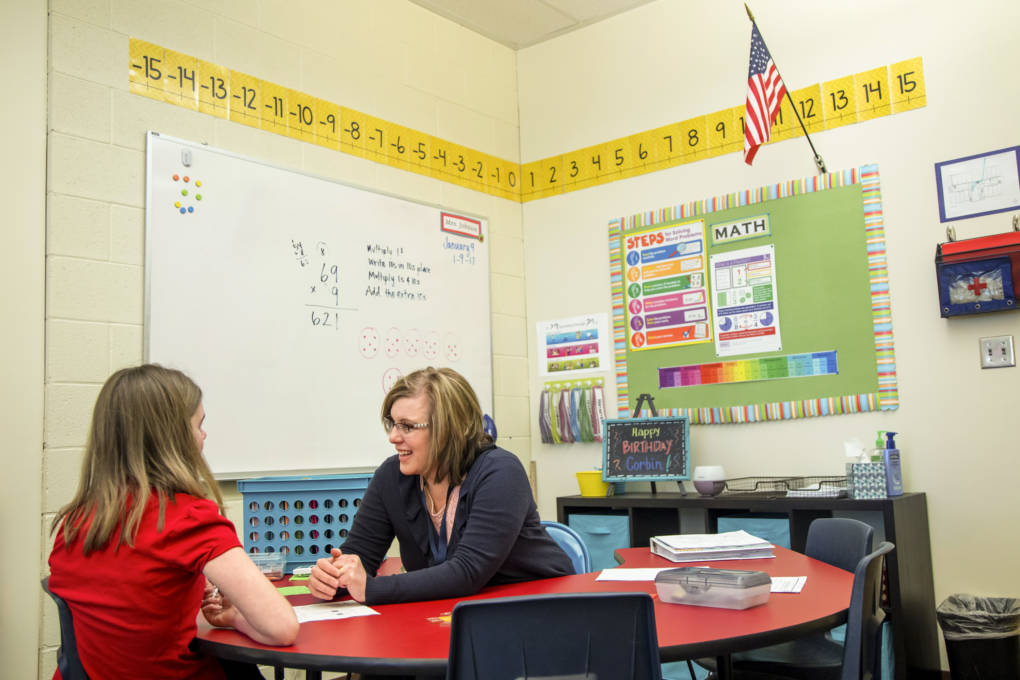
"caption": "Stephanie Johnson works with a student at the Renaissance Academy, a charter school in Lehi, Utah.\n",
"description": "Stephanie Johnson works with a student at the Renaissance Academy, a charter school in Lehi, Utah.",
"title": "Stephanie Johnson works with a student at the Renaissance Academy, a charter school in Lehi, Utah.",
"credit": "Dan Krauss for NPR",
"status": "inherit",
"isLoading": false,
"fetchFailed": false
},
"mindshift_44863": {
"type": "attachments",
"id": "mindshift_44863",
"meta": {
"index": "attachments_1716263798",
"site": "mindshift",
"id": "44863",
"found": true
},
"parent": 44795,
"imgSizes": {
"twentyfourteen-full-width": {
"file": "https://ww2.kqed.org/app/uploads/sites/23/2016/04/Snowflakes-Danilo-Urbina-1038x576.jpg",
"width": 1038,
"mimeType": "image/jpeg",
"height": 576
},
"thumbnail": {
"file": "https://ww2.kqed.org/app/uploads/sites/23/2016/04/Snowflakes-Danilo-Urbina-400x400.jpg",
"width": 400,
"mimeType": "image/jpeg",
"height": 400
},
"fd-sm": {
"file": "https://ww2.kqed.org/app/uploads/sites/23/2016/04/Snowflakes-Danilo-Urbina-960x960.jpg",
"width": 960,
"mimeType": "image/jpeg",
"height": 960
},
"post-thumbnail": {
"file": "https://ww2.kqed.org/app/uploads/sites/23/2016/04/Snowflakes-Danilo-Urbina-672x372.jpg",
"width": 672,
"mimeType": "image/jpeg",
"height": 372
},
"kqedFullSize": {
"file": "https://ww2.kqed.org/app/uploads/sites/23/2016/04/Snowflakes-Danilo-Urbina.jpg",
"width": 1235,
"height": 1235
},
"guest-author-96": {
"file": "https://ww2.kqed.org/app/uploads/sites/23/2016/04/Snowflakes-Danilo-Urbina-96x96.jpg",
"width": 96,
"mimeType": "image/jpeg",
"height": 96
},
"medium": {
"file": "https://ww2.kqed.org/app/uploads/sites/23/2016/04/Snowflakes-Danilo-Urbina-800x800.jpg",
"width": 800,
"mimeType": "image/jpeg",
"height": 800
},
"guest-author-64": {
"file": "https://ww2.kqed.org/app/uploads/sites/23/2016/04/Snowflakes-Danilo-Urbina-64x64.jpg",
"width": 64,
"mimeType": "image/jpeg",
"height": 64
},
"guest-author-32": {
"file": "https://ww2.kqed.org/app/uploads/sites/23/2016/04/Snowflakes-Danilo-Urbina-32x32.jpg",
"width": 32,
"mimeType": "image/jpeg",
"height": 32
},
"cat_post_thumb_sizecategory-posts-2": {
"file": "https://ww2.kqed.org/app/uploads/sites/23/2016/04/Snowflakes-Danilo-Urbina-50x50.jpg",
"width": 50,
"mimeType": "image/jpeg",
"height": 50
},
"fd-med": {
"file": "https://ww2.kqed.org/app/uploads/sites/23/2016/04/Snowflakes-Danilo-Urbina-1180x1180.jpg",
"width": 1180,
"mimeType": "image/jpeg",
"height": 1180
},
"detail": {
"file": "https://ww2.kqed.org/app/uploads/sites/23/2016/04/Snowflakes-Danilo-Urbina-150x150.jpg",
"width": 150,
"mimeType": "image/jpeg",
"height": 150
},
"medium_large": {
"file": "https://ww2.kqed.org/app/uploads/sites/23/2016/04/Snowflakes-Danilo-Urbina-768x768.jpg",
"width": 768,
"mimeType": "image/jpeg",
"height": 768
},
"guest-author-128": {
"file": "https://ww2.kqed.org/app/uploads/sites/23/2016/04/Snowflakes-Danilo-Urbina-128x128.jpg",
"width": 128,
"mimeType": "image/jpeg",
"height": 128
}
},
"publishDate": 1461826489,
"modified": 1461826541,
"caption": null,
"description": null,
"title": "Snowflakes Danilo Urbina",
"credit": "\u003ca href=\"https://www.flickr.com/photos/hojas_cayendo/8237353320/in/photolist-dxUAa7-7p6vWT-AC2pG-7d7dxV-ijzTPg-p7XvLN-qoWpc5-r3Qvnm-ANZcb-bgke16-7mvngB-96CcSr-hNEq8J-j2uEfV-5411ok-vBeUht-9d8Mmv-5JzbZm-wbT3h-7KrLBs-7Dh7ix-j2xiXs-93suzM-8bHVCo-aXAVZH-8YwAbm-7nbW1F-7jNnUo-j2xj9u-4mtaTh-64Y25R-64VxJ4-j2teC2-aSYYyi-987BpM-aPWUyV-k3qk-bUyhjg-9qHzfY-6FxcGP-4E37m-sUHJf-D3R8QD-7oLqkz-8RbRQd-9d4xA3-pw7pWr-7rkwpJ-bApPaf-dWrvsR\">Danilo Urbina\u003c/a>",
"status": "inherit",
"isLoading": false,
"fetchFailed": false
},
"mindshift_43483": {
"type": "attachments",
"id": "mindshift_43483",
"meta": {
"index": "attachments_1716263798",
"site": "mindshift",
"id": "43483",
"found": true
},
"parent": 43477,
"imgSizes": {
"twentyfourteen-full-width": {
"file": "https://ww2.kqed.org/app/uploads/sites/23/2016/01/Sadie-and-Jessica1-cropped-1038x576.jpg",
"width": 1038,
"mimeType": "image/jpeg",
"height": 576
},
"thumbnail": {
"file": "https://ww2.kqed.org/app/uploads/sites/23/2016/01/Sadie-and-Jessica1-cropped-400x225.jpg",
"width": 400,
"mimeType": "image/jpeg",
"height": 225
},
"fd-sm": {
"file": "https://ww2.kqed.org/app/uploads/sites/23/2016/01/Sadie-and-Jessica1-cropped-960x540.jpg",
"width": 960,
"mimeType": "image/jpeg",
"height": 540
},
"post-thumbnail": {
"file": "https://ww2.kqed.org/app/uploads/sites/23/2016/01/Sadie-and-Jessica1-cropped-672x372.jpg",
"width": 672,
"mimeType": "image/jpeg",
"height": 372
},
"kqedFullSize": {
"file": "https://ww2.kqed.org/app/uploads/sites/23/2016/01/Sadie-and-Jessica1-cropped.jpg",
"width": 5668,
"height": 3189
},
"large": {
"file": "https://ww2.kqed.org/app/uploads/sites/23/2016/01/Sadie-and-Jessica1-cropped-1440x810.jpg",
"width": 1440,
"mimeType": "image/jpeg",
"height": 810
},
"guest-author-96": {
"file": "https://ww2.kqed.org/app/uploads/sites/23/2016/01/Sadie-and-Jessica1-cropped-96x96.jpg",
"width": 96,
"mimeType": "image/jpeg",
"height": 96
},
"medium": {
"file": "https://ww2.kqed.org/app/uploads/sites/23/2016/01/Sadie-and-Jessica1-cropped-800x450.jpg",
"width": 800,
"mimeType": "image/jpeg",
"height": 450
},
"guest-author-64": {
"file": "https://ww2.kqed.org/app/uploads/sites/23/2016/01/Sadie-and-Jessica1-cropped-64x64.jpg",
"width": 64,
"mimeType": "image/jpeg",
"height": 64
},
"guest-author-32": {
"file": "https://ww2.kqed.org/app/uploads/sites/23/2016/01/Sadie-and-Jessica1-cropped-32x32.jpg",
"width": 32,
"mimeType": "image/jpeg",
"height": 32
},
"cat_post_thumb_sizecategory-posts-2": {
"file": "https://ww2.kqed.org/app/uploads/sites/23/2016/01/Sadie-and-Jessica1-cropped-50x50.jpg",
"width": 50,
"mimeType": "image/jpeg",
"height": 50
},
"fd-lrg": {
"file": "https://ww2.kqed.org/app/uploads/sites/23/2016/01/Sadie-and-Jessica1-cropped-1920x1080.jpg",
"width": 1920,
"mimeType": "image/jpeg",
"height": 1080
},
"fd-med": {
"file": "https://ww2.kqed.org/app/uploads/sites/23/2016/01/Sadie-and-Jessica1-cropped-1180x664.jpg",
"width": 1180,
"mimeType": "image/jpeg",
"height": 664
},
"detail": {
"file": "https://ww2.kqed.org/app/uploads/sites/23/2016/01/Sadie-and-Jessica1-cropped-75x75.jpg",
"width": 75,
"mimeType": "image/jpeg",
"height": 75
},
"medium_large": {
"file": "https://ww2.kqed.org/app/uploads/sites/23/2016/01/Sadie-and-Jessica1-cropped-768x432.jpg",
"width": 768,
"mimeType": "image/jpeg",
"height": 432
},
"guest-author-128": {
"file": "https://ww2.kqed.org/app/uploads/sites/23/2016/01/Sadie-and-Jessica1-cropped-128x128.jpg",
"width": 128,
"mimeType": "image/jpeg",
"height": 128
}
},
"publishDate": 1453753589,
"modified": 1453753626,
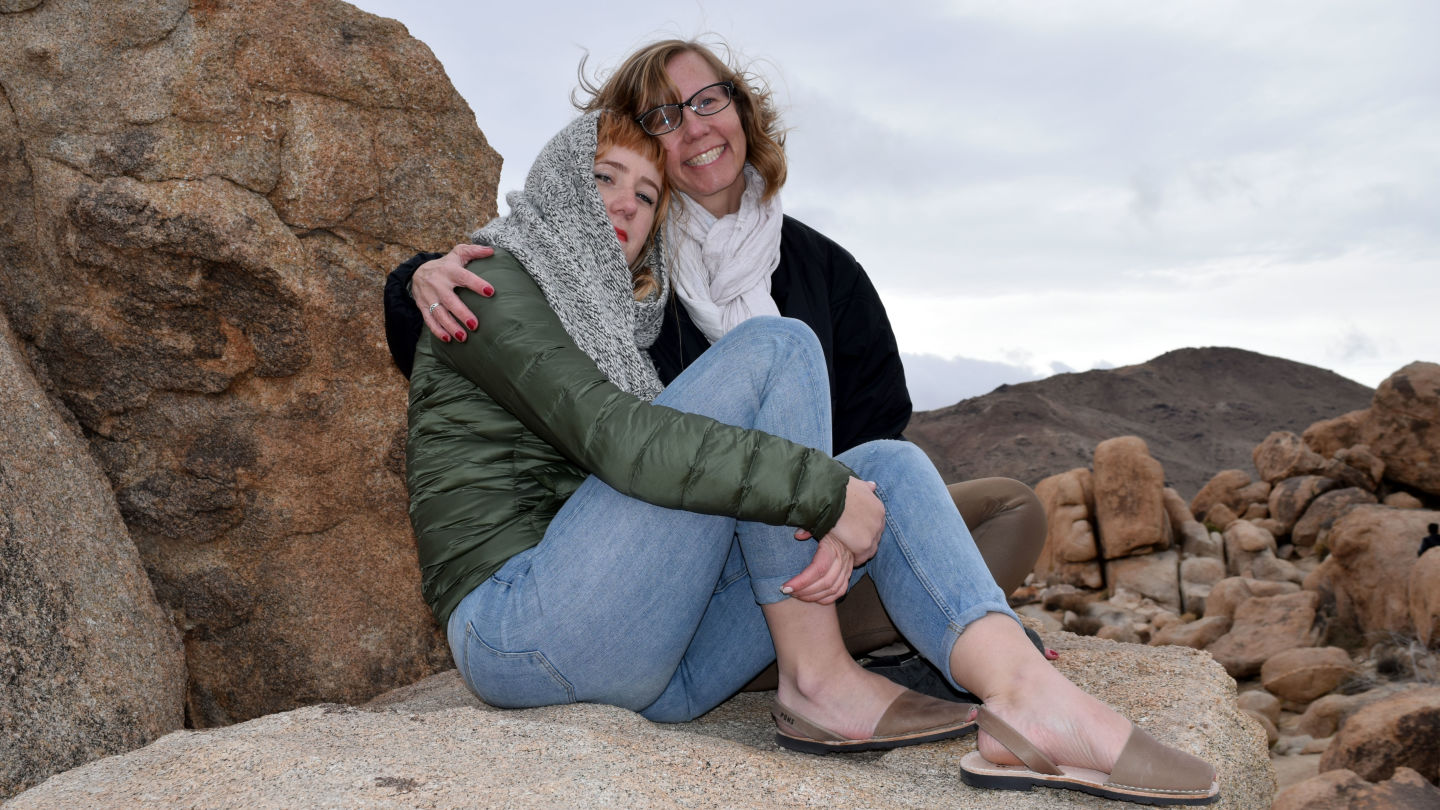
"caption": "Sadie Guthrie (left) and her mom, Jessica Cortes.",
"description": null,
"title": "Sadie-and-Jessica1-cropped",
"credit": "Courtesy of Jessica Cortes",
"status": "inherit",
"isLoading": false,
"fetchFailed": false
},
"mindshift_43315": {
"type": "attachments",
"id": "mindshift_43315",
"meta": {
"index": "attachments_1716263798",
"site": "mindshift",
"id": "43315",
"found": true
},
"parent": 43314,
"imgSizes": {
"twentyfourteen-full-width": {
"file": "https://ww2.kqed.org/app/uploads/sites/23/2016/01/specialedteacher2_slide-3ff0fc5c8d764bcdc3dfd2542c4abcf5f7f90572-1038x576.jpg",
"width": 1038,
"mimeType": "image/jpeg",
"height": 576
},
"thumbnail": {
"file": "https://ww2.kqed.org/app/uploads/sites/23/2016/01/specialedteacher2_slide-3ff0fc5c8d764bcdc3dfd2542c4abcf5f7f90572-400x267.jpg",
"width": 400,
"mimeType": "image/jpeg",
"height": 267
},
"fd-sm": {
"file": "https://ww2.kqed.org/app/uploads/sites/23/2016/01/specialedteacher2_slide-3ff0fc5c8d764bcdc3dfd2542c4abcf5f7f90572-960x640.jpg",
"width": 960,
"mimeType": "image/jpeg",
"height": 640
},
"post-thumbnail": {
"file": "https://ww2.kqed.org/app/uploads/sites/23/2016/01/specialedteacher2_slide-3ff0fc5c8d764bcdc3dfd2542c4abcf5f7f90572-672x372.jpg",
"width": 672,
"mimeType": "image/jpeg",
"height": 372
},
"kqedFullSize": {
"file": "https://ww2.kqed.org/app/uploads/sites/23/2016/01/specialedteacher2_slide-3ff0fc5c8d764bcdc3dfd2542c4abcf5f7f90572.jpg",
"width": 3000,
"height": 2000
},
"large": {
"file": "https://ww2.kqed.org/app/uploads/sites/23/2016/01/specialedteacher2_slide-3ff0fc5c8d764bcdc3dfd2542c4abcf5f7f90572-1440x960.jpg",
"width": 1440,
"mimeType": "image/jpeg",
"height": 960
},
"guest-author-96": {
"file": "https://ww2.kqed.org/app/uploads/sites/23/2016/01/specialedteacher2_slide-3ff0fc5c8d764bcdc3dfd2542c4abcf5f7f90572-96x96.jpg",
"width": 96,
"mimeType": "image/jpeg",
"height": 96
},
"medium": {
"file": "https://ww2.kqed.org/app/uploads/sites/23/2016/01/specialedteacher2_slide-3ff0fc5c8d764bcdc3dfd2542c4abcf5f7f90572-800x533.jpg",
"width": 800,
"mimeType": "image/jpeg",
"height": 533
},
"guest-author-64": {
"file": "https://ww2.kqed.org/app/uploads/sites/23/2016/01/specialedteacher2_slide-3ff0fc5c8d764bcdc3dfd2542c4abcf5f7f90572-64x64.jpg",
"width": 64,
"mimeType": "image/jpeg",
"height": 64
},
"guest-author-32": {
"file": "https://ww2.kqed.org/app/uploads/sites/23/2016/01/specialedteacher2_slide-3ff0fc5c8d764bcdc3dfd2542c4abcf5f7f90572-32x32.jpg",
"width": 32,
"mimeType": "image/jpeg",
"height": 32
},
"cat_post_thumb_sizecategory-posts-2": {
"file": "https://ww2.kqed.org/app/uploads/sites/23/2016/01/specialedteacher2_slide-3ff0fc5c8d764bcdc3dfd2542c4abcf5f7f90572-50x50.jpg",
"width": 50,
"mimeType": "image/jpeg",
"height": 50
},
"fd-lrg": {
"file": "https://ww2.kqed.org/app/uploads/sites/23/2016/01/specialedteacher2_slide-3ff0fc5c8d764bcdc3dfd2542c4abcf5f7f90572-1920x1280.jpg",
"width": 1920,
"mimeType": "image/jpeg",
"height": 1280
},
"fd-med": {
"file": "https://ww2.kqed.org/app/uploads/sites/23/2016/01/specialedteacher2_slide-3ff0fc5c8d764bcdc3dfd2542c4abcf5f7f90572-1180x787.jpg",
"width": 1180,
"mimeType": "image/jpeg",
"height": 787
},
"detail": {
"file": "https://ww2.kqed.org/app/uploads/sites/23/2016/01/specialedteacher2_slide-3ff0fc5c8d764bcdc3dfd2542c4abcf5f7f90572-75x75.jpg",
"width": 75,
"mimeType": "image/jpeg",
"height": 75
},
"medium_large": {
"file": "https://ww2.kqed.org/app/uploads/sites/23/2016/01/specialedteacher2_slide-3ff0fc5c8d764bcdc3dfd2542c4abcf5f7f90572-768x512.jpg",
"width": 768,
"mimeType": "image/jpeg",
"height": 512
},
"guest-author-128": {
"file": "https://ww2.kqed.org/app/uploads/sites/23/2016/01/specialedteacher2_slide-3ff0fc5c8d764bcdc3dfd2542c4abcf5f7f90572-128x128.jpg",
"width": 128,
"mimeType": "image/jpeg",
"height": 128
}
},
"publishDate": 1452066079,
"modified": 1452066079,
"caption": null,
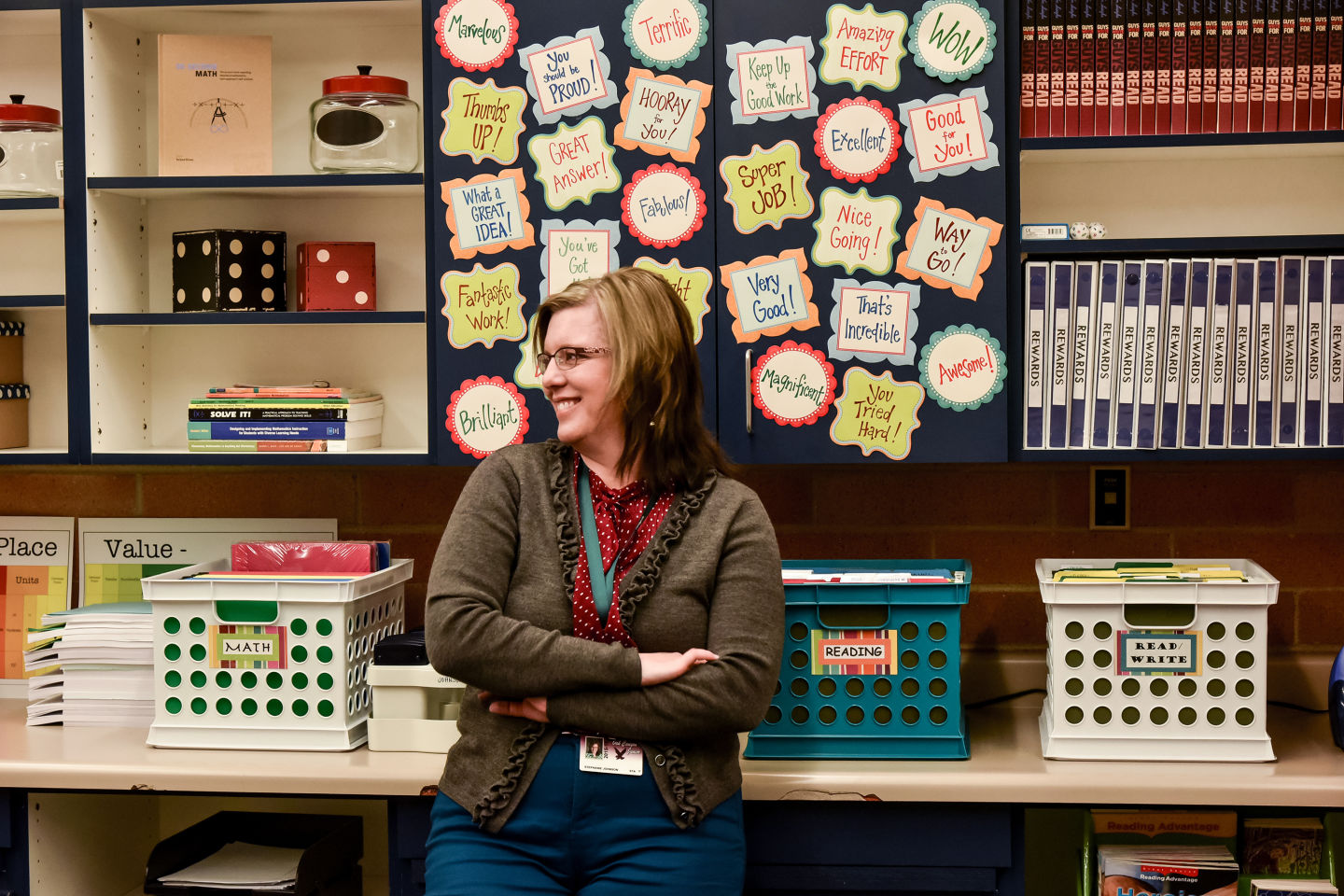
"description": "Stephanie Johnson teaches special education classes at Oak Canyon Junior High School in Lindon, Utah. She says the paperwork is a constant frustration",
"title": "Stephanie Johnson teaches special education classes at Oak Canyon Junior High School in Lindon, Utah. She says the paperwork is a constant frustration.",
"credit": null,
"status": "inherit",
"isLoading": false,
"fetchFailed": false
},
"mindshift_42638": {
"type": "attachments",
"id": "mindshift_42638",
"meta": {
"index": "attachments_1716263798",
"site": "mindshift",
"id": "42638",
"found": true
},
"parent": 42636,
"imgSizes": {
"thumbnail": {
"file": "https://ww2.kqed.org/app/uploads/sites/23/2015/11/coffee-cart-400x225.jpg",
"width": 400,
"mimeType": "image/jpeg",
"height": 225
},
"post-thumbnail": {
"file": "https://ww2.kqed.org/app/uploads/sites/23/2015/11/coffee-cart-672x372.jpg",
"width": 672,
"mimeType": "image/jpeg",
"height": 372
},
"kqedFullSize": {
"file": "https://ww2.kqed.org/app/uploads/sites/23/2015/11/coffee-cart.jpg",
"width": 790,
"height": 444
},
"cat_post_thumb_sizecategory-posts-2": {
"file": "https://ww2.kqed.org/app/uploads/sites/23/2015/11/coffee-cart-50x50.jpg",
"width": 50,
"mimeType": "image/jpeg",
"height": 50
},
"guest-author-96": {
"file": "https://ww2.kqed.org/app/uploads/sites/23/2015/11/coffee-cart-96x96.jpg",
"width": 96,
"mimeType": "image/jpeg",
"height": 96
},
"guest-author-64": {
"file": "https://ww2.kqed.org/app/uploads/sites/23/2015/11/coffee-cart-64x64.jpg",
"width": 64,
"mimeType": "image/jpeg",
"height": 64
},
"detail": {
"file": "https://ww2.kqed.org/app/uploads/sites/23/2015/11/coffee-cart-75x75.jpg",
"width": 75,
"mimeType": "image/jpeg",
"height": 75
},
"guest-author-32": {
"file": "https://ww2.kqed.org/app/uploads/sites/23/2015/11/coffee-cart-32x32.jpg",
"width": 32,
"mimeType": "image/jpeg",
"height": 32
},
"guest-author-128": {
"file": "https://ww2.kqed.org/app/uploads/sites/23/2015/11/coffee-cart-128x128.jpg",
"width": 128,
"mimeType": "image/jpeg",
"height": 128
}
},
"publishDate": 1446499329,
"modified": 1447334634,
"caption": null,
"description": null,
"title": "coffee-cart",
"credit": "SoulPancake",
"status": "inherit",
"isLoading": false,
"fetchFailed": false
}
},
"audioPlayerReducer": {
"postId": "stream_live",
"isPaused": true,
"isPlaying": false,
"pfsActive": false,
"pledgeModalIsOpen": true,
"playerDrawerIsOpen": false,
"liveAudioPlayStartedAt": 0,
"liveAudioPlayContext": ""
},
"authorsReducer": {
"byline_mindshift_48121": {
"type": "authors",
"id": "byline_mindshift_48121",
"meta": {
"override": true
},
"slug": "byline_mindshift_48121",
"name": "Sophia Alvarez Boyd",
"isLoading": false
},
"byline_mindshift_47347": {
"type": "authors",
"id": "byline_mindshift_47347",
"meta": {
"override": true
},
"slug": "byline_mindshift_47347",
"name": "Lee Hale, KUER",
"isLoading": false
},
"byline_mindshift_43314": {
"type": "authors",
"id": "byline_mindshift_43314",
"meta": {
"override": true
},
"slug": "byline_mindshift_43314",
"name": "Lee Hale, \u003ca href=\"http://www.npr.org/sections/ed/2016/01/02/461590749/its-not-easy-teaching-special-ed\">NPR\u003c/a>",
"isLoading": false
},
"katrinaschwartz": {
"type": "authors",
"id": "234",
"meta": {
"index": "authors_1716337520",
"id": "234",
"found": true
},
"name": "Katrina Schwartz",
"firstName": "Katrina",
"lastName": "Schwartz",
"slug": "katrinaschwartz",
"email": "kschwartz@kqed.org",
"display_author_email": false,
"staff_mastheads": [
"news"
],
"title": "Producer",
"bio": "Katrina Schwartz is a journalist based in San Francisco. She's worked at KPCC public radio in LA and has reported on air and online for KQED since 2010. She covered how teaching and learning is changing for MindShift between 2012 and 2020. She is the co-host of the MindShift podcast and now produces KQED's Bay Curious podcast.",
"avatar": "https://secure.gravatar.com/avatar/edb4ee79070447a018538c9aae6eeecf28786515b8a0c30e43b6b7dce5aa44c8?s=600&d=blank&r=g",
"twitter": "kschwart",
"bluesky": null,
"facebook": null,
"instagram": null,
"linkedin": null,
"sites": [
{
"site": "",
"roles": [
"editor"
]
},
{
"site": "news",
"roles": [
"editor"
]
},
{
"site": "mindshift",
"roles": [
"administrator"
]
},
{
"site": "stateofhealth",
"roles": [
"author"
]
},
{
"site": "science",
"roles": [
"editor"
]
}
],
"headData": {
"title": "Katrina Schwartz | KQED",
"description": "Producer",
"ogImgSrc": "https://secure.gravatar.com/avatar/edb4ee79070447a018538c9aae6eeecf28786515b8a0c30e43b6b7dce5aa44c8?s=600&d=blank&r=g",
"twImgSrc": "https://secure.gravatar.com/avatar/edb4ee79070447a018538c9aae6eeecf28786515b8a0c30e43b6b7dce5aa44c8?s=600&d=blank&r=g"
},
"isLoading": false,
"link": "/author/katrinaschwartz"
},
"lindaflan": {
"type": "authors",
"id": "4613",
"meta": {
"index": "authors_1716337520",
"id": "4613",
"found": true
},
"name": "Linda Flanagan",
"firstName": "Linda",
"lastName": "Flanagan",
"slug": "lindaflan",
"email": "lindaflan@comcast.net",
"display_author_email": false,
"staff_mastheads": [],
"title": null,
"bio": "Linda Flanagan is a freelance writer, researcher, and editor. Her work has appeared in The Atlantic, The Wall St. Journal, Newsweek, Running Times, and Mind/Shift, and she blogs regularly for the Huffington Post. Linda writes about education, culture, athletics, youth sports, mental health, politics, college admissions, and other curiosities. She also reviews books and conducts interviews.",
"avatar": "https://secure.gravatar.com/avatar/6bca04c0736bf5eaea80654019de688f?s=600&d=blank&r=g",
"twitter": "LindaFlanagan2",
"facebook": null,
"instagram": null,
"linkedin": null,
"sites": [
{
"site": "mindshift",
"roles": [
"contributor"
]
}
],
"headData": {
"title": "Linda Flanagan | KQED",
"description": null,
"ogImgSrc": "https://secure.gravatar.com/avatar/6bca04c0736bf5eaea80654019de688f?s=600&d=blank&r=g",
"twImgSrc": "https://secure.gravatar.com/avatar/6bca04c0736bf5eaea80654019de688f?s=600&d=blank&r=g"
},
"isLoading": false,
"link": "/author/lindaflan"
}
},
"pagesReducer": {
"mindshift_tag_special-education": {
"type": "terms",
"id": "mindshift_20934",
"meta": {
"index": "terms_1716263798",
"site": "mindshift",
"id": "20934",
"score": 9.893174
},
"featImg": null,
"name": "special education",
"description": null,
"taxonomy": "tag",
"headData": {
"twImgId": null,
"twTitle": null,
"ogTitle": null,
"ogImgId": null,
"twDescription": null,
"description": null,
"title": "special education Archives | KQED Mindshift",
"ogDescription": null
},
"ttid": 20206,
"slug": "special-education",
"isLoading": false,
"title": "special education",
"pageMeta": {
"site": "mindshift",
"WpPageTemplate": "page-topic-editorial",
"currentPage": 3
},
"blocks": [
{
"blockName": "kqed/post-list",
"attrs": {
"layout": "cardArticle2",
"query": "posts/mindshift?tag=special-education",
"seeMore": false,
"paginated": true,
"page": 3
}
},
{
"blockName": "kqed/ad"
}
]
}
},
"pfsSessionReducer": {},
"postsReducer": {
"stream_live": {
"type": "live",
"id": "stream_live",
"audioUrl": "https://streams.kqed.org/kqedradio",
"title": "Live Stream",
"excerpt": "Live Stream information currently unavailable.",
"link": "/radio",
"featImg": "",
"label": {
"name": "KQED Live",
"link": "/"
}
},
"stream_kqedNewscast": {
"type": "posts",
"id": "stream_kqedNewscast",
"audioUrl": "https://www.kqed.org/.stream/anon/radio/RDnews/newscast.mp3?_=1",
"title": "KQED Newscast",
"featImg": "",
"label": {
"name": "88.5 FM",
"link": "/"
}
},
"mindshift_54206": {
"type": "posts",
"id": "mindshift_54206",
"meta": {
"index": "posts_1716263798",
"site": "mindshift",
"id": "54206",
"score": null,
"sort": [
1566368086000
]
},
"parent": 0,
"labelTerm": {
"site": "mindshift"
},
"blocks": [],
"publishDate": 1566368086,
"format": "standard",
"disqusTitle": "Parents of Kids With Special Needs Find Advice Navigating The System Online",
"title": "Parents of Kids With Special Needs Find Advice Navigating The System Online",
"headTitle": "MindShift | KQED News",
"content": "\u003cp>\u003cem>This article was originally published on \u003ca href=\"https://www.the74million.org/article/in-the-crazy-complicated-world-of-special-education-parents-turn-to-one-another-for-help-on-the-internet/\">The74million.org\u003c/a> and is republished here with permission.\u003c/em>\u003c/p>\n\u003ch4>By Laura McKenna\u003c/h4>\n\u003cp> \u003cbr>\nWhen Stasi Webber decided it was time to uproot her family from their Michigan home to find a better school for her 11-year-old son with autism, she turned to the internet for answers.\u003c/p>\n\u003cp>The public schools in her state don’t provide the specialized behavioral and life skills training, known as \u003ca href=\"https://www.autismspeaks.org/applied-behavior-analysis-aba-0\">ABA therapy\u003c/a>, that her son needs; he skips school every Tuesday and Thursday to receive these essential services. But recently, Webber learned from parents on social media that her son could get both academics and ABA training in schools in New Jersey, where she grew up.\u003c/p>\n\u003cp>With a tentative plan of returning to her childhood home in Mahwah, she found three or four local social media sites run by special education parents and asked about ABA services at the local district, its willingness to send students to specialized schools and comparisons with nearby towns. She put her house on the market.\u003c/p>\n\u003cp>“I knew I had to reach out to the internet, because moms are willing to help other moms,” Webber said. “You find out the most information that way.”\u003c/p>\n\u003cp>[ad fullwidth]\u003c/p>\n\u003cp>To properly advocate for their special-needs children, parents must become experts on a wide range of legal, medical and educational matters. They have to manage paperwork, monitor their kids’ reactions to medication, master the intricacies of both their children’s rights and their school’s responsibilities, and learn how to determine whether their kids are getting the proper supports — and what to do if they’re not.\u003c/p>\n\u003cp>But this information isn’t readily available in books or on official web pages. Services vary widely from state to state and from district to district — even from school to school — and most do not post details about their programs and special services online. Other information is buried in impenetrable legalese on various state and federal websites. Without official or user-friendly sources of information about schools, parents have to learn on the fly. So they turn to one another for help online.\u003c/p>\n\u003cp>Though even some leaders of these virtual communities say there’s no guarantee the information given out is accurate, special ed parents burdened with the task of educating themselves find the internet the best — if not the only — place to go.\u003c/p>\n\u003ch4>Online support and information\u003c/h4>\n\u003cp> \u003c/p>\n\u003cp>As part of her research, Webber connected with Barb Strate, who runs a listserv called \u003ca href=\"https://groups.yahoo.com/neo/groups/Mosaic-List/info?guccounter=1&guce_referrer=aHR0cHM6Ly93d3cudGhlNzRtaWxsaW9uLm9yZy9hcnRpY2xlL2luLXRoZS1jcmF6eS1jb21wbGljYXRlZC13b3JsZC1vZi1zcGVjaWFsLWVkdWNhdGlvbi1wYXJlbnRzLXR1cm4tdG8tb25lLWFub3RoZXItZm9yLWhlbHAtb24tdGhlLWludGVybmV0Lw&guce_referrer_sig=AQAAALXbt1XzaL8qgf0wQTKY3H098GD2hMZ7qdncWRV1PKdXkb0k541sPzZLvx0sredsI1edxNPke4YKVhoLgPjUuQwbE-ccZbqSzYumOwe1r1mn3ouET8m8go7lWaBxUsXMRcfQE0MhTktWfWBjBn2tzBlOEHGtJVtvF-StaFkH9WQH\">MOSAIC\u003c/a> for parents of children with autism in northern New Jersey. Strate said she started the group 20 years ago with other moms and dads who had met in a Manhattan doctor’s office. The group, with more than 2,000 members, is just one of countless \u003ca href=\"https://www.dcurbanmom.com/jforum/forums/show/36.page\">listservs\u003c/a>, \u003ca href=\"https://www.facebook.com/groups/IDEATIPS/\">Facebook pages\u003c/a> and \u003ca href=\"https://www.wrightslaw.com/blog/community-helpline/\">websites\u003c/a> set up across the country by parents for parents of special-needs children.\u003c/p>\n\u003cp>[mindshift-podcast]\u003c/p>\n\u003cp>Broad topics include applying for government benefits when kids turn 18 and pushing a school to evaluate a child’s speech. There are questions about education-related issues (“Are These IEP Goals Adequate?”), requests for emotional support (“Heartbroken After Likely Autism DX”) and concerns about medication side effects (“Terrible Constipation With Starting Strattera — Help”).\u003c/p>\n\u003cp>Locally, conversations revolve around specific schools, activities and therapists, particularly for parents of children with rare disabilities, according to Tawfiq Ammari, a doctoral candidate at the University of Michigan’s School of Information and \u003ca href=\"https://dl.acm.org/citation.cfm?id=2702324\">the author\u003c/a> of several \u003ca href=\"https://www.aaai.org/ocs/index.php/ICWSM/ICWSM14/paper/viewPaper/8032\">research papers\u003c/a> on the topic.\u003c/p>\n\u003cp>Initially, parents of newly diagnosed children join these groups looking for other families struggling with the same emotions and problems. “These forums can make you feel that you are not alone in the world,” Ammari said. Those social supports can be lifesavers for parents who can’t take advantage of community activities that center on typical children and who may be extremely isolated due to their kids’ behavioral or medical needs.\u003c/p>\n\u003cp>“They’re going to get information about specific parenting problems, like what do you do about a temper tantrum in the supermarket. And then they’re also going there because the school system is very complex in the United States. So they’re looking for tips and tricks\" — like how to go to a meeting to discuss a child’s Individualized Education Program — \"how do you behave, what do you do. There’s the information about private schools, too,\" Ammari said.\u003c/p>\n\u003cp>Amanda Morin, a writer at \u003ca href=\"https://www.understood.org/en\">Understood.org\u003c/a>, a nonprofit group that advocates for special ed kids and their families, said she discovered online groups when her oldest child was 1 or 2 and started having significant meltdowns and was using lines from the \u003cem>Thomas the Tank Engine\u003c/em> books to communicate. Morin needed help finding a good evaluator and getting a proper diagnosis. “It’s powerful to be in a space where you don’t have to explain yourself,” she said.\u003c/p>\n\u003cp>[aside postID='mindshift_53602,mindshift_44795,mindshift_50874' label='More Info For Parents']\u003c/p>\n\u003cp>Beyond serving as a social outlet, these groups provide families with vital information to help their kids, particularly around public schools, Morin said. Parents discuss legal matters; curricula, such as the best methods for teaching children with \u003ca href=\"https://www.kqed.org/mindshift/41997/who-helps-kids-with-dyslexia-gain-reading-fluency\">dyslexia\u003c/a>; effective communication with school personnel; recommended outside experts who can challenge school decisions; and her primary interest, inclusion practices.\u003c/p>\n\u003cp>In addition, parents have to learn how to maintain cordial day-to-day interactions with teachers and therapists, and about the latest research on teaching methods, so they can most effectively advocate for their children.\u003c/p>\n\u003cp>Families must learn about pedagogical matters in these groups because, in some places, teachers and nurses aren’t trained to work with children who have learning and health differences. “A \u003ca href=\"https://www.ncld.org/wp-content/uploads/2019/05/Forward-Together_NCLD-report.pdf\">recent study found\u003c/a> that only 17 percent of teachers feel really prepared to support kids with disabilities in their classroom,” Morin said.\u003c/p>\n\u003ch4>A legal necessity\u003c/h4>\n\u003cp> \u003c/p>\n\u003cp>Families also rely on these forums for legal help, because the special education process in the United States is so complicated. Just navigating the 20-plus-page legal document that formally lists the special services a child will receive every year — the IEP — involves understanding the tangle of laws, from the federal government down to localities, outlining very specific processes for helping students.\u003c/p>\n\u003cp>These include evaluations, sit-downs between parents and teachers, and the interventions themselves. Parents who believe school evaluations of their child are not accurate have the right to ask for an outside assessment. If there is a disagreement between the school and the parent, the parent has the right to hire outside counsel to represent the child.\u003c/p>\n\u003cp>“Every step along the way brings its own questions and confusion, forms to be filled out, meetings to attend and rights to be aware of,” explained Maggie Moroff, special education coordinator at \u003ca href=\"https://www.advocatesforchildren.org/\">Advocates for Children of New York\u003c/a>.\u003c/p>\n\u003cp>She described special ed as “a crazy, complicated system where parents are forced to be their own advocates.”\u003c/p>\n\u003cp>[aside tag='dyslexia' label='More on Dyslexia']\u003c/p>\n\u003cp>“It becomes almost a full-time job,” said Denise Marshall, executive director of the \u003ca href=\"https://www.copaa.org/\">Council of Parent Attorneys and Advocates\u003c/a>. “They need to research not only the laws but, many times, they need to research curriculum and strategies, such as applied behavioral analysis for children with autism or other types of interventions for students with dyslexia.”\u003c/p>\n\u003cp>Said Moroff, “Our support line got around 3,000 calls just last year from parents who are struggling, who have questions, who don’t know where to start, don’t know where to turn, don’t know what their next steps are, don’t understand why their school isn’t seeing their kids' needs the same way.\"\u003c/p>\n\u003ch4>Imbalance of power\u003c/h4>\n\u003cp> \u003c/p>\n\u003cp>Since education is locally controlled, every school district has its own priorities and funding abilities. Some districts’ administrators have no problem creating specialized programs for high-needs students, while administrators in a nearby town might be more concerned with saving money. Even within a district, there can be major differences, as individual principals play a big role in shaping the culture of a school.\u003c/p>\n\u003cp>Marshall said that even though parents are supposed to be equal partners in their children’s education, the school holds all the power in determining a student’s placement and education.\u003c/p>\n\u003cp>Accommodations for the estimated 7 million K-12 students with disabilities across the country are generally worked out in small meetings at their schools, and only a tiny percentage end up in a serious dispute, she said. Still, if a parent disagrees with the school’s determination, what is supposed to be a collaborative relationship can get tense.\u003c/p>\n\u003cp>Wealthier families can hire experts to intervene on their children’s behalf and have the time and money to spend advocating for their kids; students in more privileged neighborhoods are \u003ca href=\"https://www.nytimes.com/interactive/2019/06/17/upshot/nyc-schools-shsat-504.html?rref=collection%2Fbyline%2Feliza-shapiro&action=click&contentCollection=undefined®ion=stream&module=stream_unit&version=latest&contentPlacement=2&pgtype=collection\">more likely to get extra time on exams\u003c/a> and other special ed modifications. But for some, less privileged, parents, just going to an IEP meeting during school hours can be a heavy lift; children from low-income families are \u003ca href=\"https://hechingerreport.org/special-educations-hidden-racial-gap/\">more likely to be shunted into more restrictive classrooms\u003c/a>, separated from typical peers.\u003c/p>\n\u003cp>“One big factor is definitely time as it relates to being able to interact with the school, go to meetings, do all the things that you need to do for your child during the day,” Marshall said. “Not everybody can afford to have one parent make this their full-time job. … Sometimes they lose their jobs over needing to deal with the school system and issues that are related to their child with a disability.”\u003c/p>\n\u003cp>For these families, social media can be a great leveler. Parents needing to educate themselves can get the information they need right on their phones — which is especially important for low-income families and parents for whom English is not their first language, and who may not have access to computers and internet connections.\u003c/p>\n\u003cp>Strate said she used to see more affluent people on her website, but now there’s a greater mix. She also sees people from overseas popping in to ask questions because they’re moving to this country to get help for their kids — which she finds concerning.\u003c/p>\n\u003cp>“Social media — it’s a wonderful thing,” she said, “but it can create big problems. If people pick up and move based on what they read on social media, they might be in for a nasty surprise. Programs can change overnight. Classrooms can fill up. … Parents should do their own research.”\u003c/p>\n\u003cp>Morin agreed, saying, “I worry that they’re not always getting accurate advice.”\u003c/p>\n\u003cp>But, she added, “I think there are some really good moderated groups where there are people who are trained and understand the system to be able to really gently jump in and say, ‘I really understand that, that’s your experience, and I think that’s really helpful to share. But here’s some other information you should check out about the law and for guidance for the things that you can do when you go into a school.’ Or, ‘Sure, this is how qualification eligibility works in this state versus that state.’ And I think that’s when it’s most helpful, when you have somebody who’s sort of moderating to make sure that people are getting accurate information. Because the last thing I want to do when I see these kinds of conversations is set somebody up for failure, because they already feel like they might be failing.”\u003c/p>\n\u003cp>Said Strate, “I tell people, go to your town’s Board of Ed meetings and read the minutes to see what they say about special education. Most towns post their minutes on the internet. I also tell parents to go to an administrative-law website. If due-process suits were not settled, it will be listed there. Google the town and write in ‘autism.’”\u003c/p>\n\u003ch4>Comparison shopping\u003c/h4>\n\u003cp> \u003c/p>\n\u003cp>Most listserv users chat about offerings in nearby towns — information that can come in handy when looking for out-of-district placements or when negotiating with their local district.\u003c/p>\n\u003cp>But for others, like Webber, that information may lead to bigger changes; what she learned online made moving halfway across the country seem like the best option for her son, whom she described as “a 5-year-old in an 11-year-old body.”\u003c/p>\n\u003cp>By consulting with parents on these forums, she learned that schools in New Jersey provide ABA services, while schools in Michigan do not. “I did all my research, and to me, it just sounds like there’s better services out there for [students with autism], especially when they get older,” she said.\u003c/p>\n\u003cp>Moving with her 13-year-old daughter and her son across the country would be no simple matter. Webber’s husband passed away two years ago, so she’d be making this move on her own. Her parents, who joined her in Michigan a decade ago, will remain there until she’s settled. She’s worried about her children’s adjustment to the move, especially her daughter.\u003c/p>\n\u003cp>[ad floatright]\u003c/p>\n\u003cp>Still, Webber is hopeful that a new school district will benefit the entire family. “I’m excited, because I think we need a big change,” she said.\u003c/p>\n\n",
"disqusIdentifier": "54206 https://ww2.kqed.org/mindshift/?p=54206",
"disqusUrl": "https://ww2.kqed.org/mindshift/2019/08/20/parents-of-kids-with-special-needs-find-advice-navigating-the-system-online/",
"stats": {
"hasVideo": false,
"hasChartOrMap": false,
"hasAudio": false,
"hasPolis": false,
"wordCount": 2298,
"hasGoogleForm": false,
"hasGallery": false,
"hasHearkenModule": false,
"iframeSrcs": [],
"paragraphCount": 43
},
"modified": 1566368086,
"excerpt": "How can I find the support my child with special needs requires at school? To answer that question, and more, many parents look to online forums where parents share advice.",
"headData": {
"twImgId": "",
"twTitle": "",
"ogTitle": "",
"ogImgId": "",
"twDescription": "",
"description": "How can I find the support my child with special needs requires at school? To answer that question, and more, many parents look to online forums where parents share advice.",
"title": "Parents of Kids With Special Needs Find Advice Navigating The System Online | KQED",
"ogDescription": "",
"schema": {
"@context": "https://schema.org",
"@type": "Article",
"headline": "Parents of Kids With Special Needs Find Advice Navigating The System Online",
"datePublished": "2019-08-20T23:14:46-07:00",
"dateModified": "2019-08-20T23:14:46-07:00",
"image": "https://cdn.kqed.org/wp-content/uploads/2020/02/KQED-OG-Image@1x.png"
}
},
"guestAuthors": [],
"slug": "parents-of-kids-with-special-needs-find-advice-navigating-the-system-online",
"status": "publish",
"path": "/mindshift/54206/parents-of-kids-with-special-needs-find-advice-navigating-the-system-online",
"audioTrackLength": null,
"parsedContent": [
{
"type": "contentString",
"content": "\u003cdiv class=\"post-body\">\u003cp>\u003cp>\u003cem>This article was originally published on \u003ca href=\"https://www.the74million.org/article/in-the-crazy-complicated-world-of-special-education-parents-turn-to-one-another-for-help-on-the-internet/\">The74million.org\u003c/a> and is republished here with permission.\u003c/em>\u003c/p>\n\u003ch4>By Laura McKenna\u003c/h4>\n\u003cp> \u003cbr>\nWhen Stasi Webber decided it was time to uproot her family from their Michigan home to find a better school for her 11-year-old son with autism, she turned to the internet for answers.\u003c/p>\n\u003cp>The public schools in her state don’t provide the specialized behavioral and life skills training, known as \u003ca href=\"https://www.autismspeaks.org/applied-behavior-analysis-aba-0\">ABA therapy\u003c/a>, that her son needs; he skips school every Tuesday and Thursday to receive these essential services. But recently, Webber learned from parents on social media that her son could get both academics and ABA training in schools in New Jersey, where she grew up.\u003c/p>\n\u003cp>With a tentative plan of returning to her childhood home in Mahwah, she found three or four local social media sites run by special education parents and asked about ABA services at the local district, its willingness to send students to specialized schools and comparisons with nearby towns. She put her house on the market.\u003c/p>\n\u003cp>“I knew I had to reach out to the internet, because moms are willing to help other moms,” Webber said. “You find out the most information that way.”\u003c/p>\n\u003cp>\u003c/p>\u003c/div>",
"attributes": {
"named": {},
"numeric": []
}
},
{
"type": "component",
"content": "",
"name": "ad",
"attributes": {
"named": {
"label": "fullwidth"
},
"numeric": [
"fullwidth"
]
}
},
{
"type": "contentString",
"content": "\u003cdiv class=\"post-body\">\u003cp>\u003c/p>\n\u003cp>To properly advocate for their special-needs children, parents must become experts on a wide range of legal, medical and educational matters. They have to manage paperwork, monitor their kids’ reactions to medication, master the intricacies of both their children’s rights and their school’s responsibilities, and learn how to determine whether their kids are getting the proper supports — and what to do if they’re not.\u003c/p>\n\u003cp>But this information isn’t readily available in books or on official web pages. Services vary widely from state to state and from district to district — even from school to school — and most do not post details about their programs and special services online. Other information is buried in impenetrable legalese on various state and federal websites. Without official or user-friendly sources of information about schools, parents have to learn on the fly. So they turn to one another for help online.\u003c/p>\n\u003cp>Though even some leaders of these virtual communities say there’s no guarantee the information given out is accurate, special ed parents burdened with the task of educating themselves find the internet the best — if not the only — place to go.\u003c/p>\n\u003ch4>Online support and information\u003c/h4>\n\u003cp> \u003c/p>\n\u003cp>As part of her research, Webber connected with Barb Strate, who runs a listserv called \u003ca href=\"https://groups.yahoo.com/neo/groups/Mosaic-List/info?guccounter=1&guce_referrer=aHR0cHM6Ly93d3cudGhlNzRtaWxsaW9uLm9yZy9hcnRpY2xlL2luLXRoZS1jcmF6eS1jb21wbGljYXRlZC13b3JsZC1vZi1zcGVjaWFsLWVkdWNhdGlvbi1wYXJlbnRzLXR1cm4tdG8tb25lLWFub3RoZXItZm9yLWhlbHAtb24tdGhlLWludGVybmV0Lw&guce_referrer_sig=AQAAALXbt1XzaL8qgf0wQTKY3H098GD2hMZ7qdncWRV1PKdXkb0k541sPzZLvx0sredsI1edxNPke4YKVhoLgPjUuQwbE-ccZbqSzYumOwe1r1mn3ouET8m8go7lWaBxUsXMRcfQE0MhTktWfWBjBn2tzBlOEHGtJVtvF-StaFkH9WQH\">MOSAIC\u003c/a> for parents of children with autism in northern New Jersey. Strate said she started the group 20 years ago with other moms and dads who had met in a Manhattan doctor’s office. The group, with more than 2,000 members, is just one of countless \u003ca href=\"https://www.dcurbanmom.com/jforum/forums/show/36.page\">listservs\u003c/a>, \u003ca href=\"https://www.facebook.com/groups/IDEATIPS/\">Facebook pages\u003c/a> and \u003ca href=\"https://www.wrightslaw.com/blog/community-helpline/\">websites\u003c/a> set up across the country by parents for parents of special-needs children.\u003c/p>\n\u003cp>\u003c/p>\u003cp>\u003caside class=\"alignleft utils-parseShortcode-shortcodes-__mindshiftPodcastShortcode__mindshift\">\u003cimg src=https://cdn.kqed.org/wp-content/uploads/2023/02/mindshiftLogo.png alt=\"Bay Curious Podcast\" loading=\"lazy\" />\n \u003ca href=\"/mindshift/category/mindshiftpodcast\">MindShift\u003c/a> has a podcast! Listen on Apple Podcasts, Google Podcasts, NPR One or your favorite podcast app.\n Subscribe on \u003ca href=\"https://podcasts.apple.com/us/podcast/stories-teachers-share-mindshift/id1078765985\" target=\"_blank\" rel=\"noopener noreferrer\">Apple Podcasts\u003c/a>,\n \u003ca href=\"https://play.google.com/music/listen?u=0#/ps/I4hhfs3azg3avjzbuowzeal5sze\" target=\"_blank\" rel=\"noopener noreferrer\">Google Podcasts\u003c/a>,\n \u003ca href=\"https://one.npr.org/?sharedMediaId=669511148:669511150\" target=\"_blank\" rel=\"noopener noreferrer\">NPR One\u003c/a>,\n \u003ca href=\"https://www.stitcher.com/podcast/kqed/stories-teachers-share\" target=\"_blank\" rel=\"noopener noreferrer\">Stitcher\u003c/a>,\n \u003ca href=\"https://open.spotify.com/show/0MxSpNYZKNprFLCl7eEtyx\" target=\"_blank\" rel=\"noopener noreferrer\">Spotify\u003c/a> or your favorite podcast platform.\u003c/aside>\u003c/p>\u003cp>\u003c/p>\n\u003cp>Broad topics include applying for government benefits when kids turn 18 and pushing a school to evaluate a child’s speech. There are questions about education-related issues (“Are These IEP Goals Adequate?”), requests for emotional support (“Heartbroken After Likely Autism DX”) and concerns about medication side effects (“Terrible Constipation With Starting Strattera — Help”).\u003c/p>\n\u003cp>Locally, conversations revolve around specific schools, activities and therapists, particularly for parents of children with rare disabilities, according to Tawfiq Ammari, a doctoral candidate at the University of Michigan’s School of Information and \u003ca href=\"https://dl.acm.org/citation.cfm?id=2702324\">the author\u003c/a> of several \u003ca href=\"https://www.aaai.org/ocs/index.php/ICWSM/ICWSM14/paper/viewPaper/8032\">research papers\u003c/a> on the topic.\u003c/p>\n\u003cp>Initially, parents of newly diagnosed children join these groups looking for other families struggling with the same emotions and problems. “These forums can make you feel that you are not alone in the world,” Ammari said. Those social supports can be lifesavers for parents who can’t take advantage of community activities that center on typical children and who may be extremely isolated due to their kids’ behavioral or medical needs.\u003c/p>\n\u003cp>“They’re going to get information about specific parenting problems, like what do you do about a temper tantrum in the supermarket. And then they’re also going there because the school system is very complex in the United States. So they’re looking for tips and tricks\" — like how to go to a meeting to discuss a child’s Individualized Education Program — \"how do you behave, what do you do. There’s the information about private schools, too,\" Ammari said.\u003c/p>\n\u003cp>Amanda Morin, a writer at \u003ca href=\"https://www.understood.org/en\">Understood.org\u003c/a>, a nonprofit group that advocates for special ed kids and their families, said she discovered online groups when her oldest child was 1 or 2 and started having significant meltdowns and was using lines from the \u003cem>Thomas the Tank Engine\u003c/em> books to communicate. Morin needed help finding a good evaluator and getting a proper diagnosis. “It’s powerful to be in a space where you don’t have to explain yourself,” she said.\u003c/p>\n\u003cp>\u003c/p>\u003c/div>",
"attributes": {
"named": {},
"numeric": []
}
},
{
"type": "component",
"content": "",
"name": "aside",
"attributes": {
"named": {
"postid": "mindshift_53602,mindshift_44795,mindshift_50874",
"label": "More Info For Parents "
},
"numeric": []
}
},
{
"type": "contentString",
"content": "\u003cdiv class=\"post-body\">\u003cp>\u003c/p>\n\u003cp>Beyond serving as a social outlet, these groups provide families with vital information to help their kids, particularly around public schools, Morin said. Parents discuss legal matters; curricula, such as the best methods for teaching children with \u003ca href=\"https://www.kqed.org/mindshift/41997/who-helps-kids-with-dyslexia-gain-reading-fluency\">dyslexia\u003c/a>; effective communication with school personnel; recommended outside experts who can challenge school decisions; and her primary interest, inclusion practices.\u003c/p>\n\u003cp>In addition, parents have to learn how to maintain cordial day-to-day interactions with teachers and therapists, and about the latest research on teaching methods, so they can most effectively advocate for their children.\u003c/p>\n\u003cp>Families must learn about pedagogical matters in these groups because, in some places, teachers and nurses aren’t trained to work with children who have learning and health differences. “A \u003ca href=\"https://www.ncld.org/wp-content/uploads/2019/05/Forward-Together_NCLD-report.pdf\">recent study found\u003c/a> that only 17 percent of teachers feel really prepared to support kids with disabilities in their classroom,” Morin said.\u003c/p>\n\u003ch4>A legal necessity\u003c/h4>\n\u003cp> \u003c/p>\n\u003cp>Families also rely on these forums for legal help, because the special education process in the United States is so complicated. Just navigating the 20-plus-page legal document that formally lists the special services a child will receive every year — the IEP — involves understanding the tangle of laws, from the federal government down to localities, outlining very specific processes for helping students.\u003c/p>\n\u003cp>These include evaluations, sit-downs between parents and teachers, and the interventions themselves. Parents who believe school evaluations of their child are not accurate have the right to ask for an outside assessment. If there is a disagreement between the school and the parent, the parent has the right to hire outside counsel to represent the child.\u003c/p>\n\u003cp>“Every step along the way brings its own questions and confusion, forms to be filled out, meetings to attend and rights to be aware of,” explained Maggie Moroff, special education coordinator at \u003ca href=\"https://www.advocatesforchildren.org/\">Advocates for Children of New York\u003c/a>.\u003c/p>\n\u003cp>She described special ed as “a crazy, complicated system where parents are forced to be their own advocates.”\u003c/p>\n\u003cp>\u003c/p>\u003c/div>",
"attributes": {
"named": {},
"numeric": []
}
},
{
"type": "component",
"content": "",
"name": "aside",
"attributes": {
"named": {
"tag": "dyslexia",
"label": "More on Dyslexia "
},
"numeric": []
}
},
{
"type": "contentString",
"content": "\u003cdiv class=\"post-body\">\u003cp>\u003c/p>\n\u003cp>“It becomes almost a full-time job,” said Denise Marshall, executive director of the \u003ca href=\"https://www.copaa.org/\">Council of Parent Attorneys and Advocates\u003c/a>. “They need to research not only the laws but, many times, they need to research curriculum and strategies, such as applied behavioral analysis for children with autism or other types of interventions for students with dyslexia.”\u003c/p>\n\u003cp>Said Moroff, “Our support line got around 3,000 calls just last year from parents who are struggling, who have questions, who don’t know where to start, don’t know where to turn, don’t know what their next steps are, don’t understand why their school isn’t seeing their kids' needs the same way.\"\u003c/p>\n\u003ch4>Imbalance of power\u003c/h4>\n\u003cp> \u003c/p>\n\u003cp>Since education is locally controlled, every school district has its own priorities and funding abilities. Some districts’ administrators have no problem creating specialized programs for high-needs students, while administrators in a nearby town might be more concerned with saving money. Even within a district, there can be major differences, as individual principals play a big role in shaping the culture of a school.\u003c/p>\n\u003cp>Marshall said that even though parents are supposed to be equal partners in their children’s education, the school holds all the power in determining a student’s placement and education.\u003c/p>\n\u003cp>Accommodations for the estimated 7 million K-12 students with disabilities across the country are generally worked out in small meetings at their schools, and only a tiny percentage end up in a serious dispute, she said. Still, if a parent disagrees with the school’s determination, what is supposed to be a collaborative relationship can get tense.\u003c/p>\n\u003cp>Wealthier families can hire experts to intervene on their children’s behalf and have the time and money to spend advocating for their kids; students in more privileged neighborhoods are \u003ca href=\"https://www.nytimes.com/interactive/2019/06/17/upshot/nyc-schools-shsat-504.html?rref=collection%2Fbyline%2Feliza-shapiro&action=click&contentCollection=undefined®ion=stream&module=stream_unit&version=latest&contentPlacement=2&pgtype=collection\">more likely to get extra time on exams\u003c/a> and other special ed modifications. But for some, less privileged, parents, just going to an IEP meeting during school hours can be a heavy lift; children from low-income families are \u003ca href=\"https://hechingerreport.org/special-educations-hidden-racial-gap/\">more likely to be shunted into more restrictive classrooms\u003c/a>, separated from typical peers.\u003c/p>\n\u003cp>“One big factor is definitely time as it relates to being able to interact with the school, go to meetings, do all the things that you need to do for your child during the day,” Marshall said. “Not everybody can afford to have one parent make this their full-time job. … Sometimes they lose their jobs over needing to deal with the school system and issues that are related to their child with a disability.”\u003c/p>\n\u003cp>For these families, social media can be a great leveler. Parents needing to educate themselves can get the information they need right on their phones — which is especially important for low-income families and parents for whom English is not their first language, and who may not have access to computers and internet connections.\u003c/p>\n\u003cp>Strate said she used to see more affluent people on her website, but now there’s a greater mix. She also sees people from overseas popping in to ask questions because they’re moving to this country to get help for their kids — which she finds concerning.\u003c/p>\n\u003cp>“Social media — it’s a wonderful thing,” she said, “but it can create big problems. If people pick up and move based on what they read on social media, they might be in for a nasty surprise. Programs can change overnight. Classrooms can fill up. … Parents should do their own research.”\u003c/p>\n\u003cp>Morin agreed, saying, “I worry that they’re not always getting accurate advice.”\u003c/p>\n\u003cp>But, she added, “I think there are some really good moderated groups where there are people who are trained and understand the system to be able to really gently jump in and say, ‘I really understand that, that’s your experience, and I think that’s really helpful to share. But here’s some other information you should check out about the law and for guidance for the things that you can do when you go into a school.’ Or, ‘Sure, this is how qualification eligibility works in this state versus that state.’ And I think that’s when it’s most helpful, when you have somebody who’s sort of moderating to make sure that people are getting accurate information. Because the last thing I want to do when I see these kinds of conversations is set somebody up for failure, because they already feel like they might be failing.”\u003c/p>\n\u003cp>Said Strate, “I tell people, go to your town’s Board of Ed meetings and read the minutes to see what they say about special education. Most towns post their minutes on the internet. I also tell parents to go to an administrative-law website. If due-process suits were not settled, it will be listed there. Google the town and write in ‘autism.’”\u003c/p>\n\u003ch4>Comparison shopping\u003c/h4>\n\u003cp> \u003c/p>\n\u003cp>Most listserv users chat about offerings in nearby towns — information that can come in handy when looking for out-of-district placements or when negotiating with their local district.\u003c/p>\n\u003cp>But for others, like Webber, that information may lead to bigger changes; what she learned online made moving halfway across the country seem like the best option for her son, whom she described as “a 5-year-old in an 11-year-old body.”\u003c/p>\n\u003cp>By consulting with parents on these forums, she learned that schools in New Jersey provide ABA services, while schools in Michigan do not. “I did all my research, and to me, it just sounds like there’s better services out there for [students with autism], especially when they get older,” she said.\u003c/p>\n\u003cp>Moving with her 13-year-old daughter and her son across the country would be no simple matter. Webber’s husband passed away two years ago, so she’d be making this move on her own. Her parents, who joined her in Michigan a decade ago, will remain there until she’s settled. She’s worried about her children’s adjustment to the move, especially her daughter.\u003c/p>\n\u003cp>\u003c/p>\u003c/div>",
"attributes": {
"named": {},
"numeric": []
}
},
{
"type": "component",
"content": "",
"name": "ad",
"attributes": {
"named": {
"label": "floatright"
},
"numeric": [
"floatright"
]
}
},
{
"type": "contentString",
"content": "\u003cdiv class=\"post-body\">\u003cp>\u003c/p>\n\u003cp>Still, Webber is hopeful that a new school district will benefit the entire family. “I’m excited, because I think we need a big change,” she said.\u003c/p>\n\n\u003c/div>\u003c/p>",
"attributes": {
"named": {},
"numeric": []
}
}
],
"link": "/mindshift/54206/parents-of-kids-with-special-needs-find-advice-navigating-the-system-online",
"authors": [
"4354"
],
"categories": [
"mindshift_194"
],
"tags": [
"mindshift_20784",
"mindshift_1040",
"mindshift_290",
"mindshift_223",
"mindshift_20934"
],
"featImg": "mindshift_54215",
"label": "mindshift"
},
"mindshift_48578": {
"type": "posts",
"id": "mindshift_48578",
"meta": {
"index": "posts_1716263798",
"site": "mindshift",
"id": "48578",
"score": null,
"sort": [
1504073077000
]
},
"parent": 0,
"labelTerm": {
"site": "mindshift"
},
"blocks": [],
"publishDate": 1504073077,
"format": "standard",
"disqusTitle": "How Ending Behavior Rewards Helped One School Focus on Student Motivation and Character",
"title": "How Ending Behavior Rewards Helped One School Focus on Student Motivation and Character",
"headTitle": "MindShift | KQED News",
"content": "\u003cp>Handing out colored bracelets and upbeat stickers when students behave well seems like an effective strategy for encouraging civility. Little prizes and public praise would seem to encourage honesty, generosity and other marks of good character, and for years schools have relied on such rewards to elicit the behavior they desire in their students.\u003c/p>\n\u003cp>At Lincoln-Hubbard School in Summit, New Jersey, for example, teachers used to hand out stickers to elementary school children with the words “I was caught doing something right” when a child behaved properly. At Glenwood Elementary School in Short Hills, New Jersey, some second-graders who conducted themselves well were rewarded with beans that they could trade in for toys at the end of the week. “You would get them for a bunch of different things, like helping the teacher,” said Brian Smith, when recalling the class reward system. “It made the problematic kids not want to be as problematic.\"\u003c/p>\n\u003cp>Rewards can be seductive, according to \u003ca href=\"https://characterandcitizenship.org/about-us/key-players?id=8\">Marvin Berkowitz\u003c/a>, a professor of education at University of Missouri-St. Louis and author of \u003cem>You Can’t Teach Through a Rat\u003c/em>. They’re easy, they seem to work—particularly with the hard-to-reach kids—and many teachers are taught according to the behaviorist model, which posits that people repeat conduct that’s reinforced and avoid what’s punished. “We are breeding a new generation of kids who are well trained to be reward and recognition torpedoes,” Berkowitz writes.\u003c/p>\n\u003cp>But a substantial body of social science \u003ca href=\"https://www.ncbi.nlm.nih.gov/pubmed/10589297\">research\u003c/a> going back decades has concluded that giving rewards for certain types of behavior is not only futile but harmful. In his book \u003cem>Drive: The Surprising Truth About What Motivates Us\u003c/em>, \u003ca href=\"http://www.danpink.com/about/\">Daniel Pink\u003c/a> identifies seven drawbacks to extrinsic rewards: they cripple intrinsic motivation, limit performance, squash creativity, stifle good conduct, promote cheating, can become habit-forming, and spur a short-term mindset. Giving prizes for routine and mindless tasks can be moderately effective, Pink writes. But offering rewards for those tasks that are “inherently interesting, creative, or noble…is a very dangerous game.” When it comes to promoting good behavior, extrinsic rewards are “the \u003cem>worst\u003c/em> ineffective character education practice used by educators,” Berkowitz writes.\u003c/p>\n\u003caside class=\"pullquote alignright\">Private words of encouragement replaced the monthly awards assemblies.\u003c/aside>\n\u003cp>A handful of schools are heeding the research and beginning to back away from the practice. In Florissant, Missouri, students at \u003ca href=\"http://www.ssdmo.org/schools/northview\">Northview High School\u003c/a> no longer receive rubber bracelets when they do something right. Monthly awards assemblies celebrating the student who demonstrated superior character in the area of responsibility, say, have vanished. Under the direction of Stephanie Valleroy, the now-retired principal of Northview, the school moved decidedly away from prizes and public affirmation of good behavior.\u003c/p>\n\u003cp>[ad fullwidth]\u003c/p>\n\u003cp>Valleroy decided to change the school’s culture in 2007, after she and other educators on her staff attended conferences on character education, including events hosted by \u003ca href=\"https://coe.umsl.edu/w2/initiatives/lace.html\">Leadership Academy in Character Education\u003c/a> at the University of Missouri-St. Louis. Inspired by what she’d learned, especially about the corrosive effect of rewards, she returned to Northview and launched a character education committee and school leadership team. Valleroy knew she needed staff buy-in, and over a period of years sent educators to conferences on character. Together, they revamped lesson plans to incorporate character development into all aspects of the curriculum, and shared the new plans on the school intranet. She also worked with the staff to craft a new mission statement for the school that put character at the center.\u003c/p>\n\u003cp>Some teachers struggled at first with the removal of extrinsic rewards. \"'What do you mean we’re not giving out Northview bracelets?’” Valleroy recalled some teachers asking. She told them: “We’re just not.” Parents embraced it right away; Valleroy had been at Northview for more than 20 years when she made the change, and parents trusted her.\u003c/p>\n\u003cp>Instead of handing out prizes, teachers tried to reach children by talking about what’s inside them. “We consistently talked to them about what were their motivations from the heart,” Valleroy said. Rather than say “don’t do this,” teachers would remind students of the school’s mission and rules, which focused on respect, responsibility and work ethic. Teachers often asked students, “What’s your responsibility in this?” The school also folded service into the curriculum, which required children to take on a project that aided the school, community, country or world. Private words of encouragement replaced the monthly awards assemblies. “I would pull kids aside and say ‘I know you did a really good job in X,’ but not in public,” Valleroy said. “It was just a comment, not an ordeal,” she added.\u003c/p>\n\u003cp>Not only did the children shrug when the rewards disappeared, Valleroy said, they also welcomed the character-infused approach to learning. Teachers overheard students talking about being responsible and respectful. Kids who ordinarily kept quiet in class volunteered frequently, and more stepped up to help their classmates. The service learning also had a dramatic impact, according to Valleroy: Students took pleasure in helping others, and recognized that they had abilities worth sharing. “Their academic skills and attention and willingness to participate in academics grew immensely,” Valleroy said.\u003c/p>\n\u003cp>“Removing extrinsics was a huge part of its success,” she added.\u003c/p>\n\u003cp>What’s especially noteworthy about the school’s embrace of prize-free character education is that Northview serves only children needing special education; all 180 students who attend require support that’s not available in mainstream schools. Even more so than in regular classrooms, special education relies heavily on extrinsic rewards with its students. “The use of extrinsics is a common practice in special education and it was simply what we did,” Valleroy said.\u003c/p>\n\u003cp>Curiously, the students who responded most positively to the shift were the ones with great emotional needs, often the toughest challenges for teachers and most likely to be controlled with rewards, according to Valleroy. These students wanted to help in other classrooms as a part of their service learning, and began to form natural relationships with the other kids along the way. Valleroy saw them step up to leadership roles, and many spoke at graduation about how far they’d come. “It was incredible to see that growth,” Valleroy said.\u003c/p>\n\u003cp>After Valleroy retired, Brian O’Connor took over as principal and continued to emphasize character development and intrinsic motivation. The school population is familiar with adversity: most of the students at Northview High School qualify for free or reduced lunch and many live in foster care, according to Valleroy. In spite of those obstacles, she reports that 89 percent graduate, 87 percent report feeling safe at school, and attendance rates hover at 90 percent.\u003c/p>\n\u003cp>Mainstream schools could also do away with extrinsic rewards, Valleroy said. “It would be a paradigm shift,” she said. “But it absolutely could be done.”\u003c/p>\n\u003cp>[ad floatright]\u003c/p>\n\u003cp>https://www.youtube.com/watch?v=rrkrvAUbU9Y\u003c/p>\n\n",
"disqusIdentifier": "48578 https://ww2.kqed.org/mindshift/?p=48578",
"disqusUrl": "https://ww2.kqed.org/mindshift/2017/08/29/how-ending-behavior-rewards-helped-one-school-focus-on-student-motivation-and-character/",
"stats": {
"hasVideo": true,
"hasChartOrMap": false,
"hasAudio": false,
"hasPolis": false,
"wordCount": 1205,
"hasGoogleForm": false,
"hasGallery": false,
"hasHearkenModule": false,
"iframeSrcs": [],
"paragraphCount": 16
},
"modified": 1504073077,
"excerpt": "A school transformed its culture by getting rid of rewards for good behavior and prioritizing character education. ",
"headData": {
"twImgId": "",
"twTitle": "",
"ogTitle": "",
"ogImgId": "",
"twDescription": "",
"description": "A school transformed its culture by getting rid of rewards for good behavior and prioritizing character education. ",
"title": "How Ending Behavior Rewards Helped One School Focus on Student Motivation and Character | KQED",
"ogDescription": "",
"schema": {
"@context": "https://schema.org",
"@type": "Article",
"headline": "How Ending Behavior Rewards Helped One School Focus on Student Motivation and Character",
"datePublished": "2017-08-29T23:04:37-07:00",
"dateModified": "2017-08-29T23:04:37-07:00",
"image": "https://cdn.kqed.org/wp-content/uploads/2020/02/KQED-OG-Image@1x.png"
}
},
"guestAuthors": [],
"slug": "how-ending-behavior-rewards-helped-one-school-focus-on-student-motivation-and-character",
"status": "publish",
"path": "/mindshift/48578/how-ending-behavior-rewards-helped-one-school-focus-on-student-motivation-and-character",
"audioTrackLength": null,
"parsedContent": [
{
"type": "contentString",
"content": "\u003cdiv class=\"post-body\">\u003cp>\u003cp>Handing out colored bracelets and upbeat stickers when students behave well seems like an effective strategy for encouraging civility. Little prizes and public praise would seem to encourage honesty, generosity and other marks of good character, and for years schools have relied on such rewards to elicit the behavior they desire in their students.\u003c/p>\n\u003cp>At Lincoln-Hubbard School in Summit, New Jersey, for example, teachers used to hand out stickers to elementary school children with the words “I was caught doing something right” when a child behaved properly. At Glenwood Elementary School in Short Hills, New Jersey, some second-graders who conducted themselves well were rewarded with beans that they could trade in for toys at the end of the week. “You would get them for a bunch of different things, like helping the teacher,” said Brian Smith, when recalling the class reward system. “It made the problematic kids not want to be as problematic.\"\u003c/p>\n\u003cp>Rewards can be seductive, according to \u003ca href=\"https://characterandcitizenship.org/about-us/key-players?id=8\">Marvin Berkowitz\u003c/a>, a professor of education at University of Missouri-St. Louis and author of \u003cem>You Can’t Teach Through a Rat\u003c/em>. They’re easy, they seem to work—particularly with the hard-to-reach kids—and many teachers are taught according to the behaviorist model, which posits that people repeat conduct that’s reinforced and avoid what’s punished. “We are breeding a new generation of kids who are well trained to be reward and recognition torpedoes,” Berkowitz writes.\u003c/p>\n\u003cp>But a substantial body of social science \u003ca href=\"https://www.ncbi.nlm.nih.gov/pubmed/10589297\">research\u003c/a> going back decades has concluded that giving rewards for certain types of behavior is not only futile but harmful. In his book \u003cem>Drive: The Surprising Truth About What Motivates Us\u003c/em>, \u003ca href=\"http://www.danpink.com/about/\">Daniel Pink\u003c/a> identifies seven drawbacks to extrinsic rewards: they cripple intrinsic motivation, limit performance, squash creativity, stifle good conduct, promote cheating, can become habit-forming, and spur a short-term mindset. Giving prizes for routine and mindless tasks can be moderately effective, Pink writes. But offering rewards for those tasks that are “inherently interesting, creative, or noble…is a very dangerous game.” When it comes to promoting good behavior, extrinsic rewards are “the \u003cem>worst\u003c/em> ineffective character education practice used by educators,” Berkowitz writes.\u003c/p>\n\u003caside class=\"pullquote alignright\">Private words of encouragement replaced the monthly awards assemblies.\u003c/aside>\n\u003cp>A handful of schools are heeding the research and beginning to back away from the practice. In Florissant, Missouri, students at \u003ca href=\"http://www.ssdmo.org/schools/northview\">Northview High School\u003c/a> no longer receive rubber bracelets when they do something right. Monthly awards assemblies celebrating the student who demonstrated superior character in the area of responsibility, say, have vanished. Under the direction of Stephanie Valleroy, the now-retired principal of Northview, the school moved decidedly away from prizes and public affirmation of good behavior.\u003c/p>\n\u003cp>\u003c/p>\u003c/div>",
"attributes": {
"named": {},
"numeric": []
}
},
{
"type": "component",
"content": "",
"name": "ad",
"attributes": {
"named": {
"label": "fullwidth"
},
"numeric": [
"fullwidth"
]
}
},
{
"type": "contentString",
"content": "\u003cdiv class=\"post-body\">\u003cp>\u003c/p>\n\u003cp>Valleroy decided to change the school’s culture in 2007, after she and other educators on her staff attended conferences on character education, including events hosted by \u003ca href=\"https://coe.umsl.edu/w2/initiatives/lace.html\">Leadership Academy in Character Education\u003c/a> at the University of Missouri-St. Louis. Inspired by what she’d learned, especially about the corrosive effect of rewards, she returned to Northview and launched a character education committee and school leadership team. Valleroy knew she needed staff buy-in, and over a period of years sent educators to conferences on character. Together, they revamped lesson plans to incorporate character development into all aspects of the curriculum, and shared the new plans on the school intranet. She also worked with the staff to craft a new mission statement for the school that put character at the center.\u003c/p>\n\u003cp>Some teachers struggled at first with the removal of extrinsic rewards. \"'What do you mean we’re not giving out Northview bracelets?’” Valleroy recalled some teachers asking. She told them: “We’re just not.” Parents embraced it right away; Valleroy had been at Northview for more than 20 years when she made the change, and parents trusted her.\u003c/p>\n\u003cp>Instead of handing out prizes, teachers tried to reach children by talking about what’s inside them. “We consistently talked to them about what were their motivations from the heart,” Valleroy said. Rather than say “don’t do this,” teachers would remind students of the school’s mission and rules, which focused on respect, responsibility and work ethic. Teachers often asked students, “What’s your responsibility in this?” The school also folded service into the curriculum, which required children to take on a project that aided the school, community, country or world. Private words of encouragement replaced the monthly awards assemblies. “I would pull kids aside and say ‘I know you did a really good job in X,’ but not in public,” Valleroy said. “It was just a comment, not an ordeal,” she added.\u003c/p>\n\u003cp>Not only did the children shrug when the rewards disappeared, Valleroy said, they also welcomed the character-infused approach to learning. Teachers overheard students talking about being responsible and respectful. Kids who ordinarily kept quiet in class volunteered frequently, and more stepped up to help their classmates. The service learning also had a dramatic impact, according to Valleroy: Students took pleasure in helping others, and recognized that they had abilities worth sharing. “Their academic skills and attention and willingness to participate in academics grew immensely,” Valleroy said.\u003c/p>\n\u003cp>“Removing extrinsics was a huge part of its success,” she added.\u003c/p>\n\u003cp>What’s especially noteworthy about the school’s embrace of prize-free character education is that Northview serves only children needing special education; all 180 students who attend require support that’s not available in mainstream schools. Even more so than in regular classrooms, special education relies heavily on extrinsic rewards with its students. “The use of extrinsics is a common practice in special education and it was simply what we did,” Valleroy said.\u003c/p>\n\u003cp>Curiously, the students who responded most positively to the shift were the ones with great emotional needs, often the toughest challenges for teachers and most likely to be controlled with rewards, according to Valleroy. These students wanted to help in other classrooms as a part of their service learning, and began to form natural relationships with the other kids along the way. Valleroy saw them step up to leadership roles, and many spoke at graduation about how far they’d come. “It was incredible to see that growth,” Valleroy said.\u003c/p>\n\u003cp>After Valleroy retired, Brian O’Connor took over as principal and continued to emphasize character development and intrinsic motivation. The school population is familiar with adversity: most of the students at Northview High School qualify for free or reduced lunch and many live in foster care, according to Valleroy. In spite of those obstacles, she reports that 89 percent graduate, 87 percent report feeling safe at school, and attendance rates hover at 90 percent.\u003c/p>\n\u003cp>Mainstream schools could also do away with extrinsic rewards, Valleroy said. “It would be a paradigm shift,” she said. “But it absolutely could be done.”\u003c/p>\n\u003cp>\u003c/p>\u003c/div>",
"attributes": {
"named": {},
"numeric": []
}
},
{
"type": "component",
"content": "",
"name": "ad",
"attributes": {
"named": {
"label": "floatright"
},
"numeric": [
"floatright"
]
}
},
{
"type": "contentString",
"content": "\u003cdiv class=\"post-body\">\u003cp>\u003c/p>\u003c/p>\u003cp>\u003cspan class='utils-parseShortcode-shortcodes-__youtubeShortcode__embedYoutube'>\n \u003cspan class='utils-parseShortcode-shortcodes-__youtubeShortcode__embedYoutubeInside'>\n \u003ciframe\n loading='lazy'\n class='utils-parseShortcode-shortcodes-__youtubeShortcode__youtubePlayer'\n type='text/html'\n src='//www.youtube.com/embed/rrkrvAUbU9Y'\n title='//www.youtube.com/embed/rrkrvAUbU9Y'\n allowfullscreen='true'\n style='border:0;'>\u003c/iframe>\n \u003c/span>\n \u003c/span>\u003c/p>\u003cp>\n\u003c/div>\u003c/p>",
"attributes": {
"named": {},
"numeric": []
}
}
],
"link": "/mindshift/48578/how-ending-behavior-rewards-helped-one-school-focus-on-student-motivation-and-character",
"authors": [
"4613"
],
"categories": [
"mindshift_192"
],
"tags": [
"mindshift_20649",
"mindshift_21118",
"mindshift_20784",
"mindshift_1040",
"mindshift_20772",
"mindshift_20985",
"mindshift_20934"
],
"featImg": "mindshift_48799",
"label": "mindshift"
},
"mindshift_48121": {
"type": "posts",
"id": "mindshift_48121",
"meta": {
"index": "posts_1716263798",
"site": "mindshift",
"id": "48121",
"score": null,
"sort": [
1493016644000
]
},
"parent": 0,
"labelTerm": {
"site": "mindshift"
},
"blocks": [],
"publishDate": 1493016644,
"format": "standard",
"disqusTitle": "His Teacher Told Him He Wouldn't Go To College, Then He Did",
"title": "His Teacher Told Him He Wouldn't Go To College, Then He Did",
"headTitle": "MindShift | KQED News",
"content": "\u003cp>One day Ronnie Sidney, from Tappahannock, Va., was goofing off with his classmates in math when one of them threw a paper football at the board — and it landed a little too close to the teacher. Sidney says the eighth-grade teacher, visibly frustrated, turned around and said, \"None of you are going to college.\"\u003c/p>\n\u003cp>That was a pivotal moment for Sidney. Not only did he feel \u003ca href=\"http://www.npr.org/sections/ed/2016/03/17/469792061/how-the-language-of-special-education-is-evolving\" target=\"_blank\">stigmatized as a special education student\u003c/a> diagnosed with ADHD; Sidney says he had also felt discriminated against in school as an African-American.\u003c/p>\n\u003cp>By the time of the incident with the football, he had already spent seven years in special education, feeling like he was bad at school. But Sidney says that instead of letting the teacher's outburst get to him personally, it motivated him to graduate from high school, then college and eventually get a master's degree in social work at Virginia Commonwealth University.\u003c/p>\n\u003cp>But the numbers don't bode well for students in similar situations. The \u003ca href=\"http://www.ncld.org/\" target=\"_blank\">National Center for Learning Disabilities\u003c/a> analyzed data from the U.S. Department of Education and found that students with learning disabilities drop out at nearly three times the rate of students overall. And for black students, dropping out is even more likely.\u003c/p>\n\u003cp>Robert Balfanz, a professor at Johns Hopkins' School of Education and director of the \u003ca href=\"http://new.every1graduates.org/\" target=\"_blank\">Everyone Graduates Center\u003c/a>, says the double stigma these students face is a key factor in their graduation rates. It's not only the academic challenges that can affect these students' self-esteem and motivation to learn. For black students, there's also the awareness of racial biases and discrimination.\u003c/p>\n\u003cp>[ad fullwidth]\u003c/p>\n\u003cp>In the 2014-2015 school year, about 37 percent of black students with a disability left high school without a regular diploma, compared with 23 percent of white students with a disability — a 14 percentage-point difference.\u003c/p>\n\u003cp>\"A lot of teachers just don't know,\" Sidney says, referring to that double stigma. \"I had a good relationship with my special education teacher, but when it came to some of my mainstream education teachers, there was a disconnect.\"\u003c/p>\n\u003cp>Sidney says one day in 10th-grade English class, students were reading a book out loud that contained the N-word one too many times for him. When it was his turn to read, he says he tried to be silly by replacing the racial slur with \"neighbor\" and other words starting with N. Even though Sidney says he just wanted to ease the tension, he was reprimanded for not taking the assignment seriously.\u003c/p>\n\u003cp>And across the country, many students \u003ca href=\"http://www.npr.org/sections/ed/2017/04/10/522909090/having-just-one-black-teacher-can-keep-black-kids-in-school\">report feeling that same disconnect\u003c/a>. Nationally, more than 80 percent of teachers are white; at the same time, students of color make up \u003ca href=\"https://nces.ed.gov/programs/coe/indicator_cge.asp\" target=\"_blank\">more than half of public school students\u003c/a>.\u003c/p>\n\u003cp>And often, the demographic disparity between white teachers and their students of color shows up in the data.\u003c/p>\n\u003cp>For example, 1 in 4 black boys with a disability was suspended during the 2013-2014 school year, compared with 1 in 10 white boys with a disability. For black girls, it was 1 in 5, compared with 1 in 20.\u003c/p>\n\u003cp>Balfanz found in \u003ca href=\"http://diplomasnow.org/\" target=\"_blank\">his research at high-needs schools\u003c/a> that behavior problems are one of the early warning signs of a student's probability of dropping out.\u003c/p>\n\u003cp>If teachers aren't aware of the stereotypes minorities and special ed students face, Balfanz says, \"if teachers aren't cued into that, the cycle continues.\"\u003c/p>\n\u003cp>\u003cstrong>Training teachers in cultural differences\u003c/strong>\u003c/p>\n\u003cp>\u003ca href=\"https://www.drdonnayford.com/\" target=\"_blank\">Donna Y. Ford\u003c/a>, a professor of education and human development at Vanderbilt University, says training teachers to be \u003ca href=\"http://www.npr.org/sections/ed/2016/09/28/495488716/bias-isnt-just-a-police-problem-its-a-preschool-problem\">aware of their own biases\u003c/a> — implicit or explicit — needs to start earlier. Soon-to-be teachers should be required to take courses to prepare them for the variety of school environments they may work in outside college.\u003c/p>\n\u003cp>\"A cultural difference is not a deficit,\" Ford says, explaining that also applies to students with disabilities.\u003c/p>\n\u003cp>When teachers understand how a student's background can affect his or her behavior in the classroom, they can build better relationships and diminish the effects that double stigma has on their students.\u003c/p>\n\u003cp>Ford lists five areas where cultural competency can be implemented in schools: teaching philosophy, learning environment, curriculum, instruction and gifted education.\u003c/p>\n\u003cp>That last component is vital, she says. Typically, students of color are overrepresented in special education programs and underrepresented in gifted and honors classes.\u003c/p>\n\u003cp>Sidney says he had to fight for those types of opportunities in high school. He knew those were the kinds of classes that would help him get into college. There, he says, students' behavior \"wasn't an issue.\"\u003c/p>\n\u003cp>\"I had a lot of gifts and talents,\" Sidney says, but it took the right teachers to recognize them.\u003c/p>\n\u003cp>Two years ago, Sidney published a children's book to illustrate his experience in special education, called \"\u003ca href=\"http://www.creative-medicine.com/nelson-beats-the-odds.html\" target=\"_blank\">Nelson Beats the Odds\u003c/a>.\" And he plans to publish more.\u003c/p>\n\u003cp>\u003c/p>\n\u003cp>\"If I was able to overcome and graduate high school,\" Sidney says, \"I felt like I could do anything, and that's the passion and that's the resilience that I take with me.\"\u003c/p>\n\u003cdiv class=\"fullattribution\">Copyright 2017 NPR. To see more, visit http://www.npr.org/.\u003cimg src=\"https://www.google-analytics.com/__utm.gif?utmac=UA-5828686-4&utmdt=His+Teacher+Told+Him+He+Wouldn%27t+Go+To+College%2C+Then+He+Did&utme=8(APIKey)9(MDAxOTAwOTE4MDEyMTkxMDAzNjczZDljZA004)\">\u003c/div>\n\n",
"disqusIdentifier": "48121 https://ww2.kqed.org/mindshift/?p=48121",
"disqusUrl": "https://ww2.kqed.org/mindshift/2017/04/23/his-teacher-told-him-he-wouldnt-go-to-college-then-he-did/",
"stats": {
"hasVideo": false,
"hasChartOrMap": false,
"hasAudio": false,
"hasPolis": false,
"wordCount": 861,
"hasGoogleForm": false,
"hasGallery": false,
"hasHearkenModule": false,
"iframeSrcs": [],
"paragraphCount": 25
},
"modified": 1493126450,
"excerpt": "African-American students with disabilities are disciplined far more and graduate far less than their counterparts, researchers say. What needs to change to help more succeed?",
"headData": {
"twImgId": "",
"twTitle": "",
"ogTitle": "",
"ogImgId": "",
"twDescription": "",
"description": "African-American students with disabilities are disciplined far more and graduate far less than their counterparts, researchers say. What needs to change to help more succeed?",
"title": "His Teacher Told Him He Wouldn't Go To College, Then He Did | KQED",
"ogDescription": "",
"schema": {
"@context": "https://schema.org",
"@type": "Article",
"headline": "His Teacher Told Him He Wouldn't Go To College, Then He Did",
"datePublished": "2017-04-23T23:50:44-07:00",
"dateModified": "2017-04-25T06:20:50-07:00",
"image": "https://cdn.kqed.org/wp-content/uploads/2020/02/KQED-OG-Image@1x.png"
}
},
"guestAuthors": [],
"slug": "his-teacher-told-him-he-wouldnt-go-to-college-then-he-did",
"status": "publish",
"nprApiLink": "http://api.npr.org/query?id=520021794&apiKey=MDAxOTAwOTE4MDEyMTkxMDAzNjczZDljZA004",
"nprByline": "Sophia Alvarez Boyd",
"nprStoryDate": "Sun, 23 Apr 2017 06:04:00 -0400",
"nprLastModifiedDate": "Mon, 24 Apr 2017 17:29:58 -0400",
"nprHtmlLink": "http://www.npr.org/sections/ed/2017/04/23/520021794/his-teacher-told-him-he-wouldnt-go-to-college-then-he-did?ft=nprml&f=520021794",
"nprImageAgency": "Kelsey Wroten for NPR",
"nprStoryId": "520021794",
"nprRetrievedStory": "1",
"nprPubDate": "Mon, 24 Apr 2017 17:29:00 -0400",
"path": "/mindshift/48121/his-teacher-told-him-he-wouldnt-go-to-college-then-he-did",
"audioTrackLength": null,
"parsedContent": [
{
"type": "contentString",
"content": "\u003cdiv class=\"post-body\">\u003cp>\u003cp>One day Ronnie Sidney, from Tappahannock, Va., was goofing off with his classmates in math when one of them threw a paper football at the board — and it landed a little too close to the teacher. Sidney says the eighth-grade teacher, visibly frustrated, turned around and said, \"None of you are going to college.\"\u003c/p>\n\u003cp>That was a pivotal moment for Sidney. Not only did he feel \u003ca href=\"http://www.npr.org/sections/ed/2016/03/17/469792061/how-the-language-of-special-education-is-evolving\" target=\"_blank\">stigmatized as a special education student\u003c/a> diagnosed with ADHD; Sidney says he had also felt discriminated against in school as an African-American.\u003c/p>\n\u003cp>By the time of the incident with the football, he had already spent seven years in special education, feeling like he was bad at school. But Sidney says that instead of letting the teacher's outburst get to him personally, it motivated him to graduate from high school, then college and eventually get a master's degree in social work at Virginia Commonwealth University.\u003c/p>\n\u003cp>But the numbers don't bode well for students in similar situations. The \u003ca href=\"http://www.ncld.org/\" target=\"_blank\">National Center for Learning Disabilities\u003c/a> analyzed data from the U.S. Department of Education and found that students with learning disabilities drop out at nearly three times the rate of students overall. And for black students, dropping out is even more likely.\u003c/p>\n\u003cp>Robert Balfanz, a professor at Johns Hopkins' School of Education and director of the \u003ca href=\"http://new.every1graduates.org/\" target=\"_blank\">Everyone Graduates Center\u003c/a>, says the double stigma these students face is a key factor in their graduation rates. It's not only the academic challenges that can affect these students' self-esteem and motivation to learn. For black students, there's also the awareness of racial biases and discrimination.\u003c/p>\n\u003cp>\u003c/p>\u003c/div>",
"attributes": {
"named": {},
"numeric": []
}
},
{
"type": "component",
"content": "",
"name": "ad",
"attributes": {
"named": {
"label": "fullwidth"
},
"numeric": [
"fullwidth"
]
}
},
{
"type": "contentString",
"content": "\u003cdiv class=\"post-body\">\u003cp>\u003c/p>\n\u003cp>In the 2014-2015 school year, about 37 percent of black students with a disability left high school without a regular diploma, compared with 23 percent of white students with a disability — a 14 percentage-point difference.\u003c/p>\n\u003cp>\"A lot of teachers just don't know,\" Sidney says, referring to that double stigma. \"I had a good relationship with my special education teacher, but when it came to some of my mainstream education teachers, there was a disconnect.\"\u003c/p>\n\u003cp>Sidney says one day in 10th-grade English class, students were reading a book out loud that contained the N-word one too many times for him. When it was his turn to read, he says he tried to be silly by replacing the racial slur with \"neighbor\" and other words starting with N. Even though Sidney says he just wanted to ease the tension, he was reprimanded for not taking the assignment seriously.\u003c/p>\n\u003cp>And across the country, many students \u003ca href=\"http://www.npr.org/sections/ed/2017/04/10/522909090/having-just-one-black-teacher-can-keep-black-kids-in-school\">report feeling that same disconnect\u003c/a>. Nationally, more than 80 percent of teachers are white; at the same time, students of color make up \u003ca href=\"https://nces.ed.gov/programs/coe/indicator_cge.asp\" target=\"_blank\">more than half of public school students\u003c/a>.\u003c/p>\n\u003cp>And often, the demographic disparity between white teachers and their students of color shows up in the data.\u003c/p>\n\u003cp>For example, 1 in 4 black boys with a disability was suspended during the 2013-2014 school year, compared with 1 in 10 white boys with a disability. For black girls, it was 1 in 5, compared with 1 in 20.\u003c/p>\n\u003cp>Balfanz found in \u003ca href=\"http://diplomasnow.org/\" target=\"_blank\">his research at high-needs schools\u003c/a> that behavior problems are one of the early warning signs of a student's probability of dropping out.\u003c/p>\n\u003cp>If teachers aren't aware of the stereotypes minorities and special ed students face, Balfanz says, \"if teachers aren't cued into that, the cycle continues.\"\u003c/p>\n\u003cp>\u003cstrong>Training teachers in cultural differences\u003c/strong>\u003c/p>\n\u003cp>\u003ca href=\"https://www.drdonnayford.com/\" target=\"_blank\">Donna Y. Ford\u003c/a>, a professor of education and human development at Vanderbilt University, says training teachers to be \u003ca href=\"http://www.npr.org/sections/ed/2016/09/28/495488716/bias-isnt-just-a-police-problem-its-a-preschool-problem\">aware of their own biases\u003c/a> — implicit or explicit — needs to start earlier. Soon-to-be teachers should be required to take courses to prepare them for the variety of school environments they may work in outside college.\u003c/p>\n\u003cp>\"A cultural difference is not a deficit,\" Ford says, explaining that also applies to students with disabilities.\u003c/p>\n\u003cp>When teachers understand how a student's background can affect his or her behavior in the classroom, they can build better relationships and diminish the effects that double stigma has on their students.\u003c/p>\n\u003cp>Ford lists five areas where cultural competency can be implemented in schools: teaching philosophy, learning environment, curriculum, instruction and gifted education.\u003c/p>\n\u003cp>That last component is vital, she says. Typically, students of color are overrepresented in special education programs and underrepresented in gifted and honors classes.\u003c/p>\n\u003cp>Sidney says he had to fight for those types of opportunities in high school. He knew those were the kinds of classes that would help him get into college. There, he says, students' behavior \"wasn't an issue.\"\u003c/p>\n\u003cp>\"I had a lot of gifts and talents,\" Sidney says, but it took the right teachers to recognize them.\u003c/p>\n\u003cp>Two years ago, Sidney published a children's book to illustrate his experience in special education, called \"\u003ca href=\"http://www.creative-medicine.com/nelson-beats-the-odds.html\" target=\"_blank\">Nelson Beats the Odds\u003c/a>.\" And he plans to publish more.\u003c/p>\n\u003cp>\u003c/p>\n\u003cp>\"If I was able to overcome and graduate high school,\" Sidney says, \"I felt like I could do anything, and that's the passion and that's the resilience that I take with me.\"\u003c/p>\n\u003cdiv class=\"fullattribution\">Copyright 2017 NPR. To see more, visit http://www.npr.org/.\u003cimg src=\"https://www.google-analytics.com/__utm.gif?utmac=UA-5828686-4&utmdt=His+Teacher+Told+Him+He+Wouldn%27t+Go+To+College%2C+Then+He+Did&utme=8(APIKey)9(MDAxOTAwOTE4MDEyMTkxMDAzNjczZDljZA004)\">\u003c/div>\n\n\u003c/div>\u003c/p>",
"attributes": {
"named": {},
"numeric": []
}
}
],
"link": "/mindshift/48121/his-teacher-told-him-he-wouldnt-go-to-college-then-he-did",
"authors": [
"byline_mindshift_48121"
],
"categories": [
"mindshift_194"
],
"tags": [
"mindshift_20818",
"mindshift_20784",
"mindshift_1040",
"mindshift_20934",
"mindshift_21053"
],
"featImg": "mindshift_48122",
"label": "mindshift"
},
"mindshift_47347": {
"type": "posts",
"id": "mindshift_47347",
"meta": {
"index": "posts_1716263798",
"site": "mindshift",
"id": "47347",
"score": null,
"sort": [
1484684899000
]
},
"parent": 0,
"labelTerm": {
"site": "mindshift"
},
"blocks": [],
"publishDate": 1484684899,
"format": "standard",
"disqusTitle": "Creative Ways To Manage Paperwork Load For Special Education Teachers",
"title": "Creative Ways To Manage Paperwork Load For Special Education Teachers",
"headTitle": "MindShift | KQED News",
"content": "\u003cp>This time last year, Stephanie Johnson was miserable.\u003c/p>\n\u003cp>She was in her third year teaching special education at a junior high school in Lindon, Utah, about 40 minutes south of Salt Lake City.\u003c/p>\n\u003cp>On the outside it looked like she was doing great. Her classes ran smoothly, students loved her, parents loved her, but like many special education teachers, inside she felt as though she was drowning.\u003c/p>\n\u003cp>She said she thought about leaving all the time: \"I don't know how to describe it, it's just so much work. I just feel like I cannot do it.\"\u003c/p>\n\u003cp>It's a very different Johnson I find this year at her new school, the Renaissance Academy, a charter school in the nearby city of Lehi.\u003c/p>\n\u003cp>[ad fullwidth]\u003c/p>\n\u003cp>On a Friday afternoon, her classroom, which she shares with one other special education teacher, is empty of kids.\u003c/p>\n\u003cp>Monday through Thursday, these two teachers instruct all of the school's special education students.\u003c/p>\n\u003cp>On Fridays, though, they have the classroom to themselves, meaning they'll actually have the time to do the thing so many special education teachers find \u003ca href=\"http://www.npr.org/sections/ed/2016/01/02/461590749/its-not-easy-teaching-special-ed\">so difficult\u003c/a> — the record keeping.\u003c/p>\n\u003cp>\"There's still a lot of work to do and I love that we have Fridays to get that done.\"\u003c/p>\n\u003cp>In fact, Johnson says she loves a lot about her new job. And there's one person behind the scenes making that possible.\u003c/p>\n\u003cp>In a cramped office down the hall, four filing cabinets loom over Kim Beck, the school's special education director. Inside the cabinets, Beck keeps tons of paperwork on all special education students, required by law, showing they are receiving the help they need.\u003c/p>\n\u003cp>\"I try to take most of that paperwork load off of the teachers, so it allows them to teach during the day,\" Beck says.\u003c/p>\n\u003cp>And she does much more. She tests students to see if they need special education services, or if they're ready to move on. It's also her job to schedule meetings with parents.\u003c/p>\n\u003cp>\"I don't think the paperwork in and of itself is too cumbersome,\" Beck says. \"Where it becomes cumbersome is the teacher that's teaching all day is now having to do that paperwork.\"\u003c/p>\n\u003cp>She says this division of labor might not work everywhere. \"You have to find a special ed person who likes paperwork and those are few are far between,\" she says, adding, \"I do love paperwork.\"\u003c/p>\n\u003cp>This approach, dividing and conquering, wasn't a directive from any school administrator. The teachers just made it happen, and it's unique.\u003c/p>\n\u003cp>Laurie VanderPloeg, president-elect of the \u003ca href=\"https://www.cec.sped.org/\">Council for Exceptional Children\u003c/a>, says she is not aware of this happening anywhere else in the country.\u003c/p>\n\u003cp>What she is aware of is this — special education teachers are spending the majority of their prep time on paperwork, \"in lieu of assessing and designing and delivering that specially designed instruction that they need to be providing to the students with disabilities.\"\u003c/p>\n\u003cp>From VanderPloeg's perspective, that is taking a toll on student results.\u003c/p>\n\u003cp>Johnson says the students benefit from the division of responsibilities — and so does she. She admits that she still stays late and comes in early, but the difference is that she gets to focus on teaching her students.\u003c/p>\n\u003cp>She says a friend approached her at a party recently, commenting, \"Stephanie, have you been losing weight? You look so good. I don't know, you just look so good.\"\u003c/p>\n\u003cp>\u003c/p>\n\u003cp>Johnson replied, \"Oh, that's my new job. That's what you're seeing on my face. It's my new job.\"\u003c/p>\n\u003cdiv class=\"fullattribution\">Copyright 2017 KUER-FM. To see more, visit \u003ca href=\"http://www.kuer.org\">KUER-FM\u003c/a>.\u003cimg src=\"http://www.google-analytics.com/__utm.gif?utmac=UA-5828686-4&utmdt=Maybe+Teaching+Special+Ed+Doesn%27t+Have+To+Be+So+Hard&utme=8(APIKey)9(MDAxOTAwOTE4MDEyMTkxMDAzNjczZDljZA004)\">\u003c/div>\n\n",
"disqusIdentifier": "47347 http://ww2.kqed.org/mindshift/?p=47347",
"disqusUrl": "https://ww2.kqed.org/mindshift/2017/01/17/creative-ways-to-manage-paperwork-load-for-special-education-teachers/",
"stats": {
"hasVideo": false,
"hasChartOrMap": false,
"hasAudio": false,
"hasPolis": false,
"wordCount": 609,
"hasGoogleForm": false,
"hasGallery": false,
"hasHearkenModule": false,
"iframeSrcs": [],
"paragraphCount": 24
},
"modified": 1484684899,
"excerpt": "Ask any special ed teacher and they will probably tell you that paperwork is the bane of their jobs. These three teachers at Renaissance Academy in Utah have figured out how to keep it under control.",
"headData": {
"twImgId": "",
"twTitle": "",
"ogTitle": "",
"ogImgId": "",
"twDescription": "",
"description": "Ask any special ed teacher and they will probably tell you that paperwork is the bane of their jobs. These three teachers at Renaissance Academy in Utah have figured out how to keep it under control.",
"title": "Creative Ways To Manage Paperwork Load For Special Education Teachers | KQED",
"ogDescription": "",
"schema": {
"@context": "https://schema.org",
"@type": "Article",
"headline": "Creative Ways To Manage Paperwork Load For Special Education Teachers",
"datePublished": "2017-01-17T12:28:19-08:00",
"dateModified": "2017-01-17T12:28:19-08:00",
"image": "https://cdn.kqed.org/wp-content/uploads/2020/02/KQED-OG-Image@1x.png"
}
},
"guestAuthors": [],
"slug": "creative-ways-to-manage-paperwork-load-for-special-education-teachers",
"status": "publish",
"nprApiLink": "http://api.npr.org/query?id=507425317&apiKey=MDAxOTAwOTE4MDEyMTkxMDAzNjczZDljZA004",
"nprByline": "Lee Hale, KUER",
"nprStoryDate": "Sun, 15 Jan 2017 06:31:00 -0500",
"nprLastModifiedDate": "Sun, 15 Jan 2017 20:39:14 -0500",
"nprHtmlLink": "http://www.npr.org/sections/ed/2017/01/15/507425317/maybe-teaching-special-ed-doesnt-have-to-be-so-hard?ft=nprml&f=507425317",
"nprAudio": "https://ondemand.npr.org/anon.npr-mp3/npr/wesun/2017/01/20170115_wesun_maybe_teaching_special_ed_doesnt_have_to_be_so_hard.mp3?orgId=213&topicId=1013&d=237&p=10&story=507425317&t=progseg&e=509936399&seg=7&ft=nprml&f=507425317",
"nprImageAgency": "Dan Krauss for NPR",
"nprAudioM3u": "http://api.npr.org/m3u/1509937084-8cfedb.m3u?orgId=213&topicId=1013&d=237&p=10&story=507425317&t=progseg&e=509936399&seg=7&ft=nprml&f=507425317",
"nprStoryId": "507425317",
"nprRetrievedStory": "1",
"nprPubDate": "Sun, 15 Jan 2017 11:47:00 -0500",
"path": "/mindshift/47347/creative-ways-to-manage-paperwork-load-for-special-education-teachers",
"audioUrl": "https://ondemand.npr.org/anon.npr-mp3/npr/wesun/2017/01/20170115_wesun_maybe_teaching_special_ed_doesnt_have_to_be_so_hard.mp3?orgId=213&topicId=1013&d=237&p=10&story=507425317&t=progseg&e=509936399&seg=7&ft=nprml&f=507425317",
"audioTrackLength": null,
"parsedContent": [
{
"type": "contentString",
"content": "\u003cdiv class=\"post-body\">\u003cp>\u003cp>This time last year, Stephanie Johnson was miserable.\u003c/p>\n\u003cp>She was in her third year teaching special education at a junior high school in Lindon, Utah, about 40 minutes south of Salt Lake City.\u003c/p>\n\u003cp>On the outside it looked like she was doing great. Her classes ran smoothly, students loved her, parents loved her, but like many special education teachers, inside she felt as though she was drowning.\u003c/p>\n\u003cp>She said she thought about leaving all the time: \"I don't know how to describe it, it's just so much work. I just feel like I cannot do it.\"\u003c/p>\n\u003cp>It's a very different Johnson I find this year at her new school, the Renaissance Academy, a charter school in the nearby city of Lehi.\u003c/p>\n\u003cp>\u003c/p>\u003c/div>",
"attributes": {
"named": {},
"numeric": []
}
},
{
"type": "component",
"content": "",
"name": "ad",
"attributes": {
"named": {
"label": "fullwidth"
},
"numeric": [
"fullwidth"
]
}
},
{
"type": "contentString",
"content": "\u003cdiv class=\"post-body\">\u003cp>\u003c/p>\n\u003cp>On a Friday afternoon, her classroom, which she shares with one other special education teacher, is empty of kids.\u003c/p>\n\u003cp>Monday through Thursday, these two teachers instruct all of the school's special education students.\u003c/p>\n\u003cp>On Fridays, though, they have the classroom to themselves, meaning they'll actually have the time to do the thing so many special education teachers find \u003ca href=\"http://www.npr.org/sections/ed/2016/01/02/461590749/its-not-easy-teaching-special-ed\">so difficult\u003c/a> — the record keeping.\u003c/p>\n\u003cp>\"There's still a lot of work to do and I love that we have Fridays to get that done.\"\u003c/p>\n\u003cp>In fact, Johnson says she loves a lot about her new job. And there's one person behind the scenes making that possible.\u003c/p>\n\u003cp>In a cramped office down the hall, four filing cabinets loom over Kim Beck, the school's special education director. Inside the cabinets, Beck keeps tons of paperwork on all special education students, required by law, showing they are receiving the help they need.\u003c/p>\n\u003cp>\"I try to take most of that paperwork load off of the teachers, so it allows them to teach during the day,\" Beck says.\u003c/p>\n\u003cp>And she does much more. She tests students to see if they need special education services, or if they're ready to move on. It's also her job to schedule meetings with parents.\u003c/p>\n\u003cp>\"I don't think the paperwork in and of itself is too cumbersome,\" Beck says. \"Where it becomes cumbersome is the teacher that's teaching all day is now having to do that paperwork.\"\u003c/p>\n\u003cp>She says this division of labor might not work everywhere. \"You have to find a special ed person who likes paperwork and those are few are far between,\" she says, adding, \"I do love paperwork.\"\u003c/p>\n\u003cp>This approach, dividing and conquering, wasn't a directive from any school administrator. The teachers just made it happen, and it's unique.\u003c/p>\n\u003cp>Laurie VanderPloeg, president-elect of the \u003ca href=\"https://www.cec.sped.org/\">Council for Exceptional Children\u003c/a>, says she is not aware of this happening anywhere else in the country.\u003c/p>\n\u003cp>What she is aware of is this — special education teachers are spending the majority of their prep time on paperwork, \"in lieu of assessing and designing and delivering that specially designed instruction that they need to be providing to the students with disabilities.\"\u003c/p>\n\u003cp>From VanderPloeg's perspective, that is taking a toll on student results.\u003c/p>\n\u003cp>Johnson says the students benefit from the division of responsibilities — and so does she. She admits that she still stays late and comes in early, but the difference is that she gets to focus on teaching her students.\u003c/p>\n\u003cp>She says a friend approached her at a party recently, commenting, \"Stephanie, have you been losing weight? You look so good. I don't know, you just look so good.\"\u003c/p>\n\u003cp>\u003c/p>\n\u003cp>Johnson replied, \"Oh, that's my new job. That's what you're seeing on my face. It's my new job.\"\u003c/p>\n\u003cdiv class=\"fullattribution\">Copyright 2017 KUER-FM. To see more, visit \u003ca href=\"http://www.kuer.org\">KUER-FM\u003c/a>.\u003cimg src=\"http://www.google-analytics.com/__utm.gif?utmac=UA-5828686-4&utmdt=Maybe+Teaching+Special+Ed+Doesn%27t+Have+To+Be+So+Hard&utme=8(APIKey)9(MDAxOTAwOTE4MDEyMTkxMDAzNjczZDljZA004)\">\u003c/div>\n\n\u003c/div>\u003c/p>",
"attributes": {
"named": {},
"numeric": []
}
}
],
"link": "/mindshift/47347/creative-ways-to-manage-paperwork-load-for-special-education-teachers",
"authors": [
"byline_mindshift_47347"
],
"categories": [
"mindshift_193"
],
"tags": [
"mindshift_1040",
"mindshift_20934",
"mindshift_20933"
],
"featImg": "mindshift_47348",
"label": "mindshift"
},
"mindshift_44795": {
"type": "posts",
"id": "mindshift_44795",
"meta": {
"index": "posts_1716263798",
"site": "mindshift",
"id": "44795",
"score": null,
"sort": [
1461827620000
]
},
"parent": 0,
"labelTerm": {
"site": "mindshift"
},
"blocks": [],
"publishDate": 1461827620,
"format": "standard",
"disqusTitle": "When Celebrating Learning Differences Is At the Heart of School Culture",
"title": "When Celebrating Learning Differences Is At the Heart of School Culture",
"headTitle": "MindShift | KQED News",
"content": "\u003cp>Teachers and parents have long known that every child learns differently, excelling in some areas and struggling in others. And yet many schools still struggle to help students learn a set of standards, while allowing who they are as learners to determine how they do so. While some educators hope technology will make personalization cheaper and easier, so far many of the solutions involve keeping kids on the same path, but varying the pace. The rigid system and its requirements have made it difficult to truly celebrate neurodiversity.\u003c/p>\n\u003cp>Special education practices may offer a model for other educators hoping to pursue more authentic personalization. When special education teachers create Individualized Education Programs (IEPs) for kids with learning differences, a variety of professionals come together to help identify specific needs, and parents are part of the process. Building off this model, some schools are trying in various ways to position differences as strengths and are finding ways to let a child’s personality, likes, dislikes, strengths and weaknesses influence how he is taught.\u003c/p>\n\u003cp>\u003cstrong>GATEWAY PUBLIC SCHOOLS\u003c/strong>\u003c/p>\n\u003cp>\u003ca href=\"http://www.gatewaypublicschools.org/page.cfm?p=530\">Gateway High School\u003c/a> was founded by a group of parents who wanted to ensure learning differences wouldn’t be a barrier to college access. The San Francisco public charter school is founded on a few core principles, foremost of which are: All children can learn at high levels and all children learn differently, not just students with documented learning differences.\u003c/p>\n\u003caside class=\"pullquote alignleft\">'The idea that fair equals the same is challenged really early on at Gateway.'\u003c/aside>\n\u003cp>As a California public school, Gateway teachers use a curriculum that adheres to the Common Core State Standards. “A lot of the standards are about ways of thinking, and you can apply ways of thinking and demonstrate mastery in lots of ways,” said Becca Wieder, director of curriculum and instruction at Gateway.\u003c/p>\n\u003cp>[ad fullwidth]\u003c/p>\n\u003cp>The school tries to individualize the curriculum for students by offering flexible entry points, focusing on process as well as product, and having flexible timelines for achievement of mastery. For example, supporting one’s argument with evidence is a key standard in both math and English. But writing isn’t the only way to demonstrate a student can support an argument with evidence, so Gateway teachers give students the choice to demonstrate learning in multiple ways. Letting students start from their strengths builds their confidence to later show their mastery in other ways.\u003c/p>\n\u003cp>“All students ultimately in writing need to make an argument using evidence, but the way they get there might be slightly different,” Wieder said. Varying the length of the assignment for different students is another way teachers modify instruction to slowly build student skills. Wieder says the important thing is for students to demonstrate the cognitive skills and then work on length.\u003c/p>\n\u003cp>Gateway now has a middle school as well. In both sixth grade and \u003ca href=\"http://ww2.kqed.org/mindshift/2015/07/20/how-freshman-seminars-can-help-students-starting-the-ninth-grade/\">ninth grade\u003c/a>, students learn about how the \u003ca href=\"http://ww2.kqed.org/mindshift/2012/04/05/what-kids-should-know-about-their-own-brains/\">brain works\u003c/a>, and that there's a lot of \u003ca href=\"http://ww2.kqed.org/mindshift/2014/09/11/whats-going-on-inside-a-dyslexic-students-brain/\">diversity in how people learn \u003c/a>and approach problems. They work to identify strategies and habits that work for them, as well as identifying areas that need growth. These practices continue into high school; at the end of every assignment students reflect on how their learning strengths and weaknesses played into the assignment. The process builds metacognition about what they need as learners and how to ask for it.\u003c/p>\n\u003cp>“The idea that fair equals the same is challenged really early on at Gateway,” Wieder said. And when administrators poll students on diversity, the message is clearly coming through. Students explain how and why people are diverse, including how they learn, and what that adds to the school as a whole.\u003c/p>\n\u003cp>Students with documented learning differences are integrated into all classes at Gateway, but also receive extra support classes. “It normalizes the idea of difference,” Wieder said. “Our students identify as a strength of the school that it’s OK to be different here.”\u003c/p>\n\u003cp>In addition to focusing on diversity of learning needs, Gateway has a racially diverse student population, with different socioeconomic and ethnic groups well represented. Out of the 475 high school students and 300 middle school students, 15-18 percent are Asian, 20-25 percent are African-American, 20-25 percent are white and 35 percent are Latino.\u003c/p>\n\u003cp>“It’s unusual in San Francisco to have those four major ethnic groups represented in the same school,” Wieder said. Additionally, in any given year between 45-50 percent of students are on free and reduced-price lunch and about 20 percent have documented learning differences.\u003c/p>\n\u003cp>\u003cstrong>ADVANCED PLACEMENT AND HONORS COURSES\u003c/strong>\u003c/p>\n\u003cp>Gateway does offer Advanced Placement courses, but recently noticed there was a discrepancy in who took those classes. That led teachers to re-evaluate how they admitted students to honors and AP courses.\u003c/p>\n\u003cp>“We realized interest in the subject was being underprivileged in how we admitted and thought about honors and AP,” Wieder said. Teachers were looking for honors “readiness,” which in their minds translated to strong study skills, organization, time management and strong academic skills. When the staff widened how they thought about “readiness,” they doubled the number of African-American students taking honors and AP courses.\u003c/p>\n\u003cp>Rather than \u003ca href=\"http://ww2.kqed.org/mindshift/2015/04/06/what-students-gain-from-being-on-the-same-track-for-college/\">limiting who could take those courses\u003c/a>, the school doubled the number of honors and AP classes offered. “We didn’t want to change the criteria and keep different kids out. Instead, we wanted to expand the tent,” Wieder said. Now about 90 percent of the junior class is taking an honors or AP class, and by the time they graduate every student will have taken one. That’s very different from before the change, when only about 75 percent took those courses, says Wieder.\u003c/p>\n\u003cp>When making the decision to change the honors and AP course requirements, teachers of those courses worried that the rushed pace of the class would make it difficult to differentiate. The AP exams cover such a broad array of topics that teachers felt they were on a moving train that could not be slowed. But, Wieder says after the teaching staff re-examined their values and made the commitment to open up advanced courses, teachers have shifted to deep dives in some areas and a more surface approach in others.\u003c/p>\n\u003cp>“We had to clarify for ourselves that our main goal of offering advanced classes was not so students could pass the AP test,” Wieder said. Although many students will take the tests offered at the end of each year, some won’t, but that doesn’t mean the extra rigor won’t be important to their learning path. This was the first year advanced courses were opened up, so Gateway has not yet learned how well its students will do on the AP exams in this new model.\u003c/p>\n\u003cp>“Our goal is they all get the skills,” Wieder said. “We’ve always believed the skills are the most central and can be applied to lots of situations.” One part of the change has also meant teachers are using the textbook less, in order to provide a more culturally responsive curriculum in which their diverse student body can see themselves.\u003c/p>\n\u003cp>Gateway is smaller than many district middle and high schools, with a smaller student-to-teacher ratio because of extra funding. As a charter school it also has more flexibility around release days and staffing. But Wieder doesn’t think size necessarily matters for this type of individualization. She points to \u003ca href=\"http://ww2.kqed.org/mindshift/2015/12/24/what-teaching-that-lifts-all-students-could-look-like/\">Mission High\u003c/a>, whose staff developed a clear culture and approach that helped unify the community.\u003c/p>\n\u003cp>“If you can be really clear about what you believe and you can hire for that and allocate resources for that and make it a great place where people want to stay, then I think you could do it in a variety of environments,” Wieder said.\u003c/p>\n\u003cp>\u003cstrong>THE NEW SCHOOL OF SAN FRANCISCO \u003c/strong>\u003c/p>\n\u003cp>Across town another public charter school is just starting up with similar goals in mind. The \u003ca href=\"http://www.newschoolsf.org/\">New School of San Francisco\u003c/a> is in its first year, and currently has only two kindergarten classes and two first-grade classes, but intends to grow into a K-12 school. The school was founded on three principles: equity, inquiry and personalization. Every child has an \u003ca href=\"http://www.newschoolsf.org/personalized-learning/\">Individualized Learning Plan \u003c/a>(ILP) that includes parent goals and teacher observations about academics.\u003c/p>\n\u003cp>The process starts at registration with a survey sent home to parents aimed at learning as much as possible about each child. And, before starting school, parents attend “intake conferences” where their child’s teacher listens carefully to their hopes for their child and asks questions about the child’s interests, likes and dislikes. Sometimes parents’ goals aren’t academic. One family said the main goal was for their son to make friends.\u003c/p>\n\u003caside class=\"pullquote alignright\">'I felt like I knew these children so much better than any other child I’ve ever worked with.'\u003c/aside>\n\u003cp>“If that’s what matters most to the parent, we will honor that,” said the school’s co-founder and current head of school, Emily Bobel Kilduff. Additionally, teachers take time to observe the student in different academic settings to get a sense of what academic goals should be set in place as well. That’s made a lot easier by the fact that classes are capped at 25 kids and there are two teachers in each classroom.\u003c/p>\n\u003cp>First-grade teacher Nicola Fleischer said a lot of her ability to individualize comes from knowing the students well. The New School has a longer school day with \u003ca href=\"http://ww2.kqed.org/mindshift/2014/08/07/how-play-wires-kids-brains-for-social-and-academic-success/\">an hour of “park time” \u003c/a>(the school doesn’t have a playground) and other playtime in the classroom as well. When Fleischer thinks about the successes she’s had this year, many of them stem from interacting with children when there are no academic expectations and her students are just being kids.\u003c/p>\n\u003cp> \u003c/p>\n\u003cfigure id=\"attachment_44858\" class=\"wp-caption alignleft\" style=\"max-width: 400px\">\u003cimg class=\"wp-image-44858 size-thumbnail\" src=\"http://ww2.kqed.org/mindshift/wp-content/uploads/sites/23/2016/04/New-School-2-400x533.jpeg\" alt=\"New School 2\" width=\"400\" height=\"533\">\u003cfigcaption class=\"wp-caption-text\">(Courtesy Nicola Fleischer)\u003c/figcaption>\u003c/figure>\n\u003cp>She described one boy who struggles with reading. Over a few weeks, Fleischer ended up being the walking buddy of this child on the daily trips to and from the park. During those trips he eagerly described all the thoughts passing through his head. “I get to see this incredibly sophisticated creative thinker that I would never know if all I did was reading groups with him,” Fleischer said.\u003c/p>\n\u003cp>Fleischer knows the small classes, extra adult help in the classroom and school focus on this kind of whole-child individualization set her current environment apart from many other public schools where she has worked. But when she thought about what advice she’d give to colleagues working in more traditional schools, getting to know students apart from the academics was her first recommendation.\u003c/p>\n\u003cp>“You realize all their strengths in this new way and then you have more patience when you’re having a hard time,” Fleischer said. She also noted that when she knows her students better, she can also personalize their learning better, roping them into tasks or challenges using their authentic interests.\u003c/p>\n\u003cp>“I had my first round of parent conferences here at the New School and I walked away elated, the best I’ve ever felt as a teacher, because I felt like I knew these children so much better than any other child I’ve ever worked with,” Fleischer said. That doesn’t mean some of the conferences weren’t tough. She had meetings where she had to tell parents their child hadn’t made any progress on reading, but those difficult conversations felt different because of the level of respect present for each child.\u003c/p>\n\u003cfigure id=\"attachment_44859\" class=\"wp-caption alignleft\" style=\"max-width: 400px\">\u003cimg class=\"wp-image-44859 size-thumbnail\" src=\"http://ww2.kqed.org/mindshift/wp-content/uploads/sites/23/2016/04/New-School-1-400x300.jpeg\" alt=\"New School 1\" width=\"400\" height=\"300\">\u003cfigcaption class=\"wp-caption-text\">(Courtesy of Nicola Fleischer)\u003c/figcaption>\u003c/figure>\n\u003cp>“I really don’t want to send the message that we’ve done this perfectly this year, but we’ve tried to do it,” Bobel Kilduff said. She’s disappointed that the school hasn’t attracted a more socioeconomically diverse set of students, but recognizes that demonstrated success will help make families feel comfortable taking a risk on a new idea. Right now, many of the families attending New School were attracted to the model because they already knew traditional didn’t work for their children.\u003c/p>\n\u003cp>Equity in learning styles as well as race and socioeconomics are at the core of the school’s mission, so even in kindergarten and first grade, teachers are leading conversations with students about difference and learning diversity.\u003c/p>\n\u003cp>“We spent a lot of time at the beginning of the year talking about equity and what that means in a first-grade classroom,” Fleischer said. They started with the concrete, talking about why one child gets to sit on a bouncy chair and others have to sit on the floor. Soon that expanded into a discussion of whether the same thing for everyone is actually “fair.”\u003c/p>\n\u003cp>http://images.huffingtonpost.com/2014-07-25-equalityisnotalwaysjustice.jpg\u003c/p>\n\u003cp>“It was really beautiful,” Fleischer said of a conversation about a graphic showing three kids, each with a different number of crates under their feet so they can see over a fence. “They weren’t pushing back against that; they said that made sense,” Fleischer said. That conversation about “the same” being different from “equal” led the class into a more specific discussion about each of their own strengths, and areas where they might need a “crate” to support their learning.\u003c/p>\n\u003cp>Educators at the New School are hoping that having these types of conversations early in a child’s life will make them more tolerant generally. A celebration of difference is at the heart of the school and kids are learning early to be comfortable with it. This class culture grounds all the academic individualization teachers are trying to do at other times.\u003c/p>\n\u003cp>In Fleischer’s first-grade class, she has kids who came in reading at a pre-K level and others who are already mastering third- or fourth- grade-level books. She said it’s common during “readers workshop” for more advanced readers to find a spot in the room to dive into a book on their own, while a teacher leads a smaller group in a vowel patterns lesson that looks more typical of first grade. After a little while, the teacher might check back in with those advanced readers for a “book club discussion,” checking on their comprehension and vocabulary skills.\u003c/p>\n\u003cp>“You might imagine kids arriving at school and doing whatever they want to do all day,” Fleischer said. “That’s not our model. There’s a structure where everyone is doing reading at this time or doing writing at another time.” But the actual tasks they are engaged in could be very different.\u003c/p>\n\u003cp>The school’s focus on \u003ca href=\"http://ww2.kqed.org/mindshift/2015/09/21/10-tips-for-launching-an-inquiry-based-classroom/\">inquiry\u003c/a> also allows for personalization. Some kids hear a broad question and are off and running on their own curiosity, while others need more support questions to get them going. “It’s been so liberating as a teacher that when you see the ones who are ready to go, you can just let them go,” Fleischer said. And, while the school does focus on personalization, teachers also keep an eye on making sure students work together and learn important skills that will allow them to function outside the unique school environment.\u003c/p>\n\u003cp>“The hardest part is the tension between really giving everyone what they need and being a public school and meeting standards. That’s just really hard,” Fleischer said. And right now, to do that, teachers are spending a lot more time than the average teacher working. But, teachers are working with the administrators to find better ways to capture what they know about each individual child, document it and share it out to parents and future teachers.\u003c/p>\n\u003cp>[ad floatright]\u003c/p>\n\u003cp>That’s one of the New School’s current stretch goals.\u003c/p>\n\n",
"disqusIdentifier": "44795 http://ww2.kqed.org/mindshift/?p=44795",
"disqusUrl": "https://ww2.kqed.org/mindshift/2016/04/28/when-celebrating-learning-differences-is-at-the-heart-of-school-culture/",
"stats": {
"hasVideo": false,
"hasChartOrMap": false,
"hasAudio": false,
"hasPolis": false,
"wordCount": 2709,
"hasGoogleForm": false,
"hasGallery": false,
"hasHearkenModule": false,
"iframeSrcs": [],
"paragraphCount": 42
},
"modified": 1461955384,
"excerpt": "Some schools are trying to use ideas common to special education teachers in order to better tailor learning to the unique needs of each child.",
"headData": {
"twImgId": "",
"twTitle": "",
"ogTitle": "",
"ogImgId": "",
"twDescription": "",
"description": "Some schools are trying to use ideas common to special education teachers in order to better tailor learning to the unique needs of each child.",
"title": "When Celebrating Learning Differences Is At the Heart of School Culture | KQED",
"ogDescription": "",
"schema": {
"@context": "https://schema.org",
"@type": "Article",
"headline": "When Celebrating Learning Differences Is At the Heart of School Culture",
"datePublished": "2016-04-28T00:13:40-07:00",
"dateModified": "2016-04-29T11:43:04-07:00",
"image": "https://cdn.kqed.org/wp-content/uploads/2020/02/KQED-OG-Image@1x.png"
}
},
"guestAuthors": [],
"slug": "when-celebrating-learning-differences-is-at-the-heart-of-school-culture",
"status": "publish",
"path": "/mindshift/44795/when-celebrating-learning-differences-is-at-the-heart-of-school-culture",
"audioTrackLength": null,
"parsedContent": [
{
"type": "contentString",
"content": "\u003cdiv class=\"post-body\">\u003cp>\u003cp>Teachers and parents have long known that every child learns differently, excelling in some areas and struggling in others. And yet many schools still struggle to help students learn a set of standards, while allowing who they are as learners to determine how they do so. While some educators hope technology will make personalization cheaper and easier, so far many of the solutions involve keeping kids on the same path, but varying the pace. The rigid system and its requirements have made it difficult to truly celebrate neurodiversity.\u003c/p>\n\u003cp>Special education practices may offer a model for other educators hoping to pursue more authentic personalization. When special education teachers create Individualized Education Programs (IEPs) for kids with learning differences, a variety of professionals come together to help identify specific needs, and parents are part of the process. Building off this model, some schools are trying in various ways to position differences as strengths and are finding ways to let a child’s personality, likes, dislikes, strengths and weaknesses influence how he is taught.\u003c/p>\n\u003cp>\u003cstrong>GATEWAY PUBLIC SCHOOLS\u003c/strong>\u003c/p>\n\u003cp>\u003ca href=\"http://www.gatewaypublicschools.org/page.cfm?p=530\">Gateway High School\u003c/a> was founded by a group of parents who wanted to ensure learning differences wouldn’t be a barrier to college access. The San Francisco public charter school is founded on a few core principles, foremost of which are: All children can learn at high levels and all children learn differently, not just students with documented learning differences.\u003c/p>\n\u003caside class=\"pullquote alignleft\">'The idea that fair equals the same is challenged really early on at Gateway.'\u003c/aside>\n\u003cp>As a California public school, Gateway teachers use a curriculum that adheres to the Common Core State Standards. “A lot of the standards are about ways of thinking, and you can apply ways of thinking and demonstrate mastery in lots of ways,” said Becca Wieder, director of curriculum and instruction at Gateway.\u003c/p>\n\u003cp>\u003c/p>\u003c/div>",
"attributes": {
"named": {},
"numeric": []
}
},
{
"type": "component",
"content": "",
"name": "ad",
"attributes": {
"named": {
"label": "fullwidth"
},
"numeric": [
"fullwidth"
]
}
},
{
"type": "contentString",
"content": "\u003cdiv class=\"post-body\">\u003cp>\u003c/p>\n\u003cp>The school tries to individualize the curriculum for students by offering flexible entry points, focusing on process as well as product, and having flexible timelines for achievement of mastery. For example, supporting one’s argument with evidence is a key standard in both math and English. But writing isn’t the only way to demonstrate a student can support an argument with evidence, so Gateway teachers give students the choice to demonstrate learning in multiple ways. Letting students start from their strengths builds their confidence to later show their mastery in other ways.\u003c/p>\n\u003cp>“All students ultimately in writing need to make an argument using evidence, but the way they get there might be slightly different,” Wieder said. Varying the length of the assignment for different students is another way teachers modify instruction to slowly build student skills. Wieder says the important thing is for students to demonstrate the cognitive skills and then work on length.\u003c/p>\n\u003cp>Gateway now has a middle school as well. In both sixth grade and \u003ca href=\"http://ww2.kqed.org/mindshift/2015/07/20/how-freshman-seminars-can-help-students-starting-the-ninth-grade/\">ninth grade\u003c/a>, students learn about how the \u003ca href=\"http://ww2.kqed.org/mindshift/2012/04/05/what-kids-should-know-about-their-own-brains/\">brain works\u003c/a>, and that there's a lot of \u003ca href=\"http://ww2.kqed.org/mindshift/2014/09/11/whats-going-on-inside-a-dyslexic-students-brain/\">diversity in how people learn \u003c/a>and approach problems. They work to identify strategies and habits that work for them, as well as identifying areas that need growth. These practices continue into high school; at the end of every assignment students reflect on how their learning strengths and weaknesses played into the assignment. The process builds metacognition about what they need as learners and how to ask for it.\u003c/p>\n\u003cp>“The idea that fair equals the same is challenged really early on at Gateway,” Wieder said. And when administrators poll students on diversity, the message is clearly coming through. Students explain how and why people are diverse, including how they learn, and what that adds to the school as a whole.\u003c/p>\n\u003cp>Students with documented learning differences are integrated into all classes at Gateway, but also receive extra support classes. “It normalizes the idea of difference,” Wieder said. “Our students identify as a strength of the school that it’s OK to be different here.”\u003c/p>\n\u003cp>In addition to focusing on diversity of learning needs, Gateway has a racially diverse student population, with different socioeconomic and ethnic groups well represented. Out of the 475 high school students and 300 middle school students, 15-18 percent are Asian, 20-25 percent are African-American, 20-25 percent are white and 35 percent are Latino.\u003c/p>\n\u003cp>“It’s unusual in San Francisco to have those four major ethnic groups represented in the same school,” Wieder said. Additionally, in any given year between 45-50 percent of students are on free and reduced-price lunch and about 20 percent have documented learning differences.\u003c/p>\n\u003cp>\u003cstrong>ADVANCED PLACEMENT AND HONORS COURSES\u003c/strong>\u003c/p>\n\u003cp>Gateway does offer Advanced Placement courses, but recently noticed there was a discrepancy in who took those classes. That led teachers to re-evaluate how they admitted students to honors and AP courses.\u003c/p>\n\u003cp>“We realized interest in the subject was being underprivileged in how we admitted and thought about honors and AP,” Wieder said. Teachers were looking for honors “readiness,” which in their minds translated to strong study skills, organization, time management and strong academic skills. When the staff widened how they thought about “readiness,” they doubled the number of African-American students taking honors and AP courses.\u003c/p>\n\u003cp>Rather than \u003ca href=\"http://ww2.kqed.org/mindshift/2015/04/06/what-students-gain-from-being-on-the-same-track-for-college/\">limiting who could take those courses\u003c/a>, the school doubled the number of honors and AP classes offered. “We didn’t want to change the criteria and keep different kids out. Instead, we wanted to expand the tent,” Wieder said. Now about 90 percent of the junior class is taking an honors or AP class, and by the time they graduate every student will have taken one. That’s very different from before the change, when only about 75 percent took those courses, says Wieder.\u003c/p>\n\u003cp>When making the decision to change the honors and AP course requirements, teachers of those courses worried that the rushed pace of the class would make it difficult to differentiate. The AP exams cover such a broad array of topics that teachers felt they were on a moving train that could not be slowed. But, Wieder says after the teaching staff re-examined their values and made the commitment to open up advanced courses, teachers have shifted to deep dives in some areas and a more surface approach in others.\u003c/p>\n\u003cp>“We had to clarify for ourselves that our main goal of offering advanced classes was not so students could pass the AP test,” Wieder said. Although many students will take the tests offered at the end of each year, some won’t, but that doesn’t mean the extra rigor won’t be important to their learning path. This was the first year advanced courses were opened up, so Gateway has not yet learned how well its students will do on the AP exams in this new model.\u003c/p>\n\u003cp>“Our goal is they all get the skills,” Wieder said. “We’ve always believed the skills are the most central and can be applied to lots of situations.” One part of the change has also meant teachers are using the textbook less, in order to provide a more culturally responsive curriculum in which their diverse student body can see themselves.\u003c/p>\n\u003cp>Gateway is smaller than many district middle and high schools, with a smaller student-to-teacher ratio because of extra funding. As a charter school it also has more flexibility around release days and staffing. But Wieder doesn’t think size necessarily matters for this type of individualization. She points to \u003ca href=\"http://ww2.kqed.org/mindshift/2015/12/24/what-teaching-that-lifts-all-students-could-look-like/\">Mission High\u003c/a>, whose staff developed a clear culture and approach that helped unify the community.\u003c/p>\n\u003cp>“If you can be really clear about what you believe and you can hire for that and allocate resources for that and make it a great place where people want to stay, then I think you could do it in a variety of environments,” Wieder said.\u003c/p>\n\u003cp>\u003cstrong>THE NEW SCHOOL OF SAN FRANCISCO \u003c/strong>\u003c/p>\n\u003cp>Across town another public charter school is just starting up with similar goals in mind. The \u003ca href=\"http://www.newschoolsf.org/\">New School of San Francisco\u003c/a> is in its first year, and currently has only two kindergarten classes and two first-grade classes, but intends to grow into a K-12 school. The school was founded on three principles: equity, inquiry and personalization. Every child has an \u003ca href=\"http://www.newschoolsf.org/personalized-learning/\">Individualized Learning Plan \u003c/a>(ILP) that includes parent goals and teacher observations about academics.\u003c/p>\n\u003cp>The process starts at registration with a survey sent home to parents aimed at learning as much as possible about each child. And, before starting school, parents attend “intake conferences” where their child’s teacher listens carefully to their hopes for their child and asks questions about the child’s interests, likes and dislikes. Sometimes parents’ goals aren’t academic. One family said the main goal was for their son to make friends.\u003c/p>\n\u003caside class=\"pullquote alignright\">'I felt like I knew these children so much better than any other child I’ve ever worked with.'\u003c/aside>\n\u003cp>“If that’s what matters most to the parent, we will honor that,” said the school’s co-founder and current head of school, Emily Bobel Kilduff. Additionally, teachers take time to observe the student in different academic settings to get a sense of what academic goals should be set in place as well. That’s made a lot easier by the fact that classes are capped at 25 kids and there are two teachers in each classroom.\u003c/p>\n\u003cp>First-grade teacher Nicola Fleischer said a lot of her ability to individualize comes from knowing the students well. The New School has a longer school day with \u003ca href=\"http://ww2.kqed.org/mindshift/2014/08/07/how-play-wires-kids-brains-for-social-and-academic-success/\">an hour of “park time” \u003c/a>(the school doesn’t have a playground) and other playtime in the classroom as well. When Fleischer thinks about the successes she’s had this year, many of them stem from interacting with children when there are no academic expectations and her students are just being kids.\u003c/p>\n\u003cp> \u003c/p>\n\u003cfigure id=\"attachment_44858\" class=\"wp-caption alignleft\" style=\"max-width: 400px\">\u003cimg class=\"wp-image-44858 size-thumbnail\" src=\"http://ww2.kqed.org/mindshift/wp-content/uploads/sites/23/2016/04/New-School-2-400x533.jpeg\" alt=\"New School 2\" width=\"400\" height=\"533\">\u003cfigcaption class=\"wp-caption-text\">(Courtesy Nicola Fleischer)\u003c/figcaption>\u003c/figure>\n\u003cp>She described one boy who struggles with reading. Over a few weeks, Fleischer ended up being the walking buddy of this child on the daily trips to and from the park. During those trips he eagerly described all the thoughts passing through his head. “I get to see this incredibly sophisticated creative thinker that I would never know if all I did was reading groups with him,” Fleischer said.\u003c/p>\n\u003cp>Fleischer knows the small classes, extra adult help in the classroom and school focus on this kind of whole-child individualization set her current environment apart from many other public schools where she has worked. But when she thought about what advice she’d give to colleagues working in more traditional schools, getting to know students apart from the academics was her first recommendation.\u003c/p>\n\u003cp>“You realize all their strengths in this new way and then you have more patience when you’re having a hard time,” Fleischer said. She also noted that when she knows her students better, she can also personalize their learning better, roping them into tasks or challenges using their authentic interests.\u003c/p>\n\u003cp>“I had my first round of parent conferences here at the New School and I walked away elated, the best I’ve ever felt as a teacher, because I felt like I knew these children so much better than any other child I’ve ever worked with,” Fleischer said. That doesn’t mean some of the conferences weren’t tough. She had meetings where she had to tell parents their child hadn’t made any progress on reading, but those difficult conversations felt different because of the level of respect present for each child.\u003c/p>\n\u003cfigure id=\"attachment_44859\" class=\"wp-caption alignleft\" style=\"max-width: 400px\">\u003cimg class=\"wp-image-44859 size-thumbnail\" src=\"http://ww2.kqed.org/mindshift/wp-content/uploads/sites/23/2016/04/New-School-1-400x300.jpeg\" alt=\"New School 1\" width=\"400\" height=\"300\">\u003cfigcaption class=\"wp-caption-text\">(Courtesy of Nicola Fleischer)\u003c/figcaption>\u003c/figure>\n\u003cp>“I really don’t want to send the message that we’ve done this perfectly this year, but we’ve tried to do it,” Bobel Kilduff said. She’s disappointed that the school hasn’t attracted a more socioeconomically diverse set of students, but recognizes that demonstrated success will help make families feel comfortable taking a risk on a new idea. Right now, many of the families attending New School were attracted to the model because they already knew traditional didn’t work for their children.\u003c/p>\n\u003cp>Equity in learning styles as well as race and socioeconomics are at the core of the school’s mission, so even in kindergarten and first grade, teachers are leading conversations with students about difference and learning diversity.\u003c/p>\n\u003cp>“We spent a lot of time at the beginning of the year talking about equity and what that means in a first-grade classroom,” Fleischer said. They started with the concrete, talking about why one child gets to sit on a bouncy chair and others have to sit on the floor. Soon that expanded into a discussion of whether the same thing for everyone is actually “fair.”\u003c/p>\n\u003cp>http://images.huffingtonpost.com/2014-07-25-equalityisnotalwaysjustice.jpg\u003c/p>\n\u003cp>“It was really beautiful,” Fleischer said of a conversation about a graphic showing three kids, each with a different number of crates under their feet so they can see over a fence. “They weren’t pushing back against that; they said that made sense,” Fleischer said. That conversation about “the same” being different from “equal” led the class into a more specific discussion about each of their own strengths, and areas where they might need a “crate” to support their learning.\u003c/p>\n\u003cp>Educators at the New School are hoping that having these types of conversations early in a child’s life will make them more tolerant generally. A celebration of difference is at the heart of the school and kids are learning early to be comfortable with it. This class culture grounds all the academic individualization teachers are trying to do at other times.\u003c/p>\n\u003cp>In Fleischer’s first-grade class, she has kids who came in reading at a pre-K level and others who are already mastering third- or fourth- grade-level books. She said it’s common during “readers workshop” for more advanced readers to find a spot in the room to dive into a book on their own, while a teacher leads a smaller group in a vowel patterns lesson that looks more typical of first grade. After a little while, the teacher might check back in with those advanced readers for a “book club discussion,” checking on their comprehension and vocabulary skills.\u003c/p>\n\u003cp>“You might imagine kids arriving at school and doing whatever they want to do all day,” Fleischer said. “That’s not our model. There’s a structure where everyone is doing reading at this time or doing writing at another time.” But the actual tasks they are engaged in could be very different.\u003c/p>\n\u003cp>The school’s focus on \u003ca href=\"http://ww2.kqed.org/mindshift/2015/09/21/10-tips-for-launching-an-inquiry-based-classroom/\">inquiry\u003c/a> also allows for personalization. Some kids hear a broad question and are off and running on their own curiosity, while others need more support questions to get them going. “It’s been so liberating as a teacher that when you see the ones who are ready to go, you can just let them go,” Fleischer said. And, while the school does focus on personalization, teachers also keep an eye on making sure students work together and learn important skills that will allow them to function outside the unique school environment.\u003c/p>\n\u003cp>“The hardest part is the tension between really giving everyone what they need and being a public school and meeting standards. That’s just really hard,” Fleischer said. And right now, to do that, teachers are spending a lot more time than the average teacher working. But, teachers are working with the administrators to find better ways to capture what they know about each individual child, document it and share it out to parents and future teachers.\u003c/p>\n\u003cp>\u003c/p>\u003c/div>",
"attributes": {
"named": {},
"numeric": []
}
},
{
"type": "component",
"content": "",
"name": "ad",
"attributes": {
"named": {
"label": "floatright"
},
"numeric": [
"floatright"
]
}
},
{
"type": "contentString",
"content": "\u003cdiv class=\"post-body\">\u003cp>\u003c/p>\n\u003cp>That’s one of the New School’s current stretch goals.\u003c/p>\n\n\u003c/div>\u003c/p>",
"attributes": {
"named": {},
"numeric": []
}
}
],
"link": "/mindshift/44795/when-celebrating-learning-differences-is-at-the-heart-of-school-culture",
"authors": [
"234"
],
"categories": [
"mindshift_192",
"mindshift_193"
],
"tags": [
"mindshift_20784",
"mindshift_1040",
"mindshift_124",
"mindshift_421",
"mindshift_20934"
],
"featImg": "mindshift_44863",
"label": "mindshift"
},
"mindshift_43477": {
"type": "posts",
"id": "mindshift_43477",
"meta": {
"index": "posts_1716263798",
"site": "mindshift",
"id": "43477",
"score": null,
"sort": [
1453776643000
]
},
"guestAuthors": [],
"slug": "wet-sundays",
"title": "Wet Sundays",
"publishDate": 1453776643,
"format": "standard",
"headTitle": "Wet Sundays | KQED",
"labelTerm": {
"term": 21942,
"site": "mindshift"
},
"content": "\u003cp>\u003cem>This is an installment of the \u003ca href=\"http://ww2.kqed.org/mindshift/category/stories-teachers-share/\">Stories Teachers Share\u003c/a> podcast. Listen above or \u003ca href=\"https://itunes.apple.com/us/podcast/stories-teachers-share-mindshift/id1078765985\">on iTunes\u003c/a> to hear how the story unfolds.\u003c/em>\u003c/p>\n\u003cp>The first year of teaching is hard for almost everyone, but what does it take to get up each day and keep trying to improve as a teacher when things feel so hard? Special education teacher \u003ca href=\"http://ww2.kqed.org/mindshift/2015/11/12/a-fun-way-to-help-special-needs-students-feel-valued-by-school-community/\" target=\"_blank\" rel=\"noopener\">Sadie Guthrie\u003c/a> tells the story of one student whose behavior felt like an insurmountable problem for months, until she was able to shift the frame and see the problem in a new way.\u003c/p>\n\u003cp>She loves to tell this story because it shows how one tiny change in thinking can transform a problem into an opportunity. Sadie struggled that first year, but the support of her network — especially her mom — was crucial to help her find the strength to keep innovating and improving.\u003c/p>\n\u003cfigure id=\"attachment_43493\" class=\"wp-caption alignnone\" style=\"max-width: 962px\">\u003cimg loading=\"lazy\" decoding=\"async\" class=\"size-full wp-image-43493\" src=\"https://ww2.kqed.org/mindshift/wp-content/uploads/sites/23/2016/01/Sadie-and-Jessica2-cropped.jpg\" alt=\"Sadie Guthrie and her mom, Jessica Cortes are really close. Sadie says her mom was a big reason she got through her first year of teaching.\" width=\"962\" height=\"541\" srcset=\"https://cdn.kqed.org/wp-content/uploads/sites/23/2016/01/Sadie-and-Jessica2-cropped.jpg 962w, https://cdn.kqed.org/wp-content/uploads/sites/23/2016/01/Sadie-and-Jessica2-cropped-400x225.jpg 400w, https://cdn.kqed.org/wp-content/uploads/sites/23/2016/01/Sadie-and-Jessica2-cropped-800x450.jpg 800w, https://cdn.kqed.org/wp-content/uploads/sites/23/2016/01/Sadie-and-Jessica2-cropped-768x432.jpg 768w, https://cdn.kqed.org/wp-content/uploads/sites/23/2016/01/Sadie-and-Jessica2-cropped-960x540.jpg 960w\" sizes=\"(max-width: 962px) 100vw, 962px\">\u003cfigcaption class=\"wp-caption-text\">Sadie Guthrie and her mom, Jessica Cortes are really close. Sadie says her mom was a big reason she got through her first year of teaching. \u003ccite>(Jessica Cortes)\u003c/cite>\u003c/figcaption>\u003c/figure>\n\u003cp>Listen to Sadie explain the challenges and joys of a very special classroom of kids and the many challenges that came with it in episode two of \u003ca href=\"http://ww2.kqed.org/mindshift/category/stories-teachers-share/\" target=\"_blank\" rel=\"noopener\">Stories Teachers Share\u003c/a>, a new podcast from MindShift and KQED.\u003c/p>\n\u003cdiv class=\"callout aligncenter\">\n\u003cp>\u003cimg decoding=\"async\" class=\"alignleft\" src=\"https://ww2.kqed.org/mindshift/wp-content/uploads/sites/23/2016/01/MindShift-graphic-e1453796424833.png\" alt=\"\">\u003c/p>\n\u003ch3>\u003ca href=\"https://itunes.apple.com/us/podcast/id1078765985\">Subscribe in iTunes\u003c/a>\u003c/h3>\n\u003cp>Don’t miss an episode of \u003cem>Stories Teachers Share\u003c/em>.\u003c/p>\n\u003cp>Also available via \u003ca href=\"https://ww2.kqed.org/mindshift/category/stories-teachers-share/feed/\">RSS\u003c/a>.\u003c/p>\n\u003c/div>\n\u003cp>[ad fullwidth]\u003c/p>\u003cp>\u003c/p>\n",
"blocks": [],
"excerpt": "The first year of teaching can be so tough, a teacher can't help but cry on Sundays. Sadie Guthrie recalls her first year of teaching special education and surviving with the help of her mom, boyfriend, and the inspiration she found in her incredible students.",
"status": "publish",
"parent": 0,
"modified": 1726872709,
"stats": {
"hasAudio": false,
"hasVideo": false,
"hasChartOrMap": false,
"iframeSrcs": [],
"hasGoogleForm": false,
"hasGallery": false,
"hasHearkenModule": false,
"hasPolis": false,
"paragraphCount": 9,
"wordCount": 229
},
"headData": {
"title": "Wet Sundays | KQED",
"description": "The first year of teaching can be so tough, a teacher can't help but cry on Sundays. Sadie Guthrie recalls her first year of teaching special education and surviving with the help of her mom, boyfriend, and the inspiration she found in her incredible students.",
"ogTitle": "",
"ogDescription": "",
"ogImgId": "",
"twTitle": "",
"twDescription": "",
"twImgId": "",
"schema": {
"@context": "https://schema.org",
"@type": "Article",
"headline": "Wet Sundays",
"datePublished": "2016-01-25T18:50:43-08:00",
"dateModified": "2024-09-20T15:51:49-07:00",
"image": "https://cdn.kqed.org/wp-content/uploads/2020/02/KQED-OG-Image@1x.png"
}
},
"audioUrl": "https://www.kqed.org/.stream/mp3splice/radio/storiesteachersshare/2016/01/TheWetSundays.mp3",
"sticky": false,
"audioTrackLength": 1296,
"path": "/mindshift/43477/wet-sundays",
"audioDuration": 1311000,
"parsedContent": [
{
"type": "contentString",
"content": "\u003cdiv class=\"post-body\">\u003cp>\u003cp>\u003cem>This is an installment of the \u003ca href=\"http://ww2.kqed.org/mindshift/category/stories-teachers-share/\">Stories Teachers Share\u003c/a> podcast. Listen above or \u003ca href=\"https://itunes.apple.com/us/podcast/stories-teachers-share-mindshift/id1078765985\">on iTunes\u003c/a> to hear how the story unfolds.\u003c/em>\u003c/p>\n\u003cp>The first year of teaching is hard for almost everyone, but what does it take to get up each day and keep trying to improve as a teacher when things feel so hard? Special education teacher \u003ca href=\"http://ww2.kqed.org/mindshift/2015/11/12/a-fun-way-to-help-special-needs-students-feel-valued-by-school-community/\" target=\"_blank\" rel=\"noopener\">Sadie Guthrie\u003c/a> tells the story of one student whose behavior felt like an insurmountable problem for months, until she was able to shift the frame and see the problem in a new way.\u003c/p>\n\u003cp>She loves to tell this story because it shows how one tiny change in thinking can transform a problem into an opportunity. Sadie struggled that first year, but the support of her network — especially her mom — was crucial to help her find the strength to keep innovating and improving.\u003c/p>\n\u003cfigure id=\"attachment_43493\" class=\"wp-caption alignnone\" style=\"max-width: 962px\">\u003cimg loading=\"lazy\" decoding=\"async\" class=\"size-full wp-image-43493\" src=\"https://ww2.kqed.org/mindshift/wp-content/uploads/sites/23/2016/01/Sadie-and-Jessica2-cropped.jpg\" alt=\"Sadie Guthrie and her mom, Jessica Cortes are really close. Sadie says her mom was a big reason she got through her first year of teaching.\" width=\"962\" height=\"541\" srcset=\"https://cdn.kqed.org/wp-content/uploads/sites/23/2016/01/Sadie-and-Jessica2-cropped.jpg 962w, https://cdn.kqed.org/wp-content/uploads/sites/23/2016/01/Sadie-and-Jessica2-cropped-400x225.jpg 400w, https://cdn.kqed.org/wp-content/uploads/sites/23/2016/01/Sadie-and-Jessica2-cropped-800x450.jpg 800w, https://cdn.kqed.org/wp-content/uploads/sites/23/2016/01/Sadie-and-Jessica2-cropped-768x432.jpg 768w, https://cdn.kqed.org/wp-content/uploads/sites/23/2016/01/Sadie-and-Jessica2-cropped-960x540.jpg 960w\" sizes=\"(max-width: 962px) 100vw, 962px\">\u003cfigcaption class=\"wp-caption-text\">Sadie Guthrie and her mom, Jessica Cortes are really close. Sadie says her mom was a big reason she got through her first year of teaching. \u003ccite>(Jessica Cortes)\u003c/cite>\u003c/figcaption>\u003c/figure>\n\u003cp>Listen to Sadie explain the challenges and joys of a very special classroom of kids and the many challenges that came with it in episode two of \u003ca href=\"http://ww2.kqed.org/mindshift/category/stories-teachers-share/\" target=\"_blank\" rel=\"noopener\">Stories Teachers Share\u003c/a>, a new podcast from MindShift and KQED.\u003c/p>\n\u003cdiv class=\"callout aligncenter\">\n\u003cp>\u003cimg decoding=\"async\" class=\"alignleft\" src=\"https://ww2.kqed.org/mindshift/wp-content/uploads/sites/23/2016/01/MindShift-graphic-e1453796424833.png\" alt=\"\">\u003c/p>\n\u003ch3>\u003ca href=\"https://itunes.apple.com/us/podcast/id1078765985\">Subscribe in iTunes\u003c/a>\u003c/h3>\n\u003cp>Don’t miss an episode of \u003cem>Stories Teachers Share\u003c/em>.\u003c/p>\n\u003cp>Also available via \u003ca href=\"https://ww2.kqed.org/mindshift/category/stories-teachers-share/feed/\">RSS\u003c/a>.\u003c/p>\n\u003c/div>\n\u003cp>\u003c/p>\u003c/div>",
"attributes": {
"named": {},
"numeric": []
}
},
{
"type": "component",
"content": "",
"name": "ad",
"attributes": {
"named": {
"label": "fullwidth"
},
"numeric": [
"fullwidth"
]
}
},
{
"type": "contentString",
"content": "\u003cdiv class=\"post-body\">\u003cp>\u003c/p>\u003cp>\u003c/p>\n\u003c/div>\u003c/p>",
"attributes": {
"named": {},
"numeric": []
}
}
],
"link": "/mindshift/43477/wet-sundays",
"authors": [
"4354"
],
"programs": [
"mindshift_21847",
"mindshift_21942"
],
"categories": [
"mindshift_21130",
"mindshift_21848",
"mindshift_20960"
],
"tags": [
"mindshift_184",
"mindshift_1040",
"mindshift_74",
"mindshift_20934",
"mindshift_20959"
],
"featImg": "mindshift_43483",
"label": "mindshift_21942"
},
"mindshift_43314": {
"type": "posts",
"id": "mindshift_43314",
"meta": {
"index": "posts_1716263798",
"site": "mindshift",
"id": "43314",
"score": null,
"sort": [
1452067863000
]
},
"parent": 0,
"labelTerm": {
"site": "mindshift"
},
"blocks": [],
"publishDate": 1452067863,
"format": "standard",
"disqusTitle": "What It Takes To Be A Special Education Teacher",
"title": "What It Takes To Be A Special Education Teacher",
"headTitle": "MindShift | KQED News",
"content": "\u003cp>It's getting harder and harder to find quality special education teachers, which is why 49 out of 50 states report shortages.\u003c/p>\n\u003cp>Why? It's a tough sell.\u003c/p>\n\u003cp>Even if you're up for the low pay and noisy classrooms, special education adds another challenge: \u003ca href=\"http://www.npr.org/sections/ed/2015/11/09/436588372/behind-the-shortage-of-special-ed-teachers-long-hours-crushing-paperwork\">crushing paperwork\u003c/a>.\u003c/p>\n\u003cp>This is something I understand firsthand. You see, I was a special education teacher and I just couldn't hack it. Though I'm somewhat ashamed to admit it, I lasted only a year in the classroom.\u003c/p>\n\u003cp>I chose special education for what felt like the right reason. I wanted to help the students who struggle to learn. But I soon realized that was only a part of the job.\u003c/p>\n\u003cp>[ad fullwidth]\u003c/p>\n\u003cp>The paperwork, the meetings, the accountability. Eventually it got to me. I couldn't do it all and I got tired of showing up to a job I knew I couldn't do. It's that simple.\u003c/p>\n\u003cp>So as I've been looking into the teacher shortage it hasn't felt like a revelation that people are leaving the profession. I get it.\u003c/p>\n\u003cp>But I have been curious about my friends and colleagues who have stayed. Especially one colleague in particular: Stephanie Johnson.\u003c/p>\n\u003cp>I know Stephanie from my college days. We were in the same special education program at Brigham Young University three years ago. But as a mother of three returning to school in her 40s, Stephanie wasn't your typical student.\u003c/p>\n\u003cp>She's now going on her third year teaching eighth grade math and ninth grade English to students with a wide range of disabilities at Oak Canyon Junior High School in Lindon, Utah, which is about 40 miles south of Salt Lake City.\u003c/p>\n\u003cp>\u003cstrong>'My Joy Is In The Classroom'\u003c/strong>\u003c/p>\n\u003cp>I visited Stephanie's classroom during a math lesson. She was reviewing how to find the slope of a line, through word problems. You know, x-axis-y-axis-type stuff. The students copied some problems from the board and got to work.\u003c/p>\n\u003cfigure id=\"attachment_43316\" class=\"wp-caption alignnone\" style=\"max-width: 1920px\">\u003cimg class=\"size-full wp-image-43316\" src=\"http://ww2.kqed.org/mindshift/wp-content/uploads/sites/23/2016/01/specialedteacher3_slide-72eea018ce32aa643933ea6e276c26c4a7f7493b-e1452066572964.jpg\" alt=\"Johnson gives a brief review in front of the class before jumping in to help the students one on one.\" width=\"1920\" height=\"1280\">\u003cfigcaption class=\"wp-caption-text\">Johnson gives a brief review in front of the class before jumping in to help the students one on one. \u003ccite>(Alex Hale/NPR)\u003c/cite>\u003c/figcaption>\u003c/figure>\n\u003cp>The class was surprisingly quiet and focused. If I had been teaching I might have leaned back, put my feet up on the desk and enjoyed the moment.\u003c/p>\n\u003cp>But not Stephanie.\u003c/p>\n\u003cp>She weaved through the desks, kneeling beside each student and checking in. I could tell she was in her element.\u003c/p>\n\u003cp>I checked in with a few students too. Each one had the same responses to my questions.\u003c/p>\n\u003cp>Do you like math?\u003c/p>\n\u003cp>\u003cem>No.\u003c/em>\u003c/p>\n\u003cp>Are you good at it?\u003c/p>\n\u003cp>\u003cem>No\u003c/em>.\u003c/p>\n\u003cp>How are you doing in Mrs. Johnson's class?\u003c/p>\n\u003cp>\u003cem>Good. It makes sense when she explains it.\u003c/em>\u003c/p>\n\u003cp>\"My joy is in the classroom,\" Stephanie told me afterward. \"When they catch on to something and they have those 'aha' moments.\"\u003c/p>\n\u003cp>Those \"aha\" moments are no small feat. Each of Stephanie's students has some type of learning disability. Many have become accustomed to the feeling of being totally lost during their classes, especially math.\u003c/p>\n\u003cp>But there they were, scribbling away with that scrunched concentration on their faces. None of them looked lost.\u003c/p>\n\u003cp>This didn't surprise me. Back in college it was obvious that Stephanie would be a dynamic teacher.\u003c/p>\n\u003cp>For starters, she understood special education from a parent's perspective. One of her sons, Alec, was in special education classes from second through ninth grade. She knows the heartache and worry that come when a parent is told her child learns differently.\u003c/p>\n\u003cp>\"Now, as the teacher, I can say, 'I know exactly how you feel. I've been there and it's going to be OK,' \" Stephanie says.\u003c/p>\n\u003cp>She was also a teaching assistant in a special education classroom at a middle school for five years. And on top of that she was an extremely driven student.\u003c/p>\n\u003cp>Because of all this, my classmates and I looked up to her. She was a kind of mentor to us. She helped us see the purpose in what we were preparing to do.\u003c/p>\n\u003cp>\"I was really clear on why I was there,\" Stephanie remembers.\u003c/p>\n\u003cp>She pauses. \"I wish that was more clear now.\"\u003c/p>\n\u003cfigure id=\"attachment_43317\" class=\"wp-caption alignnone\" style=\"max-width: 1920px\">\u003cimg class=\"size-full wp-image-43317\" src=\"http://ww2.kqed.org/mindshift/wp-content/uploads/sites/23/2016/01/specialedteacher1_slide-30b4f0ea78ce397b1789583e19b24ee021e28e98-e1452066657569.jpg\" alt=\"Johnson's room has no windows, and there's barely enough room for the desks. Yet she has somehow managed to make it feel homey.\" width=\"1920\" height=\"1280\">\u003cfigcaption class=\"wp-caption-text\">Johnson's room has no windows, and there's barely enough room for the desks. Yet she has somehow managed to make it feel homey. \u003ccite>(Alex Hale/NPR)\u003c/cite>\u003c/figcaption>\u003c/figure>\n\u003cp>\u003cstrong>Not Enough Hours In The Week\u003c/strong>\u003c/p>\n\u003cp>From the outside, it looks like Stephanie has everything under control. But that's not how she feels.\u003c/p>\n\u003cp>\"I don't know how to describe it,\" she says. \"It's just so much work.\"\u003c/p>\n\u003cp>She's not talking about teaching or lesson planning or even working with disruptive students. She really likes those parts of the job.\u003c/p>\n\u003cp>\"It's all the other compliance and laws and paperwork.\"\u003c/p>\n\u003cp>All of that stuff can be summed up with three letters: IEP, for Individualized Education Program. Each student in special education has one. It's required by law. And each IEP requires hours and hours of upkeep.\u003c/p>\n\u003cp>Forms need to be updated, data have to be tracked and there are additional meetings with parents and other staff. Multiply that by the 43 students Stephanie has, and there goes all of her free time.\u003c/p>\n\u003cp>\"I stay at work hours typically every day,\" Stephanie said. What she doesn't finish, she takes home.\u003c/p>\n\u003cp>In 2011, Donald Deshler, a professor of special education at the University of Kansas, set out to examine just how many hours all that paperwork consumes. He and a doctoral student \u003ca href=\"https://kuscholarworks.ku.edu/handle/1808/8165\">wanted to find out \u003c/a>what the typical special education teacher's workload looked like.\u003c/p>\n\u003cp>They decided to observe a few teachers during their workday. \"We followed them everywhere, except the bathroom,\" Deshler says.\u003c/p>\n\u003cp>They then broke down the teacher's typical workday into four main categories with the percentage of time spent on each:\u003c/p>\n\u003cul>\n\u003cli>Management, IEP paperwork and administrative responsibilities: 33 percent\u003c/li>\n\u003cli>Collaboration, co-teaching, assisting other teachers and meetings: 27 percent\u003c/li>\n\u003cli>Instruction, teaching students in their classroom: 27 percent\u003c/li>\n\u003cli>Diagnostic, testing and data tracking: 13 percent\u003c/li>\n\u003c/ul>\n\u003cp>Of the 27 percent time spent teaching, only 21 percent was what Deshler considered \"specialized instruction,\" meaning the teachers were using methods that were evidence-based and focused on students' individual needs.\u003c/p>\n\u003cp>\"Twenty-one percent of their time is spent teaching the best of what we know. That roughly translates into one day a week,\" Deshler explains. \"If we wonder why teachers are frustrated, this data sheds some light on it.\"\u003c/p>\n\u003cp>And that frustration leads good teachers like Stephanie to question whether they can stay in the profession. She admits she thinks about leaving all the time.\u003c/p>\n\u003cp>\"Just because I'm exhausted,\" she says. \"But I'm changing kids' lives, I'm making a difference, so why would I want to walk away from that?\"\u003c/p>\n\u003cp>Stephanie feels stuck. It's an extremely difficult decision for an extremely difficult job.\u003c/p>\n\u003cdiv class=\"fullattribution\">Copyright 2016 NPR. To see more, visit http://www.npr.org/.\u003cimg src=\"http://www.google-analytics.com/__utm.gif?utmac=UA-5828686-4&utmdt=It%27s+Not+Easy+Teaching+Special+Ed&utme=8(APIKey)9(MDAxOTAwOTE4MDEyMTkxMDAzNjczZDljZA004)\" alt=\"\">\u003c/div>\n\u003cp>[ad floatright]\u003c/p>\n\u003cp> \u003c/p>\n\n",
"disqusIdentifier": "43314 http://ww2.kqed.org/mindshift/?p=43314",
"disqusUrl": "https://ww2.kqed.org/mindshift/2016/01/06/what-it-takes-to-be-a-special-education-teacher/",
"stats": {
"hasVideo": false,
"hasChartOrMap": false,
"hasAudio": false,
"hasPolis": false,
"wordCount": 1159,
"hasGoogleForm": false,
"hasGallery": false,
"hasHearkenModule": false,
"iframeSrcs": [],
"paragraphCount": 50
},
"modified": 1452067863,
"excerpt": "Beyond the ability to educate students well, teaching special education requires a lot time for paperwork and administrative duties. ",
"headData": {
"twImgId": "",
"twTitle": "",
"ogTitle": "",
"ogImgId": "",
"twDescription": "",
"description": "Beyond the ability to educate students well, teaching special education requires a lot time for paperwork and administrative duties. ",
"title": "What It Takes To Be A Special Education Teacher | KQED",
"ogDescription": "",
"schema": {
"@context": "https://schema.org",
"@type": "Article",
"headline": "What It Takes To Be A Special Education Teacher",
"datePublished": "2016-01-06T00:11:03-08:00",
"dateModified": "2016-01-06T00:11:03-08:00",
"image": "https://cdn.kqed.org/wp-content/uploads/2020/02/KQED-OG-Image@1x.png"
}
},
"guestAuthors": [],
"slug": "what-it-takes-to-be-a-special-education-teacher",
"status": "publish",
"nprApiLink": "http://api.npr.org/query?id=461590749&apiKey=MDAxOTAwOTE4MDEyMTkxMDAzNjczZDljZA004",
"nprByline": "Lee Hale, \u003ca href=\"http://www.npr.org/sections/ed/2016/01/02/461590749/its-not-easy-teaching-special-ed\">NPR\u003c/a>",
"nprStoryDate": "Sat, 02 Jan 2016 07:54:00 -0500",
"nprLastModifiedDate": "Mon, 04 Jan 2016 13:53:56 -0500",
"nprHtmlLink": "http://www.npr.org/sections/ed/2016/01/02/461590749/its-not-easy-teaching-special-ed?ft=nprml&f=461590749",
"nprAudio": "http://pd.npr.org/anon.npr-mp3/npr/wesat/2016/01/20160102_wesat_its_not_easy_teaching_special_ed.mp3?orgId=1&topicId=1013&d=344&p=7&story=461590749&t=progseg&e=461753999&seg=7&ft=nprml&f=461590749",
"nprImageAgency": "Alex Hale for NPR",
"nprAudioM3u": "http://api.npr.org/m3u/1461754128-2a04ea.m3u?orgId=1&topicId=1013&d=344&p=7&story=461590749&t=progseg&e=461753999&seg=7&ft=nprml&f=461590749",
"nprStoryId": "461590749",
"nprRetrievedStory": "1",
"nprPubDate": "Mon, 04 Jan 2016 13:53:00 -0500",
"path": "/mindshift/43314/what-it-takes-to-be-a-special-education-teacher",
"audioUrl": "http://pd.npr.org/anon.npr-mp3/npr/wesat/2016/01/20160102_wesat_its_not_easy_teaching_special_ed.mp3?orgId=1&topicId=1013&d=344&p=7&story=461590749&t=progseg&e=461753999&seg=7&ft=nprml&f=461590749",
"audioTrackLength": null,
"parsedContent": [
{
"type": "contentString",
"content": "\u003cdiv class=\"post-body\">\u003cp>\u003cp>It's getting harder and harder to find quality special education teachers, which is why 49 out of 50 states report shortages.\u003c/p>\n\u003cp>Why? It's a tough sell.\u003c/p>\n\u003cp>Even if you're up for the low pay and noisy classrooms, special education adds another challenge: \u003ca href=\"http://www.npr.org/sections/ed/2015/11/09/436588372/behind-the-shortage-of-special-ed-teachers-long-hours-crushing-paperwork\">crushing paperwork\u003c/a>.\u003c/p>\n\u003cp>This is something I understand firsthand. You see, I was a special education teacher and I just couldn't hack it. Though I'm somewhat ashamed to admit it, I lasted only a year in the classroom.\u003c/p>\n\u003cp>I chose special education for what felt like the right reason. I wanted to help the students who struggle to learn. But I soon realized that was only a part of the job.\u003c/p>\n\u003cp>\u003c/p>\u003c/div>",
"attributes": {
"named": {},
"numeric": []
}
},
{
"type": "component",
"content": "",
"name": "ad",
"attributes": {
"named": {
"label": "fullwidth"
},
"numeric": [
"fullwidth"
]
}
},
{
"type": "contentString",
"content": "\u003cdiv class=\"post-body\">\u003cp>\u003c/p>\n\u003cp>The paperwork, the meetings, the accountability. Eventually it got to me. I couldn't do it all and I got tired of showing up to a job I knew I couldn't do. It's that simple.\u003c/p>\n\u003cp>So as I've been looking into the teacher shortage it hasn't felt like a revelation that people are leaving the profession. I get it.\u003c/p>\n\u003cp>But I have been curious about my friends and colleagues who have stayed. Especially one colleague in particular: Stephanie Johnson.\u003c/p>\n\u003cp>I know Stephanie from my college days. We were in the same special education program at Brigham Young University three years ago. But as a mother of three returning to school in her 40s, Stephanie wasn't your typical student.\u003c/p>\n\u003cp>She's now going on her third year teaching eighth grade math and ninth grade English to students with a wide range of disabilities at Oak Canyon Junior High School in Lindon, Utah, which is about 40 miles south of Salt Lake City.\u003c/p>\n\u003cp>\u003cstrong>'My Joy Is In The Classroom'\u003c/strong>\u003c/p>\n\u003cp>I visited Stephanie's classroom during a math lesson. She was reviewing how to find the slope of a line, through word problems. You know, x-axis-y-axis-type stuff. The students copied some problems from the board and got to work.\u003c/p>\n\u003cfigure id=\"attachment_43316\" class=\"wp-caption alignnone\" style=\"max-width: 1920px\">\u003cimg class=\"size-full wp-image-43316\" src=\"http://ww2.kqed.org/mindshift/wp-content/uploads/sites/23/2016/01/specialedteacher3_slide-72eea018ce32aa643933ea6e276c26c4a7f7493b-e1452066572964.jpg\" alt=\"Johnson gives a brief review in front of the class before jumping in to help the students one on one.\" width=\"1920\" height=\"1280\">\u003cfigcaption class=\"wp-caption-text\">Johnson gives a brief review in front of the class before jumping in to help the students one on one. \u003ccite>(Alex Hale/NPR)\u003c/cite>\u003c/figcaption>\u003c/figure>\n\u003cp>The class was surprisingly quiet and focused. If I had been teaching I might have leaned back, put my feet up on the desk and enjoyed the moment.\u003c/p>\n\u003cp>But not Stephanie.\u003c/p>\n\u003cp>She weaved through the desks, kneeling beside each student and checking in. I could tell she was in her element.\u003c/p>\n\u003cp>I checked in with a few students too. Each one had the same responses to my questions.\u003c/p>\n\u003cp>Do you like math?\u003c/p>\n\u003cp>\u003cem>No.\u003c/em>\u003c/p>\n\u003cp>Are you good at it?\u003c/p>\n\u003cp>\u003cem>No\u003c/em>.\u003c/p>\n\u003cp>How are you doing in Mrs. Johnson's class?\u003c/p>\n\u003cp>\u003cem>Good. It makes sense when she explains it.\u003c/em>\u003c/p>\n\u003cp>\"My joy is in the classroom,\" Stephanie told me afterward. \"When they catch on to something and they have those 'aha' moments.\"\u003c/p>\n\u003cp>Those \"aha\" moments are no small feat. Each of Stephanie's students has some type of learning disability. Many have become accustomed to the feeling of being totally lost during their classes, especially math.\u003c/p>\n\u003cp>But there they were, scribbling away with that scrunched concentration on their faces. None of them looked lost.\u003c/p>\n\u003cp>This didn't surprise me. Back in college it was obvious that Stephanie would be a dynamic teacher.\u003c/p>\n\u003cp>For starters, she understood special education from a parent's perspective. One of her sons, Alec, was in special education classes from second through ninth grade. She knows the heartache and worry that come when a parent is told her child learns differently.\u003c/p>\n\u003cp>\"Now, as the teacher, I can say, 'I know exactly how you feel. I've been there and it's going to be OK,' \" Stephanie says.\u003c/p>\n\u003cp>She was also a teaching assistant in a special education classroom at a middle school for five years. And on top of that she was an extremely driven student.\u003c/p>\n\u003cp>Because of all this, my classmates and I looked up to her. She was a kind of mentor to us. She helped us see the purpose in what we were preparing to do.\u003c/p>\n\u003cp>\"I was really clear on why I was there,\" Stephanie remembers.\u003c/p>\n\u003cp>She pauses. \"I wish that was more clear now.\"\u003c/p>\n\u003cfigure id=\"attachment_43317\" class=\"wp-caption alignnone\" style=\"max-width: 1920px\">\u003cimg class=\"size-full wp-image-43317\" src=\"http://ww2.kqed.org/mindshift/wp-content/uploads/sites/23/2016/01/specialedteacher1_slide-30b4f0ea78ce397b1789583e19b24ee021e28e98-e1452066657569.jpg\" alt=\"Johnson's room has no windows, and there's barely enough room for the desks. Yet she has somehow managed to make it feel homey.\" width=\"1920\" height=\"1280\">\u003cfigcaption class=\"wp-caption-text\">Johnson's room has no windows, and there's barely enough room for the desks. Yet she has somehow managed to make it feel homey. \u003ccite>(Alex Hale/NPR)\u003c/cite>\u003c/figcaption>\u003c/figure>\n\u003cp>\u003cstrong>Not Enough Hours In The Week\u003c/strong>\u003c/p>\n\u003cp>From the outside, it looks like Stephanie has everything under control. But that's not how she feels.\u003c/p>\n\u003cp>\"I don't know how to describe it,\" she says. \"It's just so much work.\"\u003c/p>\n\u003cp>She's not talking about teaching or lesson planning or even working with disruptive students. She really likes those parts of the job.\u003c/p>\n\u003cp>\"It's all the other compliance and laws and paperwork.\"\u003c/p>\n\u003cp>All of that stuff can be summed up with three letters: IEP, for Individualized Education Program. Each student in special education has one. It's required by law. And each IEP requires hours and hours of upkeep.\u003c/p>\n\u003cp>Forms need to be updated, data have to be tracked and there are additional meetings with parents and other staff. Multiply that by the 43 students Stephanie has, and there goes all of her free time.\u003c/p>\n\u003cp>\"I stay at work hours typically every day,\" Stephanie said. What she doesn't finish, she takes home.\u003c/p>\n\u003cp>In 2011, Donald Deshler, a professor of special education at the University of Kansas, set out to examine just how many hours all that paperwork consumes. He and a doctoral student \u003ca href=\"https://kuscholarworks.ku.edu/handle/1808/8165\">wanted to find out \u003c/a>what the typical special education teacher's workload looked like.\u003c/p>\n\u003cp>They decided to observe a few teachers during their workday. \"We followed them everywhere, except the bathroom,\" Deshler says.\u003c/p>\n\u003cp>They then broke down the teacher's typical workday into four main categories with the percentage of time spent on each:\u003c/p>\n\u003cul>\n\u003cli>Management, IEP paperwork and administrative responsibilities: 33 percent\u003c/li>\n\u003cli>Collaboration, co-teaching, assisting other teachers and meetings: 27 percent\u003c/li>\n\u003cli>Instruction, teaching students in their classroom: 27 percent\u003c/li>\n\u003cli>Diagnostic, testing and data tracking: 13 percent\u003c/li>\n\u003c/ul>\n\u003cp>Of the 27 percent time spent teaching, only 21 percent was what Deshler considered \"specialized instruction,\" meaning the teachers were using methods that were evidence-based and focused on students' individual needs.\u003c/p>\n\u003cp>\"Twenty-one percent of their time is spent teaching the best of what we know. That roughly translates into one day a week,\" Deshler explains. \"If we wonder why teachers are frustrated, this data sheds some light on it.\"\u003c/p>\n\u003cp>And that frustration leads good teachers like Stephanie to question whether they can stay in the profession. She admits she thinks about leaving all the time.\u003c/p>\n\u003cp>\"Just because I'm exhausted,\" she says. \"But I'm changing kids' lives, I'm making a difference, so why would I want to walk away from that?\"\u003c/p>\n\u003cp>Stephanie feels stuck. It's an extremely difficult decision for an extremely difficult job.\u003c/p>\n\u003cdiv class=\"fullattribution\">Copyright 2016 NPR. To see more, visit http://www.npr.org/.\u003cimg src=\"http://www.google-analytics.com/__utm.gif?utmac=UA-5828686-4&utmdt=It%27s+Not+Easy+Teaching+Special+Ed&utme=8(APIKey)9(MDAxOTAwOTE4MDEyMTkxMDAzNjczZDljZA004)\" alt=\"\">\u003c/div>\n\u003cp>\u003c/p>\u003c/div>",
"attributes": {
"named": {},
"numeric": []
}
},
{
"type": "component",
"content": "",
"name": "ad",
"attributes": {
"named": {
"label": "floatright"
},
"numeric": [
"floatright"
]
}
},
{
"type": "contentString",
"content": "\u003cdiv class=\"post-body\">\u003cp>\u003c/p>\n\u003cp> \u003c/p>\n\n\u003c/div>\u003c/p>",
"attributes": {
"named": {},
"numeric": []
}
}
],
"link": "/mindshift/43314/what-it-takes-to-be-a-special-education-teacher",
"authors": [
"byline_mindshift_43314"
],
"categories": [
"mindshift_192"
],
"tags": [
"mindshift_20784",
"mindshift_1040",
"mindshift_20935",
"mindshift_20934"
],
"featImg": "mindshift_43315",
"label": "mindshift"
},
"mindshift_42636": {
"type": "posts",
"id": "mindshift_42636",
"meta": {
"index": "posts_1716263798",
"site": "mindshift",
"id": "42636",
"score": null,
"sort": [
1447334419000
]
},
"parent": 0,
"labelTerm": {
"site": "mindshift"
},
"blocks": [],
"publishDate": 1447334419,
"format": "standard",
"disqusTitle": "A Fun Way to Help Special Needs Students Feel Valued By School Community",
"title": "A Fun Way to Help Special Needs Students Feel Valued By School Community",
"headTitle": "MindShift | KQED News",
"content": "\u003cp>Schools are filled with all kinds of diverse learners, including some students with Individualized Education Programs (IEPs) that give them access to extra learning resources. Support for students with special learning needs varies. Many learners with IEPs are integrated into the same classrooms as other kids. But sometimes, if a student needs more individualized attention, he or she will be part of separate classes for some or all of the school day. That set-up can sometimes make it hard for those children to feel part of the broader school community.\u003c/p>\n\u003cp>When one San Francisco teacher, \u003ca href=\"https://ww2.kqed.org/mindshift/2016/01/25/wet-sundays/\" target=\"_blank\">Sadie Guthrie\u003c/a>, recognized that few teachers at the public middle school where she works knew her special needs students, she came up with a plan. She didn't want the separate classes that her students need for learning to unintentionally segregate them from the rest of the school. So she launched a coffee cart staffed by her students. Now, her students often interact with adults in the building and the local businesses that contribute to the coffee cart. The students practice being responsible and working together.\u003c/p>\n\u003cp>\u003ca href=\"https://www.youtube.com/channel/UCaDVcGDMkvcRb4qGARkWlyg\" target=\"_blank\">SoulPancake\u003c/a> made a \u003ca href=\"https://www.youtube.com/watch?v=_1dBa6f0qyk\" target=\"_blank\">beautiful video\u003c/a> about the project, the students and one very dedicated teacher. Check it out.\u003c/p>\n\u003cp>[youtube https://www.youtube.com/watch?v=_1dBa6f0qyk?rel=0&w=640&h=360]\u003c/p>\n\u003cp>[ad fullwidth]\u003c/p>\u003cp>\u003c/p>\n",
"disqusIdentifier": "42636 http://ww2.kqed.org/mindshift/?p=42636",
"disqusUrl": "https://ww2.kqed.org/mindshift/2015/11/12/a-fun-way-to-help-special-needs-students-feel-valued-by-school-community/",
"stats": {
"hasVideo": true,
"hasChartOrMap": false,
"hasAudio": false,
"hasPolis": false,
"wordCount": 219,
"hasGoogleForm": false,
"hasGallery": false,
"hasHearkenModule": false,
"iframeSrcs": [],
"paragraphCount": 6
},
"modified": 1473810469,
"excerpt": "By operating a coffee cart for the school's teachers, special education students gain some real-world skills while getting to know more people in their community. ",
"headData": {
"twImgId": "",
"twTitle": "",
"ogTitle": "",
"ogImgId": "",
"twDescription": "",
"description": "By operating a coffee cart for the school's teachers, special education students gain some real-world skills while getting to know more people in their community. ",
"title": "A Fun Way to Help Special Needs Students Feel Valued By School Community | KQED",
"ogDescription": "",
"schema": {
"@context": "https://schema.org",
"@type": "Article",
"headline": "A Fun Way to Help Special Needs Students Feel Valued By School Community",
"datePublished": "2015-11-12T05:20:19-08:00",
"dateModified": "2016-09-13T16:47:49-07:00",
"image": "https://cdn.kqed.org/wp-content/uploads/2020/02/KQED-OG-Image@1x.png"
}
},
"guestAuthors": [],
"slug": "a-fun-way-to-help-special-needs-students-feel-valued-by-school-community",
"status": "publish",
"path": "/mindshift/42636/a-fun-way-to-help-special-needs-students-feel-valued-by-school-community",
"audioTrackLength": null,
"parsedContent": [
{
"type": "contentString",
"content": "\u003cdiv class=\"post-body\">\u003cp>\u003cp>Schools are filled with all kinds of diverse learners, including some students with Individualized Education Programs (IEPs) that give them access to extra learning resources. Support for students with special learning needs varies. Many learners with IEPs are integrated into the same classrooms as other kids. But sometimes, if a student needs more individualized attention, he or she will be part of separate classes for some or all of the school day. That set-up can sometimes make it hard for those children to feel part of the broader school community.\u003c/p>\n\u003cp>When one San Francisco teacher, \u003ca href=\"https://ww2.kqed.org/mindshift/2016/01/25/wet-sundays/\" target=\"_blank\">Sadie Guthrie\u003c/a>, recognized that few teachers at the public middle school where she works knew her special needs students, she came up with a plan. She didn't want the separate classes that her students need for learning to unintentionally segregate them from the rest of the school. So she launched a coffee cart staffed by her students. Now, her students often interact with adults in the building and the local businesses that contribute to the coffee cart. The students practice being responsible and working together.\u003c/p>\n\u003cp>\u003ca href=\"https://www.youtube.com/channel/UCaDVcGDMkvcRb4qGARkWlyg\" target=\"_blank\">SoulPancake\u003c/a> made a \u003ca href=\"https://www.youtube.com/watch?v=_1dBa6f0qyk\" target=\"_blank\">beautiful video\u003c/a> about the project, the students and one very dedicated teacher. Check it out.\u003c/p>\n\u003cp>\u003c/p>\u003cp>\u003cspan class='utils-parseShortcode-shortcodes-__youtubeShortcode__embedYoutube'>\n \u003cspan class='utils-parseShortcode-shortcodes-__youtubeShortcode__embedYoutubeInside'>\n \u003ciframe\n loading='lazy'\n class='utils-parseShortcode-shortcodes-__youtubeShortcode__youtubePlayer'\n type='text/html'\n src='//www.youtube.com/embed/_1dBa6f0qyk?rel=0'\n title='//www.youtube.com/embed/_1dBa6f0qyk?rel=0'\n allowfullscreen='true'\n style='border:0;'>\u003c/iframe>\n \u003c/span>\n \u003c/span>\u003c/p>\u003cp>\u003c/p>\n\u003cp>\u003c/p>\u003c/div>",
"attributes": {
"named": {},
"numeric": []
}
},
{
"type": "component",
"content": "",
"name": "ad",
"attributes": {
"named": {
"label": "fullwidth"
},
"numeric": [
"fullwidth"
]
}
},
{
"type": "contentString",
"content": "\u003cdiv class=\"post-body\">\u003cp>\u003c/p>\u003cp>\u003c/p>\n\u003c/div>\u003c/p>",
"attributes": {
"named": {},
"numeric": []
}
}
],
"link": "/mindshift/42636/a-fun-way-to-help-special-needs-students-feel-valued-by-school-community",
"authors": [
"234"
],
"categories": [
"mindshift_194"
],
"tags": [
"mindshift_20784",
"mindshift_1040",
"mindshift_20934",
"mindshift_20933"
],
"featImg": "mindshift_42638",
"label": "mindshift"
}
},
"podcastsReducer": {
"isFetching": false,
"fetchFailed": false,
"hasFetched": false,
"podcasts": {}
},
"radioProgramsReducer": {
"isFetching": false,
"fetchFailed": false,
"hasFetched": false,
"radioPrograms": {}
},
"radioSearchSegmentsReducer": {},
"programsReducer": {
"all-things-considered": {
"id": "all-things-considered",
"title": "All Things Considered",
"info": "Every weekday, \u003cem>All Things Considered\u003c/em> hosts Robert Siegel, Audie Cornish, Ari Shapiro, and Kelly McEvers present the program's trademark mix of news, interviews, commentaries, reviews, and offbeat features. Michel Martin hosts on the weekends.",
"airtime": "MON-FRI 1pm-2pm, 4:30pm-6:30pm\u003cbr />SAT-SUN 5pm-6pm",
"imageSrc": "https://cdn.kqed.org/wp-content/uploads/2024/04/All-Things-Considered-Podcast-Tile-360x360-1.jpg",
"officialWebsiteLink": "https://www.npr.org/programs/all-things-considered/",
"meta": {
"site": "news",
"source": "npr"
},
"link": "/radio/program/all-things-considered"
},
"american-suburb-podcast": {
"id": "american-suburb-podcast",
"title": "American Suburb: The Podcast",
"tagline": "The flip side of gentrification, told through one town",
"info": "Gentrification is changing cities across America, forcing people from neighborhoods they have long called home. Call them the displaced. Now those priced out of the Bay Area are looking for a better life in an unlikely place. American Suburb follows this migration to one California town along the Delta, 45 miles from San Francisco. But is this once sleepy suburb ready for them?",
"imageSrc": "https://cdn.kqed.org/wp-content/uploads/2024/04/American-Suburb-Podcast-Tile-703x703-1.jpg",
"officialWebsiteLink": "/news/series/american-suburb-podcast",
"meta": {
"site": "news",
"source": "kqed",
"order": 19
},
"link": "/news/series/american-suburb-podcast/",
"subscribe": {
"npr": "https://rpb3r.app.goo.gl/RBrW",
"apple": "https://itunes.apple.com/WebObjects/MZStore.woa/wa/viewPodcast?mt=2&id=1287748328",
"tuneIn": "https://tunein.com/radio/American-Suburb-p1086805/",
"rss": "https://ww2.kqed.org/news/series/american-suburb-podcast/feed/podcast",
"google": "https://podcasts.google.com/feed/aHR0cHM6Ly9mZWVkcy5tZWdhcGhvbmUuZm0vS1FJTkMzMDExODgxNjA5"
}
},
"baycurious": {
"id": "baycurious",
"title": "Bay Curious",
"tagline": "Exploring the Bay Area, one question at a time",
"info": "KQED’s new podcast, Bay Curious, gets to the bottom of the mysteries — both profound and peculiar — that give the Bay Area its unique identity. And we’ll do it with your help! You ask the questions. You decide what Bay Curious investigates. And you join us on the journey to find the answers.",
"imageSrc": "https://cdn.kqed.org/wp-content/uploads/2024/04/Bay-Curious-Podcast-Tile-703x703-1.jpg",
"imageAlt": "KQED Bay Curious",
"officialWebsiteLink": "/news/series/baycurious",
"meta": {
"site": "news",
"source": "kqed",
"order": 3
},
"link": "/podcasts/baycurious",
"subscribe": {
"apple": "https://podcasts.apple.com/us/podcast/bay-curious/id1172473406",
"npr": "https://www.npr.org/podcasts/500557090/bay-curious",
"rss": "https://ww2.kqed.org/news/category/bay-curious-podcast/feed/podcast",
"amazon": "https://music.amazon.com/podcasts/9a90d476-aa04-455d-9a4c-0871ed6216d4/bay-curious",
"stitcher": "https://www.stitcher.com/podcast/kqed/bay-curious",
"spotify": "https://open.spotify.com/show/6O76IdmhixfijmhTZLIJ8k"
}
},
"bbc-world-service": {
"id": "bbc-world-service",
"title": "BBC World Service",
"info": "The day's top stories from BBC News compiled twice daily in the week, once at weekends.",
"airtime": "MON-FRI 9pm-10pm, TUE-FRI 1am-2am",
"imageSrc": "https://cdn.kqed.org/wp-content/uploads/2024/04/BBC-World-Service-Podcast-Tile-360x360-1.jpg",
"officialWebsiteLink": "https://www.bbc.co.uk/sounds/play/live:bbc_world_service",
"meta": {
"site": "news",
"source": "BBC World Service"
},
"link": "/radio/program/bbc-world-service",
"subscribe": {
"apple": "https://itunes.apple.com/us/podcast/global-news-podcast/id135067274?mt=2",
"tuneIn": "https://tunein.com/radio/BBC-World-Service-p455581/",
"rss": "https://podcasts.files.bbci.co.uk/p02nq0gn.rss"
}
},
"californiareport": {
"id": "californiareport",
"title": "The California Report",
"tagline": "California, day by day",
"info": "KQED’s statewide radio news program providing daily coverage of issues, trends and public policy decisions.",
"imageSrc": "https://cdn.kqed.org/wp-content/uploads/2024/04/The-California-Report-Podcast-Tile-703x703-1.jpg",
"imageAlt": "KQED The California Report",
"officialWebsiteLink": "/californiareport",
"meta": {
"site": "news",
"source": "kqed",
"order": 8
},
"link": "/californiareport",
"subscribe": {
"apple": "https://podcasts.apple.com/us/podcast/kqeds-the-california-report/id79681292",
"amazon": "https://music.amazon.com/podcasts/26099305-72af-4542-9dde-ac1807fe36d5/kqed-s-the-california-report",
"npr": "https://www.npr.org/podcasts/432285393/the-california-report",
"stitcher": "https://www.stitcher.com/podcast/kqedfm-kqeds-the-california-report-podcast-8838",
"rss": "https://ww2.kqed.org/news/tag/tcram/feed/podcast"
}
},
"californiareportmagazine": {
"id": "californiareportmagazine",
"title": "The California Report Magazine",
"tagline": "Your state, your stories",
"info": "Every week, The California Report Magazine takes you on a road trip for the ears: to visit the places and meet the people who make California unique. The in-depth storytelling podcast from the California Report.",
"airtime": "FRI 4:30pm-5pm, 6:30pm-7pm, 11pm-11:30pm",
"imageSrc": "https://cdn.kqed.org/wp-content/uploads/2024/04/The-California-Report-Magazine-Podcast-Tile-703x703-1.jpg",
"imageAlt": "KQED The California Report Magazine",
"officialWebsiteLink": "/californiareportmagazine",
"meta": {
"site": "news",
"source": "kqed",
"order": 10
},
"link": "/californiareportmagazine",
"subscribe": {
"apple": "https://podcasts.apple.com/us/podcast/the-california-report-magazine/id1314750545",
"google": "https://podcasts.google.com/feed/aHR0cHM6Ly9mZWVkcy5tZWdhcGhvbmUuZm0vS1FJTkM3NjkwNjk1OTAz",
"npr": "https://www.npr.org/podcasts/564733126/the-california-report-magazine",
"stitcher": "https://www.stitcher.com/podcast/kqed/the-california-report-magazine",
"rss": "https://ww2.kqed.org/news/tag/tcrmag/feed/podcast"
}
},
"city-arts": {
"id": "city-arts",
"title": "City Arts & Lectures",
"info": "A one-hour radio program to hear celebrated writers, artists and thinkers address contemporary ideas and values, often discussing the creative process. Please note: tapes or transcripts are not available",
"imageSrc": "https://ww2.kqed.org/radio/wp-content/uploads/sites/50/2018/05/cityartsandlecture-300x300.jpg",
"officialWebsiteLink": "https://www.cityarts.net/",
"airtime": "SUN 1pm-2pm, TUE 10pm, WED 1am",
"meta": {
"site": "news",
"source": "City Arts & Lectures"
},
"link": "https://www.cityarts.net",
"subscribe": {
"tuneIn": "https://tunein.com/radio/City-Arts-and-Lectures-p692/",
"rss": "https://www.cityarts.net/feed/"
}
},
"closealltabs": {
"id": "closealltabs",
"title": "Close All Tabs",
"tagline": "Your irreverent guide to the trends redefining our world",
"info": "Close All Tabs breaks down how digital culture shapes our world through thoughtful insights and irreverent humor.",
"imageSrc": "https://cdn.kqed.org/wp-content/uploads/2025/02/CAT_2_Tile-scaled.jpg",
"imageAlt": "KQED Close All Tabs",
"officialWebsiteLink": "/podcasts/closealltabs",
"meta": {
"site": "news",
"source": "kqed",
"order": 1
},
"link": "/podcasts/closealltabs",
"subscribe": {
"apple": "https://podcasts.apple.com/us/podcast/close-all-tabs/id214663465",
"rss": "https://feeds.megaphone.fm/KQINC6993880386",
"amazon": "https://music.amazon.com/podcasts/92d9d4ac-67a3-4eed-b10a-fb45d45b1ef2/close-all-tabs",
"spotify": "https://open.spotify.com/show/6LAJFHnGK1pYXYzv6SIol6?si=deb0cae19813417c"
}
},
"code-switch-life-kit": {
"id": "code-switch-life-kit",
"title": "Code Switch / Life Kit",
"info": "\u003cem>Code Switch\u003c/em>, which listeners will hear in the first part of the hour, has fearless and much-needed conversations about race. Hosted by journalists of color, the show tackles the subject of race head-on, exploring how it impacts every part of society — from politics and pop culture to history, sports and more.\u003cbr />\u003cbr />\u003cem>Life Kit\u003c/em>, which will be in the second part of the hour, guides you through spaces and feelings no one prepares you for — from finances to mental health, from workplace microaggressions to imposter syndrome, from relationships to parenting. The show features experts with real world experience and shares their knowledge. Because everyone needs a little help being human.\u003cbr />\u003cbr />\u003ca href=\"https://www.npr.org/podcasts/510312/codeswitch\">\u003cem>Code Switch\u003c/em> offical site and podcast\u003c/a>\u003cbr />\u003ca href=\"https://www.npr.org/lifekit\">\u003cem>Life Kit\u003c/em> offical site and podcast\u003c/a>\u003cbr />",
"airtime": "SUN 9pm-10pm",
"imageSrc": "https://cdn.kqed.org/wp-content/uploads/2024/04/Code-Switch-Life-Kit-Podcast-Tile-360x360-1.jpg",
"meta": {
"site": "radio",
"source": "npr"
},
"link": "/radio/program/code-switch-life-kit",
"subscribe": {
"apple": "https://podcasts.apple.com/podcast/1112190608?mt=2&at=11l79Y&ct=nprdirectory",
"google": "https://podcasts.google.com/feed/aHR0cHM6Ly93d3cubnByLm9yZy9yc3MvcG9kY2FzdC5waHA_aWQ9NTEwMzEy",
"spotify": "https://open.spotify.com/show/3bExJ9JQpkwNhoHvaIIuyV",
"rss": "https://feeds.npr.org/510312/podcast.xml"
}
},
"commonwealth-club": {
"id": "commonwealth-club",
"title": "Commonwealth Club of California Podcast",
"info": "The Commonwealth Club of California is the nation's oldest and largest public affairs forum. As a non-partisan forum, The Club brings to the public airwaves diverse viewpoints on important topics. The Club's weekly radio broadcast - the oldest in the U.S., dating back to 1924 - is carried across the nation on public radio stations and is now podcasting. Our website archive features audio of our recent programs, as well as selected speeches from our long and distinguished history. This podcast feed is usually updated twice a week and is always un-edited.",
"airtime": "THU 10pm, FRI 1am",
"imageSrc": "https://cdn.kqed.org/wp-content/uploads/2024/04/Commonwealth-Club-Podcast-Tile-360x360-1.jpg",
"officialWebsiteLink": "https://www.commonwealthclub.org/podcasts",
"meta": {
"site": "news",
"source": "Commonwealth Club of California"
},
"link": "/radio/program/commonwealth-club",
"subscribe": {
"apple": "https://itunes.apple.com/us/podcast/commonwealth-club-of-california-podcast/id976334034?mt=2",
"google": "https://podcasts.google.com/feed/aHR0cDovL3d3dy5jb21tb253ZWFsdGhjbHViLm9yZy9hdWRpby9wb2RjYXN0L3dlZWtseS54bWw",
"tuneIn": "https://tunein.com/radio/Commonwealth-Club-of-California-p1060/"
}
},
"forum": {
"id": "forum",
"title": "Forum",
"tagline": "The conversation starts here",
"info": "KQED’s live call-in program discussing local, state, national and international issues, as well as in-depth interviews.",
"airtime": "MON-FRI 9am-11am, 10pm-11pm",
"imageSrc": "https://cdn.kqed.org/wp-content/uploads/2024/04/Forum-Podcast-Tile-703x703-1.jpg",
"imageAlt": "KQED Forum with Mina Kim and Alexis Madrigal",
"officialWebsiteLink": "/forum",
"meta": {
"site": "news",
"source": "kqed",
"order": 9
},
"link": "/forum",
"subscribe": {
"apple": "https://podcasts.apple.com/us/podcast/kqeds-forum/id73329719",
"google": "https://podcasts.google.com/feed/aHR0cHM6Ly9mZWVkcy5tZWdhcGhvbmUuZm0vS1FJTkM5NTU3MzgxNjMz",
"npr": "https://www.npr.org/podcasts/432307980/forum",
"stitcher": "https://www.stitcher.com/podcast/kqedfm-kqeds-forum-podcast",
"rss": "https://feeds.megaphone.fm/KQINC9557381633"
}
},
"freakonomics-radio": {
"id": "freakonomics-radio",
"title": "Freakonomics Radio",
"info": "Freakonomics Radio is a one-hour award-winning podcast and public-radio project hosted by Stephen Dubner, with co-author Steve Levitt as a regular guest. It is produced in partnership with WNYC.",
"imageSrc": "https://ww2.kqed.org/news/wp-content/uploads/sites/10/2018/05/freakonomicsRadio.png",
"officialWebsiteLink": "http://freakonomics.com/",
"airtime": "SUN 1am-2am, SAT 3pm-4pm",
"meta": {
"site": "radio",
"source": "WNYC"
},
"link": "/radio/program/freakonomics-radio",
"subscribe": {
"npr": "https://rpb3r.app.goo.gl/4s8b",
"apple": "https://itunes.apple.com/us/podcast/freakonomics-radio/id354668519",
"tuneIn": "https://tunein.com/podcasts/WNYC-Podcasts/Freakonomics-Radio-p272293/",
"rss": "https://feeds.feedburner.com/freakonomicsradio"
}
},
"fresh-air": {
"id": "fresh-air",
"title": "Fresh Air",
"info": "Hosted by Terry Gross, \u003cem>Fresh Air from WHYY\u003c/em> is the Peabody Award-winning weekday magazine of contemporary arts and issues. One of public radio's most popular programs, Fresh Air features intimate conversations with today's biggest luminaries.",
"airtime": "MON-FRI 7pm-8pm",
"imageSrc": "https://cdn.kqed.org/wp-content/uploads/2024/04/Fresh-Air-Podcast-Tile-360x360-1.jpg",
"officialWebsiteLink": "https://www.npr.org/programs/fresh-air/",
"meta": {
"site": "radio",
"source": "npr"
},
"link": "/radio/program/fresh-air",
"subscribe": {
"npr": "https://rpb3r.app.goo.gl/4s8b",
"apple": "https://itunes.apple.com/WebObjects/MZStore.woa/wa/viewPodcast?s=143441&mt=2&id=214089682&at=11l79Y&ct=nprdirectory",
"tuneIn": "https://tunein.com/radio/Fresh-Air-p17/",
"rss": "https://feeds.npr.org/381444908/podcast.xml"
}
},
"here-and-now": {
"id": "here-and-now",
"title": "Here & Now",
"info": "A live production of NPR and WBUR Boston, in collaboration with stations across the country, Here & Now reflects the fluid world of news as it's happening in the middle of the day, with timely, in-depth news, interviews and conversation. Hosted by Robin Young, Jeremy Hobson and Tonya Mosley.",
"airtime": "MON-THU 11am-12pm",
"imageSrc": "https://cdn.kqed.org/wp-content/uploads/2024/04/Here-And-Now-Podcast-Tile-360x360-1.jpg",
"officialWebsiteLink": "http://www.wbur.org/hereandnow",
"meta": {
"site": "news",
"source": "npr"
},
"link": "/radio/program/here-and-now",
"subsdcribe": {
"apple": "https://itunes.apple.com/WebObjects/MZStore.woa/wa/viewPodcast?mt=2&id=426698661",
"tuneIn": "https://tunein.com/radio/Here--Now-p211/",
"rss": "https://feeds.npr.org/510051/podcast.xml"
}
},
"hidden-brain": {
"id": "hidden-brain",
"title": "Hidden Brain",
"info": "Shankar Vedantam uses science and storytelling to reveal the unconscious patterns that drive human behavior, shape our choices and direct our relationships.",
"imageSrc": "https://ww2.kqed.org/radio/wp-content/uploads/sites/50/2018/05/hiddenbrain.jpg",
"officialWebsiteLink": "https://www.npr.org/series/423302056/hidden-brain",
"airtime": "SUN 7pm-8pm",
"meta": {
"site": "news",
"source": "NPR"
},
"link": "/radio/program/hidden-brain",
"subscribe": {
"apple": "https://itunes.apple.com/us/podcast/hidden-brain/id1028908750?mt=2",
"tuneIn": "https://tunein.com/podcasts/Science-Podcasts/Hidden-Brain-p787503/",
"rss": "https://feeds.npr.org/510308/podcast.xml"
}
},
"how-i-built-this": {
"id": "how-i-built-this",
"title": "How I Built This with Guy Raz",
"info": "Guy Raz dives into the stories behind some of the world's best known companies. How I Built This weaves a narrative journey about innovators, entrepreneurs and idealists—and the movements they built.",
"imageSrc": "https://ww2.kqed.org/news/wp-content/uploads/sites/10/2018/05/howIBuiltThis.png",
"officialWebsiteLink": "https://www.npr.org/podcasts/510313/how-i-built-this",
"airtime": "SUN 7:30pm-8pm",
"meta": {
"site": "news",
"source": "npr"
},
"link": "/radio/program/how-i-built-this",
"subscribe": {
"npr": "https://rpb3r.app.goo.gl/3zxy",
"apple": "https://itunes.apple.com/us/podcast/how-i-built-this-with-guy-raz/id1150510297?mt=2",
"tuneIn": "https://tunein.com/podcasts/Arts--Culture-Podcasts/How-I-Built-This-p910896/",
"rss": "https://feeds.npr.org/510313/podcast.xml"
}
},
"hyphenacion": {
"id": "hyphenacion",
"title": "Hyphenación",
"tagline": "Where conversation and cultura meet",
"info": "What kind of no sabo word is Hyphenación? For us, it’s about living within a hyphenation. Like being a third-gen Mexican-American from the Texas border now living that Bay Area Chicano life. Like Xorje! Each week we bring together a couple of hyphenated Latinos to talk all about personal life choices: family, careers, relationships, belonging … everything is on the table. ",
"imageSrc": "https://cdn.kqed.org/wp-content/uploads/2025/03/Hyphenacion_FinalAssets_PodcastTile.png",
"imageAlt": "KQED Hyphenación",
"officialWebsiteLink": "/podcasts/hyphenacion",
"meta": {
"site": "news",
"source": "kqed",
"order": 15
},
"link": "/podcasts/hyphenacion",
"subscribe": {
"apple": "https://podcasts.apple.com/us/podcast/hyphenaci%C3%B3n/id1191591838",
"spotify": "https://open.spotify.com/show/2p3Fifq96nw9BPcmFdIq0o?si=39209f7b25774f38",
"youtube": "https://www.youtube.com/c/kqedarts",
"amazon": "https://music.amazon.com/podcasts/6c3dd23c-93fb-4aab-97ba-1725fa6315f1/hyphenaci%C3%B3n",
"rss": "https://feeds.megaphone.fm/KQINC2275451163"
}
},
"jerrybrown": {
"id": "jerrybrown",
"title": "The Political Mind of Jerry Brown",
"tagline": "Lessons from a lifetime in politics",
"info": "The Political Mind of Jerry Brown brings listeners the wisdom of the former Governor, Mayor, and presidential candidate. Scott Shafer interviewed Brown for more than 40 hours, covering the former governor's life and half-century in the political game – and Brown has some lessons he'd like to share. ",
"imageSrc": "https://cdn.kqed.org/wp-content/uploads/2024/04/The-Political-Mind-of-Jerry-Brown-Podcast-Tile-703x703-1.jpg",
"imageAlt": "KQED The Political Mind of Jerry Brown",
"officialWebsiteLink": "/podcasts/jerrybrown",
"meta": {
"site": "news",
"source": "kqed",
"order": 18
},
"link": "/podcasts/jerrybrown",
"subscribe": {
"npr": "https://www.npr.org/podcasts/790253322/the-political-mind-of-jerry-brown",
"apple": "https://itunes.apple.com/us/podcast/id1492194549",
"rss": "https://ww2.kqed.org/news/series/jerrybrown/feed/podcast/",
"tuneIn": "http://tun.in/pjGcK",
"stitcher": "https://www.stitcher.com/podcast/kqed/the-political-mind-of-jerry-brown",
"spotify": "https://open.spotify.com/show/54C1dmuyFyKMFttY6X2j6r?si=K8SgRCoISNK6ZbjpXrX5-w",
"amazon": "https://music.amazon.com/podcasts/44420f75-3b0e-4301-ab3b-16da6b09e543/the-political-mind-of-jerry-brown"
}
},
"latino-usa": {
"id": "latino-usa",
"title": "Latino USA",
"airtime": "MON 1am-2am, SUN 6pm-7pm",
"info": "Latino USA, the radio journal of news and culture, is the only national, English-language radio program produced from a Latino perspective.",
"imageSrc": "https://ww2.kqed.org/radio/wp-content/uploads/sites/50/2018/04/latinoUsa.jpg",
"officialWebsiteLink": "http://latinousa.org/",
"meta": {
"site": "news",
"source": "npr"
},
"link": "/radio/program/latino-usa",
"subscribe": {
"npr": "https://rpb3r.app.goo.gl/xtTd",
"apple": "https://itunes.apple.com/WebObjects/MZStore.woa/wa/viewPodcast?s=143441&mt=2&id=79681317&at=11l79Y&ct=nprdirectory",
"tuneIn": "https://tunein.com/radio/Latino-USA-p621/",
"rss": "https://feeds.npr.org/510016/podcast.xml"
}
},
"marketplace": {
"id": "marketplace",
"title": "Marketplace",
"info": "Our flagship program, helmed by Kai Ryssdal, examines what the day in money delivered, through stories, conversations, newsworthy numbers and more. Updated Monday through Friday at about 3:30 p.m. PT.",
"airtime": "MON-FRI 4pm-4:30pm, MON-WED 6:30pm-7pm",
"imageSrc": "https://cdn.kqed.org/wp-content/uploads/2024/04/Marketplace-Podcast-Tile-360x360-1.jpg",
"officialWebsiteLink": "https://www.marketplace.org/",
"meta": {
"site": "news",
"source": "American Public Media"
},
"link": "/radio/program/marketplace",
"subscribe": {
"apple": "https://itunes.apple.com/WebObjects/MZStore.woa/wa/viewPodcast?s=143441&mt=2&id=201853034&at=11l79Y&ct=nprdirectory",
"tuneIn": "https://tunein.com/radio/APM-Marketplace-p88/",
"rss": "https://feeds.publicradio.org/public_feeds/marketplace-pm/rss/rss"
}
},
"masters-of-scale": {
"id": "masters-of-scale",
"title": "Masters of Scale",
"info": "Masters of Scale is an original podcast in which LinkedIn co-founder and Greylock Partner Reid Hoffman sets out to describe and prove theories that explain how great entrepreneurs take their companies from zero to a gazillion in ingenious fashion.",
"airtime": "Every other Wednesday June 12 through October 16 at 8pm (repeats Thursdays at 2am)",
"imageSrc": "https://cdn.kqed.org/wp-content/uploads/2024/04/Masters-of-Scale-Podcast-Tile-360x360-1.jpg",
"officialWebsiteLink": "https://mastersofscale.com/",
"meta": {
"site": "radio",
"source": "WaitWhat"
},
"link": "/radio/program/masters-of-scale",
"subscribe": {
"apple": "http://mastersofscale.app.link/",
"rss": "https://rss.art19.com/masters-of-scale"
}
},
"mindshift": {
"id": "mindshift",
"title": "MindShift",
"tagline": "A podcast about the future of learning and how we raise our kids",
"info": "The MindShift podcast explores the innovations in education that are shaping how kids learn. Hosts Ki Sung and Katrina Schwartz introduce listeners to educators, researchers, parents and students who are developing effective ways to improve how kids learn. We cover topics like how fed-up administrators are developing surprising tactics to deal with classroom disruptions; how listening to podcasts are helping kids develop reading skills; the consequences of overparenting; and why interdisciplinary learning can engage students on all ends of the traditional achievement spectrum. This podcast is part of the MindShift education site, a division of KQED News. KQED is an NPR/PBS member station based in San Francisco. You can also visit the MindShift website for episodes and supplemental blog posts or tweet us \u003ca href=\"https://twitter.com/MindShiftKQED\">@MindShiftKQED\u003c/a> or visit us at \u003ca href=\"/mindshift\">MindShift.KQED.org\u003c/a>",
"imageSrc": "https://cdn.kqed.org/wp-content/uploads/2024/04/Mindshift-Podcast-Tile-703x703-1.jpg",
"imageAlt": "KQED MindShift: How We Will Learn",
"officialWebsiteLink": "/mindshift/",
"meta": {
"site": "news",
"source": "kqed",
"order": 12
},
"link": "/podcasts/mindshift",
"subscribe": {
"apple": "https://podcasts.apple.com/us/podcast/mindshift-podcast/id1078765985",
"google": "https://podcasts.google.com/feed/aHR0cHM6Ly9mZWVkcy5tZWdhcGhvbmUuZm0vS1FJTkM1NzY0NjAwNDI5",
"npr": "https://www.npr.org/podcasts/464615685/mind-shift-podcast",
"stitcher": "https://www.stitcher.com/podcast/kqed/stories-teachers-share",
"spotify": "https://open.spotify.com/show/0MxSpNYZKNprFLCl7eEtyx"
}
},
"morning-edition": {
"id": "morning-edition",
"title": "Morning Edition",
"info": "\u003cem>Morning Edition\u003c/em> takes listeners around the country and the world with multi-faceted stories and commentaries every weekday. Hosts Steve Inskeep, David Greene and Rachel Martin bring you the latest breaking news and features to prepare you for the day.",
"airtime": "MON-FRI 3am-9am",
"imageSrc": "https://cdn.kqed.org/wp-content/uploads/2024/04/Morning-Edition-Podcast-Tile-360x360-1.jpg",
"officialWebsiteLink": "https://www.npr.org/programs/morning-edition/",
"meta": {
"site": "news",
"source": "npr"
},
"link": "/radio/program/morning-edition"
},
"onourwatch": {
"id": "onourwatch",
"title": "On Our Watch",
"tagline": "Deeply-reported investigative journalism",
"info": "For decades, the process for how police police themselves has been inconsistent – if not opaque. In some states, like California, these proceedings were completely hidden. After a new police transparency law unsealed scores of internal affairs files, our reporters set out to examine these cases and the shadow world of police discipline. On Our Watch brings listeners into the rooms where officers are questioned and witnesses are interrogated to find out who this system is really protecting. Is it the officers, or the public they've sworn to serve?",
"imageSrc": "https://cdn.kqed.org/wp-content/uploads/2024/04/On-Our-Watch-Podcast-Tile-703x703-1.jpg",
"imageAlt": "On Our Watch from NPR and KQED",
"officialWebsiteLink": "/podcasts/onourwatch",
"meta": {
"site": "news",
"source": "kqed",
"order": 11
},
"link": "/podcasts/onourwatch",
"subscribe": {
"apple": "https://podcasts.apple.com/podcast/id1567098962",
"google": "https://podcasts.google.com/feed/aHR0cHM6Ly9mZWVkcy5ucHIub3JnLzUxMDM2MC9wb2RjYXN0LnhtbD9zYz1nb29nbGVwb2RjYXN0cw",
"npr": "https://rpb3r.app.goo.gl/onourwatch",
"spotify": "https://open.spotify.com/show/0OLWoyizopu6tY1XiuX70x",
"tuneIn": "https://tunein.com/radio/On-Our-Watch-p1436229/",
"stitcher": "https://www.stitcher.com/show/on-our-watch",
"rss": "https://feeds.npr.org/510360/podcast.xml"
}
},
"on-the-media": {
"id": "on-the-media",
"title": "On The Media",
"info": "Our weekly podcast explores how the media 'sausage' is made, casts an incisive eye on fluctuations in the marketplace of ideas, and examines threats to the freedom of information and expression in America and abroad. For one hour a week, the show tries to lift the veil from the process of \"making media,\" especially news media, because it's through that lens that we see the world and the world sees us",
"airtime": "SUN 2pm-3pm, MON 12am-1am",
"imageSrc": "https://ww2.kqed.org/radio/wp-content/uploads/sites/50/2018/04/onTheMedia.png",
"officialWebsiteLink": "https://www.wnycstudios.org/shows/otm",
"meta": {
"site": "news",
"source": "wnyc"
},
"link": "/radio/program/on-the-media",
"subscribe": {
"apple": "https://itunes.apple.com/us/podcast/on-the-media/id73330715?mt=2",
"tuneIn": "https://tunein.com/radio/On-the-Media-p69/",
"rss": "http://feeds.wnyc.org/onthemedia"
}
},
"pbs-newshour": {
"id": "pbs-newshour",
"title": "PBS NewsHour",
"info": "Analysis, background reports and updates from the PBS NewsHour putting today's news in context.",
"airtime": "MON-FRI 3pm-4pm",
"imageSrc": "https://cdn.kqed.org/wp-content/uploads/2024/04/PBS-News-Hour-Podcast-Tile-360x360-1.jpg",
"officialWebsiteLink": "https://www.pbs.org/newshour/",
"meta": {
"site": "news",
"source": "pbs"
},
"link": "/radio/program/pbs-newshour",
"subscribe": {
"apple": "https://itunes.apple.com/us/podcast/pbs-newshour-full-show/id394432287?mt=2",
"tuneIn": "https://tunein.com/radio/PBS-NewsHour---Full-Show-p425698/",
"rss": "https://www.pbs.org/newshour/feeds/rss/podcasts/show"
}
},
"perspectives": {
"id": "perspectives",
"title": "Perspectives",
"tagline": "KQED's series of daily listener commentaries since 1991",
"info": "KQED's series of daily listener commentaries since 1991.",
"imageSrc": "https://cdn.kqed.org/wp-content/uploads/2025/01/Perspectives_Tile_Final.jpg",
"imageAlt": "KQED Perspectives",
"officialWebsiteLink": "/perspectives/",
"meta": {
"site": "radio",
"source": "kqed",
"order": 14
},
"link": "/perspectives",
"subscribe": {
"apple": "https://podcasts.apple.com/us/podcast/id73801135",
"npr": "https://www.npr.org/podcasts/432309616/perspectives",
"rss": "https://ww2.kqed.org/perspectives/category/perspectives/feed/",
"google": "https://podcasts.google.com/feed/aHR0cHM6Ly93dzIua3FlZC5vcmcvcGVyc3BlY3RpdmVzL2NhdGVnb3J5L3BlcnNwZWN0aXZlcy9mZWVkLw"
}
},
"planet-money": {
"id": "planet-money",
"title": "Planet Money",
"info": "The economy explained. Imagine you could call up a friend and say, Meet me at the bar and tell me what's going on with the economy. Now imagine that's actually a fun evening.",
"airtime": "SUN 3pm-4pm",
"imageSrc": "https://ww2.kqed.org/radio/wp-content/uploads/sites/50/2018/04/planetmoney.jpg",
"officialWebsiteLink": "https://www.npr.org/sections/money/",
"meta": {
"site": "news",
"source": "npr"
},
"link": "/radio/program/planet-money",
"subscribe": {
"npr": "https://rpb3r.app.goo.gl/M4f5",
"apple": "https://itunes.apple.com/us/podcast/planet-money/id290783428?mt=2",
"tuneIn": "https://tunein.com/podcasts/Business--Economics-Podcasts/Planet-Money-p164680/",
"rss": "https://feeds.npr.org/510289/podcast.xml"
}
},
"politicalbreakdown": {
"id": "politicalbreakdown",
"title": "Political Breakdown",
"tagline": "Politics from a personal perspective",
"info": "Political Breakdown is a new series that explores the political intersection of California and the nation. Each week hosts Scott Shafer and Marisa Lagos are joined with a new special guest to unpack politics -- with personality — and offer an insider’s glimpse at how politics happens.",
"airtime": "THU 6:30pm-7pm",
"imageSrc": "https://cdn.kqed.org/wp-content/uploads/2024/04/Political-Breakdown-2024-Podcast-Tile-703x703-1.jpg",
"imageAlt": "KQED Political Breakdown",
"officialWebsiteLink": "/podcasts/politicalbreakdown",
"meta": {
"site": "radio",
"source": "kqed",
"order": 5
},
"link": "/podcasts/politicalbreakdown",
"subscribe": {
"apple": "https://podcasts.apple.com/us/podcast/political-breakdown/id1327641087",
"amazon": "https://music.amazon.com/podcasts/e0c2d153-ad36-4c8d-901d-f1da6a724824/political-breakdown",
"npr": "https://www.npr.org/podcasts/572155894/political-breakdown",
"stitcher": "https://www.stitcher.com/podcast/kqed/political-breakdown",
"spotify": "https://open.spotify.com/show/07RVyIjIdk2WDuVehvBMoN",
"rss": "https://ww2.kqed.org/news/tag/political-breakdown/feed/podcast"
}
},
"possible": {
"id": "possible",
"title": "Possible",
"info": "Possible is hosted by entrepreneur Reid Hoffman and writer Aria Finger. Together in Possible, Hoffman and Finger lead enlightening discussions about building a brighter collective future. The show features interviews with visionary guests like Trevor Noah, Sam Altman and Janette Sadik-Khan. Possible paints an optimistic portrait of the world we can create through science, policy, business, art and our shared humanity. It asks: What if everything goes right for once? How can we get there? Each episode also includes a short fiction story generated by advanced AI GPT-4, serving as a thought-provoking springboard to speculate how humanity could leverage technology for good.",
"airtime": "SUN 2pm",
"imageSrc": "https://cdn.kqed.org/wp-content/uploads/2024/04/Possible-Podcast-Tile-360x360-1.jpg",
"officialWebsiteLink": "https://www.possible.fm/",
"meta": {
"site": "news",
"source": "Possible"
},
"link": "/radio/program/possible",
"subscribe": {
"apple": "https://podcasts.apple.com/us/podcast/possible/id1677184070",
"spotify": "https://open.spotify.com/show/730YpdUSNlMyPQwNnyjp4k"
}
},
"pri-the-world": {
"id": "pri-the-world",
"title": "PRI's The World: Latest Edition",
"info": "Each weekday, host Marco Werman and his team of producers bring you the world's most interesting stories in an hour of radio that reminds us just how small our planet really is.",
"airtime": "MON-FRI 2pm-3pm",
"imageSrc": "https://cdn.kqed.org/wp-content/uploads/2024/04/The-World-Podcast-Tile-360x360-1.jpg",
"officialWebsiteLink": "https://www.pri.org/programs/the-world",
"meta": {
"site": "news",
"source": "PRI"
},
"link": "/radio/program/pri-the-world",
"subscribe": {
"apple": "https://itunes.apple.com/us/podcast/pris-the-world-latest-edition/id278196007?mt=2",
"tuneIn": "https://tunein.com/podcasts/News--Politics-Podcasts/PRIs-The-World-p24/",
"rss": "http://feeds.feedburner.com/pri/theworld"
}
},
"radiolab": {
"id": "radiolab",
"title": "Radiolab",
"info": "A two-time Peabody Award-winner, Radiolab is an investigation told through sounds and stories, and centered around one big idea. In the Radiolab world, information sounds like music and science and culture collide. Hosted by Jad Abumrad and Robert Krulwich, the show is designed for listeners who demand skepticism, but appreciate wonder. WNYC Studios is the producer of other leading podcasts including Freakonomics Radio, Death, Sex & Money, On the Media and many more.",
"airtime": "SUN 12am-1am, SAT 2pm-3pm",
"imageSrc": "https://ww2.kqed.org/radio/wp-content/uploads/sites/50/2018/04/radiolab1400.png",
"officialWebsiteLink": "https://www.wnycstudios.org/shows/radiolab/",
"meta": {
"site": "science",
"source": "WNYC"
},
"link": "/radio/program/radiolab",
"subscribe": {
"apple": "https://itunes.apple.com/us/podcast/radiolab/id152249110?mt=2",
"tuneIn": "https://tunein.com/radio/RadioLab-p68032/",
"rss": "https://feeds.wnyc.org/radiolab"
}
},
"reveal": {
"id": "reveal",
"title": "Reveal",
"info": "Created by The Center for Investigative Reporting and PRX, Reveal is public radios first one-hour weekly radio show and podcast dedicated to investigative reporting. Credible, fact based and without a partisan agenda, Reveal combines the power and artistry of driveway moment storytelling with data-rich reporting on critically important issues. The result is stories that inform and inspire, arming our listeners with information to right injustices, hold the powerful accountable and improve lives.Reveal is hosted by Al Letson and showcases the award-winning work of CIR and newsrooms large and small across the nation. In a radio and podcast market crowded with choices, Reveal focuses on important and often surprising stories that illuminate the world for our listeners.",
"airtime": "SAT 4pm-5pm",
"imageSrc": "https://ww2.kqed.org/radio/wp-content/uploads/sites/50/2018/04/reveal300px.png",
"officialWebsiteLink": "https://www.revealnews.org/episodes/",
"meta": {
"site": "news",
"source": "npr"
},
"link": "/radio/program/reveal",
"subscribe": {
"apple": "https://itunes.apple.com/us/podcast/reveal/id886009669",
"tuneIn": "https://tunein.com/radio/Reveal-p679597/",
"rss": "http://feeds.revealradio.org/revealpodcast"
}
},
"rightnowish": {
"id": "rightnowish",
"title": "Rightnowish",
"tagline": "Art is where you find it",
"info": "Rightnowish digs into life in the Bay Area right now… ish. Journalist Pendarvis Harshaw takes us to galleries painted on the sides of liquor stores in West Oakland. We'll dance in warehouses in the Bayview, make smoothies with kids in South Berkeley, and listen to classical music in a 1984 Cutlass Supreme in Richmond. Every week, Pen talks to movers and shakers about how the Bay Area shapes what they create, and how they shape the place we call home.",
"imageSrc": "https://cdn.kqed.org/wp-content/uploads/2024/04/Rightnowish-Podcast-Tile-500x500-1.jpg",
"imageAlt": "KQED Rightnowish with Pendarvis Harshaw",
"officialWebsiteLink": "/podcasts/rightnowish",
"meta": {
"site": "arts",
"source": "kqed",
"order": 16
},
"link": "/podcasts/rightnowish",
"subscribe": {
"npr": "https://www.npr.org/podcasts/721590300/rightnowish",
"rss": "https://ww2.kqed.org/arts/programs/rightnowish/feed/podcast",
"apple": "https://podcasts.apple.com/us/podcast/rightnowish/id1482187648",
"stitcher": "https://www.stitcher.com/podcast/kqed/rightnowish",
"google": "https://podcasts.google.com/feed/aHR0cHM6Ly9mZWVkcy5tZWdhcGhvbmUuZm0vS1FJTkMxMjU5MTY3NDc4",
"spotify": "https://open.spotify.com/show/7kEJuafTzTVan7B78ttz1I"
}
},
"science-friday": {
"id": "science-friday",
"title": "Science Friday",
"info": "Science Friday is a weekly science talk show, broadcast live over public radio stations nationwide. Each week, the show focuses on science topics that are in the news and tries to bring an educated, balanced discussion to bear on the scientific issues at hand. Panels of expert guests join host Ira Flatow, a veteran science journalist, to discuss science and to take questions from listeners during the call-in portion of the program.",
"airtime": "FRI 11am-1pm",
"imageSrc": "https://cdn.kqed.org/wp-content/uploads/2024/04/Science-Friday-Podcast-Tile-360x360-1.jpg",
"officialWebsiteLink": "https://www.wnycstudios.org/shows/science-friday",
"meta": {
"site": "news",
"source": "npr"
},
"link": "/radio/program/science-friday",
"subscribe": {
"apple": "https://itunes.apple.com/WebObjects/MZStore.woa/wa/viewPodcast?s=143441&mt=2&id=73329284&at=11l79Y&ct=nprdirectory",
"tuneIn": "https://tunein.com/radio/Science-Friday-p394/",
"rss": "http://feeds.wnyc.org/science-friday"
}
},
"snap-judgment": {
"id": "snap-judgment",
"title": "Snap Judgment",
"tagline": "Real stories with killer beats",
"info": "The Snap Judgment radio show and podcast mixes real stories with killer beats to produce cinematic, dramatic radio. Snap's musical brand of storytelling dares listeners to see the world through the eyes of another. This is storytelling... with a BEAT!! Snap first aired on public radio stations nationwide in July 2010. Today, Snap Judgment airs on over 450 public radio stations and is brought to the airwaves by KQED & PRX.",
"airtime": "SAT 1pm-2pm, 9pm-10pm",
"imageSrc": "https://cdn.kqed.org/wp-content/uploads/2024/05/Snap-Judgment-Podcast-Tile-703x703-1.jpg",
"imageAlt": "KQED Snap Judgment",
"officialWebsiteLink": "https://snapjudgment.org",
"meta": {
"site": "arts",
"source": "kqed",
"order": 4
},
"link": "https://snapjudgment.org",
"subscribe": {
"apple": "https://podcasts.apple.com/us/podcast/snap-judgment/id283657561",
"npr": "https://www.npr.org/podcasts/449018144/snap-judgment",
"stitcher": "https://www.pandora.com/podcast/snap-judgment/PC:241?source=stitcher-sunset",
"spotify": "https://open.spotify.com/show/3Cct7ZWmxHNAtLgBTqjC5v",
"rss": "https://snap.feed.snapjudgment.org/"
}
},
"soldout": {
"id": "soldout",
"title": "SOLD OUT: Rethinking Housing in America",
"tagline": "A new future for housing",
"info": "Sold Out: Rethinking Housing in America",
"imageSrc": "https://cdn.kqed.org/wp-content/uploads/2024/04/Sold-Out-Podcast-Tile-703x703-1.jpg",
"imageAlt": "KQED Sold Out: Rethinking Housing in America",
"officialWebsiteLink": "/podcasts/soldout",
"meta": {
"site": "news",
"source": "kqed",
"order": 13
},
"link": "/podcasts/soldout",
"subscribe": {
"npr": "https://www.npr.org/podcasts/911586047/s-o-l-d-o-u-t-a-new-future-for-housing",
"apple": "https://podcasts.apple.com/us/podcast/introducing-sold-out-rethinking-housing-in-america/id1531354937",
"rss": "https://feeds.megaphone.fm/soldout",
"spotify": "https://open.spotify.com/show/38dTBSk2ISFoPiyYNoKn1X",
"stitcher": "https://www.stitcher.com/podcast/kqed/sold-out-rethinking-housing-in-america",
"tunein": "https://tunein.com/radio/SOLD-OUT-Rethinking-Housing-in-America-p1365871/"
}
},
"spooked": {
"id": "spooked",
"title": "Spooked",
"tagline": "True-life supernatural stories",
"info": "",
"imageSrc": "https://cdn.kqed.org/wp-content/uploads/2024/10/Spooked-Podcast-Tile-703x703-1.jpg",
"imageAlt": "KQED Spooked",
"officialWebsiteLink": "https://spookedpodcast.org/",
"meta": {
"site": "news",
"source": "kqed",
"order": 7
},
"link": "https://spookedpodcast.org/",
"subscribe": {
"apple": "https://podcasts.apple.com/us/podcast/spooked/id1279361017",
"npr": "https://www.npr.org/podcasts/549547848/snap-judgment-presents-spooked",
"spotify": "https://open.spotify.com/show/76571Rfl3m7PLJQZKQIGCT",
"rss": "https://feeds.simplecast.com/TBotaapn"
}
},
"tech-nation": {
"id": "tech-nation",
"title": "Tech Nation Radio Podcast",
"info": "Tech Nation is a weekly public radio program, hosted by Dr. Moira Gunn. Founded in 1993, it has grown from a simple interview show to a multi-faceted production, featuring conversations with noted technology and science leaders, and a weekly science and technology-related commentary.",
"airtime": "FRI 10pm",
"imageSrc": "https://cdn.kqed.org/wp-content/uploads/2024/04/Tech-Nation-Radio-Podcast-Tile-360x360-1.jpg",
"officialWebsiteLink": "http://technation.podomatic.com/",
"meta": {
"site": "science",
"source": "Tech Nation Media"
},
"link": "/radio/program/tech-nation",
"subscribe": {
"rss": "https://technation.podomatic.com/rss2.xml"
}
},
"ted-radio-hour": {
"id": "ted-radio-hour",
"title": "TED Radio Hour",
"info": "The TED Radio Hour is a journey through fascinating ideas, astonishing inventions, fresh approaches to old problems, and new ways to think and create.",
"airtime": "SUN 3pm-4pm, SAT 10pm-11pm",
"imageSrc": "https://ww2.kqed.org/radio/wp-content/uploads/sites/50/2018/04/tedRadioHour.jpg",
"officialWebsiteLink": "https://www.npr.org/programs/ted-radio-hour/?showDate=2018-06-22",
"meta": {
"site": "news",
"source": "npr"
},
"link": "/radio/program/ted-radio-hour",
"subscribe": {
"npr": "https://rpb3r.app.goo.gl/8vsS",
"apple": "https://itunes.apple.com/WebObjects/MZStore.woa/wa/viewPodcast?s=143441&mt=2&id=523121474&at=11l79Y&ct=nprdirectory",
"tuneIn": "https://tunein.com/radio/TED-Radio-Hour-p418021/",
"rss": "https://feeds.npr.org/510298/podcast.xml"
}
},
"thebay": {
"id": "thebay",
"title": "The Bay",
"tagline": "Local news to keep you rooted",
"info": "Host Devin Katayama walks you through the biggest story of the day with reporters and newsmakers.",
"imageSrc": "https://cdn.kqed.org/wp-content/uploads/2024/04/The-Bay-Podcast-Tile-703x703-1.jpg",
"imageAlt": "KQED The Bay",
"officialWebsiteLink": "/podcasts/thebay",
"meta": {
"site": "radio",
"source": "kqed",
"order": 2
},
"link": "/podcasts/thebay",
"subscribe": {
"apple": "https://podcasts.apple.com/us/podcast/the-bay/id1350043452",
"amazon": "https://music.amazon.com/podcasts/d800ea4c-7a2c-42f2-b861-edaf78a5db0b/the-bay",
"npr": "https://www.npr.org/podcasts/586725995/the-bay",
"stitcher": "https://www.stitcher.com/podcast/kqed/the-bay",
"spotify": "https://open.spotify.com/show/4BIKBKIujizLHlIlBNaAqQ",
"rss": "https://feeds.megaphone.fm/KQINC8259786327"
}
},
"thelatest": {
"id": "thelatest",
"title": "The Latest",
"tagline": "Trusted local news in real time",
"info": "",
"imageSrc": "https://cdn.kqed.org/wp-content/uploads/2025/05/The-Latest-2025-Podcast-Tile-703x703-1.jpg",
"imageAlt": "KQED The Latest",
"officialWebsiteLink": "/thelatest",
"meta": {
"site": "news",
"source": "kqed",
"order": 6
},
"link": "/thelatest",
"subscribe": {
"apple": "https://podcasts.apple.com/us/podcast/the-latest-from-kqed/id1197721799",
"npr": "https://www.npr.org/podcasts/1257949365/the-latest-from-k-q-e-d",
"spotify": "https://open.spotify.com/show/5KIIXMgM9GTi5AepwOYvIZ?si=bd3053fec7244dba",
"rss": "https://feeds.megaphone.fm/KQINC9137121918"
}
},
"theleap": {
"id": "theleap",
"title": "The Leap",
"tagline": "What if you closed your eyes, and jumped?",
"info": "Stories about people making dramatic, risky changes, told by award-winning public radio reporter Judy Campbell.",
"imageSrc": "https://cdn.kqed.org/wp-content/uploads/2024/04/The-Leap-Podcast-Tile-703x703-1.jpg",
"imageAlt": "KQED The Leap",
"officialWebsiteLink": "/podcasts/theleap",
"meta": {
"site": "news",
"source": "kqed",
"order": 17
},
"link": "/podcasts/theleap",
"subscribe": {
"apple": "https://podcasts.apple.com/us/podcast/the-leap/id1046668171",
"npr": "https://www.npr.org/podcasts/447248267/the-leap",
"stitcher": "https://www.stitcher.com/podcast/kqed/the-leap",
"spotify": "https://open.spotify.com/show/3sSlVHHzU0ytLwuGs1SD1U",
"rss": "https://ww2.kqed.org/news/programs/the-leap/feed/podcast"
}
},
"the-moth-radio-hour": {
"id": "the-moth-radio-hour",
"title": "The Moth Radio Hour",
"info": "Since its launch in 1997, The Moth has presented thousands of true stories, told live and without notes, to standing-room-only crowds worldwide. Moth storytellers stand alone, under a spotlight, with only a microphone and a roomful of strangers. The storyteller and the audience embark on a high-wire act of shared experience which is both terrifying and exhilarating. Since 2008, The Moth podcast has featured many of our favorite stories told live on Moth stages around the country. For information on all of our programs and live events, visit themoth.org.",
"airtime": "SAT 8pm-9pm and SUN 11am-12pm",
"imageSrc": "https://ww2.kqed.org/radio/wp-content/uploads/sites/50/2018/04/theMoth.jpg",
"officialWebsiteLink": "https://themoth.org/",
"meta": {
"site": "arts",
"source": "prx"
},
"link": "/radio/program/the-moth-radio-hour",
"subscribe": {
"apple": "https://itunes.apple.com/us/podcast/the-moth-podcast/id275699983?mt=2",
"tuneIn": "https://tunein.com/radio/The-Moth-p273888/",
"rss": "http://feeds.themoth.org/themothpodcast"
}
},
"the-new-yorker-radio-hour": {
"id": "the-new-yorker-radio-hour",
"title": "The New Yorker Radio Hour",
"info": "The New Yorker Radio Hour is a weekly program presented by the magazine's editor, David Remnick, and produced by WNYC Studios and The New Yorker. Each episode features a diverse mix of interviews, profiles, storytelling, and an occasional burst of humor inspired by the magazine, and shaped by its writers, artists, and editors. This isn't a radio version of a magazine, but something all its own, reflecting the rich possibilities of audio storytelling and conversation. Theme music for the show was composed and performed by Merrill Garbus of tUnE-YArDs.",
"airtime": "SAT 10am-11am",
"imageSrc": "https://cdn.kqed.org/wp-content/uploads/2024/04/The-New-Yorker-Podcast-Tile-360x360-1.jpg",
"officialWebsiteLink": "https://www.wnycstudios.org/shows/tnyradiohour",
"meta": {
"site": "arts",
"source": "WNYC"
},
"link": "/radio/program/the-new-yorker-radio-hour",
"subscribe": {
"apple": "https://itunes.apple.com/us/podcast/id1050430296",
"tuneIn": "https://tunein.com/podcasts/WNYC-Podcasts/New-Yorker-Radio-Hour-p803804/",
"rss": "https://feeds.feedburner.com/newyorkerradiohour"
}
},
"the-sam-sanders-show": {
"id": "the-sam-sanders-show",
"title": "The Sam Sanders Show",
"info": "One of public radio's most dynamic voices, Sam Sanders helped launch The NPR Politics Podcast and hosted NPR's hit show It's Been A Minute. Now, the award-winning host returns with something brand new, The Sam Sanders Show. Every week, Sam Sanders and friends dig into the culture that shapes our lives: what's driving the biggest trends, how artists really think, and even the memes you can't stop scrolling past. Sam is beloved for his way of unpacking the world and bringing you up close to fresh currents and engaging conversations. The Sam Sanders Show is smart, funny and always a good time.",
"airtime": "FRI 12-1pm AND SAT 11am-12pm",
"imageSrc": "https://cdn.kqed.org/wp-content/uploads/2025/11/The-Sam-Sanders-Show-Podcast-Tile-400x400-1.jpg",
"officialWebsiteLink": "https://www.kcrw.com/shows/the-sam-sanders-show/latest",
"meta": {
"site": "arts",
"source": "KCRW"
},
"link": "https://www.kcrw.com/shows/the-sam-sanders-show/latest",
"subscribe": {
"rss": "https://feed.cdnstream1.com/zjb/feed/download/ac/28/59/ac28594c-e1d0-4231-8728-61865cdc80e8.xml"
}
},
"the-splendid-table": {
"id": "the-splendid-table",
"title": "The Splendid Table",
"info": "\u003cem>The Splendid Table\u003c/em> hosts our nation's conversations about cooking, sustainability and food culture.",
"imageSrc": "https://cdn.kqed.org/wp-content/uploads/2024/04/The-Splendid-Table-Podcast-Tile-360x360-1.jpg",
"officialWebsiteLink": "https://www.splendidtable.org/",
"airtime": "SUN 10-11 pm",
"meta": {
"site": "radio",
"source": "npr"
},
"link": "/radio/program/the-splendid-table"
},
"this-american-life": {
"id": "this-american-life",
"title": "This American Life",
"info": "This American Life is a weekly public radio show, heard by 2.2 million people on more than 500 stations. Another 2.5 million people download the weekly podcast. It is hosted by Ira Glass, produced in collaboration with Chicago Public Media, delivered to stations by PRX The Public Radio Exchange, and has won all of the major broadcasting awards.",
"airtime": "SAT 12pm-1pm, 7pm-8pm",
"imageSrc": "https://ww2.kqed.org/radio/wp-content/uploads/sites/50/2018/04/thisAmericanLife.png",
"officialWebsiteLink": "https://www.thisamericanlife.org/",
"meta": {
"site": "news",
"source": "wbez"
},
"link": "/radio/program/this-american-life",
"subscribe": {
"apple": "https://itunes.apple.com/WebObjects/MZStore.woa/wa/viewPodcast?s=143441&mt=2&id=201671138&at=11l79Y&ct=nprdirectory",
"rss": "https://www.thisamericanlife.org/podcast/rss.xml"
}
},
"tinydeskradio": {
"id": "tinydeskradio",
"title": "Tiny Desk Radio",
"info": "We're bringing the best of Tiny Desk to the airwaves, only on public radio.",
"airtime": "SUN 8pm and SAT 9pm",
"imageSrc": "https://cdn.kqed.org/wp-content/uploads/2025/04/300x300-For-Member-Station-Logo-Tiny-Desk-Radio-@2x.png",
"officialWebsiteLink": "https://www.npr.org/series/g-s1-52030/tiny-desk-radio",
"meta": {
"site": "news",
"source": "npr"
},
"link": "/radio/program/tinydeskradio",
"subscribe": {
"rss": "https://feeds.npr.org/g-s1-52030/rss.xml"
}
},
"wait-wait-dont-tell-me": {
"id": "wait-wait-dont-tell-me",
"title": "Wait Wait... Don't Tell Me!",
"info": "Peter Sagal and Bill Kurtis host the weekly NPR News quiz show alongside some of the best and brightest news and entertainment personalities.",
"airtime": "SUN 10am-11am, SAT 11am-12pm, SAT 6pm-7pm",
"imageSrc": "https://cdn.kqed.org/wp-content/uploads/2024/04/Wait-Wait-Podcast-Tile-300x300-1.jpg",
"officialWebsiteLink": "https://www.npr.org/programs/wait-wait-dont-tell-me/",
"meta": {
"site": "news",
"source": "npr"
},
"link": "/radio/program/wait-wait-dont-tell-me",
"subscribe": {
"npr": "https://rpb3r.app.goo.gl/Xogv",
"apple": "https://itunes.apple.com/WebObjects/MZStore.woa/wa/viewPodcast?s=143441&mt=2&id=121493804&at=11l79Y&ct=nprdirectory",
"tuneIn": "https://tunein.com/radio/Wait-Wait-Dont-Tell-Me-p46/",
"rss": "https://feeds.npr.org/344098539/podcast.xml"
}
},
"weekend-edition-saturday": {
"id": "weekend-edition-saturday",
"title": "Weekend Edition Saturday",
"info": "Weekend Edition Saturday wraps up the week's news and offers a mix of analysis and features on a wide range of topics, including arts, sports, entertainment, and human interest stories. The two-hour program is hosted by NPR's Peabody Award-winning Scott Simon.",
"airtime": "SAT 5am-10am",
"imageSrc": "https://cdn.kqed.org/wp-content/uploads/2024/04/Weekend-Edition-Podcast-Tile-360x360-1.jpg",
"officialWebsiteLink": "https://www.npr.org/programs/weekend-edition-saturday/",
"meta": {
"site": "news",
"source": "npr"
},
"link": "/radio/program/weekend-edition-saturday"
},
"weekend-edition-sunday": {
"id": "weekend-edition-sunday",
"title": "Weekend Edition Sunday",
"info": "Weekend Edition Sunday features interviews with newsmakers, artists, scientists, politicians, musicians, writers, theologians and historians. The program has covered news events from Nelson Mandela's 1990 release from a South African prison to the capture of Saddam Hussein.",
"airtime": "SUN 5am-10am",
"imageSrc": "https://cdn.kqed.org/wp-content/uploads/2024/04/Weekend-Edition-Podcast-Tile-360x360-1.jpg",
"officialWebsiteLink": "https://www.npr.org/programs/weekend-edition-sunday/",
"meta": {
"site": "news",
"source": "npr"
},
"link": "/radio/program/weekend-edition-sunday"
}
},
"racesReducer": {},
"racesGenElectionReducer": {},
"racesGenElection2026Reducer": {},
"radioSchedulesReducer": {},
"listsReducer": {
"posts/mindshift?tag=special-education": {
"isFetching": false,
"latestQuery": {
"from": 24,
"size": 12
},
"vitalsOnly": false,
"totalRequested": 8,
"isLoading": false,
"isLoadingMore": true,
"total": {
"value": 32,
"relation": "eq"
},
"items": [
"mindshift_54206",
"mindshift_48578",
"mindshift_48121",
"mindshift_47347",
"mindshift_44795",
"mindshift_43477",
"mindshift_43314",
"mindshift_42636"
],
"complete": true
}
},
"recallGuideReducer": {
"intros": {},
"policy": {},
"candidates": {}
},
"savedArticleReducer": {
"articles": [],
"status": {}
},
"newslettersReducer": {
"isFetching": false,
"fetchFailed": false,
"hasFetched": false,
"newsletters": {},
"isSubscribing": false,
"isUnsubscribing": false,
"subscribedNewsletters": {}
},
"termsReducer": {
"about": {
"name": "About",
"type": "terms",
"id": "about",
"slug": "about",
"link": "/about",
"taxonomy": "site"
},
"arts": {
"name": "Arts & Culture",
"grouping": [
"arts",
"pop",
"trulyca"
],
"description": "KQED Arts provides daily in-depth coverage of the Bay Area's music, art, film, performing arts, literature and arts news, as well as cultural commentary and criticism.",
"type": "terms",
"id": "arts",
"slug": "arts",
"link": "/arts",
"taxonomy": "site"
},
"artschool": {
"name": "Art School",
"parent": "arts",
"type": "terms",
"id": "artschool",
"slug": "artschool",
"link": "/artschool",
"taxonomy": "site"
},
"bayareabites": {
"name": "KQED food",
"grouping": [
"food",
"bayareabites",
"checkplease"
],
"parent": "food",
"type": "terms",
"id": "bayareabites",
"slug": "bayareabites",
"link": "/food",
"taxonomy": "site"
},
"bayareahiphop": {
"name": "Bay Area Hiphop",
"type": "terms",
"id": "bayareahiphop",
"slug": "bayareahiphop",
"link": "/bayareahiphop",
"taxonomy": "site"
},
"campaign21": {
"name": "Campaign 21",
"type": "terms",
"id": "campaign21",
"slug": "campaign21",
"link": "/campaign21",
"taxonomy": "site"
},
"careers": {
"name": "Careers",
"type": "terms",
"id": "careers",
"slug": "careers",
"link": "/careers",
"taxonomy": "site"
},
"checkplease": {
"name": "KQED food",
"grouping": [
"food",
"bayareabites",
"checkplease"
],
"parent": "food",
"type": "terms",
"id": "checkplease",
"slug": "checkplease",
"link": "/food",
"taxonomy": "site"
},
"education": {
"name": "Education",
"grouping": [
"education"
],
"type": "terms",
"id": "education",
"slug": "education",
"link": "/education",
"taxonomy": "site"
},
"elections": {
"name": "Elections",
"type": "terms",
"id": "elections",
"slug": "elections",
"link": "/elections",
"taxonomy": "site"
},
"events": {
"name": "Events",
"type": "terms",
"id": "events",
"slug": "events",
"link": "/events",
"taxonomy": "site"
},
"event": {
"name": "Event",
"alias": "events",
"type": "terms",
"id": "event",
"slug": "event",
"link": "/event",
"taxonomy": "site"
},
"filmschoolshorts": {
"name": "Film School Shorts",
"type": "terms",
"id": "filmschoolshorts",
"slug": "filmschoolshorts",
"link": "/filmschoolshorts",
"taxonomy": "site"
},
"food": {
"name": "KQED food",
"grouping": [
"food",
"bayareabites",
"checkplease"
],
"type": "terms",
"id": "food",
"slug": "food",
"link": "/food",
"taxonomy": "site"
},
"forum": {
"name": "Forum",
"relatedContentQuery": "posts/forum?",
"parent": "news",
"type": "terms",
"id": "forum",
"slug": "forum",
"link": "/forum",
"taxonomy": "site"
},
"futureofyou": {
"name": "Future of You",
"grouping": [
"science",
"futureofyou"
],
"parent": "science",
"type": "terms",
"id": "futureofyou",
"slug": "futureofyou",
"link": "/futureofyou",
"taxonomy": "site"
},
"jpepinheart": {
"name": "KQED food",
"relatedContentQuery": "posts/food,bayareabites,checkplease",
"parent": "food",
"type": "terms",
"id": "jpepinheart",
"slug": "jpepinheart",
"link": "/food",
"taxonomy": "site"
},
"liveblog": {
"name": "Live Blog",
"type": "terms",
"id": "liveblog",
"slug": "liveblog",
"link": "/liveblog",
"taxonomy": "site"
},
"livetv": {
"name": "Live TV",
"parent": "tv",
"type": "terms",
"id": "livetv",
"slug": "livetv",
"link": "/livetv",
"taxonomy": "site"
},
"lowdown": {
"name": "The Lowdown",
"relatedContentQuery": "posts/lowdown?",
"parent": "news",
"type": "terms",
"id": "lowdown",
"slug": "lowdown",
"link": "/lowdown",
"taxonomy": "site"
},
"mindshift": {
"name": "Mindshift",
"parent": "news",
"description": "MindShift explores the future of education by highlighting the innovative – and sometimes counterintuitive – ways educators and parents are helping all children succeed.",
"type": "terms",
"id": "mindshift",
"slug": "mindshift",
"link": "/mindshift",
"taxonomy": "site"
},
"news": {
"name": "News",
"grouping": [
"news",
"forum"
],
"type": "terms",
"id": "news",
"slug": "news",
"link": "/news",
"taxonomy": "site"
},
"newsletters": {
"name": "newsletters",
"type": "terms",
"id": "newsletters",
"slug": "newsletters",
"link": "/newsletters",
"taxonomy": "site"
},
"perspectives": {
"name": "Perspectives",
"parent": "radio",
"type": "terms",
"id": "perspectives",
"slug": "perspectives",
"link": "/perspectives",
"taxonomy": "site"
},
"podcasts": {
"name": "Podcasts",
"type": "terms",
"id": "podcasts",
"slug": "podcasts",
"link": "/podcasts",
"taxonomy": "site"
},
"pop": {
"name": "Pop",
"parent": "arts",
"type": "terms",
"id": "pop",
"slug": "pop",
"link": "/pop",
"taxonomy": "site"
},
"pressroom": {
"name": "Pressroom",
"type": "terms",
"id": "pressroom",
"slug": "pressroom",
"link": "/pressroom",
"taxonomy": "site"
},
"quest": {
"name": "Quest",
"parent": "science",
"type": "terms",
"id": "quest",
"slug": "quest",
"link": "/quest",
"taxonomy": "site"
},
"radio": {
"name": "Radio",
"grouping": [
"forum",
"perspectives"
],
"description": "Listen to KQED Public Radio – home of Forum and The California Report – on 88.5 FM in San Francisco, 89.3 FM in Sacramento, 88.3 FM in Santa Rosa and 88.1 FM in Martinez.",
"type": "terms",
"id": "radio",
"slug": "radio",
"link": "/radio",
"taxonomy": "site"
},
"root": {
"name": "KQED",
"image": "https://ww2.kqed.org/app/uploads/2020/02/KQED-OG-Image@1x.png",
"imageWidth": 1200,
"imageHeight": 630,
"headData": {
"title": "KQED | News, Radio, Podcasts, TV | Public Media for Northern California",
"description": "KQED provides public radio, television, and independent reporting on issues that matter to the Bay Area. We’re the NPR and PBS member station for Northern California."
},
"type": "terms",
"id": "root",
"slug": "root",
"link": "/root",
"taxonomy": "site"
},
"science": {
"name": "Science",
"grouping": [
"science",
"futureofyou"
],
"description": "KQED Science brings you award-winning science and environment coverage from the Bay Area and beyond.",
"type": "terms",
"id": "science",
"slug": "science",
"link": "/science",
"taxonomy": "site"
},
"stateofhealth": {
"name": "State of Health",
"parent": "science",
"type": "terms",
"id": "stateofhealth",
"slug": "stateofhealth",
"link": "/stateofhealth",
"taxonomy": "site"
},
"support": {
"name": "Support",
"type": "terms",
"id": "support",
"slug": "support",
"link": "/support",
"taxonomy": "site"
},
"thedolist": {
"name": "The Do List",
"parent": "arts",
"type": "terms",
"id": "thedolist",
"slug": "thedolist",
"link": "/thedolist",
"taxonomy": "site"
},
"trulyca": {
"name": "Truly CA",
"grouping": [
"arts",
"pop",
"trulyca"
],
"parent": "arts",
"type": "terms",
"id": "trulyca",
"slug": "trulyca",
"link": "/trulyca",
"taxonomy": "site"
},
"tv": {
"name": "TV",
"type": "terms",
"id": "tv",
"slug": "tv",
"link": "/tv",
"taxonomy": "site"
},
"voterguide": {
"name": "Voter Guide",
"parent": "elections",
"alias": "elections",
"type": "terms",
"id": "voterguide",
"slug": "voterguide",
"link": "/voterguide",
"taxonomy": "site"
},
"guiaelectoral": {
"name": "Guia Electoral",
"parent": "elections",
"alias": "elections",
"type": "terms",
"id": "guiaelectoral",
"slug": "guiaelectoral",
"link": "/guiaelectoral",
"taxonomy": "site"
},
"mindshift_tag_special-education": {
"isLoading": true
},
"mindshift_20934": {
"type": "terms",
"id": "mindshift_20934",
"meta": {
"index": "terms_1716263798",
"site": "mindshift",
"id": "20934",
"found": true
},
"relationships": {},
"featImg": null,
"name": "special education",
"description": null,
"taxonomy": "tag",
"headData": {
"twImgId": null,
"twTitle": null,
"ogTitle": null,
"ogImgId": null,
"twDescription": null,
"description": null,
"title": "special education Archives | KQED Mindshift",
"ogDescription": null
},
"ttid": 20206,
"slug": "special-education",
"isLoading": false,
"link": "/mindshift/tag/special-education"
},
"mindshift_194": {
"type": "terms",
"id": "mindshift_194",
"meta": {
"index": "terms_1716263798",
"site": "mindshift",
"id": "194",
"found": true
},
"relationships": {},
"featImg": null,
"name": "Culture",
"description": "How trends in technology – social networks, Internet privacy, cyberbullying – influence education.",
"taxonomy": "category",
"headData": {
"twImgId": null,
"twTitle": null,
"ogTitle": null,
"ogImgId": null,
"twDescription": null,
"description": "How trends in technology – social networks, Internet privacy, cyberbullying – influence education.",
"title": "Culture Archives | KQED Mindshift",
"ogDescription": null
},
"ttid": 194,
"slug": "culture",
"isLoading": false,
"link": "/mindshift/category/culture"
},
"mindshift_20784": {
"type": "terms",
"id": "mindshift_20784",
"meta": {
"index": "terms_1716263798",
"site": "mindshift",
"id": "20784",
"found": true
},
"relationships": {},
"featImg": null,
"name": "featured",
"description": null,
"taxonomy": "tag",
"headData": {
"twImgId": null,
"twTitle": null,
"ogTitle": null,
"ogImgId": null,
"twDescription": null,
"description": null,
"title": "featured Archives | KQED Mindshift",
"ogDescription": null
},
"ttid": 20061,
"slug": "featured",
"isLoading": false,
"link": "/mindshift/tag/featured"
},
"mindshift_1040": {
"type": "terms",
"id": "mindshift_1040",
"meta": {
"index": "terms_1716263798",
"site": "mindshift",
"id": "1040",
"found": true
},
"relationships": {},
"featImg": null,
"name": "full-image",
"description": null,
"taxonomy": "tag",
"headData": {
"twImgId": null,
"twTitle": null,
"ogTitle": null,
"ogImgId": null,
"twDescription": null,
"description": null,
"title": "full-image Archives | KQED Mindshift",
"ogDescription": null
},
"ttid": 1045,
"slug": "full-image",
"isLoading": false,
"link": "/mindshift/tag/full-image"
},
"mindshift_290": {
"type": "terms",
"id": "mindshift_290",
"meta": {
"index": "terms_1716263798",
"site": "mindshift",
"id": "290",
"found": true
},
"relationships": {},
"featImg": null,
"name": "parents",
"description": null,
"taxonomy": "tag",
"headData": {
"twImgId": null,
"twTitle": null,
"ogTitle": null,
"ogImgId": null,
"twDescription": null,
"description": null,
"title": "parents Archives | KQED Mindshift",
"ogDescription": null
},
"ttid": 291,
"slug": "parents",
"isLoading": false,
"link": "/mindshift/tag/parents"
},
"mindshift_223": {
"type": "terms",
"id": "mindshift_223",
"meta": {
"index": "terms_1716263798",
"site": "mindshift",
"id": "223",
"found": true
},
"relationships": {},
"featImg": null,
"name": "social networking",
"description": null,
"taxonomy": "tag",
"headData": {
"twImgId": null,
"twTitle": null,
"ogTitle": null,
"ogImgId": null,
"twDescription": null,
"description": null,
"title": "social networking Archives | KQED Mindshift",
"ogDescription": null
},
"ttid": 223,
"slug": "social-networking",
"isLoading": false,
"link": "/mindshift/tag/social-networking"
},
"mindshift_192": {
"type": "terms",
"id": "mindshift_192",
"meta": {
"index": "terms_1716263798",
"site": "mindshift",
"id": "192",
"found": true
},
"relationships": {},
"featImg": null,
"name": "Big Ideas",
"description": "The latest findings from experts in the field related to the future of learning.",
"taxonomy": "category",
"headData": {
"twImgId": null,
"twTitle": null,
"ogTitle": null,
"ogImgId": null,
"twDescription": null,
"description": "The latest findings from experts in the field related to the future of learning.",
"title": "Big Ideas Archives | KQED Mindshift",
"ogDescription": null
},
"ttid": 192,
"slug": "big-ideas",
"isLoading": false,
"link": "/mindshift/category/big-ideas"
},
"mindshift_20649": {
"type": "terms",
"id": "mindshift_20649",
"meta": {
"index": "terms_1716263798",
"site": "mindshift",
"id": "20649",
"found": true
},
"relationships": {},
"featImg": null,
"name": "character",
"description": null,
"taxonomy": "tag",
"headData": {
"twImgId": null,
"twTitle": null,
"ogTitle": null,
"ogImgId": null,
"twDescription": null,
"description": null,
"title": "character Archives | KQED Mindshift",
"ogDescription": null
},
"ttid": 19926,
"slug": "character",
"isLoading": false,
"link": "/mindshift/tag/character"
},
"mindshift_21118": {
"type": "terms",
"id": "mindshift_21118",
"meta": {
"index": "terms_1716263798",
"site": "mindshift",
"id": "21118",
"found": true
},
"relationships": {},
"featImg": null,
"name": "extrinsic motivation",
"description": null,
"taxonomy": "tag",
"headData": {
"twImgId": null,
"twTitle": null,
"ogTitle": null,
"ogImgId": null,
"twDescription": null,
"description": null,
"title": "extrinsic motivation Archives | KQED Mindshift",
"ogDescription": null
},
"ttid": 20390,
"slug": "extrinsic-motivation",
"isLoading": false,
"link": "/mindshift/tag/extrinsic-motivation"
},
"mindshift_20772": {
"type": "terms",
"id": "mindshift_20772",
"meta": {
"index": "terms_1716263798",
"site": "mindshift",
"id": "20772",
"found": true
},
"relationships": {},
"featImg": null,
"name": "intrinsic motivation",
"description": null,
"taxonomy": "tag",
"headData": {
"twImgId": null,
"twTitle": null,
"ogTitle": null,
"ogImgId": null,
"twDescription": null,
"description": null,
"title": "intrinsic motivation Archives | KQED Mindshift",
"ogDescription": null
},
"ttid": 20049,
"slug": "intrinsic-motivation",
"isLoading": false,
"link": "/mindshift/tag/intrinsic-motivation"
},
"mindshift_20985": {
"type": "terms",
"id": "mindshift_20985",
"meta": {
"index": "terms_1716263798",
"site": "mindshift",
"id": "20985",
"found": true
},
"relationships": {},
"featImg": null,
"name": "motivation",
"description": null,
"taxonomy": "tag",
"headData": {
"twImgId": null,
"twTitle": null,
"ogTitle": null,
"ogImgId": null,
"twDescription": null,
"description": null,
"title": "motivation Archives | KQED Mindshift",
"ogDescription": null
},
"ttid": 20257,
"slug": "motivation",
"isLoading": false,
"link": "/mindshift/tag/motivation"
},
"mindshift_20818": {
"type": "terms",
"id": "mindshift_20818",
"meta": {
"index": "terms_1716263798",
"site": "mindshift",
"id": "20818",
"found": true
},
"relationships": {},
"featImg": null,
"name": "bias",
"description": null,
"taxonomy": "tag",
"headData": {
"twImgId": null,
"twTitle": null,
"ogTitle": null,
"ogImgId": null,
"twDescription": null,
"description": null,
"title": "bias Archives | KQED Mindshift",
"ogDescription": null
},
"ttid": 20095,
"slug": "bias",
"isLoading": false,
"link": "/mindshift/tag/bias"
},
"mindshift_21053": {
"type": "terms",
"id": "mindshift_21053",
"meta": {
"index": "terms_1716263798",
"site": "mindshift",
"id": "21053",
"found": true
},
"relationships": {},
"featImg": null,
"name": "stereotype threat",
"description": null,
"taxonomy": "tag",
"headData": {
"twImgId": null,
"twTitle": null,
"ogTitle": null,
"ogImgId": null,
"twDescription": null,
"description": null,
"title": "stereotype threat Archives | KQED Mindshift",
"ogDescription": null
},
"ttid": 20325,
"slug": "stereotype-threat",
"isLoading": false,
"link": "/mindshift/tag/stereotype-threat"
},
"mindshift_193": {
"type": "terms",
"id": "mindshift_193",
"meta": {
"index": "terms_1716263798",
"site": "mindshift",
"id": "193",
"found": true
},
"relationships": {},
"featImg": null,
"name": "Teaching Strategies",
"description": "Innovative ideas - projects, processes, curricula, and more - that are transforming how we teach and learn.",
"taxonomy": "category",
"headData": {
"twImgId": null,
"twTitle": null,
"ogTitle": null,
"ogImgId": null,
"twDescription": null,
"description": "Innovative ideas - projects, processes, curricula, and more - that are transforming how we teach and learn.",
"title": "Teaching Strategies Archives | KQED Mindshift",
"ogDescription": null
},
"ttid": 193,
"slug": "teaching-strategies",
"isLoading": false,
"link": "/mindshift/category/teaching-strategies"
},
"mindshift_20933": {
"type": "terms",
"id": "mindshift_20933",
"meta": {
"index": "terms_1716263798",
"site": "mindshift",
"id": "20933",
"found": true
},
"relationships": {},
"featImg": null,
"name": "special needs",
"description": null,
"taxonomy": "tag",
"headData": {
"twImgId": null,
"twTitle": null,
"ogTitle": null,
"ogImgId": null,
"twDescription": null,
"description": null,
"title": "special needs Archives | KQED Mindshift",
"ogDescription": null
},
"ttid": 20205,
"slug": "special-needs",
"isLoading": false,
"link": "/mindshift/tag/special-needs"
},
"mindshift_124": {
"type": "terms",
"id": "mindshift_124",
"meta": {
"index": "terms_1716263798",
"site": "mindshift",
"id": "124",
"found": true
},
"relationships": {},
"featImg": null,
"name": "individualized learning",
"description": null,
"taxonomy": "tag",
"headData": {
"twImgId": null,
"twTitle": null,
"ogTitle": null,
"ogImgId": null,
"twDescription": null,
"description": null,
"title": "individualized learning Archives | KQED Mindshift",
"ogDescription": null
},
"ttid": 124,
"slug": "individualized-learning",
"isLoading": false,
"link": "/mindshift/tag/individualized-learning"
},
"mindshift_421": {
"type": "terms",
"id": "mindshift_421",
"meta": {
"index": "terms_1716263798",
"site": "mindshift",
"id": "421",
"found": true
},
"relationships": {},
"featImg": null,
"name": "personalized learning",
"description": null,
"taxonomy": "tag",
"headData": {
"twImgId": null,
"twTitle": null,
"ogTitle": null,
"ogImgId": null,
"twDescription": null,
"description": null,
"title": "personalized learning Archives | KQED Mindshift",
"ogDescription": null
},
"ttid": 422,
"slug": "personalized-learning",
"isLoading": false,
"link": "/mindshift/tag/personalized-learning"
},
"mindshift_21847": {
"type": "terms",
"id": "mindshift_21847",
"meta": {
"index": "terms_1716263798",
"site": "mindshift",
"id": "21847",
"found": true
},
"relationships": {},
"featImg": null,
"name": "MindShift",
"description": null,
"taxonomy": "program",
"headData": {
"twImgId": null,
"twTitle": null,
"ogTitle": null,
"ogImgId": null,
"twDescription": null,
"description": null,
"title": "MindShift Archives - KQED Mindshift",
"ogDescription": null
},
"ttid": 21119,
"slug": "mindshift",
"isLoading": false,
"link": "/mindshift/program/mindshift"
},
"mindshift_21942": {
"type": "terms",
"id": "mindshift_21942",
"meta": {
"index": "terms_1716263798",
"site": "mindshift",
"id": "21942",
"found": true
},
"relationships": {},
"name": "Mindshift Podcast",
"slug": "mindshiftpodcast",
"taxonomy": "program",
"description": null,
"featImg": null,
"headData": {
"title": "Mindshift Podcast - KQED Mindshift",
"description": null,
"ogTitle": null,
"ogDescription": null,
"ogImgId": null,
"twTitle": null,
"twDescription": null,
"twImgId": null
},
"ttid": 21214,
"isLoading": false,
"link": "/mindshift/program/mindshiftpodcast"
},
"mindshift_21130": {
"type": "terms",
"id": "mindshift_21130",
"meta": {
"index": "terms_1716263798",
"site": "mindshift",
"id": "21130",
"found": true
},
"relationships": {},
"featImg": "https://ww2.kqed.org/app/uploads/sites/23/2017/08/Mindshift_KQEDorg_1440x1103_02-1.jpg",
"name": "MindShift Podcast",
"description": "It’s easy to see a child’s education as a path determined by grades, test scores and extra curricular activities. But genuine learning is about so much more than the points schools tally. MindShift explores the future of education by investigating innovations and issues that are shaping how kids learn.\r\nEmotional safety, trust, and relationships: this season, we investigate the intangible, and often overlooked, elements of academic success. You’ll hear how teacher home visits can help parents see themselves as a valued a partner in their child’s education; how far a public high school goes to develop an inclusive experience for the crucial transition to ninth grade; how parents and schools can address childhood trauma so it doesn’t become an obstacle to learning, and what parents and communities can do to help kids grow.\r\nThis podcast is part of the MindShift education site, a division of KQED News. KQED is an NPR/PBS member station based in San Francisco. You can also visit the MindShift website for episodes and supplemental blog posts or tweet us @MindShiftKQED or visit us at MindShift.KQED.org.",
"taxonomy": "category",
"headData": {
"twImgId": null,
"twTitle": null,
"ogTitle": null,
"ogImgId": null,
"twDescription": null,
"description": "It’s easy to see a child’s education as a path determined by grades, test scores and extra curricular activities. But genuine learning is about so much more than the points schools tally. MindShift explores the future of education by investigating innovations and issues that are shaping how kids learn. Emotional safety, trust, and relationships: this season, we investigate the intangible, and often overlooked, elements of academic success. You’ll hear how teacher home visits can help parents see themselves as a valued a partner in their child’s education; how far a public high school goes to develop an inclusive experience for the crucial transition to ninth grade; how parents and schools can address childhood trauma so it doesn’t become an obstacle to learning, and what parents and communities can do to help kids grow. This podcast is part of the MindShift education site, a division of KQED News. KQED is an NPR/PBS member station based in San Francisco. You can also visit the MindShift website for episodes and supplemental blog posts or tweet us @MindShiftKQED or visit us at MindShift.KQED.org.",
"title": "MindShift Podcast Archives | KQED Mindshift",
"ogDescription": null
},
"ttid": 20402,
"slug": "mindshiftpodcast",
"isLoading": false,
"link": "/mindshift/category/mindshiftpodcast"
},
"mindshift_21848": {
"type": "terms",
"id": "mindshift_21848",
"meta": {
"index": "terms_1716263798",
"site": "mindshift",
"id": "21848",
"found": true
},
"relationships": {},
"featImg": null,
"name": "Podcast",
"description": null,
"taxonomy": "category",
"headData": {
"twImgId": null,
"twTitle": null,
"ogTitle": null,
"ogImgId": null,
"twDescription": null,
"description": null,
"title": "Podcast Archives - KQED Mindshift",
"ogDescription": null
},
"ttid": 21120,
"slug": "podcast",
"isLoading": false,
"link": "/mindshift/category/podcast"
},
"mindshift_20960": {
"type": "terms",
"id": "mindshift_20960",
"meta": {
"index": "terms_1716263798",
"site": "mindshift",
"id": "20960",
"found": true
},
"relationships": {},
"featImg": "https://ww2.kqed.org/app/uploads/sites/23/2016/07/STS-Podcast.jpg",
"name": "Stories Teachers Share",
"description": "Stories Teachers Share is a podcast about what it’s like to be a teacher and what we can learn from them.\r\n\r\nTeaching is a deeply personal profession. Teachers give so much of themselves to their students, nurturing relationships and trust with students along the way. It’s those intangibles that don’t always show up on standardized tests and rarely get discussed in the media.\r\n\r\nFew people ever know the truth about what it’s really like to teach or what impact great teaching can have on someone’s life. A lot of those experiences are locked away in classrooms or become sentiments never shared with the ones who might need to hear it the most. Stories Teachers Share will not only paint a picture of the men and women spending more than six hours a day with our children, but will also help reveal how each of us is a teacher and a student at different times in our lives.\r\n\r\nIf you have an experience you’d like to share, email us at MindShiftStories@kqed.org. You can even record yourself on your smartphone and send the file to us. We’ll try to include these stories on an upcoming episode. You can also call us and leave a message at: 415-553-2200.",
"taxonomy": "category",
"headData": {
"twImgId": null,
"twTitle": null,
"ogTitle": null,
"ogImgId": null,
"twDescription": null,
"description": "Stories Teachers Share is a podcast about what it’s like to be a teacher and what we can learn from them. Teaching is a deeply personal profession. Teachers give so much of themselves to their students, nurturing relationships and trust with students along the way. It’s those intangibles that don’t always show up on standardized tests and rarely get discussed in the media. Few people ever know the truth about what it’s really like to teach or what impact great teaching can have on someone’s life. A lot of those experiences are locked away in classrooms or become sentiments never shared with the ones who might need to hear it the most. Stories Teachers Share will not only paint a picture of the men and women spending more than six hours a day with our children, but will also help reveal how each of us is a teacher and a student at different times in our lives. If you have an experience you’d like to share, email us at MindShiftStories@kqed.org. You can even record yourself on your smartphone and send the file to us. We’ll try to include these stories on an upcoming episode. You can also call us and leave a message at: 415-553-2200.",
"title": "Stories Teachers Share Archives | KQED Mindshift",
"ogDescription": null
},
"ttid": 20232,
"slug": "stories-teachers-share",
"isLoading": false,
"link": "/mindshift/category/stories-teachers-share"
},
"mindshift_184": {
"type": "terms",
"id": "mindshift_184",
"meta": {
"index": "terms_1716263798",
"site": "mindshift",
"id": "184",
"found": true
},
"relationships": {},
"featImg": null,
"name": "autism",
"description": null,
"taxonomy": "tag",
"headData": {
"twImgId": null,
"twTitle": null,
"ogTitle": null,
"ogImgId": null,
"twDescription": null,
"description": null,
"title": "autism Archives | KQED Mindshift",
"ogDescription": null
},
"ttid": 184,
"slug": "autism",
"isLoading": false,
"link": "/mindshift/tag/autism"
},
"mindshift_74": {
"type": "terms",
"id": "mindshift_74",
"meta": {
"index": "terms_1716263798",
"site": "mindshift",
"id": "74",
"found": true
},
"relationships": {},
"featImg": null,
"name": "Podcasts",
"description": null,
"taxonomy": "tag",
"headData": {
"twImgId": null,
"twTitle": null,
"ogTitle": null,
"ogImgId": null,
"twDescription": null,
"description": null,
"title": "Podcasts Archives | KQED Mindshift",
"ogDescription": null
},
"ttid": 74,
"slug": "podcasts",
"isLoading": false,
"link": "/mindshift/tag/podcasts"
},
"mindshift_20959": {
"type": "terms",
"id": "mindshift_20959",
"meta": {
"index": "terms_1716263798",
"site": "mindshift",
"id": "20959",
"found": true
},
"relationships": {},
"featImg": null,
"name": "Stories Teachers Share",
"description": null,
"taxonomy": "tag",
"headData": {
"twImgId": null,
"twTitle": null,
"ogTitle": null,
"ogImgId": null,
"twDescription": null,
"description": null,
"title": "Stories Teachers Share Archives | KQED Mindshift",
"ogDescription": null
},
"ttid": 20231,
"slug": "stories-teachers-share",
"isLoading": false,
"link": "/mindshift/tag/stories-teachers-share"
},
"mindshift_20935": {
"type": "terms",
"id": "mindshift_20935",
"meta": {
"index": "terms_1716263798",
"site": "mindshift",
"id": "20935",
"found": true
},
"relationships": {},
"featImg": null,
"name": "individualized education program",
"description": null,
"taxonomy": "tag",
"headData": {
"twImgId": null,
"twTitle": null,
"ogTitle": null,
"ogImgId": null,
"twDescription": null,
"description": null,
"title": "individualized education program Archives | KQED Mindshift",
"ogDescription": null
},
"ttid": 20207,
"slug": "individualized-education-program",
"isLoading": false,
"link": "/mindshift/tag/individualized-education-program"
}
},
"userPermissionsReducer": {
"wpLoggedIn": false
},
"eventsReducer": {},
"fssReducer": {},
"tvDailyScheduleReducer": {},
"tvWeeklyScheduleReducer": {},
"tvPrimetimeScheduleReducer": {},
"tvMonthlyScheduleReducer": {},
"userAccountReducer": {
"user": {
"email": null,
"emailStatus": "EMAIL_UNVALIDATED",
"loggedStatus": "LOGGED_OUT",
"loggingChecked": false,
"articles": [],
"firstName": null,
"lastName": null,
"phoneNumber": null,
"fetchingMembership": false,
"membershipError": false,
"memberships": [
{
"id": null,
"startDate": null,
"firstName": null,
"lastName": null,
"familyNumber": null,
"memberNumber": null,
"memberSince": null,
"expirationDate": null,
"pfsEligible": false,
"isSustaining": false,
"membershipLevel": "Prospect",
"membershipStatus": "Non Member",
"lastGiftDate": null,
"renewalDate": null,
"lastDonationAmount": null
}
]
},
"authModal": {
"isOpen": false,
"view": "LANDING_VIEW"
},
"error": null
},
"youthMediaReducer": {},
"checkPleaseReducer": {
"filterData": {
"region": {
"key": "Restaurant Region",
"filters": [
"Any Region"
]
},
"cuisine": {
"key": "Restaurant Cuisine",
"filters": [
"Any Cuisine"
]
}
},
"restaurantDataById": {},
"restaurantIdsSorted": [],
"error": null
},
"userAgentReducer": {
"userAgent": "Mozilla/5.0 AppleWebKit/537.36 (KHTML, like Gecko; compatible; ClaudeBot/1.0; +claudebot@anthropic.com)",
"isBot": true
},
"requestOutcomesReducer": {
"notFound": []
}
}