window.__IS_SSR__=true
window.__INITIAL_STATE__={
"attachmentsReducer": {
"audio_0": {
"type": "attachments",
"id": "audio_0",
"imgSizes": {
"kqedFullSize": {
"file": "https://ww2.kqed.org/news/wp-content/themes/KQED-unified/img/audio_bgs/background0.jpg"
}
}
},
"audio_1": {
"type": "attachments",
"id": "audio_1",
"imgSizes": {
"kqedFullSize": {
"file": "https://ww2.kqed.org/news/wp-content/themes/KQED-unified/img/audio_bgs/background1.jpg"
}
}
},
"audio_2": {
"type": "attachments",
"id": "audio_2",
"imgSizes": {
"kqedFullSize": {
"file": "https://ww2.kqed.org/news/wp-content/themes/KQED-unified/img/audio_bgs/background2.jpg"
}
}
},
"audio_3": {
"type": "attachments",
"id": "audio_3",
"imgSizes": {
"kqedFullSize": {
"file": "https://ww2.kqed.org/news/wp-content/themes/KQED-unified/img/audio_bgs/background3.jpg"
}
}
},
"audio_4": {
"type": "attachments",
"id": "audio_4",
"imgSizes": {
"kqedFullSize": {
"file": "https://ww2.kqed.org/news/wp-content/themes/KQED-unified/img/audio_bgs/background4.jpg"
}
}
},
"placeholder": {
"type": "attachments",
"id": "placeholder",
"imgSizes": {
"thumbnail": {
"file": "https://cdn.kqed.org/wp-content/uploads/2024/12/KQED-Default-Image-816638274-2000x1333-1-160x107.jpg",
"width": 160,
"height": 107,
"mimeType": "image/jpeg"
},
"medium": {
"file": "https://cdn.kqed.org/wp-content/uploads/2024/12/KQED-Default-Image-816638274-2000x1333-1-800x533.jpg",
"width": 800,
"height": 533,
"mimeType": "image/jpeg"
},
"medium_large": {
"file": "https://cdn.kqed.org/wp-content/uploads/2024/12/KQED-Default-Image-816638274-2000x1333-1-768x512.jpg",
"width": 768,
"height": 512,
"mimeType": "image/jpeg"
},
"large": {
"file": "https://cdn.kqed.org/wp-content/uploads/2024/12/KQED-Default-Image-816638274-2000x1333-1-1020x680.jpg",
"width": 1020,
"height": 680,
"mimeType": "image/jpeg"
},
"1536x1536": {
"file": "https://cdn.kqed.org/wp-content/uploads/2024/12/KQED-Default-Image-816638274-2000x1333-1-1536x1024.jpg",
"width": 1536,
"height": 1024,
"mimeType": "image/jpeg"
},
"fd-lrg": {
"file": "https://cdn.kqed.org/wp-content/uploads/2024/12/KQED-Default-Image-816638274-2000x1333-1-1536x1024.jpg",
"width": 1536,
"height": 1024,
"mimeType": "image/jpeg"
},
"fd-med": {
"file": "https://cdn.kqed.org/wp-content/uploads/2024/12/KQED-Default-Image-816638274-2000x1333-1-1020x680.jpg",
"width": 1020,
"height": 680,
"mimeType": "image/jpeg"
},
"fd-sm": {
"file": "https://cdn.kqed.org/wp-content/uploads/2024/12/KQED-Default-Image-816638274-2000x1333-1-800x533.jpg",
"width": 800,
"height": 533,
"mimeType": "image/jpeg"
},
"post-thumbnail": {
"file": "https://cdn.kqed.org/wp-content/uploads/2024/12/KQED-Default-Image-816638274-2000x1333-1-672x372.jpg",
"width": 672,
"height": 372,
"mimeType": "image/jpeg"
},
"twentyfourteen-full-width": {
"file": "https://cdn.kqed.org/wp-content/uploads/2024/12/KQED-Default-Image-816638274-2000x1333-1-1038x576.jpg",
"width": 1038,
"height": 576,
"mimeType": "image/jpeg"
},
"xxsmall": {
"file": "https://cdn.kqed.org/wp-content/uploads/2024/12/KQED-Default-Image-816638274-2000x1333-1-160x107.jpg",
"width": 160,
"height": 107,
"mimeType": "image/jpeg"
},
"xsmall": {
"file": "https://cdn.kqed.org/wp-content/uploads/2024/12/KQED-Default-Image-816638274-2000x1333-1-672x372.jpg",
"width": 672,
"height": 372,
"mimeType": "image/jpeg"
},
"small": {
"file": "https://cdn.kqed.org/wp-content/uploads/2024/12/KQED-Default-Image-816638274-2000x1333-1-672x372.jpg",
"width": 672,
"height": 372,
"mimeType": "image/jpeg"
},
"xlarge": {
"file": "https://cdn.kqed.org/wp-content/uploads/2024/12/KQED-Default-Image-816638274-2000x1333-1-1020x680.jpg",
"width": 1020,
"height": 680,
"mimeType": "image/jpeg"
},
"full-width": {
"file": "https://cdn.kqed.org/wp-content/uploads/2024/12/KQED-Default-Image-816638274-2000x1333-1-1920x1280.jpg",
"width": 1920,
"height": 1280,
"mimeType": "image/jpeg"
},
"guest-author-32": {
"file": "https://cdn.kqed.org/wp-content/uploads/2025/01/KQED-Default-Image-816638274-1333x1333-1-160x160.jpg",
"width": 32,
"height": 32,
"mimeType": "image/jpeg"
},
"guest-author-50": {
"file": "https://cdn.kqed.org/wp-content/uploads/2025/01/KQED-Default-Image-816638274-1333x1333-1-160x160.jpg",
"width": 50,
"height": 50,
"mimeType": "image/jpeg"
},
"guest-author-64": {
"file": "https://cdn.kqed.org/wp-content/uploads/2025/01/KQED-Default-Image-816638274-1333x1333-1-160x160.jpg",
"width": 64,
"height": 64,
"mimeType": "image/jpeg"
},
"guest-author-96": {
"file": "https://cdn.kqed.org/wp-content/uploads/2025/01/KQED-Default-Image-816638274-1333x1333-1-160x160.jpg",
"width": 96,
"height": 96,
"mimeType": "image/jpeg"
},
"guest-author-128": {
"file": "https://cdn.kqed.org/wp-content/uploads/2025/01/KQED-Default-Image-816638274-1333x1333-1-160x160.jpg",
"width": 128,
"height": 128,
"mimeType": "image/jpeg"
},
"detail": {
"file": "https://cdn.kqed.org/wp-content/uploads/2025/01/KQED-Default-Image-816638274-1333x1333-1-160x160.jpg",
"width": 160,
"height": 160,
"mimeType": "image/jpeg"
},
"kqedFullSize": {
"file": "https://cdn.kqed.org/wp-content/uploads/2024/12/KQED-Default-Image-816638274-2000x1333-1.jpg",
"width": 2000,
"height": 1333
}
}
},
"mindshift_40798": {
"type": "attachments",
"id": "mindshift_40798",
"meta": {
"index": "attachments_1716263798",
"site": "mindshift",
"id": "40798",
"found": true
},
"parent": 40797,
"imgSizes": {
"twentyfourteen-full-width": {
"file": "https://ww2.kqed.org/app/uploads/sites/23/2015/06/sadness-fear-anger-disgust-joy-2015-disneypixar-5796ad576af908d8514f0773a1934a27bd937b22-1038x576.jpg",
"width": 1038,
"mimeType": "image/jpeg",
"height": 576
},
"thumbnail": {
"file": "https://ww2.kqed.org/app/uploads/sites/23/2015/06/sadness-fear-anger-disgust-joy-2015-disneypixar-5796ad576af908d8514f0773a1934a27bd937b22-400x300.jpg",
"width": 400,
"mimeType": "image/jpeg",
"height": 300
},
"fd-sm": {
"file": "https://ww2.kqed.org/app/uploads/sites/23/2015/06/sadness-fear-anger-disgust-joy-2015-disneypixar-5796ad576af908d8514f0773a1934a27bd937b22-960x720.jpg",
"width": 960,
"mimeType": "image/jpeg",
"height": 720
},
"post-thumbnail": {
"file": "https://ww2.kqed.org/app/uploads/sites/23/2015/06/sadness-fear-anger-disgust-joy-2015-disneypixar-5796ad576af908d8514f0773a1934a27bd937b22-672x372.jpg",
"width": 672,
"mimeType": "image/jpeg",
"height": 372
},
"kqedFullSize": {
"file": "https://ww2.kqed.org/app/uploads/sites/23/2015/06/sadness-fear-anger-disgust-joy-2015-disneypixar-5796ad576af908d8514f0773a1934a27bd937b22.jpg",
"width": 1438,
"height": 1078
},
"guest-author-96": {
"file": "https://ww2.kqed.org/app/uploads/sites/23/2015/06/sadness-fear-anger-disgust-joy-2015-disneypixar-5796ad576af908d8514f0773a1934a27bd937b22-96x96.jpg",
"width": 96,
"mimeType": "image/jpeg",
"height": 96
},
"medium": {
"file": "https://ww2.kqed.org/app/uploads/sites/23/2015/06/sadness-fear-anger-disgust-joy-2015-disneypixar-5796ad576af908d8514f0773a1934a27bd937b22-800x600.jpg",
"width": 800,
"mimeType": "image/jpeg",
"height": 600
},
"guest-author-64": {
"file": "https://ww2.kqed.org/app/uploads/sites/23/2015/06/sadness-fear-anger-disgust-joy-2015-disneypixar-5796ad576af908d8514f0773a1934a27bd937b22-64x64.jpg",
"width": 64,
"mimeType": "image/jpeg",
"height": 64
},
"guest-author-32": {
"file": "https://ww2.kqed.org/app/uploads/sites/23/2015/06/sadness-fear-anger-disgust-joy-2015-disneypixar-5796ad576af908d8514f0773a1934a27bd937b22-32x32.jpg",
"width": 32,
"mimeType": "image/jpeg",
"height": 32
},
"cat_post_thumb_sizecategory-posts-2": {
"file": "https://ww2.kqed.org/app/uploads/sites/23/2015/06/sadness-fear-anger-disgust-joy-2015-disneypixar-5796ad576af908d8514f0773a1934a27bd937b22-50x50.jpg",
"width": 50,
"mimeType": "image/jpeg",
"height": 50
},
"fd-med": {
"file": "https://ww2.kqed.org/app/uploads/sites/23/2015/06/sadness-fear-anger-disgust-joy-2015-disneypixar-5796ad576af908d8514f0773a1934a27bd937b22-1180x885.jpg",
"width": 1180,
"mimeType": "image/jpeg",
"height": 885
},
"detail": {
"file": "https://ww2.kqed.org/app/uploads/sites/23/2015/06/sadness-fear-anger-disgust-joy-2015-disneypixar-5796ad576af908d8514f0773a1934a27bd937b22-75x75.jpg",
"width": 75,
"mimeType": "image/jpeg",
"height": 75
},
"guest-author-128": {
"file": "https://ww2.kqed.org/app/uploads/sites/23/2015/06/sadness-fear-anger-disgust-joy-2015-disneypixar-5796ad576af908d8514f0773a1934a27bd937b22-128x128.jpg",
"width": 128,
"mimeType": "image/jpeg",
"height": 128
}
},
"publishDate": 1434023829,
"modified": 1434024119,
"caption": "The new animated Disney/Pixar film \u003cem>Inside Out\u003c/em> takes us inside the mind of an 11-year-old girl — a mind controlled by five emotions, each voiced by a different actor. From left: Sadness, Anger, Fear (behind Anger), Disgust and Joy.",
"description": "The new animated Disney/Pixar film \u003cem>Inside Out\u003c/em> takes us inside the mind of an 11-year-old girl — a mind controlled by five emotions, each voiced by a different actor. From left: Sadness, Anger, Fear (behind Anger), Disgust and Jo",
"title": "The new animated Disney/Pixar film Inside Out takes us inside the mind of an 11-year-old girl — a mind controlled by five emotions, each voiced by a different actor. From left: Sadness, Anger, Fear (behind Anger), Disgust and Joy.",
"credit": "Disney/Pixar",
"status": "inherit",
"isLoading": false,
"fetchFailed": false
},
"mindshift_36102": {
"type": "attachments",
"id": "mindshift_36102",
"meta": {
"index": "attachments_1716263798",
"site": "mindshift",
"id": "36102",
"found": true
},
"parent": 36097,
"imgSizes": {
"thumbnail": {
"file": "https://ww2.kqed.org/app/uploads/sites/23/2014/06/reading-400x225.jpg",
"width": 400,
"mimeType": "image/jpeg",
"height": 225
},
"fd-sm": {
"file": "https://ww2.kqed.org/app/uploads/sites/23/2014/06/reading-320x180.jpg",
"width": 320,
"mimeType": "image/jpeg",
"height": 180
},
"kqedFullSize": {
"file": "https://ww2.kqed.org/app/uploads/sites/23/2014/06/reading.jpg",
"width": 640,
"height": 360
},
"guest-author-96": {
"file": "https://ww2.kqed.org/app/uploads/sites/23/2014/06/reading-96x96.jpg",
"width": 96,
"mimeType": "image/jpeg",
"height": 96
},
"guest-author-64": {
"file": "https://ww2.kqed.org/app/uploads/sites/23/2014/06/reading-64x64.jpg",
"width": 64,
"mimeType": "image/jpeg",
"height": 64
},
"guest-author-32": {
"file": "https://ww2.kqed.org/app/uploads/sites/23/2014/06/reading-32x32.jpg",
"width": 32,
"mimeType": "image/jpeg",
"height": 32
},
"guest-author-128": {
"file": "https://ww2.kqed.org/app/uploads/sites/23/2014/06/reading-128x128.jpg",
"width": 128,
"mimeType": "image/jpeg",
"height": 128
}
},
"publishDate": 1402002423,
"modified": 1402002423,
"caption": "Getty Images",
"description": null,
"title": "reading",
"credit": null,
"status": "inherit",
"isLoading": false,
"fetchFailed": false
},
"mindshift_40066": {
"type": "attachments",
"id": "mindshift_40066",
"meta": {
"index": "attachments_1716263798",
"site": "mindshift",
"id": "40066",
"found": true
},
"parent": 40040,
"imgSizes": {
"twentyfourteen-full-width": {
"file": "https://ww2.kqed.org/app/uploads/sites/23/2015/04/Lisa-E-Reflection-1038x576.jpg",
"width": 1038,
"mimeType": "image/jpeg",
"height": 576
},
"thumbnail": {
"file": "https://ww2.kqed.org/app/uploads/sites/23/2015/04/Lisa-E-Reflection-400x225.jpg",
"width": 400,
"mimeType": "image/jpeg",
"height": 225
},
"fd-sm": {
"file": "https://ww2.kqed.org/app/uploads/sites/23/2015/04/Lisa-E-Reflection-320x180.jpg",
"width": 320,
"mimeType": "image/jpeg",
"height": 180
},
"post-thumbnail": {
"file": "https://ww2.kqed.org/app/uploads/sites/23/2015/04/Lisa-E-Reflection-672x372.jpg",
"width": 672,
"mimeType": "image/jpeg",
"height": 372
},
"kqedFullSize": {
"file": "https://ww2.kqed.org/app/uploads/sites/23/2015/04/Lisa-E-Reflection.jpg",
"width": 1920,
"height": 1081
},
"large": {
"file": "https://ww2.kqed.org/app/uploads/sites/23/2015/04/Lisa-E-Reflection-1440x811.jpg",
"width": 1440,
"mimeType": "image/jpeg",
"height": 811
},
"guest-author-96": {
"file": "https://ww2.kqed.org/app/uploads/sites/23/2015/04/Lisa-E-Reflection-96x96.jpg",
"width": 96,
"mimeType": "image/jpeg",
"height": 96
},
"medium": {
"file": "https://ww2.kqed.org/app/uploads/sites/23/2015/04/Lisa-E-Reflection-800x450.jpg",
"width": 800,
"mimeType": "image/jpeg",
"height": 450
},
"guest-author-64": {
"file": "https://ww2.kqed.org/app/uploads/sites/23/2015/04/Lisa-E-Reflection-64x64.jpg",
"width": 64,
"mimeType": "image/jpeg",
"height": 64
},
"guest-author-32": {
"file": "https://ww2.kqed.org/app/uploads/sites/23/2015/04/Lisa-E-Reflection-32x32.jpg",
"width": 32,
"mimeType": "image/jpeg",
"height": 32
},
"cat_post_thumb_sizecategory-posts-2": {
"file": "https://ww2.kqed.org/app/uploads/sites/23/2015/04/Lisa-E-Reflection-50x50.jpg",
"width": 50,
"mimeType": "image/jpeg",
"height": 50
},
"fd-lrg": {
"file": "https://ww2.kqed.org/app/uploads/sites/23/2015/04/Lisa-E-Reflection-1180x664.jpg",
"width": 1180,
"mimeType": "image/jpeg",
"height": 664
},
"fd-med": {
"file": "https://ww2.kqed.org/app/uploads/sites/23/2015/04/Lisa-E-Reflection-768x432.jpg",
"width": 768,
"mimeType": "image/jpeg",
"height": 432
},
"detail": {
"file": "https://ww2.kqed.org/app/uploads/sites/23/2015/04/Lisa-E-Reflection-75x75.jpg",
"width": 75,
"mimeType": "image/jpeg",
"height": 75
},
"guest-author-128": {
"file": "https://ww2.kqed.org/app/uploads/sites/23/2015/04/Lisa-E-Reflection-128x128.jpg",
"width": 128,
"mimeType": "image/jpeg",
"height": 128
}
},
"publishDate": 1428931760,
"modified": 1428931773,
"caption": null,
"description": null,
"title": "Lisa E Reflection",
"credit": "Lisa E/Flickr",
"status": "inherit",
"isLoading": false,
"fetchFailed": false
},
"mindshift_39448": {
"type": "attachments",
"id": "mindshift_39448",
"meta": {
"index": "attachments_1716263798",
"site": "mindshift",
"id": "39448",
"found": true
},
"parent": 39446,
"imgSizes": {
"twentyfourteen-full-width": {
"file": "https://ww2.kqed.org/app/uploads/sites/23/2015/02/teachers-pet_slide-e5b6b0ba34a365514b5f5ae913a1e1e1d0df22d0-1038x576.jpg",
"width": 1038,
"mimeType": "image/jpeg",
"height": 576
},
"thumbnail": {
"file": "https://ww2.kqed.org/app/uploads/sites/23/2015/02/teachers-pet_slide-e5b6b0ba34a365514b5f5ae913a1e1e1d0df22d0-400x267.jpg",
"width": 400,
"mimeType": "image/jpeg",
"height": 267
},
"fd-sm": {
"file": "https://ww2.kqed.org/app/uploads/sites/23/2015/02/teachers-pet_slide-e5b6b0ba34a365514b5f5ae913a1e1e1d0df22d0-320x213.jpg",
"width": 320,
"mimeType": "image/jpeg",
"height": 213
},
"post-thumbnail": {
"file": "https://ww2.kqed.org/app/uploads/sites/23/2015/02/teachers-pet_slide-e5b6b0ba34a365514b5f5ae913a1e1e1d0df22d0-672x372.jpg",
"width": 672,
"mimeType": "image/jpeg",
"height": 372
},
"kqedFullSize": {
"file": "https://ww2.kqed.org/app/uploads/sites/23/2015/02/teachers-pet_slide-e5b6b0ba34a365514b5f5ae913a1e1e1d0df22d0.jpg",
"width": 2997,
"height": 1998
},
"large": {
"file": "https://ww2.kqed.org/app/uploads/sites/23/2015/02/teachers-pet_slide-e5b6b0ba34a365514b5f5ae913a1e1e1d0df22d0-1440x960.jpg",
"width": 1440,
"mimeType": "image/jpeg",
"height": 960
},
"guest-author-96": {
"file": "https://ww2.kqed.org/app/uploads/sites/23/2015/02/teachers-pet_slide-e5b6b0ba34a365514b5f5ae913a1e1e1d0df22d0-96x96.jpg",
"width": 96,
"mimeType": "image/jpeg",
"height": 96
},
"medium": {
"file": "https://ww2.kqed.org/app/uploads/sites/23/2015/02/teachers-pet_slide-e5b6b0ba34a365514b5f5ae913a1e1e1d0df22d0-800x533.jpg",
"width": 800,
"mimeType": "image/jpeg",
"height": 533
},
"guest-author-64": {
"file": "https://ww2.kqed.org/app/uploads/sites/23/2015/02/teachers-pet_slide-e5b6b0ba34a365514b5f5ae913a1e1e1d0df22d0-64x64.jpg",
"width": 64,
"mimeType": "image/jpeg",
"height": 64
},
"guest-author-32": {
"file": "https://ww2.kqed.org/app/uploads/sites/23/2015/02/teachers-pet_slide-e5b6b0ba34a365514b5f5ae913a1e1e1d0df22d0-32x32.jpg",
"width": 32,
"mimeType": "image/jpeg",
"height": 32
},
"fd-lrg": {
"file": "https://ww2.kqed.org/app/uploads/sites/23/2015/02/teachers-pet_slide-e5b6b0ba34a365514b5f5ae913a1e1e1d0df22d0-1180x787.jpg",
"width": 1180,
"mimeType": "image/jpeg",
"height": 787
},
"fd-med": {
"file": "https://ww2.kqed.org/app/uploads/sites/23/2015/02/teachers-pet_slide-e5b6b0ba34a365514b5f5ae913a1e1e1d0df22d0-768x512.jpg",
"width": 768,
"mimeType": "image/jpeg",
"height": 512
},
"guest-author-128": {
"file": "https://ww2.kqed.org/app/uploads/sites/23/2015/02/teachers-pet_slide-e5b6b0ba34a365514b5f5ae913a1e1e1d0df22d0-128x128.jpg",
"width": 128,
"mimeType": "image/jpeg",
"height": 128
}
},
"publishDate": 1424805363,
"modified": 1424805363,
"caption": null,
"description": "The Teacher's Pet",
"title": "The Teacher's Pet",
"credit": null,
"status": "inherit",
"isLoading": false,
"fetchFailed": false
},
"mindshift_37852": {
"type": "attachments",
"id": "mindshift_37852",
"meta": {
"index": "attachments_1716263798",
"site": "mindshift",
"id": "37852",
"found": true
},
"parent": 37500,
"imgSizes": {
"twentyfourteen-full-width": {
"file": "https://ww2.kqed.org/app/uploads/sites/23/2014/09/MiaChristopher-boat-1038x576.jpg",
"width": 1038,
"mimeType": "image/jpeg",
"height": 576
},
"thumbnail": {
"file": "https://ww2.kqed.org/app/uploads/sites/23/2014/09/MiaChristopher-boat-400x225.jpg",
"width": 400,
"mimeType": "image/jpeg",
"height": 225
},
"fd-sm": {
"file": "https://ww2.kqed.org/app/uploads/sites/23/2014/09/MiaChristopher-boat-320x180.jpg",
"width": 320,
"mimeType": "image/jpeg",
"height": 180
},
"post-thumbnail": {
"file": "https://ww2.kqed.org/app/uploads/sites/23/2014/09/MiaChristopher-boat-672x372.jpg",
"width": 672,
"mimeType": "image/jpeg",
"height": 372
},
"kqedFullSize": {
"file": "https://ww2.kqed.org/app/uploads/sites/23/2014/09/MiaChristopher-boat.jpg",
"width": 1280,
"height": 720
},
"fd-lrg": {
"file": "https://ww2.kqed.org/app/uploads/sites/23/2014/09/MiaChristopher-boat-1180x664.jpg",
"width": 1180,
"mimeType": "image/jpeg",
"height": 664
},
"fd-med": {
"file": "https://ww2.kqed.org/app/uploads/sites/23/2014/09/MiaChristopher-boat-768x432.jpg",
"width": 768,
"mimeType": "image/jpeg",
"height": 432
},
"guest-author-96": {
"file": "https://ww2.kqed.org/app/uploads/sites/23/2014/09/MiaChristopher-boat-96x96.jpg",
"width": 96,
"mimeType": "image/jpeg",
"height": 96
},
"medium": {
"file": "https://ww2.kqed.org/app/uploads/sites/23/2014/09/MiaChristopher-boat-800x450.jpg",
"width": 800,
"mimeType": "image/jpeg",
"height": 450
},
"guest-author-64": {
"file": "https://ww2.kqed.org/app/uploads/sites/23/2014/09/MiaChristopher-boat-64x64.jpg",
"width": 64,
"mimeType": "image/jpeg",
"height": 64
},
"guest-author-32": {
"file": "https://ww2.kqed.org/app/uploads/sites/23/2014/09/MiaChristopher-boat-32x32.jpg",
"width": 32,
"mimeType": "image/jpeg",
"height": 32
},
"guest-author-128": {
"file": "https://ww2.kqed.org/app/uploads/sites/23/2014/09/MiaChristopher-boat-128x128.jpg",
"width": 128,
"mimeType": "image/jpeg",
"height": 128
}
},
"publishDate": 1411431862,
"modified": 1411431862,
"caption": "Mia Christopher",
"description": null,
"title": "MiaChristopher-boat",
"credit": null,
"status": "inherit",
"isLoading": false,
"fetchFailed": false
},
"mindshift_38896": {
"type": "attachments",
"id": "mindshift_38896",
"meta": {
"index": "attachments_1716263798",
"site": "mindshift",
"id": "38896",
"found": true
},
"parent": 38895,
"imgSizes": {
"twentyfourteen-full-width": {
"file": "https://ww2.kqed.org/app/uploads/sites/23/2015/01/npred-testingcrying2_custom-0ce22ba65f0416297bc17d8282bff89bbf195f19-e1420551862201-1038x576.jpg",
"width": 1038,
"mimeType": "image/jpeg",
"height": 576
},
"thumbnail": {
"file": "https://ww2.kqed.org/app/uploads/sites/23/2015/01/npred-testingcrying2_custom-0ce22ba65f0416297bc17d8282bff89bbf195f19-e1420551862201-400x201.jpg",
"width": 400,
"mimeType": "image/jpeg",
"height": 201
},
"fd-sm": {
"file": "https://ww2.kqed.org/app/uploads/sites/23/2015/01/npred-testingcrying2_custom-0ce22ba65f0416297bc17d8282bff89bbf195f19-e1420551862201-320x161.jpg",
"width": 320,
"mimeType": "image/jpeg",
"height": 161
},
"post-thumbnail": {
"file": "https://ww2.kqed.org/app/uploads/sites/23/2015/01/npred-testingcrying2_custom-0ce22ba65f0416297bc17d8282bff89bbf195f19-e1420551862201-672x372.jpg",
"width": 672,
"mimeType": "image/jpeg",
"height": 372
},
"kqedFullSize": {
"file": "https://ww2.kqed.org/app/uploads/sites/23/2015/01/npred-testingcrying2_custom-0ce22ba65f0416297bc17d8282bff89bbf195f19-e1420551862201.jpg",
"width": 1440,
"height": 725
},
"large": {
"file": "https://ww2.kqed.org/app/uploads/sites/23/2015/01/npred-testingcrying2_custom-0ce22ba65f0416297bc17d8282bff89bbf195f19-e1420551862201-1440x725.jpg",
"width": 1440,
"mimeType": "image/jpeg",
"height": 725
},
"guest-author-96": {
"file": "https://ww2.kqed.org/app/uploads/sites/23/2015/01/npred-testingcrying2_custom-0ce22ba65f0416297bc17d8282bff89bbf195f19-e1420551862201-96x96.jpg",
"width": 96,
"mimeType": "image/jpeg",
"height": 96
},
"medium": {
"file": "https://ww2.kqed.org/app/uploads/sites/23/2015/01/npred-testingcrying2_custom-0ce22ba65f0416297bc17d8282bff89bbf195f19-e1420551862201-800x403.jpg",
"width": 800,
"mimeType": "image/jpeg",
"height": 403
},
"guest-author-64": {
"file": "https://ww2.kqed.org/app/uploads/sites/23/2015/01/npred-testingcrying2_custom-0ce22ba65f0416297bc17d8282bff89bbf195f19-e1420551862201-64x64.jpg",
"width": 64,
"mimeType": "image/jpeg",
"height": 64
},
"guest-author-32": {
"file": "https://ww2.kqed.org/app/uploads/sites/23/2015/01/npred-testingcrying2_custom-0ce22ba65f0416297bc17d8282bff89bbf195f19-e1420551862201-32x32.jpg",
"width": 32,
"mimeType": "image/jpeg",
"height": 32
},
"fd-lrg": {
"file": "https://ww2.kqed.org/app/uploads/sites/23/2015/01/npred-testingcrying2_custom-0ce22ba65f0416297bc17d8282bff89bbf195f19-e1420551862201-1180x594.jpg",
"width": 1180,
"mimeType": "image/jpeg",
"height": 594
},
"fd-med": {
"file": "https://ww2.kqed.org/app/uploads/sites/23/2015/01/npred-testingcrying2_custom-0ce22ba65f0416297bc17d8282bff89bbf195f19-e1420551862201-768x387.jpg",
"width": 768,
"mimeType": "image/jpeg",
"height": 387
},
"detail": {
"file": "https://ww2.kqed.org/app/uploads/sites/23/2015/01/npred-testingcrying2_custom-0ce22ba65f0416297bc17d8282bff89bbf195f19-e1420551862201-75x75.jpg",
"width": 75,
"mimeType": "image/jpeg",
"height": 75
},
"guest-author-128": {
"file": "https://ww2.kqed.org/app/uploads/sites/23/2015/01/npred-testingcrying2_custom-0ce22ba65f0416297bc17d8282bff89bbf195f19-e1420551862201-128x128.jpg",
"width": 128,
"mimeType": "image/jpeg",
"height": 128
}
},
"publishDate": 1420551770,
"modified": 1420551818,
"caption": "NPR/LA Johnson",
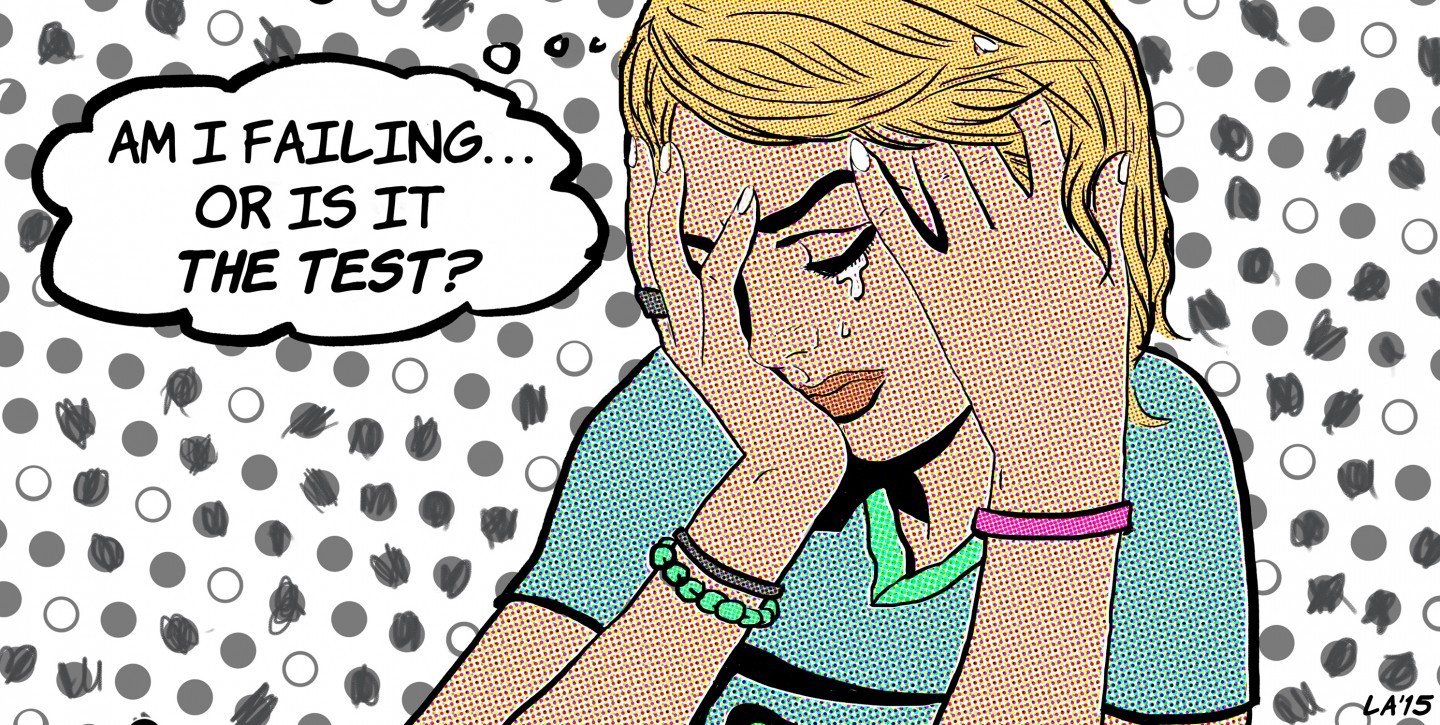
"description": "Am I failing... or is it the test?",
"title": "Am I failing... or is it the test?",
"credit": null,
"status": "inherit",
"isLoading": false,
"fetchFailed": false
},
"mindshift_38875": {
"type": "attachments",
"id": "mindshift_38875",
"meta": {
"index": "attachments_1716263798",
"site": "mindshift",
"id": "38875",
"found": true
},
"parent": 38874,
"imgSizes": {
"twentyfourteen-full-width": {
"file": "https://ww2.kqed.org/app/uploads/sites/23/2014/12/kgreading-a7c6bc0da50b02a4b1f0f21970033a0f6dda4040-e1420182825846-1038x576.jpg",
"width": 1038,
"mimeType": "image/jpeg",
"height": 576
},
"thumbnail": {
"file": "https://ww2.kqed.org/app/uploads/sites/23/2014/12/kgreading-a7c6bc0da50b02a4b1f0f21970033a0f6dda4040-e1420182825846-400x300.jpg",
"width": 400,
"mimeType": "image/jpeg",
"height": 300
},
"fd-sm": {
"file": "https://ww2.kqed.org/app/uploads/sites/23/2014/12/kgreading-a7c6bc0da50b02a4b1f0f21970033a0f6dda4040-e1420182825846-320x240.jpg",
"width": 320,
"mimeType": "image/jpeg",
"height": 240
},
"post-thumbnail": {
"file": "https://ww2.kqed.org/app/uploads/sites/23/2014/12/kgreading-a7c6bc0da50b02a4b1f0f21970033a0f6dda4040-e1420182825846-672x372.jpg",
"width": 672,
"mimeType": "image/jpeg",
"height": 372
},
"kqedFullSize": {
"file": "https://ww2.kqed.org/app/uploads/sites/23/2014/12/kgreading-a7c6bc0da50b02a4b1f0f21970033a0f6dda4040-e1420182825846.jpg",
"width": 1440,
"height": 1080
},
"large": {
"file": "https://ww2.kqed.org/app/uploads/sites/23/2014/12/kgreading-a7c6bc0da50b02a4b1f0f21970033a0f6dda4040-e1420182825846-1440x1080.jpg",
"width": 1440,
"mimeType": "image/jpeg",
"height": 1080
},
"guest-author-96": {
"file": "https://ww2.kqed.org/app/uploads/sites/23/2014/12/kgreading-a7c6bc0da50b02a4b1f0f21970033a0f6dda4040-e1420182825846-96x96.jpg",
"width": 96,
"mimeType": "image/jpeg",
"height": 96
},
"medium": {
"file": "https://ww2.kqed.org/app/uploads/sites/23/2014/12/kgreading-a7c6bc0da50b02a4b1f0f21970033a0f6dda4040-e1420182825846-800x600.jpg",
"width": 800,
"mimeType": "image/jpeg",
"height": 600
},
"guest-author-64": {
"file": "https://ww2.kqed.org/app/uploads/sites/23/2014/12/kgreading-a7c6bc0da50b02a4b1f0f21970033a0f6dda4040-e1420182825846-64x64.jpg",
"width": 64,
"mimeType": "image/jpeg",
"height": 64
},
"guest-author-32": {
"file": "https://ww2.kqed.org/app/uploads/sites/23/2014/12/kgreading-a7c6bc0da50b02a4b1f0f21970033a0f6dda4040-e1420182825846-32x32.jpg",
"width": 32,
"mimeType": "image/jpeg",
"height": 32
},
"fd-lrg": {
"file": "https://ww2.kqed.org/app/uploads/sites/23/2014/12/kgreading-a7c6bc0da50b02a4b1f0f21970033a0f6dda4040-e1420182825846-1180x885.jpg",
"width": 1180,
"mimeType": "image/jpeg",
"height": 885
},
"fd-med": {
"file": "https://ww2.kqed.org/app/uploads/sites/23/2014/12/kgreading-a7c6bc0da50b02a4b1f0f21970033a0f6dda4040-e1420182825846-768x576.jpg",
"width": 768,
"mimeType": "image/jpeg",
"height": 576
},
"detail": {
"file": "https://ww2.kqed.org/app/uploads/sites/23/2014/12/kgreading-a7c6bc0da50b02a4b1f0f21970033a0f6dda4040-e1420182825846-75x75.jpg",
"width": 75,
"mimeType": "image/jpeg",
"height": 75
},
"guest-author-128": {
"file": "https://ww2.kqed.org/app/uploads/sites/23/2014/12/kgreading-a7c6bc0da50b02a4b1f0f21970033a0f6dda4040-e1420182825846-128x128.jpg",
"width": 128,
"mimeType": "image/jpeg",
"height": 128
}
},
"publishDate": 1420182726,
"modified": 1420182812,
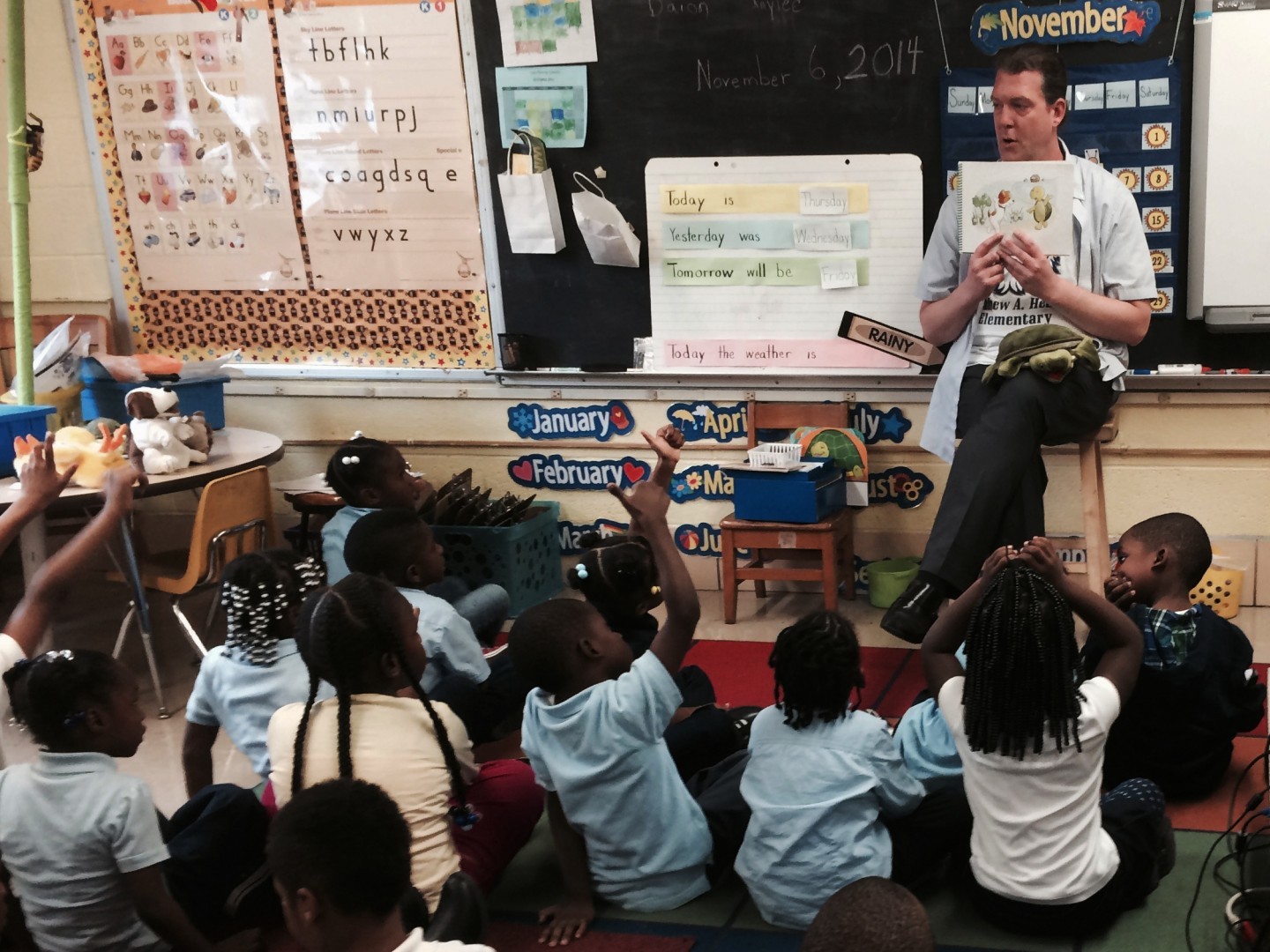
"caption": "Thomas O'Donnell reads about Twiggle the Turtle to his kindergartners at Matthew Henson Elementary School in Baltimore. (Elissa Nadworny/NPR)",
"description": "Thomas O'Donnell reads about Twiggle the Turtle to his kindergartners at Matthew Henson Elementary School in Baltimore.",
"title": "Thomas O'Donnell reads about Twiggle the Turtle to his kindergartners at Matthew Henson Elementary School in Baltimore.",
"credit": null,
"status": "inherit",
"isLoading": false,
"fetchFailed": false
},
"mindshift_38574": {
"type": "attachments",
"id": "mindshift_38574",
"meta": {
"index": "attachments_1716263798",
"site": "mindshift",
"id": "38574",
"found": true
},
"parent": 38573,
"imgSizes": {
"twentyfourteen-full-width": {
"file": "https://ww2.kqed.org/app/uploads/sites/23/2014/11/mindful-life-project-1038x576.jpg",
"width": 1038,
"mimeType": "image/jpeg",
"height": 576
},
"thumbnail": {
"file": "https://ww2.kqed.org/app/uploads/sites/23/2014/11/mindful-life-project-400x225.jpg",
"width": 400,
"mimeType": "image/jpeg",
"height": 225
},
"fd-sm": {
"file": "https://ww2.kqed.org/app/uploads/sites/23/2014/11/mindful-life-project-320x180.jpg",
"width": 320,
"mimeType": "image/jpeg",
"height": 180
},
"post-thumbnail": {
"file": "https://ww2.kqed.org/app/uploads/sites/23/2014/11/mindful-life-project-672x372.jpg",
"width": 672,
"mimeType": "image/jpeg",
"height": 372
},
"kqedFullSize": {
"file": "https://ww2.kqed.org/app/uploads/sites/23/2014/11/mindful-life-project.jpg",
"width": 1440,
"height": 810
},
"large": {
"file": "https://ww2.kqed.org/app/uploads/sites/23/2014/11/mindful-life-project-1440x810.jpg",
"width": 1440,
"mimeType": "image/jpeg",
"height": 810
},
"guest-author-96": {
"file": "https://ww2.kqed.org/app/uploads/sites/23/2014/11/mindful-life-project-96x96.jpg",
"width": 96,
"mimeType": "image/jpeg",
"height": 96
},
"medium": {
"file": "https://ww2.kqed.org/app/uploads/sites/23/2014/11/mindful-life-project-800x450.jpg",
"width": 800,
"mimeType": "image/jpeg",
"height": 450
},
"guest-author-64": {
"file": "https://ww2.kqed.org/app/uploads/sites/23/2014/11/mindful-life-project-64x64.jpg",
"width": 64,
"mimeType": "image/jpeg",
"height": 64
},
"guest-author-32": {
"file": "https://ww2.kqed.org/app/uploads/sites/23/2014/11/mindful-life-project-32x32.jpg",
"width": 32,
"mimeType": "image/jpeg",
"height": 32
},
"fd-lrg": {
"file": "https://ww2.kqed.org/app/uploads/sites/23/2014/11/mindful-life-project-1180x664.jpg",
"width": 1180,
"mimeType": "image/jpeg",
"height": 664
},
"fd-med": {
"file": "https://ww2.kqed.org/app/uploads/sites/23/2014/11/mindful-life-project-768x432.jpg",
"width": 768,
"mimeType": "image/jpeg",
"height": 432
},
"guest-author-128": {
"file": "https://ww2.kqed.org/app/uploads/sites/23/2014/11/mindful-life-project-128x128.jpg",
"width": 128,
"mimeType": "image/jpeg",
"height": 128
}
},
"publishDate": 1417032874,
"modified": 1417032874,
"caption": "Instructor and kids in the Mindful Life Project in Richmond, California. (lafleur/Flickr)",
"description": null,
"title": "mindful-life-project",
"credit": null,
"status": "inherit",
"isLoading": false,
"fetchFailed": false
},
"mindshift_36501": {
"type": "attachments",
"id": "mindshift_36501",
"meta": {
"index": "attachments_1716263798",
"site": "mindshift",
"id": "36501",
"found": true
},
"parent": 36498,
"imgSizes": {
"thumbnail": {
"file": "https://ww2.kqed.org/app/uploads/sites/23/2014/06/kids-walking-400x269.jpg",
"width": 400,
"mimeType": "image/jpeg",
"height": 269
},
"fd-sm": {
"file": "https://ww2.kqed.org/app/uploads/sites/23/2014/06/kids-walking-320x216.jpg",
"width": 320,
"mimeType": "image/jpeg",
"height": 216
},
"post-thumbnail": {
"file": "https://ww2.kqed.org/app/uploads/sites/23/2014/06/kids-walking-570x372.jpg",
"width": 570,
"mimeType": "image/jpeg",
"height": 372
},
"kqedFullSize": {
"file": "https://ww2.kqed.org/app/uploads/sites/23/2014/06/kids-walking.jpg",
"width": 570,
"height": 384
},
"guest-author-96": {
"file": "https://ww2.kqed.org/app/uploads/sites/23/2014/06/kids-walking-96x96.jpg",
"width": 96,
"mimeType": "image/jpeg",
"height": 96
},
"guest-author-64": {
"file": "https://ww2.kqed.org/app/uploads/sites/23/2014/06/kids-walking-64x64.jpg",
"width": 64,
"mimeType": "image/jpeg",
"height": 64
},
"guest-author-32": {
"file": "https://ww2.kqed.org/app/uploads/sites/23/2014/06/kids-walking-32x32.jpg",
"width": 32,
"mimeType": "image/jpeg",
"height": 32
},
"guest-author-128": {
"file": "https://ww2.kqed.org/app/uploads/sites/23/2014/06/kids-walking-128x128.jpg",
"width": 128,
"mimeType": "image/jpeg",
"height": 128
}
},
"publishDate": 1403739963,
"modified": 1403739963,
"caption": "Seattle Municipal Archives/Flickr",
"description": null,
"title": "kids walking",
"credit": null,
"status": "inherit",
"isLoading": false,
"fetchFailed": false
},
"mindshift_35125": {
"type": "attachments",
"id": "mindshift_35125",
"meta": {
"index": "attachments_1716263798",
"site": "mindshift",
"id": "35125",
"found": true
},
"parent": 35117,
"imgSizes": {
"thumbnail": {
"file": "https://ww2.kqed.org/app/uploads/sites/23/2014/04/socialexpresspro2-e1397837815296-400x225.png",
"width": 400,
"mimeType": "image/png",
"height": 225
},
"fd-sm": {
"file": "https://ww2.kqed.org/app/uploads/sites/23/2014/04/socialexpresspro2-e1397837815296-320x180.png",
"width": 320,
"mimeType": "image/png",
"height": 180
},
"kqedFullSize": {
"file": "https://ww2.kqed.org/app/uploads/sites/23/2014/04/socialexpresspro2-e1397837815296.png",
"width": 640,
"height": 360
},
"guest-author-96": {
"file": "https://ww2.kqed.org/app/uploads/sites/23/2014/04/socialexpresspro2-e1397837815296-96x96.png",
"width": 96,
"mimeType": "image/png",
"height": 96
},
"guest-author-64": {
"file": "https://ww2.kqed.org/app/uploads/sites/23/2014/04/socialexpresspro2-e1397837815296-64x64.png",
"width": 64,
"mimeType": "image/png",
"height": 64
},
"detail": {
"file": "https://ww2.kqed.org/app/uploads/sites/23/2014/04/socialexpresspro2-e1397837815296-75x75.png",
"width": 75,
"mimeType": "image/png",
"height": 75
},
"guest-author-32": {
"file": "https://ww2.kqed.org/app/uploads/sites/23/2014/04/socialexpresspro2-e1397837815296-32x32.png",
"width": 32,
"mimeType": "image/png",
"height": 32
},
"guest-author-128": {
"file": "https://ww2.kqed.org/app/uploads/sites/23/2014/04/socialexpresspro2-e1397837815296-128x128.png",
"width": 128,
"mimeType": "image/png",
"height": 128
}
},
"publishDate": 1397755688,
"modified": 1397755688,
"caption": null,
"description": null,
"title": "socialexpresspro2",
"credit": null,
"status": "inherit",
"isLoading": false,
"fetchFailed": false
}
},
"audioPlayerReducer": {
"postId": "stream_live",
"isPaused": true,
"isPlaying": false,
"pfsActive": false,
"pledgeModalIsOpen": true,
"playerDrawerIsOpen": false,
"liveAudioPlayStartedAt": 0,
"liveAudioPlayContext": ""
},
"authorsReducer": {
"byline_mindshift_40797": {
"type": "authors",
"id": "byline_mindshift_40797",
"meta": {
"override": true
},
"slug": "byline_mindshift_40797",
"name": "NPR Staff",
"isLoading": false
},
"byline_mindshift_39446": {
"type": "authors",
"id": "byline_mindshift_39446",
"meta": {
"override": true
},
"slug": "byline_mindshift_39446",
"name": "Anya Kamenetz",
"isLoading": false
},
"byline_mindshift_38895": {
"type": "authors",
"id": "byline_mindshift_38895",
"meta": {
"override": true
},
"slug": "byline_mindshift_38895",
"name": "Anya Kamenetz, NPR",
"isLoading": false
},
"byline_mindshift_38874": {
"type": "authors",
"id": "byline_mindshift_38874",
"meta": {
"override": true
},
"slug": "byline_mindshift_38874",
"name": "Maanvi Singh",
"isLoading": false
},
"katrinaschwartz": {
"type": "authors",
"id": "234",
"meta": {
"index": "authors_1716337520",
"id": "234",
"found": true
},
"name": "Katrina Schwartz",
"firstName": "Katrina",
"lastName": "Schwartz",
"slug": "katrinaschwartz",
"email": "kschwartz@kqed.org",
"display_author_email": false,
"staff_mastheads": [
"news"
],
"title": "Producer",
"bio": "Katrina Schwartz is a journalist based in San Francisco. She's worked at KPCC public radio in LA and has reported on air and online for KQED since 2010. She covered how teaching and learning is changing for MindShift between 2012 and 2020. She is the co-host of the MindShift podcast and now produces KQED's Bay Curious podcast.",
"avatar": "https://secure.gravatar.com/avatar/edb4ee79070447a018538c9aae6eeecf28786515b8a0c30e43b6b7dce5aa44c8?s=600&d=blank&r=g",
"twitter": "kschwart",
"bluesky": null,
"facebook": null,
"instagram": null,
"linkedin": null,
"sites": [
{
"site": "",
"roles": [
"editor"
]
},
{
"site": "news",
"roles": [
"editor"
]
},
{
"site": "mindshift",
"roles": [
"administrator"
]
},
{
"site": "stateofhealth",
"roles": [
"author"
]
},
{
"site": "science",
"roles": [
"editor"
]
}
],
"headData": {
"title": "Katrina Schwartz | KQED",
"description": "Producer",
"ogImgSrc": "https://secure.gravatar.com/avatar/edb4ee79070447a018538c9aae6eeecf28786515b8a0c30e43b6b7dce5aa44c8?s=600&d=blank&r=g",
"twImgSrc": "https://secure.gravatar.com/avatar/edb4ee79070447a018538c9aae6eeecf28786515b8a0c30e43b6b7dce5aa44c8?s=600&d=blank&r=g"
},
"isLoading": false,
"link": "/author/katrinaschwartz"
},
"jordosh": {
"type": "authors",
"id": "4557",
"meta": {
"index": "authors_1716337520",
"id": "4557",
"found": true
},
"name": "Jordan Shapiro",
"firstName": "Jordan",
"lastName": "Shapiro",
"slug": "jordosh",
"email": "jordosh@gmail.com",
"display_author_email": false,
"staff_mastheads": [],
"title": null,
"bio": "Jordan Shapiro’s academic work and publishing blend psychology, philosophy, and business in surprising ways. His internationally celebrated writing on education, parenting, and game-based learning can be found on \u003ca href=\"http://www.forbes.com/sites/jordanshapiro/\">Forbes.com\u003c/a>. He teaches in Temple University's Intellectual Heritage Department where he’s also the Digital Learning Coordinator. He is the parent of two boys (six and eight years old) and the lead administrator at \u003ca href=\"http://www.projectlearnschool.org/\">Project Learn School\u003c/a> (an independent cooperative K-8 school in Philadephia). His most recent book \u003ca href=\"http://www.amazon.com/FREEPLAY-Video-Guide-Maximum-Euphoric/dp/147938643X/ref=sr_1_4?ie=UTF8&qid=1398114780&sr=8-4&keywords=freeplay\">FREEPLAY: A Video Game Guide To Maximum Euphoric Bliss\u003c/a>, considers how the games we play in our youth shape our adult lives.",
"avatar": "https://secure.gravatar.com/avatar/4b111ea254a2d6423af927dd263ccb39?s=600&d=blank&r=g",
"twitter": "jordosh",
"facebook": null,
"instagram": null,
"linkedin": null,
"sites": [
{
"site": "mindshift",
"roles": [
"contributor"
]
}
],
"headData": {
"title": "Jordan Shapiro | KQED",
"description": null,
"ogImgSrc": "https://secure.gravatar.com/avatar/4b111ea254a2d6423af927dd263ccb39?s=600&d=blank&r=g",
"twImgSrc": "https://secure.gravatar.com/avatar/4b111ea254a2d6423af927dd263ccb39?s=600&d=blank&r=g"
},
"isLoading": false,
"link": "/author/jordosh"
},
"dfkris": {
"type": "authors",
"id": "11087",
"meta": {
"index": "authors_1716337520",
"id": "11087",
"found": true
},
"name": "Deborah Farmer Kris",
"firstName": "Deborah Farmer",
"lastName": "Kris",
"slug": "dfkris",
"email": "dfkris@gmail.com",
"display_author_email": false,
"staff_mastheads": [],
"title": null,
"bio": "\u003cem>\u003ca href=\"https://twitter.com/@dfkris\">Deborah Farmer Kris\u003c/a> has taught elementary, middle and high school and served as a charter school administrator. She spent a decade as an associate at Boston University’s \u003c/em>\u003cem>\u003ca href=\"http://www.bu.edu/ccsr/about-us/\">Center for Character and Social Responsibility\u003c/a>, \u003c/em>\u003cem>researching, writing, and consulting with schools. She is the mother of two young children. You can follower her on Twitter \u003ca href=\"https://twitter.com/@dfkris\">@dfkris\u003c/a>.\u003c/em>",
"avatar": "https://secure.gravatar.com/avatar/48efe6f17031ed31222b74af9605fe5a?s=600&d=blank&r=g",
"twitter": "dfkris",
"facebook": null,
"instagram": null,
"linkedin": null,
"sites": [
{
"site": "mindshift",
"roles": [
"author"
]
}
],
"headData": {
"title": "Deborah Farmer Kris | KQED",
"description": null,
"ogImgSrc": "https://secure.gravatar.com/avatar/48efe6f17031ed31222b74af9605fe5a?s=600&d=blank&r=g",
"twImgSrc": "https://secure.gravatar.com/avatar/48efe6f17031ed31222b74af9605fe5a?s=600&d=blank&r=g"
},
"isLoading": false,
"link": "/author/dfkris"
}
},
"pagesReducer": {
"mindshift_tag_social-emotional-learning": {
"type": "terms",
"id": "mindshift_943",
"meta": {
"index": "terms_1716263798",
"site": "mindshift",
"id": "943",
"score": 10.404039
},
"featImg": null,
"name": "social emotional learning",
"description": null,
"taxonomy": "tag",
"headData": {
"twImgId": null,
"twTitle": null,
"ogTitle": null,
"ogImgId": null,
"twDescription": null,
"description": null,
"title": "social emotional learning Archives - KQED Mindshift",
"ogDescription": null
},
"ttid": 948,
"slug": "social-emotional-learning",
"isLoading": false,
"title": "social emotional learning",
"pageMeta": {
"site": "mindshift",
"WpPageTemplate": "page-topic-editorial",
"currentPage": 15
},
"blocks": [
{
"blockName": "kqed/post-list",
"attrs": {
"layout": "cardArticle2",
"query": "posts/mindshift?tag=social-emotional-learning",
"seeMore": false,
"paginated": true,
"page": 15
}
},
{
"blockName": "kqed/ad"
}
]
}
},
"pfsSessionReducer": {},
"postsReducer": {
"stream_live": {
"type": "live",
"id": "stream_live",
"audioUrl": "https://streams.kqed.org/kqedradio",
"title": "Live Stream",
"excerpt": "Live Stream information currently unavailable.",
"link": "/radio",
"featImg": "",
"label": {
"name": "KQED Live",
"link": "/"
}
},
"stream_kqedNewscast": {
"type": "posts",
"id": "stream_kqedNewscast",
"audioUrl": "https://www.kqed.org/.stream/anon/radio/RDnews/newscast.mp3?_=1",
"title": "KQED Newscast",
"featImg": "",
"label": {
"name": "88.5 FM",
"link": "/"
}
},
"mindshift_40797": {
"type": "posts",
"id": "mindshift_40797",
"meta": {
"index": "posts_1716263798",
"site": "mindshift",
"id": "40797",
"score": null,
"sort": [
1434039948000
]
},
"parent": 0,
"labelTerm": {
"site": "mindshift"
},
"blocks": [],
"publishDate": 1434039948,
"format": "standard",
"disqusTitle": "‘Inside Out’: A Look at How Emotions Work Together in Adolescents",
"title": "‘Inside Out’: A Look at How Emotions Work Together in Adolescents",
"headTitle": "MindShift | KQED News",
"content": "\u003cp>Why do songs get stuck in your head? Where did that weird dream come from last night? The new Disney Pixar film \u003cem>Inside Out\u003c/em> takes an animated peek into the inner workings of our minds.\u003c/p>\n\u003cp>The film follows 11-year-old Riley, who is uprooted from her home in Minnesota when her father starts a new company in San Francisco. This normally joyful girl becomes sad and angry when she's forced to leave the house, the friends and the hockey team she loves. Much of the film takes place inside her head, where there's a control room operated by five characters who personify her primary emotions: Joy is voiced by Amy Poehler, Anger by Louis Black, Fear by Bill Hader, Disgust by Mindy Kaling and Sadness by Phyllis Smith.\u003c/p>\n\u003cp>Director Pete Docter says he was intrigued by the idea of taking familiar cognitive experiences and visualizing them. \"This was our chance to bring all of that stuff to life and explore it in a fun way,\" he tells \u003cem>Fresh Air\u003c/em>'s Terry Gross. But Docter, who also directed\u003cem> Monsters, Inc.\u003c/em> and \u003cem>Up, \u003c/em>says it wasn't all imagination: \"I really wanted to make sure that the science was as correct as it could be, because you just don't want to make a film that scientists go to and roll their eyes at.\"\u003c/p>\n\u003cp>The filmmakers did extensive consultations with researchers and psychologists to get the \"science\" of their animated emotions just right.\u003c/p>\n\u003chr>\n\u003ch3>Interview Highlights\u003c/h3>\n\u003cp>\u003cstrong>On why he wanted to make a film about emotions\u003c/strong>\u003c/p>\n\u003cp>[ad fullwidth]\u003c/p>\n\u003cp>The idea kind of started with me just thinking about what would be fun to see in animation: What have I not seen? ... I got thinking about the human body, and realizing I've seen traveling through the bloodstream [depicted] and into the stomach and things, well, what if we did this in the mind as opposed to the brain? So instead of blood vessels and dendrites, what if it was consciousness and dream production and that would allow us to have characters that represent emotions and that felt like — man, that's exactly what animation does best: strong, opinionated, caricatured personalities — and that just got me excited.\u003c/p>\n\u003cp>\u003cstrong>On casting the emotions in the film\u003c/strong>\u003c/p>\n\u003cp>At the very beginning of this process we realized, \"Man, we really don't know very much about this subject, so we better do some research.\" We started looking around online. We found some scientists who said that there are basically three emotions; others went up to 27; others had 16, somewhere in the middle, so we were kind of left with no definitive answer to our basic question, \"How many are there?\"\u003c/p>\n\u003cp>Dr. Paul Ekman — who worked in San Francisco, still does, which is where Pixar Animation Studios is — he had early in his career identified six. That felt like a nice, manageable number of guys to design and write for. It was anger, fear, sadness, disgust, joy and surprise. As I was sort of doodling I was thinking, \"Surprise and fear — probably fairly similar.\" So let's just lose surprise and that left us with five.\u003c/p>\n\u003cp>\u003cstrong>On depicting Joy (played by Amy Poehler)\u003c/strong>\u003c/p>\n\u003cp>Joy we thought of as kind of an explosion or a spark. She's like an outwardly directed person who is just always moving and she's full of energy. Even the way she looks, if you look at her up close, and this is true of all of the emotions in the film, we wanted them to look not like little people — so they're not made of skin or flesh — they're made out of energy. They have these tiny little particles that sort of roil and move and that we felt was a good way of representing that.\u003c/p>\n\u003cp>\u003cstrong>On an emotional moment with Mindy Kaling (who plays Disgust)\u003c/strong>\u003c/p>\n\u003cp>She was actually pretty key to decoding some elements of the story. We were really wrestling with these two different themes of growing up and then embracing sadness, which we felt were kind of separate but I had an intuition that they could somehow be connected. I pitched her this story and as I turned around, because I was pitching kind of some visuals on the computer, and she's crying and I thought, \"Oh no, did she get like a bad text or something?\" She really responded emotionally and she said, \"Sorry, I just think it's really beautiful that you guys are making a story that tells kids that it's difficult to grow up and it's OK to be sad about it.\" We were like, \"Quick! Write that down.\" Because that was really what we were trying to say.\u003c/p>\n\u003cp>\u003cstrong>On the importance of Sadness\u003c/strong>\u003c/p>\n\u003cp>One of the other experts we consulted was this guy named Dacher Keltner. He was big on sadness as a community bonding, I think is the word he uses. Like if you're sad, it's a way of connecting with other people and a lot of times, we sort of feel embarrassed about being sad and we go off by ourselves to hide and cry by ourselves, but really it's a way of re-establishing relationship.\u003c/p>\n\u003cp>\u003cstrong>On the breakthrough he had with the film\u003c/strong>\u003c/p>\n\u003cp>We had spent almost three years working on the film and I knew that there was an upcoming screening where not only were we going to show it to everybody else at the studio. ... There was this really heavy pressure that whatever we were going to show had to be perfect or at least good enough to move into actual production. And yet, I was sitting there in editorial going, \"This is not working.\"\u003c/p>\n\u003cp>I was walking around that weekend ... going, \"I'm a failure. These other films were flukes. I don't know what I'm doing. I should just quit. What would I miss? I would miss my house and I'd miss going to work.\" But I think the thing that I realized I would miss most is probably similar to everybody, which is your friends. I thought about it and I realized that the friends that I feel the deepest connection with are the friends that yeah, I've had good times with, but they're also people I've been angry with, that I've had sadness alongside them, I've been scared for them, and it sort of hit me that the very subject matter of the film that I'm dealing with is the key to the most important thing in our lives — and that's our relationships.\u003c/p>\n\u003cp>We had done all this research showing the job of each individual emotion — fear keeps you safe, it deals with uncertainty; anger is about fairness, if it feels that you're getting ripped off or taken advantage of, that's when anger comes up; sadness deals with loss — and suddenly I had this new revelation, it felt like to me, that those are all true but the real deeper reason we have emotions is to connect us together and that felt big to me.\u003c/p>\n\u003cp>I suddenly had an idea that we had to get Fear out of there and Sadness connected with Joy, and I ran back, I called producer Jonas Rivera and Ronnie del Carmen, who is our co-director, and we met that Sunday night and I went through this whole spiel with them and I was kind of expecting them to sink into their chairs and bury their hands in their faces because the pressure was pretty great. Instead they totally lit up. So the three of us went to ... the other [Pixar] filmmakers and we said, \"Well, we were supposed to show you a screening today, but instead I'm going to tell you what we are planning to do.\" So the cool thing was they very quickly understood why and were totally on board, why this new thing was an improvement and so they got on board and we moved on. It was a scary moment but it was the right call in the long run.\u003c/p>\n\u003cp>\u003cstrong>On watching audience reactions\u003c/strong>\u003c/p>\n\u003cp>That's one of the real joys for me is going out and watching — and usually I'm not watching the screen, I'm kind of sitting and looking off to the side, spying on people to see what they react to. As [screenwriter] Joe Ranft used to say, \"Animation is like telling a joke and waiting for three years to see if anyone laughs.\" ... This film seems like it really brings out a lot of discussion. There's a lot of layers to it.\u003c/p>\n\u003cdiv class=\"fullattribution\">Copyright 2015 NPR. To see more, visit http://www.npr.org/.\u003cimg src=\"http://www.google-analytics.com/__utm.gif?utmac=UA-5828686-4&utmdt=It%27s+All+In+Your+Head%3A+Director+Pete+Docter+Gets+Emotional+In+%27Inside+Out%27&utme=8(APIKey)9(MDAxOTAwOTE4MDEyMTkxMDAzNjczZDljZA004)\" alt=\"\">\u003c/div>\n\u003cp>[ad floatright]\u003c/p>\n\u003cp> \u003c/p>\n\n",
"disqusIdentifier": "40797 http://ww2.kqed.org/mindshift/?p=40797",
"disqusUrl": "https://ww2.kqed.org/mindshift/2015/06/11/inside-out-a-look-at-how-emotions-work-together-in-adolescents/",
"stats": {
"hasVideo": false,
"hasChartOrMap": false,
"hasAudio": false,
"hasPolis": false,
"wordCount": 1463,
"hasGoogleForm": false,
"hasGallery": false,
"hasHearkenModule": false,
"iframeSrcs": [],
"paragraphCount": 24
},
"modified": 1434039948,
"excerpt": "The new film illustrates the inner workings of an 11-year-old's mind. Her emotions — Sadness, Fear, Anger, Disgust and Joy — are the stars, voiced by the likes of Amy Poehler and Louis Black.",
"headData": {
"twImgId": "",
"twTitle": "",
"ogTitle": "",
"ogImgId": "",
"twDescription": "",
"description": "The new film illustrates the inner workings of an 11-year-old's mind. Her emotions — Sadness, Fear, Anger, Disgust and Joy — are the stars, voiced by the likes of Amy Poehler and Louis Black.",
"title": "‘Inside Out’: A Look at How Emotions Work Together in Adolescents | KQED",
"ogDescription": "",
"schema": {
"@context": "https://schema.org",
"@type": "Article",
"headline": "‘Inside Out’: A Look at How Emotions Work Together in Adolescents",
"datePublished": "2015-06-11T09:25:48-07:00",
"dateModified": "2015-06-11T09:25:48-07:00",
"image": "https://cdn.kqed.org/wp-content/uploads/2020/02/KQED-OG-Image@1x.png"
}
},
"guestAuthors": [],
"slug": "inside-out-a-look-at-how-emotions-work-together-in-adolescents",
"status": "publish",
"nprApiLink": "http://api.npr.org/query?id=413273007&apiKey=MDAxOTAwOTE4MDEyMTkxMDAzNjczZDljZA004",
"nprByline": "NPR Staff",
"nprStoryDate": "Wed, 10 Jun 2015 14:16:00 -0400",
"nprLastModifiedDate": "Wed, 10 Jun 2015 15:14:30 -0400",
"nprHtmlLink": "http://www.npr.org/2015/06/10/413273007/its-all-in-your-head-director-pete-docter-gets-emotional-in-inside-out?ft=nprml&f=413273007",
"nprAudio": "http://pd.npr.org/anon.npr-mp3/npr/fa/2015/06/20150610_fa_01.mp3?orgId=1&topicId=1137&d=1665&p=13&story=413273007&t=progseg&e=413428819&seg=1&ft=nprml&f=413273007",
"nprAudioM3u": "http://api.npr.org/m3u/1413430095-f12856.m3u?orgId=1&topicId=1137&d=1665&p=13&story=413273007&t=progseg&e=413428819&seg=1&ft=nprml&f=413273007",
"nprStoryId": "413273007",
"nprRetrievedStory": "1",
"nprPubDate": "Wed, 10 Jun 2015 15:14:00 -0400",
"path": "/mindshift/40797/inside-out-a-look-at-how-emotions-work-together-in-adolescents",
"audioUrl": "http://pd.npr.org/anon.npr-mp3/npr/fa/2015/06/20150610_fa_01.mp3?orgId=1&topicId=1137&d=1665&p=13&story=413273007&t=progseg&e=413428819&seg=1&ft=nprml&f=413273007",
"audioTrackLength": null,
"parsedContent": [
{
"type": "contentString",
"content": "\u003cdiv class=\"post-body\">\u003cp>\u003cp>Why do songs get stuck in your head? Where did that weird dream come from last night? The new Disney Pixar film \u003cem>Inside Out\u003c/em> takes an animated peek into the inner workings of our minds.\u003c/p>\n\u003cp>The film follows 11-year-old Riley, who is uprooted from her home in Minnesota when her father starts a new company in San Francisco. This normally joyful girl becomes sad and angry when she's forced to leave the house, the friends and the hockey team she loves. Much of the film takes place inside her head, where there's a control room operated by five characters who personify her primary emotions: Joy is voiced by Amy Poehler, Anger by Louis Black, Fear by Bill Hader, Disgust by Mindy Kaling and Sadness by Phyllis Smith.\u003c/p>\n\u003cp>Director Pete Docter says he was intrigued by the idea of taking familiar cognitive experiences and visualizing them. \"This was our chance to bring all of that stuff to life and explore it in a fun way,\" he tells \u003cem>Fresh Air\u003c/em>'s Terry Gross. But Docter, who also directed\u003cem> Monsters, Inc.\u003c/em> and \u003cem>Up, \u003c/em>says it wasn't all imagination: \"I really wanted to make sure that the science was as correct as it could be, because you just don't want to make a film that scientists go to and roll their eyes at.\"\u003c/p>\n\u003cp>The filmmakers did extensive consultations with researchers and psychologists to get the \"science\" of their animated emotions just right.\u003c/p>\n\u003chr>\n\u003ch3>Interview Highlights\u003c/h3>\n\u003cp>\u003cstrong>On why he wanted to make a film about emotions\u003c/strong>\u003c/p>\n\u003cp>\u003c/p>\u003c/div>",
"attributes": {
"named": {},
"numeric": []
}
},
{
"type": "component",
"content": "",
"name": "ad",
"attributes": {
"named": {
"label": "fullwidth"
},
"numeric": [
"fullwidth"
]
}
},
{
"type": "contentString",
"content": "\u003cdiv class=\"post-body\">\u003cp>\u003c/p>\n\u003cp>The idea kind of started with me just thinking about what would be fun to see in animation: What have I not seen? ... I got thinking about the human body, and realizing I've seen traveling through the bloodstream [depicted] and into the stomach and things, well, what if we did this in the mind as opposed to the brain? So instead of blood vessels and dendrites, what if it was consciousness and dream production and that would allow us to have characters that represent emotions and that felt like — man, that's exactly what animation does best: strong, opinionated, caricatured personalities — and that just got me excited.\u003c/p>\n\u003cp>\u003cstrong>On casting the emotions in the film\u003c/strong>\u003c/p>\n\u003cp>At the very beginning of this process we realized, \"Man, we really don't know very much about this subject, so we better do some research.\" We started looking around online. We found some scientists who said that there are basically three emotions; others went up to 27; others had 16, somewhere in the middle, so we were kind of left with no definitive answer to our basic question, \"How many are there?\"\u003c/p>\n\u003cp>Dr. Paul Ekman — who worked in San Francisco, still does, which is where Pixar Animation Studios is — he had early in his career identified six. That felt like a nice, manageable number of guys to design and write for. It was anger, fear, sadness, disgust, joy and surprise. As I was sort of doodling I was thinking, \"Surprise and fear — probably fairly similar.\" So let's just lose surprise and that left us with five.\u003c/p>\n\u003cp>\u003cstrong>On depicting Joy (played by Amy Poehler)\u003c/strong>\u003c/p>\n\u003cp>Joy we thought of as kind of an explosion or a spark. She's like an outwardly directed person who is just always moving and she's full of energy. Even the way she looks, if you look at her up close, and this is true of all of the emotions in the film, we wanted them to look not like little people — so they're not made of skin or flesh — they're made out of energy. They have these tiny little particles that sort of roil and move and that we felt was a good way of representing that.\u003c/p>\n\u003cp>\u003cstrong>On an emotional moment with Mindy Kaling (who plays Disgust)\u003c/strong>\u003c/p>\n\u003cp>She was actually pretty key to decoding some elements of the story. We were really wrestling with these two different themes of growing up and then embracing sadness, which we felt were kind of separate but I had an intuition that they could somehow be connected. I pitched her this story and as I turned around, because I was pitching kind of some visuals on the computer, and she's crying and I thought, \"Oh no, did she get like a bad text or something?\" She really responded emotionally and she said, \"Sorry, I just think it's really beautiful that you guys are making a story that tells kids that it's difficult to grow up and it's OK to be sad about it.\" We were like, \"Quick! Write that down.\" Because that was really what we were trying to say.\u003c/p>\n\u003cp>\u003cstrong>On the importance of Sadness\u003c/strong>\u003c/p>\n\u003cp>One of the other experts we consulted was this guy named Dacher Keltner. He was big on sadness as a community bonding, I think is the word he uses. Like if you're sad, it's a way of connecting with other people and a lot of times, we sort of feel embarrassed about being sad and we go off by ourselves to hide and cry by ourselves, but really it's a way of re-establishing relationship.\u003c/p>\n\u003cp>\u003cstrong>On the breakthrough he had with the film\u003c/strong>\u003c/p>\n\u003cp>We had spent almost three years working on the film and I knew that there was an upcoming screening where not only were we going to show it to everybody else at the studio. ... There was this really heavy pressure that whatever we were going to show had to be perfect or at least good enough to move into actual production. And yet, I was sitting there in editorial going, \"This is not working.\"\u003c/p>\n\u003cp>I was walking around that weekend ... going, \"I'm a failure. These other films were flukes. I don't know what I'm doing. I should just quit. What would I miss? I would miss my house and I'd miss going to work.\" But I think the thing that I realized I would miss most is probably similar to everybody, which is your friends. I thought about it and I realized that the friends that I feel the deepest connection with are the friends that yeah, I've had good times with, but they're also people I've been angry with, that I've had sadness alongside them, I've been scared for them, and it sort of hit me that the very subject matter of the film that I'm dealing with is the key to the most important thing in our lives — and that's our relationships.\u003c/p>\n\u003cp>We had done all this research showing the job of each individual emotion — fear keeps you safe, it deals with uncertainty; anger is about fairness, if it feels that you're getting ripped off or taken advantage of, that's when anger comes up; sadness deals with loss — and suddenly I had this new revelation, it felt like to me, that those are all true but the real deeper reason we have emotions is to connect us together and that felt big to me.\u003c/p>\n\u003cp>I suddenly had an idea that we had to get Fear out of there and Sadness connected with Joy, and I ran back, I called producer Jonas Rivera and Ronnie del Carmen, who is our co-director, and we met that Sunday night and I went through this whole spiel with them and I was kind of expecting them to sink into their chairs and bury their hands in their faces because the pressure was pretty great. Instead they totally lit up. So the three of us went to ... the other [Pixar] filmmakers and we said, \"Well, we were supposed to show you a screening today, but instead I'm going to tell you what we are planning to do.\" So the cool thing was they very quickly understood why and were totally on board, why this new thing was an improvement and so they got on board and we moved on. It was a scary moment but it was the right call in the long run.\u003c/p>\n\u003cp>\u003cstrong>On watching audience reactions\u003c/strong>\u003c/p>\n\u003cp>That's one of the real joys for me is going out and watching — and usually I'm not watching the screen, I'm kind of sitting and looking off to the side, spying on people to see what they react to. As [screenwriter] Joe Ranft used to say, \"Animation is like telling a joke and waiting for three years to see if anyone laughs.\" ... This film seems like it really brings out a lot of discussion. There's a lot of layers to it.\u003c/p>\n\u003cdiv class=\"fullattribution\">Copyright 2015 NPR. To see more, visit http://www.npr.org/.\u003cimg src=\"http://www.google-analytics.com/__utm.gif?utmac=UA-5828686-4&utmdt=It%27s+All+In+Your+Head%3A+Director+Pete+Docter+Gets+Emotional+In+%27Inside+Out%27&utme=8(APIKey)9(MDAxOTAwOTE4MDEyMTkxMDAzNjczZDljZA004)\" alt=\"\">\u003c/div>\n\u003cp>\u003c/p>\u003c/div>",
"attributes": {
"named": {},
"numeric": []
}
},
{
"type": "component",
"content": "",
"name": "ad",
"attributes": {
"named": {
"label": "floatright"
},
"numeric": [
"floatright"
]
}
},
{
"type": "contentString",
"content": "\u003cdiv class=\"post-body\">\u003cp>\u003c/p>\n\u003cp> \u003c/p>\n\n\u003c/div>\u003c/p>",
"attributes": {
"named": {},
"numeric": []
}
}
],
"link": "/mindshift/40797/inside-out-a-look-at-how-emotions-work-together-in-adolescents",
"authors": [
"byline_mindshift_40797"
],
"categories": [
"mindshift_192",
"mindshift_194"
],
"tags": [
"mindshift_20784",
"mindshift_1040",
"mindshift_943"
],
"featImg": "mindshift_40798",
"label": "mindshift"
},
"mindshift_40082": {
"type": "posts",
"id": "mindshift_40082",
"meta": {
"index": "posts_1716263798",
"site": "mindshift",
"id": "40082",
"score": null,
"sort": [
1430915611000
]
},
"parent": 0,
"labelTerm": {
"site": "mindshift"
},
"blocks": [],
"publishDate": 1430915611,
"format": "standard",
"disqusTitle": "How to Create the Learning Community Vital to Project-Based Learning's Success",
"title": "How to Create the Learning Community Vital to Project-Based Learning's Success",
"headTitle": "MindShift | KQED News",
"content": "\u003cp>Project-based learning has become a hot topic as educators look for ways to effectively get students solving problems, working collaboratively and producing evidence of their learning. But as educators turn to this \u003ca href=\"http://ww2.kqed.org/mindshift/tag/project-based-learning/\" target=\"_blank\">long-standing pedagogy\u003c/a> for content delivery, it’s easy to forget to build up the learning skills and dispositions that make the approach successful.\u003c/p>\n\u003cp>“We don’t need more individual ways of teaching that only do one small thing,” said Laura Thomas, director of the \u003ca href=\"http://www.antiochne.edu/acsr/\" target=\"_blank\">Antioch Center for School Renewal\u003c/a>. “Good project-based learning pedagogy has all the stuff we are supposed to be doing embedded in it and we just have to be articulate and point to it.”\u003c/p>\n\u003cp>\u003cstrong>A COMMUNITY OF LEARNERS\u003c/strong>\u003c/p>\n\u003cp>Effective project-based learning is grounded in a strong learning community, one teachers create and must regularly foster. “Project-based learning requires kids to take risks and they aren’t going to take risks if they don’t trust you or each other,” Thomas said. She suggests teachers co-create a social contract with the class at the beginning of the year and make sure it is a living document that can grow and change. Every joke or put-down is a test of the teacher and she should stop everything to revisit the social contract and discuss violations. When kids are resisting a new kind of learning, it's often because they feel unsafe.\u003c/p>\n\u003caside class=\"pullquote alignright\">\"When we focus on the skills and dispositions at the beginning, the depth of the work is much greater. And [students] internalize the skills much more than when it's a separate unit because it's contextualized.\"\u003c/aside>\n\u003cp>“A lot of teachers don’t understand how important it is to build a learning community,” Thomas said. One of the best ways to do this is through meaningful work, but it’s also important at times to take a break from academics and just play together. A short game outside can refocus students and build trust and teamwork at the same time.\u003c/p>\n\u003cp>[ad fullwidth]\u003c/p>\n\u003cp>Building a community of learners starts by getting to know one another. Talk as a class about who each student is outside of school. It’s not unheard of for kids get to the end of the school year and not even know one another’s names.\u003c/p>\n\u003cp>It’s equally important to have good communication with and between students. To do that, students have to be involved in creating the definition of what it means to communicate well. “Instead of telling kids what good communication looks like, you have conversations about what it means to be a good community member, a good friend, a good learning partner or even an organized person,” Thomas said. She’s aware that adults often assume students understand the expectations around softer skills like communication and collaboration without spelling it out. “If it doesn’t have concrete, observable language, the teacher can’t really know if the kids are doing it and the kids won’t know what the teacher is looking for,” Thomas said.\u003c/p>\n\u003cp>[contextly_sidebar id=\"tHqraBiNOmD3aNXLwL1jrTRvfKFxo4fz\"]\u003c/p>\n\u003cp>\u003cstrong>COOPERATION vs. COLLABORATION\u003c/strong>\u003c/p>\n\u003cp>The next step in building a community of learners is collaboration, but first, students have to cooperate. When students cooperate, they are acting under a tacit agreement not to get in one another’s way. Collaboration, on the other hand, is about getting to the final goal together. It’s the understanding that the individual can’t succeed unless every member in the group succeeds. And every member is invested in the project being worked on together.\u003c/p>\n\u003cp>Thomas says you get from cooperation to collaboration through meaningful work. And she doesn’t pretend it’s always easy. But she advises teachers to stay in the conflict together with students when they arise. If one student is refusing to engage, sit down with the group and talk out the problem. Maybe that student felt his idea was rejected and is now refusing to participate. Whatever it is, talk it out. “It feels like it’s time consuming, but it doesn’t happen very often,” Thomas said. And, if teachers take the time do this important conflict resolution early and whenever necessary, other students notice and realize they won’t be able to get away with slacking off.\u003c/p>\n\u003cp>Paying attention to these underlying structures of the classroom will result in big payoffs in the depth and quality of the project-based learning students do, Thomas said. It changes the classroom culture. But, it also must be maintained. Teachers have to keep their eyes open for signs of trouble. One way to do this is to have students write down who they want to work with on the next project. Take notice of who is always chosen and who is never chosen as a partner. That will provide clues to the state of the learning community.\u003c/p>\n\u003cp>\u003cstrong>PACE YOURSELF\u003c/strong>\u003c/p>\n\u003cp>Building a learning community is a fundamental step to creating the kind of classroom culture that supports engaged students exploring a real world problem resulting in a created demonstration of knowledge gained. But it’s also important to recognize where the learners are in their school careers. Middle and high school educators are teaching students who have often been taught for more than six years with a more traditional style. Many don’t know how to do project-based learning, are scared by autonomy in learning and will resist.\u003c/p>\n\u003cp>“The biggest challenge is figuring out how far and how fast you can implement,” Thomas said, “And recognizing that it still counts if it’s a teeny tiny thing that the kids are doing.”\u003c/p>\n\u003cp>New teachers sometimes start their careers energized to bring progressive, constructivist, project-based approaches to underserved kids, particularly in disadvantaged communities, only to find \u003ca href=\"http://ww2.kqed.org/mindshift/2014/07/07/the-struggles-and-realities-of-student-driven-learning-and-byod/\" target=\"_blank\">kids and parents dislike it\u003c/a>. But, Thomas says they often resist because it’s unfamiliar, or they believe wealthier kids are getting something different, or it requires more of them. They aren’t ready to be thrown into the deep end of student-centered learning without a lot of scaffolding to help them see they can do it.\u003c/p>\n\u003cp>Thomas had an experience similar to this as a new teacher. She taught 11th grade English and didn’t have much success implementing project-based learning. But she didn’t have any of the tools she now has to build a community of learners, to unpack her own biases, to listen to her students’ experiences of \u003ca href=\"http://ww2.kqed.org/mindshift/2014/04/04/how-can-teachers-address-race-issues-in-class-ask-students/\" target=\"_blank\">institutional racism and educational violence\u003c/a>.\u003c/p>\n\u003cp>“If I had been willing to get to know their contexts; if I had talked less and listened more, then I think I could have been very successful,” Thomas said. Too often, teachers hold constructivist approaches hostage to lower level learning. Students don’t get to do a project until they pass a vocabulary quiz, for example.\u003c/p>\n\u003cp>“Give kids the benefit of the doubt on that,” Thomas said. Often when teachers give students an interesting challenge, kids will end up discovering much of the content the teacher had set aside time to cover. They help one another and discover they knew more than they realized. It’s easy to assume students aren’t ready to solve a problem because they approach it differently from the teacher. But they may be coming from a different context and often the hoops they’re asked to jump through in a more traditional classroom come off as demoralizing.\u003c/p>\n\u003cp>“When they refuse to engage in our insulting pedagogy, we assume that they don’t want to learn,” Thomas said. This is where she thinks it’s important that teachers examine their own biases. It's natural to be suspicious of things that are different from ourselves, that instinct evolved to protect us from danger, but humans are capable of activating higher-order thinking to overcome those basic instincts. Over time, educators can develop themselves to be the kind of educators they want to be.\u003c/p>\n\u003cp>Ultimately, Thomas is convinced project-based learning is how humans are meant to learn. Other methods developed to cram a bunch of information into students’ brains in a short amount of time just don’t work.\u003c/p>\n\u003cp>Too often, skills are segmented in school, with a separate curricula for each subject, for social and emotional learning, for study skills. Teaching through discovery and requiring students to use skills and dispositions whose definitions have been co-constructed is much more effective. “When we focus on the skills and dispositions at the beginning, the depth of the work is much greater,” Thomas said. “And [students] internalize the skills much more than when it’s a separate unit because it’s contextualized.”\u003c/p>\n\u003cp>[ad floatright]\u003c/p>\n\u003cp>Along the way, students gain the tools to learn how to learn, the most valuable skill of them all.\u003c/p>\n\n",
"disqusIdentifier": "40082 http://ww2.kqed.org/mindshift/?p=40082",
"disqusUrl": "https://ww2.kqed.org/mindshift/2015/05/06/how-to-create-the-learning-community-project-based-learning-demands/",
"stats": {
"hasVideo": false,
"hasChartOrMap": false,
"hasAudio": false,
"hasPolis": false,
"wordCount": 1519,
"hasGoogleForm": false,
"hasGallery": false,
"hasHearkenModule": false,
"iframeSrcs": [],
"paragraphCount": 25
},
"modified": 1430916188,
"excerpt": "An under-appreciated element of effective project-based learning is a community of learners who trust one another.",
"headData": {
"twImgId": "",
"twTitle": "",
"ogTitle": "",
"ogImgId": "",
"twDescription": "",
"description": "An under-appreciated element of effective project-based learning is a community of learners who trust one another.",
"title": "How to Create the Learning Community Vital to Project-Based Learning's Success | KQED",
"ogDescription": "",
"schema": {
"@context": "https://schema.org",
"@type": "Article",
"headline": "How to Create the Learning Community Vital to Project-Based Learning's Success",
"datePublished": "2015-05-06T05:33:31-07:00",
"dateModified": "2015-05-06T05:43:08-07:00",
"image": "https://cdn.kqed.org/wp-content/uploads/2020/02/KQED-OG-Image@1x.png"
}
},
"guestAuthors": [],
"slug": "how-to-create-the-learning-community-project-based-learning-demands",
"status": "publish",
"path": "/mindshift/40082/how-to-create-the-learning-community-project-based-learning-demands",
"audioTrackLength": null,
"parsedContent": [
{
"type": "contentString",
"content": "\u003cdiv class=\"post-body\">\u003cp>\u003cp>Project-based learning has become a hot topic as educators look for ways to effectively get students solving problems, working collaboratively and producing evidence of their learning. But as educators turn to this \u003ca href=\"http://ww2.kqed.org/mindshift/tag/project-based-learning/\" target=\"_blank\">long-standing pedagogy\u003c/a> for content delivery, it’s easy to forget to build up the learning skills and dispositions that make the approach successful.\u003c/p>\n\u003cp>“We don’t need more individual ways of teaching that only do one small thing,” said Laura Thomas, director of the \u003ca href=\"http://www.antiochne.edu/acsr/\" target=\"_blank\">Antioch Center for School Renewal\u003c/a>. “Good project-based learning pedagogy has all the stuff we are supposed to be doing embedded in it and we just have to be articulate and point to it.”\u003c/p>\n\u003cp>\u003cstrong>A COMMUNITY OF LEARNERS\u003c/strong>\u003c/p>\n\u003cp>Effective project-based learning is grounded in a strong learning community, one teachers create and must regularly foster. “Project-based learning requires kids to take risks and they aren’t going to take risks if they don’t trust you or each other,” Thomas said. She suggests teachers co-create a social contract with the class at the beginning of the year and make sure it is a living document that can grow and change. Every joke or put-down is a test of the teacher and she should stop everything to revisit the social contract and discuss violations. When kids are resisting a new kind of learning, it's often because they feel unsafe.\u003c/p>\n\u003caside class=\"pullquote alignright\">\"When we focus on the skills and dispositions at the beginning, the depth of the work is much greater. And [students] internalize the skills much more than when it's a separate unit because it's contextualized.\"\u003c/aside>\n\u003cp>“A lot of teachers don’t understand how important it is to build a learning community,” Thomas said. One of the best ways to do this is through meaningful work, but it’s also important at times to take a break from academics and just play together. A short game outside can refocus students and build trust and teamwork at the same time.\u003c/p>\n\u003cp>\u003c/p>\u003c/div>",
"attributes": {
"named": {},
"numeric": []
}
},
{
"type": "component",
"content": "",
"name": "ad",
"attributes": {
"named": {
"label": "fullwidth"
},
"numeric": [
"fullwidth"
]
}
},
{
"type": "contentString",
"content": "\u003cdiv class=\"post-body\">\u003cp>\u003c/p>\n\u003cp>Building a community of learners starts by getting to know one another. Talk as a class about who each student is outside of school. It’s not unheard of for kids get to the end of the school year and not even know one another’s names.\u003c/p>\n\u003cp>It’s equally important to have good communication with and between students. To do that, students have to be involved in creating the definition of what it means to communicate well. “Instead of telling kids what good communication looks like, you have conversations about what it means to be a good community member, a good friend, a good learning partner or even an organized person,” Thomas said. She’s aware that adults often assume students understand the expectations around softer skills like communication and collaboration without spelling it out. “If it doesn’t have concrete, observable language, the teacher can’t really know if the kids are doing it and the kids won’t know what the teacher is looking for,” Thomas said.\u003c/p>\n\u003cp>\u003c/p>\u003cp>\u003c/p>\u003cp>\u003c/p>\n\u003cp>\u003cstrong>COOPERATION vs. COLLABORATION\u003c/strong>\u003c/p>\n\u003cp>The next step in building a community of learners is collaboration, but first, students have to cooperate. When students cooperate, they are acting under a tacit agreement not to get in one another’s way. Collaboration, on the other hand, is about getting to the final goal together. It’s the understanding that the individual can’t succeed unless every member in the group succeeds. And every member is invested in the project being worked on together.\u003c/p>\n\u003cp>Thomas says you get from cooperation to collaboration through meaningful work. And she doesn’t pretend it’s always easy. But she advises teachers to stay in the conflict together with students when they arise. If one student is refusing to engage, sit down with the group and talk out the problem. Maybe that student felt his idea was rejected and is now refusing to participate. Whatever it is, talk it out. “It feels like it’s time consuming, but it doesn’t happen very often,” Thomas said. And, if teachers take the time do this important conflict resolution early and whenever necessary, other students notice and realize they won’t be able to get away with slacking off.\u003c/p>\n\u003cp>Paying attention to these underlying structures of the classroom will result in big payoffs in the depth and quality of the project-based learning students do, Thomas said. It changes the classroom culture. But, it also must be maintained. Teachers have to keep their eyes open for signs of trouble. One way to do this is to have students write down who they want to work with on the next project. Take notice of who is always chosen and who is never chosen as a partner. That will provide clues to the state of the learning community.\u003c/p>\n\u003cp>\u003cstrong>PACE YOURSELF\u003c/strong>\u003c/p>\n\u003cp>Building a learning community is a fundamental step to creating the kind of classroom culture that supports engaged students exploring a real world problem resulting in a created demonstration of knowledge gained. But it’s also important to recognize where the learners are in their school careers. Middle and high school educators are teaching students who have often been taught for more than six years with a more traditional style. Many don’t know how to do project-based learning, are scared by autonomy in learning and will resist.\u003c/p>\n\u003cp>“The biggest challenge is figuring out how far and how fast you can implement,” Thomas said, “And recognizing that it still counts if it’s a teeny tiny thing that the kids are doing.”\u003c/p>\n\u003cp>New teachers sometimes start their careers energized to bring progressive, constructivist, project-based approaches to underserved kids, particularly in disadvantaged communities, only to find \u003ca href=\"http://ww2.kqed.org/mindshift/2014/07/07/the-struggles-and-realities-of-student-driven-learning-and-byod/\" target=\"_blank\">kids and parents dislike it\u003c/a>. But, Thomas says they often resist because it’s unfamiliar, or they believe wealthier kids are getting something different, or it requires more of them. They aren’t ready to be thrown into the deep end of student-centered learning without a lot of scaffolding to help them see they can do it.\u003c/p>\n\u003cp>Thomas had an experience similar to this as a new teacher. She taught 11th grade English and didn’t have much success implementing project-based learning. But she didn’t have any of the tools she now has to build a community of learners, to unpack her own biases, to listen to her students’ experiences of \u003ca href=\"http://ww2.kqed.org/mindshift/2014/04/04/how-can-teachers-address-race-issues-in-class-ask-students/\" target=\"_blank\">institutional racism and educational violence\u003c/a>.\u003c/p>\n\u003cp>“If I had been willing to get to know their contexts; if I had talked less and listened more, then I think I could have been very successful,” Thomas said. Too often, teachers hold constructivist approaches hostage to lower level learning. Students don’t get to do a project until they pass a vocabulary quiz, for example.\u003c/p>\n\u003cp>“Give kids the benefit of the doubt on that,” Thomas said. Often when teachers give students an interesting challenge, kids will end up discovering much of the content the teacher had set aside time to cover. They help one another and discover they knew more than they realized. It’s easy to assume students aren’t ready to solve a problem because they approach it differently from the teacher. But they may be coming from a different context and often the hoops they’re asked to jump through in a more traditional classroom come off as demoralizing.\u003c/p>\n\u003cp>“When they refuse to engage in our insulting pedagogy, we assume that they don’t want to learn,” Thomas said. This is where she thinks it’s important that teachers examine their own biases. It's natural to be suspicious of things that are different from ourselves, that instinct evolved to protect us from danger, but humans are capable of activating higher-order thinking to overcome those basic instincts. Over time, educators can develop themselves to be the kind of educators they want to be.\u003c/p>\n\u003cp>Ultimately, Thomas is convinced project-based learning is how humans are meant to learn. Other methods developed to cram a bunch of information into students’ brains in a short amount of time just don’t work.\u003c/p>\n\u003cp>Too often, skills are segmented in school, with a separate curricula for each subject, for social and emotional learning, for study skills. Teaching through discovery and requiring students to use skills and dispositions whose definitions have been co-constructed is much more effective. “When we focus on the skills and dispositions at the beginning, the depth of the work is much greater,” Thomas said. “And [students] internalize the skills much more than when it’s a separate unit because it’s contextualized.”\u003c/p>\n\u003cp>\u003c/p>\u003c/div>",
"attributes": {
"named": {},
"numeric": []
}
},
{
"type": "component",
"content": "",
"name": "ad",
"attributes": {
"named": {
"label": "floatright"
},
"numeric": [
"floatright"
]
}
},
{
"type": "contentString",
"content": "\u003cdiv class=\"post-body\">\u003cp>\u003c/p>\n\u003cp>Along the way, students gain the tools to learn how to learn, the most valuable skill of them all.\u003c/p>\n\n\u003c/div>\u003c/p>",
"attributes": {
"named": {},
"numeric": []
}
}
],
"link": "/mindshift/40082/how-to-create-the-learning-community-project-based-learning-demands",
"authors": [
"234"
],
"categories": [
"mindshift_193"
],
"tags": [
"mindshift_20784",
"mindshift_1040",
"mindshift_20846",
"mindshift_256",
"mindshift_944",
"mindshift_20764",
"mindshift_943"
],
"featImg": "mindshift_36102",
"label": "mindshift"
},
"mindshift_40040": {
"type": "posts",
"id": "mindshift_40040",
"meta": {
"index": "posts_1716263798",
"site": "mindshift",
"id": "40040",
"score": null,
"sort": [
1428932302000
]
},
"parent": 0,
"labelTerm": {
"site": "mindshift"
},
"blocks": [],
"publishDate": 1428932302,
"format": "standard",
"disqusTitle": "The Benefits of Helping Preschoolers Understand and Discuss Their Emotions",
"title": "The Benefits of Helping Preschoolers Understand and Discuss Their Emotions",
"headTitle": "MindShift | KQED News",
"content": "\u003cp>Terrible Twos. Threenagers. Fearsome Fours. These are years marked by tantrums and meltdowns -- palpable reminders that young children haven’t yet learned how to regulate their emotions. But rather than wait for them to outgrow this phase, caregivers can use this window to teach emotional literacy skills that will yield immediate and long-term benefits.\u003c/p>\n\u003cp>Increasingly, research confirms the efficacy of explicit training in \u003ca href=\"https://www.psychologytoday.com/basics/emotional-intelligence\">emotional intelligence\u003c/a> starting at a very young age. According to \u003ca href=\"http://www.nytimes.com/2013/09/15/magazine/can-emotional-intelligence-be-taught.html?pagewanted=all\">multiple\u003c/a> \u003ca href=\"http://www.npr.org/blogs/ed/2014/07/14/330761945/teaching-four-year-olds-to-feel-better\">studies\u003c/a>, preschoolers who participate in social-emotional skills programs exhibit less aggression and anxiety and become better social problem solvers. While these outcomes may make for a more peaceful classroom environment, the benefits outlive preschool: prosocial behavior in early childhood is strongly \u003ca href=\"http://thehawnfoundation.org/sites/default/files/009_Capraraetal_Psychological%20Science.pdf\">linked\u003c/a> with future academic performance and \u003ca href=\"http://www.npr.org/blogs/ed/2014/12/31/356187871/why-emotional-literacy-may-be-as-important-as-learning-the-a-b-c-s\">mental health\u003c/a>. In other words, when children learn how to calm themselves down, use language to express their feelings and treat others with kindness, they are laying the foundation for future success and wellness.\u003c/p>\n\u003cp>Even without a formal curriculum to draw on, parents and early childhood educators can do a lot to foster young children’s emotional literacy.\u003c/p>\n\u003cp>\u003cstrong>What Parents and Teachers Can Do\u003c/strong>\u003c/p>\n\u003cp>\u003cstrong style=\"line-height: 1.5\">1. Name emotions\u003c/strong>\u003c/p>\n\u003cp>[ad fullwidth]\u003c/p>\n\u003cp>Reflective listening is a hallmark of effective counseling. Therapists listen to patients and then reflect back what they hear as a way to strengthen the patients’ self-understanding. Toddlers and preschoolers have limited expressive language skills, but parents and teachers can “listen” to their \u003cem>behavior\u003c/em> – be it yelling, pushing, crying, or withdrawing – \u003ca href=\"http://www.nytimes.com/2008/02/05/health/05well.html\">reflect it back\u003c/a>, and help them put a name to what they are feeling. It might sound like this:\u003c/p>\n\u003cul>\n\u003cli> “You are mad! Baby brother ripped your picture and you are MAD.”\u003c/li>\n\u003cli> “You are sad. Grandma left and you didn’t want her to leave. You feel so, so sad.”\u003c/li>\n\u003cli> “You are happy! You got a big balloon and you are jumping up and down because you are so happy!”\u003c/li>\n\u003c/ul>\n\u003cp>As children mature, you can use this strategy to introduce nuances that will build their emotional vocabulary: “You sound \u003cem>frustrated\u003c/em>. Your tower fell down and you worked hard to make it tall! That’s \u003cem>disappointing\u003c/em>.” Or, “You look \u003cem>startled\u003c/em>. That thunder was really loud, and it \u003cem>surprised\u003c/em> you.”\u003c/p>\n\u003cp>\u003cstrong style=\"line-height: 1.5\">2. Normalize emotions\u003c/strong>\u003c/p>\n\u003cp>Emotions should not be \u003ca href=\"http://www.scientificamerican.com/article/negative-emotions-key-well-being/\">classified\u003c/a> as good or bad. Even so, strong emotions can scare or overwhelm kids, so normalizing their response to stimuli – helping them see that everyone feels mad, sad, or scared sometimes – can comfort them and build their perspective-taking skills.\u003c/p>\n\u003cp>[contextly_sidebar id=\"MYmhtoqsu4r9OwaDG7HWUKGLdF4EsfvU\"]\u003c/p>\n\u003cp>After the child has calmed down, circle back and briefly summarize what happened, including how the child felt. Then, remind them that everyone – including you – feels this way sometimes. For example, “When grandma left this morning, you felt very sad. You kicked and cried. You wanted grandma to stay and play with you. Everyone feels sad sometimes. I felt sad when grandma left, too. I like talking with her and watching her read books to you. It’s sad when people say goodbye. Do you want call her tomorrow to say hello or draw her a picture?”\u003c/p>\n\u003cp>Some advanced warning: Don’t be surprised if a child wants to hear the story about “the time I got mad at Target” multiple times. But such repetition has its benefits: with the triggering event safely in the past, you and the child can use it as a reference point when encountering future emotional stimuli.\u003c/p>\n\u003cp>\u003cstrong style=\"line-height: 1.5\">3. Develop Strategies\u003c/strong>\u003c/p>\n\u003cp>At some point, almost everyone learns that throwing a physical tantrum in the middle of the checkout aisle is not a wise choice, but that doesn’t mean we don’t feel frustrated when we are running late and stuck in a slow line. We can’t always control how we feel, but we can control how we express our emotions.\u003c/p>\n\u003cp>Building on Fred Rogers’ legacy, the PBS show\u003ca href=\"http://pbskids.org/daniel/\"> Daniel Tiger’s Neighborhood\u003c/a> provides memorable musical prompts about how kids can respond to emotional stress – everything from “When you feel so mad that you want to roar, take a deep breath and count to four” to “Saying I’m sorry is the first step, then how can I help?” to “You can take a turn, and then I’ll get it back.”\u003c/p>\n\u003cp>You can help children develop with similar simple, memorable strategies. If a child is struggling with a particular aggressive behavior, help them verbalize both what they can’t do and what they can, such as, “When I’m mad, I can’t hit my brother, but I can stomp my feet or squeeze my ball.” You can also model the connection between mood and healthy eating, exercise, and sleeping: “Sometimes when I’m frustrated, I eat a healthy snack or take a nap to help me feel better.”\u003c/p>\n\u003cp>\u003cstrong style=\"line-height: 1.5\">4. “Read” pictures\u003c/strong>\u003c/p>\n\u003cp>\u003ca href=\"http://well.blogs.nytimes.com/2013/10/03/i-know-how-youre-feeling-i-read-chekhov/\">Research\u003c/a> indicates that reading fiction promotes empathy. For little ones, picture books offer an additional tool for teaching emotional literacy: illustrations that serve as visual context clues. When a happy, scary, or frustrating event occurs in a story, pause and look at the picture together. “Look at her – how do you think she's feeling right now?” Examine characters’ facial expressions, how they are standing, and what they are doing. Employ this same technique when you watch media together. A few picture book authors who are particularly skilled at exploring emotion in print and picture are\u003ca href=\"http://www.kevinhenkes.com/reading/mouse-books/\"> Kevin Henkes\u003c/a>,\u003ca href=\"http://www.patriciapolacco.com/books/\"> Patricia Polacco\u003c/a> and \u003ca href=\"http://www.mowillems.com/\">Mo Willems\u003c/a>.\u003c/p>\n\u003cp>\u003cstrong style=\"line-height: 1.5\">5. Practice mindfulness\u003c/strong>\u003c/p>\n\u003cp>Mindfulness has its roots in Buddhism but has been\u003ca href=\"http://www.huffingtonpost.com/2015/01/23/neuroscience-mindfulness_n_6531544.html\"> adopted by clinicians\u003c/a> and \u003ca href=\"http://www.childmind.org/en/posts/articles/2012-4-23-mindfulness-classroom\">teachers\u003c/a> as a way to support mental health and improve emotional self-regulation. A key principle to this practice is calming your body and mind and paying attention to the sensations around you – the sounds, smells, and sights. Practice sitting quietly with your child or students for 60 seconds – and then share what you each saw and heard. Take “listening walks” around the park or neighborhood. Before bed – or at the end of the school day – share small moments that made you happy.\u003c/p>\n\u003cp>[ad floatright]\u003c/p>\n\u003cp>Ultimately, emotional literacy is as foundational as learning the ABC’s. As psychologist \u003ca href=\"http://en.wikiquote.org/wiki/Daniel_Goleman\">Daniel Goleman\u003c/a> reminds us, “If your emotional abilities aren't in hand, if you don't have self-awareness, if you are not able to manage your distressing emotions, if you can't have empathy and have effective relationships, then no matter how smart you are, you are not going to get very far.”\u003c/p>\n\n",
"disqusIdentifier": "40040 http://ww2.kqed.org/mindshift/?p=40040",
"disqusUrl": "https://ww2.kqed.org/mindshift/2015/04/13/the-benefits-of-helping-preschoolers-understand-and-discuss-their-emotions/",
"stats": {
"hasVideo": false,
"hasChartOrMap": false,
"hasAudio": false,
"hasPolis": false,
"wordCount": 1146,
"hasGoogleForm": false,
"hasGallery": false,
"hasHearkenModule": false,
"iframeSrcs": [],
"paragraphCount": 23
},
"modified": 1443081228,
"excerpt": "Emotional literacy at an early age can make a big difference in a person's life. Here are some steps for helping adults and young children understand a child's big emotions. ",
"headData": {
"twImgId": "",
"twTitle": "",
"ogTitle": "",
"ogImgId": "",
"twDescription": "",
"description": "Emotional literacy at an early age can make a big difference in a person's life. Here are some steps for helping adults and young children understand a child's big emotions. ",
"title": "The Benefits of Helping Preschoolers Understand and Discuss Their Emotions | KQED",
"ogDescription": "",
"schema": {
"@context": "https://schema.org",
"@type": "Article",
"headline": "The Benefits of Helping Preschoolers Understand and Discuss Their Emotions",
"datePublished": "2015-04-13T06:38:22-07:00",
"dateModified": "2015-09-24T00:53:48-07:00",
"image": "https://cdn.kqed.org/wp-content/uploads/2020/02/KQED-OG-Image@1x.png"
}
},
"guestAuthors": [],
"slug": "the-benefits-of-helping-preschoolers-understand-and-discuss-their-emotions",
"status": "publish",
"path": "/mindshift/40040/the-benefits-of-helping-preschoolers-understand-and-discuss-their-emotions",
"audioTrackLength": null,
"parsedContent": [
{
"type": "contentString",
"content": "\u003cdiv class=\"post-body\">\u003cp>\u003cp>Terrible Twos. Threenagers. Fearsome Fours. These are years marked by tantrums and meltdowns -- palpable reminders that young children haven’t yet learned how to regulate their emotions. But rather than wait for them to outgrow this phase, caregivers can use this window to teach emotional literacy skills that will yield immediate and long-term benefits.\u003c/p>\n\u003cp>Increasingly, research confirms the efficacy of explicit training in \u003ca href=\"https://www.psychologytoday.com/basics/emotional-intelligence\">emotional intelligence\u003c/a> starting at a very young age. According to \u003ca href=\"http://www.nytimes.com/2013/09/15/magazine/can-emotional-intelligence-be-taught.html?pagewanted=all\">multiple\u003c/a> \u003ca href=\"http://www.npr.org/blogs/ed/2014/07/14/330761945/teaching-four-year-olds-to-feel-better\">studies\u003c/a>, preschoolers who participate in social-emotional skills programs exhibit less aggression and anxiety and become better social problem solvers. While these outcomes may make for a more peaceful classroom environment, the benefits outlive preschool: prosocial behavior in early childhood is strongly \u003ca href=\"http://thehawnfoundation.org/sites/default/files/009_Capraraetal_Psychological%20Science.pdf\">linked\u003c/a> with future academic performance and \u003ca href=\"http://www.npr.org/blogs/ed/2014/12/31/356187871/why-emotional-literacy-may-be-as-important-as-learning-the-a-b-c-s\">mental health\u003c/a>. In other words, when children learn how to calm themselves down, use language to express their feelings and treat others with kindness, they are laying the foundation for future success and wellness.\u003c/p>\n\u003cp>Even without a formal curriculum to draw on, parents and early childhood educators can do a lot to foster young children’s emotional literacy.\u003c/p>\n\u003cp>\u003cstrong>What Parents and Teachers Can Do\u003c/strong>\u003c/p>\n\u003cp>\u003cstrong style=\"line-height: 1.5\">1. Name emotions\u003c/strong>\u003c/p>\n\u003cp>\u003c/p>\u003c/div>",
"attributes": {
"named": {},
"numeric": []
}
},
{
"type": "component",
"content": "",
"name": "ad",
"attributes": {
"named": {
"label": "fullwidth"
},
"numeric": [
"fullwidth"
]
}
},
{
"type": "contentString",
"content": "\u003cdiv class=\"post-body\">\u003cp>\u003c/p>\n\u003cp>Reflective listening is a hallmark of effective counseling. Therapists listen to patients and then reflect back what they hear as a way to strengthen the patients’ self-understanding. Toddlers and preschoolers have limited expressive language skills, but parents and teachers can “listen” to their \u003cem>behavior\u003c/em> – be it yelling, pushing, crying, or withdrawing – \u003ca href=\"http://www.nytimes.com/2008/02/05/health/05well.html\">reflect it back\u003c/a>, and help them put a name to what they are feeling. It might sound like this:\u003c/p>\n\u003cul>\n\u003cli> “You are mad! Baby brother ripped your picture and you are MAD.”\u003c/li>\n\u003cli> “You are sad. Grandma left and you didn’t want her to leave. You feel so, so sad.”\u003c/li>\n\u003cli> “You are happy! You got a big balloon and you are jumping up and down because you are so happy!”\u003c/li>\n\u003c/ul>\n\u003cp>As children mature, you can use this strategy to introduce nuances that will build their emotional vocabulary: “You sound \u003cem>frustrated\u003c/em>. Your tower fell down and you worked hard to make it tall! That’s \u003cem>disappointing\u003c/em>.” Or, “You look \u003cem>startled\u003c/em>. That thunder was really loud, and it \u003cem>surprised\u003c/em> you.”\u003c/p>\n\u003cp>\u003cstrong style=\"line-height: 1.5\">2. Normalize emotions\u003c/strong>\u003c/p>\n\u003cp>Emotions should not be \u003ca href=\"http://www.scientificamerican.com/article/negative-emotions-key-well-being/\">classified\u003c/a> as good or bad. Even so, strong emotions can scare or overwhelm kids, so normalizing their response to stimuli – helping them see that everyone feels mad, sad, or scared sometimes – can comfort them and build their perspective-taking skills.\u003c/p>\n\u003cp>\u003c/p>\u003cp>\u003c/p>\u003cp>\u003c/p>\n\u003cp>After the child has calmed down, circle back and briefly summarize what happened, including how the child felt. Then, remind them that everyone – including you – feels this way sometimes. For example, “When grandma left this morning, you felt very sad. You kicked and cried. You wanted grandma to stay and play with you. Everyone feels sad sometimes. I felt sad when grandma left, too. I like talking with her and watching her read books to you. It’s sad when people say goodbye. Do you want call her tomorrow to say hello or draw her a picture?”\u003c/p>\n\u003cp>Some advanced warning: Don’t be surprised if a child wants to hear the story about “the time I got mad at Target” multiple times. But such repetition has its benefits: with the triggering event safely in the past, you and the child can use it as a reference point when encountering future emotional stimuli.\u003c/p>\n\u003cp>\u003cstrong style=\"line-height: 1.5\">3. Develop Strategies\u003c/strong>\u003c/p>\n\u003cp>At some point, almost everyone learns that throwing a physical tantrum in the middle of the checkout aisle is not a wise choice, but that doesn’t mean we don’t feel frustrated when we are running late and stuck in a slow line. We can’t always control how we feel, but we can control how we express our emotions.\u003c/p>\n\u003cp>Building on Fred Rogers’ legacy, the PBS show\u003ca href=\"http://pbskids.org/daniel/\"> Daniel Tiger’s Neighborhood\u003c/a> provides memorable musical prompts about how kids can respond to emotional stress – everything from “When you feel so mad that you want to roar, take a deep breath and count to four” to “Saying I’m sorry is the first step, then how can I help?” to “You can take a turn, and then I’ll get it back.”\u003c/p>\n\u003cp>You can help children develop with similar simple, memorable strategies. If a child is struggling with a particular aggressive behavior, help them verbalize both what they can’t do and what they can, such as, “When I’m mad, I can’t hit my brother, but I can stomp my feet or squeeze my ball.” You can also model the connection between mood and healthy eating, exercise, and sleeping: “Sometimes when I’m frustrated, I eat a healthy snack or take a nap to help me feel better.”\u003c/p>\n\u003cp>\u003cstrong style=\"line-height: 1.5\">4. “Read” pictures\u003c/strong>\u003c/p>\n\u003cp>\u003ca href=\"http://well.blogs.nytimes.com/2013/10/03/i-know-how-youre-feeling-i-read-chekhov/\">Research\u003c/a> indicates that reading fiction promotes empathy. For little ones, picture books offer an additional tool for teaching emotional literacy: illustrations that serve as visual context clues. When a happy, scary, or frustrating event occurs in a story, pause and look at the picture together. “Look at her – how do you think she's feeling right now?” Examine characters’ facial expressions, how they are standing, and what they are doing. Employ this same technique when you watch media together. A few picture book authors who are particularly skilled at exploring emotion in print and picture are\u003ca href=\"http://www.kevinhenkes.com/reading/mouse-books/\"> Kevin Henkes\u003c/a>,\u003ca href=\"http://www.patriciapolacco.com/books/\"> Patricia Polacco\u003c/a> and \u003ca href=\"http://www.mowillems.com/\">Mo Willems\u003c/a>.\u003c/p>\n\u003cp>\u003cstrong style=\"line-height: 1.5\">5. Practice mindfulness\u003c/strong>\u003c/p>\n\u003cp>Mindfulness has its roots in Buddhism but has been\u003ca href=\"http://www.huffingtonpost.com/2015/01/23/neuroscience-mindfulness_n_6531544.html\"> adopted by clinicians\u003c/a> and \u003ca href=\"http://www.childmind.org/en/posts/articles/2012-4-23-mindfulness-classroom\">teachers\u003c/a> as a way to support mental health and improve emotional self-regulation. A key principle to this practice is calming your body and mind and paying attention to the sensations around you – the sounds, smells, and sights. Practice sitting quietly with your child or students for 60 seconds – and then share what you each saw and heard. Take “listening walks” around the park or neighborhood. Before bed – or at the end of the school day – share small moments that made you happy.\u003c/p>\n\u003cp>\u003c/p>\u003c/div>",
"attributes": {
"named": {},
"numeric": []
}
},
{
"type": "component",
"content": "",
"name": "ad",
"attributes": {
"named": {
"label": "floatright"
},
"numeric": [
"floatright"
]
}
},
{
"type": "contentString",
"content": "\u003cdiv class=\"post-body\">\u003cp>\u003c/p>\n\u003cp>Ultimately, emotional literacy is as foundational as learning the ABC’s. As psychologist \u003ca href=\"http://en.wikiquote.org/wiki/Daniel_Goleman\">Daniel Goleman\u003c/a> reminds us, “If your emotional abilities aren't in hand, if you don't have self-awareness, if you are not able to manage your distressing emotions, if you can't have empathy and have effective relationships, then no matter how smart you are, you are not going to get very far.”\u003c/p>\n\n\u003c/div>\u003c/p>",
"attributes": {
"named": {},
"numeric": []
}
}
],
"link": "/mindshift/40040/the-benefits-of-helping-preschoolers-understand-and-discuss-their-emotions",
"authors": [
"11087"
],
"categories": [
"mindshift_1"
],
"tags": [
"mindshift_20784",
"mindshift_1040",
"mindshift_152",
"mindshift_943"
],
"featImg": "mindshift_40066",
"label": "mindshift"
},
"mindshift_39446": {
"type": "posts",
"id": "mindshift_39446",
"meta": {
"index": "posts_1716263798",
"site": "mindshift",
"id": "39446",
"score": null,
"sort": [
1424805933000
]
},
"parent": 0,
"labelTerm": {
"site": "mindshift"
},
"blocks": [],
"publishDate": 1424805933,
"format": "aside",
"disqusTitle": "Why The Teacher’s Pet Resembles The Teacher",
"title": "Why The Teacher’s Pet Resembles The Teacher",
"headTitle": "MindShift | KQED News",
"content": "\u003cfigure id=\"attachment_39450\" class=\"wp-caption alignnone\" style=\"max-width: 640px\">\u003ca href=\"http://ww2.kqed.org/mindshift/2015/02/if-your-teacher-likes-you-you-might-get-a-better-grade/the-teachers-pet-2/\" rel=\"attachment wp-att-39450\">\u003cimg class=\"size-full wp-image-39450\" src=\"http://ww2.kqed.org/mindshift/wp-content/uploads/sites/23/2015/02/teachers-pet_slide-e5b6b0ba34a365514b5f5ae913a1e1e1d0df22d01-e1424805430496.jpg\" alt=\"LA Johnson/NPR\" width=\"640\" height=\"960\">\u003c/a>\u003cfigcaption class=\"wp-caption-text\">LA Johnson/NPR\u003c/figcaption>\u003c/figure>\n\u003cp>Were you ever the teacher's pet? Or did you just sit behind the teacher's pet and roll your eyes from time to time?\u003c/p>\n\u003cp>A \u003ca href=\"http://www.tandfonline.com/doi/full/10.1080/01443410.2014.998629#abstract\">newly published paper\u003c/a> suggests that personality similarity affects teachers' estimation of student achievement. That is, how much you are like your teacher contributes to his or her feelings about you — and your abilities.\u003c/p>\n\u003cp>\"Astonishingly, little is known about the formation of teacher judgments and therefore about the biases in judgments,\" says Tobias Rausch, an author of the study and a research scientist at the Otto-Friedrich-Universität Bamberg in Germany. \"However, research tells us that teacher judgments often are not accurate.\"\u003c/p>\n\u003cp>This study looked at a group of 93 teachers and 294 students in eighth grade in Germany. Everyone took a short test to establish basic features of their personalities: extraversion, agreeableness and the like.\u003c/p>\n\u003cp>[contextly_sidebar id=\"HQHsDSgEarIyJHxKuYeHM9gUqNEpjn0H\"]\u003c/p>\n\u003cp>They gave the students reading and math tests too, sharing the test items with the teachers. Then they asked the teachers two questions: How good is this student compared to an average eighth grader? How well will this student do on this test?\u003c/p>\n\u003cp>[ad fullwidth]\u003c/p>\n\u003cp>In other words, the first question asked the teacher to give a global judgment; the second asked for a task-specific judgment.\u003c/p>\n\u003cp>The study found that when teachers and students were peas in a pod, the teachers overestimated the students' general abilities. Conversely, students who were dissimilar from their teachers were judged less positively.\u003c/p>\n\u003cp>But when the judgment was grounded to a specific test, the effect disappeared.\u003c/p>\n\u003cp>This finding is maybe not that surprising. But it's important for two reasons.\u003c/p>\n\u003cp>First, there's concern that teacher bias of many kinds may unfairly hold back groups of students.\u003c/p>\n\u003cp>For example, a \u003ca href=\"http://www.slate.com/blogs/xx_factor/2015/02/10/teacher_bias_in_math_new_study_finds_teachers_grade_boys_more_generously.html\">recent study from Israel\u003c/a> showed that teachers gave girls lower grades on math tests when they knew their gender. And lots of researchers have looked at the importance of having teachers who share the racial and socio-economic backgrounds of their students.\u003c/p>\n\u003cp>If teachers give students who are similar to them better grades, or even just maintain higher expectations of those students, what does that do for the students who don't look or act like their teachers?\u003c/p>\n\u003cp>Second, as Rausch, the co-author, points out, this study points to the importance of balancing teachers' \"holistic\" evaluations with standardized assessments, or at least assessments that aren't graded by a student's own teacher.\u003c/p>\n\u003cp>\u003c/p>\n\u003cp>Rausch also says it might be a good idea to spend more time training teachers to notice their biases. \"The best way to control for is probably raising teachers' awareness concerning the way they assess their students' competencies and their awareness concerning typical judgment biases and tendencies,\" he says.Human judgment, after all, is only human.\u003c/p>\n\u003cdiv class=\"fullattribution\">Copyright 2015 NPR. To see more, visit http://www.npr.org/.\u003cimg src=\"http://www.google-analytics.com/__utm.gif?utmac=UA-5828686-4&utmdt=If+Your+Teacher+Likes+You%2C+You+Might+Get+A+Better+Grade+&utme=8(APIKey)9(MDAxOTAwOTE4MDEyMTkxMDAzNjczZDljZA004)\" alt=\"\">\u003c/div>\n\n",
"disqusIdentifier": "39446 http://blogs.kqed.org/mindshift/?p=39446",
"disqusUrl": "https://ww2.kqed.org/mindshift/2015/02/24/why-the-teachers-pet-often-resembles-the-teacher/",
"stats": {
"hasVideo": false,
"hasChartOrMap": false,
"hasAudio": false,
"hasPolis": false,
"wordCount": 477,
"hasGoogleForm": false,
"hasGallery": false,
"hasHearkenModule": false,
"iframeSrcs": [],
"paragraphCount": 17
},
"modified": 1519759566,
"excerpt": "Students who are viewed as having a lot in common with their teachers can have an advantage in the classroom. ",
"headData": {
"twImgId": "",
"twTitle": "",
"ogTitle": "",
"ogImgId": "",
"twDescription": "",
"description": "Students who are viewed as having a lot in common with their teachers can have an advantage in the classroom. ",
"title": "Why The Teacher’s Pet Resembles The Teacher | KQED",
"ogDescription": "",
"schema": {
"@context": "https://schema.org",
"@type": "Article",
"headline": "Why The Teacher’s Pet Resembles The Teacher",
"datePublished": "2015-02-24T11:25:33-08:00",
"dateModified": "2018-02-27T11:26:06-08:00",
"image": "https://cdn.kqed.org/wp-content/uploads/2020/02/KQED-OG-Image@1x.png"
}
},
"guestAuthors": [],
"slug": "why-the-teachers-pet-often-resembles-the-teacher",
"status": "publish",
"nprApiLink": "http://api.npr.org/query?id=387481854&apiKey=MDAxOTAwOTE4MDEyMTkxMDAzNjczZDljZA004",
"nprByline": "Anya Kamenetz",
"nprStoryDate": "Sun, 22 Feb 2015 05:55:00 -0500",
"nprLastModifiedDate": "Mon, 23 Feb 2015 10:59:18 -0500",
"nprHtmlLink": "http://www.npr.org/blogs/ed/2015/02/22/387481854/if-your-teacher-likes-you-you-might-get-a-better-grade?ft=nprml&f=387481854",
"nprStoryId": "387481854",
"nprRetrievedStory": "1",
"nprPubDate": "Mon, 23 Feb 2015 10:59:00 -0500",
"path": "/mindshift/39446/why-the-teachers-pet-often-resembles-the-teacher",
"audioTrackLength": null,
"parsedContent": [
{
"type": "contentString",
"content": "\u003cdiv class=\"post-body\">\u003cp>\u003cfigure id=\"attachment_39450\" class=\"wp-caption alignnone\" style=\"max-width: 640px\">\u003ca href=\"http://ww2.kqed.org/mindshift/2015/02/if-your-teacher-likes-you-you-might-get-a-better-grade/the-teachers-pet-2/\" rel=\"attachment wp-att-39450\">\u003cimg class=\"size-full wp-image-39450\" src=\"http://ww2.kqed.org/mindshift/wp-content/uploads/sites/23/2015/02/teachers-pet_slide-e5b6b0ba34a365514b5f5ae913a1e1e1d0df22d01-e1424805430496.jpg\" alt=\"LA Johnson/NPR\" width=\"640\" height=\"960\">\u003c/a>\u003cfigcaption class=\"wp-caption-text\">LA Johnson/NPR\u003c/figcaption>\u003c/figure>\n\u003cp>Were you ever the teacher's pet? Or did you just sit behind the teacher's pet and roll your eyes from time to time?\u003c/p>\n\u003cp>A \u003ca href=\"http://www.tandfonline.com/doi/full/10.1080/01443410.2014.998629#abstract\">newly published paper\u003c/a> suggests that personality similarity affects teachers' estimation of student achievement. That is, how much you are like your teacher contributes to his or her feelings about you — and your abilities.\u003c/p>\n\u003cp>\"Astonishingly, little is known about the formation of teacher judgments and therefore about the biases in judgments,\" says Tobias Rausch, an author of the study and a research scientist at the Otto-Friedrich-Universität Bamberg in Germany. \"However, research tells us that teacher judgments often are not accurate.\"\u003c/p>\n\u003cp>This study looked at a group of 93 teachers and 294 students in eighth grade in Germany. Everyone took a short test to establish basic features of their personalities: extraversion, agreeableness and the like.\u003c/p>\n\u003cp>\u003c/p>\u003cp>\u003c/p>\u003cp>\u003c/p>\n\u003cp>They gave the students reading and math tests too, sharing the test items with the teachers. Then they asked the teachers two questions: How good is this student compared to an average eighth grader? How well will this student do on this test?\u003c/p>\n\u003cp>\u003c/p>\u003c/div>",
"attributes": {
"named": {},
"numeric": []
}
},
{
"type": "component",
"content": "",
"name": "ad",
"attributes": {
"named": {
"label": "fullwidth"
},
"numeric": [
"fullwidth"
]
}
},
{
"type": "contentString",
"content": "\u003cdiv class=\"post-body\">\u003cp>\u003c/p>\n\u003cp>In other words, the first question asked the teacher to give a global judgment; the second asked for a task-specific judgment.\u003c/p>\n\u003cp>The study found that when teachers and students were peas in a pod, the teachers overestimated the students' general abilities. Conversely, students who were dissimilar from their teachers were judged less positively.\u003c/p>\n\u003cp>But when the judgment was grounded to a specific test, the effect disappeared.\u003c/p>\n\u003cp>This finding is maybe not that surprising. But it's important for two reasons.\u003c/p>\n\u003cp>First, there's concern that teacher bias of many kinds may unfairly hold back groups of students.\u003c/p>\n\u003cp>For example, a \u003ca href=\"http://www.slate.com/blogs/xx_factor/2015/02/10/teacher_bias_in_math_new_study_finds_teachers_grade_boys_more_generously.html\">recent study from Israel\u003c/a> showed that teachers gave girls lower grades on math tests when they knew their gender. And lots of researchers have looked at the importance of having teachers who share the racial and socio-economic backgrounds of their students.\u003c/p>\n\u003cp>If teachers give students who are similar to them better grades, or even just maintain higher expectations of those students, what does that do for the students who don't look or act like their teachers?\u003c/p>\n\u003cp>Second, as Rausch, the co-author, points out, this study points to the importance of balancing teachers' \"holistic\" evaluations with standardized assessments, or at least assessments that aren't graded by a student's own teacher.\u003c/p>\n\u003cp>\u003c/p>\n\u003cp>Rausch also says it might be a good idea to spend more time training teachers to notice their biases. \"The best way to control for is probably raising teachers' awareness concerning the way they assess their students' competencies and their awareness concerning typical judgment biases and tendencies,\" he says.Human judgment, after all, is only human.\u003c/p>\n\u003cdiv class=\"fullattribution\">Copyright 2015 NPR. To see more, visit http://www.npr.org/.\u003cimg src=\"http://www.google-analytics.com/__utm.gif?utmac=UA-5828686-4&utmdt=If+Your+Teacher+Likes+You%2C+You+Might+Get+A+Better+Grade+&utme=8(APIKey)9(MDAxOTAwOTE4MDEyMTkxMDAzNjczZDljZA004)\" alt=\"\">\u003c/div>\n\n\u003c/div>\u003c/p>",
"attributes": {
"named": {},
"numeric": []
}
}
],
"link": "/mindshift/39446/why-the-teachers-pet-often-resembles-the-teacher",
"authors": [
"byline_mindshift_39446"
],
"categories": [
"mindshift_192",
"mindshift_194"
],
"tags": [
"mindshift_20818",
"mindshift_20784",
"mindshift_1040",
"mindshift_943"
],
"featImg": "mindshift_39448",
"label": "mindshift"
},
"mindshift_38938": {
"type": "posts",
"id": "mindshift_38938",
"meta": {
"index": "posts_1716263798",
"site": "mindshift",
"id": "38938",
"score": null,
"sort": [
1421937036000
]
},
"parent": 0,
"labelTerm": {
"site": "mindshift"
},
"blocks": [],
"publishDate": 1421937036,
"format": "aside",
"disqusTitle": "Unexpected Tools That are Influencing the Future of Education",
"title": "Unexpected Tools That are Influencing the Future of Education",
"headTitle": "MindShift | KQED News",
"content": "\u003cfigure id=\"attachment_37852\" class=\"wp-caption aligncenter\" style=\"max-width: 640px\">\u003ca href=\"http://ww2.kqed.org/mindshift/wp-content/uploads/sites/23/2014/09/MiaChristopher-boat.jpg\">\u003cimg class=\"size-large wp-image-37852\" src=\"http://ww2.kqed.org/mindshift/wp-content/uploads/sites/23/2014/09/MiaChristopher-boat-640x360.jpg\" alt=\"Mia Christopher\" width=\"640\" height=\"360\">\u003c/a>\u003cfigcaption class=\"wp-caption-text\">Mia Christopher\u003c/figcaption>\u003c/figure>\n\u003cp class=\"dropcap serif\">Some big education issues have been making headlines, including how many and what kind of standardized tests should be used in education, implementation of Common Core State Standards and the Vergara ruling in California challenging teacher tenure. But many educators continue to focus on the more personal issues behind these headlines: how to improve their craft, serve students better, nurture well-rounded, emotionally intelligent students and make educational change in more fundamental ways.\u003c/p>\n\u003cp>\u003cstrong>THE FUTURE OF EDUCATION\u003c/strong>\u003c/p>\n\u003cp>Teachers have long known that struggles in the classroom are often a reflection of society as much as of academic ability. And beyond the many challenges related to rising poverty rates, there is the uniquely confusing moment in which society finds itself. Around the globe, economies are shifting away from machine-focused industries and toward human-powered creative industries. Many adults are caught in the middle of this awkward shift, educated for the industrial age but trying to make a living in the information age. In an uncertain moment, they can be nervous about letting young people find their own way forward.\u003c/p>\n\u003cp>John Abbott, director of the 21st Century Learning Initiative, has thought a lot about these issues and surmises that society must decide what it wants to be: interconnected individuals responsible to a community or a world filled with “consumers,” dependent on products, services and authority figures. Shifting to an education model that produces people who thrive on interconnectivity will take a \u003ca href=\"http://ww2.kqed.org/mindshift/2014/04/to-advance-education-we-must-first-reimagine-society/\" target=\"_blank\">dramatic revisioning of society\u003c/a>. But that type of shift might be just what is required to ensure that the education children receive in the future meets that dramatically different end goal.\u003c/p>\n\u003caside class=\"pullquote alignleft\">Overhauling the educational paradigm means replacing the metaphor — the concept of the world and its inhabitants as machine-like entities — that has shaped the education system, as well as many other aspects of our culture.\u003c/aside>\n\u003cp>Changing the direction of society sounds like a daunting proposition, but examples of forward-thinking teaching and communities abound, often in isolation. As difficult as it can be for teachers to give up control over their classrooms, great things can happen when students step up and boldly take charge of their learning.\u003c/p>\n\u003cp>[ad fullwidth]\u003c/p>\n\u003cp>At Monument Mountain Regional High School in Massachusetts, educators responded when students came forward with an idea for an \u003ca href=\"http://ww2.kqed.org/mindshift/2014/07/this-is-what-a-student-designed-school-looks-like/\" target=\"_blank\">entirely student-led approach to school\u003c/a>. In one independent-study-type course, students set their own learning goals, work collaboratively and seek help from mentors when it’s needed. They study math, science, social science and literature topics that interest them through a driving question each week, presenting their findings to a group. Their teachers were impressed with the rigor of their work and the motivation students displayed when they drove the agenda.\u003c/p>\n\u003cp>Saying students should drive their own learning is much easier than helping them do it. Former teacher-turned-lecturer Alan November has done some deep thinking about \u003ca href=\"http://ww2.kqed.org/mindshift/2014/08/four-skills-to-teach-students-in-the-first-five-days-of-school-alan-november/\" target=\"_blank\">how teachers can help students gain the skills they’ll need to be independent learners\u003c/a>. He emphasizes that teachers should help students ask the right questions and use the technology tools available to them to find credible information. He recommends teachers give students the ability to work on long-term projects that meaningfully contribute to the world, helping to provide the motivation for independent learning.\u003c/p>\n\u003cp>While some schools are finding ways to let students take up the reins of their education, many are still beholden to the regimented public system that includes lots of standardized testing for assessment and accountability purposes. The increasing focus on testing has driven some families away from the education system entirely, and the number of home-schooled students has grown.\u003c/p>\n\u003cp>One particular strain of home schooling, known as \u003ca href=\"http://ww2.kqed.org/mindshift/2014/05/unshackled-and-unschooled-free-range-learning-movement-grows/\" target=\"_blank\">unschooling\u003c/a>, has caught the imagination of many MindShift readers. Unschoolers follow no set curriculum, but rather let their children explore the world on their own terms and at their own speed. The focus is on curiosity, inquiry and projects, with the belief that kids will ask for help and learn in all disciplines when acquiring the necessary knowledge to achieve something with which they are absorbed.\u003c/p>\n\u003cp>Readers continue to debate whether students can really learn what they’ll need to be functioning adults without the intervention of a teacher or parent, but several people who have been \u003ca href=\"http://ww2.kqed.org/mindshift/2014/09/how-do-unschoolers-turn-out/\" target=\"_blank\">unschooled themselves say they’re doing well in the world\u003c/a>. Dr. Peter Gray has studied what unschoolers go on to do, and whether they face discrimination or other obstacles as they apply to colleges and enter the workforce.\u003c/p>\n\u003cp>\u003cstrong>SOCIAL AND EMOTIONAL DEVELOPMENT\u003c/strong>\u003c/p>\n\u003cp>Much of the disaffection with the school system stems from a pervasive feeling that the intense focus on formal academics has inadvertently neglected the rest of a child’s personality and humanity. While employers, psychologists and other researchers have repeatedly noted that social and emotional skills like empathy are some of the most important ones for success, many schools still lag in developing effective programs to nurture those soft skills.\u003c/p>\n\u003cp>[contextly_sidebar id=\"R62KQLx0tZmWQVzL8Zl4SFt4xbLAxzyH\"]\u003c/p>\n\u003cp>Societal norms posit girls as being more emotionally intelligent than boys, but the subtle ways that teachers and parents reinforce that gender stereotype can harm boys, who \u003ca href=\"http://ww2.kqed.org/mindshift/2014/06/why-its-imperative-to-teach-empathy-to-boys/\" target=\"_blank\">need to learn empathy as an important life skill\u003c/a> for connecting with others, problem-solving and developing moral courage. Many of these interpersonal skills \u003ca href=\"http://ww2.kqed.org/mindshift/2013/02/how-free-play-can-define-kids-success/\" target=\"_blank\">develop naturally when children have the opportunity to play together\u003c/a> in unstructured environments, but free play is on the decline both in schools and at home. Researchers are now even \u003ca href=\"http://ww2.kqed.org/mindshift/2014/06/can-free-play-prevent-depression-and-anxiety-in-kids/\" target=\"_blank\">questioning if lack of free play in students’ lives could be partly responsible for rising rates of depression among youth\u003c/a>.\u003c/p>\n\u003cp>One way to help students develop social and emotional skills is by helping them develop the part of their brain that governs self-regulation -- the prefrontal cortex. A few schools working with some of the most traumatized and disadvantaged students are finding that practicing mindfulness -- centering activities like focused breathing that keep the mind in the here and now -- can help students build the focus, decision-making and ability to think ahead that many students lack. One elementary school in Richmond, California, with \u003ca href=\"http://ww2.kqed.org/mindshift/2014/01/low-income-schools-see-big-benefits-in-teaching-mindfulness/\" target=\"_blank\">a mindfulness program found behavior problems diminished and academic achievement increased\u003c/a> with just a few minutes of mindfulness every week.\u003c/p>\n\u003cp>\u003cstrong>BRAIN-BASED STRATEGIES\u003c/strong>\u003c/p>\n\u003cp>There’s a lot of research about how people learn best, but not all of that information has made it into mainstream classrooms. While many educators spend their free time brushing up on the new (and sometimes not so new) research, others are content to continue doing what has been done before. And students are just as susceptible to the inertia as the adults around them.\u003c/p>\n\u003caside class=\"pullquote alignleft\">'We know how kids learn. We know what classes should look like. And yet our classes look almost the opposite.'\u003c/aside>\n\u003cp>Students who have grown up in the current school system are used to being told exactly what they need to do in order to succeed. But the emphasis on grades and college can sometimes have the unintended consequence of making learning all about achieving an external goal and not about the learning itself.\u003c/p>\n\u003cp>Increasingly, \u003ca href=\"http://ww2.kqed.org/mindshift/2014/12/how-deprogramming-kids-from-how-to-do-school-could-improve-learning/\" target=\"_blank\">teachers are working to change that dynamic\u003c/a> by moving to standards-based grading, allowing students to receive credit for demonstrating understanding even if that realization comes after the class has moved onto a new topic. Removing the stress of grades can help focus students back on learning together, especially if the teacher makes a special emphasis to build a culture of trust in the classroom.\u003c/p>\n\u003cp>“We know how kids learn. We know what classes should look like. And yet our classes look almost the opposite,” said Adam Holman, a Texas educator who worked hard to “deprogram” his kids from the traditional way of learning by teaching them about how their brains work and why the dominant teaching style is incompatible. When Holman treated his students like adults who could understand the system in which they played, he earned their trust and their hard work.\u003c/p>\n\u003cp>Sometimes the teaching and studying strategies thought to work best actively contradict brain-based learning. New York Times writer Benedict Carey devoted an entire book to describing counter-intuitive \u003ca href=\"http://ww2.kqed.org/mindshift/2014/08/how-does-the-brain-learn-best-smart-studying-strategies/\" target=\"_blank\">study strategies based in cognitive science about memory and learning\u003c/a>. For example, students tend to spend hours cramming for a test the next day, only to promptly forget everything they learned. They’d be better served to chunk study time over several days, taking breaks, sleeping more and quizzing themselves along the way. Many students don’t know any strategies to improve their own study skills and end up wasting a lot of time and effort.\u003c/p>\n\u003cp>\u003cstrong>BEST TECH TOOLS\u003c/strong>\u003c/p>\n\u003cp>Educators are always interested in \u003ca href=\"http://ww2.kqed.org/mindshift/2014/06/11/apps-that-rise-to-the-top-tested-and-approved-by-teachers/\" target=\"_blank\">peer-recommended tech products\u003c/a> proven to be simple and effective in the classroom. When New Canaan High School (Connecticut) librarian Michelle Luhtala invited several of her colleagues to combine their favorite apps and share a list with the world, educators loved it. And it can be particularly helpful to find a great tool for subjects that don’t get a lot of attention, like physics.\u003c/p>\n\u003cp>[ad floatright]\u003c/p>\n\u003cp>MindShift readers consistently enjoy reading about ideas that push the dominant thinking and challenge educators to bring the strategies and tools that inspire them into the classroom. It doesn’t have to happen all at once, but if every teacher pinpoints one way to make his or her classroom more dynamic, these grand ideas might slowly become a reality for more schools, educators and kids.\u003c/p>\n\n",
"disqusIdentifier": "38938 http://blogs.kqed.org/mindshift/?p=38938",
"disqusUrl": "https://ww2.kqed.org/mindshift/2015/01/22/unexpected-tools-that-are-influencing-the-future-of-education/",
"stats": {
"hasVideo": false,
"hasChartOrMap": false,
"hasAudio": false,
"hasPolis": false,
"wordCount": 1582,
"hasGoogleForm": false,
"hasGallery": false,
"hasHearkenModule": false,
"iframeSrcs": [],
"paragraphCount": 25
},
"modified": 1450893387,
"excerpt": "Unschooling, greater independence for the student and teacher, and getting in touch with our social and emotional selves are just some of the topics that have inspired educators and life-long learners. ",
"headData": {
"twImgId": "",
"twTitle": "",
"ogTitle": "",
"ogImgId": "",
"twDescription": "",
"description": "Unschooling, greater independence for the student and teacher, and getting in touch with our social and emotional selves are just some of the topics that have inspired educators and life-long learners. ",
"title": "Unexpected Tools That are Influencing the Future of Education | KQED",
"ogDescription": "",
"schema": {
"@context": "https://schema.org",
"@type": "Article",
"headline": "Unexpected Tools That are Influencing the Future of Education",
"datePublished": "2015-01-22T06:30:36-08:00",
"dateModified": "2015-12-23T09:56:27-08:00",
"image": "https://cdn.kqed.org/wp-content/uploads/2020/02/KQED-OG-Image@1x.png"
}
},
"guestAuthors": [],
"slug": "unexpected-tools-that-are-influencing-the-future-of-education",
"status": "publish",
"path": "/mindshift/38938/unexpected-tools-that-are-influencing-the-future-of-education",
"audioTrackLength": null,
"parsedContent": [
{
"type": "contentString",
"content": "\u003cdiv class=\"post-body\">\u003cp>\u003cfigure id=\"attachment_37852\" class=\"wp-caption aligncenter\" style=\"max-width: 640px\">\u003ca href=\"http://ww2.kqed.org/mindshift/wp-content/uploads/sites/23/2014/09/MiaChristopher-boat.jpg\">\u003cimg class=\"size-large wp-image-37852\" src=\"http://ww2.kqed.org/mindshift/wp-content/uploads/sites/23/2014/09/MiaChristopher-boat-640x360.jpg\" alt=\"Mia Christopher\" width=\"640\" height=\"360\">\u003c/a>\u003cfigcaption class=\"wp-caption-text\">Mia Christopher\u003c/figcaption>\u003c/figure>\n\u003cp class=\"dropcap serif\">Some big education issues have been making headlines, including how many and what kind of standardized tests should be used in education, implementation of Common Core State Standards and the Vergara ruling in California challenging teacher tenure. But many educators continue to focus on the more personal issues behind these headlines: how to improve their craft, serve students better, nurture well-rounded, emotionally intelligent students and make educational change in more fundamental ways.\u003c/p>\n\u003cp>\u003cstrong>THE FUTURE OF EDUCATION\u003c/strong>\u003c/p>\n\u003cp>Teachers have long known that struggles in the classroom are often a reflection of society as much as of academic ability. And beyond the many challenges related to rising poverty rates, there is the uniquely confusing moment in which society finds itself. Around the globe, economies are shifting away from machine-focused industries and toward human-powered creative industries. Many adults are caught in the middle of this awkward shift, educated for the industrial age but trying to make a living in the information age. In an uncertain moment, they can be nervous about letting young people find their own way forward.\u003c/p>\n\u003cp>John Abbott, director of the 21st Century Learning Initiative, has thought a lot about these issues and surmises that society must decide what it wants to be: interconnected individuals responsible to a community or a world filled with “consumers,” dependent on products, services and authority figures. Shifting to an education model that produces people who thrive on interconnectivity will take a \u003ca href=\"http://ww2.kqed.org/mindshift/2014/04/to-advance-education-we-must-first-reimagine-society/\" target=\"_blank\">dramatic revisioning of society\u003c/a>. But that type of shift might be just what is required to ensure that the education children receive in the future meets that dramatically different end goal.\u003c/p>\n\u003caside class=\"pullquote alignleft\">Overhauling the educational paradigm means replacing the metaphor — the concept of the world and its inhabitants as machine-like entities — that has shaped the education system, as well as many other aspects of our culture.\u003c/aside>\n\u003cp>Changing the direction of society sounds like a daunting proposition, but examples of forward-thinking teaching and communities abound, often in isolation. As difficult as it can be for teachers to give up control over their classrooms, great things can happen when students step up and boldly take charge of their learning.\u003c/p>\n\u003cp>\u003c/p>\u003c/div>",
"attributes": {
"named": {},
"numeric": []
}
},
{
"type": "component",
"content": "",
"name": "ad",
"attributes": {
"named": {
"label": "fullwidth"
},
"numeric": [
"fullwidth"
]
}
},
{
"type": "contentString",
"content": "\u003cdiv class=\"post-body\">\u003cp>\u003c/p>\n\u003cp>At Monument Mountain Regional High School in Massachusetts, educators responded when students came forward with an idea for an \u003ca href=\"http://ww2.kqed.org/mindshift/2014/07/this-is-what-a-student-designed-school-looks-like/\" target=\"_blank\">entirely student-led approach to school\u003c/a>. In one independent-study-type course, students set their own learning goals, work collaboratively and seek help from mentors when it’s needed. They study math, science, social science and literature topics that interest them through a driving question each week, presenting their findings to a group. Their teachers were impressed with the rigor of their work and the motivation students displayed when they drove the agenda.\u003c/p>\n\u003cp>Saying students should drive their own learning is much easier than helping them do it. Former teacher-turned-lecturer Alan November has done some deep thinking about \u003ca href=\"http://ww2.kqed.org/mindshift/2014/08/four-skills-to-teach-students-in-the-first-five-days-of-school-alan-november/\" target=\"_blank\">how teachers can help students gain the skills they’ll need to be independent learners\u003c/a>. He emphasizes that teachers should help students ask the right questions and use the technology tools available to them to find credible information. He recommends teachers give students the ability to work on long-term projects that meaningfully contribute to the world, helping to provide the motivation for independent learning.\u003c/p>\n\u003cp>While some schools are finding ways to let students take up the reins of their education, many are still beholden to the regimented public system that includes lots of standardized testing for assessment and accountability purposes. The increasing focus on testing has driven some families away from the education system entirely, and the number of home-schooled students has grown.\u003c/p>\n\u003cp>One particular strain of home schooling, known as \u003ca href=\"http://ww2.kqed.org/mindshift/2014/05/unshackled-and-unschooled-free-range-learning-movement-grows/\" target=\"_blank\">unschooling\u003c/a>, has caught the imagination of many MindShift readers. Unschoolers follow no set curriculum, but rather let their children explore the world on their own terms and at their own speed. The focus is on curiosity, inquiry and projects, with the belief that kids will ask for help and learn in all disciplines when acquiring the necessary knowledge to achieve something with which they are absorbed.\u003c/p>\n\u003cp>Readers continue to debate whether students can really learn what they’ll need to be functioning adults without the intervention of a teacher or parent, but several people who have been \u003ca href=\"http://ww2.kqed.org/mindshift/2014/09/how-do-unschoolers-turn-out/\" target=\"_blank\">unschooled themselves say they’re doing well in the world\u003c/a>. Dr. Peter Gray has studied what unschoolers go on to do, and whether they face discrimination or other obstacles as they apply to colleges and enter the workforce.\u003c/p>\n\u003cp>\u003cstrong>SOCIAL AND EMOTIONAL DEVELOPMENT\u003c/strong>\u003c/p>\n\u003cp>Much of the disaffection with the school system stems from a pervasive feeling that the intense focus on formal academics has inadvertently neglected the rest of a child’s personality and humanity. While employers, psychologists and other researchers have repeatedly noted that social and emotional skills like empathy are some of the most important ones for success, many schools still lag in developing effective programs to nurture those soft skills.\u003c/p>\n\u003cp>\u003c/p>\u003cp>\u003c/p>\u003cp>\u003c/p>\n\u003cp>Societal norms posit girls as being more emotionally intelligent than boys, but the subtle ways that teachers and parents reinforce that gender stereotype can harm boys, who \u003ca href=\"http://ww2.kqed.org/mindshift/2014/06/why-its-imperative-to-teach-empathy-to-boys/\" target=\"_blank\">need to learn empathy as an important life skill\u003c/a> for connecting with others, problem-solving and developing moral courage. Many of these interpersonal skills \u003ca href=\"http://ww2.kqed.org/mindshift/2013/02/how-free-play-can-define-kids-success/\" target=\"_blank\">develop naturally when children have the opportunity to play together\u003c/a> in unstructured environments, but free play is on the decline both in schools and at home. Researchers are now even \u003ca href=\"http://ww2.kqed.org/mindshift/2014/06/can-free-play-prevent-depression-and-anxiety-in-kids/\" target=\"_blank\">questioning if lack of free play in students’ lives could be partly responsible for rising rates of depression among youth\u003c/a>.\u003c/p>\n\u003cp>One way to help students develop social and emotional skills is by helping them develop the part of their brain that governs self-regulation -- the prefrontal cortex. A few schools working with some of the most traumatized and disadvantaged students are finding that practicing mindfulness -- centering activities like focused breathing that keep the mind in the here and now -- can help students build the focus, decision-making and ability to think ahead that many students lack. One elementary school in Richmond, California, with \u003ca href=\"http://ww2.kqed.org/mindshift/2014/01/low-income-schools-see-big-benefits-in-teaching-mindfulness/\" target=\"_blank\">a mindfulness program found behavior problems diminished and academic achievement increased\u003c/a> with just a few minutes of mindfulness every week.\u003c/p>\n\u003cp>\u003cstrong>BRAIN-BASED STRATEGIES\u003c/strong>\u003c/p>\n\u003cp>There’s a lot of research about how people learn best, but not all of that information has made it into mainstream classrooms. While many educators spend their free time brushing up on the new (and sometimes not so new) research, others are content to continue doing what has been done before. And students are just as susceptible to the inertia as the adults around them.\u003c/p>\n\u003caside class=\"pullquote alignleft\">'We know how kids learn. We know what classes should look like. And yet our classes look almost the opposite.'\u003c/aside>\n\u003cp>Students who have grown up in the current school system are used to being told exactly what they need to do in order to succeed. But the emphasis on grades and college can sometimes have the unintended consequence of making learning all about achieving an external goal and not about the learning itself.\u003c/p>\n\u003cp>Increasingly, \u003ca href=\"http://ww2.kqed.org/mindshift/2014/12/how-deprogramming-kids-from-how-to-do-school-could-improve-learning/\" target=\"_blank\">teachers are working to change that dynamic\u003c/a> by moving to standards-based grading, allowing students to receive credit for demonstrating understanding even if that realization comes after the class has moved onto a new topic. Removing the stress of grades can help focus students back on learning together, especially if the teacher makes a special emphasis to build a culture of trust in the classroom.\u003c/p>\n\u003cp>“We know how kids learn. We know what classes should look like. And yet our classes look almost the opposite,” said Adam Holman, a Texas educator who worked hard to “deprogram” his kids from the traditional way of learning by teaching them about how their brains work and why the dominant teaching style is incompatible. When Holman treated his students like adults who could understand the system in which they played, he earned their trust and their hard work.\u003c/p>\n\u003cp>Sometimes the teaching and studying strategies thought to work best actively contradict brain-based learning. New York Times writer Benedict Carey devoted an entire book to describing counter-intuitive \u003ca href=\"http://ww2.kqed.org/mindshift/2014/08/how-does-the-brain-learn-best-smart-studying-strategies/\" target=\"_blank\">study strategies based in cognitive science about memory and learning\u003c/a>. For example, students tend to spend hours cramming for a test the next day, only to promptly forget everything they learned. They’d be better served to chunk study time over several days, taking breaks, sleeping more and quizzing themselves along the way. Many students don’t know any strategies to improve their own study skills and end up wasting a lot of time and effort.\u003c/p>\n\u003cp>\u003cstrong>BEST TECH TOOLS\u003c/strong>\u003c/p>\n\u003cp>Educators are always interested in \u003ca href=\"http://ww2.kqed.org/mindshift/2014/06/11/apps-that-rise-to-the-top-tested-and-approved-by-teachers/\" target=\"_blank\">peer-recommended tech products\u003c/a> proven to be simple and effective in the classroom. When New Canaan High School (Connecticut) librarian Michelle Luhtala invited several of her colleagues to combine their favorite apps and share a list with the world, educators loved it. And it can be particularly helpful to find a great tool for subjects that don’t get a lot of attention, like physics.\u003c/p>\n\u003cp>\u003c/p>\u003c/div>",
"attributes": {
"named": {},
"numeric": []
}
},
{
"type": "component",
"content": "",
"name": "ad",
"attributes": {
"named": {
"label": "floatright"
},
"numeric": [
"floatright"
]
}
},
{
"type": "contentString",
"content": "\u003cdiv class=\"post-body\">\u003cp>\u003c/p>\n\u003cp>MindShift readers consistently enjoy reading about ideas that push the dominant thinking and challenge educators to bring the strategies and tools that inspire them into the classroom. It doesn’t have to happen all at once, but if every teacher pinpoints one way to make his or her classroom more dynamic, these grand ideas might slowly become a reality for more schools, educators and kids.\u003c/p>\n\n\u003c/div>\u003c/p>",
"attributes": {
"named": {},
"numeric": []
}
}
],
"link": "/mindshift/38938/unexpected-tools-that-are-influencing-the-future-of-education",
"authors": [
"234"
],
"categories": [
"mindshift_192"
],
"tags": [
"mindshift_767",
"mindshift_20784",
"mindshift_1040",
"mindshift_20604",
"mindshift_943",
"mindshift_125",
"mindshift_20718"
],
"featImg": "mindshift_37852",
"label": "mindshift"
},
"mindshift_38895": {
"type": "posts",
"id": "mindshift_38895",
"meta": {
"index": "posts_1716263798",
"site": "mindshift",
"id": "38895",
"score": null,
"sort": [
1420553302000
]
},
"parent": 0,
"labelTerm": {
"site": "mindshift"
},
"blocks": [],
"publishDate": 1420553302,
"format": "aside",
"disqusTitle": "Beyond Standardized Tests: Existing Tools For Measuring Student Progress",
"title": "Beyond Standardized Tests: Existing Tools For Measuring Student Progress",
"headTitle": "MindShift | KQED News",
"content": "\u003cfigure id=\"attachment_38896\" class=\"wp-caption alignnone\" style=\"max-width: 640px\">\u003ca href=\"http://ww2.kqed.org/mindshift/wp-content/uploads/sites/23/2015/01/npred-testingcrying2_custom-0ce22ba65f0416297bc17d8282bff89bbf195f19-e1420551862201.jpg\">\u003cimg class=\"size-full wp-image-38896\" src=\"http://ww2.kqed.org/mindshift/wp-content/uploads/sites/23/2015/01/npred-testingcrying2_custom-0ce22ba65f0416297bc17d8282bff89bbf195f19-e1420551862201.jpg\" alt=\"NPR/LA Johnson\" width=\"640\" height=\"725\">\u003c/a>\u003cfigcaption class=\"wp-caption-text\">NPR/LA Johnson\u003c/figcaption>\u003c/figure>\n\u003cp>Close your eyes for a minute and daydream about a world without bubble tests.\u003c/p>\n\u003cp>\u003cem>\u003ca href=\"http://blogs.edweek.org/edweek/campaign-k-12/2014/12/gop_senate_aides_working_on_dr.html\">Education Week\u003c/a>\u003c/em> recently reported that some Republican Senate aides are doing more than dreaming — they're drafting a bill that would eliminate the federal mandate on standardized testing.\u003c/p>\n\u003cp>Annual tests for every child in reading and math in grades 3 through 8, plus one in high school, have been a centerpiece of federal education law since 2002. No Child Left Behind, the current incarnation of the Elementary and Secondary Education Act, requires them.\u003c/p>\n\u003cp>But this law has been overdue for reauthorization since before President Obama took office. The Senate plans to take the matter up early this year.\u003c/p>\n\u003cp>[contextly_sidebar id=\"e9O6kg88xj96i2yXYOvLG5TOONxMrAjG\"]\u003c/p>\n\u003cp>Discussions about cutting back on these requirements comes at a time of \u003ca href=\"http://www.npr.org/blogs/ed/2014/11/17/362339421/testing-how-much-is-too-much\">growing concern\u003c/a> about the number of tests kids take and the time they spend taking them. Parents in some communities have formed \"opt-out\" groups and removed their children not only from federally mandated tests, but also the legions of state and district-required tests that have followed in their wake.\u003c/p>\n\u003cp>[ad fullwidth]\u003c/p>\n\u003cp>\u003ca href=\"http://www.npr.org/blogs/ed/2014/11/17/362339421/testing-how-much-is-too-much\">The Council of Chief State School Officers \u003c/a>and the country's largest school districts have spoken out in favor of reducing the number of standardized tests students take. The national teachers' unions and other traditionally Democratic groups are on board with the idea too.\u003c/p>\n\u003cp>Education Secretary \u003ca href=\"http://www.npr.org/blogs/ed/2014/11/17/362339421/testing-how-much-is-too-much\">Arne Duncan \u003c/a>says he's concerned about testing too, but he's written he \u003ca href=\"http://www.washingtonpost.com/opinions/arne-duncan-standardized-tests-must-measure-up/2014/10/17/e0e699c4-54a4-11e4-892e-602188e70e9c_story.html\">\"strongly believes\" \u003c/a>in annual tests as an educational tool.\u003c/p>\n\u003cp>Missing from this debate, however, is a sense of what could replace annual tests. What would the nation \u003cem>do \u003c/em>to monitor learning and ensure equity and accountability if states didn't have to test every child every year?\u003c/p>\n\u003cp>Here are four possible answers. They're not necessarily exclusive of each other. In fact, they could all happen at the same time, as different states and districts make different decisions.\u003c/p>\n\u003cp>\u003cstrong>1) Sampling. \u003c/strong>A simple approach. The same tests, just fewer of 'em. Accountability could be achieved at the district level by administering traditional standardized tests to a statistically representative sampling of students, rather than to every student every year.\u003c/p>\n\u003cp>That's how the \"Nation's Report Card\" works. Formally known as the National Assessment of Educational Progress, or NAEP, it's one of the longest-running and most-trusted tests in the U.S. education arsenal, even though it's not attached to high stakes. It's given to a different sample of students each year, in \u003ca href=\"http://nces.ed.gov/nationsreportcard/about/natimportant.aspx\">grades 4, 8, and 12.\u003c/a> The widely respected international test, \u003ca href=\"http://www.oecd.org/pisa/test/\">PISA\u003c/a>, is given to a sample of students too.\u003c/p>\n\u003cp>\u003cstrong>2) Stealth assessment.\u003c/strong> Similar math and reading data, but collected differently.\u003c/p>\n\u003cp>The major textbook publishers, plus companies like Dreambox, Scholastic and the nonprofit Khan Academy, all sell software for students to practice math and English. These programs register every single answer a student gives.\u003c/p>\n\u003cp>The companies that develop this software argue that it presents the opportunity to eliminate the time, cost and anxiety of \"stop and test\" in favor of passively collecting data on student's knowledge over a semester, year or an entire school career. Valerie Shute, a professor at Florida State University and former principal research scientist at ETS, coined the term \"stealth assessment\" to describe this approach.\u003c/p>\n\u003cp>Stealth assessment doesn't just show what skills a student has mastered at a given moment. The pattern of answers potentially offers insights into how quickly students learn, how diligent they are and other big-picture factors.\u003c/p>\n\u003cp>\"Invisible, integrated assessment, to me, is the future,\" Kimberly O'Malley, the senior vice president of school research at Pearson Education, told me. \"We can monitor students' learning day-to-day in a digital scenario. Ultimately, if we're successful, the need for, and the activity of, stopping and testing will go away in many cases.\"\u003c/p>\n\u003cp>Applying this approach on a national scale using scientific methods has never been done, in part because the products are still new. It would probably require a large outlay in terms of software, professional training and computer equipment — and would result in a corresponding windfall for companies like Pearson.\u003c/p>\n\u003cp>\u003cstrong>3) Multiple measures. \u003c/strong>Incorporate more, and different, kinds of data on student progress and school performance into accountability measures.\u003c/p>\n\u003cp>\u003ca href=\"http://www.npr.org/blogs/alltechconsidered/2014/04/28/305715935/what-parents-need-to-know-about-big-data-and-student-privacy\">Statewide longitudinal data systems \u003c/a>now track students in most states from Pre-K all the way through high school (and in some states, college). That means accountability measures and interventions don't have to depend on the outcome of just one test. They could take a big-data approach, combining information from a number of different sources — graduation rates, discipline outcomes, demographic information, teacher-created assessments and, eventually, workforce outcomes. This information, in turn, could be used to gauge the performance of students, schools and teachers over time.\u003c/p>\n\u003cp>As part of a multiple-measures approach, some districts are also collecting different kinds of information about students.\u003c/p>\n\u003cp>\u003cstrong> 3a)\u003c/strong> \u003cstrong>Social and emotional skills surveys\u003c/strong>. Research shows that at least half of long-term chances of success are determined by non-academic qualities like grit, perseverance and curiosity. As states expand access to pre-K, they are \u003ca href=\"http://www.npr.org/blogs/ed/2014/11/25/366561443/what-every-school-can-learn-from-preschools\">including social and emotional measures\u003c/a> in their definitions of \"high quality\" preschool. As one component of a multiple-measures system, all schools could be held accountable for cultivating this half of the picture.\u003c/p>\n\u003cp>The Montgomery County Public Schools in Maryland survey both students and teachers on social and emotional factors and use the results to guide internal decisionmaking. The district uses the \u003ca href=\"http://www.gallupstudentpoll.com/home.aspx\">Gallup student poll,\u003c/a> a 20-question survey that seeks to measure levels of hope, engagement and well-being.\u003c/p>\n\u003cp>\"Engagement\" is basically a measure of how excited students are to be in the building. Last year, 875,000 students took the Gallup poll nationwide, in grades 5-12. According to one study, student\u003ca href=\"http://www.americaspromise.org/sites/default/files/legacy/bodyfiles/GSP%20National%20Report.pdf\"> hope scores \u003c/a> on this poll do a better job of predicting college persistence and GPA than high school GPA, SATs or ACT scores.\u003c/p>\n\u003cp>\u003cstrong> 3b) Game-based assessments.\u003c/strong>\u003c/p>\n\u003cp>Video-game-like assessments, such as those created by GlassLab and \u003ca href=\"http://www.npr.org/blogs/ed/2014/08/07/337129961/tests-that-look-like-video-games\">the AAA lab at Stanford\u003c/a>, are designed to get at higher-order thinking skills. These games are designed to test things like systems thinking or the ability to take feedback — measures that traditional tests don't get at. Of course, they are still in their infancy.\u003c/p>\n\u003cp>\u003cstrong> 3c) Performance or portfolio-based assessments\u003c/strong>.\u003c/p>\n\u003cp>Schools around the country are incorporating direct demonstrations of student learning into their assessment programs. These include projects, individual and group presentations, reports and papers and portfolios of work collected over time. The New York \u003ca href=\"http://performanceassessment.org/\">Performance Standards Consortium \u003c/a>consists of 28 schools, grades 6-12, throughout New York State that rely on these teacher-created assessments to the exclusion of standardized tests. These public schools tend to show higher graduation rates and better college-retention rates, while serving a similar population to other urban schools.\u003c/p>\n\u003cp>\u003cstrong>4)\u003c/strong> \u003cstrong>Inspections.\u003c/strong>\u003c/p>\n\u003cp>Scotland is a place where you can see many of the approaches above in action. Unlike the rest of the UK, it has no specifically government-mandated school tests. They do administer a sampling survey of math and literacy, and there is a series of high-school-exit/college-entrance exams that are high stakes for students. But national education policy emphasizes \u003ca href=\"http://www.educationscotland.gov.uk/learningteachingandassessment/assessment/supportmaterials/nar/assessmentmaterials/index.asp\">a wide range of approaches to assessment\u003c/a>, including presentations, performances and reports. These are designed to measure higher-order skills like creativity, students' well-being and technological literacy as well as traditional academics. Schools and teachers have a lot of control over the methods of evaluation.\u003c/p>\n\u003cp>At the school level, Scotland maintains accountability through a system of \u003ca href=\"http://www.educationscotland.gov.uk/inspectionandreview/about/index.asp\">government inspections \u003c/a>that has been in place in the UK since 1833. Inspectors observe lessons, look at student work, and interview both students and staff members.\u003c/p>\n\u003cp>[ad floatright]\u003c/p>\n\u003cp>\u003cem>This piece is adapted in part from\u003c/em> The Test: Why Our Schools Are Obsessed With Standardized Testing, But You Don't Have To Be\u003cem> \u003ca href=\"http://www.publicaffairsbooks.com/book?isbn=9781610394420\">(PublicAffairs, 2015)\u003c/a>. \u003c/em>\u003c/p>\n\u003cdiv class=\"fullattribution\">Copyright 2015 NPR. To see more, visit http://www.npr.org/.\u003cimg src=\"http://www.google-analytics.com/__utm.gif?utmac=UA-5828686-4&utmdt=What+Schools+Could+Use+Instead+Of+Standardized+Tests&utme=8(APIKey)9(MDAxOTAwOTE4MDEyMTkxMDAzNjczZDljZA004)\" alt=\"\">\u003c/div>\n\n",
"disqusIdentifier": "38895 http://blogs.kqed.org/mindshift/?p=38895",
"disqusUrl": "https://ww2.kqed.org/mindshift/2015/01/06/beyond-standardized-tests-existing-tools-for-measuring-student-progress/",
"stats": {
"hasVideo": false,
"hasChartOrMap": false,
"hasAudio": false,
"hasPolis": false,
"wordCount": 1331,
"hasGoogleForm": false,
"hasGallery": false,
"hasHearkenModule": false,
"iframeSrcs": [],
"paragraphCount": 34
},
"modified": 1435504518,
"excerpt": "There are multiple ways to assess a student's progress besides standardized tests. Here are some alternatives to the existing system, including emotional skills surveys, sampling and government inspections. ",
"headData": {
"twImgId": "",
"twTitle": "",
"ogTitle": "",
"ogImgId": "",
"twDescription": "",
"description": "There are multiple ways to assess a student's progress besides standardized tests. Here are some alternatives to the existing system, including emotional skills surveys, sampling and government inspections. ",
"title": "Beyond Standardized Tests: Existing Tools For Measuring Student Progress | KQED",
"ogDescription": "",
"schema": {
"@context": "https://schema.org",
"@type": "Article",
"headline": "Beyond Standardized Tests: Existing Tools For Measuring Student Progress",
"datePublished": "2015-01-06T06:08:22-08:00",
"dateModified": "2015-06-28T08:15:18-07:00",
"image": "https://cdn.kqed.org/wp-content/uploads/2020/02/KQED-OG-Image@1x.png"
}
},
"guestAuthors": [],
"slug": "beyond-standardized-tests-existing-tools-for-measuring-student-progress",
"status": "publish",
"nprApiLink": "http://api.npr.org/query?id=371659141&apiKey=MDAxOTAwOTE4MDEyMTkxMDAzNjczZDljZA004",
"nprByline": "Anya Kamenetz, NPR",
"nprStoryDate": "Tue, 06 Jan 2015 07:03:14 -0500",
"nprLastModifiedDate": "Tue, 06 Jan 2015 07:03:14 -0500",
"nprHtmlLink": "http://www.npr.org/blogs/ed/2015/01/06/371659141/what-schools-could-use-instead-of-standardized-tests?ft=3&f=371659141",
"nprStoryId": "371659141",
"nprRetrievedStory": "1",
"nprPubDate": "Tue, 06 Jan 2015 07:03:00 -0500",
"path": "/mindshift/38895/beyond-standardized-tests-existing-tools-for-measuring-student-progress",
"audioTrackLength": null,
"parsedContent": [
{
"type": "contentString",
"content": "\u003cdiv class=\"post-body\">\u003cp>\u003cfigure id=\"attachment_38896\" class=\"wp-caption alignnone\" style=\"max-width: 640px\">\u003ca href=\"http://ww2.kqed.org/mindshift/wp-content/uploads/sites/23/2015/01/npred-testingcrying2_custom-0ce22ba65f0416297bc17d8282bff89bbf195f19-e1420551862201.jpg\">\u003cimg class=\"size-full wp-image-38896\" src=\"http://ww2.kqed.org/mindshift/wp-content/uploads/sites/23/2015/01/npred-testingcrying2_custom-0ce22ba65f0416297bc17d8282bff89bbf195f19-e1420551862201.jpg\" alt=\"NPR/LA Johnson\" width=\"640\" height=\"725\">\u003c/a>\u003cfigcaption class=\"wp-caption-text\">NPR/LA Johnson\u003c/figcaption>\u003c/figure>\n\u003cp>Close your eyes for a minute and daydream about a world without bubble tests.\u003c/p>\n\u003cp>\u003cem>\u003ca href=\"http://blogs.edweek.org/edweek/campaign-k-12/2014/12/gop_senate_aides_working_on_dr.html\">Education Week\u003c/a>\u003c/em> recently reported that some Republican Senate aides are doing more than dreaming — they're drafting a bill that would eliminate the federal mandate on standardized testing.\u003c/p>\n\u003cp>Annual tests for every child in reading and math in grades 3 through 8, plus one in high school, have been a centerpiece of federal education law since 2002. No Child Left Behind, the current incarnation of the Elementary and Secondary Education Act, requires them.\u003c/p>\n\u003cp>But this law has been overdue for reauthorization since before President Obama took office. The Senate plans to take the matter up early this year.\u003c/p>\n\u003cp>\u003c/p>\u003cp>\u003c/p>\u003cp>\u003c/p>\n\u003cp>Discussions about cutting back on these requirements comes at a time of \u003ca href=\"http://www.npr.org/blogs/ed/2014/11/17/362339421/testing-how-much-is-too-much\">growing concern\u003c/a> about the number of tests kids take and the time they spend taking them. Parents in some communities have formed \"opt-out\" groups and removed their children not only from federally mandated tests, but also the legions of state and district-required tests that have followed in their wake.\u003c/p>\n\u003cp>\u003c/p>\u003c/div>",
"attributes": {
"named": {},
"numeric": []
}
},
{
"type": "component",
"content": "",
"name": "ad",
"attributes": {
"named": {
"label": "fullwidth"
},
"numeric": [
"fullwidth"
]
}
},
{
"type": "contentString",
"content": "\u003cdiv class=\"post-body\">\u003cp>\u003c/p>\n\u003cp>\u003ca href=\"http://www.npr.org/blogs/ed/2014/11/17/362339421/testing-how-much-is-too-much\">The Council of Chief State School Officers \u003c/a>and the country's largest school districts have spoken out in favor of reducing the number of standardized tests students take. The national teachers' unions and other traditionally Democratic groups are on board with the idea too.\u003c/p>\n\u003cp>Education Secretary \u003ca href=\"http://www.npr.org/blogs/ed/2014/11/17/362339421/testing-how-much-is-too-much\">Arne Duncan \u003c/a>says he's concerned about testing too, but he's written he \u003ca href=\"http://www.washingtonpost.com/opinions/arne-duncan-standardized-tests-must-measure-up/2014/10/17/e0e699c4-54a4-11e4-892e-602188e70e9c_story.html\">\"strongly believes\" \u003c/a>in annual tests as an educational tool.\u003c/p>\n\u003cp>Missing from this debate, however, is a sense of what could replace annual tests. What would the nation \u003cem>do \u003c/em>to monitor learning and ensure equity and accountability if states didn't have to test every child every year?\u003c/p>\n\u003cp>Here are four possible answers. They're not necessarily exclusive of each other. In fact, they could all happen at the same time, as different states and districts make different decisions.\u003c/p>\n\u003cp>\u003cstrong>1) Sampling. \u003c/strong>A simple approach. The same tests, just fewer of 'em. Accountability could be achieved at the district level by administering traditional standardized tests to a statistically representative sampling of students, rather than to every student every year.\u003c/p>\n\u003cp>That's how the \"Nation's Report Card\" works. Formally known as the National Assessment of Educational Progress, or NAEP, it's one of the longest-running and most-trusted tests in the U.S. education arsenal, even though it's not attached to high stakes. It's given to a different sample of students each year, in \u003ca href=\"http://nces.ed.gov/nationsreportcard/about/natimportant.aspx\">grades 4, 8, and 12.\u003c/a> The widely respected international test, \u003ca href=\"http://www.oecd.org/pisa/test/\">PISA\u003c/a>, is given to a sample of students too.\u003c/p>\n\u003cp>\u003cstrong>2) Stealth assessment.\u003c/strong> Similar math and reading data, but collected differently.\u003c/p>\n\u003cp>The major textbook publishers, plus companies like Dreambox, Scholastic and the nonprofit Khan Academy, all sell software for students to practice math and English. These programs register every single answer a student gives.\u003c/p>\n\u003cp>The companies that develop this software argue that it presents the opportunity to eliminate the time, cost and anxiety of \"stop and test\" in favor of passively collecting data on student's knowledge over a semester, year or an entire school career. Valerie Shute, a professor at Florida State University and former principal research scientist at ETS, coined the term \"stealth assessment\" to describe this approach.\u003c/p>\n\u003cp>Stealth assessment doesn't just show what skills a student has mastered at a given moment. The pattern of answers potentially offers insights into how quickly students learn, how diligent they are and other big-picture factors.\u003c/p>\n\u003cp>\"Invisible, integrated assessment, to me, is the future,\" Kimberly O'Malley, the senior vice president of school research at Pearson Education, told me. \"We can monitor students' learning day-to-day in a digital scenario. Ultimately, if we're successful, the need for, and the activity of, stopping and testing will go away in many cases.\"\u003c/p>\n\u003cp>Applying this approach on a national scale using scientific methods has never been done, in part because the products are still new. It would probably require a large outlay in terms of software, professional training and computer equipment — and would result in a corresponding windfall for companies like Pearson.\u003c/p>\n\u003cp>\u003cstrong>3) Multiple measures. \u003c/strong>Incorporate more, and different, kinds of data on student progress and school performance into accountability measures.\u003c/p>\n\u003cp>\u003ca href=\"http://www.npr.org/blogs/alltechconsidered/2014/04/28/305715935/what-parents-need-to-know-about-big-data-and-student-privacy\">Statewide longitudinal data systems \u003c/a>now track students in most states from Pre-K all the way through high school (and in some states, college). That means accountability measures and interventions don't have to depend on the outcome of just one test. They could take a big-data approach, combining information from a number of different sources — graduation rates, discipline outcomes, demographic information, teacher-created assessments and, eventually, workforce outcomes. This information, in turn, could be used to gauge the performance of students, schools and teachers over time.\u003c/p>\n\u003cp>As part of a multiple-measures approach, some districts are also collecting different kinds of information about students.\u003c/p>\n\u003cp>\u003cstrong> 3a)\u003c/strong> \u003cstrong>Social and emotional skills surveys\u003c/strong>. Research shows that at least half of long-term chances of success are determined by non-academic qualities like grit, perseverance and curiosity. As states expand access to pre-K, they are \u003ca href=\"http://www.npr.org/blogs/ed/2014/11/25/366561443/what-every-school-can-learn-from-preschools\">including social and emotional measures\u003c/a> in their definitions of \"high quality\" preschool. As one component of a multiple-measures system, all schools could be held accountable for cultivating this half of the picture.\u003c/p>\n\u003cp>The Montgomery County Public Schools in Maryland survey both students and teachers on social and emotional factors and use the results to guide internal decisionmaking. The district uses the \u003ca href=\"http://www.gallupstudentpoll.com/home.aspx\">Gallup student poll,\u003c/a> a 20-question survey that seeks to measure levels of hope, engagement and well-being.\u003c/p>\n\u003cp>\"Engagement\" is basically a measure of how excited students are to be in the building. Last year, 875,000 students took the Gallup poll nationwide, in grades 5-12. According to one study, student\u003ca href=\"http://www.americaspromise.org/sites/default/files/legacy/bodyfiles/GSP%20National%20Report.pdf\"> hope scores \u003c/a> on this poll do a better job of predicting college persistence and GPA than high school GPA, SATs or ACT scores.\u003c/p>\n\u003cp>\u003cstrong> 3b) Game-based assessments.\u003c/strong>\u003c/p>\n\u003cp>Video-game-like assessments, such as those created by GlassLab and \u003ca href=\"http://www.npr.org/blogs/ed/2014/08/07/337129961/tests-that-look-like-video-games\">the AAA lab at Stanford\u003c/a>, are designed to get at higher-order thinking skills. These games are designed to test things like systems thinking or the ability to take feedback — measures that traditional tests don't get at. Of course, they are still in their infancy.\u003c/p>\n\u003cp>\u003cstrong> 3c) Performance or portfolio-based assessments\u003c/strong>.\u003c/p>\n\u003cp>Schools around the country are incorporating direct demonstrations of student learning into their assessment programs. These include projects, individual and group presentations, reports and papers and portfolios of work collected over time. The New York \u003ca href=\"http://performanceassessment.org/\">Performance Standards Consortium \u003c/a>consists of 28 schools, grades 6-12, throughout New York State that rely on these teacher-created assessments to the exclusion of standardized tests. These public schools tend to show higher graduation rates and better college-retention rates, while serving a similar population to other urban schools.\u003c/p>\n\u003cp>\u003cstrong>4)\u003c/strong> \u003cstrong>Inspections.\u003c/strong>\u003c/p>\n\u003cp>Scotland is a place where you can see many of the approaches above in action. Unlike the rest of the UK, it has no specifically government-mandated school tests. They do administer a sampling survey of math and literacy, and there is a series of high-school-exit/college-entrance exams that are high stakes for students. But national education policy emphasizes \u003ca href=\"http://www.educationscotland.gov.uk/learningteachingandassessment/assessment/supportmaterials/nar/assessmentmaterials/index.asp\">a wide range of approaches to assessment\u003c/a>, including presentations, performances and reports. These are designed to measure higher-order skills like creativity, students' well-being and technological literacy as well as traditional academics. Schools and teachers have a lot of control over the methods of evaluation.\u003c/p>\n\u003cp>At the school level, Scotland maintains accountability through a system of \u003ca href=\"http://www.educationscotland.gov.uk/inspectionandreview/about/index.asp\">government inspections \u003c/a>that has been in place in the UK since 1833. Inspectors observe lessons, look at student work, and interview both students and staff members.\u003c/p>\n\u003cp>\u003c/p>\u003c/div>",
"attributes": {
"named": {},
"numeric": []
}
},
{
"type": "component",
"content": "",
"name": "ad",
"attributes": {
"named": {
"label": "floatright"
},
"numeric": [
"floatright"
]
}
},
{
"type": "contentString",
"content": "\u003cdiv class=\"post-body\">\u003cp>\u003c/p>\n\u003cp>\u003cem>This piece is adapted in part from\u003c/em> The Test: Why Our Schools Are Obsessed With Standardized Testing, But You Don't Have To Be\u003cem> \u003ca href=\"http://www.publicaffairsbooks.com/book?isbn=9781610394420\">(PublicAffairs, 2015)\u003c/a>. \u003c/em>\u003c/p>\n\u003cdiv class=\"fullattribution\">Copyright 2015 NPR. To see more, visit http://www.npr.org/.\u003cimg src=\"http://www.google-analytics.com/__utm.gif?utmac=UA-5828686-4&utmdt=What+Schools+Could+Use+Instead+Of+Standardized+Tests&utme=8(APIKey)9(MDAxOTAwOTE4MDEyMTkxMDAzNjczZDljZA004)\" alt=\"\">\u003c/div>\n\n\u003c/div>\u003c/p>",
"attributes": {
"named": {},
"numeric": []
}
}
],
"link": "/mindshift/38895/beyond-standardized-tests-existing-tools-for-measuring-student-progress",
"authors": [
"byline_mindshift_38895"
],
"categories": [
"mindshift_1"
],
"tags": [
"mindshift_49",
"mindshift_108",
"mindshift_20784",
"mindshift_1040",
"mindshift_548",
"mindshift_943"
],
"featImg": "mindshift_38896",
"label": "mindshift"
},
"mindshift_38874": {
"type": "posts",
"id": "mindshift_38874",
"meta": {
"index": "posts_1716263798",
"site": "mindshift",
"id": "38874",
"score": null,
"sort": [
1420205437000
]
},
"parent": 0,
"labelTerm": {
"site": "mindshift"
},
"blocks": [],
"publishDate": 1420205437,
"format": "aside",
"disqusTitle": "Why Emotional Learning May Be As Important As The ABCs",
"title": "Why Emotional Learning May Be As Important As The ABCs",
"headTitle": "MindShift | KQED News",
"content": "\u003cfigure id=\"attachment_38875\" class=\"wp-caption alignnone\" style=\"max-width: 640px\">\u003ca href=\"http://ww2.kqed.org/mindshift/wp-content/uploads/sites/23/2014/12/kgreading-a7c6bc0da50b02a4b1f0f21970033a0f6dda4040-e1420182825846.jpg\">\u003cimg src=\"http://ww2.kqed.org/mindshift/wp-content/uploads/sites/23/2014/12/kgreading-a7c6bc0da50b02a4b1f0f21970033a0f6dda4040-e1420182825846.jpg\" alt=\"Thomas O'Donnell reads about Twiggle the Turtle to his kindergartners at Matthew Henson Elementary School in Baltimore. (Elissa Nadworny/NPR)\" width=\"640\" height=\"1080\" class=\"size-full wp-image-38875\">\u003c/a>\u003cfigcaption class=\"wp-caption-text\">Thomas O'Donnell reads about Twiggle the Turtle to his kindergartners at Matthew Henson Elementary School in Baltimore. (Elissa Nadworny/NPR)\u003c/figcaption>\u003c/figure>\n\u003cp>\u003cstrong>By Maanvi Singh, \u003ca href=\"http://www.npr.org/blogs/ed/2014/12/31/356187871/why-emotional-literacy-may-be-as-important-as-learning-the-a-b-c-s\">NPR\u003c/a>\u003c/strong>\u003c/p>\n\u003cp class=\"dropcap-serif\">Thomas O'Donnell's kindergarten kids are all hopped up to read about Twiggle the anthropomorphic Turtle.\u003c/p>\n\u003cp>\"Who can tell me why Twiggle here is sad,\" O'Donnell asks his class at Matthew Henson Elementary School in Baltimore.\u003c/p>\n\u003cp>\"Because he doesn't have no friends,\" a student pipes up.\u003c/p>\n\u003cp>And how do people look when they're sad?\u003c/p>\n\u003cp>[ad fullwidth]\u003c/p>\n\u003cp>\"They look down!\" the whole class screams out.\u003c/p>\n\u003cp>Yeah, Twiggle is lonely. But, eventually, he befriends a hedgehog, a duck and a dog. And along the way, he learns how to play, help and share.\u003c/p>\n\u003cp>These are crucial skills we all need to learn, even in preschool and kindergarten. And common sense — along with a growing body of research — shows that mastering social skills early on can help people stay out of trouble all the way into their adult lives.\u003c/p>\n\u003cp>So shouldn't schools teach kids about emotions and conflict negotiation in the same way they teach math and reading? The creators of Twiggle the Turtle say the answer is yes.\u003c/p>\n\u003cp>\u003cstrong>Emotional Intelligence 101\u003c/strong>\u003c/p>\n\u003cp>[contextly_sidebar id=\"dyUrqhbSPPZtWknCFdFbjKM96ADy3veE\"]\u003c/p>\n\u003cp>Twiggle is part of a program called Promoting Alternative Thinking Strategies, or PATHS. It's designed to help young kids recognize and express emotions.\u003c/p>\n\u003cp>Matthew Henson Elementary is one of about 1,500 schools around the country using this program, which was first developed in the 1980s.\u003c/p>\n\u003cp>Every week, students get two 15- to 20-minute lessons on themes like self-control and treating others with respect. Especially for the youngest kids — in kindergarten and first grade — Twiggle often serves as their guide.\u003c/p>\n\u003cp>O'Donnell says his students are really taking to the lessons. They're trained, for example, to \"do the Turtle\" when they're upset. \"That's when they stop and cocoon themselves. They wrap their arms around themselves and they say what the problem is,\" he explains.\u003c/p>\n\u003cp>O'Donnell's kids do the turtle all the time — in the hallway and during class.\u003c/p>\n\u003cp>Right before class starts, for example, one little girl tells her friend, \"I don't like when you touch my hair, because it makes me sad.\"\u003c/p>\n\u003cp>\"Sorry!\" her friend responds.\u003c/p>\n\u003cp>While most kids will eventually figure out such strategies on their own, or with help from their parents, O'Donnell says, the lessons help them learn more quickly.\u003c/p>\n\u003cp>And for some, especially those with troubled home lives, Twiggle is their first and only introduction to healthy self-expression, he says. \"Some of them don't have words to express how they feel before this.\"\u003c/p>\n\u003cp>\u003cstrong>The Long Game\u003c/strong>\u003c/p>\n\u003cp>We previously reported on a \u003ca href=\"http://www.npr.org/blogs/ed/2014/07/14/330761945/teaching-four-year-olds-to-feel-better\">national study comparing\u003c/a> PATHS and other, similar programs showing positive effects in preschool. They are based on research showing that kids who act up a lot in school and at home — even very young kids — are more likely to have mental health problems and commit crimes years later as adults.\u003c/p>\n\u003cp>So \u003ca href=\"http://fds.duke.edu/db/Sanford/ccfp/dodge\">Kenneth Dodge\u003c/a>, a psychologist at Duke University, asked, \"Could we do something about that to prevent those problems from actually occurring?\" And he has dedicated his career to answering that question.\u003c/p>\n\u003cp>He and his colleagues launched the \u003ca href=\"http://www.fasttrackproject.org/overview.php\">FastTrack Project\u003c/a> to see if they could change students' life trajectory by teaching them what researchers like to call social-emotional intelligence.\u003c/p>\n\u003cp>Back in 1991, they screened 5-year-olds at schools around the country for behavior problems. After interviewing teachers and parents, the researchers identified 900 children who seemed to be most at risk for developing problems later on.\u003c/p>\n\u003cp>Half of these kids went through school as usual — though they had access to free counseling or tutoring. The rest got PATHS lessons, as well as counseling and tutoring, and their parents received training as well — all the way up until the students graduated from high school.\u003c/p>\n\u003cp>By age 25, those who were enrolled in the special program not only had done better in school, but they also had lower rates of arrests and fewer mental health and substance abuse issues. The \u003ca href=\"http://psychiatryonline.org/doi/abs/10.1176/appi.ajp.2014.13060786?url_ver=Z39.88-2003&rfr_id=ori%3Arid%3Acrossref.org&rfr_dat=cr_pub%3Dpubmed&\">results\u003c/a> of this decades-long study were published in September in the \u003cem>American Journal of Psychiatry.\u003c/em>\u003c/p>\n\u003cp>The findings prove, Dodge says, \"In the same way that we can teach reading literacy, we can teach social and emotional literacy.\"\u003c/p>\n\u003cp>\u003cstrong>Cost Versus Benefit\u003c/strong>\u003c/p>\n\u003cp>PATHS and FastTrack aren't the only programs of their kind. A social-emotional learning program called RULER, developed at Yale University, \u003ca href=\"http://ei.yale.edu/wp-content/uploads/2013/09/RULER%E2%80%99s-Feeling-Words-Curriculum-Improves-Student-Achievement.pdf\">has shown\u003c/a> promising results, as well. And every year, the Chicago-based \u003ca href=\"https://casel.squarespace.com/\">Collaborative for Academic, Social and Emotional Learning\u003c/a> rates the top evidence-based emotional intelligence programs around the country.\u003c/p>\n\u003cp>So what's the catch? Why don't all schools offer emotional intelligence lessons?\u003c/p>\n\u003cp>Well, it's expensive.\u003c/p>\n\u003cp>The full, intensive FastTrack program costs around $50,000 per student, over a 10-year period. Schools can also pick and choose elements of the program.\u003c/p>\n\u003cp>For example, the short PATHS lessons about Twiggle at Matthew Henson Elementary cost less — about $600 per classroom to start, plus an additional $100 a year to keep it running.\u003c/p>\n\u003cp>It's pricey, but it does cost less per child than juvenile detention or rehab programs later on, according to Dodge. As a society, we spend a lot on remedial services — programs like PATHS are preventive, he says. \"This is something that in the long run will save dollars.\"\u003c/p>\n\u003cp>At Clark K-8 School in Cleveland, fifth-grader Tommy DeJesus Jr. says he thinks it's been worthwhile.\u003c/p>\n\u003cp>DeJesus has been exposed to the PATHS curriculum since he was in kindergarten, and he says he continues to use the social skills he learned from good old Twiggle.\u003c/p>\n\u003cp>The other day, for example, DeJesus says, he was quick to step in when he saw that a friend was being teased. \"They were making fun of his shoes and how he dressed. I said, 'Just because you have shoes and he doesn't, that doesn't give you the right to bully him,' \" he says.\u003c/p>\n\u003cp>\u003c/p>\n\u003cp>And the cool thing was, they listened. \u003c/p>\n\u003cdiv class=\"fullattribution\">Copyright 2015 NPR. To see more, visit http://www.npr.org/.\u003cimg src=\"http://www.google-analytics.com/__utm.gif?utmac=UA-5828686-4&utmdt=Why+Emotional+Learning+May+Be+As+Important+As+The+ABCs&utme=8(APIKey)9(MDAxOTAwOTE4MDEyMTkxMDAzNjczZDljZA004)\">\u003c/div>\n\n",
"disqusIdentifier": "38874 http://blogs.kqed.org/mindshift/?p=38874",
"disqusUrl": "https://ww2.kqed.org/mindshift/2015/01/02/why-emotional-learning-may-be-as-important-as-the-abcs/",
"stats": {
"hasVideo": false,
"hasChartOrMap": false,
"hasAudio": false,
"hasPolis": false,
"wordCount": 1029,
"hasGoogleForm": false,
"hasGallery": false,
"hasHearkenModule": false,
"iframeSrcs": [],
"paragraphCount": 40
},
"modified": 1420188738,
"excerpt": "A growing body of research suggests that teaching really young kids how to recognize and express their feelings can help them into their adult lives.",
"headData": {
"twImgId": "",
"twTitle": "",
"ogTitle": "",
"ogImgId": "",
"twDescription": "",
"description": "A growing body of research suggests that teaching really young kids how to recognize and express their feelings can help them into their adult lives.",
"title": "Why Emotional Learning May Be As Important As The ABCs | KQED",
"ogDescription": "",
"schema": {
"@context": "https://schema.org",
"@type": "Article",
"headline": "Why Emotional Learning May Be As Important As The ABCs",
"datePublished": "2015-01-02T05:30:37-08:00",
"dateModified": "2015-01-02T00:52:18-08:00",
"image": "https://cdn.kqed.org/wp-content/uploads/2020/02/KQED-OG-Image@1x.png"
}
},
"guestAuthors": [],
"slug": "why-emotional-learning-may-be-as-important-as-the-abcs",
"status": "publish",
"nprApiLink": "http://api.npr.org/query?id=356187871&apiKey=MDAxOTAwOTE4MDEyMTkxMDAzNjczZDljZA004",
"nprByline": "Maanvi Singh",
"nprStoryDate": "Wed, 31 Dec 2014 03:27:00 -0500",
"nprLastModifiedDate": "Wed, 31 Dec 2014 11:03:43 -0500",
"nprHtmlLink": "http://www.npr.org/blogs/ed/2014/12/31/356187871/why-emotional-literacy-may-be-as-important-as-learning-the-a-b-c-s?ft=3&f=356187871",
"nprAudio": "http://pd.npr.org/anon.npr-mp3/npr/me/2014/12/20141231_me_why_emotional_learning_may_be_as_important_as_the_a-b-cs.mp3?orgId=1&topicId=1013&ft=3&f=356187871",
"nprAudioM3u": "http://api.npr.org/m3u/1374142458-072a97.m3u?orgId=1&topicId=1013&ft=3&f=356187871",
"nprStoryId": "356187871",
"nprRetrievedStory": "1",
"nprPubDate": "Wed, 31 Dec 2014 11:03:00 -0500",
"path": "/mindshift/38874/why-emotional-learning-may-be-as-important-as-the-abcs",
"audioUrl": "http://pd.npr.org/anon.npr-mp3/npr/me/2014/12/20141231_me_why_emotional_learning_may_be_as_important_as_the_a-b-cs.mp3?orgId=1&topicId=1013&ft=3&f=356187871",
"audioTrackLength": null,
"parsedContent": [
{
"type": "contentString",
"content": "\u003cdiv class=\"post-body\">\u003cp>\u003cfigure id=\"attachment_38875\" class=\"wp-caption alignnone\" style=\"max-width: 640px\">\u003ca href=\"http://ww2.kqed.org/mindshift/wp-content/uploads/sites/23/2014/12/kgreading-a7c6bc0da50b02a4b1f0f21970033a0f6dda4040-e1420182825846.jpg\">\u003cimg src=\"http://ww2.kqed.org/mindshift/wp-content/uploads/sites/23/2014/12/kgreading-a7c6bc0da50b02a4b1f0f21970033a0f6dda4040-e1420182825846.jpg\" alt=\"Thomas O'Donnell reads about Twiggle the Turtle to his kindergartners at Matthew Henson Elementary School in Baltimore. (Elissa Nadworny/NPR)\" width=\"640\" height=\"1080\" class=\"size-full wp-image-38875\">\u003c/a>\u003cfigcaption class=\"wp-caption-text\">Thomas O'Donnell reads about Twiggle the Turtle to his kindergartners at Matthew Henson Elementary School in Baltimore. (Elissa Nadworny/NPR)\u003c/figcaption>\u003c/figure>\n\u003cp>\u003cstrong>By Maanvi Singh, \u003ca href=\"http://www.npr.org/blogs/ed/2014/12/31/356187871/why-emotional-literacy-may-be-as-important-as-learning-the-a-b-c-s\">NPR\u003c/a>\u003c/strong>\u003c/p>\n\u003cp class=\"dropcap-serif\">Thomas O'Donnell's kindergarten kids are all hopped up to read about Twiggle the anthropomorphic Turtle.\u003c/p>\n\u003cp>\"Who can tell me why Twiggle here is sad,\" O'Donnell asks his class at Matthew Henson Elementary School in Baltimore.\u003c/p>\n\u003cp>\"Because he doesn't have no friends,\" a student pipes up.\u003c/p>\n\u003cp>And how do people look when they're sad?\u003c/p>\n\u003cp>\u003c/p>\u003c/div>",
"attributes": {
"named": {},
"numeric": []
}
},
{
"type": "component",
"content": "",
"name": "ad",
"attributes": {
"named": {
"label": "fullwidth"
},
"numeric": [
"fullwidth"
]
}
},
{
"type": "contentString",
"content": "\u003cdiv class=\"post-body\">\u003cp>\u003c/p>\n\u003cp>\"They look down!\" the whole class screams out.\u003c/p>\n\u003cp>Yeah, Twiggle is lonely. But, eventually, he befriends a hedgehog, a duck and a dog. And along the way, he learns how to play, help and share.\u003c/p>\n\u003cp>These are crucial skills we all need to learn, even in preschool and kindergarten. And common sense — along with a growing body of research — shows that mastering social skills early on can help people stay out of trouble all the way into their adult lives.\u003c/p>\n\u003cp>So shouldn't schools teach kids about emotions and conflict negotiation in the same way they teach math and reading? The creators of Twiggle the Turtle say the answer is yes.\u003c/p>\n\u003cp>\u003cstrong>Emotional Intelligence 101\u003c/strong>\u003c/p>\n\u003cp>\u003c/p>\u003cp>\u003c/p>\u003cp>\u003c/p>\n\u003cp>Twiggle is part of a program called Promoting Alternative Thinking Strategies, or PATHS. It's designed to help young kids recognize and express emotions.\u003c/p>\n\u003cp>Matthew Henson Elementary is one of about 1,500 schools around the country using this program, which was first developed in the 1980s.\u003c/p>\n\u003cp>Every week, students get two 15- to 20-minute lessons on themes like self-control and treating others with respect. Especially for the youngest kids — in kindergarten and first grade — Twiggle often serves as their guide.\u003c/p>\n\u003cp>O'Donnell says his students are really taking to the lessons. They're trained, for example, to \"do the Turtle\" when they're upset. \"That's when they stop and cocoon themselves. They wrap their arms around themselves and they say what the problem is,\" he explains.\u003c/p>\n\u003cp>O'Donnell's kids do the turtle all the time — in the hallway and during class.\u003c/p>\n\u003cp>Right before class starts, for example, one little girl tells her friend, \"I don't like when you touch my hair, because it makes me sad.\"\u003c/p>\n\u003cp>\"Sorry!\" her friend responds.\u003c/p>\n\u003cp>While most kids will eventually figure out such strategies on their own, or with help from their parents, O'Donnell says, the lessons help them learn more quickly.\u003c/p>\n\u003cp>And for some, especially those with troubled home lives, Twiggle is their first and only introduction to healthy self-expression, he says. \"Some of them don't have words to express how they feel before this.\"\u003c/p>\n\u003cp>\u003cstrong>The Long Game\u003c/strong>\u003c/p>\n\u003cp>We previously reported on a \u003ca href=\"http://www.npr.org/blogs/ed/2014/07/14/330761945/teaching-four-year-olds-to-feel-better\">national study comparing\u003c/a> PATHS and other, similar programs showing positive effects in preschool. They are based on research showing that kids who act up a lot in school and at home — even very young kids — are more likely to have mental health problems and commit crimes years later as adults.\u003c/p>\n\u003cp>So \u003ca href=\"http://fds.duke.edu/db/Sanford/ccfp/dodge\">Kenneth Dodge\u003c/a>, a psychologist at Duke University, asked, \"Could we do something about that to prevent those problems from actually occurring?\" And he has dedicated his career to answering that question.\u003c/p>\n\u003cp>He and his colleagues launched the \u003ca href=\"http://www.fasttrackproject.org/overview.php\">FastTrack Project\u003c/a> to see if they could change students' life trajectory by teaching them what researchers like to call social-emotional intelligence.\u003c/p>\n\u003cp>Back in 1991, they screened 5-year-olds at schools around the country for behavior problems. After interviewing teachers and parents, the researchers identified 900 children who seemed to be most at risk for developing problems later on.\u003c/p>\n\u003cp>Half of these kids went through school as usual — though they had access to free counseling or tutoring. The rest got PATHS lessons, as well as counseling and tutoring, and their parents received training as well — all the way up until the students graduated from high school.\u003c/p>\n\u003cp>By age 25, those who were enrolled in the special program not only had done better in school, but they also had lower rates of arrests and fewer mental health and substance abuse issues. The \u003ca href=\"http://psychiatryonline.org/doi/abs/10.1176/appi.ajp.2014.13060786?url_ver=Z39.88-2003&rfr_id=ori%3Arid%3Acrossref.org&rfr_dat=cr_pub%3Dpubmed&\">results\u003c/a> of this decades-long study were published in September in the \u003cem>American Journal of Psychiatry.\u003c/em>\u003c/p>\n\u003cp>The findings prove, Dodge says, \"In the same way that we can teach reading literacy, we can teach social and emotional literacy.\"\u003c/p>\n\u003cp>\u003cstrong>Cost Versus Benefit\u003c/strong>\u003c/p>\n\u003cp>PATHS and FastTrack aren't the only programs of their kind. A social-emotional learning program called RULER, developed at Yale University, \u003ca href=\"http://ei.yale.edu/wp-content/uploads/2013/09/RULER%E2%80%99s-Feeling-Words-Curriculum-Improves-Student-Achievement.pdf\">has shown\u003c/a> promising results, as well. And every year, the Chicago-based \u003ca href=\"https://casel.squarespace.com/\">Collaborative for Academic, Social and Emotional Learning\u003c/a> rates the top evidence-based emotional intelligence programs around the country.\u003c/p>\n\u003cp>So what's the catch? Why don't all schools offer emotional intelligence lessons?\u003c/p>\n\u003cp>Well, it's expensive.\u003c/p>\n\u003cp>The full, intensive FastTrack program costs around $50,000 per student, over a 10-year period. Schools can also pick and choose elements of the program.\u003c/p>\n\u003cp>For example, the short PATHS lessons about Twiggle at Matthew Henson Elementary cost less — about $600 per classroom to start, plus an additional $100 a year to keep it running.\u003c/p>\n\u003cp>It's pricey, but it does cost less per child than juvenile detention or rehab programs later on, according to Dodge. As a society, we spend a lot on remedial services — programs like PATHS are preventive, he says. \"This is something that in the long run will save dollars.\"\u003c/p>\n\u003cp>At Clark K-8 School in Cleveland, fifth-grader Tommy DeJesus Jr. says he thinks it's been worthwhile.\u003c/p>\n\u003cp>DeJesus has been exposed to the PATHS curriculum since he was in kindergarten, and he says he continues to use the social skills he learned from good old Twiggle.\u003c/p>\n\u003cp>The other day, for example, DeJesus says, he was quick to step in when he saw that a friend was being teased. \"They were making fun of his shoes and how he dressed. I said, 'Just because you have shoes and he doesn't, that doesn't give you the right to bully him,' \" he says.\u003c/p>\n\u003cp>\u003c/p>\n\u003cp>And the cool thing was, they listened. \u003c/p>\n\u003cdiv class=\"fullattribution\">Copyright 2015 NPR. To see more, visit http://www.npr.org/.\u003cimg src=\"http://www.google-analytics.com/__utm.gif?utmac=UA-5828686-4&utmdt=Why+Emotional+Learning+May+Be+As+Important+As+The+ABCs&utme=8(APIKey)9(MDAxOTAwOTE4MDEyMTkxMDAzNjczZDljZA004)\">\u003c/div>\n\n\u003c/div>\u003c/p>",
"attributes": {
"named": {},
"numeric": []
}
}
],
"link": "/mindshift/38874/why-emotional-learning-may-be-as-important-as-the-abcs",
"authors": [
"byline_mindshift_38874"
],
"categories": [
"mindshift_192",
"mindshift_194"
],
"tags": [
"mindshift_20784",
"mindshift_1040",
"mindshift_20804",
"mindshift_943"
],
"featImg": "mindshift_38875",
"label": "mindshift"
},
"mindshift_38573": {
"type": "posts",
"id": "mindshift_38573",
"meta": {
"index": "posts_1716263798",
"site": "mindshift",
"id": "38573",
"score": null,
"sort": [
1417276828000
]
},
"parent": 0,
"labelTerm": {
"site": "mindshift"
},
"blocks": [],
"publishDate": 1417276828,
"format": "aside",
"disqusTitle": "Take a Listen: How Mindfulness Could Benefit Your Teaching Practice",
"title": "Take a Listen: How Mindfulness Could Benefit Your Teaching Practice",
"headTitle": "MindShift | KQED News",
"content": "\u003cp>Some schools are \u003ca href=\"http://ww2.kqed.org/mindshift/2012/04/the-importance-of-teaching-mindfulness/\" target=\"_blank\">building mindfulness programs\u003c/a> into their curriculum as part of the effort to build social and emotional skills in addition to academic ones. Studies of mindfulness practice show that when kids focus on what they are feeling at a given moment in time they increase the functioning of the prefrontal cortex, the part of the brain that controls executive functioning and self-regulation. While all kids live in an increasingly distracting world and could benefit from training how to focus, \u003ca href=\"http://ww2.kqed.org/mindshift/2014/01/low-income-schools-see-big-benefits-in-teaching-mindfulness/\" target=\"_blank\">teachers in low-income schools\u003c/a> have found that these kinds of programs are particularly helpful for kids struggling with trauma in their daily lives.\u003c/p>\n\u003cp>Chris McKenna describes his work at \u003ca href=\"http://www.mindfulschools.org/\" target=\"_blank\">Mindful Schools \u003c/a> in this audio interview on \u003ca href=\"http://www.pagatim.com/\" target=\"_blank\">PAGATIM\u003c/a>. For those looking to learn a little more about how mindfulness could benefit teachers and students, it's worth a listen.\u003c/p>\n\u003cp>\u003ciframe width=\"100%\" height=\"166\" scrolling=\"no\" frameborder=\"no\" src=\"https://w.soundcloud.com/player/?url=https%3A//api.soundcloud.com/tracks/130999317&color=00aabb&auto_play=false&hide_related=false&show_comments=true&show_user=true&show_reposts=false\">\u003c/iframe>\u003c/p>\n\u003cp>[ad fullwidth]\u003c/p>\u003cp>\u003c/p>\n",
"disqusIdentifier": "38573 http://blogs.kqed.org/mindshift/?p=38573",
"disqusUrl": "https://ww2.kqed.org/mindshift/2014/11/29/take-a-listen-how-mindfulness-could-benefit-your-teaching-practice/",
"stats": {
"hasVideo": false,
"hasChartOrMap": true,
"hasAudio": true,
"hasPolis": false,
"wordCount": 143,
"hasGoogleForm": false,
"hasGallery": false,
"hasHearkenModule": false,
"iframeSrcs": [
"https://w.soundcloud.com/player/"
],
"paragraphCount": 5
},
"modified": 1417281547,
"excerpt": "Dig in a little deeper to how teachers and students are using mindfulness to stay focused and calm at school.",
"headData": {
"twImgId": "",
"twTitle": "",
"ogTitle": "",
"ogImgId": "",
"twDescription": "",
"description": "Dig in a little deeper to how teachers and students are using mindfulness to stay focused and calm at school.",
"title": "Take a Listen: How Mindfulness Could Benefit Your Teaching Practice | KQED",
"ogDescription": "",
"schema": {
"@context": "https://schema.org",
"@type": "Article",
"headline": "Take a Listen: How Mindfulness Could Benefit Your Teaching Practice",
"datePublished": "2014-11-29T08:00:28-08:00",
"dateModified": "2014-11-29T09:19:07-08:00",
"image": "https://cdn.kqed.org/wp-content/uploads/2020/02/KQED-OG-Image@1x.png"
}
},
"guestAuthors": [],
"slug": "take-a-listen-how-mindfulness-could-benefit-your-teaching-practice",
"status": "publish",
"path": "/mindshift/38573/take-a-listen-how-mindfulness-could-benefit-your-teaching-practice",
"audioTrackLength": null,
"parsedContent": [
{
"type": "contentString",
"content": "\u003cdiv class=\"post-body\">\u003cp>\u003cp>Some schools are \u003ca href=\"http://ww2.kqed.org/mindshift/2012/04/the-importance-of-teaching-mindfulness/\" target=\"_blank\">building mindfulness programs\u003c/a> into their curriculum as part of the effort to build social and emotional skills in addition to academic ones. Studies of mindfulness practice show that when kids focus on what they are feeling at a given moment in time they increase the functioning of the prefrontal cortex, the part of the brain that controls executive functioning and self-regulation. While all kids live in an increasingly distracting world and could benefit from training how to focus, \u003ca href=\"http://ww2.kqed.org/mindshift/2014/01/low-income-schools-see-big-benefits-in-teaching-mindfulness/\" target=\"_blank\">teachers in low-income schools\u003c/a> have found that these kinds of programs are particularly helpful for kids struggling with trauma in their daily lives.\u003c/p>\n\u003cp>Chris McKenna describes his work at \u003ca href=\"http://www.mindfulschools.org/\" target=\"_blank\">Mindful Schools \u003c/a> in this audio interview on \u003ca href=\"http://www.pagatim.com/\" target=\"_blank\">PAGATIM\u003c/a>. For those looking to learn a little more about how mindfulness could benefit teachers and students, it's worth a listen.\u003c/p>\n\u003cp>\u003ciframe width=\"100%\" height=\"166\" scrolling=\"no\" frameborder=\"no\" src=\"https://w.soundcloud.com/player/?url=https%3A//api.soundcloud.com/tracks/130999317&color=00aabb&auto_play=false&hide_related=false&show_comments=true&show_user=true&show_reposts=false\">\u003c/iframe>\u003c/p>\n\u003cp>\u003c/p>\u003c/div>",
"attributes": {
"named": {},
"numeric": []
}
},
{
"type": "component",
"content": "",
"name": "ad",
"attributes": {
"named": {
"label": "fullwidth"
},
"numeric": [
"fullwidth"
]
}
},
{
"type": "contentString",
"content": "\u003cdiv class=\"post-body\">\u003cp>\u003c/p>\u003cp>\u003c/p>\n\u003c/div>\u003c/p>",
"attributes": {
"named": {},
"numeric": []
}
}
],
"link": "/mindshift/38573/take-a-listen-how-mindfulness-could-benefit-your-teaching-practice",
"authors": [
"234"
],
"categories": [
"mindshift_193"
],
"tags": [
"mindshift_1040",
"mindshift_841",
"mindshift_943"
],
"featImg": "mindshift_38574",
"label": "mindshift"
},
"mindshift_36498": {
"type": "posts",
"id": "mindshift_36498",
"meta": {
"index": "posts_1716263798",
"site": "mindshift",
"id": "36498",
"score": null,
"sort": [
1403812804000
]
},
"parent": 0,
"labelTerm": {
"site": "mindshift"
},
"blocks": [],
"publishDate": 1403812804,
"format": "aside",
"disqusTitle": "Sending Mixed Message: Do Parents Value Kids' Achievement Over Empathy?",
"title": "Sending Mixed Message: Do Parents Value Kids' Achievement Over Empathy?",
"headTitle": "MindShift | KQED News",
"content": "\u003cp>There's a gap between what adults say they value in their kids and what they show they value through their actions. And kids are picking up on it. A recent Harvard study found that when asked what is more important to them, \"achieving at a high level, happiness or caring for others,\" 80 percent of the middle and high school applicants put themselves first. Jessica Lahey explains the rhetoric gap in an \u003ca href=\"http://www.theatlantic.com/education/archive/2014/06/most-kids-believe-that-achievement-trumps-empathy/373378/\" target=\"_blank\">Atlantic article\u003c/a>.\u003c/p>\n\u003cp>\"While 96 percent of parents say they want to raise ethical, caring children, and cite the development of moral character as 'very important, if not essential,' 80 percent of the youths surveyed reported that their parents 'are more concerned about achievement or happiness than caring for others.' Approximately the same percentage reported that their teachers prioritize student achievement over caring. Surveyed students were three times as likely to agree as disagree with the statement, 'My parents are prouder if I get good grades in my class than if I’m a caring community member in class and school.'\"\u003cbr>\nhttp://www.theatlantic.com/education/archive/2014/06/most-kids-believe-that-achievement-trumps-empathy/373378/\u003c/p>\n\u003cp>[ad fullwidth]\u003c/p>\u003cp>\u003c/p>\n",
"disqusIdentifier": "36498 http://blogs.kqed.org/mindshift/?p=36498",
"disqusUrl": "https://ww2.kqed.org/mindshift/2014/06/26/sending-mixed-message-do-parents-value-kids-achievement-over-empathy/",
"stats": {
"hasVideo": false,
"hasChartOrMap": false,
"hasAudio": false,
"hasPolis": false,
"wordCount": 192,
"hasGoogleForm": false,
"hasGallery": false,
"hasHearkenModule": false,
"iframeSrcs": [],
"paragraphCount": 4
},
"modified": 1474589506,
"excerpt": "Parents and educators tell kids to care for one another, but their actions often send the message that high achievement and personal happiness are actually more important.",
"headData": {
"twImgId": "",
"twTitle": "",
"ogTitle": "",
"ogImgId": "",
"twDescription": "",
"description": "Parents and educators tell kids to care for one another, but their actions often send the message that high achievement and personal happiness are actually more important.",
"title": "Sending Mixed Message: Do Parents Value Kids' Achievement Over Empathy? | KQED",
"ogDescription": "",
"schema": {
"@context": "https://schema.org",
"@type": "Article",
"headline": "Sending Mixed Message: Do Parents Value Kids' Achievement Over Empathy?",
"datePublished": "2014-06-26T13:00:04-07:00",
"dateModified": "2016-09-22T17:11:46-07:00",
"image": "https://cdn.kqed.org/wp-content/uploads/2020/02/KQED-OG-Image@1x.png"
}
},
"guestAuthors": [],
"slug": "sending-mixed-message-do-parents-value-kids-achievement-over-empathy",
"status": "publish",
"path": "/mindshift/36498/sending-mixed-message-do-parents-value-kids-achievement-over-empathy",
"audioTrackLength": null,
"parsedContent": [
{
"type": "contentString",
"content": "\u003cdiv class=\"post-body\">\u003cp>\u003cp>There's a gap between what adults say they value in their kids and what they show they value through their actions. And kids are picking up on it. A recent Harvard study found that when asked what is more important to them, \"achieving at a high level, happiness or caring for others,\" 80 percent of the middle and high school applicants put themselves first. Jessica Lahey explains the rhetoric gap in an \u003ca href=\"http://www.theatlantic.com/education/archive/2014/06/most-kids-believe-that-achievement-trumps-empathy/373378/\" target=\"_blank\">Atlantic article\u003c/a>.\u003c/p>\n\u003cp>\"While 96 percent of parents say they want to raise ethical, caring children, and cite the development of moral character as 'very important, if not essential,' 80 percent of the youths surveyed reported that their parents 'are more concerned about achievement or happiness than caring for others.' Approximately the same percentage reported that their teachers prioritize student achievement over caring. Surveyed students were three times as likely to agree as disagree with the statement, 'My parents are prouder if I get good grades in my class than if I’m a caring community member in class and school.'\"\u003cbr>\nhttp://www.theatlantic.com/education/archive/2014/06/most-kids-believe-that-achievement-trumps-empathy/373378/\u003c/p>\n\u003cp>\u003c/p>\u003c/div>",
"attributes": {
"named": {},
"numeric": []
}
},
{
"type": "component",
"content": "",
"name": "ad",
"attributes": {
"named": {
"label": "fullwidth"
},
"numeric": [
"fullwidth"
]
}
},
{
"type": "contentString",
"content": "\u003cdiv class=\"post-body\">\u003cp>\u003c/p>\u003cp>\u003c/p>\n\u003c/div>\u003c/p>",
"attributes": {
"named": {},
"numeric": []
}
}
],
"link": "/mindshift/36498/sending-mixed-message-do-parents-value-kids-achievement-over-empathy",
"authors": [
"4354"
],
"categories": [
"mindshift_194"
],
"tags": [
"mindshift_20699",
"mindshift_20568",
"mindshift_943"
],
"featImg": "mindshift_36501",
"label": "mindshift"
},
"mindshift_36448": {
"type": "posts",
"id": "mindshift_36448",
"meta": {
"index": "posts_1716263798",
"site": "mindshift",
"id": "36448",
"score": null,
"sort": [
1403709362000
]
},
"parent": 0,
"labelTerm": {
"site": "mindshift"
},
"blocks": [],
"publishDate": 1403709362,
"format": "aside",
"disqusTitle": "Why It's Imperative to Teach Empathy to Boys",
"title": "Why It's Imperative to Teach Empathy to Boys",
"headTitle": "MindShift | KQED News",
"content": "\u003cfigure id=\"attachment_36450\" class=\"wp-caption aligncenter\" style=\"max-width: 640px\">\u003cimg class=\"size-full wp-image-36450\" src=\"http://ww2.kqed.org/mindshift/wp-content/uploads/sites/23/2014/06/2708811013_284b9f0f5c_z.jpg\" alt=\"David Robert Bliwas\" width=\"640\" height=\"388\" srcset=\"https://ww2.kqed.org/app/uploads/sites/23/2014/06/2708811013_284b9f0f5c_z.jpg 640w, https://ww2.kqed.org/app/uploads/sites/23/2014/06/2708811013_284b9f0f5c_z-400x243.jpg 400w, https://ww2.kqed.org/app/uploads/sites/23/2014/06/2708811013_284b9f0f5c_z-320x194.jpg 320w\" sizes=\"(max-width: 640px) 100vw, 640px\">\u003cfigcaption class=\"wp-caption-text\">David Robert Bliwas\u003c/figcaption>\u003c/figure>\n\u003cp>\u003cstrong>By Gayle Allen and Deborah Farmer Kris \u003c/strong>\u003c/p>\n\u003cp class=\"dropcap-serif\">When searching for toys for their kids at chain toy stores, parents typically encounter the following scenario: toy aisles are color-coded pink and blue. They shouldn't bother looking for LEGOS, blocks, and trucks in the pink aisle, and they certainly won't find baby dolls in the blue aisle.\u003c/p>\n\u003cp>While parents, researchers, and educators decry the lack of STEM toys for girls -- and rightly so -- what often goes unnoticed is that assigning genders to toys harms boys, as well. Too often children’s playrooms reinforce gender stereotypes that put boys at risk of failing to gain skills critical for success in life and work. The most important of these? Empathy.\u003c/p>\n\u003cp>\u003ca href=\"https://www.linkedin.com/today/post/article/20140424221331-1407199-why-empathy-is-the-critical-21st-century-skill\">Meg Bear\u003c/a>, Group Vice President of Oracle’s Social Cloud, calls empathy “the critical 21st century skill.” She believes it’s the “difference between good and great” when it comes to personal and professional success. Researchers at \u003ca href=\"http://greatergood.berkeley.edu/\">Greater Good Science Center\u003c/a> out of the \u003ca href=\"http://berkeley.edu/index.html\">University of California, Berkeley\u003c/a>, echo Bear’s assertion. They define empathy as “the ability to sense other people’s emotions, coupled with the ability to imagine what someone else might be thinking or feeling.\u003c/p>\n\u003cp>Why is empathy important? First, empathy breeds courage. In a recent study of nearly 900 youth, ages 11-13, \u003ca href=\"http://onlinelibrary.wiley.com/doi/10.1111/josi.12053/abstract\">Nicola \u003c/a>\u003ca href=\"http://www.google.com/url?q=http%3A%2F%2Fonlinelibrary.wiley.com%2Fdoi%2F10.1111%2Fjosi.12053%2Fabstract&sa=D&sntz=1&usg=AFQjCNGEY0Gui6TUWuqkZXWPzkJzZbsd8A\">Abbott\u003c/a>\u003ca href=\"http://onlinelibrary.wiley.com/doi/10.1111/josi.12053/abstract\"> and Lindsey Cameron’s, psychology researchers at University of Kent,\u003c/a> found that participants with higher levels of empathy were more likely to engage in “assertive bystander behavior.” In other words, they were willing to stand up to a bully on behalf of someone outside their peer group. This kind of courage can be life changing for a victim of bullying and prevent the damaging effects of social isolation and exclusion that often lead to anxiety and depression.\u003c/p>\n\u003caside class=\"pullquote alignleft\">It’s clear we need to cultivate empathy in all children, but gender stereotypes -- often reinforced in playrooms -- risk leaving boys, in particular, with a social deficit.\u003c/aside>\n\u003cp>Empathy also yields happiness. People with empathy have \u003ca href=\"http://switchandshift.com/empathy-and-good-managers\">stronger interpersonal connections\u003c/a> and are more eager to collaborate, effectively negotiate, demonstrate compassion, and offer support. They’re team players, and employers recognize this. So important has this skill become that a research team in England, after engaging in a six-month review of its schools, submitted a \u003ca href=\"http://www.bbc.com/news/education-25881774\">report\u003c/a> that placed empathy in the top three of important outcomes for its students. Similarly, employers, when asked to compile a list of the “\u003ca href=\"http://www.forbes.com/sites/jacquelynsmith/2013/11/15/the-20-people-skills-you-need-to-succeed-at-work/\">20 People Skills You Need to Succeed at Work\u003c/a>,” placed it fifth.\u003c/p>\n\u003cp>[ad fullwidth]\u003c/p>\n\u003cp>Empathy drives thoughtful problem solving. Empathic problem solvers put themselves in others’ shoes in a way that allows them to design life-saving \u003ca href=\"http://www.bbc.com/news/business-23817127\">baby warmers\u003c/a>, easily collapsible \u003ca href=\"http://www.thebus.org/howtoride/RulesReg.asp\">baby strollers\u003c/a>, and energy-saving \u003ca href=\"http://www.csmonitor.com/Environment/Energy-Voices/2014/0203/Shareable-economy-Sharing-cars-means-saving-energy\">car sharing services\u003c/a>. In addition, they’re often willing to work with others to solve persistent and, at times, larger problems. Rather than hoarding their knowledge and expertise, they open themselves up to what Greg Satell calls \u003ca href=\"http://www.digitaltonto.com/2013/the-new-era-of-cognitive-collaboration/\">cognitive collaboration\u003c/a>, in order to serve patients, clients, students, and even their respective fields, more effectively.\u003c/p>\n\u003cp>It’s clear we need to cultivate empathy in all children, but gender stereotypes -- often reinforced in playrooms -- risk leaving boys, in particular, with a social deficit.\u003c/p>\n\u003ch3>\u003cstrong>What Parents Can Do\u003c/strong>\u003c/h3>\n\u003cp>\u003cstrong>Play with dolls. \u003c/strong>Parents will find that boys can be just as interested as girls in playing with dolls. Just watch little boys when they interact with an infant: they want to pat the baby's head and see the little toes, and their faces show distress when that baby starts to cry. Recognizing the importance of young children’s interactions with babies for building social skills, organizations like \u003ca href=\"http://www.rootsofempathy.org/en.html\">Roots of Empathy\u003c/a> do just that. They bring babies into elementary school classrooms as part of their empathy building, evidence-based programs. Don’t have a baby at hand? Dolls allow young children to simulate dressing, feeding, calming and caring for babies – particularly if adults participate and model this care. For parents of boys, it’s worth a trip to the pink aisles to find one.\u003c/p>\n\u003cp>\u003cstrong>Pretend play\u003c/strong> helps children self-regulate, develop a strong “theory of mind,” and integrate positive and negative emotions. When kids adopt different personas, they face dilemmas and solve problems “in character” – in essence, they’re taking empathy for a test drive. Play researcher \u003ca href=\"http://medicine.yale.edu/childstudy/zigler/people/dsinger.aspx\">Dorothy Singer\u003c/a>, Senior Researcher at \u003ca href=\"http://medicine.yale.edu/index.aspx\">Yale University’s School of Medicine\u003c/a>, contends that make believe helps children “be anyone they wish.” Through it, they “learn how to cope with feelings, how to bring the large, confusing world into a small, manageable size; and how to become socially adept as they share, take turns and cooperate with each other.” Parents can expand boy’s empathic skills through pretend play by blurring the traditional pink-blue boundary lines. Toy kitchens should co-exist with trucks, doll houses with action figures.\u003c/p>\n\u003cp>\u003cstrong>Read together. \u003c/strong>\u003ca href=\"http://www.sciencemag.org/content/342/6156/377.abstract\">Researchers\u003c/a> have shown that reading fiction promotes empathy. Children’s book author and illustrator, \u003ca href=\"http://blogs.wsj.com/speakeasy/2013/08/07/why-reading-to-children-is-crucial-not-just-for-literacy/\">Anne Dewdney\u003c/a>, echoes that finding when she argues that, “When we open a book, and share our voice and imagination with a child, that child learns to see the world through someone else’s eyes.” Sadly, \u003ca href=\"http://www.theatlantic.com/sexes/archive/2013/05/there-are-plenty-of-reasons-why-parents-may-read-more-with-their-daughters/276054/\">studies\u003c/a> reveal that parents in the U.S., Canada, and Great Britain spend less time reading and telling stories to their sons than to their daughters. In fact, in as early as nine months, researchers found a gender gap in literary activities. To address this, turn to picture books as empathy primers. Together parents and boys can look at a character’s body language and facial expressions and then identify corresponding emotions. Parents can pause while reading to ask: How do you think that make her feel? How would that make you feel? What would help him feel better?\u003c/p>\n\u003cp>Empathy, “\u003ca href=\"http://blogs.wsj.com/speakeasy/2013/08/07/why-reading-to-children-is-crucial-not-just-for-literacy/\">an understanding that other people have feelings, and that those feelings count,\u003c/a>” is a learned behavior. For boys, as for girls, that learning begins in infancy. As University of Wisconsin’s\u003ca href=\"http://well.blogs.nytimes.com/2012/12/10/understanding-how-children-develop-empathy/?_php=true&_type=blogs&_r=0\"> Carolyn Zahn-Waxler\u003c/a> aptly notes, “There is no gene for empathy.” Parents play a key role in nurturing empathy, from explaining others’ feelings to encouraging prosocial behaviors with friends and siblings. Playroom toys and forms of play are equally important. Given all the benefits associated with empathy for success in life and work, it seems like now, more than ever, we need to mind the gap.\u003c/p>\n\u003cp>\u003cem>Gayle Allen spent nearly two decades as a teacher, school leader, and founder of two professional development institutes. She holds an Ed.D. from Teachers College, Columbia University, where she focused her research on teacher learning. Gayle currently serves on the advisory board for \u003ca href=\"http://biobuilder.org/\">BioBuilder Educational Foundation\u003c/a>. She blogs at \u003ca href=\"http://www.gayleallen.net/\">Connecting the Thoughts\u003c/a> and tweets \u003ca href=\"https://twitter.com/GAllenTC\">@GAllenTC\u003c/a>.\u003c/em>\u003c/p>\n\u003cp>[ad floatright]\u003c/p>\n\u003cp>\u003cem>Deborah Farmer Kris has taught elementary, middle, and high school and served as a charter school administrator. She spent a decade as an associate at Boston University's \u003ca href=\"http://www.bu.edu/ccsr/about-us/\">Center for the Advancement of Ethics and Character\u003c/a> researching, writing, and consulting with schools. She is the mother of two young children.\u003c/em>\u003c/p>\n\n",
"disqusIdentifier": "36448 http://blogs.kqed.org/mindshift/?p=36448",
"disqusUrl": "https://ww2.kqed.org/mindshift/2014/06/25/why-its-imperative-to-teach-empathy-to-boys/",
"stats": {
"hasVideo": false,
"hasChartOrMap": false,
"hasAudio": false,
"hasPolis": false,
"wordCount": 1210,
"hasGoogleForm": false,
"hasGallery": false,
"hasHearkenModule": false,
"iframeSrcs": [],
"paragraphCount": 15
},
"modified": 1403721148,
"excerpt": "We need to cultivate empathy in all children, but gender stereotypes -- often reinforced in playrooms -- risk leaving boys, in particular, with a social deficit.",
"headData": {
"twImgId": "",
"twTitle": "",
"ogTitle": "",
"ogImgId": "",
"twDescription": "",
"description": "We need to cultivate empathy in all children, but gender stereotypes -- often reinforced in playrooms -- risk leaving boys, in particular, with a social deficit.",
"title": "Why It's Imperative to Teach Empathy to Boys | KQED",
"ogDescription": "",
"schema": {
"@context": "https://schema.org",
"@type": "Article",
"headline": "Why It's Imperative to Teach Empathy to Boys",
"datePublished": "2014-06-25T08:16:02-07:00",
"dateModified": "2014-06-25T11:32:28-07:00",
"image": "https://cdn.kqed.org/wp-content/uploads/2020/02/KQED-OG-Image@1x.png"
}
},
"guestAuthors": [],
"slug": "why-its-imperative-to-teach-empathy-to-boys",
"status": "publish",
"path": "/mindshift/36448/why-its-imperative-to-teach-empathy-to-boys",
"audioTrackLength": null,
"parsedContent": [
{
"type": "contentString",
"content": "\u003cdiv class=\"post-body\">\u003cp>\u003cfigure id=\"attachment_36450\" class=\"wp-caption aligncenter\" style=\"max-width: 640px\">\u003cimg class=\"size-full wp-image-36450\" src=\"http://ww2.kqed.org/mindshift/wp-content/uploads/sites/23/2014/06/2708811013_284b9f0f5c_z.jpg\" alt=\"David Robert Bliwas\" width=\"640\" height=\"388\" srcset=\"https://ww2.kqed.org/app/uploads/sites/23/2014/06/2708811013_284b9f0f5c_z.jpg 640w, https://ww2.kqed.org/app/uploads/sites/23/2014/06/2708811013_284b9f0f5c_z-400x243.jpg 400w, https://ww2.kqed.org/app/uploads/sites/23/2014/06/2708811013_284b9f0f5c_z-320x194.jpg 320w\" sizes=\"(max-width: 640px) 100vw, 640px\">\u003cfigcaption class=\"wp-caption-text\">David Robert Bliwas\u003c/figcaption>\u003c/figure>\n\u003cp>\u003cstrong>By Gayle Allen and Deborah Farmer Kris \u003c/strong>\u003c/p>\n\u003cp class=\"dropcap-serif\">When searching for toys for their kids at chain toy stores, parents typically encounter the following scenario: toy aisles are color-coded pink and blue. They shouldn't bother looking for LEGOS, blocks, and trucks in the pink aisle, and they certainly won't find baby dolls in the blue aisle.\u003c/p>\n\u003cp>While parents, researchers, and educators decry the lack of STEM toys for girls -- and rightly so -- what often goes unnoticed is that assigning genders to toys harms boys, as well. Too often children’s playrooms reinforce gender stereotypes that put boys at risk of failing to gain skills critical for success in life and work. The most important of these? Empathy.\u003c/p>\n\u003cp>\u003ca href=\"https://www.linkedin.com/today/post/article/20140424221331-1407199-why-empathy-is-the-critical-21st-century-skill\">Meg Bear\u003c/a>, Group Vice President of Oracle’s Social Cloud, calls empathy “the critical 21st century skill.” She believes it’s the “difference between good and great” when it comes to personal and professional success. Researchers at \u003ca href=\"http://greatergood.berkeley.edu/\">Greater Good Science Center\u003c/a> out of the \u003ca href=\"http://berkeley.edu/index.html\">University of California, Berkeley\u003c/a>, echo Bear’s assertion. They define empathy as “the ability to sense other people’s emotions, coupled with the ability to imagine what someone else might be thinking or feeling.\u003c/p>\n\u003cp>Why is empathy important? First, empathy breeds courage. In a recent study of nearly 900 youth, ages 11-13, \u003ca href=\"http://onlinelibrary.wiley.com/doi/10.1111/josi.12053/abstract\">Nicola \u003c/a>\u003ca href=\"http://www.google.com/url?q=http%3A%2F%2Fonlinelibrary.wiley.com%2Fdoi%2F10.1111%2Fjosi.12053%2Fabstract&sa=D&sntz=1&usg=AFQjCNGEY0Gui6TUWuqkZXWPzkJzZbsd8A\">Abbott\u003c/a>\u003ca href=\"http://onlinelibrary.wiley.com/doi/10.1111/josi.12053/abstract\"> and Lindsey Cameron’s, psychology researchers at University of Kent,\u003c/a> found that participants with higher levels of empathy were more likely to engage in “assertive bystander behavior.” In other words, they were willing to stand up to a bully on behalf of someone outside their peer group. This kind of courage can be life changing for a victim of bullying and prevent the damaging effects of social isolation and exclusion that often lead to anxiety and depression.\u003c/p>\n\u003caside class=\"pullquote alignleft\">It’s clear we need to cultivate empathy in all children, but gender stereotypes -- often reinforced in playrooms -- risk leaving boys, in particular, with a social deficit.\u003c/aside>\n\u003cp>Empathy also yields happiness. People with empathy have \u003ca href=\"http://switchandshift.com/empathy-and-good-managers\">stronger interpersonal connections\u003c/a> and are more eager to collaborate, effectively negotiate, demonstrate compassion, and offer support. They’re team players, and employers recognize this. So important has this skill become that a research team in England, after engaging in a six-month review of its schools, submitted a \u003ca href=\"http://www.bbc.com/news/education-25881774\">report\u003c/a> that placed empathy in the top three of important outcomes for its students. Similarly, employers, when asked to compile a list of the “\u003ca href=\"http://www.forbes.com/sites/jacquelynsmith/2013/11/15/the-20-people-skills-you-need-to-succeed-at-work/\">20 People Skills You Need to Succeed at Work\u003c/a>,” placed it fifth.\u003c/p>\n\u003cp>\u003c/p>\u003c/div>",
"attributes": {
"named": {},
"numeric": []
}
},
{
"type": "component",
"content": "",
"name": "ad",
"attributes": {
"named": {
"label": "fullwidth"
},
"numeric": [
"fullwidth"
]
}
},
{
"type": "contentString",
"content": "\u003cdiv class=\"post-body\">\u003cp>\u003c/p>\n\u003cp>Empathy drives thoughtful problem solving. Empathic problem solvers put themselves in others’ shoes in a way that allows them to design life-saving \u003ca href=\"http://www.bbc.com/news/business-23817127\">baby warmers\u003c/a>, easily collapsible \u003ca href=\"http://www.thebus.org/howtoride/RulesReg.asp\">baby strollers\u003c/a>, and energy-saving \u003ca href=\"http://www.csmonitor.com/Environment/Energy-Voices/2014/0203/Shareable-economy-Sharing-cars-means-saving-energy\">car sharing services\u003c/a>. In addition, they’re often willing to work with others to solve persistent and, at times, larger problems. Rather than hoarding their knowledge and expertise, they open themselves up to what Greg Satell calls \u003ca href=\"http://www.digitaltonto.com/2013/the-new-era-of-cognitive-collaboration/\">cognitive collaboration\u003c/a>, in order to serve patients, clients, students, and even their respective fields, more effectively.\u003c/p>\n\u003cp>It’s clear we need to cultivate empathy in all children, but gender stereotypes -- often reinforced in playrooms -- risk leaving boys, in particular, with a social deficit.\u003c/p>\n\u003ch3>\u003cstrong>What Parents Can Do\u003c/strong>\u003c/h3>\n\u003cp>\u003cstrong>Play with dolls. \u003c/strong>Parents will find that boys can be just as interested as girls in playing with dolls. Just watch little boys when they interact with an infant: they want to pat the baby's head and see the little toes, and their faces show distress when that baby starts to cry. Recognizing the importance of young children’s interactions with babies for building social skills, organizations like \u003ca href=\"http://www.rootsofempathy.org/en.html\">Roots of Empathy\u003c/a> do just that. They bring babies into elementary school classrooms as part of their empathy building, evidence-based programs. Don’t have a baby at hand? Dolls allow young children to simulate dressing, feeding, calming and caring for babies – particularly if adults participate and model this care. For parents of boys, it’s worth a trip to the pink aisles to find one.\u003c/p>\n\u003cp>\u003cstrong>Pretend play\u003c/strong> helps children self-regulate, develop a strong “theory of mind,” and integrate positive and negative emotions. When kids adopt different personas, they face dilemmas and solve problems “in character” – in essence, they’re taking empathy for a test drive. Play researcher \u003ca href=\"http://medicine.yale.edu/childstudy/zigler/people/dsinger.aspx\">Dorothy Singer\u003c/a>, Senior Researcher at \u003ca href=\"http://medicine.yale.edu/index.aspx\">Yale University’s School of Medicine\u003c/a>, contends that make believe helps children “be anyone they wish.” Through it, they “learn how to cope with feelings, how to bring the large, confusing world into a small, manageable size; and how to become socially adept as they share, take turns and cooperate with each other.” Parents can expand boy’s empathic skills through pretend play by blurring the traditional pink-blue boundary lines. Toy kitchens should co-exist with trucks, doll houses with action figures.\u003c/p>\n\u003cp>\u003cstrong>Read together. \u003c/strong>\u003ca href=\"http://www.sciencemag.org/content/342/6156/377.abstract\">Researchers\u003c/a> have shown that reading fiction promotes empathy. Children’s book author and illustrator, \u003ca href=\"http://blogs.wsj.com/speakeasy/2013/08/07/why-reading-to-children-is-crucial-not-just-for-literacy/\">Anne Dewdney\u003c/a>, echoes that finding when she argues that, “When we open a book, and share our voice and imagination with a child, that child learns to see the world through someone else’s eyes.” Sadly, \u003ca href=\"http://www.theatlantic.com/sexes/archive/2013/05/there-are-plenty-of-reasons-why-parents-may-read-more-with-their-daughters/276054/\">studies\u003c/a> reveal that parents in the U.S., Canada, and Great Britain spend less time reading and telling stories to their sons than to their daughters. In fact, in as early as nine months, researchers found a gender gap in literary activities. To address this, turn to picture books as empathy primers. Together parents and boys can look at a character’s body language and facial expressions and then identify corresponding emotions. Parents can pause while reading to ask: How do you think that make her feel? How would that make you feel? What would help him feel better?\u003c/p>\n\u003cp>Empathy, “\u003ca href=\"http://blogs.wsj.com/speakeasy/2013/08/07/why-reading-to-children-is-crucial-not-just-for-literacy/\">an understanding that other people have feelings, and that those feelings count,\u003c/a>” is a learned behavior. For boys, as for girls, that learning begins in infancy. As University of Wisconsin’s\u003ca href=\"http://well.blogs.nytimes.com/2012/12/10/understanding-how-children-develop-empathy/?_php=true&_type=blogs&_r=0\"> Carolyn Zahn-Waxler\u003c/a> aptly notes, “There is no gene for empathy.” Parents play a key role in nurturing empathy, from explaining others’ feelings to encouraging prosocial behaviors with friends and siblings. Playroom toys and forms of play are equally important. Given all the benefits associated with empathy for success in life and work, it seems like now, more than ever, we need to mind the gap.\u003c/p>\n\u003cp>\u003cem>Gayle Allen spent nearly two decades as a teacher, school leader, and founder of two professional development institutes. She holds an Ed.D. from Teachers College, Columbia University, where she focused her research on teacher learning. Gayle currently serves on the advisory board for \u003ca href=\"http://biobuilder.org/\">BioBuilder Educational Foundation\u003c/a>. She blogs at \u003ca href=\"http://www.gayleallen.net/\">Connecting the Thoughts\u003c/a> and tweets \u003ca href=\"https://twitter.com/GAllenTC\">@GAllenTC\u003c/a>.\u003c/em>\u003c/p>\n\u003cp>\u003c/p>\u003c/div>",
"attributes": {
"named": {},
"numeric": []
}
},
{
"type": "component",
"content": "",
"name": "ad",
"attributes": {
"named": {
"label": "floatright"
},
"numeric": [
"floatright"
]
}
},
{
"type": "contentString",
"content": "\u003cdiv class=\"post-body\">\u003cp>\u003c/p>\n\u003cp>\u003cem>Deborah Farmer Kris has taught elementary, middle, and high school and served as a charter school administrator. She spent a decade as an associate at Boston University's \u003ca href=\"http://www.bu.edu/ccsr/about-us/\">Center for the Advancement of Ethics and Character\u003c/a> researching, writing, and consulting with schools. She is the mother of two young children.\u003c/em>\u003c/p>\n\n\u003c/div>\u003c/p>",
"attributes": {
"named": {},
"numeric": []
}
}
],
"link": "/mindshift/36448/why-its-imperative-to-teach-empathy-to-boys",
"authors": [
"4354"
],
"categories": [
"mindshift_192"
],
"tags": [
"mindshift_20698",
"mindshift_20699",
"mindshift_1040",
"mindshift_943"
],
"label": "mindshift"
},
"mindshift_35734": {
"type": "posts",
"id": "mindshift_35734",
"meta": {
"index": "posts_1716263798",
"site": "mindshift",
"id": "35734",
"score": null,
"sort": [
1400258792000
]
},
"parent": 0,
"labelTerm": {
"site": "mindshift",
"term": 20669
},
"blocks": [],
"publishDate": 1400258792,
"format": "aside",
"disqusTitle": "Social And Emotional Benefits Of Video Games: Metacognition and Relationships",
"title": "Social And Emotional Benefits Of Video Games: Metacognition and Relationships",
"headTitle": "The MindShift Guide to Digital Games and Learning | MindShift | KQED News",
"content": "\u003cfigure id=\"attachment_35744\" class=\"wp-caption aligncenter\" style=\"max-width: 640px\">\u003cimg src=\"http://ww2.kqed.org/mindshift/wp-content/uploads/sites/23/2014/05/6660073135_a315ee4b17_z-e1400258741166.jpg\" alt=\"Brad Flickinger\" width=\"640\" height=\"360\" class=\"size-full wp-image-35744\" srcset=\"https://ww2.kqed.org/app/uploads/sites/23/2014/05/6660073135_a315ee4b17_z-e1400258741166.jpg 640w, https://ww2.kqed.org/app/uploads/sites/23/2014/05/6660073135_a315ee4b17_z-e1400258741166-400x225.jpg 400w, https://ww2.kqed.org/app/uploads/sites/23/2014/05/6660073135_a315ee4b17_z-e1400258741166-320x180.jpg 320w\" sizes=\"(max-width: 640px) 100vw, 640px\">\u003cfigcaption class=\"wp-caption-text\">Brad Flickinger\u003c/figcaption>\u003c/figure>\n\u003cp>\u003cem>Part 4 of \u003ca href=\"http://ww2.kqed.org/mindshift/series/guide-to-games-and-learning/\" target=\"_blank\">MindShift’s Guide to Games and Learning\u003c/a>.\u003c/em>\u003c/p>\n\u003cp class=\"dropcap-serif\">For years, most people thought that video games were like candy: mostly bad, tempting to children, but okay in moderation. Now we understand that they can have more “nutritional” value than our parents ever imagined.\u003c/p>\n\u003cp>My brothers and I played Space Invaders and Pac Man, Asteroids and Breakout. We pulled the plastic casing off the Atari joystick and stuck the accordioned bottom end to our foreheads like a suction cup. These were still the early days of interactive home computing and because game consoles were so unfamiliar, the adults were afraid. Surely, they assumed, staring at a box of glowing light while pressing buttons in response to electronic triggers would cause some invisible neural damage.\u003c/p>\n\u003cp>Kids played video games for hours. They wiggled joysticks and maneuvered “paddles” until they discovered the game’s patterns. They talked about the games with their friends. They shared tips and tricks. Even if they \u003cem>were\u003c/em> learning together, and if the arcade was always a kind of educational community, what exactly were they learning? Clearly, not the things that mattered. All learning is not good learning. Something had to be done.\u003c/p>\n\u003cp>Along came \u003ci>Oregon Trail, Reader Rabbit, Math Blaster\u003c/i>, and others. Gamification was not yet a household word. Back then, folks “school-ified” video games. The shoot-em up alien attack narratives were replaced with educational curriculum: facts about letters, numbers, history, science. Each correct solution launched a missile at your enemy. If kids were going to memorize all the details of a video game, why not construct those details so that they align with classroom content? It made sense. And it worked. Many of us learned touch typing from Mario and geography from Carmen Sandiego.\u003c/p>\n\u003cp>[ad fullwidth]\u003c/p>\n\u003cp>\u003cimg class=\"size-thumbnail wp-image-35200 alignright\" style=\"border: 0\" src=\"http://ww2.kqed.org/mindshift/wp-content/uploads/sites/23/2014/04/MindShiftGames-140x140.png\" alt=\"MindShiftGames\" width=\"140\" height=\"140\">\u003c/p>\n\u003cp>Clearly, the world has changed considerably since then. Interacting with machines is commonplace. It's normal to respond to screen-based electronic stimuli. Work almost always involves some interaction with digital platforms. Maybe this is why video games no longer inspire the same kind of anxiety and terror from parents and caregivers as they once did. In fact, we now know that games can teach much more than just content. There are social, emotional, and meta-cognitive benefits.\u003c/p>\n\u003cp>In 2013, the American Psychological Association \u003ca href=\"http://www.apa.org/news/press/releases/2013/11/video-games.aspx\" target=\"_blank\">published a study\u003c/a> that identified some of the benefits of gaming, and the results were surprising. For example, in controlled tests, kids who played first-person shooters showed “faster and more accurate attention allocation, higher spatial resolution in visual processing, and enhanced mental rotation abilities.” This likely has very little to do with the violent narrative and a lot to do with repetitive execution of reflex-based actions. Essentially, first person shooters are intricate 3D virtual simulations of the carnival classic “whack-a-mole.” Players need to react fast. This is why kids who play a lot of games seem to show “measurable changes in neural processing and efficiency” and a positive increase in creativity. Players practice quick thinking and hurried response.\u003c/p>\n\u003cp>Of course, neural advantages like these are vague and invisible. Research that assumes a biologically deterministic view of humanity should be questioned. When we imagine ourselves as cellular organisms first and only second as uniquely human, we equate ourselves with amoebas, insects, and animals. This theoretical approach implicitly assumes that our development and actions are determined by electrochemical and biological impulses alone. Instinct reigns. The classic conception that distinguishes humans as “moral” animals is rendered obsolete. These neuroscientific discoveries may be accurate, but when it comes to learning, is this approach useful? After all, our intention is not husbandry in a petri dish. Instead, we aim to nurture human citizens that contribute to an ethical civilization.\u003c/p>\n\u003cp>We want our children to develop strong meta-cognitive skills. We want students to become critical thinkers that are motivated to make a difference in the world. When it comes to motivation, look to the work of \u003ca href=\"http://ww2.kqed.org/mindshift/tag/carol-dweck/\" target=\"_blank\">Carol Dweck, \u003c/a>Stanford professor who writes about motivation and social development. She makes a distinction between an \u003cb>entity\u003c/b> theory of intelligence and an \u003cstrong>incremental\u003c/strong> theory of intelligence. When kids develop an \u003cb>entity\u003c/b> theory of intelligence, they believe they have innate, fixed traits. They're praised for being smart, or being good at math. It has a negative impact on long term attitudes. When kids develop an \u003cb>incremental\u003c/b> theory of intelligence, on the other hand, they understand that they have certain \u003ci>skills\u003c/i>. They are praised for their effort: “you worked so hard on that problem, you solved that puzzle.” They have a \u003ca href=\"http://ww2.kqed.org/mindshift/2012/11/beyond-talent-and-smarts-why-even-geniuses-struggle/\" target=\"_blank\">growth mindset\u003c/a>.\u003c/p>\n\u003cp>[contextly_sidebar id=\"e71d679ae3717bbdd5eb8ba4d7082073\"]\u003c/p>\n\u003cp>Video games nurture an incremental understanding of intelligence. Because players are rewarded for one task at a time -- for overcoming one obstacle after another -- they learn to understand learning and accomplishment iteratively. For example, each track in Nintendo’s classic game \u003ci>Mario Kart\u003c/i> has its own particular challenges. Each time a player drives it he or she addresses the weaknesses of the previous attempt. The player iterates performance incrementally, addressing shortcomings and adjusting accordingly. He or she understands that mastering one course doesn’t necessarily equate to mastery of the next. A new learning process begins at the conclusion of the previous one.\u003c/p>\n\u003cp>Games designed for the classroom can leverage the same sort of motivational intelligence. Consider a game like \u003ca href=\"https://www.filamentgames.com/products/reach-sun-product\">\u003ci>Reach For The Sun \u003c/i>\u003c/a>(Filament Games). This resource management game is designed to teach plant life cycle sciences and photosynthesis. Players are challenged to “become a plant” and balance resources like starch and water. “Extend your roots, sprout leaves, and make your flowers bloom before winter hits.”\u003c/p>\n\u003cp>[youtube http://www.youtube.com/watch?v=ezAH_WY6a8I&w=640&h=360]\u003c/p>\n\u003cp> \u003c/p>\n\u003cp>Succeeding in \u003ci>Reach For The Sun \u003c/i>is about more than just trial and error. It involves an incremental approach that’s way more authentic than a workbook, lecture, or a quiz. It is not about right and wrong; it is about simulation. Students don’t just retain textbook bullet points of photosynthesis. They understand in an experiential way that the plant is a vibrant, dynamic life system that is constantly adjusting to its surroundings. They succeed when they comprehend the way a plant \u003ci>relates \u003c/i>to the world around it. Learning is about incrementally applying \u003ca href=\"http://ww2.kqed.org/mindshift/2014/05/how-games-based-learning-teaches-problem-solving-in-context/\">content in context\u003c/a>. And context is all about iterating relationships.\u003c/p>\n\u003cp>In the process of learning to incrementally iterate in context, students are developing metacognitive skills. Put simply, metacognition describes an individual’s ability to think about his or her own thinking. Among other things, it refers to the ability to self-evaluate a thought process and to iterate based on an analysis of strengths and weaknesses. For learners, strong metacognitive functions translate into study skills. Strong metacognitive functions mean students have the ability to identify problem areas and seek out the necessary and deliberate practice needed to compensate for weaknesses.\u003c/p>\n\u003cp>Metacognition is also another word for what educators are talking about when we say we want to create life-long learners. When we talk about critical thinking, problem solving skills, creating innovators, or nurturing perseverance, we’re talking about metacognition.\u003c/p>\n\u003cp>Those skills are not really unique to the new millenium. They are the same reflexive skills that have always been the prerequisite to critical thinking. Character education is code for metacognition. It's all about producing individuals who have the desire, the drive, and the skill, to look at themselves and evaluate the way they think about their place in the world.\u003c/p>\n\u003cp>Most importantly, strong metacognitive skills translate into strong interpersonal skills. After all, the ability to look at yourself is one of life’s most important social skills. How can you relate to others if you can’t even relate to yourself? Not well. Relationships, conflict resolution, and emotional intelligence all require strong metacognitive skills.\u003c/p>\n\u003cp>What does this have to do with video games? A lot: 70 percent of gamers play their games with other people. Contrary to the popular image of the gamer as an awkward, socially inept loner, players are actually engaged with one another. Think back to that educational community that emerged in every 1980s pizza parlor around the Ms. Pacman machine. Gamers play cooperatively. They play competitively. They share tips and tricks. They work together. The \u003ci>teach \u003c/i>each other how to get better at the game-\u003c/p>\n\u003cp>Imagine a classroom where collaboration is the norm. Where assessment is collective and individual assessment and competition do not create a culture of “entity intelligence.” Game-based learning is one tool that can help make it a reality.\u003c/p>\n\u003cp>[ad floatright]\u003c/p>\n\u003cp>\u003cem>The \u003ca href=\"http://ww2.kqed.org/mindshift/series/guide-to-games-and-learning/\" target=\"_blank\">MindShift Guide to Games and Learning\u003c/a> is made possible through the generous support of the \u003ca href=\"http://ww2.kqed.org/mindshift/2014/05/math-science-history-games-break-boundaries-between-subjects-interdisciplinary-learning/www.joanganzcooneycenter.org/\" target=\"_blank\">Joan Ganz Cooney Center\u003c/a> and is a project of the \u003ca href=\"http://www.joanganzcooneycenter.org/initiative/games-and-learning-publishing-council-analyzing-a-rising-sector/\" target=\"_blank\">Games and Learning Publishing Council\u003c/a>.\u003c/em>\u003c/p>\n\n",
"disqusIdentifier": "35734 http://blogs.kqed.org/mindshift/?p=35734",
"disqusUrl": "https://ww2.kqed.org/mindshift/2014/05/16/social-and-emotional-benefits-of-video-games-metacognition-and-relationships/",
"stats": {
"hasVideo": true,
"hasChartOrMap": false,
"hasAudio": false,
"hasPolis": false,
"wordCount": 1483,
"hasGoogleForm": false,
"hasGallery": false,
"hasHearkenModule": false,
"iframeSrcs": [],
"paragraphCount": 23
},
"modified": 1400258792,
"excerpt": "Contrary to the popular image of the gamer as an awkward, socially inept loner, players are actually engaged with one another. Gamers play cooperatively. They play competitively. They share tips and tricks. They work together. The teach each other how to get better at the game.\r\n",
"headData": {
"twImgId": "",
"twTitle": "",
"ogTitle": "",
"ogImgId": "",
"twDescription": "",
"description": "Contrary to the popular image of the gamer as an awkward, socially inept loner, players are actually engaged with one another. Gamers play cooperatively. They play competitively. They share tips and tricks. They work together. The teach each other how to get better at the game.\r\n",
"title": "Social And Emotional Benefits Of Video Games: Metacognition and Relationships | KQED",
"ogDescription": "",
"schema": {
"@context": "https://schema.org",
"@type": "Article",
"headline": "Social And Emotional Benefits Of Video Games: Metacognition and Relationships",
"datePublished": "2014-05-16T09:46:32-07:00",
"dateModified": "2014-05-16T09:46:32-07:00",
"image": "https://cdn.kqed.org/wp-content/uploads/2020/02/KQED-OG-Image@1x.png"
}
},
"guestAuthors": [],
"slug": "social-and-emotional-benefits-of-video-games-metacognition-and-relationships",
"status": "publish",
"path": "/mindshift/35734/social-and-emotional-benefits-of-video-games-metacognition-and-relationships",
"audioTrackLength": null,
"parsedContent": [
{
"type": "contentString",
"content": "\u003cdiv class=\"post-body\">\u003cp>\u003cfigure id=\"attachment_35744\" class=\"wp-caption aligncenter\" style=\"max-width: 640px\">\u003cimg src=\"http://ww2.kqed.org/mindshift/wp-content/uploads/sites/23/2014/05/6660073135_a315ee4b17_z-e1400258741166.jpg\" alt=\"Brad Flickinger\" width=\"640\" height=\"360\" class=\"size-full wp-image-35744\" srcset=\"https://ww2.kqed.org/app/uploads/sites/23/2014/05/6660073135_a315ee4b17_z-e1400258741166.jpg 640w, https://ww2.kqed.org/app/uploads/sites/23/2014/05/6660073135_a315ee4b17_z-e1400258741166-400x225.jpg 400w, https://ww2.kqed.org/app/uploads/sites/23/2014/05/6660073135_a315ee4b17_z-e1400258741166-320x180.jpg 320w\" sizes=\"(max-width: 640px) 100vw, 640px\">\u003cfigcaption class=\"wp-caption-text\">Brad Flickinger\u003c/figcaption>\u003c/figure>\n\u003cp>\u003cem>Part 4 of \u003ca href=\"http://ww2.kqed.org/mindshift/series/guide-to-games-and-learning/\" target=\"_blank\">MindShift’s Guide to Games and Learning\u003c/a>.\u003c/em>\u003c/p>\n\u003cp class=\"dropcap-serif\">For years, most people thought that video games were like candy: mostly bad, tempting to children, but okay in moderation. Now we understand that they can have more “nutritional” value than our parents ever imagined.\u003c/p>\n\u003cp>My brothers and I played Space Invaders and Pac Man, Asteroids and Breakout. We pulled the plastic casing off the Atari joystick and stuck the accordioned bottom end to our foreheads like a suction cup. These were still the early days of interactive home computing and because game consoles were so unfamiliar, the adults were afraid. Surely, they assumed, staring at a box of glowing light while pressing buttons in response to electronic triggers would cause some invisible neural damage.\u003c/p>\n\u003cp>Kids played video games for hours. They wiggled joysticks and maneuvered “paddles” until they discovered the game’s patterns. They talked about the games with their friends. They shared tips and tricks. Even if they \u003cem>were\u003c/em> learning together, and if the arcade was always a kind of educational community, what exactly were they learning? Clearly, not the things that mattered. All learning is not good learning. Something had to be done.\u003c/p>\n\u003cp>Along came \u003ci>Oregon Trail, Reader Rabbit, Math Blaster\u003c/i>, and others. Gamification was not yet a household word. Back then, folks “school-ified” video games. The shoot-em up alien attack narratives were replaced with educational curriculum: facts about letters, numbers, history, science. Each correct solution launched a missile at your enemy. If kids were going to memorize all the details of a video game, why not construct those details so that they align with classroom content? It made sense. And it worked. Many of us learned touch typing from Mario and geography from Carmen Sandiego.\u003c/p>\n\u003cp>\u003c/p>\u003c/div>",
"attributes": {
"named": {},
"numeric": []
}
},
{
"type": "component",
"content": "",
"name": "ad",
"attributes": {
"named": {
"label": "fullwidth"
},
"numeric": [
"fullwidth"
]
}
},
{
"type": "contentString",
"content": "\u003cdiv class=\"post-body\">\u003cp>\u003c/p>\n\u003cp>\u003cimg class=\"size-thumbnail wp-image-35200 alignright\" style=\"border: 0\" src=\"http://ww2.kqed.org/mindshift/wp-content/uploads/sites/23/2014/04/MindShiftGames-140x140.png\" alt=\"MindShiftGames\" width=\"140\" height=\"140\">\u003c/p>\n\u003cp>Clearly, the world has changed considerably since then. Interacting with machines is commonplace. It's normal to respond to screen-based electronic stimuli. Work almost always involves some interaction with digital platforms. Maybe this is why video games no longer inspire the same kind of anxiety and terror from parents and caregivers as they once did. In fact, we now know that games can teach much more than just content. There are social, emotional, and meta-cognitive benefits.\u003c/p>\n\u003cp>In 2013, the American Psychological Association \u003ca href=\"http://www.apa.org/news/press/releases/2013/11/video-games.aspx\" target=\"_blank\">published a study\u003c/a> that identified some of the benefits of gaming, and the results were surprising. For example, in controlled tests, kids who played first-person shooters showed “faster and more accurate attention allocation, higher spatial resolution in visual processing, and enhanced mental rotation abilities.” This likely has very little to do with the violent narrative and a lot to do with repetitive execution of reflex-based actions. Essentially, first person shooters are intricate 3D virtual simulations of the carnival classic “whack-a-mole.” Players need to react fast. This is why kids who play a lot of games seem to show “measurable changes in neural processing and efficiency” and a positive increase in creativity. Players practice quick thinking and hurried response.\u003c/p>\n\u003cp>Of course, neural advantages like these are vague and invisible. Research that assumes a biologically deterministic view of humanity should be questioned. When we imagine ourselves as cellular organisms first and only second as uniquely human, we equate ourselves with amoebas, insects, and animals. This theoretical approach implicitly assumes that our development and actions are determined by electrochemical and biological impulses alone. Instinct reigns. The classic conception that distinguishes humans as “moral” animals is rendered obsolete. These neuroscientific discoveries may be accurate, but when it comes to learning, is this approach useful? After all, our intention is not husbandry in a petri dish. Instead, we aim to nurture human citizens that contribute to an ethical civilization.\u003c/p>\n\u003cp>We want our children to develop strong meta-cognitive skills. We want students to become critical thinkers that are motivated to make a difference in the world. When it comes to motivation, look to the work of \u003ca href=\"http://ww2.kqed.org/mindshift/tag/carol-dweck/\" target=\"_blank\">Carol Dweck, \u003c/a>Stanford professor who writes about motivation and social development. She makes a distinction between an \u003cb>entity\u003c/b> theory of intelligence and an \u003cstrong>incremental\u003c/strong> theory of intelligence. When kids develop an \u003cb>entity\u003c/b> theory of intelligence, they believe they have innate, fixed traits. They're praised for being smart, or being good at math. It has a negative impact on long term attitudes. When kids develop an \u003cb>incremental\u003c/b> theory of intelligence, on the other hand, they understand that they have certain \u003ci>skills\u003c/i>. They are praised for their effort: “you worked so hard on that problem, you solved that puzzle.” They have a \u003ca href=\"http://ww2.kqed.org/mindshift/2012/11/beyond-talent-and-smarts-why-even-geniuses-struggle/\" target=\"_blank\">growth mindset\u003c/a>.\u003c/p>\n\u003cp>\u003c/p>\u003cp>\u003c/p>\u003cp>\u003c/p>\n\u003cp>Video games nurture an incremental understanding of intelligence. Because players are rewarded for one task at a time -- for overcoming one obstacle after another -- they learn to understand learning and accomplishment iteratively. For example, each track in Nintendo’s classic game \u003ci>Mario Kart\u003c/i> has its own particular challenges. Each time a player drives it he or she addresses the weaknesses of the previous attempt. The player iterates performance incrementally, addressing shortcomings and adjusting accordingly. He or she understands that mastering one course doesn’t necessarily equate to mastery of the next. A new learning process begins at the conclusion of the previous one.\u003c/p>\n\u003cp>Games designed for the classroom can leverage the same sort of motivational intelligence. Consider a game like \u003ca href=\"https://www.filamentgames.com/products/reach-sun-product\">\u003ci>Reach For The Sun \u003c/i>\u003c/a>(Filament Games). This resource management game is designed to teach plant life cycle sciences and photosynthesis. Players are challenged to “become a plant” and balance resources like starch and water. “Extend your roots, sprout leaves, and make your flowers bloom before winter hits.”\u003c/p>\n\u003cp>\u003c/p>\u003cp>\u003cspan class='utils-parseShortcode-shortcodes-__youtubeShortcode__embedYoutube'>\n \u003cspan class='utils-parseShortcode-shortcodes-__youtubeShortcode__embedYoutubeInside'>\n \u003ciframe\n loading='lazy'\n class='utils-parseShortcode-shortcodes-__youtubeShortcode__youtubePlayer'\n type='text/html'\n src='//www.youtube.com/embed/ezAH_WY6a8I'\n title='//www.youtube.com/embed/ezAH_WY6a8I'\n allowfullscreen='true'\n style='border:0;'>\u003c/iframe>\n \u003c/span>\n \u003c/span>\u003c/p>\u003cp>\u003c/p>\n\u003cp> \u003c/p>\n\u003cp>Succeeding in \u003ci>Reach For The Sun \u003c/i>is about more than just trial and error. It involves an incremental approach that’s way more authentic than a workbook, lecture, or a quiz. It is not about right and wrong; it is about simulation. Students don’t just retain textbook bullet points of photosynthesis. They understand in an experiential way that the plant is a vibrant, dynamic life system that is constantly adjusting to its surroundings. They succeed when they comprehend the way a plant \u003ci>relates \u003c/i>to the world around it. Learning is about incrementally applying \u003ca href=\"http://ww2.kqed.org/mindshift/2014/05/how-games-based-learning-teaches-problem-solving-in-context/\">content in context\u003c/a>. And context is all about iterating relationships.\u003c/p>\n\u003cp>In the process of learning to incrementally iterate in context, students are developing metacognitive skills. Put simply, metacognition describes an individual’s ability to think about his or her own thinking. Among other things, it refers to the ability to self-evaluate a thought process and to iterate based on an analysis of strengths and weaknesses. For learners, strong metacognitive functions translate into study skills. Strong metacognitive functions mean students have the ability to identify problem areas and seek out the necessary and deliberate practice needed to compensate for weaknesses.\u003c/p>\n\u003cp>Metacognition is also another word for what educators are talking about when we say we want to create life-long learners. When we talk about critical thinking, problem solving skills, creating innovators, or nurturing perseverance, we’re talking about metacognition.\u003c/p>\n\u003cp>Those skills are not really unique to the new millenium. They are the same reflexive skills that have always been the prerequisite to critical thinking. Character education is code for metacognition. It's all about producing individuals who have the desire, the drive, and the skill, to look at themselves and evaluate the way they think about their place in the world.\u003c/p>\n\u003cp>Most importantly, strong metacognitive skills translate into strong interpersonal skills. After all, the ability to look at yourself is one of life’s most important social skills. How can you relate to others if you can’t even relate to yourself? Not well. Relationships, conflict resolution, and emotional intelligence all require strong metacognitive skills.\u003c/p>\n\u003cp>What does this have to do with video games? A lot: 70 percent of gamers play their games with other people. Contrary to the popular image of the gamer as an awkward, socially inept loner, players are actually engaged with one another. Think back to that educational community that emerged in every 1980s pizza parlor around the Ms. Pacman machine. Gamers play cooperatively. They play competitively. They share tips and tricks. They work together. The \u003ci>teach \u003c/i>each other how to get better at the game-\u003c/p>\n\u003cp>Imagine a classroom where collaboration is the norm. Where assessment is collective and individual assessment and competition do not create a culture of “entity intelligence.” Game-based learning is one tool that can help make it a reality.\u003c/p>\n\u003cp>\u003c/p>\u003c/div>",
"attributes": {
"named": {},
"numeric": []
}
},
{
"type": "component",
"content": "",
"name": "ad",
"attributes": {
"named": {
"label": "floatright"
},
"numeric": [
"floatright"
]
}
},
{
"type": "contentString",
"content": "\u003cdiv class=\"post-body\">\u003cp>\u003c/p>\n\u003cp>\u003cem>The \u003ca href=\"http://ww2.kqed.org/mindshift/series/guide-to-games-and-learning/\" target=\"_blank\">MindShift Guide to Games and Learning\u003c/a> is made possible through the generous support of the \u003ca href=\"http://ww2.kqed.org/mindshift/2014/05/math-science-history-games-break-boundaries-between-subjects-interdisciplinary-learning/www.joanganzcooneycenter.org/\" target=\"_blank\">Joan Ganz Cooney Center\u003c/a> and is a project of the \u003ca href=\"http://www.joanganzcooneycenter.org/initiative/games-and-learning-publishing-council-analyzing-a-rising-sector/\" target=\"_blank\">Games and Learning Publishing Council\u003c/a>.\u003c/em>\u003c/p>\n\n\u003c/div>\u003c/p>",
"attributes": {
"named": {},
"numeric": []
}
}
],
"link": "/mindshift/35734/social-and-emotional-benefits-of-video-games-metacognition-and-relationships",
"authors": [
"4557"
],
"series": [
"mindshift_20669"
],
"categories": [
"mindshift_195"
],
"tags": [
"mindshift_1040",
"mindshift_20902",
"mindshift_20655",
"mindshift_943"
],
"label": "mindshift_20669"
},
"mindshift_35117": {
"type": "posts",
"id": "mindshift_35117",
"meta": {
"index": "posts_1716263798",
"site": "mindshift",
"id": "35117",
"score": null,
"sort": [
1397837838000
]
},
"parent": 0,
"labelTerm": {
"site": "mindshift"
},
"blocks": [],
"publishDate": 1397837838,
"format": "aside",
"disqusTitle": "Inventive Games That Teach Kids About Empathy and Social Skills",
"title": "Inventive Games That Teach Kids About Empathy and Social Skills",
"headTitle": "MindShift | KQED News",
"content": "\u003cp class=\"MsoNormal\">\u003cstrong> By Tanner Higgin, \u003ca href=\"https://www.commonsense.org/education/\">Common Sense Education\u003c/a>\u003c/strong>\u003c/p>\n\u003cp class=\"MsoNormal\">Play is nothing if not social. Games organize play, allowing us to wrangle and experiment with the world. When we play games, more often than not, it's \u003cem>us\u003c/em> under the microscope.\u003c/p>\n\u003cp>Video games, however, have been a bit of an aberration in the history of play and games. Many of them have been solitary experiences. That's changing, though. We're in the midst of a multiplayer video game renaissance that's bringing people together. Equally exciting is the trend in design toward video games that build social skills and encourage players to reflect on themselves and their relationships. Here are a few games that do just that.\u003c/p>\n\u003ch3 class=\"MsoNormal\">1.\u003ca href=\"http://thesocialexpress.com/\" target=\"_blank\" rel=\"noopener noreferrer\"> The Social Express\u003c/a>\u003c/h3>\n\u003cp class=\"MsoNormal\">This app features a series of appealing animated episodes that model real world social situations. Rather than passively watching the scenes play out, kids have choices to make, such as helping the characters navigate common social interactions, follow social cues, and make the appropriate decisions. Along the way, they learn key social skills in a safe environment that makes it much easier to transfer the skills into daily life.\u003c/p>\n\u003cfigure id=\"attachment_35125\" class=\"wp-caption alignnone\" style=\"max-width: 640px\">\u003cimg class=\"size-large wp-image-35125\" src=\"http://ww2.kqed.org/mindshift/wp-content/uploads/sites/23/2014/04/socialexpresspro2-640x480.png\" alt=\"socialexpresspro2\" width=\"640\" height=\"480\">\u003cfigcaption class=\"wp-caption-text\">\" credit=\"The Social Experiment\u003c/figcaption>\u003c/figure>\n\u003ch3 class=\"MsoNormal\">2. \u003ca href=\"http://store.steampowered.com/app/220780/\" target=\"_blank\" rel=\"noopener noreferrer\">Thomas Was Alone\u003c/a>\u003c/h3>\n\u003cp class=\"MsoNormal\">Billed as an \"indie minimalist platformer,\" \u003cem>Thomas Was Alone's\u003c/em> characters are just colorful shapes, yet they all have distinct personalities. The game's well-crafted narration provides the characters with personality strengths and weaknesses mirrored in differing abilities and mechanics. By guiding these characters through the world and empathizing with them, players naturally map themselves and their relationships on the characters. It’s a great example of how a single player experience can still build social and emotional intelligence. \u003ca href=\"http://www.graphite.org/game/thomas-was-alone-teacher-review/3918436\">One teacher on Common Sense Education \u003c/a>loves that it focuses on \"character building\" and \"made... students stop and think.\"\u003c/p>\n\u003cfigure id=\"attachment_35124\" class=\"wp-caption alignnone\" style=\"max-width: 640px\">\u003cimg class=\"size-large wp-image-35124\" src=\"http://ww2.kqed.org/mindshift/wp-content/uploads/sites/23/2014/04/thomas_was_alone_6-640x360.jpg\" alt=\"Thomas Was Alone\" width=\"640\" height=\"360\">\u003cfigcaption class=\"wp-caption-text\">Thomas Was Alone\" credit=\"\u003c/figcaption>\u003c/figure>\n\u003ch3 class=\"MsoNormal\">3. \u003ca href=\"http://www.makeourway.com/\" target=\"_blank\" rel=\"noopener noreferrer\">Way\u003c/a>\u003c/h3>\n\u003cp class=\"MsoNormal\">The most experimental and perhaps most irresistibly interesting game on this list, \u003cem>Way\u003c/em> makes collaboration and communication crucial to success. Players get paired together and then guide each other through a level using gesture and non-verbal cues. Players take turns being the guide and guided, experiencing what it's like to be responsible for someone else as well as what it's like to place trust in another. It's a simple but smart concept that helps kids be better collaborators while simultaneously getting them to think critically about all the myriad ways we communicate.\u003c/p>\n\u003cfigure id=\"attachment_35126\" class=\"wp-caption alignnone\" style=\"max-width: 640px\">\u003cimg class=\"size-large wp-image-35126\" src=\"http://ww2.kqed.org/mindshift/wp-content/uploads/sites/23/2014/04/way3-640x400.jpg\" alt=\"Way\" width=\"640\" height=\"400\">\u003cfigcaption class=\"wp-caption-text\">Way\" credit=\"\u003c/figcaption>\u003c/figure>\n\u003ch3 class=\"MsoNormal\">4. \u003ca href=\"https://itunes.apple.com/us/app/social-adventures/id468235375?mt=8\" target=\"_blank\" rel=\"noopener noreferrer\">Social Adventures\u003c/a>\u003c/h3>\n\u003cp class=\"MsoNormal\">Developed by learning and behavior experts\u003cem>, Social Adventures\u003c/em> offers a treasure trove of resources for caregivers or educators looking for ways to help kids --particularly those with learning difficulties or special needs – learn about and practice basic social strategies, skills, and routines. While it's not necessarily a game, it features a host of activities and games caregivers and educators can facilitate with individual kids or small groups.\u003c/p>\n\u003cfigure id=\"attachment_35127\" class=\"wp-caption alignnone\" style=\"max-width: 300px\">\u003cimg class=\"size-medium wp-image-35127\" src=\"http://ww2.kqed.org/mindshift/wp-content/uploads/sites/23/2014/04/socialadventures4-300x400.jpg\" alt=\"Social Adventures\" width=\"300\" height=\"400\">\u003cfigcaption class=\"wp-caption-text\">Social Adventures\" credit=\"\u003c/figcaption>\u003c/figure>\n\u003cp>All of the games above are designed – both explicitly and implicitly – to be pro-social, but what about games that aren't? Caregivers and educators need to recognize that \u003cem>all \u003c/em>of the games kids play -- whether on a field, tabletop, or screen – can be deeply social. Kids need the tools to make sure that these gaming experiences are enriching and productive. The games on this list are a good first spark to get kids on their way.\u003c/p>\n\u003cp>[ad fullwidth]\u003c/p>\n\u003cp>\u003ca href=\"http://ww2.kqed.org/mindshift/feature/educational-apps/\" target=\"_blank\" rel=\"noopener noreferrer\">Click here\u003c/a> for more reviews of games and apps.\u003c/p>\n\u003cp>\u003c/p>\n\u003cp>\u003cem>Tanner Higgin is director, education editorial strategy at \u003ca href=\"https://tely2.kqed.org/owa/redir.aspx?C=frtTj172IE2WOhWN95x36BykyXYVkFUKNVMzLQYOAaiOC8vN6NnUCA..&URL=http%3a%2f%2fwww.commonsense.org%2feducation\">Common Sense Education\u003c/a>, which helps educators find the best edtech tools, learn best practices for teaching with tech, and equip students with the skills they need to use technology thoughtfully, critically, and creatively. Go to \u003ca href=\"https://tely2.kqed.org/owa/redir.aspx?C=frtTj172IE2WOhWN95x36BykyXYVkFUKNVMzLQYOAaiOC8vN6NnUCA..&URL=http%3a%2f%2fwww.commonsense.org%2feducation\">Common Sense Education\u003c/a> for free resources, including full reviews of digital tools.\u003c/em>\u003c/p>\n\n",
"disqusIdentifier": "35117 http://blogs.kqed.org/mindshift/?p=35117",
"disqusUrl": "https://ww2.kqed.org/mindshift/2014/04/18/inventive-games-that-teach-kids-about-empathy-and-social-skills/",
"stats": {
"hasVideo": false,
"hasChartOrMap": false,
"hasAudio": false,
"hasPolis": false,
"wordCount": 625,
"hasGoogleForm": false,
"hasGallery": false,
"hasHearkenModule": false,
"iframeSrcs": [],
"paragraphCount": 6
},
"modified": 1501708824,
"excerpt": "Play is nothing if not social. Games organize play, allowing us to wrangle it and use it to experiment with the world. When we play games, more often than not, it's us under the microscope. But there's a trend in design toward video games that build social skills and encourage players to reflect on themselves and their relationships. Here are a few games that do just that.",
"headData": {
"twImgId": "",
"twTitle": "",
"ogTitle": "",
"ogImgId": "",
"twDescription": "",
"description": "Play is nothing if not social. Games organize play, allowing us to wrangle it and use it to experiment with the world. When we play games, more often than not, it's us under the microscope. But there's a trend in design toward video games that build social skills and encourage players to reflect on themselves and their relationships. Here are a few games that do just that.",
"title": "Inventive Games That Teach Kids About Empathy and Social Skills | KQED",
"ogDescription": "",
"schema": {
"@context": "https://schema.org",
"@type": "Article",
"headline": "Inventive Games That Teach Kids About Empathy and Social Skills",
"datePublished": "2014-04-18T09:17:18-07:00",
"dateModified": "2017-08-02T14:20:24-07:00",
"image": "https://cdn.kqed.org/wp-content/uploads/2020/02/KQED-OG-Image@1x.png"
}
},
"guestAuthors": [],
"slug": "inventive-games-that-teach-kids-about-empathy-and-social-skills",
"status": "publish",
"path": "/mindshift/35117/inventive-games-that-teach-kids-about-empathy-and-social-skills",
"audioTrackLength": null,
"parsedContent": [
{
"type": "contentString",
"content": "\u003cdiv class=\"post-body\">\u003cp>\u003cp class=\"MsoNormal\">\u003cstrong> By Tanner Higgin, \u003ca href=\"https://www.commonsense.org/education/\">Common Sense Education\u003c/a>\u003c/strong>\u003c/p>\n\u003cp class=\"MsoNormal\">Play is nothing if not social. Games organize play, allowing us to wrangle and experiment with the world. When we play games, more often than not, it's \u003cem>us\u003c/em> under the microscope.\u003c/p>\n\u003cp>Video games, however, have been a bit of an aberration in the history of play and games. Many of them have been solitary experiences. That's changing, though. We're in the midst of a multiplayer video game renaissance that's bringing people together. Equally exciting is the trend in design toward video games that build social skills and encourage players to reflect on themselves and their relationships. Here are a few games that do just that.\u003c/p>\n\u003ch3 class=\"MsoNormal\">1.\u003ca href=\"http://thesocialexpress.com/\" target=\"_blank\" rel=\"noopener noreferrer\"> The Social Express\u003c/a>\u003c/h3>\n\u003cp class=\"MsoNormal\">This app features a series of appealing animated episodes that model real world social situations. Rather than passively watching the scenes play out, kids have choices to make, such as helping the characters navigate common social interactions, follow social cues, and make the appropriate decisions. Along the way, they learn key social skills in a safe environment that makes it much easier to transfer the skills into daily life.\u003c/p>\n\u003cfigure id=\"attachment_35125\" class=\"wp-caption alignnone\" style=\"max-width: 640px\">\u003cimg class=\"size-large wp-image-35125\" src=\"http://ww2.kqed.org/mindshift/wp-content/uploads/sites/23/2014/04/socialexpresspro2-640x480.png\" alt=\"socialexpresspro2\" width=\"640\" height=\"480\">\u003cfigcaption class=\"wp-caption-text\">\" credit=\"The Social Experiment\u003c/figcaption>\u003c/figure>\n\u003ch3 class=\"MsoNormal\">2. \u003ca href=\"http://store.steampowered.com/app/220780/\" target=\"_blank\" rel=\"noopener noreferrer\">Thomas Was Alone\u003c/a>\u003c/h3>\n\u003cp class=\"MsoNormal\">Billed as an \"indie minimalist platformer,\" \u003cem>Thomas Was Alone's\u003c/em> characters are just colorful shapes, yet they all have distinct personalities. The game's well-crafted narration provides the characters with personality strengths and weaknesses mirrored in differing abilities and mechanics. By guiding these characters through the world and empathizing with them, players naturally map themselves and their relationships on the characters. It’s a great example of how a single player experience can still build social and emotional intelligence. \u003ca href=\"http://www.graphite.org/game/thomas-was-alone-teacher-review/3918436\">One teacher on Common Sense Education \u003c/a>loves that it focuses on \"character building\" and \"made... students stop and think.\"\u003c/p>\n\u003cfigure id=\"attachment_35124\" class=\"wp-caption alignnone\" style=\"max-width: 640px\">\u003cimg class=\"size-large wp-image-35124\" src=\"http://ww2.kqed.org/mindshift/wp-content/uploads/sites/23/2014/04/thomas_was_alone_6-640x360.jpg\" alt=\"Thomas Was Alone\" width=\"640\" height=\"360\">\u003cfigcaption class=\"wp-caption-text\">Thomas Was Alone\" credit=\"\u003c/figcaption>\u003c/figure>\n\u003ch3 class=\"MsoNormal\">3. \u003ca href=\"http://www.makeourway.com/\" target=\"_blank\" rel=\"noopener noreferrer\">Way\u003c/a>\u003c/h3>\n\u003cp class=\"MsoNormal\">The most experimental and perhaps most irresistibly interesting game on this list, \u003cem>Way\u003c/em> makes collaboration and communication crucial to success. Players get paired together and then guide each other through a level using gesture and non-verbal cues. Players take turns being the guide and guided, experiencing what it's like to be responsible for someone else as well as what it's like to place trust in another. It's a simple but smart concept that helps kids be better collaborators while simultaneously getting them to think critically about all the myriad ways we communicate.\u003c/p>\n\u003cfigure id=\"attachment_35126\" class=\"wp-caption alignnone\" style=\"max-width: 640px\">\u003cimg class=\"size-large wp-image-35126\" src=\"http://ww2.kqed.org/mindshift/wp-content/uploads/sites/23/2014/04/way3-640x400.jpg\" alt=\"Way\" width=\"640\" height=\"400\">\u003cfigcaption class=\"wp-caption-text\">Way\" credit=\"\u003c/figcaption>\u003c/figure>\n\u003ch3 class=\"MsoNormal\">4. \u003ca href=\"https://itunes.apple.com/us/app/social-adventures/id468235375?mt=8\" target=\"_blank\" rel=\"noopener noreferrer\">Social Adventures\u003c/a>\u003c/h3>\n\u003cp class=\"MsoNormal\">Developed by learning and behavior experts\u003cem>, Social Adventures\u003c/em> offers a treasure trove of resources for caregivers or educators looking for ways to help kids --particularly those with learning difficulties or special needs – learn about and practice basic social strategies, skills, and routines. While it's not necessarily a game, it features a host of activities and games caregivers and educators can facilitate with individual kids or small groups.\u003c/p>\n\u003cfigure id=\"attachment_35127\" class=\"wp-caption alignnone\" style=\"max-width: 300px\">\u003cimg class=\"size-medium wp-image-35127\" src=\"http://ww2.kqed.org/mindshift/wp-content/uploads/sites/23/2014/04/socialadventures4-300x400.jpg\" alt=\"Social Adventures\" width=\"300\" height=\"400\">\u003cfigcaption class=\"wp-caption-text\">Social Adventures\" credit=\"\u003c/figcaption>\u003c/figure>\n\u003cp>All of the games above are designed – both explicitly and implicitly – to be pro-social, but what about games that aren't? Caregivers and educators need to recognize that \u003cem>all \u003c/em>of the games kids play -- whether on a field, tabletop, or screen – can be deeply social. Kids need the tools to make sure that these gaming experiences are enriching and productive. The games on this list are a good first spark to get kids on their way.\u003c/p>\n\u003cp>\u003c/p>\u003c/div>",
"attributes": {
"named": {},
"numeric": []
}
},
{
"type": "component",
"content": "",
"name": "ad",
"attributes": {
"named": {
"label": "fullwidth"
},
"numeric": [
"fullwidth"
]
}
},
{
"type": "contentString",
"content": "\u003cdiv class=\"post-body\">\u003cp>\u003c/p>\n\u003cp>\u003ca href=\"http://ww2.kqed.org/mindshift/feature/educational-apps/\" target=\"_blank\" rel=\"noopener noreferrer\">Click here\u003c/a> for more reviews of games and apps.\u003c/p>\n\u003cp>\u003c/p>\n\u003cp>\u003cem>Tanner Higgin is director, education editorial strategy at \u003ca href=\"https://tely2.kqed.org/owa/redir.aspx?C=frtTj172IE2WOhWN95x36BykyXYVkFUKNVMzLQYOAaiOC8vN6NnUCA..&URL=http%3a%2f%2fwww.commonsense.org%2feducation\">Common Sense Education\u003c/a>, which helps educators find the best edtech tools, learn best practices for teaching with tech, and equip students with the skills they need to use technology thoughtfully, critically, and creatively. Go to \u003ca href=\"https://tely2.kqed.org/owa/redir.aspx?C=frtTj172IE2WOhWN95x36BykyXYVkFUKNVMzLQYOAaiOC8vN6NnUCA..&URL=http%3a%2f%2fwww.commonsense.org%2feducation\">Common Sense Education\u003c/a> for free resources, including full reviews of digital tools.\u003c/em>\u003c/p>\n\n\u003c/div>\u003c/p>",
"attributes": {
"named": {},
"numeric": []
}
}
],
"link": "/mindshift/35117/inventive-games-that-teach-kids-about-empathy-and-social-skills",
"authors": [
"4354"
],
"categories": [
"mindshift_195"
],
"tags": [
"mindshift_20583",
"mindshift_1040",
"mindshift_943"
],
"featImg": "mindshift_35125",
"label": "mindshift"
}
},
"podcastsReducer": {
"isFetching": false,
"fetchFailed": false,
"hasFetched": false,
"podcasts": {}
},
"radioProgramsReducer": {
"isFetching": false,
"fetchFailed": false,
"hasFetched": false,
"radioPrograms": {}
},
"radioSearchSegmentsReducer": {},
"programsReducer": {
"all-things-considered": {
"id": "all-things-considered",
"title": "All Things Considered",
"info": "Every weekday, \u003cem>All Things Considered\u003c/em> hosts Robert Siegel, Audie Cornish, Ari Shapiro, and Kelly McEvers present the program's trademark mix of news, interviews, commentaries, reviews, and offbeat features. Michel Martin hosts on the weekends.",
"airtime": "MON-FRI 1pm-2pm, 4:30pm-6:30pm\u003cbr />SAT-SUN 5pm-6pm",
"imageSrc": "https://cdn.kqed.org/wp-content/uploads/2024/04/All-Things-Considered-Podcast-Tile-360x360-1.jpg",
"officialWebsiteLink": "https://www.npr.org/programs/all-things-considered/",
"meta": {
"site": "news",
"source": "npr"
},
"link": "/radio/program/all-things-considered"
},
"american-suburb-podcast": {
"id": "american-suburb-podcast",
"title": "American Suburb: The Podcast",
"tagline": "The flip side of gentrification, told through one town",
"info": "Gentrification is changing cities across America, forcing people from neighborhoods they have long called home. Call them the displaced. Now those priced out of the Bay Area are looking for a better life in an unlikely place. American Suburb follows this migration to one California town along the Delta, 45 miles from San Francisco. But is this once sleepy suburb ready for them?",
"imageSrc": "https://cdn.kqed.org/wp-content/uploads/2024/04/American-Suburb-Podcast-Tile-703x703-1.jpg",
"officialWebsiteLink": "/news/series/american-suburb-podcast",
"meta": {
"site": "news",
"source": "kqed",
"order": 19
},
"link": "/news/series/american-suburb-podcast/",
"subscribe": {
"npr": "https://rpb3r.app.goo.gl/RBrW",
"apple": "https://itunes.apple.com/WebObjects/MZStore.woa/wa/viewPodcast?mt=2&id=1287748328",
"tuneIn": "https://tunein.com/radio/American-Suburb-p1086805/",
"rss": "https://ww2.kqed.org/news/series/american-suburb-podcast/feed/podcast",
"google": "https://podcasts.google.com/feed/aHR0cHM6Ly9mZWVkcy5tZWdhcGhvbmUuZm0vS1FJTkMzMDExODgxNjA5"
}
},
"baycurious": {
"id": "baycurious",
"title": "Bay Curious",
"tagline": "Exploring the Bay Area, one question at a time",
"info": "KQED’s new podcast, Bay Curious, gets to the bottom of the mysteries — both profound and peculiar — that give the Bay Area its unique identity. And we’ll do it with your help! You ask the questions. You decide what Bay Curious investigates. And you join us on the journey to find the answers.",
"imageSrc": "https://cdn.kqed.org/wp-content/uploads/2024/04/Bay-Curious-Podcast-Tile-703x703-1.jpg",
"imageAlt": "KQED Bay Curious",
"officialWebsiteLink": "/news/series/baycurious",
"meta": {
"site": "news",
"source": "kqed",
"order": 3
},
"link": "/podcasts/baycurious",
"subscribe": {
"apple": "https://podcasts.apple.com/us/podcast/bay-curious/id1172473406",
"npr": "https://www.npr.org/podcasts/500557090/bay-curious",
"rss": "https://ww2.kqed.org/news/category/bay-curious-podcast/feed/podcast",
"amazon": "https://music.amazon.com/podcasts/9a90d476-aa04-455d-9a4c-0871ed6216d4/bay-curious",
"stitcher": "https://www.stitcher.com/podcast/kqed/bay-curious",
"spotify": "https://open.spotify.com/show/6O76IdmhixfijmhTZLIJ8k"
}
},
"bbc-world-service": {
"id": "bbc-world-service",
"title": "BBC World Service",
"info": "The day's top stories from BBC News compiled twice daily in the week, once at weekends.",
"airtime": "MON-FRI 9pm-10pm, TUE-FRI 1am-2am",
"imageSrc": "https://cdn.kqed.org/wp-content/uploads/2024/04/BBC-World-Service-Podcast-Tile-360x360-1.jpg",
"officialWebsiteLink": "https://www.bbc.co.uk/sounds/play/live:bbc_world_service",
"meta": {
"site": "news",
"source": "BBC World Service"
},
"link": "/radio/program/bbc-world-service",
"subscribe": {
"apple": "https://itunes.apple.com/us/podcast/global-news-podcast/id135067274?mt=2",
"tuneIn": "https://tunein.com/radio/BBC-World-Service-p455581/",
"rss": "https://podcasts.files.bbci.co.uk/p02nq0gn.rss"
}
},
"californiareport": {
"id": "californiareport",
"title": "The California Report",
"tagline": "California, day by day",
"info": "KQED’s statewide radio news program providing daily coverage of issues, trends and public policy decisions.",
"imageSrc": "https://cdn.kqed.org/wp-content/uploads/2024/04/The-California-Report-Podcast-Tile-703x703-1.jpg",
"imageAlt": "KQED The California Report",
"officialWebsiteLink": "/californiareport",
"meta": {
"site": "news",
"source": "kqed",
"order": 8
},
"link": "/californiareport",
"subscribe": {
"apple": "https://podcasts.apple.com/us/podcast/kqeds-the-california-report/id79681292",
"amazon": "https://music.amazon.com/podcasts/26099305-72af-4542-9dde-ac1807fe36d5/kqed-s-the-california-report",
"npr": "https://www.npr.org/podcasts/432285393/the-california-report",
"stitcher": "https://www.stitcher.com/podcast/kqedfm-kqeds-the-california-report-podcast-8838",
"rss": "https://ww2.kqed.org/news/tag/tcram/feed/podcast"
}
},
"californiareportmagazine": {
"id": "californiareportmagazine",
"title": "The California Report Magazine",
"tagline": "Your state, your stories",
"info": "Every week, The California Report Magazine takes you on a road trip for the ears: to visit the places and meet the people who make California unique. The in-depth storytelling podcast from the California Report.",
"airtime": "FRI 4:30pm-5pm, 6:30pm-7pm, 11pm-11:30pm",
"imageSrc": "https://cdn.kqed.org/wp-content/uploads/2024/04/The-California-Report-Magazine-Podcast-Tile-703x703-1.jpg",
"imageAlt": "KQED The California Report Magazine",
"officialWebsiteLink": "/californiareportmagazine",
"meta": {
"site": "news",
"source": "kqed",
"order": 10
},
"link": "/californiareportmagazine",
"subscribe": {
"apple": "https://podcasts.apple.com/us/podcast/the-california-report-magazine/id1314750545",
"google": "https://podcasts.google.com/feed/aHR0cHM6Ly9mZWVkcy5tZWdhcGhvbmUuZm0vS1FJTkM3NjkwNjk1OTAz",
"npr": "https://www.npr.org/podcasts/564733126/the-california-report-magazine",
"stitcher": "https://www.stitcher.com/podcast/kqed/the-california-report-magazine",
"rss": "https://ww2.kqed.org/news/tag/tcrmag/feed/podcast"
}
},
"city-arts": {
"id": "city-arts",
"title": "City Arts & Lectures",
"info": "A one-hour radio program to hear celebrated writers, artists and thinkers address contemporary ideas and values, often discussing the creative process. Please note: tapes or transcripts are not available",
"imageSrc": "https://ww2.kqed.org/radio/wp-content/uploads/sites/50/2018/05/cityartsandlecture-300x300.jpg",
"officialWebsiteLink": "https://www.cityarts.net/",
"airtime": "SUN 1pm-2pm, TUE 10pm, WED 1am",
"meta": {
"site": "news",
"source": "City Arts & Lectures"
},
"link": "https://www.cityarts.net",
"subscribe": {
"tuneIn": "https://tunein.com/radio/City-Arts-and-Lectures-p692/",
"rss": "https://www.cityarts.net/feed/"
}
},
"closealltabs": {
"id": "closealltabs",
"title": "Close All Tabs",
"tagline": "Your irreverent guide to the trends redefining our world",
"info": "Close All Tabs breaks down how digital culture shapes our world through thoughtful insights and irreverent humor.",
"imageSrc": "https://cdn.kqed.org/wp-content/uploads/2025/02/CAT_2_Tile-scaled.jpg",
"imageAlt": "KQED Close All Tabs",
"officialWebsiteLink": "/podcasts/closealltabs",
"meta": {
"site": "news",
"source": "kqed",
"order": 1
},
"link": "/podcasts/closealltabs",
"subscribe": {
"apple": "https://podcasts.apple.com/us/podcast/close-all-tabs/id214663465",
"rss": "https://feeds.megaphone.fm/KQINC6993880386",
"amazon": "https://music.amazon.com/podcasts/92d9d4ac-67a3-4eed-b10a-fb45d45b1ef2/close-all-tabs",
"spotify": "https://open.spotify.com/show/6LAJFHnGK1pYXYzv6SIol6?si=deb0cae19813417c"
}
},
"code-switch-life-kit": {
"id": "code-switch-life-kit",
"title": "Code Switch / Life Kit",
"info": "\u003cem>Code Switch\u003c/em>, which listeners will hear in the first part of the hour, has fearless and much-needed conversations about race. Hosted by journalists of color, the show tackles the subject of race head-on, exploring how it impacts every part of society — from politics and pop culture to history, sports and more.\u003cbr />\u003cbr />\u003cem>Life Kit\u003c/em>, which will be in the second part of the hour, guides you through spaces and feelings no one prepares you for — from finances to mental health, from workplace microaggressions to imposter syndrome, from relationships to parenting. The show features experts with real world experience and shares their knowledge. Because everyone needs a little help being human.\u003cbr />\u003cbr />\u003ca href=\"https://www.npr.org/podcasts/510312/codeswitch\">\u003cem>Code Switch\u003c/em> offical site and podcast\u003c/a>\u003cbr />\u003ca href=\"https://www.npr.org/lifekit\">\u003cem>Life Kit\u003c/em> offical site and podcast\u003c/a>\u003cbr />",
"airtime": "SUN 9pm-10pm",
"imageSrc": "https://cdn.kqed.org/wp-content/uploads/2024/04/Code-Switch-Life-Kit-Podcast-Tile-360x360-1.jpg",
"meta": {
"site": "radio",
"source": "npr"
},
"link": "/radio/program/code-switch-life-kit",
"subscribe": {
"apple": "https://podcasts.apple.com/podcast/1112190608?mt=2&at=11l79Y&ct=nprdirectory",
"google": "https://podcasts.google.com/feed/aHR0cHM6Ly93d3cubnByLm9yZy9yc3MvcG9kY2FzdC5waHA_aWQ9NTEwMzEy",
"spotify": "https://open.spotify.com/show/3bExJ9JQpkwNhoHvaIIuyV",
"rss": "https://feeds.npr.org/510312/podcast.xml"
}
},
"commonwealth-club": {
"id": "commonwealth-club",
"title": "Commonwealth Club of California Podcast",
"info": "The Commonwealth Club of California is the nation's oldest and largest public affairs forum. As a non-partisan forum, The Club brings to the public airwaves diverse viewpoints on important topics. The Club's weekly radio broadcast - the oldest in the U.S., dating back to 1924 - is carried across the nation on public radio stations and is now podcasting. Our website archive features audio of our recent programs, as well as selected speeches from our long and distinguished history. This podcast feed is usually updated twice a week and is always un-edited.",
"airtime": "THU 10pm, FRI 1am",
"imageSrc": "https://cdn.kqed.org/wp-content/uploads/2024/04/Commonwealth-Club-Podcast-Tile-360x360-1.jpg",
"officialWebsiteLink": "https://www.commonwealthclub.org/podcasts",
"meta": {
"site": "news",
"source": "Commonwealth Club of California"
},
"link": "/radio/program/commonwealth-club",
"subscribe": {
"apple": "https://itunes.apple.com/us/podcast/commonwealth-club-of-california-podcast/id976334034?mt=2",
"google": "https://podcasts.google.com/feed/aHR0cDovL3d3dy5jb21tb253ZWFsdGhjbHViLm9yZy9hdWRpby9wb2RjYXN0L3dlZWtseS54bWw",
"tuneIn": "https://tunein.com/radio/Commonwealth-Club-of-California-p1060/"
}
},
"forum": {
"id": "forum",
"title": "Forum",
"tagline": "The conversation starts here",
"info": "KQED’s live call-in program discussing local, state, national and international issues, as well as in-depth interviews.",
"airtime": "MON-FRI 9am-11am, 10pm-11pm",
"imageSrc": "https://cdn.kqed.org/wp-content/uploads/2024/04/Forum-Podcast-Tile-703x703-1.jpg",
"imageAlt": "KQED Forum with Mina Kim and Alexis Madrigal",
"officialWebsiteLink": "/forum",
"meta": {
"site": "news",
"source": "kqed",
"order": 9
},
"link": "/forum",
"subscribe": {
"apple": "https://podcasts.apple.com/us/podcast/kqeds-forum/id73329719",
"google": "https://podcasts.google.com/feed/aHR0cHM6Ly9mZWVkcy5tZWdhcGhvbmUuZm0vS1FJTkM5NTU3MzgxNjMz",
"npr": "https://www.npr.org/podcasts/432307980/forum",
"stitcher": "https://www.stitcher.com/podcast/kqedfm-kqeds-forum-podcast",
"rss": "https://feeds.megaphone.fm/KQINC9557381633"
}
},
"freakonomics-radio": {
"id": "freakonomics-radio",
"title": "Freakonomics Radio",
"info": "Freakonomics Radio is a one-hour award-winning podcast and public-radio project hosted by Stephen Dubner, with co-author Steve Levitt as a regular guest. It is produced in partnership with WNYC.",
"imageSrc": "https://ww2.kqed.org/news/wp-content/uploads/sites/10/2018/05/freakonomicsRadio.png",
"officialWebsiteLink": "http://freakonomics.com/",
"airtime": "SUN 1am-2am, SAT 3pm-4pm",
"meta": {
"site": "radio",
"source": "WNYC"
},
"link": "/radio/program/freakonomics-radio",
"subscribe": {
"npr": "https://rpb3r.app.goo.gl/4s8b",
"apple": "https://itunes.apple.com/us/podcast/freakonomics-radio/id354668519",
"tuneIn": "https://tunein.com/podcasts/WNYC-Podcasts/Freakonomics-Radio-p272293/",
"rss": "https://feeds.feedburner.com/freakonomicsradio"
}
},
"fresh-air": {
"id": "fresh-air",
"title": "Fresh Air",
"info": "Hosted by Terry Gross, \u003cem>Fresh Air from WHYY\u003c/em> is the Peabody Award-winning weekday magazine of contemporary arts and issues. One of public radio's most popular programs, Fresh Air features intimate conversations with today's biggest luminaries.",
"airtime": "MON-FRI 7pm-8pm",
"imageSrc": "https://cdn.kqed.org/wp-content/uploads/2024/04/Fresh-Air-Podcast-Tile-360x360-1.jpg",
"officialWebsiteLink": "https://www.npr.org/programs/fresh-air/",
"meta": {
"site": "radio",
"source": "npr"
},
"link": "/radio/program/fresh-air",
"subscribe": {
"npr": "https://rpb3r.app.goo.gl/4s8b",
"apple": "https://itunes.apple.com/WebObjects/MZStore.woa/wa/viewPodcast?s=143441&mt=2&id=214089682&at=11l79Y&ct=nprdirectory",
"tuneIn": "https://tunein.com/radio/Fresh-Air-p17/",
"rss": "https://feeds.npr.org/381444908/podcast.xml"
}
},
"here-and-now": {
"id": "here-and-now",
"title": "Here & Now",
"info": "A live production of NPR and WBUR Boston, in collaboration with stations across the country, Here & Now reflects the fluid world of news as it's happening in the middle of the day, with timely, in-depth news, interviews and conversation. Hosted by Robin Young, Jeremy Hobson and Tonya Mosley.",
"airtime": "MON-THU 11am-12pm",
"imageSrc": "https://cdn.kqed.org/wp-content/uploads/2024/04/Here-And-Now-Podcast-Tile-360x360-1.jpg",
"officialWebsiteLink": "http://www.wbur.org/hereandnow",
"meta": {
"site": "news",
"source": "npr"
},
"link": "/radio/program/here-and-now",
"subsdcribe": {
"apple": "https://itunes.apple.com/WebObjects/MZStore.woa/wa/viewPodcast?mt=2&id=426698661",
"tuneIn": "https://tunein.com/radio/Here--Now-p211/",
"rss": "https://feeds.npr.org/510051/podcast.xml"
}
},
"hidden-brain": {
"id": "hidden-brain",
"title": "Hidden Brain",
"info": "Shankar Vedantam uses science and storytelling to reveal the unconscious patterns that drive human behavior, shape our choices and direct our relationships.",
"imageSrc": "https://ww2.kqed.org/radio/wp-content/uploads/sites/50/2018/05/hiddenbrain.jpg",
"officialWebsiteLink": "https://www.npr.org/series/423302056/hidden-brain",
"airtime": "SUN 7pm-8pm",
"meta": {
"site": "news",
"source": "NPR"
},
"link": "/radio/program/hidden-brain",
"subscribe": {
"apple": "https://itunes.apple.com/us/podcast/hidden-brain/id1028908750?mt=2",
"tuneIn": "https://tunein.com/podcasts/Science-Podcasts/Hidden-Brain-p787503/",
"rss": "https://feeds.npr.org/510308/podcast.xml"
}
},
"how-i-built-this": {
"id": "how-i-built-this",
"title": "How I Built This with Guy Raz",
"info": "Guy Raz dives into the stories behind some of the world's best known companies. How I Built This weaves a narrative journey about innovators, entrepreneurs and idealists—and the movements they built.",
"imageSrc": "https://ww2.kqed.org/news/wp-content/uploads/sites/10/2018/05/howIBuiltThis.png",
"officialWebsiteLink": "https://www.npr.org/podcasts/510313/how-i-built-this",
"airtime": "SUN 7:30pm-8pm",
"meta": {
"site": "news",
"source": "npr"
},
"link": "/radio/program/how-i-built-this",
"subscribe": {
"npr": "https://rpb3r.app.goo.gl/3zxy",
"apple": "https://itunes.apple.com/us/podcast/how-i-built-this-with-guy-raz/id1150510297?mt=2",
"tuneIn": "https://tunein.com/podcasts/Arts--Culture-Podcasts/How-I-Built-This-p910896/",
"rss": "https://feeds.npr.org/510313/podcast.xml"
}
},
"hyphenacion": {
"id": "hyphenacion",
"title": "Hyphenación",
"tagline": "Where conversation and cultura meet",
"info": "What kind of no sabo word is Hyphenación? For us, it’s about living within a hyphenation. Like being a third-gen Mexican-American from the Texas border now living that Bay Area Chicano life. Like Xorje! Each week we bring together a couple of hyphenated Latinos to talk all about personal life choices: family, careers, relationships, belonging … everything is on the table. ",
"imageSrc": "https://cdn.kqed.org/wp-content/uploads/2025/03/Hyphenacion_FinalAssets_PodcastTile.png",
"imageAlt": "KQED Hyphenación",
"officialWebsiteLink": "/podcasts/hyphenacion",
"meta": {
"site": "news",
"source": "kqed",
"order": 15
},
"link": "/podcasts/hyphenacion",
"subscribe": {
"apple": "https://podcasts.apple.com/us/podcast/hyphenaci%C3%B3n/id1191591838",
"spotify": "https://open.spotify.com/show/2p3Fifq96nw9BPcmFdIq0o?si=39209f7b25774f38",
"youtube": "https://www.youtube.com/c/kqedarts",
"amazon": "https://music.amazon.com/podcasts/6c3dd23c-93fb-4aab-97ba-1725fa6315f1/hyphenaci%C3%B3n",
"rss": "https://feeds.megaphone.fm/KQINC2275451163"
}
},
"jerrybrown": {
"id": "jerrybrown",
"title": "The Political Mind of Jerry Brown",
"tagline": "Lessons from a lifetime in politics",
"info": "The Political Mind of Jerry Brown brings listeners the wisdom of the former Governor, Mayor, and presidential candidate. Scott Shafer interviewed Brown for more than 40 hours, covering the former governor's life and half-century in the political game – and Brown has some lessons he'd like to share. ",
"imageSrc": "https://cdn.kqed.org/wp-content/uploads/2024/04/The-Political-Mind-of-Jerry-Brown-Podcast-Tile-703x703-1.jpg",
"imageAlt": "KQED The Political Mind of Jerry Brown",
"officialWebsiteLink": "/podcasts/jerrybrown",
"meta": {
"site": "news",
"source": "kqed",
"order": 18
},
"link": "/podcasts/jerrybrown",
"subscribe": {
"npr": "https://www.npr.org/podcasts/790253322/the-political-mind-of-jerry-brown",
"apple": "https://itunes.apple.com/us/podcast/id1492194549",
"rss": "https://ww2.kqed.org/news/series/jerrybrown/feed/podcast/",
"tuneIn": "http://tun.in/pjGcK",
"stitcher": "https://www.stitcher.com/podcast/kqed/the-political-mind-of-jerry-brown",
"spotify": "https://open.spotify.com/show/54C1dmuyFyKMFttY6X2j6r?si=K8SgRCoISNK6ZbjpXrX5-w",
"amazon": "https://music.amazon.com/podcasts/44420f75-3b0e-4301-ab3b-16da6b09e543/the-political-mind-of-jerry-brown"
}
},
"latino-usa": {
"id": "latino-usa",
"title": "Latino USA",
"airtime": "MON 1am-2am, SUN 6pm-7pm",
"info": "Latino USA, the radio journal of news and culture, is the only national, English-language radio program produced from a Latino perspective.",
"imageSrc": "https://ww2.kqed.org/radio/wp-content/uploads/sites/50/2018/04/latinoUsa.jpg",
"officialWebsiteLink": "http://latinousa.org/",
"meta": {
"site": "news",
"source": "npr"
},
"link": "/radio/program/latino-usa",
"subscribe": {
"npr": "https://rpb3r.app.goo.gl/xtTd",
"apple": "https://itunes.apple.com/WebObjects/MZStore.woa/wa/viewPodcast?s=143441&mt=2&id=79681317&at=11l79Y&ct=nprdirectory",
"tuneIn": "https://tunein.com/radio/Latino-USA-p621/",
"rss": "https://feeds.npr.org/510016/podcast.xml"
}
},
"marketplace": {
"id": "marketplace",
"title": "Marketplace",
"info": "Our flagship program, helmed by Kai Ryssdal, examines what the day in money delivered, through stories, conversations, newsworthy numbers and more. Updated Monday through Friday at about 3:30 p.m. PT.",
"airtime": "MON-FRI 4pm-4:30pm, MON-WED 6:30pm-7pm",
"imageSrc": "https://cdn.kqed.org/wp-content/uploads/2024/04/Marketplace-Podcast-Tile-360x360-1.jpg",
"officialWebsiteLink": "https://www.marketplace.org/",
"meta": {
"site": "news",
"source": "American Public Media"
},
"link": "/radio/program/marketplace",
"subscribe": {
"apple": "https://itunes.apple.com/WebObjects/MZStore.woa/wa/viewPodcast?s=143441&mt=2&id=201853034&at=11l79Y&ct=nprdirectory",
"tuneIn": "https://tunein.com/radio/APM-Marketplace-p88/",
"rss": "https://feeds.publicradio.org/public_feeds/marketplace-pm/rss/rss"
}
},
"masters-of-scale": {
"id": "masters-of-scale",
"title": "Masters of Scale",
"info": "Masters of Scale is an original podcast in which LinkedIn co-founder and Greylock Partner Reid Hoffman sets out to describe and prove theories that explain how great entrepreneurs take their companies from zero to a gazillion in ingenious fashion.",
"airtime": "Every other Wednesday June 12 through October 16 at 8pm (repeats Thursdays at 2am)",
"imageSrc": "https://cdn.kqed.org/wp-content/uploads/2024/04/Masters-of-Scale-Podcast-Tile-360x360-1.jpg",
"officialWebsiteLink": "https://mastersofscale.com/",
"meta": {
"site": "radio",
"source": "WaitWhat"
},
"link": "/radio/program/masters-of-scale",
"subscribe": {
"apple": "http://mastersofscale.app.link/",
"rss": "https://rss.art19.com/masters-of-scale"
}
},
"mindshift": {
"id": "mindshift",
"title": "MindShift",
"tagline": "A podcast about the future of learning and how we raise our kids",
"info": "The MindShift podcast explores the innovations in education that are shaping how kids learn. Hosts Ki Sung and Katrina Schwartz introduce listeners to educators, researchers, parents and students who are developing effective ways to improve how kids learn. We cover topics like how fed-up administrators are developing surprising tactics to deal with classroom disruptions; how listening to podcasts are helping kids develop reading skills; the consequences of overparenting; and why interdisciplinary learning can engage students on all ends of the traditional achievement spectrum. This podcast is part of the MindShift education site, a division of KQED News. KQED is an NPR/PBS member station based in San Francisco. You can also visit the MindShift website for episodes and supplemental blog posts or tweet us \u003ca href=\"https://twitter.com/MindShiftKQED\">@MindShiftKQED\u003c/a> or visit us at \u003ca href=\"/mindshift\">MindShift.KQED.org\u003c/a>",
"imageSrc": "https://cdn.kqed.org/wp-content/uploads/2024/04/Mindshift-Podcast-Tile-703x703-1.jpg",
"imageAlt": "KQED MindShift: How We Will Learn",
"officialWebsiteLink": "/mindshift/",
"meta": {
"site": "news",
"source": "kqed",
"order": 12
},
"link": "/podcasts/mindshift",
"subscribe": {
"apple": "https://podcasts.apple.com/us/podcast/mindshift-podcast/id1078765985",
"google": "https://podcasts.google.com/feed/aHR0cHM6Ly9mZWVkcy5tZWdhcGhvbmUuZm0vS1FJTkM1NzY0NjAwNDI5",
"npr": "https://www.npr.org/podcasts/464615685/mind-shift-podcast",
"stitcher": "https://www.stitcher.com/podcast/kqed/stories-teachers-share",
"spotify": "https://open.spotify.com/show/0MxSpNYZKNprFLCl7eEtyx"
}
},
"morning-edition": {
"id": "morning-edition",
"title": "Morning Edition",
"info": "\u003cem>Morning Edition\u003c/em> takes listeners around the country and the world with multi-faceted stories and commentaries every weekday. Hosts Steve Inskeep, David Greene and Rachel Martin bring you the latest breaking news and features to prepare you for the day.",
"airtime": "MON-FRI 3am-9am",
"imageSrc": "https://cdn.kqed.org/wp-content/uploads/2024/04/Morning-Edition-Podcast-Tile-360x360-1.jpg",
"officialWebsiteLink": "https://www.npr.org/programs/morning-edition/",
"meta": {
"site": "news",
"source": "npr"
},
"link": "/radio/program/morning-edition"
},
"onourwatch": {
"id": "onourwatch",
"title": "On Our Watch",
"tagline": "Deeply-reported investigative journalism",
"info": "For decades, the process for how police police themselves has been inconsistent – if not opaque. In some states, like California, these proceedings were completely hidden. After a new police transparency law unsealed scores of internal affairs files, our reporters set out to examine these cases and the shadow world of police discipline. On Our Watch brings listeners into the rooms where officers are questioned and witnesses are interrogated to find out who this system is really protecting. Is it the officers, or the public they've sworn to serve?",
"imageSrc": "https://cdn.kqed.org/wp-content/uploads/2024/04/On-Our-Watch-Podcast-Tile-703x703-1.jpg",
"imageAlt": "On Our Watch from NPR and KQED",
"officialWebsiteLink": "/podcasts/onourwatch",
"meta": {
"site": "news",
"source": "kqed",
"order": 11
},
"link": "/podcasts/onourwatch",
"subscribe": {
"apple": "https://podcasts.apple.com/podcast/id1567098962",
"google": "https://podcasts.google.com/feed/aHR0cHM6Ly9mZWVkcy5ucHIub3JnLzUxMDM2MC9wb2RjYXN0LnhtbD9zYz1nb29nbGVwb2RjYXN0cw",
"npr": "https://rpb3r.app.goo.gl/onourwatch",
"spotify": "https://open.spotify.com/show/0OLWoyizopu6tY1XiuX70x",
"tuneIn": "https://tunein.com/radio/On-Our-Watch-p1436229/",
"stitcher": "https://www.stitcher.com/show/on-our-watch",
"rss": "https://feeds.npr.org/510360/podcast.xml"
}
},
"on-the-media": {
"id": "on-the-media",
"title": "On The Media",
"info": "Our weekly podcast explores how the media 'sausage' is made, casts an incisive eye on fluctuations in the marketplace of ideas, and examines threats to the freedom of information and expression in America and abroad. For one hour a week, the show tries to lift the veil from the process of \"making media,\" especially news media, because it's through that lens that we see the world and the world sees us",
"airtime": "SUN 2pm-3pm, MON 12am-1am",
"imageSrc": "https://ww2.kqed.org/radio/wp-content/uploads/sites/50/2018/04/onTheMedia.png",
"officialWebsiteLink": "https://www.wnycstudios.org/shows/otm",
"meta": {
"site": "news",
"source": "wnyc"
},
"link": "/radio/program/on-the-media",
"subscribe": {
"apple": "https://itunes.apple.com/us/podcast/on-the-media/id73330715?mt=2",
"tuneIn": "https://tunein.com/radio/On-the-Media-p69/",
"rss": "http://feeds.wnyc.org/onthemedia"
}
},
"pbs-newshour": {
"id": "pbs-newshour",
"title": "PBS NewsHour",
"info": "Analysis, background reports and updates from the PBS NewsHour putting today's news in context.",
"airtime": "MON-FRI 3pm-4pm",
"imageSrc": "https://cdn.kqed.org/wp-content/uploads/2024/04/PBS-News-Hour-Podcast-Tile-360x360-1.jpg",
"officialWebsiteLink": "https://www.pbs.org/newshour/",
"meta": {
"site": "news",
"source": "pbs"
},
"link": "/radio/program/pbs-newshour",
"subscribe": {
"apple": "https://itunes.apple.com/us/podcast/pbs-newshour-full-show/id394432287?mt=2",
"tuneIn": "https://tunein.com/radio/PBS-NewsHour---Full-Show-p425698/",
"rss": "https://www.pbs.org/newshour/feeds/rss/podcasts/show"
}
},
"perspectives": {
"id": "perspectives",
"title": "Perspectives",
"tagline": "KQED's series of daily listener commentaries since 1991",
"info": "KQED's series of daily listener commentaries since 1991.",
"imageSrc": "https://cdn.kqed.org/wp-content/uploads/2025/01/Perspectives_Tile_Final.jpg",
"imageAlt": "KQED Perspectives",
"officialWebsiteLink": "/perspectives/",
"meta": {
"site": "radio",
"source": "kqed",
"order": 14
},
"link": "/perspectives",
"subscribe": {
"apple": "https://podcasts.apple.com/us/podcast/id73801135",
"npr": "https://www.npr.org/podcasts/432309616/perspectives",
"rss": "https://ww2.kqed.org/perspectives/category/perspectives/feed/",
"google": "https://podcasts.google.com/feed/aHR0cHM6Ly93dzIua3FlZC5vcmcvcGVyc3BlY3RpdmVzL2NhdGVnb3J5L3BlcnNwZWN0aXZlcy9mZWVkLw"
}
},
"planet-money": {
"id": "planet-money",
"title": "Planet Money",
"info": "The economy explained. Imagine you could call up a friend and say, Meet me at the bar and tell me what's going on with the economy. Now imagine that's actually a fun evening.",
"airtime": "SUN 3pm-4pm",
"imageSrc": "https://ww2.kqed.org/radio/wp-content/uploads/sites/50/2018/04/planetmoney.jpg",
"officialWebsiteLink": "https://www.npr.org/sections/money/",
"meta": {
"site": "news",
"source": "npr"
},
"link": "/radio/program/planet-money",
"subscribe": {
"npr": "https://rpb3r.app.goo.gl/M4f5",
"apple": "https://itunes.apple.com/us/podcast/planet-money/id290783428?mt=2",
"tuneIn": "https://tunein.com/podcasts/Business--Economics-Podcasts/Planet-Money-p164680/",
"rss": "https://feeds.npr.org/510289/podcast.xml"
}
},
"politicalbreakdown": {
"id": "politicalbreakdown",
"title": "Political Breakdown",
"tagline": "Politics from a personal perspective",
"info": "Political Breakdown is a new series that explores the political intersection of California and the nation. Each week hosts Scott Shafer and Marisa Lagos are joined with a new special guest to unpack politics -- with personality — and offer an insider’s glimpse at how politics happens.",
"airtime": "THU 6:30pm-7pm",
"imageSrc": "https://cdn.kqed.org/wp-content/uploads/2024/04/Political-Breakdown-2024-Podcast-Tile-703x703-1.jpg",
"imageAlt": "KQED Political Breakdown",
"officialWebsiteLink": "/podcasts/politicalbreakdown",
"meta": {
"site": "radio",
"source": "kqed",
"order": 5
},
"link": "/podcasts/politicalbreakdown",
"subscribe": {
"apple": "https://podcasts.apple.com/us/podcast/political-breakdown/id1327641087",
"amazon": "https://music.amazon.com/podcasts/e0c2d153-ad36-4c8d-901d-f1da6a724824/political-breakdown",
"npr": "https://www.npr.org/podcasts/572155894/political-breakdown",
"stitcher": "https://www.stitcher.com/podcast/kqed/political-breakdown",
"spotify": "https://open.spotify.com/show/07RVyIjIdk2WDuVehvBMoN",
"rss": "https://ww2.kqed.org/news/tag/political-breakdown/feed/podcast"
}
},
"possible": {
"id": "possible",
"title": "Possible",
"info": "Possible is hosted by entrepreneur Reid Hoffman and writer Aria Finger. Together in Possible, Hoffman and Finger lead enlightening discussions about building a brighter collective future. The show features interviews with visionary guests like Trevor Noah, Sam Altman and Janette Sadik-Khan. Possible paints an optimistic portrait of the world we can create through science, policy, business, art and our shared humanity. It asks: What if everything goes right for once? How can we get there? Each episode also includes a short fiction story generated by advanced AI GPT-4, serving as a thought-provoking springboard to speculate how humanity could leverage technology for good.",
"airtime": "SUN 2pm",
"imageSrc": "https://cdn.kqed.org/wp-content/uploads/2024/04/Possible-Podcast-Tile-360x360-1.jpg",
"officialWebsiteLink": "https://www.possible.fm/",
"meta": {
"site": "news",
"source": "Possible"
},
"link": "/radio/program/possible",
"subscribe": {
"apple": "https://podcasts.apple.com/us/podcast/possible/id1677184070",
"spotify": "https://open.spotify.com/show/730YpdUSNlMyPQwNnyjp4k"
}
},
"pri-the-world": {
"id": "pri-the-world",
"title": "PRI's The World: Latest Edition",
"info": "Each weekday, host Marco Werman and his team of producers bring you the world's most interesting stories in an hour of radio that reminds us just how small our planet really is.",
"airtime": "MON-FRI 2pm-3pm",
"imageSrc": "https://cdn.kqed.org/wp-content/uploads/2024/04/The-World-Podcast-Tile-360x360-1.jpg",
"officialWebsiteLink": "https://www.pri.org/programs/the-world",
"meta": {
"site": "news",
"source": "PRI"
},
"link": "/radio/program/pri-the-world",
"subscribe": {
"apple": "https://itunes.apple.com/us/podcast/pris-the-world-latest-edition/id278196007?mt=2",
"tuneIn": "https://tunein.com/podcasts/News--Politics-Podcasts/PRIs-The-World-p24/",
"rss": "http://feeds.feedburner.com/pri/theworld"
}
},
"radiolab": {
"id": "radiolab",
"title": "Radiolab",
"info": "A two-time Peabody Award-winner, Radiolab is an investigation told through sounds and stories, and centered around one big idea. In the Radiolab world, information sounds like music and science and culture collide. Hosted by Jad Abumrad and Robert Krulwich, the show is designed for listeners who demand skepticism, but appreciate wonder. WNYC Studios is the producer of other leading podcasts including Freakonomics Radio, Death, Sex & Money, On the Media and many more.",
"airtime": "SUN 12am-1am, SAT 2pm-3pm",
"imageSrc": "https://ww2.kqed.org/radio/wp-content/uploads/sites/50/2018/04/radiolab1400.png",
"officialWebsiteLink": "https://www.wnycstudios.org/shows/radiolab/",
"meta": {
"site": "science",
"source": "WNYC"
},
"link": "/radio/program/radiolab",
"subscribe": {
"apple": "https://itunes.apple.com/us/podcast/radiolab/id152249110?mt=2",
"tuneIn": "https://tunein.com/radio/RadioLab-p68032/",
"rss": "https://feeds.wnyc.org/radiolab"
}
},
"reveal": {
"id": "reveal",
"title": "Reveal",
"info": "Created by The Center for Investigative Reporting and PRX, Reveal is public radios first one-hour weekly radio show and podcast dedicated to investigative reporting. Credible, fact based and without a partisan agenda, Reveal combines the power and artistry of driveway moment storytelling with data-rich reporting on critically important issues. The result is stories that inform and inspire, arming our listeners with information to right injustices, hold the powerful accountable and improve lives.Reveal is hosted by Al Letson and showcases the award-winning work of CIR and newsrooms large and small across the nation. In a radio and podcast market crowded with choices, Reveal focuses on important and often surprising stories that illuminate the world for our listeners.",
"airtime": "SAT 4pm-5pm",
"imageSrc": "https://ww2.kqed.org/radio/wp-content/uploads/sites/50/2018/04/reveal300px.png",
"officialWebsiteLink": "https://www.revealnews.org/episodes/",
"meta": {
"site": "news",
"source": "npr"
},
"link": "/radio/program/reveal",
"subscribe": {
"apple": "https://itunes.apple.com/us/podcast/reveal/id886009669",
"tuneIn": "https://tunein.com/radio/Reveal-p679597/",
"rss": "http://feeds.revealradio.org/revealpodcast"
}
},
"rightnowish": {
"id": "rightnowish",
"title": "Rightnowish",
"tagline": "Art is where you find it",
"info": "Rightnowish digs into life in the Bay Area right now… ish. Journalist Pendarvis Harshaw takes us to galleries painted on the sides of liquor stores in West Oakland. We'll dance in warehouses in the Bayview, make smoothies with kids in South Berkeley, and listen to classical music in a 1984 Cutlass Supreme in Richmond. Every week, Pen talks to movers and shakers about how the Bay Area shapes what they create, and how they shape the place we call home.",
"imageSrc": "https://cdn.kqed.org/wp-content/uploads/2024/04/Rightnowish-Podcast-Tile-500x500-1.jpg",
"imageAlt": "KQED Rightnowish with Pendarvis Harshaw",
"officialWebsiteLink": "/podcasts/rightnowish",
"meta": {
"site": "arts",
"source": "kqed",
"order": 16
},
"link": "/podcasts/rightnowish",
"subscribe": {
"npr": "https://www.npr.org/podcasts/721590300/rightnowish",
"rss": "https://ww2.kqed.org/arts/programs/rightnowish/feed/podcast",
"apple": "https://podcasts.apple.com/us/podcast/rightnowish/id1482187648",
"stitcher": "https://www.stitcher.com/podcast/kqed/rightnowish",
"google": "https://podcasts.google.com/feed/aHR0cHM6Ly9mZWVkcy5tZWdhcGhvbmUuZm0vS1FJTkMxMjU5MTY3NDc4",
"spotify": "https://open.spotify.com/show/7kEJuafTzTVan7B78ttz1I"
}
},
"science-friday": {
"id": "science-friday",
"title": "Science Friday",
"info": "Science Friday is a weekly science talk show, broadcast live over public radio stations nationwide. Each week, the show focuses on science topics that are in the news and tries to bring an educated, balanced discussion to bear on the scientific issues at hand. Panels of expert guests join host Ira Flatow, a veteran science journalist, to discuss science and to take questions from listeners during the call-in portion of the program.",
"airtime": "FRI 11am-1pm",
"imageSrc": "https://cdn.kqed.org/wp-content/uploads/2024/04/Science-Friday-Podcast-Tile-360x360-1.jpg",
"officialWebsiteLink": "https://www.wnycstudios.org/shows/science-friday",
"meta": {
"site": "news",
"source": "npr"
},
"link": "/radio/program/science-friday",
"subscribe": {
"apple": "https://itunes.apple.com/WebObjects/MZStore.woa/wa/viewPodcast?s=143441&mt=2&id=73329284&at=11l79Y&ct=nprdirectory",
"tuneIn": "https://tunein.com/radio/Science-Friday-p394/",
"rss": "http://feeds.wnyc.org/science-friday"
}
},
"snap-judgment": {
"id": "snap-judgment",
"title": "Snap Judgment",
"tagline": "Real stories with killer beats",
"info": "The Snap Judgment radio show and podcast mixes real stories with killer beats to produce cinematic, dramatic radio. Snap's musical brand of storytelling dares listeners to see the world through the eyes of another. This is storytelling... with a BEAT!! Snap first aired on public radio stations nationwide in July 2010. Today, Snap Judgment airs on over 450 public radio stations and is brought to the airwaves by KQED & PRX.",
"airtime": "SAT 1pm-2pm, 9pm-10pm",
"imageSrc": "https://cdn.kqed.org/wp-content/uploads/2024/05/Snap-Judgment-Podcast-Tile-703x703-1.jpg",
"imageAlt": "KQED Snap Judgment",
"officialWebsiteLink": "https://snapjudgment.org",
"meta": {
"site": "arts",
"source": "kqed",
"order": 4
},
"link": "https://snapjudgment.org",
"subscribe": {
"apple": "https://podcasts.apple.com/us/podcast/snap-judgment/id283657561",
"npr": "https://www.npr.org/podcasts/449018144/snap-judgment",
"stitcher": "https://www.pandora.com/podcast/snap-judgment/PC:241?source=stitcher-sunset",
"spotify": "https://open.spotify.com/show/3Cct7ZWmxHNAtLgBTqjC5v",
"rss": "https://snap.feed.snapjudgment.org/"
}
},
"soldout": {
"id": "soldout",
"title": "SOLD OUT: Rethinking Housing in America",
"tagline": "A new future for housing",
"info": "Sold Out: Rethinking Housing in America",
"imageSrc": "https://cdn.kqed.org/wp-content/uploads/2024/04/Sold-Out-Podcast-Tile-703x703-1.jpg",
"imageAlt": "KQED Sold Out: Rethinking Housing in America",
"officialWebsiteLink": "/podcasts/soldout",
"meta": {
"site": "news",
"source": "kqed",
"order": 13
},
"link": "/podcasts/soldout",
"subscribe": {
"npr": "https://www.npr.org/podcasts/911586047/s-o-l-d-o-u-t-a-new-future-for-housing",
"apple": "https://podcasts.apple.com/us/podcast/introducing-sold-out-rethinking-housing-in-america/id1531354937",
"rss": "https://feeds.megaphone.fm/soldout",
"spotify": "https://open.spotify.com/show/38dTBSk2ISFoPiyYNoKn1X",
"stitcher": "https://www.stitcher.com/podcast/kqed/sold-out-rethinking-housing-in-america",
"tunein": "https://tunein.com/radio/SOLD-OUT-Rethinking-Housing-in-America-p1365871/"
}
},
"spooked": {
"id": "spooked",
"title": "Spooked",
"tagline": "True-life supernatural stories",
"info": "",
"imageSrc": "https://cdn.kqed.org/wp-content/uploads/2024/10/Spooked-Podcast-Tile-703x703-1.jpg",
"imageAlt": "KQED Spooked",
"officialWebsiteLink": "https://spookedpodcast.org/",
"meta": {
"site": "news",
"source": "kqed",
"order": 7
},
"link": "https://spookedpodcast.org/",
"subscribe": {
"apple": "https://podcasts.apple.com/us/podcast/spooked/id1279361017",
"npr": "https://www.npr.org/podcasts/549547848/snap-judgment-presents-spooked",
"spotify": "https://open.spotify.com/show/76571Rfl3m7PLJQZKQIGCT",
"rss": "https://feeds.simplecast.com/TBotaapn"
}
},
"tech-nation": {
"id": "tech-nation",
"title": "Tech Nation Radio Podcast",
"info": "Tech Nation is a weekly public radio program, hosted by Dr. Moira Gunn. Founded in 1993, it has grown from a simple interview show to a multi-faceted production, featuring conversations with noted technology and science leaders, and a weekly science and technology-related commentary.",
"airtime": "FRI 10pm",
"imageSrc": "https://cdn.kqed.org/wp-content/uploads/2024/04/Tech-Nation-Radio-Podcast-Tile-360x360-1.jpg",
"officialWebsiteLink": "http://technation.podomatic.com/",
"meta": {
"site": "science",
"source": "Tech Nation Media"
},
"link": "/radio/program/tech-nation",
"subscribe": {
"rss": "https://technation.podomatic.com/rss2.xml"
}
},
"ted-radio-hour": {
"id": "ted-radio-hour",
"title": "TED Radio Hour",
"info": "The TED Radio Hour is a journey through fascinating ideas, astonishing inventions, fresh approaches to old problems, and new ways to think and create.",
"airtime": "SUN 3pm-4pm, SAT 10pm-11pm",
"imageSrc": "https://ww2.kqed.org/radio/wp-content/uploads/sites/50/2018/04/tedRadioHour.jpg",
"officialWebsiteLink": "https://www.npr.org/programs/ted-radio-hour/?showDate=2018-06-22",
"meta": {
"site": "news",
"source": "npr"
},
"link": "/radio/program/ted-radio-hour",
"subscribe": {
"npr": "https://rpb3r.app.goo.gl/8vsS",
"apple": "https://itunes.apple.com/WebObjects/MZStore.woa/wa/viewPodcast?s=143441&mt=2&id=523121474&at=11l79Y&ct=nprdirectory",
"tuneIn": "https://tunein.com/radio/TED-Radio-Hour-p418021/",
"rss": "https://feeds.npr.org/510298/podcast.xml"
}
},
"thebay": {
"id": "thebay",
"title": "The Bay",
"tagline": "Local news to keep you rooted",
"info": "Host Devin Katayama walks you through the biggest story of the day with reporters and newsmakers.",
"imageSrc": "https://cdn.kqed.org/wp-content/uploads/2024/04/The-Bay-Podcast-Tile-703x703-1.jpg",
"imageAlt": "KQED The Bay",
"officialWebsiteLink": "/podcasts/thebay",
"meta": {
"site": "radio",
"source": "kqed",
"order": 2
},
"link": "/podcasts/thebay",
"subscribe": {
"apple": "https://podcasts.apple.com/us/podcast/the-bay/id1350043452",
"amazon": "https://music.amazon.com/podcasts/d800ea4c-7a2c-42f2-b861-edaf78a5db0b/the-bay",
"npr": "https://www.npr.org/podcasts/586725995/the-bay",
"stitcher": "https://www.stitcher.com/podcast/kqed/the-bay",
"spotify": "https://open.spotify.com/show/4BIKBKIujizLHlIlBNaAqQ",
"rss": "https://feeds.megaphone.fm/KQINC8259786327"
}
},
"thelatest": {
"id": "thelatest",
"title": "The Latest",
"tagline": "Trusted local news in real time",
"info": "",
"imageSrc": "https://cdn.kqed.org/wp-content/uploads/2025/05/The-Latest-2025-Podcast-Tile-703x703-1.jpg",
"imageAlt": "KQED The Latest",
"officialWebsiteLink": "/thelatest",
"meta": {
"site": "news",
"source": "kqed",
"order": 6
},
"link": "/thelatest",
"subscribe": {
"apple": "https://podcasts.apple.com/us/podcast/the-latest-from-kqed/id1197721799",
"npr": "https://www.npr.org/podcasts/1257949365/the-latest-from-k-q-e-d",
"spotify": "https://open.spotify.com/show/5KIIXMgM9GTi5AepwOYvIZ?si=bd3053fec7244dba",
"rss": "https://feeds.megaphone.fm/KQINC9137121918"
}
},
"theleap": {
"id": "theleap",
"title": "The Leap",
"tagline": "What if you closed your eyes, and jumped?",
"info": "Stories about people making dramatic, risky changes, told by award-winning public radio reporter Judy Campbell.",
"imageSrc": "https://cdn.kqed.org/wp-content/uploads/2024/04/The-Leap-Podcast-Tile-703x703-1.jpg",
"imageAlt": "KQED The Leap",
"officialWebsiteLink": "/podcasts/theleap",
"meta": {
"site": "news",
"source": "kqed",
"order": 17
},
"link": "/podcasts/theleap",
"subscribe": {
"apple": "https://podcasts.apple.com/us/podcast/the-leap/id1046668171",
"npr": "https://www.npr.org/podcasts/447248267/the-leap",
"stitcher": "https://www.stitcher.com/podcast/kqed/the-leap",
"spotify": "https://open.spotify.com/show/3sSlVHHzU0ytLwuGs1SD1U",
"rss": "https://ww2.kqed.org/news/programs/the-leap/feed/podcast"
}
},
"the-moth-radio-hour": {
"id": "the-moth-radio-hour",
"title": "The Moth Radio Hour",
"info": "Since its launch in 1997, The Moth has presented thousands of true stories, told live and without notes, to standing-room-only crowds worldwide. Moth storytellers stand alone, under a spotlight, with only a microphone and a roomful of strangers. The storyteller and the audience embark on a high-wire act of shared experience which is both terrifying and exhilarating. Since 2008, The Moth podcast has featured many of our favorite stories told live on Moth stages around the country. For information on all of our programs and live events, visit themoth.org.",
"airtime": "SAT 8pm-9pm and SUN 11am-12pm",
"imageSrc": "https://ww2.kqed.org/radio/wp-content/uploads/sites/50/2018/04/theMoth.jpg",
"officialWebsiteLink": "https://themoth.org/",
"meta": {
"site": "arts",
"source": "prx"
},
"link": "/radio/program/the-moth-radio-hour",
"subscribe": {
"apple": "https://itunes.apple.com/us/podcast/the-moth-podcast/id275699983?mt=2",
"tuneIn": "https://tunein.com/radio/The-Moth-p273888/",
"rss": "http://feeds.themoth.org/themothpodcast"
}
},
"the-new-yorker-radio-hour": {
"id": "the-new-yorker-radio-hour",
"title": "The New Yorker Radio Hour",
"info": "The New Yorker Radio Hour is a weekly program presented by the magazine's editor, David Remnick, and produced by WNYC Studios and The New Yorker. Each episode features a diverse mix of interviews, profiles, storytelling, and an occasional burst of humor inspired by the magazine, and shaped by its writers, artists, and editors. This isn't a radio version of a magazine, but something all its own, reflecting the rich possibilities of audio storytelling and conversation. Theme music for the show was composed and performed by Merrill Garbus of tUnE-YArDs.",
"airtime": "SAT 10am-11am",
"imageSrc": "https://cdn.kqed.org/wp-content/uploads/2024/04/The-New-Yorker-Podcast-Tile-360x360-1.jpg",
"officialWebsiteLink": "https://www.wnycstudios.org/shows/tnyradiohour",
"meta": {
"site": "arts",
"source": "WNYC"
},
"link": "/radio/program/the-new-yorker-radio-hour",
"subscribe": {
"apple": "https://itunes.apple.com/us/podcast/id1050430296",
"tuneIn": "https://tunein.com/podcasts/WNYC-Podcasts/New-Yorker-Radio-Hour-p803804/",
"rss": "https://feeds.feedburner.com/newyorkerradiohour"
}
},
"the-sam-sanders-show": {
"id": "the-sam-sanders-show",
"title": "The Sam Sanders Show",
"info": "One of public radio's most dynamic voices, Sam Sanders helped launch The NPR Politics Podcast and hosted NPR's hit show It's Been A Minute. Now, the award-winning host returns with something brand new, The Sam Sanders Show. Every week, Sam Sanders and friends dig into the culture that shapes our lives: what's driving the biggest trends, how artists really think, and even the memes you can't stop scrolling past. Sam is beloved for his way of unpacking the world and bringing you up close to fresh currents and engaging conversations. The Sam Sanders Show is smart, funny and always a good time.",
"airtime": "FRI 12-1pm AND SAT 11am-12pm",
"imageSrc": "https://cdn.kqed.org/wp-content/uploads/2025/11/The-Sam-Sanders-Show-Podcast-Tile-400x400-1.jpg",
"officialWebsiteLink": "https://www.kcrw.com/shows/the-sam-sanders-show/latest",
"meta": {
"site": "arts",
"source": "KCRW"
},
"link": "https://www.kcrw.com/shows/the-sam-sanders-show/latest",
"subscribe": {
"rss": "https://feed.cdnstream1.com/zjb/feed/download/ac/28/59/ac28594c-e1d0-4231-8728-61865cdc80e8.xml"
}
},
"the-splendid-table": {
"id": "the-splendid-table",
"title": "The Splendid Table",
"info": "\u003cem>The Splendid Table\u003c/em> hosts our nation's conversations about cooking, sustainability and food culture.",
"imageSrc": "https://cdn.kqed.org/wp-content/uploads/2024/04/The-Splendid-Table-Podcast-Tile-360x360-1.jpg",
"officialWebsiteLink": "https://www.splendidtable.org/",
"airtime": "SUN 10-11 pm",
"meta": {
"site": "radio",
"source": "npr"
},
"link": "/radio/program/the-splendid-table"
},
"this-american-life": {
"id": "this-american-life",
"title": "This American Life",
"info": "This American Life is a weekly public radio show, heard by 2.2 million people on more than 500 stations. Another 2.5 million people download the weekly podcast. It is hosted by Ira Glass, produced in collaboration with Chicago Public Media, delivered to stations by PRX The Public Radio Exchange, and has won all of the major broadcasting awards.",
"airtime": "SAT 12pm-1pm, 7pm-8pm",
"imageSrc": "https://ww2.kqed.org/radio/wp-content/uploads/sites/50/2018/04/thisAmericanLife.png",
"officialWebsiteLink": "https://www.thisamericanlife.org/",
"meta": {
"site": "news",
"source": "wbez"
},
"link": "/radio/program/this-american-life",
"subscribe": {
"apple": "https://itunes.apple.com/WebObjects/MZStore.woa/wa/viewPodcast?s=143441&mt=2&id=201671138&at=11l79Y&ct=nprdirectory",
"rss": "https://www.thisamericanlife.org/podcast/rss.xml"
}
},
"tinydeskradio": {
"id": "tinydeskradio",
"title": "Tiny Desk Radio",
"info": "We're bringing the best of Tiny Desk to the airwaves, only on public radio.",
"airtime": "SUN 8pm and SAT 9pm",
"imageSrc": "https://cdn.kqed.org/wp-content/uploads/2025/04/300x300-For-Member-Station-Logo-Tiny-Desk-Radio-@2x.png",
"officialWebsiteLink": "https://www.npr.org/series/g-s1-52030/tiny-desk-radio",
"meta": {
"site": "news",
"source": "npr"
},
"link": "/radio/program/tinydeskradio",
"subscribe": {
"rss": "https://feeds.npr.org/g-s1-52030/rss.xml"
}
},
"wait-wait-dont-tell-me": {
"id": "wait-wait-dont-tell-me",
"title": "Wait Wait... Don't Tell Me!",
"info": "Peter Sagal and Bill Kurtis host the weekly NPR News quiz show alongside some of the best and brightest news and entertainment personalities.",
"airtime": "SUN 10am-11am, SAT 11am-12pm, SAT 6pm-7pm",
"imageSrc": "https://cdn.kqed.org/wp-content/uploads/2024/04/Wait-Wait-Podcast-Tile-300x300-1.jpg",
"officialWebsiteLink": "https://www.npr.org/programs/wait-wait-dont-tell-me/",
"meta": {
"site": "news",
"source": "npr"
},
"link": "/radio/program/wait-wait-dont-tell-me",
"subscribe": {
"npr": "https://rpb3r.app.goo.gl/Xogv",
"apple": "https://itunes.apple.com/WebObjects/MZStore.woa/wa/viewPodcast?s=143441&mt=2&id=121493804&at=11l79Y&ct=nprdirectory",
"tuneIn": "https://tunein.com/radio/Wait-Wait-Dont-Tell-Me-p46/",
"rss": "https://feeds.npr.org/344098539/podcast.xml"
}
},
"weekend-edition-saturday": {
"id": "weekend-edition-saturday",
"title": "Weekend Edition Saturday",
"info": "Weekend Edition Saturday wraps up the week's news and offers a mix of analysis and features on a wide range of topics, including arts, sports, entertainment, and human interest stories. The two-hour program is hosted by NPR's Peabody Award-winning Scott Simon.",
"airtime": "SAT 5am-10am",
"imageSrc": "https://cdn.kqed.org/wp-content/uploads/2024/04/Weekend-Edition-Podcast-Tile-360x360-1.jpg",
"officialWebsiteLink": "https://www.npr.org/programs/weekend-edition-saturday/",
"meta": {
"site": "news",
"source": "npr"
},
"link": "/radio/program/weekend-edition-saturday"
},
"weekend-edition-sunday": {
"id": "weekend-edition-sunday",
"title": "Weekend Edition Sunday",
"info": "Weekend Edition Sunday features interviews with newsmakers, artists, scientists, politicians, musicians, writers, theologians and historians. The program has covered news events from Nelson Mandela's 1990 release from a South African prison to the capture of Saddam Hussein.",
"airtime": "SUN 5am-10am",
"imageSrc": "https://cdn.kqed.org/wp-content/uploads/2024/04/Weekend-Edition-Podcast-Tile-360x360-1.jpg",
"officialWebsiteLink": "https://www.npr.org/programs/weekend-edition-sunday/",
"meta": {
"site": "news",
"source": "npr"
},
"link": "/radio/program/weekend-edition-sunday"
}
},
"racesReducer": {},
"racesGenElectionReducer": {},
"racesGenElection2026Reducer": {},
"radioSchedulesReducer": {},
"listsReducer": {
"posts/mindshift?tag=social-emotional-learning": {
"isFetching": false,
"latestQuery": {
"from": 168,
"size": 12
},
"vitalsOnly": false,
"totalRequested": 12,
"isLoading": false,
"isLoadingMore": true,
"total": {
"value": 189,
"relation": "eq"
},
"items": [
"mindshift_40797",
"mindshift_40082",
"mindshift_40040",
"mindshift_39446",
"mindshift_38938",
"mindshift_38895",
"mindshift_38874",
"mindshift_38573",
"mindshift_36498",
"mindshift_36448",
"mindshift_35734",
"mindshift_35117"
],
"complete": true
}
},
"recallGuideReducer": {
"intros": {},
"policy": {},
"candidates": {}
},
"savedArticleReducer": {
"articles": [],
"status": {}
},
"newslettersReducer": {
"isFetching": false,
"fetchFailed": false,
"hasFetched": false,
"newsletters": {},
"isSubscribing": false,
"isUnsubscribing": false,
"subscribedNewsletters": {}
},
"termsReducer": {
"about": {
"name": "About",
"type": "terms",
"id": "about",
"slug": "about",
"link": "/about",
"taxonomy": "site"
},
"arts": {
"name": "Arts & Culture",
"grouping": [
"arts",
"pop",
"trulyca"
],
"description": "KQED Arts provides daily in-depth coverage of the Bay Area's music, art, film, performing arts, literature and arts news, as well as cultural commentary and criticism.",
"type": "terms",
"id": "arts",
"slug": "arts",
"link": "/arts",
"taxonomy": "site"
},
"artschool": {
"name": "Art School",
"parent": "arts",
"type": "terms",
"id": "artschool",
"slug": "artschool",
"link": "/artschool",
"taxonomy": "site"
},
"bayareabites": {
"name": "KQED food",
"grouping": [
"food",
"bayareabites",
"checkplease"
],
"parent": "food",
"type": "terms",
"id": "bayareabites",
"slug": "bayareabites",
"link": "/food",
"taxonomy": "site"
},
"bayareahiphop": {
"name": "Bay Area Hiphop",
"type": "terms",
"id": "bayareahiphop",
"slug": "bayareahiphop",
"link": "/bayareahiphop",
"taxonomy": "site"
},
"campaign21": {
"name": "Campaign 21",
"type": "terms",
"id": "campaign21",
"slug": "campaign21",
"link": "/campaign21",
"taxonomy": "site"
},
"careers": {
"name": "Careers",
"type": "terms",
"id": "careers",
"slug": "careers",
"link": "/careers",
"taxonomy": "site"
},
"checkplease": {
"name": "KQED food",
"grouping": [
"food",
"bayareabites",
"checkplease"
],
"parent": "food",
"type": "terms",
"id": "checkplease",
"slug": "checkplease",
"link": "/food",
"taxonomy": "site"
},
"education": {
"name": "Education",
"grouping": [
"education"
],
"type": "terms",
"id": "education",
"slug": "education",
"link": "/education",
"taxonomy": "site"
},
"elections": {
"name": "Elections",
"type": "terms",
"id": "elections",
"slug": "elections",
"link": "/elections",
"taxonomy": "site"
},
"events": {
"name": "Events",
"type": "terms",
"id": "events",
"slug": "events",
"link": "/events",
"taxonomy": "site"
},
"event": {
"name": "Event",
"alias": "events",
"type": "terms",
"id": "event",
"slug": "event",
"link": "/event",
"taxonomy": "site"
},
"filmschoolshorts": {
"name": "Film School Shorts",
"type": "terms",
"id": "filmschoolshorts",
"slug": "filmschoolshorts",
"link": "/filmschoolshorts",
"taxonomy": "site"
},
"food": {
"name": "KQED food",
"grouping": [
"food",
"bayareabites",
"checkplease"
],
"type": "terms",
"id": "food",
"slug": "food",
"link": "/food",
"taxonomy": "site"
},
"forum": {
"name": "Forum",
"relatedContentQuery": "posts/forum?",
"parent": "news",
"type": "terms",
"id": "forum",
"slug": "forum",
"link": "/forum",
"taxonomy": "site"
},
"futureofyou": {
"name": "Future of You",
"grouping": [
"science",
"futureofyou"
],
"parent": "science",
"type": "terms",
"id": "futureofyou",
"slug": "futureofyou",
"link": "/futureofyou",
"taxonomy": "site"
},
"jpepinheart": {
"name": "KQED food",
"relatedContentQuery": "posts/food,bayareabites,checkplease",
"parent": "food",
"type": "terms",
"id": "jpepinheart",
"slug": "jpepinheart",
"link": "/food",
"taxonomy": "site"
},
"liveblog": {
"name": "Live Blog",
"type": "terms",
"id": "liveblog",
"slug": "liveblog",
"link": "/liveblog",
"taxonomy": "site"
},
"livetv": {
"name": "Live TV",
"parent": "tv",
"type": "terms",
"id": "livetv",
"slug": "livetv",
"link": "/livetv",
"taxonomy": "site"
},
"lowdown": {
"name": "The Lowdown",
"relatedContentQuery": "posts/lowdown?",
"parent": "news",
"type": "terms",
"id": "lowdown",
"slug": "lowdown",
"link": "/lowdown",
"taxonomy": "site"
},
"mindshift": {
"name": "Mindshift",
"parent": "news",
"description": "MindShift explores the future of education by highlighting the innovative – and sometimes counterintuitive – ways educators and parents are helping all children succeed.",
"type": "terms",
"id": "mindshift",
"slug": "mindshift",
"link": "/mindshift",
"taxonomy": "site"
},
"news": {
"name": "News",
"grouping": [
"news",
"forum"
],
"type": "terms",
"id": "news",
"slug": "news",
"link": "/news",
"taxonomy": "site"
},
"newsletters": {
"name": "newsletters",
"type": "terms",
"id": "newsletters",
"slug": "newsletters",
"link": "/newsletters",
"taxonomy": "site"
},
"perspectives": {
"name": "Perspectives",
"parent": "radio",
"type": "terms",
"id": "perspectives",
"slug": "perspectives",
"link": "/perspectives",
"taxonomy": "site"
},
"podcasts": {
"name": "Podcasts",
"type": "terms",
"id": "podcasts",
"slug": "podcasts",
"link": "/podcasts",
"taxonomy": "site"
},
"pop": {
"name": "Pop",
"parent": "arts",
"type": "terms",
"id": "pop",
"slug": "pop",
"link": "/pop",
"taxonomy": "site"
},
"pressroom": {
"name": "Pressroom",
"type": "terms",
"id": "pressroom",
"slug": "pressroom",
"link": "/pressroom",
"taxonomy": "site"
},
"quest": {
"name": "Quest",
"parent": "science",
"type": "terms",
"id": "quest",
"slug": "quest",
"link": "/quest",
"taxonomy": "site"
},
"radio": {
"name": "Radio",
"grouping": [
"forum",
"perspectives"
],
"description": "Listen to KQED Public Radio – home of Forum and The California Report – on 88.5 FM in San Francisco, 89.3 FM in Sacramento, 88.3 FM in Santa Rosa and 88.1 FM in Martinez.",
"type": "terms",
"id": "radio",
"slug": "radio",
"link": "/radio",
"taxonomy": "site"
},
"root": {
"name": "KQED",
"image": "https://ww2.kqed.org/app/uploads/2020/02/KQED-OG-Image@1x.png",
"imageWidth": 1200,
"imageHeight": 630,
"headData": {
"title": "KQED | News, Radio, Podcasts, TV | Public Media for Northern California",
"description": "KQED provides public radio, television, and independent reporting on issues that matter to the Bay Area. We’re the NPR and PBS member station for Northern California."
},
"type": "terms",
"id": "root",
"slug": "root",
"link": "/root",
"taxonomy": "site"
},
"science": {
"name": "Science",
"grouping": [
"science",
"futureofyou"
],
"description": "KQED Science brings you award-winning science and environment coverage from the Bay Area and beyond.",
"type": "terms",
"id": "science",
"slug": "science",
"link": "/science",
"taxonomy": "site"
},
"stateofhealth": {
"name": "State of Health",
"parent": "science",
"type": "terms",
"id": "stateofhealth",
"slug": "stateofhealth",
"link": "/stateofhealth",
"taxonomy": "site"
},
"support": {
"name": "Support",
"type": "terms",
"id": "support",
"slug": "support",
"link": "/support",
"taxonomy": "site"
},
"thedolist": {
"name": "The Do List",
"parent": "arts",
"type": "terms",
"id": "thedolist",
"slug": "thedolist",
"link": "/thedolist",
"taxonomy": "site"
},
"trulyca": {
"name": "Truly CA",
"grouping": [
"arts",
"pop",
"trulyca"
],
"parent": "arts",
"type": "terms",
"id": "trulyca",
"slug": "trulyca",
"link": "/trulyca",
"taxonomy": "site"
},
"tv": {
"name": "TV",
"type": "terms",
"id": "tv",
"slug": "tv",
"link": "/tv",
"taxonomy": "site"
},
"voterguide": {
"name": "Voter Guide",
"parent": "elections",
"alias": "elections",
"type": "terms",
"id": "voterguide",
"slug": "voterguide",
"link": "/voterguide",
"taxonomy": "site"
},
"guiaelectoral": {
"name": "Guia Electoral",
"parent": "elections",
"alias": "elections",
"type": "terms",
"id": "guiaelectoral",
"slug": "guiaelectoral",
"link": "/guiaelectoral",
"taxonomy": "site"
},
"mindshift_tag_social-emotional-learning": {
"isLoading": true
},
"mindshift_943": {
"type": "terms",
"id": "mindshift_943",
"meta": {
"index": "terms_1716263798",
"site": "mindshift",
"id": "943",
"found": true
},
"relationships": {},
"featImg": null,
"name": "social emotional learning",
"description": null,
"taxonomy": "tag",
"headData": {
"twImgId": null,
"twTitle": null,
"ogTitle": null,
"ogImgId": null,
"twDescription": null,
"description": null,
"title": "social emotional learning Archives - KQED Mindshift",
"ogDescription": null
},
"ttid": 948,
"slug": "social-emotional-learning",
"isLoading": false,
"link": "/mindshift/tag/social-emotional-learning"
},
"mindshift_192": {
"type": "terms",
"id": "mindshift_192",
"meta": {
"index": "terms_1716263798",
"site": "mindshift",
"id": "192",
"found": true
},
"relationships": {},
"featImg": null,
"name": "Big Ideas",
"description": "The latest findings from experts in the field related to the future of learning.",
"taxonomy": "category",
"headData": {
"twImgId": null,
"twTitle": null,
"ogTitle": null,
"ogImgId": null,
"twDescription": null,
"description": "The latest findings from experts in the field related to the future of learning.",
"title": "Big Ideas Archives | KQED Mindshift",
"ogDescription": null
},
"ttid": 192,
"slug": "big-ideas",
"isLoading": false,
"link": "/mindshift/category/big-ideas"
},
"mindshift_194": {
"type": "terms",
"id": "mindshift_194",
"meta": {
"index": "terms_1716263798",
"site": "mindshift",
"id": "194",
"found": true
},
"relationships": {},
"featImg": null,
"name": "Culture",
"description": "How trends in technology – social networks, Internet privacy, cyberbullying – influence education.",
"taxonomy": "category",
"headData": {
"twImgId": null,
"twTitle": null,
"ogTitle": null,
"ogImgId": null,
"twDescription": null,
"description": "How trends in technology – social networks, Internet privacy, cyberbullying – influence education.",
"title": "Culture Archives | KQED Mindshift",
"ogDescription": null
},
"ttid": 194,
"slug": "culture",
"isLoading": false,
"link": "/mindshift/category/culture"
},
"mindshift_20784": {
"type": "terms",
"id": "mindshift_20784",
"meta": {
"index": "terms_1716263798",
"site": "mindshift",
"id": "20784",
"found": true
},
"relationships": {},
"featImg": null,
"name": "featured",
"description": null,
"taxonomy": "tag",
"headData": {
"twImgId": null,
"twTitle": null,
"ogTitle": null,
"ogImgId": null,
"twDescription": null,
"description": null,
"title": "featured Archives | KQED Mindshift",
"ogDescription": null
},
"ttid": 20061,
"slug": "featured",
"isLoading": false,
"link": "/mindshift/tag/featured"
},
"mindshift_1040": {
"type": "terms",
"id": "mindshift_1040",
"meta": {
"index": "terms_1716263798",
"site": "mindshift",
"id": "1040",
"found": true
},
"relationships": {},
"featImg": null,
"name": "full-image",
"description": null,
"taxonomy": "tag",
"headData": {
"twImgId": null,
"twTitle": null,
"ogTitle": null,
"ogImgId": null,
"twDescription": null,
"description": null,
"title": "full-image Archives | KQED Mindshift",
"ogDescription": null
},
"ttid": 1045,
"slug": "full-image",
"isLoading": false,
"link": "/mindshift/tag/full-image"
},
"mindshift_193": {
"type": "terms",
"id": "mindshift_193",
"meta": {
"index": "terms_1716263798",
"site": "mindshift",
"id": "193",
"found": true
},
"relationships": {},
"featImg": null,
"name": "Teaching Strategies",
"description": "Innovative ideas - projects, processes, curricula, and more - that are transforming how we teach and learn.",
"taxonomy": "category",
"headData": {
"twImgId": null,
"twTitle": null,
"ogTitle": null,
"ogImgId": null,
"twDescription": null,
"description": "Innovative ideas - projects, processes, curricula, and more - that are transforming how we teach and learn.",
"title": "Teaching Strategies Archives | KQED Mindshift",
"ogDescription": null
},
"ttid": 193,
"slug": "teaching-strategies",
"isLoading": false,
"link": "/mindshift/category/teaching-strategies"
},
"mindshift_20846": {
"type": "terms",
"id": "mindshift_20846",
"meta": {
"index": "terms_1716263798",
"site": "mindshift",
"id": "20846",
"found": true
},
"relationships": {},
"featImg": null,
"name": "learning dispositions",
"description": null,
"taxonomy": "tag",
"headData": {
"twImgId": null,
"twTitle": null,
"ogTitle": null,
"ogImgId": null,
"twDescription": null,
"description": null,
"title": "learning dispositions Archives | KQED Mindshift",
"ogDescription": null
},
"ttid": 20124,
"slug": "learning-dispositions",
"isLoading": false,
"link": "/mindshift/tag/learning-dispositions"
},
"mindshift_256": {
"type": "terms",
"id": "mindshift_256",
"meta": {
"index": "terms_1716263798",
"site": "mindshift",
"id": "256",
"found": true
},
"relationships": {},
"featImg": null,
"name": "Project Based Learning",
"description": "Educators use Project Based Learning to allow students to make projects as they learn certain subjects.",
"taxonomy": "tag",
"headData": {
"twImgId": null,
"twTitle": null,
"ogTitle": null,
"ogImgId": null,
"twDescription": null,
"description": "Educators use Project Based Learning to allow students to make projects as they learn certain subjects.",
"title": "Project Based Learning Archives - KQED Mindshift",
"ogDescription": null
},
"ttid": 256,
"slug": "project-based-learning",
"isLoading": false,
"link": "/mindshift/tag/project-based-learning"
},
"mindshift_944": {
"type": "terms",
"id": "mindshift_944",
"meta": {
"index": "terms_1716263798",
"site": "mindshift",
"id": "944",
"found": true
},
"relationships": {},
"featImg": null,
"name": "SEL",
"description": null,
"taxonomy": "tag",
"headData": {
"twImgId": null,
"twTitle": null,
"ogTitle": null,
"ogImgId": null,
"twDescription": null,
"description": null,
"title": "SEL Archives | KQED Mindshift",
"ogDescription": null
},
"ttid": 949,
"slug": "sel",
"isLoading": false,
"link": "/mindshift/tag/sel"
},
"mindshift_20764": {
"type": "terms",
"id": "mindshift_20764",
"meta": {
"index": "terms_1716263798",
"site": "mindshift",
"id": "20764",
"found": true
},
"relationships": {},
"featImg": null,
"name": "self-directed learning",
"description": null,
"taxonomy": "tag",
"headData": {
"twImgId": null,
"twTitle": null,
"ogTitle": null,
"ogImgId": null,
"twDescription": null,
"description": null,
"title": "self-directed learning Archives | KQED Mindshift",
"ogDescription": null
},
"ttid": 20041,
"slug": "self-directed-learning",
"isLoading": false,
"link": "/mindshift/tag/self-directed-learning"
},
"mindshift_1": {
"type": "terms",
"id": "mindshift_1",
"meta": {
"index": "terms_1716263798",
"site": "mindshift",
"id": "1",
"found": true
},
"relationships": {},
"featImg": null,
"name": "Uncategorized",
"description": null,
"taxonomy": "category",
"headData": {
"twImgId": null,
"twTitle": null,
"ogTitle": null,
"ogImgId": null,
"twDescription": null,
"description": null,
"title": "Uncategorized Archives | KQED Mindshift",
"ogDescription": null
},
"ttid": 1,
"slug": "uncategorized",
"isLoading": false,
"link": "/mindshift/category/uncategorized"
},
"mindshift_152": {
"type": "terms",
"id": "mindshift_152",
"meta": {
"index": "terms_1716263798",
"site": "mindshift",
"id": "152",
"found": true
},
"relationships": {},
"featImg": null,
"name": "preschool",
"description": null,
"taxonomy": "tag",
"headData": {
"twImgId": null,
"twTitle": null,
"ogTitle": null,
"ogImgId": null,
"twDescription": null,
"description": null,
"title": "preschool Archives | KQED Mindshift",
"ogDescription": null
},
"ttid": 152,
"slug": "preschool",
"isLoading": false,
"link": "/mindshift/tag/preschool"
},
"mindshift_20818": {
"type": "terms",
"id": "mindshift_20818",
"meta": {
"index": "terms_1716263798",
"site": "mindshift",
"id": "20818",
"found": true
},
"relationships": {},
"featImg": null,
"name": "bias",
"description": null,
"taxonomy": "tag",
"headData": {
"twImgId": null,
"twTitle": null,
"ogTitle": null,
"ogImgId": null,
"twDescription": null,
"description": null,
"title": "bias Archives | KQED Mindshift",
"ogDescription": null
},
"ttid": 20095,
"slug": "bias",
"isLoading": false,
"link": "/mindshift/tag/bias"
},
"mindshift_767": {
"type": "terms",
"id": "mindshift_767",
"meta": {
"index": "terms_1716263798",
"site": "mindshift",
"id": "767",
"found": true
},
"relationships": {},
"featImg": null,
"name": "brain research",
"description": null,
"taxonomy": "tag",
"headData": {
"twImgId": null,
"twTitle": null,
"ogTitle": null,
"ogImgId": null,
"twDescription": null,
"description": null,
"title": "brain research Archives | KQED Mindshift",
"ogDescription": null
},
"ttid": 770,
"slug": "brain-research",
"isLoading": false,
"link": "/mindshift/tag/brain-research"
},
"mindshift_20604": {
"type": "terms",
"id": "mindshift_20604",
"meta": {
"index": "terms_1716263798",
"site": "mindshift",
"id": "20604",
"found": true
},
"relationships": {},
"featImg": null,
"name": "future of learning",
"description": null,
"taxonomy": "tag",
"headData": {
"twImgId": null,
"twTitle": null,
"ogTitle": null,
"ogImgId": null,
"twDescription": null,
"description": null,
"title": "future of learning Archives | KQED Mindshift",
"ogDescription": null
},
"ttid": 19881,
"slug": "future-of-learning",
"isLoading": false,
"link": "/mindshift/tag/future-of-learning"
},
"mindshift_125": {
"type": "terms",
"id": "mindshift_125",
"meta": {
"index": "terms_1716263798",
"site": "mindshift",
"id": "125",
"found": true
},
"relationships": {},
"featImg": null,
"name": "tech tools",
"description": null,
"taxonomy": "tag",
"headData": {
"twImgId": null,
"twTitle": null,
"ogTitle": null,
"ogImgId": null,
"twDescription": null,
"description": null,
"title": "tech tools Archives | KQED Mindshift",
"ogDescription": null
},
"ttid": 125,
"slug": "tech-tools",
"isLoading": false,
"link": "/mindshift/tag/tech-tools"
},
"mindshift_20718": {
"type": "terms",
"id": "mindshift_20718",
"meta": {
"index": "terms_1716263798",
"site": "mindshift",
"id": "20718",
"found": true
},
"relationships": {},
"featImg": null,
"name": "unschooling",
"description": null,
"taxonomy": "tag",
"headData": {
"twImgId": null,
"twTitle": null,
"ogTitle": null,
"ogImgId": null,
"twDescription": null,
"description": null,
"title": "unschooling Archives | KQED Mindshift",
"ogDescription": null
},
"ttid": 19995,
"slug": "unschooling",
"isLoading": false,
"link": "/mindshift/tag/unschooling"
},
"mindshift_49": {
"type": "terms",
"id": "mindshift_49",
"meta": {
"index": "terms_1716263798",
"site": "mindshift",
"id": "49",
"found": true
},
"relationships": {},
"featImg": null,
"name": "1-1",
"description": null,
"taxonomy": "tag",
"headData": {
"twImgId": null,
"twTitle": null,
"ogTitle": null,
"ogImgId": null,
"twDescription": null,
"description": null,
"title": "1-1 Archives | KQED Mindshift",
"ogDescription": null
},
"ttid": 49,
"slug": "1-1",
"isLoading": false,
"link": "/mindshift/tag/1-1"
},
"mindshift_108": {
"type": "terms",
"id": "mindshift_108",
"meta": {
"index": "terms_1716263798",
"site": "mindshift",
"id": "108",
"found": true
},
"relationships": {},
"featImg": null,
"name": "assessment",
"description": null,
"taxonomy": "tag",
"headData": {
"twImgId": null,
"twTitle": null,
"ogTitle": null,
"ogImgId": null,
"twDescription": null,
"description": null,
"title": "assessment Archives | KQED Mindshift",
"ogDescription": null
},
"ttid": 108,
"slug": "assessments",
"isLoading": false,
"link": "/mindshift/tag/assessments"
},
"mindshift_548": {
"type": "terms",
"id": "mindshift_548",
"meta": {
"index": "terms_1716263798",
"site": "mindshift",
"id": "548",
"found": true
},
"relationships": {},
"featImg": null,
"name": "game-based learning",
"description": null,
"taxonomy": "tag",
"headData": {
"twImgId": null,
"twTitle": null,
"ogTitle": null,
"ogImgId": null,
"twDescription": null,
"description": null,
"title": "game-based learning Archives | KQED Mindshift",
"ogDescription": null
},
"ttid": 551,
"slug": "game-based-learning",
"isLoading": false,
"link": "/mindshift/tag/game-based-learning"
},
"mindshift_20804": {
"type": "terms",
"id": "mindshift_20804",
"meta": {
"index": "terms_1716263798",
"site": "mindshift",
"id": "20804",
"found": true
},
"relationships": {},
"featImg": null,
"name": "PATHS",
"description": null,
"taxonomy": "tag",
"headData": {
"twImgId": null,
"twTitle": null,
"ogTitle": null,
"ogImgId": null,
"twDescription": null,
"description": null,
"title": "PATHS Archives | KQED Mindshift",
"ogDescription": null
},
"ttid": 20081,
"slug": "paths",
"isLoading": false,
"link": "/mindshift/tag/paths"
},
"mindshift_841": {
"type": "terms",
"id": "mindshift_841",
"meta": {
"index": "terms_1716263798",
"site": "mindshift",
"id": "841",
"found": true
},
"relationships": {},
"featImg": null,
"name": "mindfulness",
"description": null,
"taxonomy": "tag",
"headData": {
"twImgId": null,
"twTitle": null,
"ogTitle": null,
"ogImgId": null,
"twDescription": null,
"description": null,
"title": "mindfulness Archives - KQED Mindshift",
"ogDescription": null
},
"ttid": 844,
"slug": "mindfulness",
"isLoading": false,
"link": "/mindshift/tag/mindfulness"
},
"mindshift_20699": {
"type": "terms",
"id": "mindshift_20699",
"meta": {
"index": "terms_1716263798",
"site": "mindshift",
"id": "20699",
"found": true
},
"relationships": {},
"featImg": null,
"name": "empathy",
"description": null,
"taxonomy": "tag",
"headData": {
"twImgId": null,
"twTitle": null,
"ogTitle": null,
"ogImgId": null,
"twDescription": null,
"description": null,
"title": "empathy Archives | KQED Mindshift",
"ogDescription": null
},
"ttid": 19976,
"slug": "empathy",
"isLoading": false,
"link": "/mindshift/tag/empathy"
},
"mindshift_20568": {
"type": "terms",
"id": "mindshift_20568",
"meta": {
"index": "terms_1716263798",
"site": "mindshift",
"id": "20568",
"found": true
},
"relationships": {},
"featImg": null,
"name": "parenting",
"description": null,
"taxonomy": "tag",
"headData": {
"twImgId": null,
"twTitle": null,
"ogTitle": null,
"ogImgId": null,
"twDescription": null,
"description": null,
"title": "parenting Archives - KQED Mindshift",
"ogDescription": null
},
"ttid": 19845,
"slug": "parenting",
"isLoading": false,
"link": "/mindshift/tag/parenting"
},
"mindshift_20698": {
"type": "terms",
"id": "mindshift_20698",
"meta": {
"index": "terms_1716263798",
"site": "mindshift",
"id": "20698",
"found": true
},
"relationships": {},
"featImg": null,
"name": "boys",
"description": null,
"taxonomy": "tag",
"headData": {
"twImgId": null,
"twTitle": null,
"ogTitle": null,
"ogImgId": null,
"twDescription": null,
"description": null,
"title": "boys Archives | KQED Mindshift",
"ogDescription": null
},
"ttid": 19975,
"slug": "boys",
"isLoading": false,
"link": "/mindshift/tag/boys"
},
"mindshift_20669": {
"type": "terms",
"id": "mindshift_20669",
"meta": {
"index": "terms_1716263798",
"site": "mindshift",
"id": "20669",
"found": true
},
"relationships": {},
"featImg": null,
"name": "The MindShift Guide to Digital Games and Learning",
"description": "\u003cimg class=\"alignleft size-full wp-image-35359\" src=\"http://blogs.kqed.org/mindshift/files/2014/04/MindShiftGames-140x1401.png\" alt=\"MindShiftGames-140x140\" width=\"140\" height=\"140\" />\u003cstrong>MindShift Guide to Digital Games and Learning \u003c/strong>\r\n\r\nHow can games unlock a rich world of learning? This is the big question at the heart of the growing games and learning movement that’s gaining momentum in education. \u003ca href=\"http://www.kqed.org/assets/pdf/news/MindShift-GuidetoDigitalGamesandLearning.pdf\">\u003cstrong>The MindShift Guide to Digital Games and Learning [PDF]\u003c/strong>\u003c/a> explains key ideas in game-based learning, pedagogy, implementation, and assessment. This guide makes sense of the available research and provides suggestions for practical use.\r\n\r\nThe MindShift Guide to Digital Games and Learning started as a series of blog posts written by Jordan Shapiro with support from the \u003ca href=\"http://www.joanganzcooneycenter.org/\">Joan Ganz Cooney Center\u003c/a> at Sesame Workshop and the \u003ca href=\"http://www.gamesandlearning.org/\">Games and Learning Publishing Council\u003c/a>. We’ve brought together what we felt would be the most relevant highlights of Jordan’s reporting to create a dynamic, in-depth guide that answers many of the most pressing questions that educators, parents, and life-long learners have raised around using digital games for learning. While we had educators in mind when developing this guide, any lifelong learner can use it to develop a sense of how to navigate the games space in an informed and meaningful way.\r\n\r\n\u003ca href=\"http://www.kqed.org/assets/pdf/news/MindShift-GuidetoDigitalGamesandLearning.pdf\">\u003cimg class=\"alignleft size-medium wp-image-38461\" src=\"http://blogs.kqed.org/mindshift/files/2014/11/MindShift-Guide-to-Digital-Games-and-Learning-Cover-300x388.gif\" alt=\"MindShift-Guide-to-Digital-Games-and-Learning-Cover\" width=\"300\" height=\"388\" />\u003c/a>\r\n\r\nHere's a preview of the table of contents:\r\n\r\nIntroduction: Getting in the Game (Page 4)\r\nAn overview of games in the classroom from Katie Salen Tekinbaş, executive director of the Institute of Play.\r\n\r\nWhat the Research Says About Gaming and Screen Time (Page 6)\r\nMuch of the research around digital games and screen time is evolving. Pediatricians, academics, educators, and researchers are working to find answers to how games and technology affect learners of all ages.\r\n\r\nHow to Start Using Digital Games for Learning (Page 14)\r\nSince each learning environment is unique, here are some steps to assessing your resources before committing to a particular game or platform. See how some educators are using digital games in the classroom and how they find support.\r\n\r\nHow to Choose a Digital Learning Game (Page 19)\r\nThe sheer volume of games classified as educational can be overwhelming. This section gives you a starting point for game selection by providing an understanding of the types of games available in the marketplace and how to go about selecting them.\r\n\r\nOvercoming Obstacles for Using Digital Games in the Classroom (Page 27)\r\nAs game use in the classroom continues to grow, barriers to deployment also need to be addressed. A recent survey of teachers outlines exactly which obstacles get in the way of successful implementation; solutions to those concerns are outlined in this section.\r\n\r\nHow Teachers Are Using Games in the Classroom (Page 30)\r\nExamples of how teachers use games are embedded throughout the guide (including video examples), but this section takes an in-depth look at how some teachers are using games in the classroom and their real-life struggles and victories.\r\n\r\nBelow, you'll find the blog posts that kicked off the \u003ca href=\"http://www.kqed.org/assets/pdf/news/MindShift-GuidetoDigitalGamesandLearning.pdf\">MindShift Guide to Digital Games and Learning\u003c/a>.",
"taxonomy": "series",
"headData": {
"twImgId": null,
"twTitle": null,
"ogTitle": null,
"ogImgId": null,
"twDescription": null,
"description": "MindShift Guide to Digital Games and Learning How can games unlock a rich world of learning? This is the big question at the heart of the growing games and learning movement that’s gaining momentum in education. The MindShift Guide to Digital Games and Learning [PDF] explains key ideas in game-based learning, pedagogy, implementation, and assessment. This guide makes sense of the available research and provides suggestions for practical use. The MindShift Guide to Digital Games and Learning started as a series of blog posts written by Jordan Shapiro with support from the Joan Ganz Cooney Center at Sesame Workshop and the Games and Learning Publishing Council. We’ve brought together what we felt would be the most relevant highlights of Jordan’s reporting to create a dynamic, in-depth guide that answers many of the most pressing questions that educators, parents, and life-long learners have raised around using digital games for learning. While we had educators in mind when developing this guide, any lifelong learner can use it to develop a sense of how to navigate the games space in an informed and meaningful way. Here's a preview of the table of contents: Introduction: Getting in the Game (Page 4) An overview of games in the classroom from Katie Salen Tekinbaş, executive director of the Institute of Play. What the Research Says About Gaming and Screen Time (Page 6) Much of the research around digital games and screen time is evolving. Pediatricians, academics, educators, and researchers are working to find answers to how games and technology affect learners of all ages. How to Start Using Digital Games for Learning (Page 14) Since each learning environment is unique, here are some steps to assessing your resources before committing to a particular game or platform. See how some educators are using digital games in the classroom and how they find support. How to Choose a Digital Learning Game (Page 19) The sheer volume of games classified as educational can be overwhelming. This section gives you a starting point for game selection by providing an understanding of the types of games available in the marketplace and how to go about selecting them. Overcoming Obstacles for Using Digital Games in the Classroom (Page 27) As game use in the classroom continues to grow, barriers to deployment also need to be addressed. A recent survey of teachers outlines exactly which obstacles get in the way of successful implementation; solutions to those concerns are outlined in this section. How Teachers Are Using Games in the Classroom (Page 30) Examples of how teachers use games are embedded throughout the guide (including video examples), but this section takes an in-depth look at how some teachers are using games in the classroom and their real-life struggles and victories. Below, you'll find the blog posts that kicked off the MindShift Guide to Digital Games and Learning.",
"title": "The MindShift Guide to Digital Games and Learning Archives | KQED Mindshift",
"ogDescription": null
},
"ttid": 19946,
"slug": "guide-to-games-and-learning",
"isLoading": false,
"link": "/mindshift/series/guide-to-games-and-learning"
},
"mindshift_195": {
"type": "terms",
"id": "mindshift_195",
"meta": {
"index": "terms_1716263798",
"site": "mindshift",
"id": "195",
"found": true
},
"relationships": {},
"featImg": null,
"name": "Digital Tools",
"description": "How devices, software, and the Internet are changing the classroom dynamic.",
"taxonomy": "category",
"headData": {
"twImgId": null,
"twTitle": null,
"ogTitle": null,
"ogImgId": null,
"twDescription": null,
"description": "How devices, software, and the Internet are changing the classroom dynamic.",
"title": "Digital Tools Archives | KQED Mindshift",
"ogDescription": null
},
"ttid": 195,
"slug": "digital-tools",
"isLoading": false,
"link": "/mindshift/category/digital-tools"
},
"mindshift_20902": {
"type": "terms",
"id": "mindshift_20902",
"meta": {
"index": "terms_1716263798",
"site": "mindshift",
"id": "20902",
"found": true
},
"relationships": {},
"featImg": null,
"name": "Games",
"description": null,
"taxonomy": "tag",
"headData": {
"twImgId": null,
"twTitle": null,
"ogTitle": null,
"ogImgId": null,
"twDescription": null,
"description": null,
"title": "Games Archives - KQED Mindshift",
"ogDescription": null
},
"ttid": 67,
"slug": "games",
"isLoading": false,
"link": "/mindshift/tag/games"
},
"mindshift_20655": {
"type": "terms",
"id": "mindshift_20655",
"meta": {
"index": "terms_1716263798",
"site": "mindshift",
"id": "20655",
"found": true
},
"relationships": {},
"featImg": null,
"name": "Games and learning",
"description": null,
"taxonomy": "tag",
"headData": {
"twImgId": null,
"twTitle": null,
"ogTitle": null,
"ogImgId": null,
"twDescription": null,
"description": null,
"title": "Games and learning Archives | KQED Mindshift",
"ogDescription": null
},
"ttid": 19932,
"slug": "games-and-learning",
"isLoading": false,
"link": "/mindshift/tag/games-and-learning"
},
"mindshift_20583": {
"type": "terms",
"id": "mindshift_20583",
"meta": {
"index": "terms_1716263798",
"site": "mindshift",
"id": "20583",
"found": true
},
"relationships": {},
"featImg": null,
"name": "educational apps",
"description": null,
"taxonomy": "tag",
"headData": {
"twImgId": null,
"twTitle": null,
"ogTitle": null,
"ogImgId": null,
"twDescription": null,
"description": null,
"title": "educational apps Archives | KQED Mindshift",
"ogDescription": null
},
"ttid": 19860,
"slug": "educational-apps-2",
"isLoading": false,
"link": "/mindshift/tag/educational-apps-2"
}
},
"userPermissionsReducer": {
"wpLoggedIn": false
},
"eventsReducer": {},
"fssReducer": {},
"tvDailyScheduleReducer": {},
"tvWeeklyScheduleReducer": {},
"tvPrimetimeScheduleReducer": {},
"tvMonthlyScheduleReducer": {},
"userAccountReducer": {
"user": {
"email": null,
"emailStatus": "EMAIL_UNVALIDATED",
"loggedStatus": "LOGGED_OUT",
"loggingChecked": false,
"articles": [],
"firstName": null,
"lastName": null,
"phoneNumber": null,
"fetchingMembership": false,
"membershipError": false,
"memberships": [
{
"id": null,
"startDate": null,
"firstName": null,
"lastName": null,
"familyNumber": null,
"memberNumber": null,
"memberSince": null,
"expirationDate": null,
"pfsEligible": false,
"isSustaining": false,
"membershipLevel": "Prospect",
"membershipStatus": "Non Member",
"lastGiftDate": null,
"renewalDate": null,
"lastDonationAmount": null
}
]
},
"authModal": {
"isOpen": false,
"view": "LANDING_VIEW"
},
"error": null
},
"youthMediaReducer": {},
"checkPleaseReducer": {
"filterData": {
"region": {
"key": "Restaurant Region",
"filters": [
"Any Region"
]
},
"cuisine": {
"key": "Restaurant Cuisine",
"filters": [
"Any Cuisine"
]
}
},
"restaurantDataById": {},
"restaurantIdsSorted": [],
"error": null
},
"userAgentReducer": {
"userAgent": "Mozilla/5.0 AppleWebKit/537.36 (KHTML, like Gecko; compatible; ClaudeBot/1.0; +claudebot@anthropic.com)",
"isBot": true
},
"requestOutcomesReducer": {
"notFound": []
}
}