window.__IS_SSR__=true
window.__INITIAL_STATE__={
"attachmentsReducer": {
"audio_0": {
"type": "attachments",
"id": "audio_0",
"imgSizes": {
"kqedFullSize": {
"file": "https://ww2.kqed.org/news/wp-content/themes/KQED-unified/img/audio_bgs/background0.jpg"
}
}
},
"audio_1": {
"type": "attachments",
"id": "audio_1",
"imgSizes": {
"kqedFullSize": {
"file": "https://ww2.kqed.org/news/wp-content/themes/KQED-unified/img/audio_bgs/background1.jpg"
}
}
},
"audio_2": {
"type": "attachments",
"id": "audio_2",
"imgSizes": {
"kqedFullSize": {
"file": "https://ww2.kqed.org/news/wp-content/themes/KQED-unified/img/audio_bgs/background2.jpg"
}
}
},
"audio_3": {
"type": "attachments",
"id": "audio_3",
"imgSizes": {
"kqedFullSize": {
"file": "https://ww2.kqed.org/news/wp-content/themes/KQED-unified/img/audio_bgs/background3.jpg"
}
}
},
"audio_4": {
"type": "attachments",
"id": "audio_4",
"imgSizes": {
"kqedFullSize": {
"file": "https://ww2.kqed.org/news/wp-content/themes/KQED-unified/img/audio_bgs/background4.jpg"
}
}
},
"placeholder": {
"type": "attachments",
"id": "placeholder",
"imgSizes": {
"thumbnail": {
"file": "https://cdn.kqed.org/wp-content/uploads/2024/12/KQED-Default-Image-816638274-2000x1333-1-160x107.jpg",
"width": 160,
"height": 107,
"mimeType": "image/jpeg"
},
"medium": {
"file": "https://cdn.kqed.org/wp-content/uploads/2024/12/KQED-Default-Image-816638274-2000x1333-1-800x533.jpg",
"width": 800,
"height": 533,
"mimeType": "image/jpeg"
},
"medium_large": {
"file": "https://cdn.kqed.org/wp-content/uploads/2024/12/KQED-Default-Image-816638274-2000x1333-1-768x512.jpg",
"width": 768,
"height": 512,
"mimeType": "image/jpeg"
},
"large": {
"file": "https://cdn.kqed.org/wp-content/uploads/2024/12/KQED-Default-Image-816638274-2000x1333-1-1020x680.jpg",
"width": 1020,
"height": 680,
"mimeType": "image/jpeg"
},
"1536x1536": {
"file": "https://cdn.kqed.org/wp-content/uploads/2024/12/KQED-Default-Image-816638274-2000x1333-1-1536x1024.jpg",
"width": 1536,
"height": 1024,
"mimeType": "image/jpeg"
},
"fd-lrg": {
"file": "https://cdn.kqed.org/wp-content/uploads/2024/12/KQED-Default-Image-816638274-2000x1333-1-1536x1024.jpg",
"width": 1536,
"height": 1024,
"mimeType": "image/jpeg"
},
"fd-med": {
"file": "https://cdn.kqed.org/wp-content/uploads/2024/12/KQED-Default-Image-816638274-2000x1333-1-1020x680.jpg",
"width": 1020,
"height": 680,
"mimeType": "image/jpeg"
},
"fd-sm": {
"file": "https://cdn.kqed.org/wp-content/uploads/2024/12/KQED-Default-Image-816638274-2000x1333-1-800x533.jpg",
"width": 800,
"height": 533,
"mimeType": "image/jpeg"
},
"post-thumbnail": {
"file": "https://cdn.kqed.org/wp-content/uploads/2024/12/KQED-Default-Image-816638274-2000x1333-1-672x372.jpg",
"width": 672,
"height": 372,
"mimeType": "image/jpeg"
},
"twentyfourteen-full-width": {
"file": "https://cdn.kqed.org/wp-content/uploads/2024/12/KQED-Default-Image-816638274-2000x1333-1-1038x576.jpg",
"width": 1038,
"height": 576,
"mimeType": "image/jpeg"
},
"xxsmall": {
"file": "https://cdn.kqed.org/wp-content/uploads/2024/12/KQED-Default-Image-816638274-2000x1333-1-160x107.jpg",
"width": 160,
"height": 107,
"mimeType": "image/jpeg"
},
"xsmall": {
"file": "https://cdn.kqed.org/wp-content/uploads/2024/12/KQED-Default-Image-816638274-2000x1333-1-672x372.jpg",
"width": 672,
"height": 372,
"mimeType": "image/jpeg"
},
"small": {
"file": "https://cdn.kqed.org/wp-content/uploads/2024/12/KQED-Default-Image-816638274-2000x1333-1-672x372.jpg",
"width": 672,
"height": 372,
"mimeType": "image/jpeg"
},
"xlarge": {
"file": "https://cdn.kqed.org/wp-content/uploads/2024/12/KQED-Default-Image-816638274-2000x1333-1-1020x680.jpg",
"width": 1020,
"height": 680,
"mimeType": "image/jpeg"
},
"full-width": {
"file": "https://cdn.kqed.org/wp-content/uploads/2024/12/KQED-Default-Image-816638274-2000x1333-1-1920x1280.jpg",
"width": 1920,
"height": 1280,
"mimeType": "image/jpeg"
},
"guest-author-32": {
"file": "https://cdn.kqed.org/wp-content/uploads/2025/01/KQED-Default-Image-816638274-1333x1333-1-160x160.jpg",
"width": 32,
"height": 32,
"mimeType": "image/jpeg"
},
"guest-author-50": {
"file": "https://cdn.kqed.org/wp-content/uploads/2025/01/KQED-Default-Image-816638274-1333x1333-1-160x160.jpg",
"width": 50,
"height": 50,
"mimeType": "image/jpeg"
},
"guest-author-64": {
"file": "https://cdn.kqed.org/wp-content/uploads/2025/01/KQED-Default-Image-816638274-1333x1333-1-160x160.jpg",
"width": 64,
"height": 64,
"mimeType": "image/jpeg"
},
"guest-author-96": {
"file": "https://cdn.kqed.org/wp-content/uploads/2025/01/KQED-Default-Image-816638274-1333x1333-1-160x160.jpg",
"width": 96,
"height": 96,
"mimeType": "image/jpeg"
},
"guest-author-128": {
"file": "https://cdn.kqed.org/wp-content/uploads/2025/01/KQED-Default-Image-816638274-1333x1333-1-160x160.jpg",
"width": 128,
"height": 128,
"mimeType": "image/jpeg"
},
"detail": {
"file": "https://cdn.kqed.org/wp-content/uploads/2025/01/KQED-Default-Image-816638274-1333x1333-1-160x160.jpg",
"width": 160,
"height": 160,
"mimeType": "image/jpeg"
},
"kqedFullSize": {
"file": "https://cdn.kqed.org/wp-content/uploads/2024/12/KQED-Default-Image-816638274-2000x1333-1.jpg",
"width": 2000,
"height": 1333
}
}
},
"mindshift_46947": {
"type": "attachments",
"id": "mindshift_46947",
"meta": {
"index": "attachments_1716263798",
"site": "mindshift",
"id": "46947",
"found": true
},
"parent": 46820,
"imgSizes": {
"small": {
"file": "https://ww2.kqed.org/app/uploads/sites/23/2016/11/Generation-Global-520x251.jpg",
"width": 520,
"mimeType": "image/jpeg",
"height": 251
},
"twentyfourteen-full-width": {
"file": "https://ww2.kqed.org/app/uploads/sites/23/2016/11/Generation-Global-1038x576.jpg",
"width": 1038,
"mimeType": "image/jpeg",
"height": 576
},
"thumbnail": {
"file": "https://ww2.kqed.org/app/uploads/sites/23/2016/11/Generation-Global-160x77.jpg",
"width": 160,
"mimeType": "image/jpeg",
"height": 77
},
"fd-sm": {
"file": "https://ww2.kqed.org/app/uploads/sites/23/2016/11/Generation-Global-960x463.jpg",
"width": 960,
"mimeType": "image/jpeg",
"height": 463
},
"post-thumbnail": {
"file": "https://ww2.kqed.org/app/uploads/sites/23/2016/11/Generation-Global-672x372.jpg",
"width": 672,
"mimeType": "image/jpeg",
"height": 372
},
"xsmall": {
"file": "https://ww2.kqed.org/app/uploads/sites/23/2016/11/Generation-Global-375x181.jpg",
"width": 375,
"mimeType": "image/jpeg",
"height": 181
},
"kqedFullSize": {
"file": "https://ww2.kqed.org/app/uploads/sites/23/2016/11/Generation-Global.jpg",
"width": 1357,
"height": 655
},
"large": {
"file": "https://ww2.kqed.org/app/uploads/sites/23/2016/11/Generation-Global-1020x492.jpg",
"width": 1020,
"mimeType": "image/jpeg",
"height": 492
},
"xlarge": {
"file": "https://ww2.kqed.org/app/uploads/sites/23/2016/11/Generation-Global-1180x570.jpg",
"width": 1180,
"mimeType": "image/jpeg",
"height": 570
},
"guest-author-50": {
"file": "https://ww2.kqed.org/app/uploads/sites/23/2016/11/Generation-Global-50x50.jpg",
"width": 50,
"mimeType": "image/jpeg",
"height": 50
},
"guest-author-96": {
"file": "https://ww2.kqed.org/app/uploads/sites/23/2016/11/Generation-Global-96x96.jpg",
"width": 96,
"mimeType": "image/jpeg",
"height": 96
},
"medium": {
"file": "https://ww2.kqed.org/app/uploads/sites/23/2016/11/Generation-Global-800x386.jpg",
"width": 800,
"mimeType": "image/jpeg",
"height": 386
},
"guest-author-64": {
"file": "https://ww2.kqed.org/app/uploads/sites/23/2016/11/Generation-Global-64x64.jpg",
"width": 64,
"mimeType": "image/jpeg",
"height": 64
},
"guest-author-32": {
"file": "https://ww2.kqed.org/app/uploads/sites/23/2016/11/Generation-Global-32x32.jpg",
"width": 32,
"mimeType": "image/jpeg",
"height": 32
},
"fd-med": {
"file": "https://ww2.kqed.org/app/uploads/sites/23/2016/11/Generation-Global-1180x570.jpg",
"width": 1180,
"mimeType": "image/jpeg",
"height": 570
},
"detail": {
"file": "https://ww2.kqed.org/app/uploads/sites/23/2016/11/Generation-Global-150x150.jpg",
"width": 150,
"mimeType": "image/jpeg",
"height": 150
},
"medium_large": {
"file": "https://ww2.kqed.org/app/uploads/sites/23/2016/11/Generation-Global-768x371.jpg",
"width": 768,
"mimeType": "image/jpeg",
"height": 371
},
"guest-author-128": {
"file": "https://ww2.kqed.org/app/uploads/sites/23/2016/11/Generation-Global-128x128.jpg",
"width": 128,
"mimeType": "image/jpeg",
"height": 128
},
"xxsmall": {
"file": "https://ww2.kqed.org/app/uploads/sites/23/2016/11/Generation-Global-240x116.jpg",
"width": 240,
"mimeType": "image/jpeg",
"height": 116
}
},
"publishDate": 1478724266,
"modified": 1478724287,
"caption": "Screen grab from Generation Global",
"description": null,
"title": "generation-global",
"credit": null,
"status": "inherit",
"isLoading": false,
"fetchFailed": false
},
"mindshift_46856": {
"type": "attachments",
"id": "mindshift_46856",
"meta": {
"index": "attachments_1716263798",
"site": "mindshift",
"id": "46856",
"found": true
},
"parent": 46781,
"imgSizes": {
"small": {
"file": "https://ww2.kqed.org/app/uploads/sites/23/2016/11/3-Integrative-Thinking-Process-Clustering-Ideas-Grade-2-520x347.jpg",
"width": 520,
"mimeType": "image/jpeg",
"height": 347
},
"twentyfourteen-full-width": {
"file": "https://ww2.kqed.org/app/uploads/sites/23/2016/11/3-Integrative-Thinking-Process-Clustering-Ideas-Grade-2-1038x576.jpg",
"width": 1038,
"mimeType": "image/jpeg",
"height": 576
},
"thumbnail": {
"file": "https://ww2.kqed.org/app/uploads/sites/23/2016/11/3-Integrative-Thinking-Process-Clustering-Ideas-Grade-2-160x107.jpg",
"width": 160,
"mimeType": "image/jpeg",
"height": 107
},
"fd-sm": {
"file": "https://ww2.kqed.org/app/uploads/sites/23/2016/11/3-Integrative-Thinking-Process-Clustering-Ideas-Grade-2-960x640.jpg",
"width": 960,
"mimeType": "image/jpeg",
"height": 640
},
"post-thumbnail": {
"file": "https://ww2.kqed.org/app/uploads/sites/23/2016/11/3-Integrative-Thinking-Process-Clustering-Ideas-Grade-2-672x372.jpg",
"width": 672,
"mimeType": "image/jpeg",
"height": 372
},
"xsmall": {
"file": "https://ww2.kqed.org/app/uploads/sites/23/2016/11/3-Integrative-Thinking-Process-Clustering-Ideas-Grade-2-375x250.jpg",
"width": 375,
"mimeType": "image/jpeg",
"height": 250
},
"kqedFullSize": {
"file": "https://ww2.kqed.org/app/uploads/sites/23/2016/11/3-Integrative-Thinking-Process-Clustering-Ideas-Grade-2-e1478806781326.jpg",
"width": 1920,
"height": 1280
},
"large": {
"file": "https://ww2.kqed.org/app/uploads/sites/23/2016/11/3-Integrative-Thinking-Process-Clustering-Ideas-Grade-2-1020x680.jpg",
"width": 1020,
"mimeType": "image/jpeg",
"height": 680
},
"xlarge": {
"file": "https://ww2.kqed.org/app/uploads/sites/23/2016/11/3-Integrative-Thinking-Process-Clustering-Ideas-Grade-2-1180x786.jpg",
"width": 1180,
"mimeType": "image/jpeg",
"height": 786
},
"guest-author-50": {
"file": "https://ww2.kqed.org/app/uploads/sites/23/2016/11/3-Integrative-Thinking-Process-Clustering-Ideas-Grade-2-50x50.jpg",
"width": 50,
"mimeType": "image/jpeg",
"height": 50
},
"guest-author-96": {
"file": "https://ww2.kqed.org/app/uploads/sites/23/2016/11/3-Integrative-Thinking-Process-Clustering-Ideas-Grade-2-96x96.jpg",
"width": 96,
"mimeType": "image/jpeg",
"height": 96
},
"medium": {
"file": "https://ww2.kqed.org/app/uploads/sites/23/2016/11/3-Integrative-Thinking-Process-Clustering-Ideas-Grade-2-800x533.jpg",
"width": 800,
"mimeType": "image/jpeg",
"height": 533
},
"guest-author-64": {
"file": "https://ww2.kqed.org/app/uploads/sites/23/2016/11/3-Integrative-Thinking-Process-Clustering-Ideas-Grade-2-64x64.jpg",
"width": 64,
"mimeType": "image/jpeg",
"height": 64
},
"guest-author-32": {
"file": "https://ww2.kqed.org/app/uploads/sites/23/2016/11/3-Integrative-Thinking-Process-Clustering-Ideas-Grade-2-32x32.jpg",
"width": 32,
"mimeType": "image/jpeg",
"height": 32
},
"fd-lrg": {
"file": "https://ww2.kqed.org/app/uploads/sites/23/2016/11/3-Integrative-Thinking-Process-Clustering-Ideas-Grade-2-1920x1280.jpg",
"width": 1920,
"mimeType": "image/jpeg",
"height": 1280
},
"fd-med": {
"file": "https://ww2.kqed.org/app/uploads/sites/23/2016/11/3-Integrative-Thinking-Process-Clustering-Ideas-Grade-2-1180x786.jpg",
"width": 1180,
"mimeType": "image/jpeg",
"height": 786
},
"full-width": {
"file": "https://ww2.kqed.org/app/uploads/sites/23/2016/11/3-Integrative-Thinking-Process-Clustering-Ideas-Grade-2-1920x1280.jpg",
"width": 1920,
"mimeType": "image/jpeg",
"height": 1280
},
"detail": {
"file": "https://ww2.kqed.org/app/uploads/sites/23/2016/11/3-Integrative-Thinking-Process-Clustering-Ideas-Grade-2-150x150.jpg",
"width": 150,
"mimeType": "image/jpeg",
"height": 150
},
"medium_large": {
"file": "https://ww2.kqed.org/app/uploads/sites/23/2016/11/3-Integrative-Thinking-Process-Clustering-Ideas-Grade-2-768x512.jpg",
"width": 768,
"mimeType": "image/jpeg",
"height": 512
},
"guest-author-128": {
"file": "https://ww2.kqed.org/app/uploads/sites/23/2016/11/3-Integrative-Thinking-Process-Clustering-Ideas-Grade-2-128x128.jpg",
"width": 128,
"mimeType": "image/jpeg",
"height": 128
},
"xxsmall": {
"file": "https://ww2.kqed.org/app/uploads/sites/23/2016/11/3-Integrative-Thinking-Process-Clustering-Ideas-Grade-2-240x160.jpg",
"width": 240,
"mimeType": "image/jpeg",
"height": 160
}
},
"publishDate": 1478026182,
"modified": 1478026216,
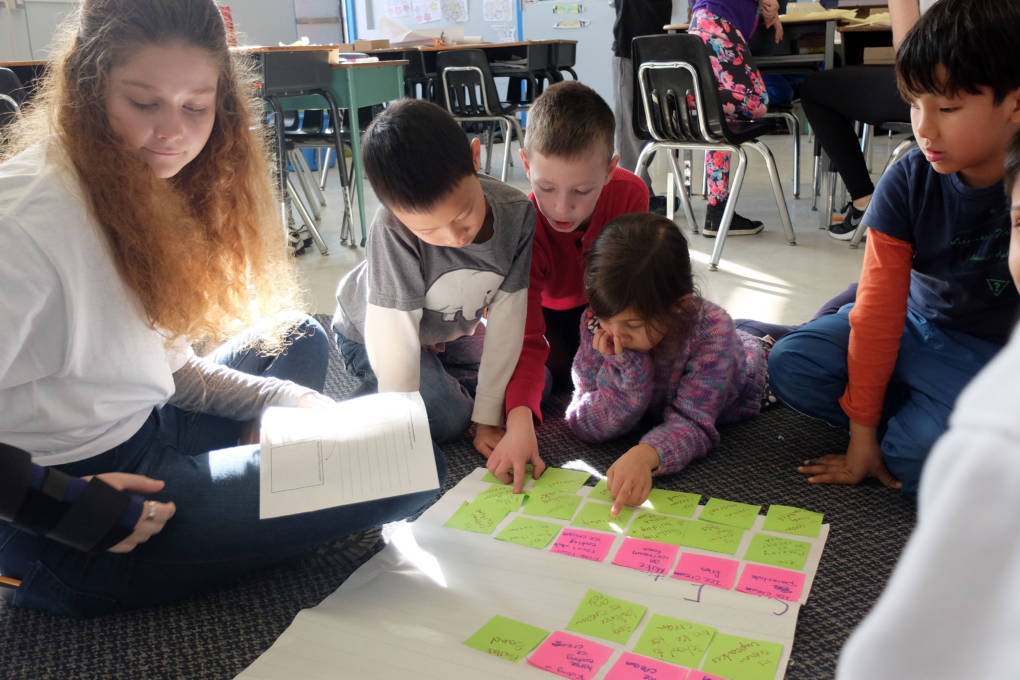
"caption": "Kristen Sligner’s Grade 2 class used a case study about an ice cream company to explore tensions. After completing their Pro-Pro charts and creating a reframe question, students brainstormed possible solutions. Here students are clustering their ideas before focusing on ones to pursue. ",
"description": null,
"title": "3-integrative-thinking-process-clustering-ideas-grade-2",
"credit": "Courtesy I-Think Initiative",
"status": "inherit",
"isLoading": false,
"fetchFailed": false
},
"mindshift_45717": {
"type": "attachments",
"id": "mindshift_45717",
"meta": {
"index": "attachments_1716263798",
"site": "mindshift",
"id": "45717",
"found": true
},
"parent": 45716,
"imgSizes": {
"twentyfourteen-full-width": {
"file": "https://ww2.kqed.org/app/uploads/sites/23/2016/07/angelkid_slide-218377faade47d1416e79e56d580301984519a40-1038x576.jpg",
"width": 1038,
"mimeType": "image/jpeg",
"height": 576
},
"thumbnail": {
"file": "https://ww2.kqed.org/app/uploads/sites/23/2016/07/angelkid_slide-218377faade47d1416e79e56d580301984519a40-400x267.jpg",
"width": 400,
"mimeType": "image/jpeg",
"height": 267
},
"fd-sm": {
"file": "https://ww2.kqed.org/app/uploads/sites/23/2016/07/angelkid_slide-218377faade47d1416e79e56d580301984519a40-960x640.jpg",
"width": 960,
"mimeType": "image/jpeg",
"height": 640
},
"post-thumbnail": {
"file": "https://ww2.kqed.org/app/uploads/sites/23/2016/07/angelkid_slide-218377faade47d1416e79e56d580301984519a40-672x372.jpg",
"width": 672,
"mimeType": "image/jpeg",
"height": 372
},
"kqedFullSize": {
"file": "https://ww2.kqed.org/app/uploads/sites/23/2016/07/angelkid_slide-218377faade47d1416e79e56d580301984519a40-e1467744826809.jpg",
"width": 1920,
"height": 1280
},
"large": {
"file": "https://ww2.kqed.org/app/uploads/sites/23/2016/07/angelkid_slide-218377faade47d1416e79e56d580301984519a40-1440x960.jpg",
"width": 1440,
"mimeType": "image/jpeg",
"height": 960
},
"guest-author-50": {
"file": "https://ww2.kqed.org/app/uploads/sites/23/2016/07/angelkid_slide-218377faade47d1416e79e56d580301984519a40-50x50.jpg",
"width": 50,
"mimeType": "image/jpeg",
"height": 50
},
"guest-author-96": {
"file": "https://ww2.kqed.org/app/uploads/sites/23/2016/07/angelkid_slide-218377faade47d1416e79e56d580301984519a40-96x96.jpg",
"width": 96,
"mimeType": "image/jpeg",
"height": 96
},
"medium": {
"file": "https://ww2.kqed.org/app/uploads/sites/23/2016/07/angelkid_slide-218377faade47d1416e79e56d580301984519a40-800x533.jpg",
"width": 800,
"mimeType": "image/jpeg",
"height": 533
},
"guest-author-64": {
"file": "https://ww2.kqed.org/app/uploads/sites/23/2016/07/angelkid_slide-218377faade47d1416e79e56d580301984519a40-64x64.jpg",
"width": 64,
"mimeType": "image/jpeg",
"height": 64
},
"guest-author-32": {
"file": "https://ww2.kqed.org/app/uploads/sites/23/2016/07/angelkid_slide-218377faade47d1416e79e56d580301984519a40-32x32.jpg",
"width": 32,
"mimeType": "image/jpeg",
"height": 32
},
"cat_post_thumb_sizecategory-posts-2": {
"file": "https://ww2.kqed.org/app/uploads/sites/23/2016/07/angelkid_slide-218377faade47d1416e79e56d580301984519a40-50x50.jpg",
"width": 50,
"mimeType": "image/jpeg",
"height": 50
},
"fd-lrg": {
"file": "https://ww2.kqed.org/app/uploads/sites/23/2016/07/angelkid_slide-218377faade47d1416e79e56d580301984519a40-1920x1280.jpg",
"width": 1920,
"mimeType": "image/jpeg",
"height": 1280
},
"fd-med": {
"file": "https://ww2.kqed.org/app/uploads/sites/23/2016/07/angelkid_slide-218377faade47d1416e79e56d580301984519a40-1180x787.jpg",
"width": 1180,
"mimeType": "image/jpeg",
"height": 787
},
"detail": {
"file": "https://ww2.kqed.org/app/uploads/sites/23/2016/07/angelkid_slide-218377faade47d1416e79e56d580301984519a40-150x150.jpg",
"width": 150,
"mimeType": "image/jpeg",
"height": 150
},
"medium_large": {
"file": "https://ww2.kqed.org/app/uploads/sites/23/2016/07/angelkid_slide-218377faade47d1416e79e56d580301984519a40-768x512.jpg",
"width": 768,
"mimeType": "image/jpeg",
"height": 512
},
"guest-author-128": {
"file": "https://ww2.kqed.org/app/uploads/sites/23/2016/07/angelkid_slide-218377faade47d1416e79e56d580301984519a40-128x128.jpg",
"width": 128,
"mimeType": "image/jpeg",
"height": 128
}
},
"publishDate": 1467735715,
"modified": 1467744922,
"caption": null,
"description": "The ideal student",
"title": "The ideal student",
"credit": "LA Johnson/NPR",
"status": "inherit",
"isLoading": false,
"fetchFailed": false
},
"mindshift_42241": {
"type": "attachments",
"id": "mindshift_42241",
"meta": {
"index": "attachments_1716263798",
"site": "mindshift",
"id": "42241",
"found": true
},
"parent": 42236,
"imgSizes": {
"twentyfourteen-full-width": {
"file": "https://ww2.kqed.org/app/uploads/sites/23/2015/09/grad-caps-1038x576.jpg",
"width": 1038,
"mimeType": "image/jpeg",
"height": 576
},
"thumbnail": {
"file": "https://ww2.kqed.org/app/uploads/sites/23/2015/09/grad-caps-400x246.jpg",
"width": 400,
"mimeType": "image/jpeg",
"height": 246
},
"fd-sm": {
"file": "https://ww2.kqed.org/app/uploads/sites/23/2015/09/grad-caps-960x590.jpg",
"width": 960,
"mimeType": "image/jpeg",
"height": 590
},
"post-thumbnail": {
"file": "https://ww2.kqed.org/app/uploads/sites/23/2015/09/grad-caps-672x372.jpg",
"width": 672,
"mimeType": "image/jpeg",
"height": 372
},
"kqedFullSize": {
"file": "https://ww2.kqed.org/app/uploads/sites/23/2015/09/grad-caps.jpg",
"width": 1920,
"height": 1180
},
"large": {
"file": "https://ww2.kqed.org/app/uploads/sites/23/2015/09/grad-caps-1440x885.jpg",
"width": 1440,
"mimeType": "image/jpeg",
"height": 885
},
"guest-author-96": {
"file": "https://ww2.kqed.org/app/uploads/sites/23/2015/09/grad-caps-96x96.jpg",
"width": 96,
"mimeType": "image/jpeg",
"height": 96
},
"medium": {
"file": "https://ww2.kqed.org/app/uploads/sites/23/2015/09/grad-caps-800x492.jpg",
"width": 800,
"mimeType": "image/jpeg",
"height": 492
},
"guest-author-64": {
"file": "https://ww2.kqed.org/app/uploads/sites/23/2015/09/grad-caps-64x64.jpg",
"width": 64,
"mimeType": "image/jpeg",
"height": 64
},
"guest-author-32": {
"file": "https://ww2.kqed.org/app/uploads/sites/23/2015/09/grad-caps-32x32.jpg",
"width": 32,
"mimeType": "image/jpeg",
"height": 32
},
"cat_post_thumb_sizecategory-posts-2": {
"file": "https://ww2.kqed.org/app/uploads/sites/23/2015/09/grad-caps-50x50.jpg",
"width": 50,
"mimeType": "image/jpeg",
"height": 50
},
"fd-lrg": {
"file": "https://ww2.kqed.org/app/uploads/sites/23/2015/09/grad-caps-1920x1180.jpg",
"width": 1920,
"mimeType": "image/jpeg",
"height": 1180
},
"fd-med": {
"file": "https://ww2.kqed.org/app/uploads/sites/23/2015/09/grad-caps-1180x725.jpg",
"width": 1180,
"mimeType": "image/jpeg",
"height": 725
},
"detail": {
"file": "https://ww2.kqed.org/app/uploads/sites/23/2015/09/grad-caps-75x75.jpg",
"width": 75,
"mimeType": "image/jpeg",
"height": 75
},
"guest-author-128": {
"file": "https://ww2.kqed.org/app/uploads/sites/23/2015/09/grad-caps-128x128.jpg",
"width": 128,
"mimeType": "image/jpeg",
"height": 128
}
},
"publishDate": 1443641798,
"modified": 1443641811,
"caption": null,
"description": null,
"title": "grad-caps",
"credit": "University Leicester/Flickr",
"status": "inherit",
"isLoading": false,
"fetchFailed": false
},
"mindshift_41581": {
"type": "attachments",
"id": "mindshift_41581",
"meta": {
"index": "attachments_1716263798",
"site": "mindshift",
"id": "41581",
"found": true
},
"parent": 41277,
"imgSizes": {
"twentyfourteen-full-width": {
"file": "https://ww2.kqed.org/app/uploads/sites/23/2015/08/Light-Bulb-1038x576.jpg",
"width": 1038,
"mimeType": "image/jpeg",
"height": 576
},
"thumbnail": {
"file": "https://ww2.kqed.org/app/uploads/sites/23/2015/08/Light-Bulb-400x225.jpg",
"width": 400,
"mimeType": "image/jpeg",
"height": 225
},
"fd-sm": {
"file": "https://ww2.kqed.org/app/uploads/sites/23/2015/08/Light-Bulb-960x540.jpg",
"width": 960,
"mimeType": "image/jpeg",
"height": 540
},
"post-thumbnail": {
"file": "https://ww2.kqed.org/app/uploads/sites/23/2015/08/Light-Bulb-672x372.jpg",
"width": 672,
"mimeType": "image/jpeg",
"height": 372
},
"kqedFullSize": {
"file": "https://ww2.kqed.org/app/uploads/sites/23/2015/08/Light-Bulb.jpg",
"width": 1920,
"height": 1080
},
"large": {
"file": "https://ww2.kqed.org/app/uploads/sites/23/2015/08/Light-Bulb-1440x810.jpg",
"width": 1440,
"mimeType": "image/jpeg",
"height": 810
},
"guest-author-96": {
"file": "https://ww2.kqed.org/app/uploads/sites/23/2015/08/Light-Bulb-96x96.jpg",
"width": 96,
"mimeType": "image/jpeg",
"height": 96
},
"medium": {
"file": "https://ww2.kqed.org/app/uploads/sites/23/2015/08/Light-Bulb-800x450.jpg",
"width": 800,
"mimeType": "image/jpeg",
"height": 450
},
"guest-author-64": {
"file": "https://ww2.kqed.org/app/uploads/sites/23/2015/08/Light-Bulb-64x64.jpg",
"width": 64,
"mimeType": "image/jpeg",
"height": 64
},
"guest-author-32": {
"file": "https://ww2.kqed.org/app/uploads/sites/23/2015/08/Light-Bulb-32x32.jpg",
"width": 32,
"mimeType": "image/jpeg",
"height": 32
},
"cat_post_thumb_sizecategory-posts-2": {
"file": "https://ww2.kqed.org/app/uploads/sites/23/2015/08/Light-Bulb-50x50.jpg",
"width": 50,
"mimeType": "image/jpeg",
"height": 50
},
"fd-lrg": {
"file": "https://ww2.kqed.org/app/uploads/sites/23/2015/08/Light-Bulb-1920x1080.jpg",
"width": 1920,
"mimeType": "image/jpeg",
"height": 1080
},
"fd-med": {
"file": "https://ww2.kqed.org/app/uploads/sites/23/2015/08/Light-Bulb-1180x664.jpg",
"width": 1180,
"mimeType": "image/jpeg",
"height": 664
},
"detail": {
"file": "https://ww2.kqed.org/app/uploads/sites/23/2015/08/Light-Bulb-75x75.jpg",
"width": 75,
"mimeType": "image/jpeg",
"height": 75
},
"guest-author-128": {
"file": "https://ww2.kqed.org/app/uploads/sites/23/2015/08/Light-Bulb-128x128.jpg",
"width": 128,
"mimeType": "image/jpeg",
"height": 128
}
},
"publishDate": 1439277462,
"modified": 1439277475,
"caption": null,
"description": null,
"title": "Light-Bulb",
"credit": "Getty Images",
"status": "inherit",
"isLoading": false,
"fetchFailed": false
}
},
"audioPlayerReducer": {
"postId": "stream_live",
"isPaused": true,
"isPlaying": false,
"pfsActive": false,
"pledgeModalIsOpen": true,
"playerDrawerIsOpen": false,
"liveAudioPlayStartedAt": 0,
"liveAudioPlayContext": ""
},
"authorsReducer": {
"byline_mindshift_45716": {
"type": "authors",
"id": "byline_mindshift_45716",
"meta": {
"override": true
},
"slug": "byline_mindshift_45716",
"name": "Anya Kamenetz",
"isLoading": false
},
"katrinaschwartz": {
"type": "authors",
"id": "234",
"meta": {
"index": "authors_1716337520",
"id": "234",
"found": true
},
"name": "Katrina Schwartz",
"firstName": "Katrina",
"lastName": "Schwartz",
"slug": "katrinaschwartz",
"email": "kschwartz@kqed.org",
"display_author_email": false,
"staff_mastheads": [
"news"
],
"title": "Producer",
"bio": "Katrina Schwartz is a journalist based in San Francisco. She's worked at KPCC public radio in LA and has reported on air and online for KQED since 2010. She covered how teaching and learning is changing for MindShift between 2012 and 2020. She is the co-host of the MindShift podcast and now produces KQED's Bay Curious podcast.",
"avatar": "https://secure.gravatar.com/avatar/edb4ee79070447a018538c9aae6eeecf28786515b8a0c30e43b6b7dce5aa44c8?s=600&d=blank&r=g",
"twitter": "kschwart",
"bluesky": null,
"facebook": null,
"instagram": null,
"linkedin": null,
"sites": [
{
"site": "",
"roles": [
"editor"
]
},
{
"site": "news",
"roles": [
"editor"
]
},
{
"site": "mindshift",
"roles": [
"administrator"
]
},
{
"site": "stateofhealth",
"roles": [
"author"
]
},
{
"site": "science",
"roles": [
"editor"
]
}
],
"headData": {
"title": "Katrina Schwartz | KQED",
"description": "Producer",
"ogImgSrc": "https://secure.gravatar.com/avatar/edb4ee79070447a018538c9aae6eeecf28786515b8a0c30e43b6b7dce5aa44c8?s=600&d=blank&r=g",
"twImgSrc": "https://secure.gravatar.com/avatar/edb4ee79070447a018538c9aae6eeecf28786515b8a0c30e43b6b7dce5aa44c8?s=600&d=blank&r=g"
},
"isLoading": false,
"link": "/author/katrinaschwartz"
}
},
"pagesReducer": {
"mindshift_tag_critical-thinking": {
"type": "terms",
"id": "mindshift_843",
"meta": {
"index": "terms_1716263798",
"site": "mindshift",
"id": "843",
"score": 10.40406
},
"featImg": null,
"name": "critical thinking",
"description": null,
"taxonomy": "tag",
"headData": {
"twImgId": null,
"twTitle": null,
"ogTitle": null,
"ogImgId": null,
"twDescription": null,
"description": null,
"title": "critical thinking Archives | KQED Mindshift",
"ogDescription": null
},
"ttid": 846,
"slug": "critical-thinking",
"isLoading": false,
"title": "critical thinking",
"pageMeta": {
"site": "mindshift",
"WpPageTemplate": "page-topic-editorial",
"currentPage": 2
},
"blocks": [
{
"blockName": "kqed/post-list",
"attrs": {
"layout": "cardArticle2",
"query": "posts/mindshift?tag=critical-thinking",
"seeMore": false,
"paginated": true,
"page": 2
}
},
{
"blockName": "kqed/ad"
}
]
}
},
"pfsSessionReducer": {},
"postsReducer": {
"stream_live": {
"type": "live",
"id": "stream_live",
"audioUrl": "https://streams.kqed.org/kqedradio",
"title": "Live Stream",
"excerpt": "Live Stream information currently unavailable.",
"link": "/radio",
"featImg": "",
"label": {
"name": "KQED Live",
"link": "/"
}
},
"stream_kqedNewscast": {
"type": "posts",
"id": "stream_kqedNewscast",
"audioUrl": "https://www.kqed.org/.stream/anon/radio/RDnews/newscast.mp3?_=1",
"title": "KQED Newscast",
"featImg": "",
"label": {
"name": "88.5 FM",
"link": "/"
}
},
"mindshift_46820": {
"type": "posts",
"id": "mindshift_46820",
"meta": {
"index": "posts_1716263798",
"site": "mindshift",
"id": "46820",
"score": null,
"sort": [
1478782821000
]
},
"parent": 0,
"labelTerm": {
"site": "mindshift"
},
"blocks": [],
"publishDate": 1478782821,
"format": "standard",
"disqusTitle": "How Cross-Cultural Dialogue Builds Critical Thinking and Empathy",
"title": "How Cross-Cultural Dialogue Builds Critical Thinking and Empathy",
"headTitle": "MindShift | KQED News",
"content": "\u003cp>The world and the people who work and live in it have become ever more connected as the internet becomes more accessible. Yet despite the ability to connect and learn about happenings on the other side of the globe, many communities have become more polarized and entrenched in a particular worldview. As these trends emerge, teachers are looking for ways to foster productive dialogue skills in today’s students -- the generation that will have to deal with complex, increasingly global problems.\u003c/p>\n\u003cp>\u003ca href=\"https://ww2.kqed.org/mindshift/2012/11/19/5-ways-to-inspire-students-through-global-collaboration/\" target=\"_blank\" rel=\"noopener\">Activities that connect students to peers in other countries\u003c/a> have become more common in classrooms because it’s now possible. Decades ago students might have had an international penpal, now they can easily have digital penpals or video conference with students all over the world. Teachers are using this new ability to connect to offer students of all ages authentic audiences to practice writing and language skills, but often the focus has been on younger children. A program called \u003ca href=\"http://generation.global/\" target=\"_blank\" rel=\"noopener\">Generation Global\u003c/a>, which is part of the Tony Blair Faith Foundation, offers a similar program focused around the skills of dialogue for adolescents ages 12-17.\u003c/p>\n\u003cp>“What I noticed and appreciated is the students really start reflecting on themselves and their perspectives on the world,” said high school teacher Cory Davis in an \u003ca href=\"http://home.edweb.net/\" target=\"_blank\" rel=\"noopener\">edWeb\u003c/a> webinar. Davis teaches AP English and AP Psychology in Spokane, Washington. He said parents and students have been grateful for the opportunity to learn about other parts of the world.\u003c/p>\n\u003cp>Often adolescents hold strong opinions, but they don’t always know where and how they came to those beliefs. When a teacher pushes them to think critically about why they feel the way they do, it's easy for students to ignore them. But, when video conferencing with a teenager from another country who genuinely wants to know the answer, students often respond more thoughtfully.\u003c/p>\n\u003cp>\u003cstrong>HOW IT WORKS\u003c/strong>\u003c/p>\n\u003cp>[ad fullwidth]\u003c/p>\n\u003cp>A teacher interested in using Generation Global must register the school with the program first. Then he or she can access free lesson plans to introduce the basics of dialogue. Davis said one of his favorite elements of the product is its flexibility. Teachers can modify the lesson plans easily while still maintaining the spirit of the lesson.\u003c/p>\n\u003caside class=\"alignright\">\n\u003ch3>Generation Global Definition of Dialogue\u003c/h3>\n\u003cp>Dialogue is an empowering process that enables students to encounter the other in a safe environment; transforming the unfamiliar into the familiar. It is profoundly reciprocal, and rooted in an open, mutually respectful approach.\u003c/p>\u003c/aside>\n\u003cp>“They trust that you know your students best,” Davis said. “The lessons are designed so you can get at the heart of the meaning of the lesson without following the lesson prescriptively.”\u003c/p>\n\u003cp>Students practice dialogue skills like active listening and speaking from the “I” perspective with one another in class. Thus, not only do students have the ability to dialogue about the personal experiences, values and beliefs of peers across the world, but in the lead-up they do the same with students who they’ve sat next to for years, but still might not know very well.\u003c/p>\n\u003cp>After students have been introduced to the skills involved in productive dialogue, the teacher can set up various types of interactions with classes in one of the 20 countries where schools have signed up for Generation Global. This can be done through the site and is painless, according to Davis. Teachers can choose a one-to-one dialogue with another class or they can choose to participate in a multipoint dialogue, where up to four classes are participating. All the dialogues are moderated by a trained facilitator who keeps the conversation moving, helps move past the awkward beginning and makes sure that everyone feel safe within the dialogue. The dialogues are all in English.\u003c/p>\n\u003cp>\u003c!-- iframe plugin v.4.3 wordpress.org/plugins/iframe/ -->\u003cbr>\n\u003ciframe width=\"640\" height=\"360\" src=\"https://www.youtube.com/embed/Y8mYC91P8JQ\" frameborder=\"0\" scrolling=\"yes\" class=\"iframe-class\">\u003c/iframe>\u003c/p>\n\u003cp>Additionally, Generation Global has a secure online dialogue feature that allows two classes to commit to a longer dialogue on a series of questions. The site groups students for a more intimate experience and they respond to one another in writing. Teachers and facilitators can see all these interactions, and the technology offers teachers a dashboard on their students’ participation, too.\u003c/p>\n\u003cp>“The great thing about dialogue is it enables you to get inside someone else’s perspective,” said Ian Jamison, head of education for Generation Global. “So you explore not knowledge, but experiences, values and beliefs.”\u003c/p>\n\u003cp>He stresses that the dialogue topics are usually not about specific curriculum because, while there is some overlap in the curricula of different countries, it can also vary widely. Instead, the program staff at Generation Global are interested in how students can build empathy for one another by learning about personal experiences of culture and the world.\u003c/p>\n\u003cp>The goal is to make the exotic familiar. “One of the side effects of familiarity is it makes it very hard to hang on to prejudice,” Jamison said. He described one video conference he facilitated between a class in Pakistan and a class in the U.K. In the course of the conversation one of the students in Pakistan said that Islam was illegal in the U.K. He was surprised to hear from a U.K. student of Pakistani descent that actually he was himself a Muslim and attended a mosque in Birmingham.\u003c/p>\n\u003cp>“That’s the kind of misinformed comment that doesn't help people get on with one another,” Jamison said. But when the students could look one another in the eye and hear a different narrative about a place they’d never been, it started to change their views about the world.\u003c/p>\n\u003cp>“One of the things we often take for granted is we often think of ourselves as ordinary and the other as exotic,” Jamison said. But every person can be exotic to someone living in a different culture, and these global dialogues can have a huge impact on the many biases and stereotypes that get passed around almost unconsciously.\u003c/p>\n\u003cp>\u003cstrong>SAFETY AND SECURITY\u003c/strong>\u003c/p>\n\u003cp>Generation Global takes safety and security seriously both because its staff know that students must feel emotionally safe to open up about personal experiences, but also because they know parents worry about student safety online. The schools that participate have been vetted by Generation Global and the video conferences and online chats take place in a secure environment that is never shared.\u003c/p>\n\u003cp>In many ways this program asks students to do something that many adults aren’t modeling well -- how to be respectful of someone with a different lived experience and opinion. The dialogue skills are particularly important when people disagree strongly.\u003c/p>\n\u003cp>“As a teacher it was so refreshing to have a facilitator make sure that safe space for dialogue and conversation was kept,” Davis said. Conversations can still get heated, but if a student gets worked up the facilitator will stop the conversation, ask participants to take a moment, and then work to re-establish safety before continuing the conversation.\u003c/p>\n\u003cp>Jamison sees the online dialogue as an equally important element of helping adolescents to develop positive habits around interactions online, something that again many adults do not model well for students.\u003c/p>\n\u003cp>[ad floatright]\u003c/p>\n\u003cp>“What we want to end up with are young people who are able to take part confidently in dialogue,” Jamison said.\u003c/p>\n\n",
"disqusIdentifier": "46820 http://ww2.kqed.org/mindshift/?p=46820",
"disqusUrl": "https://ww2.kqed.org/mindshift/2016/11/10/how-cross-cultural-dialogue-builds-critical-thinking-and-empathy/",
"stats": {
"hasVideo": true,
"hasChartOrMap": true,
"hasAudio": false,
"hasPolis": false,
"wordCount": 1229,
"hasGoogleForm": false,
"hasGallery": false,
"hasHearkenModule": false,
"iframeSrcs": [
"https://www.youtube.com/embed/Y8mYC91P8JQ"
],
"paragraphCount": 25
},
"modified": 1532145515,
"excerpt": "Generation Global helps students build empathy for those in different cultures by engaging in dialogue about their experiences. The goal is to make the exotic familiar. ",
"headData": {
"twImgId": "",
"twTitle": "",
"ogTitle": "",
"ogImgId": "",
"twDescription": "",
"description": "Generation Global helps students build empathy for those in different cultures by engaging in dialogue about their experiences. The goal is to make the exotic familiar. ",
"title": "How Cross-Cultural Dialogue Builds Critical Thinking and Empathy | KQED",
"ogDescription": "",
"schema": {
"@context": "https://schema.org",
"@type": "Article",
"headline": "How Cross-Cultural Dialogue Builds Critical Thinking and Empathy",
"datePublished": "2016-11-10T05:00:21-08:00",
"dateModified": "2018-07-20T20:58:35-07:00",
"image": "https://cdn.kqed.org/wp-content/uploads/2020/02/KQED-OG-Image@1x.png"
}
},
"guestAuthors": [],
"slug": "how-cross-cultural-dialogue-builds-critical-thinking-and-empathy",
"status": "publish",
"path": "/mindshift/46820/how-cross-cultural-dialogue-builds-critical-thinking-and-empathy",
"audioTrackLength": null,
"parsedContent": [
{
"type": "contentString",
"content": "\u003cdiv class=\"post-body\">\u003cp>\u003cp>The world and the people who work and live in it have become ever more connected as the internet becomes more accessible. Yet despite the ability to connect and learn about happenings on the other side of the globe, many communities have become more polarized and entrenched in a particular worldview. As these trends emerge, teachers are looking for ways to foster productive dialogue skills in today’s students -- the generation that will have to deal with complex, increasingly global problems.\u003c/p>\n\u003cp>\u003ca href=\"https://ww2.kqed.org/mindshift/2012/11/19/5-ways-to-inspire-students-through-global-collaboration/\" target=\"_blank\" rel=\"noopener\">Activities that connect students to peers in other countries\u003c/a> have become more common in classrooms because it’s now possible. Decades ago students might have had an international penpal, now they can easily have digital penpals or video conference with students all over the world. Teachers are using this new ability to connect to offer students of all ages authentic audiences to practice writing and language skills, but often the focus has been on younger children. A program called \u003ca href=\"http://generation.global/\" target=\"_blank\" rel=\"noopener\">Generation Global\u003c/a>, which is part of the Tony Blair Faith Foundation, offers a similar program focused around the skills of dialogue for adolescents ages 12-17.\u003c/p>\n\u003cp>“What I noticed and appreciated is the students really start reflecting on themselves and their perspectives on the world,” said high school teacher Cory Davis in an \u003ca href=\"http://home.edweb.net/\" target=\"_blank\" rel=\"noopener\">edWeb\u003c/a> webinar. Davis teaches AP English and AP Psychology in Spokane, Washington. He said parents and students have been grateful for the opportunity to learn about other parts of the world.\u003c/p>\n\u003cp>Often adolescents hold strong opinions, but they don’t always know where and how they came to those beliefs. When a teacher pushes them to think critically about why they feel the way they do, it's easy for students to ignore them. But, when video conferencing with a teenager from another country who genuinely wants to know the answer, students often respond more thoughtfully.\u003c/p>\n\u003cp>\u003cstrong>HOW IT WORKS\u003c/strong>\u003c/p>\n\u003cp>\u003c/p>\u003c/div>",
"attributes": {
"named": {},
"numeric": []
}
},
{
"type": "component",
"content": "",
"name": "ad",
"attributes": {
"named": {
"label": "fullwidth"
},
"numeric": [
"fullwidth"
]
}
},
{
"type": "contentString",
"content": "\u003cdiv class=\"post-body\">\u003cp>\u003c/p>\n\u003cp>A teacher interested in using Generation Global must register the school with the program first. Then he or she can access free lesson plans to introduce the basics of dialogue. Davis said one of his favorite elements of the product is its flexibility. Teachers can modify the lesson plans easily while still maintaining the spirit of the lesson.\u003c/p>\n\u003caside class=\"alignright\">\n\u003ch3>Generation Global Definition of Dialogue\u003c/h3>\n\u003cp>Dialogue is an empowering process that enables students to encounter the other in a safe environment; transforming the unfamiliar into the familiar. It is profoundly reciprocal, and rooted in an open, mutually respectful approach.\u003c/p>\u003c/aside>\n\u003cp>“They trust that you know your students best,” Davis said. “The lessons are designed so you can get at the heart of the meaning of the lesson without following the lesson prescriptively.”\u003c/p>\n\u003cp>Students practice dialogue skills like active listening and speaking from the “I” perspective with one another in class. Thus, not only do students have the ability to dialogue about the personal experiences, values and beliefs of peers across the world, but in the lead-up they do the same with students who they’ve sat next to for years, but still might not know very well.\u003c/p>\n\u003cp>After students have been introduced to the skills involved in productive dialogue, the teacher can set up various types of interactions with classes in one of the 20 countries where schools have signed up for Generation Global. This can be done through the site and is painless, according to Davis. Teachers can choose a one-to-one dialogue with another class or they can choose to participate in a multipoint dialogue, where up to four classes are participating. All the dialogues are moderated by a trained facilitator who keeps the conversation moving, helps move past the awkward beginning and makes sure that everyone feel safe within the dialogue. The dialogues are all in English.\u003c/p>\n\u003cp>\u003c!-- iframe plugin v.4.3 wordpress.org/plugins/iframe/ -->\u003cbr>\n\u003ciframe width=\"640\" height=\"360\" src=\"https://www.youtube.com/embed/Y8mYC91P8JQ\" frameborder=\"0\" scrolling=\"yes\" class=\"iframe-class\">\u003c/iframe>\u003c/p>\n\u003cp>Additionally, Generation Global has a secure online dialogue feature that allows two classes to commit to a longer dialogue on a series of questions. The site groups students for a more intimate experience and they respond to one another in writing. Teachers and facilitators can see all these interactions, and the technology offers teachers a dashboard on their students’ participation, too.\u003c/p>\n\u003cp>“The great thing about dialogue is it enables you to get inside someone else’s perspective,” said Ian Jamison, head of education for Generation Global. “So you explore not knowledge, but experiences, values and beliefs.”\u003c/p>\n\u003cp>He stresses that the dialogue topics are usually not about specific curriculum because, while there is some overlap in the curricula of different countries, it can also vary widely. Instead, the program staff at Generation Global are interested in how students can build empathy for one another by learning about personal experiences of culture and the world.\u003c/p>\n\u003cp>The goal is to make the exotic familiar. “One of the side effects of familiarity is it makes it very hard to hang on to prejudice,” Jamison said. He described one video conference he facilitated between a class in Pakistan and a class in the U.K. In the course of the conversation one of the students in Pakistan said that Islam was illegal in the U.K. He was surprised to hear from a U.K. student of Pakistani descent that actually he was himself a Muslim and attended a mosque in Birmingham.\u003c/p>\n\u003cp>“That’s the kind of misinformed comment that doesn't help people get on with one another,” Jamison said. But when the students could look one another in the eye and hear a different narrative about a place they’d never been, it started to change their views about the world.\u003c/p>\n\u003cp>“One of the things we often take for granted is we often think of ourselves as ordinary and the other as exotic,” Jamison said. But every person can be exotic to someone living in a different culture, and these global dialogues can have a huge impact on the many biases and stereotypes that get passed around almost unconsciously.\u003c/p>\n\u003cp>\u003cstrong>SAFETY AND SECURITY\u003c/strong>\u003c/p>\n\u003cp>Generation Global takes safety and security seriously both because its staff know that students must feel emotionally safe to open up about personal experiences, but also because they know parents worry about student safety online. The schools that participate have been vetted by Generation Global and the video conferences and online chats take place in a secure environment that is never shared.\u003c/p>\n\u003cp>In many ways this program asks students to do something that many adults aren’t modeling well -- how to be respectful of someone with a different lived experience and opinion. The dialogue skills are particularly important when people disagree strongly.\u003c/p>\n\u003cp>“As a teacher it was so refreshing to have a facilitator make sure that safe space for dialogue and conversation was kept,” Davis said. Conversations can still get heated, but if a student gets worked up the facilitator will stop the conversation, ask participants to take a moment, and then work to re-establish safety before continuing the conversation.\u003c/p>\n\u003cp>Jamison sees the online dialogue as an equally important element of helping adolescents to develop positive habits around interactions online, something that again many adults do not model well for students.\u003c/p>\n\u003cp>\u003c/p>\u003c/div>",
"attributes": {
"named": {},
"numeric": []
}
},
{
"type": "component",
"content": "",
"name": "ad",
"attributes": {
"named": {
"label": "floatright"
},
"numeric": [
"floatright"
]
}
},
{
"type": "contentString",
"content": "\u003cdiv class=\"post-body\">\u003cp>\u003c/p>\n\u003cp>“What we want to end up with are young people who are able to take part confidently in dialogue,” Jamison said.\u003c/p>\n\n\u003c/div>\u003c/p>",
"attributes": {
"named": {},
"numeric": []
}
}
],
"link": "/mindshift/46820/how-cross-cultural-dialogue-builds-critical-thinking-and-empathy",
"authors": [
"234"
],
"categories": [
"mindshift_195",
"mindshift_193"
],
"tags": [
"mindshift_843",
"mindshift_20784",
"mindshift_1040",
"mindshift_85"
],
"featImg": "mindshift_46947",
"label": "mindshift"
},
"mindshift_46781": {
"type": "posts",
"id": "mindshift_46781",
"meta": {
"index": "posts_1716263798",
"site": "mindshift",
"id": "46781",
"score": null,
"sort": [
1478503562000
]
},
"parent": 0,
"labelTerm": {
"site": "mindshift"
},
"blocks": [],
"publishDate": 1478503562,
"format": "standard",
"disqusTitle": "Three Tools for Teaching Critical Thinking and Problem Solving Skills",
"title": "Three Tools for Teaching Critical Thinking and Problem Solving Skills",
"headTitle": "MindShift | KQED News",
"content": "\u003cp>As the world economy shifts away from manufacturing jobs and towards service industry and creative jobs, there’s a consensus among parents, educators, politicians and business leaders that it is crucial students graduate into university or the workforce with the ability to identify and solve complex problems, think critically about information, work effectively in teams and communicate clearly about their thinking.\u003c/p>\n\u003cp>While many teachers agree with this premise, they don’t often know exactly how to teach these skills explicitly, especially because many of the mandates and required curriculum seem to push in the opposite direction. Process-oriented skills are hard to pin down; teachers can see them in certain students, but developing these competencies in students who aren’t already demonstrating them can be tricky. A few teachers in Ontario, Canada have been experimenting with tools they think could make the difference.\u003c/p>\n\u003cp>Jason Watt has always had very high expectations for his students, whether they were seven-year-olds in grade two or the young adolescents he now teaches in grade seven at Norseman Junior Middle School. But Watt was frustrated that in order to meet his expectations his students would often have to redo their work six or seven times. He often received writing responses that were a simple sentence and he was struggling to empower his students to push their thinking further. Many of them already had deeply ingrained ideas about what they were and weren’t good at, what they could and couldn’t accomplish.\u003c/p>\n\u003cp>“I wanted the kids to realize there is no bad answer,” Watt said. “There’s just an appropriate answer or a not-quite there answer.” In a training on “\u003ca href=\"http://www.rotmanithink.ca/who-we-are-what-is-integrative-thinking\">integrative thinking\u003c/a>” at the University of Toronto’s Rotman School of Management, Watt finally found the tools he needed to develop students’ critical thinking. Several Ontario school boards (the Canadian version of school districts) are now supporting training in the effort.\u003c/p>\n\u003cp>Originally developed by Rotman’s former dean, \u003ca href=\"http://rogerlmartin.com/meet-roger#medium-bio\" target=\"_blank\" rel=\"noopener noreferrer\">Roger Martin\u003c/a>, integrative thinking is a broad term to describe looking for solutions through the tensions inherent in different viewpoints. Martin noticed that effective CEOs understood that their own world view was limited, so they sought out opposing viewpoints and came to creative solutions by leveraging seemingly opposing positions. For the past seven years, a spin-off group called the \u003ca href=\"http://www.rotmanithink.ca/\" target=\"_blank\" rel=\"noopener noreferrer\">I-Think Initiative\u003c/a> has been \u003ca href=\"http://thelearningexchange.ca/itl-project-home/itl-project-i-think/\" target=\"_blank\" rel=\"noopener noreferrer\">training teachers\u003c/a> in the Toronto area on how integrative thinking can build critical thinking in students from a young age.\u003c/p>\n\u003cp>[ad fullwidth]\u003c/p>\n\u003cp>\u003cstrong>LADDER OF INFERENCE \u003c/strong>\u003c/p>\n\u003cp>One of the tools Jason Watt learned about in his training is called the \u003ca href=\"http://www.pon.harvard.edu/tag/ladder-of-inference/\" target=\"_blank\" rel=\"noopener noreferrer\">ladder of inference\u003c/a>. It’s a model for decision making behavior developed by Harvard professors Chris Argyris and Donald Schön. Essentially, it helps students slow down and realize which data they are taking into account when they make a decision and how the data they choose is informed by their past experiences. Assumptions are often made in a split second decision because the brain is wired to prioritize data that confirms the model a person already holds. The ladder of inference is a way to check those assumptions.\u003c/p>\n\u003cp>\u003c!-- iframe plugin v.4.3 wordpress.org/plugins/iframe/ -->\u003cbr>\n\u003ciframe width=\"640\" height=\"360\" src=\"https://www.youtube.com/embed/KJLqOclPqis\" frameborder=\"0\" scrolling=\"yes\" class=\"iframe-class\">\u003c/iframe>\u003c/p>\n\u003cp>Watt first used the ladder in a very basic way; he showed his grade two students an image of a soccer player lying on the ground, one leg up, holding his head. The image was intentionally a little vague. At first Watt’s students concluded that the man had fallen. But as they worked their way up the ladder of inference they began to notice different aspects of the image and add those to their “data pool.”\u003c/p>\n\u003cp>“Students started to realize there was a lot more going on in the picture just in terms of data than what they first said,” Watt said. For example, students would say the man was hurt. That’s not a data point, it’s an inference. Watt could tease out from them that they thought the man was hurt because he was on the ground, holding his head and had a pained look on his face. “I started getting much deeper, more thoughtful answers from students,” Watt said.\u003c/p>\n\u003cp>As students practiced using the ladder of inference in various content areas they also started to use it on their own when dealing with social problems. When there is a disagreement, students now use the ladder of inference to back up and think through the data they chose and the assumptions that stemmed from that data. Watt says now students solve problems on their own or ask a friend to help them make their ladders.\u003c/p>\n\u003cp>“We’ve learned that there’s nothing wrong with questioning, so the kids have become much more willing and accepting of criticism because it’s not really criticism anymore,” Watt said. He feels the integrative thinking tools have naturally encouraged his students to build a \u003ca href=\"https://ww2.kqed.org/mindshift/2015/11/16/growth-mindset-clearing-up-some-common-confusions/\" target=\"_blank\" rel=\"noopener noreferrer\">growth mindset\u003c/a> about all aspects of life because multiple viewpoints or ways to solve a problem are a core part of why integrative thinking works. Difference is the strength of the model.\u003c/p>\n\u003cfigure id=\"attachment_46858\" class=\"wp-caption alignright\" style=\"max-width: 686px\">\u003cimg class=\"size-full wp-image-46858\" src=\"http://ww2.kqed.org/mindshift/wp-content/uploads/sites/23/2016/11/1-Ladder-of-Inference-Grade-1.png\" alt=\"Students in Jummi Kim’s grade 1 class are making their thinking explicit using the Ladder of Inference. They are tracking where a conclusion of theirs comes from. Using post-its allows students to move parts of their thinking around as they gain clarity. \" width=\"686\" height=\"687\" srcset=\"https://ww2.kqed.org/app/uploads/sites/23/2016/11/1-Ladder-of-Inference-Grade-1.png 686w, https://ww2.kqed.org/app/uploads/sites/23/2016/11/1-Ladder-of-Inference-Grade-1-160x160.png 160w, https://ww2.kqed.org/app/uploads/sites/23/2016/11/1-Ladder-of-Inference-Grade-1-240x240.png 240w, https://ww2.kqed.org/app/uploads/sites/23/2016/11/1-Ladder-of-Inference-Grade-1-375x376.png 375w, https://ww2.kqed.org/app/uploads/sites/23/2016/11/1-Ladder-of-Inference-Grade-1-520x521.png 520w, https://ww2.kqed.org/app/uploads/sites/23/2016/11/1-Ladder-of-Inference-Grade-1-32x32.png 32w, https://ww2.kqed.org/app/uploads/sites/23/2016/11/1-Ladder-of-Inference-Grade-1-50x50.png 50w, https://ww2.kqed.org/app/uploads/sites/23/2016/11/1-Ladder-of-Inference-Grade-1-64x64.png 64w, https://ww2.kqed.org/app/uploads/sites/23/2016/11/1-Ladder-of-Inference-Grade-1-96x96.png 96w, https://ww2.kqed.org/app/uploads/sites/23/2016/11/1-Ladder-of-Inference-Grade-1-128x128.png 128w, https://ww2.kqed.org/app/uploads/sites/23/2016/11/1-Ladder-of-Inference-Grade-1-150x150.png 150w\" sizes=\"(max-width: 686px) 100vw, 686px\">\u003cfigcaption class=\"wp-caption-text\">Students in Jummi Kim’s grade 1 class are making their thinking explicit using the Ladder of Inference. They are tracking where a conclusion of theirs comes from. Using post-its allows students to move parts of their thinking around as they gain clarity. \u003ccite>(Courtesy Jummi Kim)\u003c/cite>\u003c/figcaption>\u003c/figure>\n\u003cp>\u003cstrong>PRO/PRO\u003c/strong>\u003c/p>\n\u003cp>Another integrative thinking tool called the pro/pro chart offers some good examples of how students are learning to think flexibly. Most people are familiar with pro/con charts, but in a pro/pro chart the group thinks through the positives of two different ideas. Rather than deciding between two choices, this tool helps students identify the positive traits of different viewpoints, and then create a third option by merging the good qualities of both.\u003c/p>\n\u003cp>Watt asked his students to brainstorm ideas for the worst restaurant of all time. When they had a good list of terrible ideas, Watt then asked groups of students to each take one idea and explain why it was the best restaurant of all time. One group had initially proposed a restaurant with no seating would be the worst; they reframed that to say if everyone was standing up they would move through the restaurant faster and turn more of a profit. A second group had said a restaurant in the woods would be terrible; they reframed that as dining under the stars.\u003c/p>\n\u003cp>“They were coming up with these really good ideas out of a terrible idea,” Watt said. “It helps kids see that they are capable and switches those mindsets.” Watt built on the activity, asking the groups to pitch their ideas in a Shark Tank or Dragon’s Den style contest. Students came up with hilarious slogans and designs for their restaurants and what started as a silly, fun activity became a rich interdisciplinary project with written and oral communication, presentation skills, media literacy, and of course, the process skills that enable them.\u003c/p>\n\u003cp>“The students now are no longer afraid to think,” Watt said. “They’re being more creative thinkers.” He even uses integrative thinking in math instruction, asking students to use the ladder of inference to determine information in a word problem, or asking them to do Pro/Pro charts for different multiplication strategies and then letting them come up with their own third way. His students’ math scores started skyrocketing, and even better, they no longer felt they weren’t “math people.”\u003c/p>\n\u003cp>\u003cstrong>PROVOKING SELF REFLECTION\u003c/strong>\u003c/p>\n\u003cp>Jennifer Warren became curious about integrative thinking through her daughter who kept coming home from her grade six classroom saying things like, “we had the most interesting discussion today.” That piqued Warren’s interest.\u003c/p>\n\u003cp>“The way she was talking about her own thinking developing, I was kind of thinking I didn’t think my students were saying the same kind of things,” Warren said. She wanted to be sure she was provoking the same response from her high school English students at Dundas Valley Secondary School in Hamilton. So when her board of education decided to fund the I-Think training she signed up.\u003c/p>\n\u003cfigure id=\"attachment_46860\" class=\"wp-caption alignright\" style=\"max-width: 640px\">\u003cimg class=\"wp-image-46860 size-large\" src=\"http://ww2.kqed.org/mindshift/wp-content/uploads/sites/23/2016/11/2-Integrative-Thinking-Process-Grade-9-Articulating-the-Models-and-Examining-the-Models-2-1020x1360.jpg\" alt=\"Grade 9 students from Branksome Hall beginning their Integrative Thinking experience with a challenge from the Toronto and Region Conservation Authority. Here are their Pro-Pro charts.\" width=\"640\" height=\"853\" srcset=\"https://ww2.kqed.org/app/uploads/sites/23/2016/11/2-Integrative-Thinking-Process-Grade-9-Articulating-the-Models-and-Examining-the-Models-2-1020x1360.jpg 1020w, https://ww2.kqed.org/app/uploads/sites/23/2016/11/2-Integrative-Thinking-Process-Grade-9-Articulating-the-Models-and-Examining-the-Models-2-160x213.jpg 160w, https://ww2.kqed.org/app/uploads/sites/23/2016/11/2-Integrative-Thinking-Process-Grade-9-Articulating-the-Models-and-Examining-the-Models-2-800x1067.jpg 800w, https://ww2.kqed.org/app/uploads/sites/23/2016/11/2-Integrative-Thinking-Process-Grade-9-Articulating-the-Models-and-Examining-the-Models-2-768x1024.jpg 768w, https://ww2.kqed.org/app/uploads/sites/23/2016/11/2-Integrative-Thinking-Process-Grade-9-Articulating-the-Models-and-Examining-the-Models-2-1920x2560.jpg 1920w, https://ww2.kqed.org/app/uploads/sites/23/2016/11/2-Integrative-Thinking-Process-Grade-9-Articulating-the-Models-and-Examining-the-Models-2-1180x1573.jpg 1180w, https://ww2.kqed.org/app/uploads/sites/23/2016/11/2-Integrative-Thinking-Process-Grade-9-Articulating-the-Models-and-Examining-the-Models-2-960x1280.jpg 960w, https://ww2.kqed.org/app/uploads/sites/23/2016/11/2-Integrative-Thinking-Process-Grade-9-Articulating-the-Models-and-Examining-the-Models-2-240x320.jpg 240w, https://ww2.kqed.org/app/uploads/sites/23/2016/11/2-Integrative-Thinking-Process-Grade-9-Articulating-the-Models-and-Examining-the-Models-2-375x500.jpg 375w, https://ww2.kqed.org/app/uploads/sites/23/2016/11/2-Integrative-Thinking-Process-Grade-9-Articulating-the-Models-and-Examining-the-Models-2-520x693.jpg 520w\" sizes=\"(max-width: 640px) 100vw, 640px\">\u003cfigcaption class=\"wp-caption-text\">Grade 9 students from Branksome Hall beginning their Integrative Thinking experience with a challenge from the Toronto and Region Conservation Authority. Here are their Pro-Pro charts. \u003ccite>(Courtesy I-Think Initiative)\u003c/cite>\u003c/figcaption>\u003c/figure>\n\u003cp>The integrative thinking tools gave Warren a solution to a problem she and many other teachers have struggled with for a long time: how to deepen student thinking. Until then, Warren had tried to do this by modeling what deep thinking looks like. She was confident she could help any student become a strong writer. But the integrative thinking training forced her to ask some hard questions about her instruction and prompted her realization that her students were recreating her example, not creating it on their own.\u003c/p>\n\u003cp>“It completely flipped what mattered to me in an English classroom,” Warren said. She used to be mostly concerned with the product. Now, “instead of defending a stance, I’m so much more interested in having students reflect on their stance and shift and explain why they shifted. That metacognitive piece is more interesting to me now.”\u003c/p>\n\u003cp>\u003cstrong>CAUSAL MODELS\u003c/strong>\u003c/p>\n\u003cp>Warren starts the first semester by asking students to do a causal model -- another core integrative thinking tool -- of their values. She asks them to pick three to five things they value, anything from profound qualities like independence or kindness, to passions like music or hockey. They then have to dive deeply into why they value those qualities, what caused that? Often this requires them to have conversations with family about values taught to them from a young age.\u003c/p>\n\u003cp>She then asks them to make visual representations of their causal models and present them to one another. “I like that because they realize people don’t value the same things that they do,” Warren said. Those causal models go up on the wall as a reminder that everyone in the class is different and that the diversity of values, perspectives and opinions makes them better problem solvers.\u003c/p>\n\u003cp>Warren teaches a course for students who failed the Ontario literacy exam, a graduation requirement. The kids in this class often don’t have a lot of self confidence and are often missing some key literacy skills, like the ability to elaborate on a topic in writing. The ladder of inference has been an incredible tool to help Warren walk students through their thinking, modeling the tool step by step, climbing up or down the ladder as students offer insights from the text.\u003c/p>\n\u003cp>“It was such a simple and elegant way to allow someone who couldn’t wrap their head around inferring to do it well,” Warren said. She thinks the visual of a ladder helped these struggling students pin their thoughts to different steps and make connections.\u003c/p>\n\u003cp>She’s also found the tool to be helpful when she has disagreements with students. She’ll use the language of the tools to describe to students what data she’s using to make conclusions about their work ethic, their attendance, their behavior. But she always asks, “What am I missing.”\u003c/p>\n\u003cp>“It changes the conversation,” Warren said. It gives her a voice to express her disappointment to students in a way that is transparent and uses the shared language of their critical thinking tools. And because integrative thinking is based on the fact that one’s understanding of something is always incomplete, constantly shifting, there is room for students to be participants in the conversation.\u003c/p>\n\u003cp>\u003cstrong>TRUE COLLABORATION\u003c/strong>\u003c/p>\n\u003cp>“I’m completely and utterly blown away whenever I use one of these tools with my kids,” said Kristen Slinger, a grade two teacher at Norseman Junior Middle School. Before learning about integrative thinking, Slinger would have said she has been doing collaboration in the classroom for the past ten years. But she’s shifted her definition of collaboration and now sees what she was doing before as merely asking kids to write on the same piece of paper.\u003c/p>\n\u003cp>“When you use these tools [students] realize that they hit a roadblock when not everyone is participating,” Slinger said. The natural need for every students’ voice in order to solve the problem creates genuine collaboration.\u003c/p>\n\u003cp>Slinger remembers one boy who came from a Montessori background. He was used to a small school and small classes and was overwhelmed when he joined her class of 20 and the broader school of close to 700 students. Slinger said he was selectively mute until Christmas, an issue she raised with his mother. The news came as a surprise to his mom who said he was very chatty at home. Slinger kept the boy in a consistent group so he could develop trust with a few peers and slowly he realized that they really wanted to hear his opinion.\u003c/p>\n\u003cp>\u003c!-- iframe plugin v.4.3 wordpress.org/plugins/iframe/ -->\u003cbr>\n\u003ciframe width=\"640\" height=\"360\" src=\"https://www.youtube.com/embed/8XPrjbj8yHE\" frameborder=\"0\" scrolling=\"yes\" class=\"iframe-class\">\u003c/iframe>\u003c/p>\n\u003cp>“It would have taken me probably months longer to get him to that point, but it was that idea that his peers valued what he had to say,” Slinger said. He went from never talking in class to volunteering to be the student who went around to other classes polling students on their favorite lemonade for a project.\u003c/p>\n\u003cp>Slinger said before she learned about integrative thinking she would get interesting responses from students, but she wouldn’t know how they got to their conclusions. The integrative thinking tools help make student thinking visible. “It’s the thinking that’s been put into the responses and the way it’s been broken down,” Slinger said. When she can see the steps of their thinking she has more ways to push them to go even further.\u003c/p>\n\u003cp>“I haven’t taken a course in a very long time that has reshaped my entire program,” she said.\u003c/p>\n\u003cp>\u003cstrong>GETTING STARTED\u003c/strong>\u003c/p>\n\u003cp>“The safest way in was by using fiction stories,” Slinger said of her own attempts to use integrative thinking. “Find that story that maybe has that emotional clincher that may have different endings and then stop there and use the ladder of inference to come up with what they think might happen at the end.”\u003c/p>\n\u003cp>Jason Watt suggests starting with an activity that’s part of the curriculum every year. That way a teacher new to the practice can compare the kind of thinking students demonstrate when using an integrative thinking tool with their previous lesson plan.\u003c/p>\n\u003cp>One important element of success is choosing a topic that’s engaging to kids, that has multiple entry points and solutions, and that has a real stakeholder. “One of the biggest mistakes is when you give the tension without the problem to be solved from a particular perspective,” said Nogah Kornberg, Associate Director of the I-Think Initiative at the Rotman School of Management.\u003c/p>\n\u003cp>For example, a grade one teacher offered her students a challenge from the school’s janitor. In the summer the trash is stored outside and becomes infested with bees. In the winter the trash is stored inside and smells bad. What might be a better solution? Giving students the challenge from the perspective of the stakeholder helps them solve the problem for him. If it is just presented as an A or a B solution, they don’t know who to solve for.\u003c/p>\n\u003cp>Kornberg was a high school teacher herself before becoming part of the I-Think Initiative. She sees the program as offering two things: critical thinking skills and building better citizens.\u003c/p>\n\u003cp>“We’re seeing quite young students learning how to play the game of school and this is about how to become good thinkers and good questioners of our thinking,” she said. Getting started on this metacognition piece can’t start too young in her opinion. She also sees the tool as a way to empower young people. “Because it’s rooted in problem solving it’s about saying things are the way they are, but we can make them better and I have a responsibility to make them better.”\u003c/p>\n\u003cp>Rahim Essabhai wholeheartedly agrees with Kornberg; he’s seen the shift in his students. He teaches a class called Business and Cooperative Education for seniors at John Polanyi Collegiate Institute that asks students to work on one big problem for an outside organization over the course of the school year.\u003c/p>\n\u003cp>“When I have my kids coming back to visit me and they say that this course has gotten them ready for the next stage more than any course they took in high school, I don’t take that lightly,” Essabhai said. And since students are coming up with interesting solutions to problems real businesses and organizations have, they see that their thinking has value.\u003c/p>\n\u003cp>And he knows students are using the tools beyond his course as well. In a final reflection for his class, one student described how she constantly found herself having to choose between hanging out with her friends and spending time with her little sister. When she did either she felt bad, so she came up with a third option. Once a month she hosted a gathering for all her friends and their little sisters to spend time together.\u003c/p>\n\u003cp>“They’re not being a passenger in their own life,” Essabhai said. “Nothing is too messy or too tough.” Growing students who feel that way about tough challenges should be an essential function of education.\u003c/p>\n\u003cp>Here's a challenge for your students to tackle:\u003c/p>\n\u003cp>[ad floatright]\u003c/p>\n\u003cp>\u003c!-- iframe plugin v.4.3 wordpress.org/plugins/iframe/ -->\u003cbr>\n\u003ciframe width=\"640\" height=\"360\" src=\"https://www.youtube.com/embed/H2LPpejfo6E\" frameborder=\"0\" scrolling=\"yes\" class=\"iframe-class\">\u003c/iframe>\u003c/p>\n\n",
"disqusIdentifier": "46781 http://ww2.kqed.org/mindshift/?p=46781",
"disqusUrl": "https://ww2.kqed.org/mindshift/2016/11/06/three-tools-for-teaching-critical-thinking-and-problem-solving-skills/",
"stats": {
"hasVideo": true,
"hasChartOrMap": false,
"hasAudio": false,
"hasPolis": false,
"wordCount": 3002,
"hasGoogleForm": false,
"hasGallery": false,
"hasHearkenModule": false,
"iframeSrcs": [],
"paragraphCount": 52
},
"modified": 1595253486,
"excerpt": "Teaching students how to make inferences and see positive sides of even terrible ideas can help them develop critical thinking skills.",
"headData": {
"twImgId": "",
"twTitle": "",
"ogTitle": "",
"ogImgId": "",
"twDescription": "",
"description": "Teaching students how to make inferences and see positive sides of even terrible ideas can help them develop critical thinking skills.",
"title": "Three Tools for Teaching Critical Thinking and Problem Solving Skills - MindShift",
"ogDescription": "",
"schema": {
"@context": "https://schema.org",
"@type": "Article",
"headline": "Three Tools for Teaching Critical Thinking and Problem Solving Skills",
"datePublished": "2016-11-06T23:26:02-08:00",
"dateModified": "2020-07-20T06:58:06-07:00",
"image": "https://cdn.kqed.org/wp-content/uploads/2020/02/KQED-OG-Image@1x.png"
}
},
"guestAuthors": [],
"slug": "three-tools-for-teaching-critical-thinking-and-problem-solving-skills",
"status": "publish",
"templateType": "standard",
"featuredImageType": "standard",
"path": "/mindshift/46781/three-tools-for-teaching-critical-thinking-and-problem-solving-skills",
"audioTrackLength": null,
"parsedContent": [
{
"type": "contentString",
"content": "\u003cdiv class=\"post-body\">\u003cp>\u003cp>As the world economy shifts away from manufacturing jobs and towards service industry and creative jobs, there’s a consensus among parents, educators, politicians and business leaders that it is crucial students graduate into university or the workforce with the ability to identify and solve complex problems, think critically about information, work effectively in teams and communicate clearly about their thinking.\u003c/p>\n\u003cp>While many teachers agree with this premise, they don’t often know exactly how to teach these skills explicitly, especially because many of the mandates and required curriculum seem to push in the opposite direction. Process-oriented skills are hard to pin down; teachers can see them in certain students, but developing these competencies in students who aren’t already demonstrating them can be tricky. A few teachers in Ontario, Canada have been experimenting with tools they think could make the difference.\u003c/p>\n\u003cp>Jason Watt has always had very high expectations for his students, whether they were seven-year-olds in grade two or the young adolescents he now teaches in grade seven at Norseman Junior Middle School. But Watt was frustrated that in order to meet his expectations his students would often have to redo their work six or seven times. He often received writing responses that were a simple sentence and he was struggling to empower his students to push their thinking further. Many of them already had deeply ingrained ideas about what they were and weren’t good at, what they could and couldn’t accomplish.\u003c/p>\n\u003cp>“I wanted the kids to realize there is no bad answer,” Watt said. “There’s just an appropriate answer or a not-quite there answer.” In a training on “\u003ca href=\"http://www.rotmanithink.ca/who-we-are-what-is-integrative-thinking\">integrative thinking\u003c/a>” at the University of Toronto’s Rotman School of Management, Watt finally found the tools he needed to develop students’ critical thinking. Several Ontario school boards (the Canadian version of school districts) are now supporting training in the effort.\u003c/p>\n\u003cp>Originally developed by Rotman’s former dean, \u003ca href=\"http://rogerlmartin.com/meet-roger#medium-bio\" target=\"_blank\" rel=\"noopener noreferrer\">Roger Martin\u003c/a>, integrative thinking is a broad term to describe looking for solutions through the tensions inherent in different viewpoints. Martin noticed that effective CEOs understood that their own world view was limited, so they sought out opposing viewpoints and came to creative solutions by leveraging seemingly opposing positions. For the past seven years, a spin-off group called the \u003ca href=\"http://www.rotmanithink.ca/\" target=\"_blank\" rel=\"noopener noreferrer\">I-Think Initiative\u003c/a> has been \u003ca href=\"http://thelearningexchange.ca/itl-project-home/itl-project-i-think/\" target=\"_blank\" rel=\"noopener noreferrer\">training teachers\u003c/a> in the Toronto area on how integrative thinking can build critical thinking in students from a young age.\u003c/p>\n\u003cp>\u003c/p>\u003c/div>",
"attributes": {
"named": {},
"numeric": []
}
},
{
"type": "component",
"content": "",
"name": "ad",
"attributes": {
"named": {
"label": "fullwidth"
},
"numeric": [
"fullwidth"
]
}
},
{
"type": "contentString",
"content": "\u003cdiv class=\"post-body\">\u003cp>\u003c/p>\n\u003cp>\u003cstrong>LADDER OF INFERENCE \u003c/strong>\u003c/p>\n\u003cp>One of the tools Jason Watt learned about in his training is called the \u003ca href=\"http://www.pon.harvard.edu/tag/ladder-of-inference/\" target=\"_blank\" rel=\"noopener noreferrer\">ladder of inference\u003c/a>. It’s a model for decision making behavior developed by Harvard professors Chris Argyris and Donald Schön. Essentially, it helps students slow down and realize which data they are taking into account when they make a decision and how the data they choose is informed by their past experiences. Assumptions are often made in a split second decision because the brain is wired to prioritize data that confirms the model a person already holds. The ladder of inference is a way to check those assumptions.\u003c/p>\n\u003cp>\u003c!-- iframe plugin v.4.3 wordpress.org/plugins/iframe/ -->\u003cbr>\n\u003ciframe width=\"640\" height=\"360\" src=\"https://www.youtube.com/embed/KJLqOclPqis\" frameborder=\"0\" scrolling=\"yes\" class=\"iframe-class\">\u003c/iframe>\u003c/p>\n\u003cp>Watt first used the ladder in a very basic way; he showed his grade two students an image of a soccer player lying on the ground, one leg up, holding his head. The image was intentionally a little vague. At first Watt’s students concluded that the man had fallen. But as they worked their way up the ladder of inference they began to notice different aspects of the image and add those to their “data pool.”\u003c/p>\n\u003cp>“Students started to realize there was a lot more going on in the picture just in terms of data than what they first said,” Watt said. For example, students would say the man was hurt. That’s not a data point, it’s an inference. Watt could tease out from them that they thought the man was hurt because he was on the ground, holding his head and had a pained look on his face. “I started getting much deeper, more thoughtful answers from students,” Watt said.\u003c/p>\n\u003cp>As students practiced using the ladder of inference in various content areas they also started to use it on their own when dealing with social problems. When there is a disagreement, students now use the ladder of inference to back up and think through the data they chose and the assumptions that stemmed from that data. Watt says now students solve problems on their own or ask a friend to help them make their ladders.\u003c/p>\n\u003cp>“We’ve learned that there’s nothing wrong with questioning, so the kids have become much more willing and accepting of criticism because it’s not really criticism anymore,” Watt said. He feels the integrative thinking tools have naturally encouraged his students to build a \u003ca href=\"https://ww2.kqed.org/mindshift/2015/11/16/growth-mindset-clearing-up-some-common-confusions/\" target=\"_blank\" rel=\"noopener noreferrer\">growth mindset\u003c/a> about all aspects of life because multiple viewpoints or ways to solve a problem are a core part of why integrative thinking works. Difference is the strength of the model.\u003c/p>\n\u003cfigure id=\"attachment_46858\" class=\"wp-caption alignright\" style=\"max-width: 686px\">\u003cimg class=\"size-full wp-image-46858\" src=\"http://ww2.kqed.org/mindshift/wp-content/uploads/sites/23/2016/11/1-Ladder-of-Inference-Grade-1.png\" alt=\"Students in Jummi Kim’s grade 1 class are making their thinking explicit using the Ladder of Inference. They are tracking where a conclusion of theirs comes from. Using post-its allows students to move parts of their thinking around as they gain clarity. \" width=\"686\" height=\"687\" srcset=\"https://ww2.kqed.org/app/uploads/sites/23/2016/11/1-Ladder-of-Inference-Grade-1.png 686w, https://ww2.kqed.org/app/uploads/sites/23/2016/11/1-Ladder-of-Inference-Grade-1-160x160.png 160w, https://ww2.kqed.org/app/uploads/sites/23/2016/11/1-Ladder-of-Inference-Grade-1-240x240.png 240w, https://ww2.kqed.org/app/uploads/sites/23/2016/11/1-Ladder-of-Inference-Grade-1-375x376.png 375w, https://ww2.kqed.org/app/uploads/sites/23/2016/11/1-Ladder-of-Inference-Grade-1-520x521.png 520w, https://ww2.kqed.org/app/uploads/sites/23/2016/11/1-Ladder-of-Inference-Grade-1-32x32.png 32w, https://ww2.kqed.org/app/uploads/sites/23/2016/11/1-Ladder-of-Inference-Grade-1-50x50.png 50w, https://ww2.kqed.org/app/uploads/sites/23/2016/11/1-Ladder-of-Inference-Grade-1-64x64.png 64w, https://ww2.kqed.org/app/uploads/sites/23/2016/11/1-Ladder-of-Inference-Grade-1-96x96.png 96w, https://ww2.kqed.org/app/uploads/sites/23/2016/11/1-Ladder-of-Inference-Grade-1-128x128.png 128w, https://ww2.kqed.org/app/uploads/sites/23/2016/11/1-Ladder-of-Inference-Grade-1-150x150.png 150w\" sizes=\"(max-width: 686px) 100vw, 686px\">\u003cfigcaption class=\"wp-caption-text\">Students in Jummi Kim’s grade 1 class are making their thinking explicit using the Ladder of Inference. They are tracking where a conclusion of theirs comes from. Using post-its allows students to move parts of their thinking around as they gain clarity. \u003ccite>(Courtesy Jummi Kim)\u003c/cite>\u003c/figcaption>\u003c/figure>\n\u003cp>\u003cstrong>PRO/PRO\u003c/strong>\u003c/p>\n\u003cp>Another integrative thinking tool called the pro/pro chart offers some good examples of how students are learning to think flexibly. Most people are familiar with pro/con charts, but in a pro/pro chart the group thinks through the positives of two different ideas. Rather than deciding between two choices, this tool helps students identify the positive traits of different viewpoints, and then create a third option by merging the good qualities of both.\u003c/p>\n\u003cp>Watt asked his students to brainstorm ideas for the worst restaurant of all time. When they had a good list of terrible ideas, Watt then asked groups of students to each take one idea and explain why it was the best restaurant of all time. One group had initially proposed a restaurant with no seating would be the worst; they reframed that to say if everyone was standing up they would move through the restaurant faster and turn more of a profit. A second group had said a restaurant in the woods would be terrible; they reframed that as dining under the stars.\u003c/p>\n\u003cp>“They were coming up with these really good ideas out of a terrible idea,” Watt said. “It helps kids see that they are capable and switches those mindsets.” Watt built on the activity, asking the groups to pitch their ideas in a Shark Tank or Dragon’s Den style contest. Students came up with hilarious slogans and designs for their restaurants and what started as a silly, fun activity became a rich interdisciplinary project with written and oral communication, presentation skills, media literacy, and of course, the process skills that enable them.\u003c/p>\n\u003cp>“The students now are no longer afraid to think,” Watt said. “They’re being more creative thinkers.” He even uses integrative thinking in math instruction, asking students to use the ladder of inference to determine information in a word problem, or asking them to do Pro/Pro charts for different multiplication strategies and then letting them come up with their own third way. His students’ math scores started skyrocketing, and even better, they no longer felt they weren’t “math people.”\u003c/p>\n\u003cp>\u003cstrong>PROVOKING SELF REFLECTION\u003c/strong>\u003c/p>\n\u003cp>Jennifer Warren became curious about integrative thinking through her daughter who kept coming home from her grade six classroom saying things like, “we had the most interesting discussion today.” That piqued Warren’s interest.\u003c/p>\n\u003cp>“The way she was talking about her own thinking developing, I was kind of thinking I didn’t think my students were saying the same kind of things,” Warren said. She wanted to be sure she was provoking the same response from her high school English students at Dundas Valley Secondary School in Hamilton. So when her board of education decided to fund the I-Think training she signed up.\u003c/p>\n\u003cfigure id=\"attachment_46860\" class=\"wp-caption alignright\" style=\"max-width: 640px\">\u003cimg class=\"wp-image-46860 size-large\" src=\"http://ww2.kqed.org/mindshift/wp-content/uploads/sites/23/2016/11/2-Integrative-Thinking-Process-Grade-9-Articulating-the-Models-and-Examining-the-Models-2-1020x1360.jpg\" alt=\"Grade 9 students from Branksome Hall beginning their Integrative Thinking experience with a challenge from the Toronto and Region Conservation Authority. Here are their Pro-Pro charts.\" width=\"640\" height=\"853\" srcset=\"https://ww2.kqed.org/app/uploads/sites/23/2016/11/2-Integrative-Thinking-Process-Grade-9-Articulating-the-Models-and-Examining-the-Models-2-1020x1360.jpg 1020w, https://ww2.kqed.org/app/uploads/sites/23/2016/11/2-Integrative-Thinking-Process-Grade-9-Articulating-the-Models-and-Examining-the-Models-2-160x213.jpg 160w, https://ww2.kqed.org/app/uploads/sites/23/2016/11/2-Integrative-Thinking-Process-Grade-9-Articulating-the-Models-and-Examining-the-Models-2-800x1067.jpg 800w, https://ww2.kqed.org/app/uploads/sites/23/2016/11/2-Integrative-Thinking-Process-Grade-9-Articulating-the-Models-and-Examining-the-Models-2-768x1024.jpg 768w, https://ww2.kqed.org/app/uploads/sites/23/2016/11/2-Integrative-Thinking-Process-Grade-9-Articulating-the-Models-and-Examining-the-Models-2-1920x2560.jpg 1920w, https://ww2.kqed.org/app/uploads/sites/23/2016/11/2-Integrative-Thinking-Process-Grade-9-Articulating-the-Models-and-Examining-the-Models-2-1180x1573.jpg 1180w, https://ww2.kqed.org/app/uploads/sites/23/2016/11/2-Integrative-Thinking-Process-Grade-9-Articulating-the-Models-and-Examining-the-Models-2-960x1280.jpg 960w, https://ww2.kqed.org/app/uploads/sites/23/2016/11/2-Integrative-Thinking-Process-Grade-9-Articulating-the-Models-and-Examining-the-Models-2-240x320.jpg 240w, https://ww2.kqed.org/app/uploads/sites/23/2016/11/2-Integrative-Thinking-Process-Grade-9-Articulating-the-Models-and-Examining-the-Models-2-375x500.jpg 375w, https://ww2.kqed.org/app/uploads/sites/23/2016/11/2-Integrative-Thinking-Process-Grade-9-Articulating-the-Models-and-Examining-the-Models-2-520x693.jpg 520w\" sizes=\"(max-width: 640px) 100vw, 640px\">\u003cfigcaption class=\"wp-caption-text\">Grade 9 students from Branksome Hall beginning their Integrative Thinking experience with a challenge from the Toronto and Region Conservation Authority. Here are their Pro-Pro charts. \u003ccite>(Courtesy I-Think Initiative)\u003c/cite>\u003c/figcaption>\u003c/figure>\n\u003cp>The integrative thinking tools gave Warren a solution to a problem she and many other teachers have struggled with for a long time: how to deepen student thinking. Until then, Warren had tried to do this by modeling what deep thinking looks like. She was confident she could help any student become a strong writer. But the integrative thinking training forced her to ask some hard questions about her instruction and prompted her realization that her students were recreating her example, not creating it on their own.\u003c/p>\n\u003cp>“It completely flipped what mattered to me in an English classroom,” Warren said. She used to be mostly concerned with the product. Now, “instead of defending a stance, I’m so much more interested in having students reflect on their stance and shift and explain why they shifted. That metacognitive piece is more interesting to me now.”\u003c/p>\n\u003cp>\u003cstrong>CAUSAL MODELS\u003c/strong>\u003c/p>\n\u003cp>Warren starts the first semester by asking students to do a causal model -- another core integrative thinking tool -- of their values. She asks them to pick three to five things they value, anything from profound qualities like independence or kindness, to passions like music or hockey. They then have to dive deeply into why they value those qualities, what caused that? Often this requires them to have conversations with family about values taught to them from a young age.\u003c/p>\n\u003cp>She then asks them to make visual representations of their causal models and present them to one another. “I like that because they realize people don’t value the same things that they do,” Warren said. Those causal models go up on the wall as a reminder that everyone in the class is different and that the diversity of values, perspectives and opinions makes them better problem solvers.\u003c/p>\n\u003cp>Warren teaches a course for students who failed the Ontario literacy exam, a graduation requirement. The kids in this class often don’t have a lot of self confidence and are often missing some key literacy skills, like the ability to elaborate on a topic in writing. The ladder of inference has been an incredible tool to help Warren walk students through their thinking, modeling the tool step by step, climbing up or down the ladder as students offer insights from the text.\u003c/p>\n\u003cp>“It was such a simple and elegant way to allow someone who couldn’t wrap their head around inferring to do it well,” Warren said. She thinks the visual of a ladder helped these struggling students pin their thoughts to different steps and make connections.\u003c/p>\n\u003cp>She’s also found the tool to be helpful when she has disagreements with students. She’ll use the language of the tools to describe to students what data she’s using to make conclusions about their work ethic, their attendance, their behavior. But she always asks, “What am I missing.”\u003c/p>\n\u003cp>“It changes the conversation,” Warren said. It gives her a voice to express her disappointment to students in a way that is transparent and uses the shared language of their critical thinking tools. And because integrative thinking is based on the fact that one’s understanding of something is always incomplete, constantly shifting, there is room for students to be participants in the conversation.\u003c/p>\n\u003cp>\u003cstrong>TRUE COLLABORATION\u003c/strong>\u003c/p>\n\u003cp>“I’m completely and utterly blown away whenever I use one of these tools with my kids,” said Kristen Slinger, a grade two teacher at Norseman Junior Middle School. Before learning about integrative thinking, Slinger would have said she has been doing collaboration in the classroom for the past ten years. But she’s shifted her definition of collaboration and now sees what she was doing before as merely asking kids to write on the same piece of paper.\u003c/p>\n\u003cp>“When you use these tools [students] realize that they hit a roadblock when not everyone is participating,” Slinger said. The natural need for every students’ voice in order to solve the problem creates genuine collaboration.\u003c/p>\n\u003cp>Slinger remembers one boy who came from a Montessori background. He was used to a small school and small classes and was overwhelmed when he joined her class of 20 and the broader school of close to 700 students. Slinger said he was selectively mute until Christmas, an issue she raised with his mother. The news came as a surprise to his mom who said he was very chatty at home. Slinger kept the boy in a consistent group so he could develop trust with a few peers and slowly he realized that they really wanted to hear his opinion.\u003c/p>\n\u003cp>\u003c!-- iframe plugin v.4.3 wordpress.org/plugins/iframe/ -->\u003cbr>\n\u003ciframe width=\"640\" height=\"360\" src=\"https://www.youtube.com/embed/8XPrjbj8yHE\" frameborder=\"0\" scrolling=\"yes\" class=\"iframe-class\">\u003c/iframe>\u003c/p>\n\u003cp>“It would have taken me probably months longer to get him to that point, but it was that idea that his peers valued what he had to say,” Slinger said. He went from never talking in class to volunteering to be the student who went around to other classes polling students on their favorite lemonade for a project.\u003c/p>\n\u003cp>Slinger said before she learned about integrative thinking she would get interesting responses from students, but she wouldn’t know how they got to their conclusions. The integrative thinking tools help make student thinking visible. “It’s the thinking that’s been put into the responses and the way it’s been broken down,” Slinger said. When she can see the steps of their thinking she has more ways to push them to go even further.\u003c/p>\n\u003cp>“I haven’t taken a course in a very long time that has reshaped my entire program,” she said.\u003c/p>\n\u003cp>\u003cstrong>GETTING STARTED\u003c/strong>\u003c/p>\n\u003cp>“The safest way in was by using fiction stories,” Slinger said of her own attempts to use integrative thinking. “Find that story that maybe has that emotional clincher that may have different endings and then stop there and use the ladder of inference to come up with what they think might happen at the end.”\u003c/p>\n\u003cp>Jason Watt suggests starting with an activity that’s part of the curriculum every year. That way a teacher new to the practice can compare the kind of thinking students demonstrate when using an integrative thinking tool with their previous lesson plan.\u003c/p>\n\u003cp>One important element of success is choosing a topic that’s engaging to kids, that has multiple entry points and solutions, and that has a real stakeholder. “One of the biggest mistakes is when you give the tension without the problem to be solved from a particular perspective,” said Nogah Kornberg, Associate Director of the I-Think Initiative at the Rotman School of Management.\u003c/p>\n\u003cp>For example, a grade one teacher offered her students a challenge from the school’s janitor. In the summer the trash is stored outside and becomes infested with bees. In the winter the trash is stored inside and smells bad. What might be a better solution? Giving students the challenge from the perspective of the stakeholder helps them solve the problem for him. If it is just presented as an A or a B solution, they don’t know who to solve for.\u003c/p>\n\u003cp>Kornberg was a high school teacher herself before becoming part of the I-Think Initiative. She sees the program as offering two things: critical thinking skills and building better citizens.\u003c/p>\n\u003cp>“We’re seeing quite young students learning how to play the game of school and this is about how to become good thinkers and good questioners of our thinking,” she said. Getting started on this metacognition piece can’t start too young in her opinion. She also sees the tool as a way to empower young people. “Because it’s rooted in problem solving it’s about saying things are the way they are, but we can make them better and I have a responsibility to make them better.”\u003c/p>\n\u003cp>Rahim Essabhai wholeheartedly agrees with Kornberg; he’s seen the shift in his students. He teaches a class called Business and Cooperative Education for seniors at John Polanyi Collegiate Institute that asks students to work on one big problem for an outside organization over the course of the school year.\u003c/p>\n\u003cp>“When I have my kids coming back to visit me and they say that this course has gotten them ready for the next stage more than any course they took in high school, I don’t take that lightly,” Essabhai said. And since students are coming up with interesting solutions to problems real businesses and organizations have, they see that their thinking has value.\u003c/p>\n\u003cp>And he knows students are using the tools beyond his course as well. In a final reflection for his class, one student described how she constantly found herself having to choose between hanging out with her friends and spending time with her little sister. When she did either she felt bad, so she came up with a third option. Once a month she hosted a gathering for all her friends and their little sisters to spend time together.\u003c/p>\n\u003cp>“They’re not being a passenger in their own life,” Essabhai said. “Nothing is too messy or too tough.” Growing students who feel that way about tough challenges should be an essential function of education.\u003c/p>\n\u003cp>Here's a challenge for your students to tackle:\u003c/p>\n\u003cp>\u003c/p>\u003c/div>",
"attributes": {
"named": {},
"numeric": []
}
},
{
"type": "component",
"content": "",
"name": "ad",
"attributes": {
"named": {
"label": "floatright"
},
"numeric": [
"floatright"
]
}
},
{
"type": "contentString",
"content": "\u003cdiv class=\"post-body\">\u003cp>\u003c/p>\n\u003cp>\u003c!-- iframe plugin v.4.3 wordpress.org/plugins/iframe/ -->\u003cbr>\n\u003ciframe width=\"640\" height=\"360\" src=\"https://www.youtube.com/embed/H2LPpejfo6E\" frameborder=\"0\" scrolling=\"yes\" class=\"iframe-class\">\u003c/iframe>\u003c/p>\n\n\u003c/div>\u003c/p>",
"attributes": {
"named": {},
"numeric": []
}
}
],
"link": "/mindshift/46781/three-tools-for-teaching-critical-thinking-and-problem-solving-skills",
"authors": [
"234"
],
"categories": [
"mindshift_193"
],
"tags": [
"mindshift_1028",
"mindshift_843",
"mindshift_20784",
"mindshift_1040",
"mindshift_21048",
"mindshift_21051",
"mindshift_20703"
],
"featImg": "mindshift_46856",
"label": "mindshift"
},
"mindshift_45716": {
"type": "posts",
"id": "mindshift_45716",
"meta": {
"index": "posts_1716263798",
"site": "mindshift",
"id": "45716",
"score": null,
"sort": [
1467808296000
]
},
"parent": 0,
"labelTerm": {
"site": "mindshift"
},
"blocks": [],
"publishDate": 1467808296,
"format": "standard",
"disqusTitle": "How To Raise Brilliant Children, According To Science",
"title": "How To Raise Brilliant Children, According To Science",
"headTitle": "MindShift | KQED News",
"content": "\u003cp>\"Why are traffic lights red, yellow and green?\"\u003c/p>\n\u003cp>When a child asks you a question like this, you have a few options. You can shut her down with a \"Just because.\" You can explain: \"Red is for stop and green is for go.\" Or, you can turn the question back to her and help her figure out the answer with plenty of encouragement.\u003c/p>\n\u003cp>No parent, teacher or caregiver has the time or patience to respond perfectly to all of the many, many, many opportunities like these that come along. But a new book,\u003cem> Becoming Brilliant: What Science Tells Us About Raising Successful Children\u003c/em>, is designed to get us thinking about the magnitude of these moments.\u003c/p>\n\u003cp>Kathy Hirsh-Pasek, the book's co-author, compares the challenge to climate change.\u003c/p>\n\u003cp>\"What we do with little kids today will matter in 20 years,\" she says. \"If you don't get it right, you will have an unlivable environment. That's the crisis I see.\"\u003c/p>\n\u003cp>[ad fullwidth]\u003c/p>\n\u003cp>Hirsh-Pasek, a professor at Temple University and a senior fellow at the Brookings Institution, is a distinguished developmental psychologist with decades of experience, as is her co-author, Roberta Golinkoff at the University of Delaware. And with this book, the two are putting forward a new framework, based on the science of learning and development, to help parents think about cultivating the skills people really need to succeed.\u003c/p>\n\u003cp>What follows is an excerpt from our conversation.\u003c/p>\n\u003cp>\u003cstrong>What led you to write this book now? \u003c/strong>\u003c/p>\n\u003cp>Golinkoff: We live in a crazy time, and parents are very worried about their children's futures. They're getting all kinds of messages about children having to score at the top level on some test. The irony is, kids could score at the top and still not succeed at finding great employment or becoming a great person.\u003c/p>\n\u003cp>Hirsh-Pasek: If Rip Van Winkle came back, there's only one institution he would recognize: \"Oh! That's a school. Kids are still sitting in rows, still listening to the font of wisdom at the front of the classroom.\"\u003c/p>\n\u003cp>We're training kids to do what computers do, which is spit back facts. And computers are always going to be better than human beings at that. But what they're not going to be better at is being social, navigating relationships, being citizens in a community. So we need to change the whole definition of what success in school, and out of school, means.\u003c/p>\n\u003cp>\u003cstrong>You present something you call the 21st-century report card. And it contains six C's, which I've seen \u003ca href=\"http://www.npr.org/sections/ed/2015/05/28/404684712/non-academic-skills-are-key-to-success-but-what-should-we-call-them\">versions of elsewhere\u003c/a>: collaboration, communication, content, critical thinking, creative innovation and confidence. But what's new is the way you relate these skills to each other, and also, you've described what they look like at four levels of development. \u003c/strong>\u003c/p>\n\u003cp>Hirsh-Pasek: The first, basic, most core is collaboration. Collaboration is everything from getting along with others to controlling your impulses so you can get along and not kick someone else off the swing. It's building a community and experiencing diversity and culture. Everything we do, in the classroom or at home, has to be built on that foundation.\u003c/p>\n\u003cp>Communication comes next, because you can't communicate if you have no one to communicate with. This includes speaking, writing, reading and that all-but-lost art of listening.\u003c/p>\n\u003cp>Content is built on communication. You can't learn anything if you haven't learned how to understand language, or to read.\u003c/p>\n\u003cp>Critical thinking relies on content, because you can't navigate masses of information if you have nothing to navigate to.\u003c/p>\n\u003cp>Creative innovation requires knowing something. You can't just be a monkey throwing paint on a canvas. It's the 10,000-hour rule: You need to know something well enough to make something new.\u003c/p>\n\u003cp>And finally, confidence: You have to have the confidence to take safe risks.\u003c/p>\n\u003cp>Golinkoff: There isn't an entrepreneur or a scientific pioneer who hasn't had failures. And if we don't rear children who are comfortable taking risks, we won't have successes.\u003c/p>\n\u003cp>\u003cstrong>OK, and for each of your six C's, you also go into what they look like at four levels of development. Can you give us the deep dive on one of these? \u003c/strong>\u003c/p>\n\u003cp>Golinkoff: So, critical thinking. First you have to have content, right?\u003c/p>\n\u003cp>Most people at their desks at work have papers, books, magazines all over the place. Information is doubling every 2 1/2 years. We have to figure out how to select and synthesize the information we need.\u003c/p>\n\u003cp>So, at Level 1, we call it \"seeing is believing.\" If someone tells you alligators live in sewers in New York City, you buy it.\u003c/p>\n\u003cp>At Level 2, you see that truths differ; there are multiple points of view.\u003c/p>\n\u003cp>You learn Columbus discovered America, then you learn that there are alternative narratives — the Native Americans already lived here. This is kind of when critical thinking starts.\u003c/p>\n\u003cp>At the third level, we have opinions. All of us have used the phrase \"they say.\" That will get you into trouble because it shows little respect for science or evidence.\u003c/p>\n\u003cp>At Level 4, we talk about evidence, mastery, the intricacies of doubt.\u003c/p>\n\u003cp>\u003ca href=\"https://en.wikipedia.org/wiki/E._O._Wilson\">E.O. Wilson\u003c/a>, one of my heroes, the biologist, says we're drowning in information and starved for wisdom. When we're getting to be more at Level 4, we'll see the gaps and the holes in a line of reasoning. Critical thinking is what leads to the next breakthroughs in any area.\u003c/p>\n\u003cp>\u003cstrong>In addition to breaking down the six C's and four levels within each of them, you also cover the opportunities for parents, teachers and grandparents to cultivate those skills. Talk about that. \u003c/strong>\u003c/p>\n\u003cp>Golinkoff: So, if you're going to have a kid who engages in critical thinking, you're not going to shut them down when they ask a question. You're not going to settle for \"because.\" You're going to encourage them to ask more. And you want them to understand how other people think.\u003c/p>\n\u003cp>If you see a homeless person in the street: What do you think that person is thinking? How do you think they feel about not having a home?\u003c/p>\n\u003cp>Get someone else's point of view activated to help them recognize that things are not always what they appear. That's going to help them understand critical thinking.\u003c/p>\n\u003cp>\u003cstrong>OK, so that helps me understand how these skills are all interrelated. Perspective-taking, which I think of as a component of empathy, you're saying is also foundational for critical thinking. \u003c/strong>\u003c/p>\n\u003cp>Hirsh-Pasek: Yes, theory of mind is important to be able to do critical thinking.\u003c/p>\n\u003cp>\u003cstrong>A big part of what you're doing with this book is to try to get parents to supplement what's going on in school. Talk a little more about that.\u003c/strong>\u003c/p>\n\u003cp>Hirsh-Pasek: One of the biggest concepts is breadth. Learning isn't just K-12. It starts prenatally. If you get a bead on what your children are and aren't being exposed to at school, that will suggest the kinds of experiences you want your children to have outside of school.\u003c/p>\n\u003cp>\u003cstrong>And you want people to look at where they themselves fall in the four levels within the 6 C's, right? It's not just for kids.\u003c/strong>\u003c/p>\n\u003cp>Hirsh-Pasek: Yes. I can say as a mom, well, let's think about it — who am I as a collaborator? Am I an on-my-own kind of girl [Level 1] or a side-by-side [Level 2]?\u003c/p>\n\u003cp>When I was rushing my kids to get dressed and out the door, I was an on my own. I wish I weren't!\u003c/p>\n\u003cp>It's not a big deal to let my kid try to pick out his wardrobe. Who cares if it's stripes and plaids? Let's see that back-and-forth collaboration is built into our routines.\u003c/p>\n\u003cp>And then, how much communication is built in? Did we tell a joint story or did I just read the book and get it over with? It's a really good idea to evaluate ourselves according to the grid. We can ask where we want to grow as parents.\u003c/p>\n\u003cp>Then we can ask, with the same grid: What do I want for my child? Where is my child now, and how can I build an environment in my house that will enable the child to grow up with these different skills?\u003c/p>\n\u003cp>\u003cstrong>Wow. OK. So this is really reinforcing the idea of learning as a social, relationship-oriented process. It's not just a grid for sorting and measuring our kids; it's about how we are relating to our kids. \u003c/strong>\u003c/p>\n\u003cp>Golinkoff: The other thing I think is crucial to notice is that we're talking about doing things in the moment with your child. Notice we're talking about buying nothing, signing up for no classes, and no tablets. Not that we're Luddites, but we're talking about how the crucible of social interaction between child and parent really helps set up the child for the development of these skills.\u003c/p>\n\u003cp>We're particularly concerned about confidence. At school, when kids are being encouraged to get the one right answer and fill in that bubble, people can do things that enable their children to solve problems in multiple ways: \"Can you think of different ways to make the bed?\"\u003c/p>\n\u003cp>It costs nothing, and the child is learning, \"I have good ideas, I can be creative, and I can show you that I have confidence.\"\u003c/p>\n\u003cp>\u003cstrong>And the bed gets made.\u003c/strong>\u003c/p>\n\u003cp>[ad floatright]\u003c/p>\n\u003cp>That too!\u003c/p>\n\u003cdiv class=\"fullattribution\">Copyright 2016 NPR. To see more, visit http://www.npr.org/.\u003cimg src=\"http://www.google-analytics.com/__utm.gif?utmac=UA-5828686-4&utmdt=How+To+Raise+Brilliant+Children%2C+According+To+Science&utme=8(APIKey)9(MDAxOTAwOTE4MDEyMTkxMDAzNjczZDljZA004)\">\u003c/div>\n\u003cdiv class=\"fullattribution\">\u003c/div>\n\n",
"disqusIdentifier": "45716 http://ww2.kqed.org/mindshift/?p=45716",
"disqusUrl": "https://ww2.kqed.org/mindshift/2016/07/06/how-to-raise-brilliant-children-according-to-science/",
"stats": {
"hasVideo": false,
"hasChartOrMap": false,
"hasAudio": false,
"hasPolis": false,
"wordCount": 1625,
"hasGoogleForm": false,
"hasGallery": false,
"hasHearkenModule": false,
"iframeSrcs": [],
"paragraphCount": 50
},
"modified": 1467825610,
"excerpt": "Two developmental psychologists break down 21st century skills and give everyday tips for parents on how to instill them.",
"headData": {
"twImgId": "",
"twTitle": "",
"ogTitle": "",
"ogImgId": "",
"twDescription": "",
"description": "Two developmental psychologists break down 21st century skills and give everyday tips for parents on how to instill them.",
"title": "How To Raise Brilliant Children, According To Science | KQED",
"ogDescription": "",
"schema": {
"@context": "https://schema.org",
"@type": "Article",
"headline": "How To Raise Brilliant Children, According To Science",
"datePublished": "2016-07-06T05:31:36-07:00",
"dateModified": "2016-07-06T10:20:10-07:00",
"image": "https://cdn.kqed.org/wp-content/uploads/2020/02/KQED-OG-Image@1x.png"
}
},
"guestAuthors": [],
"slug": "how-to-raise-brilliant-children-according-to-science",
"status": "publish",
"nprApiLink": "http://api.npr.org/query?id=481582529&apiKey=MDAxOTAwOTE4MDEyMTkxMDAzNjczZDljZA004",
"nprByline": "Anya Kamenetz",
"nprStoryDate": "Tue, 05 Jul 2016 06:06:00 -0400",
"nprLastModifiedDate": "Tue, 05 Jul 2016 10:35:36 -0400",
"nprHtmlLink": "http://www.npr.org/sections/ed/2016/07/05/481582529/how-to-raise-brilliant-children-according-to-science?ft=nprml&f=481582529",
"nprImageAgency": "NPR",
"nprImageCredit": "LA Johnson",
"nprStoryId": "481582529",
"nprRetrievedStory": "1",
"nprPubDate": "Tue, 05 Jul 2016 10:35:00 -0400",
"path": "/mindshift/45716/how-to-raise-brilliant-children-according-to-science",
"audioTrackLength": null,
"parsedContent": [
{
"type": "contentString",
"content": "\u003cdiv class=\"post-body\">\u003cp>\u003cp>\"Why are traffic lights red, yellow and green?\"\u003c/p>\n\u003cp>When a child asks you a question like this, you have a few options. You can shut her down with a \"Just because.\" You can explain: \"Red is for stop and green is for go.\" Or, you can turn the question back to her and help her figure out the answer with plenty of encouragement.\u003c/p>\n\u003cp>No parent, teacher or caregiver has the time or patience to respond perfectly to all of the many, many, many opportunities like these that come along. But a new book,\u003cem> Becoming Brilliant: What Science Tells Us About Raising Successful Children\u003c/em>, is designed to get us thinking about the magnitude of these moments.\u003c/p>\n\u003cp>Kathy Hirsh-Pasek, the book's co-author, compares the challenge to climate change.\u003c/p>\n\u003cp>\"What we do with little kids today will matter in 20 years,\" she says. \"If you don't get it right, you will have an unlivable environment. That's the crisis I see.\"\u003c/p>\n\u003cp>\u003c/p>\u003c/div>",
"attributes": {
"named": {},
"numeric": []
}
},
{
"type": "component",
"content": "",
"name": "ad",
"attributes": {
"named": {
"label": "fullwidth"
},
"numeric": [
"fullwidth"
]
}
},
{
"type": "contentString",
"content": "\u003cdiv class=\"post-body\">\u003cp>\u003c/p>\n\u003cp>Hirsh-Pasek, a professor at Temple University and a senior fellow at the Brookings Institution, is a distinguished developmental psychologist with decades of experience, as is her co-author, Roberta Golinkoff at the University of Delaware. And with this book, the two are putting forward a new framework, based on the science of learning and development, to help parents think about cultivating the skills people really need to succeed.\u003c/p>\n\u003cp>What follows is an excerpt from our conversation.\u003c/p>\n\u003cp>\u003cstrong>What led you to write this book now? \u003c/strong>\u003c/p>\n\u003cp>Golinkoff: We live in a crazy time, and parents are very worried about their children's futures. They're getting all kinds of messages about children having to score at the top level on some test. The irony is, kids could score at the top and still not succeed at finding great employment or becoming a great person.\u003c/p>\n\u003cp>Hirsh-Pasek: If Rip Van Winkle came back, there's only one institution he would recognize: \"Oh! That's a school. Kids are still sitting in rows, still listening to the font of wisdom at the front of the classroom.\"\u003c/p>\n\u003cp>We're training kids to do what computers do, which is spit back facts. And computers are always going to be better than human beings at that. But what they're not going to be better at is being social, navigating relationships, being citizens in a community. So we need to change the whole definition of what success in school, and out of school, means.\u003c/p>\n\u003cp>\u003cstrong>You present something you call the 21st-century report card. And it contains six C's, which I've seen \u003ca href=\"http://www.npr.org/sections/ed/2015/05/28/404684712/non-academic-skills-are-key-to-success-but-what-should-we-call-them\">versions of elsewhere\u003c/a>: collaboration, communication, content, critical thinking, creative innovation and confidence. But what's new is the way you relate these skills to each other, and also, you've described what they look like at four levels of development. \u003c/strong>\u003c/p>\n\u003cp>Hirsh-Pasek: The first, basic, most core is collaboration. Collaboration is everything from getting along with others to controlling your impulses so you can get along and not kick someone else off the swing. It's building a community and experiencing diversity and culture. Everything we do, in the classroom or at home, has to be built on that foundation.\u003c/p>\n\u003cp>Communication comes next, because you can't communicate if you have no one to communicate with. This includes speaking, writing, reading and that all-but-lost art of listening.\u003c/p>\n\u003cp>Content is built on communication. You can't learn anything if you haven't learned how to understand language, or to read.\u003c/p>\n\u003cp>Critical thinking relies on content, because you can't navigate masses of information if you have nothing to navigate to.\u003c/p>\n\u003cp>Creative innovation requires knowing something. You can't just be a monkey throwing paint on a canvas. It's the 10,000-hour rule: You need to know something well enough to make something new.\u003c/p>\n\u003cp>And finally, confidence: You have to have the confidence to take safe risks.\u003c/p>\n\u003cp>Golinkoff: There isn't an entrepreneur or a scientific pioneer who hasn't had failures. And if we don't rear children who are comfortable taking risks, we won't have successes.\u003c/p>\n\u003cp>\u003cstrong>OK, and for each of your six C's, you also go into what they look like at four levels of development. Can you give us the deep dive on one of these? \u003c/strong>\u003c/p>\n\u003cp>Golinkoff: So, critical thinking. First you have to have content, right?\u003c/p>\n\u003cp>Most people at their desks at work have papers, books, magazines all over the place. Information is doubling every 2 1/2 years. We have to figure out how to select and synthesize the information we need.\u003c/p>\n\u003cp>So, at Level 1, we call it \"seeing is believing.\" If someone tells you alligators live in sewers in New York City, you buy it.\u003c/p>\n\u003cp>At Level 2, you see that truths differ; there are multiple points of view.\u003c/p>\n\u003cp>You learn Columbus discovered America, then you learn that there are alternative narratives — the Native Americans already lived here. This is kind of when critical thinking starts.\u003c/p>\n\u003cp>At the third level, we have opinions. All of us have used the phrase \"they say.\" That will get you into trouble because it shows little respect for science or evidence.\u003c/p>\n\u003cp>At Level 4, we talk about evidence, mastery, the intricacies of doubt.\u003c/p>\n\u003cp>\u003ca href=\"https://en.wikipedia.org/wiki/E._O._Wilson\">E.O. Wilson\u003c/a>, one of my heroes, the biologist, says we're drowning in information and starved for wisdom. When we're getting to be more at Level 4, we'll see the gaps and the holes in a line of reasoning. Critical thinking is what leads to the next breakthroughs in any area.\u003c/p>\n\u003cp>\u003cstrong>In addition to breaking down the six C's and four levels within each of them, you also cover the opportunities for parents, teachers and grandparents to cultivate those skills. Talk about that. \u003c/strong>\u003c/p>\n\u003cp>Golinkoff: So, if you're going to have a kid who engages in critical thinking, you're not going to shut them down when they ask a question. You're not going to settle for \"because.\" You're going to encourage them to ask more. And you want them to understand how other people think.\u003c/p>\n\u003cp>If you see a homeless person in the street: What do you think that person is thinking? How do you think they feel about not having a home?\u003c/p>\n\u003cp>Get someone else's point of view activated to help them recognize that things are not always what they appear. That's going to help them understand critical thinking.\u003c/p>\n\u003cp>\u003cstrong>OK, so that helps me understand how these skills are all interrelated. Perspective-taking, which I think of as a component of empathy, you're saying is also foundational for critical thinking. \u003c/strong>\u003c/p>\n\u003cp>Hirsh-Pasek: Yes, theory of mind is important to be able to do critical thinking.\u003c/p>\n\u003cp>\u003cstrong>A big part of what you're doing with this book is to try to get parents to supplement what's going on in school. Talk a little more about that.\u003c/strong>\u003c/p>\n\u003cp>Hirsh-Pasek: One of the biggest concepts is breadth. Learning isn't just K-12. It starts prenatally. If you get a bead on what your children are and aren't being exposed to at school, that will suggest the kinds of experiences you want your children to have outside of school.\u003c/p>\n\u003cp>\u003cstrong>And you want people to look at where they themselves fall in the four levels within the 6 C's, right? It's not just for kids.\u003c/strong>\u003c/p>\n\u003cp>Hirsh-Pasek: Yes. I can say as a mom, well, let's think about it — who am I as a collaborator? Am I an on-my-own kind of girl [Level 1] or a side-by-side [Level 2]?\u003c/p>\n\u003cp>When I was rushing my kids to get dressed and out the door, I was an on my own. I wish I weren't!\u003c/p>\n\u003cp>It's not a big deal to let my kid try to pick out his wardrobe. Who cares if it's stripes and plaids? Let's see that back-and-forth collaboration is built into our routines.\u003c/p>\n\u003cp>And then, how much communication is built in? Did we tell a joint story or did I just read the book and get it over with? It's a really good idea to evaluate ourselves according to the grid. We can ask where we want to grow as parents.\u003c/p>\n\u003cp>Then we can ask, with the same grid: What do I want for my child? Where is my child now, and how can I build an environment in my house that will enable the child to grow up with these different skills?\u003c/p>\n\u003cp>\u003cstrong>Wow. OK. So this is really reinforcing the idea of learning as a social, relationship-oriented process. It's not just a grid for sorting and measuring our kids; it's about how we are relating to our kids. \u003c/strong>\u003c/p>\n\u003cp>Golinkoff: The other thing I think is crucial to notice is that we're talking about doing things in the moment with your child. Notice we're talking about buying nothing, signing up for no classes, and no tablets. Not that we're Luddites, but we're talking about how the crucible of social interaction between child and parent really helps set up the child for the development of these skills.\u003c/p>\n\u003cp>We're particularly concerned about confidence. At school, when kids are being encouraged to get the one right answer and fill in that bubble, people can do things that enable their children to solve problems in multiple ways: \"Can you think of different ways to make the bed?\"\u003c/p>\n\u003cp>It costs nothing, and the child is learning, \"I have good ideas, I can be creative, and I can show you that I have confidence.\"\u003c/p>\n\u003cp>\u003cstrong>And the bed gets made.\u003c/strong>\u003c/p>\n\u003cp>\u003c/p>\u003c/div>",
"attributes": {
"named": {},
"numeric": []
}
},
{
"type": "component",
"content": "",
"name": "ad",
"attributes": {
"named": {
"label": "floatright"
},
"numeric": [
"floatright"
]
}
},
{
"type": "contentString",
"content": "\u003cdiv class=\"post-body\">\u003cp>\u003c/p>\n\u003cp>That too!\u003c/p>\n\u003cdiv class=\"fullattribution\">Copyright 2016 NPR. To see more, visit http://www.npr.org/.\u003cimg src=\"http://www.google-analytics.com/__utm.gif?utmac=UA-5828686-4&utmdt=How+To+Raise+Brilliant+Children%2C+According+To+Science&utme=8(APIKey)9(MDAxOTAwOTE4MDEyMTkxMDAzNjczZDljZA004)\">\u003c/div>\n\u003cdiv class=\"fullattribution\">\u003c/div>\n\n\u003c/div>\u003c/p>",
"attributes": {
"named": {},
"numeric": []
}
}
],
"link": "/mindshift/45716/how-to-raise-brilliant-children-according-to-science",
"authors": [
"byline_mindshift_45716"
],
"categories": [
"mindshift_192",
"mindshift_20579"
],
"tags": [
"mindshift_262",
"mindshift_1028",
"mindshift_20567",
"mindshift_843",
"mindshift_20867",
"mindshift_943",
"mindshift_47"
],
"featImg": "mindshift_45717",
"label": "mindshift"
},
"mindshift_42236": {
"type": "posts",
"id": "mindshift_42236",
"meta": {
"index": "posts_1716263798",
"site": "mindshift",
"id": "42236",
"score": null,
"sort": [
1443643565000
]
},
"parent": 0,
"labelTerm": {
"site": "mindshift"
},
"blocks": [],
"publishDate": 1443643565,
"format": "standard",
"disqusTitle": "Cutting Out College: When Employers Measure Career Readiness Themselves",
"title": "Cutting Out College: When Employers Measure Career Readiness Themselves",
"headTitle": "MindShift | KQED News",
"content": "\u003cp>Employers have been vocal that many recent college graduates \u003ca href=\"http://ww2.kqed.org/mindshift/2014/06/23/employers-challenge-to-educators-make-school-relevant-to-students-lives/\" target=\"_blank\">don't have the skills\u003c/a> needed to succeed in the workplace. While graduating college is still highly correlated with professional job placement, that path may become just one of many.\u003c/p>\n\u003cp>The U.K. branch of the accounting firm Ernst & Young recently announced that they will no longer require a college degree from applicants. Instead, they will rely more heavily on a pre-employment test, designed to more accurately measure if a person has the qualities necessary for the job. The announcement comes after the firm did an internal study and found little to suggest that academic success was correlated with how well a new hire performed on the job.\u003c/p>\n\u003cp>In \u003ca href=\"http://www.theatlantic.com/business/archive/2015/09/ernest-young-degree-recruitment-hiring-credentialism/406576/?utm_content=buffer2cfab&utm_medium=social&utm_source=twitter.com&utm_campaign=buffer\" target=\"_blank\">The Atlantic\u003c/a>, Bourree Lam writes that a move away from credentialism would broaden companies' applicant pools and might bring more equity to hiring practices:\u003c/p>\n\u003cblockquote>\u003cp>Degrees and good grades have long been proxies for the kind of cognitive skills required for jobs in knowledge industries. But many say that these credentials don’t meaningfully predict job performance, and companies are starting to catch onto that. 'There is a long literature in psychology showing that job performance and college grades are poorly related,' says Peter Cappelli, a professor at the Wharton School of the University of Pennsylvania who studies hiring and the American workplace. 'It is remarkable how frequently companies rely on hiring criteria for which there is no evidence of it working.'\u003c/p>\u003c/blockquote>\n\u003cp>http://www.theatlantic.com/business/archive/2015/09/ernest-young-degree-recruitment-hiring-credentialism/406576/\u003c/p>\n\u003cp>[ad fullwidth]\u003c/p>\u003cp>\u003c/p>\n",
"disqusIdentifier": "42236 http://ww2.kqed.org/mindshift/?p=42236",
"disqusUrl": "https://ww2.kqed.org/mindshift/2015/09/30/cutting-out-college-when-employers-measure-career-readiness-themselves/",
"stats": {
"hasVideo": false,
"hasChartOrMap": false,
"hasAudio": false,
"hasPolis": false,
"wordCount": 261,
"hasGoogleForm": false,
"hasGallery": false,
"hasHearkenModule": false,
"iframeSrcs": [],
"paragraphCount": 6
},
"modified": 1456263120,
"excerpt": "Soon a college degree may not be required for the top jobs.",
"headData": {
"twImgId": "",
"twTitle": "",
"ogTitle": "",
"ogImgId": "",
"twDescription": "",
"description": "Soon a college degree may not be required for the top jobs.",
"title": "Cutting Out College: When Employers Measure Career Readiness Themselves | KQED",
"ogDescription": "",
"schema": {
"@context": "https://schema.org",
"@type": "Article",
"headline": "Cutting Out College: When Employers Measure Career Readiness Themselves",
"datePublished": "2015-09-30T13:06:05-07:00",
"dateModified": "2016-02-23T13:32:00-08:00",
"image": "https://cdn.kqed.org/wp-content/uploads/2020/02/KQED-OG-Image@1x.png"
}
},
"guestAuthors": [],
"slug": "cutting-out-college-when-employers-measure-career-readiness-themselves",
"status": "publish",
"path": "/mindshift/42236/cutting-out-college-when-employers-measure-career-readiness-themselves",
"audioTrackLength": null,
"parsedContent": [
{
"type": "contentString",
"content": "\u003cdiv class=\"post-body\">\u003cp>\u003cp>Employers have been vocal that many recent college graduates \u003ca href=\"http://ww2.kqed.org/mindshift/2014/06/23/employers-challenge-to-educators-make-school-relevant-to-students-lives/\" target=\"_blank\">don't have the skills\u003c/a> needed to succeed in the workplace. While graduating college is still highly correlated with professional job placement, that path may become just one of many.\u003c/p>\n\u003cp>The U.K. branch of the accounting firm Ernst & Young recently announced that they will no longer require a college degree from applicants. Instead, they will rely more heavily on a pre-employment test, designed to more accurately measure if a person has the qualities necessary for the job. The announcement comes after the firm did an internal study and found little to suggest that academic success was correlated with how well a new hire performed on the job.\u003c/p>\n\u003cp>In \u003ca href=\"http://www.theatlantic.com/business/archive/2015/09/ernest-young-degree-recruitment-hiring-credentialism/406576/?utm_content=buffer2cfab&utm_medium=social&utm_source=twitter.com&utm_campaign=buffer\" target=\"_blank\">The Atlantic\u003c/a>, Bourree Lam writes that a move away from credentialism would broaden companies' applicant pools and might bring more equity to hiring practices:\u003c/p>\n\u003cblockquote>\u003cp>Degrees and good grades have long been proxies for the kind of cognitive skills required for jobs in knowledge industries. But many say that these credentials don’t meaningfully predict job performance, and companies are starting to catch onto that. 'There is a long literature in psychology showing that job performance and college grades are poorly related,' says Peter Cappelli, a professor at the Wharton School of the University of Pennsylvania who studies hiring and the American workplace. 'It is remarkable how frequently companies rely on hiring criteria for which there is no evidence of it working.'\u003c/p>\u003c/blockquote>\n\u003cp>http://www.theatlantic.com/business/archive/2015/09/ernest-young-degree-recruitment-hiring-credentialism/406576/\u003c/p>\n\u003cp>\u003c/p>\u003c/div>",
"attributes": {
"named": {},
"numeric": []
}
},
{
"type": "component",
"content": "",
"name": "ad",
"attributes": {
"named": {
"label": "fullwidth"
},
"numeric": [
"fullwidth"
]
}
},
{
"type": "contentString",
"content": "\u003cdiv class=\"post-body\">\u003cp>\u003c/p>\u003cp>\u003c/p>\n\u003c/div>\u003c/p>",
"attributes": {
"named": {},
"numeric": []
}
}
],
"link": "/mindshift/42236/cutting-out-college-when-employers-measure-career-readiness-themselves",
"authors": [
"4354"
],
"categories": [
"mindshift_192"
],
"tags": [
"mindshift_843",
"mindshift_891",
"mindshift_68"
],
"featImg": "mindshift_42241",
"label": "mindshift"
},
"mindshift_41277": {
"type": "posts",
"id": "mindshift_41277",
"meta": {
"index": "posts_1716263798",
"site": "mindshift",
"id": "41277",
"score": null,
"sort": [
1439295412000
]
},
"parent": 0,
"labelTerm": {
"site": "mindshift"
},
"blocks": [],
"publishDate": 1439295412,
"format": "standard",
"disqusTitle": "Listening to Teachers: How School Districts Can Adopt Meaningful Change",
"title": "Listening to Teachers: How School Districts Can Adopt Meaningful Change",
"headTitle": "MindShift | KQED News",
"content": "\u003cp>Dr. Harry Fensom became the interim superintendent of White Mountains Regional School District in rural New Hampshire at a time when the district was designated failing and morale was low. He had two choices: focus on the symptoms (test scores) or dig a little deeper.\u003c/p>\n\u003cp>In the end he did a bit of both, throwing together some measures to quickly raise test scores and inject some pride back into the district, but also listening to teachers who said there’s more to learning than doing well on standardized tests. That plea prompted White Mountains educators and administrators to implement a \u003ca href=\"http://www.antiochne.edu/acsr/criticalskills/\" target=\"_blank\">Critical Skills Program\u003c/a> that uses collaborative problem-based learning. All teachers and administrators districtwide took the training.\u003c/p>\n\u003caside class=\"pullquote alignright\">\"The average teacher moves into an awkward stage and then doesn’t have time to move through it.\"\u003c/aside>\n\u003cp>“I think it has paid off,” Fensom said. “We do see critical skill strategies being used throughout the district. Our administrators do have a good understanding of them from the trainings.”\u003c/p>\n\u003cp>Administrators took the same course as teachers so they’d not only know what to look for in the classroom, but have a common vocabulary to discuss it.\u003c/p>\n\u003cp>“If we don’t monitor it we shouldn’t require it,” Fensom said.\u003c/p>\n\u003cp>[ad fullwidth]\u003c/p>\n\u003cp>The district collaboratively developed a set of critical skills, habits and dispositions students should have when they graduate from White Mountains. Some of those include critical thinking, collaboration and problem solving skills, along with curiosity, optimism, zest, gratitude, grit, social intelligence and self-reflection. While many districts profess to want those same qualities in students, most still only monitor test scores. Fensom believes that by training administrators along with teachers, the whole culture of the district has changed.\u003c/p>\n\u003cp>“As things become somewhat institutionalized and comfortable with the strategies, there’s an ease that develops, and that’s really when a program takes off,” Fensom said. Five years into the experience, teachers and administrators alike are pushing for more training to address aspects of the approach that have been slower to develop.\u003c/p>\n\u003cp>Rather than using a challenging problem as the vehicle for learning, many educators \u003ca href=\"http://ww2.kqed.org/mindshift/2013/01/02/what-project-based-learning-is-and-isnt/\" target=\"_blank\">misunderstood the idea\u003c/a> and were creating an experience that came after the lesson. White Mountains administrators are continually supporting and coaching teachers to define how the challenges connect to standards and the defined learning objectives. Often times that means starting with the desired standards and working backwards to create a challenge question that doesn’t have one answer, but will inspire discussion after students research and analyze and present.\u003c/p>\n\u003cp>“We make assumptions about learning and they’re not always true,” Fensom said. “We talk about problem solving, but we fail to really demonstrate a model for problem solving.” Creating space for authentic problem solving and recognizing when it is happening is another area White Mountains administrators identified for further growth.\u003c/p>\n\u003cp>\u003cstrong>WHAT TO LOOK FOR\u003c/strong>\u003c/p>\n\u003cp>In a training over the summer, administrators worked with problem-based learning coach Maura Hart, from the \u003ca href=\"http://www.antiochne.edu/acsr/\" target=\"_blank\">Antioch Center For School Renewal\u003c/a>, to define what critical thinking and problem solving look like -- the first step to identifying it in the classroom.\u003c/p>\n\u003cp>[contextly_sidebar id=\"ILJQT1I4zOY6ItuoeLBT0YJa1jY0Puhr\"]\u003c/p>\n\u003cp>“They’re struggling with the idea that they are evaluators, while recognizing that coaching happens from a non-evaluative standpoint,” Hart said.\u003c/p>\n\u003cp>The district is committed to building on its approach and knows that teachers will need time to make the transition. Administrators are trying to support teachers to push beyond their comfort zones and take risks. They're also fully aware of teachers' evaluation needs. To walk this line, administrators wanted to identify types of student behavior that would indicate work at the highest levels of \u003ca href=\"http://ww2.kqed.org/mindshift/2014/06/22/take-action-verbs-that-define-blooms-taxonomy/\" target=\"_blank\">Bloom’s Taxonomy\u003c/a>.\u003c/p>\n\u003cp>“In looking at what students are doing, it also provides the administrators the ability to collect data on whether students are actually getting to where we want them to be,” Hart said. “It’s evaluative of the program and whether it’s working.”\u003c/p>\n\u003cp>Hart identified some behaviors that indicate a well-run problem-based classroom:\u003c/p>\n\u003cul>\n\u003cli>Student are asking other students questions.\u003c/li>\n\u003cli>Students are brainstorming and identifying tools they can use to achieve their goal.\u003c/li>\n\u003cli>Students are dividing up work based on skill level and strengths, or based on where they want to learn themselves.\u003c/li>\n\u003cli>Student answers are accurate.\u003c/li>\n\u003cli>Students are going into depth on the project the teacher laid out.\u003c/li>\n\u003c/ul>\n\u003cp>Hart says these behaviors, among others, give an observer insight into a child’s \u003ca href=\"http://ww2.kqed.org/mindshift/2013/10/07/smart-strategies-that-help-students-learn-how-to-learn/\">metacognition\u003c/a> and demonstrate where that student is on the progression of problem solving and critical thinking skill development.\u003c/p>\n\u003cp>Often times those \u003ca href=\"http://ww2.kqed.org/mindshift/tag/non-cognitive-skills/\">non-cognitive skills\u003c/a> are interstitial, showing up in how students organize themselves to complete the work. It’s not like content, which can be taught, because students build these skills through practice.\u003c/p>\n\u003cp>“When they figure out this stuff, they end up using very important communication and problem-solving skills,” Hart said.\u003c/p>\n\u003cp>Teachers can encourage problem solving and critical thinking by designing learning experiences that address the standards, but are ambiguous and loose enough in structure that kids have to figure out how to accomplish the task on their own. If a child is told exactly what elements to include, who to work with, and how to divide up his time, then he isn’t learning any of the process skills along the way. And, while not every student will successfully complete every challenge, all this work is taking place in a \u003ca href=\"http://ww2.kqed.org/mindshift/2015/05/06/how-to-create-the-learning-community-project-based-learning-demands/\" target=\"_blank\">safe learning community \u003c/a>that gives students multiple chances to show growth.\u003c/p>\n\u003cp>What should administrators be looking for in the teacher of a collaborative problem-based classroom? Hart said in this kind of environment teachers should never directly answer a question if possible. Instead they can respond to student questions with their own questions, pushing the student to reflect, think deeper or find the information for himself. Observers can also look for how much students are interacting with each other, instead of with the teacher. It’s a continuum from all-eyes-on-teacher, to all students engaging with one another about the problem.\u003c/p>\n\u003cp>\u003cstrong>CHANGE TAKES TIME AND EFFORT\u003c/strong>\u003c/p>\n\u003cp>Educators in White Mountains are excited by the changes they are seeing in their students and the energy for teaching showing up in the classroom. It hasn’t been easy, but the district has shown a long-term commitment to the process that’s slowly yielding results.\u003c/p>\n\u003cp>“Our teachers have done a nice job of getting their feet wet and trying some pieces out,” said Michael Cronin, principal of Whitefield K-8 school. He doesn't expect to see every element in every lesson, but he expects to see them trying out different pieces. A big part of his job is to help teachers set goals for themselves and work with them through the awkward, uncomfortable moments that come with trying something new.\u003c/p>\n\u003cp>Hart applauds White Mountains administrators for their coaching approach to leadership. She draws an analogy to student learning. No teacher would expect a student to hear a lesson one time and then go and perform perfectly on a very high-stakes exam. And yet that’s what a lot of professional development for teachers looks like, unless a teacher has consistent coaching to work through issues as they arise.\u003c/p>\n\u003cp>[ad floatright]\u003c/p>\n\u003cp>“The average teacher moves into an awkward stage and then doesn’t have time to move through it,” Hart said. Just like students, teachers need time to reflect, tinker, modify and try again.\u003c/p>\n\n",
"disqusIdentifier": "41277 http://ww2.kqed.org/mindshift/?p=41277",
"disqusUrl": "https://ww2.kqed.org/mindshift/2015/08/11/listening-to-teachers-how-school-districts-can-adopt-meaningful-change/",
"stats": {
"hasVideo": false,
"hasChartOrMap": false,
"hasAudio": false,
"hasPolis": false,
"wordCount": 1281,
"hasGoogleForm": false,
"hasGallery": false,
"hasHearkenModule": false,
"iframeSrcs": [],
"paragraphCount": 28
},
"modified": 1439277547,
"excerpt": "Training administrators on what to look for and how to support teachers is critical to a strong project-based learning program.",
"headData": {
"twImgId": "",
"twTitle": "",
"ogTitle": "",
"ogImgId": "",
"twDescription": "",
"description": "Training administrators on what to look for and how to support teachers is critical to a strong project-based learning program.",
"title": "Listening to Teachers: How School Districts Can Adopt Meaningful Change | KQED",
"ogDescription": "",
"schema": {
"@context": "https://schema.org",
"@type": "Article",
"headline": "Listening to Teachers: How School Districts Can Adopt Meaningful Change",
"datePublished": "2015-08-11T05:16:52-07:00",
"dateModified": "2015-08-11T00:19:07-07:00",
"image": "https://cdn.kqed.org/wp-content/uploads/2020/02/KQED-OG-Image@1x.png"
}
},
"guestAuthors": [],
"slug": "listening-to-teachers-how-school-districts-can-adopt-meaningful-change",
"status": "publish",
"path": "/mindshift/41277/listening-to-teachers-how-school-districts-can-adopt-meaningful-change",
"audioTrackLength": null,
"parsedContent": [
{
"type": "contentString",
"content": "\u003cdiv class=\"post-body\">\u003cp>\u003cp>Dr. Harry Fensom became the interim superintendent of White Mountains Regional School District in rural New Hampshire at a time when the district was designated failing and morale was low. He had two choices: focus on the symptoms (test scores) or dig a little deeper.\u003c/p>\n\u003cp>In the end he did a bit of both, throwing together some measures to quickly raise test scores and inject some pride back into the district, but also listening to teachers who said there’s more to learning than doing well on standardized tests. That plea prompted White Mountains educators and administrators to implement a \u003ca href=\"http://www.antiochne.edu/acsr/criticalskills/\" target=\"_blank\">Critical Skills Program\u003c/a> that uses collaborative problem-based learning. All teachers and administrators districtwide took the training.\u003c/p>\n\u003caside class=\"pullquote alignright\">\"The average teacher moves into an awkward stage and then doesn’t have time to move through it.\"\u003c/aside>\n\u003cp>“I think it has paid off,” Fensom said. “We do see critical skill strategies being used throughout the district. Our administrators do have a good understanding of them from the trainings.”\u003c/p>\n\u003cp>Administrators took the same course as teachers so they’d not only know what to look for in the classroom, but have a common vocabulary to discuss it.\u003c/p>\n\u003cp>“If we don’t monitor it we shouldn’t require it,” Fensom said.\u003c/p>\n\u003cp>\u003c/p>\u003c/div>",
"attributes": {
"named": {},
"numeric": []
}
},
{
"type": "component",
"content": "",
"name": "ad",
"attributes": {
"named": {
"label": "fullwidth"
},
"numeric": [
"fullwidth"
]
}
},
{
"type": "contentString",
"content": "\u003cdiv class=\"post-body\">\u003cp>\u003c/p>\n\u003cp>The district collaboratively developed a set of critical skills, habits and dispositions students should have when they graduate from White Mountains. Some of those include critical thinking, collaboration and problem solving skills, along with curiosity, optimism, zest, gratitude, grit, social intelligence and self-reflection. While many districts profess to want those same qualities in students, most still only monitor test scores. Fensom believes that by training administrators along with teachers, the whole culture of the district has changed.\u003c/p>\n\u003cp>“As things become somewhat institutionalized and comfortable with the strategies, there’s an ease that develops, and that’s really when a program takes off,” Fensom said. Five years into the experience, teachers and administrators alike are pushing for more training to address aspects of the approach that have been slower to develop.\u003c/p>\n\u003cp>Rather than using a challenging problem as the vehicle for learning, many educators \u003ca href=\"http://ww2.kqed.org/mindshift/2013/01/02/what-project-based-learning-is-and-isnt/\" target=\"_blank\">misunderstood the idea\u003c/a> and were creating an experience that came after the lesson. White Mountains administrators are continually supporting and coaching teachers to define how the challenges connect to standards and the defined learning objectives. Often times that means starting with the desired standards and working backwards to create a challenge question that doesn’t have one answer, but will inspire discussion after students research and analyze and present.\u003c/p>\n\u003cp>“We make assumptions about learning and they’re not always true,” Fensom said. “We talk about problem solving, but we fail to really demonstrate a model for problem solving.” Creating space for authentic problem solving and recognizing when it is happening is another area White Mountains administrators identified for further growth.\u003c/p>\n\u003cp>\u003cstrong>WHAT TO LOOK FOR\u003c/strong>\u003c/p>\n\u003cp>In a training over the summer, administrators worked with problem-based learning coach Maura Hart, from the \u003ca href=\"http://www.antiochne.edu/acsr/\" target=\"_blank\">Antioch Center For School Renewal\u003c/a>, to define what critical thinking and problem solving look like -- the first step to identifying it in the classroom.\u003c/p>\n\u003cp>\u003c/p>\u003cp>\u003c/p>\u003cp>\u003c/p>\n\u003cp>“They’re struggling with the idea that they are evaluators, while recognizing that coaching happens from a non-evaluative standpoint,” Hart said.\u003c/p>\n\u003cp>The district is committed to building on its approach and knows that teachers will need time to make the transition. Administrators are trying to support teachers to push beyond their comfort zones and take risks. They're also fully aware of teachers' evaluation needs. To walk this line, administrators wanted to identify types of student behavior that would indicate work at the highest levels of \u003ca href=\"http://ww2.kqed.org/mindshift/2014/06/22/take-action-verbs-that-define-blooms-taxonomy/\" target=\"_blank\">Bloom’s Taxonomy\u003c/a>.\u003c/p>\n\u003cp>“In looking at what students are doing, it also provides the administrators the ability to collect data on whether students are actually getting to where we want them to be,” Hart said. “It’s evaluative of the program and whether it’s working.”\u003c/p>\n\u003cp>Hart identified some behaviors that indicate a well-run problem-based classroom:\u003c/p>\n\u003cul>\n\u003cli>Student are asking other students questions.\u003c/li>\n\u003cli>Students are brainstorming and identifying tools they can use to achieve their goal.\u003c/li>\n\u003cli>Students are dividing up work based on skill level and strengths, or based on where they want to learn themselves.\u003c/li>\n\u003cli>Student answers are accurate.\u003c/li>\n\u003cli>Students are going into depth on the project the teacher laid out.\u003c/li>\n\u003c/ul>\n\u003cp>Hart says these behaviors, among others, give an observer insight into a child’s \u003ca href=\"http://ww2.kqed.org/mindshift/2013/10/07/smart-strategies-that-help-students-learn-how-to-learn/\">metacognition\u003c/a> and demonstrate where that student is on the progression of problem solving and critical thinking skill development.\u003c/p>\n\u003cp>Often times those \u003ca href=\"http://ww2.kqed.org/mindshift/tag/non-cognitive-skills/\">non-cognitive skills\u003c/a> are interstitial, showing up in how students organize themselves to complete the work. It’s not like content, which can be taught, because students build these skills through practice.\u003c/p>\n\u003cp>“When they figure out this stuff, they end up using very important communication and problem-solving skills,” Hart said.\u003c/p>\n\u003cp>Teachers can encourage problem solving and critical thinking by designing learning experiences that address the standards, but are ambiguous and loose enough in structure that kids have to figure out how to accomplish the task on their own. If a child is told exactly what elements to include, who to work with, and how to divide up his time, then he isn’t learning any of the process skills along the way. And, while not every student will successfully complete every challenge, all this work is taking place in a \u003ca href=\"http://ww2.kqed.org/mindshift/2015/05/06/how-to-create-the-learning-community-project-based-learning-demands/\" target=\"_blank\">safe learning community \u003c/a>that gives students multiple chances to show growth.\u003c/p>\n\u003cp>What should administrators be looking for in the teacher of a collaborative problem-based classroom? Hart said in this kind of environment teachers should never directly answer a question if possible. Instead they can respond to student questions with their own questions, pushing the student to reflect, think deeper or find the information for himself. Observers can also look for how much students are interacting with each other, instead of with the teacher. It’s a continuum from all-eyes-on-teacher, to all students engaging with one another about the problem.\u003c/p>\n\u003cp>\u003cstrong>CHANGE TAKES TIME AND EFFORT\u003c/strong>\u003c/p>\n\u003cp>Educators in White Mountains are excited by the changes they are seeing in their students and the energy for teaching showing up in the classroom. It hasn’t been easy, but the district has shown a long-term commitment to the process that’s slowly yielding results.\u003c/p>\n\u003cp>“Our teachers have done a nice job of getting their feet wet and trying some pieces out,” said Michael Cronin, principal of Whitefield K-8 school. He doesn't expect to see every element in every lesson, but he expects to see them trying out different pieces. A big part of his job is to help teachers set goals for themselves and work with them through the awkward, uncomfortable moments that come with trying something new.\u003c/p>\n\u003cp>Hart applauds White Mountains administrators for their coaching approach to leadership. She draws an analogy to student learning. No teacher would expect a student to hear a lesson one time and then go and perform perfectly on a very high-stakes exam. And yet that’s what a lot of professional development for teachers looks like, unless a teacher has consistent coaching to work through issues as they arise.\u003c/p>\n\u003cp>\u003c/p>\u003c/div>",
"attributes": {
"named": {},
"numeric": []
}
},
{
"type": "component",
"content": "",
"name": "ad",
"attributes": {
"named": {
"label": "floatright"
},
"numeric": [
"floatright"
]
}
},
{
"type": "contentString",
"content": "\u003cdiv class=\"post-body\">\u003cp>\u003c/p>\n\u003cp>“The average teacher moves into an awkward stage and then doesn’t have time to move through it,” Hart said. Just like students, teachers need time to reflect, tinker, modify and try again.\u003c/p>\n\n\u003c/div>\u003c/p>",
"attributes": {
"named": {},
"numeric": []
}
}
],
"link": "/mindshift/41277/listening-to-teachers-how-school-districts-can-adopt-meaningful-change",
"authors": [
"234"
],
"categories": [
"mindshift_192",
"mindshift_193"
],
"tags": [
"mindshift_20882",
"mindshift_843",
"mindshift_20784",
"mindshift_1040",
"mindshift_20790",
"mindshift_20703",
"mindshift_96",
"mindshift_256"
],
"featImg": "mindshift_41581",
"label": "mindshift"
},
"mindshift_20617": {
"type": "posts",
"id": "mindshift_20617",
"meta": {
"index": "posts_1716263798",
"site": "mindshift",
"id": "20617",
"score": null,
"sort": [
1334066442000
]
},
"parent": 0,
"labelTerm": {
"site": "mindshift"
},
"blocks": [],
"publishDate": 1334066442,
"format": "aside",
"disqusTitle": "Is Learning Facts a Trivial Pursuit?",
"title": "Is Learning Facts a Trivial Pursuit?",
"headTitle": "MindShift | KQED News",
"content": "\u003cfigure id=\"attachment_20604\" class=\"wp-caption center\" style=\"max-width: 500px\">\u003ca href=\"http://ww2.kqed.org/mindshift/2012/04/is-learning-facts-a-trivial-pursuit/1363093703_2216d8c0af/\" rel=\"attachment wp-att-20604\">\u003cimg class=\"size-full wp-image-20604\" title=\"1363093703_2216d8c0af\" src=\"http://ww2.kqed.org/mindshift/wp-content/uploads/sites/23/2012/04/1363093703_2216d8c0af.jpg\" alt=\"\" width=\"500\" height=\"398\" srcset=\"https://ww2.kqed.org/app/uploads/sites/23/2012/04/1363093703_2216d8c0af.jpg 500w, https://ww2.kqed.org/app/uploads/sites/23/2012/04/1363093703_2216d8c0af-400x318.jpg 400w, https://ww2.kqed.org/app/uploads/sites/23/2012/04/1363093703_2216d8c0af-320x255.jpg 320w\" sizes=\"(max-width: 500px) 100vw, 500px\">\u003c/a>\u003cfigcaption class=\"wp-caption-text\"> \u003c/figcaption>\u003c/figure>\n\u003ch6 style=\"text-align: right\">By Tasha Bergson-Michelson\n\u003c/h6>\u003cp>\u003cem>Dear Savvy Searcher,\u003c/em>\u003c/p>\n\u003cp>\u003cem>You wrote recently about the importance of teaching search skills. What do you make of the whole idea that kids no longer need to learn facts because they can find answers so easily online? Do you think that is true?\u003c/em>\u003c/p>\n\u003cp>\u003cem>Concerned Teacher\u003c/em>\u003cstrong>\u003cstrong>\u003cbr>\n\u003c/strong>\u003c/strong>\u003c/p>\n\u003cp>When I was growing up, we used to say that you don’t need to know everything, just know how to find it. I firmly believe the same today, but I now appreciate that an integral part of search literacy is knowing enough background information to make informed decisions about what sources to believe. The ability to evaluate sources is one of the linchpin skills students need for navigating research both online and off.\u003c/p>\n\u003cp>As I argued in my \u003ca href=\"http://ww2.kqed.org/mindshift/2012/03/building-good-search-skills-what-students-need-to-know/\">last post\u003c/a>, research skills can't be taught in a single lesson, but must be cultivated slowly, over time. There are many technical skills that students should develop to learn more about a source. But no matter how well we can analyze web addresses, research authors, or uncover who owns a website, the most fundamental skill we have for judging a source is what Ernest Hemingway called our “\u003ca href=\"http://www.theatlantic.com/past/docs/issues/65aug/6508manning.htm\">built-in automatic crap detector\u003c/a>.” What fuels this “crap detector,” if not a collection of learned facts?\u003c/p>\n\u003cp>[ad fullwidth]\u003c/p>\n\u003cp>In the lingering spirit of April Fools’ Day, consider the famous hoax Web site,\u003ca href=\"http://zapatopi.net/treeoctopus/\"> Save the Pacific Northwest Tree Octopus\u003c/a>. Now, I am not particularly enamored of using hoax sites to teach evaluation. Identifying a popular hoax is a whole lot easier than dealing with the more subtle types of misinformation students need to learn to avoid. However, the tree octopus site is well-constructed, and we can use it to practice reflecting on how common sense and background knowledge combine to set off the crap detector. After all, many students have seen or heard about some octopus in the past, and have the ability to surmise that one probably does not live in a tree. My experience is that most students encountering the tree octopus for the first time say, “That’s weird!” giving a great opening for discussion about how when common sense alarms go off, it is good to dig further.\u003c/p>\n\u003cp>Such a lesson can be both fun and empowering. The message is not, “There is so much misinformation out there and you have been wrongly believing it all,” but rather, “You already \u003c!--more-->possess many of the tools you need to tell good information from bad, and by being observant of the world around you, you can develop even more!”\u003c/p>\n\u003cp>It is specifically this empowerment through observation and the curiosity it kindles that I think we need to pass on to our students; it drives both better search skills and the development of background knowledge. To me, these processes are one and the same. As long as we teach students to interact meaningfully with the information they encounter--to really \u003cem>see\u003c/em> their results pages, and really \u003cem>see\u003c/em> their sources--students will continue to build on their foundation of knowledge throughout their lives.\u003c/p>\n\u003cp>If you are an educator, here are some things you can do to help students practice simultaneously enriching their background knowledge and searching effectively for what they need to know:\u003c/p>\n\u003cul>\n\u003cli>\u003cstrong>Consciously drawing on terms from trusted sources to write stronger searches.\u003c/strong> Model using textbooks, selected articles, etc., to identify terms that are unique and relevant to that topic. Then, practice remembering terms used in class reading and try searching for them. See how using “terms of art” makes finding what you want even faster. This experience can draw on scholarly topics, or on everyday popular topics, such as knowing the term\u003cem> cheats\u003c/em> to refer to expert tricks for succeeding at video games.\u003c/li>\n\u003cli>\u003cstrong>Thoughtfully journaling the process of using stepping stone resources.\u003c/strong> Model for students the process of learning from sources you find and folding what you learn back into your search process. This strategy may include both discovering new vocabulary words that make stronger search terms, and encountering new facts or ideas and specifically choosing to explore them further. Ask students to consciously track their research process and record where they make use of background knowledge or stepping stone resources to learn something new or validate a source.\u003c/li>\n\u003cli>\u003cstrong>Collaboratively filling out a graphic organizer to record what's learned during a search process.\u003c/strong> For example, a group of third graders investigated the story of the curse on King Tut’s tomb. They added “facts” they found to a KWL (Know, Want to know, Learn) chart on the class whiteboard. They discovered many facts that appeared consistently across sources, but also exposed points in the story where many different versions circulate. Everyone agreed that Lord Carnarvon died soon after the tomb was discovered, but where was this canary that supposedly died right when the tomb was opened--near the entrance to the tomb? In Howard Carter’s home in England? Under the care of Carter’s assistant? The students concluded independently that it is important to read multiple sources and compare “facts” to decide what should be added to one’s own body of knowledge.\u003c/li>\n\u003c/ul>\n\u003cp>As we help our students engage in a cycle of drawing on what they know and building on that background knowledge as part of the search process, we create people who are much more prepared to make good decisions as they function in the modern world.\u003c/p>\n\u003cp>How do you instill this hunger for broader contextual knowledge and critical thinking in your students?\u003c/p>\n\u003cp>\u003c/p>\n\u003cp>\u003cem>Have a question for The Savvy Searcher? \u003ca href=\"https://plus.google.com/113879286190138108366/posts\">Contact Tasha\u003c/a> and check out the \u003ca href=\"https://sites.google.com/site/gwebsearcheducation/\">Search Education Team’s resources\u003c/a>. Read more from \u003ca href=\"http://mindshift.kqed.org/feature/savvy-searcher/\">The Savvy Searcher\u003c/a>.\u003c/em>\u003c/p>\n\n",
"disqusIdentifier": "20617 http://blogs.kqed.org/mindshift/?p=20617",
"disqusUrl": "https://ww2.kqed.org/mindshift/2012/04/10/is-learning-facts-a-trivial-pursuit-2/",
"stats": {
"hasVideo": false,
"hasChartOrMap": false,
"hasAudio": false,
"hasPolis": false,
"wordCount": 964,
"hasGoogleForm": false,
"hasGallery": false,
"hasHearkenModule": false,
"iframeSrcs": [],
"paragraphCount": 14
},
"modified": 1333752830,
"excerpt": null,
"headData": {
"twImgId": "",
"twTitle": "",
"ogTitle": "",
"ogImgId": "",
"twDescription": "",
"description": "By Tasha Bergson-Michelson Dear Savvy Searcher, You wrote recently about the importance of teaching search skills. What do you make of the whole idea that kids no longer need to learn facts because they can find answers so easily online? Do you think that is true? Concerned Teacher When I was growing up, we used",
"title": "Is Learning Facts a Trivial Pursuit? | KQED",
"ogDescription": "",
"schema": {
"@context": "https://schema.org",
"@type": "Article",
"headline": "Is Learning Facts a Trivial Pursuit?",
"datePublished": "2012-04-10T07:00:42-07:00",
"dateModified": "2012-04-06T15:53:50-07:00",
"image": "https://cdn.kqed.org/wp-content/uploads/2020/02/KQED-OG-Image@1x.png"
}
},
"guestAuthors": [],
"slug": "is-learning-facts-a-trivial-pursuit-2",
"status": "publish",
"path": "/mindshift/20617/is-learning-facts-a-trivial-pursuit-2",
"audioTrackLength": null,
"parsedContent": [
{
"type": "contentString",
"content": "\u003cdiv class=\"post-body\">\u003cp>\u003cfigure id=\"attachment_20604\" class=\"wp-caption center\" style=\"max-width: 500px\">\u003ca href=\"http://ww2.kqed.org/mindshift/2012/04/is-learning-facts-a-trivial-pursuit/1363093703_2216d8c0af/\" rel=\"attachment wp-att-20604\">\u003cimg class=\"size-full wp-image-20604\" title=\"1363093703_2216d8c0af\" src=\"http://ww2.kqed.org/mindshift/wp-content/uploads/sites/23/2012/04/1363093703_2216d8c0af.jpg\" alt=\"\" width=\"500\" height=\"398\" srcset=\"https://ww2.kqed.org/app/uploads/sites/23/2012/04/1363093703_2216d8c0af.jpg 500w, https://ww2.kqed.org/app/uploads/sites/23/2012/04/1363093703_2216d8c0af-400x318.jpg 400w, https://ww2.kqed.org/app/uploads/sites/23/2012/04/1363093703_2216d8c0af-320x255.jpg 320w\" sizes=\"(max-width: 500px) 100vw, 500px\">\u003c/a>\u003cfigcaption class=\"wp-caption-text\"> \u003c/figcaption>\u003c/figure>\n\u003ch6 style=\"text-align: right\">By Tasha Bergson-Michelson\n\u003c/h6>\u003cp>\u003cem>Dear Savvy Searcher,\u003c/em>\u003c/p>\n\u003cp>\u003cem>You wrote recently about the importance of teaching search skills. What do you make of the whole idea that kids no longer need to learn facts because they can find answers so easily online? Do you think that is true?\u003c/em>\u003c/p>\n\u003cp>\u003cem>Concerned Teacher\u003c/em>\u003cstrong>\u003cstrong>\u003cbr>\n\u003c/strong>\u003c/strong>\u003c/p>\n\u003cp>When I was growing up, we used to say that you don’t need to know everything, just know how to find it. I firmly believe the same today, but I now appreciate that an integral part of search literacy is knowing enough background information to make informed decisions about what sources to believe. The ability to evaluate sources is one of the linchpin skills students need for navigating research both online and off.\u003c/p>\n\u003cp>As I argued in my \u003ca href=\"http://ww2.kqed.org/mindshift/2012/03/building-good-search-skills-what-students-need-to-know/\">last post\u003c/a>, research skills can't be taught in a single lesson, but must be cultivated slowly, over time. There are many technical skills that students should develop to learn more about a source. But no matter how well we can analyze web addresses, research authors, or uncover who owns a website, the most fundamental skill we have for judging a source is what Ernest Hemingway called our “\u003ca href=\"http://www.theatlantic.com/past/docs/issues/65aug/6508manning.htm\">built-in automatic crap detector\u003c/a>.” What fuels this “crap detector,” if not a collection of learned facts?\u003c/p>\n\u003cp>\u003c/p>\u003c/div>",
"attributes": {
"named": {},
"numeric": []
}
},
{
"type": "component",
"content": "",
"name": "ad",
"attributes": {
"named": {
"label": "fullwidth"
},
"numeric": [
"fullwidth"
]
}
},
{
"type": "contentString",
"content": "\u003cdiv class=\"post-body\">\u003cp>\u003c/p>\n\u003cp>In the lingering spirit of April Fools’ Day, consider the famous hoax Web site,\u003ca href=\"http://zapatopi.net/treeoctopus/\"> Save the Pacific Northwest Tree Octopus\u003c/a>. Now, I am not particularly enamored of using hoax sites to teach evaluation. Identifying a popular hoax is a whole lot easier than dealing with the more subtle types of misinformation students need to learn to avoid. However, the tree octopus site is well-constructed, and we can use it to practice reflecting on how common sense and background knowledge combine to set off the crap detector. After all, many students have seen or heard about some octopus in the past, and have the ability to surmise that one probably does not live in a tree. My experience is that most students encountering the tree octopus for the first time say, “That’s weird!” giving a great opening for discussion about how when common sense alarms go off, it is good to dig further.\u003c/p>\n\u003cp>Such a lesson can be both fun and empowering. The message is not, “There is so much misinformation out there and you have been wrongly believing it all,” but rather, “You already \u003c!--more-->possess many of the tools you need to tell good information from bad, and by being observant of the world around you, you can develop even more!”\u003c/p>\n\u003cp>It is specifically this empowerment through observation and the curiosity it kindles that I think we need to pass on to our students; it drives both better search skills and the development of background knowledge. To me, these processes are one and the same. As long as we teach students to interact meaningfully with the information they encounter--to really \u003cem>see\u003c/em> their results pages, and really \u003cem>see\u003c/em> their sources--students will continue to build on their foundation of knowledge throughout their lives.\u003c/p>\n\u003cp>If you are an educator, here are some things you can do to help students practice simultaneously enriching their background knowledge and searching effectively for what they need to know:\u003c/p>\n\u003cul>\n\u003cli>\u003cstrong>Consciously drawing on terms from trusted sources to write stronger searches.\u003c/strong> Model using textbooks, selected articles, etc., to identify terms that are unique and relevant to that topic. Then, practice remembering terms used in class reading and try searching for them. See how using “terms of art” makes finding what you want even faster. This experience can draw on scholarly topics, or on everyday popular topics, such as knowing the term\u003cem> cheats\u003c/em> to refer to expert tricks for succeeding at video games.\u003c/li>\n\u003cli>\u003cstrong>Thoughtfully journaling the process of using stepping stone resources.\u003c/strong> Model for students the process of learning from sources you find and folding what you learn back into your search process. This strategy may include both discovering new vocabulary words that make stronger search terms, and encountering new facts or ideas and specifically choosing to explore them further. Ask students to consciously track their research process and record where they make use of background knowledge or stepping stone resources to learn something new or validate a source.\u003c/li>\n\u003cli>\u003cstrong>Collaboratively filling out a graphic organizer to record what's learned during a search process.\u003c/strong> For example, a group of third graders investigated the story of the curse on King Tut’s tomb. They added “facts” they found to a KWL (Know, Want to know, Learn) chart on the class whiteboard. They discovered many facts that appeared consistently across sources, but also exposed points in the story where many different versions circulate. Everyone agreed that Lord Carnarvon died soon after the tomb was discovered, but where was this canary that supposedly died right when the tomb was opened--near the entrance to the tomb? In Howard Carter’s home in England? Under the care of Carter’s assistant? The students concluded independently that it is important to read multiple sources and compare “facts” to decide what should be added to one’s own body of knowledge.\u003c/li>\n\u003c/ul>\n\u003cp>As we help our students engage in a cycle of drawing on what they know and building on that background knowledge as part of the search process, we create people who are much more prepared to make good decisions as they function in the modern world.\u003c/p>\n\u003cp>How do you instill this hunger for broader contextual knowledge and critical thinking in your students?\u003c/p>\n\u003cp>\u003c/p>\n\u003cp>\u003cem>Have a question for The Savvy Searcher? \u003ca href=\"https://plus.google.com/113879286190138108366/posts\">Contact Tasha\u003c/a> and check out the \u003ca href=\"https://sites.google.com/site/gwebsearcheducation/\">Search Education Team’s resources\u003c/a>. Read more from \u003ca href=\"http://mindshift.kqed.org/feature/savvy-searcher/\">The Savvy Searcher\u003c/a>.\u003c/em>\u003c/p>\n\n\u003c/div>\u003c/p>",
"attributes": {
"named": {},
"numeric": []
}
}
],
"link": "/mindshift/20617/is-learning-facts-a-trivial-pursuit-2",
"authors": [
"4354"
],
"categories": [
"mindshift_192",
"mindshift_194",
"mindshift_193"
],
"tags": [
"mindshift_843",
"mindshift_695"
],
"label": "mindshift"
}
},
"podcastsReducer": {
"isFetching": false,
"fetchFailed": false,
"hasFetched": false,
"podcasts": {}
},
"radioProgramsReducer": {
"isFetching": false,
"fetchFailed": false,
"hasFetched": false,
"radioPrograms": {}
},
"radioSearchSegmentsReducer": {},
"programsReducer": {
"all-things-considered": {
"id": "all-things-considered",
"title": "All Things Considered",
"info": "Every weekday, \u003cem>All Things Considered\u003c/em> hosts Robert Siegel, Audie Cornish, Ari Shapiro, and Kelly McEvers present the program's trademark mix of news, interviews, commentaries, reviews, and offbeat features. Michel Martin hosts on the weekends.",
"airtime": "MON-FRI 1pm-2pm, 4:30pm-6:30pm\u003cbr />SAT-SUN 5pm-6pm",
"imageSrc": "https://cdn.kqed.org/wp-content/uploads/2024/04/All-Things-Considered-Podcast-Tile-360x360-1.jpg",
"officialWebsiteLink": "https://www.npr.org/programs/all-things-considered/",
"meta": {
"site": "news",
"source": "npr"
},
"link": "/radio/program/all-things-considered"
},
"american-suburb-podcast": {
"id": "american-suburb-podcast",
"title": "American Suburb: The Podcast",
"tagline": "The flip side of gentrification, told through one town",
"info": "Gentrification is changing cities across America, forcing people from neighborhoods they have long called home. Call them the displaced. Now those priced out of the Bay Area are looking for a better life in an unlikely place. American Suburb follows this migration to one California town along the Delta, 45 miles from San Francisco. But is this once sleepy suburb ready for them?",
"imageSrc": "https://cdn.kqed.org/wp-content/uploads/2024/04/American-Suburb-Podcast-Tile-703x703-1.jpg",
"officialWebsiteLink": "/news/series/american-suburb-podcast",
"meta": {
"site": "news",
"source": "kqed",
"order": 19
},
"link": "/news/series/american-suburb-podcast/",
"subscribe": {
"npr": "https://rpb3r.app.goo.gl/RBrW",
"apple": "https://itunes.apple.com/WebObjects/MZStore.woa/wa/viewPodcast?mt=2&id=1287748328",
"tuneIn": "https://tunein.com/radio/American-Suburb-p1086805/",
"rss": "https://ww2.kqed.org/news/series/american-suburb-podcast/feed/podcast",
"google": "https://podcasts.google.com/feed/aHR0cHM6Ly9mZWVkcy5tZWdhcGhvbmUuZm0vS1FJTkMzMDExODgxNjA5"
}
},
"baycurious": {
"id": "baycurious",
"title": "Bay Curious",
"tagline": "Exploring the Bay Area, one question at a time",
"info": "KQED’s new podcast, Bay Curious, gets to the bottom of the mysteries — both profound and peculiar — that give the Bay Area its unique identity. And we’ll do it with your help! You ask the questions. You decide what Bay Curious investigates. And you join us on the journey to find the answers.",
"imageSrc": "https://cdn.kqed.org/wp-content/uploads/2024/04/Bay-Curious-Podcast-Tile-703x703-1.jpg",
"imageAlt": "KQED Bay Curious",
"officialWebsiteLink": "/news/series/baycurious",
"meta": {
"site": "news",
"source": "kqed",
"order": 3
},
"link": "/podcasts/baycurious",
"subscribe": {
"apple": "https://podcasts.apple.com/us/podcast/bay-curious/id1172473406",
"npr": "https://www.npr.org/podcasts/500557090/bay-curious",
"rss": "https://ww2.kqed.org/news/category/bay-curious-podcast/feed/podcast",
"amazon": "https://music.amazon.com/podcasts/9a90d476-aa04-455d-9a4c-0871ed6216d4/bay-curious",
"stitcher": "https://www.stitcher.com/podcast/kqed/bay-curious",
"spotify": "https://open.spotify.com/show/6O76IdmhixfijmhTZLIJ8k"
}
},
"bbc-world-service": {
"id": "bbc-world-service",
"title": "BBC World Service",
"info": "The day's top stories from BBC News compiled twice daily in the week, once at weekends.",
"airtime": "MON-FRI 9pm-10pm, TUE-FRI 1am-2am",
"imageSrc": "https://cdn.kqed.org/wp-content/uploads/2024/04/BBC-World-Service-Podcast-Tile-360x360-1.jpg",
"officialWebsiteLink": "https://www.bbc.co.uk/sounds/play/live:bbc_world_service",
"meta": {
"site": "news",
"source": "BBC World Service"
},
"link": "/radio/program/bbc-world-service",
"subscribe": {
"apple": "https://itunes.apple.com/us/podcast/global-news-podcast/id135067274?mt=2",
"tuneIn": "https://tunein.com/radio/BBC-World-Service-p455581/",
"rss": "https://podcasts.files.bbci.co.uk/p02nq0gn.rss"
}
},
"californiareport": {
"id": "californiareport",
"title": "The California Report",
"tagline": "California, day by day",
"info": "KQED’s statewide radio news program providing daily coverage of issues, trends and public policy decisions.",
"imageSrc": "https://cdn.kqed.org/wp-content/uploads/2024/04/The-California-Report-Podcast-Tile-703x703-1.jpg",
"imageAlt": "KQED The California Report",
"officialWebsiteLink": "/californiareport",
"meta": {
"site": "news",
"source": "kqed",
"order": 8
},
"link": "/californiareport",
"subscribe": {
"apple": "https://podcasts.apple.com/us/podcast/kqeds-the-california-report/id79681292",
"amazon": "https://music.amazon.com/podcasts/26099305-72af-4542-9dde-ac1807fe36d5/kqed-s-the-california-report",
"npr": "https://www.npr.org/podcasts/432285393/the-california-report",
"stitcher": "https://www.stitcher.com/podcast/kqedfm-kqeds-the-california-report-podcast-8838",
"rss": "https://ww2.kqed.org/news/tag/tcram/feed/podcast"
}
},
"californiareportmagazine": {
"id": "californiareportmagazine",
"title": "The California Report Magazine",
"tagline": "Your state, your stories",
"info": "Every week, The California Report Magazine takes you on a road trip for the ears: to visit the places and meet the people who make California unique. The in-depth storytelling podcast from the California Report.",
"airtime": "FRI 4:30pm-5pm, 6:30pm-7pm, 11pm-11:30pm",
"imageSrc": "https://cdn.kqed.org/wp-content/uploads/2024/04/The-California-Report-Magazine-Podcast-Tile-703x703-1.jpg",
"imageAlt": "KQED The California Report Magazine",
"officialWebsiteLink": "/californiareportmagazine",
"meta": {
"site": "news",
"source": "kqed",
"order": 10
},
"link": "/californiareportmagazine",
"subscribe": {
"apple": "https://podcasts.apple.com/us/podcast/the-california-report-magazine/id1314750545",
"google": "https://podcasts.google.com/feed/aHR0cHM6Ly9mZWVkcy5tZWdhcGhvbmUuZm0vS1FJTkM3NjkwNjk1OTAz",
"npr": "https://www.npr.org/podcasts/564733126/the-california-report-magazine",
"stitcher": "https://www.stitcher.com/podcast/kqed/the-california-report-magazine",
"rss": "https://ww2.kqed.org/news/tag/tcrmag/feed/podcast"
}
},
"city-arts": {
"id": "city-arts",
"title": "City Arts & Lectures",
"info": "A one-hour radio program to hear celebrated writers, artists and thinkers address contemporary ideas and values, often discussing the creative process. Please note: tapes or transcripts are not available",
"imageSrc": "https://ww2.kqed.org/radio/wp-content/uploads/sites/50/2018/05/cityartsandlecture-300x300.jpg",
"officialWebsiteLink": "https://www.cityarts.net/",
"airtime": "SUN 1pm-2pm, TUE 10pm, WED 1am",
"meta": {
"site": "news",
"source": "City Arts & Lectures"
},
"link": "https://www.cityarts.net",
"subscribe": {
"tuneIn": "https://tunein.com/radio/City-Arts-and-Lectures-p692/",
"rss": "https://www.cityarts.net/feed/"
}
},
"closealltabs": {
"id": "closealltabs",
"title": "Close All Tabs",
"tagline": "Your irreverent guide to the trends redefining our world",
"info": "Close All Tabs breaks down how digital culture shapes our world through thoughtful insights and irreverent humor.",
"imageSrc": "https://cdn.kqed.org/wp-content/uploads/2025/02/CAT_2_Tile-scaled.jpg",
"imageAlt": "KQED Close All Tabs",
"officialWebsiteLink": "/podcasts/closealltabs",
"meta": {
"site": "news",
"source": "kqed",
"order": 1
},
"link": "/podcasts/closealltabs",
"subscribe": {
"apple": "https://podcasts.apple.com/us/podcast/close-all-tabs/id214663465",
"rss": "https://feeds.megaphone.fm/KQINC6993880386",
"amazon": "https://music.amazon.com/podcasts/92d9d4ac-67a3-4eed-b10a-fb45d45b1ef2/close-all-tabs",
"spotify": "https://open.spotify.com/show/6LAJFHnGK1pYXYzv6SIol6?si=deb0cae19813417c"
}
},
"code-switch-life-kit": {
"id": "code-switch-life-kit",
"title": "Code Switch / Life Kit",
"info": "\u003cem>Code Switch\u003c/em>, which listeners will hear in the first part of the hour, has fearless and much-needed conversations about race. Hosted by journalists of color, the show tackles the subject of race head-on, exploring how it impacts every part of society — from politics and pop culture to history, sports and more.\u003cbr />\u003cbr />\u003cem>Life Kit\u003c/em>, which will be in the second part of the hour, guides you through spaces and feelings no one prepares you for — from finances to mental health, from workplace microaggressions to imposter syndrome, from relationships to parenting. The show features experts with real world experience and shares their knowledge. Because everyone needs a little help being human.\u003cbr />\u003cbr />\u003ca href=\"https://www.npr.org/podcasts/510312/codeswitch\">\u003cem>Code Switch\u003c/em> offical site and podcast\u003c/a>\u003cbr />\u003ca href=\"https://www.npr.org/lifekit\">\u003cem>Life Kit\u003c/em> offical site and podcast\u003c/a>\u003cbr />",
"airtime": "SUN 9pm-10pm",
"imageSrc": "https://cdn.kqed.org/wp-content/uploads/2024/04/Code-Switch-Life-Kit-Podcast-Tile-360x360-1.jpg",
"meta": {
"site": "radio",
"source": "npr"
},
"link": "/radio/program/code-switch-life-kit",
"subscribe": {
"apple": "https://podcasts.apple.com/podcast/1112190608?mt=2&at=11l79Y&ct=nprdirectory",
"google": "https://podcasts.google.com/feed/aHR0cHM6Ly93d3cubnByLm9yZy9yc3MvcG9kY2FzdC5waHA_aWQ9NTEwMzEy",
"spotify": "https://open.spotify.com/show/3bExJ9JQpkwNhoHvaIIuyV",
"rss": "https://feeds.npr.org/510312/podcast.xml"
}
},
"commonwealth-club": {
"id": "commonwealth-club",
"title": "Commonwealth Club of California Podcast",
"info": "The Commonwealth Club of California is the nation's oldest and largest public affairs forum. As a non-partisan forum, The Club brings to the public airwaves diverse viewpoints on important topics. The Club's weekly radio broadcast - the oldest in the U.S., dating back to 1924 - is carried across the nation on public radio stations and is now podcasting. Our website archive features audio of our recent programs, as well as selected speeches from our long and distinguished history. This podcast feed is usually updated twice a week and is always un-edited.",
"airtime": "THU 10pm, FRI 1am",
"imageSrc": "https://cdn.kqed.org/wp-content/uploads/2024/04/Commonwealth-Club-Podcast-Tile-360x360-1.jpg",
"officialWebsiteLink": "https://www.commonwealthclub.org/podcasts",
"meta": {
"site": "news",
"source": "Commonwealth Club of California"
},
"link": "/radio/program/commonwealth-club",
"subscribe": {
"apple": "https://itunes.apple.com/us/podcast/commonwealth-club-of-california-podcast/id976334034?mt=2",
"google": "https://podcasts.google.com/feed/aHR0cDovL3d3dy5jb21tb253ZWFsdGhjbHViLm9yZy9hdWRpby9wb2RjYXN0L3dlZWtseS54bWw",
"tuneIn": "https://tunein.com/radio/Commonwealth-Club-of-California-p1060/"
}
},
"forum": {
"id": "forum",
"title": "Forum",
"tagline": "The conversation starts here",
"info": "KQED’s live call-in program discussing local, state, national and international issues, as well as in-depth interviews.",
"airtime": "MON-FRI 9am-11am, 10pm-11pm",
"imageSrc": "https://cdn.kqed.org/wp-content/uploads/2024/04/Forum-Podcast-Tile-703x703-1.jpg",
"imageAlt": "KQED Forum with Mina Kim and Alexis Madrigal",
"officialWebsiteLink": "/forum",
"meta": {
"site": "news",
"source": "kqed",
"order": 9
},
"link": "/forum",
"subscribe": {
"apple": "https://podcasts.apple.com/us/podcast/kqeds-forum/id73329719",
"google": "https://podcasts.google.com/feed/aHR0cHM6Ly9mZWVkcy5tZWdhcGhvbmUuZm0vS1FJTkM5NTU3MzgxNjMz",
"npr": "https://www.npr.org/podcasts/432307980/forum",
"stitcher": "https://www.stitcher.com/podcast/kqedfm-kqeds-forum-podcast",
"rss": "https://feeds.megaphone.fm/KQINC9557381633"
}
},
"freakonomics-radio": {
"id": "freakonomics-radio",
"title": "Freakonomics Radio",
"info": "Freakonomics Radio is a one-hour award-winning podcast and public-radio project hosted by Stephen Dubner, with co-author Steve Levitt as a regular guest. It is produced in partnership with WNYC.",
"imageSrc": "https://ww2.kqed.org/news/wp-content/uploads/sites/10/2018/05/freakonomicsRadio.png",
"officialWebsiteLink": "http://freakonomics.com/",
"airtime": "SUN 1am-2am, SAT 3pm-4pm",
"meta": {
"site": "radio",
"source": "WNYC"
},
"link": "/radio/program/freakonomics-radio",
"subscribe": {
"npr": "https://rpb3r.app.goo.gl/4s8b",
"apple": "https://itunes.apple.com/us/podcast/freakonomics-radio/id354668519",
"tuneIn": "https://tunein.com/podcasts/WNYC-Podcasts/Freakonomics-Radio-p272293/",
"rss": "https://feeds.feedburner.com/freakonomicsradio"
}
},
"fresh-air": {
"id": "fresh-air",
"title": "Fresh Air",
"info": "Hosted by Terry Gross, \u003cem>Fresh Air from WHYY\u003c/em> is the Peabody Award-winning weekday magazine of contemporary arts and issues. One of public radio's most popular programs, Fresh Air features intimate conversations with today's biggest luminaries.",
"airtime": "MON-FRI 7pm-8pm",
"imageSrc": "https://cdn.kqed.org/wp-content/uploads/2024/04/Fresh-Air-Podcast-Tile-360x360-1.jpg",
"officialWebsiteLink": "https://www.npr.org/programs/fresh-air/",
"meta": {
"site": "radio",
"source": "npr"
},
"link": "/radio/program/fresh-air",
"subscribe": {
"npr": "https://rpb3r.app.goo.gl/4s8b",
"apple": "https://itunes.apple.com/WebObjects/MZStore.woa/wa/viewPodcast?s=143441&mt=2&id=214089682&at=11l79Y&ct=nprdirectory",
"tuneIn": "https://tunein.com/radio/Fresh-Air-p17/",
"rss": "https://feeds.npr.org/381444908/podcast.xml"
}
},
"here-and-now": {
"id": "here-and-now",
"title": "Here & Now",
"info": "A live production of NPR and WBUR Boston, in collaboration with stations across the country, Here & Now reflects the fluid world of news as it's happening in the middle of the day, with timely, in-depth news, interviews and conversation. Hosted by Robin Young, Jeremy Hobson and Tonya Mosley.",
"airtime": "MON-THU 11am-12pm",
"imageSrc": "https://cdn.kqed.org/wp-content/uploads/2024/04/Here-And-Now-Podcast-Tile-360x360-1.jpg",
"officialWebsiteLink": "http://www.wbur.org/hereandnow",
"meta": {
"site": "news",
"source": "npr"
},
"link": "/radio/program/here-and-now",
"subsdcribe": {
"apple": "https://itunes.apple.com/WebObjects/MZStore.woa/wa/viewPodcast?mt=2&id=426698661",
"tuneIn": "https://tunein.com/radio/Here--Now-p211/",
"rss": "https://feeds.npr.org/510051/podcast.xml"
}
},
"hidden-brain": {
"id": "hidden-brain",
"title": "Hidden Brain",
"info": "Shankar Vedantam uses science and storytelling to reveal the unconscious patterns that drive human behavior, shape our choices and direct our relationships.",
"imageSrc": "https://ww2.kqed.org/radio/wp-content/uploads/sites/50/2018/05/hiddenbrain.jpg",
"officialWebsiteLink": "https://www.npr.org/series/423302056/hidden-brain",
"airtime": "SUN 7pm-8pm",
"meta": {
"site": "news",
"source": "NPR"
},
"link": "/radio/program/hidden-brain",
"subscribe": {
"apple": "https://itunes.apple.com/us/podcast/hidden-brain/id1028908750?mt=2",
"tuneIn": "https://tunein.com/podcasts/Science-Podcasts/Hidden-Brain-p787503/",
"rss": "https://feeds.npr.org/510308/podcast.xml"
}
},
"how-i-built-this": {
"id": "how-i-built-this",
"title": "How I Built This with Guy Raz",
"info": "Guy Raz dives into the stories behind some of the world's best known companies. How I Built This weaves a narrative journey about innovators, entrepreneurs and idealists—and the movements they built.",
"imageSrc": "https://ww2.kqed.org/news/wp-content/uploads/sites/10/2018/05/howIBuiltThis.png",
"officialWebsiteLink": "https://www.npr.org/podcasts/510313/how-i-built-this",
"airtime": "SUN 7:30pm-8pm",
"meta": {
"site": "news",
"source": "npr"
},
"link": "/radio/program/how-i-built-this",
"subscribe": {
"npr": "https://rpb3r.app.goo.gl/3zxy",
"apple": "https://itunes.apple.com/us/podcast/how-i-built-this-with-guy-raz/id1150510297?mt=2",
"tuneIn": "https://tunein.com/podcasts/Arts--Culture-Podcasts/How-I-Built-This-p910896/",
"rss": "https://feeds.npr.org/510313/podcast.xml"
}
},
"hyphenacion": {
"id": "hyphenacion",
"title": "Hyphenación",
"tagline": "Where conversation and cultura meet",
"info": "What kind of no sabo word is Hyphenación? For us, it’s about living within a hyphenation. Like being a third-gen Mexican-American from the Texas border now living that Bay Area Chicano life. Like Xorje! Each week we bring together a couple of hyphenated Latinos to talk all about personal life choices: family, careers, relationships, belonging … everything is on the table. ",
"imageSrc": "https://cdn.kqed.org/wp-content/uploads/2025/03/Hyphenacion_FinalAssets_PodcastTile.png",
"imageAlt": "KQED Hyphenación",
"officialWebsiteLink": "/podcasts/hyphenacion",
"meta": {
"site": "news",
"source": "kqed",
"order": 15
},
"link": "/podcasts/hyphenacion",
"subscribe": {
"apple": "https://podcasts.apple.com/us/podcast/hyphenaci%C3%B3n/id1191591838",
"spotify": "https://open.spotify.com/show/2p3Fifq96nw9BPcmFdIq0o?si=39209f7b25774f38",
"youtube": "https://www.youtube.com/c/kqedarts",
"amazon": "https://music.amazon.com/podcasts/6c3dd23c-93fb-4aab-97ba-1725fa6315f1/hyphenaci%C3%B3n",
"rss": "https://feeds.megaphone.fm/KQINC2275451163"
}
},
"jerrybrown": {
"id": "jerrybrown",
"title": "The Political Mind of Jerry Brown",
"tagline": "Lessons from a lifetime in politics",
"info": "The Political Mind of Jerry Brown brings listeners the wisdom of the former Governor, Mayor, and presidential candidate. Scott Shafer interviewed Brown for more than 40 hours, covering the former governor's life and half-century in the political game – and Brown has some lessons he'd like to share. ",
"imageSrc": "https://cdn.kqed.org/wp-content/uploads/2024/04/The-Political-Mind-of-Jerry-Brown-Podcast-Tile-703x703-1.jpg",
"imageAlt": "KQED The Political Mind of Jerry Brown",
"officialWebsiteLink": "/podcasts/jerrybrown",
"meta": {
"site": "news",
"source": "kqed",
"order": 18
},
"link": "/podcasts/jerrybrown",
"subscribe": {
"npr": "https://www.npr.org/podcasts/790253322/the-political-mind-of-jerry-brown",
"apple": "https://itunes.apple.com/us/podcast/id1492194549",
"rss": "https://ww2.kqed.org/news/series/jerrybrown/feed/podcast/",
"tuneIn": "http://tun.in/pjGcK",
"stitcher": "https://www.stitcher.com/podcast/kqed/the-political-mind-of-jerry-brown",
"spotify": "https://open.spotify.com/show/54C1dmuyFyKMFttY6X2j6r?si=K8SgRCoISNK6ZbjpXrX5-w",
"amazon": "https://music.amazon.com/podcasts/44420f75-3b0e-4301-ab3b-16da6b09e543/the-political-mind-of-jerry-brown"
}
},
"latino-usa": {
"id": "latino-usa",
"title": "Latino USA",
"airtime": "MON 1am-2am, SUN 6pm-7pm",
"info": "Latino USA, the radio journal of news and culture, is the only national, English-language radio program produced from a Latino perspective.",
"imageSrc": "https://ww2.kqed.org/radio/wp-content/uploads/sites/50/2018/04/latinoUsa.jpg",
"officialWebsiteLink": "http://latinousa.org/",
"meta": {
"site": "news",
"source": "npr"
},
"link": "/radio/program/latino-usa",
"subscribe": {
"npr": "https://rpb3r.app.goo.gl/xtTd",
"apple": "https://itunes.apple.com/WebObjects/MZStore.woa/wa/viewPodcast?s=143441&mt=2&id=79681317&at=11l79Y&ct=nprdirectory",
"tuneIn": "https://tunein.com/radio/Latino-USA-p621/",
"rss": "https://feeds.npr.org/510016/podcast.xml"
}
},
"marketplace": {
"id": "marketplace",
"title": "Marketplace",
"info": "Our flagship program, helmed by Kai Ryssdal, examines what the day in money delivered, through stories, conversations, newsworthy numbers and more. Updated Monday through Friday at about 3:30 p.m. PT.",
"airtime": "MON-FRI 4pm-4:30pm, MON-WED 6:30pm-7pm",
"imageSrc": "https://cdn.kqed.org/wp-content/uploads/2024/04/Marketplace-Podcast-Tile-360x360-1.jpg",
"officialWebsiteLink": "https://www.marketplace.org/",
"meta": {
"site": "news",
"source": "American Public Media"
},
"link": "/radio/program/marketplace",
"subscribe": {
"apple": "https://itunes.apple.com/WebObjects/MZStore.woa/wa/viewPodcast?s=143441&mt=2&id=201853034&at=11l79Y&ct=nprdirectory",
"tuneIn": "https://tunein.com/radio/APM-Marketplace-p88/",
"rss": "https://feeds.publicradio.org/public_feeds/marketplace-pm/rss/rss"
}
},
"masters-of-scale": {
"id": "masters-of-scale",
"title": "Masters of Scale",
"info": "Masters of Scale is an original podcast in which LinkedIn co-founder and Greylock Partner Reid Hoffman sets out to describe and prove theories that explain how great entrepreneurs take their companies from zero to a gazillion in ingenious fashion.",
"airtime": "Every other Wednesday June 12 through October 16 at 8pm (repeats Thursdays at 2am)",
"imageSrc": "https://cdn.kqed.org/wp-content/uploads/2024/04/Masters-of-Scale-Podcast-Tile-360x360-1.jpg",
"officialWebsiteLink": "https://mastersofscale.com/",
"meta": {
"site": "radio",
"source": "WaitWhat"
},
"link": "/radio/program/masters-of-scale",
"subscribe": {
"apple": "http://mastersofscale.app.link/",
"rss": "https://rss.art19.com/masters-of-scale"
}
},
"mindshift": {
"id": "mindshift",
"title": "MindShift",
"tagline": "A podcast about the future of learning and how we raise our kids",
"info": "The MindShift podcast explores the innovations in education that are shaping how kids learn. Hosts Ki Sung and Katrina Schwartz introduce listeners to educators, researchers, parents and students who are developing effective ways to improve how kids learn. We cover topics like how fed-up administrators are developing surprising tactics to deal with classroom disruptions; how listening to podcasts are helping kids develop reading skills; the consequences of overparenting; and why interdisciplinary learning can engage students on all ends of the traditional achievement spectrum. This podcast is part of the MindShift education site, a division of KQED News. KQED is an NPR/PBS member station based in San Francisco. You can also visit the MindShift website for episodes and supplemental blog posts or tweet us \u003ca href=\"https://twitter.com/MindShiftKQED\">@MindShiftKQED\u003c/a> or visit us at \u003ca href=\"/mindshift\">MindShift.KQED.org\u003c/a>",
"imageSrc": "https://cdn.kqed.org/wp-content/uploads/2024/04/Mindshift-Podcast-Tile-703x703-1.jpg",
"imageAlt": "KQED MindShift: How We Will Learn",
"officialWebsiteLink": "/mindshift/",
"meta": {
"site": "news",
"source": "kqed",
"order": 12
},
"link": "/podcasts/mindshift",
"subscribe": {
"apple": "https://podcasts.apple.com/us/podcast/mindshift-podcast/id1078765985",
"google": "https://podcasts.google.com/feed/aHR0cHM6Ly9mZWVkcy5tZWdhcGhvbmUuZm0vS1FJTkM1NzY0NjAwNDI5",
"npr": "https://www.npr.org/podcasts/464615685/mind-shift-podcast",
"stitcher": "https://www.stitcher.com/podcast/kqed/stories-teachers-share",
"spotify": "https://open.spotify.com/show/0MxSpNYZKNprFLCl7eEtyx"
}
},
"morning-edition": {
"id": "morning-edition",
"title": "Morning Edition",
"info": "\u003cem>Morning Edition\u003c/em> takes listeners around the country and the world with multi-faceted stories and commentaries every weekday. Hosts Steve Inskeep, David Greene and Rachel Martin bring you the latest breaking news and features to prepare you for the day.",
"airtime": "MON-FRI 3am-9am",
"imageSrc": "https://cdn.kqed.org/wp-content/uploads/2024/04/Morning-Edition-Podcast-Tile-360x360-1.jpg",
"officialWebsiteLink": "https://www.npr.org/programs/morning-edition/",
"meta": {
"site": "news",
"source": "npr"
},
"link": "/radio/program/morning-edition"
},
"onourwatch": {
"id": "onourwatch",
"title": "On Our Watch",
"tagline": "Deeply-reported investigative journalism",
"info": "For decades, the process for how police police themselves has been inconsistent – if not opaque. In some states, like California, these proceedings were completely hidden. After a new police transparency law unsealed scores of internal affairs files, our reporters set out to examine these cases and the shadow world of police discipline. On Our Watch brings listeners into the rooms where officers are questioned and witnesses are interrogated to find out who this system is really protecting. Is it the officers, or the public they've sworn to serve?",
"imageSrc": "https://cdn.kqed.org/wp-content/uploads/2024/04/On-Our-Watch-Podcast-Tile-703x703-1.jpg",
"imageAlt": "On Our Watch from NPR and KQED",
"officialWebsiteLink": "/podcasts/onourwatch",
"meta": {
"site": "news",
"source": "kqed",
"order": 11
},
"link": "/podcasts/onourwatch",
"subscribe": {
"apple": "https://podcasts.apple.com/podcast/id1567098962",
"google": "https://podcasts.google.com/feed/aHR0cHM6Ly9mZWVkcy5ucHIub3JnLzUxMDM2MC9wb2RjYXN0LnhtbD9zYz1nb29nbGVwb2RjYXN0cw",
"npr": "https://rpb3r.app.goo.gl/onourwatch",
"spotify": "https://open.spotify.com/show/0OLWoyizopu6tY1XiuX70x",
"tuneIn": "https://tunein.com/radio/On-Our-Watch-p1436229/",
"stitcher": "https://www.stitcher.com/show/on-our-watch",
"rss": "https://feeds.npr.org/510360/podcast.xml"
}
},
"on-the-media": {
"id": "on-the-media",
"title": "On The Media",
"info": "Our weekly podcast explores how the media 'sausage' is made, casts an incisive eye on fluctuations in the marketplace of ideas, and examines threats to the freedom of information and expression in America and abroad. For one hour a week, the show tries to lift the veil from the process of \"making media,\" especially news media, because it's through that lens that we see the world and the world sees us",
"airtime": "SUN 2pm-3pm, MON 12am-1am",
"imageSrc": "https://ww2.kqed.org/radio/wp-content/uploads/sites/50/2018/04/onTheMedia.png",
"officialWebsiteLink": "https://www.wnycstudios.org/shows/otm",
"meta": {
"site": "news",
"source": "wnyc"
},
"link": "/radio/program/on-the-media",
"subscribe": {
"apple": "https://itunes.apple.com/us/podcast/on-the-media/id73330715?mt=2",
"tuneIn": "https://tunein.com/radio/On-the-Media-p69/",
"rss": "http://feeds.wnyc.org/onthemedia"
}
},
"pbs-newshour": {
"id": "pbs-newshour",
"title": "PBS NewsHour",
"info": "Analysis, background reports and updates from the PBS NewsHour putting today's news in context.",
"airtime": "MON-FRI 3pm-4pm",
"imageSrc": "https://cdn.kqed.org/wp-content/uploads/2024/04/PBS-News-Hour-Podcast-Tile-360x360-1.jpg",
"officialWebsiteLink": "https://www.pbs.org/newshour/",
"meta": {
"site": "news",
"source": "pbs"
},
"link": "/radio/program/pbs-newshour",
"subscribe": {
"apple": "https://itunes.apple.com/us/podcast/pbs-newshour-full-show/id394432287?mt=2",
"tuneIn": "https://tunein.com/radio/PBS-NewsHour---Full-Show-p425698/",
"rss": "https://www.pbs.org/newshour/feeds/rss/podcasts/show"
}
},
"perspectives": {
"id": "perspectives",
"title": "Perspectives",
"tagline": "KQED's series of daily listener commentaries since 1991",
"info": "KQED's series of daily listener commentaries since 1991.",
"imageSrc": "https://cdn.kqed.org/wp-content/uploads/2025/01/Perspectives_Tile_Final.jpg",
"imageAlt": "KQED Perspectives",
"officialWebsiteLink": "/perspectives/",
"meta": {
"site": "radio",
"source": "kqed",
"order": 14
},
"link": "/perspectives",
"subscribe": {
"apple": "https://podcasts.apple.com/us/podcast/id73801135",
"npr": "https://www.npr.org/podcasts/432309616/perspectives",
"rss": "https://ww2.kqed.org/perspectives/category/perspectives/feed/",
"google": "https://podcasts.google.com/feed/aHR0cHM6Ly93dzIua3FlZC5vcmcvcGVyc3BlY3RpdmVzL2NhdGVnb3J5L3BlcnNwZWN0aXZlcy9mZWVkLw"
}
},
"planet-money": {
"id": "planet-money",
"title": "Planet Money",
"info": "The economy explained. Imagine you could call up a friend and say, Meet me at the bar and tell me what's going on with the economy. Now imagine that's actually a fun evening.",
"airtime": "SUN 3pm-4pm",
"imageSrc": "https://ww2.kqed.org/radio/wp-content/uploads/sites/50/2018/04/planetmoney.jpg",
"officialWebsiteLink": "https://www.npr.org/sections/money/",
"meta": {
"site": "news",
"source": "npr"
},
"link": "/radio/program/planet-money",
"subscribe": {
"npr": "https://rpb3r.app.goo.gl/M4f5",
"apple": "https://itunes.apple.com/us/podcast/planet-money/id290783428?mt=2",
"tuneIn": "https://tunein.com/podcasts/Business--Economics-Podcasts/Planet-Money-p164680/",
"rss": "https://feeds.npr.org/510289/podcast.xml"
}
},
"politicalbreakdown": {
"id": "politicalbreakdown",
"title": "Political Breakdown",
"tagline": "Politics from a personal perspective",
"info": "Political Breakdown is a new series that explores the political intersection of California and the nation. Each week hosts Scott Shafer and Marisa Lagos are joined with a new special guest to unpack politics -- with personality — and offer an insider’s glimpse at how politics happens.",
"airtime": "THU 6:30pm-7pm",
"imageSrc": "https://cdn.kqed.org/wp-content/uploads/2024/04/Political-Breakdown-2024-Podcast-Tile-703x703-1.jpg",
"imageAlt": "KQED Political Breakdown",
"officialWebsiteLink": "/podcasts/politicalbreakdown",
"meta": {
"site": "radio",
"source": "kqed",
"order": 5
},
"link": "/podcasts/politicalbreakdown",
"subscribe": {
"apple": "https://podcasts.apple.com/us/podcast/political-breakdown/id1327641087",
"amazon": "https://music.amazon.com/podcasts/e0c2d153-ad36-4c8d-901d-f1da6a724824/political-breakdown",
"npr": "https://www.npr.org/podcasts/572155894/political-breakdown",
"stitcher": "https://www.stitcher.com/podcast/kqed/political-breakdown",
"spotify": "https://open.spotify.com/show/07RVyIjIdk2WDuVehvBMoN",
"rss": "https://ww2.kqed.org/news/tag/political-breakdown/feed/podcast"
}
},
"possible": {
"id": "possible",
"title": "Possible",
"info": "Possible is hosted by entrepreneur Reid Hoffman and writer Aria Finger. Together in Possible, Hoffman and Finger lead enlightening discussions about building a brighter collective future. The show features interviews with visionary guests like Trevor Noah, Sam Altman and Janette Sadik-Khan. Possible paints an optimistic portrait of the world we can create through science, policy, business, art and our shared humanity. It asks: What if everything goes right for once? How can we get there? Each episode also includes a short fiction story generated by advanced AI GPT-4, serving as a thought-provoking springboard to speculate how humanity could leverage technology for good.",
"airtime": "SUN 2pm",
"imageSrc": "https://cdn.kqed.org/wp-content/uploads/2024/04/Possible-Podcast-Tile-360x360-1.jpg",
"officialWebsiteLink": "https://www.possible.fm/",
"meta": {
"site": "news",
"source": "Possible"
},
"link": "/radio/program/possible",
"subscribe": {
"apple": "https://podcasts.apple.com/us/podcast/possible/id1677184070",
"spotify": "https://open.spotify.com/show/730YpdUSNlMyPQwNnyjp4k"
}
},
"pri-the-world": {
"id": "pri-the-world",
"title": "PRI's The World: Latest Edition",
"info": "Each weekday, host Marco Werman and his team of producers bring you the world's most interesting stories in an hour of radio that reminds us just how small our planet really is.",
"airtime": "MON-FRI 2pm-3pm",
"imageSrc": "https://cdn.kqed.org/wp-content/uploads/2024/04/The-World-Podcast-Tile-360x360-1.jpg",
"officialWebsiteLink": "https://www.pri.org/programs/the-world",
"meta": {
"site": "news",
"source": "PRI"
},
"link": "/radio/program/pri-the-world",
"subscribe": {
"apple": "https://itunes.apple.com/us/podcast/pris-the-world-latest-edition/id278196007?mt=2",
"tuneIn": "https://tunein.com/podcasts/News--Politics-Podcasts/PRIs-The-World-p24/",
"rss": "http://feeds.feedburner.com/pri/theworld"
}
},
"radiolab": {
"id": "radiolab",
"title": "Radiolab",
"info": "A two-time Peabody Award-winner, Radiolab is an investigation told through sounds and stories, and centered around one big idea. In the Radiolab world, information sounds like music and science and culture collide. Hosted by Jad Abumrad and Robert Krulwich, the show is designed for listeners who demand skepticism, but appreciate wonder. WNYC Studios is the producer of other leading podcasts including Freakonomics Radio, Death, Sex & Money, On the Media and many more.",
"airtime": "SUN 12am-1am, SAT 2pm-3pm",
"imageSrc": "https://ww2.kqed.org/radio/wp-content/uploads/sites/50/2018/04/radiolab1400.png",
"officialWebsiteLink": "https://www.wnycstudios.org/shows/radiolab/",
"meta": {
"site": "science",
"source": "WNYC"
},
"link": "/radio/program/radiolab",
"subscribe": {
"apple": "https://itunes.apple.com/us/podcast/radiolab/id152249110?mt=2",
"tuneIn": "https://tunein.com/radio/RadioLab-p68032/",
"rss": "https://feeds.wnyc.org/radiolab"
}
},
"reveal": {
"id": "reveal",
"title": "Reveal",
"info": "Created by The Center for Investigative Reporting and PRX, Reveal is public radios first one-hour weekly radio show and podcast dedicated to investigative reporting. Credible, fact based and without a partisan agenda, Reveal combines the power and artistry of driveway moment storytelling with data-rich reporting on critically important issues. The result is stories that inform and inspire, arming our listeners with information to right injustices, hold the powerful accountable and improve lives.Reveal is hosted by Al Letson and showcases the award-winning work of CIR and newsrooms large and small across the nation. In a radio and podcast market crowded with choices, Reveal focuses on important and often surprising stories that illuminate the world for our listeners.",
"airtime": "SAT 4pm-5pm",
"imageSrc": "https://ww2.kqed.org/radio/wp-content/uploads/sites/50/2018/04/reveal300px.png",
"officialWebsiteLink": "https://www.revealnews.org/episodes/",
"meta": {
"site": "news",
"source": "npr"
},
"link": "/radio/program/reveal",
"subscribe": {
"apple": "https://itunes.apple.com/us/podcast/reveal/id886009669",
"tuneIn": "https://tunein.com/radio/Reveal-p679597/",
"rss": "http://feeds.revealradio.org/revealpodcast"
}
},
"rightnowish": {
"id": "rightnowish",
"title": "Rightnowish",
"tagline": "Art is where you find it",
"info": "Rightnowish digs into life in the Bay Area right now… ish. Journalist Pendarvis Harshaw takes us to galleries painted on the sides of liquor stores in West Oakland. We'll dance in warehouses in the Bayview, make smoothies with kids in South Berkeley, and listen to classical music in a 1984 Cutlass Supreme in Richmond. Every week, Pen talks to movers and shakers about how the Bay Area shapes what they create, and how they shape the place we call home.",
"imageSrc": "https://cdn.kqed.org/wp-content/uploads/2024/04/Rightnowish-Podcast-Tile-500x500-1.jpg",
"imageAlt": "KQED Rightnowish with Pendarvis Harshaw",
"officialWebsiteLink": "/podcasts/rightnowish",
"meta": {
"site": "arts",
"source": "kqed",
"order": 16
},
"link": "/podcasts/rightnowish",
"subscribe": {
"npr": "https://www.npr.org/podcasts/721590300/rightnowish",
"rss": "https://ww2.kqed.org/arts/programs/rightnowish/feed/podcast",
"apple": "https://podcasts.apple.com/us/podcast/rightnowish/id1482187648",
"stitcher": "https://www.stitcher.com/podcast/kqed/rightnowish",
"google": "https://podcasts.google.com/feed/aHR0cHM6Ly9mZWVkcy5tZWdhcGhvbmUuZm0vS1FJTkMxMjU5MTY3NDc4",
"spotify": "https://open.spotify.com/show/7kEJuafTzTVan7B78ttz1I"
}
},
"science-friday": {
"id": "science-friday",
"title": "Science Friday",
"info": "Science Friday is a weekly science talk show, broadcast live over public radio stations nationwide. Each week, the show focuses on science topics that are in the news and tries to bring an educated, balanced discussion to bear on the scientific issues at hand. Panels of expert guests join host Ira Flatow, a veteran science journalist, to discuss science and to take questions from listeners during the call-in portion of the program.",
"airtime": "FRI 11am-1pm",
"imageSrc": "https://cdn.kqed.org/wp-content/uploads/2024/04/Science-Friday-Podcast-Tile-360x360-1.jpg",
"officialWebsiteLink": "https://www.wnycstudios.org/shows/science-friday",
"meta": {
"site": "news",
"source": "npr"
},
"link": "/radio/program/science-friday",
"subscribe": {
"apple": "https://itunes.apple.com/WebObjects/MZStore.woa/wa/viewPodcast?s=143441&mt=2&id=73329284&at=11l79Y&ct=nprdirectory",
"tuneIn": "https://tunein.com/radio/Science-Friday-p394/",
"rss": "http://feeds.wnyc.org/science-friday"
}
},
"snap-judgment": {
"id": "snap-judgment",
"title": "Snap Judgment",
"tagline": "Real stories with killer beats",
"info": "The Snap Judgment radio show and podcast mixes real stories with killer beats to produce cinematic, dramatic radio. Snap's musical brand of storytelling dares listeners to see the world through the eyes of another. This is storytelling... with a BEAT!! Snap first aired on public radio stations nationwide in July 2010. Today, Snap Judgment airs on over 450 public radio stations and is brought to the airwaves by KQED & PRX.",
"airtime": "SAT 1pm-2pm, 9pm-10pm",
"imageSrc": "https://cdn.kqed.org/wp-content/uploads/2024/05/Snap-Judgment-Podcast-Tile-703x703-1.jpg",
"imageAlt": "KQED Snap Judgment",
"officialWebsiteLink": "https://snapjudgment.org",
"meta": {
"site": "arts",
"source": "kqed",
"order": 4
},
"link": "https://snapjudgment.org",
"subscribe": {
"apple": "https://podcasts.apple.com/us/podcast/snap-judgment/id283657561",
"npr": "https://www.npr.org/podcasts/449018144/snap-judgment",
"stitcher": "https://www.pandora.com/podcast/snap-judgment/PC:241?source=stitcher-sunset",
"spotify": "https://open.spotify.com/show/3Cct7ZWmxHNAtLgBTqjC5v",
"rss": "https://snap.feed.snapjudgment.org/"
}
},
"soldout": {
"id": "soldout",
"title": "SOLD OUT: Rethinking Housing in America",
"tagline": "A new future for housing",
"info": "Sold Out: Rethinking Housing in America",
"imageSrc": "https://cdn.kqed.org/wp-content/uploads/2024/04/Sold-Out-Podcast-Tile-703x703-1.jpg",
"imageAlt": "KQED Sold Out: Rethinking Housing in America",
"officialWebsiteLink": "/podcasts/soldout",
"meta": {
"site": "news",
"source": "kqed",
"order": 13
},
"link": "/podcasts/soldout",
"subscribe": {
"npr": "https://www.npr.org/podcasts/911586047/s-o-l-d-o-u-t-a-new-future-for-housing",
"apple": "https://podcasts.apple.com/us/podcast/introducing-sold-out-rethinking-housing-in-america/id1531354937",
"rss": "https://feeds.megaphone.fm/soldout",
"spotify": "https://open.spotify.com/show/38dTBSk2ISFoPiyYNoKn1X",
"stitcher": "https://www.stitcher.com/podcast/kqed/sold-out-rethinking-housing-in-america",
"tunein": "https://tunein.com/radio/SOLD-OUT-Rethinking-Housing-in-America-p1365871/"
}
},
"spooked": {
"id": "spooked",
"title": "Spooked",
"tagline": "True-life supernatural stories",
"info": "",
"imageSrc": "https://cdn.kqed.org/wp-content/uploads/2024/10/Spooked-Podcast-Tile-703x703-1.jpg",
"imageAlt": "KQED Spooked",
"officialWebsiteLink": "https://spookedpodcast.org/",
"meta": {
"site": "news",
"source": "kqed",
"order": 7
},
"link": "https://spookedpodcast.org/",
"subscribe": {
"apple": "https://podcasts.apple.com/us/podcast/spooked/id1279361017",
"npr": "https://www.npr.org/podcasts/549547848/snap-judgment-presents-spooked",
"spotify": "https://open.spotify.com/show/76571Rfl3m7PLJQZKQIGCT",
"rss": "https://feeds.simplecast.com/TBotaapn"
}
},
"tech-nation": {
"id": "tech-nation",
"title": "Tech Nation Radio Podcast",
"info": "Tech Nation is a weekly public radio program, hosted by Dr. Moira Gunn. Founded in 1993, it has grown from a simple interview show to a multi-faceted production, featuring conversations with noted technology and science leaders, and a weekly science and technology-related commentary.",
"airtime": "FRI 10pm",
"imageSrc": "https://cdn.kqed.org/wp-content/uploads/2024/04/Tech-Nation-Radio-Podcast-Tile-360x360-1.jpg",
"officialWebsiteLink": "http://technation.podomatic.com/",
"meta": {
"site": "science",
"source": "Tech Nation Media"
},
"link": "/radio/program/tech-nation",
"subscribe": {
"rss": "https://technation.podomatic.com/rss2.xml"
}
},
"ted-radio-hour": {
"id": "ted-radio-hour",
"title": "TED Radio Hour",
"info": "The TED Radio Hour is a journey through fascinating ideas, astonishing inventions, fresh approaches to old problems, and new ways to think and create.",
"airtime": "SUN 3pm-4pm, SAT 10pm-11pm",
"imageSrc": "https://ww2.kqed.org/radio/wp-content/uploads/sites/50/2018/04/tedRadioHour.jpg",
"officialWebsiteLink": "https://www.npr.org/programs/ted-radio-hour/?showDate=2018-06-22",
"meta": {
"site": "news",
"source": "npr"
},
"link": "/radio/program/ted-radio-hour",
"subscribe": {
"npr": "https://rpb3r.app.goo.gl/8vsS",
"apple": "https://itunes.apple.com/WebObjects/MZStore.woa/wa/viewPodcast?s=143441&mt=2&id=523121474&at=11l79Y&ct=nprdirectory",
"tuneIn": "https://tunein.com/radio/TED-Radio-Hour-p418021/",
"rss": "https://feeds.npr.org/510298/podcast.xml"
}
},
"thebay": {
"id": "thebay",
"title": "The Bay",
"tagline": "Local news to keep you rooted",
"info": "Host Devin Katayama walks you through the biggest story of the day with reporters and newsmakers.",
"imageSrc": "https://cdn.kqed.org/wp-content/uploads/2024/04/The-Bay-Podcast-Tile-703x703-1.jpg",
"imageAlt": "KQED The Bay",
"officialWebsiteLink": "/podcasts/thebay",
"meta": {
"site": "radio",
"source": "kqed",
"order": 2
},
"link": "/podcasts/thebay",
"subscribe": {
"apple": "https://podcasts.apple.com/us/podcast/the-bay/id1350043452",
"amazon": "https://music.amazon.com/podcasts/d800ea4c-7a2c-42f2-b861-edaf78a5db0b/the-bay",
"npr": "https://www.npr.org/podcasts/586725995/the-bay",
"stitcher": "https://www.stitcher.com/podcast/kqed/the-bay",
"spotify": "https://open.spotify.com/show/4BIKBKIujizLHlIlBNaAqQ",
"rss": "https://feeds.megaphone.fm/KQINC8259786327"
}
},
"thelatest": {
"id": "thelatest",
"title": "The Latest",
"tagline": "Trusted local news in real time",
"info": "",
"imageSrc": "https://cdn.kqed.org/wp-content/uploads/2025/05/The-Latest-2025-Podcast-Tile-703x703-1.jpg",
"imageAlt": "KQED The Latest",
"officialWebsiteLink": "/thelatest",
"meta": {
"site": "news",
"source": "kqed",
"order": 6
},
"link": "/thelatest",
"subscribe": {
"apple": "https://podcasts.apple.com/us/podcast/the-latest-from-kqed/id1197721799",
"npr": "https://www.npr.org/podcasts/1257949365/the-latest-from-k-q-e-d",
"spotify": "https://open.spotify.com/show/5KIIXMgM9GTi5AepwOYvIZ?si=bd3053fec7244dba",
"rss": "https://feeds.megaphone.fm/KQINC9137121918"
}
},
"theleap": {
"id": "theleap",
"title": "The Leap",
"tagline": "What if you closed your eyes, and jumped?",
"info": "Stories about people making dramatic, risky changes, told by award-winning public radio reporter Judy Campbell.",
"imageSrc": "https://cdn.kqed.org/wp-content/uploads/2024/04/The-Leap-Podcast-Tile-703x703-1.jpg",
"imageAlt": "KQED The Leap",
"officialWebsiteLink": "/podcasts/theleap",
"meta": {
"site": "news",
"source": "kqed",
"order": 17
},
"link": "/podcasts/theleap",
"subscribe": {
"apple": "https://podcasts.apple.com/us/podcast/the-leap/id1046668171",
"npr": "https://www.npr.org/podcasts/447248267/the-leap",
"stitcher": "https://www.stitcher.com/podcast/kqed/the-leap",
"spotify": "https://open.spotify.com/show/3sSlVHHzU0ytLwuGs1SD1U",
"rss": "https://ww2.kqed.org/news/programs/the-leap/feed/podcast"
}
},
"the-moth-radio-hour": {
"id": "the-moth-radio-hour",
"title": "The Moth Radio Hour",
"info": "Since its launch in 1997, The Moth has presented thousands of true stories, told live and without notes, to standing-room-only crowds worldwide. Moth storytellers stand alone, under a spotlight, with only a microphone and a roomful of strangers. The storyteller and the audience embark on a high-wire act of shared experience which is both terrifying and exhilarating. Since 2008, The Moth podcast has featured many of our favorite stories told live on Moth stages around the country. For information on all of our programs and live events, visit themoth.org.",
"airtime": "SAT 8pm-9pm and SUN 11am-12pm",
"imageSrc": "https://ww2.kqed.org/radio/wp-content/uploads/sites/50/2018/04/theMoth.jpg",
"officialWebsiteLink": "https://themoth.org/",
"meta": {
"site": "arts",
"source": "prx"
},
"link": "/radio/program/the-moth-radio-hour",
"subscribe": {
"apple": "https://itunes.apple.com/us/podcast/the-moth-podcast/id275699983?mt=2",
"tuneIn": "https://tunein.com/radio/The-Moth-p273888/",
"rss": "http://feeds.themoth.org/themothpodcast"
}
},
"the-new-yorker-radio-hour": {
"id": "the-new-yorker-radio-hour",
"title": "The New Yorker Radio Hour",
"info": "The New Yorker Radio Hour is a weekly program presented by the magazine's editor, David Remnick, and produced by WNYC Studios and The New Yorker. Each episode features a diverse mix of interviews, profiles, storytelling, and an occasional burst of humor inspired by the magazine, and shaped by its writers, artists, and editors. This isn't a radio version of a magazine, but something all its own, reflecting the rich possibilities of audio storytelling and conversation. Theme music for the show was composed and performed by Merrill Garbus of tUnE-YArDs.",
"airtime": "SAT 10am-11am",
"imageSrc": "https://cdn.kqed.org/wp-content/uploads/2024/04/The-New-Yorker-Podcast-Tile-360x360-1.jpg",
"officialWebsiteLink": "https://www.wnycstudios.org/shows/tnyradiohour",
"meta": {
"site": "arts",
"source": "WNYC"
},
"link": "/radio/program/the-new-yorker-radio-hour",
"subscribe": {
"apple": "https://itunes.apple.com/us/podcast/id1050430296",
"tuneIn": "https://tunein.com/podcasts/WNYC-Podcasts/New-Yorker-Radio-Hour-p803804/",
"rss": "https://feeds.feedburner.com/newyorkerradiohour"
}
},
"the-sam-sanders-show": {
"id": "the-sam-sanders-show",
"title": "The Sam Sanders Show",
"info": "One of public radio's most dynamic voices, Sam Sanders helped launch The NPR Politics Podcast and hosted NPR's hit show It's Been A Minute. Now, the award-winning host returns with something brand new, The Sam Sanders Show. Every week, Sam Sanders and friends dig into the culture that shapes our lives: what's driving the biggest trends, how artists really think, and even the memes you can't stop scrolling past. Sam is beloved for his way of unpacking the world and bringing you up close to fresh currents and engaging conversations. The Sam Sanders Show is smart, funny and always a good time.",
"airtime": "FRI 12-1pm AND SAT 11am-12pm",
"imageSrc": "https://cdn.kqed.org/wp-content/uploads/2025/11/The-Sam-Sanders-Show-Podcast-Tile-400x400-1.jpg",
"officialWebsiteLink": "https://www.kcrw.com/shows/the-sam-sanders-show/latest",
"meta": {
"site": "arts",
"source": "KCRW"
},
"link": "https://www.kcrw.com/shows/the-sam-sanders-show/latest",
"subscribe": {
"rss": "https://feed.cdnstream1.com/zjb/feed/download/ac/28/59/ac28594c-e1d0-4231-8728-61865cdc80e8.xml"
}
},
"the-splendid-table": {
"id": "the-splendid-table",
"title": "The Splendid Table",
"info": "\u003cem>The Splendid Table\u003c/em> hosts our nation's conversations about cooking, sustainability and food culture.",
"imageSrc": "https://cdn.kqed.org/wp-content/uploads/2024/04/The-Splendid-Table-Podcast-Tile-360x360-1.jpg",
"officialWebsiteLink": "https://www.splendidtable.org/",
"airtime": "SUN 10-11 pm",
"meta": {
"site": "radio",
"source": "npr"
},
"link": "/radio/program/the-splendid-table"
},
"this-american-life": {
"id": "this-american-life",
"title": "This American Life",
"info": "This American Life is a weekly public radio show, heard by 2.2 million people on more than 500 stations. Another 2.5 million people download the weekly podcast. It is hosted by Ira Glass, produced in collaboration with Chicago Public Media, delivered to stations by PRX The Public Radio Exchange, and has won all of the major broadcasting awards.",
"airtime": "SAT 12pm-1pm, 7pm-8pm",
"imageSrc": "https://ww2.kqed.org/radio/wp-content/uploads/sites/50/2018/04/thisAmericanLife.png",
"officialWebsiteLink": "https://www.thisamericanlife.org/",
"meta": {
"site": "news",
"source": "wbez"
},
"link": "/radio/program/this-american-life",
"subscribe": {
"apple": "https://itunes.apple.com/WebObjects/MZStore.woa/wa/viewPodcast?s=143441&mt=2&id=201671138&at=11l79Y&ct=nprdirectory",
"rss": "https://www.thisamericanlife.org/podcast/rss.xml"
}
},
"tinydeskradio": {
"id": "tinydeskradio",
"title": "Tiny Desk Radio",
"info": "We're bringing the best of Tiny Desk to the airwaves, only on public radio.",
"airtime": "SUN 8pm and SAT 9pm",
"imageSrc": "https://cdn.kqed.org/wp-content/uploads/2025/04/300x300-For-Member-Station-Logo-Tiny-Desk-Radio-@2x.png",
"officialWebsiteLink": "https://www.npr.org/series/g-s1-52030/tiny-desk-radio",
"meta": {
"site": "news",
"source": "npr"
},
"link": "/radio/program/tinydeskradio",
"subscribe": {
"rss": "https://feeds.npr.org/g-s1-52030/rss.xml"
}
},
"wait-wait-dont-tell-me": {
"id": "wait-wait-dont-tell-me",
"title": "Wait Wait... Don't Tell Me!",
"info": "Peter Sagal and Bill Kurtis host the weekly NPR News quiz show alongside some of the best and brightest news and entertainment personalities.",
"airtime": "SUN 10am-11am, SAT 11am-12pm, SAT 6pm-7pm",
"imageSrc": "https://cdn.kqed.org/wp-content/uploads/2024/04/Wait-Wait-Podcast-Tile-300x300-1.jpg",
"officialWebsiteLink": "https://www.npr.org/programs/wait-wait-dont-tell-me/",
"meta": {
"site": "news",
"source": "npr"
},
"link": "/radio/program/wait-wait-dont-tell-me",
"subscribe": {
"npr": "https://rpb3r.app.goo.gl/Xogv",
"apple": "https://itunes.apple.com/WebObjects/MZStore.woa/wa/viewPodcast?s=143441&mt=2&id=121493804&at=11l79Y&ct=nprdirectory",
"tuneIn": "https://tunein.com/radio/Wait-Wait-Dont-Tell-Me-p46/",
"rss": "https://feeds.npr.org/344098539/podcast.xml"
}
},
"weekend-edition-saturday": {
"id": "weekend-edition-saturday",
"title": "Weekend Edition Saturday",
"info": "Weekend Edition Saturday wraps up the week's news and offers a mix of analysis and features on a wide range of topics, including arts, sports, entertainment, and human interest stories. The two-hour program is hosted by NPR's Peabody Award-winning Scott Simon.",
"airtime": "SAT 5am-10am",
"imageSrc": "https://cdn.kqed.org/wp-content/uploads/2024/04/Weekend-Edition-Podcast-Tile-360x360-1.jpg",
"officialWebsiteLink": "https://www.npr.org/programs/weekend-edition-saturday/",
"meta": {
"site": "news",
"source": "npr"
},
"link": "/radio/program/weekend-edition-saturday"
},
"weekend-edition-sunday": {
"id": "weekend-edition-sunday",
"title": "Weekend Edition Sunday",
"info": "Weekend Edition Sunday features interviews with newsmakers, artists, scientists, politicians, musicians, writers, theologians and historians. The program has covered news events from Nelson Mandela's 1990 release from a South African prison to the capture of Saddam Hussein.",
"airtime": "SUN 5am-10am",
"imageSrc": "https://cdn.kqed.org/wp-content/uploads/2024/04/Weekend-Edition-Podcast-Tile-360x360-1.jpg",
"officialWebsiteLink": "https://www.npr.org/programs/weekend-edition-sunday/",
"meta": {
"site": "news",
"source": "npr"
},
"link": "/radio/program/weekend-edition-sunday"
}
},
"racesReducer": {},
"racesGenElectionReducer": {},
"racesGenElection2026Reducer": {},
"radioSchedulesReducer": {},
"listsReducer": {
"posts/mindshift?tag=critical-thinking": {
"isFetching": false,
"latestQuery": {
"from": 12,
"size": 12
},
"vitalsOnly": false,
"totalRequested": 6,
"isLoading": false,
"isLoadingMore": true,
"total": {
"value": 18,
"relation": "eq"
},
"items": [
"mindshift_46820",
"mindshift_46781",
"mindshift_45716",
"mindshift_42236",
"mindshift_41277",
"mindshift_20617"
],
"complete": true
}
},
"recallGuideReducer": {
"intros": {},
"policy": {},
"candidates": {}
},
"savedArticleReducer": {
"articles": [],
"status": {}
},
"newslettersReducer": {
"isFetching": false,
"fetchFailed": false,
"hasFetched": false,
"newsletters": {},
"isSubscribing": false,
"isUnsubscribing": false,
"subscribedNewsletters": {}
},
"termsReducer": {
"about": {
"name": "About",
"type": "terms",
"id": "about",
"slug": "about",
"link": "/about",
"taxonomy": "site"
},
"arts": {
"name": "Arts & Culture",
"grouping": [
"arts",
"pop",
"trulyca"
],
"description": "KQED Arts provides daily in-depth coverage of the Bay Area's music, art, film, performing arts, literature and arts news, as well as cultural commentary and criticism.",
"type": "terms",
"id": "arts",
"slug": "arts",
"link": "/arts",
"taxonomy": "site"
},
"artschool": {
"name": "Art School",
"parent": "arts",
"type": "terms",
"id": "artschool",
"slug": "artschool",
"link": "/artschool",
"taxonomy": "site"
},
"bayareabites": {
"name": "KQED food",
"grouping": [
"food",
"bayareabites",
"checkplease"
],
"parent": "food",
"type": "terms",
"id": "bayareabites",
"slug": "bayareabites",
"link": "/food",
"taxonomy": "site"
},
"bayareahiphop": {
"name": "Bay Area Hiphop",
"type": "terms",
"id": "bayareahiphop",
"slug": "bayareahiphop",
"link": "/bayareahiphop",
"taxonomy": "site"
},
"campaign21": {
"name": "Campaign 21",
"type": "terms",
"id": "campaign21",
"slug": "campaign21",
"link": "/campaign21",
"taxonomy": "site"
},
"careers": {
"name": "Careers",
"type": "terms",
"id": "careers",
"slug": "careers",
"link": "/careers",
"taxonomy": "site"
},
"checkplease": {
"name": "KQED food",
"grouping": [
"food",
"bayareabites",
"checkplease"
],
"parent": "food",
"type": "terms",
"id": "checkplease",
"slug": "checkplease",
"link": "/food",
"taxonomy": "site"
},
"education": {
"name": "Education",
"grouping": [
"education"
],
"type": "terms",
"id": "education",
"slug": "education",
"link": "/education",
"taxonomy": "site"
},
"elections": {
"name": "Elections",
"type": "terms",
"id": "elections",
"slug": "elections",
"link": "/elections",
"taxonomy": "site"
},
"events": {
"name": "Events",
"type": "terms",
"id": "events",
"slug": "events",
"link": "/events",
"taxonomy": "site"
},
"event": {
"name": "Event",
"alias": "events",
"type": "terms",
"id": "event",
"slug": "event",
"link": "/event",
"taxonomy": "site"
},
"filmschoolshorts": {
"name": "Film School Shorts",
"type": "terms",
"id": "filmschoolshorts",
"slug": "filmschoolshorts",
"link": "/filmschoolshorts",
"taxonomy": "site"
},
"food": {
"name": "KQED food",
"grouping": [
"food",
"bayareabites",
"checkplease"
],
"type": "terms",
"id": "food",
"slug": "food",
"link": "/food",
"taxonomy": "site"
},
"forum": {
"name": "Forum",
"relatedContentQuery": "posts/forum?",
"parent": "news",
"type": "terms",
"id": "forum",
"slug": "forum",
"link": "/forum",
"taxonomy": "site"
},
"futureofyou": {
"name": "Future of You",
"grouping": [
"science",
"futureofyou"
],
"parent": "science",
"type": "terms",
"id": "futureofyou",
"slug": "futureofyou",
"link": "/futureofyou",
"taxonomy": "site"
},
"jpepinheart": {
"name": "KQED food",
"relatedContentQuery": "posts/food,bayareabites,checkplease",
"parent": "food",
"type": "terms",
"id": "jpepinheart",
"slug": "jpepinheart",
"link": "/food",
"taxonomy": "site"
},
"liveblog": {
"name": "Live Blog",
"type": "terms",
"id": "liveblog",
"slug": "liveblog",
"link": "/liveblog",
"taxonomy": "site"
},
"livetv": {
"name": "Live TV",
"parent": "tv",
"type": "terms",
"id": "livetv",
"slug": "livetv",
"link": "/livetv",
"taxonomy": "site"
},
"lowdown": {
"name": "The Lowdown",
"relatedContentQuery": "posts/lowdown?",
"parent": "news",
"type": "terms",
"id": "lowdown",
"slug": "lowdown",
"link": "/lowdown",
"taxonomy": "site"
},
"mindshift": {
"name": "Mindshift",
"parent": "news",
"description": "MindShift explores the future of education by highlighting the innovative – and sometimes counterintuitive – ways educators and parents are helping all children succeed.",
"type": "terms",
"id": "mindshift",
"slug": "mindshift",
"link": "/mindshift",
"taxonomy": "site"
},
"news": {
"name": "News",
"grouping": [
"news",
"forum"
],
"type": "terms",
"id": "news",
"slug": "news",
"link": "/news",
"taxonomy": "site"
},
"newsletters": {
"name": "newsletters",
"type": "terms",
"id": "newsletters",
"slug": "newsletters",
"link": "/newsletters",
"taxonomy": "site"
},
"perspectives": {
"name": "Perspectives",
"parent": "radio",
"type": "terms",
"id": "perspectives",
"slug": "perspectives",
"link": "/perspectives",
"taxonomy": "site"
},
"podcasts": {
"name": "Podcasts",
"type": "terms",
"id": "podcasts",
"slug": "podcasts",
"link": "/podcasts",
"taxonomy": "site"
},
"pop": {
"name": "Pop",
"parent": "arts",
"type": "terms",
"id": "pop",
"slug": "pop",
"link": "/pop",
"taxonomy": "site"
},
"pressroom": {
"name": "Pressroom",
"type": "terms",
"id": "pressroom",
"slug": "pressroom",
"link": "/pressroom",
"taxonomy": "site"
},
"quest": {
"name": "Quest",
"parent": "science",
"type": "terms",
"id": "quest",
"slug": "quest",
"link": "/quest",
"taxonomy": "site"
},
"radio": {
"name": "Radio",
"grouping": [
"forum",
"perspectives"
],
"description": "Listen to KQED Public Radio – home of Forum and The California Report – on 88.5 FM in San Francisco, 89.3 FM in Sacramento, 88.3 FM in Santa Rosa and 88.1 FM in Martinez.",
"type": "terms",
"id": "radio",
"slug": "radio",
"link": "/radio",
"taxonomy": "site"
},
"root": {
"name": "KQED",
"image": "https://ww2.kqed.org/app/uploads/2020/02/KQED-OG-Image@1x.png",
"imageWidth": 1200,
"imageHeight": 630,
"headData": {
"title": "KQED | News, Radio, Podcasts, TV | Public Media for Northern California",
"description": "KQED provides public radio, television, and independent reporting on issues that matter to the Bay Area. We’re the NPR and PBS member station for Northern California."
},
"type": "terms",
"id": "root",
"slug": "root",
"link": "/root",
"taxonomy": "site"
},
"science": {
"name": "Science",
"grouping": [
"science",
"futureofyou"
],
"description": "KQED Science brings you award-winning science and environment coverage from the Bay Area and beyond.",
"type": "terms",
"id": "science",
"slug": "science",
"link": "/science",
"taxonomy": "site"
},
"stateofhealth": {
"name": "State of Health",
"parent": "science",
"type": "terms",
"id": "stateofhealth",
"slug": "stateofhealth",
"link": "/stateofhealth",
"taxonomy": "site"
},
"support": {
"name": "Support",
"type": "terms",
"id": "support",
"slug": "support",
"link": "/support",
"taxonomy": "site"
},
"thedolist": {
"name": "The Do List",
"parent": "arts",
"type": "terms",
"id": "thedolist",
"slug": "thedolist",
"link": "/thedolist",
"taxonomy": "site"
},
"trulyca": {
"name": "Truly CA",
"grouping": [
"arts",
"pop",
"trulyca"
],
"parent": "arts",
"type": "terms",
"id": "trulyca",
"slug": "trulyca",
"link": "/trulyca",
"taxonomy": "site"
},
"tv": {
"name": "TV",
"type": "terms",
"id": "tv",
"slug": "tv",
"link": "/tv",
"taxonomy": "site"
},
"voterguide": {
"name": "Voter Guide",
"parent": "elections",
"alias": "elections",
"type": "terms",
"id": "voterguide",
"slug": "voterguide",
"link": "/voterguide",
"taxonomy": "site"
},
"guiaelectoral": {
"name": "Guia Electoral",
"parent": "elections",
"alias": "elections",
"type": "terms",
"id": "guiaelectoral",
"slug": "guiaelectoral",
"link": "/guiaelectoral",
"taxonomy": "site"
},
"mindshift_tag_critical-thinking": {
"isLoading": true
},
"mindshift_843": {
"type": "terms",
"id": "mindshift_843",
"meta": {
"index": "terms_1716263798",
"site": "mindshift",
"id": "843",
"found": true
},
"relationships": {},
"featImg": null,
"name": "critical thinking",
"description": null,
"taxonomy": "tag",
"headData": {
"twImgId": null,
"twTitle": null,
"ogTitle": null,
"ogImgId": null,
"twDescription": null,
"description": null,
"title": "critical thinking Archives | KQED Mindshift",
"ogDescription": null
},
"ttid": 846,
"slug": "critical-thinking",
"isLoading": false,
"link": "/mindshift/tag/critical-thinking"
},
"mindshift_195": {
"type": "terms",
"id": "mindshift_195",
"meta": {
"index": "terms_1716263798",
"site": "mindshift",
"id": "195",
"found": true
},
"relationships": {},
"featImg": null,
"name": "Digital Tools",
"description": "How devices, software, and the Internet are changing the classroom dynamic.",
"taxonomy": "category",
"headData": {
"twImgId": null,
"twTitle": null,
"ogTitle": null,
"ogImgId": null,
"twDescription": null,
"description": "How devices, software, and the Internet are changing the classroom dynamic.",
"title": "Digital Tools Archives | KQED Mindshift",
"ogDescription": null
},
"ttid": 195,
"slug": "digital-tools",
"isLoading": false,
"link": "/mindshift/category/digital-tools"
},
"mindshift_193": {
"type": "terms",
"id": "mindshift_193",
"meta": {
"index": "terms_1716263798",
"site": "mindshift",
"id": "193",
"found": true
},
"relationships": {},
"featImg": null,
"name": "Teaching Strategies",
"description": "Innovative ideas - projects, processes, curricula, and more - that are transforming how we teach and learn.",
"taxonomy": "category",
"headData": {
"twImgId": null,
"twTitle": null,
"ogTitle": null,
"ogImgId": null,
"twDescription": null,
"description": "Innovative ideas - projects, processes, curricula, and more - that are transforming how we teach and learn.",
"title": "Teaching Strategies Archives | KQED Mindshift",
"ogDescription": null
},
"ttid": 193,
"slug": "teaching-strategies",
"isLoading": false,
"link": "/mindshift/category/teaching-strategies"
},
"mindshift_20784": {
"type": "terms",
"id": "mindshift_20784",
"meta": {
"index": "terms_1716263798",
"site": "mindshift",
"id": "20784",
"found": true
},
"relationships": {},
"featImg": null,
"name": "featured",
"description": null,
"taxonomy": "tag",
"headData": {
"twImgId": null,
"twTitle": null,
"ogTitle": null,
"ogImgId": null,
"twDescription": null,
"description": null,
"title": "featured Archives | KQED Mindshift",
"ogDescription": null
},
"ttid": 20061,
"slug": "featured",
"isLoading": false,
"link": "/mindshift/tag/featured"
},
"mindshift_1040": {
"type": "terms",
"id": "mindshift_1040",
"meta": {
"index": "terms_1716263798",
"site": "mindshift",
"id": "1040",
"found": true
},
"relationships": {},
"featImg": null,
"name": "full-image",
"description": null,
"taxonomy": "tag",
"headData": {
"twImgId": null,
"twTitle": null,
"ogTitle": null,
"ogImgId": null,
"twDescription": null,
"description": null,
"title": "full-image Archives | KQED Mindshift",
"ogDescription": null
},
"ttid": 1045,
"slug": "full-image",
"isLoading": false,
"link": "/mindshift/tag/full-image"
},
"mindshift_85": {
"type": "terms",
"id": "mindshift_85",
"meta": {
"index": "terms_1716263798",
"site": "mindshift",
"id": "85",
"found": true
},
"relationships": {},
"featImg": null,
"name": "global learning",
"description": null,
"taxonomy": "tag",
"headData": {
"twImgId": null,
"twTitle": null,
"ogTitle": null,
"ogImgId": null,
"twDescription": null,
"description": null,
"title": "global learning Archives | KQED Mindshift",
"ogDescription": null
},
"ttid": 85,
"slug": "global-learning",
"isLoading": false,
"link": "/mindshift/tag/global-learning"
},
"mindshift_1028": {
"type": "terms",
"id": "mindshift_1028",
"meta": {
"index": "terms_1716263798",
"site": "mindshift",
"id": "1028",
"found": true
},
"relationships": {},
"featImg": null,
"name": "collaboration",
"description": null,
"taxonomy": "tag",
"headData": {
"twImgId": null,
"twTitle": null,
"ogTitle": null,
"ogImgId": null,
"twDescription": null,
"description": null,
"title": "collaboration Archives | KQED Mindshift",
"ogDescription": null
},
"ttid": 1033,
"slug": "collaboration",
"isLoading": false,
"link": "/mindshift/tag/collaboration"
},
"mindshift_21048": {
"type": "terms",
"id": "mindshift_21048",
"meta": {
"index": "terms_1716263798",
"site": "mindshift",
"id": "21048",
"found": true
},
"relationships": {},
"featImg": null,
"name": "I-Think Initiative",
"description": null,
"taxonomy": "tag",
"headData": {
"twImgId": null,
"twTitle": null,
"ogTitle": null,
"ogImgId": null,
"twDescription": null,
"description": null,
"title": "I-Think Initiative Archives | KQED Mindshift",
"ogDescription": null
},
"ttid": 20320,
"slug": "i-think-initiative",
"isLoading": false,
"link": "/mindshift/tag/i-think-initiative"
},
"mindshift_21051": {
"type": "terms",
"id": "mindshift_21051",
"meta": {
"index": "terms_1716263798",
"site": "mindshift",
"id": "21051",
"found": true
},
"relationships": {},
"featImg": null,
"name": "Ladder of Inference",
"description": null,
"taxonomy": "tag",
"headData": {
"twImgId": null,
"twTitle": null,
"ogTitle": null,
"ogImgId": null,
"twDescription": null,
"description": null,
"title": "Ladder of Inference Archives | KQED Mindshift",
"ogDescription": null
},
"ttid": 20323,
"slug": "ladder-of-inference",
"isLoading": false,
"link": "/mindshift/tag/ladder-of-inference"
},
"mindshift_20703": {
"type": "terms",
"id": "mindshift_20703",
"meta": {
"index": "terms_1716263798",
"site": "mindshift",
"id": "20703",
"found": true
},
"relationships": {},
"featImg": null,
"name": "problem solving",
"description": null,
"taxonomy": "tag",
"headData": {
"twImgId": null,
"twTitle": null,
"ogTitle": null,
"ogImgId": null,
"twDescription": null,
"description": null,
"title": "problem solving Archives | KQED Mindshift",
"ogDescription": null
},
"ttid": 19980,
"slug": "problem-solving",
"isLoading": false,
"link": "/mindshift/tag/problem-solving"
},
"mindshift_192": {
"type": "terms",
"id": "mindshift_192",
"meta": {
"index": "terms_1716263798",
"site": "mindshift",
"id": "192",
"found": true
},
"relationships": {},
"featImg": null,
"name": "Big Ideas",
"description": "The latest findings from experts in the field related to the future of learning.",
"taxonomy": "category",
"headData": {
"twImgId": null,
"twTitle": null,
"ogTitle": null,
"ogImgId": null,
"twDescription": null,
"description": "The latest findings from experts in the field related to the future of learning.",
"title": "Big Ideas Archives | KQED Mindshift",
"ogDescription": null
},
"ttid": 192,
"slug": "big-ideas",
"isLoading": false,
"link": "/mindshift/category/big-ideas"
},
"mindshift_20579": {
"type": "terms",
"id": "mindshift_20579",
"meta": {
"index": "terms_1716263798",
"site": "mindshift",
"id": "20579",
"found": true
},
"relationships": {},
"featImg": null,
"name": "Creativity",
"description": null,
"taxonomy": "category",
"headData": {
"twImgId": null,
"twTitle": null,
"ogTitle": null,
"ogImgId": null,
"twDescription": null,
"description": null,
"title": "Creativity Archives | KQED Mindshift",
"ogDescription": null
},
"ttid": 19856,
"slug": "creativity-3",
"isLoading": false,
"link": "/mindshift/category/creativity-3"
},
"mindshift_262": {
"type": "terms",
"id": "mindshift_262",
"meta": {
"index": "terms_1716263798",
"site": "mindshift",
"id": "262",
"found": true
},
"relationships": {},
"featImg": null,
"name": "21st-century-skills",
"description": null,
"taxonomy": "tag",
"headData": {
"twImgId": null,
"twTitle": null,
"ogTitle": null,
"ogImgId": null,
"twDescription": null,
"description": null,
"title": "21st-century-skills Archives | KQED Mindshift",
"ogDescription": null
},
"ttid": 262,
"slug": "21st-century-skills",
"isLoading": false,
"link": "/mindshift/tag/21st-century-skills"
},
"mindshift_20567": {
"type": "terms",
"id": "mindshift_20567",
"meta": {
"index": "terms_1716263798",
"site": "mindshift",
"id": "20567",
"found": true
},
"relationships": {},
"featImg": null,
"name": "creative confidence",
"description": null,
"taxonomy": "tag",
"headData": {
"twImgId": null,
"twTitle": null,
"ogTitle": null,
"ogImgId": null,
"twDescription": null,
"description": null,
"title": "creative confidence Archives | KQED Mindshift",
"ogDescription": null
},
"ttid": 19844,
"slug": "creative-confidence",
"isLoading": false,
"link": "/mindshift/tag/creative-confidence"
},
"mindshift_20867": {
"type": "terms",
"id": "mindshift_20867",
"meta": {
"index": "terms_1716263798",
"site": "mindshift",
"id": "20867",
"found": true
},
"relationships": {},
"featImg": null,
"name": "non-cognitive skills",
"description": null,
"taxonomy": "tag",
"headData": {
"twImgId": null,
"twTitle": null,
"ogTitle": null,
"ogImgId": null,
"twDescription": null,
"description": null,
"title": "non-cognitive skills Archives | KQED Mindshift",
"ogDescription": null
},
"ttid": 20145,
"slug": "non-cognitive-skills",
"isLoading": false,
"link": "/mindshift/tag/non-cognitive-skills"
},
"mindshift_943": {
"type": "terms",
"id": "mindshift_943",
"meta": {
"index": "terms_1716263798",
"site": "mindshift",
"id": "943",
"found": true
},
"relationships": {},
"featImg": null,
"name": "social emotional learning",
"description": null,
"taxonomy": "tag",
"headData": {
"twImgId": null,
"twTitle": null,
"ogTitle": null,
"ogImgId": null,
"twDescription": null,
"description": null,
"title": "social emotional learning Archives - KQED Mindshift",
"ogDescription": null
},
"ttid": 948,
"slug": "social-emotional-learning",
"isLoading": false,
"link": "/mindshift/tag/social-emotional-learning"
},
"mindshift_47": {
"type": "terms",
"id": "mindshift_47",
"meta": {
"index": "terms_1716263798",
"site": "mindshift",
"id": "47",
"found": true
},
"relationships": {},
"featImg": null,
"name": "STEM",
"description": null,
"taxonomy": "tag",
"headData": {
"twImgId": null,
"twTitle": null,
"ogTitle": null,
"ogImgId": null,
"twDescription": null,
"description": null,
"title": "STEM Archives - KQED Mindshift",
"ogDescription": null
},
"ttid": 47,
"slug": "stem",
"isLoading": false,
"link": "/mindshift/tag/stem"
},
"mindshift_891": {
"type": "terms",
"id": "mindshift_891",
"meta": {
"index": "terms_1716263798",
"site": "mindshift",
"id": "891",
"found": true
},
"relationships": {},
"featImg": null,
"name": "employment",
"description": null,
"taxonomy": "tag",
"headData": {
"twImgId": null,
"twTitle": null,
"ogTitle": null,
"ogImgId": null,
"twDescription": null,
"description": null,
"title": "employment Archives | KQED Mindshift",
"ogDescription": null
},
"ttid": 895,
"slug": "employment",
"isLoading": false,
"link": "/mindshift/tag/employment"
},
"mindshift_68": {
"type": "terms",
"id": "mindshift_68",
"meta": {
"index": "terms_1716263798",
"site": "mindshift",
"id": "68",
"found": true
},
"relationships": {},
"featImg": null,
"name": "Higher Education",
"description": null,
"taxonomy": "tag",
"headData": {
"twImgId": null,
"twTitle": null,
"ogTitle": null,
"ogImgId": null,
"twDescription": null,
"description": null,
"title": "Higher Education Archives - KQED Mindshift",
"ogDescription": null
},
"ttid": 68,
"slug": "higher-education",
"isLoading": false,
"link": "/mindshift/tag/higher-education"
},
"mindshift_20882": {
"type": "terms",
"id": "mindshift_20882",
"meta": {
"index": "terms_1716263798",
"site": "mindshift",
"id": "20882",
"found": true
},
"relationships": {},
"featImg": null,
"name": "coaching",
"description": null,
"taxonomy": "tag",
"headData": {
"twImgId": null,
"twTitle": null,
"ogTitle": null,
"ogImgId": null,
"twDescription": null,
"description": null,
"title": "coaching Archives | KQED Mindshift",
"ogDescription": null
},
"ttid": 20160,
"slug": "coaching",
"isLoading": false,
"link": "/mindshift/tag/coaching"
},
"mindshift_20790": {
"type": "terms",
"id": "mindshift_20790",
"meta": {
"index": "terms_1716263798",
"site": "mindshift",
"id": "20790",
"found": true
},
"relationships": {},
"featImg": null,
"name": "metacognition",
"description": null,
"taxonomy": "tag",
"headData": {
"twImgId": null,
"twTitle": null,
"ogTitle": null,
"ogImgId": null,
"twDescription": null,
"description": null,
"title": "metacognition Archives | KQED Mindshift",
"ogDescription": null
},
"ttid": 20067,
"slug": "metacognition",
"isLoading": false,
"link": "/mindshift/tag/metacognition"
},
"mindshift_96": {
"type": "terms",
"id": "mindshift_96",
"meta": {
"index": "terms_1716263798",
"site": "mindshift",
"id": "96",
"found": true
},
"relationships": {},
"featImg": null,
"name": "professional development",
"description": null,
"taxonomy": "tag",
"headData": {
"twImgId": null,
"twTitle": null,
"ogTitle": null,
"ogImgId": null,
"twDescription": null,
"description": null,
"title": "professional development Archives | KQED Mindshift",
"ogDescription": null
},
"ttid": 96,
"slug": "professional-development",
"isLoading": false,
"link": "/mindshift/tag/professional-development"
},
"mindshift_256": {
"type": "terms",
"id": "mindshift_256",
"meta": {
"index": "terms_1716263798",
"site": "mindshift",
"id": "256",
"found": true
},
"relationships": {},
"featImg": null,
"name": "Project Based Learning",
"description": "Educators use Project Based Learning to allow students to make projects as they learn certain subjects.",
"taxonomy": "tag",
"headData": {
"twImgId": null,
"twTitle": null,
"ogTitle": null,
"ogImgId": null,
"twDescription": null,
"description": "Educators use Project Based Learning to allow students to make projects as they learn certain subjects.",
"title": "Project Based Learning Archives - KQED Mindshift",
"ogDescription": null
},
"ttid": 256,
"slug": "project-based-learning",
"isLoading": false,
"link": "/mindshift/tag/project-based-learning"
},
"mindshift_194": {
"type": "terms",
"id": "mindshift_194",
"meta": {
"index": "terms_1716263798",
"site": "mindshift",
"id": "194",
"found": true
},
"relationships": {},
"featImg": null,
"name": "Culture",
"description": "How trends in technology – social networks, Internet privacy, cyberbullying – influence education.",
"taxonomy": "category",
"headData": {
"twImgId": null,
"twTitle": null,
"ogTitle": null,
"ogImgId": null,
"twDescription": null,
"description": "How trends in technology – social networks, Internet privacy, cyberbullying – influence education.",
"title": "Culture Archives | KQED Mindshift",
"ogDescription": null
},
"ttid": 194,
"slug": "culture",
"isLoading": false,
"link": "/mindshift/category/culture"
},
"mindshift_695": {
"type": "terms",
"id": "mindshift_695",
"meta": {
"index": "terms_1716263798",
"site": "mindshift",
"id": "695",
"found": true
},
"relationships": {},
"featImg": null,
"name": "search",
"description": null,
"taxonomy": "tag",
"headData": {
"twImgId": null,
"twTitle": null,
"ogTitle": null,
"ogImgId": null,
"twDescription": null,
"description": null,
"title": "search Archives | KQED Mindshift",
"ogDescription": null
},
"ttid": 698,
"slug": "search",
"isLoading": false,
"link": "/mindshift/tag/search"
}
},
"userPermissionsReducer": {
"wpLoggedIn": false
},
"eventsReducer": {},
"fssReducer": {},
"tvDailyScheduleReducer": {},
"tvWeeklyScheduleReducer": {},
"tvPrimetimeScheduleReducer": {},
"tvMonthlyScheduleReducer": {},
"userAccountReducer": {
"user": {
"email": null,
"emailStatus": "EMAIL_UNVALIDATED",
"loggedStatus": "LOGGED_OUT",
"loggingChecked": false,
"articles": [],
"firstName": null,
"lastName": null,
"phoneNumber": null,
"fetchingMembership": false,
"membershipError": false,
"memberships": [
{
"id": null,
"startDate": null,
"firstName": null,
"lastName": null,
"familyNumber": null,
"memberNumber": null,
"memberSince": null,
"expirationDate": null,
"pfsEligible": false,
"isSustaining": false,
"membershipLevel": "Prospect",
"membershipStatus": "Non Member",
"lastGiftDate": null,
"renewalDate": null,
"lastDonationAmount": null
}
]
},
"authModal": {
"isOpen": false,
"view": "LANDING_VIEW"
},
"error": null
},
"youthMediaReducer": {},
"checkPleaseReducer": {
"filterData": {
"region": {
"key": "Restaurant Region",
"filters": [
"Any Region"
]
},
"cuisine": {
"key": "Restaurant Cuisine",
"filters": [
"Any Cuisine"
]
}
},
"restaurantDataById": {},
"restaurantIdsSorted": [],
"error": null
},
"userAgentReducer": {
"userAgent": "Mozilla/5.0 AppleWebKit/537.36 (KHTML, like Gecko; compatible; ClaudeBot/1.0; +claudebot@anthropic.com)",
"isBot": true
},
"requestOutcomesReducer": {
"notFound": []
}
}