window.__IS_SSR__=true
window.__INITIAL_STATE__={
"attachmentsReducer": {
"audio_0": {
"type": "attachments",
"id": "audio_0",
"imgSizes": {
"kqedFullSize": {
"file": "https://ww2.kqed.org/news/wp-content/themes/KQED-unified/img/audio_bgs/background0.jpg"
}
}
},
"audio_1": {
"type": "attachments",
"id": "audio_1",
"imgSizes": {
"kqedFullSize": {
"file": "https://ww2.kqed.org/news/wp-content/themes/KQED-unified/img/audio_bgs/background1.jpg"
}
}
},
"audio_2": {
"type": "attachments",
"id": "audio_2",
"imgSizes": {
"kqedFullSize": {
"file": "https://ww2.kqed.org/news/wp-content/themes/KQED-unified/img/audio_bgs/background2.jpg"
}
}
},
"audio_3": {
"type": "attachments",
"id": "audio_3",
"imgSizes": {
"kqedFullSize": {
"file": "https://ww2.kqed.org/news/wp-content/themes/KQED-unified/img/audio_bgs/background3.jpg"
}
}
},
"audio_4": {
"type": "attachments",
"id": "audio_4",
"imgSizes": {
"kqedFullSize": {
"file": "https://ww2.kqed.org/news/wp-content/themes/KQED-unified/img/audio_bgs/background4.jpg"
}
}
},
"placeholder": {
"type": "attachments",
"id": "placeholder",
"imgSizes": {
"thumbnail": {
"file": "https://cdn.kqed.org/wp-content/uploads/2024/12/KQED-Default-Image-816638274-2000x1333-1-160x107.jpg",
"width": 160,
"height": 107,
"mimeType": "image/jpeg"
},
"medium": {
"file": "https://cdn.kqed.org/wp-content/uploads/2024/12/KQED-Default-Image-816638274-2000x1333-1-800x533.jpg",
"width": 800,
"height": 533,
"mimeType": "image/jpeg"
},
"medium_large": {
"file": "https://cdn.kqed.org/wp-content/uploads/2024/12/KQED-Default-Image-816638274-2000x1333-1-768x512.jpg",
"width": 768,
"height": 512,
"mimeType": "image/jpeg"
},
"large": {
"file": "https://cdn.kqed.org/wp-content/uploads/2024/12/KQED-Default-Image-816638274-2000x1333-1-1020x680.jpg",
"width": 1020,
"height": 680,
"mimeType": "image/jpeg"
},
"1536x1536": {
"file": "https://cdn.kqed.org/wp-content/uploads/2024/12/KQED-Default-Image-816638274-2000x1333-1-1536x1024.jpg",
"width": 1536,
"height": 1024,
"mimeType": "image/jpeg"
},
"fd-lrg": {
"file": "https://cdn.kqed.org/wp-content/uploads/2024/12/KQED-Default-Image-816638274-2000x1333-1-1536x1024.jpg",
"width": 1536,
"height": 1024,
"mimeType": "image/jpeg"
},
"fd-med": {
"file": "https://cdn.kqed.org/wp-content/uploads/2024/12/KQED-Default-Image-816638274-2000x1333-1-1020x680.jpg",
"width": 1020,
"height": 680,
"mimeType": "image/jpeg"
},
"fd-sm": {
"file": "https://cdn.kqed.org/wp-content/uploads/2024/12/KQED-Default-Image-816638274-2000x1333-1-800x533.jpg",
"width": 800,
"height": 533,
"mimeType": "image/jpeg"
},
"post-thumbnail": {
"file": "https://cdn.kqed.org/wp-content/uploads/2024/12/KQED-Default-Image-816638274-2000x1333-1-672x372.jpg",
"width": 672,
"height": 372,
"mimeType": "image/jpeg"
},
"twentyfourteen-full-width": {
"file": "https://cdn.kqed.org/wp-content/uploads/2024/12/KQED-Default-Image-816638274-2000x1333-1-1038x576.jpg",
"width": 1038,
"height": 576,
"mimeType": "image/jpeg"
},
"xxsmall": {
"file": "https://cdn.kqed.org/wp-content/uploads/2024/12/KQED-Default-Image-816638274-2000x1333-1-160x107.jpg",
"width": 160,
"height": 107,
"mimeType": "image/jpeg"
},
"xsmall": {
"file": "https://cdn.kqed.org/wp-content/uploads/2024/12/KQED-Default-Image-816638274-2000x1333-1-672x372.jpg",
"width": 672,
"height": 372,
"mimeType": "image/jpeg"
},
"small": {
"file": "https://cdn.kqed.org/wp-content/uploads/2024/12/KQED-Default-Image-816638274-2000x1333-1-672x372.jpg",
"width": 672,
"height": 372,
"mimeType": "image/jpeg"
},
"xlarge": {
"file": "https://cdn.kqed.org/wp-content/uploads/2024/12/KQED-Default-Image-816638274-2000x1333-1-1020x680.jpg",
"width": 1020,
"height": 680,
"mimeType": "image/jpeg"
},
"full-width": {
"file": "https://cdn.kqed.org/wp-content/uploads/2024/12/KQED-Default-Image-816638274-2000x1333-1-1920x1280.jpg",
"width": 1920,
"height": 1280,
"mimeType": "image/jpeg"
},
"guest-author-32": {
"file": "https://cdn.kqed.org/wp-content/uploads/2025/01/KQED-Default-Image-816638274-1333x1333-1-160x160.jpg",
"width": 32,
"height": 32,
"mimeType": "image/jpeg"
},
"guest-author-50": {
"file": "https://cdn.kqed.org/wp-content/uploads/2025/01/KQED-Default-Image-816638274-1333x1333-1-160x160.jpg",
"width": 50,
"height": 50,
"mimeType": "image/jpeg"
},
"guest-author-64": {
"file": "https://cdn.kqed.org/wp-content/uploads/2025/01/KQED-Default-Image-816638274-1333x1333-1-160x160.jpg",
"width": 64,
"height": 64,
"mimeType": "image/jpeg"
},
"guest-author-96": {
"file": "https://cdn.kqed.org/wp-content/uploads/2025/01/KQED-Default-Image-816638274-1333x1333-1-160x160.jpg",
"width": 96,
"height": 96,
"mimeType": "image/jpeg"
},
"guest-author-128": {
"file": "https://cdn.kqed.org/wp-content/uploads/2025/01/KQED-Default-Image-816638274-1333x1333-1-160x160.jpg",
"width": 128,
"height": 128,
"mimeType": "image/jpeg"
},
"detail": {
"file": "https://cdn.kqed.org/wp-content/uploads/2025/01/KQED-Default-Image-816638274-1333x1333-1-160x160.jpg",
"width": 160,
"height": 160,
"mimeType": "image/jpeg"
},
"kqedFullSize": {
"file": "https://cdn.kqed.org/wp-content/uploads/2024/12/KQED-Default-Image-816638274-2000x1333-1.jpg",
"width": 2000,
"height": 1333
}
}
},
"mindshift_57400": {
"type": "attachments",
"id": "mindshift_57400",
"meta": {
"index": "attachments_1716263798",
"site": "mindshift",
"id": "57400",
"found": true
},
"parent": 57399,
"imgSizes": {
"twentyfourteen-full-width": {
"file": "https://ww2.kqed.org/app/uploads/sites/23/2021/02/proofcover2-b6d569b397c07b29f48b75702210f351da995afc-1038x576.jpg",
"width": 1038,
"mimeType": "image/jpeg",
"height": 576
},
"thumbnail": {
"file": "https://ww2.kqed.org/app/uploads/sites/23/2021/02/proofcover2-b6d569b397c07b29f48b75702210f351da995afc-160x120.jpg",
"width": 160,
"mimeType": "image/jpeg",
"height": 120
},
"post-thumbnail": {
"file": "https://ww2.kqed.org/app/uploads/sites/23/2021/02/proofcover2-b6d569b397c07b29f48b75702210f351da995afc-672x372.jpg",
"width": 672,
"mimeType": "image/jpeg",
"height": 372
},
"kqedFullSize": {
"file": "https://ww2.kqed.org/app/uploads/sites/23/2021/02/proofcover2-b6d569b397c07b29f48b75702210f351da995afc-scaled-e1613636551617.jpg",
"width": 1920,
"height": 1440
},
"2048x2048": {
"file": "https://ww2.kqed.org/app/uploads/sites/23/2021/02/proofcover2-b6d569b397c07b29f48b75702210f351da995afc-2048x1536.jpg",
"width": 2048,
"mimeType": "image/jpeg",
"height": 1536
},
"large": {
"file": "https://ww2.kqed.org/app/uploads/sites/23/2021/02/proofcover2-b6d569b397c07b29f48b75702210f351da995afc-1020x765.jpg",
"width": 1020,
"mimeType": "image/jpeg",
"height": 765
},
"1536x1536": {
"file": "https://ww2.kqed.org/app/uploads/sites/23/2021/02/proofcover2-b6d569b397c07b29f48b75702210f351da995afc-1536x1152.jpg",
"width": 1536,
"mimeType": "image/jpeg",
"height": 1152
},
"full-width": {
"file": "https://ww2.kqed.org/app/uploads/sites/23/2021/02/proofcover2-b6d569b397c07b29f48b75702210f351da995afc-1920x1440.jpg",
"width": 1920,
"mimeType": "image/jpeg",
"height": 1440
},
"medium": {
"file": "https://ww2.kqed.org/app/uploads/sites/23/2021/02/proofcover2-b6d569b397c07b29f48b75702210f351da995afc-800x600.jpg",
"width": 800,
"mimeType": "image/jpeg",
"height": 600
},
"medium_large": {
"file": "https://ww2.kqed.org/app/uploads/sites/23/2021/02/proofcover2-b6d569b397c07b29f48b75702210f351da995afc-768x576.jpg",
"width": 768,
"mimeType": "image/jpeg",
"height": 576
}
},
"publishDate": 1613635761,
"modified": 1613636601,
"caption": null,
"description": null,
"title": "For many families, paying for college is one of the biggest financial decisions they'll make.",
"credit": "Elissa Nadworny/NPR",
"status": "inherit",
"altTag": "\"The Price You Pay for College\" by Ron Lieber helps families understand the real cost of college",
"isLoading": false,
"fetchFailed": false
},
"mindshift_57256": {
"type": "attachments",
"id": "mindshift_57256",
"meta": {
"index": "attachments_1716263798",
"site": "mindshift",
"id": "57256",
"found": true
},
"parent": 57255,
"imgSizes": {
"twentyfourteen-full-width": {
"file": "https://ww2.kqed.org/app/uploads/sites/23/2021/01/college-costs2_custom-a330d95cc412c56d7609b413c554c993050bd6c4-1038x576.jpg",
"width": 1038,
"mimeType": "image/jpeg",
"height": 576
},
"thumbnail": {
"file": "https://ww2.kqed.org/app/uploads/sites/23/2021/01/college-costs2_custom-a330d95cc412c56d7609b413c554c993050bd6c4-160x89.jpg",
"width": 160,
"mimeType": "image/jpeg",
"height": 89
},
"post-thumbnail": {
"file": "https://ww2.kqed.org/app/uploads/sites/23/2021/01/college-costs2_custom-a330d95cc412c56d7609b413c554c993050bd6c4-672x372.jpg",
"width": 672,
"mimeType": "image/jpeg",
"height": 372
},
"kqedFullSize": {
"file": "https://ww2.kqed.org/app/uploads/sites/23/2021/01/college-costs2_custom-a330d95cc412c56d7609b413c554c993050bd6c4-scaled-e1611212913952.jpg",
"width": 1920,
"height": 1074
},
"2048x2048": {
"file": "https://ww2.kqed.org/app/uploads/sites/23/2021/01/college-costs2_custom-a330d95cc412c56d7609b413c554c993050bd6c4-2048x1145.jpg",
"width": 2048,
"mimeType": "image/jpeg",
"height": 1145
},
"large": {
"file": "https://ww2.kqed.org/app/uploads/sites/23/2021/01/college-costs2_custom-a330d95cc412c56d7609b413c554c993050bd6c4-1020x571.jpg",
"width": 1020,
"mimeType": "image/jpeg",
"height": 571
},
"1536x1536": {
"file": "https://ww2.kqed.org/app/uploads/sites/23/2021/01/college-costs2_custom-a330d95cc412c56d7609b413c554c993050bd6c4-1536x859.jpg",
"width": 1536,
"mimeType": "image/jpeg",
"height": 859
},
"full-width": {
"file": "https://ww2.kqed.org/app/uploads/sites/23/2021/01/college-costs2_custom-a330d95cc412c56d7609b413c554c993050bd6c4-1920x1074.jpg",
"width": 1920,
"mimeType": "image/jpeg",
"height": 1074
},
"medium": {
"file": "https://ww2.kqed.org/app/uploads/sites/23/2021/01/college-costs2_custom-a330d95cc412c56d7609b413c554c993050bd6c4-800x447.jpg",
"width": 800,
"mimeType": "image/jpeg",
"height": 447
},
"medium_large": {
"file": "https://ww2.kqed.org/app/uploads/sites/23/2021/01/college-costs2_custom-a330d95cc412c56d7609b413c554c993050bd6c4-768x430.jpg",
"width": 768,
"mimeType": "image/jpeg",
"height": 430
}
},
"publishDate": 1611212886,
"modified": 1611212929,
"caption": null,
"description": "The Cost Of College",
"title": "The Cost Of College",
"credit": "LA Johnson/NPR",
"status": "inherit",
"altTag": null,
"isLoading": false,
"fetchFailed": false
},
"mindshift_54754": {
"type": "attachments",
"id": "mindshift_54754",
"meta": {
"index": "attachments_1716263798",
"site": "mindshift",
"id": "54754",
"found": true
},
"parent": 54753,
"imgSizes": {
"thumbnail": {
"file": "https://ww2.kqed.org/app/uploads/sites/23/2019/11/tallulah_fontaine-npr-graduation_slide-6a76faf4034012b261b9d612bcb9f892ed5b5d01-160x107.jpg",
"width": 160,
"mimeType": "image/jpeg",
"height": 107
},
"post-thumbnail": {
"file": "https://ww2.kqed.org/app/uploads/sites/23/2019/11/tallulah_fontaine-npr-graduation_slide-6a76faf4034012b261b9d612bcb9f892ed5b5d01-672x372.jpg",
"width": 672,
"mimeType": "image/jpeg",
"height": 372
},
"kqedFullSize": {
"file": "https://ww2.kqed.org/app/uploads/sites/23/2019/11/tallulah_fontaine-npr-graduation_slide-6a76faf4034012b261b9d612bcb9f892ed5b5d01.jpg",
"width": 749,
"height": 499
}
},
"publishDate": 1572988385,
"modified": 1572988436,
"caption": null,
"description": "College affordability.",
"title": "College affordability.",
"credit": "Tallulah Fontaine for NPR",
"status": "inherit",
"isLoading": false,
"fetchFailed": false
}
},
"audioPlayerReducer": {
"postId": "stream_live",
"isPaused": true,
"isPlaying": false,
"pfsActive": false,
"pledgeModalIsOpen": true,
"playerDrawerIsOpen": false,
"liveAudioPlayStartedAt": 0,
"liveAudioPlayContext": ""
},
"authorsReducer": {
"byline_mindshift_57399": {
"type": "authors",
"id": "byline_mindshift_57399",
"meta": {
"override": true
},
"slug": "byline_mindshift_57399",
"name": "Elissa Nadworny and Eda Uzunlar",
"isLoading": false
},
"byline_mindshift_57255": {
"type": "authors",
"id": "byline_mindshift_57255",
"meta": {
"override": true
},
"slug": "byline_mindshift_57255",
"name": "Elissa Nadworny ",
"isLoading": false
},
"byline_mindshift_54753": {
"type": "authors",
"id": "byline_mindshift_54753",
"meta": {
"override": true
},
"slug": "byline_mindshift_54753",
"name": "Alexis Marshall",
"isLoading": false
}
},
"pagesReducer": {
"mindshift_tag_college-affordability": {
"type": "terms",
"id": "mindshift_21305",
"meta": {
"index": "terms_1716263798",
"site": "mindshift",
"id": "21305",
"score": 10.40778
},
"featImg": null,
"name": "college affordability",
"description": null,
"taxonomy": "tag",
"headData": {
"twImgId": null,
"twTitle": null,
"ogTitle": null,
"ogImgId": null,
"twDescription": null,
"description": null,
"title": "college affordability Archives | KQED Mindshift",
"ogDescription": null
},
"ttid": 20577,
"slug": "college-affordability",
"isLoading": false,
"title": "college affordability",
"pageMeta": {
"site": "mindshift",
"WpPageTemplate": "page-topic-editorial",
"currentPage": 3
},
"blocks": [
{
"blockName": "kqed/post-list",
"attrs": {
"layout": "cardArticle2",
"query": "posts/mindshift?tag=college-affordability",
"seeMore": false,
"paginated": true,
"page": 3
}
},
{
"blockName": "kqed/ad"
}
]
}
},
"pfsSessionReducer": {},
"postsReducer": {
"stream_live": {
"type": "live",
"id": "stream_live",
"audioUrl": "https://hls.kqed.org/hls/kqed_app/playlist.m3u8",
"title": "Live Stream",
"excerpt": "Live Stream information currently unavailable.",
"link": "/radio",
"featImg": "",
"label": {
"name": "KQED Live",
"link": "/"
}
},
"stream_kqedNewscast": {
"type": "posts",
"id": "stream_kqedNewscast",
"audioUrl": "https://www.kqed.org/.stream/anon/radio/RDnews/newscast.mp3?_=1",
"title": "KQED Newscast",
"featImg": "",
"label": {
"name": "88.5 FM",
"link": "/"
}
},
"mindshift_57399": {
"type": "posts",
"id": "mindshift_57399",
"meta": {
"index": "posts_1716263798",
"site": "mindshift",
"id": "57399",
"score": null,
"sort": [
1613636717000
]
},
"parent": 0,
"labelTerm": {
"site": "mindshift"
},
"blocks": [],
"publishDate": 1613636717,
"format": "standard",
"disqusTitle": "5 Things Every Family Should Know About Paying For College",
"title": "5 Things Every Family Should Know About Paying For College",
"headTitle": "MindShift | KQED News",
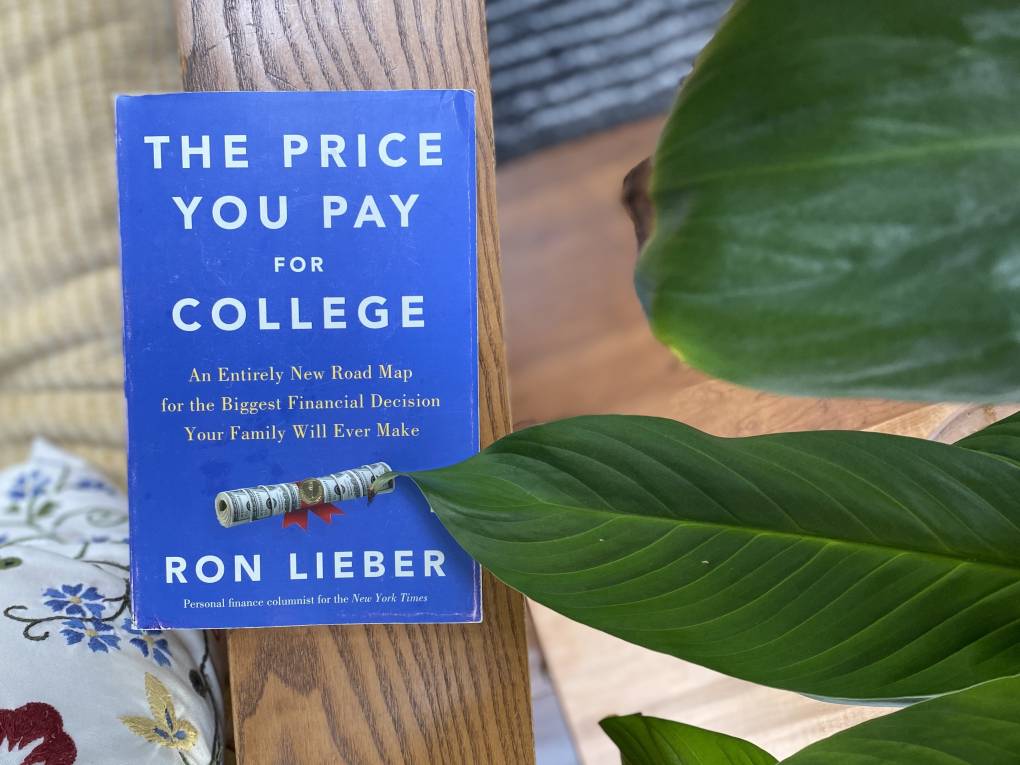
"content": "\u003cp>For many families, paying for college is one of the biggest financial decisions they'll make. College tuition is the highest it's ever been — and the financial aid process is anything but clear. American journalist Ron Lieber's new book, \u003cem>The Price You Pay for College \u003c/em>aims to take the black box of college financials and, \"turn it lighter and lighter shades of gray.\"\u003c/p>\n\u003cp>Of course, Lieber concedes, it \u003cem>is \u003c/em>a messed up system. But he's not out to fix it – he's just here to help you and your family navigate it. \"What I would really like to do is to blow it to smithereens. But this is not a blow-it-to-smithereens book,\" he says. \"I am taking the system as it is and trying to help people learn to beat it.\"\u003c/p>\n\u003cp>\u003cem>The interview was edited for length and clarity.\u003c/em>\u003c/p>\n\u003cp>\u003cstrong>What do parents get wrong about the price of college – the price listed on college websites?\u003c/strong>\u003c/p>\n\u003cp>Roughly 90 percent of people do not pay the full price. They get some kind of a discount. The number families will actually pay varies widely depending on how desperate a particular institution is to put heads in beds and whether it's particularly desperate for some kinds of people more than others.\u003c/p>\n\u003cp>[ad fullwidth]\u003c/p>\n\u003cp>\u003cstrong>You don't pay that list price because most families get aid — or as you call it, a discount. What are the two types of aid?\u003c/strong>\u003c/p>\n\u003cp>There is the need-based aid system running on one set of train tracks and then right next to it, in parallel, there's the merit aid system – runs on its own set of tracks.\u003c/p>\n\u003cp>\u003cstrong>Okay, so as a student or family member – how do you approach that first type, need-based aid?\u003c/strong>\u003c/p>\n\u003cp>Every school is required to post a net price calculator. It's often hidden – It's not in an obvious place. So you just Google, you know, [insert college here] and net price calculator. There, you'll be able to input your financial data. The net price calculator is supposed to spit back at you an estimate of what your family would be asked to pay if you were to get in. And so what you get is what the bottom line price would be and then hopefully a breakdown of how that financial aid might be divided up.\u003c/p>\n\u003cp>So the tricky part, once you get that net price. is to make sure that you understand what the components of that net price might be. For instance, how much debt did that school ask you to take on?\u003c/p>\n\u003cp>\u003cstrong>The other money you get from colleges is merit aid. I think of merit aid as money for being smart. But it sounds like this goes beyond academics? \u003c/strong>\u003c/p>\n\u003cp>It's much more about who you are, about your profile, about grades and test scores and other kind of tangibles and intangibles. It may vary depending on the year, or the month and also how well the school is doing in its attempt to attract the right number of students paying the right amount of dollars per student.\u003c/p>\n\u003cp>Here's another way to think of it: Imagine a really long list of all of the colleges and universities in the United States, ranked roughly in order of selectivity. Starting around slots 30 or 40, you start to get a trickle of elite institutions that do give away some money based on someone's academic prowess. And then in the next 25 to 50 slots on the list, you're finding a lot of selective schools that have a market problem and a marketing problem, which is that at $70,000 or $80,000 a year, people's ability to pay no longer matches their willingness to do so, increasingly. So you're trying to maintain some pricing power at the full price for a certain number of students, while giving others discounts.\u003c/p>\n\u003cp>Then, you go further down the food chain where very few people are paying full price, but most people don't know that everybody's getting a merit aid pony. And at those institutions, the schools are keeping that information to themselves — the fact that everybody's getting the discount — because they want every parent whose kid gets an unsolicited merit aid offer from the school running around town bragging about how their kid got offered academic money from this or that college. Further down the food chain, it's obvious that pretty much everybody gets something.\u003c/p>\n\u003cp>\u003cstrong>So merit aid – the discount unrelated to financial need – is basically a way for colleges to manipulate or convince often wealthier families to go to their university?\u003c/strong>\u003c/p>\n\u003cp>Look at what Tulane, Northeastern and even University of Southern California have done using merit aid. They just went out and bought smart kids. People are often surprised by this, right, because we're not used to thinking of higher education as the highly competitive industry that it is. We've got a couple thousand undergraduate institutions, and they're slugging it out for each and every student to commit and matriculate.\u003c/p>\n\u003cp>So it should not really come as any surprise to us that money is being used as leverage, even with children, because children have a role to play in this process. I'm in enough teenagers' inboxes looking at this stuff to know that the money pitch is more common than it used to be and absolutely resonating, but also confusing the hell out of people because they don't really know how this all works.\u003c/p>\n\u003cp>\u003cstrong>So where do parents even begin when determining how much money is appropriate to spend on college? \u003c/strong>\u003c/p>\n\u003cp>What I encourage people to do, first and foremost, is to take a look at something called the common data set that most schools make available. [To find, search Google for \"Common data set\" and the college name. \u003ca href=\"https://ifx.richmond.edu/pdfs/CDS2019-20.pdf\">Here's an example result from the University of Richmond.\u003c/a>] This is the document that schools send to \u003cem>U.S. News and World Report\u003c/em> and other ranking organizations. Look for Line H2A. It tells you the number of students who did not qualify for any need-based aid, but still got merit money. So that gives you a sense of how desperate the school is and how much of a merit package it might offer even to people who do not need the money because of their assets or income. You start to get a sense of where you stand.\u003c/p>\n\u003cp>And then here's something else you can do.\u003cstrong> Just go to the school and ask. \u003c/strong>All of this hocus pocus and having to dig through data tables, it's not fair. It's perfectly reasonable to call a school in September and say, could you please do a merit aid pre-read on my application. This is something that goes on. The College of Wooster in Ohio does it for anyone who asks. Whitman College in Washington state does it for anybody who asks. It's obscene that we have to make decisions about where and how to apply without having a good sense of how this will shake out. It is not right.\u003c/p>\n\u003cp>\u003cstrong>For students applying to college this year, what should they do if their financial situation has changed because of the coronavirus? \u003c/strong>\u003c/p>\n\u003cp>The avenues for appeal [for need-based aid and merit aid] are different. If it's need-based aid, you're going to go to the financial aid office and you're going to try to prove to the financial aid officer that you have had a change in circumstances since you filed your financial aid forms. And you're going \u003ca href=\"https://formswift.com/swift-student\">to ask that financial aid officer to use professional judgment \u003c/a>to reconsider your offer.\u003c/p>\n\u003cp>On the merit aid side, you're going to be approaching the admissions office and the best way to do it is with a whole bunch of humility, but also a competing offer.\u003c/p>\n\u003cp>If you have a quote from another school that competes with the institution enough to be a reasonable comparison, you go into the school that you want to appeal to and you say, 'I would really like to go here. The bottom line price at this other school is lower than yours. We may have made a mistake here in our application to you that we didn't make with the other school. Would it be possible to to just do a review here so that we understand what happened?'\u003c/p>\n\u003cp>[ad floatright]\u003c/p>\n\u003cp>And here's the secret that most people don't know: It's not human beings that have generated these offers in the first place. It's more often than not robots that have been programmed by software algorithms. And so humans do have the ability to intervene at the end within a certain amount of reason. Can't hurt to try.\u003c/p>\n\u003cdiv class=\"fullattribution\">Copyright 2021 NPR. To see more, visit https://www.npr.org.\u003cimg src=\"https://www.google-analytics.com/__utm.gif?utmac=UA-5828686-4&utmdt=5+Things+Every+Family+Should+Know+About+Paying+For+College&utme=8(APIKey)9(MDAxOTAwOTE4MDEyMTkxMDAzNjczZDljZA004)\">\u003c/div>\n\n",
"disqusIdentifier": "57399 https://ww2.kqed.org/mindshift/?p=57399",
"disqusUrl": "https://ww2.kqed.org/mindshift/2021/02/18/5-things-every-family-should-know-about-paying-for-college/",
"stats": {
"hasVideo": false,
"hasChartOrMap": false,
"hasAudio": false,
"hasPolis": false,
"wordCount": 1501,
"hasGoogleForm": false,
"hasGallery": false,
"hasHearkenModule": false,
"iframeSrcs": [],
"paragraphCount": 27
},
"modified": 1613636717,
"excerpt": "For many families, this is one of the biggest financial decisions they'll ever make. A new book helps navigate the often confusing and opaque financial aid system.",
"headData": {
"twImgId": "",
"twTitle": "",
"ogTitle": "",
"ogImgId": "",
"twDescription": "",
"description": "In order to get a better sense of how much families pay for a college, search for the "common data set" of that university. Know that roughly 90 percent of people do not pay the full price, according to Ron Lieber's latest book, "The Price You Pay for College."",
"title": "Need and Merit-Based Financial Aid: 5 Things Every Family Should Know About Paying For College - MindShift",
"ogDescription": "",
"schema": {
"@context": "https://schema.org",
"@type": "Article",
"headline": "5 Things Every Family Should Know About Paying For College",
"datePublished": "2021-02-18T00:25:17-08:00",
"dateModified": "2021-02-18T00:25:17-08:00",
"image": "https://cdn.kqed.org/wp-content/uploads/2020/02/KQED-OG-Image@1x.png"
}
},
"guestAuthors": [],
"slug": "5-things-every-family-should-know-about-paying-for-college",
"status": "publish",
"nprApiLink": "http://api.npr.org/query?id=968662074&apiKey=MDAxOTAwOTE4MDEyMTkxMDAzNjczZDljZA004",
"nprByline": "Elissa Nadworny and Eda Uzunlar",
"nprStoryDate": "Wed, 17 Feb 2021 17:00:28 -0500",
"nprLastModifiedDate": "Wed, 17 Feb 2021 17:00:28 -0500",
"nprHtmlLink": "https://www.npr.org/2021/02/17/968662074/5-things-every-family-should-know-about-paying-for-college?ft=nprml&f=968662074",
"nprImageAgency": "NPR",
"nprImageCredit": "Elissa Nadworny",
"nprStoryId": "968662074",
"nprRetrievedStory": "1",
"nprPubDate": "Wed, 17 Feb 2021 17:00:00 -0500",
"path": "/mindshift/57399/5-things-every-family-should-know-about-paying-for-college",
"audioTrackLength": null,
"parsedContent": [
{
"type": "contentString",
"content": "\u003cdiv class=\"post-body\">\u003cp>\u003cp>For many families, paying for college is one of the biggest financial decisions they'll make. College tuition is the highest it's ever been — and the financial aid process is anything but clear. American journalist Ron Lieber's new book, \u003cem>The Price You Pay for College \u003c/em>aims to take the black box of college financials and, \"turn it lighter and lighter shades of gray.\"\u003c/p>\n\u003cp>Of course, Lieber concedes, it \u003cem>is \u003c/em>a messed up system. But he's not out to fix it – he's just here to help you and your family navigate it. \"What I would really like to do is to blow it to smithereens. But this is not a blow-it-to-smithereens book,\" he says. \"I am taking the system as it is and trying to help people learn to beat it.\"\u003c/p>\n\u003cp>\u003cem>The interview was edited for length and clarity.\u003c/em>\u003c/p>\n\u003cp>\u003cstrong>What do parents get wrong about the price of college – the price listed on college websites?\u003c/strong>\u003c/p>\n\u003cp>Roughly 90 percent of people do not pay the full price. They get some kind of a discount. The number families will actually pay varies widely depending on how desperate a particular institution is to put heads in beds and whether it's particularly desperate for some kinds of people more than others.\u003c/p>\n\u003cp>\u003c/p>\u003c/div>",
"attributes": {
"named": {},
"numeric": []
}
},
{
"type": "component",
"content": "",
"name": "ad",
"attributes": {
"named": {
"label": "fullwidth"
},
"numeric": [
"fullwidth"
]
}
},
{
"type": "contentString",
"content": "\u003cdiv class=\"post-body\">\u003cp>\u003c/p>\n\u003cp>\u003cstrong>You don't pay that list price because most families get aid — or as you call it, a discount. What are the two types of aid?\u003c/strong>\u003c/p>\n\u003cp>There is the need-based aid system running on one set of train tracks and then right next to it, in parallel, there's the merit aid system – runs on its own set of tracks.\u003c/p>\n\u003cp>\u003cstrong>Okay, so as a student or family member – how do you approach that first type, need-based aid?\u003c/strong>\u003c/p>\n\u003cp>Every school is required to post a net price calculator. It's often hidden – It's not in an obvious place. So you just Google, you know, [insert college here] and net price calculator. There, you'll be able to input your financial data. The net price calculator is supposed to spit back at you an estimate of what your family would be asked to pay if you were to get in. And so what you get is what the bottom line price would be and then hopefully a breakdown of how that financial aid might be divided up.\u003c/p>\n\u003cp>So the tricky part, once you get that net price. is to make sure that you understand what the components of that net price might be. For instance, how much debt did that school ask you to take on?\u003c/p>\n\u003cp>\u003cstrong>The other money you get from colleges is merit aid. I think of merit aid as money for being smart. But it sounds like this goes beyond academics? \u003c/strong>\u003c/p>\n\u003cp>It's much more about who you are, about your profile, about grades and test scores and other kind of tangibles and intangibles. It may vary depending on the year, or the month and also how well the school is doing in its attempt to attract the right number of students paying the right amount of dollars per student.\u003c/p>\n\u003cp>Here's another way to think of it: Imagine a really long list of all of the colleges and universities in the United States, ranked roughly in order of selectivity. Starting around slots 30 or 40, you start to get a trickle of elite institutions that do give away some money based on someone's academic prowess. And then in the next 25 to 50 slots on the list, you're finding a lot of selective schools that have a market problem and a marketing problem, which is that at $70,000 or $80,000 a year, people's ability to pay no longer matches their willingness to do so, increasingly. So you're trying to maintain some pricing power at the full price for a certain number of students, while giving others discounts.\u003c/p>\n\u003cp>Then, you go further down the food chain where very few people are paying full price, but most people don't know that everybody's getting a merit aid pony. And at those institutions, the schools are keeping that information to themselves — the fact that everybody's getting the discount — because they want every parent whose kid gets an unsolicited merit aid offer from the school running around town bragging about how their kid got offered academic money from this or that college. Further down the food chain, it's obvious that pretty much everybody gets something.\u003c/p>\n\u003cp>\u003cstrong>So merit aid – the discount unrelated to financial need – is basically a way for colleges to manipulate or convince often wealthier families to go to their university?\u003c/strong>\u003c/p>\n\u003cp>Look at what Tulane, Northeastern and even University of Southern California have done using merit aid. They just went out and bought smart kids. People are often surprised by this, right, because we're not used to thinking of higher education as the highly competitive industry that it is. We've got a couple thousand undergraduate institutions, and they're slugging it out for each and every student to commit and matriculate.\u003c/p>\n\u003cp>So it should not really come as any surprise to us that money is being used as leverage, even with children, because children have a role to play in this process. I'm in enough teenagers' inboxes looking at this stuff to know that the money pitch is more common than it used to be and absolutely resonating, but also confusing the hell out of people because they don't really know how this all works.\u003c/p>\n\u003cp>\u003cstrong>So where do parents even begin when determining how much money is appropriate to spend on college? \u003c/strong>\u003c/p>\n\u003cp>What I encourage people to do, first and foremost, is to take a look at something called the common data set that most schools make available. [To find, search Google for \"Common data set\" and the college name. \u003ca href=\"https://ifx.richmond.edu/pdfs/CDS2019-20.pdf\">Here's an example result from the University of Richmond.\u003c/a>] This is the document that schools send to \u003cem>U.S. News and World Report\u003c/em> and other ranking organizations. Look for Line H2A. It tells you the number of students who did not qualify for any need-based aid, but still got merit money. So that gives you a sense of how desperate the school is and how much of a merit package it might offer even to people who do not need the money because of their assets or income. You start to get a sense of where you stand.\u003c/p>\n\u003cp>And then here's something else you can do.\u003cstrong> Just go to the school and ask. \u003c/strong>All of this hocus pocus and having to dig through data tables, it's not fair. It's perfectly reasonable to call a school in September and say, could you please do a merit aid pre-read on my application. This is something that goes on. The College of Wooster in Ohio does it for anyone who asks. Whitman College in Washington state does it for anybody who asks. It's obscene that we have to make decisions about where and how to apply without having a good sense of how this will shake out. It is not right.\u003c/p>\n\u003cp>\u003cstrong>For students applying to college this year, what should they do if their financial situation has changed because of the coronavirus? \u003c/strong>\u003c/p>\n\u003cp>The avenues for appeal [for need-based aid and merit aid] are different. If it's need-based aid, you're going to go to the financial aid office and you're going to try to prove to the financial aid officer that you have had a change in circumstances since you filed your financial aid forms. And you're going \u003ca href=\"https://formswift.com/swift-student\">to ask that financial aid officer to use professional judgment \u003c/a>to reconsider your offer.\u003c/p>\n\u003cp>On the merit aid side, you're going to be approaching the admissions office and the best way to do it is with a whole bunch of humility, but also a competing offer.\u003c/p>\n\u003cp>If you have a quote from another school that competes with the institution enough to be a reasonable comparison, you go into the school that you want to appeal to and you say, 'I would really like to go here. The bottom line price at this other school is lower than yours. We may have made a mistake here in our application to you that we didn't make with the other school. Would it be possible to to just do a review here so that we understand what happened?'\u003c/p>\n\u003cp>\u003c/p>\u003c/div>",
"attributes": {
"named": {},
"numeric": []
}
},
{
"type": "component",
"content": "",
"name": "ad",
"attributes": {
"named": {
"label": "floatright"
},
"numeric": [
"floatright"
]
}
},
{
"type": "contentString",
"content": "\u003cdiv class=\"post-body\">\u003cp>\u003c/p>\n\u003cp>And here's the secret that most people don't know: It's not human beings that have generated these offers in the first place. It's more often than not robots that have been programmed by software algorithms. And so humans do have the ability to intervene at the end within a certain amount of reason. Can't hurt to try.\u003c/p>\n\u003cdiv class=\"fullattribution\">Copyright 2021 NPR. To see more, visit https://www.npr.org.\u003cimg src=\"https://www.google-analytics.com/__utm.gif?utmac=UA-5828686-4&utmdt=5+Things+Every+Family+Should+Know+About+Paying+For+College&utme=8(APIKey)9(MDAxOTAwOTE4MDEyMTkxMDAzNjczZDljZA004)\">\u003c/div>\n\n\u003c/div>\u003c/p>",
"attributes": {
"named": {},
"numeric": []
}
}
],
"link": "/mindshift/57399/5-things-every-family-should-know-about-paying-for-college",
"authors": [
"byline_mindshift_57399"
],
"categories": [
"mindshift_192"
],
"tags": [
"mindshift_21305",
"mindshift_21344",
"mindshift_21306"
],
"featImg": "mindshift_57400",
"label": "mindshift"
},
"mindshift_57255": {
"type": "posts",
"id": "mindshift_57255",
"meta": {
"index": "posts_1716263798",
"site": "mindshift",
"id": "57255",
"score": null,
"sort": [
1610953698000
]
},
"parent": 0,
"labelTerm": {
"site": "mindshift"
},
"blocks": [],
"publishDate": 1610953698,
"format": "standard",
"disqusTitle": "Didn't Get Enough Financial Aid For College? You Can Ask For More Money",
"title": "Didn't Get Enough Financial Aid For College? You Can Ask For More Money",
"headTitle": "MindShift | KQED News",
"content": "\u003cp>Last spring, the pandemic stole Maddie Harvey's job on campus in the Dean of Students office. She was finishing up her senior year at the University of St. Thomas in St. Paul, Minn., and without the income from her job, she wasn't going to have enough money to pay her upcoming tuition bill.\u003c/p>\n\u003cp>\"It was definitely a very vulnerable situation that I was in,\" says Harvey, \"it's not easy to talk about when you're struggling, especially knowing that so many people were struggling at one time.\"\u003c/p>\n\u003cp>Through some Internet research, she discovered a tool called \u003ca href=\"https://formswift.com/swift-student\">SwiftStudent\u003c/a> that would help her craft a financial aid appeal letter to her college. In it, Harvey requested money for her studies, and outlined all her expenses. It was nerve-wracking to air her personal financial situation. And the stakes were high: If she didn't receive more money, she was afraid she wouldn't be able to pay her tuition bill. Finally, she heard a response: Her appeal had worked. Her college offered her about $2,000 more for the semester. She says that money \"made a big difference and allowed me to graduate on time.\"\u003c/p>\n\u003cp>Millions of students may find themselves in the same boat as Harvey — saddled with unexpected expenses or pandemic related job losses that impact their ability to pay for college. And a student's financial aid package might not be enough to cover their costs because of the way the federal aid system is set up: The Free Application for Federal Student Aid, or FAFSA — the form which determines a student's eligibility for financial aid for college — uses tax data from 2019. Unfortunately, the world looked very different back then, pre-pandemic.\u003c/p>\n\u003cp>It's a concern that's come up with many of the high school students that Danny Tejada, a college advisor at a private school in St. Louis, works with.\u003c/p>\n\u003cp>[ad fullwidth]\u003c/p>\n\u003cp>But, Tejada says, there's hope for students and families worried the FAFSA doesn't capture their financial situation. \"The one thing that people don't really know about is that, yeah, you can appeal financial aid packages that don't live up to what the actual reality of things are,\" he says. \"Whatever first offer you get doesn't have to be the final.\"\u003c/p>\n\u003cp>After you submit your financial aid application, college financial aid officers have the ability to reconsider aid packages when financial situations change, unexpected expenses emerge, or a person's circumstances are not fully captured on their FAFSA. It's officially called \u003ca href=\"https://studentaid.gov/help-center/answers/article/what-is-professional-judgment\">professional judgement\u003c/a>, though most refer to it as the appeals process, and it's a power handed down by Congress.\u003c/p>\n\u003cp>And in a year like no other, colleges are bracing for an influx of student requests. Tejada says that works to a student's advantage. \"A lot of people [at the college you're applying to] know what's happening right now. So no one is in their own bubble,\" he says. \"But the most important thing is that you speak up about it.\"\u003c/p>\n\u003cp>\u003ca href=\"https://www.nasfaa.org/uploads/documents/Survey_Professional_Judgment_COVID.pdf\">In October, a survey from the National Association of Student Financial Aid Administrators\u003c/a> found that about 60% of financial aid offices at more than 200 colleges saw an increase in appeal requests between March 1 and Sept. 21 compared to the previous year. A third of respondents saw students' requests more than double.\u003c/p>\n\u003cp>\"The financial aid office is your friend in this process,\" explains Karla Weber, who works in the financial aid office at the University of Wisconsin-Madison. \"I think sometimes we get made out to be the ones that are hiding or hoarding this money from students, where it's really just the opposite.\"\u003c/p>\n\u003cp>Her office saw an uptick in appeals through the spring and summer and is anticipating more to come. \"2020 has been a crazy year for a lot of people,\" Weber says, and the most important thing for students to do is communicate with the colleges they've applied to. \"Let them know, 'Hey, something's happened. Our finances are just a little bit different now. What can we do to let you know so you can take a second look?'\"\u003c/p>\n\u003cp>Despite its increased use during the pandemic, the appeals process is \"a black box from a transparency perspective,\" explains Abigail Seldin, who helped create SwiftStudent. The U.S. Department of Education doesn't collect data from colleges showing how much additional aid is given, which students appeal or which students are funded after submitting a request. In a recent op-ed in \u003cem>Inside Higher Ed\u003c/em>, \u003ca href=\"https://www.insidehighered.com/views/2021/01/13/how-colleges-can-better-provide-financial-aid-students-who-need-it-most-opinion\">researchers from the Education Trust say this lack of transparency\u003c/a> \"raises questions about how subjective and susceptible to bias professional judgments might be.\"\u003c/p>\n\u003cp>There are also limitations for how schools can adjust a student's aid package, based on the cost of attendance and the estimated amount a family can pay. And then there's the fact that institutions only have so much money to offer, especially at a time when many colleges have issued layoffs, seen budget cuts and taken revenue hits from low enrollment.\u003c/p>\n\u003cp>\u003c/p>\n\u003cp>Still Maddie Harvey, who had her financial appeal granted and successfully completed her bachelor's degree last May, says you'll never know if you don't ask: \"My biggest takeaway from this experience is that it's OK to admit that you need help.\"\u003c/p>\n\u003cdiv class=\"fullattribution\">Copyright 2021 NPR. To see more, visit https://www.npr.org.\u003cimg src=\"https://www.google-analytics.com/__utm.gif?utmac=UA-5828686-4&utmdt=Didn%27t+Get+Enough+Financial+Aid+For+College%3F+You+Can+Ask+For+More+Money&utme=8(APIKey)9(MDAxOTAwOTE4MDEyMTkxMDAzNjczZDljZA004)\">\u003c/div>\n\n",
"disqusIdentifier": "57255 https://ww2.kqed.org/mindshift/?p=57255",
"disqusUrl": "https://ww2.kqed.org/mindshift/2021/01/17/didnt-get-enough-financial-aid-for-college-you-can-ask-for-more-money/",
"stats": {
"hasVideo": false,
"hasChartOrMap": false,
"hasAudio": false,
"hasPolis": false,
"wordCount": 906,
"hasGoogleForm": false,
"hasGallery": false,
"hasHearkenModule": false,
"iframeSrcs": [],
"paragraphCount": 16
},
"modified": 1611213914,
"excerpt": "The FAFSA uses tax data from two years ago to determine a student's eligibility for financial aid for college. But if your financial situation has changed since then, there are ways to get more money.",
"headData": {
"twImgId": "",
"twTitle": "",
"ogTitle": "",
"ogImgId": "",
"twDescription": "",
"description": "The FAFSA uses tax data from two years ago to determine a student's eligibility for financial aid for college. But if your financial situation has changed since then, there are ways to get more money.",
"title": "Didn't Get Enough Financial Aid For College? You Can Ask For More Money - MindShift",
"ogDescription": "",
"schema": {
"@context": "https://schema.org",
"@type": "Article",
"headline": "Didn't Get Enough Financial Aid For College? You Can Ask For More Money",
"datePublished": "2021-01-17T23:08:18-08:00",
"dateModified": "2021-01-20T23:25:14-08:00",
"image": "https://cdn.kqed.org/wp-content/uploads/2020/02/KQED-OG-Image@1x.png"
}
},
"guestAuthors": [],
"slug": "didnt-get-enough-financial-aid-for-college-you-can-ask-for-more-money",
"status": "publish",
"nprApiLink": "http://api.npr.org/query?id=957385763&apiKey=MDAxOTAwOTE4MDEyMTkxMDAzNjczZDljZA004",
"nprByline": "Elissa Nadworny ",
"nprStoryDate": "Sun, 17 Jan 2021 05:00:00 -0500",
"nprLastModifiedDate": "Tue, 19 Jan 2021 16:51:46 -0500",
"nprHtmlLink": "https://www.npr.org/2021/01/17/957385763/didnt-get-enough-financial-aid-for-college-you-can-ask-for-more-money?ft=nprml&f=957385763",
"nprAudio": "https://ondemand.npr.org/anon.npr-mp3/npr/wesun/2021/01/20210117_wesun_didnt_get_enough_financial_aid_for_college_you_can_ask_for_more_money.mp3?orgId=1&topicId=1013&aggIds=812054919&d=225&p=10&story=957385763&ft=nprml&f=957385763",
"nprImageAgency": "NPR",
"nprImageCredit": "LA Johnson",
"nprAudioM3u": "http://api.npr.org/m3u/1957779173-5f1d73.m3u?orgId=1&topicId=1013&aggIds=812054919&d=225&p=10&story=957385763&ft=nprml&f=957385763",
"nprStoryId": "957385763",
"nprRetrievedStory": "1",
"nprPubDate": "Tue, 19 Jan 2021 16:51:00 -0500",
"path": "/mindshift/57255/didnt-get-enough-financial-aid-for-college-you-can-ask-for-more-money",
"audioUrl": "https://ondemand.npr.org/anon.npr-mp3/npr/wesun/2021/01/20210117_wesun_didnt_get_enough_financial_aid_for_college_you_can_ask_for_more_money.mp3?orgId=1&topicId=1013&aggIds=812054919&d=225&p=10&story=957385763&ft=nprml&f=957385763",
"audioTrackLength": null,
"parsedContent": [
{
"type": "contentString",
"content": "\u003cdiv class=\"post-body\">\u003cp>\u003cp>Last spring, the pandemic stole Maddie Harvey's job on campus in the Dean of Students office. She was finishing up her senior year at the University of St. Thomas in St. Paul, Minn., and without the income from her job, she wasn't going to have enough money to pay her upcoming tuition bill.\u003c/p>\n\u003cp>\"It was definitely a very vulnerable situation that I was in,\" says Harvey, \"it's not easy to talk about when you're struggling, especially knowing that so many people were struggling at one time.\"\u003c/p>\n\u003cp>Through some Internet research, she discovered a tool called \u003ca href=\"https://formswift.com/swift-student\">SwiftStudent\u003c/a> that would help her craft a financial aid appeal letter to her college. In it, Harvey requested money for her studies, and outlined all her expenses. It was nerve-wracking to air her personal financial situation. And the stakes were high: If she didn't receive more money, she was afraid she wouldn't be able to pay her tuition bill. Finally, she heard a response: Her appeal had worked. Her college offered her about $2,000 more for the semester. She says that money \"made a big difference and allowed me to graduate on time.\"\u003c/p>\n\u003cp>Millions of students may find themselves in the same boat as Harvey — saddled with unexpected expenses or pandemic related job losses that impact their ability to pay for college. And a student's financial aid package might not be enough to cover their costs because of the way the federal aid system is set up: The Free Application for Federal Student Aid, or FAFSA — the form which determines a student's eligibility for financial aid for college — uses tax data from 2019. Unfortunately, the world looked very different back then, pre-pandemic.\u003c/p>\n\u003cp>It's a concern that's come up with many of the high school students that Danny Tejada, a college advisor at a private school in St. Louis, works with.\u003c/p>\n\u003cp>\u003c/p>\u003c/div>",
"attributes": {
"named": {},
"numeric": []
}
},
{
"type": "component",
"content": "",
"name": "ad",
"attributes": {
"named": {
"label": "fullwidth"
},
"numeric": [
"fullwidth"
]
}
},
{
"type": "contentString",
"content": "\u003cdiv class=\"post-body\">\u003cp>\u003c/p>\n\u003cp>But, Tejada says, there's hope for students and families worried the FAFSA doesn't capture their financial situation. \"The one thing that people don't really know about is that, yeah, you can appeal financial aid packages that don't live up to what the actual reality of things are,\" he says. \"Whatever first offer you get doesn't have to be the final.\"\u003c/p>\n\u003cp>After you submit your financial aid application, college financial aid officers have the ability to reconsider aid packages when financial situations change, unexpected expenses emerge, or a person's circumstances are not fully captured on their FAFSA. It's officially called \u003ca href=\"https://studentaid.gov/help-center/answers/article/what-is-professional-judgment\">professional judgement\u003c/a>, though most refer to it as the appeals process, and it's a power handed down by Congress.\u003c/p>\n\u003cp>And in a year like no other, colleges are bracing for an influx of student requests. Tejada says that works to a student's advantage. \"A lot of people [at the college you're applying to] know what's happening right now. So no one is in their own bubble,\" he says. \"But the most important thing is that you speak up about it.\"\u003c/p>\n\u003cp>\u003ca href=\"https://www.nasfaa.org/uploads/documents/Survey_Professional_Judgment_COVID.pdf\">In October, a survey from the National Association of Student Financial Aid Administrators\u003c/a> found that about 60% of financial aid offices at more than 200 colleges saw an increase in appeal requests between March 1 and Sept. 21 compared to the previous year. A third of respondents saw students' requests more than double.\u003c/p>\n\u003cp>\"The financial aid office is your friend in this process,\" explains Karla Weber, who works in the financial aid office at the University of Wisconsin-Madison. \"I think sometimes we get made out to be the ones that are hiding or hoarding this money from students, where it's really just the opposite.\"\u003c/p>\n\u003cp>Her office saw an uptick in appeals through the spring and summer and is anticipating more to come. \"2020 has been a crazy year for a lot of people,\" Weber says, and the most important thing for students to do is communicate with the colleges they've applied to. \"Let them know, 'Hey, something's happened. Our finances are just a little bit different now. What can we do to let you know so you can take a second look?'\"\u003c/p>\n\u003cp>Despite its increased use during the pandemic, the appeals process is \"a black box from a transparency perspective,\" explains Abigail Seldin, who helped create SwiftStudent. The U.S. Department of Education doesn't collect data from colleges showing how much additional aid is given, which students appeal or which students are funded after submitting a request. In a recent op-ed in \u003cem>Inside Higher Ed\u003c/em>, \u003ca href=\"https://www.insidehighered.com/views/2021/01/13/how-colleges-can-better-provide-financial-aid-students-who-need-it-most-opinion\">researchers from the Education Trust say this lack of transparency\u003c/a> \"raises questions about how subjective and susceptible to bias professional judgments might be.\"\u003c/p>\n\u003cp>There are also limitations for how schools can adjust a student's aid package, based on the cost of attendance and the estimated amount a family can pay. And then there's the fact that institutions only have so much money to offer, especially at a time when many colleges have issued layoffs, seen budget cuts and taken revenue hits from low enrollment.\u003c/p>\n\u003cp>\u003c/p>\n\u003cp>Still Maddie Harvey, who had her financial appeal granted and successfully completed her bachelor's degree last May, says you'll never know if you don't ask: \"My biggest takeaway from this experience is that it's OK to admit that you need help.\"\u003c/p>\n\u003cdiv class=\"fullattribution\">Copyright 2021 NPR. To see more, visit https://www.npr.org.\u003cimg src=\"https://www.google-analytics.com/__utm.gif?utmac=UA-5828686-4&utmdt=Didn%27t+Get+Enough+Financial+Aid+For+College%3F+You+Can+Ask+For+More+Money&utme=8(APIKey)9(MDAxOTAwOTE4MDEyMTkxMDAzNjczZDljZA004)\">\u003c/div>\n\n\u003c/div>\u003c/p>",
"attributes": {
"named": {},
"numeric": []
}
}
],
"link": "/mindshift/57255/didnt-get-enough-financial-aid-for-college-you-can-ask-for-more-money",
"authors": [
"byline_mindshift_57255"
],
"categories": [
"mindshift_21385"
],
"tags": [
"mindshift_21305",
"mindshift_21225"
],
"featImg": "mindshift_57256",
"label": "mindshift"
},
"mindshift_54753": {
"type": "posts",
"id": "mindshift_54753",
"meta": {
"index": "posts_1716263798",
"site": "mindshift",
"id": "54753",
"score": null,
"sort": [
1572993818000
]
},
"parent": 0,
"labelTerm": {
"site": "mindshift"
},
"blocks": [],
"publishDate": 1572993818,
"format": "standard",
"disqusTitle": "Most Of Nation's Top Public Universities Aren't Affordable For Low-Income Students",
"title": "Most Of Nation's Top Public Universities Aren't Affordable For Low-Income Students",
"headTitle": "MindShift | KQED News",
"content": "\u003cp>America's top public universities, known as flagships, are generally the most well-resourced public universities in their respective states — think the University of Michigan in Ann Arbor or the University of Tennessee in Knoxville. They're rigorous schools, and many were built on federal land grants meant to serve the \"industrial classes.\" Today, only four public flagship universities are affordable for students from low-income families, according to a \u003ca href=\"http://www.ihep.org/press/news-releases/ihep-analysis-finds-majority-state-flagship-universities-fall-short-their\">report \u003c/a>from the Institute for Higher Education Policy.\u003c/p>\n\u003cp>Access to public universities can be critical for low-income students because those institutions can\u003ca href=\"https://www.insidehighered.com/quicktakes/2019/04/04/social-mobility-comprehensive-public-universities\"> serve as engines for upward mobility\u003c/a>. And these schools aren't living up to their responsibility to remain affordable, says Mamie Voight, one of the study's authors from IHEP.\u003c/p>\n\u003cp>\"They are a public institution. They are funded by state taxpayer dollars,\" she explains. \"They have an incredibly important role to play in both preparing the workforce for tomorrow and educating the workforce for tomorrow.\"\u003c/p>\n\u003cp>While the definition of what makes a school a flagship is a little murky, many are the main campus of a larger statewide system. Flagship universities receive almost 40% more state funding per full-time undergraduate student than other public four-year schools. They also tend to have higher graduation rates.\u003c/p>\n\u003cp>A combination of factors makes many of these schools unaffordable for low-income students. State funding for higher education suffered big cuts during the Great Recession, which contributed to \u003ca href=\"https://www.cbpp.org/research/state-budget-and-tax/unkept-promises-state-cuts-to-higher-education-threaten-access-and\">tuition increases\u003c/a>. Another factor: The federal Pell Grant program, which helps students \"who display exceptional financial need,\" hasn't kept pace with the increased cost of college. In many states, need-based grants and scholarship aid awarded by the state and public institutions don't make up the difference.\u003c/p>\n\u003cp>[ad fullwidth]\u003c/p>\n\u003cp>\u003cstrong>How to be affordable\u003c/strong>\u003c/p>\n\u003cp>A huge part of staying affordable is prioritizing need-based aid at the state and institution levels, according to some of the most affordable schools in the study, such as the University of Wisconsin-Madison and the University of North Carolina at Chapel Hill.\u003c/p>\n\u003cp>\"There is a strong commitment here to really considering affordability and accessibility as part of that public mission,\" says Rachelle Feldman, UNC's associate provost and director of scholarships and student aid.\u003c/p>\n\u003cp>UNC has the Carolina Covenant, a need-based program that uses grants, scholarships and a work-study jobs to cover college costs, including living expenses. The University of Wisconsin-Madison has a similar program called FASTrack.\u003c/p>\n\u003cp>Both universities say their financial aid programs have helped them recruit more diverse classes. \"We not only would be a less diverse school if we weren't focusing on need-based aid — we'd be a weaker school because the students who enroll here with need-based student aid earned the right to be here,\" says Stephen Farmer, UNC's vice provost for enrollment and undergraduate admissions.\u003c/p>\n\u003cp>But even at a school that's affordable for low-income students, there may not be many of them on campus. Among the 10 most affordable flagships in the study, half had \"extraordinarily low enrollment rates\" of low-income students. That could be because of recruitment priorities and practices at the institutions, according to the report.\u003c/p>\n\u003cp>Fewer than 15% of UW-Madison's students receive Pell Grants — that's about half the 30% rate at comparable four-year college campuses nationally. \"We recognize that there's much work for us to do to ensure that students ... see UW-Madison as an institution that's accessible and affordable,\" says Derek Kindle, the school's director of student financial aid.\u003c/p>\n\u003cp>\u003cstrong>Obstacles to affordability\u003c/strong>\u003c/p>\n\u003cp>Pennsylvania State University ranked among the least affordable flagships. It suffers from a lack of funding from the state; Pennsylvania ranks \u003ca href=\"https://sheeo.org/wp-content/uploads/2019/04/Fig10.jpg\">among the worst \u003c/a>in higher ed spending per capita.\u003c/p>\n\u003cp>Penn State awards need-based aid on a case-by-case basis, according to Wyatt DuBois, a spokesperson for the school, which he thinks may have affected its rankings in the IHEP study.\u003c/p>\n\u003cp>The report calculated affordability by using the net-price calculator on each school's website. Schools that awarded more aid based on lower income or demonstrated financial need ranked higher on affordability.\u003c/p>\n\u003cp>But the calculation isn't that simple, says Sandy Baum, a senior fellow at the Urban Institute, because affordability is actually more of a continuum. Affordability, she says, is \"not really a yes-or-no question. It's not like if something is $100 more expensive, suddenly you can't afford it,\" she says.\u003c/p>\n\u003cp>The study also didn't measure students' ability to take out loans. Depending on what career students go into — and estimating the salary they'll eventually make — some students may be able to afford to take out more student loans than others.\u003c/p>\n\u003cp>\"If you're going to study early childhood education and what you really want to be is a preschool teacher, then you can't afford to borrow as much as somebody who's studying electrical engineering who's likely to earn more money,\" Baum says.\u003c/p>\n\u003cp>But what about tuition? Baum acknowledged that tuition rates are high and outpacing need-based aid, putting a quality college education out of reach for many low-income students.\u003c/p>\n\u003cp>\u003c/p>\n\u003cp>\"Need-based aid has gone up but not enough,\" says Baum. \"And so it is harder and harder for students and families to pay.\"\u003c/p>\n\u003cdiv class=\"fullattribution\">Copyright 2019 NPR. To see more, visit https://www.npr.org.\u003cimg src=\"https://www.google-analytics.com/__utm.gif?utmac=UA-5828686-4&utmdt=Most+Of+Nation%27s+Top+Public+Universities+Aren%27t+Affordable+For+Low-Income+Students&utme=8(APIKey)9(MDAxOTAwOTE4MDEyMTkxMDAzNjczZDljZA004)\">\u003c/div>\n\n",
"disqusIdentifier": "54753 https://ww2.kqed.org/mindshift/?p=54753",
"disqusUrl": "https://ww2.kqed.org/mindshift/2019/11/05/most-of-nations-top-public-universities-arent-affordable-for-low-income-students/",
"stats": {
"hasVideo": false,
"hasChartOrMap": false,
"hasAudio": false,
"hasPolis": false,
"wordCount": 898,
"hasGoogleForm": false,
"hasGallery": false,
"hasHearkenModule": false,
"iframeSrcs": [],
"paragraphCount": 23
},
"modified": 1572993818,
"excerpt": "Public flagship universities are critical for low-income students because they serve as engines for upward mobility. But a new report finds they're often out of reach financially.",
"headData": {
"twImgId": "",
"twTitle": "",
"ogTitle": "",
"ogImgId": "",
"twDescription": "",
"description": "Public flagship universities are critical for low-income students because they serve as engines for upward mobility. But a new report finds they're often out of reach financially.",
"title": "Most Of Nation's Top Public Universities Aren't Affordable For Low-Income Students | KQED",
"ogDescription": "",
"schema": {
"@context": "https://schema.org",
"@type": "Article",
"headline": "Most Of Nation's Top Public Universities Aren't Affordable For Low-Income Students",
"datePublished": "2019-11-05T14:43:38-08:00",
"dateModified": "2019-11-05T14:43:38-08:00",
"image": "https://cdn.kqed.org/wp-content/uploads/2020/02/KQED-OG-Image@1x.png"
}
},
"guestAuthors": [],
"slug": "most-of-nations-top-public-universities-arent-affordable-for-low-income-students",
"status": "publish",
"nprApiLink": "http://api.npr.org/query?id=769465302&apiKey=MDAxOTAwOTE4MDEyMTkxMDAzNjczZDljZA004",
"nprByline": "Alexis Marshall",
"nprStoryDate": "Tue, 05 Nov 2019 09:59:23 -0500",
"nprLastModifiedDate": "Tue, 05 Nov 2019 10:47:35 -0500",
"nprHtmlLink": "https://www.npr.org/2019/11/05/769465302/most-of-the-nations-top-public-universities-aren-t-affordable-for-low-income-stu?ft=nprml&f=769465302",
"nprImageAgency": "Tallulah Fontaine for NPR",
"nprStoryId": "769465302",
"nprRetrievedStory": "1",
"nprPubDate": "Tue, 05 Nov 2019 10:47:00 -0500",
"path": "/mindshift/54753/most-of-nations-top-public-universities-arent-affordable-for-low-income-students",
"audioTrackLength": null,
"parsedContent": [
{
"type": "contentString",
"content": "\u003cdiv class=\"post-body\">\u003cp>\u003cp>America's top public universities, known as flagships, are generally the most well-resourced public universities in their respective states — think the University of Michigan in Ann Arbor or the University of Tennessee in Knoxville. They're rigorous schools, and many were built on federal land grants meant to serve the \"industrial classes.\" Today, only four public flagship universities are affordable for students from low-income families, according to a \u003ca href=\"http://www.ihep.org/press/news-releases/ihep-analysis-finds-majority-state-flagship-universities-fall-short-their\">report \u003c/a>from the Institute for Higher Education Policy.\u003c/p>\n\u003cp>Access to public universities can be critical for low-income students because those institutions can\u003ca href=\"https://www.insidehighered.com/quicktakes/2019/04/04/social-mobility-comprehensive-public-universities\"> serve as engines for upward mobility\u003c/a>. And these schools aren't living up to their responsibility to remain affordable, says Mamie Voight, one of the study's authors from IHEP.\u003c/p>\n\u003cp>\"They are a public institution. They are funded by state taxpayer dollars,\" she explains. \"They have an incredibly important role to play in both preparing the workforce for tomorrow and educating the workforce for tomorrow.\"\u003c/p>\n\u003cp>While the definition of what makes a school a flagship is a little murky, many are the main campus of a larger statewide system. Flagship universities receive almost 40% more state funding per full-time undergraduate student than other public four-year schools. They also tend to have higher graduation rates.\u003c/p>\n\u003cp>A combination of factors makes many of these schools unaffordable for low-income students. State funding for higher education suffered big cuts during the Great Recession, which contributed to \u003ca href=\"https://www.cbpp.org/research/state-budget-and-tax/unkept-promises-state-cuts-to-higher-education-threaten-access-and\">tuition increases\u003c/a>. Another factor: The federal Pell Grant program, which helps students \"who display exceptional financial need,\" hasn't kept pace with the increased cost of college. In many states, need-based grants and scholarship aid awarded by the state and public institutions don't make up the difference.\u003c/p>\n\u003cp>\u003c/p>\u003c/div>",
"attributes": {
"named": {},
"numeric": []
}
},
{
"type": "component",
"content": "",
"name": "ad",
"attributes": {
"named": {
"label": "fullwidth"
},
"numeric": [
"fullwidth"
]
}
},
{
"type": "contentString",
"content": "\u003cdiv class=\"post-body\">\u003cp>\u003c/p>\n\u003cp>\u003cstrong>How to be affordable\u003c/strong>\u003c/p>\n\u003cp>A huge part of staying affordable is prioritizing need-based aid at the state and institution levels, according to some of the most affordable schools in the study, such as the University of Wisconsin-Madison and the University of North Carolina at Chapel Hill.\u003c/p>\n\u003cp>\"There is a strong commitment here to really considering affordability and accessibility as part of that public mission,\" says Rachelle Feldman, UNC's associate provost and director of scholarships and student aid.\u003c/p>\n\u003cp>UNC has the Carolina Covenant, a need-based program that uses grants, scholarships and a work-study jobs to cover college costs, including living expenses. The University of Wisconsin-Madison has a similar program called FASTrack.\u003c/p>\n\u003cp>Both universities say their financial aid programs have helped them recruit more diverse classes. \"We not only would be a less diverse school if we weren't focusing on need-based aid — we'd be a weaker school because the students who enroll here with need-based student aid earned the right to be here,\" says Stephen Farmer, UNC's vice provost for enrollment and undergraduate admissions.\u003c/p>\n\u003cp>But even at a school that's affordable for low-income students, there may not be many of them on campus. Among the 10 most affordable flagships in the study, half had \"extraordinarily low enrollment rates\" of low-income students. That could be because of recruitment priorities and practices at the institutions, according to the report.\u003c/p>\n\u003cp>Fewer than 15% of UW-Madison's students receive Pell Grants — that's about half the 30% rate at comparable four-year college campuses nationally. \"We recognize that there's much work for us to do to ensure that students ... see UW-Madison as an institution that's accessible and affordable,\" says Derek Kindle, the school's director of student financial aid.\u003c/p>\n\u003cp>\u003cstrong>Obstacles to affordability\u003c/strong>\u003c/p>\n\u003cp>Pennsylvania State University ranked among the least affordable flagships. It suffers from a lack of funding from the state; Pennsylvania ranks \u003ca href=\"https://sheeo.org/wp-content/uploads/2019/04/Fig10.jpg\">among the worst \u003c/a>in higher ed spending per capita.\u003c/p>\n\u003cp>Penn State awards need-based aid on a case-by-case basis, according to Wyatt DuBois, a spokesperson for the school, which he thinks may have affected its rankings in the IHEP study.\u003c/p>\n\u003cp>The report calculated affordability by using the net-price calculator on each school's website. Schools that awarded more aid based on lower income or demonstrated financial need ranked higher on affordability.\u003c/p>\n\u003cp>But the calculation isn't that simple, says Sandy Baum, a senior fellow at the Urban Institute, because affordability is actually more of a continuum. Affordability, she says, is \"not really a yes-or-no question. It's not like if something is $100 more expensive, suddenly you can't afford it,\" she says.\u003c/p>\n\u003cp>The study also didn't measure students' ability to take out loans. Depending on what career students go into — and estimating the salary they'll eventually make — some students may be able to afford to take out more student loans than others.\u003c/p>\n\u003cp>\"If you're going to study early childhood education and what you really want to be is a preschool teacher, then you can't afford to borrow as much as somebody who's studying electrical engineering who's likely to earn more money,\" Baum says.\u003c/p>\n\u003cp>But what about tuition? Baum acknowledged that tuition rates are high and outpacing need-based aid, putting a quality college education out of reach for many low-income students.\u003c/p>\n\u003cp>\u003c/p>\n\u003cp>\"Need-based aid has gone up but not enough,\" says Baum. \"And so it is harder and harder for students and families to pay.\"\u003c/p>\n\u003cdiv class=\"fullattribution\">Copyright 2019 NPR. To see more, visit https://www.npr.org.\u003cimg src=\"https://www.google-analytics.com/__utm.gif?utmac=UA-5828686-4&utmdt=Most+Of+Nation%27s+Top+Public+Universities+Aren%27t+Affordable+For+Low-Income+Students&utme=8(APIKey)9(MDAxOTAwOTE4MDEyMTkxMDAzNjczZDljZA004)\">\u003c/div>\n\n\u003c/div>\u003c/p>",
"attributes": {
"named": {},
"numeric": []
}
}
],
"link": "/mindshift/54753/most-of-nations-top-public-universities-arent-affordable-for-low-income-students",
"authors": [
"byline_mindshift_54753"
],
"categories": [
"mindshift_192"
],
"tags": [
"mindshift_21261",
"mindshift_21305",
"mindshift_21306",
"mindshift_68"
],
"featImg": "mindshift_54754",
"label": "mindshift"
}
},
"podcastsReducer": {
"isFetching": false,
"fetchFailed": false,
"hasFetched": false,
"podcasts": {}
},
"radioProgramsReducer": {
"isFetching": false,
"fetchFailed": false,
"hasFetched": false,
"radioPrograms": {}
},
"radioSearchSegmentsReducer": {},
"programsReducer": {
"all-things-considered": {
"id": "all-things-considered",
"title": "All Things Considered",
"info": "Every weekday, \u003cem>All Things Considered\u003c/em> hosts Robert Siegel, Audie Cornish, Ari Shapiro, and Kelly McEvers present the program's trademark mix of news, interviews, commentaries, reviews, and offbeat features. Michel Martin hosts on the weekends.",
"airtime": "MON-FRI 1pm-2pm, 4:30pm-6:30pm\u003cbr />SAT-SUN 5pm-6pm",
"imageSrc": "https://cdn.kqed.org/wp-content/uploads/2024/04/All-Things-Considered-Podcast-Tile-360x360-1.jpg",
"officialWebsiteLink": "https://www.npr.org/programs/all-things-considered/",
"meta": {
"site": "news",
"source": "npr"
},
"link": "/radio/program/all-things-considered"
},
"american-suburb-podcast": {
"id": "american-suburb-podcast",
"title": "American Suburb: The Podcast",
"tagline": "The flip side of gentrification, told through one town",
"info": "Gentrification is changing cities across America, forcing people from neighborhoods they have long called home. Call them the displaced. Now those priced out of the Bay Area are looking for a better life in an unlikely place. American Suburb follows this migration to one California town along the Delta, 45 miles from San Francisco. But is this once sleepy suburb ready for them?",
"imageSrc": "https://cdn.kqed.org/wp-content/uploads/2024/04/American-Suburb-Podcast-Tile-703x703-1.jpg",
"officialWebsiteLink": "/news/series/american-suburb-podcast",
"meta": {
"site": "news",
"source": "kqed",
"order": 19
},
"link": "/news/series/american-suburb-podcast/",
"subscribe": {
"npr": "https://rpb3r.app.goo.gl/RBrW",
"apple": "https://itunes.apple.com/WebObjects/MZStore.woa/wa/viewPodcast?mt=2&id=1287748328",
"tuneIn": "https://tunein.com/radio/American-Suburb-p1086805/",
"rss": "https://ww2.kqed.org/news/series/american-suburb-podcast/feed/podcast",
"google": "https://podcasts.google.com/feed/aHR0cHM6Ly9mZWVkcy5tZWdhcGhvbmUuZm0vS1FJTkMzMDExODgxNjA5"
}
},
"baycurious": {
"id": "baycurious",
"title": "Bay Curious",
"tagline": "Exploring the Bay Area, one question at a time",
"info": "KQED’s new podcast, Bay Curious, gets to the bottom of the mysteries — both profound and peculiar — that give the Bay Area its unique identity. And we’ll do it with your help! You ask the questions. You decide what Bay Curious investigates. And you join us on the journey to find the answers.",
"imageSrc": "https://cdn.kqed.org/wp-content/uploads/2024/04/Bay-Curious-Podcast-Tile-703x703-1.jpg",
"imageAlt": "KQED Bay Curious",
"officialWebsiteLink": "/news/series/baycurious",
"meta": {
"site": "news",
"source": "kqed",
"order": 3
},
"link": "/podcasts/baycurious",
"subscribe": {
"apple": "https://podcasts.apple.com/us/podcast/bay-curious/id1172473406",
"npr": "https://www.npr.org/podcasts/500557090/bay-curious",
"rss": "https://ww2.kqed.org/news/category/bay-curious-podcast/feed/podcast",
"amazon": "https://music.amazon.com/podcasts/9a90d476-aa04-455d-9a4c-0871ed6216d4/bay-curious",
"stitcher": "https://www.stitcher.com/podcast/kqed/bay-curious",
"spotify": "https://open.spotify.com/show/6O76IdmhixfijmhTZLIJ8k"
}
},
"bbc-world-service": {
"id": "bbc-world-service",
"title": "BBC World Service",
"info": "The day's top stories from BBC News compiled twice daily in the week, once at weekends.",
"airtime": "MON-FRI 9pm-10pm, TUE-FRI 1am-2am",
"imageSrc": "https://cdn.kqed.org/wp-content/uploads/2024/04/BBC-World-Service-Podcast-Tile-360x360-1.jpg",
"officialWebsiteLink": "https://www.bbc.co.uk/sounds/play/live:bbc_world_service",
"meta": {
"site": "news",
"source": "BBC World Service"
},
"link": "/radio/program/bbc-world-service",
"subscribe": {
"apple": "https://itunes.apple.com/us/podcast/global-news-podcast/id135067274?mt=2",
"tuneIn": "https://tunein.com/radio/BBC-World-Service-p455581/",
"rss": "https://podcasts.files.bbci.co.uk/p02nq0gn.rss"
}
},
"californiareport": {
"id": "californiareport",
"title": "The California Report",
"tagline": "California, day by day",
"info": "KQED’s statewide radio news program providing daily coverage of issues, trends and public policy decisions.",
"imageSrc": "https://cdn.kqed.org/wp-content/uploads/2024/04/The-California-Report-Podcast-Tile-703x703-1.jpg",
"imageAlt": "KQED The California Report",
"officialWebsiteLink": "/californiareport",
"meta": {
"site": "news",
"source": "kqed",
"order": 8
},
"link": "/californiareport",
"subscribe": {
"apple": "https://podcasts.apple.com/us/podcast/kqeds-the-california-report/id79681292",
"amazon": "https://music.amazon.com/podcasts/26099305-72af-4542-9dde-ac1807fe36d5/kqed-s-the-california-report",
"npr": "https://www.npr.org/podcasts/432285393/the-california-report",
"stitcher": "https://www.stitcher.com/podcast/kqedfm-kqeds-the-california-report-podcast-8838",
"rss": "https://ww2.kqed.org/news/tag/tcram/feed/podcast"
}
},
"californiareportmagazine": {
"id": "californiareportmagazine",
"title": "The California Report Magazine",
"tagline": "Your state, your stories",
"info": "Every week, The California Report Magazine takes you on a road trip for the ears: to visit the places and meet the people who make California unique. The in-depth storytelling podcast from the California Report.",
"airtime": "FRI 4:30pm-5pm, 6:30pm-7pm, 11pm-11:30pm",
"imageSrc": "https://cdn.kqed.org/wp-content/uploads/2024/04/The-California-Report-Magazine-Podcast-Tile-703x703-1.jpg",
"imageAlt": "KQED The California Report Magazine",
"officialWebsiteLink": "/californiareportmagazine",
"meta": {
"site": "news",
"source": "kqed",
"order": 10
},
"link": "/californiareportmagazine",
"subscribe": {
"apple": "https://podcasts.apple.com/us/podcast/the-california-report-magazine/id1314750545",
"google": "https://podcasts.google.com/feed/aHR0cHM6Ly9mZWVkcy5tZWdhcGhvbmUuZm0vS1FJTkM3NjkwNjk1OTAz",
"npr": "https://www.npr.org/podcasts/564733126/the-california-report-magazine",
"stitcher": "https://www.stitcher.com/podcast/kqed/the-california-report-magazine",
"rss": "https://ww2.kqed.org/news/tag/tcrmag/feed/podcast"
}
},
"city-arts": {
"id": "city-arts",
"title": "City Arts & Lectures",
"info": "A one-hour radio program to hear celebrated writers, artists and thinkers address contemporary ideas and values, often discussing the creative process. Please note: tapes or transcripts are not available",
"imageSrc": "https://ww2.kqed.org/radio/wp-content/uploads/sites/50/2018/05/cityartsandlecture-300x300.jpg",
"officialWebsiteLink": "https://www.cityarts.net/",
"airtime": "SUN 1pm-2pm, TUE 10pm, WED 1am",
"meta": {
"site": "news",
"source": "City Arts & Lectures"
},
"link": "https://www.cityarts.net",
"subscribe": {
"tuneIn": "https://tunein.com/radio/City-Arts-and-Lectures-p692/",
"rss": "https://www.cityarts.net/feed/"
}
},
"closealltabs": {
"id": "closealltabs",
"title": "Close All Tabs",
"tagline": "Your irreverent guide to the trends redefining our world",
"info": "Close All Tabs breaks down how digital culture shapes our world through thoughtful insights and irreverent humor.",
"imageSrc": "https://cdn.kqed.org/wp-content/uploads/2025/02/CAT_2_Tile-scaled.jpg",
"imageAlt": "KQED Close All Tabs",
"officialWebsiteLink": "/podcasts/closealltabs",
"meta": {
"site": "news",
"source": "kqed",
"order": 1
},
"link": "/podcasts/closealltabs",
"subscribe": {
"apple": "https://podcasts.apple.com/us/podcast/close-all-tabs/id214663465",
"rss": "https://feeds.megaphone.fm/KQINC6993880386",
"amazon": "https://music.amazon.com/podcasts/92d9d4ac-67a3-4eed-b10a-fb45d45b1ef2/close-all-tabs",
"spotify": "https://open.spotify.com/show/6LAJFHnGK1pYXYzv6SIol6?si=deb0cae19813417c"
}
},
"code-switch-life-kit": {
"id": "code-switch-life-kit",
"title": "Code Switch / Life Kit",
"info": "\u003cem>Code Switch\u003c/em>, which listeners will hear in the first part of the hour, has fearless and much-needed conversations about race. Hosted by journalists of color, the show tackles the subject of race head-on, exploring how it impacts every part of society — from politics and pop culture to history, sports and more.\u003cbr />\u003cbr />\u003cem>Life Kit\u003c/em>, which will be in the second part of the hour, guides you through spaces and feelings no one prepares you for — from finances to mental health, from workplace microaggressions to imposter syndrome, from relationships to parenting. The show features experts with real world experience and shares their knowledge. Because everyone needs a little help being human.\u003cbr />\u003cbr />\u003ca href=\"https://www.npr.org/podcasts/510312/codeswitch\">\u003cem>Code Switch\u003c/em> offical site and podcast\u003c/a>\u003cbr />\u003ca href=\"https://www.npr.org/lifekit\">\u003cem>Life Kit\u003c/em> offical site and podcast\u003c/a>\u003cbr />",
"airtime": "SUN 9pm-10pm",
"imageSrc": "https://cdn.kqed.org/wp-content/uploads/2024/04/Code-Switch-Life-Kit-Podcast-Tile-360x360-1.jpg",
"meta": {
"site": "radio",
"source": "npr"
},
"link": "/radio/program/code-switch-life-kit",
"subscribe": {
"apple": "https://podcasts.apple.com/podcast/1112190608?mt=2&at=11l79Y&ct=nprdirectory",
"google": "https://podcasts.google.com/feed/aHR0cHM6Ly93d3cubnByLm9yZy9yc3MvcG9kY2FzdC5waHA_aWQ9NTEwMzEy",
"spotify": "https://open.spotify.com/show/3bExJ9JQpkwNhoHvaIIuyV",
"rss": "https://feeds.npr.org/510312/podcast.xml"
}
},
"commonwealth-club": {
"id": "commonwealth-club",
"title": "Commonwealth Club of California Podcast",
"info": "The Commonwealth Club of California is the nation's oldest and largest public affairs forum. As a non-partisan forum, The Club brings to the public airwaves diverse viewpoints on important topics. The Club's weekly radio broadcast - the oldest in the U.S., dating back to 1924 - is carried across the nation on public radio stations and is now podcasting. Our website archive features audio of our recent programs, as well as selected speeches from our long and distinguished history. This podcast feed is usually updated twice a week and is always un-edited.",
"airtime": "THU 10pm, FRI 1am",
"imageSrc": "https://cdn.kqed.org/wp-content/uploads/2024/04/Commonwealth-Club-Podcast-Tile-360x360-1.jpg",
"officialWebsiteLink": "https://www.commonwealthclub.org/podcasts",
"meta": {
"site": "news",
"source": "Commonwealth Club of California"
},
"link": "/radio/program/commonwealth-club",
"subscribe": {
"apple": "https://itunes.apple.com/us/podcast/commonwealth-club-of-california-podcast/id976334034?mt=2",
"google": "https://podcasts.google.com/feed/aHR0cDovL3d3dy5jb21tb253ZWFsdGhjbHViLm9yZy9hdWRpby9wb2RjYXN0L3dlZWtseS54bWw",
"tuneIn": "https://tunein.com/radio/Commonwealth-Club-of-California-p1060/"
}
},
"forum": {
"id": "forum",
"title": "Forum",
"tagline": "The conversation starts here",
"info": "KQED’s live call-in program discussing local, state, national and international issues, as well as in-depth interviews.",
"airtime": "MON-FRI 9am-11am, 10pm-11pm",
"imageSrc": "https://cdn.kqed.org/wp-content/uploads/2024/04/Forum-Podcast-Tile-703x703-1.jpg",
"imageAlt": "KQED Forum with Mina Kim and Alexis Madrigal",
"officialWebsiteLink": "/forum",
"meta": {
"site": "news",
"source": "kqed",
"order": 9
},
"link": "/forum",
"subscribe": {
"apple": "https://podcasts.apple.com/us/podcast/kqeds-forum/id73329719",
"google": "https://podcasts.google.com/feed/aHR0cHM6Ly9mZWVkcy5tZWdhcGhvbmUuZm0vS1FJTkM5NTU3MzgxNjMz",
"npr": "https://www.npr.org/podcasts/432307980/forum",
"stitcher": "https://www.stitcher.com/podcast/kqedfm-kqeds-forum-podcast",
"rss": "https://feeds.megaphone.fm/KQINC9557381633"
}
},
"freakonomics-radio": {
"id": "freakonomics-radio",
"title": "Freakonomics Radio",
"info": "Freakonomics Radio is a one-hour award-winning podcast and public-radio project hosted by Stephen Dubner, with co-author Steve Levitt as a regular guest. It is produced in partnership with WNYC.",
"imageSrc": "https://ww2.kqed.org/news/wp-content/uploads/sites/10/2018/05/freakonomicsRadio.png",
"officialWebsiteLink": "http://freakonomics.com/",
"airtime": "SUN 1am-2am, SAT 3pm-4pm",
"meta": {
"site": "radio",
"source": "WNYC"
},
"link": "/radio/program/freakonomics-radio",
"subscribe": {
"npr": "https://rpb3r.app.goo.gl/4s8b",
"apple": "https://itunes.apple.com/us/podcast/freakonomics-radio/id354668519",
"tuneIn": "https://tunein.com/podcasts/WNYC-Podcasts/Freakonomics-Radio-p272293/",
"rss": "https://feeds.feedburner.com/freakonomicsradio"
}
},
"fresh-air": {
"id": "fresh-air",
"title": "Fresh Air",
"info": "Hosted by Terry Gross, \u003cem>Fresh Air from WHYY\u003c/em> is the Peabody Award-winning weekday magazine of contemporary arts and issues. One of public radio's most popular programs, Fresh Air features intimate conversations with today's biggest luminaries.",
"airtime": "MON-FRI 7pm-8pm",
"imageSrc": "https://cdn.kqed.org/wp-content/uploads/2024/04/Fresh-Air-Podcast-Tile-360x360-1.jpg",
"officialWebsiteLink": "https://www.npr.org/programs/fresh-air/",
"meta": {
"site": "radio",
"source": "npr"
},
"link": "/radio/program/fresh-air",
"subscribe": {
"npr": "https://rpb3r.app.goo.gl/4s8b",
"apple": "https://itunes.apple.com/WebObjects/MZStore.woa/wa/viewPodcast?s=143441&mt=2&id=214089682&at=11l79Y&ct=nprdirectory",
"tuneIn": "https://tunein.com/radio/Fresh-Air-p17/",
"rss": "https://feeds.npr.org/381444908/podcast.xml"
}
},
"here-and-now": {
"id": "here-and-now",
"title": "Here & Now",
"info": "A live production of NPR and WBUR Boston, in collaboration with stations across the country, Here & Now reflects the fluid world of news as it's happening in the middle of the day, with timely, in-depth news, interviews and conversation. Hosted by Robin Young, Jeremy Hobson and Tonya Mosley.",
"airtime": "MON-THU 11am-12pm",
"imageSrc": "https://cdn.kqed.org/wp-content/uploads/2024/04/Here-And-Now-Podcast-Tile-360x360-1.jpg",
"officialWebsiteLink": "http://www.wbur.org/hereandnow",
"meta": {
"site": "news",
"source": "npr"
},
"link": "/radio/program/here-and-now",
"subsdcribe": {
"apple": "https://itunes.apple.com/WebObjects/MZStore.woa/wa/viewPodcast?mt=2&id=426698661",
"tuneIn": "https://tunein.com/radio/Here--Now-p211/",
"rss": "https://feeds.npr.org/510051/podcast.xml"
}
},
"hidden-brain": {
"id": "hidden-brain",
"title": "Hidden Brain",
"info": "Shankar Vedantam uses science and storytelling to reveal the unconscious patterns that drive human behavior, shape our choices and direct our relationships.",
"imageSrc": "https://ww2.kqed.org/radio/wp-content/uploads/sites/50/2018/05/hiddenbrain.jpg",
"officialWebsiteLink": "https://www.npr.org/series/423302056/hidden-brain",
"airtime": "SUN 7pm-8pm",
"meta": {
"site": "news",
"source": "NPR"
},
"link": "/radio/program/hidden-brain",
"subscribe": {
"apple": "https://itunes.apple.com/us/podcast/hidden-brain/id1028908750?mt=2",
"tuneIn": "https://tunein.com/podcasts/Science-Podcasts/Hidden-Brain-p787503/",
"rss": "https://feeds.npr.org/510308/podcast.xml"
}
},
"how-i-built-this": {
"id": "how-i-built-this",
"title": "How I Built This with Guy Raz",
"info": "Guy Raz dives into the stories behind some of the world's best known companies. How I Built This weaves a narrative journey about innovators, entrepreneurs and idealists—and the movements they built.",
"imageSrc": "https://ww2.kqed.org/news/wp-content/uploads/sites/10/2018/05/howIBuiltThis.png",
"officialWebsiteLink": "https://www.npr.org/podcasts/510313/how-i-built-this",
"airtime": "SUN 7:30pm-8pm",
"meta": {
"site": "news",
"source": "npr"
},
"link": "/radio/program/how-i-built-this",
"subscribe": {
"npr": "https://rpb3r.app.goo.gl/3zxy",
"apple": "https://itunes.apple.com/us/podcast/how-i-built-this-with-guy-raz/id1150510297?mt=2",
"tuneIn": "https://tunein.com/podcasts/Arts--Culture-Podcasts/How-I-Built-This-p910896/",
"rss": "https://feeds.npr.org/510313/podcast.xml"
}
},
"hyphenacion": {
"id": "hyphenacion",
"title": "Hyphenación",
"tagline": "Where conversation and cultura meet",
"info": "What kind of no sabo word is Hyphenación? For us, it’s about living within a hyphenation. Like being a third-gen Mexican-American from the Texas border now living that Bay Area Chicano life. Like Xorje! Each week we bring together a couple of hyphenated Latinos to talk all about personal life choices: family, careers, relationships, belonging … everything is on the table. ",
"imageSrc": "https://cdn.kqed.org/wp-content/uploads/2025/03/Hyphenacion_FinalAssets_PodcastTile.png",
"imageAlt": "KQED Hyphenación",
"officialWebsiteLink": "/podcasts/hyphenacion",
"meta": {
"site": "news",
"source": "kqed",
"order": 15
},
"link": "/podcasts/hyphenacion",
"subscribe": {
"apple": "https://podcasts.apple.com/us/podcast/hyphenaci%C3%B3n/id1191591838",
"spotify": "https://open.spotify.com/show/2p3Fifq96nw9BPcmFdIq0o?si=39209f7b25774f38",
"youtube": "https://www.youtube.com/c/kqedarts",
"amazon": "https://music.amazon.com/podcasts/6c3dd23c-93fb-4aab-97ba-1725fa6315f1/hyphenaci%C3%B3n",
"rss": "https://feeds.megaphone.fm/KQINC2275451163"
}
},
"jerrybrown": {
"id": "jerrybrown",
"title": "The Political Mind of Jerry Brown",
"tagline": "Lessons from a lifetime in politics",
"info": "The Political Mind of Jerry Brown brings listeners the wisdom of the former Governor, Mayor, and presidential candidate. Scott Shafer interviewed Brown for more than 40 hours, covering the former governor's life and half-century in the political game – and Brown has some lessons he'd like to share. ",
"imageSrc": "https://cdn.kqed.org/wp-content/uploads/2024/04/The-Political-Mind-of-Jerry-Brown-Podcast-Tile-703x703-1.jpg",
"imageAlt": "KQED The Political Mind of Jerry Brown",
"officialWebsiteLink": "/podcasts/jerrybrown",
"meta": {
"site": "news",
"source": "kqed",
"order": 18
},
"link": "/podcasts/jerrybrown",
"subscribe": {
"npr": "https://www.npr.org/podcasts/790253322/the-political-mind-of-jerry-brown",
"apple": "https://itunes.apple.com/us/podcast/id1492194549",
"rss": "https://ww2.kqed.org/news/series/jerrybrown/feed/podcast/",
"tuneIn": "http://tun.in/pjGcK",
"stitcher": "https://www.stitcher.com/podcast/kqed/the-political-mind-of-jerry-brown",
"spotify": "https://open.spotify.com/show/54C1dmuyFyKMFttY6X2j6r?si=K8SgRCoISNK6ZbjpXrX5-w",
"amazon": "https://music.amazon.com/podcasts/44420f75-3b0e-4301-ab3b-16da6b09e543/the-political-mind-of-jerry-brown"
}
},
"latino-usa": {
"id": "latino-usa",
"title": "Latino USA",
"airtime": "MON 1am-2am, SUN 6pm-7pm",
"info": "Latino USA, the radio journal of news and culture, is the only national, English-language radio program produced from a Latino perspective.",
"imageSrc": "https://ww2.kqed.org/radio/wp-content/uploads/sites/50/2018/04/latinoUsa.jpg",
"officialWebsiteLink": "http://latinousa.org/",
"meta": {
"site": "news",
"source": "npr"
},
"link": "/radio/program/latino-usa",
"subscribe": {
"npr": "https://rpb3r.app.goo.gl/xtTd",
"apple": "https://itunes.apple.com/WebObjects/MZStore.woa/wa/viewPodcast?s=143441&mt=2&id=79681317&at=11l79Y&ct=nprdirectory",
"tuneIn": "https://tunein.com/radio/Latino-USA-p621/",
"rss": "https://feeds.npr.org/510016/podcast.xml"
}
},
"marketplace": {
"id": "marketplace",
"title": "Marketplace",
"info": "Our flagship program, helmed by Kai Ryssdal, examines what the day in money delivered, through stories, conversations, newsworthy numbers and more. Updated Monday through Friday at about 3:30 p.m. PT.",
"airtime": "MON-FRI 4pm-4:30pm, MON-WED 6:30pm-7pm",
"imageSrc": "https://cdn.kqed.org/wp-content/uploads/2024/04/Marketplace-Podcast-Tile-360x360-1.jpg",
"officialWebsiteLink": "https://www.marketplace.org/",
"meta": {
"site": "news",
"source": "American Public Media"
},
"link": "/radio/program/marketplace",
"subscribe": {
"apple": "https://itunes.apple.com/WebObjects/MZStore.woa/wa/viewPodcast?s=143441&mt=2&id=201853034&at=11l79Y&ct=nprdirectory",
"tuneIn": "https://tunein.com/radio/APM-Marketplace-p88/",
"rss": "https://feeds.publicradio.org/public_feeds/marketplace-pm/rss/rss"
}
},
"masters-of-scale": {
"id": "masters-of-scale",
"title": "Masters of Scale",
"info": "Masters of Scale is an original podcast in which LinkedIn co-founder and Greylock Partner Reid Hoffman sets out to describe and prove theories that explain how great entrepreneurs take their companies from zero to a gazillion in ingenious fashion.",
"airtime": "Every other Wednesday June 12 through October 16 at 8pm (repeats Thursdays at 2am)",
"imageSrc": "https://cdn.kqed.org/wp-content/uploads/2024/04/Masters-of-Scale-Podcast-Tile-360x360-1.jpg",
"officialWebsiteLink": "https://mastersofscale.com/",
"meta": {
"site": "radio",
"source": "WaitWhat"
},
"link": "/radio/program/masters-of-scale",
"subscribe": {
"apple": "http://mastersofscale.app.link/",
"rss": "https://rss.art19.com/masters-of-scale"
}
},
"mindshift": {
"id": "mindshift",
"title": "MindShift",
"tagline": "A podcast about the future of learning and how we raise our kids",
"info": "The MindShift podcast explores the innovations in education that are shaping how kids learn. Hosts Ki Sung and Katrina Schwartz introduce listeners to educators, researchers, parents and students who are developing effective ways to improve how kids learn. We cover topics like how fed-up administrators are developing surprising tactics to deal with classroom disruptions; how listening to podcasts are helping kids develop reading skills; the consequences of overparenting; and why interdisciplinary learning can engage students on all ends of the traditional achievement spectrum. This podcast is part of the MindShift education site, a division of KQED News. KQED is an NPR/PBS member station based in San Francisco. You can also visit the MindShift website for episodes and supplemental blog posts or tweet us \u003ca href=\"https://twitter.com/MindShiftKQED\">@MindShiftKQED\u003c/a> or visit us at \u003ca href=\"/mindshift\">MindShift.KQED.org\u003c/a>",
"imageSrc": "https://cdn.kqed.org/wp-content/uploads/2024/04/Mindshift-Podcast-Tile-703x703-1.jpg",
"imageAlt": "KQED MindShift: How We Will Learn",
"officialWebsiteLink": "/mindshift/",
"meta": {
"site": "news",
"source": "kqed",
"order": 12
},
"link": "/podcasts/mindshift",
"subscribe": {
"apple": "https://podcasts.apple.com/us/podcast/mindshift-podcast/id1078765985",
"google": "https://podcasts.google.com/feed/aHR0cHM6Ly9mZWVkcy5tZWdhcGhvbmUuZm0vS1FJTkM1NzY0NjAwNDI5",
"npr": "https://www.npr.org/podcasts/464615685/mind-shift-podcast",
"stitcher": "https://www.stitcher.com/podcast/kqed/stories-teachers-share",
"spotify": "https://open.spotify.com/show/0MxSpNYZKNprFLCl7eEtyx"
}
},
"morning-edition": {
"id": "morning-edition",
"title": "Morning Edition",
"info": "\u003cem>Morning Edition\u003c/em> takes listeners around the country and the world with multi-faceted stories and commentaries every weekday. Hosts Steve Inskeep, David Greene and Rachel Martin bring you the latest breaking news and features to prepare you for the day.",
"airtime": "MON-FRI 3am-9am",
"imageSrc": "https://cdn.kqed.org/wp-content/uploads/2024/04/Morning-Edition-Podcast-Tile-360x360-1.jpg",
"officialWebsiteLink": "https://www.npr.org/programs/morning-edition/",
"meta": {
"site": "news",
"source": "npr"
},
"link": "/radio/program/morning-edition"
},
"onourwatch": {
"id": "onourwatch",
"title": "On Our Watch",
"tagline": "Deeply-reported investigative journalism",
"info": "For decades, the process for how police police themselves has been inconsistent – if not opaque. In some states, like California, these proceedings were completely hidden. After a new police transparency law unsealed scores of internal affairs files, our reporters set out to examine these cases and the shadow world of police discipline. On Our Watch brings listeners into the rooms where officers are questioned and witnesses are interrogated to find out who this system is really protecting. Is it the officers, or the public they've sworn to serve?",
"imageSrc": "https://cdn.kqed.org/wp-content/uploads/2024/04/On-Our-Watch-Podcast-Tile-703x703-1.jpg",
"imageAlt": "On Our Watch from NPR and KQED",
"officialWebsiteLink": "/podcasts/onourwatch",
"meta": {
"site": "news",
"source": "kqed",
"order": 11
},
"link": "/podcasts/onourwatch",
"subscribe": {
"apple": "https://podcasts.apple.com/podcast/id1567098962",
"google": "https://podcasts.google.com/feed/aHR0cHM6Ly9mZWVkcy5ucHIub3JnLzUxMDM2MC9wb2RjYXN0LnhtbD9zYz1nb29nbGVwb2RjYXN0cw",
"npr": "https://rpb3r.app.goo.gl/onourwatch",
"spotify": "https://open.spotify.com/show/0OLWoyizopu6tY1XiuX70x",
"tuneIn": "https://tunein.com/radio/On-Our-Watch-p1436229/",
"stitcher": "https://www.stitcher.com/show/on-our-watch",
"rss": "https://feeds.npr.org/510360/podcast.xml"
}
},
"on-the-media": {
"id": "on-the-media",
"title": "On The Media",
"info": "Our weekly podcast explores how the media 'sausage' is made, casts an incisive eye on fluctuations in the marketplace of ideas, and examines threats to the freedom of information and expression in America and abroad. For one hour a week, the show tries to lift the veil from the process of \"making media,\" especially news media, because it's through that lens that we see the world and the world sees us",
"airtime": "SUN 2pm-3pm, MON 12am-1am",
"imageSrc": "https://ww2.kqed.org/radio/wp-content/uploads/sites/50/2018/04/onTheMedia.png",
"officialWebsiteLink": "https://www.wnycstudios.org/shows/otm",
"meta": {
"site": "news",
"source": "wnyc"
},
"link": "/radio/program/on-the-media",
"subscribe": {
"apple": "https://itunes.apple.com/us/podcast/on-the-media/id73330715?mt=2",
"tuneIn": "https://tunein.com/radio/On-the-Media-p69/",
"rss": "http://feeds.wnyc.org/onthemedia"
}
},
"pbs-newshour": {
"id": "pbs-newshour",
"title": "PBS NewsHour",
"info": "Analysis, background reports and updates from the PBS NewsHour putting today's news in context.",
"airtime": "MON-FRI 3pm-4pm",
"imageSrc": "https://cdn.kqed.org/wp-content/uploads/2024/04/PBS-News-Hour-Podcast-Tile-360x360-1.jpg",
"officialWebsiteLink": "https://www.pbs.org/newshour/",
"meta": {
"site": "news",
"source": "pbs"
},
"link": "/radio/program/pbs-newshour",
"subscribe": {
"apple": "https://itunes.apple.com/us/podcast/pbs-newshour-full-show/id394432287?mt=2",
"tuneIn": "https://tunein.com/radio/PBS-NewsHour---Full-Show-p425698/",
"rss": "https://www.pbs.org/newshour/feeds/rss/podcasts/show"
}
},
"perspectives": {
"id": "perspectives",
"title": "Perspectives",
"tagline": "KQED's series of daily listener commentaries since 1991",
"info": "KQED's series of daily listener commentaries since 1991.",
"imageSrc": "https://cdn.kqed.org/wp-content/uploads/2025/01/Perspectives_Tile_Final.jpg",
"imageAlt": "KQED Perspectives",
"officialWebsiteLink": "/perspectives/",
"meta": {
"site": "radio",
"source": "kqed",
"order": 14
},
"link": "/perspectives",
"subscribe": {
"apple": "https://podcasts.apple.com/us/podcast/id73801135",
"npr": "https://www.npr.org/podcasts/432309616/perspectives",
"rss": "https://ww2.kqed.org/perspectives/category/perspectives/feed/",
"google": "https://podcasts.google.com/feed/aHR0cHM6Ly93dzIua3FlZC5vcmcvcGVyc3BlY3RpdmVzL2NhdGVnb3J5L3BlcnNwZWN0aXZlcy9mZWVkLw"
}
},
"planet-money": {
"id": "planet-money",
"title": "Planet Money",
"info": "The economy explained. Imagine you could call up a friend and say, Meet me at the bar and tell me what's going on with the economy. Now imagine that's actually a fun evening.",
"airtime": "SUN 3pm-4pm",
"imageSrc": "https://ww2.kqed.org/radio/wp-content/uploads/sites/50/2018/04/planetmoney.jpg",
"officialWebsiteLink": "https://www.npr.org/sections/money/",
"meta": {
"site": "news",
"source": "npr"
},
"link": "/radio/program/planet-money",
"subscribe": {
"npr": "https://rpb3r.app.goo.gl/M4f5",
"apple": "https://itunes.apple.com/us/podcast/planet-money/id290783428?mt=2",
"tuneIn": "https://tunein.com/podcasts/Business--Economics-Podcasts/Planet-Money-p164680/",
"rss": "https://feeds.npr.org/510289/podcast.xml"
}
},
"politicalbreakdown": {
"id": "politicalbreakdown",
"title": "Political Breakdown",
"tagline": "Politics from a personal perspective",
"info": "Political Breakdown is a new series that explores the political intersection of California and the nation. Each week hosts Scott Shafer and Marisa Lagos are joined with a new special guest to unpack politics -- with personality — and offer an insider’s glimpse at how politics happens.",
"airtime": "THU 6:30pm-7pm",
"imageSrc": "https://cdn.kqed.org/wp-content/uploads/2024/04/Political-Breakdown-2024-Podcast-Tile-703x703-1.jpg",
"imageAlt": "KQED Political Breakdown",
"officialWebsiteLink": "/podcasts/politicalbreakdown",
"meta": {
"site": "radio",
"source": "kqed",
"order": 5
},
"link": "/podcasts/politicalbreakdown",
"subscribe": {
"apple": "https://podcasts.apple.com/us/podcast/political-breakdown/id1327641087",
"amazon": "https://music.amazon.com/podcasts/e0c2d153-ad36-4c8d-901d-f1da6a724824/political-breakdown",
"npr": "https://www.npr.org/podcasts/572155894/political-breakdown",
"stitcher": "https://www.stitcher.com/podcast/kqed/political-breakdown",
"spotify": "https://open.spotify.com/show/07RVyIjIdk2WDuVehvBMoN",
"rss": "https://ww2.kqed.org/news/tag/political-breakdown/feed/podcast"
}
},
"possible": {
"id": "possible",
"title": "Possible",
"info": "Possible is hosted by entrepreneur Reid Hoffman and writer Aria Finger. Together in Possible, Hoffman and Finger lead enlightening discussions about building a brighter collective future. The show features interviews with visionary guests like Trevor Noah, Sam Altman and Janette Sadik-Khan. Possible paints an optimistic portrait of the world we can create through science, policy, business, art and our shared humanity. It asks: What if everything goes right for once? How can we get there? Each episode also includes a short fiction story generated by advanced AI GPT-4, serving as a thought-provoking springboard to speculate how humanity could leverage technology for good.",
"airtime": "SUN 2pm",
"imageSrc": "https://cdn.kqed.org/wp-content/uploads/2024/04/Possible-Podcast-Tile-360x360-1.jpg",
"officialWebsiteLink": "https://www.possible.fm/",
"meta": {
"site": "news",
"source": "Possible"
},
"link": "/radio/program/possible",
"subscribe": {
"apple": "https://podcasts.apple.com/us/podcast/possible/id1677184070",
"spotify": "https://open.spotify.com/show/730YpdUSNlMyPQwNnyjp4k"
}
},
"pri-the-world": {
"id": "pri-the-world",
"title": "PRI's The World: Latest Edition",
"info": "Each weekday, host Marco Werman and his team of producers bring you the world's most interesting stories in an hour of radio that reminds us just how small our planet really is.",
"airtime": "MON-FRI 2pm-3pm",
"imageSrc": "https://cdn.kqed.org/wp-content/uploads/2024/04/The-World-Podcast-Tile-360x360-1.jpg",
"officialWebsiteLink": "https://www.pri.org/programs/the-world",
"meta": {
"site": "news",
"source": "PRI"
},
"link": "/radio/program/pri-the-world",
"subscribe": {
"apple": "https://itunes.apple.com/us/podcast/pris-the-world-latest-edition/id278196007?mt=2",
"tuneIn": "https://tunein.com/podcasts/News--Politics-Podcasts/PRIs-The-World-p24/",
"rss": "http://feeds.feedburner.com/pri/theworld"
}
},
"radiolab": {
"id": "radiolab",
"title": "Radiolab",
"info": "A two-time Peabody Award-winner, Radiolab is an investigation told through sounds and stories, and centered around one big idea. In the Radiolab world, information sounds like music and science and culture collide. Hosted by Jad Abumrad and Robert Krulwich, the show is designed for listeners who demand skepticism, but appreciate wonder. WNYC Studios is the producer of other leading podcasts including Freakonomics Radio, Death, Sex & Money, On the Media and many more.",
"airtime": "SUN 12am-1am, SAT 2pm-3pm",
"imageSrc": "https://ww2.kqed.org/radio/wp-content/uploads/sites/50/2018/04/radiolab1400.png",
"officialWebsiteLink": "https://www.wnycstudios.org/shows/radiolab/",
"meta": {
"site": "science",
"source": "WNYC"
},
"link": "/radio/program/radiolab",
"subscribe": {
"apple": "https://itunes.apple.com/us/podcast/radiolab/id152249110?mt=2",
"tuneIn": "https://tunein.com/radio/RadioLab-p68032/",
"rss": "https://feeds.wnyc.org/radiolab"
}
},
"reveal": {
"id": "reveal",
"title": "Reveal",
"info": "Created by The Center for Investigative Reporting and PRX, Reveal is public radios first one-hour weekly radio show and podcast dedicated to investigative reporting. Credible, fact based and without a partisan agenda, Reveal combines the power and artistry of driveway moment storytelling with data-rich reporting on critically important issues. The result is stories that inform and inspire, arming our listeners with information to right injustices, hold the powerful accountable and improve lives.Reveal is hosted by Al Letson and showcases the award-winning work of CIR and newsrooms large and small across the nation. In a radio and podcast market crowded with choices, Reveal focuses on important and often surprising stories that illuminate the world for our listeners.",
"airtime": "SAT 4pm-5pm",
"imageSrc": "https://ww2.kqed.org/radio/wp-content/uploads/sites/50/2018/04/reveal300px.png",
"officialWebsiteLink": "https://www.revealnews.org/episodes/",
"meta": {
"site": "news",
"source": "npr"
},
"link": "/radio/program/reveal",
"subscribe": {
"apple": "https://itunes.apple.com/us/podcast/reveal/id886009669",
"tuneIn": "https://tunein.com/radio/Reveal-p679597/",
"rss": "http://feeds.revealradio.org/revealpodcast"
}
},
"rightnowish": {
"id": "rightnowish",
"title": "Rightnowish",
"tagline": "Art is where you find it",
"info": "Rightnowish digs into life in the Bay Area right now… ish. Journalist Pendarvis Harshaw takes us to galleries painted on the sides of liquor stores in West Oakland. We'll dance in warehouses in the Bayview, make smoothies with kids in South Berkeley, and listen to classical music in a 1984 Cutlass Supreme in Richmond. Every week, Pen talks to movers and shakers about how the Bay Area shapes what they create, and how they shape the place we call home.",
"imageSrc": "https://cdn.kqed.org/wp-content/uploads/2024/04/Rightnowish-Podcast-Tile-500x500-1.jpg",
"imageAlt": "KQED Rightnowish with Pendarvis Harshaw",
"officialWebsiteLink": "/podcasts/rightnowish",
"meta": {
"site": "arts",
"source": "kqed",
"order": 16
},
"link": "/podcasts/rightnowish",
"subscribe": {
"npr": "https://www.npr.org/podcasts/721590300/rightnowish",
"rss": "https://ww2.kqed.org/arts/programs/rightnowish/feed/podcast",
"apple": "https://podcasts.apple.com/us/podcast/rightnowish/id1482187648",
"stitcher": "https://www.stitcher.com/podcast/kqed/rightnowish",
"google": "https://podcasts.google.com/feed/aHR0cHM6Ly9mZWVkcy5tZWdhcGhvbmUuZm0vS1FJTkMxMjU5MTY3NDc4",
"spotify": "https://open.spotify.com/show/7kEJuafTzTVan7B78ttz1I"
}
},
"science-friday": {
"id": "science-friday",
"title": "Science Friday",
"info": "Science Friday is a weekly science talk show, broadcast live over public radio stations nationwide. Each week, the show focuses on science topics that are in the news and tries to bring an educated, balanced discussion to bear on the scientific issues at hand. Panels of expert guests join host Ira Flatow, a veteran science journalist, to discuss science and to take questions from listeners during the call-in portion of the program.",
"airtime": "FRI 11am-1pm",
"imageSrc": "https://cdn.kqed.org/wp-content/uploads/2024/04/Science-Friday-Podcast-Tile-360x360-1.jpg",
"officialWebsiteLink": "https://www.wnycstudios.org/shows/science-friday",
"meta": {
"site": "news",
"source": "npr"
},
"link": "/radio/program/science-friday",
"subscribe": {
"apple": "https://itunes.apple.com/WebObjects/MZStore.woa/wa/viewPodcast?s=143441&mt=2&id=73329284&at=11l79Y&ct=nprdirectory",
"tuneIn": "https://tunein.com/radio/Science-Friday-p394/",
"rss": "http://feeds.wnyc.org/science-friday"
}
},
"snap-judgment": {
"id": "snap-judgment",
"title": "Snap Judgment",
"tagline": "Real stories with killer beats",
"info": "The Snap Judgment radio show and podcast mixes real stories with killer beats to produce cinematic, dramatic radio. Snap's musical brand of storytelling dares listeners to see the world through the eyes of another. This is storytelling... with a BEAT!! Snap first aired on public radio stations nationwide in July 2010. Today, Snap Judgment airs on over 450 public radio stations and is brought to the airwaves by KQED & PRX.",
"airtime": "SAT 1pm-2pm, 9pm-10pm",
"imageSrc": "https://cdn.kqed.org/wp-content/uploads/2024/05/Snap-Judgment-Podcast-Tile-703x703-1.jpg",
"imageAlt": "KQED Snap Judgment",
"officialWebsiteLink": "https://snapjudgment.org",
"meta": {
"site": "arts",
"source": "kqed",
"order": 4
},
"link": "https://snapjudgment.org",
"subscribe": {
"apple": "https://podcasts.apple.com/us/podcast/snap-judgment/id283657561",
"npr": "https://www.npr.org/podcasts/449018144/snap-judgment",
"stitcher": "https://www.pandora.com/podcast/snap-judgment/PC:241?source=stitcher-sunset",
"spotify": "https://open.spotify.com/show/3Cct7ZWmxHNAtLgBTqjC5v",
"rss": "https://snap.feed.snapjudgment.org/"
}
},
"soldout": {
"id": "soldout",
"title": "SOLD OUT: Rethinking Housing in America",
"tagline": "A new future for housing",
"info": "Sold Out: Rethinking Housing in America",
"imageSrc": "https://cdn.kqed.org/wp-content/uploads/2024/04/Sold-Out-Podcast-Tile-703x703-1.jpg",
"imageAlt": "KQED Sold Out: Rethinking Housing in America",
"officialWebsiteLink": "/podcasts/soldout",
"meta": {
"site": "news",
"source": "kqed",
"order": 13
},
"link": "/podcasts/soldout",
"subscribe": {
"npr": "https://www.npr.org/podcasts/911586047/s-o-l-d-o-u-t-a-new-future-for-housing",
"apple": "https://podcasts.apple.com/us/podcast/introducing-sold-out-rethinking-housing-in-america/id1531354937",
"rss": "https://feeds.megaphone.fm/soldout",
"spotify": "https://open.spotify.com/show/38dTBSk2ISFoPiyYNoKn1X",
"stitcher": "https://www.stitcher.com/podcast/kqed/sold-out-rethinking-housing-in-america",
"tunein": "https://tunein.com/radio/SOLD-OUT-Rethinking-Housing-in-America-p1365871/"
}
},
"spooked": {
"id": "spooked",
"title": "Spooked",
"tagline": "True-life supernatural stories",
"info": "",
"imageSrc": "https://cdn.kqed.org/wp-content/uploads/2024/10/Spooked-Podcast-Tile-703x703-1.jpg",
"imageAlt": "KQED Spooked",
"officialWebsiteLink": "https://spookedpodcast.org/",
"meta": {
"site": "news",
"source": "kqed",
"order": 7
},
"link": "https://spookedpodcast.org/",
"subscribe": {
"apple": "https://podcasts.apple.com/us/podcast/spooked/id1279361017",
"npr": "https://www.npr.org/podcasts/549547848/snap-judgment-presents-spooked",
"spotify": "https://open.spotify.com/show/76571Rfl3m7PLJQZKQIGCT",
"rss": "https://feeds.simplecast.com/TBotaapn"
}
},
"tech-nation": {
"id": "tech-nation",
"title": "Tech Nation Radio Podcast",
"info": "Tech Nation is a weekly public radio program, hosted by Dr. Moira Gunn. Founded in 1993, it has grown from a simple interview show to a multi-faceted production, featuring conversations with noted technology and science leaders, and a weekly science and technology-related commentary.",
"airtime": "FRI 10pm",
"imageSrc": "https://cdn.kqed.org/wp-content/uploads/2024/04/Tech-Nation-Radio-Podcast-Tile-360x360-1.jpg",
"officialWebsiteLink": "http://technation.podomatic.com/",
"meta": {
"site": "science",
"source": "Tech Nation Media"
},
"link": "/radio/program/tech-nation",
"subscribe": {
"rss": "https://technation.podomatic.com/rss2.xml"
}
},
"ted-radio-hour": {
"id": "ted-radio-hour",
"title": "TED Radio Hour",
"info": "The TED Radio Hour is a journey through fascinating ideas, astonishing inventions, fresh approaches to old problems, and new ways to think and create.",
"airtime": "SUN 3pm-4pm, SAT 10pm-11pm",
"imageSrc": "https://ww2.kqed.org/radio/wp-content/uploads/sites/50/2018/04/tedRadioHour.jpg",
"officialWebsiteLink": "https://www.npr.org/programs/ted-radio-hour/?showDate=2018-06-22",
"meta": {
"site": "news",
"source": "npr"
},
"link": "/radio/program/ted-radio-hour",
"subscribe": {
"npr": "https://rpb3r.app.goo.gl/8vsS",
"apple": "https://itunes.apple.com/WebObjects/MZStore.woa/wa/viewPodcast?s=143441&mt=2&id=523121474&at=11l79Y&ct=nprdirectory",
"tuneIn": "https://tunein.com/radio/TED-Radio-Hour-p418021/",
"rss": "https://feeds.npr.org/510298/podcast.xml"
}
},
"thebay": {
"id": "thebay",
"title": "The Bay",
"tagline": "Local news to keep you rooted",
"info": "Host Devin Katayama walks you through the biggest story of the day with reporters and newsmakers.",
"imageSrc": "https://cdn.kqed.org/wp-content/uploads/2024/04/The-Bay-Podcast-Tile-703x703-1.jpg",
"imageAlt": "KQED The Bay",
"officialWebsiteLink": "/podcasts/thebay",
"meta": {
"site": "radio",
"source": "kqed",
"order": 2
},
"link": "/podcasts/thebay",
"subscribe": {
"apple": "https://podcasts.apple.com/us/podcast/the-bay/id1350043452",
"amazon": "https://music.amazon.com/podcasts/d800ea4c-7a2c-42f2-b861-edaf78a5db0b/the-bay",
"npr": "https://www.npr.org/podcasts/586725995/the-bay",
"stitcher": "https://www.stitcher.com/podcast/kqed/the-bay",
"spotify": "https://open.spotify.com/show/4BIKBKIujizLHlIlBNaAqQ",
"rss": "https://feeds.megaphone.fm/KQINC8259786327"
}
},
"thelatest": {
"id": "thelatest",
"title": "The Latest",
"tagline": "Trusted local news in real time",
"info": "",
"imageSrc": "https://cdn.kqed.org/wp-content/uploads/2025/05/The-Latest-2025-Podcast-Tile-703x703-1.jpg",
"imageAlt": "KQED The Latest",
"officialWebsiteLink": "/thelatest",
"meta": {
"site": "news",
"source": "kqed",
"order": 6
},
"link": "/thelatest",
"subscribe": {
"apple": "https://podcasts.apple.com/us/podcast/the-latest-from-kqed/id1197721799",
"npr": "https://www.npr.org/podcasts/1257949365/the-latest-from-k-q-e-d",
"spotify": "https://open.spotify.com/show/5KIIXMgM9GTi5AepwOYvIZ?si=bd3053fec7244dba",
"rss": "https://feeds.megaphone.fm/KQINC9137121918"
}
},
"theleap": {
"id": "theleap",
"title": "The Leap",
"tagline": "What if you closed your eyes, and jumped?",
"info": "Stories about people making dramatic, risky changes, told by award-winning public radio reporter Judy Campbell.",
"imageSrc": "https://cdn.kqed.org/wp-content/uploads/2024/04/The-Leap-Podcast-Tile-703x703-1.jpg",
"imageAlt": "KQED The Leap",
"officialWebsiteLink": "/podcasts/theleap",
"meta": {
"site": "news",
"source": "kqed",
"order": 17
},
"link": "/podcasts/theleap",
"subscribe": {
"apple": "https://podcasts.apple.com/us/podcast/the-leap/id1046668171",
"npr": "https://www.npr.org/podcasts/447248267/the-leap",
"stitcher": "https://www.stitcher.com/podcast/kqed/the-leap",
"spotify": "https://open.spotify.com/show/3sSlVHHzU0ytLwuGs1SD1U",
"rss": "https://ww2.kqed.org/news/programs/the-leap/feed/podcast"
}
},
"the-moth-radio-hour": {
"id": "the-moth-radio-hour",
"title": "The Moth Radio Hour",
"info": "Since its launch in 1997, The Moth has presented thousands of true stories, told live and without notes, to standing-room-only crowds worldwide. Moth storytellers stand alone, under a spotlight, with only a microphone and a roomful of strangers. The storyteller and the audience embark on a high-wire act of shared experience which is both terrifying and exhilarating. Since 2008, The Moth podcast has featured many of our favorite stories told live on Moth stages around the country. For information on all of our programs and live events, visit themoth.org.",
"airtime": "SAT 8pm-9pm and SUN 11am-12pm",
"imageSrc": "https://ww2.kqed.org/radio/wp-content/uploads/sites/50/2018/04/theMoth.jpg",
"officialWebsiteLink": "https://themoth.org/",
"meta": {
"site": "arts",
"source": "prx"
},
"link": "/radio/program/the-moth-radio-hour",
"subscribe": {
"apple": "https://itunes.apple.com/us/podcast/the-moth-podcast/id275699983?mt=2",
"tuneIn": "https://tunein.com/radio/The-Moth-p273888/",
"rss": "http://feeds.themoth.org/themothpodcast"
}
},
"the-new-yorker-radio-hour": {
"id": "the-new-yorker-radio-hour",
"title": "The New Yorker Radio Hour",
"info": "The New Yorker Radio Hour is a weekly program presented by the magazine's editor, David Remnick, and produced by WNYC Studios and The New Yorker. Each episode features a diverse mix of interviews, profiles, storytelling, and an occasional burst of humor inspired by the magazine, and shaped by its writers, artists, and editors. This isn't a radio version of a magazine, but something all its own, reflecting the rich possibilities of audio storytelling and conversation. Theme music for the show was composed and performed by Merrill Garbus of tUnE-YArDs.",
"airtime": "SAT 10am-11am",
"imageSrc": "https://cdn.kqed.org/wp-content/uploads/2024/04/The-New-Yorker-Podcast-Tile-360x360-1.jpg",
"officialWebsiteLink": "https://www.wnycstudios.org/shows/tnyradiohour",
"meta": {
"site": "arts",
"source": "WNYC"
},
"link": "/radio/program/the-new-yorker-radio-hour",
"subscribe": {
"apple": "https://itunes.apple.com/us/podcast/id1050430296",
"tuneIn": "https://tunein.com/podcasts/WNYC-Podcasts/New-Yorker-Radio-Hour-p803804/",
"rss": "https://feeds.feedburner.com/newyorkerradiohour"
}
},
"the-sam-sanders-show": {
"id": "the-sam-sanders-show",
"title": "The Sam Sanders Show",
"info": "One of public radio's most dynamic voices, Sam Sanders helped launch The NPR Politics Podcast and hosted NPR's hit show It's Been A Minute. Now, the award-winning host returns with something brand new, The Sam Sanders Show. Every week, Sam Sanders and friends dig into the culture that shapes our lives: what's driving the biggest trends, how artists really think, and even the memes you can't stop scrolling past. Sam is beloved for his way of unpacking the world and bringing you up close to fresh currents and engaging conversations. The Sam Sanders Show is smart, funny and always a good time.",
"airtime": "FRI 12-1pm AND SAT 11am-12pm",
"imageSrc": "https://cdn.kqed.org/wp-content/uploads/2025/11/The-Sam-Sanders-Show-Podcast-Tile-400x400-1.jpg",
"officialWebsiteLink": "https://www.kcrw.com/shows/the-sam-sanders-show/latest",
"meta": {
"site": "arts",
"source": "KCRW"
},
"link": "https://www.kcrw.com/shows/the-sam-sanders-show/latest",
"subscribe": {
"rss": "https://feed.cdnstream1.com/zjb/feed/download/ac/28/59/ac28594c-e1d0-4231-8728-61865cdc80e8.xml"
}
},
"the-splendid-table": {
"id": "the-splendid-table",
"title": "The Splendid Table",
"info": "\u003cem>The Splendid Table\u003c/em> hosts our nation's conversations about cooking, sustainability and food culture.",
"imageSrc": "https://cdn.kqed.org/wp-content/uploads/2024/04/The-Splendid-Table-Podcast-Tile-360x360-1.jpg",
"officialWebsiteLink": "https://www.splendidtable.org/",
"airtime": "SUN 10-11 pm",
"meta": {
"site": "radio",
"source": "npr"
},
"link": "/radio/program/the-splendid-table"
},
"this-american-life": {
"id": "this-american-life",
"title": "This American Life",
"info": "This American Life is a weekly public radio show, heard by 2.2 million people on more than 500 stations. Another 2.5 million people download the weekly podcast. It is hosted by Ira Glass, produced in collaboration with Chicago Public Media, delivered to stations by PRX The Public Radio Exchange, and has won all of the major broadcasting awards.",
"airtime": "SAT 12pm-1pm, 7pm-8pm",
"imageSrc": "https://ww2.kqed.org/radio/wp-content/uploads/sites/50/2018/04/thisAmericanLife.png",
"officialWebsiteLink": "https://www.thisamericanlife.org/",
"meta": {
"site": "news",
"source": "wbez"
},
"link": "/radio/program/this-american-life",
"subscribe": {
"apple": "https://itunes.apple.com/WebObjects/MZStore.woa/wa/viewPodcast?s=143441&mt=2&id=201671138&at=11l79Y&ct=nprdirectory",
"rss": "https://www.thisamericanlife.org/podcast/rss.xml"
}
},
"tinydeskradio": {
"id": "tinydeskradio",
"title": "Tiny Desk Radio",
"info": "We're bringing the best of Tiny Desk to the airwaves, only on public radio.",
"airtime": "SUN 8pm and SAT 9pm",
"imageSrc": "https://cdn.kqed.org/wp-content/uploads/2025/04/300x300-For-Member-Station-Logo-Tiny-Desk-Radio-@2x.png",
"officialWebsiteLink": "https://www.npr.org/series/g-s1-52030/tiny-desk-radio",
"meta": {
"site": "news",
"source": "npr"
},
"link": "/radio/program/tinydeskradio",
"subscribe": {
"rss": "https://feeds.npr.org/g-s1-52030/rss.xml"
}
},
"wait-wait-dont-tell-me": {
"id": "wait-wait-dont-tell-me",
"title": "Wait Wait... Don't Tell Me!",
"info": "Peter Sagal and Bill Kurtis host the weekly NPR News quiz show alongside some of the best and brightest news and entertainment personalities.",
"airtime": "SUN 10am-11am, SAT 11am-12pm, SAT 6pm-7pm",
"imageSrc": "https://cdn.kqed.org/wp-content/uploads/2024/04/Wait-Wait-Podcast-Tile-300x300-1.jpg",
"officialWebsiteLink": "https://www.npr.org/programs/wait-wait-dont-tell-me/",
"meta": {
"site": "news",
"source": "npr"
},
"link": "/radio/program/wait-wait-dont-tell-me",
"subscribe": {
"npr": "https://rpb3r.app.goo.gl/Xogv",
"apple": "https://itunes.apple.com/WebObjects/MZStore.woa/wa/viewPodcast?s=143441&mt=2&id=121493804&at=11l79Y&ct=nprdirectory",
"tuneIn": "https://tunein.com/radio/Wait-Wait-Dont-Tell-Me-p46/",
"rss": "https://feeds.npr.org/344098539/podcast.xml"
}
},
"weekend-edition-saturday": {
"id": "weekend-edition-saturday",
"title": "Weekend Edition Saturday",
"info": "Weekend Edition Saturday wraps up the week's news and offers a mix of analysis and features on a wide range of topics, including arts, sports, entertainment, and human interest stories. The two-hour program is hosted by NPR's Peabody Award-winning Scott Simon.",
"airtime": "SAT 5am-10am",
"imageSrc": "https://cdn.kqed.org/wp-content/uploads/2024/04/Weekend-Edition-Podcast-Tile-360x360-1.jpg",
"officialWebsiteLink": "https://www.npr.org/programs/weekend-edition-saturday/",
"meta": {
"site": "news",
"source": "npr"
},
"link": "/radio/program/weekend-edition-saturday"
},
"weekend-edition-sunday": {
"id": "weekend-edition-sunday",
"title": "Weekend Edition Sunday",
"info": "Weekend Edition Sunday features interviews with newsmakers, artists, scientists, politicians, musicians, writers, theologians and historians. The program has covered news events from Nelson Mandela's 1990 release from a South African prison to the capture of Saddam Hussein.",
"airtime": "SUN 5am-10am",
"imageSrc": "https://cdn.kqed.org/wp-content/uploads/2024/04/Weekend-Edition-Podcast-Tile-360x360-1.jpg",
"officialWebsiteLink": "https://www.npr.org/programs/weekend-edition-sunday/",
"meta": {
"site": "news",
"source": "npr"
},
"link": "/radio/program/weekend-edition-sunday"
}
},
"racesReducer": {},
"racesGenElectionReducer": {},
"racesGenElection2026Reducer": {},
"racesGeneralEl2026Reducer": {},
"radioSchedulesReducer": {},
"listsReducer": {
"posts/mindshift?tag=college-affordability": {
"isFetching": false,
"latestQuery": {
"from": 24,
"size": 12
},
"vitalsOnly": false,
"totalRequested": 3,
"isLoading": false,
"isLoadingMore": true,
"total": {
"value": 27,
"relation": "eq"
},
"items": [
"mindshift_57399",
"mindshift_57255",
"mindshift_54753"
],
"complete": true
}
},
"recallGuideReducer": {
"intros": {},
"policy": {},
"candidates": {}
},
"savedArticleReducer": {
"articles": [],
"status": {}
},
"newslettersReducer": {
"isFetching": false,
"fetchFailed": false,
"hasFetched": false,
"newsletters": {},
"isSubscribing": false,
"isUnsubscribing": false,
"subscribedNewsletters": {}
},
"termsReducer": {
"about": {
"name": "About",
"type": "terms",
"id": "about",
"slug": "about",
"link": "/about",
"taxonomy": "site"
},
"arts": {
"name": "Arts & Culture",
"grouping": [
"arts",
"pop",
"trulyca"
],
"description": "KQED Arts provides daily in-depth coverage of the Bay Area's music, art, film, performing arts, literature and arts news, as well as cultural commentary and criticism.",
"type": "terms",
"id": "arts",
"slug": "arts",
"link": "/arts",
"taxonomy": "site"
},
"artschool": {
"name": "Art School",
"parent": "arts",
"type": "terms",
"id": "artschool",
"slug": "artschool",
"link": "/artschool",
"taxonomy": "site"
},
"bayareabites": {
"name": "KQED food",
"grouping": [
"food",
"bayareabites",
"checkplease"
],
"parent": "food",
"type": "terms",
"id": "bayareabites",
"slug": "bayareabites",
"link": "/food",
"taxonomy": "site"
},
"bayareahiphop": {
"name": "Bay Area Hiphop",
"type": "terms",
"id": "bayareahiphop",
"slug": "bayareahiphop",
"link": "/bayareahiphop",
"taxonomy": "site"
},
"campaign21": {
"name": "Campaign 21",
"type": "terms",
"id": "campaign21",
"slug": "campaign21",
"link": "/campaign21",
"taxonomy": "site"
},
"careers": {
"name": "Careers",
"type": "terms",
"id": "careers",
"slug": "careers",
"link": "/careers",
"taxonomy": "site"
},
"checkplease": {
"name": "KQED food",
"grouping": [
"food",
"bayareabites",
"checkplease"
],
"parent": "food",
"type": "terms",
"id": "checkplease",
"slug": "checkplease",
"link": "/food",
"taxonomy": "site"
},
"education": {
"name": "Education",
"grouping": [
"education"
],
"type": "terms",
"id": "education",
"slug": "education",
"link": "/education",
"taxonomy": "site"
},
"elections": {
"name": "Elections",
"type": "terms",
"id": "elections",
"slug": "elections",
"link": "/elections",
"taxonomy": "site"
},
"events": {
"name": "Events",
"type": "terms",
"id": "events",
"slug": "events",
"link": "/events",
"taxonomy": "site"
},
"event": {
"name": "Event",
"alias": "events",
"type": "terms",
"id": "event",
"slug": "event",
"link": "/event",
"taxonomy": "site"
},
"filmschoolshorts": {
"name": "Film School Shorts",
"type": "terms",
"id": "filmschoolshorts",
"slug": "filmschoolshorts",
"link": "/filmschoolshorts",
"taxonomy": "site"
},
"food": {
"name": "KQED food",
"grouping": [
"food",
"bayareabites",
"checkplease"
],
"type": "terms",
"id": "food",
"slug": "food",
"link": "/food",
"taxonomy": "site"
},
"forum": {
"name": "Forum",
"relatedContentQuery": "posts/forum?",
"parent": "news",
"type": "terms",
"id": "forum",
"slug": "forum",
"link": "/forum",
"taxonomy": "site"
},
"futureofyou": {
"name": "Future of You",
"grouping": [
"science",
"futureofyou"
],
"parent": "science",
"type": "terms",
"id": "futureofyou",
"slug": "futureofyou",
"link": "/futureofyou",
"taxonomy": "site"
},
"jpepinheart": {
"name": "KQED food",
"relatedContentQuery": "posts/food,bayareabites,checkplease",
"parent": "food",
"type": "terms",
"id": "jpepinheart",
"slug": "jpepinheart",
"link": "/food",
"taxonomy": "site"
},
"liveblog": {
"name": "Live Blog",
"type": "terms",
"id": "liveblog",
"slug": "liveblog",
"link": "/liveblog",
"taxonomy": "site"
},
"livetv": {
"name": "Live TV",
"parent": "tv",
"type": "terms",
"id": "livetv",
"slug": "livetv",
"link": "/livetv",
"taxonomy": "site"
},
"lowdown": {
"name": "The Lowdown",
"relatedContentQuery": "posts/lowdown?",
"parent": "news",
"type": "terms",
"id": "lowdown",
"slug": "lowdown",
"link": "/lowdown",
"taxonomy": "site"
},
"mindshift": {
"name": "Mindshift",
"parent": "news",
"description": "MindShift explores the future of education by highlighting the innovative – and sometimes counterintuitive – ways educators and parents are helping all children succeed.",
"type": "terms",
"id": "mindshift",
"slug": "mindshift",
"link": "/mindshift",
"taxonomy": "site"
},
"news": {
"name": "News",
"grouping": [
"news",
"forum"
],
"type": "terms",
"id": "news",
"slug": "news",
"link": "/news",
"taxonomy": "site"
},
"newsletters": {
"name": "newsletters",
"type": "terms",
"id": "newsletters",
"slug": "newsletters",
"link": "/newsletters",
"taxonomy": "site"
},
"perspectives": {
"name": "Perspectives",
"parent": "radio",
"type": "terms",
"id": "perspectives",
"slug": "perspectives",
"link": "/perspectives",
"taxonomy": "site"
},
"podcasts": {
"name": "Podcasts",
"type": "terms",
"id": "podcasts",
"slug": "podcasts",
"link": "/podcasts",
"taxonomy": "site"
},
"pop": {
"name": "Pop",
"parent": "arts",
"type": "terms",
"id": "pop",
"slug": "pop",
"link": "/pop",
"taxonomy": "site"
},
"pressroom": {
"name": "Pressroom",
"type": "terms",
"id": "pressroom",
"slug": "pressroom",
"link": "/pressroom",
"taxonomy": "site"
},
"quest": {
"name": "Quest",
"parent": "science",
"type": "terms",
"id": "quest",
"slug": "quest",
"link": "/quest",
"taxonomy": "site"
},
"radio": {
"name": "Radio",
"grouping": [
"forum",
"perspectives"
],
"description": "Listen to KQED Public Radio – home of Forum and The California Report – on 88.5 FM in San Francisco, 89.3 FM in Sacramento, 88.3 FM in Santa Rosa and 88.1 FM in Martinez.",
"type": "terms",
"id": "radio",
"slug": "radio",
"link": "/radio",
"taxonomy": "site"
},
"root": {
"name": "KQED",
"image": "https://ww2.kqed.org/app/uploads/2020/02/KQED-OG-Image@1x.png",
"imageWidth": 1200,
"imageHeight": 630,
"headData": {
"title": "KQED | News, Radio, Podcasts, TV | Public Media for Northern California",
"description": "KQED provides public radio, television, and independent reporting on issues that matter to the Bay Area. We’re the NPR and PBS member station for Northern California."
},
"type": "terms",
"id": "root",
"slug": "root",
"link": "/root",
"taxonomy": "site"
},
"science": {
"name": "Science",
"grouping": [
"science",
"futureofyou"
],
"description": "KQED Science brings you award-winning science and environment coverage from the Bay Area and beyond.",
"type": "terms",
"id": "science",
"slug": "science",
"link": "/science",
"taxonomy": "site"
},
"stateofhealth": {
"name": "State of Health",
"parent": "science",
"type": "terms",
"id": "stateofhealth",
"slug": "stateofhealth",
"link": "/stateofhealth",
"taxonomy": "site"
},
"support": {
"name": "Support",
"type": "terms",
"id": "support",
"slug": "support",
"link": "/support",
"taxonomy": "site"
},
"thedolist": {
"name": "The Do List",
"parent": "arts",
"type": "terms",
"id": "thedolist",
"slug": "thedolist",
"link": "/thedolist",
"taxonomy": "site"
},
"trulyca": {
"name": "Truly CA",
"grouping": [
"arts",
"pop",
"trulyca"
],
"parent": "arts",
"type": "terms",
"id": "trulyca",
"slug": "trulyca",
"link": "/trulyca",
"taxonomy": "site"
},
"tv": {
"name": "TV",
"type": "terms",
"id": "tv",
"slug": "tv",
"link": "/tv",
"taxonomy": "site"
},
"voterguide": {
"name": "Voter Guide",
"parent": "elections",
"alias": "elections",
"type": "terms",
"id": "voterguide",
"slug": "voterguide",
"link": "/voterguide",
"taxonomy": "site"
},
"guiaelectoral": {
"name": "Guia Electoral",
"parent": "elections",
"alias": "elections",
"type": "terms",
"id": "guiaelectoral",
"slug": "guiaelectoral",
"link": "/guiaelectoral",
"taxonomy": "site"
},
"mindshift_tag_college-affordability": {
"isLoading": true
},
"mindshift_21305": {
"type": "terms",
"id": "mindshift_21305",
"meta": {
"index": "terms_1716263798",
"site": "mindshift",
"id": "21305",
"found": true
},
"relationships": {},
"featImg": null,
"name": "college affordability",
"description": null,
"taxonomy": "tag",
"headData": {
"twImgId": null,
"twTitle": null,
"ogTitle": null,
"ogImgId": null,
"twDescription": null,
"description": null,
"title": "college affordability Archives | KQED Mindshift",
"ogDescription": null
},
"ttid": 20577,
"slug": "college-affordability",
"isLoading": false,
"link": "/mindshift/tag/college-affordability"
},
"mindshift_192": {
"type": "terms",
"id": "mindshift_192",
"meta": {
"index": "terms_1716263798",
"site": "mindshift",
"id": "192",
"found": true
},
"relationships": {},
"featImg": null,
"name": "Big Ideas",
"description": "The latest findings from experts in the field related to the future of learning.",
"taxonomy": "category",
"headData": {
"twImgId": null,
"twTitle": null,
"ogTitle": null,
"ogImgId": null,
"twDescription": null,
"description": "The latest findings from experts in the field related to the future of learning.",
"title": "Big Ideas Archives | KQED Mindshift",
"ogDescription": null
},
"ttid": 192,
"slug": "big-ideas",
"isLoading": false,
"link": "/mindshift/category/big-ideas"
},
"mindshift_21344": {
"type": "terms",
"id": "mindshift_21344",
"meta": {
"index": "terms_1716263798",
"site": "mindshift",
"id": "21344",
"found": true
},
"relationships": {},
"featImg": null,
"name": "coronavirus",
"description": null,
"taxonomy": "tag",
"headData": {
"twImgId": null,
"twTitle": null,
"ogTitle": null,
"ogImgId": null,
"twDescription": null,
"description": null,
"title": "coronavirus Archives | KQED Mindshift",
"ogDescription": null
},
"ttid": 20616,
"slug": "coronavirus",
"isLoading": false,
"link": "/mindshift/tag/coronavirus"
},
"mindshift_21306": {
"type": "terms",
"id": "mindshift_21306",
"meta": {
"index": "terms_1716263798",
"site": "mindshift",
"id": "21306",
"found": true
},
"relationships": {},
"featImg": null,
"name": "financial aid",
"description": null,
"taxonomy": "tag",
"headData": {
"twImgId": null,
"twTitle": null,
"ogTitle": null,
"ogImgId": null,
"twDescription": null,
"description": null,
"title": "financial aid Archives | KQED Mindshift",
"ogDescription": null
},
"ttid": 20578,
"slug": "financial-aid",
"isLoading": false,
"link": "/mindshift/tag/financial-aid"
},
"mindshift_21385": {
"type": "terms",
"id": "mindshift_21385",
"meta": {
"index": "terms_1716263798",
"site": "mindshift",
"id": "21385",
"found": true
},
"relationships": {},
"featImg": null,
"name": "Parenting",
"description": null,
"taxonomy": "category",
"headData": {
"twImgId": null,
"twTitle": null,
"ogTitle": null,
"ogImgId": null,
"twDescription": null,
"description": null,
"title": "Parenting Archives | KQED Mindshift",
"ogDescription": null
},
"ttid": 20657,
"slug": "parenting",
"isLoading": false,
"link": "/mindshift/category/parenting"
},
"mindshift_21225": {
"type": "terms",
"id": "mindshift_21225",
"meta": {
"index": "terms_1716263798",
"site": "mindshift",
"id": "21225",
"found": true
},
"relationships": {},
"featImg": null,
"name": "fafsa",
"description": null,
"taxonomy": "tag",
"headData": {
"twImgId": null,
"twTitle": null,
"ogTitle": null,
"ogImgId": null,
"twDescription": null,
"description": null,
"title": "fafsa Archives | KQED Mindshift",
"ogDescription": null
},
"ttid": 20497,
"slug": "fafsa",
"isLoading": false,
"link": "/mindshift/tag/fafsa"
},
"mindshift_21261": {
"type": "terms",
"id": "mindshift_21261",
"meta": {
"index": "terms_1716263798",
"site": "mindshift",
"id": "21261",
"found": true
},
"relationships": {},
"featImg": null,
"name": "college",
"description": null,
"taxonomy": "tag",
"headData": {
"twImgId": null,
"twTitle": null,
"ogTitle": null,
"ogImgId": null,
"twDescription": null,
"description": null,
"title": "college Archives | KQED Mindshift",
"ogDescription": null
},
"ttid": 20533,
"slug": "college",
"isLoading": false,
"link": "/mindshift/tag/college"
},
"mindshift_68": {
"type": "terms",
"id": "mindshift_68",
"meta": {
"index": "terms_1716263798",
"site": "mindshift",
"id": "68",
"found": true
},
"relationships": {},
"featImg": null,
"name": "Higher Education",
"description": null,
"taxonomy": "tag",
"headData": {
"twImgId": null,
"twTitle": null,
"ogTitle": null,
"ogImgId": null,
"twDescription": null,
"description": null,
"title": "Higher Education Archives - KQED Mindshift",
"ogDescription": null
},
"ttid": 68,
"slug": "higher-education",
"isLoading": false,
"link": "/mindshift/tag/higher-education"
}
},
"userPermissionsReducer": {
"wpLoggedIn": false
},
"eventsReducer": {},
"fssReducer": {},
"tvDailyScheduleReducer": {},
"tvWeeklyScheduleReducer": {},
"tvPrimetimeScheduleReducer": {},
"tvMonthlyScheduleReducer": {},
"userAccountReducer": {
"user": {
"email": null,
"emailStatus": "EMAIL_UNVALIDATED",
"loggedStatus": "LOGGED_OUT",
"loggingChecked": false,
"articles": [],
"firstName": null,
"lastName": null,
"phoneNumber": null,
"fetchingMembership": false,
"membershipError": false,
"memberships": [
{
"id": null,
"startDate": null,
"firstName": null,
"lastName": null,
"familyNumber": null,
"memberNumber": null,
"memberSince": null,
"expirationDate": null,
"pfsEligible": false,
"isSustaining": false,
"membershipLevel": "Prospect",
"membershipStatus": "Non Member",
"lastGiftDate": null,
"renewalDate": null,
"lastDonationAmount": null
}
]
},
"authModal": {
"isOpen": false,
"view": "LANDING_VIEW"
},
"error": null
},
"youthMediaReducer": {},
"checkPleaseReducer": {
"filterData": {
"region": {
"key": "Restaurant Region",
"filters": [
"Any Region"
]
},
"cuisine": {
"key": "Restaurant Cuisine",
"filters": [
"Any Cuisine"
]
}
},
"restaurantDataById": {},
"restaurantIdsSorted": [],
"error": null
},
"userAgentReducer": {
"userAgent": "Mozilla/5.0 AppleWebKit/537.36 (KHTML, like Gecko; compatible; ClaudeBot/1.0; +claudebot@anthropic.com)",
"isBot": true
},
"requestOutcomesReducer": {
"notFound": []
},
"navPromosReducer": {
"isFetching": false,
"fetchFailed": false,
"hasFetched": true,
"promos": {
"news": {},
"podcasts-radio": {},
"video-tv": {},
"events": {},
"support": {
"name": "Shop exclusive Bay Area offers",
"link": "https://shop.kqed.org/",
"imageURL": "https://cdn.kqed.org/wp-content/uploads/2026/11/Nav-Support-KQED-Marketplace@2x-e29b8111.png",
"description": "100% of net proceeds go to support KQED’s mission."
}
}
}
}