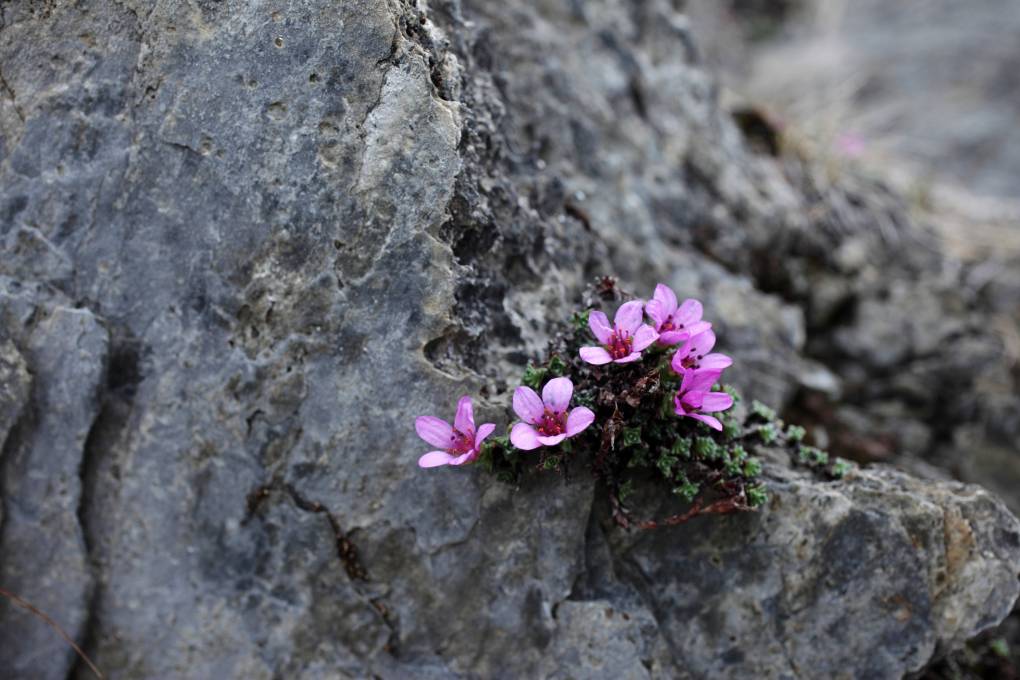
It’s Tough World. Here’s How Parents Can Raise Resilient Kids
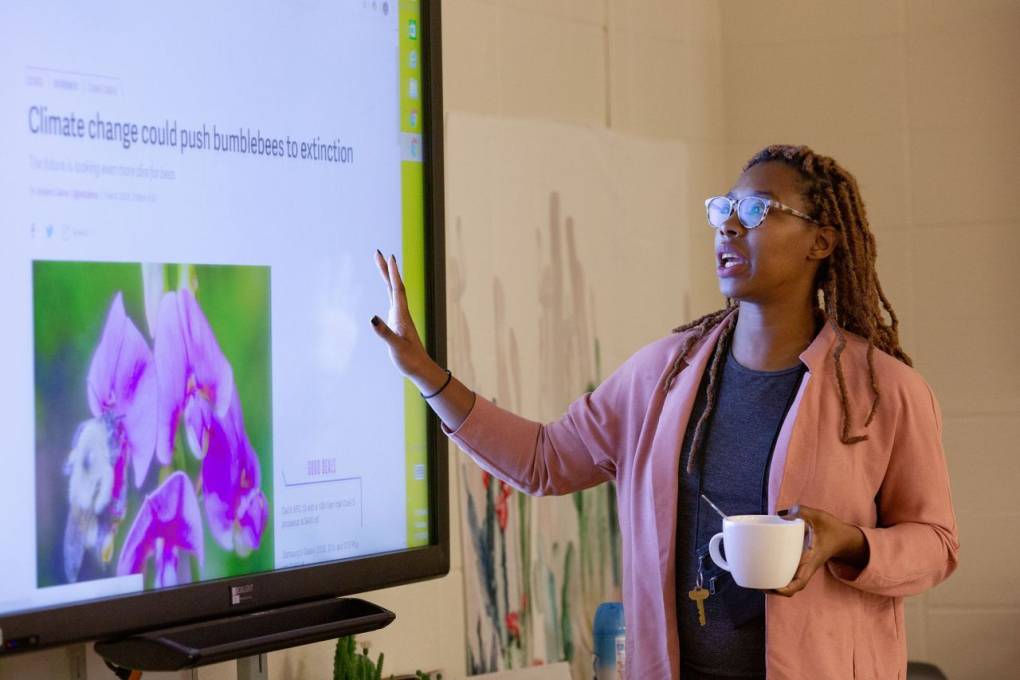
Teachers, States Stepping Up to Keep Climate Change Education Alive as Federal Government Defunds It
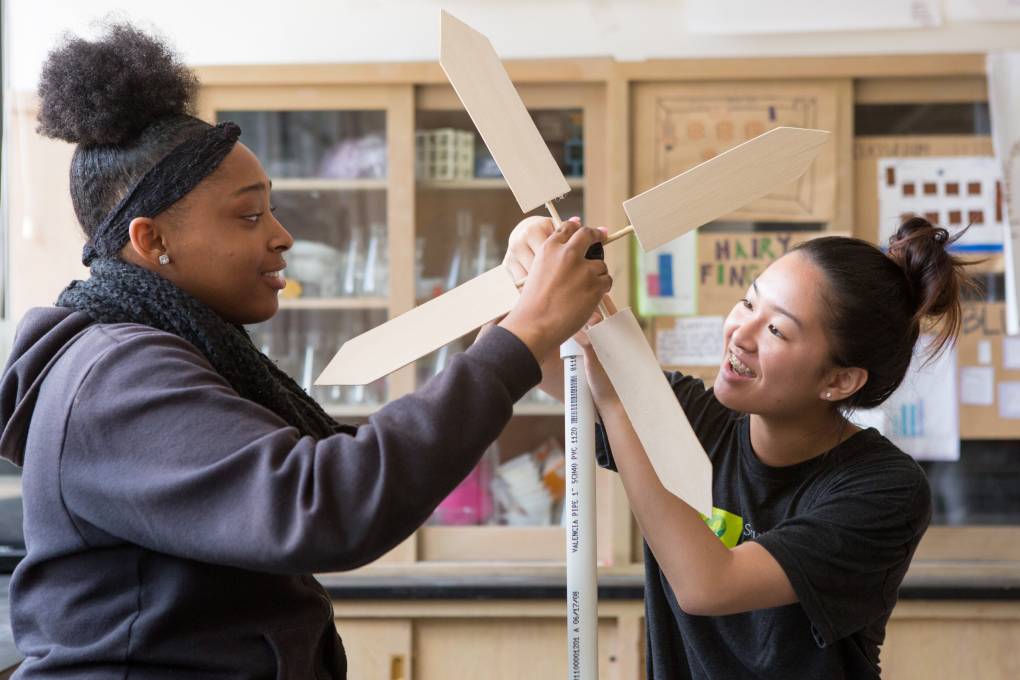
How Climate Education Based on Action Can Help Youth Be Part of the Progress
Should Schools Teach Climate Activism?
How to Inspire Climate Hope in Kids? Get Their Hands Dirty
Why Schoolyards Are a Critical Space for Teaching About — and Fighting — Extreme Heat and Climate Change
Student Activists Go to Summer Camp to Learn How to Help Institute a ‘Green New Deal’ on Their Campuses
Major support for MindShift comes from
Player sponsored by
window.__IS_SSR__=true
window.__INITIAL_STATE__={
"attachmentsReducer": {
"audio_0": {
"type": "attachments",
"id": "audio_0",
"imgSizes": {
"kqedFullSize": {
"file": "https://ww2.kqed.org/news/wp-content/themes/KQED-unified/img/audio_bgs/background0.jpg"
}
}
},
"audio_1": {
"type": "attachments",
"id": "audio_1",
"imgSizes": {
"kqedFullSize": {
"file": "https://ww2.kqed.org/news/wp-content/themes/KQED-unified/img/audio_bgs/background1.jpg"
}
}
},
"audio_2": {
"type": "attachments",
"id": "audio_2",
"imgSizes": {
"kqedFullSize": {
"file": "https://ww2.kqed.org/news/wp-content/themes/KQED-unified/img/audio_bgs/background2.jpg"
}
}
},
"audio_3": {
"type": "attachments",
"id": "audio_3",
"imgSizes": {
"kqedFullSize": {
"file": "https://ww2.kqed.org/news/wp-content/themes/KQED-unified/img/audio_bgs/background3.jpg"
}
}
},
"audio_4": {
"type": "attachments",
"id": "audio_4",
"imgSizes": {
"kqedFullSize": {
"file": "https://ww2.kqed.org/news/wp-content/themes/KQED-unified/img/audio_bgs/background4.jpg"
}
}
},
"placeholder": {
"type": "attachments",
"id": "placeholder",
"imgSizes": {
"thumbnail": {
"file": "https://cdn.kqed.org/wp-content/uploads/2024/12/KQED-Default-Image-816638274-2000x1333-1-160x107.jpg",
"width": 160,
"height": 107,
"mimeType": "image/jpeg"
},
"medium": {
"file": "https://cdn.kqed.org/wp-content/uploads/2024/12/KQED-Default-Image-816638274-2000x1333-1-800x533.jpg",
"width": 800,
"height": 533,
"mimeType": "image/jpeg"
},
"medium_large": {
"file": "https://cdn.kqed.org/wp-content/uploads/2024/12/KQED-Default-Image-816638274-2000x1333-1-768x512.jpg",
"width": 768,
"height": 512,
"mimeType": "image/jpeg"
},
"large": {
"file": "https://cdn.kqed.org/wp-content/uploads/2024/12/KQED-Default-Image-816638274-2000x1333-1-1020x680.jpg",
"width": 1020,
"height": 680,
"mimeType": "image/jpeg"
},
"1536x1536": {
"file": "https://cdn.kqed.org/wp-content/uploads/2024/12/KQED-Default-Image-816638274-2000x1333-1-1536x1024.jpg",
"width": 1536,
"height": 1024,
"mimeType": "image/jpeg"
},
"fd-lrg": {
"file": "https://cdn.kqed.org/wp-content/uploads/2024/12/KQED-Default-Image-816638274-2000x1333-1-1536x1024.jpg",
"width": 1536,
"height": 1024,
"mimeType": "image/jpeg"
},
"fd-med": {
"file": "https://cdn.kqed.org/wp-content/uploads/2024/12/KQED-Default-Image-816638274-2000x1333-1-1020x680.jpg",
"width": 1020,
"height": 680,
"mimeType": "image/jpeg"
},
"fd-sm": {
"file": "https://cdn.kqed.org/wp-content/uploads/2024/12/KQED-Default-Image-816638274-2000x1333-1-800x533.jpg",
"width": 800,
"height": 533,
"mimeType": "image/jpeg"
},
"post-thumbnail": {
"file": "https://cdn.kqed.org/wp-content/uploads/2024/12/KQED-Default-Image-816638274-2000x1333-1-672x372.jpg",
"width": 672,
"height": 372,
"mimeType": "image/jpeg"
},
"twentyfourteen-full-width": {
"file": "https://cdn.kqed.org/wp-content/uploads/2024/12/KQED-Default-Image-816638274-2000x1333-1-1038x576.jpg",
"width": 1038,
"height": 576,
"mimeType": "image/jpeg"
},
"xxsmall": {
"file": "https://cdn.kqed.org/wp-content/uploads/2024/12/KQED-Default-Image-816638274-2000x1333-1-160x107.jpg",
"width": 160,
"height": 107,
"mimeType": "image/jpeg"
},
"xsmall": {
"file": "https://cdn.kqed.org/wp-content/uploads/2024/12/KQED-Default-Image-816638274-2000x1333-1-672x372.jpg",
"width": 672,
"height": 372,
"mimeType": "image/jpeg"
},
"small": {
"file": "https://cdn.kqed.org/wp-content/uploads/2024/12/KQED-Default-Image-816638274-2000x1333-1-672x372.jpg",
"width": 672,
"height": 372,
"mimeType": "image/jpeg"
},
"xlarge": {
"file": "https://cdn.kqed.org/wp-content/uploads/2024/12/KQED-Default-Image-816638274-2000x1333-1-1020x680.jpg",
"width": 1020,
"height": 680,
"mimeType": "image/jpeg"
},
"full-width": {
"file": "https://cdn.kqed.org/wp-content/uploads/2024/12/KQED-Default-Image-816638274-2000x1333-1-1920x1280.jpg",
"width": 1920,
"height": 1280,
"mimeType": "image/jpeg"
},
"guest-author-32": {
"file": "https://cdn.kqed.org/wp-content/uploads/2025/01/KQED-Default-Image-816638274-1333x1333-1-160x160.jpg",
"width": 32,
"height": 32,
"mimeType": "image/jpeg"
},
"guest-author-50": {
"file": "https://cdn.kqed.org/wp-content/uploads/2025/01/KQED-Default-Image-816638274-1333x1333-1-160x160.jpg",
"width": 50,
"height": 50,
"mimeType": "image/jpeg"
},
"guest-author-64": {
"file": "https://cdn.kqed.org/wp-content/uploads/2025/01/KQED-Default-Image-816638274-1333x1333-1-160x160.jpg",
"width": 64,
"height": 64,
"mimeType": "image/jpeg"
},
"guest-author-96": {
"file": "https://cdn.kqed.org/wp-content/uploads/2025/01/KQED-Default-Image-816638274-1333x1333-1-160x160.jpg",
"width": 96,
"height": 96,
"mimeType": "image/jpeg"
},
"guest-author-128": {
"file": "https://cdn.kqed.org/wp-content/uploads/2025/01/KQED-Default-Image-816638274-1333x1333-1-160x160.jpg",
"width": 128,
"height": 128,
"mimeType": "image/jpeg"
},
"detail": {
"file": "https://cdn.kqed.org/wp-content/uploads/2025/01/KQED-Default-Image-816638274-1333x1333-1-160x160.jpg",
"width": 160,
"height": 160,
"mimeType": "image/jpeg"
},
"kqedFullSize": {
"file": "https://cdn.kqed.org/wp-content/uploads/2024/12/KQED-Default-Image-816638274-2000x1333-1.jpg",
"width": 2000,
"height": 1333
}
}
},
"mindshift_65551": {
"type": "attachments",
"id": "mindshift_65551",
"meta": {
"index": "attachments_1716263798",
"site": "mindshift",
"id": "65551",
"found": true
},
"title": "Purple saxifrage at rocks",
"publishDate": 1748353030,
"status": "inherit",
"parent": 65545,
"modified": 1748353125,
"caption": "Purple saxifrage flowering at gray rocks at Nordland coast, Norway.",
"credit": "Maasik/iStock",
"altTag": "Flowers growing in rocks",
"description": null,
"imgSizes": {
"medium": {
"file": "https://cdn.kqed.org/wp-content/uploads/sites/23/2025/05/iStock-472954836-800x533.jpg",
"width": 800,
"height": 533,
"mimeType": "image/jpeg"
},
"large": {
"file": "https://cdn.kqed.org/wp-content/uploads/sites/23/2025/05/iStock-472954836-1020x680.jpg",
"width": 1020,
"height": 680,
"mimeType": "image/jpeg"
},
"thumbnail": {
"file": "https://cdn.kqed.org/wp-content/uploads/sites/23/2025/05/iStock-472954836-160x107.jpg",
"width": 160,
"height": 107,
"mimeType": "image/jpeg"
},
"medium_large": {
"file": "https://cdn.kqed.org/wp-content/uploads/sites/23/2025/05/iStock-472954836-768x512.jpg",
"width": 768,
"height": 512,
"mimeType": "image/jpeg"
},
"1536x1536": {
"file": "https://cdn.kqed.org/wp-content/uploads/sites/23/2025/05/iStock-472954836-1536x1024.jpg",
"width": 1536,
"height": 1024,
"mimeType": "image/jpeg"
},
"2048x2048": {
"file": "https://cdn.kqed.org/wp-content/uploads/sites/23/2025/05/iStock-472954836-2048x1365.jpg",
"width": 2048,
"height": 1365,
"mimeType": "image/jpeg"
},
"post-thumbnail": {
"file": "https://cdn.kqed.org/wp-content/uploads/sites/23/2025/05/iStock-472954836-672x372.jpg",
"width": 672,
"height": 372,
"mimeType": "image/jpeg"
},
"twentyfourteen-full-width": {
"file": "https://cdn.kqed.org/wp-content/uploads/sites/23/2025/05/iStock-472954836-1038x576.jpg",
"width": 1038,
"height": 576,
"mimeType": "image/jpeg"
},
"full-width": {
"file": "https://cdn.kqed.org/wp-content/uploads/sites/23/2025/05/iStock-472954836-1920x1280.jpg",
"width": 1920,
"height": 1280,
"mimeType": "image/jpeg"
},
"kqedFullSize": {
"file": "https://cdn.kqed.org/wp-content/uploads/sites/23/2025/05/iStock-472954836.jpg",
"width": 2121,
"height": 1414
}
},
"isLoading": false,
"fetchFailed": false
},
"mindshift_65433": {
"type": "attachments",
"id": "mindshift_65433",
"meta": {
"index": "attachments_1716263798",
"site": "mindshift",
"id": "65433",
"found": true
},
"title": "Climate Change Literacy",
"publishDate": 1745254808,
"status": "inherit",
"parent": 65432,
"modified": 1745254836,
"caption": "A new survey shows that U.S. students lack basic knowledge about climate change. ",
"credit": "Allison Shelley for EDUimages",
"altTag": "Woman pointing at a whiteboard",
"description": null,
"imgSizes": {
"medium": {
"file": "https://cdn.kqed.org/wp-content/uploads/sites/23/2025/04/Climate-Change-Literacy-800x533.jpeg",
"width": 800,
"height": 533,
"mimeType": "image/jpeg"
},
"large": {
"file": "https://cdn.kqed.org/wp-content/uploads/sites/23/2025/04/Climate-Change-Literacy-1020x680.jpeg",
"width": 1020,
"height": 680,
"mimeType": "image/jpeg"
},
"thumbnail": {
"file": "https://cdn.kqed.org/wp-content/uploads/sites/23/2025/04/Climate-Change-Literacy-160x107.jpeg",
"width": 160,
"height": 107,
"mimeType": "image/jpeg"
},
"medium_large": {
"file": "https://cdn.kqed.org/wp-content/uploads/sites/23/2025/04/Climate-Change-Literacy-768x512.jpeg",
"width": 768,
"height": 512,
"mimeType": "image/jpeg"
},
"post-thumbnail": {
"file": "https://cdn.kqed.org/wp-content/uploads/sites/23/2025/04/Climate-Change-Literacy-672x372.jpeg",
"width": 672,
"height": 372,
"mimeType": "image/jpeg"
},
"twentyfourteen-full-width": {
"file": "https://cdn.kqed.org/wp-content/uploads/sites/23/2025/04/Climate-Change-Literacy-1038x576.jpeg",
"width": 1038,
"height": 576,
"mimeType": "image/jpeg"
},
"kqedFullSize": {
"file": "https://cdn.kqed.org/wp-content/uploads/sites/23/2025/04/Climate-Change-Literacy.jpeg",
"width": 1280,
"height": 853
}
},
"isLoading": false,
"fetchFailed": false
},
"mindshift_64802": {
"type": "attachments",
"id": "mindshift_64802",
"meta": {
"index": "attachments_1716263798",
"site": "mindshift",
"id": "64802",
"found": true
},
"title": "47c64c7b-2c3c-4a3b-8c73-bf42b47d494f",
"publishDate": 1727753822,
"status": "inherit",
"parent": 64796,
"modified": 1727754140,
"caption": "Students assemble a model wind turbine they constructed. ",
"credit": "Allison Shelley/The Verbatim Agency for EDUimages",
"altTag": "Two students with hands on a turbine",
"description": null,
"imgSizes": {
"medium": {
"file": "https://cdn.kqed.org/wp-content/uploads/sites/23/2024/09/47c64c7b-2c3c-4a3b-8c73-bf42b47d494f-800x533.jpg",
"width": 800,
"height": 533,
"mimeType": "image/jpeg"
},
"large": {
"file": "https://cdn.kqed.org/wp-content/uploads/sites/23/2024/09/47c64c7b-2c3c-4a3b-8c73-bf42b47d494f-1020x680.jpg",
"width": 1020,
"height": 680,
"mimeType": "image/jpeg"
},
"thumbnail": {
"file": "https://cdn.kqed.org/wp-content/uploads/sites/23/2024/09/47c64c7b-2c3c-4a3b-8c73-bf42b47d494f-160x107.jpg",
"width": 160,
"height": 107,
"mimeType": "image/jpeg"
},
"medium_large": {
"file": "https://cdn.kqed.org/wp-content/uploads/sites/23/2024/09/47c64c7b-2c3c-4a3b-8c73-bf42b47d494f-768x512.jpg",
"width": 768,
"height": 512,
"mimeType": "image/jpeg"
},
"1536x1536": {
"file": "https://cdn.kqed.org/wp-content/uploads/sites/23/2024/09/47c64c7b-2c3c-4a3b-8c73-bf42b47d494f-1536x1024.jpg",
"width": 1536,
"height": 1024,
"mimeType": "image/jpeg"
},
"2048x2048": {
"file": "https://cdn.kqed.org/wp-content/uploads/sites/23/2024/09/47c64c7b-2c3c-4a3b-8c73-bf42b47d494f-2048x1365.jpg",
"width": 2048,
"height": 1365,
"mimeType": "image/jpeg"
},
"post-thumbnail": {
"file": "https://cdn.kqed.org/wp-content/uploads/sites/23/2024/09/47c64c7b-2c3c-4a3b-8c73-bf42b47d494f-672x372.jpg",
"width": 672,
"height": 372,
"mimeType": "image/jpeg"
},
"twentyfourteen-full-width": {
"file": "https://cdn.kqed.org/wp-content/uploads/sites/23/2024/09/47c64c7b-2c3c-4a3b-8c73-bf42b47d494f-1038x576.jpg",
"width": 1038,
"height": 576,
"mimeType": "image/jpeg"
},
"full-width": {
"file": "https://cdn.kqed.org/wp-content/uploads/sites/23/2024/09/47c64c7b-2c3c-4a3b-8c73-bf42b47d494f-1920x1280.jpg",
"width": 1920,
"height": 1280,
"mimeType": "image/jpeg"
},
"kqedFullSize": {
"file": "https://cdn.kqed.org/wp-content/uploads/sites/23/2024/09/47c64c7b-2c3c-4a3b-8c73-bf42b47d494f-scaled.jpg",
"width": 2560,
"height": 1707
}
},
"isLoading": false,
"fetchFailed": false
},
"mindshift_63323": {
"type": "attachments",
"id": "mindshift_63323",
"meta": {
"index": "attachments_1716263798",
"site": "mindshift",
"id": "63323",
"found": true
},
"parent": 63322,
"imgSizes": {
"twentyfourteen-full-width": {
"file": "https://cdn.kqed.org/wp-content/uploads/sites/23/2024/03/iStock-1634111588-1038x576.jpg",
"width": 1038,
"mimeType": "image/jpeg",
"height": 576
},
"thumbnail": {
"file": "https://cdn.kqed.org/wp-content/uploads/sites/23/2024/03/iStock-1634111588-160x89.jpg",
"width": 160,
"mimeType": "image/jpeg",
"height": 89
},
"post-thumbnail": {
"file": "https://cdn.kqed.org/wp-content/uploads/sites/23/2024/03/iStock-1634111588-672x372.jpg",
"width": 672,
"mimeType": "image/jpeg",
"height": 372
},
"kqedFullSize": {
"file": "https://cdn.kqed.org/wp-content/uploads/sites/23/2024/03/iStock-1634111588.jpg",
"width": 2322,
"height": 1291
},
"2048x2048": {
"file": "https://cdn.kqed.org/wp-content/uploads/sites/23/2024/03/iStock-1634111588-2048x1139.jpg",
"width": 2048,
"mimeType": "image/jpeg",
"height": 1139
},
"large": {
"file": "https://cdn.kqed.org/wp-content/uploads/sites/23/2024/03/iStock-1634111588-1020x567.jpg",
"width": 1020,
"mimeType": "image/jpeg",
"height": 567
},
"1536x1536": {
"file": "https://cdn.kqed.org/wp-content/uploads/sites/23/2024/03/iStock-1634111588-1536x854.jpg",
"width": 1536,
"mimeType": "image/jpeg",
"height": 854
},
"full-width": {
"file": "https://cdn.kqed.org/wp-content/uploads/sites/23/2024/03/iStock-1634111588-1920x1067.jpg",
"width": 1920,
"mimeType": "image/jpeg",
"height": 1067
},
"medium": {
"file": "https://cdn.kqed.org/wp-content/uploads/sites/23/2024/03/iStock-1634111588-800x445.jpg",
"width": 800,
"mimeType": "image/jpeg",
"height": 445
},
"medium_large": {
"file": "https://cdn.kqed.org/wp-content/uploads/sites/23/2024/03/iStock-1634111588-768x427.jpg",
"width": 768,
"mimeType": "image/jpeg",
"height": 427
}
},
"publishDate": 1710125892,
"modified": 1710125958,
"caption": null,
"description": null,
"title": null,
"credit": "Vittorio Gravino/iStock",
"status": "inherit",
"altTag": "A group of young people protest sit in a road holding cardboard signs about fighting climate change",
"isLoading": false,
"fetchFailed": false
},
"mindshift_62895": {
"type": "attachments",
"id": "mindshift_62895",
"meta": {
"index": "attachments_1716263798",
"site": "mindshift",
"id": "62895",
"found": true
},
"parent": 62894,
"imgSizes": {
"twentyfourteen-full-width": {
"file": "https://cdn.kqed.org/wp-content/uploads/sites/23/2023/12/img_1158-2e0e3c9d3fd1fab0e5f05b7d06438852ce07bfe9-1038x576.jpg",
"width": 1038,
"mimeType": "image/jpeg",
"height": 576
},
"thumbnail": {
"file": "https://cdn.kqed.org/wp-content/uploads/sites/23/2023/12/img_1158-2e0e3c9d3fd1fab0e5f05b7d06438852ce07bfe9-160x120.jpg",
"width": 160,
"mimeType": "image/jpeg",
"height": 120
},
"post-thumbnail": {
"file": "https://cdn.kqed.org/wp-content/uploads/sites/23/2023/12/img_1158-2e0e3c9d3fd1fab0e5f05b7d06438852ce07bfe9-672x372.jpg",
"width": 672,
"mimeType": "image/jpeg",
"height": 372
},
"kqedFullSize": {
"file": "https://cdn.kqed.org/wp-content/uploads/sites/23/2023/12/img_1158-2e0e3c9d3fd1fab0e5f05b7d06438852ce07bfe9-scaled.jpg",
"width": 2560,
"height": 1918
},
"2048x2048": {
"file": "https://cdn.kqed.org/wp-content/uploads/sites/23/2023/12/img_1158-2e0e3c9d3fd1fab0e5f05b7d06438852ce07bfe9-2048x1534.jpg",
"width": 2048,
"mimeType": "image/jpeg",
"height": 1534
},
"large": {
"file": "https://cdn.kqed.org/wp-content/uploads/sites/23/2023/12/img_1158-2e0e3c9d3fd1fab0e5f05b7d06438852ce07bfe9-1020x764.jpg",
"width": 1020,
"mimeType": "image/jpeg",
"height": 764
},
"1536x1536": {
"file": "https://cdn.kqed.org/wp-content/uploads/sites/23/2023/12/img_1158-2e0e3c9d3fd1fab0e5f05b7d06438852ce07bfe9-1536x1151.jpg",
"width": 1536,
"mimeType": "image/jpeg",
"height": 1151
},
"full-width": {
"file": "https://cdn.kqed.org/wp-content/uploads/sites/23/2023/12/img_1158-2e0e3c9d3fd1fab0e5f05b7d06438852ce07bfe9-1920x1438.jpg",
"width": 1920,
"mimeType": "image/jpeg",
"height": 1438
},
"medium": {
"file": "https://cdn.kqed.org/wp-content/uploads/sites/23/2023/12/img_1158-2e0e3c9d3fd1fab0e5f05b7d06438852ce07bfe9-800x599.jpg",
"width": 800,
"mimeType": "image/jpeg",
"height": 599
},
"medium_large": {
"file": "https://cdn.kqed.org/wp-content/uploads/sites/23/2023/12/img_1158-2e0e3c9d3fd1fab0e5f05b7d06438852ce07bfe9-768x575.jpg",
"width": 768,
"mimeType": "image/jpeg",
"height": 575
}
},
"publishDate": 1704208394,
"modified": 1704209573,
"caption": "Students at The Wesley School in the Los Angeles neighborhood of North Hollywood collected their food waste for a year and turned it into compost.",
"description": null,
"title": null,
"credit": "Steven Wynbrandt",
"status": "inherit",
"altTag": null,
"isLoading": false,
"fetchFailed": false
},
"mindshift_62350": {
"type": "attachments",
"id": "mindshift_62350",
"meta": {
"index": "attachments_1716263798",
"site": "mindshift",
"id": "62350",
"found": true
},
"parent": 62349,
"imgSizes": {
"twentyfourteen-full-width": {
"file": "https://ww2.kqed.org/app/uploads/sites/23/2023/09/RS68756_230601-MindShift-34-BL-KQED-1038x576.jpg",
"width": 1038,
"mimeType": "image/jpeg",
"height": 576
},
"thumbnail": {
"file": "https://ww2.kqed.org/app/uploads/sites/23/2023/09/RS68756_230601-MindShift-34-BL-KQED-160x107.jpg",
"width": 160,
"mimeType": "image/jpeg",
"height": 107
},
"post-thumbnail": {
"file": "https://ww2.kqed.org/app/uploads/sites/23/2023/09/RS68756_230601-MindShift-34-BL-KQED-672x372.jpg",
"width": 672,
"mimeType": "image/jpeg",
"height": 372
},
"kqedFullSize": {
"file": "https://ww2.kqed.org/app/uploads/sites/23/2023/09/RS68756_230601-MindShift-34-BL-KQED.jpg",
"width": 2000,
"height": 1333
},
"large": {
"file": "https://ww2.kqed.org/app/uploads/sites/23/2023/09/RS68756_230601-MindShift-34-BL-KQED-1020x680.jpg",
"width": 1020,
"mimeType": "image/jpeg",
"height": 680
},
"1536x1536": {
"file": "https://ww2.kqed.org/app/uploads/sites/23/2023/09/RS68756_230601-MindShift-34-BL-KQED-1536x1024.jpg",
"width": 1536,
"mimeType": "image/jpeg",
"height": 1024
},
"full-width": {
"file": "https://ww2.kqed.org/app/uploads/sites/23/2023/09/RS68756_230601-MindShift-34-BL-KQED-1920x1280.jpg",
"width": 1920,
"mimeType": "image/jpeg",
"height": 1280
},
"medium": {
"file": "https://ww2.kqed.org/app/uploads/sites/23/2023/09/RS68756_230601-MindShift-34-BL-KQED-800x533.jpg",
"width": 800,
"mimeType": "image/jpeg",
"height": 533
},
"medium_large": {
"file": "https://ww2.kqed.org/app/uploads/sites/23/2023/09/RS68756_230601-MindShift-34-BL-KQED-768x512.jpg",
"width": 768,
"mimeType": "image/jpeg",
"height": 512
}
},
"publishDate": 1694308706,
"modified": 1694480221,
"caption": "Sharon Danks, CEO of Green Schoolyards America, helps students during a temperature-mapping activity in the schoolyard at Roosevelt Elementary School in San Leandro on June 1, 2023. Students used an infrared thermometer to record temperatures in locations around the playground and yard, including asphalt and green spaces, as an opportunity to learn about climate change, sustainability and other academic topics through hands-on experience.",
"description": null,
"title": "RS68756_230601-MindShift-34-BL-KQED",
"credit": "Beth LaBerge/KQED",
"status": "inherit",
"altTag": "In a schoolyard, one child points a thermometer at the grass, while another writes on a clipboard, and a third watches. An adult woman kneels and points.",
"isLoading": false,
"fetchFailed": false
},
"mindshift_62225": {
"type": "attachments",
"id": "mindshift_62225",
"meta": {
"index": "attachments_1716263798",
"site": "mindshift",
"id": "62225",
"found": true
},
"parent": 62224,
"imgSizes": {
"twentyfourteen-full-width": {
"file": "https://ww2.kqed.org/app/uploads/sites/23/2023/08/FOL-Sunrise01-FEAT-1038x576.jpg",
"width": 1038,
"mimeType": "image/jpeg",
"height": 576
},
"thumbnail": {
"file": "https://ww2.kqed.org/app/uploads/sites/23/2023/08/FOL-Sunrise01-FEAT-160x107.jpg",
"width": 160,
"mimeType": "image/jpeg",
"height": 107
},
"post-thumbnail": {
"file": "https://ww2.kqed.org/app/uploads/sites/23/2023/08/FOL-Sunrise01-FEAT-672x372.jpg",
"width": 672,
"mimeType": "image/jpeg",
"height": 372
},
"kqedFullSize": {
"file": "https://ww2.kqed.org/app/uploads/sites/23/2023/08/FOL-Sunrise01-FEAT.jpg",
"width": 1500,
"height": 1000
},
"large": {
"file": "https://ww2.kqed.org/app/uploads/sites/23/2023/08/FOL-Sunrise01-FEAT-1020x680.jpg",
"width": 1020,
"mimeType": "image/jpeg",
"height": 680
},
"medium": {
"file": "https://ww2.kqed.org/app/uploads/sites/23/2023/08/FOL-Sunrise01-FEAT-800x533.jpg",
"width": 800,
"mimeType": "image/jpeg",
"height": 533
},
"medium_large": {
"file": "https://ww2.kqed.org/app/uploads/sites/23/2023/08/FOL-Sunrise01-FEAT-768x512.jpg",
"width": 768,
"mimeType": "image/jpeg",
"height": 512
}
},
"publishDate": 1692207879,
"modified": 1692300122,
"caption": "High schoolers from across the U.S. are participating in a summer camp to learn how to advocate for a ‘green new deal’ for their schools and districts.",
"description": null,
"title": "FOL - Sunrise01-FEAT",
"credit": "Heather Chen/Sunrise Movement",
"status": "inherit",
"altTag": null,
"isLoading": false,
"fetchFailed": false
}
},
"audioPlayerReducer": {
"postId": "stream_live",
"isPaused": true,
"isPlaying": false,
"pfsActive": false,
"pledgeModalIsOpen": true,
"playerDrawerIsOpen": false,
"liveAudioPlayStartedAt": 0,
"liveAudioPlayContext": ""
},
"authorsReducer": {
"byline_mindshift_65432": {
"type": "authors",
"id": "byline_mindshift_65432",
"meta": {
"override": true
},
"slug": "byline_mindshift_65432",
"name": "Anya Kamenetez, The Hechinger Report",
"isLoading": false
},
"byline_mindshift_64796": {
"type": "authors",
"id": "byline_mindshift_64796",
"meta": {
"override": true
},
"slug": "byline_mindshift_64796",
"name": "Anya Kamenetez, The Hechinger Report",
"isLoading": false
},
"byline_mindshift_63322": {
"type": "authors",
"id": "byline_mindshift_63322",
"meta": {
"override": true
},
"slug": "byline_mindshift_63322",
"name": "Anya Kamenetz, The Hechinger Report",
"isLoading": false
},
"byline_mindshift_62894": {
"type": "authors",
"id": "byline_mindshift_62894",
"meta": {
"override": true
},
"slug": "byline_mindshift_62894",
"name": "Caleigh Wells",
"isLoading": false
},
"byline_mindshift_62224": {
"type": "authors",
"id": "byline_mindshift_62224",
"meta": {
"override": true
},
"slug": "byline_mindshift_62224",
"name": "Caroline Preston, \u003ca href=\"https://hechingerreport.org/\" target=\"_blank\">The Hechinger Report\u003c/a>",
"isLoading": false
},
"lindaflan": {
"type": "authors",
"id": "4613",
"meta": {
"index": "authors_1716337520",
"id": "4613",
"found": true
},
"name": "Linda Flanagan",
"firstName": "Linda",
"lastName": "Flanagan",
"slug": "lindaflan",
"email": "lindaflan@comcast.net",
"display_author_email": false,
"staff_mastheads": [],
"title": null,
"bio": "Linda Flanagan is a freelance writer, researcher, and editor. Her work has appeared in The Atlantic, The Wall St. Journal, Newsweek, Running Times, and Mind/Shift, and she blogs regularly for the Huffington Post. Linda writes about education, culture, athletics, youth sports, mental health, politics, college admissions, and other curiosities. She also reviews books and conducts interviews.",
"avatar": "https://secure.gravatar.com/avatar/6bca04c0736bf5eaea80654019de688f?s=600&d=blank&r=g",
"twitter": "LindaFlanagan2",
"facebook": null,
"instagram": null,
"linkedin": null,
"sites": [
{
"site": "mindshift",
"roles": [
"contributor"
]
}
],
"headData": {
"title": "Linda Flanagan | KQED",
"description": null,
"ogImgSrc": "https://secure.gravatar.com/avatar/6bca04c0736bf5eaea80654019de688f?s=600&d=blank&r=g",
"twImgSrc": "https://secure.gravatar.com/avatar/6bca04c0736bf5eaea80654019de688f?s=600&d=blank&r=g"
},
"isLoading": false,
"link": "/author/lindaflan"
},
"ngobir": {
"type": "authors",
"id": "11721",
"meta": {
"index": "authors_1716337520",
"id": "11721",
"found": true
},
"name": "Nimah Gobir",
"firstName": "Nimah",
"lastName": "Gobir",
"slug": "ngobir",
"email": "ngobir@kqed.org",
"display_author_email": false,
"staff_mastheads": [],
"title": "KQED Contributor",
"bio": null,
"avatar": "https://secure.gravatar.com/avatar/837f5df7045c59f3ec097cdf7ac391373ab75d5ec936dd7099b8cb6f0af1b0e9?s=600&d=blank&r=g",
"twitter": null,
"bluesky": null,
"facebook": null,
"instagram": null,
"linkedin": null,
"sites": [
{
"site": "mindshift",
"roles": [
"editor"
]
}
],
"headData": {
"title": "Nimah Gobir | KQED",
"description": "KQED Contributor",
"ogImgSrc": "https://secure.gravatar.com/avatar/837f5df7045c59f3ec097cdf7ac391373ab75d5ec936dd7099b8cb6f0af1b0e9?s=600&d=blank&r=g",
"twImgSrc": "https://secure.gravatar.com/avatar/837f5df7045c59f3ec097cdf7ac391373ab75d5ec936dd7099b8cb6f0af1b0e9?s=600&d=blank&r=g"
},
"isLoading": false,
"link": "/author/ngobir"
}
},
"pagesReducer": {
"mindshift_tag_climate-anxiety": {
"type": "terms",
"id": "mindshift_21757",
"meta": {
"index": "terms_1716263798",
"site": "mindshift",
"id": "21757",
"score": 10.40778
},
"featImg": null,
"name": "climate anxiety",
"description": null,
"taxonomy": "tag",
"headData": {
"twImgId": null,
"twTitle": null,
"ogTitle": null,
"ogImgId": null,
"twDescription": null,
"description": null,
"title": "climate anxiety Archives - KQED Mindshift",
"ogDescription": null
},
"ttid": 21029,
"slug": "climate-anxiety",
"isLoading": false,
"title": "climate anxiety",
"pageMeta": {
"site": "mindshift",
"WpPageTemplate": "page-topic-editorial",
"currentPage": 1
},
"blocks": [
{
"blockName": "kqed/post-list",
"attrs": {
"layout": "cardArticle2",
"query": "posts/mindshift?tag=climate-anxiety",
"seeMore": false,
"paginated": true,
"page": 1
}
},
{
"blockName": "kqed/ad"
}
]
}
},
"pfsSessionReducer": {},
"postsReducer": {
"stream_live": {
"type": "live",
"id": "stream_live",
"audioUrl": "https://hls.kqed.org/hls/kqed_app/playlist.m3u8",
"title": "Live Stream",
"excerpt": "Live Stream information currently unavailable.",
"link": "/radio",
"featImg": "",
"label": {
"name": "KQED Live",
"link": "/"
}
},
"stream_kqedNewscast": {
"type": "posts",
"id": "stream_kqedNewscast",
"audioUrl": "https://www.kqed.org/.stream/anon/radio/RDnews/newscast.mp3?_=1",
"title": "KQED Newscast",
"featImg": "",
"label": {
"name": "88.5 FM",
"link": "/"
}
},
"mindshift_65545": {
"type": "posts",
"id": "mindshift_65545",
"meta": {
"index": "posts_1716263798",
"site": "mindshift",
"id": "65545",
"score": null,
"sort": [
1748353175000
]
},
"guestAuthors": [],
"slug": "its-tough-world-heres-how-parents-can-raise-resilient-kids",
"title": "It’s Tough World. Here’s How Parents Can Raise Resilient Kids",
"publishDate": 1748353175,
"format": "standard",
"headTitle": "It’s Tough World. Here’s How Parents Can Raise Resilient Kids | KQED",
"labelTerm": {
"term": 21847,
"site": "mindshift"
},
"content": "\u003cp>When Devon B. was in the fourth grade, the elementary school she attended in Chatham, NJ, noted the wintry conditions about to develop and announced an early dismissal. It was noon and snowflakes had begun to fall, prompting the school to call Devon’s mother. Could she come and pick up her child? It’s OK for Devon to walk, the mother said; home was just half a mile from school. As Devon trudged through the snow, her mother received a handful of calls from concerned parents. Should she be walking alone in this weather?\u003c/p>\n\u003cp>“In situations like this when there is such a small likelihood of danger, it is so much better for a child to be given that independence,” said \u003ca href=\"https://www.melindawennermoyer.com/\">Melinda Wenner Moyer\u003c/a>, a journalist and author of “\u003ca href=\"https://www.penguinrandomhouse.com/books/751131/hello-cruel-world-by-melinda-wenner-moyer/\">Hello, Cruel World! Science-Based Strategies for Raising Terrific Kids in Terrifying Times\u003c/a>.”\u003c/p>\n\u003cp>“These are the opportunities we need to give kids to build confidence and resilience,” she added. Inviting children to take healthy risks is just one bit of counsel Moyer offers parents. To prepare kids for an uncertain future, parents should help their offspring learn how to cope, \u003ca href=\"https://www.kqed.org/mindshift/62762/how-parents-can-help-their-kids-feel-seen\">connect with others\u003c/a> and cultivate important competencies. Hello, Cruel World! relies on research to explain why children need these skills and offers direction to parents on how best to promote them.\u003c/p>\n\u003cp>Kids are better able to cope when they learn how to be kind to themselves; self-compassion translates into less anxiety, stress and depression — and more kindness towards others. \u003ca href=\"https://www.kqed.org/mindshift/62235/teens-are-overwhelmed-by-pressure-to-achieve-how-can-parents-restore-balance\">Resilience\u003c/a>, the ability to handle adversity and keep going after failure or disappointment, is also crucial for children. And understanding the need for rest and recovery keeps kids from accepting a permanent state of stress, which erodes well-being. Developing these resources will offer some protection over time against drug abuse and addiction, scourges that afflict those who lack coping skills.\u003c/p>\n\u003cp>\u003ca href=\"https://www.melindawennermoyer.com/\">\u003cimg loading=\"lazy\" decoding=\"async\" class=\"alignleft wp-image-65547\" src=\"https://cdn.kqed.org/wp-content/uploads/sites/23/2025/05/Hello-Cruel-World.jpeg\" alt=\"Book jacket\" width=\"250\" height=\"388\" srcset=\"https://cdn.kqed.org/wp-content/uploads/sites/23/2025/05/Hello-Cruel-World.jpeg 290w, https://cdn.kqed.org/wp-content/uploads/sites/23/2025/05/Hello-Cruel-World-160x248.jpeg 160w\" sizes=\"auto, (max-width: 250px) 100vw, 250px\">\u003c/a>What can parents do? Give kids the \u003ca href=\"https://www.kqed.org/mindshift/61186/what-parents-need-to-know-about-their-teens-mental-health\">vocabulary to discuss their feelings\u003c/a> and make clear that being sad or upset is not an abnormality but a part of life, Moyer advises. Back off the performance pressure and normalize failure by sharing your own struggles. Avoid jumping in at every sign of distress, as children interpret such interventions as a sign of their own incompetence. Also, get away from hovering over and tracking your kids, as excessive parental involvement shrinks kids’ motivation and undermines school performance. And resist the false notion that danger lurks at every turn by permitting your child to take reasonable risks—and allowing him to squirm. Along the way, model the behavior you’re promoting: demonstrate self-compassion, use substances responsibly and don’t apologize for taking a break. Moyer offers much more in the way of research-backed advice on boosting children’s coping abilities.\u003c/p>\n\u003cp>[ad fullwidth]\u003c/p>\n\u003cp>Learning how to connect with others is essential, especially as American society fractures and online activities supplant in-person interactions. Kids need help building compassion and empathy for others and skills in establishing stable relationships, as well as a healthy curiosity.\u003c/p>\n\u003cp>Mothers and fathers can nurture their kids’ connection skills by showing compassion and concern for others. Building kids’ “cognitive empathy”— understanding another’s emotions without taking on the feeling itself—is more apt to develop when parents talk about feelings, actively listen to their children and avoid scolding them for expressing distasteful views. “Take a breath and bring it up later,” Moyer advises. Invite even very young children to help around the home and be affectionate with daughters and sons. Boys are every bit in need of emotional support as girls, especially given the subtle cues they receive to “man up” at the first sign of anguish. Promote curiosity by asking kids questions and welcoming their queries.\u003c/p>\n\u003cp>If learning how to cope and connect build well-being, figuring out how to cultivate practical abilities is more of an “outward-turning” talent, one that will help children “engage with the world in a way that’s healthy and productive and constructive,” Moyer told me. Kids need to grasp some basic life skills that may be absent from the school curriculum: financial literacy, media knowledge and \u003ca href=\"https://www.kqed.org/mindshift/62233/how-to-help-your-kids-navigate-social-media-without-getting-lost\">social media savvy.\u003c/a>\u003c/p>\n\u003cp>To facilitate these abilities, parents can talk often about budgets, investments and debt. Absent these open discussions, kids will struggle to understand how to manage income and expenses—a growing concern for many young people who are struggling to get by. To support media literacy, mothers and fathers can educate their children about logical fallacies and ask questions about the information itself. What’s missing from the story? Who might benefit? Practicing good media hygiene themselves also helps, as does showing a willingness to tolerate uncertainty. As for social media, parents might allow access to such sites gradually and be mindful of a teenager’s use; active engagement is better than passive use. Try not to panic and be mindful of how often you turn to Instagram and TikTok.\u003c/p>\n\u003cp>\u003c/p>\n\u003cp>Though her book bursts with guidance, Moyer admits to a certain queasiness about providing parenting advice. “There is no one-size-fits-all approach to raising kids,” she writes, acknowledging that a particular strategy that works for one child may blow up with another. Moyer encourages parents to embrace the approaches that best suit their own family and keep the big picture in mind. When in doubt, Moyer concludes, stick to these three truisms: preparing children is better than protecting them; listening beats lecturing; and comforting is more productive than scolding. “You don’t have to be a perfect parent and it’s good if you’re not,” she told me.\u003c/p>\n\n",
"blocks": [],
"excerpt": "Author Melinda Wenner Moyer shares parenting strategies to help kids engage with the world in healthy and productive ways. ",
"status": "publish",
"parent": 0,
"modified": 1748611048,
"stats": {
"hasAudio": false,
"hasVideo": false,
"hasChartOrMap": false,
"iframeSrcs": [],
"hasGoogleForm": false,
"hasGallery": false,
"hasHearkenModule": false,
"hasPolis": false,
"paragraphCount": 12,
"wordCount": 971
},
"headData": {
"title": "It’s Tough World. Here’s How Parents Can Raise Resilient Kids | KQED",
"description": "Author Melinda Wenner Moyer shares parenting strategies to help kids engage with the world in healthy and productive ways. ",
"ogTitle": "",
"ogDescription": "",
"ogImgId": "",
"twTitle": "",
"twDescription": "",
"twImgId": "",
"schema": {
"@context": "https://schema.org",
"@type": "Article",
"headline": "It’s Tough World. Here’s How Parents Can Raise Resilient Kids",
"datePublished": "2025-05-27T06:39:35-07:00",
"dateModified": "2025-05-30T06:17:28-07:00",
"image": "https://cdn.kqed.org/wp-content/uploads/2020/02/KQED-OG-Image@1x.png"
}
},
"sticky": false,
"nprStoryId": "kqed-65545",
"templateType": "standard",
"featuredImageType": "standard",
"excludeFromSiteSearch": "Include",
"articleAge": "0",
"path": "/mindshift/65545/its-tough-world-heres-how-parents-can-raise-resilient-kids",
"audioTrackLength": null,
"parsedContent": [
{
"type": "contentString",
"content": "\u003cdiv class=\"post-body\">\u003cp>\u003cp>When Devon B. was in the fourth grade, the elementary school she attended in Chatham, NJ, noted the wintry conditions about to develop and announced an early dismissal. It was noon and snowflakes had begun to fall, prompting the school to call Devon’s mother. Could she come and pick up her child? It’s OK for Devon to walk, the mother said; home was just half a mile from school. As Devon trudged through the snow, her mother received a handful of calls from concerned parents. Should she be walking alone in this weather?\u003c/p>\n\u003cp>“In situations like this when there is such a small likelihood of danger, it is so much better for a child to be given that independence,” said \u003ca href=\"https://www.melindawennermoyer.com/\">Melinda Wenner Moyer\u003c/a>, a journalist and author of “\u003ca href=\"https://www.penguinrandomhouse.com/books/751131/hello-cruel-world-by-melinda-wenner-moyer/\">Hello, Cruel World! Science-Based Strategies for Raising Terrific Kids in Terrifying Times\u003c/a>.”\u003c/p>\n\u003cp>“These are the opportunities we need to give kids to build confidence and resilience,” she added. Inviting children to take healthy risks is just one bit of counsel Moyer offers parents. To prepare kids for an uncertain future, parents should help their offspring learn how to cope, \u003ca href=\"https://www.kqed.org/mindshift/62762/how-parents-can-help-their-kids-feel-seen\">connect with others\u003c/a> and cultivate important competencies. Hello, Cruel World! relies on research to explain why children need these skills and offers direction to parents on how best to promote them.\u003c/p>\n\u003cp>Kids are better able to cope when they learn how to be kind to themselves; self-compassion translates into less anxiety, stress and depression — and more kindness towards others. \u003ca href=\"https://www.kqed.org/mindshift/62235/teens-are-overwhelmed-by-pressure-to-achieve-how-can-parents-restore-balance\">Resilience\u003c/a>, the ability to handle adversity and keep going after failure or disappointment, is also crucial for children. And understanding the need for rest and recovery keeps kids from accepting a permanent state of stress, which erodes well-being. Developing these resources will offer some protection over time against drug abuse and addiction, scourges that afflict those who lack coping skills.\u003c/p>\n\u003cp>\u003ca href=\"https://www.melindawennermoyer.com/\">\u003cimg loading=\"lazy\" decoding=\"async\" class=\"alignleft wp-image-65547\" src=\"https://cdn.kqed.org/wp-content/uploads/sites/23/2025/05/Hello-Cruel-World.jpeg\" alt=\"Book jacket\" width=\"250\" height=\"388\" srcset=\"https://cdn.kqed.org/wp-content/uploads/sites/23/2025/05/Hello-Cruel-World.jpeg 290w, https://cdn.kqed.org/wp-content/uploads/sites/23/2025/05/Hello-Cruel-World-160x248.jpeg 160w\" sizes=\"auto, (max-width: 250px) 100vw, 250px\">\u003c/a>What can parents do? Give kids the \u003ca href=\"https://www.kqed.org/mindshift/61186/what-parents-need-to-know-about-their-teens-mental-health\">vocabulary to discuss their feelings\u003c/a> and make clear that being sad or upset is not an abnormality but a part of life, Moyer advises. Back off the performance pressure and normalize failure by sharing your own struggles. Avoid jumping in at every sign of distress, as children interpret such interventions as a sign of their own incompetence. Also, get away from hovering over and tracking your kids, as excessive parental involvement shrinks kids’ motivation and undermines school performance. And resist the false notion that danger lurks at every turn by permitting your child to take reasonable risks—and allowing him to squirm. Along the way, model the behavior you’re promoting: demonstrate self-compassion, use substances responsibly and don’t apologize for taking a break. Moyer offers much more in the way of research-backed advice on boosting children’s coping abilities.\u003c/p>\n\u003cp>\u003c/p>\u003c/div>",
"attributes": {
"named": {},
"numeric": []
}
},
{
"type": "component",
"content": "",
"name": "ad",
"attributes": {
"named": {
"label": "fullwidth"
},
"numeric": [
"fullwidth"
]
}
},
{
"type": "contentString",
"content": "\u003cdiv class=\"post-body\">\u003cp>\u003c/p>\n\u003cp>Learning how to connect with others is essential, especially as American society fractures and online activities supplant in-person interactions. Kids need help building compassion and empathy for others and skills in establishing stable relationships, as well as a healthy curiosity.\u003c/p>\n\u003cp>Mothers and fathers can nurture their kids’ connection skills by showing compassion and concern for others. Building kids’ “cognitive empathy”— understanding another’s emotions without taking on the feeling itself—is more apt to develop when parents talk about feelings, actively listen to their children and avoid scolding them for expressing distasteful views. “Take a breath and bring it up later,” Moyer advises. Invite even very young children to help around the home and be affectionate with daughters and sons. Boys are every bit in need of emotional support as girls, especially given the subtle cues they receive to “man up” at the first sign of anguish. Promote curiosity by asking kids questions and welcoming their queries.\u003c/p>\n\u003cp>If learning how to cope and connect build well-being, figuring out how to cultivate practical abilities is more of an “outward-turning” talent, one that will help children “engage with the world in a way that’s healthy and productive and constructive,” Moyer told me. Kids need to grasp some basic life skills that may be absent from the school curriculum: financial literacy, media knowledge and \u003ca href=\"https://www.kqed.org/mindshift/62233/how-to-help-your-kids-navigate-social-media-without-getting-lost\">social media savvy.\u003c/a>\u003c/p>\n\u003cp>To facilitate these abilities, parents can talk often about budgets, investments and debt. Absent these open discussions, kids will struggle to understand how to manage income and expenses—a growing concern for many young people who are struggling to get by. To support media literacy, mothers and fathers can educate their children about logical fallacies and ask questions about the information itself. What’s missing from the story? Who might benefit? Practicing good media hygiene themselves also helps, as does showing a willingness to tolerate uncertainty. As for social media, parents might allow access to such sites gradually and be mindful of a teenager’s use; active engagement is better than passive use. Try not to panic and be mindful of how often you turn to Instagram and TikTok.\u003c/p>\n\u003cp>\u003c/p>\n\u003cp>Though her book bursts with guidance, Moyer admits to a certain queasiness about providing parenting advice. “There is no one-size-fits-all approach to raising kids,” she writes, acknowledging that a particular strategy that works for one child may blow up with another. Moyer encourages parents to embrace the approaches that best suit their own family and keep the big picture in mind. When in doubt, Moyer concludes, stick to these three truisms: preparing children is better than protecting them; listening beats lecturing; and comforting is more productive than scolding. “You don’t have to be a perfect parent and it’s good if you’re not,” she told me.\u003c/p>\n\n\u003c/div>\u003c/p>",
"attributes": {
"named": {},
"numeric": []
}
}
],
"link": "/mindshift/65545/its-tough-world-heres-how-parents-can-raise-resilient-kids",
"authors": [
"4613"
],
"programs": [
"mindshift_21847"
],
"categories": [
"mindshift_21385"
],
"tags": [
"mindshift_21757",
"mindshift_20772",
"mindshift_21038",
"mindshift_21159"
],
"featImg": "mindshift_65551",
"label": "mindshift_21847"
},
"mindshift_65432": {
"type": "posts",
"id": "mindshift_65432",
"meta": {
"index": "posts_1716263798",
"site": "mindshift",
"id": "65432",
"score": null,
"sort": [
1745316051000
]
},
"guestAuthors": [],
"slug": "teachers-states-stepping-up-to-keep-climate-change-education-alive-as-federal-government-defunds-it",
"title": "Teachers, States Stepping Up to Keep Climate Change Education Alive as Federal Government Defunds It",
"publishDate": 1745316051,
"format": "standard",
"headTitle": "Teachers, States Stepping Up to Keep Climate Change Education Alive as Federal Government Defunds It | KQED",
"labelTerm": {
"term": 21847,
"site": "mindshift"
},
"content": "\u003cp>This past fall, at an event in New York City’s National Museum of the American Indian, a packed room of educators and federal employees applauded the release of a document titled “Climate Literacy: Essential Principles for Understanding and Addressing Climate Change.”\u003c/p>\n\u003cp>The 52-page document, released at \u003ca href=\"https://www.climateweeknyc.org/?utm_source=Climate+Change&utm_campaign=f7fe975754-EMAIL_CAMPAIGN_2024_09_25_03_28&utm_medium=email&utm_term=0_-f7fe975754-%5BLIST_EMAIL_ID%5D\">Climate Week NYC\u003c/a>, laid out principles for improving young people’s understanding of the science, skills and aptitudes required to address this fast-moving global challenge — including “hope” and “urgency.” Frank Niepold of the National Oceanic and Atmospheric Association (NOAA) \u003ca href=\"https://hechingerreport.org/column-education-that-convinces-kids-the-world-isnt-doomed/\">told\u003c/a> The Hechinger Report at the time that he hoped it would be widely adopted by states and even internationally. “We’re not just talking to classroom teachers,” he said. “This is for every kind of educator, every kind of communicator and all the decision makers.”\u003c/p>\n\u003cp>In April, the Trump administration defunded \u003ca href=\"https://www.politico.com/news/2025/04/09/trump-moves-to-hobble-major-climate-study-00280405\">the lead federal program that put out the guide, the U.S. Global Change Research Program.\u003c/a> Many of the other agencies that worked on it, including NOAA, have also been decimated by staffing cuts. And the \u003ca href=\"https://downloads.globalchange.gov/Literacy/Climate-Literacy-Guide-2024.pdf\">guide itself\u003c/a> has been taken down from its government URL, leaving nothing but an error message.\u003c/p>\n\u003cp>That same week, on April 8, the Department of Commerce \u003ca href=\"https://www.commerce.gov/news/press-releases/2025/04/ending-cooperative-agreements-funding-princeton-university\">argued in a press release\u003c/a> announcing further cuts that federally funded climate research has promoted “exaggerated and implausible climate threats, contributing to a phenomenon known as ‘climate anxiety,’ which has increased significantly among America’s youth.” The agency, which houses NOAA, said it would no longer fund educational initiatives for K-12 students.\u003c/p>\n\u003cp>Youth climate anxiety is real. But it’s likely not coming from knowing too much. In fact, climate anxiety coexists with widespread climate ignorance among America’s students. That’s \u003ca href=\"https://www.thisisplaneted.org/img/2025YouthClimateLiteracy-Snapshot.pdf\">according to a new national survey\u003c/a> of teenagers released in April by EdWeek and the Aspen Institute’s This Is Planet Ed (where, disclosure, I’m an adviser):\u003c/p>\n\u003cul>\n\u003cli>Just 12 percent of teens feel they know “a lot” about the causes of climate change.\u003c/li>\n\u003cli>Only 54 percent of teens correctly identified greenhouse gas emissions from human activity as the biggest contributor to climate change.\u003c/li>\n\u003cli>Only 42 percent of teens recognize that there is an overwhelming scientific consensus on human-caused climate change. Meanwhile, just over half, a majority, wrongly believe that scientists are divided 50-50 on the human role in climate change. This suggests a worryingly high level of exposure to climate denial and disinformation.\u003c/li>\n\u003cli>51 percent wrongly thought climate change was directly damaging the ozone layer.\u003c/li>\n\u003cli>57 percent of teens thought recycling would have a “large impact” on climate change, making it the most popular option. (In reality, \u003ca href=\"https://drawdown.org/solutions/recycling\">according to the organization Drawdown\u003c/a>, recycling is in the middle of the pack as far as climate solutions go, far behind ideas like reducing food waste or increasing solar power generation).\u003c/li>\n\u003c/ul>\n\u003cp>As the U.S. government steps back, and American teens struggle to master the basics, other countries are forging ahead. The PISA (\u003ca href=\"https://www.google.com/search?sca_esv=cdd70d77cbc6b9e0&sxsrf=AHTn8zo5YZ_IqO4fhHzdy4vS_u4xre_kug%3A1744401840133&q=Programme+for+International+Student+Assessment+%28PISA%29&sa=X&ved=2ahUKEwiLgJug49CMAxWdGFkFHaGGB0sQxccNegQIRRAB&mstk=AUtExfAo0DD0EDELhActHANm2b07BjwUF2AByQh-7eFXwrdKh_OE6lDJpQ5A1rKNNP9YJNWVk3JoFa6pd-s6dAx6wn94s46AVHl5grbgrjxHRgLHo29v-6benTsNOvgWv3WDJXAl37Yp1fb45gQXW5vu3GIfRQbV0ACqIFpiHdvT9j-4S_kXzSMH5n37QFbaDjPgSsERsTuxi59q_6qUtVdg1oWhqBVUJxmC2DURCFM1M6PGC5fP4hBx0LNMd0WmWsOmxByh0ct8B1prNv74AtwuHkQO&csui=3\">Program for International Student Assessment\u003c/a>), the prestigious international “report card” program, announced last fall that it will develop a new measure of climate literacy, to be administered as part of the 2029 test.\u003c/p>\n\u003cp>[ad fullwidth]\u003c/p>\n\u003cp>Andreas Schleicher, who oversees PISA at the Organization for Economic Cooperation and Development, told me that the test is designed to promote students’ sense of agency. He says it will be based in part on material that has long been covered in schools in countries including Japan and Canada.\u003c/p>\n\u003cp>Meanwhile, back home in the U.S., science educators are circulating the climate literacy guide as “samizdat” — the term for self-publication of banned books in the former Soviet Union. Colorado \u003ca href=\"https://www.chalkbeat.org/colorado/2025/04/10/climate-change-science-standards-debated-by-state-board-of-education/\">cites the guide\u003c/a> in updated state science standards, currently under review. And the University of Washington \u003ca href=\"https://stemteachingtools.org/brief/102\">added a new page\u003c/a> featuring a copy of the guide to an existing online open educational resource called STEM Teaching Tools, which gets about 10,000 to 15,000 visitors a month.\u003c/p>\n\u003cp>Education consultant Deb Morrison, who worked on the STEM Teaching Tools resource, says they rushed to release it in time for the \u003ca href=\"https://www.nsta.org/national-conference-science-education-philadelphia-2025\">National Conference on Science Education\u003c/a> in Philadelphia in March, where they held over a dozen sessions on the topic for science teachers from around the country.\u003c/p>\n\u003cp>“ I would say that educators in every state are teaching climate,” she said. “It may be framed to manage the sort of tensions that exist in different places, to be able to meet people where they’re at, but they’re still teaching climate in Florida, in Maine, in Mississippi, in Oregon, in Alabama.”\u003c/p>\n\u003cp>That said, Morrison said the removal of the guide from its dot.gov domain, not to mention the cancellation of basic government data collection on climate, poses a challenge not just to scientific knowledge, but to equity, justice and democracy.\u003c/p>\n\u003cp>“Now we’re voting based on opinion or pseudo-expertise in different spaces, and nobody’s actually learning and using evidence.”\u003c/p>\n\u003cp>For Schleicher, too, advancing climate literacy through PISA is a key part of a broader project to promote scientific knowledge as a bedrock of international cooperation. In a world where you can find entire YouTube channels dedicated to the proposition that the earth is flat, he said, “Science actually builds consensus among people on an evidence-based objective reality.” Without that, it’s hard to imagine a peaceful or prosperous future for anyone.\u003c/p>\n\u003cp>\u003cem>A note: This is my final climate and education column for The Hechinger Report with the support of This Is Planet Ed at the Aspen Institute. I’ve been contributing to this series since 2022 and have covered early education through workforce development, traditional and Indigenous knowledge, climate storytelling in children’s media and more. It’s been an honor and you can find my continued freelance coverage of these topics here at Hechinger, at Grist and at my \u003c/em>\u003ca href=\"https://thegoldenhour.substack.com/\">\u003cem>weekly newsletter\u003c/em>\u003c/a>\u003cem>. You can also sign up for Hechinger’s climate change and education newsletter \u003c/em>\u003ca href=\"https://hechingerreport.org/climate-change/\">\u003cem>here\u003c/em>\u003c/a>\u003cem>. \u003c/em>\u003c/p>\n\u003cp>\u003cem>Contact editor Caroline Preston at \u003c/em>\u003ca href=\"mailto:preston@hechingerreport.org\">\u003cem>preston@hechingerreport.org\u003c/em>\u003c/a>\u003cem>, on Signal at CarolineP.83 or 212-870-8965.\u003c/em>\u003c/p>\n\u003cp>[ad floatright]\u003c/p>\n\u003cp>\u003cem>This story about climate anxiety was produced by \u003c/em>\u003ca href=\"https://hechingerreport.org/\">\u003cem>The Hechinger Report\u003c/em>\u003c/a>\u003cem>, a nonprofit, independent news organization focused on inequality and innovation in education. Sign up for the \u003c/em>\u003ca href=\"https://hechingerreport.org/k12/\">\u003cem>Hechinger newsletter\u003c/em>\u003c/a>\u003cem>.\u003c/em>\u003c/p>\n\n",
"blocks": [],
"excerpt": "U.S. educators look to lessons from the Soviet Union era to deal with erasure of climate teaching guidance.",
"status": "publish",
"parent": 0,
"modified": 1745301514,
"stats": {
"hasAudio": false,
"hasVideo": false,
"hasChartOrMap": false,
"iframeSrcs": [],
"hasGoogleForm": false,
"hasGallery": false,
"hasHearkenModule": false,
"hasPolis": false,
"paragraphCount": 18,
"wordCount": 1083
},
"headData": {
"title": "Teachers, States Stepping Up to Keep Climate Change Education Alive as Federal Government Defunds It | KQED",
"description": "U.S. educators look to lessons from the Soviet Union era to deal with erasure of climate teaching guidance.",
"ogTitle": "",
"ogDescription": "",
"ogImgId": "",
"twTitle": "",
"twDescription": "",
"twImgId": "",
"schema": {
"@context": "https://schema.org",
"@type": "Article",
"headline": "Teachers, States Stepping Up to Keep Climate Change Education Alive as Federal Government Defunds It",
"datePublished": "2025-04-22T03:00:51-07:00",
"dateModified": "2025-04-21T22:58:34-07:00",
"image": "https://cdn.kqed.org/wp-content/uploads/2020/02/KQED-OG-Image@1x.png"
}
},
"sticky": false,
"nprByline": "Anya Kamenetez, The Hechinger Report",
"templateType": "standard",
"featuredImageType": "standard",
"excludeFromSiteSearch": "Include",
"showOnAuthorArchivePages": "No",
"articleAge": "0",
"path": "/mindshift/65432/teachers-states-stepping-up-to-keep-climate-change-education-alive-as-federal-government-defunds-it",
"audioTrackLength": null,
"parsedContent": [
{
"type": "contentString",
"content": "\u003cdiv class=\"post-body\">\u003cp>\u003cp>This past fall, at an event in New York City’s National Museum of the American Indian, a packed room of educators and federal employees applauded the release of a document titled “Climate Literacy: Essential Principles for Understanding and Addressing Climate Change.”\u003c/p>\n\u003cp>The 52-page document, released at \u003ca href=\"https://www.climateweeknyc.org/?utm_source=Climate+Change&utm_campaign=f7fe975754-EMAIL_CAMPAIGN_2024_09_25_03_28&utm_medium=email&utm_term=0_-f7fe975754-%5BLIST_EMAIL_ID%5D\">Climate Week NYC\u003c/a>, laid out principles for improving young people’s understanding of the science, skills and aptitudes required to address this fast-moving global challenge — including “hope” and “urgency.” Frank Niepold of the National Oceanic and Atmospheric Association (NOAA) \u003ca href=\"https://hechingerreport.org/column-education-that-convinces-kids-the-world-isnt-doomed/\">told\u003c/a> The Hechinger Report at the time that he hoped it would be widely adopted by states and even internationally. “We’re not just talking to classroom teachers,” he said. “This is for every kind of educator, every kind of communicator and all the decision makers.”\u003c/p>\n\u003cp>In April, the Trump administration defunded \u003ca href=\"https://www.politico.com/news/2025/04/09/trump-moves-to-hobble-major-climate-study-00280405\">the lead federal program that put out the guide, the U.S. Global Change Research Program.\u003c/a> Many of the other agencies that worked on it, including NOAA, have also been decimated by staffing cuts. And the \u003ca href=\"https://downloads.globalchange.gov/Literacy/Climate-Literacy-Guide-2024.pdf\">guide itself\u003c/a> has been taken down from its government URL, leaving nothing but an error message.\u003c/p>\n\u003cp>That same week, on April 8, the Department of Commerce \u003ca href=\"https://www.commerce.gov/news/press-releases/2025/04/ending-cooperative-agreements-funding-princeton-university\">argued in a press release\u003c/a> announcing further cuts that federally funded climate research has promoted “exaggerated and implausible climate threats, contributing to a phenomenon known as ‘climate anxiety,’ which has increased significantly among America’s youth.” The agency, which houses NOAA, said it would no longer fund educational initiatives for K-12 students.\u003c/p>\n\u003cp>Youth climate anxiety is real. But it’s likely not coming from knowing too much. In fact, climate anxiety coexists with widespread climate ignorance among America’s students. That’s \u003ca href=\"https://www.thisisplaneted.org/img/2025YouthClimateLiteracy-Snapshot.pdf\">according to a new national survey\u003c/a> of teenagers released in April by EdWeek and the Aspen Institute’s This Is Planet Ed (where, disclosure, I’m an adviser):\u003c/p>\n\u003cul>\n\u003cli>Just 12 percent of teens feel they know “a lot” about the causes of climate change.\u003c/li>\n\u003cli>Only 54 percent of teens correctly identified greenhouse gas emissions from human activity as the biggest contributor to climate change.\u003c/li>\n\u003cli>Only 42 percent of teens recognize that there is an overwhelming scientific consensus on human-caused climate change. Meanwhile, just over half, a majority, wrongly believe that scientists are divided 50-50 on the human role in climate change. This suggests a worryingly high level of exposure to climate denial and disinformation.\u003c/li>\n\u003cli>51 percent wrongly thought climate change was directly damaging the ozone layer.\u003c/li>\n\u003cli>57 percent of teens thought recycling would have a “large impact” on climate change, making it the most popular option. (In reality, \u003ca href=\"https://drawdown.org/solutions/recycling\">according to the organization Drawdown\u003c/a>, recycling is in the middle of the pack as far as climate solutions go, far behind ideas like reducing food waste or increasing solar power generation).\u003c/li>\n\u003c/ul>\n\u003cp>As the U.S. government steps back, and American teens struggle to master the basics, other countries are forging ahead. The PISA (\u003ca href=\"https://www.google.com/search?sca_esv=cdd70d77cbc6b9e0&sxsrf=AHTn8zo5YZ_IqO4fhHzdy4vS_u4xre_kug%3A1744401840133&q=Programme+for+International+Student+Assessment+%28PISA%29&sa=X&ved=2ahUKEwiLgJug49CMAxWdGFkFHaGGB0sQxccNegQIRRAB&mstk=AUtExfAo0DD0EDELhActHANm2b07BjwUF2AByQh-7eFXwrdKh_OE6lDJpQ5A1rKNNP9YJNWVk3JoFa6pd-s6dAx6wn94s46AVHl5grbgrjxHRgLHo29v-6benTsNOvgWv3WDJXAl37Yp1fb45gQXW5vu3GIfRQbV0ACqIFpiHdvT9j-4S_kXzSMH5n37QFbaDjPgSsERsTuxi59q_6qUtVdg1oWhqBVUJxmC2DURCFM1M6PGC5fP4hBx0LNMd0WmWsOmxByh0ct8B1prNv74AtwuHkQO&csui=3\">Program for International Student Assessment\u003c/a>), the prestigious international “report card” program, announced last fall that it will develop a new measure of climate literacy, to be administered as part of the 2029 test.\u003c/p>\n\u003cp>\u003c/p>\u003c/div>",
"attributes": {
"named": {},
"numeric": []
}
},
{
"type": "component",
"content": "",
"name": "ad",
"attributes": {
"named": {
"label": "fullwidth"
},
"numeric": [
"fullwidth"
]
}
},
{
"type": "contentString",
"content": "\u003cdiv class=\"post-body\">\u003cp>\u003c/p>\n\u003cp>Andreas Schleicher, who oversees PISA at the Organization for Economic Cooperation and Development, told me that the test is designed to promote students’ sense of agency. He says it will be based in part on material that has long been covered in schools in countries including Japan and Canada.\u003c/p>\n\u003cp>Meanwhile, back home in the U.S., science educators are circulating the climate literacy guide as “samizdat” — the term for self-publication of banned books in the former Soviet Union. Colorado \u003ca href=\"https://www.chalkbeat.org/colorado/2025/04/10/climate-change-science-standards-debated-by-state-board-of-education/\">cites the guide\u003c/a> in updated state science standards, currently under review. And the University of Washington \u003ca href=\"https://stemteachingtools.org/brief/102\">added a new page\u003c/a> featuring a copy of the guide to an existing online open educational resource called STEM Teaching Tools, which gets about 10,000 to 15,000 visitors a month.\u003c/p>\n\u003cp>Education consultant Deb Morrison, who worked on the STEM Teaching Tools resource, says they rushed to release it in time for the \u003ca href=\"https://www.nsta.org/national-conference-science-education-philadelphia-2025\">National Conference on Science Education\u003c/a> in Philadelphia in March, where they held over a dozen sessions on the topic for science teachers from around the country.\u003c/p>\n\u003cp>“ I would say that educators in every state are teaching climate,” she said. “It may be framed to manage the sort of tensions that exist in different places, to be able to meet people where they’re at, but they’re still teaching climate in Florida, in Maine, in Mississippi, in Oregon, in Alabama.”\u003c/p>\n\u003cp>That said, Morrison said the removal of the guide from its dot.gov domain, not to mention the cancellation of basic government data collection on climate, poses a challenge not just to scientific knowledge, but to equity, justice and democracy.\u003c/p>\n\u003cp>“Now we’re voting based on opinion or pseudo-expertise in different spaces, and nobody’s actually learning and using evidence.”\u003c/p>\n\u003cp>For Schleicher, too, advancing climate literacy through PISA is a key part of a broader project to promote scientific knowledge as a bedrock of international cooperation. In a world where you can find entire YouTube channels dedicated to the proposition that the earth is flat, he said, “Science actually builds consensus among people on an evidence-based objective reality.” Without that, it’s hard to imagine a peaceful or prosperous future for anyone.\u003c/p>\n\u003cp>\u003cem>A note: This is my final climate and education column for The Hechinger Report with the support of This Is Planet Ed at the Aspen Institute. I’ve been contributing to this series since 2022 and have covered early education through workforce development, traditional and Indigenous knowledge, climate storytelling in children’s media and more. It’s been an honor and you can find my continued freelance coverage of these topics here at Hechinger, at Grist and at my \u003c/em>\u003ca href=\"https://thegoldenhour.substack.com/\">\u003cem>weekly newsletter\u003c/em>\u003c/a>\u003cem>. You can also sign up for Hechinger’s climate change and education newsletter \u003c/em>\u003ca href=\"https://hechingerreport.org/climate-change/\">\u003cem>here\u003c/em>\u003c/a>\u003cem>. \u003c/em>\u003c/p>\n\u003cp>\u003cem>Contact editor Caroline Preston at \u003c/em>\u003ca href=\"mailto:preston@hechingerreport.org\">\u003cem>preston@hechingerreport.org\u003c/em>\u003c/a>\u003cem>, on Signal at CarolineP.83 or 212-870-8965.\u003c/em>\u003c/p>\n\u003cp>\u003c/p>\u003c/div>",
"attributes": {
"named": {},
"numeric": []
}
},
{
"type": "component",
"content": "",
"name": "ad",
"attributes": {
"named": {
"label": "floatright"
},
"numeric": [
"floatright"
]
}
},
{
"type": "contentString",
"content": "\u003cdiv class=\"post-body\">\u003cp>\u003c/p>\n\u003cp>\u003cem>This story about climate anxiety was produced by \u003c/em>\u003ca href=\"https://hechingerreport.org/\">\u003cem>The Hechinger Report\u003c/em>\u003c/a>\u003cem>, a nonprofit, independent news organization focused on inequality and innovation in education. Sign up for the \u003c/em>\u003ca href=\"https://hechingerreport.org/k12/\">\u003cem>Hechinger newsletter\u003c/em>\u003c/a>\u003cem>.\u003c/em>\u003c/p>\n\n\u003c/div>\u003c/p>",
"attributes": {
"named": {},
"numeric": []
}
}
],
"link": "/mindshift/65432/teachers-states-stepping-up-to-keep-climate-change-education-alive-as-federal-government-defunds-it",
"authors": [
"byline_mindshift_65432"
],
"programs": [
"mindshift_21847"
],
"categories": [
"mindshift_21508"
],
"tags": [
"mindshift_21757",
"mindshift_21124",
"mindshift_21592"
],
"featImg": "mindshift_65433",
"label": "mindshift_21847"
},
"mindshift_64796": {
"type": "posts",
"id": "mindshift_64796",
"meta": {
"index": "posts_1716263798",
"site": "mindshift",
"id": "64796",
"score": null,
"sort": [
1727776729000
]
},
"guestAuthors": [],
"slug": "how-climate-education-based-on-action-can-help-youth-be-part-of-the-progress",
"title": "How Climate Education Based on Action Can Help Youth Be Part of the Progress",
"publishDate": 1727776729,
"format": "standard",
"headTitle": "How Climate Education Based on Action Can Help Youth Be Part of the Progress | KQED",
"labelTerm": {
"site": "mindshift"
},
"content": "\u003cp>\u003cem>This column about \u003c/em>\u003ca href=\"https://hechingerreport.org/column-education-that-convinces-kids-the-world-isnt-doomed/\">\u003cem>climate literacy\u003c/em>\u003c/a>\u003cem> was produced by \u003c/em>\u003ca href=\"https://hechingerreport.org/\">The Hechinger Report\u003c/a>\u003cem>, a nonprofit, independent news organization focused on inequality and innovation in education. Sign up for the \u003c/em>\u003ca href=\"https://hechingerreport.org/climate-change/\">\u003cem>Hechinger climate change and education newsletter\u003c/em>\u003c/a>\u003cem>. \u003c/em>\u003c/p>\n\u003cp>Until she was nine years old, Aisha O’Neil grew up in Zion National Park, where her father was a ranger. “That place raised me just as much as my family,” she said. Her love of the park’s sandstone cliffs and caverns became the bedrock of her passion for the environment, and for securing a future where her own children could enjoy the same experiences that she did.\u003c/p>\n\u003cp>But O’Neil never learned much about climate change in school. What she did learn came from the news, and it was “dramatically horrifying,” she said. “I started seeing articles every day — this city’s on fire, these people were evacuated.”\u003c/p>\n\u003cp>As a senior in high school last year, in rural Durango, Colorado, O’Neil started a statewide climate action group called Good Trouble. She and fellow students campaigned for state legislation to create a “seal of climate literacy” that high school graduates across Colorado could earn.\u003c/p>\n\u003cp>Thanks in part to their lobbying, \u003ca href=\"https://leg.colorado.gov/bills/sb24-014\">the \u003c/a>\u003ca href=\"https://leg.colorado.gov/bills/sb24-014\">bill\u003c/a> passed with bipartisan support, and O’Neil became part of the first group of students to earn the seal on her diploma this spring. “An education without referencing climate change is not complete,” she said. “You can’t say you’re educating kids about our future without telling them what that future will look like.”\u003c/p>\n\u003cp>[ad fullwidth]\u003c/p>\n\u003cp>But just what is “climate literacy”? What are the ABCs, the grammar and vocabulary, of climate change?\u003c/p>\n\u003cp>The U.N. and other leading global organizations have identified education at all levels and across disciplines as a key strategy for fighting the climate crisis. The world is going through a historically rapid transition to clean energy and sustainable infrastructure, and the \u003ca href=\"https://hechingerreport.org/column-new-climate-legislation-could-create-9-million-jobs-who-will-fill-them/\">workforce is thirsty for people with the skills to do the necessary climate mitigation and adaptation work\u003c/a>. Communities also need empowered citizens to push back against fossil fuel interests. But as of now, few states have comprehensive climate education, and most of the lessons that exist are confined to science classes — lacking in areas like justice and solutions.\u003c/p>\n\u003cp>Colorado’s seal of climate literacy, which high school graduates can earn through a combination of coursework and out-of-school projects, is one attempt to build support for more comprehensive climate education. Another attempt was on display in late September. The U.S. Global Change Research Program, with input from agencies including the State Department, NASA and the Department of Transportation, released a document called \u003ca href=\"https://downloads.globalchange.gov/Literacy/Climate-Literacy-Guide-2024.pdf\">“Climate Literacy: Essential Principles for Understanding and Addressing Climate Change.” \u003c/a>\u003c/p>\n\u003cp>The definition of climate literacy its authors arrived at, after 21 months of work, includes eight essential principles that I’m summarizing here:\u003c/p>\n\u003col>\n\u003cli>How we know: climate science, interdisciplinary observations and modeling\u003c/li>\n\u003cli>Climate change: greenhouse gases shape Earth’s climate\u003c/li>\n\u003cli>Causes: burning fossil fuels and other human activities\u003c/li>\n\u003cli>Impacts: threats to human life and ecological systems\u003c/li>\n\u003cli>Equity: climate justice\u003c/li>\n\u003cli>Adaptation: social, built, natural environments\u003c/li>\n\u003cli>Mitigation: reducing emissions, net zero by 2050\u003c/li>\n\u003cli>Hope and urgency: “A livable and sustainable future for all is possible with rapid, just, and transformational climate action.”\u003c/li>\n\u003c/ol>\n\u003cp>During Climate Week NYC, dozens of educators crowded into a basement room beneath the grand marble Museum of the American Indian, in downtown Manhattan, to hear about the new guide. Standing at the front of the room was Frank Niepold, of the National Oceanic and Atmospheric Administration. He has been engaged in climate education within the federal government for 30 years, and he’s been as involved as anyone in helping this effort see the light of day. “This is a guide for educators, communicators and decision makers,” he said. “We’re not just talking to classroom teachers.”\u003c/p>\n\u003cp>This guide is technically a third edition. The first one appeared in 2008, during the George W. Bush administration; it was rapidly updated in 2009 when President Barack Obama took office. Then came the Trump administration, and, in Niepold’s words, the thinking was, “Don’t try to do this really complicated thing at that time.” Efforts restarted after Joe Biden was elected president, many new staffers who came in as part of the Inflation Reduction Act provided input to the new guide— and now here we are.\u003c/p>\n\u003cp>Niepold said that since the 2000s, there’s been a lot of evolution in our collective understanding of both the problem and the solutions. “Before, the document was called ‘essential principles of climate science literacy,’” he said. “We knew that was too narrow. We wanted something that gets you into an action, not just an understanding orientation.”\u003c/p>\n\u003cp>Still, earlier editions of the document were influential: They informed the Next Generation Science Standards, some version of which is now in use in 48 states. The previous guide was also incorporated into K-12 and college curricula and into museum and park exhibits.\u003c/p>\n\u003cp>With the new edition, Niepold hopes to see even more impact. The guide is unusually clear and accessible for a government report. The pages are laid out like a textbook, featuring artwork that depicts some of the core themes of climate literacy — as defined in the report – like climate justice and traditional and Indigenous knowledges (the plural s is intentional).\u003c/p>\n\u003cp>“Success means it would activate all forms of education, all stages, across all disciplines,” and outside the United States as well as within it, Niepold said. He wants to see more prominent NGOs taking on climate education as part of their purview — such as Planet Ed at the Aspen Institute, where, disclosure, I’m an advisor.\u003c/p>\n\u003cp>Niepold would like to see community-based climate efforts take public communication and workforce development seriously, and to see media coverage promote a fuller picture of climate literacy as well. “Success is: People, regardless of where they’re coming from, understand [climate change] and address it.”\u003c/p>\n\u003cp>His concern is similar to that of Aisha O’Neil in Colorado: that young people are currently learning about climate change primarily through the media, in a way that’s not solution-oriented, emotionally supportive, or trauma-informed. “That opportunity to be blindsided is high,” Niepold said. That’s why the guideline’s eighth principle unites urgency with hope. Said O’Neil:\u003c/p>\n\u003cp>“Being taught about issues in a way that emphasizes solutions is telling our youth that they can be part of progress and that the world isn’t doomed.”\u003c/p>\n\u003cp>Upgrading lessons to meet the moment is taking time. Even in New Jersey, \u003ca href=\"https://hechingerreport.org/one-state-mandates-teaching-climate-change-in-almost-all-subjects-even-pe/\">known as a national leader for its comprehensive state-level climate education standards\u003c/a>, teachers have shared concern about a lack of resources for implementation and training. Mary Seawell, whose organization Lyra campaigned for the climate literacy seal in Colorado, said her group wanted to take a grassroots, student-led approach. “We want to show demand. What the seal really is doing is creating an opportunity for youth to direct their own learning.”\u003c/p>\n\u003cp>In order to earn the seal of climate literacy, Colorado students have to take at least one science class in high school — which currently is not a general graduation requirement — and at least one other class that satisfies principles of climate literacy. They also have to engage in some kind of out-of-school learning or action. “This is opt-in,” said Colorado state Sen. Chris Hansen, who co-sponsored the legislation. “The state can’t tell districts what classes to offer. This is for districts that want to have something that is easily recognizable across the state and beyond.”\u003c/p>\n\u003cp>O’Neil, now a freshman at University of Colorado Boulder, said it’s a good start. Her student group at the college is campaigning for new state curriculum standards. “This is the only logical next move. “ she said. Although the climate seal of literacy encourages climate learning, “we need everyone to be educated, not just the ones who go out of their way.”\u003c/p>\n\u003cp>O’Neil thinks students could especially use tutelage on taking climate action, something she has had to figure out on her own, with some mentorship from her debate coach and from a state legislator. Planet Ed, for one, has just released a\u003ca href=\"https://www.thisisplaneted.org/img/YCAT.pdf\"> Youth Climate Action Guide \u003c/a>with the Nature Conservancy that engages many areas of climate literacy, from mitigation to adaptation to justice.\u003c/p>\n\u003cp>“I feel like in an ideal world we would learn how climate impacts every element of our lives,” O’Neil said. “Not just the science, but social justice. Policy positions that have created it, and policies that can get us out. My goal right now would be to have students get to a place where they feel like they aren’t terrified by the climate crisis, but empowered by it.”\u003c/p>\n\u003cp>\u003cem>Contact the editor of this story, Caroline Preston, at 212-870-8965 or \u003c/em>\u003ca href=\"mailto:preston@hechingerreport.org\">\u003cem>preston@hechingerreport.org\u003c/em>\u003c/a>.\u003c/p>\n\u003cp>[ad floatright]\u003c/p>\n\u003cp>\u003cem>This column about \u003c/em>\u003ca href=\"https://hechingerreport.org/column-education-that-convinces-kids-the-world-isnt-doomed/\">\u003cem>climate literacy\u003c/em>\u003c/a>\u003cem> was produced by \u003c/em>\u003ca href=\"https://hechingerreport.org/\">The Hechinger Report\u003c/a>\u003cem>, a nonprofit, independent news organization focused on inequality and innovation in education. Sign up for the \u003c/em>\u003ca href=\"https://hechingerreport.org/climate-change/\">\u003cem>Hechinger climate change and education newsletter\u003c/em>\u003c/a>\u003cem>.\u003c/em>\u003c/p>\n\n",
"blocks": [],
"excerpt": "Recognizing that students need to know more about climate change than just the science, dozens of federal agencies released a major new guide on ‘climate literacy,’ and one state, Colorado, inaugurated a ‘seal of climate literacy’ for high school diplomas. ",
"status": "publish",
"parent": 0,
"modified": 1729134454,
"stats": {
"hasAudio": false,
"hasVideo": false,
"hasChartOrMap": false,
"iframeSrcs": [],
"hasGoogleForm": false,
"hasGallery": false,
"hasHearkenModule": false,
"hasPolis": false,
"paragraphCount": 27,
"wordCount": 1599
},
"headData": {
"title": "How Climate Education Based on Action Can Help Youth Be Part of the Progress | KQED",
"description": "Recognizing that students need to know more about climate change than just the science, dozens of federal agencies released a major new guide on ‘climate literacy,’ and one state, Colorado, inaugurated a ‘seal of climate literacy’ for high school diplomas. ",
"ogTitle": "",
"ogDescription": "",
"ogImgId": "",
"twTitle": "",
"twDescription": "",
"twImgId": "",
"schema": {
"@context": "https://schema.org",
"@type": "Article",
"headline": "How Climate Education Based on Action Can Help Youth Be Part of the Progress",
"datePublished": "2024-10-01T02:58:49-07:00",
"dateModified": "2024-10-16T20:07:34-07:00",
"image": "https://cdn.kqed.org/wp-content/uploads/2020/02/KQED-OG-Image@1x.png"
}
},
"sticky": false,
"nprByline": "Anya Kamenetez, The Hechinger Report",
"excludeFromSiteSearch": "Include",
"showOnAuthorArchivePages": "No",
"articleAge": "0",
"path": "/mindshift/64796/how-climate-education-based-on-action-can-help-youth-be-part-of-the-progress",
"audioTrackLength": null,
"parsedContent": [
{
"type": "contentString",
"content": "\u003cdiv class=\"post-body\">\u003cp>\u003cp>\u003cem>This column about \u003c/em>\u003ca href=\"https://hechingerreport.org/column-education-that-convinces-kids-the-world-isnt-doomed/\">\u003cem>climate literacy\u003c/em>\u003c/a>\u003cem> was produced by \u003c/em>\u003ca href=\"https://hechingerreport.org/\">The Hechinger Report\u003c/a>\u003cem>, a nonprofit, independent news organization focused on inequality and innovation in education. Sign up for the \u003c/em>\u003ca href=\"https://hechingerreport.org/climate-change/\">\u003cem>Hechinger climate change and education newsletter\u003c/em>\u003c/a>\u003cem>. \u003c/em>\u003c/p>\n\u003cp>Until she was nine years old, Aisha O’Neil grew up in Zion National Park, where her father was a ranger. “That place raised me just as much as my family,” she said. Her love of the park’s sandstone cliffs and caverns became the bedrock of her passion for the environment, and for securing a future where her own children could enjoy the same experiences that she did.\u003c/p>\n\u003cp>But O’Neil never learned much about climate change in school. What she did learn came from the news, and it was “dramatically horrifying,” she said. “I started seeing articles every day — this city’s on fire, these people were evacuated.”\u003c/p>\n\u003cp>As a senior in high school last year, in rural Durango, Colorado, O’Neil started a statewide climate action group called Good Trouble. She and fellow students campaigned for state legislation to create a “seal of climate literacy” that high school graduates across Colorado could earn.\u003c/p>\n\u003cp>Thanks in part to their lobbying, \u003ca href=\"https://leg.colorado.gov/bills/sb24-014\">the \u003c/a>\u003ca href=\"https://leg.colorado.gov/bills/sb24-014\">bill\u003c/a> passed with bipartisan support, and O’Neil became part of the first group of students to earn the seal on her diploma this spring. “An education without referencing climate change is not complete,” she said. “You can’t say you’re educating kids about our future without telling them what that future will look like.”\u003c/p>\n\u003cp>\u003c/p>\u003c/div>",
"attributes": {
"named": {},
"numeric": []
}
},
{
"type": "component",
"content": "",
"name": "ad",
"attributes": {
"named": {
"label": "fullwidth"
},
"numeric": [
"fullwidth"
]
}
},
{
"type": "contentString",
"content": "\u003cdiv class=\"post-body\">\u003cp>\u003c/p>\n\u003cp>But just what is “climate literacy”? What are the ABCs, the grammar and vocabulary, of climate change?\u003c/p>\n\u003cp>The U.N. and other leading global organizations have identified education at all levels and across disciplines as a key strategy for fighting the climate crisis. The world is going through a historically rapid transition to clean energy and sustainable infrastructure, and the \u003ca href=\"https://hechingerreport.org/column-new-climate-legislation-could-create-9-million-jobs-who-will-fill-them/\">workforce is thirsty for people with the skills to do the necessary climate mitigation and adaptation work\u003c/a>. Communities also need empowered citizens to push back against fossil fuel interests. But as of now, few states have comprehensive climate education, and most of the lessons that exist are confined to science classes — lacking in areas like justice and solutions.\u003c/p>\n\u003cp>Colorado’s seal of climate literacy, which high school graduates can earn through a combination of coursework and out-of-school projects, is one attempt to build support for more comprehensive climate education. Another attempt was on display in late September. The U.S. Global Change Research Program, with input from agencies including the State Department, NASA and the Department of Transportation, released a document called \u003ca href=\"https://downloads.globalchange.gov/Literacy/Climate-Literacy-Guide-2024.pdf\">“Climate Literacy: Essential Principles for Understanding and Addressing Climate Change.” \u003c/a>\u003c/p>\n\u003cp>The definition of climate literacy its authors arrived at, after 21 months of work, includes eight essential principles that I’m summarizing here:\u003c/p>\n\u003col>\n\u003cli>How we know: climate science, interdisciplinary observations and modeling\u003c/li>\n\u003cli>Climate change: greenhouse gases shape Earth’s climate\u003c/li>\n\u003cli>Causes: burning fossil fuels and other human activities\u003c/li>\n\u003cli>Impacts: threats to human life and ecological systems\u003c/li>\n\u003cli>Equity: climate justice\u003c/li>\n\u003cli>Adaptation: social, built, natural environments\u003c/li>\n\u003cli>Mitigation: reducing emissions, net zero by 2050\u003c/li>\n\u003cli>Hope and urgency: “A livable and sustainable future for all is possible with rapid, just, and transformational climate action.”\u003c/li>\n\u003c/ol>\n\u003cp>During Climate Week NYC, dozens of educators crowded into a basement room beneath the grand marble Museum of the American Indian, in downtown Manhattan, to hear about the new guide. Standing at the front of the room was Frank Niepold, of the National Oceanic and Atmospheric Administration. He has been engaged in climate education within the federal government for 30 years, and he’s been as involved as anyone in helping this effort see the light of day. “This is a guide for educators, communicators and decision makers,” he said. “We’re not just talking to classroom teachers.”\u003c/p>\n\u003cp>This guide is technically a third edition. The first one appeared in 2008, during the George W. Bush administration; it was rapidly updated in 2009 when President Barack Obama took office. Then came the Trump administration, and, in Niepold’s words, the thinking was, “Don’t try to do this really complicated thing at that time.” Efforts restarted after Joe Biden was elected president, many new staffers who came in as part of the Inflation Reduction Act provided input to the new guide— and now here we are.\u003c/p>\n\u003cp>Niepold said that since the 2000s, there’s been a lot of evolution in our collective understanding of both the problem and the solutions. “Before, the document was called ‘essential principles of climate science literacy,’” he said. “We knew that was too narrow. We wanted something that gets you into an action, not just an understanding orientation.”\u003c/p>\n\u003cp>Still, earlier editions of the document were influential: They informed the Next Generation Science Standards, some version of which is now in use in 48 states. The previous guide was also incorporated into K-12 and college curricula and into museum and park exhibits.\u003c/p>\n\u003cp>With the new edition, Niepold hopes to see even more impact. The guide is unusually clear and accessible for a government report. The pages are laid out like a textbook, featuring artwork that depicts some of the core themes of climate literacy — as defined in the report – like climate justice and traditional and Indigenous knowledges (the plural s is intentional).\u003c/p>\n\u003cp>“Success means it would activate all forms of education, all stages, across all disciplines,” and outside the United States as well as within it, Niepold said. He wants to see more prominent NGOs taking on climate education as part of their purview — such as Planet Ed at the Aspen Institute, where, disclosure, I’m an advisor.\u003c/p>\n\u003cp>Niepold would like to see community-based climate efforts take public communication and workforce development seriously, and to see media coverage promote a fuller picture of climate literacy as well. “Success is: People, regardless of where they’re coming from, understand [climate change] and address it.”\u003c/p>\n\u003cp>His concern is similar to that of Aisha O’Neil in Colorado: that young people are currently learning about climate change primarily through the media, in a way that’s not solution-oriented, emotionally supportive, or trauma-informed. “That opportunity to be blindsided is high,” Niepold said. That’s why the guideline’s eighth principle unites urgency with hope. Said O’Neil:\u003c/p>\n\u003cp>“Being taught about issues in a way that emphasizes solutions is telling our youth that they can be part of progress and that the world isn’t doomed.”\u003c/p>\n\u003cp>Upgrading lessons to meet the moment is taking time. Even in New Jersey, \u003ca href=\"https://hechingerreport.org/one-state-mandates-teaching-climate-change-in-almost-all-subjects-even-pe/\">known as a national leader for its comprehensive state-level climate education standards\u003c/a>, teachers have shared concern about a lack of resources for implementation and training. Mary Seawell, whose organization Lyra campaigned for the climate literacy seal in Colorado, said her group wanted to take a grassroots, student-led approach. “We want to show demand. What the seal really is doing is creating an opportunity for youth to direct their own learning.”\u003c/p>\n\u003cp>In order to earn the seal of climate literacy, Colorado students have to take at least one science class in high school — which currently is not a general graduation requirement — and at least one other class that satisfies principles of climate literacy. They also have to engage in some kind of out-of-school learning or action. “This is opt-in,” said Colorado state Sen. Chris Hansen, who co-sponsored the legislation. “The state can’t tell districts what classes to offer. This is for districts that want to have something that is easily recognizable across the state and beyond.”\u003c/p>\n\u003cp>O’Neil, now a freshman at University of Colorado Boulder, said it’s a good start. Her student group at the college is campaigning for new state curriculum standards. “This is the only logical next move. “ she said. Although the climate seal of literacy encourages climate learning, “we need everyone to be educated, not just the ones who go out of their way.”\u003c/p>\n\u003cp>O’Neil thinks students could especially use tutelage on taking climate action, something she has had to figure out on her own, with some mentorship from her debate coach and from a state legislator. Planet Ed, for one, has just released a\u003ca href=\"https://www.thisisplaneted.org/img/YCAT.pdf\"> Youth Climate Action Guide \u003c/a>with the Nature Conservancy that engages many areas of climate literacy, from mitigation to adaptation to justice.\u003c/p>\n\u003cp>“I feel like in an ideal world we would learn how climate impacts every element of our lives,” O’Neil said. “Not just the science, but social justice. Policy positions that have created it, and policies that can get us out. My goal right now would be to have students get to a place where they feel like they aren’t terrified by the climate crisis, but empowered by it.”\u003c/p>\n\u003cp>\u003cem>Contact the editor of this story, Caroline Preston, at 212-870-8965 or \u003c/em>\u003ca href=\"mailto:preston@hechingerreport.org\">\u003cem>preston@hechingerreport.org\u003c/em>\u003c/a>.\u003c/p>\n\u003cp>\u003c/p>\u003c/div>",
"attributes": {
"named": {},
"numeric": []
}
},
{
"type": "component",
"content": "",
"name": "ad",
"attributes": {
"named": {
"label": "floatright"
},
"numeric": [
"floatright"
]
}
},
{
"type": "contentString",
"content": "\u003cdiv class=\"post-body\">\u003cp>\u003c/p>\n\u003cp>\u003cem>This column about \u003c/em>\u003ca href=\"https://hechingerreport.org/column-education-that-convinces-kids-the-world-isnt-doomed/\">\u003cem>climate literacy\u003c/em>\u003c/a>\u003cem> was produced by \u003c/em>\u003ca href=\"https://hechingerreport.org/\">The Hechinger Report\u003c/a>\u003cem>, a nonprofit, independent news organization focused on inequality and innovation in education. Sign up for the \u003c/em>\u003ca href=\"https://hechingerreport.org/climate-change/\">\u003cem>Hechinger climate change and education newsletter\u003c/em>\u003c/a>\u003cem>.\u003c/em>\u003c/p>\n\n\u003c/div>\u003c/p>",
"attributes": {
"named": {},
"numeric": []
}
}
],
"link": "/mindshift/64796/how-climate-education-based-on-action-can-help-youth-be-part-of-the-progress",
"authors": [
"byline_mindshift_64796"
],
"categories": [
"mindshift_21508",
"mindshift_21848"
],
"tags": [
"mindshift_21757",
"mindshift_21592",
"mindshift_21463"
],
"featImg": "mindshift_64802",
"label": "mindshift"
},
"mindshift_63322": {
"type": "posts",
"id": "mindshift_63322",
"meta": {
"index": "posts_1716263798",
"site": "mindshift",
"id": "63322",
"score": null,
"sort": [
1710324010000
]
},
"parent": 0,
"labelTerm": {
"site": "mindshift"
},
"blocks": [],
"publishDate": 1710324010,
"format": "standard",
"title": "Should Schools Teach Climate Activism?",
"headTitle": "Should Schools Teach Climate Activism? | KQED",
"content": "\u003cp>\u003ci>\u003cspan style=\"font-weight: 400\">This opinion column about \u003ca href=\"https://hechingerreport.org/column-should-schools-teach-climate-activism/\">teaching climate activism\u003c/a> was produced by \u003c/span>\u003c/i>\u003ca href=\"http://hechingerreport.org/\">\u003ci>\u003cspan style=\"font-weight: 400\">The Hechinger Report\u003c/span>\u003c/i>\u003c/a>\u003ci>\u003cspan style=\"font-weight: 400\">, a nonprofit, independent news organization focused on inequality and innovation in education. Sign up for \u003c/span>\u003c/i>\u003ca href=\"http://eepurl.com/c36ixT\">\u003ci>\u003cspan style=\"font-weight: 400\">Hechinger’s newsletter\u003c/span>\u003c/i>\u003c/a>\u003ci>\u003cspan style=\"font-weight: 400\">.\u003c/span>\u003c/i>\u003c/p>\n\u003cp>\u003cspan style=\"font-weight: 400\">Yancy Sanes teaches a \u003ca href=\"https://www.kqed.org/mindshift/63120/the-climate-change-lesson-plans-teachers-need-and-dont-have\">unit on the climate crisis\u003c/a> at Fannie Lou Hamer High School in the Bronx – not climate change, but the climate\u003c/span> \u003cspan style=\"font-weight: 400\">crisis. He is unequivocal that he wants his high school students to be climate activists.\u003c/span>\u003c/p>\n\u003cp>\u003cspan style=\"font-weight: 400\">“I teach from a mindset and lens that I want to make sure my students are becoming activists, and it’s not enough just talking about it,” the science and math teacher said.\u003c/span>\u003cb> “\u003c/b>\u003cspan style=\"font-weight: 400\">I need to take my students outside and have them actually do the work of protesting.”\u003c/span>\u003c/p>\n\u003cp>\u003cspan style=\"font-weight: 400\">The school partners with local environmental justice organizations to advocate for a greener Bronx. Sanes recently took some students to a rally that called for shutting down the jail on Rikers Island and replacing it with a solar energy farm, wastewater treatment plant and battery storage facility.\u003c/span>\u003c/p>\n\u003cp>\u003cspan style=\"font-weight: 400\">Sanes gets a lot of support for this approach from his administration. Social justice is a core value of Fannie Lou Hamer Freedom High School, and the school also belongs to a \u003c/span>\u003ca href=\"https://www.performanceassessment.org/\">\u003cspan style=\"font-weight: 400\">special assessment consortium\u003c/span>\u003c/a>\u003cspan style=\"font-weight: 400\">, giving it more freedom in what is taught than a typical New York City public high school.\u003c/span>\u003c/p>\n\u003cp>[ad fullwidth]\u003c/p>\n\u003cp>\u003cspan style=\"font-weight: 400\">For Sanes, who grew up in the neighborhood and graduated from Fannie Lou Hamer himself, getting his \u003ca href=\"https://www.kqed.org/mindshift/62224/student-activists-go-to-summer-camp-to-learn-how-to-help-institute-a-green-new-deal-on-their-campuses\">students involved in activism\u003c/a> is a key way to give them agency and \u003ca href=\"https://www.kqed.org/mindshift/60498/what-parents-should-know-about-eco-anxiety-and-its-impact-on-todays-teens\">protect their mental health\u003c/a> as they learn what’s happening to the planet. “This is a topic that is very depressing. I don’t want to just end this unit with ‘things are really bad,’ but ‘what can we do, how are we fighting back’.” Indeed, climate anxiety is \u003c/span>\u003ca href=\"https://www.thelancet.com/journals/lanplh/article/PIIS2542-5196(21)00278-3/fulltext\">\u003cspan style=\"font-weight: 400\">widespread\u003c/span>\u003c/a>\u003cspan style=\"font-weight: 400\"> among young people, and collective action has been identified as one way to \u003c/span>\u003ca href=\"https://ysph.yale.edu/news-article/collective-action-helps-young-adults-deal-with-climate-change-anxiety/\">\u003cspan style=\"font-weight: 400\">ameliorate\u003c/span>\u003c/a>\u003cspan style=\"font-weight: 400\"> it. \u003c/span>\u003c/p>\n\u003cfigure id=\"attachment_63324\" class=\"wp-caption aligncenter\" style=\"max-width: 589px\">\u003cimg loading=\"lazy\" decoding=\"async\" class=\"size-full wp-image-63324\" src=\"https://cdn.kqed.org/wp-content/uploads/sites/23/2024/03/kamenetz-activism02.jpeg\" alt=\"\" width=\"589\" height=\"438\" srcset=\"https://cdn.kqed.org/wp-content/uploads/sites/23/2024/03/kamenetz-activism02.jpeg 589w, https://cdn.kqed.org/wp-content/uploads/sites/23/2024/03/kamenetz-activism02-160x119.jpeg 160w\" sizes=\"(max-width: 589px) 100vw, 589px\">\u003cfigcaption class=\"wp-caption-text\">Yancy Sanes (front left, with green sign) brings his students to rallies to advocate for a greener Bronx.\u003c/figcaption>\u003c/figure>\n\u003cp>\u003cspan style=\"font-weight: 400\">Sanes is at the far end of the teaching spectrum when it comes to promoting climate activism, not to mention discussing controversial issues of any kind in his classroom. Conservative activists have already begun branding even basic instruction about climate change as \u003c/span>\u003ca href=\"https://www.eenews.net/articles/no-left-wing-indoctrination-climate-science-under-attack-in-classrooms/#:~:text=Conservative%20activists%20and%20politicians%20in,gender%20identity%20and%20the%20environment\">\u003cspan style=\"font-weight: 400\">“left-wing indoctrination.”\u003c/span>\u003c/a>\u003cspan style=\"font-weight: 400\"> The think tank Rand \u003c/span>\u003ca href=\"https://www.rand.org/pubs/research_reports/RRA1108-10.html\">\u003cspan style=\"font-weight: 400\">recently reported\u003c/span>\u003c/a>\u003cspan style=\"font-weight: 400\"> in its\u003c/span> \u003cspan style=\"font-weight: 400\">2023 State of the American Teacher survey that two-thirds of teachers nationally said they were limiting discussions about political and social issues in class. The authors of the report observed that there seemed to be a spillover effect from states that have passed new laws restricting topics like race and gender, to states where no such laws are on the books.\u003c/span>\u003c/p>\n\u003cp>\u003cspan style=\"font-weight: 400\">The current level of political polarization is \u003ca href=\"https://www.kqed.org/mindshift/63250/politicians-love-to-talk-about-race-and-lgbtq-issues-in-school-teachers-and-teens-not-so-much\">having a chilling effect\u003c/a>, making civics education into a third rail, according to \u003c/span>\u003cspan style=\"font-weight: 400\">Holly Korbey, an education reporter and the author of a 2019 book on civics education, \u003c/span>\u003cspan style=\"font-weight: 400\">\u003cem>Building Better Citizens: A New Civics Education for All\u003c/em>. “\u003c/span>\u003cspan style=\"font-weight: 400\">We are living in this time where there’s increased scrutiny on what schools are telling kids,” she said.\u003c/span>\u003cspan style=\"font-weight: 400\"> \u003c/span>\u003c/p>\n\u003cp>\u003cspan style=\"font-weight: 400\">She said that, as a mom living in deep-red Tennessee, she wouldn’t be happy to have a teacher bringing her kids to protests. “I really don’t want schools to tell my kids to be activists. I think about how I personally feel about issues and flip that around. Would I be okay with teachers doing that? And the answer is no.”\u003c/span>\u003c/p>\n\u003cp>\u003cspan style=\"font-weight: 400\">Even Sanes has a line he won’t cross. He taught his students about Greta Thunberg and her school strikes, but he stopped short of encouraging his students to do the same. “\u003c/span>\u003cspan style=\"font-weight: 400\">I specifically cannot tell students, you gotta walk out of school,” he said. “That goes against my union.”\u003c/span>\u003c/p>\n\u003cp>\u003cspan style=\"font-weight: 400\">And yet, there is a broad bipartisan consensus that schools have an obligation to prepare citizens to participate in a democracy. And, emerging best practices in civics education include something called “\u003c/span>\u003ca href=\"https://hechingerreport.org/teaching-action-civics-engages-kids-and-ignites-controversy/\">\u003cspan style=\"font-weight: 400\">action civics\u003c/span>\u003c/a>\u003cspan style=\"font-weight: 400\">,” in which teachers in civics and government classes guide kids to take action locally on issues they choose. Nonprofits like Generation Citizen and the Mikva Challenge, Korbey said, cite internal research that these kinds of activist-ish activities improve knowledge, civic skills, and motivation to remain involved in politics or their local community. Others have argued that without a robust understanding of the workings of government, “action civics” \u003c/span>\u003ca href=\"https://www.aei.org/multimedia/what-would-you-do-taking-the-action-out-of-civics/\">\u003cspan style=\"font-weight: 400\">provides a “sugar rush”\u003c/span>\u003c/a>\u003cspan style=\"font-weight: 400\"> without enough substance.\u003c/span>\u003c/p>\n\u003cp>\u003cspan style=\"font-weight: 400\">Even at the college level, it’s rare for students to study climate activism in particular, or political activism more generally. And this leads to a broader lack of knowledge about how power works in society, say some experts.\u003c/span>\u003c/p>\n\u003cp>\u003cspan style=\"font-weight: 400\">“Having visited many, many departments in many schools over the years, I’m shocked at how few places, particularly policy schools, teach social movements,” said sociologist Dana Fisher. \u003c/span>\u003cspan style=\"font-weight: 400\">Fisher is currently teaching a graduate course called “\u003c/span>\u003cspan style=\"font-weight: 400\">Global Environmental Politics: Activism and the Environment,” and she also has a new book out about climate activism,\u003c/span> \u003cem>\u003cspan style=\"font-weight: 400\">Saving Ourselves: From Climate Shocks to Climate Action\u003c/span>\u003c/em>\u003ci>\u003cspan style=\"font-weight: 400\">.\u003c/span>\u003c/i> \u003cspan style=\"font-weight: 400\">She’s taught about social movements for two decades at American University in Washington, D.C., and the University of Maryland-College Park.\u003c/span>\u003c/p>\n\u003cp>\u003cspan style=\"font-weight: 400\">“It’s crazy to me that, given that the civil society sector is such a huge part of democracy, there would not be a focus on that,” she added. \u003c/span>\u003c/p>\n\u003cp>\u003cspan style=\"font-weight: 400\">Through empirical research, Fisher’s work counters stereotypes and misconceptions about climate activism. For example, she’s found that disruptive forms of protest like blocking a road or throwing soup on a masterpiece are effective even when they’re unpopular. ”It doesn’t draw support for the disruption. It draws support for more moderate parts of the movement,” she said. “And so it helps to expand the base.” \u003c/span>\u003c/p>\n\u003cp>\u003cspan style=\"font-weight: 400\">As an illustration of the ignorance about disruptive action and civil disobedience in particular, Fisher noted that K-12 students rarely hear about the topic unless studying the 1960s era and “a very sanitized version. They don’t remember that the Civil Rights Movement was really unpopular and had a very active radical flank that was \u003ca href=\"https://www.kqed.org/mindshift/63266/a-half-century-later-students-at-the-university-of-mississippi-reckon-with-the-past\">doing sit-ins and marches\u003c/a>.”\u003c/span>\u003c/p>\n\u003cp>\u003cspan style=\"font-weight: 400\">In 12 years of public school in Shreveport, Louisiana, for example, Jada Walden learned very little about activism, including environmental activism. She learned a bit in school about the Civil Rights Movement, although most of what she remembers about it are “the things your grandmother teaches you.”\u003c/span>\u003c/p>\n\u003cp>\u003cspan style=\"font-weight: 400\">Walden didn’t hear much about climate change either until she got to Southern University and A&M College, in Baton Rouge. “When I got to college, there’s activism everywhere for all types of stuff,” she said.\u003c/span>\u003c/p>\n\u003cfigure id=\"attachment_63325\" class=\"wp-caption aligncenter\" style=\"max-width: 640px\">\u003cimg loading=\"lazy\" decoding=\"async\" class=\"size-large wp-image-63325\" src=\"https://cdn.kqed.org/wp-content/uploads/sites/23/2024/03/kamenetz-activism03-scaled-e1710126180540-1020x1360.jpeg\" alt=\"\" width=\"640\" height=\"853\" srcset=\"https://cdn.kqed.org/wp-content/uploads/sites/23/2024/03/kamenetz-activism03-scaled-e1710126180540-1020x1360.jpeg 1020w, https://cdn.kqed.org/wp-content/uploads/sites/23/2024/03/kamenetz-activism03-scaled-e1710126180540-800x1067.jpeg 800w, https://cdn.kqed.org/wp-content/uploads/sites/23/2024/03/kamenetz-activism03-scaled-e1710126180540-160x213.jpeg 160w, https://cdn.kqed.org/wp-content/uploads/sites/23/2024/03/kamenetz-activism03-scaled-e1710126180540-768x1024.jpeg 768w, https://cdn.kqed.org/wp-content/uploads/sites/23/2024/03/kamenetz-activism03-scaled-e1710126180540-1152x1536.jpeg 1152w, https://cdn.kqed.org/wp-content/uploads/sites/23/2024/03/kamenetz-activism03-scaled-e1710126180540-1536x2048.jpeg 1536w, https://cdn.kqed.org/wp-content/uploads/sites/23/2024/03/kamenetz-activism03-scaled-e1710126180540.jpeg 1920w\" sizes=\"(max-width: 640px) 100vw, 640px\">\u003cfigcaption class=\"wp-caption-text\">When she got to college, Jayda Walden discovered urban forestry and climate activism. “I am a tree girl,” she said. “The impact that they have is very important.” \u003ccite>(Image provided by Jada Walden)\u003c/cite>\u003c/figcaption>\u003c/figure>\n\u003cp>\u003cspan style=\"font-weight: 400\">She’d enrolled with the intention of becoming a veterinarian. “When I first got there. I just wanted to hit my books, get my degree,” she recalled. “But my advisors, they pushed for so much more.” She became passionate about climate justice and the human impact on the environment and ended up majoring in urban forestry. She was a student member of This Is Planet Ed’s Higher Education Climate Action Task Force (where, full disclosure, I’m an advisor).\u003c/span>\u003c/p>\n\u003cp>\u003cspan style=\"font-weight: 400\">If it were up to her, Walden would require all college students to study the climate crisis and do independent research to learn how it will affect them personally. “Make it personal for them. Help them connect. It will make a world of difference.”\u003c/span>\u003c/p>\n\u003cp>\u003cspan style=\"font-weight: 400\">Korbey, the \u003c/span>\u003cspan style=\"font-weight: 400\">\u003cem>Building Better Citizens\u003c/em> author,\u003c/span>\u003cspan style=\"font-weight: 400\"> would agree with that approach. “\u003c/span>\u003cspan style=\"font-weight: 400\">Schools exist to give students knowledge, not to create activists,” she said. “The thing we’re doing very poorly is give kids the knowledge they need to become good citizens.” \u003c/span>\u003c/p>\n\u003cp>[ad floatright]\u003c/p>\n\u003cp>\u003ci>\u003cspan style=\"font-weight: 400\">This opinion column about \u003ca href=\"https://hechingerreport.org/column-should-schools-teach-climate-activism/\">teaching climate activism\u003c/a> was produced by \u003c/span>\u003c/i>\u003ca href=\"http://hechingerreport.org/\">\u003ci>\u003cspan style=\"font-weight: 400\">The Hechinger Report\u003c/span>\u003c/i>\u003c/a>\u003ci>\u003cspan style=\"font-weight: 400\">, a nonprofit, independent news organization focused on inequality and innovation in education. Sign up for \u003c/span>\u003c/i>\u003ca href=\"http://eepurl.com/c36ixT\">\u003ci>\u003cspan style=\"font-weight: 400\">Hechinger’s newsletter\u003c/span>\u003c/i>\u003c/a>\u003ci>\u003cspan style=\"font-weight: 400\">.\u003c/span>\u003c/i>\u003c/p>\n\n",
"stats": {
"hasVideo": false,
"hasChartOrMap": false,
"hasAudio": false,
"hasPolis": false,
"wordCount": 1421,
"hasGoogleForm": false,
"hasGallery": false,
"hasHearkenModule": false,
"iframeSrcs": [],
"paragraphCount": 24
},
"modified": 1713834113,
"excerpt": "When it comes to teaching students about climate activism, educators waver between empowering young citizens and courting controversy.",
"headData": {
"twImgId": "",
"twTitle": "",
"ogTitle": "",
"ogImgId": "",
"twDescription": "",
"description": "When it comes to teaching students about climate activism, educators waver between empowering young citizens and courting controversy. ",
"socialDescription": "When it comes to teaching students about climate activism, educators waver between empowering young citizens and courting controversy. ",
"title": "Should Schools Teach Climate Activism? | KQED",
"ogDescription": "",
"schema": {
"@context": "https://schema.org",
"@type": "Article",
"headline": "Should Schools Teach Climate Activism?",
"datePublished": "2024-03-13T03:00:10-07:00",
"dateModified": "2024-04-22T18:01:53-07:00",
"image": "https://cdn.kqed.org/wp-content/uploads/2020/02/KQED-OG-Image@1x.png"
}
},
"guestAuthors": [],
"slug": "should-schools-teach-climate-activism",
"status": "publish",
"nprByline": "Anya Kamenetz, The Hechinger Report",
"excludeFromSiteSearch": "Include",
"sticky": false,
"showOnAuthorArchivePages": "No",
"articleAge": "0",
"path": "/mindshift/63322/should-schools-teach-climate-activism",
"audioTrackLength": null,
"parsedContent": [
{
"type": "contentString",
"content": "\u003cdiv class=\"post-body\">\u003cp>\u003cp>\u003ci>\u003cspan style=\"font-weight: 400\">This opinion column about \u003ca href=\"https://hechingerreport.org/column-should-schools-teach-climate-activism/\">teaching climate activism\u003c/a> was produced by \u003c/span>\u003c/i>\u003ca href=\"http://hechingerreport.org/\">\u003ci>\u003cspan style=\"font-weight: 400\">The Hechinger Report\u003c/span>\u003c/i>\u003c/a>\u003ci>\u003cspan style=\"font-weight: 400\">, a nonprofit, independent news organization focused on inequality and innovation in education. Sign up for \u003c/span>\u003c/i>\u003ca href=\"http://eepurl.com/c36ixT\">\u003ci>\u003cspan style=\"font-weight: 400\">Hechinger’s newsletter\u003c/span>\u003c/i>\u003c/a>\u003ci>\u003cspan style=\"font-weight: 400\">.\u003c/span>\u003c/i>\u003c/p>\n\u003cp>\u003cspan style=\"font-weight: 400\">Yancy Sanes teaches a \u003ca href=\"https://www.kqed.org/mindshift/63120/the-climate-change-lesson-plans-teachers-need-and-dont-have\">unit on the climate crisis\u003c/a> at Fannie Lou Hamer High School in the Bronx – not climate change, but the climate\u003c/span> \u003cspan style=\"font-weight: 400\">crisis. He is unequivocal that he wants his high school students to be climate activists.\u003c/span>\u003c/p>\n\u003cp>\u003cspan style=\"font-weight: 400\">“I teach from a mindset and lens that I want to make sure my students are becoming activists, and it’s not enough just talking about it,” the science and math teacher said.\u003c/span>\u003cb> “\u003c/b>\u003cspan style=\"font-weight: 400\">I need to take my students outside and have them actually do the work of protesting.”\u003c/span>\u003c/p>\n\u003cp>\u003cspan style=\"font-weight: 400\">The school partners with local environmental justice organizations to advocate for a greener Bronx. Sanes recently took some students to a rally that called for shutting down the jail on Rikers Island and replacing it with a solar energy farm, wastewater treatment plant and battery storage facility.\u003c/span>\u003c/p>\n\u003cp>\u003cspan style=\"font-weight: 400\">Sanes gets a lot of support for this approach from his administration. Social justice is a core value of Fannie Lou Hamer Freedom High School, and the school also belongs to a \u003c/span>\u003ca href=\"https://www.performanceassessment.org/\">\u003cspan style=\"font-weight: 400\">special assessment consortium\u003c/span>\u003c/a>\u003cspan style=\"font-weight: 400\">, giving it more freedom in what is taught than a typical New York City public high school.\u003c/span>\u003c/p>\n\u003cp>\u003c/p>\u003c/div>",
"attributes": {
"named": {},
"numeric": []
}
},
{
"type": "component",
"content": "",
"name": "ad",
"attributes": {
"named": {
"label": "fullwidth"
},
"numeric": [
"fullwidth"
]
}
},
{
"type": "contentString",
"content": "\u003cdiv class=\"post-body\">\u003cp>\u003c/p>\n\u003cp>\u003cspan style=\"font-weight: 400\">For Sanes, who grew up in the neighborhood and graduated from Fannie Lou Hamer himself, getting his \u003ca href=\"https://www.kqed.org/mindshift/62224/student-activists-go-to-summer-camp-to-learn-how-to-help-institute-a-green-new-deal-on-their-campuses\">students involved in activism\u003c/a> is a key way to give them agency and \u003ca href=\"https://www.kqed.org/mindshift/60498/what-parents-should-know-about-eco-anxiety-and-its-impact-on-todays-teens\">protect their mental health\u003c/a> as they learn what’s happening to the planet. “This is a topic that is very depressing. I don’t want to just end this unit with ‘things are really bad,’ but ‘what can we do, how are we fighting back’.” Indeed, climate anxiety is \u003c/span>\u003ca href=\"https://www.thelancet.com/journals/lanplh/article/PIIS2542-5196(21)00278-3/fulltext\">\u003cspan style=\"font-weight: 400\">widespread\u003c/span>\u003c/a>\u003cspan style=\"font-weight: 400\"> among young people, and collective action has been identified as one way to \u003c/span>\u003ca href=\"https://ysph.yale.edu/news-article/collective-action-helps-young-adults-deal-with-climate-change-anxiety/\">\u003cspan style=\"font-weight: 400\">ameliorate\u003c/span>\u003c/a>\u003cspan style=\"font-weight: 400\"> it. \u003c/span>\u003c/p>\n\u003cfigure id=\"attachment_63324\" class=\"wp-caption aligncenter\" style=\"max-width: 589px\">\u003cimg loading=\"lazy\" decoding=\"async\" class=\"size-full wp-image-63324\" src=\"https://cdn.kqed.org/wp-content/uploads/sites/23/2024/03/kamenetz-activism02.jpeg\" alt=\"\" width=\"589\" height=\"438\" srcset=\"https://cdn.kqed.org/wp-content/uploads/sites/23/2024/03/kamenetz-activism02.jpeg 589w, https://cdn.kqed.org/wp-content/uploads/sites/23/2024/03/kamenetz-activism02-160x119.jpeg 160w\" sizes=\"(max-width: 589px) 100vw, 589px\">\u003cfigcaption class=\"wp-caption-text\">Yancy Sanes (front left, with green sign) brings his students to rallies to advocate for a greener Bronx.\u003c/figcaption>\u003c/figure>\n\u003cp>\u003cspan style=\"font-weight: 400\">Sanes is at the far end of the teaching spectrum when it comes to promoting climate activism, not to mention discussing controversial issues of any kind in his classroom. Conservative activists have already begun branding even basic instruction about climate change as \u003c/span>\u003ca href=\"https://www.eenews.net/articles/no-left-wing-indoctrination-climate-science-under-attack-in-classrooms/#:~:text=Conservative%20activists%20and%20politicians%20in,gender%20identity%20and%20the%20environment\">\u003cspan style=\"font-weight: 400\">“left-wing indoctrination.”\u003c/span>\u003c/a>\u003cspan style=\"font-weight: 400\"> The think tank Rand \u003c/span>\u003ca href=\"https://www.rand.org/pubs/research_reports/RRA1108-10.html\">\u003cspan style=\"font-weight: 400\">recently reported\u003c/span>\u003c/a>\u003cspan style=\"font-weight: 400\"> in its\u003c/span> \u003cspan style=\"font-weight: 400\">2023 State of the American Teacher survey that two-thirds of teachers nationally said they were limiting discussions about political and social issues in class. The authors of the report observed that there seemed to be a spillover effect from states that have passed new laws restricting topics like race and gender, to states where no such laws are on the books.\u003c/span>\u003c/p>\n\u003cp>\u003cspan style=\"font-weight: 400\">The current level of political polarization is \u003ca href=\"https://www.kqed.org/mindshift/63250/politicians-love-to-talk-about-race-and-lgbtq-issues-in-school-teachers-and-teens-not-so-much\">having a chilling effect\u003c/a>, making civics education into a third rail, according to \u003c/span>\u003cspan style=\"font-weight: 400\">Holly Korbey, an education reporter and the author of a 2019 book on civics education, \u003c/span>\u003cspan style=\"font-weight: 400\">\u003cem>Building Better Citizens: A New Civics Education for All\u003c/em>. “\u003c/span>\u003cspan style=\"font-weight: 400\">We are living in this time where there’s increased scrutiny on what schools are telling kids,” she said.\u003c/span>\u003cspan style=\"font-weight: 400\"> \u003c/span>\u003c/p>\n\u003cp>\u003cspan style=\"font-weight: 400\">She said that, as a mom living in deep-red Tennessee, she wouldn’t be happy to have a teacher bringing her kids to protests. “I really don’t want schools to tell my kids to be activists. I think about how I personally feel about issues and flip that around. Would I be okay with teachers doing that? And the answer is no.”\u003c/span>\u003c/p>\n\u003cp>\u003cspan style=\"font-weight: 400\">Even Sanes has a line he won’t cross. He taught his students about Greta Thunberg and her school strikes, but he stopped short of encouraging his students to do the same. “\u003c/span>\u003cspan style=\"font-weight: 400\">I specifically cannot tell students, you gotta walk out of school,” he said. “That goes against my union.”\u003c/span>\u003c/p>\n\u003cp>\u003cspan style=\"font-weight: 400\">And yet, there is a broad bipartisan consensus that schools have an obligation to prepare citizens to participate in a democracy. And, emerging best practices in civics education include something called “\u003c/span>\u003ca href=\"https://hechingerreport.org/teaching-action-civics-engages-kids-and-ignites-controversy/\">\u003cspan style=\"font-weight: 400\">action civics\u003c/span>\u003c/a>\u003cspan style=\"font-weight: 400\">,” in which teachers in civics and government classes guide kids to take action locally on issues they choose. Nonprofits like Generation Citizen and the Mikva Challenge, Korbey said, cite internal research that these kinds of activist-ish activities improve knowledge, civic skills, and motivation to remain involved in politics or their local community. Others have argued that without a robust understanding of the workings of government, “action civics” \u003c/span>\u003ca href=\"https://www.aei.org/multimedia/what-would-you-do-taking-the-action-out-of-civics/\">\u003cspan style=\"font-weight: 400\">provides a “sugar rush”\u003c/span>\u003c/a>\u003cspan style=\"font-weight: 400\"> without enough substance.\u003c/span>\u003c/p>\n\u003cp>\u003cspan style=\"font-weight: 400\">Even at the college level, it’s rare for students to study climate activism in particular, or political activism more generally. And this leads to a broader lack of knowledge about how power works in society, say some experts.\u003c/span>\u003c/p>\n\u003cp>\u003cspan style=\"font-weight: 400\">“Having visited many, many departments in many schools over the years, I’m shocked at how few places, particularly policy schools, teach social movements,” said sociologist Dana Fisher. \u003c/span>\u003cspan style=\"font-weight: 400\">Fisher is currently teaching a graduate course called “\u003c/span>\u003cspan style=\"font-weight: 400\">Global Environmental Politics: Activism and the Environment,” and she also has a new book out about climate activism,\u003c/span> \u003cem>\u003cspan style=\"font-weight: 400\">Saving Ourselves: From Climate Shocks to Climate Action\u003c/span>\u003c/em>\u003ci>\u003cspan style=\"font-weight: 400\">.\u003c/span>\u003c/i> \u003cspan style=\"font-weight: 400\">She’s taught about social movements for two decades at American University in Washington, D.C., and the University of Maryland-College Park.\u003c/span>\u003c/p>\n\u003cp>\u003cspan style=\"font-weight: 400\">“It’s crazy to me that, given that the civil society sector is such a huge part of democracy, there would not be a focus on that,” she added. \u003c/span>\u003c/p>\n\u003cp>\u003cspan style=\"font-weight: 400\">Through empirical research, Fisher’s work counters stereotypes and misconceptions about climate activism. For example, she’s found that disruptive forms of protest like blocking a road or throwing soup on a masterpiece are effective even when they’re unpopular. ”It doesn’t draw support for the disruption. It draws support for more moderate parts of the movement,” she said. “And so it helps to expand the base.” \u003c/span>\u003c/p>\n\u003cp>\u003cspan style=\"font-weight: 400\">As an illustration of the ignorance about disruptive action and civil disobedience in particular, Fisher noted that K-12 students rarely hear about the topic unless studying the 1960s era and “a very sanitized version. They don’t remember that the Civil Rights Movement was really unpopular and had a very active radical flank that was \u003ca href=\"https://www.kqed.org/mindshift/63266/a-half-century-later-students-at-the-university-of-mississippi-reckon-with-the-past\">doing sit-ins and marches\u003c/a>.”\u003c/span>\u003c/p>\n\u003cp>\u003cspan style=\"font-weight: 400\">In 12 years of public school in Shreveport, Louisiana, for example, Jada Walden learned very little about activism, including environmental activism. She learned a bit in school about the Civil Rights Movement, although most of what she remembers about it are “the things your grandmother teaches you.”\u003c/span>\u003c/p>\n\u003cp>\u003cspan style=\"font-weight: 400\">Walden didn’t hear much about climate change either until she got to Southern University and A&M College, in Baton Rouge. “When I got to college, there’s activism everywhere for all types of stuff,” she said.\u003c/span>\u003c/p>\n\u003cfigure id=\"attachment_63325\" class=\"wp-caption aligncenter\" style=\"max-width: 640px\">\u003cimg loading=\"lazy\" decoding=\"async\" class=\"size-large wp-image-63325\" src=\"https://cdn.kqed.org/wp-content/uploads/sites/23/2024/03/kamenetz-activism03-scaled-e1710126180540-1020x1360.jpeg\" alt=\"\" width=\"640\" height=\"853\" srcset=\"https://cdn.kqed.org/wp-content/uploads/sites/23/2024/03/kamenetz-activism03-scaled-e1710126180540-1020x1360.jpeg 1020w, https://cdn.kqed.org/wp-content/uploads/sites/23/2024/03/kamenetz-activism03-scaled-e1710126180540-800x1067.jpeg 800w, https://cdn.kqed.org/wp-content/uploads/sites/23/2024/03/kamenetz-activism03-scaled-e1710126180540-160x213.jpeg 160w, https://cdn.kqed.org/wp-content/uploads/sites/23/2024/03/kamenetz-activism03-scaled-e1710126180540-768x1024.jpeg 768w, https://cdn.kqed.org/wp-content/uploads/sites/23/2024/03/kamenetz-activism03-scaled-e1710126180540-1152x1536.jpeg 1152w, https://cdn.kqed.org/wp-content/uploads/sites/23/2024/03/kamenetz-activism03-scaled-e1710126180540-1536x2048.jpeg 1536w, https://cdn.kqed.org/wp-content/uploads/sites/23/2024/03/kamenetz-activism03-scaled-e1710126180540.jpeg 1920w\" sizes=\"(max-width: 640px) 100vw, 640px\">\u003cfigcaption class=\"wp-caption-text\">When she got to college, Jayda Walden discovered urban forestry and climate activism. “I am a tree girl,” she said. “The impact that they have is very important.” \u003ccite>(Image provided by Jada Walden)\u003c/cite>\u003c/figcaption>\u003c/figure>\n\u003cp>\u003cspan style=\"font-weight: 400\">She’d enrolled with the intention of becoming a veterinarian. “When I first got there. I just wanted to hit my books, get my degree,” she recalled. “But my advisors, they pushed for so much more.” She became passionate about climate justice and the human impact on the environment and ended up majoring in urban forestry. She was a student member of This Is Planet Ed’s Higher Education Climate Action Task Force (where, full disclosure, I’m an advisor).\u003c/span>\u003c/p>\n\u003cp>\u003cspan style=\"font-weight: 400\">If it were up to her, Walden would require all college students to study the climate crisis and do independent research to learn how it will affect them personally. “Make it personal for them. Help them connect. It will make a world of difference.”\u003c/span>\u003c/p>\n\u003cp>\u003cspan style=\"font-weight: 400\">Korbey, the \u003c/span>\u003cspan style=\"font-weight: 400\">\u003cem>Building Better Citizens\u003c/em> author,\u003c/span>\u003cspan style=\"font-weight: 400\"> would agree with that approach. “\u003c/span>\u003cspan style=\"font-weight: 400\">Schools exist to give students knowledge, not to create activists,” she said. “The thing we’re doing very poorly is give kids the knowledge they need to become good citizens.” \u003c/span>\u003c/p>\n\u003cp>\u003c/p>\u003c/div>",
"attributes": {
"named": {},
"numeric": []
}
},
{
"type": "component",
"content": "",
"name": "ad",
"attributes": {
"named": {
"label": "floatright"
},
"numeric": [
"floatright"
]
}
},
{
"type": "contentString",
"content": "\u003cdiv class=\"post-body\">\u003cp>\u003c/p>\n\u003cp>\u003ci>\u003cspan style=\"font-weight: 400\">This opinion column about \u003ca href=\"https://hechingerreport.org/column-should-schools-teach-climate-activism/\">teaching climate activism\u003c/a> was produced by \u003c/span>\u003c/i>\u003ca href=\"http://hechingerreport.org/\">\u003ci>\u003cspan style=\"font-weight: 400\">The Hechinger Report\u003c/span>\u003c/i>\u003c/a>\u003ci>\u003cspan style=\"font-weight: 400\">, a nonprofit, independent news organization focused on inequality and innovation in education. Sign up for \u003c/span>\u003c/i>\u003ca href=\"http://eepurl.com/c36ixT\">\u003ci>\u003cspan style=\"font-weight: 400\">Hechinger’s newsletter\u003c/span>\u003c/i>\u003c/a>\u003ci>\u003cspan style=\"font-weight: 400\">.\u003c/span>\u003c/i>\u003c/p>\n\n\u003c/div>\u003c/p>",
"attributes": {
"named": {},
"numeric": []
}
}
],
"link": "/mindshift/63322/should-schools-teach-climate-activism",
"authors": [
"byline_mindshift_63322"
],
"categories": [
"mindshift_21508",
"mindshift_193"
],
"tags": [
"mindshift_20533",
"mindshift_21757",
"mindshift_21124",
"mindshift_21592",
"mindshift_21463",
"mindshift_21278"
],
"featImg": "mindshift_63323",
"label": "mindshift"
},
"mindshift_62894": {
"type": "posts",
"id": "mindshift_62894",
"meta": {
"index": "posts_1716263798",
"site": "mindshift",
"id": "62894",
"score": null,
"sort": [
1703621621000
]
},
"guestAuthors": [],
"slug": "how-to-inspire-climate-hope-in-kids-get-their-hands-dirty",
"title": "How to Inspire Climate Hope in Kids? Get Their Hands Dirty",
"publishDate": 1703621621,
"format": "standard",
"headTitle": "How to Inspire Climate Hope in Kids? Get Their Hands Dirty | KQED",
"labelTerm": {
"site": "mindshift"
},
"content": "\u003cp>A composting program at \u003ca href=\"https://www.wesleyschool.org/\">The Wesley School\u003c/a> in Los Angeles is helping kindergarten through eighth grade students get hands-on experience with making dirt while also teaching them ways to address human-driven climate change.\u003c/p>\n\u003cp>For the past year, all the leftover food waste from the school has gone into composting containers rather than a landfill where it would just decompose and produce planet-warming gasses.\u003c/p>\n\u003cp>\u003ca href=\"https://www.jennisilverstein.com/\">Jennifer Silverstein,\u003c/a> a therapist, a social worker, and part of the \u003ca href=\"https://www.climatepsychology.us/\">Climate Psychology Alliance of North America, \u003c/a>says the school’s composting program checks a lot of the boxes for effective, positive climate education.\u003c/p>\n\u003cp>“Instead of [teaching kids] just, ‘all these horrible things are happening,’ it’s like, ‘all these horrible things are happening, and there’s all these adults out there who are really actively trying to make it better. And here’s ways you can participate,'” Silverstein says.\u003c/p>\n\u003cp>The school’s composting program started in 2022, and in October this year, the school held a celebration to reveal what happened inside a series of five-foot-tall containers.\u003c/p>\n\u003cp>[ad fullwidth]\u003c/p>\n\u003cp>“Ok! Want to crack this baby open?” says Steven Wynbrandt, a \u003ca href=\"https://www.wynbrandtfarms.com/\">local farmer\u003c/a> and composting consultant who has helped the school with its program.\u003c/p>\n\u003cp>The “Yeah!” from the dozens of students to his question is deafening.\u003c/p>\n\u003cfigure id=\"attachment_62896\" class=\"wp-caption aligncenter\" style=\"max-width: 800px\">\u003cimg loading=\"lazy\" decoding=\"async\" class=\"size-medium wp-image-62896\" src=\"https://cdn.kqed.org/wp-content/uploads/sites/23/2023/12/img_1256-2a9c0c13ec997120703bcbfba5582a06db9d3633-800x600.jpg\" alt=\"\" width=\"800\" height=\"600\" srcset=\"https://cdn.kqed.org/wp-content/uploads/sites/23/2023/12/img_1256-2a9c0c13ec997120703bcbfba5582a06db9d3633-800x600.jpg 800w, https://cdn.kqed.org/wp-content/uploads/sites/23/2023/12/img_1256-2a9c0c13ec997120703bcbfba5582a06db9d3633-1020x765.jpg 1020w, https://cdn.kqed.org/wp-content/uploads/sites/23/2023/12/img_1256-2a9c0c13ec997120703bcbfba5582a06db9d3633-160x120.jpg 160w, https://cdn.kqed.org/wp-content/uploads/sites/23/2023/12/img_1256-2a9c0c13ec997120703bcbfba5582a06db9d3633-768x576.jpg 768w, https://cdn.kqed.org/wp-content/uploads/sites/23/2023/12/img_1256-2a9c0c13ec997120703bcbfba5582a06db9d3633-1536x1152.jpg 1536w, https://cdn.kqed.org/wp-content/uploads/sites/23/2023/12/img_1256-2a9c0c13ec997120703bcbfba5582a06db9d3633-2048x1536.jpg 2048w, https://cdn.kqed.org/wp-content/uploads/sites/23/2023/12/img_1256-2a9c0c13ec997120703bcbfba5582a06db9d3633-1920x1440.jpg 1920w\" sizes=\"(max-width: 800px) 100vw, 800px\">\u003cfigcaption class=\"wp-caption-text\">Kindergarten through eighth grade students at The Wesley School celebrate the harvest of the school’s first compost with a banner marking how much food waste has been diverted from landfill. \u003ccite>(Steven Wynbrandt./Steven Wynbrandt)\u003c/cite>\u003c/figcaption>\u003c/figure>\n\u003cp>They pepper Wynbrandt with questions as he breaks the ties that hold the container closed: “Is it going to smell?” “What’s it going to look like?” “Is it going to spill out?”\u003c/p>\n\u003cp>Rich black compost spills out from the container.\u003c/p>\n\u003cp>“It doesn’t stink at all!” says one of the kids. “It smells earthy!”\u003c/p>\n\u003cp>The 5,200 pounds of food waste diverted from a landfill is \u003ca href=\"https://www.epa.gov/snep/composting-food-waste-keeping-good-thing-going#:~:text=In%20addition%2C%20composting%20lowers%20greenhouse,in%20the%20presence%20of%20oxygen.\">great news for the climate\u003c/a>. Food that breaks down in a landfill produces \u003ca href=\"https://www.epa.gov/gmi/importance-methane\">methane\u003c/a> – one of the most potent planet-warming gasses. But transforming organic material into compost means there’s less methane going into the atmosphere.\u003c/p>\n\u003cp>The Wesley School staff could have easily tossed the school’s food waste into a city-provided green bin. California law requires municipal food waste to be recycled. But taking it out of sight, which would have been easier, would have missed the point, says science teacher Johnna Hampton-Walker.\u003c/p>\n\u003cp>“When it’s invisible like that, they don’t see it,” she says. “They know, but it doesn’t sink in.”\u003c/p>\n\u003cp>When sixth grader Finn saw the finished compost pile, it sank in.\u003c/p>\n\u003cp>“That’s my orange chicken in there,” he says. “That’s not just like any food. Somewhere in there is \u003cem>my \u003c/em>food.”\u003c/p>\n\u003cp>The school will use the compost on plants around campus. Some will be offered to families that want to use it at home, and whatever is left will be donated.\u003c/p>\n\u003cfigure id=\"attachment_62897\" class=\"wp-caption aligncenter\" style=\"max-width: 800px\">\u003cimg loading=\"lazy\" decoding=\"async\" class=\"size-medium wp-image-62897\" src=\"https://cdn.kqed.org/wp-content/uploads/sites/23/2023/12/img_0612-d04d519c2c6d76eeeba2c000c1916150725d07c8-800x600.jpg\" alt=\"\" width=\"800\" height=\"600\" srcset=\"https://cdn.kqed.org/wp-content/uploads/sites/23/2023/12/img_0612-d04d519c2c6d76eeeba2c000c1916150725d07c8-800x600.jpg 800w, https://cdn.kqed.org/wp-content/uploads/sites/23/2023/12/img_0612-d04d519c2c6d76eeeba2c000c1916150725d07c8-1020x765.jpg 1020w, https://cdn.kqed.org/wp-content/uploads/sites/23/2023/12/img_0612-d04d519c2c6d76eeeba2c000c1916150725d07c8-160x120.jpg 160w, https://cdn.kqed.org/wp-content/uploads/sites/23/2023/12/img_0612-d04d519c2c6d76eeeba2c000c1916150725d07c8-768x576.jpg 768w, https://cdn.kqed.org/wp-content/uploads/sites/23/2023/12/img_0612-d04d519c2c6d76eeeba2c000c1916150725d07c8-1536x1152.jpg 1536w, https://cdn.kqed.org/wp-content/uploads/sites/23/2023/12/img_0612-d04d519c2c6d76eeeba2c000c1916150725d07c8-2048x1536.jpg 2048w, https://cdn.kqed.org/wp-content/uploads/sites/23/2023/12/img_0612-d04d519c2c6d76eeeba2c000c1916150725d07c8-1920x1440.jpg 1920w\" sizes=\"(max-width: 800px) 100vw, 800px\">\u003cfigcaption class=\"wp-caption-text\">The compost predictions graph was one of many compost assignments in Johnna Hampton-Walker’s science class. \u003ccite>(Caleigh Wells/KCRW)\u003c/cite>\u003c/figcaption>\u003c/figure>\n\u003cp>Fifth grader Kingston was excited to learn his food waste will help grow new food on campus. “It feels good that you’re doing something that helps the planet, instead of just sitting and watching it get destroyed,” he says.\u003c/p>\n\u003cp>That’s the response Wynbrandt wants. He wants to work with more schools like The Wesley School to start these composting programs. “A lot of us, especially kids, feel really overwhelmed and powerless and don’t know what to do,” Wynbrandt says about the climate crisis. “This is quite an existential crisis, and how do we make a difference? How do we make a dent?”\u003c/p>\n\u003cp>Therapist Jennifer Silverstein says part of helping youth understand the gravity of human-caused climate change is to build their tolerance to new – and sometimes devastating – information. She says during those difficult conversations, it helps to allow them to be outside in nature, and participate in collective action.\u003c/p>\n\u003cp>Fifth grader Sloan felt so empowered by the school’s compositing program she decided to take climate action outside of school. Along with several other fifth graders, Sloane says, “We did a lemonade stand at our friend’s house and we made over $200, and we donated it to the \u003ca href=\"https://www.nrdc.org/\">NRDC\u003c/a>,” the Natural Resources Defense Council. They also helped create a petition to replace the plastic forks and spoons in the school cafeteria with compostable ones.\u003c/p>\n\u003cp>Fifth grader Leo says he’s found the composting program helpful.\u003c/p>\n\u003cp>“Knowing I’m a part of something good just helps me sleep at night,” he says. “If we can just work together, it’s all going to be okay and everything’s going to work out fine.”\u003c/p>\n\u003cp>\u003c/p>\n\u003cp>In October it took two hours for the container of compost to be emptied and prepared to receive the next day’s lunch leftovers. The other four containers remain full of food waste that’s in the process of breaking down. Decorated posters on the outside of each container indicate when in the new year they can be opened so that the next generation of plants on campus can benefit from the rich soil.\u003c/p>\n\u003cdiv class=\"fullattribution\">Copyright 2024 KCRW. To see more, visit \u003ca href=\"http://www.kcrw.com\">KCRW\u003c/a>.\u003cimg decoding=\"async\" src=\"https://www.google-analytics.com/__utm.gif?utmac=UA-5828686-4&utmdt=How+to+inspire+climate+hope+in+kids%3F+Get+their+hands+dirty&utme=8(APIKey)9(MDAxOTAwOTE4MDEyMTkxMDAzNjczZDljZA004)\">\u003c/div>\n\n",
"blocks": [],
"excerpt": "A school composting program in Los Angeles helps teach students how to take climate action through its composting program.",
"status": "publish",
"parent": 0,
"modified": 1722869219,
"stats": {
"hasAudio": false,
"hasVideo": false,
"hasChartOrMap": false,
"iframeSrcs": [],
"hasGoogleForm": false,
"hasGallery": false,
"hasHearkenModule": false,
"hasPolis": false,
"paragraphCount": 25,
"wordCount": 936
},
"headData": {
"title": "How to Inspire Climate Hope in Kids? Get Their Hands Dirty | KQED",
"description": "A school composting program in Los Angeles helps teach students how to take climate action through its composting program.",
"ogTitle": "",
"ogDescription": "",
"ogImgId": "",
"twTitle": "",
"twDescription": "",
"twImgId": "",
"socialDescription": "A school composting program in Los Angeles helps teach students how to take climate action through its composting program.",
"schema": {
"@context": "https://schema.org",
"@type": "Article",
"headline": "How to Inspire Climate Hope in Kids? Get Their Hands Dirty",
"datePublished": "2023-12-26T12:13:41-08:00",
"dateModified": "2024-08-05T07:46:59-07:00",
"image": "https://cdn.kqed.org/wp-content/uploads/2020/02/KQED-OG-Image@1x.png"
}
},
"sticky": false,
"nprImageCredit": "Steven Wynbrandt",
"nprByline": "Caleigh Wells",
"nprImageAgency": "Steven Wynbrandt",
"nprStoryId": "1221100212",
"nprApiLink": "http://api.npr.org/query?id=1221100212&apiKey=MDAxOTAwOTE4MDEyMTkxMDAzNjczZDljZA004",
"nprHtmlLink": "https://www.npr.org/2023/12/26/1221100212/how-to-inspire-climate-hope-in-kids-get-their-hands-dirty?ft=nprml&f=1221100212",
"nprRetrievedStory": "1",
"nprPubDate": "Tue, 26 Dec 2023 12:04:00 -0500",
"nprStoryDate": "Tue, 26 Dec 2023 05:00:50 -0500",
"nprLastModifiedDate": "Tue, 26 Dec 2023 12:04:50 -0500",
"nprAudio": "https://play.podtrac.com/npr-1149128116/ondemand.npr.org/anon.npr-mp3/npr/me/2023/12/20231212_me_kids_in_los_angeled_fight_climate_change_by_tackling_food_waste_at_school.mp3?orgId=55&topicId=1167&d=212&story=1221100212&ft=nprml&f=1221100212",
"nprAudioM3u": "http://api.npr.org/m3u/11221102714-780c90.m3u?orgId=55&topicId=1167&d=212&story=1221100212&ft=nprml&f=1221100212",
"excludeFromSiteSearch": "Include",
"showOnAuthorArchivePages": "No",
"articleAge": "0",
"path": "/mindshift/62894/how-to-inspire-climate-hope-in-kids-get-their-hands-dirty",
"audioUrl": "https://play.podtrac.com/npr-1149128116/ondemand.npr.org/anon.npr-mp3/npr/me/2023/12/20231212_me_kids_in_los_angeled_fight_climate_change_by_tackling_food_waste_at_school.mp3?orgId=55&topicId=1167&d=212&story=1221100212&ft=nprml&f=1221100212",
"audioTrackLength": null,
"parsedContent": [
{
"type": "contentString",
"content": "\u003cdiv class=\"post-body\">\u003cp>\u003cp>A composting program at \u003ca href=\"https://www.wesleyschool.org/\">The Wesley School\u003c/a> in Los Angeles is helping kindergarten through eighth grade students get hands-on experience with making dirt while also teaching them ways to address human-driven climate change.\u003c/p>\n\u003cp>For the past year, all the leftover food waste from the school has gone into composting containers rather than a landfill where it would just decompose and produce planet-warming gasses.\u003c/p>\n\u003cp>\u003ca href=\"https://www.jennisilverstein.com/\">Jennifer Silverstein,\u003c/a> a therapist, a social worker, and part of the \u003ca href=\"https://www.climatepsychology.us/\">Climate Psychology Alliance of North America, \u003c/a>says the school’s composting program checks a lot of the boxes for effective, positive climate education.\u003c/p>\n\u003cp>“Instead of [teaching kids] just, ‘all these horrible things are happening,’ it’s like, ‘all these horrible things are happening, and there’s all these adults out there who are really actively trying to make it better. And here’s ways you can participate,'” Silverstein says.\u003c/p>\n\u003cp>The school’s composting program started in 2022, and in October this year, the school held a celebration to reveal what happened inside a series of five-foot-tall containers.\u003c/p>\n\u003cp>\u003c/p>\u003c/div>",
"attributes": {
"named": {},
"numeric": []
}
},
{
"type": "component",
"content": "",
"name": "ad",
"attributes": {
"named": {
"label": "fullwidth"
},
"numeric": [
"fullwidth"
]
}
},
{
"type": "contentString",
"content": "\u003cdiv class=\"post-body\">\u003cp>\u003c/p>\n\u003cp>“Ok! Want to crack this baby open?” says Steven Wynbrandt, a \u003ca href=\"https://www.wynbrandtfarms.com/\">local farmer\u003c/a> and composting consultant who has helped the school with its program.\u003c/p>\n\u003cp>The “Yeah!” from the dozens of students to his question is deafening.\u003c/p>\n\u003cfigure id=\"attachment_62896\" class=\"wp-caption aligncenter\" style=\"max-width: 800px\">\u003cimg loading=\"lazy\" decoding=\"async\" class=\"size-medium wp-image-62896\" src=\"https://cdn.kqed.org/wp-content/uploads/sites/23/2023/12/img_1256-2a9c0c13ec997120703bcbfba5582a06db9d3633-800x600.jpg\" alt=\"\" width=\"800\" height=\"600\" srcset=\"https://cdn.kqed.org/wp-content/uploads/sites/23/2023/12/img_1256-2a9c0c13ec997120703bcbfba5582a06db9d3633-800x600.jpg 800w, https://cdn.kqed.org/wp-content/uploads/sites/23/2023/12/img_1256-2a9c0c13ec997120703bcbfba5582a06db9d3633-1020x765.jpg 1020w, https://cdn.kqed.org/wp-content/uploads/sites/23/2023/12/img_1256-2a9c0c13ec997120703bcbfba5582a06db9d3633-160x120.jpg 160w, https://cdn.kqed.org/wp-content/uploads/sites/23/2023/12/img_1256-2a9c0c13ec997120703bcbfba5582a06db9d3633-768x576.jpg 768w, https://cdn.kqed.org/wp-content/uploads/sites/23/2023/12/img_1256-2a9c0c13ec997120703bcbfba5582a06db9d3633-1536x1152.jpg 1536w, https://cdn.kqed.org/wp-content/uploads/sites/23/2023/12/img_1256-2a9c0c13ec997120703bcbfba5582a06db9d3633-2048x1536.jpg 2048w, https://cdn.kqed.org/wp-content/uploads/sites/23/2023/12/img_1256-2a9c0c13ec997120703bcbfba5582a06db9d3633-1920x1440.jpg 1920w\" sizes=\"(max-width: 800px) 100vw, 800px\">\u003cfigcaption class=\"wp-caption-text\">Kindergarten through eighth grade students at The Wesley School celebrate the harvest of the school’s first compost with a banner marking how much food waste has been diverted from landfill. \u003ccite>(Steven Wynbrandt./Steven Wynbrandt)\u003c/cite>\u003c/figcaption>\u003c/figure>\n\u003cp>They pepper Wynbrandt with questions as he breaks the ties that hold the container closed: “Is it going to smell?” “What’s it going to look like?” “Is it going to spill out?”\u003c/p>\n\u003cp>Rich black compost spills out from the container.\u003c/p>\n\u003cp>“It doesn’t stink at all!” says one of the kids. “It smells earthy!”\u003c/p>\n\u003cp>The 5,200 pounds of food waste diverted from a landfill is \u003ca href=\"https://www.epa.gov/snep/composting-food-waste-keeping-good-thing-going#:~:text=In%20addition%2C%20composting%20lowers%20greenhouse,in%20the%20presence%20of%20oxygen.\">great news for the climate\u003c/a>. Food that breaks down in a landfill produces \u003ca href=\"https://www.epa.gov/gmi/importance-methane\">methane\u003c/a> – one of the most potent planet-warming gasses. But transforming organic material into compost means there’s less methane going into the atmosphere.\u003c/p>\n\u003cp>The Wesley School staff could have easily tossed the school’s food waste into a city-provided green bin. California law requires municipal food waste to be recycled. But taking it out of sight, which would have been easier, would have missed the point, says science teacher Johnna Hampton-Walker.\u003c/p>\n\u003cp>“When it’s invisible like that, they don’t see it,” she says. “They know, but it doesn’t sink in.”\u003c/p>\n\u003cp>When sixth grader Finn saw the finished compost pile, it sank in.\u003c/p>\n\u003cp>“That’s my orange chicken in there,” he says. “That’s not just like any food. Somewhere in there is \u003cem>my \u003c/em>food.”\u003c/p>\n\u003cp>The school will use the compost on plants around campus. Some will be offered to families that want to use it at home, and whatever is left will be donated.\u003c/p>\n\u003cfigure id=\"attachment_62897\" class=\"wp-caption aligncenter\" style=\"max-width: 800px\">\u003cimg loading=\"lazy\" decoding=\"async\" class=\"size-medium wp-image-62897\" src=\"https://cdn.kqed.org/wp-content/uploads/sites/23/2023/12/img_0612-d04d519c2c6d76eeeba2c000c1916150725d07c8-800x600.jpg\" alt=\"\" width=\"800\" height=\"600\" srcset=\"https://cdn.kqed.org/wp-content/uploads/sites/23/2023/12/img_0612-d04d519c2c6d76eeeba2c000c1916150725d07c8-800x600.jpg 800w, https://cdn.kqed.org/wp-content/uploads/sites/23/2023/12/img_0612-d04d519c2c6d76eeeba2c000c1916150725d07c8-1020x765.jpg 1020w, https://cdn.kqed.org/wp-content/uploads/sites/23/2023/12/img_0612-d04d519c2c6d76eeeba2c000c1916150725d07c8-160x120.jpg 160w, https://cdn.kqed.org/wp-content/uploads/sites/23/2023/12/img_0612-d04d519c2c6d76eeeba2c000c1916150725d07c8-768x576.jpg 768w, https://cdn.kqed.org/wp-content/uploads/sites/23/2023/12/img_0612-d04d519c2c6d76eeeba2c000c1916150725d07c8-1536x1152.jpg 1536w, https://cdn.kqed.org/wp-content/uploads/sites/23/2023/12/img_0612-d04d519c2c6d76eeeba2c000c1916150725d07c8-2048x1536.jpg 2048w, https://cdn.kqed.org/wp-content/uploads/sites/23/2023/12/img_0612-d04d519c2c6d76eeeba2c000c1916150725d07c8-1920x1440.jpg 1920w\" sizes=\"(max-width: 800px) 100vw, 800px\">\u003cfigcaption class=\"wp-caption-text\">The compost predictions graph was one of many compost assignments in Johnna Hampton-Walker’s science class. \u003ccite>(Caleigh Wells/KCRW)\u003c/cite>\u003c/figcaption>\u003c/figure>\n\u003cp>Fifth grader Kingston was excited to learn his food waste will help grow new food on campus. “It feels good that you’re doing something that helps the planet, instead of just sitting and watching it get destroyed,” he says.\u003c/p>\n\u003cp>That’s the response Wynbrandt wants. He wants to work with more schools like The Wesley School to start these composting programs. “A lot of us, especially kids, feel really overwhelmed and powerless and don’t know what to do,” Wynbrandt says about the climate crisis. “This is quite an existential crisis, and how do we make a difference? How do we make a dent?”\u003c/p>\n\u003cp>Therapist Jennifer Silverstein says part of helping youth understand the gravity of human-caused climate change is to build their tolerance to new – and sometimes devastating – information. She says during those difficult conversations, it helps to allow them to be outside in nature, and participate in collective action.\u003c/p>\n\u003cp>Fifth grader Sloan felt so empowered by the school’s compositing program she decided to take climate action outside of school. Along with several other fifth graders, Sloane says, “We did a lemonade stand at our friend’s house and we made over $200, and we donated it to the \u003ca href=\"https://www.nrdc.org/\">NRDC\u003c/a>,” the Natural Resources Defense Council. They also helped create a petition to replace the plastic forks and spoons in the school cafeteria with compostable ones.\u003c/p>\n\u003cp>Fifth grader Leo says he’s found the composting program helpful.\u003c/p>\n\u003cp>“Knowing I’m a part of something good just helps me sleep at night,” he says. “If we can just work together, it’s all going to be okay and everything’s going to work out fine.”\u003c/p>\n\u003cp>\u003c/p>\n\u003cp>In October it took two hours for the container of compost to be emptied and prepared to receive the next day’s lunch leftovers. The other four containers remain full of food waste that’s in the process of breaking down. Decorated posters on the outside of each container indicate when in the new year they can be opened so that the next generation of plants on campus can benefit from the rich soil.\u003c/p>\n\u003cdiv class=\"fullattribution\">Copyright 2024 KCRW. To see more, visit \u003ca href=\"http://www.kcrw.com\">KCRW\u003c/a>.\u003cimg decoding=\"async\" src=\"https://www.google-analytics.com/__utm.gif?utmac=UA-5828686-4&utmdt=How+to+inspire+climate+hope+in+kids%3F+Get+their+hands+dirty&utme=8(APIKey)9(MDAxOTAwOTE4MDEyMTkxMDAzNjczZDljZA004)\">\u003c/div>\n\n\u003c/div>\u003c/p>",
"attributes": {
"named": {},
"numeric": []
}
}
],
"link": "/mindshift/62894/how-to-inspire-climate-hope-in-kids-get-their-hands-dirty",
"authors": [
"byline_mindshift_62894"
],
"categories": [
"mindshift_21508"
],
"tags": [
"mindshift_21757",
"mindshift_21124",
"mindshift_21059",
"mindshift_21117"
],
"featImg": "mindshift_62895",
"label": "mindshift"
},
"mindshift_62349": {
"type": "posts",
"id": "mindshift_62349",
"meta": {
"index": "posts_1716263798",
"site": "mindshift",
"id": "62349",
"score": null,
"sort": [
1694512854000
]
},
"guestAuthors": [],
"slug": "why-schoolyards-are-a-critical-space-for-teaching-about-and-fighting-extreme-heat-and-climate-change",
"title": "Why Schoolyards Are a Critical Space for Teaching About — and Fighting — Extreme Heat and Climate Change",
"publishDate": 1694512854,
"format": "audio",
"headTitle": "Why Schoolyards Are a Critical Space for Teaching About — and Fighting — Extreme Heat and Climate Change | KQED",
"labelTerm": {
"term": 21942,
"site": "mindshift"
},
"content": "\u003cp>\u003ca href=\"#episode-transcript\">\u003cspan style=\"font-weight: 400\">\u003ci>View the full episode transcript.\u003c/i>\u003c/span>\u003c/a>\u003c/p>\n\u003cp>\u003cspan style=\"font-weight: 400\">On hot days, fourth-grader Adriana Salas has observed that when the sun beats down on the pavement in her schoolyard it “turns foggy.” There are also days where the slide burns the back of her legs if she is wearing shorts or the monkey bars are too hot to touch. Salas, who attends Roosevelt Elementary School in San Leandro, California, is not alone in feeling the effects of heat on her schoolyard. Across the country, climbing temperatures have led schools to \u003c/span>\u003ca href=\"https://www.usatoday.com/story/news/nation/2023/08/24/heat-weather-school-closings-air-conditioning/70656924007/\">\u003cspan style=\"font-weight: 400\">cancel classes and outdoor activities\u003c/span>\u003c/a>\u003cspan style=\"font-weight: 400\"> to protect students from the harmful effects of the heat.\u003c/span>\u003c/p>\n\u003cp>\u003ca href=\"https://twitter.com/jennyseydel?lang=en\">\u003cspan style=\"font-weight: 400\">Jenny Seydel\u003c/span>\u003c/a>\u003cspan style=\"font-weight: 400\">, an environmental educator and founder of \u003c/span>\u003ca href=\"https://greenschoolsnationalnetwork.org/\">\u003cspan style=\"font-weight: 400\">Green Schools National Network\u003c/span>\u003c/a>\u003cspan style=\"font-weight: 400\">, encourages teachers to leverage students’ observations about their schools to make learning come alive. According to Seydel, when teachers \u003c/span>\u003ca href=\"https://www.kqed.org/mindshift/56735/how-outdoor-learning-can-bring-curiosity-and-connection-to-education-in-tough-times\">\u003cspan style=\"font-weight: 400\">use the school grounds\u003c/span>\u003c/a>\u003cspan style=\"font-weight: 400\"> as a way to learn about social issues, they’re using their school as a \u003c/span>\u003ca href=\"https://catalyst.greenschoolsnationalnetwork.org/gscatalyst/march_2019/MobilePagedReplica.action?pm=2&folio=10#pg10\">\u003cspan style=\"font-weight: 400\">three-dimensional textbook\u003c/span>\u003c/a>\u003cspan style=\"font-weight: 400\">. For example, schools’ energy and water conservation, architecture and lunches are rich with potential for project-based learning. “We can learn from a textbook. We can memorize concepts. We can use formulas, but we don’t incorporate that learning until it is real,” said Seydel.\u003c/span>\u003c/p>\n\u003cp>\u003cspan style=\"font-weight: 400\">Against the backdrop of climate change, Roosevelt Elementary School teachers turned to their schoolyards as a way to apply lessons about rising temperatures to the real world. While \u003c/span>\u003ca href=\"https://www.kqed.org/mindshift/60498/what-parents-should-know-about-eco-anxiety-and-its-impact-on-todays-teens\">\u003cspan style=\"font-weight: 400\">these issues can seem overwhelming\u003c/span>\u003c/a>\u003cspan style=\"font-weight: 400\"> to young students, exploring them within the context of their school can not only make lessons stick, but also encourage students’ sense of civic agency. \u003c/span>\u003c/p>\n\u003ch2>\u003cb>A schoolyard becomes a learning arena\u003c/b>\u003c/h2>\n\u003cp>\u003cspan style=\"font-weight: 400\">Armed with infrared thermometers and a map of their school, fourth graders at Roosevelt embarked on the \u003c/span>\u003ca href=\"https://www.greenschoolyards.org/how-cool\">\u003cspan style=\"font-weight: 400\">“How cool is your school?” project\u003c/span>\u003c/a>\u003cspan style=\"font-weight: 400\"> created by \u003c/span>\u003ca href=\"https://www.greenschoolyards.org/mission\">\u003cspan style=\"font-weight: 400\">Green Schoolyards America\u003c/span>\u003c/a>\u003cspan style=\"font-weight: 400\">, an organization that works to transform asphalt-laden schoolyards into greener spaces. The guiding questions for the fourth graders were:\u003c/span>\u003c/p>\n\u003cul>\n\u003cli style=\"font-weight: 400\">\u003cspan style=\"font-weight: 400\">Is our school a comfortable place for children and adults when the weather is warm?\u003c/span>\u003c/li>\n\u003cli style=\"font-weight: 400\">\u003cspan style=\"font-weight: 400\">How can our school community take action to shade and protect students from rising temperatures due to climate change? \u003c/span>\u003c/li>\n\u003c/ul>\n\u003cfigure id=\"attachment_62351\" class=\"wp-caption alignnone\" style=\"max-width: 800px\">\u003cimg loading=\"lazy\" decoding=\"async\" class=\"size-medium wp-image-62351\" src=\"https://ww2.kqed.org/app/uploads/sites/23/2023/09/003_KQED_RooseveltElemHeatMapping_06012023-800x533.jpg\" alt=\"\" width=\"800\" height=\"533\" srcset=\"https://cdn.kqed.org/wp-content/uploads/sites/23/2023/09/003_KQED_RooseveltElemHeatMapping_06012023-800x533.jpg 800w, https://cdn.kqed.org/wp-content/uploads/sites/23/2023/09/003_KQED_RooseveltElemHeatMapping_06012023-1020x680.jpg 1020w, https://cdn.kqed.org/wp-content/uploads/sites/23/2023/09/003_KQED_RooseveltElemHeatMapping_06012023-160x107.jpg 160w, https://cdn.kqed.org/wp-content/uploads/sites/23/2023/09/003_KQED_RooseveltElemHeatMapping_06012023-768x512.jpg 768w, https://cdn.kqed.org/wp-content/uploads/sites/23/2023/09/003_KQED_RooseveltElemHeatMapping_06012023-1536x1024.jpg 1536w, https://cdn.kqed.org/wp-content/uploads/sites/23/2023/09/003_KQED_RooseveltElemHeatMapping_06012023.jpg 1920w\" sizes=\"(max-width: 800px) 100vw, 800px\">\u003cfigcaption class=\"wp-caption-text\">Fourth grade teacher Nicole Lamm prepares students for a temperature mapping activity in the schoolyard at Roosevelt Elementary School in San Leandro, California. (Beth LaBerge/ KQED) \u003ccite>(Beth LaBerge/ KQED)\u003c/cite>\u003c/figcaption>\u003c/figure>\n\u003cp>\u003cspan style=\"font-weight: 400\">In groups of three, students of Dorie Heinz and Nicole Lamm classes measured and recorded the ground temperature at 25 locations around their school. As students gathered data from places like the tetherball courts, lunch area, and parking lot, a pattern emerged: materials matter. For example, one group found that the ground temperature they recorded at the main playground, which was made of rubber safety material, was almost 50 degrees hotter than the temperature they measured at their school’s grass playing field. \u003c/span>\u003c/p>\n\u003cfigure id=\"attachment_62354\" class=\"wp-caption alignnone\" style=\"max-width: 800px\">\u003cimg loading=\"lazy\" decoding=\"async\" class=\"size-medium wp-image-62354\" src=\"https://ww2.kqed.org/app/uploads/sites/23/2023/09/037_KQED_RooseveltElemHeatMapping_06012023-800x533.jpg\" alt=\"\" width=\"800\" height=\"533\" srcset=\"https://cdn.kqed.org/wp-content/uploads/sites/23/2023/09/037_KQED_RooseveltElemHeatMapping_06012023-800x533.jpg 800w, https://cdn.kqed.org/wp-content/uploads/sites/23/2023/09/037_KQED_RooseveltElemHeatMapping_06012023-1020x680.jpg 1020w, https://cdn.kqed.org/wp-content/uploads/sites/23/2023/09/037_KQED_RooseveltElemHeatMapping_06012023-160x107.jpg 160w, https://cdn.kqed.org/wp-content/uploads/sites/23/2023/09/037_KQED_RooseveltElemHeatMapping_06012023-768x512.jpg 768w, https://cdn.kqed.org/wp-content/uploads/sites/23/2023/09/037_KQED_RooseveltElemHeatMapping_06012023-1536x1024.jpg 1536w, https://cdn.kqed.org/wp-content/uploads/sites/23/2023/09/037_KQED_RooseveltElemHeatMapping_06012023.jpg 1920w\" sizes=\"(max-width: 800px) 100vw, 800px\">\u003cfigcaption class=\"wp-caption-text\">Jake Council (from left), Arlo Jones and Adrianna Salas participate in a temperature-mapping activity in the schoolyard at Roosevelt Elementary School in San Leandro on June 1, 2023. Students used an infrared thermometer to record temperatures in locations around the playground and yard, including asphalt and green spaces, as an opportunity to learn about climate change, sustainability and other academic topics through hands-on experience. (Beth LaBerge/KQED)\u003c/figcaption>\u003c/figure>\n\u003cp>\u003cspan style=\"font-weight: 400\">“Our school districts are one of the largest land managers,” Lamm explained to students. “Most schools are covered in asphalt and other materials that heat up in the sun, and schools generally have a lack of shade.”\u003c/span>\u003c/p>\n\u003cp>[ad fullwidth]\u003c/p>\n\u003cp>\u003cspan style=\"font-weight: 400\">According to preliminary research by \u003c/span>\u003ca href=\"https://www.greenschoolyards.org/schoolyard-forest-rationale\">\u003cspan style=\"font-weight: 400\">Green Schoolyards America\u003c/span>\u003c/a>\u003cspan style=\"font-weight: 400\">, over two million students in California attend schools with less than 5% tree canopy. Less tree coverage contributes to \u003c/span>\u003ca href=\"https://www.epa.gov/heatislands\">\u003cspan style=\"font-weight: 400\">urban heat island effect\u003c/span>\u003c/a>\u003cspan style=\"font-weight: 400\">, which is when heat-absorbing materials like asphalt or tar result in higher temperatures in a community. Students’ firsthand observations provided a tangible link between their immediate surroundings and issues outside of their school. \u003c/span>\u003c/p>\n\u003ch2>\u003cb>Nurturing curiosity and critical thinking\u003c/b>\u003c/h2>\n\u003cp>\u003cspan style=\"font-weight: 400\">When the students returned from gathering data, they shared their findings as a class. When students presented the temperatures they measured, Lamm recorded it on a poster-sized map of the school with color coded stickers. Blue stickers represented the lowest temperatures, which were below 70 degrees fahrenheit, while red stickers represented temperatures above 100 degrees fahrenheit. Shades of yellow and orange stickers indicated temperatures in between. \u003c/span>\u003c/p>\n\u003cfigure id=\"attachment_62355\" class=\"wp-caption alignnone\" style=\"max-width: 800px\">\u003cimg loading=\"lazy\" decoding=\"async\" class=\"size-medium wp-image-62355\" src=\"https://ww2.kqed.org/app/uploads/sites/23/2023/09/001_KQED_RooseveltElemHeatMapping_06012023-800x533.jpg\" alt=\"\" width=\"800\" height=\"533\" srcset=\"https://cdn.kqed.org/wp-content/uploads/sites/23/2023/09/001_KQED_RooseveltElemHeatMapping_06012023-800x533.jpg 800w, https://cdn.kqed.org/wp-content/uploads/sites/23/2023/09/001_KQED_RooseveltElemHeatMapping_06012023-1020x680.jpg 1020w, https://cdn.kqed.org/wp-content/uploads/sites/23/2023/09/001_KQED_RooseveltElemHeatMapping_06012023-160x107.jpg 160w, https://cdn.kqed.org/wp-content/uploads/sites/23/2023/09/001_KQED_RooseveltElemHeatMapping_06012023-768x512.jpg 768w, https://cdn.kqed.org/wp-content/uploads/sites/23/2023/09/001_KQED_RooseveltElemHeatMapping_06012023-1536x1024.jpg 1536w, https://cdn.kqed.org/wp-content/uploads/sites/23/2023/09/001_KQED_RooseveltElemHeatMapping_06012023.jpg 1920w\" sizes=\"(max-width: 800px) 100vw, 800px\">\u003cfigcaption class=\"wp-caption-text\">A student sits with a map of their school in preparation for the temperature-mapping activity. (Beth LaBerge/KQED)\u003c/figcaption>\u003c/figure>\n\u003cp>\u003cspan style=\"font-weight: 400\">Looking at the map, students pointed out the greater volume of red stickers, compared with blue ones. “It’s mostly hot where we’re playing,” said Adriana. The two lonely blue stickers were in areas with a large tree and a shade structure, respectively. \u003c/span>\u003c/p>\n\u003cp>\u003cspan style=\"font-weight: 400\">Lamm and Heinz prompted students to brainstorm how to make the playground cooler. “We want to mark our map with triangles to show where we think we should plant more trees and squares for where we think we need shade structures,” said Heinz. One student offered an idea to protect their schools’ youngest students. “There’s this little concrete box. I was thinking maybe we could plant a tree because sometimes I would notice kindergartners eating a snack there,” he said. By the end of the activity, the map was covered in colored dots. Triangle and square-shaped stickers – students’ proposals for shade – were next to some of the hottest areas. The teachers posted the map with all of its stickers in front of the school to show their findings to parents and community members. \u003c/span>\u003c/p>\n\u003cfigure id=\"attachment_62356\" class=\"wp-caption alignnone\" style=\"max-width: 800px\">\u003cimg loading=\"lazy\" decoding=\"async\" class=\"wp-image-62356 size-medium\" src=\"https://ww2.kqed.org/app/uploads/sites/23/2023/09/IMG_2438-800x600.jpg\" alt=\"\" width=\"800\" height=\"600\" srcset=\"https://cdn.kqed.org/wp-content/uploads/sites/23/2023/09/IMG_2438-800x600.jpg 800w, https://cdn.kqed.org/wp-content/uploads/sites/23/2023/09/IMG_2438-1020x765.jpg 1020w, https://cdn.kqed.org/wp-content/uploads/sites/23/2023/09/IMG_2438-160x120.jpg 160w, https://cdn.kqed.org/wp-content/uploads/sites/23/2023/09/IMG_2438-768x576.jpg 768w, https://cdn.kqed.org/wp-content/uploads/sites/23/2023/09/IMG_2438-1536x1152.jpg 1536w, https://cdn.kqed.org/wp-content/uploads/sites/23/2023/09/IMG_2438-2048x1536.jpg 2048w, https://cdn.kqed.org/wp-content/uploads/sites/23/2023/09/IMG_2438-1920x1440.jpg 1920w\" sizes=\"(max-width: 800px) 100vw, 800px\">\u003cfigcaption class=\"wp-caption-text\">Teacher Dorie Heinz places stickers on the schoolyard map as students brainstorm how to make the playground cooler. By the end of the activity, the map was covered in colored dots. (Ki Sung/KQED)\u003c/figcaption>\u003c/figure>\n\u003ch2>\u003cb>The power and potential for green schoolyards\u003c/b>\u003c/h2>\n\u003cp>\u003cspan style=\"font-weight: 400\">Tackling larger issues at the school level can nurture problem-solving skills that extend beyond academic subjects and prepare students for the complexities of the larger world. \u003c/span>\u003cspan style=\"font-weight: 400\">“It’s really depressing for a lot of kids to read about all the negative things that climate change has created in the world,” said \u003c/span>\u003ca href=\"https://twitter.com/sdanks?lang=en\">\u003cspan style=\"font-weight: 400\">Sharon Danks\u003c/span>\u003c/a>\u003cspan style=\"font-weight: 400\">, CEO and founder of Green Schoolyards America — the organization that created the “How Cool is Your School” activity. In offering this hands-on STEM lesson plan to schools, Danks and her team hope that administrators implement students’ suggestions and create green schoolyards. “It gives kids a chance to learn about climate change, but also learn about being positive forces for change for the better,” she said.\u003c/span>\u003c/p>\n\u003cp>\u003cspan style=\"font-weight: 400\">While green schoolyards can vary widely because they reflect the surrounding ecosystem and climate, they may include features such as edible gardens, stormwater capture features or walking trails. Danks described a green schoolyard as “an ecologically rich park and a place that has all kinds of things happening and all types of different social niches for people to be doing different activities in different places and in a natural environment filled with plants and living things.” \u003c/span>\u003c/p>\n\u003cp>\u003cspan style=\"font-weight: 400\">Green schoolyards offer protection against the heat and provide a unique setting for interdisciplinary learning experiences, according to Priya Cook from \u003c/span>\u003ca href=\"https://www.childrenandnature.org/about/\">\u003cspan style=\"font-weight: 400\">Children & Nature Network\u003c/span>\u003c/a>\u003cspan style=\"font-weight: 400\">, an organization that works to ensure kids have equitable access to green spaces. She adds that benefits associated with outdoor learning, such as \u003c/span>\u003ca href=\"https://research.childrenandnature.org/research/outdoor-learning-influences-teacher-attitudes-as-well-as-student-behavior-and-engagement-with-learning/?h=2ng6Ylwm\">\u003cspan style=\"font-weight: 400\">improved behavioral control and increased student engagement\u003c/span>\u003c/a>\u003cspan style=\"font-weight: 400\">, “impact the way a kid can thrive in the classroom.” When students have access to a green schoolyard, their \u003c/span>\u003ca href=\"https://research.childrenandnature.org/research/greenspace-promotes-both-physical-activity-and-emotional-well-being/?h=2ng6Ylwm\">\u003cspan style=\"font-weight: 400\">physical activity\u003c/span>\u003c/a>\u003cspan style=\"font-weight: 400\"> increases, and studies have shown that being in natural spaces improves mental\u003c/span>\u003ca href=\"https://journals.sagepub.com/doi/10.1177/0885412215595441\">\u003cspan style=\"font-weight: 400\"> health and wellbeing\u003c/span>\u003c/a>\u003cspan style=\"font-weight: 400\">.\u003c/span>\u003c/p>\n\u003cp>\u003cspan style=\"font-weight: 400\">While green schoolyards \u003c/span>\u003ca href=\"https://www.tandfonline.com/doi/abs/10.1080/13504620701843426\">\u003cspan style=\"font-weight: 400\">boast a lot of benefits\u003c/span>\u003c/a>\u003cspan style=\"font-weight: 400\">, not every school can easily make the transformation. Danks cited \u003c/span>\u003ca href=\"https://leginfo.legislature.ca.gov/faces/billStatusClient.xhtml?bill_id=202120220AB2566\">\u003cspan style=\"font-weight: 400\">failures to pass bills supporting greening projects\u003c/span>\u003c/a>\u003cspan style=\"font-weight: 400\"> and a shortage of funds as the most significant obstacles. Removing asphalt is costly. And because green space is inequitably distributed, schools with the most asphalt are also likely to be schools with the least financial resources. However, \u003c/span>\u003ca href=\"https://www.npr.org/2023/08/26/1196170854/climate-change-is-making-schoolyard-play-dangerously-hot-california-has-a-soluti\">\u003cspan style=\"font-weight: 400\">California has allocated $150 million for green schoolyards\u003c/span>\u003c/a>\u003cspan style=\"font-weight: 400\">, and \u003c/span>\u003ca href=\"https://www.heinrich.senate.gov/newsroom/press-releases/heinrich-introduces-legislation-to-help-schools-re-envision-build-outdoor-learning-spaces\">\u003cspan style=\"font-weight: 400\">other states\u003c/span>\u003c/a>\u003cspan style=\"font-weight: 400\"> may follow suit.\u003c/span>\u003c/p>\n\u003cp>\u003cspan style=\"font-weight: 400\">As one of the most heavily trafficked public spaces, green schoolyards could have an outsized effect. “There’s a reframing that needs to happen in our budget, in our mindset, that says this is a crucial space for children,” said Danks.\u003c/span>\u003c/p>\n\u003cp>\u003c!-- iframe plugin v.4.3 wordpress.org/plugins/iframe/ -->\u003cbr>\n\u003ciframe loading=\"lazy\" frameborder=\"0\" height=\"200\" scrolling=\"no\" src=\"https://playlist.megaphone.fm/?e=KQINC5981055431&light=true\" width=\"100%\" class=\"iframe-class\">\u003c/iframe>\u003c/p>\n\u003ch2 id=\"episode-transcript\">Episode Transcript\u003c/h2>\n\u003cp>\u003ci>\u003cspan style=\"font-weight: 400\">This is a computer-generated transcript. While our team has reviewed it, there may be errors.\u003c/span>\u003c/i>\u003c/p>\n\u003cp>\u003cspan style=\"font-weight: 400\">\u003cstrong>Kara Newhouse:\u003c/strong> Welcome to MindShift, the podcast about the future of learning and how we raise our kids. I’m Kara Newhouse.\u003c/span>\u003c/p>\n\u003cp>\u003cspan style=\"font-weight: 400\">\u003cstrong>Nimah Gobir:\u003c/strong> And I’m Nimah Gobir. \u003c/span>\u003cspan style=\"font-weight: 400\">Educators are always striving to create hands-on lessons to engage students. These types of learning approaches improve learning retention and promote a deeper understanding of concepts.\u003c/span>\u003c/p>\n\u003cp>\u003cspan style=\"font-weight: 400\">\u003cstrong>Kara Newhouse:\u003c/strong> Some teachers rely on project based learning, where they have students solve real problems in their community. Others might opt for experiential learning, which can involve field trips and role-playing. There’s also collaborative learning where students work with peers.\u003c/span>\u003c/p>\n\u003cp>\u003cspan style=\"font-weight: 400\">\u003cstrong>Nimah Gobir:\u003c/strong> Luckily, teachers don’t have to go far if they want to implement hands-on approaches. According to educator Jenny Seydel, the school building and school grounds are incredible resources for this type of learning.\u003c/span>\u003c/p>\n\u003cp>\u003cspan style=\"font-weight: 400\">\u003cstrong>Jenny Seydel: \u003c/strong> For children up through middle school, that is the place that they spend most time. \u003c/span>\u003cspan style=\"font-weight: 400\"> By the time a child graduates from high school, they’ve spent more than 15,000 hours in a school. \u003c/span>\u003c/p>\n\u003cp>\u003cspan style=\"font-weight: 400\">\u003cstrong>Nimah Gobir:\u003c/strong> Jenny is an expert in environmental education and the founder of Green Schools National Network. She invites educators to think of schools as 3-dimensional textbooks.\u003c/span>\u003c/p>\n\u003cp>\u003cspan style=\"font-weight: 400\">\u003cstrong>Jenny Seydel:\u003c/strong> Any phenomenon, even historical phenomenon, can be taught through the history of that particular school — the social issues and social problems that are happening in the world — are oftentimes happening in a school. \u003c/span>\u003cspan style=\"font-weight: 400\"> That’s the place where we can bring anything to life that we are teaching.\u003c/span>\u003c/p>\n\u003cp>\u003cspan style=\"font-weight: 400\">\u003cstrong>Kara Newhouse:\u003c/strong> So Jenny is saying we can use schools to bridge the gap between theoretical knowledge and real-world application?\u003c/span>\u003c/p>\n\u003cp>\u003cspan style=\"font-weight: 400\">\u003cstrong>Nimah Gobir:\u003c/strong> That’s exactly right. When you use your school as a 3D textbook, you can look at all kinds of things – like your school’s water system or architecture, even school lunches. Today we’ll zero in on schoolyards. \u003c/span>\u003c/p>\n\u003cp>\u003cspan style=\"font-weight: 400\">\u003cstrong>Nimah Gobir:\u003c/strong> If you think about it. Schoolyards are incredible because they entertain kids over many years and developmental stages. \u003c/span>\u003cspan style=\"font-weight: 400\"> And unless a kid is part of a family that is big on gardening, hiking or camping, then it’s likely that schoolyards are where they spend the most of their outside time. \u003c/span>\u003c/p>\n\u003cp>\u003cstrong>Sharon Danks:\u003c/strong> My name is Sharon Danks, and I’m an environmental city planner.\u003c/p>\n\u003cp>\u003cspan style=\"font-weight: 400\">\u003cstrong>Nimah Gobir:\u003c/strong> I talked to Sharon to learn more about schoolyards – how they’re used and their untapped potential.\u003c/span>\u003c/p>\n\u003cp>\u003cstrong>Sharon Danks:\u003c/strong> Many things they would like to study can be done outdoors in a schoolyard. These days, it’s particularly well-suited to studying climate change and how the materials that people put into the environment shift the temperatures of our urban locations. In California, we have 130,000 acres of public land at our K-12 schools. And they have close to 6 million people on them every day. And that’s more public land visitation than, say, Yosemite has in an entire year.\u003c/p>\n\u003cp>\u003cspan style=\"font-weight: 400\">\u003cstrong>Nimah Gobir:\u003c/strong> But unlike Yosemite and other national parks the majority of schoolyards are not very green!\u003c/span>\u003cspan style=\"font-weight: 400\"> \u003c/span>\u003c/p>\n\u003cp>\u003cb>Sharon Danks: \u003c/b>Asphalt, plastic, grass and rubber, which are a lot of the go to traditional materials in the United States.\u003c/p>\n\u003cp>\u003cspan style=\"font-weight: 400\">\u003cstrong>Kara Newhouse:\u003c/strong> I’ve seen asphalt and blacktop at many schools. It’s usually where kids play four-square and skin their knees playing tag!\u003c/span>\u003c/p>\n\u003cp>\u003cspan style=\"font-weight: 400\">\u003cstrong>Nimah Gobir:\u003c/strong> It’s everywhere. In fact, millions of kids go to schools where fewer than five percent of the grounds have trees.\u003c/span>\u003c/p>\n\u003cp>\u003cb>Sharon Danks: \u003c/b>Even in communities that have a lot of trees, if you look at the aerial photos, they’re not at the schools.\u003c/p>\n\u003cp>\u003cspan style=\"font-weight: 400\">\u003cstrong>Nimah Gobir:\u003c/strong> If a school has trees or green space it is usually around the edges of a school. Like next to the school sign or by the parking lots. It’s not to shade kids in sunny weather.\u003c/span>\u003c/p>\n\u003cp>\u003cspan style=\"font-weight: 400\">\u003cstrong>Nimah Gobir: \u003c/strong> And these days kids need all the shade they can get. Triple digit temperatures have forced schools all around the country to cancel classes and even delay the first day of school. Here’s what 4th grader Adriana Salas is noticing.\u003c/span>\u003c/p>\n\u003cp>\u003cb>Adriana Salas:\u003c/b>\u003cspan style=\"font-weight: 400\"> It’s mostly hot where we’re playing at. And sometimes when it’s too hot, sometimes when you look like, just on the top of anything it turns like foggy. \u003c/span>\u003c/p>\n\u003cp>\u003cspan style=\"font-weight: 400\">\u003cstrong>Nimah Gobir:\u003c/strong> She’s talking about when it gets so hot out that the ground looks kind of wavy. She’s seen that happen on her school’s playground. We’ll hear more from Adriana later.\u003c/span>\u003c/p>\n\u003cp>\u003cb>Priya Cook: \u003c/b>There’s a lot of communities struggling with urban heat island effect and really extreme temperatures that make it unsafe for kids to be outside.\u003c/p>\n\u003cp>\u003cspan style=\"font-weight: 400\">\u003cstrong>Nimah Gobir:\u003c/strong> This is Priya Cook from the Children & Nature Network organization. \u003c/span>\u003c/p>\n\u003cp>\u003cspan style=\"font-weight: 400\">\u003cstrong>Kara Newhouse:\u003c/strong> I heard Priya say “urban heat island effect.” What is that?\u003c/span>\u003c/p>\n\u003cp>\u003cspan style=\"font-weight: 400\">\u003cstrong>Nimah Gobir:\u003c/strong> That’s when asphalt and pavement actually increase the temperature in a community.\u003c/span>\u003c/p>\n\u003cp>\u003cb>Priya Cook: \u003c/b>There’s a lot of materials that are used in playgrounds that we use in parking lots and roads that really absorb heat and reflect that heat back.\u003c/p>\n\u003cp>\u003cspan style=\"font-weight: 400\">\u003cstrong>Nimah Gobir:\u003c/strong> Places that have a lot of urban heat islands are likely to be lower income parts of the city because they usually have fewer plants and more pavement. Often these hotter areas are populated by folks of color.\u003c/span>\u003c/p>\n\u003cp>\u003cb>Priya Cook: \u003c/b>There’s a difference in some cases of ten degrees between a place that has trees planted and a site that does not. And so that’s in many cases, that’s a big enough difference to, dictate whether or not kids are going to go outside that day, which has all kinds of health and learning impacts.\u003cb> \u003c/b>\u003c/p>\n\u003cp>\u003cspan style=\"font-weight: 400\">\u003cstrong>Nimah Gobir:\u003c/strong> The good news is that schools aren’t standing idly by while their schoolyards heat up. We’ll hear from one school in San Leandro, California about how they turned to their schoolyards as a way to learn more about these environmental changes firsthand. That’s coming up after the break.\u003c/span>\u003c/p>\n\u003cp>\u003cspan style=\"font-weight: 400\">\u003cstrong>Nimah Gobir:\u003c/strong> Stay with us.\u003c/span>\u003c/p>\n\u003cp>\u003cb>Nicole Lamm: \u003c/b>Welcome, everybody.\u003c/p>\n\u003cp>\u003cspan style=\"font-weight: 400\">\u003cstrong>Nimah Gobir:\u003c/strong> It’s a beautiful day at Roosevelt Elementary School in San Leandro, California. Today it’s 67 degrees fahrenheit, but temperatures here can get into the triple digits. Ms. Heinz and Ms. Lamm’s 4th grade classes have come together to start a project that uses their schoolyard as a 3D textbook.\u003c/span>\u003c/p>\n\u003cp>\u003cstrong>Nicole Lamm:\u003c/strong> Today is our first day of doing our “How Cool is Your School?” project.\u003c/p>\n\u003cp>\u003cspan style=\"font-weight: 400\">\u003cstrong>Nimah Gobir: \u003c/strong> Ms. Lam is speaking to students using a headset. This project is the brainchild of Green Schoolyards America — Sharon Danks, who we spoke to earlier is the founder of that organization. Ms. Lamm teed up students for the “How Cool is Your School?” project with two guiding questions…\u003c/span>\u003c/p>\n\u003cp>\u003cb>\u003cstrong>Nicole Lamm: \u003c/strong>\u003c/b>\u003ci>I\u003c/i>\u003cspan style=\"font-weight: 400\">s our school a comfortable place for children and adults when the weather is warm?\u003c/span>\u003c/p>\n\u003cp>\u003cspan style=\"font-weight: 400\">\u003cstrong>Nimah Gobir:\u003c/strong> And…\u003c/span>\u003c/p>\n\u003cp>\u003cspan style=\"font-weight: 400\">\u003cstrong>Nicole Lamm:\u003c/strong>\u003c/span> \u003cspan style=\"font-weight: 400\">How can our school community take action to shade and protect students from rising temperatures due to climate change?\u003c/span>\u003ci>\u003cspan style=\"font-weight: 400\"> \u003c/span>\u003c/i>\u003c/p>\n\u003cp>\u003cspan style=\"font-weight: 400\">\u003cstrong>Nimah Gobir:\u003c/strong> Students are put into groups of three and each group is given a map of the school\u003c/span>\u003c/p>\n\u003cp>\u003cb>\u003cspan style=\"font-weight: 400\">\u003cstrong>Nicole Lamm:\u003c/strong>\u003c/span> \u003c/b>\u003ci>\u003cspan style=\"font-weight: 400\"> \u003c/span>\u003c/i>\u003cspan style=\"font-weight: 400\">We have our classrooms right here. We have the basketball court, the cafeteria, our other building over there and the kindergarten rooms…\u003c/span>\u003ci>\u003cspan style=\"font-weight: 400\"> \u003c/span>\u003c/i>\u003c/p>\n\u003cp>\u003cspan style=\"font-weight: 400\">\u003cstrong>Nimah Gobir:\u003c/strong> Different locations on the map are numbered from one to 25\u003c/span>\u003c/p>\n\u003cp>\u003cb>\u003cspan style=\"font-weight: 400\">\u003cstrong>Nicole Lamm:\u003c/strong>\u003c/span> \u003c/b>T\u003cspan style=\"font-weight: 400\">hose numbers are there for a reason. You are going to get five places that you have to measure.\u003c/span>\u003ci>\u003cspan style=\"font-weight: 400\"> \u003c/span>\u003c/i>So you have to figure out exactly where that number is and find that spot in the school.\u003c/p>\n\u003cp>\u003cspan style=\"font-weight: 400\">\u003cstrong>Nimah Gobir:\u003c/strong> Each group also gets an infrared thermometer.\u003c/span>\u003c/p>\n\u003cp>\u003cb>Dorie Heinz\u003ci>: \u003c/i>\u003c/b>\u003cspan style=\"font-weight: 400\">You’re going to point the thermometer at the ground. W\u003c/span>\u003cspan style=\"font-weight: 400\">hen you pull the trigger, the temperature stops and records it. That’s where you and your team are going to record your temperature.\u003c/span>\u003cspan style=\"font-weight: 400\"> So, at one location you’ll be doing three readings. \u003c/span>\u003c/p>\n\u003cp>\u003cspan style=\"font-weight: 400\">\u003cstrong>Nimah Gobir:\u003c/strong> This is the crux of the project, so I’ll reiterate what Ms Lamm says: Each group takes three temperature readings of the same point on the ground in their assigned location. This is to get an accurate reading of the ground surface. Then, they record the average of the three readings on a worksheet.\u003c/span>\u003c/p>\n\u003cp>\u003cb>Adrianna Salas\u003c/b>\u003cspan style=\"font-weight: 400\">: We are going on the field to 16.\u003c/span>\u003c/p>\n\u003cp>\u003cspan style=\"font-weight: 400\">\u003cstrong>Nimah Gobir:\u003c/strong> We followed one group of students as they did their measurements.\u003c/span>\u003c/p>\n\u003cp>\u003cb>Arlo Jones: \u003c/b>\u003ci>\u003cspan style=\"font-weight: 400\"> \u003c/span>\u003c/i>\u003cspan style=\"font-weight: 400\">Arlo Jones, fourth grade. \u003c/span>\u003c/p>\n\u003cp>\u003cspan style=\"font-weight: 400\">\u003cstrong>Jake Decker:\u003c/strong> Jake Decker, fourth grade.\u003c/span>\u003ci> \u003c/i>\u003c/p>\n\u003cp>\u003cspan style=\"font-weight: 400\">\u003cstrong>Adriana Salas:\u003c/strong> Adriana Salas, fourth grade. \u003c/span>\u003c/p>\n\u003cp>\u003cspan style=\"font-weight: 400\">\u003cstrong>Nimah Gobir:\u003c/strong> And yes, that is the same Adriana we heard from earlier!\u003c/span>\u003c/p>\n\u003cp>\u003cspan style=\"font-weight: 400\">\u003cstrong>Nimah Gobir:\u003c/strong> First up on their list: area 16. It’s located on the field, so it’s a grassy area. They make their way over and get their three readings with the thermometer\u003c/span>\u003c/p>\n\u003cp>\u003cspan style=\"font-weight: 400\">\u003cstrong>Nimah Gobir:\u003c/strong> They record their findings. The surface of the field has an average of about 97 degrees. They head to the next spot on their list. Number 17 on the map. It has grass too and it’s close to some classrooms.\u003c/span>\u003c/p>\n\u003cp>\u003cspan style=\"font-weight: 400\">\u003cstrong>Nimah Gobir:\u003c/strong> So the average temperature of the ground surface here is about 95 degrees. They start to make their way to their third location: number 18. It’s a triangular playground area with swings. \u003c/span>\u003c/p>\n\u003cp>\u003cspan style=\"font-weight: 400\">\u003cstrong>Arlo Jones:\u003c/strong> I would say it’s like the main playground. The main place where people play.\u003c/span>\u003c/p>\n\u003cp>\u003cspan style=\"font-weight: 400\">\u003cstrong>Adriana Salas:\u003c/strong> It’s like the big playground\u003c/span>\u003c/p>\n\u003cp>\u003cspan style=\"font-weight: 400\">\u003cstrong>Nimah Gobir:\u003c/strong> They describe it as the school’s main playground so most kids play there. \u003c/span>\u003cspan style=\"font-weight: 400\">The surface is made of that rubber safety material that you see in so many schoolyards now. Especially newer schools…and they predict that it’s going to be hot. They’re right. The three readings they get there average at a steamy 143 degrees\u003c/span>\u003c/p>\n\u003cp>\u003cspan style=\"font-weight: 400\">\u003cstrong>Nimah Gobir:\u003c/strong> Adriana shared some reflections on what she’s learned about her schoolyard so far.\u003c/span>\u003c/p>\n\u003cp>\u003cb>Adriana Salas: \u003c/b>\u003cspan style=\"font-weight: 400\">It’s very hot. And sometimes you might get like, a shocking, like, “Wow. Like kids play in the hotness.”\u003c/span>\u003c/p>\n\u003cp>\u003cspan style=\"font-weight: 400\">\u003cstrong>Nimah Gobir:\u003c/strong> After students are finished visiting all of the locations they’ve been assigned, they come back to the classroom to talk about their findings.\u003c/span>\u003c/p>\n\u003cp>\u003cb>Nicole Lamm:\u003c/b>\u003cspan style=\"font-weight: 400\"> So when we say a location that you tested, I want you to raise your hand and read out the average that you just found for location one.\u003c/span>\u003c/p>\n\u003cp>\u003cspan style=\"font-weight: 400\">Nimah Gobir: That’s Ms. Lamm again. The other teacher, Miss Heinz, is standing in front of a poster-sized map of the school. She has colored stickers ranging from blue – which represent temperatures in the 70s or below – to deep shades of red, which represents temperatures over 100 degrees. \u003c/span>\u003c/p>\n\u003cp>\u003cb>Nicole Lamm: \u003c/b>\u003ci>\u003cspan style=\"font-weight: 400\"> \u003c/span>\u003c/i>\u003cspan style=\"font-weight: 400\">Location two right over here where the tetherball is. \u003c/span>\u003cspan style=\"font-weight: 400\">115. \u003c/span>\u003c/p>\n\u003cp>\u003cspan style=\"font-weight: 400\">\u003cb>Nicole Lamm: \u003c/b>What about location three? Right on the lake by the four square.\u003c/span>\u003cspan style=\"font-weight: 400\"> 123. \u003c/span>\u003ci>\u003cspan style=\"font-weight: 400\"> \u003c/span>\u003c/i>\u003c/p>\n\u003cp>\u003cspan style=\"font-weight: 400\">\u003cb>Nicole Lamm: \u003c/b>Four, which is over by where you eat lunch every day? \u003c/span>\u003cspan style=\"font-weight: 400\"> 63. \u003c/span>\u003c/p>\n\u003cp>\u003cspan style=\"font-weight: 400\">\u003cb>Nicole Lamm: \u003c/b>What do we notice about location four? It’s covered by a shade structure? And can you say that number nice and loud one more time? Sixty-three degrees is a lot cooler when we have a shaded structure. Interesting to notice.\u003c/span>\u003c/p>\n\u003cp>\u003cspan style=\"font-weight: 400\">\u003cstrong>Nimah Gobir:\u003c/strong> Every time they call out a number, a colored sticker representing the temperature is stuck to the corresponding location on the big version of the map.\u003c/span>\u003c/p>\n\u003cp>\u003cspan style=\"font-weight: 400\">\u003cstrong>Kara Newhouse:\u003c/strong> So students could actually see where the different colored dots were clustered at their school.\u003c/span>\u003c/p>\n\u003cp>\u003cspan style=\"font-weight: 400\">\u003cstrong>Nimah Gobir:\u003c/strong> They went all the way through 25 locations. And when they were all done calling out the average temperatures. They were asked to share what they noticed about all the colored dots on the map. \u003c/span>\u003c/p>\n\u003cp>\u003cb>Nicole Lamm: \u003c/b>\u003ci>\u003cspan style=\"font-weight: 400\"> \u003c/span>\u003c/i>\u003cspan style=\"font-weight: 400\">What do you notice about the two places that are blue, though? \u003c/span>\u003c/p>\n\u003cp>\u003cspan style=\"font-weight: 400\">\u003cstrong>Students:\u003c/strong> They’re shaded. \u003c/span>\u003c/p>\n\u003cp>\u003cb>Dorie Heinz: \u003c/b>They’re shaded so they’re way cooler.\u003c/p>\n\u003cp>\u003cspan style=\"font-weight: 400\">\u003cb>Nicole Lamm:\u003c/b> \u003c/span>\u003cspan style=\"font-weight: 400\">What? Shades the blue dot on this side?\u003c/span>\u003c/p>\n\u003cp>\u003cspan style=\"font-weight: 400\">\u003cstrong>Students:\u003c/strong> The tree.\u003c/span>\u003c/p>\n\u003cp>\u003cspan style=\"font-weight: 400\">\u003cb>Nicole Lamm: \u003c/b>What about the other one? The canopy. The shade structure. So both of those are the coolest locations and we know that they have things that are providing shade: the trees and the shade structure. Really good observation. \u003c/span>\u003c/p>\n\u003cp>\u003cspan style=\"font-weight: 400\">\u003cstrong>Nimah Gobir\u003c/strong>: Aside from those two blue spots the school is mostly a cluster of red and yellow dots representing ground surface temperatures from 80 degrees to as high as 151 degrees.\u003c/span>\u003cspan style=\"font-weight: 400\"> The really hot temperatures are on the playgrounds and basketball courts. Materials like turf, rubber and blacktop receive temperatures in the triple digits.\u003c/span>\u003c/p>\n\u003cp>\u003cspan style=\"font-weight: 400\">\u003cstrong>Nimah Gobir:\u003c/strong> But the project doesn’t end there. \u003c/span>\u003c/p>\n\u003cp>\u003cspan style=\"font-weight: 400\">\u003cstrong>Kara Newhouse:\u003c/strong> What else do they do? \u003c/span>\u003c/p>\n\u003cp>\u003cstrong> \u003c/strong>\u003cspan style=\"font-weight: 400\">\u003cstrong>Nimah Gobir:\u003c/strong> A big part of using your school as a 3D textbook, especially when dealing with big issues like climate change, is finding solutions and encouraging student agency. So for the last part of the activity, students make a proposal for how they can make the school a bit cooler. So Ms. Lamm directs the students’ attention back to the big map again.\u003c/span>\u003c/p>\n\u003cp>\u003cb>Nicole Lamm: \u003c/b>\u003ci>W\u003c/i>\u003cspan style=\"font-weight: 400\">e want to mark our map with triangles to show where we think we should plant more trees and squares for where we think we need shade structures. \u003c/span>\u003c/p>\n\u003cp>\u003cspan style=\"font-weight: 400\">\u003cstrong>Nimah Gobir:\u003c/strong> You can hear that they’re thinking about the schoolyards materials as they decide which places need cooling down.\u003c/span>\u003c/p>\n\u003cp>\u003cspan style=\"font-weight: 400\">\u003cb>Nicole Lamm:\u003c/b> So Adriana is saying that not just because of the ground surface material, but because of the playground itself that could benefit from having a shade structure over it. Is that right?\u003c/span>\u003c/p>\n\u003cp>\u003cspan style=\"font-weight: 400\">\u003cstrong>Adriana Salas:\u003c/strong> Because the play structure is made out of metal. Metal is really easy to get hot\u003c/span>\u003c/p>\n\u003cp>\u003cspan style=\"font-weight: 400\">\u003cb>Nicole Lamm:\u003c/b> Right. Thinking about that material again. The play structure is made out of hard plastic and metal. Those things get really really hot. So we definitely want to add a shade structure over the playground. I love that idea. I also heard Adriana say that we want to add a tree to the middle of the field similar to how it looks at the front of the school with our big trees.\u003c/span>\u003c/p>\n\u003cp>\u003cspan style=\"font-weight: 400\">\u003cstrong>Nimah Gobir:\u003c/strong> When they were done, they put the big map with all of its stickers on display in the front of the school for parents and community members to see. \u003c/span>\u003c/p>\n\u003cp>\u003cspan style=\"font-weight: 400\">\u003cstrong>Kara Newhouse:\u003c/strong> Sometimes talking about real-world challenges can lead to anxiety and feelings of helplessness, but it’s great that they were able to share their insights. That’s often the first step towards putting ideas into action.\u003c/span>\u003c/p>\n\u003cp>\u003cspan style=\"font-weight: 400\">\u003cstrong>Nimah Gobir:\u003c/strong> Activities like this can lead to schools developing green schoolyards. Here’s Sharon Danks again to tell us more.\u003c/span>\u003c/p>\n\u003cp>\u003cb>Sharon Danks:\u003c/b>\u003cspan style=\"font-weight: 400\"> I would say that it is most succinctly described as an ecologically rich park. \u003c/span>\u003c/p>\n\u003cp>\u003cspan style=\"font-weight: 400\">\u003cstrong>Nimah Gobir:\u003c/strong> They vary widely. The plants in a green schoolyard will depend on its ecosystem and climate. A lot of schools are starting to transition to green schoolyards.\u003c/span>\u003c/p>\n\u003cp>\u003cb>Sharon Danks:\u003c/b>\u003cspan style=\"font-weight: 400\"> I think the need is becoming more clear through weather getting more extreme. \u003c/span>\u003c/p>\n\u003cp>\u003cspan style=\"font-weight: 400\">\u003cstrong> Nimah Gobir:\u003c/strong> California is in the second year of a statewide initiative called the California Schoolyard Forest System. The main goal is to increase the number of trees in public schools.\u003c/span>\u003c/p>\n\u003cp>\u003cspan style=\"font-weight: 400\">\u003cstrong>Nimah Gobir:\u003c/strong> Green schoolyards don’t just provide shade on hot days. They come with a whole bunch of benefits, including more opportunities for kids to use their schools for learning. When school leaders start dreaming about the potential they can unlock with a green schoolyard, it’s hard to stop. They start saying things like…\u003c/span>\u003c/p>\n\u003cp>\u003cb>Sharon Danks:\u003c/b>\u003cspan style=\"font-weight: 400\"> I’d like a place for kids to do their curriculum outside. I’d like a place that’s good for physical and mental health for kids and teachers. We’d like a place for nature. We’d like a place for the birds to come, the wildlife, to be able to visit the pollinators andyou want to see the butterflies and you know, things like that.\u003c/span>\u003c/p>\n\u003cp>\u003cspan style=\"font-weight: 400\">\u003cstrong>Nimah Gobir:\u003c/strong> Our school buildings and schoolyards are not just physical spaces but dynamic learning resources waiting to be tapped into.\u003c/span>\u003c/p>\n\u003cp>\u003cspan style=\"font-weight: 400\">\u003cstrong>Kara Newhouse:\u003c/strong> Learning from textbooks is valuable, but true learning comes alive when we bring education into the real world. School grounds and schoolyards provide the perfect opportunity to do just that.\u003c/span>\u003c/p>\n\u003cp>\u003cspan style=\"font-weight: 400\">\u003cstrong>Nimah Gobir:\u003c/strong> And if a school is able to develop a green schoolyard, you can provide kids with a living laboratory where they engage with nature, explore ecosystems, and understand the impact of their actions on the environment.\u003c/span>\u003c/p>\n\u003cp>\u003cspan style=\"font-weight: 400\">\u003cstrong>Nimah Gobir:\u003c/strong> So teachers, you don’t have to travel far for your next hands-on learning opportunity. Seeing your schoolyards and school buildings in a new light might just empower the next generation of change-makers.\u003c/span>\u003c/p>\n\u003cp>\u003cspan style=\"font-weight: 400\">\u003cstrong>Adriana Salas: \u003c/strong>I think I think now I’m going to be really good – an expert!\u003c/span>\u003c/p>\n\u003cp>\u003cspan style=\"font-weight: 400\">\u003cstrong>Nimah Gobir:\u003c/strong> This episode would not have been possible without Sharon Danks, Jenny Seydel, Priya Cook, Principal Kumamoto, Ms. Lamm, Ms. Heinz, and their 4th graders. A big thank you to Kevin Stark and Laura Klivans for their support with reporting.\u003c/span>\u003c/p>\n\u003cp>\u003cspan style=\"font-weight: 400\">\u003cstrong>Nimah Gobir:\u003c/strong> The MindShift team includes Ki Sung, Kara Newhouse, Marlena Jackson Retondo and me, Nimah Gobir. Our editor is Chris Hambrick and Seth Samuel is our sound designer.\u003c/span>\u003c/p>\n\u003cp>\u003cspan style=\"font-weight: 400\">\u003cstrong>Nimah Gobir:\u003c/strong> Additional support from Jen Chien, Katie Sprenger, Cesar Saldaña and Holly Kernan .\u003c/span>\u003c/p>\n\u003cp>\u003cspan style=\"font-weight: 400\">\u003cstrong>Nimah Gobir:\u003c/strong> MindShift is supported in part by the generosity of the William & Flora Hewlett Foundation and members of KQED.\u003c/span>\u003c/p>\n\u003cp>[ad floatright]\u003c/p>\n\u003cp>\u003cspan style=\"font-weight: 400\">\u003cstrong>Nimah Gobir:\u003c/strong> Thank you for listening!\u003c/span>\u003c/p>\n\n",
"blocks": [],
"excerpt": "Transforming schoolyards into green, shaded spaces fosters STEM learning and empowers students with problem-solving skills to address climate change.",
"status": "publish",
"parent": 0,
"modified": 1726872331,
"stats": {
"hasAudio": true,
"hasVideo": false,
"hasChartOrMap": false,
"iframeSrcs": [],
"hasGoogleForm": false,
"hasGallery": false,
"hasHearkenModule": false,
"hasPolis": false,
"paragraphCount": 122,
"wordCount": 4461
},
"headData": {
"title": "Why Schoolyards Are a Critical Space for Teaching About — and Fighting — Extreme Heat and Climate Change | KQED",
"description": "Transforming schoolyards into green, shaded spaces creates STEM learning opportunities and fosters problem-solving skills.",
"ogTitle": "",
"ogDescription": "",
"ogImgId": "",
"twTitle": "",
"twDescription": "",
"twImgId": "",
"socialDescription": "Transforming schoolyards into green, shaded spaces creates STEM learning opportunities and fosters problem-solving skills.",
"schema": {
"@context": "https://schema.org",
"@type": "Article",
"headline": "Why Schoolyards Are a Critical Space for Teaching About — and Fighting — Extreme Heat and Climate Change",
"datePublished": "2023-09-12T03:00:54-07:00",
"dateModified": "2024-09-20T15:45:31-07:00",
"image": "https://cdn.kqed.org/wp-content/uploads/2020/02/KQED-OG-Image@1x.png"
}
},
"audioUrl": "https://www.podtrac.com/pts/redirect.mp3/chrt.fm/track/G6C7C3/traffic.megaphone.fm/KQINC5981055431.mp3?updated=1694476485",
"sticky": false,
"excludeFromSiteSearch": "Include",
"articleAge": "0",
"path": "/mindshift/62349/why-schoolyards-are-a-critical-space-for-teaching-about-and-fighting-extreme-heat-and-climate-change",
"audioTrackLength": null,
"parsedContent": [
{
"type": "contentString",
"content": "\u003cdiv class=\"post-body\">\u003cp>\u003cp>\u003ca href=\"#episode-transcript\">\u003cspan style=\"font-weight: 400\">\u003ci>View the full episode transcript.\u003c/i>\u003c/span>\u003c/a>\u003c/p>\n\u003cp>\u003cspan style=\"font-weight: 400\">On hot days, fourth-grader Adriana Salas has observed that when the sun beats down on the pavement in her schoolyard it “turns foggy.” There are also days where the slide burns the back of her legs if she is wearing shorts or the monkey bars are too hot to touch. Salas, who attends Roosevelt Elementary School in San Leandro, California, is not alone in feeling the effects of heat on her schoolyard. Across the country, climbing temperatures have led schools to \u003c/span>\u003ca href=\"https://www.usatoday.com/story/news/nation/2023/08/24/heat-weather-school-closings-air-conditioning/70656924007/\">\u003cspan style=\"font-weight: 400\">cancel classes and outdoor activities\u003c/span>\u003c/a>\u003cspan style=\"font-weight: 400\"> to protect students from the harmful effects of the heat.\u003c/span>\u003c/p>\n\u003cp>\u003ca href=\"https://twitter.com/jennyseydel?lang=en\">\u003cspan style=\"font-weight: 400\">Jenny Seydel\u003c/span>\u003c/a>\u003cspan style=\"font-weight: 400\">, an environmental educator and founder of \u003c/span>\u003ca href=\"https://greenschoolsnationalnetwork.org/\">\u003cspan style=\"font-weight: 400\">Green Schools National Network\u003c/span>\u003c/a>\u003cspan style=\"font-weight: 400\">, encourages teachers to leverage students’ observations about their schools to make learning come alive. According to Seydel, when teachers \u003c/span>\u003ca href=\"https://www.kqed.org/mindshift/56735/how-outdoor-learning-can-bring-curiosity-and-connection-to-education-in-tough-times\">\u003cspan style=\"font-weight: 400\">use the school grounds\u003c/span>\u003c/a>\u003cspan style=\"font-weight: 400\"> as a way to learn about social issues, they’re using their school as a \u003c/span>\u003ca href=\"https://catalyst.greenschoolsnationalnetwork.org/gscatalyst/march_2019/MobilePagedReplica.action?pm=2&folio=10#pg10\">\u003cspan style=\"font-weight: 400\">three-dimensional textbook\u003c/span>\u003c/a>\u003cspan style=\"font-weight: 400\">. For example, schools’ energy and water conservation, architecture and lunches are rich with potential for project-based learning. “We can learn from a textbook. We can memorize concepts. We can use formulas, but we don’t incorporate that learning until it is real,” said Seydel.\u003c/span>\u003c/p>\n\u003cp>\u003cspan style=\"font-weight: 400\">Against the backdrop of climate change, Roosevelt Elementary School teachers turned to their schoolyards as a way to apply lessons about rising temperatures to the real world. While \u003c/span>\u003ca href=\"https://www.kqed.org/mindshift/60498/what-parents-should-know-about-eco-anxiety-and-its-impact-on-todays-teens\">\u003cspan style=\"font-weight: 400\">these issues can seem overwhelming\u003c/span>\u003c/a>\u003cspan style=\"font-weight: 400\"> to young students, exploring them within the context of their school can not only make lessons stick, but also encourage students’ sense of civic agency. \u003c/span>\u003c/p>\n\u003ch2>\u003cb>A schoolyard becomes a learning arena\u003c/b>\u003c/h2>\n\u003cp>\u003cspan style=\"font-weight: 400\">Armed with infrared thermometers and a map of their school, fourth graders at Roosevelt embarked on the \u003c/span>\u003ca href=\"https://www.greenschoolyards.org/how-cool\">\u003cspan style=\"font-weight: 400\">“How cool is your school?” project\u003c/span>\u003c/a>\u003cspan style=\"font-weight: 400\"> created by \u003c/span>\u003ca href=\"https://www.greenschoolyards.org/mission\">\u003cspan style=\"font-weight: 400\">Green Schoolyards America\u003c/span>\u003c/a>\u003cspan style=\"font-weight: 400\">, an organization that works to transform asphalt-laden schoolyards into greener spaces. The guiding questions for the fourth graders were:\u003c/span>\u003c/p>\n\u003cul>\n\u003cli style=\"font-weight: 400\">\u003cspan style=\"font-weight: 400\">Is our school a comfortable place for children and adults when the weather is warm?\u003c/span>\u003c/li>\n\u003cli style=\"font-weight: 400\">\u003cspan style=\"font-weight: 400\">How can our school community take action to shade and protect students from rising temperatures due to climate change? \u003c/span>\u003c/li>\n\u003c/ul>\n\u003cfigure id=\"attachment_62351\" class=\"wp-caption alignnone\" style=\"max-width: 800px\">\u003cimg loading=\"lazy\" decoding=\"async\" class=\"size-medium wp-image-62351\" src=\"https://ww2.kqed.org/app/uploads/sites/23/2023/09/003_KQED_RooseveltElemHeatMapping_06012023-800x533.jpg\" alt=\"\" width=\"800\" height=\"533\" srcset=\"https://cdn.kqed.org/wp-content/uploads/sites/23/2023/09/003_KQED_RooseveltElemHeatMapping_06012023-800x533.jpg 800w, https://cdn.kqed.org/wp-content/uploads/sites/23/2023/09/003_KQED_RooseveltElemHeatMapping_06012023-1020x680.jpg 1020w, https://cdn.kqed.org/wp-content/uploads/sites/23/2023/09/003_KQED_RooseveltElemHeatMapping_06012023-160x107.jpg 160w, https://cdn.kqed.org/wp-content/uploads/sites/23/2023/09/003_KQED_RooseveltElemHeatMapping_06012023-768x512.jpg 768w, https://cdn.kqed.org/wp-content/uploads/sites/23/2023/09/003_KQED_RooseveltElemHeatMapping_06012023-1536x1024.jpg 1536w, https://cdn.kqed.org/wp-content/uploads/sites/23/2023/09/003_KQED_RooseveltElemHeatMapping_06012023.jpg 1920w\" sizes=\"(max-width: 800px) 100vw, 800px\">\u003cfigcaption class=\"wp-caption-text\">Fourth grade teacher Nicole Lamm prepares students for a temperature mapping activity in the schoolyard at Roosevelt Elementary School in San Leandro, California. (Beth LaBerge/ KQED) \u003ccite>(Beth LaBerge/ KQED)\u003c/cite>\u003c/figcaption>\u003c/figure>\n\u003cp>\u003cspan style=\"font-weight: 400\">In groups of three, students of Dorie Heinz and Nicole Lamm classes measured and recorded the ground temperature at 25 locations around their school. As students gathered data from places like the tetherball courts, lunch area, and parking lot, a pattern emerged: materials matter. For example, one group found that the ground temperature they recorded at the main playground, which was made of rubber safety material, was almost 50 degrees hotter than the temperature they measured at their school’s grass playing field. \u003c/span>\u003c/p>\n\u003cfigure id=\"attachment_62354\" class=\"wp-caption alignnone\" style=\"max-width: 800px\">\u003cimg loading=\"lazy\" decoding=\"async\" class=\"size-medium wp-image-62354\" src=\"https://ww2.kqed.org/app/uploads/sites/23/2023/09/037_KQED_RooseveltElemHeatMapping_06012023-800x533.jpg\" alt=\"\" width=\"800\" height=\"533\" srcset=\"https://cdn.kqed.org/wp-content/uploads/sites/23/2023/09/037_KQED_RooseveltElemHeatMapping_06012023-800x533.jpg 800w, https://cdn.kqed.org/wp-content/uploads/sites/23/2023/09/037_KQED_RooseveltElemHeatMapping_06012023-1020x680.jpg 1020w, https://cdn.kqed.org/wp-content/uploads/sites/23/2023/09/037_KQED_RooseveltElemHeatMapping_06012023-160x107.jpg 160w, https://cdn.kqed.org/wp-content/uploads/sites/23/2023/09/037_KQED_RooseveltElemHeatMapping_06012023-768x512.jpg 768w, https://cdn.kqed.org/wp-content/uploads/sites/23/2023/09/037_KQED_RooseveltElemHeatMapping_06012023-1536x1024.jpg 1536w, https://cdn.kqed.org/wp-content/uploads/sites/23/2023/09/037_KQED_RooseveltElemHeatMapping_06012023.jpg 1920w\" sizes=\"(max-width: 800px) 100vw, 800px\">\u003cfigcaption class=\"wp-caption-text\">Jake Council (from left), Arlo Jones and Adrianna Salas participate in a temperature-mapping activity in the schoolyard at Roosevelt Elementary School in San Leandro on June 1, 2023. Students used an infrared thermometer to record temperatures in locations around the playground and yard, including asphalt and green spaces, as an opportunity to learn about climate change, sustainability and other academic topics through hands-on experience. (Beth LaBerge/KQED)\u003c/figcaption>\u003c/figure>\n\u003cp>\u003cspan style=\"font-weight: 400\">“Our school districts are one of the largest land managers,” Lamm explained to students. “Most schools are covered in asphalt and other materials that heat up in the sun, and schools generally have a lack of shade.”\u003c/span>\u003c/p>\n\u003cp>\u003c/p>\u003c/div>",
"attributes": {
"named": {},
"numeric": []
}
},
{
"type": "component",
"content": "",
"name": "ad",
"attributes": {
"named": {
"label": "fullwidth"
},
"numeric": [
"fullwidth"
]
}
},
{
"type": "contentString",
"content": "\u003cdiv class=\"post-body\">\u003cp>\u003c/p>\n\u003cp>\u003cspan style=\"font-weight: 400\">According to preliminary research by \u003c/span>\u003ca href=\"https://www.greenschoolyards.org/schoolyard-forest-rationale\">\u003cspan style=\"font-weight: 400\">Green Schoolyards America\u003c/span>\u003c/a>\u003cspan style=\"font-weight: 400\">, over two million students in California attend schools with less than 5% tree canopy. Less tree coverage contributes to \u003c/span>\u003ca href=\"https://www.epa.gov/heatislands\">\u003cspan style=\"font-weight: 400\">urban heat island effect\u003c/span>\u003c/a>\u003cspan style=\"font-weight: 400\">, which is when heat-absorbing materials like asphalt or tar result in higher temperatures in a community. Students’ firsthand observations provided a tangible link between their immediate surroundings and issues outside of their school. \u003c/span>\u003c/p>\n\u003ch2>\u003cb>Nurturing curiosity and critical thinking\u003c/b>\u003c/h2>\n\u003cp>\u003cspan style=\"font-weight: 400\">When the students returned from gathering data, they shared their findings as a class. When students presented the temperatures they measured, Lamm recorded it on a poster-sized map of the school with color coded stickers. Blue stickers represented the lowest temperatures, which were below 70 degrees fahrenheit, while red stickers represented temperatures above 100 degrees fahrenheit. Shades of yellow and orange stickers indicated temperatures in between. \u003c/span>\u003c/p>\n\u003cfigure id=\"attachment_62355\" class=\"wp-caption alignnone\" style=\"max-width: 800px\">\u003cimg loading=\"lazy\" decoding=\"async\" class=\"size-medium wp-image-62355\" src=\"https://ww2.kqed.org/app/uploads/sites/23/2023/09/001_KQED_RooseveltElemHeatMapping_06012023-800x533.jpg\" alt=\"\" width=\"800\" height=\"533\" srcset=\"https://cdn.kqed.org/wp-content/uploads/sites/23/2023/09/001_KQED_RooseveltElemHeatMapping_06012023-800x533.jpg 800w, https://cdn.kqed.org/wp-content/uploads/sites/23/2023/09/001_KQED_RooseveltElemHeatMapping_06012023-1020x680.jpg 1020w, https://cdn.kqed.org/wp-content/uploads/sites/23/2023/09/001_KQED_RooseveltElemHeatMapping_06012023-160x107.jpg 160w, https://cdn.kqed.org/wp-content/uploads/sites/23/2023/09/001_KQED_RooseveltElemHeatMapping_06012023-768x512.jpg 768w, https://cdn.kqed.org/wp-content/uploads/sites/23/2023/09/001_KQED_RooseveltElemHeatMapping_06012023-1536x1024.jpg 1536w, https://cdn.kqed.org/wp-content/uploads/sites/23/2023/09/001_KQED_RooseveltElemHeatMapping_06012023.jpg 1920w\" sizes=\"(max-width: 800px) 100vw, 800px\">\u003cfigcaption class=\"wp-caption-text\">A student sits with a map of their school in preparation for the temperature-mapping activity. (Beth LaBerge/KQED)\u003c/figcaption>\u003c/figure>\n\u003cp>\u003cspan style=\"font-weight: 400\">Looking at the map, students pointed out the greater volume of red stickers, compared with blue ones. “It’s mostly hot where we’re playing,” said Adriana. The two lonely blue stickers were in areas with a large tree and a shade structure, respectively. \u003c/span>\u003c/p>\n\u003cp>\u003cspan style=\"font-weight: 400\">Lamm and Heinz prompted students to brainstorm how to make the playground cooler. “We want to mark our map with triangles to show where we think we should plant more trees and squares for where we think we need shade structures,” said Heinz. One student offered an idea to protect their schools’ youngest students. “There’s this little concrete box. I was thinking maybe we could plant a tree because sometimes I would notice kindergartners eating a snack there,” he said. By the end of the activity, the map was covered in colored dots. Triangle and square-shaped stickers – students’ proposals for shade – were next to some of the hottest areas. The teachers posted the map with all of its stickers in front of the school to show their findings to parents and community members. \u003c/span>\u003c/p>\n\u003cfigure id=\"attachment_62356\" class=\"wp-caption alignnone\" style=\"max-width: 800px\">\u003cimg loading=\"lazy\" decoding=\"async\" class=\"wp-image-62356 size-medium\" src=\"https://ww2.kqed.org/app/uploads/sites/23/2023/09/IMG_2438-800x600.jpg\" alt=\"\" width=\"800\" height=\"600\" srcset=\"https://cdn.kqed.org/wp-content/uploads/sites/23/2023/09/IMG_2438-800x600.jpg 800w, https://cdn.kqed.org/wp-content/uploads/sites/23/2023/09/IMG_2438-1020x765.jpg 1020w, https://cdn.kqed.org/wp-content/uploads/sites/23/2023/09/IMG_2438-160x120.jpg 160w, https://cdn.kqed.org/wp-content/uploads/sites/23/2023/09/IMG_2438-768x576.jpg 768w, https://cdn.kqed.org/wp-content/uploads/sites/23/2023/09/IMG_2438-1536x1152.jpg 1536w, https://cdn.kqed.org/wp-content/uploads/sites/23/2023/09/IMG_2438-2048x1536.jpg 2048w, https://cdn.kqed.org/wp-content/uploads/sites/23/2023/09/IMG_2438-1920x1440.jpg 1920w\" sizes=\"(max-width: 800px) 100vw, 800px\">\u003cfigcaption class=\"wp-caption-text\">Teacher Dorie Heinz places stickers on the schoolyard map as students brainstorm how to make the playground cooler. By the end of the activity, the map was covered in colored dots. (Ki Sung/KQED)\u003c/figcaption>\u003c/figure>\n\u003ch2>\u003cb>The power and potential for green schoolyards\u003c/b>\u003c/h2>\n\u003cp>\u003cspan style=\"font-weight: 400\">Tackling larger issues at the school level can nurture problem-solving skills that extend beyond academic subjects and prepare students for the complexities of the larger world. \u003c/span>\u003cspan style=\"font-weight: 400\">“It’s really depressing for a lot of kids to read about all the negative things that climate change has created in the world,” said \u003c/span>\u003ca href=\"https://twitter.com/sdanks?lang=en\">\u003cspan style=\"font-weight: 400\">Sharon Danks\u003c/span>\u003c/a>\u003cspan style=\"font-weight: 400\">, CEO and founder of Green Schoolyards America — the organization that created the “How Cool is Your School” activity. In offering this hands-on STEM lesson plan to schools, Danks and her team hope that administrators implement students’ suggestions and create green schoolyards. “It gives kids a chance to learn about climate change, but also learn about being positive forces for change for the better,” she said.\u003c/span>\u003c/p>\n\u003cp>\u003cspan style=\"font-weight: 400\">While green schoolyards can vary widely because they reflect the surrounding ecosystem and climate, they may include features such as edible gardens, stormwater capture features or walking trails. Danks described a green schoolyard as “an ecologically rich park and a place that has all kinds of things happening and all types of different social niches for people to be doing different activities in different places and in a natural environment filled with plants and living things.” \u003c/span>\u003c/p>\n\u003cp>\u003cspan style=\"font-weight: 400\">Green schoolyards offer protection against the heat and provide a unique setting for interdisciplinary learning experiences, according to Priya Cook from \u003c/span>\u003ca href=\"https://www.childrenandnature.org/about/\">\u003cspan style=\"font-weight: 400\">Children & Nature Network\u003c/span>\u003c/a>\u003cspan style=\"font-weight: 400\">, an organization that works to ensure kids have equitable access to green spaces. She adds that benefits associated with outdoor learning, such as \u003c/span>\u003ca href=\"https://research.childrenandnature.org/research/outdoor-learning-influences-teacher-attitudes-as-well-as-student-behavior-and-engagement-with-learning/?h=2ng6Ylwm\">\u003cspan style=\"font-weight: 400\">improved behavioral control and increased student engagement\u003c/span>\u003c/a>\u003cspan style=\"font-weight: 400\">, “impact the way a kid can thrive in the classroom.” When students have access to a green schoolyard, their \u003c/span>\u003ca href=\"https://research.childrenandnature.org/research/greenspace-promotes-both-physical-activity-and-emotional-well-being/?h=2ng6Ylwm\">\u003cspan style=\"font-weight: 400\">physical activity\u003c/span>\u003c/a>\u003cspan style=\"font-weight: 400\"> increases, and studies have shown that being in natural spaces improves mental\u003c/span>\u003ca href=\"https://journals.sagepub.com/doi/10.1177/0885412215595441\">\u003cspan style=\"font-weight: 400\"> health and wellbeing\u003c/span>\u003c/a>\u003cspan style=\"font-weight: 400\">.\u003c/span>\u003c/p>\n\u003cp>\u003cspan style=\"font-weight: 400\">While green schoolyards \u003c/span>\u003ca href=\"https://www.tandfonline.com/doi/abs/10.1080/13504620701843426\">\u003cspan style=\"font-weight: 400\">boast a lot of benefits\u003c/span>\u003c/a>\u003cspan style=\"font-weight: 400\">, not every school can easily make the transformation. Danks cited \u003c/span>\u003ca href=\"https://leginfo.legislature.ca.gov/faces/billStatusClient.xhtml?bill_id=202120220AB2566\">\u003cspan style=\"font-weight: 400\">failures to pass bills supporting greening projects\u003c/span>\u003c/a>\u003cspan style=\"font-weight: 400\"> and a shortage of funds as the most significant obstacles. Removing asphalt is costly. And because green space is inequitably distributed, schools with the most asphalt are also likely to be schools with the least financial resources. However, \u003c/span>\u003ca href=\"https://www.npr.org/2023/08/26/1196170854/climate-change-is-making-schoolyard-play-dangerously-hot-california-has-a-soluti\">\u003cspan style=\"font-weight: 400\">California has allocated $150 million for green schoolyards\u003c/span>\u003c/a>\u003cspan style=\"font-weight: 400\">, and \u003c/span>\u003ca href=\"https://www.heinrich.senate.gov/newsroom/press-releases/heinrich-introduces-legislation-to-help-schools-re-envision-build-outdoor-learning-spaces\">\u003cspan style=\"font-weight: 400\">other states\u003c/span>\u003c/a>\u003cspan style=\"font-weight: 400\"> may follow suit.\u003c/span>\u003c/p>\n\u003cp>\u003cspan style=\"font-weight: 400\">As one of the most heavily trafficked public spaces, green schoolyards could have an outsized effect. “There’s a reframing that needs to happen in our budget, in our mindset, that says this is a crucial space for children,” said Danks.\u003c/span>\u003c/p>\n\u003cp>\u003c!-- iframe plugin v.4.3 wordpress.org/plugins/iframe/ -->\u003cbr>\n\u003ciframe loading=\"lazy\" frameborder=\"0\" height=\"200\" scrolling=\"no\" src=\"https://playlist.megaphone.fm/?e=KQINC5981055431&light=true\" width=\"100%\" class=\"iframe-class\">\u003c/iframe>\u003c/div>",
"attributes": {
"named": {},
"numeric": []
}
},
{
"type": "contentString",
"content": "\u003cdiv class=\"post-content post-body\">\u003ch2 id=\"episode-transcript\">Episode Transcript\u003c/h2>\n\u003cp>\u003ci>\u003cspan style=\"font-weight: 400\">This is a computer-generated transcript. While our team has reviewed it, there may be errors.\u003c/span>\u003c/i>\u003c/p>\n\u003cp>\u003cspan style=\"font-weight: 400\">\u003cstrong>Kara Newhouse:\u003c/strong> Welcome to MindShift, the podcast about the future of learning and how we raise our kids. I’m Kara Newhouse.\u003c/span>\u003c/p>\n\u003cp>\u003cspan style=\"font-weight: 400\">\u003cstrong>Nimah Gobir:\u003c/strong> And I’m Nimah Gobir. \u003c/span>\u003cspan style=\"font-weight: 400\">Educators are always striving to create hands-on lessons to engage students. These types of learning approaches improve learning retention and promote a deeper understanding of concepts.\u003c/span>\u003c/p>\n\u003cp>\u003cspan style=\"font-weight: 400\">\u003cstrong>Kara Newhouse:\u003c/strong> Some teachers rely on project based learning, where they have students solve real problems in their community. Others might opt for experiential learning, which can involve field trips and role-playing. There’s also collaborative learning where students work with peers.\u003c/span>\u003c/p>\n\u003cp>\u003cspan style=\"font-weight: 400\">\u003cstrong>Nimah Gobir:\u003c/strong> Luckily, teachers don’t have to go far if they want to implement hands-on approaches. According to educator Jenny Seydel, the school building and school grounds are incredible resources for this type of learning.\u003c/span>\u003c/p>\n\u003cp>\u003cspan style=\"font-weight: 400\">\u003cstrong>Jenny Seydel: \u003c/strong> For children up through middle school, that is the place that they spend most time. \u003c/span>\u003cspan style=\"font-weight: 400\"> By the time a child graduates from high school, they’ve spent more than 15,000 hours in a school. \u003c/span>\u003c/p>\n\u003cp>\u003cspan style=\"font-weight: 400\">\u003cstrong>Nimah Gobir:\u003c/strong> Jenny is an expert in environmental education and the founder of Green Schools National Network. She invites educators to think of schools as 3-dimensional textbooks.\u003c/span>\u003c/p>\n\u003cp>\u003cspan style=\"font-weight: 400\">\u003cstrong>Jenny Seydel:\u003c/strong> Any phenomenon, even historical phenomenon, can be taught through the history of that particular school — the social issues and social problems that are happening in the world — are oftentimes happening in a school. \u003c/span>\u003cspan style=\"font-weight: 400\"> That’s the place where we can bring anything to life that we are teaching.\u003c/span>\u003c/p>\n\u003cp>\u003cspan style=\"font-weight: 400\">\u003cstrong>Kara Newhouse:\u003c/strong> So Jenny is saying we can use schools to bridge the gap between theoretical knowledge and real-world application?\u003c/span>\u003c/p>\n\u003cp>\u003cspan style=\"font-weight: 400\">\u003cstrong>Nimah Gobir:\u003c/strong> That’s exactly right. When you use your school as a 3D textbook, you can look at all kinds of things – like your school’s water system or architecture, even school lunches. Today we’ll zero in on schoolyards. \u003c/span>\u003c/p>\n\u003cp>\u003cspan style=\"font-weight: 400\">\u003cstrong>Nimah Gobir:\u003c/strong> If you think about it. Schoolyards are incredible because they entertain kids over many years and developmental stages. \u003c/span>\u003cspan style=\"font-weight: 400\"> And unless a kid is part of a family that is big on gardening, hiking or camping, then it’s likely that schoolyards are where they spend the most of their outside time. \u003c/span>\u003c/p>\n\u003cp>\u003cstrong>Sharon Danks:\u003c/strong> My name is Sharon Danks, and I’m an environmental city planner.\u003c/p>\n\u003cp>\u003cspan style=\"font-weight: 400\">\u003cstrong>Nimah Gobir:\u003c/strong> I talked to Sharon to learn more about schoolyards – how they’re used and their untapped potential.\u003c/span>\u003c/p>\n\u003cp>\u003cstrong>Sharon Danks:\u003c/strong> Many things they would like to study can be done outdoors in a schoolyard. These days, it’s particularly well-suited to studying climate change and how the materials that people put into the environment shift the temperatures of our urban locations. In California, we have 130,000 acres of public land at our K-12 schools. And they have close to 6 million people on them every day. And that’s more public land visitation than, say, Yosemite has in an entire year.\u003c/p>\n\u003cp>\u003cspan style=\"font-weight: 400\">\u003cstrong>Nimah Gobir:\u003c/strong> But unlike Yosemite and other national parks the majority of schoolyards are not very green!\u003c/span>\u003cspan style=\"font-weight: 400\"> \u003c/span>\u003c/p>\n\u003cp>\u003cb>Sharon Danks: \u003c/b>Asphalt, plastic, grass and rubber, which are a lot of the go to traditional materials in the United States.\u003c/p>\n\u003cp>\u003cspan style=\"font-weight: 400\">\u003cstrong>Kara Newhouse:\u003c/strong> I’ve seen asphalt and blacktop at many schools. It’s usually where kids play four-square and skin their knees playing tag!\u003c/span>\u003c/p>\n\u003cp>\u003cspan style=\"font-weight: 400\">\u003cstrong>Nimah Gobir:\u003c/strong> It’s everywhere. In fact, millions of kids go to schools where fewer than five percent of the grounds have trees.\u003c/span>\u003c/p>\n\u003cp>\u003cb>Sharon Danks: \u003c/b>Even in communities that have a lot of trees, if you look at the aerial photos, they’re not at the schools.\u003c/p>\n\u003cp>\u003cspan style=\"font-weight: 400\">\u003cstrong>Nimah Gobir:\u003c/strong> If a school has trees or green space it is usually around the edges of a school. Like next to the school sign or by the parking lots. It’s not to shade kids in sunny weather.\u003c/span>\u003c/p>\n\u003cp>\u003cspan style=\"font-weight: 400\">\u003cstrong>Nimah Gobir: \u003c/strong> And these days kids need all the shade they can get. Triple digit temperatures have forced schools all around the country to cancel classes and even delay the first day of school. Here’s what 4th grader Adriana Salas is noticing.\u003c/span>\u003c/p>\n\u003cp>\u003cb>Adriana Salas:\u003c/b>\u003cspan style=\"font-weight: 400\"> It’s mostly hot where we’re playing at. And sometimes when it’s too hot, sometimes when you look like, just on the top of anything it turns like foggy. \u003c/span>\u003c/p>\n\u003cp>\u003cspan style=\"font-weight: 400\">\u003cstrong>Nimah Gobir:\u003c/strong> She’s talking about when it gets so hot out that the ground looks kind of wavy. She’s seen that happen on her school’s playground. We’ll hear more from Adriana later.\u003c/span>\u003c/p>\n\u003cp>\u003cb>Priya Cook: \u003c/b>There’s a lot of communities struggling with urban heat island effect and really extreme temperatures that make it unsafe for kids to be outside.\u003c/p>\n\u003cp>\u003cspan style=\"font-weight: 400\">\u003cstrong>Nimah Gobir:\u003c/strong> This is Priya Cook from the Children & Nature Network organization. \u003c/span>\u003c/p>\n\u003cp>\u003cspan style=\"font-weight: 400\">\u003cstrong>Kara Newhouse:\u003c/strong> I heard Priya say “urban heat island effect.” What is that?\u003c/span>\u003c/p>\n\u003cp>\u003cspan style=\"font-weight: 400\">\u003cstrong>Nimah Gobir:\u003c/strong> That’s when asphalt and pavement actually increase the temperature in a community.\u003c/span>\u003c/p>\n\u003cp>\u003cb>Priya Cook: \u003c/b>There’s a lot of materials that are used in playgrounds that we use in parking lots and roads that really absorb heat and reflect that heat back.\u003c/p>\n\u003cp>\u003cspan style=\"font-weight: 400\">\u003cstrong>Nimah Gobir:\u003c/strong> Places that have a lot of urban heat islands are likely to be lower income parts of the city because they usually have fewer plants and more pavement. Often these hotter areas are populated by folks of color.\u003c/span>\u003c/p>\n\u003cp>\u003cb>Priya Cook: \u003c/b>There’s a difference in some cases of ten degrees between a place that has trees planted and a site that does not. And so that’s in many cases, that’s a big enough difference to, dictate whether or not kids are going to go outside that day, which has all kinds of health and learning impacts.\u003cb> \u003c/b>\u003c/p>\n\u003cp>\u003cspan style=\"font-weight: 400\">\u003cstrong>Nimah Gobir:\u003c/strong> The good news is that schools aren’t standing idly by while their schoolyards heat up. We’ll hear from one school in San Leandro, California about how they turned to their schoolyards as a way to learn more about these environmental changes firsthand. That’s coming up after the break.\u003c/span>\u003c/p>\n\u003cp>\u003cspan style=\"font-weight: 400\">\u003cstrong>Nimah Gobir:\u003c/strong> Stay with us.\u003c/span>\u003c/p>\n\u003cp>\u003cb>Nicole Lamm: \u003c/b>Welcome, everybody.\u003c/p>\n\u003cp>\u003cspan style=\"font-weight: 400\">\u003cstrong>Nimah Gobir:\u003c/strong> It’s a beautiful day at Roosevelt Elementary School in San Leandro, California. Today it’s 67 degrees fahrenheit, but temperatures here can get into the triple digits. Ms. Heinz and Ms. Lamm’s 4th grade classes have come together to start a project that uses their schoolyard as a 3D textbook.\u003c/span>\u003c/p>\n\u003cp>\u003cstrong>Nicole Lamm:\u003c/strong> Today is our first day of doing our “How Cool is Your School?” project.\u003c/p>\n\u003cp>\u003cspan style=\"font-weight: 400\">\u003cstrong>Nimah Gobir: \u003c/strong> Ms. Lam is speaking to students using a headset. This project is the brainchild of Green Schoolyards America — Sharon Danks, who we spoke to earlier is the founder of that organization. Ms. Lamm teed up students for the “How Cool is Your School?” project with two guiding questions…\u003c/span>\u003c/p>\n\u003cp>\u003cb>\u003cstrong>Nicole Lamm: \u003c/strong>\u003c/b>\u003ci>I\u003c/i>\u003cspan style=\"font-weight: 400\">s our school a comfortable place for children and adults when the weather is warm?\u003c/span>\u003c/p>\n\u003cp>\u003cspan style=\"font-weight: 400\">\u003cstrong>Nimah Gobir:\u003c/strong> And…\u003c/span>\u003c/p>\n\u003cp>\u003cspan style=\"font-weight: 400\">\u003cstrong>Nicole Lamm:\u003c/strong>\u003c/span> \u003cspan style=\"font-weight: 400\">How can our school community take action to shade and protect students from rising temperatures due to climate change?\u003c/span>\u003ci>\u003cspan style=\"font-weight: 400\"> \u003c/span>\u003c/i>\u003c/p>\n\u003cp>\u003cspan style=\"font-weight: 400\">\u003cstrong>Nimah Gobir:\u003c/strong> Students are put into groups of three and each group is given a map of the school\u003c/span>\u003c/p>\n\u003cp>\u003cb>\u003cspan style=\"font-weight: 400\">\u003cstrong>Nicole Lamm:\u003c/strong>\u003c/span> \u003c/b>\u003ci>\u003cspan style=\"font-weight: 400\"> \u003c/span>\u003c/i>\u003cspan style=\"font-weight: 400\">We have our classrooms right here. We have the basketball court, the cafeteria, our other building over there and the kindergarten rooms…\u003c/span>\u003ci>\u003cspan style=\"font-weight: 400\"> \u003c/span>\u003c/i>\u003c/p>\n\u003cp>\u003cspan style=\"font-weight: 400\">\u003cstrong>Nimah Gobir:\u003c/strong> Different locations on the map are numbered from one to 25\u003c/span>\u003c/p>\n\u003cp>\u003cb>\u003cspan style=\"font-weight: 400\">\u003cstrong>Nicole Lamm:\u003c/strong>\u003c/span> \u003c/b>T\u003cspan style=\"font-weight: 400\">hose numbers are there for a reason. You are going to get five places that you have to measure.\u003c/span>\u003ci>\u003cspan style=\"font-weight: 400\"> \u003c/span>\u003c/i>So you have to figure out exactly where that number is and find that spot in the school.\u003c/p>\n\u003cp>\u003cspan style=\"font-weight: 400\">\u003cstrong>Nimah Gobir:\u003c/strong> Each group also gets an infrared thermometer.\u003c/span>\u003c/p>\n\u003cp>\u003cb>Dorie Heinz\u003ci>: \u003c/i>\u003c/b>\u003cspan style=\"font-weight: 400\">You’re going to point the thermometer at the ground. W\u003c/span>\u003cspan style=\"font-weight: 400\">hen you pull the trigger, the temperature stops and records it. That’s where you and your team are going to record your temperature.\u003c/span>\u003cspan style=\"font-weight: 400\"> So, at one location you’ll be doing three readings. \u003c/span>\u003c/p>\n\u003cp>\u003cspan style=\"font-weight: 400\">\u003cstrong>Nimah Gobir:\u003c/strong> This is the crux of the project, so I’ll reiterate what Ms Lamm says: Each group takes three temperature readings of the same point on the ground in their assigned location. This is to get an accurate reading of the ground surface. Then, they record the average of the three readings on a worksheet.\u003c/span>\u003c/p>\n\u003cp>\u003cb>Adrianna Salas\u003c/b>\u003cspan style=\"font-weight: 400\">: We are going on the field to 16.\u003c/span>\u003c/p>\n\u003cp>\u003cspan style=\"font-weight: 400\">\u003cstrong>Nimah Gobir:\u003c/strong> We followed one group of students as they did their measurements.\u003c/span>\u003c/p>\n\u003cp>\u003cb>Arlo Jones: \u003c/b>\u003ci>\u003cspan style=\"font-weight: 400\"> \u003c/span>\u003c/i>\u003cspan style=\"font-weight: 400\">Arlo Jones, fourth grade. \u003c/span>\u003c/p>\n\u003cp>\u003cspan style=\"font-weight: 400\">\u003cstrong>Jake Decker:\u003c/strong> Jake Decker, fourth grade.\u003c/span>\u003ci> \u003c/i>\u003c/p>\n\u003cp>\u003cspan style=\"font-weight: 400\">\u003cstrong>Adriana Salas:\u003c/strong> Adriana Salas, fourth grade. \u003c/span>\u003c/p>\n\u003cp>\u003cspan style=\"font-weight: 400\">\u003cstrong>Nimah Gobir:\u003c/strong> And yes, that is the same Adriana we heard from earlier!\u003c/span>\u003c/p>\n\u003cp>\u003cspan style=\"font-weight: 400\">\u003cstrong>Nimah Gobir:\u003c/strong> First up on their list: area 16. It’s located on the field, so it’s a grassy area. They make their way over and get their three readings with the thermometer\u003c/span>\u003c/p>\n\u003cp>\u003cspan style=\"font-weight: 400\">\u003cstrong>Nimah Gobir:\u003c/strong> They record their findings. The surface of the field has an average of about 97 degrees. They head to the next spot on their list. Number 17 on the map. It has grass too and it’s close to some classrooms.\u003c/span>\u003c/p>\n\u003cp>\u003cspan style=\"font-weight: 400\">\u003cstrong>Nimah Gobir:\u003c/strong> So the average temperature of the ground surface here is about 95 degrees. They start to make their way to their third location: number 18. It’s a triangular playground area with swings. \u003c/span>\u003c/p>\n\u003cp>\u003cspan style=\"font-weight: 400\">\u003cstrong>Arlo Jones:\u003c/strong> I would say it’s like the main playground. The main place where people play.\u003c/span>\u003c/p>\n\u003cp>\u003cspan style=\"font-weight: 400\">\u003cstrong>Adriana Salas:\u003c/strong> It’s like the big playground\u003c/span>\u003c/p>\n\u003cp>\u003cspan style=\"font-weight: 400\">\u003cstrong>Nimah Gobir:\u003c/strong> They describe it as the school’s main playground so most kids play there. \u003c/span>\u003cspan style=\"font-weight: 400\">The surface is made of that rubber safety material that you see in so many schoolyards now. Especially newer schools…and they predict that it’s going to be hot. They’re right. The three readings they get there average at a steamy 143 degrees\u003c/span>\u003c/p>\n\u003cp>\u003cspan style=\"font-weight: 400\">\u003cstrong>Nimah Gobir:\u003c/strong> Adriana shared some reflections on what she’s learned about her schoolyard so far.\u003c/span>\u003c/p>\n\u003cp>\u003cb>Adriana Salas: \u003c/b>\u003cspan style=\"font-weight: 400\">It’s very hot. And sometimes you might get like, a shocking, like, “Wow. Like kids play in the hotness.”\u003c/span>\u003c/p>\n\u003cp>\u003cspan style=\"font-weight: 400\">\u003cstrong>Nimah Gobir:\u003c/strong> After students are finished visiting all of the locations they’ve been assigned, they come back to the classroom to talk about their findings.\u003c/span>\u003c/p>\n\u003cp>\u003cb>Nicole Lamm:\u003c/b>\u003cspan style=\"font-weight: 400\"> So when we say a location that you tested, I want you to raise your hand and read out the average that you just found for location one.\u003c/span>\u003c/p>\n\u003cp>\u003cspan style=\"font-weight: 400\">Nimah Gobir: That’s Ms. Lamm again. The other teacher, Miss Heinz, is standing in front of a poster-sized map of the school. She has colored stickers ranging from blue – which represent temperatures in the 70s or below – to deep shades of red, which represents temperatures over 100 degrees. \u003c/span>\u003c/p>\n\u003cp>\u003cb>Nicole Lamm: \u003c/b>\u003ci>\u003cspan style=\"font-weight: 400\"> \u003c/span>\u003c/i>\u003cspan style=\"font-weight: 400\">Location two right over here where the tetherball is. \u003c/span>\u003cspan style=\"font-weight: 400\">115. \u003c/span>\u003c/p>\n\u003cp>\u003cspan style=\"font-weight: 400\">\u003cb>Nicole Lamm: \u003c/b>What about location three? Right on the lake by the four square.\u003c/span>\u003cspan style=\"font-weight: 400\"> 123. \u003c/span>\u003ci>\u003cspan style=\"font-weight: 400\"> \u003c/span>\u003c/i>\u003c/p>\n\u003cp>\u003cspan style=\"font-weight: 400\">\u003cb>Nicole Lamm: \u003c/b>Four, which is over by where you eat lunch every day? \u003c/span>\u003cspan style=\"font-weight: 400\"> 63. \u003c/span>\u003c/p>\n\u003cp>\u003cspan style=\"font-weight: 400\">\u003cb>Nicole Lamm: \u003c/b>What do we notice about location four? It’s covered by a shade structure? And can you say that number nice and loud one more time? Sixty-three degrees is a lot cooler when we have a shaded structure. Interesting to notice.\u003c/span>\u003c/p>\n\u003cp>\u003cspan style=\"font-weight: 400\">\u003cstrong>Nimah Gobir:\u003c/strong> Every time they call out a number, a colored sticker representing the temperature is stuck to the corresponding location on the big version of the map.\u003c/span>\u003c/p>\n\u003cp>\u003cspan style=\"font-weight: 400\">\u003cstrong>Kara Newhouse:\u003c/strong> So students could actually see where the different colored dots were clustered at their school.\u003c/span>\u003c/p>\n\u003cp>\u003cspan style=\"font-weight: 400\">\u003cstrong>Nimah Gobir:\u003c/strong> They went all the way through 25 locations. And when they were all done calling out the average temperatures. They were asked to share what they noticed about all the colored dots on the map. \u003c/span>\u003c/p>\n\u003cp>\u003cb>Nicole Lamm: \u003c/b>\u003ci>\u003cspan style=\"font-weight: 400\"> \u003c/span>\u003c/i>\u003cspan style=\"font-weight: 400\">What do you notice about the two places that are blue, though? \u003c/span>\u003c/p>\n\u003cp>\u003cspan style=\"font-weight: 400\">\u003cstrong>Students:\u003c/strong> They’re shaded. \u003c/span>\u003c/p>\n\u003cp>\u003cb>Dorie Heinz: \u003c/b>They’re shaded so they’re way cooler.\u003c/p>\n\u003cp>\u003cspan style=\"font-weight: 400\">\u003cb>Nicole Lamm:\u003c/b> \u003c/span>\u003cspan style=\"font-weight: 400\">What? Shades the blue dot on this side?\u003c/span>\u003c/p>\n\u003cp>\u003cspan style=\"font-weight: 400\">\u003cstrong>Students:\u003c/strong> The tree.\u003c/span>\u003c/p>\n\u003cp>\u003cspan style=\"font-weight: 400\">\u003cb>Nicole Lamm: \u003c/b>What about the other one? The canopy. The shade structure. So both of those are the coolest locations and we know that they have things that are providing shade: the trees and the shade structure. Really good observation. \u003c/span>\u003c/p>\n\u003cp>\u003cspan style=\"font-weight: 400\">\u003cstrong>Nimah Gobir\u003c/strong>: Aside from those two blue spots the school is mostly a cluster of red and yellow dots representing ground surface temperatures from 80 degrees to as high as 151 degrees.\u003c/span>\u003cspan style=\"font-weight: 400\"> The really hot temperatures are on the playgrounds and basketball courts. Materials like turf, rubber and blacktop receive temperatures in the triple digits.\u003c/span>\u003c/p>\n\u003cp>\u003cspan style=\"font-weight: 400\">\u003cstrong>Nimah Gobir:\u003c/strong> But the project doesn’t end there. \u003c/span>\u003c/p>\n\u003cp>\u003cspan style=\"font-weight: 400\">\u003cstrong>Kara Newhouse:\u003c/strong> What else do they do? \u003c/span>\u003c/p>\n\u003cp>\u003cstrong> \u003c/strong>\u003cspan style=\"font-weight: 400\">\u003cstrong>Nimah Gobir:\u003c/strong> A big part of using your school as a 3D textbook, especially when dealing with big issues like climate change, is finding solutions and encouraging student agency. So for the last part of the activity, students make a proposal for how they can make the school a bit cooler. So Ms. Lamm directs the students’ attention back to the big map again.\u003c/span>\u003c/p>\n\u003cp>\u003cb>Nicole Lamm: \u003c/b>\u003ci>W\u003c/i>\u003cspan style=\"font-weight: 400\">e want to mark our map with triangles to show where we think we should plant more trees and squares for where we think we need shade structures. \u003c/span>\u003c/p>\n\u003cp>\u003cspan style=\"font-weight: 400\">\u003cstrong>Nimah Gobir:\u003c/strong> You can hear that they’re thinking about the schoolyards materials as they decide which places need cooling down.\u003c/span>\u003c/p>\n\u003cp>\u003cspan style=\"font-weight: 400\">\u003cb>Nicole Lamm:\u003c/b> So Adriana is saying that not just because of the ground surface material, but because of the playground itself that could benefit from having a shade structure over it. Is that right?\u003c/span>\u003c/p>\n\u003cp>\u003cspan style=\"font-weight: 400\">\u003cstrong>Adriana Salas:\u003c/strong> Because the play structure is made out of metal. Metal is really easy to get hot\u003c/span>\u003c/p>\n\u003cp>\u003cspan style=\"font-weight: 400\">\u003cb>Nicole Lamm:\u003c/b> Right. Thinking about that material again. The play structure is made out of hard plastic and metal. Those things get really really hot. So we definitely want to add a shade structure over the playground. I love that idea. I also heard Adriana say that we want to add a tree to the middle of the field similar to how it looks at the front of the school with our big trees.\u003c/span>\u003c/p>\n\u003cp>\u003cspan style=\"font-weight: 400\">\u003cstrong>Nimah Gobir:\u003c/strong> When they were done, they put the big map with all of its stickers on display in the front of the school for parents and community members to see. \u003c/span>\u003c/p>\n\u003cp>\u003cspan style=\"font-weight: 400\">\u003cstrong>Kara Newhouse:\u003c/strong> Sometimes talking about real-world challenges can lead to anxiety and feelings of helplessness, but it’s great that they were able to share their insights. That’s often the first step towards putting ideas into action.\u003c/span>\u003c/p>\n\u003cp>\u003cspan style=\"font-weight: 400\">\u003cstrong>Nimah Gobir:\u003c/strong> Activities like this can lead to schools developing green schoolyards. Here’s Sharon Danks again to tell us more.\u003c/span>\u003c/p>\n\u003cp>\u003cb>Sharon Danks:\u003c/b>\u003cspan style=\"font-weight: 400\"> I would say that it is most succinctly described as an ecologically rich park. \u003c/span>\u003c/p>\n\u003cp>\u003cspan style=\"font-weight: 400\">\u003cstrong>Nimah Gobir:\u003c/strong> They vary widely. The plants in a green schoolyard will depend on its ecosystem and climate. A lot of schools are starting to transition to green schoolyards.\u003c/span>\u003c/p>\n\u003cp>\u003cb>Sharon Danks:\u003c/b>\u003cspan style=\"font-weight: 400\"> I think the need is becoming more clear through weather getting more extreme. \u003c/span>\u003c/p>\n\u003cp>\u003cspan style=\"font-weight: 400\">\u003cstrong> Nimah Gobir:\u003c/strong> California is in the second year of a statewide initiative called the California Schoolyard Forest System. The main goal is to increase the number of trees in public schools.\u003c/span>\u003c/p>\n\u003cp>\u003cspan style=\"font-weight: 400\">\u003cstrong>Nimah Gobir:\u003c/strong> Green schoolyards don’t just provide shade on hot days. They come with a whole bunch of benefits, including more opportunities for kids to use their schools for learning. When school leaders start dreaming about the potential they can unlock with a green schoolyard, it’s hard to stop. They start saying things like…\u003c/span>\u003c/p>\n\u003cp>\u003cb>Sharon Danks:\u003c/b>\u003cspan style=\"font-weight: 400\"> I’d like a place for kids to do their curriculum outside. I’d like a place that’s good for physical and mental health for kids and teachers. We’d like a place for nature. We’d like a place for the birds to come, the wildlife, to be able to visit the pollinators andyou want to see the butterflies and you know, things like that.\u003c/span>\u003c/p>\n\u003cp>\u003cspan style=\"font-weight: 400\">\u003cstrong>Nimah Gobir:\u003c/strong> Our school buildings and schoolyards are not just physical spaces but dynamic learning resources waiting to be tapped into.\u003c/span>\u003c/p>\n\u003cp>\u003cspan style=\"font-weight: 400\">\u003cstrong>Kara Newhouse:\u003c/strong> Learning from textbooks is valuable, but true learning comes alive when we bring education into the real world. School grounds and schoolyards provide the perfect opportunity to do just that.\u003c/span>\u003c/p>\n\u003cp>\u003cspan style=\"font-weight: 400\">\u003cstrong>Nimah Gobir:\u003c/strong> And if a school is able to develop a green schoolyard, you can provide kids with a living laboratory where they engage with nature, explore ecosystems, and understand the impact of their actions on the environment.\u003c/span>\u003c/p>\n\u003cp>\u003cspan style=\"font-weight: 400\">\u003cstrong>Nimah Gobir:\u003c/strong> So teachers, you don’t have to travel far for your next hands-on learning opportunity. Seeing your schoolyards and school buildings in a new light might just empower the next generation of change-makers.\u003c/span>\u003c/p>\n\u003cp>\u003cspan style=\"font-weight: 400\">\u003cstrong>Adriana Salas: \u003c/strong>I think I think now I’m going to be really good – an expert!\u003c/span>\u003c/p>\n\u003cp>\u003cspan style=\"font-weight: 400\">\u003cstrong>Nimah Gobir:\u003c/strong> This episode would not have been possible without Sharon Danks, Jenny Seydel, Priya Cook, Principal Kumamoto, Ms. Lamm, Ms. Heinz, and their 4th graders. A big thank you to Kevin Stark and Laura Klivans for their support with reporting.\u003c/span>\u003c/p>\n\u003cp>\u003cspan style=\"font-weight: 400\">\u003cstrong>Nimah Gobir:\u003c/strong> The MindShift team includes Ki Sung, Kara Newhouse, Marlena Jackson Retondo and me, Nimah Gobir. Our editor is Chris Hambrick and Seth Samuel is our sound designer.\u003c/span>\u003c/p>\n\u003cp>\u003cspan style=\"font-weight: 400\">\u003cstrong>Nimah Gobir:\u003c/strong> Additional support from Jen Chien, Katie Sprenger, Cesar Saldaña and Holly Kernan .\u003c/span>\u003c/p>\n\u003cp>\u003cspan style=\"font-weight: 400\">\u003cstrong>Nimah Gobir:\u003c/strong> MindShift is supported in part by the generosity of the William & Flora Hewlett Foundation and members of KQED.\u003c/span>\u003c/p>\n\u003cp>\u003c/p>\n\u003cp>\u003cspan style=\"font-weight: 400\">\u003cstrong>Nimah Gobir:\u003c/strong> Thank you for listening!\u003c/span>\u003c/p>\n\n\u003c/div>"
}
],
"link": "/mindshift/62349/why-schoolyards-are-a-critical-space-for-teaching-about-and-fighting-extreme-heat-and-climate-change",
"authors": [
"11721"
],
"programs": [
"mindshift_21847",
"mindshift_21942"
],
"categories": [
"mindshift_21508",
"mindshift_21130",
"mindshift_21848"
],
"tags": [
"mindshift_21757",
"mindshift_21124",
"mindshift_21592",
"mindshift_21463",
"mindshift_21059",
"mindshift_21565",
"mindshift_256"
],
"featImg": "mindshift_62350",
"label": "mindshift_21942"
},
"mindshift_62224": {
"type": "posts",
"id": "mindshift_62224",
"meta": {
"index": "posts_1716263798",
"site": "mindshift",
"id": "62224",
"score": null,
"sort": [
1692266439000
]
},
"guestAuthors": [],
"slug": "student-activists-go-to-summer-camp-to-learn-how-to-help-institute-a-green-new-deal-on-their-campuses",
"title": "Student Activists Go to Summer Camp to Learn How to Help Institute a ‘Green New Deal’ on Their Campuses",
"publishDate": 1692266439,
"format": "standard",
"headTitle": "Student Activists Go to Summer Camp to Learn How to Help Institute a ‘Green New Deal’ on Their Campuses | KQED",
"labelTerm": {
"site": "mindshift"
},
"content": "\u003cp class=\"p2\">For 10 days this August, some 150 high schoolers from across the U.S. are descending on a sleepaway camp in Southern Illinois to discuss the fate of the planet — and what they can do about it.\u003c/p>\n\u003cp class=\"p2\">The summer program is run by the Sunrise Movement, a youth-led campaign to halt climate change. Its goal is to teach students the skills they will need to launch an effort this fall using schools as a lever for slowing greenhouse gas emissions and accelerating the green energy transition.\u003c/p>\n\u003cp class=\"p2\">Known as the \u003ca href=\"https://www.sunrisemovement.org/campaign/green-new-deal-for-schools/\">\u003cspan class=\"s1\">Green New Deal for Schools\u003c/span>\u003c/a>, the plan calls for making school buildings greener and safer, advancing high-quality, interdisciplinary climate change lessons, developing disaster plans for schools, providing free lunch for all students and creating pathways to green jobs.\u003c/p>\n\u003cp class=\"p2\">“The Green New Deal for Schools is so important right now in the U.S., where our school buildings are crumbling, where our students are not being adequately prepared to face the realities of the climate crisis, where there are vast inequities across race and class,” said Shiva Rajbhandari, a Sunrise Movement organizer and a 2023 graduate of Idaho’s Boise High School.\u003c/p>\n\u003cp class=\"p2\">The campaign is part of a growing recognition of the importance of schools and young people in the fight against climate change. Heat waves, wildfires, floods and other disasters worsened by climate change are \u003ca href=\"https://hechingerreport.org/canceled-classes-sweltering-classrooms-how-extreme-heat-impairs-learning/\">\u003cspan class=\"s1\">disrupting classes\u003c/span>\u003c/a>, \u003ca href=\"https://hechingerreport.org/seeking-stability-in-school-when-the-waters-rise/\">\u003cspan class=\"s1\">displacing students\u003c/span>\u003c/a>, \u003ca href=\"https://hechingerreport.org/climate-change-is-sabotaging-education-for-americas-students-and-its-only-going-to-get-worse/\">\u003cspan class=\"s1\">leveling school buildings\u003c/span>\u003c/a> and contributing to student \u003ca href=\"https://hechingerreport.org/teaching-among-the-ashes-its-not-just-your-house-that-burned-its-everyones/\">\u003cspan class=\"s1\">mental health problems\u003c/span>\u003c/a>. Some school districts have started to take the problem seriously, by \u003ca href=\"https://hechingerreport.org/one-state-mandates-teaching-climate-change-in-almost-all-subjects-even-pe/\">\u003cspan class=\"s1\">adding more climate change education\u003c/span>\u003c/a> and investing in electrified buses, composting and renewable sources for heating and cooling. But climate change advocates say schools — community hubs that impart knowledge and rely on billions of taxpayer money — can do much more.\u003c/p>\n\u003cp>[ad fullwidth]\u003c/p>\n\u003cp class=\"p2\">Young people, meanwhile, are significantly more likely than older Americans \u003ca href=\"https://climatecommunication.yale.edu/publications/global-warmings-six-americas-age-race-ethnicity-gender/\">\u003cspan class=\"s1\">to be concerned \u003c/span>\u003c/a>about the problem. They’ve helped shape lawsuits, protests and movements designed to inspire climate action; some, including Rajbhandari, have \u003ca href=\"https://hechingerreport.org/column-how-student-school-board-members-are-driving-climate-action/\">\u003cspan class=\"s1\">run successfully for local school boards\u003c/span>\u003c/a> on climate platforms. Yet many of them receive \u003ca href=\"https://hechingerreport.org/are-we-ready-how-we-are-teaching-and-not-teaching-kids-about-climate-change/\">\u003cspan class=\"s1\">little to no introduction\u003c/span>\u003c/a> to climate science in K-12 schools.\u003c/p>\n\u003cp class=\"p2\">The Green New Deal for Schools is meant to focus this climate activism on the education system. At the camp in Benton, Illinois, students will learn about the plan and how to advocate for it, along with participating in typical camp activities like swimming and using the ropes course. Camp organizers hope they’ll turn their schools into centers for climate action and press school administrators and legislators for new policies and investments.\u003c/p>\n\u003cp class=\"p2\">Aster Chau, a rising sophomore at the Academy of Palumbo in Philadelphia, had an awakening about climate change in world history class, when they were introduced to a book called “1,001 Voices on Climate Change: Everyday Stories of Flood, Fire, Drought and Displacement Around the World.” Learning about the warming planet left them feeling like they were “being suffocated,” they said. Signing up for their school’s environmental justice club and being connected to Sunrise, they said, “made me feel less alone.”\u003c/p>\n\u003cp class=\"p2\">This past winter, they attended a precursor event to the camp in Philadelphia, at which students got an introduction to the Sunrise Movement and climate advocacy. This month, in Illinois, they’re part of the program’s art team. Students are making banners, stickers, signs and even a zine to help inspire action on climate change, they said.\u003c/p>\n\u003cp class=\"p2\">Chau said they’re particularly troubled by the ways climate change is exacerbating racial and socioeconomic inequities in their district. Philadelphia schools are chronically underfunded, with notoriously decrepit school buildings; many, including Chau’s sister’s school, lack air conditioning. Some years, the district has had to let kids out early and delay the start of the school year because of high temperatures.\u003c/p>\n\u003cp class=\"p2\">Meanwhile, some parts of the city that are predominantly Black and Hispanic tend to be hotter than whiter neighborhoods, because those\u003ca href=\"https://pubmed.ncbi.nlm.nih.gov/35076872/\">\u003cspan class=\"s1\"> formerly redlined areas tend to\u003c/span>\u003c/a> have dark, flat roofs and fewer trees. “It’s difficult to acknowledge, until you see it,” they said.\u003c/p>\n\u003cp class=\"p2\">Rajbhandari, who plans to study public policy and math at the University of North Carolina-Chapel Hill this fall, said that racism — not politics or funding — has proved the biggest obstacle to climate action on the school and district level.\u003c/p>\n\u003cp class=\"p2\">“Black and Brown students in our cohort have the toughest time getting their hubs off the ground because their principals are suspicious of the organizing they are doing and don’t want them to start a club, or their schools don’t have a model of student engagement that exists in many other public schools, or their school district is so dramatically underfunded,” he said.\u003c/p>\n\u003cp class=\"p2\">In New Orleans, Gerard Isaac, a rising sophomore at New Harmony High School, said he sees that dynamic play out in his district. His current school, which he said is more racially integrated than those he previously attended, has a focus on environmental studies, but he said some schools have few activities and clubs beyond sports and band.\u003c/p>\n\u003cp class=\"p2\">At the Sunrise camp this summer, Isaac said he hopes to focus on solutions to the climate crisis. He said he wants educators to emphasize solutions, too. In his freshman world geography class, he said, students sometimes felt overwhelmed by the climate catastrophe, leaving them depressed and despairing.\u003c/p>\n\u003cp class=\"p2\">“It would leave a bad taste in their mouth, like they can’t do anything to help,” he said. Isaac added: “I literally signed up for an environmentally based high school, and I want to help.”\u003c/p>\n\u003cp class=\"p2\">There are reasons to be optimistic. Rajbhandari said he’s witnessed a big shift in the level of advocacy for schools and climate since he attended his first Sunrise event in 2019, a protest at the Idaho state capitol. “There’s a ton of momentum right now for comprehensive action on schools,” he said. “The groundwork has been laid by students across the country working in individual schools. Now it’s time for a coordinated strategy, and to bring a more massive federal investment for states and at the federal level to decarbonize schools.”\u003c/p>\n\u003cp class=\"p2\">\u003ci>This story about the \u003c/i>\u003ca href=\"http://hechingerreport.org/activist-students-go-to-summer-camp-to-learn-how-to-help-institute-a-green-new-deal-on-their-campuses/\">\u003cspan class=\"s4\">\u003ci>Green New Deal for Schools\u003c/i>\u003c/span>\u003c/a>\u003ci> was produced by \u003c/i>\u003ca href=\"https://hechingerreport.org/special-reports/higher-education/\">\u003cspan class=\"s5\">The Hechinger Report\u003c/span>\u003c/a>\u003ci>, a nonprofit, independent news organization focused on inequality and innovation in education. Sign up for the \u003c/i>\u003ca href=\"https://us2.list-manage.com/subscribe?u=66c306eebb323868c3ce353c1&id=d3ee4c3e04\">\u003cspan class=\"s5\">\u003ci>Hechinger newsletter\u003c/i>\u003c/span>\u003c/a>\u003ci>.\u003c/i>\u003c/p>\n\u003cp>[ad floatright]\u003c/p>\n\u003cp>\u003cem>Editor’s note: An earlier version of this post used incorrect pronouns for one student, and Heather Chen’s photo was miscredited. We regret these errors.\u003c/em>\u003c/p>\n\n",
"blocks": [],
"excerpt": "The youth-led Sunrise Movement is convening students from across the nation to use schools as a lever for fighting climate change.",
"status": "publish",
"parent": 0,
"modified": 1722869340,
"stats": {
"hasAudio": false,
"hasVideo": false,
"hasChartOrMap": false,
"iframeSrcs": [],
"hasGoogleForm": false,
"hasGallery": false,
"hasHearkenModule": false,
"hasPolis": false,
"paragraphCount": 3,
"wordCount": 1117
},
"headData": {
"title": "Student Activists Go to Summer Camp to Learn How to Help Institute a ‘Green New Deal’ on Their Campuses | KQED",
"description": "The youth-led Sunrise Movement is convening students from across the nation to use schools as a lever for fighting climate change.",
"ogTitle": "",
"ogDescription": "",
"ogImgId": "",
"twTitle": "",
"twDescription": "",
"twImgId": "",
"socialDescription": "The youth-led Sunrise Movement is convening students from across the nation to use schools as a lever for fighting climate change.",
"schema": {
"@context": "https://schema.org",
"@type": "Article",
"headline": "Student Activists Go to Summer Camp to Learn How to Help Institute a ‘Green New Deal’ on Their Campuses",
"datePublished": "2023-08-17T03:00:39-07:00",
"dateModified": "2024-08-05T07:49:00-07:00",
"image": "https://cdn.kqed.org/wp-content/uploads/2020/02/KQED-OG-Image@1x.png"
}
},
"sticky": false,
"nprByline": "Caroline Preston, \u003ca href=\"https://hechingerreport.org/\" target=\"_blank\">The Hechinger Report\u003c/a>",
"excludeFromSiteSearch": "Include",
"showOnAuthorArchivePages": "No",
"articleAge": "0",
"path": "/mindshift/62224/student-activists-go-to-summer-camp-to-learn-how-to-help-institute-a-green-new-deal-on-their-campuses",
"audioTrackLength": null,
"parsedContent": [
{
"type": "contentString",
"content": "\u003cdiv class=\"post-body\">\u003cp>\u003cp class=\"p2\">For 10 days this August, some 150 high schoolers from across the U.S. are descending on a sleepaway camp in Southern Illinois to discuss the fate of the planet — and what they can do about it.\u003c/p>\n\u003cp class=\"p2\">The summer program is run by the Sunrise Movement, a youth-led campaign to halt climate change. Its goal is to teach students the skills they will need to launch an effort this fall using schools as a lever for slowing greenhouse gas emissions and accelerating the green energy transition.\u003c/p>\n\u003cp class=\"p2\">Known as the \u003ca href=\"https://www.sunrisemovement.org/campaign/green-new-deal-for-schools/\">\u003cspan class=\"s1\">Green New Deal for Schools\u003c/span>\u003c/a>, the plan calls for making school buildings greener and safer, advancing high-quality, interdisciplinary climate change lessons, developing disaster plans for schools, providing free lunch for all students and creating pathways to green jobs.\u003c/p>\n\u003cp class=\"p2\">“The Green New Deal for Schools is so important right now in the U.S., where our school buildings are crumbling, where our students are not being adequately prepared to face the realities of the climate crisis, where there are vast inequities across race and class,” said Shiva Rajbhandari, a Sunrise Movement organizer and a 2023 graduate of Idaho’s Boise High School.\u003c/p>\n\u003cp class=\"p2\">The campaign is part of a growing recognition of the importance of schools and young people in the fight against climate change. Heat waves, wildfires, floods and other disasters worsened by climate change are \u003ca href=\"https://hechingerreport.org/canceled-classes-sweltering-classrooms-how-extreme-heat-impairs-learning/\">\u003cspan class=\"s1\">disrupting classes\u003c/span>\u003c/a>, \u003ca href=\"https://hechingerreport.org/seeking-stability-in-school-when-the-waters-rise/\">\u003cspan class=\"s1\">displacing students\u003c/span>\u003c/a>, \u003ca href=\"https://hechingerreport.org/climate-change-is-sabotaging-education-for-americas-students-and-its-only-going-to-get-worse/\">\u003cspan class=\"s1\">leveling school buildings\u003c/span>\u003c/a> and contributing to student \u003ca href=\"https://hechingerreport.org/teaching-among-the-ashes-its-not-just-your-house-that-burned-its-everyones/\">\u003cspan class=\"s1\">mental health problems\u003c/span>\u003c/a>. Some school districts have started to take the problem seriously, by \u003ca href=\"https://hechingerreport.org/one-state-mandates-teaching-climate-change-in-almost-all-subjects-even-pe/\">\u003cspan class=\"s1\">adding more climate change education\u003c/span>\u003c/a> and investing in electrified buses, composting and renewable sources for heating and cooling. But climate change advocates say schools — community hubs that impart knowledge and rely on billions of taxpayer money — can do much more.\u003c/p>\n\u003cp>\u003c/p>\u003c/div>",
"attributes": {
"named": {},
"numeric": []
}
},
{
"type": "component",
"content": "",
"name": "ad",
"attributes": {
"named": {
"label": "fullwidth"
},
"numeric": [
"fullwidth"
]
}
},
{
"type": "contentString",
"content": "\u003cdiv class=\"post-body\">\u003cp>\u003c/p>\n\u003cp class=\"p2\">Young people, meanwhile, are significantly more likely than older Americans \u003ca href=\"https://climatecommunication.yale.edu/publications/global-warmings-six-americas-age-race-ethnicity-gender/\">\u003cspan class=\"s1\">to be concerned \u003c/span>\u003c/a>about the problem. They’ve helped shape lawsuits, protests and movements designed to inspire climate action; some, including Rajbhandari, have \u003ca href=\"https://hechingerreport.org/column-how-student-school-board-members-are-driving-climate-action/\">\u003cspan class=\"s1\">run successfully for local school boards\u003c/span>\u003c/a> on climate platforms. Yet many of them receive \u003ca href=\"https://hechingerreport.org/are-we-ready-how-we-are-teaching-and-not-teaching-kids-about-climate-change/\">\u003cspan class=\"s1\">little to no introduction\u003c/span>\u003c/a> to climate science in K-12 schools.\u003c/p>\n\u003cp class=\"p2\">The Green New Deal for Schools is meant to focus this climate activism on the education system. At the camp in Benton, Illinois, students will learn about the plan and how to advocate for it, along with participating in typical camp activities like swimming and using the ropes course. Camp organizers hope they’ll turn their schools into centers for climate action and press school administrators and legislators for new policies and investments.\u003c/p>\n\u003cp class=\"p2\">Aster Chau, a rising sophomore at the Academy of Palumbo in Philadelphia, had an awakening about climate change in world history class, when they were introduced to a book called “1,001 Voices on Climate Change: Everyday Stories of Flood, Fire, Drought and Displacement Around the World.” Learning about the warming planet left them feeling like they were “being suffocated,” they said. Signing up for their school’s environmental justice club and being connected to Sunrise, they said, “made me feel less alone.”\u003c/p>\n\u003cp class=\"p2\">This past winter, they attended a precursor event to the camp in Philadelphia, at which students got an introduction to the Sunrise Movement and climate advocacy. This month, in Illinois, they’re part of the program’s art team. Students are making banners, stickers, signs and even a zine to help inspire action on climate change, they said.\u003c/p>\n\u003cp class=\"p2\">Chau said they’re particularly troubled by the ways climate change is exacerbating racial and socioeconomic inequities in their district. Philadelphia schools are chronically underfunded, with notoriously decrepit school buildings; many, including Chau’s sister’s school, lack air conditioning. Some years, the district has had to let kids out early and delay the start of the school year because of high temperatures.\u003c/p>\n\u003cp class=\"p2\">Meanwhile, some parts of the city that are predominantly Black and Hispanic tend to be hotter than whiter neighborhoods, because those\u003ca href=\"https://pubmed.ncbi.nlm.nih.gov/35076872/\">\u003cspan class=\"s1\"> formerly redlined areas tend to\u003c/span>\u003c/a> have dark, flat roofs and fewer trees. “It’s difficult to acknowledge, until you see it,” they said.\u003c/p>\n\u003cp class=\"p2\">Rajbhandari, who plans to study public policy and math at the University of North Carolina-Chapel Hill this fall, said that racism — not politics or funding — has proved the biggest obstacle to climate action on the school and district level.\u003c/p>\n\u003cp class=\"p2\">“Black and Brown students in our cohort have the toughest time getting their hubs off the ground because their principals are suspicious of the organizing they are doing and don’t want them to start a club, or their schools don’t have a model of student engagement that exists in many other public schools, or their school district is so dramatically underfunded,” he said.\u003c/p>\n\u003cp class=\"p2\">In New Orleans, Gerard Isaac, a rising sophomore at New Harmony High School, said he sees that dynamic play out in his district. His current school, which he said is more racially integrated than those he previously attended, has a focus on environmental studies, but he said some schools have few activities and clubs beyond sports and band.\u003c/p>\n\u003cp class=\"p2\">At the Sunrise camp this summer, Isaac said he hopes to focus on solutions to the climate crisis. He said he wants educators to emphasize solutions, too. In his freshman world geography class, he said, students sometimes felt overwhelmed by the climate catastrophe, leaving them depressed and despairing.\u003c/p>\n\u003cp class=\"p2\">“It would leave a bad taste in their mouth, like they can’t do anything to help,” he said. Isaac added: “I literally signed up for an environmentally based high school, and I want to help.”\u003c/p>\n\u003cp class=\"p2\">There are reasons to be optimistic. Rajbhandari said he’s witnessed a big shift in the level of advocacy for schools and climate since he attended his first Sunrise event in 2019, a protest at the Idaho state capitol. “There’s a ton of momentum right now for comprehensive action on schools,” he said. “The groundwork has been laid by students across the country working in individual schools. Now it’s time for a coordinated strategy, and to bring a more massive federal investment for states and at the federal level to decarbonize schools.”\u003c/p>\n\u003cp class=\"p2\">\u003ci>This story about the \u003c/i>\u003ca href=\"http://hechingerreport.org/activist-students-go-to-summer-camp-to-learn-how-to-help-institute-a-green-new-deal-on-their-campuses/\">\u003cspan class=\"s4\">\u003ci>Green New Deal for Schools\u003c/i>\u003c/span>\u003c/a>\u003ci> was produced by \u003c/i>\u003ca href=\"https://hechingerreport.org/special-reports/higher-education/\">\u003cspan class=\"s5\">The Hechinger Report\u003c/span>\u003c/a>\u003ci>, a nonprofit, independent news organization focused on inequality and innovation in education. Sign up for the \u003c/i>\u003ca href=\"https://us2.list-manage.com/subscribe?u=66c306eebb323868c3ce353c1&id=d3ee4c3e04\">\u003cspan class=\"s5\">\u003ci>Hechinger newsletter\u003c/i>\u003c/span>\u003c/a>\u003ci>.\u003c/i>\u003c/p>\n\u003cp>\u003c/p>\u003c/div>",
"attributes": {
"named": {},
"numeric": []
}
},
{
"type": "component",
"content": "",
"name": "ad",
"attributes": {
"named": {
"label": "floatright"
},
"numeric": [
"floatright"
]
}
},
{
"type": "contentString",
"content": "\u003cdiv class=\"post-body\">\u003cp>\u003c/p>\n\u003cp>\u003cem>Editor’s note: An earlier version of this post used incorrect pronouns for one student, and Heather Chen’s photo was miscredited. We regret these errors.\u003c/em>\u003c/p>\n\n\u003c/div>\u003c/p>",
"attributes": {
"named": {},
"numeric": []
}
}
],
"link": "/mindshift/62224/student-activists-go-to-summer-camp-to-learn-how-to-help-institute-a-green-new-deal-on-their-campuses",
"authors": [
"byline_mindshift_62224"
],
"categories": [
"mindshift_21508"
],
"tags": [
"mindshift_21757",
"mindshift_21124",
"mindshift_21756",
"mindshift_21759",
"mindshift_21760",
"mindshift_21278",
"mindshift_20779",
"mindshift_21758"
],
"featImg": "mindshift_62225",
"label": "mindshift"
}
},
"podcastsReducer": {
"isFetching": false,
"fetchFailed": false,
"hasFetched": false,
"podcasts": {}
},
"radioProgramsReducer": {
"isFetching": false,
"fetchFailed": false,
"hasFetched": false,
"radioPrograms": {}
},
"radioSearchSegmentsReducer": {},
"programsReducer": {
"all-things-considered": {
"id": "all-things-considered",
"title": "All Things Considered",
"info": "Every weekday, \u003cem>All Things Considered\u003c/em> hosts Robert Siegel, Audie Cornish, Ari Shapiro, and Kelly McEvers present the program's trademark mix of news, interviews, commentaries, reviews, and offbeat features. Michel Martin hosts on the weekends.",
"airtime": "MON-FRI 1pm-2pm, 4:30pm-6:30pm\u003cbr />SAT-SUN 5pm-6pm",
"imageSrc": "https://cdn.kqed.org/wp-content/uploads/2024/04/All-Things-Considered-Podcast-Tile-360x360-1.jpg",
"officialWebsiteLink": "https://www.npr.org/programs/all-things-considered/",
"meta": {
"site": "news",
"source": "npr"
},
"link": "/radio/program/all-things-considered"
},
"american-suburb-podcast": {
"id": "american-suburb-podcast",
"title": "American Suburb: The Podcast",
"tagline": "The flip side of gentrification, told through one town",
"info": "Gentrification is changing cities across America, forcing people from neighborhoods they have long called home. Call them the displaced. Now those priced out of the Bay Area are looking for a better life in an unlikely place. American Suburb follows this migration to one California town along the Delta, 45 miles from San Francisco. But is this once sleepy suburb ready for them?",
"imageSrc": "https://cdn.kqed.org/wp-content/uploads/2024/04/American-Suburb-Podcast-Tile-703x703-1.jpg",
"officialWebsiteLink": "/news/series/american-suburb-podcast",
"meta": {
"site": "news",
"source": "kqed",
"order": 19
},
"link": "/news/series/american-suburb-podcast/",
"subscribe": {
"npr": "https://rpb3r.app.goo.gl/RBrW",
"apple": "https://itunes.apple.com/WebObjects/MZStore.woa/wa/viewPodcast?mt=2&id=1287748328",
"tuneIn": "https://tunein.com/radio/American-Suburb-p1086805/",
"rss": "https://ww2.kqed.org/news/series/american-suburb-podcast/feed/podcast",
"google": "https://podcasts.google.com/feed/aHR0cHM6Ly9mZWVkcy5tZWdhcGhvbmUuZm0vS1FJTkMzMDExODgxNjA5"
}
},
"baycurious": {
"id": "baycurious",
"title": "Bay Curious",
"tagline": "Exploring the Bay Area, one question at a time",
"info": "KQED’s new podcast, Bay Curious, gets to the bottom of the mysteries — both profound and peculiar — that give the Bay Area its unique identity. And we’ll do it with your help! You ask the questions. You decide what Bay Curious investigates. And you join us on the journey to find the answers.",
"imageSrc": "https://cdn.kqed.org/wp-content/uploads/2024/04/Bay-Curious-Podcast-Tile-703x703-1.jpg",
"imageAlt": "KQED Bay Curious",
"officialWebsiteLink": "/news/series/baycurious",
"meta": {
"site": "news",
"source": "kqed",
"order": 3
},
"link": "/podcasts/baycurious",
"subscribe": {
"apple": "https://podcasts.apple.com/us/podcast/bay-curious/id1172473406",
"npr": "https://www.npr.org/podcasts/500557090/bay-curious",
"rss": "https://ww2.kqed.org/news/category/bay-curious-podcast/feed/podcast",
"amazon": "https://music.amazon.com/podcasts/9a90d476-aa04-455d-9a4c-0871ed6216d4/bay-curious",
"stitcher": "https://www.stitcher.com/podcast/kqed/bay-curious",
"spotify": "https://open.spotify.com/show/6O76IdmhixfijmhTZLIJ8k"
}
},
"bbc-world-service": {
"id": "bbc-world-service",
"title": "BBC World Service",
"info": "The day's top stories from BBC News compiled twice daily in the week, once at weekends.",
"airtime": "MON-FRI 9pm-10pm, TUE-FRI 1am-2am",
"imageSrc": "https://cdn.kqed.org/wp-content/uploads/2024/04/BBC-World-Service-Podcast-Tile-360x360-1.jpg",
"officialWebsiteLink": "https://www.bbc.co.uk/sounds/play/live:bbc_world_service",
"meta": {
"site": "news",
"source": "BBC World Service"
},
"link": "/radio/program/bbc-world-service",
"subscribe": {
"apple": "https://itunes.apple.com/us/podcast/global-news-podcast/id135067274?mt=2",
"tuneIn": "https://tunein.com/radio/BBC-World-Service-p455581/",
"rss": "https://podcasts.files.bbci.co.uk/p02nq0gn.rss"
}
},
"californiareport": {
"id": "californiareport",
"title": "The California Report",
"tagline": "California, day by day",
"info": "KQED’s statewide radio news program providing daily coverage of issues, trends and public policy decisions.",
"imageSrc": "https://cdn.kqed.org/wp-content/uploads/2024/04/The-California-Report-Podcast-Tile-703x703-1.jpg",
"imageAlt": "KQED The California Report",
"officialWebsiteLink": "/californiareport",
"meta": {
"site": "news",
"source": "kqed",
"order": 8
},
"link": "/californiareport",
"subscribe": {
"apple": "https://podcasts.apple.com/us/podcast/kqeds-the-california-report/id79681292",
"amazon": "https://music.amazon.com/podcasts/26099305-72af-4542-9dde-ac1807fe36d5/kqed-s-the-california-report",
"npr": "https://www.npr.org/podcasts/432285393/the-california-report",
"stitcher": "https://www.stitcher.com/podcast/kqedfm-kqeds-the-california-report-podcast-8838",
"rss": "https://ww2.kqed.org/news/tag/tcram/feed/podcast"
}
},
"californiareportmagazine": {
"id": "californiareportmagazine",
"title": "The California Report Magazine",
"tagline": "Your state, your stories",
"info": "Every week, The California Report Magazine takes you on a road trip for the ears: to visit the places and meet the people who make California unique. The in-depth storytelling podcast from the California Report.",
"airtime": "FRI 4:30pm-5pm, 6:30pm-7pm, 11pm-11:30pm",
"imageSrc": "https://cdn.kqed.org/wp-content/uploads/2024/04/The-California-Report-Magazine-Podcast-Tile-703x703-1.jpg",
"imageAlt": "KQED The California Report Magazine",
"officialWebsiteLink": "/californiareportmagazine",
"meta": {
"site": "news",
"source": "kqed",
"order": 10
},
"link": "/californiareportmagazine",
"subscribe": {
"apple": "https://podcasts.apple.com/us/podcast/the-california-report-magazine/id1314750545",
"google": "https://podcasts.google.com/feed/aHR0cHM6Ly9mZWVkcy5tZWdhcGhvbmUuZm0vS1FJTkM3NjkwNjk1OTAz",
"npr": "https://www.npr.org/podcasts/564733126/the-california-report-magazine",
"stitcher": "https://www.stitcher.com/podcast/kqed/the-california-report-magazine",
"rss": "https://ww2.kqed.org/news/tag/tcrmag/feed/podcast"
}
},
"city-arts": {
"id": "city-arts",
"title": "City Arts & Lectures",
"info": "A one-hour radio program to hear celebrated writers, artists and thinkers address contemporary ideas and values, often discussing the creative process. Please note: tapes or transcripts are not available",
"imageSrc": "https://ww2.kqed.org/radio/wp-content/uploads/sites/50/2018/05/cityartsandlecture-300x300.jpg",
"officialWebsiteLink": "https://www.cityarts.net/",
"airtime": "SUN 1pm-2pm, TUE 10pm, WED 1am",
"meta": {
"site": "news",
"source": "City Arts & Lectures"
},
"link": "https://www.cityarts.net",
"subscribe": {
"tuneIn": "https://tunein.com/radio/City-Arts-and-Lectures-p692/",
"rss": "https://www.cityarts.net/feed/"
}
},
"closealltabs": {
"id": "closealltabs",
"title": "Close All Tabs",
"tagline": "Your irreverent guide to the trends redefining our world",
"info": "Close All Tabs breaks down how digital culture shapes our world through thoughtful insights and irreverent humor.",
"imageSrc": "https://cdn.kqed.org/wp-content/uploads/2025/02/CAT_2_Tile-scaled.jpg",
"imageAlt": "KQED Close All Tabs",
"officialWebsiteLink": "/podcasts/closealltabs",
"meta": {
"site": "news",
"source": "kqed",
"order": 1
},
"link": "/podcasts/closealltabs",
"subscribe": {
"apple": "https://podcasts.apple.com/us/podcast/close-all-tabs/id214663465",
"rss": "https://feeds.megaphone.fm/KQINC6993880386",
"amazon": "https://music.amazon.com/podcasts/92d9d4ac-67a3-4eed-b10a-fb45d45b1ef2/close-all-tabs",
"spotify": "https://open.spotify.com/show/6LAJFHnGK1pYXYzv6SIol6?si=deb0cae19813417c"
}
},
"code-switch-life-kit": {
"id": "code-switch-life-kit",
"title": "Code Switch / Life Kit",
"info": "\u003cem>Code Switch\u003c/em>, which listeners will hear in the first part of the hour, has fearless and much-needed conversations about race. Hosted by journalists of color, the show tackles the subject of race head-on, exploring how it impacts every part of society — from politics and pop culture to history, sports and more.\u003cbr />\u003cbr />\u003cem>Life Kit\u003c/em>, which will be in the second part of the hour, guides you through spaces and feelings no one prepares you for — from finances to mental health, from workplace microaggressions to imposter syndrome, from relationships to parenting. The show features experts with real world experience and shares their knowledge. Because everyone needs a little help being human.\u003cbr />\u003cbr />\u003ca href=\"https://www.npr.org/podcasts/510312/codeswitch\">\u003cem>Code Switch\u003c/em> offical site and podcast\u003c/a>\u003cbr />\u003ca href=\"https://www.npr.org/lifekit\">\u003cem>Life Kit\u003c/em> offical site and podcast\u003c/a>\u003cbr />",
"airtime": "SUN 9pm-10pm",
"imageSrc": "https://cdn.kqed.org/wp-content/uploads/2024/04/Code-Switch-Life-Kit-Podcast-Tile-360x360-1.jpg",
"meta": {
"site": "radio",
"source": "npr"
},
"link": "/radio/program/code-switch-life-kit",
"subscribe": {
"apple": "https://podcasts.apple.com/podcast/1112190608?mt=2&at=11l79Y&ct=nprdirectory",
"google": "https://podcasts.google.com/feed/aHR0cHM6Ly93d3cubnByLm9yZy9yc3MvcG9kY2FzdC5waHA_aWQ9NTEwMzEy",
"spotify": "https://open.spotify.com/show/3bExJ9JQpkwNhoHvaIIuyV",
"rss": "https://feeds.npr.org/510312/podcast.xml"
}
},
"commonwealth-club": {
"id": "commonwealth-club",
"title": "Commonwealth Club of California Podcast",
"info": "The Commonwealth Club of California is the nation's oldest and largest public affairs forum. As a non-partisan forum, The Club brings to the public airwaves diverse viewpoints on important topics. The Club's weekly radio broadcast - the oldest in the U.S., dating back to 1924 - is carried across the nation on public radio stations and is now podcasting. Our website archive features audio of our recent programs, as well as selected speeches from our long and distinguished history. This podcast feed is usually updated twice a week and is always un-edited.",
"airtime": "THU 10pm, FRI 1am",
"imageSrc": "https://cdn.kqed.org/wp-content/uploads/2024/04/Commonwealth-Club-Podcast-Tile-360x360-1.jpg",
"officialWebsiteLink": "https://www.commonwealthclub.org/podcasts",
"meta": {
"site": "news",
"source": "Commonwealth Club of California"
},
"link": "/radio/program/commonwealth-club",
"subscribe": {
"apple": "https://itunes.apple.com/us/podcast/commonwealth-club-of-california-podcast/id976334034?mt=2",
"google": "https://podcasts.google.com/feed/aHR0cDovL3d3dy5jb21tb253ZWFsdGhjbHViLm9yZy9hdWRpby9wb2RjYXN0L3dlZWtseS54bWw",
"tuneIn": "https://tunein.com/radio/Commonwealth-Club-of-California-p1060/"
}
},
"forum": {
"id": "forum",
"title": "Forum",
"tagline": "The conversation starts here",
"info": "KQED’s live call-in program discussing local, state, national and international issues, as well as in-depth interviews.",
"airtime": "MON-FRI 9am-11am, 10pm-11pm",
"imageSrc": "https://cdn.kqed.org/wp-content/uploads/2024/04/Forum-Podcast-Tile-703x703-1.jpg",
"imageAlt": "KQED Forum with Mina Kim and Alexis Madrigal",
"officialWebsiteLink": "/forum",
"meta": {
"site": "news",
"source": "kqed",
"order": 9
},
"link": "/forum",
"subscribe": {
"apple": "https://podcasts.apple.com/us/podcast/kqeds-forum/id73329719",
"google": "https://podcasts.google.com/feed/aHR0cHM6Ly9mZWVkcy5tZWdhcGhvbmUuZm0vS1FJTkM5NTU3MzgxNjMz",
"npr": "https://www.npr.org/podcasts/432307980/forum",
"stitcher": "https://www.stitcher.com/podcast/kqedfm-kqeds-forum-podcast",
"rss": "https://feeds.megaphone.fm/KQINC9557381633"
}
},
"freakonomics-radio": {
"id": "freakonomics-radio",
"title": "Freakonomics Radio",
"info": "Freakonomics Radio is a one-hour award-winning podcast and public-radio project hosted by Stephen Dubner, with co-author Steve Levitt as a regular guest. It is produced in partnership with WNYC.",
"imageSrc": "https://ww2.kqed.org/news/wp-content/uploads/sites/10/2018/05/freakonomicsRadio.png",
"officialWebsiteLink": "http://freakonomics.com/",
"airtime": "SUN 1am-2am, SAT 3pm-4pm",
"meta": {
"site": "radio",
"source": "WNYC"
},
"link": "/radio/program/freakonomics-radio",
"subscribe": {
"npr": "https://rpb3r.app.goo.gl/4s8b",
"apple": "https://itunes.apple.com/us/podcast/freakonomics-radio/id354668519",
"tuneIn": "https://tunein.com/podcasts/WNYC-Podcasts/Freakonomics-Radio-p272293/",
"rss": "https://feeds.feedburner.com/freakonomicsradio"
}
},
"fresh-air": {
"id": "fresh-air",
"title": "Fresh Air",
"info": "Hosted by Terry Gross, \u003cem>Fresh Air from WHYY\u003c/em> is the Peabody Award-winning weekday magazine of contemporary arts and issues. One of public radio's most popular programs, Fresh Air features intimate conversations with today's biggest luminaries.",
"airtime": "MON-FRI 7pm-8pm",
"imageSrc": "https://cdn.kqed.org/wp-content/uploads/2024/04/Fresh-Air-Podcast-Tile-360x360-1.jpg",
"officialWebsiteLink": "https://www.npr.org/programs/fresh-air/",
"meta": {
"site": "radio",
"source": "npr"
},
"link": "/radio/program/fresh-air",
"subscribe": {
"npr": "https://rpb3r.app.goo.gl/4s8b",
"apple": "https://itunes.apple.com/WebObjects/MZStore.woa/wa/viewPodcast?s=143441&mt=2&id=214089682&at=11l79Y&ct=nprdirectory",
"tuneIn": "https://tunein.com/radio/Fresh-Air-p17/",
"rss": "https://feeds.npr.org/381444908/podcast.xml"
}
},
"here-and-now": {
"id": "here-and-now",
"title": "Here & Now",
"info": "A live production of NPR and WBUR Boston, in collaboration with stations across the country, Here & Now reflects the fluid world of news as it's happening in the middle of the day, with timely, in-depth news, interviews and conversation. Hosted by Robin Young, Jeremy Hobson and Tonya Mosley.",
"airtime": "MON-THU 11am-12pm",
"imageSrc": "https://cdn.kqed.org/wp-content/uploads/2024/04/Here-And-Now-Podcast-Tile-360x360-1.jpg",
"officialWebsiteLink": "http://www.wbur.org/hereandnow",
"meta": {
"site": "news",
"source": "npr"
},
"link": "/radio/program/here-and-now",
"subsdcribe": {
"apple": "https://itunes.apple.com/WebObjects/MZStore.woa/wa/viewPodcast?mt=2&id=426698661",
"tuneIn": "https://tunein.com/radio/Here--Now-p211/",
"rss": "https://feeds.npr.org/510051/podcast.xml"
}
},
"hidden-brain": {
"id": "hidden-brain",
"title": "Hidden Brain",
"info": "Shankar Vedantam uses science and storytelling to reveal the unconscious patterns that drive human behavior, shape our choices and direct our relationships.",
"imageSrc": "https://ww2.kqed.org/radio/wp-content/uploads/sites/50/2018/05/hiddenbrain.jpg",
"officialWebsiteLink": "https://www.npr.org/series/423302056/hidden-brain",
"airtime": "SUN 7pm-8pm",
"meta": {
"site": "news",
"source": "NPR"
},
"link": "/radio/program/hidden-brain",
"subscribe": {
"apple": "https://itunes.apple.com/us/podcast/hidden-brain/id1028908750?mt=2",
"tuneIn": "https://tunein.com/podcasts/Science-Podcasts/Hidden-Brain-p787503/",
"rss": "https://feeds.npr.org/510308/podcast.xml"
}
},
"how-i-built-this": {
"id": "how-i-built-this",
"title": "How I Built This with Guy Raz",
"info": "Guy Raz dives into the stories behind some of the world's best known companies. How I Built This weaves a narrative journey about innovators, entrepreneurs and idealists—and the movements they built.",
"imageSrc": "https://ww2.kqed.org/news/wp-content/uploads/sites/10/2018/05/howIBuiltThis.png",
"officialWebsiteLink": "https://www.npr.org/podcasts/510313/how-i-built-this",
"airtime": "SUN 7:30pm-8pm",
"meta": {
"site": "news",
"source": "npr"
},
"link": "/radio/program/how-i-built-this",
"subscribe": {
"npr": "https://rpb3r.app.goo.gl/3zxy",
"apple": "https://itunes.apple.com/us/podcast/how-i-built-this-with-guy-raz/id1150510297?mt=2",
"tuneIn": "https://tunein.com/podcasts/Arts--Culture-Podcasts/How-I-Built-This-p910896/",
"rss": "https://feeds.npr.org/510313/podcast.xml"
}
},
"hyphenacion": {
"id": "hyphenacion",
"title": "Hyphenación",
"tagline": "Where conversation and cultura meet",
"info": "What kind of no sabo word is Hyphenación? For us, it’s about living within a hyphenation. Like being a third-gen Mexican-American from the Texas border now living that Bay Area Chicano life. Like Xorje! Each week we bring together a couple of hyphenated Latinos to talk all about personal life choices: family, careers, relationships, belonging … everything is on the table. ",
"imageSrc": "https://cdn.kqed.org/wp-content/uploads/2025/03/Hyphenacion_FinalAssets_PodcastTile.png",
"imageAlt": "KQED Hyphenación",
"officialWebsiteLink": "/podcasts/hyphenacion",
"meta": {
"site": "news",
"source": "kqed",
"order": 15
},
"link": "/podcasts/hyphenacion",
"subscribe": {
"apple": "https://podcasts.apple.com/us/podcast/hyphenaci%C3%B3n/id1191591838",
"spotify": "https://open.spotify.com/show/2p3Fifq96nw9BPcmFdIq0o?si=39209f7b25774f38",
"youtube": "https://www.youtube.com/c/kqedarts",
"amazon": "https://music.amazon.com/podcasts/6c3dd23c-93fb-4aab-97ba-1725fa6315f1/hyphenaci%C3%B3n",
"rss": "https://feeds.megaphone.fm/KQINC2275451163"
}
},
"jerrybrown": {
"id": "jerrybrown",
"title": "The Political Mind of Jerry Brown",
"tagline": "Lessons from a lifetime in politics",
"info": "The Political Mind of Jerry Brown brings listeners the wisdom of the former Governor, Mayor, and presidential candidate. Scott Shafer interviewed Brown for more than 40 hours, covering the former governor's life and half-century in the political game – and Brown has some lessons he'd like to share. ",
"imageSrc": "https://cdn.kqed.org/wp-content/uploads/2024/04/The-Political-Mind-of-Jerry-Brown-Podcast-Tile-703x703-1.jpg",
"imageAlt": "KQED The Political Mind of Jerry Brown",
"officialWebsiteLink": "/podcasts/jerrybrown",
"meta": {
"site": "news",
"source": "kqed",
"order": 18
},
"link": "/podcasts/jerrybrown",
"subscribe": {
"npr": "https://www.npr.org/podcasts/790253322/the-political-mind-of-jerry-brown",
"apple": "https://itunes.apple.com/us/podcast/id1492194549",
"rss": "https://ww2.kqed.org/news/series/jerrybrown/feed/podcast/",
"tuneIn": "http://tun.in/pjGcK",
"stitcher": "https://www.stitcher.com/podcast/kqed/the-political-mind-of-jerry-brown",
"spotify": "https://open.spotify.com/show/54C1dmuyFyKMFttY6X2j6r?si=K8SgRCoISNK6ZbjpXrX5-w",
"amazon": "https://music.amazon.com/podcasts/44420f75-3b0e-4301-ab3b-16da6b09e543/the-political-mind-of-jerry-brown"
}
},
"latino-usa": {
"id": "latino-usa",
"title": "Latino USA",
"airtime": "MON 1am-2am, SUN 6pm-7pm",
"info": "Latino USA, the radio journal of news and culture, is the only national, English-language radio program produced from a Latino perspective.",
"imageSrc": "https://ww2.kqed.org/radio/wp-content/uploads/sites/50/2018/04/latinoUsa.jpg",
"officialWebsiteLink": "http://latinousa.org/",
"meta": {
"site": "news",
"source": "npr"
},
"link": "/radio/program/latino-usa",
"subscribe": {
"npr": "https://rpb3r.app.goo.gl/xtTd",
"apple": "https://itunes.apple.com/WebObjects/MZStore.woa/wa/viewPodcast?s=143441&mt=2&id=79681317&at=11l79Y&ct=nprdirectory",
"tuneIn": "https://tunein.com/radio/Latino-USA-p621/",
"rss": "https://feeds.npr.org/510016/podcast.xml"
}
},
"marketplace": {
"id": "marketplace",
"title": "Marketplace",
"info": "Our flagship program, helmed by Kai Ryssdal, examines what the day in money delivered, through stories, conversations, newsworthy numbers and more. Updated Monday through Friday at about 3:30 p.m. PT.",
"airtime": "MON-FRI 4pm-4:30pm, MON-WED 6:30pm-7pm",
"imageSrc": "https://cdn.kqed.org/wp-content/uploads/2024/04/Marketplace-Podcast-Tile-360x360-1.jpg",
"officialWebsiteLink": "https://www.marketplace.org/",
"meta": {
"site": "news",
"source": "American Public Media"
},
"link": "/radio/program/marketplace",
"subscribe": {
"apple": "https://itunes.apple.com/WebObjects/MZStore.woa/wa/viewPodcast?s=143441&mt=2&id=201853034&at=11l79Y&ct=nprdirectory",
"tuneIn": "https://tunein.com/radio/APM-Marketplace-p88/",
"rss": "https://feeds.publicradio.org/public_feeds/marketplace-pm/rss/rss"
}
},
"masters-of-scale": {
"id": "masters-of-scale",
"title": "Masters of Scale",
"info": "Masters of Scale is an original podcast in which LinkedIn co-founder and Greylock Partner Reid Hoffman sets out to describe and prove theories that explain how great entrepreneurs take their companies from zero to a gazillion in ingenious fashion.",
"airtime": "Every other Wednesday June 12 through October 16 at 8pm (repeats Thursdays at 2am)",
"imageSrc": "https://cdn.kqed.org/wp-content/uploads/2024/04/Masters-of-Scale-Podcast-Tile-360x360-1.jpg",
"officialWebsiteLink": "https://mastersofscale.com/",
"meta": {
"site": "radio",
"source": "WaitWhat"
},
"link": "/radio/program/masters-of-scale",
"subscribe": {
"apple": "http://mastersofscale.app.link/",
"rss": "https://rss.art19.com/masters-of-scale"
}
},
"mindshift": {
"id": "mindshift",
"title": "MindShift",
"tagline": "A podcast about the future of learning and how we raise our kids",
"info": "The MindShift podcast explores the innovations in education that are shaping how kids learn. Hosts Ki Sung and Katrina Schwartz introduce listeners to educators, researchers, parents and students who are developing effective ways to improve how kids learn. We cover topics like how fed-up administrators are developing surprising tactics to deal with classroom disruptions; how listening to podcasts are helping kids develop reading skills; the consequences of overparenting; and why interdisciplinary learning can engage students on all ends of the traditional achievement spectrum. This podcast is part of the MindShift education site, a division of KQED News. KQED is an NPR/PBS member station based in San Francisco. You can also visit the MindShift website for episodes and supplemental blog posts or tweet us \u003ca href=\"https://twitter.com/MindShiftKQED\">@MindShiftKQED\u003c/a> or visit us at \u003ca href=\"/mindshift\">MindShift.KQED.org\u003c/a>",
"imageSrc": "https://cdn.kqed.org/wp-content/uploads/2024/04/Mindshift-Podcast-Tile-703x703-1.jpg",
"imageAlt": "KQED MindShift: How We Will Learn",
"officialWebsiteLink": "/mindshift/",
"meta": {
"site": "news",
"source": "kqed",
"order": 12
},
"link": "/podcasts/mindshift",
"subscribe": {
"apple": "https://podcasts.apple.com/us/podcast/mindshift-podcast/id1078765985",
"google": "https://podcasts.google.com/feed/aHR0cHM6Ly9mZWVkcy5tZWdhcGhvbmUuZm0vS1FJTkM1NzY0NjAwNDI5",
"npr": "https://www.npr.org/podcasts/464615685/mind-shift-podcast",
"stitcher": "https://www.stitcher.com/podcast/kqed/stories-teachers-share",
"spotify": "https://open.spotify.com/show/0MxSpNYZKNprFLCl7eEtyx"
}
},
"morning-edition": {
"id": "morning-edition",
"title": "Morning Edition",
"info": "\u003cem>Morning Edition\u003c/em> takes listeners around the country and the world with multi-faceted stories and commentaries every weekday. Hosts Steve Inskeep, David Greene and Rachel Martin bring you the latest breaking news and features to prepare you for the day.",
"airtime": "MON-FRI 3am-9am",
"imageSrc": "https://cdn.kqed.org/wp-content/uploads/2024/04/Morning-Edition-Podcast-Tile-360x360-1.jpg",
"officialWebsiteLink": "https://www.npr.org/programs/morning-edition/",
"meta": {
"site": "news",
"source": "npr"
},
"link": "/radio/program/morning-edition"
},
"onourwatch": {
"id": "onourwatch",
"title": "On Our Watch",
"tagline": "Deeply-reported investigative journalism",
"info": "For decades, the process for how police police themselves has been inconsistent – if not opaque. In some states, like California, these proceedings were completely hidden. After a new police transparency law unsealed scores of internal affairs files, our reporters set out to examine these cases and the shadow world of police discipline. On Our Watch brings listeners into the rooms where officers are questioned and witnesses are interrogated to find out who this system is really protecting. Is it the officers, or the public they've sworn to serve?",
"imageSrc": "https://cdn.kqed.org/wp-content/uploads/2024/04/On-Our-Watch-Podcast-Tile-703x703-1.jpg",
"imageAlt": "On Our Watch from NPR and KQED",
"officialWebsiteLink": "/podcasts/onourwatch",
"meta": {
"site": "news",
"source": "kqed",
"order": 11
},
"link": "/podcasts/onourwatch",
"subscribe": {
"apple": "https://podcasts.apple.com/podcast/id1567098962",
"google": "https://podcasts.google.com/feed/aHR0cHM6Ly9mZWVkcy5ucHIub3JnLzUxMDM2MC9wb2RjYXN0LnhtbD9zYz1nb29nbGVwb2RjYXN0cw",
"npr": "https://rpb3r.app.goo.gl/onourwatch",
"spotify": "https://open.spotify.com/show/0OLWoyizopu6tY1XiuX70x",
"tuneIn": "https://tunein.com/radio/On-Our-Watch-p1436229/",
"stitcher": "https://www.stitcher.com/show/on-our-watch",
"rss": "https://feeds.npr.org/510360/podcast.xml"
}
},
"on-the-media": {
"id": "on-the-media",
"title": "On The Media",
"info": "Our weekly podcast explores how the media 'sausage' is made, casts an incisive eye on fluctuations in the marketplace of ideas, and examines threats to the freedom of information and expression in America and abroad. For one hour a week, the show tries to lift the veil from the process of \"making media,\" especially news media, because it's through that lens that we see the world and the world sees us",
"airtime": "SUN 2pm-3pm, MON 12am-1am",
"imageSrc": "https://ww2.kqed.org/radio/wp-content/uploads/sites/50/2018/04/onTheMedia.png",
"officialWebsiteLink": "https://www.wnycstudios.org/shows/otm",
"meta": {
"site": "news",
"source": "wnyc"
},
"link": "/radio/program/on-the-media",
"subscribe": {
"apple": "https://itunes.apple.com/us/podcast/on-the-media/id73330715?mt=2",
"tuneIn": "https://tunein.com/radio/On-the-Media-p69/",
"rss": "http://feeds.wnyc.org/onthemedia"
}
},
"pbs-newshour": {
"id": "pbs-newshour",
"title": "PBS NewsHour",
"info": "Analysis, background reports and updates from the PBS NewsHour putting today's news in context.",
"airtime": "MON-FRI 3pm-4pm",
"imageSrc": "https://cdn.kqed.org/wp-content/uploads/2024/04/PBS-News-Hour-Podcast-Tile-360x360-1.jpg",
"officialWebsiteLink": "https://www.pbs.org/newshour/",
"meta": {
"site": "news",
"source": "pbs"
},
"link": "/radio/program/pbs-newshour",
"subscribe": {
"apple": "https://itunes.apple.com/us/podcast/pbs-newshour-full-show/id394432287?mt=2",
"tuneIn": "https://tunein.com/radio/PBS-NewsHour---Full-Show-p425698/",
"rss": "https://www.pbs.org/newshour/feeds/rss/podcasts/show"
}
},
"perspectives": {
"id": "perspectives",
"title": "Perspectives",
"tagline": "KQED's series of daily listener commentaries since 1991",
"info": "KQED's series of daily listener commentaries since 1991.",
"imageSrc": "https://cdn.kqed.org/wp-content/uploads/2025/01/Perspectives_Tile_Final.jpg",
"imageAlt": "KQED Perspectives",
"officialWebsiteLink": "/perspectives/",
"meta": {
"site": "radio",
"source": "kqed",
"order": 14
},
"link": "/perspectives",
"subscribe": {
"apple": "https://podcasts.apple.com/us/podcast/id73801135",
"npr": "https://www.npr.org/podcasts/432309616/perspectives",
"rss": "https://ww2.kqed.org/perspectives/category/perspectives/feed/",
"google": "https://podcasts.google.com/feed/aHR0cHM6Ly93dzIua3FlZC5vcmcvcGVyc3BlY3RpdmVzL2NhdGVnb3J5L3BlcnNwZWN0aXZlcy9mZWVkLw"
}
},
"planet-money": {
"id": "planet-money",
"title": "Planet Money",
"info": "The economy explained. Imagine you could call up a friend and say, Meet me at the bar and tell me what's going on with the economy. Now imagine that's actually a fun evening.",
"airtime": "SUN 3pm-4pm",
"imageSrc": "https://ww2.kqed.org/radio/wp-content/uploads/sites/50/2018/04/planetmoney.jpg",
"officialWebsiteLink": "https://www.npr.org/sections/money/",
"meta": {
"site": "news",
"source": "npr"
},
"link": "/radio/program/planet-money",
"subscribe": {
"npr": "https://rpb3r.app.goo.gl/M4f5",
"apple": "https://itunes.apple.com/us/podcast/planet-money/id290783428?mt=2",
"tuneIn": "https://tunein.com/podcasts/Business--Economics-Podcasts/Planet-Money-p164680/",
"rss": "https://feeds.npr.org/510289/podcast.xml"
}
},
"politicalbreakdown": {
"id": "politicalbreakdown",
"title": "Political Breakdown",
"tagline": "Politics from a personal perspective",
"info": "Political Breakdown is a new series that explores the political intersection of California and the nation. Each week hosts Scott Shafer and Marisa Lagos are joined with a new special guest to unpack politics -- with personality — and offer an insider’s glimpse at how politics happens.",
"airtime": "THU 6:30pm-7pm",
"imageSrc": "https://cdn.kqed.org/wp-content/uploads/2024/04/Political-Breakdown-2024-Podcast-Tile-703x703-1.jpg",
"imageAlt": "KQED Political Breakdown",
"officialWebsiteLink": "/podcasts/politicalbreakdown",
"meta": {
"site": "radio",
"source": "kqed",
"order": 5
},
"link": "/podcasts/politicalbreakdown",
"subscribe": {
"apple": "https://podcasts.apple.com/us/podcast/political-breakdown/id1327641087",
"amazon": "https://music.amazon.com/podcasts/e0c2d153-ad36-4c8d-901d-f1da6a724824/political-breakdown",
"npr": "https://www.npr.org/podcasts/572155894/political-breakdown",
"stitcher": "https://www.stitcher.com/podcast/kqed/political-breakdown",
"spotify": "https://open.spotify.com/show/07RVyIjIdk2WDuVehvBMoN",
"rss": "https://ww2.kqed.org/news/tag/political-breakdown/feed/podcast"
}
},
"possible": {
"id": "possible",
"title": "Possible",
"info": "Possible is hosted by entrepreneur Reid Hoffman and writer Aria Finger. Together in Possible, Hoffman and Finger lead enlightening discussions about building a brighter collective future. The show features interviews with visionary guests like Trevor Noah, Sam Altman and Janette Sadik-Khan. Possible paints an optimistic portrait of the world we can create through science, policy, business, art and our shared humanity. It asks: What if everything goes right for once? How can we get there? Each episode also includes a short fiction story generated by advanced AI GPT-4, serving as a thought-provoking springboard to speculate how humanity could leverage technology for good.",
"airtime": "SUN 2pm",
"imageSrc": "https://cdn.kqed.org/wp-content/uploads/2024/04/Possible-Podcast-Tile-360x360-1.jpg",
"officialWebsiteLink": "https://www.possible.fm/",
"meta": {
"site": "news",
"source": "Possible"
},
"link": "/radio/program/possible",
"subscribe": {
"apple": "https://podcasts.apple.com/us/podcast/possible/id1677184070",
"spotify": "https://open.spotify.com/show/730YpdUSNlMyPQwNnyjp4k"
}
},
"pri-the-world": {
"id": "pri-the-world",
"title": "PRI's The World: Latest Edition",
"info": "Each weekday, host Marco Werman and his team of producers bring you the world's most interesting stories in an hour of radio that reminds us just how small our planet really is.",
"airtime": "MON-FRI 2pm-3pm",
"imageSrc": "https://cdn.kqed.org/wp-content/uploads/2024/04/The-World-Podcast-Tile-360x360-1.jpg",
"officialWebsiteLink": "https://www.pri.org/programs/the-world",
"meta": {
"site": "news",
"source": "PRI"
},
"link": "/radio/program/pri-the-world",
"subscribe": {
"apple": "https://itunes.apple.com/us/podcast/pris-the-world-latest-edition/id278196007?mt=2",
"tuneIn": "https://tunein.com/podcasts/News--Politics-Podcasts/PRIs-The-World-p24/",
"rss": "http://feeds.feedburner.com/pri/theworld"
}
},
"radiolab": {
"id": "radiolab",
"title": "Radiolab",
"info": "A two-time Peabody Award-winner, Radiolab is an investigation told through sounds and stories, and centered around one big idea. In the Radiolab world, information sounds like music and science and culture collide. Hosted by Jad Abumrad and Robert Krulwich, the show is designed for listeners who demand skepticism, but appreciate wonder. WNYC Studios is the producer of other leading podcasts including Freakonomics Radio, Death, Sex & Money, On the Media and many more.",
"airtime": "SUN 12am-1am, SAT 2pm-3pm",
"imageSrc": "https://ww2.kqed.org/radio/wp-content/uploads/sites/50/2018/04/radiolab1400.png",
"officialWebsiteLink": "https://www.wnycstudios.org/shows/radiolab/",
"meta": {
"site": "science",
"source": "WNYC"
},
"link": "/radio/program/radiolab",
"subscribe": {
"apple": "https://itunes.apple.com/us/podcast/radiolab/id152249110?mt=2",
"tuneIn": "https://tunein.com/radio/RadioLab-p68032/",
"rss": "https://feeds.wnyc.org/radiolab"
}
},
"reveal": {
"id": "reveal",
"title": "Reveal",
"info": "Created by The Center for Investigative Reporting and PRX, Reveal is public radios first one-hour weekly radio show and podcast dedicated to investigative reporting. Credible, fact based and without a partisan agenda, Reveal combines the power and artistry of driveway moment storytelling with data-rich reporting on critically important issues. The result is stories that inform and inspire, arming our listeners with information to right injustices, hold the powerful accountable and improve lives.Reveal is hosted by Al Letson and showcases the award-winning work of CIR and newsrooms large and small across the nation. In a radio and podcast market crowded with choices, Reveal focuses on important and often surprising stories that illuminate the world for our listeners.",
"airtime": "SAT 4pm-5pm",
"imageSrc": "https://ww2.kqed.org/radio/wp-content/uploads/sites/50/2018/04/reveal300px.png",
"officialWebsiteLink": "https://www.revealnews.org/episodes/",
"meta": {
"site": "news",
"source": "npr"
},
"link": "/radio/program/reveal",
"subscribe": {
"apple": "https://itunes.apple.com/us/podcast/reveal/id886009669",
"tuneIn": "https://tunein.com/radio/Reveal-p679597/",
"rss": "http://feeds.revealradio.org/revealpodcast"
}
},
"rightnowish": {
"id": "rightnowish",
"title": "Rightnowish",
"tagline": "Art is where you find it",
"info": "Rightnowish digs into life in the Bay Area right now… ish. Journalist Pendarvis Harshaw takes us to galleries painted on the sides of liquor stores in West Oakland. We'll dance in warehouses in the Bayview, make smoothies with kids in South Berkeley, and listen to classical music in a 1984 Cutlass Supreme in Richmond. Every week, Pen talks to movers and shakers about how the Bay Area shapes what they create, and how they shape the place we call home.",
"imageSrc": "https://cdn.kqed.org/wp-content/uploads/2024/04/Rightnowish-Podcast-Tile-500x500-1.jpg",
"imageAlt": "KQED Rightnowish with Pendarvis Harshaw",
"officialWebsiteLink": "/podcasts/rightnowish",
"meta": {
"site": "arts",
"source": "kqed",
"order": 16
},
"link": "/podcasts/rightnowish",
"subscribe": {
"npr": "https://www.npr.org/podcasts/721590300/rightnowish",
"rss": "https://ww2.kqed.org/arts/programs/rightnowish/feed/podcast",
"apple": "https://podcasts.apple.com/us/podcast/rightnowish/id1482187648",
"stitcher": "https://www.stitcher.com/podcast/kqed/rightnowish",
"google": "https://podcasts.google.com/feed/aHR0cHM6Ly9mZWVkcy5tZWdhcGhvbmUuZm0vS1FJTkMxMjU5MTY3NDc4",
"spotify": "https://open.spotify.com/show/7kEJuafTzTVan7B78ttz1I"
}
},
"science-friday": {
"id": "science-friday",
"title": "Science Friday",
"info": "Science Friday is a weekly science talk show, broadcast live over public radio stations nationwide. Each week, the show focuses on science topics that are in the news and tries to bring an educated, balanced discussion to bear on the scientific issues at hand. Panels of expert guests join host Ira Flatow, a veteran science journalist, to discuss science and to take questions from listeners during the call-in portion of the program.",
"airtime": "FRI 11am-1pm",
"imageSrc": "https://cdn.kqed.org/wp-content/uploads/2024/04/Science-Friday-Podcast-Tile-360x360-1.jpg",
"officialWebsiteLink": "https://www.wnycstudios.org/shows/science-friday",
"meta": {
"site": "news",
"source": "npr"
},
"link": "/radio/program/science-friday",
"subscribe": {
"apple": "https://itunes.apple.com/WebObjects/MZStore.woa/wa/viewPodcast?s=143441&mt=2&id=73329284&at=11l79Y&ct=nprdirectory",
"tuneIn": "https://tunein.com/radio/Science-Friday-p394/",
"rss": "http://feeds.wnyc.org/science-friday"
}
},
"snap-judgment": {
"id": "snap-judgment",
"title": "Snap Judgment",
"tagline": "Real stories with killer beats",
"info": "The Snap Judgment radio show and podcast mixes real stories with killer beats to produce cinematic, dramatic radio. Snap's musical brand of storytelling dares listeners to see the world through the eyes of another. This is storytelling... with a BEAT!! Snap first aired on public radio stations nationwide in July 2010. Today, Snap Judgment airs on over 450 public radio stations and is brought to the airwaves by KQED & PRX.",
"airtime": "SAT 1pm-2pm, 9pm-10pm",
"imageSrc": "https://cdn.kqed.org/wp-content/uploads/2024/05/Snap-Judgment-Podcast-Tile-703x703-1.jpg",
"imageAlt": "KQED Snap Judgment",
"officialWebsiteLink": "https://snapjudgment.org",
"meta": {
"site": "arts",
"source": "kqed",
"order": 4
},
"link": "https://snapjudgment.org",
"subscribe": {
"apple": "https://podcasts.apple.com/us/podcast/snap-judgment/id283657561",
"npr": "https://www.npr.org/podcasts/449018144/snap-judgment",
"stitcher": "https://www.pandora.com/podcast/snap-judgment/PC:241?source=stitcher-sunset",
"spotify": "https://open.spotify.com/show/3Cct7ZWmxHNAtLgBTqjC5v",
"rss": "https://snap.feed.snapjudgment.org/"
}
},
"soldout": {
"id": "soldout",
"title": "SOLD OUT: Rethinking Housing in America",
"tagline": "A new future for housing",
"info": "Sold Out: Rethinking Housing in America",
"imageSrc": "https://cdn.kqed.org/wp-content/uploads/2024/04/Sold-Out-Podcast-Tile-703x703-1.jpg",
"imageAlt": "KQED Sold Out: Rethinking Housing in America",
"officialWebsiteLink": "/podcasts/soldout",
"meta": {
"site": "news",
"source": "kqed",
"order": 13
},
"link": "/podcasts/soldout",
"subscribe": {
"npr": "https://www.npr.org/podcasts/911586047/s-o-l-d-o-u-t-a-new-future-for-housing",
"apple": "https://podcasts.apple.com/us/podcast/introducing-sold-out-rethinking-housing-in-america/id1531354937",
"rss": "https://feeds.megaphone.fm/soldout",
"spotify": "https://open.spotify.com/show/38dTBSk2ISFoPiyYNoKn1X",
"stitcher": "https://www.stitcher.com/podcast/kqed/sold-out-rethinking-housing-in-america",
"tunein": "https://tunein.com/radio/SOLD-OUT-Rethinking-Housing-in-America-p1365871/"
}
},
"spooked": {
"id": "spooked",
"title": "Spooked",
"tagline": "True-life supernatural stories",
"info": "",
"imageSrc": "https://cdn.kqed.org/wp-content/uploads/2024/10/Spooked-Podcast-Tile-703x703-1.jpg",
"imageAlt": "KQED Spooked",
"officialWebsiteLink": "https://spookedpodcast.org/",
"meta": {
"site": "news",
"source": "kqed",
"order": 7
},
"link": "https://spookedpodcast.org/",
"subscribe": {
"apple": "https://podcasts.apple.com/us/podcast/spooked/id1279361017",
"npr": "https://www.npr.org/podcasts/549547848/snap-judgment-presents-spooked",
"spotify": "https://open.spotify.com/show/76571Rfl3m7PLJQZKQIGCT",
"rss": "https://feeds.simplecast.com/TBotaapn"
}
},
"tech-nation": {
"id": "tech-nation",
"title": "Tech Nation Radio Podcast",
"info": "Tech Nation is a weekly public radio program, hosted by Dr. Moira Gunn. Founded in 1993, it has grown from a simple interview show to a multi-faceted production, featuring conversations with noted technology and science leaders, and a weekly science and technology-related commentary.",
"airtime": "FRI 10pm",
"imageSrc": "https://cdn.kqed.org/wp-content/uploads/2024/04/Tech-Nation-Radio-Podcast-Tile-360x360-1.jpg",
"officialWebsiteLink": "http://technation.podomatic.com/",
"meta": {
"site": "science",
"source": "Tech Nation Media"
},
"link": "/radio/program/tech-nation",
"subscribe": {
"rss": "https://technation.podomatic.com/rss2.xml"
}
},
"ted-radio-hour": {
"id": "ted-radio-hour",
"title": "TED Radio Hour",
"info": "The TED Radio Hour is a journey through fascinating ideas, astonishing inventions, fresh approaches to old problems, and new ways to think and create.",
"airtime": "SUN 3pm-4pm, SAT 10pm-11pm",
"imageSrc": "https://ww2.kqed.org/radio/wp-content/uploads/sites/50/2018/04/tedRadioHour.jpg",
"officialWebsiteLink": "https://www.npr.org/programs/ted-radio-hour/?showDate=2018-06-22",
"meta": {
"site": "news",
"source": "npr"
},
"link": "/radio/program/ted-radio-hour",
"subscribe": {
"npr": "https://rpb3r.app.goo.gl/8vsS",
"apple": "https://itunes.apple.com/WebObjects/MZStore.woa/wa/viewPodcast?s=143441&mt=2&id=523121474&at=11l79Y&ct=nprdirectory",
"tuneIn": "https://tunein.com/radio/TED-Radio-Hour-p418021/",
"rss": "https://feeds.npr.org/510298/podcast.xml"
}
},
"thebay": {
"id": "thebay",
"title": "The Bay",
"tagline": "Local news to keep you rooted",
"info": "Host Devin Katayama walks you through the biggest story of the day with reporters and newsmakers.",
"imageSrc": "https://cdn.kqed.org/wp-content/uploads/2024/04/The-Bay-Podcast-Tile-703x703-1.jpg",
"imageAlt": "KQED The Bay",
"officialWebsiteLink": "/podcasts/thebay",
"meta": {
"site": "radio",
"source": "kqed",
"order": 2
},
"link": "/podcasts/thebay",
"subscribe": {
"apple": "https://podcasts.apple.com/us/podcast/the-bay/id1350043452",
"amazon": "https://music.amazon.com/podcasts/d800ea4c-7a2c-42f2-b861-edaf78a5db0b/the-bay",
"npr": "https://www.npr.org/podcasts/586725995/the-bay",
"stitcher": "https://www.stitcher.com/podcast/kqed/the-bay",
"spotify": "https://open.spotify.com/show/4BIKBKIujizLHlIlBNaAqQ",
"rss": "https://feeds.megaphone.fm/KQINC8259786327"
}
},
"thelatest": {
"id": "thelatest",
"title": "The Latest",
"tagline": "Trusted local news in real time",
"info": "",
"imageSrc": "https://cdn.kqed.org/wp-content/uploads/2025/05/The-Latest-2025-Podcast-Tile-703x703-1.jpg",
"imageAlt": "KQED The Latest",
"officialWebsiteLink": "/thelatest",
"meta": {
"site": "news",
"source": "kqed",
"order": 6
},
"link": "/thelatest",
"subscribe": {
"apple": "https://podcasts.apple.com/us/podcast/the-latest-from-kqed/id1197721799",
"npr": "https://www.npr.org/podcasts/1257949365/the-latest-from-k-q-e-d",
"spotify": "https://open.spotify.com/show/5KIIXMgM9GTi5AepwOYvIZ?si=bd3053fec7244dba",
"rss": "https://feeds.megaphone.fm/KQINC9137121918"
}
},
"theleap": {
"id": "theleap",
"title": "The Leap",
"tagline": "What if you closed your eyes, and jumped?",
"info": "Stories about people making dramatic, risky changes, told by award-winning public radio reporter Judy Campbell.",
"imageSrc": "https://cdn.kqed.org/wp-content/uploads/2024/04/The-Leap-Podcast-Tile-703x703-1.jpg",
"imageAlt": "KQED The Leap",
"officialWebsiteLink": "/podcasts/theleap",
"meta": {
"site": "news",
"source": "kqed",
"order": 17
},
"link": "/podcasts/theleap",
"subscribe": {
"apple": "https://podcasts.apple.com/us/podcast/the-leap/id1046668171",
"npr": "https://www.npr.org/podcasts/447248267/the-leap",
"stitcher": "https://www.stitcher.com/podcast/kqed/the-leap",
"spotify": "https://open.spotify.com/show/3sSlVHHzU0ytLwuGs1SD1U",
"rss": "https://ww2.kqed.org/news/programs/the-leap/feed/podcast"
}
},
"the-moth-radio-hour": {
"id": "the-moth-radio-hour",
"title": "The Moth Radio Hour",
"info": "Since its launch in 1997, The Moth has presented thousands of true stories, told live and without notes, to standing-room-only crowds worldwide. Moth storytellers stand alone, under a spotlight, with only a microphone and a roomful of strangers. The storyteller and the audience embark on a high-wire act of shared experience which is both terrifying and exhilarating. Since 2008, The Moth podcast has featured many of our favorite stories told live on Moth stages around the country. For information on all of our programs and live events, visit themoth.org.",
"airtime": "SAT 8pm-9pm and SUN 11am-12pm",
"imageSrc": "https://ww2.kqed.org/radio/wp-content/uploads/sites/50/2018/04/theMoth.jpg",
"officialWebsiteLink": "https://themoth.org/",
"meta": {
"site": "arts",
"source": "prx"
},
"link": "/radio/program/the-moth-radio-hour",
"subscribe": {
"apple": "https://itunes.apple.com/us/podcast/the-moth-podcast/id275699983?mt=2",
"tuneIn": "https://tunein.com/radio/The-Moth-p273888/",
"rss": "http://feeds.themoth.org/themothpodcast"
}
},
"the-new-yorker-radio-hour": {
"id": "the-new-yorker-radio-hour",
"title": "The New Yorker Radio Hour",
"info": "The New Yorker Radio Hour is a weekly program presented by the magazine's editor, David Remnick, and produced by WNYC Studios and The New Yorker. Each episode features a diverse mix of interviews, profiles, storytelling, and an occasional burst of humor inspired by the magazine, and shaped by its writers, artists, and editors. This isn't a radio version of a magazine, but something all its own, reflecting the rich possibilities of audio storytelling and conversation. Theme music for the show was composed and performed by Merrill Garbus of tUnE-YArDs.",
"airtime": "SAT 10am-11am",
"imageSrc": "https://cdn.kqed.org/wp-content/uploads/2024/04/The-New-Yorker-Podcast-Tile-360x360-1.jpg",
"officialWebsiteLink": "https://www.wnycstudios.org/shows/tnyradiohour",
"meta": {
"site": "arts",
"source": "WNYC"
},
"link": "/radio/program/the-new-yorker-radio-hour",
"subscribe": {
"apple": "https://itunes.apple.com/us/podcast/id1050430296",
"tuneIn": "https://tunein.com/podcasts/WNYC-Podcasts/New-Yorker-Radio-Hour-p803804/",
"rss": "https://feeds.feedburner.com/newyorkerradiohour"
}
},
"the-sam-sanders-show": {
"id": "the-sam-sanders-show",
"title": "The Sam Sanders Show",
"info": "One of public radio's most dynamic voices, Sam Sanders helped launch The NPR Politics Podcast and hosted NPR's hit show It's Been A Minute. Now, the award-winning host returns with something brand new, The Sam Sanders Show. Every week, Sam Sanders and friends dig into the culture that shapes our lives: what's driving the biggest trends, how artists really think, and even the memes you can't stop scrolling past. Sam is beloved for his way of unpacking the world and bringing you up close to fresh currents and engaging conversations. The Sam Sanders Show is smart, funny and always a good time.",
"airtime": "FRI 12-1pm AND SAT 11am-12pm",
"imageSrc": "https://cdn.kqed.org/wp-content/uploads/2025/11/The-Sam-Sanders-Show-Podcast-Tile-400x400-1.jpg",
"officialWebsiteLink": "https://www.kcrw.com/shows/the-sam-sanders-show/latest",
"meta": {
"site": "arts",
"source": "KCRW"
},
"link": "https://www.kcrw.com/shows/the-sam-sanders-show/latest",
"subscribe": {
"rss": "https://feed.cdnstream1.com/zjb/feed/download/ac/28/59/ac28594c-e1d0-4231-8728-61865cdc80e8.xml"
}
},
"the-splendid-table": {
"id": "the-splendid-table",
"title": "The Splendid Table",
"info": "\u003cem>The Splendid Table\u003c/em> hosts our nation's conversations about cooking, sustainability and food culture.",
"imageSrc": "https://cdn.kqed.org/wp-content/uploads/2024/04/The-Splendid-Table-Podcast-Tile-360x360-1.jpg",
"officialWebsiteLink": "https://www.splendidtable.org/",
"airtime": "SUN 10-11 pm",
"meta": {
"site": "radio",
"source": "npr"
},
"link": "/radio/program/the-splendid-table"
},
"this-american-life": {
"id": "this-american-life",
"title": "This American Life",
"info": "This American Life is a weekly public radio show, heard by 2.2 million people on more than 500 stations. Another 2.5 million people download the weekly podcast. It is hosted by Ira Glass, produced in collaboration with Chicago Public Media, delivered to stations by PRX The Public Radio Exchange, and has won all of the major broadcasting awards.",
"airtime": "SAT 12pm-1pm, 7pm-8pm",
"imageSrc": "https://ww2.kqed.org/radio/wp-content/uploads/sites/50/2018/04/thisAmericanLife.png",
"officialWebsiteLink": "https://www.thisamericanlife.org/",
"meta": {
"site": "news",
"source": "wbez"
},
"link": "/radio/program/this-american-life",
"subscribe": {
"apple": "https://itunes.apple.com/WebObjects/MZStore.woa/wa/viewPodcast?s=143441&mt=2&id=201671138&at=11l79Y&ct=nprdirectory",
"rss": "https://www.thisamericanlife.org/podcast/rss.xml"
}
},
"tinydeskradio": {
"id": "tinydeskradio",
"title": "Tiny Desk Radio",
"info": "We're bringing the best of Tiny Desk to the airwaves, only on public radio.",
"airtime": "SUN 8pm and SAT 9pm",
"imageSrc": "https://cdn.kqed.org/wp-content/uploads/2025/04/300x300-For-Member-Station-Logo-Tiny-Desk-Radio-@2x.png",
"officialWebsiteLink": "https://www.npr.org/series/g-s1-52030/tiny-desk-radio",
"meta": {
"site": "news",
"source": "npr"
},
"link": "/radio/program/tinydeskradio",
"subscribe": {
"rss": "https://feeds.npr.org/g-s1-52030/rss.xml"
}
},
"wait-wait-dont-tell-me": {
"id": "wait-wait-dont-tell-me",
"title": "Wait Wait... Don't Tell Me!",
"info": "Peter Sagal and Bill Kurtis host the weekly NPR News quiz show alongside some of the best and brightest news and entertainment personalities.",
"airtime": "SUN 10am-11am, SAT 11am-12pm, SAT 6pm-7pm",
"imageSrc": "https://cdn.kqed.org/wp-content/uploads/2024/04/Wait-Wait-Podcast-Tile-300x300-1.jpg",
"officialWebsiteLink": "https://www.npr.org/programs/wait-wait-dont-tell-me/",
"meta": {
"site": "news",
"source": "npr"
},
"link": "/radio/program/wait-wait-dont-tell-me",
"subscribe": {
"npr": "https://rpb3r.app.goo.gl/Xogv",
"apple": "https://itunes.apple.com/WebObjects/MZStore.woa/wa/viewPodcast?s=143441&mt=2&id=121493804&at=11l79Y&ct=nprdirectory",
"tuneIn": "https://tunein.com/radio/Wait-Wait-Dont-Tell-Me-p46/",
"rss": "https://feeds.npr.org/344098539/podcast.xml"
}
},
"weekend-edition-saturday": {
"id": "weekend-edition-saturday",
"title": "Weekend Edition Saturday",
"info": "Weekend Edition Saturday wraps up the week's news and offers a mix of analysis and features on a wide range of topics, including arts, sports, entertainment, and human interest stories. The two-hour program is hosted by NPR's Peabody Award-winning Scott Simon.",
"airtime": "SAT 5am-10am",
"imageSrc": "https://cdn.kqed.org/wp-content/uploads/2024/04/Weekend-Edition-Podcast-Tile-360x360-1.jpg",
"officialWebsiteLink": "https://www.npr.org/programs/weekend-edition-saturday/",
"meta": {
"site": "news",
"source": "npr"
},
"link": "/radio/program/weekend-edition-saturday"
},
"weekend-edition-sunday": {
"id": "weekend-edition-sunday",
"title": "Weekend Edition Sunday",
"info": "Weekend Edition Sunday features interviews with newsmakers, artists, scientists, politicians, musicians, writers, theologians and historians. The program has covered news events from Nelson Mandela's 1990 release from a South African prison to the capture of Saddam Hussein.",
"airtime": "SUN 5am-10am",
"imageSrc": "https://cdn.kqed.org/wp-content/uploads/2024/04/Weekend-Edition-Podcast-Tile-360x360-1.jpg",
"officialWebsiteLink": "https://www.npr.org/programs/weekend-edition-sunday/",
"meta": {
"site": "news",
"source": "npr"
},
"link": "/radio/program/weekend-edition-sunday"
}
},
"racesReducer": {},
"racesGenElectionReducer": {},
"racesGenElection2026Reducer": {},
"racesGeneralEl2026Reducer": {},
"radioSchedulesReducer": {},
"listsReducer": {
"posts/mindshift?tag=climate-anxiety": {
"isFetching": false,
"latestQuery": {
"from": 0,
"size": 12
},
"vitalsOnly": false,
"totalRequested": 7,
"isLoading": false,
"isLoadingMore": true,
"total": {
"value": 7,
"relation": "eq"
},
"items": [
"mindshift_65545",
"mindshift_65432",
"mindshift_64796",
"mindshift_63322",
"mindshift_62894",
"mindshift_62349",
"mindshift_62224"
],
"complete": true
}
},
"recallGuideReducer": {
"intros": {},
"policy": {},
"candidates": {}
},
"savedArticleReducer": {
"articles": [],
"status": {}
},
"newslettersReducer": {
"isFetching": false,
"fetchFailed": false,
"hasFetched": false,
"newsletters": {},
"isSubscribing": false,
"isUnsubscribing": false,
"subscribedNewsletters": {}
},
"termsReducer": {
"about": {
"name": "About",
"type": "terms",
"id": "about",
"slug": "about",
"link": "/about",
"taxonomy": "site"
},
"arts": {
"name": "Arts & Culture",
"grouping": [
"arts",
"pop",
"trulyca"
],
"description": "KQED Arts provides daily in-depth coverage of the Bay Area's music, art, film, performing arts, literature and arts news, as well as cultural commentary and criticism.",
"type": "terms",
"id": "arts",
"slug": "arts",
"link": "/arts",
"taxonomy": "site"
},
"artschool": {
"name": "Art School",
"parent": "arts",
"type": "terms",
"id": "artschool",
"slug": "artschool",
"link": "/artschool",
"taxonomy": "site"
},
"bayareabites": {
"name": "KQED food",
"grouping": [
"food",
"bayareabites",
"checkplease"
],
"parent": "food",
"type": "terms",
"id": "bayareabites",
"slug": "bayareabites",
"link": "/food",
"taxonomy": "site"
},
"bayareahiphop": {
"name": "Bay Area Hiphop",
"type": "terms",
"id": "bayareahiphop",
"slug": "bayareahiphop",
"link": "/bayareahiphop",
"taxonomy": "site"
},
"campaign21": {
"name": "Campaign 21",
"type": "terms",
"id": "campaign21",
"slug": "campaign21",
"link": "/campaign21",
"taxonomy": "site"
},
"careers": {
"name": "Careers",
"type": "terms",
"id": "careers",
"slug": "careers",
"link": "/careers",
"taxonomy": "site"
},
"checkplease": {
"name": "KQED food",
"grouping": [
"food",
"bayareabites",
"checkplease"
],
"parent": "food",
"type": "terms",
"id": "checkplease",
"slug": "checkplease",
"link": "/food",
"taxonomy": "site"
},
"education": {
"name": "Education",
"grouping": [
"education"
],
"type": "terms",
"id": "education",
"slug": "education",
"link": "/education",
"taxonomy": "site"
},
"elections": {
"name": "Elections",
"type": "terms",
"id": "elections",
"slug": "elections",
"link": "/elections",
"taxonomy": "site"
},
"events": {
"name": "Events",
"type": "terms",
"id": "events",
"slug": "events",
"link": "/events",
"taxonomy": "site"
},
"event": {
"name": "Event",
"alias": "events",
"type": "terms",
"id": "event",
"slug": "event",
"link": "/event",
"taxonomy": "site"
},
"filmschoolshorts": {
"name": "Film School Shorts",
"type": "terms",
"id": "filmschoolshorts",
"slug": "filmschoolshorts",
"link": "/filmschoolshorts",
"taxonomy": "site"
},
"food": {
"name": "KQED food",
"grouping": [
"food",
"bayareabites",
"checkplease"
],
"type": "terms",
"id": "food",
"slug": "food",
"link": "/food",
"taxonomy": "site"
},
"forum": {
"name": "Forum",
"relatedContentQuery": "posts/forum?",
"parent": "news",
"type": "terms",
"id": "forum",
"slug": "forum",
"link": "/forum",
"taxonomy": "site"
},
"futureofyou": {
"name": "Future of You",
"grouping": [
"science",
"futureofyou"
],
"parent": "science",
"type": "terms",
"id": "futureofyou",
"slug": "futureofyou",
"link": "/futureofyou",
"taxonomy": "site"
},
"jpepinheart": {
"name": "KQED food",
"relatedContentQuery": "posts/food,bayareabites,checkplease",
"parent": "food",
"type": "terms",
"id": "jpepinheart",
"slug": "jpepinheart",
"link": "/food",
"taxonomy": "site"
},
"liveblog": {
"name": "Live Blog",
"type": "terms",
"id": "liveblog",
"slug": "liveblog",
"link": "/liveblog",
"taxonomy": "site"
},
"livetv": {
"name": "Live TV",
"parent": "tv",
"type": "terms",
"id": "livetv",
"slug": "livetv",
"link": "/livetv",
"taxonomy": "site"
},
"lowdown": {
"name": "The Lowdown",
"relatedContentQuery": "posts/lowdown?",
"parent": "news",
"type": "terms",
"id": "lowdown",
"slug": "lowdown",
"link": "/lowdown",
"taxonomy": "site"
},
"mindshift": {
"name": "Mindshift",
"parent": "news",
"description": "MindShift explores the future of education by highlighting the innovative – and sometimes counterintuitive – ways educators and parents are helping all children succeed.",
"type": "terms",
"id": "mindshift",
"slug": "mindshift",
"link": "/mindshift",
"taxonomy": "site"
},
"news": {
"name": "News",
"grouping": [
"news",
"forum"
],
"type": "terms",
"id": "news",
"slug": "news",
"link": "/news",
"taxonomy": "site"
},
"newsletters": {
"name": "newsletters",
"type": "terms",
"id": "newsletters",
"slug": "newsletters",
"link": "/newsletters",
"taxonomy": "site"
},
"perspectives": {
"name": "Perspectives",
"parent": "radio",
"type": "terms",
"id": "perspectives",
"slug": "perspectives",
"link": "/perspectives",
"taxonomy": "site"
},
"podcasts": {
"name": "Podcasts",
"type": "terms",
"id": "podcasts",
"slug": "podcasts",
"link": "/podcasts",
"taxonomy": "site"
},
"pop": {
"name": "Pop",
"parent": "arts",
"type": "terms",
"id": "pop",
"slug": "pop",
"link": "/pop",
"taxonomy": "site"
},
"pressroom": {
"name": "Pressroom",
"type": "terms",
"id": "pressroom",
"slug": "pressroom",
"link": "/pressroom",
"taxonomy": "site"
},
"quest": {
"name": "Quest",
"parent": "science",
"type": "terms",
"id": "quest",
"slug": "quest",
"link": "/quest",
"taxonomy": "site"
},
"radio": {
"name": "Radio",
"grouping": [
"forum",
"perspectives"
],
"description": "Listen to KQED Public Radio – home of Forum and The California Report – on 88.5 FM in San Francisco, 89.3 FM in Sacramento, 88.3 FM in Santa Rosa and 88.1 FM in Martinez.",
"type": "terms",
"id": "radio",
"slug": "radio",
"link": "/radio",
"taxonomy": "site"
},
"root": {
"name": "KQED",
"image": "https://ww2.kqed.org/app/uploads/2020/02/KQED-OG-Image@1x.png",
"imageWidth": 1200,
"imageHeight": 630,
"headData": {
"title": "KQED | News, Radio, Podcasts, TV | Public Media for Northern California",
"description": "KQED provides public radio, television, and independent reporting on issues that matter to the Bay Area. We’re the NPR and PBS member station for Northern California."
},
"type": "terms",
"id": "root",
"slug": "root",
"link": "/root",
"taxonomy": "site"
},
"science": {
"name": "Science",
"grouping": [
"science",
"futureofyou"
],
"description": "KQED Science brings you award-winning science and environment coverage from the Bay Area and beyond.",
"type": "terms",
"id": "science",
"slug": "science",
"link": "/science",
"taxonomy": "site"
},
"stateofhealth": {
"name": "State of Health",
"parent": "science",
"type": "terms",
"id": "stateofhealth",
"slug": "stateofhealth",
"link": "/stateofhealth",
"taxonomy": "site"
},
"support": {
"name": "Support",
"type": "terms",
"id": "support",
"slug": "support",
"link": "/support",
"taxonomy": "site"
},
"thedolist": {
"name": "The Do List",
"parent": "arts",
"type": "terms",
"id": "thedolist",
"slug": "thedolist",
"link": "/thedolist",
"taxonomy": "site"
},
"trulyca": {
"name": "Truly CA",
"grouping": [
"arts",
"pop",
"trulyca"
],
"parent": "arts",
"type": "terms",
"id": "trulyca",
"slug": "trulyca",
"link": "/trulyca",
"taxonomy": "site"
},
"tv": {
"name": "TV",
"type": "terms",
"id": "tv",
"slug": "tv",
"link": "/tv",
"taxonomy": "site"
},
"voterguide": {
"name": "Voter Guide",
"parent": "elections",
"alias": "elections",
"type": "terms",
"id": "voterguide",
"slug": "voterguide",
"link": "/voterguide",
"taxonomy": "site"
},
"guiaelectoral": {
"name": "Guia Electoral",
"parent": "elections",
"alias": "elections",
"type": "terms",
"id": "guiaelectoral",
"slug": "guiaelectoral",
"link": "/guiaelectoral",
"taxonomy": "site"
},
"mindshift_tag_climate-anxiety": {
"isLoading": true
},
"mindshift_21757": {
"type": "terms",
"id": "mindshift_21757",
"meta": {
"index": "terms_1716263798",
"site": "mindshift",
"id": "21757",
"found": true
},
"relationships": {},
"featImg": null,
"name": "climate anxiety",
"description": null,
"taxonomy": "tag",
"headData": {
"twImgId": null,
"twTitle": null,
"ogTitle": null,
"ogImgId": null,
"twDescription": null,
"description": null,
"title": "climate anxiety Archives - KQED Mindshift",
"ogDescription": null
},
"ttid": 21029,
"slug": "climate-anxiety",
"isLoading": false,
"link": "/mindshift/tag/climate-anxiety"
},
"mindshift_21847": {
"type": "terms",
"id": "mindshift_21847",
"meta": {
"index": "terms_1716263798",
"site": "mindshift",
"id": "21847",
"found": true
},
"relationships": {},
"featImg": null,
"name": "MindShift",
"description": null,
"taxonomy": "program",
"headData": {
"twImgId": null,
"twTitle": null,
"ogTitle": null,
"ogImgId": null,
"twDescription": null,
"description": null,
"title": "MindShift Archives - KQED Mindshift",
"ogDescription": null
},
"ttid": 21119,
"slug": "mindshift",
"isLoading": false,
"link": "/mindshift/program/mindshift"
},
"mindshift_21385": {
"type": "terms",
"id": "mindshift_21385",
"meta": {
"index": "terms_1716263798",
"site": "mindshift",
"id": "21385",
"found": true
},
"relationships": {},
"featImg": null,
"name": "Parenting",
"description": null,
"taxonomy": "category",
"headData": {
"twImgId": null,
"twTitle": null,
"ogTitle": null,
"ogImgId": null,
"twDescription": null,
"description": null,
"title": "Parenting Archives | KQED Mindshift",
"ogDescription": null
},
"ttid": 20657,
"slug": "parenting",
"isLoading": false,
"link": "/mindshift/category/parenting"
},
"mindshift_20772": {
"type": "terms",
"id": "mindshift_20772",
"meta": {
"index": "terms_1716263798",
"site": "mindshift",
"id": "20772",
"found": true
},
"relationships": {},
"featImg": null,
"name": "intrinsic motivation",
"description": null,
"taxonomy": "tag",
"headData": {
"twImgId": null,
"twTitle": null,
"ogTitle": null,
"ogImgId": null,
"twDescription": null,
"description": null,
"title": "intrinsic motivation Archives | KQED Mindshift",
"ogDescription": null
},
"ttid": 20049,
"slug": "intrinsic-motivation",
"isLoading": false,
"link": "/mindshift/tag/intrinsic-motivation"
},
"mindshift_21038": {
"type": "terms",
"id": "mindshift_21038",
"meta": {
"index": "terms_1716263798",
"site": "mindshift",
"id": "21038",
"found": true
},
"relationships": {},
"featImg": null,
"name": "resilience",
"description": null,
"taxonomy": "tag",
"headData": {
"twImgId": null,
"twTitle": null,
"ogTitle": null,
"ogImgId": null,
"twDescription": null,
"description": null,
"title": "resilience Archives | KQED Mindshift",
"ogDescription": null
},
"ttid": 20310,
"slug": "resilience",
"isLoading": false,
"link": "/mindshift/tag/resilience"
},
"mindshift_21159": {
"type": "terms",
"id": "mindshift_21159",
"meta": {
"index": "terms_1716263798",
"site": "mindshift",
"id": "21159",
"found": true
},
"relationships": {},
"featImg": null,
"name": "teenage brain",
"description": null,
"taxonomy": "tag",
"headData": {
"twImgId": null,
"twTitle": null,
"ogTitle": null,
"ogImgId": null,
"twDescription": null,
"description": null,
"title": "teenage brain Archives | KQED Mindshift",
"ogDescription": null
},
"ttid": 20431,
"slug": "teenage-brain",
"isLoading": false,
"link": "/mindshift/tag/teenage-brain"
},
"mindshift_21892": {
"type": "terms",
"id": "mindshift_21892",
"meta": {
"index": "terms_1716263798",
"site": "mindshift",
"id": "21892",
"found": true
},
"relationships": {},
"featImg": null,
"name": "Education",
"description": null,
"taxonomy": "interest",
"headData": {
"twImgId": null,
"twTitle": null,
"ogTitle": null,
"ogImgId": null,
"twDescription": null,
"description": null,
"title": "Education Archives - MindShift",
"ogDescription": null
},
"ttid": 21164,
"slug": "education",
"isLoading": false,
"link": "/mindshift/interest/education"
},
"mindshift_21508": {
"type": "terms",
"id": "mindshift_21508",
"meta": {
"index": "terms_1716263798",
"site": "mindshift",
"id": "21508",
"found": true
},
"relationships": {},
"featImg": null,
"name": "Climate change",
"description": null,
"taxonomy": "category",
"headData": {
"twImgId": null,
"twTitle": null,
"ogTitle": null,
"ogImgId": null,
"twDescription": null,
"description": null,
"title": "Climate change Archives | KQED Mindshift",
"ogDescription": null
},
"ttid": 20780,
"slug": "climate-change",
"isLoading": false,
"link": "/mindshift/category/climate-change"
},
"mindshift_21124": {
"type": "terms",
"id": "mindshift_21124",
"meta": {
"index": "terms_1716263798",
"site": "mindshift",
"id": "21124",
"found": true
},
"relationships": {},
"featImg": null,
"name": "climate change",
"description": null,
"taxonomy": "tag",
"headData": {
"twImgId": null,
"twTitle": null,
"ogTitle": null,
"ogImgId": null,
"twDescription": null,
"description": null,
"title": "climate change Archives | KQED Mindshift",
"ogDescription": null
},
"ttid": 20396,
"slug": "climate-change",
"isLoading": false,
"link": "/mindshift/tag/climate-change"
},
"mindshift_21592": {
"type": "terms",
"id": "mindshift_21592",
"meta": {
"index": "terms_1716263798",
"site": "mindshift",
"id": "21592",
"found": true
},
"relationships": {},
"featImg": null,
"name": "climate education",
"description": null,
"taxonomy": "tag",
"headData": {
"twImgId": null,
"twTitle": null,
"ogTitle": null,
"ogImgId": null,
"twDescription": null,
"description": null,
"title": "climate education Archives - KQED Mindshift",
"ogDescription": null
},
"ttid": 20864,
"slug": "climate-education",
"isLoading": false,
"link": "/mindshift/tag/climate-education"
},
"mindshift_21848": {
"type": "terms",
"id": "mindshift_21848",
"meta": {
"index": "terms_1716263798",
"site": "mindshift",
"id": "21848",
"found": true
},
"relationships": {},
"featImg": null,
"name": "Podcast",
"description": null,
"taxonomy": "category",
"headData": {
"twImgId": null,
"twTitle": null,
"ogTitle": null,
"ogImgId": null,
"twDescription": null,
"description": null,
"title": "Podcast Archives - KQED Mindshift",
"ogDescription": null
},
"ttid": 21120,
"slug": "podcast",
"isLoading": false,
"link": "/mindshift/category/podcast"
},
"mindshift_21463": {
"type": "terms",
"id": "mindshift_21463",
"meta": {
"index": "terms_1716263798",
"site": "mindshift",
"id": "21463",
"found": true
},
"relationships": {},
"featImg": null,
"name": "climate-action",
"description": null,
"taxonomy": "tag",
"headData": {
"twImgId": null,
"twTitle": null,
"ogTitle": null,
"ogImgId": null,
"twDescription": null,
"description": null,
"title": "climate-action Archives | KQED Mindshift",
"ogDescription": null
},
"ttid": 20735,
"slug": "climate-action",
"isLoading": false,
"link": "/mindshift/tag/climate-action"
},
"mindshift_193": {
"type": "terms",
"id": "mindshift_193",
"meta": {
"index": "terms_1716263798",
"site": "mindshift",
"id": "193",
"found": true
},
"relationships": {},
"featImg": null,
"name": "Teaching Strategies",
"description": "Innovative ideas - projects, processes, curricula, and more - that are transforming how we teach and learn.",
"taxonomy": "category",
"headData": {
"twImgId": null,
"twTitle": null,
"ogTitle": null,
"ogImgId": null,
"twDescription": null,
"description": "Innovative ideas - projects, processes, curricula, and more - that are transforming how we teach and learn.",
"title": "Teaching Strategies Archives | KQED Mindshift",
"ogDescription": null
},
"ttid": 193,
"slug": "teaching-strategies",
"isLoading": false,
"link": "/mindshift/category/teaching-strategies"
},
"mindshift_20533": {
"type": "terms",
"id": "mindshift_20533",
"meta": {
"index": "terms_1716263798",
"site": "mindshift",
"id": "20533",
"found": true
},
"relationships": {},
"featImg": null,
"name": "civics",
"description": null,
"taxonomy": "tag",
"headData": {
"twImgId": null,
"twTitle": null,
"ogTitle": null,
"ogImgId": null,
"twDescription": null,
"description": null,
"title": "civics Archives | KQED Mindshift",
"ogDescription": null
},
"ttid": 19810,
"slug": "civics",
"isLoading": false,
"link": "/mindshift/tag/civics"
},
"mindshift_21278": {
"type": "terms",
"id": "mindshift_21278",
"meta": {
"index": "terms_1716263798",
"site": "mindshift",
"id": "21278",
"found": true
},
"relationships": {},
"featImg": null,
"name": "student activism",
"description": null,
"taxonomy": "tag",
"headData": {
"twImgId": null,
"twTitle": null,
"ogTitle": null,
"ogImgId": null,
"twDescription": null,
"description": null,
"title": "student activism Archives | KQED Mindshift",
"ogDescription": null
},
"ttid": 20550,
"slug": "student-activism",
"isLoading": false,
"link": "/mindshift/tag/student-activism"
},
"mindshift_21059": {
"type": "terms",
"id": "mindshift_21059",
"meta": {
"index": "terms_1716263798",
"site": "mindshift",
"id": "21059",
"found": true
},
"relationships": {},
"featImg": null,
"name": "environmental education",
"description": null,
"taxonomy": "tag",
"headData": {
"twImgId": null,
"twTitle": null,
"ogTitle": null,
"ogImgId": null,
"twDescription": null,
"description": null,
"title": "environmental education Archives | KQED Mindshift",
"ogDescription": null
},
"ttid": 20331,
"slug": "environmental-education",
"isLoading": false,
"link": "/mindshift/tag/environmental-education"
},
"mindshift_21117": {
"type": "terms",
"id": "mindshift_21117",
"meta": {
"index": "terms_1716263798",
"site": "mindshift",
"id": "21117",
"found": true
},
"relationships": {},
"featImg": null,
"name": "outdoor education",
"description": null,
"taxonomy": "tag",
"headData": {
"twImgId": null,
"twTitle": null,
"ogTitle": null,
"ogImgId": null,
"twDescription": null,
"description": null,
"title": "outdoor education Archives | KQED Mindshift",
"ogDescription": null
},
"ttid": 20389,
"slug": "outdoor-education",
"isLoading": false,
"link": "/mindshift/tag/outdoor-education"
},
"mindshift_21942": {
"type": "terms",
"id": "mindshift_21942",
"meta": {
"index": "terms_1716263798",
"site": "mindshift",
"id": "21942",
"found": true
},
"relationships": {},
"name": "Mindshift Podcast",
"slug": "mindshiftpodcast",
"taxonomy": "program",
"description": null,
"featImg": null,
"headData": {
"title": "Mindshift Podcast - KQED Mindshift",
"description": null,
"ogTitle": null,
"ogDescription": null,
"ogImgId": null,
"twTitle": null,
"twDescription": null,
"twImgId": null
},
"ttid": 21214,
"isLoading": false,
"link": "/mindshift/program/mindshiftpodcast"
},
"mindshift_21130": {
"type": "terms",
"id": "mindshift_21130",
"meta": {
"index": "terms_1716263798",
"site": "mindshift",
"id": "21130",
"found": true
},
"relationships": {},
"featImg": "https://ww2.kqed.org/app/uploads/sites/23/2017/08/Mindshift_KQEDorg_1440x1103_02-1.jpg",
"name": "MindShift Podcast",
"description": "It’s easy to see a child’s education as a path determined by grades, test scores and extra curricular activities. But genuine learning is about so much more than the points schools tally. MindShift explores the future of education by investigating innovations and issues that are shaping how kids learn.\r\nEmotional safety, trust, and relationships: this season, we investigate the intangible, and often overlooked, elements of academic success. You’ll hear how teacher home visits can help parents see themselves as a valued a partner in their child’s education; how far a public high school goes to develop an inclusive experience for the crucial transition to ninth grade; how parents and schools can address childhood trauma so it doesn’t become an obstacle to learning, and what parents and communities can do to help kids grow.\r\nThis podcast is part of the MindShift education site, a division of KQED News. KQED is an NPR/PBS member station based in San Francisco. You can also visit the MindShift website for episodes and supplemental blog posts or tweet us @MindShiftKQED or visit us at MindShift.KQED.org.",
"taxonomy": "category",
"headData": {
"twImgId": null,
"twTitle": null,
"ogTitle": null,
"ogImgId": null,
"twDescription": null,
"description": "It’s easy to see a child’s education as a path determined by grades, test scores and extra curricular activities. But genuine learning is about so much more than the points schools tally. MindShift explores the future of education by investigating innovations and issues that are shaping how kids learn. Emotional safety, trust, and relationships: this season, we investigate the intangible, and often overlooked, elements of academic success. You’ll hear how teacher home visits can help parents see themselves as a valued a partner in their child’s education; how far a public high school goes to develop an inclusive experience for the crucial transition to ninth grade; how parents and schools can address childhood trauma so it doesn’t become an obstacle to learning, and what parents and communities can do to help kids grow. This podcast is part of the MindShift education site, a division of KQED News. KQED is an NPR/PBS member station based in San Francisco. You can also visit the MindShift website for episodes and supplemental blog posts or tweet us @MindShiftKQED or visit us at MindShift.KQED.org.",
"title": "MindShift Podcast Archives | KQED Mindshift",
"ogDescription": null
},
"ttid": 20402,
"slug": "mindshiftpodcast",
"isLoading": false,
"link": "/mindshift/category/mindshiftpodcast"
},
"mindshift_21565": {
"type": "terms",
"id": "mindshift_21565",
"meta": {
"index": "terms_1716263798",
"site": "mindshift",
"id": "21565",
"found": true
},
"relationships": {},
"featImg": null,
"name": "playground",
"description": null,
"taxonomy": "tag",
"headData": {
"twImgId": null,
"twTitle": null,
"ogTitle": null,
"ogImgId": null,
"twDescription": null,
"description": null,
"title": "playground Archives - KQED Mindshift",
"ogDescription": null
},
"ttid": 20837,
"slug": "playground",
"isLoading": false,
"link": "/mindshift/tag/playground"
},
"mindshift_256": {
"type": "terms",
"id": "mindshift_256",
"meta": {
"index": "terms_1716263798",
"site": "mindshift",
"id": "256",
"found": true
},
"relationships": {},
"featImg": null,
"name": "Project Based Learning",
"description": "Educators use Project Based Learning to allow students to make projects as they learn certain subjects.",
"taxonomy": "tag",
"headData": {
"twImgId": null,
"twTitle": null,
"ogTitle": null,
"ogImgId": null,
"twDescription": null,
"description": "Educators use Project Based Learning to allow students to make projects as they learn certain subjects.",
"title": "Project Based Learning Archives - KQED Mindshift",
"ogDescription": null
},
"ttid": 256,
"slug": "project-based-learning",
"isLoading": false,
"link": "/mindshift/tag/project-based-learning"
},
"mindshift_21756": {
"type": "terms",
"id": "mindshift_21756",
"meta": {
"index": "terms_1716263798",
"site": "mindshift",
"id": "21756",
"found": true
},
"relationships": {},
"featImg": null,
"name": "eco anxiety",
"description": null,
"taxonomy": "tag",
"headData": {
"twImgId": null,
"twTitle": null,
"ogTitle": null,
"ogImgId": null,
"twDescription": null,
"description": null,
"title": "eco anxiety Archives - KQED Mindshift",
"ogDescription": null
},
"ttid": 21028,
"slug": "eco-anxiety",
"isLoading": false,
"link": "/mindshift/tag/eco-anxiety"
},
"mindshift_21759": {
"type": "terms",
"id": "mindshift_21759",
"meta": {
"index": "terms_1716263798",
"site": "mindshift",
"id": "21759",
"found": true
},
"relationships": {},
"featImg": null,
"name": "Green New Deal",
"description": null,
"taxonomy": "tag",
"headData": {
"twImgId": null,
"twTitle": null,
"ogTitle": null,
"ogImgId": null,
"twDescription": null,
"description": null,
"title": "Green New Deal Archives - KQED Mindshift",
"ogDescription": null
},
"ttid": 21031,
"slug": "green-new-deal",
"isLoading": false,
"link": "/mindshift/tag/green-new-deal"
},
"mindshift_21760": {
"type": "terms",
"id": "mindshift_21760",
"meta": {
"index": "terms_1716263798",
"site": "mindshift",
"id": "21760",
"found": true
},
"relationships": {},
"featImg": null,
"name": "Green New Deal for Schools",
"description": null,
"taxonomy": "tag",
"headData": {
"twImgId": null,
"twTitle": null,
"ogTitle": null,
"ogImgId": null,
"twDescription": null,
"description": null,
"title": "Green New Deal for Schools Archives - KQED Mindshift",
"ogDescription": null
},
"ttid": 21032,
"slug": "green-new-deal-for-schools",
"isLoading": false,
"link": "/mindshift/tag/green-new-deal-for-schools"
},
"mindshift_20779": {
"type": "terms",
"id": "mindshift_20779",
"meta": {
"index": "terms_1716263798",
"site": "mindshift",
"id": "20779",
"found": true
},
"relationships": {},
"featImg": null,
"name": "student voice",
"description": null,
"taxonomy": "tag",
"headData": {
"twImgId": null,
"twTitle": null,
"ogTitle": null,
"ogImgId": null,
"twDescription": null,
"description": null,
"title": "student voice Archives - KQED Mindshift",
"ogDescription": null
},
"ttid": 20056,
"slug": "student-voice",
"isLoading": false,
"link": "/mindshift/tag/student-voice"
},
"mindshift_21758": {
"type": "terms",
"id": "mindshift_21758",
"meta": {
"index": "terms_1716263798",
"site": "mindshift",
"id": "21758",
"found": true
},
"relationships": {},
"featImg": null,
"name": "Sunrise Movement",
"description": null,
"taxonomy": "tag",
"headData": {
"twImgId": null,
"twTitle": null,
"ogTitle": null,
"ogImgId": null,
"twDescription": null,
"description": null,
"title": "Sunrise Movement Archives - KQED Mindshift",
"ogDescription": null
},
"ttid": 21030,
"slug": "sunrise-movement",
"isLoading": false,
"link": "/mindshift/tag/sunrise-movement"
}
},
"userPermissionsReducer": {
"wpLoggedIn": false
},
"eventsReducer": {},
"fssReducer": {},
"tvDailyScheduleReducer": {},
"tvWeeklyScheduleReducer": {},
"tvPrimetimeScheduleReducer": {},
"tvMonthlyScheduleReducer": {},
"userAccountReducer": {
"user": {
"email": null,
"emailStatus": "EMAIL_UNVALIDATED",
"loggedStatus": "LOGGED_OUT",
"loggingChecked": false,
"articles": [],
"firstName": null,
"lastName": null,
"phoneNumber": null,
"fetchingMembership": false,
"membershipError": false,
"memberships": [
{
"id": null,
"startDate": null,
"firstName": null,
"lastName": null,
"familyNumber": null,
"memberNumber": null,
"memberSince": null,
"expirationDate": null,
"pfsEligible": false,
"isSustaining": false,
"membershipLevel": "Prospect",
"membershipStatus": "Non Member",
"lastGiftDate": null,
"renewalDate": null,
"lastDonationAmount": null
}
]
},
"authModal": {
"isOpen": false,
"view": "LANDING_VIEW"
},
"error": null
},
"youthMediaReducer": {},
"checkPleaseReducer": {
"filterData": {
"region": {
"key": "Restaurant Region",
"filters": [
"Any Region"
]
},
"cuisine": {
"key": "Restaurant Cuisine",
"filters": [
"Any Cuisine"
]
}
},
"restaurantDataById": {},
"restaurantIdsSorted": [],
"error": null
},
"userAgentReducer": {
"userAgent": "Mozilla/5.0 AppleWebKit/537.36 (KHTML, like Gecko; compatible; ClaudeBot/1.0; +claudebot@anthropic.com)",
"isBot": true
},
"requestOutcomesReducer": {
"notFound": []
},
"navPromosReducer": {
"isFetching": false,
"fetchFailed": false,
"hasFetched": true,
"promos": {
"news": {},
"podcasts-radio": {},
"video-tv": {},
"events": {},
"support": {
"name": "Shop exclusive Bay Area offers",
"link": "https://shop.kqed.org/",
"imageURL": "https://cdn.kqed.org/wp-content/uploads/2026/11/Nav-Support-KQED-Marketplace@2x-e29b8111.png",
"description": "100% of net proceeds go to support KQED’s mission."
}
}
}
}