Major support for MindShift comes from
Landmark College
upper waypoint

Trump Administration Moves to Deregulate Head Start, Opening Door for Sweeping Change

It would slim regulation of the 60-year-old anti-poverty program and aim to save money. Advocates worry the changes could undermine the early education program's mission.
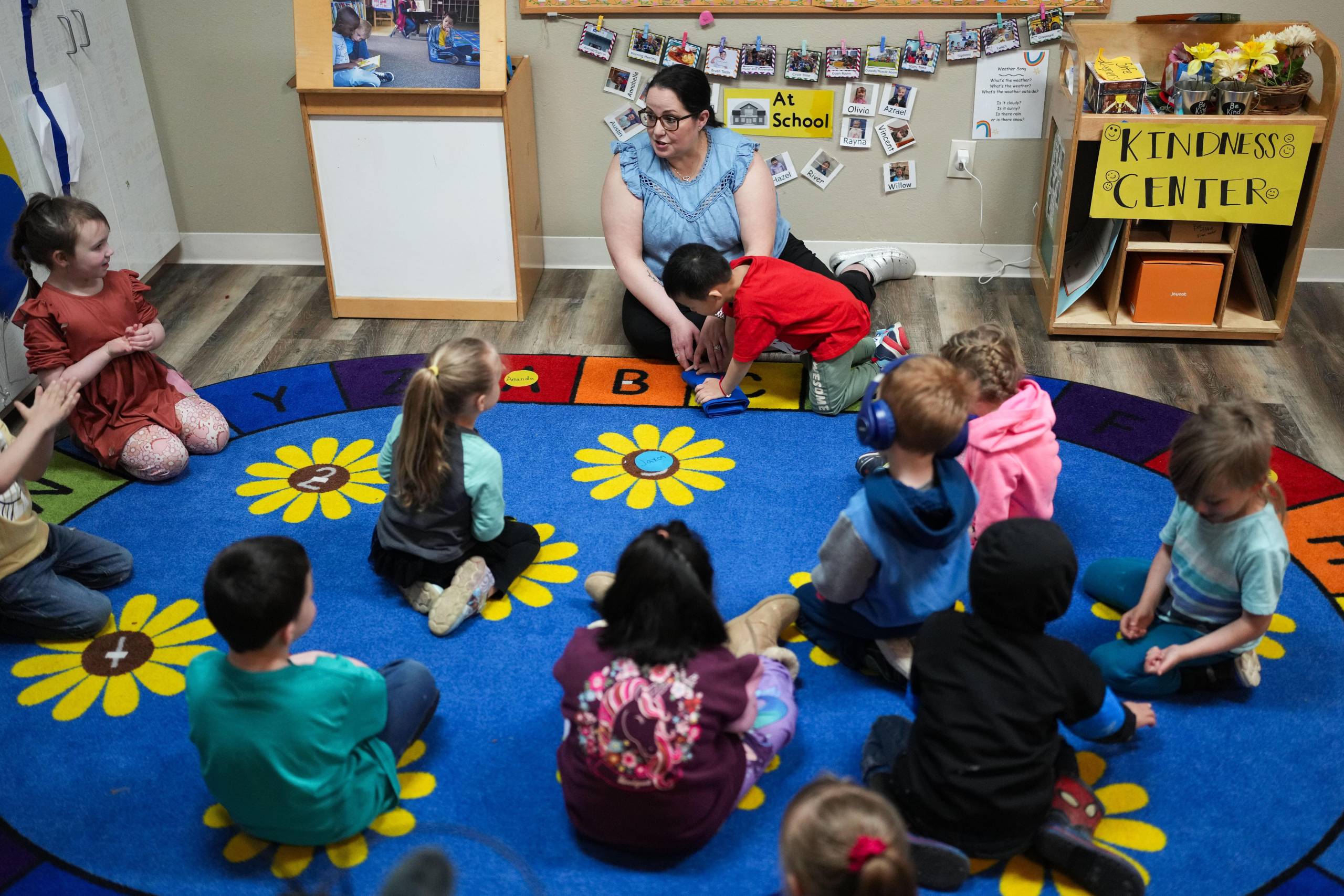
Woman sits on rug with small children in classroom.
Family educator Lisa Benson-Nuyen addresses her students in a circle in the Northern Lights classroom at the Meadow Lakes CCS Early Learning, a Head Start center, in Wasilla, Alaska, in 2024. The center has since closed because of a lack of staff and money. (AP Photo/Lindsey Wasson | )

The Trump administration on Thursday proposed significant changes to Head Start, the nation’s early education program for children from low-income families. The move would diminish the program’s federal standards and give states and parents more control.

“We have 1,600 Head Start providers across the country,” Alex Adams, the U.S. Department of Health & Human Services’ assistant secretary for family support, said in a call with reporters. “And one-size-fits-all mandates from Washington cannot fully account for the realities facing these 1,600 grantees.”

Head Start not only provides preschool and childcare, but also meals and support services for qualifying families. It now serves more than 700,000 kids each year from birth to age 5.

Since its launch in 1965, the $12 billion HHS program has, for the most part, enjoyed bipartisan support. Lawmakers often cite it as a success — including Health Secretary Robert F. Kennedy Jr. during the call with reporters announcing these changes. But in recent years, some conservatives have criticized Head Start, saying it wastes money and fails to have a lasting impact on students.

Aiming to cut costs

The new proposal would limit the amount of money Head Start centers can spend on administrative overhead, from a 15% cap to 5%. This change should save the government $2.2 billion, Adams said, which it plans to reinvest in the program. The goal is to create 200,000 more spots for children, he said.

To get those costs down, the administration said it proposes cutting regulations and “compliance-driven activities,” according to a press release. Similarly, they are shifting decisions about several standards — such as student-teacher ratios, education requirements, background checks and transportation practices — back to states.

Childcare providers are not sold on the proposal.

“If we look at the previous actions of the administration, what they have done is not in favor of expanding the program,” said Yvette Sanchez Fuentes, senior vice president with Start Early, an Illinois-based Head Start partner.

“Is it enough to just bring kids in the door if we’re not actually giving kids and families what they need?”

Sanchez Fuentes said administrative costs are not only things like payroll and day-to-day operations, but also help fill gaps in care. “If you, for example, have children with disabilities you [can use] some of those funds to pay for additional special services or staff with specialties who could come in and support kids.”

The administration’s proposal also says parents are children’s primary teachers and seeks to bring in more parent opinions on “structure and curriculum” into the classrooms and emphasizes nutrition and exercise.

Loosening the standards

Head Start’s current standards are laid out in a detailed 133-page guide. The manual is used not only by the program’s centers, but also by many unaffiliated private childcare centers across the country.

These standards include safety guidelines, spell out who is eligible for Head Start and provide detailed rules — such as the requirement that kids in the program brush their teeth once daily with fluoride toothpaste.

Erica Phillips, the executive director for the National Association for Family Child Care, said about 10% of her members are Early Head Start childcare partners, while the rest are home-based providers around the country.

“The Head Start performance standards were a consistent … evidence-based set of standards,” she said. “It can be helpful to have a nationally recognized benchmark.”

Phillips said her organization will be on the lookout for variations across states. She said she worries “quality is now dependent on your ZIP code or on your geography.”

The Trump administration sees it differently.

“Flexibility is permission. It’s not a mandate,” Adams said. “The opportunity for these programs to make a different decision does not necessarily mean they must make a different decision.”

The changes did not come as a complete surprise: The conservative Heritage Foundation has long criticized the program, saying it “doesn’t work.” In Project 2025, the foundation’s policy blueprint that the Trump administration has taken many cues from, the message is clear — eliminate Head Start.

Advocates see what they characterize as the erosion of quality and decrease in standards as the first step in dismantling the program.

A long runway

Thursday’s announcement came in the form of a notice of proposed rulemaking, or NPRM. It kicks off a lengthy, formalized process of public comment and talks with stakeholders. It could be six months to a year before any new standards take effect.

“I just really want folks to know Head Start is open,” said Tommy Sheridan, deputy director at the National Head Start Association (NHSA), a nonprofit that advocates for the program. “The quality of Head Start children and families truly comes from the people that are running Head Start programs. Those folks are going to be the same. They’re going to be able to do that.”

The administration says the NPRM will be published in the Federal Register on Friday and be open to public comment for 60 days.


Edited by: Natalie Escobar

Transcript:

AILSA CHANG, HOST:

The Trump administration wants to make significant changes to Head Start. That’s the country’s early education and childcare program for low-income families. Now, this program serves more than 700,000 kids each year from birth to age 5, in both urban centers and rural areas. Advocates and educators are worried that the proposed loosening of standards will undermine the program. NPR’s Sequoia Carrillo is following this story and joins us now at NPR West. Hi, Sequoia.

SEQUOIA CARRILLO, BYLINE: Hi, Ailsa.

CHANG: Hi. OK, so many families depend on the Head Start program. What are some of the proposed changes that were announced today?

CARRILLO: So this new proposal really focuses on two areas, deregulation and, in turn, cutting costs. So front and center, we have the Trump administration saying they want parents and states to take a larger role in the program. Standards like how many toddlers or babies can one teacher handle on their own or what kind of training teachers have to have to work with these little kids, those decisions would be up to the states.

CHANG: OK.

CARRILLO: They’re also saying parents are children’s primary teachers and want to bring more parent opinions into the classroom. All this really amounts to taking a national benchmark for early childcare and education and removing it. The new proposal wants to move away from federal mandates, and advocates are worried about it.

CHANG: But wait – you mentioned cost-cutting measures. What would that mean exactly?

CARRILLO: Yes. So right now, Head Start centers can use up to 15% of their budgets to cover administrative costs. The new proposal caps that at 5%. Currently, that money is used for typical daily operations, but it can also do things like reward teachers for getting a degree, and that would no longer be allowed. Yvette Sanchez Fuentes, with Start Early, an Illinois-based Head Start partner, says this approach could also directly impact kids.

YVETTE SANCHEZ FUENTES: If you, for example, have children with disabilities, you could use some of those funds in order to pay for additional staff with specialties who could come in and support kids.

CARRILLO: Losing that money could cut support staff and create gaps in care.

CHANG: OK. But explain this to me. What is the Trump administration ultimately trying to achieve with all of these changes to Head Start?

CARRILLO: It’s a great question. So Alex Adams, the Department of Health and Human Services’ assistant secretary who oversees the whole program, estimates that these changes could save the government $2.2 billion.

CHANG: OK.

CARRILLO: He says he plans to invest that money back in the program and, in turn, create 200,000 more spots for children. I relayed that plan to a few different advocates, and they all said similar things. An additional $2 billion for Head Start would be great, but they don’t quite see how eliminating all those regulations can get them there. One thing to note is, this is a very lengthy proposal. It’s about 200 pages, and sometimes reporters and stakeholders get these things early to comb through. This time, we did not. So there’s still a lot to sift through. And for now, I think advocates are just ready to dive in and are looking forward to the next steps.

CHANG: And what are those next steps? Like, will Head Start centers feel these changes right away?

CARRILLO: Well, first of all, Head Start centers are still very much open, and all of them are operating under the same rules. But right now, we’re heading into a 60-day period for public comment on these new rules. Anyone can submit a comment – parents, advocacy groups, concerned citizens. The groups I spoke with are really hoping for tons of comments. That would mean it would take a long time to go through them. And the final rules might look different than what we have right now, or they might not change at all. Either way, we won’t really know for a few months.

CHANG: That is NPR’s Sequoia Carrillo. Thank you so much, Sequoia.

CARRILLO: Thank you.

lower waypoint
next waypoint
Player sponsored by