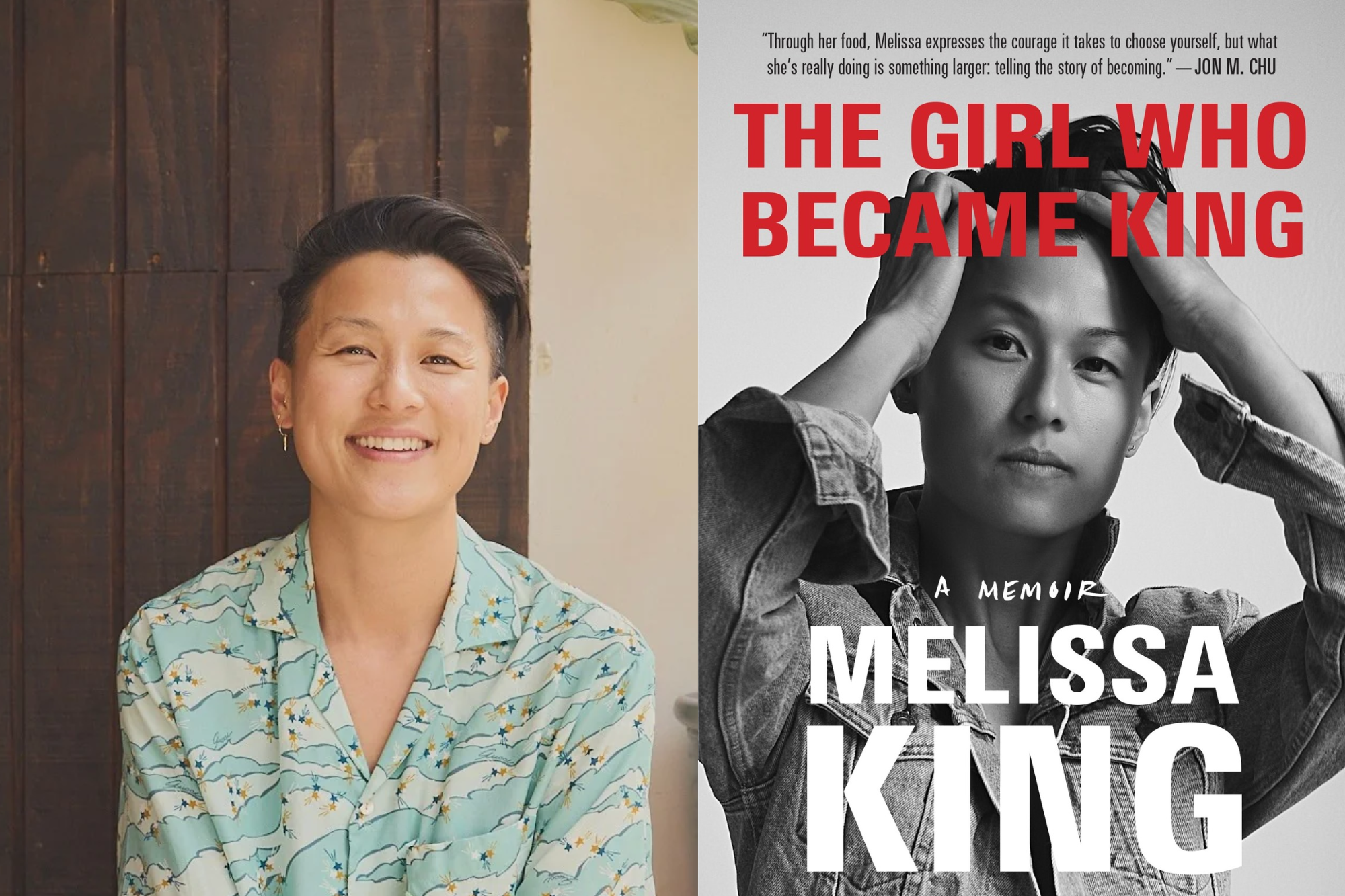
San Francisco ‘Top Chef’ Melissa King Cooks Her Way Home in New Memoir
Airdate: Thursday, October 29, 2026 at 9 am
As a kid, Melissa King rushed home from school to grab her meat cleaver and cook dinner for her family. In her new memoir, “The Girl Who Became King,” the Top Chef winner traces her path from her immigrant parents’ expectations to a career in Michelin kitchens. “I didn’t think my life was interesting,” she notes, but in talking with fans and writing this book, King started “owning who I am and being proud of all of those things that I used to tuck away and hide about being gay and even being Asian in America.”
Guest:
- Melissa King, chef and author “The Girl Who Became King: Recipes from My California Chinese Kitchen”, winner of top chef all-stars L.A., James Beard-award winning chef
Episode Transcript
This is a computer-generated transcript. While our team has reviewed it, there may be errors.
Alexis Madrigal: Welcome to Forum. I’m Alexis Madrigal. Restaurant work is hard — hard on the body, hard on the mind. It’s fun, but to hear Melissa King tell it in her new memoir, The Girl Who Became King, it’s almost like an addiction, with the thrills and camaraderie and generosity of the kitchen, yo-yoing with the partying and exhaustion and precarity. But of course, there are harder things than any job, like figuring out who you are in the context of a complex immigrant family. Oh, and you happen to be gay, also. That really is the glory of this memoir, The Girl Who Became King. We all end up rooting for Melissa King to figure it out, to make it as a chef, to come out, to find love, to find success — and then she does it. Top Chef winner Melissa King joins us here this morning. Welcome, Melissa.
Melissa King: Hello, hello. Good morning.
Alexis Madrigal: First things first, for people out there: I understand my daughter was getting you caught up on the Valkyries’ championship run here.
Melissa King: I’ve been busy on book tour.
Alexis Madrigal: Yes, that’s true. Okay, so the game’s tipping off in about 24 minutes. Don’t worry, everyone, we’ll bring you some score updates in the back half of the show. At least two people in here will be excited when the Valkyries go on to win this game. Let’s go!
Okay, back to the book. You didn’t necessarily grow up in a foodie household. You grew up in Southern California, and your parents were both engineers. What was their relationship to food, and when did you know that yours might be a little different?
Melissa King: I mean, my parents bonded over food. They loved going out to eat. They would drive out to, like, Redondo Beach to get crab and try to find all the best Chinese restaurants in Los Angeles, but they didn’t cook very well. I wouldn’t say that they were the best cooks in the world, but someone kind of had to step up and do it, so that became me. I was cooking since I was five and just kind of helping to put food on the table for the family.
Alexis Madrigal: I mean, there’s this great scene in the book where you would call your mom at work as an aerospace engineer, and then she would kind of walk you through dinner prep.
Melissa King: Yeah, I was Mommy’s little sous chef. You know, both my parents were engineers. They’d be gone all day and have to drive, you know, an hour or two hours through LA traffic. Someone kind of had to wash the vegetables, get the rice started, and get the bone broth started, and that became me.
Alexis Madrigal: What was your favorite thing to make as a little baby chef?
Melissa King: Oh, little me? Bone broth, really. And even today, if people ask me, like, “What’s your favorite thing to cook?” — which is every chef’s least favorite question.
Alexis Madrigal: Oh, yeah. I have it right here.
Melissa King: But I will say that it’s oftentimes soups and sauces. What is it about bone broth? There’s something about it where it’s such a cozy, nurturing dish, and it takes time to evolve the flavors and deepen the flavors. So I love the process. I love the patience of it. And, yeah, I don’t know, something about it is healing.
Alexis Madrigal: What’s your version, right? Because some people go very, very basic, and it’s just an onion in there and some bones. What do you do? What’s the spin?
Melissa King: Oh, when I was a kid, it was always chicken or pork bones. And then we would put a little ginseng or goji berries. I actually have this recipe in Cook Like a King, my cookbook, which came out last year. It’s actually with a black chicken. I don’t know if you’ve seen it, but it has black chicken and ginseng. It’s something that my grandmother used to make when we were sick. In general, it’s a very healing Cantonese bone broth, an herbal bone broth.
Alexis Madrigal: Yeah, tell us what black chicken is for people who don’t know.
Melissa King: Yeah, I’m surprised this made the cookbook. I’m actually really proud that it made the book. It’s called a silky chicken, and it’s very high in collagen, so it’s great for your skin. People say it has healing properties. When you make it, the broth itself is like Jell-O. It just really holds a lot of gelatin and collagen in there. It’s really good for you.
Alexis Madrigal: So good. So how did you evolve along this path, right? I mean, people don’t just go from being someone who likes to cook for their family to being a Top Chef. What are the intermediate steps? There’s some steps in there. What did you do? How did you develop it?
Melissa King: Yeah, well, I had quite traditional parents who grew up in a very traditional Shanghainese and Cantonese household. The last thing they wanted me to be was a chef. They were like, “No way. You need to go to a real school, you need to go to real college, get a real job.”
Alexis Madrigal: Yeah, yeah, yeah.
Melissa King: Which I did. I took those steps. I went to UC Irvine and got a degree in cognitive science.
Alexis Madrigal: [Laughs.]
Melissa King: But I had to kind of check those boxes before I really was allowed to pursue the dream. But I knew at the age of five that I wanted to be a chef.
Alexis Madrigal: What was the first kitchen you got to cook in?
Melissa King: The very first kitchen was the Getty Museum in Los Angeles.
Alexis Madrigal: Kind of a good gig for your first one.
Melissa King: Yeah, yeah. I was a pastry assistant, and I knew nothing about baking. I’m not much of a baker, but I had to get my foot through the door. I just knew that I wanted to give it a go, and at that place, I fell in love with cooking.
Alexis Madrigal: What was the work like? I love the descriptions of the work in the kitchen that you provided.
Melissa King: Yeah, I mean, long hours, especially if you’re baking. You’re up at, like, four in the morning. First of all, the traffic alone was horrible. It was like two hours each way in LA traffic, up the 10 freeway. And, yeah, grueling hours. Sometimes I did 12-hour days, making minimum wage. Most of my career was 12- to 16-hour days.
Alexis Madrigal: And you’re doing the same thing, the same set of things over and over, right? You had a station at some of the places you were working. It seems like, when you’re a home cook — I consider myself a somewhat serious home cook — you’re not doing the same thing a hundred times. You’re doing it one time. One time.
Melissa King: Yeah, which is what Top Chef is like. You do a dish one time, but in a professional setting, the cooking is all repetition. It’s muscle memory. It’s continuing to hone that craft over and over. You’re literally searing a piece of steak every day, like hundreds of them, and doing it over and over until it’s perfected.
Alexis Madrigal: I mean, did you hate that part of it, or did you love that part? I couldn’t tell from your description.
Melissa King: There’s a part of me that — it’s a love-hate for sure. But I do think you have to be a little crazy to join this industry, and I think it breeds perfectionists.
Alexis Madrigal: Yeah. What was your favorite thing to have to make a hundred times?
Melissa King: Good question. I mean, sauce. Yeah, I could do that. I was a saucier for Dominique Crenn here at a restaurant called Luce in San Francisco, and I was doing that every day. I was roasting pounds and pounds of bones and nursing them down into this beautiful, pristine brown French sauce. I could do that all day.
Alexis Madrigal: An associate in a kitchen, as you describe it, is kind of like the point guard of the back of the house there. How come?
Melissa King: You’re the backbone. You know, I think meat takes the longest to cook in a kitchen. And when you’re the saucier, you’re also cooking the steaks and the racks of lamb. You’re cooking all the proteins, so everyone in the kitchen follows your lead. And so you are the —
Alexis Madrigal: What does it mean when you’re following someone’s lead? Would you call out, like, “I’m doing this,” and they’d be like, “Okay, I’m gonna do X, Y, and Z because you just did A”?
Melissa King: Yeah. In restaurants, it’s like an orchestra and a symphony of people. When you’re the lead or the sous chef or the one in charge, everyone’s following your dish because all the dishes have to come up to the window in the pass at the same time. So you have to orchestrate the timing of the pasta and the fish and the salad so that things get out hot at the right time and nothing’s sitting cold. It’s really a very orchestrated experience.
Alexis Madrigal: It’s also, from your description, quite hierarchical as well. There’s the cold line, which is sort of the bottom of the heap.
Melissa King: The bottom of the chain, yeah.
Alexis Madrigal: And then you move up to the hot line. So what are those different things? What’s a cold line? What’s a hot line?
Melissa King: Oh, I mean, even before the cold line, there’s the commis, which is like the prep cook. You’re just peeling shallots all day, peeling garlic all day. Brunoise is a very, very small, fine dice, and you’re finely dicing buckets of shallots for hours until they’re perfect. If they’re not perfect, they get chucked in the trash and you have to do it again. But this was the French Michelin-kitchen way back in, like, the early 2000s. Now, I mean, I still think it’s quite similar. There’s still that brigade, and you kind of have to work your way up.
Alexis Madrigal: Okay, so you’ve been the commis, then you move up to the cold line.
Melissa King: Yeah, garde manger, which is your cold line. You get to make the salads, and it’s exciting. You’re like, “Yeah, I get to make the salad!” Then you move on to the hot line, and that’s where it gets interesting because you get to actually use fire and step behind where the stove is. Then you move through, and you become a vegetable cook and a fish cook, and then a meat cook. There were some other steps in between, depending on the kitchen.
Alexis Madrigal: I mean, are you glad you learned to cook that way? Because there are other routes now, right? People can just become an Instagram sensation making whatever. Apparently. Are you glad you went through that, or is it a kind of thing like doctors saying, “I didn’t really need to be a resident like that. That was horrible”?
Melissa King: I’m old-school. I’m old-school. I think it really trained me and molded me into who I am today. I believe in building the foundation first and nurturing the basic skills and foundation, getting those foundational skills set before you move on to the next thing. So I’m old-school in that sense.
Alexis Madrigal: On the other hand, it doesn’t seem like you want to run a restaurant on a day-to-day basis.
Melissa King: I mean, do you want to run a restaurant on a day-to-day basis? I mean, kind of. Yeah?
Alexis Madrigal: Is it just — how come? Just because it’s —
Melissa King: I mean, it’s, first of all, a huge financial risk factor, especially in San Francisco. It’s a very, very expensive market to step into. The financial model, as we know from the pandemic, showed its vulnerability. It’s a very, very tough industry to survive in. And I think, as you said earlier, there are many ways to be a chef. I kind of discovered that along the way through my journey, and you kind of read that through the book. It’s discovering that there isn’t just one way. There are many ways that I can touch people’s lives through food.
Alexis Madrigal: Yeah, it’s amazing that now, like, all of our Bay Area chefs — Samin, Bryant Terry, Tanya Holland — nobody has restaurants. They just do other stuff.
We’re talking with Top Chef winner and author Melissa King about her new memoir, The Girl Who Became King. She’s also the author of the James Beard Award-winning cookbook, Cook Like a King. Of course, we want to hear from you. Were you the family cook as a kid? What were your go-to recipes? Maybe you’ve come up in the restaurant scene. How do you think it works for people? Call us at 866-733-6786. That’s 866-733-6786. You can email [email protected], or you can find us on social media. We’re @KQEDForum everywhere. I’m Alexis Madrigal. Stay tuned.
Welcome back to Forum. Alexis Madrigal here with Top Chef winner and author Melissa King. We’re talking about her new memoir, The Girl Who Became King. Love to hear from you. If you’re a fan of Top Chef, maybe you just want to ask Melissa King a question about it. Sorry, we’re not going to answer anything about Padma Lakshmi. Sorry, too late. Call us at 866-733-6786. You can email [email protected] and find us on social media, Bluesky, Instagram, Discord, or KQED Forum.
I want to talk about another part of your journey, too. Some of this book is about coming up in kitchens and learning how to be a chef. The other part is learning how to be yourself and coming out as a lesbian. It’s so different for kids now, thanks to icons like yourself. But what was it like for you? I mean, was this easy? Were your parents just totally chill about it, as a complex immigrant family, or not?
Melissa King: I wish it was easy. No, it was quite challenging for me because, like I said earlier, I came from a very traditional Chinese family that held a lot of expectations about who you’re supposed to be. I think anyone from any culture kind of feels that and understands the pressure of wanting to please your family. And I think, for a long time, I didn’t want to disappoint them. I kind of put their happiness first. I did that for many years.
I also went to an all-Christian school, and I think a part of me — there was that religious aspect that kind of kept me in the closet a bit. But I always had crushes on women. Looking back at it all, I had crushes as a kid on, like, every best girlfriend that I had. But it took some time. I didn’t really come out until, I think, my mid-twenties. And even then, I was still only, like, closeted. I was half closeted and half not. I was living this dual life on the East Coast, being out, and then on the West Coast, being closeted when I came back home to see my family. So, yeah, I think it took a while.
Alexis Madrigal: Yeah, I mean, you say in the book, too, that when you’re coming out to your mom, it’s not like it just happened once. You did have to continue to come out. As you’re describing it, it was more of a slow fade into being out rather than just one-and-done.
Melissa King: And I think any queer person understands that we don’t just come out once. We come out constantly. When you meet a new friend, when you start a new job, you have to constantly come out and tell people about your partner or about your life. But in the straight world, they don’t do that. There’s no explanation there. So we’re constantly coming out, and it’s something that, as a queer person, we face that sort of responsibility. Yeah, I mean —
Alexis Madrigal: How important do you think San Francisco was in this journey for you? You started to come out on the East Coast, but then you came to work in restaurants here in San Francisco. Did it feel like a welcoming place for you?
Melissa King: Absolutely. San Francisco has my heart. It is my home. I grew up in LA, but I try not to tell too many people that. San Francisco, I moved here in my early twenties, and I didn’t really have any queer friends the first year. There was a part of me that was just aching for that. I remember discovering the Castro and discovering the whole queer community and having my first queer friend. That’s all kind of laid out in the book, but there was such an open-arms experience with the community here. And my first Pride was incredible.
Alexis Madrigal: Oh, yeah. How did it go?
Melissa King: I mean, it’s everything you — it felt like a little fairy tale. It was everything I wanted it to be. It felt like this big hug that I needed to give my younger self. It was coming from all the people around me, whether gay or straight. I just feel like all of San Francisco shuts down for Pride, and it’s the most amazing holiday. It’s like Christmas.
Alexis Madrigal: Yeah, I mean, it’s interesting because the familial context you had wasn’t just a general immigrant background, wanting to please the family. You also had a very specific intergenerational story going on in your family, particularly on your father’s side.
Melissa King: Yeah, initially, when I was writing the book, I was debating how much of my extended family I wanted to put in there, how much of their stories. I had to really fight to keep stories of my parents and my grandparents, and it felt like that was important to tell because —
Alexis Madrigal: I thought it was really interesting. Why would they want to take that out?
Melissa King: Right? To me, it was just very interesting, and in a way, it showcases who I am. You kind of have to understand and look back and go through that examination of generational trauma to really understand the person I’ve become today. I kind of joke that the book is part The Bear. You have the toxic kitchen stories, and then it’s also part The Joy Luck Club. I don’t know if you’ve ever watched that film or read the book, but it’s one of my favorite movies and books. It showcases the generational gaps that we see within our families, especially being immigrants. So, yeah, I think it’s so much fun. It’s a really fun read.
Alexis Madrigal: But you also had — and I love that you included this, too — this series of families who liked to play mahjong together and got together. Tell us a little bit about what that was like, because I think you called it MJC.
Melissa King: MJC. It’s the Mahjong Crew. Every weekend, my parents would play mahjong with the same families. Mahjong is a game of four, so there were the same four families gathering together every Saturday, sometimes on Sundays, playing for 12 to 16 hours straight. Minimal bathroom breaks. It was just full-on mahjong all day.
Everyone had children, so all the kids became my built-in playmates, siblings, and cousins. To them, they’re my first chosen family. They were the chosen family before even my queer chosen family that I discovered later in San Francisco.
Alexis Madrigal: I love those stories, though, too. It’s a delight to imagine you all because, at the time, you’re going to this Christian school. You’re feeling pretty alienated from the broader culture. There’s the kind of stinky-lunch story at school. But then, in your home life, complex as it was, you had this amazing set of friends and chosen family.
Melissa King: Yeah, I think as a Chinese American, I oftentimes felt caught between worlds. At home, with my Chinese family, I felt like I wasn’t Chinese enough and was too American. But at school, I was too Chinese, and I was made fun of for some of the dishes I would bring to school and the stinky lunchbox, as you said.
Throughout my life, I kind of had this divide. Even in my cooking, you see that a lot. You see me cooking more French. At the time, I was in a lot of Michelin-starred French and Italian kitchens, so my cooking was quite Eurocentric for most of my career. I kept Chinese foods and the things that I grew up eating very much as, “These are just things we eat at home.” I didn’t really meld the two until you see me lean in a bit more to my identity and discover who I really am, and really be proud of that.
You see that progression on Top Chef, too, when you’re watching Top Chef: Boston, Season 12, my first time going on that show, and then the evolution of who you see five or six years later on All-Stars. It’s a completely different cooking style and a different person that’s —
Alexis Madrigal: Fully arrived as a —
Melissa King: Mm-hmm.
Alexis Madrigal: Coherent person.
Melissa King: Mm, yeah.
Alexis Madrigal: Let’s go to Helena in Fremont. Welcome.
Helena: Hi, good morning, everyone. This is Helena. Thank you very much for this topic today. I just want to share a little bit of a different opinion. I’m Chinese myself. I’m a first-generation immigrant, and my daughter is a Chinese girl. She’s ABC, born here and raised here.
From the first-generation perspective, I agree with the speaker that we think about how to make a living first. Most of the time, Chinese people want to go with an occupation that can really help us survive and set up the foundation, especially on the financial side, for the second generation.
But now, with my daughter, you know, we’re just a regular middle-class family. When my daughter wants to choose what she wants to do, my husband and I fully support her rather than saying, “Okay, this is a more stable job or will give you a decent income.” We ask her, “What do you want to do? What is your passion?” In that way, I think that’s the best fit for her because we really don’t want her to repeat what we needed to do as a first generation, which was to settle and then survive. She has more choices.
Actually, in her first year in college, she got a job in a restaurant as a waitress. She’d never done that before, made so many mistakes, and learned so many lessons. There was so much sweat and tears, but you know what? That’s the best experience she had. She told me stories about how to handle customers, how to work with the chef, how many times she got blamed by the customer or the chef, and what to do. With all the tears on her face, somebody would say, “Where’s my green tea?” She learned so much. She also had to cover one meal for over $160 herself because the payment didn’t actually go through from the customer and she didn’t double-check. That’s a lesson she learned in real life. She paid for it. I’m sure she’ll never make that mistake again.
Alexis Madrigal: Hey, Helena, thanks so much for that perspective.
Melissa King: Yeah, I love that. I think, Helena, you’re a great mother. You’re great parents. I think that perspective of allowing your child to be themselves and do what makes them happy is so important.
Like I said earlier, I always put my family first, and I oftentimes listened to what my parents told me I should be doing. I shouldn’t have done that. There was a point when I kind of resisted that, and I realized I had to follow my heart and follow what made me happy. Happiness always became my North Star throughout this book. You see me following the things that brought me joy.
As Helena was saying, you have to let your children be who they are. They know best what makes them happy, and you have to trust them. You have to trust that. Thank you for sharing that.
Alexis Madrigal: We’re talking with Top Chef winner and author Melissa King about her new memoir, The Girl Who Became King. She’s also the author of the James Beard Award-winning cookbook, Cook Like a King. We’d love to hear from you. If you’re a professional cook out there listening, how do you think you came to your particular cooking style? How does your background inform that? We’d love to hear that as well. Give us a call at 866-733-6786. That’s 866-733-6786. You can email [email protected] or find us on social media, Bluesky, Instagram, and Discord.
Also, a quick update, everyone: the game has not quite started, if you were wondering. Stay tuned here. We’ll give you updates, I promise.
One of the things I think is so interesting is that, for our generation — we’re about the same age — there was still stigma, I think, about non-Eurocentric foods being considered elevated. I’m using air quotes there for everybody. But now, here in San Francisco, you have all these really high-end Chinese and Vietnamese restaurants. You have all these television shows filled with all kinds of food. It’s very cool to know about other cultures’ food and things. How different do you think this incoming generation of chefs is? I’m sure you meet some of them.
Melissa King: Yeah, I think it’s amazing what’s happening right now. In my younger years, I never saw food like this. It was so segregated and separate. I think it’s beautiful to see a lot of these restaurants getting the recognition they deserve and the modernization of different cultures, and chefs wanting to go back to their roots and honor their heritage. I think that’s a beautiful thing.
I do think we live in San Francisco, I grew up in LA, and I also lived in New York. These cities have amazing things happening. But I’ve been to other parts of the country, and we still have a lot to catch up on. I just came back from Wisconsin, and they were asking me what chili crisp was. I was kind of surprised, and I’m grateful to be in a position to teach people about this. But I would love to see more of it spread across the country, to where chili crisp, black vinegar, and all those ingredients are just part of your daily vocabulary.
Alexis Madrigal: Yeah, totally. Esther writes in to say, “What would you want to tell Asian American parents, or just immigrant parents, right now who are trying to raise their children? I feel like I see similar patterns as our parents’ generation.”
Melissa King: Ooh, I mean, like we said earlier, let them be who they are. They’re going to tell you. They know who they are at the end of the day. I think as a parent, you want the best for your children, and that’s what my parents wanted. That’s why they were quite strict: “No, you can’t be a chef. You need to be a doctor and be an attorney.” But that wasn’t what made me happy.
I think you have to listen to your children. Obviously, you also want to steer them. For me, looking back, I’m grateful that I went to college. I’m thankful that I followed those steps my parents tried to set me up for. Therefore, I had a little bit of a backup in case cooking fell through. I don’t know where I would be if I hadn’t continued on that route, but I’m grateful to have at least that bachelor’s degree behind me, just in case.
So I don’t know. It’s hard to say. I’m not a parent myself, but I do think there’s some balance there that you have to give and take a little.
Alexis Madrigal: Take a little bit with your children. Yeah, I’m going to take this listener question and spin it into a follow-up. This listener writes, “Given how regimented and organized a professional kitchen can be, why are they always depicted as abusive places, too? I would have thought that if everyone knows what they’re doing, it could and should be a calm place to work.”
At one point early in your cooking career, you really badly burned your hand. Things go wrong in kitchens constantly.
Melissa King: Constantly, every day. I don’t think people see that side of things behind the curtain. That’s why I wrote the book the way I did. I want you to take a little peek behind what goes on. It may look so perfect and pristine from the guest’s experience, and that’s what we want you to feel. We don’t want you to walk into a restaurant and feel stressed out. We want you to feel calm and be able to enjoy your anniversary or your birthday and have a beautiful time.
But behind the door, it is chaos. In a way, it’s organized chaos, but you’re dealing with fire, knives, and a lot of stress. It’s a very high-stress career. Food needs to be on the table at a certain time, and everything needs to be orchestrated and hot. It can’t be cold by the time it arrives at the diner. There’s also a lot of pressure from the criticism you may get from a diner. You look at Yelp and see the things people can say, like, “This steak is overcooked” or “over-salted.” People can be quite critical, and I think that pressure sits on our shoulders daily as we try to offer the most perfect experience for the guests.
Alexis Madrigal: We’re talking with Top Chef winner and author Melissa King about her new memoir, The Girl Who Became King. She’s also the author of the James Beard Award-winning cookbook, Cook Like a King. And of course, we want to hear from you. Maybe you’re the child of immigrants. What traditions did you feel your family wanted to carry on in the kitchen? Or maybe you just want to ask Melissa King what it’s like to be on Top Chef. That’s in the book. Call us at 866-733-6786. That’s 866-733-6786. You can email [email protected]. You can find us on Bluesky, Instagram, Discord, or KQED Forum. We’ll be back with more with Melissa King right after the break.
Welcome back to Forum. Alexis Madrigal here with Top Chef winner and author Melissa King. We’re talking about her new memoir, The Girl Who Became King, and the James Beard Award-winning cookbook that came out last year, Cook Like a King. Good thing you have this last name — it makes the branding very consistent.
Of course, we’re taking your questions for Melissa King, as well as hearing about the culinary traditions your family has wanted to hang on to in the kitchen. Call us at 866-733-6786 or email [email protected].
A listener writes in to ask: Does Melissa think there are any accurate depictions of kitchens on TV or in film? Of course, what comes to mind for most people would be The Bear. What do you think?
Melissa King: The Bear. I would say The Bear is the most accurate interpretation of a real-life kitchen, which is why I can’t watch it. It’s quite triggering. Yeah, it’s too real. It’s down to every detail, from drinking water in little deli cups to the way their aprons hang on their necks. Every detail is so, so accurate.
Alexis Madrigal: Yeah, yeah. I talked to Matty Matheson about that at one point because they brought him in as a consultant to make it realistic.
Melissa King: He nailed it. Yeah, yeah.
Alexis Madrigal: I can’t watch it either. It is so stressful. I’m like, “Why would I watch this? Why would I intentionally —”
Melissa King: Imagine working in that every day. Yeah, so now do you want to open a restaurant?
Alexis Madrigal: You know, it’s funny. You have these different descriptions of working in different restaurants, and some of them seem terrible, but others seem quite — I’ll just, this is you writing here. Maybe I won’t actually read it. I’m not sure if there’s a swear word in here. You’re working at this Italian restaurant in San Francisco, and you describe being physically broken. But there’s also this camaraderie, the team aspect. You’re kind of —
Melissa King: It’s called trauma bonding.
Alexis Madrigal: We do live radio. We know all about it, and it’s fun.
Melissa King: No, but it is. You spend more time at a restaurant than you do with your own family because you’re there 16 hours a day. You’re working seven days a week. You don’t even have a day off — maybe one day off a month. It’s grueling. But you spend so much time together that you become family, whether you want to or not.
Alexis Madrigal: And there’s also, in some restaurants at least, that tradition of the family meal, where people get together.
Melissa King: That’s my favorite part.
Alexis Madrigal: I was about to say, that seems like the best part. What was your favorite thing to make for it when you had to do it?
Melissa King: I love making family meal. That became my thing, and people would call me Mama Mel because I wanted to feed everyone. I couldn’t stand that none of us were taking time out of our day to even eat lunch or dinner. We would skip bathroom breaks. We would just be grinding and working so hard, trying to put food on the table for other people.
I was like, “I have to feed my people,” whether it’s 15 minutes out of your day to just sit down or even just stand and eat. I would take whatever scraps I had left over. I was a butcher for a few years, so I often had fish collars that I’d throw on the grill or trim that I’d make into a cioppino. There’s a lemongrass cioppino in Cook Like a King, my cookbook, and that was one of my favorite staff-meal dishes.
But really, I think that’s the most creative time of the day, when you get to take whatever you can find and throw together a beautiful meal for your people. Oh, I love that. So it was fun.
Alexis Madrigal: Yeah, I guess I didn’t really think about that until this book. If you’re searing 65 ribeyes a night and that’s your job, being able to make a fun meal — just make whatever you want, not just have something to eat for a family meal —
Melissa King: Exactly. I think as a chef, the biggest test is whether you can take nothing and turn it into something. That is the gift of a lot of chefs. It’s the gift of butchers. Butchers have so much trim, and they make sausage with the trim. They’re able to turn nothing into something, and I think that was the challenge of staff meal.
Alexis Madrigal: Let’s bring in Jay in San Francisco. Welcome, Jay.
Jay: Hi, good morning. Can you hear me okay?
Alexis Madrigal: Yeah, sure can. Go ahead.
Jay: Great. Good morning to you. I had a really nice meal at Dominique Crenn’s restaurant, Atelier Crenn, and I first moved here right after 9/11. I was going to change careers and teach the blind independent living skills. That was interesting and fun, working in a state agency.
I wanted to ask you: My first job in the kitchen was in an all-Chinese kitchen in the 1970s. I was a fry cook, making egg rolls and wontons. I did a staff meal with a whole chicken cooked in kosher salt, a little bit of peanut oil and ginger and green onion, and some vegetables and rice. It was an amazing meal. I worked in a French restaurant and did the same thing with a whole turbot cooked in kosher salt.
Did you see cross-cultural experiences like that in your professional experience?
Melissa King: For staff meal? Absolutely. Yeah, yeah. I think that’s the beauty of the family of the kitchen: you get to meet people from all walks of life. Some people came from prisons; some people came from everywhere. You meet a lot of interesting characters, but you also get to eat some of their incredible dishes that they grew up with and that they throw together for staff meal.
I trained in a Japanese restaurant, and every day there was a different sort of cozy Japanese stew I’d never seen. They just don’t sell them in Japanese restaurants, but it’s something you make at home. I used to do that myself. I would present soy-sauce chicken wings or something my mom made when we were kids and throw that together for my people at work.
I think a kitchen is a beautiful space because there’s such a diverse array of people. Yeah, yeah, Jay. How long did you cook for?
Jay: Thirty-eight years.
Melissa King: Thirty-eight years? Are you still in it?
Jay: Yeah, I just retired in April from the city and county of San Francisco, at SF General. Twenty-seven miles a day. When I worked with David Burke at the Park Avenue Café for Sunday brunch, we did a Chinese-style dim sum brunch, and all the cooks and all the stations just put up whatever they wanted, like five or six different little two- or three-bite items. I loved that. It gave the cooks an opportunity to do something besides just making staff meals, to showcase their skill set. I love that.
Alexis Madrigal: Yeah, thanks so much, Jay.
Melissa King: I love that.
Alexis Madrigal: Here’s a really good question for you. Listener Leland writes, “I’m a Chinese American chef born and raised in New York City. Post-COVID, I went through a phase in my cooking to, quote, ‘elevate Chinese cuisine.’ But more recently, I asked myself, ‘Wait, who am I trying to do this for? What am I trying to do? Why am I trying to do this? I don’t even really like the food I was creating. I was essentially just making food to cater to a white audience.’
“I realized that my motivation was rooted in a yearning for Chinese people, culture, and tradition to be on the same level as any other in America. I’ve decided that my motivation is misplaced, and I don’t want to cook with this approach any longer.” What do you think, Melissa?
Melissa King: So good. I love that you’re bringing this up because it’s true. I do think that, as a chef, it’s our duty to tell our story on a plate, but we want to tell the right story. I think it can veer to a point where it starts to become catered toward an audience we don’t even recognize, or they don’t recognize our food.
I think there’s a sense of restraint and balance that needs to be thought through because you can — I’m always like, “Why reinvent the wheel too much?” For instance, we have Cantonese barbecue, char siu, and dim sum, and all these incredible dishes from my childhood. These were so good on their own. Why do I want to mess with this at all, to any degree?
You have to do it with balance. And I think for you, if it’s not feeling right, you know best. Follow your gut and bring it back to those roots, back to just the way Grandma used to make it.
A lot of the recipes in Cook Like a King are literally recipes straight from my grandma, my mom, and even my dad, and I didn’t change them. I wanted to keep those childhood dishes true to what they were. Then there are some that come from the creative parts of my mind, where the artist side of me is like, “Okay, I want to make a Hong Kong milk tea tiramisu, and I want to switch it up a little.”
But I think there needs to be balance and restraint. Otherwise, it becomes something so unrecognizable if you take it too far.
Alexis Madrigal: I mean, one of the things I thought about San Francisco specifically, within the area, is that it’s maybe one of the great Asian diasporic cities. The intra-Asian cultural exchange has become its own kind of sub-circuit, using Vietnamese flavors and Thai flavors, and Cantonese versus Hunan versus Sichuan. There’s this incredible mixing of Asian cultures here that feels pretty special and kind of different from other places.
Melissa King: Yeah, definitely. Like a kind of —
Alexis Madrigal: Like a kind of native San Francisco thing would be that.
Melissa King: Yeah, yeah. I see that here. I think that’s the beauty of Californian cuisine. It is this sort of globalized thing. It takes inspiration from many different cultures, and it’s kind of its own beast.
Alexis Madrigal: Well, but also, I was just thinking, if you’re drawing on Vietnamese cuisine, you’re also sort of smuggling in some French technique at times. Do you feel differently about that?
Melissa King: Everyone’s just copying each other.
Alexis Madrigal: Yeah, right, yeah, yeah! I mean, do you feel differently about, say, extending toward Vietnamese cooking versus extending toward French cooking?
Melissa King: For me, yeah. I always believe that if you’re going to attempt someone else’s cuisine, you better study it. You better have traveled there. You better have learned as much as you can about that culture before you even attempt to recreate it, put it on a menu, and put your name on it.
You really have to study the history and understand the heart of that food and that cuisine, or else you do it a disservice. For me, I’m always thinking, whatever I present, I want to make sure a grandma from that culture can eat it and say, “Oh, this is bomb.” But if she’s like, “Oh, what is this? You messed it up,” then I’ve probably done something wrong.
Alexis Madrigal: Let’s talk a little bit about Top Chef, because in this book, Top Chef is sort of the life changer. It’s a catalyst for a massive change in your life. How should we think about these reality shows that involve chefs? As you describe it and go into the backstage of it, it seems sort of miserable, sort of exploitative.
Melissa King: It is.
Alexis Madrigal: On the other hand, man, you hit the jackpot out of it, and you have a totally different life on the other side. How have you made sense of that?
Melissa King: I think for me — just to go back for everybody listening — I was an excruciatingly shy person, very much an introvert all the way up until my thirties. Then I did my first Top Chef, and that threw me into this whole other world of public speaking and cameras and having to really own who I am. I think you see a different person transform into someone who becomes so much more confident in themselves.
But I credit Top Chef as being that catalyst because it was the one thing I did in my life where I had to take a huge chance and risk, and I was so terrified. I was like, “I don’t want to do this show. I don’t want to be on TV. I want to just hide behind a kitchen door forever. Leave me alone.”
Alexis Madrigal: Mm-hmm.
Melissa King: And I go and do this thing, and it becomes kind of a heart-opener. Like you said, it is stressful. It was one of the most stressful things I’ve ever done in my life, twice now. I don’t recommend anybody going and doing a cooking competition on national television. The pressure is very high.
But at the end of the day, I guess I didn’t realize it was also a TV show. To me, I went in thinking, “I’m just going to do my best. I’m going to cook, and I’m going to showcase my food.”
Alexis Madrigal: And your family’s like, “Get on Instagram!”
Melissa King: And then, yeah, everyone’s like, “Okay, we’ve got to figure out what’s next with all this.” But, as you see, a viewer watches 45 minutes plus commercial time. In real life, one episode takes two to three days to film.
Alexis Madrigal: Mm-hmm.
Melissa King: So there’s so much missing. A lot of stuff is edited out from a viewer’s perspective. But for us, that was real life. That was something I lived. There’s much more that I wanted people to know about what happens behind the kitchen door, or behind that door. You’re going to learn about that through the book. It’s a lot of fun stuff. Let’s talk about —
Alexis Madrigal: San Francisco’s current food scene. We want some recommendations. Maybe we’ll go high-low: a high-end spot and a more affordable place for people.
Melissa King: Okay. Gosh, I’ve been — what’s the word? I can’t be classic?
Alexis Madrigal: Yeah.
Melissa King: I am a classic person. I always eat at the same spots. I’ve gotten to that age in my life where I just want to eat — I just want routine when I come home from traveling.
Alexis Madrigal: Okay, okay. What are they? What are the spots?
Melissa King: I love Anchor Bar in the Castro. Classic cioppino. Get the chowder. I get the Dungeness crab Caesar salad with a little side of avocado. Just a great little date-night spot. Another one is Rintaro.
Alexis Madrigal: Oh, Rintaro, yeah. We’ve had Sylvan on here, too.
Melissa King: Sylvan’s great, the whole crew there. You can tell people genuinely love working for Sylvan, and it’s just a beautiful restaurant experience.
Alexis Madrigal: But you came at it — Rintaro, didn’t you? Or your first girlfriend or something? You brought her to Rintaro, didn’t you?
Melissa King: Me? Oh, I bring a lot of girlfriends to Rintaro. That might be the first time I’m exposing that. That’s my date-night spot, you know?
Alexis Madrigal: Yeah, when you get the DM, “You want to go to Rintaro?” you know what’s up now.
Melissa King: It’s elevated food, but not to the point where it’s pretentious. It’s just good and cozy, well-executed, and has a great vibe.
Alexis Madrigal: There’s also, in his cookbook, like eight pages on how to make rice.
Melissa King: Which I love.
Alexis Madrigal: Truly. And he was such a perfectionist right there. That’s so funny. Okay, what about a neighborhood spot?
Melissa King: Neighborhood spot? I love Mandalay in the Richmond. Have you been?
Alexis Madrigal: No, I haven’t.
Melissa King: It’s a Burmese restaurant. I’ve been going there way before Burma Superstar ever existed. This was, I don’t know, 17 years ago. It’s still owned and operated by the same family, but Mandalay is where it’s at.
Alexis Madrigal: Oh, man, yeah. I think producer Grace Juan agrees that this is —
Melissa King: Yeah.
Alexis Madrigal: And what about a place you haven’t been but want to try here?
Melissa King: Ooh, I keep hearing about Four Kings, and I cannot get in.
Alexis Madrigal: Yes, that is the problem, which is a great problem for them to have.
Melissa King: Yes, yes. I managed to get in once, and it was fantastic.
Alexis Madrigal: Yeah? How was it?
Melissa King: It was great.
Alexis Madrigal: Okay. That’s our next — you and I will go on a date.
Melissa King: Yeah, that’s right. Two Kings.
Alexis Madrigal: Yeah, it does seem — it’s amazing how hard it is to get in there.
Melissa King: It’s a small spot. Yeah, that’s part of it.
Alexis Madrigal: Yeah.
Melissa King: But no, that’s good for them.
Alexis Madrigal: One last question here. That’s a good one to go out on. A listener asks, “How do you develop a palate? I know what I like to eat, and I want to be a better cook. I’m curious how I can improve my ability in the kitchen to put out food the family will like. I think my palate’s not that developed.”
Melissa King: You know what? I think your palate can be very developed, or is developed, and you’ve got to believe in that. You just have to try and taste everything. I think when we cook in kitchens, we oftentimes say, “Did you taste that? Did you taste it?” You have to constantly taste while you’re cooking.
I think a lot of home cooks will cook to completion, then sit down and eat it, and they’re like, “Oh, I should have put more salt in that,” or, “I should have done this and that,” or added more acid. But you need to taste as you go, and that will really improve your cooking over time.
Alexis Madrigal: Just — you’re getting, you’re figuring out —
Melissa King: And just get out there. Yeah, explore new flavors, pick up cookbooks. Maybe Cook Like a King — maybe it’ll empower you to cook more in the kitchen. But I think cooking is all just exploration and experimentation.
Alexis Madrigal: Yeah, we’ve been talking with Top Chef winner and author Melissa King about her new memoir, The Girl Who Became King, and her James Beard Award-winning cookbook, Cook Like a King. Our team is committed to making these scallion pancakes with Oaxacan cheese, which sounds amazing — like a quesadilla, but with a scallion pancake. Sounds awesome.
Melissa King: I must have been drunk when I came up with that one.
Alexis Madrigal: All the best ideas. Thank you so much for joining us, Melissa.
Melissa King: Thank you.
Alexis Madrigal: And thank you to all of our callers and commenters and listeners. We so appreciate you. Thanks so much. Guys, it’s not going so well for the Valkyries right now. Keep all the good thoughts going. We’re down 17 in the first quarter. I’m Alexis Madrigal. Stay tuned for another hour of Forum ahead with Mina Kim.