Marion Nestle on the Powerful Forces Shaping What We Eat
Airdate: Wednesday, October 14, 2026 at 9 AM
For more than five decades, renowned nutritionist, molecular biologist and food activist Marion Nestle has worked to expose the connections between Americans’ health and the powerful agendas shaping what we eat. Her newest book, co-authored with Dr. Lisa Sutherland, “Sugar Coated: Unboxing the Hidden Forces Shaping America’s Favorite Breakfast Food” examines the politics of our morning meal. We talk with Nestle about the shifts in attitudes and regulations of what we eat — from soda taxes to the MAHA movement — and about what she believes it will take to build a healthier food system for all.
Guests:
- Marion Nestle, professor of nutrition, food studies, and public health emerita, New York University; her latest book is Sugar Coated: Unboxing the Hidden Forces Shaping America’s Favorite Breakfast Food
Episode Transcript
This is a computer-generated transcript. While our team has reviewed it, there may be errors.
Alexis Madrigal: Welcome to Forum. I’m Alexis Madrigal. Marion Nestle is a legend of the food world. Her work over many decades, including her pathbreaking book, Food Politics, has changed the terms of the debate about food. And her blog, foodpolitics.com, is an incredible repository of news, ideas, and information about the broad world of food, nutrition, science, and politics. And for the fourth or even fifth time, we believe, Marion Nestle, a professor emerita of nutrition, food studies, and public health at NYU, joins us here on Forum.
Marion Nestle: Oh, so happy to be back!
Alexis Madrigal: We are delighted to have you, in part because there is a measure on Berkeley’s ballot for a kind of update of the soda tax. You wrote a book in 2015 called Soda Politics, and you, of course, know this history. So give us sort of the little summary: where did the soda taxes come from, and where did Berkeley’s role in it lie?
Marion Nestle: Well, Berkeley really took the leadership on all of this. There were some other towns that tried to pass soda taxes before, but Berkeley really — I use Berkeley as a case study of how to do food advocacy right. They did real community organizing. They went door to door in every community, the ones in the flats and the ones high up in the hills. And they talked to people about the effects of consuming large amounts of sugar in liquid form on obesity, diabetes risks for chronic disease. They talked to people about whether they knew anybody with type 2 diabetes and whether they understood that drinking a lot of your sugar isn’t a really good way to do it. And people got it. And then they promised that they would use the tax revenues for community initiatives, and they have done that. They have, you know, they’ve lived their promises. And this is a success story, with research that shows that it reduces soda consumption and maybe, maybe, maybe is helping people manage their weight better.
Alexis Madrigal: I mean, it’s interesting, too, because it was in the original ballot measure, right? There was a lot of spending against it from the — oh, tons. Who didn’t pass with 80% of the vote, is that —
Marion Nestle: I believe it was 60-something percent, but it was huge. And, you know, it was an enormous, unqualified passing with a very large percentage, and that was because of the fabulous way in which the committee that was running the campaign did it. I mean, they did real community organizing, which is what you have to do to make this stuff work.
Alexis Madrigal: So why do we need something else on the ballot in Berkeley?
Marion Nestle: Well, that has to do with how long the initiative lasted and California politics. I live in New York. I’m not up on these details. I do know that there has to be another vote on it. Maybe you could explain it.
Alexis Madrigal: Yeah, I think they’re just adding another cent to it, right? I mean, that’s my —
Marion Nestle: Oh, because it was really not as high as what they wanted to begin with. The evidence had shown that the higher the tax, the more effective it was. The amount that they actually did the tax at was a compromise, and so this is to kind of fix the compromise a little bit. So, you know —
Alexis Madrigal: Opponents of soda taxes, both here and elsewhere, have said, you know, they burden lower-income consumers. You know, government shouldn’t try to influence people’s personal food choices through taxes. What do you think about those critiques?
Marion Nestle: Well, the government has an enormous influence on what people eat, based on what the government subsidizes, how the government gives food companies tax advantages for marketing. I mean, there are just a million ways in which the government influences what we eat. This is only a different way of doing it. Taxes are regressive, and there’s no question that this is a regressive tax. But the answer to that is type 2 diabetes is regressive, and it hurts the poor much more than it hurts the rich.
And sodas are a really convenient target. They’re different from any other food in that they’re sugars and water and flavors. And marketing.
Alexis Madrigal: And marketing.
Marion Nestle: But nothing else of any nutritional value. So, in that sense, sodas differ from any other kind of junk or ultra-processed food in having no nutritional value at all other than the calories. And dumping large amounts of sugar into a metabolic system turns out not to be good for that metabolic system. We’re just not equipped to handle that amount of sugar at any one time. It’s much better to consume your sugar mixed up with other dietary components and much more slowly.
Alexis Madrigal: So what about cereals, then? You’ve got a new book, which you co-wrote with Lisa Sutherland, who we’re going to talk about in just a second. Why cereal, though? Was it sort of the next most convenient target?
Marion Nestle: Well, I’ve collected cereal boxes for years because they have the most hilarious advertising and marketing on them. I’ve collected mainly boxes with health claims on them, the more ridiculous the better. And at some point, I needed to think of another project, and I told my literary agent that it was time to do something with my cereal box collection. And so that’s how this came about.
Alexis Madrigal: That’s interesting. I mean, one of the fascinating components of this book is that your co-author was actually a Kellogg’s executive.
Marion Nestle: A vice president for nutrition at Kellogg.
Alexis Madrigal: I mean, I don’t know. Is this like dancing with the enemy? What’s going on?
Marion Nestle: Oh, and she was anything but an enemy. I had met Lisa Sutherland probably 20 years ago when she was working for Hannaford Supermarkets, which is a chain of supermarkets in the Northeast. And she worked out their Guiding Stars program, which was a way of labeling house-brand foods for the ones that had the least amounts of salt, sugar, and saturated fat. And then she worked for Walmart, and then she worked for Chobani. And, you know, her view of that was she was trying to keep them nutritionally honest.
And then at some point she called me and said, “I hope you’re not going to be mad at me, but I’m working for Kellogg.” And as it turned out, I wasn’t mad at all because I had been trying for months to get Kellogg to let me come and look at their archives. Because I wanted to look at packaging before Congress passed the Nutrition Labeling Act of 1990, and I had asked to see them, and they had said they would consider it. Nothing happened. So when she said, “I’m working for Kellogg,” I said, “Great, get me into the archives.”
Alexis Madrigal: You got a woman on the inside now.
Marion Nestle: Right, I was thrilled! And months went by, and then she wrote and said, “Okay, come.” So I flew out to Battle Creek, and we went into the Kellogg’s library, and they said, “Do you want the good news or the bad news?” And I said, “Oh, all right, I’ll take the bad news first.” And the bad news was the lawyers weren’t going to let me anywhere near the files.
Marion Nestle: I said, “Oh, okay, what could the good news possibly be?” Well, the good news was spectacular because what they had done — and I still can’t believe this — was they had made color Xeroxes of the front and back of the three cereals I had asked to look at, from the year they were introduced until 2010, which is when this was. And they handed me a box of all-brand facsimiles from 1919 to 2010, Rice Krispies from 1928, and Froot Loops from 1963.
And we’re looking at these and paging through them, and the Kellogg nutritionists are saying things like, “Oh, this is when the FDA passed this regulation,” and, “Oh, look at this. This is when that research came out on oat bran,” and, “Oh, this is when the Center for Science in the Public Interest sued us.” And we were sitting there and looking at these things and saying, “There’s a book in this. There’s absolutely a book that’s going to tell the history of nutrition policy in the United States, the history of labeling policy, and a lot about marketing.”
But we didn’t do it, and we drifted apart. And 15 years later, when I was thinking of doing this, I had this sudden guilty thought: maybe I should check with Lisa Sutherland and at least tell her that I’m doing this. And her response — I had to track her down. I hadn’t seen her in more than 10 years or heard from her in 10 years. And when I tracked her down and said, “This is what I’m doing,” she wrote back one sentence: “I’m in this with you.” We were off and running.
Alexis Madrigal: I mean, what was interesting to you about those three cereals? I mean, I also love Lucky Charms, but what was interesting about them?
Marion Nestle: Well, I particularly wanted All-Bran because I knew that Kellogg had used All-Bran cereal as a way to break the FDA’s restriction on health claims. They had done an end run around the FDA and gone straight to the National Cancer Institute to put a “National Cancer Institute says fiber is good for preventing cancer” claim on All-Bran, and I wanted that All-Bran box.
Alexis Madrigal: That’s like a case study of how —
Marion Nestle: Right, a case study. I wanted Rice Krispies because it was an old cereal that started advertising Rice Krispies Treats right from the beginning, and it was sort of a normal, run-of-the-mill cereal. And I wanted Froot Loops also for a case study because Froot Loops was the cereal box that got the first Smart Choices logo, when the food industry had gotten together with nutritionists to put a kind of front-of-package symbol that would indicate that something was healthy. And the first one landed on Froot Loops, and so I wanted that box. So those were the three that I had picked. I also wanted Special K, but they didn’t think they could get me Special K.
Alexis Madrigal: As one that, like, targeted women in specific ways.
Marion Nestle: So, you know, these I have, and they turn out to be — and they gave them to me. I have them in my office at NYU, and they’re fabulous for saying, “Well, how much sugar was in cereal in 1958?” I can answer that question. And it’s just enormously useful to have them. I’m quite grateful.
Alexis Madrigal: We’re talking about the powerful forces shaping what Americans eat, the politics of our food, and what it’ll take to make it healthier. We’re joined by Marion Nestle, professor emerita of nutrition, food studies, and public health at NYU. And we want to hear from you. Is there a food you grew up thinking was healthy that you see differently now? Or maybe, how has your understanding of the food industry changed the way you shop or eat? Give us a call, 866-733-6786, or email [email protected]. I’m Alexis Madrigal. Stay tuned.
Welcome back to Forum. Alexis Madrigal here with Marion Nestle. She’s got a new book out. It is about cereal. It is called Sugar Coated. It was co-authored with Lisa Sutherland. Of course, she’s a professor emerita of nutrition, food studies, and public health at New York University. And we want to hear from you if there’s a food that you grew up thinking was healthy that you see differently now. Or maybe, you know, with so much nutrition advice and information available now, how do you decide what foods you eat? 866-733-6786. That’s 866-733-6786. The email, of course, is [email protected]. Social media: Bluesky, Instagram, Discord. We’re KQED Forum.
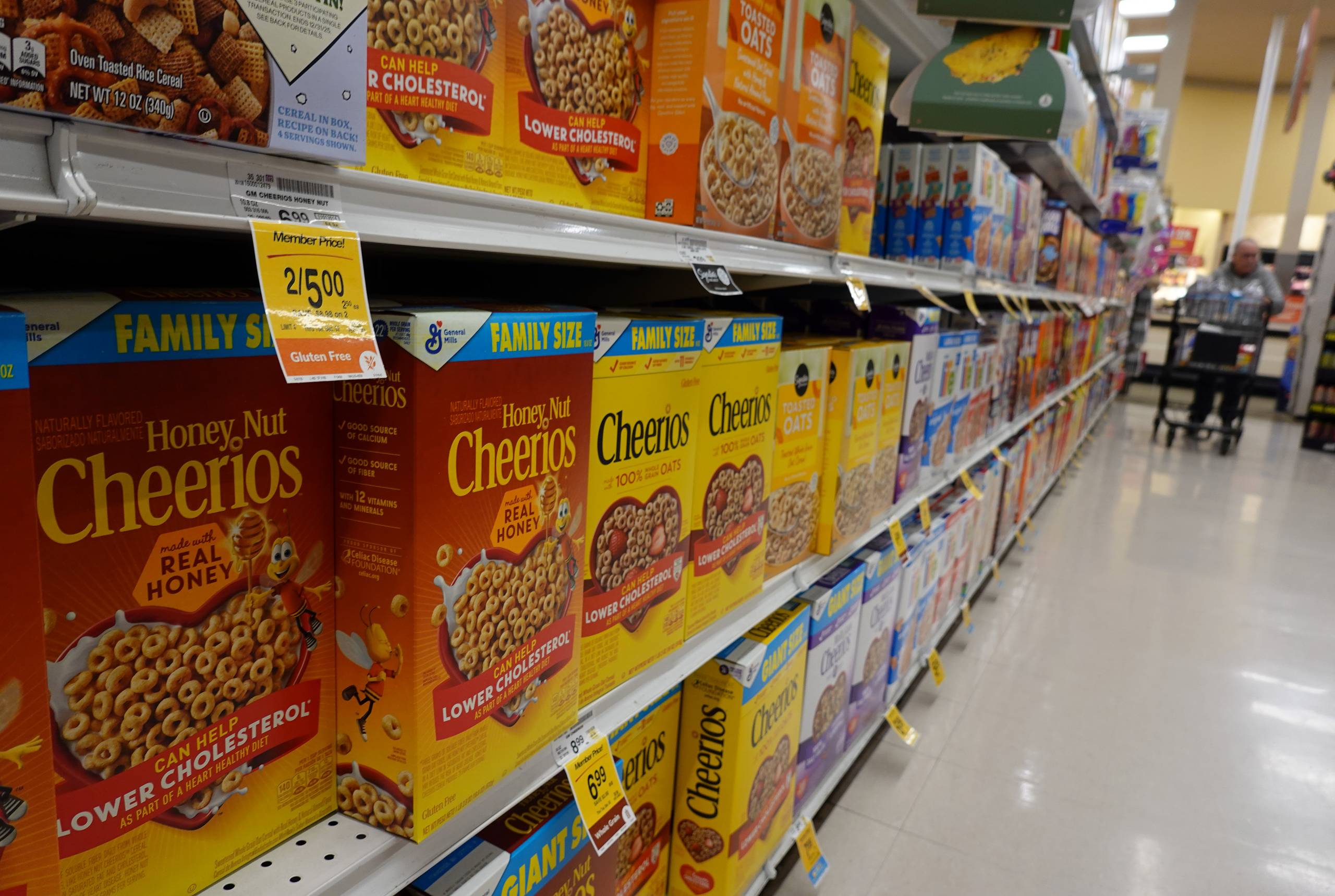
Before we talk about some other ultra-processed foods, what is the takeaway people should have about cereal? Like, if their kids want to have Honey Nut Cheerios, hypothetically, um, what would you say about that kind of food?
Marion Nestle: They’re a once-in-a-while treat. Some of my friends who have kids who are demanding sugary cereals — I mean, first of all, these cereals are marketed directly to children. You know this because of the cartoon characters on the front. And now the toys are back in cereals. So the whole purpose of this is to get kids to demand the foods, to pester their parents for them. It’s called the pester factor, and nobody wants to fight with their kids about food, so everybody gives in. But I do have friends who give their kids a healthier cereal and sprinkle a little bit of this stuff on top of it.
Alexis Madrigal: Yeah, we do that with our dog. He gets, like, kibble, and then he gets the stuff he really likes just a little bit on top. I understand. Is there any cereal that you would recommend, or is it just sort of —
Marion Nestle: Well, the one that I like is mini shredded wheat, and they’re a one-ingredient cereal. There’s one ingredient: whole wheat. That’s it.
Alexis Madrigal: You’re not talking about Frosted Mini-Wheats.
Marion Nestle: No, I’m not. I like adding my own sugar, and I can put in a spoonful of sugar. It’ll be a third of the amount that’s in pre-sweetened cereals.
Alexis Madrigal: Um, so let’s talk about these ultra-processed foods. I mean, this is a label, or a way of talking about foods, I feel like has emerged over the last five or —
Marion Nestle: Since 2009. Yeah.
Alexis Madrigal: Yeah, so over time, and we now in California have a law that’s establishing a new non-ultra-processed-certified label for food products. What do you think about this kind of non-ultra-processed-certified label?
Marion Nestle: Well, the Non-GMO Project did it first. Non-GMO is the most successful front-of-package indicator. Lisa and I call them widgets — the most-used one on packages. And they have started a non-UPF, ultra-processed food designation. I don’t know how it’s going. It’s just started, and California will be the first state to have this. I’m very interested to see what the symbol is going to look like. The law didn’t have any prototypes that I’m aware of.
But I think it’s a good idea because the ultra-processed food concept is a specific category of junk food, where the foods are industrially produced, usually have a lot of salt, sugar, and fat, and a lot of color, flavor, and texture additives. But they are designed specifically for profit and designed specifically to be irresistibly delicious, if not addictive. And there is now a phenomenal amount of evidence that links diets high in ultra-processed foods to poor health outcomes. And those are observational studies, and they don’t show causation. But there are also some very well-controlled, although short-term, clinical trials that show that these foods induce people to eat more calories — a lot more calories — without being aware that they’re doing it. So there are good reasons for cutting down on ultra-processed foods, and people are doing that. And it would be great, too, because there are issues about the definition. There are some categories of foods that some people argue are highly nutritious but meet the definition of ultra-processed foods, like commercial whole-wheat breads and yogurts. There are only a few plant-based meats —
Marion Nestle: And those kinds of things, and medical foods. So there are some exceptions, but I think — so there’s a big issue about the definition. I don’t think there should be an issue about the definition.
Alexis Madrigal: I think it’s kind of a red herring that the food is —
Marion Nestle: Yeah, because most people get the concept, and it’s pretty obvious what most of them are. And so having something that puts a label on the most obvious ultra-processed foods would help people identify them very quickly. So I can’t wait to see what it looks like.
Alexis Madrigal: Before we go to the phones, I just want to ask you: you know, here in San Francisco, City Attorney David Chiu filed a lawsuit last year against 10 of the country’s largest food manufacturers, saying these companies knowingly designed and marketed harmful, addictive products. This is true. Do you think that litigation will succeed? Do you think it’s going to be an effective way to hold the food industry accountable?
Marion Nestle: Well, I have no idea. The food industry is remarkably powerful. And we see that in the Make America Healthy Again movement. Robert F. Kennedy Jr. — apparently, they have a definition of ultra-processed foods, which would be the basis for regulation, although this is not a group that wants to regulate much. But they have put that definition and sent it to the White House, and it’s being held up. And I just saw an account of the food industry enterprises that have met with the White House officials to argue against a definition of ultra-processed food.
So the politics of this are enormous, and Berkeley and San Francisco both saw this during the soda tax things 10 years ago, or whenever it was. The amount of money that the soda industry put into fighting the idea of a soda tax is similar to the amount of money that they are willing to spend to defeat anything having to do with ultra-processed foods.
Alexis Madrigal: Um, let’s bring in Noreen in Oakland. Welcome, Noreen.
Noreen: Hi there! Love the program. It’s worth noting that my maiden name is Post, and we were indeed the reckoning of Post Toasties.
Marion Nestle: You have venerable ancestors.
Noreen: I do. I do, in so many ways. But I wanted to share my love of Grape-Nuts cereal.
Marion Nestle: I hear this a lot.
Noreen: Thank you!
Marion Nestle: Yeah, I hear this a lot.
Noreen: Yeah, have you ever ate a pine cone? Many parts are edible. Right away, and it’s super crunchy and delicious, or you could let it sit there for a little while and it turns into kind of an oatmeal thing. And you can carve out a moon and let the milk be on one side, and then just gently enjoy it. And my mom used to take our leftover cereal and use it to make bread.
Alexis Madrigal: Wow. Oh, good idea. Wow, Noreen, really appreciate that. I mean, this is — I would make cookies. Yeah, I think of Grape-Nuts. That was one of the things in our house, for sure, that it was like, okay, Grape-Nuts are a healthy cereal.
Marion Nestle: Yeah, and people are telling me that they’re really hard to find.
Alexis Madrigal: Interesting, interesting. Is it true, though? Like, is it a healthy cereal, or is it just kind of a health halo?
Marion Nestle: You know, I need to look at the ingredient list. I can’t really tell until I look at that.
Alexis Madrigal: Um —
Marion Nestle: But I hear about — I’m hearing a lot about Grape-Nuts these days. I should go look at that ingredient list.
Alexis Madrigal: You know, let’s talk a little bit about — you mentioned MAHA and this movement that calls itself the Make America Healthy Again movement. How do you relate to it? Because I would imagine — I mean, I know from your blog that you believe in vaccination, you know, and have, I believe, standard public health kind of measures, which that movement has not always done. So how do you relate to it?
Marion Nestle: Well, I started out thinking that there were a lot of — with respect to the food issues — that there were a lot of very hopeful things in it. But as it’s turning out, they are unable to accomplish a lot of what they started out doing. For example, Robert F. Kennedy Jr. came in saying he was going to get rid of — that the food industry was poisoning America. That’s a little extreme. And he wanted ultra-processed foods out of the food supply. He wanted glyphosate, Roundup, out of the food supply. They wanted to get rid of all the chemicals and pesticides and herbicides that are contaminating food, PFAS and all those other things, and the artificial color dyes.
And the only thing they’ve been able to accomplish so far is they are actually getting the artificial color dyes out of breakfast cereals. And you can go to the store and see that you can buy Trix with vegetable dyes instead of the petroleum dyes, but the cereal’s still the same.
Marion Nestle: And getting rid of the dyes is not going to make America healthy again. Doing something about ultra-processed foods might, but they’re stuck in politics on that one. And they’ve not been able to accomplish much. So it’s been all talk, no action.
Alexis Madrigal: I mean, I guess, was what you found hopeful in it the actual measures that MAHA wanted to take, or was it more that the coalition was kind of an unusual one in current American politics, and that it kind of cut across a lot of partisan divides?
Marion Nestle: I’ve wanted color additives out of the food supply for a long time. I didn’t think they were the be-all and end-all. They’re not the most important issue by any means, and they seemed like a no-brainer to me. It ought to be that, with the stroke of a pen, they should have been able to do that. But they’re not taking a regulatory approach. Kennedy has said that he thinks regulation is the nanny state, and so the companies have been pressured voluntarily to remove the color dyes.
Well, General Mills did that once before. Nobody bought Trix when it was brown and yellow, and they brought the color dyes back. So maybe that’ll happen this time, too. It’s, you know, they’re just not accomplishing much, and they had the chance to do that. They had three branches of government. But it turns out eating less is very, very bad for business, and the food industry is not interested in public health measures that might reduce sales and profits.
Alexis Madrigal: Surprise. So this is interesting because there is a thing happening in American life right now that is causing people to eat less. That is the growth of GLP-1s and similar drugs that have, you know, tended to reduce people’s caloric intake. What’s your take on them?
Marion Nestle: Well, they’re fascinating. I’m riveted by them.
Alexis Madrigal: Yeah, same.
Marion Nestle: And for a year, whenever I gave a public talk, I would say, “If you’re taking GLP-1 drugs and are willing to share your experience, come up afterwards and let’s talk about it privately.” And I have now talked to dozens and dozens and dozens of people who are taking the drugs. And what’s interesting to me about it is that the personal accounts that I’ve heard are very consistent with what the research is showing — extraordinarily consistent. So there’s a wide range of responses. Some people lose lots of weight, some people only lose a little, some people have terrible side effects, some people don’t have any. It really varies. But overall, the drugs really do help people lose weight. People feel better, they feel stronger, they feel livelier. They feel better; their metabolic issues disappear. They’re doing great as long as they’re on the drug. The problem is what happens when you come off them.
Marion Nestle: And there, most people regain the weight. Not all, but most people do. And that’s a problem, too, or you have to be on a maintenance dose for life. We’re still waiting to see what the side effects are, how serious some of the side effects are. There’ve been some rare ones that are pretty bad. Most people have GI side effects. Some are tolerable, some are not.
Alexis Madrigal: Are you interested in the mechanisms of it? That’s been the thing that’s been so interesting to me, is that most of the work seems to be happening in people’s minds as much as anything else. Like, there are the sort of changes that people experience in their digestive tract, but it’s mostly that people just think about eating a little bit less.
Marion Nestle: Oh, the main overall effect is it reduces what’s called “food noise.” I had never heard the term before. I like it a lot. I get it totally. It’s the obsessive thinking about food, and that stops. Although people who are serious foodies tell me they still love food, they still think about food, they —
Alexis Madrigal: I’d like to cook still.
Marion Nestle: You know, they do all of that, and it’s not affected. They’re just not eating as much. They just don’t want to eat as much. So the drugs affect the gut, various organs, and the brain, and scientists are hard at work trying to figure all that out. But there’s no question that they eat less, and they selectively eat less. So they’re eating less ultra-processed food. They’re eating less junk food. They’re eating healthier. Well, isn’t that amazing?
Alexis Madrigal: Yeah. How do you think they’re going to respond? I mean, this does —
Marion Nestle: Oh, they’re already responding. I mean, the food industry is in trouble in general, overall. It’s in trouble because of RFK Jr. saying they’re poisoning people. It’s in trouble because of ultra-processed foods. It’s in trouble because of GLP-1 drugs. And it’s in trouble because of inflation. You know, I mean, I can’t believe what’s happened to the cost of food in the last couple of years. It’s just shocking.
Alexis Madrigal: So what are their prospective responses? I mean, if I were putting on my executive hat, you would have to say, like, okay, well, if right now GLP-1s are most widely distributed in sort of middle-class, upper-middle-class households, so we’ve got to double down on targeting people who can’t afford GLP-1s and who maybe are also being hit harder by inflation, to even sell more to those people.
Marion Nestle: Yeah, I mean, they’re certainly marketing, but they’re also reformulating products. You know, and you have to understand the context for this: in our investment system, it’s not enough to make a profit. You have to grow the profit and report growth to Wall Street every quarter. That’s very difficult to do if people are eating less. And so, if growth is flat or declining, these companies are in very, very serious trouble, and they are scrambling to try to dream up products that will be as profitable as ultra-processed products are. And they’re having a hard time doing it.
But if you want to know why protein is on absolutely everything, everybody’s looking for protein, whether that’s reasonable or not, we can argue about. But everybody’s looking for protein. And so the food companies are putting protein into everything and marketing it, and they’re putting protein into the most ridiculous products. I just read that there’s a protein vodka you could drink. Are you kidding me? And because I’m so interested in cereals, my favorite current cereal product is Cookies ‘n’ Creme Oreos protein. You cannot make this stuff up.
Alexis Madrigal: It does — it sounds like, yeah, a ’90s postmodernist novel product, for sure. We’re talking about the powerful forces shaping what Americans eat, the politics of our food, GLP-1s, MAHA, so much more, with food icon Marion Nestle, professor emerita of nutrition, food studies, and public health at NYU.
One listener writes in to say, “I was not a food obsessive for most of my life. My mother did make us eat wheat germ sprinkled on our Lucky Charms, as if this might counteract the problems of the magically delicious marshmallows. But when I had my own kids, I started to pay more attention to this, and we became the house where you can’t find snacks like Goldfish or potato chips, and we were not a breakfast cereal family. And to this day, my kids are not snackers, as far as I know.”
We want to hear from you. Is there a food that you grew up thinking was healthy that you see differently now? Just want to ask Marion Nestle something. 866-733-6786, [email protected]. I’m Alexis Madrigal. Stay tuned for more.
Welcome back to Forum. I’m Alexis Madrigal. I’m here with Marion Nestle, icon, professor emerita of nutrition, food studies, and public health at NYU. We’re talking about the powerful forces shaping what Americans eat, the politics of our food, what it might take to make us all healthier. We’ve got a lot of callers here, so I want to make sure that we get them in. Let’s go to Hamayat in Fremont. Welcome.
Hamayat: Hi, good morning. I had a two-part question slash comment. And the first part is, I wanted to know, is there a difference in our processed food versus processed foods in other countries, such as in European countries? Because in the summer we went to London and Paris for a month, and before we went I checked my weight. And then when we came back, I had lost eight pounds, even though all of our meals were outside because we were staying in hotels in both places. So we weren’t eating home-cooked meals. There were restaurants and fast food, and that’s what we were having. So I was wondering if there’s any difference.
The second thing I wanted to bring up is about the GLP-1 question. Since the last year and a half, everyone that we know was talking about it and trying to sell it on, even though nobody works for them as the only one thing. But I was reluctant to start because my father is a pediatrician, and he told me it depends on every person’s history. So I just started watching my calories using an Amazon skill, and I found that to be a lot more effective than doing something where you might have to continue it. So those are my two comments.
Alexis Madrigal: Yeah, I mean, I think one reason people have gotten into GLP-1s is that so many analyses of diets were just showing it wasn’t really working in the long term for most people, and so GLP-1s seem to have had some success. But let’s take the European processed food versus American processed food.
Marion Nestle: Well, people in Europe eat differently. They have processed foods there. They have different rules than we do, and some of the additives that we use here are not allowed there. But I just think that when you’re traveling, you eat differently. First of all, you’re not snacking all day long because you can’t get at it. You’re doing an awful lot of walking. It’s a healthier lifestyle. You’re not in a car. And lots of people experience weight loss when they’re traveling. And the food is good, and they have a different food culture that’s in some ways very admirable. On the other hand, American fast-food companies are quite prevalent. They have outlets there, and it’s quite possible to eat badly there, as well as it is here.
Alexis Madrigal: Let’s bring in Greg in Redwood City. Welcome, Greg.
Greg: Morning. I’d like to say, you know, I was a huge consumer of those cereals, everything from other kids’ favorites, Brilliant, Sugar Smacks, and Honeycomb, and I got older, Special K. You know, all the claims that it was not so bad. And now I look back, and I’m just so angry that I was, you know, the victim of that. You know, as consumers, we just don’t have the information to make intelligent decisions. And, uh, you know, now I’m just much more conscious of what I’m eating, and it’s really just the outer perimeter of the grocery store. And, you know, I don’t even like to go to restaurants because they don’t tell you what’s in it. They don’t tell you if it’s got a hundred ingredients and artificial cheese and all the rest of it. And I can really see the difference just by eating one meal, like how my body feels. So it’s incredibly frustrating that Americans can’t get the information to keep their family healthy. Yeah, thanks. I appreciate that.
Marion Nestle: Well, the way I put it is, if you’re trying to eat healthfully in today’s food environment, you’re fighting an entire food system on your own. And the food system is set up to sell more food, not less. My mantra on this is: eating less is bad for business. And once you understand that, you get the whole thing.
Alexis Madrigal: Yeah, yeah. You mentioned earlier, you said people are all trying to eat more protein, reasonable or not. Why don’t you talk a little bit about whether you do think it’s reasonable or not?
Marion Nestle: Well, I don’t, because most people are already eating twice the protein that’s essential for replacing the protein losses in their body. And eating more protein doesn’t do much good except for people who are elite athletes or people who aren’t watching their — well, but that’s a very small minority. Most people get plenty of the protein they need, even if they’re vegetarian, even if they are vegan. They’re getting enough protein.
Alexis Madrigal: It’s never been an issue. Do you have a nutrition guideline for it? Do you like some measure or metric that you use?
Marion Nestle: No, I just never think about these things. I follow my own advice.
Alexis Madrigal: Not protein-maxing.
Marion Nestle: Yeah, I mean, I’m very fond of quoting Michael Pollan: “Eat food, not too much, mostly plants.” That really takes care of it. And that’s how I eat, and that’s why I advise other people to eat. I think food is one of life’s greatest pleasures. It’s something lovely that you get to do for yourself several times a day. I don’t want to do anything to take away the pleasure of food, but I think it’s possible to enjoy eating — eating real food, not too much, mostly plants. I mean, it seems really easy to me.
Alexis Madrigal: So maybe you’ve already answered this, but the Trump administration does have a new version of the food pyramid, part of its dietary guidelines.
Marion Nestle: Oh, yes.
Alexis Madrigal: Emphasizing protein, full-fat dairy, whole foods. What do you think? What do you think about the pyramid?
Marion Nestle: Oh, it’s a mixed bag. And it’s really sad that it’s a mixed bag, because the advice to eat real food and avoid highly processed foods is good advice. They didn’t use the words “ultra-processed,” which I wish they had, but they did pretty well on it. But then the rest of it is just a jumble of misinformation, things that are scientifically dubious, and one absolutely shocking nutritional error. You know, it made me think, this is why we have committees — to keep people from getting into trouble. And the shocking nutritional error was to say that beef tallow, olive oil, and butter were good sources of essential fatty acids. They’re not.
Alexis Madrigal: And this is because — and Alice writes in to ask about this — there is this real hatred in that part of the MAHA world for seed oils.
Marion Nestle: Oh, yeah. It’s bizarre.
Alexis Madrigal: So Alice writes, “Seed oils are categorically branded as unhealthy these days. Can Marion share her views on these?”
Marion Nestle: Yeah, I think that’s — you know, they have 120 calories per tablespoon, like every other fat, and you don’t want to eat too much of them, like any other fat, because they’re very high in calories. But the seed oils are clean. They’ve been refined, but okay, and they have lots and lots of essential fatty acids, which we need. These are fatty acids that we can’t make, and then we have to eat them in our diet. They’re by far the best source of them. I don’t get the whole thing.
Alexis Madrigal: Yeah, where does that come from?
Marion Nestle: Oh, I know where it comes from. It comes from the processing — it comes from the idea, the correlation between the increase in consumption of seed oils parallels the rise in prevalence of obesity. That’s correlation, not causation. You know, obesity is — nobody wants to talk about calories. I turn out to be a calorie person. I really believe in them. If you eat more calories than you expend in activity, you’re going to gain weight. That is thermodynamics, and that still holds. And I think, you know, what you eat is important for health, but how much you eat is extraordinarily important for how much you weigh.
Alexis Madrigal: Let’s go to — let’s take Lily in San Francisco. Welcome, Lily.
Lily: Hi. Hey, go ahead. Hi, Marion. Hi. I just wanted to say, so in college, I ended up writing my senior-year work, and that was in part because my uncle had died from obesity the year before I had gone to college. And it was a deep question in my mind of how that could have happened, and I think it spurred this whole research career, actually. But at the time, I was really using your work. I just wanted to thank you for all of that. And I was examining how our sociocultural or political-cultural values and messaging around choice and freedom, specifically, have contributed to how we consume food and how it changes our behavior around food.
And I’m curious because I feel like, as a senior in college, you know, we have now the rise of influencers and trends around food. And I’m curious about how you see messaging, whether that’s through advertising or lobbying, or just kind of the cultural zeitgeist around how we consume food and what it means about us. And, yeah, if you’ve seen anything change with that.
Marion Nestle: Well, social media has changed everything. First of all, I’m so excited that you’ve read my work. That’s really touching. Thank you. I don’t know what to say about the influencer culture and what’s happening on social media. I worry about it a lot because the idea comes straight out of Orwell’s 1984: that if you repeat the same message over and over and again, and louder and louder and louder, people will believe it whether it has any relationship to truth or not. And we seem to be seeing a lot of that these days.
How to deal with social media is an enormous problem. I sure am glad I raised my kids long before any of this. It was a lot easier. And we, as a society, have to figure out how to deal with a level of misinformation in which scientific facts are treated as if they’re just like any other opinion. Facts and opinion are different. The facts are facts, but if we as a society don’t agree about what those facts are, I think we’re in real trouble, and I worry about it a lot.
Alexis Madrigal: I think one of the tricky things — and I think on your blog, you run these posts pretty much every week, I think, that take a look at an industry-funded study. A food-industry-funded study looks like a fact, but it’s sort of often not. As you break down in these posts, they’re sort of bad science by design, dressed up as a fact.
Marion Nestle: Well, the science actually is pretty good. It’s the way they’ve formulated the research question to give them the answer that they want, or interpreted the results in a way that they want. These are industry-funded studies. I mean, there’s an enormous amount of research that shows a very high correlation between the funder and the outcome of the study. And, you know, some of these are just really funny. I look at the title and I know exactly who must have paid for it, because nobody else would do a study like that. There’s only one reason for doing that study, and that’s to prove that your product is healthy or not harmful. And there are so many of them, each one funnier than the next. So that’s my Monday morning amusement: to post the latest industry-funded study, where you really can predict — if you know who the funder is, you can predict the outcome. You shouldn’t be able to do that in science.
Alexis Madrigal: Um, one listener writes, “As a busy working parent, I often find myself pinched for dinner for the family. Often my choices are a frozen-food dinner from Trader Joe’s or, quote, healthy fast food like Chipotle. Is one better than the other? Any advice?”
Marion Nestle: Oh, it’s so hard to say whether one product is good or better. What you have to look at is the whole diet, and that, of course, is very difficult to do, particularly since nobody can remember what they ate. You want to do the best you can: real foods, mostly plants, not exclusively necessarily, although exclusively is okay, but it doesn’t necessarily have to be only plants. And balancing calories so that you’re not consuming excessive numbers of calories. And the easiest way to cut down on calories is, first of all, the one food I would say to eliminate is sugar-sweetened beverages, because they’re demonstrably harmful. You’re getting a lot of calories and a lot of sugar all at once. So those should be absolutely minimized. And after that, you just want to eat foods that are foods, and processed as little as possible.
Alexis Madrigal: Speaking of drinks, one listener writes in to say, “What do you think of the new wave of soda, seltzers, drinks with zero sugar, no calories, no sweeteners, no sodium, no gluten, zero carbonation?” There’s just a million of these things, you know? Your Spindrifts and your LaCroix and all these things.
Marion Nestle: Oh, and the ones with CBD.
Alexis Madrigal: Oh, the ones that have CBD. Yeah, that’s awesome. That’s Daytrip, et cetera. Yeah, what do you think of that?
Marion Nestle: Well, they don’t have sugar — well, not much — and in that sense, they’re — I mean, whatever happened to water?
Alexis Madrigal: It’s still out there, I hear. Not a good marketing team, though.
Marion Nestle: Apparently not. They have some sweetener. I don’t like the ones with artificial sweeteners or the so-called natural sweeteners. I do not think they taste good. A lot of places have really good water supplies. If your community has a really good supply, I highly recommend it.
Alexis Madrigal: Okay, let me ask you one more on this question. How many Diet Cokes a month can I have and not feel bad about it?
Marion Nestle: Um, it depends on everyone —
Alexis Madrigal: Less than 100.
Marion Nestle: — and everything else you’re eating. You know, I’m not a Diet Coke fan because I’m not interested in artificial sweeteners. Artificial sweeteners are a marker of ultra-processing, and I’d just as soon avoid them.
Alexis Madrigal: Yeah, yeah, yeah. I know, I know.
Marion Nestle: I don’t think they taste good.
Alexis Madrigal: Um, I d — I can’t help myself. Um —
Marion Nestle: And I don’t judge what you eat.
Alexis Madrigal: If anyone can judge it, I’ll give you a pat.
Marion Nestle: How about this? We make a deal: I won’t say anything about what you eat if you don’t say anything about what I eat.
Alexis Madrigal: Fair enough. Um, I, you know, I want you to kind of take the sweep of your career, you know? I mean, you have been working on these things for —
Marion Nestle: Yeah.
Alexis Madrigal: Yeah, and, you know, you’ve been really working on the food industry. You’ve got policies changed. You’ve been deeply involved in some of these things. Like, where do you think we are relative to, you know, the year 2000? How have we done in the 21st century? Do we have a better food system than we used to? Do we not?
Marion Nestle: In some ways, yes; in some ways, no. I mean, it’s possible now to go into any supermarket in America and eat healthfully if you make those kinds of choices. That wasn’t always true. Many, many, many more people are interested in these issues now and have generated a market for healthier foods. I think that’s a good thing, and it’s possible to get healthier foods practically everywhere, unless you happen to be living in a place where you have to drive miles to get to a supermarket. But most places, certainly in cities, you can do that.
And because I’m associated with the university, I get to deal with young people. And because my particular piece of the university is nutrition and food studies, we attract a population of people who are deeply interested in the way food is produced, sold, and consumed. I mean, deeply interested, and there are lots of them. And to me, that’s enormously exciting. And that’s new, too, right?
Alexis Madrigal: Oh, yeah, yeah.
Marion Nestle: Yeah.
Alexis Madrigal: Relatively, yeah. We have been talking with Marion Nestle, of course, an incredible food scientist and nutritionist who has been working on these issues for many years. The latest book is called Sugar Coated, and it is about breakfast cereal. So next time you want to fight with your kids in a supermarket aisle, you’ll be armed with everything you need. She co-wrote it with Lisa Sutherland, former executive at Kellogg. Fascinating. Of course, she’s also a professor emerita of nutrition, food studies, and public health at NYU. And you really, if you’re interested in these things, you need to be reading her blog, foodpolitics.com, right?
Marion Nestle: Not dot com — yeah, dot com.
Alexis Madrigal: Marion Nestle, thank you so much for joining us this morning. An absolute pleasure. And thank you to all of our Forum listeners, commenters, callers. You’re the best. Thank you so much. Stay tuned for another hour of Forum ahead with Mina.