Is It Time to Rethink Fraternities?
Airdate: Monday, October 12, 2026 at 9 AM
Fraternities and sororities – but mostly fraternities – have faced decades of scandal nationwide: hazing deaths, binge drinking, sexual assault, among other problems. Colleges respond with suspensions, alcohol bans and reforms, yet problems keep resurfacing like the recent allegation of a gang rape by fraternity members at Cornell. Members and alumni argue that frats and sororities offer friendship and connection that are vital in an age of loneliness. But others contend colleges should just ban Greek life.
Guests:
- Doug Belkin, higher education and national reporter, The Wall Street Journal
- Jana Mathews, English professor, Rollins College, author, “The Benefits of Friends: Inside the Complicated World of Sororities and Fraternities”
- Max Marshall, author, “Among the Bros: A Fraternity Crime Story”
- Nicholas Syrett, chair and professor, Gender & Women’s Studies, University of Wisconsin, Madison; author, “The Company He Keeps: A History of White College Fraternities”
Episode Transcript
This is a computer-generated transcript. While our team has reviewed it, there may be errors.
Alexis Madrigal: Welcome to Forum. I’m Alexis Madrigal. We’re talking fraternities this morning in light of the decades of scandals at these campus institutions, including, of course, the latest gang rape allegations at Cornell. And we’ve got a panel here that can cover a lot of ground. We’re joined by Doug Belkin, higher education and national reporter at The Wall Street Journal. Welcome, Doug.
Doug Belkin: Hi. Good afternoon.
Alexis Madrigal: We have Jana Matthews, who’s an English professor at Rollins College and author of the book The Benefits of Friends: Inside the Complicated World of Today’s Sororities and Fraternities. Welcome, Jana.
Jana Matthews: Thank you for having me.
Alexis Madrigal: We’ve got Max Marshall, author of Among the Bros: A Fraternity Crime Story. Welcome, Max.
Max Marshall: Thanks so much. Happy to be here.
Alexis Madrigal: And we’ve got Nicholas Syrett, who is chair and professor in the Women and Gender Studies Department at the University of Wisconsin-Madison and author of The Company He Keeps: A History of White College Fraternities. Welcome.
Nicholas Syrett: Thank you. Thanks for having me.
Alexis Madrigal: Doug Belkin, let’s just start with you. It seems like every few years, there is a national scandal involving Greek life, more specifically fraternities. Of course, the spotlight is now on Cornell. People may have heard about it, but just what’s the tight summary of what happened there?
Doug Belkin: A couple of years ago, in 2024, a sophomore at Cornell went drinking, then went to a fraternity to meet a couple of guys. She had consensual relations. Then several other fraternity brothers joined in. At some point, it was no longer consensual, she says. And she reported this to the school and the police.
They investigated. The police investigated and determined there wasn’t enough evidence to charge the fraternity brothers with rape. The school did an investigation and determined that they had not acted well. They expelled two of the brothers. They suspended others.
A couple of years pass, and she has now filed a civil suit against the school, her sorority, the bar, and the seven fraternity brothers who she alleges were engaged in this rape. And that civil suit has spurred a significant outcry from the college campus and far beyond it.
Alexis Madrigal: Yeah, and one reason is right there. The detailed complaint went through a lot of the different things that had happened, including the spreading of messages on social media about what was happening to this woman in the fraternity at this moment.
Doug Belkin: Right. So in the middle of this, there were a bunch of Snapchats that essentially said, “There’s free sex, you know, in this room. Come and get it.” The young men who were involved in this, you know, acted at the least boorishly and potentially illegally, and this left a trail on social media for everybody to see and talk about.
Alexis Madrigal: Yeah. And had the fraternity had a checkered history on campus?
Doug Belkin: Yeah, this fraternity has had issues in the past. Like most fraternities, there have been issues with drinking and hazing around the country, and Cornell has not been an exception to that. There have been calls in the past to remove fraternities from Cornell for that reason.
Alexis Madrigal: Yeah. I mean, Nick, you’ve written a history of fraternities, particularly white fraternities, as Black fraternities have their own kinds of traditions. And you’ve been a professor on college campuses for over a decade. What did you think when you saw the Cornell story? Did it surprise you? Did it feel like more of the same? What do you think?
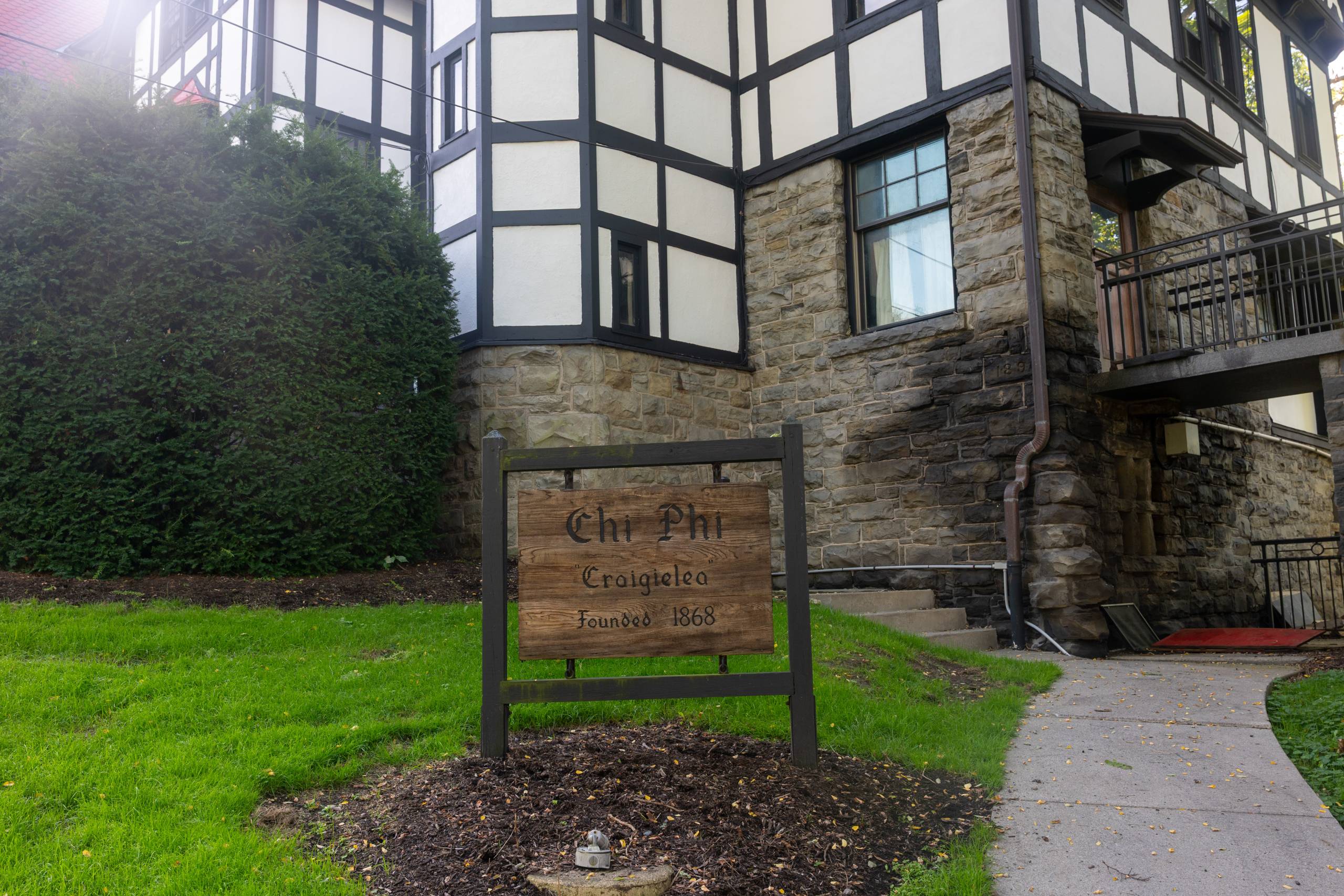
Nicholas Syrett: I sadly was not surprised. The only thing that surprised me, actually, was how racially and ethnically diverse the brothers were, which, for a traditionally white fraternity as old as Chi Phi, is unusual. Often, those fraternities remain pretty white.
But the rest of it, the incidents of gang rapes, particularly of an incapacitated and intoxicated young woman, were not new. In my research, I found incidents like that dating at least from the 1970s, and some indications of earlier incidents as well.
Alexis Madrigal: Hmm. I’m curious how you think the long history of fraternities informs what’s happening today. It feels like things are so much different from, you know, the 1850s or something, when fraternities got going. Are there through lines? What are they?
Nicholas Syrett: Sure. I mean, I would say that in the 1850s, this was unlikely to have happened. The version of masculinity that fraternity members perform, profess, and espouse is very different from what it was in the 1850s.
I think key to this, though, is that we’re looking at groups of men who’ve decided at the outset they want to belong to single-sex organizations on campus, even when almost all of them are attending coeducational schools. So it’s important to them to be surrounded by other men, men who are going to reinforce their masculinity.
And then there’s a certain amount of pressure that comes in those organizations to perform masculinity in certain ways. One of those is through heterosexuality, through being able to talk about success with girls. That’s a trend that began really in the 1920s on college campuses and has only ramped up over the course of the last hundred years.
Alexis Madrigal: You know, Jana, you’re a professor at Rollins, a four-year liberal arts college in Florida. You’re also an adviser to a fraternity, and you’re kind of steeped in the culture of current undergraduate life. Tell me about the kinds of conversations that are coming up for students around this Cornell case.
Jana Matthews: Yeah, I mean, we’re doing all the things that every other college campus is doing in terms of holding forums and seminars to sort of educate ourselves and reinforce the principles around sexual assault and all the things related to that.
I think, with my own fraternity men, the consensus that I’m getting when we have these two-stage conversations about their particular chapter is, “But we would never do that.” And I have to pull back and say, “And you just were suspended last week.”
And so it is absolutely something that could happen here. And so I think it’s that same kind of sense that Nick was talking about, that sort of — we use the term toxic masculinity, for better or for worse — but it’s really ramped up within fraternity culture. And we’re still kind of getting our minds around what that means and looks like. Some organizations are slow to recognize themselves as being bound up in that culture.
Alexis Madrigal: Yeah. You know, reading some of your writing, in which you talk to students about why they go to frat parties, why they go to this party at the lake, why they do these various things, what do you think we’re missing about the appeal of Greek life?
Jana Matthews: I think one of the things that gets lost in the narrative is even, on a basic, fundamental level, why students join them in the first place.
I think a lot of that has to do with the way their lives are structured before they come to college. Most college students have a very, very full, active extracurricular schedule that is in large part orchestrated by their parents or their high school sports, club, or music teams. And then they go from that kind of structure to college, where everything is wide open and they’re missing structure.
Fraternities and sororities provide kind of an instant transition and natural gateway into a highly structured social environment. And so they’re buying into, literally and metaphorically, a kind of social life where everything is planned and organized for them.
And so, you know, that promotes groupthink. And it promotes sort of the best of both worlds when fraternities act right. They do some amazing, incredible things. But when they act poorly, really horrible things happen, like this.
Alexis Madrigal: We’re talking about whether it’s time to rethink fraternities in light of the decades of scandals, including the latest gang rape allegations at Cornell.
We’re joined by Jana Matthews, who’s an English professor at Rollins College and author of the book The Benefits of Friends: Inside the Complicated World of Today’s Sororities and Fraternities. We’ve got Doug Belkin, a higher education and national reporter at The Wall Street Journal. We’ve got Nick Syrett, who’s chair and professor in Women and Gender Studies at the University of Wisconsin-Madison. He wrote a book called The Company He Keeps: A History of White College Fraternities. We’ve also got Max Marshall, author of Among the Bros: A Fraternity Crime Story.
Of course, we would like to hear from you. Maybe you’re an alum of a fraternity or sorority. What was your experience like? What were your reasons for joining? Maybe your kids are in a sorority or a frat. Do you have concerns about them joining? Give us a call at 866-733-6786. How do you think colleges and universities should handle or regulate Greek life? The number is 866-733-6786. The email is [email protected]. You can find us on social media, Bluesky, Instagram, Discord, or KQED Forum.
Max Marshall, you wrote a book that’s about a specific kind of crime, a criminal conspiracy involving fraternities at the College of Charleston. But what did you find as you were researching this book about what frat culture has become? What are its components, as you see them?
Max Marshall: I mean, absolutely. So I was investigating a specific crime at the College of Charleston. Like you said, it was two fraternities, Kappa Alpha and SAE, that basically were running a Xanax ring through the Deep South, using pledges to ship unpressed Xanax to different fraternity houses, really around the United States.
They got caught with about $20 million worth of Xanax, and a student was killed in a drug homicide. But to call it a specific crime really doesn’t do it justice. I mean, it’s all interconnected, right?
And so, for instance, Kappa Alpha had three members die two years before this drug bust. One student fell off a roof, and two died of overdoses. And then, when I started to look into the culture of Xanax, you’re looking at students using Xanax to make punch. I had students talk about pretty similar instances of date rape to the Cornell case.
And it’s really a pretty massive culture of impunity that connects a lot of different things.
But I think there are two things that are often missing from this discourse. One that Nick’s book talks really beautifully about is just how much wealth and power is concentrated in the system.
I think we’re often talking about gender, and it’s helpful. We’re talking about race, and it is helpful. But at Cornell, of all schools, they had a pamphlet when I was in school that was sort of bragging about the benefits of Greek life. It said 80% of Fortune 500 CEOs, 85% of Supreme Court justices, and all but four presidents since 1825 had been in fraternities.
And, of course, they use this as a way to say, “Look at the leaders we create.” But if you look a little closer at that, you’re sort of saying, “Look at the wealth that’s pooled in this system.” It really is a lot of powerful people creating drinking clubs with each other.
And I saw this at the College of Charleston. You have sororities that are doing ZIP code checks to make sure girls come from the right neighborhoods. And the quote-unquote best fraternities are almost always kids from certain groups of private schools, certain groups of suburbs, a lot of Greenwich, Connecticut, at the College of Charleston specifically.
And I think when you ask why people join this, I mean, the allure of that status, at least when I joined a fraternity, was unconsciously the biggest pull. There’s just a lot of status in being with the other rich kids.
Alexis Madrigal: We’re joined by Max Marshall, author of Among the Bros, as well as Jana Matthews, Doug Belkin, and Nick Syrett. We’ll be back with more about rethinking fraternities right after the break.
Welcome back to Forum. Alexis Madrigal here. We’re talking about fraternities, in light in particular of the recent gang rape allegations at Cornell.
We’re joined by Doug Belkin from The Wall Street Journal. We’ve got Jana Matthews, an English professor at Rollins College and author of the book The Benefits of Friends: Inside the Complicated World of Today’s Sororities and Fraternities. We’ve got Max Marshall, author of Among the Bros: A Fraternity Crime Story. And Nick Syrett is a professor at the University of Wisconsin-Madison and author of the book The Company He Keeps: A History of White College Fraternities.
You know, Jana, one of the things that’s interesting to me is that, when I was a kid, I kind of assumed that fraternities might just go away. It seemed like there was declining interest, and we live in a much more coed world. All genders are together all the time, it seems to me, and yet that hasn’t really happened. Can you talk a little bit about what you’ve seen in the post-COVID era for these students?
Jana Matthews: Yeah, so I think one of the most interesting phenomena that I have seen, and that my professor friends across the country have seen, is sort of a move toward more gender segregation, if we can call it that.
If you walk into the campus cafeteria, you will see men sitting with men, women sitting with women. That also gets replicated in the classroom itself. And so, you know, that’s fascinating to us.
A lot of it has to do with the sense of social anxiety that this generation has about engaging with each other, particularly compounded by the fact that they don’t have a lot of experience engaging in in-person interactions with members of the opposite sex.
And so we see the gravitational pull toward fraternities and sororities as a natural place for them to go because they can hang out with people with whom they feel most comfortable.
Alexis Madrigal: How much do we know about the way that the current increase in interest in fraternities, in some ways, is related to the popularity of your sort of Tate brothers and these kinds of other figures in the youth manosphere? Doug Belkin, this one’s coming to you. Do you hear about connections that way with students?
Doug Belkin: I think it’s there. The stuff that’s talked about out in the open is this desire to have brotherhood connections. These are, again, kids who were in school during COVID and didn’t develop all the social skills that were traditional. And this helps them find friends quickly.
The data on this stuff is fairly clear that there are a lot of beneficial attributes to fraternities connected to these connections that young men make in fraternities.
How much of it has to do with Andrew Tate and so forth? That stuff certainly exists, but I’ve not seen any good studies suggesting that it’s a significant part or an insignificant part. I just don’t know.
Alexis Madrigal: Hmm. Yeah. Nick Syrett, talk to me a little bit about that history from your perspective.
Nicholas Syrett: The… Which history exactly? Sorry.
Alexis Madrigal: Oh, just kind of the, you know, we have this culture of online misogyny, which, to my eye, feels like it has very much grown and feels somewhat new. But it’s, of course, playing out in a group of men who are within these institutions that have these long histories.
Nicholas Syrett: Yeah. So when fraternities were first founded, they were at schools that were all male and pretty much all white. And so the choice to join an all-male or all-white organization had, in essence, already been made by people who were going to college in the first place.
And so I think as you see colleges and universities themselves become more coeducational and enroll a much more diverse student body, those who are still choosing to join these organizations are making a choice for gender segregation.
I think I would add to part of what Jana said that, especially if you’re going to a college where you know no one, these are appealing because they control the social life and have a set schedule that will organize your own schedule.
Or if you’re going to a school that enrolls tens of thousands of students, where fraternities and sororities predominate, this seems like the best option for socializing, and in some ways it is. So I don’t blame students for taking advantage of these. It’s just the consequences that are the problem.
Alexis Madrigal: You know, let’s bring in some callers. We’ve got a retired professor in Sacramento. Welcome.
Caller: Hi. So I think the problem with talking about the Cornell fraternity and sorority scene is that you’re not looking at what’s unique about the campus. It’s an elite school, and it is five hours by car to the nearest city, namely New York City. As a result, it’s incredibly isolated, and it’s in a very small town that really has not much to offer late teens and twenty-somethings.
To make undergraduate recruitment happen, you have to have a strong fraternity and sorority system. That’s what the administration thinks.
So 40% — I’ve seen the data, I don’t know if this is accurate, but I’ve seen data thrown around that 40% of our undergrads at any given moment are in some kind of close relationship with fraternities and sororities, and eight out of ten go to their parties regularly.
So they have a kind of monopoly over the social life of the students that NYU and Columbia just do not have.
And as a result, the integration of the fraternities and sororities is so intense that the national fraternities and sororities play a huge role in policymaking at the university.
Furthermore, the graduates, the alumni who are approached, of course, for donations, hugely dominate the development office, the office in charge of getting donations to sustain the endowment, especially in the face of government cutbacks.
Fraternities and sororities at the national level, and alumni who have been in fraternities and sororities, play a huge role in Cornell’s economic well-being.
So it’s no surprise that if you go through the presidents and the Board of Trustees and ask how much connection they have with the fraternities and sororities, whether they’ve met with them, and whether they have connections and ties and so on, you will find a very captured administration that cannot answer the kinds of moral questions that are being posed right now. It cannot.
Alexis Madrigal: I really appreciate that perspective and the experience inherent in it. Max Marshall, talk to me about the way these fraternities, in different kinds of settings, are able to dominate certain kinds of social life and also have certain features that allow them to openly get away with stuff that otherwise is not allowed.
Max Marshall: Absolutely. And, I mean, just one more statistic to add to the sort of power that fraternities have. This is a statistic that the national IFC put out, and, you know, you have to fact-check it, but it at least gives you a ballpark. They say 75% of all money given to American colleges comes from Greek life alumni.
And so that’s really just giving you a sense of, obviously, once again, the wealth that’s pooled there.
But, yeah, in addition to these really wealthy alumni, you also have these national organizations. Basically, their job, they say, is to teach leadership. And, you know, they have a handbook for every single fraternity. KA, SAE, they all have these different handbooks.
But a lot of what they’re doing is they’re kind of insurance organizations. Basically, all of these Greek organizations got together and created this sort of coinsurance setup where they’re insuring these parties.
And then often what they’re doing is, basically, when a sexual assault happens, when a death happens, when there are hazing incidents, they have this playbook for crisis management, and they go into it very quickly.
And it makes it incredibly hard. It becomes kind of a game of whack-a-mole to actually keep these organizations off campus because their playbook is pretty simple. It’s often, “We’re going to suspend this chapter for four years.”
You see this happening at Arizona right now, Chi Phi, Cornell, the same thing. Almost always, these chapters come back four years later.
And so, for instance, the two fraternities that I was investigating, with $20 million worth of Xanax and multiple student deaths, are both back and active at the College of Charleston right now. They have public Instagrams. You can see their parties are crazier than ever.
And so, yeah, there’s a country song we love in Texas: “The road goes on forever and the party never ends.” And it really does feel that way with Greek life. It’s a party that sometimes feels basically impossible to stop.
Alexis Madrigal: And also, you know, one of the things you note in your book is that there’s a ton of underage drinking going on. There’s an air of illegality that’s sort of part of the appeal.
Max Marshall: Absolutely. I mean, when I showed up to campus, the first thing so many students do, me included, is get a fake ID, which feels like a small thing, but it’s actually a bigger offense legally than smuggling Xanax, for instance.
And so you’ve already sort of crossed this imaginary threshold. You’re drinking, often in a basement, illegally. And it becomes a very slippery slope from an illegal ID to minor in possession of alcohol, minor possession of marijuana. It’s all sorts of things.
In addition to that, you have this culture of secrecy around everything that we’re obviously seeing at Cornell. You become very adept, very quickly, at learning how to basically do a cover-up. You learn the tools very quickly, and these national organizations help.
Alexis Madrigal: Jana, how do you deal with this stuff as someone who’s interested in your students thriving, and you’re trying to balance what feels like their desire for social inclusion and a kind of cohesion in their college experience against these other things that Max is talking about?
Jana Matthews: Yeah, I mean, I will echo everything that Max and everyone else has said. It is an ongoing challenge.
Just as an example, the fraternity that I currently advise was suspended. They were not allowed to throw parties. There was a misunderstanding on their part about when their suspension ended, and so they had advertised for this really large “dirty,” which is like a day party, and invitations had gone out. Everyone was planning to go.
And there was a conversation, sort of a debate within that organization, leading up to just 12 hours before the event, about whether or not they were going to still hold that party, even though they were still under university sanction.
And I think the fact that it was even up for debate, because they would risk losing their chapter if they had this party, speaks to the kind of innate desire to be accepted, to be socially relevant on campus, and to preserve and protect their status, even on a very localized level.
And I think it’s just important to remember that we’re dealing with students who are largely between the ages of 18 and 22. Maybe the difference between the organizations they’re part of in high school and these organizations is that the high school organizations are managed by adults, fully formed adults. And then you thrust them into this environment with a very abstract, detached form of authority that lives in an abstract space, hundreds of thousands of miles away.
And so you’re asking them to make adult decisions, and they just can’t.
Alexis Madrigal: Do you think fraternities are sort of a reflection of the misogyny and exclusivity of campuses, or do you think they play a causal, catalytic role?
Jana Matthews: I think it’s both. I think that they attract individuals from social backgrounds where maybe that kind of behavior and mindset is part, if not consciously, of their upbringing and their mentality. And that gets exacerbated in the company of other people who think similar things.
I also think the ways fraternities are structured and organized, and the lack of supervision, definitely make people who might have come into that environment somewhat naively or innocently change their worldview.
I think we talk often about the bubble of social media and how you kind of find what you’re looking for. There are many different forms of social media, and I think fraternity houses are an echo chamber. If you’re hearing constantly the same thing about the same kinds of people, then you start to believe that to be the truth.
Alexis Madrigal: You know, Doug, one of the things that’s interesting about the social environment around these fraternities and sororities is that a lot of universities have cracked down on alcohol on campus, right? Which, in effect, delegates the social life to these other organizations that are more willing to take on the insurance risk of having underage drinking going on inside them.
Doug Belkin: I mean, fraternity parties are famous for a reason. Alcohol is a pretty significant part of the culture in a lot of fraternities. They’re certainly not the only place where it exists, but kids I’ve spoken to who are interested in fraternities talk a lot about wanting to have a kind of classic American college experience. And that involves parties. It involves drinking and having fun. And fraternities are, right now, at a lot of campuses, the place to do that.
Alexis Madrigal: Yeah. You know what? Let’s bring in another caller here. Let’s bring in Erin in San Francisco. Welcome, Erin.
Caller: Hi, thank you. I’m a mother of two young college women, and I myself went to UC Berkeley in the early ’90s, when I would say the culture was turning against the Greek system a little. It was the height of the grunge era. There was a lot of cynicism about the Greek system.
At Berkeley, interestingly, we had the co-op system, which was a nonexclusive system that was kind of an alternative to the Greek system, where people could attend parties and socialize, but it didn’t have the same exclusivity as the Greek systems.
So I just thought that was an interesting alternative, and I’m not sure what’s happened to the cooperative system at Berkeley.
Alexis Madrigal: It’s still there. I run by them. They have parties for you.
Caller: Okay, yeah. But my two girls went to different UCs, and they both joined the Greek system.
Alexis Madrigal: What was that like for you?
Caller: So I was extremely skeptical and worried for them. And what I just wanted to offer here to this conversation is a bit of hope, because both of them have come back to me and reported that these fraternities nowadays, at least at these Southern California UCs — I’ll just say UCLA and UC San Diego, where San Diego, I mean, they call it “UC socially dead,” you know, so the Greek system is the kids’ opportunity to socialize.
But these guys in these fraternities now, they’ve all received training. They’re solicitous of these sorority girls when they come and say, “This person is threatening me. I feel uncomfortable. This person is making me feel uncomfortable.” The fraternities come down on these guys, and there’s a real awareness.
At least from what I’ve been hearing from them, they are much more optimistic about the potential for these institutions to reform when expected to. So I just wanted to put that out there.
Alexis Madrigal: Yeah, Erin, I really appreciate that. I mean, Jana, I assume that’s why you’re involved, to have these fraternities meet that potential to be a different kind of place, if that’s possible.
Jana Matthews: Absolutely. And I would say that is really, really hopeful and really excellent.
I was going to point out that it is chapter-specific. There are many organizations and many chapters around the country that are doing the right thing, and I hope that my chapter is one of them.
I also want to point out one thing, though. When we talk about the education and training that these organizations and members are receiving, I just want to remind everyone that a lot of times, they’re not getting that formal education about sexual assault training, or even knowledge about sex in general, through their high schools.
And so the first time that they’re hearing it, or many of them are hearing it, is actually during orientation. And that’s exactly the same time that they’re rushing or joining these organizations.
So how much of it is sticking in their brains is one thing. How much of it is actually getting applied in practice, and are they hearing counterintuitive messages that are coming at them? I think that’s one of the challenges that higher ed is facing writ large in trying to manage these organizations.
Alexis Madrigal: We’re talking about fraternities on campus, of course, in light of the latest gang rape allegations at Cornell.
We’re joined by Jana Matthews, an English professor at Rollins College. We’ve got Max Marshall, author of Among the Bros: A Fraternity Crime Story. We’ve got Nick Syrett, who’s a professor at the University of Wisconsin-Madison and author of The Company He Keeps: A History of White College Fraternities. And, of course, we’ve got The Wall Street Journal’s Doug Belkin, who covers higher education.
I’m Alexis Madrigal. Stay tuned for more right after the break.
Welcome back to Forum. I’m Alexis Madrigal. We’re talking about fraternities in light of the scandals they’ve had, including, of course, the latest gang rape allegations at Cornell.
We’ve got The Wall Street Journal’s Doug Belkin. We’ve got Rollins College’s Jana Matthews, who wrote the book The Benefits of Friends: Inside the Complicated World of Today’s Sororities and Fraternities. We’ve got Max Marshall, who wrote the book Among the Bros. And we’ve got Nick Syrett, who wrote The Company He Keeps: A History of White College Fraternities.
We reached out to different people in advance of the show, and we heard back from Tom Gerety, who’s the former president of Amherst and Trinity colleges. One of the things he says is this — I’m quoting here:
“Sexual assault is among the most serious crimes, but the Title IX campus framework is where they get investigated and decided most of the time. Expulsion from Cornell is not the proper punishment for a rapist. It’s easier to convict him sometimes, but it’s not a punishment that does justice to the victim or the victimizer.”
Doug Belkin, talk to me a little bit about how this system developed, how it works, and whether it does do justice.
Doug Belkin: It’s a really complicated and messy system that was put in place. It comes from the federal regulation Title IX, which essentially says that you have to have equality between the genders, and you can’t allow gender discrimination to impact anybody’s educational experience.
So if there’s some kind of sexual assault, that falls under Title IX. In this case at Cornell, the DA didn’t think there was enough evidence to prosecute it criminally, but these systems are in place to adjudicate cases on campus.
They have these courts set up that are staffed by Title IX staffers, and then often they’ll have people sitting in on hearings who are professors and students.
If you’re going to be found guilty of something in a criminal court, it’s beyond a reasonable doubt. In Title IX, it’s a different level. It’s a preponderance of — what’s escaping me — but the level is not quite as high. And so that’s why they were able to expel these young guys, even though they couldn’t have been, or were not, convicted in a court of law.
Alexis Madrigal: Hmm. I mean, Doug, it feels to me like we don’t handle other crimes like this, right? I mean, this is a really unusual setup, to have a parallel justice system running.
Doug Belkin: Right. So ideally, if there’s a crime, then it is taken care of by the police off campus. They decline to prosecute. So then you’ve got a situation where somebody — this young woman didn’t graduate from Cornell, so she was denied her education. So how do you adjudicate that? That’s the school’s responsibility.
This stuff is, you know, very political. When Obama was president in 2011, he said the schools were not being aggressive enough in prosecuting sexual assaults. Trump got into office and said, you know, a lot of guys said that they were being railroaded and their lives were being ruined because they were being falsely accused. The pendulum swung back the other way.
So how these things are adjudicated is very much touched by the culture and the political leadership of the country.
Alexis Madrigal: Yeah. One of our listeners, Lee, writes in to say:
“I was in a fraternity during college between 2008 and 2012. There’s definitely a pervasive culture of toxic masculinity, of which I contributed. As the years have passed and as I have matured, I recognized the harmful system that I was a part of and helped promote.
“Recently, I have wondered what I or other fraternity alumni who feel similarly can do about it. I think one answer is for alumni to intervene because they have a major influence on fraternity values and culture. Obviously, not an easy task, but it is a possible solution.”
What do you think, Max?
Max Marshall: I mean, I do agree that that is a possible solution. Alumni are the lifeblood of fraternities, both in terms of donations and — another reason a lot of guys I knew joined fraternities was this idea that there was going to be a pathway to Wall Street, a pathway to tech, or a pathway to private equity with alumni.
And it was funny: when I started reporting my book, I didn’t have a LinkedIn. But to find sources, basically, I created a LinkedIn, and immediately I had, you know, 90 Delta Sigs that I could become friends with. And within two days, I was two connections away from a lot of the guys in the College of Charleston ring.
That’s how connected that world is. And so if that world is turned, not even en masse, but in a large rebellion of alumni who talk loudly about this, I actually do think it can make a difference.
Fraternities often have alumni come back to campus to do career talks or sort of say, “If you want to work in a bank, here’s what you need to do.” And I think if those alumni integrated that into their talks, there is an actual difference. You’re having an older person you look up to say, “You know, I used to think the way you did, but I don’t anymore.”
That having been said, these national organizations consist of alumni, and they’re often the alumni who are the most resistant to change. So it’s really difficult.
Alexis Madrigal: You know, Jana, I think this one comes to you. One listener writes in to say:
“The issue of sexual assault is surely a societal problem that frats amplify in their social microcosm. We’ve seen what can happen when district attorneys do pick up these cases. Look at Stanford and Brock Turner. He raped a woman, got six months.
“My question for you, and it’s something that has come up in your work, is that these kids are growing up with a very important factor in their sexual development: they are watching porn from the age of X number of years old, and that’s long before they actually have had real contact with other people. How much do you think that has changed some of the cultural norms?”
Jana Matthews: I think it has changed them tremendously. And I can speak anecdotally about that, just in recent years. I think it’s post-COVID in large part.
Students now are kind of growing up with sexual education that is primed through porn, through OnlyFans, and through very little sexual contact with partners. And then, when they get to college, you combine that with fraternity culture and alcohol, and I think in some cases it can be a recipe for disaster.
The other thing I’ll bring into the mix here is that what makes this sort of situation unique and perhaps highly combustible is that sororities can’t, by law, host parties in their houses.
So if they want to have a party that involves alcohol or social engagement with men, they have to go to fraternity houses or off-campus places.
And so I think a huge shift that’s unlikely to happen, for insurance reasons and all sorts of other political reasons, would be to allow women the opportunity to host events within their own spaces that they control and that they can have much more jurisdiction over.
When you export that to other places, I think they inherently lose their sense of control and agency over their own bodies.
Alexis Madrigal: Yeah, yeah. Nicholas, as someone who has studied the long history of these things, how do you view reform efforts and possible changes? Do you think this is just a permanent feature of these kinds of fraternities, or do you think they’re historical in the sense that they do change and there are contingencies in those things?
Nicholas Syrett: I wish that I could be more hopeful than I actually am. I’m heartened by the stories from Jana and the mother who called in about her daughters, but we know that sorority women are more likely to experience sexual assault on campuses because they’re interacting with fraternity men. So that’s not the experience of her daughters, but it’s certainly something that is going on.
As you said near the beginning of our conversation, every few years one of these stories bubbles up. This one has achieved international attention, but locally these things are happening fairly regularly. They just don’t achieve quite as much notoriety.
So I think as long as these organizations have the power that they do, have the money that they do, as Max pointed out, and are in control of where alcohol and partying happen, I am not super hopeful.
Alexis Madrigal: A couple of contrasting points of view from listeners. One listener writes in to say:
“My nephews each went away to college. Both did poorly freshman year without Mom’s reminders. But the one who had joined a fraternity found peer support there and learned from the upperclassmen. His grades improved dramatically. The other returned home and enrolled in community college.”
Peter writes:
“I’m surprised at the argument that frats are important for meeting others when starting a new school. Student dorms serve that purpose very well and are also well integrated. Dining halls for the dorms serve a large number of new students and are great meeting places. I’m most familiar with the UC system, but it may be that dorms are not as accessible at other schools.”
Of course, we’re talking about fraternities in light of the recent gang rape allegations at Cornell. We’ve got The Wall Street Journal’s Doug Belkin, Rollins College’s Jana Matthews, Max Marshall, and Nick Syrett. All three of the latter have written books about Greek life in various ways.
I think one of the things I came away with from reading your work on this — and, Max, I think I’ll go to you on this — is that we talk a lot about how Gen Z and men in general are suffering from loneliness. And it does feel like the one thing Greek life appears to do is address that particular need. What other ways have you heard about that might be able to fill the same void?
Max Marshall: Well, I mean, certainly, you have so many things like the co-op system, which we’ve already discussed, or residential colleges or clubs generally. You know, eating clubs, finals clubs, all of these things.
But I do think, in addition to addressing loneliness, it’s something we’ve touched on a bit, Greek life also — the exclusivity is a feature more than a bug.
I think there is really something to getting into an organization that turns away most people. It’s also a feature of a school like Cornell more broadly. It’s one of the reasons I was excited to talk to NPR today. There’s something about NPR not reaching out to everyone that’s exciting.
And I’m obviously not comparing NPR to Greek life writ large, but I do think there really is something to this idea.
You know, something I found both as a student and as a reporter is that you show up to any campus, and pretty immediately students will tell you, “These are the three best fraternities and the three best sororities on campus.”
And it’s sort of, okay, well, what does that mean? Because the best baseball team wins the most games, but what does the best fraternity or sorority do?
It’s often simply the most exclusive, with the most wealth and the craziest parties. And often these are the organizations that have the most problems because they can get away with the most, and they almost show off how much they can get away with.
The best fraternity at the College of Charleston, the year before the drug ring burned down a cabin in the woods, had basically no consequences whatsoever. The alumni stepped in, and then a year later, they were part of a $20 million ring.
But I do think that exclusivity, that status, is hard to replicate with a student organization. You know, it’s like anyone can go to the Quidditch game on the quad, but not everyone gets into the UT Fiji party. And I think a lot of people want to line up for UT Fiji Island because there’s real status in how many people get turned away.
Alexis Madrigal: It’s interesting, Jana. It’s almost like one of the things our culture says is, “Hey, everybody should be included, and everyone should belong,” and these kinds of things. And then you kind of have this countermovement occurring underneath, which says, “No, but actually, hotness, wealth, status, this kind of fun — that’s actually what’s important.” And a subset of kids really respond to that.
Jana Matthews: Yeah, I want to jump on exactly what Max was talking about. I think this sense of exclusivity, status, and title is something that fraternities actively cultivate. They get it from their national organizations, but they also borrow it from the institutions of which they’re a part.
When we think about exclusivity, institutions love to brag about how many students they’ve rejected and what their status is based on. We count our status based on our acceptance rate, and every year we’re hoping to admit fewer and fewer students.
And so when we have that kind of narrative, that kind of sense of who we are, it makes sense that we then cultivate and celebrate organizations within it that have the same kind of mindset.
I don’t have an answer to where we go from here. I think we can be more diagnostic rather than prognostic, but I can definitely say it is a complex problem that is deeply embedded at the institutional level within higher education, as well as within the organizations themselves.
Nicholas Syrett: Can I just say one thing, really?
Alexis Madrigal: Yeah, sure.
Nicholas Syrett: I wanted to piggyback on what Jana was saying and what Max had said. I think it’s interesting. Yes, institutions are boasting about their exclusivity, but at least, as Max pointed out, we know what it’s based on. It’s grades. It’s SAT scores. It’s extracurricular activities in high school.
The problem, of course, with fraternities and sororities is that it’s physical appearance, charisma, and money.
And so for our universities, especially public universities, to countenance this kind of exclusivity on campuses when otherwise they are in favor of equity and standards for things is a really glaring paradox.
Doug Belkin: If I could just add, there are so many clubs on campus that are designed to be exclusive by virtue of interest or identity. I think this sort of falls along with those. It’s not standing alone on that front.
Alexis Madrigal: Right, yeah. No, no, that makes sense. Although, what would the interest or identity be in this case, right? It’s a little different, right?
Nicholas Syrett: Yeah, I think it’s different in that if it’s an interest, like anyone who wants to play chess can go to the chess club. They’re not going to be turned away. Whereas that’s not true for a fraternity.
Alexis Madrigal: It’s interesting. It’s like a subset with its own kind of features.
We have a comment from Nadine. Nadine writes:
“My son attended Cornell and was a member of Chi Phi a little more than 10 years ago. He was a superstar high school student. He opted to enter the fraternity fray, but came out of it physically and mentally assaulted, battling depression and addiction for a decade thereafter.
“We parents send our incredibly promising future leaders to these colleges to get a superior education that readies them for the, quote, real world. Chi Phi was a huge obstacle in that journey for my son, and I, as a parent, feel wronged and taken and insulted myself.
“Our 18-year-old, 19-year-old children arrive at college with a real goal. Hazing, sexual assault, drugs — shame should not be one of the stops along the way.”
Another listener writes:
“I think what the guest said — it would have been you, Max — about the air of illegality is so true. When I hear my adult friends reminiscing about their, quote, ‘good times’ in their frat, it inevitably revolves around some ritual that borders on hazing or some crazy antics à la Animal House.
“Kids think that is what they’re supposed to be doing. Like, the whole point of being in a frat is to engage in bad behavior, and keeping it secret is what bonds the guys together for life.”
Another listener writes:
“What I have observed among people who participate in Greek life — my kids were in them — is that kids are super enthusiastic about it to begin with. But by the middle of junior year, many people drift away as they find other kinds of groups to belong to and they know themselves better, finding people whose interests mesh with their own.”
Last couple here, just making sure we get to a bunch of these listener comments.
Dave in Alameda writes:
“Someone needs to get the word out. Fraternity guys that have passed through that system are the most boring people you will ever meet. Please remind parents that they are doing their offspring no favors by siloing their children in a room where members are selected for their similarity to other members, right there in the shadow of the institution you attend at age 18 to become interesting.”
A lot of feelings this morning about fraternities. We’ve been joined by some real experts in their history and their present circumstances.
We’ve had Doug Belkin, higher education and national reporter for The Wall Street Journal, who’s been on the Cornell case. Thank you so much, Doug.
Doug Belkin: Thanks for the invitation.
Alexis Madrigal: We’ve had Jana Matthews, an English professor at Rollins College in Florida and author of the book The Benefits of Friends: Inside the Complicated World of Today’s Sororities and Fraternities. Thank you, Jana.
Jana Matthews: Thank you so much.
Alexis Madrigal: We’ve had Max Marshall, author of Among the Bros: A Fraternity Crime Story. Thank you so much, Max.
Max Marshall: Thanks. I enjoyed that.
Alexis Madrigal: We’ve had Nicholas Syrett, professor of Women and Gender Studies at the University of Wisconsin-Madison and author of the book The Company He Keeps: A History of White College Fraternities. Thank you so much, Nick.
Nicholas Syrett: Thanks for the conversation.
Alexis Madrigal: If you want to learn more, you’ve got your reading list right here, everyone. Thank you so much to all of our listeners for your calls and your comments. I’m Alexis Madrigal. Stay tuned for another hour of Forum ahead with me, Mina Kim.
Announcer: Funds for the production of Forum are provided by the Jenerosity Family Fund and the members of KQED.