The Bay Area’s Hotly Contested Congressional Races
Airdate: Wednesday, October 7, 2026 at 9 AM
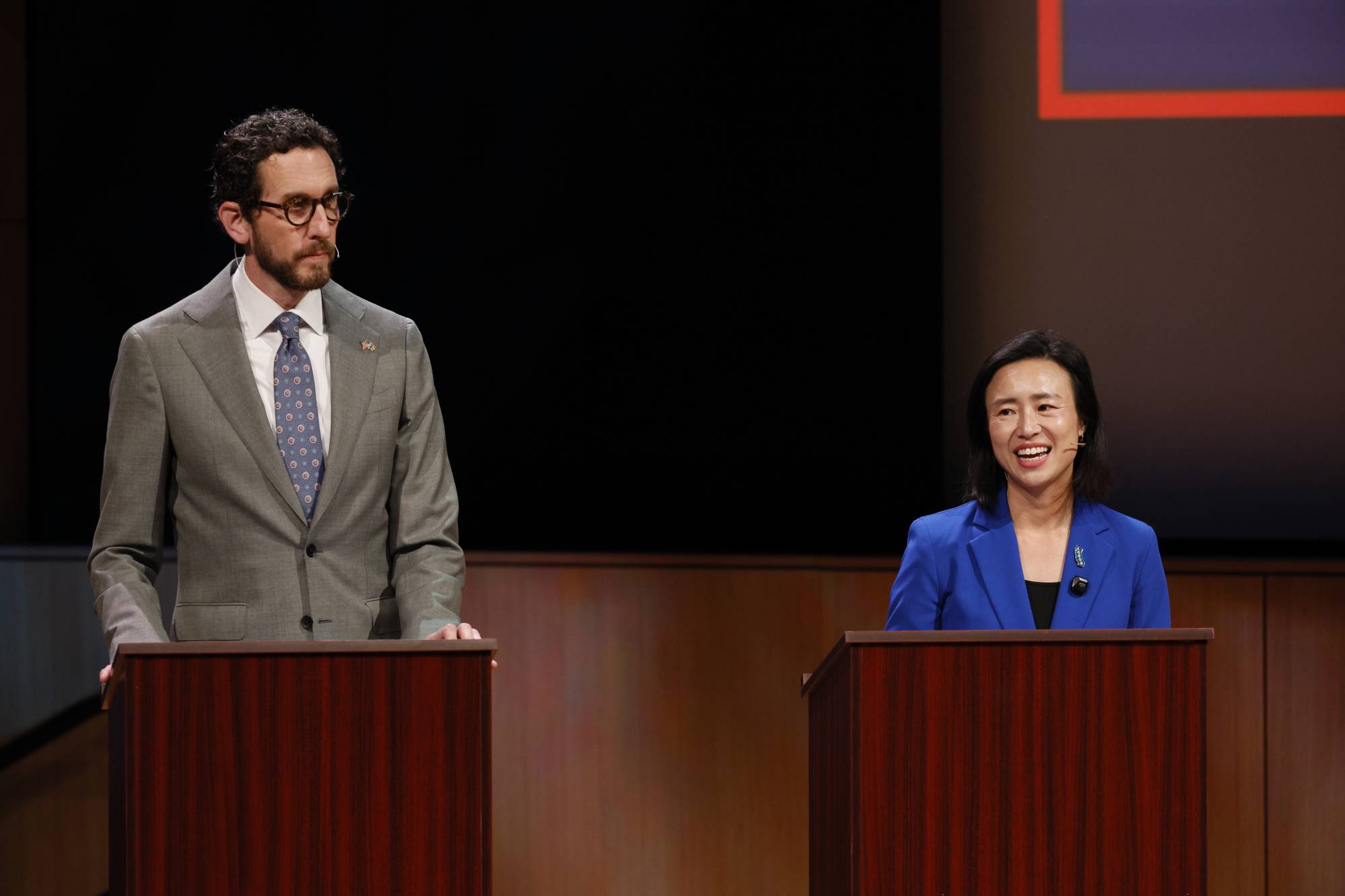
Some of the Bay Area’s biggest political battles this fall are happening between fellow Democrats in hotly contested races for Congress. There’s a fierce fight for retiring former Speaker Nancy Pelosi’s seat in San Francisco. In Napa, where redistricting has shaken up the district, a multimillionaire is courting votes from Republicans and progressives to unseat an establishment fellow Democrat. And in Sacramento, younger progressive challengers are taking on longtime incumbents, raising a bigger question about what Democratic voters value right now: a new generation of leadership, or the experience that comes with years in office? KQED’s politics team joins us to break down the races, the candidates and what to watch heading into Election Day.
Guests:
- Guy Marzorati, correspondent, KQED’s California Politics and Government Desk
- Scott Shafer, senior editor, KQED’s California Politics and Government Desk and co-host of Political Breakdown
- Izzy Bloom, reporter and producer, KQED California Politics & Government Desk
Episode Transcript
This is a computer-generated transcript. While our team has reviewed it, there may be errors.
Alexis Madrigal: Welcome to Forum. I’m Alexis Madrigal. A month out from the midterms, it looks like a Democrat could win for Senate in Texas, North Carolina, Iowa, Georgia. Poll after poll shows an unpopular president dragging down the Republican Party across the country. Nobody knows how big the blue wave will be, but it’s looking pretty big.
Locally, many congressional races pit Democrats against Democrats, sometimes in districts that have been transformed by Prop 50 redistricting. Will the blue wave push our congressional delegation to the left? The highest-profile contest is the race to represent San Francisco, almost all of it at least, replacing the legendary Nancy Pelosi. But there are other interesting races in the East Bay, in the North Bay, up towards Sacramento. We’re gonna cover them all.
Here to talk with us, we’ve got some folks from KQED’s politics team. Scott Shafer, of course, KQED’s senior politics correspondent, co-host of Political Breakdown, and of course has a new podcast series about Nancy Pelosi called The Speaker. I think episode four dropped today, Scott.
Scott Shafer: Yeah, that’s right. Get it wherever you get your podcasts.
Alexis Madrigal: Yes, that’s right. Thanks for joining us. We’ve also got Guy Marzorati, correspondent on KQED’s politics and government desk. Thank you.
Guy Marzorati: Hey, good morning.
Alexis Madrigal: So, Scott, you were one of the moderators of last week’s debate at KQED between Supervisor Connie Chan, Senator Scott Wiener. What can you tell us about the two candidates, core components, what’s kind of the texture, landscape of this campaign?
Scott Shafer: Well, I think underlying all of it is Nancy Pelosi. She has a big shadow. And when she endorsed Connie Chan just before the primary, it boosted Connie Chan into second place. And both she and the third-place finisher, Shoykat Chakrabarti, are really stepping on the gas pedal to try to get Chan to win the seat.
It’s a bit of an uphill battle because Scott Wiener has been around for a long time. He was on the Board of Supervisors. He was in the state Senate. He’s been a very prolific lawmaker. He sort of led the charge on housing, issues ranging from taking on Trump over ICE, masking, other things like that, as well as AI regulation.
Connie Chan, more progressive, close with labor, has been a representative of her district, the Richmond, in ways that don’t necessarily help her citywide, for example, opposing closure of the Great Highway to make way for Sunset Dunes Park, a very popular inner district, maybe less so citywide in this congressional district.
But these are two very distinctive people and personalities. They both have interesting biographies. Connie Chan came to the U.S. when she was young from China. Scott Wiener, openly gay, came from the East Coast.
So I think their differences over issues are, I think, in all these races we’re going to talk about, how these folks are going to vote. Whoever wins and goes back to D.C. among the Democrats, they’re going to vote the same way the vast majority of the time.
I think for me as a voter and as voters evaluate this race, it’s who will be the most effective, who is gonna go back there and get things done, who’s gonna represent our values, who can build coalitions. And I think that’s really something that voters are grappling with.
Alexis Madrigal: I mean, in this one, it feels like there is a pretty clear choice, at least around housing stuff, right? I mean, Scott Wiener being known as like kind of the most YIMBY guy in the state of California, perhaps. And Connie Chan, definitely not in the —
Scott Shafer: Absolutely. I mean, Scott Wiener has not just championed more housing, but has been relentless. If a bill failed, he went back and talked to the people who voted against it, talked to the governor. He did that with AI as well. And so there is now evidence that there is some evidence that the legislation that he’s gotten through and signed is having an impact. There’s more housing being built.
The thing is, though, there is also — that can be a polarizing issue. People can say, oh, yes, we need to build more housing. But not in my backyard. You know, that’s the whole nitty-gritty. That’s where that phrase comes from, you know.
And so I think, you know, in a number of ways, Scott Wiener is, while he’s prolific and often seen by colleagues up in Sacramento as one of the most effective lawmakers, he’s also polarizing. And there are people both in the gay community and outside, in labor certainly, that, you know, find him to be not their cup of tea for one reason or another.
So I think, yes, if you’re pro-housing, Scott Wiener is, you know, pretty clearly the person you’re going to support. But, you know, like I said, there’s nuances to that issue.
Alexis Madrigal: Guy, can you talk a little bit about some of the dynamics of this race? Like, have things changed? Have people changed their positions on any key issues, trying to pick up and increase their coalition’s breadth?
Guy Marzorati: Biggest change in dynamic is Nancy Pelosi deciding to be a main character in this election. The question of how she would weigh in and at what point, as Scott said, late in the primary, her endorsement helped boost Chan into the top two, but really that was the start for her. She decided to continue her involvement in the campaign, rallying financial support for Chan, had a key staff member go work on Connie Chan’s campaign.
And I think you really saw this crystallize most when Scott Wiener made what was perhaps his biggest misstep in the campaign to date, which was when he rolled out this AI chatbot that mocked Connie Chan, basically to show that Chan stands in the way of housing and other things. The chatbot was supposed to give answers like Connie Chan would give and kind of portray an obstructionist.
Nancy Pelosi was able to marshal opposition to this chatbot, labeling it sexist, racist, in a way that, within a matter of days, got Wiener to take down the chatbot and profusely apologize. It was just — it was a master class in kind of the way Pelosi was able to leverage relationships. She had it on official House of Representatives letterhead, opposition from members of the delegation, and so that, to me, stood out as like, okay, this could be the biggest kind of roadblock for Wiener if Pelosi really kind of takes on this role and makes it not so much about Chan versus Wiener, but about her legacy.
Alexis Madrigal: Yeah, because I was listening to you guys on the debate and one of the most fascinating things for me was that Connie Chan didn’t mention her Pelosi endorsement, but then Scott Wiener gave a sort of like sweet thing about —
Scott Shafer: Yeah. Nancy Pelosi. That’s so interesting. And, you know, I think that, you know, I asked Ian Kramer, who’s the staffer from Pelosi’s office, like, why didn’t, you know, Connie Chan mention Pelosi at all? Just for the mic. And he was like, well, you know, elections are about the future, you know. And we think most people know that Nancy Pelosi is already for Connie Chan.
I’m not sure that rings entirely true. I’m sure that if they thought it would benefit her, Chan would have mentioned it.
You know, Wiener has always been deferential publicly toward Pelosi. But what irritated Pelosi, and I think this is what fueled a lot of conspiracy theories about why is she so adamant for Connie Chan, in 2006, Scott Wiener began raising money for a congressional race. He said, “I’m not going to run against Speaker Pelosi, and I hope she doesn’t retire. But if she does or when she does, I am going to be ready.” And then in October of last year, he actually announced he was going to run before she was retiring.
And, you know, in the world of Pelosi — you know, and the Burton machine, and I see this election kind of is the last gasp of the Burton machine. Loyalty is everything. And by Wiener stepping out before it was, quote unquote, his turn, you know, they saw that as very disloyal.
Interesting, because that’s exactly what Pelosi did when she ran for leadership back after the 2000 election. They were like, no, it’s not your turn. She said, I don’t care. I’m going to run. I am going to win.
So anyway, I do think that, you know, what was poignant, I think, and what humanized Scott Wiener in that debate was his closing statement where he said, you know, back in 1987, the year that Pelosi got elected, she went back to Washington and she fought for AIDS funding. And there was a gay teenager in the closet back in New Jersey or Pennsylvania, I forget where he was, who saw that as permission to come out and be who I am. And I thank Nancy Pelosi. That person is on the stage now tonight.
And so he is always publicly, even after Pelosi has done some things, like Guy mentioned, for Connie Chan, always been very deferential. There’s really not much in it for him to go after her. She is an icon, you know, and so he has to be very careful. I mean, he did push back a little bit on some of the characterization of the chatbot, but, you know, it’s careful. It’s tricky for him.
Alexis Madrigal: Also, just noting for folks, Phil Burton and then Sala Burton succeeded him, which is going to come up later with another —
Scott Shafer: And don’t forget John Burton.
Alexis Madrigal: Yes, yeah, and John. So we’ve got just a whole bunch of the California politicians who have been running in San Francisco with the last name of Burton.
Guy, I wanted to ask you one other issue on this campaign. Where are these candidates on Prop 40, California’s billionaire wealth tax?
Guy Marzorati: Yeah, so this is an issue where they actually are split. Wiener opposes Prop 40, the billionaire wealth tax; Chan is for it.
This came up in the debate, and I think, if anything, it illustrates Wiener on these issues of taxes being, in kind of San Francisco, California Democratic circles, more moderate. He’s expressed his opposition to this, and honestly to an earlier corporate tax on the ballot this year in San Francisco, as perhaps creating a climate that would be too unfriendly to business.
His concerns with Prop 40 on the ballot are similar to concerns we’ve heard from Gavin Newsom, other Democrats, about this just being a one-time tax, this concentrating too much of the benefits just on health care to the exclusion of education, et cetera.
Alexis Madrigal: I can also imagine, because he’s such a kind of technocratic thinker, that he’s like, we should really solve this at the national level. That all kind of checks out with his sort of version of —
Guy Marzorati: Yeah, and I think, I mean, to Scott’s point, these folks are going to vote the same 90, 95 percent of the time in Washington. There are a few issues where they have differences. This is one of them on taxation.
And I think another one, and this came up in the debate as well, is how they’d approach the American relationship with Israel. We heard Connie Chan say she wants a full arms embargo against Israel, meaning no American funding even for defensive systems like the Dome. Scott Wiener’s kind of drawn the line there where he says, I don’t want to send offensive military assistance, but I’m okay with funding the Iron Dome and those kind of missile defense projects.
Alexis Madrigal: Yeah, yeah. Where is this race, Scott? Like, do we know, you know, is it close? Is it not close?
Scott Shafer: Well, there has been some polling that shows, you know, Scott — let’s go back to the primary. Wiener got 41% of the vote. Chan got 20-something. I mean, it was maybe it was 30. But Wiener was way ahead.
So it’s a different electorate for the general election. But generally, it seems like Wiener is ahead still. The chatbot was a big unforced error on his part. But there’s been a lot going on. You know, I’m not sure how closely people are paying attention to this. You know, now they begin to focus because they have a ballot on their table.
But I think, you know, based on all the things that Pelosi is doing, the things Wiener is doing, you know, what people are saying, the dynamic, you know, reputational — I think Wiener’s positive ratings have come down a bit, you know, since before this campaign started because, you know, there’s been a lot of attacks on him.
But I still think it’s, like I said, his to lose. But, you know, we try to stay out of the prediction business, but I wish — from everything I have heard, it seems like Wiener has the edge right now. Ha, ha.
Alexis Madrigal: Guy, do you have anything that we should be looking out for just the last month, either of them closing on anything different or special?
Guy Marzorati: Yeah, I mean, let’s go back to this Pelosi thing. There was a pro-Wiener super PAC that did some polling in this race that they released last week. And the data point that stood out to me, fewer than half of voters were aware that Pelosi had endorsed Chan. Which is interesting because she didn’t bring it up. That’s why we go back to this debate and say, was that a missed opportunity for her to just remind folks, hey, I’m running for Nancy Pelosi’s seat and Nancy Pelosi’s endorsing me.
Alexis Madrigal: We’re talking with people from KQED’s politics team. We’ve got Scott Shafer and Guy Marzorati. We’re of course gonna talk about Napa County. We’re gonna talk Alameda County when we get back from the break. And we wanna hear from you. What issues matter most to you in these congressional races? Housing, affordability, immigration, AI, foreign policy. Let us know, 866-733-6786. That’s 866-733-6786, [email protected].
I’m Alexis Madrigal. Stay tuned.
Welcome back to Forum. I’m Alexis Madrigal. We’ve got KQED’s politics team in the house here. We’ve got Scott Shafer, KQED’s senior politics correspondent, co-host of Political Breakdown, and of course, got a new podcast series out about Nancy Pelosi called The Speaker that’s coming out now. Episode four just dropped. We’ve also got Guy Marzorati, correspondent with KQED’s politics and government desk. And we want to bring in Izzy Bloom, a reporter and producer on KQED’s politics desk. Thanks so much for joining us, Izzy.
Izzy Bloom: Thanks for having me.
Alexis Madrigal: Let’s talk about Napa. This is congressional district four, although they always confuse me, and now with redistricting it’s even more confusing. But anyway, it’s Napa, long-time Democratic congressman Mike Thompson, now facing a challenge from Eric Jones, right? 35-year-old, former venture capitalist. Give us a lay of the land here on this race.
Izzy Bloom: Yeah, so intra-party fight. The incumbent, Mike Thompson, has been in Congress since 1999. He served in the state legislature for eight years before that. He was born in St. Helena, raised his family here, still lives there. And he’s a member of the powerful Ways and Means Committee. He’s a Blue Dog Democrat with establishment support from the likes of Representative Nancy Pelosi and Senator Adam Schiff and Governor Gavin Newsom.
And he’s facing a challenge, as you said, 35-year-old Eric Jones, former venture capitalist. He moved to Napa in 2021 with his young family. And he is really running on some progressive policies, fighting for working families. He sort of points to his upbringing in Maine as the son of a disabled veteran, said his family was low income and, you know, relied on Medicaid and food stamps and disability checks at certain times.
And so he is running on some of these progressive policies like universal child care, a $10,000 tax credit for working-class households. And he’s also part of this wave of generational-change candidates that we’ve seen across the state, with sort of younger, often progressive Democrats challenging their party’s aging incumbents.
Alexis Madrigal: How has that been going for people, though?
Izzy Bloom: I would say, you know, there was like five races in the primary with these younger Democrats challenging incumbents, and Eric Jones made it through the primary, and Mai Vang in District 7 out in Sacramento was the other candidate. The other three didn’t make it.
So I think that at least shows that it wasn’t a mandate from voters that they necessarily want generational change. There has been polling from NPR that shows eight in 10 Americans are in favor of setting age caps and term limits on Congress members, but that’s not really going anywhere.
Scott Shafer: Right, right.
Izzy Bloom: And I think also people might be generally in favor of an age cap, but when it comes to their own representative, they tend to like them.
Guy Marzorati: I’ll say, I mean, there has been, like, the New York Times did an analysis of this nationwide, and it was like nine in 10 of these older incumbents won their primary challenge.
What’s different here is we have a top-two primary. I think so much of the challenge in these generational contests is you run in a primary, it’s a lower turnout, it’s very hard to establish your name and also then draw a contrast all in the course of a primary.
What we have here with Eric Jones is like, and Mai Vang as well, just get out of the primary. Get to that general election where you can have a one-on-one runoff against the older incumbent. I think that creates a very different dynamic than what you see across the country.
Scott Shafer: I think those two races, though, the one in Sacramento with Doris Matsui, who’s 82, versus Mai Vang, who’s 41, and the Thompson-Jones issue is, first of all, Thompson’s not quite as old. He’s 75, I think. But he’s also — he’s from the district, as he said. He’s in the district a lot.
And you mentioned Napa. This district goes from Petaluma all the way to like Yuba City now with the — after Prop 50. It’s a huge district. And, you know, Eric Jones… Not as well known in the district, and he’s trying to thread this interesting needle where he’s progressive and promoting progressive causes and issues, but he’s also trying to get Republican votes because the district has a lot of Republicans and they may not like Thompson because he’s a Democrat and well-known Democrat.
But on the other hand, you know, so the one top Republican in the primary, he didn’t make it into the top two, but Ray Relyea has endorsed Jones. And so, you know, you’ve got this kind of odd Republican, but also progressive. And that, to me, raises the question for voters of authenticity. Who is this person?
Guy Marzorati: There’s so much 2014 Ro Khanna in this Eric Jones campaign to me, which is — he, like, to Izzy’s point, very hard to pin down on exactly where on the policy spectrum is he. He’s kind of taking positions that appeal very broadly. And also, yes, running a campaign that’s really centered on this, my opponent’s been in office for a long time, I want to do something different.
And kind of, you know, kind of got, you know, blown out the first time he ran in the primary against Mike Honda, got a little closer in the general election, came back and ran the next time. It would not shock me at all if Eric Jones lost this race, he pulls a Forrest Gump and just keeps running. I mean, it just keeps going. And he’s, you know, back on the ballot in two years.
Those kind of parallels where it’s like, where does it work? You know, where is he actually standing? He has support from Our Revolution, but then also the Bernie PAC, but then also the top Republican opponent. Yeah, it’s — it’s a —
Izzy Bloom: Well, also, the person who ran Ro Khanna’s campaign, Brian Parveshavi, is now the campaign manager for Eric Jones. And they really say, I mean, in 2014, Ro Khanna did lose, but he made up 17 points between the primary and the general election. And Brian Parveshavi says, you know, that runway time between the primary and general really gives Eric Jones the opportunity to build name ID.
They also say that the general electorate tends to be younger and more diverse and working class, which they say is all sort of the types of voters that Eric Jones’s campaign appeals to.
Alexis Madrigal: So interesting. I mean, is there a lane that I want to — I guess, populist lane that’s different from moderate-progressive, or just like somehow opens up some other political space?
Scott Shafer: I think, you know, there are a lot of voters, and we see this, like, in Michigan, where Al-Sayed is actually attracting a fair number of Trump voters, you know, from 2024. People, you know, if you’re anti-establishment, sort of anti-corruption, you know, accountability, those kinds of issues that are, you know, could be progressive, but also appeal to some of the more, you know, conservative voters as well.
I think that, you know, that is a possibility. I think, though, you can also kind of overreach and be a little too cute.
I think Jones did a video where Obama is talking about the need for generational change. Not talking about this race, not talking about Eric Jones, hasn’t endorsed Eric Jones or Mike Thompson. And then you’ve got pictures of Eric Jones kind of, you know, woven in with Obama and then like a really grainy, old-looking picture of Thompson.
And, you know, I think that did not go over well in Obama world, you know, and so it’s one of those things where it’s like, okay, that’s clever, but, you know, maybe not a little bit misleading.
Izzy Bloom: Also, Thompson’s campaign sort of pushed back on that this week, saying that it’s part of Jones’ being deceptive to voters, because earlier this year there was sort of a similar thing with ads. I mean, the Obama one, if you weren’t paying attention, maybe implied that Obama was endorsing him, but in the caption it said it’s not an endorsement.
Earlier this year, Jones put out a video of him talking to Representative Latifah and Dolores Huerta, and then it didn’t say that it wasn’t an endorsement, sort of implied that it was. They didn’t know he was recording. They said that it wasn’t an endorsement. He had to take it down and then reposted it saying it’s not an endorsement.
Scott Shafer: Ethics, ethical issues.
Alexis Madrigal: Interesting. We’re talking with KQED’s politics team. We’ve got Scott Shafer, Guy Marzorati, Izzy Bloom here in the studio with us. We want to hear from you. If you’re looking at one of these congressional races here in Northern California, what issues matter most to you? Housing, affordability, immigration, AI, foreign policy, I don’t know, data centers. That’s probably it.
Give us a call. 866-733-6786. That’s 866-733-6786. You can email [email protected]. You can find us on social media, Blue Sky, Instagram, Discord. You know, let’s go to Patricia in San Rafael. Welcome, Patricia.
Caller: Hi, can you hear me?
Alexis Madrigal: Yeah, sure can. Go ahead.
Caller: Okay, great. I just wanted to bring up something about Wiener’s legislation for housing and the way it’s affecting San Rafael is that the developers are going way out of scale with 17-story, 24-story buildings and others that aren’t quite that outrageous. And the city people are not allowed, because of the way the legislation favors the developers, to question whether or not we have the infrastructure, the parking, and all kinds of things like that.
It’s just, those are being thrown out the window, and I’m all for housing, but I think it’s just gone over the edge for that kind of building.
Alexis Madrigal: Patricia, thanks for that perspective. I’m curious, Scott, you mentioned in our first segment that Scott Wiener has gotten lots of stuff done. You also mentioned that housing can cut both ways. That seemed like such a perfect example that when you get something done, you change the law and the law enables new things like big towers in San Rafael. Now there’s some opposition.
Scott Shafer: He’s not running in San Rafael. He’s probably happy about having heard that call. Yeah, no, there was the Marina Safeway as well, which caused a lot of consternation among people in that neighborhood, but also support as well.
Yeah, I mean, some of these things that get ascribed to Wiener legislation aren’t really because of that. There’s other issues. Some of these zoning and permitting issues are a little bit complicated, but there’s no question that he has authored legislation that will allow for more density, higher buildings, especially near transit corridors.
Now, I’m not sure where that building is, proposed building in San Rafael. But here in San Francisco, if you’re on a Muni line, a BART line, and I think a lot of public policy people would say that is where you want higher density, because so that people don’t need to rely on cars, they can use the public transit.
But it is controversial, and it’s like, well, I like more housing, but not here. Do it over there. And that was the point, kind of, Connie Chan sort of made as well. Her district has had the least amount of housing of any of the Supervisors since she got there in 2021, 2022. And she said, yeah, but, you know, there’s all this new housing in South of Market in the Mission, you know. It’s like, well, that’s kind of the point.
Guy Marzorati: But I mean, we talk about housing as an issue that could potentially kind of scramble coalition and alliances in the map in this race, because Connie Chan in the primary won the Sunset neighborhood. That’s traditionally a neighborhood that goes for more moderate candidates. Daniel Lurie won the Sunset when he ran for mayor.
Like, who are the Chan-Lurie voters in this race? And is the issue of housing one of those kind of parochial issues where people feel like, look, maybe Connie Chan is too far left for me on issues like public safety. She, you know, said, I want to dismantle the police department a few years ago. She said that was kind of a misquote, but like, that’s something that stuck with her.
Um, is that an issue where voters on the West Side feel like, oh, I have some hesitation about Scott Wiener, even though he’s more of a moderate politician, because of housing? Chan will, if she’s going to win this race, she will need those kinds of realignments, uh, to kind of change —
Alexis Madrigal: Connie Chan speaks for me, but only on housing.
Scott Shafer: Yeah. Yeah. Well, I think Wiener did win her district, right? In the Richmond. He did win the Richmond in the primary, for what it’s worth.
Alexis Madrigal: Let’s bring in Caroline in San Francisco.
Caller: Yeah, that’s perfect because I am from the Richmond district and in Connie Chan’s, and I am voting for Wiener because, for me, as a die-hard progressive, we have to send somebody to Washington who can get things done. And so I have voted for Chan in the past, but I will be voting for Wiener as I — I just really, truly believe we have — we have to see more, um, we had to get some of that Pelosi energy back, which we haven’t had for a long time representing us. And I’m really excited to see him to be there and to drive that.
And on the other note, especially on the housing note, he’s just the technocratic side of him. One of the first things he worked on was SB 35, which was the bill for affordable housing, and everybody in San Francisco, progressives, moderates, want to see affordable housing. And so that’s just demonstrative of how effective he will be. And I’ve gotten very passionate, more passionate about this than I thought I would, but I just wanted to give my two cents.
Alexis Madrigal: Yeah, appreciate the passion. People getting into this race, clearly, this is a hot one here in the city for sure.
Guy, I wanna turn things briefly to another race. Congressional District 1 reaches into Sonoma County. This is one that pits incumbent Republican James Gallagher and Democrat Mike McGuire.
Guy Marzorati: About this. So James Gallagher took office this year. He won a special election following the death of Representative Doug LaMalfa. He ran in that election under the old lines, under our old congressional district lines, in which the first district was really a safe Republican seat.
This district was completely reshaped and transformed by Proposition 50, and the way that happened was the lines were dragged down into Sonoma County. Suddenly you have all these blue Democratic voters in Sonoma County that will make up the base of this district now.
Gallagher now faces an uphill climb to win reelection under the new line. So he’s facing Mike McGuire, who is a state senator, previously the pro tem of the state Senate, who under these new lines gets to run with all these North Bay Democrats.
This is one of the seats when Democrats kind of drew up that Proposition 50 map. They felt like, okay, we know we’re gonna get — flip this seat as part of their effort to take back the House of Representatives.
Alexis Madrigal: So just to put some numbers to it, I think these are your numbers, Guy. Under the previous map, Donald Trump carried the district by roughly 25 points in 2024. Under the new boundaries, Kamala Harris would have carried it by about 12. And that’s just basically Santa Rosa is the end.
Guy Marzorati: Right. And when you’re talking about, you know, breaking down any House district in America, the single best predictor, how do they vote for president?
Alexis Madrigal: Yeah. Yeah. And is this just essentially a down-the-line, like, partisan battle? Like, are you voting R? Are you voting D in this one?
Guy Marzorati: Yeah, I would guess that’s how it breaks out. I would imagine Gallagher, you know, retain strength in more of the more northern rural parts of this district. And those numbers are simply just outweighed by the number of voters in Sonoma County.
And I’m sure for folks in the North Bay, like, this is an exciting organizing opportunity. They get to be in one of the seats that will potentially flip and help Democrats potentially retake the House of Representatives. So I’m sure you’re going to see a strong turnout there.
Alexis Madrigal: Yeah, curious. I mean, how important is California to this, you know, effort to retake the House? I mean, how’s it looking?
Scott Shafer: Well, it’s very important just because we have so many seats. I mean, with Prop 50, I think the hope among Democrats was that they could flip five of those seats. They had a near-death experience with one of those seats where Kevin Kiley up in the Sacramento foothills area, very, very — he switched to independent. And he and a very kind of fringy Republican almost made it into the top two before all the votes were counted.
So some of these things are a little hard to tell ahead of time. But, you know, many of these races, I mean, as Guy said, it went from a whatever-plus for Trump to 12 for Harris, you know, the new district. That’s, you know, that looks good for Democrats, but some of these, they’re not slam dunks.
I mean, if you look at the one, the seat down in San Diego, Riverside, where you’ve got Issa not running and you’ve got a Republican and a Democrat, that’s a competitive seat. Same with Adam Gray, the incumbent Democrat. I mean, so, you know, these are not slam dunks. You know, easy layups for the Democrats. They’re gonna have to earn some of these wins.
But to your point, your question, you know, they need to pick up three or four in California, I think, you know, or at least they would like to. I mean, we’re talking, how big is the margin gonna be? You know, I think certainly the conventional wisdom is Democrats are gonna win back the House. Question is how big the majority is gonna be. And California could be a big part. Yeah, absolutely.
Guy Marzorati: Yeah, absolutely. But less of a big — I mean, the fact is Prop 50 reduced the playing field of what’s competitive. That’s the point, right? It’s like, make it more Democratic. In previous years, we had four, five, six, seven, eight competitive districts. Now we’re down to three.
Scott Shafer: Although one of the more interesting ones has two Republicans running, you know, Young Kim versus Ken Calvert, who are both currently in Congress. And they are going at it, you know, hammer and tong at each other. That one’s going to be very interesting.
Alexis Madrigal: Wow.
We’re talking with KQED’s politics team. We’ve got Scott Shafer, KQED’s senior politics correspondent, co-host of Political Breakdown, new podcast series about Nancy Pelosi, The Speaker. Great baseline for thinking about this Scott Wiener, Connie Chan race.
We’ve got Guy Marzorati, correspondent with KQED’s Politics Desk. We’ve got Izzy Bloom, reporter and producer on the desk as well.
We wanna hear from you. I mean, do you have newly drawn congressional district lines? Has it changed where you’re voting? Do you feel like it’s gonna have an impact? What about, how much do you value experience and seniority in Congress, or are you more drawn to candidates who are promising kind of generational change or newness just in general?
You can give us a call. The number is 866-733-6786. That’s 866-733-6786. The email is [email protected]. You can find us on social media, Blue Sky, Instagram, Discord, or KQED Forum for all those things.
Before we go to the break, real quick, Guy, do you wanna give the pitch for our KQED voter guide?
Guy Marzorati: Yes, let’s do it. KQED.org/voter-guide, state elections, Bay Area elections, and this year, for the first time, a school board voter guide. I know that’s one that often goes overlooked, hard to find information. You’re probably like texting, oh, who’s my friend who might know something about school? No, we sent out a questionnaire to every school board candidate in the Bay Area on a variety of relevant issues and hope you’ll check it out.
Alexis Madrigal: Am I going to figure out Props 40, 41, 42, whatever, all that whole set of props? I had Marissa Lagos on that. You will understand it.
We’ll be back with more on our local congressional races right after the break.
Welcome back to Forum. Alexis Madrigal here with Scott Shafer, Guy Marzorati, and Izzy Bloom from KQED’s politics team. We’re talking about our local congressional races. We’re gonna get to Alameda County in a second, but first let’s bring in Chris in Sonoma County. Welcome.
Caller: Hi, you know, I was calling because I’m a younger voter. I have a young family. I’m progressive that supports a lot of the new wave like El-Sayed and Mamdani and AOC, but I’m very, very much pro-Mike Thompson here from Sonoma County.
I just feel like the Eric Jones race has been really disingenuous. He’s backed by Reform California, which is a right-wing conservative PAC. And I just wanna put in there that people think Mike Thompson’s a Blue Dog, but in my experience, not only has he stood up for us for fire survivors, the nine-year anniversary of the Tubbs fire, but he’s got a 97% environmental voting record, 95% labor, he was an original co-sponsor of the Green New Deal, like… Seem to know —
Izzy Bloom: Big fans!
Alexis Madrigal: Yeah, yeah. Yeah, Chris, I know. I appreciate your taking a look at this race and providing your perspective as well.
Let’s bring in Bob in Santa Rosa and we’ll take these together. Hey, Bob, I’m Santa Rosa, welcome!
Caller: Oh, hi!
Well, thank you very much. Listen, I’ve heard everything everybody’s saying, but what I haven’t heard is anyone talking about the immigration issues, particularly in Sonoma County, probably Napa also, and the collaboration with ICE in the sheriff’s department up here, the amount of deportation centers and camps that people are sent to.
And I think it’s a shadow issue, actually, for sure, in Sonoma. It’s easy to be what seems to be a liberal and not deal at all with the fact that our sheriff here in Sonoma County turns people, the names of people who are being released from jail, over to ICE and they get picked up outside the county jail.
Alexis Madrigal: And you haven’t heard it from any of the congressional candidates.
Caller: Not that I can tell. No. They all say, I’m against that.
Alexis Madrigal: Bob in Santa Rosa, thanks so much. How much do you think, you know, obviously nationally immigration for Donald Trump still remains one of his better issues and still under water, but relative to, say, the economy, it’s doing relatively better there. How much has this played into any of the races that we know about up here around here?
Guy Marzorati: That’s — yeah, go ahead. That’s interesting. I mean, that point specifically, I have not heard the candidates talk about local sheriff cooperation. So that was fascinating to hear.
Scott Shafer: It does depend. I mean, the law in California does allow if there’s a violent criminal who is going to be released, I think the sheriff can let them know. They don’t turn them over, right. But, you know, certainly — yeah. So I’ll just leave it at that.
So I think with most of the races that we’ve been talking about in the Bay Area, there’s not a lot of daylight between the candidates. You know, maybe Gallagher and McGuire up there. That’s a different question. But here in the Bay Area, I think maybe it hasn’t come up because there’s not much difference between the two candidates.
Izzy Bloom: I do think that’s — in District 4, they’re pretty much on the same page. Eric Jones has said that he would want to move ICE out of the Department of Homeland Security, to eliminate additional funding he received in the so-called Big Beautiful Bill last year. But I don’t think he’s taking quite as strong a position as Mai Vang in District 7 over in Sacramento, where she’s calling for abolishing ICE.
Alexis Madrigal: Uh-huh. Yeah, it’s — my thing, and we’re going to turn to the Alameda County race again in a second. But is Mai Vang kind of our most progressive-wave kind of a candidate out there?
Izzy Bloom: Yeah, I think she’s taking on that mantle a lot more. You know, she’s taken on like Medicare for All and, like I said, abolishing ICE.
Alexis Madrigal: These are like Bernie cred out here.
Izzy Bloom: Yeah, definitely. And I think, you know, the not accepting corporate PAC money is something that we see from also Eric Jones, but Mai Vang as well.
Alexis Madrigal: All right, let’s bring in Sunil in Livermore. Welcome.
Caller: Thank you. I want to talk about the district here in Livermore, Aisha Wahab and Melissa Hernandez, that is Eric Swalwell’s former district. I’m waiting for — I’m definitely voting for Aisha Wahab.
What I wanted to talk is the lack of enthusiasm among the South Asian. And I see a hint of Islamophobia with Ayesha Wahhab. And I would like to hear from your guest who is leading right now between these two candidates and any thoughts on, because there is a large population of Indian Americans, unfortunately, I have not seen that kind of enthusiasm for Ayesha Wahab. Any comment?
Alexis Madrigal: Yeah, Sunil, really, really appreciate it. That is, of course, Aisha Wahab, Melissa Hernandez, seat formerly held by Eric Swalwell. Guy, do you wanna take this one on?
Guy Marzorati: Yeah, so this was an election, you know, Hernandez, Wahab both on the ballot in the June primary because Swalwell had decided to run for governor, not for reelection. Then scandal broke, sexual misconduct allegations, he resigns from his seat.
There was also a concurrent special election between these two. Wahab won the initial primary there. Things got really interesting in the special election in August because we started to see millions of dollars come from AIPAC supporting Melissa Hernandez.
There had not really been any public discussion about America’s relationship with Israel besides Wahab making a comment in a candidate forum that she considered Israel’s actions in Gaza genocide. Nevertheless, we saw this money pour in. All of a sudden, the special election got pretty close. Hernandez was down 20 points in the primary. The special election, Wahab ended up winning by only six points.
So there was this thinking, okay, this is now potentially a collision course. In the November election, where we’re gonna see this national discussion about Israel play out here, that hasn’t happened. Instead, AIPAC has completely stopped spending money after the special election. Hernandez has not had that outside backing that she had. Wahab is now running as an incumbent.
And so a very different race than where we thought it might just be even just a few weeks ago.
To the caller’s point, though, I have not done any reporting on what he raised about — are there concerns, Islamophobia, concerns about Wahab. I will note, though, the areas where we saw some of the biggest falloff in support for Wahab, Mission San Jose neighborhood in Fremont, a lot of Indian American neighborhoods where we heard her vote totals drop between the primary election and the special election.
There were a lot of negative ads run against her on a variety of issues. And I wondered… Some of that, issues that caller brought up, I have not done any more in-depth reporting into that, but I do wonder if some of those kind of negative attacks took a hit on Wahab ahead of the August election.
Scott Shafer: Well, and there was a piece of legislation that she authored that basically would have beefed up civil rights protections against caste discrimination. And that really divided the Asian community in that district. I think Newsom ultimately vetoed that bill, but she took a lot of heat for that.
I don’t know if that’s what reflects what the caller is talking about, but that did happen.
Alexis Madrigal: Yeah, yeah, I remember we did a show on some of the reporting around these caste issues, and it was very, very heated on the phone lines.
And just to set the table, let’s see, Wahab defeated Hernandez in the August runoff 53-47, right? So it was like fairly close. And so the presumption here is maybe things are not as close, but we just don’t know.
Guy Marzorati: Yeah, I mean, I think we might look at that as the high-water mark, at least of, like, outside support for Hernandez, because that’s really what propelled her.
I mean, I think AIPAC, these outside groups made a bet that we have this really short window in a special election where if we just flood the zone with money — I mean, they were running broadcast TV ads that were running across the Bay Area. Most of the people watching those ads didn’t even vote in the district, but it was just pouring money into this. Let’s try to get a quick win in an election.
You saw members of California’s congressional delegation add on support Hernandez. It’s a very different thing once Wahab is the incumbent. Now, are those same members of the delegation, folks like Zoe Lofgren who is critical of Wahab, is she going to be spending her time going after a member of the delegation when, like, Democrats are trying to take back the House nationally? A little bit of a different calculation.
Scott Shafer: Well, there was also kind of a brushback from organized labor. Lorena Gonzalez, you know, when Zoe Lofgren released a video just before the election attacking Wahab for — I don’t know if we want to go into it, but, you know, she declined — she declined to step aside so they could have a caretaker when Swalwell resigned, and they had a kind of, you know, they wanted to avoid an expensive, messy primary, in which they ended up having.
So, you know, but I think to Guy’s point, she’s now the incumbent. And they’re all about loyalty. Also, does the worm turn on AIPAC —
Guy Marzorati: PAC spending, right. It was effective because there was a few weeks stretch there where it was just — they were blanketing the district with ads, and it’s like, where’s this — what’s happening? Where’s this coming from?
Then once the story kind of takes shape that, oh, this is spending from this group that Democrats nationwide have kind of started to be critical of, takes on a little bit different picture.
Scott Shafer: You know, and they — I think they just saw they tried a whole bunch of different attacks. Aisha Wahab, it didn’t work, and they’re probably trying to spend their money on other races. They’ve been kind of like kryptonite for a lot of the candidates they’ve supported in this election cycle.
Alexis Madrigal: Let’s bring in Colin in San Francisco, kind of a callback to the top of the show and Scott Wiener, but also on the topic of Israel. Welcome.
Caller: Good morning. Today the third anniversary of the October 7 attack on Israel. At the time, Scott Wiener posted on that, that what’s happening in Israel is not a both-side situation. Scott also referenced Israel’s right to defend itself without any mention of Palestinian civilian casualties, even though by then the Israeli government had signaled that it would respond harshly to the Hamas assault.
As a state legislator, Wiener also criticized the nonviolent BDS movement and was instrumental in passing AB 715 as a law that would potentially subject students and teachers to disciplinary actions for criticism of Israel.
So I’d have to question whether Wiener’s calling Israel’s actions in Gaza to be genocide is all that genuine. Is he just saying what he thinks he needs to say to win in the district, where Israel’s actions over the past three years and AIPAC spending on our elections have proven to be deeply unpopular?
Alexis Madrigal: Come on, let’s take that.
Scott Shafer: Our panel here.
Yeah, I mean, the issue of whether or not what Israel has done in Gaza is genocide came up in one of the debates during the primary, where Wiener declined to say yes or no, and then had to — you know, he got some blowback and said yes, it’s genocide.
He’s, you know, to be fair, Wiener, who’s Jewish, has been very critical of Israel, Netanyahu for sure, and I think the differences between Chan and Wiener on this issue have narrowed.
I mean, Guy mentioned earlier that Chan is now supporting a full arms embargo, even for defensive weapons. Though that is a difference. I think if you had to say who is more, I don’t know, pro-Palestinian, anti-Israel, however you wanna say it, Chan is certainly more to the left, I guess you would say, from Wiener.
But I think really, there’s not a lot of daylight between the two of them. I mean, there are some nuances, but the reality is, I mean, if this is your top issue, that’s how you’re going to vote. And there are some voters for whom this is the top issue, and they’ll decide one way or the other on both sides of that question.
Yeah, yeah, for sure.
Alexis Madrigal: Um, let’s bring in Brandon in Foster City. Welcome, Brandon.
Caller: Thank you, guys. Good morning. I just want to say I had attended the rally with Bernie and Jane Kim in Rilcon last Saturday at the Curran Theater. It was originally scheduled to be at the Warfield, but they had to change it.
And I just wanna say that Bernie was born in 1941 and he’s 85 years old, and I can’t believe how sharp that guy is. And I just want to say he inspires everybody to be, you know, for progressives. And I’m about to vote yes on Prop 40 and no on 41 and 42, and I just want to give a little plug for that.
And thank you, KQED. I hope my business does well and I can become a sponsor. And bless you guys. You guys are having such good times.
Alexis Madrigal: Thanks, Brandon. Appreciate that. Appreciate people’s civic enthusiasm always. Love it.
You know, Emily’s on the Discord writes in to say, you know, this is about the McGuire-Gallagher race. She says, “I’m in that redrawn district and a registered Democrat. I haven’t seen or heard anything from either candidate yet. It’s hard to buy TV since it stretches across three TV markets. But my neighbors who are registered no party preference are getting flooded with Gallagher direct mail pieces, trying to disqualify McGuire on character grounds. Even with the Harris-Tilton 2024, I wonder what proportion of the district is no party preference and getting a very different picture of the candidates than registered Democrats.”
Guy Marzorati: Mm-hmm. That’s interesting. That does seem interesting, isn’t it?
Yeah, I mean, you definitely — they do target, like, the mail that you will get, the, you know, stuff that will pop up on, you know, digital and stuff like that is very targeted towards, you know, households based on who’s registered for what.
Scott, you can look up the registration while I’m venting here. But I think, yeah, I mean, I would expect McGuire — I don’t think, like, I agree with the caller in the sense that, like, I wouldn’t expect a huge TV campaign just given all the different areas that it touches. But that’s interesting that that’s Gallagher’s play.
Yeah. Let’s bring in Rick into —
Scott Shafer: Looks like about 20 percent.
Guy Marzorati: Twenty percent?
Scott Shafer: Is no party preference.
Alexis Madrigal: Hey, Rick, uh, welcome.
Caller: Okay, well, for my member of Congress, I’m voting for Dr. Richard Pan. Pan is your man. And I’m voting — because there were so many different propositions on the ballot, I’m only going to talk about two of them. I care enough for housing, so I’m voting yes on Prop 1 and yes on Prop 40.
If Kevin Kiley is elected to my district, I’d probably be back in an institution because I have multiple disabilities. And that is exactly what Trump wants. For people with disabilities to put them away, out of sight, out of mind. Thank you.
Alexis Madrigal: Rick, appreciate that. Why don’t you — we haven’t talked about this race yet.
Guy Marzorati: This is another one Democrats have circled to kind of pick up. A little kind of strange backstory. Scott talked a little bit about it in the primary. Kiley, a Republican, switched parties, became an independent, survival tactic, also switched districts.
So this is — he’s running in a somewhat new district. His district kind of got fractured by Prop 50. Richard Pan, a former state senator, Ami Bera switched districts. He’s another Sacramento-area Democrat.
So the net result is Democrats could still pick up the seat here if they’re able to knock off Kiley. This is one, again, Kiley is going from running in a district that was pretty friendly towards Republicans. Now he’s having to run in the Sacramento suburbs, a place Kamala Harris did very well. Kamala was in town last week campaigning for Richard Pan.
So this is one Democrats also feel pretty confident.
Alexis Madrigal: I would also imagine this is one where there’s probably still at least a chunk of undecided voters, right? Because people don’t know these people.
Guy Marzorati: Yeah, I mean, I think this honestly plays across all of these districts. Like, we talk about the Mike Thompson seat. Yes, he’s the incumbent. Yes, he’s been in Congress for a long time. About 50 percent of those voters were not in his district before Prop 50.
So even for these longtime incumbents, there is a little bit of a reintroduction that has to take place that honestly could scramble some of these races.
Alexis Madrigal: So interesting. Is a national party getting involved? You mentioned Kamala Harris coming out to campaign in these cases. How much is the sort of National Democratic Party sort of investing in California?
Scott Shafer: Well, they’re certainly helping out in some of the key tight races, like in the Central Valley with Adam Gray, Democratic incumbent. And then the one where David Valadao, the Republican, they’re trying to flip that seat. He’s been very difficult to beat. It’s a little bit like Lucy in the football. They’ve tried to defeat him and think they can’t — haven’t.
So I think they’re playing in that one. Also in the San Diego-Riverside seat where you’ve got Desmond, the Republican, and Von Wilpert, the Democrat. They’re definitely playing in that one.
I don’t think they’re going to — they’re not going to play in the ones that are not going to flip. So that’s what I know. Maybe you guys know something.
Guy Marzorati: Yeah, I mean, I do think the money piece is interesting this year because it’s different. Democrats in these last few midterms have had a financial advantage. That is not the case this year.
So you look at a district like the one in Bakersfield with Valadao, Republicans — the outside spending there is over — they have a huge advantage right now. I think they’ve spent the fourth most on any district in America to try to help David Valadao.
So when you talk, when people talk about the blue wave this year, I think it needs to be tempered with two things: the money and the map. The money being Republicans have more of a financial advantage than they’ve had in previous years. And the map, the gerrymandering that has occurred across the country, has put a lower ceiling on where Democrats can go.
The idea that, like, yes, they may end up getting a nine-point advantage in kind of the generic polling or the popular vote, that’s not going to translate into 30, 40 seats the way it did in previous elections, just because, A, through natural sorting, Democrats have already kind of picked off areas where people don’t like Trump, and, B, this gerrymandering is just kind of lowered how the reach of how far a blue wave could go.
Scott Shafer: I think the caveat to that is that, like in Texas, you know, in the Rio Grande Valley, you know, they drew those districts assuming that the voters who voted for Trump would vote for the Republican, and, you know, Latino voters have flipped completely. And so some of those that they thought they would pick up, maybe they may not.
And the same is true in California, the reverse. I mean, I think some of these races could be closer than Democrats would like to think.
Alexis Madrigal: We’ve been talking with KQED’s politics team about the hotly contested races for Congress across the Bay Area. I’ve been joined by Guy Marzorati, correspondent with KQED’s Politics and Government Desk. Thanks, Guy.
Guy Marzorati: Thanks.
Alexis Madrigal: We’ve had Scott Shafer, KQED’s senior politics correspondent.
Scott Shafer: Thank you. Thanks, Alexis.
Alexis Madrigal: And we’ve had Izzy Bloom, reporter and producer with KQED’s Politics and Government Desk. Thank you so much, Izzy.
Izzy Bloom: Thank you!
Alexis Madrigal: I’m Alexis Madrigal. Thank you so, so much to all of our callers, listeners. Appreciate you all getting involved in your local politics here. I’m Alexis Madrigal. Stay tuned for another hour of Forum ahead with guest host Laura Klivans.