How Data Center Backlash is Reshaping Politics
Airdate: Thursday, October 1, 2026 at 9am
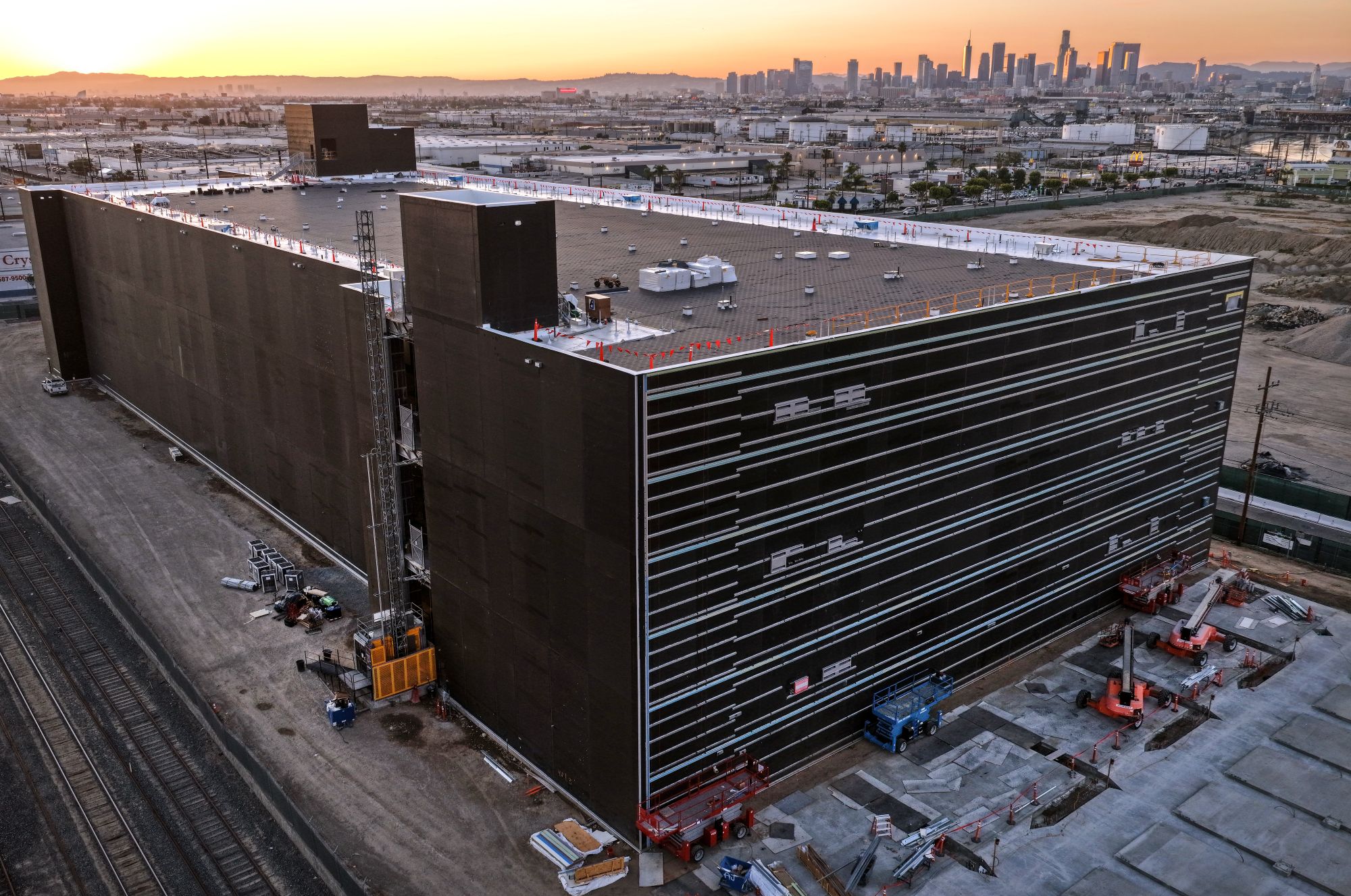
Opposition to data centers could play a role in who gets elected in November, especially in local races. Hundreds of new data centers have been popping up across the country, sparking backlash from residents who are worried about everything from water usage to machines destroying the economy. We’ll talk about the intensifying opposition to data centers and AI and how the issue could play out in the upcoming election.
Guest:
- Molly Taft, senior climate reporter, WIRED
- Kori Suzuki, south bay & imperial valley reporter, KPBS Public Media
- Abby André, co-executive director, The Impact Project
- Marifer Miranda, member and Pittsburg resident, Stop Pittsburg Data Center
- Joseph Geha, south bay digital editor, KQED
Episode Transcript
This is a computer-generated transcript. While our team has reviewed it, there may be errors.
Alexis Madrigal: Welcome to Forum. I’m Alexis Madrigal. The headline of our guest Molly Taft’s story pretty much says it all: “How Data Centers Broke American Politics.” Because after years and years when every issue seemed to immediately separate into left and right, data centers somehow have scrambled everything. That’s true nationally, in states from Texas to Pennsylvania, Indiana to California. Is opposing data centers something Bernie Sanders would do, or something Steve Bannon would do? Trick question, actually — they appeared at the same event, both opposing data centers.
But data center politics are creating new coalitions locally, too, where suddenly data center politics, which looked to me like a variation of environmental justice organizing, are front and center in our industrial suburbs and exurbs.
So that’s today’s show. Here to talk with us, we’re joined by Abby André, co-executive director at the Impact Project. Welcome.
Abby André: Thanks so much.
Alexis Madrigal: And we’ve got Molly Taft, senior climate reporter at WIRED, who’s been covering the rise of data center opposition. Welcome, Molly.
Molly Taft: Thanks for having me.
Alexis Madrigal: So, just to set us up, I’m just going to quote back just a couple of sentences from your story. You said, “In all my years of reporting on energy and the environment, I’ve never seen anything like the type of vitriol leveled at data centers, or the near-religious fury that has built up around their construction, or the way this resistance seems to be uniting people from the complete opposite ends of the political spectrum.”
When I read that, I was like, that exactly reflects my experience as well in reporting on these things. What happened? Like, what — and so, you know, your new article basically just says, like, what happened?
Molly Taft: It’s been so wild to watch the growth of this issue. I think, you know, I started covering this at WIRED when I came to the magazine more than a year and a half ago. And back then, the political landscape around data centers was limited to mostly local fights. It was limited to mostly local folks showing up at community meetings, and that doesn’t normally reach the national political level.
You know, the Trump administration came in, kind of guns blazing on American AI, and data centers suddenly started cropping up in places where they hadn’t traditionally been before. But I don’t think politicians on either the left or the right were really prepared for a truly grassroots movement opposing their construction.
And I always say, you talk to 10 different data center protesters, and you’re going to get 10 different reasons why they oppose them, right? They’re kind of a hard sell. It’s a really big facility that does use a lot of energy, sometimes a lot of water, and is being built very rapidly, getting kind of a runway to be built in ways that other infrastructure that might be more useful to people, like housing or facilities that create new jobs, might not be going up as fast.
And then there’s this sort of cult of secrecy that’s surrounded a lot of these local projects. A lot of developers have used NDAs to push these through. So it’s a little bit of a hard sell.
And then, also, at the end of the day, there’s the conversation about data centers and how they relate to AI and this growing change that we’re seeing across our society, across our economy, and across what it means to be human. So I’m really not surprised that this happened, but it has been really shocking to watch it go from an issue that barely anyone was talking about last spring and summer to one of the top political conversations as we head toward the midterms, really reshaping all of this.
Alexis Madrigal: It is wild. And like you said, President Trump came in guns blazing on AI. But Josh Shapiro in Pennsylvania wanted to have them developed. Matt Mahan here in San Jose, the mayor, was sort of clearing the way for more data center development.
So what really was this sort of bipartisan consensus that, oh, yeah, data centers are good? Data centers add to property tax revenue, bring in all these things. And, like you say, the surprise was that it really came from a wide variety of grassroots people who really had no central organization and don’t still today really seem to have any central coordination.
Molly Taft: No, there’s not. You know, I think you can talk all you want about the White House, for instance. There’s been a very strong line of argument about a lot of this being attributable to China, which, by the way, there’s scant evidence that’s what’s actually driving this conversation, right? This does seem to be really, really grassroots.
But it is remarkable. I think it’s been a while since we’ve seen an issue grow so organically out of community opposition, with folks organizing on Facebook. Facebook has, ironically, been one of the ground zeros for folks in different communities to talk about these issues.
People are going to community meetings and asking questions about these projects. I’ve spoken with organizers who heard about a project coming to their town. They started looking into it. At first, it was just them and maybe a couple of other people. And now, a year-plus later, they’re leading Facebook groups of thousands of people in opposition to data centers. They’re advising other communities nearby about how to oppose these data centers. It really has grown from nowhere.
And I think there was something that flipped this summer. I think there were a couple of different factors. One of them, I think, was the really national coverage we saw out in Utah when Mr. Wonderful tried to put up that data center and met with all sorts of fierce opposition. That seemed like a national news moment.
Then there was the Republican Senatorial Committee sending a memo to the party about the Senate race in Ohio and saying, “Listen, this is a sleeper issue. We are getting creamed on this, and we need to start paying attention.”
So it feels like in August, a lot of things started tipping. You saw people like Josh Shapiro, and you saw people like Greg Abbott, who’s facing a tough reelection, kind of wake up and say, “Oh no, I need to look like — at least appear like — I’m being harsher on the industry,” if not actually setting some real parameters on an industry that, until very recently, has been largely pretty unregulated.
Alexis Madrigal: Yeah. I mean, Abby, you all have been tracking this at the Impact Project, and in particular, the way that governors or people running for office have been trying to triangulate a position between what they were saying a year or two ago, when it was economic development, jobs, tax revenue, and now, when they’re facing this wave of grassroots backlash.
Abby André: Yeah, we’re seeing a really interesting dance between trying to balance the economic opportunity that lots of governors have seen and have demonstrated support for over the last five years with the real community environmental concerns and impacts that folks have articulated. And that has contributed to making this a real lightning-rod issue, like Molly was saying.
And what’s interesting is, look, of course candidates can change their mind. More information arises, and our own understanding of data centers has changed hugely in the last couple of years.
But what we really wanted to look at as we saw these shifts were at least three things. One, are the governors promising something in these shifts that they can deliver on? You know, a day-one plan, when there are already laws on the books via the legislature providing tax incentives and signing NDAs at the community level, right? It’s tricky. A governor doesn’t actually have the power to walk back a lot of the inked deals that we’re seeing, nor are we seeing governors promise that.
Two, are they offering to require data centers to disclose the data that we need to understand and regulate them, which largely hasn’t been available?
And then, how quickly has the position changed? Across partisan lines, the candidates are doing a variety of things across these issues, which does suggest, as you’re saying, that there’s a lot of tap dancing and triangulation going on as they try to weigh the pros and cons of an issue that’s really complicated.
Alexis Madrigal: Who has staked out kind of the most hardcore anti position, would you say?
Abby André: I mean, I would say some of the most hardcore anti positions are from governors in states that are predominantly and historically green places, where you’re seeing folks who have always had support saying that you have to have community involvement. You cannot have these coming into these communities without consent.
And in fact, I would say the California race is a really interesting case, because communities have banned data centers in their own right, sometimes the first in the country, but the governor candidates are not coming out to say that they’re going to support a ban or a moratorium.
Alexis Madrigal: Yeah, it’s really interesting. I mean, what about the red-leaning states? Because, you know, Molly was talking earlier about how this has kind of reshaped the Ohio Senate race, or at least has a chance of doing so. I’ve also been intrigued by opposition in places like Indiana.
So how have traditionally pro-business, more conservative states — how have their political figures tried to react to this?
Abby André: Yeah, the governor’s race in Georgia is really interesting. There have been, by some estimations, $12 or $13 million in data center ads through August. And so the Republican candidate is really interested in talking about a freeze and local control. But the Democratic candidate has come out much more strongly in support of being able to block any data center permit when you don’t have community support.
So there’s frankly not always really clear communication — promises of day-one freezes, but not promises of plans that back those up.
Texas is another interesting one, where the Republican Senate candidate has said that they’re going to clamp down on development but develop faster hyperscale permit options, whereas Talarico is really focused on local control.
Alexis Madrigal: We are talking about the rise of opposition to the big data center buildout, who the issue is mobilizing, and how it could influence voters in the upcoming election.
We’ve been talking nationally. When we get back from the break, we’re going to talk with some local activists and folks covering our local issues here.
Right now, we’re joined by Abby André, co-executive director at the Impact Project. We’ve also got Molly Taft, a reporter at WIRED who has been covering the opposition to the data center buildout.
Of course, we want to hear from you. Is this an issue that resonates for you? Why? We’re really curious about how you got politicized around this, whether you’re for a data center buildout or against it.
You can give us a call. The number is 866-733-6786. That’s 866-733-6786. The email is [email protected]. You can find us on Bluesky, Instagram, and Discord. We’re KQED Forum.
One listener writes in to say, “Funny how impossible it is to build civilian infrastructure to benefit everyone, but data centers are being erected overnight — almost overnight — with seemingly no red tape or foresight.”
So that’s one reason people might be opposed. I’m Alexis Madrigal. Stay tuned for more right after the break.
Welcome back to Forum. Alexis Madrigal here. We’re talking about the rise of data center opposition and how it is impacting politics nationally as well as locally.
We’ve got WIRED’s Molly Taft. We’ve got the Impact Project’s Abby André. They’ve been tracking how politicians across the country are responding to this grassroots opposition.
And let’s bring in one of our local folks here. Marifer Miranda is a member of Stop Pittsburgh Data Center, a local group here. Welcome, Marifer.
Marifer Miranda: Hi, thank you. I just wanted —
Alexis Madrigal: Marifer, Marifer —
Marifer Miranda: No worries, no worries.
Alexis Madrigal: How — let’s just talk about your path. Had you been involved in local politics, or did this issue kind of suck you in?
Marifer Miranda: Oh, yeah, I’ve been involved in politics my whole life, particularly because my identity as a DACA recipient has been so heavily politicized. And so I’ve been involved in kind of just being aware of my status, how to get involved, what level to get involved at that is safe for me, since especially in high school. And so I’ve been doing this for about 10, 12 years.
But I think at this level, where it’s specifically because it’s so close to my neighborhood, that is, I think, what drew me in. And the fact that I found out about it so late in the process was what drew me in even more. Because, having been involved in different cities across the Bay and, you know, the local public processes — they are for residents — it just blew my mind that I hadn’t been notified.
Alexis Madrigal: Yeah. For those who haven’t heard about it, this would be a quite large data center buildout in various phases on what’s now a golf course, right?
Given that you have experienced these other political processes, are you surprised by how much opposition has come out relative to some other issues that may have had a harder time drawing grassroots support?
Marifer Miranda: I think it’s exciting. I think being involved — it’s actually really difficult, especially since the pandemic, to get people out to actually stand on what they believe in, I think to some certain extent due to fear.
And so I feel like, as an organizer, seeing so many people across different ages, across even different political parties, show up for this issue was exciting. It shocked me that people were so ready to engage with it, like, had done some level of research or understanding to get to that point. I think that was what really shocked me, that people took it into their own hands to keep themselves —
Alexis Madrigal: I think it’s really motivating, you yourself and also the people that you’re organizing with.
Marifer Miranda: You know, despite a lot of demotivation from these long meetings and really difficult conversations we’ve had to have, what keeps motivating us is meeting with each other, knowing that there are so many people that still support it.
You know, we have a petition that’s almost at 28,000 signatures, and that’s including, obviously, not just Pittsburgh residents but people across the Bay, people within Contra Costa County who are also against the construction if it comes to their part of town.
And so that is what keeps us going: the people who are continuing to ask and be like, “What’s going on?” You know, we need people to step up and take initiative on the issue.
Alexis Madrigal: Do you all have a specific set of asks that you want around this data center?
Marifer Miranda: Absolutely. We’ve had some very clear asks, I think, for the past few months, since the issue has really blown up to the level it has.
The first one is really to bring the issue back to the main agenda, because the city has consistently tried to make special meetings and kind of make it less of a public participation process, or kind of skew it. And so we want to bring this back to the main agenda.
But overall, we really want to put a moratorium in place to pause the construction of all data center projects for at least the next six months, because the city is also — well, the city manager is looking into, I guess, agreements with other AI companies that could lead to potential data center construction.
And so we want to make sure that even though we’re focused on this one center, it’s really about all of the ones that are in the city, especially because of the history of environmental impact from living between the Martinez —
Alexis Madrigal: Refineries.
Marifer Miranda: — refinery and the Pittsburgh refinery as well. And so it’s been a very interesting, environmentally impacted area that we want to protect.
Additionally, I think this has brought up a lot of concerns around transparency of the city’s processes and how the public can actually weigh in, especially around the budget and what parts of the budget are actually being used, because there’s a concern about our $5 million deficit. And so that’s a big impact and a big reason and motivation as to why the city council is seeking this project in the first place.
Alexis Madrigal: One last question before I let you go. Are you more opposed on the local-impact side, or is it more of an overall dislike of what the AI industry is doing?
Marifer Miranda: Well, I think as a group, we’re a mix of all kinds of folks, right? And we all fall under the umbrella of, you know, because of all of these concerns, the data center should just not be constructed until we have these conversations fully.
For myself personally, I just believe there has not been enough research done to justify the level of construction that we’re seeing across the country. Especially, just like, the regulatory protections that are meant to protect against some of the environmental impacts have been completely ignored or have been thrown away in order to make these processes go faster.
And so we want to make sure that we pause, especially because we’re made up of multigenerational, multiracial working-class families. Most of these people are building a future for generations here.
Alexis Madrigal: Marifer Miranda, member of Stop Pittsburgh Data Center, thanks so much for joining us.
Marifer Miranda: Thank you so much.
Alexis Madrigal: We’re taking your calls, questions, and comments about data centers here locally or across the country. The number is 866-733-6786. That’s 866-733-6786. The email is [email protected]. You can find us on social media, Bluesky, Instagram, and Discord. We’re KQED Forum in all those places.
Molly, as you listen to Marifer, was that pretty much — how would you describe it? Was that kind of mainline anti-data-center opposition, with local characteristics?
Molly Taft: Yeah, I think what she was expressing is really common for a lot of folks. And I’ll also point out one thing she said: This organizing, in some cases, has been going on for a year-plus. Even with some of the newer efforts, it’s really intense to organize against a local project like this.
You often find yourself in long conversations with people in your town you might not have met before. In Marifer’s case, as she illustrated, you’re going through archaic processes around permitting, around the budget, you know, stuff that some folks who haven’t been involved in politics before might not have considered.
So first of all, these are really long conversations that bring people together and are kind of enabling more political conversations around this one topic. But I also think they can evolve. I’ve spoken to organizers who started off with just environmental concerns, worries about data center construction, and now they tell me they’re starting to talk about Flock cameras. They’re starting to talk about AI in general.
So I think there are specific conversations you have when your community is close to building one that often center around details like environmental worries and permitting processes. But the larger conversations can evolve as well. So it’s a lot of different topics for a lot of different people. I’ve heard a lot of similar things.
Alexis Madrigal: Danny writes in — and I think it’s an important point to make. Danny writes, “I’ve worked with data centers for decades. I think there’s a real difference between the shared-hosting, co-location facility data centers that I’m used to and the new AI data centers. The data centers that I know are human-scale and lease space to companies that need to do business online — the Main Street of the internet. The massive AI data centers are a different beast, rooted in rapacious greed. I don’t trust them, and they should be required, at minimum, to abide by the same standards as all the smaller-scale data centers I deal with and commit to 100% renewable energy. Let’s force them to build out some renewable energy before the AI bubble pops.”
I think what Danny is talking about there — and, Molly, I’m going to come to you again on this — is just that what we’re talking about with these hyperscale data centers is, in fact, different, right? They’re larger in size. They’re oftentimes using diesel backup generators or on-site natural gas turbines in order to power themselves, and that raises a whole other set of concerns.
Molly Taft: Absolutely. I think that’s a really important point to make. I’m glad Danny brought it up.
When people ask me, as an environmental reporter, what my biggest environmental concerns are around data centers, I say the number one thing is absolutely the fossil-fuel buildout.
As you mentioned, it’s not only diesel backup generators, which communities have a lot of concerns about because of local air pollution. Those can be really tricky, but we are seeing a shift, partly because there was a lot of concern about consumer energy bills from connecting these massive facilities to the grid. And they are really energy-intensive.
So we’ve seen a shift from companies toward building their own on-site power. And by and large, the choice for these companies building basically private power plants to power their data centers has been natural gas.
And not only natural gas, but often they’ll use natural gas technology that’s less efficient than what we see in natural gas power plants. So they’re actually letting off more emissions for the same amount of energy.
I do think that’s a really big concern that might not trickle down as much to the local level. Again, you’re probably more concerned about your local air pollution. You’re concerned about the local land footprint. But on a larger-term scale, we’re looking at a pretty significant new source of carbon emissions.
And the big question is how many of the data centers of that scale that are being planned will actually get built, right? But that’s another part of the conversation. We could be looking at a really serious fossil-fuel buildout that, until very recently —
Alexis Madrigal: Likely, yeah. There was not growth in that. Yeah.
Molly Taft: And I will say, also, one difficult part of this conversation is that the industry is moving so rapidly and changing so rapidly. Until very recently, no one was building private power plants. But it started happening with a lag in grid connections and with local concerns about power bills.
Another thing we’re seeing is that a lot of companies are increasingly changing their cooling technology. A lot of the major data centers will no longer use as much water as before, partially in response to local concerns, right?
But the unfortunate thing about that is that the trade-off for water is power. So you have more power-intensive data centers because they’re using less water, and that leads to more emissions, right?
So these things are big, and they do make an impact on our environmental and energy considerations that really should be talked about.
Alexis Madrigal: And just to give people a sense of scale here, let’s say the Bay Area uses six, seven, eight, nine, or 10 gigawatts of power, depending on the time of day. There are individual facilities being proposed in the Bay Area that would use half a gigawatt — just individual facilities. So it is very substantial. And I think that’s a big difference. Individual data centers did not use that much power in the past.
Let’s bring in Joseph Geha, South Bay digital editor with KQED, who’s been covering this story down around San Jose. Hey, Joseph.
Joseph Geha: Hey, Alexis. Good to be here.
Alexis Madrigal: Yeah. So what’s going on down there? You’ve got a complex situation.
Joseph Geha: Well, you know what? A complex situation is a great way to put it. The South Bay is very well known as part of the heart of Silicon Valley.
I think we should start in Santa Clara. You mentioned it earlier in the episode: There are nearly 60 data centers in Santa Clara, and that city has been building them, or allowing them to be built, for decades. And that’s because the city has its own power company, Silicon Valley Power. They sell electricity a lot cheaper than PG&E, so on the scale of data center energy use, that’s worth a lot.
Right now, the city has about 55, maybe, and about 58 if you count the ones in the pipeline. But they’re out of power right now. The city is undertaking a $450 million power infrastructure upgrade to try to meet the needs of more and more data centers being built there. And they’ve got data center customers waiting for power hookups.
But this is a city of 130,000 people — a midsize Silicon Valley city — and the average ratepayer, the person who lives in a home or an apartment in Santa Clara, has seen their rates go up over and over again in recent years. So that’s kind of a mature data center market. They’re dealing with that issue right now.
But over in San Jose, that city of about a million people has been actively courting data centers and really trying to bring them to town, announcing major deals and even what they call concierge-style support for data center developers to try to bring them into the city and raise their tax base.
Alexis Madrigal: You know, it’s interesting, too, because that concierge-style service is something they picked up from some of the other jurisdictions around the country that have been courting data centers.
One listener on Discord writes, “San Jose government is for data center development, especially so they can get tax revenues from that. They’re using Stanford’s Deliberative Democracy Lab to get input from residents. Residents want transparency. So far, San Jose does not have the hyperscale data centers that have created noise and pollution problems in places like Tennessee,” referencing Musk’s xAI there.
Is it working? Is there organized data center opposition down there in San Jose? Does it feel mollified by these processes that the city is proposing?
Joseph Geha: Yeah, I mean, I think it’s a very good question. I think there has been a really strong response to the issue of data centers.
San Jose has, for more than a year, been actively trying to attract data centers and announcing major deals with PG&E so that data center developers know they can come build there and get power.
As the city has been working on that, on the other hand, it has run into a grassroots resistance effort. That is centered on a lot of the things some of our other guests have already been talking about, like local environmental concerns, concerns over transparency, and the cumulative effects of what it’s like to have a full buildout of data centers in the Silicon Valley area.
What are the unknowns if we continue at this breakneck pace of putting up more diesel and natural gas backup power and major facilities?
The city of San Jose has started hosting some community listening sessions and group discussions. My colleague Guy Marzorati and I went to the very first community listening session, and there were hundreds of people there. Many of them were demanding a moratorium. They weren’t saying, “Hey, let’s take it easy. Let’s try to get some protections.” They were saying, “We don’t want these in our community at all.”
The more moderate position among that group was, “We don’t want them yet, and we would really like you to pause this and take a better, wholesale look at what this is going to mean for us — both pros and cons, and anything in between.”
But that’s not really been the direction of the city. The city is pushing ahead.
Alexis Madrigal: And I did notice in our cut that you got a picture of Mayor Mahan there with his sleeves rolled up, taking notes at the listening session.
One thing I wanted to note, Joseph, too, just quickly, is that these things don’t fall equally on a city, right? There are certain places within San Jose, like Alviso, traditionally a pretty underserved, fairly poor area of San Jose, that’s sort of slated for a bunch of this development for a variety of reasons.
Joseph Geha: Yeah, I think you’ve hit it on the head. I mean, I want to make it clear that Mayor Mahan and some of his talking points have said, “We’re going to have these buildouts in industrial areas,” but what that actually means in practice can look a little different.
A place like Alviso is at the northern tip of San Jose, amid the wetlands and sloughs connected to the Bay. But we’re talking about several major projects, some that are already under construction and several more in the pipeline, that would be using intense amounts of power and having massive backup systems, all clustered in what you said is already a historically underserved area, a place that has not been fairly resourced by the city.
Just for example, Microsoft is building a nearly 99-megawatt facility there right now. It’s right along Highway 237. Anyone who drives in Bay Area traffic can see it.
Google also has existing warehouses there. And right across the street from a preschool and a community garden, they’re proposing to revamp and reshape those warehouses into a 250-megawatt research facility, which wouldn’t quite be a data center, but it would function a lot like one. And it is just steps away from where kids are going to be every single day.
Just for some context, that one Google facility would use more power than all of Marin County.
Alexis Madrigal: We’re talking about the rise in data center opposition with KQED’s Joseph Geha, WIRED’s Molly Taft, and the Impact Project’s Abby André. You can join the conversation at 866-733-6786 or [email protected]. We’ll be back with more.
Welcome back to Forum. Alexis Madrigal here. We’re talking about the rise of data center opposition, a kind of grassroots movement that more or less came out of nowhere to become one of the big issues in national politics.
We’re joined by Abby André, co-executive director at the Impact Project. We’ve got Molly Taft, senior climate reporter at WIRED, who’s been covering this for the magazine. We’ve got Joseph Geha, South Bay digital editor here at the station.
Earlier, you might have heard Marifer Miranda, who’s a member of Stop Pittsburgh Data Center. And of course, we’re getting into your calls and comments.
One listener on Discord writes, “Lots of people on social media have seen the videos of creepy, humming data centers. It’s easy to project onto the soulless building concerns about AI taking your job, lack of accountability, corrupt deals between politicians and corporations, pollution, et cetera.”
In what you’re tracking, Abby André, how much do you think the AI stuff — the general way that leaders of, say, OpenAI or xAI have talked about these things — is factoring into the data center opposition?
Abby André: Yeah, I think that’s a really important point. We’ve been focused on data centers as a local issue here, and I think that’s right — it’s expressed at the local level. But we’re really seeing national movements that we haven’t seen in the environmental arena since the end of the 1960s and early 1970s, when we kind of decided as a people that maybe the Cuyahoga River shouldn’t be able to light on fire, and the EPA was created.
This feels similarly symbolic. A data center is a physical thing that we have in our space that reminds us of things that Americans are worried about. We’re worried about inflation and cost of living. We’re worried about our bills. The number two issue, second to affordability in the country, is government corruption.
So I think the tie-in with the AI question is really interesting at this moment, when AI industry leaders have stepped forward to ask to be regulated after years of developing their products to a point where they’re really powerful, where they are creating concerns about safety and national security.
And it really hearkens back to me to other areas of regulatory capture that we’ve seen in the environmental realm, whether it was when the Clean Air Act was passed and there was an exception for coal-fired power plants, or TSCA was passed to regulate chemicals, but there were 62,000 chemicals left off that list because of successful lobbying efforts.
So there’s a lot going on, but national frustration about overarching issues, fear about AI, fear about whether it’s going to be a threat to us and take our jobs — all seem to be siphoning into the strength of these local issues.
Alexis Madrigal: Yeah. You know, I’m really glad you mentioned the environmental movement of the ’60s, because I keep thinking about a book written about that era called The Bulldozer in the Countryside: Suburban Sprawl and the Rise of American Environmentalism by Adam Rome. It describes the kind of grassroots movement that came up and eventually ended up pushing Congress to act, led by many of the same types of people who were right on the edges of big metropolitan areas.
And when you think about a place like Alviso or Pittsburgh, these are exactly the kinds of spots — industrial suburbs and exurbs — that played a role in the environmental movement of the ’60s as well. So, interesting.
Let’s bring in a caller. Let’s bring in Dale in San Francisco. Welcome, Dale.
Dale: Hello. They’re going to have — and I decided here, here at the beginning, just kind of hit on what I want to talk about. But it feels like there’s been this focus on the environmental side of things without really — and the overarching societal repercussions have been kind of gliding by underneath the solution that, underneath this, it’s going to be a benefit for everyone, when it seems pretty clear who gets — it’s very asymmetrical, the actual benefit they’re coming from these. Aside from just the environmental concerns.
Alexis Madrigal: Yeah, Dale, good point. Joseph Geha, are you hearing that from people down in San Jose? I mean, it’s such an interesting place down there, right? Because there’s just tons of normal people living there, but it’s also, as you said, the heart of Silicon Valley.
Joseph Geha: Yeah, I mean, I think the Silicon Valley aspect is an interesting one, right? Because you’ve got folks who, you know, either themselves or their friends or their family or people they work with every day are in the tech industry. So it’s a place that is of the tech industry.
And I think that helps people be more cognizant of some of the pros and cons of everything that this industry and this region is pushing in the form of data centers.
Something that’s really interesting, related to the environmental activism you’ve been talking about, is that there are folks in San Jose who are harkening back to the semiconductor industry in Santa Clara County, which has had years of mismanagement and toxic material spills that have created more Superfund sites than anywhere in the country, in Santa Clara County.
And that all happened because of the rise of the semiconductor industry in the South Bay. That kind of unrestrained growth in the name of technology, advancement, and human betterment led to some really unintended and harsh consequences.
I think there are some really clear parallels with what’s happening now with AI data centers, as people are concerned about what things will look like 20 or 30 years from now if we build all these out today.
Alexis Madrigal: Another massive grassroots movement helped get a lot of those Superfund sites recognized. The Silicon Valley Toxics Coalition in the early 1980s was such a big part of that. For me, at least, this current moment has been ringing a lot of those same bells.
Let’s go to another place here in California. We have Kori Suzuki, who’s a reporter with KCBS. Welcome.
Kori Suzuki: Hey, Alexis. Thanks for having me.
Alexis Madrigal: So, Kori, you’ve been covering data centers for some time. Tell us a little bit about what’s been happening in your coverage area.
Kori Suzuki: Well, part of the area I cover is the Imperial Valley, which is a rural farming county to the east of San Diego, where our station is based.
Just a little background: This is a really unique place when it comes to water and power. It’s part of the Sonoran Desert. All of the water that reaches this area comes from the Colorado River, and this area also has longstanding legal claims to that water. It uses more than the state of Colorado, about as much as the state of Arizona.
It also has a lot of energy. The valley is among the top producers of renewable energy in California, county by county, and power rates are some of the lowest in the state.
So there’s lots of water and power on the surface. But when you look at what access for residents looks like, it doesn’t always look that way. Water rates can fluctuate a lot based on where you live. Access to clean water and water treatment systems can vary a lot, too. And the power grid here is aging. Outages are often frequent, especially during storms and hot summer months.
That’s all been the backdrop to this conversation around a very large data center complex that we learned was moving forward in the heart of the valley, next to a residential neighborhood, late last year.
This is a 950,000-square-foot data center. It’s got a large battery system, a bank of natural gas generators for backup power, and it would have its own power substation. It’s a hyperscale data center, designed for use by AI companies.
The company behind it is a recently formed LLC called Imperial Valley Computer Manufacturing, which is actually based in Huntington Beach, in Orange County.
The project would have some very immense resource demands. According to the developer’s estimates and state energy statistics, it would use more power than the entire county of Imperial used in 2024. And around 750,000 gallons of water per day is what the developer has quoted to the public.
So that’s raised a lot of questions and fierce opposition, and it’s now having some concrete ripples in local politics.
Alexis Madrigal: Yeah. Where’s it going? What’s going to happen?
Kori Suzuki: Well, at the moment, the data center project is sort of stalled in court battles. And that’s largely because — this goes back to some of the questions and concerns that Marifer and Molly mentioned earlier — these kinds of questions about transparency and the culture of secrecy that Molly mentioned.
That’s really been, I think, at the core of the concerns that residents have raised about this project here in the Imperial Valley. The developer behind this project tried to design it in a way that it would meet local zoning codes, that it would be able to be built very quickly, and that, in particular, it would not have to go through an environmental review under the California Environmental Quality Act.
We’ve seen some other examples of projects that have gone this way, even though it can —
Alexis Madrigal: Even though it’s going to double the use of electricity in the county?
Kori Suzuki: Exactly. And I think that disconnect between those two pieces has been the greatest overarching concern for people: that if this analysis doesn’t happen — and I know a lot of people think there are problems with CEQA analysis and how long it takes — at the bottom line, I think for a lot of people who are thinking about this project in the valley, this means there will be no in-depth disclosure of how this project will affect energy access, water access, and public health.
That’s raised a lot of concerns for people about power, water, and air pollution. And now a court has decided, just recently, within the last several weeks, that this project will need to go through an environmental review.
The developer has said that he is planning to appeal that decision, so we’re still in the middle of this. We’re not quite sure how it’s going to shake out, but that’s where things stand right now.
Alexis Madrigal: So interesting. One of our listeners, Annie, writes in, “There’s something extremely predatory about these data centers. They seem to look for places to land that are financially insecure.”
This has been one of the key points of the environmental justice movement all along: Big facilities that have big impacts are often located in places that are politically least able to resist them.
Let’s bring in Elise in Oakland.
Alexis Madrigal: Hi, go ahead.
Elise: Hi, I’ve been working on electric tariffs for data centers for the past two years. I just wanted to make your listeners aware that right now, under the status quo, transmission network upgrade costs to interconnect data centers are currently being spread across all ratepayers of the utilities, not being funded by the data centers, which is a huge loophole.
They can be up to $100 million in cost for just one data center. And this is currently pending before the Public Utilities Commission.
But the Google facility, I think, was mentioned earlier in the show. Its interconnection agreement is actually being voted on by the CPUC next week. And, to the CPUC’s credit, they have a pretty nice fee in there to capture these costs.
But I will tell you that PG&E and Google have been meeting with the commissioners’ advisers very regularly. It’s all public on their website. They are obviously trying to get Google exempt from this fee, so I encourage people to write in to the CPUC if they think their power bills shouldn’t go up to support Google and other large tech companies’ interconnection.
Alexis Madrigal: So interesting. Elise, thanks so much for the knowledge and for the research over the years.
You know, Molly, I mean, there are so many different components to this. Thinking about your article, this is exactly why this issue has taken off, right? Because there are a hundred different handholds for people, based on their own personal politics, for how they might get into this data center political game.
Molly Taft: Yeah, absolutely. It’s so complicated because, as we covered before, these facilities are so energy-intensive that a lot of our systems, both politically and in the way we do energy in this country, are kind of not set up to receive this.
The conversation about what data centers should be paying for in terms of transmission and grid upgrades is a national one. It’s not just California, right?
But we’re at a point where the White House has had tech companies, utilities, and Republican governors sign this kind of voluntary pledge that they put together to not raise ratepayers’ costs and to have data centers pay for utility upgrades. But it was largely a toothless pledge that a lot of critics said didn’t really do anything.
It’s moved, you know. There’s a Senate bill now that’s actually been put forward by John Husted of Ohio, who’s facing this tough reelection battle about data centers, that Democrats actually shot down earlier this week because they said he was just kind of trying to gain political points, right?
So, as I mentioned earlier, there’s been so little regulation and attention paid to the industry until very recently. All of a sudden, there are just so many footholds you can get.
The system is not set up for a massive new electric customer like this, and a lot of our society is not set up for this barrage of AI that’s coming at us. So, yeah, like you, I’m really not surprised that it’s making so many conversations happen at the local, state, and national levels that are really reshaping how we talk about politics and these issues.
Alexis Madrigal: Let’s bring in Duff in San Francisco. Welcome, Duff.
Duff: Thank you. I’m a little concerned about how futile this is, right? You know, I can tell a little bit from the battle about Flock cameras. Okay, great, municipalities are taking down Flock cameras, but a company called Axon is right behind them. And these sort of Batman villains that run these companies, they just do whatever they want, and then they just pay politicians.
You know, it’s just — I’m hoping for some good news about some of these fights.
Alexis Madrigal: Duff, appreciate that perspective. Molly Taft, I mean, some people seem to be having some success in these fights on an individual level. I’m thinking about what we just had on Asher Taylor and Naomi Klein and their book End Times of Asher’s, and they talk about having some success there in Indiana, for example.
Molly Taft: Yeah, I mean, I actually think there’s been a lot of really remarkable success. A lot of local municipalities have passed moratoriums. We’re seeing a lot of legislation in response to this, and I think it’s also having an effect on Wall Street, right? The local resistance is actually playing a factor in some of these data centers getting seriously delayed, and investors are starting to worry about it.
It’s one of numerous factors affecting this buildout. So I definitely hear your frustration at how this system is set up, but in comparison to other political issues, this does seem to be moving the needle on some local levels.
And now there is a larger question, right? When you stop a data center, what are you actually stopping? The AI boom could just keep going forward. You know, computers get more efficient all the time. They could find new ways to implement AI and make the advances they need without this huge buildout.
There’s a big question as to how many of these things the companies would actually need to do what they’re aiming to do. But I will say that this issue is moving really fast, and I think folks who are organizing have seen real success on the ground in multiple different places.
Alexis Madrigal: Well, and I think I would have probably given quite a different answer to that question before the last few months. I totally agree, Duff. It seemed like this was just going to happen. It was more or less assumed by all of the big AI players that they were going to be able to do this. And now it’s up in the air a little bit more.
Joseph Geha, one quick thing. One listener writes, “I’m surprised NDAs haven’t been mentioned yet — nondisclosure agreements. I don’t believe the government should be allowed to enter into NDAs with anyone, let alone data center builders.” Have you come up against that there in San Jose?
Joseph Geha: Yeah, I mean, that is a great point. That’s how Louisiana and the Meta five-gigawatt facility got done, essentially, according to our New York Times investigation. We saw that there were a ton of NDAs and a ton of secrecy.
We have a council member in San Jose who represents District 5, Peter Ortiz, who has put forth and is now working on a policy of banning, or barring, all San Jose City Council members and potentially high-level city staff from signing NDAs with data center developers, for that very reason: building trust.
And San Jose has a big legacy of that. Google, many years ago, under previous mayor Sam Liccardo, bought up so much public land in downtown San Jose to try to do a new, massive mixed-use campus and township, basically, and that’s gone nowhere.
But at the time the deal was being made, it was all done with NDAs. So I think there’s a legacy there and a concern about what happens when the people who represent residents keep things from them, even if it’s just for the early-onset discussions.
Alexis Madrigal: Man, what an interesting set of issues here, everyone. Thank you so much.
We’ve been joined by Joseph Geha, South Bay digital editor with KQED. We’ve also had Molly Taft, senior climate reporter at WIRED. You should keep following her coverage there at the magazine. We’ve had Abby André, co-executive director at the Impact Project, and Kori Suzuki, a reporter with KCBS. And earlier, you heard from Marifer Miranda, who’s a member of Stop Pittsburgh Data Center.
Thank you so much to all of our commenters, callers, and listeners. We really appreciate you. I’m Alexis Madrigal. Stay tuned for another hour of Forum ahead with Mina.