Bay Area's Largest 200 Public Companies Reflect the Region's Changing Economy
Airdate: Tuesday, September 23, 2026 at 9am
When the San Francisco Chronicle last published its list of the Bay Area’s 200 largest public companies 17 years ago, oil behemoth Chevron ranked no. 1. The company has since left for Houston and now Apple Inc. has seized the top spot. Tech companies now make up 21 of the top 25 companies, with AI and social media companies like Nvidia and Meta joining veterans like Intel and Hewlett Packard in the top 10. This concentration of heavy hitters helped make the Bay Area the largest regional economy in the country, but experts warn our reliance on tech could be a disadvantage in the long term. We’ll dig into how the Bay Area’s business landscape has shifted and what it could mean for jobs and our regional economy.
Guest:
- Roland Li, business reporter, San Francisco Chronicle
- Egon Terplan, regionalism fellow, California Forward – a nonprofit organization that advocates for a sustainable, resilient, and inclusive economy in California.
- Laura Furstenthal, Bay Area office leader and managing partner for the Western region of the United States, McKinsey & Co. – a global consulting firm
Episode Transcript
This is a computer-generated transcript. While our team has reviewed it, there may be errors.
Alexis Madrigal: Welcome to Forum, I’m Alexis Madrigal. Though the Bay Area is known for technology, our region has generated many different kinds of big corporations in the past. Bank of America, Bechtel, Levi Strauss, Transamerica, Charles Schwab, Clorox, Gap. Some have left, some have been acquired or absorbed, and some are simply dwarfed by the tech titans that dominate the San Francisco Chronicle’s list of the largest 200 Bay Area public companies by revenue.
Here to talk to us about the list and how it differs from the last time it was created, in the midst of the global financial crisis in 2009, we’re joined by the story’s author, Roland Li, business reporter at the San Francisco Chronicle. Welcome.
Roland Li: Thanks for having me.
Alexis Madrigal: We’ve got Egon Terplan, who’s a Regionalism Fellow with California Forward. That’s a nonprofit that advocates for a sustainable, resilient, and inclusive economy in California. Welcome, Egon.
Egon Terplan: Thank you very much. Good to be here.
Alexis Madrigal: And we’ve got Laura Furstenthal, who’s senior partner and leader for the West Region Office of McKinsey. That’s a global consulting firm. Welcome, Laura.
Laura Furstenthal: Thank you for having me.
Alexis Madrigal: So, Roland, we did a 17-year hiatus between — or the Chronicle did — between these two lists. It’s kind of a fascinating thing to go back, think about 2009, what was happening in the global economy at the time. Nvidia was still largely known by gamers as a graphics card company to play games. The iPhone, barely anybody had one. What did the list look like at that time?
Roland Li: Yeah, it was certainly much more diversified. Not just tech. The biggest company by revenue was Chevron, which is now — their headquarters has gone to Texas. But they still have some infrastructure here. But yeah, you had more retail, finance. Tech was still big, but not the biggest component. And now it is.
Alexis Madrigal: Yeah. I mean, when you do look at that list from years past, there were also kind of different sorts of companies too, right? I mean, there was more retail on it. There were more things that just, yeah, weren’t technology companies.
Roland Li: Yeah, I mean, I think Safeway was number five. McKesson, which was health care, medical device. Yeah, they also went to Texas, they’re gone. And when you had Oracle and Sun, were some of the biggest tech companies, but Oracle bought Sun and then they moved their headquarters to Austin, and now they’re moving them to Nashville. So, a lot of just change and migration.
Alexis Madrigal: Yeah, it’s interesting. I mean, there is also a lot of continuity, though, right? I mean, most of the big tech companies that were around 2009, many of them are still here and are even bigger, yeah?
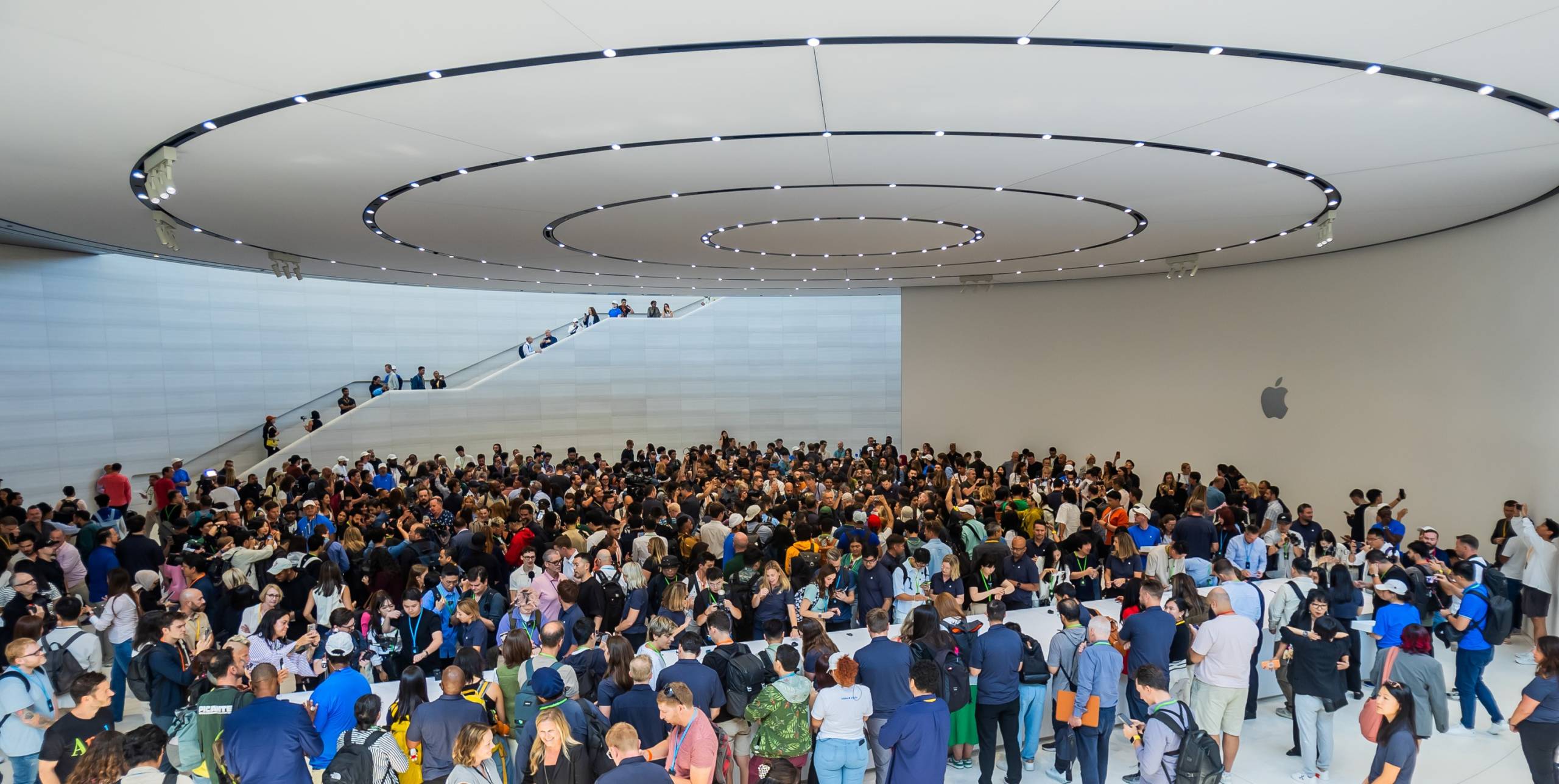
Roland Li: Yeah, I mean, Apple, kind of the poster child, number one on the list this year. iPhone maker just exploded in revenue. I mean, just really changed the global zeitgeist, culture. And they just had a pretty interesting transition. New CEO came in. Tim Cook had led the company since Steve Jobs’ death. So, big changes there. They just unveiled their new kind of three-screen iPhone Duo. So we’ll see what happens, but they’ll probably keep growing.
Alexis Madrigal: You know, Laura, I mean, when you look at the list as a consultant, is it basically just like tech and everything now, basically? Is that just what it is? I mean, you go down Apple, Alphabet, Nvidia, Meta, okay, Wells Fargo, then Broadcom, Cisco, TD SYNNEX, which is a company that I really haven’t thought of. It is in the top 10 by revenue, HP, Intel, Uber, Netflix, Salesforce, Visa, Super Micro Computer, Advanced Micro Devices, PayPal. I mean, this is just all tech, basically.
Laura Furstenthal: Well, I think we’re seeing it at a moment in time. And for me, after a lifetime of living and working in this region, the bigger story isn’t who’s number one or how concentrated we are in tech now. It’s how this region keeps reinventing itself. And we’ve seen that before, right? We saw the semiconductor boom. We saw biotech boom. We saw software and the internet boom. The Bay Area has been through multiple of these, and now I think we are in the AI gold rush for the Bay Area.
And the real question for me when I look at this list is, what do we do with this moment of incredible concentration of value creation in those tech companies? Can we turn this innovation into new industries, into the expansion of some of our other industries that adopt AI to actually generate more innovation, more value creation? And can we use that to start creating the jobs that have not yet shown up as a result of being early in this cycle?
Alexis Madrigal: Egon, I mean, this is basically what your organization is trying to do, right?
Egon Terplan: Well, absolutely. I mean, I think we’ve been thinking about this question for a long run about what are the — how do you translate the assets? Every region has a set of assets. How do you translate those into real, long-term economic success?
The Bay Area has some of the greatest assets of any innovation-driven region in the entire world. So, as we just heard, we’ve continued to reinvent ourselves decade after decade. And it’s always been a question, will we be part of the next boom? And yes, indeed, we are a part of the boom.
However — and I think we’ll get into this more in this conversation — are we planting the seeds for the next series of startups that are going to grow and scale up, not only just in the Bay Area, but also in California? And I think there’s some cautionary tales here of companies that were started and founded in the region that then took root and grew to scale-up opportunities actually in other states.
Alexis Madrigal: Well, that’s interesting because, you know, if this list included private companies, specifically like Anthropic and OpenAI, I mean, they’d also be in the top 10, right? It’s just they don’t have very many employees.
Egon Terplan: I think that’s also an interesting phenomenon. If you think about the number of employees you need to get to a scale of significant revenue, it’s quite a bit less. Hewlett-Packard at its maximum scale was, what, over 300,000 employees. Certainly Google, when it formed and as it grew, it has grown to a large firm. But the smaller companies, Anthropic, OpenAI, they have just a few thousand now and already at a point of being of significant dominance.
So, yeah, I think the generation of employment writ large is a very, very — is a question that we really have need much more proactive action to ensure that those companies, as they grow, scale out, build out their workforces and that those jobs are in this region. I think that’s part of the key question.
Alexis Madrigal: Roland, why’d you want to bring the list back?
Roland Li: You know, it was not my decision, I think. Why did your editors want to bring the list back, Roland? Yeah, I mean, we have a data team now, very dedicated, exploring many different topics. I think they had noticed, like, oh, this hasn’t been done for almost 20 years. It’s such an interesting moment. Anthropic is about to go public. OpenAI might be next year. So it’s become this new era. I mean, you could call it the third tech boom, transforming the region.
And I think we’ve also, during COVID, we had so much change with the companies saying like, oh, we don’t want to be headquartered in the Bay Area anymore. We’re going to go to Texas or elsewhere. So just seeing that kind of duality, there was a lot of kind of negative economic trends during the pandemic, but now we’re seeing this new boom.
And I do think one of the biggest contrasts is that you have these companies that are valued higher than ever, $5 trillion Nvidia, Anthropic, potentially $2 trillion. But you’re not seeing the same job growth. The 2010s, you had this massive tech job growth, but right now, I think across the country, even though the unemployment rate is pretty low, we’re not seeing massive growth. We’re seeing a lot of tech layoffs. And I just had a story last week about how it’s so hard if you’re a college grad, trying to start your first job just to find anything. You have to apply to hundreds of positions and maybe not get any response at all. Yeah.
Alexis Madrigal: Before we get to all the kind of troubling or unsettling things about the way the economy is kind of developing right now, Laura, why don’t you give us a little bit of, like, the Bay Area in the global context, you know, a little chest beating here on this. This is maybe the most powerful economic region, single economic region in the world.
Laura Furstenthal: Undoubtedly. I mean, I think when we look at it, the Bay Area, if it were a country, is actually generating $1.2 trillion in GDP. That would place us 18th in the world, ahead of the entire country of Saudi Arabia, ahead of the Netherlands, ahead of Switzerland. So, the amount of economic opportunity creation that’s happening here is unprecedented, and it’s also quite concentrated.
And I think that does present us with a real opportunity. There’s no question we’re also leading in AI, right? San Francisco has attracted $123 billion in AI investment over the last five years, leading by a long shot. Half of the top 50 AI companies in the world are headquartered here, right?
Alexis Madrigal: You know, for a long time, there was a thought — you know, there’s a guy, Enrico Moretti, Berkeley economist. He wrote a book, I don’t know, 2012 or something like that, in which he was saying, you know, that each tech job added like five other jobs in the economy outside of the technology industry. Do we think that that link still exists or not?
Laura Furstenthal: Yeah, I would say I am quite an optimist that we will create jobs and that we’re at the early end of the curve, right? And AI right now is being applied to the things where it can be applied. Many of those happen to be cost savings and just general automation, right? So I think that is what’s kind of holding back a lot of the job creation.
But when you think about a couple of things, one is when you — about what technology creates in terms of economic surplus, right, 90% of that is captured by consumers, actually, not by companies, right? When you think of what the internet and social media did for us as consumers, that allowed us to be a lot more effective and communicative and to do all of those things that we couldn’t do before. And frankly, companies captured only a small piece of that.
But what it then does is enable lots of industries to actually do business differently. And I’m quite an optimist that as we apply that to the consumer industry and are better able to personalize our interactions with customers and actually bring them more of what they want, develop products that better meet their needs, you look at the biopharmaceutical industry and other strength in the Bay Area.
And where it’s being applied now, earlier stages, is how do we get better drugs developed faster and more efficiently? And when we think about that opportunity to actually take all of the data around protein structures, genetic structures, studies that have been done in test tubes, all of the real-world evidence, and bring that together to actually get to better drugs with lower side effects that can actually get to the market faster. Those are massive job-creation opportunities.
And when you look at the fact that all of these industries that we have in the Bay Area, many of them are innovation-based. And when you look at the difference between a point of margin expansion and what that’s worth to a company versus a point of growth, for most companies that are innovation-based, the value of that point of growth is three to ten times higher than the value of just taking that as margin expansion. And so the incentive to invest in the next generation of innovation is incredibly high in this region.
Alexis Madrigal: I agree. That is an optimistic take on this, which is good. Now we’ll get into some doom after the break.
You know, we’re talking about the Bay Area’s largest public companies and how our region’s business landscape has changed. We’re talking with Laura Furstenthal, who’s a senior partner and leader for the West Region Office of McKinsey. We have Egon Terplan, who is a Regionalism Fellow at California Forward. And we’ve got Roland Li, business reporter at the San Francisco Chronicle.
Of course, want to invite you into this conversation to think about the changes in our region’s economy. 866-733-6786. [email protected]. I’m Alexis Madrigal. Stay tuned.
Welcome back to Forum, Alexis Madrigal here. We’re talking about the San Francisco Chronicle’s list of the 200 largest public companies and kind of what it says about our region’s economy and just what our region is like in general.
We’re joined by Egon Terplan, Regionalism Fellow at California Forward. That’s a nonprofit that advocates for a sustainable, resilient, inclusive economy in California. We’ve got Roland Li, business reporter at the Chronicle, and we’ve got Laura Furstenthal from McKinsey.
Inviting you into the conversation to, I mean, how do you think these large public companies affect our region? Do they affect your life? Where do you expect to find your next job? You can give us a call, 866-733-6786, that’s 866-733-6786. You can email [email protected]. You can find us on Bluesky, Instagram, Discord. We’re KQED Forum.
Egon, I’m curious, you know, we were talking earlier about this tech job multiplier effect, this idea that if we create tech jobs that pay lots of money, it generates other jobs within the economy. Do you think that is still true in 2026 or as true as it might have been in 2012?
Egon Terplan: Yeah, I think it’s interesting to reflect on what’s changed since Moretti’s book in 2012. And I mean, certainly it is true to the extent that if people have high wages and they go out in the world and they spend money, there’s a multiplier effect in retail jobs, and you see the growth of that kind of throughout. But it’s changing, right? The kind of nature. Retail is obviously struggling on the ground.
But I think the other phenomenon that’s changed is back then there was an incredible concentration in certain high-growth regions, and San Francisco is still a part of that. One thing has changed very specifically, which was the supply chain, you know, physical constraints that we experienced during COVID. And now we’re seeing through a continued series of economic shocks with the war in Iran and other places.
In other words, yes, we can have concentration and innovation in some places, but there are physical constraints on goods if you need to bring them into your region. And so I think there’s been a bit of a shift towards the importance of having that diversified supply chain of activities more localized. So, I mean, the Bay Area doesn’t have a lot of the manufacturing it used to in California. I think that’s part of the shift that’s happened.
Alexis Madrigal: I mean, do you think it’s realistic to bring a lot of manufacturing, like let’s say even in a high-value industry like semiconductors, to the Bay Area or to California at large?
Egon Terplan: Well, I think this is where you have to think, perhaps, broader than just the Bay Area, in the sense that we have many parts of California that are very, very well-suited for a lot of manufacturing. The Central Valley has lots of land available, but we continue to have issues, of course, related to availability of well-priced energy that’s reliable throughout. Water, yeah, I mean, sure, certainly in semiconductors, though it’s not true in every particular sector, but other states without that have been successful in that regard. Nevada also doesn’t have water and has captured a lot of the battery manufacturing.
So some of that, I think, is commitment in the sense of not resting on our laurels and trying to take these industries that we’re startups in, but be able to have those companies grow. Pacific Fusion is a good example. Founded in the Bay Area, grew here. Almost a billion dollars in investment, but their big scale of opportunity is in New Mexico. Not a place with as many assets as this region for fusion, but one where that’s the place that they chose to go to.
Alexis Madrigal: What about large Bay Area employers, though? We’re not going to build batteries, I don’t think, in South San Francisco. So what are the possibilities you think or you can foresee for the more inclusive economy that California Forward advocates for?
Egon Terplan: Well, I think part of it, I’m also arguing, is to think about the scale beyond the nine-county region, right? We live in an ecosystem where, I mean, Solano County is part of the Bay Area, San Joaquin County is, quote, not part of Bay Area. But those are communities that are really trying to grow a lot of manufacturing.
And to give another example of an industry that we’re trying to seed in California is the bioeconomy. Now, again, there’s biomass everywhere in California. The forests are burning down. There’s ag waste. But it’s something you can use and transform using Bay Area biotech life sciences assets, manufacturing know-how and food processing with a lot of the, you know, feedstocks that are there with new innovation.
But maybe the innovation campus isn’t going to be in South San Francisco. Maybe it’s going to be in the desert, where one is actually under construction right now. So some of it is looking a little bit beyond the kind of, you know, traditional nine Bay Area counties to see where those opportunities could be.
Alexis Madrigal: Roland, let’s send this question from listener Anna Marie to you. Just ask, where are the jobs? Quality of life is a consideration, rent, mortgage, food, transportation. What are the steps to be hired in those jobs? Are there jobs for high school graduates, college graduates, senior citizens? How does one prepare to qualify for those jobs? A reality check, please.
Roland Li: Yeah, it’s very, very challenging. I have friends who are searching now, and it’s pretty brutal. I did a story last week about just how tough it is. And someone from UC said it’s so online right now, you’re just applying, potentially just dealing with AI. So she really encouraged, if you’re a student, go to campus events, go to networking, try to meet people in person.
It was very old-school advice in the ’50s, but it still works. Like, you know, get your face in front of a recruiter instead of just your text resume. I think that really helps. She also advised students looking to build skills outside of classes, not just necessarily tech or AI, but just think about what your interests are. Think about what can differentiate you from the crowd.
Alexis Madrigal: Yeah, Laura, how much do you buy that the first place where AI’s impacts are hitting is in that kind of first rung of the career ladder?
Laura Furstenthal: I mean, I think the impacts of AI start first where you can actually get the simplest savings, right? And those are often things you can automate. And as the McKinsey Global Institute actually looked across all jobs, we actually ran every job in the U.S. And we’re now doing it globally through the system to say what percent of that job can be automated.
It turns out for about 12% of jobs, they can be fully automated. And to your point, sometimes those are at the lower end of the rung. Sometimes those are just jobs that folks have had for years and years and years, but they are in sort of the initial length. Twelve percent of jobs can’t be automated at all. The vast majority sit in between, where really you can only automate some percentage of them.
Alexis Madrigal: And pieces of her job is like a bunch of different components.
Laura Furstenthal: Exactly. So back to the question you asked, Roland, I think the best thing you can do is, number one, you know, AI is not going to steal your job. AI is going to take the jobs from the folks who do not learn to work with AI. So anything you can do to upskill yourself, from actually just ensuring that you’ve spent time with the technology and you understand what it does, to actually taking classes to understand what it can do, I think is quite helpful.
I also think thinking about those skill sets that AI can never take, we’ve done some research on this too. There are things AI can’t do. AI does not have human judgment. The more you can understand the specifics of an industry or a function and apply that judgment to how that function works, the better off you are.
AI is not very good at aspiring and actually setting bold expectations. AI is really good at being, in and of itself, creative. The more you can bring out your creative side and match that with your analytical side. And then I think the other one we found wildly interesting —
Alexis Madrigal: Opposable thumbs. Opposable thumbs?
Laura Furstenthal: Yes. And humor. Humor is actually the ability to turn logic on its head. And AI is not good at that. So the more you can think about how you bring that creativity, that humor, that judgment, that ability to understand in depth an industry or a function where you get good at that, and then can apply the basics of AI, the better off you’ll be.
Alexis Madrigal: We’re talking about the Bay Area’s largest public companies and our regional economy. We want to hear from you. I mean, how are you experiencing this economy? Are you experiencing it as the boom time that it seems to be for at least some AI companies or not? Give us a call, 866-733-6786. That’s 866-733-6786. You can email [email protected] and find us on social media, Bluesky, Instagram, Discord. We’re KQED Forum.
Let’s bring in first caller here. Let’s bring in Hamayat, welcome.
Hamayat: Hi, good morning, lovely program. I just had two points that I wanted to make and ask the question. The first one is when, a few minutes ago, when the reference to technology was made and how it’s made life easier and we can communicate. But I would argue a little bit of the opposite of that. What’s the point of communication every day if we can’t make the everyday expenses and, like, meet everyday life?
And the second point is I have family in Norway and Sweden where people do the nine-to-five jobs and they’re not technically good in AI or other things, but at the end of the day they live comfortably, they make ends meet without taking new classes or courses or degrees. So I just wanted to make those two points. I want to hear what you think.
Alexis Madrigal: That’s interesting. I mean, Egon, I mean, I suppose that is part of what we’re — what you’re talking about, at least, is, you know, what kind of jobs do we want and what kind lives do we —
Egon Terplan: Absolutely. I mean, if this — we’ve gone this far into the program without bringing up generally cost of living and housing, the other pieces that make an economy work for everyone, you know, that not just sort of the quality of wages and the jobs but the overall cost of living, and that’s critical.
And that’s what you’ve seen done better in other places. I think the caller’s extremely good and relevant point in a kind of broader meaning-making. I also want to make it as sort of another point about AI writ large, which is that, on the one hand, you can have a growth of a sector that’s very dominant in the Bay Area that could have significant job implications on other regions, say regions that have had a lot of call centers or back-office work in health care, other types of sectors where those jobs could go away with AI.
Yet the Bay Area, or the places that are the center of the action for the innovation, are the places they continue to concentrate talent and work to make it happen. So it’s a little bit of a kind of who are the winners in this on a regional scale, and we could see some additional divides between the kind of winners and losers among metropolitan regions.
Alexis Madrigal: Yeah, to your point, I mean, Hamayat, I think was talking about kind of inside the region there are also winners and losers, and then that geography is kind of uncomfortable for lots of people, I think.
Roland, let’s talk a little bit about companies who moved out. Was it largely based on the cost of living kind of things? What do we know of the big companies that left, or was it kind of more political, like seemed to be in the Oracle case?
Roland Li: Yeah, I mean, I think it is — it’s a little unclear in many cases. You know, for example, you had Tesla move their nominal headquarters to Austin, and yet they were actually — they’ve kept growing in the Bay Area as well.
And, you know, to your point, manufacturing actually, you know, one of the big manufacturers in the region. You know, I think you definitely hear from certain folks, like taxes are the main reason no one’s leaving California. You know, a lot of the studies are saying that, you know, when it comes to just people rather than corporations, it’s actually cost of living. Housing is what’s driving people, either to places like the Central Valley where it’s cheaper or to Nevada, Seattle, New Mexico.
So I think that is definitely a huge problem and a huge challenge for us. But you had also some corporate consolidations, which led to some companies leaving the list. Some companies didn’t grow as fast as others, startups, so they’re no longer on the list. So I think, you know, there wasn’t so much relocation that drove the changes. It was just, you know, kind of winners and losers in the economy.
Alexis Madrigal: I mean, Laura, first of all, I mean, is inequality at the scale that we’re talking about here in the Bay Area, is that in and of itself like a quality-of-life problem for everybody?
Laura Furstenthal: Oh, 100%. And I think this is where exactly as Egon was describing, public and private sector have to come together to solve some of these challenges.
If we look at the numbers — and your caller, Hamayat, was just mentioning this, right? In the Bay Area, we face the highest cost of living of any metropolitan area in the U.S. We are 15% above the national average.
When you look at that income disparity between top-quintile earners and bottom-quintile earners, we have the second-highest disparity in the United States, and that disparity, it’s a shocking number, about 21x the differential.
Alexis Madrigal: Between the top fifth and the bottom fifth?
Laura Furstenthal: That’s correct. And I think when we think about what that means, we actually need both job creation, but also to think about how we start to create a more equitable society around all of this. How do public and private sector come together to create affordability, higher living standards?
How do we actually also look at not just tech? This is the point Egon was making. We actually need to think about how we lift the arts, strengthen communities, and actually make places like the Bay Area not only more affordable, but a place people want to come, not just to learn for our great universities or our tech jobs where they get that first gold star on their resume, but actually to stay and grow roots.
Alexis Madrigal: You know, it’s interesting. I was listening to our own Marisa Lagos interviewing a Cato Institute guy about the billionaire tax, and he basically said, inequality is the price we pay for innovation. Do you think that’s true or not?
Laura Furstenthal: No. Actually, again, I’m an optimist and I always think, look, if we live in a society that’s got a capitalist focus, we are going to have differences. But I think the size of those differences depends a lot on how we think about coming together to actually create the ecosystem around it.
The Bay Area is not a center of, you know, incredible economic growth because we have tech companies. That is one thing, right, that’s important about the Bay Area. But the reason we see these booms again and again — semiconductors, biotech, the internet — is because we bring together a recipe that is very hard to replicate anywhere else in the world.
And that recipe includes top universities that attract talent. That recipe includes being the number two center for the arts in all of the U.S., right, as ranked by multiple surveys. That recipe includes actually a set of communities that actually drive creativity that comes from our diversity. A third of our people living in the Bay Area are actually foreign-born nationals that come here to actually create a more diverse and therefore often more risk-taking and more innovative society.
Alexis Madrigal: They can duplicate our tax structure, but not our good vibes. I agree with that entirely.
A listener writes in to say, “I’m having a hard time squaring that we have a bigger economy than Saudi Arabia with the dismal state of my Oakland public schools and all the social ills around us. Sure, I know about Prop 13’s impact on schools and how complicated these issues are, but the cognitive dissonance is jarring. Beyond jobs, shouldn’t we expect that this enormous wealth have some impact on our quality of life?”
Egon?
Egon Terplan: Well, absolutely. I mean, I think this is why the attention to the way — not just the amount of investment put in the public system, but the quality we get out of it, which I think we’ve heard a bit about how we need to kind of work together and partner to make that happen.
But in many cases, we’re actually not putting enough dollars into it. You mentioned public schools. Let me put another one on the table, which is the transit system. The Chronicle had some reporting yesterday from my former employer, SPUR, about the kind of, you know, downward spiral we’re facing with the train.
Alexis Madrigal: Show tomorrow, too, if you’re interested, yeah?
Egon Terplan: Excellent. It’s a very timely topic. But again, if you put the Bay Area in comparison to other regions globally, the regions that we are competing with, they have robust transit systems, ones that don’t shut down at 9 p.m. The Bay Area’s doesn’t. But that’s, you know, what’s on the ballot this particular November to put dollars into the system.
It requires a shared commitment, which I think gets back to this question of a shared sense of kind of, are we in this all together? Many, many people in the region do not send their kids to public schools. Many, many people in the region do not take public transit. So, to some extent, the kind of participation in public life, I think, is also a piece that’s changed in the region and one that certainly we have the opportunity to collectively tackle a bit more here.
Alexis Madrigal: This is a really interesting question, which we probably will leave here. But John writes in to say, “In the ’50s, ’60s, and ’70s, there was a massive expansion in the semiconductor industry. Throughout this period, a vast range of hardware engineers was needed to support this expansive manufacturing community. In the late ’70s and the ’80s, software engineering rapidly expanded and diversified. In the ’90s, silicon fabrication began moving offshore just as internet startups flourished. This ended with the tech recession in 2000, followed by another surge in internet software with social media.
“But in the early 2000s, there was still a critical mass of hardware engineers so that the startup Danger Research created the Danger Sidekick, the first consumer smartphone, was there. What happened to that diversity? That was really what made the Bay Area such a tech hub. It’s interesting, I wonder if all the chip stuff that’s happening again is bringing some of it back, at least.”
We’re talking about the Bay Area’s largest public companies on the San Francisco Chronicle’s top 200 list. We’ve got business reporter from The Chronicle, Roland Li. We’ve got McKinsey’s Laura Furstenthal. We’ve got Egon Terplan, a Regionalism Fellow at California Forward. And, of course, we’re taking your calls as well about how you’re experiencing this regional economy and its large public corporations.
You can give us a call, 866-733-6786, [email protected]. I’m Alexis Madrigal. Stay tuned.
Welcome back to Forum, Alexis Madrigal here. Roland Li, business reporter at the San Francisco Chronicle, wrote a story looking at the top 200 largest public companies in the Bay Area as ordered by revenue. We’re talking about what that list says about our regional economy with California Forward’s Egon Terplan and McKinsey’s Laura Furstenthal. Let’s bring in John in Richmond. Welcome.
John: Hi. I think it’s interesting listening to this particular show because it’s sort of, especially with the people you have on the panel, it really shows the sort of, like, abundance bubble that a lot of the Bay Area’s, you know, media and intellectual cognizant are kind of stuck in.
There’s a real lack of recognition of understanding the deep structural inequality that things like AI are exacerbating. Uh… And the way that is being deployed, I mean, it — there’s just a bit every different — and they had that basic fact that this is funneling an incredible amount of money from the working class into the ownership and capital class, and it’s a very extreme process and happening really quickly.
And they’re actually, like, clowning people with it with those billboards going into San Francisco and stuff, talking about replacing humans. All these things, people are getting very angry, and there’s way more people who are being negatively affected by this than positively affected by it.
And I think that there’s a real, like, with the kind of abundance lens, there’s the lack of understanding that, like, a few technocratic solutions, like just adding, like, encouraging more market-rate development and maybe expanding the hours of BART and, like, telling people they should put their kids in public schools, that’s really not going to cut it. There’s going to need to be redistribution if you don’t want people to actually rise up and start doing things to data centers, right? Yeah, yeah. Just a thought.
Alexis Madrigal: John, no, I appreciate it. I think there is one of the things that is very true — talked about it in yesterday’s show — is this massive opposition to data centers that has more or less come out of nowhere just over the last year or two.
And I think some of that has to do with exactly the things that John is talking about, which are that there are a lot of people who feel as if they are or are going to be hurt by AI. How would you — how would your answer, John, Laura?
Laura Furstenthal: I mean, first, acknowledge that the feelings are real, right? This is something we all need to live into. And if we want to make the Bay Area the place that it has been in the past and the place we believe it can be, I think we have to acknowledge these things.
I think a couple of thoughts. One, could it get worse before it gets better? I mean, nobody has a crystal ball, but absolutely these income disparities could get worse. And I think there are opportunities to do things like, how do we — public and private sector collaborate to get people back into the city, right? Our foot traffic into the cities at 60% the levels it was pre-COVID.
Alexis Madrigal: Hurt small businesses.
Laura Furstenthal: It hurts small businesses, hurts the transit system, hurts everything. How do we actually create the right incentives and the opportunities and keep culture and all of community alive to do things like that?
And then I think longer term, I actually genuinely do believe, like, maybe we do go through — we’ve had many bubbles before, right, and those bubbles burst, but I genuinely believe over time, I think we will see the correction. It’s a problem we have to solve in the near term.
But I do think, as you think about the cost to train these models are incredibly high. As the models get trained, the cost to deploy them actually drops dramatically. And as that happens, I think you can push them into industry and actually really create the opportunities in more traditional industries to adopt.
Alexis Madrigal: But I think when people hear “push it into industries,” what they hear is, oh, I’m gonna lose my job. You know, they’re like, wait, that means you’re pushing it into my job, right? So then what happens to me? I think that’s what a lot of people hear when they hear —
Laura Furstenthal: Yeah, and I do think, look, there’s some reality to the what jobs get automated and which ones don’t. I mean, back to about 12% of jobs could be fully automated.
I think what’s fascinating is, as we see companies get farther into their AI transformations, we actually see them start to grow their employee base, not shrink it. And the reason they do that is back to the value of a point of growth being more than a point of margin savings.
It is also, though, this real opportunity to say, how do we actually take these models to create new sources of value, new innovation? And I think that’s where we, as an optimist, have to hope that this will go, and we hope that government and private sector collaborate to actually create that.
Egon Terplan: Can I jump here just real quick in response? I think John’s raising obviously a critical point and one that we should certainly take seriously. Just one piece to add, though: AI and its impact on jobs is likely to be significant. It’s also uncertain.
But I do think that we often forget the massive economic transformations we have been living through over the last couple of decades with globalization, with automation, with other transformations that have affected some regions. And I keep focusing on different regions because I think we can also get into a Bay Area bubble and forget about kind of the structural changes that have happened again to the Central Valley that used to have much more employment in agriculture and that’s shifting, or other parts of the United States that have seen the bottom drop out from the shifting of manufacturing jobs throughout the world.
So those kinds of shocks change the politics, change the dynamics, lead people to feel really kind of a lack of trust to a lot of leaders before them. But I do think that, yes, what we have now can create seeds of new opportunities if we collectively work on it, but it is not guaranteed.
Alexis Madrigal: Um, let’s bring in Barbara and Benesha.
Barbara: Hey, Barbara. Hi, Alexa, thank you for taking my call. I wanted to come back to a couple of points and try to tie them together. Starting with the lauding and seeming celebration of the billions of dollars of venture capital investment that the Bay Area has been able to attract around AI, now previously around biotech and tech.
And I wanna call everybody’s attention to what comes with that kind of investment, which is the highest cost of capital on the planet. So a billion dollars of investment means an expectation that you will generate a hundred times more than that. And that is what will drive what is done in companies who receive that capital.
I’ve seen this happen in my industry, which has biotech, over the last 40 years, such that now we are using the development of new medicines to create more wealth rather than using capital to drive more innovation and more health.
And we also are doing this process with higher and higher and higher pricing. The promise of AI that was raised earlier to greatly benefit the process of R&D in medicine, medical innovation, is in fact enormous and true. And it could vastly bring down the cost of R&D because of the speed and greater flexibility.
But we need to think about how we’re going to translate that reduction in cost to reduction in cost to society, to people, and to patients. Yeah. Yeah.
Alexis Madrigal: Barbara, what a good point. Thanks so much. I mean, seems hard to make sure that happens. But I do think it speaks to what some people are excited about, particularly, I think, in health care.
Benjamin, we’ve got a comment here. “It seems our economy chronically lurches from boom to bust and back again and hardly feels like we passed through a healthy middle. Roland, this is coming to you. Are there sectors of the economy that we can cultivate that act as a stabilizer or damper of these extremes, things that are countercyclical or just steady?” Yeah, absolutely. Raw stress for less?
Roland Li: Well, unfortunately, retail’s been struggling quite a bit. But I mean, I would just say, firstly, OpenAI CEO Sam Altman said last year he believes we’re in an AI bubble. So it’s not just the critics of AI, it’s people within the industry also believe it is definitely overinflated in some cases.
But yeah, I think one of the kind of overlooked industries that has been actually the biggest job growth engine is health care. And you have these massive institutions, UCSF, Kaiser Permanente is headquartered in Oakland. Sutter Health is a huge presence. And they’ve all been kind of expanding. All three of them have big hospital projects, either in San Francisco or nearby right now.
So that’s been a really big growth sector, not just in the Bay Area, but across the country. Basically the biggest job-growth industry. And I think a lot of that comes down to our great education system as well. UCSF is one of the best medical institutions in the world.
So yeah, I think that’s a great example. You know, AI is definitely disrupting medicine, but at the same time, you know, you have to show up in person at the lab. Or my parents are doctors too, so definitely understand that. So I think that’s been a big source of stability, and it does actually tie into the innovation economy as well.
Egon Terplan: And Alexis, maybe just to jump in quickly, this is a question we looked at in a big Bay Area project over 10 years ago of kind of what are the middle-wage industries, and there aren’t actually really middle-wage industries. They’re industries with more middle-wage jobs, health care being one of them, also infrastructure investment.
I know the point was made about the abundance bubble, but certainly building things, building physical infrastructure projects, create a significant number of jobs and also middle-wage jobs and can be countercyclical.
But to the point with sort of health care and education, that today, that’s where most — that one in five jobs right now are in that. But a concept in economies that we haven’t mentioned, sort of local-serving versus traded.
And so a lot of that health care, a lot of those health care jobs are gonna grow with the population growth, with the exception of the specialty medical services that people come to Stanford and UCSF for. But most of that growth of Kaiser is just gonna happen as the population grows, and frankly also as the population ages and has greater demands on health care.
Alexis Madrigal: Um, let’s bring in Robert in Palo Alto. Welcome, Robert.
Robert: Hi, I’m here in Palo Alto, and our household is a four-job household and we’re raising two kids. And I volunteer for a nonprofit arts organization. Be nice to see these companies make good on their promises to the communities in which they’re doing business.
So, for example, making funds available for the arts without the firewall. They’re sending money to advance their brand in other areas, other parts of the country, not our region. They have made it very difficult, for example, to apply for a grant. It’s only on the inside, and like Apple and other companies make it more democratic.
Alexis Madrigal: Yeah, no, I appreciate that, Robert. Thanks, thank you so much. Yeah. Let me — I wanna stack you just with Omar in San Francisco also on the arts. Welcome, Omar.
Omar: Hey, how’s it going, Alexis? Um, so basically what they have compiled is a list of companies that have crushed the soul of the San Francisco Bay Area.
Um, the city used to be about art, music, poetry. Um, now it’s about tech. Um, our transit system is suffering because you have what I like to call the F-off buses that one of our mayors allowed to park in public bus stops for a dollar each, thereby creating a gap for our immune system and people loading it and it allows them to completely avoid us as a population.
Alexis Madrigal: Yeah.
Omar: Via financial subversion. They have overtaken our housing industry. I’m sorry, I’m a little out of breath. I’m outside working.
But basically they have gone in there and outbid people by thousands of dollars for rentals, and this started with Facebook and Twitter and companies like that and just has grown as AI salaries have grown exponentially over what those salaries were.
AI is the worst thing that can happen to humanity. It’s not going to help us. It is basically going to phase us out. I can’t think of any other way to say it.
Alexis Madrigal: Omar, man, appreciate it. Dark, but interesting perspective. Thanks so much for calling in from the job. Appreciate it. Let’s get one more perspective in here. Raya in Concord, welcome.
Raya: Hey, how’s it going? So I was listening to the McKinsey evaluation about how some of the jobs are able to be automated and others are not. And some of the tasks that they mentioned were things like judgment and the high-level kind of executive-function type of mental processes.
And I don’t know, from my experience working in a bunch of different industries for several decades, I’m wondering if that’s actually the case, if that is true. I’m thinking that there’s lots of jobs that aren’t necessary. If you look broadly at the economy, all of us are working together, buying stuff from each other, and that’s kind of what keeps this thing moving.
But so much of it is probably not necessary at all, and I’m kind of wondering what’s the end game here. And I guess… Universal Basic Income. Look at that.
Yeah, that makes sense. That’s basically it. Like, um, there’s so much that’s done that’s not really necessary. So what do we want to do? Maybe that’s the question.
Alexis Madrigal: Yeah, there’s — yeah, I mean, I feel like your call has like two sides to it. One side of it is like, well, Jesus, a lot of these jobs aren’t really useful. They’ll just go away. The other side of it would be like, well, maybe people could have jobs that are more meaningful to them. I mean, that would be the mega-happy scenario. I don’t think Omar would probably agree that it’s gonna happen. I don’t know. What do you think, Laura?
Laura Furstenthal: Well, look, I would say I think there’s real opportunity to think about what this could create. And again, I’m not the Pollyanna that believes there won’t be some job loss in certain subsections of subsectors. I think that will absolutely be true.
But I think when you think about every innovation throughout time, right, the printing press did not actually stop us from having people write books. In fact, it grew literacy and actually made the book industry something incredibly powerful.
When you think about automation and everything that was done with everything from the automotive industry to — I remember Lucy with the chocolates, right? On the conveyor belt, right, where we said, okay, robots are gonna take everyone’s job in manufacturing. Well, actually, it actually enabled us to manufacture so many more things and to invest in the innovation that actually we grew a whole set of industries.
And I think when we think about those industries, particularly for California, and Egon was heading there, right, the opportunity to think about health care, as we’ve said, the opportunity to think about agriculture and the circular economy and what we could do there, the opportunity to think about sustainable energy and where we could take that, you know, everywhere from what we do for cars to what we do to heat homes.
I think there’s real opportunity to say, how will we apply the capacity that we unleash to the future of industries?
Alexis Madrigal: Um, one more comment here. Rhiannon writes, “How do these large public companies affect my family’s life? As a family with two non-tech professionals, civil rights lawyer and service provider, two nonprofits, the influx of tech IPOs and high salaries makes it very unaffordable for the rest of us. Even those of us with salaries that are seemingly very healthy. The money and opportunity are not trickling down. Inequality is greater than ever.
“Born and raised in Berkeley with a generation of our parents who chose to live in the Bay Area for the progressive culture and activism. The culture has shifted in a major way, much more oriented around tech and money and much more centrist. I know this spirit lives on, but feel sad about the dominance of tech culture moving in.”
This enrages me. I would say that about sums up most of what came in today on the show.
We have been talking about the San Francisco Chronicle’s top 200 list of the largest public companies, of course, now dominated by the technology industry, even as it was the last time the list was made 17 years ago in 2009.
We’ve been joined by Roland Li, business reporter at the San Francisco Chronicle, who put the list together. Thank you so much for joining us this morning, Roland.
Roland Li: Yeah, thanks so much for having me. I will just say to all the listeners, it’s not a celebration. We’re trying to inform you. That’s all. We’re not celebrating. It’s your fault, Roland. You did this. We’re just trying to inform everyone. That’s it.
Alexis Madrigal: We have also been joined by Egon Terplan, who is a Regionalism Fellow at California Forward, a nonprofit that advocates for a sustainable, resilient, and inclusive economy in California. Thanks so much for joining us, Egon.
Egon Terplan: Thanks so much, Alexis. And I’ll say if people care about trying to work on these solutions across a bunch of California’s regions, join us at the California Economic Summit next month, October, in Long Beach. There are practitioners on the ground everywhere trying to figure out answers.
Alexis Madrigal: On these. Thanks so much, Egon. And we’ve been joined by Laura Furstenthal, senior partner and leader for the West Region Office of McKinsey. Maybe you’ve heard of its global consulting firm. Thanks so much for joining us.
Laura Furstenthal: Thank you for having me.
Alexis Madrigal: Thank you so much to all of our callers and commenters and listeners. We’re here for you. I’m Alexis Madrigal. Stay tuned for another hour of Forum Ahead with Leslie McClurg.
Announcer: Funds for the production of Forum are provided by the Generosity Family Fund and the members of KQED.