window.__IS_SSR__=true
window.__INITIAL_STATE__={
"attachmentsReducer": {
"audio_0": {
"type": "attachments",
"id": "audio_0",
"imgSizes": {
"kqedFullSize": {
"file": "https://ww2.kqed.org/news/wp-content/themes/KQED-unified/img/audio_bgs/background0.jpg"
}
}
},
"audio_1": {
"type": "attachments",
"id": "audio_1",
"imgSizes": {
"kqedFullSize": {
"file": "https://ww2.kqed.org/news/wp-content/themes/KQED-unified/img/audio_bgs/background1.jpg"
}
}
},
"audio_2": {
"type": "attachments",
"id": "audio_2",
"imgSizes": {
"kqedFullSize": {
"file": "https://ww2.kqed.org/news/wp-content/themes/KQED-unified/img/audio_bgs/background2.jpg"
}
}
},
"audio_3": {
"type": "attachments",
"id": "audio_3",
"imgSizes": {
"kqedFullSize": {
"file": "https://ww2.kqed.org/news/wp-content/themes/KQED-unified/img/audio_bgs/background3.jpg"
}
}
},
"audio_4": {
"type": "attachments",
"id": "audio_4",
"imgSizes": {
"kqedFullSize": {
"file": "https://ww2.kqed.org/news/wp-content/themes/KQED-unified/img/audio_bgs/background4.jpg"
}
}
},
"placeholder": {
"type": "attachments",
"id": "placeholder",
"imgSizes": {
"thumbnail": {
"file": "https://cdn.kqed.org/wp-content/uploads/2024/12/KQED-Default-Image-816638274-2000x1333-1-160x107.jpg",
"width": 160,
"height": 107,
"mimeType": "image/jpeg"
},
"medium": {
"file": "https://cdn.kqed.org/wp-content/uploads/2024/12/KQED-Default-Image-816638274-2000x1333-1-800x533.jpg",
"width": 800,
"height": 533,
"mimeType": "image/jpeg"
},
"medium_large": {
"file": "https://cdn.kqed.org/wp-content/uploads/2024/12/KQED-Default-Image-816638274-2000x1333-1-768x512.jpg",
"width": 768,
"height": 512,
"mimeType": "image/jpeg"
},
"large": {
"file": "https://cdn.kqed.org/wp-content/uploads/2024/12/KQED-Default-Image-816638274-2000x1333-1-1020x680.jpg",
"width": 1020,
"height": 680,
"mimeType": "image/jpeg"
},
"1536x1536": {
"file": "https://cdn.kqed.org/wp-content/uploads/2024/12/KQED-Default-Image-816638274-2000x1333-1-1536x1024.jpg",
"width": 1536,
"height": 1024,
"mimeType": "image/jpeg"
},
"fd-lrg": {
"file": "https://cdn.kqed.org/wp-content/uploads/2024/12/KQED-Default-Image-816638274-2000x1333-1-1536x1024.jpg",
"width": 1536,
"height": 1024,
"mimeType": "image/jpeg"
},
"fd-med": {
"file": "https://cdn.kqed.org/wp-content/uploads/2024/12/KQED-Default-Image-816638274-2000x1333-1-1020x680.jpg",
"width": 1020,
"height": 680,
"mimeType": "image/jpeg"
},
"fd-sm": {
"file": "https://cdn.kqed.org/wp-content/uploads/2024/12/KQED-Default-Image-816638274-2000x1333-1-800x533.jpg",
"width": 800,
"height": 533,
"mimeType": "image/jpeg"
},
"post-thumbnail": {
"file": "https://cdn.kqed.org/wp-content/uploads/2024/12/KQED-Default-Image-816638274-2000x1333-1-672x372.jpg",
"width": 672,
"height": 372,
"mimeType": "image/jpeg"
},
"twentyfourteen-full-width": {
"file": "https://cdn.kqed.org/wp-content/uploads/2024/12/KQED-Default-Image-816638274-2000x1333-1-1038x576.jpg",
"width": 1038,
"height": 576,
"mimeType": "image/jpeg"
},
"xxsmall": {
"file": "https://cdn.kqed.org/wp-content/uploads/2024/12/KQED-Default-Image-816638274-2000x1333-1-160x107.jpg",
"width": 160,
"height": 107,
"mimeType": "image/jpeg"
},
"xsmall": {
"file": "https://cdn.kqed.org/wp-content/uploads/2024/12/KQED-Default-Image-816638274-2000x1333-1-672x372.jpg",
"width": 672,
"height": 372,
"mimeType": "image/jpeg"
},
"small": {
"file": "https://cdn.kqed.org/wp-content/uploads/2024/12/KQED-Default-Image-816638274-2000x1333-1-672x372.jpg",
"width": 672,
"height": 372,
"mimeType": "image/jpeg"
},
"xlarge": {
"file": "https://cdn.kqed.org/wp-content/uploads/2024/12/KQED-Default-Image-816638274-2000x1333-1-1020x680.jpg",
"width": 1020,
"height": 680,
"mimeType": "image/jpeg"
},
"full-width": {
"file": "https://cdn.kqed.org/wp-content/uploads/2024/12/KQED-Default-Image-816638274-2000x1333-1-1920x1280.jpg",
"width": 1920,
"height": 1280,
"mimeType": "image/jpeg"
},
"guest-author-32": {
"file": "https://cdn.kqed.org/wp-content/uploads/2025/01/KQED-Default-Image-816638274-1333x1333-1-160x160.jpg",
"width": 32,
"height": 32,
"mimeType": "image/jpeg"
},
"guest-author-50": {
"file": "https://cdn.kqed.org/wp-content/uploads/2025/01/KQED-Default-Image-816638274-1333x1333-1-160x160.jpg",
"width": 50,
"height": 50,
"mimeType": "image/jpeg"
},
"guest-author-64": {
"file": "https://cdn.kqed.org/wp-content/uploads/2025/01/KQED-Default-Image-816638274-1333x1333-1-160x160.jpg",
"width": 64,
"height": 64,
"mimeType": "image/jpeg"
},
"guest-author-96": {
"file": "https://cdn.kqed.org/wp-content/uploads/2025/01/KQED-Default-Image-816638274-1333x1333-1-160x160.jpg",
"width": 96,
"height": 96,
"mimeType": "image/jpeg"
},
"guest-author-128": {
"file": "https://cdn.kqed.org/wp-content/uploads/2025/01/KQED-Default-Image-816638274-1333x1333-1-160x160.jpg",
"width": 128,
"height": 128,
"mimeType": "image/jpeg"
},
"detail": {
"file": "https://cdn.kqed.org/wp-content/uploads/2025/01/KQED-Default-Image-816638274-1333x1333-1-160x160.jpg",
"width": 160,
"height": 160,
"mimeType": "image/jpeg"
},
"kqedFullSize": {
"file": "https://cdn.kqed.org/wp-content/uploads/2024/12/KQED-Default-Image-816638274-2000x1333-1.jpg",
"width": 2000,
"height": 1333
}
}
},
"bayareabites_60344": {
"type": "attachments",
"id": "bayareabites_60344",
"meta": {
"index": "attachments_1716263798",
"site": "bayareabites",
"id": "60344",
"found": true
},
"parent": 60331,
"imgSizes": {
"kqedFullSize": {
"file": "https://ww2.kqed.org/app/uploads/sites/24/2013/04/Lee-brothers.jpg",
"width": 1120,
"height": 630
}
},
"publishDate": 1366349321,
"modified": 1366349321,
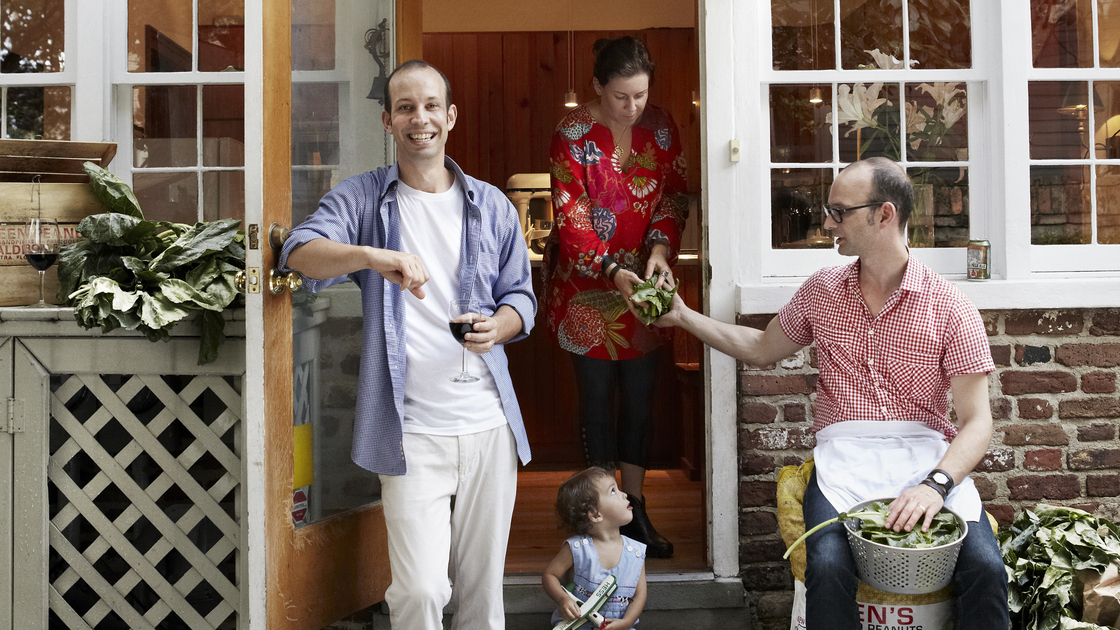
"caption": "Matt Lee (left) and Ted Lee (right) grew up in Charleston, S.C. After leaving the South as young adults, they founded a mail-order food company, The Lee Bros. Boiled Peanut Catalogue. They have written two previous cookbooks of Southern cuisine. Photo: Squire Fox/Clarkson Potter",
"description": "Matt Lee (left) and Ted Lee (right) grew up in Charleston, S.C. After leaving the South as young adults, they founded a mail-order food company, The Lee Bros. Boiled Peanut Catalogue. They have written two previous cookbooks of Southern cuisine.",
"title": "mattleftandtedright_cred-squire-fox",
"credit": null,
"status": "inherit",
"isLoading": false,
"fetchFailed": false
},
"bayareabites_60234": {
"type": "attachments",
"id": "bayareabites_60234",
"meta": {
"index": "attachments_1716263798",
"site": "bayareabites",
"id": "60234",
"found": true
},
"parent": 60233,
"imgSizes": {
"kqedFullSize": {
"file": "https://ww2.kqed.org/app/uploads/sites/24/2013/04/nettlesmain_wide-47e2bf68812b3c6fda243064c1a24481f0b96f97.jpg",
"width": 200,
"height": 112
}
},
"publishDate": 1366273506,
"modified": 1366273506,
"caption": null,
"description": "Nettles",
"title": "Nettles",
"credit": null,
"status": "inherit",
"isLoading": false,
"fetchFailed": false
},
"bayareabites_60094": {
"type": "attachments",
"id": "bayareabites_60094",
"meta": {
"index": "attachments_1716263798",
"site": "bayareabites",
"id": "60094",
"found": true
},
"parent": 60054,
"imgSizes": {
"kqedFullSize": {
"file": "https://ww2.kqed.org/app/uploads/sites/24/2013/04/toddler-snacks-park400x300.jpg",
"width": 400,
"height": 300
}
},
"publishDate": 1366148090,
"modified": 1366148090,
"caption": null,
"description": null,
"title": "toddler-snacks-park400x300",
"credit": null,
"status": "inherit",
"isLoading": false,
"fetchFailed": false
},
"bayareabites_59788": {
"type": "attachments",
"id": "bayareabites_59788",
"meta": {
"index": "attachments_1716263798",
"site": "bayareabites",
"id": "59788",
"found": true
},
"parent": 59787,
"imgSizes": {
"kqedFullSize": {
"file": "https://ww2.kqed.org/app/uploads/sites/24/2013/04/lemonsmain_wide-0572edd448aef587a08c59cbb728a89487be0da3.jpg",
"width": 200,
"height": 112
}
},
"publishDate": 1365691598,
"modified": 1365691598,
"caption": null,
"description": "All you need for preserving lemons is a jar with a tight-fitting lid, lemons and salt -- and time.",
"title": "All you need for preserving lemons is a jar with a tight-fitting lid, lemons and salt — and time.",
"credit": null,
"status": "inherit",
"isLoading": false,
"fetchFailed": false
},
"bayareabites_59648": {
"type": "attachments",
"id": "bayareabites_59648",
"meta": {
"index": "attachments_1716263798",
"site": "bayareabites",
"id": "59648",
"found": true
},
"parent": 59637,
"imgSizes": {
"kqedFullSize": {
"file": "https://ww2.kqed.org/app/uploads/sites/24/2013/04/asparagus-salad400x300.jpg",
"width": 400,
"height": 300
}
},
"publishDate": 1365458771,
"modified": 1365458771,
"caption": null,
"description": null,
"title": "asparagus-salad400x300",
"credit": null,
"status": "inherit",
"isLoading": false,
"fetchFailed": false
},
"bayareabites_59556": {
"type": "attachments",
"id": "bayareabites_59556",
"meta": {
"index": "attachments_1716263798",
"site": "bayareabites",
"id": "59556",
"found": true
},
"parent": 59541,
"imgSizes": {
"kqedFullSize": {
"file": "https://ww2.kqed.org/app/uploads/sites/24/2013/04/Old-Fashioned-Kentucky-Jelly400x300.jpg",
"width": 400,
"height": 300
}
},
"publishDate": 1365198202,
"modified": 1365198202,
"caption": null,
"description": null,
"title": "Old-Fashioned-Kentucky-Jelly400x300",
"credit": null,
"status": "inherit",
"isLoading": false,
"fetchFailed": false
},
"bayareabites_59397": {
"type": "attachments",
"id": "bayareabites_59397",
"meta": {
"index": "attachments_1716263798",
"site": "bayareabites",
"id": "59397",
"found": true
},
"parent": 59355,
"imgSizes": {
"kqedFullSize": {
"file": "https://ww2.kqed.org/app/uploads/sites/24/2013/04/cauliflower400x300.jpg",
"width": 400,
"height": 300
}
},
"publishDate": 1364964345,
"modified": 1364964345,
"caption": null,
"description": null,
"title": "cauliflower400x300",
"credit": null,
"status": "inherit",
"isLoading": false,
"fetchFailed": false
},
"bayareabites_59037": {
"type": "attachments",
"id": "bayareabites_59037",
"meta": {
"index": "attachments_1716263798",
"site": "bayareabites",
"id": "59037",
"found": true
},
"parent": 59028,
"imgSizes": {
"kqedFullSize": {
"file": "https://ww2.kqed.org/app/uploads/sites/24/2013/03/Crucifix-corndog400x300.jpg",
"width": 400,
"height": 300
}
},
"publishDate": 1364511905,
"modified": 1364511905,
"caption": null,
"description": null,
"title": "Crucifix-corndog400x300",
"credit": null,
"status": "inherit",
"isLoading": false,
"fetchFailed": false
},
"bayareabites_59143": {
"type": "attachments",
"id": "bayareabites_59143",
"meta": {
"index": "attachments_1716263798",
"site": "bayareabites",
"id": "59143",
"found": true
},
"parent": 59142,
"imgSizes": {
"kqedFullSize": {
"file": "https://ww2.kqed.org/app/uploads/sites/24/2013/03/bouchon_eggs_wide-de1da271285fa7f13c286ad3ef630061819fa29c.jpg",
"width": 200,
"height": 112
}
},
"publishDate": 1364571928,
"modified": 1364571928,
"caption": null,
"description": "Marshmallow eggs made with homemade flavored sugar are a colorful treat at Thomas Keller's Bouchon Bakery in Beverly Hills, Calif. To make them, pipe homemade marshmallow into hollow plastic eggs (see \u003ca href=\"",
"title": "Marshmallow eggs made with homemade flavored sugar are a colorful treat at Thomas Keller's Bouchon Bakery in Beverly Hills, Calif. To make them, pipe homemade marshmallow into hollow plastic eggs (see recipe, below).",
"credit": null,
"status": "inherit",
"isLoading": false,
"fetchFailed": false
},
"bayareabites_59020": {
"type": "attachments",
"id": "bayareabites_59020",
"meta": {
"index": "attachments_1716263798",
"site": "bayareabites",
"id": "59020",
"found": true
},
"parent": 57721,
"imgSizes": {
"kqedFullSize": {
"file": "https://ww2.kqed.org/app/uploads/sites/24/2013/03/bread-wreath400x300.jpg",
"width": 400,
"height": 300
}
},
"publishDate": 1364495429,
"modified": 1364495429,
"caption": null,
"description": null,
"title": "bread-wreath400x300",
"credit": null,
"status": "inherit",
"isLoading": false,
"fetchFailed": false
},
"bayareabites_58917": {
"type": "attachments",
"id": "bayareabites_58917",
"meta": {
"index": "attachments_1716263798",
"site": "bayareabites",
"id": "58917",
"found": true
},
"parent": 58916,
"imgSizes": {
"kqedFullSize": {
"file": "https://ww2.kqed.org/app/uploads/sites/24/2013/03/lambmaintight_wide-8812726f9b0a339f4f8fe1197c33dce90f89663d.jpg",
"width": 200,
"height": 112
}
},
"publishDate": 1364403410,
"modified": 1364403410,
"caption": null,
"description": "A lamb chop crusted with pistachio, mint and spices, served with assorted vegetables",
"title": "A lamb chop crusted with pistachio, mint and spices, served with assorted vegetables",
"credit": null,
"status": "inherit",
"isLoading": false,
"fetchFailed": false
},
"bayareabites_58739": {
"type": "attachments",
"id": "bayareabites_58739",
"meta": {
"index": "attachments_1716263798",
"site": "bayareabites",
"id": "58739",
"found": true
},
"parent": 58707,
"imgSizes": {
"kqedFullSize": {
"file": "https://ww2.kqed.org/app/uploads/sites/24/2013/03/matzo-happypassover400x300.jpg",
"width": 400,
"height": 300
}
},
"publishDate": 1364161897,
"modified": 1364161897,
"caption": null,
"description": null,
"title": "matzo-happypassover400x300",
"credit": null,
"status": "inherit",
"isLoading": false,
"fetchFailed": false
}
},
"audioPlayerReducer": {
"postId": "stream_live",
"isPaused": true,
"isPlaying": false,
"pfsActive": false,
"pledgeModalIsOpen": true,
"playerDrawerIsOpen": false,
"liveAudioPlayStartedAt": 0,
"liveAudioPlayContext": ""
},
"authorsReducer": {
"byline_bayareabites_60331": {
"type": "authors",
"id": "byline_bayareabites_60331",
"meta": {
"override": true
},
"slug": "byline_bayareabites_60331",
"name": "NPR Staff",
"isLoading": false
},
"byline_bayareabites_60233": {
"type": "authors",
"id": "byline_bayareabites_60233",
"meta": {
"override": true
},
"slug": "byline_bayareabites_60233",
"name": "Nicole Spiridakis",
"isLoading": false
},
"byline_bayareabites_59787": {
"type": "authors",
"id": "byline_bayareabites_59787",
"meta": {
"override": true
},
"slug": "byline_bayareabites_59787",
"name": "T. Susan Chang",
"isLoading": false
},
"byline_bayareabites_59142": {
"type": "authors",
"id": "byline_bayareabites_59142",
"meta": {
"override": true
},
"slug": "byline_bayareabites_59142",
"name": "Camila Domonoske",
"isLoading": false
},
"byline_bayareabites_58916": {
"type": "authors",
"id": "byline_bayareabites_58916",
"meta": {
"override": true
},
"slug": "byline_bayareabites_58916",
"name": "Whitney Pipkin",
"isLoading": false
},
"wendy-goodfriend": {
"type": "authors",
"id": "5014",
"meta": {
"index": "authors_1716337520",
"id": "5014",
"found": true
},
"name": "Wendy Goodfriend",
"firstName": "Wendy",
"lastName": "Goodfriend",
"slug": "wendy-goodfriend",
"email": "wendy@wendygoodfriend.com",
"display_author_email": false,
"staff_mastheads": [],
"title": "KQED Contributor",
"bio": "I was the Senior Digital Producer for KQED Food up until July, 2018. Since 2001, I designed, produced, managed and contributed to mostly food-related websites and blogs for KQED including: KQED.org; KQED Food; Bay Area Bites; Check, Please! Bay Area; Taste This; Celebrity Chefs; seven of Jacques Pepin's TV series websites; and Joanne Weir's Cooking in the City. I initiated the majority of KQED Food's social media feeds and maintained them up until 2017. As far as content creation, photography is my passion and I also shoot video and write stories. My photos have been used in articles for KQED Food, News, Arts, and Science as well as for promotional purposes in print and online. Professional education and training includes: clinical psychology, photography, commercial cooking, web design, information architecture and UX.",
"avatar": "https://secure.gravatar.com/avatar/dfba64372339cc34cf17e446e6f18fa8?s=600&d=blank&r=g",
"twitter": null,
"facebook": "bayareabites",
"instagram": null,
"linkedin": "wendygoodfriend",
"sites": [
{
"site": "jpepinheart",
"roles": []
},
{
"site": "about",
"roles": [
"editor"
]
},
{
"site": "bayareabites",
"roles": [
"subscriber"
]
},
{
"site": "science",
"roles": [
"administrator"
]
},
{
"site": "checkplease",
"roles": [
"subscriber"
]
},
{
"site": "food",
"roles": [
"author"
]
},
{
"site": "essentialpepin",
"roles": [
"administrator"
]
}
],
"headData": {
"title": "Wendy Goodfriend | KQED",
"description": "KQED Contributor",
"ogImgSrc": "https://secure.gravatar.com/avatar/dfba64372339cc34cf17e446e6f18fa8?s=600&d=blank&r=g",
"twImgSrc": "https://secure.gravatar.com/avatar/dfba64372339cc34cf17e446e6f18fa8?s=600&d=blank&r=g"
},
"isLoading": false,
"link": "/author/wendy-goodfriend"
},
"michael-procopio": {
"type": "authors",
"id": "5017",
"meta": {
"index": "authors_1716337520",
"id": "5017",
"found": true
},
"name": "Michael Procopio",
"firstName": "Michael",
"lastName": "Procopio",
"slug": "michael-procopio",
"email": "m_procopio@mac.com",
"display_author_email": false,
"staff_mastheads": [],
"title": null,
"bio": "I am terribly fond of martinis, Edward Gorey, and sleeping with many pillows. \r\nYou are more than welcome to follow me on Twitter: \u003ca href=\"http://twitter.com/#!/procopster\">@procopster\u003c/a>",
"avatar": "https://secure.gravatar.com/avatar/2eb848aac69d701cf1e2c3e88199feb4?s=600&d=blank&r=g",
"twitter": "procopster",
"facebook": "foodforthethoughtless",
"instagram": null,
"linkedin": null,
"sites": [
{
"site": "bayareabites",
"roles": [
"contributor"
]
},
{
"site": "food",
"roles": [
"contributor"
]
}
],
"headData": {
"title": "Michael Procopio | KQED",
"description": null,
"ogImgSrc": "https://secure.gravatar.com/avatar/2eb848aac69d701cf1e2c3e88199feb4?s=600&d=blank&r=g",
"twImgSrc": "https://secure.gravatar.com/avatar/2eb848aac69d701cf1e2c3e88199feb4?s=600&d=blank&r=g"
},
"isLoading": false,
"link": "/author/michael-procopio"
},
"stephanie-im": {
"type": "authors",
"id": "5037",
"meta": {
"index": "authors_1716337520",
"id": "5037",
"found": true
},
"name": "Stephanie Hua",
"firstName": "Stephanie",
"lastName": "Hua",
"slug": "stephanie-im",
"email": "stephanieim1023@gmail.com",
"display_author_email": false,
"staff_mastheads": [],
"title": "KQED Contributor",
"bio": "Stephanie Hua is the creator of \u003ca href=\"http://lickmyspoon.com\">Lick My Spoon\u003c/a>, a place for all things delicious. So far she has learned that she very much enjoys salted caramel anything, a good soup dumpling is worth a scalded tongue, and there is no room in life for non-fat cheese and crappy chocolate. Also, a barrel of cheese balls never ends well. \r\n\r\nStephanie has been known to choose her company based on how much they can pack it down. Ability to endure cramped quarters, sketchy back alleys, and uncharted paths to seek out that special dish is also a plus in her book. If you fit the criteria, drop a note. You’ll probably get along just fine.\r\n\r\nStephanie's writing and photography have been featured in Fodor's Travel, Wine Enthusiast Magazine, Serious Eats, and Sundance Channel. Follow her on \u003ca href=\"http://www.facebook.com/pages/Lick-My-Spoon/124276040932644\">Facebook\u003c/a> and \u003ca href=\"https://twitter.com/lickmyspoon\">@lickmyspoon\u003c/a>.",
"avatar": "https://secure.gravatar.com/avatar/25d5d746bf96940e83c86d9a5cb527ed00eb0e7d0b3bc9e2c73eba55d7755cc7?s=600&d=blank&r=g",
"twitter": "LickMySpoon",
"bluesky": null,
"facebook": "pages/Lick-My-Spoon/124276040932644",
"instagram": null,
"linkedin": "StephanieHua",
"sites": [
{
"site": "bayareabites",
"roles": [
"subscriber"
]
},
{
"site": "food",
"roles": [
"contributor"
]
}
],
"headData": {
"title": "Stephanie Hua | KQED",
"description": "KQED Contributor",
"ogImgSrc": "https://secure.gravatar.com/avatar/25d5d746bf96940e83c86d9a5cb527ed00eb0e7d0b3bc9e2c73eba55d7755cc7?s=600&d=blank&r=g",
"twImgSrc": "https://secure.gravatar.com/avatar/25d5d746bf96940e83c86d9a5cb527ed00eb0e7d0b3bc9e2c73eba55d7755cc7?s=600&d=blank&r=g"
},
"isLoading": false,
"link": "/author/stephanie-im"
},
"stephanie-rosenbaum": {
"type": "authors",
"id": "5038",
"meta": {
"index": "authors_1716337520",
"id": "5038",
"found": true
},
"name": "Stephanie Rosenbaum Klassen",
"firstName": "Stephanie",
"lastName": "Rosenbaum Klassen",
"slug": "stephanie-rosenbaum",
"email": "dixieday@aol.com",
"display_author_email": false,
"staff_mastheads": [],
"title": "KQED Contributor",
"bio": "Stephanie Rosenbaum Klassen is a longtime local food writer, author, and cook. Her books include The Art of Vintage Cocktails (Egg & Dart Press), World of Doughnuts (Egg & Dart Press); Kids in the Kitchen: Fun Food (Williams Sonoma); Honey from Flower to Table (Chronicle Books) and The Astrology Cookbook: A Cosmic Guide to Feasts of Love (Manic D Press). She has studied organic farming at UCSC and holds a certificate in Ecological Horticulture from the Center for Agroecology and Sustainable Food Systems. She does frequent cooking demonstrations at local farmers’ markets and has taught food writing at Media Alliance in San Francisco and the Continuing Education program at Stanford University. She has been the lead restaurant critic for the San Francisco Bay Guardian as well as for San Francisco magazine. She has been an assistant chef at the Headlands Center for the Arts, an artists' residency program located in the Marin Headlands, and a production cook at the Marin Sun Farms Cafe in Pt Reyes Station. After some 20 years in San Francisco interspersed with stints in Oakland, Santa Cruz, Brooklyn, and Manhattan, she recently moved to Sonoma county but still writes in San Francisco several days a week.",
"avatar": "https://secure.gravatar.com/avatar/26520681f950a766c2c0eb9872646dec42b88de07cc4cdd65958385671e93cf7?s=600&d=mm&r=g",
"twitter": "sjrosenbaum",
"bluesky": null,
"facebook": null,
"instagram": null,
"linkedin": null,
"sites": [
{
"site": "bayareabites",
"roles": [
"subscriber"
]
},
{
"site": "food",
"roles": [
"subscriber"
]
}
],
"headData": {
"title": "Stephanie Rosenbaum Klassen | KQED",
"description": "KQED Contributor",
"ogImgSrc": "https://secure.gravatar.com/avatar/26520681f950a766c2c0eb9872646dec42b88de07cc4cdd65958385671e93cf7?s=600&d=mm&r=g",
"twImgSrc": "https://secure.gravatar.com/avatar/26520681f950a766c2c0eb9872646dec42b88de07cc4cdd65958385671e93cf7?s=600&d=mm&r=g"
},
"isLoading": false,
"link": "/author/stephanie-rosenbaum"
},
"darathompson": {
"type": "authors",
"id": "5402",
"meta": {
"index": "authors_1716337520",
"id": "5402",
"found": true
},
"name": "Dara Thompson",
"firstName": "Dara",
"lastName": "Thompson",
"slug": "darathompson",
"email": "drdarathompson@yahoo.com",
"display_author_email": false,
"staff_mastheads": [],
"title": null,
"bio": "\u003ca href=\"http://solutionsnaturopathiccare.com/\">Dara Thompson N.D.\u003c/a> is a Naturopathic Doctor practicing in Mill Valley, CA . She is passionate about medicine, and believes that the food we eat is an integral part of healing. Dr. Thompson studied cell and molecular biology at The Massachusetts Institute of Technology and UC Santa Cruz. She received her doctorate in naturopathic medicine at National College of Natural Medicine in Portland, Oregon, where she worked her way through school catering and teaching cooking classes. Dr. Thompson specializes in environmental medicine and providing supportive care for cancer patients. You can follow her \u003ca href=\"http://solutionsnaturopathiccare.com/blog/\">food and nutrition blog\u003c/a>.",
"avatar": "https://secure.gravatar.com/avatar/7918a53f14a1253cb107c6f45a0fe63b?s=600&d=blank&r=g",
"twitter": null,
"facebook": null,
"instagram": null,
"linkedin": null,
"sites": [
{
"site": "bayareabites",
"roles": [
"contributor"
]
}
],
"headData": {
"title": "Dara Thompson | KQED",
"description": null,
"ogImgSrc": "https://secure.gravatar.com/avatar/7918a53f14a1253cb107c6f45a0fe63b?s=600&d=blank&r=g",
"twImgSrc": "https://secure.gravatar.com/avatar/7918a53f14a1253cb107c6f45a0fe63b?s=600&d=blank&r=g"
},
"isLoading": false,
"link": "/author/darathompson"
}
},
"pagesReducer": {
"bayareabites_category_recipes": {
"type": "terms",
"id": "bayareabites_12",
"meta": {
"index": "terms_1716263798",
"site": "bayareabites",
"id": "12",
"score": 12.55937
},
"featImg": null,
"name": "recipes",
"description": null,
"taxonomy": "category",
"headData": {
"twImgId": null,
"twTitle": null,
"ogTitle": null,
"ogImgId": null,
"twDescription": null,
"description": null,
"title": "recipes Archives | KQED Bay Area Bites",
"ogDescription": null
},
"ttid": 10,
"slug": "recipes",
"isLoading": false,
"title": "recipes",
"pageMeta": {
"site": "bayareabites",
"WpPageTemplate": "page-topic-editorial",
"currentPage": 45
},
"blocks": [
{
"blockName": "kqed/post-list",
"attrs": {
"layout": "cardArticle2",
"query": "posts/bayareabites?category=recipes",
"seeMore": false,
"paginated": true,
"page": 45
}
},
{
"blockName": "kqed/ad"
}
]
}
},
"pfsSessionReducer": {},
"postsReducer": {
"stream_live": {
"type": "live",
"id": "stream_live",
"audioUrl": "https://hls.kqed.org/hls/kqed_app/playlist.m3u8",
"title": "Live Stream",
"excerpt": "Live Stream information currently unavailable.",
"link": "/radio",
"featImg": "",
"label": {
"name": "KQED Live",
"link": "/"
}
},
"stream_kqedNewscast": {
"type": "posts",
"id": "stream_kqedNewscast",
"audioUrl": "https://www.kqed.org/.stream/anon/radio/RDnews/newscast.mp3?_=1",
"title": "KQED Newscast",
"featImg": "",
"label": {
"name": "88.5 FM",
"link": "/"
}
},
"bayareabites_60331": {
"type": "posts",
"id": "bayareabites_60331",
"meta": {
"index": "posts_1716263798",
"site": "bayareabites",
"id": "60331",
"score": null,
"sort": [
1366350017000
]
},
"parent": 0,
"labelTerm": {
"site": "bayareabites"
},
"blocks": [],
"publishDate": 1366350017,
"format": "aside",
"disqusTitle": "A 'Charleston Kitchen' Full Of Foraged And Forgotten Foods",
"title": "A 'Charleston Kitchen' Full Of Foraged And Forgotten Foods",
"headTitle": "Bay Area Bites | KQED Food",
"content": "\u003cfigure id=\"attachment_60344\" class=\"wp-caption aligncenter\" style=\"max-width: 1024px\">\u003ca href=\"http://ww2.kqed.org/bayareabites/wp-content/uploads/sites/24/2013/04/Lee-brothers.jpg\">\u003cimg src=\"http://ww2.kqed.org/bayareabites/wp-content/uploads/sites/24/2013/04/Lee-brothers-1024x576.jpg\" alt=\"Matt Lee (left) and Ted Lee (right) grew up in Charleston, S.C. After leaving the South as young adults, they founded a mail-order food company, The Lee Bros. Boiled Peanut Catalogue. They have written two previous cookbooks of Southern cuisine. Photo: Squire Fox/Clarkson Potter\" width=\"1024\" height=\"576\" class=\"size-large wp-image-60344\">\u003c/a>\u003cfigcaption class=\"wp-caption-text\">Matt Lee (left) and Ted Lee (right) grew up in Charleston, S.C. After leaving the South as young adults, they founded a mail-order food company, The Lee Bros. Boiled Peanut Catalogue. They have written two previous cookbooks of Southern cuisine. Photo: Squire Fox/Clarkson Potter\u003c/figcaption>\u003c/figure>\n\u003cp>\u003cstrong>Listen to the Story\u003c/strong> on \u003ca href=\"http://www.npr.org/2013/04/18/177367797/a-charleston-kitchen-full-of-foraged-and-forgotten-foods\">All Things Considered\u003c/a>\u003cbr>\n [audio src=\"http://pd.npr.org/anon.npr-mp3/npr/atc/2013/04/20130418_atc_15.mp3\"] \u003c/p>\n\u003cp>Post by NPR Staff, \u003ca href=\"http://www.npr.org/2013/04/18/177367797/a-charleston-kitchen-full-of-foraged-and-forgotten-foods\">NPR Food\u003c/a> (4/18/13)\u003c/p>\n\u003cp>A new cookbook by the Lee brothers just might inspire daydreams of a food-centric vacation to South Carolina. It's called \u003cem>The Lee Bros. Charleston Kitchen\u003c/em>, and in it, Matt and Ted Lee feature recipes and stories from the Southern port city they grew up in. The brothers joined NPR's Melissa Block to talk about Charleston's distinctive food culture, starting with the dishes that they'd put on a typical Charleston menu.\u003c/p>\n\u003cp>\"I would start with kumquat sparklers, with the flavor of backyard kumquats, which are like tangerines,\" Matt says. \"Also, classic Charleston cheese biscuits with a single pecan pressed into it, and savory benne wafers — sesame seed wafers.\"\u003c/p>\n\u003cp>\u003ca href=\"http://www.npr.org/books/titles/177362137/the-lee-bros-charleston-kitchen\">\u003cimg src=\"http://ww2.kqed.org/bayareabites/wp-content/uploads/sites/24/2013/04/lee-brothers-bookcover.jpg\" alt=\"The Lee Bros. Charleston Kitchen\" width=\"300\" height=\"314\" class=\"alignleft size-full wp-image-60345\">\u003c/a>For the second course, Ted says, \"we'd do a she-crab soup, and then we'd do a shrimp and grits,\" he says. \"For vegetables, I think this is the perfect time to do chainey briar; it's growing really well out on Sullivan's Island. We'd do some \u003ca href=\"#briar\">Grilled Chainey Briar\u003c/a>.\"\u003c/p>\n\u003cp>[ad fullwidth]\u003c/p>\n\u003cp>\"Chainey briar is a native weed or vine,\" Ted explains. \"It's \u003cem>Smilax\u003c/em> botanically. It's something that grows on fence lines, it grows on sand dunes at the beaches and it has, in the spring right about now, a tender tip, a shoot that is delicious.\"\u003c/p>\n\u003cp>It looks, quite frankly, like a weed, and might be a bit of an acquired taste — but the brothers say it's worth acquiring. \"It's pretty rangy, and that's the appeal, in terms of flavor,\" Matt says. It tastes like asparagus but with this extra sort of reckless green thing. Sometimes we describe it as tasting like asparagus with olive oil already on it.\"\u003c/p>\n\u003cp>For dessert, the brothers would serve \u003ca href=\"#torte\">Huguenot Torte\u003c/a>, an iconic Charleston dish. \"Hugeonot torte has this nice meringue-like crisp top, but then a sludgy caramel and apple and pecan bottom to it,\" Matt says. \"It's got flour but tons of leavening — so it just puffs up in the oven, then collapses and creates this very interesting and uniquely Charleston dessert.\"\u003c/p>\n\u003cp>\u003cstrong>Southern Food With Less Pork And More Loquats\u003c/strong>\u003c/p>\n\u003cp>The Lee brothers, who were born in New York but grew up in Charleston, have written two previous cookbooks highlighting Southern cuisine. This is their first to focus just on the city of their youth, and their choice is more than just hometown favoritism: Charleston's culinary tradition is unusual, with dishes and traditions you won't find in other parts of the South.\u003c/p>\n\u003cp>\"It's naturally about the seafood and also about the poultry,\" Matt explains. \"The much-heralded, like, 'porkopolis' of the South doesn't really exist so much in Charleston, because it was never a place to raise cattle or pigs, being so marshy.\"\u003c/p>\n\u003cp>It's not just the meat that makes Charleston stand out; there's also a rich variety of local produce. \"I think another thing that visitors to Charleston are surprised by is just how close the farms are — the rural part of Charleston — to the city,\" Ted says.\u003c/p>\n\u003cp>You might not even need to find a farmer to get fresh food. \"Even downtown — we grew up downtown in the historic district — we're surrounded by fruits of all kinds, like kumquats, loquats, mulberries, figs, pomegranates, bananas, citrus,\" Ted says. \"They all grow downtown, and you grow up sort of knowing where the trees are and which ones taste best.\"\u003c/p>\n\u003cp>Call it \"foraging\" or call it \"stealing,\" snagging fruit off someone else's tree is certainly possible in Charleston. \"There are a lot of secrets in back alleys in Charleston that yield great fruits and herbs.\" The trick to harvesting that bounty without ruining your neighborly relations? \"Be very polite,\" Ted says — and, Matt adds, be sure to smile. \"That's awfully disarming,\" he says.\u003c/p>\n\u003cp>\u003cstrong>Taking Cues From The Past\u003c/strong>\u003c/p>\n\u003cp>In addition to highlighting Charleston's current food culture, Matt and Ted Lee also looked to Charleston's history to find old recipes that might have been forgotten. Cookbooks from the 19th century were particularly inspiring, Ted says. \"They tell a story so diverse and varied about the different types of vegetables that were grown in the low country, some of which are rarely found, like salsify, tania — it's a root vegetable,\" he says. \"It's nice to be able to draw from the past to inform your kitchen in the present.\"\u003c/p>\n\u003cp>One recipe in the new cookbook comes from an even more distant past — a dessert from the 1700s called \u003ca href=\"#syllabub\">Syllabub\u003c/a>. \"Despite the fact that it appears in all the old cookbooks, Matt and I have never been served it — either in a Charleston restaurant or a Charleston home,\" Ted says. \"So we just tried it ourselves. It's basically very simple — it's fortified wine that's been seasoned with lemon juice and lemon peel, a little bit of sugar, sometimes spices, and whipped with cream until it's sort of this airy, fluffy, alcoholic whipped cream that goes really well with fruit.\"\u003c/p>\n\u003cp>If you want to follow Matt and Ted and take a stab at Syllabub, a recipe is below, as well as recipes for Huguenot Torte and Grilled Chainey Briar. But be warned: You might need to plan a trip to Charleston to enjoy that chainey briar. You won't find it in grocery stores or farmers markets, and will have better luck harvesting it yourself. Like fresh kumquats off the tree or oysters from the ocean, it's a location-bound delicacy. As Matt Lee, who lives in Charleston today, puts it, \"it's just one of those things that you have to live here to really appreciate.\"\u003c/p>\n\u003chr>\n\u003ch3>\u003ca name=\"briar\">\u003c/a>Recipe: Grilled Chainey Briar\u003c/h3>\n\u003cfigure id=\"attachment_60346\" class=\"wp-caption alignleft\" style=\"max-width: 290px\">\u003ca href=\"http://ww2.kqed.org/bayareabites/wp-content/uploads/sites/24/2013/04/lee-brothers-chaineybriar.jpg\">\u003cimg src=\"http://ww2.kqed.org/bayareabites/wp-content/uploads/sites/24/2013/04/lee-brothers-chaineybriar-290x290.jpg\" alt=\"Chainey briar grows wild around Charleston, S.C. Photo: Matt Lee and Ted Lee/Clarkson Potter\" width=\"290\" height=\"290\" class=\"size-medium wp-image-60346\">\u003c/a>\u003cfigcaption class=\"wp-caption-text\">Chainey briar grows wild around Charleston, S.C. Photo: Matt Lee and Ted Lee/Clarkson Potter\u003c/figcaption>\u003c/figure>\n\u003cp>Chainey briar is what Charlestonians of a certain age call the tender shoots of the smilax (aka cat briar) vine, which can be found growing in the dunes and along sandy fence lines throughout the area. The distinctive spade-shaped leaves distinguish smilax from other vines growing in the same terrain. When raw, chainey briar has a delicious asparagus-and-olive-oil flavor that is fresh and green; lightly cooked, it is even more appetizing and tender. Chainey briar appears most often in community cookbooks of the rural sea islands, like Edisto and Yonge's.\u003c/p>\n\u003cp>Most chainey briar found among the dunes or in metropolitan Charleston are thin, curly tendrils, although our friend Tom, who gentleman-farms on Johns Island, recently introduced us to \"bull briar,\" the thicker sprouts of mature smilax vines that grow in the forested areas of the sea islands. Bull briar, which truly resembles large asparagus, would seem to represent more vegetable for one's effort, but it is found so high in the trees that a pole pruner is usually required to harvest it. We're just as happy to spend the afternoon on a path to the beach, eating every third tendril we pick, until the basket is full.\u003c/p>\n\u003cp>Chainey briar almost never appears in the farmer's markets, so you must forage for it yourself (or ingratiate yourself to farmer Sidi Limehouse [see page 94 of The Lee Bros. Charleston Kitchen], who will occasionally indulge good friends with a basketful). Its flavor is robust enough that it grills well, wilting and charring in places. Dressed with oil and lemon, it makes for an exciting side dish with pre-colonial roots.\u003c/p>\n\u003cp>1 pound chainey briar\u003cbr>1 tablespoon extra-virgin olive oil, plus more for the pan\u003cbr>Kosher salt and freshly ground black pepper\u003cbr>2 teaspoons fresh lemon juice\u003c/p>\n\u003cp>1. Thoroughly wash the chainey briar, removing any ants or foreign matter and pinching off the stem ends (which will toughen as they age) so only the tender parts remain. Toss the chainey briar in a large bowl with the olive oil to coat, scatter 1/2 teaspoon salt over the bowl, and toss again.\u003c/p>\n\u003cp>2. Lightly oil a grill pan, and place it over high heat. When a drop of water sizzles when dropped on the pan, spread the chainey briar in an even layer about 1/2 inch high (you may have to grill multiple batches, depending on the size of your pan). Allow the chainey briar to sizzle and pop for a minute or two, until the tips of some begin to blacken. Use tongs to shuffle the chainey briar on the grill pan and allow them to cook a minute or two more, until almost all the fronds show signs of wilting. Reserve the chainey briar in a large covered bowl as you move on to grill another batch.\u003c/p>\n\u003cp>3. When all the chainey briar is wilted and charred, dress it with the lemon juice, toss lightly, and season to taste with salt and black pepper. Serve warm or at room temperature.\u003c/p>\n\u003chr>\n\u003ch3>\u003ca name=\"torte\">\u003c/a>Recipe: Huguenot Torte\u003c/h3>\n\u003cfigure id=\"attachment_60347\" class=\"wp-caption alignleft\" style=\"max-width: 290px\">\u003ca href=\"http://ww2.kqed.org/bayareabites/wp-content/uploads/sites/24/2013/04/lee-brothershuguenot-torte.jpg\">\u003cimg src=\"http://ww2.kqed.org/bayareabites/wp-content/uploads/sites/24/2013/04/lee-brothershuguenot-torte-290x290.jpg\" alt=\"Huguenot torte has gooey caramel beneath a crackly top Photo: Squire Fox/Clarkson Potter\" width=\"290\" height=\"290\" class=\"size-medium wp-image-60347\">\u003c/a>\u003cfigcaption class=\"wp-caption-text\">Huguenot torte has gooey caramel beneath a crackly top Photo: Squire Fox/Clarkson Potter\u003c/figcaption>\u003c/figure>\n\u003cp>\u003cem>Serves: 6 to 8\u003c/em>\u003cbr>\u003cem>Time: 55 minutes, 10 minutes cooling\u003c/em>\u003c/p>\n\u003cp>Imagine that a blondie and an apple-pecan pie got into a crusty-gooey, sticky-delicious accident in a baking dish, and you'll approximate the ultra-decadence of this dessert. Until relatively recently, Charlestonians believed that this confection, as the title might suggest, came to Charleston with the French Huguenots, who settled in the city in the eighteenth century, and that it was a rustic cousin of elegant pâtisseries. But in the 1990s, the culinary historian and Lowcountry native John Martin Taylor tracked down the woman to whom the recipe is attributed in Charleston Receipts, and learned that she'd encountered the dish as \"Ozark Pudding\" while visiting relatives in Arkansas in the 1940s. She had brought the recipe back to Charleston, and put the dessert on the menu of the Huguenot Tavern, where she was a cook.\u003c/p>\n\u003cp>The fact that this dessert has become as much an icon of Charleston home cooking as Charleston Okra Soup [see page 74 of The Lee Bros. Charleston Kitchen] and She-Crab Soup [page 77] seems odd — but it's all part of \"Charleston's food pattern,\" as May A. Pyatt wrote in a 1950 review of Charleston Receipts in the News and Courier. Another interesting note: not many Charleston restaurants these days offer the torte — or even variants upon it — but it is almost always offered on menus at the tea rooms [see page 79] that open in the spring throughout the area. You should master it yourself; it's easy to make and easy to eat, and nice to have in your repertoire.\u003c/p>\n\u003cp>When we're serving this dish for guests, we often temper its sweetness by whipping a small amount of buttermilk or sour cream into the whipped cream garnish.\u003c/p>\n\u003cp>unsalted butter for greasing the dish\u003cbr>2 large eggs\u003cbr>1 1/3 cups sugar\u003cbr>1/4 cup all-purpose flour\u003cbr>2 1/2 teaspoons baking powder\u003cbr>1/4 teaspoon kosher salt\u003cbr>1 Granny Smith or other tart apple, cored, peeled, and diced (1 cup)\u003cbr>1 cup chopped pecans\u003cbr>1 teaspoon pure vanilla extract\u003cbr>1/2 cup heavy cream\u003cbr>2 tablespoons whole buttermilk or sour cream\u003c/p>\n\u003cp>1. Preheat the oven to 325 degrees F. Grease a 2-quart baking dish.\u003c/p>\n\u003cp>2. In a large bowl, beat the eggs with a whisk until they're creamy and frothy. Add the sugar, flour, baking powder, salt, apple, pecans, and vanilla, whisking to combine after each addition.\u003c/p>\n\u003cp>3. Pour the batter into the prepared baking dish and bake for 45 minutes, or until the top of the torte is crusty. Remove the torte from the oven and let cool for about 10 minutes.\u003c/p>\n\u003cp>4. Whip the cream with the buttermilk until stiff peaks form. Cut into individual portions — they will be lumpen and misshapen, with shards of crust and spoonfuls of ooze, but no matter — and serve with dollops of the whipped cream.\u003c/p>\n\u003chr>\n\u003ch3>\u003ca name=\"syllabub\">\u003c/a>Recipe: Syllabub With Rosemary-Glazed Figs\u003c/h3>\n\u003cfigure id=\"attachment_60343\" class=\"wp-caption aligncenter\" style=\"max-width: 666px\">\u003ca href=\"http://ww2.kqed.org/bayareabites/wp-content/uploads/sites/24/2013/04/lee-brothers-syllabub.jpg\">\u003cimg src=\"http://ww2.kqed.org/bayareabites/wp-content/uploads/sites/24/2013/04/lee-brothers-syllabub.jpg\" alt=\"Syllabub is a traditional dessert featuring sherry, cream and sugar. Photo: Squire Fox/Clarkson Potter\" width=\"666\" height=\"500\" class=\"size-full wp-image-60343\">\u003c/a>\u003cfigcaption class=\"wp-caption-text\">Syllabub is a traditional dessert featuring sherry, cream and sugar. Photo: Squire Fox/Clarkson Potter\u003c/figcaption>\u003c/figure>\n\u003cp>\u003cem>Serves: 4 \u003c/em>\u003cbr>\u003cem>Time: 1 hour 15 minutes, including chilling\u003c/em>\u003c/p>\n\u003cp>\u003cstrong>Syllabub\u003c/strong>\u003c/p>\n\u003cp>1/2 cup Sercial Madeira or Amontillado sherry\u003cbr>Peel of 1/2 lemon\u003cbr>1 tablespoon fresh lemon juice\u003cbr>1 1/2 tablespoons sugar\u003cbr>Pinch of kosher salt\u003cbr>1 cup heavy cream, cold\u003cstrong> \u003c/strong>\u003c/p>\n\u003cp>\u003cstrong>Rosemary-glazed figs\u003c/strong>\u003c/p>\n\u003cp>1/2 cup sugar\u003cbr>2 (3-inch) long sprigs rosemary\u003cbr>Pinch of kosher salt\u003cbr>4 ounces fresh figs (about 4 large), stemmed and quartered\u003c/p>\n\u003cp>1. Make the syllabub: Put all syllabub ingredients except for the cream into a large bowl, and whisk until the sugar has dissolved, about a minute. Let stand in the fridge, about 1 hour.\u003c/p>\n\u003cp>2.\u003cstrong> \u003c/strong>Make the rosemary-glazed figs: Heat the sugar and 1/4 cup of water in a small saucepan over medium heat, stirring until the sugar dissolves. Add the rosemary and the salt, stir for about 30 seconds to dissolve the salt and bruise the rosemary, and turn off the heat. Cover and let cool to room temperature, about 20 minutes.\u003c/p>\n\u003cp>3\u003cstrong>. \u003c/strong>Put the figs in a small bowl, drizzle 2 to 3 tablespoons of the rosemary syrup over them, and toss gently to coat. (If the figs are less than ripe, let them stand in the syrup for 30 minutes to sweeten.) Reserve the remaining syrup for another use, such as sweetening lemonade.\u003c/p>\n\u003cp>4. Remove the lemon peel from the wine mixture. Pour the cream into the wine and whisk by hand until the cream is thick and holds its shape, about 2 minutes. Divide the syllabub among four wine glasses or sundae cups and spoon the rosemary-glazed figs over each serving.\u003c/p>\n\u003cp>\u003cstrong>Syllabub with Strawberries and Black Pepper\u003c/strong>\u003c/p>\n\u003cp>For a springtime variation on Syllabub with Rosemary-Glazed Figs, make Syllabub with Strawberries and Black Pepper. Simply substitute for the rosemary-glazed figs 4 ounces strawberries that have been quartered and tossed a few times with sugar to taste (a teaspoon or two) until the sugar has dissolved. (Add a few drops water, if needed, to dissolve). Spoon the strawberries over each serving of Syllabub, then grind a bit of black pepper over the top of each and serve.\u003c/p>\n\u003cp>\u003cem>Recipes from \u003c/em>The Lee Bros. Charleston Cookbook\u003cem> by Matt Lee and Ted Lee. Copyright 2013 by Matt Lee and Ted Lee. Excerpted by permission of Clarkson Potter, an imprint of the Crown Publishing Group, a division of Random House. \u003c/em> \u003c/p>\n\u003cul>\n\u003cstrong>More on the Lee Bros.\u003c/strong>\n\u003cli>\u003ca href=\"http://www.npr.org/templates/story/story.php?storyId=125832027\">Classic Southern Food Gets A Makeover\u003c/a> (NPR Food)\u003c/li>\n\u003cli>\u003ca href=\"http://www.npr.org/templates/story/story.php?storyId=6650215\">Recipes That Passed a Cookbook Critic's Test\u003c/a> (Kitchen Window, NPR Food)\u003c/li>\n\u003c/ul>\n\u003cp>[ad floatright]\u003c/p>\n\u003cp>\u003cem>Copyright 2013 \u003ca href=\"http://www.npr.org/\">NPR\u003c/a>.\u003c/em> \u003c/p>\n\n",
"disqusIdentifier": "60331 http://blogs.kqed.org/bayareabites/?p=60331",
"disqusUrl": "https://ww2.kqed.org/bayareabites/2013/04/18/a-charleston-kitchen-full-of-foraged-and-forgotten-foods/",
"stats": {
"hasVideo": false,
"hasChartOrMap": false,
"hasAudio": true,
"hasPolis": false,
"wordCount": 2498,
"hasGoogleForm": false,
"hasGallery": false,
"hasHearkenModule": false,
"iframeSrcs": [],
"paragraphCount": 49
},
"modified": 1366351205,
"excerpt": "The Lee brothers, Matt and Ted, have written two cookbooks about Southern cuisine, but now they've turned their attention to a more specific region: Charleston, the city they grew up in. Their new book contains recipes and stories from a seafood-centric community with a rich culinary history.",
"headData": {
"twImgId": "",
"twTitle": "",
"ogTitle": "",
"ogImgId": "",
"twDescription": "",
"description": "The Lee brothers, Matt and Ted, have written two cookbooks about Southern cuisine, but now they've turned their attention to a more specific region: Charleston, the city they grew up in. Their new book contains recipes and stories from a seafood-centric community with a rich culinary history.",
"title": "A 'Charleston Kitchen' Full Of Foraged And Forgotten Foods | KQED",
"ogDescription": "",
"schema": {
"@context": "https://schema.org",
"@type": "Article",
"headline": "A 'Charleston Kitchen' Full Of Foraged And Forgotten Foods",
"datePublished": "2013-04-18T22:40:17-07:00",
"dateModified": "2013-04-18T23:00:05-07:00",
"image": "https://cdn.kqed.org/wp-content/uploads/2020/02/KQED-OG-Image@1x.png"
}
},
"guestAuthors": [],
"slug": "a-charleston-kitchen-full-of-foraged-and-forgotten-foods",
"status": "publish",
"nprApiLink": "http://api.npr.org/query?id=177367797&apiKey=MDAxOTAwOTE4MDEyMTkxMDAzNjczZDljZA004",
"nprByline": "NPR Staff",
"nprStoryDate": "Thu, 18 Apr 2013 15:00:00 -0400",
"nprLastModifiedDate": "Thu, 18 Apr 2013 22:26:00 -0400",
"nprHtmlLink": "http://www.npr.org/2013/04/18/177367797/a-charleston-kitchen-full-of-foraged-and-forgotten-foods?ft=3&f=177367797",
"nprAudio": "http://pd.npr.org/anon.npr-mp3/npr/atc/2013/04/20130418_atc_15.mp3?orgId=1&topicId=1033&ft=3&f=177367797",
"nprAudioM3u": "http://api.npr.org/m3u/1177826067-b30d22.m3u?orgId=1&topicId=1033&ft=3&f=177367797",
"nprStoryId": "177367797",
"nprRetrievedStory": "1",
"nprPubDate": "Thu, 18 Apr 2013 22:26:00 -0400",
"path": "/bayareabites/60331/a-charleston-kitchen-full-of-foraged-and-forgotten-foods",
"audioUrl": "http://pd.npr.org/anon.npr-mp3/npr/atc/2013/04/20130418_atc_15.mp3?orgId=1&topicId=1033&ft=3&f=177367797",
"audioDuration": null,
"audioTrackLength": null,
"parsedContent": [
{
"type": "contentString",
"content": "\u003cdiv class=\"post-body\">\u003cp>\u003cfigure id=\"attachment_60344\" class=\"wp-caption aligncenter\" style=\"max-width: 1024px\">\u003ca href=\"http://ww2.kqed.org/bayareabites/wp-content/uploads/sites/24/2013/04/Lee-brothers.jpg\">\u003cimg src=\"http://ww2.kqed.org/bayareabites/wp-content/uploads/sites/24/2013/04/Lee-brothers-1024x576.jpg\" alt=\"Matt Lee (left) and Ted Lee (right) grew up in Charleston, S.C. After leaving the South as young adults, they founded a mail-order food company, The Lee Bros. Boiled Peanut Catalogue. They have written two previous cookbooks of Southern cuisine. Photo: Squire Fox/Clarkson Potter\" width=\"1024\" height=\"576\" class=\"size-large wp-image-60344\">\u003c/a>\u003cfigcaption class=\"wp-caption-text\">Matt Lee (left) and Ted Lee (right) grew up in Charleston, S.C. After leaving the South as young adults, they founded a mail-order food company, The Lee Bros. Boiled Peanut Catalogue. They have written two previous cookbooks of Southern cuisine. Photo: Squire Fox/Clarkson Potter\u003c/figcaption>\u003c/figure>\n\u003cp>\u003cstrong>Listen to the Story\u003c/strong> on \u003ca href=\"http://www.npr.org/2013/04/18/177367797/a-charleston-kitchen-full-of-foraged-and-forgotten-foods\">All Things Considered\u003c/a>\u003cbr>\n \u003c/p>\u003c/div>",
"attributes": {
"named": {},
"numeric": []
}
},
{
"type": "component",
"content": "",
"name": "audio",
"attributes": {
"named": {
"src": "http://pd.npr.org/anon.npr-mp3/npr/atc/2013/04/20130418_atc_15.mp3",
"label": ""
},
"numeric": []
}
},
{
"type": "contentString",
"content": "\u003cdiv class=\"post-body\">\u003cp> \u003c/p>\n\u003cp>Post by NPR Staff, \u003ca href=\"http://www.npr.org/2013/04/18/177367797/a-charleston-kitchen-full-of-foraged-and-forgotten-foods\">NPR Food\u003c/a> (4/18/13)\u003c/p>\n\u003cp>A new cookbook by the Lee brothers just might inspire daydreams of a food-centric vacation to South Carolina. It's called \u003cem>The Lee Bros. Charleston Kitchen\u003c/em>, and in it, Matt and Ted Lee feature recipes and stories from the Southern port city they grew up in. The brothers joined NPR's Melissa Block to talk about Charleston's distinctive food culture, starting with the dishes that they'd put on a typical Charleston menu.\u003c/p>\n\u003cp>\"I would start with kumquat sparklers, with the flavor of backyard kumquats, which are like tangerines,\" Matt says. \"Also, classic Charleston cheese biscuits with a single pecan pressed into it, and savory benne wafers — sesame seed wafers.\"\u003c/p>\n\u003cp>\u003ca href=\"http://www.npr.org/books/titles/177362137/the-lee-bros-charleston-kitchen\">\u003cimg src=\"http://ww2.kqed.org/bayareabites/wp-content/uploads/sites/24/2013/04/lee-brothers-bookcover.jpg\" alt=\"The Lee Bros. Charleston Kitchen\" width=\"300\" height=\"314\" class=\"alignleft size-full wp-image-60345\">\u003c/a>For the second course, Ted says, \"we'd do a she-crab soup, and then we'd do a shrimp and grits,\" he says. \"For vegetables, I think this is the perfect time to do chainey briar; it's growing really well out on Sullivan's Island. We'd do some \u003ca href=\"#briar\">Grilled Chainey Briar\u003c/a>.\"\u003c/p>\n\u003cp>\u003c/p>\u003c/div>",
"attributes": {
"named": {},
"numeric": []
}
},
{
"type": "component",
"content": "",
"name": "ad",
"attributes": {
"named": {
"label": "fullwidth"
},
"numeric": [
"fullwidth"
]
}
},
{
"type": "contentString",
"content": "\u003cdiv class=\"post-body\">\u003cp>\u003c/p>\n\u003cp>\"Chainey briar is a native weed or vine,\" Ted explains. \"It's \u003cem>Smilax\u003c/em> botanically. It's something that grows on fence lines, it grows on sand dunes at the beaches and it has, in the spring right about now, a tender tip, a shoot that is delicious.\"\u003c/p>\n\u003cp>It looks, quite frankly, like a weed, and might be a bit of an acquired taste — but the brothers say it's worth acquiring. \"It's pretty rangy, and that's the appeal, in terms of flavor,\" Matt says. It tastes like asparagus but with this extra sort of reckless green thing. Sometimes we describe it as tasting like asparagus with olive oil already on it.\"\u003c/p>\n\u003cp>For dessert, the brothers would serve \u003ca href=\"#torte\">Huguenot Torte\u003c/a>, an iconic Charleston dish. \"Hugeonot torte has this nice meringue-like crisp top, but then a sludgy caramel and apple and pecan bottom to it,\" Matt says. \"It's got flour but tons of leavening — so it just puffs up in the oven, then collapses and creates this very interesting and uniquely Charleston dessert.\"\u003c/p>\n\u003cp>\u003cstrong>Southern Food With Less Pork And More Loquats\u003c/strong>\u003c/p>\n\u003cp>The Lee brothers, who were born in New York but grew up in Charleston, have written two previous cookbooks highlighting Southern cuisine. This is their first to focus just on the city of their youth, and their choice is more than just hometown favoritism: Charleston's culinary tradition is unusual, with dishes and traditions you won't find in other parts of the South.\u003c/p>\n\u003cp>\"It's naturally about the seafood and also about the poultry,\" Matt explains. \"The much-heralded, like, 'porkopolis' of the South doesn't really exist so much in Charleston, because it was never a place to raise cattle or pigs, being so marshy.\"\u003c/p>\n\u003cp>It's not just the meat that makes Charleston stand out; there's also a rich variety of local produce. \"I think another thing that visitors to Charleston are surprised by is just how close the farms are — the rural part of Charleston — to the city,\" Ted says.\u003c/p>\n\u003cp>You might not even need to find a farmer to get fresh food. \"Even downtown — we grew up downtown in the historic district — we're surrounded by fruits of all kinds, like kumquats, loquats, mulberries, figs, pomegranates, bananas, citrus,\" Ted says. \"They all grow downtown, and you grow up sort of knowing where the trees are and which ones taste best.\"\u003c/p>\n\u003cp>Call it \"foraging\" or call it \"stealing,\" snagging fruit off someone else's tree is certainly possible in Charleston. \"There are a lot of secrets in back alleys in Charleston that yield great fruits and herbs.\" The trick to harvesting that bounty without ruining your neighborly relations? \"Be very polite,\" Ted says — and, Matt adds, be sure to smile. \"That's awfully disarming,\" he says.\u003c/p>\n\u003cp>\u003cstrong>Taking Cues From The Past\u003c/strong>\u003c/p>\n\u003cp>In addition to highlighting Charleston's current food culture, Matt and Ted Lee also looked to Charleston's history to find old recipes that might have been forgotten. Cookbooks from the 19th century were particularly inspiring, Ted says. \"They tell a story so diverse and varied about the different types of vegetables that were grown in the low country, some of which are rarely found, like salsify, tania — it's a root vegetable,\" he says. \"It's nice to be able to draw from the past to inform your kitchen in the present.\"\u003c/p>\n\u003cp>One recipe in the new cookbook comes from an even more distant past — a dessert from the 1700s called \u003ca href=\"#syllabub\">Syllabub\u003c/a>. \"Despite the fact that it appears in all the old cookbooks, Matt and I have never been served it — either in a Charleston restaurant or a Charleston home,\" Ted says. \"So we just tried it ourselves. It's basically very simple — it's fortified wine that's been seasoned with lemon juice and lemon peel, a little bit of sugar, sometimes spices, and whipped with cream until it's sort of this airy, fluffy, alcoholic whipped cream that goes really well with fruit.\"\u003c/p>\n\u003cp>If you want to follow Matt and Ted and take a stab at Syllabub, a recipe is below, as well as recipes for Huguenot Torte and Grilled Chainey Briar. But be warned: You might need to plan a trip to Charleston to enjoy that chainey briar. You won't find it in grocery stores or farmers markets, and will have better luck harvesting it yourself. Like fresh kumquats off the tree or oysters from the ocean, it's a location-bound delicacy. As Matt Lee, who lives in Charleston today, puts it, \"it's just one of those things that you have to live here to really appreciate.\"\u003c/p>\n\u003chr>\n\u003ch3>\u003ca name=\"briar\">\u003c/a>Recipe: Grilled Chainey Briar\u003c/h3>\n\u003cfigure id=\"attachment_60346\" class=\"wp-caption alignleft\" style=\"max-width: 290px\">\u003ca href=\"http://ww2.kqed.org/bayareabites/wp-content/uploads/sites/24/2013/04/lee-brothers-chaineybriar.jpg\">\u003cimg src=\"http://ww2.kqed.org/bayareabites/wp-content/uploads/sites/24/2013/04/lee-brothers-chaineybriar-290x290.jpg\" alt=\"Chainey briar grows wild around Charleston, S.C. Photo: Matt Lee and Ted Lee/Clarkson Potter\" width=\"290\" height=\"290\" class=\"size-medium wp-image-60346\">\u003c/a>\u003cfigcaption class=\"wp-caption-text\">Chainey briar grows wild around Charleston, S.C. Photo: Matt Lee and Ted Lee/Clarkson Potter\u003c/figcaption>\u003c/figure>\n\u003cp>Chainey briar is what Charlestonians of a certain age call the tender shoots of the smilax (aka cat briar) vine, which can be found growing in the dunes and along sandy fence lines throughout the area. The distinctive spade-shaped leaves distinguish smilax from other vines growing in the same terrain. When raw, chainey briar has a delicious asparagus-and-olive-oil flavor that is fresh and green; lightly cooked, it is even more appetizing and tender. Chainey briar appears most often in community cookbooks of the rural sea islands, like Edisto and Yonge's.\u003c/p>\n\u003cp>Most chainey briar found among the dunes or in metropolitan Charleston are thin, curly tendrils, although our friend Tom, who gentleman-farms on Johns Island, recently introduced us to \"bull briar,\" the thicker sprouts of mature smilax vines that grow in the forested areas of the sea islands. Bull briar, which truly resembles large asparagus, would seem to represent more vegetable for one's effort, but it is found so high in the trees that a pole pruner is usually required to harvest it. We're just as happy to spend the afternoon on a path to the beach, eating every third tendril we pick, until the basket is full.\u003c/p>\n\u003cp>Chainey briar almost never appears in the farmer's markets, so you must forage for it yourself (or ingratiate yourself to farmer Sidi Limehouse [see page 94 of The Lee Bros. Charleston Kitchen], who will occasionally indulge good friends with a basketful). Its flavor is robust enough that it grills well, wilting and charring in places. Dressed with oil and lemon, it makes for an exciting side dish with pre-colonial roots.\u003c/p>\n\u003cp>1 pound chainey briar\u003cbr>1 tablespoon extra-virgin olive oil, plus more for the pan\u003cbr>Kosher salt and freshly ground black pepper\u003cbr>2 teaspoons fresh lemon juice\u003c/p>\n\u003cp>1. Thoroughly wash the chainey briar, removing any ants or foreign matter and pinching off the stem ends (which will toughen as they age) so only the tender parts remain. Toss the chainey briar in a large bowl with the olive oil to coat, scatter 1/2 teaspoon salt over the bowl, and toss again.\u003c/p>\n\u003cp>2. Lightly oil a grill pan, and place it over high heat. When a drop of water sizzles when dropped on the pan, spread the chainey briar in an even layer about 1/2 inch high (you may have to grill multiple batches, depending on the size of your pan). Allow the chainey briar to sizzle and pop for a minute or two, until the tips of some begin to blacken. Use tongs to shuffle the chainey briar on the grill pan and allow them to cook a minute or two more, until almost all the fronds show signs of wilting. Reserve the chainey briar in a large covered bowl as you move on to grill another batch.\u003c/p>\n\u003cp>3. When all the chainey briar is wilted and charred, dress it with the lemon juice, toss lightly, and season to taste with salt and black pepper. Serve warm or at room temperature.\u003c/p>\n\u003chr>\n\u003ch3>\u003ca name=\"torte\">\u003c/a>Recipe: Huguenot Torte\u003c/h3>\n\u003cfigure id=\"attachment_60347\" class=\"wp-caption alignleft\" style=\"max-width: 290px\">\u003ca href=\"http://ww2.kqed.org/bayareabites/wp-content/uploads/sites/24/2013/04/lee-brothershuguenot-torte.jpg\">\u003cimg src=\"http://ww2.kqed.org/bayareabites/wp-content/uploads/sites/24/2013/04/lee-brothershuguenot-torte-290x290.jpg\" alt=\"Huguenot torte has gooey caramel beneath a crackly top Photo: Squire Fox/Clarkson Potter\" width=\"290\" height=\"290\" class=\"size-medium wp-image-60347\">\u003c/a>\u003cfigcaption class=\"wp-caption-text\">Huguenot torte has gooey caramel beneath a crackly top Photo: Squire Fox/Clarkson Potter\u003c/figcaption>\u003c/figure>\n\u003cp>\u003cem>Serves: 6 to 8\u003c/em>\u003cbr>\u003cem>Time: 55 minutes, 10 minutes cooling\u003c/em>\u003c/p>\n\u003cp>Imagine that a blondie and an apple-pecan pie got into a crusty-gooey, sticky-delicious accident in a baking dish, and you'll approximate the ultra-decadence of this dessert. Until relatively recently, Charlestonians believed that this confection, as the title might suggest, came to Charleston with the French Huguenots, who settled in the city in the eighteenth century, and that it was a rustic cousin of elegant pâtisseries. But in the 1990s, the culinary historian and Lowcountry native John Martin Taylor tracked down the woman to whom the recipe is attributed in Charleston Receipts, and learned that she'd encountered the dish as \"Ozark Pudding\" while visiting relatives in Arkansas in the 1940s. She had brought the recipe back to Charleston, and put the dessert on the menu of the Huguenot Tavern, where she was a cook.\u003c/p>\n\u003cp>The fact that this dessert has become as much an icon of Charleston home cooking as Charleston Okra Soup [see page 74 of The Lee Bros. Charleston Kitchen] and She-Crab Soup [page 77] seems odd — but it's all part of \"Charleston's food pattern,\" as May A. Pyatt wrote in a 1950 review of Charleston Receipts in the News and Courier. Another interesting note: not many Charleston restaurants these days offer the torte — or even variants upon it — but it is almost always offered on menus at the tea rooms [see page 79] that open in the spring throughout the area. You should master it yourself; it's easy to make and easy to eat, and nice to have in your repertoire.\u003c/p>\n\u003cp>When we're serving this dish for guests, we often temper its sweetness by whipping a small amount of buttermilk or sour cream into the whipped cream garnish.\u003c/p>\n\u003cp>unsalted butter for greasing the dish\u003cbr>2 large eggs\u003cbr>1 1/3 cups sugar\u003cbr>1/4 cup all-purpose flour\u003cbr>2 1/2 teaspoons baking powder\u003cbr>1/4 teaspoon kosher salt\u003cbr>1 Granny Smith or other tart apple, cored, peeled, and diced (1 cup)\u003cbr>1 cup chopped pecans\u003cbr>1 teaspoon pure vanilla extract\u003cbr>1/2 cup heavy cream\u003cbr>2 tablespoons whole buttermilk or sour cream\u003c/p>\n\u003cp>1. Preheat the oven to 325 degrees F. Grease a 2-quart baking dish.\u003c/p>\n\u003cp>2. In a large bowl, beat the eggs with a whisk until they're creamy and frothy. Add the sugar, flour, baking powder, salt, apple, pecans, and vanilla, whisking to combine after each addition.\u003c/p>\n\u003cp>3. Pour the batter into the prepared baking dish and bake for 45 minutes, or until the top of the torte is crusty. Remove the torte from the oven and let cool for about 10 minutes.\u003c/p>\n\u003cp>4. Whip the cream with the buttermilk until stiff peaks form. Cut into individual portions — they will be lumpen and misshapen, with shards of crust and spoonfuls of ooze, but no matter — and serve with dollops of the whipped cream.\u003c/p>\n\u003chr>\n\u003ch3>\u003ca name=\"syllabub\">\u003c/a>Recipe: Syllabub With Rosemary-Glazed Figs\u003c/h3>\n\u003cfigure id=\"attachment_60343\" class=\"wp-caption aligncenter\" style=\"max-width: 666px\">\u003ca href=\"http://ww2.kqed.org/bayareabites/wp-content/uploads/sites/24/2013/04/lee-brothers-syllabub.jpg\">\u003cimg src=\"http://ww2.kqed.org/bayareabites/wp-content/uploads/sites/24/2013/04/lee-brothers-syllabub.jpg\" alt=\"Syllabub is a traditional dessert featuring sherry, cream and sugar. Photo: Squire Fox/Clarkson Potter\" width=\"666\" height=\"500\" class=\"size-full wp-image-60343\">\u003c/a>\u003cfigcaption class=\"wp-caption-text\">Syllabub is a traditional dessert featuring sherry, cream and sugar. Photo: Squire Fox/Clarkson Potter\u003c/figcaption>\u003c/figure>\n\u003cp>\u003cem>Serves: 4 \u003c/em>\u003cbr>\u003cem>Time: 1 hour 15 minutes, including chilling\u003c/em>\u003c/p>\n\u003cp>\u003cstrong>Syllabub\u003c/strong>\u003c/p>\n\u003cp>1/2 cup Sercial Madeira or Amontillado sherry\u003cbr>Peel of 1/2 lemon\u003cbr>1 tablespoon fresh lemon juice\u003cbr>1 1/2 tablespoons sugar\u003cbr>Pinch of kosher salt\u003cbr>1 cup heavy cream, cold\u003cstrong> \u003c/strong>\u003c/p>\n\u003cp>\u003cstrong>Rosemary-glazed figs\u003c/strong>\u003c/p>\n\u003cp>1/2 cup sugar\u003cbr>2 (3-inch) long sprigs rosemary\u003cbr>Pinch of kosher salt\u003cbr>4 ounces fresh figs (about 4 large), stemmed and quartered\u003c/p>\n\u003cp>1. Make the syllabub: Put all syllabub ingredients except for the cream into a large bowl, and whisk until the sugar has dissolved, about a minute. Let stand in the fridge, about 1 hour.\u003c/p>\n\u003cp>2.\u003cstrong> \u003c/strong>Make the rosemary-glazed figs: Heat the sugar and 1/4 cup of water in a small saucepan over medium heat, stirring until the sugar dissolves. Add the rosemary and the salt, stir for about 30 seconds to dissolve the salt and bruise the rosemary, and turn off the heat. Cover and let cool to room temperature, about 20 minutes.\u003c/p>\n\u003cp>3\u003cstrong>. \u003c/strong>Put the figs in a small bowl, drizzle 2 to 3 tablespoons of the rosemary syrup over them, and toss gently to coat. (If the figs are less than ripe, let them stand in the syrup for 30 minutes to sweeten.) Reserve the remaining syrup for another use, such as sweetening lemonade.\u003c/p>\n\u003cp>4. Remove the lemon peel from the wine mixture. Pour the cream into the wine and whisk by hand until the cream is thick and holds its shape, about 2 minutes. Divide the syllabub among four wine glasses or sundae cups and spoon the rosemary-glazed figs over each serving.\u003c/p>\n\u003cp>\u003cstrong>Syllabub with Strawberries and Black Pepper\u003c/strong>\u003c/p>\n\u003cp>For a springtime variation on Syllabub with Rosemary-Glazed Figs, make Syllabub with Strawberries and Black Pepper. Simply substitute for the rosemary-glazed figs 4 ounces strawberries that have been quartered and tossed a few times with sugar to taste (a teaspoon or two) until the sugar has dissolved. (Add a few drops water, if needed, to dissolve). Spoon the strawberries over each serving of Syllabub, then grind a bit of black pepper over the top of each and serve.\u003c/p>\n\u003cp>\u003cem>Recipes from \u003c/em>The Lee Bros. Charleston Cookbook\u003cem> by Matt Lee and Ted Lee. Copyright 2013 by Matt Lee and Ted Lee. Excerpted by permission of Clarkson Potter, an imprint of the Crown Publishing Group, a division of Random House. \u003c/em> \u003c/p>\n\u003cul>\n\u003cstrong>More on the Lee Bros.\u003c/strong>\n\u003cli>\u003ca href=\"http://www.npr.org/templates/story/story.php?storyId=125832027\">Classic Southern Food Gets A Makeover\u003c/a> (NPR Food)\u003c/li>\n\u003cli>\u003ca href=\"http://www.npr.org/templates/story/story.php?storyId=6650215\">Recipes That Passed a Cookbook Critic's Test\u003c/a> (Kitchen Window, NPR Food)\u003c/li>\n\u003c/ul>\n\u003cp>\u003c/p>\u003c/div>",
"attributes": {
"named": {},
"numeric": []
}
},
{
"type": "component",
"content": "",
"name": "ad",
"attributes": {
"named": {
"label": "floatright"
},
"numeric": [
"floatright"
]
}
},
{
"type": "contentString",
"content": "\u003cdiv class=\"post-body\">\u003cp>\u003c/p>\n\u003cp>\u003cem>Copyright 2013 \u003ca href=\"http://www.npr.org/\">NPR\u003c/a>.\u003c/em> \u003c/p>\n\n\u003c/div>\u003c/p>",
"attributes": {
"named": {},
"numeric": []
}
}
],
"link": "/bayareabites/60331/a-charleston-kitchen-full-of-foraged-and-forgotten-foods",
"authors": [
"byline_bayareabites_60331"
],
"categories": [
"bayareabites_2254",
"bayareabites_588",
"bayareabites_2638",
"bayareabites_10916",
"bayareabites_34",
"bayareabites_12"
],
"tags": [
"bayareabites_472",
"bayareabites_11588",
"bayareabites_422",
"bayareabites_11587",
"bayareabites_10921"
],
"featImg": "bayareabites_60344",
"label": "bayareabites"
},
"bayareabites_60233": {
"type": "posts",
"id": "bayareabites_60233",
"meta": {
"index": "posts_1716263798",
"site": "bayareabites",
"id": "60233",
"score": null,
"sort": [
1366336687000
]
},
"parent": 0,
"labelTerm": {
"site": "bayareabites"
},
"blocks": [],
"publishDate": 1366336687,
"format": "aside",
"disqusTitle": "Nettles Bring Spring To The Kitchen",
"title": "Nettles Bring Spring To The Kitchen",
"headTitle": "Bay Area Bites | KQED Food",
"content": "\u003cfigure id=\"attachment_60287\" class=\"wp-caption aligncenter\" style=\"max-width: 1024px\">\u003ca href=\"http://ww2.kqed.org/bayareabites/wp-content/uploads/sites/24/2013/04/nettlesmain.jpg\">\u003cimg src=\"http://ww2.kqed.org/bayareabites/wp-content/uploads/sites/24/2013/04/nettlesmain-1024x575.jpg\" alt=\"Nettles. Photo: Nicole Spiridakis for NPR\" width=\"1024\" height=\"575\" class=\"size-large wp-image-60287\">\u003c/a>\u003cfigcaption class=\"wp-caption-text\">Nettles. Photo: Nicole Spiridakis for NPR\u003c/figcaption>\u003c/figure>\n\u003cp>Post by Nicole Spiridakis, \u003ca href=\"http://www.npr.org/2013/04/17/176668359/nettles-bring-spring-to-the-kitchen\">Kitchen Window at NPR Food\u003c/a>\u003c/p>\n\u003cp> Get recipes for \u003ca href=\"#soup\">Nettle Soup\u003c/a>, \u003ca href=\"#tart\">Nettle Tart\u003c/a>, \u003ca href=\"#pesto\">Nettle Pesto\u003c/a> and \u003ca href=\"#risotto\">Nettle-Lemon Risotto\u003c/a>.\u003c/p>\n\u003cp>My in-laws live in a half-wild, magical place perched along the edge of the Northern California coastline about an hour from San Francisco. On nice days — and even when it rains — my husband and I will take their black Lab for a ramble up into the woods behind the house where banana slugs carpet the narrow trail, salamanders creep shyly through the trees alongside it, and the air is full of birdsong and the good, damp smells of the growing things.\u003c/p>\n\u003cp>It also is a place where you could \u003cem>almost \u003c/em>eat off the land, particularly if you like your greens. Depending on the season, there are \u003ca href=\"http://www.npr.org/2012/07/24/157276973/you-can-never-have-too-many-blackberries\">blackberries\u003c/a>, thimbleberries, huckleberries, miner's lettuce, \u003ca href=\"http://www.npr.org/templates/story/story.php?storyId=104674500\">fiddlehead ferns\u003c/a>, wild fennel, nettles, mushrooms and \u003ca href=\"http://www.npr.org/2010/06/23/128010832/weed-it-and-reap-a-meal-with-natures-outcasts\">probably more\u003c/a> growing rampant in forest and field. Availing oneself of nature's bounty can be as easy as pulling on a pair of gloves and heading out into the wild (or just pulling the stuff growing next to the road).\u003c/p>\n\u003cp>After years of avoiding nettles as much as possible, I decided it was time to address my loathing. Indeed, I have a long and rather frustrating history with the plant, and it's not been pretty: backpacking trips in the Point Reyes Seashore, where I've unwittingly strode through an overgrown meadow pockmarked with the stuff, leaving me with an unpleasant, lingering sting for the remainder of the trip; or accidental brushing against their vibrant green leaves while on a run and painfully ruing my carelessness.\u003c/p>\n\u003cp>[ad fullwidth]\u003c/p>\n\u003cp>Still, I've wanted to do \u003cem>something \u003c/em>in the kitchen with nettles for a long time. I had an inkling that despite their sting, nettles might be an overlooked bit of nature's bounty, their prickly leaves couching a hidden secret: Not only are they good-tasting, but they are good for you.\u003c/p>\n\u003cp>And it's true: Nettles are high in iron, potassium, manganese, calcium and vitamins A and C (and are also a decent source of protein). The word \"nettle\" describes more than 40 different flowering plant species from the Urtica genus, which comes from the Latin word \"uro,\" meaning, \"I burn.\" The plant is native to Europe, Asia, Africa and North America, and is found throughout the continental United States. Nettles are readily available in spring and summer.\u003c/p>\n\u003cp>Nettles are used as a medicinal herb and can help in treating arthritis, anemia, hay fever and kidney problems, among other ailments. Dried leaves may be used to make a tea that is useful in alleviating allergy symptoms.\u003c/p>\n\u003cp>Any vegetable that can provide a great nutritional bang for the effort to cook it is always appealing to me. Plus, nettles grow wild, and all I'd have to do is go pick them (after pulling on protective clothing first, of course).\u003c/p>\n\u003cp>As I also learned, picking nettles is a fairly simple endeavor (simpler still is a friendly farmer at the market who will sell you a bunch already bagged). Look for young plants in spring and summer when you are ready to forage.\u003c/p>\n\u003cp>The key is to pick the leaves while wearing thick gloves and a long-sleeved shirt (and pants) and then, as soon as possible, plunge the leaves into a pot of boiling water, and you'll be left with a sleek, slick pile of vivid green leaves. After cooking, nettles produce an entirely sting-free eating experience.\u003c/p>\n\u003cp>Back in San Francisco, my nettles rested awhile in the refrigerator before I had time to fold them along with almonds and a bit of Parmesan cheese into a semi-traditional pesto recipe that tasted fresh and bright, with a subtle undertone of spring. It was delicious — slightly floral, slightly woodsy and slightly (but only just) reminiscent of spinach. I tossed it with whole-wheat spaghetti and chopped, steamed asparagus for a hearty and satisfying dinner.\u003c/p>\n\u003cp>I've also made a wonderful nettle tart and a creamy, leek-infused soup that had me regretting any earlier cursing of the plant. Look at nettles as a substitute for spinach, and you will have no trouble coming up with any number of ways to incorporate this unassuming wild plant into many favorite dishes.\u003c/p>\n\u003cp>This spring I have been able to bring the woods into my little urban kitchen because of those nettles, and that to me is argument enough that I should go out foraging again. Soon the blackberries will hang heavy on their thorny branches, ripe for jam, and I will tuck delicate miner's lettuce into salads laced with a sprinkling of huckleberries. The days will stretch out long and longer still, and I will gather nettles as often as I am able.\u003c/p>\n\u003chr>\n\u003ch3>Nettle Tips\u003c/h3>\n\u003cp>To cook nettles, wash and drain, discarding stems. Place the leaves in a pot of boiling water and cook for 3 to 4 minutes until nettles are wilted. Drain through a colander and press out any excess water. Nettles may be stored in an airtight container in the refrigerator for up to 5 days.\u003c/p>\n\u003cp>When foraging, only pick the nettle tops (the top four leaves) and make sure the nettles are less than knee-high. Discard the stems. An annual plant, nettles are found in woodsy areas and forests, in natural grasslands, along fertile fields and riverbanks, and along shaded trails. Always be careful to wear thick gardening gloves and protective clothing when picking. Although being stung by a nettle or eating an uncooked nettle is not dangerous or poisonous, you will probably wish you hadn't.\u003c/p>\n\u003chr>\n\u003ch3>\u003ca name=\"soup\">\u003c/a>Recipe: Nettle Soup\u003c/h3>\n\u003cp>\u003cem>Hearty and nourishing, this soup tastes like the woods and spring. A little heavy cream added at the end lends a touch of richness.\u003c/em>\u003c/p>\n\u003cfigure id=\"attachment_60288\" class=\"wp-caption aligncenter\" style=\"max-width: 462px\">\u003ca href=\"http://ww2.kqed.org/bayareabites/wp-content/uploads/sites/24/2013/04/nettlesoup.jpg\">\u003cimg src=\"http://ww2.kqed.org/bayareabites/wp-content/uploads/sites/24/2013/04/nettlesoup.jpg\" alt=\"Nettle Soup. Photo: Nicole Spiridakis for NPR\" width=\"462\" height=\"391\" class=\"size-full wp-image-60288\">\u003c/a>\u003cfigcaption class=\"wp-caption-text\">Nettle Soup. Photo: Nicole Spiridakis for NPR\u003c/figcaption>\u003c/figure>\n\u003cp>\u003cem>Makes 4 servings\u003c/em>\u003c/p>\n\u003cp>1 tablespoon olive oil, plus extra for drizzling\u003c/p>\n\u003cp>1 carrot, peeled and diced\u003c/p>\n\u003cp>3 leeks, white part only, washed and finely sliced\u003c/p>\n\u003cp>1 large potato, peeled and thinly sliced\u003c/p>\n\u003cp>8 cups vegetable stock\u003c/p>\n\u003cp>4 cups washed stinging nettles\u003c/p>\n\u003cp>1/2 teaspoon salt\u003c/p>\n\u003cp>1/2 teaspoon pepper\u003c/p>\n\u003cp>1/4 cup heavy cream (optional)\u003c/p>\n\u003cp>In a large soup pot over medium heat, warm the olive oil. Add the carrot, leeks and potato and cook for about 10 minutes, until the vegetables start to soften. Add the stock, bring to a boil, then reduce heat to a simmer and cook for 10 to 15 minutes, or until the potato is soft.\u003c/p>\n\u003cp>Add the nettle leaves and simmer for about 1 minute to wilt. Remove from heat. With an immersion blender or in a food processor, blend the soup until very smooth. Return to the pot and season with the salt and pepper (add a little more to taste if necessary), then stir in the heavy cream if using. Serve the soup drizzled with olive oil.\u003c/p>\n\u003chr>\n\u003ch3>\u003ca name=\"tart\">\u003c/a>Recipe: Nettle Tart\u003c/h3>\n\u003cp>\u003cem>Spinach may be used here in a pinch, but try to use nettles if it's at all possible. The tart may be made ahead and served warm or at room temperature.\u003c/em>\u003c/p>\n\u003cfigure id=\"attachment_60289\" class=\"wp-caption aligncenter\" style=\"max-width: 677px\">\u003ca href=\"http://ww2.kqed.org/bayareabites/wp-content/uploads/sites/24/2013/04/nettletart.jpg\">\u003cimg src=\"http://ww2.kqed.org/bayareabites/wp-content/uploads/sites/24/2013/04/nettletart.jpg\" alt=\"Nettle Tart. Photo: Nicole Spiridakis for NPR\" width=\"677\" height=\"500\" class=\"size-full wp-image-60289\">\u003c/a>\u003cfigcaption class=\"wp-caption-text\">Nettle Tart. Photo: Nicole Spiridakis for NPR\u003c/figcaption>\u003c/figure>\n\u003cp>\u003cem>Makes 8 servings\u003c/em>\u003c/p>\n\u003cp>\u003cstrong>Crust\u003c/strong>\u003c/p>\n\u003cp>1 1/4 cups whole-wheat pastry flour\u003c/p>\n\u003cp>1/4 cup olive oil\u003c/p>\n\u003cp>3 to 4 tablespoons ice-cold water\u003c/p>\n\u003cp>\u003cstrong>Filling\u003c/strong>\u003c/p>\n\u003cp>3 cups nettle leaves\u003c/p>\n\u003cp>2 tablespoons olive oil\u003c/p>\n\u003cp>2 shallots, chopped\u003c/p>\n\u003cp>2 large eggs\u003c/p>\n\u003cp>1 cup whole milk\u003c/p>\n\u003cp>1 cup heavy cream\u003c/p>\n\u003cp>1/2 teaspoon salt\u003c/p>\n\u003cp>1/2 teaspoon black pepper\u003c/p>\n\u003cp>1 teaspoon dried thyme\u003c/p>\n\u003cp>4 ounces Gruyere cheese, grated\u003c/p>\n\u003cp>3 tablespoons grated Parmesan cheese\u003c/p>\n\u003cp>Heat oven to 350 degrees.\u003c/p>\n\u003cp>To make the crust, place the whole-wheat pastry flour in a large bowl. Whisk and cut in the olive oil with a fork until the mixture resembles coarse meal. Whisk in the ice water a little at a time, until the dough just begins to hold together. Form into a ball, wrap in plastic wrap, and let rest in the refrigerator for 20 minutes.\u003c/p>\n\u003cp>Roll out the dough, fit into a 9-inch tart or pie pan and prick the bottom lightly with a fork. Place in the oven and bake for 15 minutes, until crust is slightly golden. Remove from oven and set aside.\u003c/p>\n\u003cp>Meanwhile, make the filling. Bring a large pot of salted water to a boil and add the nettle leaves. Boil for 3 minutes. Drain and rinse with cold water. Drain again and set aside. When cool, chop the nettle tops into thin strips.\u003c/p>\n\u003cp>In a medium saucepan, heat the olive oil and add the shallots. Saute for about 4 minutes, until soft.\u003c/p>\n\u003cp>In a large bowl, whisk the eggs. Add the milk and cream, and whisk to combine. Stir in the cooked nettles, salt, pepper, thyme and Gruyere cheese.\u003c/p>\n\u003cp>Pour the filling into the tart shell and sprinkle evenly with the grated Parmesan cheese.\u003c/p>\n\u003cp>Place in the oven and bake for 30 to 40 minutes, until surface is golden and puffed. Remove tart from oven and let cool slightly before serving.\u003c/p>\n\u003chr>\n\u003ch3>\u003ca name=\"pesto\">\u003c/a>Recipe: Nettle Pesto\u003c/h3>\n\u003cp>\u003cem>I like lots of garlic, so have included 4 cloves here, but adjust to your taste. For a vegan version, omit the cheese and try adding a bit of lemon zest for a flavorful, dairy-free boost. Pair this with pasta, drop dollops onto bowls of asparagus soup, or spread on little toasts and top with thinly sliced radishes and a sprinkling of sea salt.\u003c/em>\u003c/p>\n\u003cfigure id=\"attachment_60285\" class=\"wp-caption aligncenter\" style=\"max-width: 686px\">\u003ca href=\"http://ww2.kqed.org/bayareabites/wp-content/uploads/sites/24/2013/04/nettlepestopasta.jpg\">\u003cimg src=\"http://ww2.kqed.org/bayareabites/wp-content/uploads/sites/24/2013/04/nettlepestopasta.jpg\" alt=\"Nettle Pesto with Pasta. Photo: Nicole Spiridakis for NPR\" width=\"686\" height=\"500\" class=\"size-full wp-image-60285\">\u003c/a>\u003cfigcaption class=\"wp-caption-text\">Nettle Pesto with Pasta. Photo: Nicole Spiridakis for NPR\u003c/figcaption>\u003c/figure>\n\u003cp>\u003cem>Makes about 1 1/2 cups\u003c/em>\u003c/p>\n\u003cp>1 cup cooked nettles, about 5 cups uncooked nettles\u003c/p>\n\u003cp>4 tablespoons pine nuts\u003c/p>\n\u003cp>4 cloves garlic, sliced\u003c/p>\n\u003cp>1/2 cup extra-virgin olive oil, plus more as needed\u003c/p>\n\u003cp>3/4 cup grated Parmesan cheese\u003c/p>\n\u003cp>Dash lemon juice\u003c/p>\n\u003cp>Salt and pepper to taste\u003c/p>\n\u003cp>To cook the nettles, place leaves in a pot of salted, boiling water for 3 minutes or so, drain and squeeze dry. Coarsely chop.\u003c/p>\n\u003cp>In a food processor, combine the pine nuts and garlic. Process to chop coarsely. Add about half the nettles and process to chop coarsely. Add the remaining nettles and olive oil and process until a thick green sauce forms. If the sauce is too thick, add a little more olive oil.\u003c/p>\n\u003cp>Add the cheese and dash of lemon juice, and season with salt and pepper. Process briefly. Pour into a glass jar or other container and top with a thin layer of olive oil to prevent the surface from discoloring. Cover tightly and refrigerate for up to 2 weeks.\u003c/p>\n\u003chr>\n\u003ch3>\u003ca name=\"risotto\">\u003c/a>Recipe: Nettle-Lemon Risotto\u003c/h3>\n\u003cp>\u003cem>Simple and lovely, this risotto is bright with lemon zest and is punctuated with a floral note from the nettles. It makes a light and satisfying vegetarian main dish when served with a crisp salad, or pair it with poached wild salmon fillets.\u003c/em>\u003c/p>\n\u003cfigure id=\"attachment_60286\" class=\"wp-caption aligncenter\" style=\"max-width: 666px\">\u003ca href=\"http://ww2.kqed.org/bayareabites/wp-content/uploads/sites/24/2013/04/nettlerisotto.jpg\">\u003cimg src=\"http://ww2.kqed.org/bayareabites/wp-content/uploads/sites/24/2013/04/nettlerisotto.jpg\" alt=\"Nettle Risotto. Photo: Nicole Spiridakis for NPR\" width=\"666\" height=\"500\" class=\"size-full wp-image-60286\">\u003c/a>\u003cfigcaption class=\"wp-caption-text\">Nettle Risotto. Photo: Nicole Spiridakis for NPR\u003c/figcaption>\u003c/figure>\n\u003cp>\u003cem>Makes 4 servings\u003c/em>\u003c/p>\n\u003cp>4 tablespoons olive oil\u003c/p>\n\u003cp>3 shallots, minced\u003c/p>\n\u003cp>2 cloves garlic, minced\u003c/p>\n\u003cp>4 cups arborio rice\u003c/p>\n\u003cp>1 cup dry white wine\u003c/p>\n\u003cp>6 to 7 cups vegetable broth\u003c/p>\n\u003cp>2 cups cooked nettles, finely chopped, about 10 cups uncooked nettles\u003c/p>\n\u003cp>1/3 cup grated Parmesan cheese\u003c/p>\n\u003cp>1 teaspoon salt\u003c/p>\n\u003cp>1/2 teaspoon pepper\u003c/p>\n\u003cp>1 teaspoon dried herbs de Provence\u003c/p>\n\u003cp>Zest from 1 organic lemon\u003c/p>\n\u003cp>In a large saucepan, heat the olive oil over medium-high heat. Add the shallots and the garlic and cook for 3 to 4 minutes, until vegetables are slightly softened. Add the arborio rice and cook for another minute, until the rice is well coated with olive oil.\u003c/p>\n\u003cp>Pour in the white wine and bring the mixture to a boil, then lower heat to medium and simmer the rice, stirring frequently, until the wine is absorbed. Add 1 cup of vegetable broth and stir frequently until it is absorbed into the rice. Repeat with 5 more cups of broth. Rice should be tender and creamy (not dry). Reduce heat to low and stir in the nettles, stirring well to distribute evenly. Stir in the Parmesan cheese and a little more broth if the risotto seems dry. Cook for about 3 minutes until the cheese is melted.\u003c/p>\n\u003cp>Stir in the salt, pepper, dried herbs and lemon zest. Serve immediately. \u003c/p>\n\u003cp>\u003cstrong>About The Author\u003c/strong>\u003cbr>\nNicole Spiridakis lives in San Francisco and writes about food, travel and her native state on her blog, \u003ca href=\"http://www.cucinanicolina.com/\">cucinanicolina.com\u003c/a>. Her work has appeared in \u003cem>The New York Times\u003c/em>, the \u003cem>San Francisco Chronicle\u003c/em>, \u003ca href=\"http://www.chow.com/\">chow.com\u003c/a> and other publications.\u003c/p>\n\u003cp>[ad floatright]\u003c/p>\n\u003cp> \u003cem>Copyright 2013 \u003ca href=\"http://www.npr.org/\">NPR\u003c/a>.\u003c/em> \u003c/p>\n\n",
"disqusIdentifier": "60233 http://blogs.kqed.org/bayareabites/?p=60233",
"disqusUrl": "https://ww2.kqed.org/bayareabites/2013/04/18/nettles-bring-spring-to-the-kitchen/",
"stats": {
"hasVideo": false,
"hasChartOrMap": false,
"hasAudio": false,
"hasPolis": false,
"wordCount": 2076,
"hasGoogleForm": false,
"hasGallery": false,
"hasHearkenModule": false,
"iframeSrcs": [],
"paragraphCount": 88
},
"modified": 1550267673,
"excerpt": "Stinging nettles are an overlooked bit of nature's bounty, their prickly leaves hiding a secret: They're good-tasting and good for you. (Consider them a stand-in for spinach.) To find them, just pull on some gloves and head out into the wild — or to a farmers market.",
"headData": {
"twImgId": "",
"twTitle": "",
"ogTitle": "",
"ogImgId": "",
"twDescription": "",
"description": "Stinging nettles are an overlooked bit of nature's bounty, their prickly leaves hiding a secret: They're good-tasting and good for you. (Consider them a stand-in for spinach.) To find them, just pull on some gloves and head out into the wild — or to a farmers market.",
"title": "Nettles Bring Spring To The Kitchen | KQED",
"ogDescription": "",
"schema": {
"@context": "https://schema.org",
"@type": "Article",
"headline": "Nettles Bring Spring To The Kitchen",
"datePublished": "2013-04-18T18:58:07-07:00",
"dateModified": "2019-02-15T13:54:33-08:00",
"image": "https://cdn.kqed.org/wp-content/uploads/2020/02/KQED-OG-Image@1x.png"
}
},
"guestAuthors": [],
"slug": "nettles-bring-spring-to-the-kitchen",
"status": "publish",
"nprApiLink": "http://api.npr.org/query?id=176668359&apiKey=MDAxOTAwOTE4MDEyMTkxMDAzNjczZDljZA004",
"nprByline": "Nicole Spiridakis",
"nprStoryDate": "Wed, 17 Apr 2013 00:01:00 -0400",
"nprLastModifiedDate": "Wed, 17 Apr 2013 09:02:36 -0400",
"nprHtmlLink": "http://www.npr.org/2013/04/17/176668359/nettles-bring-spring-to-the-kitchen?ft=3&f=176668359",
"nprStoryId": "176668359",
"nprRetrievedStory": "1",
"nprPubDate": "Wed, 17 Apr 2013 09:02:00 -0400",
"path": "/bayareabites/60233/nettles-bring-spring-to-the-kitchen",
"audioTrackLength": null,
"parsedContent": [
{
"type": "contentString",
"content": "\u003cdiv class=\"post-body\">\u003cp>\u003cfigure id=\"attachment_60287\" class=\"wp-caption aligncenter\" style=\"max-width: 1024px\">\u003ca href=\"http://ww2.kqed.org/bayareabites/wp-content/uploads/sites/24/2013/04/nettlesmain.jpg\">\u003cimg src=\"http://ww2.kqed.org/bayareabites/wp-content/uploads/sites/24/2013/04/nettlesmain-1024x575.jpg\" alt=\"Nettles. Photo: Nicole Spiridakis for NPR\" width=\"1024\" height=\"575\" class=\"size-large wp-image-60287\">\u003c/a>\u003cfigcaption class=\"wp-caption-text\">Nettles. Photo: Nicole Spiridakis for NPR\u003c/figcaption>\u003c/figure>\n\u003cp>Post by Nicole Spiridakis, \u003ca href=\"http://www.npr.org/2013/04/17/176668359/nettles-bring-spring-to-the-kitchen\">Kitchen Window at NPR Food\u003c/a>\u003c/p>\n\u003cp> Get recipes for \u003ca href=\"#soup\">Nettle Soup\u003c/a>, \u003ca href=\"#tart\">Nettle Tart\u003c/a>, \u003ca href=\"#pesto\">Nettle Pesto\u003c/a> and \u003ca href=\"#risotto\">Nettle-Lemon Risotto\u003c/a>.\u003c/p>\n\u003cp>My in-laws live in a half-wild, magical place perched along the edge of the Northern California coastline about an hour from San Francisco. On nice days — and even when it rains — my husband and I will take their black Lab for a ramble up into the woods behind the house where banana slugs carpet the narrow trail, salamanders creep shyly through the trees alongside it, and the air is full of birdsong and the good, damp smells of the growing things.\u003c/p>\n\u003cp>It also is a place where you could \u003cem>almost \u003c/em>eat off the land, particularly if you like your greens. Depending on the season, there are \u003ca href=\"http://www.npr.org/2012/07/24/157276973/you-can-never-have-too-many-blackberries\">blackberries\u003c/a>, thimbleberries, huckleberries, miner's lettuce, \u003ca href=\"http://www.npr.org/templates/story/story.php?storyId=104674500\">fiddlehead ferns\u003c/a>, wild fennel, nettles, mushrooms and \u003ca href=\"http://www.npr.org/2010/06/23/128010832/weed-it-and-reap-a-meal-with-natures-outcasts\">probably more\u003c/a> growing rampant in forest and field. Availing oneself of nature's bounty can be as easy as pulling on a pair of gloves and heading out into the wild (or just pulling the stuff growing next to the road).\u003c/p>\n\u003cp>After years of avoiding nettles as much as possible, I decided it was time to address my loathing. Indeed, I have a long and rather frustrating history with the plant, and it's not been pretty: backpacking trips in the Point Reyes Seashore, where I've unwittingly strode through an overgrown meadow pockmarked with the stuff, leaving me with an unpleasant, lingering sting for the remainder of the trip; or accidental brushing against their vibrant green leaves while on a run and painfully ruing my carelessness.\u003c/p>\n\u003cp>\u003c/p>\u003c/div>",
"attributes": {
"named": {},
"numeric": []
}
},
{
"type": "component",
"content": "",
"name": "ad",
"attributes": {
"named": {
"label": "fullwidth"
},
"numeric": [
"fullwidth"
]
}
},
{
"type": "contentString",
"content": "\u003cdiv class=\"post-body\">\u003cp>\u003c/p>\n\u003cp>Still, I've wanted to do \u003cem>something \u003c/em>in the kitchen with nettles for a long time. I had an inkling that despite their sting, nettles might be an overlooked bit of nature's bounty, their prickly leaves couching a hidden secret: Not only are they good-tasting, but they are good for you.\u003c/p>\n\u003cp>And it's true: Nettles are high in iron, potassium, manganese, calcium and vitamins A and C (and are also a decent source of protein). The word \"nettle\" describes more than 40 different flowering plant species from the Urtica genus, which comes from the Latin word \"uro,\" meaning, \"I burn.\" The plant is native to Europe, Asia, Africa and North America, and is found throughout the continental United States. Nettles are readily available in spring and summer.\u003c/p>\n\u003cp>Nettles are used as a medicinal herb and can help in treating arthritis, anemia, hay fever and kidney problems, among other ailments. Dried leaves may be used to make a tea that is useful in alleviating allergy symptoms.\u003c/p>\n\u003cp>Any vegetable that can provide a great nutritional bang for the effort to cook it is always appealing to me. Plus, nettles grow wild, and all I'd have to do is go pick them (after pulling on protective clothing first, of course).\u003c/p>\n\u003cp>As I also learned, picking nettles is a fairly simple endeavor (simpler still is a friendly farmer at the market who will sell you a bunch already bagged). Look for young plants in spring and summer when you are ready to forage.\u003c/p>\n\u003cp>The key is to pick the leaves while wearing thick gloves and a long-sleeved shirt (and pants) and then, as soon as possible, plunge the leaves into a pot of boiling water, and you'll be left with a sleek, slick pile of vivid green leaves. After cooking, nettles produce an entirely sting-free eating experience.\u003c/p>\n\u003cp>Back in San Francisco, my nettles rested awhile in the refrigerator before I had time to fold them along with almonds and a bit of Parmesan cheese into a semi-traditional pesto recipe that tasted fresh and bright, with a subtle undertone of spring. It was delicious — slightly floral, slightly woodsy and slightly (but only just) reminiscent of spinach. I tossed it with whole-wheat spaghetti and chopped, steamed asparagus for a hearty and satisfying dinner.\u003c/p>\n\u003cp>I've also made a wonderful nettle tart and a creamy, leek-infused soup that had me regretting any earlier cursing of the plant. Look at nettles as a substitute for spinach, and you will have no trouble coming up with any number of ways to incorporate this unassuming wild plant into many favorite dishes.\u003c/p>\n\u003cp>This spring I have been able to bring the woods into my little urban kitchen because of those nettles, and that to me is argument enough that I should go out foraging again. Soon the blackberries will hang heavy on their thorny branches, ripe for jam, and I will tuck delicate miner's lettuce into salads laced with a sprinkling of huckleberries. The days will stretch out long and longer still, and I will gather nettles as often as I am able.\u003c/p>\n\u003chr>\n\u003ch3>Nettle Tips\u003c/h3>\n\u003cp>To cook nettles, wash and drain, discarding stems. Place the leaves in a pot of boiling water and cook for 3 to 4 minutes until nettles are wilted. Drain through a colander and press out any excess water. Nettles may be stored in an airtight container in the refrigerator for up to 5 days.\u003c/p>\n\u003cp>When foraging, only pick the nettle tops (the top four leaves) and make sure the nettles are less than knee-high. Discard the stems. An annual plant, nettles are found in woodsy areas and forests, in natural grasslands, along fertile fields and riverbanks, and along shaded trails. Always be careful to wear thick gardening gloves and protective clothing when picking. Although being stung by a nettle or eating an uncooked nettle is not dangerous or poisonous, you will probably wish you hadn't.\u003c/p>\n\u003chr>\n\u003ch3>\u003ca name=\"soup\">\u003c/a>Recipe: Nettle Soup\u003c/h3>\n\u003cp>\u003cem>Hearty and nourishing, this soup tastes like the woods and spring. A little heavy cream added at the end lends a touch of richness.\u003c/em>\u003c/p>\n\u003cfigure id=\"attachment_60288\" class=\"wp-caption aligncenter\" style=\"max-width: 462px\">\u003ca href=\"http://ww2.kqed.org/bayareabites/wp-content/uploads/sites/24/2013/04/nettlesoup.jpg\">\u003cimg src=\"http://ww2.kqed.org/bayareabites/wp-content/uploads/sites/24/2013/04/nettlesoup.jpg\" alt=\"Nettle Soup. Photo: Nicole Spiridakis for NPR\" width=\"462\" height=\"391\" class=\"size-full wp-image-60288\">\u003c/a>\u003cfigcaption class=\"wp-caption-text\">Nettle Soup. Photo: Nicole Spiridakis for NPR\u003c/figcaption>\u003c/figure>\n\u003cp>\u003cem>Makes 4 servings\u003c/em>\u003c/p>\n\u003cp>1 tablespoon olive oil, plus extra for drizzling\u003c/p>\n\u003cp>1 carrot, peeled and diced\u003c/p>\n\u003cp>3 leeks, white part only, washed and finely sliced\u003c/p>\n\u003cp>1 large potato, peeled and thinly sliced\u003c/p>\n\u003cp>8 cups vegetable stock\u003c/p>\n\u003cp>4 cups washed stinging nettles\u003c/p>\n\u003cp>1/2 teaspoon salt\u003c/p>\n\u003cp>1/2 teaspoon pepper\u003c/p>\n\u003cp>1/4 cup heavy cream (optional)\u003c/p>\n\u003cp>In a large soup pot over medium heat, warm the olive oil. Add the carrot, leeks and potato and cook for about 10 minutes, until the vegetables start to soften. Add the stock, bring to a boil, then reduce heat to a simmer and cook for 10 to 15 minutes, or until the potato is soft.\u003c/p>\n\u003cp>Add the nettle leaves and simmer for about 1 minute to wilt. Remove from heat. With an immersion blender or in a food processor, blend the soup until very smooth. Return to the pot and season with the salt and pepper (add a little more to taste if necessary), then stir in the heavy cream if using. Serve the soup drizzled with olive oil.\u003c/p>\n\u003chr>\n\u003ch3>\u003ca name=\"tart\">\u003c/a>Recipe: Nettle Tart\u003c/h3>\n\u003cp>\u003cem>Spinach may be used here in a pinch, but try to use nettles if it's at all possible. The tart may be made ahead and served warm or at room temperature.\u003c/em>\u003c/p>\n\u003cfigure id=\"attachment_60289\" class=\"wp-caption aligncenter\" style=\"max-width: 677px\">\u003ca href=\"http://ww2.kqed.org/bayareabites/wp-content/uploads/sites/24/2013/04/nettletart.jpg\">\u003cimg src=\"http://ww2.kqed.org/bayareabites/wp-content/uploads/sites/24/2013/04/nettletart.jpg\" alt=\"Nettle Tart. Photo: Nicole Spiridakis for NPR\" width=\"677\" height=\"500\" class=\"size-full wp-image-60289\">\u003c/a>\u003cfigcaption class=\"wp-caption-text\">Nettle Tart. Photo: Nicole Spiridakis for NPR\u003c/figcaption>\u003c/figure>\n\u003cp>\u003cem>Makes 8 servings\u003c/em>\u003c/p>\n\u003cp>\u003cstrong>Crust\u003c/strong>\u003c/p>\n\u003cp>1 1/4 cups whole-wheat pastry flour\u003c/p>\n\u003cp>1/4 cup olive oil\u003c/p>\n\u003cp>3 to 4 tablespoons ice-cold water\u003c/p>\n\u003cp>\u003cstrong>Filling\u003c/strong>\u003c/p>\n\u003cp>3 cups nettle leaves\u003c/p>\n\u003cp>2 tablespoons olive oil\u003c/p>\n\u003cp>2 shallots, chopped\u003c/p>\n\u003cp>2 large eggs\u003c/p>\n\u003cp>1 cup whole milk\u003c/p>\n\u003cp>1 cup heavy cream\u003c/p>\n\u003cp>1/2 teaspoon salt\u003c/p>\n\u003cp>1/2 teaspoon black pepper\u003c/p>\n\u003cp>1 teaspoon dried thyme\u003c/p>\n\u003cp>4 ounces Gruyere cheese, grated\u003c/p>\n\u003cp>3 tablespoons grated Parmesan cheese\u003c/p>\n\u003cp>Heat oven to 350 degrees.\u003c/p>\n\u003cp>To make the crust, place the whole-wheat pastry flour in a large bowl. Whisk and cut in the olive oil with a fork until the mixture resembles coarse meal. Whisk in the ice water a little at a time, until the dough just begins to hold together. Form into a ball, wrap in plastic wrap, and let rest in the refrigerator for 20 minutes.\u003c/p>\n\u003cp>Roll out the dough, fit into a 9-inch tart or pie pan and prick the bottom lightly with a fork. Place in the oven and bake for 15 minutes, until crust is slightly golden. Remove from oven and set aside.\u003c/p>\n\u003cp>Meanwhile, make the filling. Bring a large pot of salted water to a boil and add the nettle leaves. Boil for 3 minutes. Drain and rinse with cold water. Drain again and set aside. When cool, chop the nettle tops into thin strips.\u003c/p>\n\u003cp>In a medium saucepan, heat the olive oil and add the shallots. Saute for about 4 minutes, until soft.\u003c/p>\n\u003cp>In a large bowl, whisk the eggs. Add the milk and cream, and whisk to combine. Stir in the cooked nettles, salt, pepper, thyme and Gruyere cheese.\u003c/p>\n\u003cp>Pour the filling into the tart shell and sprinkle evenly with the grated Parmesan cheese.\u003c/p>\n\u003cp>Place in the oven and bake for 30 to 40 minutes, until surface is golden and puffed. Remove tart from oven and let cool slightly before serving.\u003c/p>\n\u003chr>\n\u003ch3>\u003ca name=\"pesto\">\u003c/a>Recipe: Nettle Pesto\u003c/h3>\n\u003cp>\u003cem>I like lots of garlic, so have included 4 cloves here, but adjust to your taste. For a vegan version, omit the cheese and try adding a bit of lemon zest for a flavorful, dairy-free boost. Pair this with pasta, drop dollops onto bowls of asparagus soup, or spread on little toasts and top with thinly sliced radishes and a sprinkling of sea salt.\u003c/em>\u003c/p>\n\u003cfigure id=\"attachment_60285\" class=\"wp-caption aligncenter\" style=\"max-width: 686px\">\u003ca href=\"http://ww2.kqed.org/bayareabites/wp-content/uploads/sites/24/2013/04/nettlepestopasta.jpg\">\u003cimg src=\"http://ww2.kqed.org/bayareabites/wp-content/uploads/sites/24/2013/04/nettlepestopasta.jpg\" alt=\"Nettle Pesto with Pasta. Photo: Nicole Spiridakis for NPR\" width=\"686\" height=\"500\" class=\"size-full wp-image-60285\">\u003c/a>\u003cfigcaption class=\"wp-caption-text\">Nettle Pesto with Pasta. Photo: Nicole Spiridakis for NPR\u003c/figcaption>\u003c/figure>\n\u003cp>\u003cem>Makes about 1 1/2 cups\u003c/em>\u003c/p>\n\u003cp>1 cup cooked nettles, about 5 cups uncooked nettles\u003c/p>\n\u003cp>4 tablespoons pine nuts\u003c/p>\n\u003cp>4 cloves garlic, sliced\u003c/p>\n\u003cp>1/2 cup extra-virgin olive oil, plus more as needed\u003c/p>\n\u003cp>3/4 cup grated Parmesan cheese\u003c/p>\n\u003cp>Dash lemon juice\u003c/p>\n\u003cp>Salt and pepper to taste\u003c/p>\n\u003cp>To cook the nettles, place leaves in a pot of salted, boiling water for 3 minutes or so, drain and squeeze dry. Coarsely chop.\u003c/p>\n\u003cp>In a food processor, combine the pine nuts and garlic. Process to chop coarsely. Add about half the nettles and process to chop coarsely. Add the remaining nettles and olive oil and process until a thick green sauce forms. If the sauce is too thick, add a little more olive oil.\u003c/p>\n\u003cp>Add the cheese and dash of lemon juice, and season with salt and pepper. Process briefly. Pour into a glass jar or other container and top with a thin layer of olive oil to prevent the surface from discoloring. Cover tightly and refrigerate for up to 2 weeks.\u003c/p>\n\u003chr>\n\u003ch3>\u003ca name=\"risotto\">\u003c/a>Recipe: Nettle-Lemon Risotto\u003c/h3>\n\u003cp>\u003cem>Simple and lovely, this risotto is bright with lemon zest and is punctuated with a floral note from the nettles. It makes a light and satisfying vegetarian main dish when served with a crisp salad, or pair it with poached wild salmon fillets.\u003c/em>\u003c/p>\n\u003cfigure id=\"attachment_60286\" class=\"wp-caption aligncenter\" style=\"max-width: 666px\">\u003ca href=\"http://ww2.kqed.org/bayareabites/wp-content/uploads/sites/24/2013/04/nettlerisotto.jpg\">\u003cimg src=\"http://ww2.kqed.org/bayareabites/wp-content/uploads/sites/24/2013/04/nettlerisotto.jpg\" alt=\"Nettle Risotto. Photo: Nicole Spiridakis for NPR\" width=\"666\" height=\"500\" class=\"size-full wp-image-60286\">\u003c/a>\u003cfigcaption class=\"wp-caption-text\">Nettle Risotto. Photo: Nicole Spiridakis for NPR\u003c/figcaption>\u003c/figure>\n\u003cp>\u003cem>Makes 4 servings\u003c/em>\u003c/p>\n\u003cp>4 tablespoons olive oil\u003c/p>\n\u003cp>3 shallots, minced\u003c/p>\n\u003cp>2 cloves garlic, minced\u003c/p>\n\u003cp>4 cups arborio rice\u003c/p>\n\u003cp>1 cup dry white wine\u003c/p>\n\u003cp>6 to 7 cups vegetable broth\u003c/p>\n\u003cp>2 cups cooked nettles, finely chopped, about 10 cups uncooked nettles\u003c/p>\n\u003cp>1/3 cup grated Parmesan cheese\u003c/p>\n\u003cp>1 teaspoon salt\u003c/p>\n\u003cp>1/2 teaspoon pepper\u003c/p>\n\u003cp>1 teaspoon dried herbs de Provence\u003c/p>\n\u003cp>Zest from 1 organic lemon\u003c/p>\n\u003cp>In a large saucepan, heat the olive oil over medium-high heat. Add the shallots and the garlic and cook for 3 to 4 minutes, until vegetables are slightly softened. Add the arborio rice and cook for another minute, until the rice is well coated with olive oil.\u003c/p>\n\u003cp>Pour in the white wine and bring the mixture to a boil, then lower heat to medium and simmer the rice, stirring frequently, until the wine is absorbed. Add 1 cup of vegetable broth and stir frequently until it is absorbed into the rice. Repeat with 5 more cups of broth. Rice should be tender and creamy (not dry). Reduce heat to low and stir in the nettles, stirring well to distribute evenly. Stir in the Parmesan cheese and a little more broth if the risotto seems dry. Cook for about 3 minutes until the cheese is melted.\u003c/p>\n\u003cp>Stir in the salt, pepper, dried herbs and lemon zest. Serve immediately. \u003c/p>\n\u003cp>\u003cstrong>About The Author\u003c/strong>\u003cbr>\nNicole Spiridakis lives in San Francisco and writes about food, travel and her native state on her blog, \u003ca href=\"http://www.cucinanicolina.com/\">cucinanicolina.com\u003c/a>. Her work has appeared in \u003cem>The New York Times\u003c/em>, the \u003cem>San Francisco Chronicle\u003c/em>, \u003ca href=\"http://www.chow.com/\">chow.com\u003c/a> and other publications.\u003c/p>\n\u003cp>\u003c/p>\u003c/div>",
"attributes": {
"named": {},
"numeric": []
}
},
{
"type": "component",
"content": "",
"name": "ad",
"attributes": {
"named": {
"label": "floatright"
},
"numeric": [
"floatright"
]
}
},
{
"type": "contentString",
"content": "\u003cdiv class=\"post-body\">\u003cp>\u003c/p>\n\u003cp> \u003cem>Copyright 2013 \u003ca href=\"http://www.npr.org/\">NPR\u003c/a>.\u003c/em> \u003c/p>\n\n\u003c/div>\u003c/p>",
"attributes": {
"named": {},
"numeric": []
}
}
],
"link": "/bayareabites/60233/nettles-bring-spring-to-the-kitchen",
"authors": [
"byline_bayareabites_60233"
],
"categories": [
"bayareabites_10916",
"bayareabites_12"
],
"tags": [
"bayareabites_11086",
"bayareabites_9261",
"bayareabites_8987",
"bayareabites_8986",
"bayareabites_8666"
],
"featImg": "bayareabites_60234",
"label": "bayareabites"
},
"bayareabites_60054": {
"type": "posts",
"id": "bayareabites_60054",
"meta": {
"index": "posts_1716263798",
"site": "bayareabites",
"id": "60054",
"score": null,
"sort": [
1366161299000
]
},
"parent": 0,
"labelTerm": {
"site": "bayareabites"
},
"blocks": [],
"publishDate": 1366161299,
"format": "aside",
"disqusTitle": "Baby & Toddler On The Go: fresh, homemade foods for a busy life (VIDEO)",
"title": "Baby & Toddler On The Go: fresh, homemade foods for a busy life (VIDEO)",
"headTitle": "Bay Area Bites | KQED Food",
"content": "\u003cp>[youtube http://www.youtube.com/watch?v=m4YEKSrZHJ4]\u003cbr>\nA precociously independent toddler packs a healthy homemade lunch and heads off to snack in Bernal Height's Holly Park in San Francisco.\u003c/p>\n\u003cp>\u003ca href=\"http://ww2.kqed.org/bayareabites/wp-content/uploads/sites/24/2013/04/bookcover.jpg\">\u003cimg src=\"http://ww2.kqed.org/bayareabites/wp-content/uploads/sites/24/2013/04/bookcover-190x190.jpg\" alt=\"Baby & Toddler On The Go: fresh, homemade foods for a busy life.\" width=\"190\" height=\"190\" class=\"alignleft size-thumbnail wp-image-60073\">\u003c/a>This seriously cute video is the promo for author and BAB blogger \u003ca href=\"http://ww2.kqed.org/bayareabites/author/kim-laidlaw/\">Kim Laidlaw\u003c/a>'s new book \u003ca href=\"http://www.weldonowen.com/food-drink/family/baby-toddler-go\">Baby & Toddler On The Go: fresh, homemade foods for a busy life\u003c/a>.\u003c/p>\n\u003cp>The book will be available \u003ca href=\"http://www.amazon.com/Baby-Toddler-On-The-Go/dp/1616284994/ref=sr_1_1?ie=UTF8&qid=1366142727&sr=8-1&keywords=baby+and+toddler+on+the+go\">April 30\u003c/a> and offers up 75 simple-to-prepare and easy-to-transport recipes made with fresh ingredients for the busy 4-month to 3-year-old child. \u003c/p>\n\u003cp>Kim Laidlaw took some time out to share information about her new book.\u003c/p>\n\u003cp>\u003cstrong>The toddler in the video is your daughter. How have you introduced her to your world of cooking and food?\u003c/strong>\u003cbr>\n\u003cstrong>Laidlaw:\u003c/strong> She has been watching me cook and bake since she was born, and now that she’s a bit older she is starting to “help” me cook and bake, which is a lot of fun. I also take her to the farmers’ market every Saturday morning and we talk about all the seasonal fruits and veggies and we try lots of samples. Oh, and we set up a little play kitchen in the kitchen so we can cook together.\u003c/p>\n\u003cp>[ad fullwidth]\u003c/p>\n\u003cp>\u003cstrong>What motivated you to write this book?\u003c/strong>\u003cbr>\n\u003cstrong>Laidlaw:\u003c/strong> I had just started to feed her solid food when I started writing the book, so I “learned” how to feed her by doing all the research and writing all the recipes for the book. Plus lots and lots of input from my mom and friends.\u003c/p>\n\u003cp>\u003cstrong>The book is designed to feed 4-month to 3-year-old children. How did you tailor your recipes nutritionally and tastewise to this age group?\u003c/strong>\u003cbr>\n\u003cstrong>Laidlaw:\u003c/strong> I did quite a lot of research, and also used the sister book \u003ca href=\"http://www.amazon.com/Baby-Toddler-Cookbook-Homemade-Healthy/dp/1740899806\">Baby & Toddler Cookbook\u003c/a> as my starting point. Then I just tried to get as many age-appropriate veggies, fruits, meats and dairy into the recipes to keep them healthy but friendly.\u003c/p>\n\u003cfigure id=\"attachment_60093\" class=\"wp-caption alignright\" style=\"max-width: 190px\">\u003ca href=\"http://ww2.kqed.org/bayareabites/wp-content/uploads/sites/24/2013/04/KimPoppy1.jpg\">\u003cimg src=\"http://ww2.kqed.org/bayareabites/wp-content/uploads/sites/24/2013/04/KimPoppy1-190x190.jpg\" alt=\"Author Kim Laidlaw and her daughter\" width=\"190\" height=\"190\" class=\"size-thumbnail wp-image-60093\">\u003c/a>\u003cfigcaption class=\"wp-caption-text\">Author Kim Laidlaw and her daughter\u003c/figcaption>\u003c/figure>\n\u003cp>\u003cstrong>Did you test the recipes on your daughter?\u003c/strong>\u003cbr>\n\u003cstrong>Laidlaw:\u003c/strong> She has tried everything in the book at this point. I also passed the recipes around to lots of friends with babies and toddlers and they tried them out as well. And my husband tried plenty of recipes too!\u003c/p>\n\u003cp>\u003cstrong>Economically speaking, how do costs compare preparing fresh foods for kids versus buying healthy store bought alternatives?\u003c/strong>\u003cbr>\n\u003cstrong>Laidlaw:\u003c/strong> Well, I think if you can buy seasonal fruits and veggies you will save a lot of money, and many of the purees and minis can be made in bulk and frozen. Making your own food is definitely cheaper than buying individually-sized pre-packaged foods.\u003c/p>\n\u003cp>\u003cstrong>Sometimes kids are picky about eating diverse types of healthy food. What are 3 tips you can share with parents about teaching kids to be food-curious.\u003c/strong>\u003c/p>\n\u003cul>\u003cstrong>Laidlaw:\u003c/strong> \n\u003cli>Take your kids to the farmers’ market or the grocery store and let them help you pick things out that look good to them.\u003c/li>\n\u003cli>Then, let them help you cook so they can see you making the things you picked out together.\u003c/li>\n\u003cli>Finally, eat together at the table as much as you can (my daughter always wants to eat what I’m eating).\u003c/li>\n\u003c/ul>\n\u003cp>\u003cstrong>Take a Sneak Peek and Get Recipes\u003c/strong>\u003cbr>\n\u003ciframe class=\"scribd_iframe_embed\" src=\"http://www.scribd.com/embeds/130453778/content?start_page=1&view_mode=scroll\" data-auto-height=\"false\" data-aspect-ratio=\"undefined\" scrolling=\"no\" id=\"doc_29739\" width=\"100%\" height=\"600\" frameborder=\"0\">\u003c/iframe> \u003c/p>\n\u003cp>\u003c/p>\n\u003cp>\u003cem>Disclosure: In addition to Kim Laidlaw being a BAB blogger she and her daughter are personal friends.\u003c/em>\u003c/p>\n\n",
"disqusIdentifier": "60054 http://blogs.kqed.org/bayareabites/?p=60054",
"disqusUrl": "https://ww2.kqed.org/bayareabites/2013/04/16/baby-toddler-on-the-go-fresh-homemade-foods-for-a-busy-life-video/",
"stats": {
"hasVideo": true,
"hasChartOrMap": true,
"hasAudio": false,
"hasPolis": false,
"wordCount": 576,
"hasGoogleForm": false,
"hasGallery": false,
"hasHearkenModule": false,
"iframeSrcs": [
"http://www.scribd.com/embeds/130453778/content"
],
"paragraphCount": 14
},
"modified": 1366236735,
"excerpt": "A precociously independent toddler packs a healthy homemade lunch and heads off to snack in Bernal Height’s Holly Park in San Francisco. This video is a promo for Kim Laidlaw's new book: Baby & Toddler On The Go: fresh, homemade foods for a busy life.",
"headData": {
"twImgId": "",
"twTitle": "",
"ogTitle": "",
"ogImgId": "",
"twDescription": "",
"description": "A precociously independent toddler packs a healthy homemade lunch and heads off to snack in Bernal Height’s Holly Park in San Francisco. This video is a promo for Kim Laidlaw's new book: Baby & Toddler On The Go: fresh, homemade foods for a busy life.",
"title": "Baby & Toddler On The Go: fresh, homemade foods for a busy life (VIDEO) | KQED",
"ogDescription": "",
"schema": {
"@context": "https://schema.org",
"@type": "Article",
"headline": "Baby & Toddler On The Go: fresh, homemade foods for a busy life (VIDEO)",
"datePublished": "2013-04-16T18:14:59-07:00",
"dateModified": "2013-04-17T15:12:15-07:00",
"image": "https://cdn.kqed.org/wp-content/uploads/2020/02/KQED-OG-Image@1x.png"
}
},
"guestAuthors": [],
"slug": "baby-toddler-on-the-go-fresh-homemade-foods-for-a-busy-life-video",
"status": "publish",
"path": "/bayareabites/60054/baby-toddler-on-the-go-fresh-homemade-foods-for-a-busy-life-video",
"audioTrackLength": null,
"parsedContent": [
{
"type": "contentString",
"content": "\u003cdiv class=\"post-body\">\u003cp>\u003cp>\u003c/p>\u003cp>\u003cspan class='utils-parseShortcode-shortcodes-__youtubeShortcode__embedYoutube'>\n \u003cspan class='utils-parseShortcode-shortcodes-__youtubeShortcode__embedYoutubeInside'>\n \u003ciframe\n loading='lazy'\n class='utils-parseShortcode-shortcodes-__youtubeShortcode__youtubePlayer'\n type='text/html'\n src='//www.youtube.com/embed/m4YEKSrZHJ4'\n title='//www.youtube.com/embed/m4YEKSrZHJ4'\n allowfullscreen='true'\n style='border:0;'>\u003c/iframe>\n \u003c/span>\n \u003c/span>\u003c/p>\u003cp>\u003cbr>\nA precociously independent toddler packs a healthy homemade lunch and heads off to snack in Bernal Height's Holly Park in San Francisco.\u003c/p>\n\u003cp>\u003ca href=\"http://ww2.kqed.org/bayareabites/wp-content/uploads/sites/24/2013/04/bookcover.jpg\">\u003cimg src=\"http://ww2.kqed.org/bayareabites/wp-content/uploads/sites/24/2013/04/bookcover-190x190.jpg\" alt=\"Baby & Toddler On The Go: fresh, homemade foods for a busy life.\" width=\"190\" height=\"190\" class=\"alignleft size-thumbnail wp-image-60073\">\u003c/a>This seriously cute video is the promo for author and BAB blogger \u003ca href=\"http://ww2.kqed.org/bayareabites/author/kim-laidlaw/\">Kim Laidlaw\u003c/a>'s new book \u003ca href=\"http://www.weldonowen.com/food-drink/family/baby-toddler-go\">Baby & Toddler On The Go: fresh, homemade foods for a busy life\u003c/a>.\u003c/p>\n\u003cp>The book will be available \u003ca href=\"http://www.amazon.com/Baby-Toddler-On-The-Go/dp/1616284994/ref=sr_1_1?ie=UTF8&qid=1366142727&sr=8-1&keywords=baby+and+toddler+on+the+go\">April 30\u003c/a> and offers up 75 simple-to-prepare and easy-to-transport recipes made with fresh ingredients for the busy 4-month to 3-year-old child. \u003c/p>\n\u003cp>Kim Laidlaw took some time out to share information about her new book.\u003c/p>\n\u003cp>\u003cstrong>The toddler in the video is your daughter. How have you introduced her to your world of cooking and food?\u003c/strong>\u003cbr>\n\u003cstrong>Laidlaw:\u003c/strong> She has been watching me cook and bake since she was born, and now that she’s a bit older she is starting to “help” me cook and bake, which is a lot of fun. I also take her to the farmers’ market every Saturday morning and we talk about all the seasonal fruits and veggies and we try lots of samples. Oh, and we set up a little play kitchen in the kitchen so we can cook together.\u003c/p>\n\u003cp>\u003c/p>\u003c/div>",
"attributes": {
"named": {},
"numeric": []
}
},
{
"type": "component",
"content": "",
"name": "ad",
"attributes": {
"named": {
"label": "fullwidth"
},
"numeric": [
"fullwidth"
]
}
},
{
"type": "contentString",
"content": "\u003cdiv class=\"post-body\">\u003cp>\u003c/p>\n\u003cp>\u003cstrong>What motivated you to write this book?\u003c/strong>\u003cbr>\n\u003cstrong>Laidlaw:\u003c/strong> I had just started to feed her solid food when I started writing the book, so I “learned” how to feed her by doing all the research and writing all the recipes for the book. Plus lots and lots of input from my mom and friends.\u003c/p>\n\u003cp>\u003cstrong>The book is designed to feed 4-month to 3-year-old children. How did you tailor your recipes nutritionally and tastewise to this age group?\u003c/strong>\u003cbr>\n\u003cstrong>Laidlaw:\u003c/strong> I did quite a lot of research, and also used the sister book \u003ca href=\"http://www.amazon.com/Baby-Toddler-Cookbook-Homemade-Healthy/dp/1740899806\">Baby & Toddler Cookbook\u003c/a> as my starting point. Then I just tried to get as many age-appropriate veggies, fruits, meats and dairy into the recipes to keep them healthy but friendly.\u003c/p>\n\u003cfigure id=\"attachment_60093\" class=\"wp-caption alignright\" style=\"max-width: 190px\">\u003ca href=\"http://ww2.kqed.org/bayareabites/wp-content/uploads/sites/24/2013/04/KimPoppy1.jpg\">\u003cimg src=\"http://ww2.kqed.org/bayareabites/wp-content/uploads/sites/24/2013/04/KimPoppy1-190x190.jpg\" alt=\"Author Kim Laidlaw and her daughter\" width=\"190\" height=\"190\" class=\"size-thumbnail wp-image-60093\">\u003c/a>\u003cfigcaption class=\"wp-caption-text\">Author Kim Laidlaw and her daughter\u003c/figcaption>\u003c/figure>\n\u003cp>\u003cstrong>Did you test the recipes on your daughter?\u003c/strong>\u003cbr>\n\u003cstrong>Laidlaw:\u003c/strong> She has tried everything in the book at this point. I also passed the recipes around to lots of friends with babies and toddlers and they tried them out as well. And my husband tried plenty of recipes too!\u003c/p>\n\u003cp>\u003cstrong>Economically speaking, how do costs compare preparing fresh foods for kids versus buying healthy store bought alternatives?\u003c/strong>\u003cbr>\n\u003cstrong>Laidlaw:\u003c/strong> Well, I think if you can buy seasonal fruits and veggies you will save a lot of money, and many of the purees and minis can be made in bulk and frozen. Making your own food is definitely cheaper than buying individually-sized pre-packaged foods.\u003c/p>\n\u003cp>\u003cstrong>Sometimes kids are picky about eating diverse types of healthy food. What are 3 tips you can share with parents about teaching kids to be food-curious.\u003c/strong>\u003c/p>\n\u003cul>\u003cstrong>Laidlaw:\u003c/strong> \n\u003cli>Take your kids to the farmers’ market or the grocery store and let them help you pick things out that look good to them.\u003c/li>\n\u003cli>Then, let them help you cook so they can see you making the things you picked out together.\u003c/li>\n\u003cli>Finally, eat together at the table as much as you can (my daughter always wants to eat what I’m eating).\u003c/li>\n\u003c/ul>\n\u003cp>\u003cstrong>Take a Sneak Peek and Get Recipes\u003c/strong>\u003cbr>\n\u003ciframe class=\"scribd_iframe_embed\" src=\"http://www.scribd.com/embeds/130453778/content?start_page=1&view_mode=scroll\" data-auto-height=\"false\" data-aspect-ratio=\"undefined\" scrolling=\"no\" id=\"doc_29739\" width=\"100%\" height=\"600\" frameborder=\"0\">\u003c/iframe> \u003c/p>\n\u003cp>\u003c/p>\n\u003cp>\u003cem>Disclosure: In addition to Kim Laidlaw being a BAB blogger she and her daughter are personal friends.\u003c/em>\u003c/p>\n\n\u003c/div>\u003c/p>",
"attributes": {
"named": {},
"numeric": []
}
}
],
"link": "/bayareabites/60054/baby-toddler-on-the-go-fresh-homemade-foods-for-a-busy-life-video",
"authors": [
"5014"
],
"categories": [
"bayareabites_1516",
"bayareabites_752",
"bayareabites_2254",
"bayareabites_588",
"bayareabites_1865",
"bayareabites_4084",
"bayareabites_1245",
"bayareabites_1246",
"bayareabites_12",
"bayareabites_1593",
"bayareabites_316"
],
"tags": [
"bayareabites_2830",
"bayareabites_11561",
"bayareabites_253",
"bayareabites_2954",
"bayareabites_11560",
"bayareabites_1224",
"bayareabites_430",
"bayareabites_309",
"bayareabites_11559"
],
"featImg": "bayareabites_60094",
"label": "bayareabites"
},
"bayareabites_59787": {
"type": "posts",
"id": "bayareabites_59787",
"meta": {
"index": "posts_1716263798",
"site": "bayareabites",
"id": "59787",
"score": null,
"sort": [
1365694231000
]
},
"parent": 0,
"labelTerm": {
"site": "bayareabites"
},
"blocks": [],
"publishDate": 1365694231,
"format": "aside",
"disqusTitle": "Preserved Lemons: Older, Wiser And Full Of Flavor",
"title": "Preserved Lemons: Older, Wiser And Full Of Flavor",
"headTitle": "Bay Area Bites | KQED Food",
"content": "\u003cfigure id=\"attachment_59797\" class=\"wp-caption aligncenter\" style=\"max-width: 1024px\">\u003ca href=\"http://ww2.kqed.org/bayareabites/wp-content/uploads/sites/24/2013/04/lemons.jpg\">\u003cimg src=\"http://ww2.kqed.org/bayareabites/wp-content/uploads/sites/24/2013/04/lemons-1024x574.jpg\" alt=\"All you need for preserving lemons is a jar with a tight-fitting lid, lemons and salt -- and time. Photo: T. Susan Chang for NPR\" width=\"1024\" height=\"574\" class=\"size-large wp-image-59797\">\u003c/a>\u003cfigcaption class=\"wp-caption-text\">All you need for preserving lemons is a jar with a tight-fitting lid, lemons and salt -- and time.\u003cbr>Photo: T. Susan Chang for NPR\u003c/figcaption>\u003c/figure>\n\u003cp>Post by \u003ca href=\"http://www.npr.org/people/10593559/t-susan-chang\">T. Susan Chang\u003c/a>, \u003ca href=\"http://www.npr.org/2013/04/08/176577903/preserved-lemons-older-wiser-and-full-of-flavor\">Kitchen Window\u003c/a>, NPR Food (4/10/13)\u003c/p>\n\u003cp>Get recipes for \u003ca href=\"#lemons\">Preserved Lemons\u003c/a>, \u003ca href=\"#chicken\">Chicken With Preserved Lemon And Green Olives\u003c/a>, \u003ca href=\"#couscous\">Root Vegetable Couscous With Preserved Lemon\u003c/a> and \u003ca href=\"#vinaigrette\">Preserved Lemon Vinaigrette\u003c/a>.\u003c/p>\n\u003cp>On many occasions in my longtime relationship with cookbooks, I have had this experience (which will sound familiar, if you like Middle Eastern flavors as much as I do). I'm happily paging through my new Moroccan or Lebanese or Israeli book, lost in dreams of lamb and sumac, saffron and figs. \"Mmmm,\" I murmur over a glossy page, \"\u003cem>that\u003c/em> looks delicious.\"\u003c/p>\n\u003cp>I trace my finger down the ingredients list. Shallots, check. Tomatoes, check. Cinnamon stick, check. And then there it is: \u003cem>Preserved lemon\u003c/em>. \"Drat,\" I think. \"Foiled again.\"\u003c/p>\n\u003cp>Here's the thing about preserved lemons: They're not the sort of thing you can just pick up anywhere. And while they're easy to make, it's not like you can just say, \"Oh, I'll do them tomorrow afternoon, and then we'll have the lamb Thursday.\" Preserved lemons can take a month — certainly not less than two weeks. By that time, I've put aside my North African cookbooks and I'm on to an easy French or Hunan cookbook, or a book that's all about ice cream or pickles. Preserved lemons are not great if you have a short attention span.\u003c/p>\n\u003cp>[ad fullwidth]\u003c/p>\n\u003cp>On the other hand, they keep practically forever. So if you can just make up your mind one afternoon to spend the 15 minutes it takes to cut, salt and jar them, afterward you can pretty much forget about them for as long as you like, or until you happen to think about Mediterranean citruses again.\u003c/p>\n\u003cp>The only real problem is that they might be taking up valuable real estate in the fridge, where someone not in the know might mistake them for a project gone wrong and toss them. If this is a habit among members of your family, I recommend that you train them out of it. (\"Whoever throws something out has to taste it first\" is an extremely effective rule.)\u003c/p>\n\u003cp>Once you've stashed away your very own golden hoard, you're set. You can pair your preserved lemons with olives (is there any other cuisine which makes such magic with old, salty fruits?) in the traditional, braised fashion. You can dress them up with lashings of butter in potatoes or risottos or couscous. They stand up to garlic, and they cooperate with cilantro. They nicely balance sweet flavors, such as dried apricots or honey.\u003c/p>\n\u003cp>Once, the reason for preserving lemons was the usual one: It was a way of continuing to enjoy the fruit after its season had passed. But the flavor of a preserved lemon needs no justification. It's mellow yet intensely lemony, with none of the nose-tickling bright, high notes of the fresh lemon. The peel — which is the part you use, usually — is soft to the touch and satiny in the mouth. It's translucent, with a muted yellow luster when you hold it to the light, which I like to do just for fun after pulling out the pulp and rinsing off the salt. Sometimes, if the peel happens to be particularly thick, I laterally slice off another quarter-inch layer of pith from the inside, the better to taste and smell that shining cortex.\u003c/p>\n\u003cp>These days, of course, you can get adorable young lemons pretty much any time you want. (You can even get organic ones by the bag.) They're firm, fresh and tart, and sometimes there really is nothing you want more. But give me my old lemons, mild and mellowed, a little soft and salty, making everything around them seem a little sweeter. They're not the only ones, I hope, that grow more tender as they age.\u003c/p>\n\u003chr>\n\u003ch3>\u003ca name=\"lemons\">\u003c/a>Recipe: Preserved Lemons\u003c/h3>\n\u003cp>\u003cem>You can find a recipe for preserved lemons just about anywhere, they're that easy. Here's an adaptation of one from Claudia Roden's Arabesque (Knopf, 2005). I used kosher salt, and I can't see that it did any harm.\u003c/em>\u003c/p>\n\u003cp>4 lemons\u003c/p>\n\u003cp>4 tablespoons sea salt\u003c/p>\n\u003cp>Juice of 4 additional lemons, or more to taste\u003c/p>\n\u003cp>Wash and scrub the lemons. The classic Moroccan way is to cut each lemon in quarters but not right through, so that the pieces are still attached at the stem end, and to stuff each with a tablespoon of salt and squeeze it closed. Put them in a sterilized preserving jar, pressing them down so that they are squashed together, and close the jar.\u003c/p>\n\u003cp>Leave for 3 to 4 days, by which time the lemons will have disgorged some of their juices and the skins will have softened a little. Open the jar and press the lemons down as much as you can, then add fresh lemon juice to cover them entirely.\u003c/p>\n\u003cp>Close the jar and leave in a cool place for at least a month. The longer they are left, the better the flavor. (If a piece of lemon is not covered, it develops a white mold that is harmless and just needs to be washed off.)\u003c/p>\n\u003cp>Before using, scoop out and discard the pulp, and rinse the lemon peel under the tap to get rid of the salt.\u003c/p>\n\u003chr>\n\u003ch3>\u003ca name=\"chicken\">\u003c/a>Recipe: Chicken With Preserved Lemon And Green Olives\u003c/h3>\n\u003cp>\u003cem>This is the absolute best-known way to eat preserved lemon, and for good reason. I have two-dozen recipes for chicken with preserved lemon and olives on my shelves, but Claudia Roden's recipe from Arabesque (Knopf, 2005) is my choice for its sheer clarity and sure-footedness.\u003c/em>\u003c/p>\n\u003cfigure id=\"attachment_59798\" class=\"wp-caption aligncenter\" style=\"max-width: 750px\">\u003ca href=\"http://ww2.kqed.org/bayareabites/wp-content/uploads/sites/24/2013/04/lemonschicken.jpg\">\u003cimg src=\"http://ww2.kqed.org/bayareabites/wp-content/uploads/sites/24/2013/04/lemonschicken.jpg\" alt=\"Chicken With Preserved Lemon And Green Olives. Photo: T. Susan Chang for NPR\" width=\"750\" height=\"500\" class=\"size-full wp-image-59798\">\u003c/a>\u003cfigcaption class=\"wp-caption-text\">Chicken With Preserved Lemon And Green Olives. Photo: T. Susan Chang for NPR\u003c/figcaption>\u003c/figure>\n\u003cp>\u003cem>Makes 4 servings\u003c/em>\u003c/p>\n\u003cp>3 tablespoons extra-virgin olive oil\u003c/p>\n\u003cp>2 onions, grated or very finely chopped\u003c/p>\n\u003cp>2 to 3 garlic cloves, crushed\u003c/p>\n\u003cp>1/2 teaspoon crushed saffron threads or saffron powder\u003c/p>\n\u003cp>1/4 to 1/2 teaspoon ground ginger\u003c/p>\n\u003cp>1 chicken, cut up in 8 or 10 pieces\u003c/p>\n\u003cp>Salt and black pepper\u003c/p>\n\u003cp>Juice of 1/2 lemon\u003c/p>\n\u003cp>2 tablespoons chopped coriander\u003c/p>\n\u003cp>2 tablespoons chopped flat-leaf parsley\u003c/p>\n\u003cp>Peel of 1 large or 2 small preserved lemons\u003c/p>\n\u003cp>12 to 16 green olives\u003c/p>\n\u003cp>In a wide casserole or heavy-bottomed pan that can hold all the chicken pieces in one layer, heat the oil and put in the onions. Saute, stirring over low heat, until they soften, then stir in the garlic, saffron and ginger.\u003c/p>\n\u003cp>Put in the chicken pieces, season with salt and pepper, and pour in about 1 cup water. Simmer, covered, turning the pieces over a few times and adding a little more water if it becomes too dry. Lift out the breasts after about 15 minutes and put them to one side. Continue to cook the remaining pieces for another 25 minutes or so, after which time return the breasts to the pan.\u003c/p>\n\u003cp>Stir into the sauce the lemon juice, the chopped coriander and parsley, the preserved lemon peel cut into quarters or strips, and the olives. Simmer uncovered for 5 to 10 minutes, until the reduced sauce is thick and unctuous. If there is too much liquid, lift out the chicken pieces and set aside while you reduce the sauce further, then return the chicken to the pan and heat through.\u003c/p>\n\u003cp>Present the chicken on a serving dish with the olives and lemon peel on top of the meat.\u003c/p>\n\u003chr>\n\u003ch3>\u003ca name=\"couscous\">\u003c/a>Recipe: Root Vegetable Couscous With Preserved Lemon\u003c/h3>\n\u003cp>\u003cem>I had my doubts at first about this recipe, which you can find in Yotam Ottolenghi's \u003ca href=\"http://www.npr.org/2011/06/26/137402727/for-london-chef-plenty-to-love-about-vegetables\">Plenty\u003c/a> (Chronicle, 2010), under the name \"Ultimate Winter Couscous.\" Could any such medley of starchy roots, I wondered, be made to sing? Well, sing they did, and so decisively that I hoarded the leftovers for lunch. I should also note that the day I made it, the refrigerator shelves were at high tide and I couldn't find my \u003ca href=\"http://www.npr.org/blogs/thesalt/2012/06/04/154293245/harissa-the-story-behind-north-africas-favorite-hot-sauce\">harissa\u003c/a>. Instead, I used a Turkish red pepper paste, and it was smashing.\u003c/em>\u003c/p>\n\u003cfigure id=\"attachment_59799\" class=\"wp-caption aligncenter\" style=\"max-width: 411px\">\u003ca href=\"http://ww2.kqed.org/bayareabites/wp-content/uploads/sites/24/2013/04/lemonscouscous.jpg\">\u003cimg src=\"http://ww2.kqed.org/bayareabites/wp-content/uploads/sites/24/2013/04/lemonscouscous.jpg\" alt=\"Root Vegetable Couscous With Preserved Lemon. Photo: T. Susan Chang for NPR\" width=\"411\" height=\"500\" class=\"size-full wp-image-59799\">\u003c/a>\u003cfigcaption class=\"wp-caption-text\">Root Vegetable Couscous With Preserved Lemon. Photo: T. Susan Chang for NPR\u003c/figcaption>\u003c/figure>\n\u003cp>\u003cem>Makes 4 servings (or more)\u003c/em>\u003c/p>\n\u003cp>2 medium carrots, peeled and cut into 3/4-inch chunks\u003c/p>\n\u003cp>2 medium parsnips, peeled and cut into 3/4-inch chunks\u003c/p>\n\u003cp>8 shallots, peeled\u003c/p>\n\u003cp>2 cinnamon sticks\u003c/p>\n\u003cp>4 star anise\u003c/p>\n\u003cp>3 bay leaves\u003c/p>\n\u003cp>5 tablespoons olive oil\u003c/p>\n\u003cp>1 1/4 teaspoon salt\u003c/p>\n\u003cp>1/2 teaspoon ground ginger\u003c/p>\n\u003cp>1/4 teaspoon ground turmeric\u003c/p>\n\u003cp>1/4 teaspoon hot paprika\u003c/p>\n\u003cp>1/4 teaspoon chili flakes\u003c/p>\n\u003cp>2 1/2 cups cubed pumpkin or butternut squash (from a 10-ounce squash)\u003c/p>\n\u003cp>1/2 cup dried apricots, roughly chopped\u003c/p>\n\u003cp>1 cup chickpeas (canned or freshly cooked)\u003c/p>\n\u003cp>1 1/2 cups chickpea cooking liquid and/or water\u003c/p>\n\u003cp>1 cup couscous\u003c/p>\n\u003cp>Large pinch saffron\u003c/p>\n\u003cp>1 cup boiling vegetable stock\u003c/p>\n\u003cp>3 tablespoons butter, broken into pieces\u003c/p>\n\u003cp>2 tablespoons harissa\u003c/p>\n\u003cp>1 ounce preserved lemon, finely chopped\u003c/p>\n\u003cp>2 cups cilantro leaves\u003c/p>\n\u003cp>Preheat the oven to 375 degrees.\u003c/p>\n\u003cp>Place the carrots, parsnips and shallots in a large ovenproof dish. Add the cinnamon sticks, star anise, bay leaves, 4 tablespoons of the oil, 3/4 teaspoon of salt and all the other spices and mix well. Place in the oven and cook for 15 minutes.\u003c/p>\n\u003cp>Add the pumpkin, stir and return to the oven. Continue cooking for about 35 minutes, by which time the vegetables should have softened while retaining a bite. Now add the dried apricots and the chickpeas with their cooking liquid and/or water. Return to the oven and cook for another 10 minutes, or until hot.\u003c/p>\n\u003cp>About 15 minutes before the vegetables are ready, put the couscous in a large heatproof bowl with the remaining 1 tablespoon olive oil, the saffron and remaining 1/2 teaspoon salt. Pour the boiling stock over the couscous. Cover the bowl with plastic wrap and leave for about 10 minutes. Then add the butter and fluff up the couscous with a fork until the butter melts in. Cover again and leave somewhere warm.\u003c/p>\n\u003cp>To serve, spoon couscous into a deep plate or bowl. Stir the harissa and preserved lemon into the vegetables; taste and add salt if needed. Spoon the vegetables onto the center of the couscous. Finish with plenty of cilantro leaves.\u003c/p>\n\u003chr>\n\u003ch3>\u003ca name=\"vinaigrette\">\u003c/a>Recipe: Preserved Lemon Vinaigrette\u003c/h3>\n\u003cp>\u003cem>I discovered the original of this one, unexpectedly, in the pages of Hot and Hot Fish Club, a Southern cookbook published by Perseus in 2009. I can't think of a more perfect way to use it than drizzled thickly over a batch of crisp roast potatoes.\u003c/em>\u003c/p>\n\u003cfigure id=\"attachment_59796\" class=\"wp-caption aligncenter\" style=\"max-width: 777px\">\u003ca href=\"http://ww2.kqed.org/bayareabites/wp-content/uploads/sites/24/2013/04/lemonsvinaigrette.jpg\">\u003cimg src=\"http://ww2.kqed.org/bayareabites/wp-content/uploads/sites/24/2013/04/lemonsvinaigrette.jpg\" alt=\"Preserved Lemon Vinaigrette. Photo: T. Susan Chang for NPR\" width=\"777\" height=\"500\" class=\"size-full wp-image-59796\">\u003c/a>\u003cfigcaption class=\"wp-caption-text\">Preserved Lemon Vinaigrette. Photo: T. Susan Chang for NPR\u003c/figcaption>\u003c/figure>\n\u003cp>\u003cem>Makes 1/2 cup dressing\u003c/em>\u003c/p>\n\u003cp>1/4 of a whole preserved lemon peel\u003c/p>\n\u003cp>1 teaspoon very finely minced or grated shallot\u003c/p>\n\u003cp>2 tablespoons finely chopped parsley\u003c/p>\n\u003cp>2 tablespoons finely chopped chives\u003c/p>\n\u003cp>2 tablespoons finely chopped thyme\u003c/p>\n\u003cp>1/4 cup olive oil\u003c/p>\n\u003cp>1/4 cup lemon juice\u003c/p>\n\u003cp>If the lemon peel is thin, simply mince it as finely as you can. If it's thick, divide the lemon peel quarter lengthwise and set each half peel-side down on the cutting board. Steadying the peel by flattening it with the tips of your fingertips, carefully make a lateral slice between the pith and peel and work your way across until you've removed a layer of soft pith. Repeat with the other half, and then you can mince the peels with ease.\u003c/p>\n\u003cp>Combine the preserved lemon with the other ingredients and give them a good whisk. You may not need to salt at all, given the saltiness of the lemon peel. Use at room temperature.\u003c/p>\n\u003cp>\u003cstrong>About The Author\u003c/strong>\u003cbr>\nT. Susan Chang regularly reviews cookbooks for \u003cem>The Boston Globe\u003c/em>, NPR.org and the cookbook-indexing website \u003ca href=\"http://www.eatyourbooks.com/\">Eat Your Books\u003c/a>. She's the author of \u003ca href=\"http://www.amazon.com/Spoonful-Promises-Stories-Recipes-Well-Tempered/dp/0762772506/ref=sr_1_1?ie=UTF8&s=books&qid=1303827445&sr=8-1\">A Spoonful of Promises: Recipes and Stories From a Well-Tempered Table\u003c/a>. For more information, visit her blog, \u003ca href=\"http://tsusanchang.wordpress.com/\">Cookbooks for Dinner\u003c/a>.\u003c/p>\n\u003cp>[ad floatright]\u003c/p>\n\u003cp>\u003cem>Copyright 2013 \u003ca href=\"http://www.npr.org/\">NPR\u003c/a>.\u003c/em> \u003c/p>\n\n",
"disqusIdentifier": "59787 http://blogs.kqed.org/bayareabites/?p=59787",
"disqusUrl": "https://ww2.kqed.org/bayareabites/2013/04/11/preserved-lemons-older-wiser-and-full-of-flavor/",
"stats": {
"hasVideo": false,
"hasChartOrMap": false,
"hasAudio": false,
"hasPolis": false,
"wordCount": 2006,
"hasGoogleForm": false,
"hasGallery": false,
"hasHearkenModule": false,
"iframeSrcs": [],
"paragraphCount": 81
},
"modified": 1365694231,
"excerpt": "Salted and aged, the fruit develops mellow yet intensely lemony flavor, with none of the nose-tickling bright, high notes of the fresh version. Though they do take some time, preserved lemons are easy to make, keep practically forever, and make everything around them seem a little sweeter.",
"headData": {
"twImgId": "",
"twTitle": "",
"ogTitle": "",
"ogImgId": "",
"twDescription": "",
"description": "Salted and aged, the fruit develops mellow yet intensely lemony flavor, with none of the nose-tickling bright, high notes of the fresh version. Though they do take some time, preserved lemons are easy to make, keep practically forever, and make everything around them seem a little sweeter.",
"title": "Preserved Lemons: Older, Wiser And Full Of Flavor | KQED",
"ogDescription": "",
"schema": {
"@context": "https://schema.org",
"@type": "Article",
"headline": "Preserved Lemons: Older, Wiser And Full Of Flavor",
"datePublished": "2013-04-11T08:30:31-07:00",
"dateModified": "2013-04-11T08:30:31-07:00",
"image": "https://cdn.kqed.org/wp-content/uploads/2020/02/KQED-OG-Image@1x.png"
}
},
"guestAuthors": [],
"slug": "preserved-lemons-older-wiser-and-full-of-flavor",
"status": "publish",
"nprApiLink": "http://api.npr.org/query?id=176577903&apiKey=MDAxOTAwOTE4MDEyMTkxMDAzNjczZDljZA004",
"nprByline": "T. Susan Chang",
"nprStoryDate": "Wed, 10 Apr 2013 02:11:00 -0400",
"nprLastModifiedDate": "Wed, 10 Apr 2013 02:11:54 -0400",
"nprHtmlLink": "http://www.npr.org/2013/04/08/176577903/preserved-lemons-older-wiser-and-full-of-flavor?ft=3&f=176577903",
"nprStoryId": "176577903",
"nprRetrievedStory": "1",
"nprPubDate": "Wed, 10 Apr 2013 02:11:00 -0400",
"path": "/bayareabites/59787/preserved-lemons-older-wiser-and-full-of-flavor",
"audioTrackLength": null,
"parsedContent": [
{
"type": "contentString",
"content": "\u003cdiv class=\"post-body\">\u003cp>\u003cfigure id=\"attachment_59797\" class=\"wp-caption aligncenter\" style=\"max-width: 1024px\">\u003ca href=\"http://ww2.kqed.org/bayareabites/wp-content/uploads/sites/24/2013/04/lemons.jpg\">\u003cimg src=\"http://ww2.kqed.org/bayareabites/wp-content/uploads/sites/24/2013/04/lemons-1024x574.jpg\" alt=\"All you need for preserving lemons is a jar with a tight-fitting lid, lemons and salt -- and time. Photo: T. Susan Chang for NPR\" width=\"1024\" height=\"574\" class=\"size-large wp-image-59797\">\u003c/a>\u003cfigcaption class=\"wp-caption-text\">All you need for preserving lemons is a jar with a tight-fitting lid, lemons and salt -- and time.\u003cbr>Photo: T. Susan Chang for NPR\u003c/figcaption>\u003c/figure>\n\u003cp>Post by \u003ca href=\"http://www.npr.org/people/10593559/t-susan-chang\">T. Susan Chang\u003c/a>, \u003ca href=\"http://www.npr.org/2013/04/08/176577903/preserved-lemons-older-wiser-and-full-of-flavor\">Kitchen Window\u003c/a>, NPR Food (4/10/13)\u003c/p>\n\u003cp>Get recipes for \u003ca href=\"#lemons\">Preserved Lemons\u003c/a>, \u003ca href=\"#chicken\">Chicken With Preserved Lemon And Green Olives\u003c/a>, \u003ca href=\"#couscous\">Root Vegetable Couscous With Preserved Lemon\u003c/a> and \u003ca href=\"#vinaigrette\">Preserved Lemon Vinaigrette\u003c/a>.\u003c/p>\n\u003cp>On many occasions in my longtime relationship with cookbooks, I have had this experience (which will sound familiar, if you like Middle Eastern flavors as much as I do). I'm happily paging through my new Moroccan or Lebanese or Israeli book, lost in dreams of lamb and sumac, saffron and figs. \"Mmmm,\" I murmur over a glossy page, \"\u003cem>that\u003c/em> looks delicious.\"\u003c/p>\n\u003cp>I trace my finger down the ingredients list. Shallots, check. Tomatoes, check. Cinnamon stick, check. And then there it is: \u003cem>Preserved lemon\u003c/em>. \"Drat,\" I think. \"Foiled again.\"\u003c/p>\n\u003cp>Here's the thing about preserved lemons: They're not the sort of thing you can just pick up anywhere. And while they're easy to make, it's not like you can just say, \"Oh, I'll do them tomorrow afternoon, and then we'll have the lamb Thursday.\" Preserved lemons can take a month — certainly not less than two weeks. By that time, I've put aside my North African cookbooks and I'm on to an easy French or Hunan cookbook, or a book that's all about ice cream or pickles. Preserved lemons are not great if you have a short attention span.\u003c/p>\n\u003cp>\u003c/p>\u003c/div>",
"attributes": {
"named": {},
"numeric": []
}
},
{
"type": "component",
"content": "",
"name": "ad",
"attributes": {
"named": {
"label": "fullwidth"
},
"numeric": [
"fullwidth"
]
}
},
{
"type": "contentString",
"content": "\u003cdiv class=\"post-body\">\u003cp>\u003c/p>\n\u003cp>On the other hand, they keep practically forever. So if you can just make up your mind one afternoon to spend the 15 minutes it takes to cut, salt and jar them, afterward you can pretty much forget about them for as long as you like, or until you happen to think about Mediterranean citruses again.\u003c/p>\n\u003cp>The only real problem is that they might be taking up valuable real estate in the fridge, where someone not in the know might mistake them for a project gone wrong and toss them. If this is a habit among members of your family, I recommend that you train them out of it. (\"Whoever throws something out has to taste it first\" is an extremely effective rule.)\u003c/p>\n\u003cp>Once you've stashed away your very own golden hoard, you're set. You can pair your preserved lemons with olives (is there any other cuisine which makes such magic with old, salty fruits?) in the traditional, braised fashion. You can dress them up with lashings of butter in potatoes or risottos or couscous. They stand up to garlic, and they cooperate with cilantro. They nicely balance sweet flavors, such as dried apricots or honey.\u003c/p>\n\u003cp>Once, the reason for preserving lemons was the usual one: It was a way of continuing to enjoy the fruit after its season had passed. But the flavor of a preserved lemon needs no justification. It's mellow yet intensely lemony, with none of the nose-tickling bright, high notes of the fresh lemon. The peel — which is the part you use, usually — is soft to the touch and satiny in the mouth. It's translucent, with a muted yellow luster when you hold it to the light, which I like to do just for fun after pulling out the pulp and rinsing off the salt. Sometimes, if the peel happens to be particularly thick, I laterally slice off another quarter-inch layer of pith from the inside, the better to taste and smell that shining cortex.\u003c/p>\n\u003cp>These days, of course, you can get adorable young lemons pretty much any time you want. (You can even get organic ones by the bag.) They're firm, fresh and tart, and sometimes there really is nothing you want more. But give me my old lemons, mild and mellowed, a little soft and salty, making everything around them seem a little sweeter. They're not the only ones, I hope, that grow more tender as they age.\u003c/p>\n\u003chr>\n\u003ch3>\u003ca name=\"lemons\">\u003c/a>Recipe: Preserved Lemons\u003c/h3>\n\u003cp>\u003cem>You can find a recipe for preserved lemons just about anywhere, they're that easy. Here's an adaptation of one from Claudia Roden's Arabesque (Knopf, 2005). I used kosher salt, and I can't see that it did any harm.\u003c/em>\u003c/p>\n\u003cp>4 lemons\u003c/p>\n\u003cp>4 tablespoons sea salt\u003c/p>\n\u003cp>Juice of 4 additional lemons, or more to taste\u003c/p>\n\u003cp>Wash and scrub the lemons. The classic Moroccan way is to cut each lemon in quarters but not right through, so that the pieces are still attached at the stem end, and to stuff each with a tablespoon of salt and squeeze it closed. Put them in a sterilized preserving jar, pressing them down so that they are squashed together, and close the jar.\u003c/p>\n\u003cp>Leave for 3 to 4 days, by which time the lemons will have disgorged some of their juices and the skins will have softened a little. Open the jar and press the lemons down as much as you can, then add fresh lemon juice to cover them entirely.\u003c/p>\n\u003cp>Close the jar and leave in a cool place for at least a month. The longer they are left, the better the flavor. (If a piece of lemon is not covered, it develops a white mold that is harmless and just needs to be washed off.)\u003c/p>\n\u003cp>Before using, scoop out and discard the pulp, and rinse the lemon peel under the tap to get rid of the salt.\u003c/p>\n\u003chr>\n\u003ch3>\u003ca name=\"chicken\">\u003c/a>Recipe: Chicken With Preserved Lemon And Green Olives\u003c/h3>\n\u003cp>\u003cem>This is the absolute best-known way to eat preserved lemon, and for good reason. I have two-dozen recipes for chicken with preserved lemon and olives on my shelves, but Claudia Roden's recipe from Arabesque (Knopf, 2005) is my choice for its sheer clarity and sure-footedness.\u003c/em>\u003c/p>\n\u003cfigure id=\"attachment_59798\" class=\"wp-caption aligncenter\" style=\"max-width: 750px\">\u003ca href=\"http://ww2.kqed.org/bayareabites/wp-content/uploads/sites/24/2013/04/lemonschicken.jpg\">\u003cimg src=\"http://ww2.kqed.org/bayareabites/wp-content/uploads/sites/24/2013/04/lemonschicken.jpg\" alt=\"Chicken With Preserved Lemon And Green Olives. Photo: T. Susan Chang for NPR\" width=\"750\" height=\"500\" class=\"size-full wp-image-59798\">\u003c/a>\u003cfigcaption class=\"wp-caption-text\">Chicken With Preserved Lemon And Green Olives. Photo: T. Susan Chang for NPR\u003c/figcaption>\u003c/figure>\n\u003cp>\u003cem>Makes 4 servings\u003c/em>\u003c/p>\n\u003cp>3 tablespoons extra-virgin olive oil\u003c/p>\n\u003cp>2 onions, grated or very finely chopped\u003c/p>\n\u003cp>2 to 3 garlic cloves, crushed\u003c/p>\n\u003cp>1/2 teaspoon crushed saffron threads or saffron powder\u003c/p>\n\u003cp>1/4 to 1/2 teaspoon ground ginger\u003c/p>\n\u003cp>1 chicken, cut up in 8 or 10 pieces\u003c/p>\n\u003cp>Salt and black pepper\u003c/p>\n\u003cp>Juice of 1/2 lemon\u003c/p>\n\u003cp>2 tablespoons chopped coriander\u003c/p>\n\u003cp>2 tablespoons chopped flat-leaf parsley\u003c/p>\n\u003cp>Peel of 1 large or 2 small preserved lemons\u003c/p>\n\u003cp>12 to 16 green olives\u003c/p>\n\u003cp>In a wide casserole or heavy-bottomed pan that can hold all the chicken pieces in one layer, heat the oil and put in the onions. Saute, stirring over low heat, until they soften, then stir in the garlic, saffron and ginger.\u003c/p>\n\u003cp>Put in the chicken pieces, season with salt and pepper, and pour in about 1 cup water. Simmer, covered, turning the pieces over a few times and adding a little more water if it becomes too dry. Lift out the breasts after about 15 minutes and put them to one side. Continue to cook the remaining pieces for another 25 minutes or so, after which time return the breasts to the pan.\u003c/p>\n\u003cp>Stir into the sauce the lemon juice, the chopped coriander and parsley, the preserved lemon peel cut into quarters or strips, and the olives. Simmer uncovered for 5 to 10 minutes, until the reduced sauce is thick and unctuous. If there is too much liquid, lift out the chicken pieces and set aside while you reduce the sauce further, then return the chicken to the pan and heat through.\u003c/p>\n\u003cp>Present the chicken on a serving dish with the olives and lemon peel on top of the meat.\u003c/p>\n\u003chr>\n\u003ch3>\u003ca name=\"couscous\">\u003c/a>Recipe: Root Vegetable Couscous With Preserved Lemon\u003c/h3>\n\u003cp>\u003cem>I had my doubts at first about this recipe, which you can find in Yotam Ottolenghi's \u003ca href=\"http://www.npr.org/2011/06/26/137402727/for-london-chef-plenty-to-love-about-vegetables\">Plenty\u003c/a> (Chronicle, 2010), under the name \"Ultimate Winter Couscous.\" Could any such medley of starchy roots, I wondered, be made to sing? Well, sing they did, and so decisively that I hoarded the leftovers for lunch. I should also note that the day I made it, the refrigerator shelves were at high tide and I couldn't find my \u003ca href=\"http://www.npr.org/blogs/thesalt/2012/06/04/154293245/harissa-the-story-behind-north-africas-favorite-hot-sauce\">harissa\u003c/a>. Instead, I used a Turkish red pepper paste, and it was smashing.\u003c/em>\u003c/p>\n\u003cfigure id=\"attachment_59799\" class=\"wp-caption aligncenter\" style=\"max-width: 411px\">\u003ca href=\"http://ww2.kqed.org/bayareabites/wp-content/uploads/sites/24/2013/04/lemonscouscous.jpg\">\u003cimg src=\"http://ww2.kqed.org/bayareabites/wp-content/uploads/sites/24/2013/04/lemonscouscous.jpg\" alt=\"Root Vegetable Couscous With Preserved Lemon. Photo: T. Susan Chang for NPR\" width=\"411\" height=\"500\" class=\"size-full wp-image-59799\">\u003c/a>\u003cfigcaption class=\"wp-caption-text\">Root Vegetable Couscous With Preserved Lemon. Photo: T. Susan Chang for NPR\u003c/figcaption>\u003c/figure>\n\u003cp>\u003cem>Makes 4 servings (or more)\u003c/em>\u003c/p>\n\u003cp>2 medium carrots, peeled and cut into 3/4-inch chunks\u003c/p>\n\u003cp>2 medium parsnips, peeled and cut into 3/4-inch chunks\u003c/p>\n\u003cp>8 shallots, peeled\u003c/p>\n\u003cp>2 cinnamon sticks\u003c/p>\n\u003cp>4 star anise\u003c/p>\n\u003cp>3 bay leaves\u003c/p>\n\u003cp>5 tablespoons olive oil\u003c/p>\n\u003cp>1 1/4 teaspoon salt\u003c/p>\n\u003cp>1/2 teaspoon ground ginger\u003c/p>\n\u003cp>1/4 teaspoon ground turmeric\u003c/p>\n\u003cp>1/4 teaspoon hot paprika\u003c/p>\n\u003cp>1/4 teaspoon chili flakes\u003c/p>\n\u003cp>2 1/2 cups cubed pumpkin or butternut squash (from a 10-ounce squash)\u003c/p>\n\u003cp>1/2 cup dried apricots, roughly chopped\u003c/p>\n\u003cp>1 cup chickpeas (canned or freshly cooked)\u003c/p>\n\u003cp>1 1/2 cups chickpea cooking liquid and/or water\u003c/p>\n\u003cp>1 cup couscous\u003c/p>\n\u003cp>Large pinch saffron\u003c/p>\n\u003cp>1 cup boiling vegetable stock\u003c/p>\n\u003cp>3 tablespoons butter, broken into pieces\u003c/p>\n\u003cp>2 tablespoons harissa\u003c/p>\n\u003cp>1 ounce preserved lemon, finely chopped\u003c/p>\n\u003cp>2 cups cilantro leaves\u003c/p>\n\u003cp>Preheat the oven to 375 degrees.\u003c/p>\n\u003cp>Place the carrots, parsnips and shallots in a large ovenproof dish. Add the cinnamon sticks, star anise, bay leaves, 4 tablespoons of the oil, 3/4 teaspoon of salt and all the other spices and mix well. Place in the oven and cook for 15 minutes.\u003c/p>\n\u003cp>Add the pumpkin, stir and return to the oven. Continue cooking for about 35 minutes, by which time the vegetables should have softened while retaining a bite. Now add the dried apricots and the chickpeas with their cooking liquid and/or water. Return to the oven and cook for another 10 minutes, or until hot.\u003c/p>\n\u003cp>About 15 minutes before the vegetables are ready, put the couscous in a large heatproof bowl with the remaining 1 tablespoon olive oil, the saffron and remaining 1/2 teaspoon salt. Pour the boiling stock over the couscous. Cover the bowl with plastic wrap and leave for about 10 minutes. Then add the butter and fluff up the couscous with a fork until the butter melts in. Cover again and leave somewhere warm.\u003c/p>\n\u003cp>To serve, spoon couscous into a deep plate or bowl. Stir the harissa and preserved lemon into the vegetables; taste and add salt if needed. Spoon the vegetables onto the center of the couscous. Finish with plenty of cilantro leaves.\u003c/p>\n\u003chr>\n\u003ch3>\u003ca name=\"vinaigrette\">\u003c/a>Recipe: Preserved Lemon Vinaigrette\u003c/h3>\n\u003cp>\u003cem>I discovered the original of this one, unexpectedly, in the pages of Hot and Hot Fish Club, a Southern cookbook published by Perseus in 2009. I can't think of a more perfect way to use it than drizzled thickly over a batch of crisp roast potatoes.\u003c/em>\u003c/p>\n\u003cfigure id=\"attachment_59796\" class=\"wp-caption aligncenter\" style=\"max-width: 777px\">\u003ca href=\"http://ww2.kqed.org/bayareabites/wp-content/uploads/sites/24/2013/04/lemonsvinaigrette.jpg\">\u003cimg src=\"http://ww2.kqed.org/bayareabites/wp-content/uploads/sites/24/2013/04/lemonsvinaigrette.jpg\" alt=\"Preserved Lemon Vinaigrette. Photo: T. Susan Chang for NPR\" width=\"777\" height=\"500\" class=\"size-full wp-image-59796\">\u003c/a>\u003cfigcaption class=\"wp-caption-text\">Preserved Lemon Vinaigrette. Photo: T. Susan Chang for NPR\u003c/figcaption>\u003c/figure>\n\u003cp>\u003cem>Makes 1/2 cup dressing\u003c/em>\u003c/p>\n\u003cp>1/4 of a whole preserved lemon peel\u003c/p>\n\u003cp>1 teaspoon very finely minced or grated shallot\u003c/p>\n\u003cp>2 tablespoons finely chopped parsley\u003c/p>\n\u003cp>2 tablespoons finely chopped chives\u003c/p>\n\u003cp>2 tablespoons finely chopped thyme\u003c/p>\n\u003cp>1/4 cup olive oil\u003c/p>\n\u003cp>1/4 cup lemon juice\u003c/p>\n\u003cp>If the lemon peel is thin, simply mince it as finely as you can. If it's thick, divide the lemon peel quarter lengthwise and set each half peel-side down on the cutting board. Steadying the peel by flattening it with the tips of your fingertips, carefully make a lateral slice between the pith and peel and work your way across until you've removed a layer of soft pith. Repeat with the other half, and then you can mince the peels with ease.\u003c/p>\n\u003cp>Combine the preserved lemon with the other ingredients and give them a good whisk. You may not need to salt at all, given the saltiness of the lemon peel. Use at room temperature.\u003c/p>\n\u003cp>\u003cstrong>About The Author\u003c/strong>\u003cbr>\nT. Susan Chang regularly reviews cookbooks for \u003cem>The Boston Globe\u003c/em>, NPR.org and the cookbook-indexing website \u003ca href=\"http://www.eatyourbooks.com/\">Eat Your Books\u003c/a>. She's the author of \u003ca href=\"http://www.amazon.com/Spoonful-Promises-Stories-Recipes-Well-Tempered/dp/0762772506/ref=sr_1_1?ie=UTF8&s=books&qid=1303827445&sr=8-1\">A Spoonful of Promises: Recipes and Stories From a Well-Tempered Table\u003c/a>. For more information, visit her blog, \u003ca href=\"http://tsusanchang.wordpress.com/\">Cookbooks for Dinner\u003c/a>.\u003c/p>\n\u003cp>\u003c/p>\u003c/div>",
"attributes": {
"named": {},
"numeric": []
}
},
{
"type": "component",
"content": "",
"name": "ad",
"attributes": {
"named": {
"label": "floatright"
},
"numeric": [
"floatright"
]
}
},
{
"type": "contentString",
"content": "\u003cdiv class=\"post-body\">\u003cp>\u003c/p>\n\u003cp>\u003cem>Copyright 2013 \u003ca href=\"http://www.npr.org/\">NPR\u003c/a>.\u003c/em> \u003c/p>\n\n\u003c/div>\u003c/p>",
"attributes": {
"named": {},
"numeric": []
}
}
],
"link": "/bayareabites/59787/preserved-lemons-older-wiser-and-full-of-flavor",
"authors": [
"byline_bayareabites_59787"
],
"categories": [
"bayareabites_2638",
"bayareabites_10916",
"bayareabites_12"
],
"tags": [
"bayareabites_11086",
"bayareabites_3667",
"bayareabites_11535",
"bayareabites_11121"
],
"featImg": "bayareabites_59788",
"label": "bayareabites"
},
"bayareabites_59637": {
"type": "posts",
"id": "bayareabites_59637",
"meta": {
"index": "posts_1716263798",
"site": "bayareabites",
"id": "59637",
"score": null,
"sort": [
1365458914000
]
},
"parent": 0,
"labelTerm": {
"site": "bayareabites"
},
"blocks": [],
"publishDate": 1365458914,
"format": "aside",
"disqusTitle": "Asparagus and Eggs Mimosa Salad",
"title": "Asparagus and Eggs Mimosa Salad",
"headTitle": "Bay Area Bites | KQED Food",
"content": "\u003cp>\u003ca href=\"http://ww2.kqed.org/bayareabites/wp-content/uploads/sites/24/2013/04/2013-03-31-asparagus-salad-6.jpg\">\u003cimg src=\"http://ww2.kqed.org/bayareabites/wp-content/uploads/sites/24/2013/04/2013-03-31-asparagus-salad-6.jpg\" alt=\"asparagus salad\" width=\"1000\" height=\"667\" class=\"alignnone size-full wp-image-59639\">\u003c/a>\u003c/p>\n\u003cp>It’s official, spring has sprung and the markets are exploding with asparagus right now. You can’t walk two feet without getting assaulted with these vibrant green spears.\u003c/p>\n\u003cp>I’ve fallen in love with this cold preparation for asparagus salad. It’s perfect for a big brunch or dinner party because you can easily prep it in advance, plus the presentation of the dish with the mimosa of hard-boiled eggs is dramatic. \u003c/p>\n\u003cp>Have you heard of eggs mimosa before? No, this is not some bizarre brunch cocktail with an egg in it. This kind of mimosa is simply finely chopped hard-boiled eggs, often used as a garnish. The preparation gets its name from the yellow blossoms of the \u003ca href=\"http://www.yellowmimosa.com/wp-content/uploads/2010/02/yellow_mimosa.jpg\">mimosa flower\u003c/a>. Spring blooms for a spring meal! \u003c/p>\n\u003cp>Pro tip for prepping your asparagus this season: peel the bottom half of the stalks with a vegetable peeler to remove the tough outer skin. You will end up with a nice tender stalk that’s a gorgeous jade green color.\u003c/p>\n\u003cp>[ad fullwidth]\u003c/p>\n\u003cp>The beauty of this dish is in its simplicity too. The asparagus gets a quick blanch before getting tossed in a bright citrus dressing, and topped with the mimosa. Scale it up or down as you need to. Easy enough for a weeknight, pretty enough company. Add a slice of EVOO-crisped bread and some creamy burrata, and that could be fully satisfying meal in itself. What I love most about this dish though is that it really lets the fresh sweetness of the asparagus shine. \u003c/p>\n\u003cp>\u003ca href=\"http://ww2.kqed.org/bayareabites/wp-content/uploads/sites/24/2013/04/2013-03-31-asparagus-salad-10.jpg\">\u003cimg src=\"http://ww2.kqed.org/bayareabites/wp-content/uploads/sites/24/2013/04/2013-03-31-asparagus-salad-10.jpg\" alt=\"asparagus salad platter\" width=\"467\" height=\"700\" class=\"alignnone size-full wp-image-59640\">\u003c/a>\u003c/p>\n\u003cp>\u003cstrong>Asparagus Salad with Eggs Mimosa\u003c/strong>\u003cbr>\n\u003cem>Perfect for showcasing sweet spring asparagus, this salad is topped with a beautiful garnish of eggs mimosa (fancy French for chopped up hard-boiled eggs).\u003c/em> \u003c/p>\n\u003cp>\u003cstrong>Prep Time:\u003c/strong> 10 minutes\u003cbr>\n\u003cstrong>Cook Time:\u003c/strong> 20 minutes\u003cbr>\n\u003cstrong>Total Time:\u003c/strong> 30 minutes\u003c/p>\n\u003cp>\u003cstrong>Yield:\u003c/strong> 6 servings\u003c/p>\n\u003cp>\u003cstrong>Ingredients:\u003c/strong>\u003cbr>\n2 eggs\u003cbr>\n2 pounds asparagus\u003cbr>\nZest and juice of 1 lemon\u003cbr>\n2 tablespoons minced shallot\u003cbr>\n1 tablespoon white wine vinegar\u003cbr>\n1/4 cup extra virgin olive oil\u003cbr>\nSalt and pepper to taste\u003c/p>\n\u003cp>\u003c/p>\n\u003cp>\u003cstrong>Preparation:\u003c/strong>\u003c/p>\n\u003col>\n\u003cli>Bring to a boil a pot of salted water large enough to fit your asparagus. Prepare a bowl of ice water.\u003c/li>\n\u003cli>Hard-boil your eggs -- place the eggs in a small saucepan covered with about an inch of cold water, bring to a boil, boil for a minute, turn off the heat, cover and let sit for 12 minutes. Transfer the eggs to ice water until cool enough to handle.\u003c/li>\n\u003cli>Meanwhile, trim the tough ends off the bottom of the asparagus spears. With a vegetable peeler, peel the bottom half of the stalks to remove the tough outer skin.\u003c/li>\n\u003cli>Blanch the asparagus in salted water just until tender (about 3-5 minutes). Drain and shock in ice water to stop the cooking. Roll the asparagus on a sheet pan lined with a towel to dry.\u003c/li>\n\u003cli>Peel the hard-boiled eggs and separate the whites from the yolks. Mince each finely.\u003c/li>\n\u003cli>Whisk together the lemon zest, juice, shallot, white wine vinegar, and extra virgin olive oil. Season to taste with salt and pepper.\u003c/li>\n\u003cli>Gently toss together the asparagus and dressing until evenly coated. Arrange the asparagus on a platter, sprinkle eggs mimosa on top and enjoy!\u003c/li>\n\u003c/ol>\n\n",
"disqusIdentifier": "59637 http://blogs.kqed.org/bayareabites/?p=59637",
"disqusUrl": "https://ww2.kqed.org/bayareabites/2013/04/08/asparagus-and-eggs-mimosa-salad/",
"stats": {
"hasVideo": false,
"hasChartOrMap": false,
"hasAudio": false,
"hasPolis": false,
"wordCount": 537,
"hasGoogleForm": false,
"hasGallery": false,
"hasHearkenModule": false,
"iframeSrcs": [],
"paragraphCount": 14
},
"modified": 1550267683,
"excerpt": "Perfect for showcasing sweet spring asparagus, this salad is tossed in a lemony vinaigrette and topped with a beautiful garnish of eggs mimosa.",
"headData": {
"twImgId": "",
"twTitle": "",
"ogTitle": "",
"ogImgId": "",
"twDescription": "",
"description": "Perfect for showcasing sweet spring asparagus, this salad is tossed in a lemony vinaigrette and topped with a beautiful garnish of eggs mimosa.",
"title": "Asparagus and Eggs Mimosa Salad | KQED",
"ogDescription": "",
"schema": {
"@context": "https://schema.org",
"@type": "Article",
"headline": "Asparagus and Eggs Mimosa Salad",
"datePublished": "2013-04-08T15:08:34-07:00",
"dateModified": "2019-02-15T13:54:43-08:00",
"image": "https://cdn.kqed.org/wp-content/uploads/2020/02/KQED-OG-Image@1x.png"
}
},
"guestAuthors": [],
"slug": "asparagus-and-eggs-mimosa-salad",
"status": "publish",
"path": "/bayareabites/59637/asparagus-and-eggs-mimosa-salad",
"audioTrackLength": null,
"parsedContent": [
{
"type": "contentString",
"content": "\u003cdiv class=\"post-body\">\u003cp>\u003cp>\u003ca href=\"http://ww2.kqed.org/bayareabites/wp-content/uploads/sites/24/2013/04/2013-03-31-asparagus-salad-6.jpg\">\u003cimg src=\"http://ww2.kqed.org/bayareabites/wp-content/uploads/sites/24/2013/04/2013-03-31-asparagus-salad-6.jpg\" alt=\"asparagus salad\" width=\"1000\" height=\"667\" class=\"alignnone size-full wp-image-59639\">\u003c/a>\u003c/p>\n\u003cp>It’s official, spring has sprung and the markets are exploding with asparagus right now. You can’t walk two feet without getting assaulted with these vibrant green spears.\u003c/p>\n\u003cp>I’ve fallen in love with this cold preparation for asparagus salad. It’s perfect for a big brunch or dinner party because you can easily prep it in advance, plus the presentation of the dish with the mimosa of hard-boiled eggs is dramatic. \u003c/p>\n\u003cp>Have you heard of eggs mimosa before? No, this is not some bizarre brunch cocktail with an egg in it. This kind of mimosa is simply finely chopped hard-boiled eggs, often used as a garnish. The preparation gets its name from the yellow blossoms of the \u003ca href=\"http://www.yellowmimosa.com/wp-content/uploads/2010/02/yellow_mimosa.jpg\">mimosa flower\u003c/a>. Spring blooms for a spring meal! \u003c/p>\n\u003cp>Pro tip for prepping your asparagus this season: peel the bottom half of the stalks with a vegetable peeler to remove the tough outer skin. You will end up with a nice tender stalk that’s a gorgeous jade green color.\u003c/p>\n\u003cp>\u003c/p>\u003c/div>",
"attributes": {
"named": {},
"numeric": []
}
},
{
"type": "component",
"content": "",
"name": "ad",
"attributes": {
"named": {
"label": "fullwidth"
},
"numeric": [
"fullwidth"
]
}
},
{
"type": "contentString",
"content": "\u003cdiv class=\"post-body\">\u003cp>\u003c/p>\n\u003cp>The beauty of this dish is in its simplicity too. The asparagus gets a quick blanch before getting tossed in a bright citrus dressing, and topped with the mimosa. Scale it up or down as you need to. Easy enough for a weeknight, pretty enough company. Add a slice of EVOO-crisped bread and some creamy burrata, and that could be fully satisfying meal in itself. What I love most about this dish though is that it really lets the fresh sweetness of the asparagus shine. \u003c/p>\n\u003cp>\u003ca href=\"http://ww2.kqed.org/bayareabites/wp-content/uploads/sites/24/2013/04/2013-03-31-asparagus-salad-10.jpg\">\u003cimg src=\"http://ww2.kqed.org/bayareabites/wp-content/uploads/sites/24/2013/04/2013-03-31-asparagus-salad-10.jpg\" alt=\"asparagus salad platter\" width=\"467\" height=\"700\" class=\"alignnone size-full wp-image-59640\">\u003c/a>\u003c/p>\n\u003cp>\u003cstrong>Asparagus Salad with Eggs Mimosa\u003c/strong>\u003cbr>\n\u003cem>Perfect for showcasing sweet spring asparagus, this salad is topped with a beautiful garnish of eggs mimosa (fancy French for chopped up hard-boiled eggs).\u003c/em> \u003c/p>\n\u003cp>\u003cstrong>Prep Time:\u003c/strong> 10 minutes\u003cbr>\n\u003cstrong>Cook Time:\u003c/strong> 20 minutes\u003cbr>\n\u003cstrong>Total Time:\u003c/strong> 30 minutes\u003c/p>\n\u003cp>\u003cstrong>Yield:\u003c/strong> 6 servings\u003c/p>\n\u003cp>\u003cstrong>Ingredients:\u003c/strong>\u003cbr>\n2 eggs\u003cbr>\n2 pounds asparagus\u003cbr>\nZest and juice of 1 lemon\u003cbr>\n2 tablespoons minced shallot\u003cbr>\n1 tablespoon white wine vinegar\u003cbr>\n1/4 cup extra virgin olive oil\u003cbr>\nSalt and pepper to taste\u003c/p>\n\u003cp>\u003c/p>\n\u003cp>\u003cstrong>Preparation:\u003c/strong>\u003c/p>\n\u003col>\n\u003cli>Bring to a boil a pot of salted water large enough to fit your asparagus. Prepare a bowl of ice water.\u003c/li>\n\u003cli>Hard-boil your eggs -- place the eggs in a small saucepan covered with about an inch of cold water, bring to a boil, boil for a minute, turn off the heat, cover and let sit for 12 minutes. Transfer the eggs to ice water until cool enough to handle.\u003c/li>\n\u003cli>Meanwhile, trim the tough ends off the bottom of the asparagus spears. With a vegetable peeler, peel the bottom half of the stalks to remove the tough outer skin.\u003c/li>\n\u003cli>Blanch the asparagus in salted water just until tender (about 3-5 minutes). Drain and shock in ice water to stop the cooking. Roll the asparagus on a sheet pan lined with a towel to dry.\u003c/li>\n\u003cli>Peel the hard-boiled eggs and separate the whites from the yolks. Mince each finely.\u003c/li>\n\u003cli>Whisk together the lemon zest, juice, shallot, white wine vinegar, and extra virgin olive oil. Season to taste with salt and pepper.\u003c/li>\n\u003cli>Gently toss together the asparagus and dressing until evenly coated. Arrange the asparagus on a platter, sprinkle eggs mimosa on top and enjoy!\u003c/li>\n\u003c/ol>\n\n\u003c/div>\u003c/p>",
"attributes": {
"named": {},
"numeric": []
}
}
],
"link": "/bayareabites/59637/asparagus-and-eggs-mimosa-salad",
"authors": [
"5037"
],
"categories": [
"bayareabites_12",
"bayareabites_1873"
],
"tags": [
"bayareabites_828",
"bayareabites_33",
"bayareabites_8988",
"bayareabites_8986"
],
"featImg": "bayareabites_59648",
"label": "bayareabites"
},
"bayareabites_59541": {
"type": "posts",
"id": "bayareabites_59541",
"meta": {
"index": "posts_1716263798",
"site": "bayareabites",
"id": "59541",
"score": null,
"sort": [
1365198509000
]
},
"parent": 0,
"labelTerm": {
"site": "bayareabites"
},
"blocks": [],
"publishDate": 1365198509,
"format": "aside",
"disqusTitle": "KY Jelly Is My New Jam",
"title": "KY Jelly Is My New Jam",
"headTitle": "Bay Area Bites | KQED Food",
"content": "\u003cp>\u003ca href=\"http://ww2.kqed.org/bayareabites/wp-content/uploads/sites/24/2013/04/KY-Jelly.png\">\u003cimg src=\"http://ww2.kqed.org/bayareabites/wp-content/uploads/sites/24/2013/04/KY-Jelly-287x290.png\" alt=\"KY Jelly. Photo: Michael Procopio\" width=\"287\" height=\"290\" class=\"alignleft size-medium wp-image-59547\">\u003c/a>If it’s sweet and smearable, you will find it spooned upon my morning toast. Jams, jellies, marmalades, conserves, confitures– I love them all.\u003c/p>\n\u003cp>I’ve had fig paste from Morocco, cloudberry jam from Newfoundland, and pearl jam from Seattle. If there is a place on earth whose fruit spread I have not sampled, it is only a matter of time before I do. So you can imagine my delight when I wandered into Walgreen’s and made rather unexpected discovery.\u003c/p>\n\u003cp>I was looking for shaving cream, but found myself lost in the feminine hygiene aisle when I saw it. Wedged between boxes of home pregnancy tests and Summer’s Eve, I came across a spread I never knew existed: Kentucky jelly. I was amused by its placement in the store, assuming perhaps that it was being marketed to pregnant women. Or at least very clean ones. If it was delicious enough to be recommended by gynecologists, it was good enough for me. I snatched up a box and headed to the checkout line, forgetting all about the shaving cream.\u003c/p>\n\u003cp>When I returned home, I pulled the jelly out of its box after I put my bread slices in the oven to do their thing. The pale blue container I held in my hand gave little away as to what flavors lay hidden inside. I did, however, admire the packaging: a squeezeable tube. So convenient for spreading upon one’s toast, I thought.\u003c/p>\n\u003cp>Unscrewing the plastic cap to remove the tamper-proof seal, I replaced it and squirted a generous amount of the jelly onto my hot toast. I was surprised by the clearness of it but, undeterred, I bit in.\u003c/p>\n\u003cp>[ad fullwidth]\u003c/p>\n\u003cp>It was not what I imagined Kentucky to taste like. I was disappointed by its glycerin flavor and viscous mouthfeel. \u003cstrong>And it was not organic.\u003c/strong> My friends from there are colorful and interesting, so why wasn’t the official jelly of The Bluegrass State the same? I tried to imagine Kat and Jackie spreading it on their muffins in the morning. And then I immediately tried to imagine something else.\u003c/p>\n\u003cp>KY jelly does a great disservice to The Great Commonwealth, no matter what gynecologists may think of it. When I think of Kentucky, I think of bourbon, racehorses, summer heat, bourbon, cherries, and bourbon. I think of good old-fashioned traditions upheld like Derby Day and the making of \u003ca href=\"http://en.wikipedia.org/wiki/Burgoo\">burgoo\u003c/a> and hot brown. And though I may think of \u003ca href=\"http://www.youtube.com/watch?v=uiVuvzWThfU\">Loretta Lynn using Crisco\u003c/a> in her pie, I never, ever think of her using KY Jelly.\u003c/p>\n\u003cp>\u003ca href=\"http://ww2.kqed.org/bayareabites/wp-content/uploads/sites/24/2013/04/Old-Fashioned-Kentucky-Jelly.png\">\u003cimg src=\"http://ww2.kqed.org/bayareabites/wp-content/uploads/sites/24/2013/04/Old-Fashioned-Kentucky-Jelly.png\" alt=\"Old-Fashioned Kentucky Jelly. Photo: Michael Procopio\" width=\"611\" height=\"611\" class=\"aligncenter size-full wp-image-59548\">\u003c/a>\u003c/p>\n\u003ch2>Old Fashioned Kentucky Jelly\u003c/h2>\n\u003cp>I decided to make my own Kentucky jelly, the old-fashioned way, just to take the bad taste out of my mouth. And when I say “old-fashioned,” I mean like the cocktail of the same name. Though my friends from The Hemp State might disagree, this recipe is how I imagine their signature spread should be:\u003c/p>\n\u003cp>Sticky, sweet, a whiff of bourbon, and the gentle kick of a thoroughbred thrown in for good measure.\u003c/p>\n\u003cp>\u003c/p>\n\u003cp>\u003cstrong>Makes two 8 ounce jars of KY jelly.\u003c/strong> Keep one for yourself and give the other to someone you’d like to see use it.\u003c/p>\n\u003cul>\n\u003cstrong>Ingredients:\u003c/strong>\n\u003cli>1/2 cups Kentucky bourbon\u003c/li>\n\u003cli>1 1/2 cups black cherry juice (Knudsen makes a great one using cherries and nothing else, which is ideal.)\u003c/li>\n\u003cli>2 tablespoons fresh lemon juice\u003c/li>\n\u003cli>1/2 cup of sugar\u003c/li>\n\u003cli>3 or 4 good dashes of orange bitters\u003c/li>\n\u003cli>The peel of 1/2 of an orange (large pieces are best, because you’ll want easy removal.)\u003c/li>\n\u003cli>1/2 teaspoon Aleppo pepper (or chile flakes, if you want a little extra heat.)\u003c/li>\n\u003cli>1 teaspoon calcium water (powder comes with your packet of Pomona Universal Pectin)\u003c/li>\n\u003cli>3/4 teaspoon of powdered Pomona’s Universal Pectin mixed with:\u003cbr>\n 1 teaspoon of granulated sugar\u003c/li>\n\u003c/ul>\n\u003col>\n\u003cstrong>Preparation:\u003c/strong>\n\u003cp> \t\u003ca href=\"http://ww2.kqed.org/bayareabites/wp-content/uploads/sites/24/2013/04/Pouring-Jelly.png\">\u003cimg src=\"http://ww2.kqed.org/bayareabites/wp-content/uploads/sites/24/2013/04/Pouring-Jelly-190x190.png\" alt=\"Pouring Kentucky Jelly. Photo: Michael Procopio\" width=\"190\" height=\"190\" class=\"alignright size-thumbnail wp-image-59549\">\u003c/a>\u003c/p>\n\u003cli>In a medium-sized, heavy-bottomed pot, add bourbon, cherry juice, orange peel, bitters, sugar, lemon juice, and pepper flakes. Bring to a boil, then turn off the heat and let stand for 30 minutes to allow the flavors to mingle properly.\u003c/li>\n\u003cli>Remove orange peel. Add calcium water and stir into your liquid. Add the sugar/pectin mixture, bring to a boil, and stir, stir, stir to prevent the pectin from clumping. To see if the concoction has gelled to you liking, place a small spoonful onto a chilled plate and see how it sets up when cool. Too firm? Add a little more juice and try again. Too runny? Add a little more pectin and see what happens.\u003c/li>\n\u003cli>Pour hot jelly in to clean, sterilized jars and process according to instructions from the \u003ca href=\"http://nchfp.uga.edu/how/can_home.html\">National Center for Home Food Preservation\u003c/a>.\u003c/li>\n\u003cli>To serve: spread it on toast, on crackers, on cheese, on any food stuff that seems in need of lubrication.\u003c/li>\n\u003c/ol>\n\n",
"disqusIdentifier": "59541 http://blogs.kqed.org/bayareabites/?p=59541",
"disqusUrl": "https://ww2.kqed.org/bayareabites/2013/04/05/ky-jelly-is-my-new-jam/",
"stats": {
"hasVideo": false,
"hasChartOrMap": false,
"hasAudio": false,
"hasPolis": false,
"wordCount": 811,
"hasGoogleForm": false,
"hasGallery": false,
"hasHearkenModule": false,
"iframeSrcs": [],
"paragraphCount": 14
},
"modified": 1365321880,
"excerpt": "I decided to make my own Kentucky jelly, the old-fashioned way, just to take the bad taste out of my mouth. And when I say “old-fashioned,” I mean like the cocktail of the same name. ",
"headData": {
"twImgId": "",
"twTitle": "",
"ogTitle": "",
"ogImgId": "",
"twDescription": "",
"description": "I decided to make my own Kentucky jelly, the old-fashioned way, just to take the bad taste out of my mouth. And when I say “old-fashioned,” I mean like the cocktail of the same name. ",
"title": "KY Jelly Is My New Jam | KQED",
"ogDescription": "",
"schema": {
"@context": "https://schema.org",
"@type": "Article",
"headline": "KY Jelly Is My New Jam",
"datePublished": "2013-04-05T14:48:29-07:00",
"dateModified": "2013-04-07T01:04:40-07:00",
"image": "https://cdn.kqed.org/wp-content/uploads/2020/02/KQED-OG-Image@1x.png"
}
},
"guestAuthors": [],
"slug": "ky-jelly-is-my-new-jam",
"status": "publish",
"path": "/bayareabites/59541/ky-jelly-is-my-new-jam",
"audioTrackLength": null,
"parsedContent": [
{
"type": "contentString",
"content": "\u003cdiv class=\"post-body\">\u003cp>\u003cp>\u003ca href=\"http://ww2.kqed.org/bayareabites/wp-content/uploads/sites/24/2013/04/KY-Jelly.png\">\u003cimg src=\"http://ww2.kqed.org/bayareabites/wp-content/uploads/sites/24/2013/04/KY-Jelly-287x290.png\" alt=\"KY Jelly. Photo: Michael Procopio\" width=\"287\" height=\"290\" class=\"alignleft size-medium wp-image-59547\">\u003c/a>If it’s sweet and smearable, you will find it spooned upon my morning toast. Jams, jellies, marmalades, conserves, confitures– I love them all.\u003c/p>\n\u003cp>I’ve had fig paste from Morocco, cloudberry jam from Newfoundland, and pearl jam from Seattle. If there is a place on earth whose fruit spread I have not sampled, it is only a matter of time before I do. So you can imagine my delight when I wandered into Walgreen’s and made rather unexpected discovery.\u003c/p>\n\u003cp>I was looking for shaving cream, but found myself lost in the feminine hygiene aisle when I saw it. Wedged between boxes of home pregnancy tests and Summer’s Eve, I came across a spread I never knew existed: Kentucky jelly. I was amused by its placement in the store, assuming perhaps that it was being marketed to pregnant women. Or at least very clean ones. If it was delicious enough to be recommended by gynecologists, it was good enough for me. I snatched up a box and headed to the checkout line, forgetting all about the shaving cream.\u003c/p>\n\u003cp>When I returned home, I pulled the jelly out of its box after I put my bread slices in the oven to do their thing. The pale blue container I held in my hand gave little away as to what flavors lay hidden inside. I did, however, admire the packaging: a squeezeable tube. So convenient for spreading upon one’s toast, I thought.\u003c/p>\n\u003cp>Unscrewing the plastic cap to remove the tamper-proof seal, I replaced it and squirted a generous amount of the jelly onto my hot toast. I was surprised by the clearness of it but, undeterred, I bit in.\u003c/p>\n\u003cp>\u003c/p>\u003c/div>",
"attributes": {
"named": {},
"numeric": []
}
},
{
"type": "component",
"content": "",
"name": "ad",
"attributes": {
"named": {
"label": "fullwidth"
},
"numeric": [
"fullwidth"
]
}
},
{
"type": "contentString",
"content": "\u003cdiv class=\"post-body\">\u003cp>\u003c/p>\n\u003cp>It was not what I imagined Kentucky to taste like. I was disappointed by its glycerin flavor and viscous mouthfeel. \u003cstrong>And it was not organic.\u003c/strong> My friends from there are colorful and interesting, so why wasn’t the official jelly of The Bluegrass State the same? I tried to imagine Kat and Jackie spreading it on their muffins in the morning. And then I immediately tried to imagine something else.\u003c/p>\n\u003cp>KY jelly does a great disservice to The Great Commonwealth, no matter what gynecologists may think of it. When I think of Kentucky, I think of bourbon, racehorses, summer heat, bourbon, cherries, and bourbon. I think of good old-fashioned traditions upheld like Derby Day and the making of \u003ca href=\"http://en.wikipedia.org/wiki/Burgoo\">burgoo\u003c/a> and hot brown. And though I may think of \u003ca href=\"http://www.youtube.com/watch?v=uiVuvzWThfU\">Loretta Lynn using Crisco\u003c/a> in her pie, I never, ever think of her using KY Jelly.\u003c/p>\n\u003cp>\u003ca href=\"http://ww2.kqed.org/bayareabites/wp-content/uploads/sites/24/2013/04/Old-Fashioned-Kentucky-Jelly.png\">\u003cimg src=\"http://ww2.kqed.org/bayareabites/wp-content/uploads/sites/24/2013/04/Old-Fashioned-Kentucky-Jelly.png\" alt=\"Old-Fashioned Kentucky Jelly. Photo: Michael Procopio\" width=\"611\" height=\"611\" class=\"aligncenter size-full wp-image-59548\">\u003c/a>\u003c/p>\n\u003ch2>Old Fashioned Kentucky Jelly\u003c/h2>\n\u003cp>I decided to make my own Kentucky jelly, the old-fashioned way, just to take the bad taste out of my mouth. And when I say “old-fashioned,” I mean like the cocktail of the same name. Though my friends from The Hemp State might disagree, this recipe is how I imagine their signature spread should be:\u003c/p>\n\u003cp>Sticky, sweet, a whiff of bourbon, and the gentle kick of a thoroughbred thrown in for good measure.\u003c/p>\n\u003cp>\u003c/p>\n\u003cp>\u003cstrong>Makes two 8 ounce jars of KY jelly.\u003c/strong> Keep one for yourself and give the other to someone you’d like to see use it.\u003c/p>\n\u003cul>\n\u003cstrong>Ingredients:\u003c/strong>\n\u003cli>1/2 cups Kentucky bourbon\u003c/li>\n\u003cli>1 1/2 cups black cherry juice (Knudsen makes a great one using cherries and nothing else, which is ideal.)\u003c/li>\n\u003cli>2 tablespoons fresh lemon juice\u003c/li>\n\u003cli>1/2 cup of sugar\u003c/li>\n\u003cli>3 or 4 good dashes of orange bitters\u003c/li>\n\u003cli>The peel of 1/2 of an orange (large pieces are best, because you’ll want easy removal.)\u003c/li>\n\u003cli>1/2 teaspoon Aleppo pepper (or chile flakes, if you want a little extra heat.)\u003c/li>\n\u003cli>1 teaspoon calcium water (powder comes with your packet of Pomona Universal Pectin)\u003c/li>\n\u003cli>3/4 teaspoon of powdered Pomona’s Universal Pectin mixed with:\u003cbr>\n 1 teaspoon of granulated sugar\u003c/li>\n\u003c/ul>\n\u003col>\n\u003cstrong>Preparation:\u003c/strong>\n\u003cp> \t\u003ca href=\"http://ww2.kqed.org/bayareabites/wp-content/uploads/sites/24/2013/04/Pouring-Jelly.png\">\u003cimg src=\"http://ww2.kqed.org/bayareabites/wp-content/uploads/sites/24/2013/04/Pouring-Jelly-190x190.png\" alt=\"Pouring Kentucky Jelly. Photo: Michael Procopio\" width=\"190\" height=\"190\" class=\"alignright size-thumbnail wp-image-59549\">\u003c/a>\u003c/p>\n\u003cli>In a medium-sized, heavy-bottomed pot, add bourbon, cherry juice, orange peel, bitters, sugar, lemon juice, and pepper flakes. Bring to a boil, then turn off the heat and let stand for 30 minutes to allow the flavors to mingle properly.\u003c/li>\n\u003cli>Remove orange peel. Add calcium water and stir into your liquid. Add the sugar/pectin mixture, bring to a boil, and stir, stir, stir to prevent the pectin from clumping. To see if the concoction has gelled to you liking, place a small spoonful onto a chilled plate and see how it sets up when cool. Too firm? Add a little more juice and try again. Too runny? Add a little more pectin and see what happens.\u003c/li>\n\u003cli>Pour hot jelly in to clean, sterilized jars and process according to instructions from the \u003ca href=\"http://nchfp.uga.edu/how/can_home.html\">National Center for Home Food Preservation\u003c/a>.\u003c/li>\n\u003cli>To serve: spread it on toast, on crackers, on cheese, on any food stuff that seems in need of lubrication.\u003c/li>\n\u003c/ol>\n\n\u003c/div>\u003c/p>",
"attributes": {
"named": {},
"numeric": []
}
}
],
"link": "/bayareabites/59541/ky-jelly-is-my-new-jam",
"authors": [
"5017"
],
"categories": [
"bayareabites_2638",
"bayareabites_334",
"bayareabites_12"
],
"tags": [
"bayareabites_799",
"bayareabites_347",
"bayareabites_11508",
"bayareabites_11509",
"bayareabites_11507"
],
"featImg": "bayareabites_59556",
"label": "bayareabites"
},
"bayareabites_59355": {
"type": "posts",
"id": "bayareabites_59355",
"meta": {
"index": "posts_1716263798",
"site": "bayareabites",
"id": "59355",
"score": null,
"sort": [
1365014804000
]
},
"parent": 0,
"labelTerm": {
"site": "bayareabites"
},
"blocks": [],
"publishDate": 1365014804,
"format": "aside",
"disqusTitle": "The Longevity Kitchen: A Valuable Resource for People with Allergies and Special Diets",
"title": "The Longevity Kitchen: A Valuable Resource for People with Allergies and Special Diets",
"headTitle": "Bay Area Bites | KQED Food",
"content": "\u003cblockquote>\u003cp>“I’m always going to err on the side of whole foods, that’s my philosophy.” Rebecca Katz\n\u003c/p>\u003c/blockquote>\n\u003cfigure id=\"attachment_59382\" class=\"wp-caption alignleft\" style=\"max-width: 160px\">\u003ca href=\"http://ww2.kqed.org/bayareabites/wp-content/uploads/sites/24/2013/04/rebecca-katz600.jpg\">\u003cimg src=\"http://ww2.kqed.org/bayareabites/wp-content/uploads/sites/24/2013/04/rebecca-katz600.jpg\" alt=\"Rebecca Katz. Photo courtesy of Rebecca Katz\" width=\"160\" class=\"size-full wp-image-59382\">\u003c/a>\u003cfigcaption class=\"wp-caption-text\">Rebecca Katz. Photo courtesy of Rebecca Katz\u003c/figcaption>\u003c/figure>\n\u003cp>\u003ca href=\"http://rebeccakatz.com/\">Rebecca Katz\u003c/a>, author of \u003ca href=\"http://rebeccakatz.com/books/one-bite-at-a-time/\">One Bite at a Time\u003c/a> and \u003ca href=\"http://rebeccakatz.com/books/the-cancer-fighting-kitchen/\">The Cancer Fighting Kitchen\u003c/a> has come out with a new book and this time it is for the rest of us. In \u003ca href=\"http://rebeccakatz.com/books/the-longevity-kitchen/\">The Longevity Kitchen\u003c/a>, Katz and her co-author Mat Edelson combine decades of practical cooking experience with up-to-date science on nutrition and disease prevention. The book is a feast for the senses, full of beautiful photos and recipes that burst with flavor.\u003c/p>\n\u003cp>(Get recipes for \u003cem>Golden Roasted Cauliflower\u003c/em> and \u003cem>Bella’s Moroccan Spiced Sweet Potato Salad\u003c/em> below)\u003c/p>\n\u003cp>Included in the book is a list of the \u003ca href=\"http://rebeccakatz.com/culinary-rx/\">Super 16 Power Foods\u003c/a>, foods that “nibble for nibble offer the highest levels of antioxidants.” I liked the list, but it was missing some of my favorite medicinal foods. Where was the broccoli with its anti-cancer and hormone balancing effects; or turmeric, the potent \u003ca href=\"http://ww2.kqed.org/bayareabites/2013/01/28/5-essential-foods-that-reduce-inflammation-and-optimize-health/\">anti-inflammatory\u003c/a>, anti-cancer Asian spice? So, I was pleased to find that the second chapter of the book contained a culinary pharmacy -- a list of over 80 foods that are used as ingredients throughout the book along with their various health benefits. Here I found turmeric, medicinal mushrooms, broccoli and many more. There are also notes included with many of the recipes that talk about the health benefits of specific ingredients. These notes go into greater detail and explain the benefits of important foods that aren’t included in the Super 16 or the Culinary Pharmacy like \u003ca href=\"http://ww2.kqed.org/bayareabites/2013/01/28/5-essential-foods-that-reduce-inflammation-and-optimize-health/\">flax seeds\u003c/a>.\u003c/p>\n\u003cp>\u003ca href=\"http://ww2.kqed.org/bayareabites/wp-content/uploads/sites/24/2013/03/longevity-kitchen600.jpg\">\u003cimg src=\"http://ww2.kqed.org/bayareabites/wp-content/uploads/sites/24/2013/03/longevity-kitchen600.jpg\" alt=\"The Longevity Kitchen by Rebecca Katz and Mat Edelson\" width=\"250\" class=\"alignright size-full wp-image-58215\">\u003c/a>\u003c/p>\n\u003cul>\u003cstrong>Here are the three major reasons why I found \"The Longevity Kitchen\" to be a valuable resource.\u003c/strong>\n\u003cli>\u003cstrong>The first is quality.\u003c/strong> The ingredients in the recipes are truly health promoting. Katz emphasizes fresh, organic, unrefined foods in each recipe.\u003c/li>\n\u003cli>\u003cstrong>The second reason is that the book is almost entirely gluten-free.\u003c/strong> There are a few recipes that contain gluten but most include easy substitutions for people with sensitivities. In fact, many of the recipes are also free of eggs, dairy, soy and sugar making \"The Longevity Kitchen\" a valuable resource for people with allergies and special diets.\u003c/li>\n\u003cli>\u003cstrong>The third and most important reason is that the food actually tastes good.\u003c/strong> I have tested recipes from every section of the book, from \u003cem>Latin Kale\u003c/em> to \u003cem>Mango Lassi\u003c/em> and they have all been delicious. I have served these dishes to friends and even to my four-year-old twins. People love them. I got so many compliments on the \u003cem>Parsley Mint Drizzle\u003c/em> that it felt like cheating; its only six ingredients in the blender after all.\u003c/li>\n\u003c/ul>\n\u003cp>As a naturopathic doctor I focus on optimal nutrition for each patient, and this often involves diet change. It is relatively easy for me to tell people what they should and shouldn’t eat. It is much harder to tell them how to prepare those foods. This book does an excellent job of bridging the gap and making healthy food accessible and flavorful. One caveat is that most of these recipes require some basic cooking skills to prepare. People who don’t already know how to \u003ca href=\"http://www.jamieshomecookingskills.com/skills-specific.php?skill=howto-videos\">chop, dice, mince or zest\u003c/a> may need to brush up before attempting them. \u003c/p>\n\u003cp>[ad fullwidth]\u003c/p>\n\u003cp>This month I had the opportunity to interview \u003ca href=\"https://twitter.com/RebeccaKatzYum\">Rebecca Katz\u003c/a> about her new book and her philosophy on food. Excerpts from our interview are transcribed below. The content has been edited for length and clarity.\u003c/p>\n\u003cp>\u003cstrong>Your previous two books, \"One Bite at a Time\" and \"The Cancer Fighting Kitchen\" were specifically targeted to cancer patients and their families and this book is targeted to the general public. I’m wondering why you made that shift?\u003c/strong>\u003c/p>\n\u003cp>\u003cstrong>Katz:\u003c/strong> If I had one more person come up to me and say, “these books are great, but when are you going to write a book for the rest of us.” ...A lot of people are afraid of the word “cancer.” So even though the recipes in both of those books are yummy for everybody, number one -- people who have been through cancer and are on the other side don’t want to look at the word anymore. Number two -- there was a larger audience to reach. Many of the same rules apply when we are talking about eating for a cancer-fighting diet and eating for longevity. We are still dealing with the major chronic issues that we all face which are free radical damage, inflammation, and getting a lot of antioxidants. Nothing really changes. What changes is the way the story is told, but not the principles of eating. One of the challenges with this book, in dealing with the topic of longevity was how to grab people’s attention and make it relevant to their lives. \u003c/p>\n\u003cp>\u003cstrong>Absolutely, one of the things I experience in working with people with cancer is that I’ve become really passionate about prevention. You see all of the steps that led to the development of the disease and you want to help other people make changes earlier.\u003c/strong>\u003c/p>\n\u003cp>\u003cstrong>Katz:\u003c/strong> There are very few things in our lives that we have control over. But one of the things we do have control over is what we put in our bodies and it can be a joyful experience. We are talking about longevity and our connection with food being one of joy. This is a book about all of the things that you can have, not simply a list about all of the things that you can’t have. \u003c/p>\n\u003cp>\u003cstrong>I was really interested in your list of 16 foods. I was a little surprised to see coffee, chocolate and green tea on the list. We know that all of those foods have a very strong profile of phytochemicals. But I wonder if you believe that people need some level of stimulation to be optimally healthy and happy?\u003c/strong>\u003c/p>\n\u003cp>\u003cstrong>Katz:\u003c/strong> Honestly it was really hard to get it down to 16. Here was my criteria, number one was the antioxidant properties, number two was some of the latest research coming out on brain health which shows that a little stimulation can go a long way. But really every recipe and every ingredient in that book could be considered on that top sixteen. So I was really looking for a blend of nutrient dense, antioxidants, phytochemicals, the right amount of stimulation and I wanted people to look at that list and be able to recognize those foods. I also think there is a psychological component -- giving people permission to indulge in some of the foods that they resonate with. Food is such an emotional issue and if you take away everything, people really get upset. When I take something away, I always have to give something back. Just because you want to eat well and be healthy doesn’t mean you should be relegated to the sidelines.\u003c/p>\n\u003cp>\u003cstrong>How did you become a cookbook author, specifically one focusing on cancer prevention and longevity?\u003c/strong>\u003c/p>\n\u003cp>\u003cstrong>Katz:\u003c/strong> I had a motivation at the very beginning. My father was diagnosed with throat cancer in 2000. I took a leave of absence and went to take care of him and I didn’t know anything about cooking for people with cancer even though I was trained chef. There was nothing out there! There was nothing. So my father was my guinea pig. Food was the platform of his life, so it was not an option not to feed him well. Then I got a wonderful opportunity (to work) at \u003ca href=\"http://www.commonweal.org/programs/cancer-help.html\">Commonweal Cancer Health Program\u003c/a>. I really believe, truly, in that connection to food and to being a nourisher -- I felt like I had found my calling. \u003ca href=\"http://rebeccakatz.com/books/one-bite-at-a-time/\">One Bite at a Time\u003c/a> came out of my experience working with people individually and \u003ca href=\"http://rebeccakatz.com/books/the-cancer-fighting-kitchen/\">The Cancer Fighting Kitchen\u003c/a> came out because there was so much new science appearing. I was now at a different level, I had gotten my masters of science in nutrition, I was witness to this evolution. I look back and think, wow what a wonderful gift.\u003c/p>\n\u003cp>\u003cstrong>I think that is the gift that everyone is looking for in a career, being able to find the thing that you are meant to do in the world and be paid for it.\u003c/strong>\u003c/p>\n\u003cp>\u003cstrong>Katz:\u003c/strong> Yes, I feel incredibly grateful.\u003c/p>\n\u003cp>\u003cstrong>EVENT:\u003c/strong>\u003cbr>\nApril 5, 7:15pm: \u003ca href=\"http://www.bookpassage.com/event/rebecca-katz-longevity-kitchen\">Rebecca Katz will be signing books at Book Passage in Corte Madera\u003c/a> \u003c/p>\n\u003cp>\u003cstrong>RECIPES:\u003c/strong> \u003c/p>\n\u003ch3>\u003ca name=\"cauliflower\">\u003c/a>Golden Roasted Cauliflower\u003c/h3>\n\u003cp>Roasting cauliflower completely transforms it into a candy-like delight that yields to a gentle fork. The spices—cumin, coriander, and turmeric—really make this dish sing. Turmeric has anti-cancer and anti-inflammatory properties, and holds great promise for maintaining (and possibly improving) brain health. \u003c/p>\n\u003cfigure id=\"attachment_59381\" class=\"wp-caption aligncenter\" style=\"max-width: 400px\">\u003ca href=\"http://ww2.kqed.org/bayareabites/wp-content/uploads/sites/24/2013/04/cauliflower600.jpg\">\u003cimg src=\"http://ww2.kqed.org/bayareabites/wp-content/uploads/sites/24/2013/04/cauliflower600.jpg\" alt=\"Golden Roasted Cauliflower. Photo: The Longevity Kitchen\" width=\"400\" class=\"size-full wp-image-59381\">\u003c/a>\u003cfigcaption class=\"wp-caption-text\">Golden Roasted Cauliflower. Photo: The Longevity Kitchen\u003c/figcaption>\u003c/figure>\n\u003cp>\u003cem>Serves 4\u003c/em>\u003c/p>\n\u003cp>1 medium head of cauliflower (about 2 1/2 to 3 pounds) cut into 1 1/2 inch florets (about 8 cups)\u003cbr>\n2 tablespoons of extra virgin olive oil\u003cbr>\n1/2 teaspoon sea salt\u003cbr>\n1/4 teaspoon freshly ground pepper\u003cbr>\n1/2 teaspoon cumin\u003cbr>\n1/4 teaspoon coriander\u003cbr>\n1/2 teaspoon turmeric\u003cbr>\n1 tablespoon minced garlic\u003cbr>\n1 teaspoon lemon juice\u003cbr>\n1 tablespoon finely chopped parsley or cilantro \u003c/p>\n\u003cp>Place the rack in the middle of the oven and preheat to 450°F. Line a baking sheet with parchment paper.\u003c/p>\n\u003cp>Toss the cauliflower with 2 tablespoons olive oil, salt, pepper, cumin, coriander, turmeric and garlic. Spread the cauliflower mixture in an even layer on the prepared pan. Bake until the cauliflower is golden and tender, about 25 to 35 minutes. Toss with spritz with fresh lemon juice and parsley or cilantro.\u003c/p>\n\u003cp>\u003cem>Variations:\u003c/em> If you’re not in a spicy mood, omit the spices and toss the cauliflower with olive, salt and pepper. You’ll love how sweet this vegetable tastes after its oven “sauna.”\u003c/p>\n\u003cp>\u003cem>Prep Time:\u003c/em> 10 minutes Cook Time: 25 minutes\u003cbr>\nStorage: Store refrigerated in airtight container for 2 days\u003c/p>\n\u003cp>\u003cem>Notes:\u003c/em> Chopping cauliflower releases enzymes that increase the bioavailability of its nutrients. Delaying cooking for 5-10 minutes after cutting helps insure that heat won’t destroy these enzymes’ effectiveness. Also, the enzymes need Vitamin C to activate, which can be accomplished with a hit of lemon or lime juice. \u003c/p>\n\u003chr>\n\u003ch3>\u003ca name=\"sweetpotato\">\u003c/a>Bella’s Moroccan Spiced Sweet Potato Salad\u003c/h3>\n\u003cp>This is proof that exposure to vegetables expands one’s horizons, whether they have two legs or four. My 8 year old Portuguese Water dog Bella had become known around our house for her love of carrots. She literally comes running every time she hears the carrot peeler come out of the drawer. We figured ‘hmmm, that’s different for a dog,’ and played the approving parents. Well, she’s expanded her palate (or maybe she just likes orange-colored veggies). Now she’s on to sweet potatoes. No sooner do they hit the counter, than she’s dancing and singing around my feet. I quarter and square off the potatoes so she gets the ends, and she’s been known to get some serious hang time under her paws as she leaps for a toss. Seriously, Air Bud has nothing on Bella. Maybe she heard about how good sweet potatoes are for health. Their natural sweetness is perfectly balanced with high fiber content, slowing the rush of sugar into your system. That’s great for vasculature and mood. All I can say is, whenever I make this salad, Bella’s awfully happy.\u003c/p>\n\u003cfigure id=\"attachment_59380\" class=\"wp-caption aligncenter\" style=\"max-width: 400px\">\u003ca href=\"http://ww2.kqed.org/bayareabites/wp-content/uploads/sites/24/2013/04/BellaSweetPotato600.jpg\">\u003cimg src=\"http://ww2.kqed.org/bayareabites/wp-content/uploads/sites/24/2013/04/BellaSweetPotato600.jpg\" alt=\"Bella’s Moroccan Spiced Sweet Potato Salad. Photo: Courtesy of The Longevity Kitchen\" width=\"400\" class=\"size-full wp-image-59380\">\u003c/a>\u003cfigcaption class=\"wp-caption-text\">Bella’s Moroccan Spiced Sweet Potato Salad. Photo: Courtesy of The Longevity Kitchen\u003c/figcaption>\u003c/figure>\n\u003cp>\u003cem>Serves 6\u003c/em>\u003c/p>\n\u003cp>2 tablespoons olive oil\u003cbr>\n1 cup onion, diced small\u003cbr>\n1 teaspoon freshly grated ginger or 1/2 teaspoon ground ginger\u003cbr>\n1 teaspoon cumin\u003cbr>\n1/2 teaspoon sweet paprika\u003cbr>\n1 pound orange-fleshed sweet potatoes or yams, peeled and cut into 1/2 inch cubes (2 medium sweet potatoes)\u003cbr>\n1/2 teaspoon sea salt,\u003cbr>\n1/2 cup filtered water\u003cbr>\n1/4 cup freshly squeezed orange juice (preferably blood orange)\u003cbr>\n1 teaspoon lemon zest\u003cbr>\n1 teaspoon orange zest\u003cbr>\n2 teaspoons maple syrup\u003cbr>\n2 tablespoon lemon juice\u003cbr>\n12 pitted kalamata olives cut in half\u003cbr>\n1/4 cup finely chopped flat-leaf parsley\u003cbr>\n1/4 cup toasted almonds or pistachios roughly chopped\u003c/p>\n\u003cp>Heat the olive oil in a deep sauté pan over medium heat, then add the onion and a generous pinch of salt and sauté for 3 to 5 minutes until onions are translucent and slightly golden. Add the ginger, cumin, paprika to the onions and sauté for 1 minute. Add the sweet potatoes, sea salt, the water, orange juice, and zests. Cook covered for 20 minutes, remove lid and continue cooking until potatoes are tender and the liquid is reduced to almost a glaze. Add the maple syrup and the lemon juice, and olives. Gently combine. Taste and add another pinch of salt or squeeze of lemon juice if desired. Transfer the potatoes to a bowl and garnish with the parsley and nuts. Serve at room temperature. \u003c/p>\n\u003cp>\u003cem>Prep Time:\u003c/em> 20 minutes\u003cbr>\n\u003cem>Cook Time:\u003c/em> 30 minutes\u003cbr>\n\u003cem>Storage:\u003c/em> Store refrigerated in airtight container for 5 days.\u003c/p>\n\u003cp>[ad floatright]\u003c/p>\n\u003cp>\u003cem>Recipes courtesy of Rebecca Katz, The Longevity Kitchen\u003c/em>\u003c/p>\n\n",
"disqusIdentifier": "59355 http://blogs.kqed.org/bayareabites/?p=59355",
"disqusUrl": "https://ww2.kqed.org/bayareabites/2013/04/03/the-longevity-kitchen-a-valuable-resource-for-people-with-allergies-and-special-diets/",
"stats": {
"hasVideo": false,
"hasChartOrMap": false,
"hasAudio": false,
"hasPolis": false,
"wordCount": 2219,
"hasGoogleForm": false,
"hasGallery": false,
"hasHearkenModule": false,
"iframeSrcs": [],
"paragraphCount": 35
},
"modified": 1388699161,
"excerpt": "In the Longevity Kitchen, Rebecca Katz has created a cookbook focused on optimizing health in combination with making delicious food. This books is a hidden treasure for people with allergies or food sensitivities.",
"headData": {
"twImgId": "",
"twTitle": "",
"ogTitle": "",
"ogImgId": "",
"twDescription": "",
"description": "In the Longevity Kitchen, Rebecca Katz has created a cookbook focused on optimizing health in combination with making delicious food. This books is a hidden treasure for people with allergies or food sensitivities.",
"title": "The Longevity Kitchen: A Valuable Resource for People with Allergies and Special Diets | KQED",
"ogDescription": "",
"schema": {
"@context": "https://schema.org",
"@type": "Article",
"headline": "The Longevity Kitchen: A Valuable Resource for People with Allergies and Special Diets",
"datePublished": "2013-04-03T11:46:44-07:00",
"dateModified": "2014-01-02T13:46:01-08:00",
"image": "https://cdn.kqed.org/wp-content/uploads/2020/02/KQED-OG-Image@1x.png"
}
},
"guestAuthors": [],
"slug": "the-longevity-kitchen-a-valuable-resource-for-people-with-allergies-and-special-diets",
"status": "publish",
"path": "/bayareabites/59355/the-longevity-kitchen-a-valuable-resource-for-people-with-allergies-and-special-diets",
"audioTrackLength": null,
"parsedContent": [
{
"type": "contentString",
"content": "\u003cdiv class=\"post-body\">\u003cp>\u003cblockquote>\u003cp>“I’m always going to err on the side of whole foods, that’s my philosophy.” Rebecca Katz\n\u003c/p>\u003c/blockquote>\n\u003cfigure id=\"attachment_59382\" class=\"wp-caption alignleft\" style=\"max-width: 160px\">\u003ca href=\"http://ww2.kqed.org/bayareabites/wp-content/uploads/sites/24/2013/04/rebecca-katz600.jpg\">\u003cimg src=\"http://ww2.kqed.org/bayareabites/wp-content/uploads/sites/24/2013/04/rebecca-katz600.jpg\" alt=\"Rebecca Katz. Photo courtesy of Rebecca Katz\" width=\"160\" class=\"size-full wp-image-59382\">\u003c/a>\u003cfigcaption class=\"wp-caption-text\">Rebecca Katz. Photo courtesy of Rebecca Katz\u003c/figcaption>\u003c/figure>\n\u003cp>\u003ca href=\"http://rebeccakatz.com/\">Rebecca Katz\u003c/a>, author of \u003ca href=\"http://rebeccakatz.com/books/one-bite-at-a-time/\">One Bite at a Time\u003c/a> and \u003ca href=\"http://rebeccakatz.com/books/the-cancer-fighting-kitchen/\">The Cancer Fighting Kitchen\u003c/a> has come out with a new book and this time it is for the rest of us. In \u003ca href=\"http://rebeccakatz.com/books/the-longevity-kitchen/\">The Longevity Kitchen\u003c/a>, Katz and her co-author Mat Edelson combine decades of practical cooking experience with up-to-date science on nutrition and disease prevention. The book is a feast for the senses, full of beautiful photos and recipes that burst with flavor.\u003c/p>\n\u003cp>(Get recipes for \u003cem>Golden Roasted Cauliflower\u003c/em> and \u003cem>Bella’s Moroccan Spiced Sweet Potato Salad\u003c/em> below)\u003c/p>\n\u003cp>Included in the book is a list of the \u003ca href=\"http://rebeccakatz.com/culinary-rx/\">Super 16 Power Foods\u003c/a>, foods that “nibble for nibble offer the highest levels of antioxidants.” I liked the list, but it was missing some of my favorite medicinal foods. Where was the broccoli with its anti-cancer and hormone balancing effects; or turmeric, the potent \u003ca href=\"http://ww2.kqed.org/bayareabites/2013/01/28/5-essential-foods-that-reduce-inflammation-and-optimize-health/\">anti-inflammatory\u003c/a>, anti-cancer Asian spice? So, I was pleased to find that the second chapter of the book contained a culinary pharmacy -- a list of over 80 foods that are used as ingredients throughout the book along with their various health benefits. Here I found turmeric, medicinal mushrooms, broccoli and many more. There are also notes included with many of the recipes that talk about the health benefits of specific ingredients. These notes go into greater detail and explain the benefits of important foods that aren’t included in the Super 16 or the Culinary Pharmacy like \u003ca href=\"http://ww2.kqed.org/bayareabites/2013/01/28/5-essential-foods-that-reduce-inflammation-and-optimize-health/\">flax seeds\u003c/a>.\u003c/p>\n\u003cp>\u003ca href=\"http://ww2.kqed.org/bayareabites/wp-content/uploads/sites/24/2013/03/longevity-kitchen600.jpg\">\u003cimg src=\"http://ww2.kqed.org/bayareabites/wp-content/uploads/sites/24/2013/03/longevity-kitchen600.jpg\" alt=\"The Longevity Kitchen by Rebecca Katz and Mat Edelson\" width=\"250\" class=\"alignright size-full wp-image-58215\">\u003c/a>\u003c/p>\n\u003cul>\u003cstrong>Here are the three major reasons why I found \"The Longevity Kitchen\" to be a valuable resource.\u003c/strong>\n\u003cli>\u003cstrong>The first is quality.\u003c/strong> The ingredients in the recipes are truly health promoting. Katz emphasizes fresh, organic, unrefined foods in each recipe.\u003c/li>\n\u003cli>\u003cstrong>The second reason is that the book is almost entirely gluten-free.\u003c/strong> There are a few recipes that contain gluten but most include easy substitutions for people with sensitivities. In fact, many of the recipes are also free of eggs, dairy, soy and sugar making \"The Longevity Kitchen\" a valuable resource for people with allergies and special diets.\u003c/li>\n\u003cli>\u003cstrong>The third and most important reason is that the food actually tastes good.\u003c/strong> I have tested recipes from every section of the book, from \u003cem>Latin Kale\u003c/em> to \u003cem>Mango Lassi\u003c/em> and they have all been delicious. I have served these dishes to friends and even to my four-year-old twins. People love them. I got so many compliments on the \u003cem>Parsley Mint Drizzle\u003c/em> that it felt like cheating; its only six ingredients in the blender after all.\u003c/li>\n\u003c/ul>\n\u003cp>As a naturopathic doctor I focus on optimal nutrition for each patient, and this often involves diet change. It is relatively easy for me to tell people what they should and shouldn’t eat. It is much harder to tell them how to prepare those foods. This book does an excellent job of bridging the gap and making healthy food accessible and flavorful. One caveat is that most of these recipes require some basic cooking skills to prepare. People who don’t already know how to \u003ca href=\"http://www.jamieshomecookingskills.com/skills-specific.php?skill=howto-videos\">chop, dice, mince or zest\u003c/a> may need to brush up before attempting them. \u003c/p>\n\u003cp>\u003c/p>\u003c/div>",
"attributes": {
"named": {},
"numeric": []
}
},
{
"type": "component",
"content": "",
"name": "ad",
"attributes": {
"named": {
"label": "fullwidth"
},
"numeric": [
"fullwidth"
]
}
},
{
"type": "contentString",
"content": "\u003cdiv class=\"post-body\">\u003cp>\u003c/p>\n\u003cp>This month I had the opportunity to interview \u003ca href=\"https://twitter.com/RebeccaKatzYum\">Rebecca Katz\u003c/a> about her new book and her philosophy on food. Excerpts from our interview are transcribed below. The content has been edited for length and clarity.\u003c/p>\n\u003cp>\u003cstrong>Your previous two books, \"One Bite at a Time\" and \"The Cancer Fighting Kitchen\" were specifically targeted to cancer patients and their families and this book is targeted to the general public. I’m wondering why you made that shift?\u003c/strong>\u003c/p>\n\u003cp>\u003cstrong>Katz:\u003c/strong> If I had one more person come up to me and say, “these books are great, but when are you going to write a book for the rest of us.” ...A lot of people are afraid of the word “cancer.” So even though the recipes in both of those books are yummy for everybody, number one -- people who have been through cancer and are on the other side don’t want to look at the word anymore. Number two -- there was a larger audience to reach. Many of the same rules apply when we are talking about eating for a cancer-fighting diet and eating for longevity. We are still dealing with the major chronic issues that we all face which are free radical damage, inflammation, and getting a lot of antioxidants. Nothing really changes. What changes is the way the story is told, but not the principles of eating. One of the challenges with this book, in dealing with the topic of longevity was how to grab people’s attention and make it relevant to their lives. \u003c/p>\n\u003cp>\u003cstrong>Absolutely, one of the things I experience in working with people with cancer is that I’ve become really passionate about prevention. You see all of the steps that led to the development of the disease and you want to help other people make changes earlier.\u003c/strong>\u003c/p>\n\u003cp>\u003cstrong>Katz:\u003c/strong> There are very few things in our lives that we have control over. But one of the things we do have control over is what we put in our bodies and it can be a joyful experience. We are talking about longevity and our connection with food being one of joy. This is a book about all of the things that you can have, not simply a list about all of the things that you can’t have. \u003c/p>\n\u003cp>\u003cstrong>I was really interested in your list of 16 foods. I was a little surprised to see coffee, chocolate and green tea on the list. We know that all of those foods have a very strong profile of phytochemicals. But I wonder if you believe that people need some level of stimulation to be optimally healthy and happy?\u003c/strong>\u003c/p>\n\u003cp>\u003cstrong>Katz:\u003c/strong> Honestly it was really hard to get it down to 16. Here was my criteria, number one was the antioxidant properties, number two was some of the latest research coming out on brain health which shows that a little stimulation can go a long way. But really every recipe and every ingredient in that book could be considered on that top sixteen. So I was really looking for a blend of nutrient dense, antioxidants, phytochemicals, the right amount of stimulation and I wanted people to look at that list and be able to recognize those foods. I also think there is a psychological component -- giving people permission to indulge in some of the foods that they resonate with. Food is such an emotional issue and if you take away everything, people really get upset. When I take something away, I always have to give something back. Just because you want to eat well and be healthy doesn’t mean you should be relegated to the sidelines.\u003c/p>\n\u003cp>\u003cstrong>How did you become a cookbook author, specifically one focusing on cancer prevention and longevity?\u003c/strong>\u003c/p>\n\u003cp>\u003cstrong>Katz:\u003c/strong> I had a motivation at the very beginning. My father was diagnosed with throat cancer in 2000. I took a leave of absence and went to take care of him and I didn’t know anything about cooking for people with cancer even though I was trained chef. There was nothing out there! There was nothing. So my father was my guinea pig. Food was the platform of his life, so it was not an option not to feed him well. Then I got a wonderful opportunity (to work) at \u003ca href=\"http://www.commonweal.org/programs/cancer-help.html\">Commonweal Cancer Health Program\u003c/a>. I really believe, truly, in that connection to food and to being a nourisher -- I felt like I had found my calling. \u003ca href=\"http://rebeccakatz.com/books/one-bite-at-a-time/\">One Bite at a Time\u003c/a> came out of my experience working with people individually and \u003ca href=\"http://rebeccakatz.com/books/the-cancer-fighting-kitchen/\">The Cancer Fighting Kitchen\u003c/a> came out because there was so much new science appearing. I was now at a different level, I had gotten my masters of science in nutrition, I was witness to this evolution. I look back and think, wow what a wonderful gift.\u003c/p>\n\u003cp>\u003cstrong>I think that is the gift that everyone is looking for in a career, being able to find the thing that you are meant to do in the world and be paid for it.\u003c/strong>\u003c/p>\n\u003cp>\u003cstrong>Katz:\u003c/strong> Yes, I feel incredibly grateful.\u003c/p>\n\u003cp>\u003cstrong>EVENT:\u003c/strong>\u003cbr>\nApril 5, 7:15pm: \u003ca href=\"http://www.bookpassage.com/event/rebecca-katz-longevity-kitchen\">Rebecca Katz will be signing books at Book Passage in Corte Madera\u003c/a> \u003c/p>\n\u003cp>\u003cstrong>RECIPES:\u003c/strong> \u003c/p>\n\u003ch3>\u003ca name=\"cauliflower\">\u003c/a>Golden Roasted Cauliflower\u003c/h3>\n\u003cp>Roasting cauliflower completely transforms it into a candy-like delight that yields to a gentle fork. The spices—cumin, coriander, and turmeric—really make this dish sing. Turmeric has anti-cancer and anti-inflammatory properties, and holds great promise for maintaining (and possibly improving) brain health. \u003c/p>\n\u003cfigure id=\"attachment_59381\" class=\"wp-caption aligncenter\" style=\"max-width: 400px\">\u003ca href=\"http://ww2.kqed.org/bayareabites/wp-content/uploads/sites/24/2013/04/cauliflower600.jpg\">\u003cimg src=\"http://ww2.kqed.org/bayareabites/wp-content/uploads/sites/24/2013/04/cauliflower600.jpg\" alt=\"Golden Roasted Cauliflower. Photo: The Longevity Kitchen\" width=\"400\" class=\"size-full wp-image-59381\">\u003c/a>\u003cfigcaption class=\"wp-caption-text\">Golden Roasted Cauliflower. Photo: The Longevity Kitchen\u003c/figcaption>\u003c/figure>\n\u003cp>\u003cem>Serves 4\u003c/em>\u003c/p>\n\u003cp>1 medium head of cauliflower (about 2 1/2 to 3 pounds) cut into 1 1/2 inch florets (about 8 cups)\u003cbr>\n2 tablespoons of extra virgin olive oil\u003cbr>\n1/2 teaspoon sea salt\u003cbr>\n1/4 teaspoon freshly ground pepper\u003cbr>\n1/2 teaspoon cumin\u003cbr>\n1/4 teaspoon coriander\u003cbr>\n1/2 teaspoon turmeric\u003cbr>\n1 tablespoon minced garlic\u003cbr>\n1 teaspoon lemon juice\u003cbr>\n1 tablespoon finely chopped parsley or cilantro \u003c/p>\n\u003cp>Place the rack in the middle of the oven and preheat to 450°F. Line a baking sheet with parchment paper.\u003c/p>\n\u003cp>Toss the cauliflower with 2 tablespoons olive oil, salt, pepper, cumin, coriander, turmeric and garlic. Spread the cauliflower mixture in an even layer on the prepared pan. Bake until the cauliflower is golden and tender, about 25 to 35 minutes. Toss with spritz with fresh lemon juice and parsley or cilantro.\u003c/p>\n\u003cp>\u003cem>Variations:\u003c/em> If you’re not in a spicy mood, omit the spices and toss the cauliflower with olive, salt and pepper. You’ll love how sweet this vegetable tastes after its oven “sauna.”\u003c/p>\n\u003cp>\u003cem>Prep Time:\u003c/em> 10 minutes Cook Time: 25 minutes\u003cbr>\nStorage: Store refrigerated in airtight container for 2 days\u003c/p>\n\u003cp>\u003cem>Notes:\u003c/em> Chopping cauliflower releases enzymes that increase the bioavailability of its nutrients. Delaying cooking for 5-10 minutes after cutting helps insure that heat won’t destroy these enzymes’ effectiveness. Also, the enzymes need Vitamin C to activate, which can be accomplished with a hit of lemon or lime juice. \u003c/p>\n\u003chr>\n\u003ch3>\u003ca name=\"sweetpotato\">\u003c/a>Bella’s Moroccan Spiced Sweet Potato Salad\u003c/h3>\n\u003cp>This is proof that exposure to vegetables expands one’s horizons, whether they have two legs or four. My 8 year old Portuguese Water dog Bella had become known around our house for her love of carrots. She literally comes running every time she hears the carrot peeler come out of the drawer. We figured ‘hmmm, that’s different for a dog,’ and played the approving parents. Well, she’s expanded her palate (or maybe she just likes orange-colored veggies). Now she’s on to sweet potatoes. No sooner do they hit the counter, than she’s dancing and singing around my feet. I quarter and square off the potatoes so she gets the ends, and she’s been known to get some serious hang time under her paws as she leaps for a toss. Seriously, Air Bud has nothing on Bella. Maybe she heard about how good sweet potatoes are for health. Their natural sweetness is perfectly balanced with high fiber content, slowing the rush of sugar into your system. That’s great for vasculature and mood. All I can say is, whenever I make this salad, Bella’s awfully happy.\u003c/p>\n\u003cfigure id=\"attachment_59380\" class=\"wp-caption aligncenter\" style=\"max-width: 400px\">\u003ca href=\"http://ww2.kqed.org/bayareabites/wp-content/uploads/sites/24/2013/04/BellaSweetPotato600.jpg\">\u003cimg src=\"http://ww2.kqed.org/bayareabites/wp-content/uploads/sites/24/2013/04/BellaSweetPotato600.jpg\" alt=\"Bella’s Moroccan Spiced Sweet Potato Salad. Photo: Courtesy of The Longevity Kitchen\" width=\"400\" class=\"size-full wp-image-59380\">\u003c/a>\u003cfigcaption class=\"wp-caption-text\">Bella’s Moroccan Spiced Sweet Potato Salad. Photo: Courtesy of The Longevity Kitchen\u003c/figcaption>\u003c/figure>\n\u003cp>\u003cem>Serves 6\u003c/em>\u003c/p>\n\u003cp>2 tablespoons olive oil\u003cbr>\n1 cup onion, diced small\u003cbr>\n1 teaspoon freshly grated ginger or 1/2 teaspoon ground ginger\u003cbr>\n1 teaspoon cumin\u003cbr>\n1/2 teaspoon sweet paprika\u003cbr>\n1 pound orange-fleshed sweet potatoes or yams, peeled and cut into 1/2 inch cubes (2 medium sweet potatoes)\u003cbr>\n1/2 teaspoon sea salt,\u003cbr>\n1/2 cup filtered water\u003cbr>\n1/4 cup freshly squeezed orange juice (preferably blood orange)\u003cbr>\n1 teaspoon lemon zest\u003cbr>\n1 teaspoon orange zest\u003cbr>\n2 teaspoons maple syrup\u003cbr>\n2 tablespoon lemon juice\u003cbr>\n12 pitted kalamata olives cut in half\u003cbr>\n1/4 cup finely chopped flat-leaf parsley\u003cbr>\n1/4 cup toasted almonds or pistachios roughly chopped\u003c/p>\n\u003cp>Heat the olive oil in a deep sauté pan over medium heat, then add the onion and a generous pinch of salt and sauté for 3 to 5 minutes until onions are translucent and slightly golden. Add the ginger, cumin, paprika to the onions and sauté for 1 minute. Add the sweet potatoes, sea salt, the water, orange juice, and zests. Cook covered for 20 minutes, remove lid and continue cooking until potatoes are tender and the liquid is reduced to almost a glaze. Add the maple syrup and the lemon juice, and olives. Gently combine. Taste and add another pinch of salt or squeeze of lemon juice if desired. Transfer the potatoes to a bowl and garnish with the parsley and nuts. Serve at room temperature. \u003c/p>\n\u003cp>\u003cem>Prep Time:\u003c/em> 20 minutes\u003cbr>\n\u003cem>Cook Time:\u003c/em> 30 minutes\u003cbr>\n\u003cem>Storage:\u003c/em> Store refrigerated in airtight container for 5 days.\u003c/p>\n\u003cp>\u003c/p>\u003c/div>",
"attributes": {
"named": {},
"numeric": []
}
},
{
"type": "component",
"content": "",
"name": "ad",
"attributes": {
"named": {
"label": "floatright"
},
"numeric": [
"floatright"
]
}
},
{
"type": "contentString",
"content": "\u003cdiv class=\"post-body\">\u003cp>\u003c/p>\n\u003cp>\u003cem>Recipes courtesy of Rebecca Katz, The Longevity Kitchen\u003c/em>\u003c/p>\n\n\u003c/div>\u003c/p>",
"attributes": {
"named": {},
"numeric": []
}
}
],
"link": "/bayareabites/59355/the-longevity-kitchen-a-valuable-resource-for-people-with-allergies-and-special-diets",
"authors": [
"5402"
],
"categories": [
"bayareabites_752",
"bayareabites_2254",
"bayareabites_63",
"bayareabites_588",
"bayareabites_2695",
"bayareabites_50",
"bayareabites_4084",
"bayareabites_1245",
"bayareabites_12869",
"bayareabites_1246",
"bayareabites_12",
"bayareabites_1873"
],
"tags": [
"bayareabites_10625",
"bayareabites_10343",
"bayareabites_2398",
"bayareabites_11483",
"bayareabites_138",
"bayareabites_11096",
"bayareabites_11345",
"bayareabites_11482",
"bayareabites_11069",
"bayareabites_11062",
"bayareabites_11344",
"bayareabites_2636"
],
"featImg": "bayareabites_59397",
"label": "bayareabites"
},
"bayareabites_59028": {
"type": "posts",
"id": "bayareabites_59028",
"meta": {
"index": "posts_1716263798",
"site": "bayareabites",
"id": "59028",
"score": null,
"sort": [
1364660390000
]
},
"parent": 0,
"labelTerm": {
"site": "bayareabites"
},
"blocks": [],
"publishDate": 1364660390,
"format": "aside",
"disqusTitle": "The Corn Dogs of Easter",
"title": "The Corn Dogs of Easter",
"headTitle": "Bay Area Bites | KQED Food",
"content": "\u003cp>\u003ca href=\"http://ww2.kqed.org/bayareabites/wp-content/uploads/sites/24/2013/03/corndog-frying.png\">\u003cimg src=\"http://ww2.kqed.org/bayareabites/wp-content/uploads/sites/24/2013/03/corndog-frying-290x290.png\" alt=\"corndog frying\" width=\"290\" height=\"290\" class=\"alignleft size-medium wp-image-59035\">\u003c/a>When I was a boy, I took everything the Catholic church told me literally.\u003c/p>\n\u003cp>After my first visit to the confessional, I was absolved of my transgressions by Father O’Connor and told that, as soon as I said my ten Hail Marys, my soul would be light and unburdened by the weight of sin. When I had finished my last “Amen,\" I ran outside to the church’s tetherball court and began jumping around the blacktop, convinced that with each leap, I rose higher in the air and therefore rose closer to God. It was a very good feeling.\u003c/p>\n\u003cp>When I took Holy Communion, I understood that, thanks to the miracle of Transubstantiation, I was accepting an actual piece of Christ’s body onto the tip of my tongue. But which piece? I didn’t dare ask the priest who was doling out the goods, so I’d just return to my pew and sit next to my mother with the Eucharist softening and balancing on my tongue. I was afraid to chew the wafer, thinking it would cause Jesus unnecessary pain, so I just let it rest there until it dissolved, wondering if I could tell from what part of His body it came. Was it from His thigh or His breast? Was it light meat or dark? If I were to have judged based solely on flavor, I would have come to the conclusion that I was eating a part of His sandal every time.\u003c/p>\n\u003cp>And yet I always found myself wanting to go back for seconds. We never ate before morning Mass, so I was always extremely hungry. When everyone else was praying for the souls of the recently departed, I was praying for breakfast. Ingesting the communion wafer may have brought me closer to Christ, but it also whetted my appetite as it found its way into my stomach and got my gastric juices churning. It was a uniquely Catholic torture.\u003c/p>\n\u003cp>At Easter Mass, which felt like the longest of the year, I found this torture even more grueling, which was appropriate given to constant reminder of Christ’s suffering and dying for our sins. I identified with Him because I was suffering and dying, too. Of hunger. I’d look at the altar and think the priests could have done a much better job at feeding their congregation if they had set it up as a buffet. It was already set with silver and a nice cloth, so they didn’t have far to go.\u003c/p>\n\u003cp>[ad fullwidth]\u003c/p>\n\u003cp>I never thought as to what they might serve at the buffet, but I was confident that whatever it was, they’d never run out of anything because Jesus would never let that kind of thing happen. Especially at one of his own parties.\u003c/p>\n\u003cp>For the bible told me so. And quite literally, for that matter.\u003c/p>\n\u003cp>\u003cstrong>Crucifixion Corn Dogs\u003c/strong>\u003c/p>\n\u003cp>\u003ca href=\"http://ww2.kqed.org/bayareabites/wp-content/uploads/sites/24/2013/03/Crucifix-corndog.png\">\u003cimg src=\"http://ww2.kqed.org/bayareabites/wp-content/uploads/sites/24/2013/03/Crucifix-corndog.png\" alt=\"Crucifix Corndog\" width=\"602\" height=\"605\" class=\"aligncenter size-full wp-image-59036\">\u003c/a>\u003c/p>\n\u003cp>If I were a seven year-old today and attending Easter mass, I know what I would like to see served at an Easter Service buffet. Naturally, everything would conform to a Jesus/Easter theme: Hot cross buns, hollow chocolate bunnies, and cereal in the shape of crosses and halos on one end; a deacon with a big knife to carve up the Lamb of God on the other. Or the Ham of God, since I wasn’t a fan of eating lamb back then.\u003c/p>\n\u003cp>And in the middle of everything would be a treat which would really bring home the drama of Christ’s Passion in edible form. Something delicious and filling, but would still remind us of Christ’s suffering with each and every mouthful: corn dogs on a cross.\u003c/p>\n\u003cp>They’re more substantial than a communion wafer, and more delicious, too. And, given the nature of hot dogs, you still won’t be certain from which part of the body they came.\u003c/p>\n\u003cp>With the Catholic church suffering a loss in attendance, even at Easter time, drastic measures should be taken to reverse the decline. Ordaining women, getting rid of the celibacy rule, and welcoming gay, lesbian, and transgendered would be nice, but I don’t see these things happening any time soon, so they might as well throw a nice, big buffet and see what happens. Or they might come up with some other novel approaches. All they have to do is ask the seven year-olds* of their diocese. After all, Jesus loves the little children.\u003c/p>\n\u003cp>This recipe is adapted from Saveur magazine’s \u003ca href=\"http://www.saveur.com/article/Recipes/State-Fair-Corn-Dogs\">State Fair\u003c/a> recipe, which was, of course, gotten from poor people who work state fairs, who got it from some other people, who most likely got it from wheat and corn crops. And cows. And mustard companies. The using-a-chopstick-as-a-handle trick I learned from \u003ca href=\"http://thepioneerwoman.com/cooking/2011/10/classic-corn-dogs-and-cheese-on-a-stick/\">Ree Drummond’s\u003c/a> website. She most likely learned this trick from Beatrice Lillie’s character Mrs. Meers in Thoroughly Modern Millie. And \u003ca href=\"http://mattbites.com/\">Matt Armendariz\u003c/a> will very likely be including this recipe in his upcoming Holidays On A Stick! cookbook (publishing date undetermined).\u003c/p>\n\u003cp>If the idea of squirting a mustard Jesus onto your corn dog makes you uncomfortable, you can still stay in theme by creating a condiment version of The Penitent Thief. Or The Impenitent one, if that is more your style.\u003c/p>\n\u003cp>\u003cstrong>Serves 8.\u003c/strong> To serve multitudes, pray over this recipe’s ingredients for as long as needed if you are perfect and without sin. For everyone else, multiply the recipe by hand.\u003c/p>\n\u003cul>\n\u003cstrong>Ingredients:\u003c/strong>\n\u003cli>2 cups all-purpose flour\u003c/li>\n\u003cli>1 1/3 cup yellow cornmeal\u003c/li>\n\u003cli>4 tablespoons sugar\u003c/li>\n\u003cli>2 tablespoons baking powder\u003c/li>\n\u003cli>1/2 teaspoon baking soda\u003c/li>\n\u003cli>1/2 teaspoon dry mustard\u003c/li>\n\u003cli>1/2 teaspoon ground white pepper\u003c/li>\n\u003cli>2 teaspoons kosher salt\u003c/li>\n\u003cli>1 3/4 cups whole milk\u003c/li>\n\u003cli>1/2 cup buttermilk\u003c/li>\n\u003cli>2 eggs, lightly flogged\u003c/li>\n\u003cli>16 6″ hot dogs. I have chosen to use chicken dogs, which is more than likely still offensive to practicing Catholics on Good Friday, but probably less so than beef franks.\u003c/li>\n\u003cli>Vegetable oil, for frying\u003c/li>\n\u003cli>4 pairs of wooden take-out chopsticks to serve as posts, 8 coffee stirrers to serve as crossbeams.\u003c/li>\n\u003cli>Yellow mustard and (non-yellow) catsup for garnish\u003c/li>\n\u003c/ul>\n\u003cp>\u003cstrong>Preparation:\u003c/strong>\u003c/p>\n\u003cp>1. In a large mixing bowl, whisk together flour, cornmeal, sugar, baking powder, baking soda, dry mustard, white pepper, and salt. In a separate bowl, combine milk, buttermilk, and egg until the trinity becomes a confusing, inseparable muddle. Add the liquid to the dry ingredients until all becomes binding and Universal.\u003c/p>\n\u003cp>2. In a wide, deep pan or Dutch oven (this requires more elbow room than an ordinary, non-Catholic corn dog recipe), pour oil to a depth of 2″ and warm over medium-high heat until the oil reaches 350°F.\u003c/p>\n\u003cp>\u003ca href=\"http://ww2.kqed.org/bayareabites/wp-content/uploads/sites/24/2013/03/Wiener-Demo.png\">\u003cimg src=\"http://ww2.kqed.org/bayareabites/wp-content/uploads/sites/24/2013/03/Wiener-Demo-290x290.png\" alt=\"Weiner demo\" width=\"290\" height=\"290\" class=\"alignright size-medium wp-image-59038\">\u003c/a>3. As the oil is heating, make the hot dog crucifixes. To assemble, cut about 2″ off the narrow part of each chop stick which, under ordinary circumstances, be the end one would place in one’s mouth. Discard the circumcised tips. Gently insert the chopstick into one end of a hot dog, until all that is left visible is a 2″ handle. Cut a second hot dog in thirds, discarding/sacrificing the center piece. These will be the arms of the cross. To attach, cut a coffee stirrer to the appropriate length and slide through the center of the top half of the whole wiener, then slide on the remaining 2/3 of cut wiener. (See photo**).\u003c/p>\n\u003cp>4. Dip one crucifix into the batter, coating well. The batter should be firm and giving, but not run. If it is too dry, add a little milk. Too runny, add a little more flour. The batter is as forgiving as He is. Gently shake off any excess and lay directly into the pot of hot oil. Fry on one side for about 1 1/2 minutes. Using tongs, gently turn its other cheek and fry for the same amount of time. On the third minute, let it rise from the oil and rest on a shroud of paper towels to cool. Repeat until all crucifixes are battered and fried.\u003c/p>\n\u003cp>5. To serve, decorate with mustard. You do not have to put the image of Christ on every corn dog. If you have any martyrs in your family, feel free to squirt on their likeness and share it with them to show that you know how much they themselves have suffered, which will give them great comfort. Just please remind them not to bite into the coffee stirrer crossbeam, which most decidedly will not.\u003c/p>\n\u003cp>* Or eight year-olds. Luis Antonio de Bourbon was ordained cardinal on 19 December, 1735. He was eight years old\u003c/p>\n\u003cp>[ad floatright]\u003c/p>\n\u003cp>** Note: This is a photo of a practice-run crucifixion dog in which I discovered that coffee stirrers are excellent for sidebeam support, but terrible for for use as handles, which is why one should use chopsticks.\u003c/p>\n\n",
"disqusIdentifier": "59028 http://blogs.kqed.org/bayareabites/?p=59028",
"disqusUrl": "https://ww2.kqed.org/bayareabites/2013/03/30/the-corn-dogs-of-easter/",
"stats": {
"hasVideo": false,
"hasChartOrMap": false,
"hasAudio": false,
"hasPolis": false,
"wordCount": 1505,
"hasGoogleForm": false,
"hasGallery": false,
"hasHearkenModule": false,
"iframeSrcs": [],
"paragraphCount": 26
},
"modified": 1364955707,
"excerpt": "And in the middle of everything would be a treat which would really bring home the drama of Christ’s Passion in edible form. Something delicious and filling, but would still remind us of Christ’s suffering with each and every mouthful: corn dogs on a cross.",
"headData": {
"twImgId": "",
"twTitle": "",
"ogTitle": "",
"ogImgId": "",
"twDescription": "",
"description": "And in the middle of everything would be a treat which would really bring home the drama of Christ’s Passion in edible form. Something delicious and filling, but would still remind us of Christ’s suffering with each and every mouthful: corn dogs on a cross.",
"title": "The Corn Dogs of Easter | KQED",
"ogDescription": "",
"schema": {
"@context": "https://schema.org",
"@type": "Article",
"headline": "The Corn Dogs of Easter",
"datePublished": "2013-03-30T09:19:50-07:00",
"dateModified": "2013-04-02T19:21:47-07:00",
"image": "https://cdn.kqed.org/wp-content/uploads/2020/02/KQED-OG-Image@1x.png"
}
},
"guestAuthors": [],
"slug": "the-corn-dogs-of-easter",
"status": "publish",
"path": "/bayareabites/59028/the-corn-dogs-of-easter",
"audioTrackLength": null,
"parsedContent": [
{
"type": "contentString",
"content": "\u003cdiv class=\"post-body\">\u003cp>\u003cp>\u003ca href=\"http://ww2.kqed.org/bayareabites/wp-content/uploads/sites/24/2013/03/corndog-frying.png\">\u003cimg src=\"http://ww2.kqed.org/bayareabites/wp-content/uploads/sites/24/2013/03/corndog-frying-290x290.png\" alt=\"corndog frying\" width=\"290\" height=\"290\" class=\"alignleft size-medium wp-image-59035\">\u003c/a>When I was a boy, I took everything the Catholic church told me literally.\u003c/p>\n\u003cp>After my first visit to the confessional, I was absolved of my transgressions by Father O’Connor and told that, as soon as I said my ten Hail Marys, my soul would be light and unburdened by the weight of sin. When I had finished my last “Amen,\" I ran outside to the church’s tetherball court and began jumping around the blacktop, convinced that with each leap, I rose higher in the air and therefore rose closer to God. It was a very good feeling.\u003c/p>\n\u003cp>When I took Holy Communion, I understood that, thanks to the miracle of Transubstantiation, I was accepting an actual piece of Christ’s body onto the tip of my tongue. But which piece? I didn’t dare ask the priest who was doling out the goods, so I’d just return to my pew and sit next to my mother with the Eucharist softening and balancing on my tongue. I was afraid to chew the wafer, thinking it would cause Jesus unnecessary pain, so I just let it rest there until it dissolved, wondering if I could tell from what part of His body it came. Was it from His thigh or His breast? Was it light meat or dark? If I were to have judged based solely on flavor, I would have come to the conclusion that I was eating a part of His sandal every time.\u003c/p>\n\u003cp>And yet I always found myself wanting to go back for seconds. We never ate before morning Mass, so I was always extremely hungry. When everyone else was praying for the souls of the recently departed, I was praying for breakfast. Ingesting the communion wafer may have brought me closer to Christ, but it also whetted my appetite as it found its way into my stomach and got my gastric juices churning. It was a uniquely Catholic torture.\u003c/p>\n\u003cp>At Easter Mass, which felt like the longest of the year, I found this torture even more grueling, which was appropriate given to constant reminder of Christ’s suffering and dying for our sins. I identified with Him because I was suffering and dying, too. Of hunger. I’d look at the altar and think the priests could have done a much better job at feeding their congregation if they had set it up as a buffet. It was already set with silver and a nice cloth, so they didn’t have far to go.\u003c/p>\n\u003cp>\u003c/p>\u003c/div>",
"attributes": {
"named": {},
"numeric": []
}
},
{
"type": "component",
"content": "",
"name": "ad",
"attributes": {
"named": {
"label": "fullwidth"
},
"numeric": [
"fullwidth"
]
}
},
{
"type": "contentString",
"content": "\u003cdiv class=\"post-body\">\u003cp>\u003c/p>\n\u003cp>I never thought as to what they might serve at the buffet, but I was confident that whatever it was, they’d never run out of anything because Jesus would never let that kind of thing happen. Especially at one of his own parties.\u003c/p>\n\u003cp>For the bible told me so. And quite literally, for that matter.\u003c/p>\n\u003cp>\u003cstrong>Crucifixion Corn Dogs\u003c/strong>\u003c/p>\n\u003cp>\u003ca href=\"http://ww2.kqed.org/bayareabites/wp-content/uploads/sites/24/2013/03/Crucifix-corndog.png\">\u003cimg src=\"http://ww2.kqed.org/bayareabites/wp-content/uploads/sites/24/2013/03/Crucifix-corndog.png\" alt=\"Crucifix Corndog\" width=\"602\" height=\"605\" class=\"aligncenter size-full wp-image-59036\">\u003c/a>\u003c/p>\n\u003cp>If I were a seven year-old today and attending Easter mass, I know what I would like to see served at an Easter Service buffet. Naturally, everything would conform to a Jesus/Easter theme: Hot cross buns, hollow chocolate bunnies, and cereal in the shape of crosses and halos on one end; a deacon with a big knife to carve up the Lamb of God on the other. Or the Ham of God, since I wasn’t a fan of eating lamb back then.\u003c/p>\n\u003cp>And in the middle of everything would be a treat which would really bring home the drama of Christ’s Passion in edible form. Something delicious and filling, but would still remind us of Christ’s suffering with each and every mouthful: corn dogs on a cross.\u003c/p>\n\u003cp>They’re more substantial than a communion wafer, and more delicious, too. And, given the nature of hot dogs, you still won’t be certain from which part of the body they came.\u003c/p>\n\u003cp>With the Catholic church suffering a loss in attendance, even at Easter time, drastic measures should be taken to reverse the decline. Ordaining women, getting rid of the celibacy rule, and welcoming gay, lesbian, and transgendered would be nice, but I don’t see these things happening any time soon, so they might as well throw a nice, big buffet and see what happens. Or they might come up with some other novel approaches. All they have to do is ask the seven year-olds* of their diocese. After all, Jesus loves the little children.\u003c/p>\n\u003cp>This recipe is adapted from Saveur magazine’s \u003ca href=\"http://www.saveur.com/article/Recipes/State-Fair-Corn-Dogs\">State Fair\u003c/a> recipe, which was, of course, gotten from poor people who work state fairs, who got it from some other people, who most likely got it from wheat and corn crops. And cows. And mustard companies. The using-a-chopstick-as-a-handle trick I learned from \u003ca href=\"http://thepioneerwoman.com/cooking/2011/10/classic-corn-dogs-and-cheese-on-a-stick/\">Ree Drummond’s\u003c/a> website. She most likely learned this trick from Beatrice Lillie’s character Mrs. Meers in Thoroughly Modern Millie. And \u003ca href=\"http://mattbites.com/\">Matt Armendariz\u003c/a> will very likely be including this recipe in his upcoming Holidays On A Stick! cookbook (publishing date undetermined).\u003c/p>\n\u003cp>If the idea of squirting a mustard Jesus onto your corn dog makes you uncomfortable, you can still stay in theme by creating a condiment version of The Penitent Thief. Or The Impenitent one, if that is more your style.\u003c/p>\n\u003cp>\u003cstrong>Serves 8.\u003c/strong> To serve multitudes, pray over this recipe’s ingredients for as long as needed if you are perfect and without sin. For everyone else, multiply the recipe by hand.\u003c/p>\n\u003cul>\n\u003cstrong>Ingredients:\u003c/strong>\n\u003cli>2 cups all-purpose flour\u003c/li>\n\u003cli>1 1/3 cup yellow cornmeal\u003c/li>\n\u003cli>4 tablespoons sugar\u003c/li>\n\u003cli>2 tablespoons baking powder\u003c/li>\n\u003cli>1/2 teaspoon baking soda\u003c/li>\n\u003cli>1/2 teaspoon dry mustard\u003c/li>\n\u003cli>1/2 teaspoon ground white pepper\u003c/li>\n\u003cli>2 teaspoons kosher salt\u003c/li>\n\u003cli>1 3/4 cups whole milk\u003c/li>\n\u003cli>1/2 cup buttermilk\u003c/li>\n\u003cli>2 eggs, lightly flogged\u003c/li>\n\u003cli>16 6″ hot dogs. I have chosen to use chicken dogs, which is more than likely still offensive to practicing Catholics on Good Friday, but probably less so than beef franks.\u003c/li>\n\u003cli>Vegetable oil, for frying\u003c/li>\n\u003cli>4 pairs of wooden take-out chopsticks to serve as posts, 8 coffee stirrers to serve as crossbeams.\u003c/li>\n\u003cli>Yellow mustard and (non-yellow) catsup for garnish\u003c/li>\n\u003c/ul>\n\u003cp>\u003cstrong>Preparation:\u003c/strong>\u003c/p>\n\u003cp>1. In a large mixing bowl, whisk together flour, cornmeal, sugar, baking powder, baking soda, dry mustard, white pepper, and salt. In a separate bowl, combine milk, buttermilk, and egg until the trinity becomes a confusing, inseparable muddle. Add the liquid to the dry ingredients until all becomes binding and Universal.\u003c/p>\n\u003cp>2. In a wide, deep pan or Dutch oven (this requires more elbow room than an ordinary, non-Catholic corn dog recipe), pour oil to a depth of 2″ and warm over medium-high heat until the oil reaches 350°F.\u003c/p>\n\u003cp>\u003ca href=\"http://ww2.kqed.org/bayareabites/wp-content/uploads/sites/24/2013/03/Wiener-Demo.png\">\u003cimg src=\"http://ww2.kqed.org/bayareabites/wp-content/uploads/sites/24/2013/03/Wiener-Demo-290x290.png\" alt=\"Weiner demo\" width=\"290\" height=\"290\" class=\"alignright size-medium wp-image-59038\">\u003c/a>3. As the oil is heating, make the hot dog crucifixes. To assemble, cut about 2″ off the narrow part of each chop stick which, under ordinary circumstances, be the end one would place in one’s mouth. Discard the circumcised tips. Gently insert the chopstick into one end of a hot dog, until all that is left visible is a 2″ handle. Cut a second hot dog in thirds, discarding/sacrificing the center piece. These will be the arms of the cross. To attach, cut a coffee stirrer to the appropriate length and slide through the center of the top half of the whole wiener, then slide on the remaining 2/3 of cut wiener. (See photo**).\u003c/p>\n\u003cp>4. Dip one crucifix into the batter, coating well. The batter should be firm and giving, but not run. If it is too dry, add a little milk. Too runny, add a little more flour. The batter is as forgiving as He is. Gently shake off any excess and lay directly into the pot of hot oil. Fry on one side for about 1 1/2 minutes. Using tongs, gently turn its other cheek and fry for the same amount of time. On the third minute, let it rise from the oil and rest on a shroud of paper towels to cool. Repeat until all crucifixes are battered and fried.\u003c/p>\n\u003cp>5. To serve, decorate with mustard. You do not have to put the image of Christ on every corn dog. If you have any martyrs in your family, feel free to squirt on their likeness and share it with them to show that you know how much they themselves have suffered, which will give them great comfort. Just please remind them not to bite into the coffee stirrer crossbeam, which most decidedly will not.\u003c/p>\n\u003cp>* Or eight year-olds. Luis Antonio de Bourbon was ordained cardinal on 19 December, 1735. He was eight years old\u003c/p>\n\u003cp>\u003c/p>\u003c/div>",
"attributes": {
"named": {},
"numeric": []
}
},
{
"type": "component",
"content": "",
"name": "ad",
"attributes": {
"named": {
"label": "floatright"
},
"numeric": [
"floatright"
]
}
},
{
"type": "contentString",
"content": "\u003cdiv class=\"post-body\">\u003cp>\u003c/p>\n\u003cp>** Note: This is a photo of a practice-run crucifixion dog in which I discovered that coffee stirrers are excellent for sidebeam support, but terrible for for use as handles, which is why one should use chopsticks.\u003c/p>\n\n\u003c/div>\u003c/p>",
"attributes": {
"named": {},
"numeric": []
}
}
],
"link": "/bayareabites/59028/the-corn-dogs-of-easter",
"authors": [
"5017"
],
"categories": [
"bayareabites_752",
"bayareabites_2090",
"bayareabites_1763",
"bayareabites_334",
"bayareabites_12"
],
"tags": [
"bayareabites_3695",
"bayareabites_11459",
"bayareabites_2044",
"bayareabites_11460",
"bayareabites_1048",
"bayareabites_52"
],
"featImg": "bayareabites_59037",
"label": "bayareabites"
},
"bayareabites_59142": {
"type": "posts",
"id": "bayareabites_59142",
"meta": {
"index": "posts_1716263798",
"site": "bayareabites",
"id": "59142",
"score": null,
"sort": [
1364576554000
]
},
"parent": 0,
"labelTerm": {
"site": "bayareabites"
},
"blocks": [],
"publishDate": 1364576554,
"format": "aside",
"disqusTitle": "Homemade Peeps, And More Easter Treats, A La Thomas Keller",
"title": "Homemade Peeps, And More Easter Treats, A La Thomas Keller",
"headTitle": "Bay Area Bites | KQED Food",
"content": "\u003cfigure id=\"attachment_59160\" class=\"wp-caption aligncenter\" style=\"max-width: 624px\">\u003ca href=\"http://ww2.kqed.org/bayareabites/wp-content/uploads/sites/24/2013/03/bouchon_eggs.jpg\">\u003cimg src=\"http://ww2.kqed.org/bayareabites/wp-content/uploads/sites/24/2013/03/bouchon_eggs.jpg\" alt=\"Marshmallow eggs made with homemade flavored sugar are a colorful treat at Thomas Keller's Bouchon Bakery in Beverly Hills, Calif. To make them, pipe homemade marshmallow into hollow plastic eggs. Photo: Doriane Raiman for NPR\" width=\"624\" height=\"351\" class=\"size-full wp-image-59160\">\u003c/a>\u003cfigcaption class=\"wp-caption-text\">Marshmallow eggs made with homemade flavored sugar are a colorful treat at Thomas Keller's Bouchon Bakery in Beverly Hills, Calif. To make them, pipe homemade marshmallow into hollow plastic eggs. Photo: Doriane Raiman for NPR\u003c/figcaption>\u003c/figure>\n\u003cp>\u003cstrong>Listen to the Story\u003c/strong> on \u003ca href=\"http://www.npr.org/blogs/thesalt/2013/03/29/175599684/homemade-peeps-and-more-easter-treats-a-la-thomas-keller\">Morning Edition\u003c/a>\u003cbr>\n [audio src=\"http://pd.npr.org/anon.npr-mp3/npr/me/2013/03/20130329_me_18.mp3\"] \u003c/p>\n\u003cp>Post by Camila Domonoske, \u003ca href=\"http://www.npr.org/blogs/thesalt/2013/03/29/175599684/homemade-peeps-and-more-easter-treats-a-la-thomas-keller\">The Salt at NPR Food\u003c/a> (3/29/13)\u003c/p>\n\u003cp>\u003ca href=\"http://www.npr.org/books/titles/175620951/bouchon-bakery\">\u003cimg src=\"http://ww2.kqed.org/bayareabites/wp-content/uploads/sites/24/2013/03/bouchon-bakery-290x290.jpg\" alt=\"Bouchon Bakery by Thomas Keller and Sebastien Rouxel\" width=\"290\" height=\"290\" class=\"alignleft size-medium wp-image-59162\">\u003c/a>After 40 long days of Lenten abstention, Easter is a time for indulgence. And for those of us who don't observe Lent — well, who can resist all those chocolate bunnies? It's a time for sweets, with or without an excuse.\u003c/p>\n\u003cp>But if you're looking for Easter indulgences that are a little more refined than Peeps and jelly beans,\u003cstrong>\u003c/strong> take a cue from renowned chef Thomas Keller, whose \u003ca href=\"http://bouchonbistro.com/\">Bouchon\u003c/a> restaurants are as famous for their baked goods as they are for their bistro fare.\u003c/p>\n\u003cp>Earlier this week, NPR's Renee Montagne visited the kitchen of the Bouchon restaurant and bakery in Beverly Hills, Calif., for a taste of some of Keller's takes on classic Easter sweets.\u003c/p>\n\u003cp>[ad fullwidth]\u003c/p>\n\u003cp>Most of us can't sneak a taste of Keller's hot cross bun frosting, like Montagne did, but thanks to the cookbook \u003cem>Bouchon Bakery\u003c/em>, which Keller co-authored, we can re-create some of those treats at home. Be warned, though: Keller's standards are exacting, and reproducing some of his items requires extra prep work — and maybe some shopping for new kitchen tools.\u003c/p>\n\u003cp>For precision baking, Keller says a scale is crucial; flour can easily shift in density, so measuring in cups is dangerously inaccurate, he argues.\u003c/p>\n\u003cp>\"Throw away your measuring cups,\" Keller tells Montagne. \"Buy yourself a gram scale instead.\"\u003c/p>\n\u003cp>Other items you might need that may not be kitchen staples, like acetate sheets and powdered food coloring, make cooking easier and cleanup far less stressful.\u003c/p>\n\u003cp>Keller led NPR through the process of making three Easter treats from his kitchen. Recipes for all three can be found farther down.\u003c/p>\n\u003cfigure id=\"attachment_59159\" class=\"wp-caption alignleft\" style=\"max-width: 290px\">\u003ca href=\"http://ww2.kqed.org/bayareabites/wp-content/uploads/sites/24/2013/03/bouchonhot-cross-buns.jpg\">\u003cimg src=\"http://ww2.kqed.org/bayareabites/wp-content/uploads/sites/24/2013/03/bouchonhot-cross-buns-290x217.jpg\" alt='The Bouchon Bakery cookbook demonstrates how to apply the frosting \"cross\" on a pan of hot cross buns. Photo: Deborah Jones/Artisan Books' width=\"290\" height=\"217\" class=\"size-medium wp-image-59159\">\u003c/a>\u003cfigcaption class=\"wp-caption-text\">The Bouchon Bakery cookbook demonstrates how to apply the frosting \"cross\" on a pan of hot cross buns.\u003cbr> Photo: Deborah Jones/Artisan Books\u003c/figcaption>\u003c/figure>\n\u003cp>\u003cstrong>Hot Cross Buns\u003c/strong>\u003c/p>\n\u003cp>\u003ca href=\"#buns\">Hot cross buns\u003c/a> date back hundreds of years and have traditionally been made on Good Friday. These dough rolls marked with a cross had a religious component, certainly, but they're also symbolic of another kind of devotion, Keller explains. \"Eating the hot cross bun with your friend meant that you'd be friends for life, so it really signified that kind of friendship in a positive way,\" he says. \"And then there's another myth: If you kept a bun for an entire year, it would not go moldy, and if you became sick and you ate it, it would cure whatever sickness you have.\"\u003c/p>\n\u003cp>Bouchon's version is a rich brioche roll studded with dried currants and cranberries. Pastry chefs top the brioche with a cross of white confectioners' sugar frosting, spiced with cinnamon and cardamom. Myths aside, don't let them sit for a year: They're best eaten the same day they're baked.\u003c/p>\n\u003cp>\u003cstrong>Marshmallow Eggs\u003c/strong>\u003c/p>\n\u003cp>Keller has fond memories of that springtime staple, Peeps: \"They're very cute,\" he says, \"and, you know, they remind us of when we were kids. I mean, we ate those all the time.\"\u003c/p>\n\u003cp>Bouchon's egg-shaped, homemade \u003ca href=\"#eggs\">marshmallows\u003c/a> turn that childhood memory into a grown-up treat. The marshmallow imparts a richness that can come as a surprise — Montagne describes it as \"almost like thick cream.\"\u003c/p>\n\u003cfigure id=\"attachment_59163\" class=\"wp-caption alignleft\" style=\"max-width: 290px\">\u003ca href=\"http://ww2.kqed.org/bayareabites/wp-content/uploads/sites/24/2013/03/bouchon-carrotmuffins.jpg\">\u003cimg src=\"http://ww2.kqed.org/bayareabites/wp-content/uploads/sites/24/2013/03/bouchon-carrotmuffins-290x216.jpg\" alt=\"Thomas Keller's Bouchon Bakery makes a variety of carrot-themed desserts — carrot cake, carrot muffins and carrot cupcakes — to celebrate Eas Photo: Doriane Raiman for NPR\" width=\"290\" height=\"216\" class=\"size-medium wp-image-59163\">\u003c/a>\u003cfigcaption class=\"wp-caption-text\">Thomas Keller's Bouchon Bakery makes a variety of carrot-themed desserts — carrot cake, carrot muffins and carrot cupcakes — to celebrate Eas Photo: Doriane Raiman for NPR\u003c/figcaption>\u003c/figure>\n\u003cp>\u003cstrong>Carrot Muffins\u003c/strong>\u003c/p>\n\u003cp>The last recipe is a little less obviously Easter-related, but Keller says \u003ca href=\"#muffins\">carrot muffins\u003c/a> are a holiday staple. \"Bunnies eat carrots. We've got to have carrots involved in Easter, because that's Bugs Bunny's favorite vegetable,\" he jokes. And there's a benefit to having carrot muffins on your table of holiday indulgences: \"Everybody loves it, because in many ways you think it's really, really healthy for you,\" Keller says. \"It's a way of being sinful, but also being responsible to some health concerns.\"\u003c/p>\n\u003cp>If you're making carrot muffins at home, the key is to start with the right kind of carrots: the small, skinny ones that come in bunches, rather than the larger \"horse carrots\" you might use for soup. \"We want to have the sweetest possible carrot that we can get,\" Keller says, which means carrots less than an inch in diameter.\u003c/p>\n\u003cp>Look below for Keller's recipes for hot cross buns, marshmallow eggs and carrot muffins. Be sure to set aside ample time for these treats — they are all multiday projects, with some sort of overnight component. After all, you don't cook your way to three Michelin stars by taking shortcuts.\u003c/p>\n\u003chr>\n\u003ch3>\u003cstrong>\u003ca name=\"buns\">\u003c/a>Recipe: Hot Cross Buns \u003c/strong>\u003c/h3>\n\u003cp>\u003cem>Makes 12 buns\u003c/em>\u003c/p>\n\u003cp>\u003cstrong>For The Buns\u003c/strong>\u003c/p>\n\u003cp>3/4 cup (122 grams) dried currants\u003cbr>1/2 cup (61 grams) dried cranberries\u003cbr>1/2 teaspoon (3 grams) vanilla paste\u003cbr>Brioche Dough For Hot Cross Buns (recipe follows)\u003cbr>Egg Wash (recipe follows)\u003c/p>\n\u003cp>\u003cstrong>For The Icing\u003c/strong>\u003c/p>\n\u003cp>2 1/4 cups (258 grams) powdered sugar\u003cbr>3/8 teaspoon (1 grams) ground cinnamon\u003cbr>3/8 teaspoon (1 grams) ground cardamom\u003cbr>2 1/2 tablespoons (40 grams) whole milk\u003c/p>\n\u003cp>\u003cem>This recipe was developed by Bouchon Bakery's head baker, Matthew McDonald. The buns are loaded with currants and cranberries and piped with an icing spiced with cinnamon and cardamom. It's the beguiling addition of cardamom to just the right amount of cinnamon in the icing, and the way the spices play off the fruit, that gives these buns their zing. Hot cross buns are an English tradition on Good Friday, but they're so good we hope you'll make them all year round. \u003c/em>\u003c/p>\n\u003cp>\u003cem>You'll need a quarter sheet pan and a disposable pastry bag. Buns baked in a convection oven will have a slightly higher rise and a more even color.\u003c/em>\u003c/p>\n\u003cp>\u003cstrong>For The Buns \u003c/strong>\u003c/p>\n\u003cp>Combine the currants and cranberries in a medium bowl and pour 2 cups boiling water over them. Let sit for 5 minutes to plump the fruit, then drain and pat dry with paper towels. Dry the bowl, return the fruit to it, and toss with the vanilla paste. Set aside.\u003c/p>\n\u003cp>Spray a large bowl with nonstick spray. Run a bowl scraper around the sides and down to the bottom of the bowl of brioche dough to release the dough and turn it out onto a lightly floured work surface, adding flour only as needed to keep it from sticking.\u003c/p>\n\u003cfigure id=\"attachment_59166\" class=\"wp-caption alignleft\" style=\"max-width: 290px\">\u003ca href=\"http://ww2.kqed.org/bayareabites/wp-content/uploads/sites/24/2013/03/bouchonhotcrossbuns2.jpg\">\u003cimg src=\"http://ww2.kqed.org/bayareabites/wp-content/uploads/sites/24/2013/03/bouchonhotcrossbuns2-290x217.jpg\" alt=\"Chef Thomas Keller demonstrates how to apply homemade icing to his hot cross buns. Photo: Doriane Raiman for NPR\" width=\"290\" height=\"217\" class=\"size-medium wp-image-59166\">\u003c/a>\u003cfigcaption class=\"wp-caption-text\">Chef Thomas Keller demonstrates how to apply homemade icing to his hot cross buns. Photo: Doriane Raiman for NPR\u003c/figcaption>\u003c/figure>\n\u003cp>With your hands, gently pat the dough into a rectangular shape. Pour the currant-cranberry mixture onto the dough and knead it into the dough (which will be sticky) to distribute it evenly. Pat the dough into a rectangle again.\u003c/p>\n\u003cp>Stretch the left side of the dough out and fold it over two-thirds of the dough, then stretch and fold it from the right side to the opposite side, as if you were folding a letter. Repeat the process, working from the bottom and then the top. Turn the dough over, lift it up with a bench scraper, and place it seam side down in the prepared bowl. Cover the bowl with plastic wrap or a clean dish towel and let the dough sit at room temperature for 45 minutes.\u003c/p>\n\u003cp>Repeat the stretching and folding process, then return the dough to the bowl, seam side down, cover, and let sit for another 45 minutes.\u003c/p>\n\u003cp>Spray the quarter sheet pan with nonstick spray. Line the bottom with parchment paper and spray the paper.\u003c/p>\n\u003cp>Use the bowl scraper to release the dough and turn it out onto a lightly floured work surface. Using a bench scraper, divide the dough into 12 equal portions (78 grams each). Cup your fingers around a portion of dough and, using the palm of your hand, roll it against the work surface to form a ball. Continue to roll until the dough is completely smooth. Repeat with the remaining dough. (When you become proficient at rolling with one hand, you can use both hands and roll 2 portions at a time.) Set the balls on the prepared pan in 3 rows of 4. Brush the tops with egg wash.\u003c/p>\n\u003cp>Cover the pan with a plastic tub or a cardboard box and let proof for 1 to 1 1/2 hours, until the balls have risen and are touching.\u003c/p>\n\u003cp>Preheat the oven to 325 F (convection) or 350 F (standard).\u003c/p>\n\u003cp>Brush the tops of the buns with egg wash again. Bake for 17 to 22 minutes in a convection oven, 25 to 30 minutes in a standard oven, until the tops are a rich golden brown and, when tested with a toothpick, the centers are baked through. Set the pan on a cooling rack and let cool completely. (If freezing, do not ice the buns at this point.)\u003c/p>\n\u003cp>\u003cstrong>For The Icing\u003c/strong>\u003c/p>\n\u003cp>Sift the sugar, cinnamon and cardamom into the bowl of a stand mixer. Fit the mixer with the paddle attachment and mix on the lowest setting for about 15 seconds to distribute the spices evenly. With the mixer running, slowly add the milk. Scrape down the sides and bottom of the bowl, increase the speed to low, and mix for 30 seconds to 1 minute, until smooth.\u003c/p>\n\u003cp>Transfer the icing to the pastry bag. Cut off 1/4 inch of the tip. Starting at the left side of the top corner bun, pipe a continuous strip of icing across the center of the first row of 3 buns. Repeat with the remaining 3 rows. Then repeat in the opposite direction, across the 3 rows of 4 buns, working in the opposite direction, to create a cross of frosting on each bun. Serve the whole pan, or cut into individual buns.\u003c/p>\n\u003cp>The buns are best the day they are baked, but they can be stored, before icing, wrapped tightly in a few layers of plastic wrap or in a single layer in a covered container at room temperature for up to 3 days or frozen for up to 1 week (see note on defrosting frozen baked brioche pastries).\u003c/p>\n\u003cp>* Note on freezing unbaked brioche pastries: Unbaked brioche pastries can be frozen after they are formed, but before they are proofed, wrapped in a few layers of plastic wrap, for up to 1 week. When ready to use, remove from the freezer and proof the dough as directed, keeping in mind that the proofing may take up to 5 hours.\u003c/p>\n\u003cp>* Note on defrosting frozen baked brioche pastries: Defrost, still in the plastic wrap or in the container, in the refrigerator. Leaving the pastries wrapped or in the container means any condensation will form on the outside, not on the pastries. Place on a sheet pan and refresh in a 325°F oven (standard) for about 5 minutes.\u003c/p>\n\u003cp>\u003cstrong>Recipe: Brioche Dough For Hot Cross Buns\u003c/strong>\u003c/p>\n\u003cp>2 1/2 cups plus 2 1/2 tablespoons (372 grams) all-purpose flour\u003cbr>2 3/8 teaspoons (8 grams) instant yeast\u003cbr>3 tablespoons plus 2 teaspoons (44 grams) granulated sugar\u003cbr>1 1/2 teaspoons (9 grams) fine sea salt\u003cbr>1/2 cup plus 3 1/2 tablespoons (186 grams) eggs\u003cbr>1/4 cup (63 grams) whole milk\u003cbr>5.8 ounces (167 grams) unsalted butter cut into 1/2 -inch cubes\u003c/p>\n\u003cp>\u003cem>Brioche is a bread that's enriched with butter and eggs. There are different ways of making it, with different proportions of butter. Everything should be at room temperature so the dough comes together beautifully. The dough then gets folded and is fermented in the refrigerator overnight.\u003c/em>\u003c/p>\n\u003cp>To mix the dough, place the flour and yeast in the bowl of a stand mixer fitted with the dough hook and mix for about 15 seconds to distribute the yeast evenly. Add all of the remaining dough ingredients, except the butter, and mix on low speed for 4 minutes. Continue to mix on low speed for 30 minutes. (At this point there will be some dough sticking to the sides of the bowl.) Add the butter a few pieces at a time, incorporating each addition before adding the next. Stop and scrape down the sides and bottom of the bowl and push the dough off the hook. Continue to mix for 10 minutes.\u003c/p>\n\u003cp>\u003cstrong>Recipe: Egg Wash\u003c/strong>\u003cstrong>\u003c/strong>\u003c/p>\n\u003cp>Break 1 or more eggs, as needed, into a small bowl and whip with a fork or small whisk to combine the white(s) and yolk(s) well. Strain through a fine-mesh strainer before using.\u003c/p>\n\u003cp>* Note: We use egg washes often. If you want a nice shine on a dough, give the dough two brushings of it: The first brushing acts as a sealer, and the second is more like a glaze. At the bakery, because we egg-wash great volumes of products, we put the egg wash, strained, into a spray gun, paint gun or airbrush. This not only gives us a uniform coating, it's also very gentle on the dough, which is important if it's a proofed and delicate croissant, for example. If you're only egg-washing a small quantity, use a pastry brush.\u003c/p>\n\u003cp>\u003cem>Excerpted from \u003c/em>Bouchon Bakery\u003cem> by Thomas Keller and Sebastien Rouxel (Artisan Books). Copyright 2012.\u003c/em>\u003c/p>\n\u003chr>\n\u003ch3>\u003cstrong>\u003ca name=\"eggs\">\u003c/a>Recipe: Marshmallow Eggs\u003c/strong>\u003c/h3>\n\u003cfigure id=\"attachment_59161\" class=\"wp-caption alignleft\" style=\"max-width: 193px\">\u003ca href=\"http://ww2.kqed.org/bayareabites/wp-content/uploads/sites/24/2013/03/bouchon_keller.jpg\">\u003cimg src=\"http://ww2.kqed.org/bayareabites/wp-content/uploads/sites/24/2013/03/bouchon_keller-193x290.jpg\" alt=\"Thomas Keller demonstrates how to prepare and open his recipe for his marshmallow eggs at his Bouchon Bakery in Beverly Hills. Photo: Doriane Raiman for NPR\" width=\"193\" height=\"290\" class=\"size-medium wp-image-59161\">\u003c/a>\u003cfigcaption class=\"wp-caption-text\">Thomas Keller demonstrates how to prepare and open his recipe for his marshmallow eggs at his Bouchon Bakery in Beverly Hills. Photo: Doriane Raiman for NPR\u003c/figcaption>\u003c/figure>\n\u003cp>\u003cem>Makes 12 eggs\u003c/em>\u003c/p>\n\u003cp>Marshmallows, just mixed and still warm (recipes follow)\u003cbr>1/4 cup plus 1 tablespoon (90 grams) white or colored decorating sugar, store-bought or homemade (recipes follow)\u003c/p>\n\u003cp>\u003cem>At Easter, the team loves to make marshmallow eggs. When you serve them in all kinds of colors, they're a joy to behold, especially for kids. We make different flavors and colors, coat them in various decorative sugars, and place them in egg cartons. For vanilla eggs, we use plain sugar, but for the raspberry we use our raspberry sugar and for the lemon, our lemon sugar. When people first open the carton, they think it's filled with dyed Easter eggs, not marshmallows. Be sure to buy sturdy plastic eggs to use as molds; the cheaper ones are really flimsy. Note that the marshmallows and decorating sugar should rest overnight before coating the eggs.\u003c/em>\u003c/p>\n\u003cp>\u003cem>You'll need twelve two-piece plastic eggs, a clean egg carton, and a pastry bag with a \u003c/em>\u003cem>1/2-inch plain tip.\u003c/em>\u003c/p>\n\u003cp>If the plastic eggs are new, open them, wash them and dry thoroughly. Spray the inside of both halves of each egg with nonstick spray and set them in the egg carton.\u003c/p>\n\u003cp>Fill the pastry bag with the warm marshmallow mixture. Holding the tip close to the bottom of an egg half, slowly pull up as you fill the half completely; try not to leave any air pockets. Fill the other half and fit the top and bottom together — there will be some resistance, but they must be secure to form a perfectly shaped egg. Wipe off the excess marshmallow that oozes from the egg with a damp paper towel. Repeat with the remaining eggs. Stand the filled eggs in the egg carton and let them sit at room temperature overnight.\u003c/p>\n\u003cp>Put the decorating sugar in a small bowl. Remove the eggs from the molds. Toss the eggs in the sugar and then stand them in the egg carton.\u003c/p>\n\u003cp>If they will be served within a few hours, let the eggs sit at room temperature. For longer storage, place the egg carton in a large covered container for up to 2 weeks.\u003c/p>\n\u003cp>\u003cstrong>For Vanilla Marshmallows\u003c/strong>\u003c/p>\n\u003cp>\u003cem>Makes about 4 dozen 1-inch marshmallows (250 grams/8.8 ounces)\u003c/em>\u003c/p>\n\u003cp>1/2 cup (5 grams) powdered sugar\u003cbr>1/2 cup (6.4 grams) cornstarch\u003cbr>4 sheets (9.6 grams) silver leaf gelatin\u003cbr>1/4 cup plus 2 tablespoons (87 grams) egg whites\u003cbr>1/4 vanilla bean, split lengthwise\u003cbr>1 cup plus 2 tablespoons (225 grams) granulated sugar\u003cbr>1/2 cup (112 grams) water\u003cbr>2 1/2 tablespoons (50 grams) light corn syrup\u003c/p>\n\u003cp>\u003cem>Marshmallows may seem mysterious and complex, but they're really easy — nothing more than meringue set with gelatin. If you can make a meringue, you can make your own marshmallows. They're playful and fun, and they can be made in different flavors. We make lemon, raspberry and vanilla marshmallows, but you could add jams or pistachio paste for different flavors (add 15 to 20 percent of the weight of the egg whites and sugar).\u003c/em>\u003c/p>\n\u003cp>\u003cem>You'll need an 8-inch-square baking pan, an 8-inch-square piece of acetate, and a Thermapen or other candy thermometer.\u003c/em>\u003c/p>\n\u003cp>Mix the powdered sugar and cornstarch together. Line the baking pan with plastic wrap and sprinkle the plastic wrap generously with the powdered sugar mixture; set the remainder aside.\u003c/p>\n\u003cp>Place the gelatin in a bowl of ice water to soften.\u003c/p>\n\u003cp>Spray one side of the piece of acetate with nonstick spray; set aside.\u003c/p>\n\u003cp>Remove the gelatin from the water and squeeze out excess water. Place the gelatin in a small metal bowl set over a small pot of simmering water and melt it (do not let it simmer), then reduce the heat and keep it warm.\u003c/p>\n\u003cp>Meanwhile, place the egg whites in the bowl of a stand mixer fitted with the whisk attachment. Scrape the seeds from the vanilla bean and add the seeds to the egg whites.\u003c/p>\n\u003cp>Combine the granulated sugar, water and corn syrup in a large saucepan and bring to a simmer over medium-high heat, stirring to dissolve the sugar, then simmer for about 5 minutes, until the syrup reaches 250 F/121.1 C.\u003c/p>\n\u003cp>Letting the syrup continue to cook, turn the mixer to medium speed. The goal is to have the whites at medium peaks when the syrup reaches 281 to 284 F/138 to 140 C. Should the whites reach stiff peaks before the syrup reaches the proper temperature, reduce the mixer speed to the lowest setting.\u003c/p>\n\u003cfigure id=\"attachment_59165\" class=\"wp-caption aligncenter\" style=\"max-width: 624px\">\u003ca href=\"http://ww2.kqed.org/bayareabites/wp-content/uploads/sites/24/2013/03/bouchoneggs.jpg\">\u003cimg src=\"http://ww2.kqed.org/bayareabites/wp-content/uploads/sites/24/2013/03/bouchoneggs.jpg\" alt=\"After the marshmallow has set, open the plastic shell and dip the egg in flavored and colored sugar, as Thomas Keller demonstrates here. Photo: Doriane Raiman for NPR\" width=\"624\" height=\"350\" class=\"size-full wp-image-59165\">\u003c/a>\u003cfigcaption class=\"wp-caption-text\">After the marshmallow has set, open the plastic shell and dip the egg in flavored and colored sugar, as Thomas Keller demonstrates here. Photo: Doriane Raiman for NPR\u003c/figcaption>\u003c/figure>\n\u003cp>When the syrup reaches 281 to 284 F/138 to 140 C, remove it from the heat. Turn the mixer to medium speed and slowly add the syrup to the egg whites, pouring it between the side of the bowl and the whisk. Pour in the gelatin, increase the speed to medium-high, and mix for about 5 minutes, until the mixture is thickened, glossy and warm but not hot.\u003c/p>\n\u003cp>Spray a spatula with nonstick spray. Spread the marshmallow evenly in the prepared pan. Top with the acetate, sprayed side down, and gently press it against the marshmallow to make the top perfectly smooth.\u003c/p>\n\u003cp>Set a piece of parchment paper larger than the marshmallow on a large cutting board.\u003c/p>\n\u003cp>Remove the sheet of acetate. Coat the top of the marshmallow with some of the reserved powdered sugar mixture. Flip the marshmallow onto the parchment paper, remove the plastic wrap, and sprinkle with more of the powdered sugar mixture as necessary.\u003c/p>\n\u003cp>It can be difficult to cut marshmallows evenly. Spray a large chef's knife with nonstick spray and trim the sides of the marshmallow square, then cut into 1-inch cubes (or other shapes), using a ruler as a guide. Clean and respray the knife before each cut. If the marshmallows are sticky when you separate them, dust them lightly with additional powdered sugar mixture.\u003c/p>\n\u003cp>The marshmallows can be stored in a covered container at room temperature for up to 3 days.\u003c/p>\n\u003cp>\u003cstrong>For Raspberry Marshmallows\u003c/strong>\u003c/p>\n\u003cp>Omit the vanilla bean. If desired, add 2 drops red food coloring, preferably Chefmaster Red Red, to the warm marshmallow mixture and mix just to combine. Remove the bowl from the mixer stand and gently whisk in 12 grams/2 tablespoons raspberry powder. Spread the marshmallow in the pan and proceed as directed.\u003c/p>\n\u003cp>\u003cstrong>For Lemon Marshmallows\u003c/strong>\u003c/p>\n\u003cp>Omit the vanilla bean. If desired, add 6 drops yellow food coloring, preferably Chefmaster Lemon Yellow, to the warm marshmallow mixture and mix just to combine. Add the grated zest of 2 lemons (12 grams/2 tablespoons) and mix to combine, then spread the marshmallow in the pan and proceed as directed.\u003c/p>\n\u003cp>\u003cstrong>Recipe: Colored Decorating Sugar\u003c/strong>\u003c/p>\n\u003cp>\u003cstrong>For Raspberry Sugar\u003cem>\u003cbr>\u003c/em>\u003c/strong>\u003c/p>\n\u003cp>1/4 cup plus 1 1/2 tablespoons (100 grams) large-crystal sparkling sugar\u003cbr>6 drops diluted citric acid (see Note)\u003cbr>1/2 teaspoons (1 gram) dehydrated raspberry powder, or as needed\u003cbr>Powdered oil-soluble red food coloring\u003c/p>\n\u003cp>\u003cstrong>For Lemon Sugar\u003c/strong>\u003c/p>\n\u003cp>1/4 cup plus 1 1/2 tablespoons (100 grams) large-crystal sparkling sugar\u003cbr>6 drops diluted citric acid (see Note)\u003cbr>3/4 teaspoons (1.5 grams) grated zest of 1/2 lemon (use a rasp grater)\u003cbr>Powdered oil-soluble yellow food coloring\u003c/p>\n\u003cp>\u003cem>Don't be tempted to use liquid food coloring; it won't work here. If you'd like, wear a pair of plastic gloves to avoid staining your hands.\u003c/em>\u003c/p>\n\u003cp>Place the sugar in a small bowl. Stir in the citric acid, raspberry powder or lemon zest, and just the amount of food coloring that fits on the tip of a small paring knife (less than a pinch), then use your hands to work the mixture together. If you'd like, add a little additional powder and/or food coloring. Spread the sugar on a baking sheet and let it dry overnight at room temperature.\u003c/p>\n\u003cp>* Note: To make diluted citric acid, combine 3/8 teaspoon (2 grams) citric acid and 3/4 teaspoon (2 grams) water in a small cup and stir to dissolve the citric acid.\u003cstrong> \u003c/strong>\u003c/p>\n\u003cp>\u003cem>Excerpted from \u003c/em>Bouchon Bakery\u003cem> by Thomas Keller and Sebastien Rouxel (Artisan Books). Copyright 2012.\u003c/em>\u003c/p>\n\u003chr>\n\u003ch3>\u003cstrong>\u003ca name=\"muffins\">\u003c/a>Recipe: Carrot Muffins\u003c/strong>\u003c/h3>\n\u003cfigure id=\"attachment_59164\" class=\"wp-caption alignleft\" style=\"max-width: 290px\">\u003ca href=\"http://ww2.kqed.org/bayareabites/wp-content/uploads/sites/24/2013/03/bouchoncarrot-muffins.jpg\">\u003cimg src=\"http://ww2.kqed.org/bayareabites/wp-content/uploads/sites/24/2013/03/bouchoncarrot-muffins-290x290.jpg\" alt=\"The Bouchon Bakery cookbook highlights the streusel topping on Keller's carrot muffin Photo: Deborah Jones/Artisan Books\" width=\"290\" height=\"290\" class=\"size-medium wp-image-59164\">\u003c/a>\u003cfigcaption class=\"wp-caption-text\">The Bouchon Bakery cookbook highlights the streusel topping on Keller's carrot muffin Photo: Deborah Jones/Artisan Books\u003c/figcaption>\u003c/figure>\n\u003cp>\u003cem>Makes 6 muffins\u003c/em>\u003c/p>\n\u003cp>\u003cstrong>For The Batter\u003c/strong>\u003c/p>\n\u003cp>1 1/4 cups plus 2 teaspoons (180 grams) all-purpose flour\u003cbr>1/2 plus 1/8 teaspoon (3.11 grams) baking soda\u003cbr>1/4 teaspoon (1 grams) baking powder\u003cbr>3/4 plus 1/8 teaspoon (2.3 grams) ground cinnamon\u003cbr>1/2 plus 1/8 teaspoon (2 grams) kosher salt\u003cbr>1 cup plus 2 teaspoons (207 grams) granulated sugar\u003cbr>1/2 cup plus 2 tablespoons (142 grams) canola oil\u003cbr>1/4 vanilla bean, split lengthwise\u003cbr>1/3 cup (80 grams) eggs\u003cbr>1 3/4 cups (212 grams) shredded carrots\u003cbr>Generous 1 1/4 cups (180 grams) Oat Streusel Topping (recipe follows)\u003cbr clear=\"all\">\u003c/p>\n\u003cp>\u003cem>You'll need a 6-cup jumbo muffin pan and muffin papers.\u003c/em>\u003c/p>\n\u003cp>\u003cem>This is a good basic carrot muffin, and we sprinkle it with a great oat streusel for even more flavor and texture.\u003c/em>\u003c/p>\n\u003cp>\u003cem>Carrots — and other vegetables, such as zucchini — add moisture to muffin and cake batters. Carrots are so plentiful that we often take them for granted, but all carrots are not alike. I hope you'll pay a little extra for bunch carrots, carrots still with their tops, rather than the ones in plastic bags. The quality makes a big difference when they're a major part of the recipe.\u003c/em>\u003c/p>\n\u003cp>\u003cem>This recipe uses vegetable oil, not butter, and if you omit the streusel, it is dairy free.\u003c/em>\u003c/p>\n\u003cp>Place the flour in a medium bowl. Sift in the baking soda, baking powder and cinnamon. Add the salt and whisk together.\u003c/p>\n\u003cp>Combine the sugar and oil in the bowl of a stand mixer fitted with the whisk attachment and mix on low speed for about 1 minute. Scrape the seeds from the vanilla bean, add them to the sugar mixture, and mix for 30 seconds to distribute the seeds evenly. Scrape down the sides and bottom of the bowl, add the eggs, and mix on low speed for about 1 minute, until just incorporated. Add the dry ingredients in 2 additions, mixing on low speed for 15 seconds after each, or until just combined.\u003c/p>\n\u003cp>Remove the bowl from the mixer stand and scrape the bottom of the bowl to incorporate any dry ingredients that may have settled there. Stir in the carrots. Transfer the batter to a covered container and refrigerate overnight, or for up to 36 hours.\u003c/p>\n\u003cp>To bake the muffins: Preheat the oven to 425 F (standard). Line the muffin pan with the muffin papers and spray the papers with nonstick spray.\u003c/p>\n\u003cp>Spoon the batter evenly into the papers, stopping 3/8 inch from the top (135 grams each). Sprinkle 30 grams/3 tablespoons of the streusel on top of each muffin and press gently into the batter. Place the pan in the oven, lower the oven temperature to 325 F, and bake for 40 to 43 minutes, or until the muffins are golden brown and a skewer inserted in the center comes out clean. Set the pan on a cooling rack and cool completely.\u003c/p>\n\u003cp>The muffins are best the day they are baked, but they can be wrapped individually in a few layers of plastic wrap or stored in a single layer in a covered container at room temperature for up to 3 days or frozen for up to 1 week.\u003c/p>\n\u003cp>\u003cstrong>For The Oat Streusel Topping\u003c/strong>\u003c/p>\n\u003cp>\u003cem>Makes 4 cups (544 grams)\u003c/em>\u003c/p>\n\u003cp>1 cup (142 grams) all-purpose flour\u003cbr>1 1/4 cups plus 1 tablespoon (107 grams) old-fashioned oats\u003cbr>1/4 cup plus 3 1/2 tablespoons (106 grams) toasted wheat germ\u003cbr>1/2 cup plus 2 1/2 teaspoons (lightly packed) (50 grams) light brown sugar\u003cbr>2 tablespoons plus 1 1/4 teaspoons (29 grams) granulated sugar\u003cbr>1/2 teaspoon (1.2 grams) ground cinnamon\u003cbr>1/2 teaspoon (0.5 gram) freshly grated nutmeg\u003cbr>1/8 teaspoon (0.4 gram) kosher salt\u003cbr>1/4 vanilla bean, split lengthwise\u003cbr>4 ounces (113 grams) cold unsalted butter, cut into 1/4 -inch pieces\u003c/p>\n\u003cp>Combine all of the ingredients except the vanilla bean and butter in the bowl of a stand mixer fitted with the paddle attachment, and mix on low speed to combine. Scrape the seeds from the vanilla bean, add them to the dry mixture, and mix until evenly distributed. Toss in the butter and mix for about 1 minute, or until the butter is incorporated, with no large chunks remaining.\u003c/p>\n\u003cp>Transfer to a covered container or a resealable plastic bag. Refrigerate for at least 2 hours, or up to 2 days, or freeze for up to 1 month. Use the streusel while it is cold.\u003c/p>\n\u003cp>* Note on mixing muffin batter: When mixing a muffin batter, it is important not to overwhip the eggs, as that could cause the muffins to expand too much during baking and then deflate. The mixture may look broken after you whip in the eggs, but that is fine.\u003c/p>\n\u003cp>* Note on defrosting frozen baked muffins: Defrost the muffins still in the container so any condensation will form on the outside of the container, and not on the muffins. Place on a sheet pan and refresh in a 325 F oven (standard) for about 5 minutes, if desired.\u003c/p>\n\u003cp>\u003cem>Excerpted from \u003c/em>Bouchon Bakery\u003cem> by Thomas Keller and Sebastien Rouxel (Artisan Books). Copyright 2012.\u003c/em> \u003c/p>\n\u003cp>[ad floatright]\u003c/p>\n\u003cp>\u003cem>Copyright 2013 \u003ca href=\"http://www.npr.org/\">NPR\u003c/a>.\u003c/em> \u003c/p>\n\n",
"disqusIdentifier": "59142 http://blogs.kqed.org/bayareabites/?p=59142",
"disqusUrl": "https://ww2.kqed.org/bayareabites/2013/03/29/homemade-peeps-and-more-easter-treats-a-la-thomas-keller/",
"stats": {
"hasVideo": false,
"hasChartOrMap": false,
"hasAudio": true,
"hasPolis": false,
"wordCount": 4527,
"hasGoogleForm": false,
"hasGallery": false,
"hasHearkenModule": false,
"iframeSrcs": [],
"paragraphCount": 115
},
"modified": 1364583115,
"excerpt": "The renowned chef may be famous for his Michelin-star-winning restaurants, but he also runs a string of gourmet bakeries. He shares some favorite confections for Easter, with recipes for hot cross buns, marshmallow eggs and carrot muffins.",
"headData": {
"twImgId": "",
"twTitle": "",
"ogTitle": "",
"ogImgId": "",
"twDescription": "",
"description": "The renowned chef may be famous for his Michelin-star-winning restaurants, but he also runs a string of gourmet bakeries. He shares some favorite confections for Easter, with recipes for hot cross buns, marshmallow eggs and carrot muffins.",
"title": "Homemade Peeps, And More Easter Treats, A La Thomas Keller | KQED",
"ogDescription": "",
"schema": {
"@context": "https://schema.org",
"@type": "Article",
"headline": "Homemade Peeps, And More Easter Treats, A La Thomas Keller",
"datePublished": "2013-03-29T10:02:34-07:00",
"dateModified": "2013-03-29T11:51:55-07:00",
"image": "https://cdn.kqed.org/wp-content/uploads/2020/02/KQED-OG-Image@1x.png"
}
},
"guestAuthors": [],
"slug": "homemade-peeps-and-more-easter-treats-a-la-thomas-keller",
"status": "publish",
"nprApiLink": "http://api.npr.org/query?id=175599684&apiKey=MDAxOTAwOTE4MDEyMTkxMDAzNjczZDljZA004",
"nprByline": "Camila Domonoske",
"nprStoryDate": "Fri, 29 Mar 2013 04:00:00 -0400",
"nprLastModifiedDate": "Fri, 29 Mar 2013 11:14:08 -0400",
"nprHtmlLink": "http://www.npr.org/blogs/thesalt/2013/03/29/175599684/homemade-peeps-and-more-easter-treats-a-la-thomas-keller?ft=3&f=175599684",
"nprAudio": "http://pd.npr.org/anon.npr-mp3/npr/me/2013/03/20130329_me_18.mp3?orgId=1&topicId=1139&ft=3&f=175599684",
"nprAudioM3u": "http://api.npr.org/m3u/1175663029-db4b34.m3u?orgId=1&topicId=1139&ft=3&f=175599684",
"nprStoryId": "175599684",
"nprRetrievedStory": "1",
"nprPubDate": "Fri, 29 Mar 2013 11:14:00 -0400",
"path": "/bayareabites/59142/homemade-peeps-and-more-easter-treats-a-la-thomas-keller",
"audioUrl": "http://pd.npr.org/anon.npr-mp3/npr/me/2013/03/20130329_me_18.mp3?orgId=1&topicId=1139&ft=3&f=175599684",
"audioDuration": null,
"audioTrackLength": null,
"parsedContent": [
{
"type": "contentString",
"content": "\u003cdiv class=\"post-body\">\u003cp>\u003cfigure id=\"attachment_59160\" class=\"wp-caption aligncenter\" style=\"max-width: 624px\">\u003ca href=\"http://ww2.kqed.org/bayareabites/wp-content/uploads/sites/24/2013/03/bouchon_eggs.jpg\">\u003cimg src=\"http://ww2.kqed.org/bayareabites/wp-content/uploads/sites/24/2013/03/bouchon_eggs.jpg\" alt=\"Marshmallow eggs made with homemade flavored sugar are a colorful treat at Thomas Keller's Bouchon Bakery in Beverly Hills, Calif. To make them, pipe homemade marshmallow into hollow plastic eggs. Photo: Doriane Raiman for NPR\" width=\"624\" height=\"351\" class=\"size-full wp-image-59160\">\u003c/a>\u003cfigcaption class=\"wp-caption-text\">Marshmallow eggs made with homemade flavored sugar are a colorful treat at Thomas Keller's Bouchon Bakery in Beverly Hills, Calif. To make them, pipe homemade marshmallow into hollow plastic eggs. Photo: Doriane Raiman for NPR\u003c/figcaption>\u003c/figure>\n\u003cp>\u003cstrong>Listen to the Story\u003c/strong> on \u003ca href=\"http://www.npr.org/blogs/thesalt/2013/03/29/175599684/homemade-peeps-and-more-easter-treats-a-la-thomas-keller\">Morning Edition\u003c/a>\u003cbr>\n \u003c/p>\u003c/div>",
"attributes": {
"named": {},
"numeric": []
}
},
{
"type": "component",
"content": "",
"name": "audio",
"attributes": {
"named": {
"src": "http://pd.npr.org/anon.npr-mp3/npr/me/2013/03/20130329_me_18.mp3",
"label": ""
},
"numeric": []
}
},
{
"type": "contentString",
"content": "\u003cdiv class=\"post-body\">\u003cp> \u003c/p>\n\u003cp>Post by Camila Domonoske, \u003ca href=\"http://www.npr.org/blogs/thesalt/2013/03/29/175599684/homemade-peeps-and-more-easter-treats-a-la-thomas-keller\">The Salt at NPR Food\u003c/a> (3/29/13)\u003c/p>\n\u003cp>\u003ca href=\"http://www.npr.org/books/titles/175620951/bouchon-bakery\">\u003cimg src=\"http://ww2.kqed.org/bayareabites/wp-content/uploads/sites/24/2013/03/bouchon-bakery-290x290.jpg\" alt=\"Bouchon Bakery by Thomas Keller and Sebastien Rouxel\" width=\"290\" height=\"290\" class=\"alignleft size-medium wp-image-59162\">\u003c/a>After 40 long days of Lenten abstention, Easter is a time for indulgence. And for those of us who don't observe Lent — well, who can resist all those chocolate bunnies? It's a time for sweets, with or without an excuse.\u003c/p>\n\u003cp>But if you're looking for Easter indulgences that are a little more refined than Peeps and jelly beans,\u003cstrong>\u003c/strong> take a cue from renowned chef Thomas Keller, whose \u003ca href=\"http://bouchonbistro.com/\">Bouchon\u003c/a> restaurants are as famous for their baked goods as they are for their bistro fare.\u003c/p>\n\u003cp>Earlier this week, NPR's Renee Montagne visited the kitchen of the Bouchon restaurant and bakery in Beverly Hills, Calif., for a taste of some of Keller's takes on classic Easter sweets.\u003c/p>\n\u003cp>\u003c/p>\u003c/div>",
"attributes": {
"named": {},
"numeric": []
}
},
{
"type": "component",
"content": "",
"name": "ad",
"attributes": {
"named": {
"label": "fullwidth"
},
"numeric": [
"fullwidth"
]
}
},
{
"type": "contentString",
"content": "\u003cdiv class=\"post-body\">\u003cp>\u003c/p>\n\u003cp>Most of us can't sneak a taste of Keller's hot cross bun frosting, like Montagne did, but thanks to the cookbook \u003cem>Bouchon Bakery\u003c/em>, which Keller co-authored, we can re-create some of those treats at home. Be warned, though: Keller's standards are exacting, and reproducing some of his items requires extra prep work — and maybe some shopping for new kitchen tools.\u003c/p>\n\u003cp>For precision baking, Keller says a scale is crucial; flour can easily shift in density, so measuring in cups is dangerously inaccurate, he argues.\u003c/p>\n\u003cp>\"Throw away your measuring cups,\" Keller tells Montagne. \"Buy yourself a gram scale instead.\"\u003c/p>\n\u003cp>Other items you might need that may not be kitchen staples, like acetate sheets and powdered food coloring, make cooking easier and cleanup far less stressful.\u003c/p>\n\u003cp>Keller led NPR through the process of making three Easter treats from his kitchen. Recipes for all three can be found farther down.\u003c/p>\n\u003cfigure id=\"attachment_59159\" class=\"wp-caption alignleft\" style=\"max-width: 290px\">\u003ca href=\"http://ww2.kqed.org/bayareabites/wp-content/uploads/sites/24/2013/03/bouchonhot-cross-buns.jpg\">\u003cimg src=\"http://ww2.kqed.org/bayareabites/wp-content/uploads/sites/24/2013/03/bouchonhot-cross-buns-290x217.jpg\" alt='The Bouchon Bakery cookbook demonstrates how to apply the frosting \"cross\" on a pan of hot cross buns. Photo: Deborah Jones/Artisan Books' width=\"290\" height=\"217\" class=\"size-medium wp-image-59159\">\u003c/a>\u003cfigcaption class=\"wp-caption-text\">The Bouchon Bakery cookbook demonstrates how to apply the frosting \"cross\" on a pan of hot cross buns.\u003cbr> Photo: Deborah Jones/Artisan Books\u003c/figcaption>\u003c/figure>\n\u003cp>\u003cstrong>Hot Cross Buns\u003c/strong>\u003c/p>\n\u003cp>\u003ca href=\"#buns\">Hot cross buns\u003c/a> date back hundreds of years and have traditionally been made on Good Friday. These dough rolls marked with a cross had a religious component, certainly, but they're also symbolic of another kind of devotion, Keller explains. \"Eating the hot cross bun with your friend meant that you'd be friends for life, so it really signified that kind of friendship in a positive way,\" he says. \"And then there's another myth: If you kept a bun for an entire year, it would not go moldy, and if you became sick and you ate it, it would cure whatever sickness you have.\"\u003c/p>\n\u003cp>Bouchon's version is a rich brioche roll studded with dried currants and cranberries. Pastry chefs top the brioche with a cross of white confectioners' sugar frosting, spiced with cinnamon and cardamom. Myths aside, don't let them sit for a year: They're best eaten the same day they're baked.\u003c/p>\n\u003cp>\u003cstrong>Marshmallow Eggs\u003c/strong>\u003c/p>\n\u003cp>Keller has fond memories of that springtime staple, Peeps: \"They're very cute,\" he says, \"and, you know, they remind us of when we were kids. I mean, we ate those all the time.\"\u003c/p>\n\u003cp>Bouchon's egg-shaped, homemade \u003ca href=\"#eggs\">marshmallows\u003c/a> turn that childhood memory into a grown-up treat. The marshmallow imparts a richness that can come as a surprise — Montagne describes it as \"almost like thick cream.\"\u003c/p>\n\u003cfigure id=\"attachment_59163\" class=\"wp-caption alignleft\" style=\"max-width: 290px\">\u003ca href=\"http://ww2.kqed.org/bayareabites/wp-content/uploads/sites/24/2013/03/bouchon-carrotmuffins.jpg\">\u003cimg src=\"http://ww2.kqed.org/bayareabites/wp-content/uploads/sites/24/2013/03/bouchon-carrotmuffins-290x216.jpg\" alt=\"Thomas Keller's Bouchon Bakery makes a variety of carrot-themed desserts — carrot cake, carrot muffins and carrot cupcakes — to celebrate Eas Photo: Doriane Raiman for NPR\" width=\"290\" height=\"216\" class=\"size-medium wp-image-59163\">\u003c/a>\u003cfigcaption class=\"wp-caption-text\">Thomas Keller's Bouchon Bakery makes a variety of carrot-themed desserts — carrot cake, carrot muffins and carrot cupcakes — to celebrate Eas Photo: Doriane Raiman for NPR\u003c/figcaption>\u003c/figure>\n\u003cp>\u003cstrong>Carrot Muffins\u003c/strong>\u003c/p>\n\u003cp>The last recipe is a little less obviously Easter-related, but Keller says \u003ca href=\"#muffins\">carrot muffins\u003c/a> are a holiday staple. \"Bunnies eat carrots. We've got to have carrots involved in Easter, because that's Bugs Bunny's favorite vegetable,\" he jokes. And there's a benefit to having carrot muffins on your table of holiday indulgences: \"Everybody loves it, because in many ways you think it's really, really healthy for you,\" Keller says. \"It's a way of being sinful, but also being responsible to some health concerns.\"\u003c/p>\n\u003cp>If you're making carrot muffins at home, the key is to start with the right kind of carrots: the small, skinny ones that come in bunches, rather than the larger \"horse carrots\" you might use for soup. \"We want to have the sweetest possible carrot that we can get,\" Keller says, which means carrots less than an inch in diameter.\u003c/p>\n\u003cp>Look below for Keller's recipes for hot cross buns, marshmallow eggs and carrot muffins. Be sure to set aside ample time for these treats — they are all multiday projects, with some sort of overnight component. After all, you don't cook your way to three Michelin stars by taking shortcuts.\u003c/p>\n\u003chr>\n\u003ch3>\u003cstrong>\u003ca name=\"buns\">\u003c/a>Recipe: Hot Cross Buns \u003c/strong>\u003c/h3>\n\u003cp>\u003cem>Makes 12 buns\u003c/em>\u003c/p>\n\u003cp>\u003cstrong>For The Buns\u003c/strong>\u003c/p>\n\u003cp>3/4 cup (122 grams) dried currants\u003cbr>1/2 cup (61 grams) dried cranberries\u003cbr>1/2 teaspoon (3 grams) vanilla paste\u003cbr>Brioche Dough For Hot Cross Buns (recipe follows)\u003cbr>Egg Wash (recipe follows)\u003c/p>\n\u003cp>\u003cstrong>For The Icing\u003c/strong>\u003c/p>\n\u003cp>2 1/4 cups (258 grams) powdered sugar\u003cbr>3/8 teaspoon (1 grams) ground cinnamon\u003cbr>3/8 teaspoon (1 grams) ground cardamom\u003cbr>2 1/2 tablespoons (40 grams) whole milk\u003c/p>\n\u003cp>\u003cem>This recipe was developed by Bouchon Bakery's head baker, Matthew McDonald. The buns are loaded with currants and cranberries and piped with an icing spiced with cinnamon and cardamom. It's the beguiling addition of cardamom to just the right amount of cinnamon in the icing, and the way the spices play off the fruit, that gives these buns their zing. Hot cross buns are an English tradition on Good Friday, but they're so good we hope you'll make them all year round. \u003c/em>\u003c/p>\n\u003cp>\u003cem>You'll need a quarter sheet pan and a disposable pastry bag. Buns baked in a convection oven will have a slightly higher rise and a more even color.\u003c/em>\u003c/p>\n\u003cp>\u003cstrong>For The Buns \u003c/strong>\u003c/p>\n\u003cp>Combine the currants and cranberries in a medium bowl and pour 2 cups boiling water over them. Let sit for 5 minutes to plump the fruit, then drain and pat dry with paper towels. Dry the bowl, return the fruit to it, and toss with the vanilla paste. Set aside.\u003c/p>\n\u003cp>Spray a large bowl with nonstick spray. Run a bowl scraper around the sides and down to the bottom of the bowl of brioche dough to release the dough and turn it out onto a lightly floured work surface, adding flour only as needed to keep it from sticking.\u003c/p>\n\u003cfigure id=\"attachment_59166\" class=\"wp-caption alignleft\" style=\"max-width: 290px\">\u003ca href=\"http://ww2.kqed.org/bayareabites/wp-content/uploads/sites/24/2013/03/bouchonhotcrossbuns2.jpg\">\u003cimg src=\"http://ww2.kqed.org/bayareabites/wp-content/uploads/sites/24/2013/03/bouchonhotcrossbuns2-290x217.jpg\" alt=\"Chef Thomas Keller demonstrates how to apply homemade icing to his hot cross buns. Photo: Doriane Raiman for NPR\" width=\"290\" height=\"217\" class=\"size-medium wp-image-59166\">\u003c/a>\u003cfigcaption class=\"wp-caption-text\">Chef Thomas Keller demonstrates how to apply homemade icing to his hot cross buns. Photo: Doriane Raiman for NPR\u003c/figcaption>\u003c/figure>\n\u003cp>With your hands, gently pat the dough into a rectangular shape. Pour the currant-cranberry mixture onto the dough and knead it into the dough (which will be sticky) to distribute it evenly. Pat the dough into a rectangle again.\u003c/p>\n\u003cp>Stretch the left side of the dough out and fold it over two-thirds of the dough, then stretch and fold it from the right side to the opposite side, as if you were folding a letter. Repeat the process, working from the bottom and then the top. Turn the dough over, lift it up with a bench scraper, and place it seam side down in the prepared bowl. Cover the bowl with plastic wrap or a clean dish towel and let the dough sit at room temperature for 45 minutes.\u003c/p>\n\u003cp>Repeat the stretching and folding process, then return the dough to the bowl, seam side down, cover, and let sit for another 45 minutes.\u003c/p>\n\u003cp>Spray the quarter sheet pan with nonstick spray. Line the bottom with parchment paper and spray the paper.\u003c/p>\n\u003cp>Use the bowl scraper to release the dough and turn it out onto a lightly floured work surface. Using a bench scraper, divide the dough into 12 equal portions (78 grams each). Cup your fingers around a portion of dough and, using the palm of your hand, roll it against the work surface to form a ball. Continue to roll until the dough is completely smooth. Repeat with the remaining dough. (When you become proficient at rolling with one hand, you can use both hands and roll 2 portions at a time.) Set the balls on the prepared pan in 3 rows of 4. Brush the tops with egg wash.\u003c/p>\n\u003cp>Cover the pan with a plastic tub or a cardboard box and let proof for 1 to 1 1/2 hours, until the balls have risen and are touching.\u003c/p>\n\u003cp>Preheat the oven to 325 F (convection) or 350 F (standard).\u003c/p>\n\u003cp>Brush the tops of the buns with egg wash again. Bake for 17 to 22 minutes in a convection oven, 25 to 30 minutes in a standard oven, until the tops are a rich golden brown and, when tested with a toothpick, the centers are baked through. Set the pan on a cooling rack and let cool completely. (If freezing, do not ice the buns at this point.)\u003c/p>\n\u003cp>\u003cstrong>For The Icing\u003c/strong>\u003c/p>\n\u003cp>Sift the sugar, cinnamon and cardamom into the bowl of a stand mixer. Fit the mixer with the paddle attachment and mix on the lowest setting for about 15 seconds to distribute the spices evenly. With the mixer running, slowly add the milk. Scrape down the sides and bottom of the bowl, increase the speed to low, and mix for 30 seconds to 1 minute, until smooth.\u003c/p>\n\u003cp>Transfer the icing to the pastry bag. Cut off 1/4 inch of the tip. Starting at the left side of the top corner bun, pipe a continuous strip of icing across the center of the first row of 3 buns. Repeat with the remaining 3 rows. Then repeat in the opposite direction, across the 3 rows of 4 buns, working in the opposite direction, to create a cross of frosting on each bun. Serve the whole pan, or cut into individual buns.\u003c/p>\n\u003cp>The buns are best the day they are baked, but they can be stored, before icing, wrapped tightly in a few layers of plastic wrap or in a single layer in a covered container at room temperature for up to 3 days or frozen for up to 1 week (see note on defrosting frozen baked brioche pastries).\u003c/p>\n\u003cp>* Note on freezing unbaked brioche pastries: Unbaked brioche pastries can be frozen after they are formed, but before they are proofed, wrapped in a few layers of plastic wrap, for up to 1 week. When ready to use, remove from the freezer and proof the dough as directed, keeping in mind that the proofing may take up to 5 hours.\u003c/p>\n\u003cp>* Note on defrosting frozen baked brioche pastries: Defrost, still in the plastic wrap or in the container, in the refrigerator. Leaving the pastries wrapped or in the container means any condensation will form on the outside, not on the pastries. Place on a sheet pan and refresh in a 325°F oven (standard) for about 5 minutes.\u003c/p>\n\u003cp>\u003cstrong>Recipe: Brioche Dough For Hot Cross Buns\u003c/strong>\u003c/p>\n\u003cp>2 1/2 cups plus 2 1/2 tablespoons (372 grams) all-purpose flour\u003cbr>2 3/8 teaspoons (8 grams) instant yeast\u003cbr>3 tablespoons plus 2 teaspoons (44 grams) granulated sugar\u003cbr>1 1/2 teaspoons (9 grams) fine sea salt\u003cbr>1/2 cup plus 3 1/2 tablespoons (186 grams) eggs\u003cbr>1/4 cup (63 grams) whole milk\u003cbr>5.8 ounces (167 grams) unsalted butter cut into 1/2 -inch cubes\u003c/p>\n\u003cp>\u003cem>Brioche is a bread that's enriched with butter and eggs. There are different ways of making it, with different proportions of butter. Everything should be at room temperature so the dough comes together beautifully. The dough then gets folded and is fermented in the refrigerator overnight.\u003c/em>\u003c/p>\n\u003cp>To mix the dough, place the flour and yeast in the bowl of a stand mixer fitted with the dough hook and mix for about 15 seconds to distribute the yeast evenly. Add all of the remaining dough ingredients, except the butter, and mix on low speed for 4 minutes. Continue to mix on low speed for 30 minutes. (At this point there will be some dough sticking to the sides of the bowl.) Add the butter a few pieces at a time, incorporating each addition before adding the next. Stop and scrape down the sides and bottom of the bowl and push the dough off the hook. Continue to mix for 10 minutes.\u003c/p>\n\u003cp>\u003cstrong>Recipe: Egg Wash\u003c/strong>\u003cstrong>\u003c/strong>\u003c/p>\n\u003cp>Break 1 or more eggs, as needed, into a small bowl and whip with a fork or small whisk to combine the white(s) and yolk(s) well. Strain through a fine-mesh strainer before using.\u003c/p>\n\u003cp>* Note: We use egg washes often. If you want a nice shine on a dough, give the dough two brushings of it: The first brushing acts as a sealer, and the second is more like a glaze. At the bakery, because we egg-wash great volumes of products, we put the egg wash, strained, into a spray gun, paint gun or airbrush. This not only gives us a uniform coating, it's also very gentle on the dough, which is important if it's a proofed and delicate croissant, for example. If you're only egg-washing a small quantity, use a pastry brush.\u003c/p>\n\u003cp>\u003cem>Excerpted from \u003c/em>Bouchon Bakery\u003cem> by Thomas Keller and Sebastien Rouxel (Artisan Books). Copyright 2012.\u003c/em>\u003c/p>\n\u003chr>\n\u003ch3>\u003cstrong>\u003ca name=\"eggs\">\u003c/a>Recipe: Marshmallow Eggs\u003c/strong>\u003c/h3>\n\u003cfigure id=\"attachment_59161\" class=\"wp-caption alignleft\" style=\"max-width: 193px\">\u003ca href=\"http://ww2.kqed.org/bayareabites/wp-content/uploads/sites/24/2013/03/bouchon_keller.jpg\">\u003cimg src=\"http://ww2.kqed.org/bayareabites/wp-content/uploads/sites/24/2013/03/bouchon_keller-193x290.jpg\" alt=\"Thomas Keller demonstrates how to prepare and open his recipe for his marshmallow eggs at his Bouchon Bakery in Beverly Hills. Photo: Doriane Raiman for NPR\" width=\"193\" height=\"290\" class=\"size-medium wp-image-59161\">\u003c/a>\u003cfigcaption class=\"wp-caption-text\">Thomas Keller demonstrates how to prepare and open his recipe for his marshmallow eggs at his Bouchon Bakery in Beverly Hills. Photo: Doriane Raiman for NPR\u003c/figcaption>\u003c/figure>\n\u003cp>\u003cem>Makes 12 eggs\u003c/em>\u003c/p>\n\u003cp>Marshmallows, just mixed and still warm (recipes follow)\u003cbr>1/4 cup plus 1 tablespoon (90 grams) white or colored decorating sugar, store-bought or homemade (recipes follow)\u003c/p>\n\u003cp>\u003cem>At Easter, the team loves to make marshmallow eggs. When you serve them in all kinds of colors, they're a joy to behold, especially for kids. We make different flavors and colors, coat them in various decorative sugars, and place them in egg cartons. For vanilla eggs, we use plain sugar, but for the raspberry we use our raspberry sugar and for the lemon, our lemon sugar. When people first open the carton, they think it's filled with dyed Easter eggs, not marshmallows. Be sure to buy sturdy plastic eggs to use as molds; the cheaper ones are really flimsy. Note that the marshmallows and decorating sugar should rest overnight before coating the eggs.\u003c/em>\u003c/p>\n\u003cp>\u003cem>You'll need twelve two-piece plastic eggs, a clean egg carton, and a pastry bag with a \u003c/em>\u003cem>1/2-inch plain tip.\u003c/em>\u003c/p>\n\u003cp>If the plastic eggs are new, open them, wash them and dry thoroughly. Spray the inside of both halves of each egg with nonstick spray and set them in the egg carton.\u003c/p>\n\u003cp>Fill the pastry bag with the warm marshmallow mixture. Holding the tip close to the bottom of an egg half, slowly pull up as you fill the half completely; try not to leave any air pockets. Fill the other half and fit the top and bottom together — there will be some resistance, but they must be secure to form a perfectly shaped egg. Wipe off the excess marshmallow that oozes from the egg with a damp paper towel. Repeat with the remaining eggs. Stand the filled eggs in the egg carton and let them sit at room temperature overnight.\u003c/p>\n\u003cp>Put the decorating sugar in a small bowl. Remove the eggs from the molds. Toss the eggs in the sugar and then stand them in the egg carton.\u003c/p>\n\u003cp>If they will be served within a few hours, let the eggs sit at room temperature. For longer storage, place the egg carton in a large covered container for up to 2 weeks.\u003c/p>\n\u003cp>\u003cstrong>For Vanilla Marshmallows\u003c/strong>\u003c/p>\n\u003cp>\u003cem>Makes about 4 dozen 1-inch marshmallows (250 grams/8.8 ounces)\u003c/em>\u003c/p>\n\u003cp>1/2 cup (5 grams) powdered sugar\u003cbr>1/2 cup (6.4 grams) cornstarch\u003cbr>4 sheets (9.6 grams) silver leaf gelatin\u003cbr>1/4 cup plus 2 tablespoons (87 grams) egg whites\u003cbr>1/4 vanilla bean, split lengthwise\u003cbr>1 cup plus 2 tablespoons (225 grams) granulated sugar\u003cbr>1/2 cup (112 grams) water\u003cbr>2 1/2 tablespoons (50 grams) light corn syrup\u003c/p>\n\u003cp>\u003cem>Marshmallows may seem mysterious and complex, but they're really easy — nothing more than meringue set with gelatin. If you can make a meringue, you can make your own marshmallows. They're playful and fun, and they can be made in different flavors. We make lemon, raspberry and vanilla marshmallows, but you could add jams or pistachio paste for different flavors (add 15 to 20 percent of the weight of the egg whites and sugar).\u003c/em>\u003c/p>\n\u003cp>\u003cem>You'll need an 8-inch-square baking pan, an 8-inch-square piece of acetate, and a Thermapen or other candy thermometer.\u003c/em>\u003c/p>\n\u003cp>Mix the powdered sugar and cornstarch together. Line the baking pan with plastic wrap and sprinkle the plastic wrap generously with the powdered sugar mixture; set the remainder aside.\u003c/p>\n\u003cp>Place the gelatin in a bowl of ice water to soften.\u003c/p>\n\u003cp>Spray one side of the piece of acetate with nonstick spray; set aside.\u003c/p>\n\u003cp>Remove the gelatin from the water and squeeze out excess water. Place the gelatin in a small metal bowl set over a small pot of simmering water and melt it (do not let it simmer), then reduce the heat and keep it warm.\u003c/p>\n\u003cp>Meanwhile, place the egg whites in the bowl of a stand mixer fitted with the whisk attachment. Scrape the seeds from the vanilla bean and add the seeds to the egg whites.\u003c/p>\n\u003cp>Combine the granulated sugar, water and corn syrup in a large saucepan and bring to a simmer over medium-high heat, stirring to dissolve the sugar, then simmer for about 5 minutes, until the syrup reaches 250 F/121.1 C.\u003c/p>\n\u003cp>Letting the syrup continue to cook, turn the mixer to medium speed. The goal is to have the whites at medium peaks when the syrup reaches 281 to 284 F/138 to 140 C. Should the whites reach stiff peaks before the syrup reaches the proper temperature, reduce the mixer speed to the lowest setting.\u003c/p>\n\u003cfigure id=\"attachment_59165\" class=\"wp-caption aligncenter\" style=\"max-width: 624px\">\u003ca href=\"http://ww2.kqed.org/bayareabites/wp-content/uploads/sites/24/2013/03/bouchoneggs.jpg\">\u003cimg src=\"http://ww2.kqed.org/bayareabites/wp-content/uploads/sites/24/2013/03/bouchoneggs.jpg\" alt=\"After the marshmallow has set, open the plastic shell and dip the egg in flavored and colored sugar, as Thomas Keller demonstrates here. Photo: Doriane Raiman for NPR\" width=\"624\" height=\"350\" class=\"size-full wp-image-59165\">\u003c/a>\u003cfigcaption class=\"wp-caption-text\">After the marshmallow has set, open the plastic shell and dip the egg in flavored and colored sugar, as Thomas Keller demonstrates here. Photo: Doriane Raiman for NPR\u003c/figcaption>\u003c/figure>\n\u003cp>When the syrup reaches 281 to 284 F/138 to 140 C, remove it from the heat. Turn the mixer to medium speed and slowly add the syrup to the egg whites, pouring it between the side of the bowl and the whisk. Pour in the gelatin, increase the speed to medium-high, and mix for about 5 minutes, until the mixture is thickened, glossy and warm but not hot.\u003c/p>\n\u003cp>Spray a spatula with nonstick spray. Spread the marshmallow evenly in the prepared pan. Top with the acetate, sprayed side down, and gently press it against the marshmallow to make the top perfectly smooth.\u003c/p>\n\u003cp>Set a piece of parchment paper larger than the marshmallow on a large cutting board.\u003c/p>\n\u003cp>Remove the sheet of acetate. Coat the top of the marshmallow with some of the reserved powdered sugar mixture. Flip the marshmallow onto the parchment paper, remove the plastic wrap, and sprinkle with more of the powdered sugar mixture as necessary.\u003c/p>\n\u003cp>It can be difficult to cut marshmallows evenly. Spray a large chef's knife with nonstick spray and trim the sides of the marshmallow square, then cut into 1-inch cubes (or other shapes), using a ruler as a guide. Clean and respray the knife before each cut. If the marshmallows are sticky when you separate them, dust them lightly with additional powdered sugar mixture.\u003c/p>\n\u003cp>The marshmallows can be stored in a covered container at room temperature for up to 3 days.\u003c/p>\n\u003cp>\u003cstrong>For Raspberry Marshmallows\u003c/strong>\u003c/p>\n\u003cp>Omit the vanilla bean. If desired, add 2 drops red food coloring, preferably Chefmaster Red Red, to the warm marshmallow mixture and mix just to combine. Remove the bowl from the mixer stand and gently whisk in 12 grams/2 tablespoons raspberry powder. Spread the marshmallow in the pan and proceed as directed.\u003c/p>\n\u003cp>\u003cstrong>For Lemon Marshmallows\u003c/strong>\u003c/p>\n\u003cp>Omit the vanilla bean. If desired, add 6 drops yellow food coloring, preferably Chefmaster Lemon Yellow, to the warm marshmallow mixture and mix just to combine. Add the grated zest of 2 lemons (12 grams/2 tablespoons) and mix to combine, then spread the marshmallow in the pan and proceed as directed.\u003c/p>\n\u003cp>\u003cstrong>Recipe: Colored Decorating Sugar\u003c/strong>\u003c/p>\n\u003cp>\u003cstrong>For Raspberry Sugar\u003cem>\u003cbr>\u003c/em>\u003c/strong>\u003c/p>\n\u003cp>1/4 cup plus 1 1/2 tablespoons (100 grams) large-crystal sparkling sugar\u003cbr>6 drops diluted citric acid (see Note)\u003cbr>1/2 teaspoons (1 gram) dehydrated raspberry powder, or as needed\u003cbr>Powdered oil-soluble red food coloring\u003c/p>\n\u003cp>\u003cstrong>For Lemon Sugar\u003c/strong>\u003c/p>\n\u003cp>1/4 cup plus 1 1/2 tablespoons (100 grams) large-crystal sparkling sugar\u003cbr>6 drops diluted citric acid (see Note)\u003cbr>3/4 teaspoons (1.5 grams) grated zest of 1/2 lemon (use a rasp grater)\u003cbr>Powdered oil-soluble yellow food coloring\u003c/p>\n\u003cp>\u003cem>Don't be tempted to use liquid food coloring; it won't work here. If you'd like, wear a pair of plastic gloves to avoid staining your hands.\u003c/em>\u003c/p>\n\u003cp>Place the sugar in a small bowl. Stir in the citric acid, raspberry powder or lemon zest, and just the amount of food coloring that fits on the tip of a small paring knife (less than a pinch), then use your hands to work the mixture together. If you'd like, add a little additional powder and/or food coloring. Spread the sugar on a baking sheet and let it dry overnight at room temperature.\u003c/p>\n\u003cp>* Note: To make diluted citric acid, combine 3/8 teaspoon (2 grams) citric acid and 3/4 teaspoon (2 grams) water in a small cup and stir to dissolve the citric acid.\u003cstrong> \u003c/strong>\u003c/p>\n\u003cp>\u003cem>Excerpted from \u003c/em>Bouchon Bakery\u003cem> by Thomas Keller and Sebastien Rouxel (Artisan Books). Copyright 2012.\u003c/em>\u003c/p>\n\u003chr>\n\u003ch3>\u003cstrong>\u003ca name=\"muffins\">\u003c/a>Recipe: Carrot Muffins\u003c/strong>\u003c/h3>\n\u003cfigure id=\"attachment_59164\" class=\"wp-caption alignleft\" style=\"max-width: 290px\">\u003ca href=\"http://ww2.kqed.org/bayareabites/wp-content/uploads/sites/24/2013/03/bouchoncarrot-muffins.jpg\">\u003cimg src=\"http://ww2.kqed.org/bayareabites/wp-content/uploads/sites/24/2013/03/bouchoncarrot-muffins-290x290.jpg\" alt=\"The Bouchon Bakery cookbook highlights the streusel topping on Keller's carrot muffin Photo: Deborah Jones/Artisan Books\" width=\"290\" height=\"290\" class=\"size-medium wp-image-59164\">\u003c/a>\u003cfigcaption class=\"wp-caption-text\">The Bouchon Bakery cookbook highlights the streusel topping on Keller's carrot muffin Photo: Deborah Jones/Artisan Books\u003c/figcaption>\u003c/figure>\n\u003cp>\u003cem>Makes 6 muffins\u003c/em>\u003c/p>\n\u003cp>\u003cstrong>For The Batter\u003c/strong>\u003c/p>\n\u003cp>1 1/4 cups plus 2 teaspoons (180 grams) all-purpose flour\u003cbr>1/2 plus 1/8 teaspoon (3.11 grams) baking soda\u003cbr>1/4 teaspoon (1 grams) baking powder\u003cbr>3/4 plus 1/8 teaspoon (2.3 grams) ground cinnamon\u003cbr>1/2 plus 1/8 teaspoon (2 grams) kosher salt\u003cbr>1 cup plus 2 teaspoons (207 grams) granulated sugar\u003cbr>1/2 cup plus 2 tablespoons (142 grams) canola oil\u003cbr>1/4 vanilla bean, split lengthwise\u003cbr>1/3 cup (80 grams) eggs\u003cbr>1 3/4 cups (212 grams) shredded carrots\u003cbr>Generous 1 1/4 cups (180 grams) Oat Streusel Topping (recipe follows)\u003cbr clear=\"all\">\u003c/p>\n\u003cp>\u003cem>You'll need a 6-cup jumbo muffin pan and muffin papers.\u003c/em>\u003c/p>\n\u003cp>\u003cem>This is a good basic carrot muffin, and we sprinkle it with a great oat streusel for even more flavor and texture.\u003c/em>\u003c/p>\n\u003cp>\u003cem>Carrots — and other vegetables, such as zucchini — add moisture to muffin and cake batters. Carrots are so plentiful that we often take them for granted, but all carrots are not alike. I hope you'll pay a little extra for bunch carrots, carrots still with their tops, rather than the ones in plastic bags. The quality makes a big difference when they're a major part of the recipe.\u003c/em>\u003c/p>\n\u003cp>\u003cem>This recipe uses vegetable oil, not butter, and if you omit the streusel, it is dairy free.\u003c/em>\u003c/p>\n\u003cp>Place the flour in a medium bowl. Sift in the baking soda, baking powder and cinnamon. Add the salt and whisk together.\u003c/p>\n\u003cp>Combine the sugar and oil in the bowl of a stand mixer fitted with the whisk attachment and mix on low speed for about 1 minute. Scrape the seeds from the vanilla bean, add them to the sugar mixture, and mix for 30 seconds to distribute the seeds evenly. Scrape down the sides and bottom of the bowl, add the eggs, and mix on low speed for about 1 minute, until just incorporated. Add the dry ingredients in 2 additions, mixing on low speed for 15 seconds after each, or until just combined.\u003c/p>\n\u003cp>Remove the bowl from the mixer stand and scrape the bottom of the bowl to incorporate any dry ingredients that may have settled there. Stir in the carrots. Transfer the batter to a covered container and refrigerate overnight, or for up to 36 hours.\u003c/p>\n\u003cp>To bake the muffins: Preheat the oven to 425 F (standard). Line the muffin pan with the muffin papers and spray the papers with nonstick spray.\u003c/p>\n\u003cp>Spoon the batter evenly into the papers, stopping 3/8 inch from the top (135 grams each). Sprinkle 30 grams/3 tablespoons of the streusel on top of each muffin and press gently into the batter. Place the pan in the oven, lower the oven temperature to 325 F, and bake for 40 to 43 minutes, or until the muffins are golden brown and a skewer inserted in the center comes out clean. Set the pan on a cooling rack and cool completely.\u003c/p>\n\u003cp>The muffins are best the day they are baked, but they can be wrapped individually in a few layers of plastic wrap or stored in a single layer in a covered container at room temperature for up to 3 days or frozen for up to 1 week.\u003c/p>\n\u003cp>\u003cstrong>For The Oat Streusel Topping\u003c/strong>\u003c/p>\n\u003cp>\u003cem>Makes 4 cups (544 grams)\u003c/em>\u003c/p>\n\u003cp>1 cup (142 grams) all-purpose flour\u003cbr>1 1/4 cups plus 1 tablespoon (107 grams) old-fashioned oats\u003cbr>1/4 cup plus 3 1/2 tablespoons (106 grams) toasted wheat germ\u003cbr>1/2 cup plus 2 1/2 teaspoons (lightly packed) (50 grams) light brown sugar\u003cbr>2 tablespoons plus 1 1/4 teaspoons (29 grams) granulated sugar\u003cbr>1/2 teaspoon (1.2 grams) ground cinnamon\u003cbr>1/2 teaspoon (0.5 gram) freshly grated nutmeg\u003cbr>1/8 teaspoon (0.4 gram) kosher salt\u003cbr>1/4 vanilla bean, split lengthwise\u003cbr>4 ounces (113 grams) cold unsalted butter, cut into 1/4 -inch pieces\u003c/p>\n\u003cp>Combine all of the ingredients except the vanilla bean and butter in the bowl of a stand mixer fitted with the paddle attachment, and mix on low speed to combine. Scrape the seeds from the vanilla bean, add them to the dry mixture, and mix until evenly distributed. Toss in the butter and mix for about 1 minute, or until the butter is incorporated, with no large chunks remaining.\u003c/p>\n\u003cp>Transfer to a covered container or a resealable plastic bag. Refrigerate for at least 2 hours, or up to 2 days, or freeze for up to 1 month. Use the streusel while it is cold.\u003c/p>\n\u003cp>* Note on mixing muffin batter: When mixing a muffin batter, it is important not to overwhip the eggs, as that could cause the muffins to expand too much during baking and then deflate. The mixture may look broken after you whip in the eggs, but that is fine.\u003c/p>\n\u003cp>* Note on defrosting frozen baked muffins: Defrost the muffins still in the container so any condensation will form on the outside of the container, and not on the muffins. Place on a sheet pan and refresh in a 325 F oven (standard) for about 5 minutes, if desired.\u003c/p>\n\u003cp>\u003cem>Excerpted from \u003c/em>Bouchon Bakery\u003cem> by Thomas Keller and Sebastien Rouxel (Artisan Books). Copyright 2012.\u003c/em> \u003c/p>\n\u003cp>\u003c/p>\u003c/div>",
"attributes": {
"named": {},
"numeric": []
}
},
{
"type": "component",
"content": "",
"name": "ad",
"attributes": {
"named": {
"label": "floatright"
},
"numeric": [
"floatright"
]
}
},
{
"type": "contentString",
"content": "\u003cdiv class=\"post-body\">\u003cp>\u003c/p>\n\u003cp>\u003cem>Copyright 2013 \u003ca href=\"http://www.npr.org/\">NPR\u003c/a>.\u003c/em> \u003c/p>\n\n\u003c/div>\u003c/p>",
"attributes": {
"named": {},
"numeric": []
}
}
],
"link": "/bayareabites/59142/homemade-peeps-and-more-easter-treats-a-la-thomas-keller",
"authors": [
"byline_bayareabites_59142"
],
"categories": [
"bayareabites_1653",
"bayareabites_2638",
"bayareabites_2090",
"bayareabites_1763",
"bayareabites_10916",
"bayareabites_34",
"bayareabites_12"
],
"tags": [
"bayareabites_2044",
"bayareabites_11472",
"bayareabites_2043",
"bayareabites_286",
"bayareabites_10921",
"bayareabites_3787"
],
"featImg": "bayareabites_59143",
"label": "bayareabites"
},
"bayareabites_57721": {
"type": "posts",
"id": "bayareabites_57721",
"meta": {
"index": "posts_1716263798",
"site": "bayareabites",
"id": "57721",
"score": null,
"sort": [
1364495513000
]
},
"parent": 0,
"labelTerm": {
"site": "bayareabites"
},
"blocks": [],
"publishDate": 1364495513,
"format": "aside",
"disqusTitle": "Bread Wreath with Honey Butter",
"title": "Bread Wreath with Honey Butter",
"headTitle": "Bay Area Bites | KQED Food",
"content": "\u003cp>\u003ca href=\"http://ww2.kqed.org/bayareabites/wp-content/uploads/sites/24/2013/03/2012-12-20-bread-wreath-stephanie-hua-lick-my-spoon-1.jpg\">\u003cimg src=\"http://ww2.kqed.org/bayareabites/wp-content/uploads/sites/24/2013/03/2012-12-20-bread-wreath-stephanie-hua-lick-my-spoon-1.jpg\" alt=\"Bread Wreath with Honey Butter\" width=\"566\" height=\"700\" class=\"alignnone size-full wp-image-57722\">\u003c/a>\u003c/p>\n\u003cp>This \u003cstrong>bread wreath\u003c/strong> is always a stunner at dinner parties, and would make a beautiful addition to any table. It also happens to be delicious and wholesome, full of good things like buttermilk, honey, and butter.\u003c/p>\n\u003cp>I first came across this recipe in Jeff Hertzberg and Zoe Francois’ \u003cem>\u003ca href=\"http://www.artisanbreadinfive.com/\">Artisan Bread in Five Minutes A Day\u003c/a>\u003c/em>. The wreath is created by forming the dough into a ring and then cutting it with a pair of kitchen scissors at a sharp angle. It is super easy and makes for an impressive presentation. For a great step-by-step visual of how to do this, check out their post \u003ca href=\"http://www.artisanbreadinfive.com/2008/12/08/holiday-wreath-bread\">here\u003c/a>. \u003c/p>\n\u003cp>You can use this wreath technique using any dough recipe, but my favorite is this easy \u003ca href=\"http://www.tasteofhome.com/Recipes/Whole-Wheat-Honey-Rolls\">Whole Wheat Honey Rolls\u003c/a> recipe. This wholesome bread bakes up tender and soft. The best part of this bread though is the \u003cstrong>honey butter\u003c/strong> that you should make to go with it. Honey butter is actually the real party trick here. It is dead simple – literally, you just mix together softened butter and honey – but the result is pure, homey, bliss. \u003c/p>\n\u003cp>Enjoy this bread wreath, friends! Pass it around while it’s still warm, let people rip a hunk off for themselves, and don’t forget to slather it in honey butter goodness.\u003c/p>\n\u003cp>[ad fullwidth]\u003c/p>\n\u003cp>\u003ca href=\"http://ww2.kqed.org/bayareabites/wp-content/uploads/sites/24/2013/03/2012-12-20-bread-wreath-stephanie-hua-lick-my-spoon-5.jpg\">\u003cimg src=\"http://ww2.kqed.org/bayareabites/wp-content/uploads/sites/24/2013/03/2012-12-20-bread-wreath-stephanie-hua-lick-my-spoon-5.jpg\" alt=\"Honey-Wheat Bread Wreath\" width=\"523\" height=\"700\" class=\"alignnone size-full wp-image-57723\">\u003c/a> \u003c/p>\n\u003cp>\u003cstrong>Honey-Wheat Bread Wreath with Honey Butter \u003c/strong>\u003cbr>\n\u003cem>This beautiful bread wreath makes for an impressive touch to any table, and is much easier than it looks. It also happens to be delicious and wholesome, full of good things like buttermilk, honey, and butter. (Adapted from A Taste of Home’s \u003ca href=\"http://www.tasteofhome.com/Recipes/Whole-Wheat-Honey-Rolls\">Whole Wheat Honey Rolls\u003c/a> and Artisan Bread in Five Minutes a Day’s \u003ca href=\"http://www.artisanbreadinfive.com/2008/12/08/holiday-wreath-bread\">Holiday Wreath Bread\u003c/a>.)\u003c/em>\u003c/p>\n\u003cp>\u003cstrong>Prep Time:\u003c/strong> 25 minutes + 1 hour 30 minutes rising time\u003cbr>\n\u003cstrong>Cook Time:\u003c/strong> 25 minutes\u003cbr>\n\u003cstrong>Total Time:\u003c/strong> 2 hours 20 minutes\u003c/p>\n\u003cp>\u003cstrong>Yield:\u003c/strong> 8-10 servings\u003c/p>\n\u003cp>\u003cstrong>Ingredients:\u003c/strong>\u003cbr>\n2 packages (1/4 ounce each) active dry yeast\u003cbr>\n2 cups warm buttermilk (110° to 115°)\u003cbr>\n1/2 cup butter, melted\u003cbr>\n1/3 cup honey\u003cbr>\n3 cups whole wheat flour\u003cbr>\n1 teaspoon salt\u003cbr>\n1 teaspoon baking soda\u003cbr>\n1 1/2 cup all-purpose flour + about 1/2 cup for kneading\u003c/p>\n\u003cp>\u003cstrong>Preparation:\u003c/strong>\u003c/p>\n\u003col>\n\u003cli>In a large bowl, dissolve yeast in warm buttermilk. Add the butter, honey, whole wheat flour, salt and baking soda. Beat until smooth. Stir in all-purpose flour to form a soft dough (if it is looking too soft to knead, add more flour).\u003c/li>\n\u003cli>Turn onto a floured surface; knead until smooth and elastic, about 6-8 minutes. Place in a greased bowl, turning once to grease top. Cover and let rise in a warm place until doubled, about 1 hour.\u003c/li>\n\u003cli>Punch dough down. Turn onto a lightly floured surface and stretch the dough into a ring. Place the ring on a parchment paper lined baking sheet. Let rest for about 30 minutes while you preheat the oven to 450°. \u003c/li>\n\u003cli>Right before baking, sprinkle the dough with flour. Using kitchen scissors, snip the wreath at a sharp angle, almost to the bottom of the ring to form points. The points should still be connected to the ring since you’re not cutting clean through. Now lay the points out so that they are fanned out a bit. \u003c/li>\n\u003cli>Bake for 20-25 minutes or until golden brown. Remove to a wire rack to cool. \u003c/li>\n\u003c/ol>\n\u003cp>\u003cstrong>\u003cem>For the Honey Butter:\u003c/em>\u003c/strong>\u003cbr>\n1 cup butter, softened\u003cbr>\n1/2 cup honey\u003cbr>\nfleur de sel or sea salt \u003c/p>\n\u003cp>\u003c/p>\n\u003cp>Mix the butter and honey until smooth. Place in a ramekin or serving bowl and sprinkle with fleur de sel. Watch people swoon as they slather it on their warm bread and inhale.\u003c/p>\n\n",
"disqusIdentifier": "57721 http://blogs.kqed.org/bayareabites/?p=57721",
"disqusUrl": "https://ww2.kqed.org/bayareabites/2013/03/28/bread-wreath-with-honey-butter/",
"stats": {
"hasVideo": false,
"hasChartOrMap": false,
"hasAudio": false,
"hasPolis": false,
"wordCount": 615,
"hasGoogleForm": false,
"hasGallery": false,
"hasHearkenModule": false,
"iframeSrcs": [],
"paragraphCount": 15
},
"modified": 1364928521,
"excerpt": "This beautiful bread wreath makes for an impressive touch to any table, and is much easier than it looks. It also happens to be delicious and wholesome, full of good things like buttermilk, honey, and butter.",
"headData": {
"twImgId": "",
"twTitle": "",
"ogTitle": "",
"ogImgId": "",
"twDescription": "",
"description": "This beautiful bread wreath makes for an impressive touch to any table, and is much easier than it looks. It also happens to be delicious and wholesome, full of good things like buttermilk, honey, and butter.",
"title": "Bread Wreath with Honey Butter | KQED",
"ogDescription": "",
"schema": {
"@context": "https://schema.org",
"@type": "Article",
"headline": "Bread Wreath with Honey Butter",
"datePublished": "2013-03-28T11:31:53-07:00",
"dateModified": "2013-04-02T11:48:41-07:00",
"image": "https://cdn.kqed.org/wp-content/uploads/2020/02/KQED-OG-Image@1x.png"
}
},
"guestAuthors": [],
"slug": "bread-wreath-with-honey-butter",
"status": "publish",
"path": "/bayareabites/57721/bread-wreath-with-honey-butter",
"audioTrackLength": null,
"parsedContent": [
{
"type": "contentString",
"content": "\u003cdiv class=\"post-body\">\u003cp>\u003cp>\u003ca href=\"http://ww2.kqed.org/bayareabites/wp-content/uploads/sites/24/2013/03/2012-12-20-bread-wreath-stephanie-hua-lick-my-spoon-1.jpg\">\u003cimg src=\"http://ww2.kqed.org/bayareabites/wp-content/uploads/sites/24/2013/03/2012-12-20-bread-wreath-stephanie-hua-lick-my-spoon-1.jpg\" alt=\"Bread Wreath with Honey Butter\" width=\"566\" height=\"700\" class=\"alignnone size-full wp-image-57722\">\u003c/a>\u003c/p>\n\u003cp>This \u003cstrong>bread wreath\u003c/strong> is always a stunner at dinner parties, and would make a beautiful addition to any table. It also happens to be delicious and wholesome, full of good things like buttermilk, honey, and butter.\u003c/p>\n\u003cp>I first came across this recipe in Jeff Hertzberg and Zoe Francois’ \u003cem>\u003ca href=\"http://www.artisanbreadinfive.com/\">Artisan Bread in Five Minutes A Day\u003c/a>\u003c/em>. The wreath is created by forming the dough into a ring and then cutting it with a pair of kitchen scissors at a sharp angle. It is super easy and makes for an impressive presentation. For a great step-by-step visual of how to do this, check out their post \u003ca href=\"http://www.artisanbreadinfive.com/2008/12/08/holiday-wreath-bread\">here\u003c/a>. \u003c/p>\n\u003cp>You can use this wreath technique using any dough recipe, but my favorite is this easy \u003ca href=\"http://www.tasteofhome.com/Recipes/Whole-Wheat-Honey-Rolls\">Whole Wheat Honey Rolls\u003c/a> recipe. This wholesome bread bakes up tender and soft. The best part of this bread though is the \u003cstrong>honey butter\u003c/strong> that you should make to go with it. Honey butter is actually the real party trick here. It is dead simple – literally, you just mix together softened butter and honey – but the result is pure, homey, bliss. \u003c/p>\n\u003cp>Enjoy this bread wreath, friends! Pass it around while it’s still warm, let people rip a hunk off for themselves, and don’t forget to slather it in honey butter goodness.\u003c/p>\n\u003cp>\u003c/p>\u003c/div>",
"attributes": {
"named": {},
"numeric": []
}
},
{
"type": "component",
"content": "",
"name": "ad",
"attributes": {
"named": {
"label": "fullwidth"
},
"numeric": [
"fullwidth"
]
}
},
{
"type": "contentString",
"content": "\u003cdiv class=\"post-body\">\u003cp>\u003c/p>\n\u003cp>\u003ca href=\"http://ww2.kqed.org/bayareabites/wp-content/uploads/sites/24/2013/03/2012-12-20-bread-wreath-stephanie-hua-lick-my-spoon-5.jpg\">\u003cimg src=\"http://ww2.kqed.org/bayareabites/wp-content/uploads/sites/24/2013/03/2012-12-20-bread-wreath-stephanie-hua-lick-my-spoon-5.jpg\" alt=\"Honey-Wheat Bread Wreath\" width=\"523\" height=\"700\" class=\"alignnone size-full wp-image-57723\">\u003c/a> \u003c/p>\n\u003cp>\u003cstrong>Honey-Wheat Bread Wreath with Honey Butter \u003c/strong>\u003cbr>\n\u003cem>This beautiful bread wreath makes for an impressive touch to any table, and is much easier than it looks. It also happens to be delicious and wholesome, full of good things like buttermilk, honey, and butter. (Adapted from A Taste of Home’s \u003ca href=\"http://www.tasteofhome.com/Recipes/Whole-Wheat-Honey-Rolls\">Whole Wheat Honey Rolls\u003c/a> and Artisan Bread in Five Minutes a Day’s \u003ca href=\"http://www.artisanbreadinfive.com/2008/12/08/holiday-wreath-bread\">Holiday Wreath Bread\u003c/a>.)\u003c/em>\u003c/p>\n\u003cp>\u003cstrong>Prep Time:\u003c/strong> 25 minutes + 1 hour 30 minutes rising time\u003cbr>\n\u003cstrong>Cook Time:\u003c/strong> 25 minutes\u003cbr>\n\u003cstrong>Total Time:\u003c/strong> 2 hours 20 minutes\u003c/p>\n\u003cp>\u003cstrong>Yield:\u003c/strong> 8-10 servings\u003c/p>\n\u003cp>\u003cstrong>Ingredients:\u003c/strong>\u003cbr>\n2 packages (1/4 ounce each) active dry yeast\u003cbr>\n2 cups warm buttermilk (110° to 115°)\u003cbr>\n1/2 cup butter, melted\u003cbr>\n1/3 cup honey\u003cbr>\n3 cups whole wheat flour\u003cbr>\n1 teaspoon salt\u003cbr>\n1 teaspoon baking soda\u003cbr>\n1 1/2 cup all-purpose flour + about 1/2 cup for kneading\u003c/p>\n\u003cp>\u003cstrong>Preparation:\u003c/strong>\u003c/p>\n\u003col>\n\u003cli>In a large bowl, dissolve yeast in warm buttermilk. Add the butter, honey, whole wheat flour, salt and baking soda. Beat until smooth. Stir in all-purpose flour to form a soft dough (if it is looking too soft to knead, add more flour).\u003c/li>\n\u003cli>Turn onto a floured surface; knead until smooth and elastic, about 6-8 minutes. Place in a greased bowl, turning once to grease top. Cover and let rise in a warm place until doubled, about 1 hour.\u003c/li>\n\u003cli>Punch dough down. Turn onto a lightly floured surface and stretch the dough into a ring. Place the ring on a parchment paper lined baking sheet. Let rest for about 30 minutes while you preheat the oven to 450°. \u003c/li>\n\u003cli>Right before baking, sprinkle the dough with flour. Using kitchen scissors, snip the wreath at a sharp angle, almost to the bottom of the ring to form points. The points should still be connected to the ring since you’re not cutting clean through. Now lay the points out so that they are fanned out a bit. \u003c/li>\n\u003cli>Bake for 20-25 minutes or until golden brown. Remove to a wire rack to cool. \u003c/li>\n\u003c/ol>\n\u003cp>\u003cstrong>\u003cem>For the Honey Butter:\u003c/em>\u003c/strong>\u003cbr>\n1 cup butter, softened\u003cbr>\n1/2 cup honey\u003cbr>\nfleur de sel or sea salt \u003c/p>\n\u003cp>\u003c/p>\n\u003cp>Mix the butter and honey until smooth. Place in a ramekin or serving bowl and sprinkle with fleur de sel. Watch people swoon as they slather it on their warm bread and inhale.\u003c/p>\n\n\u003c/div>\u003c/p>",
"attributes": {
"named": {},
"numeric": []
}
}
],
"link": "/bayareabites/57721/bread-wreath-with-honey-butter",
"authors": [
"5037"
],
"categories": [
"bayareabites_1516",
"bayareabites_752",
"bayareabites_12"
],
"tags": [
"bayareabites_11307",
"bayareabites_11308",
"bayareabites_11309"
],
"featImg": "bayareabites_59020",
"label": "bayareabites"
},
"bayareabites_58916": {
"type": "posts",
"id": "bayareabites_58916",
"meta": {
"index": "posts_1716263798",
"site": "bayareabites",
"id": "58916",
"score": null,
"sort": [
1364406424000
]
},
"parent": 0,
"labelTerm": {
"site": "bayareabites"
},
"blocks": [],
"publishDate": 1364406424,
"format": "aside",
"disqusTitle": "Lamb For Four Sundays, Four Ways",
"title": "Lamb For Four Sundays, Four Ways",
"headTitle": "Bay Area Bites | KQED Food",
"content": "\u003cfigure id=\"attachment_58928\" class=\"wp-caption aligncenter\" style=\"max-width: 890px\">\u003ca href=\"http://ww2.kqed.org/bayareabites/wp-content/uploads/sites/24/2013/03/lamb1.jpg\">\u003cimg src=\"http://ww2.kqed.org/bayareabites/wp-content/uploads/sites/24/2013/03/lamb1.jpg\" alt=\"A lamb chop crusted with pistachio, mint and spices, served with assorted vegetables. Photo: Whitney Pipkin for NPR\" width=\"890\" height=\"500\" class=\"size-full wp-image-58928\">\u003c/a>\u003cfigcaption class=\"wp-caption-text\">A lamb chop crusted with pistachio, mint and spices, served with assorted vegetables. Photo: Whitney Pipkin for NPR\u003c/figcaption>\u003c/figure>\n\u003cp>Post by Whitney Pipkin, \u003ca href=\"http://www.npr.org/2013/03/27/175362767/lamb-for-four-sundays-four-ways\">Kitchen Window at NPR Food\u003c/a> (3/27/13)\u003c/p>\n\u003cp>Get recipes for \u003ca href=\"#chops\">Pistachio, Mint And Spice Crusted Lamb Chops\u003c/a>, \u003ca href=\"#biryani\">Pakistani Lamb Biryani\u003c/a>, \u003ca href=\"#pastitsio\">Pastitsio\u003c/a> and \u003ca href=\"#roast\">Roasted Leg Of Lamb\u003c/a>. \u003c/p>\n\u003cp>It's 9 a.m. on a Sunday, and my bathrobe and hair already reek of \u003ca href=\"http://www.npr.org/2011/04/27/135761263/garam-masala-a-taste-worth-acquiring\">garam masala\u003c/a> — burnt garam masala, to be exact. Who'd have known that the key to this Indian-Pakistani recipe for lamb biryani would be the French cooking mantra of mise-en-place? Or that the minute it takes for the pile of spices to get \"aromatic\" in hot oil is not nearly long enough to both measure and photograph them before they turn to ashes?\u003c/p>\n\u003cp>More important, why am I taking my first stab at this recipe on a Sunday morning, with my coffee growing cold while I scurry around my spice-infused kitchen?\u003c/p>\n\u003cp>Blame it on the lamb.\u003c/p>\n\u003cp>[ad fullwidth]\u003c/p>\n\u003cp>One of the members of our weekly \"home group,\" about a dozen people from our church gathering for a meal and Bible study, announced that his Pennsylvania parents raise lamb. Our food-minded group couldn't resist. His parents have the lamb butchered once a year and freeze the meat for sale year-round, nearly giving it away at about $5 a pound.\u003c/p>\n\u003cp>We put in an order and, a couple of weeks later, my freezer was teeming with the goods. Chops, legs, ribs and the ground variety — it was more than enough inspiration for a month's worth of Sunday meals.\u003c/p>\n\u003cp>Our group divvies up the cooking labor and is full of adventurous gastronomes. (When one of our members snagged a deer with his new crossbow — we are in Virginia — we gladly worked venison chili onto the menu.)\u003c/p>\n\u003cp>I hoped the lamb would incorporate each family's culinary background, especially the Kumars'. But despite her husband's Indian descent and her experience with Indian cuisine, Marsha Kumar wanted to make the pastitsio (a Greek noodle casserole layered with bechamel sauce and ground lamb). This left me with the biryani, a complex rice- and spice-based dish that reminded me yet again not to cut hot peppers before I put in my contact lenses.\u003c/p>\n\u003cp>Christi, who grinds grain to make her own bread each week, raised her hand for the first meal: spice-crusted lamb chops with a tangy yogurt sauce, accompanied by the roast vegetables the rest of us would bring. And I planned to make a simple roast leg of lamb and ribs as the \u003cem>piece de resistance\u003c/em> and final meal.\u003c/p>\n\u003cp>After discovering my love of lamb via Greek and Indian restaurants, I was surprised to find out later that some people don't have a taste for it, although everyone in our group does.\u003c/p>\n\u003cp>The protein that is ubiquitous in Middle Eastern dishes is less common in American cuisine. That is, until Easter, when lamb and ham battle it out for which will be the centerpiece of the holiday meal. There is a seasonal price dip about this time of year, so it's a good time to experiment.\u003c/p>\n\u003cp>Some people confuse lamb with its less-tender relative, mutton (older sheep), which is even more of an acquired taste. Others don't like the somewhat gamey aroma lamb gives off under fire.\u003c/p>\n\u003cp>But layer in the right mix of flavors — and a bechamel sauce never hurts — and lamb has a way of absorbing, altering and making a meal out of the spices that go into a dish.\u003c/p>\n\u003cp>To me, it's the epitome of comfort food as the weather begins to thaw into spring.\u003c/p>\n\u003cp>Perhaps the best part about our group's lamb-centric meals, besides having a connection to the people who raised the meat, was the way they fostered community as only a true sit-down sort of feast can (even if it's followed by a communal food coma). We collaborated on recipes, complimented one another's handiwork and ate — a lot.\u003c/p>\n\u003cp>It was a splendid precursor to the spring season, when lamb will get the recognition it deserves on more than a few Easter Sunday tables.\u003c/p>\n\u003chr>\n\u003ch3>\u003ca name=\"chops\">\u003c/a>Recipe: Pistachio, Mint And Spice Crusted Lamb Chops\u003c/h3>\n\u003cp>\u003cem>We adapted this recipe from The Sophisticated Gourmet blog and replaced some traditional Middle Eastern spices, like sumac, with easy-to-find ingredients. We used the small lamb chops we were provided and suggest adjusting cooking times to the size of your chops. Assemble and measure all the ingredients, and the rest is simple.\u003c/em>\u003c/p>\n\u003cfigure id=\"attachment_58930\" class=\"wp-caption aligncenter\" style=\"max-width: 666px\">\u003ca href=\"http://ww2.kqed.org/bayareabites/wp-content/uploads/sites/24/2013/03/lambchops.jpg\">\u003cimg src=\"http://ww2.kqed.org/bayareabites/wp-content/uploads/sites/24/2013/03/lambchops.jpg\" alt=\"Pistachio, Mint And Spice Crusted Lamb Chops. Photo: Whitney Pipkin for NPR\" width=\"666\" height=\"500\" class=\"size-full wp-image-58930\">\u003c/a>\u003cfigcaption class=\"wp-caption-text\">Pistachio, Mint And Spice Crusted Lamb Chops. Photo: Whitney Pipkin for NPR\u003c/figcaption>\u003c/figure>\n\u003cp>\u003cem>Makes 6 servings\u003c/em>\u003c/p>\n\u003cp>\u003cstrong>Ingredients:\u003c/strong>\u003c/p>\n\u003cp>6 lamb chops (about 3/4-inch thick)\u003cbr>\nFine grain sea salt and freshly ground black pepper\u003cbr>\nOlive oil\u003c/p>\n\u003cp>\u003cstrong>Spice Rub\u003c/strong>\u003c/p>\n\u003cp>2 teaspoons lemon zest\u003cbr>\nSeeds from 3 green cardamom pods, pulverized into a fine powder\u003cbr>\n1 1/2 teaspoons freshly ground cumin\u003cbr>\n1/2 teaspoon chili powder\u003cbr>\n1/2 teaspoon freshly ground cinnamon\u003cbr>\n1/4 teaspoon freshly ground nutmeg\u003cbr>\nJuice of 1/2 lime (1 tablespoon)\u003cbr>\n1 tablespoon olive oil\u003c/p>\n\u003cp>\u003cstrong>Pistachio And Mint Topping\u003c/strong>\u003c/p>\n\u003cp>2/3 cup unshelled pistachios\u003cbr>\n2/3 cup mint\u003cbr>\n1/3 cup cilantro\u003cbr>\n1/4 cup olive oil\u003cbr>\n1 tablespoon finely chopped red onion\u003cbr>\n1 teaspoon lemon zest\u003c/p>\n\u003cp>\u003cstrong>Yogurt-Mint Sauce\u003c/strong>\u003c/p>\n\u003cp>Juice of 1 lemon\u003cbr>\n1 cup Greek yogurt\u003cbr>\n1/3 cup mint, finely chopped\u003cbr>\n3 tablespoons mayonnaise\u003c/p>\n\u003cp>\u003cstrong>Instructions:\u003c/strong>\u003c/p>\n\u003cp>Generously season each lamb chop (both sides) with salt and pepper.\u003c/p>\n\u003cp>In a bowl, mix all of the ingredients for the spice rub. Set aside.\u003c/p>\n\u003cp>In a food processor, chop all of the ingredients for the pistachio and mint topping. Process the mixture until it is coarsely ground, not pureed. Set the mixture aside.\u003c/p>\n\u003cp>Put all of the yogurt-mint sauce ingredients into a bowl and stir. Keep refrigerated.\u003c/p>\n\u003cp>Place the chops in a glass baking dish or on a baking sheet (with a lip), and gently massage the lamb chops with the spice rub.\u003c/p>\n\u003cp>Generously douse with olive oil. Allow the lamb chops to sit at room temperature for 10 to 15 minutes, while you preheat the oven to 425 degrees.\u003c/p>\n\u003cp>Heat a large cast-iron skillet or large saute pan on medium-high heat.\u003c/p>\n\u003cp>Once the pan has heated, carefully plop the lamb chops into the hot pan and cook for about 2 minutes on each side to brown. Once the chops are the color of roasted chestnuts, remove the pan from the heat and put back on the baking sheet. Layer each lamb chop with the pistachio and mint topping.\u003c/p>\n\u003cp>Put the pan of lamb chops in the oven for about 5 minutes, until medium-rare or your preferred doneness. If the lamb is medium-rare, it will give when you press the meat with your finger. If it doesn't give, it's well-done.\u003cem> \u003c/em>Or you can use an instant-read meat thermometer to check for doneness. If the lamb is medium-rare, it will register 140-150 degrees. If the lamb is medium, it will register 160 degrees. And if it is well-done, the lamb should register 165 degrees and up.\u003c/p>\n\u003cp>When cooked to your likeness, place the lamb chops in aluminum foil, and allow the meat to rest for 5 to 6 minutes before serving. Serve with yogurt-mint sauce.\u003c/p>\n\u003chr>\n\u003ch3>\u003ca name=\"biryani\">\u003c/a>Recipe: Pakistani Lamb Biryani\u003c/h3>\n\u003cp>\u003cem>This recipe is adapted from one in a 2010 \u003c/em>Saveur\u003cem> magazine. I chose it because I was eager to use my newly acquired green cardamom pods. The key is having the ingredients measured and ready beforehand. If you can get lamb meat already cut off the bone, that also saves time. We served this with a healthful version of Indian halwa, the dessertlike mixture of coconut milk-boiled carrots, raisins, spices and honey.\u003c/em>\u003c/p>\n\u003cfigure id=\"attachment_58929\" class=\"wp-caption aligncenter\" style=\"max-width: 591px\">\u003ca href=\"http://ww2.kqed.org/bayareabites/wp-content/uploads/sites/24/2013/03/lambbiryani.jpg\">\u003cimg src=\"http://ww2.kqed.org/bayareabites/wp-content/uploads/sites/24/2013/03/lambbiryani.jpg\" alt=\"Pakistani Lamb Biryani. Photo: Whitney Pipkin for NPR\" width=\"591\" height=\"500\" class=\"size-full wp-image-58929\">\u003c/a>\u003cfigcaption class=\"wp-caption-text\">Pakistani Lamb Biryani. Photo: Whitney Pipkin for NPR\u003c/figcaption>\u003c/figure>\n\u003cp>\u003cem>Makes 6 servings\u003c/em>\u003c/p>\n\u003cp>\u003cstrong>Ingredients:\u003c/strong>\u003c/p>\n\u003cp>1 cup canola oil\u003cbr>\n3 large yellow onions, thinly sliced\u003cbr>\n2 tablespoons garam masala\u003cbr>\n1 teaspoon crushed red chili flakes\u003cbr>\n1/2 teaspoon turmeric\u003cbr>\n18 black peppercorns\u003cbr>\n9 pods green cardamom\u003cbr>\n3 pods black cardamom\u003cbr>\n2 2-inch cinnamon sticks\u003cbr>\n6 cloves garlic, minced\u003cbr>\n6 tomatoes, cored and minced\u003cbr>\n5 serrano chilies, stemmed and minced\u003cbr>\n1 piece of ginger, 1 1/2 inches long, peeled and minced\u003cbr>\n2 pounds trimmed lamb shoulder, cut into 2- to 3-inch pieces\u003cbr>\nKosher salt, to taste\u003cbr>\n1/2 cup plain yogurt\u003cbr>\n3/4 cup roughly chopped mint leaves\u003cbr>\n1/4 cup roughly chopped cilantro\u003cbr>\n40 threads saffron, crushed (heaping 1/2 teaspoon)\u003cbr>\n2 1/2 cups white basmati rice, soaked in cold water for 30 minutes, drained\u003cbr>\n1/2 teaspoon cumin seeds\u003cbr>\n4 whole cloves\u003cbr>\n2 dried bay leaves\u003cbr>\nRose water or kewra essence (optional)\u003c/p>\n\u003cp>\u003cstrong>Instructions:\u003c/strong>\u003c/p>\n\u003cp>Heat 1/4 cup oil in a 5-quart skillet or pot over high heat. Add onions and cook, stirring occasionally, until dark brown, 20 to 25 minutes. Transfer to a bowl and set aside.\u003c/p>\n\u003cp>Heat remaining oil in a 5-quart pot over high heat. Add garam masala, chili flakes, turmeric, 10 peppercorns, 5 green cardamom pods, 2 black cardamom pods and 1 cinnamon stick. Cook, stirring, until fragrant, about 1 minute. Add garlic, tomatoes, chilies and ginger, and cook, stirring, 2 to 3 minutes. Add lamb, season with salt, and cook until lightly browned, about 5 minutes. Cover, reduce heat to medium and cook until lamb is tender, about 1 hour.\u003c/p>\n\u003cp>Add fried onions, yogurt, 1/2 cup mint and 2 tablespoons cilantro. Cook, uncovered, for 15 minutes more. Set aside.\u003c/p>\n\u003cp>Put saffron into a bowl, cover with 1/2 cup hot water and set aside.\u003c/p>\n\u003cp>Bring 4 cups of water to a boil in a 5-quart saucepan. Add remaining peppercorns, green and black cardamom and cinnamon stick, along with the rice, cumin, cloves and bay leaves. Season with salt. Cook rice until al dente, 5 to 10 minutes. Drain rice and set aside.\u003c/p>\n\u003cp>Transfer half the lamb curry to a 5-quart pot. Top lamb with half the rice. Pour half the saffron mixture onto rice along with a few drops of rose water, and mix into rice with your fingers. Top with remaining lamb curry and remaining rice, drizzle with remaining saffron and mix. Cook, covered, on low heat until rice is tender, about 10 minutes. Garnish with remaining mint and cilantro.\u003c/p>\n\u003chr>\n\u003ch3>\u003ca name=\"pastitsio\">\u003c/a>Recipe: Pastitsio\u003c/h3>\n\u003cp>\u003cem>The recipe for this Greek noodle casserole is adapted from a 2009 episode of Ina Garten's Barefoot Contessa cooking show. We substituted a good ground turkey for the ground beef, since the lamb lends more than enough fatty flavor to the dish.\u003c/em>\u003c/p>\n\u003cfigure id=\"attachment_58927\" class=\"wp-caption aligncenter\" style=\"max-width: 928px\">\u003ca href=\"http://ww2.kqed.org/bayareabites/wp-content/uploads/sites/24/2013/03/lambpatstitsio.jpg\">\u003cimg src=\"http://ww2.kqed.org/bayareabites/wp-content/uploads/sites/24/2013/03/lambpatstitsio.jpg\" alt=\"Pastitsio. Photo: Whitney Pipkin for NPR\" width=\"928\" height=\"500\" class=\"size-full wp-image-58927\">\u003c/a>\u003cfigcaption class=\"wp-caption-text\">Pastitsio. Photo: Whitney Pipkin for NPR\u003c/figcaption>\u003c/figure>\n\u003cp>\u003cem>Makes 8 servings\u003c/em>\u003c/p>\n\u003cp>\u003cstrong>Ingredients:\u003c/strong>\u003c/p>\n\u003cp>\u003cstrong>Tomato Sauce\u003c/strong>\u003c/p>\n\u003cp>3 tablespoons good olive oil\u003cbr>\n1 1/2 cups chopped yellow onion (1 large)\u003cbr>\n1 pound lean ground beef\u003cbr>\n1 pound lean ground lamb\u003cbr>\n1/2 cup dry red wine\u003cbr>\n1 tablespoon minced garlic (3 large cloves)\u003cbr>\n1 tablespoon ground cinnamon\u003cbr>\n1 teaspoon dried oregano\u003cbr>\n1 teaspoon fresh thyme leaves\u003cbr>\nPinch of cayenne pepper\u003cbr>\n1 can (28 ounces) crushed tomatoes in puree\u003cbr>\n2 teaspoons kosher salt\u003cbr>\n1 teaspoon ground black pepper\u003c/p>\n\u003cp>\u003cstrong>Bechamel\u003c/strong>\u003c/p>\n\u003cp>1 1/2 cups whole milk (or lower fat)\u003cbr>\n1 cup heavy cream\u003cbr>\n4 tablespoons (1/2 stick) unsalted butter\u003cbr>\n1/4 cup all-purpose flour\u003cbr>\n1/4 teaspoon freshly grated nutmeg\u003cbr>\n1 teaspoon salt\u003cbr>\n1 teaspoon freshly grated black pepper\u003cbr>\n1 1/2 cups freshly grated Parmesan or Kasseri cheese\u003cbr>\n2 extra-large eggs, beaten\u003cbr>\n2/3 cup Greek-style yogurt\u003cbr>\n3/4 pound small pasta shells\u003c/p>\n\u003cp>\u003cstrong>Instructions:\u003c/strong>\u003c/p>\n\u003cp>For the sauce, heat the olive oil over medium-high heat in a large pot. Add the onion and saute for 5 minutes. Add the beef and lamb and saute over medium heat for 8 to 10 minutes, until no longer pink, crumbling the meat with the back of a wooden spoon.\u003c/p>\n\u003cp>Drain off any excess liquid, add the wine and cook for 2 more minutes. Add the garlic, cinnamon, oregano, thyme and cayenne, and continue cooking over medium heat for 5 minutes. Add the tomatoes, salt and pepper, and simmer, stirring occasionally, for 40 to 45 minutes. Set aside.\u003c/p>\n\u003cp>Preheat the oven to 350 degrees.\u003c/p>\n\u003cp>For the bechamel, heat the milk and cream together in a small saucepan over medium-low heat until simmering.\u003c/p>\n\u003cp>In a medium saucepan, melt the butter. Add the flour and cook over medium heat, whisking constantly for 2 minutes. Pour the warm milk and cream mixture into the butter and flour mixture, whisking constantly. Continue cooking, stirring occasionally, over medium heat for 5 to 7 minutes, until smooth and thick. Add the nutmeg, salt and pepper. Stir in 3/4 cup of cheese and 1/2 cup of the tomato and meat sauce, and allow to cool for 10 minutes. Stir in the eggs and yogurt and set aside.\u003c/p>\n\u003cp>Meanwhile, cook the pasta in a large pot of boiling water until al dente. Don't overcook because the pasta will later be baked. Drain and set aside.\u003c/p>\n\u003cp>Add the pasta to the meat and tomato sauce, and pour the mixture into a baking dish. Spread the bechamel evenly to cover the pasta and sprinkle with the remaining 3/4 cup cheese. Bake for 1 hour, until golden brown and bubbly. Set aside for 10 minutes and serve hot.\u003c/p>\n\u003chr>\n\u003ch3>\u003ca name=\"roast\">\u003c/a>Recipe: Roasted Leg Of Lamb\u003c/h3>\n\u003cp>\u003cem>We adapted our recipe for our piece de resistance from Max and Eli Sussman's This Is a Cookbook: Recipes for Real Life (Olive Press, 2012). Eli Sussman cooks at NYC's Mile End Deli, and his brother Max is chef de cuisine at Roberta's. This recipe was simple and easily executed, though probably not ideal to be cooked at one home and transported to another. Our freezer had only a 2-pound leg of lamb, so I also marinated the lamb ribs (both overnight) with the same mixture and roasted them for a snack.\u003c/em>\u003c/p>\n\u003cfigure id=\"attachment_58931\" class=\"wp-caption aligncenter\" style=\"max-width: 752px\">\u003ca href=\"http://ww2.kqed.org/bayareabites/wp-content/uploads/sites/24/2013/03/lambleg.jpg\">\u003cimg src=\"http://ww2.kqed.org/bayareabites/wp-content/uploads/sites/24/2013/03/lambleg.jpg\" alt=\"Roast Leg Of Lamb. Photo: Whitney Pipkin for NPR\" width=\"752\" height=\"500\" class=\"size-full wp-image-58931\">\u003c/a>\u003cfigcaption class=\"wp-caption-text\">Roast Leg Of Lamb. Photo: Whitney Pipkin for NPR\u003c/figcaption>\u003c/figure>\n\u003cp>\u003cem>Makes 6 to 8 servings\u003c/em>\u003c/p>\n\u003cp>\u003cstrong>Ingredients:\u003c/strong>\u003c/p>\n\u003cp>1 bone-in leg of lamb, about 5 pounds\u003c/p>\n\u003cp>\u003cstrong>Marinade\u003c/strong>\u003c/p>\n\u003cp>4 large garlic cloves, crushed but left whole\u003cbr>\n2 tablespoons kosher salt\u003cbr>\n1 tablespoon ground cumin\u003cbr>\n2 teaspoons ground coriander\u003cbr>\nZest of 2 lemons\u003cbr>\nZest of 1 orange\u003cbr>\nRed pepper flakes\u003cbr>\n1/4 cup extra virgin olive oil\u003c/p>\n\u003cp>\u003cstrong>Instructions:\u003c/strong>\u003c/p>\n\u003cp>Place the lamb in a large roasting pan. Combine all of the marinade ingredients in a bowl and stir to mix well. Rub the marinade evenly all over the lamb. Cover with plastic wrap and let marinate in the refrigerator for at least 1 hour and up to 24 hours.\u003c/p>\n\u003cp>Preheat the oven to 450 degrees.\u003c/p>\n\u003cp>Remove the lamb from the refrigerator and let come to room temperature while the oven is heating. Discard the garlic.\u003c/p>\n\u003cp>Roast until the surface of the meat is beginning to caramelize, about 15 minutes. Reduce the oven temperature to 325 degrees and continue roasting until an instant-read thermometer inserted into the thickest part of the lamb, but away from the bone, registers 135 degrees for medium-rare (30 to 45 minutes longer).\u003c/p>\n\u003cp>Transfer the lamb to a cutting board, cover with foil and let rest for 10 to 15 minutes. Set aside the pan with the drippings (I suggest dipping bread in the drippings).\u003c/p>\n\u003cp>Carve the lamb, first slicing it from the bone in large pieces, as few as possible. Cut the meat on the diagonal against the grain into slices about 1/2-inch thick. Place a few slices on each plate, drizzle the pan juices over the top. Serve immediately.\u003c/p>\n\u003chr>\n\u003cp>\u003cstrong>About The Author\u003c/strong>\u003cbr>\nWhitney Pipkin is a freelance writer and editor covering food, farms and the environment from Alexandria, Va. Her work has appeared in publications including The Washington Post, Grist.org and Foodshed Magazine. She blogs about recipes, food and farms at \u003ca href=\"http://thinkabouteat.com/\">thinkabouteat.com\u003c/a>. See her recent work at \u003ca href=\"http://whitneypipkin.wordpress.com/\">whitneypipkin.com\u003c/a>.\u003c/p>\n\u003cp>[ad floatright]\u003c/p>\n\u003cp>\u003cem>Copyright 2013 \u003ca href=\"http://www.npr.org/\">NPR\u003c/a>.\u003c/em> \u003c/p>\n\n",
"disqusIdentifier": "58916 http://blogs.kqed.org/bayareabites/?p=58916",
"disqusUrl": "https://ww2.kqed.org/bayareabites/2013/03/27/lamb-for-four-sundays-four-ways/",
"stats": {
"hasVideo": false,
"hasChartOrMap": false,
"hasAudio": false,
"hasPolis": false,
"wordCount": 2649,
"hasGoogleForm": false,
"hasGallery": false,
"hasHearkenModule": false,
"iframeSrcs": [],
"paragraphCount": 81
},
"modified": 1364406424,
"excerpt": "Though it's not as common as other proteins in American cuisine, lamb often gets a share of the spotlight on springtime's holiday tables. It's a good time to experiment with lamb's magical ability to absorb and alter flavors.",
"headData": {
"twImgId": "",
"twTitle": "",
"ogTitle": "",
"ogImgId": "",
"twDescription": "",
"description": "Though it's not as common as other proteins in American cuisine, lamb often gets a share of the spotlight on springtime's holiday tables. It's a good time to experiment with lamb's magical ability to absorb and alter flavors.",
"title": "Lamb For Four Sundays, Four Ways | KQED",
"ogDescription": "",
"schema": {
"@context": "https://schema.org",
"@type": "Article",
"headline": "Lamb For Four Sundays, Four Ways",
"datePublished": "2013-03-27T10:47:04-07:00",
"dateModified": "2013-03-27T10:47:04-07:00",
"image": "https://cdn.kqed.org/wp-content/uploads/2020/02/KQED-OG-Image@1x.png"
}
},
"guestAuthors": [],
"slug": "lamb-for-four-sundays-four-ways",
"status": "publish",
"nprApiLink": "http://api.npr.org/query?id=175362767&apiKey=MDAxOTAwOTE4MDEyMTkxMDAzNjczZDljZA004",
"nprByline": "Whitney Pipkin",
"nprStoryDate": "Wed, 27 Mar 2013 01:43:00 -0400",
"nprLastModifiedDate": "Wed, 27 Mar 2013 01:43:10 -0400",
"nprHtmlLink": "http://www.npr.org/2013/03/27/175362767/lamb-for-four-sundays-four-ways?ft=3&f=175362767",
"nprStoryId": "175362767",
"nprRetrievedStory": "1",
"nprPubDate": "Wed, 27 Mar 2013 01:43:00 -0400",
"path": "/bayareabites/58916/lamb-for-four-sundays-four-ways",
"audioTrackLength": null,
"parsedContent": [
{
"type": "contentString",
"content": "\u003cdiv class=\"post-body\">\u003cp>\u003cfigure id=\"attachment_58928\" class=\"wp-caption aligncenter\" style=\"max-width: 890px\">\u003ca href=\"http://ww2.kqed.org/bayareabites/wp-content/uploads/sites/24/2013/03/lamb1.jpg\">\u003cimg src=\"http://ww2.kqed.org/bayareabites/wp-content/uploads/sites/24/2013/03/lamb1.jpg\" alt=\"A lamb chop crusted with pistachio, mint and spices, served with assorted vegetables. Photo: Whitney Pipkin for NPR\" width=\"890\" height=\"500\" class=\"size-full wp-image-58928\">\u003c/a>\u003cfigcaption class=\"wp-caption-text\">A lamb chop crusted with pistachio, mint and spices, served with assorted vegetables. Photo: Whitney Pipkin for NPR\u003c/figcaption>\u003c/figure>\n\u003cp>Post by Whitney Pipkin, \u003ca href=\"http://www.npr.org/2013/03/27/175362767/lamb-for-four-sundays-four-ways\">Kitchen Window at NPR Food\u003c/a> (3/27/13)\u003c/p>\n\u003cp>Get recipes for \u003ca href=\"#chops\">Pistachio, Mint And Spice Crusted Lamb Chops\u003c/a>, \u003ca href=\"#biryani\">Pakistani Lamb Biryani\u003c/a>, \u003ca href=\"#pastitsio\">Pastitsio\u003c/a> and \u003ca href=\"#roast\">Roasted Leg Of Lamb\u003c/a>. \u003c/p>\n\u003cp>It's 9 a.m. on a Sunday, and my bathrobe and hair already reek of \u003ca href=\"http://www.npr.org/2011/04/27/135761263/garam-masala-a-taste-worth-acquiring\">garam masala\u003c/a> — burnt garam masala, to be exact. Who'd have known that the key to this Indian-Pakistani recipe for lamb biryani would be the French cooking mantra of mise-en-place? Or that the minute it takes for the pile of spices to get \"aromatic\" in hot oil is not nearly long enough to both measure and photograph them before they turn to ashes?\u003c/p>\n\u003cp>More important, why am I taking my first stab at this recipe on a Sunday morning, with my coffee growing cold while I scurry around my spice-infused kitchen?\u003c/p>\n\u003cp>Blame it on the lamb.\u003c/p>\n\u003cp>\u003c/p>\u003c/div>",
"attributes": {
"named": {},
"numeric": []
}
},
{
"type": "component",
"content": "",
"name": "ad",
"attributes": {
"named": {
"label": "fullwidth"
},
"numeric": [
"fullwidth"
]
}
},
{
"type": "contentString",
"content": "\u003cdiv class=\"post-body\">\u003cp>\u003c/p>\n\u003cp>One of the members of our weekly \"home group,\" about a dozen people from our church gathering for a meal and Bible study, announced that his Pennsylvania parents raise lamb. Our food-minded group couldn't resist. His parents have the lamb butchered once a year and freeze the meat for sale year-round, nearly giving it away at about $5 a pound.\u003c/p>\n\u003cp>We put in an order and, a couple of weeks later, my freezer was teeming with the goods. Chops, legs, ribs and the ground variety — it was more than enough inspiration for a month's worth of Sunday meals.\u003c/p>\n\u003cp>Our group divvies up the cooking labor and is full of adventurous gastronomes. (When one of our members snagged a deer with his new crossbow — we are in Virginia — we gladly worked venison chili onto the menu.)\u003c/p>\n\u003cp>I hoped the lamb would incorporate each family's culinary background, especially the Kumars'. But despite her husband's Indian descent and her experience with Indian cuisine, Marsha Kumar wanted to make the pastitsio (a Greek noodle casserole layered with bechamel sauce and ground lamb). This left me with the biryani, a complex rice- and spice-based dish that reminded me yet again not to cut hot peppers before I put in my contact lenses.\u003c/p>\n\u003cp>Christi, who grinds grain to make her own bread each week, raised her hand for the first meal: spice-crusted lamb chops with a tangy yogurt sauce, accompanied by the roast vegetables the rest of us would bring. And I planned to make a simple roast leg of lamb and ribs as the \u003cem>piece de resistance\u003c/em> and final meal.\u003c/p>\n\u003cp>After discovering my love of lamb via Greek and Indian restaurants, I was surprised to find out later that some people don't have a taste for it, although everyone in our group does.\u003c/p>\n\u003cp>The protein that is ubiquitous in Middle Eastern dishes is less common in American cuisine. That is, until Easter, when lamb and ham battle it out for which will be the centerpiece of the holiday meal. There is a seasonal price dip about this time of year, so it's a good time to experiment.\u003c/p>\n\u003cp>Some people confuse lamb with its less-tender relative, mutton (older sheep), which is even more of an acquired taste. Others don't like the somewhat gamey aroma lamb gives off under fire.\u003c/p>\n\u003cp>But layer in the right mix of flavors — and a bechamel sauce never hurts — and lamb has a way of absorbing, altering and making a meal out of the spices that go into a dish.\u003c/p>\n\u003cp>To me, it's the epitome of comfort food as the weather begins to thaw into spring.\u003c/p>\n\u003cp>Perhaps the best part about our group's lamb-centric meals, besides having a connection to the people who raised the meat, was the way they fostered community as only a true sit-down sort of feast can (even if it's followed by a communal food coma). We collaborated on recipes, complimented one another's handiwork and ate — a lot.\u003c/p>\n\u003cp>It was a splendid precursor to the spring season, when lamb will get the recognition it deserves on more than a few Easter Sunday tables.\u003c/p>\n\u003chr>\n\u003ch3>\u003ca name=\"chops\">\u003c/a>Recipe: Pistachio, Mint And Spice Crusted Lamb Chops\u003c/h3>\n\u003cp>\u003cem>We adapted this recipe from The Sophisticated Gourmet blog and replaced some traditional Middle Eastern spices, like sumac, with easy-to-find ingredients. We used the small lamb chops we were provided and suggest adjusting cooking times to the size of your chops. Assemble and measure all the ingredients, and the rest is simple.\u003c/em>\u003c/p>\n\u003cfigure id=\"attachment_58930\" class=\"wp-caption aligncenter\" style=\"max-width: 666px\">\u003ca href=\"http://ww2.kqed.org/bayareabites/wp-content/uploads/sites/24/2013/03/lambchops.jpg\">\u003cimg src=\"http://ww2.kqed.org/bayareabites/wp-content/uploads/sites/24/2013/03/lambchops.jpg\" alt=\"Pistachio, Mint And Spice Crusted Lamb Chops. Photo: Whitney Pipkin for NPR\" width=\"666\" height=\"500\" class=\"size-full wp-image-58930\">\u003c/a>\u003cfigcaption class=\"wp-caption-text\">Pistachio, Mint And Spice Crusted Lamb Chops. Photo: Whitney Pipkin for NPR\u003c/figcaption>\u003c/figure>\n\u003cp>\u003cem>Makes 6 servings\u003c/em>\u003c/p>\n\u003cp>\u003cstrong>Ingredients:\u003c/strong>\u003c/p>\n\u003cp>6 lamb chops (about 3/4-inch thick)\u003cbr>\nFine grain sea salt and freshly ground black pepper\u003cbr>\nOlive oil\u003c/p>\n\u003cp>\u003cstrong>Spice Rub\u003c/strong>\u003c/p>\n\u003cp>2 teaspoons lemon zest\u003cbr>\nSeeds from 3 green cardamom pods, pulverized into a fine powder\u003cbr>\n1 1/2 teaspoons freshly ground cumin\u003cbr>\n1/2 teaspoon chili powder\u003cbr>\n1/2 teaspoon freshly ground cinnamon\u003cbr>\n1/4 teaspoon freshly ground nutmeg\u003cbr>\nJuice of 1/2 lime (1 tablespoon)\u003cbr>\n1 tablespoon olive oil\u003c/p>\n\u003cp>\u003cstrong>Pistachio And Mint Topping\u003c/strong>\u003c/p>\n\u003cp>2/3 cup unshelled pistachios\u003cbr>\n2/3 cup mint\u003cbr>\n1/3 cup cilantro\u003cbr>\n1/4 cup olive oil\u003cbr>\n1 tablespoon finely chopped red onion\u003cbr>\n1 teaspoon lemon zest\u003c/p>\n\u003cp>\u003cstrong>Yogurt-Mint Sauce\u003c/strong>\u003c/p>\n\u003cp>Juice of 1 lemon\u003cbr>\n1 cup Greek yogurt\u003cbr>\n1/3 cup mint, finely chopped\u003cbr>\n3 tablespoons mayonnaise\u003c/p>\n\u003cp>\u003cstrong>Instructions:\u003c/strong>\u003c/p>\n\u003cp>Generously season each lamb chop (both sides) with salt and pepper.\u003c/p>\n\u003cp>In a bowl, mix all of the ingredients for the spice rub. Set aside.\u003c/p>\n\u003cp>In a food processor, chop all of the ingredients for the pistachio and mint topping. Process the mixture until it is coarsely ground, not pureed. Set the mixture aside.\u003c/p>\n\u003cp>Put all of the yogurt-mint sauce ingredients into a bowl and stir. Keep refrigerated.\u003c/p>\n\u003cp>Place the chops in a glass baking dish or on a baking sheet (with a lip), and gently massage the lamb chops with the spice rub.\u003c/p>\n\u003cp>Generously douse with olive oil. Allow the lamb chops to sit at room temperature for 10 to 15 minutes, while you preheat the oven to 425 degrees.\u003c/p>\n\u003cp>Heat a large cast-iron skillet or large saute pan on medium-high heat.\u003c/p>\n\u003cp>Once the pan has heated, carefully plop the lamb chops into the hot pan and cook for about 2 minutes on each side to brown. Once the chops are the color of roasted chestnuts, remove the pan from the heat and put back on the baking sheet. Layer each lamb chop with the pistachio and mint topping.\u003c/p>\n\u003cp>Put the pan of lamb chops in the oven for about 5 minutes, until medium-rare or your preferred doneness. If the lamb is medium-rare, it will give when you press the meat with your finger. If it doesn't give, it's well-done.\u003cem> \u003c/em>Or you can use an instant-read meat thermometer to check for doneness. If the lamb is medium-rare, it will register 140-150 degrees. If the lamb is medium, it will register 160 degrees. And if it is well-done, the lamb should register 165 degrees and up.\u003c/p>\n\u003cp>When cooked to your likeness, place the lamb chops in aluminum foil, and allow the meat to rest for 5 to 6 minutes before serving. Serve with yogurt-mint sauce.\u003c/p>\n\u003chr>\n\u003ch3>\u003ca name=\"biryani\">\u003c/a>Recipe: Pakistani Lamb Biryani\u003c/h3>\n\u003cp>\u003cem>This recipe is adapted from one in a 2010 \u003c/em>Saveur\u003cem> magazine. I chose it because I was eager to use my newly acquired green cardamom pods. The key is having the ingredients measured and ready beforehand. If you can get lamb meat already cut off the bone, that also saves time. We served this with a healthful version of Indian halwa, the dessertlike mixture of coconut milk-boiled carrots, raisins, spices and honey.\u003c/em>\u003c/p>\n\u003cfigure id=\"attachment_58929\" class=\"wp-caption aligncenter\" style=\"max-width: 591px\">\u003ca href=\"http://ww2.kqed.org/bayareabites/wp-content/uploads/sites/24/2013/03/lambbiryani.jpg\">\u003cimg src=\"http://ww2.kqed.org/bayareabites/wp-content/uploads/sites/24/2013/03/lambbiryani.jpg\" alt=\"Pakistani Lamb Biryani. Photo: Whitney Pipkin for NPR\" width=\"591\" height=\"500\" class=\"size-full wp-image-58929\">\u003c/a>\u003cfigcaption class=\"wp-caption-text\">Pakistani Lamb Biryani. Photo: Whitney Pipkin for NPR\u003c/figcaption>\u003c/figure>\n\u003cp>\u003cem>Makes 6 servings\u003c/em>\u003c/p>\n\u003cp>\u003cstrong>Ingredients:\u003c/strong>\u003c/p>\n\u003cp>1 cup canola oil\u003cbr>\n3 large yellow onions, thinly sliced\u003cbr>\n2 tablespoons garam masala\u003cbr>\n1 teaspoon crushed red chili flakes\u003cbr>\n1/2 teaspoon turmeric\u003cbr>\n18 black peppercorns\u003cbr>\n9 pods green cardamom\u003cbr>\n3 pods black cardamom\u003cbr>\n2 2-inch cinnamon sticks\u003cbr>\n6 cloves garlic, minced\u003cbr>\n6 tomatoes, cored and minced\u003cbr>\n5 serrano chilies, stemmed and minced\u003cbr>\n1 piece of ginger, 1 1/2 inches long, peeled and minced\u003cbr>\n2 pounds trimmed lamb shoulder, cut into 2- to 3-inch pieces\u003cbr>\nKosher salt, to taste\u003cbr>\n1/2 cup plain yogurt\u003cbr>\n3/4 cup roughly chopped mint leaves\u003cbr>\n1/4 cup roughly chopped cilantro\u003cbr>\n40 threads saffron, crushed (heaping 1/2 teaspoon)\u003cbr>\n2 1/2 cups white basmati rice, soaked in cold water for 30 minutes, drained\u003cbr>\n1/2 teaspoon cumin seeds\u003cbr>\n4 whole cloves\u003cbr>\n2 dried bay leaves\u003cbr>\nRose water or kewra essence (optional)\u003c/p>\n\u003cp>\u003cstrong>Instructions:\u003c/strong>\u003c/p>\n\u003cp>Heat 1/4 cup oil in a 5-quart skillet or pot over high heat. Add onions and cook, stirring occasionally, until dark brown, 20 to 25 minutes. Transfer to a bowl and set aside.\u003c/p>\n\u003cp>Heat remaining oil in a 5-quart pot over high heat. Add garam masala, chili flakes, turmeric, 10 peppercorns, 5 green cardamom pods, 2 black cardamom pods and 1 cinnamon stick. Cook, stirring, until fragrant, about 1 minute. Add garlic, tomatoes, chilies and ginger, and cook, stirring, 2 to 3 minutes. Add lamb, season with salt, and cook until lightly browned, about 5 minutes. Cover, reduce heat to medium and cook until lamb is tender, about 1 hour.\u003c/p>\n\u003cp>Add fried onions, yogurt, 1/2 cup mint and 2 tablespoons cilantro. Cook, uncovered, for 15 minutes more. Set aside.\u003c/p>\n\u003cp>Put saffron into a bowl, cover with 1/2 cup hot water and set aside.\u003c/p>\n\u003cp>Bring 4 cups of water to a boil in a 5-quart saucepan. Add remaining peppercorns, green and black cardamom and cinnamon stick, along with the rice, cumin, cloves and bay leaves. Season with salt. Cook rice until al dente, 5 to 10 minutes. Drain rice and set aside.\u003c/p>\n\u003cp>Transfer half the lamb curry to a 5-quart pot. Top lamb with half the rice. Pour half the saffron mixture onto rice along with a few drops of rose water, and mix into rice with your fingers. Top with remaining lamb curry and remaining rice, drizzle with remaining saffron and mix. Cook, covered, on low heat until rice is tender, about 10 minutes. Garnish with remaining mint and cilantro.\u003c/p>\n\u003chr>\n\u003ch3>\u003ca name=\"pastitsio\">\u003c/a>Recipe: Pastitsio\u003c/h3>\n\u003cp>\u003cem>The recipe for this Greek noodle casserole is adapted from a 2009 episode of Ina Garten's Barefoot Contessa cooking show. We substituted a good ground turkey for the ground beef, since the lamb lends more than enough fatty flavor to the dish.\u003c/em>\u003c/p>\n\u003cfigure id=\"attachment_58927\" class=\"wp-caption aligncenter\" style=\"max-width: 928px\">\u003ca href=\"http://ww2.kqed.org/bayareabites/wp-content/uploads/sites/24/2013/03/lambpatstitsio.jpg\">\u003cimg src=\"http://ww2.kqed.org/bayareabites/wp-content/uploads/sites/24/2013/03/lambpatstitsio.jpg\" alt=\"Pastitsio. Photo: Whitney Pipkin for NPR\" width=\"928\" height=\"500\" class=\"size-full wp-image-58927\">\u003c/a>\u003cfigcaption class=\"wp-caption-text\">Pastitsio. Photo: Whitney Pipkin for NPR\u003c/figcaption>\u003c/figure>\n\u003cp>\u003cem>Makes 8 servings\u003c/em>\u003c/p>\n\u003cp>\u003cstrong>Ingredients:\u003c/strong>\u003c/p>\n\u003cp>\u003cstrong>Tomato Sauce\u003c/strong>\u003c/p>\n\u003cp>3 tablespoons good olive oil\u003cbr>\n1 1/2 cups chopped yellow onion (1 large)\u003cbr>\n1 pound lean ground beef\u003cbr>\n1 pound lean ground lamb\u003cbr>\n1/2 cup dry red wine\u003cbr>\n1 tablespoon minced garlic (3 large cloves)\u003cbr>\n1 tablespoon ground cinnamon\u003cbr>\n1 teaspoon dried oregano\u003cbr>\n1 teaspoon fresh thyme leaves\u003cbr>\nPinch of cayenne pepper\u003cbr>\n1 can (28 ounces) crushed tomatoes in puree\u003cbr>\n2 teaspoons kosher salt\u003cbr>\n1 teaspoon ground black pepper\u003c/p>\n\u003cp>\u003cstrong>Bechamel\u003c/strong>\u003c/p>\n\u003cp>1 1/2 cups whole milk (or lower fat)\u003cbr>\n1 cup heavy cream\u003cbr>\n4 tablespoons (1/2 stick) unsalted butter\u003cbr>\n1/4 cup all-purpose flour\u003cbr>\n1/4 teaspoon freshly grated nutmeg\u003cbr>\n1 teaspoon salt\u003cbr>\n1 teaspoon freshly grated black pepper\u003cbr>\n1 1/2 cups freshly grated Parmesan or Kasseri cheese\u003cbr>\n2 extra-large eggs, beaten\u003cbr>\n2/3 cup Greek-style yogurt\u003cbr>\n3/4 pound small pasta shells\u003c/p>\n\u003cp>\u003cstrong>Instructions:\u003c/strong>\u003c/p>\n\u003cp>For the sauce, heat the olive oil over medium-high heat in a large pot. Add the onion and saute for 5 minutes. Add the beef and lamb and saute over medium heat for 8 to 10 minutes, until no longer pink, crumbling the meat with the back of a wooden spoon.\u003c/p>\n\u003cp>Drain off any excess liquid, add the wine and cook for 2 more minutes. Add the garlic, cinnamon, oregano, thyme and cayenne, and continue cooking over medium heat for 5 minutes. Add the tomatoes, salt and pepper, and simmer, stirring occasionally, for 40 to 45 minutes. Set aside.\u003c/p>\n\u003cp>Preheat the oven to 350 degrees.\u003c/p>\n\u003cp>For the bechamel, heat the milk and cream together in a small saucepan over medium-low heat until simmering.\u003c/p>\n\u003cp>In a medium saucepan, melt the butter. Add the flour and cook over medium heat, whisking constantly for 2 minutes. Pour the warm milk and cream mixture into the butter and flour mixture, whisking constantly. Continue cooking, stirring occasionally, over medium heat for 5 to 7 minutes, until smooth and thick. Add the nutmeg, salt and pepper. Stir in 3/4 cup of cheese and 1/2 cup of the tomato and meat sauce, and allow to cool for 10 minutes. Stir in the eggs and yogurt and set aside.\u003c/p>\n\u003cp>Meanwhile, cook the pasta in a large pot of boiling water until al dente. Don't overcook because the pasta will later be baked. Drain and set aside.\u003c/p>\n\u003cp>Add the pasta to the meat and tomato sauce, and pour the mixture into a baking dish. Spread the bechamel evenly to cover the pasta and sprinkle with the remaining 3/4 cup cheese. Bake for 1 hour, until golden brown and bubbly. Set aside for 10 minutes and serve hot.\u003c/p>\n\u003chr>\n\u003ch3>\u003ca name=\"roast\">\u003c/a>Recipe: Roasted Leg Of Lamb\u003c/h3>\n\u003cp>\u003cem>We adapted our recipe for our piece de resistance from Max and Eli Sussman's This Is a Cookbook: Recipes for Real Life (Olive Press, 2012). Eli Sussman cooks at NYC's Mile End Deli, and his brother Max is chef de cuisine at Roberta's. This recipe was simple and easily executed, though probably not ideal to be cooked at one home and transported to another. Our freezer had only a 2-pound leg of lamb, so I also marinated the lamb ribs (both overnight) with the same mixture and roasted them for a snack.\u003c/em>\u003c/p>\n\u003cfigure id=\"attachment_58931\" class=\"wp-caption aligncenter\" style=\"max-width: 752px\">\u003ca href=\"http://ww2.kqed.org/bayareabites/wp-content/uploads/sites/24/2013/03/lambleg.jpg\">\u003cimg src=\"http://ww2.kqed.org/bayareabites/wp-content/uploads/sites/24/2013/03/lambleg.jpg\" alt=\"Roast Leg Of Lamb. Photo: Whitney Pipkin for NPR\" width=\"752\" height=\"500\" class=\"size-full wp-image-58931\">\u003c/a>\u003cfigcaption class=\"wp-caption-text\">Roast Leg Of Lamb. Photo: Whitney Pipkin for NPR\u003c/figcaption>\u003c/figure>\n\u003cp>\u003cem>Makes 6 to 8 servings\u003c/em>\u003c/p>\n\u003cp>\u003cstrong>Ingredients:\u003c/strong>\u003c/p>\n\u003cp>1 bone-in leg of lamb, about 5 pounds\u003c/p>\n\u003cp>\u003cstrong>Marinade\u003c/strong>\u003c/p>\n\u003cp>4 large garlic cloves, crushed but left whole\u003cbr>\n2 tablespoons kosher salt\u003cbr>\n1 tablespoon ground cumin\u003cbr>\n2 teaspoons ground coriander\u003cbr>\nZest of 2 lemons\u003cbr>\nZest of 1 orange\u003cbr>\nRed pepper flakes\u003cbr>\n1/4 cup extra virgin olive oil\u003c/p>\n\u003cp>\u003cstrong>Instructions:\u003c/strong>\u003c/p>\n\u003cp>Place the lamb in a large roasting pan. Combine all of the marinade ingredients in a bowl and stir to mix well. Rub the marinade evenly all over the lamb. Cover with plastic wrap and let marinate in the refrigerator for at least 1 hour and up to 24 hours.\u003c/p>\n\u003cp>Preheat the oven to 450 degrees.\u003c/p>\n\u003cp>Remove the lamb from the refrigerator and let come to room temperature while the oven is heating. Discard the garlic.\u003c/p>\n\u003cp>Roast until the surface of the meat is beginning to caramelize, about 15 minutes. Reduce the oven temperature to 325 degrees and continue roasting until an instant-read thermometer inserted into the thickest part of the lamb, but away from the bone, registers 135 degrees for medium-rare (30 to 45 minutes longer).\u003c/p>\n\u003cp>Transfer the lamb to a cutting board, cover with foil and let rest for 10 to 15 minutes. Set aside the pan with the drippings (I suggest dipping bread in the drippings).\u003c/p>\n\u003cp>Carve the lamb, first slicing it from the bone in large pieces, as few as possible. Cut the meat on the diagonal against the grain into slices about 1/2-inch thick. Place a few slices on each plate, drizzle the pan juices over the top. Serve immediately.\u003c/p>\n\u003chr>\n\u003cp>\u003cstrong>About The Author\u003c/strong>\u003cbr>\nWhitney Pipkin is a freelance writer and editor covering food, farms and the environment from Alexandria, Va. Her work has appeared in publications including The Washington Post, Grist.org and Foodshed Magazine. She blogs about recipes, food and farms at \u003ca href=\"http://thinkabouteat.com/\">thinkabouteat.com\u003c/a>. See her recent work at \u003ca href=\"http://whitneypipkin.wordpress.com/\">whitneypipkin.com\u003c/a>.\u003c/p>\n\u003cp>\u003c/p>\u003c/div>",
"attributes": {
"named": {},
"numeric": []
}
},
{
"type": "component",
"content": "",
"name": "ad",
"attributes": {
"named": {
"label": "floatright"
},
"numeric": [
"floatright"
]
}
},
{
"type": "contentString",
"content": "\u003cdiv class=\"post-body\">\u003cp>\u003c/p>\n\u003cp>\u003cem>Copyright 2013 \u003ca href=\"http://www.npr.org/\">NPR\u003c/a>.\u003c/em> \u003c/p>\n\n\u003c/div>\u003c/p>",
"attributes": {
"named": {},
"numeric": []
}
}
],
"link": "/bayareabites/58916/lamb-for-four-sundays-four-ways",
"authors": [
"byline_bayareabites_58916"
],
"categories": [
"bayareabites_2998",
"bayareabites_10916",
"bayareabites_12"
],
"tags": [
"bayareabites_324",
"bayareabites_11086",
"bayareabites_619"
],
"featImg": "bayareabites_58917",
"label": "bayareabites"
},
"bayareabites_58707": {
"type": "posts",
"id": "bayareabites_58707",
"meta": {
"index": "posts_1716263798",
"site": "bayareabites",
"id": "58707",
"score": null,
"sort": [
1364165043000
]
},
"parent": 0,
"labelTerm": {
"site": "bayareabites"
},
"blocks": [],
"publishDate": 1364165043,
"format": "aside",
"disqusTitle": "Passover Recipes from Bay Area Restaurants: Comal's Matzo Ball Soup + Firefly 's Kugel",
"title": "Passover Recipes from Bay Area Restaurants: Comal's Matzo Ball Soup + Firefly 's Kugel",
"headTitle": "Bay Area Bites | KQED Food",
"content": "\u003cp>\u003ca href=\"http://ww2.kqed.org/bayareabites/wp-content/uploads/sites/24/2013/03/matzo-happypassover.jpg\">\u003cimg src=\"http://ww2.kqed.org/bayareabites/wp-content/uploads/sites/24/2013/03/matzo-happypassover.jpg\" alt=\"Happy Passover - Matzo\" width=\"1000\" height=\"667\" class=\"aligncenter size-full wp-image-58738\">\u003c/a>\u003c/p>\n\u003cp>Happy \u003ca href=\"http://en.wikipedia.org/wiki/Passover\">Passover\u003c/a>! The Jewish holiday celebrating exodus and freedom starts at sundown this Monday, March 25, and continues for the next eight days. The foods served during this holiday week are influenced primarily by the prohibition on eating any kinds of grains or flour. \u003c/p>\n\u003cp>The prohibition isn't so much on the grains themselves, but on leavening, and if there's one things grains do really well once they're moistened is to interact with natural or added yeasts and --poof!--start fermenting into tasty, stretchy, airy-chewy dough (or alcohol). So, no leavening=no grains. The only allowable grain product is matzo, the crackly-thin flatbread that must be mixed, shaped and baked in no more than 18 minutes exactly. Any more time than that and fermentation can start to occur. \u003c/p>\n\u003cp>As a result, matzo is the only breadstuff of the holiday, and its cousins, matzo meal (coarse matzo crumbs) and matzo cake meal (the same, only finer) the main substitutes for flour. Potato starch stands in for corn starch, and ground nuts give structure and heft to dozens of cakes. I've already sung the praises of my breakfast mainstay, \u003ca href=\"http://ww2.kqed.org/bayareabites/2010/03/28/passover-baking/\">Passover rolls\u003c/a>, and every Jewish cook I know has a favorite flourless chocolate cake (like \u003ca href=\"http://labellecuisine.com/archives/Chocolate/Three%20Chocolate%20Cakes%20(Laurie%20Colwin).htm\">Laurie Colwin's bittersweet chocolate-almond cake\u003c/a>, based on a classic recipe of Elizabeth David's) for dessert. \u003c/p>\n\u003cfigure id=\"attachment_58750\" class=\"wp-caption alignright\" style=\"max-width: 192px\">\u003ca href=\"http://ww2.kqed.org/bayareabites/wp-content/uploads/sites/24/2013/03/comal-chefmatt.jpg\">\u003cimg src=\"http://ww2.kqed.org/bayareabites/wp-content/uploads/sites/24/2013/03/comal-chefmatt-192x290.jpg\" alt=\"Comal Chef Matt Gandin offers his own spin on traditional matzo ball soup. Photo courtesy of Comal\" width=\"192\" height=\"290\" class=\"size-medium wp-image-58750\">\u003c/a>\u003cfigcaption class=\"wp-caption-text\">Comal Chef Matt Gandin offers his own spin on traditional matzo ball soup. Photo courtesy of Comal\u003c/figcaption>\u003c/figure>\n\u003cp>So, sweet or savory, matzoh is a mainstay of this week. Passover being a celebration of spring, there are also a wealth of ways to feature the beauty of the season's first new vegetables and fruits on your table through the influences of Jewish culinary traditions around the world. At \u003ca href=\"http://www.fireflyrestaurant.com/Passover.html\">Firefly\u003c/a>, \u003ca href=\"http://delfinasf.com/restaurant/passover-2013-at-delfina\">Delfina\u003c/a>, \u003ca href=\"http://www.comalberkeley.com\">Comal\u003c/a>, and \u003ca href=\"http://www.perbaccosf.com/\">Perbacco\u003c/a>, the chefs and staff are adding special Passover dishes to the menu next week, inspired by recipes and flavors from Italy to Mexico and beyond. (Perbacco will be limited to one special dinner on Wednesday, March 27.) \u003c/p>\n\u003cp>[ad fullwidth]\u003c/p>\n\u003cp>Jalapeno in matzo balls? Cauliflower in kugel? Why not? Matt Gandin, executive chef at Berkeley's Comal, offers his own spin on traditional matzoh-ball soup, making a Mexican-inspired caldo de pollo with cilantro-jalapeno matzo balls. Meanwhile, Brad Levy of Firefly makes his classic kugel colorful with roasted carrots, broccoli, and cauliflower. \u003c/p>\n\u003cp>\u003cstrong>Comal's Caldo de Pollo with Cilantro-Jalapeno Matzo Balls\u003c/strong>\u003cbr>\n\u003cem>Adapted from a recipe by Matt Gandin. \u003c/em>\u003c/p>\n\u003cp>Comal's caldo de pollo features a rich chicken broth spiced with dried chiles and filled with shredded chicken and spring vegetables. Fresh jalapenos and cilantro add Mexican flavor to the traditional matzo dumplings. \u003c/p>\n\u003cul>\n\u003cstrong>Ingredients:\u003c/strong>\u003cbr>\n\u003cem>For the broth:\u003c/em>\n\u003cli>1 whole chicken\u003c/li>\n\u003cli>1 yellow onion\u003c/li>\n\u003cli>1 carrot\u003c/li>\n\u003cli>1 stalk celery\u003c/li>\n\u003cli>2 cloves garlic\u003c/li>\n\u003cli>1 sprig thyme\u003c/li>\n\u003cli>1 sprig cilantro\u003c/li>\n\u003cli>1 jalapeno, whole\u003c/li>\n\u003cli>Pinch black peppercorns\u003c/li>\n\u003cli>Kosher salt to taste\u003c/li>\n\u003cp>\u003cem>For the matzo balls:\u003c/em>\u003c/p>\n\u003cli>1 cup matzo meal\u003c/li>\n\u003cli>4 eggs\u003c/li>\n\u003cli>1/4 cup sparkling water\u003c/li>\n\u003cli>1/4 cup chicken fat, melted\u003c/li>\n\u003cli>1 tsp kosher salt\u003c/li>\n\u003cli>Pinch ground black pepper\u003c/li>\n\u003cli>1 large jalapeno, seeds removed, minced\u003c/li>\n\u003cli>1/2 bunch cilantro, stems removed, chopped\u003c/li>\n\u003cp>\u003cem>For the soup:\u003c/em>\u003c/p>\n\u003cli>1/4 cup olive oil\u003c/li>\n\u003cli>1 yellow onion, sliced in 1/2 inch strips\u003c/li>\n\u003cli>1 large carrot, split lengthwise, then sliced in 1/4 inch thick half moons\u003c/li>\n\u003cli>1 stalk celery, sliced in 1/4 inch half moons\u003c/li>\n\u003cli>2 cloves garlic, minced\u003c/li>\n\u003cli>1 cup canned tomatoes, chopped\u003c/li>\n\u003cli>2 oz tequila\u003c/li>\n\u003cli>2 dried morita chiles, toasted and ground\u003c/li>\n\u003cli>3 qts chicken broth, from broth recipe, above\u003c/li>\n\u003cli>6 large green beans, cut in 1/2 inch pieces\u003c/li>\n\u003cli>1 large zucchini\u003c/li>\n\u003cli>3 spears asparagus, sliced in 1/2 inch pieces\u003c/li>\n\u003cli>1/2 bunch chard, stems removed, leaves chopped\u003c/li>\n\u003cli>1/2 cup cooked black beans, optional\u003c/li>\n\u003cli>Shredded poached chicken meat from broth recipe, above\u003c/li>\n\u003cli>Salt to taste\u003c/li>\n\u003c/ul>\n\u003col>\n\u003cstrong>Preparation:\u003c/strong>\n\u003cli>To make the broth, add the chicken and all of the other ingredients to a stock pot, and cover with cold water. Bring the pot to a boil, then turn it down to a low simmer. As the chicken releases its fat, it will float to the top. Skim this fat off the top with a ladle and reserve it for making the matzo balls. Simmer the broth until it is rich and golden, and the chicken is tender.\u003c/li>\n\u003cli>Carefully remove the chicken from the broth. Let cool. When cool enough to handle, pick the chicken meat, discarding the skin and bones. Reserve meat for soup. Strain the broth through a fine strainer and set aside.\u003c/li>\n\u003cli>To make the matzo balls, combine ingredients in a bowl, and whisk until the mix just comes together as a homogeneous batter. It should seem a little too loose to form balls. Cover the bowl with plastic wrap and set in the fridge for 30 minutes to rest. The dough will firm up as it chills.\u003c/li>\n\u003cli>With wet hands, roll the matzo mixture into walnut sized balls between your palms. Set on a tray. Meanwhile, bring a pot of lightly salted water to a boil. One at a time, drop the matzo balls into the pot. Cover with a lid and simmer for approximately 20 minutes, until the balls are cooked through. They should double in size.\u003c/li>\n\u003cli>To make the soup, in a large pot, heat the olive oil, then add the onions, carrots, celery, garlic, and a pinch of salt, and sweat the vegetable over medium heat until they have softened, but are not taking on color. Stir frequently.\u003c/li>\n\u003cli>Add the tomatoes, and sauté for a minute, then add in the tequila and simmer for a minute to cook off the alcohol. Add the reserved chicken broth and ground chiles. Bring the broth to a simmer, skimming any foam that may come to the surface. When it comes to a simmer, add the rest of the vegetables, and cook them for a few minutes, until they are just tender but still have some snap. Adjust the seasoning with salt.\u003c/li>\n\u003cli>\nAt this point, you can either take the soup off of the heat and cool it down for later use, or add the shredded chicken and matzo balls and serve immediately, garnished with chopped cilantro.\u003c/li>\n\u003c/ol>\n\u003cp>\u003cstrong>Firefly's Matzo and Roast Vegetable Kugel\u003c/strong>\u003cbr>\n\u003cem>Adapted from a recipe by Brad Levy.\u003c/em> \u003c/p>\n\u003cp>[ad floatright]\u003c/p>\n\u003cp>If you want to make your kugel even more colorful, look for multi-colored varieties of carrots and cauliflower, in hues of purple, yellow, orange.\u003c/p>\n\u003cfigure id=\"attachment_58742\" class=\"wp-caption aligncenter\" style=\"max-width: 604px\">\u003ca href=\"http://ww2.kqed.org/bayareabites/wp-content/uploads/sites/24/2013/03/kugel-firefly-new1.jpg\">\u003cimg src=\"http://ww2.kqed.org/bayareabites/wp-content/uploads/sites/24/2013/03/kugel-firefly-new1.jpg\" alt=\"Firefly's Matzo and Roast Vegetable Kugel. Photo: courtesy of Firefly\" width=\"604\" height=\"403\" class=\"size-full wp-image-58742\">\u003c/a>\u003cfigcaption class=\"wp-caption-text\">Firefly's Matzo and Roast Vegetable Kugel. Photo: courtesy of Firefly\u003c/figcaption>\u003c/figure>\n\u003cul>\n\u003cstrong>Ingredients:\u003c/strong>\n\u003cli>1 cup diced shallots\u003c/li>\n\u003cli>1 cup diced carrots\u003c/li>\n\u003cli>3 cups broccoli florets, cut into 3/4-inch chunks\u003c/li>\n\u003cli>3 cups cauliflower florets, cut into 3/4-inch chunks\u003c/li>\n\u003cli>10 unsalted matzohs, broken into roughly 2-inch squares\u003c/li>\n\u003cli>7 eggs, lightly beaten\u003c/li>\n\u003cli>Salt\u003c/li>\n\u003cli>Oil, either vegetable or olive\u003c/li>\n\u003c/ul>\n\u003col>\n\u003cstrong>Preparation:\u003c/strong>\n\u003cli>Preheat oven to 450°F. Toss the shallots, carrots, broccoli and cauliflower with 2 tablespoons oil. Arrange on a baking sheet. Roast, shaking the pan occasionally, for about 12-15 minutes until just tender and nicely browned. Set aside to cool. Reduce oven heat to 350°F.\u003c/li>\n\u003cli>Put the broken matzo into a large bowl. Bring 1 1/2 quarts of water to a boil. Add 1 tablespoon salt. Pour the boiling water over the matzo. Stir gently for 20 seconds, then drain off the water through a strainer, shaking out the excess.\u003c/li>\n\u003cli>Beat the eggs with 1 tablespoon salt and a pinch of pepper. Add to matzo and stir gently to mix well. Let stand for 15 minutes, then stir in the roasted vegetables.\u003c/li>\n\u003cli>Coat the inside of a 9\"-by-11\" casserole dish with butter or oil. Add the matzo mixture and dot the top with oil or butter. Bake for about 30 minutes, or until the kugel springs back and top is nicely browned.\u003c/li>\n\u003c/ol>\n\n",
"disqusIdentifier": "58707 http://blogs.kqed.org/bayareabites/?p=58707",
"disqusUrl": "https://ww2.kqed.org/bayareabites/2013/03/24/passover-recipes-from-bay-area-restaurants-comals-matzo-ball-soup-firefly-s-kugel/",
"stats": {
"hasVideo": false,
"hasChartOrMap": false,
"hasAudio": false,
"hasPolis": false,
"wordCount": 1297,
"hasGoogleForm": false,
"hasGallery": false,
"hasHearkenModule": false,
"iframeSrcs": [],
"paragraphCount": 14
},
"modified": 1364828973,
"excerpt": "Chef Matt Grandin, of Berkeley's Mexican restaurant Comal, shares his recipe for Caldo de Pollo with Cilantro-Jalapeno Matzo Balls, while Firefly's chef-owner Brad Levy offers a colorful Kugel recipe. ",
"headData": {
"twImgId": "",
"twTitle": "",
"ogTitle": "",
"ogImgId": "",
"twDescription": "",
"description": "Chef Matt Grandin, of Berkeley's Mexican restaurant Comal, shares his recipe for Caldo de Pollo with Cilantro-Jalapeno Matzo Balls, while Firefly's chef-owner Brad Levy offers a colorful Kugel recipe. ",
"title": "Passover Recipes from Bay Area Restaurants: Comal's Matzo Ball Soup + Firefly 's Kugel | KQED",
"ogDescription": "",
"schema": {
"@context": "https://schema.org",
"@type": "Article",
"headline": "Passover Recipes from Bay Area Restaurants: Comal's Matzo Ball Soup + Firefly 's Kugel",
"datePublished": "2013-03-24T15:44:03-07:00",
"dateModified": "2013-04-01T08:09:33-07:00",
"image": "https://cdn.kqed.org/wp-content/uploads/2020/02/KQED-OG-Image@1x.png"
}
},
"guestAuthors": [],
"slug": "passover-recipes-from-bay-area-restaurants-comals-matzo-ball-soup-firefly-s-kugel",
"status": "publish",
"path": "/bayareabites/58707/passover-recipes-from-bay-area-restaurants-comals-matzo-ball-soup-firefly-s-kugel",
"audioTrackLength": null,
"parsedContent": [
{
"type": "contentString",
"content": "\u003cdiv class=\"post-body\">\u003cp>\u003cp>\u003ca href=\"http://ww2.kqed.org/bayareabites/wp-content/uploads/sites/24/2013/03/matzo-happypassover.jpg\">\u003cimg src=\"http://ww2.kqed.org/bayareabites/wp-content/uploads/sites/24/2013/03/matzo-happypassover.jpg\" alt=\"Happy Passover - Matzo\" width=\"1000\" height=\"667\" class=\"aligncenter size-full wp-image-58738\">\u003c/a>\u003c/p>\n\u003cp>Happy \u003ca href=\"http://en.wikipedia.org/wiki/Passover\">Passover\u003c/a>! The Jewish holiday celebrating exodus and freedom starts at sundown this Monday, March 25, and continues for the next eight days. The foods served during this holiday week are influenced primarily by the prohibition on eating any kinds of grains or flour. \u003c/p>\n\u003cp>The prohibition isn't so much on the grains themselves, but on leavening, and if there's one things grains do really well once they're moistened is to interact with natural or added yeasts and --poof!--start fermenting into tasty, stretchy, airy-chewy dough (or alcohol). So, no leavening=no grains. The only allowable grain product is matzo, the crackly-thin flatbread that must be mixed, shaped and baked in no more than 18 minutes exactly. Any more time than that and fermentation can start to occur. \u003c/p>\n\u003cp>As a result, matzo is the only breadstuff of the holiday, and its cousins, matzo meal (coarse matzo crumbs) and matzo cake meal (the same, only finer) the main substitutes for flour. Potato starch stands in for corn starch, and ground nuts give structure and heft to dozens of cakes. I've already sung the praises of my breakfast mainstay, \u003ca href=\"http://ww2.kqed.org/bayareabites/2010/03/28/passover-baking/\">Passover rolls\u003c/a>, and every Jewish cook I know has a favorite flourless chocolate cake (like \u003ca href=\"http://labellecuisine.com/archives/Chocolate/Three%20Chocolate%20Cakes%20(Laurie%20Colwin).htm\">Laurie Colwin's bittersweet chocolate-almond cake\u003c/a>, based on a classic recipe of Elizabeth David's) for dessert. \u003c/p>\n\u003cfigure id=\"attachment_58750\" class=\"wp-caption alignright\" style=\"max-width: 192px\">\u003ca href=\"http://ww2.kqed.org/bayareabites/wp-content/uploads/sites/24/2013/03/comal-chefmatt.jpg\">\u003cimg src=\"http://ww2.kqed.org/bayareabites/wp-content/uploads/sites/24/2013/03/comal-chefmatt-192x290.jpg\" alt=\"Comal Chef Matt Gandin offers his own spin on traditional matzo ball soup. Photo courtesy of Comal\" width=\"192\" height=\"290\" class=\"size-medium wp-image-58750\">\u003c/a>\u003cfigcaption class=\"wp-caption-text\">Comal Chef Matt Gandin offers his own spin on traditional matzo ball soup. Photo courtesy of Comal\u003c/figcaption>\u003c/figure>\n\u003cp>So, sweet or savory, matzoh is a mainstay of this week. Passover being a celebration of spring, there are also a wealth of ways to feature the beauty of the season's first new vegetables and fruits on your table through the influences of Jewish culinary traditions around the world. At \u003ca href=\"http://www.fireflyrestaurant.com/Passover.html\">Firefly\u003c/a>, \u003ca href=\"http://delfinasf.com/restaurant/passover-2013-at-delfina\">Delfina\u003c/a>, \u003ca href=\"http://www.comalberkeley.com\">Comal\u003c/a>, and \u003ca href=\"http://www.perbaccosf.com/\">Perbacco\u003c/a>, the chefs and staff are adding special Passover dishes to the menu next week, inspired by recipes and flavors from Italy to Mexico and beyond. (Perbacco will be limited to one special dinner on Wednesday, March 27.) \u003c/p>\n\u003cp>\u003c/p>\u003c/div>",
"attributes": {
"named": {},
"numeric": []
}
},
{
"type": "component",
"content": "",
"name": "ad",
"attributes": {
"named": {
"label": "fullwidth"
},
"numeric": [
"fullwidth"
]
}
},
{
"type": "contentString",
"content": "\u003cdiv class=\"post-body\">\u003cp>\u003c/p>\n\u003cp>Jalapeno in matzo balls? Cauliflower in kugel? Why not? Matt Gandin, executive chef at Berkeley's Comal, offers his own spin on traditional matzoh-ball soup, making a Mexican-inspired caldo de pollo with cilantro-jalapeno matzo balls. Meanwhile, Brad Levy of Firefly makes his classic kugel colorful with roasted carrots, broccoli, and cauliflower. \u003c/p>\n\u003cp>\u003cstrong>Comal's Caldo de Pollo with Cilantro-Jalapeno Matzo Balls\u003c/strong>\u003cbr>\n\u003cem>Adapted from a recipe by Matt Gandin. \u003c/em>\u003c/p>\n\u003cp>Comal's caldo de pollo features a rich chicken broth spiced with dried chiles and filled with shredded chicken and spring vegetables. Fresh jalapenos and cilantro add Mexican flavor to the traditional matzo dumplings. \u003c/p>\n\u003cul>\n\u003cstrong>Ingredients:\u003c/strong>\u003cbr>\n\u003cem>For the broth:\u003c/em>\n\u003cli>1 whole chicken\u003c/li>\n\u003cli>1 yellow onion\u003c/li>\n\u003cli>1 carrot\u003c/li>\n\u003cli>1 stalk celery\u003c/li>\n\u003cli>2 cloves garlic\u003c/li>\n\u003cli>1 sprig thyme\u003c/li>\n\u003cli>1 sprig cilantro\u003c/li>\n\u003cli>1 jalapeno, whole\u003c/li>\n\u003cli>Pinch black peppercorns\u003c/li>\n\u003cli>Kosher salt to taste\u003c/li>\n\u003cp>\u003cem>For the matzo balls:\u003c/em>\u003c/p>\n\u003cli>1 cup matzo meal\u003c/li>\n\u003cli>4 eggs\u003c/li>\n\u003cli>1/4 cup sparkling water\u003c/li>\n\u003cli>1/4 cup chicken fat, melted\u003c/li>\n\u003cli>1 tsp kosher salt\u003c/li>\n\u003cli>Pinch ground black pepper\u003c/li>\n\u003cli>1 large jalapeno, seeds removed, minced\u003c/li>\n\u003cli>1/2 bunch cilantro, stems removed, chopped\u003c/li>\n\u003cp>\u003cem>For the soup:\u003c/em>\u003c/p>\n\u003cli>1/4 cup olive oil\u003c/li>\n\u003cli>1 yellow onion, sliced in 1/2 inch strips\u003c/li>\n\u003cli>1 large carrot, split lengthwise, then sliced in 1/4 inch thick half moons\u003c/li>\n\u003cli>1 stalk celery, sliced in 1/4 inch half moons\u003c/li>\n\u003cli>2 cloves garlic, minced\u003c/li>\n\u003cli>1 cup canned tomatoes, chopped\u003c/li>\n\u003cli>2 oz tequila\u003c/li>\n\u003cli>2 dried morita chiles, toasted and ground\u003c/li>\n\u003cli>3 qts chicken broth, from broth recipe, above\u003c/li>\n\u003cli>6 large green beans, cut in 1/2 inch pieces\u003c/li>\n\u003cli>1 large zucchini\u003c/li>\n\u003cli>3 spears asparagus, sliced in 1/2 inch pieces\u003c/li>\n\u003cli>1/2 bunch chard, stems removed, leaves chopped\u003c/li>\n\u003cli>1/2 cup cooked black beans, optional\u003c/li>\n\u003cli>Shredded poached chicken meat from broth recipe, above\u003c/li>\n\u003cli>Salt to taste\u003c/li>\n\u003c/ul>\n\u003col>\n\u003cstrong>Preparation:\u003c/strong>\n\u003cli>To make the broth, add the chicken and all of the other ingredients to a stock pot, and cover with cold water. Bring the pot to a boil, then turn it down to a low simmer. As the chicken releases its fat, it will float to the top. Skim this fat off the top with a ladle and reserve it for making the matzo balls. Simmer the broth until it is rich and golden, and the chicken is tender.\u003c/li>\n\u003cli>Carefully remove the chicken from the broth. Let cool. When cool enough to handle, pick the chicken meat, discarding the skin and bones. Reserve meat for soup. Strain the broth through a fine strainer and set aside.\u003c/li>\n\u003cli>To make the matzo balls, combine ingredients in a bowl, and whisk until the mix just comes together as a homogeneous batter. It should seem a little too loose to form balls. Cover the bowl with plastic wrap and set in the fridge for 30 minutes to rest. The dough will firm up as it chills.\u003c/li>\n\u003cli>With wet hands, roll the matzo mixture into walnut sized balls between your palms. Set on a tray. Meanwhile, bring a pot of lightly salted water to a boil. One at a time, drop the matzo balls into the pot. Cover with a lid and simmer for approximately 20 minutes, until the balls are cooked through. They should double in size.\u003c/li>\n\u003cli>To make the soup, in a large pot, heat the olive oil, then add the onions, carrots, celery, garlic, and a pinch of salt, and sweat the vegetable over medium heat until they have softened, but are not taking on color. Stir frequently.\u003c/li>\n\u003cli>Add the tomatoes, and sauté for a minute, then add in the tequila and simmer for a minute to cook off the alcohol. Add the reserved chicken broth and ground chiles. Bring the broth to a simmer, skimming any foam that may come to the surface. When it comes to a simmer, add the rest of the vegetables, and cook them for a few minutes, until they are just tender but still have some snap. Adjust the seasoning with salt.\u003c/li>\n\u003cli>\nAt this point, you can either take the soup off of the heat and cool it down for later use, or add the shredded chicken and matzo balls and serve immediately, garnished with chopped cilantro.\u003c/li>\n\u003c/ol>\n\u003cp>\u003cstrong>Firefly's Matzo and Roast Vegetable Kugel\u003c/strong>\u003cbr>\n\u003cem>Adapted from a recipe by Brad Levy.\u003c/em> \u003c/p>\n\u003cp>\u003c/p>\u003c/div>",
"attributes": {
"named": {},
"numeric": []
}
},
{
"type": "component",
"content": "",
"name": "ad",
"attributes": {
"named": {
"label": "floatright"
},
"numeric": [
"floatright"
]
}
},
{
"type": "contentString",
"content": "\u003cdiv class=\"post-body\">\u003cp>\u003c/p>\n\u003cp>If you want to make your kugel even more colorful, look for multi-colored varieties of carrots and cauliflower, in hues of purple, yellow, orange.\u003c/p>\n\u003cfigure id=\"attachment_58742\" class=\"wp-caption aligncenter\" style=\"max-width: 604px\">\u003ca href=\"http://ww2.kqed.org/bayareabites/wp-content/uploads/sites/24/2013/03/kugel-firefly-new1.jpg\">\u003cimg src=\"http://ww2.kqed.org/bayareabites/wp-content/uploads/sites/24/2013/03/kugel-firefly-new1.jpg\" alt=\"Firefly's Matzo and Roast Vegetable Kugel. Photo: courtesy of Firefly\" width=\"604\" height=\"403\" class=\"size-full wp-image-58742\">\u003c/a>\u003cfigcaption class=\"wp-caption-text\">Firefly's Matzo and Roast Vegetable Kugel. Photo: courtesy of Firefly\u003c/figcaption>\u003c/figure>\n\u003cul>\n\u003cstrong>Ingredients:\u003c/strong>\n\u003cli>1 cup diced shallots\u003c/li>\n\u003cli>1 cup diced carrots\u003c/li>\n\u003cli>3 cups broccoli florets, cut into 3/4-inch chunks\u003c/li>\n\u003cli>3 cups cauliflower florets, cut into 3/4-inch chunks\u003c/li>\n\u003cli>10 unsalted matzohs, broken into roughly 2-inch squares\u003c/li>\n\u003cli>7 eggs, lightly beaten\u003c/li>\n\u003cli>Salt\u003c/li>\n\u003cli>Oil, either vegetable or olive\u003c/li>\n\u003c/ul>\n\u003col>\n\u003cstrong>Preparation:\u003c/strong>\n\u003cli>Preheat oven to 450°F. Toss the shallots, carrots, broccoli and cauliflower with 2 tablespoons oil. Arrange on a baking sheet. Roast, shaking the pan occasionally, for about 12-15 minutes until just tender and nicely browned. Set aside to cool. Reduce oven heat to 350°F.\u003c/li>\n\u003cli>Put the broken matzo into a large bowl. Bring 1 1/2 quarts of water to a boil. Add 1 tablespoon salt. Pour the boiling water over the matzo. Stir gently for 20 seconds, then drain off the water through a strainer, shaking out the excess.\u003c/li>\n\u003cli>Beat the eggs with 1 tablespoon salt and a pinch of pepper. Add to matzo and stir gently to mix well. Let stand for 15 minutes, then stir in the roasted vegetables.\u003c/li>\n\u003cli>Coat the inside of a 9\"-by-11\" casserole dish with butter or oil. Add the matzo mixture and dot the top with oil or butter. Bake for about 30 minutes, or until the kugel springs back and top is nicely browned.\u003c/li>\n\u003c/ol>\n\n\u003c/div>\u003c/p>",
"attributes": {
"named": {},
"numeric": []
}
}
],
"link": "/bayareabites/58707/passover-recipes-from-bay-area-restaurants-comals-matzo-ball-soup-firefly-s-kugel",
"authors": [
"5038"
],
"categories": [
"bayareabites_109",
"bayareabites_752",
"bayareabites_63",
"bayareabites_1763",
"bayareabites_12",
"bayareabites_1807"
],
"tags": [
"bayareabites_10411",
"bayareabites_4267",
"bayareabites_11436",
"bayareabites_11432",
"bayareabites_3661",
"bayareabites_2041",
"bayareabites_11437",
"bayareabites_3663",
"bayareabites_11433"
],
"featImg": "bayareabites_58739",
"label": "bayareabites"
}
},
"podcastsReducer": {
"isFetching": false,
"fetchFailed": false,
"hasFetched": false,
"podcasts": {}
},
"radioProgramsReducer": {
"isFetching": false,
"fetchFailed": false,
"hasFetched": false,
"radioPrograms": {}
},
"radioSearchSegmentsReducer": {},
"programsReducer": {
"all-things-considered": {
"id": "all-things-considered",
"title": "All Things Considered",
"info": "Every weekday, \u003cem>All Things Considered\u003c/em> hosts Robert Siegel, Audie Cornish, Ari Shapiro, and Kelly McEvers present the program's trademark mix of news, interviews, commentaries, reviews, and offbeat features. Michel Martin hosts on the weekends.",
"airtime": "MON-FRI 1pm-2pm, 4:30pm-6:30pm\u003cbr />SAT-SUN 5pm-6pm",
"imageSrc": "https://cdn.kqed.org/wp-content/uploads/2024/04/All-Things-Considered-Podcast-Tile-360x360-1.jpg",
"officialWebsiteLink": "https://www.npr.org/programs/all-things-considered/",
"meta": {
"site": "news",
"source": "npr"
},
"link": "/radio/program/all-things-considered"
},
"american-suburb-podcast": {
"id": "american-suburb-podcast",
"title": "American Suburb: The Podcast",
"tagline": "The flip side of gentrification, told through one town",
"info": "Gentrification is changing cities across America, forcing people from neighborhoods they have long called home. Call them the displaced. Now those priced out of the Bay Area are looking for a better life in an unlikely place. American Suburb follows this migration to one California town along the Delta, 45 miles from San Francisco. But is this once sleepy suburb ready for them?",
"imageSrc": "https://cdn.kqed.org/wp-content/uploads/2024/04/American-Suburb-Podcast-Tile-703x703-1.jpg",
"officialWebsiteLink": "/news/series/american-suburb-podcast",
"meta": {
"site": "news",
"source": "kqed",
"order": 19
},
"link": "/news/series/american-suburb-podcast/",
"subscribe": {
"npr": "https://rpb3r.app.goo.gl/RBrW",
"apple": "https://itunes.apple.com/WebObjects/MZStore.woa/wa/viewPodcast?mt=2&id=1287748328",
"tuneIn": "https://tunein.com/radio/American-Suburb-p1086805/",
"rss": "https://ww2.kqed.org/news/series/american-suburb-podcast/feed/podcast",
"google": "https://podcasts.google.com/feed/aHR0cHM6Ly9mZWVkcy5tZWdhcGhvbmUuZm0vS1FJTkMzMDExODgxNjA5"
}
},
"baycurious": {
"id": "baycurious",
"title": "Bay Curious",
"tagline": "Exploring the Bay Area, one question at a time",
"info": "KQED’s new podcast, Bay Curious, gets to the bottom of the mysteries — both profound and peculiar — that give the Bay Area its unique identity. And we’ll do it with your help! You ask the questions. You decide what Bay Curious investigates. And you join us on the journey to find the answers.",
"imageSrc": "https://cdn.kqed.org/wp-content/uploads/2024/04/Bay-Curious-Podcast-Tile-703x703-1.jpg",
"imageAlt": "KQED Bay Curious",
"officialWebsiteLink": "/news/series/baycurious",
"meta": {
"site": "news",
"source": "kqed",
"order": 3
},
"link": "/podcasts/baycurious",
"subscribe": {
"apple": "https://podcasts.apple.com/us/podcast/bay-curious/id1172473406",
"npr": "https://www.npr.org/podcasts/500557090/bay-curious",
"rss": "https://ww2.kqed.org/news/category/bay-curious-podcast/feed/podcast",
"amazon": "https://music.amazon.com/podcasts/9a90d476-aa04-455d-9a4c-0871ed6216d4/bay-curious",
"stitcher": "https://www.stitcher.com/podcast/kqed/bay-curious",
"spotify": "https://open.spotify.com/show/6O76IdmhixfijmhTZLIJ8k"
}
},
"bbc-world-service": {
"id": "bbc-world-service",
"title": "BBC World Service",
"info": "The day's top stories from BBC News compiled twice daily in the week, once at weekends.",
"airtime": "MON-FRI 9pm-10pm, TUE-FRI 1am-2am",
"imageSrc": "https://cdn.kqed.org/wp-content/uploads/2024/04/BBC-World-Service-Podcast-Tile-360x360-1.jpg",
"officialWebsiteLink": "https://www.bbc.co.uk/sounds/play/live:bbc_world_service",
"meta": {
"site": "news",
"source": "BBC World Service"
},
"link": "/radio/program/bbc-world-service",
"subscribe": {
"apple": "https://itunes.apple.com/us/podcast/global-news-podcast/id135067274?mt=2",
"tuneIn": "https://tunein.com/radio/BBC-World-Service-p455581/",
"rss": "https://podcasts.files.bbci.co.uk/p02nq0gn.rss"
}
},
"californiareport": {
"id": "californiareport",
"title": "The California Report",
"tagline": "California, day by day",
"info": "KQED’s statewide radio news program providing daily coverage of issues, trends and public policy decisions.",
"imageSrc": "https://cdn.kqed.org/wp-content/uploads/2024/04/The-California-Report-Podcast-Tile-703x703-1.jpg",
"imageAlt": "KQED The California Report",
"officialWebsiteLink": "/californiareport",
"meta": {
"site": "news",
"source": "kqed",
"order": 8
},
"link": "/californiareport",
"subscribe": {
"apple": "https://podcasts.apple.com/us/podcast/kqeds-the-california-report/id79681292",
"amazon": "https://music.amazon.com/podcasts/26099305-72af-4542-9dde-ac1807fe36d5/kqed-s-the-california-report",
"npr": "https://www.npr.org/podcasts/432285393/the-california-report",
"stitcher": "https://www.stitcher.com/podcast/kqedfm-kqeds-the-california-report-podcast-8838",
"rss": "https://ww2.kqed.org/news/tag/tcram/feed/podcast"
}
},
"californiareportmagazine": {
"id": "californiareportmagazine",
"title": "The California Report Magazine",
"tagline": "Your state, your stories",
"info": "Every week, The California Report Magazine takes you on a road trip for the ears: to visit the places and meet the people who make California unique. The in-depth storytelling podcast from the California Report.",
"airtime": "FRI 4:30pm-5pm, 6:30pm-7pm, 11pm-11:30pm",
"imageSrc": "https://cdn.kqed.org/wp-content/uploads/2024/04/The-California-Report-Magazine-Podcast-Tile-703x703-1.jpg",
"imageAlt": "KQED The California Report Magazine",
"officialWebsiteLink": "/californiareportmagazine",
"meta": {
"site": "news",
"source": "kqed",
"order": 10
},
"link": "/californiareportmagazine",
"subscribe": {
"apple": "https://podcasts.apple.com/us/podcast/the-california-report-magazine/id1314750545",
"google": "https://podcasts.google.com/feed/aHR0cHM6Ly9mZWVkcy5tZWdhcGhvbmUuZm0vS1FJTkM3NjkwNjk1OTAz",
"npr": "https://www.npr.org/podcasts/564733126/the-california-report-magazine",
"stitcher": "https://www.stitcher.com/podcast/kqed/the-california-report-magazine",
"rss": "https://ww2.kqed.org/news/tag/tcrmag/feed/podcast"
}
},
"city-arts": {
"id": "city-arts",
"title": "City Arts & Lectures",
"info": "A one-hour radio program to hear celebrated writers, artists and thinkers address contemporary ideas and values, often discussing the creative process. Please note: tapes or transcripts are not available",
"imageSrc": "https://ww2.kqed.org/radio/wp-content/uploads/sites/50/2018/05/cityartsandlecture-300x300.jpg",
"officialWebsiteLink": "https://www.cityarts.net/",
"airtime": "SUN 1pm-2pm, TUE 10pm, WED 1am",
"meta": {
"site": "news",
"source": "City Arts & Lectures"
},
"link": "https://www.cityarts.net",
"subscribe": {
"tuneIn": "https://tunein.com/radio/City-Arts-and-Lectures-p692/",
"rss": "https://www.cityarts.net/feed/"
}
},
"closealltabs": {
"id": "closealltabs",
"title": "Close All Tabs",
"tagline": "Your irreverent guide to the trends redefining our world",
"info": "Close All Tabs breaks down how digital culture shapes our world through thoughtful insights and irreverent humor.",
"imageSrc": "https://cdn.kqed.org/wp-content/uploads/2025/02/CAT_2_Tile-scaled.jpg",
"imageAlt": "KQED Close All Tabs",
"officialWebsiteLink": "/podcasts/closealltabs",
"meta": {
"site": "news",
"source": "kqed",
"order": 1
},
"link": "/podcasts/closealltabs",
"subscribe": {
"apple": "https://podcasts.apple.com/us/podcast/close-all-tabs/id214663465",
"rss": "https://feeds.megaphone.fm/KQINC6993880386",
"amazon": "https://music.amazon.com/podcasts/92d9d4ac-67a3-4eed-b10a-fb45d45b1ef2/close-all-tabs",
"spotify": "https://open.spotify.com/show/6LAJFHnGK1pYXYzv6SIol6?si=deb0cae19813417c"
}
},
"code-switch-life-kit": {
"id": "code-switch-life-kit",
"title": "Code Switch / Life Kit",
"info": "\u003cem>Code Switch\u003c/em>, which listeners will hear in the first part of the hour, has fearless and much-needed conversations about race. Hosted by journalists of color, the show tackles the subject of race head-on, exploring how it impacts every part of society — from politics and pop culture to history, sports and more.\u003cbr />\u003cbr />\u003cem>Life Kit\u003c/em>, which will be in the second part of the hour, guides you through spaces and feelings no one prepares you for — from finances to mental health, from workplace microaggressions to imposter syndrome, from relationships to parenting. The show features experts with real world experience and shares their knowledge. Because everyone needs a little help being human.\u003cbr />\u003cbr />\u003ca href=\"https://www.npr.org/podcasts/510312/codeswitch\">\u003cem>Code Switch\u003c/em> offical site and podcast\u003c/a>\u003cbr />\u003ca href=\"https://www.npr.org/lifekit\">\u003cem>Life Kit\u003c/em> offical site and podcast\u003c/a>\u003cbr />",
"airtime": "SUN 9pm-10pm",
"imageSrc": "https://cdn.kqed.org/wp-content/uploads/2024/04/Code-Switch-Life-Kit-Podcast-Tile-360x360-1.jpg",
"meta": {
"site": "radio",
"source": "npr"
},
"link": "/radio/program/code-switch-life-kit",
"subscribe": {
"apple": "https://podcasts.apple.com/podcast/1112190608?mt=2&at=11l79Y&ct=nprdirectory",
"google": "https://podcasts.google.com/feed/aHR0cHM6Ly93d3cubnByLm9yZy9yc3MvcG9kY2FzdC5waHA_aWQ9NTEwMzEy",
"spotify": "https://open.spotify.com/show/3bExJ9JQpkwNhoHvaIIuyV",
"rss": "https://feeds.npr.org/510312/podcast.xml"
}
},
"commonwealth-club": {
"id": "commonwealth-club",
"title": "Commonwealth Club of California Podcast",
"info": "The Commonwealth Club of California is the nation's oldest and largest public affairs forum. As a non-partisan forum, The Club brings to the public airwaves diverse viewpoints on important topics. The Club's weekly radio broadcast - the oldest in the U.S., dating back to 1924 - is carried across the nation on public radio stations and is now podcasting. Our website archive features audio of our recent programs, as well as selected speeches from our long and distinguished history. This podcast feed is usually updated twice a week and is always un-edited.",
"airtime": "THU 10pm, FRI 1am",
"imageSrc": "https://cdn.kqed.org/wp-content/uploads/2024/04/Commonwealth-Club-Podcast-Tile-360x360-1.jpg",
"officialWebsiteLink": "https://www.commonwealthclub.org/podcasts",
"meta": {
"site": "news",
"source": "Commonwealth Club of California"
},
"link": "/radio/program/commonwealth-club",
"subscribe": {
"apple": "https://itunes.apple.com/us/podcast/commonwealth-club-of-california-podcast/id976334034?mt=2",
"google": "https://podcasts.google.com/feed/aHR0cDovL3d3dy5jb21tb253ZWFsdGhjbHViLm9yZy9hdWRpby9wb2RjYXN0L3dlZWtseS54bWw",
"tuneIn": "https://tunein.com/radio/Commonwealth-Club-of-California-p1060/"
}
},
"forum": {
"id": "forum",
"title": "Forum",
"tagline": "The conversation starts here",
"info": "KQED’s live call-in program discussing local, state, national and international issues, as well as in-depth interviews.",
"airtime": "MON-FRI 9am-11am, 10pm-11pm",
"imageSrc": "https://cdn.kqed.org/wp-content/uploads/2024/04/Forum-Podcast-Tile-703x703-1.jpg",
"imageAlt": "KQED Forum with Mina Kim and Alexis Madrigal",
"officialWebsiteLink": "/forum",
"meta": {
"site": "news",
"source": "kqed",
"order": 9
},
"link": "/forum",
"subscribe": {
"apple": "https://podcasts.apple.com/us/podcast/kqeds-forum/id73329719",
"google": "https://podcasts.google.com/feed/aHR0cHM6Ly9mZWVkcy5tZWdhcGhvbmUuZm0vS1FJTkM5NTU3MzgxNjMz",
"npr": "https://www.npr.org/podcasts/432307980/forum",
"stitcher": "https://www.stitcher.com/podcast/kqedfm-kqeds-forum-podcast",
"rss": "https://feeds.megaphone.fm/KQINC9557381633"
}
},
"freakonomics-radio": {
"id": "freakonomics-radio",
"title": "Freakonomics Radio",
"info": "Freakonomics Radio is a one-hour award-winning podcast and public-radio project hosted by Stephen Dubner, with co-author Steve Levitt as a regular guest. It is produced in partnership with WNYC.",
"imageSrc": "https://ww2.kqed.org/news/wp-content/uploads/sites/10/2018/05/freakonomicsRadio.png",
"officialWebsiteLink": "http://freakonomics.com/",
"airtime": "SUN 1am-2am, SAT 3pm-4pm",
"meta": {
"site": "radio",
"source": "WNYC"
},
"link": "/radio/program/freakonomics-radio",
"subscribe": {
"npr": "https://rpb3r.app.goo.gl/4s8b",
"apple": "https://itunes.apple.com/us/podcast/freakonomics-radio/id354668519",
"tuneIn": "https://tunein.com/podcasts/WNYC-Podcasts/Freakonomics-Radio-p272293/",
"rss": "https://feeds.feedburner.com/freakonomicsradio"
}
},
"fresh-air": {
"id": "fresh-air",
"title": "Fresh Air",
"info": "Hosted by Terry Gross, \u003cem>Fresh Air from WHYY\u003c/em> is the Peabody Award-winning weekday magazine of contemporary arts and issues. One of public radio's most popular programs, Fresh Air features intimate conversations with today's biggest luminaries.",
"airtime": "MON-FRI 7pm-8pm",
"imageSrc": "https://cdn.kqed.org/wp-content/uploads/2024/04/Fresh-Air-Podcast-Tile-360x360-1.jpg",
"officialWebsiteLink": "https://www.npr.org/programs/fresh-air/",
"meta": {
"site": "radio",
"source": "npr"
},
"link": "/radio/program/fresh-air",
"subscribe": {
"npr": "https://rpb3r.app.goo.gl/4s8b",
"apple": "https://itunes.apple.com/WebObjects/MZStore.woa/wa/viewPodcast?s=143441&mt=2&id=214089682&at=11l79Y&ct=nprdirectory",
"tuneIn": "https://tunein.com/radio/Fresh-Air-p17/",
"rss": "https://feeds.npr.org/381444908/podcast.xml"
}
},
"here-and-now": {
"id": "here-and-now",
"title": "Here & Now",
"info": "A live production of NPR and WBUR Boston, in collaboration with stations across the country, Here & Now reflects the fluid world of news as it's happening in the middle of the day, with timely, in-depth news, interviews and conversation. Hosted by Robin Young, Jeremy Hobson and Tonya Mosley.",
"airtime": "MON-THU 11am-12pm",
"imageSrc": "https://cdn.kqed.org/wp-content/uploads/2024/04/Here-And-Now-Podcast-Tile-360x360-1.jpg",
"officialWebsiteLink": "http://www.wbur.org/hereandnow",
"meta": {
"site": "news",
"source": "npr"
},
"link": "/radio/program/here-and-now",
"subsdcribe": {
"apple": "https://itunes.apple.com/WebObjects/MZStore.woa/wa/viewPodcast?mt=2&id=426698661",
"tuneIn": "https://tunein.com/radio/Here--Now-p211/",
"rss": "https://feeds.npr.org/510051/podcast.xml"
}
},
"hidden-brain": {
"id": "hidden-brain",
"title": "Hidden Brain",
"info": "Shankar Vedantam uses science and storytelling to reveal the unconscious patterns that drive human behavior, shape our choices and direct our relationships.",
"imageSrc": "https://ww2.kqed.org/radio/wp-content/uploads/sites/50/2018/05/hiddenbrain.jpg",
"officialWebsiteLink": "https://www.npr.org/series/423302056/hidden-brain",
"airtime": "SUN 7pm-8pm",
"meta": {
"site": "news",
"source": "NPR"
},
"link": "/radio/program/hidden-brain",
"subscribe": {
"apple": "https://itunes.apple.com/us/podcast/hidden-brain/id1028908750?mt=2",
"tuneIn": "https://tunein.com/podcasts/Science-Podcasts/Hidden-Brain-p787503/",
"rss": "https://feeds.npr.org/510308/podcast.xml"
}
},
"how-i-built-this": {
"id": "how-i-built-this",
"title": "How I Built This with Guy Raz",
"info": "Guy Raz dives into the stories behind some of the world's best known companies. How I Built This weaves a narrative journey about innovators, entrepreneurs and idealists—and the movements they built.",
"imageSrc": "https://ww2.kqed.org/news/wp-content/uploads/sites/10/2018/05/howIBuiltThis.png",
"officialWebsiteLink": "https://www.npr.org/podcasts/510313/how-i-built-this",
"airtime": "SUN 7:30pm-8pm",
"meta": {
"site": "news",
"source": "npr"
},
"link": "/radio/program/how-i-built-this",
"subscribe": {
"npr": "https://rpb3r.app.goo.gl/3zxy",
"apple": "https://itunes.apple.com/us/podcast/how-i-built-this-with-guy-raz/id1150510297?mt=2",
"tuneIn": "https://tunein.com/podcasts/Arts--Culture-Podcasts/How-I-Built-This-p910896/",
"rss": "https://feeds.npr.org/510313/podcast.xml"
}
},
"hyphenacion": {
"id": "hyphenacion",
"title": "Hyphenación",
"tagline": "Where conversation and cultura meet",
"info": "What kind of no sabo word is Hyphenación? For us, it’s about living within a hyphenation. Like being a third-gen Mexican-American from the Texas border now living that Bay Area Chicano life. Like Xorje! Each week we bring together a couple of hyphenated Latinos to talk all about personal life choices: family, careers, relationships, belonging … everything is on the table. ",
"imageSrc": "https://cdn.kqed.org/wp-content/uploads/2025/03/Hyphenacion_FinalAssets_PodcastTile.png",
"imageAlt": "KQED Hyphenación",
"officialWebsiteLink": "/podcasts/hyphenacion",
"meta": {
"site": "news",
"source": "kqed",
"order": 15
},
"link": "/podcasts/hyphenacion",
"subscribe": {
"apple": "https://podcasts.apple.com/us/podcast/hyphenaci%C3%B3n/id1191591838",
"spotify": "https://open.spotify.com/show/2p3Fifq96nw9BPcmFdIq0o?si=39209f7b25774f38",
"youtube": "https://www.youtube.com/c/kqedarts",
"amazon": "https://music.amazon.com/podcasts/6c3dd23c-93fb-4aab-97ba-1725fa6315f1/hyphenaci%C3%B3n",
"rss": "https://feeds.megaphone.fm/KQINC2275451163"
}
},
"jerrybrown": {
"id": "jerrybrown",
"title": "The Political Mind of Jerry Brown",
"tagline": "Lessons from a lifetime in politics",
"info": "The Political Mind of Jerry Brown brings listeners the wisdom of the former Governor, Mayor, and presidential candidate. Scott Shafer interviewed Brown for more than 40 hours, covering the former governor's life and half-century in the political game – and Brown has some lessons he'd like to share. ",
"imageSrc": "https://cdn.kqed.org/wp-content/uploads/2024/04/The-Political-Mind-of-Jerry-Brown-Podcast-Tile-703x703-1.jpg",
"imageAlt": "KQED The Political Mind of Jerry Brown",
"officialWebsiteLink": "/podcasts/jerrybrown",
"meta": {
"site": "news",
"source": "kqed",
"order": 18
},
"link": "/podcasts/jerrybrown",
"subscribe": {
"npr": "https://www.npr.org/podcasts/790253322/the-political-mind-of-jerry-brown",
"apple": "https://itunes.apple.com/us/podcast/id1492194549",
"rss": "https://ww2.kqed.org/news/series/jerrybrown/feed/podcast/",
"tuneIn": "http://tun.in/pjGcK",
"stitcher": "https://www.stitcher.com/podcast/kqed/the-political-mind-of-jerry-brown",
"spotify": "https://open.spotify.com/show/54C1dmuyFyKMFttY6X2j6r?si=K8SgRCoISNK6ZbjpXrX5-w",
"amazon": "https://music.amazon.com/podcasts/44420f75-3b0e-4301-ab3b-16da6b09e543/the-political-mind-of-jerry-brown"
}
},
"latino-usa": {
"id": "latino-usa",
"title": "Latino USA",
"airtime": "MON 1am-2am, SUN 6pm-7pm",
"info": "Latino USA, the radio journal of news and culture, is the only national, English-language radio program produced from a Latino perspective.",
"imageSrc": "https://ww2.kqed.org/radio/wp-content/uploads/sites/50/2018/04/latinoUsa.jpg",
"officialWebsiteLink": "http://latinousa.org/",
"meta": {
"site": "news",
"source": "npr"
},
"link": "/radio/program/latino-usa",
"subscribe": {
"npr": "https://rpb3r.app.goo.gl/xtTd",
"apple": "https://itunes.apple.com/WebObjects/MZStore.woa/wa/viewPodcast?s=143441&mt=2&id=79681317&at=11l79Y&ct=nprdirectory",
"tuneIn": "https://tunein.com/radio/Latino-USA-p621/",
"rss": "https://feeds.npr.org/510016/podcast.xml"
}
},
"marketplace": {
"id": "marketplace",
"title": "Marketplace",
"info": "Our flagship program, helmed by Kai Ryssdal, examines what the day in money delivered, through stories, conversations, newsworthy numbers and more. Updated Monday through Friday at about 3:30 p.m. PT.",
"airtime": "MON-FRI 4pm-4:30pm, MON-WED 6:30pm-7pm",
"imageSrc": "https://cdn.kqed.org/wp-content/uploads/2024/04/Marketplace-Podcast-Tile-360x360-1.jpg",
"officialWebsiteLink": "https://www.marketplace.org/",
"meta": {
"site": "news",
"source": "American Public Media"
},
"link": "/radio/program/marketplace",
"subscribe": {
"apple": "https://itunes.apple.com/WebObjects/MZStore.woa/wa/viewPodcast?s=143441&mt=2&id=201853034&at=11l79Y&ct=nprdirectory",
"tuneIn": "https://tunein.com/radio/APM-Marketplace-p88/",
"rss": "https://feeds.publicradio.org/public_feeds/marketplace-pm/rss/rss"
}
},
"masters-of-scale": {
"id": "masters-of-scale",
"title": "Masters of Scale",
"info": "Masters of Scale is an original podcast in which LinkedIn co-founder and Greylock Partner Reid Hoffman sets out to describe and prove theories that explain how great entrepreneurs take their companies from zero to a gazillion in ingenious fashion.",
"airtime": "Every other Wednesday June 12 through October 16 at 8pm (repeats Thursdays at 2am)",
"imageSrc": "https://cdn.kqed.org/wp-content/uploads/2024/04/Masters-of-Scale-Podcast-Tile-360x360-1.jpg",
"officialWebsiteLink": "https://mastersofscale.com/",
"meta": {
"site": "radio",
"source": "WaitWhat"
},
"link": "/radio/program/masters-of-scale",
"subscribe": {
"apple": "http://mastersofscale.app.link/",
"rss": "https://rss.art19.com/masters-of-scale"
}
},
"mindshift": {
"id": "mindshift",
"title": "MindShift",
"tagline": "A podcast about the future of learning and how we raise our kids",
"info": "The MindShift podcast explores the innovations in education that are shaping how kids learn. Hosts Ki Sung and Katrina Schwartz introduce listeners to educators, researchers, parents and students who are developing effective ways to improve how kids learn. We cover topics like how fed-up administrators are developing surprising tactics to deal with classroom disruptions; how listening to podcasts are helping kids develop reading skills; the consequences of overparenting; and why interdisciplinary learning can engage students on all ends of the traditional achievement spectrum. This podcast is part of the MindShift education site, a division of KQED News. KQED is an NPR/PBS member station based in San Francisco. You can also visit the MindShift website for episodes and supplemental blog posts or tweet us \u003ca href=\"https://twitter.com/MindShiftKQED\">@MindShiftKQED\u003c/a> or visit us at \u003ca href=\"/mindshift\">MindShift.KQED.org\u003c/a>",
"imageSrc": "https://cdn.kqed.org/wp-content/uploads/2024/04/Mindshift-Podcast-Tile-703x703-1.jpg",
"imageAlt": "KQED MindShift: How We Will Learn",
"officialWebsiteLink": "/mindshift/",
"meta": {
"site": "news",
"source": "kqed",
"order": 12
},
"link": "/podcasts/mindshift",
"subscribe": {
"apple": "https://podcasts.apple.com/us/podcast/mindshift-podcast/id1078765985",
"google": "https://podcasts.google.com/feed/aHR0cHM6Ly9mZWVkcy5tZWdhcGhvbmUuZm0vS1FJTkM1NzY0NjAwNDI5",
"npr": "https://www.npr.org/podcasts/464615685/mind-shift-podcast",
"stitcher": "https://www.stitcher.com/podcast/kqed/stories-teachers-share",
"spotify": "https://open.spotify.com/show/0MxSpNYZKNprFLCl7eEtyx"
}
},
"morning-edition": {
"id": "morning-edition",
"title": "Morning Edition",
"info": "\u003cem>Morning Edition\u003c/em> takes listeners around the country and the world with multi-faceted stories and commentaries every weekday. Hosts Steve Inskeep, David Greene and Rachel Martin bring you the latest breaking news and features to prepare you for the day.",
"airtime": "MON-FRI 3am-9am",
"imageSrc": "https://cdn.kqed.org/wp-content/uploads/2024/04/Morning-Edition-Podcast-Tile-360x360-1.jpg",
"officialWebsiteLink": "https://www.npr.org/programs/morning-edition/",
"meta": {
"site": "news",
"source": "npr"
},
"link": "/radio/program/morning-edition"
},
"onourwatch": {
"id": "onourwatch",
"title": "On Our Watch",
"tagline": "Deeply-reported investigative journalism",
"info": "For decades, the process for how police police themselves has been inconsistent – if not opaque. In some states, like California, these proceedings were completely hidden. After a new police transparency law unsealed scores of internal affairs files, our reporters set out to examine these cases and the shadow world of police discipline. On Our Watch brings listeners into the rooms where officers are questioned and witnesses are interrogated to find out who this system is really protecting. Is it the officers, or the public they've sworn to serve?",
"imageSrc": "https://cdn.kqed.org/wp-content/uploads/2024/04/On-Our-Watch-Podcast-Tile-703x703-1.jpg",
"imageAlt": "On Our Watch from NPR and KQED",
"officialWebsiteLink": "/podcasts/onourwatch",
"meta": {
"site": "news",
"source": "kqed",
"order": 11
},
"link": "/podcasts/onourwatch",
"subscribe": {
"apple": "https://podcasts.apple.com/podcast/id1567098962",
"google": "https://podcasts.google.com/feed/aHR0cHM6Ly9mZWVkcy5ucHIub3JnLzUxMDM2MC9wb2RjYXN0LnhtbD9zYz1nb29nbGVwb2RjYXN0cw",
"npr": "https://rpb3r.app.goo.gl/onourwatch",
"spotify": "https://open.spotify.com/show/0OLWoyizopu6tY1XiuX70x",
"tuneIn": "https://tunein.com/radio/On-Our-Watch-p1436229/",
"stitcher": "https://www.stitcher.com/show/on-our-watch",
"rss": "https://feeds.npr.org/510360/podcast.xml"
}
},
"on-the-media": {
"id": "on-the-media",
"title": "On The Media",
"info": "Our weekly podcast explores how the media 'sausage' is made, casts an incisive eye on fluctuations in the marketplace of ideas, and examines threats to the freedom of information and expression in America and abroad. For one hour a week, the show tries to lift the veil from the process of \"making media,\" especially news media, because it's through that lens that we see the world and the world sees us",
"airtime": "SUN 2pm-3pm, MON 12am-1am",
"imageSrc": "https://ww2.kqed.org/radio/wp-content/uploads/sites/50/2018/04/onTheMedia.png",
"officialWebsiteLink": "https://www.wnycstudios.org/shows/otm",
"meta": {
"site": "news",
"source": "wnyc"
},
"link": "/radio/program/on-the-media",
"subscribe": {
"apple": "https://itunes.apple.com/us/podcast/on-the-media/id73330715?mt=2",
"tuneIn": "https://tunein.com/radio/On-the-Media-p69/",
"rss": "http://feeds.wnyc.org/onthemedia"
}
},
"pbs-newshour": {
"id": "pbs-newshour",
"title": "PBS NewsHour",
"info": "Analysis, background reports and updates from the PBS NewsHour putting today's news in context.",
"airtime": "MON-FRI 3pm-4pm",
"imageSrc": "https://cdn.kqed.org/wp-content/uploads/2024/04/PBS-News-Hour-Podcast-Tile-360x360-1.jpg",
"officialWebsiteLink": "https://www.pbs.org/newshour/",
"meta": {
"site": "news",
"source": "pbs"
},
"link": "/radio/program/pbs-newshour",
"subscribe": {
"apple": "https://itunes.apple.com/us/podcast/pbs-newshour-full-show/id394432287?mt=2",
"tuneIn": "https://tunein.com/radio/PBS-NewsHour---Full-Show-p425698/",
"rss": "https://www.pbs.org/newshour/feeds/rss/podcasts/show"
}
},
"perspectives": {
"id": "perspectives",
"title": "Perspectives",
"tagline": "KQED's series of daily listener commentaries since 1991",
"info": "KQED's series of daily listener commentaries since 1991.",
"imageSrc": "https://cdn.kqed.org/wp-content/uploads/2025/01/Perspectives_Tile_Final.jpg",
"imageAlt": "KQED Perspectives",
"officialWebsiteLink": "/perspectives/",
"meta": {
"site": "radio",
"source": "kqed",
"order": 14
},
"link": "/perspectives",
"subscribe": {
"apple": "https://podcasts.apple.com/us/podcast/id73801135",
"npr": "https://www.npr.org/podcasts/432309616/perspectives",
"rss": "https://ww2.kqed.org/perspectives/category/perspectives/feed/",
"google": "https://podcasts.google.com/feed/aHR0cHM6Ly93dzIua3FlZC5vcmcvcGVyc3BlY3RpdmVzL2NhdGVnb3J5L3BlcnNwZWN0aXZlcy9mZWVkLw"
}
},
"planet-money": {
"id": "planet-money",
"title": "Planet Money",
"info": "The economy explained. Imagine you could call up a friend and say, Meet me at the bar and tell me what's going on with the economy. Now imagine that's actually a fun evening.",
"airtime": "SUN 3pm-4pm",
"imageSrc": "https://ww2.kqed.org/radio/wp-content/uploads/sites/50/2018/04/planetmoney.jpg",
"officialWebsiteLink": "https://www.npr.org/sections/money/",
"meta": {
"site": "news",
"source": "npr"
},
"link": "/radio/program/planet-money",
"subscribe": {
"npr": "https://rpb3r.app.goo.gl/M4f5",
"apple": "https://itunes.apple.com/us/podcast/planet-money/id290783428?mt=2",
"tuneIn": "https://tunein.com/podcasts/Business--Economics-Podcasts/Planet-Money-p164680/",
"rss": "https://feeds.npr.org/510289/podcast.xml"
}
},
"politicalbreakdown": {
"id": "politicalbreakdown",
"title": "Political Breakdown",
"tagline": "Politics from a personal perspective",
"info": "Political Breakdown is a new series that explores the political intersection of California and the nation. Each week hosts Scott Shafer and Marisa Lagos are joined with a new special guest to unpack politics -- with personality — and offer an insider’s glimpse at how politics happens.",
"airtime": "THU 6:30pm-7pm",
"imageSrc": "https://cdn.kqed.org/wp-content/uploads/2024/04/Political-Breakdown-2024-Podcast-Tile-703x703-1.jpg",
"imageAlt": "KQED Political Breakdown",
"officialWebsiteLink": "/podcasts/politicalbreakdown",
"meta": {
"site": "radio",
"source": "kqed",
"order": 5
},
"link": "/podcasts/politicalbreakdown",
"subscribe": {
"apple": "https://podcasts.apple.com/us/podcast/political-breakdown/id1327641087",
"amazon": "https://music.amazon.com/podcasts/e0c2d153-ad36-4c8d-901d-f1da6a724824/political-breakdown",
"npr": "https://www.npr.org/podcasts/572155894/political-breakdown",
"stitcher": "https://www.stitcher.com/podcast/kqed/political-breakdown",
"spotify": "https://open.spotify.com/show/07RVyIjIdk2WDuVehvBMoN",
"rss": "https://ww2.kqed.org/news/tag/political-breakdown/feed/podcast"
}
},
"possible": {
"id": "possible",
"title": "Possible",
"info": "Possible is hosted by entrepreneur Reid Hoffman and writer Aria Finger. Together in Possible, Hoffman and Finger lead enlightening discussions about building a brighter collective future. The show features interviews with visionary guests like Trevor Noah, Sam Altman and Janette Sadik-Khan. Possible paints an optimistic portrait of the world we can create through science, policy, business, art and our shared humanity. It asks: What if everything goes right for once? How can we get there? Each episode also includes a short fiction story generated by advanced AI GPT-4, serving as a thought-provoking springboard to speculate how humanity could leverage technology for good.",
"airtime": "SUN 2pm",
"imageSrc": "https://cdn.kqed.org/wp-content/uploads/2024/04/Possible-Podcast-Tile-360x360-1.jpg",
"officialWebsiteLink": "https://www.possible.fm/",
"meta": {
"site": "news",
"source": "Possible"
},
"link": "/radio/program/possible",
"subscribe": {
"apple": "https://podcasts.apple.com/us/podcast/possible/id1677184070",
"spotify": "https://open.spotify.com/show/730YpdUSNlMyPQwNnyjp4k"
}
},
"pri-the-world": {
"id": "pri-the-world",
"title": "PRI's The World: Latest Edition",
"info": "Each weekday, host Marco Werman and his team of producers bring you the world's most interesting stories in an hour of radio that reminds us just how small our planet really is.",
"airtime": "MON-FRI 2pm-3pm",
"imageSrc": "https://cdn.kqed.org/wp-content/uploads/2024/04/The-World-Podcast-Tile-360x360-1.jpg",
"officialWebsiteLink": "https://www.pri.org/programs/the-world",
"meta": {
"site": "news",
"source": "PRI"
},
"link": "/radio/program/pri-the-world",
"subscribe": {
"apple": "https://itunes.apple.com/us/podcast/pris-the-world-latest-edition/id278196007?mt=2",
"tuneIn": "https://tunein.com/podcasts/News--Politics-Podcasts/PRIs-The-World-p24/",
"rss": "http://feeds.feedburner.com/pri/theworld"
}
},
"radiolab": {
"id": "radiolab",
"title": "Radiolab",
"info": "A two-time Peabody Award-winner, Radiolab is an investigation told through sounds and stories, and centered around one big idea. In the Radiolab world, information sounds like music and science and culture collide. Hosted by Jad Abumrad and Robert Krulwich, the show is designed for listeners who demand skepticism, but appreciate wonder. WNYC Studios is the producer of other leading podcasts including Freakonomics Radio, Death, Sex & Money, On the Media and many more.",
"airtime": "SUN 12am-1am, SAT 2pm-3pm",
"imageSrc": "https://ww2.kqed.org/radio/wp-content/uploads/sites/50/2018/04/radiolab1400.png",
"officialWebsiteLink": "https://www.wnycstudios.org/shows/radiolab/",
"meta": {
"site": "science",
"source": "WNYC"
},
"link": "/radio/program/radiolab",
"subscribe": {
"apple": "https://itunes.apple.com/us/podcast/radiolab/id152249110?mt=2",
"tuneIn": "https://tunein.com/radio/RadioLab-p68032/",
"rss": "https://feeds.wnyc.org/radiolab"
}
},
"reveal": {
"id": "reveal",
"title": "Reveal",
"info": "Created by The Center for Investigative Reporting and PRX, Reveal is public radios first one-hour weekly radio show and podcast dedicated to investigative reporting. Credible, fact based and without a partisan agenda, Reveal combines the power and artistry of driveway moment storytelling with data-rich reporting on critically important issues. The result is stories that inform and inspire, arming our listeners with information to right injustices, hold the powerful accountable and improve lives.Reveal is hosted by Al Letson and showcases the award-winning work of CIR and newsrooms large and small across the nation. In a radio and podcast market crowded with choices, Reveal focuses on important and often surprising stories that illuminate the world for our listeners.",
"airtime": "SAT 4pm-5pm",
"imageSrc": "https://ww2.kqed.org/radio/wp-content/uploads/sites/50/2018/04/reveal300px.png",
"officialWebsiteLink": "https://www.revealnews.org/episodes/",
"meta": {
"site": "news",
"source": "npr"
},
"link": "/radio/program/reveal",
"subscribe": {
"apple": "https://itunes.apple.com/us/podcast/reveal/id886009669",
"tuneIn": "https://tunein.com/radio/Reveal-p679597/",
"rss": "http://feeds.revealradio.org/revealpodcast"
}
},
"rightnowish": {
"id": "rightnowish",
"title": "Rightnowish",
"tagline": "Art is where you find it",
"info": "Rightnowish digs into life in the Bay Area right now… ish. Journalist Pendarvis Harshaw takes us to galleries painted on the sides of liquor stores in West Oakland. We'll dance in warehouses in the Bayview, make smoothies with kids in South Berkeley, and listen to classical music in a 1984 Cutlass Supreme in Richmond. Every week, Pen talks to movers and shakers about how the Bay Area shapes what they create, and how they shape the place we call home.",
"imageSrc": "https://cdn.kqed.org/wp-content/uploads/2024/04/Rightnowish-Podcast-Tile-500x500-1.jpg",
"imageAlt": "KQED Rightnowish with Pendarvis Harshaw",
"officialWebsiteLink": "/podcasts/rightnowish",
"meta": {
"site": "arts",
"source": "kqed",
"order": 16
},
"link": "/podcasts/rightnowish",
"subscribe": {
"npr": "https://www.npr.org/podcasts/721590300/rightnowish",
"rss": "https://ww2.kqed.org/arts/programs/rightnowish/feed/podcast",
"apple": "https://podcasts.apple.com/us/podcast/rightnowish/id1482187648",
"stitcher": "https://www.stitcher.com/podcast/kqed/rightnowish",
"google": "https://podcasts.google.com/feed/aHR0cHM6Ly9mZWVkcy5tZWdhcGhvbmUuZm0vS1FJTkMxMjU5MTY3NDc4",
"spotify": "https://open.spotify.com/show/7kEJuafTzTVan7B78ttz1I"
}
},
"science-friday": {
"id": "science-friday",
"title": "Science Friday",
"info": "Science Friday is a weekly science talk show, broadcast live over public radio stations nationwide. Each week, the show focuses on science topics that are in the news and tries to bring an educated, balanced discussion to bear on the scientific issues at hand. Panels of expert guests join host Ira Flatow, a veteran science journalist, to discuss science and to take questions from listeners during the call-in portion of the program.",
"airtime": "FRI 11am-1pm",
"imageSrc": "https://cdn.kqed.org/wp-content/uploads/2024/04/Science-Friday-Podcast-Tile-360x360-1.jpg",
"officialWebsiteLink": "https://www.wnycstudios.org/shows/science-friday",
"meta": {
"site": "news",
"source": "npr"
},
"link": "/radio/program/science-friday",
"subscribe": {
"apple": "https://itunes.apple.com/WebObjects/MZStore.woa/wa/viewPodcast?s=143441&mt=2&id=73329284&at=11l79Y&ct=nprdirectory",
"tuneIn": "https://tunein.com/radio/Science-Friday-p394/",
"rss": "http://feeds.wnyc.org/science-friday"
}
},
"snap-judgment": {
"id": "snap-judgment",
"title": "Snap Judgment",
"tagline": "Real stories with killer beats",
"info": "The Snap Judgment radio show and podcast mixes real stories with killer beats to produce cinematic, dramatic radio. Snap's musical brand of storytelling dares listeners to see the world through the eyes of another. This is storytelling... with a BEAT!! Snap first aired on public radio stations nationwide in July 2010. Today, Snap Judgment airs on over 450 public radio stations and is brought to the airwaves by KQED & PRX.",
"airtime": "SAT 1pm-2pm, 9pm-10pm",
"imageSrc": "https://cdn.kqed.org/wp-content/uploads/2024/05/Snap-Judgment-Podcast-Tile-703x703-1.jpg",
"imageAlt": "KQED Snap Judgment",
"officialWebsiteLink": "https://snapjudgment.org",
"meta": {
"site": "arts",
"source": "kqed",
"order": 4
},
"link": "https://snapjudgment.org",
"subscribe": {
"apple": "https://podcasts.apple.com/us/podcast/snap-judgment/id283657561",
"npr": "https://www.npr.org/podcasts/449018144/snap-judgment",
"stitcher": "https://www.pandora.com/podcast/snap-judgment/PC:241?source=stitcher-sunset",
"spotify": "https://open.spotify.com/show/3Cct7ZWmxHNAtLgBTqjC5v",
"rss": "https://snap.feed.snapjudgment.org/"
}
},
"soldout": {
"id": "soldout",
"title": "SOLD OUT: Rethinking Housing in America",
"tagline": "A new future for housing",
"info": "Sold Out: Rethinking Housing in America",
"imageSrc": "https://cdn.kqed.org/wp-content/uploads/2024/04/Sold-Out-Podcast-Tile-703x703-1.jpg",
"imageAlt": "KQED Sold Out: Rethinking Housing in America",
"officialWebsiteLink": "/podcasts/soldout",
"meta": {
"site": "news",
"source": "kqed",
"order": 13
},
"link": "/podcasts/soldout",
"subscribe": {
"npr": "https://www.npr.org/podcasts/911586047/s-o-l-d-o-u-t-a-new-future-for-housing",
"apple": "https://podcasts.apple.com/us/podcast/introducing-sold-out-rethinking-housing-in-america/id1531354937",
"rss": "https://feeds.megaphone.fm/soldout",
"spotify": "https://open.spotify.com/show/38dTBSk2ISFoPiyYNoKn1X",
"stitcher": "https://www.stitcher.com/podcast/kqed/sold-out-rethinking-housing-in-america",
"tunein": "https://tunein.com/radio/SOLD-OUT-Rethinking-Housing-in-America-p1365871/"
}
},
"spooked": {
"id": "spooked",
"title": "Spooked",
"tagline": "True-life supernatural stories",
"info": "",
"imageSrc": "https://cdn.kqed.org/wp-content/uploads/2024/10/Spooked-Podcast-Tile-703x703-1.jpg",
"imageAlt": "KQED Spooked",
"officialWebsiteLink": "https://spookedpodcast.org/",
"meta": {
"site": "news",
"source": "kqed",
"order": 7
},
"link": "https://spookedpodcast.org/",
"subscribe": {
"apple": "https://podcasts.apple.com/us/podcast/spooked/id1279361017",
"npr": "https://www.npr.org/podcasts/549547848/snap-judgment-presents-spooked",
"spotify": "https://open.spotify.com/show/76571Rfl3m7PLJQZKQIGCT",
"rss": "https://feeds.simplecast.com/TBotaapn"
}
},
"tech-nation": {
"id": "tech-nation",
"title": "Tech Nation Radio Podcast",
"info": "Tech Nation is a weekly public radio program, hosted by Dr. Moira Gunn. Founded in 1993, it has grown from a simple interview show to a multi-faceted production, featuring conversations with noted technology and science leaders, and a weekly science and technology-related commentary.",
"airtime": "FRI 10pm",
"imageSrc": "https://cdn.kqed.org/wp-content/uploads/2024/04/Tech-Nation-Radio-Podcast-Tile-360x360-1.jpg",
"officialWebsiteLink": "http://technation.podomatic.com/",
"meta": {
"site": "science",
"source": "Tech Nation Media"
},
"link": "/radio/program/tech-nation",
"subscribe": {
"rss": "https://technation.podomatic.com/rss2.xml"
}
},
"ted-radio-hour": {
"id": "ted-radio-hour",
"title": "TED Radio Hour",
"info": "The TED Radio Hour is a journey through fascinating ideas, astonishing inventions, fresh approaches to old problems, and new ways to think and create.",
"airtime": "SUN 3pm-4pm, SAT 10pm-11pm",
"imageSrc": "https://ww2.kqed.org/radio/wp-content/uploads/sites/50/2018/04/tedRadioHour.jpg",
"officialWebsiteLink": "https://www.npr.org/programs/ted-radio-hour/?showDate=2018-06-22",
"meta": {
"site": "news",
"source": "npr"
},
"link": "/radio/program/ted-radio-hour",
"subscribe": {
"npr": "https://rpb3r.app.goo.gl/8vsS",
"apple": "https://itunes.apple.com/WebObjects/MZStore.woa/wa/viewPodcast?s=143441&mt=2&id=523121474&at=11l79Y&ct=nprdirectory",
"tuneIn": "https://tunein.com/radio/TED-Radio-Hour-p418021/",
"rss": "https://feeds.npr.org/510298/podcast.xml"
}
},
"thebay": {
"id": "thebay",
"title": "The Bay",
"tagline": "Local news to keep you rooted",
"info": "Host Devin Katayama walks you through the biggest story of the day with reporters and newsmakers.",
"imageSrc": "https://cdn.kqed.org/wp-content/uploads/2024/04/The-Bay-Podcast-Tile-703x703-1.jpg",
"imageAlt": "KQED The Bay",
"officialWebsiteLink": "/podcasts/thebay",
"meta": {
"site": "radio",
"source": "kqed",
"order": 2
},
"link": "/podcasts/thebay",
"subscribe": {
"apple": "https://podcasts.apple.com/us/podcast/the-bay/id1350043452",
"amazon": "https://music.amazon.com/podcasts/d800ea4c-7a2c-42f2-b861-edaf78a5db0b/the-bay",
"npr": "https://www.npr.org/podcasts/586725995/the-bay",
"stitcher": "https://www.stitcher.com/podcast/kqed/the-bay",
"spotify": "https://open.spotify.com/show/4BIKBKIujizLHlIlBNaAqQ",
"rss": "https://feeds.megaphone.fm/KQINC8259786327"
}
},
"thelatest": {
"id": "thelatest",
"title": "The Latest",
"tagline": "Trusted local news in real time",
"info": "",
"imageSrc": "https://cdn.kqed.org/wp-content/uploads/2025/05/The-Latest-2025-Podcast-Tile-703x703-1.jpg",
"imageAlt": "KQED The Latest",
"officialWebsiteLink": "/thelatest",
"meta": {
"site": "news",
"source": "kqed",
"order": 6
},
"link": "/thelatest",
"subscribe": {
"apple": "https://podcasts.apple.com/us/podcast/the-latest-from-kqed/id1197721799",
"npr": "https://www.npr.org/podcasts/1257949365/the-latest-from-k-q-e-d",
"spotify": "https://open.spotify.com/show/5KIIXMgM9GTi5AepwOYvIZ?si=bd3053fec7244dba",
"rss": "https://feeds.megaphone.fm/KQINC9137121918"
}
},
"theleap": {
"id": "theleap",
"title": "The Leap",
"tagline": "What if you closed your eyes, and jumped?",
"info": "Stories about people making dramatic, risky changes, told by award-winning public radio reporter Judy Campbell.",
"imageSrc": "https://cdn.kqed.org/wp-content/uploads/2024/04/The-Leap-Podcast-Tile-703x703-1.jpg",
"imageAlt": "KQED The Leap",
"officialWebsiteLink": "/podcasts/theleap",
"meta": {
"site": "news",
"source": "kqed",
"order": 17
},
"link": "/podcasts/theleap",
"subscribe": {
"apple": "https://podcasts.apple.com/us/podcast/the-leap/id1046668171",
"npr": "https://www.npr.org/podcasts/447248267/the-leap",
"stitcher": "https://www.stitcher.com/podcast/kqed/the-leap",
"spotify": "https://open.spotify.com/show/3sSlVHHzU0ytLwuGs1SD1U",
"rss": "https://ww2.kqed.org/news/programs/the-leap/feed/podcast"
}
},
"the-moth-radio-hour": {
"id": "the-moth-radio-hour",
"title": "The Moth Radio Hour",
"info": "Since its launch in 1997, The Moth has presented thousands of true stories, told live and without notes, to standing-room-only crowds worldwide. Moth storytellers stand alone, under a spotlight, with only a microphone and a roomful of strangers. The storyteller and the audience embark on a high-wire act of shared experience which is both terrifying and exhilarating. Since 2008, The Moth podcast has featured many of our favorite stories told live on Moth stages around the country. For information on all of our programs and live events, visit themoth.org.",
"airtime": "SAT 8pm-9pm and SUN 11am-12pm",
"imageSrc": "https://ww2.kqed.org/radio/wp-content/uploads/sites/50/2018/04/theMoth.jpg",
"officialWebsiteLink": "https://themoth.org/",
"meta": {
"site": "arts",
"source": "prx"
},
"link": "/radio/program/the-moth-radio-hour",
"subscribe": {
"apple": "https://itunes.apple.com/us/podcast/the-moth-podcast/id275699983?mt=2",
"tuneIn": "https://tunein.com/radio/The-Moth-p273888/",
"rss": "http://feeds.themoth.org/themothpodcast"
}
},
"the-new-yorker-radio-hour": {
"id": "the-new-yorker-radio-hour",
"title": "The New Yorker Radio Hour",
"info": "The New Yorker Radio Hour is a weekly program presented by the magazine's editor, David Remnick, and produced by WNYC Studios and The New Yorker. Each episode features a diverse mix of interviews, profiles, storytelling, and an occasional burst of humor inspired by the magazine, and shaped by its writers, artists, and editors. This isn't a radio version of a magazine, but something all its own, reflecting the rich possibilities of audio storytelling and conversation. Theme music for the show was composed and performed by Merrill Garbus of tUnE-YArDs.",
"airtime": "SAT 10am-11am",
"imageSrc": "https://cdn.kqed.org/wp-content/uploads/2024/04/The-New-Yorker-Podcast-Tile-360x360-1.jpg",
"officialWebsiteLink": "https://www.wnycstudios.org/shows/tnyradiohour",
"meta": {
"site": "arts",
"source": "WNYC"
},
"link": "/radio/program/the-new-yorker-radio-hour",
"subscribe": {
"apple": "https://itunes.apple.com/us/podcast/id1050430296",
"tuneIn": "https://tunein.com/podcasts/WNYC-Podcasts/New-Yorker-Radio-Hour-p803804/",
"rss": "https://feeds.feedburner.com/newyorkerradiohour"
}
},
"the-sam-sanders-show": {
"id": "the-sam-sanders-show",
"title": "The Sam Sanders Show",
"info": "One of public radio's most dynamic voices, Sam Sanders helped launch The NPR Politics Podcast and hosted NPR's hit show It's Been A Minute. Now, the award-winning host returns with something brand new, The Sam Sanders Show. Every week, Sam Sanders and friends dig into the culture that shapes our lives: what's driving the biggest trends, how artists really think, and even the memes you can't stop scrolling past. Sam is beloved for his way of unpacking the world and bringing you up close to fresh currents and engaging conversations. The Sam Sanders Show is smart, funny and always a good time.",
"airtime": "FRI 12-1pm AND SAT 11am-12pm",
"imageSrc": "https://cdn.kqed.org/wp-content/uploads/2025/11/The-Sam-Sanders-Show-Podcast-Tile-400x400-1.jpg",
"officialWebsiteLink": "https://www.kcrw.com/shows/the-sam-sanders-show/latest",
"meta": {
"site": "arts",
"source": "KCRW"
},
"link": "https://www.kcrw.com/shows/the-sam-sanders-show/latest",
"subscribe": {
"rss": "https://feed.cdnstream1.com/zjb/feed/download/ac/28/59/ac28594c-e1d0-4231-8728-61865cdc80e8.xml"
}
},
"the-splendid-table": {
"id": "the-splendid-table",
"title": "The Splendid Table",
"info": "\u003cem>The Splendid Table\u003c/em> hosts our nation's conversations about cooking, sustainability and food culture.",
"imageSrc": "https://cdn.kqed.org/wp-content/uploads/2024/04/The-Splendid-Table-Podcast-Tile-360x360-1.jpg",
"officialWebsiteLink": "https://www.splendidtable.org/",
"airtime": "SUN 10-11 pm",
"meta": {
"site": "radio",
"source": "npr"
},
"link": "/radio/program/the-splendid-table"
},
"this-american-life": {
"id": "this-american-life",
"title": "This American Life",
"info": "This American Life is a weekly public radio show, heard by 2.2 million people on more than 500 stations. Another 2.5 million people download the weekly podcast. It is hosted by Ira Glass, produced in collaboration with Chicago Public Media, delivered to stations by PRX The Public Radio Exchange, and has won all of the major broadcasting awards.",
"airtime": "SAT 12pm-1pm, 7pm-8pm",
"imageSrc": "https://ww2.kqed.org/radio/wp-content/uploads/sites/50/2018/04/thisAmericanLife.png",
"officialWebsiteLink": "https://www.thisamericanlife.org/",
"meta": {
"site": "news",
"source": "wbez"
},
"link": "/radio/program/this-american-life",
"subscribe": {
"apple": "https://itunes.apple.com/WebObjects/MZStore.woa/wa/viewPodcast?s=143441&mt=2&id=201671138&at=11l79Y&ct=nprdirectory",
"rss": "https://www.thisamericanlife.org/podcast/rss.xml"
}
},
"tinydeskradio": {
"id": "tinydeskradio",
"title": "Tiny Desk Radio",
"info": "We're bringing the best of Tiny Desk to the airwaves, only on public radio.",
"airtime": "SUN 8pm and SAT 9pm",
"imageSrc": "https://cdn.kqed.org/wp-content/uploads/2025/04/300x300-For-Member-Station-Logo-Tiny-Desk-Radio-@2x.png",
"officialWebsiteLink": "https://www.npr.org/series/g-s1-52030/tiny-desk-radio",
"meta": {
"site": "news",
"source": "npr"
},
"link": "/radio/program/tinydeskradio",
"subscribe": {
"rss": "https://feeds.npr.org/g-s1-52030/rss.xml"
}
},
"wait-wait-dont-tell-me": {
"id": "wait-wait-dont-tell-me",
"title": "Wait Wait... Don't Tell Me!",
"info": "Peter Sagal and Bill Kurtis host the weekly NPR News quiz show alongside some of the best and brightest news and entertainment personalities.",
"airtime": "SUN 10am-11am, SAT 11am-12pm, SAT 6pm-7pm",
"imageSrc": "https://cdn.kqed.org/wp-content/uploads/2024/04/Wait-Wait-Podcast-Tile-300x300-1.jpg",
"officialWebsiteLink": "https://www.npr.org/programs/wait-wait-dont-tell-me/",
"meta": {
"site": "news",
"source": "npr"
},
"link": "/radio/program/wait-wait-dont-tell-me",
"subscribe": {
"npr": "https://rpb3r.app.goo.gl/Xogv",
"apple": "https://itunes.apple.com/WebObjects/MZStore.woa/wa/viewPodcast?s=143441&mt=2&id=121493804&at=11l79Y&ct=nprdirectory",
"tuneIn": "https://tunein.com/radio/Wait-Wait-Dont-Tell-Me-p46/",
"rss": "https://feeds.npr.org/344098539/podcast.xml"
}
},
"weekend-edition-saturday": {
"id": "weekend-edition-saturday",
"title": "Weekend Edition Saturday",
"info": "Weekend Edition Saturday wraps up the week's news and offers a mix of analysis and features on a wide range of topics, including arts, sports, entertainment, and human interest stories. The two-hour program is hosted by NPR's Peabody Award-winning Scott Simon.",
"airtime": "SAT 5am-10am",
"imageSrc": "https://cdn.kqed.org/wp-content/uploads/2024/04/Weekend-Edition-Podcast-Tile-360x360-1.jpg",
"officialWebsiteLink": "https://www.npr.org/programs/weekend-edition-saturday/",
"meta": {
"site": "news",
"source": "npr"
},
"link": "/radio/program/weekend-edition-saturday"
},
"weekend-edition-sunday": {
"id": "weekend-edition-sunday",
"title": "Weekend Edition Sunday",
"info": "Weekend Edition Sunday features interviews with newsmakers, artists, scientists, politicians, musicians, writers, theologians and historians. The program has covered news events from Nelson Mandela's 1990 release from a South African prison to the capture of Saddam Hussein.",
"airtime": "SUN 5am-10am",
"imageSrc": "https://cdn.kqed.org/wp-content/uploads/2024/04/Weekend-Edition-Podcast-Tile-360x360-1.jpg",
"officialWebsiteLink": "https://www.npr.org/programs/weekend-edition-sunday/",
"meta": {
"site": "news",
"source": "npr"
},
"link": "/radio/program/weekend-edition-sunday"
}
},
"racesReducer": {},
"racesGenElectionReducer": {},
"racesGenElection2026Reducer": {},
"racesGenElection2026PresidentialReducer": {},
"radioSchedulesReducer": {},
"listsReducer": {
"posts/bayareabites?category=recipes": {
"isFetching": false,
"latestQuery": {
"from": 528,
"size": 12
},
"vitalsOnly": false,
"totalRequested": 12,
"isLoading": false,
"isLoadingMore": true,
"total": {
"value": 1241,
"relation": "eq"
},
"items": [
"bayareabites_60331",
"bayareabites_60233",
"bayareabites_60054",
"bayareabites_59787",
"bayareabites_59637",
"bayareabites_59541",
"bayareabites_59355",
"bayareabites_59028",
"bayareabites_59142",
"bayareabites_57721",
"bayareabites_58916",
"bayareabites_58707"
],
"complete": true
}
},
"recallGuideReducer": {
"intros": {},
"policy": {},
"candidates": {}
},
"savedArticleReducer": {
"articles": [],
"status": {}
},
"newslettersReducer": {
"isFetching": false,
"fetchFailed": false,
"hasFetched": false,
"newsletters": {},
"isSubscribing": false,
"isUnsubscribing": false,
"subscribedNewsletters": {}
},
"termsReducer": {
"about": {
"name": "About",
"type": "terms",
"id": "about",
"slug": "about",
"link": "/about",
"taxonomy": "site"
},
"arts": {
"name": "Arts & Culture",
"grouping": [
"arts",
"pop",
"trulyca"
],
"description": "KQED Arts provides daily in-depth coverage of the Bay Area's music, art, film, performing arts, literature and arts news, as well as cultural commentary and criticism.",
"type": "terms",
"id": "arts",
"slug": "arts",
"link": "/arts",
"taxonomy": "site"
},
"artschool": {
"name": "Art School",
"parent": "arts",
"type": "terms",
"id": "artschool",
"slug": "artschool",
"link": "/artschool",
"taxonomy": "site"
},
"bayareabites": {
"name": "KQED food",
"grouping": [
"food",
"bayareabites",
"checkplease"
],
"parent": "food",
"type": "terms",
"id": "bayareabites",
"slug": "bayareabites",
"link": "/food",
"taxonomy": "site"
},
"bayareahiphop": {
"name": "Bay Area Hiphop",
"type": "terms",
"id": "bayareahiphop",
"slug": "bayareahiphop",
"link": "/bayareahiphop",
"taxonomy": "site"
},
"campaign21": {
"name": "Campaign 21",
"type": "terms",
"id": "campaign21",
"slug": "campaign21",
"link": "/campaign21",
"taxonomy": "site"
},
"careers": {
"name": "Careers",
"type": "terms",
"id": "careers",
"slug": "careers",
"link": "/careers",
"taxonomy": "site"
},
"checkplease": {
"name": "KQED food",
"grouping": [
"food",
"bayareabites",
"checkplease"
],
"parent": "food",
"type": "terms",
"id": "checkplease",
"slug": "checkplease",
"link": "/food",
"taxonomy": "site"
},
"education": {
"name": "Education",
"grouping": [
"education"
],
"type": "terms",
"id": "education",
"slug": "education",
"link": "/education",
"taxonomy": "site"
},
"elections": {
"name": "Elections",
"type": "terms",
"id": "elections",
"slug": "elections",
"link": "/elections",
"taxonomy": "site"
},
"events": {
"name": "Events",
"type": "terms",
"id": "events",
"slug": "events",
"link": "/events",
"taxonomy": "site"
},
"event": {
"name": "Event",
"alias": "events",
"type": "terms",
"id": "event",
"slug": "event",
"link": "/event",
"taxonomy": "site"
},
"filmschoolshorts": {
"name": "Film School Shorts",
"type": "terms",
"id": "filmschoolshorts",
"slug": "filmschoolshorts",
"link": "/filmschoolshorts",
"taxonomy": "site"
},
"food": {
"name": "KQED food",
"grouping": [
"food",
"bayareabites",
"checkplease"
],
"type": "terms",
"id": "food",
"slug": "food",
"link": "/food",
"taxonomy": "site"
},
"forum": {
"name": "Forum",
"relatedContentQuery": "posts/forum?",
"parent": "news",
"type": "terms",
"id": "forum",
"slug": "forum",
"link": "/forum",
"taxonomy": "site"
},
"futureofyou": {
"name": "Future of You",
"grouping": [
"science",
"futureofyou"
],
"parent": "science",
"type": "terms",
"id": "futureofyou",
"slug": "futureofyou",
"link": "/futureofyou",
"taxonomy": "site"
},
"jpepinheart": {
"name": "KQED food",
"relatedContentQuery": "posts/food,bayareabites,checkplease",
"parent": "food",
"type": "terms",
"id": "jpepinheart",
"slug": "jpepinheart",
"link": "/food",
"taxonomy": "site"
},
"liveblog": {
"name": "Live Blog",
"type": "terms",
"id": "liveblog",
"slug": "liveblog",
"link": "/liveblog",
"taxonomy": "site"
},
"livetv": {
"name": "Live TV",
"parent": "tv",
"type": "terms",
"id": "livetv",
"slug": "livetv",
"link": "/livetv",
"taxonomy": "site"
},
"lowdown": {
"name": "The Lowdown",
"relatedContentQuery": "posts/lowdown?",
"parent": "news",
"type": "terms",
"id": "lowdown",
"slug": "lowdown",
"link": "/lowdown",
"taxonomy": "site"
},
"mindshift": {
"name": "Mindshift",
"parent": "news",
"description": "MindShift explores the future of education by highlighting the innovative – and sometimes counterintuitive – ways educators and parents are helping all children succeed.",
"type": "terms",
"id": "mindshift",
"slug": "mindshift",
"link": "/mindshift",
"taxonomy": "site"
},
"news": {
"name": "News",
"grouping": [
"news",
"forum"
],
"type": "terms",
"id": "news",
"slug": "news",
"link": "/news",
"taxonomy": "site"
},
"newsletters": {
"name": "newsletters",
"type": "terms",
"id": "newsletters",
"slug": "newsletters",
"link": "/newsletters",
"taxonomy": "site"
},
"perspectives": {
"name": "Perspectives",
"parent": "radio",
"type": "terms",
"id": "perspectives",
"slug": "perspectives",
"link": "/perspectives",
"taxonomy": "site"
},
"podcasts": {
"name": "Podcasts",
"type": "terms",
"id": "podcasts",
"slug": "podcasts",
"link": "/podcasts",
"taxonomy": "site"
},
"pop": {
"name": "Pop",
"parent": "arts",
"type": "terms",
"id": "pop",
"slug": "pop",
"link": "/pop",
"taxonomy": "site"
},
"pressroom": {
"name": "Pressroom",
"type": "terms",
"id": "pressroom",
"slug": "pressroom",
"link": "/pressroom",
"taxonomy": "site"
},
"quest": {
"name": "Quest",
"parent": "science",
"type": "terms",
"id": "quest",
"slug": "quest",
"link": "/quest",
"taxonomy": "site"
},
"radio": {
"name": "Radio",
"grouping": [
"forum",
"perspectives"
],
"description": "Listen to KQED Public Radio – home of Forum and The California Report – on 88.5 FM in San Francisco, 89.3 FM in Sacramento, 88.3 FM in Santa Rosa and 88.1 FM in Martinez.",
"type": "terms",
"id": "radio",
"slug": "radio",
"link": "/radio",
"taxonomy": "site"
},
"root": {
"name": "KQED",
"image": "https://ww2.kqed.org/app/uploads/2020/02/KQED-OG-Image@1x.png",
"imageWidth": 1200,
"imageHeight": 630,
"headData": {
"title": "KQED | News, Radio, Podcasts, TV | Public Media for Northern California",
"description": "KQED provides public radio, television, and independent reporting on issues that matter to the Bay Area. We’re the NPR and PBS member station for Northern California."
},
"type": "terms",
"id": "root",
"slug": "root",
"link": "/root",
"taxonomy": "site"
},
"science": {
"name": "Science",
"grouping": [
"science",
"futureofyou"
],
"description": "KQED Science brings you award-winning science and environment coverage from the Bay Area and beyond.",
"type": "terms",
"id": "science",
"slug": "science",
"link": "/science",
"taxonomy": "site"
},
"stateofhealth": {
"name": "State of Health",
"parent": "science",
"type": "terms",
"id": "stateofhealth",
"slug": "stateofhealth",
"link": "/stateofhealth",
"taxonomy": "site"
},
"support": {
"name": "Support",
"type": "terms",
"id": "support",
"slug": "support",
"link": "/support",
"taxonomy": "site"
},
"thedolist": {
"name": "The Do List",
"parent": "arts",
"type": "terms",
"id": "thedolist",
"slug": "thedolist",
"link": "/thedolist",
"taxonomy": "site"
},
"trulyca": {
"name": "Truly CA",
"grouping": [
"arts",
"pop",
"trulyca"
],
"parent": "arts",
"type": "terms",
"id": "trulyca",
"slug": "trulyca",
"link": "/trulyca",
"taxonomy": "site"
},
"tv": {
"name": "TV",
"type": "terms",
"id": "tv",
"slug": "tv",
"link": "/tv",
"taxonomy": "site"
},
"voterguide": {
"name": "Voter Guide",
"parent": "elections",
"alias": "elections",
"type": "terms",
"id": "voterguide",
"slug": "voterguide",
"link": "/voterguide",
"taxonomy": "site"
},
"guiaelectoral": {
"name": "Guia Electoral",
"parent": "elections",
"alias": "elections",
"type": "terms",
"id": "guiaelectoral",
"slug": "guiaelectoral",
"link": "/guiaelectoral",
"taxonomy": "site"
},
"bayareabites_category_recipes": {
"isLoading": true
},
"bayareabites_12": {
"type": "terms",
"id": "bayareabites_12",
"meta": {
"index": "terms_1716263798",
"site": "bayareabites",
"id": "12",
"found": true
},
"relationships": {},
"featImg": null,
"name": "recipes",
"description": null,
"taxonomy": "category",
"headData": {
"twImgId": null,
"twTitle": null,
"ogTitle": null,
"ogImgId": null,
"twDescription": null,
"description": null,
"title": "recipes Archives | KQED Bay Area Bites",
"ogDescription": null
},
"ttid": 10,
"slug": "recipes",
"isLoading": false,
"link": "/bayareabites/category/recipes"
},
"bayareabites_2254": {
"type": "terms",
"id": "bayareabites_2254",
"meta": {
"index": "terms_1716263798",
"site": "bayareabites",
"id": "2254",
"found": true
},
"relationships": {},
"featImg": null,
"name": "books, magazines, newspapers",
"description": null,
"taxonomy": "category",
"headData": {
"twImgId": null,
"twTitle": null,
"ogTitle": null,
"ogImgId": null,
"twDescription": null,
"description": null,
"title": "books, magazines, newspapers Archives | KQED Bay Area Bites",
"ogDescription": null
},
"ttid": 11,
"slug": "books-and-magazines",
"isLoading": false,
"link": "/bayareabites/category/books-and-magazines"
},
"bayareabites_588": {
"type": "terms",
"id": "bayareabites_588",
"meta": {
"index": "terms_1716263798",
"site": "bayareabites",
"id": "588",
"found": true
},
"relationships": {},
"featImg": null,
"name": "cookbooks",
"description": null,
"taxonomy": "category",
"headData": {
"twImgId": null,
"twTitle": null,
"ogTitle": null,
"ogImgId": null,
"twDescription": null,
"description": null,
"title": "cookbooks Archives | KQED Bay Area Bites",
"ogDescription": null
},
"ttid": 76,
"slug": "cookbooks",
"isLoading": false,
"link": "/bayareabites/category/cookbooks"
},
"bayareabites_2638": {
"type": "terms",
"id": "bayareabites_2638",
"meta": {
"index": "terms_1716263798",
"site": "bayareabites",
"id": "2638",
"found": true
},
"relationships": {},
"featImg": null,
"name": "DIY, foraging, urban homesteading",
"description": null,
"taxonomy": "category",
"headData": {
"twImgId": null,
"twTitle": null,
"ogTitle": null,
"ogImgId": null,
"twDescription": null,
"description": null,
"title": "DIY, foraging, urban homesteading Archives | KQED Bay Area Bites",
"ogDescription": null
},
"ttid": 1880,
"slug": "diy-and-urban-homesteading",
"isLoading": false,
"link": "/bayareabites/category/diy-and-urban-homesteading"
},
"bayareabites_10916": {
"type": "terms",
"id": "bayareabites_10916",
"meta": {
"index": "terms_1716263798",
"site": "bayareabites",
"id": "10916",
"found": true
},
"relationships": {},
"featImg": null,
"name": "NPR food",
"description": null,
"taxonomy": "category",
"headData": {
"twImgId": null,
"twTitle": null,
"ogTitle": null,
"ogImgId": null,
"twDescription": null,
"description": null,
"title": "NPR food Archives | KQED Bay Area Bites",
"ogDescription": null
},
"ttid": 5375,
"slug": "npr-food",
"isLoading": false,
"link": "/bayareabites/category/npr-food"
},
"bayareabites_34": {
"type": "terms",
"id": "bayareabites_34",
"meta": {
"index": "terms_1716263798",
"site": "bayareabites",
"id": "34",
"found": true
},
"relationships": {},
"featImg": null,
"name": "radio",
"description": null,
"taxonomy": "category",
"headData": {
"twImgId": null,
"twTitle": null,
"ogTitle": null,
"ogImgId": null,
"twDescription": null,
"description": null,
"title": "radio Archives | KQED Bay Area Bites",
"ogDescription": null
},
"ttid": 1158,
"slug": "radio",
"isLoading": false,
"link": "/bayareabites/category/radio"
},
"bayareabites_472": {
"type": "terms",
"id": "bayareabites_472",
"meta": {
"index": "terms_1716263798",
"site": "bayareabites",
"id": "472",
"found": true
},
"relationships": {},
"featImg": null,
"name": "foraging",
"description": null,
"taxonomy": "tag",
"headData": {
"twImgId": null,
"twTitle": null,
"ogTitle": null,
"ogImgId": null,
"twDescription": null,
"description": null,
"title": "foraging Archives | KQED Bay Area Bites",
"ogDescription": null
},
"ttid": 437,
"slug": "foraging",
"isLoading": false,
"link": "/bayareabites/tag/foraging"
},
"bayareabites_11588": {
"type": "terms",
"id": "bayareabites_11588",
"meta": {
"index": "terms_1716263798",
"site": "bayareabites",
"id": "11588",
"found": true
},
"relationships": {},
"featImg": null,
"name": "southern cuisine",
"description": null,
"taxonomy": "tag",
"headData": {
"twImgId": null,
"twTitle": null,
"ogTitle": null,
"ogImgId": null,
"twDescription": null,
"description": null,
"title": "southern cuisine Archives | KQED Bay Area Bites",
"ogDescription": null
},
"ttid": 6050,
"slug": "southern-cuisine",
"isLoading": false,
"link": "/bayareabites/tag/southern-cuisine"
},
"bayareabites_422": {
"type": "terms",
"id": "bayareabites_422",
"meta": {
"index": "terms_1716263798",
"site": "bayareabites",
"id": "422",
"found": true
},
"relationships": {},
"featImg": null,
"name": "Southern food",
"description": null,
"taxonomy": "tag",
"headData": {
"twImgId": null,
"twTitle": null,
"ogTitle": null,
"ogImgId": null,
"twDescription": null,
"description": null,
"title": "Southern food Archives | KQED Bay Area Bites",
"ogDescription": null
},
"ttid": 387,
"slug": "southern-food",
"isLoading": false,
"link": "/bayareabites/tag/southern-food"
},
"bayareabites_11587": {
"type": "terms",
"id": "bayareabites_11587",
"meta": {
"index": "terms_1716263798",
"site": "bayareabites",
"id": "11587",
"found": true
},
"relationships": {},
"featImg": null,
"name": "The Lee Bros. Charleston Kitchen. The Lee Brothers",
"description": null,
"taxonomy": "tag",
"headData": {
"twImgId": null,
"twTitle": null,
"ogTitle": null,
"ogImgId": null,
"twDescription": null,
"description": null,
"title": "The Lee Bros. Charleston Kitchen. The Lee Brothers Archives | KQED Bay Area Bites",
"ogDescription": null
},
"ttid": 6049,
"slug": "the-lee-bros-charleston-kitchen-the-lee-brothers",
"isLoading": false,
"link": "/bayareabites/tag/the-lee-bros-charleston-kitchen-the-lee-brothers"
},
"bayareabites_10921": {
"type": "terms",
"id": "bayareabites_10921",
"meta": {
"index": "terms_1716263798",
"site": "bayareabites",
"id": "10921",
"found": true
},
"relationships": {},
"featImg": null,
"name": "the salt",
"description": null,
"taxonomy": "tag",
"headData": {
"twImgId": null,
"twTitle": null,
"ogTitle": null,
"ogImgId": null,
"twDescription": null,
"description": null,
"title": "the salt Archives | KQED Bay Area Bites",
"ogDescription": null
},
"ttid": 5380,
"slug": "the-salt",
"isLoading": false,
"link": "/bayareabites/tag/the-salt"
},
"bayareabites_11086": {
"type": "terms",
"id": "bayareabites_11086",
"meta": {
"index": "terms_1716263798",
"site": "bayareabites",
"id": "11086",
"found": true
},
"relationships": {},
"featImg": null,
"name": "kitchen window",
"description": null,
"taxonomy": "tag",
"headData": {
"twImgId": null,
"twTitle": null,
"ogTitle": null,
"ogImgId": null,
"twDescription": null,
"description": null,
"title": "kitchen window Archives | KQED Bay Area Bites",
"ogDescription": null
},
"ttid": 5545,
"slug": "kitchen-window",
"isLoading": false,
"link": "/bayareabites/tag/kitchen-window"
},
"bayareabites_9261": {
"type": "terms",
"id": "bayareabites_9261",
"meta": {
"index": "terms_1716263798",
"site": "bayareabites",
"id": "9261",
"found": true
},
"relationships": {},
"featImg": null,
"name": "nettles",
"description": null,
"taxonomy": "tag",
"headData": {
"twImgId": null,
"twTitle": null,
"ogTitle": null,
"ogImgId": null,
"twDescription": null,
"description": null,
"title": "nettles Archives | KQED Bay Area Bites",
"ogDescription": null
},
"ttid": 3715,
"slug": "nettles",
"isLoading": false,
"link": "/bayareabites/tag/nettles"
},
"bayareabites_8987": {
"type": "terms",
"id": "bayareabites_8987",
"meta": {
"index": "terms_1716263798",
"site": "bayareabites",
"id": "8987",
"found": true
},
"relationships": {},
"featImg": null,
"name": "pesto",
"description": null,
"taxonomy": "tag",
"headData": {
"twImgId": null,
"twTitle": null,
"ogTitle": null,
"ogImgId": null,
"twDescription": null,
"description": null,
"title": "pesto Archives | KQED Bay Area Bites",
"ogDescription": null
},
"ttid": 3440,
"slug": "pesto",
"isLoading": false,
"link": "/bayareabites/tag/pesto"
},
"bayareabites_8986": {
"type": "terms",
"id": "bayareabites_8986",
"meta": {
"index": "terms_1716263798",
"site": "bayareabites",
"id": "8986",
"found": true
},
"relationships": {},
"featImg": null,
"name": "spring recipes",
"description": null,
"taxonomy": "tag",
"headData": {
"twImgId": null,
"twTitle": null,
"ogTitle": null,
"ogImgId": null,
"twDescription": null,
"description": null,
"title": "spring recipes Archives | KQED Bay Area Bites",
"ogDescription": null
},
"ttid": 3439,
"slug": "spring-recipes",
"isLoading": false,
"link": "/bayareabites/tag/spring-recipes"
},
"bayareabites_8666": {
"type": "terms",
"id": "bayareabites_8666",
"meta": {
"index": "terms_1716263798",
"site": "bayareabites",
"id": "8666",
"found": true
},
"relationships": {},
"featImg": null,
"name": "Stinging nettles",
"description": null,
"taxonomy": "tag",
"headData": {
"twImgId": null,
"twTitle": null,
"ogTitle": null,
"ogImgId": null,
"twDescription": null,
"description": null,
"title": "Stinging nettles Archives | KQED Bay Area Bites",
"ogDescription": null
},
"ttid": 3119,
"slug": "stinging-nettles",
"isLoading": false,
"link": "/bayareabites/tag/stinging-nettles"
},
"bayareabites_1516": {
"type": "terms",
"id": "bayareabites_1516",
"meta": {
"index": "terms_1716263798",
"site": "bayareabites",
"id": "1516",
"found": true
},
"relationships": {},
"featImg": null,
"name": "baking and bakeries",
"description": null,
"taxonomy": "category",
"headData": {
"twImgId": null,
"twTitle": null,
"ogTitle": null,
"ogImgId": null,
"twDescription": null,
"description": null,
"title": "baking and bakeries Archives | KQED Bay Area Bites",
"ogDescription": null
},
"ttid": 1253,
"slug": "baking-and-bakeries",
"isLoading": false,
"link": "/bayareabites/category/baking-and-bakeries"
},
"bayareabites_752": {
"type": "terms",
"id": "bayareabites_752",
"meta": {
"index": "terms_1716263798",
"site": "bayareabites",
"id": "752",
"found": true
},
"relationships": {},
"featImg": null,
"name": "Bay Area Bites Food + Drink",
"description": null,
"taxonomy": "category",
"headData": {
"twImgId": null,
"twTitle": null,
"ogTitle": null,
"ogImgId": null,
"twDescription": null,
"description": null,
"title": "Bay Area Bites Food + Drink Archives | KQED Bay Area Bites",
"ogDescription": null
},
"ttid": 1,
"slug": "food-and-drink",
"isLoading": false,
"link": "/bayareabites/category/food-and-drink"
},
"bayareabites_1865": {
"type": "terms",
"id": "bayareabites_1865",
"meta": {
"index": "terms_1716263798",
"site": "bayareabites",
"id": "1865",
"found": true
},
"relationships": {},
"featImg": null,
"name": "food bloggers and social media",
"description": null,
"taxonomy": "category",
"headData": {
"twImgId": null,
"twTitle": null,
"ogTitle": null,
"ogImgId": null,
"twDescription": null,
"description": null,
"title": "food bloggers and social media Archives | KQED Bay Area Bites",
"ogDescription": null
},
"ttid": 1240,
"slug": "food-bloggers-and-social-media",
"isLoading": false,
"link": "/bayareabites/category/food-bloggers-and-social-media"
},
"bayareabites_4084": {
"type": "terms",
"id": "bayareabites_4084",
"meta": {
"index": "terms_1716263798",
"site": "bayareabites",
"id": "4084",
"found": true
},
"relationships": {},
"featImg": null,
"name": "food trends and technology",
"description": null,
"taxonomy": "category",
"headData": {
"twImgId": null,
"twTitle": null,
"ogTitle": null,
"ogImgId": null,
"twDescription": null,
"description": null,
"title": "food trends and technology Archives | KQED Bay Area Bites",
"ogDescription": null
},
"ttid": 2573,
"slug": "food-and-technology",
"isLoading": false,
"link": "/bayareabites/category/food-and-technology"
},
"bayareabites_1245": {
"type": "terms",
"id": "bayareabites_1245",
"meta": {
"index": "terms_1716263798",
"site": "bayareabites",
"id": "1245",
"found": true
},
"relationships": {},
"featImg": null,
"name": "health and nutrition",
"description": null,
"taxonomy": "category",
"headData": {
"twImgId": null,
"twTitle": null,
"ogTitle": null,
"ogImgId": null,
"twDescription": null,
"description": null,
"title": "health and nutrition Archives | KQED Bay Area Bites",
"ogDescription": null
},
"ttid": 1078,
"slug": "health-and-nutrition",
"isLoading": false,
"link": "/bayareabites/category/health-and-nutrition"
},
"bayareabites_1246": {
"type": "terms",
"id": "bayareabites_1246",
"meta": {
"index": "terms_1716263798",
"site": "bayareabites",
"id": "1246",
"found": true
},
"relationships": {},
"featImg": null,
"name": "kids and family",
"description": null,
"taxonomy": "category",
"headData": {
"twImgId": null,
"twTitle": null,
"ogTitle": null,
"ogImgId": null,
"twDescription": null,
"description": null,
"title": "kids and family Archives | KQED Bay Area Bites",
"ogDescription": null
},
"ttid": 1085,
"slug": "kids-and-family",
"isLoading": false,
"link": "/bayareabites/category/kids-and-family"
},
"bayareabites_1593": {
"type": "terms",
"id": "bayareabites_1593",
"meta": {
"index": "terms_1716263798",
"site": "bayareabites",
"id": "1593",
"found": true
},
"relationships": {},
"featImg": null,
"name": "tv, film, video, photography",
"description": null,
"taxonomy": "category",
"headData": {
"twImgId": null,
"twTitle": null,
"ogTitle": null,
"ogImgId": null,
"twDescription": null,
"description": null,
"title": "tv, film, video, photography Archives | KQED Bay Area Bites",
"ogDescription": null
},
"ttid": 9,
"slug": "tv-film-video",
"isLoading": false,
"link": "/bayareabites/category/tv-film-video"
},
"bayareabites_316": {
"type": "terms",
"id": "bayareabites_316",
"meta": {
"index": "terms_1716263798",
"site": "bayareabites",
"id": "316",
"found": true
},
"relationships": {},
"featImg": null,
"name": "video",
"description": null,
"taxonomy": "category",
"headData": {
"twImgId": null,
"twTitle": null,
"ogTitle": null,
"ogImgId": null,
"twDescription": null,
"description": null,
"title": "video Archives | KQED Bay Area Bites",
"ogDescription": null
},
"ttid": 5360,
"slug": "video",
"isLoading": false,
"link": "/bayareabites/category/video"
},
"bayareabites_2830": {
"type": "terms",
"id": "bayareabites_2830",
"meta": {
"index": "terms_1716263798",
"site": "bayareabites",
"id": "2830",
"found": true
},
"relationships": {},
"featImg": null,
"name": "baby",
"description": null,
"taxonomy": "tag",
"headData": {
"twImgId": null,
"twTitle": null,
"ogTitle": null,
"ogImgId": null,
"twDescription": null,
"description": null,
"title": "baby Archives | KQED Bay Area Bites",
"ogDescription": null
},
"ttid": 1986,
"slug": "baby",
"isLoading": false,
"link": "/bayareabites/tag/baby"
},
"bayareabites_11561": {
"type": "terms",
"id": "bayareabites_11561",
"meta": {
"index": "terms_1716263798",
"site": "bayareabites",
"id": "11561",
"found": true
},
"relationships": {},
"featImg": null,
"name": "baby food",
"description": null,
"taxonomy": "tag",
"headData": {
"twImgId": null,
"twTitle": null,
"ogTitle": null,
"ogImgId": null,
"twDescription": null,
"description": null,
"title": "baby food Archives | KQED Bay Area Bites",
"ogDescription": null
},
"ttid": 6023,
"slug": "baby-food",
"isLoading": false,
"link": "/bayareabites/tag/baby-food"
},
"bayareabites_253": {
"type": "terms",
"id": "bayareabites_253",
"meta": {
"index": "terms_1716263798",
"site": "bayareabites",
"id": "253",
"found": true
},
"relationships": {},
"featImg": null,
"name": "baking",
"description": null,
"taxonomy": "tag",
"headData": {
"twImgId": null,
"twTitle": null,
"ogTitle": null,
"ogImgId": null,
"twDescription": null,
"description": null,
"title": "baking Archives | KQED Bay Area Bites",
"ogDescription": null
},
"ttid": 218,
"slug": "baking",
"isLoading": false,
"link": "/bayareabites/tag/baking"
},
"bayareabites_2954": {
"type": "terms",
"id": "bayareabites_2954",
"meta": {
"index": "terms_1716263798",
"site": "bayareabites",
"id": "2954",
"found": true
},
"relationships": {},
"featImg": null,
"name": "book",
"description": null,
"taxonomy": "tag",
"headData": {
"twImgId": null,
"twTitle": null,
"ogTitle": null,
"ogImgId": null,
"twDescription": null,
"description": null,
"title": "book Archives | KQED Bay Area Bites",
"ogDescription": null
},
"ttid": 2062,
"slug": "book",
"isLoading": false,
"link": "/bayareabites/tag/book"
},
"bayareabites_11560": {
"type": "terms",
"id": "bayareabites_11560",
"meta": {
"index": "terms_1716263798",
"site": "bayareabites",
"id": "11560",
"found": true
},
"relationships": {},
"featImg": null,
"name": "home baked comfort",
"description": null,
"taxonomy": "tag",
"headData": {
"twImgId": null,
"twTitle": null,
"ogTitle": null,
"ogImgId": null,
"twDescription": null,
"description": null,
"title": "home baked comfort Archives | KQED Bay Area Bites",
"ogDescription": null
},
"ttid": 6022,
"slug": "home-baked-comfort",
"isLoading": false,
"link": "/bayareabites/tag/home-baked-comfort"
},
"bayareabites_1224": {
"type": "terms",
"id": "bayareabites_1224",
"meta": {
"index": "terms_1716263798",
"site": "bayareabites",
"id": "1224",
"found": true
},
"relationships": {},
"featImg": null,
"name": "kids",
"description": null,
"taxonomy": "tag",
"headData": {
"twImgId": null,
"twTitle": null,
"ogTitle": null,
"ogImgId": null,
"twDescription": null,
"description": null,
"title": "kids Archives | KQED Bay Area Bites",
"ogDescription": null
},
"ttid": 1080,
"slug": "kids",
"isLoading": false,
"link": "/bayareabites/tag/kids"
},
"bayareabites_430": {
"type": "terms",
"id": "bayareabites_430",
"meta": {
"index": "terms_1716263798",
"site": "bayareabites",
"id": "430",
"found": true
},
"relationships": {},
"featImg": null,
"name": "kim laidlaw",
"description": null,
"taxonomy": "tag",
"headData": {
"twImgId": null,
"twTitle": null,
"ogTitle": null,
"ogImgId": null,
"twDescription": null,
"description": null,
"title": "kim laidlaw Archives | KQED Bay Area Bites",
"ogDescription": null
},
"ttid": 395,
"slug": "kim-laidlaw",
"isLoading": false,
"link": "/bayareabites/tag/kim-laidlaw"
},
"bayareabites_309": {
"type": "terms",
"id": "bayareabites_309",
"meta": {
"index": "terms_1716263798",
"site": "bayareabites",
"id": "309",
"found": true
},
"relationships": {},
"featImg": null,
"name": "snacks",
"description": null,
"taxonomy": "tag",
"headData": {
"twImgId": null,
"twTitle": null,
"ogTitle": null,
"ogImgId": null,
"twDescription": null,
"description": null,
"title": "snacks Archives | KQED Bay Area Bites",
"ogDescription": null
},
"ttid": 274,
"slug": "snacks",
"isLoading": false,
"link": "/bayareabites/tag/snacks"
},
"bayareabites_11559": {
"type": "terms",
"id": "bayareabites_11559",
"meta": {
"index": "terms_1716263798",
"site": "bayareabites",
"id": "11559",
"found": true
},
"relationships": {},
"featImg": null,
"name": "toddlers",
"description": null,
"taxonomy": "tag",
"headData": {
"twImgId": null,
"twTitle": null,
"ogTitle": null,
"ogImgId": null,
"twDescription": null,
"description": null,
"title": "toddlers Archives | KQED Bay Area Bites",
"ogDescription": null
},
"ttid": 6021,
"slug": "toddlers",
"isLoading": false,
"link": "/bayareabites/tag/toddlers"
},
"bayareabites_3667": {
"type": "terms",
"id": "bayareabites_3667",
"meta": {
"index": "terms_1716263798",
"site": "bayareabites",
"id": "3667",
"found": true
},
"relationships": {},
"featImg": null,
"name": "lemons",
"description": null,
"taxonomy": "tag",
"headData": {
"twImgId": null,
"twTitle": null,
"ogTitle": null,
"ogImgId": null,
"twDescription": null,
"description": null,
"title": "lemons Archives | KQED Bay Area Bites",
"ogDescription": null
},
"ttid": 2422,
"slug": "lemons",
"isLoading": false,
"link": "/bayareabites/tag/lemons"
},
"bayareabites_11535": {
"type": "terms",
"id": "bayareabites_11535",
"meta": {
"index": "terms_1716263798",
"site": "bayareabites",
"id": "11535",
"found": true
},
"relationships": {},
"featImg": null,
"name": "preserved lemons",
"description": null,
"taxonomy": "tag",
"headData": {
"twImgId": null,
"twTitle": null,
"ogTitle": null,
"ogImgId": null,
"twDescription": null,
"description": null,
"title": "preserved lemons Archives | KQED Bay Area Bites",
"ogDescription": null
},
"ttid": 5997,
"slug": "preserved-lemons",
"isLoading": false,
"link": "/bayareabites/tag/preserved-lemons"
},
"bayareabites_11121": {
"type": "terms",
"id": "bayareabites_11121",
"meta": {
"index": "terms_1716263798",
"site": "bayareabites",
"id": "11121",
"found": true
},
"relationships": {},
"featImg": null,
"name": "T. Susan Chang",
"description": null,
"taxonomy": "tag",
"headData": {
"twImgId": null,
"twTitle": null,
"ogTitle": null,
"ogImgId": null,
"twDescription": null,
"description": null,
"title": "T. Susan Chang Archives | KQED Bay Area Bites",
"ogDescription": null
},
"ttid": 5580,
"slug": "t-susan-chang",
"isLoading": false,
"link": "/bayareabites/tag/t-susan-chang"
},
"bayareabites_1873": {
"type": "terms",
"id": "bayareabites_1873",
"meta": {
"index": "terms_1716263798",
"site": "bayareabites",
"id": "1873",
"found": true
},
"relationships": {},
"featImg": null,
"name": "vegetarian and vegan",
"description": null,
"taxonomy": "category",
"headData": {
"twImgId": null,
"twTitle": null,
"ogTitle": null,
"ogImgId": null,
"twDescription": null,
"description": null,
"title": "vegetarian and vegan Archives | KQED Bay Area Bites",
"ogDescription": null
},
"ttid": 1451,
"slug": "vegetarian-and-vegan",
"isLoading": false,
"link": "/bayareabites/category/vegetarian-and-vegan"
},
"bayareabites_828": {
"type": "terms",
"id": "bayareabites_828",
"meta": {
"index": "terms_1716263798",
"site": "bayareabites",
"id": "828",
"found": true
},
"relationships": {},
"featImg": null,
"name": "asparagus",
"description": null,
"taxonomy": "tag",
"headData": {
"twImgId": null,
"twTitle": null,
"ogTitle": null,
"ogImgId": null,
"twDescription": null,
"description": null,
"title": "asparagus Archives | KQED Bay Area Bites",
"ogDescription": null
},
"ttid": 825,
"slug": "asparagus",
"isLoading": false,
"link": "/bayareabites/tag/asparagus"
},
"bayareabites_33": {
"type": "terms",
"id": "bayareabites_33",
"meta": {
"index": "terms_1716263798",
"site": "bayareabites",
"id": "33",
"found": true
},
"relationships": {},
"featImg": null,
"name": "eggs",
"description": null,
"taxonomy": "tag",
"headData": {
"twImgId": null,
"twTitle": null,
"ogTitle": null,
"ogImgId": null,
"twDescription": null,
"description": null,
"title": "eggs Archives | KQED Bay Area Bites",
"ogDescription": null
},
"ttid": 1497,
"slug": "eggs",
"isLoading": false,
"link": "/bayareabites/tag/eggs"
},
"bayareabites_8988": {
"type": "terms",
"id": "bayareabites_8988",
"meta": {
"index": "terms_1716263798",
"site": "bayareabites",
"id": "8988",
"found": true
},
"relationships": {},
"featImg": null,
"name": "salads",
"description": null,
"taxonomy": "tag",
"headData": {
"twImgId": null,
"twTitle": null,
"ogTitle": null,
"ogImgId": null,
"twDescription": null,
"description": null,
"title": "salads Archives | KQED Bay Area Bites",
"ogDescription": null
},
"ttid": 3441,
"slug": "salads",
"isLoading": false,
"link": "/bayareabites/tag/salads"
},
"bayareabites_334": {
"type": "terms",
"id": "bayareabites_334",
"meta": {
"index": "terms_1716263798",
"site": "bayareabites",
"id": "334",
"found": true
},
"relationships": {},
"featImg": null,
"name": "humor",
"description": null,
"taxonomy": "category",
"headData": {
"twImgId": null,
"twTitle": null,
"ogTitle": null,
"ogImgId": null,
"twDescription": null,
"description": null,
"title": "humor Archives | KQED Bay Area Bites",
"ogDescription": null
},
"ttid": 5913,
"slug": "humor",
"isLoading": false,
"link": "/bayareabites/category/humor"
},
"bayareabites_799": {
"type": "terms",
"id": "bayareabites_799",
"meta": {
"index": "terms_1716263798",
"site": "bayareabites",
"id": "799",
"found": true
},
"relationships": {},
"featImg": null,
"name": "bourbon",
"description": null,
"taxonomy": "tag",
"headData": {
"twImgId": null,
"twTitle": null,
"ogTitle": null,
"ogImgId": null,
"twDescription": null,
"description": null,
"title": "bourbon Archives | KQED Bay Area Bites",
"ogDescription": null
},
"ttid": 797,
"slug": "bourbon",
"isLoading": false,
"link": "/bayareabites/tag/bourbon"
},
"bayareabites_347": {
"type": "terms",
"id": "bayareabites_347",
"meta": {
"index": "terms_1716263798",
"site": "bayareabites",
"id": "347",
"found": true
},
"relationships": {},
"featImg": null,
"name": "jam",
"description": null,
"taxonomy": "tag",
"headData": {
"twImgId": null,
"twTitle": null,
"ogTitle": null,
"ogImgId": null,
"twDescription": null,
"description": null,
"title": "jam Archives | KQED Bay Area Bites",
"ogDescription": null
},
"ttid": 312,
"slug": "jam",
"isLoading": false,
"link": "/bayareabites/tag/jam"
},
"bayareabites_11508": {
"type": "terms",
"id": "bayareabites_11508",
"meta": {
"index": "terms_1716263798",
"site": "bayareabites",
"id": "11508",
"found": true
},
"relationships": {},
"featImg": null,
"name": "jelly",
"description": null,
"taxonomy": "tag",
"headData": {
"twImgId": null,
"twTitle": null,
"ogTitle": null,
"ogImgId": null,
"twDescription": null,
"description": null,
"title": "jelly Archives | KQED Bay Area Bites",
"ogDescription": null
},
"ttid": 5969,
"slug": "jelly",
"isLoading": false,
"link": "/bayareabites/tag/jelly"
},
"bayareabites_11509": {
"type": "terms",
"id": "bayareabites_11509",
"meta": {
"index": "terms_1716263798",
"site": "bayareabites",
"id": "11509",
"found": true
},
"relationships": {},
"featImg": null,
"name": "kentucky",
"description": null,
"taxonomy": "tag",
"headData": {
"twImgId": null,
"twTitle": null,
"ogTitle": null,
"ogImgId": null,
"twDescription": null,
"description": null,
"title": "kentucky Archives | KQED Bay Area Bites",
"ogDescription": null
},
"ttid": 5970,
"slug": "kentucky",
"isLoading": false,
"link": "/bayareabites/tag/kentucky"
},
"bayareabites_11507": {
"type": "terms",
"id": "bayareabites_11507",
"meta": {
"index": "terms_1716263798",
"site": "bayareabites",
"id": "11507",
"found": true
},
"relationships": {},
"featImg": null,
"name": "KY Jelly",
"description": null,
"taxonomy": "tag",
"headData": {
"twImgId": null,
"twTitle": null,
"ogTitle": null,
"ogImgId": null,
"twDescription": null,
"description": null,
"title": "KY Jelly Archives | KQED Bay Area Bites",
"ogDescription": null
},
"ttid": 5968,
"slug": "ky-jelly",
"isLoading": false,
"link": "/bayareabites/tag/ky-jelly"
},
"bayareabites_63": {
"type": "terms",
"id": "bayareabites_63",
"meta": {
"index": "terms_1716263798",
"site": "bayareabites",
"id": "63",
"found": true
},
"relationships": {},
"featImg": null,
"name": "chefs",
"description": null,
"taxonomy": "category",
"headData": {
"twImgId": null,
"twTitle": null,
"ogTitle": null,
"ogImgId": null,
"twDescription": null,
"description": null,
"title": "chefs Archives | KQED Bay Area Bites",
"ogDescription": null
},
"ttid": 27,
"slug": "chefs",
"isLoading": false,
"link": "/bayareabites/category/chefs"
},
"bayareabites_2695": {
"type": "terms",
"id": "bayareabites_2695",
"meta": {
"index": "terms_1716263798",
"site": "bayareabites",
"id": "2695",
"found": true
},
"relationships": {},
"featImg": null,
"name": "cooking techniques and tips",
"description": null,
"taxonomy": "category",
"headData": {
"twImgId": null,
"twTitle": null,
"ogTitle": null,
"ogImgId": null,
"twDescription": null,
"description": null,
"title": "cooking techniques and tips Archives | KQED Bay Area Bites",
"ogDescription": null
},
"ttid": 1905,
"slug": "cooking-techniques-and-tips",
"isLoading": false,
"link": "/bayareabites/category/cooking-techniques-and-tips"
},
"bayareabites_50": {
"type": "terms",
"id": "bayareabites_50",
"meta": {
"index": "terms_1716263798",
"site": "bayareabites",
"id": "50",
"found": true
},
"relationships": {},
"featImg": null,
"name": "events",
"description": null,
"taxonomy": "category",
"headData": {
"twImgId": null,
"twTitle": null,
"ogTitle": null,
"ogImgId": null,
"twDescription": null,
"description": null,
"title": "events Archives | KQED Bay Area Bites",
"ogDescription": null
},
"ttid": 750,
"slug": "events",
"isLoading": false,
"link": "/bayareabites/category/events"
},
"bayareabites_12869": {
"type": "terms",
"id": "bayareabites_12869",
"meta": {
"index": "terms_1716263798",
"site": "bayareabites",
"id": "12869",
"found": true
},
"relationships": {},
"featImg": null,
"name": "healthy recipes and guides",
"description": null,
"taxonomy": "category",
"headData": {
"twImgId": null,
"twTitle": null,
"ogTitle": null,
"ogImgId": null,
"twDescription": null,
"description": null,
"title": "healthy recipes and guides Archives | KQED Bay Area Bites",
"ogDescription": null
},
"ttid": 7332,
"slug": "healthy-recipes",
"isLoading": false,
"link": "/bayareabites/category/healthy-recipes"
},
"bayareabites_10625": {
"type": "terms",
"id": "bayareabites_10625",
"meta": {
"index": "terms_1716263798",
"site": "bayareabites",
"id": "10625",
"found": true
},
"relationships": {},
"featImg": null,
"name": "allergies",
"description": null,
"taxonomy": "tag",
"headData": {
"twImgId": null,
"twTitle": null,
"ogTitle": null,
"ogImgId": null,
"twDescription": null,
"description": null,
"title": "allergies Archives | KQED Bay Area Bites",
"ogDescription": null
},
"ttid": 5079,
"slug": "allergies",
"isLoading": false,
"link": "/bayareabites/tag/allergies"
},
"bayareabites_10343": {
"type": "terms",
"id": "bayareabites_10343",
"meta": {
"index": "terms_1716263798",
"site": "bayareabites",
"id": "10343",
"found": true
},
"relationships": {},
"featImg": null,
"name": "celiac disease",
"description": null,
"taxonomy": "tag",
"headData": {
"twImgId": null,
"twTitle": null,
"ogTitle": null,
"ogImgId": null,
"twDescription": null,
"description": null,
"title": "celiac disease Archives | KQED Bay Area Bites",
"ogDescription": null
},
"ttid": 4797,
"slug": "celiac-disease",
"isLoading": false,
"link": "/bayareabites/tag/celiac-disease"
},
"bayareabites_2398": {
"type": "terms",
"id": "bayareabites_2398",
"meta": {
"index": "terms_1716263798",
"site": "bayareabites",
"id": "2398",
"found": true
},
"relationships": {},
"featImg": null,
"name": "food allergies",
"description": null,
"taxonomy": "tag",
"headData": {
"twImgId": null,
"twTitle": null,
"ogTitle": null,
"ogImgId": null,
"twDescription": null,
"description": null,
"title": "food allergies Archives | KQED Bay Area Bites",
"ogDescription": null
},
"ttid": 1782,
"slug": "food-allergies",
"isLoading": false,
"link": "/bayareabites/tag/food-allergies"
},
"bayareabites_11483": {
"type": "terms",
"id": "bayareabites_11483",
"meta": {
"index": "terms_1716263798",
"site": "bayareabites",
"id": "11483",
"found": true
},
"relationships": {},
"featImg": null,
"name": "gluten intolerence",
"description": null,
"taxonomy": "tag",
"headData": {
"twImgId": null,
"twTitle": null,
"ogTitle": null,
"ogImgId": null,
"twDescription": null,
"description": null,
"title": "gluten intolerence Archives | KQED Bay Area Bites",
"ogDescription": null
},
"ttid": 5944,
"slug": "gluten-intolerence",
"isLoading": false,
"link": "/bayareabites/tag/gluten-intolerence"
},
"bayareabites_138": {
"type": "terms",
"id": "bayareabites_138",
"meta": {
"index": "terms_1716263798",
"site": "bayareabites",
"id": "138",
"found": true
},
"relationships": {},
"featImg": null,
"name": "gluten-free",
"description": null,
"taxonomy": "tag",
"headData": {
"twImgId": null,
"twTitle": null,
"ogTitle": null,
"ogImgId": null,
"twDescription": null,
"description": null,
"title": "gluten-free Archives | KQED Bay Area Bites",
"ogDescription": null
},
"ttid": 103,
"slug": "gluten-free",
"isLoading": false,
"link": "/bayareabites/tag/gluten-free"
},
"bayareabites_11096": {
"type": "terms",
"id": "bayareabites_11096",
"meta": {
"index": "terms_1716263798",
"site": "bayareabites",
"id": "11096",
"found": true
},
"relationships": {},
"featImg": null,
"name": "inflammation",
"description": null,
"taxonomy": "tag",
"headData": {
"twImgId": null,
"twTitle": null,
"ogTitle": null,
"ogImgId": null,
"twDescription": null,
"description": null,
"title": "inflammation Archives | KQED Bay Area Bites",
"ogDescription": null
},
"ttid": 5555,
"slug": "inflammation",
"isLoading": false,
"link": "/bayareabites/tag/inflammation"
},
"bayareabites_11345": {
"type": "terms",
"id": "bayareabites_11345",
"meta": {
"index": "terms_1716263798",
"site": "bayareabites",
"id": "11345",
"found": true
},
"relationships": {},
"featImg": null,
"name": "Rebecca Katz",
"description": null,
"taxonomy": "tag",
"headData": {
"twImgId": null,
"twTitle": null,
"ogTitle": null,
"ogImgId": null,
"twDescription": null,
"description": null,
"title": "Rebecca Katz Archives | KQED Bay Area Bites",
"ogDescription": null
},
"ttid": 5804,
"slug": "rebecca-katz",
"isLoading": false,
"link": "/bayareabites/tag/rebecca-katz"
},
"bayareabites_11482": {
"type": "terms",
"id": "bayareabites_11482",
"meta": {
"index": "terms_1716263798",
"site": "bayareabites",
"id": "11482",
"found": true
},
"relationships": {},
"featImg": null,
"name": "super 16 power foods",
"description": null,
"taxonomy": "tag",
"headData": {
"twImgId": null,
"twTitle": null,
"ogTitle": null,
"ogImgId": null,
"twDescription": null,
"description": null,
"title": "super 16 power foods Archives | KQED Bay Area Bites",
"ogDescription": null
},
"ttid": 5943,
"slug": "super-16-power-foods",
"isLoading": false,
"link": "/bayareabites/tag/super-16-power-foods"
},
"bayareabites_11069": {
"type": "terms",
"id": "bayareabites_11069",
"meta": {
"index": "terms_1716263798",
"site": "bayareabites",
"id": "11069",
"found": true
},
"relationships": {},
"featImg": null,
"name": "superfoods",
"description": null,
"taxonomy": "tag",
"headData": {
"twImgId": null,
"twTitle": null,
"ogTitle": null,
"ogImgId": null,
"twDescription": null,
"description": null,
"title": "superfoods Archives | KQED Bay Area Bites",
"ogDescription": null
},
"ttid": 5528,
"slug": "superfoods",
"isLoading": false,
"link": "/bayareabites/tag/superfoods"
},
"bayareabites_11062": {
"type": "terms",
"id": "bayareabites_11062",
"meta": {
"index": "terms_1716263798",
"site": "bayareabites",
"id": "11062",
"found": true
},
"relationships": {},
"featImg": null,
"name": "The Cancer-Fighting Kitchen",
"description": null,
"taxonomy": "tag",
"headData": {
"twImgId": null,
"twTitle": null,
"ogTitle": null,
"ogImgId": null,
"twDescription": null,
"description": null,
"title": "The Cancer-Fighting Kitchen Archives | KQED Bay Area Bites",
"ogDescription": null
},
"ttid": 5521,
"slug": "the-cancer-fighting-kitchen",
"isLoading": false,
"link": "/bayareabites/tag/the-cancer-fighting-kitchen"
},
"bayareabites_11344": {
"type": "terms",
"id": "bayareabites_11344",
"meta": {
"index": "terms_1716263798",
"site": "bayareabites",
"id": "11344",
"found": true
},
"relationships": {},
"featImg": null,
"name": "The Longevity Kitchen",
"description": null,
"taxonomy": "tag",
"headData": {
"twImgId": null,
"twTitle": null,
"ogTitle": null,
"ogImgId": null,
"twDescription": null,
"description": null,
"title": "The Longevity Kitchen Archives | KQED Bay Area Bites",
"ogDescription": null
},
"ttid": 5803,
"slug": "the-longevity-kitchen",
"isLoading": false,
"link": "/bayareabites/tag/the-longevity-kitchen"
},
"bayareabites_2636": {
"type": "terms",
"id": "bayareabites_2636",
"meta": {
"index": "terms_1716263798",
"site": "bayareabites",
"id": "2636",
"found": true
},
"relationships": {},
"featImg": null,
"name": "tumeric",
"description": null,
"taxonomy": "tag",
"headData": {
"twImgId": null,
"twTitle": null,
"ogTitle": null,
"ogImgId": null,
"twDescription": null,
"description": null,
"title": "tumeric Archives | KQED Bay Area Bites",
"ogDescription": null
},
"ttid": 1877,
"slug": "tumeric",
"isLoading": false,
"link": "/bayareabites/tag/tumeric"
},
"bayareabites_2090": {
"type": "terms",
"id": "bayareabites_2090",
"meta": {
"index": "terms_1716263798",
"site": "bayareabites",
"id": "2090",
"found": true
},
"relationships": {},
"featImg": null,
"name": "food history and celebrities",
"description": null,
"taxonomy": "category",
"headData": {
"twImgId": null,
"twTitle": null,
"ogTitle": null,
"ogImgId": null,
"twDescription": null,
"description": null,
"title": "food history and celebrities Archives | KQED Bay Area Bites",
"ogDescription": null
},
"ttid": 1561,
"slug": "food-history-and-celebrities",
"isLoading": false,
"link": "/bayareabites/category/food-history-and-celebrities"
},
"bayareabites_1763": {
"type": "terms",
"id": "bayareabites_1763",
"meta": {
"index": "terms_1716263798",
"site": "bayareabites",
"id": "1763",
"found": true
},
"relationships": {},
"featImg": null,
"name": "holidays and traditions",
"description": null,
"taxonomy": "category",
"headData": {
"twImgId": null,
"twTitle": null,
"ogTitle": null,
"ogImgId": null,
"twDescription": null,
"description": null,
"title": "holidays and traditions Archives | KQED Bay Area Bites",
"ogDescription": null
},
"ttid": 1254,
"slug": "holidays-and-traditions",
"isLoading": false,
"link": "/bayareabites/category/holidays-and-traditions"
},
"bayareabites_3695": {
"type": "terms",
"id": "bayareabites_3695",
"meta": {
"index": "terms_1716263798",
"site": "bayareabites",
"id": "3695",
"found": true
},
"relationships": {},
"featImg": null,
"name": "catholic church",
"description": null,
"taxonomy": "tag",
"headData": {
"twImgId": null,
"twTitle": null,
"ogTitle": null,
"ogImgId": null,
"twDescription": null,
"description": null,
"title": "catholic church Archives | KQED Bay Area Bites",
"ogDescription": null
},
"ttid": 2444,
"slug": "catholic-church",
"isLoading": false,
"link": "/bayareabites/tag/catholic-church"
},
"bayareabites_11459": {
"type": "terms",
"id": "bayareabites_11459",
"meta": {
"index": "terms_1716263798",
"site": "bayareabites",
"id": "11459",
"found": true
},
"relationships": {},
"featImg": null,
"name": "corndogs",
"description": null,
"taxonomy": "tag",
"headData": {
"twImgId": null,
"twTitle": null,
"ogTitle": null,
"ogImgId": null,
"twDescription": null,
"description": null,
"title": "corndogs Archives | KQED Bay Area Bites",
"ogDescription": null
},
"ttid": 5920,
"slug": "corndogs",
"isLoading": false,
"link": "/bayareabites/tag/corndogs"
},
"bayareabites_2044": {
"type": "terms",
"id": "bayareabites_2044",
"meta": {
"index": "terms_1716263798",
"site": "bayareabites",
"id": "2044",
"found": true
},
"relationships": {},
"featImg": null,
"name": "easter",
"description": null,
"taxonomy": "tag",
"headData": {
"twImgId": null,
"twTitle": null,
"ogTitle": null,
"ogImgId": null,
"twDescription": null,
"description": null,
"title": "easter Archives | KQED Bay Area Bites",
"ogDescription": null
},
"ttid": 1542,
"slug": "easter",
"isLoading": false,
"link": "/bayareabites/tag/easter"
},
"bayareabites_11460": {
"type": "terms",
"id": "bayareabites_11460",
"meta": {
"index": "terms_1716263798",
"site": "bayareabites",
"id": "11460",
"found": true
},
"relationships": {},
"featImg": null,
"name": "holy communion",
"description": null,
"taxonomy": "tag",
"headData": {
"twImgId": null,
"twTitle": null,
"ogTitle": null,
"ogImgId": null,
"twDescription": null,
"description": null,
"title": "holy communion Archives | KQED Bay Area Bites",
"ogDescription": null
},
"ttid": 5921,
"slug": "holy-communion",
"isLoading": false,
"link": "/bayareabites/tag/holy-communion"
},
"bayareabites_1048": {
"type": "terms",
"id": "bayareabites_1048",
"meta": {
"index": "terms_1716263798",
"site": "bayareabites",
"id": "1048",
"found": true
},
"relationships": {},
"featImg": null,
"name": "jesus",
"description": null,
"taxonomy": "tag",
"headData": {
"twImgId": null,
"twTitle": null,
"ogTitle": null,
"ogImgId": null,
"twDescription": null,
"description": null,
"title": "jesus Archives | KQED Bay Area Bites",
"ogDescription": null
},
"ttid": 949,
"slug": "jesus",
"isLoading": false,
"link": "/bayareabites/tag/jesus"
},
"bayareabites_52": {
"type": "terms",
"id": "bayareabites_52",
"meta": {
"index": "terms_1716263798",
"site": "bayareabites",
"id": "52",
"found": true
},
"relationships": {},
"featImg": null,
"name": "michael procopio",
"description": null,
"taxonomy": "tag",
"headData": {
"twImgId": null,
"twTitle": null,
"ogTitle": null,
"ogImgId": null,
"twDescription": null,
"description": null,
"title": "michael procopio Archives | KQED Bay Area Bites",
"ogDescription": null
},
"ttid": 15,
"slug": "michael-procopio",
"isLoading": false,
"link": "/bayareabites/tag/michael-procopio"
},
"bayareabites_1653": {
"type": "terms",
"id": "bayareabites_1653",
"meta": {
"index": "terms_1716263798",
"site": "bayareabites",
"id": "1653",
"found": true
},
"relationships": {},
"featImg": null,
"name": "dessert and chocolate",
"description": null,
"taxonomy": "category",
"headData": {
"twImgId": null,
"twTitle": null,
"ogTitle": null,
"ogImgId": null,
"twDescription": null,
"description": null,
"title": "dessert and chocolate Archives | KQED Bay Area Bites",
"ogDescription": null
},
"ttid": 12,
"slug": "dessert-and-chocolate",
"isLoading": false,
"link": "/bayareabites/category/dessert-and-chocolate"
},
"bayareabites_11472": {
"type": "terms",
"id": "bayareabites_11472",
"meta": {
"index": "terms_1716263798",
"site": "bayareabites",
"id": "11472",
"found": true
},
"relationships": {},
"featImg": null,
"name": "homemade peeps",
"description": null,
"taxonomy": "tag",
"headData": {
"twImgId": null,
"twTitle": null,
"ogTitle": null,
"ogImgId": null,
"twDescription": null,
"description": null,
"title": "homemade peeps Archives | KQED Bay Area Bites",
"ogDescription": null
},
"ttid": 5933,
"slug": "homemade-peeps",
"isLoading": false,
"link": "/bayareabites/tag/homemade-peeps"
},
"bayareabites_2043": {
"type": "terms",
"id": "bayareabites_2043",
"meta": {
"index": "terms_1716263798",
"site": "bayareabites",
"id": "2043",
"found": true
},
"relationships": {},
"featImg": null,
"name": "peeps",
"description": null,
"taxonomy": "tag",
"headData": {
"twImgId": null,
"twTitle": null,
"ogTitle": null,
"ogImgId": null,
"twDescription": null,
"description": null,
"title": "peeps Archives | KQED Bay Area Bites",
"ogDescription": null
},
"ttid": 1541,
"slug": "peeps",
"isLoading": false,
"link": "/bayareabites/tag/peeps"
},
"bayareabites_286": {
"type": "terms",
"id": "bayareabites_286",
"meta": {
"index": "terms_1716263798",
"site": "bayareabites",
"id": "286",
"found": true
},
"relationships": {},
"featImg": null,
"name": "the french laundry",
"description": null,
"taxonomy": "tag",
"headData": {
"twImgId": null,
"twTitle": null,
"ogTitle": null,
"ogImgId": null,
"twDescription": null,
"description": null,
"title": "the french laundry Archives | KQED Bay Area Bites",
"ogDescription": null
},
"ttid": 251,
"slug": "the-french-laundry",
"isLoading": false,
"link": "/bayareabites/tag/the-french-laundry"
},
"bayareabites_3787": {
"type": "terms",
"id": "bayareabites_3787",
"meta": {
"index": "terms_1716263798",
"site": "bayareabites",
"id": "3787",
"found": true
},
"relationships": {},
"featImg": null,
"name": "thomas keller",
"description": null,
"taxonomy": "tag",
"headData": {
"twImgId": null,
"twTitle": null,
"ogTitle": null,
"ogImgId": null,
"twDescription": null,
"description": null,
"title": "thomas keller Archives | KQED Bay Area Bites",
"ogDescription": null
},
"ttid": 2467,
"slug": "thomas-keller",
"isLoading": false,
"link": "/bayareabites/tag/thomas-keller"
},
"bayareabites_11307": {
"type": "terms",
"id": "bayareabites_11307",
"meta": {
"index": "terms_1716263798",
"site": "bayareabites",
"id": "11307",
"found": true
},
"relationships": {},
"featImg": null,
"name": "bread wreath",
"description": null,
"taxonomy": "tag",
"headData": {
"twImgId": null,
"twTitle": null,
"ogTitle": null,
"ogImgId": null,
"twDescription": null,
"description": null,
"title": "bread wreath Archives | KQED Bay Area Bites",
"ogDescription": null
},
"ttid": 5766,
"slug": "bread-wreath",
"isLoading": false,
"link": "/bayareabites/tag/bread-wreath"
},
"bayareabites_11308": {
"type": "terms",
"id": "bayareabites_11308",
"meta": {
"index": "terms_1716263798",
"site": "bayareabites",
"id": "11308",
"found": true
},
"relationships": {},
"featImg": null,
"name": "honey butter",
"description": null,
"taxonomy": "tag",
"headData": {
"twImgId": null,
"twTitle": null,
"ogTitle": null,
"ogImgId": null,
"twDescription": null,
"description": null,
"title": "honey butter Archives | KQED Bay Area Bites",
"ogDescription": null
},
"ttid": 5767,
"slug": "honey-butter",
"isLoading": false,
"link": "/bayareabites/tag/honey-butter"
},
"bayareabites_11309": {
"type": "terms",
"id": "bayareabites_11309",
"meta": {
"index": "terms_1716263798",
"site": "bayareabites",
"id": "11309",
"found": true
},
"relationships": {},
"featImg": null,
"name": "whole wheat bread",
"description": null,
"taxonomy": "tag",
"headData": {
"twImgId": null,
"twTitle": null,
"ogTitle": null,
"ogImgId": null,
"twDescription": null,
"description": null,
"title": "whole wheat bread Archives | KQED Bay Area Bites",
"ogDescription": null
},
"ttid": 5768,
"slug": "whole-wheat-bread",
"isLoading": false,
"link": "/bayareabites/tag/whole-wheat-bread"
},
"bayareabites_2998": {
"type": "terms",
"id": "bayareabites_2998",
"meta": {
"index": "terms_1716263798",
"site": "bayareabites",
"id": "2998",
"found": true
},
"relationships": {},
"featImg": null,
"name": "asian food and drink",
"description": null,
"taxonomy": "category",
"headData": {
"twImgId": null,
"twTitle": null,
"ogTitle": null,
"ogImgId": null,
"twDescription": null,
"description": null,
"title": "asian food and drink Archives | KQED Bay Area Bites",
"ogDescription": null
},
"ttid": 58,
"slug": "asian-food-and-drink",
"isLoading": false,
"link": "/bayareabites/category/asian-food-and-drink"
},
"bayareabites_324": {
"type": "terms",
"id": "bayareabites_324",
"meta": {
"index": "terms_1716263798",
"site": "bayareabites",
"id": "324",
"found": true
},
"relationships": {},
"featImg": null,
"name": "indian food",
"description": null,
"taxonomy": "tag",
"headData": {
"twImgId": null,
"twTitle": null,
"ogTitle": null,
"ogImgId": null,
"twDescription": null,
"description": null,
"title": "indian food Archives | KQED Bay Area Bites",
"ogDescription": null
},
"ttid": 289,
"slug": "indian-food",
"isLoading": false,
"link": "/bayareabites/tag/indian-food"
},
"bayareabites_619": {
"type": "terms",
"id": "bayareabites_619",
"meta": {
"index": "terms_1716263798",
"site": "bayareabites",
"id": "619",
"found": true
},
"relationships": {},
"featImg": null,
"name": "lamb",
"description": null,
"taxonomy": "tag",
"headData": {
"twImgId": null,
"twTitle": null,
"ogTitle": null,
"ogImgId": null,
"twDescription": null,
"description": null,
"title": "lamb Archives | KQED Bay Area Bites",
"ogDescription": null
},
"ttid": 584,
"slug": "lamb",
"isLoading": false,
"link": "/bayareabites/tag/lamb"
},
"bayareabites_109": {
"type": "terms",
"id": "bayareabites_109",
"meta": {
"index": "terms_1716263798",
"site": "bayareabites",
"id": "109",
"found": true
},
"relationships": {},
"featImg": null,
"name": "bay area",
"description": null,
"taxonomy": "category",
"headData": {
"twImgId": null,
"twTitle": null,
"ogTitle": null,
"ogImgId": null,
"twDescription": null,
"description": null,
"title": "bay area Archives | KQED Bay Area Bites",
"ogDescription": null
},
"ttid": 73,
"slug": "bay-area",
"isLoading": false,
"link": "/bayareabites/category/bay-area"
},
"bayareabites_1807": {
"type": "terms",
"id": "bayareabites_1807",
"meta": {
"index": "terms_1716263798",
"site": "bayareabites",
"id": "1807",
"found": true
},
"relationships": {},
"featImg": null,
"name": "restaurants, bars, cafes, pop-ups",
"description": null,
"taxonomy": "category",
"headData": {
"twImgId": null,
"twTitle": null,
"ogTitle": null,
"ogImgId": null,
"twDescription": null,
"description": null,
"title": "restaurants, bars, cafes, pop-ups Archives | KQED Bay Area Bites",
"ogDescription": null
},
"ttid": 56,
"slug": "restaurants-and-bars",
"isLoading": false,
"link": "/bayareabites/category/restaurants-and-bars"
},
"bayareabites_10411": {
"type": "terms",
"id": "bayareabites_10411",
"meta": {
"index": "terms_1716263798",
"site": "bayareabites",
"id": "10411",
"found": true
},
"relationships": {},
"featImg": null,
"name": "comal",
"description": null,
"taxonomy": "tag",
"headData": {
"twImgId": null,
"twTitle": null,
"ogTitle": null,
"ogImgId": null,
"twDescription": null,
"description": null,
"title": "comal Archives | KQED Bay Area Bites",
"ogDescription": null
},
"ttid": 4865,
"slug": "comal",
"isLoading": false,
"link": "/bayareabites/tag/comal"
},
"bayareabites_4267": {
"type": "terms",
"id": "bayareabites_4267",
"meta": {
"index": "terms_1716263798",
"site": "bayareabites",
"id": "4267",
"found": true
},
"relationships": {},
"featImg": null,
"name": "Firefly Restaurant",
"description": null,
"taxonomy": "tag",
"headData": {
"twImgId": null,
"twTitle": null,
"ogTitle": null,
"ogImgId": null,
"twDescription": null,
"description": null,
"title": "Firefly Restaurant Archives | KQED Bay Area Bites",
"ogDescription": null
},
"ttid": 2656,
"slug": "firefly-restaurant",
"isLoading": false,
"link": "/bayareabites/tag/firefly-restaurant"
},
"bayareabites_11436": {
"type": "terms",
"id": "bayareabites_11436",
"meta": {
"index": "terms_1716263798",
"site": "bayareabites",
"id": "11436",
"found": true
},
"relationships": {},
"featImg": null,
"name": "matzo",
"description": null,
"taxonomy": "tag",
"headData": {
"twImgId": null,
"twTitle": null,
"ogTitle": null,
"ogImgId": null,
"twDescription": null,
"description": null,
"title": "matzo Archives | KQED Bay Area Bites",
"ogDescription": null
},
"ttid": 5896,
"slug": "matzo",
"isLoading": false,
"link": "/bayareabites/tag/matzo"
},
"bayareabites_11432": {
"type": "terms",
"id": "bayareabites_11432",
"meta": {
"index": "terms_1716263798",
"site": "bayareabites",
"id": "11432",
"found": true
},
"relationships": {},
"featImg": null,
"name": "matzoh",
"description": null,
"taxonomy": "tag",
"headData": {
"twImgId": null,
"twTitle": null,
"ogTitle": null,
"ogImgId": null,
"twDescription": null,
"description": null,
"title": "matzoh Archives | KQED Bay Area Bites",
"ogDescription": null
},
"ttid": 5892,
"slug": "matzoh",
"isLoading": false,
"link": "/bayareabites/tag/matzoh"
},
"bayareabites_3661": {
"type": "terms",
"id": "bayareabites_3661",
"meta": {
"index": "terms_1716263798",
"site": "bayareabites",
"id": "3661",
"found": true
},
"relationships": {},
"featImg": null,
"name": "matzoh meal",
"description": null,
"taxonomy": "tag",
"headData": {
"twImgId": null,
"twTitle": null,
"ogTitle": null,
"ogImgId": null,
"twDescription": null,
"description": null,
"title": "matzoh meal Archives | KQED Bay Area Bites",
"ogDescription": null
},
"ttid": 2418,
"slug": "matzoh-meal",
"isLoading": false,
"link": "/bayareabites/tag/matzoh-meal"
},
"bayareabites_2041": {
"type": "terms",
"id": "bayareabites_2041",
"meta": {
"index": "terms_1716263798",
"site": "bayareabites",
"id": "2041",
"found": true
},
"relationships": {},
"featImg": null,
"name": "passover",
"description": null,
"taxonomy": "tag",
"headData": {
"twImgId": null,
"twTitle": null,
"ogTitle": null,
"ogImgId": null,
"twDescription": null,
"description": null,
"title": "passover Archives | KQED Bay Area Bites",
"ogDescription": null
},
"ttid": 1539,
"slug": "passover",
"isLoading": false,
"link": "/bayareabites/tag/passover"
},
"bayareabites_11437": {
"type": "terms",
"id": "bayareabites_11437",
"meta": {
"index": "terms_1716263798",
"site": "bayareabites",
"id": "11437",
"found": true
},
"relationships": {},
"featImg": null,
"name": "Passover rolls",
"description": null,
"taxonomy": "tag",
"headData": {
"twImgId": null,
"twTitle": null,
"ogTitle": null,
"ogImgId": null,
"twDescription": null,
"description": null,
"title": "Passover rolls Archives | KQED Bay Area Bites",
"ogDescription": null
},
"ttid": 5897,
"slug": "passover-rolls",
"isLoading": false,
"link": "/bayareabites/tag/passover-rolls"
},
"bayareabites_3663": {
"type": "terms",
"id": "bayareabites_3663",
"meta": {
"index": "terms_1716263798",
"site": "bayareabites",
"id": "3663",
"found": true
},
"relationships": {},
"featImg": null,
"name": "Seder",
"description": null,
"taxonomy": "tag",
"headData": {
"twImgId": null,
"twTitle": null,
"ogTitle": null,
"ogImgId": null,
"twDescription": null,
"description": null,
"title": "Seder Archives | KQED Bay Area Bites",
"ogDescription": null
},
"ttid": 2420,
"slug": "seder",
"isLoading": false,
"link": "/bayareabites/tag/seder"
},
"bayareabites_11433": {
"type": "terms",
"id": "bayareabites_11433",
"meta": {
"index": "terms_1716263798",
"site": "bayareabites",
"id": "11433",
"found": true
},
"relationships": {},
"featImg": null,
"name": "Seder meal",
"description": null,
"taxonomy": "tag",
"headData": {
"twImgId": null,
"twTitle": null,
"ogTitle": null,
"ogImgId": null,
"twDescription": null,
"description": null,
"title": "Seder meal Archives | KQED Bay Area Bites",
"ogDescription": null
},
"ttid": 5893,
"slug": "seder-meal",
"isLoading": false,
"link": "/bayareabites/tag/seder-meal"
}
},
"userPermissionsReducer": {
"wpLoggedIn": false
},
"eventsReducer": {},
"fssReducer": {},
"tvDailyScheduleReducer": {},
"tvWeeklyScheduleReducer": {},
"tvPrimetimeScheduleReducer": {},
"tvMonthlyScheduleReducer": {},
"userAccountReducer": {
"user": {
"email": null,
"emailStatus": "EMAIL_UNVALIDATED",
"loggedStatus": "LOGGED_OUT",
"loggingChecked": false,
"articles": [],
"firstName": null,
"lastName": null,
"phoneNumber": null,
"fetchingMembership": false,
"membershipError": false,
"memberships": [
{
"id": null,
"startDate": null,
"firstName": null,
"lastName": null,
"familyNumber": null,
"memberNumber": null,
"memberSince": null,
"expirationDate": null,
"pfsEligible": false,
"isSustaining": false,
"membershipLevel": "Prospect",
"membershipStatus": "Non Member",
"lastGiftDate": null,
"renewalDate": null,
"lastDonationAmount": null
}
]
},
"authModal": {
"isOpen": false,
"view": "LANDING_VIEW"
},
"error": null
},
"youthMediaReducer": {},
"checkPleaseReducer": {
"filterData": {
"region": {
"key": "Restaurant Region",
"filters": [
"Any Region"
]
},
"cuisine": {
"key": "Restaurant Cuisine",
"filters": [
"Any Cuisine"
]
}
},
"restaurantDataById": {},
"restaurantIdsSorted": [],
"error": null
},
"userAgentReducer": {
"userAgent": "Mozilla/5.0 AppleWebKit/537.36 (KHTML, like Gecko; compatible; ClaudeBot/1.0; +claudebot@anthropic.com)",
"isBot": true
},
"requestOutcomesReducer": {
"notFound": []
},
"navPromosReducer": {
"isFetching": false,
"fetchFailed": false,
"hasFetched": true,
"promos": {
"news": {
"name": "2026 Voter Guide",
"link": "/voterguide",
"imageURL": "https://cdn.kqed.org/wp-content/uploads/2026/10/Nav-News-Nov2026ElectionCoverage@2x-7bd4aad4.png",
"description": "Get informed in minutes with our Voter Guide for California’s November 3 election."
},
"podcasts-radio": {},
"video-tv": {},
"events": {},
"support": {}
}
}
}