window.__IS_SSR__=true
window.__INITIAL_STATE__={
"attachmentsReducer": {
"audio_0": {
"type": "attachments",
"id": "audio_0",
"imgSizes": {
"kqedFullSize": {
"file": "https://ww2.kqed.org/news/wp-content/themes/KQED-unified/img/audio_bgs/background0.jpg"
}
}
},
"audio_1": {
"type": "attachments",
"id": "audio_1",
"imgSizes": {
"kqedFullSize": {
"file": "https://ww2.kqed.org/news/wp-content/themes/KQED-unified/img/audio_bgs/background1.jpg"
}
}
},
"audio_2": {
"type": "attachments",
"id": "audio_2",
"imgSizes": {
"kqedFullSize": {
"file": "https://ww2.kqed.org/news/wp-content/themes/KQED-unified/img/audio_bgs/background2.jpg"
}
}
},
"audio_3": {
"type": "attachments",
"id": "audio_3",
"imgSizes": {
"kqedFullSize": {
"file": "https://ww2.kqed.org/news/wp-content/themes/KQED-unified/img/audio_bgs/background3.jpg"
}
}
},
"audio_4": {
"type": "attachments",
"id": "audio_4",
"imgSizes": {
"kqedFullSize": {
"file": "https://ww2.kqed.org/news/wp-content/themes/KQED-unified/img/audio_bgs/background4.jpg"
}
}
},
"placeholder": {
"type": "attachments",
"id": "placeholder",
"imgSizes": {
"thumbnail": {
"file": "https://cdn.kqed.org/wp-content/uploads/2024/12/KQED-Default-Image-816638274-2000x1333-1-160x107.jpg",
"width": 160,
"height": 107,
"mimeType": "image/jpeg"
},
"medium": {
"file": "https://cdn.kqed.org/wp-content/uploads/2024/12/KQED-Default-Image-816638274-2000x1333-1-800x533.jpg",
"width": 800,
"height": 533,
"mimeType": "image/jpeg"
},
"medium_large": {
"file": "https://cdn.kqed.org/wp-content/uploads/2024/12/KQED-Default-Image-816638274-2000x1333-1-768x512.jpg",
"width": 768,
"height": 512,
"mimeType": "image/jpeg"
},
"large": {
"file": "https://cdn.kqed.org/wp-content/uploads/2024/12/KQED-Default-Image-816638274-2000x1333-1-1020x680.jpg",
"width": 1020,
"height": 680,
"mimeType": "image/jpeg"
},
"1536x1536": {
"file": "https://cdn.kqed.org/wp-content/uploads/2024/12/KQED-Default-Image-816638274-2000x1333-1-1536x1024.jpg",
"width": 1536,
"height": 1024,
"mimeType": "image/jpeg"
},
"fd-lrg": {
"file": "https://cdn.kqed.org/wp-content/uploads/2024/12/KQED-Default-Image-816638274-2000x1333-1-1536x1024.jpg",
"width": 1536,
"height": 1024,
"mimeType": "image/jpeg"
},
"fd-med": {
"file": "https://cdn.kqed.org/wp-content/uploads/2024/12/KQED-Default-Image-816638274-2000x1333-1-1020x680.jpg",
"width": 1020,
"height": 680,
"mimeType": "image/jpeg"
},
"fd-sm": {
"file": "https://cdn.kqed.org/wp-content/uploads/2024/12/KQED-Default-Image-816638274-2000x1333-1-800x533.jpg",
"width": 800,
"height": 533,
"mimeType": "image/jpeg"
},
"post-thumbnail": {
"file": "https://cdn.kqed.org/wp-content/uploads/2024/12/KQED-Default-Image-816638274-2000x1333-1-672x372.jpg",
"width": 672,
"height": 372,
"mimeType": "image/jpeg"
},
"twentyfourteen-full-width": {
"file": "https://cdn.kqed.org/wp-content/uploads/2024/12/KQED-Default-Image-816638274-2000x1333-1-1038x576.jpg",
"width": 1038,
"height": 576,
"mimeType": "image/jpeg"
},
"xxsmall": {
"file": "https://cdn.kqed.org/wp-content/uploads/2024/12/KQED-Default-Image-816638274-2000x1333-1-160x107.jpg",
"width": 160,
"height": 107,
"mimeType": "image/jpeg"
},
"xsmall": {
"file": "https://cdn.kqed.org/wp-content/uploads/2024/12/KQED-Default-Image-816638274-2000x1333-1-672x372.jpg",
"width": 672,
"height": 372,
"mimeType": "image/jpeg"
},
"small": {
"file": "https://cdn.kqed.org/wp-content/uploads/2024/12/KQED-Default-Image-816638274-2000x1333-1-672x372.jpg",
"width": 672,
"height": 372,
"mimeType": "image/jpeg"
},
"xlarge": {
"file": "https://cdn.kqed.org/wp-content/uploads/2024/12/KQED-Default-Image-816638274-2000x1333-1-1020x680.jpg",
"width": 1020,
"height": 680,
"mimeType": "image/jpeg"
},
"full-width": {
"file": "https://cdn.kqed.org/wp-content/uploads/2024/12/KQED-Default-Image-816638274-2000x1333-1-1920x1280.jpg",
"width": 1920,
"height": 1280,
"mimeType": "image/jpeg"
},
"guest-author-32": {
"file": "https://cdn.kqed.org/wp-content/uploads/2025/01/KQED-Default-Image-816638274-1333x1333-1-160x160.jpg",
"width": 32,
"height": 32,
"mimeType": "image/jpeg"
},
"guest-author-50": {
"file": "https://cdn.kqed.org/wp-content/uploads/2025/01/KQED-Default-Image-816638274-1333x1333-1-160x160.jpg",
"width": 50,
"height": 50,
"mimeType": "image/jpeg"
},
"guest-author-64": {
"file": "https://cdn.kqed.org/wp-content/uploads/2025/01/KQED-Default-Image-816638274-1333x1333-1-160x160.jpg",
"width": 64,
"height": 64,
"mimeType": "image/jpeg"
},
"guest-author-96": {
"file": "https://cdn.kqed.org/wp-content/uploads/2025/01/KQED-Default-Image-816638274-1333x1333-1-160x160.jpg",
"width": 96,
"height": 96,
"mimeType": "image/jpeg"
},
"guest-author-128": {
"file": "https://cdn.kqed.org/wp-content/uploads/2025/01/KQED-Default-Image-816638274-1333x1333-1-160x160.jpg",
"width": 128,
"height": 128,
"mimeType": "image/jpeg"
},
"detail": {
"file": "https://cdn.kqed.org/wp-content/uploads/2025/01/KQED-Default-Image-816638274-1333x1333-1-160x160.jpg",
"width": 160,
"height": 160,
"mimeType": "image/jpeg"
},
"kqedFullSize": {
"file": "https://cdn.kqed.org/wp-content/uploads/2024/12/KQED-Default-Image-816638274-2000x1333-1.jpg",
"width": 2000,
"height": 1333
}
}
},
"bayareabites_61592": {
"type": "attachments",
"id": "bayareabites_61592",
"meta": {
"index": "attachments_1716263798",
"site": "bayareabites",
"id": "61592",
"found": true
},
"parent": 61591,
"imgSizes": {
"kqedFullSize": {
"file": "https://ww2.kqed.org/app/uploads/sites/24/2013/05/gum_custom-29c96d4538b9bfaf36904a7101942d0a0e966ee9.jpg",
"width": 200,
"height": 474
}
},
"publishDate": 1368123866,
"modified": 1368123866,
"caption": null,
"description": "Wrigley took its new Alert Energy Caffeine Gum off the market after it prompted FDA scrutiny of caffeinated foods.",
"title": "Wrigley took its new Alert Energy Caffeine Gum off the market after it prompted FDA scrutiny of caffeinated foods.",
"credit": null,
"status": "inherit",
"isLoading": false,
"fetchFailed": false
},
"bayareabites_61547": {
"type": "attachments",
"id": "bayareabites_61547",
"meta": {
"index": "attachments_1716263798",
"site": "bayareabites",
"id": "61547",
"found": true
},
"parent": 61546,
"imgSizes": {
"kqedFullSize": {
"file": "https://ww2.kqed.org/app/uploads/sites/24/2013/05/cab_sauv_custom-714e379e5f0b33467f77388f396b5b15d92dadd6.jpg",
"width": 200,
"height": 132
}
},
"publishDate": 1368061244,
"modified": 1368061244,
"caption": null,
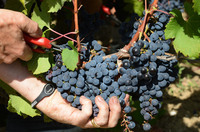
"description": "A worker harvests cabernet sauvignon grapes at a vineyard near Bordeaux, France, in September.",
"title": "A worker harvests cabernet sauvignon grapes at a vineyard near Bordeaux, France, in September.",
"credit": null,
"status": "inherit",
"isLoading": false,
"fetchFailed": false
},
"bayareabites_61537": {
"type": "attachments",
"id": "bayareabites_61537",
"meta": {
"index": "attachments_1716263798",
"site": "bayareabites",
"id": "61537",
"found": true
},
"parent": 61536,
"imgSizes": {
"kqedFullSize": {
"file": "https://ww2.kqed.org/app/uploads/sites/24/2013/05/beers_1_wide-b481f4fc7cacf537713d9d51e1f64c6c7eafb310.jpg",
"width": 200,
"height": 112
}
},
"publishDate": 1368060560,
"modified": 1368060560,
"caption": null,
"description": "Home brewing will become legal in all 50 U.S. states, if Alabama's governor signs a recently passed bill. In March, Mississippi approved a bill that will take effect this summer.",
"title": "Home brewing will become legal in all 50 U.S. states, if Alabama's governor signs a recently passed bill. In March, Mississippi approved a bill that will take effect this summer.",
"credit": null,
"status": "inherit",
"isLoading": false,
"fetchFailed": false
},
"bayareabites_61488": {
"type": "attachments",
"id": "bayareabites_61488",
"meta": {
"index": "attachments_1716263798",
"site": "bayareabites",
"id": "61488",
"found": true
},
"parent": 61487,
"imgSizes": {
"kqedFullSize": {
"file": "https://ww2.kqed.org/app/uploads/sites/24/2013/05/ap577392238371-1-_custom-f1801ffa378747565fb906c1706b6cb23121f406.jpg",
"width": 200,
"height": 133
}
},
"publishDate": 1367970492,
"modified": 1367970492,
"caption": null,
"description": "A bee inspector checks on a frame of bees to assess the colony strength near Turlock, Calif., in February. More than 30 percent of America's bee colonies died off over the winter.",
"title": "A bee inspector checks on a frame of bees to assess the colony strength near Turlock, Calif., in February. More than 30 percent of America's bee colonies died off over the winter.",
"credit": null,
"status": "inherit",
"isLoading": false,
"fetchFailed": false
},
"bayareabites_61235": {
"type": "attachments",
"id": "bayareabites_61235",
"meta": {
"index": "attachments_1716263798",
"site": "bayareabites",
"id": "61235",
"found": true
},
"parent": 61234,
"imgSizes": {
"kqedFullSize": {
"file": "https://ww2.kqed.org/app/uploads/sites/24/2013/05/clevelandwhiskey_wide-76ccc608c063b886118fca73b7c9b87e004d5ab2.jpg",
"width": 200,
"height": 112
}
},
"publishDate": 1367606719,
"modified": 1367606719,
"caption": null,
"description": "A bottle of Cleveland Whiskey's bourbon sits on a shelf with empty bottles at the company's distillery.",
"title": "A bottle of Cleveland Whiskey's bourbon sits on a shelf with empty bottles at the company's distillery.",
"credit": null,
"status": "inherit",
"isLoading": false,
"fetchFailed": false
},
"bayareabites_61249": {
"type": "attachments",
"id": "bayareabites_61249",
"meta": {
"index": "attachments_1716263798",
"site": "bayareabites",
"id": "61249",
"found": true
},
"parent": 61224,
"imgSizes": {
"kqedFullSize": {
"file": "https://ww2.kqed.org/app/uploads/sites/24/2013/05/Screen-shot-2013-05-03-at-12.13.53-PM.png",
"width": 716,
"height": 483
}
},
"publishDate": 1367608720,
"modified": 1367608720,
"caption": null,
"description": null,
"title": "Screen shot 2013-05-03 at 12.13.53 PM",
"credit": null,
"status": "inherit",
"isLoading": false,
"fetchFailed": false
},
"bayareabites_61195": {
"type": "attachments",
"id": "bayareabites_61195",
"meta": {
"index": "attachments_1716263798",
"site": "bayareabites",
"id": "61195",
"found": true
},
"parent": 61194,
"imgSizes": {
"kqedFullSize": {
"file": "https://ww2.kqed.org/app/uploads/sites/24/2013/05/ap070823036473-f3752964d1aad509f992c14169142f1511c927f9.jpg",
"width": 200,
"height": 149
}
},
"publishDate": 1367532787,
"modified": 1367532787,
"caption": null,
"description": "Amazon Fresh delivery man Tim Wilkie totes food to a house on Mercer Island, Wash.",
"title": "Amazon Fresh delivery man Tim Wilkie totes food to a house on Mercer Island, Wash.",
"credit": null,
"status": "inherit",
"isLoading": false,
"fetchFailed": false
},
"bayareabites_61182": {
"type": "attachments",
"id": "bayareabites_61182",
"meta": {
"index": "attachments_1716263798",
"site": "bayareabites",
"id": "61182",
"found": true
},
"parent": 61181,
"imgSizes": {
"kqedFullSize": {
"file": "https://ww2.kqed.org/app/uploads/sites/24/2013/05/skull-chops_custom-a7ae77efef0ec7123cadf862f316c7cc382d9137.jpg",
"width": 200,
"height": 216
}
},
"publishDate": 1367516547,
"modified": 1367516547,
"caption": null,
"description": "The four cuts at the top of this skull \"are clear chops to the forehead,\" says Smithsonian forensic anthropologist Douglas Owsley. Based on forensic evidence, researchers think the blows were made after the person died.",
"title": "The four cuts at the top of this skull \"are clear chops to the forehead,\" says Smithsonian forensic anthropologist Douglas Owsley. Based on forensic evidence, researchers think the blows were made after the person died.",
"credit": null,
"status": "inherit",
"isLoading": false,
"fetchFailed": false
},
"bayareabites_61158": {
"type": "attachments",
"id": "bayareabites_61158",
"meta": {
"index": "attachments_1716263798",
"site": "bayareabites",
"id": "61158",
"found": true
},
"parent": 61157,
"imgSizes": {
"kqedFullSize": {
"file": "https://ww2.kqed.org/app/uploads/sites/24/2013/05/sasakichickendiaper_wide-40fafcf5f89c73c5a31fdb8c58f917237a716cf0.jpg",
"width": 200,
"height": 112
}
},
"publishDate": 1367435836,
"modified": 1367435836,
"caption": null,
"description": null,
"title": "Clucking all the way to the bank: A hen models a polka-dot diaper from MyPetChicken.com, a multimillion-dollar business that sells everything from chicken caviar treats to day-old birds.",
"credit": null,
"status": "inherit",
"isLoading": false,
"fetchFailed": false
},
"bayareabites_61148": {
"type": "attachments",
"id": "bayareabites_61148",
"meta": {
"index": "attachments_1716263798",
"site": "bayareabites",
"id": "61148",
"found": true
},
"parent": 61147,
"imgSizes": {
"kqedFullSize": {
"file": "https://ww2.kqed.org/app/uploads/sites/24/2013/05/cargil-turkeys-9a1a2131a1ebd652a8e1bb4e792c314db5afd794.jpg",
"width": 200,
"height": 150
}
},
"publishDate": 1367431460,
"modified": 1367431460,
"caption": "A truckload of live turkeys arrives at the Cargill plant in Springdale, Ark., Thursday, Aug. 4, 2011. Photo: Danny Johnston/AP",
"description": "A truckload of live turkeys arrives at the Cargill plant in Springdale, Ark., Thursday, Aug. 4, 2011. (AP Photo/Danny Johnston)",
"title": "A truckload of live turkeys arrives at a Cargill plant in Springdale, Ark., in 2011. Most turkeys in the U.S. are regularly given low doses of antibiotics.",
"credit": null,
"status": "inherit",
"isLoading": false,
"fetchFailed": false
},
"bayareabites_61136": {
"type": "attachments",
"id": "bayareabites_61136",
"meta": {
"index": "attachments_1716263798",
"site": "bayareabites",
"id": "61136",
"found": true
},
"parent": 61135,
"imgSizes": {
"kqedFullSize": {
"file": "https://ww2.kqed.org/app/uploads/sites/24/2013/04/dudafarms_wide-edb14add9426c7c2b1e2bd9c4d2d3c74f801ab7f.jpg",
"width": 200,
"height": 112
}
},
"publishDate": 1367354442,
"modified": 1367354442,
"caption": null,
"description": "American farms like this iceberg lettuce field owned by Duda Farm Fresh Foods outside Salinas, Calif., are facing a dwindling supply of farmworkers from rural Mexico.",
"title": "American farms like this iceberg lettuce field owned by Duda Farm Fresh Foods outside Salinas, Calif., are facing a dwindling supply of farmworkers from rural Mexico.",
"credit": null,
"status": "inherit",
"isLoading": false,
"fetchFailed": false
},
"bayareabites_61126": {
"type": "attachments",
"id": "bayareabites_61126",
"meta": {
"index": "attachments_1716263798",
"site": "bayareabites",
"id": "61126",
"found": true
},
"parent": 61125,
"imgSizes": {
"kqedFullSize": {
"file": "https://ww2.kqed.org/app/uploads/sites/24/2013/04/104476530-1-_custom-64e22894d097848721f6a427951a4673e8e79615.jpg",
"width": 200,
"height": 188
}
},
"publishDate": 1367353186,
"modified": 1367353186,
"caption": null,
"description": "Fast times on the Champs-Elysees: People walk past a McDonald's on one of Paris' most storied avenues. But it's not just McD's that has caught French interest: Fast food now accounts for the majority of restaurant spending in the country.",
"title": "Fast times on the Champs-Elysees: People walk past a McDonald's on one of Paris' most storied avenues. But it's not just McD's that has caught French interest: Fast food now accounts for the majority of restaurant spending in the country.",
"credit": null,
"status": "inherit",
"isLoading": false,
"fetchFailed": false
}
},
"audioPlayerReducer": {
"postId": "stream_live",
"isPaused": true,
"isPlaying": false,
"pfsActive": false,
"pledgeModalIsOpen": true,
"playerDrawerIsOpen": false,
"liveAudioPlayStartedAt": 0,
"liveAudioPlayContext": ""
},
"authorsReducer": {
"byline_bayareabites_61591": {
"type": "authors",
"id": "byline_bayareabites_61591",
"meta": {
"override": true
},
"slug": "byline_bayareabites_61591",
"name": "Nancy Shute",
"isLoading": false
},
"byline_bayareabites_61546": {
"type": "authors",
"id": "byline_bayareabites_61546",
"meta": {
"override": true
},
"slug": "byline_bayareabites_61546",
"name": "Alastair Bland",
"isLoading": false
},
"byline_bayareabites_61536": {
"type": "authors",
"id": "byline_bayareabites_61536",
"meta": {
"override": true
},
"slug": "byline_bayareabites_61536",
"name": "Bill Chappell",
"isLoading": false
},
"byline_bayareabites_61487": {
"type": "authors",
"id": "byline_bayareabites_61487",
"meta": {
"override": true
},
"slug": "byline_bayareabites_61487",
"name": "Dan Charles",
"isLoading": false
},
"byline_bayareabites_61234": {
"type": "authors",
"id": "byline_bayareabites_61234",
"meta": {
"override": true
},
"slug": "byline_bayareabites_61234",
"name": "Alan Greenblatt",
"isLoading": false
},
"byline_bayareabites_61224": {
"type": "authors",
"id": "byline_bayareabites_61224",
"meta": {
"override": true
},
"slug": "byline_bayareabites_61224",
"name": "Lydia Zuraw",
"isLoading": false
},
"byline_bayareabites_61194": {
"type": "authors",
"id": "byline_bayareabites_61194",
"meta": {
"override": true
},
"slug": "byline_bayareabites_61194",
"name": "Nancy Shute",
"isLoading": false
},
"byline_bayareabites_61181": {
"type": "authors",
"id": "byline_bayareabites_61181",
"meta": {
"override": true
},
"slug": "byline_bayareabites_61181",
"name": "Christopher Joyce",
"isLoading": false
},
"byline_bayareabites_61157": {
"type": "authors",
"id": "byline_bayareabites_61157",
"meta": {
"override": true
},
"slug": "byline_bayareabites_61157",
"name": "Michaeleen Doucleff",
"isLoading": false
},
"byline_bayareabites_61147": {
"type": "authors",
"id": "byline_bayareabites_61147",
"meta": {
"override": true
},
"slug": "byline_bayareabites_61147",
"name": "Allison Aubrey and Eliza Barclay",
"isLoading": false
},
"byline_bayareabites_61135": {
"type": "authors",
"id": "byline_bayareabites_61135",
"meta": {
"override": true
},
"slug": "byline_bayareabites_61135",
"name": "Kirk Siegler",
"isLoading": false
},
"byline_bayareabites_61125": {
"type": "authors",
"id": "byline_bayareabites_61125",
"meta": {
"override": true
},
"slug": "byline_bayareabites_61125",
"name": "Amy Guttman",
"isLoading": false
}
},
"pagesReducer": {
"bayareabites_category_npr-food": {
"type": "terms",
"id": "bayareabites_10916",
"meta": {
"index": "terms_1716263798",
"site": "bayareabites",
"id": "10916",
"score": 13.894455
},
"featImg": null,
"name": "NPR food",
"description": null,
"taxonomy": "category",
"headData": {
"twImgId": null,
"twTitle": null,
"ogTitle": null,
"ogImgId": null,
"twDescription": null,
"description": null,
"title": "NPR food Archives | KQED Bay Area Bites",
"ogDescription": null
},
"ttid": 5375,
"slug": "npr-food",
"isLoading": false,
"title": "NPR food",
"pageMeta": {
"site": "bayareabites",
"WpPageTemplate": "page-topic-editorial",
"currentPage": 82
},
"blocks": [
{
"blockName": "kqed/post-list",
"attrs": {
"layout": "cardArticle2",
"query": "posts/bayareabites?category=npr-food",
"seeMore": false,
"paginated": true,
"page": 82
}
},
{
"blockName": "kqed/ad"
}
]
}
},
"pfsSessionReducer": {},
"postsReducer": {
"stream_live": {
"type": "live",
"id": "stream_live",
"audioUrl": "https://hls.kqed.org/hls/kqed_app/playlist.m3u8",
"title": "Live Stream",
"excerpt": "Live Stream information currently unavailable.",
"link": "/radio",
"featImg": "",
"label": {
"name": "KQED Live",
"link": "/"
}
},
"stream_kqedNewscast": {
"type": "posts",
"id": "stream_kqedNewscast",
"audioUrl": "https://www.kqed.org/.stream/anon/radio/RDnews/newscast.mp3?_=1",
"title": "KQED Newscast",
"featImg": "",
"label": {
"name": "88.5 FM",
"link": "/"
}
},
"bayareabites_61591": {
"type": "posts",
"id": "bayareabites_61591",
"meta": {
"index": "posts_1716263798",
"site": "bayareabites",
"id": "61591",
"score": null,
"sort": [
1368124265000
]
},
"parent": 0,
"labelTerm": {
"site": "bayareabites"
},
"blocks": [],
"publishDate": 1368124265,
"format": "aside",
"disqusTitle": "Wrigley: Maybe We Won't Sell Caffeinated Gum After All",
"title": "Wrigley: Maybe We Won't Sell Caffeinated Gum After All",
"headTitle": "Bay Area Bites | KQED Food",
"content": "\u003cp>Post by Nancy Shute, \u003ca href=\"http://www.npr.org/blogs/thesalt/2013/05/09/182562583/wrigley-maybe-we-wont-sell-caffeinated-gum-after-all\">The Salt at NPR Food\u003c/a> (5/9/13)\u003c/p>\n\u003cfigure id=\"attachment_61596\" class=\"wp-caption alignleft\" style=\"max-width: 200px\">\u003ca href=\"http://ww2.kqed.org/bayareabites/wp-content/uploads/sites/24/2013/05/wrigleys-gum.jpg\">\u003cimg src=\"http://ww2.kqed.org/bayareabites/wp-content/uploads/sites/24/2013/05/wrigleys-gum.jpg\" alt=\"Wrigley took its new Alert Energy Caffeine Gum off the market after it prompted FDA scrutiny of caffeinated foods. Photo: Wrigley Incorporated\" width=\"200\" class=\"size-full wp-image-61596\">\u003c/a>\u003cfigcaption class=\"wp-caption-text\">Wrigley took its new Alert Energy Caffeine Gum off the market after it prompted FDA scrutiny of caffeinated foods. Photo: Wrigley Incorporated\u003c/figcaption>\u003c/figure>\n\u003cp>Less than two weeks after launching its Alert Energy Caffeine Gum, the Wrigley Company decided that maybe the world wasn't ready for amped-up chewing gum after all.\u003c/p>\n\u003cp>On April 30, the day after Alert Energy launched, the Food and Drug Administration said it was going to take a \"\u003ca href=\"http://www.npr.org/blogs/thesalt/2013/04/30/180063432/caffeine-laced-gum-has-energized-the-fda\">fresh look\u003c/a>\" at caffeinated foods, particularly their effect on children and teenagers.\u003c/p>\n\u003cp>Being out front on caffeinated confections evidently wasn't a comfortable place to be.\u003c/p>\n\u003cp>Yesterday, the Wrigley Co. said it has \"paused\" sales of Alert Energy, which came in brightly-colored packages. Each pellet of gum contained 40 milligrams of caffeine, about the amount in a half-cup of coffee.\u003c/p>\n\u003cp>[ad fullwidth]\u003c/p>\n\u003cp>\"After discussions with the FDA, we have a greater appreciation for its concern about the proliferation of caffeine in the nation's food supply,\" Casey Keller, Wrigley's president for North America, said in a statement.\u003c/p>\n\u003cp>Keller called for \"changes in the regulatory framework to better guide the consumers and the industry about the appropriate level and use of caffeinated products.\"\u003c/p>\n\u003cp>The surge of caffeinated energy drink and, to a lesser extent, \u003ca href=\"http://www.npr.org/blogs/thesalt/2012/12/17/167329109/not-just-for-coffee-anymore-the-rise-of-caffeinated-foods\">food products\u003c/a>, has alarmed pediatricians. In 2011 the American Academy of Pediatrics said that children and teenagers should \u003ca href=\"http://www.npr.org/blogs/health/2011/05/31/136722667/pediatricians-warn-against-energy-and-sports-drinks-for-kids\">avoid caffeinated drinks\u003c/a>, since caffeine boosts heart rate, interferes with sleep, and increases anxiety.\u003c/p>\n\u003cp>Alert Energy was marketed \"in a safe and responsible manner to consumers 25 years and older,\" Keller's statement said.\u003c/p>\n\u003cp>\u003c/p>\n\u003cp>No word on how that might have been enforced, since nobody's carding kids who buy gum at the local mini-mart.\u003cbr>\n\u003cem>\u003cbr>\nCopyright 2013 \u003ca href=\"http://www.npr.org/\">NPR\u003c/a>.\u003c/em> \u003c/p>\n\n",
"disqusIdentifier": "61591 http://blogs.kqed.org/bayareabites/?p=61591",
"disqusUrl": "https://ww2.kqed.org/bayareabites/2013/05/09/wrigley-maybe-we-wont-sell-caffeinated-gum-after-all/",
"stats": {
"hasVideo": false,
"hasChartOrMap": false,
"hasAudio": false,
"hasPolis": false,
"wordCount": 297,
"hasGoogleForm": false,
"hasGallery": false,
"hasHearkenModule": false,
"iframeSrcs": [],
"paragraphCount": 12
},
"modified": 1368124480,
"excerpt": "No caffeinated chew for you! The Wrigley Company pulled its Alert Energy caffeinated gum off the market after the product roused concern from the Food and Drug Administration.",
"headData": {
"twImgId": "",
"twTitle": "",
"ogTitle": "",
"ogImgId": "",
"twDescription": "",
"description": "No caffeinated chew for you! The Wrigley Company pulled its Alert Energy caffeinated gum off the market after the product roused concern from the Food and Drug Administration.",
"title": "Wrigley: Maybe We Won't Sell Caffeinated Gum After All | KQED",
"ogDescription": "",
"schema": {
"@context": "https://schema.org",
"@type": "Article",
"headline": "Wrigley: Maybe We Won't Sell Caffeinated Gum After All",
"datePublished": "2013-05-09T11:31:05-07:00",
"dateModified": "2013-05-09T11:34:40-07:00",
"image": "https://cdn.kqed.org/wp-content/uploads/2020/02/KQED-OG-Image@1x.png"
}
},
"guestAuthors": [],
"slug": "wrigley-maybe-we-wont-sell-caffeinated-gum-after-all",
"status": "publish",
"nprApiLink": "http://api.npr.org/query?id=182562583&apiKey=MDAxOTAwOTE4MDEyMTkxMDAzNjczZDljZA004",
"nprByline": "Nancy Shute",
"nprStoryDate": "Thu, 09 May 2013 11:17:00 -0400",
"nprLastModifiedDate": "Thu, 09 May 2013 12:20:02 -0400",
"nprHtmlLink": "http://www.npr.org/blogs/thesalt/2013/05/09/182562583/wrigley-maybe-we-wont-sell-caffeinated-gum-after-all?ft=3&f=182562583",
"nprStoryId": "182562583",
"nprRetrievedStory": "1",
"nprPubDate": "Thu, 09 May 2013 12:20:00 -0400",
"path": "/bayareabites/61591/wrigley-maybe-we-wont-sell-caffeinated-gum-after-all",
"audioTrackLength": null,
"parsedContent": [
{
"type": "contentString",
"content": "\u003cdiv class=\"post-body\">\u003cp>\u003cp>Post by Nancy Shute, \u003ca href=\"http://www.npr.org/blogs/thesalt/2013/05/09/182562583/wrigley-maybe-we-wont-sell-caffeinated-gum-after-all\">The Salt at NPR Food\u003c/a> (5/9/13)\u003c/p>\n\u003cfigure id=\"attachment_61596\" class=\"wp-caption alignleft\" style=\"max-width: 200px\">\u003ca href=\"http://ww2.kqed.org/bayareabites/wp-content/uploads/sites/24/2013/05/wrigleys-gum.jpg\">\u003cimg src=\"http://ww2.kqed.org/bayareabites/wp-content/uploads/sites/24/2013/05/wrigleys-gum.jpg\" alt=\"Wrigley took its new Alert Energy Caffeine Gum off the market after it prompted FDA scrutiny of caffeinated foods. Photo: Wrigley Incorporated\" width=\"200\" class=\"size-full wp-image-61596\">\u003c/a>\u003cfigcaption class=\"wp-caption-text\">Wrigley took its new Alert Energy Caffeine Gum off the market after it prompted FDA scrutiny of caffeinated foods. Photo: Wrigley Incorporated\u003c/figcaption>\u003c/figure>\n\u003cp>Less than two weeks after launching its Alert Energy Caffeine Gum, the Wrigley Company decided that maybe the world wasn't ready for amped-up chewing gum after all.\u003c/p>\n\u003cp>On April 30, the day after Alert Energy launched, the Food and Drug Administration said it was going to take a \"\u003ca href=\"http://www.npr.org/blogs/thesalt/2013/04/30/180063432/caffeine-laced-gum-has-energized-the-fda\">fresh look\u003c/a>\" at caffeinated foods, particularly their effect on children and teenagers.\u003c/p>\n\u003cp>Being out front on caffeinated confections evidently wasn't a comfortable place to be.\u003c/p>\n\u003cp>Yesterday, the Wrigley Co. said it has \"paused\" sales of Alert Energy, which came in brightly-colored packages. Each pellet of gum contained 40 milligrams of caffeine, about the amount in a half-cup of coffee.\u003c/p>\n\u003cp>\u003c/p>\u003c/div>",
"attributes": {
"named": {},
"numeric": []
}
},
{
"type": "component",
"content": "",
"name": "ad",
"attributes": {
"named": {
"label": "fullwidth"
},
"numeric": [
"fullwidth"
]
}
},
{
"type": "contentString",
"content": "\u003cdiv class=\"post-body\">\u003cp>\u003c/p>\n\u003cp>\"After discussions with the FDA, we have a greater appreciation for its concern about the proliferation of caffeine in the nation's food supply,\" Casey Keller, Wrigley's president for North America, said in a statement.\u003c/p>\n\u003cp>Keller called for \"changes in the regulatory framework to better guide the consumers and the industry about the appropriate level and use of caffeinated products.\"\u003c/p>\n\u003cp>The surge of caffeinated energy drink and, to a lesser extent, \u003ca href=\"http://www.npr.org/blogs/thesalt/2012/12/17/167329109/not-just-for-coffee-anymore-the-rise-of-caffeinated-foods\">food products\u003c/a>, has alarmed pediatricians. In 2011 the American Academy of Pediatrics said that children and teenagers should \u003ca href=\"http://www.npr.org/blogs/health/2011/05/31/136722667/pediatricians-warn-against-energy-and-sports-drinks-for-kids\">avoid caffeinated drinks\u003c/a>, since caffeine boosts heart rate, interferes with sleep, and increases anxiety.\u003c/p>\n\u003cp>Alert Energy was marketed \"in a safe and responsible manner to consumers 25 years and older,\" Keller's statement said.\u003c/p>\n\u003cp>\u003c/p>\n\u003cp>No word on how that might have been enforced, since nobody's carding kids who buy gum at the local mini-mart.\u003cbr>\n\u003cem>\u003cbr>\nCopyright 2013 \u003ca href=\"http://www.npr.org/\">NPR\u003c/a>.\u003c/em> \u003c/p>\n\n\u003c/div>\u003c/p>",
"attributes": {
"named": {},
"numeric": []
}
}
],
"link": "/bayareabites/61591/wrigley-maybe-we-wont-sell-caffeinated-gum-after-all",
"authors": [
"byline_bayareabites_61591"
],
"categories": [
"bayareabites_4084",
"bayareabites_1245",
"bayareabites_10916",
"bayareabites_2035"
],
"tags": [
"bayareabites_11686",
"bayareabites_10937",
"bayareabites_11685",
"bayareabites_11074",
"bayareabites_2608",
"bayareabites_11683",
"bayareabites_11687"
],
"featImg": "bayareabites_61592",
"label": "bayareabites"
},
"bayareabites_61546": {
"type": "posts",
"id": "bayareabites_61546",
"meta": {
"index": "posts_1716263798",
"site": "bayareabites",
"id": "61546",
"score": null,
"sort": [
1368061555000
]
},
"parent": 0,
"labelTerm": {
"site": "bayareabites"
},
"blocks": [],
"publishDate": 1368061555,
"format": "aside",
"disqusTitle": "With Warming Climes, How Long Will A Bordeaux Be A Bordeaux?",
"title": "With Warming Climes, How Long Will A Bordeaux Be A Bordeaux?",
"headTitle": "Bay Area Bites | KQED Food",
"content": "\u003cfigure id=\"attachment_61551\" class=\"wp-caption aligncenter\" style=\"max-width: 1024px\">\u003ca href=\"http://ww2.kqed.org/bayareabites/wp-content/uploads/sites/24/2013/05/winegrapes.jpg\">\u003cimg src=\"http://ww2.kqed.org/bayareabites/wp-content/uploads/sites/24/2013/05/winegrapes-1024x677.jpg\" alt=\"A worker harvests cabernet sauvignon grapes at a vineyard near Bordeaux, France, in September. Photo: Caroline Blumberg/EPA/Landov\" width=\"1024\" height=\"677\" class=\"size-large wp-image-61551\">\u003c/a>\u003cfigcaption class=\"wp-caption-text\">A worker harvests cabernet sauvignon grapes at a vineyard near Bordeaux, France, in September. Photo: Caroline Blumberg/EPA/Landov\u003c/figcaption>\u003c/figure>\n\u003cp>Post by Alastair Bland, \u003ca href=\"http://www.npr.org/blogs/thesalt/2013/05/06/181684846/with-warming-climes-how-long-will-a-bordeaux-be-a-bordeaux\">The Salt at NPR Food\u003c/a> (5/8/13)\u003c/p>\n\u003cp>Bordeauxs and Burgundys haven't changed much since the days when famous wine-lover Thomas Jefferson kept the cellars of his Parisian home \u003ca href=\"http://query.nytimes.com/gst/fullpage.html?res=9C0CEEDA133EF930A35751C1A9609C8B63\" target=\"_blank\">well-stocked with both wines\u003c/a>.\u003c/p>\n\u003cp>But now, some worry that the regional rules and traditions that have defined top winemaking regions like Champagne, Burgundy and Chianti for centuries could melt away as climate change takes effect.\u003c/p>\n\u003cp>The main concern is that grape varieties that have brought renown and reputation to certain appellations — the syrah grapes of the French Rhone Valley, or the cabernet sauvignon of Bordeaux — may no longer thrive in those places several decades from now. Some people say there is little reason to fear, but others are already thinking ahead about which grape varieties will work best in their regions under forecast temperature changes. And it's possible that old wine standards and definitions, revered like religion for ages, could be rewritten as winemakers adapt to a warmer future.\u003c/p>\n\u003cp>\"As grape-growing suitability moves northward, I believe the winemaking regulations of Europe could break down quickly,\" says \u003ca href=\"http://www.bren.ucsb.edu/people/Faculty/lee_hannah.htm\">Lee Hannah\u003c/a>, a University of California, Santa Barbara-based climate specialist with Conservation International. He co-authored a recent study in the journal \u003cem>Science \u003c/em>forecasting how climate change might reshape the global winemaking map.\u003c/p>\n\u003cp>[ad fullwidth]\u003c/p>\n\u003cp>Already, climate change is creating new winners among Europe's winemakers. In southern England, warmer temperatures are credited with setting off a \u003ca href=\"http://www.washingtonpost.com/world/europe/english-sparkling-wines-challenging-rivals/2013/04/28/422681b2-acdc-11e2-9493-2ff3bf26c4b4_story.html?hpid=z3\" target=\"_blank\">sparkling wine boom\u003c/a>. In Germany, where Riesling and Gewurztraminer have long been superstars, new grape varieties are beginning to thrive, says German viticulturist \u003ca href=\"http://www.hs-geisenheim.de/hochschule/personen/schultz-hans-reiner.html\">Hans Reiner Schultz\u003c/a>, a professor at Hochschule Geisenheim University.\u003c/p>\n\u003cp>\"The pinot noir we're growing is now fit to challenge the French,\" Schultz says.\u003c/p>\n\u003cp>Meanwhile, winemakers in other parts of the continent are feeling the heat, and there is increasing discussion about changing the rules to allow them to introduce grape varieties that are currently prohibited but likely to thrive under future climate conditions.\u003c/p>\n\u003cp>And grape growers, who must look ahead decades to when their vines will be in prime production, may soon be planting new varieties of vines known to produce fruit better in warmer, drier climates. Experimental government vineyards are already doing this.\u003c/p>\n\u003cp>\"Changing grapevine varieties is absolutely an option, not in a short term, but by 2050 to 2070,\" \u003ca href=\"http://www7.bordeaux-aquitaine.inra.fr/egfv/kees_van_leeuwen\">Kees Van Leeuwen\u003c/a>, of the Agricultural University of Bordeaux, tells The Salt. \"We are currently experimenting in our research center [the \u003cem>Institut des Sciences de la Vigne et du Vin\u003c/em>] how later-ripening varieties behave in the Bordeaux climate.\"\u003c/p>\n\u003cp>Late-ripening\u003cstrong> \u003c/strong>varieties are considered the best candidates for helping regions adapt to climate change. That's because, in general, the later that grapes ripen, the better their sugar-acid balance — an important component in winemaking.\u003c/p>\n\u003cp>When grapes ripen especially early — as they do in warm years — they may fail to develop the acidity necessary for making good wine. This means that many grapes that currently ripen in the optimal harvest time of September might, in a warmer future, become relatively useless to some winemakers who use them today.\u003c/p>\n\u003cp>Leeuwen says changing French laws on regional grape use won't be easy, and could take as long as 15 years.\u003c/p>\n\u003cp>Other regulations are already breaking down \u003cstrong>-- \u003c/strong>such as laws forbidding irrigation. The practice is considered taboo by many, and some wine critics feel it can result in watery-tasting wines.\u003c/p>\n\u003cp>But in exceptionally hot and dry conditions, watering vines can help increase the yield of fruit. And in 2006, the French government decided to \u003ca href=\"http://www.jancisrobinson.com/articles/20070411.html\" target=\"_blank\">do away with its prohibition\u003c/a> on irrigating. Anti-irrigation laws have also been loosened in parts of Spain, says Schultz.\u003c/p>\n\u003cp>\"When they changed the rule [in France], it was like a second French Revolution, because many people were very, very opposed to this,\" Schultz says. Now, he adds, \"there is no more talk of prohibiting irrigation.\"\u003c/p>\n\u003cp>That rule change comes at a cost, says Leeuwen. He says irrigation can increase the soil's salinity level, which can be harmful to grapes. In Bordeaux and other fine wine regions, where the richness of the dirt is credited for the quality of the wine, the consequences of irrigation could be dire. Leeuwen says salinity buildup in some southern Australian vineyards is causing winemakers to abandon them.\u003c/p>\n\u003cp>But \u003ca href=\"http://www.chapoutier.com/\">Michel Chapoutier\u003c/a>, a winemaker in the Rhone Valley, has more confidence in the future. He thinks current regulations already give winemakers all the leeway they need to use different grape varieties to adapt to climate change. A Bordeaux will still be a Bordeaux, he argues, without a change in rules or a compromise in quality — winemakers will merely have to adjust their blend ratios.\u003c/p>\n\u003cp>\"Bordeaux [winemakers] will lower their amount of merlot and will raise their amount of petit verdot, while the Southern Rhone will lower their amount of syrah and raise their amounts of grenache and mourvedre,\" Chapoutier says.\u003c/p>\n\u003cp>\u003ca href=\"http://www.frescobaldi.it/en-us/home/company/family/lambertofrescobaldi.aspx\">Lamberto Frescobaldi,\u003c/a> of his family's winery in Tuscany, says he believes old traditions should not be allowed to hinder winemakers from adapting to climate change — even if it means permitting new grapes in their wines. But he doubts that Tuscan winemakers will ever let sangiovese, the main variety of the region, slip to the wayside.\u003c/p>\n\u003cp>Schultz, too, expects that historically dominant wine regions will do everything they can to avoid giving up the grapes that have defined them for centuries.\u003c/p>\n\u003cp>\"Burgundy without a pinot noir or chardonnay,\" he says, \"would not be the Burgundy we know.\" \u003c/p>\n\u003cp>\u003c/p>\n\u003cp>\u003cem>Copyright 2013 \u003ca href=\"http://www.npr.org/\">NPR\u003c/a>.\u003c/em> \u003c/p>\n\n",
"disqusIdentifier": "61546 http://blogs.kqed.org/bayareabites/?p=61546",
"disqusUrl": "https://ww2.kqed.org/bayareabites/2013/05/08/with-warming-climes-how-long-will-a-bordeaux-be-a-bordeaux/",
"stats": {
"hasVideo": false,
"hasChartOrMap": false,
"hasAudio": false,
"hasPolis": false,
"wordCount": 941,
"hasGoogleForm": false,
"hasGallery": false,
"hasHearkenModule": false,
"iframeSrcs": [],
"paragraphCount": 25
},
"modified": 1368061555,
"excerpt": "Climate change is already creating new winners among Europe's winemaking regions. (Great bubbly from Britain — who knew?) But those changes have also put in doubt the rules and traditions that have defined the continent's top winemakers for centuries.",
"headData": {
"twImgId": "",
"twTitle": "",
"ogTitle": "",
"ogImgId": "",
"twDescription": "",
"description": "Climate change is already creating new winners among Europe's winemaking regions. (Great bubbly from Britain — who knew?) But those changes have also put in doubt the rules and traditions that have defined the continent's top winemakers for centuries.",
"title": "With Warming Climes, How Long Will A Bordeaux Be A Bordeaux? | KQED",
"ogDescription": "",
"schema": {
"@context": "https://schema.org",
"@type": "Article",
"headline": "With Warming Climes, How Long Will A Bordeaux Be A Bordeaux?",
"datePublished": "2013-05-08T18:05:55-07:00",
"dateModified": "2013-05-08T18:05:55-07:00",
"image": "https://cdn.kqed.org/wp-content/uploads/2020/02/KQED-OG-Image@1x.png"
}
},
"guestAuthors": [],
"slug": "with-warming-climes-how-long-will-a-bordeaux-be-a-bordeaux",
"status": "publish",
"nprApiLink": "http://api.npr.org/query?id=181684846&apiKey=MDAxOTAwOTE4MDEyMTkxMDAzNjczZDljZA004",
"nprByline": "Alastair Bland",
"nprStoryDate": "Wed, 08 May 2013 12:37:00 -0400",
"nprLastModifiedDate": "Wed, 08 May 2013 14:33:53 -0400",
"nprHtmlLink": "http://www.npr.org/blogs/thesalt/2013/05/06/181684846/with-warming-climes-how-long-will-a-bordeaux-be-a-bordeaux?ft=3&f=181684846",
"nprStoryId": "181684846",
"nprRetrievedStory": "1",
"nprPubDate": "Wed, 08 May 2013 14:33:00 -0400",
"path": "/bayareabites/61546/with-warming-climes-how-long-will-a-bordeaux-be-a-bordeaux",
"audioTrackLength": null,
"parsedContent": [
{
"type": "contentString",
"content": "\u003cdiv class=\"post-body\">\u003cp>\u003cfigure id=\"attachment_61551\" class=\"wp-caption aligncenter\" style=\"max-width: 1024px\">\u003ca href=\"http://ww2.kqed.org/bayareabites/wp-content/uploads/sites/24/2013/05/winegrapes.jpg\">\u003cimg src=\"http://ww2.kqed.org/bayareabites/wp-content/uploads/sites/24/2013/05/winegrapes-1024x677.jpg\" alt=\"A worker harvests cabernet sauvignon grapes at a vineyard near Bordeaux, France, in September. Photo: Caroline Blumberg/EPA/Landov\" width=\"1024\" height=\"677\" class=\"size-large wp-image-61551\">\u003c/a>\u003cfigcaption class=\"wp-caption-text\">A worker harvests cabernet sauvignon grapes at a vineyard near Bordeaux, France, in September. Photo: Caroline Blumberg/EPA/Landov\u003c/figcaption>\u003c/figure>\n\u003cp>Post by Alastair Bland, \u003ca href=\"http://www.npr.org/blogs/thesalt/2013/05/06/181684846/with-warming-climes-how-long-will-a-bordeaux-be-a-bordeaux\">The Salt at NPR Food\u003c/a> (5/8/13)\u003c/p>\n\u003cp>Bordeauxs and Burgundys haven't changed much since the days when famous wine-lover Thomas Jefferson kept the cellars of his Parisian home \u003ca href=\"http://query.nytimes.com/gst/fullpage.html?res=9C0CEEDA133EF930A35751C1A9609C8B63\" target=\"_blank\">well-stocked with both wines\u003c/a>.\u003c/p>\n\u003cp>But now, some worry that the regional rules and traditions that have defined top winemaking regions like Champagne, Burgundy and Chianti for centuries could melt away as climate change takes effect.\u003c/p>\n\u003cp>The main concern is that grape varieties that have brought renown and reputation to certain appellations — the syrah grapes of the French Rhone Valley, or the cabernet sauvignon of Bordeaux — may no longer thrive in those places several decades from now. Some people say there is little reason to fear, but others are already thinking ahead about which grape varieties will work best in their regions under forecast temperature changes. And it's possible that old wine standards and definitions, revered like religion for ages, could be rewritten as winemakers adapt to a warmer future.\u003c/p>\n\u003cp>\"As grape-growing suitability moves northward, I believe the winemaking regulations of Europe could break down quickly,\" says \u003ca href=\"http://www.bren.ucsb.edu/people/Faculty/lee_hannah.htm\">Lee Hannah\u003c/a>, a University of California, Santa Barbara-based climate specialist with Conservation International. He co-authored a recent study in the journal \u003cem>Science \u003c/em>forecasting how climate change might reshape the global winemaking map.\u003c/p>\n\u003cp>\u003c/p>\u003c/div>",
"attributes": {
"named": {},
"numeric": []
}
},
{
"type": "component",
"content": "",
"name": "ad",
"attributes": {
"named": {
"label": "fullwidth"
},
"numeric": [
"fullwidth"
]
}
},
{
"type": "contentString",
"content": "\u003cdiv class=\"post-body\">\u003cp>\u003c/p>\n\u003cp>Already, climate change is creating new winners among Europe's winemakers. In southern England, warmer temperatures are credited with setting off a \u003ca href=\"http://www.washingtonpost.com/world/europe/english-sparkling-wines-challenging-rivals/2013/04/28/422681b2-acdc-11e2-9493-2ff3bf26c4b4_story.html?hpid=z3\" target=\"_blank\">sparkling wine boom\u003c/a>. In Germany, where Riesling and Gewurztraminer have long been superstars, new grape varieties are beginning to thrive, says German viticulturist \u003ca href=\"http://www.hs-geisenheim.de/hochschule/personen/schultz-hans-reiner.html\">Hans Reiner Schultz\u003c/a>, a professor at Hochschule Geisenheim University.\u003c/p>\n\u003cp>\"The pinot noir we're growing is now fit to challenge the French,\" Schultz says.\u003c/p>\n\u003cp>Meanwhile, winemakers in other parts of the continent are feeling the heat, and there is increasing discussion about changing the rules to allow them to introduce grape varieties that are currently prohibited but likely to thrive under future climate conditions.\u003c/p>\n\u003cp>And grape growers, who must look ahead decades to when their vines will be in prime production, may soon be planting new varieties of vines known to produce fruit better in warmer, drier climates. Experimental government vineyards are already doing this.\u003c/p>\n\u003cp>\"Changing grapevine varieties is absolutely an option, not in a short term, but by 2050 to 2070,\" \u003ca href=\"http://www7.bordeaux-aquitaine.inra.fr/egfv/kees_van_leeuwen\">Kees Van Leeuwen\u003c/a>, of the Agricultural University of Bordeaux, tells The Salt. \"We are currently experimenting in our research center [the \u003cem>Institut des Sciences de la Vigne et du Vin\u003c/em>] how later-ripening varieties behave in the Bordeaux climate.\"\u003c/p>\n\u003cp>Late-ripening\u003cstrong> \u003c/strong>varieties are considered the best candidates for helping regions adapt to climate change. That's because, in general, the later that grapes ripen, the better their sugar-acid balance — an important component in winemaking.\u003c/p>\n\u003cp>When grapes ripen especially early — as they do in warm years — they may fail to develop the acidity necessary for making good wine. This means that many grapes that currently ripen in the optimal harvest time of September might, in a warmer future, become relatively useless to some winemakers who use them today.\u003c/p>\n\u003cp>Leeuwen says changing French laws on regional grape use won't be easy, and could take as long as 15 years.\u003c/p>\n\u003cp>Other regulations are already breaking down \u003cstrong>-- \u003c/strong>such as laws forbidding irrigation. The practice is considered taboo by many, and some wine critics feel it can result in watery-tasting wines.\u003c/p>\n\u003cp>But in exceptionally hot and dry conditions, watering vines can help increase the yield of fruit. And in 2006, the French government decided to \u003ca href=\"http://www.jancisrobinson.com/articles/20070411.html\" target=\"_blank\">do away with its prohibition\u003c/a> on irrigating. Anti-irrigation laws have also been loosened in parts of Spain, says Schultz.\u003c/p>\n\u003cp>\"When they changed the rule [in France], it was like a second French Revolution, because many people were very, very opposed to this,\" Schultz says. Now, he adds, \"there is no more talk of prohibiting irrigation.\"\u003c/p>\n\u003cp>That rule change comes at a cost, says Leeuwen. He says irrigation can increase the soil's salinity level, which can be harmful to grapes. In Bordeaux and other fine wine regions, where the richness of the dirt is credited for the quality of the wine, the consequences of irrigation could be dire. Leeuwen says salinity buildup in some southern Australian vineyards is causing winemakers to abandon them.\u003c/p>\n\u003cp>But \u003ca href=\"http://www.chapoutier.com/\">Michel Chapoutier\u003c/a>, a winemaker in the Rhone Valley, has more confidence in the future. He thinks current regulations already give winemakers all the leeway they need to use different grape varieties to adapt to climate change. A Bordeaux will still be a Bordeaux, he argues, without a change in rules or a compromise in quality — winemakers will merely have to adjust their blend ratios.\u003c/p>\n\u003cp>\"Bordeaux [winemakers] will lower their amount of merlot and will raise their amount of petit verdot, while the Southern Rhone will lower their amount of syrah and raise their amounts of grenache and mourvedre,\" Chapoutier says.\u003c/p>\n\u003cp>\u003ca href=\"http://www.frescobaldi.it/en-us/home/company/family/lambertofrescobaldi.aspx\">Lamberto Frescobaldi,\u003c/a> of his family's winery in Tuscany, says he believes old traditions should not be allowed to hinder winemakers from adapting to climate change — even if it means permitting new grapes in their wines. But he doubts that Tuscan winemakers will ever let sangiovese, the main variety of the region, slip to the wayside.\u003c/p>\n\u003cp>Schultz, too, expects that historically dominant wine regions will do everything they can to avoid giving up the grapes that have defined them for centuries.\u003c/p>\n\u003cp>\"Burgundy without a pinot noir or chardonnay,\" he says, \"would not be the Burgundy we know.\" \u003c/p>\n\u003cp>\u003c/p>\n\u003cp>\u003cem>Copyright 2013 \u003ca href=\"http://www.npr.org/\">NPR\u003c/a>.\u003c/em> \u003c/p>\n\n\u003c/div>\u003c/p>",
"attributes": {
"named": {},
"numeric": []
}
}
],
"link": "/bayareabites/61546/with-warming-climes-how-long-will-a-bordeaux-be-a-bordeaux",
"authors": [
"byline_bayareabites_61546"
],
"categories": [
"bayareabites_10916",
"bayareabites_60",
"bayareabites_119"
],
"tags": [
"bayareabites_9470",
"bayareabites_836",
"bayareabites_9102",
"bayareabites_74",
"bayareabites_10921",
"bayareabites_14748",
"bayareabites_9738"
],
"featImg": "bayareabites_61547",
"label": "bayareabites"
},
"bayareabites_61536": {
"type": "posts",
"id": "bayareabites_61536",
"meta": {
"index": "posts_1716263798",
"site": "bayareabites",
"id": "61536",
"score": null,
"sort": [
1368060887000
]
},
"parent": 0,
"labelTerm": {
"site": "bayareabites"
},
"blocks": [],
"publishDate": 1368060887,
"format": "aside",
"disqusTitle": "Home Brewing: Soon To Be Legal In All 50 States",
"title": "Home Brewing: Soon To Be Legal In All 50 States",
"headTitle": "Bay Area Bites | KQED Food",
"content": "\u003cfigure id=\"attachment_61542\" class=\"wp-caption aligncenter\" style=\"max-width: 890px\">\u003ca href=\"http://ww2.kqed.org/bayareabites/wp-content/uploads/sites/24/2013/05/beers-homebrew.jpg\">\u003cimg src=\"http://ww2.kqed.org/bayareabites/wp-content/uploads/sites/24/2013/05/beers-homebrew.jpg\" alt=\"Home brewing will become legal in all 50 U.S. states, if Alabama's governor signs a recently passed bill. In March, Mississippi approved a bill that will take effect this summer. Photo: iStockphoto.com\" width=\"890\" height=\"500\" class=\"size-full wp-image-61542\">\u003c/a>\u003cfigcaption class=\"wp-caption-text\">Home brewing will become legal in all 50 U.S. states, if Alabama's governor signs a recently passed bill. In March, Mississippi approved a bill that will take effect this summer. Photo: iStockphoto.com\u003c/figcaption>\u003c/figure>\n\u003cp>Post by \u003ca href=\"http://www.npr.org/people/14562108/bill-chappell\">Bill Chappell\u003c/a>, \u003ca href=\"http://www.npr.org/blogs/thetwo-way/2013/05/08/182317722/homebrewing-soon-to-be-legal-in-all-50-states\">The Two-Way at NPR\u003c/a> (5/8/13)\u003c/p>\n\u003cp>The Alabama Legislature has approved a bill making it legal to brew beer at home, a practice that had been forbidden in the state. If Gov. Robert Bentley signs the bill, as is expected, home brewing will soon be legal in all 50 states.\u003c/p>\n\u003cp>Alabama lawmakers voted on the bill to legalize home brewing months after it was first introduced. And while it met with earlier debate and resistance, the arrival of the legislation — House Bill 9 — for a vote Tuesday night seems to have come to its supporters as a pleasant surprise.\u003c/p>\n\u003cp>\u003ca href=\"http://www.alahomebrewing.org/\">Right To Brew\u003c/a>, an advocacy group in Alabama, said that \"after all hope seemed long lost, they brought up HB9 unexpectedly, out of the blue, and passed it 18 - 7 - 1 tonight, without a single word of debate. The Alabama Homebrew Bill has passed the Legislature!!!!\"\u003c/p>\n\u003cp>Alabama had been in danger of becoming the only U.S. state in which it was illegal to brew beer at home. As \u003ca href=\"http://www.npr.org/blogs/thetwo-way/2013/03/06/173634009/yes-mississippi-you-can-homebrew-if-governor-signs-new-bill\">we reported in March\u003c/a>, Mississippi recently approved a home-brewing bill; Utah and Oklahoma enacted similar laws in 2009 and 2010, respectively.\u003c/p>\n\u003cp>[ad fullwidth]\u003c/p>\n\u003cp>If enacted, the new law would mean that Alabamans who make their own beer \"will no longer have the fear of arrest hanging over their heads for simply participating in a hobby that is enjoyed by residents of 48 other states,\" a representative of Right to Brew said in an email.\u003c/p>\n\u003cp>Home brewing has been growing in popularity along with the public's surge in interest in craft brewing. But the hobby had long been either forbidden or in a legal gray area. It wasn't until 1978 that it became legal under federal law.\u003c/p>\n\u003cp>The Alabama bill limits how much beer can be produced, and it forbids brewers to sell their beer. It also discourages stockpiling.\u003c/p>\n\u003cp>\"The bill allows 15 gallons to be produced every three months,\" says Republican Rep. Mac McCutcheon, who introduced the bill, \"and there shall be no more than an aggregate amount 15 gallons of beer, mead, cider and wine stored in the home.\"\u003c/p>\n\u003cp>Brewers must also keep their beers under the 14 percent alcohol by volume mark.\u003c/p>\n\u003cp>The Alabama legislation's success was welcomed by the \u003ca href=\"http://www.homebrewersassociation.org/\">American Homebrewers Association\u003c/a>, which has advised state groups of brewers.\u003c/p>\n\u003cp>\"After five years of working with Alabama home brewers to legalize the hobby of home brewing in the state,\" says AHA Director Gary Glass, \"it is gratifying to see the Alabama Legislature finally pass a home-brew bill.\"\u003c/p>\n\u003cp>Despite being passed by the state Legislature after Mississippi's bill was approved, Alabama's home-brewing bill may take effect first — the Mississippi legislation is scheduled to take effect this July. \u003c/p>\n\u003cp>\u003c/p>\n\u003cp>\u003cem>Copyright 2013 \u003ca href=\"http://www.npr.org/\">NPR\u003c/a>.\u003c/em> \u003c/p>\n\n",
"disqusIdentifier": "61536 http://blogs.kqed.org/bayareabites/?p=61536",
"disqusUrl": "https://ww2.kqed.org/bayareabites/2013/05/08/home-brewing-soon-to-be-legal-in-all-50-states/",
"stats": {
"hasVideo": false,
"hasChartOrMap": false,
"hasAudio": false,
"hasPolis": false,
"wordCount": 501,
"hasGoogleForm": false,
"hasGallery": false,
"hasHearkenModule": false,
"iframeSrcs": [],
"paragraphCount": 16
},
"modified": 1368060887,
"excerpt": "The Alabama legislature has approved a bill making it legal to brew beer at home, a practice that had occupied a legal gray area. If Gov. Robert Bentley signs the bill, as he is expected to do, homebrewing will be legal in all 50 states.",
"headData": {
"twImgId": "",
"twTitle": "",
"ogTitle": "",
"ogImgId": "",
"twDescription": "",
"description": "The Alabama legislature has approved a bill making it legal to brew beer at home, a practice that had occupied a legal gray area. If Gov. Robert Bentley signs the bill, as he is expected to do, homebrewing will be legal in all 50 states.",
"title": "Home Brewing: Soon To Be Legal In All 50 States | KQED",
"ogDescription": "",
"schema": {
"@context": "https://schema.org",
"@type": "Article",
"headline": "Home Brewing: Soon To Be Legal In All 50 States",
"datePublished": "2013-05-08T17:54:47-07:00",
"dateModified": "2013-05-08T17:54:47-07:00",
"image": "https://cdn.kqed.org/wp-content/uploads/2020/02/KQED-OG-Image@1x.png"
}
},
"guestAuthors": [],
"slug": "home-brewing-soon-to-be-legal-in-all-50-states",
"status": "publish",
"nprApiLink": "http://api.npr.org/query?id=182317722&apiKey=MDAxOTAwOTE4MDEyMTkxMDAzNjczZDljZA004",
"nprByline": "Bill Chappell",
"nprStoryDate": "Wed, 08 May 2013 17:23:00 -0400",
"nprLastModifiedDate": "Wed, 08 May 2013 20:13:43 -0400",
"nprHtmlLink": "http://www.npr.org/blogs/thetwo-way/2013/05/08/182317722/homebrewing-soon-to-be-legal-in-all-50-states?ft=3&f=182317722",
"nprStoryId": "182317722",
"nprRetrievedStory": "1",
"nprPubDate": "Wed, 08 May 2013 20:13:00 -0400",
"path": "/bayareabites/61536/home-brewing-soon-to-be-legal-in-all-50-states",
"audioTrackLength": null,
"parsedContent": [
{
"type": "contentString",
"content": "\u003cdiv class=\"post-body\">\u003cp>\u003cfigure id=\"attachment_61542\" class=\"wp-caption aligncenter\" style=\"max-width: 890px\">\u003ca href=\"http://ww2.kqed.org/bayareabites/wp-content/uploads/sites/24/2013/05/beers-homebrew.jpg\">\u003cimg src=\"http://ww2.kqed.org/bayareabites/wp-content/uploads/sites/24/2013/05/beers-homebrew.jpg\" alt=\"Home brewing will become legal in all 50 U.S. states, if Alabama's governor signs a recently passed bill. In March, Mississippi approved a bill that will take effect this summer. Photo: iStockphoto.com\" width=\"890\" height=\"500\" class=\"size-full wp-image-61542\">\u003c/a>\u003cfigcaption class=\"wp-caption-text\">Home brewing will become legal in all 50 U.S. states, if Alabama's governor signs a recently passed bill. In March, Mississippi approved a bill that will take effect this summer. Photo: iStockphoto.com\u003c/figcaption>\u003c/figure>\n\u003cp>Post by \u003ca href=\"http://www.npr.org/people/14562108/bill-chappell\">Bill Chappell\u003c/a>, \u003ca href=\"http://www.npr.org/blogs/thetwo-way/2013/05/08/182317722/homebrewing-soon-to-be-legal-in-all-50-states\">The Two-Way at NPR\u003c/a> (5/8/13)\u003c/p>\n\u003cp>The Alabama Legislature has approved a bill making it legal to brew beer at home, a practice that had been forbidden in the state. If Gov. Robert Bentley signs the bill, as is expected, home brewing will soon be legal in all 50 states.\u003c/p>\n\u003cp>Alabama lawmakers voted on the bill to legalize home brewing months after it was first introduced. And while it met with earlier debate and resistance, the arrival of the legislation — House Bill 9 — for a vote Tuesday night seems to have come to its supporters as a pleasant surprise.\u003c/p>\n\u003cp>\u003ca href=\"http://www.alahomebrewing.org/\">Right To Brew\u003c/a>, an advocacy group in Alabama, said that \"after all hope seemed long lost, they brought up HB9 unexpectedly, out of the blue, and passed it 18 - 7 - 1 tonight, without a single word of debate. The Alabama Homebrew Bill has passed the Legislature!!!!\"\u003c/p>\n\u003cp>Alabama had been in danger of becoming the only U.S. state in which it was illegal to brew beer at home. As \u003ca href=\"http://www.npr.org/blogs/thetwo-way/2013/03/06/173634009/yes-mississippi-you-can-homebrew-if-governor-signs-new-bill\">we reported in March\u003c/a>, Mississippi recently approved a home-brewing bill; Utah and Oklahoma enacted similar laws in 2009 and 2010, respectively.\u003c/p>\n\u003cp>\u003c/p>\u003c/div>",
"attributes": {
"named": {},
"numeric": []
}
},
{
"type": "component",
"content": "",
"name": "ad",
"attributes": {
"named": {
"label": "fullwidth"
},
"numeric": [
"fullwidth"
]
}
},
{
"type": "contentString",
"content": "\u003cdiv class=\"post-body\">\u003cp>\u003c/p>\n\u003cp>If enacted, the new law would mean that Alabamans who make their own beer \"will no longer have the fear of arrest hanging over their heads for simply participating in a hobby that is enjoyed by residents of 48 other states,\" a representative of Right to Brew said in an email.\u003c/p>\n\u003cp>Home brewing has been growing in popularity along with the public's surge in interest in craft brewing. But the hobby had long been either forbidden or in a legal gray area. It wasn't until 1978 that it became legal under federal law.\u003c/p>\n\u003cp>The Alabama bill limits how much beer can be produced, and it forbids brewers to sell their beer. It also discourages stockpiling.\u003c/p>\n\u003cp>\"The bill allows 15 gallons to be produced every three months,\" says Republican Rep. Mac McCutcheon, who introduced the bill, \"and there shall be no more than an aggregate amount 15 gallons of beer, mead, cider and wine stored in the home.\"\u003c/p>\n\u003cp>Brewers must also keep their beers under the 14 percent alcohol by volume mark.\u003c/p>\n\u003cp>The Alabama legislation's success was welcomed by the \u003ca href=\"http://www.homebrewersassociation.org/\">American Homebrewers Association\u003c/a>, which has advised state groups of brewers.\u003c/p>\n\u003cp>\"After five years of working with Alabama home brewers to legalize the hobby of home brewing in the state,\" says AHA Director Gary Glass, \"it is gratifying to see the Alabama Legislature finally pass a home-brew bill.\"\u003c/p>\n\u003cp>Despite being passed by the state Legislature after Mississippi's bill was approved, Alabama's home-brewing bill may take effect first — the Mississippi legislation is scheduled to take effect this July. \u003c/p>\n\u003cp>\u003c/p>\n\u003cp>\u003cem>Copyright 2013 \u003ca href=\"http://www.npr.org/\">NPR\u003c/a>.\u003c/em> \u003c/p>\n\n\u003c/div>\u003c/p>",
"attributes": {
"named": {},
"numeric": []
}
}
],
"link": "/bayareabites/61536/home-brewing-soon-to-be-legal-in-all-50-states",
"authors": [
"byline_bayareabites_61536"
],
"categories": [
"bayareabites_301",
"bayareabites_2638",
"bayareabites_10916",
"bayareabites_2035"
],
"tags": [
"bayareabites_11681",
"bayareabites_14753",
"bayareabites_11161",
"bayareabites_11682"
],
"featImg": "bayareabites_61537",
"label": "bayareabites"
},
"bayareabites_61487": {
"type": "posts",
"id": "bayareabites_61487",
"meta": {
"index": "posts_1716263798",
"site": "bayareabites",
"id": "61487",
"score": null,
"sort": [
1367972599000
]
},
"parent": 0,
"labelTerm": {
"site": "bayareabites"
},
"blocks": [],
"publishDate": 1367972599,
"format": "aside",
"disqusTitle": "Bee Deaths May Have Reached A Crisis Point For Crops",
"title": "Bee Deaths May Have Reached A Crisis Point For Crops",
"headTitle": "Bay Area Bites | KQED Food",
"content": "\u003cfigure id=\"attachment_61497\" class=\"wp-caption aligncenter\" style=\"max-width: 1024px\">\u003ca href=\"http://ww2.kqed.org/bayareabites/wp-content/uploads/sites/24/2013/05/bees-inspector.jpg\">\u003cimg src=\"http://ww2.kqed.org/bayareabites/wp-content/uploads/sites/24/2013/05/bees-inspector-1024x681.jpg\" alt=\"A bee inspector checks on a frame of bees to assess the colony strength near Turlock, Calif., in February. More than 30 percent of America's bee colonies died off over the winter. Photo: Gosia Wozniacka/AP\" width=\"1024\" height=\"681\" class=\"size-large wp-image-61497\">\u003c/a>\u003cfigcaption class=\"wp-caption-text\">A bee inspector checks on a frame of bees to assess the colony strength near Turlock, Calif., in February. More than 30 percent of America's bee colonies died off over the winter. Photo: Gosia Wozniacka/AP\u003c/figcaption>\u003c/figure>\n\u003cp>\u003cstrong>Listen to the Story\u003c/strong> on \u003ca href=\"http://www.npr.org/blogs/thesalt/2013/05/07/181990532/bee-deaths-may-have-reached-a-crisis-point-for-crops\">All Things Considered\u003c/a> [audio src=\"http://pd.npr.org/anon.npr-mp3/npr/atc/2013/05/20130507_atc_03.mp3\"] \u003c/p>\n\u003cp>Post by \u003ca href=\"http://www.npr.org/people/143160021/daniel-charles\">Dan Charles\u003c/a>, \u003ca href=\"http://www.npr.org/blogs/thesalt/2013/05/07/181990532/bee-deaths-may-have-reached-a-crisis-point-for-crops\">The Salt at NPR Food\u003c/a> (5/7/13)\u003c/p>\n\u003cp>According to a \u003ca href=\"http://beeinformed.org/2013/05/winter-loss-survey-2012-2013/\">new survey\u003c/a> of America's beekeepers, almost a third of the country's honeybee colonies did not make it through the winter.\u003c/p>\n\u003cp>That's been the case, in fact, almost every year since the U.S. Department of Agriculture began this annual survey, six years ago.\u003c/p>\n\u003cp>Over the past six years, on average, 30 percent of all the honeybee colonies in the U.S. died off over the winter. The worst year was five years ago. Last year was the best: Just 22 percent of the colonies died.\u003c/p>\n\u003cp>[ad fullwidth]\u003c/p>\n\u003cp>\"Last year gave us some hope,\" says \u003ca href=\"http://www.ars.usda.gov/pandp/people/people.htm?personid=10138\">Jeffrey Pettis\u003c/a>, research leader of the Agriculture Department's Bee Research Laboratory in Beltsville, Md.\u003c/p>\n\u003cp>But this year, the death rate was up again: 31 percent.\u003c/p>\n\u003cp>Six years ago, beekeepers were talking a lot about \"colony collapse disorder\" — colonies that seemed pretty healthy, but suddenly collapsed. The bees appeared to have flown away, abandoning their hives.\u003c/p>\n\u003cp>Beekeepers aren't seeing that so much anymore, Pettis says. They're mostly seeing colonies that just dwindle. As the crowd of bees gets smaller, it gets weaker.\u003c/p>\n\u003cp>\"They can't generate heat very well in the spring to rear brood. They can't generate heat to fly,\" he says.\u003c/p>\n\u003cp>Farmers who grow crops like almonds, blueberries and apples rely on commercial beekeepers to make sure their crops get pollinated.\u003c/p>\n\u003cp>But the number of honeybees has now dwindled to the point where there may not be enough to pollinate those crops.\u003c/p>\n\u003cp>Pettis says that this year, farmers came closer than ever to a true pollination crisis. The only thing that saved part of the almond crop in California was some lovely weather at pollination time.\u003c/p>\n\u003cp>\"We got incredibly good flight weather,\" Pettis says. \"So even those small colonies that can't fly very well in cool weather, they were able to fly because of good weather.\"\u003c/p>\n\u003cfigure id=\"attachment_61496\" class=\"wp-caption alignleft\" style=\"max-width: 290px\">\u003ca href=\"http://ww2.kqed.org/bayareabites/wp-content/uploads/sites/24/2013/05/bees-collect.jpg\">\u003cimg src=\"http://ww2.kqed.org/bayareabites/wp-content/uploads/sites/24/2013/05/bees-collect-290x217.jpg\" alt=\"A bee collects nectar from a fruit tree in West Bath, Maine. The number of honeybees has now dwindled to the point where there may not be enough to pollinate some major U.S. crops. Photo: Pat Wellenbach/AP\" width=\"290\" height=\"217\" class=\"size-medium wp-image-61496\">\u003c/a>\u003cfigcaption class=\"wp-caption-text\">A bee collects nectar from a fruit tree in West Bath, Maine. The number of honeybees has now dwindled to the point where there may not be enough to pollinate some major U.S. crops. Photo: Pat Wellenbach/AP\u003c/figcaption>\u003c/figure>\n\u003cp>Pettis says beekeepers can afford to lose only about 15 percent of their colonies each year. More than that, and the business won't be viable for long. Some commercial beekeepers are still in business, he says, just because they love it.\u003c/p>\n\u003cp>\"It's just something that gets in your blood, so you don't want to give up. [You say,] 'OK, it's 30 percent this year; I'll do better next year.' We're very much optimists,\" he says.\u003c/p>\n\u003cp>Beekeepers have a \u003ca href=\"http://gallery.mailchimp.com/5fd2b1aa990e63193af2a573d/files/What_Happened_to_the_Bees_This_Spring2013_opt.pdf\">whole list\u003c/a> of reasons for why so many colonies are dying. There's a nasty parasite called the \u003ca href=\"http://www.ca.uky.edu/entomology/entfacts/ef608.asp\">Varroa Mite\u003c/a>, which they can't get rid of. There are also bee-killing pesticides. And there are just fewer places in the country where a bee can find plenty of flowering plants that provide nectar and pollen.\u003c/p>\n\u003cp>That was especially true this past year. The same drought that left Midwestern corn fields parched and wilting also dried up wildflowers and starved the bees.\u003c/p>\n\u003cp>That was a natural disaster. But \u003ca href=\"http://www.life.illinois.edu/entomology/faculty/berenbaum.html\">May Berenbaum\u003c/a>, who chairs the Department of Entomology at the University of Illinois at Urbana-Champaign, says that most of the changes in the landscape are the result of people's decisions about what to do with their land.\u003c/p>\n\u003cp>\"I just wish there were more incentives for people — not just farmers — to plant a more diversified landscape that provides nutritional resources for all kinds of pollinators,\" she says. \"Plant more flowers! And be a little more tolerant of the weeds in the garden.\"\u003c/p>\n\u003cp>More controversial is the role of pesticides. Some beekeepers and environmentalists are calling for tighter restrictions on the use of one particular class of \u003ca href=\"http://ww2.kqed.org/bayareabites/2013/03/25/are-agricultures-most-popular-insecticides-killing-our-bees/\">pesticides called neonicotinoids\u003c/a>. Europe is about to ban some uses of these pesticides. But U.S. farmers and pesticide companies are opposed to any such move here, and the Environmental Protection Agency says it's not yet convinced that this would help bees very much.\u003c/p>\n\u003cp>\u003c/p>\n\u003cp>\u003cem>Copyright 2013 \u003ca href=\"http://www.npr.org/\">NPR\u003c/a>.\u003c/em> \u003c/p>\n\n",
"disqusIdentifier": "61487 http://blogs.kqed.org/bayareabites/?p=61487",
"disqusUrl": "https://ww2.kqed.org/bayareabites/2013/05/07/bee-deaths-may-have-reached-a-crisis-point-for-crops/",
"stats": {
"hasVideo": false,
"hasChartOrMap": false,
"hasAudio": true,
"hasPolis": false,
"wordCount": 753,
"hasGoogleForm": false,
"hasGallery": false,
"hasHearkenModule": false,
"iframeSrcs": [],
"paragraphCount": 24
},
"modified": 1367972599,
"excerpt": "The number of honeybees has now dwindled to the point where there may not be enough to pollinate some major U.S. crops, including almonds, blueberries and apples. And this year brought farmers closer than ever to a true pollination crisis.",
"headData": {
"twImgId": "",
"twTitle": "",
"ogTitle": "",
"ogImgId": "",
"twDescription": "",
"description": "The number of honeybees has now dwindled to the point where there may not be enough to pollinate some major U.S. crops, including almonds, blueberries and apples. And this year brought farmers closer than ever to a true pollination crisis.",
"title": "Bee Deaths May Have Reached A Crisis Point For Crops | KQED",
"ogDescription": "",
"schema": {
"@context": "https://schema.org",
"@type": "Article",
"headline": "Bee Deaths May Have Reached A Crisis Point For Crops",
"datePublished": "2013-05-07T17:23:19-07:00",
"dateModified": "2013-05-07T17:23:19-07:00",
"image": "https://cdn.kqed.org/wp-content/uploads/2020/02/KQED-OG-Image@1x.png"
}
},
"guestAuthors": [],
"slug": "bee-deaths-may-have-reached-a-crisis-point-for-crops",
"status": "publish",
"nprApiLink": "http://api.npr.org/query?id=181990532&apiKey=MDAxOTAwOTE4MDEyMTkxMDAzNjczZDljZA004",
"nprByline": "Dan Charles",
"nprStoryDate": "Tue, 07 May 2013 15:00:00 -0400",
"nprLastModifiedDate": "Tue, 07 May 2013 18:54:14 -0400",
"nprHtmlLink": "http://www.npr.org/blogs/thesalt/2013/05/07/181990532/bee-deaths-may-have-reached-a-crisis-point-for-crops?ft=3&f=181990532",
"nprAudio": "http://pd.npr.org/anon.npr-mp3/npr/atc/2013/05/20130507_atc_03.mp3?orgId=1&topicId=1025&ft=3&f=181990532",
"nprAudioM3u": "http://api.npr.org/m3u/1182000607-6b242f.m3u?orgId=1&topicId=1025&ft=3&f=181990532",
"nprStoryId": "181990532",
"nprRetrievedStory": "1",
"nprPubDate": "Tue, 07 May 2013 18:54:00 -0400",
"path": "/bayareabites/61487/bee-deaths-may-have-reached-a-crisis-point-for-crops",
"audioUrl": "http://pd.npr.org/anon.npr-mp3/npr/atc/2013/05/20130507_atc_03.mp3?orgId=1&topicId=1025&ft=3&f=181990532",
"audioDuration": null,
"audioTrackLength": null,
"parsedContent": [
{
"type": "contentString",
"content": "\u003cdiv class=\"post-body\">\u003cp>\u003cfigure id=\"attachment_61497\" class=\"wp-caption aligncenter\" style=\"max-width: 1024px\">\u003ca href=\"http://ww2.kqed.org/bayareabites/wp-content/uploads/sites/24/2013/05/bees-inspector.jpg\">\u003cimg src=\"http://ww2.kqed.org/bayareabites/wp-content/uploads/sites/24/2013/05/bees-inspector-1024x681.jpg\" alt=\"A bee inspector checks on a frame of bees to assess the colony strength near Turlock, Calif., in February. More than 30 percent of America's bee colonies died off over the winter. Photo: Gosia Wozniacka/AP\" width=\"1024\" height=\"681\" class=\"size-large wp-image-61497\">\u003c/a>\u003cfigcaption class=\"wp-caption-text\">A bee inspector checks on a frame of bees to assess the colony strength near Turlock, Calif., in February. More than 30 percent of America's bee colonies died off over the winter. Photo: Gosia Wozniacka/AP\u003c/figcaption>\u003c/figure>\n\u003cp>\u003cstrong>Listen to the Story\u003c/strong> on \u003ca href=\"http://www.npr.org/blogs/thesalt/2013/05/07/181990532/bee-deaths-may-have-reached-a-crisis-point-for-crops\">All Things Considered\u003c/a> \u003c/p>\u003c/div>",
"attributes": {
"named": {},
"numeric": []
}
},
{
"type": "component",
"content": "",
"name": "audio",
"attributes": {
"named": {
"src": "http://pd.npr.org/anon.npr-mp3/npr/atc/2013/05/20130507_atc_03.mp3",
"label": ""
},
"numeric": []
}
},
{
"type": "contentString",
"content": "\u003cdiv class=\"post-body\">\u003cp> \u003c/p>\n\u003cp>Post by \u003ca href=\"http://www.npr.org/people/143160021/daniel-charles\">Dan Charles\u003c/a>, \u003ca href=\"http://www.npr.org/blogs/thesalt/2013/05/07/181990532/bee-deaths-may-have-reached-a-crisis-point-for-crops\">The Salt at NPR Food\u003c/a> (5/7/13)\u003c/p>\n\u003cp>According to a \u003ca href=\"http://beeinformed.org/2013/05/winter-loss-survey-2012-2013/\">new survey\u003c/a> of America's beekeepers, almost a third of the country's honeybee colonies did not make it through the winter.\u003c/p>\n\u003cp>That's been the case, in fact, almost every year since the U.S. Department of Agriculture began this annual survey, six years ago.\u003c/p>\n\u003cp>Over the past six years, on average, 30 percent of all the honeybee colonies in the U.S. died off over the winter. The worst year was five years ago. Last year was the best: Just 22 percent of the colonies died.\u003c/p>\n\u003cp>\u003c/p>\u003c/div>",
"attributes": {
"named": {},
"numeric": []
}
},
{
"type": "component",
"content": "",
"name": "ad",
"attributes": {
"named": {
"label": "fullwidth"
},
"numeric": [
"fullwidth"
]
}
},
{
"type": "contentString",
"content": "\u003cdiv class=\"post-body\">\u003cp>\u003c/p>\n\u003cp>\"Last year gave us some hope,\" says \u003ca href=\"http://www.ars.usda.gov/pandp/people/people.htm?personid=10138\">Jeffrey Pettis\u003c/a>, research leader of the Agriculture Department's Bee Research Laboratory in Beltsville, Md.\u003c/p>\n\u003cp>But this year, the death rate was up again: 31 percent.\u003c/p>\n\u003cp>Six years ago, beekeepers were talking a lot about \"colony collapse disorder\" — colonies that seemed pretty healthy, but suddenly collapsed. The bees appeared to have flown away, abandoning their hives.\u003c/p>\n\u003cp>Beekeepers aren't seeing that so much anymore, Pettis says. They're mostly seeing colonies that just dwindle. As the crowd of bees gets smaller, it gets weaker.\u003c/p>\n\u003cp>\"They can't generate heat very well in the spring to rear brood. They can't generate heat to fly,\" he says.\u003c/p>\n\u003cp>Farmers who grow crops like almonds, blueberries and apples rely on commercial beekeepers to make sure their crops get pollinated.\u003c/p>\n\u003cp>But the number of honeybees has now dwindled to the point where there may not be enough to pollinate those crops.\u003c/p>\n\u003cp>Pettis says that this year, farmers came closer than ever to a true pollination crisis. The only thing that saved part of the almond crop in California was some lovely weather at pollination time.\u003c/p>\n\u003cp>\"We got incredibly good flight weather,\" Pettis says. \"So even those small colonies that can't fly very well in cool weather, they were able to fly because of good weather.\"\u003c/p>\n\u003cfigure id=\"attachment_61496\" class=\"wp-caption alignleft\" style=\"max-width: 290px\">\u003ca href=\"http://ww2.kqed.org/bayareabites/wp-content/uploads/sites/24/2013/05/bees-collect.jpg\">\u003cimg src=\"http://ww2.kqed.org/bayareabites/wp-content/uploads/sites/24/2013/05/bees-collect-290x217.jpg\" alt=\"A bee collects nectar from a fruit tree in West Bath, Maine. The number of honeybees has now dwindled to the point where there may not be enough to pollinate some major U.S. crops. Photo: Pat Wellenbach/AP\" width=\"290\" height=\"217\" class=\"size-medium wp-image-61496\">\u003c/a>\u003cfigcaption class=\"wp-caption-text\">A bee collects nectar from a fruit tree in West Bath, Maine. The number of honeybees has now dwindled to the point where there may not be enough to pollinate some major U.S. crops. Photo: Pat Wellenbach/AP\u003c/figcaption>\u003c/figure>\n\u003cp>Pettis says beekeepers can afford to lose only about 15 percent of their colonies each year. More than that, and the business won't be viable for long. Some commercial beekeepers are still in business, he says, just because they love it.\u003c/p>\n\u003cp>\"It's just something that gets in your blood, so you don't want to give up. [You say,] 'OK, it's 30 percent this year; I'll do better next year.' We're very much optimists,\" he says.\u003c/p>\n\u003cp>Beekeepers have a \u003ca href=\"http://gallery.mailchimp.com/5fd2b1aa990e63193af2a573d/files/What_Happened_to_the_Bees_This_Spring2013_opt.pdf\">whole list\u003c/a> of reasons for why so many colonies are dying. There's a nasty parasite called the \u003ca href=\"http://www.ca.uky.edu/entomology/entfacts/ef608.asp\">Varroa Mite\u003c/a>, which they can't get rid of. There are also bee-killing pesticides. And there are just fewer places in the country where a bee can find plenty of flowering plants that provide nectar and pollen.\u003c/p>\n\u003cp>That was especially true this past year. The same drought that left Midwestern corn fields parched and wilting also dried up wildflowers and starved the bees.\u003c/p>\n\u003cp>That was a natural disaster. But \u003ca href=\"http://www.life.illinois.edu/entomology/faculty/berenbaum.html\">May Berenbaum\u003c/a>, who chairs the Department of Entomology at the University of Illinois at Urbana-Champaign, says that most of the changes in the landscape are the result of people's decisions about what to do with their land.\u003c/p>\n\u003cp>\"I just wish there were more incentives for people — not just farmers — to plant a more diversified landscape that provides nutritional resources for all kinds of pollinators,\" she says. \"Plant more flowers! And be a little more tolerant of the weeds in the garden.\"\u003c/p>\n\u003cp>More controversial is the role of pesticides. Some beekeepers and environmentalists are calling for tighter restrictions on the use of one particular class of \u003ca href=\"http://ww2.kqed.org/bayareabites/2013/03/25/are-agricultures-most-popular-insecticides-killing-our-bees/\">pesticides called neonicotinoids\u003c/a>. Europe is about to ban some uses of these pesticides. But U.S. farmers and pesticide companies are opposed to any such move here, and the Environmental Protection Agency says it's not yet convinced that this would help bees very much.\u003c/p>\n\u003cp>\u003c/p>\n\u003cp>\u003cem>Copyright 2013 \u003ca href=\"http://www.npr.org/\">NPR\u003c/a>.\u003c/em> \u003c/p>\n\n\u003c/div>\u003c/p>",
"attributes": {
"named": {},
"numeric": []
}
}
],
"link": "/bayareabites/61487/bee-deaths-may-have-reached-a-crisis-point-for-crops",
"authors": [
"byline_bayareabites_61487"
],
"categories": [
"bayareabites_1874",
"bayareabites_10916",
"bayareabites_34",
"bayareabites_60"
],
"tags": [
"bayareabites_875",
"bayareabites_11677",
"bayareabites_11270",
"bayareabites_877",
"bayareabites_11446",
"bayareabites_11445",
"bayareabites_10921"
],
"featImg": "bayareabites_61488",
"label": "bayareabites"
},
"bayareabites_61234": {
"type": "posts",
"id": "bayareabites_61234",
"meta": {
"index": "posts_1716263798",
"site": "bayareabites",
"id": "61234",
"score": null,
"sort": [
1367607341000
]
},
"parent": 0,
"labelTerm": {
"site": "bayareabites"
},
"blocks": [],
"publishDate": 1367607341,
"format": "aside",
"disqusTitle": "How A Distillery Ages Bourbon In Days, Not Years",
"title": "How A Distillery Ages Bourbon In Days, Not Years",
"headTitle": "Bay Area Bites | KQED Food",
"content": "\u003cfigure id=\"attachment_61239\" class=\"wp-caption aligncenter\" style=\"max-width: 1120px\">\u003ca href=\"http://ww2.kqed.org/bayareabites/wp-content/uploads/sites/24/2013/05/clevelandwhiskey_wide-76ccc608c063b886118fca73b7c9b87e004d5ab2-s40.jpg\">\u003cimg src=\"http://ww2.kqed.org/bayareabites/wp-content/uploads/sites/24/2013/05/clevelandwhiskey_wide-76ccc608c063b886118fca73b7c9b87e004d5ab2-s40.jpg\" alt=\"A bottle of Cleveland Whiskey's bourbon sits on a shelf with empty bottles at the company's distillery. Photo: David Kidd\" width=\"1120\" height=\"628\" class=\"size-full wp-image-61239\">\u003c/a>\u003cfigcaption class=\"wp-caption-text\">A bottle of Cleveland Whiskey's bourbon sits on a shelf with empty bottles at the company's distillery. Photo: David Kidd\u003c/figcaption>\u003c/figure>\n\u003cp>Post by Alan Greenblatt, \u003ca href=\"http://www.npr.org/blogs/thesalt/2013/05/02/180661986/how-a-distillery-ages-bourbon-in-days-not-years\">The Salt from NPR Food\u003c/a> (05/03/13)\u003c/p>\n\u003cp>When it comes to bourbon, Tom Lix doesn't believe in age discrimination. Most bourbons might age in the barrel for eight to 12 years or more, but Lix figures his are ready to drink in less than a week.\u003c/p>\n\u003cp>Lix makes \u003ca href=\"http://www.clevelandwhiskey.com/\">Cleveland Whiskey\u003c/a>, a new brand of bourbon that exemplifies two major trends in American whiskey-making today: the desire to speed up the process and the effort to establish a local identity.\u003c/p>\n\u003cp>His distillery is located far from the rolling hills of Kentucky; it occupies a large, ground floor space in a state-owned \u003ca href=\"http://www.manufacturingsuccess.org/\">manufacturing incubator\u003c/a> in Cleveland that's also home to a couple dozen other companies that make things such as artificial bones. Lix has taken advantage of his mechanical-engineer neighbors to work on the custom machinery that makes his quick-aging product possible.\u003c/p>\n\u003cp>Bourbon is typically aged over a period of time in which fluctuating temperatures throughout the day move distilled liquor in and out of the pores of oak barrels. Lix uses pressure to speed this up. He pours distillate into a stainless steel vat and throws cut-up pieces of barrel in after it.\u003c/p>\n\u003cp>[ad fullwidth]\u003c/p>\n\u003cp>He wouldn't let me see his machinery — \"intellectual property,\" he says — but it sounded something like an overloaded washing machine during the spin cycle. Each beat, Lix says, is roughly the equivalent of 24 hours in a stationary barrel. The agitation squeezes the wood like a sponge and the \"aging\" of each batch is done within a \u003ca href=\"http://dramgoodtime.com/2013/03/07/cleveland-whiskey-breaking-tradition-for-innovation/\">few days\u003c/a>.\u003c/p>\n\u003cfigure id=\"attachment_61238\" class=\"wp-caption alignleft\" style=\"max-width: 250px\">\u003ca href=\"http://ww2.kqed.org/bayareabites/wp-content/uploads/sites/24/2013/05/clevelandwhiskey25-a5322908330adbb430ca816b8729d154b0f10d94-s3.jpg\">\u003cimg src=\"http://ww2.kqed.org/bayareabites/wp-content/uploads/sites/24/2013/05/clevelandwhiskey25-a5322908330adbb430ca816b8729d154b0f10d94-s3.jpg\" alt=\"Cleveland Whiskey founder Tom Lix learned to make spirits when he was in the Navy. Photo: David Kidd\" width=\"250\" class=\"size-full wp-image-61238\">\u003c/a>\u003cfigcaption class=\"wp-caption-text\">Cleveland Whiskey founder Tom Lix learned to make spirits when he was in the Navy. \u003cbr>Photo: David Kidd\u003c/figcaption>\u003c/figure>\n\u003cp>Lix is not the only small distiller seeking to cut the maturation process back as much as possible. Many are using smaller barrels, which work faster but end up costing more. \u003ca href=\"http://www.tuthilltown.com/\">Tuthilltown Spirits\u003c/a>, in Gardiner, N.Y., blasts music through stereo speakers in order to get the barrels vibrating.\u003c/p>\n\u003cp>\"Small distillers are always looking for ways to get their product to market fast,\" says Frank Coleman, senior vice president of the \u003ca href=\"http://www.discus.org/\">Distilled Spirits Council of the United States\u003c/a>, who notes that the number of small distillers has doubled over the last three years. \"There's definitely a gold-rush mentality right now.\"\u003c/p>\n\u003cp>No wonder. Sales of bourbon have increased by 69 percent over the past decade, Coleman says, while sales of so-called super-premium brands have quintupled. Exports of whiskey, especially bourbon, have \u003ca href=\"http://www.bizjournals.com/louisville/blog/2013/04/kentucky-bourbon-advancing-globally.html\">grown exponentially\u003c/a>.\u003c/p>\n\u003cp>That's the market Lix entered into in March, with the release of his first batch of Cleveland Whiskey. Lix, who learned to make spirits during his Navy days, formerly owned \u003ca href=\"http://www2.publicinteractive.com/\">Public Interactive\u003c/a>, which makes Web applications for public radio stations. (I didn't know about this connection before meeting him for this story.)\u003c/p>\n\u003cp>He let me compare a few sips of his product alongside \u003ca href=\"http://www.knobcreek.com/\">Knob Creek\u003c/a>, which is the brand we favor in our house for making \u003ca href=\"http://dinersjournal.blogs.nytimes.com/2010/06/18/cocktail-recipe-bourbon-sidecar-for-two/\">sidecars\u003c/a>. I should say that I don't drink bourbon straight and rarely drink whiskey that isn't Irish. To me, Lix's mix tasted better than the Knob Creek, with less burn and less of an alcohol aftertaste.\u003c/p>\n\u003cp>Not everyone's a fan. Matt Wunderle, a whiskey aficionado from Cleveland who now lives in Columbus, calls it \"a disgustingly dark bourbon\" and likens it to paint thinner.\u003c/p>\n\u003cp>\"It smells like a wood shop,\" Wunderle says. \"It's hard to describe how bad it is.\"\u003c/p>\n\u003cp>\u003ca href=\"http://whiskeyobsessive.blogspot.com/2013/04/elijah-craig-12-versus-18-effects-of.html?utm_source=feedly\">You can't fool Mother Nature\u003c/a>, say the traditionalists. But the collective wisdom of crowds is what matters in sales. Lix sells out of his run of 1,000 bottles a week, which retails for about $35 a bottle. He intends to double production this month. \"It's not nearly enough,\" he says.\u003c/p>\n\u003cp>Sam McNulty, who owns a \u003ca href=\"http://www.cleveland.com/dining/index.ssf/2012/04/market_garden_brewerys_sam_mcn.html\">half-dozen restaurants\u003c/a> in Cleveland, says one or two of his bars will be sold out of Cleveland Whiskey at any given time. \"They're definitely coming back for seconds,\" he says. \"A lot of the traditionalists, quite frankly, are afraid of what Tom is doing because it's a very disruptive technology.\"\u003c/p>\n\u003cp>If Lix's methods are novel, his branding is in keeping with a larger trend. The habit some people have picked up of asking for local beers is starting to catch on with spirits.\u003c/p>\n\u003cp>Lix says he test-marketed the Cleveland name in cities as distant as Boston and Dallas and got a good reception, but it resonates best among the \u003ca href=\"https://twitter.com/galikam/status/328305034209157120\">proud locals\u003c/a>.\u003c/p>\n\u003cp>\"I always wonder what the sales are like in Pittsburgh,\" says Chris Wilson, manager of a local outpost of an Ohio chain of taverns called \u003ca href=\"http://www.winkinglizard.com/\">Winking Lizard\u003c/a>. \"If they came up with a whiskey called Pittsburgh, I sure as hell wouldn't try it.\" \u003c/p>\n\u003cp>\u003c/p>\n\u003cp>\u003cem>Copyright 2013 \u003ca href=\"http://www.npr.org/blogs/thesalt/2013/05/02/180661986/how-a-distillery-ages-bourbon-in-days-not-years\">NPR\u003c/a>.\u003cbr>\n\u003c/em>\u003c/p>\n\n",
"disqusIdentifier": "61234 http://blogs.kqed.org/bayareabites/?p=61234",
"disqusUrl": "https://ww2.kqed.org/bayareabites/2013/05/03/how-a-distillery-ages-bourbon-in-days-not-years/",
"stats": {
"hasVideo": false,
"hasChartOrMap": false,
"hasAudio": false,
"hasPolis": false,
"wordCount": 828,
"hasGoogleForm": false,
"hasGallery": false,
"hasHearkenModule": false,
"iframeSrcs": [],
"paragraphCount": 21
},
"modified": 1367607341,
"excerpt": "With bourbon sales growing fast, small distillers are looking for ways to get their product to market faster. One Cleveland company has come up with a way to shrink the aging process from years to just days, while also cashing in on the craze for all things local.",
"headData": {
"twImgId": "",
"twTitle": "",
"ogTitle": "",
"ogImgId": "",
"twDescription": "",
"description": "With bourbon sales growing fast, small distillers are looking for ways to get their product to market faster. One Cleveland company has come up with a way to shrink the aging process from years to just days, while also cashing in on the craze for all things local.",
"title": "How A Distillery Ages Bourbon In Days, Not Years | KQED",
"ogDescription": "",
"schema": {
"@context": "https://schema.org",
"@type": "Article",
"headline": "How A Distillery Ages Bourbon In Days, Not Years",
"datePublished": "2013-05-03T11:55:41-07:00",
"dateModified": "2013-05-03T11:55:41-07:00",
"image": "https://cdn.kqed.org/wp-content/uploads/2020/02/KQED-OG-Image@1x.png"
}
},
"guestAuthors": [],
"slug": "how-a-distillery-ages-bourbon-in-days-not-years",
"status": "publish",
"nprApiLink": "http://api.npr.org/query?id=180661986&apiKey=MDAxOTAwOTE4MDEyMTkxMDAzNjczZDljZA004",
"nprByline": "Alan Greenblatt",
"nprStoryDate": "Fri, 03 May 2013 12:09:00 -0400",
"nprLastModifiedDate": "Fri, 03 May 2013 12:56:55 -0400",
"nprHtmlLink": "http://www.npr.org/blogs/thesalt/2013/05/02/180661986/how-a-distillery-ages-bourbon-in-days-not-years?ft=3&f=180661986",
"nprStoryId": "180661986",
"nprRetrievedStory": "1",
"nprPubDate": "Fri, 03 May 2013 12:56:00 -0400",
"path": "/bayareabites/61234/how-a-distillery-ages-bourbon-in-days-not-years",
"audioTrackLength": null,
"parsedContent": [
{
"type": "contentString",
"content": "\u003cdiv class=\"post-body\">\u003cp>\u003cfigure id=\"attachment_61239\" class=\"wp-caption aligncenter\" style=\"max-width: 1120px\">\u003ca href=\"http://ww2.kqed.org/bayareabites/wp-content/uploads/sites/24/2013/05/clevelandwhiskey_wide-76ccc608c063b886118fca73b7c9b87e004d5ab2-s40.jpg\">\u003cimg src=\"http://ww2.kqed.org/bayareabites/wp-content/uploads/sites/24/2013/05/clevelandwhiskey_wide-76ccc608c063b886118fca73b7c9b87e004d5ab2-s40.jpg\" alt=\"A bottle of Cleveland Whiskey's bourbon sits on a shelf with empty bottles at the company's distillery. Photo: David Kidd\" width=\"1120\" height=\"628\" class=\"size-full wp-image-61239\">\u003c/a>\u003cfigcaption class=\"wp-caption-text\">A bottle of Cleveland Whiskey's bourbon sits on a shelf with empty bottles at the company's distillery. Photo: David Kidd\u003c/figcaption>\u003c/figure>\n\u003cp>Post by Alan Greenblatt, \u003ca href=\"http://www.npr.org/blogs/thesalt/2013/05/02/180661986/how-a-distillery-ages-bourbon-in-days-not-years\">The Salt from NPR Food\u003c/a> (05/03/13)\u003c/p>\n\u003cp>When it comes to bourbon, Tom Lix doesn't believe in age discrimination. Most bourbons might age in the barrel for eight to 12 years or more, but Lix figures his are ready to drink in less than a week.\u003c/p>\n\u003cp>Lix makes \u003ca href=\"http://www.clevelandwhiskey.com/\">Cleveland Whiskey\u003c/a>, a new brand of bourbon that exemplifies two major trends in American whiskey-making today: the desire to speed up the process and the effort to establish a local identity.\u003c/p>\n\u003cp>His distillery is located far from the rolling hills of Kentucky; it occupies a large, ground floor space in a state-owned \u003ca href=\"http://www.manufacturingsuccess.org/\">manufacturing incubator\u003c/a> in Cleveland that's also home to a couple dozen other companies that make things such as artificial bones. Lix has taken advantage of his mechanical-engineer neighbors to work on the custom machinery that makes his quick-aging product possible.\u003c/p>\n\u003cp>Bourbon is typically aged over a period of time in which fluctuating temperatures throughout the day move distilled liquor in and out of the pores of oak barrels. Lix uses pressure to speed this up. He pours distillate into a stainless steel vat and throws cut-up pieces of barrel in after it.\u003c/p>\n\u003cp>\u003c/p>\u003c/div>",
"attributes": {
"named": {},
"numeric": []
}
},
{
"type": "component",
"content": "",
"name": "ad",
"attributes": {
"named": {
"label": "fullwidth"
},
"numeric": [
"fullwidth"
]
}
},
{
"type": "contentString",
"content": "\u003cdiv class=\"post-body\">\u003cp>\u003c/p>\n\u003cp>He wouldn't let me see his machinery — \"intellectual property,\" he says — but it sounded something like an overloaded washing machine during the spin cycle. Each beat, Lix says, is roughly the equivalent of 24 hours in a stationary barrel. The agitation squeezes the wood like a sponge and the \"aging\" of each batch is done within a \u003ca href=\"http://dramgoodtime.com/2013/03/07/cleveland-whiskey-breaking-tradition-for-innovation/\">few days\u003c/a>.\u003c/p>\n\u003cfigure id=\"attachment_61238\" class=\"wp-caption alignleft\" style=\"max-width: 250px\">\u003ca href=\"http://ww2.kqed.org/bayareabites/wp-content/uploads/sites/24/2013/05/clevelandwhiskey25-a5322908330adbb430ca816b8729d154b0f10d94-s3.jpg\">\u003cimg src=\"http://ww2.kqed.org/bayareabites/wp-content/uploads/sites/24/2013/05/clevelandwhiskey25-a5322908330adbb430ca816b8729d154b0f10d94-s3.jpg\" alt=\"Cleveland Whiskey founder Tom Lix learned to make spirits when he was in the Navy. Photo: David Kidd\" width=\"250\" class=\"size-full wp-image-61238\">\u003c/a>\u003cfigcaption class=\"wp-caption-text\">Cleveland Whiskey founder Tom Lix learned to make spirits when he was in the Navy. \u003cbr>Photo: David Kidd\u003c/figcaption>\u003c/figure>\n\u003cp>Lix is not the only small distiller seeking to cut the maturation process back as much as possible. Many are using smaller barrels, which work faster but end up costing more. \u003ca href=\"http://www.tuthilltown.com/\">Tuthilltown Spirits\u003c/a>, in Gardiner, N.Y., blasts music through stereo speakers in order to get the barrels vibrating.\u003c/p>\n\u003cp>\"Small distillers are always looking for ways to get their product to market fast,\" says Frank Coleman, senior vice president of the \u003ca href=\"http://www.discus.org/\">Distilled Spirits Council of the United States\u003c/a>, who notes that the number of small distillers has doubled over the last three years. \"There's definitely a gold-rush mentality right now.\"\u003c/p>\n\u003cp>No wonder. Sales of bourbon have increased by 69 percent over the past decade, Coleman says, while sales of so-called super-premium brands have quintupled. Exports of whiskey, especially bourbon, have \u003ca href=\"http://www.bizjournals.com/louisville/blog/2013/04/kentucky-bourbon-advancing-globally.html\">grown exponentially\u003c/a>.\u003c/p>\n\u003cp>That's the market Lix entered into in March, with the release of his first batch of Cleveland Whiskey. Lix, who learned to make spirits during his Navy days, formerly owned \u003ca href=\"http://www2.publicinteractive.com/\">Public Interactive\u003c/a>, which makes Web applications for public radio stations. (I didn't know about this connection before meeting him for this story.)\u003c/p>\n\u003cp>He let me compare a few sips of his product alongside \u003ca href=\"http://www.knobcreek.com/\">Knob Creek\u003c/a>, which is the brand we favor in our house for making \u003ca href=\"http://dinersjournal.blogs.nytimes.com/2010/06/18/cocktail-recipe-bourbon-sidecar-for-two/\">sidecars\u003c/a>. I should say that I don't drink bourbon straight and rarely drink whiskey that isn't Irish. To me, Lix's mix tasted better than the Knob Creek, with less burn and less of an alcohol aftertaste.\u003c/p>\n\u003cp>Not everyone's a fan. Matt Wunderle, a whiskey aficionado from Cleveland who now lives in Columbus, calls it \"a disgustingly dark bourbon\" and likens it to paint thinner.\u003c/p>\n\u003cp>\"It smells like a wood shop,\" Wunderle says. \"It's hard to describe how bad it is.\"\u003c/p>\n\u003cp>\u003ca href=\"http://whiskeyobsessive.blogspot.com/2013/04/elijah-craig-12-versus-18-effects-of.html?utm_source=feedly\">You can't fool Mother Nature\u003c/a>, say the traditionalists. But the collective wisdom of crowds is what matters in sales. Lix sells out of his run of 1,000 bottles a week, which retails for about $35 a bottle. He intends to double production this month. \"It's not nearly enough,\" he says.\u003c/p>\n\u003cp>Sam McNulty, who owns a \u003ca href=\"http://www.cleveland.com/dining/index.ssf/2012/04/market_garden_brewerys_sam_mcn.html\">half-dozen restaurants\u003c/a> in Cleveland, says one or two of his bars will be sold out of Cleveland Whiskey at any given time. \"They're definitely coming back for seconds,\" he says. \"A lot of the traditionalists, quite frankly, are afraid of what Tom is doing because it's a very disruptive technology.\"\u003c/p>\n\u003cp>If Lix's methods are novel, his branding is in keeping with a larger trend. The habit some people have picked up of asking for local beers is starting to catch on with spirits.\u003c/p>\n\u003cp>Lix says he test-marketed the Cleveland name in cities as distant as Boston and Dallas and got a good reception, but it resonates best among the \u003ca href=\"https://twitter.com/galikam/status/328305034209157120\">proud locals\u003c/a>.\u003c/p>\n\u003cp>\"I always wonder what the sales are like in Pittsburgh,\" says Chris Wilson, manager of a local outpost of an Ohio chain of taverns called \u003ca href=\"http://www.winkinglizard.com/\">Winking Lizard\u003c/a>. \"If they came up with a whiskey called Pittsburgh, I sure as hell wouldn't try it.\" \u003c/p>\n\u003cp>\u003c/p>\n\u003cp>\u003cem>Copyright 2013 \u003ca href=\"http://www.npr.org/blogs/thesalt/2013/05/02/180661986/how-a-distillery-ages-bourbon-in-days-not-years\">NPR\u003c/a>.\u003cbr>\n\u003c/em>\u003c/p>\n\n\u003c/div>\u003c/p>",
"attributes": {
"named": {},
"numeric": []
}
}
],
"link": "/bayareabites/61234/how-a-distillery-ages-bourbon-in-days-not-years",
"authors": [
"byline_bayareabites_61234"
],
"categories": [
"bayareabites_1244",
"bayareabites_4084",
"bayareabites_10916"
],
"tags": [
"bayareabites_8359",
"bayareabites_799",
"bayareabites_506"
],
"featImg": "bayareabites_61235",
"label": "bayareabites"
},
"bayareabites_61224": {
"type": "posts",
"id": "bayareabites_61224",
"meta": {
"index": "posts_1716263798",
"site": "bayareabites",
"id": "61224",
"score": null,
"sort": [
1367606408000
]
},
"parent": 0,
"labelTerm": {
"site": "bayareabites"
},
"blocks": [],
"publishDate": 1367606408,
"format": "aside",
"disqusTitle": "Chef Edward Lee Adds Korean Spice To Southern Comfort Food",
"title": "Chef Edward Lee Adds Korean Spice To Southern Comfort Food",
"headTitle": "Bay Area Bites | KQED Food",
"content": "\u003cfigure id=\"attachment_61228\" class=\"wp-caption aligncenter\" style=\"max-width: 1120px\">\u003ca href=\"http://ww2.kqed.org/bayareabites/wp-content/uploads/sites/24/2013/05/edward-lee-headshot.-credit-dan-dry_sq-fe199e159820705d851853e5ef3b6ebaf217fc56-s40.jpg\">\u003cimg src=\"http://ww2.kqed.org/bayareabites/wp-content/uploads/sites/24/2013/05/edward-lee-headshot.-credit-dan-dry_sq-fe199e159820705d851853e5ef3b6ebaf217fc56-s40.jpg\" alt=\"Chef Edward Lee moved to Louisville, Ky., 10 years ago to take over a restaurant called 610 Magnolia. There, he mixes the sweet of Southern food with the salt and umami of Asian cuisine. Photo: Dan Dry/Artisan Books.\" width=\"1120\" height=\"1121\" class=\"size-full wp-image-61228\">\u003c/a>\u003cfigcaption class=\"wp-caption-text\">Chef Edward Lee moved to Louisville, Ky., 10 years ago to take over a restaurant called 610 Magnolia. There, he mixes the sweet of Southern food with the salt and umami of Asian cuisine. Photo: Dan Dry/Artisan Books.\u003c/figcaption>\u003c/figure>\n\u003cp>\u003cstrong>Listen to the Story\u003c/strong> on \u003ca href=\"http://www.npr.org/blogs/thesalt/2013/05/03/180334026/chef-edward-lee-adds-korean-spice-to-southern-comfort-food\">Morning Edition\u003c/a> [audio src=\"http://pd.npr.org/anon.npr-mp3/npr/me/2013/05/20130503_me_19.mp3\"] \u003c/p>\n\u003cp>Post by Lydia Zuraw, \u003ca href=\"http://www.npr.org/blogs/thesalt/2013/05/03/180334026/chef-edward-lee-adds-korean-spice-to-southern-comfort-food\">The Salt at NPR Food\u003c/a> (05/03/13)\u003c/p>\n\u003cp>Korean and Southern food may not seem like a natural pair. But now it's one more example of traditions emulsifying in the great American melting pot. Korean-American chef \u003ca href=\"http://chefedwardlee.com/bio/\">Edward Lee\u003c/a> makes that case with his new cookbook \u003cem>Smoke and Pickles: Recipes and Stories From a New Southern Kitchen\u003c/em>.\u003c/p>\n\u003cp>Fusion cooking comes naturally to Lee: He grew up in an immigrant neighborhood of Brooklyn surrounded by Jamaicans, Indians, Iranians and Jews.\u003c/p>\n\u003cp>\"When they immigrated to America, my parents deliberately decided they weren't going to live in the big Korean enclaves,\" Lee tells \u003cem>Morning Edition\u003c/em> host David Greene. \"They wanted to spread out and be amongst other people. That education in cuisine, ranging from so many different immigrant groups probably left more of a lasting impression on me in cuisine than anything else.\u003c/p>\n\u003cp>[ad fullwidth]\u003c/p>\n\u003cp>\"Their whole thing was 'You're an American. Be an American,' \" Lee says.\u003c/p>\n\u003cp>But Korean food was a way Lee connected with his grandmother. She rarely spoke of Korea because she didn't have very happy memories, he says, but \"food was the one thing that was kind of sacred and pure and hadn't been torn apart.\"\u003c/p>\n\u003cfigure id=\"attachment_61229\" class=\"wp-caption alignleft\" style=\"max-width: 250px\">\u003ca href=\"http://ww2.kqed.org/bayareabites/wp-content/uploads/sites/24/2013/05/jacket-smoke-and-pickles_custom-81a07bcc08f7f834a9d2cee2223da2cc755705df-s3.jpg\">\u003cimg src=\"http://ww2.kqed.org/bayareabites/wp-content/uploads/sites/24/2013/05/jacket-smoke-and-pickles_custom-81a07bcc08f7f834a9d2cee2223da2cc755705df-s3.jpg\" alt=\"Edward Lee's first cookbook, <em>Smoke and Pickles: Recipes and Stories From a New Southern Kitchen, </em>features Korean-southern comfort food. <br /><figcaption class=\" wp-caption-text>Photo: Artisan Books\" width=\"250\" class=\"size-full wp-image-61229\" />\u003c/a> Edward Lee's first cookbook, \u003cem>Smoke and Pickles: Recipes and Stories From a New Southern Kitchen, \u003c/em>features Korean-southern comfort food. \u003cbr>Photo: Artisan Books.\u003c/figure>\n\u003cp>As a kid, Lee says he would hang out with her in the kitchen, and at first, she ignored him. \"I would, little by little, start helping her with things,\" he says. \"She got very annoyed by that at first. She's like, 'You're a man. You're not supposed to be here learning how to make kimchi — that's women's work.' \"\u003c/p>\n\u003cp>Over the years, he says, they developed a strong bond that relied on few words.\u003c/p>\n\u003cp>Korean food was also how Lee established himself as a chef. In 1998 he opened a restaurant in Manhattan called Clay, which attracted a clientele that included plenty of celebrities. But the excitement wore off quickly.\u003c/p>\n\u003cp>\"Everything seemed right on paper: Korean kid opens Korean restaurant,\" he says. \"But it just didn't feel right to me, and I wasn't incredibly proud of the food. I felt like it was just an extension of what I thought people wanted me to cook.\"\u003c/p>\n\u003cp>He started to re-evaluate things and decided to travel around the country. The farthest his family had traveled in his childhood was New Jersey. \"That was huge for us,\" he says. \"Although I grew up in America and I was influenced by all of the things that other Americans are, I had no idea what America was. It was this vast unknown beyond New Jersey.\"\u003c/p>\n\u003cp>So in 2001 Lee went to places like Wisconsin and Washington, D.C., for the first time. And it was in Louisville at the Kentucky Derby that he fell in love with the South.\u003c/p>\n\u003cp>Within a year he had moved there to take over a restaurant called \u003ca href=\"http://610magnolia.com/\">610 Magnolia\u003c/a> and the fusion instinct kicked in. He started mixing Korean spice with Southern comfort food.\u003c/p>\n\u003cp>\"Southern food tends to be a little bit on the sweeter side. Asian food tends to be a little bit on the saltier, kind of \u003ca href=\"http://www.npr.org/templates/story/story.php?storyId=16066892\">umami\u003c/a> side,\" Lee says. \"When they work and you put them together, they are actually are a wonderful marriage.\"\u003c/p>\n\u003cp>Grits, for example, reminded Lee of congee, a rice porridge Koreans usually eat with soy sauce and seafood. So Lee came up with a recipe for lamb braised in soy sauce and served over grits, transforming the sweet taste of the corn into something new.\u003c/p>\n\u003cp>Or take fried chicken. Koreans actually have a long tradition of frying chicken, Lee says. They just have a slightly different method of preparing the chicken for frying. \"The results are almost similar, but it's just different pathways to the same place,\" he says. \"And I find that a lot in Asian cuisine and Southern cuisine.\" \u003c/p>\n\u003cul>\n\u003cstrong>Related Stories\u003c/strong>\n\u003cli>\u003ca href=\"http://www.npr.org/2013/05/03/180588273/recipes-from-smoke-pickles\">Recipes from \u003cem>Smoke & Pickles\u003c/em>\u003c/a>\u003c/li>\n\u003c/ul>\n\u003cp>\u003c/p>\n\u003cp>\u003cem>Copyright 2013 \u003ca href=\"http://www.npr.org/blogs/thesalt/2013/05/03/180334026/chef-edward-lee-adds-korean-spice-to-southern-comfort-food\">NPR\u003c/a>.\u003c/em>\u003c/p>\n\n",
"disqusIdentifier": "61224 http://blogs.kqed.org/bayareabites/?p=61224",
"disqusUrl": "https://ww2.kqed.org/bayareabites/2013/05/03/chef-edward-lee-adds-korean-spice-to-southern-comfort-food/",
"stats": {
"hasVideo": false,
"hasChartOrMap": false,
"hasAudio": true,
"hasPolis": false,
"wordCount": 752,
"hasGoogleForm": false,
"hasGallery": false,
"hasHearkenModule": false,
"iframeSrcs": [],
"paragraphCount": 20
},
"modified": 1367634633,
"excerpt": "Edward Lee's culinary education spans the multi-ethnic immigrant neighborhood of Brooklyn where he grew up to his Korean grandmother's kitchen. His cookbook showcases recipes like lamb braised with soy sauce served over grits and Korean fried chicken.",
"headData": {
"twImgId": "",
"twTitle": "",
"ogTitle": "",
"ogImgId": "",
"twDescription": "",
"description": "Edward Lee's culinary education spans the multi-ethnic immigrant neighborhood of Brooklyn where he grew up to his Korean grandmother's kitchen. His cookbook showcases recipes like lamb braised with soy sauce served over grits and Korean fried chicken.",
"title": "Chef Edward Lee Adds Korean Spice To Southern Comfort Food | KQED",
"ogDescription": "",
"schema": {
"@context": "https://schema.org",
"@type": "Article",
"headline": "Chef Edward Lee Adds Korean Spice To Southern Comfort Food",
"datePublished": "2013-05-03T11:40:08-07:00",
"dateModified": "2013-05-03T19:30:33-07:00",
"image": "https://cdn.kqed.org/wp-content/uploads/2020/02/KQED-OG-Image@1x.png"
}
},
"guestAuthors": [],
"slug": "chef-edward-lee-adds-korean-spice-to-southern-comfort-food",
"status": "publish",
"nprApiLink": "http://api.npr.org/query?id=180334026&apiKey=MDAxOTAwOTE4MDEyMTkxMDAzNjczZDljZA004",
"nprByline": "Lydia Zuraw",
"nprStoryDate": "Fri, 03 May 2013 04:00:00 -0400",
"nprLastModifiedDate": "Fri, 03 May 2013 12:14:16 -0400",
"nprHtmlLink": "http://www.npr.org/blogs/thesalt/2013/05/03/180334026/chef-edward-lee-adds-korean-spice-to-southern-comfort-food?ft=3&f=180334026",
"nprAudio": "http://pd.npr.org/anon.npr-mp3/npr/me/2013/05/20130503_me_19.mp3?orgId=1&topicId=1053&ft=3&f=180334026",
"nprAudioM3u": "http://api.npr.org/m3u/1180755989-590080.m3u?orgId=1&topicId=1053&ft=3&f=180334026",
"nprStoryId": "180334026",
"nprRetrievedStory": "1",
"nprPubDate": "Fri, 03 May 2013 12:14:00 -0400",
"path": "/bayareabites/61224/chef-edward-lee-adds-korean-spice-to-southern-comfort-food",
"audioUrl": "http://pd.npr.org/anon.npr-mp3/npr/me/2013/05/20130503_me_19.mp3?orgId=1&topicId=1053&ft=3&f=180334026",
"audioDuration": null,
"audioTrackLength": null,
"parsedContent": [
{
"type": "contentString",
"content": "\u003cdiv class=\"post-body\">\u003cp>\u003cfigure id=\"attachment_61228\" class=\"wp-caption aligncenter\" style=\"max-width: 1120px\">\u003ca href=\"http://ww2.kqed.org/bayareabites/wp-content/uploads/sites/24/2013/05/edward-lee-headshot.-credit-dan-dry_sq-fe199e159820705d851853e5ef3b6ebaf217fc56-s40.jpg\">\u003cimg src=\"http://ww2.kqed.org/bayareabites/wp-content/uploads/sites/24/2013/05/edward-lee-headshot.-credit-dan-dry_sq-fe199e159820705d851853e5ef3b6ebaf217fc56-s40.jpg\" alt=\"Chef Edward Lee moved to Louisville, Ky., 10 years ago to take over a restaurant called 610 Magnolia. There, he mixes the sweet of Southern food with the salt and umami of Asian cuisine. Photo: Dan Dry/Artisan Books.\" width=\"1120\" height=\"1121\" class=\"size-full wp-image-61228\">\u003c/a>\u003cfigcaption class=\"wp-caption-text\">Chef Edward Lee moved to Louisville, Ky., 10 years ago to take over a restaurant called 610 Magnolia. There, he mixes the sweet of Southern food with the salt and umami of Asian cuisine. Photo: Dan Dry/Artisan Books.\u003c/figcaption>\u003c/figure>\n\u003cp>\u003cstrong>Listen to the Story\u003c/strong> on \u003ca href=\"http://www.npr.org/blogs/thesalt/2013/05/03/180334026/chef-edward-lee-adds-korean-spice-to-southern-comfort-food\">Morning Edition\u003c/a> \u003c/p>\u003c/div>",
"attributes": {
"named": {},
"numeric": []
}
},
{
"type": "component",
"content": "",
"name": "audio",
"attributes": {
"named": {
"src": "http://pd.npr.org/anon.npr-mp3/npr/me/2013/05/20130503_me_19.mp3",
"label": ""
},
"numeric": []
}
},
{
"type": "contentString",
"content": "\u003cdiv class=\"post-body\">\u003cp> \u003c/p>\n\u003cp>Post by Lydia Zuraw, \u003ca href=\"http://www.npr.org/blogs/thesalt/2013/05/03/180334026/chef-edward-lee-adds-korean-spice-to-southern-comfort-food\">The Salt at NPR Food\u003c/a> (05/03/13)\u003c/p>\n\u003cp>Korean and Southern food may not seem like a natural pair. But now it's one more example of traditions emulsifying in the great American melting pot. Korean-American chef \u003ca href=\"http://chefedwardlee.com/bio/\">Edward Lee\u003c/a> makes that case with his new cookbook \u003cem>Smoke and Pickles: Recipes and Stories From a New Southern Kitchen\u003c/em>.\u003c/p>\n\u003cp>Fusion cooking comes naturally to Lee: He grew up in an immigrant neighborhood of Brooklyn surrounded by Jamaicans, Indians, Iranians and Jews.\u003c/p>\n\u003cp>\"When they immigrated to America, my parents deliberately decided they weren't going to live in the big Korean enclaves,\" Lee tells \u003cem>Morning Edition\u003c/em> host David Greene. \"They wanted to spread out and be amongst other people. That education in cuisine, ranging from so many different immigrant groups probably left more of a lasting impression on me in cuisine than anything else.\u003c/p>\n\u003cp>\u003c/p>\u003c/div>",
"attributes": {
"named": {},
"numeric": []
}
},
{
"type": "component",
"content": "",
"name": "ad",
"attributes": {
"named": {
"label": "fullwidth"
},
"numeric": [
"fullwidth"
]
}
},
{
"type": "contentString",
"content": "\u003cdiv class=\"post-body\">\u003cp>\u003c/p>\n\u003cp>\"Their whole thing was 'You're an American. Be an American,' \" Lee says.\u003c/p>\n\u003cp>But Korean food was a way Lee connected with his grandmother. She rarely spoke of Korea because she didn't have very happy memories, he says, but \"food was the one thing that was kind of sacred and pure and hadn't been torn apart.\"\u003c/p>\n\u003cfigure id=\"attachment_61229\" class=\"wp-caption alignleft\" style=\"max-width: 250px\">\u003ca href=\"http://ww2.kqed.org/bayareabites/wp-content/uploads/sites/24/2013/05/jacket-smoke-and-pickles_custom-81a07bcc08f7f834a9d2cee2223da2cc755705df-s3.jpg\">\u003cimg src=\"http://ww2.kqed.org/bayareabites/wp-content/uploads/sites/24/2013/05/jacket-smoke-and-pickles_custom-81a07bcc08f7f834a9d2cee2223da2cc755705df-s3.jpg\" alt=\"Edward Lee's first cookbook, <em>Smoke and Pickles: Recipes and Stories From a New Southern Kitchen, </em>features Korean-southern comfort food. <br /><figcaption class=\" wp-caption-text>Photo: Artisan Books\" width=\"250\" class=\"size-full wp-image-61229\" />\u003c/a> Edward Lee's first cookbook, \u003cem>Smoke and Pickles: Recipes and Stories From a New Southern Kitchen, \u003c/em>features Korean-southern comfort food. \u003cbr>Photo: Artisan Books.\u003c/figure>\n\u003cp>As a kid, Lee says he would hang out with her in the kitchen, and at first, she ignored him. \"I would, little by little, start helping her with things,\" he says. \"She got very annoyed by that at first. She's like, 'You're a man. You're not supposed to be here learning how to make kimchi — that's women's work.' \"\u003c/p>\n\u003cp>Over the years, he says, they developed a strong bond that relied on few words.\u003c/p>\n\u003cp>Korean food was also how Lee established himself as a chef. In 1998 he opened a restaurant in Manhattan called Clay, which attracted a clientele that included plenty of celebrities. But the excitement wore off quickly.\u003c/p>\n\u003cp>\"Everything seemed right on paper: Korean kid opens Korean restaurant,\" he says. \"But it just didn't feel right to me, and I wasn't incredibly proud of the food. I felt like it was just an extension of what I thought people wanted me to cook.\"\u003c/p>\n\u003cp>He started to re-evaluate things and decided to travel around the country. The farthest his family had traveled in his childhood was New Jersey. \"That was huge for us,\" he says. \"Although I grew up in America and I was influenced by all of the things that other Americans are, I had no idea what America was. It was this vast unknown beyond New Jersey.\"\u003c/p>\n\u003cp>So in 2001 Lee went to places like Wisconsin and Washington, D.C., for the first time. And it was in Louisville at the Kentucky Derby that he fell in love with the South.\u003c/p>\n\u003cp>Within a year he had moved there to take over a restaurant called \u003ca href=\"http://610magnolia.com/\">610 Magnolia\u003c/a> and the fusion instinct kicked in. He started mixing Korean spice with Southern comfort food.\u003c/p>\n\u003cp>\"Southern food tends to be a little bit on the sweeter side. Asian food tends to be a little bit on the saltier, kind of \u003ca href=\"http://www.npr.org/templates/story/story.php?storyId=16066892\">umami\u003c/a> side,\" Lee says. \"When they work and you put them together, they are actually are a wonderful marriage.\"\u003c/p>\n\u003cp>Grits, for example, reminded Lee of congee, a rice porridge Koreans usually eat with soy sauce and seafood. So Lee came up with a recipe for lamb braised in soy sauce and served over grits, transforming the sweet taste of the corn into something new.\u003c/p>\n\u003cp>Or take fried chicken. Koreans actually have a long tradition of frying chicken, Lee says. They just have a slightly different method of preparing the chicken for frying. \"The results are almost similar, but it's just different pathways to the same place,\" he says. \"And I find that a lot in Asian cuisine and Southern cuisine.\" \u003c/p>\n\u003cul>\n\u003cstrong>Related Stories\u003c/strong>\n\u003cli>\u003ca href=\"http://www.npr.org/2013/05/03/180588273/recipes-from-smoke-pickles\">Recipes from \u003cem>Smoke & Pickles\u003c/em>\u003c/a>\u003c/li>\n\u003c/ul>\n\u003cp>\u003c/p>\n\u003cp>\u003cem>Copyright 2013 \u003ca href=\"http://www.npr.org/blogs/thesalt/2013/05/03/180334026/chef-edward-lee-adds-korean-spice-to-southern-comfort-food\">NPR\u003c/a>.\u003c/em>\u003c/p>\n\n\u003c/div>\u003c/p>",
"attributes": {
"named": {},
"numeric": []
}
}
],
"link": "/bayareabites/61224/chef-edward-lee-adds-korean-spice-to-southern-comfort-food",
"authors": [
"byline_bayareabites_61224"
],
"categories": [
"bayareabites_2998",
"bayareabites_63",
"bayareabites_2090",
"bayareabites_4084",
"bayareabites_10916",
"bayareabites_34",
"bayareabites_61"
],
"tags": [
"bayareabites_2835",
"bayareabites_11662",
"bayareabites_11663",
"bayareabites_494",
"bayareabites_422"
],
"featImg": "bayareabites_61249",
"label": "bayareabites"
},
"bayareabites_61194": {
"type": "posts",
"id": "bayareabites_61194",
"meta": {
"index": "posts_1716263798",
"site": "bayareabites",
"id": "61194",
"score": null,
"sort": [
1367533238000
]
},
"parent": 0,
"labelTerm": {
"site": "bayareabites"
},
"blocks": [],
"publishDate": 1367533238,
"format": "aside",
"disqusTitle": "Grocery Home Delivery May Be Greener Than Schlepping To The Store",
"title": "Grocery Home Delivery May Be Greener Than Schlepping To The Store",
"headTitle": "Bay Area Bites | KQED Food",
"content": "\u003cfigure id=\"attachment_61198\" class=\"wp-caption aligncenter\" style=\"max-width: 1120px\">\u003ca href=\"http://ww2.kqed.org/bayareabites/wp-content/uploads/sites/24/2013/05/ap070823036473-f3752964d1aad509f992c14169142f1511c927f9-s40.jpg\">\u003cimg src=\"http://ww2.kqed.org/bayareabites/wp-content/uploads/sites/24/2013/05/ap070823036473-f3752964d1aad509f992c14169142f1511c927f9-s40.jpg\" alt=\"Amazon Fresh delivery man Tim Wilkie totes food to a house on Mercer Island, Wash. Photo: Joe Nicholson/AP\" width=\"1120\" height=\"839\" class=\"size-full wp-image-61198\">\u003c/a>\u003cfigcaption class=\"wp-caption-text\">Amazon Fresh delivery man Tim Wilkie totes food to a house on Mercer Island, Wash. Photo: Joe Nicholson/AP\u003c/figcaption>\u003c/figure>\n\u003cp>Post by Nancy Shute, \u003ca href=\"www.npr.org/blogs/thesalt/2013/05/01/180330444/grocery-home-delivery-may-be-greener-than-schlepping-to-the-store\">The Salt at NPR Food\u003c/a> (05/02/13)\u003c/p>\n\u003cp>Home grocery delivery sounds like a frill for people too lazy to schlep to the store. But having food delivered can be more environmentally friendly than driving to the store, researchers say.\u003c/p>\n\u003cp>Having groceries delivered can cut carbon dioxide emissions by at least half, compared to driving to the store, according to a new study. That's because the delivery truck offers the equivalent of a \"shared ride\" for the food.\u003c/p>\n\u003cp>\"It's like a bus for groceries,\" says \u003ca href=\"http://faculty.washington.edu/annegood/\">Anne Goodchild\u003c/a>, an assistant professor of engineering at the University of Washington and a co-author of the study. \"Overwhelmingly, it's more efficient to be sharing a vehicle, even if it's a little larger.\"\u003c/p>\n\u003cp>Goodchild studies logistics and freight transportation. She also gets her groceries delivered. \"As a working mother, it's another trip I don't have to make while my kids are awake,\" she says. But, she admits, \"I felt sort of lazy and indulgent to be ordering my groceries this way.\"\u003c/p>\n\u003cfigure id=\"attachment_61199\" class=\"wp-caption aligncenter\" style=\"max-width: 1120px\">\u003ca href=\"http://ww2.kqed.org/bayareabites/wp-content/uploads/sites/24/2013/05/grocery_1_custom-b6bdf0cebaaa51bb11b8006a9e236e736129acbc-s40.jpg\">\u003cimg src=\"http://ww2.kqed.org/bayareabites/wp-content/uploads/sites/24/2013/05/grocery_1_custom-b6bdf0cebaaa51bb11b8006a9e236e736129acbc-s40.jpg\" alt=\"Putting food on the grocery equivalent of a bus requires a lot less mileage than individual trips to the store. <br /><figcaption class=\" wp-caption-text>Photo: Erica Wygonik/University of Washington\" width=\"1120\" height=\"542\" class=\"size-full wp-image-61199\" />\u003c/a> Putting food on the grocery equivalent of a bus requires a lot less mileage than individual trips to the store. \u003cbr>Photo: Erica Wygonik/University of Washington\u003c/figure>\n\u003cp>By combining her knowledge of freight transport and data on commuter habits, Goodchild and her colleagues were able to calculate just how efficient it is to put the groceries on the \"bus,\" using neighborhoods in Seattle and randomly choosing households as potential customers. Pretty darned efficient, it turns out.\u003c/p>\n\u003cp>[ad fullwidth]\u003c/p>\n\u003cp>Home food delivery trucks, they found, produce 20 to 75 percent less carbon dioxide than having the same households drive to the store. The variation is based on how close people live to the store, the number of people in the neighborhood getting food delivered and the efficiency of the truck's route.\u003c/p>\n\u003cp>Combining errands — say, stopping at the store on the way home from work — doesn't cut the sole shopper's carbon footprint much, Goodchild says, because shared transport is so much more efficient.\u003c/p>\n\u003cp>Grocery delivery is most efficient if the delivery service can cluster people along routes, rather than letting customers pick their delivery time. Clustered routes can produce 90 percent less CO2 than a random route, the researchers found. The \u003ca href=\"http://www.trforum.org/journal/toc.php?journal=2012sum\">study\u003c/a> was published in the \u003cem>Journal of the Transportation Research Forum\u003c/em>.\u003c/p>\n\u003cp>Motor vehicles are major producers of carbon dioxide, a greenhouse gas that contributes to climate change.\u003c/p>\n\u003cp>Up till now, probably the biggest motivator for people using home delivery services has been convenience, even though many companies charge a fee. But people who order groceries often accept less-than-convenient delivery times because they support the mission of community-supported agriculture, Goodchild notes.\u003c/p>\n\u003cp>Knowing that home delivery reduces greenhouse gas emissions may make it feel virtuous rather than indulgent.\u003c/p>\n\u003cp>\"Normally, things that are green are a little more work,\" Goodchild told The Salt. \"It's a little more work to ride your bike. It's a little more work to take transport. Maybe here's something that takes less effort.\" \u003c/p>\n\u003cp>\u003c/p>\n\u003cp>\u003cem>Copyright 2013 \u003ca href=\"www.npr.org/blogs/thesalt/2013/05/01/180330444/grocery-home-delivery-may-be-greener-than-schlepping-to-the-store\">NPR\u003c/a>.\u003c/em>\u003c/p>\n\n",
"disqusIdentifier": "61194 http://blogs.kqed.org/bayareabites/?p=61194",
"disqusUrl": "https://ww2.kqed.org/bayareabites/2013/05/02/grocery-home-delivery-may-be-greener-than-schlepping-to-the-store/",
"stats": {
"hasVideo": false,
"hasChartOrMap": false,
"hasAudio": false,
"hasPolis": false,
"wordCount": 549,
"hasGoogleForm": false,
"hasGallery": false,
"hasHearkenModule": false,
"iframeSrcs": [],
"paragraphCount": 16
},
"modified": 1367533238,
"excerpt": "Getting groceries delivered may be the easiest environmentally friendly thing you've ever done, new research says. Think of it as your food taking mass transit.",
"headData": {
"twImgId": "",
"twTitle": "",
"ogTitle": "",
"ogImgId": "",
"twDescription": "",
"description": "Getting groceries delivered may be the easiest environmentally friendly thing you've ever done, new research says. Think of it as your food taking mass transit.",
"title": "Grocery Home Delivery May Be Greener Than Schlepping To The Store | KQED",
"ogDescription": "",
"schema": {
"@context": "https://schema.org",
"@type": "Article",
"headline": "Grocery Home Delivery May Be Greener Than Schlepping To The Store",
"datePublished": "2013-05-02T15:20:38-07:00",
"dateModified": "2013-05-02T15:20:38-07:00",
"image": "https://cdn.kqed.org/wp-content/uploads/2020/02/KQED-OG-Image@1x.png"
}
},
"guestAuthors": [],
"slug": "grocery-home-delivery-may-be-greener-than-schlepping-to-the-store",
"status": "publish",
"nprApiLink": "http://api.npr.org/query?id=180330444&apiKey=MDAxOTAwOTE4MDEyMTkxMDAzNjczZDljZA004",
"nprByline": "Nancy Shute",
"nprStoryDate": "Thu, 02 May 2013 11:23:00 -0400",
"nprLastModifiedDate": "Thu, 02 May 2013 12:18:44 -0400",
"nprHtmlLink": "http://www.npr.org/blogs/thesalt/2013/05/01/180330444/grocery-home-delivery-may-be-greener-than-schlepping-to-the-store?ft=3&f=180330444",
"nprStoryId": "180330444",
"nprRetrievedStory": "1",
"nprPubDate": "Thu, 02 May 2013 12:18:00 -0400",
"path": "/bayareabites/61194/grocery-home-delivery-may-be-greener-than-schlepping-to-the-store",
"audioTrackLength": null,
"parsedContent": [
{
"type": "contentString",
"content": "\u003cdiv class=\"post-body\">\u003cp>\u003cfigure id=\"attachment_61198\" class=\"wp-caption aligncenter\" style=\"max-width: 1120px\">\u003ca href=\"http://ww2.kqed.org/bayareabites/wp-content/uploads/sites/24/2013/05/ap070823036473-f3752964d1aad509f992c14169142f1511c927f9-s40.jpg\">\u003cimg src=\"http://ww2.kqed.org/bayareabites/wp-content/uploads/sites/24/2013/05/ap070823036473-f3752964d1aad509f992c14169142f1511c927f9-s40.jpg\" alt=\"Amazon Fresh delivery man Tim Wilkie totes food to a house on Mercer Island, Wash. Photo: Joe Nicholson/AP\" width=\"1120\" height=\"839\" class=\"size-full wp-image-61198\">\u003c/a>\u003cfigcaption class=\"wp-caption-text\">Amazon Fresh delivery man Tim Wilkie totes food to a house on Mercer Island, Wash. Photo: Joe Nicholson/AP\u003c/figcaption>\u003c/figure>\n\u003cp>Post by Nancy Shute, \u003ca href=\"www.npr.org/blogs/thesalt/2013/05/01/180330444/grocery-home-delivery-may-be-greener-than-schlepping-to-the-store\">The Salt at NPR Food\u003c/a> (05/02/13)\u003c/p>\n\u003cp>Home grocery delivery sounds like a frill for people too lazy to schlep to the store. But having food delivered can be more environmentally friendly than driving to the store, researchers say.\u003c/p>\n\u003cp>Having groceries delivered can cut carbon dioxide emissions by at least half, compared to driving to the store, according to a new study. That's because the delivery truck offers the equivalent of a \"shared ride\" for the food.\u003c/p>\n\u003cp>\"It's like a bus for groceries,\" says \u003ca href=\"http://faculty.washington.edu/annegood/\">Anne Goodchild\u003c/a>, an assistant professor of engineering at the University of Washington and a co-author of the study. \"Overwhelmingly, it's more efficient to be sharing a vehicle, even if it's a little larger.\"\u003c/p>\n\u003cp>Goodchild studies logistics and freight transportation. She also gets her groceries delivered. \"As a working mother, it's another trip I don't have to make while my kids are awake,\" she says. But, she admits, \"I felt sort of lazy and indulgent to be ordering my groceries this way.\"\u003c/p>\n\u003cfigure id=\"attachment_61199\" class=\"wp-caption aligncenter\" style=\"max-width: 1120px\">\u003ca href=\"http://ww2.kqed.org/bayareabites/wp-content/uploads/sites/24/2013/05/grocery_1_custom-b6bdf0cebaaa51bb11b8006a9e236e736129acbc-s40.jpg\">\u003cimg src=\"http://ww2.kqed.org/bayareabites/wp-content/uploads/sites/24/2013/05/grocery_1_custom-b6bdf0cebaaa51bb11b8006a9e236e736129acbc-s40.jpg\" alt=\"Putting food on the grocery equivalent of a bus requires a lot less mileage than individual trips to the store. <br /><figcaption class=\" wp-caption-text>Photo: Erica Wygonik/University of Washington\" width=\"1120\" height=\"542\" class=\"size-full wp-image-61199\" />\u003c/a> Putting food on the grocery equivalent of a bus requires a lot less mileage than individual trips to the store. \u003cbr>Photo: Erica Wygonik/University of Washington\u003c/figure>\n\u003cp>By combining her knowledge of freight transport and data on commuter habits, Goodchild and her colleagues were able to calculate just how efficient it is to put the groceries on the \"bus,\" using neighborhoods in Seattle and randomly choosing households as potential customers. Pretty darned efficient, it turns out.\u003c/p>\n\u003cp>\u003c/p>\u003c/div>",
"attributes": {
"named": {},
"numeric": []
}
},
{
"type": "component",
"content": "",
"name": "ad",
"attributes": {
"named": {
"label": "fullwidth"
},
"numeric": [
"fullwidth"
]
}
},
{
"type": "contentString",
"content": "\u003cdiv class=\"post-body\">\u003cp>\u003c/p>\n\u003cp>Home food delivery trucks, they found, produce 20 to 75 percent less carbon dioxide than having the same households drive to the store. The variation is based on how close people live to the store, the number of people in the neighborhood getting food delivered and the efficiency of the truck's route.\u003c/p>\n\u003cp>Combining errands — say, stopping at the store on the way home from work — doesn't cut the sole shopper's carbon footprint much, Goodchild says, because shared transport is so much more efficient.\u003c/p>\n\u003cp>Grocery delivery is most efficient if the delivery service can cluster people along routes, rather than letting customers pick their delivery time. Clustered routes can produce 90 percent less CO2 than a random route, the researchers found. The \u003ca href=\"http://www.trforum.org/journal/toc.php?journal=2012sum\">study\u003c/a> was published in the \u003cem>Journal of the Transportation Research Forum\u003c/em>.\u003c/p>\n\u003cp>Motor vehicles are major producers of carbon dioxide, a greenhouse gas that contributes to climate change.\u003c/p>\n\u003cp>Up till now, probably the biggest motivator for people using home delivery services has been convenience, even though many companies charge a fee. But people who order groceries often accept less-than-convenient delivery times because they support the mission of community-supported agriculture, Goodchild notes.\u003c/p>\n\u003cp>Knowing that home delivery reduces greenhouse gas emissions may make it feel virtuous rather than indulgent.\u003c/p>\n\u003cp>\"Normally, things that are green are a little more work,\" Goodchild told The Salt. \"It's a little more work to ride your bike. It's a little more work to take transport. Maybe here's something that takes less effort.\" \u003c/p>\n\u003cp>\u003c/p>\n\u003cp>\u003cem>Copyright 2013 \u003ca href=\"www.npr.org/blogs/thesalt/2013/05/01/180330444/grocery-home-delivery-may-be-greener-than-schlepping-to-the-store\">NPR\u003c/a>.\u003c/em>\u003c/p>\n\n\u003c/div>\u003c/p>",
"attributes": {
"named": {},
"numeric": []
}
}
],
"link": "/bayareabites/61194/grocery-home-delivery-may-be-greener-than-schlepping-to-the-store",
"authors": [
"byline_bayareabites_61194"
],
"categories": [
"bayareabites_4084",
"bayareabites_10916"
],
"tags": [
"bayareabites_744",
"bayareabites_668"
],
"featImg": "bayareabites_61195",
"label": "bayareabites"
},
"bayareabites_61181": {
"type": "posts",
"id": "bayareabites_61181",
"meta": {
"index": "posts_1716263798",
"site": "bayareabites",
"id": "61181",
"score": null,
"sort": [
1367517190000
]
},
"parent": 0,
"labelTerm": {
"site": "bayareabites"
},
"blocks": [],
"publishDate": 1367517190,
"format": "aside",
"disqusTitle": "Bones Tell Tale Of Desperation Among The Starving At Jamestown ",
"title": "Bones Tell Tale Of Desperation Among The Starving At Jamestown ",
"headTitle": "Bay Area Bites | KQED Food",
"content": "\u003cfigure id=\"attachment_61187\" class=\"wp-caption aligncenter\" style=\"max-width: 1120px\">\u003ca href=\"http://ww2.kqed.org/bayareabites/wp-content/uploads/sites/24/2013/05/skull-chops_custom-a7ae77efef0ec7123cadf862f316c7cc382d9137-s40.jpg\">\u003cimg src=\"http://ww2.kqed.org/bayareabites/wp-content/uploads/sites/24/2013/05/skull-chops_custom-a7ae77efef0ec7123cadf862f316c7cc382d9137-s40.jpg\" alt='The four cuts at the top of this skull \"are clear chops to the forehead,\" says Smithsonian forensic anthropologist Douglas Owsley. Based on forensic evidence, researchers think the blows were made after the person died. Photo: Donald E. Hurlbert/Smithsonian' width=\"1120\" height=\"1211\" class=\"size-full wp-image-61187\">\u003c/a>\u003cfigcaption class=\"wp-caption-text\">The four cuts at the top of this skull \"are clear chops to the forehead,\" says Smithsonian forensic anthropologist Douglas Owsley. Based on forensic evidence, researchers think the blows were made after the person died. \u003cbr>Photo: Donald E. Hurlbert/Smithsonian\u003c/figcaption>\u003c/figure>\n\u003cp>\u003cstrong>Listen to the Story\u003c/strong> on \u003ca href=\"http://www.npr.org/blogs/thesalt/2013/05/01/180314773/bones-tell-tale-of-desperation-among-the-starving-at-jamestown\">All Things Considered\u003c/a> [audio src=\"http://pd.npr.org/anon.npr-mp3/npr/atc/2013/05/20130501_atc_20.mp3\"] \u003c/p>\n\u003cp>Post by \u003ca href=\"http://www.npr.org/people/2100689/christopher-joyce\">Christopher Joyce\u003c/a>, \u003ca href=\"http://www.npr.org/blogs/thesalt/2013/05/01/180314773/bones-tell-tale-of-desperation-among-the-starving-at-jamestown\">The Salt at NPR Food\u003c/a> (05/02/13)\u003c/p>\n\u003cp>\"First they ate their horses, and then fed upon their dogs and cats, as well as rats, mice and snakes.\"\u003c/p>\n\u003cp>So says James Horn of the historical group \u003ca href=\"http://www.history.org/\">Colonial Williamsburg\u003c/a>, paraphrasing an account by colony leader George Percy of what conditions were like for the hundreds of men and women stranded in Jamestown, Va., with little food in the dead of winter in 1609.\u003c/p>\n\u003cp>They even ate their shoes. And, apparently, at least one person.\u003c/p>\n\u003cp>[ad fullwidth]\u003c/p>\n\u003cp>Scientists who have recovered human bones from the English colony at Jamestown announced Wednesday that they show the marks of cannibalism.\u003c/p>\n\u003cp>It's long been debated whether the colonists resorted to eating each other during \"the starving time\" of 1609 to 1610. The weather was harsh, and the hostile Indians were even harsher. Only 60 colonists survived that winter. This new finding would be the first hard evidence of cannibalism.\u003c/p>\n\u003cp>Last summer, Jamestown's chief archaeologist, \u003ca href=\"http://apva.org/rediscovery/page.php?page_id=185\">William Kelso\u003c/a>, dug up a human skull and a few other bones, along with some food remains. But these bones were different from others he'd found.\u003c/p>\n\u003cfigure id=\"attachment_61188\" class=\"wp-caption alignleft\" style=\"max-width: 250px\">\u003ca href=\"http://ww2.kqed.org/bayareabites/wp-content/uploads/sites/24/2013/05/facial-reconstruction-651c03d4b14b2d0c95e08d736e07650d34022e8f-s3.jpg\">\u003cimg src=\"http://ww2.kqed.org/bayareabites/wp-content/uploads/sites/24/2013/05/facial-reconstruction-651c03d4b14b2d0c95e08d736e07650d34022e8f-s3.jpg\" alt='This forensic facial reconstruction shows what the 14-year-old, nicknamed \"Jane,\" may have looked like. Scientists say the remains found at Jamestown are evidence of cannibalism over the winter of 1609-1610. Photo: Donald E. Hurlbert/Smithsonian' width=\"250\" class=\"size-full wp-image-61188\">\u003c/a>\u003cfigcaption class=\"wp-caption-text\">This forensic facial reconstruction shows what the 14-year-old, nicknamed \"Jane,\" may have looked like. Scientists say the remains found at Jamestown are evidence of cannibalism over the winter of 1609-1610. Photo: Donald E. Hurlbert/Smithsonian\u003c/figcaption>\u003c/figure>\n\u003cp>\"The damage to the skull, and finding it with the other food remains, brought on serious thoughts that this was, indeed, evidence of survival cannibalism,\" Kelso says.\u003c/p>\n\u003cp>Kelso took the bones to the Smithsonian's Douglas Owsley, a renowned forensic anthropologist who has solved numerous criminal cases, as well as archaeological mysteries, based on human bones. Owsley determined that the Jamestown bones belonged to a girl, aged 14. They don't know anything about her, but have given her a name: Jane.\u003c/p>\n\u003cp>Owsley found numerous cut marks on the cranium and jaw, all apparently done after the girl had died. \"There are clear chops to the forehead. They are very closely spaced,\" Owsley says.\u003c/p>\n\u003cp>These vertical cuts are evenly spaced and regular, and thus, he says, not the kind of wound you see in a struggle, but more likely made on a corpse. \"There are four chops to the back of the cranium,\" Owsley says — apparently, they were made as the assailant was trying to open her skull. It was done in a very unskillful way, Owsley notes. Then, there was a final chop that completely fractured the skull open.\u003c/p>\n\u003cp>Owsley also found marks on the jaw that looked like the result of sawing with a sharp object, and also compression fractures made by a knife point. On the only fragment of leg bone the researchers had, there were more cut marks.\u003c/p>\n\u003cfigure id=\"attachment_61190\" class=\"wp-caption aligncenter\" style=\"max-width: 1120px\">\u003ca href=\"http://ww2.kqed.org/bayareabites/wp-content/uploads/sites/24/2013/05/mandible-cut-marks_wide-d1a52897aa55fce8e46f7488436b07af584a80fe-s40.jpg\">\u003cimg src=\"http://ww2.kqed.org/bayareabites/wp-content/uploads/sites/24/2013/05/mandible-cut-marks_wide-d1a52897aa55fce8e46f7488436b07af584a80fe-s40.jpg\" alt=\"Markings on the lower side of the jaw look like they were sawed with a sharp object, says forensic anthropologist Douglas Owsley. Photo: Donald E. Hurlbert/Smithsonian\" width=\"1120\" height=\"628\" class=\"size-full wp-image-61190\">\u003c/a>\u003cfigcaption class=\"wp-caption-text\">Markings on the lower side of the jaw look like they were sawed with a sharp object, says forensic anthropologist Douglas Owsley. Photo: Donald E. Hurlbert/Smithsonian\u003cbr>\u003c/figcaption>\u003c/figure>\n\u003cp>\u003ca href=\"http://anthropology.si.edu/writteninbone/forensic_anthro_smithsonian.html\">Forensic scientists\u003c/a> usually can differentiate marks left by gnawing animals from those made by sharp instruments. Along with the written accounts, Owsley says the evidence points to cannibalism. \"Given the context of all of this put together, and the multiple, multiple cuts,\" he says, \"this is not anything that is done out of spite or vengeance or anything like that. It is, I think, a very clear intent.\"\u003c/p>\n\u003cp>The team has glued the skull back together and also sculpted a re-creation of what Jane would have looked like in the flesh, which they displayed today at the press conference: English, high cheekbones, regular features, pretty.\u003c/p>\n\u003cp>Smithsonian anthropologist \u003ca href=\"http://www.smithsonianeducation.org/scientist/bruwelheide.html\">Kari Bruwelheide\u003c/a> was on the team. \"When you have evidence of an event that's written down and recorded and talked about by survivors 400 years ago, it added weight to history. I mean, it truly is kind of a special kind of case,\" she said.\u003c/p>\n\u003cp>It's special also because archaeologists are skeptical about claims of cannibalism. \u003ca href=\"http://fieldmuseum.org/users/jonathan-haas\">Jonathan Haas\u003c/a> at the Field Museum in Chicago says \"cannibalism science\" demands several types of evidence. The opening of the skull and the historical accounts are two good ones, but he says the other cut marks don't prove cannibalism, but only severe violence done to a girl's body.\u003c/p>\n\u003cp>Haas says scientists need a suite of several lines of evidence, all pointing to the same conclusion. \"If I find cut marks showing the defleshing from the long bones, if I see cracking of the long bones, if I see cooking, then I can begin to much more definitively say that there was cannibalism being practiced,\" Haas says. He says archaeologically, more proof is still needed.\u003c/p>\n\u003cp>Given that this was England's first successful colony in the New World, and the nature of the claim, it's likely that the cannibalism finding will generate a lively scientific debate. \u003c/p>\n\u003cp>\u003c/p>\n\u003cp>\u003cem>Copyright 2013 \u003ca href=\"http://www.npr.org/blogs/thesalt/2013/05/01/180314773/bones-tell-tale-of-desperation-among-the-starving-at-jamestown\">NPR\u003c/a>.\u003c/em>\u003c/p>\n\n",
"disqusIdentifier": "61181 http://blogs.kqed.org/bayareabites/?p=61181",
"disqusUrl": "https://ww2.kqed.org/bayareabites/2013/05/02/bones-tell-tale-of-desperation-among-the-starving-at-jamestown/",
"stats": {
"hasVideo": false,
"hasChartOrMap": false,
"hasAudio": true,
"hasPolis": false,
"wordCount": 870,
"hasGoogleForm": false,
"hasGallery": false,
"hasHearkenModule": false,
"iframeSrcs": [],
"paragraphCount": 22
},
"modified": 1367517190,
"excerpt": "The winter of 1609-1610 has been called the \"starving time\" for the hundreds of men and women who settled the English colony of Jamestown, Va. They ate their horses, their pets — and, apparently, at least one person. Scientists say human bones recovered from the site provide the first hard evidence that the colonists may have resorted to cannibalism.",
"headData": {
"twImgId": "",
"twTitle": "",
"ogTitle": "",
"ogImgId": "",
"twDescription": "",
"description": "The winter of 1609-1610 has been called the "starving time" for the hundreds of men and women who settled the English colony of Jamestown, Va. They ate their horses, their pets — and, apparently, at least one person. Scientists say human bones recovered from the site provide the first hard evidence that the colonists may have resorted to cannibalism.",
"title": "Bones Tell Tale Of Desperation Among The Starving At Jamestown | KQED",
"ogDescription": "",
"schema": {
"@context": "https://schema.org",
"@type": "Article",
"headline": "Bones Tell Tale Of Desperation Among The Starving At Jamestown ",
"datePublished": "2013-05-02T10:53:10-07:00",
"dateModified": "2013-05-02T10:53:10-07:00",
"image": "https://cdn.kqed.org/wp-content/uploads/2020/02/KQED-OG-Image@1x.png"
}
},
"guestAuthors": [],
"slug": "bones-tell-tale-of-desperation-among-the-starving-at-jamestown",
"status": "publish",
"nprApiLink": "http://api.npr.org/query?id=180314773&apiKey=MDAxOTAwOTE4MDEyMTkxMDAzNjczZDljZA004",
"nprByline": "Christopher Joyce",
"nprStoryDate": "Wed, 01 May 2013 15:00:00 -0400",
"nprLastModifiedDate": "Wed, 01 May 2013 19:48:01 -0400",
"nprHtmlLink": "http://www.npr.org/blogs/thesalt/2013/05/01/180314773/bones-tell-tale-of-desperation-among-the-starving-at-jamestown?ft=3&f=180314773",
"nprAudio": "http://pd.npr.org/anon.npr-mp3/npr/atc/2013/05/20130501_atc_20.mp3?orgId=1&topicId=1129&ft=3&f=180314773",
"nprAudioM3u": "http://api.npr.org/m3u/1180387894-0ddd36.m3u?orgId=1&topicId=1129&ft=3&f=180314773",
"nprStoryId": "180314773",
"nprRetrievedStory": "1",
"nprPubDate": "Wed, 01 May 2013 19:48:00 -0400",
"path": "/bayareabites/61181/bones-tell-tale-of-desperation-among-the-starving-at-jamestown",
"audioUrl": "http://pd.npr.org/anon.npr-mp3/npr/atc/2013/05/20130501_atc_20.mp3?orgId=1&topicId=1129&ft=3&f=180314773",
"audioDuration": null,
"audioTrackLength": null,
"parsedContent": [
{
"type": "contentString",
"content": "\u003cdiv class=\"post-body\">\u003cp>\u003cfigure id=\"attachment_61187\" class=\"wp-caption aligncenter\" style=\"max-width: 1120px\">\u003ca href=\"http://ww2.kqed.org/bayareabites/wp-content/uploads/sites/24/2013/05/skull-chops_custom-a7ae77efef0ec7123cadf862f316c7cc382d9137-s40.jpg\">\u003cimg src=\"http://ww2.kqed.org/bayareabites/wp-content/uploads/sites/24/2013/05/skull-chops_custom-a7ae77efef0ec7123cadf862f316c7cc382d9137-s40.jpg\" alt='The four cuts at the top of this skull \"are clear chops to the forehead,\" says Smithsonian forensic anthropologist Douglas Owsley. Based on forensic evidence, researchers think the blows were made after the person died. Photo: Donald E. Hurlbert/Smithsonian' width=\"1120\" height=\"1211\" class=\"size-full wp-image-61187\">\u003c/a>\u003cfigcaption class=\"wp-caption-text\">The four cuts at the top of this skull \"are clear chops to the forehead,\" says Smithsonian forensic anthropologist Douglas Owsley. Based on forensic evidence, researchers think the blows were made after the person died. \u003cbr>Photo: Donald E. Hurlbert/Smithsonian\u003c/figcaption>\u003c/figure>\n\u003cp>\u003cstrong>Listen to the Story\u003c/strong> on \u003ca href=\"http://www.npr.org/blogs/thesalt/2013/05/01/180314773/bones-tell-tale-of-desperation-among-the-starving-at-jamestown\">All Things Considered\u003c/a> \u003c/p>\u003c/div>",
"attributes": {
"named": {},
"numeric": []
}
},
{
"type": "component",
"content": "",
"name": "audio",
"attributes": {
"named": {
"src": "http://pd.npr.org/anon.npr-mp3/npr/atc/2013/05/20130501_atc_20.mp3",
"label": ""
},
"numeric": []
}
},
{
"type": "contentString",
"content": "\u003cdiv class=\"post-body\">\u003cp> \u003c/p>\n\u003cp>Post by \u003ca href=\"http://www.npr.org/people/2100689/christopher-joyce\">Christopher Joyce\u003c/a>, \u003ca href=\"http://www.npr.org/blogs/thesalt/2013/05/01/180314773/bones-tell-tale-of-desperation-among-the-starving-at-jamestown\">The Salt at NPR Food\u003c/a> (05/02/13)\u003c/p>\n\u003cp>\"First they ate their horses, and then fed upon their dogs and cats, as well as rats, mice and snakes.\"\u003c/p>\n\u003cp>So says James Horn of the historical group \u003ca href=\"http://www.history.org/\">Colonial Williamsburg\u003c/a>, paraphrasing an account by colony leader George Percy of what conditions were like for the hundreds of men and women stranded in Jamestown, Va., with little food in the dead of winter in 1609.\u003c/p>\n\u003cp>They even ate their shoes. And, apparently, at least one person.\u003c/p>\n\u003cp>\u003c/p>\u003c/div>",
"attributes": {
"named": {},
"numeric": []
}
},
{
"type": "component",
"content": "",
"name": "ad",
"attributes": {
"named": {
"label": "fullwidth"
},
"numeric": [
"fullwidth"
]
}
},
{
"type": "contentString",
"content": "\u003cdiv class=\"post-body\">\u003cp>\u003c/p>\n\u003cp>Scientists who have recovered human bones from the English colony at Jamestown announced Wednesday that they show the marks of cannibalism.\u003c/p>\n\u003cp>It's long been debated whether the colonists resorted to eating each other during \"the starving time\" of 1609 to 1610. The weather was harsh, and the hostile Indians were even harsher. Only 60 colonists survived that winter. This new finding would be the first hard evidence of cannibalism.\u003c/p>\n\u003cp>Last summer, Jamestown's chief archaeologist, \u003ca href=\"http://apva.org/rediscovery/page.php?page_id=185\">William Kelso\u003c/a>, dug up a human skull and a few other bones, along with some food remains. But these bones were different from others he'd found.\u003c/p>\n\u003cfigure id=\"attachment_61188\" class=\"wp-caption alignleft\" style=\"max-width: 250px\">\u003ca href=\"http://ww2.kqed.org/bayareabites/wp-content/uploads/sites/24/2013/05/facial-reconstruction-651c03d4b14b2d0c95e08d736e07650d34022e8f-s3.jpg\">\u003cimg src=\"http://ww2.kqed.org/bayareabites/wp-content/uploads/sites/24/2013/05/facial-reconstruction-651c03d4b14b2d0c95e08d736e07650d34022e8f-s3.jpg\" alt='This forensic facial reconstruction shows what the 14-year-old, nicknamed \"Jane,\" may have looked like. Scientists say the remains found at Jamestown are evidence of cannibalism over the winter of 1609-1610. Photo: Donald E. Hurlbert/Smithsonian' width=\"250\" class=\"size-full wp-image-61188\">\u003c/a>\u003cfigcaption class=\"wp-caption-text\">This forensic facial reconstruction shows what the 14-year-old, nicknamed \"Jane,\" may have looked like. Scientists say the remains found at Jamestown are evidence of cannibalism over the winter of 1609-1610. Photo: Donald E. Hurlbert/Smithsonian\u003c/figcaption>\u003c/figure>\n\u003cp>\"The damage to the skull, and finding it with the other food remains, brought on serious thoughts that this was, indeed, evidence of survival cannibalism,\" Kelso says.\u003c/p>\n\u003cp>Kelso took the bones to the Smithsonian's Douglas Owsley, a renowned forensic anthropologist who has solved numerous criminal cases, as well as archaeological mysteries, based on human bones. Owsley determined that the Jamestown bones belonged to a girl, aged 14. They don't know anything about her, but have given her a name: Jane.\u003c/p>\n\u003cp>Owsley found numerous cut marks on the cranium and jaw, all apparently done after the girl had died. \"There are clear chops to the forehead. They are very closely spaced,\" Owsley says.\u003c/p>\n\u003cp>These vertical cuts are evenly spaced and regular, and thus, he says, not the kind of wound you see in a struggle, but more likely made on a corpse. \"There are four chops to the back of the cranium,\" Owsley says — apparently, they were made as the assailant was trying to open her skull. It was done in a very unskillful way, Owsley notes. Then, there was a final chop that completely fractured the skull open.\u003c/p>\n\u003cp>Owsley also found marks on the jaw that looked like the result of sawing with a sharp object, and also compression fractures made by a knife point. On the only fragment of leg bone the researchers had, there were more cut marks.\u003c/p>\n\u003cfigure id=\"attachment_61190\" class=\"wp-caption aligncenter\" style=\"max-width: 1120px\">\u003ca href=\"http://ww2.kqed.org/bayareabites/wp-content/uploads/sites/24/2013/05/mandible-cut-marks_wide-d1a52897aa55fce8e46f7488436b07af584a80fe-s40.jpg\">\u003cimg src=\"http://ww2.kqed.org/bayareabites/wp-content/uploads/sites/24/2013/05/mandible-cut-marks_wide-d1a52897aa55fce8e46f7488436b07af584a80fe-s40.jpg\" alt=\"Markings on the lower side of the jaw look like they were sawed with a sharp object, says forensic anthropologist Douglas Owsley. Photo: Donald E. Hurlbert/Smithsonian\" width=\"1120\" height=\"628\" class=\"size-full wp-image-61190\">\u003c/a>\u003cfigcaption class=\"wp-caption-text\">Markings on the lower side of the jaw look like they were sawed with a sharp object, says forensic anthropologist Douglas Owsley. Photo: Donald E. Hurlbert/Smithsonian\u003cbr>\u003c/figcaption>\u003c/figure>\n\u003cp>\u003ca href=\"http://anthropology.si.edu/writteninbone/forensic_anthro_smithsonian.html\">Forensic scientists\u003c/a> usually can differentiate marks left by gnawing animals from those made by sharp instruments. Along with the written accounts, Owsley says the evidence points to cannibalism. \"Given the context of all of this put together, and the multiple, multiple cuts,\" he says, \"this is not anything that is done out of spite or vengeance or anything like that. It is, I think, a very clear intent.\"\u003c/p>\n\u003cp>The team has glued the skull back together and also sculpted a re-creation of what Jane would have looked like in the flesh, which they displayed today at the press conference: English, high cheekbones, regular features, pretty.\u003c/p>\n\u003cp>Smithsonian anthropologist \u003ca href=\"http://www.smithsonianeducation.org/scientist/bruwelheide.html\">Kari Bruwelheide\u003c/a> was on the team. \"When you have evidence of an event that's written down and recorded and talked about by survivors 400 years ago, it added weight to history. I mean, it truly is kind of a special kind of case,\" she said.\u003c/p>\n\u003cp>It's special also because archaeologists are skeptical about claims of cannibalism. \u003ca href=\"http://fieldmuseum.org/users/jonathan-haas\">Jonathan Haas\u003c/a> at the Field Museum in Chicago says \"cannibalism science\" demands several types of evidence. The opening of the skull and the historical accounts are two good ones, but he says the other cut marks don't prove cannibalism, but only severe violence done to a girl's body.\u003c/p>\n\u003cp>Haas says scientists need a suite of several lines of evidence, all pointing to the same conclusion. \"If I find cut marks showing the defleshing from the long bones, if I see cracking of the long bones, if I see cooking, then I can begin to much more definitively say that there was cannibalism being practiced,\" Haas says. He says archaeologically, more proof is still needed.\u003c/p>\n\u003cp>Given that this was England's first successful colony in the New World, and the nature of the claim, it's likely that the cannibalism finding will generate a lively scientific debate. \u003c/p>\n\u003cp>\u003c/p>\n\u003cp>\u003cem>Copyright 2013 \u003ca href=\"http://www.npr.org/blogs/thesalt/2013/05/01/180314773/bones-tell-tale-of-desperation-among-the-starving-at-jamestown\">NPR\u003c/a>.\u003c/em>\u003c/p>\n\n\u003c/div>\u003c/p>",
"attributes": {
"named": {},
"numeric": []
}
}
],
"link": "/bayareabites/61181/bones-tell-tale-of-desperation-among-the-starving-at-jamestown",
"authors": [
"byline_bayareabites_61181"
],
"categories": [
"bayareabites_2090",
"bayareabites_10916",
"bayareabites_34"
],
"tags": [
"bayareabites_2831",
"bayareabites_128",
"bayareabites_11653"
],
"featImg": "bayareabites_61182",
"label": "bayareabites"
},
"bayareabites_61157": {
"type": "posts",
"id": "bayareabites_61157",
"meta": {
"index": "posts_1716263798",
"site": "bayareabites",
"id": "61157",
"score": null,
"sort": [
1367436412000
]
},
"parent": 0,
"labelTerm": {
"site": "bayareabites"
},
"blocks": [],
"publishDate": 1367436412,
"format": "aside",
"disqusTitle": "Chicken Diapers? Urban Farming Spawns Accessory Lines",
"title": "Chicken Diapers? Urban Farming Spawns Accessory Lines",
"headTitle": "Bay Area Bites | KQED Food",
"content": "\u003cfigure id=\"attachment_61162\" class=\"wp-caption aligncenter\" style=\"max-width: 1120px\">\u003ca href=\"http://ww2.kqed.org/bayareabites/wp-content/uploads/sites/24/2013/05/sasakichickendiaper_wide-40fafcf5f89c73c5a31fdb8c58f917237a716cf0-s40.jpg\">\u003cimg src=\"http://ww2.kqed.org/bayareabites/wp-content/uploads/sites/24/2013/05/sasakichickendiaper_wide-40fafcf5f89c73c5a31fdb8c58f917237a716cf0-s40.jpg\" alt='Clucking all the way to the bank: A hen models a polka-dot diaper from MyPetChicken.com, a multimillion-dollar business that sells everything from chicken caviar treats to day-old birds. Photo: <a href=\"http://www.mypetchicken.com/catalog/Diapers-and-Saddles/Chicken-Diaper-Free-shipping-p494.aspx#\">MyPetChicken.com</a>' width=\"1120\" height=\"630\" class=\"size-full wp-image-61162\">\u003c/a>\u003cfigcaption class=\"wp-caption-text\">Clucking all the way to the bank: A hen models a polka-dot diaper from MyPetChicken.com, a multimillion-dollar business that sells everything from chicken caviar treats to day-old birds. Photo: \u003ca href=\"http://www.mypetchicken.com/catalog/Diapers-and-Saddles/Chicken-Diaper-Free-shipping-p494.aspx#\">MyPetChicken.com\u003c/a>\u003c/figcaption>\u003c/figure>\n\u003cp>Post by Michaeleen Doucleff, \u003ca href=\"http://www.npr.org/blogs/thesalt/2013/04/30/180135026/chicken-diapers-urban-farming-spawns-accessory-lines\">The Salt at NPR Food\u003c/a> (05/01/13)\u003c/p>\n\u003cp>There's free range and then there's \u003cem>free rein\u003c/em> — around your house.\u003c/p>\n\u003cp>When Julie Baker's backyard birds started spending more time inside, it was tough to keep them clean. So she got innovative.\u003c/p>\n\u003cp>She sewed up a cloth diaper — chicken-sized, of course — added a few buttons and strapped it onto her little lady.\u003c/p>\n\u003cp>One thing led to another, and eventually, a business was born.\u003c/p>\n\u003cfigure id=\"attachment_61166\" class=\"wp-caption alignleft\" style=\"max-width: 230px\">\u003ca href=\"http://ww2.kqed.org/bayareabites/wp-content/uploads/sites/24/2013/05/julieandbirdtone-ccb71e3a1a9ca0c9112067f4f664ca4634dc093c1.jpg\">\u003cimg src=\"http://ww2.kqed.org/bayareabites/wp-content/uploads/sites/24/2013/05/julieandbirdtone-ccb71e3a1a9ca0c9112067f4f664ca4634dc093c1.jpg\" alt='\"A lot of my customers use them as dresses,\" Julie Baker, of Claremont, N.H., says about the poultry diapers she sells online. \"They want their chickens to look really cute.\" Photo: <a href=\"http://www.wmur.com/new-hampshire-chronicle/Thursday-November-22nd-pamper-your-poultry/-/13383450/17426390/-/14gq7pl/-/index.html\">WMUR.com</a>' width=\"230\" class=\"size-full wp-image-61166\">\u003c/a>\u003cfigcaption class=\"wp-caption-text\">\"A lot of my customers use them as dresses,\" Julie Baker, of Claremont, N.H., says about the poultry diapers she sells online. \"They want their chickens to look really cute.\" Photo: \u003ca href=\"http://www.wmur.com/new-hampshire-chronicle/Thursday-November-22nd-pamper-your-poultry/-/13383450/17426390/-/14gq7pl/-/index.html\">WMUR.com\u003c/a>\u003c/figcaption>\u003c/figure>\n\u003cp>Now Baker's \u003ca href=\"http://www.pamperyourpoultry.com/diaper_catalog.asp\">Pampered Poultry\u003c/a> ships out about 50 to 100 diapers a week to urban farmers around the country. The store also sells saddles.\u003c/p>\n\u003cp>[ad fullwidth]\u003c/p>\n\u003cp>Wait a minute. Saddles? Who's riding chickens?\u003c/p>\n\u003cp>\"The roosters,\" Baker says. \"They're busy boys.\"\u003c/p>\n\u003cp>\"Saddles are almost more useful than the diaper, quite frankly,\" she tells The Salt. \"A rooster isn't particularly kind to a hen when they mate. He grabs her by the back and pulls her feathers out.\"\u003c/p>\n\u003cp>\"The hen ends up with a completely bare back. It gets raw and bleeds a little bit,\" she says.\u003c/p>\n\u003cp>So Baker started selling saddles to protect the hens' tail feathers.\u003c/p>\n\u003cp>And she's not the only one.\u003c/p>\n\u003cp>A quick Google search finds several other shops offering custom-sized diapers and leash-ready saddles.\u003c/p>\n\u003cp>Husband and wife team Derek Sasaki and Traci Torres have even turned the avian accessory business into a multimillion-dollar venture: \u003ca href=\"http://www.mypetchicken.com/default.aspx?f=logo\">MyPetChicken.com\u003c/a>.\u003c/p>\n\u003cp>Diapers are a small part of the website's annual sales, most of which come from selling baby birds, Sasaki says.\u003c/p>\n\u003cfigure id=\"attachment_61168\" class=\"wp-caption alignleft\" style=\"max-width: 250px\">\u003ca href=\"http://ww2.kqed.org/bayareabites/wp-content/uploads/sites/24/2013/05/aquasaddletoned-b0f2390b53825e5102c410da879c0d3ed21ff984-s51.jpg\">\u003cimg src=\"http://ww2.kqed.org/bayareabites/wp-content/uploads/sites/24/2013/05/aquasaddletoned-b0f2390b53825e5102c410da879c0d3ed21ff984-s51.jpg\" alt='Hello, big guy: Hen lingerie like this \"saddle\" adds a twist to the phrase \"safe sex.\" Photo: Julie Baker' width=\"250\" class=\"size-full wp-image-61168\">\u003c/a>\u003cfigcaption class=\"wp-caption-text\">Hello, big guy: Hen lingerie like this \"saddle\" adds a twist to the phrase \"safe sex.\" Photo: Julie Baker\u003c/figcaption>\u003c/figure>\n\u003cp>But \"our chicken treats are popular,\" he tells The Salt. These include chicken caviar and \"chicken crack\" — a mixture of organic grains, organic seeds, dried meal worms and dried river shrimp.\u003c/p>\n\u003cp>Much has been made in the past few years about the rising popularity of \u003ca href=\"http://www.npr.org/blogs/thesalt/2012/02/13/146805289/why-you-should-raise-urban-chickens-at-your-own-risk\">backyard poultry farming\u003c/a>.\u003c/p>\n\u003cp>About 0.8 percent of households in Denver, Los Angeles, Miami and New York City owned chickens in 2010, according to a \u003ca href=\"%20http:/www.aphis.usda.gov/animal_health/nahms/poultry/downloads/poultry10/Poultry10_dr_Urban_Chicken_Four.pdf\">new report\u003c/a> from the U.S. Department of Agriculture. What's more, nearly 4 percent of residents in these cities say they plan to pick up a chick in the next few years.\u003c/p>\n\u003cp>\"Chickens are a symbol of urban nirvana,\" \u003cem>The New York Times\u003c/em> \u003ca href=\"http://www.nytimes.com/2012/04/26/us/new-homes-beckon-for-city-chickens-in-retirement.html\">wrote\u003c/a> last year, \"their coops backyard shrines to a locavore movement that has city dwellers moving ever closer to their food.\"\u003c/p>\n\u003cp>Perhaps the \"poultry Pampers\" and hen lingerie point to the next phase of the urban chicken trend: home invasion.\u003c/p>\n\u003cp>Ryan Slabaugh thinks so. He's the editor of \u003cem>\u003ca href=\"http://www.backyardpoultrymag.com/\">Backyard Poultry\u003c/a>\u003c/em> magazine, which touts tens of thousands of subscribers.\u003c/p>\n\u003cp>More people are keeping chickens as pets instead of as farm animals, Slabaugh says. \"I bet close to 50 percent of our readers have chickens around for companionship rather than for any real agricultural purposes,\" he tells The Salt.\u003c/p>\n\u003cp>\"There are many breeds of chickens that are good to look at but don't lay very good eggs,\" he says — and they're still popular with urban farmers.\u003c/p>\n\u003cp>\"I got a call the other day from a lady in Idaho because her chicken had a problem with its foot,\" he says. \"She called it a 'lap chicken.' It crawled up in her lap, just like any other pet.\"\u003c/p>\n\u003cp>But Torres of MyPetChicken.com says this might be more the exception than the norm.\u003c/p>\n\u003cp>There are a few die-hard poultry people who keep the birds in their homes 24/7, she says. They have decked-out chicken condos that can be outlandish.\u003c/p>\n\u003cp>\"But usually what happens is that a bird will get injured and someone might bring it inside to recuperate,\" she says. \"The diaper makes cleanup much, much easier.\"\u003c/p>\n\u003cp>After the rehabilitation, it can be tough to send the bird back to the yard, Torres says.\u003c/p>\n\u003cp>And voila — a lap chicken is created. \u003c/p>\n\u003cp>\u003c/p>\n\u003cp>\u003cem>Copyright 2013 \u003ca href=\"http://www.npr.org/blogs/thesalt/2013/04/30/180135026/chicken-diapers-urban-farming-spawns-accessory-lines\">NPR\u003c/a>.\u003c/em>\u003c/p>\n\n",
"disqusIdentifier": "61157 http://blogs.kqed.org/bayareabites/?p=61157",
"disqusUrl": "https://ww2.kqed.org/bayareabites/2013/05/01/chicken-diapers-urban-farming-spawns-accessory-lines/",
"stats": {
"hasVideo": false,
"hasChartOrMap": false,
"hasAudio": false,
"hasPolis": false,
"wordCount": 729,
"hasGoogleForm": false,
"hasGallery": false,
"hasHearkenModule": false,
"iframeSrcs": [],
"paragraphCount": 32
},
"modified": 1367436912,
"excerpt": "As urban chicken farms grow in popularity, many people are bringing the birds into their homes. They need the right equipment to keep them clean. So several business have popped up online, offering everything from custom-sized diapers and leash-ready saddles to chicken caviar.",
"headData": {
"twImgId": "",
"twTitle": "",
"ogTitle": "",
"ogImgId": "",
"twDescription": "",
"description": "As urban chicken farms grow in popularity, many people are bringing the birds into their homes. They need the right equipment to keep them clean. So several business have popped up online, offering everything from custom-sized diapers and leash-ready saddles to chicken caviar.",
"title": "Chicken Diapers? Urban Farming Spawns Accessory Lines | KQED",
"ogDescription": "",
"schema": {
"@context": "https://schema.org",
"@type": "Article",
"headline": "Chicken Diapers? Urban Farming Spawns Accessory Lines",
"datePublished": "2013-05-01T12:26:52-07:00",
"dateModified": "2013-05-01T12:35:12-07:00",
"image": "https://cdn.kqed.org/wp-content/uploads/2020/02/KQED-OG-Image@1x.png"
}
},
"guestAuthors": [],
"slug": "chicken-diapers-urban-farming-spawns-accessory-lines",
"status": "publish",
"nprApiLink": "http://api.npr.org/query?id=180135026&apiKey=MDAxOTAwOTE4MDEyMTkxMDAzNjczZDljZA004",
"nprByline": "Michaeleen Doucleff",
"nprStoryDate": "Wed, 01 May 2013 14:23:00 -0400",
"nprLastModifiedDate": "Wed, 01 May 2013 14:46:22 -0400",
"nprHtmlLink": "http://www.npr.org/blogs/thesalt/2013/04/30/180135026/chicken-diapers-urban-farming-spawns-accessory-lines?ft=3&f=180135026",
"nprStoryId": "180135026",
"nprRetrievedStory": "1",
"nprPubDate": "Wed, 01 May 2013 14:46:00 -0400",
"path": "/bayareabites/61157/chicken-diapers-urban-farming-spawns-accessory-lines",
"audioTrackLength": null,
"parsedContent": [
{
"type": "contentString",
"content": "\u003cdiv class=\"post-body\">\u003cp>\u003cfigure id=\"attachment_61162\" class=\"wp-caption aligncenter\" style=\"max-width: 1120px\">\u003ca href=\"http://ww2.kqed.org/bayareabites/wp-content/uploads/sites/24/2013/05/sasakichickendiaper_wide-40fafcf5f89c73c5a31fdb8c58f917237a716cf0-s40.jpg\">\u003cimg src=\"http://ww2.kqed.org/bayareabites/wp-content/uploads/sites/24/2013/05/sasakichickendiaper_wide-40fafcf5f89c73c5a31fdb8c58f917237a716cf0-s40.jpg\" alt='Clucking all the way to the bank: A hen models a polka-dot diaper from MyPetChicken.com, a multimillion-dollar business that sells everything from chicken caviar treats to day-old birds. Photo: <a href=\"http://www.mypetchicken.com/catalog/Diapers-and-Saddles/Chicken-Diaper-Free-shipping-p494.aspx#\">MyPetChicken.com</a>' width=\"1120\" height=\"630\" class=\"size-full wp-image-61162\">\u003c/a>\u003cfigcaption class=\"wp-caption-text\">Clucking all the way to the bank: A hen models a polka-dot diaper from MyPetChicken.com, a multimillion-dollar business that sells everything from chicken caviar treats to day-old birds. Photo: \u003ca href=\"http://www.mypetchicken.com/catalog/Diapers-and-Saddles/Chicken-Diaper-Free-shipping-p494.aspx#\">MyPetChicken.com\u003c/a>\u003c/figcaption>\u003c/figure>\n\u003cp>Post by Michaeleen Doucleff, \u003ca href=\"http://www.npr.org/blogs/thesalt/2013/04/30/180135026/chicken-diapers-urban-farming-spawns-accessory-lines\">The Salt at NPR Food\u003c/a> (05/01/13)\u003c/p>\n\u003cp>There's free range and then there's \u003cem>free rein\u003c/em> — around your house.\u003c/p>\n\u003cp>When Julie Baker's backyard birds started spending more time inside, it was tough to keep them clean. So she got innovative.\u003c/p>\n\u003cp>She sewed up a cloth diaper — chicken-sized, of course — added a few buttons and strapped it onto her little lady.\u003c/p>\n\u003cp>One thing led to another, and eventually, a business was born.\u003c/p>\n\u003cfigure id=\"attachment_61166\" class=\"wp-caption alignleft\" style=\"max-width: 230px\">\u003ca href=\"http://ww2.kqed.org/bayareabites/wp-content/uploads/sites/24/2013/05/julieandbirdtone-ccb71e3a1a9ca0c9112067f4f664ca4634dc093c1.jpg\">\u003cimg src=\"http://ww2.kqed.org/bayareabites/wp-content/uploads/sites/24/2013/05/julieandbirdtone-ccb71e3a1a9ca0c9112067f4f664ca4634dc093c1.jpg\" alt='\"A lot of my customers use them as dresses,\" Julie Baker, of Claremont, N.H., says about the poultry diapers she sells online. \"They want their chickens to look really cute.\" Photo: <a href=\"http://www.wmur.com/new-hampshire-chronicle/Thursday-November-22nd-pamper-your-poultry/-/13383450/17426390/-/14gq7pl/-/index.html\">WMUR.com</a>' width=\"230\" class=\"size-full wp-image-61166\">\u003c/a>\u003cfigcaption class=\"wp-caption-text\">\"A lot of my customers use them as dresses,\" Julie Baker, of Claremont, N.H., says about the poultry diapers she sells online. \"They want their chickens to look really cute.\" Photo: \u003ca href=\"http://www.wmur.com/new-hampshire-chronicle/Thursday-November-22nd-pamper-your-poultry/-/13383450/17426390/-/14gq7pl/-/index.html\">WMUR.com\u003c/a>\u003c/figcaption>\u003c/figure>\n\u003cp>Now Baker's \u003ca href=\"http://www.pamperyourpoultry.com/diaper_catalog.asp\">Pampered Poultry\u003c/a> ships out about 50 to 100 diapers a week to urban farmers around the country. The store also sells saddles.\u003c/p>\n\u003cp>\u003c/p>\u003c/div>",
"attributes": {
"named": {},
"numeric": []
}
},
{
"type": "component",
"content": "",
"name": "ad",
"attributes": {
"named": {
"label": "fullwidth"
},
"numeric": [
"fullwidth"
]
}
},
{
"type": "contentString",
"content": "\u003cdiv class=\"post-body\">\u003cp>\u003c/p>\n\u003cp>Wait a minute. Saddles? Who's riding chickens?\u003c/p>\n\u003cp>\"The roosters,\" Baker says. \"They're busy boys.\"\u003c/p>\n\u003cp>\"Saddles are almost more useful than the diaper, quite frankly,\" she tells The Salt. \"A rooster isn't particularly kind to a hen when they mate. He grabs her by the back and pulls her feathers out.\"\u003c/p>\n\u003cp>\"The hen ends up with a completely bare back. It gets raw and bleeds a little bit,\" she says.\u003c/p>\n\u003cp>So Baker started selling saddles to protect the hens' tail feathers.\u003c/p>\n\u003cp>And she's not the only one.\u003c/p>\n\u003cp>A quick Google search finds several other shops offering custom-sized diapers and leash-ready saddles.\u003c/p>\n\u003cp>Husband and wife team Derek Sasaki and Traci Torres have even turned the avian accessory business into a multimillion-dollar venture: \u003ca href=\"http://www.mypetchicken.com/default.aspx?f=logo\">MyPetChicken.com\u003c/a>.\u003c/p>\n\u003cp>Diapers are a small part of the website's annual sales, most of which come from selling baby birds, Sasaki says.\u003c/p>\n\u003cfigure id=\"attachment_61168\" class=\"wp-caption alignleft\" style=\"max-width: 250px\">\u003ca href=\"http://ww2.kqed.org/bayareabites/wp-content/uploads/sites/24/2013/05/aquasaddletoned-b0f2390b53825e5102c410da879c0d3ed21ff984-s51.jpg\">\u003cimg src=\"http://ww2.kqed.org/bayareabites/wp-content/uploads/sites/24/2013/05/aquasaddletoned-b0f2390b53825e5102c410da879c0d3ed21ff984-s51.jpg\" alt='Hello, big guy: Hen lingerie like this \"saddle\" adds a twist to the phrase \"safe sex.\" Photo: Julie Baker' width=\"250\" class=\"size-full wp-image-61168\">\u003c/a>\u003cfigcaption class=\"wp-caption-text\">Hello, big guy: Hen lingerie like this \"saddle\" adds a twist to the phrase \"safe sex.\" Photo: Julie Baker\u003c/figcaption>\u003c/figure>\n\u003cp>But \"our chicken treats are popular,\" he tells The Salt. These include chicken caviar and \"chicken crack\" — a mixture of organic grains, organic seeds, dried meal worms and dried river shrimp.\u003c/p>\n\u003cp>Much has been made in the past few years about the rising popularity of \u003ca href=\"http://www.npr.org/blogs/thesalt/2012/02/13/146805289/why-you-should-raise-urban-chickens-at-your-own-risk\">backyard poultry farming\u003c/a>.\u003c/p>\n\u003cp>About 0.8 percent of households in Denver, Los Angeles, Miami and New York City owned chickens in 2010, according to a \u003ca href=\"%20http:/www.aphis.usda.gov/animal_health/nahms/poultry/downloads/poultry10/Poultry10_dr_Urban_Chicken_Four.pdf\">new report\u003c/a> from the U.S. Department of Agriculture. What's more, nearly 4 percent of residents in these cities say they plan to pick up a chick in the next few years.\u003c/p>\n\u003cp>\"Chickens are a symbol of urban nirvana,\" \u003cem>The New York Times\u003c/em> \u003ca href=\"http://www.nytimes.com/2012/04/26/us/new-homes-beckon-for-city-chickens-in-retirement.html\">wrote\u003c/a> last year, \"their coops backyard shrines to a locavore movement that has city dwellers moving ever closer to their food.\"\u003c/p>\n\u003cp>Perhaps the \"poultry Pampers\" and hen lingerie point to the next phase of the urban chicken trend: home invasion.\u003c/p>\n\u003cp>Ryan Slabaugh thinks so. He's the editor of \u003cem>\u003ca href=\"http://www.backyardpoultrymag.com/\">Backyard Poultry\u003c/a>\u003c/em> magazine, which touts tens of thousands of subscribers.\u003c/p>\n\u003cp>More people are keeping chickens as pets instead of as farm animals, Slabaugh says. \"I bet close to 50 percent of our readers have chickens around for companionship rather than for any real agricultural purposes,\" he tells The Salt.\u003c/p>\n\u003cp>\"There are many breeds of chickens that are good to look at but don't lay very good eggs,\" he says — and they're still popular with urban farmers.\u003c/p>\n\u003cp>\"I got a call the other day from a lady in Idaho because her chicken had a problem with its foot,\" he says. \"She called it a 'lap chicken.' It crawled up in her lap, just like any other pet.\"\u003c/p>\n\u003cp>But Torres of MyPetChicken.com says this might be more the exception than the norm.\u003c/p>\n\u003cp>There are a few die-hard poultry people who keep the birds in their homes 24/7, she says. They have decked-out chicken condos that can be outlandish.\u003c/p>\n\u003cp>\"But usually what happens is that a bird will get injured and someone might bring it inside to recuperate,\" she says. \"The diaper makes cleanup much, much easier.\"\u003c/p>\n\u003cp>After the rehabilitation, it can be tough to send the bird back to the yard, Torres says.\u003c/p>\n\u003cp>And voila — a lap chicken is created. \u003c/p>\n\u003cp>\u003c/p>\n\u003cp>\u003cem>Copyright 2013 \u003ca href=\"http://www.npr.org/blogs/thesalt/2013/04/30/180135026/chicken-diapers-urban-farming-spawns-accessory-lines\">NPR\u003c/a>.\u003c/em>\u003c/p>\n\n\u003c/div>\u003c/p>",
"attributes": {
"named": {},
"numeric": []
}
}
],
"link": "/bayareabites/61157/chicken-diapers-urban-farming-spawns-accessory-lines",
"authors": [
"byline_bayareabites_61157"
],
"categories": [
"bayareabites_2638",
"bayareabites_334",
"bayareabites_10916"
],
"tags": [
"bayareabites_127",
"bayareabites_14755",
"bayareabites_2055"
],
"featImg": "bayareabites_61158",
"label": "bayareabites"
},
"bayareabites_61147": {
"type": "posts",
"id": "bayareabites_61147",
"meta": {
"index": "posts_1716263798",
"site": "bayareabites",
"id": "61147",
"score": null,
"sort": [
1367433624000
]
},
"parent": 0,
"labelTerm": {
"site": "bayareabites"
},
"blocks": [],
"publishDate": 1367433624,
"format": "aside",
"disqusTitle": "Antibiotic-Resistant Bugs Turn Up Again In Turkey Meat",
"title": "Antibiotic-Resistant Bugs Turn Up Again In Turkey Meat",
"headTitle": "Bay Area Bites | KQED Food",
"content": "\u003cfigure id=\"attachment_61150\" class=\"wp-caption aligncenter\" style=\"max-width: 666px\">\u003ca href=\"http://ww2.kqed.org/bayareabites/wp-content/uploads/sites/24/2013/05/cargil-turkeys-9a1a2131a1ebd652a8e1bb4e792c314db5afd794-s51.jpg\">\u003cimg src=\"http://ww2.kqed.org/bayareabites/wp-content/uploads/sites/24/2013/05/cargil-turkeys-9a1a2131a1ebd652a8e1bb4e792c314db5afd794-s51.jpg\" alt=\"A truckload of live turkeys arrives at the Cargill plant in Springdale, Ark., Thursday, Aug. 4, 2011. Photo: Danny Johnston/AP\" width=\"666\" height=\"500\" class=\"size-full wp-image-61150\">\u003c/a>\u003cfigcaption class=\"wp-caption-text\">A truckload of live turkeys arrives at the Cargill plant in Springdale, Ark., Thursday, Aug. 4, 2011. Photo: Danny Johnston/AP\u003c/figcaption>\u003c/figure>\n\u003cp>\u003cstrong>Listen to the Story\u003c/strong> on \u003ca href=\"http://www.npr.org/2013/04/07/176463491/why-you-shouldnt-wrinkle-your-nose-at-fermentation\">Morning Edition\u003c/a> [audio src=\"http://pd.npr.org/anon.npr-mp3/npr/me/2013/05/20130501_me_04.mp3\"] \u003c/p>\n\u003cp>Post by Allison Aubrey and Eliza Barclay, \u003ca href=\"http://www.npr.org/blogs/thesalt/2013/05/01/180045788/antibiotic-resistant-bugs-turn-up-again-in-turkey-meat\">The Salt at NPR\u003c/a> (05/01/13)\u003c/p>\n\u003cp>Consumer groups are stepping up pressure on animal producers and their practice of giving antibiotics to healthy animals to prevent disease. In two new reports, the groups say they're worried that the preventive use of antibiotics is contributing to the development of antibiotic-resistant bacteria, which get harder to treat in humans and animals over time.\u003c/p>\n\u003cp>This week, \u003cem>Consumer Reports\u003c/em> released a \u003ca href=\"http://www.consumerreports.org/turkey0613\">report\u003c/a> looking at bacteria on turkey meat that are resistant to medicines used for humans. Scientists there tested 257 samples of raw ground turkey meat that they purchased at grocery stores around the country. They conclude that turkey meat that came from turkeys raised organically without antibiotics was significantly less likely to harbor resistant bacteria compared with meat from conventional turkeys that were given antibiotics.\u003c/p>\n\u003cp>\"We think these findings underscore a very important [government] recommendation that we don't need to feed healthy animals antibiotics every day to promote their growth and prevent disease,\" says Urvashi Rangan, director of the food safety and sustainability group at \u003cem>Consumer Reports.\u003c/em>\u003c/p>\n\u003cp>[ad fullwidth]\u003c/p>\n\u003cp>The findings came on the heels of a \u003ca href=\"http:/www.ewg.org/meateatersguide/superbugs/\">report\u003c/a> from another consumer advocacy organization, the Environmental Working Group, which analyzed data collected by the federal government's \u003ca href=\"http://www.fda.gov/downloads/AnimalVeterinary/SafetyHealth/AntimicrobialResistance/NationalAntimicrobialResistanceMonitoringSystem/UCM334834.pdf\">National Antimicrobial Resistance Monitoring System.\u003c/a> It also documented high levels of antibiotic-resistant bacteria in store-bought meats.\u003c/p>\n\u003cp>The Food and Drug Administration \u003ca href=\"http://www.fda.gov/AnimalVeterinary/NewsEvents/CVMUpdates/ucm348794\">took issue\u003c/a> with this EWG analysis, saying it came to \"misleading conclusions.\" But meanwhile, the agency has weighed in on the complex problem of antibiotic resistance by calling for the \u003ca href=\"http://www.fda.gov/newsevents/newsroom/pressannouncements/ucm217464.htm\">judicious use \u003c/a>of antibiotics in food-producing animals.\u003c/p>\n\u003cp>\"One way FDA is working to address this issue [of resistance] is to phase out the use of antibiotics in food animals for growth promotion and feed efficiency,\" says Jalil Isa, a spokesman for the agency. \"FDA believes these drugs should be used only in situations where they are necessary for ensuring animal health, and done so under the oversight of a veterinarian.\"\u003c/p>\n\u003cp>The most recent \u003ca href=\"http://www.fda.gov/AnimalVeterinary/NewsEvents/CVMUpdates/ucm338178.htm\">data\u003c/a> from the FDA show that about 30 million pounds of antibiotics each year are purchased for use in farm animals. That's about \u003ca href=\"http://www.pewhealth.org/other-resource/record-high-antibiotic-sales-for-meat-and-poultry-production-85899449119\">four times more\u003c/a> than what doctors prescribe to people.\u003c/p>\n\u003cp>Around 74 percent of those drugs aren't used to treat sick animals. Instead, farmers administer them at low doses to help animals grow faster and prevent infections.\u003c/p>\n\u003cp>Diana Goodpasture of Akron, Ohio, knows what it's like to be sickened by a strain of salmonella bacteria that's resistant to antibiotic treatment. In June 2011, after she ate a turkey burger that she had grilled, she became so sick that she was hospitalized for five days.\u003c/p>\n\u003cp>\"It was terrible; it was the worst thing I ever experienced in my life,\" Goodpasture tells The Salt. She was infected with \u003ca href=\"http://www.cdc.gov/salmonella/heidelberg/\">salmonella Heidelberg\u003c/a> that was resistant to three types of antibiotics: ampicillin, streptomycin and tetracycline. The tainted meat was part of a massive \u003ca href=\"http://www.npr.org/2011/08/05/139014983/salmonella-strain-in-turkey-recall-resists-antibiotics\">ground turkey recall. \u003c/a>\u003c/p>\n\u003cp>\u003cem>Consumer Reports\u003c/em> briefed several government agencies on its findings, which were released April 30, on bacteria in ground turkey meat. In an email, the FDA's Isa says the report leaves out information that would have been helpful, such as \"details about which types of bacteria were found to be resistant to which antibiotics.\"\u003c/p>\n\u003cp>\u003cstrong>UPDATE, Wednesday, May 1, 12:30 p.m.\u003c/strong>\u003c/p>\n\u003cp>The FDA acknowledges that it overlooked \u003ca href=\"http://www.consumerreports.org/content/dam/cro/magazine-articles/2013/June/Consumer_Reports_Ground_Turkey_Drug_Resistance_6-13.pdf\">a table\u003c/a> in the report that does include the details on which bacteria were resistant to individual antibiotics.\u003c/p>\n\u003cp>\u003cem>And the original post continues...\u003c/em>\u003c/p>\n\u003cp>The \u003ca href=\"http://www.eatturkey.com/home.html\">National Turkey Federation\u003c/a>, meanwhile, says it believes turkey producers are using antibiotics judiciously — and that their practices help keep turkey flocks healthy. They point out that in general, the antibiotics used most in raising turkeys are not the same antibiotics that are relied upon to treat people.\u003c/p>\n\u003cp>NTF President Joel Brandenberger says animal agriculture is only one piece of the puzzle in the problem of antibiotic resistance, but he recognizes FDA's efforts to work with producers to restrict their use of the drugs.\u003c/p>\n\u003cp>\"The National Turkey Federation has been cautiously supportive of FDA's strategy,\" says Brandenberger.\u003c/p>\n\u003cp>According to poultry scientist \u003ca href=\"http://animalscience.psu.edu/directory/mrh4\">Michael Hulet\u003c/a> at Penn State University, the poultry industry has already stopped using a lot of the drugs that are still used to treat infections in humans, like ciprofloxacin. And, he says, when the industry does use the same drugs that doctors prescribe to sick people — drugs like tetracycline — it's usually only to treat animals that are truly sick, not to prevent disease.\u003c/p>\n\u003cp>\"The industry has really cut back on the number of drugs used [for routine prevention of disease in healthy animals] because of some of the concern about resistance,\" Hulet says.\u003c/p>\n\u003cp>But \u003ca href=\"http://www.pewhealth.org/experts/gail-hansen-85899367309\">Gail Hansen\u003c/a> with the Pew Campaign on Human Health and Industrial Farming says it's impossible to confirm whether the poultry industry's claims are true, because there are no publicly available data on how the drugs are actually used. \"So far, all we really have is 'trust' and no way to verify,\" says Hansen.\u003c/p>\n\u003cp>Lawmakers on Capitol Hill have proposed new legislation that would restrict the use of antibiotics in food animals and eight classes of antibiotics for human use only.\u003c/p>\n\u003cp>\"We need to take action to confront this growing public health crisis before routine infections like strep throat become fatal,\" Democratic New York Rep. Louise Slaughter, author of the \u003ca href=\"http://www.louise.house.gov/index.php?option=com_content&view=article&id=2873:slaughter-introduces-preservation-of-antibiotics-for-medical-treatment-act&catid=103:2013-press-releases&Itemid=55\">legislation,\u003c/a> said in a statement.\u003cstrong>\u003cbr>\u003c/strong> \u003c/p>\n\u003cp>\u003c/p>\n\u003cp>\u003cem>Copyright 2013 \u003ca href=\"http://www.npr.org/blogs/thesalt/2013/05/01/180045788/antibiotic-resistant-bugs-turn-up-again-in-turkey-meat\">NPR\u003c/a>.\u003c/em>\u003c/p>\n\n",
"disqusIdentifier": "61147 http://blogs.kqed.org/bayareabites/?p=61147",
"disqusUrl": "https://ww2.kqed.org/bayareabites/2013/05/01/antibiotic-resistant-bugs-turn-up-again-in-turkey-meat/",
"stats": {
"hasVideo": false,
"hasChartOrMap": false,
"hasAudio": true,
"hasPolis": false,
"wordCount": 952,
"hasGoogleForm": false,
"hasGallery": false,
"hasHearkenModule": false,
"iframeSrcs": [],
"paragraphCount": 27
},
"modified": 1367433624,
"excerpt": "\u003cem>Consumer Reports\u003c/em> found that turkey meat that came from birds raised without antibiotics was significantly less likely to harbor antibiotic-resistant bacteria, compared with meat from conventional turkeys that were given antibiotics. But turkey producers contend that they use antibiotics judiciously to help keep their flocks healthy.",
"headData": {
"twImgId": "",
"twTitle": "",
"ogTitle": "",
"ogImgId": "",
"twDescription": "",
"description": "Consumer Reports found that turkey meat that came from birds raised without antibiotics was significantly less likely to harbor antibiotic-resistant bacteria, compared with meat from conventional turkeys that were given antibiotics. But turkey producers contend that they use antibiotics judiciously to help keep their flocks healthy.",
"title": "Antibiotic-Resistant Bugs Turn Up Again In Turkey Meat | KQED",
"ogDescription": "",
"schema": {
"@context": "https://schema.org",
"@type": "Article",
"headline": "Antibiotic-Resistant Bugs Turn Up Again In Turkey Meat",
"datePublished": "2013-05-01T11:40:24-07:00",
"dateModified": "2013-05-01T11:40:24-07:00",
"image": "https://cdn.kqed.org/wp-content/uploads/2020/02/KQED-OG-Image@1x.png"
}
},
"guestAuthors": [],
"slug": "antibiotic-resistant-bugs-turn-up-again-in-turkey-meat",
"status": "publish",
"nprApiLink": "http://api.npr.org/query?id=180045788&apiKey=MDAxOTAwOTE4MDEyMTkxMDAzNjczZDljZA004",
"nprByline": "Allison Aubrey and Eliza Barclay",
"nprStoryDate": "Wed, 01 May 2013 04:00:00 -0400",
"nprLastModifiedDate": "Wed, 01 May 2013 12:54:38 -0400",
"nprHtmlLink": "http://www.npr.org/blogs/thesalt/2013/05/01/180045788/antibiotic-resistant-bugs-turn-up-again-in-turkey-meat?ft=3&f=180045788",
"nprAudio": "http://pd.npr.org/anon.npr-mp3/npr/me/2013/05/20130501_me_04.mp3?orgId=1&topicId=1053&ft=3&f=180045788",
"nprAudioM3u": "http://api.npr.org/m3u/1180240185-63f5a8.m3u?orgId=1&topicId=1053&ft=3&f=180045788",
"nprStoryId": "180045788",
"nprRetrievedStory": "1",
"nprPubDate": "Wed, 01 May 2013 12:54:00 -0400",
"path": "/bayareabites/61147/antibiotic-resistant-bugs-turn-up-again-in-turkey-meat",
"audioUrl": "http://pd.npr.org/anon.npr-mp3/npr/me/2013/05/20130501_me_04.mp3?orgId=1&topicId=1053&ft=3&f=180045788",
"audioDuration": null,
"audioTrackLength": null,
"parsedContent": [
{
"type": "contentString",
"content": "\u003cdiv class=\"post-body\">\u003cp>\u003cfigure id=\"attachment_61150\" class=\"wp-caption aligncenter\" style=\"max-width: 666px\">\u003ca href=\"http://ww2.kqed.org/bayareabites/wp-content/uploads/sites/24/2013/05/cargil-turkeys-9a1a2131a1ebd652a8e1bb4e792c314db5afd794-s51.jpg\">\u003cimg src=\"http://ww2.kqed.org/bayareabites/wp-content/uploads/sites/24/2013/05/cargil-turkeys-9a1a2131a1ebd652a8e1bb4e792c314db5afd794-s51.jpg\" alt=\"A truckload of live turkeys arrives at the Cargill plant in Springdale, Ark., Thursday, Aug. 4, 2011. Photo: Danny Johnston/AP\" width=\"666\" height=\"500\" class=\"size-full wp-image-61150\">\u003c/a>\u003cfigcaption class=\"wp-caption-text\">A truckload of live turkeys arrives at the Cargill plant in Springdale, Ark., Thursday, Aug. 4, 2011. Photo: Danny Johnston/AP\u003c/figcaption>\u003c/figure>\n\u003cp>\u003cstrong>Listen to the Story\u003c/strong> on \u003ca href=\"http://www.npr.org/2013/04/07/176463491/why-you-shouldnt-wrinkle-your-nose-at-fermentation\">Morning Edition\u003c/a> \u003c/p>\u003c/div>",
"attributes": {
"named": {},
"numeric": []
}
},
{
"type": "component",
"content": "",
"name": "audio",
"attributes": {
"named": {
"src": "http://pd.npr.org/anon.npr-mp3/npr/me/2013/05/20130501_me_04.mp3",
"label": ""
},
"numeric": []
}
},
{
"type": "contentString",
"content": "\u003cdiv class=\"post-body\">\u003cp> \u003c/p>\n\u003cp>Post by Allison Aubrey and Eliza Barclay, \u003ca href=\"http://www.npr.org/blogs/thesalt/2013/05/01/180045788/antibiotic-resistant-bugs-turn-up-again-in-turkey-meat\">The Salt at NPR\u003c/a> (05/01/13)\u003c/p>\n\u003cp>Consumer groups are stepping up pressure on animal producers and their practice of giving antibiotics to healthy animals to prevent disease. In two new reports, the groups say they're worried that the preventive use of antibiotics is contributing to the development of antibiotic-resistant bacteria, which get harder to treat in humans and animals over time.\u003c/p>\n\u003cp>This week, \u003cem>Consumer Reports\u003c/em> released a \u003ca href=\"http://www.consumerreports.org/turkey0613\">report\u003c/a> looking at bacteria on turkey meat that are resistant to medicines used for humans. Scientists there tested 257 samples of raw ground turkey meat that they purchased at grocery stores around the country. They conclude that turkey meat that came from turkeys raised organically without antibiotics was significantly less likely to harbor resistant bacteria compared with meat from conventional turkeys that were given antibiotics.\u003c/p>\n\u003cp>\"We think these findings underscore a very important [government] recommendation that we don't need to feed healthy animals antibiotics every day to promote their growth and prevent disease,\" says Urvashi Rangan, director of the food safety and sustainability group at \u003cem>Consumer Reports.\u003c/em>\u003c/p>\n\u003cp>\u003c/p>\u003c/div>",
"attributes": {
"named": {},
"numeric": []
}
},
{
"type": "component",
"content": "",
"name": "ad",
"attributes": {
"named": {
"label": "fullwidth"
},
"numeric": [
"fullwidth"
]
}
},
{
"type": "contentString",
"content": "\u003cdiv class=\"post-body\">\u003cp>\u003c/p>\n\u003cp>The findings came on the heels of a \u003ca href=\"http:/www.ewg.org/meateatersguide/superbugs/\">report\u003c/a> from another consumer advocacy organization, the Environmental Working Group, which analyzed data collected by the federal government's \u003ca href=\"http://www.fda.gov/downloads/AnimalVeterinary/SafetyHealth/AntimicrobialResistance/NationalAntimicrobialResistanceMonitoringSystem/UCM334834.pdf\">National Antimicrobial Resistance Monitoring System.\u003c/a> It also documented high levels of antibiotic-resistant bacteria in store-bought meats.\u003c/p>\n\u003cp>The Food and Drug Administration \u003ca href=\"http://www.fda.gov/AnimalVeterinary/NewsEvents/CVMUpdates/ucm348794\">took issue\u003c/a> with this EWG analysis, saying it came to \"misleading conclusions.\" But meanwhile, the agency has weighed in on the complex problem of antibiotic resistance by calling for the \u003ca href=\"http://www.fda.gov/newsevents/newsroom/pressannouncements/ucm217464.htm\">judicious use \u003c/a>of antibiotics in food-producing animals.\u003c/p>\n\u003cp>\"One way FDA is working to address this issue [of resistance] is to phase out the use of antibiotics in food animals for growth promotion and feed efficiency,\" says Jalil Isa, a spokesman for the agency. \"FDA believes these drugs should be used only in situations where they are necessary for ensuring animal health, and done so under the oversight of a veterinarian.\"\u003c/p>\n\u003cp>The most recent \u003ca href=\"http://www.fda.gov/AnimalVeterinary/NewsEvents/CVMUpdates/ucm338178.htm\">data\u003c/a> from the FDA show that about 30 million pounds of antibiotics each year are purchased for use in farm animals. That's about \u003ca href=\"http://www.pewhealth.org/other-resource/record-high-antibiotic-sales-for-meat-and-poultry-production-85899449119\">four times more\u003c/a> than what doctors prescribe to people.\u003c/p>\n\u003cp>Around 74 percent of those drugs aren't used to treat sick animals. Instead, farmers administer them at low doses to help animals grow faster and prevent infections.\u003c/p>\n\u003cp>Diana Goodpasture of Akron, Ohio, knows what it's like to be sickened by a strain of salmonella bacteria that's resistant to antibiotic treatment. In June 2011, after she ate a turkey burger that she had grilled, she became so sick that she was hospitalized for five days.\u003c/p>\n\u003cp>\"It was terrible; it was the worst thing I ever experienced in my life,\" Goodpasture tells The Salt. She was infected with \u003ca href=\"http://www.cdc.gov/salmonella/heidelberg/\">salmonella Heidelberg\u003c/a> that was resistant to three types of antibiotics: ampicillin, streptomycin and tetracycline. The tainted meat was part of a massive \u003ca href=\"http://www.npr.org/2011/08/05/139014983/salmonella-strain-in-turkey-recall-resists-antibiotics\">ground turkey recall. \u003c/a>\u003c/p>\n\u003cp>\u003cem>Consumer Reports\u003c/em> briefed several government agencies on its findings, which were released April 30, on bacteria in ground turkey meat. In an email, the FDA's Isa says the report leaves out information that would have been helpful, such as \"details about which types of bacteria were found to be resistant to which antibiotics.\"\u003c/p>\n\u003cp>\u003cstrong>UPDATE, Wednesday, May 1, 12:30 p.m.\u003c/strong>\u003c/p>\n\u003cp>The FDA acknowledges that it overlooked \u003ca href=\"http://www.consumerreports.org/content/dam/cro/magazine-articles/2013/June/Consumer_Reports_Ground_Turkey_Drug_Resistance_6-13.pdf\">a table\u003c/a> in the report that does include the details on which bacteria were resistant to individual antibiotics.\u003c/p>\n\u003cp>\u003cem>And the original post continues...\u003c/em>\u003c/p>\n\u003cp>The \u003ca href=\"http://www.eatturkey.com/home.html\">National Turkey Federation\u003c/a>, meanwhile, says it believes turkey producers are using antibiotics judiciously — and that their practices help keep turkey flocks healthy. They point out that in general, the antibiotics used most in raising turkeys are not the same antibiotics that are relied upon to treat people.\u003c/p>\n\u003cp>NTF President Joel Brandenberger says animal agriculture is only one piece of the puzzle in the problem of antibiotic resistance, but he recognizes FDA's efforts to work with producers to restrict their use of the drugs.\u003c/p>\n\u003cp>\"The National Turkey Federation has been cautiously supportive of FDA's strategy,\" says Brandenberger.\u003c/p>\n\u003cp>According to poultry scientist \u003ca href=\"http://animalscience.psu.edu/directory/mrh4\">Michael Hulet\u003c/a> at Penn State University, the poultry industry has already stopped using a lot of the drugs that are still used to treat infections in humans, like ciprofloxacin. And, he says, when the industry does use the same drugs that doctors prescribe to sick people — drugs like tetracycline — it's usually only to treat animals that are truly sick, not to prevent disease.\u003c/p>\n\u003cp>\"The industry has really cut back on the number of drugs used [for routine prevention of disease in healthy animals] because of some of the concern about resistance,\" Hulet says.\u003c/p>\n\u003cp>But \u003ca href=\"http://www.pewhealth.org/experts/gail-hansen-85899367309\">Gail Hansen\u003c/a> with the Pew Campaign on Human Health and Industrial Farming says it's impossible to confirm whether the poultry industry's claims are true, because there are no publicly available data on how the drugs are actually used. \"So far, all we really have is 'trust' and no way to verify,\" says Hansen.\u003c/p>\n\u003cp>Lawmakers on Capitol Hill have proposed new legislation that would restrict the use of antibiotics in food animals and eight classes of antibiotics for human use only.\u003c/p>\n\u003cp>\"We need to take action to confront this growing public health crisis before routine infections like strep throat become fatal,\" Democratic New York Rep. Louise Slaughter, author of the \u003ca href=\"http://www.louise.house.gov/index.php?option=com_content&view=article&id=2873:slaughter-introduces-preservation-of-antibiotics-for-medical-treatment-act&catid=103:2013-press-releases&Itemid=55\">legislation,\u003c/a> said in a statement.\u003cstrong>\u003cbr>\u003c/strong> \u003c/p>\n\u003cp>\u003c/p>\n\u003cp>\u003cem>Copyright 2013 \u003ca href=\"http://www.npr.org/blogs/thesalt/2013/05/01/180045788/antibiotic-resistant-bugs-turn-up-again-in-turkey-meat\">NPR\u003c/a>.\u003c/em>\u003c/p>\n\n\u003c/div>\u003c/p>",
"attributes": {
"named": {},
"numeric": []
}
}
],
"link": "/bayareabites/61147/antibiotic-resistant-bugs-turn-up-again-in-turkey-meat",
"authors": [
"byline_bayareabites_61147"
],
"categories": [
"bayareabites_1245",
"bayareabites_10916",
"bayareabites_2035",
"bayareabites_34"
],
"tags": [
"bayareabites_11456",
"bayareabites_1270",
"bayareabites_243",
"bayareabites_543"
],
"featImg": "bayareabites_61148",
"label": "bayareabites"
},
"bayareabites_61135": {
"type": "posts",
"id": "bayareabites_61135",
"meta": {
"index": "posts_1716263798",
"site": "bayareabites",
"id": "61135",
"score": null,
"sort": [
1367355122000
]
},
"parent": 0,
"labelTerm": {
"site": "bayareabites"
},
"blocks": [],
"publishDate": 1367355122,
"format": "aside",
"disqusTitle": "Why An Immigration Deal Won't Solve The Farmworker Shortage",
"title": "Why An Immigration Deal Won't Solve The Farmworker Shortage",
"headTitle": "Bay Area Bites | KQED Food",
"content": "\u003cfigure id=\"attachment_61140\" class=\"wp-caption aligncenter\" style=\"max-width: 1120px\">\u003ca href=\"http://ww2.kqed.org/bayareabites/wp-content/uploads/sites/24/2013/04/dudafarms_wide-edb14add9426c7c2b1e2bd9c4d2d3c74f801ab7f-s40.jpg\">\u003cimg src=\"http://ww2.kqed.org/bayareabites/wp-content/uploads/sites/24/2013/04/dudafarms_wide-edb14add9426c7c2b1e2bd9c4d2d3c74f801ab7f-s40.jpg\" alt=\"American farms like this iceberg lettuce field owned by Duda Farm Fresh Foods outside Salinas, Calif., are facing a dwindling supply of farmworkers from rural Mexico. Photo: Kirk Siegler/NPR\" width=\"1120\" height=\"629\" class=\"size-full wp-image-61140\">\u003c/a>\u003cfigcaption class=\"wp-caption-text\">American farms like this iceberg lettuce field owned by Duda Farm Fresh Foods outside Salinas, Calif., are facing a dwindling supply of farmworkers from rural Mexico. Photo: Kirk Siegler/NPR\u003c/figcaption>\u003c/figure>\n\u003cp>Post by \u003ca href=\"http://kunc.org/people/kirk-siegler\">Kirk Siegler\u003c/a>, \u003ca href=\"http://www.npr.org/blogs/thesalt/2013/04/30/180053057/why-an-immigration-deal-wont-solve-the-farmworker-shortage\">The Salt at NPR Food\u003c/a> (04/30/13)\u003c/p>\n\u003cp>The Salinas Valley in Northern California grows about 80 percent of the country's lettuce, and it takes a lot of people to pick and pack it. In a field owned by \u003ca href=\"http://www.dudafresh.com/\">Duda Farm Fresh Foods\u003c/a>, a dozen \u003cem>lechugueros, \u003c/em>or lettuce pickers, are bent at the waist, cutting heads of iceberg lettuce. They work frantically to stay in front of a line of 12 more packers, who seal them with tape and toss them onto a conveyor belt.\u003c/p>\n\u003cp>\"There's a lot more going on here than meets the eye,\" says Sammy Duda, the company's vice president. \"The way the lettuce is trimmed is much more difficult to do if you don't trim it properly.\"\u003c/p>\n\u003cp>Duda hires 1,000 or more field workers every harvest, paying them about $12 an hour. Many don't have papers, but Duda says he has no other choice. Hardly any Americans apply for these jobs, he says, and most who do, don't stay.\u003c/p>\n\u003cp>\"This has always been an immigrant job, whether it's, like I say, back from the Dust Bowl group,\" Duda says. \"This is not a new phenomenon.\"\u003c/p>\n\u003cp>[ad fullwidth]\u003c/p>\n\u003cp>Labor shortages aren't a new phenomenon, either, in this valley \u003ca href=\"http://www.pbs.org/wnet/need-to-know/culture/slideshow-steinbecks-salinas-valley/16441/#1\">made famous\u003c/a> by John Steinbeck. But things have gotten worse lately.\u003c/p>\n\u003cp>A lot of the migrant workers who came from rural Mexico are getting too old for this back-breaking work, and their kids don't want to do it at all.\u003c/p>\n\u003cp>\"It's hard, because I've been working in the fields for like 12 years now,\" says 29-year-old Marco Lara.\u003c/p>\n\u003cp>He says many of his extended family and friends back in his native Mexican state of Michoacan don't want to cross the border right now. Hiring a \"\u003ca href=\"http://www.npr.org/2012/04/19/150973748/inside-the-hidden-world-of-immigrant-smuggling\">coyote\u003c/a>\" costs a lot more than it once did, and the border is a lot more dangerous.\u003c/p>\n\u003cfigure id=\"attachment_61139\" class=\"wp-caption alignleft\" style=\"max-width: 250px\">\u003ca href=\"http://ww2.kqed.org/bayareabites/wp-content/uploads/sites/24/2013/04/thinningharvester-2ce6738759e05f6f05be97c7fd99d50bc5064990-s3.jpg\">\u003cimg src=\"http://ww2.kqed.org/bayareabites/wp-content/uploads/sites/24/2013/04/thinningharvester-2ce6738759e05f6f05be97c7fd99d50bc5064990-s3.jpg\" alt=\"Some people hope that machines like this automated spinach harvester will help farmers deal will less immigrant labor. Photo: Kirk Siegler/NPR\" width=\"250\" class=\"size-full wp-image-61139\">\u003c/a>\u003cfigcaption class=\"wp-caption-text\">Some people hope that machines like this automated spinach harvester will help farmers deal will less immigrant labor. Photo: Kirk Siegler/NPR\u003c/figcaption>\u003c/figure>\n\u003cp>\"There's people that just don't want to risk coming here,\" Lara says. \"I [lost] two friends on the border three years ago.\"\u003c/p>\n\u003cp>Duda says the proposed immigration overhaul bill might solve some of these problems. For one, it would give thousands of workers a path to legal residency and make it easier for others to enter the U.S. But he says those things are probably just stopgap fixes.\u003c/p>\n\u003cp>\"It'll help us in the short term. The long term? Remains to be seen,\" Duda says.\u003c/p>\n\u003cp>Since the late 1990s, there has been a slow but steady decline in the number of rural Mexicans migrating north. Agriculture economist \u003ca href=\"http://agecon.ucdavis.edu/people/faculty/j.%20edward-taylor/\">Ed Taylor\u003c/a> at the University of California, Davis, says that decline has little to do with U.S. immigration policy.\u003c/p>\n\u003cp>Taylor's research suggests that declining birth rates in rural Mexico, where the economy has also improved in recent years, is the reason why fewer migrants are coming to the U.S. And since farms in Mexico have also expanded to meet the year-round produce demands north of the border, why risk going north?\u003c/p>\n\u003cp>\"Many [American] farmers also have this sense that, if Washington can just get its house in order and pass immigration reform, their problems will be over, and that isn't what our research is showing,\" Taylor says.\u003c/p>\n\u003cp>Farms here are going to have to learn how to do more with less immigrant labor, Taylor says. That means switching to less labor-intensive crops, or mechanization.\u003c/p>\n\u003cp>In the Salinas Valley town of Gonzales, Frank Maconachy with the company \u003ca href=\"http://www.ramsayhighlander.com/about/index.htm\">Ramsay Highlander\u003c/a> may have an answer for farmers worried about big labor shortages.\u003c/p>\n\u003cp>\"The labor resource is dwindling, so we needed to develop a machine that could mechanically cut ... efficiently, effectively, safely and get the crop to market competitively,\" he says.\u003c/p>\n\u003cp>That machine is an automatic spinach harvester. His company custom builds them to suit individual farmers' needs — different blades and equipment to pick celery, for example. But the main point is it reduces the need for workers.\u003c/p>\n\u003cp>\"One operator can now harvest 12- to 15,000 pounds of spinach or baby leaf in an hour, where typically a crew of 30 people would be on their hands and knees cutting this with knives and would do half of that volume at best,\" Maconachy says.\u003c/p>\n\u003cp>But efficiency comes with a price: $250,000 for one of these machines.\u003c/p>\n\u003cp>Sammy Duda isn't quite ready to make that kind of investment. Machines can't do everything, he says. \"It's very difficult to duplicate the eyes and the feel of a worker when it comes to maturity and quality of the crop.\"\u003c/p>\n\u003cp>Even as he focuses on the current immigration bill and whether it will help him get enough workers to get through these next few years, he knows his business is going to have to change. Technology once radically changed this valley when refrigeration allowed iceberg lettuce to be shipped all over the country.\u003c/p>\n\u003cp>\"This particular valley was founded on innovation,\" he says. \"There's a lot of bright people that have their radar going, and so as labor issues change, we adapt or we die.\" \u003c/p>\n\u003cp>\u003c/p>\n\u003cp>\u003cem>Copyright 2013 \u003ca href=\"http://www.npr.org/blogs/thesalt/2013/04/30/180053057/why-an-immigration-deal-wont-solve-the-farmworker-shortage\">NPR\u003c/a>.\u003c/em>\u003c/p>\n\n",
"disqusIdentifier": "61135 http://blogs.kqed.org/bayareabites/?p=61135",
"disqusUrl": "https://ww2.kqed.org/bayareabites/2013/04/30/why-an-immigration-deal-wont-solve-the-farmworker-shortage/",
"stats": {
"hasVideo": false,
"hasChartOrMap": false,
"hasAudio": false,
"hasPolis": false,
"wordCount": 907,
"hasGoogleForm": false,
"hasGallery": false,
"hasHearkenModule": false,
"iframeSrcs": [],
"paragraphCount": 27
},
"modified": 1367355122,
"excerpt": "Many farmers are cheering government proposals to give thousands of seasonal farmworkers a path to legal status. But even if the bill passes, it won't solve the long-term trend of fewer migrants coming north to work on U.S. farms. Farmers will instead have to learn how to do more with less immigrant labor.",
"headData": {
"twImgId": "",
"twTitle": "",
"ogTitle": "",
"ogImgId": "",
"twDescription": "",
"description": "Many farmers are cheering government proposals to give thousands of seasonal farmworkers a path to legal status. But even if the bill passes, it won't solve the long-term trend of fewer migrants coming north to work on U.S. farms. Farmers will instead have to learn how to do more with less immigrant labor.",
"title": "Why An Immigration Deal Won't Solve The Farmworker Shortage | KQED",
"ogDescription": "",
"schema": {
"@context": "https://schema.org",
"@type": "Article",
"headline": "Why An Immigration Deal Won't Solve The Farmworker Shortage",
"datePublished": "2013-04-30T13:52:02-07:00",
"dateModified": "2013-04-30T13:52:02-07:00",
"image": "https://cdn.kqed.org/wp-content/uploads/2020/02/KQED-OG-Image@1x.png"
}
},
"guestAuthors": [],
"slug": "why-an-immigration-deal-wont-solve-the-farmworker-shortage",
"status": "publish",
"nprApiLink": "http://api.npr.org/query?id=180053057&apiKey=MDAxOTAwOTE4MDEyMTkxMDAzNjczZDljZA004",
"nprByline": "Kirk Siegler",
"nprStoryDate": "Tue, 30 Apr 2013 15:00:00 -0400",
"nprLastModifiedDate": "Tue, 30 Apr 2013 16:36:19 -0400",
"nprHtmlLink": "http://www.npr.org/blogs/thesalt/2013/04/30/180053057/why-an-immigration-deal-wont-solve-the-farmworker-shortage?ft=3&f=180053057",
"nprStoryId": "180053057",
"nprRetrievedStory": "1",
"nprPubDate": "Tue, 30 Apr 2013 16:02:00 -0400",
"path": "/bayareabites/61135/why-an-immigration-deal-wont-solve-the-farmworker-shortage",
"audioTrackLength": null,
"parsedContent": [
{
"type": "contentString",
"content": "\u003cdiv class=\"post-body\">\u003cp>\u003cfigure id=\"attachment_61140\" class=\"wp-caption aligncenter\" style=\"max-width: 1120px\">\u003ca href=\"http://ww2.kqed.org/bayareabites/wp-content/uploads/sites/24/2013/04/dudafarms_wide-edb14add9426c7c2b1e2bd9c4d2d3c74f801ab7f-s40.jpg\">\u003cimg src=\"http://ww2.kqed.org/bayareabites/wp-content/uploads/sites/24/2013/04/dudafarms_wide-edb14add9426c7c2b1e2bd9c4d2d3c74f801ab7f-s40.jpg\" alt=\"American farms like this iceberg lettuce field owned by Duda Farm Fresh Foods outside Salinas, Calif., are facing a dwindling supply of farmworkers from rural Mexico. Photo: Kirk Siegler/NPR\" width=\"1120\" height=\"629\" class=\"size-full wp-image-61140\">\u003c/a>\u003cfigcaption class=\"wp-caption-text\">American farms like this iceberg lettuce field owned by Duda Farm Fresh Foods outside Salinas, Calif., are facing a dwindling supply of farmworkers from rural Mexico. Photo: Kirk Siegler/NPR\u003c/figcaption>\u003c/figure>\n\u003cp>Post by \u003ca href=\"http://kunc.org/people/kirk-siegler\">Kirk Siegler\u003c/a>, \u003ca href=\"http://www.npr.org/blogs/thesalt/2013/04/30/180053057/why-an-immigration-deal-wont-solve-the-farmworker-shortage\">The Salt at NPR Food\u003c/a> (04/30/13)\u003c/p>\n\u003cp>The Salinas Valley in Northern California grows about 80 percent of the country's lettuce, and it takes a lot of people to pick and pack it. In a field owned by \u003ca href=\"http://www.dudafresh.com/\">Duda Farm Fresh Foods\u003c/a>, a dozen \u003cem>lechugueros, \u003c/em>or lettuce pickers, are bent at the waist, cutting heads of iceberg lettuce. They work frantically to stay in front of a line of 12 more packers, who seal them with tape and toss them onto a conveyor belt.\u003c/p>\n\u003cp>\"There's a lot more going on here than meets the eye,\" says Sammy Duda, the company's vice president. \"The way the lettuce is trimmed is much more difficult to do if you don't trim it properly.\"\u003c/p>\n\u003cp>Duda hires 1,000 or more field workers every harvest, paying them about $12 an hour. Many don't have papers, but Duda says he has no other choice. Hardly any Americans apply for these jobs, he says, and most who do, don't stay.\u003c/p>\n\u003cp>\"This has always been an immigrant job, whether it's, like I say, back from the Dust Bowl group,\" Duda says. \"This is not a new phenomenon.\"\u003c/p>\n\u003cp>\u003c/p>\u003c/div>",
"attributes": {
"named": {},
"numeric": []
}
},
{
"type": "component",
"content": "",
"name": "ad",
"attributes": {
"named": {
"label": "fullwidth"
},
"numeric": [
"fullwidth"
]
}
},
{
"type": "contentString",
"content": "\u003cdiv class=\"post-body\">\u003cp>\u003c/p>\n\u003cp>Labor shortages aren't a new phenomenon, either, in this valley \u003ca href=\"http://www.pbs.org/wnet/need-to-know/culture/slideshow-steinbecks-salinas-valley/16441/#1\">made famous\u003c/a> by John Steinbeck. But things have gotten worse lately.\u003c/p>\n\u003cp>A lot of the migrant workers who came from rural Mexico are getting too old for this back-breaking work, and their kids don't want to do it at all.\u003c/p>\n\u003cp>\"It's hard, because I've been working in the fields for like 12 years now,\" says 29-year-old Marco Lara.\u003c/p>\n\u003cp>He says many of his extended family and friends back in his native Mexican state of Michoacan don't want to cross the border right now. Hiring a \"\u003ca href=\"http://www.npr.org/2012/04/19/150973748/inside-the-hidden-world-of-immigrant-smuggling\">coyote\u003c/a>\" costs a lot more than it once did, and the border is a lot more dangerous.\u003c/p>\n\u003cfigure id=\"attachment_61139\" class=\"wp-caption alignleft\" style=\"max-width: 250px\">\u003ca href=\"http://ww2.kqed.org/bayareabites/wp-content/uploads/sites/24/2013/04/thinningharvester-2ce6738759e05f6f05be97c7fd99d50bc5064990-s3.jpg\">\u003cimg src=\"http://ww2.kqed.org/bayareabites/wp-content/uploads/sites/24/2013/04/thinningharvester-2ce6738759e05f6f05be97c7fd99d50bc5064990-s3.jpg\" alt=\"Some people hope that machines like this automated spinach harvester will help farmers deal will less immigrant labor. Photo: Kirk Siegler/NPR\" width=\"250\" class=\"size-full wp-image-61139\">\u003c/a>\u003cfigcaption class=\"wp-caption-text\">Some people hope that machines like this automated spinach harvester will help farmers deal will less immigrant labor. Photo: Kirk Siegler/NPR\u003c/figcaption>\u003c/figure>\n\u003cp>\"There's people that just don't want to risk coming here,\" Lara says. \"I [lost] two friends on the border three years ago.\"\u003c/p>\n\u003cp>Duda says the proposed immigration overhaul bill might solve some of these problems. For one, it would give thousands of workers a path to legal residency and make it easier for others to enter the U.S. But he says those things are probably just stopgap fixes.\u003c/p>\n\u003cp>\"It'll help us in the short term. The long term? Remains to be seen,\" Duda says.\u003c/p>\n\u003cp>Since the late 1990s, there has been a slow but steady decline in the number of rural Mexicans migrating north. Agriculture economist \u003ca href=\"http://agecon.ucdavis.edu/people/faculty/j.%20edward-taylor/\">Ed Taylor\u003c/a> at the University of California, Davis, says that decline has little to do with U.S. immigration policy.\u003c/p>\n\u003cp>Taylor's research suggests that declining birth rates in rural Mexico, where the economy has also improved in recent years, is the reason why fewer migrants are coming to the U.S. And since farms in Mexico have also expanded to meet the year-round produce demands north of the border, why risk going north?\u003c/p>\n\u003cp>\"Many [American] farmers also have this sense that, if Washington can just get its house in order and pass immigration reform, their problems will be over, and that isn't what our research is showing,\" Taylor says.\u003c/p>\n\u003cp>Farms here are going to have to learn how to do more with less immigrant labor, Taylor says. That means switching to less labor-intensive crops, or mechanization.\u003c/p>\n\u003cp>In the Salinas Valley town of Gonzales, Frank Maconachy with the company \u003ca href=\"http://www.ramsayhighlander.com/about/index.htm\">Ramsay Highlander\u003c/a> may have an answer for farmers worried about big labor shortages.\u003c/p>\n\u003cp>\"The labor resource is dwindling, so we needed to develop a machine that could mechanically cut ... efficiently, effectively, safely and get the crop to market competitively,\" he says.\u003c/p>\n\u003cp>That machine is an automatic spinach harvester. His company custom builds them to suit individual farmers' needs — different blades and equipment to pick celery, for example. But the main point is it reduces the need for workers.\u003c/p>\n\u003cp>\"One operator can now harvest 12- to 15,000 pounds of spinach or baby leaf in an hour, where typically a crew of 30 people would be on their hands and knees cutting this with knives and would do half of that volume at best,\" Maconachy says.\u003c/p>\n\u003cp>But efficiency comes with a price: $250,000 for one of these machines.\u003c/p>\n\u003cp>Sammy Duda isn't quite ready to make that kind of investment. Machines can't do everything, he says. \"It's very difficult to duplicate the eyes and the feel of a worker when it comes to maturity and quality of the crop.\"\u003c/p>\n\u003cp>Even as he focuses on the current immigration bill and whether it will help him get enough workers to get through these next few years, he knows his business is going to have to change. Technology once radically changed this valley when refrigeration allowed iceberg lettuce to be shipped all over the country.\u003c/p>\n\u003cp>\"This particular valley was founded on innovation,\" he says. \"There's a lot of bright people that have their radar going, and so as labor issues change, we adapt or we die.\" \u003c/p>\n\u003cp>\u003c/p>\n\u003cp>\u003cem>Copyright 2013 \u003ca href=\"http://www.npr.org/blogs/thesalt/2013/04/30/180053057/why-an-immigration-deal-wont-solve-the-farmworker-shortage\">NPR\u003c/a>.\u003c/em>\u003c/p>\n\n\u003c/div>\u003c/p>",
"attributes": {
"named": {},
"numeric": []
}
}
],
"link": "/bayareabites/61135/why-an-immigration-deal-wont-solve-the-farmworker-shortage",
"authors": [
"byline_bayareabites_61135"
],
"categories": [
"bayareabites_109",
"bayareabites_10916",
"bayareabites_2035",
"bayareabites_34"
],
"tags": [
"bayareabites_2143",
"bayareabites_452"
],
"featImg": "bayareabites_61136",
"label": "bayareabites"
},
"bayareabites_61125": {
"type": "posts",
"id": "bayareabites_61125",
"meta": {
"index": "posts_1716263798",
"site": "bayareabites",
"id": "61125",
"score": null,
"sort": [
1367353624000
]
},
"parent": 0,
"labelTerm": {
"site": "bayareabites"
},
"blocks": [],
"publishDate": 1367353624,
"format": "aside",
"disqusTitle": "Mon Dieu! Fast Food Now Rules In France",
"title": "Mon Dieu! Fast Food Now Rules In France",
"headTitle": "Bay Area Bites | KQED Food",
"content": "\u003cfigure id=\"attachment_61131\" class=\"wp-caption aligncenter\" style=\"max-width: 1120px\">\u003ca href=\"http://ww2.kqed.org/bayareabites/wp-content/uploads/sites/24/2013/04/104476530-1-_custom-64e22894d097848721f6a427951a4673e8e79615-s40.jpg\">\u003cimg src=\"http://ww2.kqed.org/bayareabites/wp-content/uploads/sites/24/2013/04/104476530-1-_custom-64e22894d097848721f6a427951a4673e8e79615-s40.jpg\" alt=\"Fast times on the Champs-Elysees: People walk past a McDonald's on one of Paris' most storied avenues. But it's not just McD's that has caught French interest: Fast food now accounts for the majority of restaurant spending in the country. Photo: Thomas Coex/AFP/Getty Images\" width=\"1120\" height=\"753\" class=\"size-full wp-image-61131\">\u003c/a>\u003cfigcaption class=\"wp-caption-text\">Fast times on the Champs-Elysees: People walk past a McDonald's on one of Paris' most storied avenues. But it's not just McD's that has caught French interest: Fast food now accounts for the majority of restaurant spending in the country. \u003cbr>Photo: Thomas Coex/AFP/Getty Images\u003c/figcaption>\u003c/figure>\n\u003cp>Post by Amy Guttman, \u003ca href=\"http://www.npr.org/blogs/thesalt/2013/04/29/179879664/mon-dieu-fast-food-now-rules-in-france\">The Salt at NPR Food\u003c/a> (04/30/13)\u003c/p>\n\u003cp>When it comes to culinary matters, France, in many minds, is synonymous with fine dining. So it might surprise you that, for the first time, sales at fast food chains have overtaken those at traditional restaurants in the country that gave us the word \u003cem>gastronomie.\u003c/em>\u003c/p>\n\u003cp>That's according to an annual \u003ca href=\"http://www.giraconseil.com/3-cahiers-de-tendances\">survey\u003c/a> of consumer spending, traffic and other restaurant data conducted by Gira Conseil, a food consultancy firm. The latest survey, to be released in May, found that fast food chains now account for 54 percent of all restaurant sales in France.\u003c/p>\n\u003cp>\"In previous years, we could see fast food was gaining ground, but this is the first time it has overtaken restaurants where you are served at the table,\" Julien Janneau of Gira Conseil \u003ca href=\"http://tempsreel.nouvelobs.com/societe/20130228.OBS0336/restauration-la-france-sandwich.html\">told\u003c/a> French newspaper \u003cem>Nouvel Observateur\u003c/em>.\u003c/p>\n\u003cp>Consumption at casual eateries serving burgers, sandwiches, pizza and other fast food has increased 14 percent in the past year alone, according to the survey.\u003c/p>\n\u003cp>[ad fullwidth]\u003c/p>\n\u003cp>While McDonald's has \u003ca href=\"http://lauder.wharton.upenn.edu/pages/pdf/student_thesis/UhrielWood_Thesis.pdf\">been in France\u003c/a> since the 1970s, many industry observers say it wasn't until the turn of this century that outlets for both American and European fast food chains really began proliferating. The fast food market is now so ripe that Subway says it has opened some 400 stores in the past decade, and Burger King, which shut its 39 French restaurants 16 years ago, recently \u003ca href=\"http://connexionfrance.com/McDonalds-casse-croute-menu-France-market-French-do-get-fat-14500-news-article.html%20\">re-entered\u003c/a> the market with great success.\u003c/p>\n\u003cp>\"We are the second-biggest consumer of fast food, after the U.S.,\" \u003ca href=\"http://gastronomie.blog.lemonde.fr/\">Camille Labro\u003c/a>, a food writer and regular contributor to \u003cem>Le Monde\u003c/em> magazine, tells The Salt.\u003c/p>\n\u003cp>The rise of fast food has come as the French have grown lax about their notoriously rigid food culture rules. Frédéric Maquair, who co-founded \u003ca href=\"http://www.cojean.fr/\">Cojean\u003c/a>, a Parisian chain of healthy fast food outlets, in 2001, notes that meals never used to be a solitary activity. \"Before, people didn't dare go by themselves to a restaurant, eating alone, reading a magazine,\" he tells The Salt.\u003c/p>\n\u003cp>Nowadays, he and others say, the French have come to see fast food as freedom from the rigid gastronomical rules that used to bind them to sitting at a table, with other people, at specific times, for multiple courses.\u003c/p>\n\u003cp>But there's another, more practical concern encouraging the fast food trend: a shrinking lunch break.\u003c/p>\n\u003cp>The French lunch hour has collapsed from 80 minutes back in 1975 to \u003ca href=\"http://www.thelocal.fr/page/view/1329#.UXZ9wkoQNmk\">just 22 minutes\u003c/a>, according to a 2011 study by insurer Malakoff Mederic. That, in turn, has hurt business at traditional cafes, where offerings — like the typical 13 euro ($15) multicourse lunch — are still geared toward leisurely eating habits that are, increasingly, a relic of the past.\u003c/p>\n\u003cp>The number of cafes in France has dropped from more than 200,000 after World War II to just 32,000 today, according to estimates from Gira Conseil.\u003c/p>\n\u003cp>\"The offer has not changed,\" says Gira Conseil's Devanne Julien, \"but the consumer is different.\" Cafes, he says, \"have not been able to adapt and compete with fast food.\"\u003c/p>\n\u003cp>Indeed, adaptation has been a key to fast food's success in France — where offerings tend to be healthier than in other parts of the world. There's less emphasis on fried and more focus on fresh ingredients and local tastes.\u003c/p>\n\u003cp>At British chain Pret A Manger, known for its sandwiches, a third of the menu is dedicated to French classics like apple tart and the beloved \u003cem>jambon-beurre,\u003c/em> or ham and butter — which might be called the French national sandwich.\u003c/p>\n\u003cp>And as we've \u003ca href=\"http://www.npr.org/blogs/thesalt/2012/01/24/145698222/why-mcdonalds-in-france-doesnt-feel-like-fast-food\">previously reported,\u003c/a> McDonald's has risen to the top of the fast food pack in France, with more than 1,200 outlets, precisely by fine-tuning its menu to fit the local culture (think grass-fed beef burgers). In 2011, the company even opened a \u003ca href=\"http://blogs.ocweekly.com/stickaforkinit/2012/01/why_is_mcdonalds_doing_well_in.php\">salad-only cafe\u003c/a>, called McSalad, which managed to win a begrudging bit of praise from food writer Labro.\u003c/p>\n\u003cp>\"The dressing was made with hazelnut and balsamic vinegar,\" she admits reluctantly, \"just like I make at home.\"\u003c/p>\n\u003cp>But American chains like McDonald's and Subway also attract French fans for the ways in which they depart from local customs — at least when it comes to wait staff, says Labro.\u003c/p>\n\u003cp>French waiters, she says, tend to be \"so mean and unserviceable that the American way of doing things in fast food places is almost pleasant.\"\u003c/p>\n\u003cp>Labro remains a steadfast opponent of fast food, but she can also see why its American-style service appeals to consumers. They'd \"rather have an automated experience than a waiter ready to throw food in my face. It's more relaxing.\" \u003c/p>\n\u003cp>\u003c/p>\n\u003cp>\u003cem>Copyright 2013 \u003ca href=\"http://www.npr.org/blogs/thesalt/2013/04/29/179879664/mon-dieu-fast-food-now-rules-in-france\">NPR\u003c/a>.\u003c/em>\u003c/p>\n\n",
"disqusIdentifier": "61125 http://blogs.kqed.org/bayareabites/?p=61125",
"disqusUrl": "https://ww2.kqed.org/bayareabites/2013/04/30/mon-dieu-fast-food-now-rules-in-france/",
"stats": {
"hasVideo": false,
"hasChartOrMap": false,
"hasAudio": false,
"hasPolis": false,
"wordCount": 839,
"hasGoogleForm": false,
"hasGallery": false,
"hasHearkenModule": false,
"iframeSrcs": [],
"paragraphCount": 23
},
"modified": 1367353624,
"excerpt": "The French may have a global reputation as gastronomes, but the majority of their restaurant spending now goes to fast food chains, a new survey finds. The change comes amid shrinking lunch breaks and growing laxity among the French when it comes to their famously rigid food culture rules.",
"headData": {
"twImgId": "",
"twTitle": "",
"ogTitle": "",
"ogImgId": "",
"twDescription": "",
"description": "The French may have a global reputation as gastronomes, but the majority of their restaurant spending now goes to fast food chains, a new survey finds. The change comes amid shrinking lunch breaks and growing laxity among the French when it comes to their famously rigid food culture rules.",
"title": "Mon Dieu! Fast Food Now Rules In France | KQED",
"ogDescription": "",
"schema": {
"@context": "https://schema.org",
"@type": "Article",
"headline": "Mon Dieu! Fast Food Now Rules In France",
"datePublished": "2013-04-30T13:27:04-07:00",
"dateModified": "2013-04-30T13:27:04-07:00",
"image": "https://cdn.kqed.org/wp-content/uploads/2020/02/KQED-OG-Image@1x.png"
}
},
"guestAuthors": [],
"slug": "mon-dieu-fast-food-now-rules-in-france",
"status": "publish",
"nprApiLink": "http://api.npr.org/query?id=179879664&apiKey=MDAxOTAwOTE4MDEyMTkxMDAzNjczZDljZA004",
"nprByline": "Amy Guttman",
"nprStoryDate": "Tue, 30 Apr 2013 11:23:00 -0400",
"nprLastModifiedDate": "Tue, 30 Apr 2013 14:03:27 -0400",
"nprHtmlLink": "http://www.npr.org/blogs/thesalt/2013/04/29/179879664/mon-dieu-fast-food-now-rules-in-france?ft=3&f=179879664",
"nprStoryId": "179879664",
"nprRetrievedStory": "1",
"nprPubDate": "Tue, 30 Apr 2013 14:03:00 -0400",
"path": "/bayareabites/61125/mon-dieu-fast-food-now-rules-in-france",
"audioTrackLength": null,
"parsedContent": [
{
"type": "contentString",
"content": "\u003cdiv class=\"post-body\">\u003cp>\u003cfigure id=\"attachment_61131\" class=\"wp-caption aligncenter\" style=\"max-width: 1120px\">\u003ca href=\"http://ww2.kqed.org/bayareabites/wp-content/uploads/sites/24/2013/04/104476530-1-_custom-64e22894d097848721f6a427951a4673e8e79615-s40.jpg\">\u003cimg src=\"http://ww2.kqed.org/bayareabites/wp-content/uploads/sites/24/2013/04/104476530-1-_custom-64e22894d097848721f6a427951a4673e8e79615-s40.jpg\" alt=\"Fast times on the Champs-Elysees: People walk past a McDonald's on one of Paris' most storied avenues. But it's not just McD's that has caught French interest: Fast food now accounts for the majority of restaurant spending in the country. Photo: Thomas Coex/AFP/Getty Images\" width=\"1120\" height=\"753\" class=\"size-full wp-image-61131\">\u003c/a>\u003cfigcaption class=\"wp-caption-text\">Fast times on the Champs-Elysees: People walk past a McDonald's on one of Paris' most storied avenues. But it's not just McD's that has caught French interest: Fast food now accounts for the majority of restaurant spending in the country. \u003cbr>Photo: Thomas Coex/AFP/Getty Images\u003c/figcaption>\u003c/figure>\n\u003cp>Post by Amy Guttman, \u003ca href=\"http://www.npr.org/blogs/thesalt/2013/04/29/179879664/mon-dieu-fast-food-now-rules-in-france\">The Salt at NPR Food\u003c/a> (04/30/13)\u003c/p>\n\u003cp>When it comes to culinary matters, France, in many minds, is synonymous with fine dining. So it might surprise you that, for the first time, sales at fast food chains have overtaken those at traditional restaurants in the country that gave us the word \u003cem>gastronomie.\u003c/em>\u003c/p>\n\u003cp>That's according to an annual \u003ca href=\"http://www.giraconseil.com/3-cahiers-de-tendances\">survey\u003c/a> of consumer spending, traffic and other restaurant data conducted by Gira Conseil, a food consultancy firm. The latest survey, to be released in May, found that fast food chains now account for 54 percent of all restaurant sales in France.\u003c/p>\n\u003cp>\"In previous years, we could see fast food was gaining ground, but this is the first time it has overtaken restaurants where you are served at the table,\" Julien Janneau of Gira Conseil \u003ca href=\"http://tempsreel.nouvelobs.com/societe/20130228.OBS0336/restauration-la-france-sandwich.html\">told\u003c/a> French newspaper \u003cem>Nouvel Observateur\u003c/em>.\u003c/p>\n\u003cp>Consumption at casual eateries serving burgers, sandwiches, pizza and other fast food has increased 14 percent in the past year alone, according to the survey.\u003c/p>\n\u003cp>\u003c/p>\u003c/div>",
"attributes": {
"named": {},
"numeric": []
}
},
{
"type": "component",
"content": "",
"name": "ad",
"attributes": {
"named": {
"label": "fullwidth"
},
"numeric": [
"fullwidth"
]
}
},
{
"type": "contentString",
"content": "\u003cdiv class=\"post-body\">\u003cp>\u003c/p>\n\u003cp>While McDonald's has \u003ca href=\"http://lauder.wharton.upenn.edu/pages/pdf/student_thesis/UhrielWood_Thesis.pdf\">been in France\u003c/a> since the 1970s, many industry observers say it wasn't until the turn of this century that outlets for both American and European fast food chains really began proliferating. The fast food market is now so ripe that Subway says it has opened some 400 stores in the past decade, and Burger King, which shut its 39 French restaurants 16 years ago, recently \u003ca href=\"http://connexionfrance.com/McDonalds-casse-croute-menu-France-market-French-do-get-fat-14500-news-article.html%20\">re-entered\u003c/a> the market with great success.\u003c/p>\n\u003cp>\"We are the second-biggest consumer of fast food, after the U.S.,\" \u003ca href=\"http://gastronomie.blog.lemonde.fr/\">Camille Labro\u003c/a>, a food writer and regular contributor to \u003cem>Le Monde\u003c/em> magazine, tells The Salt.\u003c/p>\n\u003cp>The rise of fast food has come as the French have grown lax about their notoriously rigid food culture rules. Frédéric Maquair, who co-founded \u003ca href=\"http://www.cojean.fr/\">Cojean\u003c/a>, a Parisian chain of healthy fast food outlets, in 2001, notes that meals never used to be a solitary activity. \"Before, people didn't dare go by themselves to a restaurant, eating alone, reading a magazine,\" he tells The Salt.\u003c/p>\n\u003cp>Nowadays, he and others say, the French have come to see fast food as freedom from the rigid gastronomical rules that used to bind them to sitting at a table, with other people, at specific times, for multiple courses.\u003c/p>\n\u003cp>But there's another, more practical concern encouraging the fast food trend: a shrinking lunch break.\u003c/p>\n\u003cp>The French lunch hour has collapsed from 80 minutes back in 1975 to \u003ca href=\"http://www.thelocal.fr/page/view/1329#.UXZ9wkoQNmk\">just 22 minutes\u003c/a>, according to a 2011 study by insurer Malakoff Mederic. That, in turn, has hurt business at traditional cafes, where offerings — like the typical 13 euro ($15) multicourse lunch — are still geared toward leisurely eating habits that are, increasingly, a relic of the past.\u003c/p>\n\u003cp>The number of cafes in France has dropped from more than 200,000 after World War II to just 32,000 today, according to estimates from Gira Conseil.\u003c/p>\n\u003cp>\"The offer has not changed,\" says Gira Conseil's Devanne Julien, \"but the consumer is different.\" Cafes, he says, \"have not been able to adapt and compete with fast food.\"\u003c/p>\n\u003cp>Indeed, adaptation has been a key to fast food's success in France — where offerings tend to be healthier than in other parts of the world. There's less emphasis on fried and more focus on fresh ingredients and local tastes.\u003c/p>\n\u003cp>At British chain Pret A Manger, known for its sandwiches, a third of the menu is dedicated to French classics like apple tart and the beloved \u003cem>jambon-beurre,\u003c/em> or ham and butter — which might be called the French national sandwich.\u003c/p>\n\u003cp>And as we've \u003ca href=\"http://www.npr.org/blogs/thesalt/2012/01/24/145698222/why-mcdonalds-in-france-doesnt-feel-like-fast-food\">previously reported,\u003c/a> McDonald's has risen to the top of the fast food pack in France, with more than 1,200 outlets, precisely by fine-tuning its menu to fit the local culture (think grass-fed beef burgers). In 2011, the company even opened a \u003ca href=\"http://blogs.ocweekly.com/stickaforkinit/2012/01/why_is_mcdonalds_doing_well_in.php\">salad-only cafe\u003c/a>, called McSalad, which managed to win a begrudging bit of praise from food writer Labro.\u003c/p>\n\u003cp>\"The dressing was made with hazelnut and balsamic vinegar,\" she admits reluctantly, \"just like I make at home.\"\u003c/p>\n\u003cp>But American chains like McDonald's and Subway also attract French fans for the ways in which they depart from local customs — at least when it comes to wait staff, says Labro.\u003c/p>\n\u003cp>French waiters, she says, tend to be \"so mean and unserviceable that the American way of doing things in fast food places is almost pleasant.\"\u003c/p>\n\u003cp>Labro remains a steadfast opponent of fast food, but she can also see why its American-style service appeals to consumers. They'd \"rather have an automated experience than a waiter ready to throw food in my face. It's more relaxing.\" \u003c/p>\n\u003cp>\u003c/p>\n\u003cp>\u003cem>Copyright 2013 \u003ca href=\"http://www.npr.org/blogs/thesalt/2013/04/29/179879664/mon-dieu-fast-food-now-rules-in-france\">NPR\u003c/a>.\u003c/em>\u003c/p>\n\n\u003c/div>\u003c/p>",
"attributes": {
"named": {},
"numeric": []
}
}
],
"link": "/bayareabites/61125/mon-dieu-fast-food-now-rules-in-france",
"authors": [
"byline_bayareabites_61125"
],
"categories": [
"bayareabites_1962",
"bayareabites_4084",
"bayareabites_10916",
"bayareabites_181"
],
"tags": [
"bayareabites_1435",
"bayareabites_74"
],
"featImg": "bayareabites_61126",
"label": "bayareabites"
}
},
"podcastsReducer": {
"isFetching": false,
"fetchFailed": false,
"hasFetched": false,
"podcasts": {}
},
"radioProgramsReducer": {
"isFetching": false,
"fetchFailed": false,
"hasFetched": false,
"radioPrograms": {}
},
"radioSearchSegmentsReducer": {},
"programsReducer": {
"all-things-considered": {
"id": "all-things-considered",
"title": "All Things Considered",
"info": "Every weekday, \u003cem>All Things Considered\u003c/em> hosts Robert Siegel, Audie Cornish, Ari Shapiro, and Kelly McEvers present the program's trademark mix of news, interviews, commentaries, reviews, and offbeat features. Michel Martin hosts on the weekends.",
"airtime": "MON-FRI 1pm-2pm, 4:30pm-6:30pm\u003cbr />SAT-SUN 5pm-6pm",
"imageSrc": "https://cdn.kqed.org/wp-content/uploads/2024/04/All-Things-Considered-Podcast-Tile-360x360-1.jpg",
"officialWebsiteLink": "https://www.npr.org/programs/all-things-considered/",
"meta": {
"site": "news",
"source": "npr"
},
"link": "/radio/program/all-things-considered"
},
"american-suburb-podcast": {
"id": "american-suburb-podcast",
"title": "American Suburb: The Podcast",
"tagline": "The flip side of gentrification, told through one town",
"info": "Gentrification is changing cities across America, forcing people from neighborhoods they have long called home. Call them the displaced. Now those priced out of the Bay Area are looking for a better life in an unlikely place. American Suburb follows this migration to one California town along the Delta, 45 miles from San Francisco. But is this once sleepy suburb ready for them?",
"imageSrc": "https://cdn.kqed.org/wp-content/uploads/2024/04/American-Suburb-Podcast-Tile-703x703-1.jpg",
"officialWebsiteLink": "/news/series/american-suburb-podcast",
"meta": {
"site": "news",
"source": "kqed",
"order": 19
},
"link": "/news/series/american-suburb-podcast/",
"subscribe": {
"npr": "https://rpb3r.app.goo.gl/RBrW",
"apple": "https://itunes.apple.com/WebObjects/MZStore.woa/wa/viewPodcast?mt=2&id=1287748328",
"tuneIn": "https://tunein.com/radio/American-Suburb-p1086805/",
"rss": "https://ww2.kqed.org/news/series/american-suburb-podcast/feed/podcast",
"google": "https://podcasts.google.com/feed/aHR0cHM6Ly9mZWVkcy5tZWdhcGhvbmUuZm0vS1FJTkMzMDExODgxNjA5"
}
},
"baycurious": {
"id": "baycurious",
"title": "Bay Curious",
"tagline": "Exploring the Bay Area, one question at a time",
"info": "KQED’s new podcast, Bay Curious, gets to the bottom of the mysteries — both profound and peculiar — that give the Bay Area its unique identity. And we’ll do it with your help! You ask the questions. You decide what Bay Curious investigates. And you join us on the journey to find the answers.",
"imageSrc": "https://cdn.kqed.org/wp-content/uploads/2024/04/Bay-Curious-Podcast-Tile-703x703-1.jpg",
"imageAlt": "KQED Bay Curious",
"officialWebsiteLink": "/news/series/baycurious",
"meta": {
"site": "news",
"source": "kqed",
"order": 3
},
"link": "/podcasts/baycurious",
"subscribe": {
"apple": "https://podcasts.apple.com/us/podcast/bay-curious/id1172473406",
"npr": "https://www.npr.org/podcasts/500557090/bay-curious",
"rss": "https://ww2.kqed.org/news/category/bay-curious-podcast/feed/podcast",
"amazon": "https://music.amazon.com/podcasts/9a90d476-aa04-455d-9a4c-0871ed6216d4/bay-curious",
"stitcher": "https://www.stitcher.com/podcast/kqed/bay-curious",
"spotify": "https://open.spotify.com/show/6O76IdmhixfijmhTZLIJ8k"
}
},
"bbc-world-service": {
"id": "bbc-world-service",
"title": "BBC World Service",
"info": "The day's top stories from BBC News compiled twice daily in the week, once at weekends.",
"airtime": "MON-FRI 9pm-10pm, TUE-FRI 1am-2am",
"imageSrc": "https://cdn.kqed.org/wp-content/uploads/2024/04/BBC-World-Service-Podcast-Tile-360x360-1.jpg",
"officialWebsiteLink": "https://www.bbc.co.uk/sounds/play/live:bbc_world_service",
"meta": {
"site": "news",
"source": "BBC World Service"
},
"link": "/radio/program/bbc-world-service",
"subscribe": {
"apple": "https://itunes.apple.com/us/podcast/global-news-podcast/id135067274?mt=2",
"tuneIn": "https://tunein.com/radio/BBC-World-Service-p455581/",
"rss": "https://podcasts.files.bbci.co.uk/p02nq0gn.rss"
}
},
"californiareport": {
"id": "californiareport",
"title": "The California Report",
"tagline": "California, day by day",
"info": "KQED’s statewide radio news program providing daily coverage of issues, trends and public policy decisions.",
"imageSrc": "https://cdn.kqed.org/wp-content/uploads/2024/04/The-California-Report-Podcast-Tile-703x703-1.jpg",
"imageAlt": "KQED The California Report",
"officialWebsiteLink": "/californiareport",
"meta": {
"site": "news",
"source": "kqed",
"order": 8
},
"link": "/californiareport",
"subscribe": {
"apple": "https://podcasts.apple.com/us/podcast/kqeds-the-california-report/id79681292",
"amazon": "https://music.amazon.com/podcasts/26099305-72af-4542-9dde-ac1807fe36d5/kqed-s-the-california-report",
"npr": "https://www.npr.org/podcasts/432285393/the-california-report",
"stitcher": "https://www.stitcher.com/podcast/kqedfm-kqeds-the-california-report-podcast-8838",
"rss": "https://ww2.kqed.org/news/tag/tcram/feed/podcast"
}
},
"californiareportmagazine": {
"id": "californiareportmagazine",
"title": "The California Report Magazine",
"tagline": "Your state, your stories",
"info": "Every week, The California Report Magazine takes you on a road trip for the ears: to visit the places and meet the people who make California unique. The in-depth storytelling podcast from the California Report.",
"airtime": "FRI 4:30pm-5pm, 6:30pm-7pm, 11pm-11:30pm",
"imageSrc": "https://cdn.kqed.org/wp-content/uploads/2024/04/The-California-Report-Magazine-Podcast-Tile-703x703-1.jpg",
"imageAlt": "KQED The California Report Magazine",
"officialWebsiteLink": "/californiareportmagazine",
"meta": {
"site": "news",
"source": "kqed",
"order": 10
},
"link": "/californiareportmagazine",
"subscribe": {
"apple": "https://podcasts.apple.com/us/podcast/the-california-report-magazine/id1314750545",
"google": "https://podcasts.google.com/feed/aHR0cHM6Ly9mZWVkcy5tZWdhcGhvbmUuZm0vS1FJTkM3NjkwNjk1OTAz",
"npr": "https://www.npr.org/podcasts/564733126/the-california-report-magazine",
"stitcher": "https://www.stitcher.com/podcast/kqed/the-california-report-magazine",
"rss": "https://ww2.kqed.org/news/tag/tcrmag/feed/podcast"
}
},
"city-arts": {
"id": "city-arts",
"title": "City Arts & Lectures",
"info": "A one-hour radio program to hear celebrated writers, artists and thinkers address contemporary ideas and values, often discussing the creative process. Please note: tapes or transcripts are not available",
"imageSrc": "https://ww2.kqed.org/radio/wp-content/uploads/sites/50/2018/05/cityartsandlecture-300x300.jpg",
"officialWebsiteLink": "https://www.cityarts.net/",
"airtime": "SUN 1pm-2pm, TUE 10pm, WED 1am",
"meta": {
"site": "news",
"source": "City Arts & Lectures"
},
"link": "https://www.cityarts.net",
"subscribe": {
"tuneIn": "https://tunein.com/radio/City-Arts-and-Lectures-p692/",
"rss": "https://www.cityarts.net/feed/"
}
},
"closealltabs": {
"id": "closealltabs",
"title": "Close All Tabs",
"tagline": "Your irreverent guide to the trends redefining our world",
"info": "Close All Tabs breaks down how digital culture shapes our world through thoughtful insights and irreverent humor.",
"imageSrc": "https://cdn.kqed.org/wp-content/uploads/2025/02/CAT_2_Tile-scaled.jpg",
"imageAlt": "KQED Close All Tabs",
"officialWebsiteLink": "/podcasts/closealltabs",
"meta": {
"site": "news",
"source": "kqed",
"order": 1
},
"link": "/podcasts/closealltabs",
"subscribe": {
"apple": "https://podcasts.apple.com/us/podcast/close-all-tabs/id214663465",
"rss": "https://feeds.megaphone.fm/KQINC6993880386",
"amazon": "https://music.amazon.com/podcasts/92d9d4ac-67a3-4eed-b10a-fb45d45b1ef2/close-all-tabs",
"spotify": "https://open.spotify.com/show/6LAJFHnGK1pYXYzv6SIol6?si=deb0cae19813417c"
}
},
"code-switch-life-kit": {
"id": "code-switch-life-kit",
"title": "Code Switch / Life Kit",
"info": "\u003cem>Code Switch\u003c/em>, which listeners will hear in the first part of the hour, has fearless and much-needed conversations about race. Hosted by journalists of color, the show tackles the subject of race head-on, exploring how it impacts every part of society — from politics and pop culture to history, sports and more.\u003cbr />\u003cbr />\u003cem>Life Kit\u003c/em>, which will be in the second part of the hour, guides you through spaces and feelings no one prepares you for — from finances to mental health, from workplace microaggressions to imposter syndrome, from relationships to parenting. The show features experts with real world experience and shares their knowledge. Because everyone needs a little help being human.\u003cbr />\u003cbr />\u003ca href=\"https://www.npr.org/podcasts/510312/codeswitch\">\u003cem>Code Switch\u003c/em> offical site and podcast\u003c/a>\u003cbr />\u003ca href=\"https://www.npr.org/lifekit\">\u003cem>Life Kit\u003c/em> offical site and podcast\u003c/a>\u003cbr />",
"airtime": "SUN 9pm-10pm",
"imageSrc": "https://cdn.kqed.org/wp-content/uploads/2024/04/Code-Switch-Life-Kit-Podcast-Tile-360x360-1.jpg",
"meta": {
"site": "radio",
"source": "npr"
},
"link": "/radio/program/code-switch-life-kit",
"subscribe": {
"apple": "https://podcasts.apple.com/podcast/1112190608?mt=2&at=11l79Y&ct=nprdirectory",
"google": "https://podcasts.google.com/feed/aHR0cHM6Ly93d3cubnByLm9yZy9yc3MvcG9kY2FzdC5waHA_aWQ9NTEwMzEy",
"spotify": "https://open.spotify.com/show/3bExJ9JQpkwNhoHvaIIuyV",
"rss": "https://feeds.npr.org/510312/podcast.xml"
}
},
"commonwealth-club": {
"id": "commonwealth-club",
"title": "Commonwealth Club of California Podcast",
"info": "The Commonwealth Club of California is the nation's oldest and largest public affairs forum. As a non-partisan forum, The Club brings to the public airwaves diverse viewpoints on important topics. The Club's weekly radio broadcast - the oldest in the U.S., dating back to 1924 - is carried across the nation on public radio stations and is now podcasting. Our website archive features audio of our recent programs, as well as selected speeches from our long and distinguished history. This podcast feed is usually updated twice a week and is always un-edited.",
"airtime": "THU 10pm, FRI 1am",
"imageSrc": "https://cdn.kqed.org/wp-content/uploads/2024/04/Commonwealth-Club-Podcast-Tile-360x360-1.jpg",
"officialWebsiteLink": "https://www.commonwealthclub.org/podcasts",
"meta": {
"site": "news",
"source": "Commonwealth Club of California"
},
"link": "/radio/program/commonwealth-club",
"subscribe": {
"apple": "https://itunes.apple.com/us/podcast/commonwealth-club-of-california-podcast/id976334034?mt=2",
"google": "https://podcasts.google.com/feed/aHR0cDovL3d3dy5jb21tb253ZWFsdGhjbHViLm9yZy9hdWRpby9wb2RjYXN0L3dlZWtseS54bWw",
"tuneIn": "https://tunein.com/radio/Commonwealth-Club-of-California-p1060/"
}
},
"forum": {
"id": "forum",
"title": "Forum",
"tagline": "The conversation starts here",
"info": "KQED’s live call-in program discussing local, state, national and international issues, as well as in-depth interviews.",
"airtime": "MON-FRI 9am-11am, 10pm-11pm",
"imageSrc": "https://cdn.kqed.org/wp-content/uploads/2024/04/Forum-Podcast-Tile-703x703-1.jpg",
"imageAlt": "KQED Forum with Mina Kim and Alexis Madrigal",
"officialWebsiteLink": "/forum",
"meta": {
"site": "news",
"source": "kqed",
"order": 9
},
"link": "/forum",
"subscribe": {
"apple": "https://podcasts.apple.com/us/podcast/kqeds-forum/id73329719",
"google": "https://podcasts.google.com/feed/aHR0cHM6Ly9mZWVkcy5tZWdhcGhvbmUuZm0vS1FJTkM5NTU3MzgxNjMz",
"npr": "https://www.npr.org/podcasts/432307980/forum",
"stitcher": "https://www.stitcher.com/podcast/kqedfm-kqeds-forum-podcast",
"rss": "https://feeds.megaphone.fm/KQINC9557381633"
}
},
"freakonomics-radio": {
"id": "freakonomics-radio",
"title": "Freakonomics Radio",
"info": "Freakonomics Radio is a one-hour award-winning podcast and public-radio project hosted by Stephen Dubner, with co-author Steve Levitt as a regular guest. It is produced in partnership with WNYC.",
"imageSrc": "https://ww2.kqed.org/news/wp-content/uploads/sites/10/2018/05/freakonomicsRadio.png",
"officialWebsiteLink": "http://freakonomics.com/",
"airtime": "SUN 1am-2am, SAT 3pm-4pm",
"meta": {
"site": "radio",
"source": "WNYC"
},
"link": "/radio/program/freakonomics-radio",
"subscribe": {
"npr": "https://rpb3r.app.goo.gl/4s8b",
"apple": "https://itunes.apple.com/us/podcast/freakonomics-radio/id354668519",
"tuneIn": "https://tunein.com/podcasts/WNYC-Podcasts/Freakonomics-Radio-p272293/",
"rss": "https://feeds.feedburner.com/freakonomicsradio"
}
},
"fresh-air": {
"id": "fresh-air",
"title": "Fresh Air",
"info": "Hosted by Terry Gross, \u003cem>Fresh Air from WHYY\u003c/em> is the Peabody Award-winning weekday magazine of contemporary arts and issues. One of public radio's most popular programs, Fresh Air features intimate conversations with today's biggest luminaries.",
"airtime": "MON-FRI 7pm-8pm",
"imageSrc": "https://cdn.kqed.org/wp-content/uploads/2024/04/Fresh-Air-Podcast-Tile-360x360-1.jpg",
"officialWebsiteLink": "https://www.npr.org/programs/fresh-air/",
"meta": {
"site": "radio",
"source": "npr"
},
"link": "/radio/program/fresh-air",
"subscribe": {
"npr": "https://rpb3r.app.goo.gl/4s8b",
"apple": "https://itunes.apple.com/WebObjects/MZStore.woa/wa/viewPodcast?s=143441&mt=2&id=214089682&at=11l79Y&ct=nprdirectory",
"tuneIn": "https://tunein.com/radio/Fresh-Air-p17/",
"rss": "https://feeds.npr.org/381444908/podcast.xml"
}
},
"here-and-now": {
"id": "here-and-now",
"title": "Here & Now",
"info": "A live production of NPR and WBUR Boston, in collaboration with stations across the country, Here & Now reflects the fluid world of news as it's happening in the middle of the day, with timely, in-depth news, interviews and conversation. Hosted by Robin Young, Jeremy Hobson and Tonya Mosley.",
"airtime": "MON-THU 11am-12pm",
"imageSrc": "https://cdn.kqed.org/wp-content/uploads/2024/04/Here-And-Now-Podcast-Tile-360x360-1.jpg",
"officialWebsiteLink": "http://www.wbur.org/hereandnow",
"meta": {
"site": "news",
"source": "npr"
},
"link": "/radio/program/here-and-now",
"subsdcribe": {
"apple": "https://itunes.apple.com/WebObjects/MZStore.woa/wa/viewPodcast?mt=2&id=426698661",
"tuneIn": "https://tunein.com/radio/Here--Now-p211/",
"rss": "https://feeds.npr.org/510051/podcast.xml"
}
},
"hidden-brain": {
"id": "hidden-brain",
"title": "Hidden Brain",
"info": "Shankar Vedantam uses science and storytelling to reveal the unconscious patterns that drive human behavior, shape our choices and direct our relationships.",
"imageSrc": "https://ww2.kqed.org/radio/wp-content/uploads/sites/50/2018/05/hiddenbrain.jpg",
"officialWebsiteLink": "https://www.npr.org/series/423302056/hidden-brain",
"airtime": "SUN 7pm-8pm",
"meta": {
"site": "news",
"source": "NPR"
},
"link": "/radio/program/hidden-brain",
"subscribe": {
"apple": "https://itunes.apple.com/us/podcast/hidden-brain/id1028908750?mt=2",
"tuneIn": "https://tunein.com/podcasts/Science-Podcasts/Hidden-Brain-p787503/",
"rss": "https://feeds.npr.org/510308/podcast.xml"
}
},
"how-i-built-this": {
"id": "how-i-built-this",
"title": "How I Built This with Guy Raz",
"info": "Guy Raz dives into the stories behind some of the world's best known companies. How I Built This weaves a narrative journey about innovators, entrepreneurs and idealists—and the movements they built.",
"imageSrc": "https://ww2.kqed.org/news/wp-content/uploads/sites/10/2018/05/howIBuiltThis.png",
"officialWebsiteLink": "https://www.npr.org/podcasts/510313/how-i-built-this",
"airtime": "SUN 7:30pm-8pm",
"meta": {
"site": "news",
"source": "npr"
},
"link": "/radio/program/how-i-built-this",
"subscribe": {
"npr": "https://rpb3r.app.goo.gl/3zxy",
"apple": "https://itunes.apple.com/us/podcast/how-i-built-this-with-guy-raz/id1150510297?mt=2",
"tuneIn": "https://tunein.com/podcasts/Arts--Culture-Podcasts/How-I-Built-This-p910896/",
"rss": "https://feeds.npr.org/510313/podcast.xml"
}
},
"hyphenacion": {
"id": "hyphenacion",
"title": "Hyphenación",
"tagline": "Where conversation and cultura meet",
"info": "What kind of no sabo word is Hyphenación? For us, it’s about living within a hyphenation. Like being a third-gen Mexican-American from the Texas border now living that Bay Area Chicano life. Like Xorje! Each week we bring together a couple of hyphenated Latinos to talk all about personal life choices: family, careers, relationships, belonging … everything is on the table. ",
"imageSrc": "https://cdn.kqed.org/wp-content/uploads/2025/03/Hyphenacion_FinalAssets_PodcastTile.png",
"imageAlt": "KQED Hyphenación",
"officialWebsiteLink": "/podcasts/hyphenacion",
"meta": {
"site": "news",
"source": "kqed",
"order": 15
},
"link": "/podcasts/hyphenacion",
"subscribe": {
"apple": "https://podcasts.apple.com/us/podcast/hyphenaci%C3%B3n/id1191591838",
"spotify": "https://open.spotify.com/show/2p3Fifq96nw9BPcmFdIq0o?si=39209f7b25774f38",
"youtube": "https://www.youtube.com/c/kqedarts",
"amazon": "https://music.amazon.com/podcasts/6c3dd23c-93fb-4aab-97ba-1725fa6315f1/hyphenaci%C3%B3n",
"rss": "https://feeds.megaphone.fm/KQINC2275451163"
}
},
"jerrybrown": {
"id": "jerrybrown",
"title": "The Political Mind of Jerry Brown",
"tagline": "Lessons from a lifetime in politics",
"info": "The Political Mind of Jerry Brown brings listeners the wisdom of the former Governor, Mayor, and presidential candidate. Scott Shafer interviewed Brown for more than 40 hours, covering the former governor's life and half-century in the political game – and Brown has some lessons he'd like to share. ",
"imageSrc": "https://cdn.kqed.org/wp-content/uploads/2024/04/The-Political-Mind-of-Jerry-Brown-Podcast-Tile-703x703-1.jpg",
"imageAlt": "KQED The Political Mind of Jerry Brown",
"officialWebsiteLink": "/podcasts/jerrybrown",
"meta": {
"site": "news",
"source": "kqed",
"order": 18
},
"link": "/podcasts/jerrybrown",
"subscribe": {
"npr": "https://www.npr.org/podcasts/790253322/the-political-mind-of-jerry-brown",
"apple": "https://itunes.apple.com/us/podcast/id1492194549",
"rss": "https://ww2.kqed.org/news/series/jerrybrown/feed/podcast/",
"tuneIn": "http://tun.in/pjGcK",
"stitcher": "https://www.stitcher.com/podcast/kqed/the-political-mind-of-jerry-brown",
"spotify": "https://open.spotify.com/show/54C1dmuyFyKMFttY6X2j6r?si=K8SgRCoISNK6ZbjpXrX5-w",
"amazon": "https://music.amazon.com/podcasts/44420f75-3b0e-4301-ab3b-16da6b09e543/the-political-mind-of-jerry-brown"
}
},
"latino-usa": {
"id": "latino-usa",
"title": "Latino USA",
"airtime": "MON 1am-2am, SUN 6pm-7pm",
"info": "Latino USA, the radio journal of news and culture, is the only national, English-language radio program produced from a Latino perspective.",
"imageSrc": "https://ww2.kqed.org/radio/wp-content/uploads/sites/50/2018/04/latinoUsa.jpg",
"officialWebsiteLink": "http://latinousa.org/",
"meta": {
"site": "news",
"source": "npr"
},
"link": "/radio/program/latino-usa",
"subscribe": {
"npr": "https://rpb3r.app.goo.gl/xtTd",
"apple": "https://itunes.apple.com/WebObjects/MZStore.woa/wa/viewPodcast?s=143441&mt=2&id=79681317&at=11l79Y&ct=nprdirectory",
"tuneIn": "https://tunein.com/radio/Latino-USA-p621/",
"rss": "https://feeds.npr.org/510016/podcast.xml"
}
},
"marketplace": {
"id": "marketplace",
"title": "Marketplace",
"info": "Our flagship program, helmed by Kai Ryssdal, examines what the day in money delivered, through stories, conversations, newsworthy numbers and more. Updated Monday through Friday at about 3:30 p.m. PT.",
"airtime": "MON-FRI 4pm-4:30pm, MON-WED 6:30pm-7pm",
"imageSrc": "https://cdn.kqed.org/wp-content/uploads/2024/04/Marketplace-Podcast-Tile-360x360-1.jpg",
"officialWebsiteLink": "https://www.marketplace.org/",
"meta": {
"site": "news",
"source": "American Public Media"
},
"link": "/radio/program/marketplace",
"subscribe": {
"apple": "https://itunes.apple.com/WebObjects/MZStore.woa/wa/viewPodcast?s=143441&mt=2&id=201853034&at=11l79Y&ct=nprdirectory",
"tuneIn": "https://tunein.com/radio/APM-Marketplace-p88/",
"rss": "https://feeds.publicradio.org/public_feeds/marketplace-pm/rss/rss"
}
},
"masters-of-scale": {
"id": "masters-of-scale",
"title": "Masters of Scale",
"info": "Masters of Scale is an original podcast in which LinkedIn co-founder and Greylock Partner Reid Hoffman sets out to describe and prove theories that explain how great entrepreneurs take their companies from zero to a gazillion in ingenious fashion.",
"airtime": "Every other Wednesday June 12 through October 16 at 8pm (repeats Thursdays at 2am)",
"imageSrc": "https://cdn.kqed.org/wp-content/uploads/2024/04/Masters-of-Scale-Podcast-Tile-360x360-1.jpg",
"officialWebsiteLink": "https://mastersofscale.com/",
"meta": {
"site": "radio",
"source": "WaitWhat"
},
"link": "/radio/program/masters-of-scale",
"subscribe": {
"apple": "http://mastersofscale.app.link/",
"rss": "https://rss.art19.com/masters-of-scale"
}
},
"mindshift": {
"id": "mindshift",
"title": "MindShift",
"tagline": "A podcast about the future of learning and how we raise our kids",
"info": "The MindShift podcast explores the innovations in education that are shaping how kids learn. Hosts Ki Sung and Katrina Schwartz introduce listeners to educators, researchers, parents and students who are developing effective ways to improve how kids learn. We cover topics like how fed-up administrators are developing surprising tactics to deal with classroom disruptions; how listening to podcasts are helping kids develop reading skills; the consequences of overparenting; and why interdisciplinary learning can engage students on all ends of the traditional achievement spectrum. This podcast is part of the MindShift education site, a division of KQED News. KQED is an NPR/PBS member station based in San Francisco. You can also visit the MindShift website for episodes and supplemental blog posts or tweet us \u003ca href=\"https://twitter.com/MindShiftKQED\">@MindShiftKQED\u003c/a> or visit us at \u003ca href=\"/mindshift\">MindShift.KQED.org\u003c/a>",
"imageSrc": "https://cdn.kqed.org/wp-content/uploads/2024/04/Mindshift-Podcast-Tile-703x703-1.jpg",
"imageAlt": "KQED MindShift: How We Will Learn",
"officialWebsiteLink": "/mindshift/",
"meta": {
"site": "news",
"source": "kqed",
"order": 12
},
"link": "/podcasts/mindshift",
"subscribe": {
"apple": "https://podcasts.apple.com/us/podcast/mindshift-podcast/id1078765985",
"google": "https://podcasts.google.com/feed/aHR0cHM6Ly9mZWVkcy5tZWdhcGhvbmUuZm0vS1FJTkM1NzY0NjAwNDI5",
"npr": "https://www.npr.org/podcasts/464615685/mind-shift-podcast",
"stitcher": "https://www.stitcher.com/podcast/kqed/stories-teachers-share",
"spotify": "https://open.spotify.com/show/0MxSpNYZKNprFLCl7eEtyx"
}
},
"morning-edition": {
"id": "morning-edition",
"title": "Morning Edition",
"info": "\u003cem>Morning Edition\u003c/em> takes listeners around the country and the world with multi-faceted stories and commentaries every weekday. Hosts Steve Inskeep, David Greene and Rachel Martin bring you the latest breaking news and features to prepare you for the day.",
"airtime": "MON-FRI 3am-9am",
"imageSrc": "https://cdn.kqed.org/wp-content/uploads/2024/04/Morning-Edition-Podcast-Tile-360x360-1.jpg",
"officialWebsiteLink": "https://www.npr.org/programs/morning-edition/",
"meta": {
"site": "news",
"source": "npr"
},
"link": "/radio/program/morning-edition"
},
"onourwatch": {
"id": "onourwatch",
"title": "On Our Watch",
"tagline": "Deeply-reported investigative journalism",
"info": "For decades, the process for how police police themselves has been inconsistent – if not opaque. In some states, like California, these proceedings were completely hidden. After a new police transparency law unsealed scores of internal affairs files, our reporters set out to examine these cases and the shadow world of police discipline. On Our Watch brings listeners into the rooms where officers are questioned and witnesses are interrogated to find out who this system is really protecting. Is it the officers, or the public they've sworn to serve?",
"imageSrc": "https://cdn.kqed.org/wp-content/uploads/2024/04/On-Our-Watch-Podcast-Tile-703x703-1.jpg",
"imageAlt": "On Our Watch from NPR and KQED",
"officialWebsiteLink": "/podcasts/onourwatch",
"meta": {
"site": "news",
"source": "kqed",
"order": 11
},
"link": "/podcasts/onourwatch",
"subscribe": {
"apple": "https://podcasts.apple.com/podcast/id1567098962",
"google": "https://podcasts.google.com/feed/aHR0cHM6Ly9mZWVkcy5ucHIub3JnLzUxMDM2MC9wb2RjYXN0LnhtbD9zYz1nb29nbGVwb2RjYXN0cw",
"npr": "https://rpb3r.app.goo.gl/onourwatch",
"spotify": "https://open.spotify.com/show/0OLWoyizopu6tY1XiuX70x",
"tuneIn": "https://tunein.com/radio/On-Our-Watch-p1436229/",
"stitcher": "https://www.stitcher.com/show/on-our-watch",
"rss": "https://feeds.npr.org/510360/podcast.xml"
}
},
"on-the-media": {
"id": "on-the-media",
"title": "On The Media",
"info": "Our weekly podcast explores how the media 'sausage' is made, casts an incisive eye on fluctuations in the marketplace of ideas, and examines threats to the freedom of information and expression in America and abroad. For one hour a week, the show tries to lift the veil from the process of \"making media,\" especially news media, because it's through that lens that we see the world and the world sees us",
"airtime": "SUN 2pm-3pm, MON 12am-1am",
"imageSrc": "https://ww2.kqed.org/radio/wp-content/uploads/sites/50/2018/04/onTheMedia.png",
"officialWebsiteLink": "https://www.wnycstudios.org/shows/otm",
"meta": {
"site": "news",
"source": "wnyc"
},
"link": "/radio/program/on-the-media",
"subscribe": {
"apple": "https://itunes.apple.com/us/podcast/on-the-media/id73330715?mt=2",
"tuneIn": "https://tunein.com/radio/On-the-Media-p69/",
"rss": "http://feeds.wnyc.org/onthemedia"
}
},
"pbs-newshour": {
"id": "pbs-newshour",
"title": "PBS NewsHour",
"info": "Analysis, background reports and updates from the PBS NewsHour putting today's news in context.",
"airtime": "MON-FRI 3pm-4pm",
"imageSrc": "https://cdn.kqed.org/wp-content/uploads/2024/04/PBS-News-Hour-Podcast-Tile-360x360-1.jpg",
"officialWebsiteLink": "https://www.pbs.org/newshour/",
"meta": {
"site": "news",
"source": "pbs"
},
"link": "/radio/program/pbs-newshour",
"subscribe": {
"apple": "https://itunes.apple.com/us/podcast/pbs-newshour-full-show/id394432287?mt=2",
"tuneIn": "https://tunein.com/radio/PBS-NewsHour---Full-Show-p425698/",
"rss": "https://www.pbs.org/newshour/feeds/rss/podcasts/show"
}
},
"perspectives": {
"id": "perspectives",
"title": "Perspectives",
"tagline": "KQED's series of daily listener commentaries since 1991",
"info": "KQED's series of daily listener commentaries since 1991.",
"imageSrc": "https://cdn.kqed.org/wp-content/uploads/2025/01/Perspectives_Tile_Final.jpg",
"imageAlt": "KQED Perspectives",
"officialWebsiteLink": "/perspectives/",
"meta": {
"site": "radio",
"source": "kqed",
"order": 14
},
"link": "/perspectives",
"subscribe": {
"apple": "https://podcasts.apple.com/us/podcast/id73801135",
"npr": "https://www.npr.org/podcasts/432309616/perspectives",
"rss": "https://ww2.kqed.org/perspectives/category/perspectives/feed/",
"google": "https://podcasts.google.com/feed/aHR0cHM6Ly93dzIua3FlZC5vcmcvcGVyc3BlY3RpdmVzL2NhdGVnb3J5L3BlcnNwZWN0aXZlcy9mZWVkLw"
}
},
"planet-money": {
"id": "planet-money",
"title": "Planet Money",
"info": "The economy explained. Imagine you could call up a friend and say, Meet me at the bar and tell me what's going on with the economy. Now imagine that's actually a fun evening.",
"airtime": "SUN 3pm-4pm",
"imageSrc": "https://ww2.kqed.org/radio/wp-content/uploads/sites/50/2018/04/planetmoney.jpg",
"officialWebsiteLink": "https://www.npr.org/sections/money/",
"meta": {
"site": "news",
"source": "npr"
},
"link": "/radio/program/planet-money",
"subscribe": {
"npr": "https://rpb3r.app.goo.gl/M4f5",
"apple": "https://itunes.apple.com/us/podcast/planet-money/id290783428?mt=2",
"tuneIn": "https://tunein.com/podcasts/Business--Economics-Podcasts/Planet-Money-p164680/",
"rss": "https://feeds.npr.org/510289/podcast.xml"
}
},
"politicalbreakdown": {
"id": "politicalbreakdown",
"title": "Political Breakdown",
"tagline": "Politics from a personal perspective",
"info": "Political Breakdown is a new series that explores the political intersection of California and the nation. Each week hosts Scott Shafer and Marisa Lagos are joined with a new special guest to unpack politics -- with personality — and offer an insider’s glimpse at how politics happens.",
"airtime": "THU 6:30pm-7pm",
"imageSrc": "https://cdn.kqed.org/wp-content/uploads/2024/04/Political-Breakdown-2024-Podcast-Tile-703x703-1.jpg",
"imageAlt": "KQED Political Breakdown",
"officialWebsiteLink": "/podcasts/politicalbreakdown",
"meta": {
"site": "radio",
"source": "kqed",
"order": 5
},
"link": "/podcasts/politicalbreakdown",
"subscribe": {
"apple": "https://podcasts.apple.com/us/podcast/political-breakdown/id1327641087",
"amazon": "https://music.amazon.com/podcasts/e0c2d153-ad36-4c8d-901d-f1da6a724824/political-breakdown",
"npr": "https://www.npr.org/podcasts/572155894/political-breakdown",
"stitcher": "https://www.stitcher.com/podcast/kqed/political-breakdown",
"spotify": "https://open.spotify.com/show/07RVyIjIdk2WDuVehvBMoN",
"rss": "https://ww2.kqed.org/news/tag/political-breakdown/feed/podcast"
}
},
"possible": {
"id": "possible",
"title": "Possible",
"info": "Possible is hosted by entrepreneur Reid Hoffman and writer Aria Finger. Together in Possible, Hoffman and Finger lead enlightening discussions about building a brighter collective future. The show features interviews with visionary guests like Trevor Noah, Sam Altman and Janette Sadik-Khan. Possible paints an optimistic portrait of the world we can create through science, policy, business, art and our shared humanity. It asks: What if everything goes right for once? How can we get there? Each episode also includes a short fiction story generated by advanced AI GPT-4, serving as a thought-provoking springboard to speculate how humanity could leverage technology for good.",
"airtime": "SUN 2pm",
"imageSrc": "https://cdn.kqed.org/wp-content/uploads/2024/04/Possible-Podcast-Tile-360x360-1.jpg",
"officialWebsiteLink": "https://www.possible.fm/",
"meta": {
"site": "news",
"source": "Possible"
},
"link": "/radio/program/possible",
"subscribe": {
"apple": "https://podcasts.apple.com/us/podcast/possible/id1677184070",
"spotify": "https://open.spotify.com/show/730YpdUSNlMyPQwNnyjp4k"
}
},
"pri-the-world": {
"id": "pri-the-world",
"title": "PRI's The World: Latest Edition",
"info": "Each weekday, host Marco Werman and his team of producers bring you the world's most interesting stories in an hour of radio that reminds us just how small our planet really is.",
"airtime": "MON-FRI 2pm-3pm",
"imageSrc": "https://cdn.kqed.org/wp-content/uploads/2024/04/The-World-Podcast-Tile-360x360-1.jpg",
"officialWebsiteLink": "https://www.pri.org/programs/the-world",
"meta": {
"site": "news",
"source": "PRI"
},
"link": "/radio/program/pri-the-world",
"subscribe": {
"apple": "https://itunes.apple.com/us/podcast/pris-the-world-latest-edition/id278196007?mt=2",
"tuneIn": "https://tunein.com/podcasts/News--Politics-Podcasts/PRIs-The-World-p24/",
"rss": "http://feeds.feedburner.com/pri/theworld"
}
},
"radiolab": {
"id": "radiolab",
"title": "Radiolab",
"info": "A two-time Peabody Award-winner, Radiolab is an investigation told through sounds and stories, and centered around one big idea. In the Radiolab world, information sounds like music and science and culture collide. Hosted by Jad Abumrad and Robert Krulwich, the show is designed for listeners who demand skepticism, but appreciate wonder. WNYC Studios is the producer of other leading podcasts including Freakonomics Radio, Death, Sex & Money, On the Media and many more.",
"airtime": "SUN 12am-1am, SAT 2pm-3pm",
"imageSrc": "https://ww2.kqed.org/radio/wp-content/uploads/sites/50/2018/04/radiolab1400.png",
"officialWebsiteLink": "https://www.wnycstudios.org/shows/radiolab/",
"meta": {
"site": "science",
"source": "WNYC"
},
"link": "/radio/program/radiolab",
"subscribe": {
"apple": "https://itunes.apple.com/us/podcast/radiolab/id152249110?mt=2",
"tuneIn": "https://tunein.com/radio/RadioLab-p68032/",
"rss": "https://feeds.wnyc.org/radiolab"
}
},
"reveal": {
"id": "reveal",
"title": "Reveal",
"info": "Created by The Center for Investigative Reporting and PRX, Reveal is public radios first one-hour weekly radio show and podcast dedicated to investigative reporting. Credible, fact based and without a partisan agenda, Reveal combines the power and artistry of driveway moment storytelling with data-rich reporting on critically important issues. The result is stories that inform and inspire, arming our listeners with information to right injustices, hold the powerful accountable and improve lives.Reveal is hosted by Al Letson and showcases the award-winning work of CIR and newsrooms large and small across the nation. In a radio and podcast market crowded with choices, Reveal focuses on important and often surprising stories that illuminate the world for our listeners.",
"airtime": "SAT 4pm-5pm",
"imageSrc": "https://ww2.kqed.org/radio/wp-content/uploads/sites/50/2018/04/reveal300px.png",
"officialWebsiteLink": "https://www.revealnews.org/episodes/",
"meta": {
"site": "news",
"source": "npr"
},
"link": "/radio/program/reveal",
"subscribe": {
"apple": "https://itunes.apple.com/us/podcast/reveal/id886009669",
"tuneIn": "https://tunein.com/radio/Reveal-p679597/",
"rss": "http://feeds.revealradio.org/revealpodcast"
}
},
"rightnowish": {
"id": "rightnowish",
"title": "Rightnowish",
"tagline": "Art is where you find it",
"info": "Rightnowish digs into life in the Bay Area right now… ish. Journalist Pendarvis Harshaw takes us to galleries painted on the sides of liquor stores in West Oakland. We'll dance in warehouses in the Bayview, make smoothies with kids in South Berkeley, and listen to classical music in a 1984 Cutlass Supreme in Richmond. Every week, Pen talks to movers and shakers about how the Bay Area shapes what they create, and how they shape the place we call home.",
"imageSrc": "https://cdn.kqed.org/wp-content/uploads/2024/04/Rightnowish-Podcast-Tile-500x500-1.jpg",
"imageAlt": "KQED Rightnowish with Pendarvis Harshaw",
"officialWebsiteLink": "/podcasts/rightnowish",
"meta": {
"site": "arts",
"source": "kqed",
"order": 16
},
"link": "/podcasts/rightnowish",
"subscribe": {
"npr": "https://www.npr.org/podcasts/721590300/rightnowish",
"rss": "https://ww2.kqed.org/arts/programs/rightnowish/feed/podcast",
"apple": "https://podcasts.apple.com/us/podcast/rightnowish/id1482187648",
"stitcher": "https://www.stitcher.com/podcast/kqed/rightnowish",
"google": "https://podcasts.google.com/feed/aHR0cHM6Ly9mZWVkcy5tZWdhcGhvbmUuZm0vS1FJTkMxMjU5MTY3NDc4",
"spotify": "https://open.spotify.com/show/7kEJuafTzTVan7B78ttz1I"
}
},
"science-friday": {
"id": "science-friday",
"title": "Science Friday",
"info": "Science Friday is a weekly science talk show, broadcast live over public radio stations nationwide. Each week, the show focuses on science topics that are in the news and tries to bring an educated, balanced discussion to bear on the scientific issues at hand. Panels of expert guests join host Ira Flatow, a veteran science journalist, to discuss science and to take questions from listeners during the call-in portion of the program.",
"airtime": "FRI 11am-1pm",
"imageSrc": "https://cdn.kqed.org/wp-content/uploads/2024/04/Science-Friday-Podcast-Tile-360x360-1.jpg",
"officialWebsiteLink": "https://www.wnycstudios.org/shows/science-friday",
"meta": {
"site": "news",
"source": "npr"
},
"link": "/radio/program/science-friday",
"subscribe": {
"apple": "https://itunes.apple.com/WebObjects/MZStore.woa/wa/viewPodcast?s=143441&mt=2&id=73329284&at=11l79Y&ct=nprdirectory",
"tuneIn": "https://tunein.com/radio/Science-Friday-p394/",
"rss": "http://feeds.wnyc.org/science-friday"
}
},
"snap-judgment": {
"id": "snap-judgment",
"title": "Snap Judgment",
"tagline": "Real stories with killer beats",
"info": "The Snap Judgment radio show and podcast mixes real stories with killer beats to produce cinematic, dramatic radio. Snap's musical brand of storytelling dares listeners to see the world through the eyes of another. This is storytelling... with a BEAT!! Snap first aired on public radio stations nationwide in July 2010. Today, Snap Judgment airs on over 450 public radio stations and is brought to the airwaves by KQED & PRX.",
"airtime": "SAT 1pm-2pm, 9pm-10pm",
"imageSrc": "https://cdn.kqed.org/wp-content/uploads/2024/05/Snap-Judgment-Podcast-Tile-703x703-1.jpg",
"imageAlt": "KQED Snap Judgment",
"officialWebsiteLink": "https://snapjudgment.org",
"meta": {
"site": "arts",
"source": "kqed",
"order": 4
},
"link": "https://snapjudgment.org",
"subscribe": {
"apple": "https://podcasts.apple.com/us/podcast/snap-judgment/id283657561",
"npr": "https://www.npr.org/podcasts/449018144/snap-judgment",
"stitcher": "https://www.pandora.com/podcast/snap-judgment/PC:241?source=stitcher-sunset",
"spotify": "https://open.spotify.com/show/3Cct7ZWmxHNAtLgBTqjC5v",
"rss": "https://snap.feed.snapjudgment.org/"
}
},
"soldout": {
"id": "soldout",
"title": "SOLD OUT: Rethinking Housing in America",
"tagline": "A new future for housing",
"info": "Sold Out: Rethinking Housing in America",
"imageSrc": "https://cdn.kqed.org/wp-content/uploads/2024/04/Sold-Out-Podcast-Tile-703x703-1.jpg",
"imageAlt": "KQED Sold Out: Rethinking Housing in America",
"officialWebsiteLink": "/podcasts/soldout",
"meta": {
"site": "news",
"source": "kqed",
"order": 13
},
"link": "/podcasts/soldout",
"subscribe": {
"npr": "https://www.npr.org/podcasts/911586047/s-o-l-d-o-u-t-a-new-future-for-housing",
"apple": "https://podcasts.apple.com/us/podcast/introducing-sold-out-rethinking-housing-in-america/id1531354937",
"rss": "https://feeds.megaphone.fm/soldout",
"spotify": "https://open.spotify.com/show/38dTBSk2ISFoPiyYNoKn1X",
"stitcher": "https://www.stitcher.com/podcast/kqed/sold-out-rethinking-housing-in-america",
"tunein": "https://tunein.com/radio/SOLD-OUT-Rethinking-Housing-in-America-p1365871/"
}
},
"spooked": {
"id": "spooked",
"title": "Spooked",
"tagline": "True-life supernatural stories",
"info": "",
"imageSrc": "https://cdn.kqed.org/wp-content/uploads/2024/10/Spooked-Podcast-Tile-703x703-1.jpg",
"imageAlt": "KQED Spooked",
"officialWebsiteLink": "https://spookedpodcast.org/",
"meta": {
"site": "news",
"source": "kqed",
"order": 7
},
"link": "https://spookedpodcast.org/",
"subscribe": {
"apple": "https://podcasts.apple.com/us/podcast/spooked/id1279361017",
"npr": "https://www.npr.org/podcasts/549547848/snap-judgment-presents-spooked",
"spotify": "https://open.spotify.com/show/76571Rfl3m7PLJQZKQIGCT",
"rss": "https://feeds.simplecast.com/TBotaapn"
}
},
"tech-nation": {
"id": "tech-nation",
"title": "Tech Nation Radio Podcast",
"info": "Tech Nation is a weekly public radio program, hosted by Dr. Moira Gunn. Founded in 1993, it has grown from a simple interview show to a multi-faceted production, featuring conversations with noted technology and science leaders, and a weekly science and technology-related commentary.",
"airtime": "FRI 10pm",
"imageSrc": "https://cdn.kqed.org/wp-content/uploads/2024/04/Tech-Nation-Radio-Podcast-Tile-360x360-1.jpg",
"officialWebsiteLink": "http://technation.podomatic.com/",
"meta": {
"site": "science",
"source": "Tech Nation Media"
},
"link": "/radio/program/tech-nation",
"subscribe": {
"rss": "https://technation.podomatic.com/rss2.xml"
}
},
"ted-radio-hour": {
"id": "ted-radio-hour",
"title": "TED Radio Hour",
"info": "The TED Radio Hour is a journey through fascinating ideas, astonishing inventions, fresh approaches to old problems, and new ways to think and create.",
"airtime": "SUN 3pm-4pm, SAT 10pm-11pm",
"imageSrc": "https://ww2.kqed.org/radio/wp-content/uploads/sites/50/2018/04/tedRadioHour.jpg",
"officialWebsiteLink": "https://www.npr.org/programs/ted-radio-hour/?showDate=2018-06-22",
"meta": {
"site": "news",
"source": "npr"
},
"link": "/radio/program/ted-radio-hour",
"subscribe": {
"npr": "https://rpb3r.app.goo.gl/8vsS",
"apple": "https://itunes.apple.com/WebObjects/MZStore.woa/wa/viewPodcast?s=143441&mt=2&id=523121474&at=11l79Y&ct=nprdirectory",
"tuneIn": "https://tunein.com/radio/TED-Radio-Hour-p418021/",
"rss": "https://feeds.npr.org/510298/podcast.xml"
}
},
"thebay": {
"id": "thebay",
"title": "The Bay",
"tagline": "Local news to keep you rooted",
"info": "Host Devin Katayama walks you through the biggest story of the day with reporters and newsmakers.",
"imageSrc": "https://cdn.kqed.org/wp-content/uploads/2024/04/The-Bay-Podcast-Tile-703x703-1.jpg",
"imageAlt": "KQED The Bay",
"officialWebsiteLink": "/podcasts/thebay",
"meta": {
"site": "radio",
"source": "kqed",
"order": 2
},
"link": "/podcasts/thebay",
"subscribe": {
"apple": "https://podcasts.apple.com/us/podcast/the-bay/id1350043452",
"amazon": "https://music.amazon.com/podcasts/d800ea4c-7a2c-42f2-b861-edaf78a5db0b/the-bay",
"npr": "https://www.npr.org/podcasts/586725995/the-bay",
"stitcher": "https://www.stitcher.com/podcast/kqed/the-bay",
"spotify": "https://open.spotify.com/show/4BIKBKIujizLHlIlBNaAqQ",
"rss": "https://feeds.megaphone.fm/KQINC8259786327"
}
},
"thelatest": {
"id": "thelatest",
"title": "The Latest",
"tagline": "Trusted local news in real time",
"info": "",
"imageSrc": "https://cdn.kqed.org/wp-content/uploads/2025/05/The-Latest-2025-Podcast-Tile-703x703-1.jpg",
"imageAlt": "KQED The Latest",
"officialWebsiteLink": "/thelatest",
"meta": {
"site": "news",
"source": "kqed",
"order": 6
},
"link": "/thelatest",
"subscribe": {
"apple": "https://podcasts.apple.com/us/podcast/the-latest-from-kqed/id1197721799",
"npr": "https://www.npr.org/podcasts/1257949365/the-latest-from-k-q-e-d",
"spotify": "https://open.spotify.com/show/5KIIXMgM9GTi5AepwOYvIZ?si=bd3053fec7244dba",
"rss": "https://feeds.megaphone.fm/KQINC9137121918"
}
},
"theleap": {
"id": "theleap",
"title": "The Leap",
"tagline": "What if you closed your eyes, and jumped?",
"info": "Stories about people making dramatic, risky changes, told by award-winning public radio reporter Judy Campbell.",
"imageSrc": "https://cdn.kqed.org/wp-content/uploads/2024/04/The-Leap-Podcast-Tile-703x703-1.jpg",
"imageAlt": "KQED The Leap",
"officialWebsiteLink": "/podcasts/theleap",
"meta": {
"site": "news",
"source": "kqed",
"order": 17
},
"link": "/podcasts/theleap",
"subscribe": {
"apple": "https://podcasts.apple.com/us/podcast/the-leap/id1046668171",
"npr": "https://www.npr.org/podcasts/447248267/the-leap",
"stitcher": "https://www.stitcher.com/podcast/kqed/the-leap",
"spotify": "https://open.spotify.com/show/3sSlVHHzU0ytLwuGs1SD1U",
"rss": "https://ww2.kqed.org/news/programs/the-leap/feed/podcast"
}
},
"the-moth-radio-hour": {
"id": "the-moth-radio-hour",
"title": "The Moth Radio Hour",
"info": "Since its launch in 1997, The Moth has presented thousands of true stories, told live and without notes, to standing-room-only crowds worldwide. Moth storytellers stand alone, under a spotlight, with only a microphone and a roomful of strangers. The storyteller and the audience embark on a high-wire act of shared experience which is both terrifying and exhilarating. Since 2008, The Moth podcast has featured many of our favorite stories told live on Moth stages around the country. For information on all of our programs and live events, visit themoth.org.",
"airtime": "SAT 8pm-9pm and SUN 11am-12pm",
"imageSrc": "https://ww2.kqed.org/radio/wp-content/uploads/sites/50/2018/04/theMoth.jpg",
"officialWebsiteLink": "https://themoth.org/",
"meta": {
"site": "arts",
"source": "prx"
},
"link": "/radio/program/the-moth-radio-hour",
"subscribe": {
"apple": "https://itunes.apple.com/us/podcast/the-moth-podcast/id275699983?mt=2",
"tuneIn": "https://tunein.com/radio/The-Moth-p273888/",
"rss": "http://feeds.themoth.org/themothpodcast"
}
},
"the-new-yorker-radio-hour": {
"id": "the-new-yorker-radio-hour",
"title": "The New Yorker Radio Hour",
"info": "The New Yorker Radio Hour is a weekly program presented by the magazine's editor, David Remnick, and produced by WNYC Studios and The New Yorker. Each episode features a diverse mix of interviews, profiles, storytelling, and an occasional burst of humor inspired by the magazine, and shaped by its writers, artists, and editors. This isn't a radio version of a magazine, but something all its own, reflecting the rich possibilities of audio storytelling and conversation. Theme music for the show was composed and performed by Merrill Garbus of tUnE-YArDs.",
"airtime": "SAT 10am-11am",
"imageSrc": "https://cdn.kqed.org/wp-content/uploads/2024/04/The-New-Yorker-Podcast-Tile-360x360-1.jpg",
"officialWebsiteLink": "https://www.wnycstudios.org/shows/tnyradiohour",
"meta": {
"site": "arts",
"source": "WNYC"
},
"link": "/radio/program/the-new-yorker-radio-hour",
"subscribe": {
"apple": "https://itunes.apple.com/us/podcast/id1050430296",
"tuneIn": "https://tunein.com/podcasts/WNYC-Podcasts/New-Yorker-Radio-Hour-p803804/",
"rss": "https://feeds.feedburner.com/newyorkerradiohour"
}
},
"the-sam-sanders-show": {
"id": "the-sam-sanders-show",
"title": "The Sam Sanders Show",
"info": "One of public radio's most dynamic voices, Sam Sanders helped launch The NPR Politics Podcast and hosted NPR's hit show It's Been A Minute. Now, the award-winning host returns with something brand new, The Sam Sanders Show. Every week, Sam Sanders and friends dig into the culture that shapes our lives: what's driving the biggest trends, how artists really think, and even the memes you can't stop scrolling past. Sam is beloved for his way of unpacking the world and bringing you up close to fresh currents and engaging conversations. The Sam Sanders Show is smart, funny and always a good time.",
"airtime": "FRI 12-1pm AND SAT 11am-12pm",
"imageSrc": "https://cdn.kqed.org/wp-content/uploads/2025/11/The-Sam-Sanders-Show-Podcast-Tile-400x400-1.jpg",
"officialWebsiteLink": "https://www.kcrw.com/shows/the-sam-sanders-show/latest",
"meta": {
"site": "arts",
"source": "KCRW"
},
"link": "https://www.kcrw.com/shows/the-sam-sanders-show/latest",
"subscribe": {
"rss": "https://feed.cdnstream1.com/zjb/feed/download/ac/28/59/ac28594c-e1d0-4231-8728-61865cdc80e8.xml"
}
},
"the-splendid-table": {
"id": "the-splendid-table",
"title": "The Splendid Table",
"info": "\u003cem>The Splendid Table\u003c/em> hosts our nation's conversations about cooking, sustainability and food culture.",
"imageSrc": "https://cdn.kqed.org/wp-content/uploads/2024/04/The-Splendid-Table-Podcast-Tile-360x360-1.jpg",
"officialWebsiteLink": "https://www.splendidtable.org/",
"airtime": "SUN 10-11 pm",
"meta": {
"site": "radio",
"source": "npr"
},
"link": "/radio/program/the-splendid-table"
},
"this-american-life": {
"id": "this-american-life",
"title": "This American Life",
"info": "This American Life is a weekly public radio show, heard by 2.2 million people on more than 500 stations. Another 2.5 million people download the weekly podcast. It is hosted by Ira Glass, produced in collaboration with Chicago Public Media, delivered to stations by PRX The Public Radio Exchange, and has won all of the major broadcasting awards.",
"airtime": "SAT 12pm-1pm, 7pm-8pm",
"imageSrc": "https://ww2.kqed.org/radio/wp-content/uploads/sites/50/2018/04/thisAmericanLife.png",
"officialWebsiteLink": "https://www.thisamericanlife.org/",
"meta": {
"site": "news",
"source": "wbez"
},
"link": "/radio/program/this-american-life",
"subscribe": {
"apple": "https://itunes.apple.com/WebObjects/MZStore.woa/wa/viewPodcast?s=143441&mt=2&id=201671138&at=11l79Y&ct=nprdirectory",
"rss": "https://www.thisamericanlife.org/podcast/rss.xml"
}
},
"tinydeskradio": {
"id": "tinydeskradio",
"title": "Tiny Desk Radio",
"info": "We're bringing the best of Tiny Desk to the airwaves, only on public radio.",
"airtime": "SUN 8pm and SAT 9pm",
"imageSrc": "https://cdn.kqed.org/wp-content/uploads/2025/04/300x300-For-Member-Station-Logo-Tiny-Desk-Radio-@2x.png",
"officialWebsiteLink": "https://www.npr.org/series/g-s1-52030/tiny-desk-radio",
"meta": {
"site": "news",
"source": "npr"
},
"link": "/radio/program/tinydeskradio",
"subscribe": {
"rss": "https://feeds.npr.org/g-s1-52030/rss.xml"
}
},
"wait-wait-dont-tell-me": {
"id": "wait-wait-dont-tell-me",
"title": "Wait Wait... Don't Tell Me!",
"info": "Peter Sagal and Bill Kurtis host the weekly NPR News quiz show alongside some of the best and brightest news and entertainment personalities.",
"airtime": "SUN 10am-11am, SAT 11am-12pm, SAT 6pm-7pm",
"imageSrc": "https://cdn.kqed.org/wp-content/uploads/2024/04/Wait-Wait-Podcast-Tile-300x300-1.jpg",
"officialWebsiteLink": "https://www.npr.org/programs/wait-wait-dont-tell-me/",
"meta": {
"site": "news",
"source": "npr"
},
"link": "/radio/program/wait-wait-dont-tell-me",
"subscribe": {
"npr": "https://rpb3r.app.goo.gl/Xogv",
"apple": "https://itunes.apple.com/WebObjects/MZStore.woa/wa/viewPodcast?s=143441&mt=2&id=121493804&at=11l79Y&ct=nprdirectory",
"tuneIn": "https://tunein.com/radio/Wait-Wait-Dont-Tell-Me-p46/",
"rss": "https://feeds.npr.org/344098539/podcast.xml"
}
},
"weekend-edition-saturday": {
"id": "weekend-edition-saturday",
"title": "Weekend Edition Saturday",
"info": "Weekend Edition Saturday wraps up the week's news and offers a mix of analysis and features on a wide range of topics, including arts, sports, entertainment, and human interest stories. The two-hour program is hosted by NPR's Peabody Award-winning Scott Simon.",
"airtime": "SAT 5am-10am",
"imageSrc": "https://cdn.kqed.org/wp-content/uploads/2024/04/Weekend-Edition-Podcast-Tile-360x360-1.jpg",
"officialWebsiteLink": "https://www.npr.org/programs/weekend-edition-saturday/",
"meta": {
"site": "news",
"source": "npr"
},
"link": "/radio/program/weekend-edition-saturday"
},
"weekend-edition-sunday": {
"id": "weekend-edition-sunday",
"title": "Weekend Edition Sunday",
"info": "Weekend Edition Sunday features interviews with newsmakers, artists, scientists, politicians, musicians, writers, theologians and historians. The program has covered news events from Nelson Mandela's 1990 release from a South African prison to the capture of Saddam Hussein.",
"airtime": "SUN 5am-10am",
"imageSrc": "https://cdn.kqed.org/wp-content/uploads/2024/04/Weekend-Edition-Podcast-Tile-360x360-1.jpg",
"officialWebsiteLink": "https://www.npr.org/programs/weekend-edition-sunday/",
"meta": {
"site": "news",
"source": "npr"
},
"link": "/radio/program/weekend-edition-sunday"
}
},
"racesReducer": {},
"racesGenElectionReducer": {},
"racesGenElection2026Reducer": {},
"racesGenElection2026PresidentialReducer": {},
"radioSchedulesReducer": {},
"listsReducer": {
"posts/bayareabites?category=npr-food": {
"isFetching": false,
"latestQuery": {
"from": 972,
"size": 12
},
"vitalsOnly": false,
"totalRequested": 12,
"isLoading": false,
"isLoadingMore": true,
"total": {
"value": 1108,
"relation": "eq"
},
"items": [
"bayareabites_61591",
"bayareabites_61546",
"bayareabites_61536",
"bayareabites_61487",
"bayareabites_61234",
"bayareabites_61224",
"bayareabites_61194",
"bayareabites_61181",
"bayareabites_61157",
"bayareabites_61147",
"bayareabites_61135",
"bayareabites_61125"
],
"complete": true
}
},
"recallGuideReducer": {
"intros": {},
"policy": {},
"candidates": {}
},
"savedArticleReducer": {
"articles": [],
"status": {}
},
"newslettersReducer": {
"isFetching": false,
"fetchFailed": false,
"hasFetched": false,
"newsletters": {},
"isSubscribing": false,
"isUnsubscribing": false,
"subscribedNewsletters": {}
},
"termsReducer": {
"about": {
"name": "About",
"type": "terms",
"id": "about",
"slug": "about",
"link": "/about",
"taxonomy": "site"
},
"arts": {
"name": "Arts & Culture",
"grouping": [
"arts",
"pop",
"trulyca"
],
"description": "KQED Arts provides daily in-depth coverage of the Bay Area's music, art, film, performing arts, literature and arts news, as well as cultural commentary and criticism.",
"type": "terms",
"id": "arts",
"slug": "arts",
"link": "/arts",
"taxonomy": "site"
},
"artschool": {
"name": "Art School",
"parent": "arts",
"type": "terms",
"id": "artschool",
"slug": "artschool",
"link": "/artschool",
"taxonomy": "site"
},
"bayareabites": {
"name": "KQED food",
"grouping": [
"food",
"bayareabites",
"checkplease"
],
"parent": "food",
"type": "terms",
"id": "bayareabites",
"slug": "bayareabites",
"link": "/food",
"taxonomy": "site"
},
"bayareahiphop": {
"name": "Bay Area Hiphop",
"type": "terms",
"id": "bayareahiphop",
"slug": "bayareahiphop",
"link": "/bayareahiphop",
"taxonomy": "site"
},
"campaign21": {
"name": "Campaign 21",
"type": "terms",
"id": "campaign21",
"slug": "campaign21",
"link": "/campaign21",
"taxonomy": "site"
},
"careers": {
"name": "Careers",
"type": "terms",
"id": "careers",
"slug": "careers",
"link": "/careers",
"taxonomy": "site"
},
"checkplease": {
"name": "KQED food",
"grouping": [
"food",
"bayareabites",
"checkplease"
],
"parent": "food",
"type": "terms",
"id": "checkplease",
"slug": "checkplease",
"link": "/food",
"taxonomy": "site"
},
"education": {
"name": "Education",
"grouping": [
"education"
],
"type": "terms",
"id": "education",
"slug": "education",
"link": "/education",
"taxonomy": "site"
},
"elections": {
"name": "Elections",
"type": "terms",
"id": "elections",
"slug": "elections",
"link": "/elections",
"taxonomy": "site"
},
"events": {
"name": "Events",
"type": "terms",
"id": "events",
"slug": "events",
"link": "/events",
"taxonomy": "site"
},
"event": {
"name": "Event",
"alias": "events",
"type": "terms",
"id": "event",
"slug": "event",
"link": "/event",
"taxonomy": "site"
},
"filmschoolshorts": {
"name": "Film School Shorts",
"type": "terms",
"id": "filmschoolshorts",
"slug": "filmschoolshorts",
"link": "/filmschoolshorts",
"taxonomy": "site"
},
"food": {
"name": "KQED food",
"grouping": [
"food",
"bayareabites",
"checkplease"
],
"type": "terms",
"id": "food",
"slug": "food",
"link": "/food",
"taxonomy": "site"
},
"forum": {
"name": "Forum",
"relatedContentQuery": "posts/forum?",
"parent": "news",
"type": "terms",
"id": "forum",
"slug": "forum",
"link": "/forum",
"taxonomy": "site"
},
"futureofyou": {
"name": "Future of You",
"grouping": [
"science",
"futureofyou"
],
"parent": "science",
"type": "terms",
"id": "futureofyou",
"slug": "futureofyou",
"link": "/futureofyou",
"taxonomy": "site"
},
"jpepinheart": {
"name": "KQED food",
"relatedContentQuery": "posts/food,bayareabites,checkplease",
"parent": "food",
"type": "terms",
"id": "jpepinheart",
"slug": "jpepinheart",
"link": "/food",
"taxonomy": "site"
},
"liveblog": {
"name": "Live Blog",
"type": "terms",
"id": "liveblog",
"slug": "liveblog",
"link": "/liveblog",
"taxonomy": "site"
},
"livetv": {
"name": "Live TV",
"parent": "tv",
"type": "terms",
"id": "livetv",
"slug": "livetv",
"link": "/livetv",
"taxonomy": "site"
},
"lowdown": {
"name": "The Lowdown",
"relatedContentQuery": "posts/lowdown?",
"parent": "news",
"type": "terms",
"id": "lowdown",
"slug": "lowdown",
"link": "/lowdown",
"taxonomy": "site"
},
"mindshift": {
"name": "Mindshift",
"parent": "news",
"description": "MindShift explores the future of education by highlighting the innovative – and sometimes counterintuitive – ways educators and parents are helping all children succeed.",
"type": "terms",
"id": "mindshift",
"slug": "mindshift",
"link": "/mindshift",
"taxonomy": "site"
},
"news": {
"name": "News",
"grouping": [
"news",
"forum"
],
"type": "terms",
"id": "news",
"slug": "news",
"link": "/news",
"taxonomy": "site"
},
"newsletters": {
"name": "newsletters",
"type": "terms",
"id": "newsletters",
"slug": "newsletters",
"link": "/newsletters",
"taxonomy": "site"
},
"perspectives": {
"name": "Perspectives",
"parent": "radio",
"type": "terms",
"id": "perspectives",
"slug": "perspectives",
"link": "/perspectives",
"taxonomy": "site"
},
"podcasts": {
"name": "Podcasts",
"type": "terms",
"id": "podcasts",
"slug": "podcasts",
"link": "/podcasts",
"taxonomy": "site"
},
"pop": {
"name": "Pop",
"parent": "arts",
"type": "terms",
"id": "pop",
"slug": "pop",
"link": "/pop",
"taxonomy": "site"
},
"pressroom": {
"name": "Pressroom",
"type": "terms",
"id": "pressroom",
"slug": "pressroom",
"link": "/pressroom",
"taxonomy": "site"
},
"quest": {
"name": "Quest",
"parent": "science",
"type": "terms",
"id": "quest",
"slug": "quest",
"link": "/quest",
"taxonomy": "site"
},
"radio": {
"name": "Radio",
"grouping": [
"forum",
"perspectives"
],
"description": "Listen to KQED Public Radio – home of Forum and The California Report – on 88.5 FM in San Francisco, 89.3 FM in Sacramento, 88.3 FM in Santa Rosa and 88.1 FM in Martinez.",
"type": "terms",
"id": "radio",
"slug": "radio",
"link": "/radio",
"taxonomy": "site"
},
"root": {
"name": "KQED",
"image": "https://ww2.kqed.org/app/uploads/2020/02/KQED-OG-Image@1x.png",
"imageWidth": 1200,
"imageHeight": 630,
"headData": {
"title": "KQED | News, Radio, Podcasts, TV | Public Media for Northern California",
"description": "KQED provides public radio, television, and independent reporting on issues that matter to the Bay Area. We’re the NPR and PBS member station for Northern California."
},
"type": "terms",
"id": "root",
"slug": "root",
"link": "/root",
"taxonomy": "site"
},
"science": {
"name": "Science",
"grouping": [
"science",
"futureofyou"
],
"description": "KQED Science brings you award-winning science and environment coverage from the Bay Area and beyond.",
"type": "terms",
"id": "science",
"slug": "science",
"link": "/science",
"taxonomy": "site"
},
"stateofhealth": {
"name": "State of Health",
"parent": "science",
"type": "terms",
"id": "stateofhealth",
"slug": "stateofhealth",
"link": "/stateofhealth",
"taxonomy": "site"
},
"support": {
"name": "Support",
"type": "terms",
"id": "support",
"slug": "support",
"link": "/support",
"taxonomy": "site"
},
"thedolist": {
"name": "The Do List",
"parent": "arts",
"type": "terms",
"id": "thedolist",
"slug": "thedolist",
"link": "/thedolist",
"taxonomy": "site"
},
"trulyca": {
"name": "Truly CA",
"grouping": [
"arts",
"pop",
"trulyca"
],
"parent": "arts",
"type": "terms",
"id": "trulyca",
"slug": "trulyca",
"link": "/trulyca",
"taxonomy": "site"
},
"tv": {
"name": "TV",
"type": "terms",
"id": "tv",
"slug": "tv",
"link": "/tv",
"taxonomy": "site"
},
"voterguide": {
"name": "Voter Guide",
"parent": "elections",
"alias": "elections",
"type": "terms",
"id": "voterguide",
"slug": "voterguide",
"link": "/voterguide",
"taxonomy": "site"
},
"guiaelectoral": {
"name": "Guia Electoral",
"parent": "elections",
"alias": "elections",
"type": "terms",
"id": "guiaelectoral",
"slug": "guiaelectoral",
"link": "/guiaelectoral",
"taxonomy": "site"
},
"bayareabites_category_npr-food": {
"isLoading": true
},
"bayareabites_10916": {
"type": "terms",
"id": "bayareabites_10916",
"meta": {
"index": "terms_1716263798",
"site": "bayareabites",
"id": "10916",
"found": true
},
"relationships": {},
"featImg": null,
"name": "NPR food",
"description": null,
"taxonomy": "category",
"headData": {
"twImgId": null,
"twTitle": null,
"ogTitle": null,
"ogImgId": null,
"twDescription": null,
"description": null,
"title": "NPR food Archives | KQED Bay Area Bites",
"ogDescription": null
},
"ttid": 5375,
"slug": "npr-food",
"isLoading": false,
"link": "/bayareabites/category/npr-food"
},
"bayareabites_4084": {
"type": "terms",
"id": "bayareabites_4084",
"meta": {
"index": "terms_1716263798",
"site": "bayareabites",
"id": "4084",
"found": true
},
"relationships": {},
"featImg": null,
"name": "food trends and technology",
"description": null,
"taxonomy": "category",
"headData": {
"twImgId": null,
"twTitle": null,
"ogTitle": null,
"ogImgId": null,
"twDescription": null,
"description": null,
"title": "food trends and technology Archives | KQED Bay Area Bites",
"ogDescription": null
},
"ttid": 2573,
"slug": "food-and-technology",
"isLoading": false,
"link": "/bayareabites/category/food-and-technology"
},
"bayareabites_1245": {
"type": "terms",
"id": "bayareabites_1245",
"meta": {
"index": "terms_1716263798",
"site": "bayareabites",
"id": "1245",
"found": true
},
"relationships": {},
"featImg": null,
"name": "health and nutrition",
"description": null,
"taxonomy": "category",
"headData": {
"twImgId": null,
"twTitle": null,
"ogTitle": null,
"ogImgId": null,
"twDescription": null,
"description": null,
"title": "health and nutrition Archives | KQED Bay Area Bites",
"ogDescription": null
},
"ttid": 1078,
"slug": "health-and-nutrition",
"isLoading": false,
"link": "/bayareabites/category/health-and-nutrition"
},
"bayareabites_2035": {
"type": "terms",
"id": "bayareabites_2035",
"meta": {
"index": "terms_1716263798",
"site": "bayareabites",
"id": "2035",
"found": true
},
"relationships": {},
"featImg": null,
"name": "politics, activism, food safety",
"description": null,
"taxonomy": "category",
"headData": {
"twImgId": null,
"twTitle": null,
"ogTitle": null,
"ogImgId": null,
"twDescription": null,
"description": null,
"title": "politics, activism, food safety Archives | KQED Bay Area Bites",
"ogDescription": null
},
"ttid": 943,
"slug": "politics-activism-food-safety",
"isLoading": false,
"link": "/bayareabites/category/politics-activism-food-safety"
},
"bayareabites_11686": {
"type": "terms",
"id": "bayareabites_11686",
"meta": {
"index": "terms_1716263798",
"site": "bayareabites",
"id": "11686",
"found": true
},
"relationships": {},
"featImg": null,
"name": "Alert Energy",
"description": null,
"taxonomy": "tag",
"headData": {
"twImgId": null,
"twTitle": null,
"ogTitle": null,
"ogImgId": null,
"twDescription": null,
"description": null,
"title": "Alert Energy Archives | KQED Bay Area Bites",
"ogDescription": null
},
"ttid": 6148,
"slug": "alert-energy",
"isLoading": false,
"link": "/bayareabites/tag/alert-energy"
},
"bayareabites_10937": {
"type": "terms",
"id": "bayareabites_10937",
"meta": {
"index": "terms_1716263798",
"site": "bayareabites",
"id": "10937",
"found": true
},
"relationships": {},
"featImg": null,
"name": "caffeinated food",
"description": null,
"taxonomy": "tag",
"headData": {
"twImgId": null,
"twTitle": null,
"ogTitle": null,
"ogImgId": null,
"twDescription": null,
"description": null,
"title": "caffeinated food Archives | KQED Bay Area Bites",
"ogDescription": null
},
"ttid": 5396,
"slug": "caffeinated-food",
"isLoading": false,
"link": "/bayareabites/tag/caffeinated-food"
},
"bayareabites_11685": {
"type": "terms",
"id": "bayareabites_11685",
"meta": {
"index": "terms_1716263798",
"site": "bayareabites",
"id": "11685",
"found": true
},
"relationships": {},
"featImg": null,
"name": "Caffeine Gum",
"description": null,
"taxonomy": "tag",
"headData": {
"twImgId": null,
"twTitle": null,
"ogTitle": null,
"ogImgId": null,
"twDescription": null,
"description": null,
"title": "Caffeine Gum Archives | KQED Bay Area Bites",
"ogDescription": null
},
"ttid": 6147,
"slug": "caffeine-gum",
"isLoading": false,
"link": "/bayareabites/tag/caffeine-gum"
},
"bayareabites_11074": {
"type": "terms",
"id": "bayareabites_11074",
"meta": {
"index": "terms_1716263798",
"site": "bayareabites",
"id": "11074",
"found": true
},
"relationships": {},
"featImg": null,
"name": "caffeine-laced energy drinks",
"description": null,
"taxonomy": "tag",
"headData": {
"twImgId": null,
"twTitle": null,
"ogTitle": null,
"ogImgId": null,
"twDescription": null,
"description": null,
"title": "caffeine-laced energy drinks Archives | KQED Bay Area Bites",
"ogDescription": null
},
"ttid": 5533,
"slug": "caffeine-laced-energy-drinks",
"isLoading": false,
"link": "/bayareabites/tag/caffeine-laced-energy-drinks"
},
"bayareabites_2608": {
"type": "terms",
"id": "bayareabites_2608",
"meta": {
"index": "terms_1716263798",
"site": "bayareabites",
"id": "2608",
"found": true
},
"relationships": {},
"featImg": null,
"name": "FDA",
"description": null,
"taxonomy": "tag",
"headData": {
"twImgId": null,
"twTitle": null,
"ogTitle": null,
"ogImgId": null,
"twDescription": null,
"description": null,
"title": "FDA Archives | KQED Bay Area Bites",
"ogDescription": null
},
"ttid": 1862,
"slug": "fda",
"isLoading": false,
"link": "/bayareabites/tag/fda"
},
"bayareabites_11683": {
"type": "terms",
"id": "bayareabites_11683",
"meta": {
"index": "terms_1716263798",
"site": "bayareabites",
"id": "11683",
"found": true
},
"relationships": {},
"featImg": null,
"name": "gum",
"description": null,
"taxonomy": "tag",
"headData": {
"twImgId": null,
"twTitle": null,
"ogTitle": null,
"ogImgId": null,
"twDescription": null,
"description": null,
"title": "gum Archives | KQED Bay Area Bites",
"ogDescription": null
},
"ttid": 6145,
"slug": "gum",
"isLoading": false,
"link": "/bayareabites/tag/gum"
},
"bayareabites_11687": {
"type": "terms",
"id": "bayareabites_11687",
"meta": {
"index": "terms_1716263798",
"site": "bayareabites",
"id": "11687",
"found": true
},
"relationships": {},
"featImg": null,
"name": "wrigley",
"description": null,
"taxonomy": "tag",
"headData": {
"twImgId": null,
"twTitle": null,
"ogTitle": null,
"ogImgId": null,
"twDescription": null,
"description": null,
"title": "wrigley Archives | KQED Bay Area Bites",
"ogDescription": null
},
"ttid": 6149,
"slug": "wrigley",
"isLoading": false,
"link": "/bayareabites/tag/wrigley"
},
"bayareabites_60": {
"type": "terms",
"id": "bayareabites_60",
"meta": {
"index": "terms_1716263798",
"site": "bayareabites",
"id": "60",
"found": true
},
"relationships": {},
"featImg": null,
"name": "sustainability, environment, climate change",
"description": null,
"taxonomy": "category",
"headData": {
"twImgId": null,
"twTitle": null,
"ogTitle": null,
"ogImgId": null,
"twDescription": null,
"description": null,
"title": "sustainability, environment, climate change Archives | KQED Bay Area Bites",
"ogDescription": null
},
"ttid": 23,
"slug": "sustainability",
"isLoading": false,
"link": "/bayareabites/category/sustainability"
},
"bayareabites_119": {
"type": "terms",
"id": "bayareabites_119",
"meta": {
"index": "terms_1716263798",
"site": "bayareabites",
"id": "119",
"found": true
},
"relationships": {},
"featImg": null,
"name": "wine",
"description": null,
"taxonomy": "category",
"headData": {
"twImgId": null,
"twTitle": null,
"ogTitle": null,
"ogImgId": null,
"twDescription": null,
"description": null,
"title": "wine Archives | KQED Bay Area Bites",
"ogDescription": null
},
"ttid": 83,
"slug": "wine",
"isLoading": false,
"link": "/bayareabites/category/wine"
},
"bayareabites_9470": {
"type": "terms",
"id": "bayareabites_9470",
"meta": {
"index": "terms_1716263798",
"site": "bayareabites",
"id": "9470",
"found": true
},
"relationships": {},
"featImg": null,
"name": "Bordeaux",
"description": null,
"taxonomy": "tag",
"headData": {
"twImgId": null,
"twTitle": null,
"ogTitle": null,
"ogImgId": null,
"twDescription": null,
"description": null,
"title": "Bordeaux Archives | KQED Bay Area Bites",
"ogDescription": null
},
"ttid": 3924,
"slug": "bordeaux",
"isLoading": false,
"link": "/bayareabites/tag/bordeaux"
},
"bayareabites_836": {
"type": "terms",
"id": "bayareabites_836",
"meta": {
"index": "terms_1716263798",
"site": "bayareabites",
"id": "836",
"found": true
},
"relationships": {},
"featImg": null,
"name": "climate change",
"description": null,
"taxonomy": "tag",
"headData": {
"twImgId": null,
"twTitle": null,
"ogTitle": null,
"ogImgId": null,
"twDescription": null,
"description": null,
"title": "climate change Archives | KQED Bay Area Bites",
"ogDescription": null
},
"ttid": 834,
"slug": "climate-change",
"isLoading": false,
"link": "/bayareabites/tag/climate-change"
},
"bayareabites_9102": {
"type": "terms",
"id": "bayareabites_9102",
"meta": {
"index": "terms_1716263798",
"site": "bayareabites",
"id": "9102",
"found": true
},
"relationships": {},
"featImg": null,
"name": "europe",
"description": null,
"taxonomy": "tag",
"headData": {
"twImgId": null,
"twTitle": null,
"ogTitle": null,
"ogImgId": null,
"twDescription": null,
"description": null,
"title": "europe Archives | KQED Bay Area Bites",
"ogDescription": null
},
"ttid": 3556,
"slug": "europe",
"isLoading": false,
"link": "/bayareabites/tag/europe"
},
"bayareabites_74": {
"type": "terms",
"id": "bayareabites_74",
"meta": {
"index": "terms_1716263798",
"site": "bayareabites",
"id": "74",
"found": true
},
"relationships": {},
"featImg": null,
"name": "France",
"description": null,
"taxonomy": "tag",
"headData": {
"twImgId": null,
"twTitle": null,
"ogTitle": null,
"ogImgId": null,
"twDescription": null,
"description": null,
"title": "France Archives | KQED Bay Area Bites",
"ogDescription": null
},
"ttid": 38,
"slug": "france",
"isLoading": false,
"link": "/bayareabites/tag/france"
},
"bayareabites_10921": {
"type": "terms",
"id": "bayareabites_10921",
"meta": {
"index": "terms_1716263798",
"site": "bayareabites",
"id": "10921",
"found": true
},
"relationships": {},
"featImg": null,
"name": "the salt",
"description": null,
"taxonomy": "tag",
"headData": {
"twImgId": null,
"twTitle": null,
"ogTitle": null,
"ogImgId": null,
"twDescription": null,
"description": null,
"title": "the salt Archives | KQED Bay Area Bites",
"ogDescription": null
},
"ttid": 5380,
"slug": "the-salt",
"isLoading": false,
"link": "/bayareabites/tag/the-salt"
},
"bayareabites_14748": {
"type": "terms",
"id": "bayareabites_14748",
"meta": {
"index": "terms_1716263798",
"site": "bayareabites",
"id": "14748",
"found": true
},
"relationships": {},
"featImg": null,
"name": "wine",
"description": null,
"taxonomy": "tag",
"headData": {
"twImgId": null,
"twTitle": null,
"ogTitle": null,
"ogImgId": null,
"twDescription": null,
"description": null,
"title": "wine Archives | KQED Bay Area Bites",
"ogDescription": null
},
"ttid": 930,
"slug": "wine",
"isLoading": false,
"link": "/bayareabites/tag/wine"
},
"bayareabites_9738": {
"type": "terms",
"id": "bayareabites_9738",
"meta": {
"index": "terms_1716263798",
"site": "bayareabites",
"id": "9738",
"found": true
},
"relationships": {},
"featImg": null,
"name": "Wine and climate change",
"description": null,
"taxonomy": "tag",
"headData": {
"twImgId": null,
"twTitle": null,
"ogTitle": null,
"ogImgId": null,
"twDescription": null,
"description": null,
"title": "Wine and climate change Archives | KQED Bay Area Bites",
"ogDescription": null
},
"ttid": 4192,
"slug": "wine-and-climate-change",
"isLoading": false,
"link": "/bayareabites/tag/wine-and-climate-change"
},
"bayareabites_301": {
"type": "terms",
"id": "bayareabites_301",
"meta": {
"index": "terms_1716263798",
"site": "bayareabites",
"id": "301",
"found": true
},
"relationships": {},
"featImg": null,
"name": "beer",
"description": "Beer",
"taxonomy": "category",
"headData": {
"twImgId": null,
"twTitle": null,
"ogTitle": null,
"ogImgId": null,
"twDescription": null,
"description": "beer",
"title": "beer Archives | KQED Bay Area Bites",
"ogDescription": null
},
"ttid": 1071,
"slug": "beer",
"isLoading": false,
"link": "/bayareabites/category/beer"
},
"bayareabites_2638": {
"type": "terms",
"id": "bayareabites_2638",
"meta": {
"index": "terms_1716263798",
"site": "bayareabites",
"id": "2638",
"found": true
},
"relationships": {},
"featImg": null,
"name": "DIY, foraging, urban homesteading",
"description": null,
"taxonomy": "category",
"headData": {
"twImgId": null,
"twTitle": null,
"ogTitle": null,
"ogImgId": null,
"twDescription": null,
"description": null,
"title": "DIY, foraging, urban homesteading Archives | KQED Bay Area Bites",
"ogDescription": null
},
"ttid": 1880,
"slug": "diy-and-urban-homesteading",
"isLoading": false,
"link": "/bayareabites/category/diy-and-urban-homesteading"
},
"bayareabites_11681": {
"type": "terms",
"id": "bayareabites_11681",
"meta": {
"index": "terms_1716263798",
"site": "bayareabites",
"id": "11681",
"found": true
},
"relationships": {},
"featImg": null,
"name": "alabama",
"description": null,
"taxonomy": "tag",
"headData": {
"twImgId": null,
"twTitle": null,
"ogTitle": null,
"ogImgId": null,
"twDescription": null,
"description": null,
"title": "alabama Archives | KQED Bay Area Bites",
"ogDescription": null
},
"ttid": 6143,
"slug": "alabama",
"isLoading": false,
"link": "/bayareabites/tag/alabama"
},
"bayareabites_14753": {
"type": "terms",
"id": "bayareabites_14753",
"meta": {
"index": "terms_1716263798",
"site": "bayareabites",
"id": "14753",
"found": true
},
"relationships": {},
"featImg": null,
"name": "beer",
"description": null,
"taxonomy": "tag",
"headData": {
"twImgId": null,
"twTitle": null,
"ogTitle": null,
"ogImgId": null,
"twDescription": null,
"description": null,
"title": "beer Archives | KQED Bay Area Bites",
"ogDescription": null
},
"ttid": 266,
"slug": "beer",
"isLoading": false,
"link": "/bayareabites/tag/beer"
},
"bayareabites_11161": {
"type": "terms",
"id": "bayareabites_11161",
"meta": {
"index": "terms_1716263798",
"site": "bayareabites",
"id": "11161",
"found": true
},
"relationships": {},
"featImg": null,
"name": "homebrewing",
"description": null,
"taxonomy": "tag",
"headData": {
"twImgId": null,
"twTitle": null,
"ogTitle": null,
"ogImgId": null,
"twDescription": null,
"description": null,
"title": "homebrewing Archives | KQED Bay Area Bites",
"ogDescription": null
},
"ttid": 5620,
"slug": "homebrewing",
"isLoading": false,
"link": "/bayareabites/tag/homebrewing"
},
"bayareabites_11682": {
"type": "terms",
"id": "bayareabites_11682",
"meta": {
"index": "terms_1716263798",
"site": "bayareabites",
"id": "11682",
"found": true
},
"relationships": {},
"featImg": null,
"name": "right to brew",
"description": null,
"taxonomy": "tag",
"headData": {
"twImgId": null,
"twTitle": null,
"ogTitle": null,
"ogImgId": null,
"twDescription": null,
"description": null,
"title": "right to brew Archives | KQED Bay Area Bites",
"ogDescription": null
},
"ttid": 6144,
"slug": "right-to-brew",
"isLoading": false,
"link": "/bayareabites/tag/right-to-brew"
},
"bayareabites_1874": {
"type": "terms",
"id": "bayareabites_1874",
"meta": {
"index": "terms_1716263798",
"site": "bayareabites",
"id": "1874",
"found": true
},
"relationships": {},
"featImg": null,
"name": "farmers and farms",
"description": null,
"taxonomy": "category",
"headData": {
"twImgId": null,
"twTitle": null,
"ogTitle": null,
"ogImgId": null,
"twDescription": null,
"description": null,
"title": "farmers and farms Archives | KQED Bay Area Bites",
"ogDescription": null
},
"ttid": 1452,
"slug": "farmers-farmers-markets",
"isLoading": false,
"link": "/bayareabites/category/farmers-farmers-markets"
},
"bayareabites_34": {
"type": "terms",
"id": "bayareabites_34",
"meta": {
"index": "terms_1716263798",
"site": "bayareabites",
"id": "34",
"found": true
},
"relationships": {},
"featImg": null,
"name": "radio",
"description": null,
"taxonomy": "category",
"headData": {
"twImgId": null,
"twTitle": null,
"ogTitle": null,
"ogImgId": null,
"twDescription": null,
"description": null,
"title": "radio Archives | KQED Bay Area Bites",
"ogDescription": null
},
"ttid": 1158,
"slug": "radio",
"isLoading": false,
"link": "/bayareabites/category/radio"
},
"bayareabites_875": {
"type": "terms",
"id": "bayareabites_875",
"meta": {
"index": "terms_1716263798",
"site": "bayareabites",
"id": "875",
"found": true
},
"relationships": {},
"featImg": null,
"name": "bees",
"description": null,
"taxonomy": "tag",
"headData": {
"twImgId": null,
"twTitle": null,
"ogTitle": null,
"ogImgId": null,
"twDescription": null,
"description": null,
"title": "bees Archives | KQED Bay Area Bites",
"ogDescription": null
},
"ttid": 852,
"slug": "bees",
"isLoading": false,
"link": "/bayareabites/tag/bees"
},
"bayareabites_11677": {
"type": "terms",
"id": "bayareabites_11677",
"meta": {
"index": "terms_1716263798",
"site": "bayareabites",
"id": "11677",
"found": true
},
"relationships": {},
"featImg": null,
"name": "colony collapse disorder",
"description": null,
"taxonomy": "tag",
"headData": {
"twImgId": null,
"twTitle": null,
"ogTitle": null,
"ogImgId": null,
"twDescription": null,
"description": null,
"title": "colony collapse disorder Archives | KQED Bay Area Bites",
"ogDescription": null
},
"ttid": 6139,
"slug": "colony-collapse-disorder",
"isLoading": false,
"link": "/bayareabites/tag/colony-collapse-disorder"
},
"bayareabites_11270": {
"type": "terms",
"id": "bayareabites_11270",
"meta": {
"index": "terms_1716263798",
"site": "bayareabites",
"id": "11270",
"found": true
},
"relationships": {},
"featImg": null,
"name": "dan charles",
"description": null,
"taxonomy": "tag",
"headData": {
"twImgId": null,
"twTitle": null,
"ogTitle": null,
"ogImgId": null,
"twDescription": null,
"description": null,
"title": "dan charles Archives | KQED Bay Area Bites",
"ogDescription": null
},
"ttid": 5729,
"slug": "dan-charles",
"isLoading": false,
"link": "/bayareabites/tag/dan-charles"
},
"bayareabites_877": {
"type": "terms",
"id": "bayareabites_877",
"meta": {
"index": "terms_1716263798",
"site": "bayareabites",
"id": "877",
"found": true
},
"relationships": {},
"featImg": null,
"name": "honeybees",
"description": null,
"taxonomy": "tag",
"headData": {
"twImgId": null,
"twTitle": null,
"ogTitle": null,
"ogImgId": null,
"twDescription": null,
"description": null,
"title": "honeybees Archives | KQED Bay Area Bites",
"ogDescription": null
},
"ttid": 854,
"slug": "honeybees",
"isLoading": false,
"link": "/bayareabites/tag/honeybees"
},
"bayareabites_11446": {
"type": "terms",
"id": "bayareabites_11446",
"meta": {
"index": "terms_1716263798",
"site": "bayareabites",
"id": "11446",
"found": true
},
"relationships": {},
"featImg": null,
"name": "neonicotinoids",
"description": null,
"taxonomy": "tag",
"headData": {
"twImgId": null,
"twTitle": null,
"ogTitle": null,
"ogImgId": null,
"twDescription": null,
"description": null,
"title": "neonicotinoids Archives | KQED Bay Area Bites",
"ogDescription": null
},
"ttid": 5906,
"slug": "neonicotinoids",
"isLoading": false,
"link": "/bayareabites/tag/neonicotinoids"
},
"bayareabites_11445": {
"type": "terms",
"id": "bayareabites_11445",
"meta": {
"index": "terms_1716263798",
"site": "bayareabites",
"id": "11445",
"found": true
},
"relationships": {},
"featImg": null,
"name": "pesticides",
"description": null,
"taxonomy": "tag",
"headData": {
"twImgId": null,
"twTitle": null,
"ogTitle": null,
"ogImgId": null,
"twDescription": null,
"description": null,
"title": "pesticides Archives | KQED Bay Area Bites",
"ogDescription": null
},
"ttid": 5905,
"slug": "pesticides",
"isLoading": false,
"link": "/bayareabites/tag/pesticides"
},
"bayareabites_1244": {
"type": "terms",
"id": "bayareabites_1244",
"meta": {
"index": "terms_1716263798",
"site": "bayareabites",
"id": "1244",
"found": true
},
"relationships": {},
"featImg": null,
"name": "cocktails and spirits",
"description": null,
"taxonomy": "category",
"headData": {
"twImgId": null,
"twTitle": null,
"ogTitle": null,
"ogImgId": null,
"twDescription": null,
"description": null,
"title": "cocktails and spirits Archives | KQED Bay Area Bites",
"ogDescription": null
},
"ttid": 53,
"slug": "cocktails-and-spirits",
"isLoading": false,
"link": "/bayareabites/category/cocktails-and-spirits"
},
"bayareabites_8359": {
"type": "terms",
"id": "bayareabites_8359",
"meta": {
"index": "terms_1716263798",
"site": "bayareabites",
"id": "8359",
"found": true
},
"relationships": {},
"featImg": null,
"name": "alcohol",
"description": null,
"taxonomy": "tag",
"headData": {
"twImgId": null,
"twTitle": null,
"ogTitle": null,
"ogImgId": null,
"twDescription": null,
"description": null,
"title": "alcohol Archives | KQED Bay Area Bites",
"ogDescription": null
},
"ttid": 2812,
"slug": "alcohol",
"isLoading": false,
"link": "/bayareabites/tag/alcohol"
},
"bayareabites_799": {
"type": "terms",
"id": "bayareabites_799",
"meta": {
"index": "terms_1716263798",
"site": "bayareabites",
"id": "799",
"found": true
},
"relationships": {},
"featImg": null,
"name": "bourbon",
"description": null,
"taxonomy": "tag",
"headData": {
"twImgId": null,
"twTitle": null,
"ogTitle": null,
"ogImgId": null,
"twDescription": null,
"description": null,
"title": "bourbon Archives | KQED Bay Area Bites",
"ogDescription": null
},
"ttid": 797,
"slug": "bourbon",
"isLoading": false,
"link": "/bayareabites/tag/bourbon"
},
"bayareabites_506": {
"type": "terms",
"id": "bayareabites_506",
"meta": {
"index": "terms_1716263798",
"site": "bayareabites",
"id": "506",
"found": true
},
"relationships": {},
"featImg": null,
"name": "whiskey",
"description": null,
"taxonomy": "tag",
"headData": {
"twImgId": null,
"twTitle": null,
"ogTitle": null,
"ogImgId": null,
"twDescription": null,
"description": null,
"title": "whiskey Archives | KQED Bay Area Bites",
"ogDescription": null
},
"ttid": 471,
"slug": "whiskey",
"isLoading": false,
"link": "/bayareabites/tag/whiskey"
},
"bayareabites_2998": {
"type": "terms",
"id": "bayareabites_2998",
"meta": {
"index": "terms_1716263798",
"site": "bayareabites",
"id": "2998",
"found": true
},
"relationships": {},
"featImg": null,
"name": "asian food and drink",
"description": null,
"taxonomy": "category",
"headData": {
"twImgId": null,
"twTitle": null,
"ogTitle": null,
"ogImgId": null,
"twDescription": null,
"description": null,
"title": "asian food and drink Archives | KQED Bay Area Bites",
"ogDescription": null
},
"ttid": 58,
"slug": "asian-food-and-drink",
"isLoading": false,
"link": "/bayareabites/category/asian-food-and-drink"
},
"bayareabites_63": {
"type": "terms",
"id": "bayareabites_63",
"meta": {
"index": "terms_1716263798",
"site": "bayareabites",
"id": "63",
"found": true
},
"relationships": {},
"featImg": null,
"name": "chefs",
"description": null,
"taxonomy": "category",
"headData": {
"twImgId": null,
"twTitle": null,
"ogTitle": null,
"ogImgId": null,
"twDescription": null,
"description": null,
"title": "chefs Archives | KQED Bay Area Bites",
"ogDescription": null
},
"ttid": 27,
"slug": "chefs",
"isLoading": false,
"link": "/bayareabites/category/chefs"
},
"bayareabites_2090": {
"type": "terms",
"id": "bayareabites_2090",
"meta": {
"index": "terms_1716263798",
"site": "bayareabites",
"id": "2090",
"found": true
},
"relationships": {},
"featImg": null,
"name": "food history and celebrities",
"description": null,
"taxonomy": "category",
"headData": {
"twImgId": null,
"twTitle": null,
"ogTitle": null,
"ogImgId": null,
"twDescription": null,
"description": null,
"title": "food history and celebrities Archives | KQED Bay Area Bites",
"ogDescription": null
},
"ttid": 1561,
"slug": "food-history-and-celebrities",
"isLoading": false,
"link": "/bayareabites/category/food-history-and-celebrities"
},
"bayareabites_61": {
"type": "terms",
"id": "bayareabites_61",
"meta": {
"index": "terms_1716263798",
"site": "bayareabites",
"id": "61",
"found": true
},
"relationships": {},
"featImg": null,
"name": "travel",
"description": null,
"taxonomy": "category",
"headData": {
"twImgId": null,
"twTitle": null,
"ogTitle": null,
"ogImgId": null,
"twDescription": null,
"description": null,
"title": "travel Archives | KQED Bay Area Bites",
"ogDescription": null
},
"ttid": 1216,
"slug": "travel",
"isLoading": false,
"link": "/bayareabites/category/travel"
},
"bayareabites_2835": {
"type": "terms",
"id": "bayareabites_2835",
"meta": {
"index": "terms_1716263798",
"site": "bayareabites",
"id": "2835",
"found": true
},
"relationships": {},
"featImg": null,
"name": "Asian cooking",
"description": null,
"taxonomy": "tag",
"headData": {
"twImgId": null,
"twTitle": null,
"ogTitle": null,
"ogImgId": null,
"twDescription": null,
"description": null,
"title": "Asian cooking Archives | KQED Bay Area Bites",
"ogDescription": null
},
"ttid": 1991,
"slug": "asian-cooking",
"isLoading": false,
"link": "/bayareabites/tag/asian-cooking"
},
"bayareabites_11662": {
"type": "terms",
"id": "bayareabites_11662",
"meta": {
"index": "terms_1716263798",
"site": "bayareabites",
"id": "11662",
"found": true
},
"relationships": {},
"featImg": null,
"name": "Edward Lee",
"description": null,
"taxonomy": "tag",
"headData": {
"twImgId": null,
"twTitle": null,
"ogTitle": null,
"ogImgId": null,
"twDescription": null,
"description": null,
"title": "Edward Lee Archives | KQED Bay Area Bites",
"ogDescription": null
},
"ttid": 6124,
"slug": "edward-lee",
"isLoading": false,
"link": "/bayareabites/tag/edward-lee"
},
"bayareabites_11663": {
"type": "terms",
"id": "bayareabites_11663",
"meta": {
"index": "terms_1716263798",
"site": "bayareabites",
"id": "11663",
"found": true
},
"relationships": {},
"featImg": null,
"name": "fusion",
"description": null,
"taxonomy": "tag",
"headData": {
"twImgId": null,
"twTitle": null,
"ogTitle": null,
"ogImgId": null,
"twDescription": null,
"description": null,
"title": "fusion Archives | KQED Bay Area Bites",
"ogDescription": null
},
"ttid": 6125,
"slug": "fusion",
"isLoading": false,
"link": "/bayareabites/tag/fusion"
},
"bayareabites_494": {
"type": "terms",
"id": "bayareabites_494",
"meta": {
"index": "terms_1716263798",
"site": "bayareabites",
"id": "494",
"found": true
},
"relationships": {},
"featImg": null,
"name": "korean",
"description": null,
"taxonomy": "tag",
"headData": {
"twImgId": null,
"twTitle": null,
"ogTitle": null,
"ogImgId": null,
"twDescription": null,
"description": null,
"title": "korean Archives | KQED Bay Area Bites",
"ogDescription": null
},
"ttid": 459,
"slug": "korean",
"isLoading": false,
"link": "/bayareabites/tag/korean"
},
"bayareabites_422": {
"type": "terms",
"id": "bayareabites_422",
"meta": {
"index": "terms_1716263798",
"site": "bayareabites",
"id": "422",
"found": true
},
"relationships": {},
"featImg": null,
"name": "Southern food",
"description": null,
"taxonomy": "tag",
"headData": {
"twImgId": null,
"twTitle": null,
"ogTitle": null,
"ogImgId": null,
"twDescription": null,
"description": null,
"title": "Southern food Archives | KQED Bay Area Bites",
"ogDescription": null
},
"ttid": 387,
"slug": "southern-food",
"isLoading": false,
"link": "/bayareabites/tag/southern-food"
},
"bayareabites_744": {
"type": "terms",
"id": "bayareabites_744",
"meta": {
"index": "terms_1716263798",
"site": "bayareabites",
"id": "744",
"found": true
},
"relationships": {},
"featImg": null,
"name": "food",
"description": null,
"taxonomy": "tag",
"headData": {
"twImgId": null,
"twTitle": null,
"ogTitle": null,
"ogImgId": null,
"twDescription": null,
"description": null,
"title": "food Archives | KQED Bay Area Bites",
"ogDescription": null
},
"ttid": 727,
"slug": "food",
"isLoading": false,
"link": "/bayareabites/tag/food"
},
"bayareabites_668": {
"type": "terms",
"id": "bayareabites_668",
"meta": {
"index": "terms_1716263798",
"site": "bayareabites",
"id": "668",
"found": true
},
"relationships": {},
"featImg": null,
"name": "grocery store",
"description": null,
"taxonomy": "tag",
"headData": {
"twImgId": null,
"twTitle": null,
"ogTitle": null,
"ogImgId": null,
"twDescription": null,
"description": null,
"title": "grocery store Archives | KQED Bay Area Bites",
"ogDescription": null
},
"ttid": 633,
"slug": "grocery-store",
"isLoading": false,
"link": "/bayareabites/tag/grocery-store"
},
"bayareabites_2831": {
"type": "terms",
"id": "bayareabites_2831",
"meta": {
"index": "terms_1716263798",
"site": "bayareabites",
"id": "2831",
"found": true
},
"relationships": {},
"featImg": null,
"name": "cannibalism",
"description": null,
"taxonomy": "tag",
"headData": {
"twImgId": null,
"twTitle": null,
"ogTitle": null,
"ogImgId": null,
"twDescription": null,
"description": null,
"title": "cannibalism Archives | KQED Bay Area Bites",
"ogDescription": null
},
"ttid": 1987,
"slug": "cannibalism",
"isLoading": false,
"link": "/bayareabites/tag/cannibalism"
},
"bayareabites_128": {
"type": "terms",
"id": "bayareabites_128",
"meta": {
"index": "terms_1716263798",
"site": "bayareabites",
"id": "128",
"found": true
},
"relationships": {},
"featImg": null,
"name": "history",
"description": null,
"taxonomy": "tag",
"headData": {
"twImgId": null,
"twTitle": null,
"ogTitle": null,
"ogImgId": null,
"twDescription": null,
"description": null,
"title": "history Archives | KQED Bay Area Bites",
"ogDescription": null
},
"ttid": 92,
"slug": "history",
"isLoading": false,
"link": "/bayareabites/tag/history"
},
"bayareabites_11653": {
"type": "terms",
"id": "bayareabites_11653",
"meta": {
"index": "terms_1716263798",
"site": "bayareabites",
"id": "11653",
"found": true
},
"relationships": {},
"featImg": null,
"name": "Jamestown",
"description": null,
"taxonomy": "tag",
"headData": {
"twImgId": null,
"twTitle": null,
"ogTitle": null,
"ogImgId": null,
"twDescription": null,
"description": null,
"title": "Jamestown Archives | KQED Bay Area Bites",
"ogDescription": null
},
"ttid": 6115,
"slug": "jamestown",
"isLoading": false,
"link": "/bayareabites/tag/jamestown"
},
"bayareabites_334": {
"type": "terms",
"id": "bayareabites_334",
"meta": {
"index": "terms_1716263798",
"site": "bayareabites",
"id": "334",
"found": true
},
"relationships": {},
"featImg": null,
"name": "humor",
"description": null,
"taxonomy": "category",
"headData": {
"twImgId": null,
"twTitle": null,
"ogTitle": null,
"ogImgId": null,
"twDescription": null,
"description": null,
"title": "humor Archives | KQED Bay Area Bites",
"ogDescription": null
},
"ttid": 5913,
"slug": "humor",
"isLoading": false,
"link": "/bayareabites/category/humor"
},
"bayareabites_127": {
"type": "terms",
"id": "bayareabites_127",
"meta": {
"index": "terms_1716263798",
"site": "bayareabites",
"id": "127",
"found": true
},
"relationships": {},
"featImg": null,
"name": "art",
"description": null,
"taxonomy": "tag",
"headData": {
"twImgId": null,
"twTitle": null,
"ogTitle": null,
"ogImgId": null,
"twDescription": null,
"description": null,
"title": "art Archives | KQED Bay Area Bites",
"ogDescription": null
},
"ttid": 91,
"slug": "art",
"isLoading": false,
"link": "/bayareabites/tag/art"
},
"bayareabites_14755": {
"type": "terms",
"id": "bayareabites_14755",
"meta": {
"index": "terms_1716263798",
"site": "bayareabites",
"id": "14755",
"found": true
},
"relationships": {},
"featImg": null,
"name": "humor",
"description": null,
"taxonomy": "tag",
"headData": {
"twImgId": null,
"twTitle": null,
"ogTitle": null,
"ogImgId": null,
"twDescription": null,
"description": null,
"title": "humor Archives | KQED Bay Area Bites",
"ogDescription": null
},
"ttid": 299,
"slug": "humor",
"isLoading": false,
"link": "/bayareabites/tag/humor"
},
"bayareabites_2055": {
"type": "terms",
"id": "bayareabites_2055",
"meta": {
"index": "terms_1716263798",
"site": "bayareabites",
"id": "2055",
"found": true
},
"relationships": {},
"featImg": null,
"name": "urban farming",
"description": null,
"taxonomy": "tag",
"headData": {
"twImgId": null,
"twTitle": null,
"ogTitle": null,
"ogImgId": null,
"twDescription": null,
"description": null,
"title": "urban farming Archives | KQED Bay Area Bites",
"ogDescription": null
},
"ttid": 1546,
"slug": "urban-farming",
"isLoading": false,
"link": "/bayareabites/tag/urban-farming"
},
"bayareabites_11456": {
"type": "terms",
"id": "bayareabites_11456",
"meta": {
"index": "terms_1716263798",
"site": "bayareabites",
"id": "11456",
"found": true
},
"relationships": {},
"featImg": null,
"name": "bacteria",
"description": null,
"taxonomy": "tag",
"headData": {
"twImgId": null,
"twTitle": null,
"ogTitle": null,
"ogImgId": null,
"twDescription": null,
"description": null,
"title": "bacteria Archives | KQED Bay Area Bites",
"ogDescription": null
},
"ttid": 5917,
"slug": "bacteria",
"isLoading": false,
"link": "/bayareabites/tag/bacteria"
},
"bayareabites_1270": {
"type": "terms",
"id": "bayareabites_1270",
"meta": {
"index": "terms_1716263798",
"site": "bayareabites",
"id": "1270",
"found": true
},
"relationships": {},
"featImg": null,
"name": "health",
"description": null,
"taxonomy": "tag",
"headData": {
"twImgId": null,
"twTitle": null,
"ogTitle": null,
"ogImgId": null,
"twDescription": null,
"description": null,
"title": "health Archives | KQED Bay Area Bites",
"ogDescription": null
},
"ttid": 1113,
"slug": "health",
"isLoading": false,
"link": "/bayareabites/tag/health"
},
"bayareabites_243": {
"type": "terms",
"id": "bayareabites_243",
"meta": {
"index": "terms_1716263798",
"site": "bayareabites",
"id": "243",
"found": true
},
"relationships": {},
"featImg": null,
"name": "meat",
"description": null,
"taxonomy": "tag",
"headData": {
"twImgId": null,
"twTitle": null,
"ogTitle": null,
"ogImgId": null,
"twDescription": null,
"description": null,
"title": "meat Archives | KQED Bay Area Bites",
"ogDescription": null
},
"ttid": 208,
"slug": "meat",
"isLoading": false,
"link": "/bayareabites/tag/meat"
},
"bayareabites_543": {
"type": "terms",
"id": "bayareabites_543",
"meta": {
"index": "terms_1716263798",
"site": "bayareabites",
"id": "543",
"found": true
},
"relationships": {},
"featImg": null,
"name": "turkey",
"description": null,
"taxonomy": "tag",
"headData": {
"twImgId": null,
"twTitle": null,
"ogTitle": null,
"ogImgId": null,
"twDescription": null,
"description": null,
"title": "turkey Archives | KQED Bay Area Bites",
"ogDescription": null
},
"ttid": 508,
"slug": "turkey",
"isLoading": false,
"link": "/bayareabites/tag/turkey"
},
"bayareabites_109": {
"type": "terms",
"id": "bayareabites_109",
"meta": {
"index": "terms_1716263798",
"site": "bayareabites",
"id": "109",
"found": true
},
"relationships": {},
"featImg": null,
"name": "bay area",
"description": null,
"taxonomy": "category",
"headData": {
"twImgId": null,
"twTitle": null,
"ogTitle": null,
"ogImgId": null,
"twDescription": null,
"description": null,
"title": "bay area Archives | KQED Bay Area Bites",
"ogDescription": null
},
"ttid": 73,
"slug": "bay-area",
"isLoading": false,
"link": "/bayareabites/category/bay-area"
},
"bayareabites_2143": {
"type": "terms",
"id": "bayareabites_2143",
"meta": {
"index": "terms_1716263798",
"site": "bayareabites",
"id": "2143",
"found": true
},
"relationships": {},
"featImg": null,
"name": "farming",
"description": null,
"taxonomy": "tag",
"headData": {
"twImgId": null,
"twTitle": null,
"ogTitle": null,
"ogImgId": null,
"twDescription": null,
"description": null,
"title": "farming Archives | KQED Bay Area Bites",
"ogDescription": null
},
"ttid": 1597,
"slug": "farming",
"isLoading": false,
"link": "/bayareabites/tag/farming"
},
"bayareabites_452": {
"type": "terms",
"id": "bayareabites_452",
"meta": {
"index": "terms_1716263798",
"site": "bayareabites",
"id": "452",
"found": true
},
"relationships": {},
"featImg": null,
"name": "immigrants",
"description": null,
"taxonomy": "tag",
"headData": {
"twImgId": null,
"twTitle": null,
"ogTitle": null,
"ogImgId": null,
"twDescription": null,
"description": null,
"title": "immigrants Archives | KQED Bay Area Bites",
"ogDescription": null
},
"ttid": 417,
"slug": "immigrants",
"isLoading": false,
"link": "/bayareabites/tag/immigrants"
},
"bayareabites_1962": {
"type": "terms",
"id": "bayareabites_1962",
"meta": {
"index": "terms_1716263798",
"site": "bayareabites",
"id": "1962",
"found": true
},
"relationships": {},
"featImg": null,
"name": "economy and food costs",
"description": null,
"taxonomy": "category",
"headData": {
"twImgId": null,
"twTitle": null,
"ogTitle": null,
"ogImgId": null,
"twDescription": null,
"description": null,
"title": "economy and food costs Archives | KQED Bay Area Bites",
"ogDescription": null
},
"ttid": 1488,
"slug": "economy-and-food-costs",
"isLoading": false,
"link": "/bayareabites/category/economy-and-food-costs"
},
"bayareabites_181": {
"type": "terms",
"id": "bayareabites_181",
"meta": {
"index": "terms_1716263798",
"site": "bayareabites",
"id": "181",
"found": true
},
"relationships": {},
"featImg": null,
"name": "street food and fast food",
"description": null,
"taxonomy": "category",
"headData": {
"twImgId": null,
"twTitle": null,
"ogTitle": null,
"ogImgId": null,
"twDescription": null,
"description": null,
"title": "street food and fast food Archives | KQED Bay Area Bites",
"ogDescription": null
},
"ttid": 1872,
"slug": "street-food",
"isLoading": false,
"link": "/bayareabites/category/street-food"
},
"bayareabites_1435": {
"type": "terms",
"id": "bayareabites_1435",
"meta": {
"index": "terms_1716263798",
"site": "bayareabites",
"id": "1435",
"found": true
},
"relationships": {},
"featImg": null,
"name": "fast food",
"description": null,
"taxonomy": "tag",
"headData": {
"twImgId": null,
"twTitle": null,
"ogTitle": null,
"ogImgId": null,
"twDescription": null,
"description": null,
"title": "fast food Archives | KQED Bay Area Bites",
"ogDescription": null
},
"ttid": 1223,
"slug": "fast-food",
"isLoading": false,
"link": "/bayareabites/tag/fast-food"
}
},
"userPermissionsReducer": {
"wpLoggedIn": false
},
"eventsReducer": {},
"fssReducer": {},
"tvDailyScheduleReducer": {},
"tvWeeklyScheduleReducer": {},
"tvPrimetimeScheduleReducer": {},
"tvMonthlyScheduleReducer": {},
"userAccountReducer": {
"user": {
"email": null,
"emailStatus": "EMAIL_UNVALIDATED",
"loggedStatus": "LOGGED_OUT",
"loggingChecked": false,
"articles": [],
"firstName": null,
"lastName": null,
"phoneNumber": null,
"fetchingMembership": false,
"membershipError": false,
"memberships": [
{
"id": null,
"startDate": null,
"firstName": null,
"lastName": null,
"familyNumber": null,
"memberNumber": null,
"memberSince": null,
"expirationDate": null,
"pfsEligible": false,
"isSustaining": false,
"membershipLevel": "Prospect",
"membershipStatus": "Non Member",
"lastGiftDate": null,
"renewalDate": null,
"lastDonationAmount": null
}
]
},
"authModal": {
"isOpen": false,
"view": "LANDING_VIEW"
},
"error": null
},
"youthMediaReducer": {},
"checkPleaseReducer": {
"filterData": {
"region": {
"key": "Restaurant Region",
"filters": [
"Any Region"
]
},
"cuisine": {
"key": "Restaurant Cuisine",
"filters": [
"Any Cuisine"
]
}
},
"restaurantDataById": {},
"restaurantIdsSorted": [],
"error": null
},
"userAgentReducer": {
"userAgent": "Mozilla/5.0 AppleWebKit/537.36 (KHTML, like Gecko; compatible; ClaudeBot/1.0; +claudebot@anthropic.com)",
"isBot": true
},
"requestOutcomesReducer": {
"notFound": []
},
"navPromosReducer": {
"isFetching": false,
"fetchFailed": false,
"hasFetched": true,
"promos": {
"news": {
"name": "2026 Voter Guide",
"link": "/voterguide",
"imageURL": "https://cdn.kqed.org/wp-content/uploads/2026/10/Nav-News-Nov2026ElectionCoverage@2x-7bd4aad4.png",
"description": "Get informed in minutes with our Voter Guide for California’s November 3 election."
},
"podcasts-radio": {},
"video-tv": {},
"events": {},
"support": {}
}
}
}