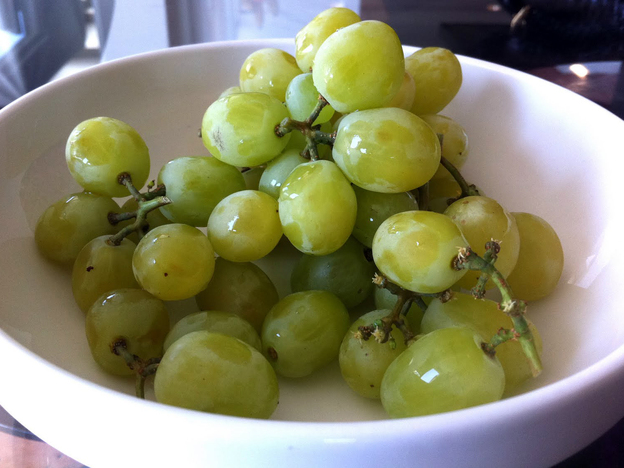
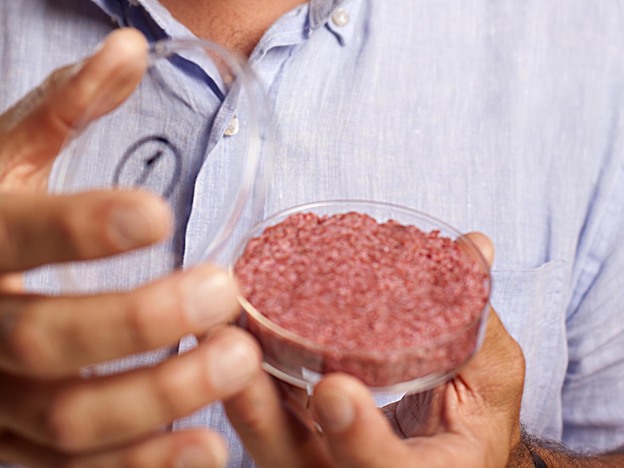
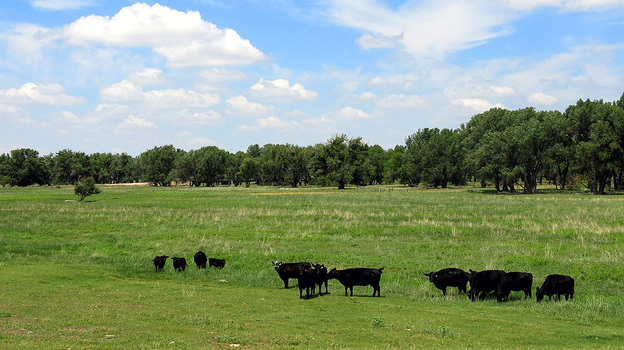
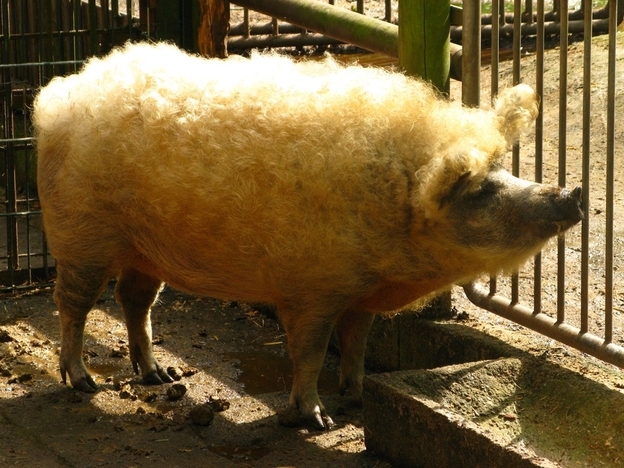
window.__IS_SSR__=true
window.__INITIAL_STATE__={
"attachmentsReducer": {
"audio_0": {
"type": "attachments",
"id": "audio_0",
"imgSizes": {
"kqedFullSize": {
"file": "https://ww2.kqed.org/news/wp-content/themes/KQED-unified/img/audio_bgs/background0.jpg"
}
}
},
"audio_1": {
"type": "attachments",
"id": "audio_1",
"imgSizes": {
"kqedFullSize": {
"file": "https://ww2.kqed.org/news/wp-content/themes/KQED-unified/img/audio_bgs/background1.jpg"
}
}
},
"audio_2": {
"type": "attachments",
"id": "audio_2",
"imgSizes": {
"kqedFullSize": {
"file": "https://ww2.kqed.org/news/wp-content/themes/KQED-unified/img/audio_bgs/background2.jpg"
}
}
},
"audio_3": {
"type": "attachments",
"id": "audio_3",
"imgSizes": {
"kqedFullSize": {
"file": "https://ww2.kqed.org/news/wp-content/themes/KQED-unified/img/audio_bgs/background3.jpg"
}
}
},
"audio_4": {
"type": "attachments",
"id": "audio_4",
"imgSizes": {
"kqedFullSize": {
"file": "https://ww2.kqed.org/news/wp-content/themes/KQED-unified/img/audio_bgs/background4.jpg"
}
}
},
"placeholder": {
"type": "attachments",
"id": "placeholder",
"imgSizes": {
"thumbnail": {
"file": "https://cdn.kqed.org/wp-content/uploads/2024/12/KQED-Default-Image-816638274-2000x1333-1-160x107.jpg",
"width": 160,
"height": 107,
"mimeType": "image/jpeg"
},
"medium": {
"file": "https://cdn.kqed.org/wp-content/uploads/2024/12/KQED-Default-Image-816638274-2000x1333-1-800x533.jpg",
"width": 800,
"height": 533,
"mimeType": "image/jpeg"
},
"medium_large": {
"file": "https://cdn.kqed.org/wp-content/uploads/2024/12/KQED-Default-Image-816638274-2000x1333-1-768x512.jpg",
"width": 768,
"height": 512,
"mimeType": "image/jpeg"
},
"large": {
"file": "https://cdn.kqed.org/wp-content/uploads/2024/12/KQED-Default-Image-816638274-2000x1333-1-1020x680.jpg",
"width": 1020,
"height": 680,
"mimeType": "image/jpeg"
},
"1536x1536": {
"file": "https://cdn.kqed.org/wp-content/uploads/2024/12/KQED-Default-Image-816638274-2000x1333-1-1536x1024.jpg",
"width": 1536,
"height": 1024,
"mimeType": "image/jpeg"
},
"fd-lrg": {
"file": "https://cdn.kqed.org/wp-content/uploads/2024/12/KQED-Default-Image-816638274-2000x1333-1-1536x1024.jpg",
"width": 1536,
"height": 1024,
"mimeType": "image/jpeg"
},
"fd-med": {
"file": "https://cdn.kqed.org/wp-content/uploads/2024/12/KQED-Default-Image-816638274-2000x1333-1-1020x680.jpg",
"width": 1020,
"height": 680,
"mimeType": "image/jpeg"
},
"fd-sm": {
"file": "https://cdn.kqed.org/wp-content/uploads/2024/12/KQED-Default-Image-816638274-2000x1333-1-800x533.jpg",
"width": 800,
"height": 533,
"mimeType": "image/jpeg"
},
"post-thumbnail": {
"file": "https://cdn.kqed.org/wp-content/uploads/2024/12/KQED-Default-Image-816638274-2000x1333-1-672x372.jpg",
"width": 672,
"height": 372,
"mimeType": "image/jpeg"
},
"twentyfourteen-full-width": {
"file": "https://cdn.kqed.org/wp-content/uploads/2024/12/KQED-Default-Image-816638274-2000x1333-1-1038x576.jpg",
"width": 1038,
"height": 576,
"mimeType": "image/jpeg"
},
"xxsmall": {
"file": "https://cdn.kqed.org/wp-content/uploads/2024/12/KQED-Default-Image-816638274-2000x1333-1-160x107.jpg",
"width": 160,
"height": 107,
"mimeType": "image/jpeg"
},
"xsmall": {
"file": "https://cdn.kqed.org/wp-content/uploads/2024/12/KQED-Default-Image-816638274-2000x1333-1-672x372.jpg",
"width": 672,
"height": 372,
"mimeType": "image/jpeg"
},
"small": {
"file": "https://cdn.kqed.org/wp-content/uploads/2024/12/KQED-Default-Image-816638274-2000x1333-1-672x372.jpg",
"width": 672,
"height": 372,
"mimeType": "image/jpeg"
},
"xlarge": {
"file": "https://cdn.kqed.org/wp-content/uploads/2024/12/KQED-Default-Image-816638274-2000x1333-1-1020x680.jpg",
"width": 1020,
"height": 680,
"mimeType": "image/jpeg"
},
"full-width": {
"file": "https://cdn.kqed.org/wp-content/uploads/2024/12/KQED-Default-Image-816638274-2000x1333-1-1920x1280.jpg",
"width": 1920,
"height": 1280,
"mimeType": "image/jpeg"
},
"guest-author-32": {
"file": "https://cdn.kqed.org/wp-content/uploads/2025/01/KQED-Default-Image-816638274-1333x1333-1-160x160.jpg",
"width": 32,
"height": 32,
"mimeType": "image/jpeg"
},
"guest-author-50": {
"file": "https://cdn.kqed.org/wp-content/uploads/2025/01/KQED-Default-Image-816638274-1333x1333-1-160x160.jpg",
"width": 50,
"height": 50,
"mimeType": "image/jpeg"
},
"guest-author-64": {
"file": "https://cdn.kqed.org/wp-content/uploads/2025/01/KQED-Default-Image-816638274-1333x1333-1-160x160.jpg",
"width": 64,
"height": 64,
"mimeType": "image/jpeg"
},
"guest-author-96": {
"file": "https://cdn.kqed.org/wp-content/uploads/2025/01/KQED-Default-Image-816638274-1333x1333-1-160x160.jpg",
"width": 96,
"height": 96,
"mimeType": "image/jpeg"
},
"guest-author-128": {
"file": "https://cdn.kqed.org/wp-content/uploads/2025/01/KQED-Default-Image-816638274-1333x1333-1-160x160.jpg",
"width": 128,
"height": 128,
"mimeType": "image/jpeg"
},
"detail": {
"file": "https://cdn.kqed.org/wp-content/uploads/2025/01/KQED-Default-Image-816638274-1333x1333-1-160x160.jpg",
"width": 160,
"height": 160,
"mimeType": "image/jpeg"
},
"kqedFullSize": {
"file": "https://cdn.kqed.org/wp-content/uploads/2024/12/KQED-Default-Image-816638274-2000x1333-1.jpg",
"width": 2000,
"height": 1333
}
}
},
"bayareabites_67816": {
"type": "attachments",
"id": "bayareabites_67816",
"meta": {
"index": "attachments_1716263798",
"site": "bayareabites",
"id": "67816",
"found": true
},
"parent": 67784,
"imgSizes": {
"kqedFullSize": {
"file": "https://ww2.kqed.org/app/uploads/sites/24/2013/08/cronuts6-feature.jpg",
"width": 640,
"height": 360
}
},
"publishDate": 1375903359,
"modified": 1375903359,
"caption": "A sampling of cronuts to compare. Photo: Kelly O'Mara",
"description": null,
"title": "cronuts6--feature",
"credit": null,
"status": "inherit",
"isLoading": false,
"fetchFailed": false
},
"bayareabites_67737": {
"type": "attachments",
"id": "bayareabites_67737",
"meta": {
"index": "attachments_1716263798",
"site": "bayareabites",
"id": "67737",
"found": true
},
"parent": 67729,
"imgSizes": {
"kqedFullSize": {
"file": "https://ww2.kqed.org/app/uploads/sites/24/2013/08/grapes1-640.jpg",
"width": 624,
"height": 468
}
},
"publishDate": 1375817972,
"modified": 1375817972,
"caption": "The Cotton Candy grape looks and smells like a regular green grape. But the taste will evoke memories of the circus. Photo: Courtesy of Spencer Grey",
"description": "The Cotton Candy grape looks and smells like a regular green grape. But the taste will evoke memories of the circus.",
"title": "grapesgreytoned",
"credit": null,
"status": "inherit",
"isLoading": false,
"fetchFailed": false
},
"bayareabites_67637": {
"type": "attachments",
"id": "bayareabites_67637",
"meta": {
"index": "attachments_1716263798",
"site": "bayareabites",
"id": "67637",
"found": true
},
"parent": 67631,
"imgSizes": {
"kqedFullSize": {
"file": "https://ww2.kqed.org/app/uploads/sites/24/2013/08/culture-beef-640.jpg",
"width": 624,
"height": 468
}
},
"publishDate": 1375733788,
"modified": 1375733788,
"caption": "The burger developed by Professor Mark Post of Maastricht University in the Netherlands. Photo: David Parry / PA Wire",
"description": "The burger developed by Professor Mark Post of Maastricht University in the Netherlands.",
"title": "cultured-beef-03",
"credit": null,
"status": "inherit",
"isLoading": false,
"fetchFailed": false
},
"bayareabites_67617": {
"type": "attachments",
"id": "bayareabites_67617",
"meta": {
"index": "attachments_1716263798",
"site": "bayareabites",
"id": "67617",
"found": true
},
"parent": 67606,
"imgSizes": {
"kqedFullSize": {
"file": "https://ww2.kqed.org/app/uploads/sites/24/2013/08/cattlegrazing-640.jpg",
"width": 624,
"height": 350
}
},
"publishDate": 1375716869,
"modified": 1375716869,
"caption": "Fox Ranch, outside Yuma County, Colo., is a 14,000-acre nature preserve and working commercial cattle ranch. The ranch is used by the Nature Conservancy to put into practice its panned grazing technique. Photo: Luke Runyon/Harvest Public Media",
"description": "Fox Ranch, outside Yuma County, Colo., is a 14,000-acre nature preserve and working commercial cattle ranch. The ranch is used by the Nature Conservancy to put into practice its panned grazing technique.",
"title": "0722_holistic-grazing-ranch",
"credit": null,
"status": "inherit",
"isLoading": false,
"fetchFailed": false
},
"bayareabites_67593": {
"type": "attachments",
"id": "bayareabites_67593",
"meta": {
"index": "attachments_1716263798",
"site": "bayareabites",
"id": "67593",
"found": true
},
"parent": 67584,
"imgSizes": {
"kqedFullSize": {
"file": "https://ww2.kqed.org/app/uploads/sites/24/2013/08/mangalitsa-sm.jpg",
"width": 624,
"height": 468
}
},
"publishDate": 1375552718,
"modified": 1375552718,
"caption": null,
"description": "A Mangalitsa pig in 2008.",
"title": "mangalitsa",
"credit": null,
"status": "inherit",
"isLoading": false,
"fetchFailed": false
},
"bayareabites_67314": {
"type": "attachments",
"id": "bayareabites_67314",
"meta": {
"index": "attachments_1716263798",
"site": "bayareabites",
"id": "67314",
"found": true
},
"parent": 66888,
"imgSizes": {
"kqedFullSize": {
"file": "https://ww2.kqed.org/app/uploads/sites/24/2013/08/grassmilk640x360.jpg",
"width": 640,
"height": 360
}
},
"publishDate": 1375410186,
"modified": 1375410186,
"caption": null,
"description": null,
"title": "grassmilk640x360",
"credit": null,
"status": "inherit",
"isLoading": false,
"fetchFailed": false
},
"bayareabites_67413": {
"type": "attachments",
"id": "bayareabites_67413",
"meta": {
"index": "attachments_1716263798",
"site": "bayareabites",
"id": "67413",
"found": true
},
"parent": 67404,
"imgSizes": {
"kqedFullSize": {
"file": "https://ww2.kqed.org/app/uploads/sites/24/2013/08/gluten-free-sm.jpg",
"width": 624,
"height": 467
}
},
"publishDate": 1375460700,
"modified": 1375460700,
"caption": "The Food and Drug Administration is at last defining what a \"gluten free\" label on a food package really means after nine years of consideration. Photo: Jon Elswick/AP ",
"description": "The Food and Drug Administration is at last defining what a \"gluten free\" label on a food package really means after nine years of consideration.",
"title": "gluten-free",
"credit": null,
"status": "inherit",
"isLoading": false,
"fetchFailed": false
},
"bayareabites_67257": {
"type": "attachments",
"id": "bayareabites_67257",
"meta": {
"index": "attachments_1716263798",
"site": "bayareabites",
"id": "67257",
"found": true
},
"parent": 67233,
"imgSizes": {
"kqedFullSize": {
"file": "https://ww2.kqed.org/app/uploads/sites/24/2013/08/wikipearl.jpg",
"width": 624,
"height": 468
}
},
"publishDate": 1375398034,
"modified": 1375398034,
"caption": null,
"description": "Wikipearl ice cream doesn't require plastic packaging because it is contained in edible skin.",
"title": "wikipearl-pinch",
"credit": null,
"status": "inherit",
"isLoading": false,
"fetchFailed": false
},
"bayareabites_67025": {
"type": "attachments",
"id": "bayareabites_67025",
"meta": {
"index": "attachments_1716263798",
"site": "bayareabites",
"id": "67025",
"found": true
},
"parent": 67015,
"imgSizes": {
"kqedFullSize": {
"file": "https://ww2.kqed.org/app/uploads/sites/24/2013/07/farmworker-sm.jpg",
"width": 624,
"height": 467
}
},
"publishDate": 1375290591,
"modified": 1375290591,
"caption": null,
"description": "Agricultural work, which is physically demanding, is also a risky business venture.",
"title": "farm-2",
"credit": null,
"status": "inherit",
"isLoading": false,
"fetchFailed": false
},
"bayareabites_66860": {
"type": "attachments",
"id": "bayareabites_66860",
"meta": {
"index": "attachments_1716263798",
"site": "bayareabites",
"id": "66860",
"found": true
},
"parent": 66853,
"imgSizes": {
"kqedFullSize": {
"file": "https://ww2.kqed.org/app/uploads/sites/24/2013/07/leftovers-sm.jpg",
"width": 624,
"height": 351
}
},
"publishDate": 1375209958,
"modified": 1375209958,
"caption": null,
"description": "Leftover Swap will let you share your unfinished meals with strangers.",
"title": "leftovers",
"credit": null,
"status": "inherit",
"isLoading": false,
"fetchFailed": false
},
"bayareabites_66842": {
"type": "attachments",
"id": "bayareabites_66842",
"meta": {
"index": "attachments_1716263798",
"site": "bayareabites",
"id": "66842",
"found": true
},
"parent": 66831,
"imgSizes": {
"kqedFullSize": {
"file": "https://ww2.kqed.org/app/uploads/sites/24/2013/07/techfood-sm.jpg",
"width": 624,
"height": 467
}
},
"publishDate": 1375202514,
"modified": 1375202514,
"caption": null,
"description": "Ari Dvorin was hired in May as the first corporate chef at SpareFood, a startup company in Austin, Tex. Here, Dvoring cuts suckling pig for a mockumentary SpareFoot made while recruiting a chef.",
"title": "chef",
"credit": null,
"status": "inherit",
"isLoading": false,
"fetchFailed": false
},
"bayareabites_66283": {
"type": "attachments",
"id": "bayareabites_66283",
"meta": {
"index": "attachments_1716263798",
"site": "bayareabites",
"id": "66283",
"found": true
},
"parent": 66268,
"imgSizes": {
"kqedFullSize": {
"file": "https://ww2.kqed.org/app/uploads/sites/24/2013/07/chicken-istockphoto6401.jpg",
"width": 640,
"height": 529
}
},
"publishDate": 1374785618,
"modified": 1374785618,
"caption": "Barred rock chicken in free range yard. Photo: iStock",
"description": null,
"title": "chicken-istockphoto640",
"credit": null,
"status": "inherit",
"isLoading": false,
"fetchFailed": false
}
},
"audioPlayerReducer": {
"postId": "stream_live",
"isPaused": true,
"isPlaying": false,
"pfsActive": false,
"pledgeModalIsOpen": true,
"playerDrawerIsOpen": false,
"liveAudioPlayStartedAt": 0,
"liveAudioPlayContext": ""
},
"authorsReducer": {
"byline_bayareabites_67729": {
"type": "authors",
"id": "byline_bayareabites_67729",
"meta": {
"override": true
},
"slug": "byline_bayareabites_67729",
"name": "Michaeleen Doucleff",
"isLoading": false
},
"byline_bayareabites_67631": {
"type": "authors",
"id": "byline_bayareabites_67631",
"meta": {
"override": true
},
"slug": "byline_bayareabites_67631",
"name": "Eliza Barclay",
"isLoading": false
},
"byline_bayareabites_67606": {
"type": "authors",
"id": "byline_bayareabites_67606",
"meta": {
"override": true
},
"slug": "byline_bayareabites_67606",
"name": "Luke Runyon",
"isLoading": false
},
"byline_bayareabites_67584": {
"type": "authors",
"id": "byline_bayareabites_67584",
"meta": {
"override": true
},
"slug": "byline_bayareabites_67584",
"name": "Adee Braun",
"isLoading": false
},
"byline_bayareabites_67404": {
"type": "authors",
"id": "byline_bayareabites_67404",
"meta": {
"override": true
},
"slug": "byline_bayareabites_67404",
"name": "Dan Charles and Eliza Barclay",
"isLoading": false
},
"byline_bayareabites_67233": {
"type": "authors",
"id": "byline_bayareabites_67233",
"meta": {
"override": true
},
"slug": "byline_bayareabites_67233",
"name": "Ginny Fahs",
"isLoading": false
},
"byline_bayareabites_67015": {
"type": "authors",
"id": "byline_bayareabites_67015",
"meta": {
"override": true
},
"slug": "byline_bayareabites_67015",
"name": "Kirk Siegler",
"isLoading": false
},
"byline_bayareabites_66853": {
"type": "authors",
"id": "byline_bayareabites_66853",
"meta": {
"override": true
},
"slug": "byline_bayareabites_66853",
"name": "Elise Hu",
"isLoading": false
},
"byline_bayareabites_66831": {
"type": "authors",
"id": "byline_bayareabites_66831",
"meta": {
"override": true
},
"slug": "byline_bayareabites_66831",
"name": "Eliza Barclay",
"isLoading": false
},
"byline_bayareabites_66268": {
"type": "authors",
"id": "byline_bayareabites_66268",
"meta": {
"override": true
},
"slug": "byline_bayareabites_66268",
"name": "Dan Charles",
"isLoading": false
},
"kdomara": {
"type": "authors",
"id": "1459",
"meta": {
"index": "authors_1716337520",
"id": "1459",
"found": true
},
"name": "Kelly O'Mara",
"firstName": "Kelly",
"lastName": "O'Mara",
"slug": "kdomara",
"email": "komara@kqed.org",
"display_author_email": false,
"staff_mastheads": [
"news"
],
"title": "KQED Contributor",
"bio": "Kelly O'Mara is a writer and reporter in the San Francisco Bay Area. She writes about food, health, sports, travel, business and California news. Her work has appeared on KQED, online for Outside Magazine, epsnW, VICE and in Competitor Magazine, among others. Follow Kelly on Twitter \u003ca href=\"https://twitter.com/kellydomara\">@kellydomara\u003c/a>.",
"avatar": "https://secure.gravatar.com/avatar/768fec7412028b72f13bdd0f5f9d8186?s=600&d=blank&r=g",
"twitter": null,
"facebook": null,
"instagram": null,
"linkedin": null,
"sites": [
{
"site": "arts",
"roles": []
},
{
"site": "news",
"roles": []
},
{
"site": "bayareabites",
"roles": []
},
{
"site": "stateofhealth",
"roles": []
},
{
"site": "science",
"roles": []
},
{
"site": "checkplease",
"roles": [
"editor"
]
},
{
"site": "food",
"roles": []
},
{
"site": "forum",
"roles": [
"editor"
]
},
{
"site": "liveblog",
"roles": [
"editor"
]
}
],
"headData": {
"title": "Kelly O'Mara | KQED",
"description": "KQED Contributor",
"ogImgSrc": "https://secure.gravatar.com/avatar/768fec7412028b72f13bdd0f5f9d8186?s=600&d=blank&r=g",
"twImgSrc": "https://secure.gravatar.com/avatar/768fec7412028b72f13bdd0f5f9d8186?s=600&d=blank&r=g"
},
"isLoading": false,
"link": "/author/kdomara"
},
"maryladd": {
"type": "authors",
"id": "5092",
"meta": {
"index": "authors_1716337520",
"id": "5092",
"found": true
},
"name": "Mary Ladd",
"firstName": "Mary",
"lastName": "Ladd",
"slug": "maryladd",
"email": "writereadeat@gmail.com",
"display_author_email": false,
"staff_mastheads": [],
"title": null,
"bio": "Mary Ladd is a freelance writer and event professional based in her hometown of San Francisco. Her writing has been featured in SF Weekly, Tasting Table, the San Francisco Chronicle and elsewhere. She has shuttled \u003ca href=\"http://sf.eater.com/archives/2009/03/26/eater_map_mr_bourdains_san_francisco_whereabouts.php\">Anthony Bourdain\u003c/a> around town and mastered the art of properly loading a catering van in a flash. Mary has eaten the world’s hottest burger and loves to cook and eat. Follow her at \u003ca href=\"https://twitter.com/mladdfood\">@mladdfood\u003c/a>",
"avatar": "https://secure.gravatar.com/avatar/dab53b49e4e893d0d1e6a7ec6ed29e27?s=600&d=blank&r=g",
"twitter": "mladdfood",
"facebook": null,
"instagram": null,
"linkedin": null,
"sites": [
{
"site": "bayareabites",
"roles": [
"contributor"
]
}
],
"headData": {
"title": "Mary Ladd | KQED",
"description": null,
"ogImgSrc": "https://secure.gravatar.com/avatar/dab53b49e4e893d0d1e6a7ec6ed29e27?s=600&d=blank&r=g",
"twImgSrc": "https://secure.gravatar.com/avatar/dab53b49e4e893d0d1e6a7ec6ed29e27?s=600&d=blank&r=g"
},
"isLoading": false,
"link": "/author/maryladd"
}
},
"pagesReducer": {
"bayareabites_category_food-and-technology": {
"type": "terms",
"id": "bayareabites_4084",
"meta": {
"index": "terms_1716263798",
"site": "bayareabites",
"id": "4084",
"score": 14.405561
},
"featImg": null,
"name": "food trends and technology",
"description": null,
"taxonomy": "category",
"headData": {
"twImgId": null,
"twTitle": null,
"ogTitle": null,
"ogImgId": null,
"twDescription": null,
"description": null,
"title": "food trends and technology Archives | KQED Bay Area Bites",
"ogDescription": null
},
"ttid": 2573,
"slug": "food-and-technology",
"isLoading": false,
"title": "food trends and technology",
"pageMeta": {
"site": "bayareabites",
"WpPageTemplate": "page-topic-editorial",
"currentPage": 49
},
"blocks": [
{
"blockName": "kqed/post-list",
"attrs": {
"layout": "cardArticle2",
"query": "posts/bayareabites?category=food-and-technology",
"seeMore": false,
"paginated": true,
"page": 49
}
},
{
"blockName": "kqed/ad"
}
]
}
},
"pfsSessionReducer": {},
"postsReducer": {
"stream_live": {
"type": "live",
"id": "stream_live",
"audioUrl": "https://streams.kqed.org/kqedradio",
"title": "Live Stream",
"excerpt": "Live Stream information currently unavailable.",
"link": "/radio",
"featImg": "",
"label": {
"name": "KQED Live",
"link": "/"
}
},
"stream_kqedNewscast": {
"type": "posts",
"id": "stream_kqedNewscast",
"audioUrl": "https://www.kqed.org/.stream/anon/radio/RDnews/newscast.mp3?_=1",
"title": "KQED Newscast",
"featImg": "",
"label": {
"name": "88.5 FM",
"link": "/"
}
},
"bayareabites_67784": {
"type": "posts",
"id": "bayareabites_67784",
"meta": {
"index": "posts_1716263798",
"site": "bayareabites",
"id": "67784",
"score": null,
"sort": [
1375905617000
]
},
"parent": 0,
"labelTerm": {
"site": "bayareabites"
},
"blocks": [],
"publishDate": 1375905617,
"format": "aside",
"disqusTitle": "The San Francisco Cronut (or CroNot): Finding, Sampling and Taste Testing Donut-Croissants",
"title": "The San Francisco Cronut (or CroNot): Finding, Sampling and Taste Testing Donut-Croissants",
"headTitle": "Bay Area Bites | KQED Food",
"content": "\u003cfigure id=\"attachment_67790\" class=\"wp-caption aligncenter\" style=\"max-width: 946px\">\u003ca href=\"http://ww2.kqed.org/bayareabites/wp-content/uploads/sites/24/2013/08/cronuts6.jpg\">\u003cimg class=\"size-full wp-image-67790\" src=\"http://ww2.kqed.org/bayareabites/wp-content/uploads/sites/24/2013/08/cronuts6.jpg\" alt=\"A sampling of cronuts to compare. Photo: Kelly O'Mara\" width=\"946\" height=\"563\">\u003c/a>\u003cfigcaption class=\"wp-caption-text\">A sampling of cronuts to compare. Photo: Kelly O'Mara\u003c/figcaption>\u003c/figure>\n\u003cp>The \u003ca href=\"http://ny.eater.com/archives/2013/08/the_cronut_line_is_the_summers_only_real_blockbuster.php\">Cronut craze\u003c/a> has very nearly reached its peak. After premiering at Ansel bakery in New York, the cronut became the talk of the town and of the internet this summer. Before it's five minutes are up, though, I wanted to actually eat one -- not just hear about people in New York raving over them and lining up overnight.\u003c/p>\n\u003cp>Fortunately, as the frenzy for the croissant/donut (or is donut/croissant?) comes to a head, the tasty treats have finally made their way to San Francisco. Monday, intrepid dessert lovers wiped out shelves after reports surfaced of the city's first CroNot -- not Cronut. \u003ca href=\"http://www.theposhbakery.com/scripts/openExtra.asp?extra=30\">Posh Bakery\u003c/a>, in the South Bay, unveiled their version of the pastry, but -- because the original bakery that pioneered the treat has copyrighted the name Cronut -- what we get is a CroNot.\u003c/p>\n\u003cp>The question as people licked their lips: Is the not as good as the nut?\u003c/p>\n\u003cfigure id=\"attachment_67787\" class=\"wp-caption aligncenter\" style=\"max-width: 1000px\">\u003ca href=\"http://ww2.kqed.org/bayareabites/wp-content/uploads/sites/24/2013/08/cronuts2.jpg\">\u003cimg class=\"size-full wp-image-67787\" src=\"http://ww2.kqed.org/bayareabites/wp-content/uploads/sites/24/2013/08/cronuts2.jpg\" alt=\"Posh's CroNots come in four flavors -- glazed, cinnamon-sugar, strawberry and chocolate. Photo: Kelly O'Mara\" width=\"1000\" height=\"563\">\u003c/a>\u003cfigcaption class=\"wp-caption-text\">Posh's CroNots come in four flavors -- glazed, cinnamon-sugar, strawberry and chocolate. Photo: Kelly O'Mara\u003c/figcaption>\u003c/figure>\n\u003cfigure id=\"attachment_67785\" class=\"wp-caption aligncenter\" style=\"max-width: 906px\">\u003ca href=\"http://ww2.kqed.org/bayareabites/wp-content/uploads/sites/24/2013/08/crontus4.jpg\">\u003cimg class=\"size-full wp-image-67785\" src=\"http://ww2.kqed.org/bayareabites/wp-content/uploads/sites/24/2013/08/crontus4.jpg\" alt=\"Cronuts have flaky layers, like a croissant, but are fried and iced and rolled in sugar, like a donut. Photo: Kelly O'Mara\" width=\"906\" height=\"563\">\u003c/a>\u003cfigcaption class=\"wp-caption-text\">Cronuts have flaky layers, like a croissant, but are fried and iced and rolled in sugar, like a donut. Photo: Kelly O'Mara\u003c/figcaption>\u003c/figure>\n\u003cp>The Posh Bakery is a wholesaler, so its wares either have to be bought \u003ca href=\"http://www.theposhbakery.com/scripts/openExtra.asp?extra=2\">wholesale online\u003c/a> or purchased from a retail bakery that orders from Posh. To date, Posh's CroNots can be found at all \u003ca href=\"http://www.leesdeli.com/\">Lee's Deli\u003c/a> locations, which are primarily in the financial district, and at Java Trading Company at Fifth and Mission. (Posh's offerings will likely expand to other bakeries soon and then, once they're easy to find, they will no longer be cool. Obviously.) New CroNots are delivered each morning at these locations. But, be forewarned, I arrived at Lee's at 7:50 a.m. and they were very nearly sold out.\u003c/p>\n\u003cfigure id=\"attachment_67791\" class=\"wp-caption alignleft\" style=\"max-width: 163px\">\u003ca href=\"http://ww2.kqed.org/bayareabites/wp-content/uploads/sites/24/2013/08/cronuts7.jpg\">\u003cimg class=\"size-medium wp-image-67791\" src=\"http://ww2.kqed.org/bayareabites/wp-content/uploads/sites/24/2013/08/cronuts7-163x290.jpg\" alt=\"Lee's Deli on California in the financial district hand the elusive CroNots. All the Lee's locations get deliveries each morning. Photo: Kelly O'Mara\" width=\"163\" height=\"290\">\u003c/a>\u003cfigcaption class=\"wp-caption-text\">Lee's Deli on California in the financial district hand the elusive CroNots. All the Lee's locations get deliveries each morning. Photo: Kelly O'Mara\u003c/figcaption>\u003c/figure>\n\u003cp>After calling around before driving around, I found three CroNots at the Lee's at 550 California St. They come in individual plastic packages, with labels marking which of four flavors is inside. You can pick from glazed, cinnamon-sugar, strawberry or chocolate. While the unfilled variety appears to be more common, Posh Bakery also makes each of the flavors with cream filling.\u003c/p>\n\u003cp>[ad fullwidth]\u003c/p>\n\u003cp>As the cronut craze has become mainstream, more and more bakeries across the country have tried their hand at their own non-copyrighted versions. You can make your own with \u003ca href=\"http://www.pillsbury.com/recipes/salted-caramel-crescent-doughnuts/aa82e7d1-c07f-4352-8f85-82fda77602d9\">Pillsbury's recipe\u003c/a> and \u003ca href=\"http://newsfeed.time.com/2013/07/31/dunkin-donuts-cashes-in-on-the-cronut-craze/\">even Dunkin' Donuts in South Korea has a cronut attempt\u003c/a>, the New York Pie Donut. In the Bay Area, Posh was reported to be the first and only cronut counterfeiter.\u003c/p>\n\u003cp>But, it turns out a small bakery in Marin County was already churning our croissant-donuts; they were just keeping it quiet. On a Twitter tip from a friend, before hitting up Lee's, I showed up bright and early at \u003ca href=\"http://www.beths.com/\">Beth's Community Kitchen in Mill Valley\u003c/a>. Beth's is a small bakery tucked in between other shops and I nearly walked past it at first. What they make may not be the original cronut -- \"it's our own take,\" said the baker -- and you may have to ask for it specifically from the back, but the cinnamon-sugar (cream-filled or sans cream) pastries have all the makings of a croissant combined with a donut.\u003c/p>\n\u003cfigure id=\"attachment_67789\" class=\"wp-caption aligncenter\" style=\"max-width: 1000px\">\u003ca href=\"http://ww2.kqed.org/bayareabites/wp-content/uploads/sites/24/2013/08/cronuts5.jpg\">\u003cimg class=\"size-full wp-image-67789\" src=\"http://ww2.kqed.org/bayareabites/wp-content/uploads/sites/24/2013/08/cronuts5.jpg\" alt=\"Beth's Community Kitchen's cronuts were flakier and lighter than the CroNot variety. Photo: Kelly O'Mara\" width=\"1000\" height=\"563\">\u003c/a>\u003cfigcaption class=\"wp-caption-text\">Beth's Community Kitchen's cronuts were flakier and lighter than the CroNot variety. Photo: Kelly O'Mara\u003c/figcaption>\u003c/figure>\n\u003cp>Fully-loaded with five different cronuts, I began my taste testing.\u003c/p>\n\u003cp>The Beth's cronuts are more croissant-like than donut. The pastries are flaky and light, tasting like a chewy croissant that simply has a cinnamon-sugar shell. The cream in the cream-filled cronut from Beth's was similar to icing, sweet and slightly lemon-flavored.\u003c/p>\n\u003cfigure id=\"attachment_67788\" class=\"wp-caption alignleft\" style=\"max-width: 195px\">\u003ca href=\"http://ww2.kqed.org/bayareabites/wp-content/uploads/sites/24/2013/08/cronuts3.jpg\">\u003cimg class=\"size-medium wp-image-67788\" src=\"http://ww2.kqed.org/bayareabites/wp-content/uploads/sites/24/2013/08/cronuts3-195x290.jpg\" alt=\"The cinnamon-sugar CroNot, though heavier, still shows off the tell-tale croissant-like layers of dough. Photo: Kelly O'Mara\" width=\"195\" height=\"290\">\u003c/a>\u003cfigcaption class=\"wp-caption-text\">The cinnamon-sugar CroNot, though heavier, still shows off the tell-tale croissant-like layers of dough. Photo: Kelly O'Mara\u003c/figcaption>\u003c/figure>\n\u003cp>By comparison, the Posh Bakery CroNot is more donut than croissant. The cinnamon-sugar options from each of the two bakeries offered the cleanest taste test comparison, since icing and flavors couldn't confuse the senses. Posh's version was heavier and more cake-like -- though both bakeries made their cronuts with layers of dough that flake away as you eat (making the sweets challenging to cut apart).\u003c/p>\n\u003cp>The iced CroNots tasted even more similar to donuts than the cinnamon-sugar version, with the sweetness of the icing making it difficult to tell what exactly you were eating. Is it a croissant? Is a donut? The strawberry-frosted CroNut was by far the sweetest of the five -- and bore only a passing resemblance to the breakfast meal.\u003c/p>\n\u003cp>Whether you'll prefer the more donut-like or the more croissant-like of the cronuts is really a question of what you're looking for in a morning dessert. I preferred the plain cinnamon-sugar from Beth's, as it tasted like a morning bun or some other unique, light pastry concoction. Eating a strawberry-iced layered cake thing before 9 a.m. just felt a little rough, so perhaps the Posh's CroNots are more of an evening breakfast dessert.\u003c/p>\n\u003cp>But, no matter which you choose, they're all intensely sweet.\u003c/p>\n\u003cp>Beth's offering costs $3.50 for the non-filled and $5 for the filled. Posh's variety (bought from Lee's) are just $2.50. Buy all the different kinds and compare -- though be forewarned it may be safer on your stomach to just eat one donut and one croissant separately.\u003c/p>\n\u003cp>Cronuts: combining the best (or worst?) of the donut and croissant since May 2013.\u003c/p>\n\u003cp>\u003cstrong>If you go:\u003c/strong>\u003c/p>\n\u003cp>Lee's Deli\u003cbr>\nmultiple locations\u003cbr>\n\u003ca href=\"http://www.leesdeli.com/\">www.leesdeli.com\u003c/a>\u003cbr>\nMost locations open Mon-Fri: 6 a.m. to 4 p.m. (hours vary)\u003c/p>\n\u003cp>Java Trading Company\u003cbr>\n100 5th St, San Francisco\u003cbr>\n415-243-9723\u003cbr>\nMon-Fri: 6:45 a.m. to 5 p.m.\u003c/p>\n\u003cp>\u003c/p>\n\u003cp>Beth's Community Kitchen\u003cbr>\n34 Miller Ave., Mill Valley\u003cbr>\n415-383-3991\u003cbr>\n\u003ca href=\"http://www.beths.com/\">www.beths.com\u003c/a>\u003cbr>\nWeekdays: 7 a.m. to 5 p.m., closed Tuesday\u003cbr>\nWeekends: 8:30 a.m. to 5 p.m.\u003c/p>\n\u003cfigure id=\"attachment_67786\" class=\"wp-caption aligncenter\" style=\"max-width: 1057px\">\u003ca href=\"http://ww2.kqed.org/bayareabites/wp-content/uploads/sites/24/2013/08/cronuts1.jpg\">\u003cimg class=\"size-full wp-image-67786\" src=\"http://ww2.kqed.org/bayareabites/wp-content/uploads/sites/24/2013/08/cronuts1.jpg\" alt=\"The five cronuts after sampling. Photo: Kelly O'Mara\" width=\"1057\" height=\"971\">\u003c/a>\u003cfigcaption class=\"wp-caption-text\">The five cronuts after sampling. Photo: Kelly O'Mara\u003c/figcaption>\u003c/figure>\n\n",
"disqusIdentifier": "67784 http://blogs.kqed.org/bayareabites/?p=67784",
"disqusUrl": "https://ww2.kqed.org/bayareabites/2013/08/07/the-san-francisco-cronut-or-cronot-finding-sampling-and-taste-testing-donut-croissants/",
"stats": {
"hasVideo": false,
"hasChartOrMap": false,
"hasAudio": false,
"hasPolis": false,
"wordCount": 1056,
"hasGoogleForm": false,
"hasGallery": false,
"hasHearkenModule": false,
"iframeSrcs": [],
"paragraphCount": 21
},
"modified": 1383301395,
"excerpt": "Cronuts (or CroNots) have finally made their way to the Bay Area -- and it turns out they were, secretly, already here. We do a taste test and tell you where to get the sweet treats before the craze passes.",
"headData": {
"twImgId": "",
"twTitle": "",
"ogTitle": "",
"ogImgId": "",
"twDescription": "",
"description": "Cronuts (or CroNots) have finally made their way to the Bay Area -- and it turns out they were, secretly, already here. We do a taste test and tell you where to get the sweet treats before the craze passes.",
"title": "The San Francisco Cronut (or CroNot): Finding, Sampling and Taste Testing Donut-Croissants | KQED",
"ogDescription": "",
"schema": {
"@context": "https://schema.org",
"@type": "Article",
"headline": "The San Francisco Cronut (or CroNot): Finding, Sampling and Taste Testing Donut-Croissants",
"datePublished": "2013-08-07T13:00:17-07:00",
"dateModified": "2013-11-01T03:23:15-07:00",
"image": "https://cdn.kqed.org/wp-content/uploads/2020/02/KQED-OG-Image@1x.png"
}
},
"guestAuthors": [],
"slug": "the-san-francisco-cronut-or-cronot-finding-sampling-and-taste-testing-donut-croissants",
"status": "publish",
"path": "/bayareabites/67784/the-san-francisco-cronut-or-cronot-finding-sampling-and-taste-testing-donut-croissants",
"audioTrackLength": null,
"parsedContent": [
{
"type": "contentString",
"content": "\u003cdiv class=\"post-body\">\u003cp>\u003cfigure id=\"attachment_67790\" class=\"wp-caption aligncenter\" style=\"max-width: 946px\">\u003ca href=\"http://ww2.kqed.org/bayareabites/wp-content/uploads/sites/24/2013/08/cronuts6.jpg\">\u003cimg class=\"size-full wp-image-67790\" src=\"http://ww2.kqed.org/bayareabites/wp-content/uploads/sites/24/2013/08/cronuts6.jpg\" alt=\"A sampling of cronuts to compare. Photo: Kelly O'Mara\" width=\"946\" height=\"563\">\u003c/a>\u003cfigcaption class=\"wp-caption-text\">A sampling of cronuts to compare. Photo: Kelly O'Mara\u003c/figcaption>\u003c/figure>\n\u003cp>The \u003ca href=\"http://ny.eater.com/archives/2013/08/the_cronut_line_is_the_summers_only_real_blockbuster.php\">Cronut craze\u003c/a> has very nearly reached its peak. After premiering at Ansel bakery in New York, the cronut became the talk of the town and of the internet this summer. Before it's five minutes are up, though, I wanted to actually eat one -- not just hear about people in New York raving over them and lining up overnight.\u003c/p>\n\u003cp>Fortunately, as the frenzy for the croissant/donut (or is donut/croissant?) comes to a head, the tasty treats have finally made their way to San Francisco. Monday, intrepid dessert lovers wiped out shelves after reports surfaced of the city's first CroNot -- not Cronut. \u003ca href=\"http://www.theposhbakery.com/scripts/openExtra.asp?extra=30\">Posh Bakery\u003c/a>, in the South Bay, unveiled their version of the pastry, but -- because the original bakery that pioneered the treat has copyrighted the name Cronut -- what we get is a CroNot.\u003c/p>\n\u003cp>The question as people licked their lips: Is the not as good as the nut?\u003c/p>\n\u003cfigure id=\"attachment_67787\" class=\"wp-caption aligncenter\" style=\"max-width: 1000px\">\u003ca href=\"http://ww2.kqed.org/bayareabites/wp-content/uploads/sites/24/2013/08/cronuts2.jpg\">\u003cimg class=\"size-full wp-image-67787\" src=\"http://ww2.kqed.org/bayareabites/wp-content/uploads/sites/24/2013/08/cronuts2.jpg\" alt=\"Posh's CroNots come in four flavors -- glazed, cinnamon-sugar, strawberry and chocolate. Photo: Kelly O'Mara\" width=\"1000\" height=\"563\">\u003c/a>\u003cfigcaption class=\"wp-caption-text\">Posh's CroNots come in four flavors -- glazed, cinnamon-sugar, strawberry and chocolate. Photo: Kelly O'Mara\u003c/figcaption>\u003c/figure>\n\u003cfigure id=\"attachment_67785\" class=\"wp-caption aligncenter\" style=\"max-width: 906px\">\u003ca href=\"http://ww2.kqed.org/bayareabites/wp-content/uploads/sites/24/2013/08/crontus4.jpg\">\u003cimg class=\"size-full wp-image-67785\" src=\"http://ww2.kqed.org/bayareabites/wp-content/uploads/sites/24/2013/08/crontus4.jpg\" alt=\"Cronuts have flaky layers, like a croissant, but are fried and iced and rolled in sugar, like a donut. Photo: Kelly O'Mara\" width=\"906\" height=\"563\">\u003c/a>\u003cfigcaption class=\"wp-caption-text\">Cronuts have flaky layers, like a croissant, but are fried and iced and rolled in sugar, like a donut. Photo: Kelly O'Mara\u003c/figcaption>\u003c/figure>\n\u003cp>The Posh Bakery is a wholesaler, so its wares either have to be bought \u003ca href=\"http://www.theposhbakery.com/scripts/openExtra.asp?extra=2\">wholesale online\u003c/a> or purchased from a retail bakery that orders from Posh. To date, Posh's CroNots can be found at all \u003ca href=\"http://www.leesdeli.com/\">Lee's Deli\u003c/a> locations, which are primarily in the financial district, and at Java Trading Company at Fifth and Mission. (Posh's offerings will likely expand to other bakeries soon and then, once they're easy to find, they will no longer be cool. Obviously.) New CroNots are delivered each morning at these locations. But, be forewarned, I arrived at Lee's at 7:50 a.m. and they were very nearly sold out.\u003c/p>\n\u003cfigure id=\"attachment_67791\" class=\"wp-caption alignleft\" style=\"max-width: 163px\">\u003ca href=\"http://ww2.kqed.org/bayareabites/wp-content/uploads/sites/24/2013/08/cronuts7.jpg\">\u003cimg class=\"size-medium wp-image-67791\" src=\"http://ww2.kqed.org/bayareabites/wp-content/uploads/sites/24/2013/08/cronuts7-163x290.jpg\" alt=\"Lee's Deli on California in the financial district hand the elusive CroNots. All the Lee's locations get deliveries each morning. Photo: Kelly O'Mara\" width=\"163\" height=\"290\">\u003c/a>\u003cfigcaption class=\"wp-caption-text\">Lee's Deli on California in the financial district hand the elusive CroNots. All the Lee's locations get deliveries each morning. Photo: Kelly O'Mara\u003c/figcaption>\u003c/figure>\n\u003cp>After calling around before driving around, I found three CroNots at the Lee's at 550 California St. They come in individual plastic packages, with labels marking which of four flavors is inside. You can pick from glazed, cinnamon-sugar, strawberry or chocolate. While the unfilled variety appears to be more common, Posh Bakery also makes each of the flavors with cream filling.\u003c/p>\n\u003cp>\u003c/p>\u003c/div>",
"attributes": {
"named": {},
"numeric": []
}
},
{
"type": "component",
"content": "",
"name": "ad",
"attributes": {
"named": {
"label": "fullwidth"
},
"numeric": [
"fullwidth"
]
}
},
{
"type": "contentString",
"content": "\u003cdiv class=\"post-body\">\u003cp>\u003c/p>\n\u003cp>As the cronut craze has become mainstream, more and more bakeries across the country have tried their hand at their own non-copyrighted versions. You can make your own with \u003ca href=\"http://www.pillsbury.com/recipes/salted-caramel-crescent-doughnuts/aa82e7d1-c07f-4352-8f85-82fda77602d9\">Pillsbury's recipe\u003c/a> and \u003ca href=\"http://newsfeed.time.com/2013/07/31/dunkin-donuts-cashes-in-on-the-cronut-craze/\">even Dunkin' Donuts in South Korea has a cronut attempt\u003c/a>, the New York Pie Donut. In the Bay Area, Posh was reported to be the first and only cronut counterfeiter.\u003c/p>\n\u003cp>But, it turns out a small bakery in Marin County was already churning our croissant-donuts; they were just keeping it quiet. On a Twitter tip from a friend, before hitting up Lee's, I showed up bright and early at \u003ca href=\"http://www.beths.com/\">Beth's Community Kitchen in Mill Valley\u003c/a>. Beth's is a small bakery tucked in between other shops and I nearly walked past it at first. What they make may not be the original cronut -- \"it's our own take,\" said the baker -- and you may have to ask for it specifically from the back, but the cinnamon-sugar (cream-filled or sans cream) pastries have all the makings of a croissant combined with a donut.\u003c/p>\n\u003cfigure id=\"attachment_67789\" class=\"wp-caption aligncenter\" style=\"max-width: 1000px\">\u003ca href=\"http://ww2.kqed.org/bayareabites/wp-content/uploads/sites/24/2013/08/cronuts5.jpg\">\u003cimg class=\"size-full wp-image-67789\" src=\"http://ww2.kqed.org/bayareabites/wp-content/uploads/sites/24/2013/08/cronuts5.jpg\" alt=\"Beth's Community Kitchen's cronuts were flakier and lighter than the CroNot variety. Photo: Kelly O'Mara\" width=\"1000\" height=\"563\">\u003c/a>\u003cfigcaption class=\"wp-caption-text\">Beth's Community Kitchen's cronuts were flakier and lighter than the CroNot variety. Photo: Kelly O'Mara\u003c/figcaption>\u003c/figure>\n\u003cp>Fully-loaded with five different cronuts, I began my taste testing.\u003c/p>\n\u003cp>The Beth's cronuts are more croissant-like than donut. The pastries are flaky and light, tasting like a chewy croissant that simply has a cinnamon-sugar shell. The cream in the cream-filled cronut from Beth's was similar to icing, sweet and slightly lemon-flavored.\u003c/p>\n\u003cfigure id=\"attachment_67788\" class=\"wp-caption alignleft\" style=\"max-width: 195px\">\u003ca href=\"http://ww2.kqed.org/bayareabites/wp-content/uploads/sites/24/2013/08/cronuts3.jpg\">\u003cimg class=\"size-medium wp-image-67788\" src=\"http://ww2.kqed.org/bayareabites/wp-content/uploads/sites/24/2013/08/cronuts3-195x290.jpg\" alt=\"The cinnamon-sugar CroNot, though heavier, still shows off the tell-tale croissant-like layers of dough. Photo: Kelly O'Mara\" width=\"195\" height=\"290\">\u003c/a>\u003cfigcaption class=\"wp-caption-text\">The cinnamon-sugar CroNot, though heavier, still shows off the tell-tale croissant-like layers of dough. Photo: Kelly O'Mara\u003c/figcaption>\u003c/figure>\n\u003cp>By comparison, the Posh Bakery CroNot is more donut than croissant. The cinnamon-sugar options from each of the two bakeries offered the cleanest taste test comparison, since icing and flavors couldn't confuse the senses. Posh's version was heavier and more cake-like -- though both bakeries made their cronuts with layers of dough that flake away as you eat (making the sweets challenging to cut apart).\u003c/p>\n\u003cp>The iced CroNots tasted even more similar to donuts than the cinnamon-sugar version, with the sweetness of the icing making it difficult to tell what exactly you were eating. Is it a croissant? Is a donut? The strawberry-frosted CroNut was by far the sweetest of the five -- and bore only a passing resemblance to the breakfast meal.\u003c/p>\n\u003cp>Whether you'll prefer the more donut-like or the more croissant-like of the cronuts is really a question of what you're looking for in a morning dessert. I preferred the plain cinnamon-sugar from Beth's, as it tasted like a morning bun or some other unique, light pastry concoction. Eating a strawberry-iced layered cake thing before 9 a.m. just felt a little rough, so perhaps the Posh's CroNots are more of an evening breakfast dessert.\u003c/p>\n\u003cp>But, no matter which you choose, they're all intensely sweet.\u003c/p>\n\u003cp>Beth's offering costs $3.50 for the non-filled and $5 for the filled. Posh's variety (bought from Lee's) are just $2.50. Buy all the different kinds and compare -- though be forewarned it may be safer on your stomach to just eat one donut and one croissant separately.\u003c/p>\n\u003cp>Cronuts: combining the best (or worst?) of the donut and croissant since May 2013.\u003c/p>\n\u003cp>\u003cstrong>If you go:\u003c/strong>\u003c/p>\n\u003cp>Lee's Deli\u003cbr>\nmultiple locations\u003cbr>\n\u003ca href=\"http://www.leesdeli.com/\">www.leesdeli.com\u003c/a>\u003cbr>\nMost locations open Mon-Fri: 6 a.m. to 4 p.m. (hours vary)\u003c/p>\n\u003cp>Java Trading Company\u003cbr>\n100 5th St, San Francisco\u003cbr>\n415-243-9723\u003cbr>\nMon-Fri: 6:45 a.m. to 5 p.m.\u003c/p>\n\u003cp>\u003c/p>\n\u003cp>Beth's Community Kitchen\u003cbr>\n34 Miller Ave., Mill Valley\u003cbr>\n415-383-3991\u003cbr>\n\u003ca href=\"http://www.beths.com/\">www.beths.com\u003c/a>\u003cbr>\nWeekdays: 7 a.m. to 5 p.m., closed Tuesday\u003cbr>\nWeekends: 8:30 a.m. to 5 p.m.\u003c/p>\n\u003cfigure id=\"attachment_67786\" class=\"wp-caption aligncenter\" style=\"max-width: 1057px\">\u003ca href=\"http://ww2.kqed.org/bayareabites/wp-content/uploads/sites/24/2013/08/cronuts1.jpg\">\u003cimg class=\"size-full wp-image-67786\" src=\"http://ww2.kqed.org/bayareabites/wp-content/uploads/sites/24/2013/08/cronuts1.jpg\" alt=\"The five cronuts after sampling. Photo: Kelly O'Mara\" width=\"1057\" height=\"971\">\u003c/a>\u003cfigcaption class=\"wp-caption-text\">The five cronuts after sampling. Photo: Kelly O'Mara\u003c/figcaption>\u003c/figure>\n\n\u003c/div>\u003c/p>",
"attributes": {
"named": {},
"numeric": []
}
}
],
"link": "/bayareabites/67784/the-san-francisco-cronut-or-cronot-finding-sampling-and-taste-testing-donut-croissants",
"authors": [
"1459"
],
"categories": [
"bayareabites_1516",
"bayareabites_109",
"bayareabites_752",
"bayareabites_1653",
"bayareabites_4084",
"bayareabites_1875",
"bayareabites_10"
],
"tags": [
"bayareabites_12179",
"bayareabites_12012",
"bayareabites_12009",
"bayareabites_12011",
"bayareabites_8457"
],
"featImg": "bayareabites_67816",
"label": "bayareabites"
},
"bayareabites_67729": {
"type": "posts",
"id": "bayareabites_67729",
"meta": {
"index": "posts_1716263798",
"site": "bayareabites",
"id": "67729",
"score": null,
"sort": [
1375818313000
]
},
"parent": 0,
"labelTerm": {
"site": "bayareabites"
},
"blocks": [],
"publishDate": 1375818313,
"format": "aside",
"disqusTitle": "The Cotton Candy Grape: A Sweet Spin On Designer Fruit",
"title": "The Cotton Candy Grape: A Sweet Spin On Designer Fruit",
"headTitle": "Bay Area Bites | KQED Food",
"content": "\u003cfigure id=\"attachment_67738\" class=\"wp-caption aligncenter\" style=\"max-width: 1120px\">\u003ca href=\"http://ww2.kqed.org/bayareabites/wp-content/uploads/sites/24/2013/08/grapes1-big.jpg\">\u003cimg src=\"http://ww2.kqed.org/bayareabites/wp-content/uploads/sites/24/2013/08/grapes1-big.jpg\" alt=\"The Cotton Candy grape looks and smells like a regular green grape. But the taste will evoke memories of the circus. Photo: Courtesy of Spencer Grey\" width=\"1120\" height=\"840\" class=\"size-full wp-image-67738\">\u003c/a>\u003cfigcaption class=\"wp-caption-text\">The Cotton Candy grape looks and smells like a regular green grape. But the taste will evoke memories of the circus. Photo: Courtesy of Spencer Grey\u003c/figcaption>\u003c/figure>\n\u003cp>Post by Michaeleen Doucleff, \u003ca href=\"http://www.npr.org/blogs/thesalt/2013/08/05/209222126/the-cotton-candy-grape-a-sweet-spin-on-designer-fruit\">The Salt at NPR Food\u003c/a> (8/6/2013)\u003c/p>\n\u003cp>Can't we just leave our fruit alone?\u003c/p>\n\u003cp>Last year, apple farmers were \u003ca href=\"http://www.npr.org/blogs/thesalt/2012/01/09/144922008/how-to-get-kids-to-eat-apples-make-them-taste-like-grape-candy\">soaking\u003c/a> their fruit in grape flavor to make them more attractive to kids. Now, plant breeders in California have created a grape that tastes like — well, spun sugar and air.\u003c/p>\n\u003cp>That's right, Salties. Say hello to the Cotton Candy grape.\u003c/p>\n\u003cfigure id=\"attachment_67739\" class=\"wp-caption alignleft\" style=\"max-width: 217px\">\u003ca href=\"http://ww2.kqed.org/bayareabites/wp-content/uploads/sites/24/2013/08/grapes2.jpg\">\u003cimg src=\"http://ww2.kqed.org/bayareabites/wp-content/uploads/sites/24/2013/08/grapes2-217x290.jpg\" alt=\"What exactly is cotton candy flavor anyway? Well, the blue is suppose to be raspberry. The yellow is lemon, and that ubiquitous pink puff ball has vanilla in it. Photo: seelenstum/Flickr.com\" width=\"217\" height=\"290\" class=\"size-medium wp-image-67739\">\u003c/a>\u003cfigcaption class=\"wp-caption-text\">What exactly is cotton candy flavor anyway? Well, the blue is suppose to be raspberry. The yellow is lemon, and that ubiquitous pink puff ball has vanilla in it. Photo: seelenstum/Flickr.com\u003c/figcaption>\u003c/figure>\n\u003cp>\"When it pops in your mouth, the first impression is a rush of cotton candy flavor,\" says \u003ca href=\"http://spencerhgray.wordpress.com/2011/09/02/cotton-candy-grapes/\">Spencer Gray\u003c/a>, a personal chef in Culver City and blogger at Omnivorous who has sampled the grapes. \"The green grapes don't look or smell like cotton candy,\" he tells The Salt, \"but they will remind you of a circus.\" His son, he says, loves them.\u003c/p>\n\u003cp>[ad fullwidth]\u003c/p>\n\u003cp>At about $6 per pound, this sounds like a lucrative gimmick that takes a perfectly pleasant fruit and jazzes it up into junk food. But when we dug deeper into the grape's origins, we found that its creator is actually trying to do the opposite.\u003c/p>\n\u003cp>Horticulturalist David Cain wants to bring back the natural flavors of our grapes, which have been stripped away by decades of breeding fruit to withstand shipping and storage — not to please our taste buds.\u003c/p>\n\u003cp>\"When you go to the supermarket, there's like 15 kinds of apples — Fuji, Pink Lady, Gala, Braeburn. The list goes on,\" Cain tells The Salt. \"We want to give consumers the same array of flavors for grapes.\"\u003c/p>\n\u003cp>And he's doing it without genetic engineering or artificial flavors. Just good old-fashioned \u003ca href=\"http://www.aces.uiuc.edu/vista/html_pubs/PLBREED/pl_breed.html\">plant breeding\u003c/a>.\u003c/p>\n\u003cp>Cain and his team at International Fruit Genetics in Bakersfield, Calif., made the Cotton Candy grape by hybridizing two different grape species. So the designer fruit is actually a hybrid — like \u003ca href=\"http://www.npr.org/templates/story/story.php?storyId=106098949\">pluots\u003c/a>, peacharines and cherums.\u003c/p>\n\u003cp>\"We already have other varieties that taste like strawberry, pineapple or mango,\" he says. \"We're still testing those out to see if they're commercial viable.\"\u003c/p>\n\u003cp>The Cotton Candy grape has already cleared those hurdles — it has been commercially available in limited quantities since 2011. In fact, sales have been so good that the fruit's distributor, \u003ca href=\"http://www.grapery.biz/\">The Grapery\u003c/a>, bumped up its production from just two acres to 100 acres this year, with 200 acres planted for 2014.\u003c/p>\n\u003cfigure id=\"attachment_67740\" class=\"wp-caption alignleft\" style=\"max-width: 217px\">\u003ca href=\"http://ww2.kqed.org/bayareabites/wp-content/uploads/sites/24/2013/08/grapes3.jpg\">\u003cimg src=\"http://ww2.kqed.org/bayareabites/wp-content/uploads/sites/24/2013/08/grapes3-217x290.jpg\" alt=\"Breeding seedless grapes isn't easy. Scientists have to remove the baby embryos from the plant and grow them in a test tube before later planting them in a field. Photo: Courtesy of David Cain/International Fruit Genetics\" width=\"217\" height=\"290\" class=\"size-medium wp-image-67740\">\u003c/a>\u003cfigcaption class=\"wp-caption-text\">Breeding seedless grapes isn't easy. Scientists have to remove the baby embryos from the plant and grow them in a test tube before later planting them in a field. Photo: Courtesy of David Cain/International Fruit Genetics\u003c/figcaption>\u003c/figure>\n\u003cp>Weighing in at about 18 grams of sugar per 100 grams of grapes, the designer fruit isn't cloyingly sweet. It has about 12 percent more sugar than regular table grapes but far less than raisins, which have more than three times the carbs.\u003c/p>\n\u003cp>So just how do these green grapes conjure up the sensation of spun-sugar melting on your tongue?\u003c/p>\n\u003cp>The fruit has very little tartness, chef Spencer tells the Salt. \"It's like there's nothing to stop the sweetness. It just lingers on your tongue.\"\u003c/p>\n\u003cp>There are also hints off vanilla, Spencer says — and vanilla, it seems, is a key flavor in the archetypal \"pink\" cotton candy that makes your dentist cringe.\u003c/p>\n\u003cp>To get that vanilla flavor into the table grapes naturally, Cain and his team had to widen the plants' gene pool, mixing in genes from less common grape species.\u003c/p>\n\u003cp>Almost all of the table grapes in America belong to the species \u003cem>Vitis vinifera\u003c/em>. There's nothing wrong with that. \u003cem>V. vinifera \u003c/em>is a noble grape. It's used to make all of our wines.\u003c/p>\n\u003cp>But the world has dozens of grape species, and restricting the fruit in grocery stores to just one species also limits their flavors, Cain says.\u003c/p>\n\u003cp>Take, for instance, the Concord grape. It's used to make Welch's juices, jams and jellies. The dark-purple berry is packed with exotic flavors and aromas, including one known as \"\u003ca href=\"http://onlinelibrary.wiley.com/doi/10.1111/j.1365-2621.1977.tb01217.x/abstract\">foxy\u003c/a>.\" But the Concord grape has seeds and its skin tends to fall off — not great qualities for a table grape.\u003c/p>\n\u003cp>So Cain decided to put all the flavors of a Concord-like grape into the firm, crisp and seedless \u003cem>Vitis vineferia\u003c/em> by crossing the two species. (He couldn't say exactly which Concord-like grape he used because it's a trade secret).\u003c/p>\n\u003cp>Breeding seedless grapes isn't easy, because they can't reproduce on their own. After fertilizing the plant, Cain and his team have to take out the baby embryos from the plant, then grow them in individual test tubes in the lab before they ever make it to the field.\u003c/p>\n\u003cp>Cain painstakingly created around 100,000 of these test tube plants before he stumbled upon the cotton-candy flavored grapes.\u003c/p>\n\u003cp>\"The whole process takes at least six years and sometimes up to 15 years,\" Cain says. But he thinks it's worth it.\u003c/p>\n\u003cp>\"A lot of fruit becomes tasteless by the time somebody buys it,\" Cain says. \"We want to change that.\"\u003c/p>\n\u003cp>\u003c/p>\n\u003cp>\u003cem>Copyright \u003ca href=\"http://www.npr.org\">2013 NPR\u003c/a>. \u003c/em>\u003c/p>\n\n",
"disqusIdentifier": "67729 http://blogs.kqed.org/bayareabites/?p=67729",
"disqusUrl": "https://ww2.kqed.org/bayareabites/2013/08/06/the-cotton-candy-grape-a-sweet-spin-on-designer-fruit/",
"stats": {
"hasVideo": false,
"hasChartOrMap": false,
"hasAudio": false,
"hasPolis": false,
"wordCount": 900,
"hasGoogleForm": false,
"hasGallery": false,
"hasHearkenModule": false,
"iframeSrcs": [],
"paragraphCount": 28
},
"modified": 1375818313,
"excerpt": "Grapes that taste like cotton candy? No, it's not a GMO experiment but rather the result of good old-fashioned plant breeding techniques. One scientist has already brought these sweet treats to the market and hopes our grape choices will one day be as varied as our apple choices.",
"headData": {
"twImgId": "",
"twTitle": "",
"ogTitle": "",
"ogImgId": "",
"twDescription": "",
"description": "Grapes that taste like cotton candy? No, it's not a GMO experiment but rather the result of good old-fashioned plant breeding techniques. One scientist has already brought these sweet treats to the market and hopes our grape choices will one day be as varied as our apple choices.",
"title": "The Cotton Candy Grape: A Sweet Spin On Designer Fruit | KQED",
"ogDescription": "",
"schema": {
"@context": "https://schema.org",
"@type": "Article",
"headline": "The Cotton Candy Grape: A Sweet Spin On Designer Fruit",
"datePublished": "2013-08-06T12:45:13-07:00",
"dateModified": "2013-08-06T12:45:13-07:00",
"image": "https://cdn.kqed.org/wp-content/uploads/2020/02/KQED-OG-Image@1x.png"
}
},
"guestAuthors": [],
"slug": "the-cotton-candy-grape-a-sweet-spin-on-designer-fruit",
"status": "publish",
"nprApiLink": "http://api.npr.org/query?id=209222126&apiKey=MDAxOTAwOTE4MDEyMTkxMDAzNjczZDljZA004",
"nprByline": "Michaeleen Doucleff",
"nprStoryDate": "Tue, 06 Aug 2013 11:46:00 -0400",
"nprLastModifiedDate": "Tue, 06 Aug 2013 13:21:31 -0400",
"nprHtmlLink": "http://www.npr.org/blogs/thesalt/2013/08/05/209222126/the-cotton-candy-grape-a-sweet-spin-on-designer-fruit?ft=3&f=209222126",
"nprStoryId": "209222126",
"nprRetrievedStory": "1",
"nprPubDate": "Tue, 06 Aug 2013 13:21:00 -0400",
"path": "/bayareabites/67729/the-cotton-candy-grape-a-sweet-spin-on-designer-fruit",
"audioTrackLength": null,
"parsedContent": [
{
"type": "contentString",
"content": "\u003cdiv class=\"post-body\">\u003cp>\u003cfigure id=\"attachment_67738\" class=\"wp-caption aligncenter\" style=\"max-width: 1120px\">\u003ca href=\"http://ww2.kqed.org/bayareabites/wp-content/uploads/sites/24/2013/08/grapes1-big.jpg\">\u003cimg src=\"http://ww2.kqed.org/bayareabites/wp-content/uploads/sites/24/2013/08/grapes1-big.jpg\" alt=\"The Cotton Candy grape looks and smells like a regular green grape. But the taste will evoke memories of the circus. Photo: Courtesy of Spencer Grey\" width=\"1120\" height=\"840\" class=\"size-full wp-image-67738\">\u003c/a>\u003cfigcaption class=\"wp-caption-text\">The Cotton Candy grape looks and smells like a regular green grape. But the taste will evoke memories of the circus. Photo: Courtesy of Spencer Grey\u003c/figcaption>\u003c/figure>\n\u003cp>Post by Michaeleen Doucleff, \u003ca href=\"http://www.npr.org/blogs/thesalt/2013/08/05/209222126/the-cotton-candy-grape-a-sweet-spin-on-designer-fruit\">The Salt at NPR Food\u003c/a> (8/6/2013)\u003c/p>\n\u003cp>Can't we just leave our fruit alone?\u003c/p>\n\u003cp>Last year, apple farmers were \u003ca href=\"http://www.npr.org/blogs/thesalt/2012/01/09/144922008/how-to-get-kids-to-eat-apples-make-them-taste-like-grape-candy\">soaking\u003c/a> their fruit in grape flavor to make them more attractive to kids. Now, plant breeders in California have created a grape that tastes like — well, spun sugar and air.\u003c/p>\n\u003cp>That's right, Salties. Say hello to the Cotton Candy grape.\u003c/p>\n\u003cfigure id=\"attachment_67739\" class=\"wp-caption alignleft\" style=\"max-width: 217px\">\u003ca href=\"http://ww2.kqed.org/bayareabites/wp-content/uploads/sites/24/2013/08/grapes2.jpg\">\u003cimg src=\"http://ww2.kqed.org/bayareabites/wp-content/uploads/sites/24/2013/08/grapes2-217x290.jpg\" alt=\"What exactly is cotton candy flavor anyway? Well, the blue is suppose to be raspberry. The yellow is lemon, and that ubiquitous pink puff ball has vanilla in it. Photo: seelenstum/Flickr.com\" width=\"217\" height=\"290\" class=\"size-medium wp-image-67739\">\u003c/a>\u003cfigcaption class=\"wp-caption-text\">What exactly is cotton candy flavor anyway? Well, the blue is suppose to be raspberry. The yellow is lemon, and that ubiquitous pink puff ball has vanilla in it. Photo: seelenstum/Flickr.com\u003c/figcaption>\u003c/figure>\n\u003cp>\"When it pops in your mouth, the first impression is a rush of cotton candy flavor,\" says \u003ca href=\"http://spencerhgray.wordpress.com/2011/09/02/cotton-candy-grapes/\">Spencer Gray\u003c/a>, a personal chef in Culver City and blogger at Omnivorous who has sampled the grapes. \"The green grapes don't look or smell like cotton candy,\" he tells The Salt, \"but they will remind you of a circus.\" His son, he says, loves them.\u003c/p>\n\u003cp>\u003c/p>\u003c/div>",
"attributes": {
"named": {},
"numeric": []
}
},
{
"type": "component",
"content": "",
"name": "ad",
"attributes": {
"named": {
"label": "fullwidth"
},
"numeric": [
"fullwidth"
]
}
},
{
"type": "contentString",
"content": "\u003cdiv class=\"post-body\">\u003cp>\u003c/p>\n\u003cp>At about $6 per pound, this sounds like a lucrative gimmick that takes a perfectly pleasant fruit and jazzes it up into junk food. But when we dug deeper into the grape's origins, we found that its creator is actually trying to do the opposite.\u003c/p>\n\u003cp>Horticulturalist David Cain wants to bring back the natural flavors of our grapes, which have been stripped away by decades of breeding fruit to withstand shipping and storage — not to please our taste buds.\u003c/p>\n\u003cp>\"When you go to the supermarket, there's like 15 kinds of apples — Fuji, Pink Lady, Gala, Braeburn. The list goes on,\" Cain tells The Salt. \"We want to give consumers the same array of flavors for grapes.\"\u003c/p>\n\u003cp>And he's doing it without genetic engineering or artificial flavors. Just good old-fashioned \u003ca href=\"http://www.aces.uiuc.edu/vista/html_pubs/PLBREED/pl_breed.html\">plant breeding\u003c/a>.\u003c/p>\n\u003cp>Cain and his team at International Fruit Genetics in Bakersfield, Calif., made the Cotton Candy grape by hybridizing two different grape species. So the designer fruit is actually a hybrid — like \u003ca href=\"http://www.npr.org/templates/story/story.php?storyId=106098949\">pluots\u003c/a>, peacharines and cherums.\u003c/p>\n\u003cp>\"We already have other varieties that taste like strawberry, pineapple or mango,\" he says. \"We're still testing those out to see if they're commercial viable.\"\u003c/p>\n\u003cp>The Cotton Candy grape has already cleared those hurdles — it has been commercially available in limited quantities since 2011. In fact, sales have been so good that the fruit's distributor, \u003ca href=\"http://www.grapery.biz/\">The Grapery\u003c/a>, bumped up its production from just two acres to 100 acres this year, with 200 acres planted for 2014.\u003c/p>\n\u003cfigure id=\"attachment_67740\" class=\"wp-caption alignleft\" style=\"max-width: 217px\">\u003ca href=\"http://ww2.kqed.org/bayareabites/wp-content/uploads/sites/24/2013/08/grapes3.jpg\">\u003cimg src=\"http://ww2.kqed.org/bayareabites/wp-content/uploads/sites/24/2013/08/grapes3-217x290.jpg\" alt=\"Breeding seedless grapes isn't easy. Scientists have to remove the baby embryos from the plant and grow them in a test tube before later planting them in a field. Photo: Courtesy of David Cain/International Fruit Genetics\" width=\"217\" height=\"290\" class=\"size-medium wp-image-67740\">\u003c/a>\u003cfigcaption class=\"wp-caption-text\">Breeding seedless grapes isn't easy. Scientists have to remove the baby embryos from the plant and grow them in a test tube before later planting them in a field. Photo: Courtesy of David Cain/International Fruit Genetics\u003c/figcaption>\u003c/figure>\n\u003cp>Weighing in at about 18 grams of sugar per 100 grams of grapes, the designer fruit isn't cloyingly sweet. It has about 12 percent more sugar than regular table grapes but far less than raisins, which have more than three times the carbs.\u003c/p>\n\u003cp>So just how do these green grapes conjure up the sensation of spun-sugar melting on your tongue?\u003c/p>\n\u003cp>The fruit has very little tartness, chef Spencer tells the Salt. \"It's like there's nothing to stop the sweetness. It just lingers on your tongue.\"\u003c/p>\n\u003cp>There are also hints off vanilla, Spencer says — and vanilla, it seems, is a key flavor in the archetypal \"pink\" cotton candy that makes your dentist cringe.\u003c/p>\n\u003cp>To get that vanilla flavor into the table grapes naturally, Cain and his team had to widen the plants' gene pool, mixing in genes from less common grape species.\u003c/p>\n\u003cp>Almost all of the table grapes in America belong to the species \u003cem>Vitis vinifera\u003c/em>. There's nothing wrong with that. \u003cem>V. vinifera \u003c/em>is a noble grape. It's used to make all of our wines.\u003c/p>\n\u003cp>But the world has dozens of grape species, and restricting the fruit in grocery stores to just one species also limits their flavors, Cain says.\u003c/p>\n\u003cp>Take, for instance, the Concord grape. It's used to make Welch's juices, jams and jellies. The dark-purple berry is packed with exotic flavors and aromas, including one known as \"\u003ca href=\"http://onlinelibrary.wiley.com/doi/10.1111/j.1365-2621.1977.tb01217.x/abstract\">foxy\u003c/a>.\" But the Concord grape has seeds and its skin tends to fall off — not great qualities for a table grape.\u003c/p>\n\u003cp>So Cain decided to put all the flavors of a Concord-like grape into the firm, crisp and seedless \u003cem>Vitis vineferia\u003c/em> by crossing the two species. (He couldn't say exactly which Concord-like grape he used because it's a trade secret).\u003c/p>\n\u003cp>Breeding seedless grapes isn't easy, because they can't reproduce on their own. After fertilizing the plant, Cain and his team have to take out the baby embryos from the plant, then grow them in individual test tubes in the lab before they ever make it to the field.\u003c/p>\n\u003cp>Cain painstakingly created around 100,000 of these test tube plants before he stumbled upon the cotton-candy flavored grapes.\u003c/p>\n\u003cp>\"The whole process takes at least six years and sometimes up to 15 years,\" Cain says. But he thinks it's worth it.\u003c/p>\n\u003cp>\"A lot of fruit becomes tasteless by the time somebody buys it,\" Cain says. \"We want to change that.\"\u003c/p>\n\u003cp>\u003c/p>\n\u003cp>\u003cem>Copyright \u003ca href=\"http://www.npr.org\">2013 NPR\u003c/a>. \u003c/em>\u003c/p>\n\n\u003c/div>\u003c/p>",
"attributes": {
"named": {},
"numeric": []
}
}
],
"link": "/bayareabites/67729/the-cotton-candy-grape-a-sweet-spin-on-designer-fruit",
"authors": [
"byline_bayareabites_67729"
],
"categories": [
"bayareabites_1874",
"bayareabites_4084",
"bayareabites_10916",
"bayareabites_2035"
],
"tags": [
"bayareabites_12176",
"bayareabites_11930",
"bayareabites_2758",
"bayareabites_12175"
],
"featImg": "bayareabites_67737",
"label": "bayareabites"
},
"bayareabites_67631": {
"type": "posts",
"id": "bayareabites_67631",
"meta": {
"index": "posts_1716263798",
"site": "bayareabites",
"id": "67631",
"score": null,
"sort": [
1375734173000
]
},
"parent": 0,
"labelTerm": {
"site": "bayareabites"
},
"blocks": [],
"publishDate": 1375734173,
"format": "aside",
"disqusTitle": "Long Awaited Lab-Grown Burger Is Unveiled In London",
"title": "Long Awaited Lab-Grown Burger Is Unveiled In London",
"headTitle": "Bay Area Bites | KQED Food",
"content": "\u003cfigure id=\"attachment_67638\" class=\"wp-caption aligncenter\" style=\"max-width: 1120px\">\u003ca href=\"http://ww2.kqed.org/bayareabites/wp-content/uploads/sites/24/2013/08/culture-beef-large.jpg\">\u003cimg src=\"http://ww2.kqed.org/bayareabites/wp-content/uploads/sites/24/2013/08/culture-beef-large.jpg\" alt=\"The burger developed by Professor Mark Post of Maastricht University in the Netherlands. Photo: David Parry / PA Wire\" width=\"1120\" height=\"840\" class=\"size-full wp-image-67638\">\u003c/a>\u003cfigcaption class=\"wp-caption-text\">The burger developed by Professor Mark Post of Maastricht University in the Netherlands. Photo: David Parry / PA Wire\u003c/figcaption>\u003c/figure>\n\u003cp>Post by Eliza Barclay at \u003ca href=\"http://www.npr.org/blogs/thesalt/2013/08/05/209163204/long-awaited-lab-grown-burger-is-unveiled-in-london\">The Salt, NPR Food\u003c/a> (8/5/2013)\u003c/p>\n\u003cp>After three months, $330,000 and a high-profile media blitz, the world's first hamburger grown in a lab made its worldwide debut Monday.\u003c/p>\n\u003cp>The unveiling of \"\u003ca href=\"http://culturedbeef.net/\">cultured beef\u003c/a>,\" as the burger is branded, was a production worthy of the Food Network era, complete with chatty host, live-streamed video, hand-picked taste testers, a top London chef and an eager audience (made up mostly of journalists). Rarely has a single food gotten such star treatment.\u003c/p>\n\u003cp>But this was no ordinary food launch, of course. The burger, which began as just a few stem cells extracted from a cow's shoulder, represents a technology potentially so disruptive that it has attracted the support of Google co-founder Sergei Brin.\u003c/p>\n\u003cp>\"Sometimes a new technology comes along and it has the capability to transform how we view the world,\" Brin says in a promotional video released Monday, the same day he was unmasked as the anonymous donor who ponied up money to grow the burger.\u003c/p>\n\u003cp>[ad fullwidth]\u003c/p>\n\u003cp>It took three months to culture the 20,000 individual muscle fibers that make up one single patty. But the technology behind this burger builds upon a decade of research by Dutch scientists, who applied some of the same techniques used to develop \u003ca href=\"http://www.npr.org/blogs/health/2013/07/04/198110553/scientists-grow-simple-human-liver-in-a-petri-dish\">artificial livers\u003c/a> and \u003ca href=\"http://www.npr.org/2011/07/11/137770068/windpipe-grown-from-stem-cells-implanted-in-man\">windpipes\u003c/a>. In the last few years, \u003ca href=\"http://www.fys.unimaas.nl/post.html\">Mark Post\u003c/a>, a vascular physiologist at Maastricht University in the Netherlands, has taken the lead. And it was Post who presented the burger at the launch event.\u003c/p>\n\u003cfigure id=\"attachment_67639\" class=\"wp-caption aligncenter\" style=\"max-width: 1120px\">\u003ca href=\"http://ww2.kqed.org/bayareabites/wp-content/uploads/sites/24/2013/08/cultured-beed2-large.jpg\">\u003cimg src=\"http://ww2.kqed.org/bayareabites/wp-content/uploads/sites/24/2013/08/cultured-beed2-large.jpg\" alt=\"Scientists say commercial production of cultured beef could begin within 10 to 20 years. Photo: David Parry / PA Wire\" width=\"1120\" height=\"839\" class=\"size-full wp-image-67639\">\u003c/a>\u003cfigcaption class=\"wp-caption-text\">Scientists say commercial production of cultured beef could begin within 10 to 20 years. Photo: David Parry / PA Wire\u003c/figcaption>\u003c/figure>\n\u003cp>The chosen tasters, who appeared to be supportive of the technology, were Austrian food scientist \u003ca href=\"http://www.futurefoodstudio.at/index_en.html\">Hanni Rützler\u003c/a> and \u003ca href=\"http://www.joshschonwald.com/\">Josh Schonwald\u003c/a>, a Chicago-based journalist and author of \u003cem>The Taste of Tomorrow: Dispatches From The Future of Food\u003c/em>. No one on stage seemed to see the technology as \"inherently creepy,\" as New Yorker writer Michael Specter \u003ca href=\"http://www.npr.org/2011/08/30/139786731/tube-burgers-the-world-of-in-vitro-meat\">called it\u003c/a> on \u003cem>Fresh Air\u003c/em> in 2011.\u003c/p>\n\u003cp>Chef Richard McGeown of London's \u003ca href=\"http://www.couchspolperro.com/\">Couch's\u003c/a> Great House Restaurant praised the burger's nice color as he browned it in sunflower oil and butter. It was up to Rützler and Schonwald to describe the taste of this burger, composed entirely of muscle and served without salt, pepper or condiments. The verdict?\u003c/p>\n\u003cp>\"It has the texture, the mouthfeel like meat,\" Schonwald put it. \"But the absence is fat. The bite feels like a conventional hamburger, but it's kind of an unnatural experience, because fat is a big part of what makes it juicy.\"\u003c/p>\n\u003cp>Rützler agreed the burger was edible, but not delectable. \"It has quite an intense texture, very close to meat,\" she said. \"I thought it would be softer.\"\u003c/p>\n\u003cp>But flavor, at this stage, is almost beside the point.\u003c/p>\n\u003cp>Monday's demonstration was really more of a proof of concept that meat can indeed be grown in a petri dish. The idea that humans might one day be able to produce large quantities of meat from very few animals is potentially game-changing, especially for those deeply worried about the environmental and animal welfare costs of industrial meat production.\u003c/p>\n\u003cp>\"Our current meat production is at a maximum and it's not going to be sustainable,\" Post said. \"We need to come up with an alternative.\"\u003c/p>\n\u003cp>To create his alternative, Post first removed tissue from a cow with a syringe. Then he separated out the stem cells that specifically make new muscle when the cow is injured. He put those stem cells in a growth medium with antibiotics (to prevent contamination from bacteria). Over time, the cells divide, and with the help of some scaffolding provided by the researchers, \"the cells will self-organize into muscle fibers,\" Post explains in the promo video.\u003c/p>\n\u003cp>This was no small feat. As synthetic biologist Christina Agapakis pointed out in a \u003ca href=\"http://blogs.discovermagazine.com/crux/2012/04/24/steak-of-the-art-the-fatal-flaws-of-in-vitro-meat/#.Uf_LnqwaHka\">blog post\u003c/a> for \u003cem>Discover\u003c/em> in 2012, \"Cell culture is one of the most expensive and resource-intensive techniques in modern biology. Keeping the cells warm, healthy, well-fed, and free of contamination takes incredible labor and energy, even when scaled to the 10,000-liter vats that biotech companies use.\" Hence this burger's hefty pricetag.\u003c/p>\n\u003cp>And while the technique for growing cow cells avoids animal slaughter, it still requires animal inputs that \u003ca href=\"http://igitur-archive.library.uu.nl/vet/2006-0816-200033/valk_04_thehumanecollection.pdf\">raise ethical concerns\u003c/a>. As Agapakis notes, the burger cells are grown in a medium \"supplemented with fetal bovine serum—literally the blood of unborn cows.\" Post says he is working on a non-animal based growth medium.\u003c/p>\n\u003cp>It will be a longtime yet before the average consumer gets to sample an in vitro burger. First, Post says he has to bring down the pricetag — currently about $154 a pound – as well as the time it takes to grow one burger.\u003c/p>\n\u003cp>\"We need to show that we can make it more efficient,\" he says, \"but we think we can have a more affordable price and have this in supermarkets in 10 to 20 years.\"\u003c/p>\n\u003cp>For that, Post and his colleagues will need more research funding – they're hoping to attract the interest of food companies. Agapakis is among those who question how scalable the technology can really be.\u003c/p>\n\u003cp>And there's another major hurdle: Researchers are still figuring out how to grow fat to mix in with the muscle to improve the flavor and texture.\u003c/p>\n\u003cp>So will an in vitro steak also be on the menu? Post says it's theoretically possible, but even more technically challenging than a burger and not a priority for the moment.\u003c/p>\n\u003cp>Also not on Post's to-do list: in vitro chicken, pork or fish – he's focusing on replacing conventional beef because \u003ca href=\"http://www.npr.org/blogs/thesalt/2012/06/27/155527365/visualizing-a-nation-of-meat-eaters\">it requires more resources\u003c/a> than any other meat to produce.\u003c/p>\n\u003cp>Still, science alone can't address what is possibly the biggest hurdle facing in vitro meat: the perception that food grown in a petri dish is gross.\u003c/p>\n\u003cp>For now, Post and others are betting that as consumers becomes more aware of meat production practices, they'll be more open to trying an alternative with fewer ethical or environmental strings attached. In vitro meat advocates like to say, \"If you visited a slaughterhouse and visited a lab, the cultured meat would be the obvious choice.\"\u003c/p>\n\u003cp>And Brin of Google seems to think that some opposition to a new idea is natural, and even encouraging. \"If some people don't see this as science fiction, it's probably not transformative enough,\" he said.\u003c/p>\n\u003cp>\u003cem>What do you think? Would you try or buy a lab-grown hamburger if you could?\u003c/em> \u003c/p>\n\u003cp>[ad floatright]\u003c/p>\n\u003cp>\u003cem>Copyright 2013 \u003ca href=\"http://www.npr.org\">NPR\u003c/a>. \u003c/em>\u003c/p>\n\n",
"disqusIdentifier": "67631 http://blogs.kqed.org/bayareabites/?p=67631",
"disqusUrl": "https://ww2.kqed.org/bayareabites/2013/08/05/long-awaited-lab-grown-burger-is-unveiled-in-london/",
"stats": {
"hasVideo": false,
"hasChartOrMap": false,
"hasAudio": false,
"hasPolis": false,
"wordCount": 1129,
"hasGoogleForm": false,
"hasGallery": false,
"hasHearkenModule": false,
"iframeSrcs": [],
"paragraphCount": 29
},
"modified": 1375734173,
"excerpt": "Rarely has a single food gotten such star treatment as the hamburger that made its debut in London on Monday. But the burger — grown from stem cells taken from a cow — represents a technology potentially so disruptive that it has attracted the support of Google co-founder Sergei Brin.",
"headData": {
"twImgId": "",
"twTitle": "",
"ogTitle": "",
"ogImgId": "",
"twDescription": "",
"description": "Rarely has a single food gotten such star treatment as the hamburger that made its debut in London on Monday. But the burger — grown from stem cells taken from a cow — represents a technology potentially so disruptive that it has attracted the support of Google co-founder Sergei Brin.",
"title": "Long Awaited Lab-Grown Burger Is Unveiled In London | KQED",
"ogDescription": "",
"schema": {
"@context": "https://schema.org",
"@type": "Article",
"headline": "Long Awaited Lab-Grown Burger Is Unveiled In London",
"datePublished": "2013-08-05T13:22:53-07:00",
"dateModified": "2013-08-05T13:22:53-07:00",
"image": "https://cdn.kqed.org/wp-content/uploads/2020/02/KQED-OG-Image@1x.png"
}
},
"guestAuthors": [],
"slug": "long-awaited-lab-grown-burger-is-unveiled-in-london",
"status": "publish",
"nprApiLink": "http://api.npr.org/query?id=209163204&apiKey=MDAxOTAwOTE4MDEyMTkxMDAzNjczZDljZA004",
"nprByline": "Eliza Barclay",
"nprStoryDate": "Mon, 05 Aug 2013 16:00:00 -0400",
"nprLastModifiedDate": "Mon, 05 Aug 2013 16:00:40 -0400",
"nprHtmlLink": "http://www.npr.org/blogs/thesalt/2013/08/05/209163204/long-awaited-lab-grown-burger-is-unveiled-in-london?ft=3&f=209163204",
"nprStoryId": "209163204",
"nprRetrievedStory": "1",
"nprPubDate": "Mon, 05 Aug 2013 16:00:00 -0400",
"path": "/bayareabites/67631/long-awaited-lab-grown-burger-is-unveiled-in-london",
"audioTrackLength": null,
"parsedContent": [
{
"type": "contentString",
"content": "\u003cdiv class=\"post-body\">\u003cp>\u003cfigure id=\"attachment_67638\" class=\"wp-caption aligncenter\" style=\"max-width: 1120px\">\u003ca href=\"http://ww2.kqed.org/bayareabites/wp-content/uploads/sites/24/2013/08/culture-beef-large.jpg\">\u003cimg src=\"http://ww2.kqed.org/bayareabites/wp-content/uploads/sites/24/2013/08/culture-beef-large.jpg\" alt=\"The burger developed by Professor Mark Post of Maastricht University in the Netherlands. Photo: David Parry / PA Wire\" width=\"1120\" height=\"840\" class=\"size-full wp-image-67638\">\u003c/a>\u003cfigcaption class=\"wp-caption-text\">The burger developed by Professor Mark Post of Maastricht University in the Netherlands. Photo: David Parry / PA Wire\u003c/figcaption>\u003c/figure>\n\u003cp>Post by Eliza Barclay at \u003ca href=\"http://www.npr.org/blogs/thesalt/2013/08/05/209163204/long-awaited-lab-grown-burger-is-unveiled-in-london\">The Salt, NPR Food\u003c/a> (8/5/2013)\u003c/p>\n\u003cp>After three months, $330,000 and a high-profile media blitz, the world's first hamburger grown in a lab made its worldwide debut Monday.\u003c/p>\n\u003cp>The unveiling of \"\u003ca href=\"http://culturedbeef.net/\">cultured beef\u003c/a>,\" as the burger is branded, was a production worthy of the Food Network era, complete with chatty host, live-streamed video, hand-picked taste testers, a top London chef and an eager audience (made up mostly of journalists). Rarely has a single food gotten such star treatment.\u003c/p>\n\u003cp>But this was no ordinary food launch, of course. The burger, which began as just a few stem cells extracted from a cow's shoulder, represents a technology potentially so disruptive that it has attracted the support of Google co-founder Sergei Brin.\u003c/p>\n\u003cp>\"Sometimes a new technology comes along and it has the capability to transform how we view the world,\" Brin says in a promotional video released Monday, the same day he was unmasked as the anonymous donor who ponied up money to grow the burger.\u003c/p>\n\u003cp>\u003c/p>\u003c/div>",
"attributes": {
"named": {},
"numeric": []
}
},
{
"type": "component",
"content": "",
"name": "ad",
"attributes": {
"named": {
"label": "fullwidth"
},
"numeric": [
"fullwidth"
]
}
},
{
"type": "contentString",
"content": "\u003cdiv class=\"post-body\">\u003cp>\u003c/p>\n\u003cp>It took three months to culture the 20,000 individual muscle fibers that make up one single patty. But the technology behind this burger builds upon a decade of research by Dutch scientists, who applied some of the same techniques used to develop \u003ca href=\"http://www.npr.org/blogs/health/2013/07/04/198110553/scientists-grow-simple-human-liver-in-a-petri-dish\">artificial livers\u003c/a> and \u003ca href=\"http://www.npr.org/2011/07/11/137770068/windpipe-grown-from-stem-cells-implanted-in-man\">windpipes\u003c/a>. In the last few years, \u003ca href=\"http://www.fys.unimaas.nl/post.html\">Mark Post\u003c/a>, a vascular physiologist at Maastricht University in the Netherlands, has taken the lead. And it was Post who presented the burger at the launch event.\u003c/p>\n\u003cfigure id=\"attachment_67639\" class=\"wp-caption aligncenter\" style=\"max-width: 1120px\">\u003ca href=\"http://ww2.kqed.org/bayareabites/wp-content/uploads/sites/24/2013/08/cultured-beed2-large.jpg\">\u003cimg src=\"http://ww2.kqed.org/bayareabites/wp-content/uploads/sites/24/2013/08/cultured-beed2-large.jpg\" alt=\"Scientists say commercial production of cultured beef could begin within 10 to 20 years. Photo: David Parry / PA Wire\" width=\"1120\" height=\"839\" class=\"size-full wp-image-67639\">\u003c/a>\u003cfigcaption class=\"wp-caption-text\">Scientists say commercial production of cultured beef could begin within 10 to 20 years. Photo: David Parry / PA Wire\u003c/figcaption>\u003c/figure>\n\u003cp>The chosen tasters, who appeared to be supportive of the technology, were Austrian food scientist \u003ca href=\"http://www.futurefoodstudio.at/index_en.html\">Hanni Rützler\u003c/a> and \u003ca href=\"http://www.joshschonwald.com/\">Josh Schonwald\u003c/a>, a Chicago-based journalist and author of \u003cem>The Taste of Tomorrow: Dispatches From The Future of Food\u003c/em>. No one on stage seemed to see the technology as \"inherently creepy,\" as New Yorker writer Michael Specter \u003ca href=\"http://www.npr.org/2011/08/30/139786731/tube-burgers-the-world-of-in-vitro-meat\">called it\u003c/a> on \u003cem>Fresh Air\u003c/em> in 2011.\u003c/p>\n\u003cp>Chef Richard McGeown of London's \u003ca href=\"http://www.couchspolperro.com/\">Couch's\u003c/a> Great House Restaurant praised the burger's nice color as he browned it in sunflower oil and butter. It was up to Rützler and Schonwald to describe the taste of this burger, composed entirely of muscle and served without salt, pepper or condiments. The verdict?\u003c/p>\n\u003cp>\"It has the texture, the mouthfeel like meat,\" Schonwald put it. \"But the absence is fat. The bite feels like a conventional hamburger, but it's kind of an unnatural experience, because fat is a big part of what makes it juicy.\"\u003c/p>\n\u003cp>Rützler agreed the burger was edible, but not delectable. \"It has quite an intense texture, very close to meat,\" she said. \"I thought it would be softer.\"\u003c/p>\n\u003cp>But flavor, at this stage, is almost beside the point.\u003c/p>\n\u003cp>Monday's demonstration was really more of a proof of concept that meat can indeed be grown in a petri dish. The idea that humans might one day be able to produce large quantities of meat from very few animals is potentially game-changing, especially for those deeply worried about the environmental and animal welfare costs of industrial meat production.\u003c/p>\n\u003cp>\"Our current meat production is at a maximum and it's not going to be sustainable,\" Post said. \"We need to come up with an alternative.\"\u003c/p>\n\u003cp>To create his alternative, Post first removed tissue from a cow with a syringe. Then he separated out the stem cells that specifically make new muscle when the cow is injured. He put those stem cells in a growth medium with antibiotics (to prevent contamination from bacteria). Over time, the cells divide, and with the help of some scaffolding provided by the researchers, \"the cells will self-organize into muscle fibers,\" Post explains in the promo video.\u003c/p>\n\u003cp>This was no small feat. As synthetic biologist Christina Agapakis pointed out in a \u003ca href=\"http://blogs.discovermagazine.com/crux/2012/04/24/steak-of-the-art-the-fatal-flaws-of-in-vitro-meat/#.Uf_LnqwaHka\">blog post\u003c/a> for \u003cem>Discover\u003c/em> in 2012, \"Cell culture is one of the most expensive and resource-intensive techniques in modern biology. Keeping the cells warm, healthy, well-fed, and free of contamination takes incredible labor and energy, even when scaled to the 10,000-liter vats that biotech companies use.\" Hence this burger's hefty pricetag.\u003c/p>\n\u003cp>And while the technique for growing cow cells avoids animal slaughter, it still requires animal inputs that \u003ca href=\"http://igitur-archive.library.uu.nl/vet/2006-0816-200033/valk_04_thehumanecollection.pdf\">raise ethical concerns\u003c/a>. As Agapakis notes, the burger cells are grown in a medium \"supplemented with fetal bovine serum—literally the blood of unborn cows.\" Post says he is working on a non-animal based growth medium.\u003c/p>\n\u003cp>It will be a longtime yet before the average consumer gets to sample an in vitro burger. First, Post says he has to bring down the pricetag — currently about $154 a pound – as well as the time it takes to grow one burger.\u003c/p>\n\u003cp>\"We need to show that we can make it more efficient,\" he says, \"but we think we can have a more affordable price and have this in supermarkets in 10 to 20 years.\"\u003c/p>\n\u003cp>For that, Post and his colleagues will need more research funding – they're hoping to attract the interest of food companies. Agapakis is among those who question how scalable the technology can really be.\u003c/p>\n\u003cp>And there's another major hurdle: Researchers are still figuring out how to grow fat to mix in with the muscle to improve the flavor and texture.\u003c/p>\n\u003cp>So will an in vitro steak also be on the menu? Post says it's theoretically possible, but even more technically challenging than a burger and not a priority for the moment.\u003c/p>\n\u003cp>Also not on Post's to-do list: in vitro chicken, pork or fish – he's focusing on replacing conventional beef because \u003ca href=\"http://www.npr.org/blogs/thesalt/2012/06/27/155527365/visualizing-a-nation-of-meat-eaters\">it requires more resources\u003c/a> than any other meat to produce.\u003c/p>\n\u003cp>Still, science alone can't address what is possibly the biggest hurdle facing in vitro meat: the perception that food grown in a petri dish is gross.\u003c/p>\n\u003cp>For now, Post and others are betting that as consumers becomes more aware of meat production practices, they'll be more open to trying an alternative with fewer ethical or environmental strings attached. In vitro meat advocates like to say, \"If you visited a slaughterhouse and visited a lab, the cultured meat would be the obvious choice.\"\u003c/p>\n\u003cp>And Brin of Google seems to think that some opposition to a new idea is natural, and even encouraging. \"If some people don't see this as science fiction, it's probably not transformative enough,\" he said.\u003c/p>\n\u003cp>\u003cem>What do you think? Would you try or buy a lab-grown hamburger if you could?\u003c/em> \u003c/p>\n\u003cp>\u003c/p>\u003c/div>",
"attributes": {
"named": {},
"numeric": []
}
},
{
"type": "component",
"content": "",
"name": "ad",
"attributes": {
"named": {
"label": "floatright"
},
"numeric": [
"floatright"
]
}
},
{
"type": "contentString",
"content": "\u003cdiv class=\"post-body\">\u003cp>\u003c/p>\n\u003cp>\u003cem>Copyright 2013 \u003ca href=\"http://www.npr.org\">NPR\u003c/a>. \u003c/em>\u003c/p>\n\n\u003c/div>\u003c/p>",
"attributes": {
"named": {},
"numeric": []
}
}
],
"link": "/bayareabites/67631/long-awaited-lab-grown-burger-is-unveiled-in-london",
"authors": [
"byline_bayareabites_67631"
],
"categories": [
"bayareabites_1962",
"bayareabites_4084",
"bayareabites_1245",
"bayareabites_10916",
"bayareabites_2035",
"bayareabites_60",
"bayareabites_61"
],
"tags": [
"bayareabites_620",
"bayareabites_12170",
"bayareabites_9807",
"bayareabites_12173",
"bayareabites_12172",
"bayareabites_11955",
"bayareabites_12171"
],
"featImg": "bayareabites_67637",
"label": "bayareabites"
},
"bayareabites_67606": {
"type": "posts",
"id": "bayareabites_67606",
"meta": {
"index": "posts_1716263798",
"site": "bayareabites",
"id": "67606",
"score": null,
"sort": [
1375717595000
]
},
"parent": 0,
"labelTerm": {
"site": "bayareabites"
},
"blocks": [],
"publishDate": 1375717595,
"format": "aside",
"disqusTitle": "Ecologists Turn To Planned Grazing To Revive Grassland Soil",
"title": "Ecologists Turn To Planned Grazing To Revive Grassland Soil",
"headTitle": "Bay Area Bites | KQED Food",
"content": "\u003cfigure id=\"attachment_67618\" class=\"wp-caption aligncenter\" style=\"max-width: 1120px\">\u003ca href=\"http://ww2.kqed.org/bayareabites/wp-content/uploads/sites/24/2013/08/cattlegrazing-feature.jpg\">\u003cimg src=\"http://ww2.kqed.org/bayareabites/wp-content/uploads/sites/24/2013/08/cattlegrazing-feature.jpg\" alt=\"Fox Ranch, outside Yuma County, Colo., is a 14,000-acre nature preserve and working commercial cattle ranch. The ranch is used by the Nature Conservancy to put into practice its panned grazing technique. Photo: Luke Runyon/Harvest Public Media\" width=\"1120\" height=\"629\" class=\"size-full wp-image-67618\">\u003c/a>\u003cfigcaption class=\"wp-caption-text\">Fox Ranch, outside Yuma County, Colo., is a 14,000-acre nature preserve and working commercial cattle ranch. The ranch is used by the Nature Conservancy to put into practice its panned grazing technique. Photo: Luke Runyon/Harvest Public Media\u003c/figcaption>\u003c/figure>\n\u003cp>\u003cstrong>Listen to the Story\u003c/strong> on \u003ca href=\"http://www.npr.org/blogs/thesalt/2013/08/05/209018347/ecologists-turn-to-planned-grazing-to-revive-grassland-soil\">Morning Edition\u003c/a> [audio src=\"http://pd.npr.org/anon.npr-mp3/npr/me/2013/08/20130805_me_04.mp3\"] \u003c/p>\n\u003cp>Post by \u003ca href=\"http://kunc.org/people/luke-runyon\">Luke Runyon of KUNC\u003c/a>, \u003ca href=\"http://www.npr.org/blogs/thesalt/2013/08/05/209018347/ecologists-turn-to-planned-grazing-to-revive-grassland-soil\">The Salt at NPR Food\u003c/a> (8/5/2013)\u003c/p>\n\u003cp>The world's soil is in trouble. Ecologists say without dramatic changes to how we manage land, vast swathes of grassland are at risk of turning into hard-packed desert. To make sure that doesn't happen, researchers are testing out innovative ways to keep moisture in the soil.\u003c/p>\n\u003cp>In eastern Colorado, one way could be in the plodding hooves of cattle.\u003c/p>\n\u003cp>Conventional wisdom tells you that if ranchland ground has less grass, the problem is too many cows. But that's not always the case. It depends on how you manage them, if you make sure they keep moving.\u003c/p>\n\u003cp>[ad fullwidth]\u003c/p>\n\u003cp>\"Plants actually respond to grazing. It actually stimulates growth in some ways,\" said William Burnidge, an ecologist with the \u003ca href=\"http://www.nature.org/\">Nature Conservancy\u003c/a>. Burnidge runs the Conservancy's Colorado grassland program, which includes a 14,000-acre nature preserve and working commercial cattle ranch, \u003ca href=\"http://www.nature.org/ourinitiatives/regions/northamerica/unitedstates/colorado/placesweprotect/fox-ranch.xml\">the Fox Ranch\u003c/a>.\u003c/p>\n\u003cfigure id=\"attachment_67616\" class=\"wp-caption aligncenter\" style=\"max-width: 1120px\">\u003ca href=\"http://ww2.kqed.org/bayareabites/wp-content/uploads/sites/24/2013/08/cattlegrazing2.jpg\">\u003cimg src=\"http://ww2.kqed.org/bayareabites/wp-content/uploads/sites/24/2013/08/cattlegrazing2.jpg\" alt=\"Ecologist William Burnidge checks a map of Fox Ranch that details the different areas rancher Nathan Andrews can graze his cattle. Photo: Luke Runyon/Harvest Public Media\" width=\"1120\" height=\"838\" class=\"size-full wp-image-67616\">\u003c/a>\u003cfigcaption class=\"wp-caption-text\">Ecologist William Burnidge checks a map of Fox Ranch that details the different areas rancher Nathan Andrews can graze his cattle. Photo: Luke Runyon/Harvest Public Media\u003c/figcaption>\u003c/figure>\n\u003cp>A few miles west of the Kansas border in Yuma County, Colo., the land stretches north and south along a band of the Arikaree River, a tributary of the Republican River. The ranch, owned by the Nature Conservancy and leased to local rancher Nathan Andrews, is part of a grand experiment. Researchers are putting in practice something called holistic management, or planned grazing.\u003c/p>\n\u003cp>\"When I learned about it, that style of grazing, the basis was everybody was producing more grass,\" said Andrews, a fifth-generation cattle rancher in eastern Colorado. \"It's hard, as a producer, to argue with more grass. Because we never have enough grass.\"\u003c/p>\n\u003cp>Farmers and ranchers know in a few decades they'll have to feed a lot more people, while at the same time, keep the soil healthy and make money doing it. That's the philosophy behind holistic management. Proponents say the focus is not just on the soil's health and the prevalence of grasslands, but also tout its ability to help a rancher's bottom line. And it's way more involved than your run-of-the-mill rotational grazing, which has been used by pastoralists for centuries and is still used by ranchers today.\u003c/p>\n\u003cp>Here's how planned grazing works: A detailed chart drives every decision made on the ranch. At the beginning of each season, you plot out your moves on the map, like a Monopoly board. If the grass is better on the eastern part of your ranch, the cattle should stay there longer, but not too long. The cattle have to keep moving. The animals' hooves push on the soil, helping it to retain more rainfall.\u003c/p>\n\u003cp>The most common word tied to the planned grazing movement is \"mimicry,\" as in mimicking the wild herds of large mammals that used to move across the Great Plains in tightly herded packs.\u003c/p>\n\u003cp>\"You're only ever approximating what wild animals did when there weren't any people or fences to tell them what to do,\" Burnidge said. \"But it's reasonable to think that they tried to stay on the forage that was best for them at the time.\"\u003c/p>\n\u003cp>What makes the Fox Ranch unique is its approach to documentation. The idea of planned grazing isn't new, but the Nature Conservancy wants evidence that it works before telling other ranchers to try it out.\u003c/p>\n\u003cp>The godfather of this grazing technique is Allan Savory, the creator of a few organizations that tout the ability of these methods to restore grasslands and pull ranchers across the world out of poverty. If his name sounds familiar you might have seen \u003ca href=\"http://www.youtube.com/watch?v=vpTHi7O66pI\">his TED talk\u003c/a> from earlier this year. The video went viral, currently at almost a half-million views, and introduced a whole new audience to the concept of holistic, or planned, grazing.\u003c/p>\n\u003cp>\"We really get the animals in the right place, at the right time, for the right reason, with the right behavior,\" Savory said. His style of grazing management focuses on the soil and how the cattle interact with it.\u003c/p>\n\u003cp>\"We're getting the rain that falls on the ground to soak in more, runoff less, but to remain in the soil and to leave the soil through the vegetation or to underground water sources,\" Savory said.\u003c/p>\n\u003cp>But if you think the entire range land community is singing kumbaya around holistic grazing, you're wrong. \u003ca href=\"http://www.slate.com/articles/life/food/2013/04/allan_savory_s_ted_talk_is_wrong_and_the_benefits_of_holistic_grazing_have.html\">Savory's methods are controversial.\u003c/a> Most of contemporary rangeland science says Savory's basic tenets, increased cattle numbers and rapid fire grazing, have no scientific basis. In fact, \u003ca href=\"https://journals.uair.arizona.edu/index.php/rangelands/article/view/11560/10833\">many rangeland ecologists say\u003c/a> the only way to improve grassland is to reduce, not increase, the number of animals on it.\u003c/p>\n\u003cp>Savory scoffed at claims that his work is faulty. He said mainstream science has been unable to turn his nuanced planning process into an academic, peer-reviewed study.\u003c/p>\n\u003cp>\"There is no study, and no range scientist has produced a study that says that planned grazing doesn't work,\" Savory said.\u003c/p>\n\u003cp>At the Fox Ranch, the experiment is just in its initial phases. Last year, even in the midst of drought, rancher Nathan Andrews was able to build up his herd, while many other ranchers were shedding their numbers. Granted, the Fox's cattle numbers were behind the local area average, but he still counts it as a success.\u003c/p>\n\u003cp>\"If we can benefit from it in two of the worst years on record, then I think moving forward with it will be even more beneficial than what we're seeing now,\" Andrews said.\u003c/p>\n\u003cp>Beneficial for his bottom line, and for the soil he depends on.\u003c/p>\n\u003cp>\u003cem>This is second part of a two-part report on innovative ways to revive the soil. \u003c/em>\u003ca href=\"http://harvestpublicmedia.org/article/prairie-plants-help-restore-farmland-soil\">\u003cem>Click here\u003c/em>\u003c/a>\u003cem> to see part one on how Iowa farmers are using man-made prairies to keep soil healthy.\u003c/em> \u003c/p>\n\u003cp>[ad floatright]\u003c/p>\n\u003cp>\u003cem>Copyright 2013 \u003ca href=\"http://www.kunc.org\">KUNC-FM\u003c/a>.\u003c/em> \u003c/p>\n\n",
"disqusIdentifier": "67606 http://blogs.kqed.org/bayareabites/?p=67606",
"disqusUrl": "https://ww2.kqed.org/bayareabites/2013/08/05/ecologists-turn-to-planned-grazing-to-revive-grassland-soil/",
"stats": {
"hasVideo": false,
"hasChartOrMap": false,
"hasAudio": true,
"hasPolis": false,
"wordCount": 1057,
"hasGoogleForm": false,
"hasGallery": false,
"hasHearkenModule": false,
"iframeSrcs": [],
"paragraphCount": 26
},
"modified": 1375914403,
"excerpt": "The world's soil is in trouble. Ecologists say without dramatic changes to how we manage land, vast swathes of grassland are at risk of turning into hard-packed desert. To make sure that doesn't happen, researchers are testing out innovative ways to keep moisture in the soil.",
"headData": {
"twImgId": "",
"twTitle": "",
"ogTitle": "",
"ogImgId": "",
"twDescription": "",
"description": "The world's soil is in trouble. Ecologists say without dramatic changes to how we manage land, vast swathes of grassland are at risk of turning into hard-packed desert. To make sure that doesn't happen, researchers are testing out innovative ways to keep moisture in the soil.",
"title": "Ecologists Turn To Planned Grazing To Revive Grassland Soil | KQED",
"ogDescription": "",
"schema": {
"@context": "https://schema.org",
"@type": "Article",
"headline": "Ecologists Turn To Planned Grazing To Revive Grassland Soil",
"datePublished": "2013-08-05T08:46:35-07:00",
"dateModified": "2013-08-07T15:26:43-07:00",
"image": "https://cdn.kqed.org/wp-content/uploads/2020/02/KQED-OG-Image@1x.png"
}
},
"guestAuthors": [],
"slug": "ecologists-turn-to-planned-grazing-to-revive-grassland-soil",
"status": "publish",
"nprApiLink": "http://api.npr.org/query?id=209018347&apiKey=MDAxOTAwOTE4MDEyMTkxMDAzNjczZDljZA004",
"nprByline": "Luke Runyon",
"nprStoryDate": "Mon, 05 Aug 2013 04:00:00 -0400",
"nprLastModifiedDate": "Mon, 05 Aug 2013 10:26:17 -0400",
"nprHtmlLink": "http://www.npr.org/blogs/thesalt/2013/08/05/209018347/ecologists-turn-to-planned-grazing-to-revive-grassland-soil?ft=3&f=209018347",
"nprAudio": "http://pd.npr.org/anon.npr-mp3/npr/me/2013/08/20130805_me_04.mp3?orgId=223&topicId=1053&ft=3&f=209018347",
"nprAudioM3u": "http://api.npr.org/m3u/1209097966-317032.m3u?orgId=223&topicId=1053&ft=3&f=209018347",
"nprStoryId": "209018347",
"nprRetrievedStory": "1",
"nprPubDate": "Mon, 05 Aug 2013 10:26:00 -0400",
"path": "/bayareabites/67606/ecologists-turn-to-planned-grazing-to-revive-grassland-soil",
"audioUrl": "http://pd.npr.org/anon.npr-mp3/npr/me/2013/08/20130805_me_04.mp3?orgId=223&topicId=1053&ft=3&f=209018347",
"audioDuration": null,
"audioTrackLength": null,
"parsedContent": [
{
"type": "contentString",
"content": "\u003cdiv class=\"post-body\">\u003cp>\u003cfigure id=\"attachment_67618\" class=\"wp-caption aligncenter\" style=\"max-width: 1120px\">\u003ca href=\"http://ww2.kqed.org/bayareabites/wp-content/uploads/sites/24/2013/08/cattlegrazing-feature.jpg\">\u003cimg src=\"http://ww2.kqed.org/bayareabites/wp-content/uploads/sites/24/2013/08/cattlegrazing-feature.jpg\" alt=\"Fox Ranch, outside Yuma County, Colo., is a 14,000-acre nature preserve and working commercial cattle ranch. The ranch is used by the Nature Conservancy to put into practice its panned grazing technique. Photo: Luke Runyon/Harvest Public Media\" width=\"1120\" height=\"629\" class=\"size-full wp-image-67618\">\u003c/a>\u003cfigcaption class=\"wp-caption-text\">Fox Ranch, outside Yuma County, Colo., is a 14,000-acre nature preserve and working commercial cattle ranch. The ranch is used by the Nature Conservancy to put into practice its panned grazing technique. Photo: Luke Runyon/Harvest Public Media\u003c/figcaption>\u003c/figure>\n\u003cp>\u003cstrong>Listen to the Story\u003c/strong> on \u003ca href=\"http://www.npr.org/blogs/thesalt/2013/08/05/209018347/ecologists-turn-to-planned-grazing-to-revive-grassland-soil\">Morning Edition\u003c/a> \u003c/p>\u003c/div>",
"attributes": {
"named": {},
"numeric": []
}
},
{
"type": "component",
"content": "",
"name": "audio",
"attributes": {
"named": {
"src": "http://pd.npr.org/anon.npr-mp3/npr/me/2013/08/20130805_me_04.mp3",
"label": ""
},
"numeric": []
}
},
{
"type": "contentString",
"content": "\u003cdiv class=\"post-body\">\u003cp> \u003c/p>\n\u003cp>Post by \u003ca href=\"http://kunc.org/people/luke-runyon\">Luke Runyon of KUNC\u003c/a>, \u003ca href=\"http://www.npr.org/blogs/thesalt/2013/08/05/209018347/ecologists-turn-to-planned-grazing-to-revive-grassland-soil\">The Salt at NPR Food\u003c/a> (8/5/2013)\u003c/p>\n\u003cp>The world's soil is in trouble. Ecologists say without dramatic changes to how we manage land, vast swathes of grassland are at risk of turning into hard-packed desert. To make sure that doesn't happen, researchers are testing out innovative ways to keep moisture in the soil.\u003c/p>\n\u003cp>In eastern Colorado, one way could be in the plodding hooves of cattle.\u003c/p>\n\u003cp>Conventional wisdom tells you that if ranchland ground has less grass, the problem is too many cows. But that's not always the case. It depends on how you manage them, if you make sure they keep moving.\u003c/p>\n\u003cp>\u003c/p>\u003c/div>",
"attributes": {
"named": {},
"numeric": []
}
},
{
"type": "component",
"content": "",
"name": "ad",
"attributes": {
"named": {
"label": "fullwidth"
},
"numeric": [
"fullwidth"
]
}
},
{
"type": "contentString",
"content": "\u003cdiv class=\"post-body\">\u003cp>\u003c/p>\n\u003cp>\"Plants actually respond to grazing. It actually stimulates growth in some ways,\" said William Burnidge, an ecologist with the \u003ca href=\"http://www.nature.org/\">Nature Conservancy\u003c/a>. Burnidge runs the Conservancy's Colorado grassland program, which includes a 14,000-acre nature preserve and working commercial cattle ranch, \u003ca href=\"http://www.nature.org/ourinitiatives/regions/northamerica/unitedstates/colorado/placesweprotect/fox-ranch.xml\">the Fox Ranch\u003c/a>.\u003c/p>\n\u003cfigure id=\"attachment_67616\" class=\"wp-caption aligncenter\" style=\"max-width: 1120px\">\u003ca href=\"http://ww2.kqed.org/bayareabites/wp-content/uploads/sites/24/2013/08/cattlegrazing2.jpg\">\u003cimg src=\"http://ww2.kqed.org/bayareabites/wp-content/uploads/sites/24/2013/08/cattlegrazing2.jpg\" alt=\"Ecologist William Burnidge checks a map of Fox Ranch that details the different areas rancher Nathan Andrews can graze his cattle. Photo: Luke Runyon/Harvest Public Media\" width=\"1120\" height=\"838\" class=\"size-full wp-image-67616\">\u003c/a>\u003cfigcaption class=\"wp-caption-text\">Ecologist William Burnidge checks a map of Fox Ranch that details the different areas rancher Nathan Andrews can graze his cattle. Photo: Luke Runyon/Harvest Public Media\u003c/figcaption>\u003c/figure>\n\u003cp>A few miles west of the Kansas border in Yuma County, Colo., the land stretches north and south along a band of the Arikaree River, a tributary of the Republican River. The ranch, owned by the Nature Conservancy and leased to local rancher Nathan Andrews, is part of a grand experiment. Researchers are putting in practice something called holistic management, or planned grazing.\u003c/p>\n\u003cp>\"When I learned about it, that style of grazing, the basis was everybody was producing more grass,\" said Andrews, a fifth-generation cattle rancher in eastern Colorado. \"It's hard, as a producer, to argue with more grass. Because we never have enough grass.\"\u003c/p>\n\u003cp>Farmers and ranchers know in a few decades they'll have to feed a lot more people, while at the same time, keep the soil healthy and make money doing it. That's the philosophy behind holistic management. Proponents say the focus is not just on the soil's health and the prevalence of grasslands, but also tout its ability to help a rancher's bottom line. And it's way more involved than your run-of-the-mill rotational grazing, which has been used by pastoralists for centuries and is still used by ranchers today.\u003c/p>\n\u003cp>Here's how planned grazing works: A detailed chart drives every decision made on the ranch. At the beginning of each season, you plot out your moves on the map, like a Monopoly board. If the grass is better on the eastern part of your ranch, the cattle should stay there longer, but not too long. The cattle have to keep moving. The animals' hooves push on the soil, helping it to retain more rainfall.\u003c/p>\n\u003cp>The most common word tied to the planned grazing movement is \"mimicry,\" as in mimicking the wild herds of large mammals that used to move across the Great Plains in tightly herded packs.\u003c/p>\n\u003cp>\"You're only ever approximating what wild animals did when there weren't any people or fences to tell them what to do,\" Burnidge said. \"But it's reasonable to think that they tried to stay on the forage that was best for them at the time.\"\u003c/p>\n\u003cp>What makes the Fox Ranch unique is its approach to documentation. The idea of planned grazing isn't new, but the Nature Conservancy wants evidence that it works before telling other ranchers to try it out.\u003c/p>\n\u003cp>The godfather of this grazing technique is Allan Savory, the creator of a few organizations that tout the ability of these methods to restore grasslands and pull ranchers across the world out of poverty. If his name sounds familiar you might have seen \u003ca href=\"http://www.youtube.com/watch?v=vpTHi7O66pI\">his TED talk\u003c/a> from earlier this year. The video went viral, currently at almost a half-million views, and introduced a whole new audience to the concept of holistic, or planned, grazing.\u003c/p>\n\u003cp>\"We really get the animals in the right place, at the right time, for the right reason, with the right behavior,\" Savory said. His style of grazing management focuses on the soil and how the cattle interact with it.\u003c/p>\n\u003cp>\"We're getting the rain that falls on the ground to soak in more, runoff less, but to remain in the soil and to leave the soil through the vegetation or to underground water sources,\" Savory said.\u003c/p>\n\u003cp>But if you think the entire range land community is singing kumbaya around holistic grazing, you're wrong. \u003ca href=\"http://www.slate.com/articles/life/food/2013/04/allan_savory_s_ted_talk_is_wrong_and_the_benefits_of_holistic_grazing_have.html\">Savory's methods are controversial.\u003c/a> Most of contemporary rangeland science says Savory's basic tenets, increased cattle numbers and rapid fire grazing, have no scientific basis. In fact, \u003ca href=\"https://journals.uair.arizona.edu/index.php/rangelands/article/view/11560/10833\">many rangeland ecologists say\u003c/a> the only way to improve grassland is to reduce, not increase, the number of animals on it.\u003c/p>\n\u003cp>Savory scoffed at claims that his work is faulty. He said mainstream science has been unable to turn his nuanced planning process into an academic, peer-reviewed study.\u003c/p>\n\u003cp>\"There is no study, and no range scientist has produced a study that says that planned grazing doesn't work,\" Savory said.\u003c/p>\n\u003cp>At the Fox Ranch, the experiment is just in its initial phases. Last year, even in the midst of drought, rancher Nathan Andrews was able to build up his herd, while many other ranchers were shedding their numbers. Granted, the Fox's cattle numbers were behind the local area average, but he still counts it as a success.\u003c/p>\n\u003cp>\"If we can benefit from it in two of the worst years on record, then I think moving forward with it will be even more beneficial than what we're seeing now,\" Andrews said.\u003c/p>\n\u003cp>Beneficial for his bottom line, and for the soil he depends on.\u003c/p>\n\u003cp>\u003cem>This is second part of a two-part report on innovative ways to revive the soil. \u003c/em>\u003ca href=\"http://harvestpublicmedia.org/article/prairie-plants-help-restore-farmland-soil\">\u003cem>Click here\u003c/em>\u003c/a>\u003cem> to see part one on how Iowa farmers are using man-made prairies to keep soil healthy.\u003c/em> \u003c/p>\n\u003cp>\u003c/p>\u003c/div>",
"attributes": {
"named": {},
"numeric": []
}
},
{
"type": "component",
"content": "",
"name": "ad",
"attributes": {
"named": {
"label": "floatright"
},
"numeric": [
"floatright"
]
}
},
{
"type": "contentString",
"content": "\u003cdiv class=\"post-body\">\u003cp>\u003c/p>\n\u003cp>\u003cem>Copyright 2013 \u003ca href=\"http://www.kunc.org\">KUNC-FM\u003c/a>.\u003c/em> \u003c/p>\n\n\u003c/div>\u003c/p>",
"attributes": {
"named": {},
"numeric": []
}
}
],
"link": "/bayareabites/67606/ecologists-turn-to-planned-grazing-to-revive-grassland-soil",
"authors": [
"byline_bayareabites_67606"
],
"categories": [
"bayareabites_1874",
"bayareabites_4084",
"bayareabites_10916",
"bayareabites_2035",
"bayareabites_34",
"bayareabites_60"
],
"tags": [
"bayareabites_8966",
"bayareabites_2143",
"bayareabites_12169",
"bayareabites_12168"
],
"featImg": "bayareabites_67617",
"label": "bayareabites"
},
"bayareabites_67584": {
"type": "posts",
"id": "bayareabites_67584",
"meta": {
"index": "posts_1716263798",
"site": "bayareabites",
"id": "67584",
"score": null,
"sort": [
1375553359000
]
},
"parent": 0,
"labelTerm": {
"site": "bayareabites"
},
"blocks": [],
"publishDate": 1375553359,
"format": "aside",
"disqusTitle": "The Mangalitsa Pig: Bringing Home The Woolly Bacon From Hungary",
"title": "The Mangalitsa Pig: Bringing Home The Woolly Bacon From Hungary",
"headTitle": "Bay Area Bites | KQED Food",
"content": "\u003cfigure id=\"attachment_67594\" class=\"wp-caption aligncenter\" style=\"max-width: 1120px\">\u003ca href=\"http://ww2.kqed.org/bayareabites/wp-content/uploads/sites/24/2013/08/mangalitsa.jpg\">\u003cimg src=\"http://ww2.kqed.org/bayareabites/wp-content/uploads/sites/24/2013/08/mangalitsa.jpg\" alt=\"A Mangalitsa pig in 2008. Photo: Li'l Wolk/Flickr\" width=\"1120\" height=\"840\" class=\"size-full wp-image-67594\">\u003c/a>\u003cfigcaption class=\"wp-caption-text\">A Mangalitsa pig in 2008. Photo: \u003ca href=\"http://www.flickr.com/photos/schneelocke/2521774995/in/photolist-4QQKRe-4QV14G-4QQJBg-4QV2rJ-4QQQ2V-4QQHmk-4QV55W-7ePBe8-9Co5zy-8nBQ3k-7ePB6n-7ePAqR-7eTuK7-dKTLvL-8miuhr-dwDatW-b1fvyc-dwxFD4-dnfyT5-9JwLnN-7pnD8A-bCNYEu-c8C6Lf-bhHAcK-bhHs9v-8eiQKd-8SmPBt-c\">Li'l Wolk/Flickr\u003c/a>\u003c/figcaption>\u003c/figure>\n\u003cp>Post by Adee Braun, \u003ca href=\"http://www.npr.org/blogs/thesalt/2013/08/03/208348598/bringing-home-the-woolly-bacon-from-hungary\">The Salt at NPR Food\u003c/a> (8/3/13)\u003c/p>\n\u003cp>On a cold February evening in Budapest a few years ago, I was invited to go to a small festival on the edge of the city's main park. There, I was told, I would eat pig.\u003c/p>\n\u003cp>This was not unusual: In Hungary, the word for barbecue, \u003cem>szalonnasütés\u003c/em>, means bacon cooking whereby a piece of bacon is held over an open fire as the fat drips onto an awaiting slice of bread.\u003c/p>\n\u003cp>But this pork came from pigs unlike any others I knew. They were big, fat and curly haired. These were \u003cem>Mangalicas\u003c/em>, or Mangalitsas in English. They have paunchy bodies covered in tight curls, like the product of a hog and sheep romance. And, as I learned upon biting into my homemade sausage at the festival, they are delicious.\u003c/p>\n\u003cp>The Mangalitsa pig was born out of a 19th-century Austro-Hungarian experiment in cross breeding with a wild boar and a pig bred especially for lard. The result was one of the fattiest, tastiest and strangest-looking pigs around.\u003c/p>\n\u003cp>[ad fullwidth]\u003c/p>\n\u003cp>The meat is a luscious red, more akin to beef than pork. It's 50-percent fat content gives it a coveted marble and buttery flavor. They've been nicknamed woolly pigs and curly haired hogs for their blonde, red or black locks.\u003c/p>\n\u003cfigure id=\"attachment_67595\" class=\"wp-caption alignleft\" style=\"max-width: 290px\">\u003ca href=\"http://ww2.kqed.org/bayareabites/wp-content/uploads/sites/24/2013/08/mangalitsa-samhazen.jpg\">\u003cimg src=\"http://ww2.kqed.org/bayareabites/wp-content/uploads/sites/24/2013/08/mangalitsa-samhazen-290x192.jpg\" alt=\"Sam Hazen, executive chef at Veritas in New York, with a fatty Mangalitsa sirloin. Hazen says the pork is the best he has tasted. Photo: Adee Braun /for NPR\" width=\"290\" height=\"192\" class=\"size-medium wp-image-67595\">\u003c/a>\u003cfigcaption class=\"wp-caption-text\">Sam Hazen, executive chef at Veritas in New York, with a fatty Mangalitsa sirloin. Hazen says the pork is the best he has tasted. Photo: Adee Braun /for NPR\u003c/figcaption>\u003c/figure>\n\u003cp>The breed nearly died out during the push for leaner and faster growing hogs. But in the early the 1990s it was revived by a Hungarian breeder. Today there are 60,000 purebred Mangalitsas worldwide, with about 50,000 in Hungary.\u003c/p>\n\u003cp>In the past few years the succulent pork has gained devotees in the U.S. as well.\u003c/p>\n\u003cp>Charles Krausche, owner of the \u003ca href=\"http://www.mangalitsaranch.com/Mangalitsaranch/Welcome_to_the_Mangalitsa_Ranch.html\">Mangalitsa Ranch\u003c/a> in upstate New York got the woolly pig fever after reading a \u003ca href=\"http://www.nytimes.com/2010/12/29/dining/29pigs.html?pagewanted=all\">2010 New York Times article\u003c/a> about the breed. \"I walked around with it my head for a while,\" says Krausche, a practicing lawyer who had been considering starting his own farm.\u003c/p>\n\u003cp>He tracked down some pork shoulder and made a Mangalitsa feast with his friends. \"That dinner sealed the deal,\" Krausche says. Today he raises his Mangalitsas at two farms in the Catskills and sells to a few restaurants and specialty stores in the region. He's one of a small band of Mangalitsa farmers sprinkled across the country.\u003c/p>\n\u003cp>Others may be hestitating because Mangalitsas are even more expensive to produce than other \u003ca href=\"http://www.npr.org/blogs/thesalt/2011/11/23/142703528/heritage-turkeys-to-save-them-we-must-eat-them\">heritage breeds\u003c/a> such as Berkshire and Ibérico pigs. They take a long time to grow to a hefty 300 to 350 pounds — about one year, versus six months for most commercial breeds. As they grow, the pigs roam around munching on acorns and shrubs and then produce 5 to 8 piglets per litter.\u003c/p>\n\u003cp>Still, some are willing to pay the price. Mangalitsa pork has been featured on the menus of such exalted eateries as The French Laundry and Blue Hill. \"For me, it's the best pork in the world,\" says Sam Hazen, executive chef at \u003ca href=\"http://veritas-nyc.com/\">Veritas\u003c/a> in New York. \"It's got great flavor and sweetness,\" says Hazen, who uses only Mangalitsa for his pork dishes. \"It's got incredible texture and it's consistent; it's never dry. It's very, very special.\"\u003c/p>\n\u003cp>Chefs are also easily excited by the other 50 percent of the animal — pure unprocessed fat. As Nancy Shute \u003ca href=\"http://www.npr.org/blogs/thesalt/2012/05/02/151868208/lard-is-back-in-the-larder-but-hold-the-health-claims\">reported\u003c/a> in 2012, lard is making a steady comeback in many larders.\u003c/p>\n\u003cp>Mangalitsa lard is no Crisco, as evangelists will tell you. \"Chefs have always known that fat equals flavor,\" says Michael Clampffer, a Culinary Institute of America graduate and vice president and resident chef of \u003ca href=\"http://www.mosefund.com/\">Mosefund Farm\u003c/a>.\u003c/p>\n\u003cp>The New Jersey farm has been selling their free range Mangalitsas to mostly local high-end restaurants since 2009, including Aquavit and Veritas. \"There is a push to use good quality lard and today chefs and customers are a little more open to using it,\" says Clampffer, who claims that the only way he can get his own kids to eat broccoli is by braising it in lard. \"If I use olive oil they won't eat it.\"\u003c/p>\n\u003cp>Mosefund is close to getting a Mangalitsa Breeders Association off the ground so that the heritage breed can get its official U.S. Department of Agriculture certification.\u003c/p>\n\u003cp>Back in Hungary, the little Mangalitsa festival has since outgrown its old location and moved to the city center.\u003c/p>\n\u003cp>The pork is still hard to come by in the U.S. outside of some specialty stores, farmers markets and top-end restaurants. But if the Mangalitsa evangelizers get their way, more Americans will get a taste of the fatty, woolly pig.\u003c/p>\n\u003cp>\u003cem>Adee Braun is a freelance writer in New York City.\u003c/em>\u003c/p>\n\u003cp>\u003c/p>\n\u003cp>\u003cem>Copyright 2013 \u003ca href=\"http://www.npr.org/\">NPR\u003c/a>.\u003c/em> \u003c/p>\n\n",
"disqusIdentifier": "67584 http://blogs.kqed.org/bayareabites/?p=67584",
"disqusUrl": "https://ww2.kqed.org/bayareabites/2013/08/03/the-mangalitsa-pig-bringing-home-the-woolly-bacon-from-hungary/",
"stats": {
"hasVideo": false,
"hasChartOrMap": false,
"hasAudio": false,
"hasPolis": false,
"wordCount": 835,
"hasGoogleForm": false,
"hasGallery": false,
"hasHearkenModule": false,
"iframeSrcs": [],
"paragraphCount": 22
},
"modified": 1375553368,
"excerpt": "The Mangalitsa pig was born out of a 19th-century Austro-Hungarian experiment in cross breeding, with a wild boar and a lard pig. In the past few years the succulent pork has gained devotees in the U.S., too.",
"headData": {
"twImgId": "",
"twTitle": "",
"ogTitle": "",
"ogImgId": "",
"twDescription": "",
"description": "The Mangalitsa pig was born out of a 19th-century Austro-Hungarian experiment in cross breeding, with a wild boar and a lard pig. In the past few years the succulent pork has gained devotees in the U.S., too.",
"title": "The Mangalitsa Pig: Bringing Home The Woolly Bacon From Hungary | KQED",
"ogDescription": "",
"schema": {
"@context": "https://schema.org",
"@type": "Article",
"headline": "The Mangalitsa Pig: Bringing Home The Woolly Bacon From Hungary",
"datePublished": "2013-08-03T11:09:19-07:00",
"dateModified": "2013-08-03T11:09:28-07:00",
"image": "https://cdn.kqed.org/wp-content/uploads/2020/02/KQED-OG-Image@1x.png"
}
},
"guestAuthors": [],
"slug": "the-mangalitsa-pig-bringing-home-the-woolly-bacon-from-hungary",
"status": "publish",
"nprApiLink": "http://api.npr.org/query?id=208348598&apiKey=MDAxOTAwOTE4MDEyMTkxMDAzNjczZDljZA004",
"nprByline": "Adee Braun",
"nprStoryDate": "Sat, 03 Aug 2013 07:30:00 -0400",
"nprLastModifiedDate": "Sat, 03 Aug 2013 01:45:53 -0400",
"nprHtmlLink": "http://www.npr.org/blogs/thesalt/2013/08/03/208348598/bringing-home-the-woolly-bacon-from-hungary?ft=3&f=208348598",
"nprStoryId": "208348598",
"nprRetrievedStory": "1",
"nprPubDate": "Sat, 03 Aug 2013 07:33:00 -0400",
"path": "/bayareabites/67584/the-mangalitsa-pig-bringing-home-the-woolly-bacon-from-hungary",
"audioTrackLength": null,
"parsedContent": [
{
"type": "contentString",
"content": "\u003cdiv class=\"post-body\">\u003cp>\u003cfigure id=\"attachment_67594\" class=\"wp-caption aligncenter\" style=\"max-width: 1120px\">\u003ca href=\"http://ww2.kqed.org/bayareabites/wp-content/uploads/sites/24/2013/08/mangalitsa.jpg\">\u003cimg src=\"http://ww2.kqed.org/bayareabites/wp-content/uploads/sites/24/2013/08/mangalitsa.jpg\" alt=\"A Mangalitsa pig in 2008. Photo: Li'l Wolk/Flickr\" width=\"1120\" height=\"840\" class=\"size-full wp-image-67594\">\u003c/a>\u003cfigcaption class=\"wp-caption-text\">A Mangalitsa pig in 2008. Photo: \u003ca href=\"http://www.flickr.com/photos/schneelocke/2521774995/in/photolist-4QQKRe-4QV14G-4QQJBg-4QV2rJ-4QQQ2V-4QQHmk-4QV55W-7ePBe8-9Co5zy-8nBQ3k-7ePB6n-7ePAqR-7eTuK7-dKTLvL-8miuhr-dwDatW-b1fvyc-dwxFD4-dnfyT5-9JwLnN-7pnD8A-bCNYEu-c8C6Lf-bhHAcK-bhHs9v-8eiQKd-8SmPBt-c\">Li'l Wolk/Flickr\u003c/a>\u003c/figcaption>\u003c/figure>\n\u003cp>Post by Adee Braun, \u003ca href=\"http://www.npr.org/blogs/thesalt/2013/08/03/208348598/bringing-home-the-woolly-bacon-from-hungary\">The Salt at NPR Food\u003c/a> (8/3/13)\u003c/p>\n\u003cp>On a cold February evening in Budapest a few years ago, I was invited to go to a small festival on the edge of the city's main park. There, I was told, I would eat pig.\u003c/p>\n\u003cp>This was not unusual: In Hungary, the word for barbecue, \u003cem>szalonnasütés\u003c/em>, means bacon cooking whereby a piece of bacon is held over an open fire as the fat drips onto an awaiting slice of bread.\u003c/p>\n\u003cp>But this pork came from pigs unlike any others I knew. They were big, fat and curly haired. These were \u003cem>Mangalicas\u003c/em>, or Mangalitsas in English. They have paunchy bodies covered in tight curls, like the product of a hog and sheep romance. And, as I learned upon biting into my homemade sausage at the festival, they are delicious.\u003c/p>\n\u003cp>The Mangalitsa pig was born out of a 19th-century Austro-Hungarian experiment in cross breeding with a wild boar and a pig bred especially for lard. The result was one of the fattiest, tastiest and strangest-looking pigs around.\u003c/p>\n\u003cp>\u003c/p>\u003c/div>",
"attributes": {
"named": {},
"numeric": []
}
},
{
"type": "component",
"content": "",
"name": "ad",
"attributes": {
"named": {
"label": "fullwidth"
},
"numeric": [
"fullwidth"
]
}
},
{
"type": "contentString",
"content": "\u003cdiv class=\"post-body\">\u003cp>\u003c/p>\n\u003cp>The meat is a luscious red, more akin to beef than pork. It's 50-percent fat content gives it a coveted marble and buttery flavor. They've been nicknamed woolly pigs and curly haired hogs for their blonde, red or black locks.\u003c/p>\n\u003cfigure id=\"attachment_67595\" class=\"wp-caption alignleft\" style=\"max-width: 290px\">\u003ca href=\"http://ww2.kqed.org/bayareabites/wp-content/uploads/sites/24/2013/08/mangalitsa-samhazen.jpg\">\u003cimg src=\"http://ww2.kqed.org/bayareabites/wp-content/uploads/sites/24/2013/08/mangalitsa-samhazen-290x192.jpg\" alt=\"Sam Hazen, executive chef at Veritas in New York, with a fatty Mangalitsa sirloin. Hazen says the pork is the best he has tasted. Photo: Adee Braun /for NPR\" width=\"290\" height=\"192\" class=\"size-medium wp-image-67595\">\u003c/a>\u003cfigcaption class=\"wp-caption-text\">Sam Hazen, executive chef at Veritas in New York, with a fatty Mangalitsa sirloin. Hazen says the pork is the best he has tasted. Photo: Adee Braun /for NPR\u003c/figcaption>\u003c/figure>\n\u003cp>The breed nearly died out during the push for leaner and faster growing hogs. But in the early the 1990s it was revived by a Hungarian breeder. Today there are 60,000 purebred Mangalitsas worldwide, with about 50,000 in Hungary.\u003c/p>\n\u003cp>In the past few years the succulent pork has gained devotees in the U.S. as well.\u003c/p>\n\u003cp>Charles Krausche, owner of the \u003ca href=\"http://www.mangalitsaranch.com/Mangalitsaranch/Welcome_to_the_Mangalitsa_Ranch.html\">Mangalitsa Ranch\u003c/a> in upstate New York got the woolly pig fever after reading a \u003ca href=\"http://www.nytimes.com/2010/12/29/dining/29pigs.html?pagewanted=all\">2010 New York Times article\u003c/a> about the breed. \"I walked around with it my head for a while,\" says Krausche, a practicing lawyer who had been considering starting his own farm.\u003c/p>\n\u003cp>He tracked down some pork shoulder and made a Mangalitsa feast with his friends. \"That dinner sealed the deal,\" Krausche says. Today he raises his Mangalitsas at two farms in the Catskills and sells to a few restaurants and specialty stores in the region. He's one of a small band of Mangalitsa farmers sprinkled across the country.\u003c/p>\n\u003cp>Others may be hestitating because Mangalitsas are even more expensive to produce than other \u003ca href=\"http://www.npr.org/blogs/thesalt/2011/11/23/142703528/heritage-turkeys-to-save-them-we-must-eat-them\">heritage breeds\u003c/a> such as Berkshire and Ibérico pigs. They take a long time to grow to a hefty 300 to 350 pounds — about one year, versus six months for most commercial breeds. As they grow, the pigs roam around munching on acorns and shrubs and then produce 5 to 8 piglets per litter.\u003c/p>\n\u003cp>Still, some are willing to pay the price. Mangalitsa pork has been featured on the menus of such exalted eateries as The French Laundry and Blue Hill. \"For me, it's the best pork in the world,\" says Sam Hazen, executive chef at \u003ca href=\"http://veritas-nyc.com/\">Veritas\u003c/a> in New York. \"It's got great flavor and sweetness,\" says Hazen, who uses only Mangalitsa for his pork dishes. \"It's got incredible texture and it's consistent; it's never dry. It's very, very special.\"\u003c/p>\n\u003cp>Chefs are also easily excited by the other 50 percent of the animal — pure unprocessed fat. As Nancy Shute \u003ca href=\"http://www.npr.org/blogs/thesalt/2012/05/02/151868208/lard-is-back-in-the-larder-but-hold-the-health-claims\">reported\u003c/a> in 2012, lard is making a steady comeback in many larders.\u003c/p>\n\u003cp>Mangalitsa lard is no Crisco, as evangelists will tell you. \"Chefs have always known that fat equals flavor,\" says Michael Clampffer, a Culinary Institute of America graduate and vice president and resident chef of \u003ca href=\"http://www.mosefund.com/\">Mosefund Farm\u003c/a>.\u003c/p>\n\u003cp>The New Jersey farm has been selling their free range Mangalitsas to mostly local high-end restaurants since 2009, including Aquavit and Veritas. \"There is a push to use good quality lard and today chefs and customers are a little more open to using it,\" says Clampffer, who claims that the only way he can get his own kids to eat broccoli is by braising it in lard. \"If I use olive oil they won't eat it.\"\u003c/p>\n\u003cp>Mosefund is close to getting a Mangalitsa Breeders Association off the ground so that the heritage breed can get its official U.S. Department of Agriculture certification.\u003c/p>\n\u003cp>Back in Hungary, the little Mangalitsa festival has since outgrown its old location and moved to the city center.\u003c/p>\n\u003cp>The pork is still hard to come by in the U.S. outside of some specialty stores, farmers markets and top-end restaurants. But if the Mangalitsa evangelizers get their way, more Americans will get a taste of the fatty, woolly pig.\u003c/p>\n\u003cp>\u003cem>Adee Braun is a freelance writer in New York City.\u003c/em>\u003c/p>\n\u003cp>\u003c/p>\n\u003cp>\u003cem>Copyright 2013 \u003ca href=\"http://www.npr.org/\">NPR\u003c/a>.\u003c/em> \u003c/p>\n\n\u003c/div>\u003c/p>",
"attributes": {
"named": {},
"numeric": []
}
}
],
"link": "/bayareabites/67584/the-mangalitsa-pig-bringing-home-the-woolly-bacon-from-hungary",
"authors": [
"byline_bayareabites_67584"
],
"categories": [
"bayareabites_4084",
"bayareabites_10916",
"bayareabites_61"
],
"tags": [
"bayareabites_278",
"bayareabites_12165",
"bayareabites_10000",
"bayareabites_12164",
"bayareabites_12163",
"bayareabites_2717",
"bayareabites_616",
"bayareabites_10921",
"bayareabites_12167",
"bayareabites_12166"
],
"featImg": "bayareabites_67593",
"label": "bayareabites"
},
"bayareabites_66888": {
"type": "posts",
"id": "bayareabites_66888",
"meta": {
"index": "posts_1716263798",
"site": "bayareabites",
"id": "66888",
"score": null,
"sort": [
1375545624000
]
},
"parent": 0,
"labelTerm": {
"site": "bayareabites"
},
"blocks": [],
"publishDate": 1375545624,
"format": "aside",
"disqusTitle": "Grassmilk: New Trend in Dairy has California Ties",
"title": "Grassmilk: New Trend in Dairy has California Ties",
"headTitle": "Bay Area Bites | KQED Food",
"content": "\u003cp>\u003ca href=\"http://ww2.kqed.org/bayareabites/wp-content/uploads/sites/24/2013/08/grassmilk1000.jpg\">\u003cimg src=\"http://ww2.kqed.org/bayareabites/wp-content/uploads/sites/24/2013/08/grassmilk1000.jpg\" alt=\"Organic Valley Grassmilk. Photo: Mary Ladd\" width=\"1000\" height=\"750\" class=\"aligncenter size-full wp-image-67313\">\u003c/a>\u003c/p>\n\u003cp>School is almost back in session, and the consumption and purchase of milk will rise predictably, according to Mike Griffin, the California Pool Manager for \u003ca href=\"http://www.organicvalley.coop/\">Organic Valley\u003c/a>. The company is the country’s largest dairy cooperative headquartered in Wisconsin and it recently marked its 25th anniversary. Organic Valley has a substantial number of farmer members in California and all the milk sold in California is produced by cows that reside in-state. Last year, Organic Valley launched an organic grassmilk product line, which consists of milk from cows fed a 100 percent grass diet. This milk is produced in Humboldt County, which has an exceptionally long grass season. When fresh grass is not available, the cows are fed dry forages like hay. \u003c/p>\n\u003cfigure id=\"attachment_67317\" class=\"wp-caption aligncenter\" style=\"max-width: 1000px\">\u003ca href=\"http://ww2.kqed.org/bayareabites/wp-content/uploads/sites/24/2013/08/cows1000.jpg\">\u003cimg src=\"http://ww2.kqed.org/bayareabites/wp-content/uploads/sites/24/2013/08/cows1000.jpg\" alt=\"Grassmilk Jersey cows on the Regli farm. Photo: Mary Ladd\" width=\"1000\" height=\"750\" class=\"size-full wp-image-67317\">\u003c/a>\u003cfigcaption class=\"wp-caption-text\">Grassmilk Jersey cows on the Regli farm. Photo: Mary Ladd\u003c/figcaption>\u003c/figure>\n\u003cp>Jim Regli, his wife Susan and their seven children are in the Organic Valley cooperative, and their farm has been in the family for several generations. The decision to try producing grassmilk made sense when Jim analyzed it: “We already had cows on pasture. The economics looked like we’d get a stable pay price with grassmilk.” Stability may be a draw even if this is the first wave of grassmilk production-- before joining Organic Valley, the Reglis were a part of the Humboldt Creamery, which went bankrupt. Regli saw in grassmilk “a perfect opportunity. I always wanted to do this and saw the economics as a way to be more profitable. Our grain bill was huge and grain prices continue to go up. Buying alfalfa pellets for the grass is half or two-thirds the cost of what our grain bill was.”\u003c/p>\n\u003cp>Savvy grocery shoppers who are comfortable seeking out items like grass-fed beef, biodynamic wine and similar smaller batch items may want to keep a look out for this new product which shows signs of being a new trend. Look for the picture of an adorable and sweet looking brown Jersey cow in the dairy section and you’ve found it: organic grassmilk, which gets its name from the food source and has a suggested retail price of $5.49 for a half gallon. Not surprisingly, Whole Foods Markets nabbed first mover status for grassmilk, with an assist from the Northern California farmers in the Humboldt County of Ferndale that are a part of Organic Valley. Eleanor Bertino, who organized a media tour of Organic Valley, said “Most organic milk drinkers want their milk from grass-fed cows but demand outpaces supply.”\u003c/p>\n\u003cp>With beef, flavor and the animal’s health are among the reasons a consumer is willing to pay more for a grass-fed product. The theory there is that buying grass-fed beef gives eaters a meal without antibiotics and added hormones, and many find the meat flavor to be slightly sweeter and more nuanced with grass. In a similar fashion, the theory is that Organic Valley cows grazing on grass grown in quality soil will produce higher quality grassmilk. Griffin said that even the sweetness via the sugar levels of the grass can be measured with a field tool called a refractometer, to make sure the grass is appealing to the cows. These cows simply won't eat or touch the grass when the refractometer says the sugar levels are too low in the grass. \u003c/p>\n\u003cp>[ad fullwidth]\u003c/p>\n\u003cp>[youtube //www.youtube.com/watch?v=HQYG3YmFmyo]\u003c/p>\n\u003cp>Organic Valley Grassmilk is from Jersey cows, which are known to produce milk that is higher in fat—expect a natural richness and subtle sweetness. The nutrients in grassmilk come from the cow’s ability to process the grass and forage on the dairy farm, which means there are naturally occurring omega-3s, conjugated linoleic acid (CLA) and calcium in each sip. Grassmilk is not raw milk. Organic Valley says the milk is minimally pasteurized and non-homogenized-—which is likely for good reason: raw milk has it’s share of proponents but is not even close to being mainstream (raw milk folks operate clandestine operations in some states to receive and distribute the product). \u003ca href=\"http://www.fda.gov/Food/ResourcesForYou/Consumers/ucm079516.htm\">Without pasteurization\u003c/a> milk can harbor bacteria along the lines of Campylobacter, Listeria, and E. coli. \u003c/p>\n\u003cp>\u003c/p>\n\u003cp>When I sampled the grassmilk it had an old-fashioned and even wholesome feel brought on by a sweeter and richer taste than my usual 1% cow's milk or experiments with way-too-watery rice milk. Grassmilk reminded me of sneaking tastes while making butter in school when I was an East Bay youngster. The small buttery bits (you could honestly call some of them chunks) in grassmilk may at first be a surprise since they float to the top and are clearly visible. Take time to savor the bits, though, because they offer hints of sweet butter and even clotted cream. Dipping scones, thick cookies or other breakfast-y baked goods are a natural fit with grassmilk but it also tastes good with cereal or the other ways you routinely drink milk. If you really need to gild the dessert lily, there is at least one intriguing \u003ca href=\"http://www.examiner.com/article/organic-valley-grassmilk-rice-custard-recipe\">Grassmilk rice custard recipe\u003c/a> online, too. \u003c/p>\n\n",
"disqusIdentifier": "66888 http://blogs.kqed.org/bayareabites/?p=66888",
"disqusUrl": "https://ww2.kqed.org/bayareabites/2013/08/03/grassmilk-new-trend-in-dairy-has-california-ties/",
"stats": {
"hasVideo": true,
"hasChartOrMap": false,
"hasAudio": false,
"hasPolis": false,
"wordCount": 861,
"hasGoogleForm": false,
"hasGallery": false,
"hasHearkenModule": false,
"iframeSrcs": [],
"paragraphCount": 10
},
"modified": 1383234394,
"excerpt": "Savvy grocery shoppers who are comfortable seeking out items like grass-fed beef, biodynamic wine and similar smaller batch items may want to keep a look out for this dairy product, which shows signs of being a new trend.",
"headData": {
"twImgId": "",
"twTitle": "",
"ogTitle": "",
"ogImgId": "",
"twDescription": "",
"description": "Savvy grocery shoppers who are comfortable seeking out items like grass-fed beef, biodynamic wine and similar smaller batch items may want to keep a look out for this dairy product, which shows signs of being a new trend.",
"title": "Grassmilk: New Trend in Dairy has California Ties | KQED",
"ogDescription": "",
"schema": {
"@context": "https://schema.org",
"@type": "Article",
"headline": "Grassmilk: New Trend in Dairy has California Ties",
"datePublished": "2013-08-03T09:00:24-07:00",
"dateModified": "2013-10-31T08:46:34-07:00",
"image": "https://cdn.kqed.org/wp-content/uploads/2020/02/KQED-OG-Image@1x.png"
}
},
"guestAuthors": [],
"slug": "grassmilk-new-trend-in-dairy-has-california-ties",
"status": "publish",
"path": "/bayareabites/66888/grassmilk-new-trend-in-dairy-has-california-ties",
"audioTrackLength": null,
"parsedContent": [
{
"type": "contentString",
"content": "\u003cdiv class=\"post-body\">\u003cp>\u003cp>\u003ca href=\"http://ww2.kqed.org/bayareabites/wp-content/uploads/sites/24/2013/08/grassmilk1000.jpg\">\u003cimg src=\"http://ww2.kqed.org/bayareabites/wp-content/uploads/sites/24/2013/08/grassmilk1000.jpg\" alt=\"Organic Valley Grassmilk. Photo: Mary Ladd\" width=\"1000\" height=\"750\" class=\"aligncenter size-full wp-image-67313\">\u003c/a>\u003c/p>\n\u003cp>School is almost back in session, and the consumption and purchase of milk will rise predictably, according to Mike Griffin, the California Pool Manager for \u003ca href=\"http://www.organicvalley.coop/\">Organic Valley\u003c/a>. The company is the country’s largest dairy cooperative headquartered in Wisconsin and it recently marked its 25th anniversary. Organic Valley has a substantial number of farmer members in California and all the milk sold in California is produced by cows that reside in-state. Last year, Organic Valley launched an organic grassmilk product line, which consists of milk from cows fed a 100 percent grass diet. This milk is produced in Humboldt County, which has an exceptionally long grass season. When fresh grass is not available, the cows are fed dry forages like hay. \u003c/p>\n\u003cfigure id=\"attachment_67317\" class=\"wp-caption aligncenter\" style=\"max-width: 1000px\">\u003ca href=\"http://ww2.kqed.org/bayareabites/wp-content/uploads/sites/24/2013/08/cows1000.jpg\">\u003cimg src=\"http://ww2.kqed.org/bayareabites/wp-content/uploads/sites/24/2013/08/cows1000.jpg\" alt=\"Grassmilk Jersey cows on the Regli farm. Photo: Mary Ladd\" width=\"1000\" height=\"750\" class=\"size-full wp-image-67317\">\u003c/a>\u003cfigcaption class=\"wp-caption-text\">Grassmilk Jersey cows on the Regli farm. Photo: Mary Ladd\u003c/figcaption>\u003c/figure>\n\u003cp>Jim Regli, his wife Susan and their seven children are in the Organic Valley cooperative, and their farm has been in the family for several generations. The decision to try producing grassmilk made sense when Jim analyzed it: “We already had cows on pasture. The economics looked like we’d get a stable pay price with grassmilk.” Stability may be a draw even if this is the first wave of grassmilk production-- before joining Organic Valley, the Reglis were a part of the Humboldt Creamery, which went bankrupt. Regli saw in grassmilk “a perfect opportunity. I always wanted to do this and saw the economics as a way to be more profitable. Our grain bill was huge and grain prices continue to go up. Buying alfalfa pellets for the grass is half or two-thirds the cost of what our grain bill was.”\u003c/p>\n\u003cp>Savvy grocery shoppers who are comfortable seeking out items like grass-fed beef, biodynamic wine and similar smaller batch items may want to keep a look out for this new product which shows signs of being a new trend. Look for the picture of an adorable and sweet looking brown Jersey cow in the dairy section and you’ve found it: organic grassmilk, which gets its name from the food source and has a suggested retail price of $5.49 for a half gallon. Not surprisingly, Whole Foods Markets nabbed first mover status for grassmilk, with an assist from the Northern California farmers in the Humboldt County of Ferndale that are a part of Organic Valley. Eleanor Bertino, who organized a media tour of Organic Valley, said “Most organic milk drinkers want their milk from grass-fed cows but demand outpaces supply.”\u003c/p>\n\u003cp>With beef, flavor and the animal’s health are among the reasons a consumer is willing to pay more for a grass-fed product. The theory there is that buying grass-fed beef gives eaters a meal without antibiotics and added hormones, and many find the meat flavor to be slightly sweeter and more nuanced with grass. In a similar fashion, the theory is that Organic Valley cows grazing on grass grown in quality soil will produce higher quality grassmilk. Griffin said that even the sweetness via the sugar levels of the grass can be measured with a field tool called a refractometer, to make sure the grass is appealing to the cows. These cows simply won't eat or touch the grass when the refractometer says the sugar levels are too low in the grass. \u003c/p>\n\u003cp>\u003c/p>\u003c/div>",
"attributes": {
"named": {},
"numeric": []
}
},
{
"type": "component",
"content": "",
"name": "ad",
"attributes": {
"named": {
"label": "fullwidth"
},
"numeric": [
"fullwidth"
]
}
},
{
"type": "contentString",
"content": "\u003cdiv class=\"post-body\">\u003cp>\u003c/p>\n\u003cp>\u003c/p>\u003cp>\u003cspan class='utils-parseShortcode-shortcodes-__youtubeShortcode__embedYoutube'>\n \u003cspan class='utils-parseShortcode-shortcodes-__youtubeShortcode__embedYoutubeInside'>\n \u003ciframe\n loading='lazy'\n class='utils-parseShortcode-shortcodes-__youtubeShortcode__youtubePlayer'\n type='text/html'\n src='//www.youtube.com/embed/HQYG3YmFmyo'\n title='//www.youtube.com/embed/HQYG3YmFmyo'\n allowfullscreen='true'\n style='border:0;'>\u003c/iframe>\n \u003c/span>\n \u003c/span>\u003c/p>\u003cp>\u003c/p>\n\u003cp>Organic Valley Grassmilk is from Jersey cows, which are known to produce milk that is higher in fat—expect a natural richness and subtle sweetness. The nutrients in grassmilk come from the cow’s ability to process the grass and forage on the dairy farm, which means there are naturally occurring omega-3s, conjugated linoleic acid (CLA) and calcium in each sip. Grassmilk is not raw milk. Organic Valley says the milk is minimally pasteurized and non-homogenized-—which is likely for good reason: raw milk has it’s share of proponents but is not even close to being mainstream (raw milk folks operate clandestine operations in some states to receive and distribute the product). \u003ca href=\"http://www.fda.gov/Food/ResourcesForYou/Consumers/ucm079516.htm\">Without pasteurization\u003c/a> milk can harbor bacteria along the lines of Campylobacter, Listeria, and E. coli. \u003c/p>\n\u003cp>\u003c/p>\n\u003cp>When I sampled the grassmilk it had an old-fashioned and even wholesome feel brought on by a sweeter and richer taste than my usual 1% cow's milk or experiments with way-too-watery rice milk. Grassmilk reminded me of sneaking tastes while making butter in school when I was an East Bay youngster. The small buttery bits (you could honestly call some of them chunks) in grassmilk may at first be a surprise since they float to the top and are clearly visible. Take time to savor the bits, though, because they offer hints of sweet butter and even clotted cream. Dipping scones, thick cookies or other breakfast-y baked goods are a natural fit with grassmilk but it also tastes good with cereal or the other ways you routinely drink milk. If you really need to gild the dessert lily, there is at least one intriguing \u003ca href=\"http://www.examiner.com/article/organic-valley-grassmilk-rice-custard-recipe\">Grassmilk rice custard recipe\u003c/a> online, too. \u003c/p>\n\n\u003c/div>\u003c/p>",
"attributes": {
"named": {},
"numeric": []
}
}
],
"link": "/bayareabites/66888/grassmilk-new-trend-in-dairy-has-california-ties",
"authors": [
"5092"
],
"categories": [
"bayareabites_188",
"bayareabites_1874",
"bayareabites_4084"
],
"tags": [
"bayareabites_10480",
"bayareabites_12002",
"bayareabites_12114",
"bayareabites_12115",
"bayareabites_12113",
"bayareabites_3063"
],
"featImg": "bayareabites_67314",
"label": "bayareabites"
},
"bayareabites_67404": {
"type": "posts",
"id": "bayareabites_67404",
"meta": {
"index": "posts_1716263798",
"site": "bayareabites",
"id": "67404",
"score": null,
"sort": [
1375461021000
]
},
"parent": 0,
"labelTerm": {
"site": "bayareabites"
},
"blocks": [],
"publishDate": 1375461021,
"format": "aside",
"disqusTitle": "FDA Approves Gluten-Free Label",
"title": "FDA Approves Gluten-Free Label",
"headTitle": "Bay Area Bites | KQED Food",
"content": "\u003cfigure id=\"attachment_67414\" class=\"wp-caption aligncenter\" style=\"max-width: 1120px\">\u003ca href=\"http://ww2.kqed.org/bayareabites/wp-content/uploads/sites/24/2013/08/gluten-free.jpg\">\u003cimg src=\"http://ww2.kqed.org/bayareabites/wp-content/uploads/sites/24/2013/08/gluten-free.jpg\" alt='The Food and Drug Administration is at last defining what a \"gluten free\" label on a food package really means after nine years of consideration. Photo: Jon Elswick/AP' width=\"1120\" height=\"839\" class=\"size-full wp-image-67414\">\u003c/a>\u003cfigcaption class=\"wp-caption-text\">The Food and Drug Administration is at last defining what a \"gluten free\" label on a food package really means after nine years of consideration. Photo: Jon Elswick/AP\u003c/figcaption>\u003c/figure>\n\u003cp>Post by Dan Charles and Eliza Barclay, \u003ca href=\"http://www.npr.org/blogs/thesalt/2013/08/01/208024023/fda-approves-gluten-free-label\">The Salt at NPR Food\u003c/a> (8/2/13)\u003c/p>\n\u003cp>The Food and Drug Administration issued Friday the first legally binding rules for what food companies can legally label \"gluten-free.\"\u003c/p>\n\u003cp>The \u003ca href=\"http://www.fda.gov/ForConsumers/ConsumerUpdates/ucm363069.htm\">rules\u003c/a> should help millions of Americans who can't tolerate gluten in their diet.\u003c/p>\n\u003cp>Gluten is a protein in wheat, barley and rye. Bakers appreciate its gluey texture for making bread. But when people with celiac disease eat it, it causes their immune systems to attack their small intestines.\u003c/p>\n\u003cp>About 3 million people in the U.S. have celiac disease. But they're not the only ones seeking gluten-free food, which has rapidly grown into \u003ca href=\"http://articles.latimes.com/2012/oct/24/business/la-fi-gluten-free-20121024\">$4.2 billion market\u003c/a>.\u003c/p>\n\u003cp>[ad fullwidth]\u003c/p>\n\u003cp>A small number of children and adults have wheat allergy. And 18 million Americans who have neither celiac or wheat allergy experience symptoms from eating wheat — called \u003ca href=\"http://www.npr.org/blogs/thesalt/2013/03/09/173840841/gluten-goodbye-one-third-of-americans-say-theyre-trying-to-shun-it\">gluten sensitivity\u003c/a>. And still others may buy gluten-free food because they're \u003ca href=\"http://www.npr.org/blogs/health/2012/06/02/154166626/the-paleo-diet-moves-from-the-gym-to-the-doctors-office\">paleo\u003c/a>, or following another \u003ca href=\"http://www.npr.org/blogs/thesalt/2013/03/09/173840841/gluten-goodbye-one-third-of-americans-say-theyre-trying-to-shun-it\">diet\u003c/a>.\u003c/p>\n\u003cp>Many products, from \u003ca href=\"http://www.npr.org/blogs/thesalt/2013/01/25/170259193/a-quest-for-real-beer-without-the-gluten\">beer\u003c/a> to \u003ca href=\"http://www.npr.org/blogs/thesalt/2011/10/17/141359188/look-whos-going-gluten-free\">flour\u003c/a>, already carry the gluten-free label. But until now there's been no official standard for exactly how free of gluten such foods have to be, though the FDA has been pondering how to set one since 2004.\u003c/p>\n\u003cp>The FDA's new rule says gluten free foods can't contain more than 20 parts per million of gluten. Below that level, gluten can't be detected reliably and only very rare individuals would react to it.\u003c/p>\n\u003cp>According to the FDA, most gluten-free food on the market already meets this standard. It goes into effect one year from now.\u003c/p>\n\u003cp>Andrea Levario, executive director of the American Celiac Disease Alliance, called the label a \"tool that has been desperately needed,\" in a statement.\u003c/p>\n\u003cp>Doctors who treat people with celiac and gluten sensitivity were also enthusiastic.\u003c/p>\n\u003cp>\"This is a really valuable step forward,\" says \u003ca href=\"http://www.uofmhealth.org/profile/731/william-d-chey-md\">William Chey\u003c/a>, a gastroenterologist at the University of Michigan. \u003c/p>\n\u003cp>\u003c/p>\n\u003cp>\u003cem>Copyright 2013 \u003ca href=\"http://www.npr.org/\">NPR\u003c/a>.\u003c/em> \u003c/p>\n\n",
"disqusIdentifier": "67404 http://blogs.kqed.org/bayareabites/?p=67404",
"disqusUrl": "https://ww2.kqed.org/bayareabites/2013/08/02/fda-approves-gluten-free-label/",
"stats": {
"hasVideo": false,
"hasChartOrMap": false,
"hasAudio": false,
"hasPolis": false,
"wordCount": 354,
"hasGoogleForm": false,
"hasGallery": false,
"hasHearkenModule": false,
"iframeSrcs": [],
"paragraphCount": 15
},
"modified": 1375461502,
"excerpt": "The FDA's new rule says gluten-free food can't contain more than 20 parts per million of gluten. Most products on the market with the label already meet that standard.",
"headData": {
"twImgId": "",
"twTitle": "",
"ogTitle": "",
"ogImgId": "",
"twDescription": "",
"description": "The FDA's new rule says gluten-free food can't contain more than 20 parts per million of gluten. Most products on the market with the label already meet that standard.",
"title": "FDA Approves Gluten-Free Label | KQED",
"ogDescription": "",
"schema": {
"@context": "https://schema.org",
"@type": "Article",
"headline": "FDA Approves Gluten-Free Label",
"datePublished": "2013-08-02T09:30:21-07:00",
"dateModified": "2013-08-02T09:38:22-07:00",
"image": "https://cdn.kqed.org/wp-content/uploads/2020/02/KQED-OG-Image@1x.png"
}
},
"guestAuthors": [],
"slug": "fda-approves-gluten-free-label",
"status": "publish",
"nprApiLink": "http://api.npr.org/query?id=208024023&apiKey=MDAxOTAwOTE4MDEyMTkxMDAzNjczZDljZA004",
"nprByline": "Dan Charles and Eliza Barclay",
"nprStoryDate": "Fri, 02 Aug 2013 11:10:00 -0400",
"nprLastModifiedDate": "Fri, 02 Aug 2013 11:11:22 -0400",
"nprHtmlLink": "http://www.npr.org/blogs/thesalt/2013/08/01/208024023/fda-approves-gluten-free-label?ft=3&f=208024023",
"nprStoryId": "208024023",
"nprRetrievedStory": "1",
"nprPubDate": "Fri, 02 Aug 2013 11:11:00 -0400",
"path": "/bayareabites/67404/fda-approves-gluten-free-label",
"audioTrackLength": null,
"parsedContent": [
{
"type": "contentString",
"content": "\u003cdiv class=\"post-body\">\u003cp>\u003cfigure id=\"attachment_67414\" class=\"wp-caption aligncenter\" style=\"max-width: 1120px\">\u003ca href=\"http://ww2.kqed.org/bayareabites/wp-content/uploads/sites/24/2013/08/gluten-free.jpg\">\u003cimg src=\"http://ww2.kqed.org/bayareabites/wp-content/uploads/sites/24/2013/08/gluten-free.jpg\" alt='The Food and Drug Administration is at last defining what a \"gluten free\" label on a food package really means after nine years of consideration. Photo: Jon Elswick/AP' width=\"1120\" height=\"839\" class=\"size-full wp-image-67414\">\u003c/a>\u003cfigcaption class=\"wp-caption-text\">The Food and Drug Administration is at last defining what a \"gluten free\" label on a food package really means after nine years of consideration. Photo: Jon Elswick/AP\u003c/figcaption>\u003c/figure>\n\u003cp>Post by Dan Charles and Eliza Barclay, \u003ca href=\"http://www.npr.org/blogs/thesalt/2013/08/01/208024023/fda-approves-gluten-free-label\">The Salt at NPR Food\u003c/a> (8/2/13)\u003c/p>\n\u003cp>The Food and Drug Administration issued Friday the first legally binding rules for what food companies can legally label \"gluten-free.\"\u003c/p>\n\u003cp>The \u003ca href=\"http://www.fda.gov/ForConsumers/ConsumerUpdates/ucm363069.htm\">rules\u003c/a> should help millions of Americans who can't tolerate gluten in their diet.\u003c/p>\n\u003cp>Gluten is a protein in wheat, barley and rye. Bakers appreciate its gluey texture for making bread. But when people with celiac disease eat it, it causes their immune systems to attack their small intestines.\u003c/p>\n\u003cp>About 3 million people in the U.S. have celiac disease. But they're not the only ones seeking gluten-free food, which has rapidly grown into \u003ca href=\"http://articles.latimes.com/2012/oct/24/business/la-fi-gluten-free-20121024\">$4.2 billion market\u003c/a>.\u003c/p>\n\u003cp>\u003c/p>\u003c/div>",
"attributes": {
"named": {},
"numeric": []
}
},
{
"type": "component",
"content": "",
"name": "ad",
"attributes": {
"named": {
"label": "fullwidth"
},
"numeric": [
"fullwidth"
]
}
},
{
"type": "contentString",
"content": "\u003cdiv class=\"post-body\">\u003cp>\u003c/p>\n\u003cp>A small number of children and adults have wheat allergy. And 18 million Americans who have neither celiac or wheat allergy experience symptoms from eating wheat — called \u003ca href=\"http://www.npr.org/blogs/thesalt/2013/03/09/173840841/gluten-goodbye-one-third-of-americans-say-theyre-trying-to-shun-it\">gluten sensitivity\u003c/a>. And still others may buy gluten-free food because they're \u003ca href=\"http://www.npr.org/blogs/health/2012/06/02/154166626/the-paleo-diet-moves-from-the-gym-to-the-doctors-office\">paleo\u003c/a>, or following another \u003ca href=\"http://www.npr.org/blogs/thesalt/2013/03/09/173840841/gluten-goodbye-one-third-of-americans-say-theyre-trying-to-shun-it\">diet\u003c/a>.\u003c/p>\n\u003cp>Many products, from \u003ca href=\"http://www.npr.org/blogs/thesalt/2013/01/25/170259193/a-quest-for-real-beer-without-the-gluten\">beer\u003c/a> to \u003ca href=\"http://www.npr.org/blogs/thesalt/2011/10/17/141359188/look-whos-going-gluten-free\">flour\u003c/a>, already carry the gluten-free label. But until now there's been no official standard for exactly how free of gluten such foods have to be, though the FDA has been pondering how to set one since 2004.\u003c/p>\n\u003cp>The FDA's new rule says gluten free foods can't contain more than 20 parts per million of gluten. Below that level, gluten can't be detected reliably and only very rare individuals would react to it.\u003c/p>\n\u003cp>According to the FDA, most gluten-free food on the market already meets this standard. It goes into effect one year from now.\u003c/p>\n\u003cp>Andrea Levario, executive director of the American Celiac Disease Alliance, called the label a \"tool that has been desperately needed,\" in a statement.\u003c/p>\n\u003cp>Doctors who treat people with celiac and gluten sensitivity were also enthusiastic.\u003c/p>\n\u003cp>\"This is a really valuable step forward,\" says \u003ca href=\"http://www.uofmhealth.org/profile/731/william-d-chey-md\">William Chey\u003c/a>, a gastroenterologist at the University of Michigan. \u003c/p>\n\u003cp>\u003c/p>\n\u003cp>\u003cem>Copyright 2013 \u003ca href=\"http://www.npr.org/\">NPR\u003c/a>.\u003c/em> \u003c/p>\n\n\u003c/div>\u003c/p>",
"attributes": {
"named": {},
"numeric": []
}
}
],
"link": "/bayareabites/67404/fda-approves-gluten-free-label",
"authors": [
"byline_bayareabites_67404"
],
"categories": [
"bayareabites_4084",
"bayareabites_1245",
"bayareabites_10916",
"bayareabites_2035"
],
"tags": [
"bayareabites_10343",
"bayareabites_2608",
"bayareabites_10802",
"bayareabites_11483",
"bayareabites_12161",
"bayareabites_138",
"bayareabites_10774",
"bayareabites_10921",
"bayareabites_3545",
"bayareabites_12162"
],
"featImg": "bayareabites_67413",
"label": "bayareabites"
},
"bayareabites_67233": {
"type": "posts",
"id": "bayareabites_67233",
"meta": {
"index": "posts_1716263798",
"site": "bayareabites",
"id": "67233",
"score": null,
"sort": [
1375398069000
]
},
"parent": 0,
"labelTerm": {
"site": "bayareabites"
},
"blocks": [],
"publishDate": 1375398069,
"format": "aside",
"disqusTitle": "Move Over, Dippin' Dots: 5 Futuristic Ice Creams",
"title": "Move Over, Dippin' Dots: 5 Futuristic Ice Creams",
"headTitle": "Bay Area Bites | KQED Food",
"content": "\u003cp>Post by Ginny Fahs, \u003ca href=\"http://www.npr.org/blogs/thesalt/2013/08/01/207859069/move-over-dippin-dots-five-futuristic-ice-creams\">The Salt at NPR Food\u003c/a> (8/1/13)\u003c/p>\n\u003cp>When Dippin' Dots emerged in 1987 with the slogan \"Ice Cream of the Future,\" its liquid nitrogen-blasted pellets seemed about as cutting edge as ice cream could get.\u003c/p>\n\u003cp>But ice cream has come a long way since then. Now, ice cream revolutionaries are updating our notions of ice cream texture and flavor with bioengineering and sheer chutzpah. Welcome to the new future of ice cream.\u003c/p>\n\u003cfigure id=\"attachment_67243\" class=\"wp-caption alignleft\" style=\"max-width: 290px\">\u003ca href=\"http://ww2.kqed.org/bayareabites/wp-content/uploads/sites/24/2013/08/icecream-haagen-dazs.jpg\">\u003cimg src=\"http://ww2.kqed.org/bayareabites/wp-content/uploads/sites/24/2013/08/icecream-haagen-dazs-290x160.jpg\" alt=\"Haagen Dazs' orange Harvest Ice Moon and white Full Ice Moon cakes were made in collaboration with London design firm Doshi Levien for a Christmas 2012 competition. Photo: Haagen Dazs\" width=\"290\" height=\"160\" class=\"size-medium wp-image-67243\">\u003c/a>\u003cfigcaption class=\"wp-caption-text\">Haagen Dazs' orange Harvest Ice Moon and white Full Ice Moon cakes were made in collaboration with London design firm Doshi Levien for a Christmas 2012 competition. Photo: Haagen Dazs\u003c/figcaption>\u003c/figure>\n\u003cp>\u003cstrong>Lunar Ice Cream\u003c/strong>\u003c/p>\n\u003cp>Haagen-Dazs' Ice Moon spherical delights \u003ca href=\"http://www.blog.generalmills.com/2012/12/out-of-this-world-ice-cream-cake/\">were created\u003c/a> for the 2012 Christmas season by design team Doshi Levien. And if they're any indication, the moon fares much better in ice cream than in cheese. The Full Ice Moon cake consisted of macadamia nut brittle ice cream and raspberry sorbet, separated by meringue and positioned on a pistachio biscuit base. The Harvest Ice Moon treat, meanwhile, featured salted caramel and vanilla ice cream with salted caramel sauce and crispy chocolate as a base. What looks like a rough, cratered mini-moon may be a small step for ice cream, but it's one that could become a giant leap for ice cream cakes. For their limited release, the cakes cost $58, and were available only at Haagen-Dazs shops throughout France, Belgium, Amsterdam and London.\u003cbr clear=\"all\">\u003c/p>\n\u003cfigure id=\"attachment_67247\" class=\"wp-caption alignleft\" style=\"max-width: 290px\">\u003ca href=\"http://ww2.kqed.org/bayareabites/wp-content/uploads/sites/24/2013/08/icecream-wikipearl.jpg\">\u003cimg src=\"http://ww2.kqed.org/bayareabites/wp-content/uploads/sites/24/2013/08/icecream-wikipearl-290x217.jpg\" alt=\"Wikipearl ice cream doesn't require plastic packaging because it is contained in edible skin. Photo: Agence VFC Relations Publics\" width=\"290\" height=\"217\" class=\"size-medium wp-image-67247\">\u003c/a>\u003cfigcaption class=\"wp-caption-text\">Wikipearl ice cream doesn't require plastic packaging because it is contained in edible skin. Photo: Agence VFC Relations Publics\u003c/figcaption>\u003c/figure>\n\u003cp>\u003cstrong>Wikipearls\u003c/strong>\u003c/p>\n\u003cp>[ad fullwidth]\u003c/p>\n\u003cp>\u003ca href=\"http://www.wikipearl.com/\">Wikipearls\u003c/a> look like big doughnut holes, but they have ice cream on the inside. Inspired by grape skins, Harvard bioengineering professor \u003ca href=\"http://www.seas.harvard.edu/directory/dedwards\">David Edwards\u003c/a> set out to find ways to serve food in edible casings that would eliminate plastic packaging. When he applied his Wikicell technology to ice cream, the result was Wikipearls: Ice cream balls wrapped in a delectable skin. Wikipearls currently come in three flavors: mango with a coconut skin, chocolate with a hazelnut skin, and vanilla with a peanut skin. Right now, Wikipearls are only available for purchase at the small Wikibar shop in the heart of Paris. But they'll be making their first appearance in the U.S. later this year, Edwards says.\u003cbr clear=\"all\">\u003c/p>\n\u003cfigure id=\"attachment_67242\" class=\"wp-caption alignleft\" style=\"max-width: 290px\">\u003ca href=\"http://ww2.kqed.org/bayareabites/wp-content/uploads/sites/24/2013/08/icecream-flavorrelease.png\">\u003cimg src=\"http://ww2.kqed.org/bayareabites/wp-content/uploads/sites/24/2013/08/icecream-flavorrelease-290x217.png\" alt='Former University of Missouri graduate student Elizabeth Fenner poses with her \"flavor release\"€ ice cream that shifts from vanilla to cherry flavor in the mouth. Photo: University of Missouri News Bureau' width=\"290\" height=\"217\" class=\"size-medium wp-image-67242\">\u003c/a>\u003cfigcaption class=\"wp-caption-text\">Former University of Missouri graduate student Elizabeth Fenner poses with her \"flavor release\"€ ice cream that shifts from vanilla to cherry flavor in the mouth. Photo: University of Missouri News Bureau\u003c/figcaption>\u003c/figure>\n\u003cp>\u003cstrong>One Bite, Two Flavors\u003c/strong>\u003c/p>\n\u003cp>Why should there be one flavor of ice cream per bite when there could be two? \"Flavor release\" ice cream was developed by \u003ca href=\"http://www.linkedin.com/pub/elizabeth-fenner/48/558/388\">Elizabeth Fenner\u003c/a> in 2011 when she was a graduate student at the University of Missouri. Fenner used micro-encapsulation technology — coating the flavor compounds with a tiny dissolvable polymer — to make an ice cream that starts as vanilla and then about four seconds later turns to cherry. This ice cream isn't commercially available yet, but Fenner has said she wants to try to refine the idea. Fenner is now a product development specialist at Yogurtland, so we can only hope there will be a frozen yogurt variation on the way.\u003cbr clear=\"all\">\u003c/p>\n\u003cfigure id=\"attachment_67244\" class=\"wp-caption alignleft\" style=\"max-width: 290px\">\u003ca href=\"http://ww2.kqed.org/bayareabites/wp-content/uploads/sites/24/2013/08/icecream-liquidnitrogenicecream.jpg\">\u003cimg src=\"http://ww2.kqed.org/bayareabites/wp-content/uploads/sites/24/2013/08/icecream-liquidnitrogenicecream-290x217.jpg\" alt=\"Pouring liquid nitrogen onto an ice cream custard base makes for a harder and richer ice cream. Photo: Sub Zero Ice Cream\" width=\"290\" height=\"217\" class=\"size-medium wp-image-67244\">\u003c/a>\u003cfigcaption class=\"wp-caption-text\">Pouring liquid nitrogen onto an ice cream custard base makes for a harder and richer ice cream. Photo: Sub Zero Ice Cream\u003c/figcaption>\u003c/figure>\n\u003cp>\u003cstrong>Liquid Nitrogen To Order\u003c/strong>\u003c/p>\n\u003cp>It only takes a minute for a milky mixture to meld into ice cream beneath a cloud of frigid nitrogen \"smoke.\" Liquid nitrogen ice cream technology can quickly freeze an ice cream base with any add-ins, turning a liquid into a solid as if by magic. Parlors that specialize in this quick-freeze ice cream made to order have been sprouting up across the U.S. — from Smitten in San Francisco, which the Salt \u003ca href=\"http://www.npr.org/blogs/thesalt/2013/04/17/177614580/science-in-a-scoop-making-liquid-nitrogen-ice-cream\">profiled\u003c/a> in April, to the \u003ca href=\"http://www.subzeroicecream.com/\">Sub Zero Ice Cream\u003c/a> chain, which has 27 store locations nationwide from Washington to Florida. The new texture of this ice cream — denser, harder, richer — and freshness make it an intriguing twist on traditional frozen treats.\u003cbr clear=\"all\">\u003c/p>\n\u003cfigure id=\"attachment_67246\" class=\"wp-caption alignleft\" style=\"max-width: 290px\">\u003ca href=\"http://ww2.kqed.org/bayareabites/wp-content/uploads/sites/24/2013/08/icecream-oliveoilicecream.jpg\">\u003cimg src=\"http://ww2.kqed.org/bayareabites/wp-content/uploads/sites/24/2013/08/icecream-oliveoilicecream-290x217.jpg\" alt=\"This Humphry Slocombe ice cream salad includes McEvoy olive oil, salt and pepper, and balsamic caramel ice cream. Photo: Humphry Slocombe\" width=\"290\" height=\"217\" class=\"size-medium wp-image-67246\">\u003c/a>\u003cfigcaption class=\"wp-caption-text\">This Humphry Slocombe ice cream salad includes McEvoy olive oil, salt and pepper, and balsamic caramel ice cream. Photo: Humphry Slocombe\u003c/figcaption>\u003c/figure>\n\u003cp>\u003cstrong>All The Food Groups In One Cone?\u003c/strong>\u003c/p>\n\u003cp>Ice cream need not be limited to sweet flavors, we're learning. The \"ice cream without limits\" approach is the philosophy of \u003ca href=\"http://www.humphryslocombe.com/Home.html\">Humphry Slocombe\u003c/a> in San Francisco. Owners Jake Godby and Sean Vahey pride themselves in — and are famous for — their outside-the-box ice cream flavors that utilize raw ingredients like meats, cheeses, nuts and vegetables. Get a load of some recent picks: sweet summer corn, strawberry black olive, even foie gras and boccalone prosciutto. Here's to hoping that in the future Humphry Slocombe will prove that we can eat only ice cream and still hit all the major food groups. \u003c/p>\n\u003cp>\u003c/p>\n\u003cp>\u003cem>Copyright 2013 \u003ca href=\"http://www.npr.org/\">NPR\u003c/a>.\u003c/em> \u003c/p>\n\n",
"disqusIdentifier": "67233 http://blogs.kqed.org/bayareabites/?p=67233",
"disqusUrl": "https://ww2.kqed.org/bayareabites/2013/08/01/move-over-dippin-dots-5-futuristic-ice-creams/",
"stats": {
"hasVideo": false,
"hasChartOrMap": false,
"hasAudio": false,
"hasPolis": false,
"wordCount": 821,
"hasGoogleForm": false,
"hasGallery": false,
"hasHearkenModule": false,
"iframeSrcs": [],
"paragraphCount": 16
},
"modified": 1375398069,
"excerpt": "Ice cream has come a long way since Dippin' Dots emerged in 1987. From edible wrappings to foie gras flavors, innovators are shaking up the traditional dessert.",
"headData": {
"twImgId": "",
"twTitle": "",
"ogTitle": "",
"ogImgId": "",
"twDescription": "",
"description": "Ice cream has come a long way since Dippin' Dots emerged in 1987. From edible wrappings to foie gras flavors, innovators are shaking up the traditional dessert.",
"title": "Move Over, Dippin' Dots: 5 Futuristic Ice Creams | KQED",
"ogDescription": "",
"schema": {
"@context": "https://schema.org",
"@type": "Article",
"headline": "Move Over, Dippin' Dots: 5 Futuristic Ice Creams",
"datePublished": "2013-08-01T16:01:09-07:00",
"dateModified": "2013-08-01T16:01:09-07:00",
"image": "https://cdn.kqed.org/wp-content/uploads/2020/02/KQED-OG-Image@1x.png"
}
},
"guestAuthors": [],
"slug": "move-over-dippin-dots-5-futuristic-ice-creams",
"status": "publish",
"nprApiLink": "http://api.npr.org/query?id=207859069&apiKey=MDAxOTAwOTE4MDEyMTkxMDAzNjczZDljZA004",
"nprByline": "Ginny Fahs",
"nprStoryDate": "Thu, 01 Aug 2013 15:22:00 -0400",
"nprLastModifiedDate": "Thu, 01 Aug 2013 17:30:41 -0400",
"nprHtmlLink": "http://www.npr.org/blogs/thesalt/2013/08/01/207859069/move-over-dippin-dots-five-futuristic-ice-creams?ft=3&f=207859069",
"nprStoryId": "207859069",
"nprRetrievedStory": "1",
"nprPubDate": "Thu, 01 Aug 2013 17:30:00 -0400",
"path": "/bayareabites/67233/move-over-dippin-dots-5-futuristic-ice-creams",
"audioTrackLength": null,
"parsedContent": [
{
"type": "contentString",
"content": "\u003cdiv class=\"post-body\">\u003cp>\u003cp>Post by Ginny Fahs, \u003ca href=\"http://www.npr.org/blogs/thesalt/2013/08/01/207859069/move-over-dippin-dots-five-futuristic-ice-creams\">The Salt at NPR Food\u003c/a> (8/1/13)\u003c/p>\n\u003cp>When Dippin' Dots emerged in 1987 with the slogan \"Ice Cream of the Future,\" its liquid nitrogen-blasted pellets seemed about as cutting edge as ice cream could get.\u003c/p>\n\u003cp>But ice cream has come a long way since then. Now, ice cream revolutionaries are updating our notions of ice cream texture and flavor with bioengineering and sheer chutzpah. Welcome to the new future of ice cream.\u003c/p>\n\u003cfigure id=\"attachment_67243\" class=\"wp-caption alignleft\" style=\"max-width: 290px\">\u003ca href=\"http://ww2.kqed.org/bayareabites/wp-content/uploads/sites/24/2013/08/icecream-haagen-dazs.jpg\">\u003cimg src=\"http://ww2.kqed.org/bayareabites/wp-content/uploads/sites/24/2013/08/icecream-haagen-dazs-290x160.jpg\" alt=\"Haagen Dazs' orange Harvest Ice Moon and white Full Ice Moon cakes were made in collaboration with London design firm Doshi Levien for a Christmas 2012 competition. Photo: Haagen Dazs\" width=\"290\" height=\"160\" class=\"size-medium wp-image-67243\">\u003c/a>\u003cfigcaption class=\"wp-caption-text\">Haagen Dazs' orange Harvest Ice Moon and white Full Ice Moon cakes were made in collaboration with London design firm Doshi Levien for a Christmas 2012 competition. Photo: Haagen Dazs\u003c/figcaption>\u003c/figure>\n\u003cp>\u003cstrong>Lunar Ice Cream\u003c/strong>\u003c/p>\n\u003cp>Haagen-Dazs' Ice Moon spherical delights \u003ca href=\"http://www.blog.generalmills.com/2012/12/out-of-this-world-ice-cream-cake/\">were created\u003c/a> for the 2012 Christmas season by design team Doshi Levien. And if they're any indication, the moon fares much better in ice cream than in cheese. The Full Ice Moon cake consisted of macadamia nut brittle ice cream and raspberry sorbet, separated by meringue and positioned on a pistachio biscuit base. The Harvest Ice Moon treat, meanwhile, featured salted caramel and vanilla ice cream with salted caramel sauce and crispy chocolate as a base. What looks like a rough, cratered mini-moon may be a small step for ice cream, but it's one that could become a giant leap for ice cream cakes. For their limited release, the cakes cost $58, and were available only at Haagen-Dazs shops throughout France, Belgium, Amsterdam and London.\u003cbr clear=\"all\">\u003c/p>\n\u003cfigure id=\"attachment_67247\" class=\"wp-caption alignleft\" style=\"max-width: 290px\">\u003ca href=\"http://ww2.kqed.org/bayareabites/wp-content/uploads/sites/24/2013/08/icecream-wikipearl.jpg\">\u003cimg src=\"http://ww2.kqed.org/bayareabites/wp-content/uploads/sites/24/2013/08/icecream-wikipearl-290x217.jpg\" alt=\"Wikipearl ice cream doesn't require plastic packaging because it is contained in edible skin. Photo: Agence VFC Relations Publics\" width=\"290\" height=\"217\" class=\"size-medium wp-image-67247\">\u003c/a>\u003cfigcaption class=\"wp-caption-text\">Wikipearl ice cream doesn't require plastic packaging because it is contained in edible skin. Photo: Agence VFC Relations Publics\u003c/figcaption>\u003c/figure>\n\u003cp>\u003cstrong>Wikipearls\u003c/strong>\u003c/p>\n\u003cp>\u003c/p>\u003c/div>",
"attributes": {
"named": {},
"numeric": []
}
},
{
"type": "component",
"content": "",
"name": "ad",
"attributes": {
"named": {
"label": "fullwidth"
},
"numeric": [
"fullwidth"
]
}
},
{
"type": "contentString",
"content": "\u003cdiv class=\"post-body\">\u003cp>\u003c/p>\n\u003cp>\u003ca href=\"http://www.wikipearl.com/\">Wikipearls\u003c/a> look like big doughnut holes, but they have ice cream on the inside. Inspired by grape skins, Harvard bioengineering professor \u003ca href=\"http://www.seas.harvard.edu/directory/dedwards\">David Edwards\u003c/a> set out to find ways to serve food in edible casings that would eliminate plastic packaging. When he applied his Wikicell technology to ice cream, the result was Wikipearls: Ice cream balls wrapped in a delectable skin. Wikipearls currently come in three flavors: mango with a coconut skin, chocolate with a hazelnut skin, and vanilla with a peanut skin. Right now, Wikipearls are only available for purchase at the small Wikibar shop in the heart of Paris. But they'll be making their first appearance in the U.S. later this year, Edwards says.\u003cbr clear=\"all\">\u003c/p>\n\u003cfigure id=\"attachment_67242\" class=\"wp-caption alignleft\" style=\"max-width: 290px\">\u003ca href=\"http://ww2.kqed.org/bayareabites/wp-content/uploads/sites/24/2013/08/icecream-flavorrelease.png\">\u003cimg src=\"http://ww2.kqed.org/bayareabites/wp-content/uploads/sites/24/2013/08/icecream-flavorrelease-290x217.png\" alt='Former University of Missouri graduate student Elizabeth Fenner poses with her \"flavor release\"€ ice cream that shifts from vanilla to cherry flavor in the mouth. Photo: University of Missouri News Bureau' width=\"290\" height=\"217\" class=\"size-medium wp-image-67242\">\u003c/a>\u003cfigcaption class=\"wp-caption-text\">Former University of Missouri graduate student Elizabeth Fenner poses with her \"flavor release\"€ ice cream that shifts from vanilla to cherry flavor in the mouth. Photo: University of Missouri News Bureau\u003c/figcaption>\u003c/figure>\n\u003cp>\u003cstrong>One Bite, Two Flavors\u003c/strong>\u003c/p>\n\u003cp>Why should there be one flavor of ice cream per bite when there could be two? \"Flavor release\" ice cream was developed by \u003ca href=\"http://www.linkedin.com/pub/elizabeth-fenner/48/558/388\">Elizabeth Fenner\u003c/a> in 2011 when she was a graduate student at the University of Missouri. Fenner used micro-encapsulation technology — coating the flavor compounds with a tiny dissolvable polymer — to make an ice cream that starts as vanilla and then about four seconds later turns to cherry. This ice cream isn't commercially available yet, but Fenner has said she wants to try to refine the idea. Fenner is now a product development specialist at Yogurtland, so we can only hope there will be a frozen yogurt variation on the way.\u003cbr clear=\"all\">\u003c/p>\n\u003cfigure id=\"attachment_67244\" class=\"wp-caption alignleft\" style=\"max-width: 290px\">\u003ca href=\"http://ww2.kqed.org/bayareabites/wp-content/uploads/sites/24/2013/08/icecream-liquidnitrogenicecream.jpg\">\u003cimg src=\"http://ww2.kqed.org/bayareabites/wp-content/uploads/sites/24/2013/08/icecream-liquidnitrogenicecream-290x217.jpg\" alt=\"Pouring liquid nitrogen onto an ice cream custard base makes for a harder and richer ice cream. Photo: Sub Zero Ice Cream\" width=\"290\" height=\"217\" class=\"size-medium wp-image-67244\">\u003c/a>\u003cfigcaption class=\"wp-caption-text\">Pouring liquid nitrogen onto an ice cream custard base makes for a harder and richer ice cream. Photo: Sub Zero Ice Cream\u003c/figcaption>\u003c/figure>\n\u003cp>\u003cstrong>Liquid Nitrogen To Order\u003c/strong>\u003c/p>\n\u003cp>It only takes a minute for a milky mixture to meld into ice cream beneath a cloud of frigid nitrogen \"smoke.\" Liquid nitrogen ice cream technology can quickly freeze an ice cream base with any add-ins, turning a liquid into a solid as if by magic. Parlors that specialize in this quick-freeze ice cream made to order have been sprouting up across the U.S. — from Smitten in San Francisco, which the Salt \u003ca href=\"http://www.npr.org/blogs/thesalt/2013/04/17/177614580/science-in-a-scoop-making-liquid-nitrogen-ice-cream\">profiled\u003c/a> in April, to the \u003ca href=\"http://www.subzeroicecream.com/\">Sub Zero Ice Cream\u003c/a> chain, which has 27 store locations nationwide from Washington to Florida. The new texture of this ice cream — denser, harder, richer — and freshness make it an intriguing twist on traditional frozen treats.\u003cbr clear=\"all\">\u003c/p>\n\u003cfigure id=\"attachment_67246\" class=\"wp-caption alignleft\" style=\"max-width: 290px\">\u003ca href=\"http://ww2.kqed.org/bayareabites/wp-content/uploads/sites/24/2013/08/icecream-oliveoilicecream.jpg\">\u003cimg src=\"http://ww2.kqed.org/bayareabites/wp-content/uploads/sites/24/2013/08/icecream-oliveoilicecream-290x217.jpg\" alt=\"This Humphry Slocombe ice cream salad includes McEvoy olive oil, salt and pepper, and balsamic caramel ice cream. Photo: Humphry Slocombe\" width=\"290\" height=\"217\" class=\"size-medium wp-image-67246\">\u003c/a>\u003cfigcaption class=\"wp-caption-text\">This Humphry Slocombe ice cream salad includes McEvoy olive oil, salt and pepper, and balsamic caramel ice cream. Photo: Humphry Slocombe\u003c/figcaption>\u003c/figure>\n\u003cp>\u003cstrong>All The Food Groups In One Cone?\u003c/strong>\u003c/p>\n\u003cp>Ice cream need not be limited to sweet flavors, we're learning. The \"ice cream without limits\" approach is the philosophy of \u003ca href=\"http://www.humphryslocombe.com/Home.html\">Humphry Slocombe\u003c/a> in San Francisco. Owners Jake Godby and Sean Vahey pride themselves in — and are famous for — their outside-the-box ice cream flavors that utilize raw ingredients like meats, cheeses, nuts and vegetables. Get a load of some recent picks: sweet summer corn, strawberry black olive, even foie gras and boccalone prosciutto. Here's to hoping that in the future Humphry Slocombe will prove that we can eat only ice cream and still hit all the major food groups. \u003c/p>\n\u003cp>\u003c/p>\n\u003cp>\u003cem>Copyright 2013 \u003ca href=\"http://www.npr.org/\">NPR\u003c/a>.\u003c/em> \u003c/p>\n\n\u003c/div>\u003c/p>",
"attributes": {
"named": {},
"numeric": []
}
}
],
"link": "/bayareabites/67233/move-over-dippin-dots-5-futuristic-ice-creams",
"authors": [
"byline_bayareabites_67233"
],
"categories": [
"bayareabites_109",
"bayareabites_1653",
"bayareabites_4084",
"bayareabites_1875",
"bayareabites_10916"
],
"tags": [
"bayareabites_879",
"bayareabites_8399",
"bayareabites_312",
"bayareabites_12152",
"bayareabites_10921",
"bayareabites_12151"
],
"featImg": "bayareabites_67257",
"label": "bayareabites"
},
"bayareabites_67015": {
"type": "posts",
"id": "bayareabites_67015",
"meta": {
"index": "posts_1716263798",
"site": "bayareabites",
"id": "67015",
"score": null,
"sort": [
1375290815000
]
},
"parent": 0,
"labelTerm": {
"site": "bayareabites"
},
"blocks": [],
"publishDate": 1375290815,
"format": "aside",
"disqusTitle": "Farm Laborers Get A Foothold With Their Own Organic Farms",
"title": "Farm Laborers Get A Foothold With Their Own Organic Farms",
"headTitle": "Bay Area Bites | KQED Food",
"content": "\u003cfigure id=\"attachment_67026\" class=\"wp-caption aligncenter\" style=\"max-width: 1120px\">\u003ca href=\"http://ww2.kqed.org/bayareabites/wp-content/uploads/sites/24/2013/07/farmworker.jpg\">\u003cimg src=\"http://ww2.kqed.org/bayareabites/wp-content/uploads/sites/24/2013/07/farmworker.jpg\" alt=\"Agricultural work, which is physically demanding, is also a risky business venture. Photo: Kirk Siegler/NPR\" width=\"1120\" height=\"838\" class=\"size-full wp-image-67026\">\u003c/a>\u003cfigcaption class=\"wp-caption-text\">Agricultural work, which is physically demanding, is also a risky business venture. Photo: Kirk Siegler/NPR\u003c/figcaption>\u003c/figure>\n\u003cp>\u003cstrong>Listen to the Story\u003c/strong> on \u003ca href=\"http://www.npr.org/blogs/thesalt/2013/07/31/207028894/farm-laborers-get-a-foothold-with-their-own-organic-farms\">Morning Edition\u003c/a> [audio src=\"http://pd.npr.org/anon.npr-mp3/npr/me/2013/07/20130731_me_17.mp3\"] \u003c/p>\n\u003cp>Post by \u003ca href=\"http://kunc.org/people/kirk-siegler\">Kirk Siegler\u003c/a>, \u003ca href=\"http://www.npr.org/blogs/thesalt/2013/07/31/207028894/farm-laborers-get-a-foothold-with-their-own-organic-farms\">The Salt at NPR Food\u003c/a> (7/31/13)\u003c/p>\n\u003cp>Northern California's Salinas Valley is often dubbed America's salad bowl. Large growers there have long relied on thousands of seasonal workers from rural Mexico to pick \u003ca href=\"http://www.npr.org/blogs/thesalt/2012/04/20/151034145/rewash-that-pre-washed-bag-of-lettuce-dont-bother-probably\">lettuce\u003c/a>, spinach and celery from sunrise to sunset. Many of these workers seem destined for a life in the fields. But a program that helps field workers, like Raul Murillo, start their own farms and businesses is starting to yield a few success stories.\u003c/p>\n\u003cp>Murillo leases a 3-acre strawberry farm from a cooperative called \u003ca href=\"http://www.albafarmers.org/\" target=\"_blank\">ALBA Organics\u003c/a>. It trains longtime workers in organic farm management and helps with things like fertilizer and irrigation tools.\u003c/p>\n\u003cp>Murillo can sell his berries back to ALBA's cooperative, which does a brisk business with grocery stores in the nearby Bay Area.\u003c/p>\n\u003cp>[ad fullwidth]\u003c/p>\n\u003cp>If God permits, he says, he'll continue turning a modest profit so he can hire more people who need the work. Under ALBA's rules, Murillo can lease this land at a subsidized rate only for a few years; after that he's on his own. But it's a risk he's willing to take even though he'd leave behind the steady paycheck he gets still working for big growers.\u003c/p>\n\u003cp>It's about being your own boss, instead of working for a foreman, he says. And at 45, he wants to try going out on his own before he gets too old.\u003c/p>\n\u003cp>Murillo's story is not unlike many of the 50 or so other farmers-in-training here at ALBA. Many have spent their entire lives in the fields, moving from one harvest to the next, from California down to Mexico, then back.\u003cbr>\nPost by \u003ca href=\"http://kunc.org/people/kirk-siegler\">Kirk Siegler\u003c/a>, \u003ca href=\"http://www.npr.org/blogs/thesalt/2013/07/31/207028894/farm-laborers-get-a-foothold-with-their-own-organic-farms\">The Salt at NPR Food\u003c/a> (7/31/13)\u003c/p>\n\u003cfigure id=\"attachment_67027\" class=\"wp-caption alignleft\" style=\"max-width: 290px\">\u003ca href=\"http://ww2.kqed.org/bayareabites/wp-content/uploads/sites/24/2013/07/farmworker-alba.jpg\">\u003cimg src=\"http://ww2.kqed.org/bayareabites/wp-content/uploads/sites/24/2013/07/farmworker-alba-290x162.jpg\" alt=\"Farmers at ALBA learn about production, marketing, management and organic farming in order to start their own farming businesses. Photo: Kirk Siegler/NPR\" width=\"290\" height=\"162\" class=\"size-medium wp-image-67027\">\u003c/a>\u003cfigcaption class=\"wp-caption-text\">Farmers at ALBA learn about production, marketing, management and organic farming in order to start their own farming businesses. Photo: Kirk Siegler/NPR\u003c/figcaption>\u003c/figure>\n\u003cp>\"So it gives them a chance to take a bit of control of their lives,and not have to work for somebody else,\" says Nathan Harkleroad, who is in charge of ALBA's training programs, which are run out of an airy, converted farm house.\u003c/p>\n\u003cp>\"You know, is everyone going to make it? Probably not,\" Harkleroad says.\u003c/p>\n\u003cp>Probably not because there are a lot of barriers. Language and the high price of land, to name just two. Still, since 2002, 90 ALBA graduates have managed to break through and start their own farms. And they're doing well today. Harkleroad attributes some of that to growing demand for local produce. But it's also due to a lot of hard work.\u003c/p>\n\u003cp>\"You know our farmers are here six days a week, and on their seventh day they're probably worrying about their crops here. So, you have to be willing to accept that. You have to be willing to accept a certain level of risk, too,\" he says. \"Farming is inherently a risky business.\"\u003c/p>\n\u003cp>\u003ca href=\"http://www.linkedin.com/in/gailwadsworth\">Gail Wadsworth\u003c/a>, head of the California Institute for Rural Studies, which advocates for farm worker rights, adds that \"the reward economically isn't that great.\"\u003c/p>\n\u003cp>She adds: \"I don't think that there are that many farmers that you can look at and say, 'Wow, you know, they've really made it.' \"\u003c/p>\n\u003cp>Wadsworth says ALBA's mission of empowerment and teaching business skills to long-marginalized farm workers is good. But she's not sure encouraging them to launch into farming on their own is a good idea.\u003c/p>\n\u003cp>\"Agricultural work is physically very demanding,\" she says. \"It's one of the most dangerous jobs in the U.S. But you're not risking everything that you own basically. You don't have the risk of owning land or a business.\"\u003c/p>\n\u003cp>That's why 23-year-old aspiring farmer Octavio Garcia has a backup plan. He's almost finished with the ALBA program. He's been able to hire three employees and is now looking for land to lease elsewhere in the valley.\u003c/p>\n\u003cp>\"I want to be my own boss. And when I came from Mexico, I came with the idea of doing something better,\" Garcia says.\u003c/p>\n\u003cp>\u003c/p>\n\u003cp>But if Garcia can't find suitable land to lease soon, he'll head to school. He's just been accepted into a plant science program at Fresno State.\u003cbr>\n\u003cem>\u003cbr>\nCopyright 2013 \u003ca href=\"http://www.npr.org/\">NPR\u003c/a>.\u003c/em> \u003c/p>\n\n",
"disqusIdentifier": "67015 http://blogs.kqed.org/bayareabites/?p=67015",
"disqusUrl": "https://ww2.kqed.org/bayareabites/2013/07/31/farm-laborers-get-a-foothold-with-their-own-organic-farms/",
"stats": {
"hasVideo": false,
"hasChartOrMap": false,
"hasAudio": true,
"hasPolis": false,
"wordCount": 761,
"hasGoogleForm": false,
"hasGallery": false,
"hasHearkenModule": false,
"iframeSrcs": [],
"paragraphCount": 21
},
"modified": 1375290815,
"excerpt": "Thousands of seasonal workers come to California's Salinas Valley each year to pick crops, and many of them seem destined for a life in the fields. Now, a training program run by ALBA Organics is giving these workers the skills they need to be their own bosses.",
"headData": {
"twImgId": "",
"twTitle": "",
"ogTitle": "",
"ogImgId": "",
"twDescription": "",
"description": "Thousands of seasonal workers come to California's Salinas Valley each year to pick crops, and many of them seem destined for a life in the fields. Now, a training program run by ALBA Organics is giving these workers the skills they need to be their own bosses.",
"title": "Farm Laborers Get A Foothold With Their Own Organic Farms | KQED",
"ogDescription": "",
"schema": {
"@context": "https://schema.org",
"@type": "Article",
"headline": "Farm Laborers Get A Foothold With Their Own Organic Farms",
"datePublished": "2013-07-31T10:13:35-07:00",
"dateModified": "2013-07-31T10:13:35-07:00",
"image": "https://cdn.kqed.org/wp-content/uploads/2020/02/KQED-OG-Image@1x.png"
}
},
"guestAuthors": [],
"slug": "farm-laborers-get-a-foothold-with-their-own-organic-farms",
"status": "publish",
"nprApiLink": "http://api.npr.org/query?id=207028894&apiKey=MDAxOTAwOTE4MDEyMTkxMDAzNjczZDljZA004",
"nprByline": "Kirk Siegler",
"nprStoryDate": "Wed, 31 Jul 2013 04:00:00 -0400",
"nprLastModifiedDate": "Wed, 31 Jul 2013 11:04:47 -0400",
"nprHtmlLink": "http://www.npr.org/blogs/thesalt/2013/07/31/207028894/farm-laborers-get-a-foothold-with-their-own-organic-farms?ft=3&f=207028894",
"nprAudio": "http://pd.npr.org/anon.npr-mp3/npr/me/2013/07/20130731_me_17.mp3?orgId=1&topicId=1053&ft=3&f=207028894",
"nprAudioM3u": "http://api.npr.org/m3u/1207211969-1eeb2d.m3u?orgId=1&topicId=1053&ft=3&f=207028894",
"nprStoryId": "207028894",
"nprRetrievedStory": "1",
"nprPubDate": "Wed, 31 Jul 2013 11:04:00 -0400",
"path": "/bayareabites/67015/farm-laborers-get-a-foothold-with-their-own-organic-farms",
"audioUrl": "http://pd.npr.org/anon.npr-mp3/npr/me/2013/07/20130731_me_17.mp3?orgId=1&topicId=1053&ft=3&f=207028894",
"audioDuration": null,
"audioTrackLength": null,
"parsedContent": [
{
"type": "contentString",
"content": "\u003cdiv class=\"post-body\">\u003cp>\u003cfigure id=\"attachment_67026\" class=\"wp-caption aligncenter\" style=\"max-width: 1120px\">\u003ca href=\"http://ww2.kqed.org/bayareabites/wp-content/uploads/sites/24/2013/07/farmworker.jpg\">\u003cimg src=\"http://ww2.kqed.org/bayareabites/wp-content/uploads/sites/24/2013/07/farmworker.jpg\" alt=\"Agricultural work, which is physically demanding, is also a risky business venture. Photo: Kirk Siegler/NPR\" width=\"1120\" height=\"838\" class=\"size-full wp-image-67026\">\u003c/a>\u003cfigcaption class=\"wp-caption-text\">Agricultural work, which is physically demanding, is also a risky business venture. Photo: Kirk Siegler/NPR\u003c/figcaption>\u003c/figure>\n\u003cp>\u003cstrong>Listen to the Story\u003c/strong> on \u003ca href=\"http://www.npr.org/blogs/thesalt/2013/07/31/207028894/farm-laborers-get-a-foothold-with-their-own-organic-farms\">Morning Edition\u003c/a> \u003c/p>\u003c/div>",
"attributes": {
"named": {},
"numeric": []
}
},
{
"type": "component",
"content": "",
"name": "audio",
"attributes": {
"named": {
"src": "http://pd.npr.org/anon.npr-mp3/npr/me/2013/07/20130731_me_17.mp3",
"label": ""
},
"numeric": []
}
},
{
"type": "contentString",
"content": "\u003cdiv class=\"post-body\">\u003cp> \u003c/p>\n\u003cp>Post by \u003ca href=\"http://kunc.org/people/kirk-siegler\">Kirk Siegler\u003c/a>, \u003ca href=\"http://www.npr.org/blogs/thesalt/2013/07/31/207028894/farm-laborers-get-a-foothold-with-their-own-organic-farms\">The Salt at NPR Food\u003c/a> (7/31/13)\u003c/p>\n\u003cp>Northern California's Salinas Valley is often dubbed America's salad bowl. Large growers there have long relied on thousands of seasonal workers from rural Mexico to pick \u003ca href=\"http://www.npr.org/blogs/thesalt/2012/04/20/151034145/rewash-that-pre-washed-bag-of-lettuce-dont-bother-probably\">lettuce\u003c/a>, spinach and celery from sunrise to sunset. Many of these workers seem destined for a life in the fields. But a program that helps field workers, like Raul Murillo, start their own farms and businesses is starting to yield a few success stories.\u003c/p>\n\u003cp>Murillo leases a 3-acre strawberry farm from a cooperative called \u003ca href=\"http://www.albafarmers.org/\" target=\"_blank\">ALBA Organics\u003c/a>. It trains longtime workers in organic farm management and helps with things like fertilizer and irrigation tools.\u003c/p>\n\u003cp>Murillo can sell his berries back to ALBA's cooperative, which does a brisk business with grocery stores in the nearby Bay Area.\u003c/p>\n\u003cp>\u003c/p>\u003c/div>",
"attributes": {
"named": {},
"numeric": []
}
},
{
"type": "component",
"content": "",
"name": "ad",
"attributes": {
"named": {
"label": "fullwidth"
},
"numeric": [
"fullwidth"
]
}
},
{
"type": "contentString",
"content": "\u003cdiv class=\"post-body\">\u003cp>\u003c/p>\n\u003cp>If God permits, he says, he'll continue turning a modest profit so he can hire more people who need the work. Under ALBA's rules, Murillo can lease this land at a subsidized rate only for a few years; after that he's on his own. But it's a risk he's willing to take even though he'd leave behind the steady paycheck he gets still working for big growers.\u003c/p>\n\u003cp>It's about being your own boss, instead of working for a foreman, he says. And at 45, he wants to try going out on his own before he gets too old.\u003c/p>\n\u003cp>Murillo's story is not unlike many of the 50 or so other farmers-in-training here at ALBA. Many have spent their entire lives in the fields, moving from one harvest to the next, from California down to Mexico, then back.\u003cbr>\nPost by \u003ca href=\"http://kunc.org/people/kirk-siegler\">Kirk Siegler\u003c/a>, \u003ca href=\"http://www.npr.org/blogs/thesalt/2013/07/31/207028894/farm-laborers-get-a-foothold-with-their-own-organic-farms\">The Salt at NPR Food\u003c/a> (7/31/13)\u003c/p>\n\u003cfigure id=\"attachment_67027\" class=\"wp-caption alignleft\" style=\"max-width: 290px\">\u003ca href=\"http://ww2.kqed.org/bayareabites/wp-content/uploads/sites/24/2013/07/farmworker-alba.jpg\">\u003cimg src=\"http://ww2.kqed.org/bayareabites/wp-content/uploads/sites/24/2013/07/farmworker-alba-290x162.jpg\" alt=\"Farmers at ALBA learn about production, marketing, management and organic farming in order to start their own farming businesses. Photo: Kirk Siegler/NPR\" width=\"290\" height=\"162\" class=\"size-medium wp-image-67027\">\u003c/a>\u003cfigcaption class=\"wp-caption-text\">Farmers at ALBA learn about production, marketing, management and organic farming in order to start their own farming businesses. Photo: Kirk Siegler/NPR\u003c/figcaption>\u003c/figure>\n\u003cp>\"So it gives them a chance to take a bit of control of their lives,and not have to work for somebody else,\" says Nathan Harkleroad, who is in charge of ALBA's training programs, which are run out of an airy, converted farm house.\u003c/p>\n\u003cp>\"You know, is everyone going to make it? Probably not,\" Harkleroad says.\u003c/p>\n\u003cp>Probably not because there are a lot of barriers. Language and the high price of land, to name just two. Still, since 2002, 90 ALBA graduates have managed to break through and start their own farms. And they're doing well today. Harkleroad attributes some of that to growing demand for local produce. But it's also due to a lot of hard work.\u003c/p>\n\u003cp>\"You know our farmers are here six days a week, and on their seventh day they're probably worrying about their crops here. So, you have to be willing to accept that. You have to be willing to accept a certain level of risk, too,\" he says. \"Farming is inherently a risky business.\"\u003c/p>\n\u003cp>\u003ca href=\"http://www.linkedin.com/in/gailwadsworth\">Gail Wadsworth\u003c/a>, head of the California Institute for Rural Studies, which advocates for farm worker rights, adds that \"the reward economically isn't that great.\"\u003c/p>\n\u003cp>She adds: \"I don't think that there are that many farmers that you can look at and say, 'Wow, you know, they've really made it.' \"\u003c/p>\n\u003cp>Wadsworth says ALBA's mission of empowerment and teaching business skills to long-marginalized farm workers is good. But she's not sure encouraging them to launch into farming on their own is a good idea.\u003c/p>\n\u003cp>\"Agricultural work is physically very demanding,\" she says. \"It's one of the most dangerous jobs in the U.S. But you're not risking everything that you own basically. You don't have the risk of owning land or a business.\"\u003c/p>\n\u003cp>That's why 23-year-old aspiring farmer Octavio Garcia has a backup plan. He's almost finished with the ALBA program. He's been able to hire three employees and is now looking for land to lease elsewhere in the valley.\u003c/p>\n\u003cp>\"I want to be my own boss. And when I came from Mexico, I came with the idea of doing something better,\" Garcia says.\u003c/p>\n\u003cp>\u003c/p>\n\u003cp>But if Garcia can't find suitable land to lease soon, he'll head to school. He's just been accepted into a plant science program at Fresno State.\u003cbr>\n\u003cem>\u003cbr>\nCopyright 2013 \u003ca href=\"http://www.npr.org/\">NPR\u003c/a>.\u003c/em> \u003c/p>\n\n\u003c/div>\u003c/p>",
"attributes": {
"named": {},
"numeric": []
}
}
],
"link": "/bayareabites/67015/farm-laborers-get-a-foothold-with-their-own-organic-farms",
"authors": [
"byline_bayareabites_67015"
],
"categories": [
"bayareabites_1962",
"bayareabites_1874",
"bayareabites_4084",
"bayareabites_10916",
"bayareabites_34"
],
"tags": [
"bayareabites_12130",
"bayareabites_12131",
"bayareabites_65",
"bayareabites_12129",
"bayareabites_10921"
],
"featImg": "bayareabites_67025",
"label": "bayareabites"
},
"bayareabites_66853": {
"type": "posts",
"id": "bayareabites_66853",
"meta": {
"index": "posts_1716263798",
"site": "bayareabites",
"id": "66853",
"score": null,
"sort": [
1375210212000
]
},
"parent": 0,
"labelTerm": {
"site": "bayareabites"
},
"blocks": [],
"publishDate": 1375210212,
"format": "aside",
"disqusTitle": "A New App Will Let You Share Your Leftovers With Strangers",
"title": "A New App Will Let You Share Your Leftovers With Strangers",
"headTitle": "Bay Area Bites | KQED Food",
"content": "\u003cfigure id=\"attachment_66859\" class=\"wp-caption aligncenter\" style=\"max-width: 1120px\">\u003ca href=\"http://ww2.kqed.org/bayareabites/wp-content/uploads/sites/24/2013/07/leftovers.jpg\">\u003cimg src=\"http://ww2.kqed.org/bayareabites/wp-content/uploads/sites/24/2013/07/leftovers.jpg\" alt=\"Leftover Swap will let you share your unfinished meals with strangers. Photo: Laura Mundee/Flickr\" width=\"1120\" height=\"630\" class=\"size-full wp-image-66859\">\u003c/a>\u003cfigcaption class=\"wp-caption-text\">Leftover Swap will let you share your unfinished meals with strangers. Photo: Laura Mundee/Flickr\u003c/figcaption>\u003c/figure>\n\u003cp>Post by \u003ca href=\"http://www.npr.org/people/144449221/elise-hu\">Elise Hu\u003c/a>, \u003ca href=\"http://www.npr.org/blogs/alltechconsidered/2013/07/29/206493794/a-new-app-will-let-you-share-your-leftovers-with-strangers\">All Tech Considered at NPR\u003c/a> (7/29/13)\u003c/p>\n\u003cp>Startups have made it so much easier for peer-to-peer buying and bartering these days. Need a place to stay? Swap houses. Want to fill out your wardrobe? Swap clothing. And coming soon is \u003ca href=\"http://leftoverswap.com/\">Leftover Swap\u003c/a>, a smartphone app to help you barter or give away \u003ca href=\"http://leftoverswap.com/\" target=\"_blank\">your leftovers.\u003c/a>\u003c/p>\n\u003cp>This is either ingenious or cringe-worthy, depending on your penchant for other people's unfinished meals.\u003c/p>\n\u003cp>\"It's obviously not for everybody,\" says Leftover Swap co-founder Dan Newman. \"But for as many people who seemingly have a problem with it, there's people who love the idea.\"\u003c/p>\n\u003cp>The basic gist is this: Let's say you have some leftover pizza. Snap a photo of it and post it to the app's database. Strangers in the same geographic market then have an option of trading you for the food — or just taking it off your hands.\u003c/p>\n\u003cp>[ad fullwidth]\u003c/p>\n\u003cp>Newman says he and co-founder Bryan Summersett, a Seattle-based programmer, came up with this \"ridiculous\" notion while college roommates at the University of Michigan three years ago. \"It was an outrageous joke in 2010, but in 2013, it's very plausible and something that people would use today,\" Newman says.\u003c/p>\n\u003cp>The founders aren't sure how to actually make money from Leftover Swap. For now, they see it as an effort to do good.\u003c/p>\n\u003cp>\"We're not gonna make millions,\" Newman says. \"[The environmental concern] is a big part of it. There's a bunch of studies about how much more food we need to produce for the world population by 2050, and how fertilizers are less effective and our current rate of producing food isn't going to suffice. Meanwhile, in the US we produce so much more food than we consume and so much is going to waste.\"\u003c/p>\n\u003cp>Leftover Swap is expected to launch by the end of August and will be available to download for free. Newman said he and Summersett are considering marketing in a few test markets to allow experimentation of the community-building around the leftover share, but haven't decided which ones they'll be. Either way, San Francisco health officials are already sounding warnings that users there could be breaking the law since leftovers pose a health hazard. \u003ca href=\"http://blogs.sfweekly.com/thesnitch/2013/07/leftover_swap_sf_health_department.php\">Per SF Weekly\u003c/a>:\u003c/p>\n\u003cblockquote>\n\u003cp>\"In San Francisco, it's illegal to sell food to the public without a permit, said Richard Lee, director of the Health Department's environmental regulatory program, and it could result in expensive citations — potentially a couple thousand dollars, or three times the original permitting fee. It could also lead to a much stiffer crackdown than the ones on \u003ca href=\"http://blogs.sfweekly.com/thesnitch/2013/05/cpuc_renews_rideshare_crackdow.php\">Uber and Lyft\u003c/a> for operating without state-issued livery licenses.\u003c/p>\n\u003cp>\"Leftover food is, in fact, a huge source of food-borne illnesses and other pestilence, Lee said. And in this case, there would be no way for officials to trace the source — they wouldn't know who originally produced the food and under what conditions. Even if it came from the cleanest, best-inspected restaurant in San Francisco, it could still have been handled by some grubby hipster with no hygiene standards.\"\u003c/p>\n\u003c/blockquote>\n\u003cp>Newman says that they won't be allowing users to formally sell their leftovers, rather, individuals can offer to donate for particularly tasty or premium grub. He's also studying up on liability concerns and regulations surrounding individual food sharing. The bottom line is, this thing is for real, and it's happening.\u003c/p>\n\u003cp>To the haters, Newman says this: \"People seem to have a huge lack of trust in their fellow man, thinking that leftovers would be diseased somehow. It goes back to the couch-surfing thing. You're staying at a random person's place and you have to trust they aren't going to do something weird. It's the same with leftovers.\" \u003c/p>\n\u003cp>\u003c/p>\n\u003cp>\u003cem>Copyright 2013 \u003ca href=\"http://www.npr.org/\">NPR\u003c/a>.\u003c/em> \u003c/p>\n\n",
"disqusIdentifier": "66853 http://blogs.kqed.org/bayareabites/?p=66853",
"disqusUrl": "https://ww2.kqed.org/bayareabites/2013/07/30/a-new-app-will-let-you-share-your-leftovers-with-strangers/",
"stats": {
"hasVideo": false,
"hasChartOrMap": false,
"hasAudio": false,
"hasPolis": false,
"wordCount": 669,
"hasGoogleForm": false,
"hasGallery": false,
"hasHearkenModule": false,
"iframeSrcs": [],
"paragraphCount": 16
},
"modified": 1375210212,
"excerpt": "As part of a bid to reduce wasted food, two former college roommates have come up with Leftover Swap, an app in which you post photos of leftovers for other users to claim.",
"headData": {
"twImgId": "",
"twTitle": "",
"ogTitle": "",
"ogImgId": "",
"twDescription": "",
"description": "As part of a bid to reduce wasted food, two former college roommates have come up with Leftover Swap, an app in which you post photos of leftovers for other users to claim.",
"title": "A New App Will Let You Share Your Leftovers With Strangers | KQED",
"ogDescription": "",
"schema": {
"@context": "https://schema.org",
"@type": "Article",
"headline": "A New App Will Let You Share Your Leftovers With Strangers",
"datePublished": "2013-07-30T11:50:12-07:00",
"dateModified": "2013-07-30T11:50:12-07:00",
"image": "https://cdn.kqed.org/wp-content/uploads/2020/02/KQED-OG-Image@1x.png"
}
},
"guestAuthors": [],
"slug": "a-new-app-will-let-you-share-your-leftovers-with-strangers",
"status": "publish",
"nprApiLink": "http://api.npr.org/query?id=206493794&apiKey=MDAxOTAwOTE4MDEyMTkxMDAzNjczZDljZA004",
"nprByline": "Elise Hu",
"nprStoryDate": "Mon, 29 Jul 2013 07:17:00 -0400",
"nprLastModifiedDate": "Mon, 29 Jul 2013 11:42:32 -0400",
"nprHtmlLink": "http://www.npr.org/blogs/alltechconsidered/2013/07/29/206493794/a-new-app-will-let-you-share-your-leftovers-with-strangers?ft=3&f=206493794",
"nprStoryId": "206493794",
"nprRetrievedStory": "1",
"nprPubDate": "Mon, 29 Jul 2013 11:42:00 -0400",
"path": "/bayareabites/66853/a-new-app-will-let-you-share-your-leftovers-with-strangers",
"audioTrackLength": null,
"parsedContent": [
{
"type": "contentString",
"content": "\u003cdiv class=\"post-body\">\u003cp>\u003cfigure id=\"attachment_66859\" class=\"wp-caption aligncenter\" style=\"max-width: 1120px\">\u003ca href=\"http://ww2.kqed.org/bayareabites/wp-content/uploads/sites/24/2013/07/leftovers.jpg\">\u003cimg src=\"http://ww2.kqed.org/bayareabites/wp-content/uploads/sites/24/2013/07/leftovers.jpg\" alt=\"Leftover Swap will let you share your unfinished meals with strangers. Photo: Laura Mundee/Flickr\" width=\"1120\" height=\"630\" class=\"size-full wp-image-66859\">\u003c/a>\u003cfigcaption class=\"wp-caption-text\">Leftover Swap will let you share your unfinished meals with strangers. Photo: Laura Mundee/Flickr\u003c/figcaption>\u003c/figure>\n\u003cp>Post by \u003ca href=\"http://www.npr.org/people/144449221/elise-hu\">Elise Hu\u003c/a>, \u003ca href=\"http://www.npr.org/blogs/alltechconsidered/2013/07/29/206493794/a-new-app-will-let-you-share-your-leftovers-with-strangers\">All Tech Considered at NPR\u003c/a> (7/29/13)\u003c/p>\n\u003cp>Startups have made it so much easier for peer-to-peer buying and bartering these days. Need a place to stay? Swap houses. Want to fill out your wardrobe? Swap clothing. And coming soon is \u003ca href=\"http://leftoverswap.com/\">Leftover Swap\u003c/a>, a smartphone app to help you barter or give away \u003ca href=\"http://leftoverswap.com/\" target=\"_blank\">your leftovers.\u003c/a>\u003c/p>\n\u003cp>This is either ingenious or cringe-worthy, depending on your penchant for other people's unfinished meals.\u003c/p>\n\u003cp>\"It's obviously not for everybody,\" says Leftover Swap co-founder Dan Newman. \"But for as many people who seemingly have a problem with it, there's people who love the idea.\"\u003c/p>\n\u003cp>The basic gist is this: Let's say you have some leftover pizza. Snap a photo of it and post it to the app's database. Strangers in the same geographic market then have an option of trading you for the food — or just taking it off your hands.\u003c/p>\n\u003cp>\u003c/p>\u003c/div>",
"attributes": {
"named": {},
"numeric": []
}
},
{
"type": "component",
"content": "",
"name": "ad",
"attributes": {
"named": {
"label": "fullwidth"
},
"numeric": [
"fullwidth"
]
}
},
{
"type": "contentString",
"content": "\u003cdiv class=\"post-body\">\u003cp>\u003c/p>\n\u003cp>Newman says he and co-founder Bryan Summersett, a Seattle-based programmer, came up with this \"ridiculous\" notion while college roommates at the University of Michigan three years ago. \"It was an outrageous joke in 2010, but in 2013, it's very plausible and something that people would use today,\" Newman says.\u003c/p>\n\u003cp>The founders aren't sure how to actually make money from Leftover Swap. For now, they see it as an effort to do good.\u003c/p>\n\u003cp>\"We're not gonna make millions,\" Newman says. \"[The environmental concern] is a big part of it. There's a bunch of studies about how much more food we need to produce for the world population by 2050, and how fertilizers are less effective and our current rate of producing food isn't going to suffice. Meanwhile, in the US we produce so much more food than we consume and so much is going to waste.\"\u003c/p>\n\u003cp>Leftover Swap is expected to launch by the end of August and will be available to download for free. Newman said he and Summersett are considering marketing in a few test markets to allow experimentation of the community-building around the leftover share, but haven't decided which ones they'll be. Either way, San Francisco health officials are already sounding warnings that users there could be breaking the law since leftovers pose a health hazard. \u003ca href=\"http://blogs.sfweekly.com/thesnitch/2013/07/leftover_swap_sf_health_department.php\">Per SF Weekly\u003c/a>:\u003c/p>\n\u003cblockquote>\n\u003cp>\"In San Francisco, it's illegal to sell food to the public without a permit, said Richard Lee, director of the Health Department's environmental regulatory program, and it could result in expensive citations — potentially a couple thousand dollars, or three times the original permitting fee. It could also lead to a much stiffer crackdown than the ones on \u003ca href=\"http://blogs.sfweekly.com/thesnitch/2013/05/cpuc_renews_rideshare_crackdow.php\">Uber and Lyft\u003c/a> for operating without state-issued livery licenses.\u003c/p>\n\u003cp>\"Leftover food is, in fact, a huge source of food-borne illnesses and other pestilence, Lee said. And in this case, there would be no way for officials to trace the source — they wouldn't know who originally produced the food and under what conditions. Even if it came from the cleanest, best-inspected restaurant in San Francisco, it could still have been handled by some grubby hipster with no hygiene standards.\"\u003c/p>\n\u003c/blockquote>\n\u003cp>Newman says that they won't be allowing users to formally sell their leftovers, rather, individuals can offer to donate for particularly tasty or premium grub. He's also studying up on liability concerns and regulations surrounding individual food sharing. The bottom line is, this thing is for real, and it's happening.\u003c/p>\n\u003cp>To the haters, Newman says this: \"People seem to have a huge lack of trust in their fellow man, thinking that leftovers would be diseased somehow. It goes back to the couch-surfing thing. You're staying at a random person's place and you have to trust they aren't going to do something weird. It's the same with leftovers.\" \u003c/p>\n\u003cp>\u003c/p>\n\u003cp>\u003cem>Copyright 2013 \u003ca href=\"http://www.npr.org/\">NPR\u003c/a>.\u003c/em> \u003c/p>\n\n\u003c/div>\u003c/p>",
"attributes": {
"named": {},
"numeric": []
}
}
],
"link": "/bayareabites/66853/a-new-app-will-let-you-share-your-leftovers-with-strangers",
"authors": [
"byline_bayareabites_66853"
],
"categories": [
"bayareabites_1962",
"bayareabites_4084",
"bayareabites_10916",
"bayareabites_2035",
"bayareabites_90"
],
"tags": [
"bayareabites_12108",
"bayareabites_12109",
"bayareabites_546",
"bayareabites_2322"
],
"featImg": "bayareabites_66860",
"label": "bayareabites"
},
"bayareabites_66831": {
"type": "posts",
"id": "bayareabites_66831",
"meta": {
"index": "posts_1716263798",
"site": "bayareabites",
"id": "66831",
"score": null,
"sort": [
1375202787000
]
},
"parent": 0,
"labelTerm": {
"site": "bayareabites"
},
"blocks": [],
"publishDate": 1375202787,
"format": "aside",
"disqusTitle": "Is The Way To A Tech Worker's Loyalty Through Their Stomach?",
"title": "Is The Way To A Tech Worker's Loyalty Through Their Stomach?",
"headTitle": "Bay Area Bites | KQED Food",
"content": "\u003cfigure id=\"attachment_66841\" class=\"wp-caption aligncenter\" style=\"max-width: 1120px\">\u003ca href=\"http://ww2.kqed.org/bayareabites/wp-content/uploads/sites/24/2013/07/techfood.jpg\">\u003cimg src=\"http://ww2.kqed.org/bayareabites/wp-content/uploads/sites/24/2013/07/techfood.jpg\" alt=\"Ari Dvorin was hired in May as the first corporate chef at SpareFood, a startup company in Austin, Tex. Here, Dvoring cuts suckling pig for a mockumentary SpareFoot made while recruiting a chef. Photo: Jenny Zhang/Courtesy of SpareFoot\" width=\"1120\" height=\"839\" class=\"size-full wp-image-66841\">\u003c/a>\u003cfigcaption class=\"wp-caption-text\">Ari Dvorin was hired in May as the first corporate chef at SpareFood, a startup company in Austin, Tex. Here, Dvoring cuts suckling pig for a mockumentary SpareFoot made while recruiting a chef. Photo: Jenny Zhang/Courtesy of SpareFoot\u003c/figcaption>\u003c/figure>\n\u003cp>Post by Eliza Barclay, \u003ca href=\"http://www.npr.org/blogs/thesalt/2013/07/26/205824630/is-the-way-to-a-tech-workers-loyalty-through-their-stomach\">The Salt at NPR Food\u003c/a> (7/30/13)\u003c/p>\n\u003cp>The dazzling array of food options at the Googleplex campus in Mountain View, Calif., — 25 cafes at last count — is the much-cited example of tech world food perks. And you can peruse the menus at \u003ca href=\"http://airbnbchef.tumblr.com/\">Airbnb\u003c/a> and \u003ca href=\"https://www.facebook.com/FacebookCulinaryTeam\">Facebook\u003c/a> to get a taste of an equally high bar for not just free food, but worldly food that will delight and fuel employees to work better and harder.\u003c/p>\n\u003cp>The delectable-sounding dishes Facebook's culinary team \u003ca href=\"https://www.facebook.com/FacebookCulinaryTeam\">recently served up\u003c/a> include hazelnut peach cheesecake and house-smoked buffalo quail with buttermilk blue cheese. Over at Zynga, employees are spoiled with pickles, yogurt, beef jerky, beer, kombucha and bread — all housemade. That's just the tip of the spread prepared by executive chef \u003ca href=\"http://www.linkedin.com/pub/matthew-dutrumble/50/575/742\">Matthew DuTrumble\u003c/a> and team.\u003c/p>\n\u003cp>\u003ca href=\"http://www.inc.com/30under30/nicole-carter/bandpage-j-sider-2013.html\">J Sider\u003c/a>, founder and CEO of BandPage, a music platform startup in San Francisco, says that when people come for an interview he shows them the BandPage food program, and introduces them to corporate chef Callie Waldman. \"They walk in the office, which is pretty open, and they can see and smell her foods being made,\" Sider tells The Salt. \"Sometimes she'll put out fresh cookies or granola bars.\"\u003c/p>\n\u003cp>The corporate chef trend may have started in California, but it's now spreading to other cities with startups that are competing with each other for engineers, product developers and sales mavens.\u003c/p>\n\u003cp>[ad fullwidth]\u003c/p>\n\u003cp>Grub Street \u003ca href=\"http://www.grubstreet.com/2013/04/new-york-start-ups-food-perks.html\">recent complied a list\u003c/a> of the best food and drink perks at New York startups.\u003c/p>\n\u003cp>And take \u003ca href=\"http://www.sparefoot.com/\">SpareFoot\u003c/a>, a fast-growing company in Austin, Tex., that's an online marketplace for consumers to find and reserve self-storage units.\u003c/p>\n\u003cp>\"I had heard about Silicon Valley companies having chefs, yes, but more recently many Austin tech startups were doing it, too,\" Chuck Gordon, founder and CEO of SpareFoot, tells The Salt in an email. \"I got a chance to check some of those out and figured we could probably pull off something pretty great at SpareFoot.\"\u003c/p>\n\u003cp>In May, after several months of searching, SpareFoot hired Ari Dvorin, who had been the head chef at Facebook's Austin office and also ran his own catering company. Before Dvorin came on board, SpareFoot's 90 employees could count on the company to buy tacos on Mondays and keep a snack shelf fully stocked. But otherwise, it was basically \"fend for yourself,\" says Dvorin.\u003c/p>\n\u003cp>Rachel Greenfield, a marketing manager who's been with SpareFoot for 2 1/2 years, says she used to go out for lunch, but got burned out on the nearby options. Now that Dvorin cooks lunch every day for her and her colleagues, Greenfield says, \"lunch has become a fun social moment, a gathering space with a lot of intermingling. It reminds me of school lunch, except that we're all beyond the clique part. People don't linger too long — they want to get back to work, so it's very time-efficient for us.\"\u003c/p>\n\u003cp>When SpareFoot moved into its current space, it had no need for a chef or a kitchen. So Dvorin has to cook the lunch early in the morning at a kitchen he rents across town and transports it to the office, where he has a small space with an oven to finish cooking.\u003c/p>\n\u003cp>It's tough work to get the timing right, especially since the menu changes every day for two months, he says. But he far prefers it to working in a restaurant, where \"the menu was same and you are stuck working in a 4-by-4 foot area.\"\u003c/p>\n\u003cp>Like a lot of tech startup chefs, Dvorin is big on themes. On Monday, he serves comfort food, followed by Taco Tuesday, and International Wednesday. And every day there are fresh salads and vegetarian options.\"Everyone is so appreciative of the food and dining experience,\" he says.\u003c/p>\n\u003cp>That's exactly what the CEOs hope to get out of investing in a chef who cater directly to employees. According to Sider of BandPage, food programs drive a lot of value to tech companies.\u003c/p>\n\u003cp>\"What we've seen it's certainly worth the cost; the chef and the food program yield productivity, stronger culture, stronger community,\" he says. \"We can really see the benefits.\" Eating together every day, he says, is a team building exercise: \"instead of doing trust falls we have a chef.\"\u003c/p>\n\u003cp>Young chefs coming out of the top culinary schools also seem to be drawn to these new opportunities, according to Jan Smith, spokeswoman for the Culinary Institute of America. \"We have had a steady flow of externs at Google, and ... at least one grad who worked at Facebook,\" she says.\u003c/p>\n\u003cp>Callie Waldman, the chef at BandPage, says working for a competitive tech company creates unique challenges.\u003c/p>\n\u003cp>\"It's really important to me that I'm able to cook a variety of meals so that the employees don't feel as if they're eating at the same restaurant every day,\" she says. \"The challenge ... of constant innovation feeds my creative side and keeps things interesting for everyone, myself included.\" Recently, that meant playing around with variations on Taco Tuesday: Japanese sushi tacos and Indian-style tikka masala tacos.\u003c/p>\n\u003cp>And, Waldman adds, it's a lot more rewarding to cook for colleagues who you know and respect.\u003c/p>\n\u003cp>\"I couldn't imagine switching to the restaurant industry, cooking from the same menu every day where meals go through the double doors having no idea who's on the other side,\" says Waldman. \u003c/p>\n\u003cp>\u003c/p>\n\u003cp>\u003cem>Copyright 2013 \u003ca href=\"http://www.npr.org/\">NPR\u003c/a>.\u003c/em> \u003c/p>\n\n",
"disqusIdentifier": "66831 http://blogs.kqed.org/bayareabites/?p=66831",
"disqusUrl": "https://ww2.kqed.org/bayareabites/2013/07/30/is-the-way-to-a-tech-workers-loyalty-through-their-stomach/",
"stats": {
"hasVideo": false,
"hasChartOrMap": false,
"hasAudio": false,
"hasPolis": false,
"wordCount": 967,
"hasGoogleForm": false,
"hasGallery": false,
"hasHearkenModule": false,
"iframeSrcs": [],
"paragraphCount": 23
},
"modified": 1375202787,
"excerpt": "Google's extensive and delectable food offerings have long been part of the company's perks. Now startups in other cities are hiring chefs that prepare fresh, creative food to attract and keep top talent.",
"headData": {
"twImgId": "",
"twTitle": "",
"ogTitle": "",
"ogImgId": "",
"twDescription": "",
"description": "Google's extensive and delectable food offerings have long been part of the company's perks. Now startups in other cities are hiring chefs that prepare fresh, creative food to attract and keep top talent.",
"title": "Is The Way To A Tech Worker's Loyalty Through Their Stomach? | KQED",
"ogDescription": "",
"schema": {
"@context": "https://schema.org",
"@type": "Article",
"headline": "Is The Way To A Tech Worker's Loyalty Through Their Stomach?",
"datePublished": "2013-07-30T09:46:27-07:00",
"dateModified": "2013-07-30T09:46:27-07:00",
"image": "https://cdn.kqed.org/wp-content/uploads/2020/02/KQED-OG-Image@1x.png"
}
},
"guestAuthors": [],
"slug": "is-the-way-to-a-tech-workers-loyalty-through-their-stomach",
"status": "publish",
"nprApiLink": "http://api.npr.org/query?id=205824630&apiKey=MDAxOTAwOTE4MDEyMTkxMDAzNjczZDljZA004",
"nprByline": "Eliza Barclay",
"nprStoryDate": "Tue, 30 Jul 2013 12:23:00 -0400",
"nprLastModifiedDate": "Tue, 30 Jul 2013 12:35:09 -0400",
"nprHtmlLink": "http://www.npr.org/blogs/thesalt/2013/07/26/205824630/is-the-way-to-a-tech-workers-loyalty-through-their-stomach?ft=3&f=205824630",
"nprStoryId": "205824630",
"nprRetrievedStory": "1",
"nprPubDate": "Tue, 30 Jul 2013 12:35:00 -0400",
"path": "/bayareabites/66831/is-the-way-to-a-tech-workers-loyalty-through-their-stomach",
"audioTrackLength": null,
"parsedContent": [
{
"type": "contentString",
"content": "\u003cdiv class=\"post-body\">\u003cp>\u003cfigure id=\"attachment_66841\" class=\"wp-caption aligncenter\" style=\"max-width: 1120px\">\u003ca href=\"http://ww2.kqed.org/bayareabites/wp-content/uploads/sites/24/2013/07/techfood.jpg\">\u003cimg src=\"http://ww2.kqed.org/bayareabites/wp-content/uploads/sites/24/2013/07/techfood.jpg\" alt=\"Ari Dvorin was hired in May as the first corporate chef at SpareFood, a startup company in Austin, Tex. Here, Dvoring cuts suckling pig for a mockumentary SpareFoot made while recruiting a chef. Photo: Jenny Zhang/Courtesy of SpareFoot\" width=\"1120\" height=\"839\" class=\"size-full wp-image-66841\">\u003c/a>\u003cfigcaption class=\"wp-caption-text\">Ari Dvorin was hired in May as the first corporate chef at SpareFood, a startup company in Austin, Tex. Here, Dvoring cuts suckling pig for a mockumentary SpareFoot made while recruiting a chef. Photo: Jenny Zhang/Courtesy of SpareFoot\u003c/figcaption>\u003c/figure>\n\u003cp>Post by Eliza Barclay, \u003ca href=\"http://www.npr.org/blogs/thesalt/2013/07/26/205824630/is-the-way-to-a-tech-workers-loyalty-through-their-stomach\">The Salt at NPR Food\u003c/a> (7/30/13)\u003c/p>\n\u003cp>The dazzling array of food options at the Googleplex campus in Mountain View, Calif., — 25 cafes at last count — is the much-cited example of tech world food perks. And you can peruse the menus at \u003ca href=\"http://airbnbchef.tumblr.com/\">Airbnb\u003c/a> and \u003ca href=\"https://www.facebook.com/FacebookCulinaryTeam\">Facebook\u003c/a> to get a taste of an equally high bar for not just free food, but worldly food that will delight and fuel employees to work better and harder.\u003c/p>\n\u003cp>The delectable-sounding dishes Facebook's culinary team \u003ca href=\"https://www.facebook.com/FacebookCulinaryTeam\">recently served up\u003c/a> include hazelnut peach cheesecake and house-smoked buffalo quail with buttermilk blue cheese. Over at Zynga, employees are spoiled with pickles, yogurt, beef jerky, beer, kombucha and bread — all housemade. That's just the tip of the spread prepared by executive chef \u003ca href=\"http://www.linkedin.com/pub/matthew-dutrumble/50/575/742\">Matthew DuTrumble\u003c/a> and team.\u003c/p>\n\u003cp>\u003ca href=\"http://www.inc.com/30under30/nicole-carter/bandpage-j-sider-2013.html\">J Sider\u003c/a>, founder and CEO of BandPage, a music platform startup in San Francisco, says that when people come for an interview he shows them the BandPage food program, and introduces them to corporate chef Callie Waldman. \"They walk in the office, which is pretty open, and they can see and smell her foods being made,\" Sider tells The Salt. \"Sometimes she'll put out fresh cookies or granola bars.\"\u003c/p>\n\u003cp>The corporate chef trend may have started in California, but it's now spreading to other cities with startups that are competing with each other for engineers, product developers and sales mavens.\u003c/p>\n\u003cp>\u003c/p>\u003c/div>",
"attributes": {
"named": {},
"numeric": []
}
},
{
"type": "component",
"content": "",
"name": "ad",
"attributes": {
"named": {
"label": "fullwidth"
},
"numeric": [
"fullwidth"
]
}
},
{
"type": "contentString",
"content": "\u003cdiv class=\"post-body\">\u003cp>\u003c/p>\n\u003cp>Grub Street \u003ca href=\"http://www.grubstreet.com/2013/04/new-york-start-ups-food-perks.html\">recent complied a list\u003c/a> of the best food and drink perks at New York startups.\u003c/p>\n\u003cp>And take \u003ca href=\"http://www.sparefoot.com/\">SpareFoot\u003c/a>, a fast-growing company in Austin, Tex., that's an online marketplace for consumers to find and reserve self-storage units.\u003c/p>\n\u003cp>\"I had heard about Silicon Valley companies having chefs, yes, but more recently many Austin tech startups were doing it, too,\" Chuck Gordon, founder and CEO of SpareFoot, tells The Salt in an email. \"I got a chance to check some of those out and figured we could probably pull off something pretty great at SpareFoot.\"\u003c/p>\n\u003cp>In May, after several months of searching, SpareFoot hired Ari Dvorin, who had been the head chef at Facebook's Austin office and also ran his own catering company. Before Dvorin came on board, SpareFoot's 90 employees could count on the company to buy tacos on Mondays and keep a snack shelf fully stocked. But otherwise, it was basically \"fend for yourself,\" says Dvorin.\u003c/p>\n\u003cp>Rachel Greenfield, a marketing manager who's been with SpareFoot for 2 1/2 years, says she used to go out for lunch, but got burned out on the nearby options. Now that Dvorin cooks lunch every day for her and her colleagues, Greenfield says, \"lunch has become a fun social moment, a gathering space with a lot of intermingling. It reminds me of school lunch, except that we're all beyond the clique part. People don't linger too long — they want to get back to work, so it's very time-efficient for us.\"\u003c/p>\n\u003cp>When SpareFoot moved into its current space, it had no need for a chef or a kitchen. So Dvorin has to cook the lunch early in the morning at a kitchen he rents across town and transports it to the office, where he has a small space with an oven to finish cooking.\u003c/p>\n\u003cp>It's tough work to get the timing right, especially since the menu changes every day for two months, he says. But he far prefers it to working in a restaurant, where \"the menu was same and you are stuck working in a 4-by-4 foot area.\"\u003c/p>\n\u003cp>Like a lot of tech startup chefs, Dvorin is big on themes. On Monday, he serves comfort food, followed by Taco Tuesday, and International Wednesday. And every day there are fresh salads and vegetarian options.\"Everyone is so appreciative of the food and dining experience,\" he says.\u003c/p>\n\u003cp>That's exactly what the CEOs hope to get out of investing in a chef who cater directly to employees. According to Sider of BandPage, food programs drive a lot of value to tech companies.\u003c/p>\n\u003cp>\"What we've seen it's certainly worth the cost; the chef and the food program yield productivity, stronger culture, stronger community,\" he says. \"We can really see the benefits.\" Eating together every day, he says, is a team building exercise: \"instead of doing trust falls we have a chef.\"\u003c/p>\n\u003cp>Young chefs coming out of the top culinary schools also seem to be drawn to these new opportunities, according to Jan Smith, spokeswoman for the Culinary Institute of America. \"We have had a steady flow of externs at Google, and ... at least one grad who worked at Facebook,\" she says.\u003c/p>\n\u003cp>Callie Waldman, the chef at BandPage, says working for a competitive tech company creates unique challenges.\u003c/p>\n\u003cp>\"It's really important to me that I'm able to cook a variety of meals so that the employees don't feel as if they're eating at the same restaurant every day,\" she says. \"The challenge ... of constant innovation feeds my creative side and keeps things interesting for everyone, myself included.\" Recently, that meant playing around with variations on Taco Tuesday: Japanese sushi tacos and Indian-style tikka masala tacos.\u003c/p>\n\u003cp>And, Waldman adds, it's a lot more rewarding to cook for colleagues who you know and respect.\u003c/p>\n\u003cp>\"I couldn't imagine switching to the restaurant industry, cooking from the same menu every day where meals go through the double doors having no idea who's on the other side,\" says Waldman. \u003c/p>\n\u003cp>\u003c/p>\n\u003cp>\u003cem>Copyright 2013 \u003ca href=\"http://www.npr.org/\">NPR\u003c/a>.\u003c/em> \u003c/p>\n\n\u003c/div>\u003c/p>",
"attributes": {
"named": {},
"numeric": []
}
}
],
"link": "/bayareabites/66831/is-the-way-to-a-tech-workers-loyalty-through-their-stomach",
"authors": [
"byline_bayareabites_66831"
],
"categories": [
"bayareabites_109",
"bayareabites_63",
"bayareabites_4084",
"bayareabites_10916"
],
"tags": [
"bayareabites_12107",
"bayareabites_3510",
"bayareabites_1997",
"bayareabites_1994",
"bayareabites_12105",
"bayareabites_12106",
"bayareabites_2322"
],
"featImg": "bayareabites_66842",
"label": "bayareabites"
},
"bayareabites_66268": {
"type": "posts",
"id": "bayareabites_66268",
"meta": {
"index": "posts_1716263798",
"site": "bayareabites",
"id": "66268",
"score": null,
"sort": [
1374787345000
]
},
"parent": 0,
"labelTerm": {
"site": "bayareabites"
},
"blocks": [],
"publishDate": 1374787345,
"format": "aside",
"disqusTitle": "The FDA Doesn't Want Chickens To Explore The Great Outdoors",
"title": "The FDA Doesn't Want Chickens To Explore The Great Outdoors",
"headTitle": "Bay Area Bites | KQED Food",
"content": "\u003cfigure id=\"attachment_66278\" class=\"wp-caption aligncenter\" style=\"max-width: 1000px\">\u003ca href=\"http://ww2.kqed.org/bayareabites/wp-content/uploads/sites/24/2013/07/chicken-istockphoto1000.jpg\">\u003cimg src=\"http://ww2.kqed.org/bayareabites/wp-content/uploads/sites/24/2013/07/chicken-istockphoto1000.jpg\" alt=\"Barred rock chicken in free range yard. Photo: iStock\" width=\"1000\" height=\"826\" class=\"size-full wp-image-66278\">\u003c/a>\u003cfigcaption class=\"wp-caption-text\">Barred rock chicken in free range yard. Photo: iStock\u003c/figcaption>\u003c/figure>\n\u003cp>Post by \u003ca href=\"http://www.npr.org/people/143160021/daniel-charles\" target=\"_blank\">Dan Charles\u003c/a>, \u003ca href=\"http://www.npr.org/blogs/thesalt/2013/07/24/205230655/the-fda-doesnt-want-chickens-to-explore-the-great-outdoors\" target=\"_blank\">The Salt at NPR Food\u003c/a> (7/25/13)\u003c/p>\n\u003cp>Organic egg farmers are divided in their reaction to a new FDA \u003ca href=\"http://www.fda.gov/Food/GuidanceRegulation/GuidanceDocumentsRegulatoryInformation/Eggs/ucm360028.htm#Other\">proposal\u003c/a> that's intended to reduce the risk of salmonella infection among free-roaming chickens. They even disagree about what the document, called \"Guidance for Industry,\" actually requires.\u003c/p>\n\u003cp>On the face of it, the document seems to demand that egg producers keep their chickens strictly separate from any wildlife. That's because \u003ca href=\"http://www.jstor.org/discover/10.2307/1593118?uid=3739584&uid=2&uid=4&uid=3739256&sid=21102491944361\">studies\u003c/a> show that wildlife and their droppings often carry salmonella bacteria. For that reason, the FDA issued rules back in 2009 ordering farms to keep all mice, rats and wild birds out of chicken houses. The rules now apply to all farms with more than 3,000 laying hens.\u003c/p>\n\u003cp>That puts organic producers in a bind because the rules for organic production require egg-laying chickens to have \"access to the outdoors\" whenever the weather allows it. Inevitably, those chickens will encounter wild birds or mice.\u003c/p>\n\u003cp>So what's an organic producer supposed to do? The FDA guidance proposes a number of answers: Fences to exclude cats and other animals, traps or bait to control mice and voles, and roofing or netting to keep out wild birds. Egg producers also could confine their chickens inside during times when migratory birds insist on entering grazing areas.\u003c/p>\n\u003cp>[ad fullwidth]\u003c/p>\n\u003cp>How onerous is this requirement? The Cornucopia Institute, which has been campaigning to keep organic farming true to its alternative roots, \u003ca href=\"http://www.cornucopia.org/2013/07/fdausda-collude-to-eliminate-true-organic-egg-production/\">called\u003c/a> the draft regulations a plot by the FDA and the USDA to \"eliminate true organic production,\" with chickens grazing on pastures.\u003c/p>\n\u003cp>Cameron Molberg, general manager of egg production at Coyote Creek Farm in Elgin, Texas, says the rules could even destroy his business. At Molberg's operation, called \u003ca href=\"http://coyotecreekfarm.org/eggs/\">World's Best Eggs\u003c/a>, 10,000 egg-laying chickens graze on 60 acres of pasture, where they scratch in the dirt for worms and bugs.\u003c/p>\n\u003cp>Building a canopy over the pasture, Molberg says, isn't financially feasible. Even protecting a small part of it \"would cost 10 times more than our entire profit last year.\" Also, any structure that cuts off sun or rain would quickly turn a grass-covered pasture into dry dirt. \"It kind of defeats the purpose of pastured eggs, to be honest,\" he says.\u003c/p>\n\u003cp>Molberg is convinced that the new rules aren't necessary. He tests his farm's eggs for salmonella and has found none. \"A hen in a natural environment is less stressed, and she's less likely to get sick,\" he says.\u003c/p>\n\u003cp>On the other hand, David Bruce, who's in charge of egg production at Organic Valley, doesn't think that the FDA guidance will create any problems at all.\u003c/p>\n\u003cp>According to Bruce, the FDA's \"guidance\" document is simply a recommendation, but it does not have the legal force of an actual regulation. \"It's not something that they're going to enforce,\" he says. \"What they're trying to do is make sure that you aren't being sloppy. That you have a plan\" to manage the risks that wildlife can pose.\u003c/p>\n\u003cp>Some large-scale organic producers have their chickens go \"outdoors\" by moving to \"porches\" or \"runs\" that are next to chicken houses. These areas often are much smaller than the houses, and frequently are covered and enclosed by screens.\u003c/p>\n\u003cp>Bruce says that such hen houses make up only a small portion — less than 10 percent — of Organic Valley's egg production. The rest of the hens, he says, do graze outside. Bruce says the company has no plans to enclose them.\u003c/p>\n\u003cp>There's little solid evidence that eggs from chickens on pasture are more likely to carry salmonella. A \u003ca href=\"http://veterinaryrecord.bmj.com/content/166/19/579.abstract\">study\u003c/a> in Great Britain, in fact, found less salmonella contamination in eggs from non-caged chickens. (Many \u003ca href=\"http://www.npr.org/blogs/thesalt/2013/06/27/195639341/what-the-rise-of-cage-free-eggs-means-for-chickens\">cage-free chickens\u003c/a>, however, are kept indoors.)\u003c/p>\n\u003cp>As it happens, the release of the FDA guidance coincides with a related dispute that has divided organic egg producers.\u003c/p>\n\u003cp>The Organic Standards Board recently considered a proposal, backed by the Cornucopia Institute, that would have required organic egg producers to provide at least 5 square feet of outdoor space per hen. The institute has put together a \u003ca href=\"http://www.cornucopia.org/photo-gallery/?album=2&gallery=20\">rogue's gallery\u003c/a> of organic henhouses that offer chickens only limited access to the outdoors.\u003c/p>\n\u003cp>Large-scale organic producers, however, succeeded in defeating the proposal, arguing that it would have driven some of them out of the organic side of the egg business. \u003c/p>\n\u003cp>\u003c/p>\n\u003cp>Copyright 2013 \u003ca href=\"http://www.npr.org/\" target=\"_blank\">NPR\u003c/a>. \u003c/p>\n\n",
"disqusIdentifier": "66268 http://blogs.kqed.org/bayareabites/?p=66268",
"disqusUrl": "https://ww2.kqed.org/bayareabites/2013/07/25/the-fda-doesnt-want-chickens-to-explore-the-great-outdoors-2/",
"stats": {
"hasVideo": false,
"hasChartOrMap": false,
"hasAudio": false,
"hasPolis": false,
"wordCount": 753,
"hasGoogleForm": false,
"hasGallery": false,
"hasHearkenModule": false,
"iframeSrcs": [],
"paragraphCount": 20
},
"modified": 1374787345,
"excerpt": "The FDA's new proposal aims to reduce the risk that chickens will pick up salmonella from wildlife and lay contaminated eggs. But some farmers worry that the guidance could make it much harder for them to let their birds range freely on pastures.",
"headData": {
"twImgId": "",
"twTitle": "",
"ogTitle": "",
"ogImgId": "",
"twDescription": "",
"description": "The FDA's new proposal aims to reduce the risk that chickens will pick up salmonella from wildlife and lay contaminated eggs. But some farmers worry that the guidance could make it much harder for them to let their birds range freely on pastures.",
"title": "The FDA Doesn't Want Chickens To Explore The Great Outdoors | KQED",
"ogDescription": "",
"schema": {
"@context": "https://schema.org",
"@type": "Article",
"headline": "The FDA Doesn't Want Chickens To Explore The Great Outdoors",
"datePublished": "2013-07-25T14:22:25-07:00",
"dateModified": "2013-07-25T14:22:25-07:00",
"image": "https://cdn.kqed.org/wp-content/uploads/2020/02/KQED-OG-Image@1x.png"
}
},
"guestAuthors": [],
"slug": "the-fda-doesnt-want-chickens-to-explore-the-great-outdoors-2",
"status": "publish",
"nprApiLink": "http://api.npr.org/query?id=205230655&apiKey=MDAxOTAwOTE4MDEyMTkxMDAzNjczZDljZA004",
"nprByline": "Dan Charles",
"nprStoryDate": "Thu, 25 Jul 2013 11:59:00 -0400",
"nprLastModifiedDate": "Thu, 25 Jul 2013 15:54:01 -0400",
"nprHtmlLink": "http://www.npr.org/blogs/thesalt/2013/07/24/205230655/the-fda-doesnt-want-chickens-to-explore-the-great-outdoors?ft=3&f=205230655",
"nprStoryId": "205230655",
"nprRetrievedStory": "1",
"nprPubDate": "Thu, 25 Jul 2013 15:54:00 -0400",
"path": "/bayareabites/66268/the-fda-doesnt-want-chickens-to-explore-the-great-outdoors-2",
"audioTrackLength": null,
"parsedContent": [
{
"type": "contentString",
"content": "\u003cdiv class=\"post-body\">\u003cp>\u003cfigure id=\"attachment_66278\" class=\"wp-caption aligncenter\" style=\"max-width: 1000px\">\u003ca href=\"http://ww2.kqed.org/bayareabites/wp-content/uploads/sites/24/2013/07/chicken-istockphoto1000.jpg\">\u003cimg src=\"http://ww2.kqed.org/bayareabites/wp-content/uploads/sites/24/2013/07/chicken-istockphoto1000.jpg\" alt=\"Barred rock chicken in free range yard. Photo: iStock\" width=\"1000\" height=\"826\" class=\"size-full wp-image-66278\">\u003c/a>\u003cfigcaption class=\"wp-caption-text\">Barred rock chicken in free range yard. Photo: iStock\u003c/figcaption>\u003c/figure>\n\u003cp>Post by \u003ca href=\"http://www.npr.org/people/143160021/daniel-charles\" target=\"_blank\">Dan Charles\u003c/a>, \u003ca href=\"http://www.npr.org/blogs/thesalt/2013/07/24/205230655/the-fda-doesnt-want-chickens-to-explore-the-great-outdoors\" target=\"_blank\">The Salt at NPR Food\u003c/a> (7/25/13)\u003c/p>\n\u003cp>Organic egg farmers are divided in their reaction to a new FDA \u003ca href=\"http://www.fda.gov/Food/GuidanceRegulation/GuidanceDocumentsRegulatoryInformation/Eggs/ucm360028.htm#Other\">proposal\u003c/a> that's intended to reduce the risk of salmonella infection among free-roaming chickens. They even disagree about what the document, called \"Guidance for Industry,\" actually requires.\u003c/p>\n\u003cp>On the face of it, the document seems to demand that egg producers keep their chickens strictly separate from any wildlife. That's because \u003ca href=\"http://www.jstor.org/discover/10.2307/1593118?uid=3739584&uid=2&uid=4&uid=3739256&sid=21102491944361\">studies\u003c/a> show that wildlife and their droppings often carry salmonella bacteria. For that reason, the FDA issued rules back in 2009 ordering farms to keep all mice, rats and wild birds out of chicken houses. The rules now apply to all farms with more than 3,000 laying hens.\u003c/p>\n\u003cp>That puts organic producers in a bind because the rules for organic production require egg-laying chickens to have \"access to the outdoors\" whenever the weather allows it. Inevitably, those chickens will encounter wild birds or mice.\u003c/p>\n\u003cp>So what's an organic producer supposed to do? The FDA guidance proposes a number of answers: Fences to exclude cats and other animals, traps or bait to control mice and voles, and roofing or netting to keep out wild birds. Egg producers also could confine their chickens inside during times when migratory birds insist on entering grazing areas.\u003c/p>\n\u003cp>\u003c/p>\u003c/div>",
"attributes": {
"named": {},
"numeric": []
}
},
{
"type": "component",
"content": "",
"name": "ad",
"attributes": {
"named": {
"label": "fullwidth"
},
"numeric": [
"fullwidth"
]
}
},
{
"type": "contentString",
"content": "\u003cdiv class=\"post-body\">\u003cp>\u003c/p>\n\u003cp>How onerous is this requirement? The Cornucopia Institute, which has been campaigning to keep organic farming true to its alternative roots, \u003ca href=\"http://www.cornucopia.org/2013/07/fdausda-collude-to-eliminate-true-organic-egg-production/\">called\u003c/a> the draft regulations a plot by the FDA and the USDA to \"eliminate true organic production,\" with chickens grazing on pastures.\u003c/p>\n\u003cp>Cameron Molberg, general manager of egg production at Coyote Creek Farm in Elgin, Texas, says the rules could even destroy his business. At Molberg's operation, called \u003ca href=\"http://coyotecreekfarm.org/eggs/\">World's Best Eggs\u003c/a>, 10,000 egg-laying chickens graze on 60 acres of pasture, where they scratch in the dirt for worms and bugs.\u003c/p>\n\u003cp>Building a canopy over the pasture, Molberg says, isn't financially feasible. Even protecting a small part of it \"would cost 10 times more than our entire profit last year.\" Also, any structure that cuts off sun or rain would quickly turn a grass-covered pasture into dry dirt. \"It kind of defeats the purpose of pastured eggs, to be honest,\" he says.\u003c/p>\n\u003cp>Molberg is convinced that the new rules aren't necessary. He tests his farm's eggs for salmonella and has found none. \"A hen in a natural environment is less stressed, and she's less likely to get sick,\" he says.\u003c/p>\n\u003cp>On the other hand, David Bruce, who's in charge of egg production at Organic Valley, doesn't think that the FDA guidance will create any problems at all.\u003c/p>\n\u003cp>According to Bruce, the FDA's \"guidance\" document is simply a recommendation, but it does not have the legal force of an actual regulation. \"It's not something that they're going to enforce,\" he says. \"What they're trying to do is make sure that you aren't being sloppy. That you have a plan\" to manage the risks that wildlife can pose.\u003c/p>\n\u003cp>Some large-scale organic producers have their chickens go \"outdoors\" by moving to \"porches\" or \"runs\" that are next to chicken houses. These areas often are much smaller than the houses, and frequently are covered and enclosed by screens.\u003c/p>\n\u003cp>Bruce says that such hen houses make up only a small portion — less than 10 percent — of Organic Valley's egg production. The rest of the hens, he says, do graze outside. Bruce says the company has no plans to enclose them.\u003c/p>\n\u003cp>There's little solid evidence that eggs from chickens on pasture are more likely to carry salmonella. A \u003ca href=\"http://veterinaryrecord.bmj.com/content/166/19/579.abstract\">study\u003c/a> in Great Britain, in fact, found less salmonella contamination in eggs from non-caged chickens. (Many \u003ca href=\"http://www.npr.org/blogs/thesalt/2013/06/27/195639341/what-the-rise-of-cage-free-eggs-means-for-chickens\">cage-free chickens\u003c/a>, however, are kept indoors.)\u003c/p>\n\u003cp>As it happens, the release of the FDA guidance coincides with a related dispute that has divided organic egg producers.\u003c/p>\n\u003cp>The Organic Standards Board recently considered a proposal, backed by the Cornucopia Institute, that would have required organic egg producers to provide at least 5 square feet of outdoor space per hen. The institute has put together a \u003ca href=\"http://www.cornucopia.org/photo-gallery/?album=2&gallery=20\">rogue's gallery\u003c/a> of organic henhouses that offer chickens only limited access to the outdoors.\u003c/p>\n\u003cp>Large-scale organic producers, however, succeeded in defeating the proposal, arguing that it would have driven some of them out of the organic side of the egg business. \u003c/p>\n\u003cp>\u003c/p>\n\u003cp>Copyright 2013 \u003ca href=\"http://www.npr.org/\" target=\"_blank\">NPR\u003c/a>. \u003c/p>\n\n\u003c/div>\u003c/p>",
"attributes": {
"named": {},
"numeric": []
}
}
],
"link": "/bayareabites/66268/the-fda-doesnt-want-chickens-to-explore-the-great-outdoors-2",
"authors": [
"byline_bayareabites_66268"
],
"categories": [
"bayareabites_2638",
"bayareabites_1874",
"bayareabites_4084",
"bayareabites_2554",
"bayareabites_1245",
"bayareabites_10916",
"bayareabites_2035"
],
"tags": [
"bayareabites_11914",
"bayareabites_621",
"bayareabites_2608",
"bayareabites_65",
"bayareabites_2037",
"bayareabites_12079"
],
"featImg": "bayareabites_66283",
"label": "bayareabites"
}
},
"podcastsReducer": {
"isFetching": false,
"fetchFailed": false,
"hasFetched": false,
"podcasts": {}
},
"radioProgramsReducer": {
"isFetching": false,
"fetchFailed": false,
"hasFetched": false,
"radioPrograms": {}
},
"radioSearchSegmentsReducer": {},
"programsReducer": {
"all-things-considered": {
"id": "all-things-considered",
"title": "All Things Considered",
"info": "Every weekday, \u003cem>All Things Considered\u003c/em> hosts Robert Siegel, Audie Cornish, Ari Shapiro, and Kelly McEvers present the program's trademark mix of news, interviews, commentaries, reviews, and offbeat features. Michel Martin hosts on the weekends.",
"airtime": "MON-FRI 1pm-2pm, 4:30pm-6:30pm\u003cbr />SAT-SUN 5pm-6pm",
"imageSrc": "https://cdn.kqed.org/wp-content/uploads/2024/04/All-Things-Considered-Podcast-Tile-360x360-1.jpg",
"officialWebsiteLink": "https://www.npr.org/programs/all-things-considered/",
"meta": {
"site": "news",
"source": "npr"
},
"link": "/radio/program/all-things-considered"
},
"american-suburb-podcast": {
"id": "american-suburb-podcast",
"title": "American Suburb: The Podcast",
"tagline": "The flip side of gentrification, told through one town",
"info": "Gentrification is changing cities across America, forcing people from neighborhoods they have long called home. Call them the displaced. Now those priced out of the Bay Area are looking for a better life in an unlikely place. American Suburb follows this migration to one California town along the Delta, 45 miles from San Francisco. But is this once sleepy suburb ready for them?",
"imageSrc": "https://cdn.kqed.org/wp-content/uploads/2024/04/American-Suburb-Podcast-Tile-703x703-1.jpg",
"officialWebsiteLink": "/news/series/american-suburb-podcast",
"meta": {
"site": "news",
"source": "kqed",
"order": 19
},
"link": "/news/series/american-suburb-podcast/",
"subscribe": {
"npr": "https://rpb3r.app.goo.gl/RBrW",
"apple": "https://itunes.apple.com/WebObjects/MZStore.woa/wa/viewPodcast?mt=2&id=1287748328",
"tuneIn": "https://tunein.com/radio/American-Suburb-p1086805/",
"rss": "https://ww2.kqed.org/news/series/american-suburb-podcast/feed/podcast",
"google": "https://podcasts.google.com/feed/aHR0cHM6Ly9mZWVkcy5tZWdhcGhvbmUuZm0vS1FJTkMzMDExODgxNjA5"
}
},
"baycurious": {
"id": "baycurious",
"title": "Bay Curious",
"tagline": "Exploring the Bay Area, one question at a time",
"info": "KQED’s new podcast, Bay Curious, gets to the bottom of the mysteries — both profound and peculiar — that give the Bay Area its unique identity. And we’ll do it with your help! You ask the questions. You decide what Bay Curious investigates. And you join us on the journey to find the answers.",
"imageSrc": "https://cdn.kqed.org/wp-content/uploads/2024/04/Bay-Curious-Podcast-Tile-703x703-1.jpg",
"imageAlt": "KQED Bay Curious",
"officialWebsiteLink": "/news/series/baycurious",
"meta": {
"site": "news",
"source": "kqed",
"order": 3
},
"link": "/podcasts/baycurious",
"subscribe": {
"apple": "https://podcasts.apple.com/us/podcast/bay-curious/id1172473406",
"npr": "https://www.npr.org/podcasts/500557090/bay-curious",
"rss": "https://ww2.kqed.org/news/category/bay-curious-podcast/feed/podcast",
"amazon": "https://music.amazon.com/podcasts/9a90d476-aa04-455d-9a4c-0871ed6216d4/bay-curious",
"stitcher": "https://www.stitcher.com/podcast/kqed/bay-curious",
"spotify": "https://open.spotify.com/show/6O76IdmhixfijmhTZLIJ8k"
}
},
"bbc-world-service": {
"id": "bbc-world-service",
"title": "BBC World Service",
"info": "The day's top stories from BBC News compiled twice daily in the week, once at weekends.",
"airtime": "MON-FRI 9pm-10pm, TUE-FRI 1am-2am",
"imageSrc": "https://cdn.kqed.org/wp-content/uploads/2024/04/BBC-World-Service-Podcast-Tile-360x360-1.jpg",
"officialWebsiteLink": "https://www.bbc.co.uk/sounds/play/live:bbc_world_service",
"meta": {
"site": "news",
"source": "BBC World Service"
},
"link": "/radio/program/bbc-world-service",
"subscribe": {
"apple": "https://itunes.apple.com/us/podcast/global-news-podcast/id135067274?mt=2",
"tuneIn": "https://tunein.com/radio/BBC-World-Service-p455581/",
"rss": "https://podcasts.files.bbci.co.uk/p02nq0gn.rss"
}
},
"californiareport": {
"id": "californiareport",
"title": "The California Report",
"tagline": "California, day by day",
"info": "KQED’s statewide radio news program providing daily coverage of issues, trends and public policy decisions.",
"imageSrc": "https://cdn.kqed.org/wp-content/uploads/2024/04/The-California-Report-Podcast-Tile-703x703-1.jpg",
"imageAlt": "KQED The California Report",
"officialWebsiteLink": "/californiareport",
"meta": {
"site": "news",
"source": "kqed",
"order": 8
},
"link": "/californiareport",
"subscribe": {
"apple": "https://podcasts.apple.com/us/podcast/kqeds-the-california-report/id79681292",
"amazon": "https://music.amazon.com/podcasts/26099305-72af-4542-9dde-ac1807fe36d5/kqed-s-the-california-report",
"npr": "https://www.npr.org/podcasts/432285393/the-california-report",
"stitcher": "https://www.stitcher.com/podcast/kqedfm-kqeds-the-california-report-podcast-8838",
"rss": "https://ww2.kqed.org/news/tag/tcram/feed/podcast"
}
},
"californiareportmagazine": {
"id": "californiareportmagazine",
"title": "The California Report Magazine",
"tagline": "Your state, your stories",
"info": "Every week, The California Report Magazine takes you on a road trip for the ears: to visit the places and meet the people who make California unique. The in-depth storytelling podcast from the California Report.",
"airtime": "FRI 4:30pm-5pm, 6:30pm-7pm, 11pm-11:30pm",
"imageSrc": "https://cdn.kqed.org/wp-content/uploads/2024/04/The-California-Report-Magazine-Podcast-Tile-703x703-1.jpg",
"imageAlt": "KQED The California Report Magazine",
"officialWebsiteLink": "/californiareportmagazine",
"meta": {
"site": "news",
"source": "kqed",
"order": 10
},
"link": "/californiareportmagazine",
"subscribe": {
"apple": "https://podcasts.apple.com/us/podcast/the-california-report-magazine/id1314750545",
"google": "https://podcasts.google.com/feed/aHR0cHM6Ly9mZWVkcy5tZWdhcGhvbmUuZm0vS1FJTkM3NjkwNjk1OTAz",
"npr": "https://www.npr.org/podcasts/564733126/the-california-report-magazine",
"stitcher": "https://www.stitcher.com/podcast/kqed/the-california-report-magazine",
"rss": "https://ww2.kqed.org/news/tag/tcrmag/feed/podcast"
}
},
"city-arts": {
"id": "city-arts",
"title": "City Arts & Lectures",
"info": "A one-hour radio program to hear celebrated writers, artists and thinkers address contemporary ideas and values, often discussing the creative process. Please note: tapes or transcripts are not available",
"imageSrc": "https://ww2.kqed.org/radio/wp-content/uploads/sites/50/2018/05/cityartsandlecture-300x300.jpg",
"officialWebsiteLink": "https://www.cityarts.net/",
"airtime": "SUN 1pm-2pm, TUE 10pm, WED 1am",
"meta": {
"site": "news",
"source": "City Arts & Lectures"
},
"link": "https://www.cityarts.net",
"subscribe": {
"tuneIn": "https://tunein.com/radio/City-Arts-and-Lectures-p692/",
"rss": "https://www.cityarts.net/feed/"
}
},
"closealltabs": {
"id": "closealltabs",
"title": "Close All Tabs",
"tagline": "Your irreverent guide to the trends redefining our world",
"info": "Close All Tabs breaks down how digital culture shapes our world through thoughtful insights and irreverent humor.",
"imageSrc": "https://cdn.kqed.org/wp-content/uploads/2025/02/CAT_2_Tile-scaled.jpg",
"imageAlt": "KQED Close All Tabs",
"officialWebsiteLink": "/podcasts/closealltabs",
"meta": {
"site": "news",
"source": "kqed",
"order": 1
},
"link": "/podcasts/closealltabs",
"subscribe": {
"apple": "https://podcasts.apple.com/us/podcast/close-all-tabs/id214663465",
"rss": "https://feeds.megaphone.fm/KQINC6993880386",
"amazon": "https://music.amazon.com/podcasts/92d9d4ac-67a3-4eed-b10a-fb45d45b1ef2/close-all-tabs",
"spotify": "https://open.spotify.com/show/6LAJFHnGK1pYXYzv6SIol6?si=deb0cae19813417c"
}
},
"code-switch-life-kit": {
"id": "code-switch-life-kit",
"title": "Code Switch / Life Kit",
"info": "\u003cem>Code Switch\u003c/em>, which listeners will hear in the first part of the hour, has fearless and much-needed conversations about race. Hosted by journalists of color, the show tackles the subject of race head-on, exploring how it impacts every part of society — from politics and pop culture to history, sports and more.\u003cbr />\u003cbr />\u003cem>Life Kit\u003c/em>, which will be in the second part of the hour, guides you through spaces and feelings no one prepares you for — from finances to mental health, from workplace microaggressions to imposter syndrome, from relationships to parenting. The show features experts with real world experience and shares their knowledge. Because everyone needs a little help being human.\u003cbr />\u003cbr />\u003ca href=\"https://www.npr.org/podcasts/510312/codeswitch\">\u003cem>Code Switch\u003c/em> offical site and podcast\u003c/a>\u003cbr />\u003ca href=\"https://www.npr.org/lifekit\">\u003cem>Life Kit\u003c/em> offical site and podcast\u003c/a>\u003cbr />",
"airtime": "SUN 9pm-10pm",
"imageSrc": "https://cdn.kqed.org/wp-content/uploads/2024/04/Code-Switch-Life-Kit-Podcast-Tile-360x360-1.jpg",
"meta": {
"site": "radio",
"source": "npr"
},
"link": "/radio/program/code-switch-life-kit",
"subscribe": {
"apple": "https://podcasts.apple.com/podcast/1112190608?mt=2&at=11l79Y&ct=nprdirectory",
"google": "https://podcasts.google.com/feed/aHR0cHM6Ly93d3cubnByLm9yZy9yc3MvcG9kY2FzdC5waHA_aWQ9NTEwMzEy",
"spotify": "https://open.spotify.com/show/3bExJ9JQpkwNhoHvaIIuyV",
"rss": "https://feeds.npr.org/510312/podcast.xml"
}
},
"commonwealth-club": {
"id": "commonwealth-club",
"title": "Commonwealth Club of California Podcast",
"info": "The Commonwealth Club of California is the nation's oldest and largest public affairs forum. As a non-partisan forum, The Club brings to the public airwaves diverse viewpoints on important topics. The Club's weekly radio broadcast - the oldest in the U.S., dating back to 1924 - is carried across the nation on public radio stations and is now podcasting. Our website archive features audio of our recent programs, as well as selected speeches from our long and distinguished history. This podcast feed is usually updated twice a week and is always un-edited.",
"airtime": "THU 10pm, FRI 1am",
"imageSrc": "https://cdn.kqed.org/wp-content/uploads/2024/04/Commonwealth-Club-Podcast-Tile-360x360-1.jpg",
"officialWebsiteLink": "https://www.commonwealthclub.org/podcasts",
"meta": {
"site": "news",
"source": "Commonwealth Club of California"
},
"link": "/radio/program/commonwealth-club",
"subscribe": {
"apple": "https://itunes.apple.com/us/podcast/commonwealth-club-of-california-podcast/id976334034?mt=2",
"google": "https://podcasts.google.com/feed/aHR0cDovL3d3dy5jb21tb253ZWFsdGhjbHViLm9yZy9hdWRpby9wb2RjYXN0L3dlZWtseS54bWw",
"tuneIn": "https://tunein.com/radio/Commonwealth-Club-of-California-p1060/"
}
},
"forum": {
"id": "forum",
"title": "Forum",
"tagline": "The conversation starts here",
"info": "KQED’s live call-in program discussing local, state, national and international issues, as well as in-depth interviews.",
"airtime": "MON-FRI 9am-11am, 10pm-11pm",
"imageSrc": "https://cdn.kqed.org/wp-content/uploads/2024/04/Forum-Podcast-Tile-703x703-1.jpg",
"imageAlt": "KQED Forum with Mina Kim and Alexis Madrigal",
"officialWebsiteLink": "/forum",
"meta": {
"site": "news",
"source": "kqed",
"order": 9
},
"link": "/forum",
"subscribe": {
"apple": "https://podcasts.apple.com/us/podcast/kqeds-forum/id73329719",
"google": "https://podcasts.google.com/feed/aHR0cHM6Ly9mZWVkcy5tZWdhcGhvbmUuZm0vS1FJTkM5NTU3MzgxNjMz",
"npr": "https://www.npr.org/podcasts/432307980/forum",
"stitcher": "https://www.stitcher.com/podcast/kqedfm-kqeds-forum-podcast",
"rss": "https://feeds.megaphone.fm/KQINC9557381633"
}
},
"freakonomics-radio": {
"id": "freakonomics-radio",
"title": "Freakonomics Radio",
"info": "Freakonomics Radio is a one-hour award-winning podcast and public-radio project hosted by Stephen Dubner, with co-author Steve Levitt as a regular guest. It is produced in partnership with WNYC.",
"imageSrc": "https://ww2.kqed.org/news/wp-content/uploads/sites/10/2018/05/freakonomicsRadio.png",
"officialWebsiteLink": "http://freakonomics.com/",
"airtime": "SUN 1am-2am, SAT 3pm-4pm",
"meta": {
"site": "radio",
"source": "WNYC"
},
"link": "/radio/program/freakonomics-radio",
"subscribe": {
"npr": "https://rpb3r.app.goo.gl/4s8b",
"apple": "https://itunes.apple.com/us/podcast/freakonomics-radio/id354668519",
"tuneIn": "https://tunein.com/podcasts/WNYC-Podcasts/Freakonomics-Radio-p272293/",
"rss": "https://feeds.feedburner.com/freakonomicsradio"
}
},
"fresh-air": {
"id": "fresh-air",
"title": "Fresh Air",
"info": "Hosted by Terry Gross, \u003cem>Fresh Air from WHYY\u003c/em> is the Peabody Award-winning weekday magazine of contemporary arts and issues. One of public radio's most popular programs, Fresh Air features intimate conversations with today's biggest luminaries.",
"airtime": "MON-FRI 7pm-8pm",
"imageSrc": "https://cdn.kqed.org/wp-content/uploads/2024/04/Fresh-Air-Podcast-Tile-360x360-1.jpg",
"officialWebsiteLink": "https://www.npr.org/programs/fresh-air/",
"meta": {
"site": "radio",
"source": "npr"
},
"link": "/radio/program/fresh-air",
"subscribe": {
"npr": "https://rpb3r.app.goo.gl/4s8b",
"apple": "https://itunes.apple.com/WebObjects/MZStore.woa/wa/viewPodcast?s=143441&mt=2&id=214089682&at=11l79Y&ct=nprdirectory",
"tuneIn": "https://tunein.com/radio/Fresh-Air-p17/",
"rss": "https://feeds.npr.org/381444908/podcast.xml"
}
},
"here-and-now": {
"id": "here-and-now",
"title": "Here & Now",
"info": "A live production of NPR and WBUR Boston, in collaboration with stations across the country, Here & Now reflects the fluid world of news as it's happening in the middle of the day, with timely, in-depth news, interviews and conversation. Hosted by Robin Young, Jeremy Hobson and Tonya Mosley.",
"airtime": "MON-THU 11am-12pm",
"imageSrc": "https://cdn.kqed.org/wp-content/uploads/2024/04/Here-And-Now-Podcast-Tile-360x360-1.jpg",
"officialWebsiteLink": "http://www.wbur.org/hereandnow",
"meta": {
"site": "news",
"source": "npr"
},
"link": "/radio/program/here-and-now",
"subsdcribe": {
"apple": "https://itunes.apple.com/WebObjects/MZStore.woa/wa/viewPodcast?mt=2&id=426698661",
"tuneIn": "https://tunein.com/radio/Here--Now-p211/",
"rss": "https://feeds.npr.org/510051/podcast.xml"
}
},
"hidden-brain": {
"id": "hidden-brain",
"title": "Hidden Brain",
"info": "Shankar Vedantam uses science and storytelling to reveal the unconscious patterns that drive human behavior, shape our choices and direct our relationships.",
"imageSrc": "https://ww2.kqed.org/radio/wp-content/uploads/sites/50/2018/05/hiddenbrain.jpg",
"officialWebsiteLink": "https://www.npr.org/series/423302056/hidden-brain",
"airtime": "SUN 7pm-8pm",
"meta": {
"site": "news",
"source": "NPR"
},
"link": "/radio/program/hidden-brain",
"subscribe": {
"apple": "https://itunes.apple.com/us/podcast/hidden-brain/id1028908750?mt=2",
"tuneIn": "https://tunein.com/podcasts/Science-Podcasts/Hidden-Brain-p787503/",
"rss": "https://feeds.npr.org/510308/podcast.xml"
}
},
"how-i-built-this": {
"id": "how-i-built-this",
"title": "How I Built This with Guy Raz",
"info": "Guy Raz dives into the stories behind some of the world's best known companies. How I Built This weaves a narrative journey about innovators, entrepreneurs and idealists—and the movements they built.",
"imageSrc": "https://ww2.kqed.org/news/wp-content/uploads/sites/10/2018/05/howIBuiltThis.png",
"officialWebsiteLink": "https://www.npr.org/podcasts/510313/how-i-built-this",
"airtime": "SUN 7:30pm-8pm",
"meta": {
"site": "news",
"source": "npr"
},
"link": "/radio/program/how-i-built-this",
"subscribe": {
"npr": "https://rpb3r.app.goo.gl/3zxy",
"apple": "https://itunes.apple.com/us/podcast/how-i-built-this-with-guy-raz/id1150510297?mt=2",
"tuneIn": "https://tunein.com/podcasts/Arts--Culture-Podcasts/How-I-Built-This-p910896/",
"rss": "https://feeds.npr.org/510313/podcast.xml"
}
},
"hyphenacion": {
"id": "hyphenacion",
"title": "Hyphenación",
"tagline": "Where conversation and cultura meet",
"info": "What kind of no sabo word is Hyphenación? For us, it’s about living within a hyphenation. Like being a third-gen Mexican-American from the Texas border now living that Bay Area Chicano life. Like Xorje! Each week we bring together a couple of hyphenated Latinos to talk all about personal life choices: family, careers, relationships, belonging … everything is on the table. ",
"imageSrc": "https://cdn.kqed.org/wp-content/uploads/2025/03/Hyphenacion_FinalAssets_PodcastTile.png",
"imageAlt": "KQED Hyphenación",
"officialWebsiteLink": "/podcasts/hyphenacion",
"meta": {
"site": "news",
"source": "kqed",
"order": 15
},
"link": "/podcasts/hyphenacion",
"subscribe": {
"apple": "https://podcasts.apple.com/us/podcast/hyphenaci%C3%B3n/id1191591838",
"spotify": "https://open.spotify.com/show/2p3Fifq96nw9BPcmFdIq0o?si=39209f7b25774f38",
"youtube": "https://www.youtube.com/c/kqedarts",
"amazon": "https://music.amazon.com/podcasts/6c3dd23c-93fb-4aab-97ba-1725fa6315f1/hyphenaci%C3%B3n",
"rss": "https://feeds.megaphone.fm/KQINC2275451163"
}
},
"jerrybrown": {
"id": "jerrybrown",
"title": "The Political Mind of Jerry Brown",
"tagline": "Lessons from a lifetime in politics",
"info": "The Political Mind of Jerry Brown brings listeners the wisdom of the former Governor, Mayor, and presidential candidate. Scott Shafer interviewed Brown for more than 40 hours, covering the former governor's life and half-century in the political game – and Brown has some lessons he'd like to share. ",
"imageSrc": "https://cdn.kqed.org/wp-content/uploads/2024/04/The-Political-Mind-of-Jerry-Brown-Podcast-Tile-703x703-1.jpg",
"imageAlt": "KQED The Political Mind of Jerry Brown",
"officialWebsiteLink": "/podcasts/jerrybrown",
"meta": {
"site": "news",
"source": "kqed",
"order": 18
},
"link": "/podcasts/jerrybrown",
"subscribe": {
"npr": "https://www.npr.org/podcasts/790253322/the-political-mind-of-jerry-brown",
"apple": "https://itunes.apple.com/us/podcast/id1492194549",
"rss": "https://ww2.kqed.org/news/series/jerrybrown/feed/podcast/",
"tuneIn": "http://tun.in/pjGcK",
"stitcher": "https://www.stitcher.com/podcast/kqed/the-political-mind-of-jerry-brown",
"spotify": "https://open.spotify.com/show/54C1dmuyFyKMFttY6X2j6r?si=K8SgRCoISNK6ZbjpXrX5-w",
"amazon": "https://music.amazon.com/podcasts/44420f75-3b0e-4301-ab3b-16da6b09e543/the-political-mind-of-jerry-brown"
}
},
"latino-usa": {
"id": "latino-usa",
"title": "Latino USA",
"airtime": "MON 1am-2am, SUN 6pm-7pm",
"info": "Latino USA, the radio journal of news and culture, is the only national, English-language radio program produced from a Latino perspective.",
"imageSrc": "https://ww2.kqed.org/radio/wp-content/uploads/sites/50/2018/04/latinoUsa.jpg",
"officialWebsiteLink": "http://latinousa.org/",
"meta": {
"site": "news",
"source": "npr"
},
"link": "/radio/program/latino-usa",
"subscribe": {
"npr": "https://rpb3r.app.goo.gl/xtTd",
"apple": "https://itunes.apple.com/WebObjects/MZStore.woa/wa/viewPodcast?s=143441&mt=2&id=79681317&at=11l79Y&ct=nprdirectory",
"tuneIn": "https://tunein.com/radio/Latino-USA-p621/",
"rss": "https://feeds.npr.org/510016/podcast.xml"
}
},
"marketplace": {
"id": "marketplace",
"title": "Marketplace",
"info": "Our flagship program, helmed by Kai Ryssdal, examines what the day in money delivered, through stories, conversations, newsworthy numbers and more. Updated Monday through Friday at about 3:30 p.m. PT.",
"airtime": "MON-FRI 4pm-4:30pm, MON-WED 6:30pm-7pm",
"imageSrc": "https://cdn.kqed.org/wp-content/uploads/2024/04/Marketplace-Podcast-Tile-360x360-1.jpg",
"officialWebsiteLink": "https://www.marketplace.org/",
"meta": {
"site": "news",
"source": "American Public Media"
},
"link": "/radio/program/marketplace",
"subscribe": {
"apple": "https://itunes.apple.com/WebObjects/MZStore.woa/wa/viewPodcast?s=143441&mt=2&id=201853034&at=11l79Y&ct=nprdirectory",
"tuneIn": "https://tunein.com/radio/APM-Marketplace-p88/",
"rss": "https://feeds.publicradio.org/public_feeds/marketplace-pm/rss/rss"
}
},
"masters-of-scale": {
"id": "masters-of-scale",
"title": "Masters of Scale",
"info": "Masters of Scale is an original podcast in which LinkedIn co-founder and Greylock Partner Reid Hoffman sets out to describe and prove theories that explain how great entrepreneurs take their companies from zero to a gazillion in ingenious fashion.",
"airtime": "Every other Wednesday June 12 through October 16 at 8pm (repeats Thursdays at 2am)",
"imageSrc": "https://cdn.kqed.org/wp-content/uploads/2024/04/Masters-of-Scale-Podcast-Tile-360x360-1.jpg",
"officialWebsiteLink": "https://mastersofscale.com/",
"meta": {
"site": "radio",
"source": "WaitWhat"
},
"link": "/radio/program/masters-of-scale",
"subscribe": {
"apple": "http://mastersofscale.app.link/",
"rss": "https://rss.art19.com/masters-of-scale"
}
},
"mindshift": {
"id": "mindshift",
"title": "MindShift",
"tagline": "A podcast about the future of learning and how we raise our kids",
"info": "The MindShift podcast explores the innovations in education that are shaping how kids learn. Hosts Ki Sung and Katrina Schwartz introduce listeners to educators, researchers, parents and students who are developing effective ways to improve how kids learn. We cover topics like how fed-up administrators are developing surprising tactics to deal with classroom disruptions; how listening to podcasts are helping kids develop reading skills; the consequences of overparenting; and why interdisciplinary learning can engage students on all ends of the traditional achievement spectrum. This podcast is part of the MindShift education site, a division of KQED News. KQED is an NPR/PBS member station based in San Francisco. You can also visit the MindShift website for episodes and supplemental blog posts or tweet us \u003ca href=\"https://twitter.com/MindShiftKQED\">@MindShiftKQED\u003c/a> or visit us at \u003ca href=\"/mindshift\">MindShift.KQED.org\u003c/a>",
"imageSrc": "https://cdn.kqed.org/wp-content/uploads/2024/04/Mindshift-Podcast-Tile-703x703-1.jpg",
"imageAlt": "KQED MindShift: How We Will Learn",
"officialWebsiteLink": "/mindshift/",
"meta": {
"site": "news",
"source": "kqed",
"order": 12
},
"link": "/podcasts/mindshift",
"subscribe": {
"apple": "https://podcasts.apple.com/us/podcast/mindshift-podcast/id1078765985",
"google": "https://podcasts.google.com/feed/aHR0cHM6Ly9mZWVkcy5tZWdhcGhvbmUuZm0vS1FJTkM1NzY0NjAwNDI5",
"npr": "https://www.npr.org/podcasts/464615685/mind-shift-podcast",
"stitcher": "https://www.stitcher.com/podcast/kqed/stories-teachers-share",
"spotify": "https://open.spotify.com/show/0MxSpNYZKNprFLCl7eEtyx"
}
},
"morning-edition": {
"id": "morning-edition",
"title": "Morning Edition",
"info": "\u003cem>Morning Edition\u003c/em> takes listeners around the country and the world with multi-faceted stories and commentaries every weekday. Hosts Steve Inskeep, David Greene and Rachel Martin bring you the latest breaking news and features to prepare you for the day.",
"airtime": "MON-FRI 3am-9am",
"imageSrc": "https://cdn.kqed.org/wp-content/uploads/2024/04/Morning-Edition-Podcast-Tile-360x360-1.jpg",
"officialWebsiteLink": "https://www.npr.org/programs/morning-edition/",
"meta": {
"site": "news",
"source": "npr"
},
"link": "/radio/program/morning-edition"
},
"onourwatch": {
"id": "onourwatch",
"title": "On Our Watch",
"tagline": "Deeply-reported investigative journalism",
"info": "For decades, the process for how police police themselves has been inconsistent – if not opaque. In some states, like California, these proceedings were completely hidden. After a new police transparency law unsealed scores of internal affairs files, our reporters set out to examine these cases and the shadow world of police discipline. On Our Watch brings listeners into the rooms where officers are questioned and witnesses are interrogated to find out who this system is really protecting. Is it the officers, or the public they've sworn to serve?",
"imageSrc": "https://cdn.kqed.org/wp-content/uploads/2024/04/On-Our-Watch-Podcast-Tile-703x703-1.jpg",
"imageAlt": "On Our Watch from NPR and KQED",
"officialWebsiteLink": "/podcasts/onourwatch",
"meta": {
"site": "news",
"source": "kqed",
"order": 11
},
"link": "/podcasts/onourwatch",
"subscribe": {
"apple": "https://podcasts.apple.com/podcast/id1567098962",
"google": "https://podcasts.google.com/feed/aHR0cHM6Ly9mZWVkcy5ucHIub3JnLzUxMDM2MC9wb2RjYXN0LnhtbD9zYz1nb29nbGVwb2RjYXN0cw",
"npr": "https://rpb3r.app.goo.gl/onourwatch",
"spotify": "https://open.spotify.com/show/0OLWoyizopu6tY1XiuX70x",
"tuneIn": "https://tunein.com/radio/On-Our-Watch-p1436229/",
"stitcher": "https://www.stitcher.com/show/on-our-watch",
"rss": "https://feeds.npr.org/510360/podcast.xml"
}
},
"on-the-media": {
"id": "on-the-media",
"title": "On The Media",
"info": "Our weekly podcast explores how the media 'sausage' is made, casts an incisive eye on fluctuations in the marketplace of ideas, and examines threats to the freedom of information and expression in America and abroad. For one hour a week, the show tries to lift the veil from the process of \"making media,\" especially news media, because it's through that lens that we see the world and the world sees us",
"airtime": "SUN 2pm-3pm, MON 12am-1am",
"imageSrc": "https://ww2.kqed.org/radio/wp-content/uploads/sites/50/2018/04/onTheMedia.png",
"officialWebsiteLink": "https://www.wnycstudios.org/shows/otm",
"meta": {
"site": "news",
"source": "wnyc"
},
"link": "/radio/program/on-the-media",
"subscribe": {
"apple": "https://itunes.apple.com/us/podcast/on-the-media/id73330715?mt=2",
"tuneIn": "https://tunein.com/radio/On-the-Media-p69/",
"rss": "http://feeds.wnyc.org/onthemedia"
}
},
"pbs-newshour": {
"id": "pbs-newshour",
"title": "PBS NewsHour",
"info": "Analysis, background reports and updates from the PBS NewsHour putting today's news in context.",
"airtime": "MON-FRI 3pm-4pm",
"imageSrc": "https://cdn.kqed.org/wp-content/uploads/2024/04/PBS-News-Hour-Podcast-Tile-360x360-1.jpg",
"officialWebsiteLink": "https://www.pbs.org/newshour/",
"meta": {
"site": "news",
"source": "pbs"
},
"link": "/radio/program/pbs-newshour",
"subscribe": {
"apple": "https://itunes.apple.com/us/podcast/pbs-newshour-full-show/id394432287?mt=2",
"tuneIn": "https://tunein.com/radio/PBS-NewsHour---Full-Show-p425698/",
"rss": "https://www.pbs.org/newshour/feeds/rss/podcasts/show"
}
},
"perspectives": {
"id": "perspectives",
"title": "Perspectives",
"tagline": "KQED's series of daily listener commentaries since 1991",
"info": "KQED's series of daily listener commentaries since 1991.",
"imageSrc": "https://cdn.kqed.org/wp-content/uploads/2025/01/Perspectives_Tile_Final.jpg",
"imageAlt": "KQED Perspectives",
"officialWebsiteLink": "/perspectives/",
"meta": {
"site": "radio",
"source": "kqed",
"order": 14
},
"link": "/perspectives",
"subscribe": {
"apple": "https://podcasts.apple.com/us/podcast/id73801135",
"npr": "https://www.npr.org/podcasts/432309616/perspectives",
"rss": "https://ww2.kqed.org/perspectives/category/perspectives/feed/",
"google": "https://podcasts.google.com/feed/aHR0cHM6Ly93dzIua3FlZC5vcmcvcGVyc3BlY3RpdmVzL2NhdGVnb3J5L3BlcnNwZWN0aXZlcy9mZWVkLw"
}
},
"planet-money": {
"id": "planet-money",
"title": "Planet Money",
"info": "The economy explained. Imagine you could call up a friend and say, Meet me at the bar and tell me what's going on with the economy. Now imagine that's actually a fun evening.",
"airtime": "SUN 3pm-4pm",
"imageSrc": "https://ww2.kqed.org/radio/wp-content/uploads/sites/50/2018/04/planetmoney.jpg",
"officialWebsiteLink": "https://www.npr.org/sections/money/",
"meta": {
"site": "news",
"source": "npr"
},
"link": "/radio/program/planet-money",
"subscribe": {
"npr": "https://rpb3r.app.goo.gl/M4f5",
"apple": "https://itunes.apple.com/us/podcast/planet-money/id290783428?mt=2",
"tuneIn": "https://tunein.com/podcasts/Business--Economics-Podcasts/Planet-Money-p164680/",
"rss": "https://feeds.npr.org/510289/podcast.xml"
}
},
"politicalbreakdown": {
"id": "politicalbreakdown",
"title": "Political Breakdown",
"tagline": "Politics from a personal perspective",
"info": "Political Breakdown is a new series that explores the political intersection of California and the nation. Each week hosts Scott Shafer and Marisa Lagos are joined with a new special guest to unpack politics -- with personality — and offer an insider’s glimpse at how politics happens.",
"airtime": "THU 6:30pm-7pm",
"imageSrc": "https://cdn.kqed.org/wp-content/uploads/2024/04/Political-Breakdown-2024-Podcast-Tile-703x703-1.jpg",
"imageAlt": "KQED Political Breakdown",
"officialWebsiteLink": "/podcasts/politicalbreakdown",
"meta": {
"site": "radio",
"source": "kqed",
"order": 5
},
"link": "/podcasts/politicalbreakdown",
"subscribe": {
"apple": "https://podcasts.apple.com/us/podcast/political-breakdown/id1327641087",
"amazon": "https://music.amazon.com/podcasts/e0c2d153-ad36-4c8d-901d-f1da6a724824/political-breakdown",
"npr": "https://www.npr.org/podcasts/572155894/political-breakdown",
"stitcher": "https://www.stitcher.com/podcast/kqed/political-breakdown",
"spotify": "https://open.spotify.com/show/07RVyIjIdk2WDuVehvBMoN",
"rss": "https://ww2.kqed.org/news/tag/political-breakdown/feed/podcast"
}
},
"possible": {
"id": "possible",
"title": "Possible",
"info": "Possible is hosted by entrepreneur Reid Hoffman and writer Aria Finger. Together in Possible, Hoffman and Finger lead enlightening discussions about building a brighter collective future. The show features interviews with visionary guests like Trevor Noah, Sam Altman and Janette Sadik-Khan. Possible paints an optimistic portrait of the world we can create through science, policy, business, art and our shared humanity. It asks: What if everything goes right for once? How can we get there? Each episode also includes a short fiction story generated by advanced AI GPT-4, serving as a thought-provoking springboard to speculate how humanity could leverage technology for good.",
"airtime": "SUN 2pm",
"imageSrc": "https://cdn.kqed.org/wp-content/uploads/2024/04/Possible-Podcast-Tile-360x360-1.jpg",
"officialWebsiteLink": "https://www.possible.fm/",
"meta": {
"site": "news",
"source": "Possible"
},
"link": "/radio/program/possible",
"subscribe": {
"apple": "https://podcasts.apple.com/us/podcast/possible/id1677184070",
"spotify": "https://open.spotify.com/show/730YpdUSNlMyPQwNnyjp4k"
}
},
"pri-the-world": {
"id": "pri-the-world",
"title": "PRI's The World: Latest Edition",
"info": "Each weekday, host Marco Werman and his team of producers bring you the world's most interesting stories in an hour of radio that reminds us just how small our planet really is.",
"airtime": "MON-FRI 2pm-3pm",
"imageSrc": "https://cdn.kqed.org/wp-content/uploads/2024/04/The-World-Podcast-Tile-360x360-1.jpg",
"officialWebsiteLink": "https://www.pri.org/programs/the-world",
"meta": {
"site": "news",
"source": "PRI"
},
"link": "/radio/program/pri-the-world",
"subscribe": {
"apple": "https://itunes.apple.com/us/podcast/pris-the-world-latest-edition/id278196007?mt=2",
"tuneIn": "https://tunein.com/podcasts/News--Politics-Podcasts/PRIs-The-World-p24/",
"rss": "http://feeds.feedburner.com/pri/theworld"
}
},
"radiolab": {
"id": "radiolab",
"title": "Radiolab",
"info": "A two-time Peabody Award-winner, Radiolab is an investigation told through sounds and stories, and centered around one big idea. In the Radiolab world, information sounds like music and science and culture collide. Hosted by Jad Abumrad and Robert Krulwich, the show is designed for listeners who demand skepticism, but appreciate wonder. WNYC Studios is the producer of other leading podcasts including Freakonomics Radio, Death, Sex & Money, On the Media and many more.",
"airtime": "SUN 12am-1am, SAT 2pm-3pm",
"imageSrc": "https://ww2.kqed.org/radio/wp-content/uploads/sites/50/2018/04/radiolab1400.png",
"officialWebsiteLink": "https://www.wnycstudios.org/shows/radiolab/",
"meta": {
"site": "science",
"source": "WNYC"
},
"link": "/radio/program/radiolab",
"subscribe": {
"apple": "https://itunes.apple.com/us/podcast/radiolab/id152249110?mt=2",
"tuneIn": "https://tunein.com/radio/RadioLab-p68032/",
"rss": "https://feeds.wnyc.org/radiolab"
}
},
"reveal": {
"id": "reveal",
"title": "Reveal",
"info": "Created by The Center for Investigative Reporting and PRX, Reveal is public radios first one-hour weekly radio show and podcast dedicated to investigative reporting. Credible, fact based and without a partisan agenda, Reveal combines the power and artistry of driveway moment storytelling with data-rich reporting on critically important issues. The result is stories that inform and inspire, arming our listeners with information to right injustices, hold the powerful accountable and improve lives.Reveal is hosted by Al Letson and showcases the award-winning work of CIR and newsrooms large and small across the nation. In a radio and podcast market crowded with choices, Reveal focuses on important and often surprising stories that illuminate the world for our listeners.",
"airtime": "SAT 4pm-5pm",
"imageSrc": "https://ww2.kqed.org/radio/wp-content/uploads/sites/50/2018/04/reveal300px.png",
"officialWebsiteLink": "https://www.revealnews.org/episodes/",
"meta": {
"site": "news",
"source": "npr"
},
"link": "/radio/program/reveal",
"subscribe": {
"apple": "https://itunes.apple.com/us/podcast/reveal/id886009669",
"tuneIn": "https://tunein.com/radio/Reveal-p679597/",
"rss": "http://feeds.revealradio.org/revealpodcast"
}
},
"rightnowish": {
"id": "rightnowish",
"title": "Rightnowish",
"tagline": "Art is where you find it",
"info": "Rightnowish digs into life in the Bay Area right now… ish. Journalist Pendarvis Harshaw takes us to galleries painted on the sides of liquor stores in West Oakland. We'll dance in warehouses in the Bayview, make smoothies with kids in South Berkeley, and listen to classical music in a 1984 Cutlass Supreme in Richmond. Every week, Pen talks to movers and shakers about how the Bay Area shapes what they create, and how they shape the place we call home.",
"imageSrc": "https://cdn.kqed.org/wp-content/uploads/2024/04/Rightnowish-Podcast-Tile-500x500-1.jpg",
"imageAlt": "KQED Rightnowish with Pendarvis Harshaw",
"officialWebsiteLink": "/podcasts/rightnowish",
"meta": {
"site": "arts",
"source": "kqed",
"order": 16
},
"link": "/podcasts/rightnowish",
"subscribe": {
"npr": "https://www.npr.org/podcasts/721590300/rightnowish",
"rss": "https://ww2.kqed.org/arts/programs/rightnowish/feed/podcast",
"apple": "https://podcasts.apple.com/us/podcast/rightnowish/id1482187648",
"stitcher": "https://www.stitcher.com/podcast/kqed/rightnowish",
"google": "https://podcasts.google.com/feed/aHR0cHM6Ly9mZWVkcy5tZWdhcGhvbmUuZm0vS1FJTkMxMjU5MTY3NDc4",
"spotify": "https://open.spotify.com/show/7kEJuafTzTVan7B78ttz1I"
}
},
"science-friday": {
"id": "science-friday",
"title": "Science Friday",
"info": "Science Friday is a weekly science talk show, broadcast live over public radio stations nationwide. Each week, the show focuses on science topics that are in the news and tries to bring an educated, balanced discussion to bear on the scientific issues at hand. Panels of expert guests join host Ira Flatow, a veteran science journalist, to discuss science and to take questions from listeners during the call-in portion of the program.",
"airtime": "FRI 11am-1pm",
"imageSrc": "https://cdn.kqed.org/wp-content/uploads/2024/04/Science-Friday-Podcast-Tile-360x360-1.jpg",
"officialWebsiteLink": "https://www.wnycstudios.org/shows/science-friday",
"meta": {
"site": "news",
"source": "npr"
},
"link": "/radio/program/science-friday",
"subscribe": {
"apple": "https://itunes.apple.com/WebObjects/MZStore.woa/wa/viewPodcast?s=143441&mt=2&id=73329284&at=11l79Y&ct=nprdirectory",
"tuneIn": "https://tunein.com/radio/Science-Friday-p394/",
"rss": "http://feeds.wnyc.org/science-friday"
}
},
"snap-judgment": {
"id": "snap-judgment",
"title": "Snap Judgment",
"tagline": "Real stories with killer beats",
"info": "The Snap Judgment radio show and podcast mixes real stories with killer beats to produce cinematic, dramatic radio. Snap's musical brand of storytelling dares listeners to see the world through the eyes of another. This is storytelling... with a BEAT!! Snap first aired on public radio stations nationwide in July 2010. Today, Snap Judgment airs on over 450 public radio stations and is brought to the airwaves by KQED & PRX.",
"airtime": "SAT 1pm-2pm, 9pm-10pm",
"imageSrc": "https://cdn.kqed.org/wp-content/uploads/2024/05/Snap-Judgment-Podcast-Tile-703x703-1.jpg",
"imageAlt": "KQED Snap Judgment",
"officialWebsiteLink": "https://snapjudgment.org",
"meta": {
"site": "arts",
"source": "kqed",
"order": 4
},
"link": "https://snapjudgment.org",
"subscribe": {
"apple": "https://podcasts.apple.com/us/podcast/snap-judgment/id283657561",
"npr": "https://www.npr.org/podcasts/449018144/snap-judgment",
"stitcher": "https://www.pandora.com/podcast/snap-judgment/PC:241?source=stitcher-sunset",
"spotify": "https://open.spotify.com/show/3Cct7ZWmxHNAtLgBTqjC5v",
"rss": "https://snap.feed.snapjudgment.org/"
}
},
"soldout": {
"id": "soldout",
"title": "SOLD OUT: Rethinking Housing in America",
"tagline": "A new future for housing",
"info": "Sold Out: Rethinking Housing in America",
"imageSrc": "https://cdn.kqed.org/wp-content/uploads/2024/04/Sold-Out-Podcast-Tile-703x703-1.jpg",
"imageAlt": "KQED Sold Out: Rethinking Housing in America",
"officialWebsiteLink": "/podcasts/soldout",
"meta": {
"site": "news",
"source": "kqed",
"order": 13
},
"link": "/podcasts/soldout",
"subscribe": {
"npr": "https://www.npr.org/podcasts/911586047/s-o-l-d-o-u-t-a-new-future-for-housing",
"apple": "https://podcasts.apple.com/us/podcast/introducing-sold-out-rethinking-housing-in-america/id1531354937",
"rss": "https://feeds.megaphone.fm/soldout",
"spotify": "https://open.spotify.com/show/38dTBSk2ISFoPiyYNoKn1X",
"stitcher": "https://www.stitcher.com/podcast/kqed/sold-out-rethinking-housing-in-america",
"tunein": "https://tunein.com/radio/SOLD-OUT-Rethinking-Housing-in-America-p1365871/"
}
},
"spooked": {
"id": "spooked",
"title": "Spooked",
"tagline": "True-life supernatural stories",
"info": "",
"imageSrc": "https://cdn.kqed.org/wp-content/uploads/2024/10/Spooked-Podcast-Tile-703x703-1.jpg",
"imageAlt": "KQED Spooked",
"officialWebsiteLink": "https://spookedpodcast.org/",
"meta": {
"site": "news",
"source": "kqed",
"order": 7
},
"link": "https://spookedpodcast.org/",
"subscribe": {
"apple": "https://podcasts.apple.com/us/podcast/spooked/id1279361017",
"npr": "https://www.npr.org/podcasts/549547848/snap-judgment-presents-spooked",
"spotify": "https://open.spotify.com/show/76571Rfl3m7PLJQZKQIGCT",
"rss": "https://feeds.simplecast.com/TBotaapn"
}
},
"tech-nation": {
"id": "tech-nation",
"title": "Tech Nation Radio Podcast",
"info": "Tech Nation is a weekly public radio program, hosted by Dr. Moira Gunn. Founded in 1993, it has grown from a simple interview show to a multi-faceted production, featuring conversations with noted technology and science leaders, and a weekly science and technology-related commentary.",
"airtime": "FRI 10pm",
"imageSrc": "https://cdn.kqed.org/wp-content/uploads/2024/04/Tech-Nation-Radio-Podcast-Tile-360x360-1.jpg",
"officialWebsiteLink": "http://technation.podomatic.com/",
"meta": {
"site": "science",
"source": "Tech Nation Media"
},
"link": "/radio/program/tech-nation",
"subscribe": {
"rss": "https://technation.podomatic.com/rss2.xml"
}
},
"ted-radio-hour": {
"id": "ted-radio-hour",
"title": "TED Radio Hour",
"info": "The TED Radio Hour is a journey through fascinating ideas, astonishing inventions, fresh approaches to old problems, and new ways to think and create.",
"airtime": "SUN 3pm-4pm, SAT 10pm-11pm",
"imageSrc": "https://ww2.kqed.org/radio/wp-content/uploads/sites/50/2018/04/tedRadioHour.jpg",
"officialWebsiteLink": "https://www.npr.org/programs/ted-radio-hour/?showDate=2018-06-22",
"meta": {
"site": "news",
"source": "npr"
},
"link": "/radio/program/ted-radio-hour",
"subscribe": {
"npr": "https://rpb3r.app.goo.gl/8vsS",
"apple": "https://itunes.apple.com/WebObjects/MZStore.woa/wa/viewPodcast?s=143441&mt=2&id=523121474&at=11l79Y&ct=nprdirectory",
"tuneIn": "https://tunein.com/radio/TED-Radio-Hour-p418021/",
"rss": "https://feeds.npr.org/510298/podcast.xml"
}
},
"thebay": {
"id": "thebay",
"title": "The Bay",
"tagline": "Local news to keep you rooted",
"info": "Host Devin Katayama walks you through the biggest story of the day with reporters and newsmakers.",
"imageSrc": "https://cdn.kqed.org/wp-content/uploads/2024/04/The-Bay-Podcast-Tile-703x703-1.jpg",
"imageAlt": "KQED The Bay",
"officialWebsiteLink": "/podcasts/thebay",
"meta": {
"site": "radio",
"source": "kqed",
"order": 2
},
"link": "/podcasts/thebay",
"subscribe": {
"apple": "https://podcasts.apple.com/us/podcast/the-bay/id1350043452",
"amazon": "https://music.amazon.com/podcasts/d800ea4c-7a2c-42f2-b861-edaf78a5db0b/the-bay",
"npr": "https://www.npr.org/podcasts/586725995/the-bay",
"stitcher": "https://www.stitcher.com/podcast/kqed/the-bay",
"spotify": "https://open.spotify.com/show/4BIKBKIujizLHlIlBNaAqQ",
"rss": "https://feeds.megaphone.fm/KQINC8259786327"
}
},
"thelatest": {
"id": "thelatest",
"title": "The Latest",
"tagline": "Trusted local news in real time",
"info": "",
"imageSrc": "https://cdn.kqed.org/wp-content/uploads/2025/05/The-Latest-2025-Podcast-Tile-703x703-1.jpg",
"imageAlt": "KQED The Latest",
"officialWebsiteLink": "/thelatest",
"meta": {
"site": "news",
"source": "kqed",
"order": 6
},
"link": "/thelatest",
"subscribe": {
"apple": "https://podcasts.apple.com/us/podcast/the-latest-from-kqed/id1197721799",
"npr": "https://www.npr.org/podcasts/1257949365/the-latest-from-k-q-e-d",
"spotify": "https://open.spotify.com/show/5KIIXMgM9GTi5AepwOYvIZ?si=bd3053fec7244dba",
"rss": "https://feeds.megaphone.fm/KQINC9137121918"
}
},
"theleap": {
"id": "theleap",
"title": "The Leap",
"tagline": "What if you closed your eyes, and jumped?",
"info": "Stories about people making dramatic, risky changes, told by award-winning public radio reporter Judy Campbell.",
"imageSrc": "https://cdn.kqed.org/wp-content/uploads/2024/04/The-Leap-Podcast-Tile-703x703-1.jpg",
"imageAlt": "KQED The Leap",
"officialWebsiteLink": "/podcasts/theleap",
"meta": {
"site": "news",
"source": "kqed",
"order": 17
},
"link": "/podcasts/theleap",
"subscribe": {
"apple": "https://podcasts.apple.com/us/podcast/the-leap/id1046668171",
"npr": "https://www.npr.org/podcasts/447248267/the-leap",
"stitcher": "https://www.stitcher.com/podcast/kqed/the-leap",
"spotify": "https://open.spotify.com/show/3sSlVHHzU0ytLwuGs1SD1U",
"rss": "https://ww2.kqed.org/news/programs/the-leap/feed/podcast"
}
},
"the-moth-radio-hour": {
"id": "the-moth-radio-hour",
"title": "The Moth Radio Hour",
"info": "Since its launch in 1997, The Moth has presented thousands of true stories, told live and without notes, to standing-room-only crowds worldwide. Moth storytellers stand alone, under a spotlight, with only a microphone and a roomful of strangers. The storyteller and the audience embark on a high-wire act of shared experience which is both terrifying and exhilarating. Since 2008, The Moth podcast has featured many of our favorite stories told live on Moth stages around the country. For information on all of our programs and live events, visit themoth.org.",
"airtime": "SAT 8pm-9pm and SUN 11am-12pm",
"imageSrc": "https://ww2.kqed.org/radio/wp-content/uploads/sites/50/2018/04/theMoth.jpg",
"officialWebsiteLink": "https://themoth.org/",
"meta": {
"site": "arts",
"source": "prx"
},
"link": "/radio/program/the-moth-radio-hour",
"subscribe": {
"apple": "https://itunes.apple.com/us/podcast/the-moth-podcast/id275699983?mt=2",
"tuneIn": "https://tunein.com/radio/The-Moth-p273888/",
"rss": "http://feeds.themoth.org/themothpodcast"
}
},
"the-new-yorker-radio-hour": {
"id": "the-new-yorker-radio-hour",
"title": "The New Yorker Radio Hour",
"info": "The New Yorker Radio Hour is a weekly program presented by the magazine's editor, David Remnick, and produced by WNYC Studios and The New Yorker. Each episode features a diverse mix of interviews, profiles, storytelling, and an occasional burst of humor inspired by the magazine, and shaped by its writers, artists, and editors. This isn't a radio version of a magazine, but something all its own, reflecting the rich possibilities of audio storytelling and conversation. Theme music for the show was composed and performed by Merrill Garbus of tUnE-YArDs.",
"airtime": "SAT 10am-11am",
"imageSrc": "https://cdn.kqed.org/wp-content/uploads/2024/04/The-New-Yorker-Podcast-Tile-360x360-1.jpg",
"officialWebsiteLink": "https://www.wnycstudios.org/shows/tnyradiohour",
"meta": {
"site": "arts",
"source": "WNYC"
},
"link": "/radio/program/the-new-yorker-radio-hour",
"subscribe": {
"apple": "https://itunes.apple.com/us/podcast/id1050430296",
"tuneIn": "https://tunein.com/podcasts/WNYC-Podcasts/New-Yorker-Radio-Hour-p803804/",
"rss": "https://feeds.feedburner.com/newyorkerradiohour"
}
},
"the-sam-sanders-show": {
"id": "the-sam-sanders-show",
"title": "The Sam Sanders Show",
"info": "One of public radio's most dynamic voices, Sam Sanders helped launch The NPR Politics Podcast and hosted NPR's hit show It's Been A Minute. Now, the award-winning host returns with something brand new, The Sam Sanders Show. Every week, Sam Sanders and friends dig into the culture that shapes our lives: what's driving the biggest trends, how artists really think, and even the memes you can't stop scrolling past. Sam is beloved for his way of unpacking the world and bringing you up close to fresh currents and engaging conversations. The Sam Sanders Show is smart, funny and always a good time.",
"airtime": "FRI 12-1pm AND SAT 11am-12pm",
"imageSrc": "https://cdn.kqed.org/wp-content/uploads/2025/11/The-Sam-Sanders-Show-Podcast-Tile-400x400-1.jpg",
"officialWebsiteLink": "https://www.kcrw.com/shows/the-sam-sanders-show/latest",
"meta": {
"site": "arts",
"source": "KCRW"
},
"link": "https://www.kcrw.com/shows/the-sam-sanders-show/latest",
"subscribe": {
"rss": "https://feed.cdnstream1.com/zjb/feed/download/ac/28/59/ac28594c-e1d0-4231-8728-61865cdc80e8.xml"
}
},
"the-splendid-table": {
"id": "the-splendid-table",
"title": "The Splendid Table",
"info": "\u003cem>The Splendid Table\u003c/em> hosts our nation's conversations about cooking, sustainability and food culture.",
"imageSrc": "https://cdn.kqed.org/wp-content/uploads/2024/04/The-Splendid-Table-Podcast-Tile-360x360-1.jpg",
"officialWebsiteLink": "https://www.splendidtable.org/",
"airtime": "SUN 10-11 pm",
"meta": {
"site": "radio",
"source": "npr"
},
"link": "/radio/program/the-splendid-table"
},
"this-american-life": {
"id": "this-american-life",
"title": "This American Life",
"info": "This American Life is a weekly public radio show, heard by 2.2 million people on more than 500 stations. Another 2.5 million people download the weekly podcast. It is hosted by Ira Glass, produced in collaboration with Chicago Public Media, delivered to stations by PRX The Public Radio Exchange, and has won all of the major broadcasting awards.",
"airtime": "SAT 12pm-1pm, 7pm-8pm",
"imageSrc": "https://ww2.kqed.org/radio/wp-content/uploads/sites/50/2018/04/thisAmericanLife.png",
"officialWebsiteLink": "https://www.thisamericanlife.org/",
"meta": {
"site": "news",
"source": "wbez"
},
"link": "/radio/program/this-american-life",
"subscribe": {
"apple": "https://itunes.apple.com/WebObjects/MZStore.woa/wa/viewPodcast?s=143441&mt=2&id=201671138&at=11l79Y&ct=nprdirectory",
"rss": "https://www.thisamericanlife.org/podcast/rss.xml"
}
},
"tinydeskradio": {
"id": "tinydeskradio",
"title": "Tiny Desk Radio",
"info": "We're bringing the best of Tiny Desk to the airwaves, only on public radio.",
"airtime": "SUN 8pm and SAT 9pm",
"imageSrc": "https://cdn.kqed.org/wp-content/uploads/2025/04/300x300-For-Member-Station-Logo-Tiny-Desk-Radio-@2x.png",
"officialWebsiteLink": "https://www.npr.org/series/g-s1-52030/tiny-desk-radio",
"meta": {
"site": "news",
"source": "npr"
},
"link": "/radio/program/tinydeskradio",
"subscribe": {
"rss": "https://feeds.npr.org/g-s1-52030/rss.xml"
}
},
"wait-wait-dont-tell-me": {
"id": "wait-wait-dont-tell-me",
"title": "Wait Wait... Don't Tell Me!",
"info": "Peter Sagal and Bill Kurtis host the weekly NPR News quiz show alongside some of the best and brightest news and entertainment personalities.",
"airtime": "SUN 10am-11am, SAT 11am-12pm, SAT 6pm-7pm",
"imageSrc": "https://cdn.kqed.org/wp-content/uploads/2024/04/Wait-Wait-Podcast-Tile-300x300-1.jpg",
"officialWebsiteLink": "https://www.npr.org/programs/wait-wait-dont-tell-me/",
"meta": {
"site": "news",
"source": "npr"
},
"link": "/radio/program/wait-wait-dont-tell-me",
"subscribe": {
"npr": "https://rpb3r.app.goo.gl/Xogv",
"apple": "https://itunes.apple.com/WebObjects/MZStore.woa/wa/viewPodcast?s=143441&mt=2&id=121493804&at=11l79Y&ct=nprdirectory",
"tuneIn": "https://tunein.com/radio/Wait-Wait-Dont-Tell-Me-p46/",
"rss": "https://feeds.npr.org/344098539/podcast.xml"
}
},
"weekend-edition-saturday": {
"id": "weekend-edition-saturday",
"title": "Weekend Edition Saturday",
"info": "Weekend Edition Saturday wraps up the week's news and offers a mix of analysis and features on a wide range of topics, including arts, sports, entertainment, and human interest stories. The two-hour program is hosted by NPR's Peabody Award-winning Scott Simon.",
"airtime": "SAT 5am-10am",
"imageSrc": "https://cdn.kqed.org/wp-content/uploads/2024/04/Weekend-Edition-Podcast-Tile-360x360-1.jpg",
"officialWebsiteLink": "https://www.npr.org/programs/weekend-edition-saturday/",
"meta": {
"site": "news",
"source": "npr"
},
"link": "/radio/program/weekend-edition-saturday"
},
"weekend-edition-sunday": {
"id": "weekend-edition-sunday",
"title": "Weekend Edition Sunday",
"info": "Weekend Edition Sunday features interviews with newsmakers, artists, scientists, politicians, musicians, writers, theologians and historians. The program has covered news events from Nelson Mandela's 1990 release from a South African prison to the capture of Saddam Hussein.",
"airtime": "SUN 5am-10am",
"imageSrc": "https://cdn.kqed.org/wp-content/uploads/2024/04/Weekend-Edition-Podcast-Tile-360x360-1.jpg",
"officialWebsiteLink": "https://www.npr.org/programs/weekend-edition-sunday/",
"meta": {
"site": "news",
"source": "npr"
},
"link": "/radio/program/weekend-edition-sunday"
}
},
"racesReducer": {},
"racesGenElectionReducer": {},
"racesGenElection2026Reducer": {},
"radioSchedulesReducer": {},
"listsReducer": {
"posts/bayareabites?category=food-and-technology": {
"isFetching": false,
"latestQuery": {
"from": 576,
"size": 12
},
"vitalsOnly": false,
"totalRequested": 12,
"isLoading": false,
"isLoadingMore": true,
"total": {
"value": 743,
"relation": "eq"
},
"items": [
"bayareabites_67784",
"bayareabites_67729",
"bayareabites_67631",
"bayareabites_67606",
"bayareabites_67584",
"bayareabites_66888",
"bayareabites_67404",
"bayareabites_67233",
"bayareabites_67015",
"bayareabites_66853",
"bayareabites_66831",
"bayareabites_66268"
],
"complete": true
}
},
"recallGuideReducer": {
"intros": {},
"policy": {},
"candidates": {}
},
"savedArticleReducer": {
"articles": [],
"status": {}
},
"newslettersReducer": {
"isFetching": false,
"fetchFailed": false,
"hasFetched": false,
"newsletters": {},
"isSubscribing": false,
"isUnsubscribing": false,
"subscribedNewsletters": {}
},
"termsReducer": {
"about": {
"name": "About",
"type": "terms",
"id": "about",
"slug": "about",
"link": "/about",
"taxonomy": "site"
},
"arts": {
"name": "Arts & Culture",
"grouping": [
"arts",
"pop",
"trulyca"
],
"description": "KQED Arts provides daily in-depth coverage of the Bay Area's music, art, film, performing arts, literature and arts news, as well as cultural commentary and criticism.",
"type": "terms",
"id": "arts",
"slug": "arts",
"link": "/arts",
"taxonomy": "site"
},
"artschool": {
"name": "Art School",
"parent": "arts",
"type": "terms",
"id": "artschool",
"slug": "artschool",
"link": "/artschool",
"taxonomy": "site"
},
"bayareabites": {
"name": "KQED food",
"grouping": [
"food",
"bayareabites",
"checkplease"
],
"parent": "food",
"type": "terms",
"id": "bayareabites",
"slug": "bayareabites",
"link": "/food",
"taxonomy": "site"
},
"bayareahiphop": {
"name": "Bay Area Hiphop",
"type": "terms",
"id": "bayareahiphop",
"slug": "bayareahiphop",
"link": "/bayareahiphop",
"taxonomy": "site"
},
"campaign21": {
"name": "Campaign 21",
"type": "terms",
"id": "campaign21",
"slug": "campaign21",
"link": "/campaign21",
"taxonomy": "site"
},
"careers": {
"name": "Careers",
"type": "terms",
"id": "careers",
"slug": "careers",
"link": "/careers",
"taxonomy": "site"
},
"checkplease": {
"name": "KQED food",
"grouping": [
"food",
"bayareabites",
"checkplease"
],
"parent": "food",
"type": "terms",
"id": "checkplease",
"slug": "checkplease",
"link": "/food",
"taxonomy": "site"
},
"education": {
"name": "Education",
"grouping": [
"education"
],
"type": "terms",
"id": "education",
"slug": "education",
"link": "/education",
"taxonomy": "site"
},
"elections": {
"name": "Elections",
"type": "terms",
"id": "elections",
"slug": "elections",
"link": "/elections",
"taxonomy": "site"
},
"events": {
"name": "Events",
"type": "terms",
"id": "events",
"slug": "events",
"link": "/events",
"taxonomy": "site"
},
"event": {
"name": "Event",
"alias": "events",
"type": "terms",
"id": "event",
"slug": "event",
"link": "/event",
"taxonomy": "site"
},
"filmschoolshorts": {
"name": "Film School Shorts",
"type": "terms",
"id": "filmschoolshorts",
"slug": "filmschoolshorts",
"link": "/filmschoolshorts",
"taxonomy": "site"
},
"food": {
"name": "KQED food",
"grouping": [
"food",
"bayareabites",
"checkplease"
],
"type": "terms",
"id": "food",
"slug": "food",
"link": "/food",
"taxonomy": "site"
},
"forum": {
"name": "Forum",
"relatedContentQuery": "posts/forum?",
"parent": "news",
"type": "terms",
"id": "forum",
"slug": "forum",
"link": "/forum",
"taxonomy": "site"
},
"futureofyou": {
"name": "Future of You",
"grouping": [
"science",
"futureofyou"
],
"parent": "science",
"type": "terms",
"id": "futureofyou",
"slug": "futureofyou",
"link": "/futureofyou",
"taxonomy": "site"
},
"jpepinheart": {
"name": "KQED food",
"relatedContentQuery": "posts/food,bayareabites,checkplease",
"parent": "food",
"type": "terms",
"id": "jpepinheart",
"slug": "jpepinheart",
"link": "/food",
"taxonomy": "site"
},
"liveblog": {
"name": "Live Blog",
"type": "terms",
"id": "liveblog",
"slug": "liveblog",
"link": "/liveblog",
"taxonomy": "site"
},
"livetv": {
"name": "Live TV",
"parent": "tv",
"type": "terms",
"id": "livetv",
"slug": "livetv",
"link": "/livetv",
"taxonomy": "site"
},
"lowdown": {
"name": "The Lowdown",
"relatedContentQuery": "posts/lowdown?",
"parent": "news",
"type": "terms",
"id": "lowdown",
"slug": "lowdown",
"link": "/lowdown",
"taxonomy": "site"
},
"mindshift": {
"name": "Mindshift",
"parent": "news",
"description": "MindShift explores the future of education by highlighting the innovative – and sometimes counterintuitive – ways educators and parents are helping all children succeed.",
"type": "terms",
"id": "mindshift",
"slug": "mindshift",
"link": "/mindshift",
"taxonomy": "site"
},
"news": {
"name": "News",
"grouping": [
"news",
"forum"
],
"type": "terms",
"id": "news",
"slug": "news",
"link": "/news",
"taxonomy": "site"
},
"newsletters": {
"name": "newsletters",
"type": "terms",
"id": "newsletters",
"slug": "newsletters",
"link": "/newsletters",
"taxonomy": "site"
},
"perspectives": {
"name": "Perspectives",
"parent": "radio",
"type": "terms",
"id": "perspectives",
"slug": "perspectives",
"link": "/perspectives",
"taxonomy": "site"
},
"podcasts": {
"name": "Podcasts",
"type": "terms",
"id": "podcasts",
"slug": "podcasts",
"link": "/podcasts",
"taxonomy": "site"
},
"pop": {
"name": "Pop",
"parent": "arts",
"type": "terms",
"id": "pop",
"slug": "pop",
"link": "/pop",
"taxonomy": "site"
},
"pressroom": {
"name": "Pressroom",
"type": "terms",
"id": "pressroom",
"slug": "pressroom",
"link": "/pressroom",
"taxonomy": "site"
},
"quest": {
"name": "Quest",
"parent": "science",
"type": "terms",
"id": "quest",
"slug": "quest",
"link": "/quest",
"taxonomy": "site"
},
"radio": {
"name": "Radio",
"grouping": [
"forum",
"perspectives"
],
"description": "Listen to KQED Public Radio – home of Forum and The California Report – on 88.5 FM in San Francisco, 89.3 FM in Sacramento, 88.3 FM in Santa Rosa and 88.1 FM in Martinez.",
"type": "terms",
"id": "radio",
"slug": "radio",
"link": "/radio",
"taxonomy": "site"
},
"root": {
"name": "KQED",
"image": "https://ww2.kqed.org/app/uploads/2020/02/KQED-OG-Image@1x.png",
"imageWidth": 1200,
"imageHeight": 630,
"headData": {
"title": "KQED | News, Radio, Podcasts, TV | Public Media for Northern California",
"description": "KQED provides public radio, television, and independent reporting on issues that matter to the Bay Area. We’re the NPR and PBS member station for Northern California."
},
"type": "terms",
"id": "root",
"slug": "root",
"link": "/root",
"taxonomy": "site"
},
"science": {
"name": "Science",
"grouping": [
"science",
"futureofyou"
],
"description": "KQED Science brings you award-winning science and environment coverage from the Bay Area and beyond.",
"type": "terms",
"id": "science",
"slug": "science",
"link": "/science",
"taxonomy": "site"
},
"stateofhealth": {
"name": "State of Health",
"parent": "science",
"type": "terms",
"id": "stateofhealth",
"slug": "stateofhealth",
"link": "/stateofhealth",
"taxonomy": "site"
},
"support": {
"name": "Support",
"type": "terms",
"id": "support",
"slug": "support",
"link": "/support",
"taxonomy": "site"
},
"thedolist": {
"name": "The Do List",
"parent": "arts",
"type": "terms",
"id": "thedolist",
"slug": "thedolist",
"link": "/thedolist",
"taxonomy": "site"
},
"trulyca": {
"name": "Truly CA",
"grouping": [
"arts",
"pop",
"trulyca"
],
"parent": "arts",
"type": "terms",
"id": "trulyca",
"slug": "trulyca",
"link": "/trulyca",
"taxonomy": "site"
},
"tv": {
"name": "TV",
"type": "terms",
"id": "tv",
"slug": "tv",
"link": "/tv",
"taxonomy": "site"
},
"voterguide": {
"name": "Voter Guide",
"parent": "elections",
"alias": "elections",
"type": "terms",
"id": "voterguide",
"slug": "voterguide",
"link": "/voterguide",
"taxonomy": "site"
},
"guiaelectoral": {
"name": "Guia Electoral",
"parent": "elections",
"alias": "elections",
"type": "terms",
"id": "guiaelectoral",
"slug": "guiaelectoral",
"link": "/guiaelectoral",
"taxonomy": "site"
},
"bayareabites_category_food-and-technology": {
"isLoading": true
},
"bayareabites_4084": {
"type": "terms",
"id": "bayareabites_4084",
"meta": {
"index": "terms_1716263798",
"site": "bayareabites",
"id": "4084",
"found": true
},
"relationships": {},
"featImg": null,
"name": "food trends and technology",
"description": null,
"taxonomy": "category",
"headData": {
"twImgId": null,
"twTitle": null,
"ogTitle": null,
"ogImgId": null,
"twDescription": null,
"description": null,
"title": "food trends and technology Archives | KQED Bay Area Bites",
"ogDescription": null
},
"ttid": 2573,
"slug": "food-and-technology",
"isLoading": false,
"link": "/bayareabites/category/food-and-technology"
},
"bayareabites_1516": {
"type": "terms",
"id": "bayareabites_1516",
"meta": {
"index": "terms_1716263798",
"site": "bayareabites",
"id": "1516",
"found": true
},
"relationships": {},
"featImg": null,
"name": "baking and bakeries",
"description": null,
"taxonomy": "category",
"headData": {
"twImgId": null,
"twTitle": null,
"ogTitle": null,
"ogImgId": null,
"twDescription": null,
"description": null,
"title": "baking and bakeries Archives | KQED Bay Area Bites",
"ogDescription": null
},
"ttid": 1253,
"slug": "baking-and-bakeries",
"isLoading": false,
"link": "/bayareabites/category/baking-and-bakeries"
},
"bayareabites_109": {
"type": "terms",
"id": "bayareabites_109",
"meta": {
"index": "terms_1716263798",
"site": "bayareabites",
"id": "109",
"found": true
},
"relationships": {},
"featImg": null,
"name": "bay area",
"description": null,
"taxonomy": "category",
"headData": {
"twImgId": null,
"twTitle": null,
"ogTitle": null,
"ogImgId": null,
"twDescription": null,
"description": null,
"title": "bay area Archives | KQED Bay Area Bites",
"ogDescription": null
},
"ttid": 73,
"slug": "bay-area",
"isLoading": false,
"link": "/bayareabites/category/bay-area"
},
"bayareabites_752": {
"type": "terms",
"id": "bayareabites_752",
"meta": {
"index": "terms_1716263798",
"site": "bayareabites",
"id": "752",
"found": true
},
"relationships": {},
"featImg": null,
"name": "Bay Area Bites Food + Drink",
"description": null,
"taxonomy": "category",
"headData": {
"twImgId": null,
"twTitle": null,
"ogTitle": null,
"ogImgId": null,
"twDescription": null,
"description": null,
"title": "Bay Area Bites Food + Drink Archives | KQED Bay Area Bites",
"ogDescription": null
},
"ttid": 1,
"slug": "food-and-drink",
"isLoading": false,
"link": "/bayareabites/category/food-and-drink"
},
"bayareabites_1653": {
"type": "terms",
"id": "bayareabites_1653",
"meta": {
"index": "terms_1716263798",
"site": "bayareabites",
"id": "1653",
"found": true
},
"relationships": {},
"featImg": null,
"name": "dessert and chocolate",
"description": null,
"taxonomy": "category",
"headData": {
"twImgId": null,
"twTitle": null,
"ogTitle": null,
"ogImgId": null,
"twDescription": null,
"description": null,
"title": "dessert and chocolate Archives | KQED Bay Area Bites",
"ogDescription": null
},
"ttid": 12,
"slug": "dessert-and-chocolate",
"isLoading": false,
"link": "/bayareabites/category/dessert-and-chocolate"
},
"bayareabites_1875": {
"type": "terms",
"id": "bayareabites_1875",
"meta": {
"index": "terms_1716263798",
"site": "bayareabites",
"id": "1875",
"found": true
},
"relationships": {},
"featImg": null,
"name": "local food businesses",
"description": null,
"taxonomy": "category",
"headData": {
"twImgId": null,
"twTitle": null,
"ogTitle": null,
"ogImgId": null,
"twDescription": null,
"description": null,
"title": "local food businesses Archives | KQED Bay Area Bites",
"ogDescription": null
},
"ttid": 1453,
"slug": "local-food-businesses",
"isLoading": false,
"link": "/bayareabites/category/local-food-businesses"
},
"bayareabites_10": {
"type": "terms",
"id": "bayareabites_10",
"meta": {
"index": "terms_1716263798",
"site": "bayareabites",
"id": "10",
"found": true
},
"relationships": {},
"featImg": null,
"name": "reviews",
"description": null,
"taxonomy": "category",
"headData": {
"twImgId": null,
"twTitle": null,
"ogTitle": null,
"ogImgId": null,
"twDescription": null,
"description": null,
"title": "reviews Archives | KQED Bay Area Bites",
"ogDescription": null
},
"ttid": 24,
"slug": "reviews",
"isLoading": false,
"link": "/bayareabites/category/reviews"
},
"bayareabites_12179": {
"type": "terms",
"id": "bayareabites_12179",
"meta": {
"index": "terms_1716263798",
"site": "bayareabites",
"id": "12179",
"found": true
},
"relationships": {},
"featImg": null,
"name": "Beth's Community Kitchen",
"description": null,
"taxonomy": "tag",
"headData": {
"twImgId": null,
"twTitle": null,
"ogTitle": null,
"ogImgId": null,
"twDescription": null,
"description": null,
"title": "Beth's Community Kitchen Archives | KQED Bay Area Bites",
"ogDescription": null
},
"ttid": 6641,
"slug": "beths-community-kitchen",
"isLoading": false,
"link": "/bayareabites/tag/beths-community-kitchen"
},
"bayareabites_12012": {
"type": "terms",
"id": "bayareabites_12012",
"meta": {
"index": "terms_1716263798",
"site": "bayareabites",
"id": "12012",
"found": true
},
"relationships": {},
"featImg": null,
"name": "croissant",
"description": null,
"taxonomy": "tag",
"headData": {
"twImgId": null,
"twTitle": null,
"ogTitle": null,
"ogImgId": null,
"twDescription": null,
"description": null,
"title": "croissant Archives | KQED Bay Area Bites",
"ogDescription": null
},
"ttid": 6474,
"slug": "croissant",
"isLoading": false,
"link": "/bayareabites/tag/croissant"
},
"bayareabites_12009": {
"type": "terms",
"id": "bayareabites_12009",
"meta": {
"index": "terms_1716263798",
"site": "bayareabites",
"id": "12009",
"found": true
},
"relationships": {},
"featImg": null,
"name": "cronut",
"description": null,
"taxonomy": "tag",
"headData": {
"twImgId": null,
"twTitle": null,
"ogTitle": null,
"ogImgId": null,
"twDescription": null,
"description": null,
"title": "cronut Archives | KQED Bay Area Bites",
"ogDescription": null
},
"ttid": 6471,
"slug": "cronut",
"isLoading": false,
"link": "/bayareabites/tag/cronut"
},
"bayareabites_12011": {
"type": "terms",
"id": "bayareabites_12011",
"meta": {
"index": "terms_1716263798",
"site": "bayareabites",
"id": "12011",
"found": true
},
"relationships": {},
"featImg": null,
"name": "donut",
"description": null,
"taxonomy": "tag",
"headData": {
"twImgId": null,
"twTitle": null,
"ogTitle": null,
"ogImgId": null,
"twDescription": null,
"description": null,
"title": "donut Archives | KQED Bay Area Bites",
"ogDescription": null
},
"ttid": 6473,
"slug": "donut",
"isLoading": false,
"link": "/bayareabites/tag/donut"
},
"bayareabites_8457": {
"type": "terms",
"id": "bayareabites_8457",
"meta": {
"index": "terms_1716263798",
"site": "bayareabites",
"id": "8457",
"found": true
},
"relationships": {},
"featImg": null,
"name": "Lee's deli",
"description": null,
"taxonomy": "tag",
"headData": {
"twImgId": null,
"twTitle": null,
"ogTitle": null,
"ogImgId": null,
"twDescription": null,
"description": null,
"title": "Lee's deli Archives | KQED Bay Area Bites",
"ogDescription": null
},
"ttid": 2910,
"slug": "lees-deli",
"isLoading": false,
"link": "/bayareabites/tag/lees-deli"
},
"bayareabites_1874": {
"type": "terms",
"id": "bayareabites_1874",
"meta": {
"index": "terms_1716263798",
"site": "bayareabites",
"id": "1874",
"found": true
},
"relationships": {},
"featImg": null,
"name": "farmers and farms",
"description": null,
"taxonomy": "category",
"headData": {
"twImgId": null,
"twTitle": null,
"ogTitle": null,
"ogImgId": null,
"twDescription": null,
"description": null,
"title": "farmers and farms Archives | KQED Bay Area Bites",
"ogDescription": null
},
"ttid": 1452,
"slug": "farmers-farmers-markets",
"isLoading": false,
"link": "/bayareabites/category/farmers-farmers-markets"
},
"bayareabites_10916": {
"type": "terms",
"id": "bayareabites_10916",
"meta": {
"index": "terms_1716263798",
"site": "bayareabites",
"id": "10916",
"found": true
},
"relationships": {},
"featImg": null,
"name": "NPR food",
"description": null,
"taxonomy": "category",
"headData": {
"twImgId": null,
"twTitle": null,
"ogTitle": null,
"ogImgId": null,
"twDescription": null,
"description": null,
"title": "NPR food Archives | KQED Bay Area Bites",
"ogDescription": null
},
"ttid": 5375,
"slug": "npr-food",
"isLoading": false,
"link": "/bayareabites/category/npr-food"
},
"bayareabites_2035": {
"type": "terms",
"id": "bayareabites_2035",
"meta": {
"index": "terms_1716263798",
"site": "bayareabites",
"id": "2035",
"found": true
},
"relationships": {},
"featImg": null,
"name": "politics, activism, food safety",
"description": null,
"taxonomy": "category",
"headData": {
"twImgId": null,
"twTitle": null,
"ogTitle": null,
"ogImgId": null,
"twDescription": null,
"description": null,
"title": "politics, activism, food safety Archives | KQED Bay Area Bites",
"ogDescription": null
},
"ttid": 943,
"slug": "politics-activism-food-safety",
"isLoading": false,
"link": "/bayareabites/category/politics-activism-food-safety"
},
"bayareabites_12176": {
"type": "terms",
"id": "bayareabites_12176",
"meta": {
"index": "terms_1716263798",
"site": "bayareabites",
"id": "12176",
"found": true
},
"relationships": {},
"featImg": null,
"name": "cotton candy",
"description": null,
"taxonomy": "tag",
"headData": {
"twImgId": null,
"twTitle": null,
"ogTitle": null,
"ogImgId": null,
"twDescription": null,
"description": null,
"title": "cotton candy Archives | KQED Bay Area Bites",
"ogDescription": null
},
"ttid": 6638,
"slug": "cotton-candy",
"isLoading": false,
"link": "/bayareabites/tag/cotton-candy"
},
"bayareabites_11930": {
"type": "terms",
"id": "bayareabites_11930",
"meta": {
"index": "terms_1716263798",
"site": "bayareabites",
"id": "11930",
"found": true
},
"relationships": {},
"featImg": null,
"name": "flavor",
"description": null,
"taxonomy": "tag",
"headData": {
"twImgId": null,
"twTitle": null,
"ogTitle": null,
"ogImgId": null,
"twDescription": null,
"description": null,
"title": "flavor Archives | KQED Bay Area Bites",
"ogDescription": null
},
"ttid": 6392,
"slug": "flavor",
"isLoading": false,
"link": "/bayareabites/tag/flavor"
},
"bayareabites_2758": {
"type": "terms",
"id": "bayareabites_2758",
"meta": {
"index": "terms_1716263798",
"site": "bayareabites",
"id": "2758",
"found": true
},
"relationships": {},
"featImg": null,
"name": "grapes",
"description": null,
"taxonomy": "tag",
"headData": {
"twImgId": null,
"twTitle": null,
"ogTitle": null,
"ogImgId": null,
"twDescription": null,
"description": null,
"title": "grapes Archives | KQED Bay Area Bites",
"ogDescription": null
},
"ttid": 1943,
"slug": "grapes",
"isLoading": false,
"link": "/bayareabites/tag/grapes"
},
"bayareabites_12175": {
"type": "terms",
"id": "bayareabites_12175",
"meta": {
"index": "terms_1716263798",
"site": "bayareabites",
"id": "12175",
"found": true
},
"relationships": {},
"featImg": null,
"name": "plant breeding",
"description": null,
"taxonomy": "tag",
"headData": {
"twImgId": null,
"twTitle": null,
"ogTitle": null,
"ogImgId": null,
"twDescription": null,
"description": null,
"title": "plant breeding Archives | KQED Bay Area Bites",
"ogDescription": null
},
"ttid": 6637,
"slug": "plant-breeding",
"isLoading": false,
"link": "/bayareabites/tag/plant-breeding"
},
"bayareabites_1962": {
"type": "terms",
"id": "bayareabites_1962",
"meta": {
"index": "terms_1716263798",
"site": "bayareabites",
"id": "1962",
"found": true
},
"relationships": {},
"featImg": null,
"name": "economy and food costs",
"description": null,
"taxonomy": "category",
"headData": {
"twImgId": null,
"twTitle": null,
"ogTitle": null,
"ogImgId": null,
"twDescription": null,
"description": null,
"title": "economy and food costs Archives | KQED Bay Area Bites",
"ogDescription": null
},
"ttid": 1488,
"slug": "economy-and-food-costs",
"isLoading": false,
"link": "/bayareabites/category/economy-and-food-costs"
},
"bayareabites_1245": {
"type": "terms",
"id": "bayareabites_1245",
"meta": {
"index": "terms_1716263798",
"site": "bayareabites",
"id": "1245",
"found": true
},
"relationships": {},
"featImg": null,
"name": "health and nutrition",
"description": null,
"taxonomy": "category",
"headData": {
"twImgId": null,
"twTitle": null,
"ogTitle": null,
"ogImgId": null,
"twDescription": null,
"description": null,
"title": "health and nutrition Archives | KQED Bay Area Bites",
"ogDescription": null
},
"ttid": 1078,
"slug": "health-and-nutrition",
"isLoading": false,
"link": "/bayareabites/category/health-and-nutrition"
},
"bayareabites_60": {
"type": "terms",
"id": "bayareabites_60",
"meta": {
"index": "terms_1716263798",
"site": "bayareabites",
"id": "60",
"found": true
},
"relationships": {},
"featImg": null,
"name": "sustainability, environment, climate change",
"description": null,
"taxonomy": "category",
"headData": {
"twImgId": null,
"twTitle": null,
"ogTitle": null,
"ogImgId": null,
"twDescription": null,
"description": null,
"title": "sustainability, environment, climate change Archives | KQED Bay Area Bites",
"ogDescription": null
},
"ttid": 23,
"slug": "sustainability",
"isLoading": false,
"link": "/bayareabites/category/sustainability"
},
"bayareabites_61": {
"type": "terms",
"id": "bayareabites_61",
"meta": {
"index": "terms_1716263798",
"site": "bayareabites",
"id": "61",
"found": true
},
"relationships": {},
"featImg": null,
"name": "travel",
"description": null,
"taxonomy": "category",
"headData": {
"twImgId": null,
"twTitle": null,
"ogTitle": null,
"ogImgId": null,
"twDescription": null,
"description": null,
"title": "travel Archives | KQED Bay Area Bites",
"ogDescription": null
},
"ttid": 1216,
"slug": "travel",
"isLoading": false,
"link": "/bayareabites/category/travel"
},
"bayareabites_620": {
"type": "terms",
"id": "bayareabites_620",
"meta": {
"index": "terms_1716263798",
"site": "bayareabites",
"id": "620",
"found": true
},
"relationships": {},
"featImg": null,
"name": "beef",
"description": null,
"taxonomy": "tag",
"headData": {
"twImgId": null,
"twTitle": null,
"ogTitle": null,
"ogImgId": null,
"twDescription": null,
"description": null,
"title": "beef Archives | KQED Bay Area Bites",
"ogDescription": null
},
"ttid": 585,
"slug": "beef",
"isLoading": false,
"link": "/bayareabites/tag/beef"
},
"bayareabites_12170": {
"type": "terms",
"id": "bayareabites_12170",
"meta": {
"index": "terms_1716263798",
"site": "bayareabites",
"id": "12170",
"found": true
},
"relationships": {},
"featImg": null,
"name": "cultured beef",
"description": null,
"taxonomy": "tag",
"headData": {
"twImgId": null,
"twTitle": null,
"ogTitle": null,
"ogImgId": null,
"twDescription": null,
"description": null,
"title": "cultured beef Archives | KQED Bay Area Bites",
"ogDescription": null
},
"ttid": 6632,
"slug": "cultured-beef",
"isLoading": false,
"link": "/bayareabites/tag/cultured-beef"
},
"bayareabites_9807": {
"type": "terms",
"id": "bayareabites_9807",
"meta": {
"index": "terms_1716263798",
"site": "bayareabites",
"id": "9807",
"found": true
},
"relationships": {},
"featImg": null,
"name": "hamburger",
"description": null,
"taxonomy": "tag",
"headData": {
"twImgId": null,
"twTitle": null,
"ogTitle": null,
"ogImgId": null,
"twDescription": null,
"description": null,
"title": "hamburger Archives | KQED Bay Area Bites",
"ogDescription": null
},
"ttid": 4261,
"slug": "hamburger",
"isLoading": false,
"link": "/bayareabites/tag/hamburger"
},
"bayareabites_12173": {
"type": "terms",
"id": "bayareabites_12173",
"meta": {
"index": "terms_1716263798",
"site": "bayareabites",
"id": "12173",
"found": true
},
"relationships": {},
"featImg": null,
"name": "in vitro meat",
"description": null,
"taxonomy": "tag",
"headData": {
"twImgId": null,
"twTitle": null,
"ogTitle": null,
"ogImgId": null,
"twDescription": null,
"description": null,
"title": "in vitro meat Archives | KQED Bay Area Bites",
"ogDescription": null
},
"ttid": 6635,
"slug": "in-vitro-meat",
"isLoading": false,
"link": "/bayareabites/tag/in-vitro-meat"
},
"bayareabites_12172": {
"type": "terms",
"id": "bayareabites_12172",
"meta": {
"index": "terms_1716263798",
"site": "bayareabites",
"id": "12172",
"found": true
},
"relationships": {},
"featImg": null,
"name": "lab-grown",
"description": null,
"taxonomy": "tag",
"headData": {
"twImgId": null,
"twTitle": null,
"ogTitle": null,
"ogImgId": null,
"twDescription": null,
"description": null,
"title": "lab-grown Archives | KQED Bay Area Bites",
"ogDescription": null
},
"ttid": 6634,
"slug": "lab-grown",
"isLoading": false,
"link": "/bayareabites/tag/lab-grown"
},
"bayareabites_11955": {
"type": "terms",
"id": "bayareabites_11955",
"meta": {
"index": "terms_1716263798",
"site": "bayareabites",
"id": "11955",
"found": true
},
"relationships": {},
"featImg": null,
"name": "london",
"description": null,
"taxonomy": "tag",
"headData": {
"twImgId": null,
"twTitle": null,
"ogTitle": null,
"ogImgId": null,
"twDescription": null,
"description": null,
"title": "london Archives | KQED Bay Area Bites",
"ogDescription": null
},
"ttid": 6417,
"slug": "london",
"isLoading": false,
"link": "/bayareabites/tag/london"
},
"bayareabites_12171": {
"type": "terms",
"id": "bayareabites_12171",
"meta": {
"index": "terms_1716263798",
"site": "bayareabites",
"id": "12171",
"found": true
},
"relationships": {},
"featImg": null,
"name": "Mark Post",
"description": null,
"taxonomy": "tag",
"headData": {
"twImgId": null,
"twTitle": null,
"ogTitle": null,
"ogImgId": null,
"twDescription": null,
"description": null,
"title": "Mark Post Archives | KQED Bay Area Bites",
"ogDescription": null
},
"ttid": 6633,
"slug": "mark-post",
"isLoading": false,
"link": "/bayareabites/tag/mark-post"
},
"bayareabites_34": {
"type": "terms",
"id": "bayareabites_34",
"meta": {
"index": "terms_1716263798",
"site": "bayareabites",
"id": "34",
"found": true
},
"relationships": {},
"featImg": null,
"name": "radio",
"description": null,
"taxonomy": "category",
"headData": {
"twImgId": null,
"twTitle": null,
"ogTitle": null,
"ogImgId": null,
"twDescription": null,
"description": null,
"title": "radio Archives | KQED Bay Area Bites",
"ogDescription": null
},
"ttid": 1158,
"slug": "radio",
"isLoading": false,
"link": "/bayareabites/category/radio"
},
"bayareabites_8966": {
"type": "terms",
"id": "bayareabites_8966",
"meta": {
"index": "terms_1716263798",
"site": "bayareabites",
"id": "8966",
"found": true
},
"relationships": {},
"featImg": null,
"name": "cattle",
"description": null,
"taxonomy": "tag",
"headData": {
"twImgId": null,
"twTitle": null,
"ogTitle": null,
"ogImgId": null,
"twDescription": null,
"description": null,
"title": "cattle Archives | KQED Bay Area Bites",
"ogDescription": null
},
"ttid": 3419,
"slug": "cattle",
"isLoading": false,
"link": "/bayareabites/tag/cattle"
},
"bayareabites_2143": {
"type": "terms",
"id": "bayareabites_2143",
"meta": {
"index": "terms_1716263798",
"site": "bayareabites",
"id": "2143",
"found": true
},
"relationships": {},
"featImg": null,
"name": "farming",
"description": null,
"taxonomy": "tag",
"headData": {
"twImgId": null,
"twTitle": null,
"ogTitle": null,
"ogImgId": null,
"twDescription": null,
"description": null,
"title": "farming Archives | KQED Bay Area Bites",
"ogDescription": null
},
"ttid": 1597,
"slug": "farming",
"isLoading": false,
"link": "/bayareabites/tag/farming"
},
"bayareabites_12169": {
"type": "terms",
"id": "bayareabites_12169",
"meta": {
"index": "terms_1716263798",
"site": "bayareabites",
"id": "12169",
"found": true
},
"relationships": {},
"featImg": null,
"name": "Nature Conservancy",
"description": null,
"taxonomy": "tag",
"headData": {
"twImgId": null,
"twTitle": null,
"ogTitle": null,
"ogImgId": null,
"twDescription": null,
"description": null,
"title": "Nature Conservancy Archives | KQED Bay Area Bites",
"ogDescription": null
},
"ttid": 6631,
"slug": "nature-conservancy",
"isLoading": false,
"link": "/bayareabites/tag/nature-conservancy"
},
"bayareabites_12168": {
"type": "terms",
"id": "bayareabites_12168",
"meta": {
"index": "terms_1716263798",
"site": "bayareabites",
"id": "12168",
"found": true
},
"relationships": {},
"featImg": null,
"name": "soil",
"description": null,
"taxonomy": "tag",
"headData": {
"twImgId": null,
"twTitle": null,
"ogTitle": null,
"ogImgId": null,
"twDescription": null,
"description": null,
"title": "soil Archives | KQED Bay Area Bites",
"ogDescription": null
},
"ttid": 6630,
"slug": "soil",
"isLoading": false,
"link": "/bayareabites/tag/soil"
},
"bayareabites_278": {
"type": "terms",
"id": "bayareabites_278",
"meta": {
"index": "terms_1716263798",
"site": "bayareabites",
"id": "278",
"found": true
},
"relationships": {},
"featImg": null,
"name": "bacon",
"description": null,
"taxonomy": "tag",
"headData": {
"twImgId": null,
"twTitle": null,
"ogTitle": null,
"ogImgId": null,
"twDescription": null,
"description": null,
"title": "bacon Archives | KQED Bay Area Bites",
"ogDescription": null
},
"ttid": 243,
"slug": "bacon",
"isLoading": false,
"link": "/bayareabites/tag/bacon"
},
"bayareabites_12165": {
"type": "terms",
"id": "bayareabites_12165",
"meta": {
"index": "terms_1716263798",
"site": "bayareabites",
"id": "12165",
"found": true
},
"relationships": {},
"featImg": null,
"name": "budapest",
"description": null,
"taxonomy": "tag",
"headData": {
"twImgId": null,
"twTitle": null,
"ogTitle": null,
"ogImgId": null,
"twDescription": null,
"description": null,
"title": "budapest Archives | KQED Bay Area Bites",
"ogDescription": null
},
"ttid": 6627,
"slug": "budapest",
"isLoading": false,
"link": "/bayareabites/tag/budapest"
},
"bayareabites_10000": {
"type": "terms",
"id": "bayareabites_10000",
"meta": {
"index": "terms_1716263798",
"site": "bayareabites",
"id": "10000",
"found": true
},
"relationships": {},
"featImg": null,
"name": "Hungary",
"description": null,
"taxonomy": "tag",
"headData": {
"twImgId": null,
"twTitle": null,
"ogTitle": null,
"ogImgId": null,
"twDescription": null,
"description": null,
"title": "Hungary Archives | KQED Bay Area Bites",
"ogDescription": null
},
"ttid": 4454,
"slug": "hungary",
"isLoading": false,
"link": "/bayareabites/tag/hungary"
},
"bayareabites_12164": {
"type": "terms",
"id": "bayareabites_12164",
"meta": {
"index": "terms_1716263798",
"site": "bayareabites",
"id": "12164",
"found": true
},
"relationships": {},
"featImg": null,
"name": "lard",
"description": null,
"taxonomy": "tag",
"headData": {
"twImgId": null,
"twTitle": null,
"ogTitle": null,
"ogImgId": null,
"twDescription": null,
"description": null,
"title": "lard Archives | KQED Bay Area Bites",
"ogDescription": null
},
"ttid": 6626,
"slug": "lard",
"isLoading": false,
"link": "/bayareabites/tag/lard"
},
"bayareabites_12163": {
"type": "terms",
"id": "bayareabites_12163",
"meta": {
"index": "terms_1716263798",
"site": "bayareabites",
"id": "12163",
"found": true
},
"relationships": {},
"featImg": null,
"name": "Mangalitsa pig",
"description": null,
"taxonomy": "tag",
"headData": {
"twImgId": null,
"twTitle": null,
"ogTitle": null,
"ogImgId": null,
"twDescription": null,
"description": null,
"title": "Mangalitsa pig Archives | KQED Bay Area Bites",
"ogDescription": null
},
"ttid": 6625,
"slug": "mangalitsa-pig",
"isLoading": false,
"link": "/bayareabites/tag/mangalitsa-pig"
},
"bayareabites_2717": {
"type": "terms",
"id": "bayareabites_2717",
"meta": {
"index": "terms_1716263798",
"site": "bayareabites",
"id": "2717",
"found": true
},
"relationships": {},
"featImg": null,
"name": "pig",
"description": null,
"taxonomy": "tag",
"headData": {
"twImgId": null,
"twTitle": null,
"ogTitle": null,
"ogImgId": null,
"twDescription": null,
"description": null,
"title": "pig Archives | KQED Bay Area Bites",
"ogDescription": null
},
"ttid": 1922,
"slug": "pig",
"isLoading": false,
"link": "/bayareabites/tag/pig"
},
"bayareabites_616": {
"type": "terms",
"id": "bayareabites_616",
"meta": {
"index": "terms_1716263798",
"site": "bayareabites",
"id": "616",
"found": true
},
"relationships": {},
"featImg": null,
"name": "pork",
"description": null,
"taxonomy": "tag",
"headData": {
"twImgId": null,
"twTitle": null,
"ogTitle": null,
"ogImgId": null,
"twDescription": null,
"description": null,
"title": "pork Archives | KQED Bay Area Bites",
"ogDescription": null
},
"ttid": 581,
"slug": "pork",
"isLoading": false,
"link": "/bayareabites/tag/pork"
},
"bayareabites_10921": {
"type": "terms",
"id": "bayareabites_10921",
"meta": {
"index": "terms_1716263798",
"site": "bayareabites",
"id": "10921",
"found": true
},
"relationships": {},
"featImg": null,
"name": "the salt",
"description": null,
"taxonomy": "tag",
"headData": {
"twImgId": null,
"twTitle": null,
"ogTitle": null,
"ogImgId": null,
"twDescription": null,
"description": null,
"title": "the salt Archives | KQED Bay Area Bites",
"ogDescription": null
},
"ttid": 5380,
"slug": "the-salt",
"isLoading": false,
"link": "/bayareabites/tag/the-salt"
},
"bayareabites_12167": {
"type": "terms",
"id": "bayareabites_12167",
"meta": {
"index": "terms_1716263798",
"site": "bayareabites",
"id": "12167",
"found": true
},
"relationships": {},
"featImg": null,
"name": "Veritas",
"description": null,
"taxonomy": "tag",
"headData": {
"twImgId": null,
"twTitle": null,
"ogTitle": null,
"ogImgId": null,
"twDescription": null,
"description": null,
"title": "Veritas Archives | KQED Bay Area Bites",
"ogDescription": null
},
"ttid": 6629,
"slug": "veritas",
"isLoading": false,
"link": "/bayareabites/tag/veritas"
},
"bayareabites_12166": {
"type": "terms",
"id": "bayareabites_12166",
"meta": {
"index": "terms_1716263798",
"site": "bayareabites",
"id": "12166",
"found": true
},
"relationships": {},
"featImg": null,
"name": "wooly pig",
"description": null,
"taxonomy": "tag",
"headData": {
"twImgId": null,
"twTitle": null,
"ogTitle": null,
"ogImgId": null,
"twDescription": null,
"description": null,
"title": "wooly pig Archives | KQED Bay Area Bites",
"ogDescription": null
},
"ttid": 6628,
"slug": "wooly-pig",
"isLoading": false,
"link": "/bayareabites/tag/wooly-pig"
},
"bayareabites_188": {
"type": "terms",
"id": "bayareabites_188",
"meta": {
"index": "terms_1716263798",
"site": "bayareabites",
"id": "188",
"found": true
},
"relationships": {},
"featImg": null,
"name": "cheese",
"description": null,
"taxonomy": "category",
"headData": {
"twImgId": null,
"twTitle": null,
"ogTitle": null,
"ogImgId": null,
"twDescription": null,
"description": null,
"title": "cheese Archives | KQED Bay Area Bites",
"ogDescription": null
},
"ttid": 5989,
"slug": "cheese",
"isLoading": false,
"link": "/bayareabites/category/cheese"
},
"bayareabites_10480": {
"type": "terms",
"id": "bayareabites_10480",
"meta": {
"index": "terms_1716263798",
"site": "bayareabites",
"id": "10480",
"found": true
},
"relationships": {},
"featImg": null,
"name": "dairy",
"description": null,
"taxonomy": "tag",
"headData": {
"twImgId": null,
"twTitle": null,
"ogTitle": null,
"ogImgId": null,
"twDescription": null,
"description": null,
"title": "dairy Archives | KQED Bay Area Bites",
"ogDescription": null
},
"ttid": 4934,
"slug": "dairy",
"isLoading": false,
"link": "/bayareabites/tag/dairy"
},
"bayareabites_12002": {
"type": "terms",
"id": "bayareabites_12002",
"meta": {
"index": "terms_1716263798",
"site": "bayareabites",
"id": "12002",
"found": true
},
"relationships": {},
"featImg": null,
"name": "grass-fed milk",
"description": null,
"taxonomy": "tag",
"headData": {
"twImgId": null,
"twTitle": null,
"ogTitle": null,
"ogImgId": null,
"twDescription": null,
"description": null,
"title": "grass-fed milk Archives | KQED Bay Area Bites",
"ogDescription": null
},
"ttid": 6464,
"slug": "grass-fed-milk",
"isLoading": false,
"link": "/bayareabites/tag/grass-fed-milk"
},
"bayareabites_12114": {
"type": "terms",
"id": "bayareabites_12114",
"meta": {
"index": "terms_1716263798",
"site": "bayareabites",
"id": "12114",
"found": true
},
"relationships": {},
"featImg": null,
"name": "jersey cows",
"description": null,
"taxonomy": "tag",
"headData": {
"twImgId": null,
"twTitle": null,
"ogTitle": null,
"ogImgId": null,
"twDescription": null,
"description": null,
"title": "jersey cows Archives | KQED Bay Area Bites",
"ogDescription": null
},
"ttid": 6576,
"slug": "jersey-cows",
"isLoading": false,
"link": "/bayareabites/tag/jersey-cows"
},
"bayareabites_12115": {
"type": "terms",
"id": "bayareabites_12115",
"meta": {
"index": "terms_1716263798",
"site": "bayareabites",
"id": "12115",
"found": true
},
"relationships": {},
"featImg": null,
"name": "milk production",
"description": null,
"taxonomy": "tag",
"headData": {
"twImgId": null,
"twTitle": null,
"ogTitle": null,
"ogImgId": null,
"twDescription": null,
"description": null,
"title": "milk production Archives | KQED Bay Area Bites",
"ogDescription": null
},
"ttid": 6577,
"slug": "milk-production",
"isLoading": false,
"link": "/bayareabites/tag/milk-production"
},
"bayareabites_12113": {
"type": "terms",
"id": "bayareabites_12113",
"meta": {
"index": "terms_1716263798",
"site": "bayareabites",
"id": "12113",
"found": true
},
"relationships": {},
"featImg": null,
"name": "organic valley",
"description": null,
"taxonomy": "tag",
"headData": {
"twImgId": null,
"twTitle": null,
"ogTitle": null,
"ogImgId": null,
"twDescription": null,
"description": null,
"title": "organic valley Archives | KQED Bay Area Bites",
"ogDescription": null
},
"ttid": 6575,
"slug": "organic-valley",
"isLoading": false,
"link": "/bayareabites/tag/organic-valley"
},
"bayareabites_3063": {
"type": "terms",
"id": "bayareabites_3063",
"meta": {
"index": "terms_1716263798",
"site": "bayareabites",
"id": "3063",
"found": true
},
"relationships": {},
"featImg": null,
"name": "Whole Foods",
"description": null,
"taxonomy": "tag",
"headData": {
"twImgId": null,
"twTitle": null,
"ogTitle": null,
"ogImgId": null,
"twDescription": null,
"description": null,
"title": "Whole Foods Archives | KQED Bay Area Bites",
"ogDescription": null
},
"ttid": 2130,
"slug": "whole-foods",
"isLoading": false,
"link": "/bayareabites/tag/whole-foods"
},
"bayareabites_10343": {
"type": "terms",
"id": "bayareabites_10343",
"meta": {
"index": "terms_1716263798",
"site": "bayareabites",
"id": "10343",
"found": true
},
"relationships": {},
"featImg": null,
"name": "celiac disease",
"description": null,
"taxonomy": "tag",
"headData": {
"twImgId": null,
"twTitle": null,
"ogTitle": null,
"ogImgId": null,
"twDescription": null,
"description": null,
"title": "celiac disease Archives | KQED Bay Area Bites",
"ogDescription": null
},
"ttid": 4797,
"slug": "celiac-disease",
"isLoading": false,
"link": "/bayareabites/tag/celiac-disease"
},
"bayareabites_2608": {
"type": "terms",
"id": "bayareabites_2608",
"meta": {
"index": "terms_1716263798",
"site": "bayareabites",
"id": "2608",
"found": true
},
"relationships": {},
"featImg": null,
"name": "FDA",
"description": null,
"taxonomy": "tag",
"headData": {
"twImgId": null,
"twTitle": null,
"ogTitle": null,
"ogImgId": null,
"twDescription": null,
"description": null,
"title": "FDA Archives | KQED Bay Area Bites",
"ogDescription": null
},
"ttid": 1862,
"slug": "fda",
"isLoading": false,
"link": "/bayareabites/tag/fda"
},
"bayareabites_10802": {
"type": "terms",
"id": "bayareabites_10802",
"meta": {
"index": "terms_1716263798",
"site": "bayareabites",
"id": "10802",
"found": true
},
"relationships": {},
"featImg": null,
"name": "Food Labeling",
"description": null,
"taxonomy": "tag",
"headData": {
"twImgId": null,
"twTitle": null,
"ogTitle": null,
"ogImgId": null,
"twDescription": null,
"description": null,
"title": "Food Labeling Archives | KQED Bay Area Bites",
"ogDescription": null
},
"ttid": 5256,
"slug": "food-labeling",
"isLoading": false,
"link": "/bayareabites/tag/food-labeling"
},
"bayareabites_11483": {
"type": "terms",
"id": "bayareabites_11483",
"meta": {
"index": "terms_1716263798",
"site": "bayareabites",
"id": "11483",
"found": true
},
"relationships": {},
"featImg": null,
"name": "gluten intolerence",
"description": null,
"taxonomy": "tag",
"headData": {
"twImgId": null,
"twTitle": null,
"ogTitle": null,
"ogImgId": null,
"twDescription": null,
"description": null,
"title": "gluten intolerence Archives | KQED Bay Area Bites",
"ogDescription": null
},
"ttid": 5944,
"slug": "gluten-intolerence",
"isLoading": false,
"link": "/bayareabites/tag/gluten-intolerence"
},
"bayareabites_12161": {
"type": "terms",
"id": "bayareabites_12161",
"meta": {
"index": "terms_1716263798",
"site": "bayareabites",
"id": "12161",
"found": true
},
"relationships": {},
"featImg": null,
"name": "gluten sensitvity",
"description": null,
"taxonomy": "tag",
"headData": {
"twImgId": null,
"twTitle": null,
"ogTitle": null,
"ogImgId": null,
"twDescription": null,
"description": null,
"title": "gluten sensitvity Archives | KQED Bay Area Bites",
"ogDescription": null
},
"ttid": 6623,
"slug": "gluten-sensitvity",
"isLoading": false,
"link": "/bayareabites/tag/gluten-sensitvity"
},
"bayareabites_138": {
"type": "terms",
"id": "bayareabites_138",
"meta": {
"index": "terms_1716263798",
"site": "bayareabites",
"id": "138",
"found": true
},
"relationships": {},
"featImg": null,
"name": "gluten-free",
"description": null,
"taxonomy": "tag",
"headData": {
"twImgId": null,
"twTitle": null,
"ogTitle": null,
"ogImgId": null,
"twDescription": null,
"description": null,
"title": "gluten-free Archives | KQED Bay Area Bites",
"ogDescription": null
},
"ttid": 103,
"slug": "gluten-free",
"isLoading": false,
"link": "/bayareabites/tag/gluten-free"
},
"bayareabites_10774": {
"type": "terms",
"id": "bayareabites_10774",
"meta": {
"index": "terms_1716263798",
"site": "bayareabites",
"id": "10774",
"found": true
},
"relationships": {},
"featImg": null,
"name": "labeling",
"description": null,
"taxonomy": "tag",
"headData": {
"twImgId": null,
"twTitle": null,
"ogTitle": null,
"ogImgId": null,
"twDescription": null,
"description": null,
"title": "labeling Archives | KQED Bay Area Bites",
"ogDescription": null
},
"ttid": 5228,
"slug": "labeling",
"isLoading": false,
"link": "/bayareabites/tag/labeling"
},
"bayareabites_3545": {
"type": "terms",
"id": "bayareabites_3545",
"meta": {
"index": "terms_1716263798",
"site": "bayareabites",
"id": "3545",
"found": true
},
"relationships": {},
"featImg": null,
"name": "wheat",
"description": null,
"taxonomy": "tag",
"headData": {
"twImgId": null,
"twTitle": null,
"ogTitle": null,
"ogImgId": null,
"twDescription": null,
"description": null,
"title": "wheat Archives | KQED Bay Area Bites",
"ogDescription": null
},
"ttid": 2354,
"slug": "wheat",
"isLoading": false,
"link": "/bayareabites/tag/wheat"
},
"bayareabites_12162": {
"type": "terms",
"id": "bayareabites_12162",
"meta": {
"index": "terms_1716263798",
"site": "bayareabites",
"id": "12162",
"found": true
},
"relationships": {},
"featImg": null,
"name": "wheat allergies",
"description": null,
"taxonomy": "tag",
"headData": {
"twImgId": null,
"twTitle": null,
"ogTitle": null,
"ogImgId": null,
"twDescription": null,
"description": null,
"title": "wheat allergies Archives | KQED Bay Area Bites",
"ogDescription": null
},
"ttid": 6624,
"slug": "wheat-allergies",
"isLoading": false,
"link": "/bayareabites/tag/wheat-allergies"
},
"bayareabites_879": {
"type": "terms",
"id": "bayareabites_879",
"meta": {
"index": "terms_1716263798",
"site": "bayareabites",
"id": "879",
"found": true
},
"relationships": {},
"featImg": null,
"name": "Haagen-Daz",
"description": null,
"taxonomy": "tag",
"headData": {
"twImgId": null,
"twTitle": null,
"ogTitle": null,
"ogImgId": null,
"twDescription": null,
"description": null,
"title": "Haagen-Daz Archives | KQED Bay Area Bites",
"ogDescription": null
},
"ttid": 856,
"slug": "haagen-daz",
"isLoading": false,
"link": "/bayareabites/tag/haagen-daz"
},
"bayareabites_8399": {
"type": "terms",
"id": "bayareabites_8399",
"meta": {
"index": "terms_1716263798",
"site": "bayareabites",
"id": "8399",
"found": true
},
"relationships": {},
"featImg": null,
"name": "Humphry Slocombe",
"description": null,
"taxonomy": "tag",
"headData": {
"twImgId": null,
"twTitle": null,
"ogTitle": null,
"ogImgId": null,
"twDescription": null,
"description": null,
"title": "Humphry Slocombe Archives | KQED Bay Area Bites",
"ogDescription": null
},
"ttid": 2852,
"slug": "humphry-slocombe",
"isLoading": false,
"link": "/bayareabites/tag/humphry-slocombe"
},
"bayareabites_312": {
"type": "terms",
"id": "bayareabites_312",
"meta": {
"index": "terms_1716263798",
"site": "bayareabites",
"id": "312",
"found": true
},
"relationships": {},
"featImg": null,
"name": "ice cream",
"description": null,
"taxonomy": "tag",
"headData": {
"twImgId": null,
"twTitle": null,
"ogTitle": null,
"ogImgId": null,
"twDescription": null,
"description": null,
"title": "ice cream Archives | KQED Bay Area Bites",
"ogDescription": null
},
"ttid": 277,
"slug": "ice-cream",
"isLoading": false,
"link": "/bayareabites/tag/ice-cream"
},
"bayareabites_12152": {
"type": "terms",
"id": "bayareabites_12152",
"meta": {
"index": "terms_1716263798",
"site": "bayareabites",
"id": "12152",
"found": true
},
"relationships": {},
"featImg": null,
"name": "liquid",
"description": null,
"taxonomy": "tag",
"headData": {
"twImgId": null,
"twTitle": null,
"ogTitle": null,
"ogImgId": null,
"twDescription": null,
"description": null,
"title": "liquid Archives | KQED Bay Area Bites",
"ogDescription": null
},
"ttid": 6614,
"slug": "liquid",
"isLoading": false,
"link": "/bayareabites/tag/liquid"
},
"bayareabites_12151": {
"type": "terms",
"id": "bayareabites_12151",
"meta": {
"index": "terms_1716263798",
"site": "bayareabites",
"id": "12151",
"found": true
},
"relationships": {},
"featImg": null,
"name": "wikipearls",
"description": null,
"taxonomy": "tag",
"headData": {
"twImgId": null,
"twTitle": null,
"ogTitle": null,
"ogImgId": null,
"twDescription": null,
"description": null,
"title": "wikipearls Archives | KQED Bay Area Bites",
"ogDescription": null
},
"ttid": 6613,
"slug": "wikipearls",
"isLoading": false,
"link": "/bayareabites/tag/wikipearls"
},
"bayareabites_12130": {
"type": "terms",
"id": "bayareabites_12130",
"meta": {
"index": "terms_1716263798",
"site": "bayareabites",
"id": "12130",
"found": true
},
"relationships": {},
"featImg": null,
"name": "ALBA Organics",
"description": null,
"taxonomy": "tag",
"headData": {
"twImgId": null,
"twTitle": null,
"ogTitle": null,
"ogImgId": null,
"twDescription": null,
"description": null,
"title": "ALBA Organics Archives | KQED Bay Area Bites",
"ogDescription": null
},
"ttid": 6592,
"slug": "alba-organics",
"isLoading": false,
"link": "/bayareabites/tag/alba-organics"
},
"bayareabites_12131": {
"type": "terms",
"id": "bayareabites_12131",
"meta": {
"index": "terms_1716263798",
"site": "bayareabites",
"id": "12131",
"found": true
},
"relationships": {},
"featImg": null,
"name": "farm laborers",
"description": null,
"taxonomy": "tag",
"headData": {
"twImgId": null,
"twTitle": null,
"ogTitle": null,
"ogImgId": null,
"twDescription": null,
"description": null,
"title": "farm laborers Archives | KQED Bay Area Bites",
"ogDescription": null
},
"ttid": 6593,
"slug": "farm-laborers",
"isLoading": false,
"link": "/bayareabites/tag/farm-laborers"
},
"bayareabites_65": {
"type": "terms",
"id": "bayareabites_65",
"meta": {
"index": "terms_1716263798",
"site": "bayareabites",
"id": "65",
"found": true
},
"relationships": {},
"featImg": null,
"name": "organic",
"description": null,
"taxonomy": "tag",
"headData": {
"twImgId": null,
"twTitle": null,
"ogTitle": null,
"ogImgId": null,
"twDescription": null,
"description": null,
"title": "organic Archives | KQED Bay Area Bites",
"ogDescription": null
},
"ttid": 29,
"slug": "organic",
"isLoading": false,
"link": "/bayareabites/tag/organic"
},
"bayareabites_12129": {
"type": "terms",
"id": "bayareabites_12129",
"meta": {
"index": "terms_1716263798",
"site": "bayareabites",
"id": "12129",
"found": true
},
"relationships": {},
"featImg": null,
"name": "organic farms",
"description": null,
"taxonomy": "tag",
"headData": {
"twImgId": null,
"twTitle": null,
"ogTitle": null,
"ogImgId": null,
"twDescription": null,
"description": null,
"title": "organic farms Archives | KQED Bay Area Bites",
"ogDescription": null
},
"ttid": 6591,
"slug": "organic-farms",
"isLoading": false,
"link": "/bayareabites/tag/organic-farms"
},
"bayareabites_90": {
"type": "terms",
"id": "bayareabites_90",
"meta": {
"index": "terms_1716263798",
"site": "bayareabites",
"id": "90",
"found": true
},
"relationships": {},
"featImg": null,
"name": "san francisco",
"description": null,
"taxonomy": "category",
"headData": {
"twImgId": null,
"twTitle": null,
"ogTitle": null,
"ogImgId": null,
"twDescription": null,
"description": null,
"title": "san francisco Archives | KQED Bay Area Bites",
"ogDescription": null
},
"ttid": 54,
"slug": "san-francisco",
"isLoading": false,
"link": "/bayareabites/category/san-francisco"
},
"bayareabites_12108": {
"type": "terms",
"id": "bayareabites_12108",
"meta": {
"index": "terms_1716263798",
"site": "bayareabites",
"id": "12108",
"found": true
},
"relationships": {},
"featImg": null,
"name": "app",
"description": null,
"taxonomy": "tag",
"headData": {
"twImgId": null,
"twTitle": null,
"ogTitle": null,
"ogImgId": null,
"twDescription": null,
"description": null,
"title": "app Archives | KQED Bay Area Bites",
"ogDescription": null
},
"ttid": 6570,
"slug": "app",
"isLoading": false,
"link": "/bayareabites/tag/app"
},
"bayareabites_12109": {
"type": "terms",
"id": "bayareabites_12109",
"meta": {
"index": "terms_1716263798",
"site": "bayareabites",
"id": "12109",
"found": true
},
"relationships": {},
"featImg": null,
"name": "Leftover Swap",
"description": null,
"taxonomy": "tag",
"headData": {
"twImgId": null,
"twTitle": null,
"ogTitle": null,
"ogImgId": null,
"twDescription": null,
"description": null,
"title": "Leftover Swap Archives | KQED Bay Area Bites",
"ogDescription": null
},
"ttid": 6571,
"slug": "leftover-swap",
"isLoading": false,
"link": "/bayareabites/tag/leftover-swap"
},
"bayareabites_546": {
"type": "terms",
"id": "bayareabites_546",
"meta": {
"index": "terms_1716263798",
"site": "bayareabites",
"id": "546",
"found": true
},
"relationships": {},
"featImg": null,
"name": "leftovers",
"description": null,
"taxonomy": "tag",
"headData": {
"twImgId": null,
"twTitle": null,
"ogTitle": null,
"ogImgId": null,
"twDescription": null,
"description": null,
"title": "leftovers Archives | KQED Bay Area Bites",
"ogDescription": null
},
"ttid": 511,
"slug": "leftovers",
"isLoading": false,
"link": "/bayareabites/tag/leftovers"
},
"bayareabites_2322": {
"type": "terms",
"id": "bayareabites_2322",
"meta": {
"index": "terms_1716263798",
"site": "bayareabites",
"id": "2322",
"found": true
},
"relationships": {},
"featImg": null,
"name": "technology",
"description": null,
"taxonomy": "tag",
"headData": {
"twImgId": null,
"twTitle": null,
"ogTitle": null,
"ogImgId": null,
"twDescription": null,
"description": null,
"title": "technology Archives | KQED Bay Area Bites",
"ogDescription": null
},
"ttid": 2567,
"slug": "technology",
"isLoading": false,
"link": "/bayareabites/tag/technology"
},
"bayareabites_63": {
"type": "terms",
"id": "bayareabites_63",
"meta": {
"index": "terms_1716263798",
"site": "bayareabites",
"id": "63",
"found": true
},
"relationships": {},
"featImg": null,
"name": "chefs",
"description": null,
"taxonomy": "category",
"headData": {
"twImgId": null,
"twTitle": null,
"ogTitle": null,
"ogImgId": null,
"twDescription": null,
"description": null,
"title": "chefs Archives | KQED Bay Area Bites",
"ogDescription": null
},
"ttid": 27,
"slug": "chefs",
"isLoading": false,
"link": "/bayareabites/category/chefs"
},
"bayareabites_12107": {
"type": "terms",
"id": "bayareabites_12107",
"meta": {
"index": "terms_1716263798",
"site": "bayareabites",
"id": "12107",
"found": true
},
"relationships": {},
"featImg": null,
"name": "Bandpage",
"description": null,
"taxonomy": "tag",
"headData": {
"twImgId": null,
"twTitle": null,
"ogTitle": null,
"ogImgId": null,
"twDescription": null,
"description": null,
"title": "Bandpage Archives | KQED Bay Area Bites",
"ogDescription": null
},
"ttid": 6569,
"slug": "bandpage",
"isLoading": false,
"link": "/bayareabites/tag/bandpage"
},
"bayareabites_3510": {
"type": "terms",
"id": "bayareabites_3510",
"meta": {
"index": "terms_1716263798",
"site": "bayareabites",
"id": "3510",
"found": true
},
"relationships": {},
"featImg": null,
"name": "facebook",
"description": null,
"taxonomy": "tag",
"headData": {
"twImgId": null,
"twTitle": null,
"ogTitle": null,
"ogImgId": null,
"twDescription": null,
"description": null,
"title": "facebook Archives | KQED Bay Area Bites",
"ogDescription": null
},
"ttid": 2334,
"slug": "facebook",
"isLoading": false,
"link": "/bayareabites/tag/facebook"
},
"bayareabites_1997": {
"type": "terms",
"id": "bayareabites_1997",
"meta": {
"index": "terms_1716263798",
"site": "bayareabites",
"id": "1997",
"found": true
},
"relationships": {},
"featImg": null,
"name": "google",
"description": null,
"taxonomy": "tag",
"headData": {
"twImgId": null,
"twTitle": null,
"ogTitle": null,
"ogImgId": null,
"twDescription": null,
"description": null,
"title": "google Archives | KQED Bay Area Bites",
"ogDescription": null
},
"ttid": 1509,
"slug": "google",
"isLoading": false,
"link": "/bayareabites/tag/google"
},
"bayareabites_1994": {
"type": "terms",
"id": "bayareabites_1994",
"meta": {
"index": "terms_1716263798",
"site": "bayareabites",
"id": "1994",
"found": true
},
"relationships": {},
"featImg": null,
"name": "Google dining",
"description": null,
"taxonomy": "tag",
"headData": {
"twImgId": null,
"twTitle": null,
"ogTitle": null,
"ogImgId": null,
"twDescription": null,
"description": null,
"title": "Google dining Archives | KQED Bay Area Bites",
"ogDescription": null
},
"ttid": 1507,
"slug": "google-dining",
"isLoading": false,
"link": "/bayareabites/tag/google-dining"
},
"bayareabites_12105": {
"type": "terms",
"id": "bayareabites_12105",
"meta": {
"index": "terms_1716263798",
"site": "bayareabites",
"id": "12105",
"found": true
},
"relationships": {},
"featImg": null,
"name": "googleplex",
"description": null,
"taxonomy": "tag",
"headData": {
"twImgId": null,
"twTitle": null,
"ogTitle": null,
"ogImgId": null,
"twDescription": null,
"description": null,
"title": "googleplex Archives | KQED Bay Area Bites",
"ogDescription": null
},
"ttid": 6567,
"slug": "googleplex",
"isLoading": false,
"link": "/bayareabites/tag/googleplex"
},
"bayareabites_12106": {
"type": "terms",
"id": "bayareabites_12106",
"meta": {
"index": "terms_1716263798",
"site": "bayareabites",
"id": "12106",
"found": true
},
"relationships": {},
"featImg": null,
"name": "sparefoot",
"description": null,
"taxonomy": "tag",
"headData": {
"twImgId": null,
"twTitle": null,
"ogTitle": null,
"ogImgId": null,
"twDescription": null,
"description": null,
"title": "sparefoot Archives | KQED Bay Area Bites",
"ogDescription": null
},
"ttid": 6568,
"slug": "sparefoot",
"isLoading": false,
"link": "/bayareabites/tag/sparefoot"
},
"bayareabites_2638": {
"type": "terms",
"id": "bayareabites_2638",
"meta": {
"index": "terms_1716263798",
"site": "bayareabites",
"id": "2638",
"found": true
},
"relationships": {},
"featImg": null,
"name": "DIY, foraging, urban homesteading",
"description": null,
"taxonomy": "category",
"headData": {
"twImgId": null,
"twTitle": null,
"ogTitle": null,
"ogImgId": null,
"twDescription": null,
"description": null,
"title": "DIY, foraging, urban homesteading Archives | KQED Bay Area Bites",
"ogDescription": null
},
"ttid": 1880,
"slug": "diy-and-urban-homesteading",
"isLoading": false,
"link": "/bayareabites/category/diy-and-urban-homesteading"
},
"bayareabites_2554": {
"type": "terms",
"id": "bayareabites_2554",
"meta": {
"index": "terms_1716263798",
"site": "bayareabites",
"id": "2554",
"found": true
},
"relationships": {},
"featImg": null,
"name": "gardening and urban farming",
"description": null,
"taxonomy": "category",
"headData": {
"twImgId": null,
"twTitle": null,
"ogTitle": null,
"ogImgId": null,
"twDescription": null,
"description": null,
"title": "gardening and urban farming Archives | KQED Bay Area Bites",
"ogDescription": null
},
"ttid": 1016,
"slug": "gardening-and-urban-farming",
"isLoading": false,
"link": "/bayareabites/category/gardening-and-urban-farming"
},
"bayareabites_11914": {
"type": "terms",
"id": "bayareabites_11914",
"meta": {
"index": "terms_1716263798",
"site": "bayareabites",
"id": "11914",
"found": true
},
"relationships": {},
"featImg": null,
"name": "cage-free eggs",
"description": null,
"taxonomy": "tag",
"headData": {
"twImgId": null,
"twTitle": null,
"ogTitle": null,
"ogImgId": null,
"twDescription": null,
"description": null,
"title": "cage-free eggs Archives | KQED Bay Area Bites",
"ogDescription": null
},
"ttid": 6376,
"slug": "cage-free-eggs",
"isLoading": false,
"link": "/bayareabites/tag/cage-free-eggs"
},
"bayareabites_621": {
"type": "terms",
"id": "bayareabites_621",
"meta": {
"index": "terms_1716263798",
"site": "bayareabites",
"id": "621",
"found": true
},
"relationships": {},
"featImg": null,
"name": "chicken",
"description": null,
"taxonomy": "tag",
"headData": {
"twImgId": null,
"twTitle": null,
"ogTitle": null,
"ogImgId": null,
"twDescription": null,
"description": null,
"title": "chicken Archives | KQED Bay Area Bites",
"ogDescription": null
},
"ttid": 586,
"slug": "chicken",
"isLoading": false,
"link": "/bayareabites/tag/chicken"
},
"bayareabites_2037": {
"type": "terms",
"id": "bayareabites_2037",
"meta": {
"index": "terms_1716263798",
"site": "bayareabites",
"id": "2037",
"found": true
},
"relationships": {},
"featImg": null,
"name": "salmonella",
"description": null,
"taxonomy": "tag",
"headData": {
"twImgId": null,
"twTitle": null,
"ogTitle": null,
"ogImgId": null,
"twDescription": null,
"description": null,
"title": "salmonella Archives | KQED Bay Area Bites",
"ogDescription": null
},
"ttid": 1536,
"slug": "salmonella",
"isLoading": false,
"link": "/bayareabites/tag/salmonella"
},
"bayareabites_12079": {
"type": "terms",
"id": "bayareabites_12079",
"meta": {
"index": "terms_1716263798",
"site": "bayareabites",
"id": "12079",
"found": true
},
"relationships": {},
"featImg": null,
"name": "The Cornucopia Institute",
"description": null,
"taxonomy": "tag",
"headData": {
"twImgId": null,
"twTitle": null,
"ogTitle": null,
"ogImgId": null,
"twDescription": null,
"description": null,
"title": "The Cornucopia Institute Archives | KQED Bay Area Bites",
"ogDescription": null
},
"ttid": 6541,
"slug": "the-cornucopia-institute",
"isLoading": false,
"link": "/bayareabites/tag/the-cornucopia-institute"
}
},
"userPermissionsReducer": {
"wpLoggedIn": false
},
"eventsReducer": {},
"fssReducer": {},
"tvDailyScheduleReducer": {},
"tvWeeklyScheduleReducer": {},
"tvPrimetimeScheduleReducer": {},
"tvMonthlyScheduleReducer": {},
"userAccountReducer": {
"user": {
"email": null,
"emailStatus": "EMAIL_UNVALIDATED",
"loggedStatus": "LOGGED_OUT",
"loggingChecked": false,
"articles": [],
"firstName": null,
"lastName": null,
"phoneNumber": null,
"fetchingMembership": false,
"membershipError": false,
"memberships": [
{
"id": null,
"startDate": null,
"firstName": null,
"lastName": null,
"familyNumber": null,
"memberNumber": null,
"memberSince": null,
"expirationDate": null,
"pfsEligible": false,
"isSustaining": false,
"membershipLevel": "Prospect",
"membershipStatus": "Non Member",
"lastGiftDate": null,
"renewalDate": null,
"lastDonationAmount": null
}
]
},
"authModal": {
"isOpen": false,
"view": "LANDING_VIEW"
},
"error": null
},
"youthMediaReducer": {},
"checkPleaseReducer": {
"filterData": {
"region": {
"key": "Restaurant Region",
"filters": [
"Any Region"
]
},
"cuisine": {
"key": "Restaurant Cuisine",
"filters": [
"Any Cuisine"
]
}
},
"restaurantDataById": {},
"restaurantIdsSorted": [],
"error": null
},
"userAgentReducer": {
"userAgent": "Mozilla/5.0 AppleWebKit/537.36 (KHTML, like Gecko; compatible; ClaudeBot/1.0; +claudebot@anthropic.com)",
"isBot": true
},
"requestOutcomesReducer": {
"notFound": []
}
}