window.__IS_SSR__=true
window.__INITIAL_STATE__={
"attachmentsReducer": {
"audio_0": {
"type": "attachments",
"id": "audio_0",
"imgSizes": {
"kqedFullSize": {
"file": "https://ww2.kqed.org/news/wp-content/themes/KQED-unified/img/audio_bgs/background0.jpg"
}
}
},
"audio_1": {
"type": "attachments",
"id": "audio_1",
"imgSizes": {
"kqedFullSize": {
"file": "https://ww2.kqed.org/news/wp-content/themes/KQED-unified/img/audio_bgs/background1.jpg"
}
}
},
"audio_2": {
"type": "attachments",
"id": "audio_2",
"imgSizes": {
"kqedFullSize": {
"file": "https://ww2.kqed.org/news/wp-content/themes/KQED-unified/img/audio_bgs/background2.jpg"
}
}
},
"audio_3": {
"type": "attachments",
"id": "audio_3",
"imgSizes": {
"kqedFullSize": {
"file": "https://ww2.kqed.org/news/wp-content/themes/KQED-unified/img/audio_bgs/background3.jpg"
}
}
},
"audio_4": {
"type": "attachments",
"id": "audio_4",
"imgSizes": {
"kqedFullSize": {
"file": "https://ww2.kqed.org/news/wp-content/themes/KQED-unified/img/audio_bgs/background4.jpg"
}
}
},
"placeholder": {
"type": "attachments",
"id": "placeholder",
"imgSizes": {
"thumbnail": {
"file": "https://cdn.kqed.org/wp-content/uploads/2024/12/KQED-Default-Image-816638274-2000x1333-1-160x107.jpg",
"width": 160,
"height": 107,
"mimeType": "image/jpeg"
},
"medium": {
"file": "https://cdn.kqed.org/wp-content/uploads/2024/12/KQED-Default-Image-816638274-2000x1333-1-800x533.jpg",
"width": 800,
"height": 533,
"mimeType": "image/jpeg"
},
"medium_large": {
"file": "https://cdn.kqed.org/wp-content/uploads/2024/12/KQED-Default-Image-816638274-2000x1333-1-768x512.jpg",
"width": 768,
"height": 512,
"mimeType": "image/jpeg"
},
"large": {
"file": "https://cdn.kqed.org/wp-content/uploads/2024/12/KQED-Default-Image-816638274-2000x1333-1-1020x680.jpg",
"width": 1020,
"height": 680,
"mimeType": "image/jpeg"
},
"1536x1536": {
"file": "https://cdn.kqed.org/wp-content/uploads/2024/12/KQED-Default-Image-816638274-2000x1333-1-1536x1024.jpg",
"width": 1536,
"height": 1024,
"mimeType": "image/jpeg"
},
"fd-lrg": {
"file": "https://cdn.kqed.org/wp-content/uploads/2024/12/KQED-Default-Image-816638274-2000x1333-1-1536x1024.jpg",
"width": 1536,
"height": 1024,
"mimeType": "image/jpeg"
},
"fd-med": {
"file": "https://cdn.kqed.org/wp-content/uploads/2024/12/KQED-Default-Image-816638274-2000x1333-1-1020x680.jpg",
"width": 1020,
"height": 680,
"mimeType": "image/jpeg"
},
"fd-sm": {
"file": "https://cdn.kqed.org/wp-content/uploads/2024/12/KQED-Default-Image-816638274-2000x1333-1-800x533.jpg",
"width": 800,
"height": 533,
"mimeType": "image/jpeg"
},
"post-thumbnail": {
"file": "https://cdn.kqed.org/wp-content/uploads/2024/12/KQED-Default-Image-816638274-2000x1333-1-672x372.jpg",
"width": 672,
"height": 372,
"mimeType": "image/jpeg"
},
"twentyfourteen-full-width": {
"file": "https://cdn.kqed.org/wp-content/uploads/2024/12/KQED-Default-Image-816638274-2000x1333-1-1038x576.jpg",
"width": 1038,
"height": 576,
"mimeType": "image/jpeg"
},
"xxsmall": {
"file": "https://cdn.kqed.org/wp-content/uploads/2024/12/KQED-Default-Image-816638274-2000x1333-1-160x107.jpg",
"width": 160,
"height": 107,
"mimeType": "image/jpeg"
},
"xsmall": {
"file": "https://cdn.kqed.org/wp-content/uploads/2024/12/KQED-Default-Image-816638274-2000x1333-1-672x372.jpg",
"width": 672,
"height": 372,
"mimeType": "image/jpeg"
},
"small": {
"file": "https://cdn.kqed.org/wp-content/uploads/2024/12/KQED-Default-Image-816638274-2000x1333-1-672x372.jpg",
"width": 672,
"height": 372,
"mimeType": "image/jpeg"
},
"xlarge": {
"file": "https://cdn.kqed.org/wp-content/uploads/2024/12/KQED-Default-Image-816638274-2000x1333-1-1020x680.jpg",
"width": 1020,
"height": 680,
"mimeType": "image/jpeg"
},
"full-width": {
"file": "https://cdn.kqed.org/wp-content/uploads/2024/12/KQED-Default-Image-816638274-2000x1333-1-1920x1280.jpg",
"width": 1920,
"height": 1280,
"mimeType": "image/jpeg"
},
"guest-author-32": {
"file": "https://cdn.kqed.org/wp-content/uploads/2025/01/KQED-Default-Image-816638274-1333x1333-1-160x160.jpg",
"width": 32,
"height": 32,
"mimeType": "image/jpeg"
},
"guest-author-50": {
"file": "https://cdn.kqed.org/wp-content/uploads/2025/01/KQED-Default-Image-816638274-1333x1333-1-160x160.jpg",
"width": 50,
"height": 50,
"mimeType": "image/jpeg"
},
"guest-author-64": {
"file": "https://cdn.kqed.org/wp-content/uploads/2025/01/KQED-Default-Image-816638274-1333x1333-1-160x160.jpg",
"width": 64,
"height": 64,
"mimeType": "image/jpeg"
},
"guest-author-96": {
"file": "https://cdn.kqed.org/wp-content/uploads/2025/01/KQED-Default-Image-816638274-1333x1333-1-160x160.jpg",
"width": 96,
"height": 96,
"mimeType": "image/jpeg"
},
"guest-author-128": {
"file": "https://cdn.kqed.org/wp-content/uploads/2025/01/KQED-Default-Image-816638274-1333x1333-1-160x160.jpg",
"width": 128,
"height": 128,
"mimeType": "image/jpeg"
},
"detail": {
"file": "https://cdn.kqed.org/wp-content/uploads/2025/01/KQED-Default-Image-816638274-1333x1333-1-160x160.jpg",
"width": 160,
"height": 160,
"mimeType": "image/jpeg"
},
"kqedFullSize": {
"file": "https://cdn.kqed.org/wp-content/uploads/2024/12/KQED-Default-Image-816638274-2000x1333-1.jpg",
"width": 2000,
"height": 1333
}
}
},
"bayareabites_87649": {
"type": "attachments",
"id": "bayareabites_87649",
"meta": {
"index": "attachments_1716263798",
"site": "bayareabites",
"id": "87649",
"found": true
},
"parent": 87643,
"imgSizes": {
"kqedFullSize": {
"file": "https://ww2.kqed.org/app/uploads/sites/24/2014/09/Shucking-Oysters.-Hog-Island-Oyster-Bar-San-Francisco.-Ed-Anderson-1000.jpg",
"width": 1000,
"height": 667
}
},
"publishDate": 1410978174,
"modified": 1410978174,
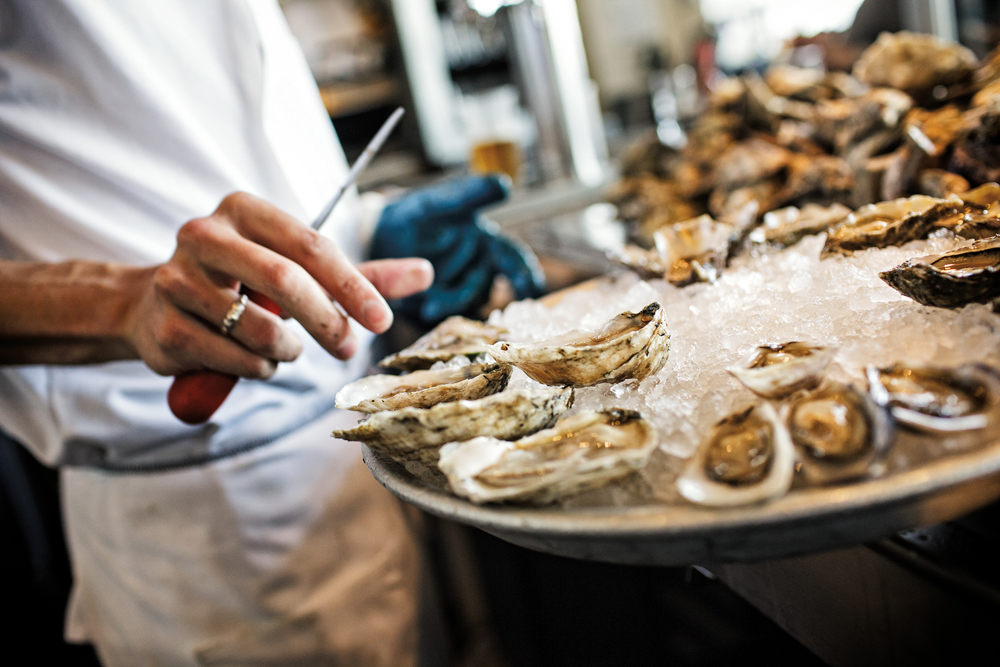
"caption": "Shucking oysters at Hog Island Oyster Bar in SF. Photo courtesy of Hog Island Oyster Co.",
"description": null,
"title": "Shucking-Oysters.-Hog-Island-Oyster-Bar-San-Francisco.-Ed-Anderson-1000",
"credit": null,
"status": "inherit",
"isLoading": false,
"fetchFailed": false
},
"bayareabites_87600": {
"type": "attachments",
"id": "bayareabites_87600",
"meta": {
"index": "attachments_1716263798",
"site": "bayareabites",
"id": "87600",
"found": true
},
"parent": 87592,
"imgSizes": {
"kqedFullSize": {
"file": "https://ww2.kqed.org/app/uploads/sites/24/2014/09/pork1000.jpg",
"width": 1000,
"height": 667
}
},
"publishDate": 1410913395,
"modified": 1410913395,
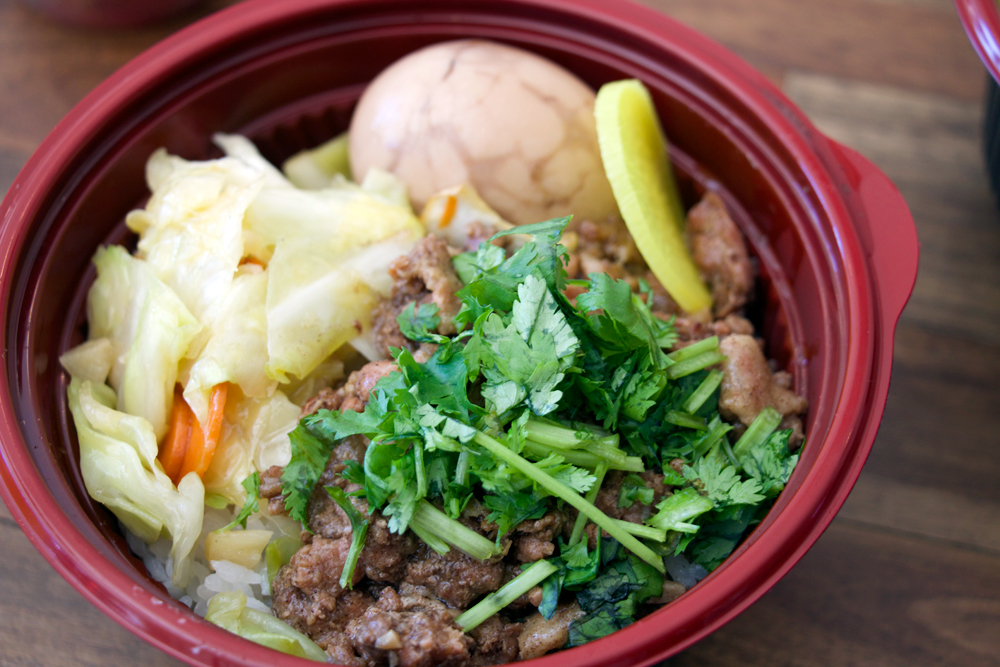
"caption": "Braised pork bento bowl.",
"description": null,
"title": "pork1000",
"credit": null,
"status": "inherit",
"isLoading": false,
"fetchFailed": false
},
"bayareabites_87520": {
"type": "attachments",
"id": "bayareabites_87520",
"meta": {
"index": "attachments_1716263798",
"site": "bayareabites",
"id": "87520",
"found": true
},
"parent": 87515,
"imgSizes": {
"kqedFullSize": {
"file": "https://ww2.kqed.org/app/uploads/sites/24/2014/09/Bread_Logo.jpg",
"width": 636,
"height": 394
}
},
"publishDate": 1410821203,
"modified": 1410821203,
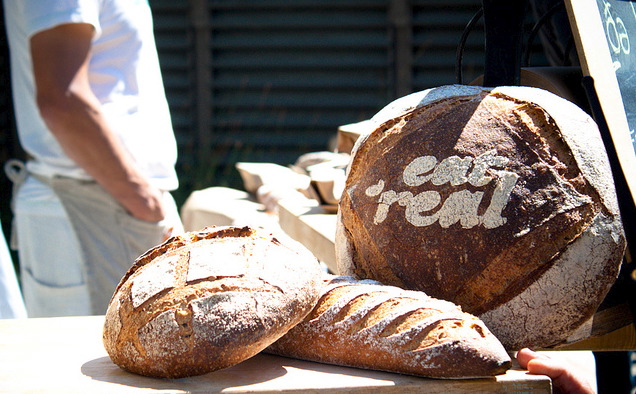
"caption": "Eat Real bread. Photo courtesy of Eat Real Festival.",
"description": null,
"title": "Bread_Logo",
"credit": null,
"status": "inherit",
"isLoading": false,
"fetchFailed": false
},
"bayareabites_87460": {
"type": "attachments",
"id": "bayareabites_87460",
"meta": {
"index": "attachments_1716263798",
"site": "bayareabites",
"id": "87460",
"found": true
},
"parent": 87453,
"imgSizes": {
"kqedFullSize": {
"file": "https://ww2.kqed.org/app/uploads/sites/24/2014/09/Dandelion-tray.jpg",
"width": 1000,
"height": 695
}
},
"publishDate": 1410751426,
"modified": 1410751426,
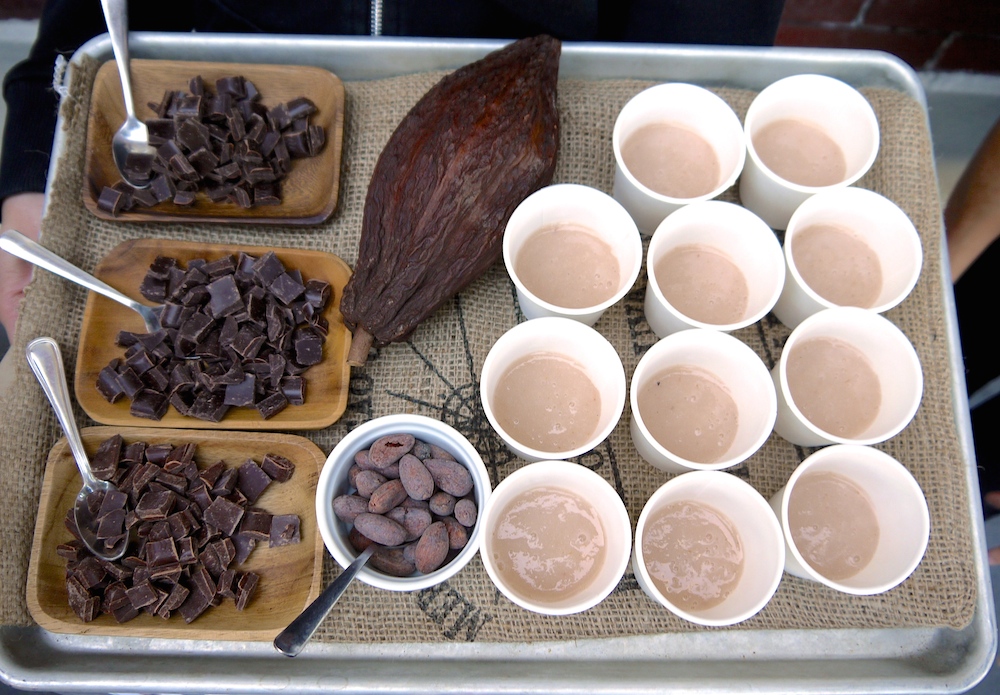
"caption": "Tray of chocolate tastes at Dandelion. photo: LilaVolkas",
"description": null,
"title": "Dandelion tray",
"credit": null,
"status": "inherit",
"isLoading": false,
"fetchFailed": false
},
"bayareabites_87379": {
"type": "attachments",
"id": "bayareabites_87379",
"meta": {
"index": "attachments_1716263798",
"site": "bayareabites",
"id": "87379",
"found": true
},
"parent": 86189,
"imgSizes": {
"kqedFullSize": {
"file": "https://ww2.kqed.org/app/uploads/sites/24/2014/08/deer1000.jpg",
"width": 1000,
"height": 752
}
},
"publishDate": 1410393645,
"modified": 1410393645,
"caption": null,
"description": null,
"title": "deer1000",
"credit": null,
"status": "inherit",
"isLoading": false,
"fetchFailed": false
},
"bayareabites_87286": {
"type": "attachments",
"id": "bayareabites_87286",
"meta": {
"index": "attachments_1716263798",
"site": "bayareabites",
"id": "87286",
"found": true
},
"parent": 87285,
"imgSizes": {
"kqedFullSize": {
"file": "https://ww2.kqed.org/app/uploads/sites/24/2014/09/urbanfarm_wide-755060884e1d03ea379ecee4bf274f43ea398929-e1410301498126.jpg",
"width": 1000,
"height": 562
}
},
"publishDate": 1410301306,
"modified": 1410301306,
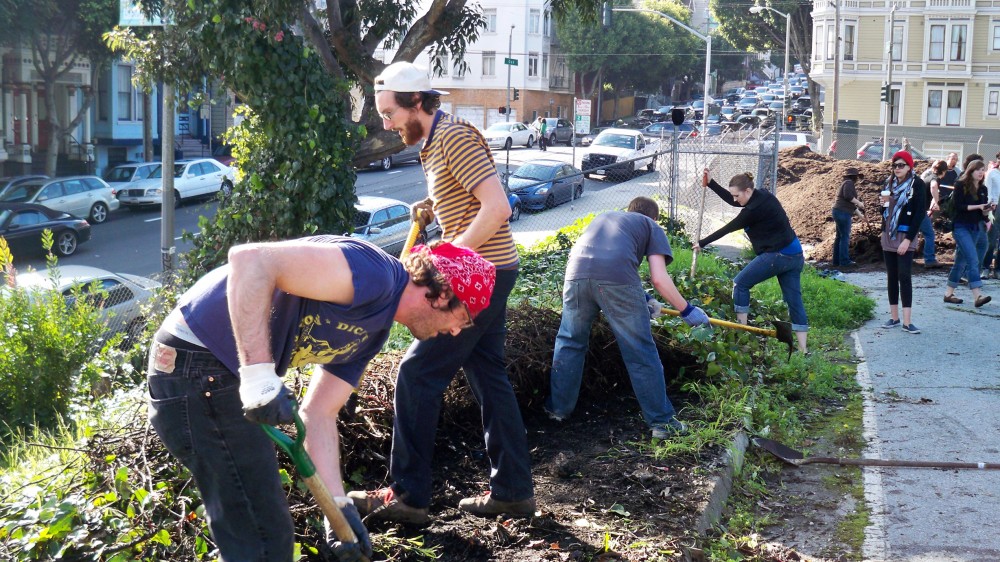
"caption": "Urban farmers turning a vacant lot into a garden plot in San Francisco's Hayes Valley. Photo: Chris Martin/Flickr",
"description": "Urban farmers turning a vacant lot into a garden plot in San Francisco's Hayes Valley.",
"title": "Urban farmers turning a vacant lot into a garden plot in San Francisco's Hayes Valley.",
"credit": null,
"status": "inherit",
"isLoading": false,
"fetchFailed": false
},
"bayareabites_87237": {
"type": "attachments",
"id": "bayareabites_87237",
"meta": {
"index": "attachments_1716263798",
"site": "bayareabites",
"id": "87237",
"found": true
},
"parent": 87232,
"imgSizes": {
"kqedFullSize": {
"file": "https://ww2.kqed.org/app/uploads/sites/24/2014/09/Martin-Yan-with-Jacques-Pepin.jpg",
"width": 1000,
"height": 669
}
},
"publishDate": 1410216576,
"modified": 1410216576,
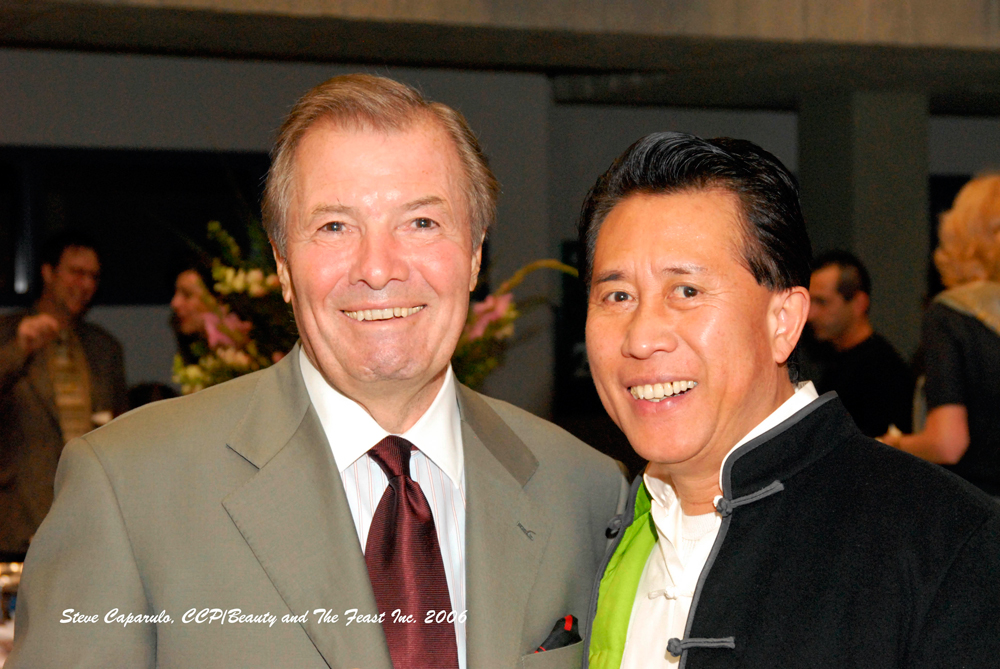
"caption": "Jacques Pépin and Martin Yan in 2006. Photo: Steve Caparulo, CCO/Beauty and The Feast Inc.",
"description": null,
"title": "Martin-Yan-with-Jacques-Pepin",
"credit": null,
"status": "inherit",
"isLoading": false,
"fetchFailed": false
},
"bayareabites_87142": {
"type": "attachments",
"id": "bayareabites_87142",
"meta": {
"index": "attachments_1716263798",
"site": "bayareabites",
"id": "87142",
"found": true
},
"parent": 86531,
"imgSizes": {
"kqedFullSize": {
"file": "https://ww2.kqed.org/app/uploads/sites/24/2014/09/sushi2-1000.jpg",
"width": 1000,
"height": 667
}
},
"publishDate": 1409881592,
"modified": 1409881592,
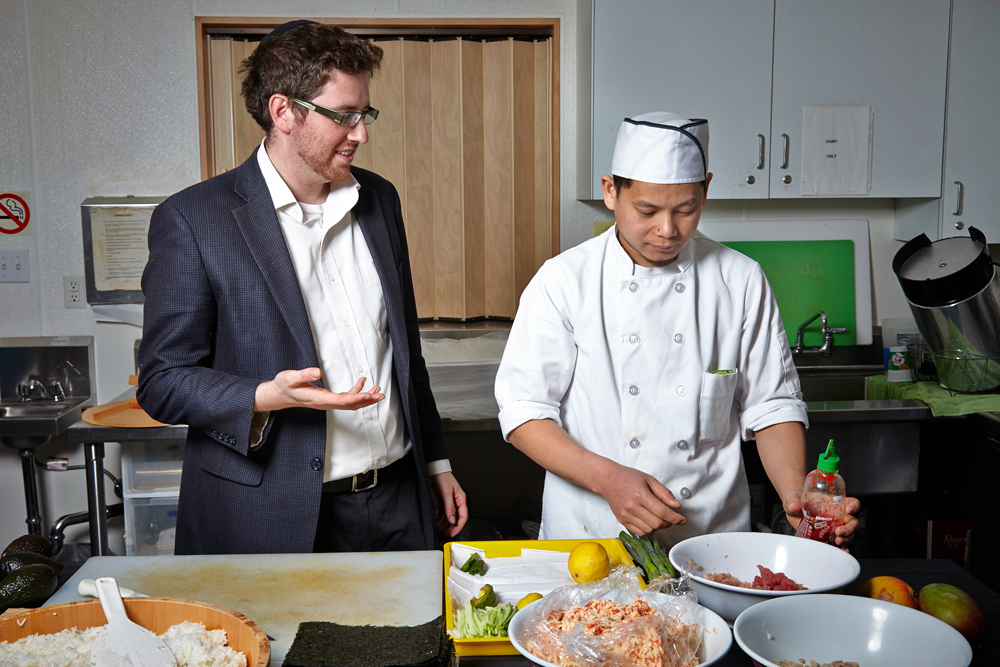
"caption": "Rabbi Alex Shandrovsky has started L’Chaim Sushi, which is also offering kosher diners another option. Here is shown with one of his sushi chefs, Jagun Ney. Photo: L’Chaim Sushi",
"description": null,
"title": "sushi2-1000",
"credit": null,
"status": "inherit",
"isLoading": false,
"fetchFailed": false
},
"bayareabites_87200": {
"type": "attachments",
"id": "bayareabites_87200",
"meta": {
"index": "attachments_1716263798",
"site": "bayareabites",
"id": "87200",
"found": true
},
"parent": 87059,
"imgSizes": {
"kqedFullSize": {
"file": "https://ww2.kqed.org/app/uploads/sites/24/2014/09/Paella-from-the-recipe640x360.jpg",
"width": 640,
"height": 360
}
},
"publishDate": 1409956449,
"modified": 1409956449,
"caption": null,
"description": null,
"title": "Paella-from-the-recipe640x360",
"credit": null,
"status": "inherit",
"isLoading": false,
"fetchFailed": false
},
"bayareabites_86949": {
"type": "attachments",
"id": "bayareabites_86949",
"meta": {
"index": "attachments_1716263798",
"site": "bayareabites",
"id": "86949",
"found": true
},
"parent": 86938,
"imgSizes": {
"kqedFullSize": {
"file": "https://ww2.kqed.org/app/uploads/sites/24/2014/09/featured.jpg",
"width": 640,
"height": 360
}
},
"publishDate": 1409589572,
"modified": 1409589572,
"caption": "A barista talks to a customer at Blue Bottle's W.C. Morse location in Oakland. Photo: Shelby Pope ",
"description": null,
"title": "featured",
"credit": null,
"status": "inherit",
"isLoading": false,
"fetchFailed": false
},
"bayareabites_86981": {
"type": "attachments",
"id": "bayareabites_86981",
"meta": {
"index": "attachments_1716263798",
"site": "bayareabites",
"id": "86981",
"found": true
},
"parent": 86621,
"imgSizes": {
"kqedFullSize": {
"file": "https://ww2.kqed.org/app/uploads/sites/24/2014/09/maitai640x360.jpg",
"width": 640,
"height": 360
}
},
"publishDate": 1409676871,
"modified": 1409676871,
"caption": null,
"description": null,
"title": "maitai640x360",
"credit": null,
"status": "inherit",
"isLoading": false,
"fetchFailed": false
},
"bayareabites_86920": {
"type": "attachments",
"id": "bayareabites_86920",
"meta": {
"index": "attachments_1716263798",
"site": "bayareabites",
"id": "86920",
"found": true
},
"parent": 86911,
"imgSizes": {
"kqedFullSize": {
"file": "https://ww2.kqed.org/app/uploads/sites/24/2014/08/upstairs640x360.jpg",
"width": 640,
"height": 360
}
},
"publishDate": 1409355618,
"modified": 1409355618,
"caption": null,
"description": null,
"title": "upstairs640x360",
"credit": null,
"status": "inherit",
"isLoading": false,
"fetchFailed": false
}
},
"audioPlayerReducer": {
"postId": "stream_live",
"isPaused": true,
"isPlaying": false,
"pfsActive": false,
"pledgeModalIsOpen": true,
"playerDrawerIsOpen": false,
"liveAudioPlayStartedAt": 0,
"liveAudioPlayContext": ""
},
"authorsReducer": {
"byline_bayareabites_87285": {
"type": "authors",
"id": "byline_bayareabites_87285",
"meta": {
"override": true
},
"slug": "byline_bayareabites_87285",
"name": "Alastair Bland",
"isLoading": false
},
"wendy-goodfriend": {
"type": "authors",
"id": "5014",
"meta": {
"index": "authors_1716337520",
"id": "5014",
"found": true
},
"name": "Wendy Goodfriend",
"firstName": "Wendy",
"lastName": "Goodfriend",
"slug": "wendy-goodfriend",
"email": "wendy@wendygoodfriend.com",
"display_author_email": false,
"staff_mastheads": [],
"title": "KQED Contributor",
"bio": "I was the Senior Digital Producer for KQED Food up until July, 2018. Since 2001, I designed, produced, managed and contributed to mostly food-related websites and blogs for KQED including: KQED.org; KQED Food; Bay Area Bites; Check, Please! Bay Area; Taste This; Celebrity Chefs; seven of Jacques Pepin's TV series websites; and Joanne Weir's Cooking in the City. I initiated the majority of KQED Food's social media feeds and maintained them up until 2017. As far as content creation, photography is my passion and I also shoot video and write stories. My photos have been used in articles for KQED Food, News, Arts, and Science as well as for promotional purposes in print and online. Professional education and training includes: clinical psychology, photography, commercial cooking, web design, information architecture and UX.",
"avatar": "https://secure.gravatar.com/avatar/dfba64372339cc34cf17e446e6f18fa8?s=600&d=blank&r=g",
"twitter": null,
"facebook": "bayareabites",
"instagram": null,
"linkedin": "wendygoodfriend",
"sites": [
{
"site": "jpepinheart",
"roles": []
},
{
"site": "about",
"roles": [
"editor"
]
},
{
"site": "bayareabites",
"roles": [
"subscriber"
]
},
{
"site": "science",
"roles": [
"administrator"
]
},
{
"site": "checkplease",
"roles": [
"subscriber"
]
},
{
"site": "food",
"roles": [
"author"
]
},
{
"site": "essentialpepin",
"roles": [
"administrator"
]
}
],
"headData": {
"title": "Wendy Goodfriend | KQED",
"description": "KQED Contributor",
"ogImgSrc": "https://secure.gravatar.com/avatar/dfba64372339cc34cf17e446e6f18fa8?s=600&d=blank&r=g",
"twImgSrc": "https://secure.gravatar.com/avatar/dfba64372339cc34cf17e446e6f18fa8?s=600&d=blank&r=g"
},
"isLoading": false,
"link": "/author/wendy-goodfriend"
},
"sarahhenry": {
"type": "authors",
"id": "5125",
"meta": {
"index": "authors_1716337520",
"id": "5125",
"found": true
},
"name": "Sarah Henry",
"firstName": "Sarah",
"lastName": "Henry",
"slug": "sarahhenry",
"email": "sarahhenry0509@gmail.com",
"display_author_email": false,
"staff_mastheads": [],
"title": null,
"bio": "\u003ca href=\"http://www.sarahhenrywriter.com/\">Sarah Henry\u003c/a> hails from Sydney, Australia, where she grew up eating lamingtons, Vegemite, and prawns (not shrimp) on the barbie (barbecue). Sarah has called the Bay Area home for the past two decades and remembers how delighted she was when a modest farmers' market sprouted in downtown San Francisco years ago. As a freelance writer Sarah has covered local food people, places, politics, culture, and news for the \u003ca href=\"http://www.sfgate.com/food/article/Latina-entrepreneurs-share-wealth-knowledge-2693764.php\">San Francisco Chronicle\u003c/a>, \u003ca href=\"http://www.mercurynews.com/food-wine/ci_21619882/good-eggs-pie-subscriptions-and-seafood-deliveries\">San Jose Mercury News\u003c/a>, \u003ca href=\"http://alumni.berkeley.edu/news/california-magazine/fall-2011-good-fight/justice%E2%80%94and-good-grub%E2%80%94-all\">California\u003c/a>, \u003ca href=\"http://www.modernluxury.com/san-francisco\">San Francisco\u003c/a>, \u003ca href=\"http://www.diablomag.com/Diablo-Magazine/November-2012/Artisan-Eats/\">Diablo\u003c/a>, \u003ca href=\"http://www.ediblecommunities.com/eastbay/fall-2012/school-lunch-20.htm\">Edible East Bay\u003c/a>, \u003ca href=\"http://www.ediblecommunities.com/marinandwinecountry/summer-2012-issue-14/getting-wild-at-a-west-marin-supper-club.htm\">Edible Marin & Wine Country\u003c/a>, and \u003ca href=\"http://www.berkeleyside.com/\">Berkeleyside\u003c/a>. A contributor to the national food policy site \u003ca href=\"http://civileats.com/\">Civil Eats\u003c/a>, her stories have also appeared in \u003ca href=\"http://www.theatlantic.com/sarah-henry/\">The Atlantic\u003c/a>, \u003ca href=\"http://www.afar.com/highlights/kamal-mouzawaks-beirut-lebanon\">AFAR\u003c/a>, \u003ca href=\"http://www.gilttaste.com/stories/5207-a-family-tied-together-by-apron-strings\">Gilt Taste\u003c/a>, \u003ca href=\"http://www.lhj.com/community/your-stories/whats-for-dinner-dude/?page=1\">Ladies' Home Journal\u003c/a>, \u003ca href=\"http://grist.org/author/sarah-henry/\">Grist\u003c/a>, \u003ca href=\"http://www.shareable.net/users/sarah-henry\">Shareable\u003c/a>, and \u003ca href=\"http://www.eatingwell.com/food_news_origins/green_sustainable/host_a_diy_food_swap\">Eating Well\u003c/a>. An epicurean tour guide for \u003ca href=\"http://edibleexcursions.net/\">Edible Excursions\u003c/a>, Sarah is the voice behind the blog \u003ca href=\"http://lettuceeatkale.com/\">Lettuce Eat Kale\u003c/a> and \u003ca href=\"http://twitter.com/lettuceeatkale\">tweets\u003c/a> under that moniker too.",
"avatar": "https://secure.gravatar.com/avatar/3fcd7301e44f9b621f8c9fc7ad678ac7?s=600&d=blank&r=g",
"twitter": "lettuceeatkale",
"facebook": "pages/Lettuce-Eat-Kale/239312194611",
"instagram": null,
"linkedin": null,
"sites": [
{
"site": "bayareabites",
"roles": [
"contributor"
]
},
{
"site": "food",
"roles": [
"contributor"
]
}
],
"headData": {
"title": "Sarah Henry | KQED",
"description": null,
"ogImgSrc": "https://secure.gravatar.com/avatar/3fcd7301e44f9b621f8c9fc7ad678ac7?s=600&d=blank&r=g",
"twImgSrc": "https://secure.gravatar.com/avatar/3fcd7301e44f9b621f8c9fc7ad678ac7?s=600&d=blank&r=g"
},
"isLoading": false,
"link": "/author/sarahhenry"
},
"annamindess": {
"type": "authors",
"id": "5283",
"meta": {
"index": "authors_1716337520",
"id": "5283",
"found": true
},
"name": "Anna Mindess",
"firstName": "Anna",
"lastName": "Mindess",
"slug": "annamindess",
"email": "amindess@aol.com",
"display_author_email": false,
"staff_mastheads": [],
"title": "KQED Contributor",
"bio": "My passion is exploring the connections between food, travel and culture. I am a regular contributor to AFAR, Edible East Bay Magazine, Oakland Magazine, Berkeleyside's NOSH and other publications. I usually take a route that's slightly off the beaten path, like \u003ca href=\"http://edibleeastbay.com/online-magazine/fall-harvest-2017/fun-with-food-insults/\">collecting food-related insults\u003c/a> around the world or \u003ca href=\"https://www.afar.com/magazine/what-i-learned-hawking-sweet-potatoes-with-a-street-vendor-in-taiwan?email=amindess%40aol.com&utm_source=Sailthru&utm_medium=email&utm_campaign=Doctors%20Without%20Borders&utm_term=Daily%20Wander%20Newsletter\">volunteering with a Sweet Potato Mama\u003c/a> (street food seller) in Tapei.\r\n\r\nCulture is the thread that ties together my several careers. I also work as a sign language interpreter, educator and author. My study of Deaf culture has taken me around the world, where I am always on a quest to find Deaf-owned restaurants. I love making connections between my different worlds, for example in this AFAR story where I share \u003ca href=\"https://www.afar.com/magazine/tips-from-a-sign-language-interpreter-for-overcoming-language-barriers\">tips for communicating across cultures\u003c/a> that I learned from the real experts, Deaf people. Or this \u003ca href=\"http://edibleeastbay.com/online-magazine/fall-harvest-2017/deaf-chefs-compete/\">profile of a Deaf chef and culinary arts instructor\u003c/a> at the California School for the Deaf.\r\n\r\nTo see my visual/edible take on the world, follow me on Instagram: \u003ca href=\"https://www.instagram.com/annamindess/\">annamindess. \u003c/a>\r\n\r\nFor more of my stories: visit Contently \u003ca href=\"http://annamindess.contently.com\">annamindess.contently.com\u003c/a>",
"avatar": "https://secure.gravatar.com/avatar/23c79f04bf3d58b2e727d35ca471d184e8945f6ed82e41a0c062eab5e7dc2bb5?s=600&d=blank&r=g",
"twitter": null,
"bluesky": null,
"facebook": null,
"instagram": null,
"linkedin": null,
"sites": [
{
"site": "arts",
"roles": [
"subscriber"
]
},
{
"site": "bayareabites",
"roles": [
"author"
]
},
{
"site": "food",
"roles": [
"contributor"
]
}
],
"headData": {
"title": "Anna Mindess | KQED",
"description": "KQED Contributor",
"ogImgSrc": "https://secure.gravatar.com/avatar/23c79f04bf3d58b2e727d35ca471d184e8945f6ed82e41a0c062eab5e7dc2bb5?s=600&d=blank&r=g",
"twImgSrc": "https://secure.gravatar.com/avatar/23c79f04bf3d58b2e727d35ca471d184e8945f6ed82e41a0c062eab5e7dc2bb5?s=600&d=blank&r=g"
},
"isLoading": false,
"link": "/author/annamindess"
},
"shelbypope": {
"type": "authors",
"id": "5566",
"meta": {
"index": "authors_1716337520",
"id": "5566",
"found": true
},
"name": "Shelby Pope",
"firstName": "Shelby",
"lastName": "Pope",
"slug": "shelbypope",
"email": "shelbylpope@gmail.com",
"display_author_email": false,
"staff_mastheads": [],
"title": "KQED Contributor",
"bio": "Shelby Pope is a freelance writer living and eating her way through the East Bay. She’s written about food, art and science for publications including the Smithsonian, Lucky Peach, and the Washington Post's pet blog. When she’s not taste testing sourdough bread to find the Bay Area’s best loaf, you can find her on Twitter \u003ca href=\"https://twitter.com/shelbylpope\">@shelbylpope\u003c/a> or at \u003ca href=\"https://shelbypope.com/\">shelbypope.com\u003c/a>",
"avatar": "https://secure.gravatar.com/avatar/df74e904399e45720e48e36c6e1ae7a90c32216eb2c9c82f3b2e1a9641b507d3?s=600&d=blank&r=g",
"twitter": "shelbylpope",
"bluesky": null,
"facebook": null,
"instagram": null,
"linkedin": null,
"sites": [
{
"site": "arts",
"roles": [
"subscriber"
]
},
{
"site": "food",
"roles": [
"subscriber"
]
}
],
"headData": {
"title": "Shelby Pope | KQED",
"description": "KQED Contributor",
"ogImgSrc": "https://secure.gravatar.com/avatar/df74e904399e45720e48e36c6e1ae7a90c32216eb2c9c82f3b2e1a9641b507d3?s=600&d=blank&r=g",
"twImgSrc": "https://secure.gravatar.com/avatar/df74e904399e45720e48e36c6e1ae7a90c32216eb2c9c82f3b2e1a9641b507d3?s=600&d=blank&r=g"
},
"isLoading": false,
"link": "/author/shelbypope"
},
"alexandrawall": {
"type": "authors",
"id": "5567",
"meta": {
"index": "authors_1716337520",
"id": "5567",
"found": true
},
"name": "Alix Wall",
"firstName": "Alix",
"lastName": "Wall",
"slug": "alexandrawall",
"email": "alixwall@sbcglobal.net",
"display_author_email": false,
"staff_mastheads": [],
"title": null,
"bio": "Alix Wall appeared in her hometown paper in Riverside, California as “Chef of the Week” when she was 15 years old, and in high school, she founded “The Bon Appetit Club.” After working as a journalist for many years, Alix became a certified natural foods chef from Bauman College in Berkeley. While she cooks part-time healthy, organic meals for busy families, she is also a contributing editor of j. weekly, the Bay Area’s Jewish newspaper, in which she has a monthly food column. Her food writing can also be found on Berkeleyside’s NOSH and in Edible East Bay. In addition to food, she loves writing about how couples met and fell in love, which she does for The San Francisco Chronicle’s Style section and j. weekly. In 2016, she founded The Illuminoshi: The Not-So-Secret Society of Bay Area Jewish Food Professionals. She is also writer/producer for a documentary-in-progress called \u003ca href=\"https://www.lonelychildmovie.com/\">The Lonely Child\u003c/a>. Follow Alix on Twitter \u003ca href=\"https://twitter.com/WallAlix\">@WallAlix\u003c/a>.",
"avatar": "https://secure.gravatar.com/avatar/421a27f26a185be932f8d567b499b1f1?s=600&d=blank&r=g",
"twitter": null,
"facebook": null,
"instagram": null,
"linkedin": null,
"sites": [
{
"site": "bayareabites",
"roles": [
"contributor"
]
},
{
"site": "food",
"roles": [
"contributor"
]
}
],
"headData": {
"title": "Alix Wall | KQED",
"description": null,
"ogImgSrc": "https://secure.gravatar.com/avatar/421a27f26a185be932f8d567b499b1f1?s=600&d=blank&r=g",
"twImgSrc": "https://secure.gravatar.com/avatar/421a27f26a185be932f8d567b499b1f1?s=600&d=blank&r=g"
},
"isLoading": false,
"link": "/author/alexandrawall"
},
"angelajohnston": {
"type": "authors",
"id": "5568",
"meta": {
"index": "authors_1716337520",
"id": "5568",
"found": true
},
"name": "Angela Johnston",
"firstName": "Angela",
"lastName": "Johnston",
"slug": "angelajohnston",
"email": "anj618@gmail.com",
"display_author_email": false,
"staff_mastheads": [],
"title": null,
"bio": "Angela Johnston is an independent radio reporter and producer who recently moved back home to the Bay Area after spending the past six years on the east coast of Canada. She has a Master’s Degree in broadcast journalism and is currently making radio stories for KALW's daily news magazine, Crosscurrents. When she's not writing and reporting, she's surfing surf small waves on her longboard or perfecting her paella recipe.",
"avatar": "https://secure.gravatar.com/avatar/29104f87db909d4901d06df73b9db604?s=600&d=blank&r=g",
"twitter": "ang_johnston",
"facebook": null,
"instagram": null,
"linkedin": null,
"sites": [
{
"site": "bayareabites",
"roles": [
"contributor"
]
}
],
"headData": {
"title": "Angela Johnston | KQED",
"description": null,
"ogImgSrc": "https://secure.gravatar.com/avatar/29104f87db909d4901d06df73b9db604?s=600&d=blank&r=g",
"twImgSrc": "https://secure.gravatar.com/avatar/29104f87db909d4901d06df73b9db604?s=600&d=blank&r=g"
},
"isLoading": false,
"link": "/author/angelajohnston"
},
"kimwesterman": {
"type": "authors",
"id": "5575",
"meta": {
"index": "authors_1716337520",
"id": "5575",
"found": true
},
"name": "Kim Westerman",
"firstName": "Kim",
"lastName": "Westerman",
"slug": "kimwesterman",
"email": "kim.westerman@gmail.com",
"display_author_email": false,
"staff_mastheads": [],
"title": null,
"bio": "Kim Westerman has been writing about food and wine for most of her adult life. Originally from North Carolina, she moved to Berkeley in 2006 to pursue the California dream, which, it turns out, is all it’s cracked up to be. She’s a farmers' market junkie, a lover of all things tomato, and Champagne-obsessed. She loves to cook with her kids, eight and three, and she makes frequent pilgrimages to International Boulevard in search of her next favorite Mexican dish. She spends an inordinate amount of time thinking about food and wine pairing, often starting with the wine and working backwards when planning menus. She is a Level I Sommelier and a Licensed Q-Grader. Her work has appeared in KQED's Bay Area Bites, Forbes.com, the New York Times, the San Francisco Chronicle, Tasting Table, Fodor’s Travel Guides, and lots of other publications. You can follow Kim on Twitter and Instagram @throughtraveler.",
"avatar": "https://secure.gravatar.com/avatar/2eb7f890ab19ead33f77fd8554ac4c39?s=600&d=blank&r=g",
"twitter": null,
"facebook": null,
"instagram": null,
"linkedin": null,
"sites": [
{
"site": "bayareabites",
"roles": [
"contributor"
]
},
{
"site": "food",
"roles": [
"contributor"
]
}
],
"headData": {
"title": "Kim Westerman | KQED",
"description": null,
"ogImgSrc": "https://secure.gravatar.com/avatar/2eb7f890ab19ead33f77fd8554ac4c39?s=600&d=blank&r=g",
"twImgSrc": "https://secure.gravatar.com/avatar/2eb7f890ab19ead33f77fd8554ac4c39?s=600&d=blank&r=g"
},
"isLoading": false,
"link": "/author/kimwesterman"
},
"annelirufus": {
"type": "authors",
"id": "5576",
"meta": {
"index": "authors_1716337520",
"id": "5576",
"found": true
},
"name": "Anneli Rufus",
"firstName": "Anneli",
"lastName": "Rufus",
"slug": "annelirufus",
"email": "anneli@annelirufus.com",
"display_author_email": false,
"staff_mastheads": [],
"title": null,
"bio": "Anneli Rufus is a Mystic Mint-craving, award-winning journalist whose work can be found at Psychology Today, Spirituality & Health, Experience Life, the San Francisco Chronicle, the Huffington Post and other venues. She is also the author of numerous books, including Party of One: The Loners' Manifesto and Unworthy: How to Stop Hating Yourself.",
"avatar": "https://secure.gravatar.com/avatar/a1442fc91c47bb8b99d339bf03988838?s=600&d=blank&r=g",
"twitter": "annelirufus",
"facebook": null,
"instagram": null,
"linkedin": null,
"sites": [
{
"site": "bayareabites",
"roles": [
"contributor"
]
}
],
"headData": {
"title": "Anneli Rufus | KQED",
"description": null,
"ogImgSrc": "https://secure.gravatar.com/avatar/a1442fc91c47bb8b99d339bf03988838?s=600&d=blank&r=g",
"twImgSrc": "https://secure.gravatar.com/avatar/a1442fc91c47bb8b99d339bf03988838?s=600&d=blank&r=g"
},
"isLoading": false,
"link": "/author/annelirufus"
},
"mayamirsky": {
"type": "authors",
"id": "5593",
"meta": {
"index": "authors_1716337520",
"id": "5593",
"found": true
},
"name": "Maya Mirsky",
"firstName": "Maya",
"lastName": "Mirsky",
"slug": "mayamirsky",
"email": "maya.mirsky@gmail.com",
"display_author_email": false,
"staff_mastheads": [],
"title": null,
"bio": "Maya Mirsky is an Oakland-based reporter who loves to compare the city to her hometown of Los Angeles, even though the natives hate it. In between assignments she works on finding legitimate-sounding reasons to eat out all the time. Her articles appear in the Oakland Tribune and its North Oakland weekly, the Montclarion. She spends summers in Budapest.",
"avatar": "https://secure.gravatar.com/avatar/8b808997ab748140ba3bd548ee1c007a?s=600&d=blank&r=g",
"twitter": "mayamirsky",
"facebook": null,
"instagram": null,
"linkedin": null,
"sites": [
{
"site": "bayareabites",
"roles": [
"contributor"
]
}
],
"headData": {
"title": "Maya Mirsky | KQED",
"description": null,
"ogImgSrc": "https://secure.gravatar.com/avatar/8b808997ab748140ba3bd548ee1c007a?s=600&d=blank&r=g",
"twImgSrc": "https://secure.gravatar.com/avatar/8b808997ab748140ba3bd548ee1c007a?s=600&d=blank&r=g"
},
"isLoading": false,
"link": "/author/mayamirsky"
}
},
"pagesReducer": {
"bayareabites_category_bay-area": {
"type": "terms",
"id": "bayareabites_109",
"meta": {
"index": "terms_1716263798",
"site": "bayareabites",
"id": "109",
"score": 11.790711
},
"featImg": null,
"name": "bay area",
"description": null,
"taxonomy": "category",
"headData": {
"twImgId": null,
"twTitle": null,
"ogTitle": null,
"ogImgId": null,
"twDescription": null,
"description": null,
"title": "bay area Archives | KQED Bay Area Bites",
"ogDescription": null
},
"ttid": 73,
"slug": "bay-area",
"isLoading": false,
"title": "bay area",
"pageMeta": {
"site": "bayareabites",
"WpPageTemplate": "page-topic-editorial",
"currentPage": 41
},
"blocks": [
{
"blockName": "kqed/post-list",
"attrs": {
"layout": "cardArticle2",
"query": "posts/bayareabites?category=bay-area",
"seeMore": false,
"paginated": true,
"page": 41
}
},
{
"blockName": "kqed/ad"
}
]
}
},
"pfsSessionReducer": {},
"postsReducer": {
"stream_live": {
"type": "live",
"id": "stream_live",
"audioUrl": "https://streams.kqed.org/kqedradio",
"title": "Live Stream",
"excerpt": "Live Stream information currently unavailable.",
"link": "/radio",
"featImg": "",
"label": {
"name": "KQED Live",
"link": "/"
}
},
"stream_kqedNewscast": {
"type": "posts",
"id": "stream_kqedNewscast",
"audioUrl": "https://www.kqed.org/.stream/anon/radio/RDnews/newscast.mp3?_=1",
"title": "KQED Newscast",
"featImg": "",
"label": {
"name": "88.5 FM",
"link": "/"
}
},
"bayareabites_87643": {
"type": "posts",
"id": "bayareabites_87643",
"meta": {
"index": "posts_1716263798",
"site": "bayareabites",
"id": "87643",
"score": null,
"sort": [
1410981017000
]
},
"parent": 0,
"labelTerm": {
"site": "bayareabites"
},
"blocks": [],
"publishDate": 1410981017,
"format": "aside",
"disqusTitle": " Hog Island Oyster Farm Fights Climate Change as Demand Soars",
"title": " Hog Island Oyster Farm Fights Climate Change as Demand Soars",
"headTitle": "Bay Area Bites | KQED Food",
"content": "\u003cfigure id=\"attachment_87648\" class=\"wp-caption aligncenter\" style=\"max-width: 680px\">\u003ca href=\"http://ww2.kqed.org/bayareabites/wp-content/uploads/sites/24/2014/09/Hog-Island-Oyster-Leases.-Photo-Courtesy-Hog-Island-Oyster-Co.jpg\">\u003cimg src=\"http://ww2.kqed.org/bayareabites/wp-content/uploads/sites/24/2014/09/Hog-Island-Oyster-Leases.-Photo-Courtesy-Hog-Island-Oyster-Co.jpg\" alt=\"Hog Island Oyster Leases. Photo courtesy of Hog Island Oyster Co.\" width=\"680\" height=\"376\" class=\"size-full wp-image-87648\">\u003c/a>\u003cfigcaption class=\"wp-caption-text\">Hog Island Oyster Leases. Photo courtesy of Hog Island Oyster Co.\u003c/figcaption>\u003c/figure>\n\u003cp>By \u003ca href=\"http://civileats.com/author/shenry/\" target=\"_blank\">Sarah Henry\u003c/a>, \u003ca href=\"http://civileats.com/2014/09/10/iconic-oyster-farm-fights-climate-change-as-demand-soars/\" target=\"_blank\">Civil Eats\u003c/a> (9/10/14)\u003c/p>\n\u003cp>Oysters are big business. That might not be immediately apparent on a visit to \u003ca href=\"http://hogislandoysters.com/\" target=\"_blank\">Hog Island Oyster Company\u003c/a> in Northern California’s bucolic Tomales Bay, where the place still has a seafood shack sensibility. The farm was started more than 30 years ago by two marine biologists who borrowed $500 from parents and a boat from neighbors and began cultivating briny bivalves in five-acres of intertidal waters.\u003c/p>\n\u003cp>As a small seafood business and sustainable farm, Hog Island has weathered its share of hardships, including significant oyster seed shortages and the threat of species extinction, courtesy of environmental challenges.\u003c/p>\n\u003cp>It has stayed afloat, though. In fact, three decades on, Hog Island has quite the cult following around the country and it has earned respect as a leader in the shellfish industry. These days, founders John Finger and Terry Sawyer preside over a $12 million operation that employs almost 200, farms 160 acres, and harvests over 3.5 million oysters, clams, and mussels every year.\u003c/p>\n\u003cp>In addition to the flagship farm, the company boasts an oyster bar in Napa (that survived the recent earthquake unscathed) and the \u003ca href=\"http://hogislandoysters.com/visit/san-francisco\" target=\"_blank\">recently expanded oyster bar in San Francisco’s Ferry Building\u003c/a>, where prospective diners still wait an hour or more to snag a seat before they’re happily slurping salty, meaty morsels off the half shell. The beloved restaurant is now double its original size and features an updated, chef-driven menu and an au courant cocktail program. In the 10 years the oyster bar overlooking San Francisco Bay has been in business it’s shucked nearly 10 million oysters. At the current rate of demand, they expect to shuck 2 million oysters a year, says Finger.\u003c/p>\n\u003cfigure id=\"attachment_87649\" class=\"wp-caption aligncenter\" style=\"max-width: 1000px\">\u003ca href=\"http://ww2.kqed.org/bayareabites/wp-content/uploads/sites/24/2014/09/Shucking-Oysters.-Hog-Island-Oyster-Bar-San-Francisco.-Ed-Anderson-1000.jpg\">\u003cimg src=\"http://ww2.kqed.org/bayareabites/wp-content/uploads/sites/24/2014/09/Shucking-Oysters.-Hog-Island-Oyster-Bar-San-Francisco.-Ed-Anderson-1000.jpg\" alt=\"Shucking oysters at Hog Island Oyster Bar in SF. Photo courtesy of Hog Island Oyster Co.\" width=\"1000\" height=\"667\" class=\"size-full wp-image-87649\">\u003c/a>\u003cfigcaption class=\"wp-caption-text\">Shucking oysters at Hog Island Oyster Bar in SF. Photo courtesy of Hog Island Oyster Co.\u003c/figcaption>\u003c/figure>\n\u003cp>The biggest threat to business? Not the new crop of oyster bars popping up around town and elsewhere in the nation. Nor is it keeping up with consumer demand—for now. No, Hog Island is dealing with a different kind of problem: A quandary known as \u003ca href=\"http://www.pmel.noaa.gov/co2/story/What+is+Ocean+Acidification%3F\" target=\"_blank\">ocean acidification\u003c/a> or climate change’s caustic cousin. The company has been \u003ca href=\"http://civileats.com/2012/12/03/troubled-waters-farmers-and-scientists-work-together-to-save-oysters/\" target=\"_blank\">working with scientists to study the impact\u003c/a> of this sea change in shellfish habitat that’s killing off billions of baby oysters in the Pacific Northwest and beyond. They’re also blazing a trail on the political outreach and public education front.\u003c/p>\n\u003cp>[ad fullwidth]\u003c/p>\n\u003cp>“We’re trying to quantify the problem in our collaborations with academics so that we can get policy makers to make the kinds of changes on the alternative energy front to address it,” says Sawyer, who believes America’s addiction to fossil fuels and their accompanying carbon dioxide emissions are at the root of the problem.\u003c/p>\n\u003cp>Ocean acidification is a big bummer for baby oysters. Here’s why: Much of the carbon dioxide released into the atmosphere is taken up by oceans, dramatically lowering pH levels in the process, and creating a chemical change that makes the ocean water more acidic. That increase in acidity creates a hostile habitat for oyster seeds (also called spat) and other marine life. Ocean acidification is especially harmful to oysters at their larval stage, when they’re building their protective coverings. Their fragile calcium carbonate shells don’t form well under increased acidic conditions, stunting their growth, making them more vulnerable to predators, and sometimes killing them outright. This sea shift can also stress small oysters, making them more susceptible to disease, says Sawyer.\u003c/p>\n\u003cfigure id=\"attachment_87646\" class=\"wp-caption aligncenter\" style=\"max-width: 1000px\">\u003ca href=\"http://ww2.kqed.org/bayareabites/wp-content/uploads/sites/24/2014/09/Dr.-Tessa-Hill-UC-Davis-Bodega-Bay-Marine-Lab.-Examining-Ocean-Acidification_PH-Monitoring-Sensoring.-Hog-ISland-Oyster-Farm1000.jpg\">\u003cimg src=\"http://ww2.kqed.org/bayareabites/wp-content/uploads/sites/24/2014/09/Dr.-Tessa-Hill-UC-Davis-Bodega-Bay-Marine-Lab.-Examining-Ocean-Acidification_PH-Monitoring-Sensoring.-Hog-ISland-Oyster-Farm1000.jpg\" alt=\"Dr. Tessa Hill from UC Davis Bodega Bay Marine Lab examining ocean acidification. Photo courtesy of Hog Island Oyster Co.\" width=\"1000\" height=\"667\" class=\"size-full wp-image-87646\">\u003c/a>\u003cfigcaption class=\"wp-caption-text\">Dr. Tessa Hill from UC Davis Bodega Bay Marine Lab examining ocean acidification. Photo courtesy of Hog Island Oyster Co.\u003c/figcaption>\u003c/figure>\n\u003cp>The Hog Island team closely monitor changes in water temperature, salinity, oxygen, and pH at the farm and respond as needed. But that’s not enough. “It’s going to take a paradigm shift in behavior to address this,” says Sawyer. “We have no choice but to face it: We’re on the leading edge of what climate change and fossil fuels are doing to our waters.”\u003c/p>\n\u003cp>\u003cstrong>Oysters as Endangered Species?\u003c/strong>\u003c/p>\n\u003cp>Could the end of oysters be near? These veteran shellfish farmers aren’t prone to such histrionic proclamations. But they are concerned about supply and the farm is looking beyond science for solutions. It’s beginning to diversify, which as all farmers know, can be a saving grace during tough times.\u003c/p>\n\u003cp>Hog Island is expanding its aquaculture operation. It plans to open an oyster hatchery in Northern California’s Humboldt Bay that will provide seeds to grow in Tomales Bay; permits have been approved and baby bivalve cultivation is expected to start later this year. It’s a practical response to the Pacific Northwest’s spat shortage. Eventually, the site will harvest some of its own oysters as well and sell seeds to other oyster farmers.\u003c/p>\n\u003cp>“Running a hatchery is a tricky and expensive undertaking,” says Finger, who adds that the $1.5 million enterprise will take two years to complete. “We never thought we’d need to go into the hatchery business but the oyster seed shortage changed that.”\u003c/p>\n\u003cp>Hog island has also partnered with another shellfish farm in Discovery Bay, Washington, where it sources a popular Pacific oyster. The water at Discovery Bay offer a different marroir (think \u003cem>terroir\u003c/em>, only the sea version) than Tomales Bay–it’s colder and more oceanic for starters. And, bonus, the oysters grown there, called Cliffsides, offer customers a more mineral-like taste than your typical Pacifics.\u003c/p>\n\u003cp>For geoduck clam farmers Peter and Robyn Downey of it’s a win-win. The Downeys were looking for a way to diversify their income and offer steadier work to their employees. And the Hog Island crew needed a reliable supplemental source of oysters. The nascent relationship has yielded around 400,000 oysters to date.\u003c/p>\n\u003cp>Hog Island does ship in oysters from Washington state and the East Coast to add variety, but it hasn’t had to import oysters in the past couple of years due to shortages, says Finger. Still, it has dramatically scaled back its wholesale business to high-end restaurants due to supply issues.\u003c/p>\n\u003cp>Hog Island is especially known for their extra-small Pacifics, dubbed Sweetwaters. Now, the oyster farm is working closely with \u003ca href=\"http://edibleeastbay.com/online-magazine/fall-harvest-2013/side-dish-2/\" target=\"_blank\">conservation organizations\u003c/a> to reestablish the Olympia, the only indigenous San Francisco oyster. A staple in the diet of coastal Native Americans, overharvesting, development, and pollution all but wiped out these tiny but mighty mollusks during and after the Gold Rush. Since then, these bivalves–known for their cucumber finish and slightly metallic taste–have been hard to find in local waters.\u003c/p>\n\u003cp>“Olympias offer a blast of copper on the palate but they’re difficult to grow and sensitive little guys,” says Sawyer. While it might be years before these gems are harvested for public consumption, the Hog Island farmers are committed to reestablishing a native species in a marine ecosystem.\u003c/p>\n\u003cfigure id=\"attachment_87647\" class=\"wp-caption aligncenter\" style=\"max-width: 1000px\">\u003ca href=\"http://ww2.kqed.org/bayareabites/wp-content/uploads/sites/24/2014/09/Hog-Island-Oyster-Farm.-MARSHALL.-Harvest.-RIna-Jordan-1000.jpg\">\u003cimg src=\"http://ww2.kqed.org/bayareabites/wp-content/uploads/sites/24/2014/09/Hog-Island-Oyster-Farm.-MARSHALL.-Harvest.-RIna-Jordan-1000.jpg\" alt=\"Harvesting oysters at Hog Island Oyster Farm. Photo courtesy of Hog Island Oyster Co.\" width=\"1000\" height=\"668\" class=\"size-full wp-image-87647\">\u003c/a>\u003cfigcaption class=\"wp-caption-text\">Harvesting oysters at Hog Island Oyster Farm. Photo courtesy of Hog Island Oyster Co.\u003c/figcaption>\u003c/figure>\n\u003cp>\u003cstrong>A Big Hit on the Half Shell\u003c/strong>\u003c/p>\n\u003cp>Planned aquaculture farms like Hog Island have supplanted the wild oyster population for decades now and the tiny town of Marshall in Tomales Bay, home to Hog Island, is Northern California’s Oyster HQ, with five commercial oyster companies in the mix. \u003ca href=\"http://www.drakesbayoyster.com/\" target=\"_blank\">Drakes Bay Oyster Company\u003c/a>, which the company claims supplied around 40 percent of the state’s oysters, closed its retail operation and cannery in July following unsuccessful efforts to keep operating in the Point Reyes National Seashore after its 40-year lease with the National Park Service expired.\u003c/p>\n\u003cp>A major supplier to Bay Area restaurants, its unclear where chefs will source local oysters once the farm stops harvesting altogether. This summer, The \u003ca href=\"http://tomalesbayoysters.com/\" target=\"_blank\">Tomales Bay Oyster Company\u003c/a> and several West Marin restaurants filed a \u003ca href=\"http://saveourshellfish.com/SaveOurShellfish.com/Drakes_Estero_Advocacy.html\" target=\"_blank\">lawsuit to prevent the closure\u003c/a>. On September 9, a federal judge \u003ca href=\"http://www.sfgate.com/bayarea/article/Friends-of-Drakes-Bay-Oyster-Co-lose-in-court-5744770.php\" target=\"_blank\">rejected\u003c/a> their efforts.\u003c/p>\n\u003cp>John Finger would like to see new oyster farms established, but says the expense and bureaucracy is a major impediment in California. “It can take two years and $200,000 just to get the permits approved; it shouldn’t be that time-consuming or that expensive,” he says, noting that oyster farms in states such as Virginia, Maryland, and New Jersey have more streamlined approval processes in place for budding shellfish farmers.\u003c/p>\n\u003cp>On any given day some one million oysters are growing at Hog Island. The farm shoots for harvesting about four million per year but mortality rates are high–around 50 percent. It’s an industry hazard that oyster farmers plan for; a survival of the fittest situation and ocean acidification doesn’t help an oyster’s odds of making it to the juicy, plump size consumers have come to expect.\u003c/p>\n\u003cp>In recent years oysters have seen a pendulum swing in popularity. Readily available until the early 1900s in San Francisco, they were an everyday food enjoyed by people at every economic level. Their reputation as a luxury, boutique item came later. These days, farmed oysters are being touted as an ecologically-responsible, lean protein alternative. \u003ca href=\"http://paulgreenberg.org/\" target=\"_blank\">\u003cem>American Catch\u003c/em>\u003c/a> author \u003ca href=\"http://civileats.com/2014/07/08/10-things-you-should-know-about-the-american-seafood-supply/\" target=\"_blank\">Paul Greenberg\u003c/a>, for example, includes Atlantic oysters and other filter feeders in his short list of locally raised sustainable seafood that get the thumbs up for regular eating by U.S. consumers.\u003c/p>\n\u003cp>[ad floatright]\u003c/p>\n\u003cp>Meanwhile, the shellfish farmers at Hog Island are doing all they can to protect both a sustainable food source and their own livelihoods. That’s welcome news to die-hard bivalve fans, who maintain there’s something special, even exciting, about slurping a raw, live oyster off its shell.\u003c/p>\n\n",
"disqusIdentifier": "87643 http://blogs.kqed.org/bayareabites/?p=87643",
"disqusUrl": "https://ww2.kqed.org/bayareabites/2014/09/17/hog-island-oyster-farm-fights-climate-change-as-demand-soars/",
"stats": {
"hasVideo": false,
"hasChartOrMap": false,
"hasAudio": false,
"hasPolis": false,
"wordCount": 1657,
"hasGoogleForm": false,
"hasGallery": false,
"hasHearkenModule": false,
"iframeSrcs": [],
"paragraphCount": 27
},
"modified": 1411420429,
"excerpt": "The biggest threat to business? Not the new crop of oyster bars popping up around town and elsewhere in the nation. Nor is it keeping up with consumer demand—for now. No, Hog Island is dealing with a different kind of problem.",
"headData": {
"twImgId": "",
"twTitle": "",
"ogTitle": "",
"ogImgId": "",
"twDescription": "",
"description": "The biggest threat to business? Not the new crop of oyster bars popping up around town and elsewhere in the nation. Nor is it keeping up with consumer demand—for now. No, Hog Island is dealing with a different kind of problem.",
"title": "Hog Island Oyster Farm Fights Climate Change as Demand Soars | KQED",
"ogDescription": "",
"schema": {
"@context": "https://schema.org",
"@type": "Article",
"headline": " Hog Island Oyster Farm Fights Climate Change as Demand Soars",
"datePublished": "2014-09-17T12:10:17-07:00",
"dateModified": "2014-09-22T14:13:49-07:00",
"image": "https://cdn.kqed.org/wp-content/uploads/2020/02/KQED-OG-Image@1x.png"
}
},
"guestAuthors": [],
"slug": "hog-island-oyster-farm-fights-climate-change-as-demand-soars",
"status": "publish",
"path": "/bayareabites/87643/hog-island-oyster-farm-fights-climate-change-as-demand-soars",
"audioTrackLength": null,
"parsedContent": [
{
"type": "contentString",
"content": "\u003cdiv class=\"post-body\">\u003cp>\u003cfigure id=\"attachment_87648\" class=\"wp-caption aligncenter\" style=\"max-width: 680px\">\u003ca href=\"http://ww2.kqed.org/bayareabites/wp-content/uploads/sites/24/2014/09/Hog-Island-Oyster-Leases.-Photo-Courtesy-Hog-Island-Oyster-Co.jpg\">\u003cimg src=\"http://ww2.kqed.org/bayareabites/wp-content/uploads/sites/24/2014/09/Hog-Island-Oyster-Leases.-Photo-Courtesy-Hog-Island-Oyster-Co.jpg\" alt=\"Hog Island Oyster Leases. Photo courtesy of Hog Island Oyster Co.\" width=\"680\" height=\"376\" class=\"size-full wp-image-87648\">\u003c/a>\u003cfigcaption class=\"wp-caption-text\">Hog Island Oyster Leases. Photo courtesy of Hog Island Oyster Co.\u003c/figcaption>\u003c/figure>\n\u003cp>By \u003ca href=\"http://civileats.com/author/shenry/\" target=\"_blank\">Sarah Henry\u003c/a>, \u003ca href=\"http://civileats.com/2014/09/10/iconic-oyster-farm-fights-climate-change-as-demand-soars/\" target=\"_blank\">Civil Eats\u003c/a> (9/10/14)\u003c/p>\n\u003cp>Oysters are big business. That might not be immediately apparent on a visit to \u003ca href=\"http://hogislandoysters.com/\" target=\"_blank\">Hog Island Oyster Company\u003c/a> in Northern California’s bucolic Tomales Bay, where the place still has a seafood shack sensibility. The farm was started more than 30 years ago by two marine biologists who borrowed $500 from parents and a boat from neighbors and began cultivating briny bivalves in five-acres of intertidal waters.\u003c/p>\n\u003cp>As a small seafood business and sustainable farm, Hog Island has weathered its share of hardships, including significant oyster seed shortages and the threat of species extinction, courtesy of environmental challenges.\u003c/p>\n\u003cp>It has stayed afloat, though. In fact, three decades on, Hog Island has quite the cult following around the country and it has earned respect as a leader in the shellfish industry. These days, founders John Finger and Terry Sawyer preside over a $12 million operation that employs almost 200, farms 160 acres, and harvests over 3.5 million oysters, clams, and mussels every year.\u003c/p>\n\u003cp>In addition to the flagship farm, the company boasts an oyster bar in Napa (that survived the recent earthquake unscathed) and the \u003ca href=\"http://hogislandoysters.com/visit/san-francisco\" target=\"_blank\">recently expanded oyster bar in San Francisco’s Ferry Building\u003c/a>, where prospective diners still wait an hour or more to snag a seat before they’re happily slurping salty, meaty morsels off the half shell. The beloved restaurant is now double its original size and features an updated, chef-driven menu and an au courant cocktail program. In the 10 years the oyster bar overlooking San Francisco Bay has been in business it’s shucked nearly 10 million oysters. At the current rate of demand, they expect to shuck 2 million oysters a year, says Finger.\u003c/p>\n\u003cfigure id=\"attachment_87649\" class=\"wp-caption aligncenter\" style=\"max-width: 1000px\">\u003ca href=\"http://ww2.kqed.org/bayareabites/wp-content/uploads/sites/24/2014/09/Shucking-Oysters.-Hog-Island-Oyster-Bar-San-Francisco.-Ed-Anderson-1000.jpg\">\u003cimg src=\"http://ww2.kqed.org/bayareabites/wp-content/uploads/sites/24/2014/09/Shucking-Oysters.-Hog-Island-Oyster-Bar-San-Francisco.-Ed-Anderson-1000.jpg\" alt=\"Shucking oysters at Hog Island Oyster Bar in SF. Photo courtesy of Hog Island Oyster Co.\" width=\"1000\" height=\"667\" class=\"size-full wp-image-87649\">\u003c/a>\u003cfigcaption class=\"wp-caption-text\">Shucking oysters at Hog Island Oyster Bar in SF. Photo courtesy of Hog Island Oyster Co.\u003c/figcaption>\u003c/figure>\n\u003cp>The biggest threat to business? Not the new crop of oyster bars popping up around town and elsewhere in the nation. Nor is it keeping up with consumer demand—for now. No, Hog Island is dealing with a different kind of problem: A quandary known as \u003ca href=\"http://www.pmel.noaa.gov/co2/story/What+is+Ocean+Acidification%3F\" target=\"_blank\">ocean acidification\u003c/a> or climate change’s caustic cousin. The company has been \u003ca href=\"http://civileats.com/2012/12/03/troubled-waters-farmers-and-scientists-work-together-to-save-oysters/\" target=\"_blank\">working with scientists to study the impact\u003c/a> of this sea change in shellfish habitat that’s killing off billions of baby oysters in the Pacific Northwest and beyond. They’re also blazing a trail on the political outreach and public education front.\u003c/p>\n\u003cp>\u003c/p>\u003c/div>",
"attributes": {
"named": {},
"numeric": []
}
},
{
"type": "component",
"content": "",
"name": "ad",
"attributes": {
"named": {
"label": "fullwidth"
},
"numeric": [
"fullwidth"
]
}
},
{
"type": "contentString",
"content": "\u003cdiv class=\"post-body\">\u003cp>\u003c/p>\n\u003cp>“We’re trying to quantify the problem in our collaborations with academics so that we can get policy makers to make the kinds of changes on the alternative energy front to address it,” says Sawyer, who believes America’s addiction to fossil fuels and their accompanying carbon dioxide emissions are at the root of the problem.\u003c/p>\n\u003cp>Ocean acidification is a big bummer for baby oysters. Here’s why: Much of the carbon dioxide released into the atmosphere is taken up by oceans, dramatically lowering pH levels in the process, and creating a chemical change that makes the ocean water more acidic. That increase in acidity creates a hostile habitat for oyster seeds (also called spat) and other marine life. Ocean acidification is especially harmful to oysters at their larval stage, when they’re building their protective coverings. Their fragile calcium carbonate shells don’t form well under increased acidic conditions, stunting their growth, making them more vulnerable to predators, and sometimes killing them outright. This sea shift can also stress small oysters, making them more susceptible to disease, says Sawyer.\u003c/p>\n\u003cfigure id=\"attachment_87646\" class=\"wp-caption aligncenter\" style=\"max-width: 1000px\">\u003ca href=\"http://ww2.kqed.org/bayareabites/wp-content/uploads/sites/24/2014/09/Dr.-Tessa-Hill-UC-Davis-Bodega-Bay-Marine-Lab.-Examining-Ocean-Acidification_PH-Monitoring-Sensoring.-Hog-ISland-Oyster-Farm1000.jpg\">\u003cimg src=\"http://ww2.kqed.org/bayareabites/wp-content/uploads/sites/24/2014/09/Dr.-Tessa-Hill-UC-Davis-Bodega-Bay-Marine-Lab.-Examining-Ocean-Acidification_PH-Monitoring-Sensoring.-Hog-ISland-Oyster-Farm1000.jpg\" alt=\"Dr. Tessa Hill from UC Davis Bodega Bay Marine Lab examining ocean acidification. Photo courtesy of Hog Island Oyster Co.\" width=\"1000\" height=\"667\" class=\"size-full wp-image-87646\">\u003c/a>\u003cfigcaption class=\"wp-caption-text\">Dr. Tessa Hill from UC Davis Bodega Bay Marine Lab examining ocean acidification. Photo courtesy of Hog Island Oyster Co.\u003c/figcaption>\u003c/figure>\n\u003cp>The Hog Island team closely monitor changes in water temperature, salinity, oxygen, and pH at the farm and respond as needed. But that’s not enough. “It’s going to take a paradigm shift in behavior to address this,” says Sawyer. “We have no choice but to face it: We’re on the leading edge of what climate change and fossil fuels are doing to our waters.”\u003c/p>\n\u003cp>\u003cstrong>Oysters as Endangered Species?\u003c/strong>\u003c/p>\n\u003cp>Could the end of oysters be near? These veteran shellfish farmers aren’t prone to such histrionic proclamations. But they are concerned about supply and the farm is looking beyond science for solutions. It’s beginning to diversify, which as all farmers know, can be a saving grace during tough times.\u003c/p>\n\u003cp>Hog Island is expanding its aquaculture operation. It plans to open an oyster hatchery in Northern California’s Humboldt Bay that will provide seeds to grow in Tomales Bay; permits have been approved and baby bivalve cultivation is expected to start later this year. It’s a practical response to the Pacific Northwest’s spat shortage. Eventually, the site will harvest some of its own oysters as well and sell seeds to other oyster farmers.\u003c/p>\n\u003cp>“Running a hatchery is a tricky and expensive undertaking,” says Finger, who adds that the $1.5 million enterprise will take two years to complete. “We never thought we’d need to go into the hatchery business but the oyster seed shortage changed that.”\u003c/p>\n\u003cp>Hog island has also partnered with another shellfish farm in Discovery Bay, Washington, where it sources a popular Pacific oyster. The water at Discovery Bay offer a different marroir (think \u003cem>terroir\u003c/em>, only the sea version) than Tomales Bay–it’s colder and more oceanic for starters. And, bonus, the oysters grown there, called Cliffsides, offer customers a more mineral-like taste than your typical Pacifics.\u003c/p>\n\u003cp>For geoduck clam farmers Peter and Robyn Downey of it’s a win-win. The Downeys were looking for a way to diversify their income and offer steadier work to their employees. And the Hog Island crew needed a reliable supplemental source of oysters. The nascent relationship has yielded around 400,000 oysters to date.\u003c/p>\n\u003cp>Hog Island does ship in oysters from Washington state and the East Coast to add variety, but it hasn’t had to import oysters in the past couple of years due to shortages, says Finger. Still, it has dramatically scaled back its wholesale business to high-end restaurants due to supply issues.\u003c/p>\n\u003cp>Hog Island is especially known for their extra-small Pacifics, dubbed Sweetwaters. Now, the oyster farm is working closely with \u003ca href=\"http://edibleeastbay.com/online-magazine/fall-harvest-2013/side-dish-2/\" target=\"_blank\">conservation organizations\u003c/a> to reestablish the Olympia, the only indigenous San Francisco oyster. A staple in the diet of coastal Native Americans, overharvesting, development, and pollution all but wiped out these tiny but mighty mollusks during and after the Gold Rush. Since then, these bivalves–known for their cucumber finish and slightly metallic taste–have been hard to find in local waters.\u003c/p>\n\u003cp>“Olympias offer a blast of copper on the palate but they’re difficult to grow and sensitive little guys,” says Sawyer. While it might be years before these gems are harvested for public consumption, the Hog Island farmers are committed to reestablishing a native species in a marine ecosystem.\u003c/p>\n\u003cfigure id=\"attachment_87647\" class=\"wp-caption aligncenter\" style=\"max-width: 1000px\">\u003ca href=\"http://ww2.kqed.org/bayareabites/wp-content/uploads/sites/24/2014/09/Hog-Island-Oyster-Farm.-MARSHALL.-Harvest.-RIna-Jordan-1000.jpg\">\u003cimg src=\"http://ww2.kqed.org/bayareabites/wp-content/uploads/sites/24/2014/09/Hog-Island-Oyster-Farm.-MARSHALL.-Harvest.-RIna-Jordan-1000.jpg\" alt=\"Harvesting oysters at Hog Island Oyster Farm. Photo courtesy of Hog Island Oyster Co.\" width=\"1000\" height=\"668\" class=\"size-full wp-image-87647\">\u003c/a>\u003cfigcaption class=\"wp-caption-text\">Harvesting oysters at Hog Island Oyster Farm. Photo courtesy of Hog Island Oyster Co.\u003c/figcaption>\u003c/figure>\n\u003cp>\u003cstrong>A Big Hit on the Half Shell\u003c/strong>\u003c/p>\n\u003cp>Planned aquaculture farms like Hog Island have supplanted the wild oyster population for decades now and the tiny town of Marshall in Tomales Bay, home to Hog Island, is Northern California’s Oyster HQ, with five commercial oyster companies in the mix. \u003ca href=\"http://www.drakesbayoyster.com/\" target=\"_blank\">Drakes Bay Oyster Company\u003c/a>, which the company claims supplied around 40 percent of the state’s oysters, closed its retail operation and cannery in July following unsuccessful efforts to keep operating in the Point Reyes National Seashore after its 40-year lease with the National Park Service expired.\u003c/p>\n\u003cp>A major supplier to Bay Area restaurants, its unclear where chefs will source local oysters once the farm stops harvesting altogether. This summer, The \u003ca href=\"http://tomalesbayoysters.com/\" target=\"_blank\">Tomales Bay Oyster Company\u003c/a> and several West Marin restaurants filed a \u003ca href=\"http://saveourshellfish.com/SaveOurShellfish.com/Drakes_Estero_Advocacy.html\" target=\"_blank\">lawsuit to prevent the closure\u003c/a>. On September 9, a federal judge \u003ca href=\"http://www.sfgate.com/bayarea/article/Friends-of-Drakes-Bay-Oyster-Co-lose-in-court-5744770.php\" target=\"_blank\">rejected\u003c/a> their efforts.\u003c/p>\n\u003cp>John Finger would like to see new oyster farms established, but says the expense and bureaucracy is a major impediment in California. “It can take two years and $200,000 just to get the permits approved; it shouldn’t be that time-consuming or that expensive,” he says, noting that oyster farms in states such as Virginia, Maryland, and New Jersey have more streamlined approval processes in place for budding shellfish farmers.\u003c/p>\n\u003cp>On any given day some one million oysters are growing at Hog Island. The farm shoots for harvesting about four million per year but mortality rates are high–around 50 percent. It’s an industry hazard that oyster farmers plan for; a survival of the fittest situation and ocean acidification doesn’t help an oyster’s odds of making it to the juicy, plump size consumers have come to expect.\u003c/p>\n\u003cp>In recent years oysters have seen a pendulum swing in popularity. Readily available until the early 1900s in San Francisco, they were an everyday food enjoyed by people at every economic level. Their reputation as a luxury, boutique item came later. These days, farmed oysters are being touted as an ecologically-responsible, lean protein alternative. \u003ca href=\"http://paulgreenberg.org/\" target=\"_blank\">\u003cem>American Catch\u003c/em>\u003c/a> author \u003ca href=\"http://civileats.com/2014/07/08/10-things-you-should-know-about-the-american-seafood-supply/\" target=\"_blank\">Paul Greenberg\u003c/a>, for example, includes Atlantic oysters and other filter feeders in his short list of locally raised sustainable seafood that get the thumbs up for regular eating by U.S. consumers.\u003c/p>\n\u003cp>\u003c/p>\u003c/div>",
"attributes": {
"named": {},
"numeric": []
}
},
{
"type": "component",
"content": "",
"name": "ad",
"attributes": {
"named": {
"label": "floatright"
},
"numeric": [
"floatright"
]
}
},
{
"type": "contentString",
"content": "\u003cdiv class=\"post-body\">\u003cp>\u003c/p>\n\u003cp>Meanwhile, the shellfish farmers at Hog Island are doing all they can to protect both a sustainable food source and their own livelihoods. That’s welcome news to die-hard bivalve fans, who maintain there’s something special, even exciting, about slurping a raw, live oyster off its shell.\u003c/p>\n\n\u003c/div>\u003c/p>",
"attributes": {
"named": {},
"numeric": []
}
}
],
"link": "/bayareabites/87643/hog-island-oyster-farm-fights-climate-change-as-demand-soars",
"authors": [
"5125"
],
"categories": [
"bayareabites_109",
"bayareabites_13718",
"bayareabites_1874",
"bayareabites_10028",
"bayareabites_1875",
"bayareabites_60"
],
"tags": [
"bayareabites_836",
"bayareabites_10898",
"bayareabites_8932",
"bayareabites_2415",
"bayareabites_1021",
"bayareabites_14742"
],
"featImg": "bayareabites_87649",
"label": "bayareabites"
},
"bayareabites_87592": {
"type": "posts",
"id": "bayareabites_87592",
"meta": {
"index": "posts_1716263798",
"site": "bayareabites",
"id": "87592",
"score": null,
"sort": [
1410971011000
]
},
"parent": 0,
"labelTerm": {
"site": "bayareabites"
},
"blocks": [],
"publishDate": 1410971011,
"format": "aside",
"disqusTitle": "First Bite: Uptown Oakland’s Taiwan Bento",
"title": "First Bite: Uptown Oakland’s Taiwan Bento",
"headTitle": "Bay Area Bites | KQED Food",
"content": "\u003cp>Stacy Tang’s MBA from Cornell led her to work in the tech industry for a time. But her husband, Willy Wang (also in tech), convinced her that her passion resided elsewhere, namely in the restaurant business. They’ve recently opened Taiwan Bento in uptown Oakland, where the focus is on bento-style Taiwanese food that Tang has updated from her family’s traditional recipes.\u003c/p>\n\u003cfigure id=\"attachment_87599\" class=\"wp-caption aligncenter\" style=\"max-width: 1000px\">\u003ca href=\"http://ww2.kqed.org/bayareabites/wp-content/uploads/sites/24/2014/09/owner-menu1000.jpg\">\u003cimg src=\"http://ww2.kqed.org/bayareabites/wp-content/uploads/sites/24/2014/09/owner-menu1000.jpg\" alt=\"Executive chef and co-owner Stacy Tang in front of the hand-written bento menu at Taiwan Bento. Photo: Kim Westerman\" width=\"1000\" height=\"667\" class=\"size-full wp-image-87599\">\u003c/a>\u003cfigcaption class=\"wp-caption-text\">Executive chef and co-owner Stacy Tang in front of the hand-written bento menu at Taiwan Bento. Photo: Kim Westerman\u003c/figcaption>\u003c/figure>\n\u003cp>I relaxed with sweetened winter melon and ginger tea (served cold, no caffeine) while our order was being prepared. Everyone in the place seemed to be on a quick break in the middle of a busy day, and this is exactly the kind of customer the restaurant wants to attract. Each bento is made to order, but comes out of the kitchen in only a few minutes.\u003c/p>\n\u003cfigure id=\"attachment_87598\" class=\"wp-caption aligncenter\" style=\"max-width: 1000px\">\u003ca href=\"http://ww2.kqed.org/bayareabites/wp-content/uploads/sites/24/2014/09/kitchen1000.jpg\">\u003cimg src=\"http://ww2.kqed.org/bayareabites/wp-content/uploads/sites/24/2014/09/kitchen1000.jpg\" alt=\"The counter and kitchen at the center of Taiwan Bento. Photo: Kim Westerman\" width=\"1000\" height=\"667\" class=\"size-full wp-image-87598\">\u003c/a>\u003cfigcaption class=\"wp-caption-text\">The counter and kitchen at the center of Taiwan Bento. Photo: Kim Westerman\u003c/figcaption>\u003c/figure>\n\u003cp>The menu, which is written on a chalkboard just inside the entrance, is small, contains only five bento options, and a few side add-ons.\u003c/p>\n\u003cp>We settled on the braised pork and the ma-po tofu, both served in bowls (rather than boxes) to keep the sauce safely in.\u003c/p>\n\u003cfigure id=\"attachment_87600\" class=\"wp-caption aligncenter\" style=\"max-width: 1000px\">\u003ca href=\"http://ww2.kqed.org/bayareabites/wp-content/uploads/sites/24/2014/09/pork1000.jpg\">\u003cimg src=\"http://ww2.kqed.org/bayareabites/wp-content/uploads/sites/24/2014/09/pork1000.jpg\" alt=\"Braised pork bento bowl. Photo: Kim Westerman\" width=\"1000\" height=\"667\" class=\"size-full wp-image-87600\">\u003c/a>\u003cfigcaption class=\"wp-caption-text\">Braised pork bento bowl. Photo: Kim Westerman\u003c/figcaption>\u003c/figure>\n\u003cp>The pork, ground and wok-braised, was redolent of five spice, topped with cilantro, and served with a cabbage, carrot, and edamame mixture with a slice of pickled daikon and a hard-boiled egg cooked in tea leaves. The soft tofu had the same presentation, with the addition of a few chiles and cooked green onions. Both were served on top of rice, and both were generous portions for about nine bucks each.\u003c/p>\n\u003cfigure id=\"attachment_87601\" class=\"wp-caption aligncenter\" style=\"max-width: 1000px\">\u003ca href=\"http://ww2.kqed.org/bayareabites/wp-content/uploads/sites/24/2014/09/veggie1000.jpg\">\u003cimg src=\"http://ww2.kqed.org/bayareabites/wp-content/uploads/sites/24/2014/09/veggie1000.jpg\" alt=\"Ma-po tofu bento bowl. Photo: Kim Westerman\" width=\"1000\" height=\"667\" class=\"size-full wp-image-87601\">\u003c/a>\u003cfigcaption class=\"wp-caption-text\">Ma-po tofu bento bowl. Photo: Kim Westerman\u003c/figcaption>\u003c/figure>\n\u003cp>For an extra $1-$2, you can add extra meat, tofu, rice, or veggies, or a soft-boiled egg instead of the tea-leaf version.\u003c/p>\n\u003cp>[ad fullwidth]\u003c/p>\n\u003cp>Tang circulated with a sample of her beef noodle soup, a hearty braise of beef in a rich, slightly spicy broth with wide noodles, perhaps the most classic dish on the menu, and one that I’d happily order on a return visit.\u003c/p>\n\u003cp>Tang told us that her hope was to make Taiwanese food more desirable to Bay Area diners by slightly reducing the fat content and using local meats and vegetables, as much as possible.\u003c/p>\n\u003cp>Music is foregrounded here, controlled by diners who’ve installed the \u003ca href=\"https://rockbot.com/venues/taiwan-bento\" target=\"_blank\">Rockbot\u003c/a> app, which will lend itself nicely to the space’s eventual evening vibe.\u003c/p>\n\u003ch3>Information:\u003c/h3>\n\u003cp>\u003c/p>\n\u003cp>\u003ca href=\"taiwanbento.us\" target=\"_blank\">\u003cstrong>Taiwan Bento\u003c/strong>\u003c/a>\u003cbr>\n\u003cstrong>Address:\u003c/strong> \u003ca href=\"http://goo.gl/rlaEDE\" target=\"_blank\">[Map]\u003c/a>\u003cbr>\n412 22nd Street\u003cbr>\nOakland, CA 94612\u003cbr>\n\u003cstrong>Phone:\u003c/strong> 510-250-9858\u003cbr>\n\u003cstrong>Hours:\u003c/strong> Monday-Friday, 11am-2:30pm; closed Saturday-Sunday (Lunch service only now but plan to serve dinner in the near future)\u003cbr>\n\u003cstrong>Price Range:\u003c/strong> $ (Entrees $10 and under)\u003cbr>\n\u003cstrong>Facebook:\u003c/strong> \u003ca href=\"https://www.facebook.com/taiwanbento\" target=\"_blank\">Taiwan Bento\u003c/a>\u003cbr>\n\u003cstrong>Twitter:\u003c/strong> \u003ca href=\"https://twitter.com/TaiwanBento\" target=\"_blank\">@TaiwanBento\u003c/a>\u003c/p>\n\u003cfigure id=\"attachment_87597\" class=\"wp-caption aligncenter\" style=\"max-width: 400px\">\u003ca href=\"http://ww2.kqed.org/bayareabites/wp-content/uploads/sites/24/2014/09/entrance700.jpg\">\u003cimg src=\"http://ww2.kqed.org/bayareabites/wp-content/uploads/sites/24/2014/09/entrance700.jpg\" alt=\"The new Taiwan Bento in uptown Oakland. For now, the restaurant is serving lunch only, but the plan is to work up to a dinner menu soon. Photo: Kim Westerman\" width=\"400\" class=\"size-full wp-image-87597\">\u003c/a>\u003cfigcaption class=\"wp-caption-text\">The new Taiwan Bento in uptown Oakland. For now, the restaurant is serving lunch only, but the plan is to work up to a dinner menu soon.\u003c/figcaption>\u003c/figure>\n\n",
"disqusIdentifier": "87592 http://blogs.kqed.org/bayareabites/?p=87592",
"disqusUrl": "https://ww2.kqed.org/bayareabites/2014/09/17/first-look-uptown-oaklands-taiwan-bento/",
"stats": {
"hasVideo": false,
"hasChartOrMap": false,
"hasAudio": false,
"hasPolis": false,
"wordCount": 512,
"hasGoogleForm": false,
"hasGallery": false,
"hasHearkenModule": false,
"iframeSrcs": [],
"paragraphCount": 12
},
"modified": 1418241265,
"excerpt": "A new fast-food bento shop offers a Taiwanese take on the single-portion meal.",
"headData": {
"twImgId": "",
"twTitle": "",
"ogTitle": "",
"ogImgId": "",
"twDescription": "",
"description": "A new fast-food bento shop offers a Taiwanese take on the single-portion meal.",
"title": "First Bite: Uptown Oakland’s Taiwan Bento | KQED",
"ogDescription": "",
"schema": {
"@context": "https://schema.org",
"@type": "Article",
"headline": "First Bite: Uptown Oakland’s Taiwan Bento",
"datePublished": "2014-09-17T09:23:31-07:00",
"dateModified": "2014-12-10T11:54:25-08:00",
"image": "https://cdn.kqed.org/wp-content/uploads/2020/02/KQED-OG-Image@1x.png"
}
},
"guestAuthors": [],
"slug": "first-look-uptown-oaklands-taiwan-bento",
"status": "publish",
"path": "/bayareabites/87592/first-look-uptown-oaklands-taiwan-bento",
"audioTrackLength": null,
"parsedContent": [
{
"type": "contentString",
"content": "\u003cdiv class=\"post-body\">\u003cp>\u003cp>Stacy Tang’s MBA from Cornell led her to work in the tech industry for a time. But her husband, Willy Wang (also in tech), convinced her that her passion resided elsewhere, namely in the restaurant business. They’ve recently opened Taiwan Bento in uptown Oakland, where the focus is on bento-style Taiwanese food that Tang has updated from her family’s traditional recipes.\u003c/p>\n\u003cfigure id=\"attachment_87599\" class=\"wp-caption aligncenter\" style=\"max-width: 1000px\">\u003ca href=\"http://ww2.kqed.org/bayareabites/wp-content/uploads/sites/24/2014/09/owner-menu1000.jpg\">\u003cimg src=\"http://ww2.kqed.org/bayareabites/wp-content/uploads/sites/24/2014/09/owner-menu1000.jpg\" alt=\"Executive chef and co-owner Stacy Tang in front of the hand-written bento menu at Taiwan Bento. Photo: Kim Westerman\" width=\"1000\" height=\"667\" class=\"size-full wp-image-87599\">\u003c/a>\u003cfigcaption class=\"wp-caption-text\">Executive chef and co-owner Stacy Tang in front of the hand-written bento menu at Taiwan Bento. Photo: Kim Westerman\u003c/figcaption>\u003c/figure>\n\u003cp>I relaxed with sweetened winter melon and ginger tea (served cold, no caffeine) while our order was being prepared. Everyone in the place seemed to be on a quick break in the middle of a busy day, and this is exactly the kind of customer the restaurant wants to attract. Each bento is made to order, but comes out of the kitchen in only a few minutes.\u003c/p>\n\u003cfigure id=\"attachment_87598\" class=\"wp-caption aligncenter\" style=\"max-width: 1000px\">\u003ca href=\"http://ww2.kqed.org/bayareabites/wp-content/uploads/sites/24/2014/09/kitchen1000.jpg\">\u003cimg src=\"http://ww2.kqed.org/bayareabites/wp-content/uploads/sites/24/2014/09/kitchen1000.jpg\" alt=\"The counter and kitchen at the center of Taiwan Bento. Photo: Kim Westerman\" width=\"1000\" height=\"667\" class=\"size-full wp-image-87598\">\u003c/a>\u003cfigcaption class=\"wp-caption-text\">The counter and kitchen at the center of Taiwan Bento. Photo: Kim Westerman\u003c/figcaption>\u003c/figure>\n\u003cp>The menu, which is written on a chalkboard just inside the entrance, is small, contains only five bento options, and a few side add-ons.\u003c/p>\n\u003cp>We settled on the braised pork and the ma-po tofu, both served in bowls (rather than boxes) to keep the sauce safely in.\u003c/p>\n\u003cfigure id=\"attachment_87600\" class=\"wp-caption aligncenter\" style=\"max-width: 1000px\">\u003ca href=\"http://ww2.kqed.org/bayareabites/wp-content/uploads/sites/24/2014/09/pork1000.jpg\">\u003cimg src=\"http://ww2.kqed.org/bayareabites/wp-content/uploads/sites/24/2014/09/pork1000.jpg\" alt=\"Braised pork bento bowl. Photo: Kim Westerman\" width=\"1000\" height=\"667\" class=\"size-full wp-image-87600\">\u003c/a>\u003cfigcaption class=\"wp-caption-text\">Braised pork bento bowl. Photo: Kim Westerman\u003c/figcaption>\u003c/figure>\n\u003cp>The pork, ground and wok-braised, was redolent of five spice, topped with cilantro, and served with a cabbage, carrot, and edamame mixture with a slice of pickled daikon and a hard-boiled egg cooked in tea leaves. The soft tofu had the same presentation, with the addition of a few chiles and cooked green onions. Both were served on top of rice, and both were generous portions for about nine bucks each.\u003c/p>\n\u003cfigure id=\"attachment_87601\" class=\"wp-caption aligncenter\" style=\"max-width: 1000px\">\u003ca href=\"http://ww2.kqed.org/bayareabites/wp-content/uploads/sites/24/2014/09/veggie1000.jpg\">\u003cimg src=\"http://ww2.kqed.org/bayareabites/wp-content/uploads/sites/24/2014/09/veggie1000.jpg\" alt=\"Ma-po tofu bento bowl. Photo: Kim Westerman\" width=\"1000\" height=\"667\" class=\"size-full wp-image-87601\">\u003c/a>\u003cfigcaption class=\"wp-caption-text\">Ma-po tofu bento bowl. Photo: Kim Westerman\u003c/figcaption>\u003c/figure>\n\u003cp>For an extra $1-$2, you can add extra meat, tofu, rice, or veggies, or a soft-boiled egg instead of the tea-leaf version.\u003c/p>\n\u003cp>\u003c/p>\u003c/div>",
"attributes": {
"named": {},
"numeric": []
}
},
{
"type": "component",
"content": "",
"name": "ad",
"attributes": {
"named": {
"label": "fullwidth"
},
"numeric": [
"fullwidth"
]
}
},
{
"type": "contentString",
"content": "\u003cdiv class=\"post-body\">\u003cp>\u003c/p>\n\u003cp>Tang circulated with a sample of her beef noodle soup, a hearty braise of beef in a rich, slightly spicy broth with wide noodles, perhaps the most classic dish on the menu, and one that I’d happily order on a return visit.\u003c/p>\n\u003cp>Tang told us that her hope was to make Taiwanese food more desirable to Bay Area diners by slightly reducing the fat content and using local meats and vegetables, as much as possible.\u003c/p>\n\u003cp>Music is foregrounded here, controlled by diners who’ve installed the \u003ca href=\"https://rockbot.com/venues/taiwan-bento\" target=\"_blank\">Rockbot\u003c/a> app, which will lend itself nicely to the space’s eventual evening vibe.\u003c/p>\n\u003ch3>Information:\u003c/h3>\n\u003cp>\u003c/p>\n\u003cp>\u003ca href=\"taiwanbento.us\" target=\"_blank\">\u003cstrong>Taiwan Bento\u003c/strong>\u003c/a>\u003cbr>\n\u003cstrong>Address:\u003c/strong> \u003ca href=\"http://goo.gl/rlaEDE\" target=\"_blank\">[Map]\u003c/a>\u003cbr>\n412 22nd Street\u003cbr>\nOakland, CA 94612\u003cbr>\n\u003cstrong>Phone:\u003c/strong> 510-250-9858\u003cbr>\n\u003cstrong>Hours:\u003c/strong> Monday-Friday, 11am-2:30pm; closed Saturday-Sunday (Lunch service only now but plan to serve dinner in the near future)\u003cbr>\n\u003cstrong>Price Range:\u003c/strong> $ (Entrees $10 and under)\u003cbr>\n\u003cstrong>Facebook:\u003c/strong> \u003ca href=\"https://www.facebook.com/taiwanbento\" target=\"_blank\">Taiwan Bento\u003c/a>\u003cbr>\n\u003cstrong>Twitter:\u003c/strong> \u003ca href=\"https://twitter.com/TaiwanBento\" target=\"_blank\">@TaiwanBento\u003c/a>\u003c/p>\n\u003cfigure id=\"attachment_87597\" class=\"wp-caption aligncenter\" style=\"max-width: 400px\">\u003ca href=\"http://ww2.kqed.org/bayareabites/wp-content/uploads/sites/24/2014/09/entrance700.jpg\">\u003cimg src=\"http://ww2.kqed.org/bayareabites/wp-content/uploads/sites/24/2014/09/entrance700.jpg\" alt=\"The new Taiwan Bento in uptown Oakland. For now, the restaurant is serving lunch only, but the plan is to work up to a dinner menu soon. Photo: Kim Westerman\" width=\"400\" class=\"size-full wp-image-87597\">\u003c/a>\u003cfigcaption class=\"wp-caption-text\">The new Taiwan Bento in uptown Oakland. For now, the restaurant is serving lunch only, but the plan is to work up to a dinner menu soon.\u003c/figcaption>\u003c/figure>\n\n\u003c/div>\u003c/p>",
"attributes": {
"named": {},
"numeric": []
}
}
],
"link": "/bayareabites/87592/first-look-uptown-oaklands-taiwan-bento",
"authors": [
"5575"
],
"categories": [
"bayareabites_2998",
"bayareabites_109",
"bayareabites_752",
"bayareabites_8770",
"bayareabites_1875",
"bayareabites_366",
"bayareabites_1807",
"bayareabites_10"
],
"tags": [
"bayareabites_12557",
"bayareabites_13809",
"bayareabites_11037"
],
"featImg": "bayareabites_87600",
"label": "bayareabites"
},
"bayareabites_87515": {
"type": "posts",
"id": "bayareabites_87515",
"meta": {
"index": "posts_1716263798",
"site": "bayareabites",
"id": "87515",
"score": null,
"sort": [
1410826718000
]
},
"parent": 0,
"labelTerm": {
"site": "bayareabites"
},
"blocks": [],
"publishDate": 1410826718,
"format": "aside",
"disqusTitle": "What's New at Oakland's Eat Real Festival, Happening September 19-21",
"title": "What's New at Oakland's Eat Real Festival, Happening September 19-21",
"headTitle": "Bay Area Bites | KQED Food",
"content": "\u003cfigure id=\"attachment_87520\" class=\"wp-caption aligncenter\" style=\"max-width: 636px\">\u003ca href=\"http://ww2.kqed.org/bayareabites/wp-content/uploads/sites/24/2014/09/Bread_Logo.jpg\">\u003cimg src=\"http://ww2.kqed.org/bayareabites/wp-content/uploads/sites/24/2014/09/Bread_Logo.jpg\" alt=\"Eat Real bread made by Mike the Bejk. Photo courtesy of Eat Real Festival.\" width=\"636\" height=\"394\" class=\"size-full wp-image-87520\">\u003c/a>\u003cfigcaption class=\"wp-caption-text\">Eat Real bread made by \u003ca href=\"http://www.thebejkr.com/\" target=\"_blank\">Mike the Bejk\u003c/a>. Photo courtesy of Eat Real Festival.\u003c/figcaption>\u003c/figure>\n\u003cp>Oakland’s popular \u003ca href=\"http://eatrealfest.com/\" target=\"_blank\">Eat Real Festival\u003c/a> is changing things up this year to bring more attention back to the organization it supports, the \u003ca href=\"http://www.foodcraftinstitute.org/\" target=\"_blank\">Food Craft Institute\u003c/a>, with its mission of business education for aspiring food professionals.\u003c/p>\n\u003cp>“Many people who attend the Eat Real Festival don’t know what the Food Craft Institute is,” said Ally DeArman, marketing director for both the Institute and the festival.\u003c/p>\n\u003cp>Eat Real, now in its sixth year, brings together a curated selection of food vendors that all follow the same values of local sourcing and sustainable eating. The values are important, said DeArman, because the reason for the festival has always been to fund the non-profit Food Craft Institute, which educates people with a passion for food in food craft and business skills so they can start their own ventures.\u003c/p>\n\u003cp>That’s why this year, instead of a crowd of food vendors the festival is now divided into separate areas, covering fermentation, urban farming, grains and milling, sweets, meats and butchery, and preserves and sauces. This backs up the basic principles of the Food Craft Institute, which offers classes like the “business of butchery” or “coffee roasting and retail,” as well as the less enticing “business intensive,” to aspiring food businesses.\u003c/p>\n\u003cp>“We really wanted to make a point this year,” said DeArman.\u003c/p>\n\u003cp>[ad fullwidth]\u003c/p>\n\u003cp>There’s also one new area that the festival organizers are expecting to be a big hit – the craft drinks and DIY cocktail area they’re calling “Drink Real,” where people can learn about everything from homebrew to coffee cupping, taste craft spirits and, of course, learn how to mix their own drinks.\u003c/p>\n\u003cfigure id=\"attachment_87521\" class=\"wp-caption aligncenter\" style=\"max-width: 500px\">\u003ca href=\"http://ww2.kqed.org/bayareabites/wp-content/uploads/sites/24/2014/09/CraftBeer_PhotobyPhillipYip700.jpg\">\u003cimg src=\"http://ww2.kqed.org/bayareabites/wp-content/uploads/sites/24/2014/09/CraftBeer_PhotobyPhillipYip700.jpg\" alt=\"Craft Beer at Eat Real Festival. Photo: Phillip Yip\" width=\"500\" class=\"size-full wp-image-87521\">\u003c/a>\u003cfigcaption class=\"wp-caption-text\">Craft Beer at Eat Real Festival. Photo: Phillip Yip\u003c/figcaption>\u003c/figure>\n\u003cp>That’s a crucial expansion for Eat Real, which makes most of its money from beverages. Vendors also pay a small fee plus 10 percent of their revenue accrued at the festival, according to DeArman.*\u003c/p>\n\u003cfigure id=\"attachment_87532\" class=\"wp-caption aligncenter\" style=\"max-width: 1000px\">\u003ca href=\"http://ww2.kqed.org/bayareabites/wp-content/uploads/sites/24/2014/09/butchery-contest1000wendygoodfriend.jpg\">\u003cimg src=\"http://ww2.kqed.org/bayareabites/wp-content/uploads/sites/24/2014/09/butchery-contest1000wendygoodfriend.jpg\" alt=\"Dave the Butcher battles Daren King at 3rd Annual Flying Knives Pork Butchery Contest. Photo: Wendy Goodfriend\" width=\"1000\" height=\"669\" class=\"size-full wp-image-87532\">\u003c/a>\u003cfigcaption class=\"wp-caption-text\">Dave the Butcher battles Daren King at 3rd Annual Flying Knives Pork Butchery Contest. Photo: \u003ca href=\"http://ww2.kqed.org/bayareabites/author/wendy-goodfriend/\" target=\"_blank\">Wendy Goodfriend\u003c/a>\u003c/figcaption>\u003c/figure>\n\u003cp>Besides the reorganization, there will also be some new elements at the festival, including a revamp of the intensely \u003ca href=\"http://ww2.kqed.org/bayareabites/2012/09/27/2012-eat-real-festival-day-3-highlights/\" target=\"_blank\">popular butchery contest\u003c/a>, an oyster shuck-off with Oakland’s \u003ca href=\"http://jacksoakland.com/\" target=\"_blank\">Jack's Oyster Bar\u003c/a>, and a twist on the sauerkraut experience with a communal kimchi-making led by \u003ca href=\"http://happygirlkitchen.com/\" target=\"_blank\">Happy Girl Kitchen\u003c/a> and \u003ca href=\"http://farmhouseculture.com/\" target=\"_blank\">Farmhouse Culture\u003c/a> on Saturday at 3pm.\u003c/p>\n\u003cp>“Kimchi, to me, has always been a more extreme version of sauerkraut,” said Happy Girl Kitchen’s Todd Champagne.\u003c/p>\n\u003cp>Also new this year is the “Bloody Brunch,” a series of events and tastings on Saturday morning. It’s something festival organizers conceived of to tie in with California ranch \u003ca href=\"http://llanoseco.com\" target=\"_blank\">Llano Seco\u003c/a>’s second time at the festival promoting something they call “Offal Wonderful,” a way to encourage nose-to-tail eating. With Llano Seco declaring 2014 “The Year of Blood,” Eat Real organizers decided to jump in with a series of programs from 11:30am on topics that range from Bloody Marys to blood orange biscuits to blood sausages.\u003c/p>\n\u003cp>Another new interactive event will take place in the popular “kid zone.”\u003c/p>\n\u003cfigure id=\"attachment_87539\" class=\"wp-caption aligncenter\" style=\"max-width: 1000px\">\u003ca href=\"http://ww2.kqed.org/bayareabites/wp-content/uploads/sites/24/2014/09/kidspainting-eatreal.jpg\">\u003cimg src=\"http://ww2.kqed.org/bayareabites/wp-content/uploads/sites/24/2014/09/kidspainting-eatreal.jpg\" alt=\"Kids painting at Eat Real Festival 2011. Photo: Wendy Goodfriend\" width=\"1000\" height=\"669\" class=\"size-full wp-image-87539\">\u003c/a>\u003cfigcaption class=\"wp-caption-text\">Kids painting at Eat Real Festival 2011. Photo: \u003ca href=\"http://ww2.kqed.org/bayareabites/author/wendy-goodfriend/\" target=\"_blank\">Wendy Goodfriend\u003c/a>\u003c/figcaption>\u003c/figure>\n\u003cp>\u003ca href=\"http://www.sproutscookingclub.org/\" target=\"_blank\">Sprout Cooking Club\u003c/a> is a non-profit that brings kids into commercial kitchens to learn under real chefs. It also has an apprenticeship program where disadvantaged youth can learn skills that can help them get food industry jobs. A regular guest at the festival, Sprouts is abandoning last year’s cook-off for a more interactive approach.\u003c/p>\n\u003cp>“We wanted to change things up,” said Sprouts founder and director Karen Rogers.\u003c/p>\n\u003cp>On Saturday from 12:30pm to 2:30pm, Sprouts kids will be bringing blenders to the festival and teaming up with children in the audience to create healthy smoothies on request. Rogers said that meant changing something that was about demonstrating to something more personal.\u003c/p>\n\u003cp>“We really want to emphasize the service part of it,” Rogers said.\u003c/p>\n\u003cp>Sprouts, like every vendor at the festival, is concerned with eating locally and instilling in eaters a more direct connection to their food. In fact, some amount of sustainable or organic ingredient use is required for the vendors selected for Eat Real. But all of that good food comes at a price.\u003c/p>\n\u003cp>One other change to this year’s festival might be less popular. Last year’s $5 cap on food plates has been raised to $8 -- a reflection, festival organizers say, of the cost of the local and high-quality ingredients that make the food vendors so popular.\u003c/p>\n\u003cp>“As prices rise, we have to support them,” DeArman said.\u003c/p>\n\u003cp>Founded in 2011, the Food Craft Institute is located by the Oakland waterfront and was founded by slow food star Anya Fernald of \u003ca href=\"http://www.belcampomeatco.com/\" target=\"_blank\">Belcampo Meat Co.\u003c/a> It runs its multi-week courses about once a month and offers financial aid.\u003c/p>\n\u003cp>“It was just gratifying to me to pass along some of my experiences,” said Champagne, who taught a pickling class there.\u003c/p>\n\u003cp>The Eat Real Festival started in 2009 and quickly became one of the destination food events in the Bay Area.\u003c/p>\n\u003cfigure id=\"attachment_87547\" class=\"wp-caption aligncenter\" style=\"max-width: 500px\">\u003ca href=\"http://ww2.kqed.org/bayareabites/wp-content/uploads/sites/24/2014/09/eatreal-wendygoodfriend2011.jpg\">\u003cimg src=\"http://ww2.kqed.org/bayareabites/wp-content/uploads/sites/24/2014/09/eatreal-wendygoodfriend2011.jpg\" alt=\"Eat Real Festival 2011. Photo: Wendy Goodfriend\" width=\"500\" class=\"size-full wp-image-87547\">\u003c/a>\u003cfigcaption class=\"wp-caption-text\">Eat Real Festival 2011. Photo: \u003ca href=\"http://ww2.kqed.org/bayareabites/author/wendy-goodfriend/\" target=\"_blank\">Wendy Goodfriend\u003c/a>\u003c/figcaption>\u003c/figure>\n\u003cp>Besides the seven food specialty areas where people can buy treats to eat right away or take home, Eat Real Fest has three stages with continual programming, including the high-profile Oakland chef night, a lesson on how to bake a bagel and a talk on sardines.\u003c/p>\n\u003cp>There’s also music, the kid zone and many pop-ups and appearances by people who’ve gone through the Food Craft Institute courses.\u003c/p>\n\u003cp>Unlike many food fairs, entry is free and festival organizers expect over 150,000 attendees, which does mean crowds. But for those that want a little quieter scene, DeArman has a tip -- come on the first day. This year an almost complete line-up of vendors will be on site from 1pm, so it’s a way to both beat the lines and make sure you get some of the hottest food items.\u003c/p>\n\u003cp>“Friday’s definitely the day,” DeArman said.\u003c/p>\n\u003ch3>Information:\u003c/h3>\n\u003cp>\u003ca href=\"http://eatrealfest.com/\" target=\"_blank\">\u003cstrong>Eat Real Festival\u003c/strong>\u003c/a>\u003cbr>\nJack London Square, Oakland, CA (65 Webster St.) \u003ca href=\"https://www.google.com/maps/place/65+Webster+St,+Oakland,+CA+94607/@37.7944475,-122.2743749,17z/data=!3m1!4b1!4m2!3m1!1s0x808f80c8e4eba6cf:0x40b7c4181f08e4\" target=\"_blank\">Map\u003c/a>\u003c/p>\n\u003cp>\u003cstrong>September 19-21\u003c/strong>\u003cbr>\nFriday: 1pm-9pm\u003cbr>\nSaturday: 10:30am-9pm\u003cbr>\nSunday: 10:30am-5pm\u003cbr>\n\u003ca href=\"http://eatrealfest.com/wp-content/uploads/2014/09/ERF_2014_SCHEDULE.pdf\" target=\"_blank\">\u003cstrong>Schedule of events\u003c/strong>\u003c/a>\u003cbr>\nFacebook: \u003ca href=\"https://www.facebook.com/eatrealfestival\" target=\"_blank\">Eat Real Festival\u003c/a>\u003cbr>\nTwitter: \u003ca href=\"https://twitter.com/eatrealfest\" target=\"_blank\">@eatrealfest\u003c/a>\u003c/p>\n\u003cp>[ad floatright]\u003c/p>\n\u003cp>\u003cem>*Correction made: originally stated that vendors did not pay a percentage of profits to organizers but vendors do pay 10 percent of profits to Eat Real Festival.\u003c/em>\u003c/p>\n\n",
"disqusIdentifier": "87515 http://blogs.kqed.org/bayareabites/?p=87515",
"disqusUrl": "https://ww2.kqed.org/bayareabites/2014/09/15/whats-new-at-oaklands-eat-real-festival-happening-september-19-21/",
"stats": {
"hasVideo": false,
"hasChartOrMap": false,
"hasAudio": false,
"hasPolis": false,
"wordCount": 1130,
"hasGoogleForm": false,
"hasGallery": false,
"hasHearkenModule": false,
"iframeSrcs": [],
"paragraphCount": 30
},
"modified": 1411008982,
"excerpt": "Oakland's annual Eat Real Festival is happening September 19-21 in Jack London Square. The festival has been reorganized to reflect the mission of the Food Craft Institute and has some new highlights like communal kimchi-making, an oyster shuck-off and \"Drink Real.\"",
"headData": {
"twImgId": "",
"twTitle": "",
"ogTitle": "",
"ogImgId": "",
"twDescription": "",
"description": "Oakland's annual Eat Real Festival is happening September 19-21 in Jack London Square. The festival has been reorganized to reflect the mission of the Food Craft Institute and has some new highlights like communal kimchi-making, an oyster shuck-off and "Drink Real."",
"title": "What's New at Oakland's Eat Real Festival, Happening September 19-21 | KQED",
"ogDescription": "",
"schema": {
"@context": "https://schema.org",
"@type": "Article",
"headline": "What's New at Oakland's Eat Real Festival, Happening September 19-21",
"datePublished": "2014-09-15T17:18:38-07:00",
"dateModified": "2014-09-17T19:56:22-07:00",
"image": "https://cdn.kqed.org/wp-content/uploads/2020/02/KQED-OG-Image@1x.png"
}
},
"guestAuthors": [],
"slug": "whats-new-at-oaklands-eat-real-festival-happening-september-19-21",
"status": "publish",
"path": "/bayareabites/87515/whats-new-at-oaklands-eat-real-festival-happening-september-19-21",
"audioTrackLength": null,
"parsedContent": [
{
"type": "contentString",
"content": "\u003cdiv class=\"post-body\">\u003cp>\u003cfigure id=\"attachment_87520\" class=\"wp-caption aligncenter\" style=\"max-width: 636px\">\u003ca href=\"http://ww2.kqed.org/bayareabites/wp-content/uploads/sites/24/2014/09/Bread_Logo.jpg\">\u003cimg src=\"http://ww2.kqed.org/bayareabites/wp-content/uploads/sites/24/2014/09/Bread_Logo.jpg\" alt=\"Eat Real bread made by Mike the Bejk. Photo courtesy of Eat Real Festival.\" width=\"636\" height=\"394\" class=\"size-full wp-image-87520\">\u003c/a>\u003cfigcaption class=\"wp-caption-text\">Eat Real bread made by \u003ca href=\"http://www.thebejkr.com/\" target=\"_blank\">Mike the Bejk\u003c/a>. Photo courtesy of Eat Real Festival.\u003c/figcaption>\u003c/figure>\n\u003cp>Oakland’s popular \u003ca href=\"http://eatrealfest.com/\" target=\"_blank\">Eat Real Festival\u003c/a> is changing things up this year to bring more attention back to the organization it supports, the \u003ca href=\"http://www.foodcraftinstitute.org/\" target=\"_blank\">Food Craft Institute\u003c/a>, with its mission of business education for aspiring food professionals.\u003c/p>\n\u003cp>“Many people who attend the Eat Real Festival don’t know what the Food Craft Institute is,” said Ally DeArman, marketing director for both the Institute and the festival.\u003c/p>\n\u003cp>Eat Real, now in its sixth year, brings together a curated selection of food vendors that all follow the same values of local sourcing and sustainable eating. The values are important, said DeArman, because the reason for the festival has always been to fund the non-profit Food Craft Institute, which educates people with a passion for food in food craft and business skills so they can start their own ventures.\u003c/p>\n\u003cp>That’s why this year, instead of a crowd of food vendors the festival is now divided into separate areas, covering fermentation, urban farming, grains and milling, sweets, meats and butchery, and preserves and sauces. This backs up the basic principles of the Food Craft Institute, which offers classes like the “business of butchery” or “coffee roasting and retail,” as well as the less enticing “business intensive,” to aspiring food businesses.\u003c/p>\n\u003cp>“We really wanted to make a point this year,” said DeArman.\u003c/p>\n\u003cp>\u003c/p>\u003c/div>",
"attributes": {
"named": {},
"numeric": []
}
},
{
"type": "component",
"content": "",
"name": "ad",
"attributes": {
"named": {
"label": "fullwidth"
},
"numeric": [
"fullwidth"
]
}
},
{
"type": "contentString",
"content": "\u003cdiv class=\"post-body\">\u003cp>\u003c/p>\n\u003cp>There’s also one new area that the festival organizers are expecting to be a big hit – the craft drinks and DIY cocktail area they’re calling “Drink Real,” where people can learn about everything from homebrew to coffee cupping, taste craft spirits and, of course, learn how to mix their own drinks.\u003c/p>\n\u003cfigure id=\"attachment_87521\" class=\"wp-caption aligncenter\" style=\"max-width: 500px\">\u003ca href=\"http://ww2.kqed.org/bayareabites/wp-content/uploads/sites/24/2014/09/CraftBeer_PhotobyPhillipYip700.jpg\">\u003cimg src=\"http://ww2.kqed.org/bayareabites/wp-content/uploads/sites/24/2014/09/CraftBeer_PhotobyPhillipYip700.jpg\" alt=\"Craft Beer at Eat Real Festival. Photo: Phillip Yip\" width=\"500\" class=\"size-full wp-image-87521\">\u003c/a>\u003cfigcaption class=\"wp-caption-text\">Craft Beer at Eat Real Festival. Photo: Phillip Yip\u003c/figcaption>\u003c/figure>\n\u003cp>That’s a crucial expansion for Eat Real, which makes most of its money from beverages. Vendors also pay a small fee plus 10 percent of their revenue accrued at the festival, according to DeArman.*\u003c/p>\n\u003cfigure id=\"attachment_87532\" class=\"wp-caption aligncenter\" style=\"max-width: 1000px\">\u003ca href=\"http://ww2.kqed.org/bayareabites/wp-content/uploads/sites/24/2014/09/butchery-contest1000wendygoodfriend.jpg\">\u003cimg src=\"http://ww2.kqed.org/bayareabites/wp-content/uploads/sites/24/2014/09/butchery-contest1000wendygoodfriend.jpg\" alt=\"Dave the Butcher battles Daren King at 3rd Annual Flying Knives Pork Butchery Contest. Photo: Wendy Goodfriend\" width=\"1000\" height=\"669\" class=\"size-full wp-image-87532\">\u003c/a>\u003cfigcaption class=\"wp-caption-text\">Dave the Butcher battles Daren King at 3rd Annual Flying Knives Pork Butchery Contest. Photo: \u003ca href=\"http://ww2.kqed.org/bayareabites/author/wendy-goodfriend/\" target=\"_blank\">Wendy Goodfriend\u003c/a>\u003c/figcaption>\u003c/figure>\n\u003cp>Besides the reorganization, there will also be some new elements at the festival, including a revamp of the intensely \u003ca href=\"http://ww2.kqed.org/bayareabites/2012/09/27/2012-eat-real-festival-day-3-highlights/\" target=\"_blank\">popular butchery contest\u003c/a>, an oyster shuck-off with Oakland’s \u003ca href=\"http://jacksoakland.com/\" target=\"_blank\">Jack's Oyster Bar\u003c/a>, and a twist on the sauerkraut experience with a communal kimchi-making led by \u003ca href=\"http://happygirlkitchen.com/\" target=\"_blank\">Happy Girl Kitchen\u003c/a> and \u003ca href=\"http://farmhouseculture.com/\" target=\"_blank\">Farmhouse Culture\u003c/a> on Saturday at 3pm.\u003c/p>\n\u003cp>“Kimchi, to me, has always been a more extreme version of sauerkraut,” said Happy Girl Kitchen’s Todd Champagne.\u003c/p>\n\u003cp>Also new this year is the “Bloody Brunch,” a series of events and tastings on Saturday morning. It’s something festival organizers conceived of to tie in with California ranch \u003ca href=\"http://llanoseco.com\" target=\"_blank\">Llano Seco\u003c/a>’s second time at the festival promoting something they call “Offal Wonderful,” a way to encourage nose-to-tail eating. With Llano Seco declaring 2014 “The Year of Blood,” Eat Real organizers decided to jump in with a series of programs from 11:30am on topics that range from Bloody Marys to blood orange biscuits to blood sausages.\u003c/p>\n\u003cp>Another new interactive event will take place in the popular “kid zone.”\u003c/p>\n\u003cfigure id=\"attachment_87539\" class=\"wp-caption aligncenter\" style=\"max-width: 1000px\">\u003ca href=\"http://ww2.kqed.org/bayareabites/wp-content/uploads/sites/24/2014/09/kidspainting-eatreal.jpg\">\u003cimg src=\"http://ww2.kqed.org/bayareabites/wp-content/uploads/sites/24/2014/09/kidspainting-eatreal.jpg\" alt=\"Kids painting at Eat Real Festival 2011. Photo: Wendy Goodfriend\" width=\"1000\" height=\"669\" class=\"size-full wp-image-87539\">\u003c/a>\u003cfigcaption class=\"wp-caption-text\">Kids painting at Eat Real Festival 2011. Photo: \u003ca href=\"http://ww2.kqed.org/bayareabites/author/wendy-goodfriend/\" target=\"_blank\">Wendy Goodfriend\u003c/a>\u003c/figcaption>\u003c/figure>\n\u003cp>\u003ca href=\"http://www.sproutscookingclub.org/\" target=\"_blank\">Sprout Cooking Club\u003c/a> is a non-profit that brings kids into commercial kitchens to learn under real chefs. It also has an apprenticeship program where disadvantaged youth can learn skills that can help them get food industry jobs. A regular guest at the festival, Sprouts is abandoning last year’s cook-off for a more interactive approach.\u003c/p>\n\u003cp>“We wanted to change things up,” said Sprouts founder and director Karen Rogers.\u003c/p>\n\u003cp>On Saturday from 12:30pm to 2:30pm, Sprouts kids will be bringing blenders to the festival and teaming up with children in the audience to create healthy smoothies on request. Rogers said that meant changing something that was about demonstrating to something more personal.\u003c/p>\n\u003cp>“We really want to emphasize the service part of it,” Rogers said.\u003c/p>\n\u003cp>Sprouts, like every vendor at the festival, is concerned with eating locally and instilling in eaters a more direct connection to their food. In fact, some amount of sustainable or organic ingredient use is required for the vendors selected for Eat Real. But all of that good food comes at a price.\u003c/p>\n\u003cp>One other change to this year’s festival might be less popular. Last year’s $5 cap on food plates has been raised to $8 -- a reflection, festival organizers say, of the cost of the local and high-quality ingredients that make the food vendors so popular.\u003c/p>\n\u003cp>“As prices rise, we have to support them,” DeArman said.\u003c/p>\n\u003cp>Founded in 2011, the Food Craft Institute is located by the Oakland waterfront and was founded by slow food star Anya Fernald of \u003ca href=\"http://www.belcampomeatco.com/\" target=\"_blank\">Belcampo Meat Co.\u003c/a> It runs its multi-week courses about once a month and offers financial aid.\u003c/p>\n\u003cp>“It was just gratifying to me to pass along some of my experiences,” said Champagne, who taught a pickling class there.\u003c/p>\n\u003cp>The Eat Real Festival started in 2009 and quickly became one of the destination food events in the Bay Area.\u003c/p>\n\u003cfigure id=\"attachment_87547\" class=\"wp-caption aligncenter\" style=\"max-width: 500px\">\u003ca href=\"http://ww2.kqed.org/bayareabites/wp-content/uploads/sites/24/2014/09/eatreal-wendygoodfriend2011.jpg\">\u003cimg src=\"http://ww2.kqed.org/bayareabites/wp-content/uploads/sites/24/2014/09/eatreal-wendygoodfriend2011.jpg\" alt=\"Eat Real Festival 2011. Photo: Wendy Goodfriend\" width=\"500\" class=\"size-full wp-image-87547\">\u003c/a>\u003cfigcaption class=\"wp-caption-text\">Eat Real Festival 2011. Photo: \u003ca href=\"http://ww2.kqed.org/bayareabites/author/wendy-goodfriend/\" target=\"_blank\">Wendy Goodfriend\u003c/a>\u003c/figcaption>\u003c/figure>\n\u003cp>Besides the seven food specialty areas where people can buy treats to eat right away or take home, Eat Real Fest has three stages with continual programming, including the high-profile Oakland chef night, a lesson on how to bake a bagel and a talk on sardines.\u003c/p>\n\u003cp>There’s also music, the kid zone and many pop-ups and appearances by people who’ve gone through the Food Craft Institute courses.\u003c/p>\n\u003cp>Unlike many food fairs, entry is free and festival organizers expect over 150,000 attendees, which does mean crowds. But for those that want a little quieter scene, DeArman has a tip -- come on the first day. This year an almost complete line-up of vendors will be on site from 1pm, so it’s a way to both beat the lines and make sure you get some of the hottest food items.\u003c/p>\n\u003cp>“Friday’s definitely the day,” DeArman said.\u003c/p>\n\u003ch3>Information:\u003c/h3>\n\u003cp>\u003ca href=\"http://eatrealfest.com/\" target=\"_blank\">\u003cstrong>Eat Real Festival\u003c/strong>\u003c/a>\u003cbr>\nJack London Square, Oakland, CA (65 Webster St.) \u003ca href=\"https://www.google.com/maps/place/65+Webster+St,+Oakland,+CA+94607/@37.7944475,-122.2743749,17z/data=!3m1!4b1!4m2!3m1!1s0x808f80c8e4eba6cf:0x40b7c4181f08e4\" target=\"_blank\">Map\u003c/a>\u003c/p>\n\u003cp>\u003cstrong>September 19-21\u003c/strong>\u003cbr>\nFriday: 1pm-9pm\u003cbr>\nSaturday: 10:30am-9pm\u003cbr>\nSunday: 10:30am-5pm\u003cbr>\n\u003ca href=\"http://eatrealfest.com/wp-content/uploads/2014/09/ERF_2014_SCHEDULE.pdf\" target=\"_blank\">\u003cstrong>Schedule of events\u003c/strong>\u003c/a>\u003cbr>\nFacebook: \u003ca href=\"https://www.facebook.com/eatrealfestival\" target=\"_blank\">Eat Real Festival\u003c/a>\u003cbr>\nTwitter: \u003ca href=\"https://twitter.com/eatrealfest\" target=\"_blank\">@eatrealfest\u003c/a>\u003c/p>\n\u003cp>\u003c/p>\u003c/div>",
"attributes": {
"named": {},
"numeric": []
}
},
{
"type": "component",
"content": "",
"name": "ad",
"attributes": {
"named": {
"label": "floatright"
},
"numeric": [
"floatright"
]
}
},
{
"type": "contentString",
"content": "\u003cdiv class=\"post-body\">\u003cp>\u003c/p>\n\u003cp>\u003cem>*Correction made: originally stated that vendors did not pay a percentage of profits to organizers but vendors do pay 10 percent of profits to Eat Real Festival.\u003c/em>\u003c/p>\n\n\u003c/div>\u003c/p>",
"attributes": {
"named": {},
"numeric": []
}
}
],
"link": "/bayareabites/87515/whats-new-at-oaklands-eat-real-festival-happening-september-19-21",
"authors": [
"5593"
],
"categories": [
"bayareabites_109",
"bayareabites_752",
"bayareabites_301",
"bayareabites_13306",
"bayareabites_1244",
"bayareabites_8770",
"bayareabites_50",
"bayareabites_366"
],
"tags": [
"bayareabites_2642",
"bayareabites_13010",
"bayareabites_14757"
],
"featImg": "bayareabites_87520",
"label": "bayareabites"
},
"bayareabites_87453": {
"type": "posts",
"id": "bayareabites_87453",
"meta": {
"index": "posts_1716263798",
"site": "bayareabites",
"id": "87453",
"score": null,
"sort": [
1410798785000
]
},
"parent": 0,
"labelTerm": {
"site": "bayareabites"
},
"blocks": [],
"publishDate": 1410798785,
"format": "aside",
"disqusTitle": "Chocolate Tour of the Mission Unwraps More than a Taste of History",
"title": "Chocolate Tour of the Mission Unwraps More than a Taste of History",
"headTitle": "Bay Area Bites | KQED Food",
"content": "\u003cfigure id=\"attachment_87460\" class=\"wp-caption aligncenter\" style=\"max-width: 1000px\">\u003ca href=\"http://ww2.kqed.org/bayareabites/wp-content/uploads/sites/24/2014/09/Dandelion-tray.jpg\">\u003cimg class=\"size-full wp-image-87460\" src=\"http://ww2.kqed.org/bayareabites/wp-content/uploads/sites/24/2014/09/Dandelion-tray.jpg\" alt=\"Tray of chocolate tastes at Dandelion. photo: LilaVolkas\" width=\"1000\" height=\"695\">\u003c/a>\u003cfigcaption class=\"wp-caption-text\">Tray of chocolate tastes at Dandelion. photo: Lila Volkas\u003c/figcaption>\u003c/figure>\n\u003cp>Ten ardent chocophiles are seated around \u003ca href=\"http://sanjalisco.com\" target=\"_blank\">San Jalisco\u003c/a>’s multicolored tile table. We scan the festive tangerine and lemon walls adorned with assorted masks, guitars and images of \u003ca href=\"https://www.google.com/search?q=Frida&client=firefox-a&hs=xjF&rls=org.mozilla:en-US:official&channel=sb&tbm=isch&tbo=u&source=univ&sa=X&ei=bgsXVIuuNYiejAKezICQBw&ved=0CEsQsAQ&biw=1198&bih=1023\" target=\"_blank\">Frida\u003c/a>, but when steaming platters of chicken mole appear, the tantalizing aroma and deep russet sauce ensure that all eyes are riveted to our plates.\u003c/p>\n\u003cfigure id=\"attachment_87462\" class=\"wp-caption aligncenter\" style=\"max-width: 1000px\">\u003ca href=\"http://ww2.kqed.org/bayareabites/wp-content/uploads/sites/24/2014/09/mole.jpg\">\u003cimg class=\"size-full wp-image-87462\" src=\"http://ww2.kqed.org/bayareabites/wp-content/uploads/sites/24/2014/09/mole.jpg\" alt=\"San Jalisco's chocolate mole. photo: Lila Volkas\" width=\"1000\" height=\"750\">\u003c/a>\u003cfigcaption class=\"wp-caption-text\">San Jalisco's chocolate mole. photo: Lila Volkas\u003c/figcaption>\u003c/figure>\n\u003cp>This beloved family-owned restaurant has been filling the bellies of Mission regulars with Mexican comfort food since the 1950s and is famous for its goat stew. But our group is on a different mission: to trace the edible history of chocolate by sampling its local incarnations (sweet, savory and drinkable) with the help of Lisa Rogovin, founder of \u003ca href=\"http://www.edibleexcursions.net\" target=\"_blank\">Edible Excursions\u003c/a>. Her company’s latest tour takes our taste buds on a 3-hour exploration of traditional and innovative chocolate creations that dot San Francisco’s Mission District. Our first stop connects chocolate to its Mexican roots: chicken drenched in an earthy Poblano Chocolate Mole, a \u003ca href=\"http://en.wikipedia.org/wiki/Mole_sauce\" target=\"_blank\">celebratory dish\u003c/a> that dates back to the 1600s and represents Mexico’s mixed indigenous and European heritage.\u003c/p>\n\u003cp>Mole’s silken, sienna sauce is the result of a multi-step process of roasting, grinding and simmering more than 20 ingredients, including chili peppers (ancho, pasilla, mulato and chipotle), spices such as cumin, cloves, anise, cinnamon and garlic, plus the Mexican chocolate that gives the spicy heat its tinge of sweetness. The rich warmth of this dish lingers on our throats as we gather outside to continue our journey. Before the next stop on our walking tour, Lisa fills us in on a brief history of chocolate, its place in San Francisco and specifically the Mission.\u003c/p>\n\u003cfigure id=\"attachment_87466\" class=\"wp-caption aligncenter\" style=\"max-width: 1000px\">\u003ca href=\"http://ww2.kqed.org/bayareabites/wp-content/uploads/sites/24/2014/09/Lisa-group.jpg\">\u003cimg class=\"size-full wp-image-87466\" src=\"http://ww2.kqed.org/bayareabites/wp-content/uploads/sites/24/2014/09/Lisa-group.jpg\" alt=\"Lisa Rogovin of Edible Excursions relates the history of chocolate. photo: Lila Volkas\" width=\"1000\" height=\"656\">\u003c/a>\u003cfigcaption class=\"wp-caption-text\">Lisa Rogovin of Edible Excursions relates the history of chocolate. photo: Lila Volkas\u003c/figcaption>\u003c/figure>\n\u003cp>The cocoa bean (or cacao) has been traced back to ancient Mesoamerican civilizations. The Mayans and Aztecs used cacao both as a form of currency and a beverage, which was reserved for royalty, nobility and warriors. Once this chocolate drink made its way back to Europe -- first documented in 1544 in Spain -- it was also imbibed there by the ruling classes. The Italians began adding chocolate to food (cakes, meats, pastries, and pasta) and the French exclusively used it with desserts. While the Aztecs only drank their chocolate, more contemporary Mesoamericans were eating chocolate in the savory Mole Poblano sauce from the late 17th century.\u003c/p>\n\u003cp>\u003cstrong>History of Chocolate in San Francisco\u003c/strong>\u003c/p>\n\u003cp>[ad fullwidth]\u003c/p>\n\u003cp>By the early 18th century, chocolate had made its way to the American colonies. San Francisco is synonymous with chocolate. (Think \u003ca href=\"http://www.ghirardelli.com\" target=\"_blank\">Ghirardelli\u003c/a> and \u003ca href=\"https://www.guittard.com\" target=\"_blank\">Guittard\u003c/a>.) In the mid 1800s, both Domingo Ghirardelli and Etienne Guittard realized that wealthy gold miners were the perfect patrons for their chocolate luxuries. The Ghirardelli Chocolate Company is America’s longest continuously operating chocolate manufacturer, but is no longer family-owned. Guittard, who started in 1868 with a small shop near the Embarcadero, now operates out of a 200-person factory in Burlingame and is the oldest family-owned chocolate company in the United States.\u003c/p>\n\u003cp>\u003ca href=\"http://en.wikipedia.org/wiki/Joseph_Schmidt_Confections\" target=\"_blank\">Joseph Schmidt\u003c/a> – famous for their egg shaped truffles - had a factory on Folsom and 16th and a store on Sanchez. Sadly, Hershey’s bought and then eliminated the brand. The ubiquitous \u003ca href=\"http://www.sees.com/index.cfm/about_us\" target=\"_blank\">See’s Candy\u003c/a>, which began in Los Angeles and then expanded north, once also had factory in the Mission. Happily, two vibrant chocolate factories are still operating in the Mission and await us on our tour today.\u003c/p>\n\u003cp>As we round the corner of 20th and Florida, Lisa tells us that \u003ca href=\"http://www.charleschocolates.com\" target=\"_blank\">Charles Chocolates\u003c/a> has been part of the San Francisco chocolate scene since 1987. Today, we are lucky to have the owner, self-taught chocolatier, Charles “Chuck” Siegel, enlighten us about his passionate affair with chocolate.\u003c/p>\n\u003cfigure id=\"attachment_87470\" class=\"wp-caption aligncenter\" style=\"max-width: 750px\">\u003ca href=\"http://ww2.kqed.org/bayareabites/wp-content/uploads/sites/24/2014/09/Chuck-Siegel.jpg\">\u003cimg class=\"size-full wp-image-87470\" src=\"http://ww2.kqed.org/bayareabites/wp-content/uploads/sites/24/2014/09/Chuck-Siegel.jpg\" alt=\"Chuck Siegel of Charles Chocolates. photo: Lila Volkas\" width=\"750\" height=\"883\">\u003c/a>\u003cfigcaption class=\"wp-caption-text\">Chuck Siegel of Charles Chocolates. photo: Lila Volkas\u003c/figcaption>\u003c/figure>\n\u003cp>In his blue jeans, t-shirt and running shoes, Chuck bubbles over with boyish enthusiasm, especially when he rhapsodizes on his favorite subject. Although he grew up in Flint, Michigan, a locale he calls “a culinary wasteland,” his family traveled a lot, and his father would always present his mother a gift of premium chocolates from New York, England or France. Tastes of those gifts inspired Chuck to recreate his favorite childhood candies with a gourmet reinterpretation. “I feel strongly that confections are ‘food’ if you start with good ingredients,” Chuck tells us. “So we use the best cream, butter, fresh herbs, fruit and nuts.” As in its former Emeryville location, the floor to ceiling glass walls of his open kitchens allow patrons to watch the entire process of candy making. Siegel emphasizes that candy, like bread, is best eaten fresh. “You don’t want to buy a week-old baguette or a box of month-old chocolate.”\u003c/p>\n\u003cfigure id=\"attachment_87473\" class=\"wp-caption aligncenter\" style=\"max-width: 1000px\">\u003ca href=\"http://ww2.kqed.org/bayareabites/wp-content/uploads/sites/24/2014/09/charles-choc-1.jpg\">\u003cimg class=\"size-full wp-image-87473\" src=\"http://ww2.kqed.org/bayareabites/wp-content/uploads/sites/24/2014/09/charles-choc-1.jpg\" alt=\"Charles chocolates sampler. photo: Lila Volkas.\" width=\"1000\" height=\"667\">\u003c/a>\u003cfigcaption class=\"wp-caption-text\">Charles Chocolates sampler. photo: Lila Volkas.\u003c/figcaption>\u003c/figure>\n\u003cp>Our sampling starts with a heart-shaped raspberry truffle, which Chuck instructs us to bite only halfway through (an act of extreme self-control that not everyone can manage) and then expounds on the importance of a thin shell, which can only be made by hand.\u003c/p>\n\u003cp>For me, however, the edible revelation is his butterfly shaped “peanut butter ganache.” Siegel confesses that he loved Reese’s peanut butter cups as a child but realized they were made with low quality ingredients. For many years, he tried making his own peanut butter to fabricate an improved version of the original, but was never happy with the results. Then only recently, he had an epiphany and created a peanut praline first, by cooking the nuts in sugar and then crushing them. The result is one of the most dynamic confections I have ever tasted: the caramelized sugar’s tiny shards explode with a surprise crunch in the midst of a creamy bite uniting the sweet and salty notes in an exquisite marriage.\u003c/p>\n\u003cp>We also try a bourbon truffle and a fleur de sel caramel – for which Seigel explains that the salt must be blended into the chocolate because when it is sprinkled on top, it dries out the tongue and impedes the tasting process. (These were fine confections – but my mind was still on the contradictory crunchy/creamy dynamic of the peanut butter ganache.) Chuck seems like he could enjoy discussing the finer points of candy making much longer, but with a schedule to keep to, after thanking him, Lisa herds the 10 of us out onto Florida Street for a brisk walk to our next stop as she points out some neighborhood culinary landmarks.\u003c/p>\n\u003cp>I am no stranger to Edible Excursions tours. Once I discovered and wrote about their \u003ca href=\"http://ww2.kqed.org/bayareabites/2012/01/12/tasting-tour-uncovers-japantown%E2%80%99s-tempting-secrets/\" target=\"_blank\">tour of hidden culinary delights in San Francisco’s Japantown\u003c/a>, I was inspired to join Edible Excursions as a guide, specializing in \u003ca href=\"http://ww2.kqed.org/bayareabites/2013/03/18/deaf-foodies-savor-gourmet-ghetto-tasting-tour-in-sign-language/\">tours in ASL for eager Deaf Foodies\u003c/a>. Of all the Edible Excursions tours, this one has the most walking between stops, which is a welcome way to digest the experience, both mentally and physically. As we turn onto lively Valencia Avenue, Lisa reminds us that cacao, for ninety percent of its history, was drunk instead of eaten.\u003c/p>\n\u003cfigure id=\"attachment_87475\" class=\"wp-caption aligncenter\" style=\"max-width: 1000px\">\u003ca href=\"http://ww2.kqed.org/bayareabites/wp-content/uploads/sites/24/2014/09/C-and-W-Collage.jpg\">\u003cimg class=\"size-full wp-image-87475\" src=\"http://ww2.kqed.org/bayareabites/wp-content/uploads/sites/24/2014/09/C-and-W-Collage.jpg\" alt=\"Sipping chocolate from Craftsman and Wolves. photo: Lila Volkas.\" width=\"1000\" height=\"564\">\u003c/a>\u003cfigcaption class=\"wp-caption-text\">Sipping chocolate from Craftsman and Wolves. photo: Lila Volkas.\u003c/figcaption>\u003c/figure>\n\u003cp>In front of bustling \u003ca href=\"http://craftsman-wolves.com.\" target=\"_blank\">Craftsman and Wolves\u003c/a>, we are invited to drink mini-cups of sipping chocolate made with finely ground \u003ca href=\"http://www.valrhona-chocolate.com/shop/Expertise.php\" target=\"_blank\">Valrhona\u003c/a> bittersweet chocolate and topped with a house-made lavender marshmallow. A few sips of the revitalizing beverage, and I understand why drinking chocolate has been revered for its magical properties and health benefits for thousands of years. We take a brief peek inside the store at the gorgeous, creative pastries, several featuring chocolate, such as a chocolate croissant stack and chocolate sourdough.\u003c/p>\n\u003cfigure id=\"attachment_87477\" class=\"wp-caption aligncenter\" style=\"max-width: 1000px\">\u003ca href=\"http://ww2.kqed.org/bayareabites/wp-content/uploads/sites/24/2014/09/Dandelion-collage.jpg\">\u003cimg class=\"size-full wp-image-87477\" src=\"http://ww2.kqed.org/bayareabites/wp-content/uploads/sites/24/2014/09/Dandelion-collage.jpg\" alt=\"Dandelion cafe and cocoa beans. photo: Lila Volkas\" width=\"1000\" height=\"455\">\u003c/a>\u003cfigcaption class=\"wp-caption-text\">Dandelion cafe and cocoa beans. photo: Lila Volkas\u003c/figcaption>\u003c/figure>\n\u003cp>A few steps away, in front of \u003ca href=\"http://dandelionchocolate.com\" target=\"_blank\">Dandelion Chocolate\u003c/a>, Becky Wurang, a passionate pixie, with a wealth of information, greets us with a tray of delectable tidbits that reflect Dandelion’s commitment to crafting small-batch chocolates from bean to bar, working directly with small farmers around the globe to bring back what they believe is the best, and most ethically sourced cacao beans. As we examine the football shaped dried cocoa pod, dried cocoa beans are passed around and we’re instructed to rub off the roasted shells to nibble on the nibs. While Becky continues her talk and shows photos of the cacao plant, I hear one of the guests murmur that it’s hard to absorb the geographical details of growing cacao in the equatorial ring, when someone is holding a tray of chocolate right in front of our faces.\u003c/p>\n\u003cfigure id=\"attachment_87476\" class=\"wp-caption aligncenter\" style=\"max-width: 750px\">\u003ca href=\"http://ww2.kqed.org/bayareabites/wp-content/uploads/sites/24/2014/09/Becky-D.jpg\">\u003cimg class=\"size-full wp-image-87476\" src=\"http://ww2.kqed.org/bayareabites/wp-content/uploads/sites/24/2014/09/Becky-D.jpg\" alt=\"Becky Wurang describes Dandelion's bean to bar chocolate. photo: Lila Volkas.\" width=\"750\" height=\"993\">\u003c/a>\u003cfigcaption class=\"wp-caption-text\">Becky Wurang describes Dandelion's bean to bar chocolate. photo: Lila Volkas.\u003c/figcaption>\u003c/figure>\n\u003cp>Our first sample is a slurp of a cacao fruit smoothie, which is the pureed form of the pulp that surrounds the chocolate seeds, or beans. The pulp is necessary in fermentation and this drink is imbued with a hint of tropical fruit. Finally, Becky hands out samples of three different chocolate bars that came from beans grown in Liberia, Belize and Madagascar. All are 70% chocolate, 30% cane sugar which makes their vastly different flavor personalities stand out. To me, the Liberian is mild and mellow, while the Belize has a citrusy zing and a floral finish, and the Madagascar a deep but not unpleasant smoky-sourness. Tasting three in succession emphasizes their variation.\u003c/p>\n\u003cp>What makes these single origin bars taste so different is the \u003cem>terroir\u003c/em>, or the land on which their beans were grown. It should not be surprising that just as coffee and wines vary depending on their place of origin; the flavor of the cacao bean depends on the type of soil, rainfall, how the farmers handle the beans and how the beans are processed. Speaking of processing, Becky leads us inside Dandelion to show us where the beans become bars through a series of complex and time-intensive steps.\u003c/p>\n\u003cp>We get a brief tour of the living museum of machines inside Dandelion’s onsite chocolate factory, including a roaster, cracking machine, sorter, winnower, melanger, tempering machine and a vintage German wrapper from the 1950s that encases Dandelion bars in their distinctive gold foil. I never realized how each step of the process could be subject to many possible variations of time and temperature that all affect the final product.\u003c/p>\n\u003cfigure id=\"attachment_87480\" class=\"wp-caption aligncenter\" style=\"max-width: 1000px\">\u003ca href=\"http://ww2.kqed.org/bayareabites/wp-content/uploads/sites/24/2014/09/chocolate-cocktail.jpg\">\u003cimg class=\"size-full wp-image-87480\" src=\"http://ww2.kqed.org/bayareabites/wp-content/uploads/sites/24/2014/09/chocolate-cocktail.jpg\" alt=\"Mosto's chocolate cocktail. photo: Lila Volkas.\" width=\"1000\" height=\"871\">\u003c/a>\u003cfigcaption class=\"wp-caption-text\">Mosto's chocolate cocktail. photo: Lila Volkas.\u003c/figcaption>\u003c/figure>\n\u003cp>After this fascinating backstory of the chocolate-making process, we cross Valenicia and duck into \u003ca href=\"http://mostosf.com\" target=\"_blank\">Mosto\u003c/a>, sister bar to \u003ca href=\"http://tacolicious.com/\" target=\"_blank\">Tacolicious\u003c/a>, which boasts over 300 varieties of tequila, mezcal and \u003ca href=\"http://en.wikipedia.org/wiki/Sotol\" target=\"_blank\">sotol\u003c/a>. We end the intense tour relaxing in a dusky corner with a custom cocktail concocted just for the Chocolate tour: made with lime, orange, reposado tequila and – of course - Aztec chocolate bitters. As I sip the pleasant potion and relax on Mosto’s banquette, I find a persistent sense memory fluttering around my brain. It’s the crunch of the peanut butter praline that Chuck Siegel finally figured out. So after good-byes all around, I scamper back to Charles Chocolates, and net a swarm of peanut butter butterflies to bring home.\u003c/p>\n\u003cfigure id=\"attachment_87478\" class=\"wp-caption aligncenter\" style=\"max-width: 1000px\">\u003ca href=\"http://ww2.kqed.org/bayareabites/wp-content/uploads/sites/24/2014/09/choc-butterfly.jpg\">\u003cimg class=\"size-full wp-image-87478\" src=\"http://ww2.kqed.org/bayareabites/wp-content/uploads/sites/24/2014/09/choc-butterfly.jpg\" alt=\"Charles Chocolates' peanut butter ganache butterfly. photo: Lila Volkas.\" width=\"1000\" height=\"851\">\u003c/a>\u003cfigcaption class=\"wp-caption-text\">Charles Chocolates' peanut butter ganache butterfly. photo: Lila Volkas.\u003c/figcaption>\u003c/figure>\n\u003cp>\u003ca href=\"http://losjarritos.com\" target=\"_blank\">\u003cstrong>San Jalisco\u003c/strong>\u003c/a>\u003cbr>\n901 S Van Ness Avenue, San Francisco\u003cbr>\n(415)648-8383\u003c/p>\n\u003cp>\u003ca href=\"http://www.charleschocolates.com\" target=\"_blank\">\u003cstrong>Charles Chocolates\u003c/strong>\u003c/a>\u003cbr>\n535 Florida Avenue, San Francisco\u003cbr>\n(415)659-8770\u003c/p>\n\u003cp>\u003ca href=\"http://craftsman-wolves.com\" target=\"_blank\">\u003cstrong>Craftsman & Wolves\u003c/strong>\u003c/a>\u003cbr>\n746 Valencia Street,San Francisco\u003cbr>\n(415)913-7713\u003c/p>\n\u003cp>\u003ca href=\"http://dandelionchocolate.com\" target=\"_blank\">\u003cstrong>Dandelion Chocolate\u003c/strong>\u003c/a>\u003cbr>\n740 Valencia Street, San Francisco\u003cbr>\n(415)349-0942\u003c/p>\n\u003cp>[ad floatright]\u003c/p>\n\u003cp>\u003ca href=\"http://mostosf.com\" target=\"_blank\">\u003cstrong>Mosto\u003c/strong>\u003c/a> (next to Tacolicious)\u003cbr>\n741 Valencia Street, San Francisco\u003cbr>\n(415)626-1344\u003c/p>\n\n",
"disqusIdentifier": "87453 http://blogs.kqed.org/bayareabites/?p=87453",
"disqusUrl": "https://ww2.kqed.org/bayareabites/2014/09/15/chocolate-tour-of-the-mission-unwraps-more-than-a-taste-of-history/",
"stats": {
"hasVideo": false,
"hasChartOrMap": false,
"hasAudio": false,
"hasPolis": false,
"wordCount": 1952,
"hasGoogleForm": false,
"hasGallery": false,
"hasHearkenModule": false,
"iframeSrcs": [],
"paragraphCount": 26
},
"modified": 1410971526,
"excerpt": "Chocoholics of the Bay Area, rejoice! A new tasting tour from Edible Excursions takes you behind the scenes of 5 Mission District chocolate hot spots, shares the neighborhood's history, plus samples of drinking chocolate, chicken in mole, a cacao smoothie and exquisite hand-molded confections.",
"headData": {
"twImgId": "",
"twTitle": "",
"ogTitle": "",
"ogImgId": "",
"twDescription": "",
"description": "Chocoholics of the Bay Area, rejoice! A new tasting tour from Edible Excursions takes you behind the scenes of 5 Mission District chocolate hot spots, shares the neighborhood's history, plus samples of drinking chocolate, chicken in mole, a cacao smoothie and exquisite hand-molded confections.",
"title": "Chocolate Tour of the Mission Unwraps More than a Taste of History | KQED",
"ogDescription": "",
"schema": {
"@context": "https://schema.org",
"@type": "Article",
"headline": "Chocolate Tour of the Mission Unwraps More than a Taste of History",
"datePublished": "2014-09-15T09:33:05-07:00",
"dateModified": "2014-09-17T09:32:06-07:00",
"image": "https://cdn.kqed.org/wp-content/uploads/2020/02/KQED-OG-Image@1x.png"
}
},
"guestAuthors": [],
"slug": "chocolate-tour-of-the-mission-unwraps-more-than-a-taste-of-history",
"status": "publish",
"path": "/bayareabites/87453/chocolate-tour-of-the-mission-unwraps-more-than-a-taste-of-history",
"audioTrackLength": null,
"parsedContent": [
{
"type": "contentString",
"content": "\u003cdiv class=\"post-body\">\u003cp>\u003cfigure id=\"attachment_87460\" class=\"wp-caption aligncenter\" style=\"max-width: 1000px\">\u003ca href=\"http://ww2.kqed.org/bayareabites/wp-content/uploads/sites/24/2014/09/Dandelion-tray.jpg\">\u003cimg class=\"size-full wp-image-87460\" src=\"http://ww2.kqed.org/bayareabites/wp-content/uploads/sites/24/2014/09/Dandelion-tray.jpg\" alt=\"Tray of chocolate tastes at Dandelion. photo: LilaVolkas\" width=\"1000\" height=\"695\">\u003c/a>\u003cfigcaption class=\"wp-caption-text\">Tray of chocolate tastes at Dandelion. photo: Lila Volkas\u003c/figcaption>\u003c/figure>\n\u003cp>Ten ardent chocophiles are seated around \u003ca href=\"http://sanjalisco.com\" target=\"_blank\">San Jalisco\u003c/a>’s multicolored tile table. We scan the festive tangerine and lemon walls adorned with assorted masks, guitars and images of \u003ca href=\"https://www.google.com/search?q=Frida&client=firefox-a&hs=xjF&rls=org.mozilla:en-US:official&channel=sb&tbm=isch&tbo=u&source=univ&sa=X&ei=bgsXVIuuNYiejAKezICQBw&ved=0CEsQsAQ&biw=1198&bih=1023\" target=\"_blank\">Frida\u003c/a>, but when steaming platters of chicken mole appear, the tantalizing aroma and deep russet sauce ensure that all eyes are riveted to our plates.\u003c/p>\n\u003cfigure id=\"attachment_87462\" class=\"wp-caption aligncenter\" style=\"max-width: 1000px\">\u003ca href=\"http://ww2.kqed.org/bayareabites/wp-content/uploads/sites/24/2014/09/mole.jpg\">\u003cimg class=\"size-full wp-image-87462\" src=\"http://ww2.kqed.org/bayareabites/wp-content/uploads/sites/24/2014/09/mole.jpg\" alt=\"San Jalisco's chocolate mole. photo: Lila Volkas\" width=\"1000\" height=\"750\">\u003c/a>\u003cfigcaption class=\"wp-caption-text\">San Jalisco's chocolate mole. photo: Lila Volkas\u003c/figcaption>\u003c/figure>\n\u003cp>This beloved family-owned restaurant has been filling the bellies of Mission regulars with Mexican comfort food since the 1950s and is famous for its goat stew. But our group is on a different mission: to trace the edible history of chocolate by sampling its local incarnations (sweet, savory and drinkable) with the help of Lisa Rogovin, founder of \u003ca href=\"http://www.edibleexcursions.net\" target=\"_blank\">Edible Excursions\u003c/a>. Her company’s latest tour takes our taste buds on a 3-hour exploration of traditional and innovative chocolate creations that dot San Francisco’s Mission District. Our first stop connects chocolate to its Mexican roots: chicken drenched in an earthy Poblano Chocolate Mole, a \u003ca href=\"http://en.wikipedia.org/wiki/Mole_sauce\" target=\"_blank\">celebratory dish\u003c/a> that dates back to the 1600s and represents Mexico’s mixed indigenous and European heritage.\u003c/p>\n\u003cp>Mole’s silken, sienna sauce is the result of a multi-step process of roasting, grinding and simmering more than 20 ingredients, including chili peppers (ancho, pasilla, mulato and chipotle), spices such as cumin, cloves, anise, cinnamon and garlic, plus the Mexican chocolate that gives the spicy heat its tinge of sweetness. The rich warmth of this dish lingers on our throats as we gather outside to continue our journey. Before the next stop on our walking tour, Lisa fills us in on a brief history of chocolate, its place in San Francisco and specifically the Mission.\u003c/p>\n\u003cfigure id=\"attachment_87466\" class=\"wp-caption aligncenter\" style=\"max-width: 1000px\">\u003ca href=\"http://ww2.kqed.org/bayareabites/wp-content/uploads/sites/24/2014/09/Lisa-group.jpg\">\u003cimg class=\"size-full wp-image-87466\" src=\"http://ww2.kqed.org/bayareabites/wp-content/uploads/sites/24/2014/09/Lisa-group.jpg\" alt=\"Lisa Rogovin of Edible Excursions relates the history of chocolate. photo: Lila Volkas\" width=\"1000\" height=\"656\">\u003c/a>\u003cfigcaption class=\"wp-caption-text\">Lisa Rogovin of Edible Excursions relates the history of chocolate. photo: Lila Volkas\u003c/figcaption>\u003c/figure>\n\u003cp>The cocoa bean (or cacao) has been traced back to ancient Mesoamerican civilizations. The Mayans and Aztecs used cacao both as a form of currency and a beverage, which was reserved for royalty, nobility and warriors. Once this chocolate drink made its way back to Europe -- first documented in 1544 in Spain -- it was also imbibed there by the ruling classes. The Italians began adding chocolate to food (cakes, meats, pastries, and pasta) and the French exclusively used it with desserts. While the Aztecs only drank their chocolate, more contemporary Mesoamericans were eating chocolate in the savory Mole Poblano sauce from the late 17th century.\u003c/p>\n\u003cp>\u003cstrong>History of Chocolate in San Francisco\u003c/strong>\u003c/p>\n\u003cp>\u003c/p>\u003c/div>",
"attributes": {
"named": {},
"numeric": []
}
},
{
"type": "component",
"content": "",
"name": "ad",
"attributes": {
"named": {
"label": "fullwidth"
},
"numeric": [
"fullwidth"
]
}
},
{
"type": "contentString",
"content": "\u003cdiv class=\"post-body\">\u003cp>\u003c/p>\n\u003cp>By the early 18th century, chocolate had made its way to the American colonies. San Francisco is synonymous with chocolate. (Think \u003ca href=\"http://www.ghirardelli.com\" target=\"_blank\">Ghirardelli\u003c/a> and \u003ca href=\"https://www.guittard.com\" target=\"_blank\">Guittard\u003c/a>.) In the mid 1800s, both Domingo Ghirardelli and Etienne Guittard realized that wealthy gold miners were the perfect patrons for their chocolate luxuries. The Ghirardelli Chocolate Company is America’s longest continuously operating chocolate manufacturer, but is no longer family-owned. Guittard, who started in 1868 with a small shop near the Embarcadero, now operates out of a 200-person factory in Burlingame and is the oldest family-owned chocolate company in the United States.\u003c/p>\n\u003cp>\u003ca href=\"http://en.wikipedia.org/wiki/Joseph_Schmidt_Confections\" target=\"_blank\">Joseph Schmidt\u003c/a> – famous for their egg shaped truffles - had a factory on Folsom and 16th and a store on Sanchez. Sadly, Hershey’s bought and then eliminated the brand. The ubiquitous \u003ca href=\"http://www.sees.com/index.cfm/about_us\" target=\"_blank\">See’s Candy\u003c/a>, which began in Los Angeles and then expanded north, once also had factory in the Mission. Happily, two vibrant chocolate factories are still operating in the Mission and await us on our tour today.\u003c/p>\n\u003cp>As we round the corner of 20th and Florida, Lisa tells us that \u003ca href=\"http://www.charleschocolates.com\" target=\"_blank\">Charles Chocolates\u003c/a> has been part of the San Francisco chocolate scene since 1987. Today, we are lucky to have the owner, self-taught chocolatier, Charles “Chuck” Siegel, enlighten us about his passionate affair with chocolate.\u003c/p>\n\u003cfigure id=\"attachment_87470\" class=\"wp-caption aligncenter\" style=\"max-width: 750px\">\u003ca href=\"http://ww2.kqed.org/bayareabites/wp-content/uploads/sites/24/2014/09/Chuck-Siegel.jpg\">\u003cimg class=\"size-full wp-image-87470\" src=\"http://ww2.kqed.org/bayareabites/wp-content/uploads/sites/24/2014/09/Chuck-Siegel.jpg\" alt=\"Chuck Siegel of Charles Chocolates. photo: Lila Volkas\" width=\"750\" height=\"883\">\u003c/a>\u003cfigcaption class=\"wp-caption-text\">Chuck Siegel of Charles Chocolates. photo: Lila Volkas\u003c/figcaption>\u003c/figure>\n\u003cp>In his blue jeans, t-shirt and running shoes, Chuck bubbles over with boyish enthusiasm, especially when he rhapsodizes on his favorite subject. Although he grew up in Flint, Michigan, a locale he calls “a culinary wasteland,” his family traveled a lot, and his father would always present his mother a gift of premium chocolates from New York, England or France. Tastes of those gifts inspired Chuck to recreate his favorite childhood candies with a gourmet reinterpretation. “I feel strongly that confections are ‘food’ if you start with good ingredients,” Chuck tells us. “So we use the best cream, butter, fresh herbs, fruit and nuts.” As in its former Emeryville location, the floor to ceiling glass walls of his open kitchens allow patrons to watch the entire process of candy making. Siegel emphasizes that candy, like bread, is best eaten fresh. “You don’t want to buy a week-old baguette or a box of month-old chocolate.”\u003c/p>\n\u003cfigure id=\"attachment_87473\" class=\"wp-caption aligncenter\" style=\"max-width: 1000px\">\u003ca href=\"http://ww2.kqed.org/bayareabites/wp-content/uploads/sites/24/2014/09/charles-choc-1.jpg\">\u003cimg class=\"size-full wp-image-87473\" src=\"http://ww2.kqed.org/bayareabites/wp-content/uploads/sites/24/2014/09/charles-choc-1.jpg\" alt=\"Charles chocolates sampler. photo: Lila Volkas.\" width=\"1000\" height=\"667\">\u003c/a>\u003cfigcaption class=\"wp-caption-text\">Charles Chocolates sampler. photo: Lila Volkas.\u003c/figcaption>\u003c/figure>\n\u003cp>Our sampling starts with a heart-shaped raspberry truffle, which Chuck instructs us to bite only halfway through (an act of extreme self-control that not everyone can manage) and then expounds on the importance of a thin shell, which can only be made by hand.\u003c/p>\n\u003cp>For me, however, the edible revelation is his butterfly shaped “peanut butter ganache.” Siegel confesses that he loved Reese’s peanut butter cups as a child but realized they were made with low quality ingredients. For many years, he tried making his own peanut butter to fabricate an improved version of the original, but was never happy with the results. Then only recently, he had an epiphany and created a peanut praline first, by cooking the nuts in sugar and then crushing them. The result is one of the most dynamic confections I have ever tasted: the caramelized sugar’s tiny shards explode with a surprise crunch in the midst of a creamy bite uniting the sweet and salty notes in an exquisite marriage.\u003c/p>\n\u003cp>We also try a bourbon truffle and a fleur de sel caramel – for which Seigel explains that the salt must be blended into the chocolate because when it is sprinkled on top, it dries out the tongue and impedes the tasting process. (These were fine confections – but my mind was still on the contradictory crunchy/creamy dynamic of the peanut butter ganache.) Chuck seems like he could enjoy discussing the finer points of candy making much longer, but with a schedule to keep to, after thanking him, Lisa herds the 10 of us out onto Florida Street for a brisk walk to our next stop as she points out some neighborhood culinary landmarks.\u003c/p>\n\u003cp>I am no stranger to Edible Excursions tours. Once I discovered and wrote about their \u003ca href=\"http://ww2.kqed.org/bayareabites/2012/01/12/tasting-tour-uncovers-japantown%E2%80%99s-tempting-secrets/\" target=\"_blank\">tour of hidden culinary delights in San Francisco’s Japantown\u003c/a>, I was inspired to join Edible Excursions as a guide, specializing in \u003ca href=\"http://ww2.kqed.org/bayareabites/2013/03/18/deaf-foodies-savor-gourmet-ghetto-tasting-tour-in-sign-language/\">tours in ASL for eager Deaf Foodies\u003c/a>. Of all the Edible Excursions tours, this one has the most walking between stops, which is a welcome way to digest the experience, both mentally and physically. As we turn onto lively Valencia Avenue, Lisa reminds us that cacao, for ninety percent of its history, was drunk instead of eaten.\u003c/p>\n\u003cfigure id=\"attachment_87475\" class=\"wp-caption aligncenter\" style=\"max-width: 1000px\">\u003ca href=\"http://ww2.kqed.org/bayareabites/wp-content/uploads/sites/24/2014/09/C-and-W-Collage.jpg\">\u003cimg class=\"size-full wp-image-87475\" src=\"http://ww2.kqed.org/bayareabites/wp-content/uploads/sites/24/2014/09/C-and-W-Collage.jpg\" alt=\"Sipping chocolate from Craftsman and Wolves. photo: Lila Volkas.\" width=\"1000\" height=\"564\">\u003c/a>\u003cfigcaption class=\"wp-caption-text\">Sipping chocolate from Craftsman and Wolves. photo: Lila Volkas.\u003c/figcaption>\u003c/figure>\n\u003cp>In front of bustling \u003ca href=\"http://craftsman-wolves.com.\" target=\"_blank\">Craftsman and Wolves\u003c/a>, we are invited to drink mini-cups of sipping chocolate made with finely ground \u003ca href=\"http://www.valrhona-chocolate.com/shop/Expertise.php\" target=\"_blank\">Valrhona\u003c/a> bittersweet chocolate and topped with a house-made lavender marshmallow. A few sips of the revitalizing beverage, and I understand why drinking chocolate has been revered for its magical properties and health benefits for thousands of years. We take a brief peek inside the store at the gorgeous, creative pastries, several featuring chocolate, such as a chocolate croissant stack and chocolate sourdough.\u003c/p>\n\u003cfigure id=\"attachment_87477\" class=\"wp-caption aligncenter\" style=\"max-width: 1000px\">\u003ca href=\"http://ww2.kqed.org/bayareabites/wp-content/uploads/sites/24/2014/09/Dandelion-collage.jpg\">\u003cimg class=\"size-full wp-image-87477\" src=\"http://ww2.kqed.org/bayareabites/wp-content/uploads/sites/24/2014/09/Dandelion-collage.jpg\" alt=\"Dandelion cafe and cocoa beans. photo: Lila Volkas\" width=\"1000\" height=\"455\">\u003c/a>\u003cfigcaption class=\"wp-caption-text\">Dandelion cafe and cocoa beans. photo: Lila Volkas\u003c/figcaption>\u003c/figure>\n\u003cp>A few steps away, in front of \u003ca href=\"http://dandelionchocolate.com\" target=\"_blank\">Dandelion Chocolate\u003c/a>, Becky Wurang, a passionate pixie, with a wealth of information, greets us with a tray of delectable tidbits that reflect Dandelion’s commitment to crafting small-batch chocolates from bean to bar, working directly with small farmers around the globe to bring back what they believe is the best, and most ethically sourced cacao beans. As we examine the football shaped dried cocoa pod, dried cocoa beans are passed around and we’re instructed to rub off the roasted shells to nibble on the nibs. While Becky continues her talk and shows photos of the cacao plant, I hear one of the guests murmur that it’s hard to absorb the geographical details of growing cacao in the equatorial ring, when someone is holding a tray of chocolate right in front of our faces.\u003c/p>\n\u003cfigure id=\"attachment_87476\" class=\"wp-caption aligncenter\" style=\"max-width: 750px\">\u003ca href=\"http://ww2.kqed.org/bayareabites/wp-content/uploads/sites/24/2014/09/Becky-D.jpg\">\u003cimg class=\"size-full wp-image-87476\" src=\"http://ww2.kqed.org/bayareabites/wp-content/uploads/sites/24/2014/09/Becky-D.jpg\" alt=\"Becky Wurang describes Dandelion's bean to bar chocolate. photo: Lila Volkas.\" width=\"750\" height=\"993\">\u003c/a>\u003cfigcaption class=\"wp-caption-text\">Becky Wurang describes Dandelion's bean to bar chocolate. photo: Lila Volkas.\u003c/figcaption>\u003c/figure>\n\u003cp>Our first sample is a slurp of a cacao fruit smoothie, which is the pureed form of the pulp that surrounds the chocolate seeds, or beans. The pulp is necessary in fermentation and this drink is imbued with a hint of tropical fruit. Finally, Becky hands out samples of three different chocolate bars that came from beans grown in Liberia, Belize and Madagascar. All are 70% chocolate, 30% cane sugar which makes their vastly different flavor personalities stand out. To me, the Liberian is mild and mellow, while the Belize has a citrusy zing and a floral finish, and the Madagascar a deep but not unpleasant smoky-sourness. Tasting three in succession emphasizes their variation.\u003c/p>\n\u003cp>What makes these single origin bars taste so different is the \u003cem>terroir\u003c/em>, or the land on which their beans were grown. It should not be surprising that just as coffee and wines vary depending on their place of origin; the flavor of the cacao bean depends on the type of soil, rainfall, how the farmers handle the beans and how the beans are processed. Speaking of processing, Becky leads us inside Dandelion to show us where the beans become bars through a series of complex and time-intensive steps.\u003c/p>\n\u003cp>We get a brief tour of the living museum of machines inside Dandelion’s onsite chocolate factory, including a roaster, cracking machine, sorter, winnower, melanger, tempering machine and a vintage German wrapper from the 1950s that encases Dandelion bars in their distinctive gold foil. I never realized how each step of the process could be subject to many possible variations of time and temperature that all affect the final product.\u003c/p>\n\u003cfigure id=\"attachment_87480\" class=\"wp-caption aligncenter\" style=\"max-width: 1000px\">\u003ca href=\"http://ww2.kqed.org/bayareabites/wp-content/uploads/sites/24/2014/09/chocolate-cocktail.jpg\">\u003cimg class=\"size-full wp-image-87480\" src=\"http://ww2.kqed.org/bayareabites/wp-content/uploads/sites/24/2014/09/chocolate-cocktail.jpg\" alt=\"Mosto's chocolate cocktail. photo: Lila Volkas.\" width=\"1000\" height=\"871\">\u003c/a>\u003cfigcaption class=\"wp-caption-text\">Mosto's chocolate cocktail. photo: Lila Volkas.\u003c/figcaption>\u003c/figure>\n\u003cp>After this fascinating backstory of the chocolate-making process, we cross Valenicia and duck into \u003ca href=\"http://mostosf.com\" target=\"_blank\">Mosto\u003c/a>, sister bar to \u003ca href=\"http://tacolicious.com/\" target=\"_blank\">Tacolicious\u003c/a>, which boasts over 300 varieties of tequila, mezcal and \u003ca href=\"http://en.wikipedia.org/wiki/Sotol\" target=\"_blank\">sotol\u003c/a>. We end the intense tour relaxing in a dusky corner with a custom cocktail concocted just for the Chocolate tour: made with lime, orange, reposado tequila and – of course - Aztec chocolate bitters. As I sip the pleasant potion and relax on Mosto’s banquette, I find a persistent sense memory fluttering around my brain. It’s the crunch of the peanut butter praline that Chuck Siegel finally figured out. So after good-byes all around, I scamper back to Charles Chocolates, and net a swarm of peanut butter butterflies to bring home.\u003c/p>\n\u003cfigure id=\"attachment_87478\" class=\"wp-caption aligncenter\" style=\"max-width: 1000px\">\u003ca href=\"http://ww2.kqed.org/bayareabites/wp-content/uploads/sites/24/2014/09/choc-butterfly.jpg\">\u003cimg class=\"size-full wp-image-87478\" src=\"http://ww2.kqed.org/bayareabites/wp-content/uploads/sites/24/2014/09/choc-butterfly.jpg\" alt=\"Charles Chocolates' peanut butter ganache butterfly. photo: Lila Volkas.\" width=\"1000\" height=\"851\">\u003c/a>\u003cfigcaption class=\"wp-caption-text\">Charles Chocolates' peanut butter ganache butterfly. photo: Lila Volkas.\u003c/figcaption>\u003c/figure>\n\u003cp>\u003ca href=\"http://losjarritos.com\" target=\"_blank\">\u003cstrong>San Jalisco\u003c/strong>\u003c/a>\u003cbr>\n901 S Van Ness Avenue, San Francisco\u003cbr>\n(415)648-8383\u003c/p>\n\u003cp>\u003ca href=\"http://www.charleschocolates.com\" target=\"_blank\">\u003cstrong>Charles Chocolates\u003c/strong>\u003c/a>\u003cbr>\n535 Florida Avenue, San Francisco\u003cbr>\n(415)659-8770\u003c/p>\n\u003cp>\u003ca href=\"http://craftsman-wolves.com\" target=\"_blank\">\u003cstrong>Craftsman & Wolves\u003c/strong>\u003c/a>\u003cbr>\n746 Valencia Street,San Francisco\u003cbr>\n(415)913-7713\u003c/p>\n\u003cp>\u003ca href=\"http://dandelionchocolate.com\" target=\"_blank\">\u003cstrong>Dandelion Chocolate\u003c/strong>\u003c/a>\u003cbr>\n740 Valencia Street, San Francisco\u003cbr>\n(415)349-0942\u003c/p>\n\u003cp>\u003c/p>\u003c/div>",
"attributes": {
"named": {},
"numeric": []
}
},
{
"type": "component",
"content": "",
"name": "ad",
"attributes": {
"named": {
"label": "floatright"
},
"numeric": [
"floatright"
]
}
},
{
"type": "contentString",
"content": "\u003cdiv class=\"post-body\">\u003cp>\u003c/p>\n\u003cp>\u003ca href=\"http://mostosf.com\" target=\"_blank\">\u003cstrong>Mosto\u003c/strong>\u003c/a> (next to Tacolicious)\u003cbr>\n741 Valencia Street, San Francisco\u003cbr>\n(415)626-1344\u003c/p>\n\n\u003c/div>\u003c/p>",
"attributes": {
"named": {},
"numeric": []
}
}
],
"link": "/bayareabites/87453/chocolate-tour-of-the-mission-unwraps-more-than-a-taste-of-history",
"authors": [
"5283"
],
"categories": [
"bayareabites_1516",
"bayareabites_109",
"bayareabites_752",
"bayareabites_13306",
"bayareabites_1244",
"bayareabites_1653",
"bayareabites_2090",
"bayareabites_4084",
"bayareabites_1875",
"bayareabites_1807",
"bayareabites_90"
],
"tags": [
"bayareabites_1025",
"bayareabites_11206",
"bayareabites_1123",
"bayareabites_147",
"bayareabites_8604",
"bayareabites_13805",
"bayareabites_10080",
"bayareabites_9142",
"bayareabites_1721",
"bayareabites_9144",
"bayareabites_13804",
"bayareabites_13803",
"bayareabites_13802"
],
"featImg": "bayareabites_87460",
"label": "bayareabites"
},
"bayareabites_86189": {
"type": "posts",
"id": "bayareabites_86189",
"meta": {
"index": "posts_1716263798",
"site": "bayareabites",
"id": "86189",
"score": null,
"sort": [
1410545803000
]
},
"parent": 0,
"labelTerm": {
"site": "bayareabites"
},
"blocks": [],
"publishDate": 1410545803,
"format": "aside",
"disqusTitle": "Wild Game Is Invading Bay Area Menus, But Why?",
"title": "Wild Game Is Invading Bay Area Menus, But Why?",
"headTitle": "Bay Area Bites | KQED Food",
"content": "\u003cp>\u003cstrong>Picture this:\u003c/strong>\u003cbr>\nYou fling open your front door and, as sometimes happens in the Berkeley hills and certain other Bay Area neighborhoods, a blacktail deer glances up from the low-growing roses it's been eating. Antlers glinting, velvety muzzle twitching, jaws working, the stately creature fixes its tentative, chocolate-syrup gaze on you, not trusting but wondering. And if you stand still as if playing Freeze, this deer will take you for a rock or tree and, with a relieved shudder, start feeding again.\u003c/p>\n\u003cfigure id=\"attachment_87380\" class=\"wp-caption aligncenter\" style=\"max-width: 1000px\">\u003ca href=\"http://ww2.kqed.org/bayareabites/wp-content/uploads/sites/24/2014/08/Berkeley_deer1000.jpg\">\u003cimg src=\"http://ww2.kqed.org/bayareabites/wp-content/uploads/sites/24/2014/08/Berkeley_deer1000.jpg\" alt=\"A wild blacktail deer in the Berkeley hills. Credit: Kristan Lawson\" width=\"1000\" height=\"628\" class=\"size-full wp-image-87380\">\u003c/a>\u003cfigcaption class=\"wp-caption-text\">A wild blacktail deer in the Berkeley hills. Credit: Kristan Lawson\u003c/figcaption>\u003c/figure>\n\u003cp>\u003cstrong>Now picture this:\u003c/strong>\u003cbr>\nYou stealthily reach back into your house, seize a rifle and shoot the deer, dressing its flesh on your driveway and cooking some for lunch.\u003c/p>\n\u003cp>Eww, right? But isn't this scenario just one small step away from ordering roasted venison at \u003ca href=\"http://www.lafolie.com/\" target=\"_blank\">La Folie\u003c/a> or, for that matter, wild-boar paella at \u003ca href=\"http://www.vengapaella.com/\" target=\"_blank\">Venga Paella\u003c/a>, a bison burger at \u003ca href=\"http://www.ironsidesf.com/index.php\" target=\"_blank\">Ironside\u003c/a>, or a boar-, bison-, venison, or alligator burger at the \u003ca href=\"http://bistrosfgrill.com/\" target=\"_blank\">Bistro S.F. Grill\u003c/a>? \u003c/p>\n\u003cp>Seared venison medallions with honey-lavender sauce, served at \u003ca href=\"http://www.visitsequoia.com/the-peaks-restaurant.aspx\" target=\"_blank\">The Peaks restaurant\u003c/a> in Sequoia National Park, are at least contextual. But on menus here in urban and suburban Locavoreville, where we don't shoot the deer in our driveways, wild game meats are becoming bizarrely ubiquitous. \u003c/p>\n\u003cfigure id=\"attachment_87381\" class=\"wp-caption aligncenter\" style=\"max-width: 1000px\">\u003ca href=\"http://ww2.kqed.org/bayareabites/wp-content/uploads/sites/24/2014/08/boar_risotto1000.jpg\">\u003cimg src=\"http://ww2.kqed.org/bayareabites/wp-content/uploads/sites/24/2014/08/boar_risotto1000.jpg\" alt=\"Wild-boar risotto at Palio d'Asti. Credit: Martino Di Grande\" width=\"1000\" height=\"898\" class=\"size-full wp-image-87381\">\u003c/a>\u003cfigcaption class=\"wp-caption-text\">Wild-boar risotto at Palio d'Asti. Credit: Martino Di Grande\u003c/figcaption>\u003c/figure>\n\u003cp>At Oakland's \u003ca href=\"http://michelbistro.com/\" target=\"_blank\">Michel Bistro\u003c/a>, executive chef Anthony Salguero serves a Wild Westishly sassy-tasting, silkily tender bison tartare, spiced with strong house-made mustard. \u003ca href=\"http://www.a16sf.com/\" target=\"_blank\">A16\u003c/a> and A16 Rockridge's chef Rocky Maselli, who's won a wild-game cooking competition, serves wild rabbit year 'round and will feature other game meats in sugos, sausages, lasagnes and meatballs this fall. \u003ca href=\"http://www.25lusk.com/\" target=\"_blank\">Twenty Five Lusk\u003c/a>'s executive chef Matthew Dolan serves quail, rabbit, venison and boar, and wishes he could also source and serve the snow grouse he loved while working in Scandinavia. Chef Pelle Nilsson, who has cooked for the King of Sweden, serves moose sliders from his Chef Pelle food truck.\u003c/p>\n\u003cp>[ad fullwidth]\u003c/p>\n\u003cp>At Palio d'Asti in the Financial District, wild-boar shoulder is marinated in red wine and spices, then braised overnight before being cooked into a ragu: \"Wild boar is a very common ingredient in Italy and especially Tuscany,\" says owner Martino Di Grande, who also serves boar-loin risotto, boar lasagne and roasted venison loin with juniper. \u003c/p>\n\u003cp>Such ideas are catching on -- stampeding, as it were, through Bay Area kitchens far from the nearest forest or prairie. Granted, wild-caught salmon is old news. But reindeer sausages -- in the Tenderloin? New news. \u003c/p>\n\u003cfigure id=\"attachment_87387\" class=\"wp-caption aligncenter\" style=\"max-width: 1000px\">\u003ca href=\"http://ww2.kqed.org/bayareabites/wp-content/uploads/sites/24/2014/09/ChefPelleMoosesliders1000.jpg\">\u003cimg src=\"http://ww2.kqed.org/bayareabites/wp-content/uploads/sites/24/2014/09/ChefPelleMoosesliders1000.jpg\" alt=\"Moose sliders on the Chef Pelle food truck menu at this year's San Francisco Street Food Festival. Credit: Kristan Lawson\" width=\"1000\" height=\"727\" class=\"size-full wp-image-87387\">\u003c/a>\u003cfigcaption class=\"wp-caption-text\">Moose sliders on the Chef Pelle food truck menu at this year's San Francisco Street Food Festival. Credit: Kristan Lawson\u003c/figcaption>\u003c/figure>\n\u003cp>And why? Because elk steak is the anti-cupcake? Because safe suburban childhoods spent eating Lunchables while playing Myst left hipsters with holes in their souls that make them (still safely) crave blood, guts and the ostensible wild? Because their beards, hats, plaids, vintage typewriters and tattooed anchors comprise a plaintive chorus of cries for help, signaling howling nostalgia for the steampunk stickiness of gory, tech-free, hands-on history in which their kidney-cooking forebears wielded crossbows, guns, hatchets and hooks?\u003c/p>\n\u003cp>Perhaps as part of this inchoate yearning, the Bay Area food scene has become in the last few years a virtual beast-feast. How, when blood sausage grows boring, to raise the shock stakes?\u003c/p>\n\u003cp>With the flesh of creatures not traditionally bred for slaughter but, although some of them are indeed now raised on farms, evoking the catch-me-if-you-can thrill and horror of the hunt. \u003c/p>\n\u003cp>That's not just meat. It's meat squared.\u003c/p>\n\u003cp>Sachin Chopra and Shoshana Wolff, the married chef/winemaker pair whose \u003ca href=\"http://www.allspicerestaurant.com/\" target=\"_blank\">All Spice\u003c/a> restaurant in San Mateo has maintained a Michelin star for all of its four years, are launching a game-themed restaurant in Nob Hill. Its name, GAME, was selected to signify a certain elegant playfulness but mainly means: \"Pheasant and Bison Served Here.\"\u003c/p>\n\u003cfigure id=\"attachment_87389\" class=\"wp-caption aligncenter\" style=\"max-width: 576px\">\u003ca href=\"http://ww2.kqed.org/bayareabites/wp-content/uploads/sites/24/2014/09/pheasant_hardywilson_036.jpeg\">\u003cimg src=\"http://ww2.kqed.org/bayareabites/wp-content/uploads/sites/24/2014/09/pheasant_hardywilson_036.jpeg\" alt=\"Pheasant at All Spice. Photo: Hardy Wilson\" width=\"576\" height=\"384\" class=\"size-full wp-image-87389\">\u003c/a>\u003cfigcaption class=\"wp-caption-text\">Pheasant at All Spice. Photo: Hardy Wilson\u003c/figcaption>\u003c/figure>\n\u003cp>\"I'm classically trained, with a French-cooking background, so I was looking for new avenues in which to work with meat,\" says Culinary Institute of America grad Chopra, an alum of Daniel Boulud's four-star restaurant\u003ca href=\"http://danielnyc.com/\" target=\"_blank\"> Daniel\u003c/a> whose popular experiments with venison, boar, squab, pheasant, partridge and elk at All Spice inspired him to open \u003ca href=\"https://www.facebook.com/GameRestaurantSF\" target=\"_blank\">GAME\u003c/a>. \u003c/p>\n\u003cp>\"A lot of people might think game tastes really strong and that it stinks, but it isn't and it doesn't. I've found that these meats are actually quite good,\" Chopra says. \"They're not all that different to my palate than standard meats, but they provide cleaner meat flavors. They have a lower cholesterol footprint than beef and pork and, of course, are much leaner -- so they must be cooked with other fats. Game meats especially shine when you cook them medium rare -- but, because they cook faster than standard meats, this requires a lot of care.\"\u003c/p>\n\u003cp>\"You really need to have your cooking skills down in order to prepare game well.\"\u003c/p>\n\u003cp>\u003ca href=\"https://twitter.com/GameRestaurant\" target=\"_blank\">GAME\u003c/a>'s inaugural menu -- civic red tape has stalled the restaurant's opening from mid-June to mid-to-late September -- will feature ever-shifting gameburgers along with other game entrées, overseen by executive chef Zack Freitas. \u003c/p>\n\u003cp>David Smith, whose sausage-shaped \u003ca href=\"http://www.missinglinksf.com/\" target=\"_blank\">Missing Link\u003c/a> food cart is a fixture at the Treasure Island Flea Market and might soon join Off the Grid, credits himself with pioneering the City's new game game. Smith started selling wild-game sausages in the Tenderloin three years ago after learning to love elk chops and elk sliders while working as a bartender at Alaska's Denali National Park.\u003c/p>\n\u003cfigure id=\"attachment_87386\" class=\"wp-caption aligncenter\" style=\"max-width: 700px\">\u003ca href=\"http://ww2.kqed.org/bayareabites/wp-content/uploads/sites/24/2014/09/Missing_Link_cart700.jpg\">\u003cimg src=\"http://ww2.kqed.org/bayareabites/wp-content/uploads/sites/24/2014/09/Missing_Link_cart700.jpg\" alt=\"The Missing Link cart. Photo: Chad Norket\" width=\"700\" height=\"933\" class=\"size-full wp-image-87386\">\u003c/a>\u003cfigcaption class=\"wp-caption-text\">The Missing Link cart. Photo: Chad Norket\u003c/figcaption>\u003c/figure>\n\u003cp>\"I'm from Texas; I was familiar with these animals,\" Smith recalls. But, for him, the game-changer was \"this guy in downtown Anchorage who just killed it with reindeer nachos.\"\u003c/p>\n\u003cp>Yup: chips. Salsa. And delicious ground Donder-and-Blitzen.\u003c/p>\n\u003cp>\"I saw it as a niche and knew exactly where I wanted to go with it,\" Smith says. \u003c/p>\n\u003cp>While bison had long been served in San Francisco -- most notably at \u003ca href=\"http://www.tommysjoynt.com/\" target=\"_blank\">Tommy's Joynt\u003c/a> -- Smith introduced such retro-neo-exotica as elk sausages stuffed with jalapeño cheddar, dressed with coleslaw and watermelon radish.\u003c/p>\n\u003cp>He describes his mission as \"educating people and breaking them down. I'd watch someone start to walk away from my cart because I didn't sell regular hot dogs, then I'd ask them: 'You want a hot dog? Do you know what's in hot dogs? It's disgusting. You'd really rather walk away from this?'\"\u003c/p>\n\u003cp>To persuade them, he'd slice up free samples of his own sausages -- hormone-free and sourced mainly from family-owned outfits in South Dakota and Alaska.\u003c/p>\n\u003cp>His mission continues. As more and more restaurants put game on their menus, Smith samples their fare. \u003c/p>\n\u003cp>\"I don't usually call people out on stuff, but I was sitting in this Marina District place eating a burger which is listed on the menu as 100 percent elk and thinking, 'I know elk. That's not elk.' So I asked, and they said, 'Oh yes, it definitely is.' I thought, 'Y'all are miseducating people, because whatever this is, it tastes like cafeteria burgers to me.'\u003c/p>\n\u003cp>\"I did some research online and learned that you can add soy protein to elk and still legally call it 100 percent elk -- even if it's 35 percent soy. I don't understand why that loophole exists, allowing people to use so much filler. To me, it's disturbing.\"\u003c/p>\n\u003cp>[ad floatright]\u003c/p>\n\u003cp>That being said, \"\u003ca href=\"http://www.fuddruckers.com/local/location.php?s=388\" target=\"_blank\">Fuddrucker\u003c/a>'s in Emeryville does an elkburger which is definitely kick-ass,\" Smith asserts.\u003c/p>\n\n",
"disqusIdentifier": "86189 http://blogs.kqed.org/bayareabites/?p=86189",
"disqusUrl": "https://ww2.kqed.org/bayareabites/2014/09/12/wild-game-is-invading-bay-area-menus-but-why/",
"stats": {
"hasVideo": false,
"hasChartOrMap": false,
"hasAudio": false,
"hasPolis": false,
"wordCount": 1299,
"hasGoogleForm": false,
"hasGallery": false,
"hasHearkenModule": false,
"iframeSrcs": [],
"paragraphCount": 29
},
"modified": 1410550083,
"excerpt": "Wild game is now the hottest thing on more and more Bay Area menus. Is the increasing ubiquity of deer, elk, boar, bison and other such creatures the latest phase -- after bacon-in-everything, whole-animal butchery and in-your-face offal -- in a search for the meatiest meats? Or does it signify an urban yearning for the gritty, blood-and-gutsy past?",
"headData": {
"twImgId": "",
"twTitle": "",
"ogTitle": "",
"ogImgId": "",
"twDescription": "",
"description": "Wild game is now the hottest thing on more and more Bay Area menus. Is the increasing ubiquity of deer, elk, boar, bison and other such creatures the latest phase -- after bacon-in-everything, whole-animal butchery and in-your-face offal -- in a search for the meatiest meats? Or does it signify an urban yearning for the gritty, blood-and-gutsy past?",
"title": "Wild Game Is Invading Bay Area Menus, But Why? | KQED",
"ogDescription": "",
"schema": {
"@context": "https://schema.org",
"@type": "Article",
"headline": "Wild Game Is Invading Bay Area Menus, But Why?",
"datePublished": "2014-09-12T11:16:43-07:00",
"dateModified": "2014-09-12T12:28:03-07:00",
"image": "https://cdn.kqed.org/wp-content/uploads/2020/02/KQED-OG-Image@1x.png"
}
},
"guestAuthors": [],
"slug": "wild-game-is-invading-bay-area-menus-but-why",
"status": "publish",
"path": "/bayareabites/86189/wild-game-is-invading-bay-area-menus-but-why",
"audioTrackLength": null,
"parsedContent": [
{
"type": "contentString",
"content": "\u003cdiv class=\"post-body\">\u003cp>\u003cp>\u003cstrong>Picture this:\u003c/strong>\u003cbr>\nYou fling open your front door and, as sometimes happens in the Berkeley hills and certain other Bay Area neighborhoods, a blacktail deer glances up from the low-growing roses it's been eating. Antlers glinting, velvety muzzle twitching, jaws working, the stately creature fixes its tentative, chocolate-syrup gaze on you, not trusting but wondering. And if you stand still as if playing Freeze, this deer will take you for a rock or tree and, with a relieved shudder, start feeding again.\u003c/p>\n\u003cfigure id=\"attachment_87380\" class=\"wp-caption aligncenter\" style=\"max-width: 1000px\">\u003ca href=\"http://ww2.kqed.org/bayareabites/wp-content/uploads/sites/24/2014/08/Berkeley_deer1000.jpg\">\u003cimg src=\"http://ww2.kqed.org/bayareabites/wp-content/uploads/sites/24/2014/08/Berkeley_deer1000.jpg\" alt=\"A wild blacktail deer in the Berkeley hills. Credit: Kristan Lawson\" width=\"1000\" height=\"628\" class=\"size-full wp-image-87380\">\u003c/a>\u003cfigcaption class=\"wp-caption-text\">A wild blacktail deer in the Berkeley hills. Credit: Kristan Lawson\u003c/figcaption>\u003c/figure>\n\u003cp>\u003cstrong>Now picture this:\u003c/strong>\u003cbr>\nYou stealthily reach back into your house, seize a rifle and shoot the deer, dressing its flesh on your driveway and cooking some for lunch.\u003c/p>\n\u003cp>Eww, right? But isn't this scenario just one small step away from ordering roasted venison at \u003ca href=\"http://www.lafolie.com/\" target=\"_blank\">La Folie\u003c/a> or, for that matter, wild-boar paella at \u003ca href=\"http://www.vengapaella.com/\" target=\"_blank\">Venga Paella\u003c/a>, a bison burger at \u003ca href=\"http://www.ironsidesf.com/index.php\" target=\"_blank\">Ironside\u003c/a>, or a boar-, bison-, venison, or alligator burger at the \u003ca href=\"http://bistrosfgrill.com/\" target=\"_blank\">Bistro S.F. Grill\u003c/a>? \u003c/p>\n\u003cp>Seared venison medallions with honey-lavender sauce, served at \u003ca href=\"http://www.visitsequoia.com/the-peaks-restaurant.aspx\" target=\"_blank\">The Peaks restaurant\u003c/a> in Sequoia National Park, are at least contextual. But on menus here in urban and suburban Locavoreville, where we don't shoot the deer in our driveways, wild game meats are becoming bizarrely ubiquitous. \u003c/p>\n\u003cfigure id=\"attachment_87381\" class=\"wp-caption aligncenter\" style=\"max-width: 1000px\">\u003ca href=\"http://ww2.kqed.org/bayareabites/wp-content/uploads/sites/24/2014/08/boar_risotto1000.jpg\">\u003cimg src=\"http://ww2.kqed.org/bayareabites/wp-content/uploads/sites/24/2014/08/boar_risotto1000.jpg\" alt=\"Wild-boar risotto at Palio d'Asti. Credit: Martino Di Grande\" width=\"1000\" height=\"898\" class=\"size-full wp-image-87381\">\u003c/a>\u003cfigcaption class=\"wp-caption-text\">Wild-boar risotto at Palio d'Asti. Credit: Martino Di Grande\u003c/figcaption>\u003c/figure>\n\u003cp>At Oakland's \u003ca href=\"http://michelbistro.com/\" target=\"_blank\">Michel Bistro\u003c/a>, executive chef Anthony Salguero serves a Wild Westishly sassy-tasting, silkily tender bison tartare, spiced with strong house-made mustard. \u003ca href=\"http://www.a16sf.com/\" target=\"_blank\">A16\u003c/a> and A16 Rockridge's chef Rocky Maselli, who's won a wild-game cooking competition, serves wild rabbit year 'round and will feature other game meats in sugos, sausages, lasagnes and meatballs this fall. \u003ca href=\"http://www.25lusk.com/\" target=\"_blank\">Twenty Five Lusk\u003c/a>'s executive chef Matthew Dolan serves quail, rabbit, venison and boar, and wishes he could also source and serve the snow grouse he loved while working in Scandinavia. Chef Pelle Nilsson, who has cooked for the King of Sweden, serves moose sliders from his Chef Pelle food truck.\u003c/p>\n\u003cp>\u003c/p>\u003c/div>",
"attributes": {
"named": {},
"numeric": []
}
},
{
"type": "component",
"content": "",
"name": "ad",
"attributes": {
"named": {
"label": "fullwidth"
},
"numeric": [
"fullwidth"
]
}
},
{
"type": "contentString",
"content": "\u003cdiv class=\"post-body\">\u003cp>\u003c/p>\n\u003cp>At Palio d'Asti in the Financial District, wild-boar shoulder is marinated in red wine and spices, then braised overnight before being cooked into a ragu: \"Wild boar is a very common ingredient in Italy and especially Tuscany,\" says owner Martino Di Grande, who also serves boar-loin risotto, boar lasagne and roasted venison loin with juniper. \u003c/p>\n\u003cp>Such ideas are catching on -- stampeding, as it were, through Bay Area kitchens far from the nearest forest or prairie. Granted, wild-caught salmon is old news. But reindeer sausages -- in the Tenderloin? New news. \u003c/p>\n\u003cfigure id=\"attachment_87387\" class=\"wp-caption aligncenter\" style=\"max-width: 1000px\">\u003ca href=\"http://ww2.kqed.org/bayareabites/wp-content/uploads/sites/24/2014/09/ChefPelleMoosesliders1000.jpg\">\u003cimg src=\"http://ww2.kqed.org/bayareabites/wp-content/uploads/sites/24/2014/09/ChefPelleMoosesliders1000.jpg\" alt=\"Moose sliders on the Chef Pelle food truck menu at this year's San Francisco Street Food Festival. Credit: Kristan Lawson\" width=\"1000\" height=\"727\" class=\"size-full wp-image-87387\">\u003c/a>\u003cfigcaption class=\"wp-caption-text\">Moose sliders on the Chef Pelle food truck menu at this year's San Francisco Street Food Festival. Credit: Kristan Lawson\u003c/figcaption>\u003c/figure>\n\u003cp>And why? Because elk steak is the anti-cupcake? Because safe suburban childhoods spent eating Lunchables while playing Myst left hipsters with holes in their souls that make them (still safely) crave blood, guts and the ostensible wild? Because their beards, hats, plaids, vintage typewriters and tattooed anchors comprise a plaintive chorus of cries for help, signaling howling nostalgia for the steampunk stickiness of gory, tech-free, hands-on history in which their kidney-cooking forebears wielded crossbows, guns, hatchets and hooks?\u003c/p>\n\u003cp>Perhaps as part of this inchoate yearning, the Bay Area food scene has become in the last few years a virtual beast-feast. How, when blood sausage grows boring, to raise the shock stakes?\u003c/p>\n\u003cp>With the flesh of creatures not traditionally bred for slaughter but, although some of them are indeed now raised on farms, evoking the catch-me-if-you-can thrill and horror of the hunt. \u003c/p>\n\u003cp>That's not just meat. It's meat squared.\u003c/p>\n\u003cp>Sachin Chopra and Shoshana Wolff, the married chef/winemaker pair whose \u003ca href=\"http://www.allspicerestaurant.com/\" target=\"_blank\">All Spice\u003c/a> restaurant in San Mateo has maintained a Michelin star for all of its four years, are launching a game-themed restaurant in Nob Hill. Its name, GAME, was selected to signify a certain elegant playfulness but mainly means: \"Pheasant and Bison Served Here.\"\u003c/p>\n\u003cfigure id=\"attachment_87389\" class=\"wp-caption aligncenter\" style=\"max-width: 576px\">\u003ca href=\"http://ww2.kqed.org/bayareabites/wp-content/uploads/sites/24/2014/09/pheasant_hardywilson_036.jpeg\">\u003cimg src=\"http://ww2.kqed.org/bayareabites/wp-content/uploads/sites/24/2014/09/pheasant_hardywilson_036.jpeg\" alt=\"Pheasant at All Spice. Photo: Hardy Wilson\" width=\"576\" height=\"384\" class=\"size-full wp-image-87389\">\u003c/a>\u003cfigcaption class=\"wp-caption-text\">Pheasant at All Spice. Photo: Hardy Wilson\u003c/figcaption>\u003c/figure>\n\u003cp>\"I'm classically trained, with a French-cooking background, so I was looking for new avenues in which to work with meat,\" says Culinary Institute of America grad Chopra, an alum of Daniel Boulud's four-star restaurant\u003ca href=\"http://danielnyc.com/\" target=\"_blank\"> Daniel\u003c/a> whose popular experiments with venison, boar, squab, pheasant, partridge and elk at All Spice inspired him to open \u003ca href=\"https://www.facebook.com/GameRestaurantSF\" target=\"_blank\">GAME\u003c/a>. \u003c/p>\n\u003cp>\"A lot of people might think game tastes really strong and that it stinks, but it isn't and it doesn't. I've found that these meats are actually quite good,\" Chopra says. \"They're not all that different to my palate than standard meats, but they provide cleaner meat flavors. They have a lower cholesterol footprint than beef and pork and, of course, are much leaner -- so they must be cooked with other fats. Game meats especially shine when you cook them medium rare -- but, because they cook faster than standard meats, this requires a lot of care.\"\u003c/p>\n\u003cp>\"You really need to have your cooking skills down in order to prepare game well.\"\u003c/p>\n\u003cp>\u003ca href=\"https://twitter.com/GameRestaurant\" target=\"_blank\">GAME\u003c/a>'s inaugural menu -- civic red tape has stalled the restaurant's opening from mid-June to mid-to-late September -- will feature ever-shifting gameburgers along with other game entrées, overseen by executive chef Zack Freitas. \u003c/p>\n\u003cp>David Smith, whose sausage-shaped \u003ca href=\"http://www.missinglinksf.com/\" target=\"_blank\">Missing Link\u003c/a> food cart is a fixture at the Treasure Island Flea Market and might soon join Off the Grid, credits himself with pioneering the City's new game game. Smith started selling wild-game sausages in the Tenderloin three years ago after learning to love elk chops and elk sliders while working as a bartender at Alaska's Denali National Park.\u003c/p>\n\u003cfigure id=\"attachment_87386\" class=\"wp-caption aligncenter\" style=\"max-width: 700px\">\u003ca href=\"http://ww2.kqed.org/bayareabites/wp-content/uploads/sites/24/2014/09/Missing_Link_cart700.jpg\">\u003cimg src=\"http://ww2.kqed.org/bayareabites/wp-content/uploads/sites/24/2014/09/Missing_Link_cart700.jpg\" alt=\"The Missing Link cart. Photo: Chad Norket\" width=\"700\" height=\"933\" class=\"size-full wp-image-87386\">\u003c/a>\u003cfigcaption class=\"wp-caption-text\">The Missing Link cart. Photo: Chad Norket\u003c/figcaption>\u003c/figure>\n\u003cp>\"I'm from Texas; I was familiar with these animals,\" Smith recalls. But, for him, the game-changer was \"this guy in downtown Anchorage who just killed it with reindeer nachos.\"\u003c/p>\n\u003cp>Yup: chips. Salsa. And delicious ground Donder-and-Blitzen.\u003c/p>\n\u003cp>\"I saw it as a niche and knew exactly where I wanted to go with it,\" Smith says. \u003c/p>\n\u003cp>While bison had long been served in San Francisco -- most notably at \u003ca href=\"http://www.tommysjoynt.com/\" target=\"_blank\">Tommy's Joynt\u003c/a> -- Smith introduced such retro-neo-exotica as elk sausages stuffed with jalapeño cheddar, dressed with coleslaw and watermelon radish.\u003c/p>\n\u003cp>He describes his mission as \"educating people and breaking them down. I'd watch someone start to walk away from my cart because I didn't sell regular hot dogs, then I'd ask them: 'You want a hot dog? Do you know what's in hot dogs? It's disgusting. You'd really rather walk away from this?'\"\u003c/p>\n\u003cp>To persuade them, he'd slice up free samples of his own sausages -- hormone-free and sourced mainly from family-owned outfits in South Dakota and Alaska.\u003c/p>\n\u003cp>His mission continues. As more and more restaurants put game on their menus, Smith samples their fare. \u003c/p>\n\u003cp>\"I don't usually call people out on stuff, but I was sitting in this Marina District place eating a burger which is listed on the menu as 100 percent elk and thinking, 'I know elk. That's not elk.' So I asked, and they said, 'Oh yes, it definitely is.' I thought, 'Y'all are miseducating people, because whatever this is, it tastes like cafeteria burgers to me.'\u003c/p>\n\u003cp>\"I did some research online and learned that you can add soy protein to elk and still legally call it 100 percent elk -- even if it's 35 percent soy. I don't understand why that loophole exists, allowing people to use so much filler. To me, it's disturbing.\"\u003c/p>\n\u003cp>\u003c/p>\u003c/div>",
"attributes": {
"named": {},
"numeric": []
}
},
{
"type": "component",
"content": "",
"name": "ad",
"attributes": {
"named": {
"label": "floatright"
},
"numeric": [
"floatright"
]
}
},
{
"type": "contentString",
"content": "\u003cdiv class=\"post-body\">\u003cp>\u003c/p>\n\u003cp>That being said, \"\u003ca href=\"http://www.fuddruckers.com/local/location.php?s=388\" target=\"_blank\">Fuddrucker\u003c/a>'s in Emeryville does an elkburger which is definitely kick-ass,\" Smith asserts.\u003c/p>\n\n\u003c/div>\u003c/p>",
"attributes": {
"named": {},
"numeric": []
}
}
],
"link": "/bayareabites/86189/wild-game-is-invading-bay-area-menus-but-why",
"authors": [
"5576"
],
"categories": [
"bayareabites_109",
"bayareabites_752",
"bayareabites_4084",
"bayareabites_1875",
"bayareabites_1807"
],
"tags": [
"bayareabites_13793",
"bayareabites_13792",
"bayareabites_13790",
"bayareabites_13791",
"bayareabites_13796",
"bayareabites_13789",
"bayareabites_13794",
"bayareabites_13795",
"bayareabites_13798"
],
"featImg": "bayareabites_87379",
"label": "bayareabites"
},
"bayareabites_87285": {
"type": "posts",
"id": "bayareabites_87285",
"meta": {
"index": "posts_1716263798",
"site": "bayareabites",
"id": "87285",
"score": null,
"sort": [
1410301586000
]
},
"parent": 0,
"labelTerm": {
"site": "bayareabites"
},
"blocks": [],
"publishDate": 1410301586,
"format": "aside",
"disqusTitle": "Tax Breaks May Turn San Francisco's Vacant Lots Into Urban Farms",
"title": "Tax Breaks May Turn San Francisco's Vacant Lots Into Urban Farms",
"headTitle": "Bay Area Bites | KQED Food",
"content": "\u003cfigure id=\"attachment_87286\" class=\"wp-caption aligncenter\" style=\"max-width: 1000px\">\u003ca href=\"http://ww2.kqed.org/bayareabites/wp-content/uploads/sites/24/2014/09/urbanfarm_wide-755060884e1d03ea379ecee4bf274f43ea398929-e1410301498126.jpg\">\u003cimg src=\"http://ww2.kqed.org/bayareabites/wp-content/uploads/sites/24/2014/09/urbanfarm_wide-755060884e1d03ea379ecee4bf274f43ea398929-e1410301498126.jpg\" alt=\"Urban farmers turning a vacant lot into a garden plot in San Francisco's Hayes Valley. Photo: Chris Martin/Flickr\" width=\"1000\" height=\"562\" class=\"size-full wp-image-87286\">\u003c/a>\u003cfigcaption class=\"wp-caption-text\">Urban farmers turning a vacant lot into a garden plot in San Francisco's Hayes Valley. Photo: \u003ca href=\"https://www.flickr.com/photos/cjmartin/\" target=\"_blank\">Chris Martin/Flickr\u003c/a>\u003c/figcaption>\u003c/figure>\n\u003cp>by Alastair Bland, \u003ca href=\"http://www.npr.org/blogs/thesalt/2014/09/09/347141038/tax-breaks-may-turn-san-franciscos-vacant-lots-into-urban-farms\" target=\"_blank\">The Salt at NPR Food\u003c/a> (9/9/14)\u003c/p>\n\u003cp>In San Francisco, there's a new program aimed at property owners who can resist the temptations of the sky-high real estate development market and turn their vacant lots into agricultural oases instead.\u003c/p>\n\u003cp>Many sustainability advocates have applauded the creation of the tax incentive, announced in August. But critics say there is no room in San Francisco to devote space to corn, beans and kale when homes cost millions and rent is at least $2,000 per bedroom in desirable areas.\u003c/p>\n\u003cp>Here's how the tax break works: Property owners who are willing to turn uninhabited land into farms would get that land assessed at the going tax rate for the state's irrigated farmland. According to the U.S. Department of Agriculture, that was about \u003ca href=\"http://www.nass.usda.gov/Statistics_by_State/California/Publications/Other_Files/201309lndvlscshrnts.pdf\">$12,500 per acre\u003c/a> in 2013.\u003c/p>\n\u003cp>If accepted into the program, the property owner's annual dues to the city would drop from $10,000 or more to roughly $100. But the landowner would have to keep the land as an agricultural operation for at least five years or pay back the balance of the tax reduction, plus interest.\u003c/p>\n\u003cp>[ad fullwidth]\u003c/p>\n\u003cp>To qualify, the farm must also sell or donate produce to local residents, offer school tours or some other educational benefit or serve as a community-run garden space.\u003c/p>\n\u003cp>\"The city legislation requires that there be some sort of public interface,\" says Eli Zigas, an urban agriculture advocate with the San Francisco-based nonprofit \u003ca href=\"http://www.spur.org/blog/2013-10-02/california-s-new-urban-agriculture-property-tax-incentive\">SPUR\u003c/a> who helped develop the ordinance. Zigas feels urban farms can, to a small degree, increase a region's food security. But their primary value is to raise awareness among city slickers otherwise disconnected from food production systems, Zigas says.\u003c/p>\n\u003cp>The city law's author David Chiu, a member of the San Francisco Board of Supervisors, tells The Salt there is currently nowhere near enough garden space in San Francisco to accommodate locals who want to grow their own food. He says the waiting list for some city residents hoping to get their hands into the soil of local community gardens is as long as two years.\u003c/p>\n\u003cp>\"There is enormous demand for this, in every single neighborhood,\" Chiu says, adding that, nonetheless, some public gardens have been lost to development projects. \"So we want to create incentive for property owners to preserve their land by using it for farming.\"\u003c/p>\n\u003cp>San Francisco's ordinance follows passage of a state law, \u003ca href=\"http://leginfo.legislature.ca.gov/faces/billNavClient.xhtml?bill_id=201320140AB551\">Assembly Bill 551,\u003c/a> in 2013 that gave cities and counties the authority to create tax incentives to start urban farms. While San Francisco is out in front, activists in Los Angeles, Oakland, San Jose, Sacramento and Fresno have all discussed creating similar incentive programs that would foster urban farming and rid their cityscapes of blighted vacant lots, according to Zigas.\u003c/p>\n\u003cp>Nationally, too, interest in urban farming is on the upswing, and many states have passed \u003ca href=\"http://www.ncsl.org/research/agriculture-and-rural-development/urban-agriculture-state-legislation.aspx\">laws\u003c/a> to promote city farms. In New Jersey, property used for urban agriculture is exempted from property taxes as long as a nonprofit organization runs the farm.\u003c/p>\n\u003cp>In Utah, urban land may be zoned for agriculture if the lot is between two and five acres.\u003c/p>\n\u003cp>Missouri, Hawaii, Texas and other states have created their own urban farming support programs. In 2010, Cleveland updated its zoning code to permit agriculture on all vacant residentially-zoned lots while creating a \u003ca href=\"http://www.city.cleveland.oh.us/CityofCleveland/Home/Government/CityAgencies/OfficeOfSustainability/LocalFoodsAndSustainableBusiness?_piref34_1123162_34_1122462_1122462.tabstring=Tab1\">grant program\u003c/a> for farmer co-ops and community-supported agriculture.\u003c/p>\n\u003cp>In Maryland, counties and the city of Baltimore may now offer tax credits for land used exclusively for farming. Baltimore officials have drafted a \u003ca href=\"http://legistar.baltimorecitycouncil.com/attachments/12049.pdf\">bill\u003c/a> to take advantage of the state law.\u003c/p>\n\u003cp>Urban farming advocate Megan Wakefield with the Community Law Center in Baltimore says growing crops in the city is important because it revitalizes abandoned lots, allows people to experience cultivation of food and helps foster a sense of community among neighbors.\u003c/p>\n\u003cp>\"From an environmental perspective,\" Wakefield adds, \"urban farming projects throughout the city help reduce the distance food has to travel to get to the consumer and provide pervious ground that helps reduce storm water runoff.\"\u003c/p>\n\u003cp>But in San Francisco, at least, not everyone likes the idea of using valuable real estate to grow food.\u003c/p>\n\u003cp>\"It's not like we have a food shortage in California ... but we certainly have a housing shortage,\" says David Sobel, the executive director of the \u003ca href=\"http://www.sfhdc.org/index.php/contact/index\">San Francisco Housing Development Corporation\u003c/a>, a nonprofit that helps lower-to middle-income people find affordable housing.\u003c/p>\n\u003cp>Sobel says he would like to see initiatives that support rooftop farming or encourage residents to grow backyard gardens. He says lower-income neighborhoods, especially, could benefit from having access to such greenery. \"That could help meet two needs at once, without precluding people from living there,\" he says.\u003c/p>\n\u003cp>Aaron Roland owns a two-lot property in San Francisco's Potrero Hill neighborhood that has been used as a farm for years. While he recognizes there's a housing shortage, he'd like to keep the property the way it is.\u003c/p>\n\u003cp>Thanks to the new tax break, Roland will begin saving about $6,000 per year. (Roland is paying especially low taxes because he bought the property 17 years ago.)\u003c/p>\n\u003cp>\"Is there $6,000 in value to the people of San Francisco in having this land used for agriculture? I think there is,\" says Roland. He estimates he would reap about $2 million if he sold the land for development, rather than use it as a garden.\u003c/p>\n\u003cp>Karen Heisler, owner of the restaurant \u003ca href=\"http://missionpie.com/\">Mission Pie\u003c/a>, sources some of her produce from a San Francisco urban farm. She says she supported the state law passed in 2013. Heisler says encouraging temporary gardens does not prevent a house from eventually taking its place on an undeveloped property— it just encourages property owners to do something productive with their land while possibly making development plans. For properties that are unsafe for building due to instability or erosion issues, the city's tax break offers owners an alternative long-term use plan, she says.\u003c/p>\n\u003cp>\"[Assembly Bill] 551 does nothing to impede the development of housing,\" she writes in an email. \"If a developer has a site and resources ready for development, she or he will simply go forward and develop.\"\u003c/p>\n\u003cp>Sobel, though, expects any efforts to replace a beloved community garden with homes will meet with fierce resistance.\u003c/p>\n\u003cp>\"I think a temporary garden could easily become permanent,\" he says. \"I hope people's expectations are shaped around the eventuality that these properties could eventually be developed.\" \u003c/p>\n\u003cp>[ad floatright]\u003c/p>\n\u003cp>\u003cem>Copyright 2014 \u003ca href=\"http://www.npr.org/\" target=\"_blank\">NPR\u003c/a>.\u003c/em> \u003c/p>\n\n",
"disqusIdentifier": "87285 http://blogs.kqed.org/bayareabites/?p=87285",
"disqusUrl": "https://ww2.kqed.org/bayareabites/2014/09/09/tax-breaks-may-turn-san-franciscos-vacant-lots-into-urban-farms/",
"stats": {
"hasVideo": false,
"hasChartOrMap": false,
"hasAudio": false,
"hasPolis": false,
"wordCount": 1113,
"hasGoogleForm": false,
"hasGallery": false,
"hasHearkenModule": false,
"iframeSrcs": [],
"paragraphCount": 29
},
"modified": 1410455341,
"excerpt": "San Francisco is one of many U.S. cities rolling out incentives to grow food on unused land. But some San Franciscans argue that land should be used to address the acute affordable housing shortage.",
"headData": {
"twImgId": "",
"twTitle": "",
"ogTitle": "",
"ogImgId": "",
"twDescription": "",
"description": "San Francisco is one of many U.S. cities rolling out incentives to grow food on unused land. But some San Franciscans argue that land should be used to address the acute affordable housing shortage.",
"title": "Tax Breaks May Turn San Francisco's Vacant Lots Into Urban Farms | KQED",
"ogDescription": "",
"schema": {
"@context": "https://schema.org",
"@type": "Article",
"headline": "Tax Breaks May Turn San Francisco's Vacant Lots Into Urban Farms",
"datePublished": "2014-09-09T15:26:26-07:00",
"dateModified": "2014-09-11T10:09:01-07:00",
"image": "https://cdn.kqed.org/wp-content/uploads/2020/02/KQED-OG-Image@1x.png"
}
},
"guestAuthors": [],
"slug": "tax-breaks-may-turn-san-franciscos-vacant-lots-into-urban-farms",
"status": "publish",
"nprApiLink": "http://api.npr.org/query?id=347141038&apiKey=MDAxOTAwOTE4MDEyMTkxMDAzNjczZDljZA004",
"nprByline": "Alastair Bland",
"nprStoryDate": "Tue, 09 Sep 2014 18:00:00 -0400",
"nprLastModifiedDate": "Tue, 09 Sep 2014 18:03:08 -0400",
"nprHtmlLink": "http://www.npr.org/blogs/thesalt/2014/09/09/347141038/tax-breaks-may-turn-san-franciscos-vacant-lots-into-urban-farms?ft=3&f=347141038",
"nprStoryId": "347141038",
"nprRetrievedStory": "1",
"nprPubDate": "Tue, 09 Sep 2014 18:03:00 -0400",
"path": "/bayareabites/87285/tax-breaks-may-turn-san-franciscos-vacant-lots-into-urban-farms",
"audioTrackLength": null,
"parsedContent": [
{
"type": "contentString",
"content": "\u003cdiv class=\"post-body\">\u003cp>\u003cfigure id=\"attachment_87286\" class=\"wp-caption aligncenter\" style=\"max-width: 1000px\">\u003ca href=\"http://ww2.kqed.org/bayareabites/wp-content/uploads/sites/24/2014/09/urbanfarm_wide-755060884e1d03ea379ecee4bf274f43ea398929-e1410301498126.jpg\">\u003cimg src=\"http://ww2.kqed.org/bayareabites/wp-content/uploads/sites/24/2014/09/urbanfarm_wide-755060884e1d03ea379ecee4bf274f43ea398929-e1410301498126.jpg\" alt=\"Urban farmers turning a vacant lot into a garden plot in San Francisco's Hayes Valley. Photo: Chris Martin/Flickr\" width=\"1000\" height=\"562\" class=\"size-full wp-image-87286\">\u003c/a>\u003cfigcaption class=\"wp-caption-text\">Urban farmers turning a vacant lot into a garden plot in San Francisco's Hayes Valley. Photo: \u003ca href=\"https://www.flickr.com/photos/cjmartin/\" target=\"_blank\">Chris Martin/Flickr\u003c/a>\u003c/figcaption>\u003c/figure>\n\u003cp>by Alastair Bland, \u003ca href=\"http://www.npr.org/blogs/thesalt/2014/09/09/347141038/tax-breaks-may-turn-san-franciscos-vacant-lots-into-urban-farms\" target=\"_blank\">The Salt at NPR Food\u003c/a> (9/9/14)\u003c/p>\n\u003cp>In San Francisco, there's a new program aimed at property owners who can resist the temptations of the sky-high real estate development market and turn their vacant lots into agricultural oases instead.\u003c/p>\n\u003cp>Many sustainability advocates have applauded the creation of the tax incentive, announced in August. But critics say there is no room in San Francisco to devote space to corn, beans and kale when homes cost millions and rent is at least $2,000 per bedroom in desirable areas.\u003c/p>\n\u003cp>Here's how the tax break works: Property owners who are willing to turn uninhabited land into farms would get that land assessed at the going tax rate for the state's irrigated farmland. According to the U.S. Department of Agriculture, that was about \u003ca href=\"http://www.nass.usda.gov/Statistics_by_State/California/Publications/Other_Files/201309lndvlscshrnts.pdf\">$12,500 per acre\u003c/a> in 2013.\u003c/p>\n\u003cp>If accepted into the program, the property owner's annual dues to the city would drop from $10,000 or more to roughly $100. But the landowner would have to keep the land as an agricultural operation for at least five years or pay back the balance of the tax reduction, plus interest.\u003c/p>\n\u003cp>\u003c/p>\u003c/div>",
"attributes": {
"named": {},
"numeric": []
}
},
{
"type": "component",
"content": "",
"name": "ad",
"attributes": {
"named": {
"label": "fullwidth"
},
"numeric": [
"fullwidth"
]
}
},
{
"type": "contentString",
"content": "\u003cdiv class=\"post-body\">\u003cp>\u003c/p>\n\u003cp>To qualify, the farm must also sell or donate produce to local residents, offer school tours or some other educational benefit or serve as a community-run garden space.\u003c/p>\n\u003cp>\"The city legislation requires that there be some sort of public interface,\" says Eli Zigas, an urban agriculture advocate with the San Francisco-based nonprofit \u003ca href=\"http://www.spur.org/blog/2013-10-02/california-s-new-urban-agriculture-property-tax-incentive\">SPUR\u003c/a> who helped develop the ordinance. Zigas feels urban farms can, to a small degree, increase a region's food security. But their primary value is to raise awareness among city slickers otherwise disconnected from food production systems, Zigas says.\u003c/p>\n\u003cp>The city law's author David Chiu, a member of the San Francisco Board of Supervisors, tells The Salt there is currently nowhere near enough garden space in San Francisco to accommodate locals who want to grow their own food. He says the waiting list for some city residents hoping to get their hands into the soil of local community gardens is as long as two years.\u003c/p>\n\u003cp>\"There is enormous demand for this, in every single neighborhood,\" Chiu says, adding that, nonetheless, some public gardens have been lost to development projects. \"So we want to create incentive for property owners to preserve their land by using it for farming.\"\u003c/p>\n\u003cp>San Francisco's ordinance follows passage of a state law, \u003ca href=\"http://leginfo.legislature.ca.gov/faces/billNavClient.xhtml?bill_id=201320140AB551\">Assembly Bill 551,\u003c/a> in 2013 that gave cities and counties the authority to create tax incentives to start urban farms. While San Francisco is out in front, activists in Los Angeles, Oakland, San Jose, Sacramento and Fresno have all discussed creating similar incentive programs that would foster urban farming and rid their cityscapes of blighted vacant lots, according to Zigas.\u003c/p>\n\u003cp>Nationally, too, interest in urban farming is on the upswing, and many states have passed \u003ca href=\"http://www.ncsl.org/research/agriculture-and-rural-development/urban-agriculture-state-legislation.aspx\">laws\u003c/a> to promote city farms. In New Jersey, property used for urban agriculture is exempted from property taxes as long as a nonprofit organization runs the farm.\u003c/p>\n\u003cp>In Utah, urban land may be zoned for agriculture if the lot is between two and five acres.\u003c/p>\n\u003cp>Missouri, Hawaii, Texas and other states have created their own urban farming support programs. In 2010, Cleveland updated its zoning code to permit agriculture on all vacant residentially-zoned lots while creating a \u003ca href=\"http://www.city.cleveland.oh.us/CityofCleveland/Home/Government/CityAgencies/OfficeOfSustainability/LocalFoodsAndSustainableBusiness?_piref34_1123162_34_1122462_1122462.tabstring=Tab1\">grant program\u003c/a> for farmer co-ops and community-supported agriculture.\u003c/p>\n\u003cp>In Maryland, counties and the city of Baltimore may now offer tax credits for land used exclusively for farming. Baltimore officials have drafted a \u003ca href=\"http://legistar.baltimorecitycouncil.com/attachments/12049.pdf\">bill\u003c/a> to take advantage of the state law.\u003c/p>\n\u003cp>Urban farming advocate Megan Wakefield with the Community Law Center in Baltimore says growing crops in the city is important because it revitalizes abandoned lots, allows people to experience cultivation of food and helps foster a sense of community among neighbors.\u003c/p>\n\u003cp>\"From an environmental perspective,\" Wakefield adds, \"urban farming projects throughout the city help reduce the distance food has to travel to get to the consumer and provide pervious ground that helps reduce storm water runoff.\"\u003c/p>\n\u003cp>But in San Francisco, at least, not everyone likes the idea of using valuable real estate to grow food.\u003c/p>\n\u003cp>\"It's not like we have a food shortage in California ... but we certainly have a housing shortage,\" says David Sobel, the executive director of the \u003ca href=\"http://www.sfhdc.org/index.php/contact/index\">San Francisco Housing Development Corporation\u003c/a>, a nonprofit that helps lower-to middle-income people find affordable housing.\u003c/p>\n\u003cp>Sobel says he would like to see initiatives that support rooftop farming or encourage residents to grow backyard gardens. He says lower-income neighborhoods, especially, could benefit from having access to such greenery. \"That could help meet two needs at once, without precluding people from living there,\" he says.\u003c/p>\n\u003cp>Aaron Roland owns a two-lot property in San Francisco's Potrero Hill neighborhood that has been used as a farm for years. While he recognizes there's a housing shortage, he'd like to keep the property the way it is.\u003c/p>\n\u003cp>Thanks to the new tax break, Roland will begin saving about $6,000 per year. (Roland is paying especially low taxes because he bought the property 17 years ago.)\u003c/p>\n\u003cp>\"Is there $6,000 in value to the people of San Francisco in having this land used for agriculture? I think there is,\" says Roland. He estimates he would reap about $2 million if he sold the land for development, rather than use it as a garden.\u003c/p>\n\u003cp>Karen Heisler, owner of the restaurant \u003ca href=\"http://missionpie.com/\">Mission Pie\u003c/a>, sources some of her produce from a San Francisco urban farm. She says she supported the state law passed in 2013. Heisler says encouraging temporary gardens does not prevent a house from eventually taking its place on an undeveloped property— it just encourages property owners to do something productive with their land while possibly making development plans. For properties that are unsafe for building due to instability or erosion issues, the city's tax break offers owners an alternative long-term use plan, she says.\u003c/p>\n\u003cp>\"[Assembly Bill] 551 does nothing to impede the development of housing,\" she writes in an email. \"If a developer has a site and resources ready for development, she or he will simply go forward and develop.\"\u003c/p>\n\u003cp>Sobel, though, expects any efforts to replace a beloved community garden with homes will meet with fierce resistance.\u003c/p>\n\u003cp>\"I think a temporary garden could easily become permanent,\" he says. \"I hope people's expectations are shaped around the eventuality that these properties could eventually be developed.\" \u003c/p>\n\u003cp>\u003c/p>\u003c/div>",
"attributes": {
"named": {},
"numeric": []
}
},
{
"type": "component",
"content": "",
"name": "ad",
"attributes": {
"named": {
"label": "floatright"
},
"numeric": [
"floatright"
]
}
},
{
"type": "contentString",
"content": "\u003cdiv class=\"post-body\">\u003cp>\u003c/p>\n\u003cp>\u003cem>Copyright 2014 \u003ca href=\"http://www.npr.org/\" target=\"_blank\">NPR\u003c/a>.\u003c/em> \u003c/p>\n\n\u003c/div>\u003c/p>",
"attributes": {
"named": {},
"numeric": []
}
}
],
"link": "/bayareabites/87285/tax-breaks-may-turn-san-franciscos-vacant-lots-into-urban-farms",
"authors": [
"byline_bayareabites_87285"
],
"categories": [
"bayareabites_109",
"bayareabites_1962",
"bayareabites_1874",
"bayareabites_4084",
"bayareabites_2554",
"bayareabites_10916",
"bayareabites_60"
],
"tags": [
"bayareabites_13784",
"bayareabites_14745",
"bayareabites_10921",
"bayareabites_11021"
],
"featImg": "bayareabites_87286",
"label": "bayareabites"
},
"bayareabites_87232": {
"type": "posts",
"id": "bayareabites_87232",
"meta": {
"index": "posts_1716263798",
"site": "bayareabites",
"id": "87232",
"score": null,
"sort": [
1410221202000
]
},
"parent": 0,
"labelTerm": {
"site": "bayareabites"
},
"blocks": [],
"publishDate": 1410221202,
"format": "aside",
"disqusTitle": "Special Dinner Event at M.Y. China on Oct. 20 - Meet Martin Yan and Jacques Pépin ",
"title": "Special Dinner Event at M.Y. China on Oct. 20 - Meet Martin Yan and Jacques Pépin ",
"headTitle": "Bay Area Bites | KQED Food",
"content": "\u003cfigure id=\"attachment_87237\" class=\"wp-caption aligncenter\" style=\"max-width: 1000px\">\u003ca href=\"http://ww2.kqed.org/bayareabites/wp-content/uploads/sites/24/2014/09/Martin-Yan-with-Jacques-Pepin.jpg\">\u003cimg src=\"http://ww2.kqed.org/bayareabites/wp-content/uploads/sites/24/2014/09/Martin-Yan-with-Jacques-Pepin.jpg\" alt=\"Jacques Pépin and Martin Yan in 2006. Photo: Steve Caparulo, CCO/Beauty and The Feast Inc.\" width=\"1000\" height=\"669\" class=\"size-full wp-image-87237\">\u003c/a>\u003cfigcaption class=\"wp-caption-text\">Jacques Pépin and Martin Yan in 2006. Photo: Steve Caparulo, CCO/Beauty and The Feast Inc.\u003c/figcaption>\u003c/figure>\n\u003cp>Due to the overwhelming response to the sold out September 30 event, \"\u003ca href=\"http://ww2.kqed.org/bayareabites/2014/08/19/event-an-evening-with-martin-yan-and-jacques-pepin/\">An Evening with Martin Yan and Jacques Pépin,\u003c/a>\" \u003ca href=\"http://tastemychina.com/san-francisco/home/275\" target=\"_blank\">M.Y. China\u003c/a> is proud to present a special opportunity at M.Y. China, Westfield San Francisco Centre, on Monday, October 20 with Martin Yan and Jacques Pépin.\u003c/p>\n\u003cp>The two celebrity chefs will be dining at the restaurant on Monday, October 20, as well as meeting and greeting guests that night. They will be available for photos between 7pm and 9pm.\u003c/p>\n\u003cul>\n\u003cstrong>To Make Reservations:\u003c/strong> \u003cstrong>SOLD OUT\u003c/strong> (as of 9/9/14)\n\u003cli>Call M.Y. China at \u003cstrong>415.580.3001\u003c/strong>, please make sure to mention KQED when calling in.\u003c/li>\n\u003cli>\u003ca href=\"http://www.opentable.com/my-china-sf\" target=\"_blank\">\u003cstrong>Reserve online through OpenTable\u003c/strong>\u003c/a> -- Select Monday, October 20, optimal times 6pm-8:30pm. Please make sure to note KQED when making online reservations.\u003c/li>\n\u003c/ul>\n\u003cp>Guests will be able to order from a special menu, created just for the night, or have the option of ordering from the regular menu.\u003c/p>\n\u003cp>Ten percent of the check, excluding alcoholic beverages, will be donated to KQED to continue producing and presenting great food programs. \u003c/p>\n\u003cp>[ad fullwidth]\u003c/p>\u003cp>\u003c/p>\n",
"disqusIdentifier": "87232 http://blogs.kqed.org/bayareabites/?p=87232",
"disqusUrl": "https://ww2.kqed.org/bayareabites/2014/09/08/oct-20-event-special-dinner-at-m-y-china-with-martin-yan-and-jacques-pepin/",
"stats": {
"hasVideo": false,
"hasChartOrMap": false,
"hasAudio": false,
"hasPolis": false,
"wordCount": 201,
"hasGoogleForm": false,
"hasGallery": false,
"hasHearkenModule": false,
"iframeSrcs": [],
"paragraphCount": 6
},
"modified": 1410300748,
"excerpt": "Due to the overwhelming response to the sold out September 30 event, “An Evening with Martin Yan and Jacques Pépin,” M.Y. China is proud to present a special opportunity at M.Y. China, Westfield San Francisco Centre, on Monday, October 20 with Martin Yan and Jacques Pépin.",
"headData": {
"twImgId": "",
"twTitle": "",
"ogTitle": "",
"ogImgId": "",
"twDescription": "",
"description": "Due to the overwhelming response to the sold out September 30 event, “An Evening with Martin Yan and Jacques Pépin,” M.Y. China is proud to present a special opportunity at M.Y. China, Westfield San Francisco Centre, on Monday, October 20 with Martin Yan and Jacques Pépin.",
"title": "Special Dinner Event at M.Y. China on Oct. 20 - Meet Martin Yan and Jacques Pépin | KQED",
"ogDescription": "",
"schema": {
"@context": "https://schema.org",
"@type": "Article",
"headline": "Special Dinner Event at M.Y. China on Oct. 20 - Meet Martin Yan and Jacques Pépin ",
"datePublished": "2014-09-08T17:06:42-07:00",
"dateModified": "2014-09-09T15:12:28-07:00",
"image": "https://cdn.kqed.org/wp-content/uploads/2020/02/KQED-OG-Image@1x.png"
}
},
"guestAuthors": [],
"slug": "oct-20-event-special-dinner-at-m-y-china-with-martin-yan-and-jacques-pepin",
"status": "publish",
"path": "/bayareabites/87232/oct-20-event-special-dinner-at-m-y-china-with-martin-yan-and-jacques-pepin",
"audioTrackLength": null,
"parsedContent": [
{
"type": "contentString",
"content": "\u003cdiv class=\"post-body\">\u003cp>\u003cfigure id=\"attachment_87237\" class=\"wp-caption aligncenter\" style=\"max-width: 1000px\">\u003ca href=\"http://ww2.kqed.org/bayareabites/wp-content/uploads/sites/24/2014/09/Martin-Yan-with-Jacques-Pepin.jpg\">\u003cimg src=\"http://ww2.kqed.org/bayareabites/wp-content/uploads/sites/24/2014/09/Martin-Yan-with-Jacques-Pepin.jpg\" alt=\"Jacques Pépin and Martin Yan in 2006. Photo: Steve Caparulo, CCO/Beauty and The Feast Inc.\" width=\"1000\" height=\"669\" class=\"size-full wp-image-87237\">\u003c/a>\u003cfigcaption class=\"wp-caption-text\">Jacques Pépin and Martin Yan in 2006. Photo: Steve Caparulo, CCO/Beauty and The Feast Inc.\u003c/figcaption>\u003c/figure>\n\u003cp>Due to the overwhelming response to the sold out September 30 event, \"\u003ca href=\"http://ww2.kqed.org/bayareabites/2014/08/19/event-an-evening-with-martin-yan-and-jacques-pepin/\">An Evening with Martin Yan and Jacques Pépin,\u003c/a>\" \u003ca href=\"http://tastemychina.com/san-francisco/home/275\" target=\"_blank\">M.Y. China\u003c/a> is proud to present a special opportunity at M.Y. China, Westfield San Francisco Centre, on Monday, October 20 with Martin Yan and Jacques Pépin.\u003c/p>\n\u003cp>The two celebrity chefs will be dining at the restaurant on Monday, October 20, as well as meeting and greeting guests that night. They will be available for photos between 7pm and 9pm.\u003c/p>\n\u003cul>\n\u003cstrong>To Make Reservations:\u003c/strong> \u003cstrong>SOLD OUT\u003c/strong> (as of 9/9/14)\n\u003cli>Call M.Y. China at \u003cstrong>415.580.3001\u003c/strong>, please make sure to mention KQED when calling in.\u003c/li>\n\u003cli>\u003ca href=\"http://www.opentable.com/my-china-sf\" target=\"_blank\">\u003cstrong>Reserve online through OpenTable\u003c/strong>\u003c/a> -- Select Monday, October 20, optimal times 6pm-8:30pm. Please make sure to note KQED when making online reservations.\u003c/li>\n\u003c/ul>\n\u003cp>Guests will be able to order from a special menu, created just for the night, or have the option of ordering from the regular menu.\u003c/p>\n\u003cp>Ten percent of the check, excluding alcoholic beverages, will be donated to KQED to continue producing and presenting great food programs. \u003c/p>\n\u003cp>\u003c/p>\u003c/div>",
"attributes": {
"named": {},
"numeric": []
}
},
{
"type": "component",
"content": "",
"name": "ad",
"attributes": {
"named": {
"label": "fullwidth"
},
"numeric": [
"fullwidth"
]
}
},
{
"type": "contentString",
"content": "\u003cdiv class=\"post-body\">\u003cp>\u003c/p>\u003cp>\u003c/p>\n\u003c/div>\u003c/p>",
"attributes": {
"named": {},
"numeric": []
}
}
],
"link": "/bayareabites/87232/oct-20-event-special-dinner-at-m-y-china-with-martin-yan-and-jacques-pepin",
"authors": [
"5014"
],
"categories": [
"bayareabites_109",
"bayareabites_63",
"bayareabites_50",
"bayareabites_2090",
"bayareabites_45",
"bayareabites_1875",
"bayareabites_1807",
"bayareabites_1593"
],
"tags": [
"bayareabites_242",
"bayareabites_11093",
"bayareabites_11091"
],
"featImg": "bayareabites_87237",
"label": "bayareabites"
},
"bayareabites_86531": {
"type": "posts",
"id": "bayareabites_86531",
"meta": {
"index": "posts_1716263798",
"site": "bayareabites",
"id": "86531",
"score": null,
"sort": [
1410193602000
]
},
"parent": 0,
"labelTerm": {
"site": "bayareabites"
},
"blocks": [],
"publishDate": 1410193602,
"format": "aside",
"disqusTitle": "Newcomers Enhance Bay Area's Small Kosher Dining Scene",
"title": "Newcomers Enhance Bay Area's Small Kosher Dining Scene",
"headTitle": "Bay Area Bites | KQED Food",
"content": "\u003cfigure id=\"attachment_87181\" class=\"wp-caption aligncenter\" style=\"max-width: 1000px\">\u003ca href=\"http://ww2.kqed.org/bayareabites/wp-content/uploads/sites/24/2014/09/kosher-popup.jpg\">\u003cimg src=\"http://ww2.kqed.org/bayareabites/wp-content/uploads/sites/24/2014/09/kosher-popup.jpg\" alt=\"Guests at a recent kosher pop-up in San Francisco. Photo: Alix Wall\" width=\"1000\" height=\"750\" class=\"size-full wp-image-87181\">\u003c/a>\u003cfigcaption class=\"wp-caption-text\">Guests at the “Haimish Wandering Kitchen” kosher pop-up in San Francisco. Photo: Alix Wall\u003c/figcaption>\u003c/figure>\n\u003cp>San Francisco is widely considered one of the best dining destinations in the country, if not the world. That is, unless you keep kosher.\u003c/p>\n\u003cp>If you observe the \u003ca href=\"http://www.jewfaq.org/kashrut.htm\" target=\"_blank\">Jewish dietary laws\u003c/a>-- meaning the meat must be slaughtered according to Jewish law, and dairy and meat cannot be served in the same dish, and pork and shellfish are forbidden-- it’s another story. Many Jewish tourists – and new Bay Area residents alike-- are flummoxed to learn that there are only four actual kosher restaurants in the entire Bay Area, three of them Israeli-style meat, and one of them Chinese vegan, and even this is up for debate.\u003c/p>\n\u003cp>While Jewish delis exist-- \u003ca href=\"http://www.bonappetit.com/test-kitchen/ingredients/article/the-best-new-jewish-delis-in-america\" target=\"_blank\">some of them earning high praise\u003c/a>-- none of them are kosher.\u003c/p>\n\u003cp>“We inherited a deli that was created by an expat New Yorker community,” said Peter Levitt, executive chef and co-owner of \u003ca href=\"http://saulsdeli.com/\" target=\"_blank\">Saul’s Deli\u003c/a> in Berkeley, which despite its long history-- it became Saul’s in 1986, but was a Jewish deli since the 1950s-- serves house-made pastrami from local, sustainably-raised meat and smoked fish shipped in from Brooklyn. “What they wanted was what they left behind in New York and its suburban environs. Most were nostalgic for the food, but not the kosher life that they or their ancestors had already walked away from.”\u003c/p>\n\u003cp>For many years, in San Francisco, \u003ca href=\"http://adka.org/sabra/#.U_ZyEcVdV8E\" target=\"_blank\">Sabra Grill\u003c/a>, a kosher meat restaurant, has been the only game in town. \u003ca href=\"http://www.shangrilavgrest.com/\" target=\"_blank\">Shangri-La Vegetarian\u003c/a> restaurant in the Outer Sunset is often listed in kosher directories, but despite its kosher seal of approval, many observant Jews won’t eat there. In 2010, \u003ca href=\"https://www.facebook.com/ambafalafel\" target=\"_blank\">Amba\u003c/a> opened in the Montclair section of Oakland. At first a vegetarian, dairy eatery, but a few months ago, it transitioned to a meat restaurant. And almost two years ago, the \u003ca href=\"http://jerusalemgrillbar.com/\" target=\"_blank\">Jerusalem Grill & Bar\u003c/a> opened in Campbell.\u003c/p>\n\u003cp>[ad fullwidth]\u003c/p>\n\u003cp>“It’s easy for me to complain because I don’t run a restaurant, and I’m very happy they’re there, but there’s very little choice,” said David Carasso, an Orthodox Jew who lives in San Rafael. “If I want French food, I have to make it. If I want Indian food, I have to make it.”\u003c/p>\n\u003cp>He also noted that for most families, eating in a kosher restaurant is prohibitively expensive. Kosher observance has its different levels, though, and some Jews who identify with the \u003ca href=\"http://www.uscj.org/\" target=\"_blank\">Conservative movement\u003c/a>, say, will keep a kosher kitchen at home, and are willing to eat in non-kosher restaurants, but only a vegetarian or fish dish.\u003c/p>\n\u003cp>Carasso does not fall into that category, however, he either patronizes kosher restaurants, or does not go out at all. “Yes, it’s frustrating,” he said. “There have been times that a friend and I have driven to L.A. just to go to five or six restaurants; we’ll eat a hamburger at one, ribs at another, onion rings at another, and then drive back up in the same day.”\u003c/p>\n\u003cp>Rabbi Ben-Tzion Welton, chief executive officer of the \u003ca href=\"http://www.sunrisekosher.org/\" target=\"_blank\">Vaad Hakashrus of Northern California\u003c/a>, which supervises the three kosher meat restaurants, estimates that only six percent of the Bay Area’s Jews are observant. “And there are no real Jewish neighborhoods anymore,” he said. “The Jewish community is so spread out.”\u003c/p>\n\u003cp>He continued, “The Israeli food is good, but people want more than that.”\u003c/p>\n\u003cp>In the past few years, a few entrepreneurial types have stepped in to expand the existing options. Not with brick-and-mortar establishments, but with delivery service and small-scale catering and pop-up dinners, looking to appeal to those kosher diners who are looking for something beyond the usual falafel and shwarma.\u003c/p>\n\u003cfigure id=\"attachment_87134\" class=\"wp-caption aligncenter\" style=\"max-width: 1000px\">\u003ca href=\"http://ww2.kqed.org/bayareabites/wp-content/uploads/sites/24/2014/08/yitz1000.jpg\">\u003cimg src=\"http://ww2.kqed.org/bayareabites/wp-content/uploads/sites/24/2014/08/yitz1000.jpg\" alt=\"Chef Isaac Bernstein explains a dish on his tasting menu at the Haimish Wandering Kitchen kosher pop-up recently. Photo: Alix Wall\" width=\"1000\" height=\"750\" class=\"size-full wp-image-87134\">\u003c/a>\u003cfigcaption class=\"wp-caption-text\">Chef Isaac Bernstein explains a dish on his tasting menu at the Haimish Wandering Kitchen kosher pop-up recently. Photo: Alix Wall\u003c/figcaption>\u003c/figure>\n\u003cp>At the “Haimish (Yiddish for friendly, or homey) Wandering Kitchen” which took place at San Francisco’s School of Digital Filmmaking recently, about 30 diners were treated to a 10-course tasting menu (disclosure: I was a guest) by Oakland-based Chef Isaac Bernstein of \u003ca href=\"http://www.epicbitescatering.com/\" target=\"_blank\">Epic Bites Catering\u003c/a>, with kosher wine pairings poured by Jonathan Hadju, associate winemaker for the kosher winery \u003ca href=\"https://www.covenantwines.com/\" target=\"_blank\">Covenant\u003c/a> – begun in Napa, now in Berkeley – and who makes some of his \u003ca href=\"http://hajduwines.com/\" target=\"_blank\">own label\u003c/a> wines as well.\u003c/p>\n\u003cfigure id=\"attachment_87141\" class=\"wp-caption aligncenter\" style=\"max-width: 500px\">\u003ca href=\"http://ww2.kqed.org/bayareabites/wp-content/uploads/sites/24/2014/09/yitztuna1000.jpg\">\u003cimg src=\"http://ww2.kqed.org/bayareabites/wp-content/uploads/sites/24/2014/09/yitztuna1000.jpg\" alt=\"This tuna loin with mint and pistachio pesto and citrus zest fermented with chiles was a course at the kosher pop-up. Photo: Alix Wall\" width=\"500\" class=\"size-full wp-image-87141\">\u003c/a>\u003cfigcaption class=\"wp-caption-text\">This tuna loin with mint and pistachio pesto and citrus zest fermented with chiles was another course at the kosher pop-up. Photo: Alix Wall\u003c/figcaption>\u003c/figure>\n\u003cp>Highlights included a tuna loin dusted with pistachio and mint pesto and what Bernstein called “California Kosho,” which he described as citrus zest fermented with chiles; lamb belly cooked for 24 hours, pressed and cured, with a fig and fennel compote, champagne grapes and a black garlic tahini; and duck breast with a balsamic reduction, blueberry compote, pluot slice and sweet yam fritters.\u003c/p>\n\u003cfigure id=\"attachment_87138\" class=\"wp-caption aligncenter\" style=\"max-width: 1000px\">\u003ca href=\"http://ww2.kqed.org/bayareabites/wp-content/uploads/sites/24/2014/09/yitzlambbelly1000.jpg\">\u003cimg src=\"http://ww2.kqed.org/bayareabites/wp-content/uploads/sites/24/2014/09/yitzlambbelly1000.jpg\" alt=\"Chef Isaac Bernstein of Epic Bites served this lamb belly cooked for 24 hours, pressed and cured, with a fig and fennel compote, champagne grapes and a black garlic tahini at the “Haimish Wandering Kitchen” kosher pop-up recently, taking San Francisco’s kosher dining scene to new heights. Photo: Alix Wall\" width=\"1000\" height=\"750\" class=\"size-full wp-image-87138\">\u003c/a>\u003cfigcaption class=\"wp-caption-text\">Chef Isaac Bernstein of Epic Bites served this lamb belly cooked for 24 hours, pressed and cured, with a fig and fennel compote, champagne grapes and a black garlic tahini at the “Haimish Wandering Kitchen” kosher pop-up recently, taking San Francisco’s kosher dining scene to new heights. Photo: Alix Wall\u003c/figcaption>\u003c/figure>\n\u003cp>Bernstein spares no expense; he ships his pasture-raised, sustainably-raised kosher meat from \u003ca href=\"http://growandbehold.com/\" target=\"_blank\">Grow & Behold\u003c/a> in New York, and gets most of his produce from local, organic farms. He uses duck fat liberally, instead of butter, which is forbidden in a meat meal, and bottles his own vinegars.\u003c/p>\n\u003cp>Bernstein grew up in the religious enclave of Monsey, New York, and left his observant upbringing for a time to attend the French Culinary Institute, specializing in bread-baking. On an apprenticeship at the \u003ca href=\"https://www.sfbi.com/\" target=\"_blank\">San Francisco Baking Institute\u003c/a>, he fell in love with the Bay Area. Now living in Oakland, he makes his living catering weddings and bar mitzvahs – many of his clients are not kosher themselves, but have enough kosher guests at their event to warrant kosher food – but he also offers take-out Sabbath meals and does the occasional pop-up, from which he barely earns anything; he does it mostly because he and his staff thrive on the experimental nature of these dinners. At the outset, he admitted he had 60 different components in the kitchen, and would decide in the moment which to pair with each other.\u003c/p>\n\u003cp>“These dinners also raise a lot of awareness for my business, as well as kosher food in general, because kosher food has a huge negative stigma here more than anywhere else I’ve ever been,” he said.\u003c/p>\n\u003cp>Bernstein hopes to eventually open a kosher restaurant in the East Bay, but would only do so with buy-in from the community. “Kosher catering is the only way to make a good living,” he said. “I will never open a restaurant that’s not funded by the community. They have to understand that especially outside of the tri-state area – meaning New York, New Jersey and Connecticut – opening a kosher restaurant is philanthropy.”\u003c/p>\n\u003cp>For the Haimish Wandering Kitchen, Bernstein teamed up with \u003ca href=\"http://www.chabadsf.org/\" target=\"_blank\">Chabad of S.F. Rabbi Yosef Langer\u003c/a>, who had a different goal, to build community, though he too talked about wanting to change the image of what kosher food can be.\u003c/p>\n\u003cp>“We need to school the Jewish community that kosher food isn’t only gefilte fish in a jar,” said Langer. “Every Jewish community should have a pizzeria and a meat restaurant with the finest quality and presentation.”\u003c/p>\n\u003cp>Indeed, one diner by the name of Leon Leib Kushner, was so pleased with the evening, that he stood up spontaneously to make a toast, saying eating kosher food of this level felt like a holiday. “My wish is that it won’t be a struggle for my grandchildren to keep kosher in San Francisco,” he said.\u003c/p>\n\u003cfigure id=\"attachment_87142\" class=\"wp-caption aligncenter\" style=\"max-width: 1000px\">\u003ca href=\"http://ww2.kqed.org/bayareabites/wp-content/uploads/sites/24/2014/09/sushi2-1000.jpg\">\u003cimg src=\"http://ww2.kqed.org/bayareabites/wp-content/uploads/sites/24/2014/09/sushi2-1000.jpg\" alt=\"Rabbi Alex Shandrovsky has started L’Chaim Sushi, which is also offering kosher diners another option. Here he is pictured with one of his sushi chefs, Jagun Ney. Photo: L’Chaim Sushi\" width=\"1000\" height=\"667\" class=\"size-full wp-image-87142\">\u003c/a>\u003cfigcaption class=\"wp-caption-text\">Rabbi Alex Shandrovsky has started L’Chaim Sushi, which is also offering kosher diners another option. Here he is pictured with one of his sushi chefs, Jagun Ney. Photo: L’Chaim Sushi\u003c/figcaption>\u003c/figure>\n\u003cp>Another newcomer to the scene is \u003ca href=\"http://www.lchaimsushi.com/\" target=\"_blank\">L’Chaim Sushi\u003c/a>, run by an Orthodox rabbi, Alex Shandrovsky. Begun at the start of last year, Shandrovsky came up with the idea because as a Russian émigré, he grew up in San Francisco on sushi and loved it, but could no longer eat it once he became observant in his 20s. While he started in a synagogue kitchen, his business is now housed in South San Francisco, at his supplier, \u003ca href=\"http://www.sfrhs.com/\" target=\"_blank\">Royal Hawaiian Seafood\u003c/a>.\u003c/p>\n\u003cp>Shandrovsky calls himself the only kosher sustainable sushi business – he is advised by San Francisco’s sustainable sushi restaurant \u003ca href=\"http://www.tatakisushibar.com/\" target=\"_blank\">Tataki\u003c/a>’s sustainability guru Casson Trenor-- and says he serves the highest quality fish, just those with fins and scales, as kosher law dictates, and of course no shellfish (though California rolls with fake crab are allowed, since the fake crab is made from seasoned pollock).\u003c/p>\n\u003cfigure id=\"attachment_87143\" class=\"wp-caption aligncenter\" style=\"max-width: 1000px\">\u003ca href=\"http://ww2.kqed.org/bayareabites/wp-content/uploads/sites/24/2014/09/sushi3-1000.jpg\">\u003cimg src=\"http://ww2.kqed.org/bayareabites/wp-content/uploads/sites/24/2014/09/sushi3-1000.jpg\" alt=\"If you hire L’Chaim Sushi to cater an event, you may get a platter like this. Photo: L’Chaim Sushi\" width=\"1000\" height=\"667\" class=\"size-full wp-image-87143\">\u003c/a>\u003cfigcaption class=\"wp-caption-text\">If you hire L’Chaim Sushi to cater an event, you may get a platter like this. Photo: L’Chaim Sushi\u003c/figcaption>\u003c/figure>\n\u003cp>His is mostly a delivery operation; he delivers to corporate clients in the city and numerous tech companies in the South Bay, with a $120 minimum. He also does on-site parties, events and workshops, where he uses sushi as a vehicle for Jewish education. Orders of any size can be picked up. He is also now working with sites like \u003ca href=\"https://www.grubhub.com/\" target=\"_blank\">GrubHub\u003c/a>, which delivers smaller orders than he will.\u003c/p>\n\u003cp>He has one full-time sushi chef working for him with two others on call for events, and now is reaching into the special diet market. “Many people have special diets, and sushi is a great cuisine for those people,” he said.\u003c/p>\n\u003cp>L’Chaim gives 10 percent of all its proceeds to charities, half to an \u003ca href=\"http://leket.org.il/english/\" target=\"_blank\">Israeli food bank\u003c/a>, and the S.F.-based \u003ca href=\"http://www.jfcs.org/\" target=\"_blank\">Jewish Children’s and Family Services\u003c/a>.\u003c/p>\n\u003cp>And come September, there will be a seating area in their facility, which is five minutes from San Francisco International Airport, making it especially convenient for tourists who may need kosher food for the plane.\u003c/p>\n\u003cp>The fact that the newcomers are doing so well can be attributed to not being tied down to a restaurant, and the fact that they are offering something other than Israeli food.\u003c/p>\n\u003cfigure id=\"attachment_87144\" class=\"wp-caption aligncenter\" style=\"max-width: 1000px\">\u003ca href=\"http://ww2.kqed.org/bayareabites/wp-content/uploads/sites/24/2014/09/sabracombo1000.jpg\">\u003cimg src=\"http://ww2.kqed.org/bayareabites/wp-content/uploads/sites/24/2014/09/sabracombo1000.jpg\" alt=\"This combination plate with falafel, humus, babaganoush and fried eggplant is popular among vegetarians at Sabra Grill. Photo: Alix Wall\" width=\"1000\" height=\"750\" class=\"size-full wp-image-87144\">\u003c/a>\u003cfigcaption class=\"wp-caption-text\">This combination plate with falafel, humus, babaganoush and fried eggplant is popular among vegetarians at Sabra Grill. Photo: Alix Wall\u003c/figcaption>\u003c/figure>\n\u003cp>Sabra Grill, which has been operating in S.F.’s Chinatown since 1997, is owned by Israeli transplant Eitan Hilleli. For years, Sabra didn’t have the best reputation, as Hilleli took a break from running the restaurant, handing over operations to his nephew. But he recently returned. “I clean it, I fix it, I put my heart here,” he said. Locals say the food has gotten better, too. Given his location, many of his clients are tourists in high season, he says, and Friday afternoons, kosher customers can be seen trekking to Chinatown to bring his kosher food back to their hotels for a Sabbath dinner.\u003c/p>\n\u003cp>The menu consists of Israeli favorites like chicken, lamb or beef skewers, falafel, and numerous Middle Eastern salads.\u003c/p>\n\u003cfigure id=\"attachment_87145\" class=\"wp-caption aligncenter\" style=\"max-width: 500px\">\u003ca href=\"http://ww2.kqed.org/bayareabites/wp-content/uploads/sites/24/2014/09/sabraeitan700.jpg\">\u003cimg src=\"http://ww2.kqed.org/bayareabites/wp-content/uploads/sites/24/2014/09/sabraeitan700.jpg\" alt=\"Sabra Grill’s Eitan Hilleli mans the stove of Sabra Grill with his son Joseph. Photo: Alix Wall\" width=\"500\" class=\"size-full wp-image-87145\">\u003c/a>\u003cfigcaption class=\"wp-caption-text\">Sabra Grill’s Eitan Hilleli mans the stove of Sabra Grill with his son Joseph. Photo: Alix Wall\u003c/figcaption>\u003c/figure>\n\u003cp>Given that his meat and pitas come from Los Angeles, and he has to pay the mashgiach (kosher supervisor) and like most kosher establishments, is closed half a day Friday and all of Saturday for the Sabbath, he says, not to mention almost a month’s worth of Jewish holidays, margins are slim. “It’s not easy,” he said. “It’s not to make money, but it’s to serve the community, it’s a mitzvah (good deed.)”\u003c/p>\n\u003cfigure id=\"attachment_87148\" class=\"wp-caption aligncenter\" style=\"max-width: 1000px\">\u003ca href=\"http://ww2.kqed.org/bayareabites/wp-content/uploads/sites/24/2014/09/ambawornick1000.jpg\">\u003cimg src=\"http://ww2.kqed.org/bayareabites/wp-content/uploads/sites/24/2014/09/ambawornick1000.jpg\" alt=\"Jonathan Wornick opened Amba for the East Bay’s Jewish community. Photo: Amba\" width=\"1000\" height=\"750\" class=\"size-full wp-image-87148\">\u003c/a>\u003cfigcaption class=\"wp-caption-text\">Jonathan Wornick opened Amba for the East Bay’s Jewish community. Photo: Amba\u003c/figcaption>\u003c/figure>\n\u003cp>That was a theme seconded by Amba’s owner Jonathan Wornick, who opened his restaurant not for an income source, but for community-building. Interestingly, Wornick and his family are strict vegetarians, and when they opened Amba, it was vegetarian as well, selling mostly falafel and sabich (fried eggplant and hard-boiled egg) sandwiches. But over time, those who patronized it said they would prefer a meat restaurant.\u003c/p>\n\u003cp>“For those who keep kosher but will eat out, they already felt they could eat vegetarian at most restaurants,” said Wornick. “But there was nowhere in the East Bay where they could eat kosher meat, out. Despite my own issues around it, it made sense, since people are going to eat meat anyhow.”\u003c/p>\n\u003cfigure id=\"attachment_87146\" class=\"wp-caption aligncenter\" style=\"max-width: 800px\">\u003ca href=\"http://ww2.kqed.org/bayareabites/wp-content/uploads/sites/24/2014/09/ambachickenschnitzel-final.jpg\">\u003cimg src=\"http://ww2.kqed.org/bayareabites/wp-content/uploads/sites/24/2014/09/ambachickenschnitzel-final.jpg\" alt=\"Chicken schnitzel is a popular dish on the Amba menu. Photo: Amba\" width=\"800\" height=\"600\" class=\"size-full wp-image-87146\">\u003c/a>\u003cfigcaption class=\"wp-caption-text\">Chicken schnitzel is a popular dish on the Amba menu. Photo: Amba\u003c/figcaption>\u003c/figure>\n\u003cp>Wornick said he enjoys seeing various people from all sectors of the Jewish community at Amba, “that’s what makes me most proud.” Staff from various Jewish organizations have meetings there, and it’s the kind of place where patrons can count on running into people they know.\u003c/p>\n\u003cp>In addition to falafel and sabich, Amba serves Israeli favorites like chicken schnitzel and shwarma, and numerous salads.\u003c/p>\n\u003cfigure id=\"attachment_87137\" class=\"wp-caption aligncenter\" style=\"max-width: 480px\">\u003ca href=\"http://ww2.kqed.org/bayareabites/wp-content/uploads/sites/24/2014/09/erez-knobler.jpg\">\u003cimg src=\"http://ww2.kqed.org/bayareabites/wp-content/uploads/sites/24/2014/09/erez-knobler.jpg\" alt=\"Erez Knobler opened Jerusalem Grill & Bar in Campbell almost two years ago, bringing the Bay Area’s total of kosher Israeli-style restaurants to three. Photo: Andy Altman-Ohr/jweekly.com\" width=\"480\" height=\"360\" class=\"size-full wp-image-87137\">\u003c/a>\u003cfigcaption class=\"wp-caption-text\">Erez Knobler opened Jerusalem Grill & Bar in Campbell almost two years ago, bringing the Bay Area’s total of kosher Israeli-style restaurants to three. Photo: Andy Altman-Ohr/jweekly.com\u003c/figcaption>\u003c/figure>\n\u003cp>\u003ca href=\"http://jerusalemgrillbar.com/\" target=\"_blank\">Jerusalem Grill\u003c/a> is the newest addition. Located in Campbell, it was started by Israeli transplant Erez Knobler, who also helps manage an aromatherapy product business. While he couldn’t be reached by Bay Area Bites, word on the street is the Israeli menu is huge, and also features a number of different meat skewers, falafel and various salads. Knowing that kosher Jews have so few options, the restaurant does themed nights as well, such as Chinese or Mexican.\u003c/p>\n\u003cp>[ad floatright]\u003c/p>\n\u003cp>While Shangri-La Vegetarian Restaurant in the Outer Sunset has kosher certification from the \u003ca href=\"http://www.jewishinsanfrancisco.com/Orthodox-Rabbinical-Council-of-San-Francisco.html\" target=\"_blank\">Orthodox Rabbinical Council of San Francisco\u003c/a>, most observant Jews only look to the Vaad HaKashrus of Northern California (which certifies both Epic Bites and L’Chaim Sushi as well) for where it's okay for them to eat. Therefore, those I spoke to, won't patronize it, but those less strict do.\u003c/p>\n\n",
"disqusIdentifier": "86531 http://blogs.kqed.org/bayareabites/?p=86531",
"disqusUrl": "https://ww2.kqed.org/bayareabites/2014/09/08/newcomers-enhance-bay-areas-small-kosher-dining-scene/",
"stats": {
"hasVideo": false,
"hasChartOrMap": false,
"hasAudio": false,
"hasPolis": false,
"wordCount": 2443,
"hasGoogleForm": false,
"hasGallery": false,
"hasHearkenModule": false,
"iframeSrcs": [],
"paragraphCount": 38
},
"modified": 1410220518,
"excerpt": "The Bay Area is known as one of the country's premier dining destinations, unless you keep kosher. For those who observe Jewish dietary laws, it's not so great. But things are slowly improving.",
"headData": {
"twImgId": "",
"twTitle": "",
"ogTitle": "",
"ogImgId": "",
"twDescription": "",
"description": "The Bay Area is known as one of the country's premier dining destinations, unless you keep kosher. For those who observe Jewish dietary laws, it's not so great. But things are slowly improving.",
"title": "Newcomers Enhance Bay Area's Small Kosher Dining Scene | KQED",
"ogDescription": "",
"schema": {
"@context": "https://schema.org",
"@type": "Article",
"headline": "Newcomers Enhance Bay Area's Small Kosher Dining Scene",
"datePublished": "2014-09-08T09:26:42-07:00",
"dateModified": "2014-09-08T16:55:18-07:00",
"image": "https://cdn.kqed.org/wp-content/uploads/2020/02/KQED-OG-Image@1x.png"
}
},
"guestAuthors": [],
"slug": "newcomers-enhance-bay-areas-small-kosher-dining-scene",
"status": "publish",
"path": "/bayareabites/86531/newcomers-enhance-bay-areas-small-kosher-dining-scene",
"audioTrackLength": null,
"parsedContent": [
{
"type": "contentString",
"content": "\u003cdiv class=\"post-body\">\u003cp>\u003cfigure id=\"attachment_87181\" class=\"wp-caption aligncenter\" style=\"max-width: 1000px\">\u003ca href=\"http://ww2.kqed.org/bayareabites/wp-content/uploads/sites/24/2014/09/kosher-popup.jpg\">\u003cimg src=\"http://ww2.kqed.org/bayareabites/wp-content/uploads/sites/24/2014/09/kosher-popup.jpg\" alt=\"Guests at a recent kosher pop-up in San Francisco. Photo: Alix Wall\" width=\"1000\" height=\"750\" class=\"size-full wp-image-87181\">\u003c/a>\u003cfigcaption class=\"wp-caption-text\">Guests at the “Haimish Wandering Kitchen” kosher pop-up in San Francisco. Photo: Alix Wall\u003c/figcaption>\u003c/figure>\n\u003cp>San Francisco is widely considered one of the best dining destinations in the country, if not the world. That is, unless you keep kosher.\u003c/p>\n\u003cp>If you observe the \u003ca href=\"http://www.jewfaq.org/kashrut.htm\" target=\"_blank\">Jewish dietary laws\u003c/a>-- meaning the meat must be slaughtered according to Jewish law, and dairy and meat cannot be served in the same dish, and pork and shellfish are forbidden-- it’s another story. Many Jewish tourists – and new Bay Area residents alike-- are flummoxed to learn that there are only four actual kosher restaurants in the entire Bay Area, three of them Israeli-style meat, and one of them Chinese vegan, and even this is up for debate.\u003c/p>\n\u003cp>While Jewish delis exist-- \u003ca href=\"http://www.bonappetit.com/test-kitchen/ingredients/article/the-best-new-jewish-delis-in-america\" target=\"_blank\">some of them earning high praise\u003c/a>-- none of them are kosher.\u003c/p>\n\u003cp>“We inherited a deli that was created by an expat New Yorker community,” said Peter Levitt, executive chef and co-owner of \u003ca href=\"http://saulsdeli.com/\" target=\"_blank\">Saul’s Deli\u003c/a> in Berkeley, which despite its long history-- it became Saul’s in 1986, but was a Jewish deli since the 1950s-- serves house-made pastrami from local, sustainably-raised meat and smoked fish shipped in from Brooklyn. “What they wanted was what they left behind in New York and its suburban environs. Most were nostalgic for the food, but not the kosher life that they or their ancestors had already walked away from.”\u003c/p>\n\u003cp>For many years, in San Francisco, \u003ca href=\"http://adka.org/sabra/#.U_ZyEcVdV8E\" target=\"_blank\">Sabra Grill\u003c/a>, a kosher meat restaurant, has been the only game in town. \u003ca href=\"http://www.shangrilavgrest.com/\" target=\"_blank\">Shangri-La Vegetarian\u003c/a> restaurant in the Outer Sunset is often listed in kosher directories, but despite its kosher seal of approval, many observant Jews won’t eat there. In 2010, \u003ca href=\"https://www.facebook.com/ambafalafel\" target=\"_blank\">Amba\u003c/a> opened in the Montclair section of Oakland. At first a vegetarian, dairy eatery, but a few months ago, it transitioned to a meat restaurant. And almost two years ago, the \u003ca href=\"http://jerusalemgrillbar.com/\" target=\"_blank\">Jerusalem Grill & Bar\u003c/a> opened in Campbell.\u003c/p>\n\u003cp>\u003c/p>\u003c/div>",
"attributes": {
"named": {},
"numeric": []
}
},
{
"type": "component",
"content": "",
"name": "ad",
"attributes": {
"named": {
"label": "fullwidth"
},
"numeric": [
"fullwidth"
]
}
},
{
"type": "contentString",
"content": "\u003cdiv class=\"post-body\">\u003cp>\u003c/p>\n\u003cp>“It’s easy for me to complain because I don’t run a restaurant, and I’m very happy they’re there, but there’s very little choice,” said David Carasso, an Orthodox Jew who lives in San Rafael. “If I want French food, I have to make it. If I want Indian food, I have to make it.”\u003c/p>\n\u003cp>He also noted that for most families, eating in a kosher restaurant is prohibitively expensive. Kosher observance has its different levels, though, and some Jews who identify with the \u003ca href=\"http://www.uscj.org/\" target=\"_blank\">Conservative movement\u003c/a>, say, will keep a kosher kitchen at home, and are willing to eat in non-kosher restaurants, but only a vegetarian or fish dish.\u003c/p>\n\u003cp>Carasso does not fall into that category, however, he either patronizes kosher restaurants, or does not go out at all. “Yes, it’s frustrating,” he said. “There have been times that a friend and I have driven to L.A. just to go to five or six restaurants; we’ll eat a hamburger at one, ribs at another, onion rings at another, and then drive back up in the same day.”\u003c/p>\n\u003cp>Rabbi Ben-Tzion Welton, chief executive officer of the \u003ca href=\"http://www.sunrisekosher.org/\" target=\"_blank\">Vaad Hakashrus of Northern California\u003c/a>, which supervises the three kosher meat restaurants, estimates that only six percent of the Bay Area’s Jews are observant. “And there are no real Jewish neighborhoods anymore,” he said. “The Jewish community is so spread out.”\u003c/p>\n\u003cp>He continued, “The Israeli food is good, but people want more than that.”\u003c/p>\n\u003cp>In the past few years, a few entrepreneurial types have stepped in to expand the existing options. Not with brick-and-mortar establishments, but with delivery service and small-scale catering and pop-up dinners, looking to appeal to those kosher diners who are looking for something beyond the usual falafel and shwarma.\u003c/p>\n\u003cfigure id=\"attachment_87134\" class=\"wp-caption aligncenter\" style=\"max-width: 1000px\">\u003ca href=\"http://ww2.kqed.org/bayareabites/wp-content/uploads/sites/24/2014/08/yitz1000.jpg\">\u003cimg src=\"http://ww2.kqed.org/bayareabites/wp-content/uploads/sites/24/2014/08/yitz1000.jpg\" alt=\"Chef Isaac Bernstein explains a dish on his tasting menu at the Haimish Wandering Kitchen kosher pop-up recently. Photo: Alix Wall\" width=\"1000\" height=\"750\" class=\"size-full wp-image-87134\">\u003c/a>\u003cfigcaption class=\"wp-caption-text\">Chef Isaac Bernstein explains a dish on his tasting menu at the Haimish Wandering Kitchen kosher pop-up recently. Photo: Alix Wall\u003c/figcaption>\u003c/figure>\n\u003cp>At the “Haimish (Yiddish for friendly, or homey) Wandering Kitchen” which took place at San Francisco’s School of Digital Filmmaking recently, about 30 diners were treated to a 10-course tasting menu (disclosure: I was a guest) by Oakland-based Chef Isaac Bernstein of \u003ca href=\"http://www.epicbitescatering.com/\" target=\"_blank\">Epic Bites Catering\u003c/a>, with kosher wine pairings poured by Jonathan Hadju, associate winemaker for the kosher winery \u003ca href=\"https://www.covenantwines.com/\" target=\"_blank\">Covenant\u003c/a> – begun in Napa, now in Berkeley – and who makes some of his \u003ca href=\"http://hajduwines.com/\" target=\"_blank\">own label\u003c/a> wines as well.\u003c/p>\n\u003cfigure id=\"attachment_87141\" class=\"wp-caption aligncenter\" style=\"max-width: 500px\">\u003ca href=\"http://ww2.kqed.org/bayareabites/wp-content/uploads/sites/24/2014/09/yitztuna1000.jpg\">\u003cimg src=\"http://ww2.kqed.org/bayareabites/wp-content/uploads/sites/24/2014/09/yitztuna1000.jpg\" alt=\"This tuna loin with mint and pistachio pesto and citrus zest fermented with chiles was a course at the kosher pop-up. Photo: Alix Wall\" width=\"500\" class=\"size-full wp-image-87141\">\u003c/a>\u003cfigcaption class=\"wp-caption-text\">This tuna loin with mint and pistachio pesto and citrus zest fermented with chiles was another course at the kosher pop-up. Photo: Alix Wall\u003c/figcaption>\u003c/figure>\n\u003cp>Highlights included a tuna loin dusted with pistachio and mint pesto and what Bernstein called “California Kosho,” which he described as citrus zest fermented with chiles; lamb belly cooked for 24 hours, pressed and cured, with a fig and fennel compote, champagne grapes and a black garlic tahini; and duck breast with a balsamic reduction, blueberry compote, pluot slice and sweet yam fritters.\u003c/p>\n\u003cfigure id=\"attachment_87138\" class=\"wp-caption aligncenter\" style=\"max-width: 1000px\">\u003ca href=\"http://ww2.kqed.org/bayareabites/wp-content/uploads/sites/24/2014/09/yitzlambbelly1000.jpg\">\u003cimg src=\"http://ww2.kqed.org/bayareabites/wp-content/uploads/sites/24/2014/09/yitzlambbelly1000.jpg\" alt=\"Chef Isaac Bernstein of Epic Bites served this lamb belly cooked for 24 hours, pressed and cured, with a fig and fennel compote, champagne grapes and a black garlic tahini at the “Haimish Wandering Kitchen” kosher pop-up recently, taking San Francisco’s kosher dining scene to new heights. Photo: Alix Wall\" width=\"1000\" height=\"750\" class=\"size-full wp-image-87138\">\u003c/a>\u003cfigcaption class=\"wp-caption-text\">Chef Isaac Bernstein of Epic Bites served this lamb belly cooked for 24 hours, pressed and cured, with a fig and fennel compote, champagne grapes and a black garlic tahini at the “Haimish Wandering Kitchen” kosher pop-up recently, taking San Francisco’s kosher dining scene to new heights. Photo: Alix Wall\u003c/figcaption>\u003c/figure>\n\u003cp>Bernstein spares no expense; he ships his pasture-raised, sustainably-raised kosher meat from \u003ca href=\"http://growandbehold.com/\" target=\"_blank\">Grow & Behold\u003c/a> in New York, and gets most of his produce from local, organic farms. He uses duck fat liberally, instead of butter, which is forbidden in a meat meal, and bottles his own vinegars.\u003c/p>\n\u003cp>Bernstein grew up in the religious enclave of Monsey, New York, and left his observant upbringing for a time to attend the French Culinary Institute, specializing in bread-baking. On an apprenticeship at the \u003ca href=\"https://www.sfbi.com/\" target=\"_blank\">San Francisco Baking Institute\u003c/a>, he fell in love with the Bay Area. Now living in Oakland, he makes his living catering weddings and bar mitzvahs – many of his clients are not kosher themselves, but have enough kosher guests at their event to warrant kosher food – but he also offers take-out Sabbath meals and does the occasional pop-up, from which he barely earns anything; he does it mostly because he and his staff thrive on the experimental nature of these dinners. At the outset, he admitted he had 60 different components in the kitchen, and would decide in the moment which to pair with each other.\u003c/p>\n\u003cp>“These dinners also raise a lot of awareness for my business, as well as kosher food in general, because kosher food has a huge negative stigma here more than anywhere else I’ve ever been,” he said.\u003c/p>\n\u003cp>Bernstein hopes to eventually open a kosher restaurant in the East Bay, but would only do so with buy-in from the community. “Kosher catering is the only way to make a good living,” he said. “I will never open a restaurant that’s not funded by the community. They have to understand that especially outside of the tri-state area – meaning New York, New Jersey and Connecticut – opening a kosher restaurant is philanthropy.”\u003c/p>\n\u003cp>For the Haimish Wandering Kitchen, Bernstein teamed up with \u003ca href=\"http://www.chabadsf.org/\" target=\"_blank\">Chabad of S.F. Rabbi Yosef Langer\u003c/a>, who had a different goal, to build community, though he too talked about wanting to change the image of what kosher food can be.\u003c/p>\n\u003cp>“We need to school the Jewish community that kosher food isn’t only gefilte fish in a jar,” said Langer. “Every Jewish community should have a pizzeria and a meat restaurant with the finest quality and presentation.”\u003c/p>\n\u003cp>Indeed, one diner by the name of Leon Leib Kushner, was so pleased with the evening, that he stood up spontaneously to make a toast, saying eating kosher food of this level felt like a holiday. “My wish is that it won’t be a struggle for my grandchildren to keep kosher in San Francisco,” he said.\u003c/p>\n\u003cfigure id=\"attachment_87142\" class=\"wp-caption aligncenter\" style=\"max-width: 1000px\">\u003ca href=\"http://ww2.kqed.org/bayareabites/wp-content/uploads/sites/24/2014/09/sushi2-1000.jpg\">\u003cimg src=\"http://ww2.kqed.org/bayareabites/wp-content/uploads/sites/24/2014/09/sushi2-1000.jpg\" alt=\"Rabbi Alex Shandrovsky has started L’Chaim Sushi, which is also offering kosher diners another option. Here he is pictured with one of his sushi chefs, Jagun Ney. Photo: L’Chaim Sushi\" width=\"1000\" height=\"667\" class=\"size-full wp-image-87142\">\u003c/a>\u003cfigcaption class=\"wp-caption-text\">Rabbi Alex Shandrovsky has started L’Chaim Sushi, which is also offering kosher diners another option. Here he is pictured with one of his sushi chefs, Jagun Ney. Photo: L’Chaim Sushi\u003c/figcaption>\u003c/figure>\n\u003cp>Another newcomer to the scene is \u003ca href=\"http://www.lchaimsushi.com/\" target=\"_blank\">L’Chaim Sushi\u003c/a>, run by an Orthodox rabbi, Alex Shandrovsky. Begun at the start of last year, Shandrovsky came up with the idea because as a Russian émigré, he grew up in San Francisco on sushi and loved it, but could no longer eat it once he became observant in his 20s. While he started in a synagogue kitchen, his business is now housed in South San Francisco, at his supplier, \u003ca href=\"http://www.sfrhs.com/\" target=\"_blank\">Royal Hawaiian Seafood\u003c/a>.\u003c/p>\n\u003cp>Shandrovsky calls himself the only kosher sustainable sushi business – he is advised by San Francisco’s sustainable sushi restaurant \u003ca href=\"http://www.tatakisushibar.com/\" target=\"_blank\">Tataki\u003c/a>’s sustainability guru Casson Trenor-- and says he serves the highest quality fish, just those with fins and scales, as kosher law dictates, and of course no shellfish (though California rolls with fake crab are allowed, since the fake crab is made from seasoned pollock).\u003c/p>\n\u003cfigure id=\"attachment_87143\" class=\"wp-caption aligncenter\" style=\"max-width: 1000px\">\u003ca href=\"http://ww2.kqed.org/bayareabites/wp-content/uploads/sites/24/2014/09/sushi3-1000.jpg\">\u003cimg src=\"http://ww2.kqed.org/bayareabites/wp-content/uploads/sites/24/2014/09/sushi3-1000.jpg\" alt=\"If you hire L’Chaim Sushi to cater an event, you may get a platter like this. Photo: L’Chaim Sushi\" width=\"1000\" height=\"667\" class=\"size-full wp-image-87143\">\u003c/a>\u003cfigcaption class=\"wp-caption-text\">If you hire L’Chaim Sushi to cater an event, you may get a platter like this. Photo: L’Chaim Sushi\u003c/figcaption>\u003c/figure>\n\u003cp>His is mostly a delivery operation; he delivers to corporate clients in the city and numerous tech companies in the South Bay, with a $120 minimum. He also does on-site parties, events and workshops, where he uses sushi as a vehicle for Jewish education. Orders of any size can be picked up. He is also now working with sites like \u003ca href=\"https://www.grubhub.com/\" target=\"_blank\">GrubHub\u003c/a>, which delivers smaller orders than he will.\u003c/p>\n\u003cp>He has one full-time sushi chef working for him with two others on call for events, and now is reaching into the special diet market. “Many people have special diets, and sushi is a great cuisine for those people,” he said.\u003c/p>\n\u003cp>L’Chaim gives 10 percent of all its proceeds to charities, half to an \u003ca href=\"http://leket.org.il/english/\" target=\"_blank\">Israeli food bank\u003c/a>, and the S.F.-based \u003ca href=\"http://www.jfcs.org/\" target=\"_blank\">Jewish Children’s and Family Services\u003c/a>.\u003c/p>\n\u003cp>And come September, there will be a seating area in their facility, which is five minutes from San Francisco International Airport, making it especially convenient for tourists who may need kosher food for the plane.\u003c/p>\n\u003cp>The fact that the newcomers are doing so well can be attributed to not being tied down to a restaurant, and the fact that they are offering something other than Israeli food.\u003c/p>\n\u003cfigure id=\"attachment_87144\" class=\"wp-caption aligncenter\" style=\"max-width: 1000px\">\u003ca href=\"http://ww2.kqed.org/bayareabites/wp-content/uploads/sites/24/2014/09/sabracombo1000.jpg\">\u003cimg src=\"http://ww2.kqed.org/bayareabites/wp-content/uploads/sites/24/2014/09/sabracombo1000.jpg\" alt=\"This combination plate with falafel, humus, babaganoush and fried eggplant is popular among vegetarians at Sabra Grill. Photo: Alix Wall\" width=\"1000\" height=\"750\" class=\"size-full wp-image-87144\">\u003c/a>\u003cfigcaption class=\"wp-caption-text\">This combination plate with falafel, humus, babaganoush and fried eggplant is popular among vegetarians at Sabra Grill. Photo: Alix Wall\u003c/figcaption>\u003c/figure>\n\u003cp>Sabra Grill, which has been operating in S.F.’s Chinatown since 1997, is owned by Israeli transplant Eitan Hilleli. For years, Sabra didn’t have the best reputation, as Hilleli took a break from running the restaurant, handing over operations to his nephew. But he recently returned. “I clean it, I fix it, I put my heart here,” he said. Locals say the food has gotten better, too. Given his location, many of his clients are tourists in high season, he says, and Friday afternoons, kosher customers can be seen trekking to Chinatown to bring his kosher food back to their hotels for a Sabbath dinner.\u003c/p>\n\u003cp>The menu consists of Israeli favorites like chicken, lamb or beef skewers, falafel, and numerous Middle Eastern salads.\u003c/p>\n\u003cfigure id=\"attachment_87145\" class=\"wp-caption aligncenter\" style=\"max-width: 500px\">\u003ca href=\"http://ww2.kqed.org/bayareabites/wp-content/uploads/sites/24/2014/09/sabraeitan700.jpg\">\u003cimg src=\"http://ww2.kqed.org/bayareabites/wp-content/uploads/sites/24/2014/09/sabraeitan700.jpg\" alt=\"Sabra Grill’s Eitan Hilleli mans the stove of Sabra Grill with his son Joseph. Photo: Alix Wall\" width=\"500\" class=\"size-full wp-image-87145\">\u003c/a>\u003cfigcaption class=\"wp-caption-text\">Sabra Grill’s Eitan Hilleli mans the stove of Sabra Grill with his son Joseph. Photo: Alix Wall\u003c/figcaption>\u003c/figure>\n\u003cp>Given that his meat and pitas come from Los Angeles, and he has to pay the mashgiach (kosher supervisor) and like most kosher establishments, is closed half a day Friday and all of Saturday for the Sabbath, he says, not to mention almost a month’s worth of Jewish holidays, margins are slim. “It’s not easy,” he said. “It’s not to make money, but it’s to serve the community, it’s a mitzvah (good deed.)”\u003c/p>\n\u003cfigure id=\"attachment_87148\" class=\"wp-caption aligncenter\" style=\"max-width: 1000px\">\u003ca href=\"http://ww2.kqed.org/bayareabites/wp-content/uploads/sites/24/2014/09/ambawornick1000.jpg\">\u003cimg src=\"http://ww2.kqed.org/bayareabites/wp-content/uploads/sites/24/2014/09/ambawornick1000.jpg\" alt=\"Jonathan Wornick opened Amba for the East Bay’s Jewish community. Photo: Amba\" width=\"1000\" height=\"750\" class=\"size-full wp-image-87148\">\u003c/a>\u003cfigcaption class=\"wp-caption-text\">Jonathan Wornick opened Amba for the East Bay’s Jewish community. Photo: Amba\u003c/figcaption>\u003c/figure>\n\u003cp>That was a theme seconded by Amba’s owner Jonathan Wornick, who opened his restaurant not for an income source, but for community-building. Interestingly, Wornick and his family are strict vegetarians, and when they opened Amba, it was vegetarian as well, selling mostly falafel and sabich (fried eggplant and hard-boiled egg) sandwiches. But over time, those who patronized it said they would prefer a meat restaurant.\u003c/p>\n\u003cp>“For those who keep kosher but will eat out, they already felt they could eat vegetarian at most restaurants,” said Wornick. “But there was nowhere in the East Bay where they could eat kosher meat, out. Despite my own issues around it, it made sense, since people are going to eat meat anyhow.”\u003c/p>\n\u003cfigure id=\"attachment_87146\" class=\"wp-caption aligncenter\" style=\"max-width: 800px\">\u003ca href=\"http://ww2.kqed.org/bayareabites/wp-content/uploads/sites/24/2014/09/ambachickenschnitzel-final.jpg\">\u003cimg src=\"http://ww2.kqed.org/bayareabites/wp-content/uploads/sites/24/2014/09/ambachickenschnitzel-final.jpg\" alt=\"Chicken schnitzel is a popular dish on the Amba menu. Photo: Amba\" width=\"800\" height=\"600\" class=\"size-full wp-image-87146\">\u003c/a>\u003cfigcaption class=\"wp-caption-text\">Chicken schnitzel is a popular dish on the Amba menu. Photo: Amba\u003c/figcaption>\u003c/figure>\n\u003cp>Wornick said he enjoys seeing various people from all sectors of the Jewish community at Amba, “that’s what makes me most proud.” Staff from various Jewish organizations have meetings there, and it’s the kind of place where patrons can count on running into people they know.\u003c/p>\n\u003cp>In addition to falafel and sabich, Amba serves Israeli favorites like chicken schnitzel and shwarma, and numerous salads.\u003c/p>\n\u003cfigure id=\"attachment_87137\" class=\"wp-caption aligncenter\" style=\"max-width: 480px\">\u003ca href=\"http://ww2.kqed.org/bayareabites/wp-content/uploads/sites/24/2014/09/erez-knobler.jpg\">\u003cimg src=\"http://ww2.kqed.org/bayareabites/wp-content/uploads/sites/24/2014/09/erez-knobler.jpg\" alt=\"Erez Knobler opened Jerusalem Grill & Bar in Campbell almost two years ago, bringing the Bay Area’s total of kosher Israeli-style restaurants to three. Photo: Andy Altman-Ohr/jweekly.com\" width=\"480\" height=\"360\" class=\"size-full wp-image-87137\">\u003c/a>\u003cfigcaption class=\"wp-caption-text\">Erez Knobler opened Jerusalem Grill & Bar in Campbell almost two years ago, bringing the Bay Area’s total of kosher Israeli-style restaurants to three. Photo: Andy Altman-Ohr/jweekly.com\u003c/figcaption>\u003c/figure>\n\u003cp>\u003ca href=\"http://jerusalemgrillbar.com/\" target=\"_blank\">Jerusalem Grill\u003c/a> is the newest addition. Located in Campbell, it was started by Israeli transplant Erez Knobler, who also helps manage an aromatherapy product business. While he couldn’t be reached by Bay Area Bites, word on the street is the Israeli menu is huge, and also features a number of different meat skewers, falafel and various salads. Knowing that kosher Jews have so few options, the restaurant does themed nights as well, such as Chinese or Mexican.\u003c/p>\n\u003cp>\u003c/p>\u003c/div>",
"attributes": {
"named": {},
"numeric": []
}
},
{
"type": "component",
"content": "",
"name": "ad",
"attributes": {
"named": {
"label": "floatright"
},
"numeric": [
"floatright"
]
}
},
{
"type": "contentString",
"content": "\u003cdiv class=\"post-body\">\u003cp>\u003c/p>\n\u003cp>While Shangri-La Vegetarian Restaurant in the Outer Sunset has kosher certification from the \u003ca href=\"http://www.jewishinsanfrancisco.com/Orthodox-Rabbinical-Council-of-San-Francisco.html\" target=\"_blank\">Orthodox Rabbinical Council of San Francisco\u003c/a>, most observant Jews only look to the Vaad HaKashrus of Northern California (which certifies both Epic Bites and L’Chaim Sushi as well) for where it's okay for them to eat. Therefore, those I spoke to, won't patronize it, but those less strict do.\u003c/p>\n\n\u003c/div>\u003c/p>",
"attributes": {
"named": {},
"numeric": []
}
}
],
"link": "/bayareabites/86531/newcomers-enhance-bay-areas-small-kosher-dining-scene",
"authors": [
"5567"
],
"categories": [
"bayareabites_109",
"bayareabites_752",
"bayareabites_264",
"bayareabites_8770",
"bayareabites_12493",
"bayareabites_1875",
"bayareabites_366"
],
"tags": [
"bayareabites_13777",
"bayareabites_2877",
"bayareabites_13780",
"bayareabites_13776",
"bayareabites_71",
"bayareabites_13731",
"bayareabites_2042",
"bayareabites_13779",
"bayareabites_13778",
"bayareabites_11381",
"bayareabites_336"
],
"featImg": "bayareabites_87142",
"label": "bayareabites"
},
"bayareabites_87059": {
"type": "posts",
"id": "bayareabites_87059",
"meta": {
"index": "posts_1716263798",
"site": "bayareabites",
"id": "87059",
"score": null,
"sort": [
1410027069000
]
},
"parent": 0,
"labelTerm": {
"site": "bayareabites"
},
"blocks": [],
"publishDate": 1410027069,
"format": "aside",
"disqusTitle": "How to Make Paella and Where to Get Your Paella Fix Around the Bay Area ",
"title": "How to Make Paella and Where to Get Your Paella Fix Around the Bay Area ",
"headTitle": "Bay Area Bites | KQED Food",
"content": "\u003cfigure id=\"attachment_87073\" class=\"wp-caption aligncenter\" style=\"max-width: 746px\">\u003ca href=\"http://ww2.kqed.org/bayareabites/wp-content/uploads/sites/24/2014/09/Paella-is-a-traditional-rice-dish-made-with-seafood-and-saffron.jpg\">\u003cimg src=\"http://ww2.kqed.org/bayareabites/wp-content/uploads/sites/24/2014/09/Paella-is-a-traditional-rice-dish-made-with-seafood-and-saffron.jpg\" alt=\"Paella is a traditional rice dish made with seafood and saffron. Photo: Angela Johnston\" width=\"746\" height=\"1000\" class=\"size-full wp-image-87073\">\u003c/a>\u003cfigcaption class=\"wp-caption-text\">Paella is a traditional rice dish made with seafood and saffron. \u003cstrong>See this recipe below!\u003c/strong> Photo: Angela Johnston\u003c/figcaption>\u003c/figure>\n\u003cp>After my family took a trip to Spain five years ago, we fell in love with paella-- a popular Spanish saffron-infused rice dish originating from the rice growing region of Valencia. When we got back to the San Francisco Bay Area, my dad immediately purchased a 15-inch steel paella pan, ordered some traditional bomba rice from an \u003ca href=\"http://www.tienda.com/food/products/rc-03.html?site=1\" target=\"_blank\">online Spanish grocery store\u003c/a>, and started to perfect his version of this deliciously versatile dish.\u003c/p>\n\u003cp>Traditionally, there are three different types of paella: Valencia paella (paella valenciana), seafood paella (paella de marisco), and a mix of seafood like shrimp and mussels and meat (paella mixta). However, even in the San Francisco Bay Area, I’ve discovered many different varieties and unique takes on the dish-- some that include eggs, summer squash and beans, or paella flavored and colored with squid ink (called arros negre or arroz negro on most menus). Authentic Valencia paella, believed to be the original, usually has chicken and rabbit, snails, green vegetables, beans, and is seasoned with saffron, rosemary and lemon.\u003c/p>\n\u003cp>The way to judge a great paella from a good paella is by the spice, the rice, and how it looks and tastes on the bottom. Paella should use saffron as a flavoring, which gives the rice a strong taste and deep yellow color. Some chefs also use pimentón, or smoked paprika, which also gives the rice a rich smoky taste. Bomba rice is also essential to making a perfect pan of paella. The short grain Spanish rice absorbs up to twice as much liquid as other varieties, soaking up the flavor from the aromatic broth it bubbles in. Some restaurants will use arborio rice, or risotto, which doesn’t give the same, desired effect. Paella is traditionally cooked slowly over an open flame, and in an expertly cooked pan of paella, the rice will have a crunchy, crispy caramelized bottom, called \u003cstrong>socarrat\u003c/strong>. This delicious thin layer of crunchiness is achieved by not stirring the paella once you add the rice, and making sure it slowly simmers over a hot flame. It’s difficult to find restaurants serve paella with socarrat because it would take a long time to cook it this way.\u003c/p>\n\u003cp>Listed below is a selection of Spanish restaurants and tapas bars that serve paella around the Bay Area. Most serve a variation of seafood and mixed paella and serve it in a pan on the table. Be sure to bring someone else with you to enjoy the dish-- most restaurants offer a minimum serving of two and the prices usually start at around $20. \u003c/p>\n\u003cfigure id=\"attachment_87072\" class=\"wp-caption aligncenter\" style=\"max-width: 1500px\">\u003ca href=\"http://ww2.kqed.org/bayareabites/wp-content/uploads/sites/24/2014/09/Paella-from-Iberia.jpg\">\u003cimg src=\"http://ww2.kqed.org/bayareabites/wp-content/uploads/sites/24/2014/09/Paella-from-Iberia.jpg\" alt=\"Paella from Iberia restaurant in Menlo Park. Photo: Angela Johnston\" width=\"1500\" height=\"1000\" class=\"size-full wp-image-87072\">\u003c/a>\u003cfigcaption class=\"wp-caption-text\">Paella from Iberia restaurant in Menlo Park. Photo: Angela Johnston\u003c/figcaption>\u003c/figure>\n\u003cp>\u003ca href=\"http://www.iberiarestaurant.com/\" target=\"_blank\">\u003cstrong>Iberia Restaurant\u003c/strong>\u003c/a>\u003cbr>\nAddress: [\u003ca href=\"http://goo.gl/aYtNrr\" target=\"_blank\">Map\u003c/a>]\u003cbr>\n1026 Alma Street, Menlo Park, CA 94025\u003cbr>\nPh: 650-325-8981\u003cbr>\nHours: Mon.-Sat. 12PM-2PM; 5:30PM-10PM; Sun. 5:30PM-10PM\u003c/p>\n\u003cp>[ad fullwidth]\u003c/p>\n\u003cp>Located in a beautiful brick building in Menlo Park, directly across the street from the Caltrain station, Iberia offers a menu full of authentic Spanish dishes as well as a separate tapas menu. You can eat in their dining room, or in the tapas bar that has leather couches, a fireplace, and an outdoor patio. The paella runs $29.75 per order making it some of the priciest I’ve found in the Bay, but it’s worth the high price. It’s topped with fresh squid, mussels, clams and shrimp, as well as chicken and beef. The rice is flavorful, but unfortunately it doesn’t have much of the tasty socarrat bottom. It takes about 30 minutes to prepare, and you have to order at least two servings, making one pan cost over $70 without tax or tip. \u003c/p>\n\u003cfigure id=\"attachment_87199\" class=\"wp-caption aligncenter\" style=\"max-width: 1000px\">\u003ca href=\"http://ww2.kqed.org/bayareabites/wp-content/uploads/sites/24/2014/09/Paella-at-Cascal.jpg\">\u003cimg src=\"http://ww2.kqed.org/bayareabites/wp-content/uploads/sites/24/2014/09/Paella-at-Cascal.jpg\" alt=\"Paella from Cascal Restaurant in Mountain View. Photo courtesy of Cascal. \" width=\"1000\" height=\"750\" class=\"size-full wp-image-87199\">\u003c/a>\u003cfigcaption class=\"wp-caption-text\">Paella from Cascal Restaurant in Mountain View. Photo courtesy of Cascal.\u003c/figcaption>\u003c/figure>\n\u003cp>\u003ca href=\"http://www.cascalrestaurant.com/site2011/menus.asp\" target=\"_blank\">\u003cstrong>Cascal\u003c/strong>\u003c/a>\u003cbr>\nAddress: [\u003ca href=\"http://goo.gl/cp29Ke\" target=\"_blank\">Map\u003c/a>]\u003cbr>\n400 Castro St, Mountain View, CA 94041\u003cbr>\nPh: 650-940-9500\u003cbr>\nHours: Mon.-Sun. 11:30AM-11PM\u003cbr>\nFacebook: \u003ca href=\"https://www.facebook.com/cascalrestaurant?sk=wall\" target=\"_blank\">Cascal Restaurant\u003c/a> \u003c/p>\n\u003cp>Castro Street in downtown Mountain View is lined with restaurants featuring cuisines from around the world. Cascal adds its own latin-fusion to the mix, offering a selection of traditional Spanish dishes and tapas, and others that are more Cuban or Mexican influenced. Their house paella ($23-$44) is my favorite. It features spanish chorizo, and has a strong smoked-paprika flavor. They offer a seafood paella ($24-46), a vegetarian ($12.50-19.50), and a rustic paella ($23-$44) that comes with lamb, chorizo, chicken, and artichokes. \u003c/p>\n\u003cp>\u003cstrong>Esperpento and Picaro\u003c/strong>\u003c/p>\n\u003cp>These two Spanish restaurants in the Mission are owned by Luis Muela Palomar. Their menus differ only slightly, but they offer a great deal on their paella. If you go to Picaro or Esperpento on a Monday night, and you buy pan of paella for two, four or six people, you will also get free sangria and a free dessert to share. The two-person plate of paella costs $24 and comes with either seafood, or a mixture of seafood and chicken. The seafood and rice in both Picaro and Esperpento's paella weren't as flavorful as ingredients in the other paellas I tried, but I was surprised to see and taste some crunchy socarrat on the sides and bottom of the pan. Also, the prices at these two restaurants are some of the most affordable around the Bay. There are a few other San Francisco restaurants that offer paella on their menus like\u003ca href=\"http://www.alegriassf.com/\" target=\"_blank\"> Alegrias\u003c/a> in the Marina, \u003ca href=\"http://coquetasf.com/\" target=\"_blank\">Coqueta\u003c/a> in the Ferry Building, \u003ca href=\"http://www.yelp.com/biz/zarzuela-san-francisco\" target=\"_blank\">Zarzuela\u003c/a> in Russian Hill, and \u003ca href=\"http://www.b44sf.com/\" target=\"_blank\">B44\u003c/a> in the Financial District.\u003c/p>\n\u003cfigure id=\"attachment_87075\" class=\"wp-caption aligncenter\" style=\"max-width: 750px\">\u003ca href=\"http://ww2.kqed.org/bayareabites/wp-content/uploads/sites/24/2014/09/The-mixed-paella-at-Esperpento1.jpg\">\u003cimg src=\"http://ww2.kqed.org/bayareabites/wp-content/uploads/sites/24/2014/09/The-mixed-paella-at-Esperpento1.jpg\" alt=\"The mixed paella at Esperpento. Photo: Angela Johnston\" width=\"750\" height=\"1000\" class=\"size-full wp-image-87075\">\u003c/a>\u003cfigcaption class=\"wp-caption-text\">The mixed paella at Esperpento. Photo: Angela Johnston\u003c/figcaption>\u003c/figure>\n\u003cp>\u003ca href=\"http://www.yelp.com/biz/esperpento-san-francisco\" target=\"_blank\">\u003cstrong>Esperpento\u003c/strong>\u003c/a>\u003cbr>\nAddress: [\u003ca href=\"http://goo.gl/STQZpm\" target=\"_blank\">Map\u003c/a>]\u003cbr>\n295 22nd St, San Francisco, CA 94110\u003cbr>\nPh: 415-282-8867\u003cbr>\nHours: Mon.-Fri. 11:00AM-3PM; 5:00PM-11PM; Sat. 12PM-11PM; Sun. 12PM-10PM\u003cbr>\nFacebook: \u003ca href=\"https://www.facebook.com/pages/Esperpento/118945498168685\" target=\"_blank\">Esperpento\u003c/a>\u003c/p>\n\u003cfigure id=\"attachment_87124\" class=\"wp-caption aligncenter\" style=\"max-width: 750px\">\u003ca href=\"http://ww2.kqed.org/bayareabites/wp-content/uploads/sites/24/2014/09/The-paella-at-Picaro.JPG.jpeg\">\u003cimg src=\"http://ww2.kqed.org/bayareabites/wp-content/uploads/sites/24/2014/09/The-paella-at-Picaro.JPG.jpeg\" alt=\"The paella at Picaro. Photo: Angela Johnston\" width=\"750\" height=\"1000\" class=\"size-full wp-image-87124\">\u003c/a>\u003cfigcaption class=\"wp-caption-text\">The paella at Picaro. Photo: Angela Johnston\u003c/figcaption>\u003c/figure>\n\u003cp>\u003ca href=\"http://www.picarotapasrestaurant.com/\" target=\"_blank\">\u003cstrong>Picaro\u003c/strong>\u003c/a>\u003cbr>\nAddress: [\u003ca href=\"http://goo.gl/GhwSna\" target=\"_blank\">Map\u003c/a>]\u003cbr>\n3120 16th Street, San Francisco, CA 94103\u003cbr>\nPh: 415-431-4089\u003cbr>\nHours: Sun.-Thur. 11:30PM-10PM; Fri.-Sat. 11:30PM-11PM\u003cbr>\nFacebook: \u003ca href=\"https://www.facebook.com/pages/Picaro-Tapas-Restaurant/101658836558233\" target=\"_blank\">Picaro Tapas Restaurant\u003c/a>\u003c/p>\n\u003cfigure id=\"attachment_87076\" class=\"wp-caption aligncenter\" style=\"max-width: 1333px\">\u003ca href=\"http://ww2.kqed.org/bayareabites/wp-content/uploads/sites/24/2014/09/uende%E2%80%99s-Paella-Carne-with-pork-belly-and-rosemary.jpg\">\u003cimg src=\"http://ww2.kqed.org/bayareabites/wp-content/uploads/sites/24/2014/09/uende%E2%80%99s-Paella-Carne-with-pork-belly-and-rosemary.jpg\" alt=\"Duende’s Paella Carne with pork belly and rosemary. Photo: Angela Johnston\" width=\"1333\" height=\"1000\" class=\"size-full wp-image-87076\">\u003c/a>\u003cfigcaption class=\"wp-caption-text\">Duende’s Paella Carne with pork belly and rosemary. Photo: Angela Johnston\u003c/figcaption>\u003c/figure>\n\u003cp>\u003ca href=\"http://www.duendeoakland.com/\" target=\"_blank\">\u003cstrong>Duende\u003c/strong>\u003c/a>\u003cbr>\nAddress: [\u003ca href=\"http://goo.gl/2sBkFH\" target=\"_blank\">Map\u003c/a>]\u003cbr>\n486 19th Street, Oakland, CA 94612\u003cbr>\nPh: 510-893-0174\u003cbr>\nHours: Sun., Mon., Wed, Thurs., 5:30PM-9:30PM; Fri.-Sat. 5:30PM-11PM\u003cbr>\nFacebook: \u003ca href=\"https://www.facebook.com/El.Restaurante.Duende\" target=\"_blank\">Duende\u003c/a> \u003c/p>\n\u003cp>Duende’s paellas are more unique and expensive than others in the Bay Area, but they still stay true to tradition, while experimenting with new toppings and flavors. The Paella Carne ($40-76) has pork belly, chorizo picante, manilla clams, and rosemary, and was gone almost as soon as the waiter placed it down on our table. The rosemary flavor didn’t compete with the saffron and paprika spices, the pork belly was crispy juicy, and the paella had a sweet and crispy soccarat on the bottom. You can also order Paella De Verduras ($36-$68), vegetarian paella, with farm eggs, broccoli rabe, asparagus, and heirloom tomatoes, and Arroz Negros ($40-76) with rock fish, tomatoes, allioli, and squid ink. Another dish prepared similarly to paella called Fideua, is also worth a try at Duende ($40-76). Fideua is a traditional Catalan dish made with small bits of pasta noodle browned with a small amount of liquid in a paella pan. It’s almost like a cross between paella and risotto, and Duende’s take on the dish has duck breast, grapes, olives, and kale. The restaurant also has a small bodega on one side of the building, and if you’re lucky a live jazz band may be playing. Reservations may be necessary. You can also get your paella fix in the East Bay at \u003ca href=\"http://www.vengapaella.com/\" target=\"_blank\">Venga Paella\u003c/a> in Jack London Square. \u003c/p>\n\u003cfigure id=\"attachment_87070\" class=\"wp-caption aligncenter\" style=\"max-width: 1333px\">\u003ca href=\"http://ww2.kqed.org/bayareabites/wp-content/uploads/sites/24/2014/09/Duende%E2%80%99s-Fideua-with-duck-breast-and-grapes.jpg\">\u003cimg src=\"http://ww2.kqed.org/bayareabites/wp-content/uploads/sites/24/2014/09/Duende%E2%80%99s-Fideua-with-duck-breast-and-grapes.jpg\" alt=\"Duende’s Fideua with duck breast and grapes. Photo: Angela Johnston\" width=\"1333\" height=\"1000\" class=\"size-full wp-image-87070\">\u003c/a>\u003cfigcaption class=\"wp-caption-text\">Duende’s Fideua with duck breast and grapes. Photo: Angela Johnston\u003c/figcaption>\u003c/figure>\n\u003ch3>Recipe: Homemade Paella\u003c/h3>\n\u003cp>Paella isn’t too difficult to make at home, as long as you have access to a large 13-15 inch pan or oven-proof skillet. It’s best to make it on the barbeque.\u003c/p>\n\u003cfigure id=\"attachment_87198\" class=\"wp-caption aligncenter\" style=\"max-width: 1000px\">\u003ca href=\"http://ww2.kqed.org/bayareabites/wp-content/uploads/sites/24/2014/09/Paella-from-the-recipe.jpg\">\u003cimg src=\"http://ww2.kqed.org/bayareabites/wp-content/uploads/sites/24/2014/09/Paella-from-the-recipe.jpg\" alt=\"Homemade Paella. Photo: Angela Johnston\" width=\"1000\" height=\"750\" class=\"size-full wp-image-87198\">\u003c/a>\u003cfigcaption class=\"wp-caption-text\">Homemade Paella. Photo: Angela Johnston\u003c/figcaption>\u003c/figure>\n\u003cp>[ad floatright]\u003c/p>\n\u003cp> \u003cem>Serves 8-10\u003c/em>\u003c/p>\n\u003cul>\n\u003cstrong>Ingredients:\u003c/strong>\n\u003cli>2 cups Spanish paella rice (Bomba or Callespara)\u003c/li>\n\u003cli>2 Tbsp smoked Spanish paprika (Pimenton)\u003c/li>\n\u003cli>1/4 tsp saffron\u003c/li>\n\u003cli>1/3 cup olive oil\u003c/li>\n\u003cli>Two medium onions, chopped\u003c/li>\n\u003cli>Two red peppers, chopped\u003c/li>\n\u003cli>4 cloves garlic, minced\u003c/li>\n\u003cli>Small can diced tomatoes\u003c/li>\n\u003cli>2 Tbsp tomato paste\u003c/li>\n\u003cli>Sliced chorizo, 1/4 to 1/2 lb\u003c/li>\n\u003cli>Salt and pepper to taste\u003c/li>\n\u003cli>1 cup fresh or frozen peas or green beans\u003c/li>\n\u003cli>Fish stock (2 to 3 cups per cup of rice)\u003c/li>\n\u003cli>24 approx each of clams, mussels, scallops, shrimp\u003c/li>\n\u003c/ul>\n\u003col>\n\u003cstrong>Instructions:\u003c/strong>\n\u003cli>First, prepare the sofrito base over a stove. Add olive oil to paella pan, and saute the chopped onions and red peppers until soft. Add garlic and cook for 3 minutes more. Then add canned tomatoes, tomato paste, 1 Tbsp pimenton, and sliced chorizo. Cook slowly until thick, about 15-20 min.\u003c/li>\n\u003cli>In the meantime, steam clams and mussels and remove most from shells, leaving some in shell for garnish. Reserve broth for the fish stock.\u003c/li>\n\u003cli>Add rice and fish stock ( and stir to combine. Move to the BBQ, and bring to a gentle simmer. Cook for 15-20 minutes.\u003c/li>\n\u003cli>Add peas or beans, shrimp and scallops, and cook on medium heat until seafood is nearly done, about 7 minutes. Don’t stir! Turn over seafood to cook on both sides.\u003c/li>\n\u003cli>As the liquid is absorbed and the rice softens, you should begin to notice a nice socarrat or crust on the bottom of the pan. You can check with a fork and if required, turn down the heat or adjust the position of the pan to ensure even browning.\u003c/li>\n\u003cli>When rice is almost al dente and socarrat is ready, removed from heat and add already- cooked clams and mussels to warm by covering with foil. Let sit for 5-10 minutes before serving.\u003c/li>\n\u003cli>Let guests serve themselves directly from the pan set in the middle of the table. Great also with Sriracha or green Tabasco sauce.\u003c/li>\n\u003c/ol>\n\u003cul>\n\u003ch3>How to Make Fish Stock\u003c/h3>\n\u003cli>You’ll need 2 cups of stock for every cup of Valencia rice, 3 cups if you use Bomba rice. Don’t use too much stock or it will be mushy. The rice should be a little bit underdone when you remove from the heat to let sit.\u003c/li>\n\u003cli>Use reserved clam and mussel cooking liquid or shrimp bouillon cubes.\u003c/li>\n\u003cli>First simmer saffron in 1/4 cup dry white wine until it turns bright yellow\u003c/li>\n\u003cli>Add enough water and fish cubes or broth to make to desired quantity. Add remaining 1 Tbsp pimenton.\u003c/li>\n\u003c/ul>\n\n",
"disqusIdentifier": "87059 http://blogs.kqed.org/bayareabites/?p=87059",
"disqusUrl": "https://ww2.kqed.org/bayareabites/2014/09/06/how-to-make-paella-and-where-to-get-your-paella-fix-around-the-bay-area/",
"stats": {
"hasVideo": false,
"hasChartOrMap": false,
"hasAudio": false,
"hasPolis": false,
"wordCount": 1774,
"hasGoogleForm": false,
"hasGallery": false,
"hasHearkenModule": false,
"iframeSrcs": [],
"paragraphCount": 18
},
"modified": 1410365541,
"excerpt": "This traditional Spanish dish is the perfect way to combine fresh seafood and/or meat, delicious spices, and local, seasonal vegetables. You can make it at home on a BBQ, or visit a number of Spanish restaurants around the Bay Area to enjoy a pan with friends.\r\n",
"headData": {
"twImgId": "",
"twTitle": "",
"ogTitle": "",
"ogImgId": "",
"twDescription": "",
"description": "This traditional Spanish dish is the perfect way to combine fresh seafood and/or meat, delicious spices, and local, seasonal vegetables. You can make it at home on a BBQ, or visit a number of Spanish restaurants around the Bay Area to enjoy a pan with friends.\r\n",
"title": "How to Make Paella and Where to Get Your Paella Fix Around the Bay Area | KQED",
"ogDescription": "",
"schema": {
"@context": "https://schema.org",
"@type": "Article",
"headline": "How to Make Paella and Where to Get Your Paella Fix Around the Bay Area ",
"datePublished": "2014-09-06T11:11:09-07:00",
"dateModified": "2014-09-10T09:12:21-07:00",
"image": "https://cdn.kqed.org/wp-content/uploads/2020/02/KQED-OG-Image@1x.png"
}
},
"guestAuthors": [],
"slug": "how-to-make-paella-and-where-to-get-your-paella-fix-around-the-bay-area",
"status": "publish",
"path": "/bayareabites/87059/how-to-make-paella-and-where-to-get-your-paella-fix-around-the-bay-area",
"audioTrackLength": null,
"parsedContent": [
{
"type": "contentString",
"content": "\u003cdiv class=\"post-body\">\u003cp>\u003cfigure id=\"attachment_87073\" class=\"wp-caption aligncenter\" style=\"max-width: 746px\">\u003ca href=\"http://ww2.kqed.org/bayareabites/wp-content/uploads/sites/24/2014/09/Paella-is-a-traditional-rice-dish-made-with-seafood-and-saffron.jpg\">\u003cimg src=\"http://ww2.kqed.org/bayareabites/wp-content/uploads/sites/24/2014/09/Paella-is-a-traditional-rice-dish-made-with-seafood-and-saffron.jpg\" alt=\"Paella is a traditional rice dish made with seafood and saffron. Photo: Angela Johnston\" width=\"746\" height=\"1000\" class=\"size-full wp-image-87073\">\u003c/a>\u003cfigcaption class=\"wp-caption-text\">Paella is a traditional rice dish made with seafood and saffron. \u003cstrong>See this recipe below!\u003c/strong> Photo: Angela Johnston\u003c/figcaption>\u003c/figure>\n\u003cp>After my family took a trip to Spain five years ago, we fell in love with paella-- a popular Spanish saffron-infused rice dish originating from the rice growing region of Valencia. When we got back to the San Francisco Bay Area, my dad immediately purchased a 15-inch steel paella pan, ordered some traditional bomba rice from an \u003ca href=\"http://www.tienda.com/food/products/rc-03.html?site=1\" target=\"_blank\">online Spanish grocery store\u003c/a>, and started to perfect his version of this deliciously versatile dish.\u003c/p>\n\u003cp>Traditionally, there are three different types of paella: Valencia paella (paella valenciana), seafood paella (paella de marisco), and a mix of seafood like shrimp and mussels and meat (paella mixta). However, even in the San Francisco Bay Area, I’ve discovered many different varieties and unique takes on the dish-- some that include eggs, summer squash and beans, or paella flavored and colored with squid ink (called arros negre or arroz negro on most menus). Authentic Valencia paella, believed to be the original, usually has chicken and rabbit, snails, green vegetables, beans, and is seasoned with saffron, rosemary and lemon.\u003c/p>\n\u003cp>The way to judge a great paella from a good paella is by the spice, the rice, and how it looks and tastes on the bottom. Paella should use saffron as a flavoring, which gives the rice a strong taste and deep yellow color. Some chefs also use pimentón, or smoked paprika, which also gives the rice a rich smoky taste. Bomba rice is also essential to making a perfect pan of paella. The short grain Spanish rice absorbs up to twice as much liquid as other varieties, soaking up the flavor from the aromatic broth it bubbles in. Some restaurants will use arborio rice, or risotto, which doesn’t give the same, desired effect. Paella is traditionally cooked slowly over an open flame, and in an expertly cooked pan of paella, the rice will have a crunchy, crispy caramelized bottom, called \u003cstrong>socarrat\u003c/strong>. This delicious thin layer of crunchiness is achieved by not stirring the paella once you add the rice, and making sure it slowly simmers over a hot flame. It’s difficult to find restaurants serve paella with socarrat because it would take a long time to cook it this way.\u003c/p>\n\u003cp>Listed below is a selection of Spanish restaurants and tapas bars that serve paella around the Bay Area. Most serve a variation of seafood and mixed paella and serve it in a pan on the table. Be sure to bring someone else with you to enjoy the dish-- most restaurants offer a minimum serving of two and the prices usually start at around $20. \u003c/p>\n\u003cfigure id=\"attachment_87072\" class=\"wp-caption aligncenter\" style=\"max-width: 1500px\">\u003ca href=\"http://ww2.kqed.org/bayareabites/wp-content/uploads/sites/24/2014/09/Paella-from-Iberia.jpg\">\u003cimg src=\"http://ww2.kqed.org/bayareabites/wp-content/uploads/sites/24/2014/09/Paella-from-Iberia.jpg\" alt=\"Paella from Iberia restaurant in Menlo Park. Photo: Angela Johnston\" width=\"1500\" height=\"1000\" class=\"size-full wp-image-87072\">\u003c/a>\u003cfigcaption class=\"wp-caption-text\">Paella from Iberia restaurant in Menlo Park. Photo: Angela Johnston\u003c/figcaption>\u003c/figure>\n\u003cp>\u003ca href=\"http://www.iberiarestaurant.com/\" target=\"_blank\">\u003cstrong>Iberia Restaurant\u003c/strong>\u003c/a>\u003cbr>\nAddress: [\u003ca href=\"http://goo.gl/aYtNrr\" target=\"_blank\">Map\u003c/a>]\u003cbr>\n1026 Alma Street, Menlo Park, CA 94025\u003cbr>\nPh: 650-325-8981\u003cbr>\nHours: Mon.-Sat. 12PM-2PM; 5:30PM-10PM; Sun. 5:30PM-10PM\u003c/p>\n\u003cp>\u003c/p>\u003c/div>",
"attributes": {
"named": {},
"numeric": []
}
},
{
"type": "component",
"content": "",
"name": "ad",
"attributes": {
"named": {
"label": "fullwidth"
},
"numeric": [
"fullwidth"
]
}
},
{
"type": "contentString",
"content": "\u003cdiv class=\"post-body\">\u003cp>\u003c/p>\n\u003cp>Located in a beautiful brick building in Menlo Park, directly across the street from the Caltrain station, Iberia offers a menu full of authentic Spanish dishes as well as a separate tapas menu. You can eat in their dining room, or in the tapas bar that has leather couches, a fireplace, and an outdoor patio. The paella runs $29.75 per order making it some of the priciest I’ve found in the Bay, but it’s worth the high price. It’s topped with fresh squid, mussels, clams and shrimp, as well as chicken and beef. The rice is flavorful, but unfortunately it doesn’t have much of the tasty socarrat bottom. It takes about 30 minutes to prepare, and you have to order at least two servings, making one pan cost over $70 without tax or tip. \u003c/p>\n\u003cfigure id=\"attachment_87199\" class=\"wp-caption aligncenter\" style=\"max-width: 1000px\">\u003ca href=\"http://ww2.kqed.org/bayareabites/wp-content/uploads/sites/24/2014/09/Paella-at-Cascal.jpg\">\u003cimg src=\"http://ww2.kqed.org/bayareabites/wp-content/uploads/sites/24/2014/09/Paella-at-Cascal.jpg\" alt=\"Paella from Cascal Restaurant in Mountain View. Photo courtesy of Cascal. \" width=\"1000\" height=\"750\" class=\"size-full wp-image-87199\">\u003c/a>\u003cfigcaption class=\"wp-caption-text\">Paella from Cascal Restaurant in Mountain View. Photo courtesy of Cascal.\u003c/figcaption>\u003c/figure>\n\u003cp>\u003ca href=\"http://www.cascalrestaurant.com/site2011/menus.asp\" target=\"_blank\">\u003cstrong>Cascal\u003c/strong>\u003c/a>\u003cbr>\nAddress: [\u003ca href=\"http://goo.gl/cp29Ke\" target=\"_blank\">Map\u003c/a>]\u003cbr>\n400 Castro St, Mountain View, CA 94041\u003cbr>\nPh: 650-940-9500\u003cbr>\nHours: Mon.-Sun. 11:30AM-11PM\u003cbr>\nFacebook: \u003ca href=\"https://www.facebook.com/cascalrestaurant?sk=wall\" target=\"_blank\">Cascal Restaurant\u003c/a> \u003c/p>\n\u003cp>Castro Street in downtown Mountain View is lined with restaurants featuring cuisines from around the world. Cascal adds its own latin-fusion to the mix, offering a selection of traditional Spanish dishes and tapas, and others that are more Cuban or Mexican influenced. Their house paella ($23-$44) is my favorite. It features spanish chorizo, and has a strong smoked-paprika flavor. They offer a seafood paella ($24-46), a vegetarian ($12.50-19.50), and a rustic paella ($23-$44) that comes with lamb, chorizo, chicken, and artichokes. \u003c/p>\n\u003cp>\u003cstrong>Esperpento and Picaro\u003c/strong>\u003c/p>\n\u003cp>These two Spanish restaurants in the Mission are owned by Luis Muela Palomar. Their menus differ only slightly, but they offer a great deal on their paella. If you go to Picaro or Esperpento on a Monday night, and you buy pan of paella for two, four or six people, you will also get free sangria and a free dessert to share. The two-person plate of paella costs $24 and comes with either seafood, or a mixture of seafood and chicken. The seafood and rice in both Picaro and Esperpento's paella weren't as flavorful as ingredients in the other paellas I tried, but I was surprised to see and taste some crunchy socarrat on the sides and bottom of the pan. Also, the prices at these two restaurants are some of the most affordable around the Bay. There are a few other San Francisco restaurants that offer paella on their menus like\u003ca href=\"http://www.alegriassf.com/\" target=\"_blank\"> Alegrias\u003c/a> in the Marina, \u003ca href=\"http://coquetasf.com/\" target=\"_blank\">Coqueta\u003c/a> in the Ferry Building, \u003ca href=\"http://www.yelp.com/biz/zarzuela-san-francisco\" target=\"_blank\">Zarzuela\u003c/a> in Russian Hill, and \u003ca href=\"http://www.b44sf.com/\" target=\"_blank\">B44\u003c/a> in the Financial District.\u003c/p>\n\u003cfigure id=\"attachment_87075\" class=\"wp-caption aligncenter\" style=\"max-width: 750px\">\u003ca href=\"http://ww2.kqed.org/bayareabites/wp-content/uploads/sites/24/2014/09/The-mixed-paella-at-Esperpento1.jpg\">\u003cimg src=\"http://ww2.kqed.org/bayareabites/wp-content/uploads/sites/24/2014/09/The-mixed-paella-at-Esperpento1.jpg\" alt=\"The mixed paella at Esperpento. Photo: Angela Johnston\" width=\"750\" height=\"1000\" class=\"size-full wp-image-87075\">\u003c/a>\u003cfigcaption class=\"wp-caption-text\">The mixed paella at Esperpento. Photo: Angela Johnston\u003c/figcaption>\u003c/figure>\n\u003cp>\u003ca href=\"http://www.yelp.com/biz/esperpento-san-francisco\" target=\"_blank\">\u003cstrong>Esperpento\u003c/strong>\u003c/a>\u003cbr>\nAddress: [\u003ca href=\"http://goo.gl/STQZpm\" target=\"_blank\">Map\u003c/a>]\u003cbr>\n295 22nd St, San Francisco, CA 94110\u003cbr>\nPh: 415-282-8867\u003cbr>\nHours: Mon.-Fri. 11:00AM-3PM; 5:00PM-11PM; Sat. 12PM-11PM; Sun. 12PM-10PM\u003cbr>\nFacebook: \u003ca href=\"https://www.facebook.com/pages/Esperpento/118945498168685\" target=\"_blank\">Esperpento\u003c/a>\u003c/p>\n\u003cfigure id=\"attachment_87124\" class=\"wp-caption aligncenter\" style=\"max-width: 750px\">\u003ca href=\"http://ww2.kqed.org/bayareabites/wp-content/uploads/sites/24/2014/09/The-paella-at-Picaro.JPG.jpeg\">\u003cimg src=\"http://ww2.kqed.org/bayareabites/wp-content/uploads/sites/24/2014/09/The-paella-at-Picaro.JPG.jpeg\" alt=\"The paella at Picaro. Photo: Angela Johnston\" width=\"750\" height=\"1000\" class=\"size-full wp-image-87124\">\u003c/a>\u003cfigcaption class=\"wp-caption-text\">The paella at Picaro. Photo: Angela Johnston\u003c/figcaption>\u003c/figure>\n\u003cp>\u003ca href=\"http://www.picarotapasrestaurant.com/\" target=\"_blank\">\u003cstrong>Picaro\u003c/strong>\u003c/a>\u003cbr>\nAddress: [\u003ca href=\"http://goo.gl/GhwSna\" target=\"_blank\">Map\u003c/a>]\u003cbr>\n3120 16th Street, San Francisco, CA 94103\u003cbr>\nPh: 415-431-4089\u003cbr>\nHours: Sun.-Thur. 11:30PM-10PM; Fri.-Sat. 11:30PM-11PM\u003cbr>\nFacebook: \u003ca href=\"https://www.facebook.com/pages/Picaro-Tapas-Restaurant/101658836558233\" target=\"_blank\">Picaro Tapas Restaurant\u003c/a>\u003c/p>\n\u003cfigure id=\"attachment_87076\" class=\"wp-caption aligncenter\" style=\"max-width: 1333px\">\u003ca href=\"http://ww2.kqed.org/bayareabites/wp-content/uploads/sites/24/2014/09/uende%E2%80%99s-Paella-Carne-with-pork-belly-and-rosemary.jpg\">\u003cimg src=\"http://ww2.kqed.org/bayareabites/wp-content/uploads/sites/24/2014/09/uende%E2%80%99s-Paella-Carne-with-pork-belly-and-rosemary.jpg\" alt=\"Duende’s Paella Carne with pork belly and rosemary. Photo: Angela Johnston\" width=\"1333\" height=\"1000\" class=\"size-full wp-image-87076\">\u003c/a>\u003cfigcaption class=\"wp-caption-text\">Duende’s Paella Carne with pork belly and rosemary. Photo: Angela Johnston\u003c/figcaption>\u003c/figure>\n\u003cp>\u003ca href=\"http://www.duendeoakland.com/\" target=\"_blank\">\u003cstrong>Duende\u003c/strong>\u003c/a>\u003cbr>\nAddress: [\u003ca href=\"http://goo.gl/2sBkFH\" target=\"_blank\">Map\u003c/a>]\u003cbr>\n486 19th Street, Oakland, CA 94612\u003cbr>\nPh: 510-893-0174\u003cbr>\nHours: Sun., Mon., Wed, Thurs., 5:30PM-9:30PM; Fri.-Sat. 5:30PM-11PM\u003cbr>\nFacebook: \u003ca href=\"https://www.facebook.com/El.Restaurante.Duende\" target=\"_blank\">Duende\u003c/a> \u003c/p>\n\u003cp>Duende’s paellas are more unique and expensive than others in the Bay Area, but they still stay true to tradition, while experimenting with new toppings and flavors. The Paella Carne ($40-76) has pork belly, chorizo picante, manilla clams, and rosemary, and was gone almost as soon as the waiter placed it down on our table. The rosemary flavor didn’t compete with the saffron and paprika spices, the pork belly was crispy juicy, and the paella had a sweet and crispy soccarat on the bottom. You can also order Paella De Verduras ($36-$68), vegetarian paella, with farm eggs, broccoli rabe, asparagus, and heirloom tomatoes, and Arroz Negros ($40-76) with rock fish, tomatoes, allioli, and squid ink. Another dish prepared similarly to paella called Fideua, is also worth a try at Duende ($40-76). Fideua is a traditional Catalan dish made with small bits of pasta noodle browned with a small amount of liquid in a paella pan. It’s almost like a cross between paella and risotto, and Duende’s take on the dish has duck breast, grapes, olives, and kale. The restaurant also has a small bodega on one side of the building, and if you’re lucky a live jazz band may be playing. Reservations may be necessary. You can also get your paella fix in the East Bay at \u003ca href=\"http://www.vengapaella.com/\" target=\"_blank\">Venga Paella\u003c/a> in Jack London Square. \u003c/p>\n\u003cfigure id=\"attachment_87070\" class=\"wp-caption aligncenter\" style=\"max-width: 1333px\">\u003ca href=\"http://ww2.kqed.org/bayareabites/wp-content/uploads/sites/24/2014/09/Duende%E2%80%99s-Fideua-with-duck-breast-and-grapes.jpg\">\u003cimg src=\"http://ww2.kqed.org/bayareabites/wp-content/uploads/sites/24/2014/09/Duende%E2%80%99s-Fideua-with-duck-breast-and-grapes.jpg\" alt=\"Duende’s Fideua with duck breast and grapes. Photo: Angela Johnston\" width=\"1333\" height=\"1000\" class=\"size-full wp-image-87070\">\u003c/a>\u003cfigcaption class=\"wp-caption-text\">Duende’s Fideua with duck breast and grapes. Photo: Angela Johnston\u003c/figcaption>\u003c/figure>\n\u003ch3>Recipe: Homemade Paella\u003c/h3>\n\u003cp>Paella isn’t too difficult to make at home, as long as you have access to a large 13-15 inch pan or oven-proof skillet. It’s best to make it on the barbeque.\u003c/p>\n\u003cfigure id=\"attachment_87198\" class=\"wp-caption aligncenter\" style=\"max-width: 1000px\">\u003ca href=\"http://ww2.kqed.org/bayareabites/wp-content/uploads/sites/24/2014/09/Paella-from-the-recipe.jpg\">\u003cimg src=\"http://ww2.kqed.org/bayareabites/wp-content/uploads/sites/24/2014/09/Paella-from-the-recipe.jpg\" alt=\"Homemade Paella. Photo: Angela Johnston\" width=\"1000\" height=\"750\" class=\"size-full wp-image-87198\">\u003c/a>\u003cfigcaption class=\"wp-caption-text\">Homemade Paella. Photo: Angela Johnston\u003c/figcaption>\u003c/figure>\n\u003cp>\u003c/p>\u003c/div>",
"attributes": {
"named": {},
"numeric": []
}
},
{
"type": "component",
"content": "",
"name": "ad",
"attributes": {
"named": {
"label": "floatright"
},
"numeric": [
"floatright"
]
}
},
{
"type": "contentString",
"content": "\u003cdiv class=\"post-body\">\u003cp>\u003c/p>\n\u003cp> \u003cem>Serves 8-10\u003c/em>\u003c/p>\n\u003cul>\n\u003cstrong>Ingredients:\u003c/strong>\n\u003cli>2 cups Spanish paella rice (Bomba or Callespara)\u003c/li>\n\u003cli>2 Tbsp smoked Spanish paprika (Pimenton)\u003c/li>\n\u003cli>1/4 tsp saffron\u003c/li>\n\u003cli>1/3 cup olive oil\u003c/li>\n\u003cli>Two medium onions, chopped\u003c/li>\n\u003cli>Two red peppers, chopped\u003c/li>\n\u003cli>4 cloves garlic, minced\u003c/li>\n\u003cli>Small can diced tomatoes\u003c/li>\n\u003cli>2 Tbsp tomato paste\u003c/li>\n\u003cli>Sliced chorizo, 1/4 to 1/2 lb\u003c/li>\n\u003cli>Salt and pepper to taste\u003c/li>\n\u003cli>1 cup fresh or frozen peas or green beans\u003c/li>\n\u003cli>Fish stock (2 to 3 cups per cup of rice)\u003c/li>\n\u003cli>24 approx each of clams, mussels, scallops, shrimp\u003c/li>\n\u003c/ul>\n\u003col>\n\u003cstrong>Instructions:\u003c/strong>\n\u003cli>First, prepare the sofrito base over a stove. Add olive oil to paella pan, and saute the chopped onions and red peppers until soft. Add garlic and cook for 3 minutes more. Then add canned tomatoes, tomato paste, 1 Tbsp pimenton, and sliced chorizo. Cook slowly until thick, about 15-20 min.\u003c/li>\n\u003cli>In the meantime, steam clams and mussels and remove most from shells, leaving some in shell for garnish. Reserve broth for the fish stock.\u003c/li>\n\u003cli>Add rice and fish stock ( and stir to combine. Move to the BBQ, and bring to a gentle simmer. Cook for 15-20 minutes.\u003c/li>\n\u003cli>Add peas or beans, shrimp and scallops, and cook on medium heat until seafood is nearly done, about 7 minutes. Don’t stir! Turn over seafood to cook on both sides.\u003c/li>\n\u003cli>As the liquid is absorbed and the rice softens, you should begin to notice a nice socarrat or crust on the bottom of the pan. You can check with a fork and if required, turn down the heat or adjust the position of the pan to ensure even browning.\u003c/li>\n\u003cli>When rice is almost al dente and socarrat is ready, removed from heat and add already- cooked clams and mussels to warm by covering with foil. Let sit for 5-10 minutes before serving.\u003c/li>\n\u003cli>Let guests serve themselves directly from the pan set in the middle of the table. Great also with Sriracha or green Tabasco sauce.\u003c/li>\n\u003c/ol>\n\u003cul>\n\u003ch3>How to Make Fish Stock\u003c/h3>\n\u003cli>You’ll need 2 cups of stock for every cup of Valencia rice, 3 cups if you use Bomba rice. Don’t use too much stock or it will be mushy. The rice should be a little bit underdone when you remove from the heat to let sit.\u003c/li>\n\u003cli>Use reserved clam and mussel cooking liquid or shrimp bouillon cubes.\u003c/li>\n\u003cli>First simmer saffron in 1/4 cup dry white wine until it turns bright yellow\u003c/li>\n\u003cli>Add enough water and fish cubes or broth to make to desired quantity. Add remaining 1 Tbsp pimenton.\u003c/li>\n\u003c/ul>\n\n\u003c/div>\u003c/p>",
"attributes": {
"named": {},
"numeric": []
}
}
],
"link": "/bayareabites/87059/how-to-make-paella-and-where-to-get-your-paella-fix-around-the-bay-area",
"authors": [
"5568"
],
"categories": [
"bayareabites_109",
"bayareabites_752",
"bayareabites_8770",
"bayareabites_13687",
"bayareabites_366",
"bayareabites_12",
"bayareabites_1807",
"bayareabites_90",
"bayareabites_91"
],
"tags": [
"bayareabites_1289",
"bayareabites_13773",
"bayareabites_12123",
"bayareabites_148",
"bayareabites_13772",
"bayareabites_9146",
"bayareabites_13774",
"bayareabites_13771",
"bayareabites_13775"
],
"featImg": "bayareabites_87200",
"label": "bayareabites"
},
"bayareabites_86938": {
"type": "posts",
"id": "bayareabites_86938",
"meta": {
"index": "posts_1716263798",
"site": "bayareabites",
"id": "86938",
"score": null,
"sort": [
1409857432000
]
},
"parent": 0,
"labelTerm": {
"site": "bayareabites"
},
"blocks": [],
"publishDate": 1409857432,
"format": "aside",
"disqusTitle": "Barista Secrets: 3 Tips For A Better At-Home Cup",
"title": "Barista Secrets: 3 Tips For A Better At-Home Cup",
"headTitle": "Bay Area Bites | KQED Food",
"content": "\u003cfigure id=\"attachment_86949\" class=\"wp-caption aligncenter\" style=\"max-width: 640px\">\u003ca href=\"http://ww2.kqed.org/bayareabites/wp-content/uploads/sites/24/2014/09/featured.jpg\">\u003cimg class=\"size-full wp-image-86949\" src=\"http://ww2.kqed.org/bayareabites/wp-content/uploads/sites/24/2014/09/featured.jpg\" alt=\"A barista talks to a customer at Blue Bottle's W.C. Morse location in Oakland. Photo: Shelby Pope \" width=\"640\" height=\"360\">\u003c/a>\u003cfigcaption class=\"wp-caption-text\">A barista talks to a customer at Blue Bottle's W.C. Morse location in Oakland. Photo: Shelby Pope\u003c/figcaption>\u003c/figure>\n\u003cp>As much as the Bay Area loves its seemly infinite number of third wave coffee shops, it’s cheaper and more convenient to make coffee at home. And with the rise in coffee maker alternatives—the \u003ca href=\"http://www.aeropress.com/\" target=\"_blank\">Aeropress\u003c/a>, \u003ca href=\"http://www.chemexcoffeemaker.com/\" target=\"_blank\">Chemex\u003c/a> and pour over methods which have all gained popularity over the last few years—there are now more options than ever before to make a quality cup at home.\u003c/p>\n\u003cp>Yet even if you’ve dutifully followed all the advice on how to improve your home coffee making—you’ve shelled out for a burr grinder, bought a cone dripper, and have carefully selected coffee beans from your preferred third wave roaster—sometimes there’s still something missing. Why, if you’re using the same coffee as Blue Bottle/Philz/Four Barrel, will your morning cup made at home not taste as good as it does as when it’s made in their respective stores?\u003c/p>\n\u003cp>“Magic elves,” \u003ca href=\"http://en.wikipedia.org/wiki/Michael_Phillips_(barista)\">Michael Philips\u003c/a>, \u003ca href=\"http://www.bluebottlecoffee.com/\" target=\"_blank\">Blue Bottle\u003c/a>’s director of training (and 2010 winner of the World Barista Championship) said, deadpan. “That’s the secret to everything we do.”\u003c/p>\n\u003cp>“How do you get it to taste as good as the stores? You can’t,” said \u003ca href=\"http://www.philzcoffee.com/\" target=\"_blank\">Philz Coffee\u003c/a> CEO Jacob Jaber, son of the eponymous Phil. “You can try to follow the same process and procedure but there’s so many little details that we do, from the coffee making methodology, to the equipment we use, to the amount of beans we use, to the type of grind we use, to the quality of the water we use, to the way we pour, to the way we stir, to the ingredients that are added. Those are all factors, and important ones, and unless you get all of those right, it’s going to be hard to replicate it.”\u003c/p>\n\u003cp>But while making coffee will always lacks the obvious advantages of making coffee at a shop, like the expensive equipment and access to the freshest beans, with a few easy tweaks, it’s possible to get closer to that café taste–no magic elves required.\u003c/p>\n\u003cfigure id=\"attachment_86939\" class=\"wp-caption aligncenter\" style=\"max-width: 1030px\">\u003ca href=\"http://ww2.kqed.org/bayareabites/wp-content/uploads/sites/24/2014/09/IMG_4284.jpg\">\u003cimg class=\"size-full wp-image-86939\" src=\"http://ww2.kqed.org/bayareabites/wp-content/uploads/sites/24/2014/09/IMG_4284.jpg\" alt=\"A cheap Brita filter can upgrade your water quality--and coffee making Photo: Shelby Pope\" width=\"1030\" height=\"1000\">\u003c/a>\u003cfigcaption class=\"wp-caption-text\">A cheap Brita filter can upgrade your water quality--and coffee making. Photo: Shelby Pope\u003c/figcaption>\u003c/figure>\n\u003ch3>Water\u003c/h3>\n\u003cp>When someone opens a coffee shop, not only do they have control over which $15,000 espresso machine to buy and what type of Edison bulb will best artfully light their café, they’re able to completely control what kind of water they’re using. And since coffee is 98% water, home coffee makers are immediately at a disadvantage when it comes to getting that café taste. At home, you’re not going to have access to the state of the art reverse osmosis system Blue Bottle uses, but even just a $20 Brita filter can make a huge difference, says Erin Meister, who trains baristas for \u003ca href=\"https://counterculturecoffee.com/\" target=\"_blank\">Counter Culture Coffee\u003c/a>.\u003c/p>\n\u003cp>[ad fullwidth]\u003c/p>\n\u003cp>“The secret hack of making great coffee at home is not necessarily spending a ton of money and only using Fiji water to brew your coffee-- because who wants to be that person--but considering the water quality, knowing that you should always start with cold fresh water, [and] making sure that your water doesn’t impart any taste or odor,” she said. “Anybody who’s making coffee at home, anything that’s Brita level filtration should be just fine.”\u003c/p>\n\u003cfigure id=\"attachment_86942\" class=\"wp-caption aligncenter\" style=\"max-width: 1549px\">\u003ca href=\"http://ww2.kqed.org/bayareabites/wp-content/uploads/sites/24/2014/09/dairy.jpg\">\u003cimg class=\"size-full wp-image-86942\" src=\"http://ww2.kqed.org/bayareabites/wp-content/uploads/sites/24/2014/09/dairy.jpg\" alt=\"The right kind of dairy plays an important role in making espresso drinks Photo: Shelby Pope\" width=\"1549\" height=\"1000\">\u003c/a>\u003cfigcaption class=\"wp-caption-text\">The right kind of dairy plays an important role in making espresso drinks. Photo: Shelby Pope\u003c/figcaption>\u003c/figure>\n\u003ch3>Dairy\u003c/h3>\n\u003cp>Fans of Philz Coffee are convinced the company has a secret. On a \u003ca href=\"http://www.quora.com/What-s-the-secret-ingredient-in-Philz-coffee\" target=\"_blank\">2012 Quora thread\u003c/a>, a debate sprang up: does the Bay Area chain, which encourages customers to take milk in their coffee, use olive oil to make their cream taste richer? Or is the secret extremely high fat manufacturer’s cream? It’s an urban legend about that Jaber is happy to debunk—“We do not put olive oil in our milks or cream”—but the obsession with Philz’s cream highlights the important role dairy plays in coffee.\u003c/p>\n\u003cp>If you’re simply adding coffee to your morning cup, it doesn’t matter what kind you use. Like soy, skim or even manufacturer’s cream? Keep using that. But if you’re steaming milk at home for espresso drinks, things get more complicated, as different types of milk can heat into froth that ranges from smooth and silky to dry and Styrofoam-like.\u003c/p>\n\u003cp>At \u003ca href=\"http://fourbarrelcoffee.com/\" target=\"_blank\">Four Barrel\u003c/a>, barista trainer Umeko Motoyoshi recommends that her wholesale accounts use \u003ca href=\"http://strausfamilycreamery.com/products/item/organic-barista-milk\" target=\"_blank\">Straus Barista Milk\u003c/a>, which she prefers not only for its “pleasantly floral, very sweet” taste but its distinctive foaming properties. A few years ago, at the request of several coffee companies, Straus developed a lightly homogenized version of their milk—it’s easier to get reliable microfoam with lightly homogenized milk.\u003c/p>\n\u003cp>While the resulting Barista Milk is only available for wholesale accounts, Motoyoshi says you can get good foam from virtually any milk (except raw milk, which separates when heated). Higher fat milk has a smoother mouth feel and highlights the taste of coffee better, but don’t overdo it: half and half may be delicious, but it’s harder to steam.\u003c/p>\n\u003cfigure id=\"attachment_86943\" class=\"wp-caption aligncenter\" style=\"max-width: 2172px\">\u003ca href=\"http://ww2.kqed.org/bayareabites/wp-content/uploads/sites/24/2014/09/scales.jpg\">\u003cimg class=\"size-full wp-image-86943\" src=\"http://ww2.kqed.org/bayareabites/wp-content/uploads/sites/24/2014/09/scales.jpg\" alt=\"A digital scale is an easy way to ensure consistency in your coffee Photo: Shelby Pope\" width=\"2172\" height=\"1327\">\u003c/a>\u003cfigcaption class=\"wp-caption-text\">A digital scale is an easy way to ensure consistency in your coffee. Photo: Shelby Pope\u003c/figcaption>\u003c/figure>\n\u003ch3>Testing and Consistency\u003c/h3>\n\u003cp>Yes, you know how to make a cup of coffee. But do you measure out your coffee and water—in grams, for more accuracy—the way Blue Bottle employees do?\u003c/p>\n\u003cp>“You can have the best coffee and the best espresso equipment around but if your technique is not accurate and consistent, all that will mean very little,” said Philips, who emphasized “making sure that you’re using the same amount of coffee, the same amount of water, so that you can control and recreate your formula. In a lot of our coffee bars you’ll see that we have little digital scales tucked away and those digital scales are a really easy trick for the home user to be able to take that consistency that we have in our shops into their personal lives.”\u003c/p>\n\u003cp>Every coffee shop has its own formula borne from a serious of exhaustive tests on everything from grind size to ratios—and once they’ve nailed down a formula, they don’t deviate. Start measuring your coffee and water, and it’ll be easy to isolate the characteristics you prefer to discover the formula for your personal perfect cup.\u003c/p>\n\u003cp>And if you’ve been making coffee the same way for years, try brewing a new way. Four Barrel’s Motoyoshi recommends a 1:15 coffee to water ratio, and Blue Bottle has \u003ca href=\"http://www.bluebottlecoffee.com/preparation-guides\" target=\"_blank\">instructions on their website\u003c/a> for brewing in anything from a drip machine to a moka pot to pour-over system.\u003c/p>\n\u003cp>Ultimately, the best way to improve your coffee making is to experiment with your coffee, discover what you like, and to keep trying new methods, said Philips.\u003c/p>\n\u003cp>“That’s the thing that’s great about coffee. Your personal opinion can very easily define the product that you get,” he said. “If you’re a home aficionado and you feel like you've got some basic tools, your next step is to start looking at different ways you can work with those same coffees to bring out different aspects of them and create different styles of beverages,” said Phillips.\u003c/p>\n\u003cp>[ad floatright]\u003c/p>\n\u003cp>Even though spending extra time and money on your daily cup of coffee may seem frivolous, it’s worth the effort, says Meister. “Coffee means so much to people that there’s no reason not to go whole hog and make it an occasion in your day. One of the best things you can do [for] yourself is to take a moment out of your day, to make it as pleasant a sensory experience as possible.”\u003c/p>\n\u003cfigure id=\"attachment_86944\" class=\"wp-caption aligncenter\" style=\"max-width: 1467px\">\u003ca href=\"http://ww2.kqed.org/bayareabites/wp-content/uploads/sites/24/2014/09/IMG_42641.jpg\">\u003cimg class=\"size-full wp-image-86944\" src=\"http://ww2.kqed.org/bayareabites/wp-content/uploads/sites/24/2014/09/IMG_42641.jpg\" alt=\"Getting the coffee shop experience at home is easier than you think Photo: Shelby Pope\" width=\"1467\" height=\"1000\">\u003c/a>\u003cfigcaption class=\"wp-caption-text\">Getting the coffee shop experience at home is easier than you think. Photo: Shelby Pope\u003c/figcaption>\u003c/figure>\n\n",
"disqusIdentifier": "86938 http://blogs.kqed.org/bayareabites/?p=86938",
"disqusUrl": "https://ww2.kqed.org/bayareabites/2014/09/04/barista-secrets-3-tips-for-a-better-at-home-cup/",
"stats": {
"hasVideo": false,
"hasChartOrMap": false,
"hasAudio": false,
"hasPolis": false,
"wordCount": 1403,
"hasGoogleForm": false,
"hasGallery": false,
"hasHearkenModule": false,
"iframeSrcs": [],
"paragraphCount": 20
},
"modified": 1412102666,
"excerpt": "You've bought a French press, $50 burr grinder, and coffee from your favorite local roaster—so why doesn't your coffee made at home taste as good as it does in their stores?",
"headData": {
"twImgId": "",
"twTitle": "",
"ogTitle": "",
"ogImgId": "",
"twDescription": "",
"description": "You've bought a French press, $50 burr grinder, and coffee from your favorite local roaster—so why doesn't your coffee made at home taste as good as it does in their stores?",
"title": "Barista Secrets: 3 Tips For A Better At-Home Cup | KQED",
"ogDescription": "",
"schema": {
"@context": "https://schema.org",
"@type": "Article",
"headline": "Barista Secrets: 3 Tips For A Better At-Home Cup",
"datePublished": "2014-09-04T12:03:52-07:00",
"dateModified": "2014-09-30T11:44:26-07:00",
"image": "https://cdn.kqed.org/wp-content/uploads/2020/02/KQED-OG-Image@1x.png"
}
},
"guestAuthors": [],
"slug": "barista-secrets-3-tips-for-a-better-at-home-cup",
"status": "publish",
"path": "/bayareabites/86938/barista-secrets-3-tips-for-a-better-at-home-cup",
"audioTrackLength": null,
"parsedContent": [
{
"type": "contentString",
"content": "\u003cdiv class=\"post-body\">\u003cp>\u003cfigure id=\"attachment_86949\" class=\"wp-caption aligncenter\" style=\"max-width: 640px\">\u003ca href=\"http://ww2.kqed.org/bayareabites/wp-content/uploads/sites/24/2014/09/featured.jpg\">\u003cimg class=\"size-full wp-image-86949\" src=\"http://ww2.kqed.org/bayareabites/wp-content/uploads/sites/24/2014/09/featured.jpg\" alt=\"A barista talks to a customer at Blue Bottle's W.C. Morse location in Oakland. Photo: Shelby Pope \" width=\"640\" height=\"360\">\u003c/a>\u003cfigcaption class=\"wp-caption-text\">A barista talks to a customer at Blue Bottle's W.C. Morse location in Oakland. Photo: Shelby Pope\u003c/figcaption>\u003c/figure>\n\u003cp>As much as the Bay Area loves its seemly infinite number of third wave coffee shops, it’s cheaper and more convenient to make coffee at home. And with the rise in coffee maker alternatives—the \u003ca href=\"http://www.aeropress.com/\" target=\"_blank\">Aeropress\u003c/a>, \u003ca href=\"http://www.chemexcoffeemaker.com/\" target=\"_blank\">Chemex\u003c/a> and pour over methods which have all gained popularity over the last few years—there are now more options than ever before to make a quality cup at home.\u003c/p>\n\u003cp>Yet even if you’ve dutifully followed all the advice on how to improve your home coffee making—you’ve shelled out for a burr grinder, bought a cone dripper, and have carefully selected coffee beans from your preferred third wave roaster—sometimes there’s still something missing. Why, if you’re using the same coffee as Blue Bottle/Philz/Four Barrel, will your morning cup made at home not taste as good as it does as when it’s made in their respective stores?\u003c/p>\n\u003cp>“Magic elves,” \u003ca href=\"http://en.wikipedia.org/wiki/Michael_Phillips_(barista)\">Michael Philips\u003c/a>, \u003ca href=\"http://www.bluebottlecoffee.com/\" target=\"_blank\">Blue Bottle\u003c/a>’s director of training (and 2010 winner of the World Barista Championship) said, deadpan. “That’s the secret to everything we do.”\u003c/p>\n\u003cp>“How do you get it to taste as good as the stores? You can’t,” said \u003ca href=\"http://www.philzcoffee.com/\" target=\"_blank\">Philz Coffee\u003c/a> CEO Jacob Jaber, son of the eponymous Phil. “You can try to follow the same process and procedure but there’s so many little details that we do, from the coffee making methodology, to the equipment we use, to the amount of beans we use, to the type of grind we use, to the quality of the water we use, to the way we pour, to the way we stir, to the ingredients that are added. Those are all factors, and important ones, and unless you get all of those right, it’s going to be hard to replicate it.”\u003c/p>\n\u003cp>But while making coffee will always lacks the obvious advantages of making coffee at a shop, like the expensive equipment and access to the freshest beans, with a few easy tweaks, it’s possible to get closer to that café taste–no magic elves required.\u003c/p>\n\u003cfigure id=\"attachment_86939\" class=\"wp-caption aligncenter\" style=\"max-width: 1030px\">\u003ca href=\"http://ww2.kqed.org/bayareabites/wp-content/uploads/sites/24/2014/09/IMG_4284.jpg\">\u003cimg class=\"size-full wp-image-86939\" src=\"http://ww2.kqed.org/bayareabites/wp-content/uploads/sites/24/2014/09/IMG_4284.jpg\" alt=\"A cheap Brita filter can upgrade your water quality--and coffee making Photo: Shelby Pope\" width=\"1030\" height=\"1000\">\u003c/a>\u003cfigcaption class=\"wp-caption-text\">A cheap Brita filter can upgrade your water quality--and coffee making. Photo: Shelby Pope\u003c/figcaption>\u003c/figure>\n\u003ch3>Water\u003c/h3>\n\u003cp>When someone opens a coffee shop, not only do they have control over which $15,000 espresso machine to buy and what type of Edison bulb will best artfully light their café, they’re able to completely control what kind of water they’re using. And since coffee is 98% water, home coffee makers are immediately at a disadvantage when it comes to getting that café taste. At home, you’re not going to have access to the state of the art reverse osmosis system Blue Bottle uses, but even just a $20 Brita filter can make a huge difference, says Erin Meister, who trains baristas for \u003ca href=\"https://counterculturecoffee.com/\" target=\"_blank\">Counter Culture Coffee\u003c/a>.\u003c/p>\n\u003cp>\u003c/p>\u003c/div>",
"attributes": {
"named": {},
"numeric": []
}
},
{
"type": "component",
"content": "",
"name": "ad",
"attributes": {
"named": {
"label": "fullwidth"
},
"numeric": [
"fullwidth"
]
}
},
{
"type": "contentString",
"content": "\u003cdiv class=\"post-body\">\u003cp>\u003c/p>\n\u003cp>“The secret hack of making great coffee at home is not necessarily spending a ton of money and only using Fiji water to brew your coffee-- because who wants to be that person--but considering the water quality, knowing that you should always start with cold fresh water, [and] making sure that your water doesn’t impart any taste or odor,” she said. “Anybody who’s making coffee at home, anything that’s Brita level filtration should be just fine.”\u003c/p>\n\u003cfigure id=\"attachment_86942\" class=\"wp-caption aligncenter\" style=\"max-width: 1549px\">\u003ca href=\"http://ww2.kqed.org/bayareabites/wp-content/uploads/sites/24/2014/09/dairy.jpg\">\u003cimg class=\"size-full wp-image-86942\" src=\"http://ww2.kqed.org/bayareabites/wp-content/uploads/sites/24/2014/09/dairy.jpg\" alt=\"The right kind of dairy plays an important role in making espresso drinks Photo: Shelby Pope\" width=\"1549\" height=\"1000\">\u003c/a>\u003cfigcaption class=\"wp-caption-text\">The right kind of dairy plays an important role in making espresso drinks. Photo: Shelby Pope\u003c/figcaption>\u003c/figure>\n\u003ch3>Dairy\u003c/h3>\n\u003cp>Fans of Philz Coffee are convinced the company has a secret. On a \u003ca href=\"http://www.quora.com/What-s-the-secret-ingredient-in-Philz-coffee\" target=\"_blank\">2012 Quora thread\u003c/a>, a debate sprang up: does the Bay Area chain, which encourages customers to take milk in their coffee, use olive oil to make their cream taste richer? Or is the secret extremely high fat manufacturer’s cream? It’s an urban legend about that Jaber is happy to debunk—“We do not put olive oil in our milks or cream”—but the obsession with Philz’s cream highlights the important role dairy plays in coffee.\u003c/p>\n\u003cp>If you’re simply adding coffee to your morning cup, it doesn’t matter what kind you use. Like soy, skim or even manufacturer’s cream? Keep using that. But if you’re steaming milk at home for espresso drinks, things get more complicated, as different types of milk can heat into froth that ranges from smooth and silky to dry and Styrofoam-like.\u003c/p>\n\u003cp>At \u003ca href=\"http://fourbarrelcoffee.com/\" target=\"_blank\">Four Barrel\u003c/a>, barista trainer Umeko Motoyoshi recommends that her wholesale accounts use \u003ca href=\"http://strausfamilycreamery.com/products/item/organic-barista-milk\" target=\"_blank\">Straus Barista Milk\u003c/a>, which she prefers not only for its “pleasantly floral, very sweet” taste but its distinctive foaming properties. A few years ago, at the request of several coffee companies, Straus developed a lightly homogenized version of their milk—it’s easier to get reliable microfoam with lightly homogenized milk.\u003c/p>\n\u003cp>While the resulting Barista Milk is only available for wholesale accounts, Motoyoshi says you can get good foam from virtually any milk (except raw milk, which separates when heated). Higher fat milk has a smoother mouth feel and highlights the taste of coffee better, but don’t overdo it: half and half may be delicious, but it’s harder to steam.\u003c/p>\n\u003cfigure id=\"attachment_86943\" class=\"wp-caption aligncenter\" style=\"max-width: 2172px\">\u003ca href=\"http://ww2.kqed.org/bayareabites/wp-content/uploads/sites/24/2014/09/scales.jpg\">\u003cimg class=\"size-full wp-image-86943\" src=\"http://ww2.kqed.org/bayareabites/wp-content/uploads/sites/24/2014/09/scales.jpg\" alt=\"A digital scale is an easy way to ensure consistency in your coffee Photo: Shelby Pope\" width=\"2172\" height=\"1327\">\u003c/a>\u003cfigcaption class=\"wp-caption-text\">A digital scale is an easy way to ensure consistency in your coffee. Photo: Shelby Pope\u003c/figcaption>\u003c/figure>\n\u003ch3>Testing and Consistency\u003c/h3>\n\u003cp>Yes, you know how to make a cup of coffee. But do you measure out your coffee and water—in grams, for more accuracy—the way Blue Bottle employees do?\u003c/p>\n\u003cp>“You can have the best coffee and the best espresso equipment around but if your technique is not accurate and consistent, all that will mean very little,” said Philips, who emphasized “making sure that you’re using the same amount of coffee, the same amount of water, so that you can control and recreate your formula. In a lot of our coffee bars you’ll see that we have little digital scales tucked away and those digital scales are a really easy trick for the home user to be able to take that consistency that we have in our shops into their personal lives.”\u003c/p>\n\u003cp>Every coffee shop has its own formula borne from a serious of exhaustive tests on everything from grind size to ratios—and once they’ve nailed down a formula, they don’t deviate. Start measuring your coffee and water, and it’ll be easy to isolate the characteristics you prefer to discover the formula for your personal perfect cup.\u003c/p>\n\u003cp>And if you’ve been making coffee the same way for years, try brewing a new way. Four Barrel’s Motoyoshi recommends a 1:15 coffee to water ratio, and Blue Bottle has \u003ca href=\"http://www.bluebottlecoffee.com/preparation-guides\" target=\"_blank\">instructions on their website\u003c/a> for brewing in anything from a drip machine to a moka pot to pour-over system.\u003c/p>\n\u003cp>Ultimately, the best way to improve your coffee making is to experiment with your coffee, discover what you like, and to keep trying new methods, said Philips.\u003c/p>\n\u003cp>“That’s the thing that’s great about coffee. Your personal opinion can very easily define the product that you get,” he said. “If you’re a home aficionado and you feel like you've got some basic tools, your next step is to start looking at different ways you can work with those same coffees to bring out different aspects of them and create different styles of beverages,” said Phillips.\u003c/p>\n\u003cp>\u003c/p>\u003c/div>",
"attributes": {
"named": {},
"numeric": []
}
},
{
"type": "component",
"content": "",
"name": "ad",
"attributes": {
"named": {
"label": "floatright"
},
"numeric": [
"floatright"
]
}
},
{
"type": "contentString",
"content": "\u003cdiv class=\"post-body\">\u003cp>\u003c/p>\n\u003cp>Even though spending extra time and money on your daily cup of coffee may seem frivolous, it’s worth the effort, says Meister. “Coffee means so much to people that there’s no reason not to go whole hog and make it an occasion in your day. One of the best things you can do [for] yourself is to take a moment out of your day, to make it as pleasant a sensory experience as possible.”\u003c/p>\n\u003cfigure id=\"attachment_86944\" class=\"wp-caption aligncenter\" style=\"max-width: 1467px\">\u003ca href=\"http://ww2.kqed.org/bayareabites/wp-content/uploads/sites/24/2014/09/IMG_42641.jpg\">\u003cimg class=\"size-full wp-image-86944\" src=\"http://ww2.kqed.org/bayareabites/wp-content/uploads/sites/24/2014/09/IMG_42641.jpg\" alt=\"Getting the coffee shop experience at home is easier than you think Photo: Shelby Pope\" width=\"1467\" height=\"1000\">\u003c/a>\u003cfigcaption class=\"wp-caption-text\">Getting the coffee shop experience at home is easier than you think. Photo: Shelby Pope\u003c/figcaption>\u003c/figure>\n\n\u003c/div>\u003c/p>",
"attributes": {
"named": {},
"numeric": []
}
}
],
"link": "/bayareabites/86938/barista-secrets-3-tips-for-a-better-at-home-cup",
"authors": [
"5566"
],
"categories": [
"bayareabites_109",
"bayareabites_752",
"bayareabites_13306",
"bayareabites_1875",
"bayareabites_1248"
],
"tags": [
"bayareabites_8472",
"bayareabites_125",
"bayareabites_13767",
"bayareabites_8456",
"bayareabites_13768",
"bayareabites_13766",
"bayareabites_8345"
],
"featImg": "bayareabites_86949",
"label": "bayareabites"
},
"bayareabites_86621": {
"type": "posts",
"id": "bayareabites_86621",
"meta": {
"index": "posts_1716263798",
"site": "bayareabites",
"id": "86621",
"score": null,
"sort": [
1409678214000
]
},
"parent": 0,
"labelTerm": {
"site": "bayareabites"
},
"blocks": [],
"publishDate": 1409678214,
"format": "aside",
"disqusTitle": "Longitude: Downtown Oakland’s New Tiki Bar",
"title": "Longitude: Downtown Oakland’s New Tiki Bar",
"headTitle": "Bay Area Bites | KQED Food",
"content": "\u003cfigure id=\"attachment_86899\" class=\"wp-caption aligncenter\" style=\"max-width: 1000px\">\u003ca href=\"http://ww2.kqed.org/bayareabites/wp-content/uploads/sites/24/2014/08/bar2-1000.jpg\">\u003cimg src=\"http://ww2.kqed.org/bayareabites/wp-content/uploads/sites/24/2014/08/bar2-1000.jpg\" alt=\"The bar at Longitude. Photo: Kim Westerman\" width=\"1000\" height=\"667\" class=\"size-full wp-image-86899\">\u003c/a>\u003cfigcaption class=\"wp-caption-text\">The bar at Longitude.\u003c/figcaption>\u003c/figure>\n\u003cp>Suzanne Long, former cocktail maestra at \u003ca href=\"http://www.forbiddenislandalameda.com/\" target=\"_blank\">Forbidden Island\u003c/a>, has opened \u003ca href=\"http://longitudeoakland.com/\" target=\"_blank\">Longitude\u003c/a>, which feels like your very own Polynesian living room, with fabulous drinks.\u003c/p>\n\u003cp>As a daily wine drinker, I don’t often foray into the world of rum. But when I see a list that runs several pages, and encompasses imports from Antigua to Guyana, and on to India, I don’t need much convincing. \u003ca href=\"http://longitudeoakland.com/\" target=\"_blank\">Longitude\u003c/a> has opened in downtown Oakland to throngs of thirsty urbanites, longing for a tropical escape and a cool, refreshing beverage to transition from day to evening. They’ve found the ideal spot.\u003c/p>\n\u003cp>When Susanne Long, who cut her chops at the ever-popular Forbidden Island, learned that Disco Volante was shuttering, she made her move and set up shop. While the food menu is up a notch from places like Trader Vic’s, to be sure, the focus here is on the rums, and the delicious cocktails, each with a vivid and accurate description on the menu. Servers know the concoctions inside and out, and are a great resource for any questions you might have. \u003c/p>\n\u003cp>We started our evening with two classics: a Mai Tai and a Black Orchid, the former made from (Trader) Vic Bergeron’s 1944 recipe, which most agree is the hands-down best.\u003c/p>\n\u003cfigure id=\"attachment_86980\" class=\"wp-caption aligncenter\" style=\"max-width: 1000px\">\u003ca href=\"http://ww2.kqed.org/bayareabites/wp-content/uploads/sites/24/2014/09/maitai.jpg\">\u003cimg src=\"http://ww2.kqed.org/bayareabites/wp-content/uploads/sites/24/2014/09/maitai.jpg\" alt=\"Trader Vic’s classic Mai Tai at Longitude. Photo: Kim Westerman\" width=\"1000\" height=\"667\" class=\"size-full wp-image-86980\">\u003c/a>\u003cfigcaption class=\"wp-caption-text\">Trader Vic’s classic Mai Tai at Longitude.\u003c/figcaption>\u003c/figure>\n\u003cp>The Black Orchid is a more recent masterpiece, Long’s own mix of Angostura 7, tart citrus, and house-flambéed rum cordial, an idea that came to her when she was trying to give the drink a caramelized finish.\u003c/p>\n\u003cfigure id=\"attachment_86903\" class=\"wp-caption aligncenter\" style=\"max-width: 1000px\">\u003ca href=\"http://ww2.kqed.org/bayareabites/wp-content/uploads/sites/24/2014/08/coupe1000.jpg\">\u003cimg src=\"http://ww2.kqed.org/bayareabites/wp-content/uploads/sites/24/2014/08/coupe1000.jpg\" alt=\"Suzanne Long's famous Black Orchid. Photo: Kim Westerman\" width=\"1000\" height=\"667\" class=\"size-full wp-image-86903\">\u003c/a>\u003cfigcaption class=\"wp-caption-text\">Suzanne Long's famous Black Orchid.\u003c/figcaption>\u003c/figure>\n\u003cp>Of course, we needed to lay down a base, and the crab rangoons hit the spot. These are made with a fair amount of blue crab, enough to emerge through the melted cream cheese.\u003c/p>\n\u003cfigure id=\"attachment_86904\" class=\"wp-caption aligncenter\" style=\"max-width: 500px\">\u003ca href=\"http://ww2.kqed.org/bayareabites/wp-content/uploads/sites/24/2014/08/crab1000.jpg\">\u003cimg src=\"http://ww2.kqed.org/bayareabites/wp-content/uploads/sites/24/2014/08/crab1000.jpg\" alt=\"Crab rangoons with sweet chilli dipping sauce. Photo: Kim Westerman\" width=\"500\" class=\"size-full wp-image-86904\">\u003c/a>\u003cfigcaption class=\"wp-caption-text\">Crab rangoons with sweet chilli dipping sauce.\u003c/figcaption>\u003c/figure>\n\u003cp>Most versions of coconut shrimp are all breading and little coconut, but this one was coconut- laden, the shredded meat fresh and crunchy. \u003c/p>\n\u003cfigure id=\"attachment_86909\" class=\"wp-caption aligncenter\" style=\"max-width: 1000px\">\u003ca href=\"http://ww2.kqed.org/bayareabites/wp-content/uploads/sites/24/2014/08/shrimp1000.jpg\">\u003cimg src=\"http://ww2.kqed.org/bayareabites/wp-content/uploads/sites/24/2014/08/shrimp1000.jpg\" alt=\"Coconut shrimp and salt-cod fritters. Photo: Kim Westerman\" width=\"1000\" height=\"667\" class=\"size-full wp-image-86909\">\u003c/a>\u003cfigcaption class=\"wp-caption-text\">Coconut shrimp and salt-cod fritters.\u003c/figcaption>\u003c/figure>\n\u003cp>Time for another cocktail. We wanted to try the biggest possible variety, so we ordered one light drink and one quite strong: The Cape Verde Collins, the only rum-less drink we ordered, has Pür Spirits elderflower liqueur, gin, Angostura and Peychaud’s bitters, and a sprig of rosemary, poured over crushed ice in a parfait glass. This is probably the lightest drink on the list, perfect for anyone who’s needing to keep her wits about her. \u003c/p>\n\u003cfigure id=\"attachment_86908\" class=\"wp-caption aligncenter\" style=\"max-width: 500px\">\u003ca href=\"http://ww2.kqed.org/bayareabites/wp-content/uploads/sites/24/2014/08/parfait1000.jpg\">\u003cimg src=\"http://ww2.kqed.org/bayareabites/wp-content/uploads/sites/24/2014/08/parfait1000.jpg\" alt=\"The light and refreshing Cape Verde Collins, a tropical gin cocktail. Photo: Kim Westerman\" width=\"500\" class=\"size-full wp-image-86908\">\u003c/a>\u003cfigcaption class=\"wp-caption-text\">The light and refreshing Cape Verde Collins, a tropical gin cocktail.\u003c/figcaption>\u003c/figure>\n\u003cp>The Queen’s Barrel is at the other end of the alcohol spectrum. Served in a big brandy snifter, this whopper has three rums, sparkling citrus, and passion fruit.\u003c/p>\n\u003cfigure id=\"attachment_86901\" class=\"wp-caption aligncenter\" style=\"max-width: 1000px\">\u003ca href=\"http://ww2.kqed.org/bayareabites/wp-content/uploads/sites/24/2014/08/barrel1000.jpg\">\u003cimg src=\"http://ww2.kqed.org/bayareabites/wp-content/uploads/sites/24/2014/08/barrel1000.jpg\" alt=\"The Queen’s Barrel, the strongest cocktail on Longitude’s list. Photo: Kim Westerman\" width=\"1000\" height=\"1500\" class=\"size-full wp-image-86901\">\u003c/a>\u003cfigcaption class=\"wp-caption-text\">The Queen’s Barrel, the strongest cocktail on Longitude’s list.\u003c/figcaption>\u003c/figure>\n\u003cp>I suggested we get two more straws and invite friends, but the more I sipped, the more I fell in love with the sweet passion fruit on top of all that high-octane power. Still, we left some behind.\u003c/p>\n\u003cp>[ad fullwidth]\u003c/p>\n\u003cp>Our favorite two pupus were the salt-cod fritters, Trinidad-style, with cilantro and red pepper aioli, and m’bazzi pea beans, navy beans stewed in coconut milk and served as a finger food in romaine leaves, a Kenyan dish.\u003c/p>\n\u003cfigure id=\"attachment_86902\" class=\"wp-caption aligncenter\" style=\"max-width: 1000px\">\u003ca href=\"http://ww2.kqed.org/bayareabites/wp-content/uploads/sites/24/2014/08/beans1000.jpg\">\u003cimg src=\"http://ww2.kqed.org/bayareabites/wp-content/uploads/sites/24/2014/08/beans1000.jpg\" alt=\"Coconut-infused m’bazzi beans. Photo: Kim Westerman\" width=\"1000\" height=\"667\" class=\"size-full wp-image-86902\">\u003c/a>\u003cfigcaption class=\"wp-caption-text\">Coconut-infused m’bazzi beans.\u003c/figcaption>\u003c/figure>\n\u003cp>You can dine under a palapa or at the bar, but anywhere you go you’ll hear birdsong, crickets chirping, or frogs croaking, thanks to a 22-speaker ambient soundscape that plays recordings of wildlife without repeating in each zone.\u003c/p>\n\u003cfigure id=\"attachment_86900\" class=\"wp-caption aligncenter\" style=\"max-width: 1000px\">\u003ca href=\"http://ww2.kqed.org/bayareabites/wp-content/uploads/sites/24/2014/08/bar10002.jpg\">\u003cimg src=\"http://ww2.kqed.org/bayareabites/wp-content/uploads/sites/24/2014/08/bar10002.jpg\" alt=\"The early crowd heats up in the bar area at Longitude. Photo: Kim Westerman\" width=\"1000\" height=\"667\" class=\"size-full wp-image-86900\">\u003c/a>\u003cfigcaption class=\"wp-caption-text\">The early crowd heats up in the bar area at Longitude.\u003c/figcaption>\u003c/figure>\n\u003cp>If you’re seated downstairs, by all means make a trek upstairs to see Long’s mother’s original art, line drawings of animals—a zebra, tiger, giraffe, and many more—Mary Long’s gift to her daughter’s new place, which has already had an auspicious beginning.\u003c/p>\n\u003cfigure id=\"attachment_86898\" class=\"wp-caption aligncenter\" style=\"max-width: 1000px\">\u003ca href=\"http://ww2.kqed.org/bayareabites/wp-content/uploads/sites/24/2014/08/art1000.jpg\">\u003cimg src=\"http://ww2.kqed.org/bayareabites/wp-content/uploads/sites/24/2014/08/art1000.jpg\" alt=\"Mary Long’s Zebra line drawing at Longitude. Photo: Kim Westerman\" width=\"1000\" height=\"667\" class=\"size-full wp-image-86898\">\u003c/a>\u003cfigcaption class=\"wp-caption-text\">Mary Long’s Zebra line drawing at Longitude.\u003c/figcaption>\u003c/figure>\n\u003cp>\u003c/p>\n\u003cp>\u003ca href=\"http://longitudeoakland.com/\" target=\"_blank\">\u003cstrong>Longitude\u003c/strong>\u003c/a>\u003cbr>\nAddress: \u003ca href=\"http://goo.gl/Ipu9ox\" target=\"_blank\">Map\u003c/a>\u003cbr>\n347 14th St.\u003cbr>\nOakland, CA 94612\u003cbr>\nPhone: 510-465-2008\u003cbr>\nHours: Sunday and Tuesday-Thursday, 4pm-midnight; 10:30; Friday-Saturday, 4pm-1:30am; closed Mondays\u003cbr>\nPrice Range: $$\u003cbr>\nFacebook: \u003ca href=\"https://www.facebook.com/longitudeoakland\" target=\"_blank\">Longitude Oakland\u003c/a>\u003cbr>\nTwitter: \u003ca href=\"https://twitter.com/longitudeoak\" target=\"_blank\">@longitudeoak\u003c/a>\u003c/p>\n\n",
"disqusIdentifier": "86621 http://blogs.kqed.org/bayareabites/?p=86621",
"disqusUrl": "https://ww2.kqed.org/bayareabites/2014/09/02/longitude-downtown-oaklands-new-tiki-bar/",
"stats": {
"hasVideo": false,
"hasChartOrMap": false,
"hasAudio": false,
"hasPolis": false,
"wordCount": 725,
"hasGoogleForm": false,
"hasGallery": false,
"hasHearkenModule": false,
"iframeSrcs": [],
"paragraphCount": 16
},
"modified": 1409678214,
"excerpt": "Suzanne Long, former cocktail maestra at Forbidden Island, has opened Longitude, which feels like your very own Polynesian living room, with fabulous drinks.",
"headData": {
"twImgId": "",
"twTitle": "",
"ogTitle": "",
"ogImgId": "",
"twDescription": "",
"description": "Suzanne Long, former cocktail maestra at Forbidden Island, has opened Longitude, which feels like your very own Polynesian living room, with fabulous drinks.",
"title": "Longitude: Downtown Oakland’s New Tiki Bar | KQED",
"ogDescription": "",
"schema": {
"@context": "https://schema.org",
"@type": "Article",
"headline": "Longitude: Downtown Oakland’s New Tiki Bar",
"datePublished": "2014-09-02T10:16:54-07:00",
"dateModified": "2014-09-02T10:16:54-07:00",
"image": "https://cdn.kqed.org/wp-content/uploads/2020/02/KQED-OG-Image@1x.png"
}
},
"guestAuthors": [],
"slug": "longitude-downtown-oaklands-new-tiki-bar",
"status": "publish",
"path": "/bayareabites/86621/longitude-downtown-oaklands-new-tiki-bar",
"audioTrackLength": null,
"parsedContent": [
{
"type": "contentString",
"content": "\u003cdiv class=\"post-body\">\u003cp>\u003cfigure id=\"attachment_86899\" class=\"wp-caption aligncenter\" style=\"max-width: 1000px\">\u003ca href=\"http://ww2.kqed.org/bayareabites/wp-content/uploads/sites/24/2014/08/bar2-1000.jpg\">\u003cimg src=\"http://ww2.kqed.org/bayareabites/wp-content/uploads/sites/24/2014/08/bar2-1000.jpg\" alt=\"The bar at Longitude. Photo: Kim Westerman\" width=\"1000\" height=\"667\" class=\"size-full wp-image-86899\">\u003c/a>\u003cfigcaption class=\"wp-caption-text\">The bar at Longitude.\u003c/figcaption>\u003c/figure>\n\u003cp>Suzanne Long, former cocktail maestra at \u003ca href=\"http://www.forbiddenislandalameda.com/\" target=\"_blank\">Forbidden Island\u003c/a>, has opened \u003ca href=\"http://longitudeoakland.com/\" target=\"_blank\">Longitude\u003c/a>, which feels like your very own Polynesian living room, with fabulous drinks.\u003c/p>\n\u003cp>As a daily wine drinker, I don’t often foray into the world of rum. But when I see a list that runs several pages, and encompasses imports from Antigua to Guyana, and on to India, I don’t need much convincing. \u003ca href=\"http://longitudeoakland.com/\" target=\"_blank\">Longitude\u003c/a> has opened in downtown Oakland to throngs of thirsty urbanites, longing for a tropical escape and a cool, refreshing beverage to transition from day to evening. They’ve found the ideal spot.\u003c/p>\n\u003cp>When Susanne Long, who cut her chops at the ever-popular Forbidden Island, learned that Disco Volante was shuttering, she made her move and set up shop. While the food menu is up a notch from places like Trader Vic’s, to be sure, the focus here is on the rums, and the delicious cocktails, each with a vivid and accurate description on the menu. Servers know the concoctions inside and out, and are a great resource for any questions you might have. \u003c/p>\n\u003cp>We started our evening with two classics: a Mai Tai and a Black Orchid, the former made from (Trader) Vic Bergeron’s 1944 recipe, which most agree is the hands-down best.\u003c/p>\n\u003cfigure id=\"attachment_86980\" class=\"wp-caption aligncenter\" style=\"max-width: 1000px\">\u003ca href=\"http://ww2.kqed.org/bayareabites/wp-content/uploads/sites/24/2014/09/maitai.jpg\">\u003cimg src=\"http://ww2.kqed.org/bayareabites/wp-content/uploads/sites/24/2014/09/maitai.jpg\" alt=\"Trader Vic’s classic Mai Tai at Longitude. Photo: Kim Westerman\" width=\"1000\" height=\"667\" class=\"size-full wp-image-86980\">\u003c/a>\u003cfigcaption class=\"wp-caption-text\">Trader Vic’s classic Mai Tai at Longitude.\u003c/figcaption>\u003c/figure>\n\u003cp>The Black Orchid is a more recent masterpiece, Long’s own mix of Angostura 7, tart citrus, and house-flambéed rum cordial, an idea that came to her when she was trying to give the drink a caramelized finish.\u003c/p>\n\u003cfigure id=\"attachment_86903\" class=\"wp-caption aligncenter\" style=\"max-width: 1000px\">\u003ca href=\"http://ww2.kqed.org/bayareabites/wp-content/uploads/sites/24/2014/08/coupe1000.jpg\">\u003cimg src=\"http://ww2.kqed.org/bayareabites/wp-content/uploads/sites/24/2014/08/coupe1000.jpg\" alt=\"Suzanne Long's famous Black Orchid. Photo: Kim Westerman\" width=\"1000\" height=\"667\" class=\"size-full wp-image-86903\">\u003c/a>\u003cfigcaption class=\"wp-caption-text\">Suzanne Long's famous Black Orchid.\u003c/figcaption>\u003c/figure>\n\u003cp>Of course, we needed to lay down a base, and the crab rangoons hit the spot. These are made with a fair amount of blue crab, enough to emerge through the melted cream cheese.\u003c/p>\n\u003cfigure id=\"attachment_86904\" class=\"wp-caption aligncenter\" style=\"max-width: 500px\">\u003ca href=\"http://ww2.kqed.org/bayareabites/wp-content/uploads/sites/24/2014/08/crab1000.jpg\">\u003cimg src=\"http://ww2.kqed.org/bayareabites/wp-content/uploads/sites/24/2014/08/crab1000.jpg\" alt=\"Crab rangoons with sweet chilli dipping sauce. Photo: Kim Westerman\" width=\"500\" class=\"size-full wp-image-86904\">\u003c/a>\u003cfigcaption class=\"wp-caption-text\">Crab rangoons with sweet chilli dipping sauce.\u003c/figcaption>\u003c/figure>\n\u003cp>Most versions of coconut shrimp are all breading and little coconut, but this one was coconut- laden, the shredded meat fresh and crunchy. \u003c/p>\n\u003cfigure id=\"attachment_86909\" class=\"wp-caption aligncenter\" style=\"max-width: 1000px\">\u003ca href=\"http://ww2.kqed.org/bayareabites/wp-content/uploads/sites/24/2014/08/shrimp1000.jpg\">\u003cimg src=\"http://ww2.kqed.org/bayareabites/wp-content/uploads/sites/24/2014/08/shrimp1000.jpg\" alt=\"Coconut shrimp and salt-cod fritters. Photo: Kim Westerman\" width=\"1000\" height=\"667\" class=\"size-full wp-image-86909\">\u003c/a>\u003cfigcaption class=\"wp-caption-text\">Coconut shrimp and salt-cod fritters.\u003c/figcaption>\u003c/figure>\n\u003cp>Time for another cocktail. We wanted to try the biggest possible variety, so we ordered one light drink and one quite strong: The Cape Verde Collins, the only rum-less drink we ordered, has Pür Spirits elderflower liqueur, gin, Angostura and Peychaud’s bitters, and a sprig of rosemary, poured over crushed ice in a parfait glass. This is probably the lightest drink on the list, perfect for anyone who’s needing to keep her wits about her. \u003c/p>\n\u003cfigure id=\"attachment_86908\" class=\"wp-caption aligncenter\" style=\"max-width: 500px\">\u003ca href=\"http://ww2.kqed.org/bayareabites/wp-content/uploads/sites/24/2014/08/parfait1000.jpg\">\u003cimg src=\"http://ww2.kqed.org/bayareabites/wp-content/uploads/sites/24/2014/08/parfait1000.jpg\" alt=\"The light and refreshing Cape Verde Collins, a tropical gin cocktail. Photo: Kim Westerman\" width=\"500\" class=\"size-full wp-image-86908\">\u003c/a>\u003cfigcaption class=\"wp-caption-text\">The light and refreshing Cape Verde Collins, a tropical gin cocktail.\u003c/figcaption>\u003c/figure>\n\u003cp>The Queen’s Barrel is at the other end of the alcohol spectrum. Served in a big brandy snifter, this whopper has three rums, sparkling citrus, and passion fruit.\u003c/p>\n\u003cfigure id=\"attachment_86901\" class=\"wp-caption aligncenter\" style=\"max-width: 1000px\">\u003ca href=\"http://ww2.kqed.org/bayareabites/wp-content/uploads/sites/24/2014/08/barrel1000.jpg\">\u003cimg src=\"http://ww2.kqed.org/bayareabites/wp-content/uploads/sites/24/2014/08/barrel1000.jpg\" alt=\"The Queen’s Barrel, the strongest cocktail on Longitude’s list. Photo: Kim Westerman\" width=\"1000\" height=\"1500\" class=\"size-full wp-image-86901\">\u003c/a>\u003cfigcaption class=\"wp-caption-text\">The Queen’s Barrel, the strongest cocktail on Longitude’s list.\u003c/figcaption>\u003c/figure>\n\u003cp>I suggested we get two more straws and invite friends, but the more I sipped, the more I fell in love with the sweet passion fruit on top of all that high-octane power. Still, we left some behind.\u003c/p>\n\u003cp>\u003c/p>\u003c/div>",
"attributes": {
"named": {},
"numeric": []
}
},
{
"type": "component",
"content": "",
"name": "ad",
"attributes": {
"named": {
"label": "fullwidth"
},
"numeric": [
"fullwidth"
]
}
},
{
"type": "contentString",
"content": "\u003cdiv class=\"post-body\">\u003cp>\u003c/p>\n\u003cp>Our favorite two pupus were the salt-cod fritters, Trinidad-style, with cilantro and red pepper aioli, and m’bazzi pea beans, navy beans stewed in coconut milk and served as a finger food in romaine leaves, a Kenyan dish.\u003c/p>\n\u003cfigure id=\"attachment_86902\" class=\"wp-caption aligncenter\" style=\"max-width: 1000px\">\u003ca href=\"http://ww2.kqed.org/bayareabites/wp-content/uploads/sites/24/2014/08/beans1000.jpg\">\u003cimg src=\"http://ww2.kqed.org/bayareabites/wp-content/uploads/sites/24/2014/08/beans1000.jpg\" alt=\"Coconut-infused m’bazzi beans. Photo: Kim Westerman\" width=\"1000\" height=\"667\" class=\"size-full wp-image-86902\">\u003c/a>\u003cfigcaption class=\"wp-caption-text\">Coconut-infused m’bazzi beans.\u003c/figcaption>\u003c/figure>\n\u003cp>You can dine under a palapa or at the bar, but anywhere you go you’ll hear birdsong, crickets chirping, or frogs croaking, thanks to a 22-speaker ambient soundscape that plays recordings of wildlife without repeating in each zone.\u003c/p>\n\u003cfigure id=\"attachment_86900\" class=\"wp-caption aligncenter\" style=\"max-width: 1000px\">\u003ca href=\"http://ww2.kqed.org/bayareabites/wp-content/uploads/sites/24/2014/08/bar10002.jpg\">\u003cimg src=\"http://ww2.kqed.org/bayareabites/wp-content/uploads/sites/24/2014/08/bar10002.jpg\" alt=\"The early crowd heats up in the bar area at Longitude. Photo: Kim Westerman\" width=\"1000\" height=\"667\" class=\"size-full wp-image-86900\">\u003c/a>\u003cfigcaption class=\"wp-caption-text\">The early crowd heats up in the bar area at Longitude.\u003c/figcaption>\u003c/figure>\n\u003cp>If you’re seated downstairs, by all means make a trek upstairs to see Long’s mother’s original art, line drawings of animals—a zebra, tiger, giraffe, and many more—Mary Long’s gift to her daughter’s new place, which has already had an auspicious beginning.\u003c/p>\n\u003cfigure id=\"attachment_86898\" class=\"wp-caption aligncenter\" style=\"max-width: 1000px\">\u003ca href=\"http://ww2.kqed.org/bayareabites/wp-content/uploads/sites/24/2014/08/art1000.jpg\">\u003cimg src=\"http://ww2.kqed.org/bayareabites/wp-content/uploads/sites/24/2014/08/art1000.jpg\" alt=\"Mary Long’s Zebra line drawing at Longitude. Photo: Kim Westerman\" width=\"1000\" height=\"667\" class=\"size-full wp-image-86898\">\u003c/a>\u003cfigcaption class=\"wp-caption-text\">Mary Long’s Zebra line drawing at Longitude.\u003c/figcaption>\u003c/figure>\n\u003cp>\u003c/p>\n\u003cp>\u003ca href=\"http://longitudeoakland.com/\" target=\"_blank\">\u003cstrong>Longitude\u003c/strong>\u003c/a>\u003cbr>\nAddress: \u003ca href=\"http://goo.gl/Ipu9ox\" target=\"_blank\">Map\u003c/a>\u003cbr>\n347 14th St.\u003cbr>\nOakland, CA 94612\u003cbr>\nPhone: 510-465-2008\u003cbr>\nHours: Sunday and Tuesday-Thursday, 4pm-midnight; 10:30; Friday-Saturday, 4pm-1:30am; closed Mondays\u003cbr>\nPrice Range: $$\u003cbr>\nFacebook: \u003ca href=\"https://www.facebook.com/longitudeoakland\" target=\"_blank\">Longitude Oakland\u003c/a>\u003cbr>\nTwitter: \u003ca href=\"https://twitter.com/longitudeoak\" target=\"_blank\">@longitudeoak\u003c/a>\u003c/p>\n\n\u003c/div>\u003c/p>",
"attributes": {
"named": {},
"numeric": []
}
}
],
"link": "/bayareabites/86621/longitude-downtown-oaklands-new-tiki-bar",
"authors": [
"5575"
],
"categories": [
"bayareabites_109",
"bayareabites_752",
"bayareabites_13306",
"bayareabites_1244",
"bayareabites_8770",
"bayareabites_366",
"bayareabites_1807",
"bayareabites_10"
],
"tags": [
"bayareabites_2078",
"bayareabites_13737",
"bayareabites_13736",
"bayareabites_14757",
"bayareabites_13739",
"bayareabites_13738"
],
"featImg": "bayareabites_86981",
"label": "bayareabites"
},
"bayareabites_86911": {
"type": "posts",
"id": "bayareabites_86911",
"meta": {
"index": "posts_1716263798",
"site": "bayareabites",
"id": "86911",
"score": null,
"sort": [
1409596342000
]
},
"parent": 0,
"labelTerm": {
"site": "bayareabites"
},
"blocks": [],
"publishDate": 1409596342,
"format": "aside",
"disqusTitle": "Café Underwood: North Oakland’s New Work-At-Home Café ",
"title": "Café Underwood: North Oakland’s New Work-At-Home Café ",
"headTitle": "Bay Area Bites | KQED Food",
"content": "\u003cp>While working in cafés is not a new concept, it’s not all that common to find a space specifically designed for this purpose. \u003ca href=\"http://www.cafeunderwood.com\">Café Underwood\u003c/a> is pitched to folks who work from home, but want to collaborate with others, have a meal or drink, or just get away from piles of laundry and other chores.\u003c/p>\n\u003cp>When Dominick Scala, an east-coast transplant who had been bartending at Dogwood, decided to pursue the venture, he had in mind a kind of New Orleans-style writers’ grotto, an escape from the world, complete with absinthe.\u003c/p>\n\u003cfigure id=\"attachment_86915\" class=\"wp-caption aligncenter\" style=\"max-width: 500px\">\u003ca href=\"http://ww2.kqed.org/bayareabites/wp-content/uploads/sites/24/2014/08/dom1000.jpg\">\u003cimg src=\"http://ww2.kqed.org/bayareabites/wp-content/uploads/sites/24/2014/08/dom1000.jpg\" alt=\"Café Underwood owner, Dominick Scala. Photo: Kim Westerman\" width=\"500\" class=\"size-full wp-image-86915\">\u003c/a>\u003cfigcaption class=\"wp-caption-text\">Café Underwood owner, Dominick Scala. Photo: Kim Westerman\u003c/figcaption>\u003c/figure>\n\u003cp>As a longtime freelance writer himself, Scala had some specs for what his ideal setup would be. But as he partnered with blacksmith Mark Ruddy from San Rafael to work on the interior, the space dictated something more akin to a Brooklyn loft space. They chose benches and tables made of redwood, reinforced with industrial steel. The bar is a complementary zebrawood, and adds warmth to the high-ceilinged room.\u003c/p>\n\u003cfigure id=\"attachment_86913\" class=\"wp-caption aligncenter\" style=\"max-width: 1000px\">\u003ca href=\"http://ww2.kqed.org/bayareabites/wp-content/uploads/sites/24/2014/08/bar10003.jpg\">\u003cimg src=\"http://ww2.kqed.org/bayareabites/wp-content/uploads/sites/24/2014/08/bar10003.jpg\" alt=\"The beautiful zebrawood bar at Café Underwood.The beautiful zebrawood bar at Café Underwood. Photo: Kim Westerman\" width=\"1000\" height=\"667\" class=\"size-full wp-image-86913\">\u003c/a>\u003cfigcaption class=\"wp-caption-text\">The beautiful zebrawood bar at Café Underwood. Photo: Kim Westerman\u003c/figcaption>\u003c/figure>\n\u003cp>There’s also a pretty wood deck with several tables for outside workspace.\u003c/p>\n\u003cfigure id=\"attachment_86918\" class=\"wp-caption aligncenter\" style=\"max-width: 500px\">\u003ca href=\"http://ww2.kqed.org/bayareabites/wp-content/uploads/sites/24/2014/08/outside1000.jpg\">\u003cimg src=\"http://ww2.kqed.org/bayareabites/wp-content/uploads/sites/24/2014/08/outside1000.jpg\" alt=\"Café Underwood outside workspace. Photo: Kim Westerman\" width=\"500\" class=\"size-full wp-image-86918\">\u003c/a>\u003cfigcaption class=\"wp-caption-text\">Café Underwood outside workspace. Photo: Kim Westerman\u003c/figcaption>\u003c/figure>\n\u003cp>The upstairs loft space will be open soon, with rentable chair space for individuals or for large meetings of up to 20 people.\u003c/p>\n\u003cp>[ad fullwidth]\u003c/p>\n\u003cp>Tables are generously spaced to allow for a modicum of privacy, should you need it, and they’re also big enough for co-working or meeting with a group.\u003c/p>\n\u003cfigure id=\"attachment_86921\" class=\"wp-caption aligncenter\" style=\"max-width: 1000px\">\u003ca href=\"http://ww2.kqed.org/bayareabites/wp-content/uploads/sites/24/2014/08/upstairs1000.jpg\">\u003cimg src=\"http://ww2.kqed.org/bayareabites/wp-content/uploads/sites/24/2014/08/upstairs1000.jpg\" alt=\"View of the main café space from the upstairs loft. Photo: Kim Westerman\" width=\"1000\" height=\"667\" class=\"size-full wp-image-86921\">\u003c/a>\u003cfigcaption class=\"wp-caption-text\">View of the main café space from the upstairs loft. Photo: Kim Westerman\u003c/figcaption>\u003c/figure>\n\u003cp>Lots of singles also share communal tables, easily and without crowding. What’s also nice is that, on any given morning at 11am, you might find someone drinking a glass of prosecco, and another having a Highwire latte.\u003c/p>\n\u003cfigure id=\"attachment_86917\" class=\"wp-caption aligncenter\" style=\"max-width: 1000px\">\u003ca href=\"http://ww2.kqed.org/bayareabites/wp-content/uploads/sites/24/2014/08/latte1000.jpg\">\u003cimg src=\"http://ww2.kqed.org/bayareabites/wp-content/uploads/sites/24/2014/08/latte1000.jpg\" alt=\"A whole-milk latte made with Highwire Coffee. Photo: Kim Westerman\" width=\"1000\" height=\"667\" class=\"size-full wp-image-86917\">\u003c/a>\u003cfigcaption class=\"wp-caption-text\">A whole-milk latte made with Highwire Coffee. Photo: Kim Westerman\u003c/figcaption>\u003c/figure>\n\u003cp>There is a small food menu that will gradually expand as the café settles into a rhythm. Current selections include “grits” (actually, polenta) with parmesan, two kinds of frittatas, served with baby arugula, and a ploughman’s platter in two sizes, with prosciutto, salami, and a couple of cheeses of the day, served with Acme baguette and olives. \u003c/p>\n\u003cfigure id=\"attachment_86922\" class=\"wp-caption aligncenter\" style=\"max-width: 1000px\">\u003ca href=\"http://ww2.kqed.org/bayareabites/wp-content/uploads/sites/24/2014/08/veg1000.jpg\">\u003cimg src=\"http://ww2.kqed.org/bayareabites/wp-content/uploads/sites/24/2014/08/veg1000.jpg\" alt=\"Vegetarian frittata. Photo: Kim Westerman\" width=\"1000\" height=\"667\" class=\"size-full wp-image-86922\">\u003c/a>\u003cfigcaption class=\"wp-caption-text\">Vegetarian frittata. Photo: Kim Westerman\u003c/figcaption>\u003c/figure>\n\u003cfigure id=\"attachment_86916\" class=\"wp-caption aligncenter\" style=\"max-width: 1000px\">\u003ca href=\"http://ww2.kqed.org/bayareabites/wp-content/uploads/sites/24/2014/08/grits1000.jpg\">\u003cimg src=\"http://ww2.kqed.org/bayareabites/wp-content/uploads/sites/24/2014/08/grits1000.jpg\" alt=\"Polenta with parmesan. Photo: Kim Westerman\" width=\"1000\" height=\"667\" class=\"size-full wp-image-86916\">\u003c/a>\u003cfigcaption class=\"wp-caption-text\">Polenta with parmesan. Photo: Kim Westerman\u003c/figcaption>\u003c/figure>\n\u003cfigure id=\"attachment_86914\" class=\"wp-caption aligncenter\" style=\"max-width: 1000px\">\u003ca href=\"http://ww2.kqed.org/bayareabites/wp-content/uploads/sites/24/2014/08/cheese10001.jpg\">\u003cimg src=\"http://ww2.kqed.org/bayareabites/wp-content/uploads/sites/24/2014/08/cheese10001.jpg\" alt=\" A small ploughman’s platter. Photo: Kim Westerman\" width=\"1000\" height=\"667\" class=\"size-full wp-image-86914\">\u003c/a>\u003cfigcaption class=\"wp-caption-text\">A small ploughman’s platter. Photo: Kim Westerman\u003c/figcaption>\u003c/figure>\n\u003cp>The wine and beer list is also evolving, but there’s currently Ghost Town's Tumbleweed Rye, Lucky Devil's Aleister Abbey, and Donkey & Goat's Rousanne white wine on tap, as well as bottles of Nebbiolo, Grüner Veltliner, Pecorino, Gavi, and two bubblies, with rotating by-the-glass options.\u003c/p>\n\u003cp>With its friendly vibe and aesthetically pleasing ambience, Café Underwood should prove to be a welcome respite for weary telecommuters.\u003c/p>\n\u003cp>\u003c/p>\n\u003cp>\u003ca href=\"http://www.cafeunderwood.com\">\u003cstrong>Café Underwood\u003c/strong>\u003c/a>\u003cbr>\n\u003cstrong>Address:\u003c/strong> \u003ca href=\"http://goo.gl/Zu6eF9\">Map\u003c/a>\u003cbr>\n 308 41\u003csup>st\u003c/sup> St. Oakland, CA 94609\u003cbr>\n\u003cstrong>Phone:\u003c/strong> 510-995-6660\u003cbr>\n\u003cstrong>Hours:\u003c/strong> 7am-10pm, Monday-Thursday; 7am-1am, Friday; 8am-1am, Saturday; 8am-5pm, Sunday\u003cbr>\n\u003cstrong>Price Range:\u003c/strong> $\u003cbr>\n\u003cstrong>Facebook:\u003c/strong> \u003ca href=\"https://www.facebook.com/cafeunderwood\">Café Underwood\u003c/a>\u003cbr>\n\u003cstrong>Twitter:\u003c/strong> \u003ca href=\"https://twitter.com/CafeUnderwood\">@CafeUnderwood\u003c/a>\u003c/p>\n\n",
"disqusIdentifier": "86911 http://blogs.kqed.org/bayareabites/?p=86911",
"disqusUrl": "https://ww2.kqed.org/bayareabites/2014/09/01/cafe-underwood-north-oaklands-new-work-at-home-cafe/",
"stats": {
"hasVideo": false,
"hasChartOrMap": false,
"hasAudio": false,
"hasPolis": false,
"wordCount": 525,
"hasGoogleForm": false,
"hasGallery": false,
"hasHearkenModule": false,
"iframeSrcs": [],
"paragraphCount": 13
},
"modified": 1409766959,
"excerpt": "Café Underwood fills a community need for affordable public workspace, and serves up delicious food and drinks, too.",
"headData": {
"twImgId": "",
"twTitle": "",
"ogTitle": "",
"ogImgId": "",
"twDescription": "",
"description": "Café Underwood fills a community need for affordable public workspace, and serves up delicious food and drinks, too.",
"title": "Café Underwood: North Oakland’s New Work-At-Home Café | KQED",
"ogDescription": "",
"schema": {
"@context": "https://schema.org",
"@type": "Article",
"headline": "Café Underwood: North Oakland’s New Work-At-Home Café ",
"datePublished": "2014-09-01T11:32:22-07:00",
"dateModified": "2014-09-03T10:55:59-07:00",
"image": "https://cdn.kqed.org/wp-content/uploads/2020/02/KQED-OG-Image@1x.png"
}
},
"guestAuthors": [],
"slug": "cafe-underwood-north-oaklands-new-work-at-home-cafe",
"status": "publish",
"path": "/bayareabites/86911/cafe-underwood-north-oaklands-new-work-at-home-cafe",
"audioTrackLength": null,
"parsedContent": [
{
"type": "contentString",
"content": "\u003cdiv class=\"post-body\">\u003cp>\u003cp>While working in cafés is not a new concept, it’s not all that common to find a space specifically designed for this purpose. \u003ca href=\"http://www.cafeunderwood.com\">Café Underwood\u003c/a> is pitched to folks who work from home, but want to collaborate with others, have a meal or drink, or just get away from piles of laundry and other chores.\u003c/p>\n\u003cp>When Dominick Scala, an east-coast transplant who had been bartending at Dogwood, decided to pursue the venture, he had in mind a kind of New Orleans-style writers’ grotto, an escape from the world, complete with absinthe.\u003c/p>\n\u003cfigure id=\"attachment_86915\" class=\"wp-caption aligncenter\" style=\"max-width: 500px\">\u003ca href=\"http://ww2.kqed.org/bayareabites/wp-content/uploads/sites/24/2014/08/dom1000.jpg\">\u003cimg src=\"http://ww2.kqed.org/bayareabites/wp-content/uploads/sites/24/2014/08/dom1000.jpg\" alt=\"Café Underwood owner, Dominick Scala. Photo: Kim Westerman\" width=\"500\" class=\"size-full wp-image-86915\">\u003c/a>\u003cfigcaption class=\"wp-caption-text\">Café Underwood owner, Dominick Scala. Photo: Kim Westerman\u003c/figcaption>\u003c/figure>\n\u003cp>As a longtime freelance writer himself, Scala had some specs for what his ideal setup would be. But as he partnered with blacksmith Mark Ruddy from San Rafael to work on the interior, the space dictated something more akin to a Brooklyn loft space. They chose benches and tables made of redwood, reinforced with industrial steel. The bar is a complementary zebrawood, and adds warmth to the high-ceilinged room.\u003c/p>\n\u003cfigure id=\"attachment_86913\" class=\"wp-caption aligncenter\" style=\"max-width: 1000px\">\u003ca href=\"http://ww2.kqed.org/bayareabites/wp-content/uploads/sites/24/2014/08/bar10003.jpg\">\u003cimg src=\"http://ww2.kqed.org/bayareabites/wp-content/uploads/sites/24/2014/08/bar10003.jpg\" alt=\"The beautiful zebrawood bar at Café Underwood.The beautiful zebrawood bar at Café Underwood. Photo: Kim Westerman\" width=\"1000\" height=\"667\" class=\"size-full wp-image-86913\">\u003c/a>\u003cfigcaption class=\"wp-caption-text\">The beautiful zebrawood bar at Café Underwood. Photo: Kim Westerman\u003c/figcaption>\u003c/figure>\n\u003cp>There’s also a pretty wood deck with several tables for outside workspace.\u003c/p>\n\u003cfigure id=\"attachment_86918\" class=\"wp-caption aligncenter\" style=\"max-width: 500px\">\u003ca href=\"http://ww2.kqed.org/bayareabites/wp-content/uploads/sites/24/2014/08/outside1000.jpg\">\u003cimg src=\"http://ww2.kqed.org/bayareabites/wp-content/uploads/sites/24/2014/08/outside1000.jpg\" alt=\"Café Underwood outside workspace. Photo: Kim Westerman\" width=\"500\" class=\"size-full wp-image-86918\">\u003c/a>\u003cfigcaption class=\"wp-caption-text\">Café Underwood outside workspace. Photo: Kim Westerman\u003c/figcaption>\u003c/figure>\n\u003cp>The upstairs loft space will be open soon, with rentable chair space for individuals or for large meetings of up to 20 people.\u003c/p>\n\u003cp>\u003c/p>\u003c/div>",
"attributes": {
"named": {},
"numeric": []
}
},
{
"type": "component",
"content": "",
"name": "ad",
"attributes": {
"named": {
"label": "fullwidth"
},
"numeric": [
"fullwidth"
]
}
},
{
"type": "contentString",
"content": "\u003cdiv class=\"post-body\">\u003cp>\u003c/p>\n\u003cp>Tables are generously spaced to allow for a modicum of privacy, should you need it, and they’re also big enough for co-working or meeting with a group.\u003c/p>\n\u003cfigure id=\"attachment_86921\" class=\"wp-caption aligncenter\" style=\"max-width: 1000px\">\u003ca href=\"http://ww2.kqed.org/bayareabites/wp-content/uploads/sites/24/2014/08/upstairs1000.jpg\">\u003cimg src=\"http://ww2.kqed.org/bayareabites/wp-content/uploads/sites/24/2014/08/upstairs1000.jpg\" alt=\"View of the main café space from the upstairs loft. Photo: Kim Westerman\" width=\"1000\" height=\"667\" class=\"size-full wp-image-86921\">\u003c/a>\u003cfigcaption class=\"wp-caption-text\">View of the main café space from the upstairs loft. Photo: Kim Westerman\u003c/figcaption>\u003c/figure>\n\u003cp>Lots of singles also share communal tables, easily and without crowding. What’s also nice is that, on any given morning at 11am, you might find someone drinking a glass of prosecco, and another having a Highwire latte.\u003c/p>\n\u003cfigure id=\"attachment_86917\" class=\"wp-caption aligncenter\" style=\"max-width: 1000px\">\u003ca href=\"http://ww2.kqed.org/bayareabites/wp-content/uploads/sites/24/2014/08/latte1000.jpg\">\u003cimg src=\"http://ww2.kqed.org/bayareabites/wp-content/uploads/sites/24/2014/08/latte1000.jpg\" alt=\"A whole-milk latte made with Highwire Coffee. Photo: Kim Westerman\" width=\"1000\" height=\"667\" class=\"size-full wp-image-86917\">\u003c/a>\u003cfigcaption class=\"wp-caption-text\">A whole-milk latte made with Highwire Coffee. Photo: Kim Westerman\u003c/figcaption>\u003c/figure>\n\u003cp>There is a small food menu that will gradually expand as the café settles into a rhythm. Current selections include “grits” (actually, polenta) with parmesan, two kinds of frittatas, served with baby arugula, and a ploughman’s platter in two sizes, with prosciutto, salami, and a couple of cheeses of the day, served with Acme baguette and olives. \u003c/p>\n\u003cfigure id=\"attachment_86922\" class=\"wp-caption aligncenter\" style=\"max-width: 1000px\">\u003ca href=\"http://ww2.kqed.org/bayareabites/wp-content/uploads/sites/24/2014/08/veg1000.jpg\">\u003cimg src=\"http://ww2.kqed.org/bayareabites/wp-content/uploads/sites/24/2014/08/veg1000.jpg\" alt=\"Vegetarian frittata. Photo: Kim Westerman\" width=\"1000\" height=\"667\" class=\"size-full wp-image-86922\">\u003c/a>\u003cfigcaption class=\"wp-caption-text\">Vegetarian frittata. Photo: Kim Westerman\u003c/figcaption>\u003c/figure>\n\u003cfigure id=\"attachment_86916\" class=\"wp-caption aligncenter\" style=\"max-width: 1000px\">\u003ca href=\"http://ww2.kqed.org/bayareabites/wp-content/uploads/sites/24/2014/08/grits1000.jpg\">\u003cimg src=\"http://ww2.kqed.org/bayareabites/wp-content/uploads/sites/24/2014/08/grits1000.jpg\" alt=\"Polenta with parmesan. Photo: Kim Westerman\" width=\"1000\" height=\"667\" class=\"size-full wp-image-86916\">\u003c/a>\u003cfigcaption class=\"wp-caption-text\">Polenta with parmesan. Photo: Kim Westerman\u003c/figcaption>\u003c/figure>\n\u003cfigure id=\"attachment_86914\" class=\"wp-caption aligncenter\" style=\"max-width: 1000px\">\u003ca href=\"http://ww2.kqed.org/bayareabites/wp-content/uploads/sites/24/2014/08/cheese10001.jpg\">\u003cimg src=\"http://ww2.kqed.org/bayareabites/wp-content/uploads/sites/24/2014/08/cheese10001.jpg\" alt=\" A small ploughman’s platter. Photo: Kim Westerman\" width=\"1000\" height=\"667\" class=\"size-full wp-image-86914\">\u003c/a>\u003cfigcaption class=\"wp-caption-text\">A small ploughman’s platter. Photo: Kim Westerman\u003c/figcaption>\u003c/figure>\n\u003cp>The wine and beer list is also evolving, but there’s currently Ghost Town's Tumbleweed Rye, Lucky Devil's Aleister Abbey, and Donkey & Goat's Rousanne white wine on tap, as well as bottles of Nebbiolo, Grüner Veltliner, Pecorino, Gavi, and two bubblies, with rotating by-the-glass options.\u003c/p>\n\u003cp>With its friendly vibe and aesthetically pleasing ambience, Café Underwood should prove to be a welcome respite for weary telecommuters.\u003c/p>\n\u003cp>\u003c/p>\n\u003cp>\u003ca href=\"http://www.cafeunderwood.com\">\u003cstrong>Café Underwood\u003c/strong>\u003c/a>\u003cbr>\n\u003cstrong>Address:\u003c/strong> \u003ca href=\"http://goo.gl/Zu6eF9\">Map\u003c/a>\u003cbr>\n 308 41\u003csup>st\u003c/sup> St. Oakland, CA 94609\u003cbr>\n\u003cstrong>Phone:\u003c/strong> 510-995-6660\u003cbr>\n\u003cstrong>Hours:\u003c/strong> 7am-10pm, Monday-Thursday; 7am-1am, Friday; 8am-1am, Saturday; 8am-5pm, Sunday\u003cbr>\n\u003cstrong>Price Range:\u003c/strong> $\u003cbr>\n\u003cstrong>Facebook:\u003c/strong> \u003ca href=\"https://www.facebook.com/cafeunderwood\">Café Underwood\u003c/a>\u003cbr>\n\u003cstrong>Twitter:\u003c/strong> \u003ca href=\"https://twitter.com/CafeUnderwood\">@CafeUnderwood\u003c/a>\u003c/p>\n\n\u003c/div>\u003c/p>",
"attributes": {
"named": {},
"numeric": []
}
}
],
"link": "/bayareabites/86911/cafe-underwood-north-oaklands-new-work-at-home-cafe",
"authors": [
"5575"
],
"categories": [
"bayareabites_109",
"bayareabites_752",
"bayareabites_301",
"bayareabites_13306",
"bayareabites_1244",
"bayareabites_8770",
"bayareabites_1875",
"bayareabites_366",
"bayareabites_1807",
"bayareabites_10",
"bayareabites_119"
],
"tags": [
"bayareabites_13761",
"bayareabites_13764",
"bayareabites_13763",
"bayareabites_13654",
"bayareabites_13762",
"bayareabites_13765"
],
"featImg": "bayareabites_86920",
"label": "bayareabites"
}
},
"podcastsReducer": {
"isFetching": false,
"fetchFailed": false,
"hasFetched": false,
"podcasts": {}
},
"radioProgramsReducer": {
"isFetching": false,
"fetchFailed": false,
"hasFetched": false,
"radioPrograms": {}
},
"radioSearchSegmentsReducer": {},
"programsReducer": {
"all-things-considered": {
"id": "all-things-considered",
"title": "All Things Considered",
"info": "Every weekday, \u003cem>All Things Considered\u003c/em> hosts Robert Siegel, Audie Cornish, Ari Shapiro, and Kelly McEvers present the program's trademark mix of news, interviews, commentaries, reviews, and offbeat features. Michel Martin hosts on the weekends.",
"airtime": "MON-FRI 1pm-2pm, 4:30pm-6:30pm\u003cbr />SAT-SUN 5pm-6pm",
"imageSrc": "https://cdn.kqed.org/wp-content/uploads/2024/04/All-Things-Considered-Podcast-Tile-360x360-1.jpg",
"officialWebsiteLink": "https://www.npr.org/programs/all-things-considered/",
"meta": {
"site": "news",
"source": "npr"
},
"link": "/radio/program/all-things-considered"
},
"american-suburb-podcast": {
"id": "american-suburb-podcast",
"title": "American Suburb: The Podcast",
"tagline": "The flip side of gentrification, told through one town",
"info": "Gentrification is changing cities across America, forcing people from neighborhoods they have long called home. Call them the displaced. Now those priced out of the Bay Area are looking for a better life in an unlikely place. American Suburb follows this migration to one California town along the Delta, 45 miles from San Francisco. But is this once sleepy suburb ready for them?",
"imageSrc": "https://cdn.kqed.org/wp-content/uploads/2024/04/American-Suburb-Podcast-Tile-703x703-1.jpg",
"officialWebsiteLink": "/news/series/american-suburb-podcast",
"meta": {
"site": "news",
"source": "kqed",
"order": 19
},
"link": "/news/series/american-suburb-podcast/",
"subscribe": {
"npr": "https://rpb3r.app.goo.gl/RBrW",
"apple": "https://itunes.apple.com/WebObjects/MZStore.woa/wa/viewPodcast?mt=2&id=1287748328",
"tuneIn": "https://tunein.com/radio/American-Suburb-p1086805/",
"rss": "https://ww2.kqed.org/news/series/american-suburb-podcast/feed/podcast",
"google": "https://podcasts.google.com/feed/aHR0cHM6Ly9mZWVkcy5tZWdhcGhvbmUuZm0vS1FJTkMzMDExODgxNjA5"
}
},
"baycurious": {
"id": "baycurious",
"title": "Bay Curious",
"tagline": "Exploring the Bay Area, one question at a time",
"info": "KQED’s new podcast, Bay Curious, gets to the bottom of the mysteries — both profound and peculiar — that give the Bay Area its unique identity. And we’ll do it with your help! You ask the questions. You decide what Bay Curious investigates. And you join us on the journey to find the answers.",
"imageSrc": "https://cdn.kqed.org/wp-content/uploads/2024/04/Bay-Curious-Podcast-Tile-703x703-1.jpg",
"imageAlt": "KQED Bay Curious",
"officialWebsiteLink": "/news/series/baycurious",
"meta": {
"site": "news",
"source": "kqed",
"order": 3
},
"link": "/podcasts/baycurious",
"subscribe": {
"apple": "https://podcasts.apple.com/us/podcast/bay-curious/id1172473406",
"npr": "https://www.npr.org/podcasts/500557090/bay-curious",
"rss": "https://ww2.kqed.org/news/category/bay-curious-podcast/feed/podcast",
"amazon": "https://music.amazon.com/podcasts/9a90d476-aa04-455d-9a4c-0871ed6216d4/bay-curious",
"stitcher": "https://www.stitcher.com/podcast/kqed/bay-curious",
"spotify": "https://open.spotify.com/show/6O76IdmhixfijmhTZLIJ8k"
}
},
"bbc-world-service": {
"id": "bbc-world-service",
"title": "BBC World Service",
"info": "The day's top stories from BBC News compiled twice daily in the week, once at weekends.",
"airtime": "MON-FRI 9pm-10pm, TUE-FRI 1am-2am",
"imageSrc": "https://cdn.kqed.org/wp-content/uploads/2024/04/BBC-World-Service-Podcast-Tile-360x360-1.jpg",
"officialWebsiteLink": "https://www.bbc.co.uk/sounds/play/live:bbc_world_service",
"meta": {
"site": "news",
"source": "BBC World Service"
},
"link": "/radio/program/bbc-world-service",
"subscribe": {
"apple": "https://itunes.apple.com/us/podcast/global-news-podcast/id135067274?mt=2",
"tuneIn": "https://tunein.com/radio/BBC-World-Service-p455581/",
"rss": "https://podcasts.files.bbci.co.uk/p02nq0gn.rss"
}
},
"californiareport": {
"id": "californiareport",
"title": "The California Report",
"tagline": "California, day by day",
"info": "KQED’s statewide radio news program providing daily coverage of issues, trends and public policy decisions.",
"imageSrc": "https://cdn.kqed.org/wp-content/uploads/2024/04/The-California-Report-Podcast-Tile-703x703-1.jpg",
"imageAlt": "KQED The California Report",
"officialWebsiteLink": "/californiareport",
"meta": {
"site": "news",
"source": "kqed",
"order": 8
},
"link": "/californiareport",
"subscribe": {
"apple": "https://podcasts.apple.com/us/podcast/kqeds-the-california-report/id79681292",
"amazon": "https://music.amazon.com/podcasts/26099305-72af-4542-9dde-ac1807fe36d5/kqed-s-the-california-report",
"npr": "https://www.npr.org/podcasts/432285393/the-california-report",
"stitcher": "https://www.stitcher.com/podcast/kqedfm-kqeds-the-california-report-podcast-8838",
"rss": "https://ww2.kqed.org/news/tag/tcram/feed/podcast"
}
},
"californiareportmagazine": {
"id": "californiareportmagazine",
"title": "The California Report Magazine",
"tagline": "Your state, your stories",
"info": "Every week, The California Report Magazine takes you on a road trip for the ears: to visit the places and meet the people who make California unique. The in-depth storytelling podcast from the California Report.",
"airtime": "FRI 4:30pm-5pm, 6:30pm-7pm, 11pm-11:30pm",
"imageSrc": "https://cdn.kqed.org/wp-content/uploads/2024/04/The-California-Report-Magazine-Podcast-Tile-703x703-1.jpg",
"imageAlt": "KQED The California Report Magazine",
"officialWebsiteLink": "/californiareportmagazine",
"meta": {
"site": "news",
"source": "kqed",
"order": 10
},
"link": "/californiareportmagazine",
"subscribe": {
"apple": "https://podcasts.apple.com/us/podcast/the-california-report-magazine/id1314750545",
"google": "https://podcasts.google.com/feed/aHR0cHM6Ly9mZWVkcy5tZWdhcGhvbmUuZm0vS1FJTkM3NjkwNjk1OTAz",
"npr": "https://www.npr.org/podcasts/564733126/the-california-report-magazine",
"stitcher": "https://www.stitcher.com/podcast/kqed/the-california-report-magazine",
"rss": "https://ww2.kqed.org/news/tag/tcrmag/feed/podcast"
}
},
"city-arts": {
"id": "city-arts",
"title": "City Arts & Lectures",
"info": "A one-hour radio program to hear celebrated writers, artists and thinkers address contemporary ideas and values, often discussing the creative process. Please note: tapes or transcripts are not available",
"imageSrc": "https://ww2.kqed.org/radio/wp-content/uploads/sites/50/2018/05/cityartsandlecture-300x300.jpg",
"officialWebsiteLink": "https://www.cityarts.net/",
"airtime": "SUN 1pm-2pm, TUE 10pm, WED 1am",
"meta": {
"site": "news",
"source": "City Arts & Lectures"
},
"link": "https://www.cityarts.net",
"subscribe": {
"tuneIn": "https://tunein.com/radio/City-Arts-and-Lectures-p692/",
"rss": "https://www.cityarts.net/feed/"
}
},
"closealltabs": {
"id": "closealltabs",
"title": "Close All Tabs",
"tagline": "Your irreverent guide to the trends redefining our world",
"info": "Close All Tabs breaks down how digital culture shapes our world through thoughtful insights and irreverent humor.",
"imageSrc": "https://cdn.kqed.org/wp-content/uploads/2025/02/CAT_2_Tile-scaled.jpg",
"imageAlt": "KQED Close All Tabs",
"officialWebsiteLink": "/podcasts/closealltabs",
"meta": {
"site": "news",
"source": "kqed",
"order": 1
},
"link": "/podcasts/closealltabs",
"subscribe": {
"apple": "https://podcasts.apple.com/us/podcast/close-all-tabs/id214663465",
"rss": "https://feeds.megaphone.fm/KQINC6993880386",
"amazon": "https://music.amazon.com/podcasts/92d9d4ac-67a3-4eed-b10a-fb45d45b1ef2/close-all-tabs",
"spotify": "https://open.spotify.com/show/6LAJFHnGK1pYXYzv6SIol6?si=deb0cae19813417c"
}
},
"code-switch-life-kit": {
"id": "code-switch-life-kit",
"title": "Code Switch / Life Kit",
"info": "\u003cem>Code Switch\u003c/em>, which listeners will hear in the first part of the hour, has fearless and much-needed conversations about race. Hosted by journalists of color, the show tackles the subject of race head-on, exploring how it impacts every part of society — from politics and pop culture to history, sports and more.\u003cbr />\u003cbr />\u003cem>Life Kit\u003c/em>, which will be in the second part of the hour, guides you through spaces and feelings no one prepares you for — from finances to mental health, from workplace microaggressions to imposter syndrome, from relationships to parenting. The show features experts with real world experience and shares their knowledge. Because everyone needs a little help being human.\u003cbr />\u003cbr />\u003ca href=\"https://www.npr.org/podcasts/510312/codeswitch\">\u003cem>Code Switch\u003c/em> offical site and podcast\u003c/a>\u003cbr />\u003ca href=\"https://www.npr.org/lifekit\">\u003cem>Life Kit\u003c/em> offical site and podcast\u003c/a>\u003cbr />",
"airtime": "SUN 9pm-10pm",
"imageSrc": "https://cdn.kqed.org/wp-content/uploads/2024/04/Code-Switch-Life-Kit-Podcast-Tile-360x360-1.jpg",
"meta": {
"site": "radio",
"source": "npr"
},
"link": "/radio/program/code-switch-life-kit",
"subscribe": {
"apple": "https://podcasts.apple.com/podcast/1112190608?mt=2&at=11l79Y&ct=nprdirectory",
"google": "https://podcasts.google.com/feed/aHR0cHM6Ly93d3cubnByLm9yZy9yc3MvcG9kY2FzdC5waHA_aWQ9NTEwMzEy",
"spotify": "https://open.spotify.com/show/3bExJ9JQpkwNhoHvaIIuyV",
"rss": "https://feeds.npr.org/510312/podcast.xml"
}
},
"commonwealth-club": {
"id": "commonwealth-club",
"title": "Commonwealth Club of California Podcast",
"info": "The Commonwealth Club of California is the nation's oldest and largest public affairs forum. As a non-partisan forum, The Club brings to the public airwaves diverse viewpoints on important topics. The Club's weekly radio broadcast - the oldest in the U.S., dating back to 1924 - is carried across the nation on public radio stations and is now podcasting. Our website archive features audio of our recent programs, as well as selected speeches from our long and distinguished history. This podcast feed is usually updated twice a week and is always un-edited.",
"airtime": "THU 10pm, FRI 1am",
"imageSrc": "https://cdn.kqed.org/wp-content/uploads/2024/04/Commonwealth-Club-Podcast-Tile-360x360-1.jpg",
"officialWebsiteLink": "https://www.commonwealthclub.org/podcasts",
"meta": {
"site": "news",
"source": "Commonwealth Club of California"
},
"link": "/radio/program/commonwealth-club",
"subscribe": {
"apple": "https://itunes.apple.com/us/podcast/commonwealth-club-of-california-podcast/id976334034?mt=2",
"google": "https://podcasts.google.com/feed/aHR0cDovL3d3dy5jb21tb253ZWFsdGhjbHViLm9yZy9hdWRpby9wb2RjYXN0L3dlZWtseS54bWw",
"tuneIn": "https://tunein.com/radio/Commonwealth-Club-of-California-p1060/"
}
},
"forum": {
"id": "forum",
"title": "Forum",
"tagline": "The conversation starts here",
"info": "KQED’s live call-in program discussing local, state, national and international issues, as well as in-depth interviews.",
"airtime": "MON-FRI 9am-11am, 10pm-11pm",
"imageSrc": "https://cdn.kqed.org/wp-content/uploads/2024/04/Forum-Podcast-Tile-703x703-1.jpg",
"imageAlt": "KQED Forum with Mina Kim and Alexis Madrigal",
"officialWebsiteLink": "/forum",
"meta": {
"site": "news",
"source": "kqed",
"order": 9
},
"link": "/forum",
"subscribe": {
"apple": "https://podcasts.apple.com/us/podcast/kqeds-forum/id73329719",
"google": "https://podcasts.google.com/feed/aHR0cHM6Ly9mZWVkcy5tZWdhcGhvbmUuZm0vS1FJTkM5NTU3MzgxNjMz",
"npr": "https://www.npr.org/podcasts/432307980/forum",
"stitcher": "https://www.stitcher.com/podcast/kqedfm-kqeds-forum-podcast",
"rss": "https://feeds.megaphone.fm/KQINC9557381633"
}
},
"freakonomics-radio": {
"id": "freakonomics-radio",
"title": "Freakonomics Radio",
"info": "Freakonomics Radio is a one-hour award-winning podcast and public-radio project hosted by Stephen Dubner, with co-author Steve Levitt as a regular guest. It is produced in partnership with WNYC.",
"imageSrc": "https://ww2.kqed.org/news/wp-content/uploads/sites/10/2018/05/freakonomicsRadio.png",
"officialWebsiteLink": "http://freakonomics.com/",
"airtime": "SUN 1am-2am, SAT 3pm-4pm",
"meta": {
"site": "radio",
"source": "WNYC"
},
"link": "/radio/program/freakonomics-radio",
"subscribe": {
"npr": "https://rpb3r.app.goo.gl/4s8b",
"apple": "https://itunes.apple.com/us/podcast/freakonomics-radio/id354668519",
"tuneIn": "https://tunein.com/podcasts/WNYC-Podcasts/Freakonomics-Radio-p272293/",
"rss": "https://feeds.feedburner.com/freakonomicsradio"
}
},
"fresh-air": {
"id": "fresh-air",
"title": "Fresh Air",
"info": "Hosted by Terry Gross, \u003cem>Fresh Air from WHYY\u003c/em> is the Peabody Award-winning weekday magazine of contemporary arts and issues. One of public radio's most popular programs, Fresh Air features intimate conversations with today's biggest luminaries.",
"airtime": "MON-FRI 7pm-8pm",
"imageSrc": "https://cdn.kqed.org/wp-content/uploads/2024/04/Fresh-Air-Podcast-Tile-360x360-1.jpg",
"officialWebsiteLink": "https://www.npr.org/programs/fresh-air/",
"meta": {
"site": "radio",
"source": "npr"
},
"link": "/radio/program/fresh-air",
"subscribe": {
"npr": "https://rpb3r.app.goo.gl/4s8b",
"apple": "https://itunes.apple.com/WebObjects/MZStore.woa/wa/viewPodcast?s=143441&mt=2&id=214089682&at=11l79Y&ct=nprdirectory",
"tuneIn": "https://tunein.com/radio/Fresh-Air-p17/",
"rss": "https://feeds.npr.org/381444908/podcast.xml"
}
},
"here-and-now": {
"id": "here-and-now",
"title": "Here & Now",
"info": "A live production of NPR and WBUR Boston, in collaboration with stations across the country, Here & Now reflects the fluid world of news as it's happening in the middle of the day, with timely, in-depth news, interviews and conversation. Hosted by Robin Young, Jeremy Hobson and Tonya Mosley.",
"airtime": "MON-THU 11am-12pm",
"imageSrc": "https://cdn.kqed.org/wp-content/uploads/2024/04/Here-And-Now-Podcast-Tile-360x360-1.jpg",
"officialWebsiteLink": "http://www.wbur.org/hereandnow",
"meta": {
"site": "news",
"source": "npr"
},
"link": "/radio/program/here-and-now",
"subsdcribe": {
"apple": "https://itunes.apple.com/WebObjects/MZStore.woa/wa/viewPodcast?mt=2&id=426698661",
"tuneIn": "https://tunein.com/radio/Here--Now-p211/",
"rss": "https://feeds.npr.org/510051/podcast.xml"
}
},
"hidden-brain": {
"id": "hidden-brain",
"title": "Hidden Brain",
"info": "Shankar Vedantam uses science and storytelling to reveal the unconscious patterns that drive human behavior, shape our choices and direct our relationships.",
"imageSrc": "https://ww2.kqed.org/radio/wp-content/uploads/sites/50/2018/05/hiddenbrain.jpg",
"officialWebsiteLink": "https://www.npr.org/series/423302056/hidden-brain",
"airtime": "SUN 7pm-8pm",
"meta": {
"site": "news",
"source": "NPR"
},
"link": "/radio/program/hidden-brain",
"subscribe": {
"apple": "https://itunes.apple.com/us/podcast/hidden-brain/id1028908750?mt=2",
"tuneIn": "https://tunein.com/podcasts/Science-Podcasts/Hidden-Brain-p787503/",
"rss": "https://feeds.npr.org/510308/podcast.xml"
}
},
"how-i-built-this": {
"id": "how-i-built-this",
"title": "How I Built This with Guy Raz",
"info": "Guy Raz dives into the stories behind some of the world's best known companies. How I Built This weaves a narrative journey about innovators, entrepreneurs and idealists—and the movements they built.",
"imageSrc": "https://ww2.kqed.org/news/wp-content/uploads/sites/10/2018/05/howIBuiltThis.png",
"officialWebsiteLink": "https://www.npr.org/podcasts/510313/how-i-built-this",
"airtime": "SUN 7:30pm-8pm",
"meta": {
"site": "news",
"source": "npr"
},
"link": "/radio/program/how-i-built-this",
"subscribe": {
"npr": "https://rpb3r.app.goo.gl/3zxy",
"apple": "https://itunes.apple.com/us/podcast/how-i-built-this-with-guy-raz/id1150510297?mt=2",
"tuneIn": "https://tunein.com/podcasts/Arts--Culture-Podcasts/How-I-Built-This-p910896/",
"rss": "https://feeds.npr.org/510313/podcast.xml"
}
},
"hyphenacion": {
"id": "hyphenacion",
"title": "Hyphenación",
"tagline": "Where conversation and cultura meet",
"info": "What kind of no sabo word is Hyphenación? For us, it’s about living within a hyphenation. Like being a third-gen Mexican-American from the Texas border now living that Bay Area Chicano life. Like Xorje! Each week we bring together a couple of hyphenated Latinos to talk all about personal life choices: family, careers, relationships, belonging … everything is on the table. ",
"imageSrc": "https://cdn.kqed.org/wp-content/uploads/2025/03/Hyphenacion_FinalAssets_PodcastTile.png",
"imageAlt": "KQED Hyphenación",
"officialWebsiteLink": "/podcasts/hyphenacion",
"meta": {
"site": "news",
"source": "kqed",
"order": 15
},
"link": "/podcasts/hyphenacion",
"subscribe": {
"apple": "https://podcasts.apple.com/us/podcast/hyphenaci%C3%B3n/id1191591838",
"spotify": "https://open.spotify.com/show/2p3Fifq96nw9BPcmFdIq0o?si=39209f7b25774f38",
"youtube": "https://www.youtube.com/c/kqedarts",
"amazon": "https://music.amazon.com/podcasts/6c3dd23c-93fb-4aab-97ba-1725fa6315f1/hyphenaci%C3%B3n",
"rss": "https://feeds.megaphone.fm/KQINC2275451163"
}
},
"jerrybrown": {
"id": "jerrybrown",
"title": "The Political Mind of Jerry Brown",
"tagline": "Lessons from a lifetime in politics",
"info": "The Political Mind of Jerry Brown brings listeners the wisdom of the former Governor, Mayor, and presidential candidate. Scott Shafer interviewed Brown for more than 40 hours, covering the former governor's life and half-century in the political game – and Brown has some lessons he'd like to share. ",
"imageSrc": "https://cdn.kqed.org/wp-content/uploads/2024/04/The-Political-Mind-of-Jerry-Brown-Podcast-Tile-703x703-1.jpg",
"imageAlt": "KQED The Political Mind of Jerry Brown",
"officialWebsiteLink": "/podcasts/jerrybrown",
"meta": {
"site": "news",
"source": "kqed",
"order": 18
},
"link": "/podcasts/jerrybrown",
"subscribe": {
"npr": "https://www.npr.org/podcasts/790253322/the-political-mind-of-jerry-brown",
"apple": "https://itunes.apple.com/us/podcast/id1492194549",
"rss": "https://ww2.kqed.org/news/series/jerrybrown/feed/podcast/",
"tuneIn": "http://tun.in/pjGcK",
"stitcher": "https://www.stitcher.com/podcast/kqed/the-political-mind-of-jerry-brown",
"spotify": "https://open.spotify.com/show/54C1dmuyFyKMFttY6X2j6r?si=K8SgRCoISNK6ZbjpXrX5-w",
"amazon": "https://music.amazon.com/podcasts/44420f75-3b0e-4301-ab3b-16da6b09e543/the-political-mind-of-jerry-brown"
}
},
"latino-usa": {
"id": "latino-usa",
"title": "Latino USA",
"airtime": "MON 1am-2am, SUN 6pm-7pm",
"info": "Latino USA, the radio journal of news and culture, is the only national, English-language radio program produced from a Latino perspective.",
"imageSrc": "https://ww2.kqed.org/radio/wp-content/uploads/sites/50/2018/04/latinoUsa.jpg",
"officialWebsiteLink": "http://latinousa.org/",
"meta": {
"site": "news",
"source": "npr"
},
"link": "/radio/program/latino-usa",
"subscribe": {
"npr": "https://rpb3r.app.goo.gl/xtTd",
"apple": "https://itunes.apple.com/WebObjects/MZStore.woa/wa/viewPodcast?s=143441&mt=2&id=79681317&at=11l79Y&ct=nprdirectory",
"tuneIn": "https://tunein.com/radio/Latino-USA-p621/",
"rss": "https://feeds.npr.org/510016/podcast.xml"
}
},
"marketplace": {
"id": "marketplace",
"title": "Marketplace",
"info": "Our flagship program, helmed by Kai Ryssdal, examines what the day in money delivered, through stories, conversations, newsworthy numbers and more. Updated Monday through Friday at about 3:30 p.m. PT.",
"airtime": "MON-FRI 4pm-4:30pm, MON-WED 6:30pm-7pm",
"imageSrc": "https://cdn.kqed.org/wp-content/uploads/2024/04/Marketplace-Podcast-Tile-360x360-1.jpg",
"officialWebsiteLink": "https://www.marketplace.org/",
"meta": {
"site": "news",
"source": "American Public Media"
},
"link": "/radio/program/marketplace",
"subscribe": {
"apple": "https://itunes.apple.com/WebObjects/MZStore.woa/wa/viewPodcast?s=143441&mt=2&id=201853034&at=11l79Y&ct=nprdirectory",
"tuneIn": "https://tunein.com/radio/APM-Marketplace-p88/",
"rss": "https://feeds.publicradio.org/public_feeds/marketplace-pm/rss/rss"
}
},
"masters-of-scale": {
"id": "masters-of-scale",
"title": "Masters of Scale",
"info": "Masters of Scale is an original podcast in which LinkedIn co-founder and Greylock Partner Reid Hoffman sets out to describe and prove theories that explain how great entrepreneurs take their companies from zero to a gazillion in ingenious fashion.",
"airtime": "Every other Wednesday June 12 through October 16 at 8pm (repeats Thursdays at 2am)",
"imageSrc": "https://cdn.kqed.org/wp-content/uploads/2024/04/Masters-of-Scale-Podcast-Tile-360x360-1.jpg",
"officialWebsiteLink": "https://mastersofscale.com/",
"meta": {
"site": "radio",
"source": "WaitWhat"
},
"link": "/radio/program/masters-of-scale",
"subscribe": {
"apple": "http://mastersofscale.app.link/",
"rss": "https://rss.art19.com/masters-of-scale"
}
},
"mindshift": {
"id": "mindshift",
"title": "MindShift",
"tagline": "A podcast about the future of learning and how we raise our kids",
"info": "The MindShift podcast explores the innovations in education that are shaping how kids learn. Hosts Ki Sung and Katrina Schwartz introduce listeners to educators, researchers, parents and students who are developing effective ways to improve how kids learn. We cover topics like how fed-up administrators are developing surprising tactics to deal with classroom disruptions; how listening to podcasts are helping kids develop reading skills; the consequences of overparenting; and why interdisciplinary learning can engage students on all ends of the traditional achievement spectrum. This podcast is part of the MindShift education site, a division of KQED News. KQED is an NPR/PBS member station based in San Francisco. You can also visit the MindShift website for episodes and supplemental blog posts or tweet us \u003ca href=\"https://twitter.com/MindShiftKQED\">@MindShiftKQED\u003c/a> or visit us at \u003ca href=\"/mindshift\">MindShift.KQED.org\u003c/a>",
"imageSrc": "https://cdn.kqed.org/wp-content/uploads/2024/04/Mindshift-Podcast-Tile-703x703-1.jpg",
"imageAlt": "KQED MindShift: How We Will Learn",
"officialWebsiteLink": "/mindshift/",
"meta": {
"site": "news",
"source": "kqed",
"order": 12
},
"link": "/podcasts/mindshift",
"subscribe": {
"apple": "https://podcasts.apple.com/us/podcast/mindshift-podcast/id1078765985",
"google": "https://podcasts.google.com/feed/aHR0cHM6Ly9mZWVkcy5tZWdhcGhvbmUuZm0vS1FJTkM1NzY0NjAwNDI5",
"npr": "https://www.npr.org/podcasts/464615685/mind-shift-podcast",
"stitcher": "https://www.stitcher.com/podcast/kqed/stories-teachers-share",
"spotify": "https://open.spotify.com/show/0MxSpNYZKNprFLCl7eEtyx"
}
},
"morning-edition": {
"id": "morning-edition",
"title": "Morning Edition",
"info": "\u003cem>Morning Edition\u003c/em> takes listeners around the country and the world with multi-faceted stories and commentaries every weekday. Hosts Steve Inskeep, David Greene and Rachel Martin bring you the latest breaking news and features to prepare you for the day.",
"airtime": "MON-FRI 3am-9am",
"imageSrc": "https://cdn.kqed.org/wp-content/uploads/2024/04/Morning-Edition-Podcast-Tile-360x360-1.jpg",
"officialWebsiteLink": "https://www.npr.org/programs/morning-edition/",
"meta": {
"site": "news",
"source": "npr"
},
"link": "/radio/program/morning-edition"
},
"onourwatch": {
"id": "onourwatch",
"title": "On Our Watch",
"tagline": "Deeply-reported investigative journalism",
"info": "For decades, the process for how police police themselves has been inconsistent – if not opaque. In some states, like California, these proceedings were completely hidden. After a new police transparency law unsealed scores of internal affairs files, our reporters set out to examine these cases and the shadow world of police discipline. On Our Watch brings listeners into the rooms where officers are questioned and witnesses are interrogated to find out who this system is really protecting. Is it the officers, or the public they've sworn to serve?",
"imageSrc": "https://cdn.kqed.org/wp-content/uploads/2024/04/On-Our-Watch-Podcast-Tile-703x703-1.jpg",
"imageAlt": "On Our Watch from NPR and KQED",
"officialWebsiteLink": "/podcasts/onourwatch",
"meta": {
"site": "news",
"source": "kqed",
"order": 11
},
"link": "/podcasts/onourwatch",
"subscribe": {
"apple": "https://podcasts.apple.com/podcast/id1567098962",
"google": "https://podcasts.google.com/feed/aHR0cHM6Ly9mZWVkcy5ucHIub3JnLzUxMDM2MC9wb2RjYXN0LnhtbD9zYz1nb29nbGVwb2RjYXN0cw",
"npr": "https://rpb3r.app.goo.gl/onourwatch",
"spotify": "https://open.spotify.com/show/0OLWoyizopu6tY1XiuX70x",
"tuneIn": "https://tunein.com/radio/On-Our-Watch-p1436229/",
"stitcher": "https://www.stitcher.com/show/on-our-watch",
"rss": "https://feeds.npr.org/510360/podcast.xml"
}
},
"on-the-media": {
"id": "on-the-media",
"title": "On The Media",
"info": "Our weekly podcast explores how the media 'sausage' is made, casts an incisive eye on fluctuations in the marketplace of ideas, and examines threats to the freedom of information and expression in America and abroad. For one hour a week, the show tries to lift the veil from the process of \"making media,\" especially news media, because it's through that lens that we see the world and the world sees us",
"airtime": "SUN 2pm-3pm, MON 12am-1am",
"imageSrc": "https://ww2.kqed.org/radio/wp-content/uploads/sites/50/2018/04/onTheMedia.png",
"officialWebsiteLink": "https://www.wnycstudios.org/shows/otm",
"meta": {
"site": "news",
"source": "wnyc"
},
"link": "/radio/program/on-the-media",
"subscribe": {
"apple": "https://itunes.apple.com/us/podcast/on-the-media/id73330715?mt=2",
"tuneIn": "https://tunein.com/radio/On-the-Media-p69/",
"rss": "http://feeds.wnyc.org/onthemedia"
}
},
"pbs-newshour": {
"id": "pbs-newshour",
"title": "PBS NewsHour",
"info": "Analysis, background reports and updates from the PBS NewsHour putting today's news in context.",
"airtime": "MON-FRI 3pm-4pm",
"imageSrc": "https://cdn.kqed.org/wp-content/uploads/2024/04/PBS-News-Hour-Podcast-Tile-360x360-1.jpg",
"officialWebsiteLink": "https://www.pbs.org/newshour/",
"meta": {
"site": "news",
"source": "pbs"
},
"link": "/radio/program/pbs-newshour",
"subscribe": {
"apple": "https://itunes.apple.com/us/podcast/pbs-newshour-full-show/id394432287?mt=2",
"tuneIn": "https://tunein.com/radio/PBS-NewsHour---Full-Show-p425698/",
"rss": "https://www.pbs.org/newshour/feeds/rss/podcasts/show"
}
},
"perspectives": {
"id": "perspectives",
"title": "Perspectives",
"tagline": "KQED's series of daily listener commentaries since 1991",
"info": "KQED's series of daily listener commentaries since 1991.",
"imageSrc": "https://cdn.kqed.org/wp-content/uploads/2025/01/Perspectives_Tile_Final.jpg",
"imageAlt": "KQED Perspectives",
"officialWebsiteLink": "/perspectives/",
"meta": {
"site": "radio",
"source": "kqed",
"order": 14
},
"link": "/perspectives",
"subscribe": {
"apple": "https://podcasts.apple.com/us/podcast/id73801135",
"npr": "https://www.npr.org/podcasts/432309616/perspectives",
"rss": "https://ww2.kqed.org/perspectives/category/perspectives/feed/",
"google": "https://podcasts.google.com/feed/aHR0cHM6Ly93dzIua3FlZC5vcmcvcGVyc3BlY3RpdmVzL2NhdGVnb3J5L3BlcnNwZWN0aXZlcy9mZWVkLw"
}
},
"planet-money": {
"id": "planet-money",
"title": "Planet Money",
"info": "The economy explained. Imagine you could call up a friend and say, Meet me at the bar and tell me what's going on with the economy. Now imagine that's actually a fun evening.",
"airtime": "SUN 3pm-4pm",
"imageSrc": "https://ww2.kqed.org/radio/wp-content/uploads/sites/50/2018/04/planetmoney.jpg",
"officialWebsiteLink": "https://www.npr.org/sections/money/",
"meta": {
"site": "news",
"source": "npr"
},
"link": "/radio/program/planet-money",
"subscribe": {
"npr": "https://rpb3r.app.goo.gl/M4f5",
"apple": "https://itunes.apple.com/us/podcast/planet-money/id290783428?mt=2",
"tuneIn": "https://tunein.com/podcasts/Business--Economics-Podcasts/Planet-Money-p164680/",
"rss": "https://feeds.npr.org/510289/podcast.xml"
}
},
"politicalbreakdown": {
"id": "politicalbreakdown",
"title": "Political Breakdown",
"tagline": "Politics from a personal perspective",
"info": "Political Breakdown is a new series that explores the political intersection of California and the nation. Each week hosts Scott Shafer and Marisa Lagos are joined with a new special guest to unpack politics -- with personality — and offer an insider’s glimpse at how politics happens.",
"airtime": "THU 6:30pm-7pm",
"imageSrc": "https://cdn.kqed.org/wp-content/uploads/2024/04/Political-Breakdown-2024-Podcast-Tile-703x703-1.jpg",
"imageAlt": "KQED Political Breakdown",
"officialWebsiteLink": "/podcasts/politicalbreakdown",
"meta": {
"site": "radio",
"source": "kqed",
"order": 5
},
"link": "/podcasts/politicalbreakdown",
"subscribe": {
"apple": "https://podcasts.apple.com/us/podcast/political-breakdown/id1327641087",
"amazon": "https://music.amazon.com/podcasts/e0c2d153-ad36-4c8d-901d-f1da6a724824/political-breakdown",
"npr": "https://www.npr.org/podcasts/572155894/political-breakdown",
"stitcher": "https://www.stitcher.com/podcast/kqed/political-breakdown",
"spotify": "https://open.spotify.com/show/07RVyIjIdk2WDuVehvBMoN",
"rss": "https://ww2.kqed.org/news/tag/political-breakdown/feed/podcast"
}
},
"possible": {
"id": "possible",
"title": "Possible",
"info": "Possible is hosted by entrepreneur Reid Hoffman and writer Aria Finger. Together in Possible, Hoffman and Finger lead enlightening discussions about building a brighter collective future. The show features interviews with visionary guests like Trevor Noah, Sam Altman and Janette Sadik-Khan. Possible paints an optimistic portrait of the world we can create through science, policy, business, art and our shared humanity. It asks: What if everything goes right for once? How can we get there? Each episode also includes a short fiction story generated by advanced AI GPT-4, serving as a thought-provoking springboard to speculate how humanity could leverage technology for good.",
"airtime": "SUN 2pm",
"imageSrc": "https://cdn.kqed.org/wp-content/uploads/2024/04/Possible-Podcast-Tile-360x360-1.jpg",
"officialWebsiteLink": "https://www.possible.fm/",
"meta": {
"site": "news",
"source": "Possible"
},
"link": "/radio/program/possible",
"subscribe": {
"apple": "https://podcasts.apple.com/us/podcast/possible/id1677184070",
"spotify": "https://open.spotify.com/show/730YpdUSNlMyPQwNnyjp4k"
}
},
"pri-the-world": {
"id": "pri-the-world",
"title": "PRI's The World: Latest Edition",
"info": "Each weekday, host Marco Werman and his team of producers bring you the world's most interesting stories in an hour of radio that reminds us just how small our planet really is.",
"airtime": "MON-FRI 2pm-3pm",
"imageSrc": "https://cdn.kqed.org/wp-content/uploads/2024/04/The-World-Podcast-Tile-360x360-1.jpg",
"officialWebsiteLink": "https://www.pri.org/programs/the-world",
"meta": {
"site": "news",
"source": "PRI"
},
"link": "/radio/program/pri-the-world",
"subscribe": {
"apple": "https://itunes.apple.com/us/podcast/pris-the-world-latest-edition/id278196007?mt=2",
"tuneIn": "https://tunein.com/podcasts/News--Politics-Podcasts/PRIs-The-World-p24/",
"rss": "http://feeds.feedburner.com/pri/theworld"
}
},
"radiolab": {
"id": "radiolab",
"title": "Radiolab",
"info": "A two-time Peabody Award-winner, Radiolab is an investigation told through sounds and stories, and centered around one big idea. In the Radiolab world, information sounds like music and science and culture collide. Hosted by Jad Abumrad and Robert Krulwich, the show is designed for listeners who demand skepticism, but appreciate wonder. WNYC Studios is the producer of other leading podcasts including Freakonomics Radio, Death, Sex & Money, On the Media and many more.",
"airtime": "SUN 12am-1am, SAT 2pm-3pm",
"imageSrc": "https://ww2.kqed.org/radio/wp-content/uploads/sites/50/2018/04/radiolab1400.png",
"officialWebsiteLink": "https://www.wnycstudios.org/shows/radiolab/",
"meta": {
"site": "science",
"source": "WNYC"
},
"link": "/radio/program/radiolab",
"subscribe": {
"apple": "https://itunes.apple.com/us/podcast/radiolab/id152249110?mt=2",
"tuneIn": "https://tunein.com/radio/RadioLab-p68032/",
"rss": "https://feeds.wnyc.org/radiolab"
}
},
"reveal": {
"id": "reveal",
"title": "Reveal",
"info": "Created by The Center for Investigative Reporting and PRX, Reveal is public radios first one-hour weekly radio show and podcast dedicated to investigative reporting. Credible, fact based and without a partisan agenda, Reveal combines the power and artistry of driveway moment storytelling with data-rich reporting on critically important issues. The result is stories that inform and inspire, arming our listeners with information to right injustices, hold the powerful accountable and improve lives.Reveal is hosted by Al Letson and showcases the award-winning work of CIR and newsrooms large and small across the nation. In a radio and podcast market crowded with choices, Reveal focuses on important and often surprising stories that illuminate the world for our listeners.",
"airtime": "SAT 4pm-5pm",
"imageSrc": "https://ww2.kqed.org/radio/wp-content/uploads/sites/50/2018/04/reveal300px.png",
"officialWebsiteLink": "https://www.revealnews.org/episodes/",
"meta": {
"site": "news",
"source": "npr"
},
"link": "/radio/program/reveal",
"subscribe": {
"apple": "https://itunes.apple.com/us/podcast/reveal/id886009669",
"tuneIn": "https://tunein.com/radio/Reveal-p679597/",
"rss": "http://feeds.revealradio.org/revealpodcast"
}
},
"rightnowish": {
"id": "rightnowish",
"title": "Rightnowish",
"tagline": "Art is where you find it",
"info": "Rightnowish digs into life in the Bay Area right now… ish. Journalist Pendarvis Harshaw takes us to galleries painted on the sides of liquor stores in West Oakland. We'll dance in warehouses in the Bayview, make smoothies with kids in South Berkeley, and listen to classical music in a 1984 Cutlass Supreme in Richmond. Every week, Pen talks to movers and shakers about how the Bay Area shapes what they create, and how they shape the place we call home.",
"imageSrc": "https://cdn.kqed.org/wp-content/uploads/2024/04/Rightnowish-Podcast-Tile-500x500-1.jpg",
"imageAlt": "KQED Rightnowish with Pendarvis Harshaw",
"officialWebsiteLink": "/podcasts/rightnowish",
"meta": {
"site": "arts",
"source": "kqed",
"order": 16
},
"link": "/podcasts/rightnowish",
"subscribe": {
"npr": "https://www.npr.org/podcasts/721590300/rightnowish",
"rss": "https://ww2.kqed.org/arts/programs/rightnowish/feed/podcast",
"apple": "https://podcasts.apple.com/us/podcast/rightnowish/id1482187648",
"stitcher": "https://www.stitcher.com/podcast/kqed/rightnowish",
"google": "https://podcasts.google.com/feed/aHR0cHM6Ly9mZWVkcy5tZWdhcGhvbmUuZm0vS1FJTkMxMjU5MTY3NDc4",
"spotify": "https://open.spotify.com/show/7kEJuafTzTVan7B78ttz1I"
}
},
"science-friday": {
"id": "science-friday",
"title": "Science Friday",
"info": "Science Friday is a weekly science talk show, broadcast live over public radio stations nationwide. Each week, the show focuses on science topics that are in the news and tries to bring an educated, balanced discussion to bear on the scientific issues at hand. Panels of expert guests join host Ira Flatow, a veteran science journalist, to discuss science and to take questions from listeners during the call-in portion of the program.",
"airtime": "FRI 11am-1pm",
"imageSrc": "https://cdn.kqed.org/wp-content/uploads/2024/04/Science-Friday-Podcast-Tile-360x360-1.jpg",
"officialWebsiteLink": "https://www.wnycstudios.org/shows/science-friday",
"meta": {
"site": "news",
"source": "npr"
},
"link": "/radio/program/science-friday",
"subscribe": {
"apple": "https://itunes.apple.com/WebObjects/MZStore.woa/wa/viewPodcast?s=143441&mt=2&id=73329284&at=11l79Y&ct=nprdirectory",
"tuneIn": "https://tunein.com/radio/Science-Friday-p394/",
"rss": "http://feeds.wnyc.org/science-friday"
}
},
"snap-judgment": {
"id": "snap-judgment",
"title": "Snap Judgment",
"tagline": "Real stories with killer beats",
"info": "The Snap Judgment radio show and podcast mixes real stories with killer beats to produce cinematic, dramatic radio. Snap's musical brand of storytelling dares listeners to see the world through the eyes of another. This is storytelling... with a BEAT!! Snap first aired on public radio stations nationwide in July 2010. Today, Snap Judgment airs on over 450 public radio stations and is brought to the airwaves by KQED & PRX.",
"airtime": "SAT 1pm-2pm, 9pm-10pm",
"imageSrc": "https://cdn.kqed.org/wp-content/uploads/2024/05/Snap-Judgment-Podcast-Tile-703x703-1.jpg",
"imageAlt": "KQED Snap Judgment",
"officialWebsiteLink": "https://snapjudgment.org",
"meta": {
"site": "arts",
"source": "kqed",
"order": 4
},
"link": "https://snapjudgment.org",
"subscribe": {
"apple": "https://podcasts.apple.com/us/podcast/snap-judgment/id283657561",
"npr": "https://www.npr.org/podcasts/449018144/snap-judgment",
"stitcher": "https://www.pandora.com/podcast/snap-judgment/PC:241?source=stitcher-sunset",
"spotify": "https://open.spotify.com/show/3Cct7ZWmxHNAtLgBTqjC5v",
"rss": "https://snap.feed.snapjudgment.org/"
}
},
"soldout": {
"id": "soldout",
"title": "SOLD OUT: Rethinking Housing in America",
"tagline": "A new future for housing",
"info": "Sold Out: Rethinking Housing in America",
"imageSrc": "https://cdn.kqed.org/wp-content/uploads/2024/04/Sold-Out-Podcast-Tile-703x703-1.jpg",
"imageAlt": "KQED Sold Out: Rethinking Housing in America",
"officialWebsiteLink": "/podcasts/soldout",
"meta": {
"site": "news",
"source": "kqed",
"order": 13
},
"link": "/podcasts/soldout",
"subscribe": {
"npr": "https://www.npr.org/podcasts/911586047/s-o-l-d-o-u-t-a-new-future-for-housing",
"apple": "https://podcasts.apple.com/us/podcast/introducing-sold-out-rethinking-housing-in-america/id1531354937",
"rss": "https://feeds.megaphone.fm/soldout",
"spotify": "https://open.spotify.com/show/38dTBSk2ISFoPiyYNoKn1X",
"stitcher": "https://www.stitcher.com/podcast/kqed/sold-out-rethinking-housing-in-america",
"tunein": "https://tunein.com/radio/SOLD-OUT-Rethinking-Housing-in-America-p1365871/"
}
},
"spooked": {
"id": "spooked",
"title": "Spooked",
"tagline": "True-life supernatural stories",
"info": "",
"imageSrc": "https://cdn.kqed.org/wp-content/uploads/2024/10/Spooked-Podcast-Tile-703x703-1.jpg",
"imageAlt": "KQED Spooked",
"officialWebsiteLink": "https://spookedpodcast.org/",
"meta": {
"site": "news",
"source": "kqed",
"order": 7
},
"link": "https://spookedpodcast.org/",
"subscribe": {
"apple": "https://podcasts.apple.com/us/podcast/spooked/id1279361017",
"npr": "https://www.npr.org/podcasts/549547848/snap-judgment-presents-spooked",
"spotify": "https://open.spotify.com/show/76571Rfl3m7PLJQZKQIGCT",
"rss": "https://feeds.simplecast.com/TBotaapn"
}
},
"tech-nation": {
"id": "tech-nation",
"title": "Tech Nation Radio Podcast",
"info": "Tech Nation is a weekly public radio program, hosted by Dr. Moira Gunn. Founded in 1993, it has grown from a simple interview show to a multi-faceted production, featuring conversations with noted technology and science leaders, and a weekly science and technology-related commentary.",
"airtime": "FRI 10pm",
"imageSrc": "https://cdn.kqed.org/wp-content/uploads/2024/04/Tech-Nation-Radio-Podcast-Tile-360x360-1.jpg",
"officialWebsiteLink": "http://technation.podomatic.com/",
"meta": {
"site": "science",
"source": "Tech Nation Media"
},
"link": "/radio/program/tech-nation",
"subscribe": {
"rss": "https://technation.podomatic.com/rss2.xml"
}
},
"ted-radio-hour": {
"id": "ted-radio-hour",
"title": "TED Radio Hour",
"info": "The TED Radio Hour is a journey through fascinating ideas, astonishing inventions, fresh approaches to old problems, and new ways to think and create.",
"airtime": "SUN 3pm-4pm, SAT 10pm-11pm",
"imageSrc": "https://ww2.kqed.org/radio/wp-content/uploads/sites/50/2018/04/tedRadioHour.jpg",
"officialWebsiteLink": "https://www.npr.org/programs/ted-radio-hour/?showDate=2018-06-22",
"meta": {
"site": "news",
"source": "npr"
},
"link": "/radio/program/ted-radio-hour",
"subscribe": {
"npr": "https://rpb3r.app.goo.gl/8vsS",
"apple": "https://itunes.apple.com/WebObjects/MZStore.woa/wa/viewPodcast?s=143441&mt=2&id=523121474&at=11l79Y&ct=nprdirectory",
"tuneIn": "https://tunein.com/radio/TED-Radio-Hour-p418021/",
"rss": "https://feeds.npr.org/510298/podcast.xml"
}
},
"thebay": {
"id": "thebay",
"title": "The Bay",
"tagline": "Local news to keep you rooted",
"info": "Host Devin Katayama walks you through the biggest story of the day with reporters and newsmakers.",
"imageSrc": "https://cdn.kqed.org/wp-content/uploads/2024/04/The-Bay-Podcast-Tile-703x703-1.jpg",
"imageAlt": "KQED The Bay",
"officialWebsiteLink": "/podcasts/thebay",
"meta": {
"site": "radio",
"source": "kqed",
"order": 2
},
"link": "/podcasts/thebay",
"subscribe": {
"apple": "https://podcasts.apple.com/us/podcast/the-bay/id1350043452",
"amazon": "https://music.amazon.com/podcasts/d800ea4c-7a2c-42f2-b861-edaf78a5db0b/the-bay",
"npr": "https://www.npr.org/podcasts/586725995/the-bay",
"stitcher": "https://www.stitcher.com/podcast/kqed/the-bay",
"spotify": "https://open.spotify.com/show/4BIKBKIujizLHlIlBNaAqQ",
"rss": "https://feeds.megaphone.fm/KQINC8259786327"
}
},
"thelatest": {
"id": "thelatest",
"title": "The Latest",
"tagline": "Trusted local news in real time",
"info": "",
"imageSrc": "https://cdn.kqed.org/wp-content/uploads/2025/05/The-Latest-2025-Podcast-Tile-703x703-1.jpg",
"imageAlt": "KQED The Latest",
"officialWebsiteLink": "/thelatest",
"meta": {
"site": "news",
"source": "kqed",
"order": 6
},
"link": "/thelatest",
"subscribe": {
"apple": "https://podcasts.apple.com/us/podcast/the-latest-from-kqed/id1197721799",
"npr": "https://www.npr.org/podcasts/1257949365/the-latest-from-k-q-e-d",
"spotify": "https://open.spotify.com/show/5KIIXMgM9GTi5AepwOYvIZ?si=bd3053fec7244dba",
"rss": "https://feeds.megaphone.fm/KQINC9137121918"
}
},
"theleap": {
"id": "theleap",
"title": "The Leap",
"tagline": "What if you closed your eyes, and jumped?",
"info": "Stories about people making dramatic, risky changes, told by award-winning public radio reporter Judy Campbell.",
"imageSrc": "https://cdn.kqed.org/wp-content/uploads/2024/04/The-Leap-Podcast-Tile-703x703-1.jpg",
"imageAlt": "KQED The Leap",
"officialWebsiteLink": "/podcasts/theleap",
"meta": {
"site": "news",
"source": "kqed",
"order": 17
},
"link": "/podcasts/theleap",
"subscribe": {
"apple": "https://podcasts.apple.com/us/podcast/the-leap/id1046668171",
"npr": "https://www.npr.org/podcasts/447248267/the-leap",
"stitcher": "https://www.stitcher.com/podcast/kqed/the-leap",
"spotify": "https://open.spotify.com/show/3sSlVHHzU0ytLwuGs1SD1U",
"rss": "https://ww2.kqed.org/news/programs/the-leap/feed/podcast"
}
},
"the-moth-radio-hour": {
"id": "the-moth-radio-hour",
"title": "The Moth Radio Hour",
"info": "Since its launch in 1997, The Moth has presented thousands of true stories, told live and without notes, to standing-room-only crowds worldwide. Moth storytellers stand alone, under a spotlight, with only a microphone and a roomful of strangers. The storyteller and the audience embark on a high-wire act of shared experience which is both terrifying and exhilarating. Since 2008, The Moth podcast has featured many of our favorite stories told live on Moth stages around the country. For information on all of our programs and live events, visit themoth.org.",
"airtime": "SAT 8pm-9pm and SUN 11am-12pm",
"imageSrc": "https://ww2.kqed.org/radio/wp-content/uploads/sites/50/2018/04/theMoth.jpg",
"officialWebsiteLink": "https://themoth.org/",
"meta": {
"site": "arts",
"source": "prx"
},
"link": "/radio/program/the-moth-radio-hour",
"subscribe": {
"apple": "https://itunes.apple.com/us/podcast/the-moth-podcast/id275699983?mt=2",
"tuneIn": "https://tunein.com/radio/The-Moth-p273888/",
"rss": "http://feeds.themoth.org/themothpodcast"
}
},
"the-new-yorker-radio-hour": {
"id": "the-new-yorker-radio-hour",
"title": "The New Yorker Radio Hour",
"info": "The New Yorker Radio Hour is a weekly program presented by the magazine's editor, David Remnick, and produced by WNYC Studios and The New Yorker. Each episode features a diverse mix of interviews, profiles, storytelling, and an occasional burst of humor inspired by the magazine, and shaped by its writers, artists, and editors. This isn't a radio version of a magazine, but something all its own, reflecting the rich possibilities of audio storytelling and conversation. Theme music for the show was composed and performed by Merrill Garbus of tUnE-YArDs.",
"airtime": "SAT 10am-11am",
"imageSrc": "https://cdn.kqed.org/wp-content/uploads/2024/04/The-New-Yorker-Podcast-Tile-360x360-1.jpg",
"officialWebsiteLink": "https://www.wnycstudios.org/shows/tnyradiohour",
"meta": {
"site": "arts",
"source": "WNYC"
},
"link": "/radio/program/the-new-yorker-radio-hour",
"subscribe": {
"apple": "https://itunes.apple.com/us/podcast/id1050430296",
"tuneIn": "https://tunein.com/podcasts/WNYC-Podcasts/New-Yorker-Radio-Hour-p803804/",
"rss": "https://feeds.feedburner.com/newyorkerradiohour"
}
},
"the-sam-sanders-show": {
"id": "the-sam-sanders-show",
"title": "The Sam Sanders Show",
"info": "One of public radio's most dynamic voices, Sam Sanders helped launch The NPR Politics Podcast and hosted NPR's hit show It's Been A Minute. Now, the award-winning host returns with something brand new, The Sam Sanders Show. Every week, Sam Sanders and friends dig into the culture that shapes our lives: what's driving the biggest trends, how artists really think, and even the memes you can't stop scrolling past. Sam is beloved for his way of unpacking the world and bringing you up close to fresh currents and engaging conversations. The Sam Sanders Show is smart, funny and always a good time.",
"airtime": "FRI 12-1pm AND SAT 11am-12pm",
"imageSrc": "https://cdn.kqed.org/wp-content/uploads/2025/11/The-Sam-Sanders-Show-Podcast-Tile-400x400-1.jpg",
"officialWebsiteLink": "https://www.kcrw.com/shows/the-sam-sanders-show/latest",
"meta": {
"site": "arts",
"source": "KCRW"
},
"link": "https://www.kcrw.com/shows/the-sam-sanders-show/latest",
"subscribe": {
"rss": "https://feed.cdnstream1.com/zjb/feed/download/ac/28/59/ac28594c-e1d0-4231-8728-61865cdc80e8.xml"
}
},
"the-splendid-table": {
"id": "the-splendid-table",
"title": "The Splendid Table",
"info": "\u003cem>The Splendid Table\u003c/em> hosts our nation's conversations about cooking, sustainability and food culture.",
"imageSrc": "https://cdn.kqed.org/wp-content/uploads/2024/04/The-Splendid-Table-Podcast-Tile-360x360-1.jpg",
"officialWebsiteLink": "https://www.splendidtable.org/",
"airtime": "SUN 10-11 pm",
"meta": {
"site": "radio",
"source": "npr"
},
"link": "/radio/program/the-splendid-table"
},
"this-american-life": {
"id": "this-american-life",
"title": "This American Life",
"info": "This American Life is a weekly public radio show, heard by 2.2 million people on more than 500 stations. Another 2.5 million people download the weekly podcast. It is hosted by Ira Glass, produced in collaboration with Chicago Public Media, delivered to stations by PRX The Public Radio Exchange, and has won all of the major broadcasting awards.",
"airtime": "SAT 12pm-1pm, 7pm-8pm",
"imageSrc": "https://ww2.kqed.org/radio/wp-content/uploads/sites/50/2018/04/thisAmericanLife.png",
"officialWebsiteLink": "https://www.thisamericanlife.org/",
"meta": {
"site": "news",
"source": "wbez"
},
"link": "/radio/program/this-american-life",
"subscribe": {
"apple": "https://itunes.apple.com/WebObjects/MZStore.woa/wa/viewPodcast?s=143441&mt=2&id=201671138&at=11l79Y&ct=nprdirectory",
"rss": "https://www.thisamericanlife.org/podcast/rss.xml"
}
},
"tinydeskradio": {
"id": "tinydeskradio",
"title": "Tiny Desk Radio",
"info": "We're bringing the best of Tiny Desk to the airwaves, only on public radio.",
"airtime": "SUN 8pm and SAT 9pm",
"imageSrc": "https://cdn.kqed.org/wp-content/uploads/2025/04/300x300-For-Member-Station-Logo-Tiny-Desk-Radio-@2x.png",
"officialWebsiteLink": "https://www.npr.org/series/g-s1-52030/tiny-desk-radio",
"meta": {
"site": "news",
"source": "npr"
},
"link": "/radio/program/tinydeskradio",
"subscribe": {
"rss": "https://feeds.npr.org/g-s1-52030/rss.xml"
}
},
"wait-wait-dont-tell-me": {
"id": "wait-wait-dont-tell-me",
"title": "Wait Wait... Don't Tell Me!",
"info": "Peter Sagal and Bill Kurtis host the weekly NPR News quiz show alongside some of the best and brightest news and entertainment personalities.",
"airtime": "SUN 10am-11am, SAT 11am-12pm, SAT 6pm-7pm",
"imageSrc": "https://cdn.kqed.org/wp-content/uploads/2024/04/Wait-Wait-Podcast-Tile-300x300-1.jpg",
"officialWebsiteLink": "https://www.npr.org/programs/wait-wait-dont-tell-me/",
"meta": {
"site": "news",
"source": "npr"
},
"link": "/radio/program/wait-wait-dont-tell-me",
"subscribe": {
"npr": "https://rpb3r.app.goo.gl/Xogv",
"apple": "https://itunes.apple.com/WebObjects/MZStore.woa/wa/viewPodcast?s=143441&mt=2&id=121493804&at=11l79Y&ct=nprdirectory",
"tuneIn": "https://tunein.com/radio/Wait-Wait-Dont-Tell-Me-p46/",
"rss": "https://feeds.npr.org/344098539/podcast.xml"
}
},
"weekend-edition-saturday": {
"id": "weekend-edition-saturday",
"title": "Weekend Edition Saturday",
"info": "Weekend Edition Saturday wraps up the week's news and offers a mix of analysis and features on a wide range of topics, including arts, sports, entertainment, and human interest stories. The two-hour program is hosted by NPR's Peabody Award-winning Scott Simon.",
"airtime": "SAT 5am-10am",
"imageSrc": "https://cdn.kqed.org/wp-content/uploads/2024/04/Weekend-Edition-Podcast-Tile-360x360-1.jpg",
"officialWebsiteLink": "https://www.npr.org/programs/weekend-edition-saturday/",
"meta": {
"site": "news",
"source": "npr"
},
"link": "/radio/program/weekend-edition-saturday"
},
"weekend-edition-sunday": {
"id": "weekend-edition-sunday",
"title": "Weekend Edition Sunday",
"info": "Weekend Edition Sunday features interviews with newsmakers, artists, scientists, politicians, musicians, writers, theologians and historians. The program has covered news events from Nelson Mandela's 1990 release from a South African prison to the capture of Saddam Hussein.",
"airtime": "SUN 5am-10am",
"imageSrc": "https://cdn.kqed.org/wp-content/uploads/2024/04/Weekend-Edition-Podcast-Tile-360x360-1.jpg",
"officialWebsiteLink": "https://www.npr.org/programs/weekend-edition-sunday/",
"meta": {
"site": "news",
"source": "npr"
},
"link": "/radio/program/weekend-edition-sunday"
}
},
"racesReducer": {},
"racesGenElectionReducer": {},
"racesGenElection2026Reducer": {},
"radioSchedulesReducer": {},
"listsReducer": {
"posts/bayareabites?category=bay-area": {
"isFetching": false,
"latestQuery": {
"from": 480,
"size": 12
},
"vitalsOnly": false,
"totalRequested": 12,
"isLoading": false,
"isLoadingMore": true,
"total": {
"value": 1220,
"relation": "eq"
},
"items": [
"bayareabites_87643",
"bayareabites_87592",
"bayareabites_87515",
"bayareabites_87453",
"bayareabites_86189",
"bayareabites_87285",
"bayareabites_87232",
"bayareabites_86531",
"bayareabites_87059",
"bayareabites_86938",
"bayareabites_86621",
"bayareabites_86911"
],
"complete": true
}
},
"recallGuideReducer": {
"intros": {},
"policy": {},
"candidates": {}
},
"savedArticleReducer": {
"articles": [],
"status": {}
},
"newslettersReducer": {
"isFetching": false,
"fetchFailed": false,
"hasFetched": false,
"newsletters": {},
"isSubscribing": false,
"isUnsubscribing": false,
"subscribedNewsletters": {}
},
"termsReducer": {
"about": {
"name": "About",
"type": "terms",
"id": "about",
"slug": "about",
"link": "/about",
"taxonomy": "site"
},
"arts": {
"name": "Arts & Culture",
"grouping": [
"arts",
"pop",
"trulyca"
],
"description": "KQED Arts provides daily in-depth coverage of the Bay Area's music, art, film, performing arts, literature and arts news, as well as cultural commentary and criticism.",
"type": "terms",
"id": "arts",
"slug": "arts",
"link": "/arts",
"taxonomy": "site"
},
"artschool": {
"name": "Art School",
"parent": "arts",
"type": "terms",
"id": "artschool",
"slug": "artschool",
"link": "/artschool",
"taxonomy": "site"
},
"bayareabites": {
"name": "KQED food",
"grouping": [
"food",
"bayareabites",
"checkplease"
],
"parent": "food",
"type": "terms",
"id": "bayareabites",
"slug": "bayareabites",
"link": "/food",
"taxonomy": "site"
},
"bayareahiphop": {
"name": "Bay Area Hiphop",
"type": "terms",
"id": "bayareahiphop",
"slug": "bayareahiphop",
"link": "/bayareahiphop",
"taxonomy": "site"
},
"campaign21": {
"name": "Campaign 21",
"type": "terms",
"id": "campaign21",
"slug": "campaign21",
"link": "/campaign21",
"taxonomy": "site"
},
"careers": {
"name": "Careers",
"type": "terms",
"id": "careers",
"slug": "careers",
"link": "/careers",
"taxonomy": "site"
},
"checkplease": {
"name": "KQED food",
"grouping": [
"food",
"bayareabites",
"checkplease"
],
"parent": "food",
"type": "terms",
"id": "checkplease",
"slug": "checkplease",
"link": "/food",
"taxonomy": "site"
},
"education": {
"name": "Education",
"grouping": [
"education"
],
"type": "terms",
"id": "education",
"slug": "education",
"link": "/education",
"taxonomy": "site"
},
"elections": {
"name": "Elections",
"type": "terms",
"id": "elections",
"slug": "elections",
"link": "/elections",
"taxonomy": "site"
},
"events": {
"name": "Events",
"type": "terms",
"id": "events",
"slug": "events",
"link": "/events",
"taxonomy": "site"
},
"event": {
"name": "Event",
"alias": "events",
"type": "terms",
"id": "event",
"slug": "event",
"link": "/event",
"taxonomy": "site"
},
"filmschoolshorts": {
"name": "Film School Shorts",
"type": "terms",
"id": "filmschoolshorts",
"slug": "filmschoolshorts",
"link": "/filmschoolshorts",
"taxonomy": "site"
},
"food": {
"name": "KQED food",
"grouping": [
"food",
"bayareabites",
"checkplease"
],
"type": "terms",
"id": "food",
"slug": "food",
"link": "/food",
"taxonomy": "site"
},
"forum": {
"name": "Forum",
"relatedContentQuery": "posts/forum?",
"parent": "news",
"type": "terms",
"id": "forum",
"slug": "forum",
"link": "/forum",
"taxonomy": "site"
},
"futureofyou": {
"name": "Future of You",
"grouping": [
"science",
"futureofyou"
],
"parent": "science",
"type": "terms",
"id": "futureofyou",
"slug": "futureofyou",
"link": "/futureofyou",
"taxonomy": "site"
},
"jpepinheart": {
"name": "KQED food",
"relatedContentQuery": "posts/food,bayareabites,checkplease",
"parent": "food",
"type": "terms",
"id": "jpepinheart",
"slug": "jpepinheart",
"link": "/food",
"taxonomy": "site"
},
"liveblog": {
"name": "Live Blog",
"type": "terms",
"id": "liveblog",
"slug": "liveblog",
"link": "/liveblog",
"taxonomy": "site"
},
"livetv": {
"name": "Live TV",
"parent": "tv",
"type": "terms",
"id": "livetv",
"slug": "livetv",
"link": "/livetv",
"taxonomy": "site"
},
"lowdown": {
"name": "The Lowdown",
"relatedContentQuery": "posts/lowdown?",
"parent": "news",
"type": "terms",
"id": "lowdown",
"slug": "lowdown",
"link": "/lowdown",
"taxonomy": "site"
},
"mindshift": {
"name": "Mindshift",
"parent": "news",
"description": "MindShift explores the future of education by highlighting the innovative – and sometimes counterintuitive – ways educators and parents are helping all children succeed.",
"type": "terms",
"id": "mindshift",
"slug": "mindshift",
"link": "/mindshift",
"taxonomy": "site"
},
"news": {
"name": "News",
"grouping": [
"news",
"forum"
],
"type": "terms",
"id": "news",
"slug": "news",
"link": "/news",
"taxonomy": "site"
},
"newsletters": {
"name": "newsletters",
"type": "terms",
"id": "newsletters",
"slug": "newsletters",
"link": "/newsletters",
"taxonomy": "site"
},
"perspectives": {
"name": "Perspectives",
"parent": "radio",
"type": "terms",
"id": "perspectives",
"slug": "perspectives",
"link": "/perspectives",
"taxonomy": "site"
},
"podcasts": {
"name": "Podcasts",
"type": "terms",
"id": "podcasts",
"slug": "podcasts",
"link": "/podcasts",
"taxonomy": "site"
},
"pop": {
"name": "Pop",
"parent": "arts",
"type": "terms",
"id": "pop",
"slug": "pop",
"link": "/pop",
"taxonomy": "site"
},
"pressroom": {
"name": "Pressroom",
"type": "terms",
"id": "pressroom",
"slug": "pressroom",
"link": "/pressroom",
"taxonomy": "site"
},
"quest": {
"name": "Quest",
"parent": "science",
"type": "terms",
"id": "quest",
"slug": "quest",
"link": "/quest",
"taxonomy": "site"
},
"radio": {
"name": "Radio",
"grouping": [
"forum",
"perspectives"
],
"description": "Listen to KQED Public Radio – home of Forum and The California Report – on 88.5 FM in San Francisco, 89.3 FM in Sacramento, 88.3 FM in Santa Rosa and 88.1 FM in Martinez.",
"type": "terms",
"id": "radio",
"slug": "radio",
"link": "/radio",
"taxonomy": "site"
},
"root": {
"name": "KQED",
"image": "https://ww2.kqed.org/app/uploads/2020/02/KQED-OG-Image@1x.png",
"imageWidth": 1200,
"imageHeight": 630,
"headData": {
"title": "KQED | News, Radio, Podcasts, TV | Public Media for Northern California",
"description": "KQED provides public radio, television, and independent reporting on issues that matter to the Bay Area. We’re the NPR and PBS member station for Northern California."
},
"type": "terms",
"id": "root",
"slug": "root",
"link": "/root",
"taxonomy": "site"
},
"science": {
"name": "Science",
"grouping": [
"science",
"futureofyou"
],
"description": "KQED Science brings you award-winning science and environment coverage from the Bay Area and beyond.",
"type": "terms",
"id": "science",
"slug": "science",
"link": "/science",
"taxonomy": "site"
},
"stateofhealth": {
"name": "State of Health",
"parent": "science",
"type": "terms",
"id": "stateofhealth",
"slug": "stateofhealth",
"link": "/stateofhealth",
"taxonomy": "site"
},
"support": {
"name": "Support",
"type": "terms",
"id": "support",
"slug": "support",
"link": "/support",
"taxonomy": "site"
},
"thedolist": {
"name": "The Do List",
"parent": "arts",
"type": "terms",
"id": "thedolist",
"slug": "thedolist",
"link": "/thedolist",
"taxonomy": "site"
},
"trulyca": {
"name": "Truly CA",
"grouping": [
"arts",
"pop",
"trulyca"
],
"parent": "arts",
"type": "terms",
"id": "trulyca",
"slug": "trulyca",
"link": "/trulyca",
"taxonomy": "site"
},
"tv": {
"name": "TV",
"type": "terms",
"id": "tv",
"slug": "tv",
"link": "/tv",
"taxonomy": "site"
},
"voterguide": {
"name": "Voter Guide",
"parent": "elections",
"alias": "elections",
"type": "terms",
"id": "voterguide",
"slug": "voterguide",
"link": "/voterguide",
"taxonomy": "site"
},
"guiaelectoral": {
"name": "Guia Electoral",
"parent": "elections",
"alias": "elections",
"type": "terms",
"id": "guiaelectoral",
"slug": "guiaelectoral",
"link": "/guiaelectoral",
"taxonomy": "site"
},
"bayareabites_category_bay-area": {
"isLoading": true
},
"bayareabites_109": {
"type": "terms",
"id": "bayareabites_109",
"meta": {
"index": "terms_1716263798",
"site": "bayareabites",
"id": "109",
"found": true
},
"relationships": {},
"featImg": null,
"name": "bay area",
"description": null,
"taxonomy": "category",
"headData": {
"twImgId": null,
"twTitle": null,
"ogTitle": null,
"ogImgId": null,
"twDescription": null,
"description": null,
"title": "bay area Archives | KQED Bay Area Bites",
"ogDescription": null
},
"ttid": 73,
"slug": "bay-area",
"isLoading": false,
"link": "/bayareabites/category/bay-area"
},
"bayareabites_13718": {
"type": "terms",
"id": "bayareabites_13718",
"meta": {
"index": "terms_1716263798",
"site": "bayareabites",
"id": "13718",
"found": true
},
"relationships": {},
"featImg": null,
"name": "Civil Eats",
"description": null,
"taxonomy": "category",
"headData": {
"twImgId": null,
"twTitle": null,
"ogTitle": null,
"ogImgId": null,
"twDescription": null,
"description": null,
"title": "Civil Eats Archives | KQED Bay Area Bites",
"ogDescription": null
},
"ttid": 8190,
"slug": "civil-eats",
"isLoading": false,
"link": "/bayareabites/category/civil-eats"
},
"bayareabites_1874": {
"type": "terms",
"id": "bayareabites_1874",
"meta": {
"index": "terms_1716263798",
"site": "bayareabites",
"id": "1874",
"found": true
},
"relationships": {},
"featImg": null,
"name": "farmers and farms",
"description": null,
"taxonomy": "category",
"headData": {
"twImgId": null,
"twTitle": null,
"ogTitle": null,
"ogImgId": null,
"twDescription": null,
"description": null,
"title": "farmers and farms Archives | KQED Bay Area Bites",
"ogDescription": null
},
"ttid": 1452,
"slug": "farmers-farmers-markets",
"isLoading": false,
"link": "/bayareabites/category/farmers-farmers-markets"
},
"bayareabites_10028": {
"type": "terms",
"id": "bayareabites_10028",
"meta": {
"index": "terms_1716263798",
"site": "bayareabites",
"id": "10028",
"found": true
},
"relationships": {},
"featImg": null,
"name": "food news",
"description": null,
"taxonomy": "category",
"headData": {
"twImgId": null,
"twTitle": null,
"ogTitle": null,
"ogImgId": null,
"twDescription": null,
"description": null,
"title": "food news Archives | KQED Bay Area Bites",
"ogDescription": null
},
"ttid": 8301,
"slug": "food-news",
"isLoading": false,
"link": "/bayareabites/category/food-news"
},
"bayareabites_1875": {
"type": "terms",
"id": "bayareabites_1875",
"meta": {
"index": "terms_1716263798",
"site": "bayareabites",
"id": "1875",
"found": true
},
"relationships": {},
"featImg": null,
"name": "local food businesses",
"description": null,
"taxonomy": "category",
"headData": {
"twImgId": null,
"twTitle": null,
"ogTitle": null,
"ogImgId": null,
"twDescription": null,
"description": null,
"title": "local food businesses Archives | KQED Bay Area Bites",
"ogDescription": null
},
"ttid": 1453,
"slug": "local-food-businesses",
"isLoading": false,
"link": "/bayareabites/category/local-food-businesses"
},
"bayareabites_60": {
"type": "terms",
"id": "bayareabites_60",
"meta": {
"index": "terms_1716263798",
"site": "bayareabites",
"id": "60",
"found": true
},
"relationships": {},
"featImg": null,
"name": "sustainability, environment, climate change",
"description": null,
"taxonomy": "category",
"headData": {
"twImgId": null,
"twTitle": null,
"ogTitle": null,
"ogImgId": null,
"twDescription": null,
"description": null,
"title": "sustainability, environment, climate change Archives | KQED Bay Area Bites",
"ogDescription": null
},
"ttid": 23,
"slug": "sustainability",
"isLoading": false,
"link": "/bayareabites/category/sustainability"
},
"bayareabites_836": {
"type": "terms",
"id": "bayareabites_836",
"meta": {
"index": "terms_1716263798",
"site": "bayareabites",
"id": "836",
"found": true
},
"relationships": {},
"featImg": null,
"name": "climate change",
"description": null,
"taxonomy": "tag",
"headData": {
"twImgId": null,
"twTitle": null,
"ogTitle": null,
"ogImgId": null,
"twDescription": null,
"description": null,
"title": "climate change Archives | KQED Bay Area Bites",
"ogDescription": null
},
"ttid": 834,
"slug": "climate-change",
"isLoading": false,
"link": "/bayareabites/tag/climate-change"
},
"bayareabites_10898": {
"type": "terms",
"id": "bayareabites_10898",
"meta": {
"index": "terms_1716263798",
"site": "bayareabites",
"id": "10898",
"found": true
},
"relationships": {},
"featImg": null,
"name": "Drakes Bay Oyster Company",
"description": null,
"taxonomy": "tag",
"headData": {
"twImgId": null,
"twTitle": null,
"ogTitle": null,
"ogImgId": null,
"twDescription": null,
"description": null,
"title": "Drakes Bay Oyster Company Archives | KQED Bay Area Bites",
"ogDescription": null
},
"ttid": 5356,
"slug": "drakes-bay-oyster-company",
"isLoading": false,
"link": "/bayareabites/tag/drakes-bay-oyster-company"
},
"bayareabites_8932": {
"type": "terms",
"id": "bayareabites_8932",
"meta": {
"index": "terms_1716263798",
"site": "bayareabites",
"id": "8932",
"found": true
},
"relationships": {},
"featImg": null,
"name": "environment",
"description": null,
"taxonomy": "tag",
"headData": {
"twImgId": null,
"twTitle": null,
"ogTitle": null,
"ogImgId": null,
"twDescription": null,
"description": null,
"title": "environment Archives | KQED Bay Area Bites",
"ogDescription": null
},
"ttid": 3385,
"slug": "environment",
"isLoading": false,
"link": "/bayareabites/tag/environment"
},
"bayareabites_2415": {
"type": "terms",
"id": "bayareabites_2415",
"meta": {
"index": "terms_1716263798",
"site": "bayareabites",
"id": "2415",
"found": true
},
"relationships": {},
"featImg": null,
"name": "hog island oyster company",
"description": null,
"taxonomy": "tag",
"headData": {
"twImgId": null,
"twTitle": null,
"ogTitle": null,
"ogImgId": null,
"twDescription": null,
"description": null,
"title": "hog island oyster company Archives | KQED Bay Area Bites",
"ogDescription": null
},
"ttid": 1794,
"slug": "hog-island-oyster-company",
"isLoading": false,
"link": "/bayareabites/tag/hog-island-oyster-company"
},
"bayareabites_1021": {
"type": "terms",
"id": "bayareabites_1021",
"meta": {
"index": "terms_1716263798",
"site": "bayareabites",
"id": "1021",
"found": true
},
"relationships": {},
"featImg": null,
"name": "oysters",
"description": null,
"taxonomy": "tag",
"headData": {
"twImgId": null,
"twTitle": null,
"ogTitle": null,
"ogImgId": null,
"twDescription": null,
"description": null,
"title": "oysters Archives | KQED Bay Area Bites",
"ogDescription": null
},
"ttid": 929,
"slug": "oysters",
"isLoading": false,
"link": "/bayareabites/tag/oysters"
},
"bayareabites_14742": {
"type": "terms",
"id": "bayareabites_14742",
"meta": {
"index": "terms_1716263798",
"site": "bayareabites",
"id": "14742",
"found": true
},
"relationships": {},
"featImg": null,
"name": "sustainability, environment, climate change",
"description": null,
"taxonomy": "tag",
"headData": {
"twImgId": null,
"twTitle": null,
"ogTitle": null,
"ogImgId": null,
"twDescription": null,
"description": null,
"title": "sustainability, environment, climate change Archives | KQED Bay Area Bites",
"ogDescription": null
},
"ttid": 818,
"slug": "sustainability",
"isLoading": false,
"link": "/bayareabites/tag/sustainability"
},
"bayareabites_2998": {
"type": "terms",
"id": "bayareabites_2998",
"meta": {
"index": "terms_1716263798",
"site": "bayareabites",
"id": "2998",
"found": true
},
"relationships": {},
"featImg": null,
"name": "asian food and drink",
"description": null,
"taxonomy": "category",
"headData": {
"twImgId": null,
"twTitle": null,
"ogTitle": null,
"ogImgId": null,
"twDescription": null,
"description": null,
"title": "asian food and drink Archives | KQED Bay Area Bites",
"ogDescription": null
},
"ttid": 58,
"slug": "asian-food-and-drink",
"isLoading": false,
"link": "/bayareabites/category/asian-food-and-drink"
},
"bayareabites_752": {
"type": "terms",
"id": "bayareabites_752",
"meta": {
"index": "terms_1716263798",
"site": "bayareabites",
"id": "752",
"found": true
},
"relationships": {},
"featImg": null,
"name": "Bay Area Bites Food + Drink",
"description": null,
"taxonomy": "category",
"headData": {
"twImgId": null,
"twTitle": null,
"ogTitle": null,
"ogImgId": null,
"twDescription": null,
"description": null,
"title": "Bay Area Bites Food + Drink Archives | KQED Bay Area Bites",
"ogDescription": null
},
"ttid": 1,
"slug": "food-and-drink",
"isLoading": false,
"link": "/bayareabites/category/food-and-drink"
},
"bayareabites_8770": {
"type": "terms",
"id": "bayareabites_8770",
"meta": {
"index": "terms_1716263798",
"site": "bayareabites",
"id": "8770",
"found": true
},
"relationships": {},
"featImg": null,
"name": "east bay",
"description": null,
"taxonomy": "category",
"headData": {
"twImgId": null,
"twTitle": null,
"ogTitle": null,
"ogImgId": null,
"twDescription": null,
"description": null,
"title": "east bay Archives | KQED Bay Area Bites",
"ogDescription": null
},
"ttid": 7634,
"slug": "east-bay",
"isLoading": false,
"link": "/bayareabites/category/east-bay"
},
"bayareabites_366": {
"type": "terms",
"id": "bayareabites_366",
"meta": {
"index": "terms_1716263798",
"site": "bayareabites",
"id": "366",
"found": true
},
"relationships": {},
"featImg": null,
"name": "oakland",
"description": null,
"taxonomy": "category",
"headData": {
"twImgId": null,
"twTitle": null,
"ogTitle": null,
"ogImgId": null,
"twDescription": null,
"description": null,
"title": "oakland Archives | KQED Bay Area Bites",
"ogDescription": null
},
"ttid": 7635,
"slug": "oakland",
"isLoading": false,
"link": "/bayareabites/category/oakland"
},
"bayareabites_1807": {
"type": "terms",
"id": "bayareabites_1807",
"meta": {
"index": "terms_1716263798",
"site": "bayareabites",
"id": "1807",
"found": true
},
"relationships": {},
"featImg": null,
"name": "restaurants, bars, cafes, pop-ups",
"description": null,
"taxonomy": "category",
"headData": {
"twImgId": null,
"twTitle": null,
"ogTitle": null,
"ogImgId": null,
"twDescription": null,
"description": null,
"title": "restaurants, bars, cafes, pop-ups Archives | KQED Bay Area Bites",
"ogDescription": null
},
"ttid": 56,
"slug": "restaurants-and-bars",
"isLoading": false,
"link": "/bayareabites/category/restaurants-and-bars"
},
"bayareabites_10": {
"type": "terms",
"id": "bayareabites_10",
"meta": {
"index": "terms_1716263798",
"site": "bayareabites",
"id": "10",
"found": true
},
"relationships": {},
"featImg": null,
"name": "reviews",
"description": null,
"taxonomy": "category",
"headData": {
"twImgId": null,
"twTitle": null,
"ogTitle": null,
"ogImgId": null,
"twDescription": null,
"description": null,
"title": "reviews Archives | KQED Bay Area Bites",
"ogDescription": null
},
"ttid": 24,
"slug": "reviews",
"isLoading": false,
"link": "/bayareabites/category/reviews"
},
"bayareabites_12557": {
"type": "terms",
"id": "bayareabites_12557",
"meta": {
"index": "terms_1716263798",
"site": "bayareabites",
"id": "12557",
"found": true
},
"relationships": {},
"featImg": null,
"name": "bento boxes",
"description": null,
"taxonomy": "tag",
"headData": {
"twImgId": null,
"twTitle": null,
"ogTitle": null,
"ogImgId": null,
"twDescription": null,
"description": null,
"title": "bento boxes Archives | KQED Bay Area Bites",
"ogDescription": null
},
"ttid": 7020,
"slug": "bento-boxes",
"isLoading": false,
"link": "/bayareabites/tag/bento-boxes"
},
"bayareabites_13809": {
"type": "terms",
"id": "bayareabites_13809",
"meta": {
"index": "terms_1716263798",
"site": "bayareabites",
"id": "13809",
"found": true
},
"relationships": {},
"featImg": null,
"name": "taiwan bento",
"description": null,
"taxonomy": "tag",
"headData": {
"twImgId": null,
"twTitle": null,
"ogTitle": null,
"ogImgId": null,
"twDescription": null,
"description": null,
"title": "taiwan bento Archives | KQED Bay Area Bites",
"ogDescription": null
},
"ttid": 8282,
"slug": "taiwan-bento",
"isLoading": false,
"link": "/bayareabites/tag/taiwan-bento"
},
"bayareabites_11037": {
"type": "terms",
"id": "bayareabites_11037",
"meta": {
"index": "terms_1716263798",
"site": "bayareabites",
"id": "11037",
"found": true
},
"relationships": {},
"featImg": null,
"name": "uptown oakland",
"description": null,
"taxonomy": "tag",
"headData": {
"twImgId": null,
"twTitle": null,
"ogTitle": null,
"ogImgId": null,
"twDescription": null,
"description": null,
"title": "uptown oakland Archives | KQED Bay Area Bites",
"ogDescription": null
},
"ttid": 5496,
"slug": "uptown-oakland",
"isLoading": false,
"link": "/bayareabites/tag/uptown-oakland"
},
"bayareabites_301": {
"type": "terms",
"id": "bayareabites_301",
"meta": {
"index": "terms_1716263798",
"site": "bayareabites",
"id": "301",
"found": true
},
"relationships": {},
"featImg": null,
"name": "beer",
"description": "Beer",
"taxonomy": "category",
"headData": {
"twImgId": null,
"twTitle": null,
"ogTitle": null,
"ogImgId": null,
"twDescription": null,
"description": "beer",
"title": "beer Archives | KQED Bay Area Bites",
"ogDescription": null
},
"ttid": 1071,
"slug": "beer",
"isLoading": false,
"link": "/bayareabites/category/beer"
},
"bayareabites_13306": {
"type": "terms",
"id": "bayareabites_13306",
"meta": {
"index": "terms_1716263798",
"site": "bayareabites",
"id": "13306",
"found": true
},
"relationships": {},
"featImg": null,
"name": "beverages",
"description": null,
"taxonomy": "category",
"headData": {
"twImgId": null,
"twTitle": null,
"ogTitle": null,
"ogImgId": null,
"twDescription": null,
"description": null,
"title": "beverages Archives | KQED Bay Area Bites",
"ogDescription": null
},
"ttid": 7773,
"slug": "beverages",
"isLoading": false,
"link": "/bayareabites/category/beverages"
},
"bayareabites_1244": {
"type": "terms",
"id": "bayareabites_1244",
"meta": {
"index": "terms_1716263798",
"site": "bayareabites",
"id": "1244",
"found": true
},
"relationships": {},
"featImg": null,
"name": "cocktails and spirits",
"description": null,
"taxonomy": "category",
"headData": {
"twImgId": null,
"twTitle": null,
"ogTitle": null,
"ogImgId": null,
"twDescription": null,
"description": null,
"title": "cocktails and spirits Archives | KQED Bay Area Bites",
"ogDescription": null
},
"ttid": 53,
"slug": "cocktails-and-spirits",
"isLoading": false,
"link": "/bayareabites/category/cocktails-and-spirits"
},
"bayareabites_50": {
"type": "terms",
"id": "bayareabites_50",
"meta": {
"index": "terms_1716263798",
"site": "bayareabites",
"id": "50",
"found": true
},
"relationships": {},
"featImg": null,
"name": "events",
"description": null,
"taxonomy": "category",
"headData": {
"twImgId": null,
"twTitle": null,
"ogTitle": null,
"ogImgId": null,
"twDescription": null,
"description": null,
"title": "events Archives | KQED Bay Area Bites",
"ogDescription": null
},
"ttid": 750,
"slug": "events",
"isLoading": false,
"link": "/bayareabites/category/events"
},
"bayareabites_2642": {
"type": "terms",
"id": "bayareabites_2642",
"meta": {
"index": "terms_1716263798",
"site": "bayareabites",
"id": "2642",
"found": true
},
"relationships": {},
"featImg": null,
"name": "eat real festival",
"description": null,
"taxonomy": "tag",
"headData": {
"twImgId": null,
"twTitle": null,
"ogTitle": null,
"ogImgId": null,
"twDescription": null,
"description": null,
"title": "eat real festival Archives | KQED Bay Area Bites",
"ogDescription": null
},
"ttid": 1881,
"slug": "eat-real-festival",
"isLoading": false,
"link": "/bayareabites/tag/eat-real-festival"
},
"bayareabites_13010": {
"type": "terms",
"id": "bayareabites_13010",
"meta": {
"index": "terms_1716263798",
"site": "bayareabites",
"id": "13010",
"found": true
},
"relationships": {},
"featImg": null,
"name": "Food Craft Institute",
"description": null,
"taxonomy": "tag",
"headData": {
"twImgId": null,
"twTitle": null,
"ogTitle": null,
"ogImgId": null,
"twDescription": null,
"description": null,
"title": "Food Craft Institute Archives | KQED Bay Area Bites",
"ogDescription": null
},
"ttid": 7473,
"slug": "food-craft-institute",
"isLoading": false,
"link": "/bayareabites/tag/food-craft-institute"
},
"bayareabites_14757": {
"type": "terms",
"id": "bayareabites_14757",
"meta": {
"index": "terms_1716263798",
"site": "bayareabites",
"id": "14757",
"found": true
},
"relationships": {},
"featImg": null,
"name": "oakland",
"description": null,
"taxonomy": "tag",
"headData": {
"twImgId": null,
"twTitle": null,
"ogTitle": null,
"ogImgId": null,
"twDescription": null,
"description": null,
"title": "oakland Archives | KQED Bay Area Bites",
"ogDescription": null
},
"ttid": 331,
"slug": "oakland",
"isLoading": false,
"link": "/bayareabites/tag/oakland"
},
"bayareabites_1516": {
"type": "terms",
"id": "bayareabites_1516",
"meta": {
"index": "terms_1716263798",
"site": "bayareabites",
"id": "1516",
"found": true
},
"relationships": {},
"featImg": null,
"name": "baking and bakeries",
"description": null,
"taxonomy": "category",
"headData": {
"twImgId": null,
"twTitle": null,
"ogTitle": null,
"ogImgId": null,
"twDescription": null,
"description": null,
"title": "baking and bakeries Archives | KQED Bay Area Bites",
"ogDescription": null
},
"ttid": 1253,
"slug": "baking-and-bakeries",
"isLoading": false,
"link": "/bayareabites/category/baking-and-bakeries"
},
"bayareabites_1653": {
"type": "terms",
"id": "bayareabites_1653",
"meta": {
"index": "terms_1716263798",
"site": "bayareabites",
"id": "1653",
"found": true
},
"relationships": {},
"featImg": null,
"name": "dessert and chocolate",
"description": null,
"taxonomy": "category",
"headData": {
"twImgId": null,
"twTitle": null,
"ogTitle": null,
"ogImgId": null,
"twDescription": null,
"description": null,
"title": "dessert and chocolate Archives | KQED Bay Area Bites",
"ogDescription": null
},
"ttid": 12,
"slug": "dessert-and-chocolate",
"isLoading": false,
"link": "/bayareabites/category/dessert-and-chocolate"
},
"bayareabites_2090": {
"type": "terms",
"id": "bayareabites_2090",
"meta": {
"index": "terms_1716263798",
"site": "bayareabites",
"id": "2090",
"found": true
},
"relationships": {},
"featImg": null,
"name": "food history and celebrities",
"description": null,
"taxonomy": "category",
"headData": {
"twImgId": null,
"twTitle": null,
"ogTitle": null,
"ogImgId": null,
"twDescription": null,
"description": null,
"title": "food history and celebrities Archives | KQED Bay Area Bites",
"ogDescription": null
},
"ttid": 1561,
"slug": "food-history-and-celebrities",
"isLoading": false,
"link": "/bayareabites/category/food-history-and-celebrities"
},
"bayareabites_4084": {
"type": "terms",
"id": "bayareabites_4084",
"meta": {
"index": "terms_1716263798",
"site": "bayareabites",
"id": "4084",
"found": true
},
"relationships": {},
"featImg": null,
"name": "food trends and technology",
"description": null,
"taxonomy": "category",
"headData": {
"twImgId": null,
"twTitle": null,
"ogTitle": null,
"ogImgId": null,
"twDescription": null,
"description": null,
"title": "food trends and technology Archives | KQED Bay Area Bites",
"ogDescription": null
},
"ttid": 2573,
"slug": "food-and-technology",
"isLoading": false,
"link": "/bayareabites/category/food-and-technology"
},
"bayareabites_90": {
"type": "terms",
"id": "bayareabites_90",
"meta": {
"index": "terms_1716263798",
"site": "bayareabites",
"id": "90",
"found": true
},
"relationships": {},
"featImg": null,
"name": "san francisco",
"description": null,
"taxonomy": "category",
"headData": {
"twImgId": null,
"twTitle": null,
"ogTitle": null,
"ogImgId": null,
"twDescription": null,
"description": null,
"title": "san francisco Archives | KQED Bay Area Bites",
"ogDescription": null
},
"ttid": 54,
"slug": "san-francisco",
"isLoading": false,
"link": "/bayareabites/category/san-francisco"
},
"bayareabites_1025": {
"type": "terms",
"id": "bayareabites_1025",
"meta": {
"index": "terms_1716263798",
"site": "bayareabites",
"id": "1025",
"found": true
},
"relationships": {},
"featImg": null,
"name": "artisanal chocolate",
"description": null,
"taxonomy": "tag",
"headData": {
"twImgId": null,
"twTitle": null,
"ogTitle": null,
"ogImgId": null,
"twDescription": null,
"description": null,
"title": "artisanal chocolate Archives | KQED Bay Area Bites",
"ogDescription": null
},
"ttid": 933,
"slug": "artisanal-chocolate",
"isLoading": false,
"link": "/bayareabites/tag/artisanal-chocolate"
},
"bayareabites_11206": {
"type": "terms",
"id": "bayareabites_11206",
"meta": {
"index": "terms_1716263798",
"site": "bayareabites",
"id": "11206",
"found": true
},
"relationships": {},
"featImg": null,
"name": "bean to bar chocolate",
"description": null,
"taxonomy": "tag",
"headData": {
"twImgId": null,
"twTitle": null,
"ogTitle": null,
"ogImgId": null,
"twDescription": null,
"description": null,
"title": "bean to bar chocolate Archives | KQED Bay Area Bites",
"ogDescription": null
},
"ttid": 5665,
"slug": "bean-to-bar-chocolate",
"isLoading": false,
"link": "/bayareabites/tag/bean-to-bar-chocolate"
},
"bayareabites_1123": {
"type": "terms",
"id": "bayareabites_1123",
"meta": {
"index": "terms_1716263798",
"site": "bayareabites",
"id": "1123",
"found": true
},
"relationships": {},
"featImg": null,
"name": "Charles Chocolates",
"description": null,
"taxonomy": "tag",
"headData": {
"twImgId": null,
"twTitle": null,
"ogTitle": null,
"ogImgId": null,
"twDescription": null,
"description": null,
"title": "Charles Chocolates Archives | KQED Bay Area Bites",
"ogDescription": null
},
"ttid": 1003,
"slug": "charles-chocolates",
"isLoading": false,
"link": "/bayareabites/tag/charles-chocolates"
},
"bayareabites_147": {
"type": "terms",
"id": "bayareabites_147",
"meta": {
"index": "terms_1716263798",
"site": "bayareabites",
"id": "147",
"found": true
},
"relationships": {},
"featImg": null,
"name": "chocolate",
"description": null,
"taxonomy": "tag",
"headData": {
"twImgId": null,
"twTitle": null,
"ogTitle": null,
"ogImgId": null,
"twDescription": null,
"description": null,
"title": "chocolate Archives | KQED Bay Area Bites",
"ogDescription": null
},
"ttid": 112,
"slug": "chocolate",
"isLoading": false,
"link": "/bayareabites/tag/chocolate"
},
"bayareabites_8604": {
"type": "terms",
"id": "bayareabites_8604",
"meta": {
"index": "terms_1716263798",
"site": "bayareabites",
"id": "8604",
"found": true
},
"relationships": {},
"featImg": null,
"name": "chuck siegel",
"description": null,
"taxonomy": "tag",
"headData": {
"twImgId": null,
"twTitle": null,
"ogTitle": null,
"ogImgId": null,
"twDescription": null,
"description": null,
"title": "chuck siegel Archives | KQED Bay Area Bites",
"ogDescription": null
},
"ttid": 3057,
"slug": "chuck-siegel",
"isLoading": false,
"link": "/bayareabites/tag/chuck-siegel"
},
"bayareabites_13805": {
"type": "terms",
"id": "bayareabites_13805",
"meta": {
"index": "terms_1716263798",
"site": "bayareabites",
"id": "13805",
"found": true
},
"relationships": {},
"featImg": null,
"name": "Craftsman and Wolves",
"description": null,
"taxonomy": "tag",
"headData": {
"twImgId": null,
"twTitle": null,
"ogTitle": null,
"ogImgId": null,
"twDescription": null,
"description": null,
"title": "Craftsman and Wolves Archives | KQED Bay Area Bites",
"ogDescription": null
},
"ttid": 8278,
"slug": "craftsman-and-wolves",
"isLoading": false,
"link": "/bayareabites/tag/craftsman-and-wolves"
},
"bayareabites_10080": {
"type": "terms",
"id": "bayareabites_10080",
"meta": {
"index": "terms_1716263798",
"site": "bayareabites",
"id": "10080",
"found": true
},
"relationships": {},
"featImg": null,
"name": "Dandelion chocolate",
"description": null,
"taxonomy": "tag",
"headData": {
"twImgId": null,
"twTitle": null,
"ogTitle": null,
"ogImgId": null,
"twDescription": null,
"description": null,
"title": "Dandelion chocolate Archives | KQED Bay Area Bites",
"ogDescription": null
},
"ttid": 4534,
"slug": "dandelion-chocolate",
"isLoading": false,
"link": "/bayareabites/tag/dandelion-chocolate"
},
"bayareabites_9142": {
"type": "terms",
"id": "bayareabites_9142",
"meta": {
"index": "terms_1716263798",
"site": "bayareabites",
"id": "9142",
"found": true
},
"relationships": {},
"featImg": null,
"name": "Edible Excursions",
"description": null,
"taxonomy": "tag",
"headData": {
"twImgId": null,
"twTitle": null,
"ogTitle": null,
"ogImgId": null,
"twDescription": null,
"description": null,
"title": "Edible Excursions Archives | KQED Bay Area Bites",
"ogDescription": null
},
"ttid": 3596,
"slug": "edible-excursions",
"isLoading": false,
"link": "/bayareabites/tag/edible-excursions"
},
"bayareabites_1721": {
"type": "terms",
"id": "bayareabites_1721",
"meta": {
"index": "terms_1716263798",
"site": "bayareabites",
"id": "1721",
"found": true
},
"relationships": {},
"featImg": null,
"name": "hot chocolate",
"description": null,
"taxonomy": "tag",
"headData": {
"twImgId": null,
"twTitle": null,
"ogTitle": null,
"ogImgId": null,
"twDescription": null,
"description": null,
"title": "hot chocolate Archives | KQED Bay Area Bites",
"ogDescription": null
},
"ttid": 1366,
"slug": "hot-chocolate",
"isLoading": false,
"link": "/bayareabites/tag/hot-chocolate"
},
"bayareabites_9144": {
"type": "terms",
"id": "bayareabites_9144",
"meta": {
"index": "terms_1716263798",
"site": "bayareabites",
"id": "9144",
"found": true
},
"relationships": {},
"featImg": null,
"name": "Lisa Rogovin",
"description": null,
"taxonomy": "tag",
"headData": {
"twImgId": null,
"twTitle": null,
"ogTitle": null,
"ogImgId": null,
"twDescription": null,
"description": null,
"title": "Lisa Rogovin Archives | KQED Bay Area Bites",
"ogDescription": null
},
"ttid": 3598,
"slug": "lisa-rogovin",
"isLoading": false,
"link": "/bayareabites/tag/lisa-rogovin"
},
"bayareabites_13804": {
"type": "terms",
"id": "bayareabites_13804",
"meta": {
"index": "terms_1716263798",
"site": "bayareabites",
"id": "13804",
"found": true
},
"relationships": {},
"featImg": null,
"name": "Mosto",
"description": null,
"taxonomy": "tag",
"headData": {
"twImgId": null,
"twTitle": null,
"ogTitle": null,
"ogImgId": null,
"twDescription": null,
"description": null,
"title": "Mosto Archives | KQED Bay Area Bites",
"ogDescription": null
},
"ttid": 8277,
"slug": "mosto",
"isLoading": false,
"link": "/bayareabites/tag/mosto"
},
"bayareabites_13803": {
"type": "terms",
"id": "bayareabites_13803",
"meta": {
"index": "terms_1716263798",
"site": "bayareabites",
"id": "13803",
"found": true
},
"relationships": {},
"featImg": null,
"name": "San Jalisco",
"description": null,
"taxonomy": "tag",
"headData": {
"twImgId": null,
"twTitle": null,
"ogTitle": null,
"ogImgId": null,
"twDescription": null,
"description": null,
"title": "San Jalisco Archives | KQED Bay Area Bites",
"ogDescription": null
},
"ttid": 8276,
"slug": "san-jalisco",
"isLoading": false,
"link": "/bayareabites/tag/san-jalisco"
},
"bayareabites_13802": {
"type": "terms",
"id": "bayareabites_13802",
"meta": {
"index": "terms_1716263798",
"site": "bayareabites",
"id": "13802",
"found": true
},
"relationships": {},
"featImg": null,
"name": "tasting tours",
"description": null,
"taxonomy": "tag",
"headData": {
"twImgId": null,
"twTitle": null,
"ogTitle": null,
"ogImgId": null,
"twDescription": null,
"description": null,
"title": "tasting tours Archives | KQED Bay Area Bites",
"ogDescription": null
},
"ttid": 8275,
"slug": "tasting-tours",
"isLoading": false,
"link": "/bayareabites/tag/tasting-tours"
},
"bayareabites_13793": {
"type": "terms",
"id": "bayareabites_13793",
"meta": {
"index": "terms_1716263798",
"site": "bayareabites",
"id": "13793",
"found": true
},
"relationships": {},
"featImg": null,
"name": "bison",
"description": null,
"taxonomy": "tag",
"headData": {
"twImgId": null,
"twTitle": null,
"ogTitle": null,
"ogImgId": null,
"twDescription": null,
"description": null,
"title": "bison Archives | KQED Bay Area Bites",
"ogDescription": null
},
"ttid": 8266,
"slug": "bison",
"isLoading": false,
"link": "/bayareabites/tag/bison"
},
"bayareabites_13792": {
"type": "terms",
"id": "bayareabites_13792",
"meta": {
"index": "terms_1716263798",
"site": "bayareabites",
"id": "13792",
"found": true
},
"relationships": {},
"featImg": null,
"name": "buffalo",
"description": null,
"taxonomy": "tag",
"headData": {
"twImgId": null,
"twTitle": null,
"ogTitle": null,
"ogImgId": null,
"twDescription": null,
"description": null,
"title": "buffalo Archives | KQED Bay Area Bites",
"ogDescription": null
},
"ttid": 8265,
"slug": "buffalo",
"isLoading": false,
"link": "/bayareabites/tag/buffalo"
},
"bayareabites_13790": {
"type": "terms",
"id": "bayareabites_13790",
"meta": {
"index": "terms_1716263798",
"site": "bayareabites",
"id": "13790",
"found": true
},
"relationships": {},
"featImg": null,
"name": "deer",
"description": null,
"taxonomy": "tag",
"headData": {
"twImgId": null,
"twTitle": null,
"ogTitle": null,
"ogImgId": null,
"twDescription": null,
"description": null,
"title": "deer Archives | KQED Bay Area Bites",
"ogDescription": null
},
"ttid": 8263,
"slug": "deer",
"isLoading": false,
"link": "/bayareabites/tag/deer"
},
"bayareabites_13791": {
"type": "terms",
"id": "bayareabites_13791",
"meta": {
"index": "terms_1716263798",
"site": "bayareabites",
"id": "13791",
"found": true
},
"relationships": {},
"featImg": null,
"name": "elk",
"description": null,
"taxonomy": "tag",
"headData": {
"twImgId": null,
"twTitle": null,
"ogTitle": null,
"ogImgId": null,
"twDescription": null,
"description": null,
"title": "elk Archives | KQED Bay Area Bites",
"ogDescription": null
},
"ttid": 8264,
"slug": "elk",
"isLoading": false,
"link": "/bayareabites/tag/elk"
},
"bayareabites_13796": {
"type": "terms",
"id": "bayareabites_13796",
"meta": {
"index": "terms_1716263798",
"site": "bayareabites",
"id": "13796",
"found": true
},
"relationships": {},
"featImg": null,
"name": "game",
"description": null,
"taxonomy": "tag",
"headData": {
"twImgId": null,
"twTitle": null,
"ogTitle": null,
"ogImgId": null,
"twDescription": null,
"description": null,
"title": "game Archives | KQED Bay Area Bites",
"ogDescription": null
},
"ttid": 8269,
"slug": "game",
"isLoading": false,
"link": "/bayareabites/tag/game"
},
"bayareabites_13789": {
"type": "terms",
"id": "bayareabites_13789",
"meta": {
"index": "terms_1716263798",
"site": "bayareabites",
"id": "13789",
"found": true
},
"relationships": {},
"featImg": null,
"name": "game meat",
"description": null,
"taxonomy": "tag",
"headData": {
"twImgId": null,
"twTitle": null,
"ogTitle": null,
"ogImgId": null,
"twDescription": null,
"description": null,
"title": "game meat Archives | KQED Bay Area Bites",
"ogDescription": null
},
"ttid": 8262,
"slug": "game-meat",
"isLoading": false,
"link": "/bayareabites/tag/game-meat"
},
"bayareabites_13794": {
"type": "terms",
"id": "bayareabites_13794",
"meta": {
"index": "terms_1716263798",
"site": "bayareabites",
"id": "13794",
"found": true
},
"relationships": {},
"featImg": null,
"name": "moose",
"description": null,
"taxonomy": "tag",
"headData": {
"twImgId": null,
"twTitle": null,
"ogTitle": null,
"ogImgId": null,
"twDescription": null,
"description": null,
"title": "moose Archives | KQED Bay Area Bites",
"ogDescription": null
},
"ttid": 8267,
"slug": "moose",
"isLoading": false,
"link": "/bayareabites/tag/moose"
},
"bayareabites_13795": {
"type": "terms",
"id": "bayareabites_13795",
"meta": {
"index": "terms_1716263798",
"site": "bayareabites",
"id": "13795",
"found": true
},
"relationships": {},
"featImg": null,
"name": "wild boar",
"description": null,
"taxonomy": "tag",
"headData": {
"twImgId": null,
"twTitle": null,
"ogTitle": null,
"ogImgId": null,
"twDescription": null,
"description": null,
"title": "wild boar Archives | KQED Bay Area Bites",
"ogDescription": null
},
"ttid": 8268,
"slug": "wild-boar",
"isLoading": false,
"link": "/bayareabites/tag/wild-boar"
},
"bayareabites_13798": {
"type": "terms",
"id": "bayareabites_13798",
"meta": {
"index": "terms_1716263798",
"site": "bayareabites",
"id": "13798",
"found": true
},
"relationships": {},
"featImg": null,
"name": "wild game",
"description": null,
"taxonomy": "tag",
"headData": {
"twImgId": null,
"twTitle": null,
"ogTitle": null,
"ogImgId": null,
"twDescription": null,
"description": null,
"title": "wild game Archives | KQED Bay Area Bites",
"ogDescription": null
},
"ttid": 8271,
"slug": "wild-game",
"isLoading": false,
"link": "/bayareabites/tag/wild-game"
},
"bayareabites_1962": {
"type": "terms",
"id": "bayareabites_1962",
"meta": {
"index": "terms_1716263798",
"site": "bayareabites",
"id": "1962",
"found": true
},
"relationships": {},
"featImg": null,
"name": "economy and food costs",
"description": null,
"taxonomy": "category",
"headData": {
"twImgId": null,
"twTitle": null,
"ogTitle": null,
"ogImgId": null,
"twDescription": null,
"description": null,
"title": "economy and food costs Archives | KQED Bay Area Bites",
"ogDescription": null
},
"ttid": 1488,
"slug": "economy-and-food-costs",
"isLoading": false,
"link": "/bayareabites/category/economy-and-food-costs"
},
"bayareabites_2554": {
"type": "terms",
"id": "bayareabites_2554",
"meta": {
"index": "terms_1716263798",
"site": "bayareabites",
"id": "2554",
"found": true
},
"relationships": {},
"featImg": null,
"name": "gardening and urban farming",
"description": null,
"taxonomy": "category",
"headData": {
"twImgId": null,
"twTitle": null,
"ogTitle": null,
"ogImgId": null,
"twDescription": null,
"description": null,
"title": "gardening and urban farming Archives | KQED Bay Area Bites",
"ogDescription": null
},
"ttid": 1016,
"slug": "gardening-and-urban-farming",
"isLoading": false,
"link": "/bayareabites/category/gardening-and-urban-farming"
},
"bayareabites_10916": {
"type": "terms",
"id": "bayareabites_10916",
"meta": {
"index": "terms_1716263798",
"site": "bayareabites",
"id": "10916",
"found": true
},
"relationships": {},
"featImg": null,
"name": "NPR food",
"description": null,
"taxonomy": "category",
"headData": {
"twImgId": null,
"twTitle": null,
"ogTitle": null,
"ogImgId": null,
"twDescription": null,
"description": null,
"title": "NPR food Archives | KQED Bay Area Bites",
"ogDescription": null
},
"ttid": 5375,
"slug": "npr-food",
"isLoading": false,
"link": "/bayareabites/category/npr-food"
},
"bayareabites_13784": {
"type": "terms",
"id": "bayareabites_13784",
"meta": {
"index": "terms_1716263798",
"site": "bayareabites",
"id": "13784",
"found": true
},
"relationships": {},
"featImg": null,
"name": "affordable housing",
"description": null,
"taxonomy": "tag",
"headData": {
"twImgId": null,
"twTitle": null,
"ogTitle": null,
"ogImgId": null,
"twDescription": null,
"description": null,
"title": "affordable housing Archives | KQED Bay Area Bites",
"ogDescription": null
},
"ttid": 8257,
"slug": "affordable-housing",
"isLoading": false,
"link": "/bayareabites/tag/affordable-housing"
},
"bayareabites_14745": {
"type": "terms",
"id": "bayareabites_14745",
"meta": {
"index": "terms_1716263798",
"site": "bayareabites",
"id": "14745",
"found": true
},
"relationships": {},
"featImg": null,
"name": "san francisco",
"description": null,
"taxonomy": "tag",
"headData": {
"twImgId": null,
"twTitle": null,
"ogTitle": null,
"ogImgId": null,
"twDescription": null,
"description": null,
"title": "san francisco Archives | KQED Bay Area Bites",
"ogDescription": null
},
"ttid": 817,
"slug": "san-francisco",
"isLoading": false,
"link": "/bayareabites/tag/san-francisco"
},
"bayareabites_10921": {
"type": "terms",
"id": "bayareabites_10921",
"meta": {
"index": "terms_1716263798",
"site": "bayareabites",
"id": "10921",
"found": true
},
"relationships": {},
"featImg": null,
"name": "the salt",
"description": null,
"taxonomy": "tag",
"headData": {
"twImgId": null,
"twTitle": null,
"ogTitle": null,
"ogImgId": null,
"twDescription": null,
"description": null,
"title": "the salt Archives | KQED Bay Area Bites",
"ogDescription": null
},
"ttid": 5380,
"slug": "the-salt",
"isLoading": false,
"link": "/bayareabites/tag/the-salt"
},
"bayareabites_11021": {
"type": "terms",
"id": "bayareabites_11021",
"meta": {
"index": "terms_1716263798",
"site": "bayareabites",
"id": "11021",
"found": true
},
"relationships": {},
"featImg": null,
"name": "urban gardens",
"description": null,
"taxonomy": "tag",
"headData": {
"twImgId": null,
"twTitle": null,
"ogTitle": null,
"ogImgId": null,
"twDescription": null,
"description": null,
"title": "urban gardens Archives | KQED Bay Area Bites",
"ogDescription": null
},
"ttid": 5480,
"slug": "urban-gardens",
"isLoading": false,
"link": "/bayareabites/tag/urban-gardens"
},
"bayareabites_63": {
"type": "terms",
"id": "bayareabites_63",
"meta": {
"index": "terms_1716263798",
"site": "bayareabites",
"id": "63",
"found": true
},
"relationships": {},
"featImg": null,
"name": "chefs",
"description": null,
"taxonomy": "category",
"headData": {
"twImgId": null,
"twTitle": null,
"ogTitle": null,
"ogImgId": null,
"twDescription": null,
"description": null,
"title": "chefs Archives | KQED Bay Area Bites",
"ogDescription": null
},
"ttid": 27,
"slug": "chefs",
"isLoading": false,
"link": "/bayareabites/category/chefs"
},
"bayareabites_45": {
"type": "terms",
"id": "bayareabites_45",
"meta": {
"index": "terms_1716263798",
"site": "bayareabites",
"id": "45",
"found": true
},
"relationships": {},
"featImg": null,
"name": "KQED",
"description": null,
"taxonomy": "category",
"headData": {
"twImgId": null,
"twTitle": null,
"ogTitle": null,
"ogImgId": null,
"twDescription": null,
"description": null,
"title": "KQED Archives | KQED Bay Area Bites",
"ogDescription": null
},
"ttid": 7,
"slug": "kqed",
"isLoading": false,
"link": "/bayareabites/category/kqed"
},
"bayareabites_1593": {
"type": "terms",
"id": "bayareabites_1593",
"meta": {
"index": "terms_1716263798",
"site": "bayareabites",
"id": "1593",
"found": true
},
"relationships": {},
"featImg": null,
"name": "tv, film, video, photography",
"description": null,
"taxonomy": "category",
"headData": {
"twImgId": null,
"twTitle": null,
"ogTitle": null,
"ogImgId": null,
"twDescription": null,
"description": null,
"title": "tv, film, video, photography Archives | KQED Bay Area Bites",
"ogDescription": null
},
"ttid": 9,
"slug": "tv-film-video",
"isLoading": false,
"link": "/bayareabites/category/tv-film-video"
},
"bayareabites_242": {
"type": "terms",
"id": "bayareabites_242",
"meta": {
"index": "terms_1716263798",
"site": "bayareabites",
"id": "242",
"found": true
},
"relationships": {},
"featImg": null,
"name": "jacques pepin",
"description": null,
"taxonomy": "tag",
"headData": {
"twImgId": null,
"twTitle": null,
"ogTitle": null,
"ogImgId": null,
"twDescription": null,
"description": null,
"title": "jacques pepin Archives | KQED Bay Area Bites",
"ogDescription": null
},
"ttid": 207,
"slug": "jacques-pepin",
"isLoading": false,
"link": "/bayareabites/tag/jacques-pepin"
},
"bayareabites_11093": {
"type": "terms",
"id": "bayareabites_11093",
"meta": {
"index": "terms_1716263798",
"site": "bayareabites",
"id": "11093",
"found": true
},
"relationships": {},
"featImg": null,
"name": "M.Y. China",
"description": null,
"taxonomy": "tag",
"headData": {
"twImgId": null,
"twTitle": null,
"ogTitle": null,
"ogImgId": null,
"twDescription": null,
"description": null,
"title": "M.Y. China Archives | KQED Bay Area Bites",
"ogDescription": null
},
"ttid": 5552,
"slug": "m-y-china",
"isLoading": false,
"link": "/bayareabites/tag/m-y-china"
},
"bayareabites_11091": {
"type": "terms",
"id": "bayareabites_11091",
"meta": {
"index": "terms_1716263798",
"site": "bayareabites",
"id": "11091",
"found": true
},
"relationships": {},
"featImg": null,
"name": "martin yan",
"description": null,
"taxonomy": "tag",
"headData": {
"twImgId": null,
"twTitle": null,
"ogTitle": null,
"ogImgId": null,
"twDescription": null,
"description": null,
"title": "martin yan Archives | KQED Bay Area Bites",
"ogDescription": null
},
"ttid": 5550,
"slug": "martin-yan",
"isLoading": false,
"link": "/bayareabites/tag/martin-yan"
},
"bayareabites_264": {
"type": "terms",
"id": "bayareabites_264",
"meta": {
"index": "terms_1716263798",
"site": "bayareabites",
"id": "264",
"found": true
},
"relationships": {},
"featImg": null,
"name": "berkeley",
"description": null,
"taxonomy": "category",
"headData": {
"twImgId": null,
"twTitle": null,
"ogTitle": null,
"ogImgId": null,
"twDescription": null,
"description": null,
"title": "berkeley Archives | KQED Bay Area Bites",
"ogDescription": null
},
"ttid": 7636,
"slug": "berkeley",
"isLoading": false,
"link": "/bayareabites/category/berkeley"
},
"bayareabites_12493": {
"type": "terms",
"id": "bayareabites_12493",
"meta": {
"index": "terms_1716263798",
"site": "bayareabites",
"id": "12493",
"found": true
},
"relationships": {},
"featImg": null,
"name": "Food & Spirituality",
"description": null,
"taxonomy": "category",
"headData": {
"twImgId": null,
"twTitle": null,
"ogTitle": null,
"ogImgId": null,
"twDescription": null,
"description": null,
"title": "Food & Spirituality Archives | KQED Bay Area Bites",
"ogDescription": null
},
"ttid": 6956,
"slug": "food-spirituality",
"isLoading": false,
"link": "/bayareabites/category/food-spirituality"
},
"bayareabites_13777": {
"type": "terms",
"id": "bayareabites_13777",
"meta": {
"index": "terms_1716263798",
"site": "bayareabites",
"id": "13777",
"found": true
},
"relationships": {},
"featImg": null,
"name": "Amba",
"description": null,
"taxonomy": "tag",
"headData": {
"twImgId": null,
"twTitle": null,
"ogTitle": null,
"ogImgId": null,
"twDescription": null,
"description": null,
"title": "Amba Archives | KQED Bay Area Bites",
"ogDescription": null
},
"ttid": 8250,
"slug": "amba",
"isLoading": false,
"link": "/bayareabites/tag/amba"
},
"bayareabites_2877": {
"type": "terms",
"id": "bayareabites_2877",
"meta": {
"index": "terms_1716263798",
"site": "bayareabites",
"id": "2877",
"found": true
},
"relationships": {},
"featImg": null,
"name": "deli",
"description": null,
"taxonomy": "tag",
"headData": {
"twImgId": null,
"twTitle": null,
"ogTitle": null,
"ogImgId": null,
"twDescription": null,
"description": null,
"title": "deli Archives | KQED Bay Area Bites",
"ogDescription": null
},
"ttid": 2008,
"slug": "deli",
"isLoading": false,
"link": "/bayareabites/tag/deli"
},
"bayareabites_13780": {
"type": "terms",
"id": "bayareabites_13780",
"meta": {
"index": "terms_1716263798",
"site": "bayareabites",
"id": "13780",
"found": true
},
"relationships": {},
"featImg": null,
"name": "Epic Bites Catering",
"description": null,
"taxonomy": "tag",
"headData": {
"twImgId": null,
"twTitle": null,
"ogTitle": null,
"ogImgId": null,
"twDescription": null,
"description": null,
"title": "Epic Bites Catering Archives | KQED Bay Area Bites",
"ogDescription": null
},
"ttid": 8253,
"slug": "epic-bites-catering",
"isLoading": false,
"link": "/bayareabites/tag/epic-bites-catering"
},
"bayareabites_13776": {
"type": "terms",
"id": "bayareabites_13776",
"meta": {
"index": "terms_1716263798",
"site": "bayareabites",
"id": "13776",
"found": true
},
"relationships": {},
"featImg": null,
"name": "Haimish Wandering Kitchen",
"description": null,
"taxonomy": "tag",
"headData": {
"twImgId": null,
"twTitle": null,
"ogTitle": null,
"ogImgId": null,
"twDescription": null,
"description": null,
"title": "Haimish Wandering Kitchen Archives | KQED Bay Area Bites",
"ogDescription": null
},
"ttid": 8249,
"slug": "haimish-wandering-kitchen",
"isLoading": false,
"link": "/bayareabites/tag/haimish-wandering-kitchen"
},
"bayareabites_71": {
"type": "terms",
"id": "bayareabites_71",
"meta": {
"index": "terms_1716263798",
"site": "bayareabites",
"id": "71",
"found": true
},
"relationships": {},
"featImg": null,
"name": "Jewish",
"description": null,
"taxonomy": "tag",
"headData": {
"twImgId": null,
"twTitle": null,
"ogTitle": null,
"ogImgId": null,
"twDescription": null,
"description": null,
"title": "Jewish Archives | KQED Bay Area Bites",
"ogDescription": null
},
"ttid": 35,
"slug": "jewish",
"isLoading": false,
"link": "/bayareabites/tag/jewish"
},
"bayareabites_13731": {
"type": "terms",
"id": "bayareabites_13731",
"meta": {
"index": "terms_1716263798",
"site": "bayareabites",
"id": "13731",
"found": true
},
"relationships": {},
"featImg": null,
"name": "Judaism",
"description": null,
"taxonomy": "tag",
"headData": {
"twImgId": null,
"twTitle": null,
"ogTitle": null,
"ogImgId": null,
"twDescription": null,
"description": null,
"title": "Judaism Archives | KQED Bay Area Bites",
"ogDescription": null
},
"ttid": 8203,
"slug": "judaism",
"isLoading": false,
"link": "/bayareabites/tag/judaism"
},
"bayareabites_2042": {
"type": "terms",
"id": "bayareabites_2042",
"meta": {
"index": "terms_1716263798",
"site": "bayareabites",
"id": "2042",
"found": true
},
"relationships": {},
"featImg": null,
"name": "kosher",
"description": null,
"taxonomy": "tag",
"headData": {
"twImgId": null,
"twTitle": null,
"ogTitle": null,
"ogImgId": null,
"twDescription": null,
"description": null,
"title": "kosher Archives | KQED Bay Area Bites",
"ogDescription": null
},
"ttid": 1540,
"slug": "kosher",
"isLoading": false,
"link": "/bayareabites/tag/kosher"
},
"bayareabites_13779": {
"type": "terms",
"id": "bayareabites_13779",
"meta": {
"index": "terms_1716263798",
"site": "bayareabites",
"id": "13779",
"found": true
},
"relationships": {},
"featImg": null,
"name": "L’Chaim Sushi",
"description": null,
"taxonomy": "tag",
"headData": {
"twImgId": null,
"twTitle": null,
"ogTitle": null,
"ogImgId": null,
"twDescription": null,
"description": null,
"title": "L’Chaim Sushi Archives | KQED Bay Area Bites",
"ogDescription": null
},
"ttid": 8252,
"slug": "lchaim-sushi",
"isLoading": false,
"link": "/bayareabites/tag/lchaim-sushi"
},
"bayareabites_13778": {
"type": "terms",
"id": "bayareabites_13778",
"meta": {
"index": "terms_1716263798",
"site": "bayareabites",
"id": "13778",
"found": true
},
"relationships": {},
"featImg": null,
"name": "Sabra Grill",
"description": null,
"taxonomy": "tag",
"headData": {
"twImgId": null,
"twTitle": null,
"ogTitle": null,
"ogImgId": null,
"twDescription": null,
"description": null,
"title": "Sabra Grill Archives | KQED Bay Area Bites",
"ogDescription": null
},
"ttid": 8251,
"slug": "sabra-grill",
"isLoading": false,
"link": "/bayareabites/tag/sabra-grill"
},
"bayareabites_11381": {
"type": "terms",
"id": "bayareabites_11381",
"meta": {
"index": "terms_1716263798",
"site": "bayareabites",
"id": "11381",
"found": true
},
"relationships": {},
"featImg": null,
"name": "saul's deli",
"description": null,
"taxonomy": "tag",
"headData": {
"twImgId": null,
"twTitle": null,
"ogTitle": null,
"ogImgId": null,
"twDescription": null,
"description": null,
"title": "saul's deli Archives | KQED Bay Area Bites",
"ogDescription": null
},
"ttid": 5841,
"slug": "sauls-deli",
"isLoading": false,
"link": "/bayareabites/tag/sauls-deli"
},
"bayareabites_336": {
"type": "terms",
"id": "bayareabites_336",
"meta": {
"index": "terms_1716263798",
"site": "bayareabites",
"id": "336",
"found": true
},
"relationships": {},
"featImg": null,
"name": "sushi",
"description": null,
"taxonomy": "tag",
"headData": {
"twImgId": null,
"twTitle": null,
"ogTitle": null,
"ogImgId": null,
"twDescription": null,
"description": null,
"title": "sushi Archives | KQED Bay Area Bites",
"ogDescription": null
},
"ttid": 301,
"slug": "sushi",
"isLoading": false,
"link": "/bayareabites/tag/sushi"
},
"bayareabites_13687": {
"type": "terms",
"id": "bayareabites_13687",
"meta": {
"index": "terms_1716263798",
"site": "bayareabites",
"id": "13687",
"found": true
},
"relationships": {},
"featImg": null,
"name": "menlo park",
"description": null,
"taxonomy": "category",
"headData": {
"twImgId": null,
"twTitle": null,
"ogTitle": null,
"ogImgId": null,
"twDescription": null,
"description": null,
"title": "menlo park Archives | KQED Bay Area Bites",
"ogDescription": null
},
"ttid": 8159,
"slug": "menlo-park-south-bay",
"isLoading": false,
"link": "/bayareabites/category/menlo-park-south-bay"
},
"bayareabites_12": {
"type": "terms",
"id": "bayareabites_12",
"meta": {
"index": "terms_1716263798",
"site": "bayareabites",
"id": "12",
"found": true
},
"relationships": {},
"featImg": null,
"name": "recipes",
"description": null,
"taxonomy": "category",
"headData": {
"twImgId": null,
"twTitle": null,
"ogTitle": null,
"ogImgId": null,
"twDescription": null,
"description": null,
"title": "recipes Archives | KQED Bay Area Bites",
"ogDescription": null
},
"ttid": 10,
"slug": "recipes",
"isLoading": false,
"link": "/bayareabites/category/recipes"
},
"bayareabites_91": {
"type": "terms",
"id": "bayareabites_91",
"meta": {
"index": "terms_1716263798",
"site": "bayareabites",
"id": "91",
"found": true
},
"relationships": {},
"featImg": null,
"name": "south bay",
"description": null,
"taxonomy": "category",
"headData": {
"twImgId": null,
"twTitle": null,
"ogTitle": null,
"ogImgId": null,
"twDescription": null,
"description": null,
"title": "south bay Archives | KQED Bay Area Bites",
"ogDescription": null
},
"ttid": 8157,
"slug": "south-bay",
"isLoading": false,
"link": "/bayareabites/category/south-bay"
},
"bayareabites_1289": {
"type": "terms",
"id": "bayareabites_1289",
"meta": {
"index": "terms_1716263798",
"site": "bayareabites",
"id": "1289",
"found": true
},
"relationships": {},
"featImg": null,
"name": "bbq",
"description": null,
"taxonomy": "tag",
"headData": {
"twImgId": null,
"twTitle": null,
"ogTitle": null,
"ogImgId": null,
"twDescription": null,
"description": null,
"title": "bbq Archives | KQED Bay Area Bites",
"ogDescription": null
},
"ttid": 1128,
"slug": "bbq",
"isLoading": false,
"link": "/bayareabites/tag/bbq"
},
"bayareabites_13773": {
"type": "terms",
"id": "bayareabites_13773",
"meta": {
"index": "terms_1716263798",
"site": "bayareabites",
"id": "13773",
"found": true
},
"relationships": {},
"featImg": null,
"name": "Cascal",
"description": null,
"taxonomy": "tag",
"headData": {
"twImgId": null,
"twTitle": null,
"ogTitle": null,
"ogImgId": null,
"twDescription": null,
"description": null,
"title": "Cascal Archives | KQED Bay Area Bites",
"ogDescription": null
},
"ttid": 8246,
"slug": "cascal",
"isLoading": false,
"link": "/bayareabites/tag/cascal"
},
"bayareabites_12123": {
"type": "terms",
"id": "bayareabites_12123",
"meta": {
"index": "terms_1716263798",
"site": "bayareabites",
"id": "12123",
"found": true
},
"relationships": {},
"featImg": null,
"name": "Duende",
"description": null,
"taxonomy": "tag",
"headData": {
"twImgId": null,
"twTitle": null,
"ogTitle": null,
"ogImgId": null,
"twDescription": null,
"description": null,
"title": "Duende Archives | KQED Bay Area Bites",
"ogDescription": null
},
"ttid": 6585,
"slug": "duende",
"isLoading": false,
"link": "/bayareabites/tag/duende"
},
"bayareabites_148": {
"type": "terms",
"id": "bayareabites_148",
"meta": {
"index": "terms_1716263798",
"site": "bayareabites",
"id": "148",
"found": true
},
"relationships": {},
"featImg": null,
"name": "esperpento",
"description": null,
"taxonomy": "tag",
"headData": {
"twImgId": null,
"twTitle": null,
"ogTitle": null,
"ogImgId": null,
"twDescription": null,
"description": null,
"title": "esperpento Archives | KQED Bay Area Bites",
"ogDescription": null
},
"ttid": 113,
"slug": "esperpento",
"isLoading": false,
"link": "/bayareabites/tag/esperpento"
},
"bayareabites_13772": {
"type": "terms",
"id": "bayareabites_13772",
"meta": {
"index": "terms_1716263798",
"site": "bayareabites",
"id": "13772",
"found": true
},
"relationships": {},
"featImg": null,
"name": "Iberia",
"description": null,
"taxonomy": "tag",
"headData": {
"twImgId": null,
"twTitle": null,
"ogTitle": null,
"ogImgId": null,
"twDescription": null,
"description": null,
"title": "Iberia Archives | KQED Bay Area Bites",
"ogDescription": null
},
"ttid": 8245,
"slug": "iberia",
"isLoading": false,
"link": "/bayareabites/tag/iberia"
},
"bayareabites_9146": {
"type": "terms",
"id": "bayareabites_9146",
"meta": {
"index": "terms_1716263798",
"site": "bayareabites",
"id": "9146",
"found": true
},
"relationships": {},
"featImg": null,
"name": "paella",
"description": null,
"taxonomy": "tag",
"headData": {
"twImgId": null,
"twTitle": null,
"ogTitle": null,
"ogImgId": null,
"twDescription": null,
"description": null,
"title": "paella Archives | KQED Bay Area Bites",
"ogDescription": null
},
"ttid": 3600,
"slug": "paella",
"isLoading": false,
"link": "/bayareabites/tag/paella"
},
"bayareabites_13774": {
"type": "terms",
"id": "bayareabites_13774",
"meta": {
"index": "terms_1716263798",
"site": "bayareabites",
"id": "13774",
"found": true
},
"relationships": {},
"featImg": null,
"name": "Picaro",
"description": null,
"taxonomy": "tag",
"headData": {
"twImgId": null,
"twTitle": null,
"ogTitle": null,
"ogImgId": null,
"twDescription": null,
"description": null,
"title": "Picaro Archives | KQED Bay Area Bites",
"ogDescription": null
},
"ttid": 8247,
"slug": "picaro",
"isLoading": false,
"link": "/bayareabites/tag/picaro"
},
"bayareabites_13771": {
"type": "terms",
"id": "bayareabites_13771",
"meta": {
"index": "terms_1716263798",
"site": "bayareabites",
"id": "13771",
"found": true
},
"relationships": {},
"featImg": null,
"name": "socarrat",
"description": null,
"taxonomy": "tag",
"headData": {
"twImgId": null,
"twTitle": null,
"ogTitle": null,
"ogImgId": null,
"twDescription": null,
"description": null,
"title": "socarrat Archives | KQED Bay Area Bites",
"ogDescription": null
},
"ttid": 8244,
"slug": "socarrat",
"isLoading": false,
"link": "/bayareabites/tag/socarrat"
},
"bayareabites_13775": {
"type": "terms",
"id": "bayareabites_13775",
"meta": {
"index": "terms_1716263798",
"site": "bayareabites",
"id": "13775",
"found": true
},
"relationships": {},
"featImg": null,
"name": "Venga Paella",
"description": null,
"taxonomy": "tag",
"headData": {
"twImgId": null,
"twTitle": null,
"ogTitle": null,
"ogImgId": null,
"twDescription": null,
"description": null,
"title": "Venga Paella Archives | KQED Bay Area Bites",
"ogDescription": null
},
"ttid": 8248,
"slug": "venga-paella",
"isLoading": false,
"link": "/bayareabites/tag/venga-paella"
},
"bayareabites_1248": {
"type": "terms",
"id": "bayareabites_1248",
"meta": {
"index": "terms_1716263798",
"site": "bayareabites",
"id": "1248",
"found": true
},
"relationships": {},
"featImg": null,
"name": "tea and coffee",
"description": null,
"taxonomy": "category",
"headData": {
"twImgId": null,
"twTitle": null,
"ogTitle": null,
"ogImgId": null,
"twDescription": null,
"description": null,
"title": "tea and coffee Archives | KQED Bay Area Bites",
"ogDescription": null
},
"ttid": 1086,
"slug": "tea-and-coffee",
"isLoading": false,
"link": "/bayareabites/category/tea-and-coffee"
},
"bayareabites_8472": {
"type": "terms",
"id": "bayareabites_8472",
"meta": {
"index": "terms_1716263798",
"site": "bayareabites",
"id": "8472",
"found": true
},
"relationships": {},
"featImg": null,
"name": "blue bottle",
"description": null,
"taxonomy": "tag",
"headData": {
"twImgId": null,
"twTitle": null,
"ogTitle": null,
"ogImgId": null,
"twDescription": null,
"description": null,
"title": "blue bottle Archives | KQED Bay Area Bites",
"ogDescription": null
},
"ttid": 2925,
"slug": "blue-bottle",
"isLoading": false,
"link": "/bayareabites/tag/blue-bottle"
},
"bayareabites_125": {
"type": "terms",
"id": "bayareabites_125",
"meta": {
"index": "terms_1716263798",
"site": "bayareabites",
"id": "125",
"found": true
},
"relationships": {},
"featImg": null,
"name": "coffee",
"description": null,
"taxonomy": "tag",
"headData": {
"twImgId": null,
"twTitle": null,
"ogTitle": null,
"ogImgId": null,
"twDescription": null,
"description": null,
"title": "coffee Archives | KQED Bay Area Bites",
"ogDescription": null
},
"ttid": 89,
"slug": "coffee",
"isLoading": false,
"link": "/bayareabites/tag/coffee"
},
"bayareabites_13767": {
"type": "terms",
"id": "bayareabites_13767",
"meta": {
"index": "terms_1716263798",
"site": "bayareabites",
"id": "13767",
"found": true
},
"relationships": {},
"featImg": null,
"name": "Erin Meister",
"description": null,
"taxonomy": "tag",
"headData": {
"twImgId": null,
"twTitle": null,
"ogTitle": null,
"ogImgId": null,
"twDescription": null,
"description": null,
"title": "Erin Meister Archives | KQED Bay Area Bites",
"ogDescription": null
},
"ttid": 8240,
"slug": "erin-meister",
"isLoading": false,
"link": "/bayareabites/tag/erin-meister"
},
"bayareabites_8456": {
"type": "terms",
"id": "bayareabites_8456",
"meta": {
"index": "terms_1716263798",
"site": "bayareabites",
"id": "8456",
"found": true
},
"relationships": {},
"featImg": null,
"name": "Four Barrel",
"description": null,
"taxonomy": "tag",
"headData": {
"twImgId": null,
"twTitle": null,
"ogTitle": null,
"ogImgId": null,
"twDescription": null,
"description": null,
"title": "Four Barrel Archives | KQED Bay Area Bites",
"ogDescription": null
},
"ttid": 2909,
"slug": "four-barrel",
"isLoading": false,
"link": "/bayareabites/tag/four-barrel"
},
"bayareabites_13768": {
"type": "terms",
"id": "bayareabites_13768",
"meta": {
"index": "terms_1716263798",
"site": "bayareabites",
"id": "13768",
"found": true
},
"relationships": {},
"featImg": null,
"name": "Jacob Jaber",
"description": null,
"taxonomy": "tag",
"headData": {
"twImgId": null,
"twTitle": null,
"ogTitle": null,
"ogImgId": null,
"twDescription": null,
"description": null,
"title": "Jacob Jaber Archives | KQED Bay Area Bites",
"ogDescription": null
},
"ttid": 8241,
"slug": "jacob-jaber",
"isLoading": false,
"link": "/bayareabites/tag/jacob-jaber"
},
"bayareabites_13766": {
"type": "terms",
"id": "bayareabites_13766",
"meta": {
"index": "terms_1716263798",
"site": "bayareabites",
"id": "13766",
"found": true
},
"relationships": {},
"featImg": null,
"name": "Michael Phillips",
"description": null,
"taxonomy": "tag",
"headData": {
"twImgId": null,
"twTitle": null,
"ogTitle": null,
"ogImgId": null,
"twDescription": null,
"description": null,
"title": "Michael Phillips Archives | KQED Bay Area Bites",
"ogDescription": null
},
"ttid": 8239,
"slug": "michael-phillips",
"isLoading": false,
"link": "/bayareabites/tag/michael-phillips"
},
"bayareabites_8345": {
"type": "terms",
"id": "bayareabites_8345",
"meta": {
"index": "terms_1716263798",
"site": "bayareabites",
"id": "8345",
"found": true
},
"relationships": {},
"featImg": null,
"name": "philz coffee",
"description": null,
"taxonomy": "tag",
"headData": {
"twImgId": null,
"twTitle": null,
"ogTitle": null,
"ogImgId": null,
"twDescription": null,
"description": null,
"title": "philz coffee Archives | KQED Bay Area Bites",
"ogDescription": null
},
"ttid": 2798,
"slug": "philz-coffee",
"isLoading": false,
"link": "/bayareabites/tag/philz-coffee"
},
"bayareabites_2078": {
"type": "terms",
"id": "bayareabites_2078",
"meta": {
"index": "terms_1716263798",
"site": "bayareabites",
"id": "2078",
"found": true
},
"relationships": {},
"featImg": null,
"name": "bar",
"description": null,
"taxonomy": "tag",
"headData": {
"twImgId": null,
"twTitle": null,
"ogTitle": null,
"ogImgId": null,
"twDescription": null,
"description": null,
"title": "bar Archives | KQED Bay Area Bites",
"ogDescription": null
},
"ttid": 1963,
"slug": "bar",
"isLoading": false,
"link": "/bayareabites/tag/bar"
},
"bayareabites_13737": {
"type": "terms",
"id": "bayareabites_13737",
"meta": {
"index": "terms_1716263798",
"site": "bayareabites",
"id": "13737",
"found": true
},
"relationships": {},
"featImg": null,
"name": "Forbidden Island",
"description": null,
"taxonomy": "tag",
"headData": {
"twImgId": null,
"twTitle": null,
"ogTitle": null,
"ogImgId": null,
"twDescription": null,
"description": null,
"title": "Forbidden Island Archives | KQED Bay Area Bites",
"ogDescription": null
},
"ttid": 8209,
"slug": "forbidden-island",
"isLoading": false,
"link": "/bayareabites/tag/forbidden-island"
},
"bayareabites_13736": {
"type": "terms",
"id": "bayareabites_13736",
"meta": {
"index": "terms_1716263798",
"site": "bayareabites",
"id": "13736",
"found": true
},
"relationships": {},
"featImg": null,
"name": "longitude",
"description": null,
"taxonomy": "tag",
"headData": {
"twImgId": null,
"twTitle": null,
"ogTitle": null,
"ogImgId": null,
"twDescription": null,
"description": null,
"title": "longitude Archives | KQED Bay Area Bites",
"ogDescription": null
},
"ttid": 8208,
"slug": "longitude",
"isLoading": false,
"link": "/bayareabites/tag/longitude"
},
"bayareabites_13739": {
"type": "terms",
"id": "bayareabites_13739",
"meta": {
"index": "terms_1716263798",
"site": "bayareabites",
"id": "13739",
"found": true
},
"relationships": {},
"featImg": null,
"name": "Susanne Long",
"description": null,
"taxonomy": "tag",
"headData": {
"twImgId": null,
"twTitle": null,
"ogTitle": null,
"ogImgId": null,
"twDescription": null,
"description": null,
"title": "Susanne Long Archives | KQED Bay Area Bites",
"ogDescription": null
},
"ttid": 8211,
"slug": "susanne-long",
"isLoading": false,
"link": "/bayareabites/tag/susanne-long"
},
"bayareabites_13738": {
"type": "terms",
"id": "bayareabites_13738",
"meta": {
"index": "terms_1716263798",
"site": "bayareabites",
"id": "13738",
"found": true
},
"relationships": {},
"featImg": null,
"name": "tiki bar",
"description": null,
"taxonomy": "tag",
"headData": {
"twImgId": null,
"twTitle": null,
"ogTitle": null,
"ogImgId": null,
"twDescription": null,
"description": null,
"title": "tiki bar Archives | KQED Bay Area Bites",
"ogDescription": null
},
"ttid": 8210,
"slug": "tiki-bar",
"isLoading": false,
"link": "/bayareabites/tag/tiki-bar"
},
"bayareabites_119": {
"type": "terms",
"id": "bayareabites_119",
"meta": {
"index": "terms_1716263798",
"site": "bayareabites",
"id": "119",
"found": true
},
"relationships": {},
"featImg": null,
"name": "wine",
"description": null,
"taxonomy": "category",
"headData": {
"twImgId": null,
"twTitle": null,
"ogTitle": null,
"ogImgId": null,
"twDescription": null,
"description": null,
"title": "wine Archives | KQED Bay Area Bites",
"ogDescription": null
},
"ttid": 83,
"slug": "wine",
"isLoading": false,
"link": "/bayareabites/category/wine"
},
"bayareabites_13761": {
"type": "terms",
"id": "bayareabites_13761",
"meta": {
"index": "terms_1716263798",
"site": "bayareabites",
"id": "13761",
"found": true
},
"relationships": {},
"featImg": null,
"name": "Café Underwood",
"description": null,
"taxonomy": "tag",
"headData": {
"twImgId": null,
"twTitle": null,
"ogTitle": null,
"ogImgId": null,
"twDescription": null,
"description": null,
"title": "Café Underwood Archives | KQED Bay Area Bites",
"ogDescription": null
},
"ttid": 8234,
"slug": "cafe-underwood",
"isLoading": false,
"link": "/bayareabites/tag/cafe-underwood"
},
"bayareabites_13764": {
"type": "terms",
"id": "bayareabites_13764",
"meta": {
"index": "terms_1716263798",
"site": "bayareabites",
"id": "13764",
"found": true
},
"relationships": {},
"featImg": null,
"name": "contract worker",
"description": null,
"taxonomy": "tag",
"headData": {
"twImgId": null,
"twTitle": null,
"ogTitle": null,
"ogImgId": null,
"twDescription": null,
"description": null,
"title": "contract worker Archives | KQED Bay Area Bites",
"ogDescription": null
},
"ttid": 8237,
"slug": "contract-worker",
"isLoading": false,
"link": "/bayareabites/tag/contract-worker"
},
"bayareabites_13763": {
"type": "terms",
"id": "bayareabites_13763",
"meta": {
"index": "terms_1716263798",
"site": "bayareabites",
"id": "13763",
"found": true
},
"relationships": {},
"featImg": null,
"name": "freelance",
"description": null,
"taxonomy": "tag",
"headData": {
"twImgId": null,
"twTitle": null,
"ogTitle": null,
"ogImgId": null,
"twDescription": null,
"description": null,
"title": "freelance Archives | KQED Bay Area Bites",
"ogDescription": null
},
"ttid": 8236,
"slug": "freelance",
"isLoading": false,
"link": "/bayareabites/tag/freelance"
},
"bayareabites_13654": {
"type": "terms",
"id": "bayareabites_13654",
"meta": {
"index": "terms_1716263798",
"site": "bayareabites",
"id": "13654",
"found": true
},
"relationships": {},
"featImg": null,
"name": "north oakland",
"description": null,
"taxonomy": "tag",
"headData": {
"twImgId": null,
"twTitle": null,
"ogTitle": null,
"ogImgId": null,
"twDescription": null,
"description": null,
"title": "north oakland Archives | KQED Bay Area Bites",
"ogDescription": null
},
"ttid": 8124,
"slug": "north-oakland",
"isLoading": false,
"link": "/bayareabites/tag/north-oakland"
},
"bayareabites_13762": {
"type": "terms",
"id": "bayareabites_13762",
"meta": {
"index": "terms_1716263798",
"site": "bayareabites",
"id": "13762",
"found": true
},
"relationships": {},
"featImg": null,
"name": "ominick Scala",
"description": null,
"taxonomy": "tag",
"headData": {
"twImgId": null,
"twTitle": null,
"ogTitle": null,
"ogImgId": null,
"twDescription": null,
"description": null,
"title": "ominick Scala Archives | KQED Bay Area Bites",
"ogDescription": null
},
"ttid": 8235,
"slug": "ominick-scala",
"isLoading": false,
"link": "/bayareabites/tag/ominick-scala"
},
"bayareabites_13765": {
"type": "terms",
"id": "bayareabites_13765",
"meta": {
"index": "terms_1716263798",
"site": "bayareabites",
"id": "13765",
"found": true
},
"relationships": {},
"featImg": null,
"name": "telecommuters",
"description": null,
"taxonomy": "tag",
"headData": {
"twImgId": null,
"twTitle": null,
"ogTitle": null,
"ogImgId": null,
"twDescription": null,
"description": null,
"title": "telecommuters Archives | KQED Bay Area Bites",
"ogDescription": null
},
"ttid": 8238,
"slug": "telecommuters",
"isLoading": false,
"link": "/bayareabites/tag/telecommuters"
}
},
"userPermissionsReducer": {
"wpLoggedIn": false
},
"eventsReducer": {},
"fssReducer": {},
"tvDailyScheduleReducer": {},
"tvWeeklyScheduleReducer": {},
"tvPrimetimeScheduleReducer": {},
"tvMonthlyScheduleReducer": {},
"userAccountReducer": {
"user": {
"email": null,
"emailStatus": "EMAIL_UNVALIDATED",
"loggedStatus": "LOGGED_OUT",
"loggingChecked": false,
"articles": [],
"firstName": null,
"lastName": null,
"phoneNumber": null,
"fetchingMembership": false,
"membershipError": false,
"memberships": [
{
"id": null,
"startDate": null,
"firstName": null,
"lastName": null,
"familyNumber": null,
"memberNumber": null,
"memberSince": null,
"expirationDate": null,
"pfsEligible": false,
"isSustaining": false,
"membershipLevel": "Prospect",
"membershipStatus": "Non Member",
"lastGiftDate": null,
"renewalDate": null,
"lastDonationAmount": null
}
]
},
"authModal": {
"isOpen": false,
"view": "LANDING_VIEW"
},
"error": null
},
"youthMediaReducer": {},
"checkPleaseReducer": {
"filterData": {
"region": {
"key": "Restaurant Region",
"filters": [
"Any Region"
]
},
"cuisine": {
"key": "Restaurant Cuisine",
"filters": [
"Any Cuisine"
]
}
},
"restaurantDataById": {},
"restaurantIdsSorted": [],
"error": null
},
"userAgentReducer": {
"userAgent": "Mozilla/5.0 AppleWebKit/537.36 (KHTML, like Gecko; compatible; ClaudeBot/1.0; +claudebot@anthropic.com)",
"isBot": true
},
"requestOutcomesReducer": {
"notFound": []
}
}