window.__IS_SSR__=true
window.__INITIAL_STATE__={
"attachmentsReducer": {
"audio_0": {
"type": "attachments",
"id": "audio_0",
"imgSizes": {
"kqedFullSize": {
"file": "https://ww2.kqed.org/news/wp-content/themes/KQED-unified/img/audio_bgs/background0.jpg"
}
}
},
"audio_1": {
"type": "attachments",
"id": "audio_1",
"imgSizes": {
"kqedFullSize": {
"file": "https://ww2.kqed.org/news/wp-content/themes/KQED-unified/img/audio_bgs/background1.jpg"
}
}
},
"audio_2": {
"type": "attachments",
"id": "audio_2",
"imgSizes": {
"kqedFullSize": {
"file": "https://ww2.kqed.org/news/wp-content/themes/KQED-unified/img/audio_bgs/background2.jpg"
}
}
},
"audio_3": {
"type": "attachments",
"id": "audio_3",
"imgSizes": {
"kqedFullSize": {
"file": "https://ww2.kqed.org/news/wp-content/themes/KQED-unified/img/audio_bgs/background3.jpg"
}
}
},
"audio_4": {
"type": "attachments",
"id": "audio_4",
"imgSizes": {
"kqedFullSize": {
"file": "https://ww2.kqed.org/news/wp-content/themes/KQED-unified/img/audio_bgs/background4.jpg"
}
}
},
"placeholder": {
"type": "attachments",
"id": "placeholder",
"imgSizes": {
"thumbnail": {
"file": "https://cdn.kqed.org/wp-content/uploads/2024/12/KQED-Default-Image-816638274-2000x1333-1-160x107.jpg",
"width": 160,
"height": 107,
"mimeType": "image/jpeg"
},
"medium": {
"file": "https://cdn.kqed.org/wp-content/uploads/2024/12/KQED-Default-Image-816638274-2000x1333-1-800x533.jpg",
"width": 800,
"height": 533,
"mimeType": "image/jpeg"
},
"medium_large": {
"file": "https://cdn.kqed.org/wp-content/uploads/2024/12/KQED-Default-Image-816638274-2000x1333-1-768x512.jpg",
"width": 768,
"height": 512,
"mimeType": "image/jpeg"
},
"large": {
"file": "https://cdn.kqed.org/wp-content/uploads/2024/12/KQED-Default-Image-816638274-2000x1333-1-1020x680.jpg",
"width": 1020,
"height": 680,
"mimeType": "image/jpeg"
},
"1536x1536": {
"file": "https://cdn.kqed.org/wp-content/uploads/2024/12/KQED-Default-Image-816638274-2000x1333-1-1536x1024.jpg",
"width": 1536,
"height": 1024,
"mimeType": "image/jpeg"
},
"fd-lrg": {
"file": "https://cdn.kqed.org/wp-content/uploads/2024/12/KQED-Default-Image-816638274-2000x1333-1-1536x1024.jpg",
"width": 1536,
"height": 1024,
"mimeType": "image/jpeg"
},
"fd-med": {
"file": "https://cdn.kqed.org/wp-content/uploads/2024/12/KQED-Default-Image-816638274-2000x1333-1-1020x680.jpg",
"width": 1020,
"height": 680,
"mimeType": "image/jpeg"
},
"fd-sm": {
"file": "https://cdn.kqed.org/wp-content/uploads/2024/12/KQED-Default-Image-816638274-2000x1333-1-800x533.jpg",
"width": 800,
"height": 533,
"mimeType": "image/jpeg"
},
"post-thumbnail": {
"file": "https://cdn.kqed.org/wp-content/uploads/2024/12/KQED-Default-Image-816638274-2000x1333-1-672x372.jpg",
"width": 672,
"height": 372,
"mimeType": "image/jpeg"
},
"twentyfourteen-full-width": {
"file": "https://cdn.kqed.org/wp-content/uploads/2024/12/KQED-Default-Image-816638274-2000x1333-1-1038x576.jpg",
"width": 1038,
"height": 576,
"mimeType": "image/jpeg"
},
"xxsmall": {
"file": "https://cdn.kqed.org/wp-content/uploads/2024/12/KQED-Default-Image-816638274-2000x1333-1-160x107.jpg",
"width": 160,
"height": 107,
"mimeType": "image/jpeg"
},
"xsmall": {
"file": "https://cdn.kqed.org/wp-content/uploads/2024/12/KQED-Default-Image-816638274-2000x1333-1-672x372.jpg",
"width": 672,
"height": 372,
"mimeType": "image/jpeg"
},
"small": {
"file": "https://cdn.kqed.org/wp-content/uploads/2024/12/KQED-Default-Image-816638274-2000x1333-1-672x372.jpg",
"width": 672,
"height": 372,
"mimeType": "image/jpeg"
},
"xlarge": {
"file": "https://cdn.kqed.org/wp-content/uploads/2024/12/KQED-Default-Image-816638274-2000x1333-1-1020x680.jpg",
"width": 1020,
"height": 680,
"mimeType": "image/jpeg"
},
"full-width": {
"file": "https://cdn.kqed.org/wp-content/uploads/2024/12/KQED-Default-Image-816638274-2000x1333-1-1920x1280.jpg",
"width": 1920,
"height": 1280,
"mimeType": "image/jpeg"
},
"guest-author-32": {
"file": "https://cdn.kqed.org/wp-content/uploads/2025/01/KQED-Default-Image-816638274-1333x1333-1-160x160.jpg",
"width": 32,
"height": 32,
"mimeType": "image/jpeg"
},
"guest-author-50": {
"file": "https://cdn.kqed.org/wp-content/uploads/2025/01/KQED-Default-Image-816638274-1333x1333-1-160x160.jpg",
"width": 50,
"height": 50,
"mimeType": "image/jpeg"
},
"guest-author-64": {
"file": "https://cdn.kqed.org/wp-content/uploads/2025/01/KQED-Default-Image-816638274-1333x1333-1-160x160.jpg",
"width": 64,
"height": 64,
"mimeType": "image/jpeg"
},
"guest-author-96": {
"file": "https://cdn.kqed.org/wp-content/uploads/2025/01/KQED-Default-Image-816638274-1333x1333-1-160x160.jpg",
"width": 96,
"height": 96,
"mimeType": "image/jpeg"
},
"guest-author-128": {
"file": "https://cdn.kqed.org/wp-content/uploads/2025/01/KQED-Default-Image-816638274-1333x1333-1-160x160.jpg",
"width": 128,
"height": 128,
"mimeType": "image/jpeg"
},
"detail": {
"file": "https://cdn.kqed.org/wp-content/uploads/2025/01/KQED-Default-Image-816638274-1333x1333-1-160x160.jpg",
"width": 160,
"height": 160,
"mimeType": "image/jpeg"
},
"kqedFullSize": {
"file": "https://cdn.kqed.org/wp-content/uploads/2024/12/KQED-Default-Image-816638274-2000x1333-1.jpg",
"width": 2000,
"height": 1333
}
}
},
"arts_13864005": {
"type": "attachments",
"id": "arts_13864005",
"meta": {
"index": "attachments_1716263798",
"site": "arts",
"id": "13864005",
"found": true
},
"parent": 13863981,
"imgSizes": {
"thumbnail": {
"file": "https://ww2.kqed.org/app/uploads/sites/2/2019/08/PlacidoDomingo.stage_-160x90.jpg",
"width": 160,
"mimeType": "image/jpeg",
"height": 90
},
"post-thumbnail": {
"file": "https://ww2.kqed.org/app/uploads/sites/2/2019/08/PlacidoDomingo.stage_-672x372.jpg",
"width": 672,
"mimeType": "image/jpeg",
"height": 372
},
"kqedFullSize": {
"file": "https://ww2.kqed.org/app/uploads/sites/2/2019/08/PlacidoDomingo.stage_.jpg",
"width": 1023,
"height": 575
},
"large": {
"file": "https://ww2.kqed.org/app/uploads/sites/2/2019/08/PlacidoDomingo.stage_-1020x573.jpg",
"width": 1020,
"mimeType": "image/jpeg",
"height": 573
},
"medium": {
"file": "https://ww2.kqed.org/app/uploads/sites/2/2019/08/PlacidoDomingo.stage_-800x450.jpg",
"width": 800,
"mimeType": "image/jpeg",
"height": 450
},
"medium_large": {
"file": "https://ww2.kqed.org/app/uploads/sites/2/2019/08/PlacidoDomingo.stage_-768x432.jpg",
"width": 768,
"mimeType": "image/jpeg",
"height": 432
}
},
"publishDate": 1565734740,
"modified": 1565734788,
"caption": "Placido Domingo speaks onstage at his 50th anniversary celebration in 2018 in New York City. ",
"description": "Placido Domingo speaks onstage at his 50th anniversary celebration in 2018 in New York City. ",
"title": "PlacidoDomingo.stage",
"credit": "Angela Weiss/AFP/Getty Images",
"status": "inherit",
"isLoading": false,
"fetchFailed": false
},
"arts_13860282": {
"type": "attachments",
"id": "arts_13860282",
"meta": {
"index": "attachments_1716263798",
"site": "arts",
"id": "13860282",
"found": true
},
"parent": 13860265,
"imgSizes": {
"twentyfourteen-full-width": {
"file": "https://ww2.kqed.org/app/uploads/sites/2/2019/06/JnaiBridgesCarmen.CoryWeave-1038x576.jpg",
"width": 1038,
"mimeType": "image/jpeg",
"height": 576
},
"thumbnail": {
"file": "https://ww2.kqed.org/app/uploads/sites/2/2019/06/JnaiBridgesCarmen.CoryWeave-160x95.jpg",
"width": 160,
"mimeType": "image/jpeg",
"height": 95
},
"post-thumbnail": {
"file": "https://ww2.kqed.org/app/uploads/sites/2/2019/06/JnaiBridgesCarmen.CoryWeave-672x372.jpg",
"width": 672,
"mimeType": "image/jpeg",
"height": 372
},
"kqedFullSize": {
"file": "https://ww2.kqed.org/app/uploads/sites/2/2019/06/JnaiBridgesCarmen.CoryWeave.jpg",
"width": 1920,
"height": 1140
},
"large": {
"file": "https://ww2.kqed.org/app/uploads/sites/2/2019/06/JnaiBridgesCarmen.CoryWeave-1020x606.jpg",
"width": 1020,
"mimeType": "image/jpeg",
"height": 606
},
"complete_open_graph": {
"file": "https://ww2.kqed.org/app/uploads/sites/2/2019/06/JnaiBridgesCarmen.CoryWeave-1200x713.jpg",
"width": 1200,
"mimeType": "image/jpeg",
"height": 713
},
"full-width": {
"file": "https://ww2.kqed.org/app/uploads/sites/2/2019/06/JnaiBridgesCarmen.CoryWeave-1920x1140.jpg",
"width": 1920,
"mimeType": "image/jpeg",
"height": 1140
},
"medium": {
"file": "https://ww2.kqed.org/app/uploads/sites/2/2019/06/JnaiBridgesCarmen.CoryWeave-800x475.jpg",
"width": 800,
"mimeType": "image/jpeg",
"height": 475
},
"medium_large": {
"file": "https://ww2.kqed.org/app/uploads/sites/2/2019/06/JnaiBridgesCarmen.CoryWeave-768x456.jpg",
"width": 768,
"mimeType": "image/jpeg",
"height": 456
}
},
"publishDate": 1561569974,
"modified": 1561570010,
"caption": "J'nai Bridges as Carmen in San Francisco Opera's production of 'Carmen.'",
"description": "J'nai Bridges as Carmen in San Francisco Opera's production of 'Carmen.'",
"title": "JnaiBridgesCarmen.CoryWeave",
"credit": "Cory Weaver",
"status": "inherit",
"isLoading": false,
"fetchFailed": false
},
"arts_13857966": {
"type": "attachments",
"id": "arts_13857966",
"meta": {
"index": "attachments_1716263798",
"site": "arts",
"id": "13857966",
"found": true
},
"parent": 13857500,
"imgSizes": {
"twentyfourteen-full-width": {
"file": "https://ww2.kqed.org/app/uploads/sites/2/2019/05/Aztec.MAIN_-1038x576.jpg",
"width": 1038,
"mimeType": "image/jpeg",
"height": 576
},
"thumbnail": {
"file": "https://ww2.kqed.org/app/uploads/sites/2/2019/05/Aztec.MAIN_-160x90.jpg",
"width": 160,
"mimeType": "image/jpeg",
"height": 90
},
"post-thumbnail": {
"file": "https://ww2.kqed.org/app/uploads/sites/2/2019/05/Aztec.MAIN_-672x372.jpg",
"width": 672,
"mimeType": "image/jpeg",
"height": 372
},
"kqedFullSize": {
"file": "https://ww2.kqed.org/app/uploads/sites/2/2019/05/Aztec.MAIN_.jpg",
"width": 1920,
"height": 1080
},
"large": {
"file": "https://ww2.kqed.org/app/uploads/sites/2/2019/05/Aztec.MAIN_-1020x574.jpg",
"width": 1020,
"mimeType": "image/jpeg",
"height": 574
},
"complete_open_graph": {
"file": "https://ww2.kqed.org/app/uploads/sites/2/2019/05/Aztec.MAIN_-1200x675.jpg",
"width": 1200,
"mimeType": "image/jpeg",
"height": 675
},
"full-width": {
"file": "https://ww2.kqed.org/app/uploads/sites/2/2019/05/Aztec.MAIN_-1920x1080.jpg",
"width": 1920,
"mimeType": "image/jpeg",
"height": 1080
},
"medium": {
"file": "https://ww2.kqed.org/app/uploads/sites/2/2019/05/Aztec.MAIN_-800x450.jpg",
"width": 800,
"mimeType": "image/jpeg",
"height": 450
},
"medium_large": {
"file": "https://ww2.kqed.org/app/uploads/sites/2/2019/05/Aztec.MAIN_-768x432.jpg",
"width": 768,
"mimeType": "image/jpeg",
"height": 432
}
},
"publishDate": 1558488385,
"modified": 1558488494,
"caption": "(L to R) Katherine “KC” de la Cruz (Ensemble), Jesús E. Martínez (Captain Soldier/Ensemble), and Desiree Rodriguez (Pilar/Ensemble) in the world premiere of 'Kiss My Aztec!' at Berkeley Rep, directed by Tony Taccone.",
"description": "(L to R) Katherine “KC” de la Cruz (Ensemble), Jesús E. Martínez (Captain Soldier/Ensemble), and Desiree Rodriguez (Pilar/Ensemble) in the world premiere of 'Kiss My Aztec!' at Berkeley Rep, directed by Tony Taccone.",
"title": "Aztec.MAIN",
"credit": "Cheshire Isaacs/Berkeley Repertory Theatre",
"status": "inherit",
"isLoading": false,
"fetchFailed": false
},
"arts_13849195": {
"type": "attachments",
"id": "arts_13849195",
"meta": {
"index": "attachments_1716263798",
"site": "arts",
"id": "13849195",
"found": true
},
"parent": 13849185,
"imgSizes": {
"twentyfourteen-full-width": {
"file": "https://ww2.kqed.org/app/uploads/sites/2/2019/01/2.The-Revolution-of-Steve-Jobs_photo-Ken-Howard_Santa-Fe-Opera-1038x576.jpg",
"width": 1038,
"mimeType": "image/jpeg",
"height": 576
},
"thumbnail": {
"file": "https://ww2.kqed.org/app/uploads/sites/2/2019/01/2.The-Revolution-of-Steve-Jobs_photo-Ken-Howard_Santa-Fe-Opera-160x90.jpg",
"width": 160,
"mimeType": "image/jpeg",
"height": 90
},
"post-thumbnail": {
"file": "https://ww2.kqed.org/app/uploads/sites/2/2019/01/2.The-Revolution-of-Steve-Jobs_photo-Ken-Howard_Santa-Fe-Opera-672x372.jpg",
"width": 672,
"mimeType": "image/jpeg",
"height": 372
},
"kqedFullSize": {
"file": "https://ww2.kqed.org/app/uploads/sites/2/2019/01/2.The-Revolution-of-Steve-Jobs_photo-Ken-Howard_Santa-Fe-Opera.jpg",
"width": 1920,
"height": 1080
},
"large": {
"file": "https://ww2.kqed.org/app/uploads/sites/2/2019/01/2.The-Revolution-of-Steve-Jobs_photo-Ken-Howard_Santa-Fe-Opera-1020x574.jpg",
"width": 1020,
"mimeType": "image/jpeg",
"height": 574
},
"complete_open_graph": {
"file": "https://ww2.kqed.org/app/uploads/sites/2/2019/01/2.The-Revolution-of-Steve-Jobs_photo-Ken-Howard_Santa-Fe-Opera-1200x675.jpg",
"width": 1200,
"mimeType": "image/jpeg",
"height": 675
},
"guest-author-50": {
"file": "https://ww2.kqed.org/app/uploads/sites/2/2019/01/2.The-Revolution-of-Steve-Jobs_photo-Ken-Howard_Santa-Fe-Opera-50x50.jpg",
"width": 50,
"mimeType": "image/jpeg",
"height": 50
},
"guest-author-96": {
"file": "https://ww2.kqed.org/app/uploads/sites/2/2019/01/2.The-Revolution-of-Steve-Jobs_photo-Ken-Howard_Santa-Fe-Opera-96x96.jpg",
"width": 96,
"mimeType": "image/jpeg",
"height": 96
},
"medium": {
"file": "https://ww2.kqed.org/app/uploads/sites/2/2019/01/2.The-Revolution-of-Steve-Jobs_photo-Ken-Howard_Santa-Fe-Opera-800x450.jpg",
"width": 800,
"mimeType": "image/jpeg",
"height": 450
},
"guest-author-64": {
"file": "https://ww2.kqed.org/app/uploads/sites/2/2019/01/2.The-Revolution-of-Steve-Jobs_photo-Ken-Howard_Santa-Fe-Opera-64x64.jpg",
"width": 64,
"mimeType": "image/jpeg",
"height": 64
},
"guest-author-32": {
"file": "https://ww2.kqed.org/app/uploads/sites/2/2019/01/2.The-Revolution-of-Steve-Jobs_photo-Ken-Howard_Santa-Fe-Opera-32x32.jpg",
"width": 32,
"mimeType": "image/jpeg",
"height": 32
},
"full-width": {
"file": "https://ww2.kqed.org/app/uploads/sites/2/2019/01/2.The-Revolution-of-Steve-Jobs_photo-Ken-Howard_Santa-Fe-Opera-1920x1080.jpg",
"width": 1920,
"mimeType": "image/jpeg",
"height": 1080
},
"detail": {
"file": "https://ww2.kqed.org/app/uploads/sites/2/2019/01/2.The-Revolution-of-Steve-Jobs_photo-Ken-Howard_Santa-Fe-Opera-150x150.jpg",
"width": 150,
"mimeType": "image/jpeg",
"height": 150
},
"medium_large": {
"file": "https://ww2.kqed.org/app/uploads/sites/2/2019/01/2.The-Revolution-of-Steve-Jobs_photo-Ken-Howard_Santa-Fe-Opera-768x432.jpg",
"width": 768,
"mimeType": "image/jpeg",
"height": 432
},
"guest-author-128": {
"file": "https://ww2.kqed.org/app/uploads/sites/2/2019/01/2.The-Revolution-of-Steve-Jobs_photo-Ken-Howard_Santa-Fe-Opera-128x128.jpg",
"width": 128,
"mimeType": "image/jpeg",
"height": 128
}
},
"publishDate": 1548197260,
"modified": 1548197300,
"caption": "'The (R)evolution of Steve Jobs,' as staged by Santa Fe Opera in 2017.",
"description": "'The (R)evolution of Steve Jobs,' as staged by Santa Fe Opera in 2017.",
"title": "2.The-(R)evolution-of-Steve-Jobs_photo-Ken-Howard_Santa-Fe-Opera",
"credit": "Ken Howard",
"status": "inherit",
"isLoading": false,
"fetchFailed": false
},
"arts_13846386": {
"type": "attachments",
"id": "arts_13846386",
"meta": {
"index": "attachments_1716263798",
"site": "arts",
"id": "13846386",
"found": true
},
"parent": 13846382,
"imgSizes": {
"twentyfourteen-full-width": {
"file": "https://ww2.kqed.org/app/uploads/sites/2/2018/12/WonderfulLife.MAIN_-1038x576.jpg",
"width": 1038,
"mimeType": "image/jpeg",
"height": 576
},
"thumbnail": {
"file": "https://ww2.kqed.org/app/uploads/sites/2/2018/12/WonderfulLife.MAIN_-160x90.jpg",
"width": 160,
"mimeType": "image/jpeg",
"height": 90
},
"post-thumbnail": {
"file": "https://ww2.kqed.org/app/uploads/sites/2/2018/12/WonderfulLife.MAIN_-672x372.jpg",
"width": 672,
"mimeType": "image/jpeg",
"height": 372
},
"kqedFullSize": {
"file": "https://ww2.kqed.org/app/uploads/sites/2/2018/12/WonderfulLife.MAIN_.jpg",
"width": 1920,
"height": 1080
},
"large": {
"file": "https://ww2.kqed.org/app/uploads/sites/2/2018/12/WonderfulLife.MAIN_-1020x574.jpg",
"width": 1020,
"mimeType": "image/jpeg",
"height": 574
},
"complete_open_graph": {
"file": "https://ww2.kqed.org/app/uploads/sites/2/2018/12/WonderfulLife.MAIN_-1200x675.jpg",
"width": 1200,
"mimeType": "image/jpeg",
"height": 675
},
"guest-author-50": {
"file": "https://ww2.kqed.org/app/uploads/sites/2/2018/12/WonderfulLife.MAIN_-50x50.jpg",
"width": 50,
"mimeType": "image/jpeg",
"height": 50
},
"guest-author-96": {
"file": "https://ww2.kqed.org/app/uploads/sites/2/2018/12/WonderfulLife.MAIN_-96x96.jpg",
"width": 96,
"mimeType": "image/jpeg",
"height": 96
},
"medium": {
"file": "https://ww2.kqed.org/app/uploads/sites/2/2018/12/WonderfulLife.MAIN_-800x450.jpg",
"width": 800,
"mimeType": "image/jpeg",
"height": 450
},
"guest-author-64": {
"file": "https://ww2.kqed.org/app/uploads/sites/2/2018/12/WonderfulLife.MAIN_-64x64.jpg",
"width": 64,
"mimeType": "image/jpeg",
"height": 64
},
"guest-author-32": {
"file": "https://ww2.kqed.org/app/uploads/sites/2/2018/12/WonderfulLife.MAIN_-32x32.jpg",
"width": 32,
"mimeType": "image/jpeg",
"height": 32
},
"full-width": {
"file": "https://ww2.kqed.org/app/uploads/sites/2/2018/12/WonderfulLife.MAIN_-1920x1080.jpg",
"width": 1920,
"mimeType": "image/jpeg",
"height": 1080
},
"detail": {
"file": "https://ww2.kqed.org/app/uploads/sites/2/2018/12/WonderfulLife.MAIN_-150x150.jpg",
"width": 150,
"mimeType": "image/jpeg",
"height": 150
},
"medium_large": {
"file": "https://ww2.kqed.org/app/uploads/sites/2/2018/12/WonderfulLife.MAIN_-768x432.jpg",
"width": 768,
"mimeType": "image/jpeg",
"height": 432
},
"guest-author-128": {
"file": "https://ww2.kqed.org/app/uploads/sites/2/2018/12/WonderfulLife.MAIN_-128x128.jpg",
"width": 128,
"mimeType": "image/jpeg",
"height": 128
}
},
"publishDate": 1543973110,
"modified": 1543973228,
"caption": "(L–R) Andriana Chuchman as Mary, William Burden as George and Keith Jameson as Uncle Billy in 'It's a Wonderful Life' at SF Opera.",
"description": "(L–R) Andriana Chuchman as Mary, William Burden as George and Keith Jameson as Uncle Billy in 'It's a Wonderful Life' at SF Opera.",
"title": "WonderfulLife.MAIN",
"credit": "Cory Weaver / SF Opera",
"status": "inherit",
"isLoading": false,
"fetchFailed": false
},
"arts_13840043": {
"type": "attachments",
"id": "arts_13840043",
"meta": {
"index": "attachments_1716263798",
"site": "arts",
"id": "13840043",
"found": true
},
"parent": 13840023,
"imgSizes": {
"small": {
"file": "https://ww2.kqed.org/app/uploads/sites/2/2018/08/FallArts.Cecile-520x293.jpg",
"width": 520,
"mimeType": "image/jpeg",
"height": 293
},
"thumbnail": {
"file": "https://ww2.kqed.org/app/uploads/sites/2/2018/08/FallArts.Cecile-160x90.jpg",
"width": 160,
"mimeType": "image/jpeg",
"height": 90
},
"post-thumbnail": {
"file": "https://ww2.kqed.org/app/uploads/sites/2/2018/08/FallArts.Cecile-672x372.jpg",
"width": 672,
"mimeType": "image/jpeg",
"height": 372
},
"xsmall": {
"file": "https://ww2.kqed.org/app/uploads/sites/2/2018/08/FallArts.Cecile-375x211.jpg",
"width": 375,
"mimeType": "image/jpeg",
"height": 211
},
"kqedFullSize": {
"file": "https://ww2.kqed.org/app/uploads/sites/2/2018/08/FallArts.Cecile.jpg",
"width": 800,
"height": 450
},
"guest-author-50": {
"file": "https://ww2.kqed.org/app/uploads/sites/2/2018/08/FallArts.Cecile-50x50.jpg",
"width": 50,
"mimeType": "image/jpeg",
"height": 50
},
"guest-author-96": {
"file": "https://ww2.kqed.org/app/uploads/sites/2/2018/08/FallArts.Cecile-96x96.jpg",
"width": 96,
"mimeType": "image/jpeg",
"height": 96
},
"medium": {
"file": "https://ww2.kqed.org/app/uploads/sites/2/2018/08/FallArts.Cecile-800x450.jpg",
"width": 800,
"mimeType": "image/jpeg",
"height": 450
},
"guest-author-64": {
"file": "https://ww2.kqed.org/app/uploads/sites/2/2018/08/FallArts.Cecile-64x64.jpg",
"width": 64,
"mimeType": "image/jpeg",
"height": 64
},
"guest-author-32": {
"file": "https://ww2.kqed.org/app/uploads/sites/2/2018/08/FallArts.Cecile-32x32.jpg",
"width": 32,
"mimeType": "image/jpeg",
"height": 32
},
"detail": {
"file": "https://ww2.kqed.org/app/uploads/sites/2/2018/08/FallArts.Cecile-150x150.jpg",
"width": 150,
"mimeType": "image/jpeg",
"height": 150
},
"medium_large": {
"file": "https://ww2.kqed.org/app/uploads/sites/2/2018/08/FallArts.Cecile-768x432.jpg",
"width": 768,
"mimeType": "image/jpeg",
"height": 432
},
"guest-author-128": {
"file": "https://ww2.kqed.org/app/uploads/sites/2/2018/08/FallArts.Cecile-128x128.jpg",
"width": 128,
"mimeType": "image/jpeg",
"height": 128
},
"xxsmall": {
"file": "https://ww2.kqed.org/app/uploads/sites/2/2018/08/FallArts.Cecile-240x135.jpg",
"width": 240,
"mimeType": "image/jpeg",
"height": 135
}
},
"publishDate": 1535655461,
"modified": 1535675940,
"caption": "Cecile McLorin Salvant kicks off SFJAZZ's new season.",
"description": "Cecile McLorin Salvant kicks off SFJAZZ's new season.",
"title": "FallArts.Cecile",
"credit": null,
"status": "inherit",
"isLoading": false,
"fetchFailed": false
},
"arts_13835975": {
"type": "attachments",
"id": "arts_13835975",
"meta": {
"index": "attachments_1716263798",
"site": "arts",
"id": "13835975",
"found": true
},
"parent": 13835968,
"imgSizes": {
"small": {
"file": "https://ww2.kqed.org/app/uploads/sites/2/2018/06/Ring.Brunnhilde.MAIN_-520x293.jpg",
"width": 520,
"mimeType": "image/jpeg",
"height": 293
},
"twentyfourteen-full-width": {
"file": "https://ww2.kqed.org/app/uploads/sites/2/2018/06/Ring.Brunnhilde.MAIN_-1038x576.jpg",
"width": 1038,
"mimeType": "image/jpeg",
"height": 576
},
"thumbnail": {
"file": "https://ww2.kqed.org/app/uploads/sites/2/2018/06/Ring.Brunnhilde.MAIN_-160x90.jpg",
"width": 160,
"mimeType": "image/jpeg",
"height": 90
},
"fd-sm": {
"file": "https://ww2.kqed.org/app/uploads/sites/2/2018/06/Ring.Brunnhilde.MAIN_-960x540.jpg",
"width": 960,
"mimeType": "image/jpeg",
"height": 540
},
"post-thumbnail": {
"file": "https://ww2.kqed.org/app/uploads/sites/2/2018/06/Ring.Brunnhilde.MAIN_-672x372.jpg",
"width": 672,
"mimeType": "image/jpeg",
"height": 372
},
"xsmall": {
"file": "https://ww2.kqed.org/app/uploads/sites/2/2018/06/Ring.Brunnhilde.MAIN_-375x211.jpg",
"width": 375,
"mimeType": "image/jpeg",
"height": 211
},
"kqedFullSize": {
"file": "https://ww2.kqed.org/app/uploads/sites/2/2018/06/Ring.Brunnhilde.MAIN_.jpg",
"width": 1920,
"height": 1080
},
"large": {
"file": "https://ww2.kqed.org/app/uploads/sites/2/2018/06/Ring.Brunnhilde.MAIN_-1020x574.jpg",
"width": 1020,
"mimeType": "image/jpeg",
"height": 574
},
"xlarge": {
"file": "https://ww2.kqed.org/app/uploads/sites/2/2018/06/Ring.Brunnhilde.MAIN_-1180x664.jpg",
"width": 1180,
"mimeType": "image/jpeg",
"height": 664
},
"complete_open_graph": {
"file": "https://ww2.kqed.org/app/uploads/sites/2/2018/06/Ring.Brunnhilde.MAIN_-1200x675.jpg",
"width": 1200,
"mimeType": "image/jpeg",
"height": 675
},
"guest-author-50": {
"file": "https://ww2.kqed.org/app/uploads/sites/2/2018/06/Ring.Brunnhilde.MAIN_-50x50.jpg",
"width": 50,
"mimeType": "image/jpeg",
"height": 50
},
"guest-author-96": {
"file": "https://ww2.kqed.org/app/uploads/sites/2/2018/06/Ring.Brunnhilde.MAIN_-96x96.jpg",
"width": 96,
"mimeType": "image/jpeg",
"height": 96
},
"medium": {
"file": "https://ww2.kqed.org/app/uploads/sites/2/2018/06/Ring.Brunnhilde.MAIN_-800x450.jpg",
"width": 800,
"mimeType": "image/jpeg",
"height": 450
},
"guest-author-64": {
"file": "https://ww2.kqed.org/app/uploads/sites/2/2018/06/Ring.Brunnhilde.MAIN_-64x64.jpg",
"width": 64,
"mimeType": "image/jpeg",
"height": 64
},
"guest-author-32": {
"file": "https://ww2.kqed.org/app/uploads/sites/2/2018/06/Ring.Brunnhilde.MAIN_-32x32.jpg",
"width": 32,
"mimeType": "image/jpeg",
"height": 32
},
"fd-lrg": {
"file": "https://ww2.kqed.org/app/uploads/sites/2/2018/06/Ring.Brunnhilde.MAIN_-1920x1080.jpg",
"width": 1920,
"mimeType": "image/jpeg",
"height": 1080
},
"fd-med": {
"file": "https://ww2.kqed.org/app/uploads/sites/2/2018/06/Ring.Brunnhilde.MAIN_-1180x664.jpg",
"width": 1180,
"mimeType": "image/jpeg",
"height": 664
},
"full-width": {
"file": "https://ww2.kqed.org/app/uploads/sites/2/2018/06/Ring.Brunnhilde.MAIN_-1920x1080.jpg",
"width": 1920,
"mimeType": "image/jpeg",
"height": 1080
},
"detail": {
"file": "https://ww2.kqed.org/app/uploads/sites/2/2018/06/Ring.Brunnhilde.MAIN_-150x150.jpg",
"width": 150,
"mimeType": "image/jpeg",
"height": 150
},
"medium_large": {
"file": "https://ww2.kqed.org/app/uploads/sites/2/2018/06/Ring.Brunnhilde.MAIN_-768x432.jpg",
"width": 768,
"mimeType": "image/jpeg",
"height": 432
},
"guest-author-128": {
"file": "https://ww2.kqed.org/app/uploads/sites/2/2018/06/Ring.Brunnhilde.MAIN_-128x128.jpg",
"width": 128,
"mimeType": "image/jpeg",
"height": 128
},
"xxsmall": {
"file": "https://ww2.kqed.org/app/uploads/sites/2/2018/06/Ring.Brunnhilde.MAIN_-240x135.jpg",
"width": 240,
"mimeType": "image/jpeg",
"height": 135
}
},
"publishDate": 1530006340,
"modified": 1530006590,
"caption": "Iréne Theorin as Brünnhilde and members of the San Francisco Opera Chorus in Wagner's 'Götterdämmerung.'",
"description": "Iréne Theorin as Brünnhilde and members of the San Francisco Opera Chorus in Wagner's 'Götterdämmerung.'",
"title": "Ring.Brunnhilde.MAIN",
"credit": "Cory Weaver/San Francisco Opera",
"status": "inherit",
"isLoading": false,
"fetchFailed": false
},
"arts_13816490": {
"type": "attachments",
"id": "arts_13816490",
"meta": {
"index": "attachments_1716263798",
"site": "arts",
"id": "13816490",
"found": true
},
"parent": 13816481,
"imgSizes": {
"small": {
"file": "https://ww2.kqed.org/app/uploads/sites/2/2017/12/RS28237_Turandot-Act-III_David-Hockney-set_photo-Cory-Weaver-qut-520x347.jpg",
"width": 520,
"mimeType": "image/jpeg",
"height": 347
},
"twentyfourteen-full-width": {
"file": "https://ww2.kqed.org/app/uploads/sites/2/2017/12/RS28237_Turandot-Act-III_David-Hockney-set_photo-Cory-Weaver-qut-1038x576.jpg",
"width": 1038,
"mimeType": "image/jpeg",
"height": 576
},
"thumbnail": {
"file": "https://ww2.kqed.org/app/uploads/sites/2/2017/12/RS28237_Turandot-Act-III_David-Hockney-set_photo-Cory-Weaver-qut-160x107.jpg",
"width": 160,
"mimeType": "image/jpeg",
"height": 107
},
"fd-sm": {
"file": "https://ww2.kqed.org/app/uploads/sites/2/2017/12/RS28237_Turandot-Act-III_David-Hockney-set_photo-Cory-Weaver-qut-960x640.jpg",
"width": 960,
"mimeType": "image/jpeg",
"height": 640
},
"post-thumbnail": {
"file": "https://ww2.kqed.org/app/uploads/sites/2/2017/12/RS28237_Turandot-Act-III_David-Hockney-set_photo-Cory-Weaver-qut-672x372.jpg",
"width": 672,
"mimeType": "image/jpeg",
"height": 372
},
"xsmall": {
"file": "https://ww2.kqed.org/app/uploads/sites/2/2017/12/RS28237_Turandot-Act-III_David-Hockney-set_photo-Cory-Weaver-qut-375x250.jpg",
"width": 375,
"mimeType": "image/jpeg",
"height": 250
},
"kqedFullSize": {
"file": "https://ww2.kqed.org/app/uploads/sites/2/2017/12/RS28237_Turandot-Act-III_David-Hockney-set_photo-Cory-Weaver-qut.jpg",
"width": 1920,
"height": 1280
},
"large": {
"file": "https://ww2.kqed.org/app/uploads/sites/2/2017/12/RS28237_Turandot-Act-III_David-Hockney-set_photo-Cory-Weaver-qut-1020x680.jpg",
"width": 1020,
"mimeType": "image/jpeg",
"height": 680
},
"xlarge": {
"file": "https://ww2.kqed.org/app/uploads/sites/2/2017/12/RS28237_Turandot-Act-III_David-Hockney-set_photo-Cory-Weaver-qut-1180x787.jpg",
"width": 1180,
"mimeType": "image/jpeg",
"height": 787
},
"guest-author-50": {
"file": "https://ww2.kqed.org/app/uploads/sites/2/2017/12/RS28237_Turandot-Act-III_David-Hockney-set_photo-Cory-Weaver-qut-50x50.jpg",
"width": 50,
"mimeType": "image/jpeg",
"height": 50
},
"guest-author-96": {
"file": "https://ww2.kqed.org/app/uploads/sites/2/2017/12/RS28237_Turandot-Act-III_David-Hockney-set_photo-Cory-Weaver-qut-96x96.jpg",
"width": 96,
"mimeType": "image/jpeg",
"height": 96
},
"medium": {
"file": "https://ww2.kqed.org/app/uploads/sites/2/2017/12/RS28237_Turandot-Act-III_David-Hockney-set_photo-Cory-Weaver-qut-800x533.jpg",
"width": 800,
"mimeType": "image/jpeg",
"height": 533
},
"guest-author-64": {
"file": "https://ww2.kqed.org/app/uploads/sites/2/2017/12/RS28237_Turandot-Act-III_David-Hockney-set_photo-Cory-Weaver-qut-64x64.jpg",
"width": 64,
"mimeType": "image/jpeg",
"height": 64
},
"guest-author-32": {
"file": "https://ww2.kqed.org/app/uploads/sites/2/2017/12/RS28237_Turandot-Act-III_David-Hockney-set_photo-Cory-Weaver-qut-32x32.jpg",
"width": 32,
"mimeType": "image/jpeg",
"height": 32
},
"fd-lrg": {
"file": "https://ww2.kqed.org/app/uploads/sites/2/2017/12/RS28237_Turandot-Act-III_David-Hockney-set_photo-Cory-Weaver-qut-1920x1280.jpg",
"width": 1920,
"mimeType": "image/jpeg",
"height": 1280
},
"fd-med": {
"file": "https://ww2.kqed.org/app/uploads/sites/2/2017/12/RS28237_Turandot-Act-III_David-Hockney-set_photo-Cory-Weaver-qut-1180x787.jpg",
"width": 1180,
"mimeType": "image/jpeg",
"height": 787
},
"full-width": {
"file": "https://ww2.kqed.org/app/uploads/sites/2/2017/12/RS28237_Turandot-Act-III_David-Hockney-set_photo-Cory-Weaver-qut-1920x1280.jpg",
"width": 1920,
"mimeType": "image/jpeg",
"height": 1280
},
"detail": {
"file": "https://ww2.kqed.org/app/uploads/sites/2/2017/12/RS28237_Turandot-Act-III_David-Hockney-set_photo-Cory-Weaver-qut-150x150.jpg",
"width": 150,
"mimeType": "image/jpeg",
"height": 150
},
"medium_large": {
"file": "https://ww2.kqed.org/app/uploads/sites/2/2017/12/RS28237_Turandot-Act-III_David-Hockney-set_photo-Cory-Weaver-qut-768x512.jpg",
"width": 768,
"mimeType": "image/jpeg",
"height": 512
},
"guest-author-128": {
"file": "https://ww2.kqed.org/app/uploads/sites/2/2017/12/RS28237_Turandot-Act-III_David-Hockney-set_photo-Cory-Weaver-qut-128x128.jpg",
"width": 128,
"mimeType": "image/jpeg",
"height": 128
},
"xxsmall": {
"file": "https://ww2.kqed.org/app/uploads/sites/2/2017/12/RS28237_Turandot-Act-III_David-Hockney-set_photo-Cory-Weaver-qut-240x160.jpg",
"width": 240,
"mimeType": "image/jpeg",
"height": 160
}
},
"publishDate": 1512183026,
"modified": 1512183055,
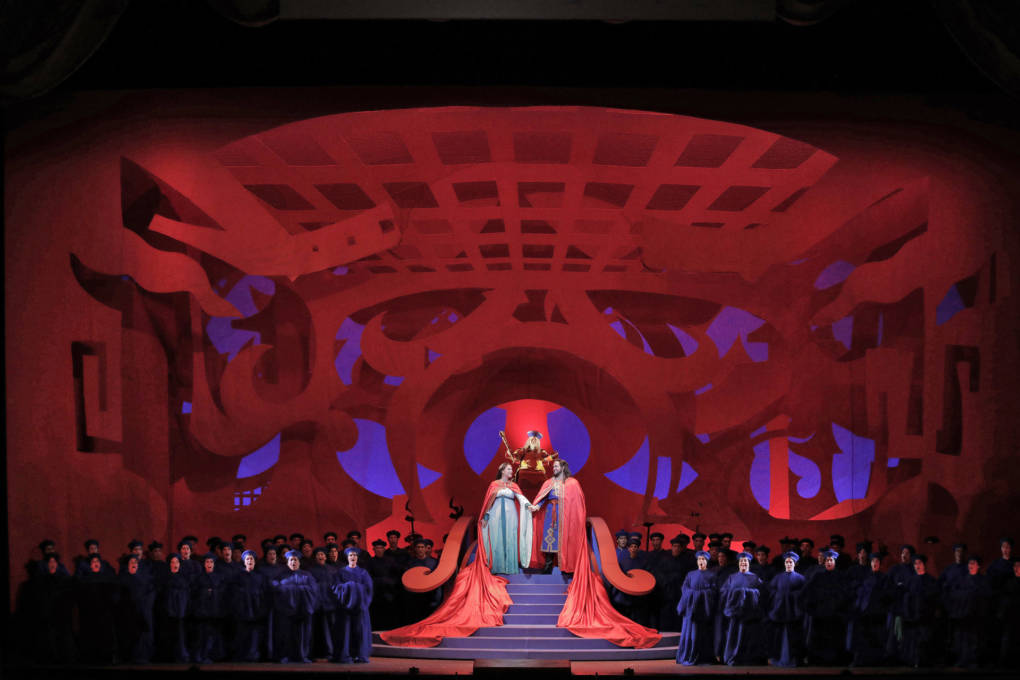
"caption": "David Hockney's set design for Act III of SF Opera's \"Turandot.\" ",
"description": "David Hockney's set design for Act III of SF Opera's \"Turandot.\" ",
"title": "RS28237_Turandot Act III_David Hockney set_photo Cory Weaver-qut",
"credit": "Photo: Courtesy of Cory Weaver",
"status": "inherit",
"isLoading": false,
"fetchFailed": false
}
},
"audioPlayerReducer": {
"postId": "stream_live",
"isPaused": true,
"isPlaying": false,
"pfsActive": false,
"pledgeModalIsOpen": true,
"playerDrawerIsOpen": false,
"liveAudioPlayStartedAt": 0,
"liveAudioPlayContext": ""
},
"authorsReducer": {
"gmeline": {
"type": "authors",
"id": "185",
"meta": {
"index": "authors_1716337520",
"id": "185",
"found": true
},
"name": "Gabe Meline",
"firstName": "Gabe",
"lastName": "Meline",
"slug": "gmeline",
"email": "gmeline@kqed.org",
"display_author_email": true,
"staff_mastheads": [
"arts"
],
"title": "Senior Editor, KQED Arts & Culture",
"bio": "Gabe Meline entered journalism at age 15 making photocopied zines, and has since earned awards from the Edward R. Murrow Awards, the Society for Professional Journalists, the Online Journalism Awards, the Association of Alternative Newsweeklies and the California Newspaper Publishers Association. Prior to KQED, he was the editor of the \u003cem>North Bay Bohemian\u003c/em> and a touring musician. He lives with his wife and daughter in his hometown of Santa Rosa, CA.",
"avatar": "https://secure.gravatar.com/avatar/5bebe57be0d8bc2dd318934feb47299e2d2d10cba28d09d8d7afb389a2ce2bdd?s=600&d=blank&r=g",
"twitter": null,
"bluesky": null,
"facebook": null,
"instagram": null,
"linkedin": null,
"sites": [
{
"site": "",
"roles": [
"editor"
]
},
{
"site": "arts",
"roles": [
"administrator"
]
},
{
"site": "artschool",
"roles": [
"editor"
]
},
{
"site": "news",
"roles": [
"author"
]
},
{
"site": "pop",
"roles": [
"editor"
]
},
{
"site": "bayareabites",
"roles": [
"editor"
]
},
{
"site": "food",
"roles": [
"editor"
]
},
{
"site": "forum",
"roles": [
"administrator"
]
},
{
"site": "liveblog",
"roles": [
"editor"
]
},
{
"site": "hiphop",
"roles": [
"editor"
]
}
],
"headData": {
"title": "Gabe Meline | KQED",
"description": "Senior Editor, KQED Arts & Culture",
"ogImgSrc": "https://secure.gravatar.com/avatar/5bebe57be0d8bc2dd318934feb47299e2d2d10cba28d09d8d7afb389a2ce2bdd?s=600&d=blank&r=g",
"twImgSrc": "https://secure.gravatar.com/avatar/5bebe57be0d8bc2dd318934feb47299e2d2d10cba28d09d8d7afb389a2ce2bdd?s=600&d=blank&r=g"
},
"isLoading": false,
"link": "/author/gmeline"
},
"rachael-myrow": {
"type": "authors",
"id": "251",
"meta": {
"index": "authors_1716337520",
"id": "251",
"found": true
},
"name": "Rachael Myrow",
"firstName": "Rachael",
"lastName": "Myrow",
"slug": "rachael-myrow",
"email": "rmyrow@kqed.org",
"display_author_email": true,
"staff_mastheads": [
"news"
],
"title": "Senior Editor of KQED's Silicon Valley News Desk",
"bio": "• I write and edit stories about how Silicon Valley power and policies shape everyday life in California. I’m also passionate about making Bay Area history and culture more accessible to a broad public. • I’ve been a journalist for most of my life, starting in high school with The Franklin Press in Los Angeles, where I grew up. While earning my first degree in English at UC Berkeley, I got my start in public radio at KALX-FM. After completing a second degree in journalism at Cal, I landed my first professional job at Marketplace, then moved on to KPCC (now LAist), and then KQED, where I hosted The California Report for more than seven years. • My reporting has appeared on NPR, The World, WBUR’s \u003ci>Here & Now\u003c/i>, and the BBC. I also guest host for KQED’s \u003ci>Forum\u003c/i>, as well as the Commonwealth Club in San Francisco. • I speak periodically on media, democracy and technology issues, and do voiceover work for documentaries and educational video projects. • Outside of the studio, you'll find me hiking Bay Area trails and whipping up Insta-ready meals in my kitchen. • I do not accept gifts, money, or favors from anyone connected to my reporting, I don't pay people for information, and I do not support or donate to political causes. • I strive to treat the people I report on with fairness, honesty, and respect. I also recognize there are often multiple sides to a story and work to verify information through multiple sources and documentation. If I get something wrong, I correct it.",
"avatar": "https://secure.gravatar.com/avatar/3ed8a3c5f26025e4a805ba634cda8cd764906b97438a6d9ce216b044e340da4e?s=600&d=blank&r=g",
"twitter": "rachaelmyrow",
"bluesky": null,
"facebook": null,
"instagram": null,
"linkedin": "https://www.linkedin.com/in/rachaelmyrow/",
"sites": [
{
"site": "arts",
"roles": [
"administrator"
]
},
{
"site": "news",
"roles": [
"edit_others_posts",
"editor"
]
},
{
"site": "futureofyou",
"roles": [
"editor"
]
},
{
"site": "bayareabites",
"roles": [
"editor"
]
},
{
"site": "stateofhealth",
"roles": [
"editor"
]
},
{
"site": "science",
"roles": [
"editor"
]
},
{
"site": "food",
"roles": [
"editor"
]
},
{
"site": "forum",
"roles": [
"editor"
]
},
{
"site": "liveblog",
"roles": [
"author"
]
}
],
"headData": {
"title": "Rachael Myrow | KQED",
"description": "Senior Editor of KQED's Silicon Valley News Desk",
"ogImgSrc": "https://secure.gravatar.com/avatar/3ed8a3c5f26025e4a805ba634cda8cd764906b97438a6d9ce216b044e340da4e?s=600&d=blank&r=g",
"twImgSrc": "https://secure.gravatar.com/avatar/3ed8a3c5f26025e4a805ba634cda8cd764906b97438a6d9ce216b044e340da4e?s=600&d=blank&r=g"
},
"isLoading": false,
"link": "/author/rachael-myrow"
},
"cveltman": {
"type": "authors",
"id": "8608",
"meta": {
"index": "authors_1716337520",
"id": "8608",
"found": true
},
"name": "Chloe Veltman",
"firstName": "Chloe",
"lastName": "Veltman",
"slug": "cveltman",
"email": "cveltman@kqed.org",
"display_author_email": true,
"staff_mastheads": [],
"title": "Arts and Culture Reporter",
"bio": "Chloe Veltman is a former arts and culture reporter for KQED. Prior to joining the organization, she launched and led the arts bureau at Colorado Public Radio, served as the Bay Area's culture columnist for the New York Times, and was the founder, host and executive producer of VoiceBox, a national award-winning weekly podcast/radio show and live events series all about the human voice. Chloe is the recipient of numerous prizes, grants and fellowships including a Webby Award for her work on interactive storytelling, both the John S Knight Journalism Fellowship and Humanities Center Fellowship at Stanford University, the Sundance Arts Writing Fellowship and a Library of Congress Research Fellowship. She is the author of the book \"On Acting\" and has appeared as a guest lecturer at Yale University and the San Francisco Conservatory of Music among other institutions. She holds a BA in english literature from King's College, Cambridge, and a Masters in Dramaturgy from the Central School of Speech and Drama/Harvard Institute for Advanced Theater Training.\r\n\u003ca href=\"https://www.chloeveltman.com\">www.chloeveltman.com\u003c/a>",
"avatar": "https://secure.gravatar.com/avatar/55403394b00a1ddab683952c2eb2cf85?s=600&d=blank&r=g",
"twitter": "chloeveltman",
"facebook": null,
"instagram": null,
"linkedin": null,
"sites": [
{
"site": "arts",
"roles": []
},
{
"site": "news",
"roles": [
"author"
]
},
{
"site": "pop",
"roles": [
"editor"
]
},
{
"site": "science",
"roles": []
}
],
"headData": {
"title": "Chloe Veltman | KQED",
"description": "Arts and Culture Reporter",
"ogImgSrc": "https://secure.gravatar.com/avatar/55403394b00a1ddab683952c2eb2cf85?s=600&d=blank&r=g",
"twImgSrc": "https://secure.gravatar.com/avatar/55403394b00a1ddab683952c2eb2cf85?s=600&d=blank&r=g"
},
"isLoading": false,
"link": "/author/cveltman"
}
},
"pagesReducer": {
"arts_tag_sf-opera": {
"type": "terms",
"id": "arts_3316",
"meta": {
"index": "terms_1716263798",
"site": "arts",
"id": "3316",
"score": 10.404487
},
"featImg": null,
"name": "SF Opera",
"description": null,
"taxonomy": "tag",
"headData": {
"twImgId": null,
"twTitle": null,
"ogTitle": null,
"ogImgId": null,
"twDescription": null,
"description": null,
"title": "SF Opera Archives | KQED Arts",
"ogDescription": null
},
"ttid": 3328,
"slug": "sf-opera",
"isLoading": false,
"title": "SF Opera",
"pageMeta": {
"site": "arts",
"WpPageTemplate": "page-topic-editorial",
"currentPage": 3
},
"blocks": [
{
"blockName": "kqed/post-list",
"attrs": {
"layout": "cardArticle2",
"query": "posts/arts?tag=sf-opera",
"seeMore": false,
"paginated": true,
"page": 3
}
},
{
"blockName": "kqed/ad"
}
]
}
},
"pfsSessionReducer": {},
"postsReducer": {
"stream_live": {
"type": "live",
"id": "stream_live",
"audioUrl": "https://streams.kqed.org/kqedradio",
"title": "Live Stream",
"excerpt": "Live Stream information currently unavailable.",
"link": "/radio",
"featImg": "",
"label": {
"name": "KQED Live",
"link": "/"
}
},
"stream_kqedNewscast": {
"type": "posts",
"id": "stream_kqedNewscast",
"audioUrl": "https://www.kqed.org/.stream/anon/radio/RDnews/newscast.mp3?_=1",
"title": "KQED Newscast",
"featImg": "",
"label": {
"name": "88.5 FM",
"link": "/"
}
},
"arts_13863981": {
"type": "posts",
"id": "arts_13863981",
"meta": {
"index": "posts_1716263798",
"site": "arts",
"id": "13863981",
"score": null,
"sort": [
1565735111000
]
},
"guestAuthors": [],
"slug": "sf-opera-cancels-placido-domingo-concert-following-sexual-assault-allegations",
"title": "SF Opera Cancels Placido Domingo Concert Following Sexual Harassment Allegations",
"publishDate": 1565735111,
"format": "standard",
"headTitle": "SF Opera Cancels Placido Domingo Concert Following Sexual Harassment Allegations | KQED",
"labelTerm": {
"site": "arts"
},
"content": "\u003cp>\u003cspan style=\"font-weight: 400\">\u003ca href=\"https://sfopera.com/2019-20-season/placido/\" target=\"_blank\" rel=\"noopener\">San Francisco Opera\u003c/a> has canceled an upcoming, sold-out performance by Placido Domingo in the wake of \u003ca href=\"https://www.kqed.org/arts/13863923/women-accuse-opera-legend-placido-domingo-of-sexual-harassment\" target=\"_blank\" rel=\"noopener\">an Associated Press story\u003c/a> about multiple women accusing the opera star of sexual misconduct. \u003c/span>\u003c/p>\n\u003cp>\u003cspan style=\"font-weight: 400\">Domingo had been scheduled to appear at the War Memorial Opera House on Oct. 6 in a special concert celebrating 50 years of collaboration with the San Francisco Opera. \u003c/span>\u003c/p>\n\u003cp>[aside postID='arts_13863923' label='The Accusers Speak']\u003c/p>\n\u003cp>\u003cspan style=\"font-weight: 400\">But in a statement, the company said it can no longer go ahead with the event owing to the allegations brought forward by nine women, accusing the celebrated, 78-year-old singer of unwanted sexual advances that took place over several decades starting in the 1980s.\u003c/span>\u003c/p>\n\u003cp>“Though the alleged incidents reported did not take place at San Francisco Opera,” the statement reads in part, “the Company is unable to present the artist on the War Memorial Opera House stage.”\u003c/p>\n\u003cp>[ad fullwidth]\u003c/p>\n\u003cp>\u003cspan style=\"font-weight: 400\">Last year, the opera company \u003ca href=\"https://www.kqed.org/arts/13844556/sf-opera-drops-star-singer-in-wake-of-sexual-assault-allegations\" target=\"_blank\" rel=\"noopener\">took similar action against David Daniels\u003c/a> after the acclaimed countertenor was accused of sexual assault. \u003c/span>\u003c/p>\n\u003cp>\u003ca href=\"https://www.inquirer.com/arts/placido-domingo-philadelphia-orchestra-invite-cancelled-sexual-harassment-allegations-20190813.html\" target=\"_blank\" rel=\"noopener\">The Philadelphia Orchestra\u003c/a> has also dropped an upcoming appearance by Domingo from its schedule. The \u003ca href=\"https://www.laopera.org/about-us/artists-2/cast-members/placido-domingo/\" target=\"_blank\" rel=\"noopener\">Los Angeles Opera\u003c/a>, where Domingo has served as general director for more than 15 years, is launching an investigation into his conduct.\u003c/p>\n\u003cp>\u003c/p>\n\u003cp>Domingo issued a statement calling the allegations against him troubling and inaccurate.\u003c/p>\n\n",
"blocks": [],
"excerpt": "The company has canceled Domingo's sold-out, Oct. 6 performance after media reports of multiple women accusing the opera star of sexual harassment. ",
"status": "publish",
"parent": 0,
"modified": 1726766382,
"stats": {
"hasAudio": false,
"hasVideo": false,
"hasChartOrMap": false,
"iframeSrcs": [],
"hasGoogleForm": false,
"hasGallery": false,
"hasHearkenModule": false,
"hasPolis": false,
"paragraphCount": 10,
"wordCount": 224
},
"headData": {
"title": "SF Opera Cancels Placido Domingo Concert Following Sexual Harassment Allegations | KQED",
"description": "The company has canceled Domingo's sold-out, Oct. 6 performance after media reports of multiple women accusing the opera star of sexual harassment. ",
"ogTitle": "",
"ogDescription": "",
"ogImgId": "",
"twTitle": "",
"twDescription": "",
"twImgId": "",
"schema": {
"@context": "https://schema.org",
"@type": "Article",
"headline": "SF Opera Cancels Placido Domingo Concert Following Sexual Harassment Allegations",
"datePublished": "2019-08-13T15:25:11-07:00",
"dateModified": "2024-09-19T10:19:42-07:00",
"image": "https://cdn.kqed.org/wp-content/uploads/2020/02/KQED-OG-Image@1x.png"
}
},
"sticky": false,
"templateType": "standard",
"featuredImageType": "standard",
"path": "/arts/13863981/sf-opera-cancels-placido-domingo-concert-following-sexual-assault-allegations",
"audioTrackLength": null,
"parsedContent": [
{
"type": "contentString",
"content": "\u003cdiv class=\"post-body\">\u003cp>\u003cp>\u003cspan style=\"font-weight: 400\">\u003ca href=\"https://sfopera.com/2019-20-season/placido/\" target=\"_blank\" rel=\"noopener\">San Francisco Opera\u003c/a> has canceled an upcoming, sold-out performance by Placido Domingo in the wake of \u003ca href=\"https://www.kqed.org/arts/13863923/women-accuse-opera-legend-placido-domingo-of-sexual-harassment\" target=\"_blank\" rel=\"noopener\">an Associated Press story\u003c/a> about multiple women accusing the opera star of sexual misconduct. \u003c/span>\u003c/p>\n\u003cp>\u003cspan style=\"font-weight: 400\">Domingo had been scheduled to appear at the War Memorial Opera House on Oct. 6 in a special concert celebrating 50 years of collaboration with the San Francisco Opera. \u003c/span>\u003c/p>\n\u003cp>\u003c/p>\u003c/div>",
"attributes": {
"named": {},
"numeric": []
}
},
{
"type": "component",
"content": "",
"name": "aside",
"attributes": {
"named": {
"postid": "arts_13863923",
"label": "The Accusers Speak "
},
"numeric": []
}
},
{
"type": "contentString",
"content": "\u003cdiv class=\"post-body\">\u003cp>\u003c/p>\n\u003cp>\u003cspan style=\"font-weight: 400\">But in a statement, the company said it can no longer go ahead with the event owing to the allegations brought forward by nine women, accusing the celebrated, 78-year-old singer of unwanted sexual advances that took place over several decades starting in the 1980s.\u003c/span>\u003c/p>\n\u003cp>“Though the alleged incidents reported did not take place at San Francisco Opera,” the statement reads in part, “the Company is unable to present the artist on the War Memorial Opera House stage.”\u003c/p>\n\u003cp>\u003c/p>\u003c/div>",
"attributes": {
"named": {},
"numeric": []
}
},
{
"type": "component",
"content": "",
"name": "ad",
"attributes": {
"named": {
"label": "fullwidth"
},
"numeric": [
"fullwidth"
]
}
},
{
"type": "contentString",
"content": "\u003cdiv class=\"post-body\">\u003cp>\u003c/p>\n\u003cp>\u003cspan style=\"font-weight: 400\">Last year, the opera company \u003ca href=\"https://www.kqed.org/arts/13844556/sf-opera-drops-star-singer-in-wake-of-sexual-assault-allegations\" target=\"_blank\" rel=\"noopener\">took similar action against David Daniels\u003c/a> after the acclaimed countertenor was accused of sexual assault. \u003c/span>\u003c/p>\n\u003cp>\u003ca href=\"https://www.inquirer.com/arts/placido-domingo-philadelphia-orchestra-invite-cancelled-sexual-harassment-allegations-20190813.html\" target=\"_blank\" rel=\"noopener\">The Philadelphia Orchestra\u003c/a> has also dropped an upcoming appearance by Domingo from its schedule. The \u003ca href=\"https://www.laopera.org/about-us/artists-2/cast-members/placido-domingo/\" target=\"_blank\" rel=\"noopener\">Los Angeles Opera\u003c/a>, where Domingo has served as general director for more than 15 years, is launching an investigation into his conduct.\u003c/p>\n\u003cp>\u003c/p>\n\u003cp>Domingo issued a statement calling the allegations against him troubling and inaccurate.\u003c/p>\n\n\u003c/div>\u003c/p>",
"attributes": {
"named": {},
"numeric": []
}
}
],
"link": "/arts/13863981/sf-opera-cancels-placido-domingo-concert-following-sexual-assault-allegations",
"authors": [
"8608"
],
"categories": [
"arts_1",
"arts_69",
"arts_235"
],
"tags": [
"arts_763",
"arts_2462",
"arts_5676",
"arts_3316"
],
"featImg": "arts_13864005",
"label": "arts"
},
"arts_13860265": {
"type": "posts",
"id": "arts_13860265",
"meta": {
"index": "posts_1716263798",
"site": "arts",
"id": "13860265",
"score": null,
"sort": [
1561571188000
]
},
"parent": 0,
"labelTerm": {
"site": "arts",
"term": 140
},
"blocks": [],
"publishDate": 1561571188,
"format": "standard",
"title": "J'nai Bridges Shines as 'Carmen' at San Francisco Opera",
"headTitle": "J’nai Bridges Shines as ‘Carmen’ at San Francisco Opera | KQED",
"content": "\u003cp>It’s \u003ca href=\"https://www.kqed.org/arts/13857500/hot-summer-guide-2019-top-10-picks-for-theater-in-the-bay-area\" rel=\"noopener\" target=\"_blank\">been said before\u003c/a>, but \u003cem>Carmen\u003c/em> is the perfect opera for beginners: it’s less than three hours long, it contains familiar music, and the timeless story is adaptable to nearly any moment in history. The battle of the sexes never did run smooth, and in San Francisco Opera’s production of Bizet’s masterpiece—which at press time has two more performances—that’s an understatement.\u003c/p>\n\u003cp>In this current interpretation produced by Francesca Zambello, \u003cem>Carmen\u003c/em> becomes an indictment of toxic masculinity: Matthew Polenzani’s depiction of Don José is appropriately insecure and malleable, until being spurned by Carmen turns him vengeful and violent. (An essay in the program by Zambello about rethinking Carmen post-#MeToo adds layers to this angle.) If the show had a subtitle, it could easily be “The Stupid Things Men Do When They Are Refused.”\u003c/p>\n\u003cfigure id=\"attachment_13860283\" class=\"wp-caption aligncenter\" style=\"max-width: 800px\">\u003cimg loading=\"lazy\" decoding=\"async\" src=\"https://ww2.kqed.org/arts/wp-content/uploads/sites/2/2019/06/Micaela.DonJose.Carmen.Cory_-800x533.jpg\" alt=\"Anita Hartig as Micaëla, Matthew Polenzani as Don José and J'nai Bridges as Carmen in San Francisco Opera's production of 'Carmen.'\" width=\"800\" height=\"533\" class=\"size-medium wp-image-13860283\" srcset=\"https://cdn.kqed.org/wp-content/uploads/sites/2/2019/06/Micaela.DonJose.Carmen.Cory_-800x533.jpg 800w, https://cdn.kqed.org/wp-content/uploads/sites/2/2019/06/Micaela.DonJose.Carmen.Cory_-160x107.jpg 160w, https://cdn.kqed.org/wp-content/uploads/sites/2/2019/06/Micaela.DonJose.Carmen.Cory_-768x512.jpg 768w, https://cdn.kqed.org/wp-content/uploads/sites/2/2019/06/Micaela.DonJose.Carmen.Cory_-1020x680.jpg 1020w, https://cdn.kqed.org/wp-content/uploads/sites/2/2019/06/Micaela.DonJose.Carmen.Cory_-1200x800.jpg 1200w, https://cdn.kqed.org/wp-content/uploads/sites/2/2019/06/Micaela.DonJose.Carmen.Cory_.jpg 1920w\" sizes=\"(max-width: 800px) 100vw, 800px\">\u003cfigcaption class=\"wp-caption-text\">Anita Hartig as Micaëla, Matthew Polenzani as Don José and J’nai Bridges as Carmen in San Francisco Opera’s production of ‘Carmen.’ \u003ccite>(Cory Weaver)\u003c/cite>\u003c/figcaption>\u003c/figure>\n\u003cp>And then there’s Carmen herself, played excellently by rising star J’nai Bridges. As a \u003ca href=\"https://www.kqed.org/arts/12131486/jnai-bridges-bounces-from-the-basketball-court-to-the-opera-house\" rel=\"noopener\" target=\"_blank\">former basketball player\u003c/a>, Bridges brings an athleticism to the role that enhances Carmen’s seductive nature: writhing on the floor, straddling and spanking a guard, strategically guiding her legs near men’s faces to get what she wants. From the \u003ca href=\"https://www.youtube.com/watch?v=Dw0NJBxrb9M\" rel=\"noopener\" target=\"_blank\">first notes of her “Habanera”\u003c/a> to her tragic battle with Don José, Bridges is mesmerizing. (She has said that she channels her inner Beyoncé for the role, and it shows.) At times Bridges is so perfect as the strong-willed woman, refusing to be owned by any man, that it’s hard to believe she would even be interested in the too-dumb, too-easy-a-mark of Polenzani’s Don José, let alone fall in love with him. But what would \u003cem>Carmen\u003c/em> be without capriciousness?\u003c/p>\n\u003cp>Though the set is simple, there’s plenty of action: actors rappel down walls, tavern-goers dance on tables with tambourines, a chorus of two dozen children enhance multiple scenes, and a live horse (a rescue from last year’s Camp Fire) carries the toreador Escamillo (marvelously played by Kyle Ketelsen). A card-reading scene with Frasquita (Natalie Image) and Mercédès (Ashley Dixon) is wholly entertaining. And despite more famous songs in the opera, it’s Anita Hartig who stops the show as Micaëla with her delicate, beautiful version of the Act III aria, “Je dis que rien ne m’épouvante.”\u003c/p>\n\u003cfigure id=\"attachment_13860284\" class=\"wp-caption aligncenter\" style=\"max-width: 800px\">\u003cimg loading=\"lazy\" decoding=\"async\" src=\"https://ww2.kqed.org/arts/wp-content/uploads/sites/2/2019/06/Toreadro.Carmen.CoryWeaver-800x533.jpg\" alt=\"Kyle Ketelsen as Escamillo and J'nai Bridges as Carmen in San Francisco Opera's production of 'Carmen.'\" width=\"800\" height=\"533\" class=\"size-medium wp-image-13860284\" srcset=\"https://cdn.kqed.org/wp-content/uploads/sites/2/2019/06/Toreadro.Carmen.CoryWeaver-800x533.jpg 800w, https://cdn.kqed.org/wp-content/uploads/sites/2/2019/06/Toreadro.Carmen.CoryWeaver-160x107.jpg 160w, https://cdn.kqed.org/wp-content/uploads/sites/2/2019/06/Toreadro.Carmen.CoryWeaver-768x512.jpg 768w, https://cdn.kqed.org/wp-content/uploads/sites/2/2019/06/Toreadro.Carmen.CoryWeaver-1020x680.jpg 1020w, https://cdn.kqed.org/wp-content/uploads/sites/2/2019/06/Toreadro.Carmen.CoryWeaver-1200x800.jpg 1200w, https://cdn.kqed.org/wp-content/uploads/sites/2/2019/06/Toreadro.Carmen.CoryWeaver.jpg 1920w\" sizes=\"(max-width: 800px) 100vw, 800px\">\u003cfigcaption class=\"wp-caption-text\">Kyle Ketelsen as Escamillo and J’nai Bridges as Carmen in San Francisco Opera’s production of ‘Carmen.’ \u003ccite>(Cory Weaver)\u003c/cite>\u003c/figcaption>\u003c/figure>\n\u003cp>There’s no doubt that \u003cem>Carmen\u003c/em> will return to the Opera House stage; it’s been performed in 33 previous seasons at San Francisco Opera. But this production is well worth seeing while one can.\u003c/p>\n\u003cp>\u003cem>‘Carmen’ plays for two more shows on Wednesday, June 26 and Saturday, June 29 at the War Memorial Opera House. \u003ca href=\"https://sfopera.com/1819season/carmen/\" rel=\"noopener\" target=\"_blank\">Details here\u003c/a>.\u003c/em>\u003c/p>\n\u003cp>[ad fullwidth]\u003c/p>\n\u003cp>\u003c/p>\n",
"stats": {
"hasVideo": false,
"hasChartOrMap": false,
"hasAudio": false,
"hasPolis": false,
"wordCount": 538,
"hasGoogleForm": false,
"hasGallery": false,
"hasHearkenModule": false,
"iframeSrcs": [],
"paragraphCount": 8
},
"modified": 1705022607,
"excerpt": "The rising star leads Bizet's masterpiece in a production that doubles as an indictment of toxic masculinity.",
"headData": {
"twImgId": "",
"twTitle": "",
"ogTitle": "",
"ogImgId": "",
"twDescription": "",
"description": "The rising star leads Bizet's masterpiece in a production that doubles as an indictment of toxic masculinity.",
"title": "J'nai Bridges Shines as 'Carmen' at San Francisco Opera | KQED",
"ogDescription": "",
"schema": {
"@context": "https://schema.org",
"@type": "Article",
"headline": "J'nai Bridges Shines as 'Carmen' at San Francisco Opera",
"datePublished": "2019-06-26T10:46:28-07:00",
"dateModified": "2024-01-11T17:23:27-08:00",
"image": "https://cdn.kqed.org/wp-content/uploads/2020/02/KQED-OG-Image@1x.png"
}
},
"guestAuthors": [],
"slug": "jnai-bridges-shines-as-carmen-at-san-francisco-opera",
"status": "publish",
"sticky": false,
"path": "/arts/13860265/jnai-bridges-shines-as-carmen-at-san-francisco-opera",
"audioTrackLength": null,
"parsedContent": [
{
"type": "contentString",
"content": "\u003cdiv class=\"post-body\">\u003cp>\u003cp>It’s \u003ca href=\"https://www.kqed.org/arts/13857500/hot-summer-guide-2019-top-10-picks-for-theater-in-the-bay-area\" rel=\"noopener\" target=\"_blank\">been said before\u003c/a>, but \u003cem>Carmen\u003c/em> is the perfect opera for beginners: it’s less than three hours long, it contains familiar music, and the timeless story is adaptable to nearly any moment in history. The battle of the sexes never did run smooth, and in San Francisco Opera’s production of Bizet’s masterpiece—which at press time has two more performances—that’s an understatement.\u003c/p>\n\u003cp>In this current interpretation produced by Francesca Zambello, \u003cem>Carmen\u003c/em> becomes an indictment of toxic masculinity: Matthew Polenzani’s depiction of Don José is appropriately insecure and malleable, until being spurned by Carmen turns him vengeful and violent. (An essay in the program by Zambello about rethinking Carmen post-#MeToo adds layers to this angle.) If the show had a subtitle, it could easily be “The Stupid Things Men Do When They Are Refused.”\u003c/p>\n\u003cfigure id=\"attachment_13860283\" class=\"wp-caption aligncenter\" style=\"max-width: 800px\">\u003cimg loading=\"lazy\" decoding=\"async\" src=\"https://ww2.kqed.org/arts/wp-content/uploads/sites/2/2019/06/Micaela.DonJose.Carmen.Cory_-800x533.jpg\" alt=\"Anita Hartig as Micaëla, Matthew Polenzani as Don José and J'nai Bridges as Carmen in San Francisco Opera's production of 'Carmen.'\" width=\"800\" height=\"533\" class=\"size-medium wp-image-13860283\" srcset=\"https://cdn.kqed.org/wp-content/uploads/sites/2/2019/06/Micaela.DonJose.Carmen.Cory_-800x533.jpg 800w, https://cdn.kqed.org/wp-content/uploads/sites/2/2019/06/Micaela.DonJose.Carmen.Cory_-160x107.jpg 160w, https://cdn.kqed.org/wp-content/uploads/sites/2/2019/06/Micaela.DonJose.Carmen.Cory_-768x512.jpg 768w, https://cdn.kqed.org/wp-content/uploads/sites/2/2019/06/Micaela.DonJose.Carmen.Cory_-1020x680.jpg 1020w, https://cdn.kqed.org/wp-content/uploads/sites/2/2019/06/Micaela.DonJose.Carmen.Cory_-1200x800.jpg 1200w, https://cdn.kqed.org/wp-content/uploads/sites/2/2019/06/Micaela.DonJose.Carmen.Cory_.jpg 1920w\" sizes=\"(max-width: 800px) 100vw, 800px\">\u003cfigcaption class=\"wp-caption-text\">Anita Hartig as Micaëla, Matthew Polenzani as Don José and J’nai Bridges as Carmen in San Francisco Opera’s production of ‘Carmen.’ \u003ccite>(Cory Weaver)\u003c/cite>\u003c/figcaption>\u003c/figure>\n\u003cp>And then there’s Carmen herself, played excellently by rising star J’nai Bridges. As a \u003ca href=\"https://www.kqed.org/arts/12131486/jnai-bridges-bounces-from-the-basketball-court-to-the-opera-house\" rel=\"noopener\" target=\"_blank\">former basketball player\u003c/a>, Bridges brings an athleticism to the role that enhances Carmen’s seductive nature: writhing on the floor, straddling and spanking a guard, strategically guiding her legs near men’s faces to get what she wants. From the \u003ca href=\"https://www.youtube.com/watch?v=Dw0NJBxrb9M\" rel=\"noopener\" target=\"_blank\">first notes of her “Habanera”\u003c/a> to her tragic battle with Don José, Bridges is mesmerizing. (She has said that she channels her inner Beyoncé for the role, and it shows.) At times Bridges is so perfect as the strong-willed woman, refusing to be owned by any man, that it’s hard to believe she would even be interested in the too-dumb, too-easy-a-mark of Polenzani’s Don José, let alone fall in love with him. But what would \u003cem>Carmen\u003c/em> be without capriciousness?\u003c/p>\n\u003cp>Though the set is simple, there’s plenty of action: actors rappel down walls, tavern-goers dance on tables with tambourines, a chorus of two dozen children enhance multiple scenes, and a live horse (a rescue from last year’s Camp Fire) carries the toreador Escamillo (marvelously played by Kyle Ketelsen). A card-reading scene with Frasquita (Natalie Image) and Mercédès (Ashley Dixon) is wholly entertaining. And despite more famous songs in the opera, it’s Anita Hartig who stops the show as Micaëla with her delicate, beautiful version of the Act III aria, “Je dis que rien ne m’épouvante.”\u003c/p>\n\u003cfigure id=\"attachment_13860284\" class=\"wp-caption aligncenter\" style=\"max-width: 800px\">\u003cimg loading=\"lazy\" decoding=\"async\" src=\"https://ww2.kqed.org/arts/wp-content/uploads/sites/2/2019/06/Toreadro.Carmen.CoryWeaver-800x533.jpg\" alt=\"Kyle Ketelsen as Escamillo and J'nai Bridges as Carmen in San Francisco Opera's production of 'Carmen.'\" width=\"800\" height=\"533\" class=\"size-medium wp-image-13860284\" srcset=\"https://cdn.kqed.org/wp-content/uploads/sites/2/2019/06/Toreadro.Carmen.CoryWeaver-800x533.jpg 800w, https://cdn.kqed.org/wp-content/uploads/sites/2/2019/06/Toreadro.Carmen.CoryWeaver-160x107.jpg 160w, https://cdn.kqed.org/wp-content/uploads/sites/2/2019/06/Toreadro.Carmen.CoryWeaver-768x512.jpg 768w, https://cdn.kqed.org/wp-content/uploads/sites/2/2019/06/Toreadro.Carmen.CoryWeaver-1020x680.jpg 1020w, https://cdn.kqed.org/wp-content/uploads/sites/2/2019/06/Toreadro.Carmen.CoryWeaver-1200x800.jpg 1200w, https://cdn.kqed.org/wp-content/uploads/sites/2/2019/06/Toreadro.Carmen.CoryWeaver.jpg 1920w\" sizes=\"(max-width: 800px) 100vw, 800px\">\u003cfigcaption class=\"wp-caption-text\">Kyle Ketelsen as Escamillo and J’nai Bridges as Carmen in San Francisco Opera’s production of ‘Carmen.’ \u003ccite>(Cory Weaver)\u003c/cite>\u003c/figcaption>\u003c/figure>\n\u003cp>There’s no doubt that \u003cem>Carmen\u003c/em> will return to the Opera House stage; it’s been performed in 33 previous seasons at San Francisco Opera. But this production is well worth seeing while one can.\u003c/p>\n\u003cp>\u003cem>‘Carmen’ plays for two more shows on Wednesday, June 26 and Saturday, June 29 at the War Memorial Opera House. \u003ca href=\"https://sfopera.com/1819season/carmen/\" rel=\"noopener\" target=\"_blank\">Details here\u003c/a>.\u003c/em>\u003c/p>\n\u003cp>\u003c/p>\u003c/div>",
"attributes": {
"named": {},
"numeric": []
}
},
{
"type": "component",
"content": "",
"name": "ad",
"attributes": {
"named": {
"label": "fullwidth"
},
"numeric": [
"fullwidth"
]
}
},
{
"type": "contentString",
"content": "\u003cdiv class=\"post-body\">\u003cp>\u003c/p>\n\u003cp>\u003c/p>\n\u003c/div>\u003c/p>",
"attributes": {
"named": {},
"numeric": []
}
}
],
"link": "/arts/13860265/jnai-bridges-shines-as-carmen-at-san-francisco-opera",
"authors": [
"185"
],
"programs": [
"arts_140"
],
"categories": [
"arts_69",
"arts_967"
],
"tags": [
"arts_2798",
"arts_763",
"arts_3316",
"arts_1334"
],
"featImg": "arts_13860282",
"label": "arts_140"
},
"arts_13857500": {
"type": "posts",
"id": "arts_13857500",
"meta": {
"index": "posts_1716263798",
"site": "arts",
"id": "13857500",
"score": null,
"sort": [
1559070032000
]
},
"parent": 0,
"labelTerm": {
"site": "arts",
"term": 140
},
"blocks": [],
"publishDate": 1559070032,
"format": "image",
"title": "Hot Summer Guide 2019: Top 10 Picks for Theater in the Bay Area",
"headTitle": "Hot Summer Guide 2019: Top 10 Picks for Theater in the Bay Area | KQED",
"content": "\u003cp>By now, you’ve probably heard that \u003cem>\u003ca href=\"https://hamilton.shnsf.com/Online/default.asp\" target=\"_blank\" rel=\"noopener\">Hamilton\u003c/a>\u003c/em> is in town, running through January of next year. You may have also heard that \u003ca href=\"https://sfcurran.com/shows/harry-potter-and-the-cursed-child/\" target=\"_blank\" rel=\"noopener\">\u003cem>Harry Potter and the Cursed Child\u003c/em>\u003c/a> is coming in October, \u003ca href=\"https://www.kqed.org/arts/13845883/the-curran-at-a-crossroads\" target=\"_blank\" rel=\"noopener\">possibly running for three or more years\u003c/a>.\u003c/p>\n\u003cp>But what of all the other great theater in the shadow of the blockbusters? This summer, the Bay Area is home to an array of the stellar productions, from big musicals to small dramas. Below, we round up the best summertime theater to see on opera stages, black boxes and even on the sidewalk—which, in the Bay Area, is often a stage unto itself.\u003c/p>\n\u003cfigure id=\"attachment_13857960\" class=\"wp-caption aligncenter\" style=\"max-width: 800px\">\u003cimg loading=\"lazy\" decoding=\"async\" class=\"size-medium wp-image-13857960\" src=\"https://ww2.kqed.org/arts/wp-content/uploads/sites/2/2019/05/Plays.Rhinocerous-800x686.jpg\" alt=\"David Breitbarth in Eugène Ionesco's Rhinoceros at A.C.T.'s Geary Theater.\" width=\"800\" height=\"686\" srcset=\"https://cdn.kqed.org/wp-content/uploads/sites/2/2019/05/Plays.Rhinocerous-800x686.jpg 800w, https://cdn.kqed.org/wp-content/uploads/sites/2/2019/05/Plays.Rhinocerous-160x137.jpg 160w, https://cdn.kqed.org/wp-content/uploads/sites/2/2019/05/Plays.Rhinocerous-768x659.jpg 768w, https://cdn.kqed.org/wp-content/uploads/sites/2/2019/05/Plays.Rhinocerous-1020x875.jpg 1020w, https://cdn.kqed.org/wp-content/uploads/sites/2/2019/05/Plays.Rhinocerous.jpg 1200w\" sizes=\"(max-width: 800px) 100vw, 800px\">\u003cfigcaption class=\"wp-caption-text\">David Breitbarth in Eugène Ionesco’s ‘Rhinoceros’ at A.C.T.’s Geary Theater. \u003ccite>(Cliff Roles)\u003c/cite>\u003c/figcaption>\u003c/figure>\n\u003ch2>‘Rhinocerous’\u003c/h2>\n\u003cp>\u003ci>May 29–June 23, 2019\u003cbr>\nGeary Theater, San Francisco\u003cbr>\n\u003ca href=\"https://www.act-sf.org/home/box_office/1819_season/rhinoceros.highResolutionDisplay.html\" target=\"_blank\" rel=\"noopener\">More information\u003c/a>\u003c/i>\u003c/p>\n\u003cp>Eugène Ionesco’s absurdist masterpiece involves the inhabitants of a small French town transforming, one by one, into rhinos. But the play’s allegories to fascism—and the characterization of those who oppose it as paranoid—could not be any more relevant to the United States in 2019. Staged by ACT, which last year put \u003ca href=\"https://www.kqed.org/arts/13849904/a-day-at-the-beach-interrupted-by-two-giant-lizards\" target=\"_blank\" rel=\"noopener\">giant lizards on the stage in Edward Albee’s \u003cem>Seascape\u003c/em>\u003c/a>, \u003cem>Rhinocerous\u003c/em> is not only a marvelous study in conformity, but a consistently fun stampede through the possibilities of set and wardrobe.\u003c/p>\n\u003cfigure id=\"attachment_13858006\" class=\"wp-caption aligncenter\" style=\"max-width: 800px\">\u003cimg loading=\"lazy\" decoding=\"async\" class=\"size-medium wp-image-13858006\" src=\"https://ww2.kqed.org/arts/wp-content/uploads/sites/2/2019/05/Rent.SHN_-800x551.jpg\" alt=\"Deri'Andra Tucker in the touring production of 'Rent.'\" width=\"800\" height=\"551\" srcset=\"https://cdn.kqed.org/wp-content/uploads/sites/2/2019/05/Rent.SHN_-800x551.jpg 800w, https://cdn.kqed.org/wp-content/uploads/sites/2/2019/05/Rent.SHN_-160x110.jpg 160w, https://cdn.kqed.org/wp-content/uploads/sites/2/2019/05/Rent.SHN_-768x529.jpg 768w, https://cdn.kqed.org/wp-content/uploads/sites/2/2019/05/Rent.SHN_-1020x702.jpg 1020w, https://cdn.kqed.org/wp-content/uploads/sites/2/2019/05/Rent.SHN_-1200x826.jpg 1200w, https://cdn.kqed.org/wp-content/uploads/sites/2/2019/05/Rent.SHN_.jpg 1920w\" sizes=\"(max-width: 800px) 100vw, 800px\">\u003cfigcaption class=\"wp-caption-text\">Deri’Andra Tucker in the touring production of ‘Rent.’ \u003ccite>(Carol Rosegg)\u003c/cite>\u003c/figcaption>\u003c/figure>\n\u003ch2>‘Rent’\u003c/h2>\n\u003cp>\u003ci>June 14–23, 2019\u003cbr>\nGolden Gate Theatre, San Francisco\u003cbr>\n\u003ca href=\"https://www.shnsf.com/Online/default.asp\" target=\"_blank\" rel=\"noopener\">More information\u003c/a>\u003c/i>\u003c/p>\n\u003cp>[ad fullwidth]\u003c/p>\n\u003cp>The retelling of \u003cem>La bohème\u003c/em> that swept the world in the 1990s gets the 20th anniversary tour it deserves, including this very quick stop in San Francisco. \u003cem>Rent\u003c/em> is particularly resonant in the expensive Bay Area, where living in warehouses and off-the-grid spaces is a necessity for many, and the turmoil of HIV/AIDS hits close to home. If you still get chills at the opening chords of “Seasons of Love,” don’t sleep on this one-week-only run.\u003c/p>\n\u003cfigure id=\"attachment_13857974\" class=\"wp-caption aligncenter\" style=\"max-width: 800px\">\u003cimg loading=\"lazy\" decoding=\"async\" class=\"size-medium wp-image-13857974\" src=\"https://ww2.kqed.org/arts/wp-content/uploads/sites/2/2019/05/BRIDGES_JNai_S.-Richards_2-800x533.jpg\" alt=\"J'Nai Bridges plays the lead role in 'Carmen' at SF Opera this June.\" width=\"800\" height=\"533\" srcset=\"https://cdn.kqed.org/wp-content/uploads/sites/2/2019/05/BRIDGES_JNai_S.-Richards_2-800x533.jpg 800w, https://cdn.kqed.org/wp-content/uploads/sites/2/2019/05/BRIDGES_JNai_S.-Richards_2-160x107.jpg 160w, https://cdn.kqed.org/wp-content/uploads/sites/2/2019/05/BRIDGES_JNai_S.-Richards_2-768x512.jpg 768w, https://cdn.kqed.org/wp-content/uploads/sites/2/2019/05/BRIDGES_JNai_S.-Richards_2-1020x680.jpg 1020w, https://cdn.kqed.org/wp-content/uploads/sites/2/2019/05/BRIDGES_JNai_S.-Richards_2-1200x800.jpg 1200w, https://cdn.kqed.org/wp-content/uploads/sites/2/2019/05/BRIDGES_JNai_S.-Richards_2.jpg 1920w\" sizes=\"(max-width: 800px) 100vw, 800px\">\u003cfigcaption class=\"wp-caption-text\">J’Nai Bridges plays the lead role in ‘Carmen’ at SF Opera this June. \u003ccite>(S. Richards)\u003c/cite>\u003c/figcaption>\u003c/figure>\n\u003ch2>‘Carmen’\u003c/h2>\n\u003cp>\u003ci>June 5–29, 2019\u003cbr>\nWar Memorial Opera House, San Francisco\u003cbr>\n\u003ca href=\"https://sfopera.com/1819season/carmen/\" target=\"_blank\" rel=\"noopener\">More information\u003c/a>\u003c/i>\u003c/p>\n\u003cp>You already know more songs from \u003cem>Carmen\u003c/em> than you think you know (thanks, \u003ca href=\"https://www.youtube.com/watch?v=3Wsx22WxWOc\" target=\"_blank\" rel=\"noopener\">Saturday morning cartoons\u003c/a>), and if you’re daunted by the marathon of \u003ca href=\"https://www.kqed.org/arts/13835968/how-crazy-do-you-have-to-be-to-sit-through-15-hours-of-opera\" target=\"_blank\" rel=\"noopener\">longer operas\u003c/a>, Bizet’s eternal tale of a woman who dares to live freely clocks in at under three hours. Add to it Francesca Zambello’s modern production, James Gaffigan conducting the orchestra and \u003ca href=\"https://www.youtube.com/watch?v=m_MMKJaIHes\" target=\"_blank\" rel=\"noopener\">basketball player-turned-opera star J’Nai Bridges\u003c/a> (pictured above) in the title role, and you’ve got a summertime opera that even those who \u003cem>think\u003c/em> they hate opera can enjoy.\u003c/p>\n\u003cfigure id=\"attachment_13857965\" class=\"wp-caption aligncenter\" style=\"max-width: 800px\">\u003cimg loading=\"lazy\" decoding=\"async\" class=\"size-medium wp-image-13857965\" src=\"https://ww2.kqed.org/arts/wp-content/uploads/sites/2/2019/05/Aztec.CAST_-800x533.jpg\" alt=\"The cast of 'Kiss My Aztec!' at Berkeley Rep, directed by Tony Taccone.\" width=\"800\" height=\"533\" srcset=\"https://cdn.kqed.org/wp-content/uploads/sites/2/2019/05/Aztec.CAST_-800x533.jpg 800w, https://cdn.kqed.org/wp-content/uploads/sites/2/2019/05/Aztec.CAST_-160x107.jpg 160w, https://cdn.kqed.org/wp-content/uploads/sites/2/2019/05/Aztec.CAST_-768x512.jpg 768w, https://cdn.kqed.org/wp-content/uploads/sites/2/2019/05/Aztec.CAST_-1020x680.jpg 1020w, https://cdn.kqed.org/wp-content/uploads/sites/2/2019/05/Aztec.CAST_-1200x800.jpg 1200w, https://cdn.kqed.org/wp-content/uploads/sites/2/2019/05/Aztec.CAST_.jpg 1920w\" sizes=\"(max-width: 800px) 100vw, 800px\">\u003cfigcaption class=\"wp-caption-text\">The cast of ‘Kiss My Aztec!’ at Berkeley Rep, directed by Tony Taccone. \u003ccite>(Cheshire Isaacs/Berkeley Rep)\u003c/cite>\u003c/figcaption>\u003c/figure>\n\u003ch2>‘Kiss My Aztec!’\u003c/h2>\n\u003cp>\u003ci>May 28–July 21, 2019\u003cbr>\nRoda Theatre, Berkeley\u003cbr>\n\u003ca href=\"https://www.berkeleyrep.org/season/1819/13384.asp\" target=\"_blank\" rel=\"noopener\">More information\u003c/a>\u003c/i>\u003c/p>\n\u003cp>Written by John Leguizamo and Tony Taccone, this world-premiere musical has more than a whiff of \u003cem>Hamilton\u003c/em> for Latin America: a history lesson of resistance in Spanish-occupied Mesoamerica told through salsa, hip-hop, merengue and funk, with a blend of 16th-century dialect and modern slang. Taccone and Leguizamo previously worked together on \u003cem>Latin History for Morons\u003c/em>, but this one’s special: it’s Taccone’s final production as artistic director \u003ca href=\"https://www.kqed.org/arts/12700435/berkeley-rep-artistic-director-tony-taccone-announces-departure\" target=\"_blank\" rel=\"noopener\">after 33 years at Berkeley Rep\u003c/a>.\u003c/p>\n\u003cp>\u003cimg loading=\"lazy\" decoding=\"async\" class=\"aligncenter size-medium wp-image-13858009\" src=\"https://ww2.kqed.org/arts/wp-content/uploads/sites/2/2019/05/MidsummerNightDream.CalShakes-800x400.jpg\" alt=\"\" width=\"800\" height=\"400\" srcset=\"https://cdn.kqed.org/wp-content/uploads/sites/2/2019/05/MidsummerNightDream.CalShakes-800x400.jpg 800w, https://cdn.kqed.org/wp-content/uploads/sites/2/2019/05/MidsummerNightDream.CalShakes-160x80.jpg 160w, https://cdn.kqed.org/wp-content/uploads/sites/2/2019/05/MidsummerNightDream.CalShakes-768x384.jpg 768w, https://cdn.kqed.org/wp-content/uploads/sites/2/2019/05/MidsummerNightDream.CalShakes-1020x510.jpg 1020w, https://cdn.kqed.org/wp-content/uploads/sites/2/2019/05/MidsummerNightDream.CalShakes-1200x600.jpg 1200w, https://cdn.kqed.org/wp-content/uploads/sites/2/2019/05/MidsummerNightDream.CalShakes.jpg 1440w\" sizes=\"(max-width: 800px) 100vw, 800px\">\u003c/p>\n\u003ch2>‘A Midsummer Night’s Dream’\u003c/h2>\n\u003cp>\u003ci>May 22–June 16, 2019\u003cbr>\nBruns Amphitheater, Orinda\u003cbr>\n\u003ca href=\"https://calshakes.org/make/a-midsummer-nights-dream/\" target=\"_blank\" rel=\"noopener\">More information\u003c/a>\u003c/i>\u003c/p>\n\u003cp>Cal Shakes, the region’s premier purveyors of the Bard, bring this Shakespeare favorite to life this summer with all the sprites, dukes, queens and faeries you’ve come to know and love. It’s easy to forget just how damn \u003cem>fun\u003c/em> the action is in \u003cem>A Midsummer Night’s Dream\u003c/em>, and with costume by Ásta Bennie Hostetter and set by Nina Ball, the visuals are sure to be dazzling. Tyne Rafaeli directs in the picturesque outdoor Bruns Amphitheater.\u003c/p>\n\u003cfigure id=\"attachment_13858316\" class=\"wp-caption aligncenter\" style=\"max-width: 800px\">\u003cimg loading=\"lazy\" decoding=\"async\" class=\"size-medium wp-image-13858316\" src=\"https://ww2.kqed.org/arts/wp-content/uploads/sites/2/2019/05/ShortLived-800x450.jpg\" alt=\"Last year’s champions of ShortLived, The Geek Show, who won for their piece 'No Country for Old Henchmen.'\" width=\"800\" height=\"450\" srcset=\"https://cdn.kqed.org/wp-content/uploads/sites/2/2019/05/ShortLived-800x450.jpg 800w, https://cdn.kqed.org/wp-content/uploads/sites/2/2019/05/ShortLived-160x90.jpg 160w, https://cdn.kqed.org/wp-content/uploads/sites/2/2019/05/ShortLived-768x432.jpg 768w, https://cdn.kqed.org/wp-content/uploads/sites/2/2019/05/ShortLived-1020x574.jpg 1020w, https://cdn.kqed.org/wp-content/uploads/sites/2/2019/05/ShortLived-1200x675.jpg 1200w, https://cdn.kqed.org/wp-content/uploads/sites/2/2019/05/ShortLived.jpg 1920w\" sizes=\"(max-width: 800px) 100vw, 800px\">\u003cfigcaption class=\"wp-caption-text\">Last year’s champions of ShortLived, The Geek Show, who won for their piece ‘No Country for Old Henchmen.’ \u003ccite>(Courtesy PIanoFight)\u003c/cite>\u003c/figcaption>\u003c/figure>\n\u003ch2>‘ShortLived VII’\u003c/h2>\n\u003cp>\u003ci>June 14–Sept. 7, 2019\u003cbr>\nPianoFight and The Strand, San Francisco\u003cbr>\n\u003ca href=\"https://www.pianofight.com/shortlived-viii/\" target=\"_blank\" rel=\"noopener\">More information\u003c/a>\u003c/i>\u003c/p>\n\u003cp>Pushing the limits of theatrical possibility, \u003cem>ShortLived\u003c/em> is a marathon \u003cem>American Idol\u003c/em>-esque race to a $5,000 check and eternal Bay Area glory. This year’s audience-judged competition features 48 short plays running over the course of 8 weeks, and then a winner-take-all finals on Sept. 6 and 7. If you want to take a dip into the rampant creativity of Bay Area theater—and see some fun, charming competition along the way—you can’t do much better than this.\u003c/p>\n\u003cfigure id=\"attachment_13858015\" class=\"wp-caption aligncenter\" style=\"max-width: 800px\">\u003cimg loading=\"lazy\" decoding=\"async\" class=\"size-medium wp-image-13858015\" src=\"https://ww2.kqed.org/arts/wp-content/uploads/sites/2/2019/05/Dollhousemonsters-800x571.jpg\" alt=\"(L to R) Lady Malavendra, Red Velvet, and Dee O’s Mío in 'Dollhouse Monsters.'\" width=\"800\" height=\"571\" srcset=\"https://cdn.kqed.org/wp-content/uploads/sites/2/2019/05/Dollhousemonsters-800x571.jpg 800w, https://cdn.kqed.org/wp-content/uploads/sites/2/2019/05/Dollhousemonsters-160x114.jpg 160w, https://cdn.kqed.org/wp-content/uploads/sites/2/2019/05/Dollhousemonsters-768x548.jpg 768w, https://cdn.kqed.org/wp-content/uploads/sites/2/2019/05/Dollhousemonsters-1020x728.jpg 1020w, https://cdn.kqed.org/wp-content/uploads/sites/2/2019/05/Dollhousemonsters-1200x857.jpg 1200w, https://cdn.kqed.org/wp-content/uploads/sites/2/2019/05/Dollhousemonsters.jpg 1920w\" sizes=\"(max-width: 800px) 100vw, 800px\">\u003cfigcaption class=\"wp-caption-text\">(L to R) Lady Malavendra, Red Velvet and Dee O’s Mío in ‘Dollhouse Monsters.’ \u003ccite>(Ross Pearson)\u003c/cite>\u003c/figcaption>\u003c/figure>\n\u003ch2>‘Dollhouse Monsters’\u003c/h2>\n\u003cp>\u003ci>July 12–27, 2019\u003cbr>\nExit Stage Left, San Francisco\u003cbr>\n\u003ca href=\"http://www.theexit.org/dollhouse/\" target=\"_blank\" rel=\"noopener\">More information\u003c/a>\u003c/i>\u003c/p>\n\u003cp>These days, burlesque is everywhere, thanks to an ongoing vaudeville-circus-steampunk revival especially resonant here on the Barbary Coast. And while body positivity has long been a staple of modern burlesque, the ladies of DIVA Or Die Burlesque take that introspection further in \u003cem>Dollhouse Monsters\u003c/em>, a half-theater, half-burlesque show that examines our inner behaviors and secrets, why we have them, and why we keep them.\u003c/p>\n\u003cfigure id=\"attachment_13857967\" class=\"wp-caption aligncenter\" style=\"max-width: 800px\">\u003cimg loading=\"lazy\" decoding=\"async\" class=\"size-medium wp-image-13857967\" src=\"https://ww2.kqed.org/arts/wp-content/uploads/sites/2/2019/05/SOMAQueerWalking-800x534.jpg\" alt=\"\" width=\"800\" height=\"534\" srcset=\"https://cdn.kqed.org/wp-content/uploads/sites/2/2019/05/SOMAQueerWalking-800x534.jpg 800w, https://cdn.kqed.org/wp-content/uploads/sites/2/2019/05/SOMAQueerWalking-160x107.jpg 160w, https://cdn.kqed.org/wp-content/uploads/sites/2/2019/05/SOMAQueerWalking-768x512.jpg 768w, https://cdn.kqed.org/wp-content/uploads/sites/2/2019/05/SOMAQueerWalking-1020x681.jpg 1020w, https://cdn.kqed.org/wp-content/uploads/sites/2/2019/05/SOMAQueerWalking-1200x801.jpg 1200w, https://cdn.kqed.org/wp-content/uploads/sites/2/2019/05/SOMAQueerWalking.jpg 1920w\" sizes=\"(max-width: 800px) 100vw, 800px\">\u003cfigcaption class=\"wp-caption-text\">Ryan Hayes, Brian Freeman, Marga Gomez, J. Miko Thomas a.k.a. Landa Lakes for OUT of Site SOMA. \u003ccite>(Robbie Sweeny)\u003c/cite>\u003c/figcaption>\u003c/figure>\n\u003ch2>‘OUT of Site: SOMA’\u003c/h2>\n\u003cp>\u003ci>June 8–16, 2019\u003cbr>\nHoward Langton Community Garden, San Francisco\u003cbr>\n\u003ca href=\"https://www.eyezen.org/out-of-site-soma\" target=\"_blank\" rel=\"noopener\">More information\u003c/a>\u003c/i>\u003c/p>\n\u003cp>\u003cem>OUT of Site\u003c/em> has already brought history to life in North Beach, and now, the theatrical walking tour series alights South of Market for a reevaluation of the neighborhood’s LGBTQ contributions. The Castro gets most of the attention, but as \u003cem>OUT of Site\u003c/em> points out, SOMA is home to hidden stories, “from Native American Two-Spirit culture to the Folsom Street Fair, Lesbian auto-mechanics to labor activists and dock workers to drag queens.” Marga Gomez heads up a cast that should be illuminating and entertaining.\u003c/p>\n\u003cfigure id=\"attachment_13857973\" class=\"wp-caption aligncenter\" style=\"max-width: 800px\">\u003cimg loading=\"lazy\" decoding=\"async\" class=\"size-medium wp-image-13857973\" src=\"https://ww2.kqed.org/arts/wp-content/uploads/sites/2/2019/05/TheFlick-800x475.jpg\" alt=\"'The Flick' won the 2014 Pulitzer Prize for Drama.\" width=\"800\" height=\"475\" srcset=\"https://cdn.kqed.org/wp-content/uploads/sites/2/2019/05/TheFlick-800x475.jpg 800w, https://cdn.kqed.org/wp-content/uploads/sites/2/2019/05/TheFlick-160x95.jpg 160w, https://cdn.kqed.org/wp-content/uploads/sites/2/2019/05/TheFlick-768x456.jpg 768w, https://cdn.kqed.org/wp-content/uploads/sites/2/2019/05/TheFlick-1020x605.jpg 1020w, https://cdn.kqed.org/wp-content/uploads/sites/2/2019/05/TheFlick.jpg 1200w\" sizes=\"(max-width: 800px) 100vw, 800px\">\u003cfigcaption class=\"wp-caption-text\">‘The Flick’ won the 2014 Pulitzer Prize for Drama. \u003ccite>(Shotgun Players)\u003c/cite>\u003c/figcaption>\u003c/figure>\n\u003ch2>‘The Flick’\u003c/h2>\n\u003cp>\u003ci>Aug. 22–Sept. 22, 2019\u003cbr>\nAshby Stage, Berkeley\u003cbr>\n\u003ca href=\"http://bit.ly/2rgcffY\" target=\"_blank\" rel=\"noopener\">More information\u003c/a>\u003c/i>\u003c/p>\n\u003cp>People who work at movie theaters are a specific kind of nerd: exceedingly knowledgable about the minutiae of fictional film, but open to letting real life take over with gale force when it wants to. The winner of the 2014 Pulitzer Prize for Drama, \u003cem>The Flick\u003c/em> is about three employees of a suburban movie theater in Massachusetts who still know how to run 35mm film projectors, with a script that follows their personal struggles which overlap in unexpected, humorous and heartbreaking fashion.\u003c/p>\n\u003cfigure id=\"attachment_13858334\" class=\"wp-caption aligncenter\" style=\"max-width: 800px\">\u003cimg loading=\"lazy\" decoding=\"async\" class=\"size-medium wp-image-13858334\" src=\"https://ww2.kqed.org/arts/wp-content/uploads/sites/2/2019/05/DragonTheatre-800x533.jpg\" alt=\"The Dragon Theatre stage.\" width=\"800\" height=\"533\" srcset=\"https://cdn.kqed.org/wp-content/uploads/sites/2/2019/05/DragonTheatre-800x533.jpg 800w, https://cdn.kqed.org/wp-content/uploads/sites/2/2019/05/DragonTheatre-160x107.jpg 160w, https://cdn.kqed.org/wp-content/uploads/sites/2/2019/05/DragonTheatre-768x512.jpg 768w, https://cdn.kqed.org/wp-content/uploads/sites/2/2019/05/DragonTheatre-1020x680.jpg 1020w, https://cdn.kqed.org/wp-content/uploads/sites/2/2019/05/DragonTheatre.jpg 1100w\" sizes=\"(max-width: 800px) 100vw, 800px\">\u003cfigcaption class=\"wp-caption-text\">The Dragon Theatre stage. \u003ccite>(Dragon Theatre)\u003c/cite>\u003c/figcaption>\u003c/figure>\n\u003ch2>Redwood City Play Festival\u003c/h2>\n\u003cp>\u003ci>June 8–16, 2019\u003cbr>\nDragon Theatre, Redwood City\u003cbr>\n\u003ca href=\"http://www.fusetheatre.org/projects/rwc-festival/\" target=\"_blank\" rel=\"noopener\">More information\u003c/a>\u003c/i>\u003c/p>\n\u003cp>[ad floatright]\u003c/p>\n\u003cp>A joint effort by Dragon Productions Theatre Company and Fuse Theatre, this festival of three one-act plays centers on issues of gender: \u003cem>Because I Went There\u003c/em>, \u003cem>Never Swim Alone\u003c/em> and \u003cem>Legal-Tender Loving Care\u003c/em>. Held in the heart of Redwood City’s downtown (time it right, and you could fit in the town’s surreal light show a block away in Courthouse Square), the plays should bring a good dose of social justice to the Peninsula.\u003c/p>\n\n",
"stats": {
"hasVideo": false,
"hasChartOrMap": false,
"hasAudio": false,
"hasPolis": false,
"wordCount": 1284,
"hasGoogleForm": false,
"hasGallery": false,
"hasHearkenModule": false,
"iframeSrcs": [],
"paragraphCount": 25
},
"modified": 1705026129,
"excerpt": "Tony winners! New musicals! Shakespeare! Opera! Burlesque! All of this and more hits Bay Area stages this summer.",
"headData": {
"twImgId": "",
"twTitle": "",
"ogTitle": "",
"ogImgId": "",
"twDescription": "",
"description": "Tony winners! New musicals! Shakespeare! Opera! Burlesque! All of this and more hits Bay Area stages this summer.",
"title": "Hot Summer Guide 2019: Top 10 Picks for Theater in the Bay Area | KQED",
"ogDescription": "",
"schema": {
"@context": "https://schema.org",
"@type": "Article",
"headline": "Hot Summer Guide 2019: Top 10 Picks for Theater in the Bay Area",
"datePublished": "2019-05-28T12:00:32-07:00",
"dateModified": "2024-01-11T18:22:09-08:00",
"image": "https://cdn.kqed.org/wp-content/uploads/2020/02/KQED-OG-Image@1x.png"
}
},
"guestAuthors": [],
"slug": "hot-summer-guide-2019-top-10-picks-for-theater-in-the-bay-area",
"status": "publish",
"templateType": "standard",
"featuredImageType": "standard",
"sticky": false,
"path": "/arts/13857500/hot-summer-guide-2019-top-10-picks-for-theater-in-the-bay-area",
"audioTrackLength": null,
"parsedContent": [
{
"type": "contentString",
"content": "\u003cdiv class=\"post-body\">\u003cp>\u003cp>By now, you’ve probably heard that \u003cem>\u003ca href=\"https://hamilton.shnsf.com/Online/default.asp\" target=\"_blank\" rel=\"noopener\">Hamilton\u003c/a>\u003c/em> is in town, running through January of next year. You may have also heard that \u003ca href=\"https://sfcurran.com/shows/harry-potter-and-the-cursed-child/\" target=\"_blank\" rel=\"noopener\">\u003cem>Harry Potter and the Cursed Child\u003c/em>\u003c/a> is coming in October, \u003ca href=\"https://www.kqed.org/arts/13845883/the-curran-at-a-crossroads\" target=\"_blank\" rel=\"noopener\">possibly running for three or more years\u003c/a>.\u003c/p>\n\u003cp>But what of all the other great theater in the shadow of the blockbusters? This summer, the Bay Area is home to an array of the stellar productions, from big musicals to small dramas. Below, we round up the best summertime theater to see on opera stages, black boxes and even on the sidewalk—which, in the Bay Area, is often a stage unto itself.\u003c/p>\n\u003cfigure id=\"attachment_13857960\" class=\"wp-caption aligncenter\" style=\"max-width: 800px\">\u003cimg loading=\"lazy\" decoding=\"async\" class=\"size-medium wp-image-13857960\" src=\"https://ww2.kqed.org/arts/wp-content/uploads/sites/2/2019/05/Plays.Rhinocerous-800x686.jpg\" alt=\"David Breitbarth in Eugène Ionesco's Rhinoceros at A.C.T.'s Geary Theater.\" width=\"800\" height=\"686\" srcset=\"https://cdn.kqed.org/wp-content/uploads/sites/2/2019/05/Plays.Rhinocerous-800x686.jpg 800w, https://cdn.kqed.org/wp-content/uploads/sites/2/2019/05/Plays.Rhinocerous-160x137.jpg 160w, https://cdn.kqed.org/wp-content/uploads/sites/2/2019/05/Plays.Rhinocerous-768x659.jpg 768w, https://cdn.kqed.org/wp-content/uploads/sites/2/2019/05/Plays.Rhinocerous-1020x875.jpg 1020w, https://cdn.kqed.org/wp-content/uploads/sites/2/2019/05/Plays.Rhinocerous.jpg 1200w\" sizes=\"(max-width: 800px) 100vw, 800px\">\u003cfigcaption class=\"wp-caption-text\">David Breitbarth in Eugène Ionesco’s ‘Rhinoceros’ at A.C.T.’s Geary Theater. \u003ccite>(Cliff Roles)\u003c/cite>\u003c/figcaption>\u003c/figure>\n\u003ch2>‘Rhinocerous’\u003c/h2>\n\u003cp>\u003ci>May 29–June 23, 2019\u003cbr>\nGeary Theater, San Francisco\u003cbr>\n\u003ca href=\"https://www.act-sf.org/home/box_office/1819_season/rhinoceros.highResolutionDisplay.html\" target=\"_blank\" rel=\"noopener\">More information\u003c/a>\u003c/i>\u003c/p>\n\u003cp>Eugène Ionesco’s absurdist masterpiece involves the inhabitants of a small French town transforming, one by one, into rhinos. But the play’s allegories to fascism—and the characterization of those who oppose it as paranoid—could not be any more relevant to the United States in 2019. Staged by ACT, which last year put \u003ca href=\"https://www.kqed.org/arts/13849904/a-day-at-the-beach-interrupted-by-two-giant-lizards\" target=\"_blank\" rel=\"noopener\">giant lizards on the stage in Edward Albee’s \u003cem>Seascape\u003c/em>\u003c/a>, \u003cem>Rhinocerous\u003c/em> is not only a marvelous study in conformity, but a consistently fun stampede through the possibilities of set and wardrobe.\u003c/p>\n\u003cfigure id=\"attachment_13858006\" class=\"wp-caption aligncenter\" style=\"max-width: 800px\">\u003cimg loading=\"lazy\" decoding=\"async\" class=\"size-medium wp-image-13858006\" src=\"https://ww2.kqed.org/arts/wp-content/uploads/sites/2/2019/05/Rent.SHN_-800x551.jpg\" alt=\"Deri'Andra Tucker in the touring production of 'Rent.'\" width=\"800\" height=\"551\" srcset=\"https://cdn.kqed.org/wp-content/uploads/sites/2/2019/05/Rent.SHN_-800x551.jpg 800w, https://cdn.kqed.org/wp-content/uploads/sites/2/2019/05/Rent.SHN_-160x110.jpg 160w, https://cdn.kqed.org/wp-content/uploads/sites/2/2019/05/Rent.SHN_-768x529.jpg 768w, https://cdn.kqed.org/wp-content/uploads/sites/2/2019/05/Rent.SHN_-1020x702.jpg 1020w, https://cdn.kqed.org/wp-content/uploads/sites/2/2019/05/Rent.SHN_-1200x826.jpg 1200w, https://cdn.kqed.org/wp-content/uploads/sites/2/2019/05/Rent.SHN_.jpg 1920w\" sizes=\"(max-width: 800px) 100vw, 800px\">\u003cfigcaption class=\"wp-caption-text\">Deri’Andra Tucker in the touring production of ‘Rent.’ \u003ccite>(Carol Rosegg)\u003c/cite>\u003c/figcaption>\u003c/figure>\n\u003ch2>‘Rent’\u003c/h2>\n\u003cp>\u003ci>June 14–23, 2019\u003cbr>\nGolden Gate Theatre, San Francisco\u003cbr>\n\u003ca href=\"https://www.shnsf.com/Online/default.asp\" target=\"_blank\" rel=\"noopener\">More information\u003c/a>\u003c/i>\u003c/p>\n\u003cp>\u003c/p>\u003c/div>",
"attributes": {
"named": {},
"numeric": []
}
},
{
"type": "component",
"content": "",
"name": "ad",
"attributes": {
"named": {
"label": "fullwidth"
},
"numeric": [
"fullwidth"
]
}
},
{
"type": "contentString",
"content": "\u003cdiv class=\"post-body\">\u003cp>\u003c/p>\n\u003cp>The retelling of \u003cem>La bohème\u003c/em> that swept the world in the 1990s gets the 20th anniversary tour it deserves, including this very quick stop in San Francisco. \u003cem>Rent\u003c/em> is particularly resonant in the expensive Bay Area, where living in warehouses and off-the-grid spaces is a necessity for many, and the turmoil of HIV/AIDS hits close to home. If you still get chills at the opening chords of “Seasons of Love,” don’t sleep on this one-week-only run.\u003c/p>\n\u003cfigure id=\"attachment_13857974\" class=\"wp-caption aligncenter\" style=\"max-width: 800px\">\u003cimg loading=\"lazy\" decoding=\"async\" class=\"size-medium wp-image-13857974\" src=\"https://ww2.kqed.org/arts/wp-content/uploads/sites/2/2019/05/BRIDGES_JNai_S.-Richards_2-800x533.jpg\" alt=\"J'Nai Bridges plays the lead role in 'Carmen' at SF Opera this June.\" width=\"800\" height=\"533\" srcset=\"https://cdn.kqed.org/wp-content/uploads/sites/2/2019/05/BRIDGES_JNai_S.-Richards_2-800x533.jpg 800w, https://cdn.kqed.org/wp-content/uploads/sites/2/2019/05/BRIDGES_JNai_S.-Richards_2-160x107.jpg 160w, https://cdn.kqed.org/wp-content/uploads/sites/2/2019/05/BRIDGES_JNai_S.-Richards_2-768x512.jpg 768w, https://cdn.kqed.org/wp-content/uploads/sites/2/2019/05/BRIDGES_JNai_S.-Richards_2-1020x680.jpg 1020w, https://cdn.kqed.org/wp-content/uploads/sites/2/2019/05/BRIDGES_JNai_S.-Richards_2-1200x800.jpg 1200w, https://cdn.kqed.org/wp-content/uploads/sites/2/2019/05/BRIDGES_JNai_S.-Richards_2.jpg 1920w\" sizes=\"(max-width: 800px) 100vw, 800px\">\u003cfigcaption class=\"wp-caption-text\">J’Nai Bridges plays the lead role in ‘Carmen’ at SF Opera this June. \u003ccite>(S. Richards)\u003c/cite>\u003c/figcaption>\u003c/figure>\n\u003ch2>‘Carmen’\u003c/h2>\n\u003cp>\u003ci>June 5–29, 2019\u003cbr>\nWar Memorial Opera House, San Francisco\u003cbr>\n\u003ca href=\"https://sfopera.com/1819season/carmen/\" target=\"_blank\" rel=\"noopener\">More information\u003c/a>\u003c/i>\u003c/p>\n\u003cp>You already know more songs from \u003cem>Carmen\u003c/em> than you think you know (thanks, \u003ca href=\"https://www.youtube.com/watch?v=3Wsx22WxWOc\" target=\"_blank\" rel=\"noopener\">Saturday morning cartoons\u003c/a>), and if you’re daunted by the marathon of \u003ca href=\"https://www.kqed.org/arts/13835968/how-crazy-do-you-have-to-be-to-sit-through-15-hours-of-opera\" target=\"_blank\" rel=\"noopener\">longer operas\u003c/a>, Bizet’s eternal tale of a woman who dares to live freely clocks in at under three hours. Add to it Francesca Zambello’s modern production, James Gaffigan conducting the orchestra and \u003ca href=\"https://www.youtube.com/watch?v=m_MMKJaIHes\" target=\"_blank\" rel=\"noopener\">basketball player-turned-opera star J’Nai Bridges\u003c/a> (pictured above) in the title role, and you’ve got a summertime opera that even those who \u003cem>think\u003c/em> they hate opera can enjoy.\u003c/p>\n\u003cfigure id=\"attachment_13857965\" class=\"wp-caption aligncenter\" style=\"max-width: 800px\">\u003cimg loading=\"lazy\" decoding=\"async\" class=\"size-medium wp-image-13857965\" src=\"https://ww2.kqed.org/arts/wp-content/uploads/sites/2/2019/05/Aztec.CAST_-800x533.jpg\" alt=\"The cast of 'Kiss My Aztec!' at Berkeley Rep, directed by Tony Taccone.\" width=\"800\" height=\"533\" srcset=\"https://cdn.kqed.org/wp-content/uploads/sites/2/2019/05/Aztec.CAST_-800x533.jpg 800w, https://cdn.kqed.org/wp-content/uploads/sites/2/2019/05/Aztec.CAST_-160x107.jpg 160w, https://cdn.kqed.org/wp-content/uploads/sites/2/2019/05/Aztec.CAST_-768x512.jpg 768w, https://cdn.kqed.org/wp-content/uploads/sites/2/2019/05/Aztec.CAST_-1020x680.jpg 1020w, https://cdn.kqed.org/wp-content/uploads/sites/2/2019/05/Aztec.CAST_-1200x800.jpg 1200w, https://cdn.kqed.org/wp-content/uploads/sites/2/2019/05/Aztec.CAST_.jpg 1920w\" sizes=\"(max-width: 800px) 100vw, 800px\">\u003cfigcaption class=\"wp-caption-text\">The cast of ‘Kiss My Aztec!’ at Berkeley Rep, directed by Tony Taccone. \u003ccite>(Cheshire Isaacs/Berkeley Rep)\u003c/cite>\u003c/figcaption>\u003c/figure>\n\u003ch2>‘Kiss My Aztec!’\u003c/h2>\n\u003cp>\u003ci>May 28–July 21, 2019\u003cbr>\nRoda Theatre, Berkeley\u003cbr>\n\u003ca href=\"https://www.berkeleyrep.org/season/1819/13384.asp\" target=\"_blank\" rel=\"noopener\">More information\u003c/a>\u003c/i>\u003c/p>\n\u003cp>Written by John Leguizamo and Tony Taccone, this world-premiere musical has more than a whiff of \u003cem>Hamilton\u003c/em> for Latin America: a history lesson of resistance in Spanish-occupied Mesoamerica told through salsa, hip-hop, merengue and funk, with a blend of 16th-century dialect and modern slang. Taccone and Leguizamo previously worked together on \u003cem>Latin History for Morons\u003c/em>, but this one’s special: it’s Taccone’s final production as artistic director \u003ca href=\"https://www.kqed.org/arts/12700435/berkeley-rep-artistic-director-tony-taccone-announces-departure\" target=\"_blank\" rel=\"noopener\">after 33 years at Berkeley Rep\u003c/a>.\u003c/p>\n\u003cp>\u003cimg loading=\"lazy\" decoding=\"async\" class=\"aligncenter size-medium wp-image-13858009\" src=\"https://ww2.kqed.org/arts/wp-content/uploads/sites/2/2019/05/MidsummerNightDream.CalShakes-800x400.jpg\" alt=\"\" width=\"800\" height=\"400\" srcset=\"https://cdn.kqed.org/wp-content/uploads/sites/2/2019/05/MidsummerNightDream.CalShakes-800x400.jpg 800w, https://cdn.kqed.org/wp-content/uploads/sites/2/2019/05/MidsummerNightDream.CalShakes-160x80.jpg 160w, https://cdn.kqed.org/wp-content/uploads/sites/2/2019/05/MidsummerNightDream.CalShakes-768x384.jpg 768w, https://cdn.kqed.org/wp-content/uploads/sites/2/2019/05/MidsummerNightDream.CalShakes-1020x510.jpg 1020w, https://cdn.kqed.org/wp-content/uploads/sites/2/2019/05/MidsummerNightDream.CalShakes-1200x600.jpg 1200w, https://cdn.kqed.org/wp-content/uploads/sites/2/2019/05/MidsummerNightDream.CalShakes.jpg 1440w\" sizes=\"(max-width: 800px) 100vw, 800px\">\u003c/p>\n\u003ch2>‘A Midsummer Night’s Dream’\u003c/h2>\n\u003cp>\u003ci>May 22–June 16, 2019\u003cbr>\nBruns Amphitheater, Orinda\u003cbr>\n\u003ca href=\"https://calshakes.org/make/a-midsummer-nights-dream/\" target=\"_blank\" rel=\"noopener\">More information\u003c/a>\u003c/i>\u003c/p>\n\u003cp>Cal Shakes, the region’s premier purveyors of the Bard, bring this Shakespeare favorite to life this summer with all the sprites, dukes, queens and faeries you’ve come to know and love. It’s easy to forget just how damn \u003cem>fun\u003c/em> the action is in \u003cem>A Midsummer Night’s Dream\u003c/em>, and with costume by Ásta Bennie Hostetter and set by Nina Ball, the visuals are sure to be dazzling. Tyne Rafaeli directs in the picturesque outdoor Bruns Amphitheater.\u003c/p>\n\u003cfigure id=\"attachment_13858316\" class=\"wp-caption aligncenter\" style=\"max-width: 800px\">\u003cimg loading=\"lazy\" decoding=\"async\" class=\"size-medium wp-image-13858316\" src=\"https://ww2.kqed.org/arts/wp-content/uploads/sites/2/2019/05/ShortLived-800x450.jpg\" alt=\"Last year’s champions of ShortLived, The Geek Show, who won for their piece 'No Country for Old Henchmen.'\" width=\"800\" height=\"450\" srcset=\"https://cdn.kqed.org/wp-content/uploads/sites/2/2019/05/ShortLived-800x450.jpg 800w, https://cdn.kqed.org/wp-content/uploads/sites/2/2019/05/ShortLived-160x90.jpg 160w, https://cdn.kqed.org/wp-content/uploads/sites/2/2019/05/ShortLived-768x432.jpg 768w, https://cdn.kqed.org/wp-content/uploads/sites/2/2019/05/ShortLived-1020x574.jpg 1020w, https://cdn.kqed.org/wp-content/uploads/sites/2/2019/05/ShortLived-1200x675.jpg 1200w, https://cdn.kqed.org/wp-content/uploads/sites/2/2019/05/ShortLived.jpg 1920w\" sizes=\"(max-width: 800px) 100vw, 800px\">\u003cfigcaption class=\"wp-caption-text\">Last year’s champions of ShortLived, The Geek Show, who won for their piece ‘No Country for Old Henchmen.’ \u003ccite>(Courtesy PIanoFight)\u003c/cite>\u003c/figcaption>\u003c/figure>\n\u003ch2>‘ShortLived VII’\u003c/h2>\n\u003cp>\u003ci>June 14–Sept. 7, 2019\u003cbr>\nPianoFight and The Strand, San Francisco\u003cbr>\n\u003ca href=\"https://www.pianofight.com/shortlived-viii/\" target=\"_blank\" rel=\"noopener\">More information\u003c/a>\u003c/i>\u003c/p>\n\u003cp>Pushing the limits of theatrical possibility, \u003cem>ShortLived\u003c/em> is a marathon \u003cem>American Idol\u003c/em>-esque race to a $5,000 check and eternal Bay Area glory. This year’s audience-judged competition features 48 short plays running over the course of 8 weeks, and then a winner-take-all finals on Sept. 6 and 7. If you want to take a dip into the rampant creativity of Bay Area theater—and see some fun, charming competition along the way—you can’t do much better than this.\u003c/p>\n\u003cfigure id=\"attachment_13858015\" class=\"wp-caption aligncenter\" style=\"max-width: 800px\">\u003cimg loading=\"lazy\" decoding=\"async\" class=\"size-medium wp-image-13858015\" src=\"https://ww2.kqed.org/arts/wp-content/uploads/sites/2/2019/05/Dollhousemonsters-800x571.jpg\" alt=\"(L to R) Lady Malavendra, Red Velvet, and Dee O’s Mío in 'Dollhouse Monsters.'\" width=\"800\" height=\"571\" srcset=\"https://cdn.kqed.org/wp-content/uploads/sites/2/2019/05/Dollhousemonsters-800x571.jpg 800w, https://cdn.kqed.org/wp-content/uploads/sites/2/2019/05/Dollhousemonsters-160x114.jpg 160w, https://cdn.kqed.org/wp-content/uploads/sites/2/2019/05/Dollhousemonsters-768x548.jpg 768w, https://cdn.kqed.org/wp-content/uploads/sites/2/2019/05/Dollhousemonsters-1020x728.jpg 1020w, https://cdn.kqed.org/wp-content/uploads/sites/2/2019/05/Dollhousemonsters-1200x857.jpg 1200w, https://cdn.kqed.org/wp-content/uploads/sites/2/2019/05/Dollhousemonsters.jpg 1920w\" sizes=\"(max-width: 800px) 100vw, 800px\">\u003cfigcaption class=\"wp-caption-text\">(L to R) Lady Malavendra, Red Velvet and Dee O’s Mío in ‘Dollhouse Monsters.’ \u003ccite>(Ross Pearson)\u003c/cite>\u003c/figcaption>\u003c/figure>\n\u003ch2>‘Dollhouse Monsters’\u003c/h2>\n\u003cp>\u003ci>July 12–27, 2019\u003cbr>\nExit Stage Left, San Francisco\u003cbr>\n\u003ca href=\"http://www.theexit.org/dollhouse/\" target=\"_blank\" rel=\"noopener\">More information\u003c/a>\u003c/i>\u003c/p>\n\u003cp>These days, burlesque is everywhere, thanks to an ongoing vaudeville-circus-steampunk revival especially resonant here on the Barbary Coast. And while body positivity has long been a staple of modern burlesque, the ladies of DIVA Or Die Burlesque take that introspection further in \u003cem>Dollhouse Monsters\u003c/em>, a half-theater, half-burlesque show that examines our inner behaviors and secrets, why we have them, and why we keep them.\u003c/p>\n\u003cfigure id=\"attachment_13857967\" class=\"wp-caption aligncenter\" style=\"max-width: 800px\">\u003cimg loading=\"lazy\" decoding=\"async\" class=\"size-medium wp-image-13857967\" src=\"https://ww2.kqed.org/arts/wp-content/uploads/sites/2/2019/05/SOMAQueerWalking-800x534.jpg\" alt=\"\" width=\"800\" height=\"534\" srcset=\"https://cdn.kqed.org/wp-content/uploads/sites/2/2019/05/SOMAQueerWalking-800x534.jpg 800w, https://cdn.kqed.org/wp-content/uploads/sites/2/2019/05/SOMAQueerWalking-160x107.jpg 160w, https://cdn.kqed.org/wp-content/uploads/sites/2/2019/05/SOMAQueerWalking-768x512.jpg 768w, https://cdn.kqed.org/wp-content/uploads/sites/2/2019/05/SOMAQueerWalking-1020x681.jpg 1020w, https://cdn.kqed.org/wp-content/uploads/sites/2/2019/05/SOMAQueerWalking-1200x801.jpg 1200w, https://cdn.kqed.org/wp-content/uploads/sites/2/2019/05/SOMAQueerWalking.jpg 1920w\" sizes=\"(max-width: 800px) 100vw, 800px\">\u003cfigcaption class=\"wp-caption-text\">Ryan Hayes, Brian Freeman, Marga Gomez, J. Miko Thomas a.k.a. Landa Lakes for OUT of Site SOMA. \u003ccite>(Robbie Sweeny)\u003c/cite>\u003c/figcaption>\u003c/figure>\n\u003ch2>‘OUT of Site: SOMA’\u003c/h2>\n\u003cp>\u003ci>June 8–16, 2019\u003cbr>\nHoward Langton Community Garden, San Francisco\u003cbr>\n\u003ca href=\"https://www.eyezen.org/out-of-site-soma\" target=\"_blank\" rel=\"noopener\">More information\u003c/a>\u003c/i>\u003c/p>\n\u003cp>\u003cem>OUT of Site\u003c/em> has already brought history to life in North Beach, and now, the theatrical walking tour series alights South of Market for a reevaluation of the neighborhood’s LGBTQ contributions. The Castro gets most of the attention, but as \u003cem>OUT of Site\u003c/em> points out, SOMA is home to hidden stories, “from Native American Two-Spirit culture to the Folsom Street Fair, Lesbian auto-mechanics to labor activists and dock workers to drag queens.” Marga Gomez heads up a cast that should be illuminating and entertaining.\u003c/p>\n\u003cfigure id=\"attachment_13857973\" class=\"wp-caption aligncenter\" style=\"max-width: 800px\">\u003cimg loading=\"lazy\" decoding=\"async\" class=\"size-medium wp-image-13857973\" src=\"https://ww2.kqed.org/arts/wp-content/uploads/sites/2/2019/05/TheFlick-800x475.jpg\" alt=\"'The Flick' won the 2014 Pulitzer Prize for Drama.\" width=\"800\" height=\"475\" srcset=\"https://cdn.kqed.org/wp-content/uploads/sites/2/2019/05/TheFlick-800x475.jpg 800w, https://cdn.kqed.org/wp-content/uploads/sites/2/2019/05/TheFlick-160x95.jpg 160w, https://cdn.kqed.org/wp-content/uploads/sites/2/2019/05/TheFlick-768x456.jpg 768w, https://cdn.kqed.org/wp-content/uploads/sites/2/2019/05/TheFlick-1020x605.jpg 1020w, https://cdn.kqed.org/wp-content/uploads/sites/2/2019/05/TheFlick.jpg 1200w\" sizes=\"(max-width: 800px) 100vw, 800px\">\u003cfigcaption class=\"wp-caption-text\">‘The Flick’ won the 2014 Pulitzer Prize for Drama. \u003ccite>(Shotgun Players)\u003c/cite>\u003c/figcaption>\u003c/figure>\n\u003ch2>‘The Flick’\u003c/h2>\n\u003cp>\u003ci>Aug. 22–Sept. 22, 2019\u003cbr>\nAshby Stage, Berkeley\u003cbr>\n\u003ca href=\"http://bit.ly/2rgcffY\" target=\"_blank\" rel=\"noopener\">More information\u003c/a>\u003c/i>\u003c/p>\n\u003cp>People who work at movie theaters are a specific kind of nerd: exceedingly knowledgable about the minutiae of fictional film, but open to letting real life take over with gale force when it wants to. The winner of the 2014 Pulitzer Prize for Drama, \u003cem>The Flick\u003c/em> is about three employees of a suburban movie theater in Massachusetts who still know how to run 35mm film projectors, with a script that follows their personal struggles which overlap in unexpected, humorous and heartbreaking fashion.\u003c/p>\n\u003cfigure id=\"attachment_13858334\" class=\"wp-caption aligncenter\" style=\"max-width: 800px\">\u003cimg loading=\"lazy\" decoding=\"async\" class=\"size-medium wp-image-13858334\" src=\"https://ww2.kqed.org/arts/wp-content/uploads/sites/2/2019/05/DragonTheatre-800x533.jpg\" alt=\"The Dragon Theatre stage.\" width=\"800\" height=\"533\" srcset=\"https://cdn.kqed.org/wp-content/uploads/sites/2/2019/05/DragonTheatre-800x533.jpg 800w, https://cdn.kqed.org/wp-content/uploads/sites/2/2019/05/DragonTheatre-160x107.jpg 160w, https://cdn.kqed.org/wp-content/uploads/sites/2/2019/05/DragonTheatre-768x512.jpg 768w, https://cdn.kqed.org/wp-content/uploads/sites/2/2019/05/DragonTheatre-1020x680.jpg 1020w, https://cdn.kqed.org/wp-content/uploads/sites/2/2019/05/DragonTheatre.jpg 1100w\" sizes=\"(max-width: 800px) 100vw, 800px\">\u003cfigcaption class=\"wp-caption-text\">The Dragon Theatre stage. \u003ccite>(Dragon Theatre)\u003c/cite>\u003c/figcaption>\u003c/figure>\n\u003ch2>Redwood City Play Festival\u003c/h2>\n\u003cp>\u003ci>June 8–16, 2019\u003cbr>\nDragon Theatre, Redwood City\u003cbr>\n\u003ca href=\"http://www.fusetheatre.org/projects/rwc-festival/\" target=\"_blank\" rel=\"noopener\">More information\u003c/a>\u003c/i>\u003c/p>\n\u003cp>\u003c/p>\u003c/div>",
"attributes": {
"named": {},
"numeric": []
}
},
{
"type": "component",
"content": "",
"name": "ad",
"attributes": {
"named": {
"label": "floatright"
},
"numeric": [
"floatright"
]
}
},
{
"type": "contentString",
"content": "\u003cdiv class=\"post-body\">\u003cp>\u003c/p>\n\u003cp>A joint effort by Dragon Productions Theatre Company and Fuse Theatre, this festival of three one-act plays centers on issues of gender: \u003cem>Because I Went There\u003c/em>, \u003cem>Never Swim Alone\u003c/em> and \u003cem>Legal-Tender Loving Care\u003c/em>. Held in the heart of Redwood City’s downtown (time it right, and you could fit in the town’s surreal light show a block away in Courthouse Square), the plays should bring a good dose of social justice to the Peninsula.\u003c/p>\n\n\u003c/div>\u003c/p>",
"attributes": {
"named": {},
"numeric": []
}
}
],
"link": "/arts/13857500/hot-summer-guide-2019-top-10-picks-for-theater-in-the-bay-area",
"authors": [
"185"
],
"programs": [
"arts_140"
],
"categories": [
"arts_967"
],
"tags": [
"arts_1238",
"arts_1237",
"arts_1890",
"arts_7455",
"arts_3316",
"arts_3129",
"arts_2360",
"arts_1072"
],
"featImg": "arts_13857966",
"label": "arts_140"
},
"arts_13849185": {
"type": "posts",
"id": "arts_13849185",
"meta": {
"index": "posts_1716263798",
"site": "arts",
"id": "13849185",
"score": null,
"sort": [
1548197913000
]
},
"parent": 0,
"labelTerm": {
"site": "arts",
"term": 140
},
"blocks": [],
"publishDate": 1548197913,
"format": "standard",
"title": "Steve Jobs Opera Comes Home as SF Opera's 2019-2020 Season Announced",
"headTitle": "Steve Jobs Opera Comes Home as SF Opera’s 2019-2020 Season Announced | KQED",
"content": "\u003cp>The story of one of Silicon Valley’s largest figures will hit the stage of the War Memorial Opera House next year, in June 2020.\u003c/p>\n\u003cp>\u003cem>The (R)evolution of Steve Jobs\u003c/em>, by Bay Area composer Mason Bates with libretto by Mark Campbell, made waves in its 2017 premiere in Santa Fe, New Mexico. It follows the Apple CEO after the introduction of the iPhone in 2007, as he faces mortality and looks back upon his life. \u003c/p>\n\u003cp>[contextly_sidebar id=”vPtCItElYQvcs7IFisDtRIsIjtvG7vJe”]\u003c/p>\n\u003cp>Speaking with KQED, SF Opera’s general director Matthew Shilvock says the opera isn’t a simple “biography in music” of Steve Jobs. “Rather, he becomes the archetype through which we can understand the part of the world that we live in… success, ambition, family, love, work—all these things collide in our part of the world.”\u003c/p>\n\u003cp>The rest of the season, \u003ca href=\"https://sfopera.com/2019-20-season/\" rel=\"noopener\" target=\"_blank\">announced today\u003c/a>, includes some other surprises, including works by Verdi and Puccini that the casual opera fan might not have heard of. \u003c/p>\n\u003cp>[ad fullwidth]\u003c/p>\n\u003cp>Puccini’s \u003cem>Manon Lescaut\u003c/em> helped launch the composer onto the world stage, before \u003cem>La bohème\u003c/em> or \u003cem>Tosca\u003c/em>; it will be conducted by Nicola Luisotti, returning to the podium at SF Opera. And Verdi’s \u003cem>Ernani\u003c/em>, a Gold Rush-era hit conducted anew by James Gaffigan, includes the first aria ever recorded in San Francisco.\u003c/p>\n\u003cp>Neither \u003cem>Manon Lescaut\u003c/em> or \u003cem>Ernani\u003c/em> are large attendance draws in smaller cities, but in San Francisco, “we should feel proud as a community that we are one of the companies in America who \u003cem>can\u003c/em> undertake these lesser-known titles,” Shilvock says.\u003c/p>\n\u003cp>\u003c/p>\n\u003cp>Also as part of the season is a new staging of Mozart’s \u003cem>The Marriage of Figaro\u003c/em>, Gounod’s \u003cem>Romeo and Juliet\u003c/em>, Britten’s \u003cem>Billy Budd\u003c/em>, Humperdink’s \u003cem>Hansel and Gretel\u003c/em>, and Handel’s \u003cem>Partenope\u003c/em>. \u003ca href=\"https://sfopera.com/2019-20-season/\" rel=\"noopener\" target=\"_blank\">Full details and tickets here\u003c/a>.\u003c/p>\n\n",
"stats": {
"hasVideo": false,
"hasChartOrMap": false,
"hasAudio": false,
"hasPolis": false,
"wordCount": 322,
"hasGoogleForm": false,
"hasGallery": false,
"hasHearkenModule": false,
"iframeSrcs": [],
"paragraphCount": 10
},
"modified": 1705026718,
"excerpt": "Mason Bates' opera about the Apple CEO joins Mozart, Puccini, Verdi, Handel and more in SF Opera's 2019-2020 season.",
"headData": {
"twImgId": "",
"twTitle": "",
"ogTitle": "",
"ogImgId": "",
"twDescription": "",
"description": "Mason Bates' opera about the Apple CEO joins Mozart, Puccini, Verdi, Handel and more in SF Opera's 2019-2020 season.",
"title": "Steve Jobs Opera Comes Home as SF Opera's 2019-2020 Season Announced | KQED",
"ogDescription": "",
"schema": {
"@context": "https://schema.org",
"@type": "Article",
"headline": "Steve Jobs Opera Comes Home as SF Opera's 2019-2020 Season Announced",
"datePublished": "2019-01-22T14:58:33-08:00",
"dateModified": "2024-01-11T18:31:58-08:00",
"image": "https://cdn.kqed.org/wp-content/uploads/2020/02/KQED-OG-Image@1x.png"
}
},
"guestAuthors": [],
"slug": "steve-jobs-opera-comes-home-as-sf-operas-2019-2020-season-announced",
"status": "publish",
"sticky": false,
"path": "/arts/13849185/steve-jobs-opera-comes-home-as-sf-operas-2019-2020-season-announced",
"audioTrackLength": null,
"parsedContent": [
{
"type": "contentString",
"content": "\u003cdiv class=\"post-body\">\u003cp>\u003cp>The story of one of Silicon Valley’s largest figures will hit the stage of the War Memorial Opera House next year, in June 2020.\u003c/p>\n\u003cp>\u003cem>The (R)evolution of Steve Jobs\u003c/em>, by Bay Area composer Mason Bates with libretto by Mark Campbell, made waves in its 2017 premiere in Santa Fe, New Mexico. It follows the Apple CEO after the introduction of the iPhone in 2007, as he faces mortality and looks back upon his life. \u003c/p>\n\u003cp>\u003c/p>\u003cp>\u003c/p>\u003cp>\u003c/p>\n\u003cp>Speaking with KQED, SF Opera’s general director Matthew Shilvock says the opera isn’t a simple “biography in music” of Steve Jobs. “Rather, he becomes the archetype through which we can understand the part of the world that we live in… success, ambition, family, love, work—all these things collide in our part of the world.”\u003c/p>\n\u003cp>The rest of the season, \u003ca href=\"https://sfopera.com/2019-20-season/\" rel=\"noopener\" target=\"_blank\">announced today\u003c/a>, includes some other surprises, including works by Verdi and Puccini that the casual opera fan might not have heard of. \u003c/p>\n\u003cp>\u003c/p>\u003c/div>",
"attributes": {
"named": {},
"numeric": []
}
},
{
"type": "component",
"content": "",
"name": "ad",
"attributes": {
"named": {
"label": "fullwidth"
},
"numeric": [
"fullwidth"
]
}
},
{
"type": "contentString",
"content": "\u003cdiv class=\"post-body\">\u003cp>\u003c/p>\n\u003cp>Puccini’s \u003cem>Manon Lescaut\u003c/em> helped launch the composer onto the world stage, before \u003cem>La bohème\u003c/em> or \u003cem>Tosca\u003c/em>; it will be conducted by Nicola Luisotti, returning to the podium at SF Opera. And Verdi’s \u003cem>Ernani\u003c/em>, a Gold Rush-era hit conducted anew by James Gaffigan, includes the first aria ever recorded in San Francisco.\u003c/p>\n\u003cp>Neither \u003cem>Manon Lescaut\u003c/em> or \u003cem>Ernani\u003c/em> are large attendance draws in smaller cities, but in San Francisco, “we should feel proud as a community that we are one of the companies in America who \u003cem>can\u003c/em> undertake these lesser-known titles,” Shilvock says.\u003c/p>\n\u003cp>\u003c/p>\n\u003cp>Also as part of the season is a new staging of Mozart’s \u003cem>The Marriage of Figaro\u003c/em>, Gounod’s \u003cem>Romeo and Juliet\u003c/em>, Britten’s \u003cem>Billy Budd\u003c/em>, Humperdink’s \u003cem>Hansel and Gretel\u003c/em>, and Handel’s \u003cem>Partenope\u003c/em>. \u003ca href=\"https://sfopera.com/2019-20-season/\" rel=\"noopener\" target=\"_blank\">Full details and tickets here\u003c/a>.\u003c/p>\n\n\u003c/div>\u003c/p>",
"attributes": {
"named": {},
"numeric": []
}
}
],
"link": "/arts/13849185/steve-jobs-opera-comes-home-as-sf-operas-2019-2020-season-announced",
"authors": [
"185"
],
"programs": [
"arts_140"
],
"categories": [
"arts_69"
],
"tags": [
"arts_15393",
"arts_596",
"arts_763",
"arts_3316"
],
"featImg": "arts_13849195",
"label": "arts_140"
},
"arts_13846382": {
"type": "posts",
"id": "arts_13846382",
"meta": {
"index": "posts_1716263798",
"site": "arts",
"id": "13846382",
"score": null,
"sort": [
1544025659000
]
},
"parent": 0,
"labelTerm": {
"site": "arts",
"term": 140
},
"blocks": [],
"publishDate": 1544025659,
"format": "standard",
"title": "It's a Weird, Wonderful 'Life' at SF Opera",
"headTitle": "It’s a Weird, Wonderful ‘Life’ at SF Opera | KQED",
"content": "\u003cp>\u003cem>It’s A Wonderful Life\u003c/em> at SF Opera is the sort of thing you recommend to your more experimental-minded friends. The ones who are willing to try any strange idea, just to see how it turns out. The ones who order a Mission-style burrito in Massachusetts, just to see what Massachusetts does with the concept of a burrito. The ones who watch Gus Van Sant’s shot-for-shot remake of \u003cem>Psycho\u003c/em>, just to see what Gus Van Sant does with the concept of \u003cem>Psycho\u003c/em>. \u003c/p>\n\u003cp>\u003cem>It’s a Wonderful Life\u003c/em> at SF Opera is for these people, who have two more chances to see what the opera does with a concept as beloved, well-worn, and seared into American consciousness as \u003cem>It’s a Wonderful Life\u003c/em>. I’ll give you a hint: it involves George Bailey standing over choppy waters, contemplating suicide, despondently singing, “Even the lasso around the moon has become a noose.”\u003c/p>\n\u003cfigure id=\"attachment_13846387\" class=\"wp-caption aligncenter\" style=\"max-width: 800px\">\u003cimg loading=\"lazy\" decoding=\"async\" src=\"https://ww2.kqed.org/arts/wp-content/uploads/sites/2/2018/12/WonderfulLife.Set_-800x533.jpg\" alt=\"(L–R) Andriana Chuchman as Mary and William Burden as George in 'It's a Wonderful Life' at SF Opera.\" width=\"800\" height=\"533\" class=\"size-medium wp-image-13846387\" srcset=\"https://cdn.kqed.org/wp-content/uploads/sites/2/2018/12/WonderfulLife.Set_-800x533.jpg 800w, https://cdn.kqed.org/wp-content/uploads/sites/2/2018/12/WonderfulLife.Set_-160x107.jpg 160w, https://cdn.kqed.org/wp-content/uploads/sites/2/2018/12/WonderfulLife.Set_-768x512.jpg 768w, https://cdn.kqed.org/wp-content/uploads/sites/2/2018/12/WonderfulLife.Set_-1020x680.jpg 1020w, https://cdn.kqed.org/wp-content/uploads/sites/2/2018/12/WonderfulLife.Set_-1200x800.jpg 1200w, https://cdn.kqed.org/wp-content/uploads/sites/2/2018/12/WonderfulLife.Set_.jpg 1920w\" sizes=\"(max-width: 800px) 100vw, 800px\">\u003cfigcaption class=\"wp-caption-text\">(L–R) Andriana Chuchman as Mary and William Burden as George in ‘It’s a Wonderful Life’ at SF Opera. \u003ccite>(Cory Weaver / SF Opera)\u003c/cite>\u003c/figcaption>\u003c/figure>\n\u003cp>In other words, this retelling of the classic Christmas story is heavy on drama and light on humor. Part of this fact is just, well, opera. You can’t evoke the fun spontaneity of dozens of teenagers jumping into a swimming pool at a dance when each of them is laboriously narrating their inner thoughts. The exclamation “Hot dog!” is much less joyful when sung in rich baritone. Even the battles with Mr. Potter had some wit to them in the film; in the opera, a chorus of angels sings blithely: “Once again, dreams of travel denied! / Together they fight Potter side by side!” \u003c/p>\n\u003cp>All of this is far more fascinating than disappointing, and forces the viewer inside the heads of Jake Heggie and Gene Scheer, who had the unenviable task of adapting a widely watched classic film for the opera stage. Why did they eliminate the character of Violet? Why did they decide, in George’s reverie, that Mary simply “went away to college” and never came back, instead of becoming the town librarian? Why did they incorporate a recurring dance, the Me-kee Me-kee, in place of “Buffalo Gals”?\u003c/p>\n\u003cfigure id=\"attachment_13846385\" class=\"wp-caption aligncenter\" style=\"max-width: 800px\">\u003cimg loading=\"lazy\" decoding=\"async\" src=\"https://ww2.kqed.org/arts/wp-content/uploads/sites/2/2018/12/WonderfulLife.Angel_-800x533.jpg\" alt=\"Golda Schultz as Clara (center) with Sarah Cambidge, Amitai Pati, Christian Pursell and Ashley Dixon as Angels First Class in 'It's a Wonderful Life' at SF Opera.\" width=\"800\" height=\"533\" class=\"size-medium wp-image-13846385\" srcset=\"https://cdn.kqed.org/wp-content/uploads/sites/2/2018/12/WonderfulLife.Angel_-800x533.jpg 800w, https://cdn.kqed.org/wp-content/uploads/sites/2/2018/12/WonderfulLife.Angel_-160x107.jpg 160w, https://cdn.kqed.org/wp-content/uploads/sites/2/2018/12/WonderfulLife.Angel_-768x512.jpg 768w, https://cdn.kqed.org/wp-content/uploads/sites/2/2018/12/WonderfulLife.Angel_-1020x680.jpg 1020w, https://cdn.kqed.org/wp-content/uploads/sites/2/2018/12/WonderfulLife.Angel_-1200x800.jpg 1200w, https://cdn.kqed.org/wp-content/uploads/sites/2/2018/12/WonderfulLife.Angel_.jpg 1920w\" sizes=\"(max-width: 800px) 100vw, 800px\">\u003cfigcaption class=\"wp-caption-text\">Golda Schultz as Clara (center) with Sarah Cambidge, Amitai Pati, Christian Pursell and Ashley Dixon as Angels First Class in ‘It’s a Wonderful Life’ at SF Opera. \u003ccite>(Cory Weaver / SF Opera)\u003c/cite>\u003c/figcaption>\u003c/figure>\n\u003cp>The cast does well with the material; Golda Schultz as the angel Clara, Andriana Chuchman as Mary and William Burden as George Bailey fill the lead roles strongly—and, where there’s room, bring out the annual warm feelings the movie evokes. The scene with the most emotional resonance, oddly, is the run on the Savings and Loan after the Stock Market Crash, when George negotiates desperately with customers who want their money. (Coincidentally, it’s the scene where the libretto hews closest to the film’s dialogue.)\u003c/p>\n\u003cp>[ad fullwidth]\u003c/p>\n\u003cp>By the show’s end, after the townsfolk arrive in the Bailey living room to save the day and to drive home the point, in operatic chorus, that “No one is a failure who has friends,” a strange sort of appreciation for the offbeat sets in, like \u003ca href=\"https://www.womansday.com/food-recipes/food-drinks/a2176/10-unusual-eggnog-flavored-foods-114050/\" rel=\"noopener\" target=\"_blank\">egg nog-flavored bubble gum\u003c/a>. \u003cem>The Nutcracker\u003c/em> is coming to the same stage next week, like it does year after year after year. Savor this oddity while you can.\u003c/p>\n\u003cp>\u003cimg loading=\"lazy\" decoding=\"async\" src=\"https://ww2.kqed.org/arts/wp-content/uploads/sites/2/2016/09/Q.Logo_.Break_-800x78.jpg\" alt=\"\" width=\"800\" height=\"78\" class=\"aligncenter size-medium wp-image-12127869\" srcset=\"https://cdn.kqed.org/wp-content/uploads/sites/2/2016/09/Q.Logo_.Break_.jpg 800w, https://cdn.kqed.org/wp-content/uploads/sites/2/2016/09/Q.Logo_.Break_-400x39.jpg 400w, https://cdn.kqed.org/wp-content/uploads/sites/2/2016/09/Q.Logo_.Break_-768x75.jpg 768w\" sizes=\"(max-width: 800px) 100vw, 800px\">\u003c/p>\n\u003cp>\u003c/p>\n\u003cp>\u003cem>‘It’s a Wonderful Life’ runs for two more performances, Dec. 7 and 9, at the War Memorial Opera House. \u003ca href=\"https://sfopera.com/1819season/wonderful/\" rel=\"noopener\" target=\"_blank\">Details here\u003c/a>.\u003c/em>\u003c/p>\n\n",
"stats": {
"hasVideo": false,
"hasChartOrMap": false,
"hasAudio": false,
"hasPolis": false,
"wordCount": 626,
"hasGoogleForm": false,
"hasGallery": false,
"hasHearkenModule": false,
"iframeSrcs": [],
"paragraphCount": 10
},
"modified": 1705026917,
"excerpt": "An opera retelling of the beloved film, adapted by Jake Heggie and Gene Scheer, is unusual in all the right ways.",
"headData": {
"twImgId": "",
"twTitle": "",
"ogTitle": "",
"ogImgId": "",
"twDescription": "",
"description": "An opera retelling of the beloved film, adapted by Jake Heggie and Gene Scheer, is unusual in all the right ways.",
"title": "It's a Weird, Wonderful 'Life' at SF Opera | KQED",
"ogDescription": "",
"schema": {
"@context": "https://schema.org",
"@type": "Article",
"headline": "It's a Weird, Wonderful 'Life' at SF Opera",
"datePublished": "2018-12-05T08:00:59-08:00",
"dateModified": "2024-01-11T18:35:17-08:00",
"image": "https://cdn.kqed.org/wp-content/uploads/2020/02/KQED-OG-Image@1x.png"
}
},
"guestAuthors": [],
"slug": "its-a-weird-wonderful-life-at-sf-opera",
"status": "publish",
"sticky": false,
"path": "/arts/13846382/its-a-weird-wonderful-life-at-sf-opera",
"audioTrackLength": null,
"parsedContent": [
{
"type": "contentString",
"content": "\u003cdiv class=\"post-body\">\u003cp>\u003cp>\u003cem>It’s A Wonderful Life\u003c/em> at SF Opera is the sort of thing you recommend to your more experimental-minded friends. The ones who are willing to try any strange idea, just to see how it turns out. The ones who order a Mission-style burrito in Massachusetts, just to see what Massachusetts does with the concept of a burrito. The ones who watch Gus Van Sant’s shot-for-shot remake of \u003cem>Psycho\u003c/em>, just to see what Gus Van Sant does with the concept of \u003cem>Psycho\u003c/em>. \u003c/p>\n\u003cp>\u003cem>It’s a Wonderful Life\u003c/em> at SF Opera is for these people, who have two more chances to see what the opera does with a concept as beloved, well-worn, and seared into American consciousness as \u003cem>It’s a Wonderful Life\u003c/em>. I’ll give you a hint: it involves George Bailey standing over choppy waters, contemplating suicide, despondently singing, “Even the lasso around the moon has become a noose.”\u003c/p>\n\u003cfigure id=\"attachment_13846387\" class=\"wp-caption aligncenter\" style=\"max-width: 800px\">\u003cimg loading=\"lazy\" decoding=\"async\" src=\"https://ww2.kqed.org/arts/wp-content/uploads/sites/2/2018/12/WonderfulLife.Set_-800x533.jpg\" alt=\"(L–R) Andriana Chuchman as Mary and William Burden as George in 'It's a Wonderful Life' at SF Opera.\" width=\"800\" height=\"533\" class=\"size-medium wp-image-13846387\" srcset=\"https://cdn.kqed.org/wp-content/uploads/sites/2/2018/12/WonderfulLife.Set_-800x533.jpg 800w, https://cdn.kqed.org/wp-content/uploads/sites/2/2018/12/WonderfulLife.Set_-160x107.jpg 160w, https://cdn.kqed.org/wp-content/uploads/sites/2/2018/12/WonderfulLife.Set_-768x512.jpg 768w, https://cdn.kqed.org/wp-content/uploads/sites/2/2018/12/WonderfulLife.Set_-1020x680.jpg 1020w, https://cdn.kqed.org/wp-content/uploads/sites/2/2018/12/WonderfulLife.Set_-1200x800.jpg 1200w, https://cdn.kqed.org/wp-content/uploads/sites/2/2018/12/WonderfulLife.Set_.jpg 1920w\" sizes=\"(max-width: 800px) 100vw, 800px\">\u003cfigcaption class=\"wp-caption-text\">(L–R) Andriana Chuchman as Mary and William Burden as George in ‘It’s a Wonderful Life’ at SF Opera. \u003ccite>(Cory Weaver / SF Opera)\u003c/cite>\u003c/figcaption>\u003c/figure>\n\u003cp>In other words, this retelling of the classic Christmas story is heavy on drama and light on humor. Part of this fact is just, well, opera. You can’t evoke the fun spontaneity of dozens of teenagers jumping into a swimming pool at a dance when each of them is laboriously narrating their inner thoughts. The exclamation “Hot dog!” is much less joyful when sung in rich baritone. Even the battles with Mr. Potter had some wit to them in the film; in the opera, a chorus of angels sings blithely: “Once again, dreams of travel denied! / Together they fight Potter side by side!” \u003c/p>\n\u003cp>All of this is far more fascinating than disappointing, and forces the viewer inside the heads of Jake Heggie and Gene Scheer, who had the unenviable task of adapting a widely watched classic film for the opera stage. Why did they eliminate the character of Violet? Why did they decide, in George’s reverie, that Mary simply “went away to college” and never came back, instead of becoming the town librarian? Why did they incorporate a recurring dance, the Me-kee Me-kee, in place of “Buffalo Gals”?\u003c/p>\n\u003cfigure id=\"attachment_13846385\" class=\"wp-caption aligncenter\" style=\"max-width: 800px\">\u003cimg loading=\"lazy\" decoding=\"async\" src=\"https://ww2.kqed.org/arts/wp-content/uploads/sites/2/2018/12/WonderfulLife.Angel_-800x533.jpg\" alt=\"Golda Schultz as Clara (center) with Sarah Cambidge, Amitai Pati, Christian Pursell and Ashley Dixon as Angels First Class in 'It's a Wonderful Life' at SF Opera.\" width=\"800\" height=\"533\" class=\"size-medium wp-image-13846385\" srcset=\"https://cdn.kqed.org/wp-content/uploads/sites/2/2018/12/WonderfulLife.Angel_-800x533.jpg 800w, https://cdn.kqed.org/wp-content/uploads/sites/2/2018/12/WonderfulLife.Angel_-160x107.jpg 160w, https://cdn.kqed.org/wp-content/uploads/sites/2/2018/12/WonderfulLife.Angel_-768x512.jpg 768w, https://cdn.kqed.org/wp-content/uploads/sites/2/2018/12/WonderfulLife.Angel_-1020x680.jpg 1020w, https://cdn.kqed.org/wp-content/uploads/sites/2/2018/12/WonderfulLife.Angel_-1200x800.jpg 1200w, https://cdn.kqed.org/wp-content/uploads/sites/2/2018/12/WonderfulLife.Angel_.jpg 1920w\" sizes=\"(max-width: 800px) 100vw, 800px\">\u003cfigcaption class=\"wp-caption-text\">Golda Schultz as Clara (center) with Sarah Cambidge, Amitai Pati, Christian Pursell and Ashley Dixon as Angels First Class in ‘It’s a Wonderful Life’ at SF Opera. \u003ccite>(Cory Weaver / SF Opera)\u003c/cite>\u003c/figcaption>\u003c/figure>\n\u003cp>The cast does well with the material; Golda Schultz as the angel Clara, Andriana Chuchman as Mary and William Burden as George Bailey fill the lead roles strongly—and, where there’s room, bring out the annual warm feelings the movie evokes. The scene with the most emotional resonance, oddly, is the run on the Savings and Loan after the Stock Market Crash, when George negotiates desperately with customers who want their money. (Coincidentally, it’s the scene where the libretto hews closest to the film’s dialogue.)\u003c/p>\n\u003cp>\u003c/p>\u003c/div>",
"attributes": {
"named": {},
"numeric": []
}
},
{
"type": "component",
"content": "",
"name": "ad",
"attributes": {
"named": {
"label": "fullwidth"
},
"numeric": [
"fullwidth"
]
}
},
{
"type": "contentString",
"content": "\u003cdiv class=\"post-body\">\u003cp>\u003c/p>\n\u003cp>By the show’s end, after the townsfolk arrive in the Bailey living room to save the day and to drive home the point, in operatic chorus, that “No one is a failure who has friends,” a strange sort of appreciation for the offbeat sets in, like \u003ca href=\"https://www.womansday.com/food-recipes/food-drinks/a2176/10-unusual-eggnog-flavored-foods-114050/\" rel=\"noopener\" target=\"_blank\">egg nog-flavored bubble gum\u003c/a>. \u003cem>The Nutcracker\u003c/em> is coming to the same stage next week, like it does year after year after year. Savor this oddity while you can.\u003c/p>\n\u003cp>\u003cimg loading=\"lazy\" decoding=\"async\" src=\"https://ww2.kqed.org/arts/wp-content/uploads/sites/2/2016/09/Q.Logo_.Break_-800x78.jpg\" alt=\"\" width=\"800\" height=\"78\" class=\"aligncenter size-medium wp-image-12127869\" srcset=\"https://cdn.kqed.org/wp-content/uploads/sites/2/2016/09/Q.Logo_.Break_.jpg 800w, https://cdn.kqed.org/wp-content/uploads/sites/2/2016/09/Q.Logo_.Break_-400x39.jpg 400w, https://cdn.kqed.org/wp-content/uploads/sites/2/2016/09/Q.Logo_.Break_-768x75.jpg 768w\" sizes=\"(max-width: 800px) 100vw, 800px\">\u003c/p>\n\u003cp>\u003c/p>\n\u003cp>\u003cem>‘It’s a Wonderful Life’ runs for two more performances, Dec. 7 and 9, at the War Memorial Opera House. \u003ca href=\"https://sfopera.com/1819season/wonderful/\" rel=\"noopener\" target=\"_blank\">Details here\u003c/a>.\u003c/em>\u003c/p>\n\n\u003c/div>\u003c/p>",
"attributes": {
"named": {},
"numeric": []
}
}
],
"link": "/arts/13846382/its-a-weird-wonderful-life-at-sf-opera",
"authors": [
"185"
],
"programs": [
"arts_140"
],
"categories": [
"arts_69",
"arts_967"
],
"tags": [
"arts_1118",
"arts_596",
"arts_769",
"arts_3316",
"arts_626"
],
"featImg": "arts_13846386",
"label": "arts_140"
},
"arts_13840023": {
"type": "posts",
"id": "arts_13840023",
"meta": {
"index": "posts_1716263798",
"site": "arts",
"id": "13840023",
"score": null,
"sort": [
1535720441000
]
},
"parent": 0,
"labelTerm": {
"site": "arts",
"term": 140
},
"blocks": [],
"publishDate": 1535720441,
"format": "standard",
"title": "Jazz, Classical, and More: 10 Picks for Fall in the Bay Area",
"headTitle": "Jazz, Classical, and More: 10 Picks for Fall in the Bay Area | KQED",
"content": "\u003cp>For jazz and classical lovers, the Bay Area in the fall is hard to beat. In late September, the fine annual tradition of \u003ca href=\"https://www.intermusicsf.org/sfmd\" rel=\"noopener\" target=\"_blank\">SF Music Day\u003c/a>—completely free!—brings dozens of early music, chamber, jazz and avant-garde ensembles to the Herbst Theatre and surrounding venues, while all around the region, new seasons get underway and big names come to town.\u003c/p>\n\u003cp>Here’s a selection of upcoming best bets in jazz and classical. \u003c/p>\n\u003cfigure id=\"attachment_13840040\" class=\"wp-caption aligncenter\" style=\"max-width: 800px\">\u003cimg loading=\"lazy\" decoding=\"async\" src=\"https://ww2.kqed.org/arts/wp-content/uploads/sites/2/2018/08/FallArts.Zorn_.CRED_.MacArthurFound-800x533.jpg\" alt=\"John Zorn.\" width=\"800\" height=\"533\" class=\"size-medium wp-image-13840040\" srcset=\"https://cdn.kqed.org/wp-content/uploads/sites/2/2018/08/FallArts.Zorn_.CRED_.MacArthurFound-800x533.jpg 800w, https://cdn.kqed.org/wp-content/uploads/sites/2/2018/08/FallArts.Zorn_.CRED_.MacArthurFound-160x107.jpg 160w, https://cdn.kqed.org/wp-content/uploads/sites/2/2018/08/FallArts.Zorn_.CRED_.MacArthurFound-768x512.jpg 768w, https://cdn.kqed.org/wp-content/uploads/sites/2/2018/08/FallArts.Zorn_.CRED_.MacArthurFound-1020x680.jpg 1020w, https://cdn.kqed.org/wp-content/uploads/sites/2/2018/08/FallArts.Zorn_.CRED_.MacArthurFound-1200x800.jpg 1200w, https://cdn.kqed.org/wp-content/uploads/sites/2/2018/08/FallArts.Zorn_.CRED_.MacArthurFound.jpg 1920w, https://cdn.kqed.org/wp-content/uploads/sites/2/2018/08/FallArts.Zorn_.CRED_.MacArthurFound-1180x787.jpg 1180w, https://cdn.kqed.org/wp-content/uploads/sites/2/2018/08/FallArts.Zorn_.CRED_.MacArthurFound-960x640.jpg 960w, https://cdn.kqed.org/wp-content/uploads/sites/2/2018/08/FallArts.Zorn_.CRED_.MacArthurFound-240x160.jpg 240w, https://cdn.kqed.org/wp-content/uploads/sites/2/2018/08/FallArts.Zorn_.CRED_.MacArthurFound-375x250.jpg 375w, https://cdn.kqed.org/wp-content/uploads/sites/2/2018/08/FallArts.Zorn_.CRED_.MacArthurFound-520x347.jpg 520w\" sizes=\"(max-width: 800px) 100vw, 800px\">\u003cfigcaption class=\"wp-caption-text\">John Zorn. \u003ccite>(MacArthur Foundation)\u003c/cite>\u003c/figcaption>\u003c/figure>\n\u003ch2>John Zorn 65th Birthday Residency\u003c/h2>\n\u003cp>\u003cstrong>The Chapel, San Francisco\u003cbr>\nSept. 1–4, 2018\u003c/strong>\u003cbr>\n\u003ca href=\"https://www.thechapelsf.com/calendar\" rel=\"noopener\" target=\"_blank\">Details Here\u003c/a>\u003c/p>\n\u003cp>The New York iconoclast John Zorn seems only comes to the Bay Area every 10 years or so, but when he does, he brings an army. This residency features the man and his “radical Jewish music” in a variety of settings, including a group with Mr. Bungle’s Mike Patton and Slayer’s Dave Lombardo, and an evening with Laurie Anderson and Terry Riley.\u003c/p>\n\u003cfigure id=\"attachment_13840038\" class=\"wp-caption aligncenter\" style=\"max-width: 800px\">\u003cimg loading=\"lazy\" decoding=\"async\" src=\"https://ww2.kqed.org/arts/wp-content/uploads/sites/2/2018/08/FallArts.Cecile.MarkFitton-800x450.jpg\" alt=\"Cecile McLorin Salvant.\" width=\"800\" height=\"450\" class=\"size-medium wp-image-13840038\" srcset=\"https://cdn.kqed.org/wp-content/uploads/sites/2/2018/08/FallArts.Cecile.MarkFitton-800x450.jpg 800w, https://cdn.kqed.org/wp-content/uploads/sites/2/2018/08/FallArts.Cecile.MarkFitton-160x90.jpg 160w, https://cdn.kqed.org/wp-content/uploads/sites/2/2018/08/FallArts.Cecile.MarkFitton-768x432.jpg 768w, https://cdn.kqed.org/wp-content/uploads/sites/2/2018/08/FallArts.Cecile.MarkFitton-1020x574.jpg 1020w, https://cdn.kqed.org/wp-content/uploads/sites/2/2018/08/FallArts.Cecile.MarkFitton-1200x675.jpg 1200w, https://cdn.kqed.org/wp-content/uploads/sites/2/2018/08/FallArts.Cecile.MarkFitton.jpg 1920w, https://cdn.kqed.org/wp-content/uploads/sites/2/2018/08/FallArts.Cecile.MarkFitton-1180x664.jpg 1180w, https://cdn.kqed.org/wp-content/uploads/sites/2/2018/08/FallArts.Cecile.MarkFitton-960x540.jpg 960w, https://cdn.kqed.org/wp-content/uploads/sites/2/2018/08/FallArts.Cecile.MarkFitton-240x135.jpg 240w, https://cdn.kqed.org/wp-content/uploads/sites/2/2018/08/FallArts.Cecile.MarkFitton-375x211.jpg 375w, https://cdn.kqed.org/wp-content/uploads/sites/2/2018/08/FallArts.Cecile.MarkFitton-520x293.jpg 520w\" sizes=\"(max-width: 800px) 100vw, 800px\">\u003cfigcaption class=\"wp-caption-text\">Cecile McLorin Salvant. \u003ccite>(Mark Fitton)\u003c/cite>\u003c/figcaption>\u003c/figure>\n\u003ch2>Cecile McLorin Salvant\u003c/h2>\n\u003cp>\u003cstrong>SFJAZZ Center, San Francisco\u003cbr>\nSept. 6–9, 2018\u003c/strong>\u003cbr>\n\u003ca href=\"https://www.sfjazz.org/tickets/productions/cecile-mclorin-salvant/?gclid=EAIaIQobChMI2Y_UvYWW3QIVhsVkCh23mwPXEAAYASAAEgINH_D_BwE&gclsrc=aw.ds\" rel=\"noopener\" target=\"_blank\">Details Here\u003c/a>\u003c/p>\n\u003cp>[ad fullwidth]\u003c/p>\n\u003cp>Anyone unsure if female jazz vocals are having “a moment” need look no further than their local box office: the Texas-based singer Jazzmeia Horn has already sold out four shows at SFJAZZ, and Cecile McLorin Salvant is in line to do the same. For anyone who’s on a first-name basis with Sarah and Billie, Cecile delivers the goods.\u003c/p>\n\u003cfigure id=\"attachment_13840091\" class=\"wp-caption aligncenter\" style=\"max-width: 800px\">\u003cimg loading=\"lazy\" decoding=\"async\" src=\"https://ww2.kqed.org/arts/wp-content/uploads/sites/2/2018/08/Redman-800x525.jpg\" alt=\"Joshua Redman's 'Still Dreaming' quartet.\" width=\"800\" height=\"525\" class=\"size-medium wp-image-13840091\" srcset=\"https://cdn.kqed.org/wp-content/uploads/sites/2/2018/08/Redman.jpg 800w, https://cdn.kqed.org/wp-content/uploads/sites/2/2018/08/Redman-160x105.jpg 160w, https://cdn.kqed.org/wp-content/uploads/sites/2/2018/08/Redman-768x504.jpg 768w, https://cdn.kqed.org/wp-content/uploads/sites/2/2018/08/Redman-240x158.jpg 240w, https://cdn.kqed.org/wp-content/uploads/sites/2/2018/08/Redman-375x246.jpg 375w, https://cdn.kqed.org/wp-content/uploads/sites/2/2018/08/Redman-520x341.jpg 520w\" sizes=\"(max-width: 800px) 100vw, 800px\">\u003cfigcaption class=\"wp-caption-text\">Joshua Redman’s ‘Still Dreaming’ quartet. \u003ccite>(NPR)\u003c/cite>\u003c/figcaption>\u003c/figure>\n\u003ch2>Joshua Redman: Still Dreaming\u003c/h2>\n\u003cp>\u003cstrong>SFJAZZ Center, San Francisco\u003cbr>\nSept 13–16, 2018\u003c/strong>\u003cbr>\n\u003ca href=\"https://www.sfjazz.org/tickets/productions/redman-miles-colley-blade/?gclid=EAIaIQobChMIkZHoy4WW3QIVg2h-Ch0_SgzLEAAYASAAEgJFfPD_BwE&gclsrc=aw.ds\" rel=\"noopener\" target=\"_blank\">Details Here\u003c/a>\u003c/p>\n\u003cp>As a student in the jazz program at Berkeley High, Joshua Redman began following in the footsteps of his father, the great saxophonist Dewey Redman. The thing was, Joshua didn’t really know his dad that well. Lately, he’s assembled a quartet to explore the music of Dewey Redman’s group New and Old Dreams, and the results are dazzling.\u003c/p>\n\u003cfigure id=\"attachment_13840041\" class=\"wp-caption aligncenter\" style=\"max-width: 800px\">\u003cimg loading=\"lazy\" decoding=\"async\" src=\"https://ww2.kqed.org/arts/wp-content/uploads/sites/2/2018/08/MaryHalvorsonThumbscrew.CRED_.AmyTouchette-800x502.jpg\" alt=\"Thumbscrew.\" width=\"800\" height=\"502\" class=\"size-medium wp-image-13840041\" srcset=\"https://cdn.kqed.org/wp-content/uploads/sites/2/2018/08/MaryHalvorsonThumbscrew.CRED_.AmyTouchette-800x502.jpg 800w, https://cdn.kqed.org/wp-content/uploads/sites/2/2018/08/MaryHalvorsonThumbscrew.CRED_.AmyTouchette-160x100.jpg 160w, https://cdn.kqed.org/wp-content/uploads/sites/2/2018/08/MaryHalvorsonThumbscrew.CRED_.AmyTouchette-768x482.jpg 768w, https://cdn.kqed.org/wp-content/uploads/sites/2/2018/08/MaryHalvorsonThumbscrew.CRED_.AmyTouchette-1020x640.jpg 1020w, https://cdn.kqed.org/wp-content/uploads/sites/2/2018/08/MaryHalvorsonThumbscrew.CRED_.AmyTouchette-1200x753.jpg 1200w, https://cdn.kqed.org/wp-content/uploads/sites/2/2018/08/MaryHalvorsonThumbscrew.CRED_.AmyTouchette.jpg 1920w, https://cdn.kqed.org/wp-content/uploads/sites/2/2018/08/MaryHalvorsonThumbscrew.CRED_.AmyTouchette-1180x741.jpg 1180w, https://cdn.kqed.org/wp-content/uploads/sites/2/2018/08/MaryHalvorsonThumbscrew.CRED_.AmyTouchette-960x603.jpg 960w, https://cdn.kqed.org/wp-content/uploads/sites/2/2018/08/MaryHalvorsonThumbscrew.CRED_.AmyTouchette-240x151.jpg 240w, https://cdn.kqed.org/wp-content/uploads/sites/2/2018/08/MaryHalvorsonThumbscrew.CRED_.AmyTouchette-375x235.jpg 375w, https://cdn.kqed.org/wp-content/uploads/sites/2/2018/08/MaryHalvorsonThumbscrew.CRED_.AmyTouchette-520x326.jpg 520w\" sizes=\"(max-width: 800px) 100vw, 800px\">\u003cfigcaption class=\"wp-caption-text\">Thumbscrew. \u003ccite>(Amy Touchette)\u003c/cite>\u003c/figcaption>\u003c/figure>\n\u003ch2>Thumbscrew (feat. Mary Halvorson)\u003c/h2>\n\u003cp>\u003cstrong>Center for New Music, San Francisco\u003cbr>\nSept. 20, 2018\u003c/strong>\u003cbr>\n\u003ca href=\"https://centerfornewmusic.com/calendar/\" rel=\"noopener\" target=\"_blank\">Details Here\u003c/a>\u003c/p>\n\u003cp>Mary Halvorson’s guitar playing is like a long, winding treasure map, where getting lost is half the fun. She appears with her trio Thumbscrew at the Center for New Music, which on any other night laudably gives 100 percent of the door money to the artists. For this fundraiser (at $45, hardly a black-tie gala price tier), the money benefits this worthy venue.\u003c/p>\n\u003cfigure id=\"attachment_13840034\" class=\"wp-caption aligncenter\" style=\"max-width: 800px\">\u003cimg loading=\"lazy\" decoding=\"async\" src=\"https://ww2.kqed.org/arts/wp-content/uploads/sites/2/2018/08/FallArts.MaxRichter.CREDYul-800x450.jpg\" alt=\"Max Richter.\" width=\"800\" height=\"450\" class=\"size-medium wp-image-13840034\" srcset=\"https://cdn.kqed.org/wp-content/uploads/sites/2/2018/08/FallArts.MaxRichter.CREDYul-800x450.jpg 800w, https://cdn.kqed.org/wp-content/uploads/sites/2/2018/08/FallArts.MaxRichter.CREDYul-160x90.jpg 160w, https://cdn.kqed.org/wp-content/uploads/sites/2/2018/08/FallArts.MaxRichter.CREDYul-768x432.jpg 768w, https://cdn.kqed.org/wp-content/uploads/sites/2/2018/08/FallArts.MaxRichter.CREDYul-1020x574.jpg 1020w, https://cdn.kqed.org/wp-content/uploads/sites/2/2018/08/FallArts.MaxRichter.CREDYul-960x540.jpg 960w, https://cdn.kqed.org/wp-content/uploads/sites/2/2018/08/FallArts.MaxRichter.CREDYul-240x135.jpg 240w, https://cdn.kqed.org/wp-content/uploads/sites/2/2018/08/FallArts.MaxRichter.CREDYul-375x211.jpg 375w, https://cdn.kqed.org/wp-content/uploads/sites/2/2018/08/FallArts.MaxRichter.CREDYul-520x293.jpg 520w, https://cdn.kqed.org/wp-content/uploads/sites/2/2018/08/FallArts.MaxRichter.CREDYul.jpg 1100w\" sizes=\"(max-width: 800px) 100vw, 800px\">\u003cfigcaption class=\"wp-caption-text\">Max Richter. \u003ccite>(Yulia Mahr)\u003c/cite>\u003c/figcaption>\u003c/figure>\n\u003ch2>Max Richter\u003c/h2>\n\u003cp>\u003cstrong>Zellerbach Hall, Berkeley\u003cbr>\nOct. 5, 2018\u003c/strong>\u003cbr>\n\u003ca href=\"http://calperformances.org/learn/press-room/press-kits/2018-19/max-richter-with-the-american-contemporary-music-ensemble-performing-infra-and-music-from-the-leftovers.php\" rel=\"noopener\" target=\"_blank\">Details Here\u003c/a>\u003c/p>\n\u003cp>The world may have lost Icelandic composer Jóhann Jóhannsson this past February, but carrying a similar torch is Max Richter, whose accessible compositions are simultaneously melodic and melancholy. In other words, perfect for a TV drama. At Zellerbach, Richter performs music from his 2004 breakout album, \u003cem>The Blue Notebooks\u003c/em>, and his 2010 album \u003cem>Infra\u003c/em>, inspired by T.S. Eliot’s \u003cem>The Waste Land\u003c/em>.\u003c/p>\n\u003cfigure id=\"attachment_13840036\" class=\"wp-caption aligncenter\" style=\"max-width: 800px\">\u003cimg loading=\"lazy\" decoding=\"async\" src=\"https://ww2.kqed.org/arts/wp-content/uploads/sites/2/2018/08/FallArts.SRSymphony-800x519.jpg\" alt=\"Francesco Lecce-Chong.\" width=\"800\" height=\"519\" class=\"size-medium wp-image-13840036\" srcset=\"https://cdn.kqed.org/wp-content/uploads/sites/2/2018/08/FallArts.SRSymphony-800x519.jpg 800w, https://cdn.kqed.org/wp-content/uploads/sites/2/2018/08/FallArts.SRSymphony-160x104.jpg 160w, https://cdn.kqed.org/wp-content/uploads/sites/2/2018/08/FallArts.SRSymphony-768x499.jpg 768w, https://cdn.kqed.org/wp-content/uploads/sites/2/2018/08/FallArts.SRSymphony-1020x662.jpg 1020w, https://cdn.kqed.org/wp-content/uploads/sites/2/2018/08/FallArts.SRSymphony-960x623.jpg 960w, https://cdn.kqed.org/wp-content/uploads/sites/2/2018/08/FallArts.SRSymphony-240x156.jpg 240w, https://cdn.kqed.org/wp-content/uploads/sites/2/2018/08/FallArts.SRSymphony-375x243.jpg 375w, https://cdn.kqed.org/wp-content/uploads/sites/2/2018/08/FallArts.SRSymphony-520x338.jpg 520w, https://cdn.kqed.org/wp-content/uploads/sites/2/2018/08/FallArts.SRSymphony.jpg 1100w\" sizes=\"(max-width: 800px) 100vw, 800px\">\u003cfigcaption class=\"wp-caption-text\">Francesco Lecce-Chong.\u003c/figcaption>\u003c/figure>\n\u003ch2>Francesco Lecce-Chong conducts ‘Passion and Power’\u003c/h2>\n\u003cp>\u003cstrong>Green Music Center, Rohnert Park\u003cbr>\nOct. 6–8, 2018\u003c/strong>\u003cbr>\n\u003ca href=\"https://www.srsymphony.org/EventDetail/134\" rel=\"noopener\" target=\"_blank\">Details Here\u003c/a>\u003c/p>\n\u003cp>Sure, this season at the Santa Rosa Symphony includes some returning faces: namely, conductors emeritus Jeffrey Kahane and Bruno Ferrandis. But it’s all about the new kid on the block: Francesco Lecce-Chong, who starts his first season on the podium with a program including Brahms’ Violin Concerto and Beethoven’s \u003cem>Symphony No. 5\u003c/em> inside the acoustically delightful Green Music Center.\u003c/p>\n\u003cfigure id=\"attachment_13840035\" class=\"wp-caption aligncenter\" style=\"max-width: 800px\">\u003cimg loading=\"lazy\" decoding=\"async\" src=\"https://ww2.kqed.org/arts/wp-content/uploads/sites/2/2018/08/FallArts.Iverson.Turner-800x502.jpg\" alt=\"Mark Turner and Ethan Iverson.\" width=\"800\" height=\"502\" class=\"size-medium wp-image-13840035\" srcset=\"https://cdn.kqed.org/wp-content/uploads/sites/2/2018/08/FallArts.Iverson.Turner-800x502.jpg 800w, https://cdn.kqed.org/wp-content/uploads/sites/2/2018/08/FallArts.Iverson.Turner-160x100.jpg 160w, https://cdn.kqed.org/wp-content/uploads/sites/2/2018/08/FallArts.Iverson.Turner-768x482.jpg 768w, https://cdn.kqed.org/wp-content/uploads/sites/2/2018/08/FallArts.Iverson.Turner-1020x640.jpg 1020w, https://cdn.kqed.org/wp-content/uploads/sites/2/2018/08/FallArts.Iverson.Turner-1200x753.jpg 1200w, https://cdn.kqed.org/wp-content/uploads/sites/2/2018/08/FallArts.Iverson.Turner.jpg 1920w, https://cdn.kqed.org/wp-content/uploads/sites/2/2018/08/FallArts.Iverson.Turner-1180x741.jpg 1180w, https://cdn.kqed.org/wp-content/uploads/sites/2/2018/08/FallArts.Iverson.Turner-960x603.jpg 960w, https://cdn.kqed.org/wp-content/uploads/sites/2/2018/08/FallArts.Iverson.Turner-240x151.jpg 240w, https://cdn.kqed.org/wp-content/uploads/sites/2/2018/08/FallArts.Iverson.Turner-375x235.jpg 375w, https://cdn.kqed.org/wp-content/uploads/sites/2/2018/08/FallArts.Iverson.Turner-520x326.jpg 520w\" sizes=\"(max-width: 800px) 100vw, 800px\">\u003cfigcaption class=\"wp-caption-text\">Mark Turner and Ethan Iverson.\u003c/figcaption>\u003c/figure>\n\u003ch2>Ethan Iverson-Mark Turner Duo\u003c/h2>\n\u003cp>\u003cstrong>Kuumbwa Jazz Center, Santa Cruz\u003cbr>\nOct. 11, 2018\u003c/strong>\u003cbr>\n\u003ca href=\"https://www.kuumbwajazz.org/calendar/ethan-iverson-mark-turner-duo/\" rel=\"noopener\" target=\"_blank\">Details Here\u003c/a>\u003c/p>\n\u003cp>Since leaving his longtime trio The Bad Plus, Ethan Iverson has worked in a variety of settings, always with a scholar’s mind for the history of the music. In the Bay Area for a performance of the \u003ca href=\"http://calperformances.org/performances/2018-19/dance/mark-morris-dance-group-pepperland-sgt-pepper-at-50.php\" rel=\"noopener\" target=\"_blank\">choreographed Beatles tribute \u003cem>Pepperland\u003c/em>\u003c/a>, Iverson steals away with the expressive saxophonist Mark Turner in Santa Cruz for a sure-to-please night.\u003c/p>\n\u003cfigure id=\"attachment_13840037\" class=\"wp-caption aligncenter\" style=\"max-width: 800px\">\u003cimg loading=\"lazy\" decoding=\"async\" src=\"https://ww2.kqed.org/arts/wp-content/uploads/sites/2/2018/08/FallArts.Arabella.CREDMicha-800x471.jpg\" alt=\"Minnesota Opera's production of 'Arabella.'\" width=\"800\" height=\"471\" class=\"size-medium wp-image-13840037\" srcset=\"https://cdn.kqed.org/wp-content/uploads/sites/2/2018/08/FallArts.Arabella.CREDMicha-800x471.jpg 800w, https://cdn.kqed.org/wp-content/uploads/sites/2/2018/08/FallArts.Arabella.CREDMicha-160x94.jpg 160w, https://cdn.kqed.org/wp-content/uploads/sites/2/2018/08/FallArts.Arabella.CREDMicha-768x452.jpg 768w, https://cdn.kqed.org/wp-content/uploads/sites/2/2018/08/FallArts.Arabella.CREDMicha-1020x600.jpg 1020w, https://cdn.kqed.org/wp-content/uploads/sites/2/2018/08/FallArts.Arabella.CREDMicha-960x565.jpg 960w, https://cdn.kqed.org/wp-content/uploads/sites/2/2018/08/FallArts.Arabella.CREDMicha-240x141.jpg 240w, https://cdn.kqed.org/wp-content/uploads/sites/2/2018/08/FallArts.Arabella.CREDMicha-375x221.jpg 375w, https://cdn.kqed.org/wp-content/uploads/sites/2/2018/08/FallArts.Arabella.CREDMicha-520x306.jpg 520w, https://cdn.kqed.org/wp-content/uploads/sites/2/2018/08/FallArts.Arabella.CREDMicha.jpg 1100w\" sizes=\"(max-width: 800px) 100vw, 800px\">\u003cfigcaption class=\"wp-caption-text\">Minnesota Opera’s production of ‘Arabella.’ \u003ccite>(Michal Daniel)\u003c/cite>\u003c/figcaption>\u003c/figure>\n\u003ch2>‘Arabella’\u003c/h2>\n\u003cp>\u003cstrong>War Memorial Opera House, San Francisco\u003cbr>\nOct. 16–Nov. 3, 2018\u003c/strong>\u003cbr>\n\u003ca href=\"https://sfopera.com/1819season/arabella/\" rel=\"noopener\" target=\"_blank\">Details Here\u003c/a>\u003c/p>\n\u003cp>Most people know Richard Strauss as the composer of Also Sprach Zarathustra, the celestial overture used as the opening of \u003cem>2001: A Space Odyssey\u003c/em>. For his rarely performed opera \u003cem>Arabella\u003c/em>, he brings the themes down to Earth: specifically, sex, love, and money. Freudian undertones and a story set between the Weimar Republic and the Third Reich make for a layered production. \u003c/p>\n\u003cfigure id=\"attachment_13840042\" class=\"wp-caption aligncenter\" style=\"max-width: 800px\">\u003cimg loading=\"lazy\" decoding=\"async\" src=\"https://ww2.kqed.org/arts/wp-content/uploads/sites/2/2018/08/FallArts.SVSymph.Daniela-800x450.jpg\" alt=\"Daniela Tabeling.\" width=\"800\" height=\"450\" class=\"size-medium wp-image-13840042\" srcset=\"https://cdn.kqed.org/wp-content/uploads/sites/2/2018/08/FallArts.SVSymph.Daniela-800x450.jpg 800w, https://cdn.kqed.org/wp-content/uploads/sites/2/2018/08/FallArts.SVSymph.Daniela-160x90.jpg 160w, https://cdn.kqed.org/wp-content/uploads/sites/2/2018/08/FallArts.SVSymph.Daniela-768x432.jpg 768w, https://cdn.kqed.org/wp-content/uploads/sites/2/2018/08/FallArts.SVSymph.Daniela-1020x574.jpg 1020w, https://cdn.kqed.org/wp-content/uploads/sites/2/2018/08/FallArts.SVSymph.Daniela-960x540.jpg 960w, https://cdn.kqed.org/wp-content/uploads/sites/2/2018/08/FallArts.SVSymph.Daniela-240x135.jpg 240w, https://cdn.kqed.org/wp-content/uploads/sites/2/2018/08/FallArts.SVSymph.Daniela-375x211.jpg 375w, https://cdn.kqed.org/wp-content/uploads/sites/2/2018/08/FallArts.SVSymph.Daniela-520x293.jpg 520w, https://cdn.kqed.org/wp-content/uploads/sites/2/2018/08/FallArts.SVSymph.Daniela.jpg 1100w\" sizes=\"(max-width: 800px) 100vw, 800px\">\u003cfigcaption class=\"wp-caption-text\">Daniela Tabeling.\u003c/figcaption>\u003c/figure>\n\u003ch2>Daniela Tabernig sings ‘Four Last Songs’\u003c/h2>\n\u003cp>\u003cstrong>California Theater, San Jose\u003cbr>\nOct. 27–28, 2018\u003c/strong>\u003cbr>\n\u003ca href=\"https://www.symphonysiliconvalley.org/concerts.php\" rel=\"noopener\" target=\"_blank\">Details Here\u003c/a>\u003c/p>\n\u003cp>A run of sold-out concerts by Japanese Studio Ghibli composer Joe Hisaishi during Symphony Silicon Valley’s last season brought an infusion of life and joy to the California Theater; this October, expect a pivot into death. Richard Strauss’ \u003cem>Four Last Songs\u003c/em>, a song cycle on dying, is a rich, moving experience; it’s paired here with Strauss’ \u003cem>Der Rosenkavalier\u003c/em> suite and two early, lesser-performed pieces by Debussy.\u003c/p>\n\u003cfigure id=\"attachment_13826296\" class=\"wp-caption aligncenter\" style=\"max-width: 800px\">\u003cimg loading=\"lazy\" decoding=\"async\" src=\"https://ww2.kqed.org/arts/wp-content/uploads/sites/2/2018/03/Tilson-Thomas-Michael-c-Kristin-Loken-800x534.jpg\" alt=\"Music director Michael Tilson Thomas.\" width=\"800\" height=\"534\" class=\"size-medium wp-image-13826296\" srcset=\"https://cdn.kqed.org/wp-content/uploads/sites/2/2018/03/Tilson-Thomas-Michael-c-Kristin-Loken.jpg 800w, https://cdn.kqed.org/wp-content/uploads/sites/2/2018/03/Tilson-Thomas-Michael-c-Kristin-Loken-160x107.jpg 160w, https://cdn.kqed.org/wp-content/uploads/sites/2/2018/03/Tilson-Thomas-Michael-c-Kristin-Loken-768x513.jpg 768w, https://cdn.kqed.org/wp-content/uploads/sites/2/2018/03/Tilson-Thomas-Michael-c-Kristin-Loken-240x160.jpg 240w, https://cdn.kqed.org/wp-content/uploads/sites/2/2018/03/Tilson-Thomas-Michael-c-Kristin-Loken-375x250.jpg 375w, https://cdn.kqed.org/wp-content/uploads/sites/2/2018/03/Tilson-Thomas-Michael-c-Kristin-Loken-520x347.jpg 520w\" sizes=\"(max-width: 800px) 100vw, 800px\">\u003cfigcaption class=\"wp-caption-text\">Music director Michael Tilson Thomas. \u003ccite>(Kristin Loken)\u003c/cite>\u003c/figcaption>\u003c/figure>\n\u003ch2>MTT conducts ‘From The Diary of Anne Frank’\u003c/h2>\n\u003cp>\u003cstrong>Davies Symphony Hall, San Francisco\u003cbr>\nNov. 15–18, 2018\u003c/strong>\u003cbr>\n\u003ca href=\"https://www.sfsymphony.org/Buy-Tickets/2018-19/MTT-From-the-Diary-of-Anne-Frank\" rel=\"noopener\" target=\"_blank\">Details Here\u003c/a>\u003c/p>\n\u003cp>Welcome to 2018, when the Anne Frank Center finds its posts about the Holocaust \u003ca href=\"https://gizmodo.com/facebook-sorry-for-deleting-holocaust-education-post-ov-1828714854\" rel=\"noopener\" target=\"_blank\">censored by Facebook\u003c/a>, while Holocaust deniers and actual neo-Nazis thrive across social media and find favor in upper levels of government. How the hell did we get here? Conducting the San Francisco Symphony, Michael Tilson Thomas slyly answers with a performance of ‘From The Diary of Anne Frank,’ his own composition; it’s from 1990, but its themes are as relevant as ever.\u003c/p>\n\u003cp>\u003cstrong>Plus more shows of note below:\u003c/strong>\u003c/p>\n\u003cp>\u003cstrong>Omar Sosa\u003c/strong>\u003cbr>\nBlue Note, Napa\u003cbr>\nSept. 6–8, 2018\u003cbr>\n\u003ca href=\"https://www.bluenotenapa.com/event/tw-artistinfo/Omar+Sosa/\" rel=\"noopener\" target=\"_blank\">Details Here\u003c/a>\u003c/p>\n\u003cp>\u003cstrong>Yo-Yo Ma plays the Complete Bach Cello Suites\u003c/strong>\u003cbr>\nGreek Theater, Berkeley\u003cbr>\nSept. 30, 2018\u003cbr>\n\u003ca href=\"http://calperformances.org/performances/2018-19/special-events/yo-yo-ma-cello-the-complete-bach-suites.php\" rel=\"noopener\" target=\"_blank\">Details Here\u003c/a> (Note: Sold out at press time)\u003c/p>\n\u003cp>\u003cstrong>John Cage’s Electronic Music for Piano\u003c/strong>\u003cbr>\nThe Lab, San Francisco\u003cbr>\nOct. 6, 2018\u003cbr>\n\u003ca href=\"https://www.thelab.org/projects/2018/7/27/john-cage-electronic-music-for-piano-performed-by-tender-buttons\" rel=\"noopener\" target=\"_blank\">Details Here\u003c/a>\u003c/p>\n\u003cp>\u003cstrong>Placido Domingo\u003c/strong>\u003cbr>\nWar Memorial Opera House, San Francisco\u003cbr>\nOct. 21, 2018\u003cbr>\n\u003ca href=\"https://sfopera.com/1819season/placido-domingo-in-concert/\" rel=\"noopener\" target=\"_blank\">Details Here\u003c/a>\u003c/p>\n\u003cp>\u003cstrong>Allison Miller’s Boom Tic Boom\u003c/strong>\u003cbr>\nKuumbwa Jazz Center, Santa Cruz\u003cbr>\nOct. 25, 2018\u003cbr>\n\u003ca href=\"https://www.kuumbwajazz.org/calendar/allison-millers-boom-tic-boom/\" rel=\"noopener\" target=\"_blank\">Details Here\u003c/a>\u003c/p>\n\u003cp>\u003cstrong>Daniel Barenboim conducts the West Eastern Divan Orchestra\u003c/strong>\u003cbr>\nZellerbach Hall, Berkeley\u003cbr>\nNov. 10, 2018\u003cbr>\n\u003ca href=\"http://calperformances.org/performances/2018-19/chamber-orchestra/daniel-barenboim-and-the-west-eastern-divan-orchestra.php\" rel=\"noopener\" target=\"_blank\">Details Here\u003c/a>\u003c/p>\n\u003cp>\u003c/p>\n\u003cp>\u003cstrong>John Brothers Piano Co. plays ‘Mingus Plays Piano’\u003c/strong>\u003cbr>\nJoe Henderson Lab, SFJAZZ\u003cbr>\nNov. 16, 2018\u003cbr>\n\u003ca href=\"https://www.sfjazz.org/tickets/productions/john-brothers-piano-co-hotplate/?performanceNumber=11576\" rel=\"noopener\" target=\"_blank\">Details Here\u003c/a>\u003c/p>\n\n",
"stats": {
"hasVideo": false,
"hasChartOrMap": false,
"hasAudio": false,
"hasPolis": false,
"wordCount": 1091,
"hasGoogleForm": false,
"hasGallery": false,
"hasHearkenModule": false,
"iframeSrcs": [],
"paragraphCount": 32
},
"modified": 1705027302,
"excerpt": "Set your plans with these 17 best bets in the upcoming season.",
"headData": {
"twImgId": "",
"twTitle": "",
"ogTitle": "",
"ogImgId": "",
"twDescription": "",
"description": "Set your plans with these 17 best bets in the upcoming season.",
"title": "Jazz, Classical, and More: 10 Picks for Fall in the Bay Area | KQED",
"ogDescription": "",
"schema": {
"@context": "https://schema.org",
"@type": "Article",
"headline": "Jazz, Classical, and More: 10 Picks for Fall in the Bay Area",
"datePublished": "2018-08-31T06:00:41-07:00",
"dateModified": "2024-01-11T18:41:42-08:00",
"image": "https://cdn.kqed.org/wp-content/uploads/2020/02/KQED-OG-Image@1x.png"
}
},
"guestAuthors": [],
"slug": "jazz-classical-and-more-10-picks-for-fall-in-the-bay-area",
"status": "publish",
"sticky": false,
"path": "/arts/13840023/jazz-classical-and-more-10-picks-for-fall-in-the-bay-area",
"audioTrackLength": null,
"parsedContent": [
{
"type": "contentString",
"content": "\u003cdiv class=\"post-body\">\u003cp>\u003cp>For jazz and classical lovers, the Bay Area in the fall is hard to beat. In late September, the fine annual tradition of \u003ca href=\"https://www.intermusicsf.org/sfmd\" rel=\"noopener\" target=\"_blank\">SF Music Day\u003c/a>—completely free!—brings dozens of early music, chamber, jazz and avant-garde ensembles to the Herbst Theatre and surrounding venues, while all around the region, new seasons get underway and big names come to town.\u003c/p>\n\u003cp>Here’s a selection of upcoming best bets in jazz and classical. \u003c/p>\n\u003cfigure id=\"attachment_13840040\" class=\"wp-caption aligncenter\" style=\"max-width: 800px\">\u003cimg loading=\"lazy\" decoding=\"async\" src=\"https://ww2.kqed.org/arts/wp-content/uploads/sites/2/2018/08/FallArts.Zorn_.CRED_.MacArthurFound-800x533.jpg\" alt=\"John Zorn.\" width=\"800\" height=\"533\" class=\"size-medium wp-image-13840040\" srcset=\"https://cdn.kqed.org/wp-content/uploads/sites/2/2018/08/FallArts.Zorn_.CRED_.MacArthurFound-800x533.jpg 800w, https://cdn.kqed.org/wp-content/uploads/sites/2/2018/08/FallArts.Zorn_.CRED_.MacArthurFound-160x107.jpg 160w, https://cdn.kqed.org/wp-content/uploads/sites/2/2018/08/FallArts.Zorn_.CRED_.MacArthurFound-768x512.jpg 768w, https://cdn.kqed.org/wp-content/uploads/sites/2/2018/08/FallArts.Zorn_.CRED_.MacArthurFound-1020x680.jpg 1020w, https://cdn.kqed.org/wp-content/uploads/sites/2/2018/08/FallArts.Zorn_.CRED_.MacArthurFound-1200x800.jpg 1200w, https://cdn.kqed.org/wp-content/uploads/sites/2/2018/08/FallArts.Zorn_.CRED_.MacArthurFound.jpg 1920w, https://cdn.kqed.org/wp-content/uploads/sites/2/2018/08/FallArts.Zorn_.CRED_.MacArthurFound-1180x787.jpg 1180w, https://cdn.kqed.org/wp-content/uploads/sites/2/2018/08/FallArts.Zorn_.CRED_.MacArthurFound-960x640.jpg 960w, https://cdn.kqed.org/wp-content/uploads/sites/2/2018/08/FallArts.Zorn_.CRED_.MacArthurFound-240x160.jpg 240w, https://cdn.kqed.org/wp-content/uploads/sites/2/2018/08/FallArts.Zorn_.CRED_.MacArthurFound-375x250.jpg 375w, https://cdn.kqed.org/wp-content/uploads/sites/2/2018/08/FallArts.Zorn_.CRED_.MacArthurFound-520x347.jpg 520w\" sizes=\"(max-width: 800px) 100vw, 800px\">\u003cfigcaption class=\"wp-caption-text\">John Zorn. \u003ccite>(MacArthur Foundation)\u003c/cite>\u003c/figcaption>\u003c/figure>\n\u003ch2>John Zorn 65th Birthday Residency\u003c/h2>\n\u003cp>\u003cstrong>The Chapel, San Francisco\u003cbr>\nSept. 1–4, 2018\u003c/strong>\u003cbr>\n\u003ca href=\"https://www.thechapelsf.com/calendar\" rel=\"noopener\" target=\"_blank\">Details Here\u003c/a>\u003c/p>\n\u003cp>The New York iconoclast John Zorn seems only comes to the Bay Area every 10 years or so, but when he does, he brings an army. This residency features the man and his “radical Jewish music” in a variety of settings, including a group with Mr. Bungle’s Mike Patton and Slayer’s Dave Lombardo, and an evening with Laurie Anderson and Terry Riley.\u003c/p>\n\u003cfigure id=\"attachment_13840038\" class=\"wp-caption aligncenter\" style=\"max-width: 800px\">\u003cimg loading=\"lazy\" decoding=\"async\" src=\"https://ww2.kqed.org/arts/wp-content/uploads/sites/2/2018/08/FallArts.Cecile.MarkFitton-800x450.jpg\" alt=\"Cecile McLorin Salvant.\" width=\"800\" height=\"450\" class=\"size-medium wp-image-13840038\" srcset=\"https://cdn.kqed.org/wp-content/uploads/sites/2/2018/08/FallArts.Cecile.MarkFitton-800x450.jpg 800w, https://cdn.kqed.org/wp-content/uploads/sites/2/2018/08/FallArts.Cecile.MarkFitton-160x90.jpg 160w, https://cdn.kqed.org/wp-content/uploads/sites/2/2018/08/FallArts.Cecile.MarkFitton-768x432.jpg 768w, https://cdn.kqed.org/wp-content/uploads/sites/2/2018/08/FallArts.Cecile.MarkFitton-1020x574.jpg 1020w, https://cdn.kqed.org/wp-content/uploads/sites/2/2018/08/FallArts.Cecile.MarkFitton-1200x675.jpg 1200w, https://cdn.kqed.org/wp-content/uploads/sites/2/2018/08/FallArts.Cecile.MarkFitton.jpg 1920w, https://cdn.kqed.org/wp-content/uploads/sites/2/2018/08/FallArts.Cecile.MarkFitton-1180x664.jpg 1180w, https://cdn.kqed.org/wp-content/uploads/sites/2/2018/08/FallArts.Cecile.MarkFitton-960x540.jpg 960w, https://cdn.kqed.org/wp-content/uploads/sites/2/2018/08/FallArts.Cecile.MarkFitton-240x135.jpg 240w, https://cdn.kqed.org/wp-content/uploads/sites/2/2018/08/FallArts.Cecile.MarkFitton-375x211.jpg 375w, https://cdn.kqed.org/wp-content/uploads/sites/2/2018/08/FallArts.Cecile.MarkFitton-520x293.jpg 520w\" sizes=\"(max-width: 800px) 100vw, 800px\">\u003cfigcaption class=\"wp-caption-text\">Cecile McLorin Salvant. \u003ccite>(Mark Fitton)\u003c/cite>\u003c/figcaption>\u003c/figure>\n\u003ch2>Cecile McLorin Salvant\u003c/h2>\n\u003cp>\u003cstrong>SFJAZZ Center, San Francisco\u003cbr>\nSept. 6–9, 2018\u003c/strong>\u003cbr>\n\u003ca href=\"https://www.sfjazz.org/tickets/productions/cecile-mclorin-salvant/?gclid=EAIaIQobChMI2Y_UvYWW3QIVhsVkCh23mwPXEAAYASAAEgINH_D_BwE&gclsrc=aw.ds\" rel=\"noopener\" target=\"_blank\">Details Here\u003c/a>\u003c/p>\n\u003cp>\u003c/p>\u003c/div>",
"attributes": {
"named": {},
"numeric": []
}
},
{
"type": "component",
"content": "",
"name": "ad",
"attributes": {
"named": {
"label": "fullwidth"
},
"numeric": [
"fullwidth"
]
}
},
{
"type": "contentString",
"content": "\u003cdiv class=\"post-body\">\u003cp>\u003c/p>\n\u003cp>Anyone unsure if female jazz vocals are having “a moment” need look no further than their local box office: the Texas-based singer Jazzmeia Horn has already sold out four shows at SFJAZZ, and Cecile McLorin Salvant is in line to do the same. For anyone who’s on a first-name basis with Sarah and Billie, Cecile delivers the goods.\u003c/p>\n\u003cfigure id=\"attachment_13840091\" class=\"wp-caption aligncenter\" style=\"max-width: 800px\">\u003cimg loading=\"lazy\" decoding=\"async\" src=\"https://ww2.kqed.org/arts/wp-content/uploads/sites/2/2018/08/Redman-800x525.jpg\" alt=\"Joshua Redman's 'Still Dreaming' quartet.\" width=\"800\" height=\"525\" class=\"size-medium wp-image-13840091\" srcset=\"https://cdn.kqed.org/wp-content/uploads/sites/2/2018/08/Redman.jpg 800w, https://cdn.kqed.org/wp-content/uploads/sites/2/2018/08/Redman-160x105.jpg 160w, https://cdn.kqed.org/wp-content/uploads/sites/2/2018/08/Redman-768x504.jpg 768w, https://cdn.kqed.org/wp-content/uploads/sites/2/2018/08/Redman-240x158.jpg 240w, https://cdn.kqed.org/wp-content/uploads/sites/2/2018/08/Redman-375x246.jpg 375w, https://cdn.kqed.org/wp-content/uploads/sites/2/2018/08/Redman-520x341.jpg 520w\" sizes=\"(max-width: 800px) 100vw, 800px\">\u003cfigcaption class=\"wp-caption-text\">Joshua Redman’s ‘Still Dreaming’ quartet. \u003ccite>(NPR)\u003c/cite>\u003c/figcaption>\u003c/figure>\n\u003ch2>Joshua Redman: Still Dreaming\u003c/h2>\n\u003cp>\u003cstrong>SFJAZZ Center, San Francisco\u003cbr>\nSept 13–16, 2018\u003c/strong>\u003cbr>\n\u003ca href=\"https://www.sfjazz.org/tickets/productions/redman-miles-colley-blade/?gclid=EAIaIQobChMIkZHoy4WW3QIVg2h-Ch0_SgzLEAAYASAAEgJFfPD_BwE&gclsrc=aw.ds\" rel=\"noopener\" target=\"_blank\">Details Here\u003c/a>\u003c/p>\n\u003cp>As a student in the jazz program at Berkeley High, Joshua Redman began following in the footsteps of his father, the great saxophonist Dewey Redman. The thing was, Joshua didn’t really know his dad that well. Lately, he’s assembled a quartet to explore the music of Dewey Redman’s group New and Old Dreams, and the results are dazzling.\u003c/p>\n\u003cfigure id=\"attachment_13840041\" class=\"wp-caption aligncenter\" style=\"max-width: 800px\">\u003cimg loading=\"lazy\" decoding=\"async\" src=\"https://ww2.kqed.org/arts/wp-content/uploads/sites/2/2018/08/MaryHalvorsonThumbscrew.CRED_.AmyTouchette-800x502.jpg\" alt=\"Thumbscrew.\" width=\"800\" height=\"502\" class=\"size-medium wp-image-13840041\" srcset=\"https://cdn.kqed.org/wp-content/uploads/sites/2/2018/08/MaryHalvorsonThumbscrew.CRED_.AmyTouchette-800x502.jpg 800w, https://cdn.kqed.org/wp-content/uploads/sites/2/2018/08/MaryHalvorsonThumbscrew.CRED_.AmyTouchette-160x100.jpg 160w, https://cdn.kqed.org/wp-content/uploads/sites/2/2018/08/MaryHalvorsonThumbscrew.CRED_.AmyTouchette-768x482.jpg 768w, https://cdn.kqed.org/wp-content/uploads/sites/2/2018/08/MaryHalvorsonThumbscrew.CRED_.AmyTouchette-1020x640.jpg 1020w, https://cdn.kqed.org/wp-content/uploads/sites/2/2018/08/MaryHalvorsonThumbscrew.CRED_.AmyTouchette-1200x753.jpg 1200w, https://cdn.kqed.org/wp-content/uploads/sites/2/2018/08/MaryHalvorsonThumbscrew.CRED_.AmyTouchette.jpg 1920w, https://cdn.kqed.org/wp-content/uploads/sites/2/2018/08/MaryHalvorsonThumbscrew.CRED_.AmyTouchette-1180x741.jpg 1180w, https://cdn.kqed.org/wp-content/uploads/sites/2/2018/08/MaryHalvorsonThumbscrew.CRED_.AmyTouchette-960x603.jpg 960w, https://cdn.kqed.org/wp-content/uploads/sites/2/2018/08/MaryHalvorsonThumbscrew.CRED_.AmyTouchette-240x151.jpg 240w, https://cdn.kqed.org/wp-content/uploads/sites/2/2018/08/MaryHalvorsonThumbscrew.CRED_.AmyTouchette-375x235.jpg 375w, https://cdn.kqed.org/wp-content/uploads/sites/2/2018/08/MaryHalvorsonThumbscrew.CRED_.AmyTouchette-520x326.jpg 520w\" sizes=\"(max-width: 800px) 100vw, 800px\">\u003cfigcaption class=\"wp-caption-text\">Thumbscrew. \u003ccite>(Amy Touchette)\u003c/cite>\u003c/figcaption>\u003c/figure>\n\u003ch2>Thumbscrew (feat. Mary Halvorson)\u003c/h2>\n\u003cp>\u003cstrong>Center for New Music, San Francisco\u003cbr>\nSept. 20, 2018\u003c/strong>\u003cbr>\n\u003ca href=\"https://centerfornewmusic.com/calendar/\" rel=\"noopener\" target=\"_blank\">Details Here\u003c/a>\u003c/p>\n\u003cp>Mary Halvorson’s guitar playing is like a long, winding treasure map, where getting lost is half the fun. She appears with her trio Thumbscrew at the Center for New Music, which on any other night laudably gives 100 percent of the door money to the artists. For this fundraiser (at $45, hardly a black-tie gala price tier), the money benefits this worthy venue.\u003c/p>\n\u003cfigure id=\"attachment_13840034\" class=\"wp-caption aligncenter\" style=\"max-width: 800px\">\u003cimg loading=\"lazy\" decoding=\"async\" src=\"https://ww2.kqed.org/arts/wp-content/uploads/sites/2/2018/08/FallArts.MaxRichter.CREDYul-800x450.jpg\" alt=\"Max Richter.\" width=\"800\" height=\"450\" class=\"size-medium wp-image-13840034\" srcset=\"https://cdn.kqed.org/wp-content/uploads/sites/2/2018/08/FallArts.MaxRichter.CREDYul-800x450.jpg 800w, https://cdn.kqed.org/wp-content/uploads/sites/2/2018/08/FallArts.MaxRichter.CREDYul-160x90.jpg 160w, https://cdn.kqed.org/wp-content/uploads/sites/2/2018/08/FallArts.MaxRichter.CREDYul-768x432.jpg 768w, https://cdn.kqed.org/wp-content/uploads/sites/2/2018/08/FallArts.MaxRichter.CREDYul-1020x574.jpg 1020w, https://cdn.kqed.org/wp-content/uploads/sites/2/2018/08/FallArts.MaxRichter.CREDYul-960x540.jpg 960w, https://cdn.kqed.org/wp-content/uploads/sites/2/2018/08/FallArts.MaxRichter.CREDYul-240x135.jpg 240w, https://cdn.kqed.org/wp-content/uploads/sites/2/2018/08/FallArts.MaxRichter.CREDYul-375x211.jpg 375w, https://cdn.kqed.org/wp-content/uploads/sites/2/2018/08/FallArts.MaxRichter.CREDYul-520x293.jpg 520w, https://cdn.kqed.org/wp-content/uploads/sites/2/2018/08/FallArts.MaxRichter.CREDYul.jpg 1100w\" sizes=\"(max-width: 800px) 100vw, 800px\">\u003cfigcaption class=\"wp-caption-text\">Max Richter. \u003ccite>(Yulia Mahr)\u003c/cite>\u003c/figcaption>\u003c/figure>\n\u003ch2>Max Richter\u003c/h2>\n\u003cp>\u003cstrong>Zellerbach Hall, Berkeley\u003cbr>\nOct. 5, 2018\u003c/strong>\u003cbr>\n\u003ca href=\"http://calperformances.org/learn/press-room/press-kits/2018-19/max-richter-with-the-american-contemporary-music-ensemble-performing-infra-and-music-from-the-leftovers.php\" rel=\"noopener\" target=\"_blank\">Details Here\u003c/a>\u003c/p>\n\u003cp>The world may have lost Icelandic composer Jóhann Jóhannsson this past February, but carrying a similar torch is Max Richter, whose accessible compositions are simultaneously melodic and melancholy. In other words, perfect for a TV drama. At Zellerbach, Richter performs music from his 2004 breakout album, \u003cem>The Blue Notebooks\u003c/em>, and his 2010 album \u003cem>Infra\u003c/em>, inspired by T.S. Eliot’s \u003cem>The Waste Land\u003c/em>.\u003c/p>\n\u003cfigure id=\"attachment_13840036\" class=\"wp-caption aligncenter\" style=\"max-width: 800px\">\u003cimg loading=\"lazy\" decoding=\"async\" src=\"https://ww2.kqed.org/arts/wp-content/uploads/sites/2/2018/08/FallArts.SRSymphony-800x519.jpg\" alt=\"Francesco Lecce-Chong.\" width=\"800\" height=\"519\" class=\"size-medium wp-image-13840036\" srcset=\"https://cdn.kqed.org/wp-content/uploads/sites/2/2018/08/FallArts.SRSymphony-800x519.jpg 800w, https://cdn.kqed.org/wp-content/uploads/sites/2/2018/08/FallArts.SRSymphony-160x104.jpg 160w, https://cdn.kqed.org/wp-content/uploads/sites/2/2018/08/FallArts.SRSymphony-768x499.jpg 768w, https://cdn.kqed.org/wp-content/uploads/sites/2/2018/08/FallArts.SRSymphony-1020x662.jpg 1020w, https://cdn.kqed.org/wp-content/uploads/sites/2/2018/08/FallArts.SRSymphony-960x623.jpg 960w, https://cdn.kqed.org/wp-content/uploads/sites/2/2018/08/FallArts.SRSymphony-240x156.jpg 240w, https://cdn.kqed.org/wp-content/uploads/sites/2/2018/08/FallArts.SRSymphony-375x243.jpg 375w, https://cdn.kqed.org/wp-content/uploads/sites/2/2018/08/FallArts.SRSymphony-520x338.jpg 520w, https://cdn.kqed.org/wp-content/uploads/sites/2/2018/08/FallArts.SRSymphony.jpg 1100w\" sizes=\"(max-width: 800px) 100vw, 800px\">\u003cfigcaption class=\"wp-caption-text\">Francesco Lecce-Chong.\u003c/figcaption>\u003c/figure>\n\u003ch2>Francesco Lecce-Chong conducts ‘Passion and Power’\u003c/h2>\n\u003cp>\u003cstrong>Green Music Center, Rohnert Park\u003cbr>\nOct. 6–8, 2018\u003c/strong>\u003cbr>\n\u003ca href=\"https://www.srsymphony.org/EventDetail/134\" rel=\"noopener\" target=\"_blank\">Details Here\u003c/a>\u003c/p>\n\u003cp>Sure, this season at the Santa Rosa Symphony includes some returning faces: namely, conductors emeritus Jeffrey Kahane and Bruno Ferrandis. But it’s all about the new kid on the block: Francesco Lecce-Chong, who starts his first season on the podium with a program including Brahms’ Violin Concerto and Beethoven’s \u003cem>Symphony No. 5\u003c/em> inside the acoustically delightful Green Music Center.\u003c/p>\n\u003cfigure id=\"attachment_13840035\" class=\"wp-caption aligncenter\" style=\"max-width: 800px\">\u003cimg loading=\"lazy\" decoding=\"async\" src=\"https://ww2.kqed.org/arts/wp-content/uploads/sites/2/2018/08/FallArts.Iverson.Turner-800x502.jpg\" alt=\"Mark Turner and Ethan Iverson.\" width=\"800\" height=\"502\" class=\"size-medium wp-image-13840035\" srcset=\"https://cdn.kqed.org/wp-content/uploads/sites/2/2018/08/FallArts.Iverson.Turner-800x502.jpg 800w, https://cdn.kqed.org/wp-content/uploads/sites/2/2018/08/FallArts.Iverson.Turner-160x100.jpg 160w, https://cdn.kqed.org/wp-content/uploads/sites/2/2018/08/FallArts.Iverson.Turner-768x482.jpg 768w, https://cdn.kqed.org/wp-content/uploads/sites/2/2018/08/FallArts.Iverson.Turner-1020x640.jpg 1020w, https://cdn.kqed.org/wp-content/uploads/sites/2/2018/08/FallArts.Iverson.Turner-1200x753.jpg 1200w, https://cdn.kqed.org/wp-content/uploads/sites/2/2018/08/FallArts.Iverson.Turner.jpg 1920w, https://cdn.kqed.org/wp-content/uploads/sites/2/2018/08/FallArts.Iverson.Turner-1180x741.jpg 1180w, https://cdn.kqed.org/wp-content/uploads/sites/2/2018/08/FallArts.Iverson.Turner-960x603.jpg 960w, https://cdn.kqed.org/wp-content/uploads/sites/2/2018/08/FallArts.Iverson.Turner-240x151.jpg 240w, https://cdn.kqed.org/wp-content/uploads/sites/2/2018/08/FallArts.Iverson.Turner-375x235.jpg 375w, https://cdn.kqed.org/wp-content/uploads/sites/2/2018/08/FallArts.Iverson.Turner-520x326.jpg 520w\" sizes=\"(max-width: 800px) 100vw, 800px\">\u003cfigcaption class=\"wp-caption-text\">Mark Turner and Ethan Iverson.\u003c/figcaption>\u003c/figure>\n\u003ch2>Ethan Iverson-Mark Turner Duo\u003c/h2>\n\u003cp>\u003cstrong>Kuumbwa Jazz Center, Santa Cruz\u003cbr>\nOct. 11, 2018\u003c/strong>\u003cbr>\n\u003ca href=\"https://www.kuumbwajazz.org/calendar/ethan-iverson-mark-turner-duo/\" rel=\"noopener\" target=\"_blank\">Details Here\u003c/a>\u003c/p>\n\u003cp>Since leaving his longtime trio The Bad Plus, Ethan Iverson has worked in a variety of settings, always with a scholar’s mind for the history of the music. In the Bay Area for a performance of the \u003ca href=\"http://calperformances.org/performances/2018-19/dance/mark-morris-dance-group-pepperland-sgt-pepper-at-50.php\" rel=\"noopener\" target=\"_blank\">choreographed Beatles tribute \u003cem>Pepperland\u003c/em>\u003c/a>, Iverson steals away with the expressive saxophonist Mark Turner in Santa Cruz for a sure-to-please night.\u003c/p>\n\u003cfigure id=\"attachment_13840037\" class=\"wp-caption aligncenter\" style=\"max-width: 800px\">\u003cimg loading=\"lazy\" decoding=\"async\" src=\"https://ww2.kqed.org/arts/wp-content/uploads/sites/2/2018/08/FallArts.Arabella.CREDMicha-800x471.jpg\" alt=\"Minnesota Opera's production of 'Arabella.'\" width=\"800\" height=\"471\" class=\"size-medium wp-image-13840037\" srcset=\"https://cdn.kqed.org/wp-content/uploads/sites/2/2018/08/FallArts.Arabella.CREDMicha-800x471.jpg 800w, https://cdn.kqed.org/wp-content/uploads/sites/2/2018/08/FallArts.Arabella.CREDMicha-160x94.jpg 160w, https://cdn.kqed.org/wp-content/uploads/sites/2/2018/08/FallArts.Arabella.CREDMicha-768x452.jpg 768w, https://cdn.kqed.org/wp-content/uploads/sites/2/2018/08/FallArts.Arabella.CREDMicha-1020x600.jpg 1020w, https://cdn.kqed.org/wp-content/uploads/sites/2/2018/08/FallArts.Arabella.CREDMicha-960x565.jpg 960w, https://cdn.kqed.org/wp-content/uploads/sites/2/2018/08/FallArts.Arabella.CREDMicha-240x141.jpg 240w, https://cdn.kqed.org/wp-content/uploads/sites/2/2018/08/FallArts.Arabella.CREDMicha-375x221.jpg 375w, https://cdn.kqed.org/wp-content/uploads/sites/2/2018/08/FallArts.Arabella.CREDMicha-520x306.jpg 520w, https://cdn.kqed.org/wp-content/uploads/sites/2/2018/08/FallArts.Arabella.CREDMicha.jpg 1100w\" sizes=\"(max-width: 800px) 100vw, 800px\">\u003cfigcaption class=\"wp-caption-text\">Minnesota Opera’s production of ‘Arabella.’ \u003ccite>(Michal Daniel)\u003c/cite>\u003c/figcaption>\u003c/figure>\n\u003ch2>‘Arabella’\u003c/h2>\n\u003cp>\u003cstrong>War Memorial Opera House, San Francisco\u003cbr>\nOct. 16–Nov. 3, 2018\u003c/strong>\u003cbr>\n\u003ca href=\"https://sfopera.com/1819season/arabella/\" rel=\"noopener\" target=\"_blank\">Details Here\u003c/a>\u003c/p>\n\u003cp>Most people know Richard Strauss as the composer of Also Sprach Zarathustra, the celestial overture used as the opening of \u003cem>2001: A Space Odyssey\u003c/em>. For his rarely performed opera \u003cem>Arabella\u003c/em>, he brings the themes down to Earth: specifically, sex, love, and money. Freudian undertones and a story set between the Weimar Republic and the Third Reich make for a layered production. \u003c/p>\n\u003cfigure id=\"attachment_13840042\" class=\"wp-caption aligncenter\" style=\"max-width: 800px\">\u003cimg loading=\"lazy\" decoding=\"async\" src=\"https://ww2.kqed.org/arts/wp-content/uploads/sites/2/2018/08/FallArts.SVSymph.Daniela-800x450.jpg\" alt=\"Daniela Tabeling.\" width=\"800\" height=\"450\" class=\"size-medium wp-image-13840042\" srcset=\"https://cdn.kqed.org/wp-content/uploads/sites/2/2018/08/FallArts.SVSymph.Daniela-800x450.jpg 800w, https://cdn.kqed.org/wp-content/uploads/sites/2/2018/08/FallArts.SVSymph.Daniela-160x90.jpg 160w, https://cdn.kqed.org/wp-content/uploads/sites/2/2018/08/FallArts.SVSymph.Daniela-768x432.jpg 768w, https://cdn.kqed.org/wp-content/uploads/sites/2/2018/08/FallArts.SVSymph.Daniela-1020x574.jpg 1020w, https://cdn.kqed.org/wp-content/uploads/sites/2/2018/08/FallArts.SVSymph.Daniela-960x540.jpg 960w, https://cdn.kqed.org/wp-content/uploads/sites/2/2018/08/FallArts.SVSymph.Daniela-240x135.jpg 240w, https://cdn.kqed.org/wp-content/uploads/sites/2/2018/08/FallArts.SVSymph.Daniela-375x211.jpg 375w, https://cdn.kqed.org/wp-content/uploads/sites/2/2018/08/FallArts.SVSymph.Daniela-520x293.jpg 520w, https://cdn.kqed.org/wp-content/uploads/sites/2/2018/08/FallArts.SVSymph.Daniela.jpg 1100w\" sizes=\"(max-width: 800px) 100vw, 800px\">\u003cfigcaption class=\"wp-caption-text\">Daniela Tabeling.\u003c/figcaption>\u003c/figure>\n\u003ch2>Daniela Tabernig sings ‘Four Last Songs’\u003c/h2>\n\u003cp>\u003cstrong>California Theater, San Jose\u003cbr>\nOct. 27–28, 2018\u003c/strong>\u003cbr>\n\u003ca href=\"https://www.symphonysiliconvalley.org/concerts.php\" rel=\"noopener\" target=\"_blank\">Details Here\u003c/a>\u003c/p>\n\u003cp>A run of sold-out concerts by Japanese Studio Ghibli composer Joe Hisaishi during Symphony Silicon Valley’s last season brought an infusion of life and joy to the California Theater; this October, expect a pivot into death. Richard Strauss’ \u003cem>Four Last Songs\u003c/em>, a song cycle on dying, is a rich, moving experience; it’s paired here with Strauss’ \u003cem>Der Rosenkavalier\u003c/em> suite and two early, lesser-performed pieces by Debussy.\u003c/p>\n\u003cfigure id=\"attachment_13826296\" class=\"wp-caption aligncenter\" style=\"max-width: 800px\">\u003cimg loading=\"lazy\" decoding=\"async\" src=\"https://ww2.kqed.org/arts/wp-content/uploads/sites/2/2018/03/Tilson-Thomas-Michael-c-Kristin-Loken-800x534.jpg\" alt=\"Music director Michael Tilson Thomas.\" width=\"800\" height=\"534\" class=\"size-medium wp-image-13826296\" srcset=\"https://cdn.kqed.org/wp-content/uploads/sites/2/2018/03/Tilson-Thomas-Michael-c-Kristin-Loken.jpg 800w, https://cdn.kqed.org/wp-content/uploads/sites/2/2018/03/Tilson-Thomas-Michael-c-Kristin-Loken-160x107.jpg 160w, https://cdn.kqed.org/wp-content/uploads/sites/2/2018/03/Tilson-Thomas-Michael-c-Kristin-Loken-768x513.jpg 768w, https://cdn.kqed.org/wp-content/uploads/sites/2/2018/03/Tilson-Thomas-Michael-c-Kristin-Loken-240x160.jpg 240w, https://cdn.kqed.org/wp-content/uploads/sites/2/2018/03/Tilson-Thomas-Michael-c-Kristin-Loken-375x250.jpg 375w, https://cdn.kqed.org/wp-content/uploads/sites/2/2018/03/Tilson-Thomas-Michael-c-Kristin-Loken-520x347.jpg 520w\" sizes=\"(max-width: 800px) 100vw, 800px\">\u003cfigcaption class=\"wp-caption-text\">Music director Michael Tilson Thomas. \u003ccite>(Kristin Loken)\u003c/cite>\u003c/figcaption>\u003c/figure>\n\u003ch2>MTT conducts ‘From The Diary of Anne Frank’\u003c/h2>\n\u003cp>\u003cstrong>Davies Symphony Hall, San Francisco\u003cbr>\nNov. 15–18, 2018\u003c/strong>\u003cbr>\n\u003ca href=\"https://www.sfsymphony.org/Buy-Tickets/2018-19/MTT-From-the-Diary-of-Anne-Frank\" rel=\"noopener\" target=\"_blank\">Details Here\u003c/a>\u003c/p>\n\u003cp>Welcome to 2018, when the Anne Frank Center finds its posts about the Holocaust \u003ca href=\"https://gizmodo.com/facebook-sorry-for-deleting-holocaust-education-post-ov-1828714854\" rel=\"noopener\" target=\"_blank\">censored by Facebook\u003c/a>, while Holocaust deniers and actual neo-Nazis thrive across social media and find favor in upper levels of government. How the hell did we get here? Conducting the San Francisco Symphony, Michael Tilson Thomas slyly answers with a performance of ‘From The Diary of Anne Frank,’ his own composition; it’s from 1990, but its themes are as relevant as ever.\u003c/p>\n\u003cp>\u003cstrong>Plus more shows of note below:\u003c/strong>\u003c/p>\n\u003cp>\u003cstrong>Omar Sosa\u003c/strong>\u003cbr>\nBlue Note, Napa\u003cbr>\nSept. 6–8, 2018\u003cbr>\n\u003ca href=\"https://www.bluenotenapa.com/event/tw-artistinfo/Omar+Sosa/\" rel=\"noopener\" target=\"_blank\">Details Here\u003c/a>\u003c/p>\n\u003cp>\u003cstrong>Yo-Yo Ma plays the Complete Bach Cello Suites\u003c/strong>\u003cbr>\nGreek Theater, Berkeley\u003cbr>\nSept. 30, 2018\u003cbr>\n\u003ca href=\"http://calperformances.org/performances/2018-19/special-events/yo-yo-ma-cello-the-complete-bach-suites.php\" rel=\"noopener\" target=\"_blank\">Details Here\u003c/a> (Note: Sold out at press time)\u003c/p>\n\u003cp>\u003cstrong>John Cage’s Electronic Music for Piano\u003c/strong>\u003cbr>\nThe Lab, San Francisco\u003cbr>\nOct. 6, 2018\u003cbr>\n\u003ca href=\"https://www.thelab.org/projects/2018/7/27/john-cage-electronic-music-for-piano-performed-by-tender-buttons\" rel=\"noopener\" target=\"_blank\">Details Here\u003c/a>\u003c/p>\n\u003cp>\u003cstrong>Placido Domingo\u003c/strong>\u003cbr>\nWar Memorial Opera House, San Francisco\u003cbr>\nOct. 21, 2018\u003cbr>\n\u003ca href=\"https://sfopera.com/1819season/placido-domingo-in-concert/\" rel=\"noopener\" target=\"_blank\">Details Here\u003c/a>\u003c/p>\n\u003cp>\u003cstrong>Allison Miller’s Boom Tic Boom\u003c/strong>\u003cbr>\nKuumbwa Jazz Center, Santa Cruz\u003cbr>\nOct. 25, 2018\u003cbr>\n\u003ca href=\"https://www.kuumbwajazz.org/calendar/allison-millers-boom-tic-boom/\" rel=\"noopener\" target=\"_blank\">Details Here\u003c/a>\u003c/p>\n\u003cp>\u003cstrong>Daniel Barenboim conducts the West Eastern Divan Orchestra\u003c/strong>\u003cbr>\nZellerbach Hall, Berkeley\u003cbr>\nNov. 10, 2018\u003cbr>\n\u003ca href=\"http://calperformances.org/performances/2018-19/chamber-orchestra/daniel-barenboim-and-the-west-eastern-divan-orchestra.php\" rel=\"noopener\" target=\"_blank\">Details Here\u003c/a>\u003c/p>\n\u003cp>\u003c/p>\n\u003cp>\u003cstrong>John Brothers Piano Co. plays ‘Mingus Plays Piano’\u003c/strong>\u003cbr>\nJoe Henderson Lab, SFJAZZ\u003cbr>\nNov. 16, 2018\u003cbr>\n\u003ca href=\"https://www.sfjazz.org/tickets/productions/john-brothers-piano-co-hotplate/?performanceNumber=11576\" rel=\"noopener\" target=\"_blank\">Details Here\u003c/a>\u003c/p>\n\n\u003c/div>\u003c/p>",
"attributes": {
"named": {},
"numeric": []
}
}
],
"link": "/arts/13840023/jazz-classical-and-more-10-picks-for-fall-in-the-bay-area",
"authors": [
"185"
],
"programs": [
"arts_140"
],
"categories": [
"arts_69"
],
"tags": [
"arts_2435",
"arts_5537",
"arts_1118",
"arts_596",
"arts_1367",
"arts_3316",
"arts_2048"
],
"featImg": "arts_13840043",
"label": "arts_140"
},
"arts_13835968": {
"type": "posts",
"id": "arts_13835968",
"meta": {
"index": "posts_1716263798",
"site": "arts",
"id": "13835968",
"score": null,
"sort": [
1530050456000
]
},
"parent": 0,
"labelTerm": {
"site": "arts"
},
"blocks": [],
"publishDate": 1530050456,
"format": "image",
"title": "How Crazy Do You Have to Be to Sit Through 15 Hours of Opera?",
"headTitle": "How Crazy Do You Have to Be to Sit Through 15 Hours of Opera? | KQED",
"content": "\u003cp>\u003cspan style=\"font-size: 4.6875em;float: left;line-height: 0.733em;padding: 0.05em 0.1em 0 0;font-family: times, serif, georgia\">I\u003c/span>t was during the first intermission of \u003cem>The Ring\u003c/em> cycle, about three and a half hours into a 15-hour opera, that I saw my first audience member sleeping on the floor.\u003c/p>\n\u003cp>Seeing his head leaning against the wall, his jaw half-open, his hands loosely clasped around a program for Richard Wagner’s interminable masterwork, four words came to my mind: “I don’t blame him.”\u003c/p>\n\u003cp>I’ll be honest. I signed up to see \u003cem>The Ring\u003c/em> for one reason, and that’s to be able to say that I did it. Like reading \u003cem>War and Peace\u003c/em>, climbing Mount Everest, or running the Boston marathon, you see \u003cem>The Ring\u003c/em> at least in part for bragging rights. I came up playing in punk bands and listening to rap music, and while I’d grown to love some opera, my foundational years were not exactly proper training for 15 hours of it, spread over four days.\u003c/p>\n\u003cfigure id=\"attachment_13835978\" class=\"wp-caption aligncenter\" style=\"max-width: 800px\">\u003cimg loading=\"lazy\" decoding=\"async\" src=\"https://ww2.kqed.org/arts/wp-content/uploads/sites/2/2018/06/AlberichWotan-800x545.jpg\" alt=\"Falk Struckmann as Alberich as Greer Grimsley as Wotan in Wagner's 'Das Rheingold.'\" width=\"800\" height=\"545\" class=\"size-medium wp-image-13835978\" srcset=\"https://cdn.kqed.org/wp-content/uploads/sites/2/2018/06/AlberichWotan-800x545.jpg 800w, https://cdn.kqed.org/wp-content/uploads/sites/2/2018/06/AlberichWotan-160x109.jpg 160w, https://cdn.kqed.org/wp-content/uploads/sites/2/2018/06/AlberichWotan-768x523.jpg 768w, https://cdn.kqed.org/wp-content/uploads/sites/2/2018/06/AlberichWotan-1020x694.jpg 1020w, https://cdn.kqed.org/wp-content/uploads/sites/2/2018/06/AlberichWotan-1200x817.jpg 1200w, https://cdn.kqed.org/wp-content/uploads/sites/2/2018/06/AlberichWotan-1180x803.jpg 1180w, https://cdn.kqed.org/wp-content/uploads/sites/2/2018/06/AlberichWotan-960x653.jpg 960w, https://cdn.kqed.org/wp-content/uploads/sites/2/2018/06/AlberichWotan-240x163.jpg 240w, https://cdn.kqed.org/wp-content/uploads/sites/2/2018/06/AlberichWotan-375x255.jpg 375w, https://cdn.kqed.org/wp-content/uploads/sites/2/2018/06/AlberichWotan-520x354.jpg 520w, https://cdn.kqed.org/wp-content/uploads/sites/2/2018/06/AlberichWotan.jpg 1600w\" sizes=\"(max-width: 800px) 100vw, 800px\">\u003cfigcaption class=\"wp-caption-text\">Falk Struckmann as Alberich as Greer Grimsley as Wotan in Wagner’s ‘Das Rheingold.’ \u003ccite>(Cory Weaver/San Francisco Opera)\u003c/cite>\u003c/figcaption>\u003c/figure>\n\u003cp>But something inexplicable happened to me, sitting there in the War Memorial Opera House, around the halfway point of \u003cem>The Ring\u003c/em>. All the story’s threads started coming together: the rampant greed of the characters, their betrayal and incest, the corruption of power on grand display. The musical motifs overlapped on each other, and began triggering emotional synapses that I couldn’t deny. Nothing about \u003cem>The Ring\u003c/em> is what you’d call “catchy,” but I was suddenly drawn to its music and lyrics more fiercely than any pop music I’d known.\u003c/p>\n\u003cp>What the hell was happening to me? The fantasy-saga of \u003cem>The Ring\u003c/em>—about an actual ring, made from stolen gold, that grants power over the world—is not something I normally enjoy. The ring changes hands between gods and mortals and giants and mythical creatures, over three generations. \u003cem>Whoop-de-doo\u003c/em>. There’s a man-child warrior (Siegfried), an avenging Valkyrie (Brünnhilde), a conniving God (Wotan), and dozens of others in a complex family tree. Visualize me, twirling my index finger in the air and rolling my eyes.\u003c/p>\n\u003cfigure id=\"attachment_13835972\" class=\"wp-caption aligncenter\" style=\"max-width: 800px\">\u003cimg loading=\"lazy\" decoding=\"async\" src=\"https://ww2.kqed.org/arts/wp-content/uploads/sites/2/2018/06/SiegfriedBrunnhildeSleeping-800x533.jpg\" alt=\"Iréne Theorin as Brünnhilde and Daniel Brenna as the title role in Wagner's 'Siegfried.'\" width=\"800\" height=\"533\" class=\"size-medium wp-image-13835972\" srcset=\"https://cdn.kqed.org/wp-content/uploads/sites/2/2018/06/SiegfriedBrunnhildeSleeping-800x533.jpg 800w, https://cdn.kqed.org/wp-content/uploads/sites/2/2018/06/SiegfriedBrunnhildeSleeping-160x107.jpg 160w, https://cdn.kqed.org/wp-content/uploads/sites/2/2018/06/SiegfriedBrunnhildeSleeping-768x512.jpg 768w, https://cdn.kqed.org/wp-content/uploads/sites/2/2018/06/SiegfriedBrunnhildeSleeping-1020x680.jpg 1020w, https://cdn.kqed.org/wp-content/uploads/sites/2/2018/06/SiegfriedBrunnhildeSleeping-1200x800.jpg 1200w, https://cdn.kqed.org/wp-content/uploads/sites/2/2018/06/SiegfriedBrunnhildeSleeping-1180x786.jpg 1180w, https://cdn.kqed.org/wp-content/uploads/sites/2/2018/06/SiegfriedBrunnhildeSleeping-960x640.jpg 960w, https://cdn.kqed.org/wp-content/uploads/sites/2/2018/06/SiegfriedBrunnhildeSleeping-240x160.jpg 240w, https://cdn.kqed.org/wp-content/uploads/sites/2/2018/06/SiegfriedBrunnhildeSleeping-375x250.jpg 375w, https://cdn.kqed.org/wp-content/uploads/sites/2/2018/06/SiegfriedBrunnhildeSleeping-520x346.jpg 520w, https://cdn.kqed.org/wp-content/uploads/sites/2/2018/06/SiegfriedBrunnhildeSleeping.jpg 1600w\" sizes=\"(max-width: 800px) 100vw, 800px\">\u003cfigcaption class=\"wp-caption-text\">Iréne Theorin as Brünnhilde and Daniel Brenna as the title role in Wagner’s ‘Siegfried.’ \u003ccite>(Cory Weaver/San Francisco Opera)\u003c/cite>\u003c/figcaption>\u003c/figure>\n\u003cp>And yet I stumbled out of that third night’s production and onto Van Ness Avenue, with lunatic Wagner-worshipping fans all around me in lederhosen and horned helmets, and typed into my phone:\u003c/p>\n\u003cblockquote>\u003cp>DUDE ALL THE ELEMENTS ARE COMING TOGETHER I’M EVEN ROOTING FOR THE INCEST NOW PLUS THERE WAS A GIANT DEATH ROBOT WITH STEEL CLAWS INSIDE THE OPERA HOUSE IT IS BANANAS I AM HOOKED PLEASE JOIN MY RING FAN CLUB\u003c/p>\u003c/blockquote>\n\u003cp>Ten hours in, after three parts of \u003cem>The Ring\u003c/em> (\u003cem>Das Rheingold\u003c/em>, \u003cem>Die Walküre\u003c/em>, and \u003cem>Siegfried\u003c/em>, but before \u003cem>Götterdämmerung\u003c/em>), I’d witnessed power-hungry gods, adultery, brutal death, rapist giants killed, flaming hammers, a revolt by enslaved miners, and a guy who turns into a snake. I’d come into it ready to quit at the first moment of boredom, and now nothing, not even a giant death robot with steel claws, could stand in my way of seeing the \u003cem>The Ring\u003c/em> to completion.\u003c/p>\n\u003cfigure id=\"attachment_13835980\" class=\"wp-caption aligncenter\" style=\"max-width: 800px\">\u003cimg loading=\"lazy\" decoding=\"async\" src=\"https://ww2.kqed.org/arts/wp-content/uploads/sites/2/2018/06/Ring.Robot_-800x534.jpg\" alt=\"David Cangelosi as Mime in Wagner's 'Siegfried.'\" width=\"800\" height=\"534\" class=\"size-medium wp-image-13835980\" srcset=\"https://cdn.kqed.org/wp-content/uploads/sites/2/2018/06/Ring.Robot_-800x534.jpg 800w, https://cdn.kqed.org/wp-content/uploads/sites/2/2018/06/Ring.Robot_-160x107.jpg 160w, https://cdn.kqed.org/wp-content/uploads/sites/2/2018/06/Ring.Robot_-768x512.jpg 768w, https://cdn.kqed.org/wp-content/uploads/sites/2/2018/06/Ring.Robot_-1020x680.jpg 1020w, https://cdn.kqed.org/wp-content/uploads/sites/2/2018/06/Ring.Robot_-1200x800.jpg 1200w, https://cdn.kqed.org/wp-content/uploads/sites/2/2018/06/Ring.Robot_-1180x787.jpg 1180w, https://cdn.kqed.org/wp-content/uploads/sites/2/2018/06/Ring.Robot_-960x640.jpg 960w, https://cdn.kqed.org/wp-content/uploads/sites/2/2018/06/Ring.Robot_-240x160.jpg 240w, https://cdn.kqed.org/wp-content/uploads/sites/2/2018/06/Ring.Robot_-375x250.jpg 375w, https://cdn.kqed.org/wp-content/uploads/sites/2/2018/06/Ring.Robot_-520x347.jpg 520w, https://cdn.kqed.org/wp-content/uploads/sites/2/2018/06/Ring.Robot_.jpg 1600w\" sizes=\"(max-width: 800px) 100vw, 800px\">\u003cfigcaption class=\"wp-caption-text\">David Cangelosi as Mime in Wagner’s ‘Siegfried.’ \u003ccite>(Cory Weaver/San Francisco Opera)\u003c/cite>\u003c/figcaption>\u003c/figure>\n\u003cp>\u003cspan style=\"font-size: 4.6875em;float: left;line-height: 0.733em;padding: 0.05em 0.1em 0 0;font-family: times, serif, georgia\">I\u003c/span>t helps that San Francisco Opera’s current \u003cem>Ring\u003c/em>—similar to its 2011 production, and again under the direction of Francesca Zambello—is not what newbies think of when they think of opera. Rather than vikings and braids and portly sopranos in breastplates, it opens like a psychedelic light show from the 1960s Fillmore, with a low-octave rumble as slow, formless swirls undulate on a massive projection screen. When the curtain comes up, it’s as if 200 teenagers have been \u003ca href=\"https://www.newyorker.com/magazine/2018/05/14/the-promise-of-vaping-and-the-rise-of-juul\" rel=\"noopener\" target=\"_blank\">Juuling\u003c/a> on stage, smoke spilling into the orchestra pit. From the start, you know this is something different.\u003c/p>\n\u003cp>[ad fullwidth]\u003c/p>\n\u003cp>Technically, the set is a marvel. Giants enter on a hanging I-beam. The Valkyries enter on parachutes. \u003ca href=\"https://sfopera.com/blog/top-dogs-train-for-the-opera-stage/\" rel=\"noopener\" target=\"_blank\">Two live dogs\u003c/a> race across the stage. An oversized hammer spews fireworks. A long bridge descends from the wings. An underground mine looks like a Richard Serra sculpture on PCP. A huge Cypress Structure-like freeway looms large. Lights projecting from the floor create eerie atmospheres. At one point, the entire stage is aflame around Brünnhilde.\u003c/p>\n\u003cfigure id=\"attachment_13835973\" class=\"wp-caption aligncenter\" style=\"max-width: 800px\">\u003cimg loading=\"lazy\" decoding=\"async\" src=\"https://ww2.kqed.org/arts/wp-content/uploads/sites/2/2018/06/Ring.Trailer-800x524.jpg\" alt=\"David Cangelosi as Mime and Greer Grimsley as Wotan in Wagner's 'Siegfried.'\" width=\"800\" height=\"524\" class=\"size-medium wp-image-13835973\" srcset=\"https://cdn.kqed.org/wp-content/uploads/sites/2/2018/06/Ring.Trailer-800x524.jpg 800w, https://cdn.kqed.org/wp-content/uploads/sites/2/2018/06/Ring.Trailer-160x105.jpg 160w, https://cdn.kqed.org/wp-content/uploads/sites/2/2018/06/Ring.Trailer-768x503.jpg 768w, https://cdn.kqed.org/wp-content/uploads/sites/2/2018/06/Ring.Trailer-1020x667.jpg 1020w, https://cdn.kqed.org/wp-content/uploads/sites/2/2018/06/Ring.Trailer-1200x785.jpg 1200w, https://cdn.kqed.org/wp-content/uploads/sites/2/2018/06/Ring.Trailer-1180x772.jpg 1180w, https://cdn.kqed.org/wp-content/uploads/sites/2/2018/06/Ring.Trailer-960x628.jpg 960w, https://cdn.kqed.org/wp-content/uploads/sites/2/2018/06/Ring.Trailer-240x157.jpg 240w, https://cdn.kqed.org/wp-content/uploads/sites/2/2018/06/Ring.Trailer-375x245.jpg 375w, https://cdn.kqed.org/wp-content/uploads/sites/2/2018/06/Ring.Trailer-520x340.jpg 520w, https://cdn.kqed.org/wp-content/uploads/sites/2/2018/06/Ring.Trailer.jpg 1600w\" sizes=\"(max-width: 800px) 100vw, 800px\">\u003cfigcaption class=\"wp-caption-text\">David Cangelosi as Mime and Greer Grimsley as Wotan in Wagner’s ‘Siegfried.’ \u003ccite>(Cory Weaver/San Francisco Opera)\u003c/cite>\u003c/figcaption>\u003c/figure>\n\u003cp>Thematically, in 2018, there’s a lot to chew on. It’s quite a thing to see an opera about the corruption of power during a week when the U.S. government is busy separating children from their parents and putting them in tent camps. (“I would never steal a cub from its mother,” Siegfried sings at one point.) And while Zambello has remarked that her \u003cem>Ring\u003c/em> is a \u003ca href=\"https://48hills.org/2018/06/ring-cycle-francesca-zambello-sf-opera/\" rel=\"noopener\" target=\"_blank\">lesson in environmentalism\u003c/a>, beginning in pre-Gold Rush California and spanning into the future, the production’s degradation of people’s living environments brings to mind those same child tent camps on the border—if not conditions in Puerto Rico, or even Division Street right here in San Francisco.\u003c/p>\n\u003cp>Perhaps this is the abiding achievement of \u003cem>The Ring\u003c/em>, this ability to reflect current events 140 years after its premiere. This production contains a daughter buried in bags of money as her rapist sings “Woman, your suffering is all your fault,” evoking Bill Cosby’s out-of-court settlements. It has Siegfried dunking a man’s head underwater until he gets what he wants, a reminder of Bush-era waterboarding. It contains a scene of women tending to a pile of cables and circuit boards; “our eternal knowledge,” they call it, plainly recalling the internet. There’s even an oath, taken on a spear, that amounts to Bill Clinton’s famous claim that “I did not have sexual relations with that woman.”\u003c/p>\n\u003cp>It makes you wonder: in 10 more years, give or take, when SF Opera likely mounts \u003cem>The Ring\u003c/em> again, which themes or characters will resonate most? What will the ring, a symbol of dominion over the world, represent to us then? What will we have learned from this moment in America? \u003c/p>\n\u003cfigure id=\"attachment_13835976\" class=\"wp-caption aligncenter\" style=\"max-width: 800px\">\u003cimg loading=\"lazy\" decoding=\"async\" src=\"https://ww2.kqed.org/arts/wp-content/uploads/sites/2/2018/06/WotanGiants-800x573.jpg\" alt=\"Greer Grimsley as Wotan, Julie Adams as Freia and Andrea Silvestrelli as Fasolt in Wagner’s 'Das Rheingold,' with Brandon Jovanovich as Froh and Brian Mulligan as Donner looking on.\" width=\"800\" height=\"573\" class=\"size-medium wp-image-13835976\" srcset=\"https://cdn.kqed.org/wp-content/uploads/sites/2/2018/06/WotanGiants-800x573.jpg 800w, https://cdn.kqed.org/wp-content/uploads/sites/2/2018/06/WotanGiants-160x115.jpg 160w, https://cdn.kqed.org/wp-content/uploads/sites/2/2018/06/WotanGiants-768x550.jpg 768w, https://cdn.kqed.org/wp-content/uploads/sites/2/2018/06/WotanGiants-1020x731.jpg 1020w, https://cdn.kqed.org/wp-content/uploads/sites/2/2018/06/WotanGiants-1200x860.jpg 1200w, https://cdn.kqed.org/wp-content/uploads/sites/2/2018/06/WotanGiants-1180x845.jpg 1180w, https://cdn.kqed.org/wp-content/uploads/sites/2/2018/06/WotanGiants-960x688.jpg 960w, https://cdn.kqed.org/wp-content/uploads/sites/2/2018/06/WotanGiants-240x172.jpg 240w, https://cdn.kqed.org/wp-content/uploads/sites/2/2018/06/WotanGiants-375x269.jpg 375w, https://cdn.kqed.org/wp-content/uploads/sites/2/2018/06/WotanGiants-520x373.jpg 520w, https://cdn.kqed.org/wp-content/uploads/sites/2/2018/06/WotanGiants.jpg 1280w\" sizes=\"(max-width: 800px) 100vw, 800px\">\u003cfigcaption class=\"wp-caption-text\">Greer Grimsley as Wotan, Julie Adams as Freia and Andrea Silvestrelli as Fasolt in Wagner’s ‘Das Rheingold,’ with Brandon Jovanovich as Froh and Brian Mulligan as Donner looking on. \u003ccite>(Cory Weaver/San Francisco Opera)\u003c/cite>\u003c/figcaption>\u003c/figure>\n\u003cp>\u003cspan style=\"font-size: 4.6875em;float: left;line-height: 0.733em;padding: 0.05em 0.1em 0 0;font-family: times, serif, georgia\">A\u003c/span>ll of this is to say that I understand, now, the legions who call themselves the Ring Cult—the people who travel the world seeing entire \u003cem>Ring\u003c/em> cycles. (A spokesperson from SF Opera tells me that one couple flew into town from Europe to see all three complete cycles this month; I also saw a mother in the standing-room section so dedicated to \u003cem>The Ring\u003c/em> that she’d brought her baby, breastfeeding it at intermission.) Most folks think these people are crazy, but then, I think the same about those who memorize Pi to the 100th digit, or ride a bike across the country, or do hot yoga. We all have our forms of self-torture that, for whatever reason or another, benefit our soul.\u003c/p>\n\u003cp>Yes, \u003cem>The Ring\u003c/em> at times constitutes self-torture. Binge-watching television is a common analogue cited for watching 15 hours of \u003cem>The Ring\u003c/em>, except no television executive in the world could greenlight it without losing their job. It contains numerous prolonged sections of inner monologue and narration, redundant to an exasperating degree. Here are some notes I wrote while watching it:\u003c/p>\n\u003cblockquote>\u003cp>\n– \u003cem>It just took these people 5 minutes to say, basically, “It’s getting dark”\u003c/em>\u003c/p>\n\u003cp>– \u003cem>After 15 minutes of singing about it, the guy finally pulls the sword out of the tree\u003c/em>\u003c/p>\n\u003cp>– \u003cem>More endless singing about the weather\u003c/em>\u003c/p>\n\u003cp>– \u003cem>A half hour later and the story has not advanced one bit! They are still talking about the same thing they were talking about a half hour ago, which in itself was rehashing things that already happened earlier! Jesus Lord make it stop\u003c/em>\u003c/p>\n\u003cp>– \u003cem>This is really one overdramatic soap opera with 4 hours of explaining, arguing and whining, and 20 minutes of action\u003c/em>\u003c/p>\n\u003cp>– \u003cem>“A burning spell pierces my heart! My mind is reeling!… How shall I awaken her? Do I dare?” BLAH BLAH BLAH DUDE. “Yearning consumes me.” UGGGGGG\u003c/em>\u003c/p>\u003c/blockquote>\n\u003cfigure id=\"attachment_13835974\" class=\"wp-caption aligncenter\" style=\"max-width: 800px\">\u003cimg loading=\"lazy\" decoding=\"async\" src=\"https://ww2.kqed.org/arts/wp-content/uploads/sites/2/2018/06/Siegfried.Iron_-800x558.jpg\" alt=\"Daniel Brenna as the title role in Wagner's 'Siegfried.'\" width=\"800\" height=\"558\" class=\"size-medium wp-image-13835974\" srcset=\"https://cdn.kqed.org/wp-content/uploads/sites/2/2018/06/Siegfried.Iron_-800x558.jpg 800w, https://cdn.kqed.org/wp-content/uploads/sites/2/2018/06/Siegfried.Iron_-160x112.jpg 160w, https://cdn.kqed.org/wp-content/uploads/sites/2/2018/06/Siegfried.Iron_-768x536.jpg 768w, https://cdn.kqed.org/wp-content/uploads/sites/2/2018/06/Siegfried.Iron_-1020x711.jpg 1020w, https://cdn.kqed.org/wp-content/uploads/sites/2/2018/06/Siegfried.Iron_-1200x837.jpg 1200w, https://cdn.kqed.org/wp-content/uploads/sites/2/2018/06/Siegfried.Iron_-1180x823.jpg 1180w, https://cdn.kqed.org/wp-content/uploads/sites/2/2018/06/Siegfried.Iron_-960x670.jpg 960w, https://cdn.kqed.org/wp-content/uploads/sites/2/2018/06/Siegfried.Iron_-240x167.jpg 240w, https://cdn.kqed.org/wp-content/uploads/sites/2/2018/06/Siegfried.Iron_-375x262.jpg 375w, https://cdn.kqed.org/wp-content/uploads/sites/2/2018/06/Siegfried.Iron_-520x363.jpg 520w, https://cdn.kqed.org/wp-content/uploads/sites/2/2018/06/Siegfried.Iron_.jpg 1600w\" sizes=\"(max-width: 800px) 100vw, 800px\">\u003cfigcaption class=\"wp-caption-text\">Daniel Brenna as the title role in Wagner’s ‘Siegfried.’ \u003ccite>(Cory Weaver/San Francisco Opera)\u003c/cite>\u003c/figcaption>\u003c/figure>\n\u003cp>\u003cspan style=\"font-size: 4.6875em;float: left;line-height: 0.733em;padding: 0.05em 0.1em 0 0;font-family: times, serif, georgia\">B\u003c/span>ut yes, this benefits the soul. These stretches, however maddening, are not mind-numbing. \u003cem>The Ring\u003c/em> is so long that it lulls one’s brain into a state of semi-hypnosis, resting but active. This is where the magic happens. Your mind floats above the story, free to think upon its greater themes, to weave them into your own life and your flashes of memory.\u003c/p>\n\u003cp>Meanwhile, the orchestra (in San Francisco, under the direction of Donald Runnicles), repeats Wagner’s \u003ca href=\"http://www.pjb.com.au/mus/wagner/\" rel=\"noopener\" target=\"_blank\">many leitmotifs\u003c/a>, tiny musical signals of character or plot or theme, feeding them to you subconsciously. You think they’re boring the hell out of you, but you are wrong. What they are doing, in essence, is rewiring your reality. \u003c/p>\n\u003cp>And then it all comes to a head—the swaying pocketwatch is snatched up, the fingers snap—and you’re back in the story with a new understanding of its world. The threads of character and music stack atop each other with greater and greater frequency. Suddenly, for the first time in 12 hours, there’s a full choir on the stage, bellowing loudly. The Earth is on the precipice of destruction. The heart rate quickens. It’s basically like watching the Warriors and the Lakers, tied 101-101 in the fourth quarter with 38 seconds to go.\u003c/p>\n\u003cfigure id=\"attachment_13835971\" class=\"wp-caption aligncenter\" style=\"max-width: 800px\">\u003cimg loading=\"lazy\" decoding=\"async\" src=\"https://ww2.kqed.org/arts/wp-content/uploads/sites/2/2018/06/Brunnhilde.WithWomen-800x534.jpg\" alt=\"Iréne Theorin as Brünnhilde with members of the San Franciso Opera Chorus in Wagner's 'Götterdämmerung.'\" width=\"800\" height=\"534\" class=\"size-medium wp-image-13835971\" srcset=\"https://cdn.kqed.org/wp-content/uploads/sites/2/2018/06/Brunnhilde.WithWomen-800x534.jpg 800w, https://cdn.kqed.org/wp-content/uploads/sites/2/2018/06/Brunnhilde.WithWomen-160x107.jpg 160w, https://cdn.kqed.org/wp-content/uploads/sites/2/2018/06/Brunnhilde.WithWomen-768x513.jpg 768w, https://cdn.kqed.org/wp-content/uploads/sites/2/2018/06/Brunnhilde.WithWomen-1020x681.jpg 1020w, https://cdn.kqed.org/wp-content/uploads/sites/2/2018/06/Brunnhilde.WithWomen-1200x801.jpg 1200w, https://cdn.kqed.org/wp-content/uploads/sites/2/2018/06/Brunnhilde.WithWomen-1180x788.jpg 1180w, https://cdn.kqed.org/wp-content/uploads/sites/2/2018/06/Brunnhilde.WithWomen-960x641.jpg 960w, https://cdn.kqed.org/wp-content/uploads/sites/2/2018/06/Brunnhilde.WithWomen-240x160.jpg 240w, https://cdn.kqed.org/wp-content/uploads/sites/2/2018/06/Brunnhilde.WithWomen-375x250.jpg 375w, https://cdn.kqed.org/wp-content/uploads/sites/2/2018/06/Brunnhilde.WithWomen-520x347.jpg 520w, https://cdn.kqed.org/wp-content/uploads/sites/2/2018/06/Brunnhilde.WithWomen.jpg 1600w\" sizes=\"(max-width: 800px) 100vw, 800px\">\u003cfigcaption class=\"wp-caption-text\">Iréne Theorin as Brünnhilde with members of the San Franciso Opera Chorus in Wagner’s ‘Götterdämmerung.’ \u003ccite>(Cory Weaver/San Francisco Opera)\u003c/cite>\u003c/figcaption>\u003c/figure>\n\u003cp>At the Opera House, before the final act of \u003cem>Götterdämmerung\u003c/em> and the final lap of my marathon of opera, my seatmate—a well-known classical critic from a national weekly magazine—turned to me and quipped, “Here we go…. now everyone lives happily ever after!”\u003c/p>\n\u003cp>I’ll spoil it for you: everyone does \u003cem>not\u003c/em> live happily ever after.\u003c/p>\n\u003cp>But I’m telling you, the next time \u003cem>The Ring\u003c/em> comes around, you might just see me in lederhosen and a horned helmet, sleeping on the floor between acts, and waiting to be transformed all over again.\u003c/p>\n\u003cp>\u003cimg loading=\"lazy\" decoding=\"async\" src=\"https://ww2.kqed.org/arts/wp-content/uploads/sites/2/2016/09/Q.Logo_.Break_-800x78.jpg\" alt=\"\" width=\"800\" height=\"78\" class=\"aligncenter size-medium wp-image-12127869\" srcset=\"https://cdn.kqed.org/wp-content/uploads/sites/2/2016/09/Q.Logo_.Break_.jpg 800w, https://cdn.kqed.org/wp-content/uploads/sites/2/2016/09/Q.Logo_.Break_-400x39.jpg 400w, https://cdn.kqed.org/wp-content/uploads/sites/2/2016/09/Q.Logo_.Break_-768x75.jpg 768w\" sizes=\"(max-width: 800px) 100vw, 800px\">\u003c/p>\n\u003cp>[ad floatright]\u003c/p>\n\u003cp>\u003ci>The third and final cycle of ‘The Ring’ runs June 26–July 1 at the War Memorial Opera House in San Francisco. Tickets are $100–$535 for each part of the cycle, with $10 standing-room tickets available the morning of each performance, in person, cash only, at the box office at 10am. \u003ca href=\"https://sfopera.com/ring/\" rel=\"noopener\" target=\"_blank\">Details here\u003c/a>.\u003c/i>\u003c/p>\n\n",
"stats": {
"hasVideo": false,
"hasChartOrMap": false,
"hasAudio": false,
"hasPolis": false,
"wordCount": 1908,
"hasGoogleForm": false,
"hasGallery": false,
"hasHearkenModule": false,
"iframeSrcs": [],
"paragraphCount": 31
},
"modified": 1705027577,
"excerpt": "A first-timer's experience with 'The Ring,' Richard Wagner's epic four-part saga, in San Francisco Opera's current production.",
"headData": {
"twImgId": "",
"twTitle": "",
"ogTitle": "",
"ogImgId": "",
"twDescription": "",
"description": "A first-timer's experience with 'The Ring,' Richard Wagner's epic four-part saga, in San Francisco Opera's current production.",
"title": "How Crazy Do You Have to Be to Sit Through 15 Hours of Opera? | KQED",
"ogDescription": "",
"schema": {
"@context": "https://schema.org",
"@type": "Article",
"headline": "How Crazy Do You Have to Be to Sit Through 15 Hours of Opera?",
"datePublished": "2018-06-26T15:00:56-07:00",
"dateModified": "2024-01-11T18:46:17-08:00",
"image": "https://cdn.kqed.org/wp-content/uploads/2020/02/KQED-OG-Image@1x.png"
}
},
"guestAuthors": [],
"slug": "how-crazy-do-you-have-to-be-to-sit-through-15-hours-of-opera",
"status": "publish",
"sticky": false,
"path": "/arts/13835968/how-crazy-do-you-have-to-be-to-sit-through-15-hours-of-opera",
"audioTrackLength": null,
"parsedContent": [
{
"type": "contentString",
"content": "\u003cdiv class=\"post-body\">\u003cp>\u003cp>\u003cspan style=\"font-size: 4.6875em;float: left;line-height: 0.733em;padding: 0.05em 0.1em 0 0;font-family: times, serif, georgia\">I\u003c/span>t was during the first intermission of \u003cem>The Ring\u003c/em> cycle, about three and a half hours into a 15-hour opera, that I saw my first audience member sleeping on the floor.\u003c/p>\n\u003cp>Seeing his head leaning against the wall, his jaw half-open, his hands loosely clasped around a program for Richard Wagner’s interminable masterwork, four words came to my mind: “I don’t blame him.”\u003c/p>\n\u003cp>I’ll be honest. I signed up to see \u003cem>The Ring\u003c/em> for one reason, and that’s to be able to say that I did it. Like reading \u003cem>War and Peace\u003c/em>, climbing Mount Everest, or running the Boston marathon, you see \u003cem>The Ring\u003c/em> at least in part for bragging rights. I came up playing in punk bands and listening to rap music, and while I’d grown to love some opera, my foundational years were not exactly proper training for 15 hours of it, spread over four days.\u003c/p>\n\u003cfigure id=\"attachment_13835978\" class=\"wp-caption aligncenter\" style=\"max-width: 800px\">\u003cimg loading=\"lazy\" decoding=\"async\" src=\"https://ww2.kqed.org/arts/wp-content/uploads/sites/2/2018/06/AlberichWotan-800x545.jpg\" alt=\"Falk Struckmann as Alberich as Greer Grimsley as Wotan in Wagner's 'Das Rheingold.'\" width=\"800\" height=\"545\" class=\"size-medium wp-image-13835978\" srcset=\"https://cdn.kqed.org/wp-content/uploads/sites/2/2018/06/AlberichWotan-800x545.jpg 800w, https://cdn.kqed.org/wp-content/uploads/sites/2/2018/06/AlberichWotan-160x109.jpg 160w, https://cdn.kqed.org/wp-content/uploads/sites/2/2018/06/AlberichWotan-768x523.jpg 768w, https://cdn.kqed.org/wp-content/uploads/sites/2/2018/06/AlberichWotan-1020x694.jpg 1020w, https://cdn.kqed.org/wp-content/uploads/sites/2/2018/06/AlberichWotan-1200x817.jpg 1200w, https://cdn.kqed.org/wp-content/uploads/sites/2/2018/06/AlberichWotan-1180x803.jpg 1180w, https://cdn.kqed.org/wp-content/uploads/sites/2/2018/06/AlberichWotan-960x653.jpg 960w, https://cdn.kqed.org/wp-content/uploads/sites/2/2018/06/AlberichWotan-240x163.jpg 240w, https://cdn.kqed.org/wp-content/uploads/sites/2/2018/06/AlberichWotan-375x255.jpg 375w, https://cdn.kqed.org/wp-content/uploads/sites/2/2018/06/AlberichWotan-520x354.jpg 520w, https://cdn.kqed.org/wp-content/uploads/sites/2/2018/06/AlberichWotan.jpg 1600w\" sizes=\"(max-width: 800px) 100vw, 800px\">\u003cfigcaption class=\"wp-caption-text\">Falk Struckmann as Alberich as Greer Grimsley as Wotan in Wagner’s ‘Das Rheingold.’ \u003ccite>(Cory Weaver/San Francisco Opera)\u003c/cite>\u003c/figcaption>\u003c/figure>\n\u003cp>But something inexplicable happened to me, sitting there in the War Memorial Opera House, around the halfway point of \u003cem>The Ring\u003c/em>. All the story’s threads started coming together: the rampant greed of the characters, their betrayal and incest, the corruption of power on grand display. The musical motifs overlapped on each other, and began triggering emotional synapses that I couldn’t deny. Nothing about \u003cem>The Ring\u003c/em> is what you’d call “catchy,” but I was suddenly drawn to its music and lyrics more fiercely than any pop music I’d known.\u003c/p>\n\u003cp>What the hell was happening to me? The fantasy-saga of \u003cem>The Ring\u003c/em>—about an actual ring, made from stolen gold, that grants power over the world—is not something I normally enjoy. The ring changes hands between gods and mortals and giants and mythical creatures, over three generations. \u003cem>Whoop-de-doo\u003c/em>. There’s a man-child warrior (Siegfried), an avenging Valkyrie (Brünnhilde), a conniving God (Wotan), and dozens of others in a complex family tree. Visualize me, twirling my index finger in the air and rolling my eyes.\u003c/p>\n\u003cfigure id=\"attachment_13835972\" class=\"wp-caption aligncenter\" style=\"max-width: 800px\">\u003cimg loading=\"lazy\" decoding=\"async\" src=\"https://ww2.kqed.org/arts/wp-content/uploads/sites/2/2018/06/SiegfriedBrunnhildeSleeping-800x533.jpg\" alt=\"Iréne Theorin as Brünnhilde and Daniel Brenna as the title role in Wagner's 'Siegfried.'\" width=\"800\" height=\"533\" class=\"size-medium wp-image-13835972\" srcset=\"https://cdn.kqed.org/wp-content/uploads/sites/2/2018/06/SiegfriedBrunnhildeSleeping-800x533.jpg 800w, https://cdn.kqed.org/wp-content/uploads/sites/2/2018/06/SiegfriedBrunnhildeSleeping-160x107.jpg 160w, https://cdn.kqed.org/wp-content/uploads/sites/2/2018/06/SiegfriedBrunnhildeSleeping-768x512.jpg 768w, https://cdn.kqed.org/wp-content/uploads/sites/2/2018/06/SiegfriedBrunnhildeSleeping-1020x680.jpg 1020w, https://cdn.kqed.org/wp-content/uploads/sites/2/2018/06/SiegfriedBrunnhildeSleeping-1200x800.jpg 1200w, https://cdn.kqed.org/wp-content/uploads/sites/2/2018/06/SiegfriedBrunnhildeSleeping-1180x786.jpg 1180w, https://cdn.kqed.org/wp-content/uploads/sites/2/2018/06/SiegfriedBrunnhildeSleeping-960x640.jpg 960w, https://cdn.kqed.org/wp-content/uploads/sites/2/2018/06/SiegfriedBrunnhildeSleeping-240x160.jpg 240w, https://cdn.kqed.org/wp-content/uploads/sites/2/2018/06/SiegfriedBrunnhildeSleeping-375x250.jpg 375w, https://cdn.kqed.org/wp-content/uploads/sites/2/2018/06/SiegfriedBrunnhildeSleeping-520x346.jpg 520w, https://cdn.kqed.org/wp-content/uploads/sites/2/2018/06/SiegfriedBrunnhildeSleeping.jpg 1600w\" sizes=\"(max-width: 800px) 100vw, 800px\">\u003cfigcaption class=\"wp-caption-text\">Iréne Theorin as Brünnhilde and Daniel Brenna as the title role in Wagner’s ‘Siegfried.’ \u003ccite>(Cory Weaver/San Francisco Opera)\u003c/cite>\u003c/figcaption>\u003c/figure>\n\u003cp>And yet I stumbled out of that third night’s production and onto Van Ness Avenue, with lunatic Wagner-worshipping fans all around me in lederhosen and horned helmets, and typed into my phone:\u003c/p>\n\u003cblockquote>\u003cp>DUDE ALL THE ELEMENTS ARE COMING TOGETHER I’M EVEN ROOTING FOR THE INCEST NOW PLUS THERE WAS A GIANT DEATH ROBOT WITH STEEL CLAWS INSIDE THE OPERA HOUSE IT IS BANANAS I AM HOOKED PLEASE JOIN MY RING FAN CLUB\u003c/p>\u003c/blockquote>\n\u003cp>Ten hours in, after three parts of \u003cem>The Ring\u003c/em> (\u003cem>Das Rheingold\u003c/em>, \u003cem>Die Walküre\u003c/em>, and \u003cem>Siegfried\u003c/em>, but before \u003cem>Götterdämmerung\u003c/em>), I’d witnessed power-hungry gods, adultery, brutal death, rapist giants killed, flaming hammers, a revolt by enslaved miners, and a guy who turns into a snake. I’d come into it ready to quit at the first moment of boredom, and now nothing, not even a giant death robot with steel claws, could stand in my way of seeing the \u003cem>The Ring\u003c/em> to completion.\u003c/p>\n\u003cfigure id=\"attachment_13835980\" class=\"wp-caption aligncenter\" style=\"max-width: 800px\">\u003cimg loading=\"lazy\" decoding=\"async\" src=\"https://ww2.kqed.org/arts/wp-content/uploads/sites/2/2018/06/Ring.Robot_-800x534.jpg\" alt=\"David Cangelosi as Mime in Wagner's 'Siegfried.'\" width=\"800\" height=\"534\" class=\"size-medium wp-image-13835980\" srcset=\"https://cdn.kqed.org/wp-content/uploads/sites/2/2018/06/Ring.Robot_-800x534.jpg 800w, https://cdn.kqed.org/wp-content/uploads/sites/2/2018/06/Ring.Robot_-160x107.jpg 160w, https://cdn.kqed.org/wp-content/uploads/sites/2/2018/06/Ring.Robot_-768x512.jpg 768w, https://cdn.kqed.org/wp-content/uploads/sites/2/2018/06/Ring.Robot_-1020x680.jpg 1020w, https://cdn.kqed.org/wp-content/uploads/sites/2/2018/06/Ring.Robot_-1200x800.jpg 1200w, https://cdn.kqed.org/wp-content/uploads/sites/2/2018/06/Ring.Robot_-1180x787.jpg 1180w, https://cdn.kqed.org/wp-content/uploads/sites/2/2018/06/Ring.Robot_-960x640.jpg 960w, https://cdn.kqed.org/wp-content/uploads/sites/2/2018/06/Ring.Robot_-240x160.jpg 240w, https://cdn.kqed.org/wp-content/uploads/sites/2/2018/06/Ring.Robot_-375x250.jpg 375w, https://cdn.kqed.org/wp-content/uploads/sites/2/2018/06/Ring.Robot_-520x347.jpg 520w, https://cdn.kqed.org/wp-content/uploads/sites/2/2018/06/Ring.Robot_.jpg 1600w\" sizes=\"(max-width: 800px) 100vw, 800px\">\u003cfigcaption class=\"wp-caption-text\">David Cangelosi as Mime in Wagner’s ‘Siegfried.’ \u003ccite>(Cory Weaver/San Francisco Opera)\u003c/cite>\u003c/figcaption>\u003c/figure>\n\u003cp>\u003cspan style=\"font-size: 4.6875em;float: left;line-height: 0.733em;padding: 0.05em 0.1em 0 0;font-family: times, serif, georgia\">I\u003c/span>t helps that San Francisco Opera’s current \u003cem>Ring\u003c/em>—similar to its 2011 production, and again under the direction of Francesca Zambello—is not what newbies think of when they think of opera. Rather than vikings and braids and portly sopranos in breastplates, it opens like a psychedelic light show from the 1960s Fillmore, with a low-octave rumble as slow, formless swirls undulate on a massive projection screen. When the curtain comes up, it’s as if 200 teenagers have been \u003ca href=\"https://www.newyorker.com/magazine/2018/05/14/the-promise-of-vaping-and-the-rise-of-juul\" rel=\"noopener\" target=\"_blank\">Juuling\u003c/a> on stage, smoke spilling into the orchestra pit. From the start, you know this is something different.\u003c/p>\n\u003cp>\u003c/p>\u003c/div>",
"attributes": {
"named": {},
"numeric": []
}
},
{
"type": "component",
"content": "",
"name": "ad",
"attributes": {
"named": {
"label": "fullwidth"
},
"numeric": [
"fullwidth"
]
}
},
{
"type": "contentString",
"content": "\u003cdiv class=\"post-body\">\u003cp>\u003c/p>\n\u003cp>Technically, the set is a marvel. Giants enter on a hanging I-beam. The Valkyries enter on parachutes. \u003ca href=\"https://sfopera.com/blog/top-dogs-train-for-the-opera-stage/\" rel=\"noopener\" target=\"_blank\">Two live dogs\u003c/a> race across the stage. An oversized hammer spews fireworks. A long bridge descends from the wings. An underground mine looks like a Richard Serra sculpture on PCP. A huge Cypress Structure-like freeway looms large. Lights projecting from the floor create eerie atmospheres. At one point, the entire stage is aflame around Brünnhilde.\u003c/p>\n\u003cfigure id=\"attachment_13835973\" class=\"wp-caption aligncenter\" style=\"max-width: 800px\">\u003cimg loading=\"lazy\" decoding=\"async\" src=\"https://ww2.kqed.org/arts/wp-content/uploads/sites/2/2018/06/Ring.Trailer-800x524.jpg\" alt=\"David Cangelosi as Mime and Greer Grimsley as Wotan in Wagner's 'Siegfried.'\" width=\"800\" height=\"524\" class=\"size-medium wp-image-13835973\" srcset=\"https://cdn.kqed.org/wp-content/uploads/sites/2/2018/06/Ring.Trailer-800x524.jpg 800w, https://cdn.kqed.org/wp-content/uploads/sites/2/2018/06/Ring.Trailer-160x105.jpg 160w, https://cdn.kqed.org/wp-content/uploads/sites/2/2018/06/Ring.Trailer-768x503.jpg 768w, https://cdn.kqed.org/wp-content/uploads/sites/2/2018/06/Ring.Trailer-1020x667.jpg 1020w, https://cdn.kqed.org/wp-content/uploads/sites/2/2018/06/Ring.Trailer-1200x785.jpg 1200w, https://cdn.kqed.org/wp-content/uploads/sites/2/2018/06/Ring.Trailer-1180x772.jpg 1180w, https://cdn.kqed.org/wp-content/uploads/sites/2/2018/06/Ring.Trailer-960x628.jpg 960w, https://cdn.kqed.org/wp-content/uploads/sites/2/2018/06/Ring.Trailer-240x157.jpg 240w, https://cdn.kqed.org/wp-content/uploads/sites/2/2018/06/Ring.Trailer-375x245.jpg 375w, https://cdn.kqed.org/wp-content/uploads/sites/2/2018/06/Ring.Trailer-520x340.jpg 520w, https://cdn.kqed.org/wp-content/uploads/sites/2/2018/06/Ring.Trailer.jpg 1600w\" sizes=\"(max-width: 800px) 100vw, 800px\">\u003cfigcaption class=\"wp-caption-text\">David Cangelosi as Mime and Greer Grimsley as Wotan in Wagner’s ‘Siegfried.’ \u003ccite>(Cory Weaver/San Francisco Opera)\u003c/cite>\u003c/figcaption>\u003c/figure>\n\u003cp>Thematically, in 2018, there’s a lot to chew on. It’s quite a thing to see an opera about the corruption of power during a week when the U.S. government is busy separating children from their parents and putting them in tent camps. (“I would never steal a cub from its mother,” Siegfried sings at one point.) And while Zambello has remarked that her \u003cem>Ring\u003c/em> is a \u003ca href=\"https://48hills.org/2018/06/ring-cycle-francesca-zambello-sf-opera/\" rel=\"noopener\" target=\"_blank\">lesson in environmentalism\u003c/a>, beginning in pre-Gold Rush California and spanning into the future, the production’s degradation of people’s living environments brings to mind those same child tent camps on the border—if not conditions in Puerto Rico, or even Division Street right here in San Francisco.\u003c/p>\n\u003cp>Perhaps this is the abiding achievement of \u003cem>The Ring\u003c/em>, this ability to reflect current events 140 years after its premiere. This production contains a daughter buried in bags of money as her rapist sings “Woman, your suffering is all your fault,” evoking Bill Cosby’s out-of-court settlements. It has Siegfried dunking a man’s head underwater until he gets what he wants, a reminder of Bush-era waterboarding. It contains a scene of women tending to a pile of cables and circuit boards; “our eternal knowledge,” they call it, plainly recalling the internet. There’s even an oath, taken on a spear, that amounts to Bill Clinton’s famous claim that “I did not have sexual relations with that woman.”\u003c/p>\n\u003cp>It makes you wonder: in 10 more years, give or take, when SF Opera likely mounts \u003cem>The Ring\u003c/em> again, which themes or characters will resonate most? What will the ring, a symbol of dominion over the world, represent to us then? What will we have learned from this moment in America? \u003c/p>\n\u003cfigure id=\"attachment_13835976\" class=\"wp-caption aligncenter\" style=\"max-width: 800px\">\u003cimg loading=\"lazy\" decoding=\"async\" src=\"https://ww2.kqed.org/arts/wp-content/uploads/sites/2/2018/06/WotanGiants-800x573.jpg\" alt=\"Greer Grimsley as Wotan, Julie Adams as Freia and Andrea Silvestrelli as Fasolt in Wagner’s 'Das Rheingold,' with Brandon Jovanovich as Froh and Brian Mulligan as Donner looking on.\" width=\"800\" height=\"573\" class=\"size-medium wp-image-13835976\" srcset=\"https://cdn.kqed.org/wp-content/uploads/sites/2/2018/06/WotanGiants-800x573.jpg 800w, https://cdn.kqed.org/wp-content/uploads/sites/2/2018/06/WotanGiants-160x115.jpg 160w, https://cdn.kqed.org/wp-content/uploads/sites/2/2018/06/WotanGiants-768x550.jpg 768w, https://cdn.kqed.org/wp-content/uploads/sites/2/2018/06/WotanGiants-1020x731.jpg 1020w, https://cdn.kqed.org/wp-content/uploads/sites/2/2018/06/WotanGiants-1200x860.jpg 1200w, https://cdn.kqed.org/wp-content/uploads/sites/2/2018/06/WotanGiants-1180x845.jpg 1180w, https://cdn.kqed.org/wp-content/uploads/sites/2/2018/06/WotanGiants-960x688.jpg 960w, https://cdn.kqed.org/wp-content/uploads/sites/2/2018/06/WotanGiants-240x172.jpg 240w, https://cdn.kqed.org/wp-content/uploads/sites/2/2018/06/WotanGiants-375x269.jpg 375w, https://cdn.kqed.org/wp-content/uploads/sites/2/2018/06/WotanGiants-520x373.jpg 520w, https://cdn.kqed.org/wp-content/uploads/sites/2/2018/06/WotanGiants.jpg 1280w\" sizes=\"(max-width: 800px) 100vw, 800px\">\u003cfigcaption class=\"wp-caption-text\">Greer Grimsley as Wotan, Julie Adams as Freia and Andrea Silvestrelli as Fasolt in Wagner’s ‘Das Rheingold,’ with Brandon Jovanovich as Froh and Brian Mulligan as Donner looking on. \u003ccite>(Cory Weaver/San Francisco Opera)\u003c/cite>\u003c/figcaption>\u003c/figure>\n\u003cp>\u003cspan style=\"font-size: 4.6875em;float: left;line-height: 0.733em;padding: 0.05em 0.1em 0 0;font-family: times, serif, georgia\">A\u003c/span>ll of this is to say that I understand, now, the legions who call themselves the Ring Cult—the people who travel the world seeing entire \u003cem>Ring\u003c/em> cycles. (A spokesperson from SF Opera tells me that one couple flew into town from Europe to see all three complete cycles this month; I also saw a mother in the standing-room section so dedicated to \u003cem>The Ring\u003c/em> that she’d brought her baby, breastfeeding it at intermission.) Most folks think these people are crazy, but then, I think the same about those who memorize Pi to the 100th digit, or ride a bike across the country, or do hot yoga. We all have our forms of self-torture that, for whatever reason or another, benefit our soul.\u003c/p>\n\u003cp>Yes, \u003cem>The Ring\u003c/em> at times constitutes self-torture. Binge-watching television is a common analogue cited for watching 15 hours of \u003cem>The Ring\u003c/em>, except no television executive in the world could greenlight it without losing their job. It contains numerous prolonged sections of inner monologue and narration, redundant to an exasperating degree. Here are some notes I wrote while watching it:\u003c/p>\n\u003cblockquote>\u003cp>\n– \u003cem>It just took these people 5 minutes to say, basically, “It’s getting dark”\u003c/em>\u003c/p>\n\u003cp>– \u003cem>After 15 minutes of singing about it, the guy finally pulls the sword out of the tree\u003c/em>\u003c/p>\n\u003cp>– \u003cem>More endless singing about the weather\u003c/em>\u003c/p>\n\u003cp>– \u003cem>A half hour later and the story has not advanced one bit! They are still talking about the same thing they were talking about a half hour ago, which in itself was rehashing things that already happened earlier! Jesus Lord make it stop\u003c/em>\u003c/p>\n\u003cp>– \u003cem>This is really one overdramatic soap opera with 4 hours of explaining, arguing and whining, and 20 minutes of action\u003c/em>\u003c/p>\n\u003cp>– \u003cem>“A burning spell pierces my heart! My mind is reeling!… How shall I awaken her? Do I dare?” BLAH BLAH BLAH DUDE. “Yearning consumes me.” UGGGGGG\u003c/em>\u003c/p>\u003c/blockquote>\n\u003cfigure id=\"attachment_13835974\" class=\"wp-caption aligncenter\" style=\"max-width: 800px\">\u003cimg loading=\"lazy\" decoding=\"async\" src=\"https://ww2.kqed.org/arts/wp-content/uploads/sites/2/2018/06/Siegfried.Iron_-800x558.jpg\" alt=\"Daniel Brenna as the title role in Wagner's 'Siegfried.'\" width=\"800\" height=\"558\" class=\"size-medium wp-image-13835974\" srcset=\"https://cdn.kqed.org/wp-content/uploads/sites/2/2018/06/Siegfried.Iron_-800x558.jpg 800w, https://cdn.kqed.org/wp-content/uploads/sites/2/2018/06/Siegfried.Iron_-160x112.jpg 160w, https://cdn.kqed.org/wp-content/uploads/sites/2/2018/06/Siegfried.Iron_-768x536.jpg 768w, https://cdn.kqed.org/wp-content/uploads/sites/2/2018/06/Siegfried.Iron_-1020x711.jpg 1020w, https://cdn.kqed.org/wp-content/uploads/sites/2/2018/06/Siegfried.Iron_-1200x837.jpg 1200w, https://cdn.kqed.org/wp-content/uploads/sites/2/2018/06/Siegfried.Iron_-1180x823.jpg 1180w, https://cdn.kqed.org/wp-content/uploads/sites/2/2018/06/Siegfried.Iron_-960x670.jpg 960w, https://cdn.kqed.org/wp-content/uploads/sites/2/2018/06/Siegfried.Iron_-240x167.jpg 240w, https://cdn.kqed.org/wp-content/uploads/sites/2/2018/06/Siegfried.Iron_-375x262.jpg 375w, https://cdn.kqed.org/wp-content/uploads/sites/2/2018/06/Siegfried.Iron_-520x363.jpg 520w, https://cdn.kqed.org/wp-content/uploads/sites/2/2018/06/Siegfried.Iron_.jpg 1600w\" sizes=\"(max-width: 800px) 100vw, 800px\">\u003cfigcaption class=\"wp-caption-text\">Daniel Brenna as the title role in Wagner’s ‘Siegfried.’ \u003ccite>(Cory Weaver/San Francisco Opera)\u003c/cite>\u003c/figcaption>\u003c/figure>\n\u003cp>\u003cspan style=\"font-size: 4.6875em;float: left;line-height: 0.733em;padding: 0.05em 0.1em 0 0;font-family: times, serif, georgia\">B\u003c/span>ut yes, this benefits the soul. These stretches, however maddening, are not mind-numbing. \u003cem>The Ring\u003c/em> is so long that it lulls one’s brain into a state of semi-hypnosis, resting but active. This is where the magic happens. Your mind floats above the story, free to think upon its greater themes, to weave them into your own life and your flashes of memory.\u003c/p>\n\u003cp>Meanwhile, the orchestra (in San Francisco, under the direction of Donald Runnicles), repeats Wagner’s \u003ca href=\"http://www.pjb.com.au/mus/wagner/\" rel=\"noopener\" target=\"_blank\">many leitmotifs\u003c/a>, tiny musical signals of character or plot or theme, feeding them to you subconsciously. You think they’re boring the hell out of you, but you are wrong. What they are doing, in essence, is rewiring your reality. \u003c/p>\n\u003cp>And then it all comes to a head—the swaying pocketwatch is snatched up, the fingers snap—and you’re back in the story with a new understanding of its world. The threads of character and music stack atop each other with greater and greater frequency. Suddenly, for the first time in 12 hours, there’s a full choir on the stage, bellowing loudly. The Earth is on the precipice of destruction. The heart rate quickens. It’s basically like watching the Warriors and the Lakers, tied 101-101 in the fourth quarter with 38 seconds to go.\u003c/p>\n\u003cfigure id=\"attachment_13835971\" class=\"wp-caption aligncenter\" style=\"max-width: 800px\">\u003cimg loading=\"lazy\" decoding=\"async\" src=\"https://ww2.kqed.org/arts/wp-content/uploads/sites/2/2018/06/Brunnhilde.WithWomen-800x534.jpg\" alt=\"Iréne Theorin as Brünnhilde with members of the San Franciso Opera Chorus in Wagner's 'Götterdämmerung.'\" width=\"800\" height=\"534\" class=\"size-medium wp-image-13835971\" srcset=\"https://cdn.kqed.org/wp-content/uploads/sites/2/2018/06/Brunnhilde.WithWomen-800x534.jpg 800w, https://cdn.kqed.org/wp-content/uploads/sites/2/2018/06/Brunnhilde.WithWomen-160x107.jpg 160w, https://cdn.kqed.org/wp-content/uploads/sites/2/2018/06/Brunnhilde.WithWomen-768x513.jpg 768w, https://cdn.kqed.org/wp-content/uploads/sites/2/2018/06/Brunnhilde.WithWomen-1020x681.jpg 1020w, https://cdn.kqed.org/wp-content/uploads/sites/2/2018/06/Brunnhilde.WithWomen-1200x801.jpg 1200w, https://cdn.kqed.org/wp-content/uploads/sites/2/2018/06/Brunnhilde.WithWomen-1180x788.jpg 1180w, https://cdn.kqed.org/wp-content/uploads/sites/2/2018/06/Brunnhilde.WithWomen-960x641.jpg 960w, https://cdn.kqed.org/wp-content/uploads/sites/2/2018/06/Brunnhilde.WithWomen-240x160.jpg 240w, https://cdn.kqed.org/wp-content/uploads/sites/2/2018/06/Brunnhilde.WithWomen-375x250.jpg 375w, https://cdn.kqed.org/wp-content/uploads/sites/2/2018/06/Brunnhilde.WithWomen-520x347.jpg 520w, https://cdn.kqed.org/wp-content/uploads/sites/2/2018/06/Brunnhilde.WithWomen.jpg 1600w\" sizes=\"(max-width: 800px) 100vw, 800px\">\u003cfigcaption class=\"wp-caption-text\">Iréne Theorin as Brünnhilde with members of the San Franciso Opera Chorus in Wagner’s ‘Götterdämmerung.’ \u003ccite>(Cory Weaver/San Francisco Opera)\u003c/cite>\u003c/figcaption>\u003c/figure>\n\u003cp>At the Opera House, before the final act of \u003cem>Götterdämmerung\u003c/em> and the final lap of my marathon of opera, my seatmate—a well-known classical critic from a national weekly magazine—turned to me and quipped, “Here we go…. now everyone lives happily ever after!”\u003c/p>\n\u003cp>I’ll spoil it for you: everyone does \u003cem>not\u003c/em> live happily ever after.\u003c/p>\n\u003cp>But I’m telling you, the next time \u003cem>The Ring\u003c/em> comes around, you might just see me in lederhosen and a horned helmet, sleeping on the floor between acts, and waiting to be transformed all over again.\u003c/p>\n\u003cp>\u003cimg loading=\"lazy\" decoding=\"async\" src=\"https://ww2.kqed.org/arts/wp-content/uploads/sites/2/2016/09/Q.Logo_.Break_-800x78.jpg\" alt=\"\" width=\"800\" height=\"78\" class=\"aligncenter size-medium wp-image-12127869\" srcset=\"https://cdn.kqed.org/wp-content/uploads/sites/2/2016/09/Q.Logo_.Break_.jpg 800w, https://cdn.kqed.org/wp-content/uploads/sites/2/2016/09/Q.Logo_.Break_-400x39.jpg 400w, https://cdn.kqed.org/wp-content/uploads/sites/2/2016/09/Q.Logo_.Break_-768x75.jpg 768w\" sizes=\"(max-width: 800px) 100vw, 800px\">\u003c/p>\n\u003cp>\u003c/p>\u003c/div>",
"attributes": {
"named": {},
"numeric": []
}
},
{
"type": "component",
"content": "",
"name": "ad",
"attributes": {
"named": {
"label": "floatright"
},
"numeric": [
"floatright"
]
}
},
{
"type": "contentString",
"content": "\u003cdiv class=\"post-body\">\u003cp>\u003c/p>\n\u003cp>\u003ci>The third and final cycle of ‘The Ring’ runs June 26–July 1 at the War Memorial Opera House in San Francisco. Tickets are $100–$535 for each part of the cycle, with $10 standing-room tickets available the morning of each performance, in person, cash only, at the box office at 10am. \u003ca href=\"https://sfopera.com/ring/\" rel=\"noopener\" target=\"_blank\">Details here\u003c/a>.\u003c/i>\u003c/p>\n\n\u003c/div>\u003c/p>",
"attributes": {
"named": {},
"numeric": []
}
}
],
"link": "/arts/13835968/how-crazy-do-you-have-to-be-to-sit-through-15-hours-of-opera",
"authors": [
"185"
],
"categories": [
"arts_69",
"arts_235",
"arts_967"
],
"tags": [
"arts_1118",
"arts_6387",
"arts_596",
"arts_763",
"arts_3316",
"arts_5196"
],
"featImg": "arts_13835975",
"label": "arts"
},
"arts_13816481": {
"type": "posts",
"id": "arts_13816481",
"meta": {
"index": "posts_1716263798",
"site": "arts",
"id": "13816481",
"score": null,
"sort": [
1512223231000
]
},
"guestAuthors": [],
"slug": "david-hockney-treating-elementary-school-students-to-the-opera",
"title": "David Hockney Treating Elementary School Students to the Opera",
"publishDate": 1512223231,
"format": "standard",
"headTitle": "David Hockney Treating Elementary School Students to the Opera | KQED",
"labelTerm": {
"site": "arts"
},
"content": "\u003cp>Roughly 50 elementary school kids from East Palo Alto are being treated this Sunday to a one-of-a-kind tour of \u003ca href=\"https://sfopera.com/\">SF Opera\u003c/a>, led by the famous artist and opera set designer David Hockney.\u003c/p>\n\u003cp>Following a pre-show workshop on Hockney’s set design, originally created for the opera company’s 1993 season, they’re expected to have a meet-and-greet with the artist himself before settling in for a matinee performance of \u003ci>Turandot\u003c/i>.\u003c/p>\n\u003cp>\u003ca href=\"http://turnaroundartsca.org/\">Turnaround Arts\u003c/a>, a non-profit that pairs artists with lower performing schools, connected Hockney with the \u003ca href=\"https://costanoschool.weebly.com/about-us.html\" target=\"_blank\" rel=\"noopener\">Costaño School\u003c/a> last January. He visited the school around then and taught a couple classes on how to paint on an iPad.\u003c/p>\n\u003cp>“We’ve been really, really fortunate to have David Hockney adopt our school. It’s pretty amazing,” Angela Karamian, an arts specialist at the Costaño School, said. “The arts are relevant to everything they see in their classrooms. That’s a message I push all the time.”\u003c/p>\n\u003cp>[audio src=\"https://www.kqed.org/.stream/anon/radio/RDnews/2017/12/MyrowKidsOperaTrip.mp3\" Image=\"https://ww2.kqed.org/arts/wp-content/uploads/sites/2/2017/12/RS28235_Turandot-Act-I_David-Hockney-set_photo-Cory-Weaver-qut-800x490.jpg\" Title=\"Hockney Puts Opera Set Design on Curriculum for East Palo Alto Students\" program=\"KQED News\"]\u003c/p>\n\u003cp>The SF Opera idea came to Karamian not long ago while driving to work. She heard on the radio that the SF Opera was performing \u003cem>Turandot\u003c/em>, and that Hockney designed the sets.\u003c/p>\n\u003cp>[ad fullwidth]\u003c/p>\n\u003cp>Malissa Shriver, who heads the California chapter of Turnaround Arts, says Hockney was game to reconnect with the kids, and bankroll a field trip to San Francisco.\u003c/p>\n\u003cp>“You know, David said to me after the first visit at Costaño, that he hadn’t been so excited and inspired in such a long time,” Shriver said.\u003c/p>\n\u003cp>“The arts bridge so many divides,” Shriver added. “You know, across language, across culture, across age. Here’s a man of 80 years old interacting and being loved by these children who are in 3rd and 4th and 5th grade, you know? I feel like in our culture, young people often don’t really have a lot of time for old people — and vice versa.”\u003c/p>\n\u003cfigure id=\"attachment_13816494\" class=\"wp-caption aligncenter\" style=\"max-width: 800px\">\u003cimg loading=\"lazy\" decoding=\"async\" class=\"size-medium wp-image-13816494\" src=\"https://ww2.kqed.org/arts/wp-content/uploads/sites/2/2017/12/RS23676_IMG_2677-qut-800x450.jpg\" alt=\"David Hockney was a hit with the children of Costaño School back in January, but then it's fair to say they were a hit with him. \" width=\"800\" height=\"450\" srcset=\"https://cdn.kqed.org/wp-content/uploads/sites/2/2017/12/RS23676_IMG_2677-qut-800x450.jpg 800w, https://cdn.kqed.org/wp-content/uploads/sites/2/2017/12/RS23676_IMG_2677-qut-160x90.jpg 160w, https://cdn.kqed.org/wp-content/uploads/sites/2/2017/12/RS23676_IMG_2677-qut-768x432.jpg 768w, https://cdn.kqed.org/wp-content/uploads/sites/2/2017/12/RS23676_IMG_2677-qut-1020x574.jpg 1020w, https://cdn.kqed.org/wp-content/uploads/sites/2/2017/12/RS23676_IMG_2677-qut.jpg 1920w, https://cdn.kqed.org/wp-content/uploads/sites/2/2017/12/RS23676_IMG_2677-qut-1180x664.jpg 1180w, https://cdn.kqed.org/wp-content/uploads/sites/2/2017/12/RS23676_IMG_2677-qut-960x541.jpg 960w, https://cdn.kqed.org/wp-content/uploads/sites/2/2017/12/RS23676_IMG_2677-qut-240x135.jpg 240w, https://cdn.kqed.org/wp-content/uploads/sites/2/2017/12/RS23676_IMG_2677-qut-375x211.jpg 375w, https://cdn.kqed.org/wp-content/uploads/sites/2/2017/12/RS23676_IMG_2677-qut-520x293.jpg 520w\" sizes=\"(max-width: 800px) 100vw, 800px\">\u003cfigcaption class=\"wp-caption-text\">David Hockney was a hit with the children of Costaño School back in January, but then it’s fair to say they were a hit with him. \u003ccite>(Photo: Rachael Myrow/KQED)\u003c/cite>\u003c/figcaption>\u003c/figure>\n\u003cp>\u003c/p>\n\u003cp>SF Opera is also talking with the Costaño School about creating a class for 7th graders where they learn to write opera.\u003c/p>\n\n",
"blocks": [],
"excerpt": "The influential British artist is treating dozens of students to a one-of-a-kind opera experience. ",
"status": "publish",
"parent": 0,
"modified": 1726706801,
"stats": {
"hasAudio": true,
"hasVideo": false,
"hasChartOrMap": false,
"iframeSrcs": [],
"hasGoogleForm": false,
"hasGallery": false,
"hasHearkenModule": false,
"hasPolis": false,
"paragraphCount": 11,
"wordCount": 456
},
"headData": {
"title": "David Hockney Treating Elementary School Students to the Opera | KQED",
"description": "The influential British artist is treating dozens of students to a one-of-a-kind opera experience. ",
"ogTitle": "",
"ogDescription": "",
"ogImgId": "",
"twTitle": "",
"twDescription": "",
"twImgId": "",
"schema": {
"@context": "https://schema.org",
"@type": "Article",
"headline": "David Hockney Treating Elementary School Students to the Opera",
"datePublished": "2017-12-02T06:00:31-08:00",
"dateModified": "2024-09-18T17:46:41-07:00",
"image": "https://cdn.kqed.org/wp-content/uploads/2020/02/KQED-OG-Image@1x.png"
}
},
"sticky": false,
"path": "/arts/13816481/david-hockney-treating-elementary-school-students-to-the-opera",
"audioUrl": "https://www.kqed.org/.stream/anon/radio/RDnews/2017/12/MyrowKidsOperaTrip.mp3",
"audioDuration": null,
"audioTrackLength": null,
"parsedContent": [
{
"type": "contentString",
"content": "\u003cdiv class=\"post-body\">\u003cp>\u003cp>Roughly 50 elementary school kids from East Palo Alto are being treated this Sunday to a one-of-a-kind tour of \u003ca href=\"https://sfopera.com/\">SF Opera\u003c/a>, led by the famous artist and opera set designer David Hockney.\u003c/p>\n\u003cp>Following a pre-show workshop on Hockney’s set design, originally created for the opera company’s 1993 season, they’re expected to have a meet-and-greet with the artist himself before settling in for a matinee performance of \u003ci>Turandot\u003c/i>.\u003c/p>\n\u003cp>\u003ca href=\"http://turnaroundartsca.org/\">Turnaround Arts\u003c/a>, a non-profit that pairs artists with lower performing schools, connected Hockney with the \u003ca href=\"https://costanoschool.weebly.com/about-us.html\" target=\"_blank\" rel=\"noopener\">Costaño School\u003c/a> last January. He visited the school around then and taught a couple classes on how to paint on an iPad.\u003c/p>\n\u003cp>“We’ve been really, really fortunate to have David Hockney adopt our school. It’s pretty amazing,” Angela Karamian, an arts specialist at the Costaño School, said. “The arts are relevant to everything they see in their classrooms. That’s a message I push all the time.”\u003c/p>\n\u003cp>\u003c/p>\u003c/div>",
"attributes": {
"named": {},
"numeric": []
}
},
{
"type": "component",
"content": "",
"name": "audio",
"attributes": {
"named": {
"src": "https://www.kqed.org/.stream/anon/radio/RDnews/2017/12/MyrowKidsOperaTrip.mp3",
"image": "https://ww2.kqed.org/arts/wp-content/uploads/sites/2/2017/12/RS28235_Turandot-Act-I_David-Hockney-set_photo-Cory-Weaver-qut-800x490.jpg",
"title": "Hockney Puts Opera Set Design on Curriculum for East Palo Alto Students",
"program": "KQED News",
"label": ""
},
"numeric": []
}
},
{
"type": "contentString",
"content": "\u003cdiv class=\"post-body\">\u003cp>\u003c/p>\n\u003cp>The SF Opera idea came to Karamian not long ago while driving to work. She heard on the radio that the SF Opera was performing \u003cem>Turandot\u003c/em>, and that Hockney designed the sets.\u003c/p>\n\u003cp>\u003c/p>\u003c/div>",
"attributes": {
"named": {},
"numeric": []
}
},
{
"type": "component",
"content": "",
"name": "ad",
"attributes": {
"named": {
"label": "fullwidth"
},
"numeric": [
"fullwidth"
]
}
},
{
"type": "contentString",
"content": "\u003cdiv class=\"post-body\">\u003cp>\u003c/p>\n\u003cp>Malissa Shriver, who heads the California chapter of Turnaround Arts, says Hockney was game to reconnect with the kids, and bankroll a field trip to San Francisco.\u003c/p>\n\u003cp>“You know, David said to me after the first visit at Costaño, that he hadn’t been so excited and inspired in such a long time,” Shriver said.\u003c/p>\n\u003cp>“The arts bridge so many divides,” Shriver added. “You know, across language, across culture, across age. Here’s a man of 80 years old interacting and being loved by these children who are in 3rd and 4th and 5th grade, you know? I feel like in our culture, young people often don’t really have a lot of time for old people — and vice versa.”\u003c/p>\n\u003cfigure id=\"attachment_13816494\" class=\"wp-caption aligncenter\" style=\"max-width: 800px\">\u003cimg loading=\"lazy\" decoding=\"async\" class=\"size-medium wp-image-13816494\" src=\"https://ww2.kqed.org/arts/wp-content/uploads/sites/2/2017/12/RS23676_IMG_2677-qut-800x450.jpg\" alt=\"David Hockney was a hit with the children of Costaño School back in January, but then it's fair to say they were a hit with him. \" width=\"800\" height=\"450\" srcset=\"https://cdn.kqed.org/wp-content/uploads/sites/2/2017/12/RS23676_IMG_2677-qut-800x450.jpg 800w, https://cdn.kqed.org/wp-content/uploads/sites/2/2017/12/RS23676_IMG_2677-qut-160x90.jpg 160w, https://cdn.kqed.org/wp-content/uploads/sites/2/2017/12/RS23676_IMG_2677-qut-768x432.jpg 768w, https://cdn.kqed.org/wp-content/uploads/sites/2/2017/12/RS23676_IMG_2677-qut-1020x574.jpg 1020w, https://cdn.kqed.org/wp-content/uploads/sites/2/2017/12/RS23676_IMG_2677-qut.jpg 1920w, https://cdn.kqed.org/wp-content/uploads/sites/2/2017/12/RS23676_IMG_2677-qut-1180x664.jpg 1180w, https://cdn.kqed.org/wp-content/uploads/sites/2/2017/12/RS23676_IMG_2677-qut-960x541.jpg 960w, https://cdn.kqed.org/wp-content/uploads/sites/2/2017/12/RS23676_IMG_2677-qut-240x135.jpg 240w, https://cdn.kqed.org/wp-content/uploads/sites/2/2017/12/RS23676_IMG_2677-qut-375x211.jpg 375w, https://cdn.kqed.org/wp-content/uploads/sites/2/2017/12/RS23676_IMG_2677-qut-520x293.jpg 520w\" sizes=\"(max-width: 800px) 100vw, 800px\">\u003cfigcaption class=\"wp-caption-text\">David Hockney was a hit with the children of Costaño School back in January, but then it’s fair to say they were a hit with him. \u003ccite>(Photo: Rachael Myrow/KQED)\u003c/cite>\u003c/figcaption>\u003c/figure>\n\u003cp>\u003c/p>\n\u003cp>SF Opera is also talking with the Costaño School about creating a class for 7th graders where they learn to write opera.\u003c/p>\n\n\u003c/div>\u003c/p>",
"attributes": {
"named": {},
"numeric": []
}
}
],
"link": "/arts/13816481/david-hockney-treating-elementary-school-students-to-the-opera",
"authors": [
"251"
],
"categories": [
"arts_69",
"arts_235",
"arts_967",
"arts_70"
],
"tags": [
"arts_3315",
"arts_3316"
],
"featImg": "arts_13816490",
"label": "arts"
}
},
"podcastsReducer": {
"isFetching": false,
"fetchFailed": false,
"hasFetched": false,
"podcasts": {}
},
"radioProgramsReducer": {
"isFetching": false,
"fetchFailed": false,
"hasFetched": false,
"radioPrograms": {}
},
"radioSearchSegmentsReducer": {},
"programsReducer": {
"all-things-considered": {
"id": "all-things-considered",
"title": "All Things Considered",
"info": "Every weekday, \u003cem>All Things Considered\u003c/em> hosts Robert Siegel, Audie Cornish, Ari Shapiro, and Kelly McEvers present the program's trademark mix of news, interviews, commentaries, reviews, and offbeat features. Michel Martin hosts on the weekends.",
"airtime": "MON-FRI 1pm-2pm, 4:30pm-6:30pm\u003cbr />SAT-SUN 5pm-6pm",
"imageSrc": "https://cdn.kqed.org/wp-content/uploads/2024/04/All-Things-Considered-Podcast-Tile-360x360-1.jpg",
"officialWebsiteLink": "https://www.npr.org/programs/all-things-considered/",
"meta": {
"site": "news",
"source": "npr"
},
"link": "/radio/program/all-things-considered"
},
"american-suburb-podcast": {
"id": "american-suburb-podcast",
"title": "American Suburb: The Podcast",
"tagline": "The flip side of gentrification, told through one town",
"info": "Gentrification is changing cities across America, forcing people from neighborhoods they have long called home. Call them the displaced. Now those priced out of the Bay Area are looking for a better life in an unlikely place. American Suburb follows this migration to one California town along the Delta, 45 miles from San Francisco. But is this once sleepy suburb ready for them?",
"imageSrc": "https://cdn.kqed.org/wp-content/uploads/2024/04/American-Suburb-Podcast-Tile-703x703-1.jpg",
"officialWebsiteLink": "/news/series/american-suburb-podcast",
"meta": {
"site": "news",
"source": "kqed",
"order": 19
},
"link": "/news/series/american-suburb-podcast/",
"subscribe": {
"npr": "https://rpb3r.app.goo.gl/RBrW",
"apple": "https://itunes.apple.com/WebObjects/MZStore.woa/wa/viewPodcast?mt=2&id=1287748328",
"tuneIn": "https://tunein.com/radio/American-Suburb-p1086805/",
"rss": "https://ww2.kqed.org/news/series/american-suburb-podcast/feed/podcast",
"google": "https://podcasts.google.com/feed/aHR0cHM6Ly9mZWVkcy5tZWdhcGhvbmUuZm0vS1FJTkMzMDExODgxNjA5"
}
},
"baycurious": {
"id": "baycurious",
"title": "Bay Curious",
"tagline": "Exploring the Bay Area, one question at a time",
"info": "KQED’s new podcast, Bay Curious, gets to the bottom of the mysteries — both profound and peculiar — that give the Bay Area its unique identity. And we’ll do it with your help! You ask the questions. You decide what Bay Curious investigates. And you join us on the journey to find the answers.",
"imageSrc": "https://cdn.kqed.org/wp-content/uploads/2024/04/Bay-Curious-Podcast-Tile-703x703-1.jpg",
"imageAlt": "KQED Bay Curious",
"officialWebsiteLink": "/news/series/baycurious",
"meta": {
"site": "news",
"source": "kqed",
"order": 3
},
"link": "/podcasts/baycurious",
"subscribe": {
"apple": "https://podcasts.apple.com/us/podcast/bay-curious/id1172473406",
"npr": "https://www.npr.org/podcasts/500557090/bay-curious",
"rss": "https://ww2.kqed.org/news/category/bay-curious-podcast/feed/podcast",
"amazon": "https://music.amazon.com/podcasts/9a90d476-aa04-455d-9a4c-0871ed6216d4/bay-curious",
"stitcher": "https://www.stitcher.com/podcast/kqed/bay-curious",
"spotify": "https://open.spotify.com/show/6O76IdmhixfijmhTZLIJ8k"
}
},
"bbc-world-service": {
"id": "bbc-world-service",
"title": "BBC World Service",
"info": "The day's top stories from BBC News compiled twice daily in the week, once at weekends.",
"airtime": "MON-FRI 9pm-10pm, TUE-FRI 1am-2am",
"imageSrc": "https://cdn.kqed.org/wp-content/uploads/2024/04/BBC-World-Service-Podcast-Tile-360x360-1.jpg",
"officialWebsiteLink": "https://www.bbc.co.uk/sounds/play/live:bbc_world_service",
"meta": {
"site": "news",
"source": "BBC World Service"
},
"link": "/radio/program/bbc-world-service",
"subscribe": {
"apple": "https://itunes.apple.com/us/podcast/global-news-podcast/id135067274?mt=2",
"tuneIn": "https://tunein.com/radio/BBC-World-Service-p455581/",
"rss": "https://podcasts.files.bbci.co.uk/p02nq0gn.rss"
}
},
"californiareport": {
"id": "californiareport",
"title": "The California Report",
"tagline": "California, day by day",
"info": "KQED’s statewide radio news program providing daily coverage of issues, trends and public policy decisions.",
"imageSrc": "https://cdn.kqed.org/wp-content/uploads/2024/04/The-California-Report-Podcast-Tile-703x703-1.jpg",
"imageAlt": "KQED The California Report",
"officialWebsiteLink": "/californiareport",
"meta": {
"site": "news",
"source": "kqed",
"order": 8
},
"link": "/californiareport",
"subscribe": {
"apple": "https://podcasts.apple.com/us/podcast/kqeds-the-california-report/id79681292",
"amazon": "https://music.amazon.com/podcasts/26099305-72af-4542-9dde-ac1807fe36d5/kqed-s-the-california-report",
"npr": "https://www.npr.org/podcasts/432285393/the-california-report",
"stitcher": "https://www.stitcher.com/podcast/kqedfm-kqeds-the-california-report-podcast-8838",
"rss": "https://ww2.kqed.org/news/tag/tcram/feed/podcast"
}
},
"californiareportmagazine": {
"id": "californiareportmagazine",
"title": "The California Report Magazine",
"tagline": "Your state, your stories",
"info": "Every week, The California Report Magazine takes you on a road trip for the ears: to visit the places and meet the people who make California unique. The in-depth storytelling podcast from the California Report.",
"airtime": "FRI 4:30pm-5pm, 6:30pm-7pm, 11pm-11:30pm",
"imageSrc": "https://cdn.kqed.org/wp-content/uploads/2024/04/The-California-Report-Magazine-Podcast-Tile-703x703-1.jpg",
"imageAlt": "KQED The California Report Magazine",
"officialWebsiteLink": "/californiareportmagazine",
"meta": {
"site": "news",
"source": "kqed",
"order": 10
},
"link": "/californiareportmagazine",
"subscribe": {
"apple": "https://podcasts.apple.com/us/podcast/the-california-report-magazine/id1314750545",
"google": "https://podcasts.google.com/feed/aHR0cHM6Ly9mZWVkcy5tZWdhcGhvbmUuZm0vS1FJTkM3NjkwNjk1OTAz",
"npr": "https://www.npr.org/podcasts/564733126/the-california-report-magazine",
"stitcher": "https://www.stitcher.com/podcast/kqed/the-california-report-magazine",
"rss": "https://ww2.kqed.org/news/tag/tcrmag/feed/podcast"
}
},
"city-arts": {
"id": "city-arts",
"title": "City Arts & Lectures",
"info": "A one-hour radio program to hear celebrated writers, artists and thinkers address contemporary ideas and values, often discussing the creative process. Please note: tapes or transcripts are not available",
"imageSrc": "https://ww2.kqed.org/radio/wp-content/uploads/sites/50/2018/05/cityartsandlecture-300x300.jpg",
"officialWebsiteLink": "https://www.cityarts.net/",
"airtime": "SUN 1pm-2pm, TUE 10pm, WED 1am",
"meta": {
"site": "news",
"source": "City Arts & Lectures"
},
"link": "https://www.cityarts.net",
"subscribe": {
"tuneIn": "https://tunein.com/radio/City-Arts-and-Lectures-p692/",
"rss": "https://www.cityarts.net/feed/"
}
},
"closealltabs": {
"id": "closealltabs",
"title": "Close All Tabs",
"tagline": "Your irreverent guide to the trends redefining our world",
"info": "Close All Tabs breaks down how digital culture shapes our world through thoughtful insights and irreverent humor.",
"imageSrc": "https://cdn.kqed.org/wp-content/uploads/2025/02/CAT_2_Tile-scaled.jpg",
"imageAlt": "KQED Close All Tabs",
"officialWebsiteLink": "/podcasts/closealltabs",
"meta": {
"site": "news",
"source": "kqed",
"order": 1
},
"link": "/podcasts/closealltabs",
"subscribe": {
"apple": "https://podcasts.apple.com/us/podcast/close-all-tabs/id214663465",
"rss": "https://feeds.megaphone.fm/KQINC6993880386",
"amazon": "https://music.amazon.com/podcasts/92d9d4ac-67a3-4eed-b10a-fb45d45b1ef2/close-all-tabs",
"spotify": "https://open.spotify.com/show/6LAJFHnGK1pYXYzv6SIol6?si=deb0cae19813417c"
}
},
"code-switch-life-kit": {
"id": "code-switch-life-kit",
"title": "Code Switch / Life Kit",
"info": "\u003cem>Code Switch\u003c/em>, which listeners will hear in the first part of the hour, has fearless and much-needed conversations about race. Hosted by journalists of color, the show tackles the subject of race head-on, exploring how it impacts every part of society — from politics and pop culture to history, sports and more.\u003cbr />\u003cbr />\u003cem>Life Kit\u003c/em>, which will be in the second part of the hour, guides you through spaces and feelings no one prepares you for — from finances to mental health, from workplace microaggressions to imposter syndrome, from relationships to parenting. The show features experts with real world experience and shares their knowledge. Because everyone needs a little help being human.\u003cbr />\u003cbr />\u003ca href=\"https://www.npr.org/podcasts/510312/codeswitch\">\u003cem>Code Switch\u003c/em> offical site and podcast\u003c/a>\u003cbr />\u003ca href=\"https://www.npr.org/lifekit\">\u003cem>Life Kit\u003c/em> offical site and podcast\u003c/a>\u003cbr />",
"airtime": "SUN 9pm-10pm",
"imageSrc": "https://cdn.kqed.org/wp-content/uploads/2024/04/Code-Switch-Life-Kit-Podcast-Tile-360x360-1.jpg",
"meta": {
"site": "radio",
"source": "npr"
},
"link": "/radio/program/code-switch-life-kit",
"subscribe": {
"apple": "https://podcasts.apple.com/podcast/1112190608?mt=2&at=11l79Y&ct=nprdirectory",
"google": "https://podcasts.google.com/feed/aHR0cHM6Ly93d3cubnByLm9yZy9yc3MvcG9kY2FzdC5waHA_aWQ9NTEwMzEy",
"spotify": "https://open.spotify.com/show/3bExJ9JQpkwNhoHvaIIuyV",
"rss": "https://feeds.npr.org/510312/podcast.xml"
}
},
"commonwealth-club": {
"id": "commonwealth-club",
"title": "Commonwealth Club of California Podcast",
"info": "The Commonwealth Club of California is the nation's oldest and largest public affairs forum. As a non-partisan forum, The Club brings to the public airwaves diverse viewpoints on important topics. The Club's weekly radio broadcast - the oldest in the U.S., dating back to 1924 - is carried across the nation on public radio stations and is now podcasting. Our website archive features audio of our recent programs, as well as selected speeches from our long and distinguished history. This podcast feed is usually updated twice a week and is always un-edited.",
"airtime": "THU 10pm, FRI 1am",
"imageSrc": "https://cdn.kqed.org/wp-content/uploads/2024/04/Commonwealth-Club-Podcast-Tile-360x360-1.jpg",
"officialWebsiteLink": "https://www.commonwealthclub.org/podcasts",
"meta": {
"site": "news",
"source": "Commonwealth Club of California"
},
"link": "/radio/program/commonwealth-club",
"subscribe": {
"apple": "https://itunes.apple.com/us/podcast/commonwealth-club-of-california-podcast/id976334034?mt=2",
"google": "https://podcasts.google.com/feed/aHR0cDovL3d3dy5jb21tb253ZWFsdGhjbHViLm9yZy9hdWRpby9wb2RjYXN0L3dlZWtseS54bWw",
"tuneIn": "https://tunein.com/radio/Commonwealth-Club-of-California-p1060/"
}
},
"forum": {
"id": "forum",
"title": "Forum",
"tagline": "The conversation starts here",
"info": "KQED’s live call-in program discussing local, state, national and international issues, as well as in-depth interviews.",
"airtime": "MON-FRI 9am-11am, 10pm-11pm",
"imageSrc": "https://cdn.kqed.org/wp-content/uploads/2024/04/Forum-Podcast-Tile-703x703-1.jpg",
"imageAlt": "KQED Forum with Mina Kim and Alexis Madrigal",
"officialWebsiteLink": "/forum",
"meta": {
"site": "news",
"source": "kqed",
"order": 9
},
"link": "/forum",
"subscribe": {
"apple": "https://podcasts.apple.com/us/podcast/kqeds-forum/id73329719",
"google": "https://podcasts.google.com/feed/aHR0cHM6Ly9mZWVkcy5tZWdhcGhvbmUuZm0vS1FJTkM5NTU3MzgxNjMz",
"npr": "https://www.npr.org/podcasts/432307980/forum",
"stitcher": "https://www.stitcher.com/podcast/kqedfm-kqeds-forum-podcast",
"rss": "https://feeds.megaphone.fm/KQINC9557381633"
}
},
"freakonomics-radio": {
"id": "freakonomics-radio",
"title": "Freakonomics Radio",
"info": "Freakonomics Radio is a one-hour award-winning podcast and public-radio project hosted by Stephen Dubner, with co-author Steve Levitt as a regular guest. It is produced in partnership with WNYC.",
"imageSrc": "https://ww2.kqed.org/news/wp-content/uploads/sites/10/2018/05/freakonomicsRadio.png",
"officialWebsiteLink": "http://freakonomics.com/",
"airtime": "SUN 1am-2am, SAT 3pm-4pm",
"meta": {
"site": "radio",
"source": "WNYC"
},
"link": "/radio/program/freakonomics-radio",
"subscribe": {
"npr": "https://rpb3r.app.goo.gl/4s8b",
"apple": "https://itunes.apple.com/us/podcast/freakonomics-radio/id354668519",
"tuneIn": "https://tunein.com/podcasts/WNYC-Podcasts/Freakonomics-Radio-p272293/",
"rss": "https://feeds.feedburner.com/freakonomicsradio"
}
},
"fresh-air": {
"id": "fresh-air",
"title": "Fresh Air",
"info": "Hosted by Terry Gross, \u003cem>Fresh Air from WHYY\u003c/em> is the Peabody Award-winning weekday magazine of contemporary arts and issues. One of public radio's most popular programs, Fresh Air features intimate conversations with today's biggest luminaries.",
"airtime": "MON-FRI 7pm-8pm",
"imageSrc": "https://cdn.kqed.org/wp-content/uploads/2024/04/Fresh-Air-Podcast-Tile-360x360-1.jpg",
"officialWebsiteLink": "https://www.npr.org/programs/fresh-air/",
"meta": {
"site": "radio",
"source": "npr"
},
"link": "/radio/program/fresh-air",
"subscribe": {
"npr": "https://rpb3r.app.goo.gl/4s8b",
"apple": "https://itunes.apple.com/WebObjects/MZStore.woa/wa/viewPodcast?s=143441&mt=2&id=214089682&at=11l79Y&ct=nprdirectory",
"tuneIn": "https://tunein.com/radio/Fresh-Air-p17/",
"rss": "https://feeds.npr.org/381444908/podcast.xml"
}
},
"here-and-now": {
"id": "here-and-now",
"title": "Here & Now",
"info": "A live production of NPR and WBUR Boston, in collaboration with stations across the country, Here & Now reflects the fluid world of news as it's happening in the middle of the day, with timely, in-depth news, interviews and conversation. Hosted by Robin Young, Jeremy Hobson and Tonya Mosley.",
"airtime": "MON-THU 11am-12pm",
"imageSrc": "https://cdn.kqed.org/wp-content/uploads/2024/04/Here-And-Now-Podcast-Tile-360x360-1.jpg",
"officialWebsiteLink": "http://www.wbur.org/hereandnow",
"meta": {
"site": "news",
"source": "npr"
},
"link": "/radio/program/here-and-now",
"subsdcribe": {
"apple": "https://itunes.apple.com/WebObjects/MZStore.woa/wa/viewPodcast?mt=2&id=426698661",
"tuneIn": "https://tunein.com/radio/Here--Now-p211/",
"rss": "https://feeds.npr.org/510051/podcast.xml"
}
},
"hidden-brain": {
"id": "hidden-brain",
"title": "Hidden Brain",
"info": "Shankar Vedantam uses science and storytelling to reveal the unconscious patterns that drive human behavior, shape our choices and direct our relationships.",
"imageSrc": "https://ww2.kqed.org/radio/wp-content/uploads/sites/50/2018/05/hiddenbrain.jpg",
"officialWebsiteLink": "https://www.npr.org/series/423302056/hidden-brain",
"airtime": "SUN 7pm-8pm",
"meta": {
"site": "news",
"source": "NPR"
},
"link": "/radio/program/hidden-brain",
"subscribe": {
"apple": "https://itunes.apple.com/us/podcast/hidden-brain/id1028908750?mt=2",
"tuneIn": "https://tunein.com/podcasts/Science-Podcasts/Hidden-Brain-p787503/",
"rss": "https://feeds.npr.org/510308/podcast.xml"
}
},
"how-i-built-this": {
"id": "how-i-built-this",
"title": "How I Built This with Guy Raz",
"info": "Guy Raz dives into the stories behind some of the world's best known companies. How I Built This weaves a narrative journey about innovators, entrepreneurs and idealists—and the movements they built.",
"imageSrc": "https://ww2.kqed.org/news/wp-content/uploads/sites/10/2018/05/howIBuiltThis.png",
"officialWebsiteLink": "https://www.npr.org/podcasts/510313/how-i-built-this",
"airtime": "SUN 7:30pm-8pm",
"meta": {
"site": "news",
"source": "npr"
},
"link": "/radio/program/how-i-built-this",
"subscribe": {
"npr": "https://rpb3r.app.goo.gl/3zxy",
"apple": "https://itunes.apple.com/us/podcast/how-i-built-this-with-guy-raz/id1150510297?mt=2",
"tuneIn": "https://tunein.com/podcasts/Arts--Culture-Podcasts/How-I-Built-This-p910896/",
"rss": "https://feeds.npr.org/510313/podcast.xml"
}
},
"hyphenacion": {
"id": "hyphenacion",
"title": "Hyphenación",
"tagline": "Where conversation and cultura meet",
"info": "What kind of no sabo word is Hyphenación? For us, it’s about living within a hyphenation. Like being a third-gen Mexican-American from the Texas border now living that Bay Area Chicano life. Like Xorje! Each week we bring together a couple of hyphenated Latinos to talk all about personal life choices: family, careers, relationships, belonging … everything is on the table. ",
"imageSrc": "https://cdn.kqed.org/wp-content/uploads/2025/03/Hyphenacion_FinalAssets_PodcastTile.png",
"imageAlt": "KQED Hyphenación",
"officialWebsiteLink": "/podcasts/hyphenacion",
"meta": {
"site": "news",
"source": "kqed",
"order": 15
},
"link": "/podcasts/hyphenacion",
"subscribe": {
"apple": "https://podcasts.apple.com/us/podcast/hyphenaci%C3%B3n/id1191591838",
"spotify": "https://open.spotify.com/show/2p3Fifq96nw9BPcmFdIq0o?si=39209f7b25774f38",
"youtube": "https://www.youtube.com/c/kqedarts",
"amazon": "https://music.amazon.com/podcasts/6c3dd23c-93fb-4aab-97ba-1725fa6315f1/hyphenaci%C3%B3n",
"rss": "https://feeds.megaphone.fm/KQINC2275451163"
}
},
"jerrybrown": {
"id": "jerrybrown",
"title": "The Political Mind of Jerry Brown",
"tagline": "Lessons from a lifetime in politics",
"info": "The Political Mind of Jerry Brown brings listeners the wisdom of the former Governor, Mayor, and presidential candidate. Scott Shafer interviewed Brown for more than 40 hours, covering the former governor's life and half-century in the political game – and Brown has some lessons he'd like to share. ",
"imageSrc": "https://cdn.kqed.org/wp-content/uploads/2024/04/The-Political-Mind-of-Jerry-Brown-Podcast-Tile-703x703-1.jpg",
"imageAlt": "KQED The Political Mind of Jerry Brown",
"officialWebsiteLink": "/podcasts/jerrybrown",
"meta": {
"site": "news",
"source": "kqed",
"order": 18
},
"link": "/podcasts/jerrybrown",
"subscribe": {
"npr": "https://www.npr.org/podcasts/790253322/the-political-mind-of-jerry-brown",
"apple": "https://itunes.apple.com/us/podcast/id1492194549",
"rss": "https://ww2.kqed.org/news/series/jerrybrown/feed/podcast/",
"tuneIn": "http://tun.in/pjGcK",
"stitcher": "https://www.stitcher.com/podcast/kqed/the-political-mind-of-jerry-brown",
"spotify": "https://open.spotify.com/show/54C1dmuyFyKMFttY6X2j6r?si=K8SgRCoISNK6ZbjpXrX5-w",
"amazon": "https://music.amazon.com/podcasts/44420f75-3b0e-4301-ab3b-16da6b09e543/the-political-mind-of-jerry-brown"
}
},
"latino-usa": {
"id": "latino-usa",
"title": "Latino USA",
"airtime": "MON 1am-2am, SUN 6pm-7pm",
"info": "Latino USA, the radio journal of news and culture, is the only national, English-language radio program produced from a Latino perspective.",
"imageSrc": "https://ww2.kqed.org/radio/wp-content/uploads/sites/50/2018/04/latinoUsa.jpg",
"officialWebsiteLink": "http://latinousa.org/",
"meta": {
"site": "news",
"source": "npr"
},
"link": "/radio/program/latino-usa",
"subscribe": {
"npr": "https://rpb3r.app.goo.gl/xtTd",
"apple": "https://itunes.apple.com/WebObjects/MZStore.woa/wa/viewPodcast?s=143441&mt=2&id=79681317&at=11l79Y&ct=nprdirectory",
"tuneIn": "https://tunein.com/radio/Latino-USA-p621/",
"rss": "https://feeds.npr.org/510016/podcast.xml"
}
},
"marketplace": {
"id": "marketplace",
"title": "Marketplace",
"info": "Our flagship program, helmed by Kai Ryssdal, examines what the day in money delivered, through stories, conversations, newsworthy numbers and more. Updated Monday through Friday at about 3:30 p.m. PT.",
"airtime": "MON-FRI 4pm-4:30pm, MON-WED 6:30pm-7pm",
"imageSrc": "https://cdn.kqed.org/wp-content/uploads/2024/04/Marketplace-Podcast-Tile-360x360-1.jpg",
"officialWebsiteLink": "https://www.marketplace.org/",
"meta": {
"site": "news",
"source": "American Public Media"
},
"link": "/radio/program/marketplace",
"subscribe": {
"apple": "https://itunes.apple.com/WebObjects/MZStore.woa/wa/viewPodcast?s=143441&mt=2&id=201853034&at=11l79Y&ct=nprdirectory",
"tuneIn": "https://tunein.com/radio/APM-Marketplace-p88/",
"rss": "https://feeds.publicradio.org/public_feeds/marketplace-pm/rss/rss"
}
},
"masters-of-scale": {
"id": "masters-of-scale",
"title": "Masters of Scale",
"info": "Masters of Scale is an original podcast in which LinkedIn co-founder and Greylock Partner Reid Hoffman sets out to describe and prove theories that explain how great entrepreneurs take their companies from zero to a gazillion in ingenious fashion.",
"airtime": "Every other Wednesday June 12 through October 16 at 8pm (repeats Thursdays at 2am)",
"imageSrc": "https://cdn.kqed.org/wp-content/uploads/2024/04/Masters-of-Scale-Podcast-Tile-360x360-1.jpg",
"officialWebsiteLink": "https://mastersofscale.com/",
"meta": {
"site": "radio",
"source": "WaitWhat"
},
"link": "/radio/program/masters-of-scale",
"subscribe": {
"apple": "http://mastersofscale.app.link/",
"rss": "https://rss.art19.com/masters-of-scale"
}
},
"mindshift": {
"id": "mindshift",
"title": "MindShift",
"tagline": "A podcast about the future of learning and how we raise our kids",
"info": "The MindShift podcast explores the innovations in education that are shaping how kids learn. Hosts Ki Sung and Katrina Schwartz introduce listeners to educators, researchers, parents and students who are developing effective ways to improve how kids learn. We cover topics like how fed-up administrators are developing surprising tactics to deal with classroom disruptions; how listening to podcasts are helping kids develop reading skills; the consequences of overparenting; and why interdisciplinary learning can engage students on all ends of the traditional achievement spectrum. This podcast is part of the MindShift education site, a division of KQED News. KQED is an NPR/PBS member station based in San Francisco. You can also visit the MindShift website for episodes and supplemental blog posts or tweet us \u003ca href=\"https://twitter.com/MindShiftKQED\">@MindShiftKQED\u003c/a> or visit us at \u003ca href=\"/mindshift\">MindShift.KQED.org\u003c/a>",
"imageSrc": "https://cdn.kqed.org/wp-content/uploads/2024/04/Mindshift-Podcast-Tile-703x703-1.jpg",
"imageAlt": "KQED MindShift: How We Will Learn",
"officialWebsiteLink": "/mindshift/",
"meta": {
"site": "news",
"source": "kqed",
"order": 12
},
"link": "/podcasts/mindshift",
"subscribe": {
"apple": "https://podcasts.apple.com/us/podcast/mindshift-podcast/id1078765985",
"google": "https://podcasts.google.com/feed/aHR0cHM6Ly9mZWVkcy5tZWdhcGhvbmUuZm0vS1FJTkM1NzY0NjAwNDI5",
"npr": "https://www.npr.org/podcasts/464615685/mind-shift-podcast",
"stitcher": "https://www.stitcher.com/podcast/kqed/stories-teachers-share",
"spotify": "https://open.spotify.com/show/0MxSpNYZKNprFLCl7eEtyx"
}
},
"morning-edition": {
"id": "morning-edition",
"title": "Morning Edition",
"info": "\u003cem>Morning Edition\u003c/em> takes listeners around the country and the world with multi-faceted stories and commentaries every weekday. Hosts Steve Inskeep, David Greene and Rachel Martin bring you the latest breaking news and features to prepare you for the day.",
"airtime": "MON-FRI 3am-9am",
"imageSrc": "https://cdn.kqed.org/wp-content/uploads/2024/04/Morning-Edition-Podcast-Tile-360x360-1.jpg",
"officialWebsiteLink": "https://www.npr.org/programs/morning-edition/",
"meta": {
"site": "news",
"source": "npr"
},
"link": "/radio/program/morning-edition"
},
"onourwatch": {
"id": "onourwatch",
"title": "On Our Watch",
"tagline": "Deeply-reported investigative journalism",
"info": "For decades, the process for how police police themselves has been inconsistent – if not opaque. In some states, like California, these proceedings were completely hidden. After a new police transparency law unsealed scores of internal affairs files, our reporters set out to examine these cases and the shadow world of police discipline. On Our Watch brings listeners into the rooms where officers are questioned and witnesses are interrogated to find out who this system is really protecting. Is it the officers, or the public they've sworn to serve?",
"imageSrc": "https://cdn.kqed.org/wp-content/uploads/2024/04/On-Our-Watch-Podcast-Tile-703x703-1.jpg",
"imageAlt": "On Our Watch from NPR and KQED",
"officialWebsiteLink": "/podcasts/onourwatch",
"meta": {
"site": "news",
"source": "kqed",
"order": 11
},
"link": "/podcasts/onourwatch",
"subscribe": {
"apple": "https://podcasts.apple.com/podcast/id1567098962",
"google": "https://podcasts.google.com/feed/aHR0cHM6Ly9mZWVkcy5ucHIub3JnLzUxMDM2MC9wb2RjYXN0LnhtbD9zYz1nb29nbGVwb2RjYXN0cw",
"npr": "https://rpb3r.app.goo.gl/onourwatch",
"spotify": "https://open.spotify.com/show/0OLWoyizopu6tY1XiuX70x",
"tuneIn": "https://tunein.com/radio/On-Our-Watch-p1436229/",
"stitcher": "https://www.stitcher.com/show/on-our-watch",
"rss": "https://feeds.npr.org/510360/podcast.xml"
}
},
"on-the-media": {
"id": "on-the-media",
"title": "On The Media",
"info": "Our weekly podcast explores how the media 'sausage' is made, casts an incisive eye on fluctuations in the marketplace of ideas, and examines threats to the freedom of information and expression in America and abroad. For one hour a week, the show tries to lift the veil from the process of \"making media,\" especially news media, because it's through that lens that we see the world and the world sees us",
"airtime": "SUN 2pm-3pm, MON 12am-1am",
"imageSrc": "https://ww2.kqed.org/radio/wp-content/uploads/sites/50/2018/04/onTheMedia.png",
"officialWebsiteLink": "https://www.wnycstudios.org/shows/otm",
"meta": {
"site": "news",
"source": "wnyc"
},
"link": "/radio/program/on-the-media",
"subscribe": {
"apple": "https://itunes.apple.com/us/podcast/on-the-media/id73330715?mt=2",
"tuneIn": "https://tunein.com/radio/On-the-Media-p69/",
"rss": "http://feeds.wnyc.org/onthemedia"
}
},
"pbs-newshour": {
"id": "pbs-newshour",
"title": "PBS NewsHour",
"info": "Analysis, background reports and updates from the PBS NewsHour putting today's news in context.",
"airtime": "MON-FRI 3pm-4pm",
"imageSrc": "https://cdn.kqed.org/wp-content/uploads/2024/04/PBS-News-Hour-Podcast-Tile-360x360-1.jpg",
"officialWebsiteLink": "https://www.pbs.org/newshour/",
"meta": {
"site": "news",
"source": "pbs"
},
"link": "/radio/program/pbs-newshour",
"subscribe": {
"apple": "https://itunes.apple.com/us/podcast/pbs-newshour-full-show/id394432287?mt=2",
"tuneIn": "https://tunein.com/radio/PBS-NewsHour---Full-Show-p425698/",
"rss": "https://www.pbs.org/newshour/feeds/rss/podcasts/show"
}
},
"perspectives": {
"id": "perspectives",
"title": "Perspectives",
"tagline": "KQED's series of daily listener commentaries since 1991",
"info": "KQED's series of daily listener commentaries since 1991.",
"imageSrc": "https://cdn.kqed.org/wp-content/uploads/2025/01/Perspectives_Tile_Final.jpg",
"imageAlt": "KQED Perspectives",
"officialWebsiteLink": "/perspectives/",
"meta": {
"site": "radio",
"source": "kqed",
"order": 14
},
"link": "/perspectives",
"subscribe": {
"apple": "https://podcasts.apple.com/us/podcast/id73801135",
"npr": "https://www.npr.org/podcasts/432309616/perspectives",
"rss": "https://ww2.kqed.org/perspectives/category/perspectives/feed/",
"google": "https://podcasts.google.com/feed/aHR0cHM6Ly93dzIua3FlZC5vcmcvcGVyc3BlY3RpdmVzL2NhdGVnb3J5L3BlcnNwZWN0aXZlcy9mZWVkLw"
}
},
"planet-money": {
"id": "planet-money",
"title": "Planet Money",
"info": "The economy explained. Imagine you could call up a friend and say, Meet me at the bar and tell me what's going on with the economy. Now imagine that's actually a fun evening.",
"airtime": "SUN 3pm-4pm",
"imageSrc": "https://ww2.kqed.org/radio/wp-content/uploads/sites/50/2018/04/planetmoney.jpg",
"officialWebsiteLink": "https://www.npr.org/sections/money/",
"meta": {
"site": "news",
"source": "npr"
},
"link": "/radio/program/planet-money",
"subscribe": {
"npr": "https://rpb3r.app.goo.gl/M4f5",
"apple": "https://itunes.apple.com/us/podcast/planet-money/id290783428?mt=2",
"tuneIn": "https://tunein.com/podcasts/Business--Economics-Podcasts/Planet-Money-p164680/",
"rss": "https://feeds.npr.org/510289/podcast.xml"
}
},
"politicalbreakdown": {
"id": "politicalbreakdown",
"title": "Political Breakdown",
"tagline": "Politics from a personal perspective",
"info": "Political Breakdown is a new series that explores the political intersection of California and the nation. Each week hosts Scott Shafer and Marisa Lagos are joined with a new special guest to unpack politics -- with personality — and offer an insider’s glimpse at how politics happens.",
"airtime": "THU 6:30pm-7pm",
"imageSrc": "https://cdn.kqed.org/wp-content/uploads/2024/04/Political-Breakdown-2024-Podcast-Tile-703x703-1.jpg",
"imageAlt": "KQED Political Breakdown",
"officialWebsiteLink": "/podcasts/politicalbreakdown",
"meta": {
"site": "radio",
"source": "kqed",
"order": 5
},
"link": "/podcasts/politicalbreakdown",
"subscribe": {
"apple": "https://podcasts.apple.com/us/podcast/political-breakdown/id1327641087",
"amazon": "https://music.amazon.com/podcasts/e0c2d153-ad36-4c8d-901d-f1da6a724824/political-breakdown",
"npr": "https://www.npr.org/podcasts/572155894/political-breakdown",
"stitcher": "https://www.stitcher.com/podcast/kqed/political-breakdown",
"spotify": "https://open.spotify.com/show/07RVyIjIdk2WDuVehvBMoN",
"rss": "https://ww2.kqed.org/news/tag/political-breakdown/feed/podcast"
}
},
"possible": {
"id": "possible",
"title": "Possible",
"info": "Possible is hosted by entrepreneur Reid Hoffman and writer Aria Finger. Together in Possible, Hoffman and Finger lead enlightening discussions about building a brighter collective future. The show features interviews with visionary guests like Trevor Noah, Sam Altman and Janette Sadik-Khan. Possible paints an optimistic portrait of the world we can create through science, policy, business, art and our shared humanity. It asks: What if everything goes right for once? How can we get there? Each episode also includes a short fiction story generated by advanced AI GPT-4, serving as a thought-provoking springboard to speculate how humanity could leverage technology for good.",
"airtime": "SUN 2pm",
"imageSrc": "https://cdn.kqed.org/wp-content/uploads/2024/04/Possible-Podcast-Tile-360x360-1.jpg",
"officialWebsiteLink": "https://www.possible.fm/",
"meta": {
"site": "news",
"source": "Possible"
},
"link": "/radio/program/possible",
"subscribe": {
"apple": "https://podcasts.apple.com/us/podcast/possible/id1677184070",
"spotify": "https://open.spotify.com/show/730YpdUSNlMyPQwNnyjp4k"
}
},
"pri-the-world": {
"id": "pri-the-world",
"title": "PRI's The World: Latest Edition",
"info": "Each weekday, host Marco Werman and his team of producers bring you the world's most interesting stories in an hour of radio that reminds us just how small our planet really is.",
"airtime": "MON-FRI 2pm-3pm",
"imageSrc": "https://cdn.kqed.org/wp-content/uploads/2024/04/The-World-Podcast-Tile-360x360-1.jpg",
"officialWebsiteLink": "https://www.pri.org/programs/the-world",
"meta": {
"site": "news",
"source": "PRI"
},
"link": "/radio/program/pri-the-world",
"subscribe": {
"apple": "https://itunes.apple.com/us/podcast/pris-the-world-latest-edition/id278196007?mt=2",
"tuneIn": "https://tunein.com/podcasts/News--Politics-Podcasts/PRIs-The-World-p24/",
"rss": "http://feeds.feedburner.com/pri/theworld"
}
},
"radiolab": {
"id": "radiolab",
"title": "Radiolab",
"info": "A two-time Peabody Award-winner, Radiolab is an investigation told through sounds and stories, and centered around one big idea. In the Radiolab world, information sounds like music and science and culture collide. Hosted by Jad Abumrad and Robert Krulwich, the show is designed for listeners who demand skepticism, but appreciate wonder. WNYC Studios is the producer of other leading podcasts including Freakonomics Radio, Death, Sex & Money, On the Media and many more.",
"airtime": "SUN 12am-1am, SAT 2pm-3pm",
"imageSrc": "https://ww2.kqed.org/radio/wp-content/uploads/sites/50/2018/04/radiolab1400.png",
"officialWebsiteLink": "https://www.wnycstudios.org/shows/radiolab/",
"meta": {
"site": "science",
"source": "WNYC"
},
"link": "/radio/program/radiolab",
"subscribe": {
"apple": "https://itunes.apple.com/us/podcast/radiolab/id152249110?mt=2",
"tuneIn": "https://tunein.com/radio/RadioLab-p68032/",
"rss": "https://feeds.wnyc.org/radiolab"
}
},
"reveal": {
"id": "reveal",
"title": "Reveal",
"info": "Created by The Center for Investigative Reporting and PRX, Reveal is public radios first one-hour weekly radio show and podcast dedicated to investigative reporting. Credible, fact based and without a partisan agenda, Reveal combines the power and artistry of driveway moment storytelling with data-rich reporting on critically important issues. The result is stories that inform and inspire, arming our listeners with information to right injustices, hold the powerful accountable and improve lives.Reveal is hosted by Al Letson and showcases the award-winning work of CIR and newsrooms large and small across the nation. In a radio and podcast market crowded with choices, Reveal focuses on important and often surprising stories that illuminate the world for our listeners.",
"airtime": "SAT 4pm-5pm",
"imageSrc": "https://ww2.kqed.org/radio/wp-content/uploads/sites/50/2018/04/reveal300px.png",
"officialWebsiteLink": "https://www.revealnews.org/episodes/",
"meta": {
"site": "news",
"source": "npr"
},
"link": "/radio/program/reveal",
"subscribe": {
"apple": "https://itunes.apple.com/us/podcast/reveal/id886009669",
"tuneIn": "https://tunein.com/radio/Reveal-p679597/",
"rss": "http://feeds.revealradio.org/revealpodcast"
}
},
"rightnowish": {
"id": "rightnowish",
"title": "Rightnowish",
"tagline": "Art is where you find it",
"info": "Rightnowish digs into life in the Bay Area right now… ish. Journalist Pendarvis Harshaw takes us to galleries painted on the sides of liquor stores in West Oakland. We'll dance in warehouses in the Bayview, make smoothies with kids in South Berkeley, and listen to classical music in a 1984 Cutlass Supreme in Richmond. Every week, Pen talks to movers and shakers about how the Bay Area shapes what they create, and how they shape the place we call home.",
"imageSrc": "https://cdn.kqed.org/wp-content/uploads/2024/04/Rightnowish-Podcast-Tile-500x500-1.jpg",
"imageAlt": "KQED Rightnowish with Pendarvis Harshaw",
"officialWebsiteLink": "/podcasts/rightnowish",
"meta": {
"site": "arts",
"source": "kqed",
"order": 16
},
"link": "/podcasts/rightnowish",
"subscribe": {
"npr": "https://www.npr.org/podcasts/721590300/rightnowish",
"rss": "https://ww2.kqed.org/arts/programs/rightnowish/feed/podcast",
"apple": "https://podcasts.apple.com/us/podcast/rightnowish/id1482187648",
"stitcher": "https://www.stitcher.com/podcast/kqed/rightnowish",
"google": "https://podcasts.google.com/feed/aHR0cHM6Ly9mZWVkcy5tZWdhcGhvbmUuZm0vS1FJTkMxMjU5MTY3NDc4",
"spotify": "https://open.spotify.com/show/7kEJuafTzTVan7B78ttz1I"
}
},
"science-friday": {
"id": "science-friday",
"title": "Science Friday",
"info": "Science Friday is a weekly science talk show, broadcast live over public radio stations nationwide. Each week, the show focuses on science topics that are in the news and tries to bring an educated, balanced discussion to bear on the scientific issues at hand. Panels of expert guests join host Ira Flatow, a veteran science journalist, to discuss science and to take questions from listeners during the call-in portion of the program.",
"airtime": "FRI 11am-1pm",
"imageSrc": "https://cdn.kqed.org/wp-content/uploads/2024/04/Science-Friday-Podcast-Tile-360x360-1.jpg",
"officialWebsiteLink": "https://www.wnycstudios.org/shows/science-friday",
"meta": {
"site": "news",
"source": "npr"
},
"link": "/radio/program/science-friday",
"subscribe": {
"apple": "https://itunes.apple.com/WebObjects/MZStore.woa/wa/viewPodcast?s=143441&mt=2&id=73329284&at=11l79Y&ct=nprdirectory",
"tuneIn": "https://tunein.com/radio/Science-Friday-p394/",
"rss": "http://feeds.wnyc.org/science-friday"
}
},
"snap-judgment": {
"id": "snap-judgment",
"title": "Snap Judgment",
"tagline": "Real stories with killer beats",
"info": "The Snap Judgment radio show and podcast mixes real stories with killer beats to produce cinematic, dramatic radio. Snap's musical brand of storytelling dares listeners to see the world through the eyes of another. This is storytelling... with a BEAT!! Snap first aired on public radio stations nationwide in July 2010. Today, Snap Judgment airs on over 450 public radio stations and is brought to the airwaves by KQED & PRX.",
"airtime": "SAT 1pm-2pm, 9pm-10pm",
"imageSrc": "https://cdn.kqed.org/wp-content/uploads/2024/05/Snap-Judgment-Podcast-Tile-703x703-1.jpg",
"imageAlt": "KQED Snap Judgment",
"officialWebsiteLink": "https://snapjudgment.org",
"meta": {
"site": "arts",
"source": "kqed",
"order": 4
},
"link": "https://snapjudgment.org",
"subscribe": {
"apple": "https://podcasts.apple.com/us/podcast/snap-judgment/id283657561",
"npr": "https://www.npr.org/podcasts/449018144/snap-judgment",
"stitcher": "https://www.pandora.com/podcast/snap-judgment/PC:241?source=stitcher-sunset",
"spotify": "https://open.spotify.com/show/3Cct7ZWmxHNAtLgBTqjC5v",
"rss": "https://snap.feed.snapjudgment.org/"
}
},
"soldout": {
"id": "soldout",
"title": "SOLD OUT: Rethinking Housing in America",
"tagline": "A new future for housing",
"info": "Sold Out: Rethinking Housing in America",
"imageSrc": "https://cdn.kqed.org/wp-content/uploads/2024/04/Sold-Out-Podcast-Tile-703x703-1.jpg",
"imageAlt": "KQED Sold Out: Rethinking Housing in America",
"officialWebsiteLink": "/podcasts/soldout",
"meta": {
"site": "news",
"source": "kqed",
"order": 13
},
"link": "/podcasts/soldout",
"subscribe": {
"npr": "https://www.npr.org/podcasts/911586047/s-o-l-d-o-u-t-a-new-future-for-housing",
"apple": "https://podcasts.apple.com/us/podcast/introducing-sold-out-rethinking-housing-in-america/id1531354937",
"rss": "https://feeds.megaphone.fm/soldout",
"spotify": "https://open.spotify.com/show/38dTBSk2ISFoPiyYNoKn1X",
"stitcher": "https://www.stitcher.com/podcast/kqed/sold-out-rethinking-housing-in-america",
"tunein": "https://tunein.com/radio/SOLD-OUT-Rethinking-Housing-in-America-p1365871/"
}
},
"spooked": {
"id": "spooked",
"title": "Spooked",
"tagline": "True-life supernatural stories",
"info": "",
"imageSrc": "https://cdn.kqed.org/wp-content/uploads/2024/10/Spooked-Podcast-Tile-703x703-1.jpg",
"imageAlt": "KQED Spooked",
"officialWebsiteLink": "https://spookedpodcast.org/",
"meta": {
"site": "news",
"source": "kqed",
"order": 7
},
"link": "https://spookedpodcast.org/",
"subscribe": {
"apple": "https://podcasts.apple.com/us/podcast/spooked/id1279361017",
"npr": "https://www.npr.org/podcasts/549547848/snap-judgment-presents-spooked",
"spotify": "https://open.spotify.com/show/76571Rfl3m7PLJQZKQIGCT",
"rss": "https://feeds.simplecast.com/TBotaapn"
}
},
"tech-nation": {
"id": "tech-nation",
"title": "Tech Nation Radio Podcast",
"info": "Tech Nation is a weekly public radio program, hosted by Dr. Moira Gunn. Founded in 1993, it has grown from a simple interview show to a multi-faceted production, featuring conversations with noted technology and science leaders, and a weekly science and technology-related commentary.",
"airtime": "FRI 10pm",
"imageSrc": "https://cdn.kqed.org/wp-content/uploads/2024/04/Tech-Nation-Radio-Podcast-Tile-360x360-1.jpg",
"officialWebsiteLink": "http://technation.podomatic.com/",
"meta": {
"site": "science",
"source": "Tech Nation Media"
},
"link": "/radio/program/tech-nation",
"subscribe": {
"rss": "https://technation.podomatic.com/rss2.xml"
}
},
"ted-radio-hour": {
"id": "ted-radio-hour",
"title": "TED Radio Hour",
"info": "The TED Radio Hour is a journey through fascinating ideas, astonishing inventions, fresh approaches to old problems, and new ways to think and create.",
"airtime": "SUN 3pm-4pm, SAT 10pm-11pm",
"imageSrc": "https://ww2.kqed.org/radio/wp-content/uploads/sites/50/2018/04/tedRadioHour.jpg",
"officialWebsiteLink": "https://www.npr.org/programs/ted-radio-hour/?showDate=2018-06-22",
"meta": {
"site": "news",
"source": "npr"
},
"link": "/radio/program/ted-radio-hour",
"subscribe": {
"npr": "https://rpb3r.app.goo.gl/8vsS",
"apple": "https://itunes.apple.com/WebObjects/MZStore.woa/wa/viewPodcast?s=143441&mt=2&id=523121474&at=11l79Y&ct=nprdirectory",
"tuneIn": "https://tunein.com/radio/TED-Radio-Hour-p418021/",
"rss": "https://feeds.npr.org/510298/podcast.xml"
}
},
"thebay": {
"id": "thebay",
"title": "The Bay",
"tagline": "Local news to keep you rooted",
"info": "Host Devin Katayama walks you through the biggest story of the day with reporters and newsmakers.",
"imageSrc": "https://cdn.kqed.org/wp-content/uploads/2024/04/The-Bay-Podcast-Tile-703x703-1.jpg",
"imageAlt": "KQED The Bay",
"officialWebsiteLink": "/podcasts/thebay",
"meta": {
"site": "radio",
"source": "kqed",
"order": 2
},
"link": "/podcasts/thebay",
"subscribe": {
"apple": "https://podcasts.apple.com/us/podcast/the-bay/id1350043452",
"amazon": "https://music.amazon.com/podcasts/d800ea4c-7a2c-42f2-b861-edaf78a5db0b/the-bay",
"npr": "https://www.npr.org/podcasts/586725995/the-bay",
"stitcher": "https://www.stitcher.com/podcast/kqed/the-bay",
"spotify": "https://open.spotify.com/show/4BIKBKIujizLHlIlBNaAqQ",
"rss": "https://feeds.megaphone.fm/KQINC8259786327"
}
},
"thelatest": {
"id": "thelatest",
"title": "The Latest",
"tagline": "Trusted local news in real time",
"info": "",
"imageSrc": "https://cdn.kqed.org/wp-content/uploads/2025/05/The-Latest-2025-Podcast-Tile-703x703-1.jpg",
"imageAlt": "KQED The Latest",
"officialWebsiteLink": "/thelatest",
"meta": {
"site": "news",
"source": "kqed",
"order": 6
},
"link": "/thelatest",
"subscribe": {
"apple": "https://podcasts.apple.com/us/podcast/the-latest-from-kqed/id1197721799",
"npr": "https://www.npr.org/podcasts/1257949365/the-latest-from-k-q-e-d",
"spotify": "https://open.spotify.com/show/5KIIXMgM9GTi5AepwOYvIZ?si=bd3053fec7244dba",
"rss": "https://feeds.megaphone.fm/KQINC9137121918"
}
},
"theleap": {
"id": "theleap",
"title": "The Leap",
"tagline": "What if you closed your eyes, and jumped?",
"info": "Stories about people making dramatic, risky changes, told by award-winning public radio reporter Judy Campbell.",
"imageSrc": "https://cdn.kqed.org/wp-content/uploads/2024/04/The-Leap-Podcast-Tile-703x703-1.jpg",
"imageAlt": "KQED The Leap",
"officialWebsiteLink": "/podcasts/theleap",
"meta": {
"site": "news",
"source": "kqed",
"order": 17
},
"link": "/podcasts/theleap",
"subscribe": {
"apple": "https://podcasts.apple.com/us/podcast/the-leap/id1046668171",
"npr": "https://www.npr.org/podcasts/447248267/the-leap",
"stitcher": "https://www.stitcher.com/podcast/kqed/the-leap",
"spotify": "https://open.spotify.com/show/3sSlVHHzU0ytLwuGs1SD1U",
"rss": "https://ww2.kqed.org/news/programs/the-leap/feed/podcast"
}
},
"the-moth-radio-hour": {
"id": "the-moth-radio-hour",
"title": "The Moth Radio Hour",
"info": "Since its launch in 1997, The Moth has presented thousands of true stories, told live and without notes, to standing-room-only crowds worldwide. Moth storytellers stand alone, under a spotlight, with only a microphone and a roomful of strangers. The storyteller and the audience embark on a high-wire act of shared experience which is both terrifying and exhilarating. Since 2008, The Moth podcast has featured many of our favorite stories told live on Moth stages around the country. For information on all of our programs and live events, visit themoth.org.",
"airtime": "SAT 8pm-9pm and SUN 11am-12pm",
"imageSrc": "https://ww2.kqed.org/radio/wp-content/uploads/sites/50/2018/04/theMoth.jpg",
"officialWebsiteLink": "https://themoth.org/",
"meta": {
"site": "arts",
"source": "prx"
},
"link": "/radio/program/the-moth-radio-hour",
"subscribe": {
"apple": "https://itunes.apple.com/us/podcast/the-moth-podcast/id275699983?mt=2",
"tuneIn": "https://tunein.com/radio/The-Moth-p273888/",
"rss": "http://feeds.themoth.org/themothpodcast"
}
},
"the-new-yorker-radio-hour": {
"id": "the-new-yorker-radio-hour",
"title": "The New Yorker Radio Hour",
"info": "The New Yorker Radio Hour is a weekly program presented by the magazine's editor, David Remnick, and produced by WNYC Studios and The New Yorker. Each episode features a diverse mix of interviews, profiles, storytelling, and an occasional burst of humor inspired by the magazine, and shaped by its writers, artists, and editors. This isn't a radio version of a magazine, but something all its own, reflecting the rich possibilities of audio storytelling and conversation. Theme music for the show was composed and performed by Merrill Garbus of tUnE-YArDs.",
"airtime": "SAT 10am-11am",
"imageSrc": "https://cdn.kqed.org/wp-content/uploads/2024/04/The-New-Yorker-Podcast-Tile-360x360-1.jpg",
"officialWebsiteLink": "https://www.wnycstudios.org/shows/tnyradiohour",
"meta": {
"site": "arts",
"source": "WNYC"
},
"link": "/radio/program/the-new-yorker-radio-hour",
"subscribe": {
"apple": "https://itunes.apple.com/us/podcast/id1050430296",
"tuneIn": "https://tunein.com/podcasts/WNYC-Podcasts/New-Yorker-Radio-Hour-p803804/",
"rss": "https://feeds.feedburner.com/newyorkerradiohour"
}
},
"the-sam-sanders-show": {
"id": "the-sam-sanders-show",
"title": "The Sam Sanders Show",
"info": "One of public radio's most dynamic voices, Sam Sanders helped launch The NPR Politics Podcast and hosted NPR's hit show It's Been A Minute. Now, the award-winning host returns with something brand new, The Sam Sanders Show. Every week, Sam Sanders and friends dig into the culture that shapes our lives: what's driving the biggest trends, how artists really think, and even the memes you can't stop scrolling past. Sam is beloved for his way of unpacking the world and bringing you up close to fresh currents and engaging conversations. The Sam Sanders Show is smart, funny and always a good time.",
"airtime": "FRI 12-1pm AND SAT 11am-12pm",
"imageSrc": "https://cdn.kqed.org/wp-content/uploads/2025/11/The-Sam-Sanders-Show-Podcast-Tile-400x400-1.jpg",
"officialWebsiteLink": "https://www.kcrw.com/shows/the-sam-sanders-show/latest",
"meta": {
"site": "arts",
"source": "KCRW"
},
"link": "https://www.kcrw.com/shows/the-sam-sanders-show/latest",
"subscribe": {
"rss": "https://feed.cdnstream1.com/zjb/feed/download/ac/28/59/ac28594c-e1d0-4231-8728-61865cdc80e8.xml"
}
},
"the-splendid-table": {
"id": "the-splendid-table",
"title": "The Splendid Table",
"info": "\u003cem>The Splendid Table\u003c/em> hosts our nation's conversations about cooking, sustainability and food culture.",
"imageSrc": "https://cdn.kqed.org/wp-content/uploads/2024/04/The-Splendid-Table-Podcast-Tile-360x360-1.jpg",
"officialWebsiteLink": "https://www.splendidtable.org/",
"airtime": "SUN 10-11 pm",
"meta": {
"site": "radio",
"source": "npr"
},
"link": "/radio/program/the-splendid-table"
},
"this-american-life": {
"id": "this-american-life",
"title": "This American Life",
"info": "This American Life is a weekly public radio show, heard by 2.2 million people on more than 500 stations. Another 2.5 million people download the weekly podcast. It is hosted by Ira Glass, produced in collaboration with Chicago Public Media, delivered to stations by PRX The Public Radio Exchange, and has won all of the major broadcasting awards.",
"airtime": "SAT 12pm-1pm, 7pm-8pm",
"imageSrc": "https://ww2.kqed.org/radio/wp-content/uploads/sites/50/2018/04/thisAmericanLife.png",
"officialWebsiteLink": "https://www.thisamericanlife.org/",
"meta": {
"site": "news",
"source": "wbez"
},
"link": "/radio/program/this-american-life",
"subscribe": {
"apple": "https://itunes.apple.com/WebObjects/MZStore.woa/wa/viewPodcast?s=143441&mt=2&id=201671138&at=11l79Y&ct=nprdirectory",
"rss": "https://www.thisamericanlife.org/podcast/rss.xml"
}
},
"tinydeskradio": {
"id": "tinydeskradio",
"title": "Tiny Desk Radio",
"info": "We're bringing the best of Tiny Desk to the airwaves, only on public radio.",
"airtime": "SUN 8pm and SAT 9pm",
"imageSrc": "https://cdn.kqed.org/wp-content/uploads/2025/04/300x300-For-Member-Station-Logo-Tiny-Desk-Radio-@2x.png",
"officialWebsiteLink": "https://www.npr.org/series/g-s1-52030/tiny-desk-radio",
"meta": {
"site": "news",
"source": "npr"
},
"link": "/radio/program/tinydeskradio",
"subscribe": {
"rss": "https://feeds.npr.org/g-s1-52030/rss.xml"
}
},
"wait-wait-dont-tell-me": {
"id": "wait-wait-dont-tell-me",
"title": "Wait Wait... Don't Tell Me!",
"info": "Peter Sagal and Bill Kurtis host the weekly NPR News quiz show alongside some of the best and brightest news and entertainment personalities.",
"airtime": "SUN 10am-11am, SAT 11am-12pm, SAT 6pm-7pm",
"imageSrc": "https://cdn.kqed.org/wp-content/uploads/2024/04/Wait-Wait-Podcast-Tile-300x300-1.jpg",
"officialWebsiteLink": "https://www.npr.org/programs/wait-wait-dont-tell-me/",
"meta": {
"site": "news",
"source": "npr"
},
"link": "/radio/program/wait-wait-dont-tell-me",
"subscribe": {
"npr": "https://rpb3r.app.goo.gl/Xogv",
"apple": "https://itunes.apple.com/WebObjects/MZStore.woa/wa/viewPodcast?s=143441&mt=2&id=121493804&at=11l79Y&ct=nprdirectory",
"tuneIn": "https://tunein.com/radio/Wait-Wait-Dont-Tell-Me-p46/",
"rss": "https://feeds.npr.org/344098539/podcast.xml"
}
},
"weekend-edition-saturday": {
"id": "weekend-edition-saturday",
"title": "Weekend Edition Saturday",
"info": "Weekend Edition Saturday wraps up the week's news and offers a mix of analysis and features on a wide range of topics, including arts, sports, entertainment, and human interest stories. The two-hour program is hosted by NPR's Peabody Award-winning Scott Simon.",
"airtime": "SAT 5am-10am",
"imageSrc": "https://cdn.kqed.org/wp-content/uploads/2024/04/Weekend-Edition-Podcast-Tile-360x360-1.jpg",
"officialWebsiteLink": "https://www.npr.org/programs/weekend-edition-saturday/",
"meta": {
"site": "news",
"source": "npr"
},
"link": "/radio/program/weekend-edition-saturday"
},
"weekend-edition-sunday": {
"id": "weekend-edition-sunday",
"title": "Weekend Edition Sunday",
"info": "Weekend Edition Sunday features interviews with newsmakers, artists, scientists, politicians, musicians, writers, theologians and historians. The program has covered news events from Nelson Mandela's 1990 release from a South African prison to the capture of Saddam Hussein.",
"airtime": "SUN 5am-10am",
"imageSrc": "https://cdn.kqed.org/wp-content/uploads/2024/04/Weekend-Edition-Podcast-Tile-360x360-1.jpg",
"officialWebsiteLink": "https://www.npr.org/programs/weekend-edition-sunday/",
"meta": {
"site": "news",
"source": "npr"
},
"link": "/radio/program/weekend-edition-sunday"
}
},
"racesReducer": {},
"racesGenElectionReducer": {},
"racesGenElection2026Reducer": {},
"racesGenElection2026PresidentialReducer": {},
"radioSchedulesReducer": {},
"listsReducer": {
"posts/arts?tag=sf-opera": {
"isFetching": false,
"latestQuery": {
"from": 24,
"size": 12
},
"vitalsOnly": false,
"totalRequested": 8,
"isLoading": false,
"isLoadingMore": true,
"total": {
"value": 32,
"relation": "eq"
},
"items": [
"arts_13863981",
"arts_13860265",
"arts_13857500",
"arts_13849185",
"arts_13846382",
"arts_13840023",
"arts_13835968",
"arts_13816481"
],
"complete": true
}
},
"recallGuideReducer": {
"intros": {},
"policy": {},
"candidates": {}
},
"savedArticleReducer": {
"articles": [],
"status": {}
},
"newslettersReducer": {
"isFetching": false,
"fetchFailed": false,
"hasFetched": false,
"newsletters": {},
"isSubscribing": false,
"isUnsubscribing": false,
"subscribedNewsletters": {}
},
"termsReducer": {
"about": {
"name": "About",
"type": "terms",
"id": "about",
"slug": "about",
"link": "/about",
"taxonomy": "site"
},
"arts": {
"name": "Arts & Culture",
"grouping": [
"arts",
"pop",
"trulyca"
],
"description": "KQED Arts provides daily in-depth coverage of the Bay Area's music, art, film, performing arts, literature and arts news, as well as cultural commentary and criticism.",
"type": "terms",
"id": "arts",
"slug": "arts",
"link": "/arts",
"taxonomy": "site"
},
"artschool": {
"name": "Art School",
"parent": "arts",
"type": "terms",
"id": "artschool",
"slug": "artschool",
"link": "/artschool",
"taxonomy": "site"
},
"bayareabites": {
"name": "KQED food",
"grouping": [
"food",
"bayareabites",
"checkplease"
],
"parent": "food",
"type": "terms",
"id": "bayareabites",
"slug": "bayareabites",
"link": "/food",
"taxonomy": "site"
},
"bayareahiphop": {
"name": "Bay Area Hiphop",
"type": "terms",
"id": "bayareahiphop",
"slug": "bayareahiphop",
"link": "/bayareahiphop",
"taxonomy": "site"
},
"campaign21": {
"name": "Campaign 21",
"type": "terms",
"id": "campaign21",
"slug": "campaign21",
"link": "/campaign21",
"taxonomy": "site"
},
"careers": {
"name": "Careers",
"type": "terms",
"id": "careers",
"slug": "careers",
"link": "/careers",
"taxonomy": "site"
},
"checkplease": {
"name": "KQED food",
"grouping": [
"food",
"bayareabites",
"checkplease"
],
"parent": "food",
"type": "terms",
"id": "checkplease",
"slug": "checkplease",
"link": "/food",
"taxonomy": "site"
},
"education": {
"name": "Education",
"grouping": [
"education"
],
"type": "terms",
"id": "education",
"slug": "education",
"link": "/education",
"taxonomy": "site"
},
"elections": {
"name": "Elections",
"type": "terms",
"id": "elections",
"slug": "elections",
"link": "/elections",
"taxonomy": "site"
},
"events": {
"name": "Events",
"type": "terms",
"id": "events",
"slug": "events",
"link": "/events",
"taxonomy": "site"
},
"event": {
"name": "Event",
"alias": "events",
"type": "terms",
"id": "event",
"slug": "event",
"link": "/event",
"taxonomy": "site"
},
"filmschoolshorts": {
"name": "Film School Shorts",
"type": "terms",
"id": "filmschoolshorts",
"slug": "filmschoolshorts",
"link": "/filmschoolshorts",
"taxonomy": "site"
},
"food": {
"name": "KQED food",
"grouping": [
"food",
"bayareabites",
"checkplease"
],
"type": "terms",
"id": "food",
"slug": "food",
"link": "/food",
"taxonomy": "site"
},
"forum": {
"name": "Forum",
"relatedContentQuery": "posts/forum?",
"parent": "news",
"type": "terms",
"id": "forum",
"slug": "forum",
"link": "/forum",
"taxonomy": "site"
},
"futureofyou": {
"name": "Future of You",
"grouping": [
"science",
"futureofyou"
],
"parent": "science",
"type": "terms",
"id": "futureofyou",
"slug": "futureofyou",
"link": "/futureofyou",
"taxonomy": "site"
},
"jpepinheart": {
"name": "KQED food",
"relatedContentQuery": "posts/food,bayareabites,checkplease",
"parent": "food",
"type": "terms",
"id": "jpepinheart",
"slug": "jpepinheart",
"link": "/food",
"taxonomy": "site"
},
"liveblog": {
"name": "Live Blog",
"type": "terms",
"id": "liveblog",
"slug": "liveblog",
"link": "/liveblog",
"taxonomy": "site"
},
"livetv": {
"name": "Live TV",
"parent": "tv",
"type": "terms",
"id": "livetv",
"slug": "livetv",
"link": "/livetv",
"taxonomy": "site"
},
"lowdown": {
"name": "The Lowdown",
"relatedContentQuery": "posts/lowdown?",
"parent": "news",
"type": "terms",
"id": "lowdown",
"slug": "lowdown",
"link": "/lowdown",
"taxonomy": "site"
},
"mindshift": {
"name": "Mindshift",
"parent": "news",
"description": "MindShift explores the future of education by highlighting the innovative – and sometimes counterintuitive – ways educators and parents are helping all children succeed.",
"type": "terms",
"id": "mindshift",
"slug": "mindshift",
"link": "/mindshift",
"taxonomy": "site"
},
"news": {
"name": "News",
"grouping": [
"news",
"forum"
],
"type": "terms",
"id": "news",
"slug": "news",
"link": "/news",
"taxonomy": "site"
},
"newsletters": {
"name": "newsletters",
"type": "terms",
"id": "newsletters",
"slug": "newsletters",
"link": "/newsletters",
"taxonomy": "site"
},
"perspectives": {
"name": "Perspectives",
"parent": "radio",
"type": "terms",
"id": "perspectives",
"slug": "perspectives",
"link": "/perspectives",
"taxonomy": "site"
},
"podcasts": {
"name": "Podcasts",
"type": "terms",
"id": "podcasts",
"slug": "podcasts",
"link": "/podcasts",
"taxonomy": "site"
},
"pop": {
"name": "Pop",
"parent": "arts",
"type": "terms",
"id": "pop",
"slug": "pop",
"link": "/pop",
"taxonomy": "site"
},
"pressroom": {
"name": "Pressroom",
"type": "terms",
"id": "pressroom",
"slug": "pressroom",
"link": "/pressroom",
"taxonomy": "site"
},
"quest": {
"name": "Quest",
"parent": "science",
"type": "terms",
"id": "quest",
"slug": "quest",
"link": "/quest",
"taxonomy": "site"
},
"radio": {
"name": "Radio",
"grouping": [
"forum",
"perspectives"
],
"description": "Listen to KQED Public Radio – home of Forum and The California Report – on 88.5 FM in San Francisco, 89.3 FM in Sacramento, 88.3 FM in Santa Rosa and 88.1 FM in Martinez.",
"type": "terms",
"id": "radio",
"slug": "radio",
"link": "/radio",
"taxonomy": "site"
},
"root": {
"name": "KQED",
"image": "https://ww2.kqed.org/app/uploads/2020/02/KQED-OG-Image@1x.png",
"imageWidth": 1200,
"imageHeight": 630,
"headData": {
"title": "KQED | News, Radio, Podcasts, TV | Public Media for Northern California",
"description": "KQED provides public radio, television, and independent reporting on issues that matter to the Bay Area. We’re the NPR and PBS member station for Northern California."
},
"type": "terms",
"id": "root",
"slug": "root",
"link": "/root",
"taxonomy": "site"
},
"science": {
"name": "Science",
"grouping": [
"science",
"futureofyou"
],
"description": "KQED Science brings you award-winning science and environment coverage from the Bay Area and beyond.",
"type": "terms",
"id": "science",
"slug": "science",
"link": "/science",
"taxonomy": "site"
},
"stateofhealth": {
"name": "State of Health",
"parent": "science",
"type": "terms",
"id": "stateofhealth",
"slug": "stateofhealth",
"link": "/stateofhealth",
"taxonomy": "site"
},
"support": {
"name": "Support",
"type": "terms",
"id": "support",
"slug": "support",
"link": "/support",
"taxonomy": "site"
},
"thedolist": {
"name": "The Do List",
"parent": "arts",
"type": "terms",
"id": "thedolist",
"slug": "thedolist",
"link": "/thedolist",
"taxonomy": "site"
},
"trulyca": {
"name": "Truly CA",
"grouping": [
"arts",
"pop",
"trulyca"
],
"parent": "arts",
"type": "terms",
"id": "trulyca",
"slug": "trulyca",
"link": "/trulyca",
"taxonomy": "site"
},
"tv": {
"name": "TV",
"type": "terms",
"id": "tv",
"slug": "tv",
"link": "/tv",
"taxonomy": "site"
},
"voterguide": {
"name": "Voter Guide",
"parent": "elections",
"alias": "elections",
"type": "terms",
"id": "voterguide",
"slug": "voterguide",
"link": "/voterguide",
"taxonomy": "site"
},
"guiaelectoral": {
"name": "Guia Electoral",
"parent": "elections",
"alias": "elections",
"type": "terms",
"id": "guiaelectoral",
"slug": "guiaelectoral",
"link": "/guiaelectoral",
"taxonomy": "site"
},
"arts_tag_sf-opera": {
"isLoading": true
},
"arts_3316": {
"type": "terms",
"id": "arts_3316",
"meta": {
"index": "terms_1716263798",
"site": "arts",
"id": "3316",
"found": true
},
"relationships": {},
"featImg": null,
"name": "SF Opera",
"description": null,
"taxonomy": "tag",
"headData": {
"twImgId": null,
"twTitle": null,
"ogTitle": null,
"ogImgId": null,
"twDescription": null,
"description": null,
"title": "SF Opera Archives | KQED Arts",
"ogDescription": null
},
"ttid": 3328,
"slug": "sf-opera",
"isLoading": false,
"link": "/arts/tag/sf-opera"
},
"arts_1": {
"type": "terms",
"id": "arts_1",
"meta": {
"index": "terms_1716263798",
"site": "arts",
"id": "1",
"found": true
},
"relationships": {},
"featImg": null,
"name": "Arts",
"description": null,
"taxonomy": "category",
"headData": {
"twImgId": null,
"twTitle": null,
"ogTitle": null,
"ogImgId": null,
"twDescription": null,
"description": null,
"title": "Arts Archives | KQED Arts",
"ogDescription": null
},
"ttid": 1,
"slug": "arts",
"isLoading": false,
"link": "/arts/category/arts"
},
"arts_69": {
"type": "terms",
"id": "arts_69",
"meta": {
"index": "terms_1716263798",
"site": "arts",
"id": "69",
"found": true
},
"relationships": {},
"featImg": null,
"name": "Music",
"description": null,
"taxonomy": "category",
"headData": {
"twImgId": null,
"twTitle": null,
"ogTitle": null,
"ogImgId": null,
"twDescription": null,
"description": null,
"title": "Music Archives | KQED Arts",
"ogDescription": null
},
"ttid": 70,
"slug": "music",
"isLoading": false,
"link": "/arts/category/music"
},
"arts_235": {
"type": "terms",
"id": "arts_235",
"meta": {
"index": "terms_1716263798",
"site": "arts",
"id": "235",
"found": true
},
"relationships": {},
"featImg": null,
"name": "News",
"description": null,
"taxonomy": "category",
"headData": {
"twImgId": null,
"twTitle": null,
"ogTitle": null,
"ogImgId": null,
"twDescription": null,
"description": null,
"title": "News Archives | KQED Arts",
"ogDescription": null
},
"ttid": 236,
"slug": "news",
"isLoading": false,
"link": "/arts/category/news"
},
"arts_763": {
"type": "terms",
"id": "arts_763",
"meta": {
"index": "terms_1716263798",
"site": "arts",
"id": "763",
"found": true
},
"relationships": {},
"featImg": null,
"name": "Opera",
"description": null,
"taxonomy": "tag",
"headData": {
"twImgId": null,
"twTitle": null,
"ogTitle": null,
"ogImgId": null,
"twDescription": null,
"description": null,
"title": "Opera Archives | KQED Arts",
"ogDescription": null
},
"ttid": 781,
"slug": "opera",
"isLoading": false,
"link": "/arts/tag/opera"
},
"arts_2462": {
"type": "terms",
"id": "arts_2462",
"meta": {
"index": "terms_1716263798",
"site": "arts",
"id": "2462",
"found": true
},
"relationships": {},
"featImg": null,
"name": "sexual assault",
"description": null,
"taxonomy": "tag",
"headData": {
"twImgId": null,
"twTitle": null,
"ogTitle": null,
"ogImgId": null,
"twDescription": null,
"description": null,
"title": "sexual assault Archives | KQED Arts",
"ogDescription": null
},
"ttid": 2474,
"slug": "sexual-assault",
"isLoading": false,
"link": "/arts/tag/sexual-assault"
},
"arts_5676": {
"type": "terms",
"id": "arts_5676",
"meta": {
"index": "terms_1716263798",
"site": "arts",
"id": "5676",
"found": true
},
"relationships": {},
"featImg": null,
"name": "sexual harassment",
"description": null,
"taxonomy": "tag",
"headData": {
"twImgId": null,
"twTitle": null,
"ogTitle": null,
"ogImgId": null,
"twDescription": null,
"description": null,
"title": "sexual harassment Archives | KQED Arts",
"ogDescription": null
},
"ttid": 5688,
"slug": "sexual-harassment",
"isLoading": false,
"link": "/arts/tag/sexual-harassment"
},
"arts_140": {
"type": "terms",
"id": "arts_140",
"meta": {
"index": "terms_1716263798",
"site": "arts",
"id": "140",
"found": true
},
"relationships": {},
"name": "The Do List",
"slug": "the-do-list",
"taxonomy": "program",
"description": null,
"featImg": "https://cdn.kqed.org/wp-content/uploads/sites/2/2015/11/The-Do-LIst-logo-2014-horizontal-015.png",
"headData": {
"title": "The Do List Archives | KQED Arts",
"description": null,
"ogTitle": null,
"ogDescription": null,
"ogImgId": null,
"twTitle": null,
"twDescription": null,
"twImgId": null
},
"ttid": 141,
"isLoading": false,
"link": "/arts/program/the-do-list"
},
"arts_967": {
"type": "terms",
"id": "arts_967",
"meta": {
"index": "terms_1716263798",
"site": "arts",
"id": "967",
"found": true
},
"relationships": {},
"featImg": null,
"name": "Theater",
"description": null,
"taxonomy": "category",
"headData": {
"twImgId": null,
"twTitle": null,
"ogTitle": null,
"ogImgId": null,
"twDescription": null,
"description": null,
"title": "Theater Archives | KQED Arts",
"ogDescription": null
},
"ttid": 985,
"slug": "theater",
"isLoading": false,
"link": "/arts/category/theater"
},
"arts_2798": {
"type": "terms",
"id": "arts_2798",
"meta": {
"index": "terms_1716263798",
"site": "arts",
"id": "2798",
"found": true
},
"relationships": {},
"name": "#MeToo",
"slug": "metoo",
"taxonomy": "tag",
"description": null,
"featImg": null,
"headData": {
"title": "#MeToo | KQED Arts",
"description": null,
"ogTitle": null,
"ogDescription": null,
"ogImgId": null,
"twTitle": null,
"twDescription": null,
"twImgId": null
},
"ttid": 2810,
"isLoading": false,
"link": "/arts/tag/metoo"
},
"arts_1334": {
"type": "terms",
"id": "arts_1334",
"meta": {
"index": "terms_1716263798",
"site": "arts",
"id": "1334",
"found": true
},
"relationships": {},
"featImg": null,
"name": "the do list",
"description": null,
"taxonomy": "tag",
"headData": {
"twImgId": null,
"twTitle": null,
"ogTitle": null,
"ogImgId": null,
"twDescription": null,
"description": null,
"title": "the do list Archives | KQED Arts",
"ogDescription": null
},
"ttid": 1346,
"slug": "the-do-list",
"isLoading": false,
"link": "/arts/tag/the-do-list"
},
"arts_1238": {
"type": "terms",
"id": "arts_1238",
"meta": {
"index": "terms_1716263798",
"site": "arts",
"id": "1238",
"found": true
},
"relationships": {},
"featImg": null,
"name": "ACT",
"description": null,
"taxonomy": "tag",
"headData": {
"twImgId": null,
"twTitle": null,
"ogTitle": null,
"ogImgId": null,
"twDescription": null,
"description": null,
"title": "ACT Archives | KQED Arts",
"ogDescription": null
},
"ttid": 1250,
"slug": "act",
"isLoading": false,
"link": "/arts/tag/act"
},
"arts_1237": {
"type": "terms",
"id": "arts_1237",
"meta": {
"index": "terms_1716263798",
"site": "arts",
"id": "1237",
"found": true
},
"relationships": {},
"featImg": null,
"name": "Berkeley Rep",
"description": null,
"taxonomy": "tag",
"headData": {
"twImgId": null,
"twTitle": null,
"ogTitle": null,
"ogImgId": null,
"twDescription": null,
"description": null,
"title": "Berkeley Rep Archives | KQED Arts",
"ogDescription": null
},
"ttid": 1249,
"slug": "berkeley-rep",
"isLoading": false,
"link": "/arts/tag/berkeley-rep"
},
"arts_1890": {
"type": "terms",
"id": "arts_1890",
"meta": {
"index": "terms_1716263798",
"site": "arts",
"id": "1890",
"found": true
},
"relationships": {},
"featImg": null,
"name": "cal shakes",
"description": null,
"taxonomy": "tag",
"headData": {
"twImgId": null,
"twTitle": null,
"ogTitle": null,
"ogImgId": null,
"twDescription": null,
"description": null,
"title": "cal shakes Archives | KQED Arts",
"ogDescription": null
},
"ttid": 1902,
"slug": "cal-shakes",
"isLoading": false,
"link": "/arts/tag/cal-shakes"
},
"arts_7455": {
"type": "terms",
"id": "arts_7455",
"meta": {
"index": "terms_1716263798",
"site": "arts",
"id": "7455",
"found": true
},
"relationships": {},
"featImg": null,
"name": "hot summer guide 2019",
"description": null,
"taxonomy": "tag",
"headData": {
"twImgId": null,
"twTitle": null,
"ogTitle": null,
"ogImgId": null,
"twDescription": null,
"description": null,
"title": "hot summer guide 2019 Archives | KQED Arts",
"ogDescription": null
},
"ttid": 7467,
"slug": "hot-summer-guide-2019",
"isLoading": false,
"link": "/arts/tag/hot-summer-guide-2019"
},
"arts_3129": {
"type": "terms",
"id": "arts_3129",
"meta": {
"index": "terms_1716263798",
"site": "arts",
"id": "3129",
"found": true
},
"relationships": {},
"featImg": null,
"name": "SHN",
"description": null,
"taxonomy": "tag",
"headData": {
"twImgId": null,
"twTitle": null,
"ogTitle": null,
"ogImgId": null,
"twDescription": null,
"description": null,
"title": "SHN Archives | KQED Arts",
"ogDescription": null
},
"ttid": 3141,
"slug": "shn",
"isLoading": false,
"link": "/arts/tag/shn"
},
"arts_2360": {
"type": "terms",
"id": "arts_2360",
"meta": {
"index": "terms_1716263798",
"site": "arts",
"id": "2360",
"found": true
},
"relationships": {},
"featImg": null,
"name": "Shotgun Players",
"description": null,
"taxonomy": "tag",
"headData": {
"twImgId": null,
"twTitle": null,
"socialTitle": "Experience Raw & Daring Theatre: Shotgun Players, Berkeley's Gem",
"ogTitle": null,
"ogImgId": null,
"twDescription": null,
"description": "Dive into the electrifying world of Shotgun Players, Berkeley's acclaimed theatre company. Discover immersive productions & intimate experiences.",
"metaRobotsNoIndex": "index",
"title": "Experience Raw & Daring Theatre: Shotgun Players, Berkeley's Gem",
"ogDescription": null
},
"ttid": 2372,
"slug": "shotgun-players",
"isLoading": false,
"link": "/arts/tag/shotgun-players"
},
"arts_1072": {
"type": "terms",
"id": "arts_1072",
"meta": {
"index": "terms_1716263798",
"site": "arts",
"id": "1072",
"found": true
},
"relationships": {},
"featImg": null,
"name": "theater",
"description": null,
"taxonomy": "tag",
"headData": {
"twImgId": null,
"twTitle": null,
"ogTitle": null,
"ogImgId": null,
"twDescription": null,
"description": null,
"title": "theater Archives | KQED Arts",
"ogDescription": null
},
"ttid": 1089,
"slug": "theater",
"isLoading": false,
"link": "/arts/tag/theater"
},
"arts_15393": {
"type": "terms",
"id": "arts_15393",
"meta": {
"index": "terms_1716263798",
"site": "arts",
"id": "15393",
"found": true
},
"relationships": {},
"featImg": null,
"name": "classical",
"description": null,
"taxonomy": "tag",
"headData": {
"twImgId": null,
"twTitle": null,
"ogTitle": null,
"ogImgId": null,
"twDescription": null,
"description": null,
"title": "classical Archives | KQED Arts",
"ogDescription": null
},
"ttid": 15405,
"slug": "classical",
"isLoading": false,
"link": "/arts/tag/classical"
},
"arts_596": {
"type": "terms",
"id": "arts_596",
"meta": {
"index": "terms_1716263798",
"site": "arts",
"id": "596",
"found": true
},
"relationships": {},
"featImg": null,
"name": "ntv",
"description": null,
"taxonomy": "tag",
"headData": {
"twImgId": null,
"twTitle": null,
"ogTitle": null,
"ogImgId": null,
"twDescription": null,
"description": null,
"title": "ntv Archives | KQED Arts",
"ogDescription": null
},
"ttid": 602,
"slug": "ntv",
"isLoading": false,
"link": "/arts/tag/ntv"
},
"arts_1118": {
"type": "terms",
"id": "arts_1118",
"meta": {
"index": "terms_1716263798",
"site": "arts",
"id": "1118",
"found": true
},
"relationships": {},
"featImg": null,
"name": "featured",
"description": null,
"taxonomy": "tag",
"headData": {
"twImgId": null,
"twTitle": null,
"ogTitle": null,
"ogImgId": null,
"twDescription": null,
"description": null,
"title": "featured Archives | KQED Arts",
"ogDescription": null
},
"ttid": 1135,
"slug": "featured",
"isLoading": false,
"link": "/arts/tag/featured"
},
"arts_769": {
"type": "terms",
"id": "arts_769",
"meta": {
"index": "terms_1716263798",
"site": "arts",
"id": "769",
"found": true
},
"relationships": {},
"featImg": null,
"name": "review",
"description": null,
"taxonomy": "tag",
"headData": {
"twImgId": null,
"twTitle": null,
"ogTitle": null,
"ogImgId": null,
"twDescription": null,
"description": null,
"title": "review Archives | KQED Arts",
"ogDescription": null
},
"ttid": 787,
"slug": "review",
"isLoading": false,
"link": "/arts/tag/review"
},
"arts_626": {
"type": "terms",
"id": "arts_626",
"meta": {
"index": "terms_1716263798",
"site": "arts",
"id": "626",
"found": true
},
"relationships": {},
"featImg": null,
"name": "the-do-list-featured",
"description": null,
"taxonomy": "tag",
"headData": {
"twImgId": null,
"twTitle": null,
"ogTitle": null,
"ogImgId": null,
"twDescription": null,
"description": null,
"title": "the-do-list-featured Archives | KQED Arts",
"ogDescription": null
},
"ttid": 634,
"slug": "the-do-list-featured",
"isLoading": false,
"link": "/arts/tag/the-do-list-featured"
},
"arts_2435": {
"type": "terms",
"id": "arts_2435",
"meta": {
"index": "terms_1716263798",
"site": "arts",
"id": "2435",
"found": true
},
"relationships": {},
"featImg": null,
"name": "Cal Performances",
"description": null,
"taxonomy": "tag",
"headData": {
"twImgId": null,
"twTitle": null,
"ogTitle": null,
"ogImgId": null,
"twDescription": null,
"description": null,
"title": "Cal Performances Archives | KQED Arts",
"ogDescription": null
},
"ttid": 2447,
"slug": "cal-performances",
"isLoading": false,
"link": "/arts/tag/cal-performances"
},
"arts_5537": {
"type": "terms",
"id": "arts_5537",
"meta": {
"index": "terms_1716263798",
"site": "arts",
"id": "5537",
"found": true
},
"relationships": {},
"featImg": null,
"name": "fall arts guide 2018",
"description": null,
"taxonomy": "tag",
"headData": {
"twImgId": null,
"twTitle": null,
"ogTitle": null,
"ogImgId": null,
"twDescription": null,
"description": null,
"title": "fall arts guide 2018 Archives | KQED Arts",
"ogDescription": null
},
"ttid": 5549,
"slug": "fall-arts-guide-2018",
"isLoading": false,
"link": "/arts/tag/fall-arts-guide-2018"
},
"arts_1367": {
"type": "terms",
"id": "arts_1367",
"meta": {
"index": "terms_1716263798",
"site": "arts",
"id": "1367",
"found": true
},
"relationships": {},
"featImg": null,
"name": "San Francisco Symphony",
"description": null,
"taxonomy": "tag",
"headData": {
"twImgId": null,
"twTitle": null,
"ogTitle": null,
"ogImgId": null,
"twDescription": null,
"description": null,
"title": "San Francisco Symphony Archives | KQED Arts",
"ogDescription": null
},
"ttid": 1379,
"slug": "san-francisco-symphony",
"isLoading": false,
"link": "/arts/tag/san-francisco-symphony"
},
"arts_2048": {
"type": "terms",
"id": "arts_2048",
"meta": {
"index": "terms_1716263798",
"site": "arts",
"id": "2048",
"found": true
},
"relationships": {},
"featImg": null,
"name": "SFJAZZ",
"description": null,
"taxonomy": "tag",
"headData": {
"twImgId": null,
"twTitle": null,
"ogTitle": null,
"ogImgId": null,
"twDescription": null,
"description": null,
"title": "SFJAZZ Archives | KQED Arts",
"ogDescription": null
},
"ttid": 2060,
"slug": "sfjazz",
"isLoading": false,
"link": "/arts/tag/sfjazz"
},
"arts_6387": {
"type": "terms",
"id": "arts_6387",
"meta": {
"index": "terms_1716263798",
"site": "arts",
"id": "6387",
"found": true
},
"relationships": {},
"featImg": null,
"name": "music venues",
"description": null,
"taxonomy": "tag",
"headData": {
"twImgId": null,
"twTitle": null,
"ogTitle": null,
"ogImgId": null,
"twDescription": null,
"description": null,
"title": "music venues Archives | KQED Arts",
"ogDescription": null
},
"ttid": 6399,
"slug": "music-venues",
"isLoading": false,
"link": "/arts/tag/music-venues"
},
"arts_5196": {
"type": "terms",
"id": "arts_5196",
"meta": {
"index": "terms_1716263798",
"site": "arts",
"id": "5196",
"found": true
},
"relationships": {},
"featImg": null,
"name": "the ring",
"description": null,
"taxonomy": "tag",
"headData": {
"twImgId": null,
"twTitle": null,
"ogTitle": null,
"ogImgId": null,
"twDescription": null,
"description": null,
"title": "the ring Archives | KQED Arts",
"ogDescription": null
},
"ttid": 5208,
"slug": "the-ring",
"isLoading": false,
"link": "/arts/tag/the-ring"
},
"arts_70": {
"type": "terms",
"id": "arts_70",
"meta": {
"index": "terms_1716263798",
"site": "arts",
"id": "70",
"found": true
},
"relationships": {},
"featImg": null,
"name": "Visual Arts",
"description": null,
"taxonomy": "category",
"headData": {
"twImgId": null,
"twTitle": null,
"ogTitle": null,
"ogImgId": null,
"twDescription": null,
"description": null,
"title": "Visual Arts Archives | KQED Arts",
"ogDescription": null
},
"ttid": 71,
"slug": "visualarts",
"isLoading": false,
"link": "/arts/category/visualarts"
},
"arts_3315": {
"type": "terms",
"id": "arts_3315",
"meta": {
"index": "terms_1716263798",
"site": "arts",
"id": "3315",
"found": true
},
"relationships": {},
"featImg": null,
"name": "East Palo Alto",
"description": null,
"taxonomy": "tag",
"headData": {
"twImgId": null,
"twTitle": null,
"ogTitle": null,
"ogImgId": null,
"twDescription": null,
"description": null,
"title": "East Palo Alto Archives | KQED Arts",
"ogDescription": null
},
"ttid": 3327,
"slug": "east-palo-alto",
"isLoading": false,
"link": "/arts/tag/east-palo-alto"
}
},
"userPermissionsReducer": {
"wpLoggedIn": false
},
"eventsReducer": {},
"fssReducer": {},
"tvDailyScheduleReducer": {},
"tvWeeklyScheduleReducer": {},
"tvPrimetimeScheduleReducer": {},
"tvMonthlyScheduleReducer": {},
"userAccountReducer": {
"user": {
"email": null,
"emailStatus": "EMAIL_UNVALIDATED",
"loggedStatus": "LOGGED_OUT",
"loggingChecked": false,
"articles": [],
"firstName": null,
"lastName": null,
"phoneNumber": null,
"fetchingMembership": false,
"membershipError": false,
"memberships": [
{
"id": null,
"startDate": null,
"firstName": null,
"lastName": null,
"familyNumber": null,
"memberNumber": null,
"memberSince": null,
"expirationDate": null,
"pfsEligible": false,
"isSustaining": false,
"membershipLevel": "Prospect",
"membershipStatus": "Non Member",
"lastGiftDate": null,
"renewalDate": null,
"lastDonationAmount": null
}
]
},
"authModal": {
"isOpen": false,
"view": "LANDING_VIEW"
},
"error": null
},
"youthMediaReducer": {},
"checkPleaseReducer": {
"filterData": {
"region": {
"key": "Restaurant Region",
"filters": [
"Any Region"
]
},
"cuisine": {
"key": "Restaurant Cuisine",
"filters": [
"Any Cuisine"
]
}
},
"restaurantDataById": {},
"restaurantIdsSorted": [],
"error": null
},
"userAgentReducer": {
"userAgent": "Mozilla/5.0 AppleWebKit/537.36 (KHTML, like Gecko; compatible; ClaudeBot/1.0; +claudebot@anthropic.com)",
"isBot": true
},
"requestOutcomesReducer": {
"notFound": []
}
}