window.__IS_SSR__=true
window.__INITIAL_STATE__={
"attachmentsReducer": {
"audio_0": {
"type": "attachments",
"id": "audio_0",
"imgSizes": {
"kqedFullSize": {
"file": "https://ww2.kqed.org/news/wp-content/themes/KQED-unified/img/audio_bgs/background0.jpg"
}
}
},
"audio_1": {
"type": "attachments",
"id": "audio_1",
"imgSizes": {
"kqedFullSize": {
"file": "https://ww2.kqed.org/news/wp-content/themes/KQED-unified/img/audio_bgs/background1.jpg"
}
}
},
"audio_2": {
"type": "attachments",
"id": "audio_2",
"imgSizes": {
"kqedFullSize": {
"file": "https://ww2.kqed.org/news/wp-content/themes/KQED-unified/img/audio_bgs/background2.jpg"
}
}
},
"audio_3": {
"type": "attachments",
"id": "audio_3",
"imgSizes": {
"kqedFullSize": {
"file": "https://ww2.kqed.org/news/wp-content/themes/KQED-unified/img/audio_bgs/background3.jpg"
}
}
},
"audio_4": {
"type": "attachments",
"id": "audio_4",
"imgSizes": {
"kqedFullSize": {
"file": "https://ww2.kqed.org/news/wp-content/themes/KQED-unified/img/audio_bgs/background4.jpg"
}
}
},
"placeholder": {
"type": "attachments",
"id": "placeholder",
"imgSizes": {
"thumbnail": {
"file": "https://cdn.kqed.org/wp-content/uploads/2024/12/KQED-Default-Image-816638274-2000x1333-1-160x107.jpg",
"width": 160,
"height": 107,
"mimeType": "image/jpeg"
},
"medium": {
"file": "https://cdn.kqed.org/wp-content/uploads/2024/12/KQED-Default-Image-816638274-2000x1333-1-800x533.jpg",
"width": 800,
"height": 533,
"mimeType": "image/jpeg"
},
"medium_large": {
"file": "https://cdn.kqed.org/wp-content/uploads/2024/12/KQED-Default-Image-816638274-2000x1333-1-768x512.jpg",
"width": 768,
"height": 512,
"mimeType": "image/jpeg"
},
"large": {
"file": "https://cdn.kqed.org/wp-content/uploads/2024/12/KQED-Default-Image-816638274-2000x1333-1-1020x680.jpg",
"width": 1020,
"height": 680,
"mimeType": "image/jpeg"
},
"1536x1536": {
"file": "https://cdn.kqed.org/wp-content/uploads/2024/12/KQED-Default-Image-816638274-2000x1333-1-1536x1024.jpg",
"width": 1536,
"height": 1024,
"mimeType": "image/jpeg"
},
"fd-lrg": {
"file": "https://cdn.kqed.org/wp-content/uploads/2024/12/KQED-Default-Image-816638274-2000x1333-1-1536x1024.jpg",
"width": 1536,
"height": 1024,
"mimeType": "image/jpeg"
},
"fd-med": {
"file": "https://cdn.kqed.org/wp-content/uploads/2024/12/KQED-Default-Image-816638274-2000x1333-1-1020x680.jpg",
"width": 1020,
"height": 680,
"mimeType": "image/jpeg"
},
"fd-sm": {
"file": "https://cdn.kqed.org/wp-content/uploads/2024/12/KQED-Default-Image-816638274-2000x1333-1-800x533.jpg",
"width": 800,
"height": 533,
"mimeType": "image/jpeg"
},
"post-thumbnail": {
"file": "https://cdn.kqed.org/wp-content/uploads/2024/12/KQED-Default-Image-816638274-2000x1333-1-672x372.jpg",
"width": 672,
"height": 372,
"mimeType": "image/jpeg"
},
"twentyfourteen-full-width": {
"file": "https://cdn.kqed.org/wp-content/uploads/2024/12/KQED-Default-Image-816638274-2000x1333-1-1038x576.jpg",
"width": 1038,
"height": 576,
"mimeType": "image/jpeg"
},
"xxsmall": {
"file": "https://cdn.kqed.org/wp-content/uploads/2024/12/KQED-Default-Image-816638274-2000x1333-1-160x107.jpg",
"width": 160,
"height": 107,
"mimeType": "image/jpeg"
},
"xsmall": {
"file": "https://cdn.kqed.org/wp-content/uploads/2024/12/KQED-Default-Image-816638274-2000x1333-1-672x372.jpg",
"width": 672,
"height": 372,
"mimeType": "image/jpeg"
},
"small": {
"file": "https://cdn.kqed.org/wp-content/uploads/2024/12/KQED-Default-Image-816638274-2000x1333-1-672x372.jpg",
"width": 672,
"height": 372,
"mimeType": "image/jpeg"
},
"xlarge": {
"file": "https://cdn.kqed.org/wp-content/uploads/2024/12/KQED-Default-Image-816638274-2000x1333-1-1020x680.jpg",
"width": 1020,
"height": 680,
"mimeType": "image/jpeg"
},
"full-width": {
"file": "https://cdn.kqed.org/wp-content/uploads/2024/12/KQED-Default-Image-816638274-2000x1333-1-1920x1280.jpg",
"width": 1920,
"height": 1280,
"mimeType": "image/jpeg"
},
"guest-author-32": {
"file": "https://cdn.kqed.org/wp-content/uploads/2025/01/KQED-Default-Image-816638274-1333x1333-1-160x160.jpg",
"width": 32,
"height": 32,
"mimeType": "image/jpeg"
},
"guest-author-50": {
"file": "https://cdn.kqed.org/wp-content/uploads/2025/01/KQED-Default-Image-816638274-1333x1333-1-160x160.jpg",
"width": 50,
"height": 50,
"mimeType": "image/jpeg"
},
"guest-author-64": {
"file": "https://cdn.kqed.org/wp-content/uploads/2025/01/KQED-Default-Image-816638274-1333x1333-1-160x160.jpg",
"width": 64,
"height": 64,
"mimeType": "image/jpeg"
},
"guest-author-96": {
"file": "https://cdn.kqed.org/wp-content/uploads/2025/01/KQED-Default-Image-816638274-1333x1333-1-160x160.jpg",
"width": 96,
"height": 96,
"mimeType": "image/jpeg"
},
"guest-author-128": {
"file": "https://cdn.kqed.org/wp-content/uploads/2025/01/KQED-Default-Image-816638274-1333x1333-1-160x160.jpg",
"width": 128,
"height": 128,
"mimeType": "image/jpeg"
},
"detail": {
"file": "https://cdn.kqed.org/wp-content/uploads/2025/01/KQED-Default-Image-816638274-1333x1333-1-160x160.jpg",
"width": 160,
"height": 160,
"mimeType": "image/jpeg"
},
"kqedFullSize": {
"file": "https://cdn.kqed.org/wp-content/uploads/2024/12/KQED-Default-Image-816638274-2000x1333-1.jpg",
"width": 2000,
"height": 1333
}
}
},
"arts_13846600": {
"type": "attachments",
"id": "arts_13846600",
"meta": {
"index": "attachments_1716263798",
"site": "arts",
"id": "13846600",
"found": true
},
"parent": 13846538,
"imgSizes": {
"twentyfourteen-full-width": {
"file": "https://ww2.kqed.org/app/uploads/sites/2/2018/12/StatueRemoved_COVER-1038x576.jpg",
"width": 1038,
"mimeType": "image/jpeg",
"height": 576
},
"thumbnail": {
"file": "https://ww2.kqed.org/app/uploads/sites/2/2018/12/StatueRemoved_COVER-160x90.jpg",
"width": 160,
"mimeType": "image/jpeg",
"height": 90
},
"post-thumbnail": {
"file": "https://ww2.kqed.org/app/uploads/sites/2/2018/12/StatueRemoved_COVER-672x372.jpg",
"width": 672,
"mimeType": "image/jpeg",
"height": 372
},
"kqedFullSize": {
"file": "https://ww2.kqed.org/app/uploads/sites/2/2018/12/StatueRemoved_COVER.jpg",
"width": 1920,
"height": 1080
},
"large": {
"file": "https://ww2.kqed.org/app/uploads/sites/2/2018/12/StatueRemoved_COVER-1020x574.jpg",
"width": 1020,
"mimeType": "image/jpeg",
"height": 574
},
"complete_open_graph": {
"file": "https://ww2.kqed.org/app/uploads/sites/2/2018/12/StatueRemoved_COVER-1200x675.jpg",
"width": 1200,
"mimeType": "image/jpeg",
"height": 675
},
"guest-author-50": {
"file": "https://ww2.kqed.org/app/uploads/sites/2/2018/12/StatueRemoved_COVER-50x50.jpg",
"width": 50,
"mimeType": "image/jpeg",
"height": 50
},
"guest-author-96": {
"file": "https://ww2.kqed.org/app/uploads/sites/2/2018/12/StatueRemoved_COVER-96x96.jpg",
"width": 96,
"mimeType": "image/jpeg",
"height": 96
},
"medium": {
"file": "https://ww2.kqed.org/app/uploads/sites/2/2018/12/StatueRemoved_COVER-800x450.jpg",
"width": 800,
"mimeType": "image/jpeg",
"height": 450
},
"guest-author-64": {
"file": "https://ww2.kqed.org/app/uploads/sites/2/2018/12/StatueRemoved_COVER-64x64.jpg",
"width": 64,
"mimeType": "image/jpeg",
"height": 64
},
"guest-author-32": {
"file": "https://ww2.kqed.org/app/uploads/sites/2/2018/12/StatueRemoved_COVER-32x32.jpg",
"width": 32,
"mimeType": "image/jpeg",
"height": 32
},
"full-width": {
"file": "https://ww2.kqed.org/app/uploads/sites/2/2018/12/StatueRemoved_COVER-1920x1080.jpg",
"width": 1920,
"mimeType": "image/jpeg",
"height": 1080
},
"detail": {
"file": "https://ww2.kqed.org/app/uploads/sites/2/2018/12/StatueRemoved_COVER-150x150.jpg",
"width": 150,
"mimeType": "image/jpeg",
"height": 150
},
"medium_large": {
"file": "https://ww2.kqed.org/app/uploads/sites/2/2018/12/StatueRemoved_COVER-768x432.jpg",
"width": 768,
"mimeType": "image/jpeg",
"height": 432
},
"guest-author-128": {
"file": "https://ww2.kqed.org/app/uploads/sites/2/2018/12/StatueRemoved_COVER-128x128.jpg",
"width": 128,
"mimeType": "image/jpeg",
"height": 128
}
},
"publishDate": 1544144481,
"modified": 1544144548,
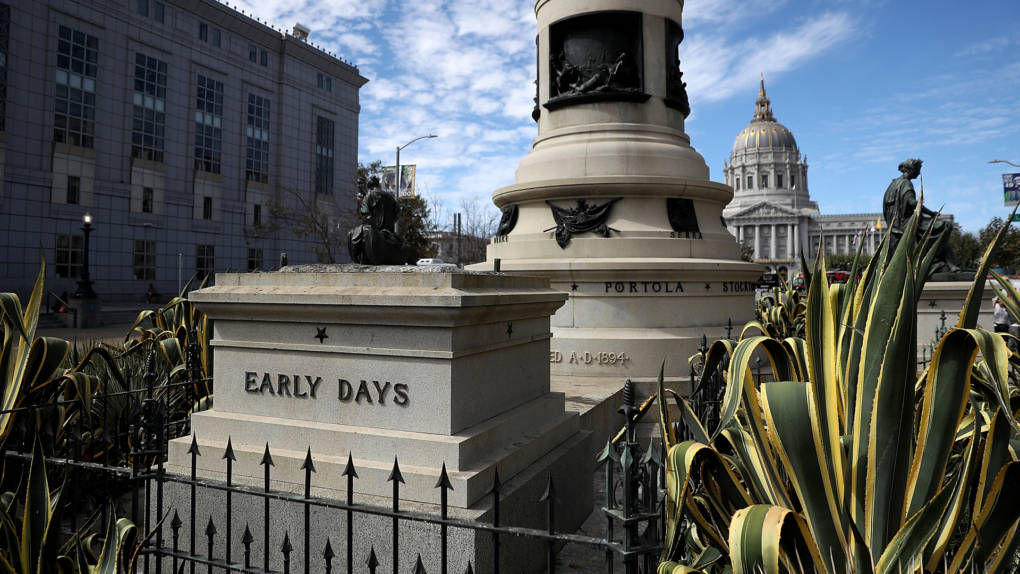
"caption": "A concrete pedestal remains where the 'Early Days' monument used to stand.",
"description": "A concrete pedestal remains where the 'Early Days' monument used to stand.",
"title": "City Of San Francisco Takes Down Controversial Native American Statue",
"credit": "Photo by Justin Sullivan/Getty Images",
"status": "inherit",
"isLoading": false,
"fetchFailed": false
},
"arts_13848293": {
"type": "attachments",
"id": "arts_13848293",
"meta": {
"index": "attachments_1716263798",
"site": "arts",
"id": "13848293",
"found": true
},
"parent": 13848288,
"imgSizes": {
"twentyfourteen-full-width": {
"file": "https://ww2.kqed.org/app/uploads/sites/2/2019/01/Anh-Thang-Dao-Shah-SF-Arts-Commission-senior-racial-equity-and-policy-analyst-and-Ariana-Flores-policy-analyst-at-the-SF-Human-Rights-Commission-e1546911865107-1038x576.jpg",
"width": 1038,
"mimeType": "image/jpeg",
"height": 576
},
"thumbnail": {
"file": "https://ww2.kqed.org/app/uploads/sites/2/2019/01/Anh-Thang-Dao-Shah-SF-Arts-Commission-senior-racial-equity-and-policy-analyst-and-Ariana-Flores-policy-analyst-at-the-SF-Human-Rights-Commission-e1546911865107-160x90.jpg",
"width": 160,
"mimeType": "image/jpeg",
"height": 90
},
"post-thumbnail": {
"file": "https://ww2.kqed.org/app/uploads/sites/2/2019/01/Anh-Thang-Dao-Shah-SF-Arts-Commission-senior-racial-equity-and-policy-analyst-and-Ariana-Flores-policy-analyst-at-the-SF-Human-Rights-Commission-e1546911865107-672x372.jpg",
"width": 672,
"mimeType": "image/jpeg",
"height": 372
},
"kqedFullSize": {
"file": "https://ww2.kqed.org/app/uploads/sites/2/2019/01/Anh-Thang-Dao-Shah-SF-Arts-Commission-senior-racial-equity-and-policy-analyst-and-Ariana-Flores-policy-analyst-at-the-SF-Human-Rights-Commission-e1546911865107.jpg",
"width": 1945,
"height": 1095
},
"large": {
"file": "https://ww2.kqed.org/app/uploads/sites/2/2019/01/Anh-Thang-Dao-Shah-SF-Arts-Commission-senior-racial-equity-and-policy-analyst-and-Ariana-Flores-policy-analyst-at-the-SF-Human-Rights-Commission-e1546911865107-1020x574.jpg",
"width": 1020,
"mimeType": "image/jpeg",
"height": 574
},
"complete_open_graph": {
"file": "https://ww2.kqed.org/app/uploads/sites/2/2019/01/Anh-Thang-Dao-Shah-SF-Arts-Commission-senior-racial-equity-and-policy-analyst-and-Ariana-Flores-policy-analyst-at-the-SF-Human-Rights-Commission-e1546911865107-1200x676.jpg",
"width": 1200,
"mimeType": "image/jpeg",
"height": 676
},
"guest-author-50": {
"file": "https://ww2.kqed.org/app/uploads/sites/2/2019/01/Anh-Thang-Dao-Shah-SF-Arts-Commission-senior-racial-equity-and-policy-analyst-and-Ariana-Flores-policy-analyst-at-the-SF-Human-Rights-Commission-e1546911865107-50x50.jpg",
"width": 50,
"mimeType": "image/jpeg",
"height": 50
},
"guest-author-96": {
"file": "https://ww2.kqed.org/app/uploads/sites/2/2019/01/Anh-Thang-Dao-Shah-SF-Arts-Commission-senior-racial-equity-and-policy-analyst-and-Ariana-Flores-policy-analyst-at-the-SF-Human-Rights-Commission-e1546911865107-96x96.jpg",
"width": 96,
"mimeType": "image/jpeg",
"height": 96
},
"medium": {
"file": "https://ww2.kqed.org/app/uploads/sites/2/2019/01/Anh-Thang-Dao-Shah-SF-Arts-Commission-senior-racial-equity-and-policy-analyst-and-Ariana-Flores-policy-analyst-at-the-SF-Human-Rights-Commission-e1546911865107-800x450.jpg",
"width": 800,
"mimeType": "image/jpeg",
"height": 450
},
"guest-author-64": {
"file": "https://ww2.kqed.org/app/uploads/sites/2/2019/01/Anh-Thang-Dao-Shah-SF-Arts-Commission-senior-racial-equity-and-policy-analyst-and-Ariana-Flores-policy-analyst-at-the-SF-Human-Rights-Commission-e1546911865107-64x64.jpg",
"width": 64,
"mimeType": "image/jpeg",
"height": 64
},
"guest-author-32": {
"file": "https://ww2.kqed.org/app/uploads/sites/2/2019/01/Anh-Thang-Dao-Shah-SF-Arts-Commission-senior-racial-equity-and-policy-analyst-and-Ariana-Flores-policy-analyst-at-the-SF-Human-Rights-Commission-e1546911865107-32x32.jpg",
"width": 32,
"mimeType": "image/jpeg",
"height": 32
},
"full-width": {
"file": "https://ww2.kqed.org/app/uploads/sites/2/2019/01/Anh-Thang-Dao-Shah-SF-Arts-Commission-senior-racial-equity-and-policy-analyst-and-Ariana-Flores-policy-analyst-at-the-SF-Human-Rights-Commission-e1546911865107-1920x1081.jpg",
"width": 1920,
"mimeType": "image/jpeg",
"height": 1081
},
"detail": {
"file": "https://ww2.kqed.org/app/uploads/sites/2/2019/01/Anh-Thang-Dao-Shah-SF-Arts-Commission-senior-racial-equity-and-policy-analyst-and-Ariana-Flores-policy-analyst-at-the-SF-Human-Rights-Commission-e1546911865107-150x150.jpg",
"width": 150,
"mimeType": "image/jpeg",
"height": 150
},
"medium_large": {
"file": "https://ww2.kqed.org/app/uploads/sites/2/2019/01/Anh-Thang-Dao-Shah-SF-Arts-Commission-senior-racial-equity-and-policy-analyst-and-Ariana-Flores-policy-analyst-at-the-SF-Human-Rights-Commission-e1546911865107-768x432.jpg",
"width": 768,
"mimeType": "image/jpeg",
"height": 432
},
"guest-author-128": {
"file": "https://ww2.kqed.org/app/uploads/sites/2/2019/01/Anh-Thang-Dao-Shah-SF-Arts-Commission-senior-racial-equity-and-policy-analyst-and-Ariana-Flores-policy-analyst-at-the-SF-Human-Rights-Commission-e1546911865107-128x128.jpg",
"width": 128,
"mimeType": "image/jpeg",
"height": 128
}
},
"publishDate": 1546911758,
"modified": 1546911882,
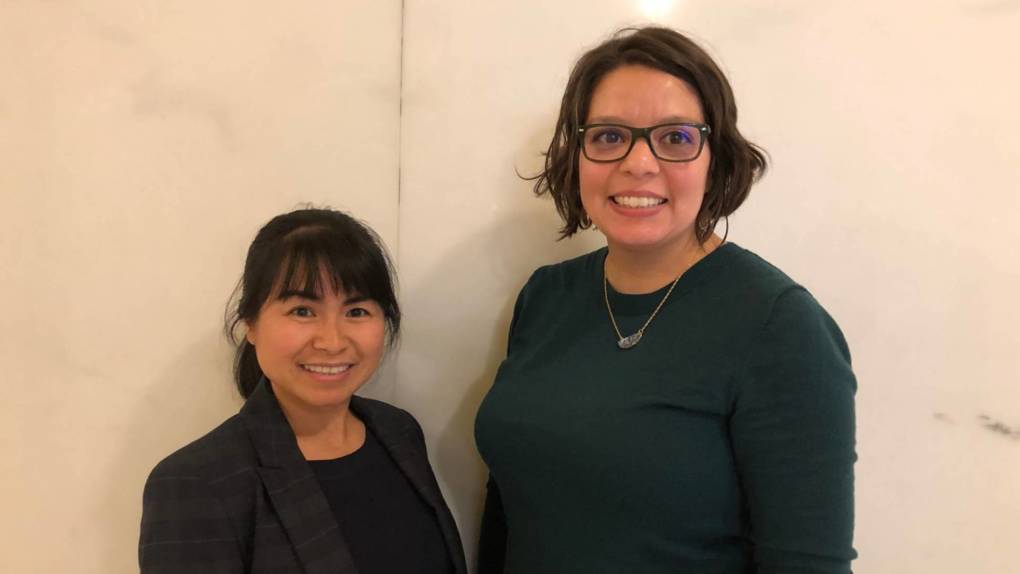
"caption": "Anh Thang Dao-Shah, SF Arts Commission senior racial equity and policy analyst (left) and Ariana Flores, policy analyst at the San Francisco Human Rights Commission. Pictured together at San Francisco City Hall on Jan. 7, 2019.",
"description": null,
"title": "Anh Thang Dao-Shah, SF Arts Commission senior racial equity and policy analyst and Ariana Flores, policy analyst at the SF Human Rights Commission",
"credit": "Chloe Veltman/KQED",
"status": "inherit",
"isLoading": false,
"fetchFailed": false
},
"arts_13830020": {
"type": "attachments",
"id": "arts_13830020",
"meta": {
"index": "attachments_1716263798",
"site": "arts",
"id": "13830020",
"found": true
},
"parent": 13830017,
"imgSizes": {
"small": {
"file": "https://ww2.kqed.org/app/uploads/sites/2/2018/04/RS26290_IMG_2292-qut-520x347.jpg",
"width": 520,
"mimeType": "image/jpeg",
"height": 347
},
"twentyfourteen-full-width": {
"file": "https://ww2.kqed.org/app/uploads/sites/2/2018/04/RS26290_IMG_2292-qut-1038x576.jpg",
"width": 1038,
"mimeType": "image/jpeg",
"height": 576
},
"thumbnail": {
"file": "https://ww2.kqed.org/app/uploads/sites/2/2018/04/RS26290_IMG_2292-qut-160x107.jpg",
"width": 160,
"mimeType": "image/jpeg",
"height": 107
},
"fd-sm": {
"file": "https://ww2.kqed.org/app/uploads/sites/2/2018/04/RS26290_IMG_2292-qut-960x640.jpg",
"width": 960,
"mimeType": "image/jpeg",
"height": 640
},
"post-thumbnail": {
"file": "https://ww2.kqed.org/app/uploads/sites/2/2018/04/RS26290_IMG_2292-qut-672x372.jpg",
"width": 672,
"mimeType": "image/jpeg",
"height": 372
},
"xsmall": {
"file": "https://ww2.kqed.org/app/uploads/sites/2/2018/04/RS26290_IMG_2292-qut-375x250.jpg",
"width": 375,
"mimeType": "image/jpeg",
"height": 250
},
"kqedFullSize": {
"file": "https://ww2.kqed.org/app/uploads/sites/2/2018/04/RS26290_IMG_2292-qut.jpg",
"width": 1920,
"height": 1280
},
"large": {
"file": "https://ww2.kqed.org/app/uploads/sites/2/2018/04/RS26290_IMG_2292-qut-1020x680.jpg",
"width": 1020,
"mimeType": "image/jpeg",
"height": 680
},
"xlarge": {
"file": "https://ww2.kqed.org/app/uploads/sites/2/2018/04/RS26290_IMG_2292-qut-1180x787.jpg",
"width": 1180,
"mimeType": "image/jpeg",
"height": 787
},
"complete_open_graph": {
"file": "https://ww2.kqed.org/app/uploads/sites/2/2018/04/RS26290_IMG_2292-qut-1200x800.jpg",
"width": 1200,
"mimeType": "image/jpeg",
"height": 800
},
"guest-author-50": {
"file": "https://ww2.kqed.org/app/uploads/sites/2/2018/04/RS26290_IMG_2292-qut-50x50.jpg",
"width": 50,
"mimeType": "image/jpeg",
"height": 50
},
"guest-author-96": {
"file": "https://ww2.kqed.org/app/uploads/sites/2/2018/04/RS26290_IMG_2292-qut-96x96.jpg",
"width": 96,
"mimeType": "image/jpeg",
"height": 96
},
"medium": {
"file": "https://ww2.kqed.org/app/uploads/sites/2/2018/04/RS26290_IMG_2292-qut-800x533.jpg",
"width": 800,
"mimeType": "image/jpeg",
"height": 533
},
"guest-author-64": {
"file": "https://ww2.kqed.org/app/uploads/sites/2/2018/04/RS26290_IMG_2292-qut-64x64.jpg",
"width": 64,
"mimeType": "image/jpeg",
"height": 64
},
"guest-author-32": {
"file": "https://ww2.kqed.org/app/uploads/sites/2/2018/04/RS26290_IMG_2292-qut-32x32.jpg",
"width": 32,
"mimeType": "image/jpeg",
"height": 32
},
"fd-lrg": {
"file": "https://ww2.kqed.org/app/uploads/sites/2/2018/04/RS26290_IMG_2292-qut-1920x1280.jpg",
"width": 1920,
"mimeType": "image/jpeg",
"height": 1280
},
"fd-med": {
"file": "https://ww2.kqed.org/app/uploads/sites/2/2018/04/RS26290_IMG_2292-qut-1180x787.jpg",
"width": 1180,
"mimeType": "image/jpeg",
"height": 787
},
"full-width": {
"file": "https://ww2.kqed.org/app/uploads/sites/2/2018/04/RS26290_IMG_2292-qut-1920x1280.jpg",
"width": 1920,
"mimeType": "image/jpeg",
"height": 1280
},
"detail": {
"file": "https://ww2.kqed.org/app/uploads/sites/2/2018/04/RS26290_IMG_2292-qut-150x150.jpg",
"width": 150,
"mimeType": "image/jpeg",
"height": 150
},
"medium_large": {
"file": "https://ww2.kqed.org/app/uploads/sites/2/2018/04/RS26290_IMG_2292-qut-768x512.jpg",
"width": 768,
"mimeType": "image/jpeg",
"height": 512
},
"guest-author-128": {
"file": "https://ww2.kqed.org/app/uploads/sites/2/2018/04/RS26290_IMG_2292-qut-128x128.jpg",
"width": 128,
"mimeType": "image/jpeg",
"height": 128
},
"xxsmall": {
"file": "https://ww2.kqed.org/app/uploads/sites/2/2018/04/RS26290_IMG_2292-qut-240x160.jpg",
"width": 240,
"mimeType": "image/jpeg",
"height": 160
}
},
"publishDate": 1524245361,
"modified": 1524245420,
"caption": "The Pioneer Monument is between the Main Library and the Asian Art Museum in the Civic Center.",
"description": "The Pioneer Monument is between the Main Library and the Asian Art Museum in the Civic Center.",
"title": "RS26290_IMG_2292-qut",
"credit": "Arash Malekzadeh/KQED",
"status": "inherit",
"isLoading": false,
"fetchFailed": false
},
"arts_13828614": {
"type": "attachments",
"id": "arts_13828614",
"meta": {
"index": "attachments_1716263798",
"site": "arts",
"id": "13828614",
"found": true
},
"parent": 13828581,
"imgSizes": {
"small": {
"file": "https://ww2.kqed.org/app/uploads/sites/2/2018/04/Coupon_COVER-520x293.jpg",
"width": 520,
"mimeType": "image/jpeg",
"height": 293
},
"thumbnail": {
"file": "https://ww2.kqed.org/app/uploads/sites/2/2018/04/Coupon_COVER-160x90.jpg",
"width": 160,
"mimeType": "image/jpeg",
"height": 90
},
"post-thumbnail": {
"file": "https://ww2.kqed.org/app/uploads/sites/2/2018/04/Coupon_COVER-672x372.jpg",
"width": 672,
"mimeType": "image/jpeg",
"height": 372
},
"xsmall": {
"file": "https://ww2.kqed.org/app/uploads/sites/2/2018/04/Coupon_COVER-375x211.jpg",
"width": 375,
"mimeType": "image/jpeg",
"height": 211
},
"kqedFullSize": {
"file": "https://ww2.kqed.org/app/uploads/sites/2/2018/04/Coupon_COVER.jpg",
"width": 830,
"height": 467
},
"guest-author-50": {
"file": "https://ww2.kqed.org/app/uploads/sites/2/2018/04/Coupon_COVER-50x50.jpg",
"width": 50,
"mimeType": "image/jpeg",
"height": 50
},
"guest-author-96": {
"file": "https://ww2.kqed.org/app/uploads/sites/2/2018/04/Coupon_COVER-96x96.jpg",
"width": 96,
"mimeType": "image/jpeg",
"height": 96
},
"medium": {
"file": "https://ww2.kqed.org/app/uploads/sites/2/2018/04/Coupon_COVER-800x450.jpg",
"width": 800,
"mimeType": "image/jpeg",
"height": 450
},
"guest-author-64": {
"file": "https://ww2.kqed.org/app/uploads/sites/2/2018/04/Coupon_COVER-64x64.jpg",
"width": 64,
"mimeType": "image/jpeg",
"height": 64
},
"guest-author-32": {
"file": "https://ww2.kqed.org/app/uploads/sites/2/2018/04/Coupon_COVER-32x32.jpg",
"width": 32,
"mimeType": "image/jpeg",
"height": 32
},
"detail": {
"file": "https://ww2.kqed.org/app/uploads/sites/2/2018/04/Coupon_COVER-150x150.jpg",
"width": 150,
"mimeType": "image/jpeg",
"height": 150
},
"medium_large": {
"file": "https://ww2.kqed.org/app/uploads/sites/2/2018/04/Coupon_COVER-768x432.jpg",
"width": 768,
"mimeType": "image/jpeg",
"height": 432
},
"guest-author-128": {
"file": "https://ww2.kqed.org/app/uploads/sites/2/2018/04/Coupon_COVER-128x128.jpg",
"width": 128,
"mimeType": "image/jpeg",
"height": 128
},
"xxsmall": {
"file": "https://ww2.kqed.org/app/uploads/sites/2/2018/04/Coupon_COVER-240x135.jpg",
"width": 240,
"mimeType": "image/jpeg",
"height": 135
}
},
"publishDate": 1522822260,
"modified": 1522822322,
"caption": "A housing lottery ticket Ingrid Rojas Contreras and Jeremiah Barber received when applying for affordable housing in San Francisco. The artist couple have lost count of the number of times they reapplied to the lottery.",
"description": "A housing lottery ticket Ingrid Rojas Contreras and Jeremiah Barber received when applying for affordable housing in San Francisco. The artist couple have lost count of the number of times they reapplied to the lottery.",
"title": "Coupon_COVER",
"credit": "Courtesy of Ingrid Rojas Contreras",
"status": "inherit",
"isLoading": false,
"fetchFailed": false
},
"arts_13810337": {
"type": "attachments",
"id": "arts_13810337",
"meta": {
"index": "attachments_1716263798",
"site": "arts",
"id": "13810337",
"found": true
},
"parent": 13810327,
"imgSizes": {
"small": {
"file": "https://ww2.kqed.org/app/uploads/sites/2/2017/10/Pioneer-statue-520x296.jpg",
"width": 520,
"mimeType": "image/jpeg",
"height": 296
},
"thumbnail": {
"file": "https://ww2.kqed.org/app/uploads/sites/2/2017/10/Pioneer-statue-160x91.jpg",
"width": 160,
"mimeType": "image/jpeg",
"height": 91
},
"post-thumbnail": {
"file": "https://ww2.kqed.org/app/uploads/sites/2/2017/10/Pioneer-statue-672x372.jpg",
"width": 672,
"mimeType": "image/jpeg",
"height": 372
},
"xsmall": {
"file": "https://ww2.kqed.org/app/uploads/sites/2/2017/10/Pioneer-statue-375x213.jpg",
"width": 375,
"mimeType": "image/jpeg",
"height": 213
},
"kqedFullSize": {
"file": "https://ww2.kqed.org/app/uploads/sites/2/2017/10/Pioneer-statue.jpg",
"width": 791,
"height": 450
},
"guest-author-50": {
"file": "https://ww2.kqed.org/app/uploads/sites/2/2017/10/Pioneer-statue-50x50.jpg",
"width": 50,
"mimeType": "image/jpeg",
"height": 50
},
"guest-author-96": {
"file": "https://ww2.kqed.org/app/uploads/sites/2/2017/10/Pioneer-statue-96x96.jpg",
"width": 96,
"mimeType": "image/jpeg",
"height": 96
},
"guest-author-64": {
"file": "https://ww2.kqed.org/app/uploads/sites/2/2017/10/Pioneer-statue-64x64.jpg",
"width": 64,
"mimeType": "image/jpeg",
"height": 64
},
"guest-author-32": {
"file": "https://ww2.kqed.org/app/uploads/sites/2/2017/10/Pioneer-statue-32x32.jpg",
"width": 32,
"mimeType": "image/jpeg",
"height": 32
},
"detail": {
"file": "https://ww2.kqed.org/app/uploads/sites/2/2017/10/Pioneer-statue-150x150.jpg",
"width": 150,
"mimeType": "image/jpeg",
"height": 150
},
"medium_large": {
"file": "https://ww2.kqed.org/app/uploads/sites/2/2017/10/Pioneer-statue-768x437.jpg",
"width": 768,
"mimeType": "image/jpeg",
"height": 437
},
"guest-author-128": {
"file": "https://ww2.kqed.org/app/uploads/sites/2/2017/10/Pioneer-statue-128x128.jpg",
"width": 128,
"mimeType": "image/jpeg",
"height": 128
},
"xxsmall": {
"file": "https://ww2.kqed.org/app/uploads/sites/2/2017/10/Pioneer-statue-240x137.jpg",
"width": 240,
"mimeType": "image/jpeg",
"height": 137
}
},
"publishDate": 1507073883,
"modified": 1507073989,
"caption": "The Pioneer Monument in San Francisco's Civic Center, photographed on Aug. 22, 2017",
"description": "The Pioneer Monument in San Francisco's Civic Center, photographed on Aug. 22, 2017",
"title": "Pioneer statue",
"credit": "Arash Malekzadeh/KQED",
"status": "inherit",
"isLoading": false,
"fetchFailed": false
},
"arts_13809447": {
"type": "attachments",
"id": "arts_13809447",
"meta": {
"index": "attachments_1716263798",
"site": "arts",
"id": "13809447",
"found": true
},
"parent": 13809446,
"imgSizes": {
"small": {
"file": "https://ww2.kqed.org/app/uploads/sites/2/2017/09/ABADÁ-Capoiera_at_SF_Arts_Advocacy_Day_20170321-2560-520x326.jpg",
"width": 520,
"mimeType": "image/jpeg",
"height": 326
},
"twentyfourteen-full-width": {
"file": "https://ww2.kqed.org/app/uploads/sites/2/2017/09/ABADÁ-Capoiera_at_SF_Arts_Advocacy_Day_20170321-2560-1038x576.jpg",
"width": 1038,
"mimeType": "image/jpeg",
"height": 576
},
"thumbnail": {
"file": "https://ww2.kqed.org/app/uploads/sites/2/2017/09/ABADÁ-Capoiera_at_SF_Arts_Advocacy_Day_20170321-2560-160x100.jpg",
"width": 160,
"mimeType": "image/jpeg",
"height": 100
},
"fd-sm": {
"file": "https://ww2.kqed.org/app/uploads/sites/2/2017/09/ABADÁ-Capoiera_at_SF_Arts_Advocacy_Day_20170321-2560-960x602.jpg",
"width": 960,
"mimeType": "image/jpeg",
"height": 602
},
"post-thumbnail": {
"file": "https://ww2.kqed.org/app/uploads/sites/2/2017/09/ABADÁ-Capoiera_at_SF_Arts_Advocacy_Day_20170321-2560-672x372.jpg",
"width": 672,
"mimeType": "image/jpeg",
"height": 372
},
"xsmall": {
"file": "https://ww2.kqed.org/app/uploads/sites/2/2017/09/ABADÁ-Capoiera_at_SF_Arts_Advocacy_Day_20170321-2560-375x235.jpg",
"width": 375,
"mimeType": "image/jpeg",
"height": 235
},
"kqedFullSize": {
"file": "https://ww2.kqed.org/app/uploads/sites/2/2017/09/ABADÁ-Capoiera_at_SF_Arts_Advocacy_Day_20170321-2560.jpg",
"width": 1280,
"height": 802
},
"large": {
"file": "https://ww2.kqed.org/app/uploads/sites/2/2017/09/ABADÁ-Capoiera_at_SF_Arts_Advocacy_Day_20170321-2560-1020x639.jpg",
"width": 1020,
"mimeType": "image/jpeg",
"height": 639
},
"xlarge": {
"file": "https://ww2.kqed.org/app/uploads/sites/2/2017/09/ABADÁ-Capoiera_at_SF_Arts_Advocacy_Day_20170321-2560-1180x739.jpg",
"width": 1180,
"mimeType": "image/jpeg",
"height": 739
},
"guest-author-50": {
"file": "https://ww2.kqed.org/app/uploads/sites/2/2017/09/ABADÁ-Capoiera_at_SF_Arts_Advocacy_Day_20170321-2560-50x50.jpg",
"width": 50,
"mimeType": "image/jpeg",
"height": 50
},
"guest-author-96": {
"file": "https://ww2.kqed.org/app/uploads/sites/2/2017/09/ABADÁ-Capoiera_at_SF_Arts_Advocacy_Day_20170321-2560-96x96.jpg",
"width": 96,
"mimeType": "image/jpeg",
"height": 96
},
"medium": {
"file": "https://ww2.kqed.org/app/uploads/sites/2/2017/09/ABADÁ-Capoiera_at_SF_Arts_Advocacy_Day_20170321-2560-800x501.jpg",
"width": 800,
"mimeType": "image/jpeg",
"height": 501
},
"guest-author-64": {
"file": "https://ww2.kqed.org/app/uploads/sites/2/2017/09/ABADÁ-Capoiera_at_SF_Arts_Advocacy_Day_20170321-2560-64x64.jpg",
"width": 64,
"mimeType": "image/jpeg",
"height": 64
},
"guest-author-32": {
"file": "https://ww2.kqed.org/app/uploads/sites/2/2017/09/ABADÁ-Capoiera_at_SF_Arts_Advocacy_Day_20170321-2560-32x32.jpg",
"width": 32,
"mimeType": "image/jpeg",
"height": 32
},
"fd-med": {
"file": "https://ww2.kqed.org/app/uploads/sites/2/2017/09/ABADÁ-Capoiera_at_SF_Arts_Advocacy_Day_20170321-2560-1180x739.jpg",
"width": 1180,
"mimeType": "image/jpeg",
"height": 739
},
"detail": {
"file": "https://ww2.kqed.org/app/uploads/sites/2/2017/09/ABADÁ-Capoiera_at_SF_Arts_Advocacy_Day_20170321-2560-150x150.jpg",
"width": 150,
"mimeType": "image/jpeg",
"height": 150
},
"medium_large": {
"file": "https://ww2.kqed.org/app/uploads/sites/2/2017/09/ABADÁ-Capoiera_at_SF_Arts_Advocacy_Day_20170321-2560-768x481.jpg",
"width": 768,
"mimeType": "image/jpeg",
"height": 481
},
"guest-author-128": {
"file": "https://ww2.kqed.org/app/uploads/sites/2/2017/09/ABADÁ-Capoiera_at_SF_Arts_Advocacy_Day_20170321-2560-128x128.jpg",
"width": 128,
"mimeType": "image/jpeg",
"height": 128
},
"xxsmall": {
"file": "https://ww2.kqed.org/app/uploads/sites/2/2017/09/ABADÁ-Capoiera_at_SF_Arts_Advocacy_Day_20170321-2560-240x150.jpg",
"width": 240,
"mimeType": "image/jpeg",
"height": 150
}
},
"publishDate": 1506357851,
"modified": 1506476981,
"caption": "ABADÁ-Capoiera performs on the steps of City Hall during San Francisco Arts Advocacy Day in March.",
"description": null,
"title": "Arts Advocacy Day 2017",
"credit": "Pax Ahimsa Gethen / funcrunch.org",
"status": "inherit",
"isLoading": false,
"fetchFailed": false
}
},
"audioPlayerReducer": {
"postId": "stream_live",
"isPaused": true,
"isPlaying": false,
"pfsActive": false,
"pledgeModalIsOpen": true,
"playerDrawerIsOpen": false,
"liveAudioPlayStartedAt": 0,
"liveAudioPlayContext": ""
},
"authorsReducer": {
"byline_arts_13830017": {
"type": "authors",
"id": "byline_arts_13830017",
"meta": {
"override": true
},
"slug": "byline_arts_13830017",
"name": "\u003cstrong>Paul Elias\u003c/strong>\u003c/br>Associated Press",
"isLoading": false
},
"cveltman": {
"type": "authors",
"id": "8608",
"meta": {
"index": "authors_1716337520",
"id": "8608",
"found": true
},
"name": "Chloe Veltman",
"firstName": "Chloe",
"lastName": "Veltman",
"slug": "cveltman",
"email": "cveltman@kqed.org",
"display_author_email": true,
"staff_mastheads": [],
"title": "Arts and Culture Reporter",
"bio": "Chloe Veltman is a former arts and culture reporter for KQED. Prior to joining the organization, she launched and led the arts bureau at Colorado Public Radio, served as the Bay Area's culture columnist for the New York Times, and was the founder, host and executive producer of VoiceBox, a national award-winning weekly podcast/radio show and live events series all about the human voice. Chloe is the recipient of numerous prizes, grants and fellowships including a Webby Award for her work on interactive storytelling, both the John S Knight Journalism Fellowship and Humanities Center Fellowship at Stanford University, the Sundance Arts Writing Fellowship and a Library of Congress Research Fellowship. She is the author of the book \"On Acting\" and has appeared as a guest lecturer at Yale University and the San Francisco Conservatory of Music among other institutions. She holds a BA in english literature from King's College, Cambridge, and a Masters in Dramaturgy from the Central School of Speech and Drama/Harvard Institute for Advanced Theater Training.\r\n\u003ca href=\"https://www.chloeveltman.com\">www.chloeveltman.com\u003c/a>",
"avatar": "https://secure.gravatar.com/avatar/55403394b00a1ddab683952c2eb2cf85?s=600&d=blank&r=g",
"twitter": "chloeveltman",
"facebook": null,
"instagram": null,
"linkedin": null,
"sites": [
{
"site": "arts",
"roles": []
},
{
"site": "news",
"roles": [
"author"
]
},
{
"site": "pop",
"roles": [
"editor"
]
},
{
"site": "science",
"roles": []
}
],
"headData": {
"title": "Chloe Veltman | KQED",
"description": "Arts and Culture Reporter",
"ogImgSrc": "https://secure.gravatar.com/avatar/55403394b00a1ddab683952c2eb2cf85?s=600&d=blank&r=g",
"twImgSrc": "https://secure.gravatar.com/avatar/55403394b00a1ddab683952c2eb2cf85?s=600&d=blank&r=g"
},
"isLoading": false,
"link": "/author/cveltman"
},
"slefebvre": {
"type": "authors",
"id": "11091",
"meta": {
"index": "authors_1716337520",
"id": "11091",
"found": true
},
"name": "Sam Lefebvre",
"firstName": "Sam",
"lastName": "Lefebvre",
"slug": "slefebvre",
"email": "sdlefebvre@gmail.com",
"display_author_email": false,
"staff_mastheads": [],
"title": null,
"bio": "Sam Lefebvre is an award-winning reporter at KQED Arts. He has worked as an editor and columnist at the \u003cem>East Bay Express\u003c/em>, \u003cem>SF Weekly \u003c/em>and Impose Magazine, and his journalism and criticism has appeared in \u003cem>The New York Times\u003c/em>, the Guardian and Pitchfork.",
"avatar": "https://secure.gravatar.com/avatar/143b570c3dec13ae74c6aa2369b04fc8?s=600&d=blank&r=g",
"twitter": "Lefebvre_Sam",
"facebook": null,
"instagram": null,
"linkedin": null,
"sites": [
{
"site": "arts",
"roles": [
"editor"
]
},
{
"site": "news",
"roles": [
"author"
]
}
],
"headData": {
"title": "Sam Lefebvre | KQED",
"description": null,
"ogImgSrc": "https://secure.gravatar.com/avatar/143b570c3dec13ae74c6aa2369b04fc8?s=600&d=blank&r=g",
"twImgSrc": "https://secure.gravatar.com/avatar/143b570c3dec13ae74c6aa2369b04fc8?s=600&d=blank&r=g"
},
"isLoading": false,
"link": "/author/slefebvre"
},
"ewirtschafter": {
"type": "authors",
"id": "11259",
"meta": {
"index": "authors_1716337520",
"id": "11259",
"found": true
},
"name": "Eli Wirtschafter",
"firstName": "Eli",
"lastName": "Wirtschafter",
"slug": "ewirtschafter",
"email": "ewirtschafter@KQED.org",
"display_author_email": false,
"staff_mastheads": [],
"title": "KQED Contributor",
"bio": "Eli Wirtschafter is a freelance reporter and producer focusing on transportation, art, and activism. He previously interned with \u003cem>The California Report\u003c/em> and KQED Local News\u003cem>.\u003c/em> Eli is also KALW's transportation reporter, and a graduate of KALW's \u003ca href=\"http://kalw.org/post/enrollment-now-open-kalws-audio-academy#stream/0\" target=\"_blank\" rel=\"noopener noreferrer\">Audio Academy.\u003c/a> Eli's work has been heard on NPR, Here & Now, and BackStory. Find him on Twitter at \u003ca href=\"https://twitter.com/RadioEli\" target=\"_blank\" rel=\"noopener noreferrer\">@RadioEli\u003c/a>.",
"avatar": "https://secure.gravatar.com/avatar/97a5920503f1b1bc629dc0827b971f5d?s=600&d=blank&r=g",
"twitter": "RadioEli",
"facebook": null,
"instagram": null,
"linkedin": null,
"sites": [
{
"site": "arts",
"roles": [
"author"
]
},
{
"site": "news",
"roles": [
"author"
]
},
{
"site": "science",
"roles": [
"author"
]
}
],
"headData": {
"title": "Eli Wirtschafter | KQED",
"description": "KQED Contributor",
"ogImgSrc": "https://secure.gravatar.com/avatar/97a5920503f1b1bc629dc0827b971f5d?s=600&d=blank&r=g",
"twImgSrc": "https://secure.gravatar.com/avatar/97a5920503f1b1bc629dc0827b971f5d?s=600&d=blank&r=g"
},
"isLoading": false,
"link": "/author/ewirtschafter"
},
"jbote": {
"type": "authors",
"id": "11371",
"meta": {
"index": "authors_1716337520",
"id": "11371",
"found": true
},
"name": "Joshua Bote",
"firstName": "Joshua",
"lastName": "Bote",
"slug": "jbote",
"email": "jbote@kqed.org",
"display_author_email": false,
"staff_mastheads": [],
"title": null,
"bio": "\u003cp class=\"p1\">Joshua Bote is an intern for KQED Arts. A senior at UC Berkeley, Joshua previously served as the Arts & Entertainment Editor at \u003ci>The Daily Californian\u003c/i>, UC Berkeley’s independently-run student newspaper. His work has been published in the \u003cem>East Bay Express.\u003c/em>\u003c/p>\r\n\u003cp class=\"p1\">He’s deeply enamored with Twitter culture, Carly Rae Jepsen, and love-oriented podcasts. He's also slowly learning to appreciate bad award shows. Follow him on Twitter \u003ca href=\"http://twitter.com/joshuaboat\">@joshuaboat\u003c/a>.\u003c/p>",
"avatar": "https://secure.gravatar.com/avatar/f060759cb27bc8b191022334ab99fc5a?s=600&d=blank&r=g",
"twitter": null,
"facebook": null,
"instagram": null,
"linkedin": null,
"sites": [
{
"site": "arts",
"roles": [
"author"
]
}
],
"headData": {
"title": "Joshua Bote | KQED",
"description": null,
"ogImgSrc": "https://secure.gravatar.com/avatar/f060759cb27bc8b191022334ab99fc5a?s=600&d=blank&r=g",
"twImgSrc": "https://secure.gravatar.com/avatar/f060759cb27bc8b191022334ab99fc5a?s=600&d=blank&r=g"
},
"isLoading": false,
"link": "/author/jbote"
}
},
"pagesReducer": {
"arts_tag_san-francisco-arts-commission": {
"type": "terms",
"id": "arts_1300",
"meta": {
"index": "terms_1716263798",
"site": "arts",
"id": "1300",
"score": 10.400432
},
"featImg": null,
"name": "San Francisco Arts Commission",
"description": null,
"taxonomy": "tag",
"headData": {
"twImgId": null,
"twTitle": null,
"ogTitle": null,
"ogImgId": null,
"twDescription": null,
"description": null,
"title": "San Francisco Arts Commission Archives | KQED Arts",
"ogDescription": null
},
"ttid": 1312,
"slug": "san-francisco-arts-commission",
"isLoading": false,
"title": "San Francisco Arts Commission",
"pageMeta": {
"site": "arts",
"WpPageTemplate": "page-topic-editorial",
"currentPage": 2
},
"blocks": [
{
"blockName": "kqed/post-list",
"attrs": {
"layout": "cardArticle2",
"query": "posts/arts?tag=san-francisco-arts-commission",
"seeMore": false,
"paginated": true,
"page": 2
}
},
{
"blockName": "kqed/ad"
}
]
}
},
"pfsSessionReducer": {},
"postsReducer": {
"stream_live": {
"type": "live",
"id": "stream_live",
"audioUrl": "https://streams.kqed.org/kqedradio",
"title": "Live Stream",
"excerpt": "Live Stream information currently unavailable.",
"link": "/radio",
"featImg": "",
"label": {
"name": "KQED Live",
"link": "/"
}
},
"stream_kqedNewscast": {
"type": "posts",
"id": "stream_kqedNewscast",
"audioUrl": "https://www.kqed.org/.stream/anon/radio/RDnews/newscast.mp3?_=1",
"title": "KQED Newscast",
"featImg": "",
"label": {
"name": "88.5 FM",
"link": "/"
}
},
"arts_13859733": {
"type": "posts",
"id": "arts_13859733",
"meta": {
"index": "posts_1716263798",
"site": "arts",
"id": "13859733",
"score": null,
"sort": [
1560793676000
]
},
"parent": 0,
"labelTerm": {
"site": "arts"
},
"blocks": [],
"publishDate": 1560793676,
"format": "standard",
"title": "SF Had Right to Remove 'Early Days' Statue Deemed Racist, Judge Says",
"headTitle": "SF Had Right to Remove ‘Early Days’ Statue Deemed Racist, Judge Says | KQED",
"content": "\u003cp>A San Francisco Superior Court judge last week upheld the San Francisco Art Commission’s decision last year to remove the controversial Civic Center Plaza statue “Early Days,” rejecting a lawsuit alleging that the commission was “motivated by prejudice against people of European heritage and culture,” to unlawfully “desecrate … a piece of fine art.”\u003c/p>\n\u003cp>The plaintiffs alleged the arts commission illegally wasted public resources by removing the art solely on the justification that “it was racist and painful to Native Americans and those who shared the interpretation of it being racist and that its existence represented white supremacy.” \u003c/p>\n\u003cp>But Judge Cynthia Ming-mei Lee called that reason enough, citing city policies allowing for the removal of public art following “‘significant adverse public reaction over an extended period of time (five years or more),’” she wrote. \u003c/p>\n\u003cp>“Accordingly the SFAC had discretion to remove the statue based on racism and the Court may not interfere with its decision.” \u003c/p>\n\u003cfigure id=\"attachment_13840756\" class=\"wp-caption aligncenter\" style=\"max-width: 800px\">\u003cimg loading=\"lazy\" decoding=\"async\" src=\"https://ww2.kqed.org/arts/wp-content/uploads/sites/2/2018/09/EarlyDaysStatue-800x450.jpg\" alt=\"'Early Days,' part of the Pioneer Monument in San Francisco's Civic Center, will be removed in the wake of a Sept. 12 meeting at City Hall.\" width=\"800\" height=\"450\" class=\"size-medium wp-image-13840756\" srcset=\"https://cdn.kqed.org/wp-content/uploads/sites/2/2018/09/EarlyDaysStatue-800x450.jpg 800w, https://cdn.kqed.org/wp-content/uploads/sites/2/2018/09/EarlyDaysStatue-160x90.jpg 160w, https://cdn.kqed.org/wp-content/uploads/sites/2/2018/09/EarlyDaysStatue-768x432.jpg 768w, https://cdn.kqed.org/wp-content/uploads/sites/2/2018/09/EarlyDaysStatue-1020x574.jpg 1020w, https://cdn.kqed.org/wp-content/uploads/sites/2/2018/09/EarlyDaysStatue-1200x675.jpg 1200w, https://cdn.kqed.org/wp-content/uploads/sites/2/2018/09/EarlyDaysStatue.jpg 1920w, https://cdn.kqed.org/wp-content/uploads/sites/2/2018/09/EarlyDaysStatue-1180x664.jpg 1180w, https://cdn.kqed.org/wp-content/uploads/sites/2/2018/09/EarlyDaysStatue-960x540.jpg 960w, https://cdn.kqed.org/wp-content/uploads/sites/2/2018/09/EarlyDaysStatue-240x135.jpg 240w, https://cdn.kqed.org/wp-content/uploads/sites/2/2018/09/EarlyDaysStatue-375x211.jpg 375w, https://cdn.kqed.org/wp-content/uploads/sites/2/2018/09/EarlyDaysStatue-520x293.jpg 520w\" sizes=\"(max-width: 800px) 100vw, 800px\">\u003cfigcaption class=\"wp-caption-text\">‘Early Days,’ part of the Pioneer Monument in San Francisco’s Civic Center, will be removed in the wake of a Sept. 12 meeting at City Hall. \u003ccite>(Sam Lefebvre/KQED)\u003c/cite>\u003c/figcaption>\u003c/figure>\n\u003cp>Tom DeCaigny, San Francisco’s cultural affairs director and a defendant in the lawsuit, said in a statement the “decision affirms the Arts Commission’s authority to remove racist imagery from the public realm.” \u003c/p>\n\u003cp>[ad fullwidth]\u003c/p>\n\u003cp>He continued, “This is an important victory for the Native American community and their allies who have fought for many years to see this historically inaccurate and racist depiction of indigenous people removed.”\u003c/p>\n\u003cp>The arts commission sought to remove “Early Days” from the Pioneer Monument sculptural group near City Hall after determining its depiction of a Native American kneeling beneath a Spanish vaquero and missionary was degrading and historically inaccurate. \u003c/p>\n\u003cp>Activists opposed the statue for decades, and calls for its removal escalated in 2017 amid a national movement against Confederate statues and other racist monuments. The arts commission voted to replace the “racist and disrespectful sculpture” with a didactic plaque. [aside postID=arts_13840748]\u003c/p>\n\u003cp>But Petaluma attorney Frear Stephen Schmid challenged the decision before the San Francisco Board of Appeals, calling its removal “tantamount to destruction” and akin to “taking the lips off the Mona Lisa.” The board ultimately rejected his argument, and the statue was removed last September.\u003c/p>\n\u003cp>Schmid, a white man, filed the lawsuit last November claiming the arts commission was “ethically [sic] and racially motivated in favor of one racial/ethnic group, Native Americans,” hence violating his civil rights by “by vilifying the artistic work, the European Catholic priest, [and] the Vaquero[.]” \u003c/p>\n\u003cp>But Schmid and co-plaintiff Patricia Briggs, the judge wrote, lacked standing to sue on civil-rights grounds because they “are not the artists of Pioneer Monument,” and called their claim that the statue’s removal was a violent act “unsupported by legal or statutory authority.” \u003c/p>\n\u003cp>Nor was the judge persuaded by plaintiffs’ argument that the statue’s removal violated the charitable and public trust doctrines, pointing out that the latter only applies to “the duty of the state to protect the people’s common heritage of streams, lakes, marshlands and tidelands[.]” \u003c/p>\n\u003cp>Schmid could not be reached for comment. \u003c/p>\n\u003cp>\u003c/p>\n\u003cp>Last October, the San Francisco Board of Supervisors \u003ca href=\"https://www.kqed.org/news/11695768/s-f-moves-toward-requiring-more-representation-of-women-in-public-spaces\">voted to approve a measure\u003c/a> requiring broader representation of women in statues and other artworks on city-owned property. \u003c/p>\n\n",
"stats": {
"hasVideo": false,
"hasChartOrMap": false,
"hasAudio": false,
"hasPolis": false,
"wordCount": 599,
"hasGoogleForm": false,
"hasGallery": false,
"hasHearkenModule": false,
"iframeSrcs": [],
"paragraphCount": 16
},
"modified": 1705026003,
"excerpt": "The decision upholds the San Francisco Arts Commission’s removal of a Civic Center Plaza statue deemed degrading to Native Americans. ",
"headData": {
"twImgId": "",
"twTitle": "",
"ogTitle": "",
"ogImgId": "",
"twDescription": "",
"description": "The decision upholds the San Francisco Arts Commission’s removal of a Civic Center Plaza statue deemed degrading to Native Americans. ",
"title": "SF Had Right to Remove 'Early Days' Statue Deemed Racist, Judge Says | KQED",
"ogDescription": "",
"schema": {
"@context": "https://schema.org",
"@type": "Article",
"headline": "SF Had Right to Remove 'Early Days' Statue Deemed Racist, Judge Says",
"datePublished": "2019-06-17T10:47:56-07:00",
"dateModified": "2024-01-11T18:20:03-08:00",
"image": "https://cdn.kqed.org/wp-content/uploads/2020/02/KQED-OG-Image@1x.png"
}
},
"guestAuthors": [],
"slug": "sf-had-right-to-remove-early-days-statue-deemed-racist-judge-says",
"status": "publish",
"sticky": false,
"path": "/arts/13859733/sf-had-right-to-remove-early-days-statue-deemed-racist-judge-says",
"audioTrackLength": null,
"parsedContent": [
{
"type": "contentString",
"content": "\u003cdiv class=\"post-body\">\u003cp>\u003cp>A San Francisco Superior Court judge last week upheld the San Francisco Art Commission’s decision last year to remove the controversial Civic Center Plaza statue “Early Days,” rejecting a lawsuit alleging that the commission was “motivated by prejudice against people of European heritage and culture,” to unlawfully “desecrate … a piece of fine art.”\u003c/p>\n\u003cp>The plaintiffs alleged the arts commission illegally wasted public resources by removing the art solely on the justification that “it was racist and painful to Native Americans and those who shared the interpretation of it being racist and that its existence represented white supremacy.” \u003c/p>\n\u003cp>But Judge Cynthia Ming-mei Lee called that reason enough, citing city policies allowing for the removal of public art following “‘significant adverse public reaction over an extended period of time (five years or more),’” she wrote. \u003c/p>\n\u003cp>“Accordingly the SFAC had discretion to remove the statue based on racism and the Court may not interfere with its decision.” \u003c/p>\n\u003cfigure id=\"attachment_13840756\" class=\"wp-caption aligncenter\" style=\"max-width: 800px\">\u003cimg loading=\"lazy\" decoding=\"async\" src=\"https://ww2.kqed.org/arts/wp-content/uploads/sites/2/2018/09/EarlyDaysStatue-800x450.jpg\" alt=\"'Early Days,' part of the Pioneer Monument in San Francisco's Civic Center, will be removed in the wake of a Sept. 12 meeting at City Hall.\" width=\"800\" height=\"450\" class=\"size-medium wp-image-13840756\" srcset=\"https://cdn.kqed.org/wp-content/uploads/sites/2/2018/09/EarlyDaysStatue-800x450.jpg 800w, https://cdn.kqed.org/wp-content/uploads/sites/2/2018/09/EarlyDaysStatue-160x90.jpg 160w, https://cdn.kqed.org/wp-content/uploads/sites/2/2018/09/EarlyDaysStatue-768x432.jpg 768w, https://cdn.kqed.org/wp-content/uploads/sites/2/2018/09/EarlyDaysStatue-1020x574.jpg 1020w, https://cdn.kqed.org/wp-content/uploads/sites/2/2018/09/EarlyDaysStatue-1200x675.jpg 1200w, https://cdn.kqed.org/wp-content/uploads/sites/2/2018/09/EarlyDaysStatue.jpg 1920w, https://cdn.kqed.org/wp-content/uploads/sites/2/2018/09/EarlyDaysStatue-1180x664.jpg 1180w, https://cdn.kqed.org/wp-content/uploads/sites/2/2018/09/EarlyDaysStatue-960x540.jpg 960w, https://cdn.kqed.org/wp-content/uploads/sites/2/2018/09/EarlyDaysStatue-240x135.jpg 240w, https://cdn.kqed.org/wp-content/uploads/sites/2/2018/09/EarlyDaysStatue-375x211.jpg 375w, https://cdn.kqed.org/wp-content/uploads/sites/2/2018/09/EarlyDaysStatue-520x293.jpg 520w\" sizes=\"(max-width: 800px) 100vw, 800px\">\u003cfigcaption class=\"wp-caption-text\">‘Early Days,’ part of the Pioneer Monument in San Francisco’s Civic Center, will be removed in the wake of a Sept. 12 meeting at City Hall. \u003ccite>(Sam Lefebvre/KQED)\u003c/cite>\u003c/figcaption>\u003c/figure>\n\u003cp>Tom DeCaigny, San Francisco’s cultural affairs director and a defendant in the lawsuit, said in a statement the “decision affirms the Arts Commission’s authority to remove racist imagery from the public realm.” \u003c/p>\n\u003cp>\u003c/p>\u003c/div>",
"attributes": {
"named": {},
"numeric": []
}
},
{
"type": "component",
"content": "",
"name": "ad",
"attributes": {
"named": {
"label": "fullwidth"
},
"numeric": [
"fullwidth"
]
}
},
{
"type": "contentString",
"content": "\u003cdiv class=\"post-body\">\u003cp>\u003c/p>\n\u003cp>He continued, “This is an important victory for the Native American community and their allies who have fought for many years to see this historically inaccurate and racist depiction of indigenous people removed.”\u003c/p>\n\u003cp>The arts commission sought to remove “Early Days” from the Pioneer Monument sculptural group near City Hall after determining its depiction of a Native American kneeling beneath a Spanish vaquero and missionary was degrading and historically inaccurate. \u003c/p>\n\u003cp>Activists opposed the statue for decades, and calls for its removal escalated in 2017 amid a national movement against Confederate statues and other racist monuments. The arts commission voted to replace the “racist and disrespectful sculpture” with a didactic plaque. \u003c/p>\u003c/div>",
"attributes": {
"named": {},
"numeric": []
}
},
{
"type": "component",
"content": "",
"name": "aside",
"attributes": {
"named": {
"postid": "arts_13840748",
"label": ""
},
"numeric": []
}
},
{
"type": "contentString",
"content": "\u003cdiv class=\"post-body\">\u003cp>\u003c/p>\n\u003cp>But Petaluma attorney Frear Stephen Schmid challenged the decision before the San Francisco Board of Appeals, calling its removal “tantamount to destruction” and akin to “taking the lips off the Mona Lisa.” The board ultimately rejected his argument, and the statue was removed last September.\u003c/p>\n\u003cp>Schmid, a white man, filed the lawsuit last November claiming the arts commission was “ethically [sic] and racially motivated in favor of one racial/ethnic group, Native Americans,” hence violating his civil rights by “by vilifying the artistic work, the European Catholic priest, [and] the Vaquero[.]” \u003c/p>\n\u003cp>But Schmid and co-plaintiff Patricia Briggs, the judge wrote, lacked standing to sue on civil-rights grounds because they “are not the artists of Pioneer Monument,” and called their claim that the statue’s removal was a violent act “unsupported by legal or statutory authority.” \u003c/p>\n\u003cp>Nor was the judge persuaded by plaintiffs’ argument that the statue’s removal violated the charitable and public trust doctrines, pointing out that the latter only applies to “the duty of the state to protect the people’s common heritage of streams, lakes, marshlands and tidelands[.]” \u003c/p>\n\u003cp>Schmid could not be reached for comment. \u003c/p>\n\u003cp>\u003c/p>\n\u003cp>Last October, the San Francisco Board of Supervisors \u003ca href=\"https://www.kqed.org/news/11695768/s-f-moves-toward-requiring-more-representation-of-women-in-public-spaces\">voted to approve a measure\u003c/a> requiring broader representation of women in statues and other artworks on city-owned property. \u003c/p>\n\n\u003c/div>\u003c/p>",
"attributes": {
"named": {},
"numeric": []
}
}
],
"link": "/arts/13859733/sf-had-right-to-remove-early-days-statue-deemed-racist-judge-says",
"authors": [
"11091"
],
"categories": [
"arts_1",
"arts_235"
],
"tags": [
"arts_4170",
"arts_1118",
"arts_746",
"arts_596",
"arts_1300"
],
"featImg": "arts_13846600",
"label": "arts"
},
"arts_13848288": {
"type": "posts",
"id": "arts_13848288",
"meta": {
"index": "posts_1716263798",
"site": "arts",
"id": "13848288",
"score": null,
"sort": [
1546918345000
]
},
"guestAuthors": [],
"slug": "sf-arts-commission-first-city-department-to-adopt-formal-racial-equity-policy",
"title": "SF Arts Commission First City Department to Adopt Formal Racial Equity Policy",
"publishDate": 1546918345,
"format": "audio",
"headTitle": "SF Arts Commission First City Department to Adopt Formal Racial Equity Policy | KQED",
"labelTerm": {
"site": "arts"
},
"content": "\u003cp>Following a unanimous vote by its board Monday afternoon, the \u003ca href=\"https://www.sfartscommission.org/\" target=\"_blank\" rel=\"noopener\">San Francisco Arts Commission\u003c/a> (SFAC) has become the first city department to officially adopt a \u003ca href=\"https://sfgov.org/arts/sites/default/files/121718_Arts_Commission_Draft_Racial_Equity_Statement_and_Plan_FY19-20.pdf\" target=\"_blank\" rel=\"noopener\">racial equity statement and plan\u003c/a>.\u003c/p>\n\u003cp>The statement and plan set guidelines for preventing workplace discrimination and inequity, such as earmarking resources for racial equity and collecting and analyzing demographic data to improve the racial equity impact of SFAC programs.\u003c/p>\n\u003cp>The statement, which is intended to appear on the SFAC’s website right alongside its mission, opens with these words:\u003c/p>\n\u003cblockquote>\u003cp>The San Francisco Arts Commission is committed to creating a city where all artists and cultural workers have the freedom, resources and platform to share their stories, art and culture and where race does not predetermine one’s success in life. We also acknowledge that we occupy traditional and unceded Ohlone land. Fueled by these beliefs, we commit to addressing the systemic inequities within our agency, the City and County of San Francisco and the broader arts and culture sector. This work requires that we focus on race as we confront inequities of the past, reveal inequities of the present and develop effective strategies to move all of us towards an equitable future.\u003c/p>\u003c/blockquote>\n\u003cp>The SFAC’s statement and plan are part of a city-wide effort aimed at addressing systemic and institutional racism throughout local government. Around 30 city departments, including public health, parks and recreation, and the district attorney’s office, are expected to vote in similar policies in the coming months.\u003c/p>\n\u003cfigure id=\"attachment_13848292\" class=\"wp-caption alignright\" style=\"max-width: 800px\">\u003cimg loading=\"lazy\" decoding=\"async\" class=\"size-medium wp-image-13848292\" src=\"https://ww2.kqed.org/arts/wp-content/uploads/sites/2/2019/01/Anh-Thang-Dao-Shah-SF-Arts-Commission-senior-racial-equity-and-policy-analyst-presents-before-SFAC-board-Jan-7-2019-800x600.jpg\" alt=\"Anh Thang Dao-Shah, SF Arts Commission senior racial equity and policy analyst, presents the new racial equity statement and plan before the arts commission board. Jan 7, 2019.\" width=\"800\" height=\"600\" srcset=\"https://cdn.kqed.org/wp-content/uploads/sites/2/2019/01/Anh-Thang-Dao-Shah-SF-Arts-Commission-senior-racial-equity-and-policy-analyst-presents-before-SFAC-board-Jan-7-2019-800x600.jpg 800w, https://cdn.kqed.org/wp-content/uploads/sites/2/2019/01/Anh-Thang-Dao-Shah-SF-Arts-Commission-senior-racial-equity-and-policy-analyst-presents-before-SFAC-board-Jan-7-2019-160x120.jpg 160w, https://cdn.kqed.org/wp-content/uploads/sites/2/2019/01/Anh-Thang-Dao-Shah-SF-Arts-Commission-senior-racial-equity-and-policy-analyst-presents-before-SFAC-board-Jan-7-2019-768x576.jpg 768w, https://cdn.kqed.org/wp-content/uploads/sites/2/2019/01/Anh-Thang-Dao-Shah-SF-Arts-Commission-senior-racial-equity-and-policy-analyst-presents-before-SFAC-board-Jan-7-2019-1020x765.jpg 1020w, https://cdn.kqed.org/wp-content/uploads/sites/2/2019/01/Anh-Thang-Dao-Shah-SF-Arts-Commission-senior-racial-equity-and-policy-analyst-presents-before-SFAC-board-Jan-7-2019-1200x900.jpg 1200w, https://cdn.kqed.org/wp-content/uploads/sites/2/2019/01/Anh-Thang-Dao-Shah-SF-Arts-Commission-senior-racial-equity-and-policy-analyst-presents-before-SFAC-board-Jan-7-2019-1920x1440.jpg 1920w, https://cdn.kqed.org/wp-content/uploads/sites/2/2019/01/Anh-Thang-Dao-Shah-SF-Arts-Commission-senior-racial-equity-and-policy-analyst-presents-before-SFAC-board-Jan-7-2019.jpg 2048w\" sizes=\"(max-width: 800px) 100vw, 800px\">\u003cfigcaption class=\"wp-caption-text\">Anh Thang Dao-Shah, SF Arts Commission senior racial equity and policy analyst, presents the new racial equity statement and plan before the arts commission board. Jan 7, 2019. \u003ccite>(Chloe Veltman/KQED)\u003c/cite>\u003c/figcaption>\u003c/figure>\n\u003cp>“It’s just a fact that racism is baked into our city government, the way it’s baked into state government and federal government,” said Ariana Flores, a policy analyst at the \u003ca href=\"https://sf-hrc.org/\" target=\"_blank\" rel=\"noopener\">San Francisco Human Rights Commission\u003c/a>, speaking with KQED at San Francisco City Hall after the vote. “If you look at history, the way that policies have been drafted and carried out have resulted in extreme disparities. And those disparities play out worst for people of color in every area. If you look at health, education, and even art, it tends to be people of color that don’t have those kinds of opportunities. So it’s a really important step that the arts commission is being a leader in the city—to take a hard and honest look at their work, work to undo some of those disparities, and be proactive about finding ways to be equitable racially.”\u003c/p>\n\u003cp>[ad fullwidth]\u003c/p>\n\u003cp>According to Dr. Anh Thang Dao-Shah, the SFAC’s recently appointed, inaugural senior racial equity and policy analyst, studies show the leadership of arts organizations to be predominantly white. “In publishing, over 90 percent of book reviewers are white, and more than 80 percent of executive directors at dance organizations are white,” said Thang Dao-Shah during her presentation Monday before the SFAC board. “Over 60 percent of foundation funding in the arts goes to about 2 percent of arts organizations presenting predominantly western European forms.”\u003c/p>\n\u003cp>Indeed, the heads of most of San Francisco’s major cultural institutions are white men, including recent appointments like \u003ca href=\"https://www.kqed.org/arts/13843927/thomas-campbell-former-met-director-to-head-de-young-and-legion-of-honor\" target=\"_blank\" rel=\"noopener\">Thomas Campbell\u003c/a> at the Fine Arts Museums of San Francisco and \u003ca href=\"https://www.kqed.org/arts/13846403/esa-pekka-salonen-appointed-music-director-at-sf-symphony\" target=\"_blank\" rel=\"noopener\">Esa-Pekka Salonen\u003c/a> at the San Francisco Symphony.\u003c/p>\n\u003cp>\u003c/p>\n\u003cp>“We as a society are starting to grapple with the truths of our history, and understanding the root causes of a lot of the problems that we’re seeing every day,” said Flores. “Institutional, structural racism is at the heart of so many of our problems. What’s different now is our ability and our willingness to actually take some steps toward righting these wrongs that have been carried out for so long.”\u003c/p>\n\n",
"blocks": [],
"excerpt": "The statement and plan set guidelines for preventing workplace discrimination and inequity.",
"status": "publish",
"parent": 0,
"modified": 1726770855,
"stats": {
"hasAudio": false,
"hasVideo": false,
"hasChartOrMap": false,
"iframeSrcs": [],
"hasGoogleForm": false,
"hasGallery": false,
"hasHearkenModule": false,
"hasPolis": false,
"paragraphCount": 11,
"wordCount": 656
},
"headData": {
"title": "SF Arts Commission First City Department to Adopt Formal Racial Equity Policy | KQED",
"description": "The statement and plan set guidelines for preventing workplace discrimination and inequity.",
"ogTitle": "",
"ogDescription": "",
"ogImgId": "",
"twTitle": "",
"twDescription": "",
"twImgId": "",
"schema": {
"@context": "https://schema.org",
"@type": "Article",
"headline": "SF Arts Commission First City Department to Adopt Formal Racial Equity Policy",
"datePublished": "2019-01-07T19:32:25-08:00",
"dateModified": "2024-09-19T11:34:15-07:00",
"image": "https://cdn.kqed.org/wp-content/uploads/2020/02/KQED-OG-Image@1x.png"
}
},
"audioUrl": "https://www.kqed.org/.stream/anon/radio/RDnews/2019/01/ArtsCommEquityCS.mp3",
"sticky": false,
"audioTrackLength": 58,
"path": "/arts/13848288/sf-arts-commission-first-city-department-to-adopt-formal-racial-equity-policy",
"parsedContent": [
{
"type": "contentString",
"content": "\u003cdiv class=\"post-body\">\u003cp>\u003cp>Following a unanimous vote by its board Monday afternoon, the \u003ca href=\"https://www.sfartscommission.org/\" target=\"_blank\" rel=\"noopener\">San Francisco Arts Commission\u003c/a> (SFAC) has become the first city department to officially adopt a \u003ca href=\"https://sfgov.org/arts/sites/default/files/121718_Arts_Commission_Draft_Racial_Equity_Statement_and_Plan_FY19-20.pdf\" target=\"_blank\" rel=\"noopener\">racial equity statement and plan\u003c/a>.\u003c/p>\n\u003cp>The statement and plan set guidelines for preventing workplace discrimination and inequity, such as earmarking resources for racial equity and collecting and analyzing demographic data to improve the racial equity impact of SFAC programs.\u003c/p>\n\u003cp>The statement, which is intended to appear on the SFAC’s website right alongside its mission, opens with these words:\u003c/p>\n\u003cblockquote>\u003cp>The San Francisco Arts Commission is committed to creating a city where all artists and cultural workers have the freedom, resources and platform to share their stories, art and culture and where race does not predetermine one’s success in life. We also acknowledge that we occupy traditional and unceded Ohlone land. Fueled by these beliefs, we commit to addressing the systemic inequities within our agency, the City and County of San Francisco and the broader arts and culture sector. This work requires that we focus on race as we confront inequities of the past, reveal inequities of the present and develop effective strategies to move all of us towards an equitable future.\u003c/p>\u003c/blockquote>\n\u003cp>The SFAC’s statement and plan are part of a city-wide effort aimed at addressing systemic and institutional racism throughout local government. Around 30 city departments, including public health, parks and recreation, and the district attorney’s office, are expected to vote in similar policies in the coming months.\u003c/p>\n\u003cfigure id=\"attachment_13848292\" class=\"wp-caption alignright\" style=\"max-width: 800px\">\u003cimg loading=\"lazy\" decoding=\"async\" class=\"size-medium wp-image-13848292\" src=\"https://ww2.kqed.org/arts/wp-content/uploads/sites/2/2019/01/Anh-Thang-Dao-Shah-SF-Arts-Commission-senior-racial-equity-and-policy-analyst-presents-before-SFAC-board-Jan-7-2019-800x600.jpg\" alt=\"Anh Thang Dao-Shah, SF Arts Commission senior racial equity and policy analyst, presents the new racial equity statement and plan before the arts commission board. Jan 7, 2019.\" width=\"800\" height=\"600\" srcset=\"https://cdn.kqed.org/wp-content/uploads/sites/2/2019/01/Anh-Thang-Dao-Shah-SF-Arts-Commission-senior-racial-equity-and-policy-analyst-presents-before-SFAC-board-Jan-7-2019-800x600.jpg 800w, https://cdn.kqed.org/wp-content/uploads/sites/2/2019/01/Anh-Thang-Dao-Shah-SF-Arts-Commission-senior-racial-equity-and-policy-analyst-presents-before-SFAC-board-Jan-7-2019-160x120.jpg 160w, https://cdn.kqed.org/wp-content/uploads/sites/2/2019/01/Anh-Thang-Dao-Shah-SF-Arts-Commission-senior-racial-equity-and-policy-analyst-presents-before-SFAC-board-Jan-7-2019-768x576.jpg 768w, https://cdn.kqed.org/wp-content/uploads/sites/2/2019/01/Anh-Thang-Dao-Shah-SF-Arts-Commission-senior-racial-equity-and-policy-analyst-presents-before-SFAC-board-Jan-7-2019-1020x765.jpg 1020w, https://cdn.kqed.org/wp-content/uploads/sites/2/2019/01/Anh-Thang-Dao-Shah-SF-Arts-Commission-senior-racial-equity-and-policy-analyst-presents-before-SFAC-board-Jan-7-2019-1200x900.jpg 1200w, https://cdn.kqed.org/wp-content/uploads/sites/2/2019/01/Anh-Thang-Dao-Shah-SF-Arts-Commission-senior-racial-equity-and-policy-analyst-presents-before-SFAC-board-Jan-7-2019-1920x1440.jpg 1920w, https://cdn.kqed.org/wp-content/uploads/sites/2/2019/01/Anh-Thang-Dao-Shah-SF-Arts-Commission-senior-racial-equity-and-policy-analyst-presents-before-SFAC-board-Jan-7-2019.jpg 2048w\" sizes=\"(max-width: 800px) 100vw, 800px\">\u003cfigcaption class=\"wp-caption-text\">Anh Thang Dao-Shah, SF Arts Commission senior racial equity and policy analyst, presents the new racial equity statement and plan before the arts commission board. Jan 7, 2019. \u003ccite>(Chloe Veltman/KQED)\u003c/cite>\u003c/figcaption>\u003c/figure>\n\u003cp>“It’s just a fact that racism is baked into our city government, the way it’s baked into state government and federal government,” said Ariana Flores, a policy analyst at the \u003ca href=\"https://sf-hrc.org/\" target=\"_blank\" rel=\"noopener\">San Francisco Human Rights Commission\u003c/a>, speaking with KQED at San Francisco City Hall after the vote. “If you look at history, the way that policies have been drafted and carried out have resulted in extreme disparities. And those disparities play out worst for people of color in every area. If you look at health, education, and even art, it tends to be people of color that don’t have those kinds of opportunities. So it’s a really important step that the arts commission is being a leader in the city—to take a hard and honest look at their work, work to undo some of those disparities, and be proactive about finding ways to be equitable racially.”\u003c/p>\n\u003cp>\u003c/p>\u003c/div>",
"attributes": {
"named": {},
"numeric": []
}
},
{
"type": "component",
"content": "",
"name": "ad",
"attributes": {
"named": {
"label": "fullwidth"
},
"numeric": [
"fullwidth"
]
}
},
{
"type": "contentString",
"content": "\u003cdiv class=\"post-body\">\u003cp>\u003c/p>\n\u003cp>According to Dr. Anh Thang Dao-Shah, the SFAC’s recently appointed, inaugural senior racial equity and policy analyst, studies show the leadership of arts organizations to be predominantly white. “In publishing, over 90 percent of book reviewers are white, and more than 80 percent of executive directors at dance organizations are white,” said Thang Dao-Shah during her presentation Monday before the SFAC board. “Over 60 percent of foundation funding in the arts goes to about 2 percent of arts organizations presenting predominantly western European forms.”\u003c/p>\n\u003cp>Indeed, the heads of most of San Francisco’s major cultural institutions are white men, including recent appointments like \u003ca href=\"https://www.kqed.org/arts/13843927/thomas-campbell-former-met-director-to-head-de-young-and-legion-of-honor\" target=\"_blank\" rel=\"noopener\">Thomas Campbell\u003c/a> at the Fine Arts Museums of San Francisco and \u003ca href=\"https://www.kqed.org/arts/13846403/esa-pekka-salonen-appointed-music-director-at-sf-symphony\" target=\"_blank\" rel=\"noopener\">Esa-Pekka Salonen\u003c/a> at the San Francisco Symphony.\u003c/p>\n\u003cp>\u003c/p>\n\u003cp>“We as a society are starting to grapple with the truths of our history, and understanding the root causes of a lot of the problems that we’re seeing every day,” said Flores. “Institutional, structural racism is at the heart of so many of our problems. What’s different now is our ability and our willingness to actually take some steps toward righting these wrongs that have been carried out for so long.”\u003c/p>\n\n\u003c/div>\u003c/p>",
"attributes": {
"named": {},
"numeric": []
}
}
],
"link": "/arts/13848288/sf-arts-commission-first-city-department-to-adopt-formal-racial-equity-policy",
"authors": [
"8608"
],
"categories": [
"arts_235"
],
"tags": [
"arts_4027",
"arts_746",
"arts_596",
"arts_3650",
"arts_1300",
"arts_1879"
],
"featImg": "arts_13848293",
"label": "arts"
},
"arts_13830017": {
"type": "posts",
"id": "arts_13830017",
"meta": {
"index": "posts_1716263798",
"site": "arts",
"id": "13830017",
"score": null,
"sort": [
1524245684000
]
},
"parent": 0,
"labelTerm": {},
"blocks": [],
"publishDate": 1524245684,
"format": "standard",
"title": "San Francisco Board Votes to Keep Controversial Statue",
"headTitle": "San Francisco Board Votes to Keep Controversial Statue | KQED",
"content": "\u003cp>San Francisco authorities reversed a decision to remove a 19th century statue near City Hall that some say is degrading to Native Americans.\u003c/p>\n\u003cp>San Francisco’s Board of Appeals late Wednesday unanimously voted to overturn the city’s \u003ca href=\"https://www.kqed.org/arts/13826344/san-francisco-will-remove-pioneer-statue-that-some-call-racist\" rel=\"noopener\" target=\"_blank\">Arts Commission earlier decision to remove the “Early Days” sculpture\u003c/a>, which depicts a Native American at the feet of a Spanish cowboy and Catholic missionary. It is part of the Pioneer Monument cluster that depicts the founding of California.\u003c/p>\n\u003cp>The board agreed to keep it standing after lawyer Steve Schmid appealed the Arts Commission decision to place the statue in storage. Schmid argued that the sculpture is an art piece regardless of one’s opinion of the sculpture. He said the U.S. Constitution’s First Amendment mandates its protection.\u003c/p>\n\u003cp>“Yes, it’s despicable. Yes, it’s horrible,” said appeals board member Rick Swig, who voted with the other four members to keep the statue on public display. “But taking it away suppresses thought.”\u003c/p>\n\u003cp>The Arts Commission started the removal process in October after demonstrators clashed over the removal of a Confederate statue in Charlottesville, Virginia, last summer.\u003c/p>\n\u003cp>[ad fullwidth]\u003c/p>\n\u003cp>“When I go by that statue, I just see genocide,” San Francisco resident Martin Huerta told the board.\u003c/p>\n\u003cp>On Thursday, the Arts Commission said it would ask the appeals board to reconsider its decision and explore other legal options.\u003c/p>\n\u003cp>\u003c/p>\n\u003cp>“As a city, we had an opportunity to correct a gross misrepresentation of history and to honor the wishes of the first people of this land who have advocated for the sculpture’s removal for decades,” said commission spokeswoman Kate Patterson.\u003c/p>\n\n",
"stats": {
"hasVideo": false,
"hasChartOrMap": false,
"hasAudio": false,
"hasPolis": false,
"wordCount": 285,
"hasGoogleForm": false,
"hasGallery": false,
"hasHearkenModule": false,
"iframeSrcs": [],
"paragraphCount": 10
},
"modified": 1705028041,
"excerpt": "San Francisco's Board of Appeals unanimously voted to overturn the city's Arts Commission earlier decision to remove the controversial \"Early Days\" sculpture. ",
"headData": {
"twImgId": "",
"twTitle": "",
"ogTitle": "",
"ogImgId": "",
"twDescription": "",
"description": "San Francisco's Board of Appeals unanimously voted to overturn the city's Arts Commission earlier decision to remove the controversial "Early Days" sculpture. ",
"title": "San Francisco Board Votes to Keep Controversial Statue | KQED",
"ogDescription": "",
"schema": {
"@context": "https://schema.org",
"@type": "Article",
"headline": "San Francisco Board Votes to Keep Controversial Statue",
"datePublished": "2018-04-20T10:34:44-07:00",
"dateModified": "2024-01-11T18:54:01-08:00",
"image": "https://cdn.kqed.org/wp-content/uploads/2020/02/KQED-OG-Image@1x.png"
}
},
"guestAuthors": [],
"slug": "san-francisco-board-votes-to-keep-controversial-statue",
"status": "publish",
"nprByline": "\u003cstrong>Paul Elias\u003c/strong>\u003c/br>Associated Press",
"sticky": false,
"source": "Associated Press",
"path": "/arts/13830017/san-francisco-board-votes-to-keep-controversial-statue",
"audioTrackLength": null,
"parsedContent": [
{
"type": "contentString",
"content": "\u003cdiv class=\"post-body\">\u003cp>\u003cp>San Francisco authorities reversed a decision to remove a 19th century statue near City Hall that some say is degrading to Native Americans.\u003c/p>\n\u003cp>San Francisco’s Board of Appeals late Wednesday unanimously voted to overturn the city’s \u003ca href=\"https://www.kqed.org/arts/13826344/san-francisco-will-remove-pioneer-statue-that-some-call-racist\" rel=\"noopener\" target=\"_blank\">Arts Commission earlier decision to remove the “Early Days” sculpture\u003c/a>, which depicts a Native American at the feet of a Spanish cowboy and Catholic missionary. It is part of the Pioneer Monument cluster that depicts the founding of California.\u003c/p>\n\u003cp>The board agreed to keep it standing after lawyer Steve Schmid appealed the Arts Commission decision to place the statue in storage. Schmid argued that the sculpture is an art piece regardless of one’s opinion of the sculpture. He said the U.S. Constitution’s First Amendment mandates its protection.\u003c/p>\n\u003cp>“Yes, it’s despicable. Yes, it’s horrible,” said appeals board member Rick Swig, who voted with the other four members to keep the statue on public display. “But taking it away suppresses thought.”\u003c/p>\n\u003cp>The Arts Commission started the removal process in October after demonstrators clashed over the removal of a Confederate statue in Charlottesville, Virginia, last summer.\u003c/p>\n\u003cp>\u003c/p>\u003c/div>",
"attributes": {
"named": {},
"numeric": []
}
},
{
"type": "component",
"content": "",
"name": "ad",
"attributes": {
"named": {
"label": "fullwidth"
},
"numeric": [
"fullwidth"
]
}
},
{
"type": "contentString",
"content": "\u003cdiv class=\"post-body\">\u003cp>\u003c/p>\n\u003cp>“When I go by that statue, I just see genocide,” San Francisco resident Martin Huerta told the board.\u003c/p>\n\u003cp>On Thursday, the Arts Commission said it would ask the appeals board to reconsider its decision and explore other legal options.\u003c/p>\n\u003cp>\u003c/p>\n\u003cp>“As a city, we had an opportunity to correct a gross misrepresentation of history and to honor the wishes of the first people of this land who have advocated for the sculpture’s removal for decades,” said commission spokeswoman Kate Patterson.\u003c/p>\n\n\u003c/div>\u003c/p>",
"attributes": {
"named": {},
"numeric": []
}
}
],
"link": "/arts/13830017/san-francisco-board-votes-to-keep-controversial-statue",
"authors": [
"byline_arts_13830017"
],
"categories": [
"arts_1",
"arts_235"
],
"tags": [
"arts_4170",
"arts_3178",
"arts_746",
"arts_1300"
],
"featImg": "arts_13830020",
"label": "source_arts_13830017"
},
"arts_13828581": {
"type": "posts",
"id": "arts_13828581",
"meta": {
"index": "posts_1716263798",
"site": "arts",
"id": "13828581",
"score": null,
"sort": [
1522846808000
]
},
"guestAuthors": [],
"slug": "san-francisco-looks-to-create-low-cost-housing-preference-for-artists",
"title": "San Francisco Looks to Create Low-Cost Housing Preference for Artists",
"publishDate": 1522846808,
"format": "audio",
"headTitle": "San Francisco Looks to Create Low-Cost Housing Preference for Artists | KQED",
"labelTerm": {
"site": "arts"
},
"content": "\u003cp>San Francisco has this thing called an affordable housing lottery. It allows low-income residents to rent or buy homes. The city selects winners at random from a pool of qualified applicants. Though the system is mostly online these days, some of the methods are still decidedly old school.\u003c/p>\n\u003cp>“They hand you a real lottery ticket, like the kind that you would take to get on a carousel or something,” says Jeremiah Barber. He and his partner Ingrid Rojas Contreras are both artists who have lost count of the number of times they’ve had to reapply for the lottery.\u003c/p>\n\u003cp>“Every time that we apply we have to clear it with the bank again and get a loan again and then submit the same documents to the apartment,” Contreras says. “It doesn’t make sense.”\u003c/p>\n\u003cp>Like many arts industry workers, the couple has no fixed income. So the process of reapplying each time is especially onerous.\u003c/p>\n\u003cp>“We have been making the amount that would clear us for a loan, but it just comes from different places one year, then the next year, it’s just a completely different array of places,” Contreras says. “The bank people say that doesn’t look good. They don’t want to give us a loan for that.”\u003c/p>\n\u003cfigure id=\"attachment_13828601\" class=\"wp-caption aligncenter\" style=\"max-width: 800px\">\u003cimg loading=\"lazy\" decoding=\"async\" class=\"size-medium wp-image-13828601\" src=\"https://ww2.kqed.org/arts/wp-content/uploads/sites/2/2018/04/tom-decaigny-800x600.jpg\" alt=\"San Francisco Director of Cultural Affairs Tom DeCaigny\" width=\"800\" height=\"600\" srcset=\"https://cdn.kqed.org/wp-content/uploads/sites/2/2018/04/tom-decaigny-800x600.jpg 800w, https://cdn.kqed.org/wp-content/uploads/sites/2/2018/04/tom-decaigny-160x120.jpg 160w, https://cdn.kqed.org/wp-content/uploads/sites/2/2018/04/tom-decaigny-768x576.jpg 768w, https://cdn.kqed.org/wp-content/uploads/sites/2/2018/04/tom-decaigny-1020x765.jpg 1020w, https://cdn.kqed.org/wp-content/uploads/sites/2/2018/04/tom-decaigny-1920x1440.jpg 1920w, https://cdn.kqed.org/wp-content/uploads/sites/2/2018/04/tom-decaigny-1180x885.jpg 1180w, https://cdn.kqed.org/wp-content/uploads/sites/2/2018/04/tom-decaigny-960x720.jpg 960w, https://cdn.kqed.org/wp-content/uploads/sites/2/2018/04/tom-decaigny-240x180.jpg 240w, https://cdn.kqed.org/wp-content/uploads/sites/2/2018/04/tom-decaigny-375x281.jpg 375w, https://cdn.kqed.org/wp-content/uploads/sites/2/2018/04/tom-decaigny-520x390.jpg 520w, https://cdn.kqed.org/wp-content/uploads/sites/2/2018/04/tom-decaigny.jpg 2048w\" sizes=\"(max-width: 800px) 100vw, 800px\">\u003cfigcaption class=\"wp-caption-text\">San Francisco Director of Cultural Affairs, Tom DeCaigny \u003ccite>(Photo: Chloe Veltman/KQED)\u003c/cite>\u003c/figcaption>\u003c/figure>\n\u003cp>Many artists aren’t even in the financial position where they’re able to apply for a loan. Many can’t even make rent. Displacement of the creative class has become such a problem, the \u003ca href=\"http://www.sfartscommission.org/\" target=\"_blank\" rel=\"noopener\">San Francisco Arts Commission\u003c/a> decided to take action – at least for the renters.\u003c/p>\n\u003cp>[ad fullwidth]\u003c/p>\n\u003cp>The Arts Commission is working on a provocative plan that would designate some affordable housing units specially for artists. “Units specifically earmarked for people who qualify as working artists or cultural workers,” says Tom DeCaigny, the city’s director of cultural affairs. “So it would increase their chances within the lottery.”\u003c/p>\n\u003cp>DeCaigny and his team at the Arts Commission are trying to make the case that artists should have the same access to affordable housing as other preferred classes, such as veterans and people with disabilities.\u003c/p>\n\u003cp>To get in, applicants would have to income qualify and prove they’re real, working artists. Because many artists have gigs on the side to pay the rent, like driving for a ride-sharing service or waiting tables, the designation has more to do with an applicant’s artistic resume than how much money he or she makes from an artistic practice.\u003c/p>\n\u003cp>“Do they have a track record of exhibiting or showcasing creative work as an artist?” DeCaigny says. “So for visual artists, that would mean exhibitions at a gallery or perhaps a stint in a residency or a teaching commitment.”\u003c/p>\n\u003cp>In 2016, teachers became the first professional class to earn a low cost housing preference in San Francisco. Now the city is developing its inaugural construction project of 100 to 130 rental units earmarked specifically for this group.\u003c/p>\n\u003cfigure id=\"attachment_13828600\" class=\"wp-caption aligncenter\" style=\"max-width: 800px\">\u003cimg loading=\"lazy\" decoding=\"async\" class=\"size-medium wp-image-13828600\" src=\"https://ww2.kqed.org/arts/wp-content/uploads/sites/2/2018/04/Screen-Shot-2018-04-03-at-15.54.49-800x391.png\" alt=\"Part of the front page of the San Francisco Arts Commission’s online artists’ survey.\" width=\"800\" height=\"391\" srcset=\"https://cdn.kqed.org/wp-content/uploads/sites/2/2018/04/Screen-Shot-2018-04-03-at-15.54.49-800x391.png 800w, https://cdn.kqed.org/wp-content/uploads/sites/2/2018/04/Screen-Shot-2018-04-03-at-15.54.49-160x78.png 160w, https://cdn.kqed.org/wp-content/uploads/sites/2/2018/04/Screen-Shot-2018-04-03-at-15.54.49-768x375.png 768w, https://cdn.kqed.org/wp-content/uploads/sites/2/2018/04/Screen-Shot-2018-04-03-at-15.54.49-1020x498.png 1020w, https://cdn.kqed.org/wp-content/uploads/sites/2/2018/04/Screen-Shot-2018-04-03-at-15.54.49-1920x938.png 1920w, https://cdn.kqed.org/wp-content/uploads/sites/2/2018/04/Screen-Shot-2018-04-03-at-15.54.49-1180x576.png 1180w, https://cdn.kqed.org/wp-content/uploads/sites/2/2018/04/Screen-Shot-2018-04-03-at-15.54.49-960x469.png 960w, https://cdn.kqed.org/wp-content/uploads/sites/2/2018/04/Screen-Shot-2018-04-03-at-15.54.49-240x117.png 240w, https://cdn.kqed.org/wp-content/uploads/sites/2/2018/04/Screen-Shot-2018-04-03-at-15.54.49-375x183.png 375w, https://cdn.kqed.org/wp-content/uploads/sites/2/2018/04/Screen-Shot-2018-04-03-at-15.54.49-520x254.png 520w, https://cdn.kqed.org/wp-content/uploads/sites/2/2018/04/Screen-Shot-2018-04-03-at-15.54.49.png 2048w\" sizes=\"(max-width: 800px) 100vw, 800px\">\u003cfigcaption class=\"wp-caption-text\">Part of the front page of the San Francisco Arts Commission’s online artists’ survey. \u003ccite>(Photo: Courtesy San Francisco Arts Commission)\u003c/cite>\u003c/figcaption>\u003c/figure>\n\u003cp>In a first step towards securing the same status for artists, DeCaigny says his team is spending the first half of this year undertaking a \u003ca href=\"http://www.sfartscommission.org/our-role-impact/press-room/press-release/take-our-survey\" target=\"_blank\" rel=\"noopener\">multilingual, demographic survey\u003c/a> of the local creative population to glean demographic information on race and ethnicity as well as income data for artists’ households.\u003c/p>\n\u003cp>The aim is to prove a preference to artists wouldn’t negatively impact protected classes. “What we want to do is show that the artist population is on par with the overall population of people who would qualify for affordable housing in San Francisco,” DeCaigny says.\u003c/p>\n\u003cp>So far, the Arts Commission has received more than 1750 responses to the survey, which is open through June. In addition to English, it is available in Chinese, Tagalog and Spanish.\u003c/p>\n\u003cp>The city is on track to create or rehabilitate \u003ca href=\"http://sfmohcd.org/affordable-housing-pipeline\" target=\"_blank\" rel=\"noopener\">more than four thousand affordable housing units by 2020\u003c/a>. Creating an artists’ housing preference is possible during this time. But Contreras fears the process might take too long.\u003c/p>\n\u003cp>“It’s just so slow moving, you know,” she says. “And we’ve already lost so many artists. How many artists are still going to be here hanging on?”\u003c/p>\n\u003cp>And even if the preference is approved, artists will still need to jump through multiple bureaucratic hoops to qualify.\u003c/p>\n\u003cp>\u003c/p>\n\u003cp>\u003cimg loading=\"lazy\" decoding=\"async\" class=\"aligncenter size-full wp-image-12127869\" src=\"https://ww2.kqed.org/arts/wp-content/uploads/sites/2/2016/09/Q.Logo_.Break_.jpg\" alt=\"\" width=\"800\" height=\"78\" srcset=\"https://cdn.kqed.org/wp-content/uploads/sites/2/2016/09/Q.Logo_.Break_.jpg 800w, https://cdn.kqed.org/wp-content/uploads/sites/2/2016/09/Q.Logo_.Break_-400x39.jpg 400w, https://cdn.kqed.org/wp-content/uploads/sites/2/2016/09/Q.Logo_.Break_-768x75.jpg 768w\" sizes=\"(max-width: 800px) 100vw, 800px\">\u003c/p>\n\n",
"blocks": [],
"excerpt": "The San Francisco Arts Commission is working on a provocative plan that would give artists preference when affordable housing becomes available. ",
"status": "publish",
"parent": 0,
"modified": 1726771178,
"stats": {
"hasAudio": false,
"hasVideo": false,
"hasChartOrMap": false,
"iframeSrcs": [],
"hasGoogleForm": false,
"hasGallery": false,
"hasHearkenModule": false,
"hasPolis": false,
"paragraphCount": 20,
"wordCount": 778
},
"headData": {
"title": "San Francisco Looks to Create Low-Cost Housing Preference for Artists | KQED",
"description": "The San Francisco Arts Commission is working on a provocative plan that would give artists preference when affordable housing becomes available. ",
"ogTitle": "",
"ogDescription": "",
"ogImgId": "",
"twTitle": "",
"twDescription": "",
"twImgId": "",
"schema": {
"@context": "https://schema.org",
"@type": "Article",
"headline": "San Francisco Looks to Create Low-Cost Housing Preference for Artists",
"datePublished": "2018-04-04T06:00:08-07:00",
"dateModified": "2024-09-19T11:39:38-07:00",
"image": "https://cdn.kqed.org/wp-content/uploads/2020/02/KQED-OG-Image@1x.png"
}
},
"audioUrl": "https://www.kqed.org/.stream/anon/radio/RDnews/2018/04/VeltmanArtistHousing.mp3",
"sticky": false,
"path": "/arts/13828581/san-francisco-looks-to-create-low-cost-housing-preference-for-artists",
"audioTrackLength": null,
"parsedContent": [
{
"type": "contentString",
"content": "\u003cdiv class=\"post-body\">\u003cp>\u003cp>San Francisco has this thing called an affordable housing lottery. It allows low-income residents to rent or buy homes. The city selects winners at random from a pool of qualified applicants. Though the system is mostly online these days, some of the methods are still decidedly old school.\u003c/p>\n\u003cp>“They hand you a real lottery ticket, like the kind that you would take to get on a carousel or something,” says Jeremiah Barber. He and his partner Ingrid Rojas Contreras are both artists who have lost count of the number of times they’ve had to reapply for the lottery.\u003c/p>\n\u003cp>“Every time that we apply we have to clear it with the bank again and get a loan again and then submit the same documents to the apartment,” Contreras says. “It doesn’t make sense.”\u003c/p>\n\u003cp>Like many arts industry workers, the couple has no fixed income. So the process of reapplying each time is especially onerous.\u003c/p>\n\u003cp>“We have been making the amount that would clear us for a loan, but it just comes from different places one year, then the next year, it’s just a completely different array of places,” Contreras says. “The bank people say that doesn’t look good. They don’t want to give us a loan for that.”\u003c/p>\n\u003cfigure id=\"attachment_13828601\" class=\"wp-caption aligncenter\" style=\"max-width: 800px\">\u003cimg loading=\"lazy\" decoding=\"async\" class=\"size-medium wp-image-13828601\" src=\"https://ww2.kqed.org/arts/wp-content/uploads/sites/2/2018/04/tom-decaigny-800x600.jpg\" alt=\"San Francisco Director of Cultural Affairs Tom DeCaigny\" width=\"800\" height=\"600\" srcset=\"https://cdn.kqed.org/wp-content/uploads/sites/2/2018/04/tom-decaigny-800x600.jpg 800w, https://cdn.kqed.org/wp-content/uploads/sites/2/2018/04/tom-decaigny-160x120.jpg 160w, https://cdn.kqed.org/wp-content/uploads/sites/2/2018/04/tom-decaigny-768x576.jpg 768w, https://cdn.kqed.org/wp-content/uploads/sites/2/2018/04/tom-decaigny-1020x765.jpg 1020w, https://cdn.kqed.org/wp-content/uploads/sites/2/2018/04/tom-decaigny-1920x1440.jpg 1920w, https://cdn.kqed.org/wp-content/uploads/sites/2/2018/04/tom-decaigny-1180x885.jpg 1180w, https://cdn.kqed.org/wp-content/uploads/sites/2/2018/04/tom-decaigny-960x720.jpg 960w, https://cdn.kqed.org/wp-content/uploads/sites/2/2018/04/tom-decaigny-240x180.jpg 240w, https://cdn.kqed.org/wp-content/uploads/sites/2/2018/04/tom-decaigny-375x281.jpg 375w, https://cdn.kqed.org/wp-content/uploads/sites/2/2018/04/tom-decaigny-520x390.jpg 520w, https://cdn.kqed.org/wp-content/uploads/sites/2/2018/04/tom-decaigny.jpg 2048w\" sizes=\"(max-width: 800px) 100vw, 800px\">\u003cfigcaption class=\"wp-caption-text\">San Francisco Director of Cultural Affairs, Tom DeCaigny \u003ccite>(Photo: Chloe Veltman/KQED)\u003c/cite>\u003c/figcaption>\u003c/figure>\n\u003cp>Many artists aren’t even in the financial position where they’re able to apply for a loan. Many can’t even make rent. Displacement of the creative class has become such a problem, the \u003ca href=\"http://www.sfartscommission.org/\" target=\"_blank\" rel=\"noopener\">San Francisco Arts Commission\u003c/a> decided to take action – at least for the renters.\u003c/p>\n\u003cp>\u003c/p>\u003c/div>",
"attributes": {
"named": {},
"numeric": []
}
},
{
"type": "component",
"content": "",
"name": "ad",
"attributes": {
"named": {
"label": "fullwidth"
},
"numeric": [
"fullwidth"
]
}
},
{
"type": "contentString",
"content": "\u003cdiv class=\"post-body\">\u003cp>\u003c/p>\n\u003cp>The Arts Commission is working on a provocative plan that would designate some affordable housing units specially for artists. “Units specifically earmarked for people who qualify as working artists or cultural workers,” says Tom DeCaigny, the city’s director of cultural affairs. “So it would increase their chances within the lottery.”\u003c/p>\n\u003cp>DeCaigny and his team at the Arts Commission are trying to make the case that artists should have the same access to affordable housing as other preferred classes, such as veterans and people with disabilities.\u003c/p>\n\u003cp>To get in, applicants would have to income qualify and prove they’re real, working artists. Because many artists have gigs on the side to pay the rent, like driving for a ride-sharing service or waiting tables, the designation has more to do with an applicant’s artistic resume than how much money he or she makes from an artistic practice.\u003c/p>\n\u003cp>“Do they have a track record of exhibiting or showcasing creative work as an artist?” DeCaigny says. “So for visual artists, that would mean exhibitions at a gallery or perhaps a stint in a residency or a teaching commitment.”\u003c/p>\n\u003cp>In 2016, teachers became the first professional class to earn a low cost housing preference in San Francisco. Now the city is developing its inaugural construction project of 100 to 130 rental units earmarked specifically for this group.\u003c/p>\n\u003cfigure id=\"attachment_13828600\" class=\"wp-caption aligncenter\" style=\"max-width: 800px\">\u003cimg loading=\"lazy\" decoding=\"async\" class=\"size-medium wp-image-13828600\" src=\"https://ww2.kqed.org/arts/wp-content/uploads/sites/2/2018/04/Screen-Shot-2018-04-03-at-15.54.49-800x391.png\" alt=\"Part of the front page of the San Francisco Arts Commission’s online artists’ survey.\" width=\"800\" height=\"391\" srcset=\"https://cdn.kqed.org/wp-content/uploads/sites/2/2018/04/Screen-Shot-2018-04-03-at-15.54.49-800x391.png 800w, https://cdn.kqed.org/wp-content/uploads/sites/2/2018/04/Screen-Shot-2018-04-03-at-15.54.49-160x78.png 160w, https://cdn.kqed.org/wp-content/uploads/sites/2/2018/04/Screen-Shot-2018-04-03-at-15.54.49-768x375.png 768w, https://cdn.kqed.org/wp-content/uploads/sites/2/2018/04/Screen-Shot-2018-04-03-at-15.54.49-1020x498.png 1020w, https://cdn.kqed.org/wp-content/uploads/sites/2/2018/04/Screen-Shot-2018-04-03-at-15.54.49-1920x938.png 1920w, https://cdn.kqed.org/wp-content/uploads/sites/2/2018/04/Screen-Shot-2018-04-03-at-15.54.49-1180x576.png 1180w, https://cdn.kqed.org/wp-content/uploads/sites/2/2018/04/Screen-Shot-2018-04-03-at-15.54.49-960x469.png 960w, https://cdn.kqed.org/wp-content/uploads/sites/2/2018/04/Screen-Shot-2018-04-03-at-15.54.49-240x117.png 240w, https://cdn.kqed.org/wp-content/uploads/sites/2/2018/04/Screen-Shot-2018-04-03-at-15.54.49-375x183.png 375w, https://cdn.kqed.org/wp-content/uploads/sites/2/2018/04/Screen-Shot-2018-04-03-at-15.54.49-520x254.png 520w, https://cdn.kqed.org/wp-content/uploads/sites/2/2018/04/Screen-Shot-2018-04-03-at-15.54.49.png 2048w\" sizes=\"(max-width: 800px) 100vw, 800px\">\u003cfigcaption class=\"wp-caption-text\">Part of the front page of the San Francisco Arts Commission’s online artists’ survey. \u003ccite>(Photo: Courtesy San Francisco Arts Commission)\u003c/cite>\u003c/figcaption>\u003c/figure>\n\u003cp>In a first step towards securing the same status for artists, DeCaigny says his team is spending the first half of this year undertaking a \u003ca href=\"http://www.sfartscommission.org/our-role-impact/press-room/press-release/take-our-survey\" target=\"_blank\" rel=\"noopener\">multilingual, demographic survey\u003c/a> of the local creative population to glean demographic information on race and ethnicity as well as income data for artists’ households.\u003c/p>\n\u003cp>The aim is to prove a preference to artists wouldn’t negatively impact protected classes. “What we want to do is show that the artist population is on par with the overall population of people who would qualify for affordable housing in San Francisco,” DeCaigny says.\u003c/p>\n\u003cp>So far, the Arts Commission has received more than 1750 responses to the survey, which is open through June. In addition to English, it is available in Chinese, Tagalog and Spanish.\u003c/p>\n\u003cp>The city is on track to create or rehabilitate \u003ca href=\"http://sfmohcd.org/affordable-housing-pipeline\" target=\"_blank\" rel=\"noopener\">more than four thousand affordable housing units by 2020\u003c/a>. Creating an artists’ housing preference is possible during this time. But Contreras fears the process might take too long.\u003c/p>\n\u003cp>“It’s just so slow moving, you know,” she says. “And we’ve already lost so many artists. How many artists are still going to be here hanging on?”\u003c/p>\n\u003cp>And even if the preference is approved, artists will still need to jump through multiple bureaucratic hoops to qualify.\u003c/p>\n\u003cp>\u003c/p>\n\u003cp>\u003cimg loading=\"lazy\" decoding=\"async\" class=\"aligncenter size-full wp-image-12127869\" src=\"https://ww2.kqed.org/arts/wp-content/uploads/sites/2/2016/09/Q.Logo_.Break_.jpg\" alt=\"\" width=\"800\" height=\"78\" srcset=\"https://cdn.kqed.org/wp-content/uploads/sites/2/2016/09/Q.Logo_.Break_.jpg 800w, https://cdn.kqed.org/wp-content/uploads/sites/2/2016/09/Q.Logo_.Break_-400x39.jpg 400w, https://cdn.kqed.org/wp-content/uploads/sites/2/2016/09/Q.Logo_.Break_-768x75.jpg 768w\" sizes=\"(max-width: 800px) 100vw, 800px\">\u003c/p>\n\n\u003c/div>\u003c/p>",
"attributes": {
"named": {},
"numeric": []
}
}
],
"link": "/arts/13828581/san-francisco-looks-to-create-low-cost-housing-preference-for-artists",
"authors": [
"8608"
],
"categories": [
"arts_1",
"arts_235"
],
"tags": [
"arts_1037",
"arts_1119",
"arts_1118",
"arts_596",
"arts_1300"
],
"featImg": "arts_13828614",
"label": "arts"
},
"arts_13810327": {
"type": "posts",
"id": "arts_13810327",
"meta": {
"index": "posts_1716263798",
"site": "arts",
"id": "13810327",
"score": null,
"sort": [
1507075031000
]
},
"guestAuthors": [],
"slug": "san-francisco-begins-process-of-removing-early-days-statue",
"title": "San Francisco Begins Process of Removing \"Early Days\" Statue",
"publishDate": 1507075031,
"format": "standard",
"headTitle": "San Francisco Begins Process of Removing “Early Days” Statue | KQED",
"labelTerm": {
"site": "arts"
},
"content": "\u003cp>As the campaign to remove Confederate monuments continues throughout the country, the San Francisco Arts Commission voted this week to consider eliminating a controversial statue within the Civic Center’s Pioneer Monument.\u003c/p>\n\u003cp>In a meeting Monday, the Arts Commission voted unanimously to initiate the review process that would lead to the removal of the “Early Days” statue. It currently stands in the northeast side of the Pioneer Monument.\u003c/p>\n\u003cp>“Early Days,” a bronze statue that depicts a \u003cem>vaquero\u003c/em> and a Catholic missionary imposed upon a Native American, was originally designed by sculptor Frank Happersberger as a posthumous gift from city tycoon James Lick. It was completed in 1897.\u003c/p>\n\u003cp>Since its installation, the Native community in San Francisco has critiqued the statue for its anachronistic, troubling portrayal of the Ohlone people — the Native tribe indigenous to San Francisco and the larger Bay Area.\u003c/p>\n\u003cp>In 1991, activists demanded the removal of the statue, which was set to be shifted to open up space for a renovated Main Library building. The demands were met with a compromise: a plaque that addressed the subjugation of Native people by Spanish missionaries and settlers.\u003c/p>\n\u003cp>[ad fullwidth]\u003c/p>\n\u003cp>Members of the Native community argue that the plaque is an inadequate solution to the underlying issue at hand.\u003c/p>\n\u003cp>“This plaque has been covered up by plants for many years, and does not offer an explanation of the historical context of these racist images, and does not extend any apology for the theft of land, colonization, subjugation, and near-annihilation of Native American people,” the group \u003ca href=\"https://www.facebook.com/takedownthepioneerstatue/\" target=\"_blank\" rel=\"noopener\">Take Down the ‘Pioneer’ Statue in San Francisco Now\u003c/a> wrote in a press release.\u003c/p>\n\u003cp>Protests demanding the removal of the “Early Days” statue mounted again in August amid the turmoil of Confederate statues being removed in places such as Charlottesville. \u003ca href=\"https://ww2.kqed.org/news/2017/08/22/debate-reignites-over-removal-of-s-f-monument/\" target=\"_blank\" rel=\"noopener\">Mayor Ed Lee and City Supervisor Jane Kim\u003c/a> have expressed their support for the removal of the statue from city grounds.\u003c/p>\n\u003cp>Representatives from the San Francisco Arts Committee declined to comment, but stated that the removal of the “Early Days” statue is in the preliminary stages.\u003c/p>\n\u003cp>Once the Commission concludes its review process, the city’s Historic Preservation Commission will need to grant the Arts Commission a Certificate of Appropriateness to remove an artifact within the Civic Center — a designated historic landmark.\u003c/p>\n\u003cp>“To one extent, the statue tells a story that is not inaccurate in that Native Americans were treated terribly,” said Andrew Wolfram, who presides over the Historic Preservation Commission. “With that said, the history that is conveyed is not portrayed accurately. We don’t want to whitewash historical facts.”\u003c/p>\n\u003cp>Then the vote will return to the Arts Commission’s Visual Arts Committee for another hearing. It will boomerang back to the full Commission for a final vote based on the committee’s recommendation.\u003c/p>\n\u003cp>The removal of the statue will cost up to $200,000 upon final approval by the Commission, according to the \u003ca href=\"http://www.sfweekly.com/news/sf-rallies-to-remove-racist-pioneer-statue/\" target=\"_blank\" rel=\"noopener\">SF Weekly\u003c/a>.\u003c/p>\n\u003cp>\u003c/p>\n\u003cp>In the meantime, the commission will post a sign in front of the “Early Days” statue with information about its history and the removal process.\u003c/p>\n\n",
"blocks": [],
"excerpt": "The S.F. Arts Commission will begin the long process of removing the 'racist' statue after a unanimous vote Monday.",
"status": "publish",
"parent": 0,
"modified": 1726707054,
"stats": {
"hasAudio": false,
"hasVideo": false,
"hasChartOrMap": false,
"iframeSrcs": [],
"hasGoogleForm": false,
"hasGallery": false,
"hasHearkenModule": false,
"hasPolis": false,
"paragraphCount": 16,
"wordCount": 532
},
"headData": {
"title": "San Francisco Begins Process of Removing \"Early Days\" Statue | KQED",
"description": "The S.F. Arts Commission will begin the long process of removing the 'racist' statue after a unanimous vote Monday.",
"ogTitle": "",
"ogDescription": "",
"ogImgId": "",
"twTitle": "",
"twDescription": "",
"twImgId": "",
"schema": {
"@context": "https://schema.org",
"@type": "Article",
"headline": "San Francisco Begins Process of Removing \"Early Days\" Statue",
"datePublished": "2017-10-03T16:57:11-07:00",
"dateModified": "2024-09-18T17:50:54-07:00",
"image": "https://cdn.kqed.org/wp-content/uploads/2020/02/KQED-OG-Image@1x.png"
}
},
"sticky": false,
"path": "/arts/13810327/san-francisco-begins-process-of-removing-early-days-statue",
"audioTrackLength": null,
"parsedContent": [
{
"type": "contentString",
"content": "\u003cdiv class=\"post-body\">\u003cp>\u003cp>As the campaign to remove Confederate monuments continues throughout the country, the San Francisco Arts Commission voted this week to consider eliminating a controversial statue within the Civic Center’s Pioneer Monument.\u003c/p>\n\u003cp>In a meeting Monday, the Arts Commission voted unanimously to initiate the review process that would lead to the removal of the “Early Days” statue. It currently stands in the northeast side of the Pioneer Monument.\u003c/p>\n\u003cp>“Early Days,” a bronze statue that depicts a \u003cem>vaquero\u003c/em> and a Catholic missionary imposed upon a Native American, was originally designed by sculptor Frank Happersberger as a posthumous gift from city tycoon James Lick. It was completed in 1897.\u003c/p>\n\u003cp>Since its installation, the Native community in San Francisco has critiqued the statue for its anachronistic, troubling portrayal of the Ohlone people — the Native tribe indigenous to San Francisco and the larger Bay Area.\u003c/p>\n\u003cp>In 1991, activists demanded the removal of the statue, which was set to be shifted to open up space for a renovated Main Library building. The demands were met with a compromise: a plaque that addressed the subjugation of Native people by Spanish missionaries and settlers.\u003c/p>\n\u003cp>\u003c/p>\u003c/div>",
"attributes": {
"named": {},
"numeric": []
}
},
{
"type": "component",
"content": "",
"name": "ad",
"attributes": {
"named": {
"label": "fullwidth"
},
"numeric": [
"fullwidth"
]
}
},
{
"type": "contentString",
"content": "\u003cdiv class=\"post-body\">\u003cp>\u003c/p>\n\u003cp>Members of the Native community argue that the plaque is an inadequate solution to the underlying issue at hand.\u003c/p>\n\u003cp>“This plaque has been covered up by plants for many years, and does not offer an explanation of the historical context of these racist images, and does not extend any apology for the theft of land, colonization, subjugation, and near-annihilation of Native American people,” the group \u003ca href=\"https://www.facebook.com/takedownthepioneerstatue/\" target=\"_blank\" rel=\"noopener\">Take Down the ‘Pioneer’ Statue in San Francisco Now\u003c/a> wrote in a press release.\u003c/p>\n\u003cp>Protests demanding the removal of the “Early Days” statue mounted again in August amid the turmoil of Confederate statues being removed in places such as Charlottesville. \u003ca href=\"https://ww2.kqed.org/news/2017/08/22/debate-reignites-over-removal-of-s-f-monument/\" target=\"_blank\" rel=\"noopener\">Mayor Ed Lee and City Supervisor Jane Kim\u003c/a> have expressed their support for the removal of the statue from city grounds.\u003c/p>\n\u003cp>Representatives from the San Francisco Arts Committee declined to comment, but stated that the removal of the “Early Days” statue is in the preliminary stages.\u003c/p>\n\u003cp>Once the Commission concludes its review process, the city’s Historic Preservation Commission will need to grant the Arts Commission a Certificate of Appropriateness to remove an artifact within the Civic Center — a designated historic landmark.\u003c/p>\n\u003cp>“To one extent, the statue tells a story that is not inaccurate in that Native Americans were treated terribly,” said Andrew Wolfram, who presides over the Historic Preservation Commission. “With that said, the history that is conveyed is not portrayed accurately. We don’t want to whitewash historical facts.”\u003c/p>\n\u003cp>Then the vote will return to the Arts Commission’s Visual Arts Committee for another hearing. It will boomerang back to the full Commission for a final vote based on the committee’s recommendation.\u003c/p>\n\u003cp>The removal of the statue will cost up to $200,000 upon final approval by the Commission, according to the \u003ca href=\"http://www.sfweekly.com/news/sf-rallies-to-remove-racist-pioneer-statue/\" target=\"_blank\" rel=\"noopener\">SF Weekly\u003c/a>.\u003c/p>\n\u003cp>\u003c/p>\n\u003cp>In the meantime, the commission will post a sign in front of the “Early Days” statue with information about its history and the removal process.\u003c/p>\n\n\u003c/div>\u003c/p>",
"attributes": {
"named": {},
"numeric": []
}
}
],
"link": "/arts/13810327/san-francisco-begins-process-of-removing-early-days-statue",
"authors": [
"11371"
],
"categories": [
"arts_235",
"arts_70"
],
"tags": [
"arts_1448",
"arts_3178",
"arts_596",
"arts_1300"
],
"featImg": "arts_13810337",
"label": "arts"
},
"arts_13809446": {
"type": "posts",
"id": "arts_13809446",
"meta": {
"index": "posts_1716263798",
"site": "arts",
"id": "13809446",
"score": null,
"sort": [
1506524400000
]
},
"parent": 0,
"labelTerm": {
"site": "arts"
},
"blocks": [],
"publishDate": 1506524400,
"format": "image",
"title": "Obscure Court Ruling May Mean More Funding for SF Arts Orgs",
"headTitle": "Obscure Court Ruling May Mean More Funding for SF Arts Orgs | KQED",
"content": "\u003cp>On paper, San Francisco looks like a great arts town. Several recent studies show that\u003ca href=\"https://www.tbf.org/~/media/TBFOrg/Files/Reports/Arts%20Report_Jan%207%202016.pdf\"> San Francisco spends more per capita on arts programs than almost any other U.S. city\u003c/a>. And a \u003ca href=\"http://heliconcollab.net/wp-content/uploads/2017/08/NotJustMoney_Full_Report_July2017.pdf\">study\u003c/a> released this summer by the Helicon Foundation encourages cities to look to San Francisco as a model for how to fund small and culturally diverse arts groups.\u003c/p>\n\u003cp>But the city’s status might be slipping.\u003c/p>\n\u003cp>“We were really sort of a beacon,” says Kary Schulman, director of San Francisco Grants for the Arts, the city’s main cultural funding program. She says other city officials used to call and ask, “‘how do you do it?'” Now, she says those calls are more rare.\u003c/p>\n\u003cp>[audio src=\"https://www.kqed.org/.stream/anon/radio/RDnews/2017/09/ArtBallotWirtschafter.mp3\" /]\u003c/p>\n\u003cp>Funding for San Francisco’s arts programs dropped sharply after the recession. Grants for the Arts still hasn’t recovered to pre-recession levels.\u003c/p>\n\u003cp>[ad fullwidth]\u003c/p>\n\u003cp>And while arts spending overall has increased under the watch of Mayor Ed Lee, advocates worry that the allotment isn’t stable. In 2013, the Board of Supervisors removed a provision that guaranteed a portion of San Francisco’s hotel tax to cultural causes.\u003c/p>\n\u003cp>Meanwhile, artists are struggling to stay in the city.\u003c/p>\n\u003cp>A 2015 San Francisco Arts Commission \u003ca href=\"http://ww2.kqed.org/arts/wp-content/uploads/sites/2/2015/09/Individual-Artists-Space-Need-Analysis_FINAL.pdf\">survey\u003c/a> found hundreds of artists who had recently been displaced, or were facing displacement, from their homes or workspaces.\u003c/p>\n\u003cp>[contextly_sidebar id=”ZpCpz2GufOtiKydpUCPYpgeWwVSM1AkU”]\u003c/p>\n\u003cp>Nicole Klaymoon, director of \u003ca href=\"http://www.embodimentproject.org/about/company/\">Embodiment Project\u003c/a>, a street dance theater company, says she rehearses with her dancers five hours every morning, and then goes to teach at four different schools and dance studios to make rent.\u003c/p>\n\u003cp>“I’m hustling,” says Klaymoon.\u003c/p>\n\u003cfigure id=\"attachment_13809546\" class=\"wp-caption aligncenter\" style=\"max-width: 800px\">\u003cimg loading=\"lazy\" decoding=\"async\" class=\"wp-image-13809546 size-medium\" src=\"https://ww2.kqed.org/arts/wp-content/uploads/sites/2/2017/09/20170914_3_0634_EmbodimentProject-800x533.jpg\" alt=\"\" width=\"800\" height=\"533\" srcset=\"https://cdn.kqed.org/wp-content/uploads/sites/2/2017/09/20170914_3_0634_EmbodimentProject-800x533.jpg 800w, https://cdn.kqed.org/wp-content/uploads/sites/2/2017/09/20170914_3_0634_EmbodimentProject-160x107.jpg 160w, https://cdn.kqed.org/wp-content/uploads/sites/2/2017/09/20170914_3_0634_EmbodimentProject-768x512.jpg 768w, https://cdn.kqed.org/wp-content/uploads/sites/2/2017/09/20170914_3_0634_EmbodimentProject-1020x680.jpg 1020w, https://cdn.kqed.org/wp-content/uploads/sites/2/2017/09/20170914_3_0634_EmbodimentProject-1920x1280.jpg 1920w, https://cdn.kqed.org/wp-content/uploads/sites/2/2017/09/20170914_3_0634_EmbodimentProject-1180x787.jpg 1180w, https://cdn.kqed.org/wp-content/uploads/sites/2/2017/09/20170914_3_0634_EmbodimentProject-960x640.jpg 960w, https://cdn.kqed.org/wp-content/uploads/sites/2/2017/09/20170914_3_0634_EmbodimentProject-240x160.jpg 240w, https://cdn.kqed.org/wp-content/uploads/sites/2/2017/09/20170914_3_0634_EmbodimentProject-375x250.jpg 375w, https://cdn.kqed.org/wp-content/uploads/sites/2/2017/09/20170914_3_0634_EmbodimentProject-520x347.jpg 520w\" sizes=\"(max-width: 800px) 100vw, 800px\">\u003cfigcaption class=\"wp-caption-text\">Dancers with Embodiment Project performing at the Yerba Buena Center for the Arts. Embodiment Project received a grant from the San Francisco Arts Commission this year. \u003ccite>(David Wilson)\u003c/cite>\u003c/figcaption>\u003c/figure>\n\u003ch2>A failed ballot measure\u003c/h2>\n\u003cp>Measure S, a ballot initiative to secure more funding for arts programs, failed in last year’s election. The measure would have guaranteed that a portion of San Francisco’s hotel tax again be committed to arts agencies. The initiative also included funding to address family homelessness. On election day, the measure fell just short of the required two-thirds majority.\u003c/p>\n\u003cp>Jonathan Moscone, Chief of Civic Engagement at the \u003ca href=\"https://www.ybca.org/\">Yerba Buena Center for the Arts\u003c/a> and one of the authors of Measure S, looks on the bright side.\u003c/p>\n\u003cp>“With 64% of the vote, we really proved that the vast majority of San Franciscans believe in this,” says Moscone. “Whatever we do with that, we have that at our backs.”\u003c/p>\n\u003cp>The coalition that tried to pass the measure is now working on new strategies to get more arts funding from the city. In San Francisco, 78% of public money for the arts comes from the city government, according to a \u003ca href=\"https://www.tbf.org/~/media/TBFOrg/Files/Reports/Arts%20Report_Jan%207%202016.pdf\">2016 study\u003c/a> by the research group TDC.\u003c/p>\n\u003cp>Moscone says one plan of action is to ask supervisors and potential mayoral candidates to develop an arts policy as part of their platforms.\u003c/p>\n\u003cp>“We are talking to everybody to make sure we’re in the right rooms,” says Moscone. “It’s better to be in the room making the decisions, than to be outside of the room, hearing the decisions.”\u003c/p>\n\u003cfigure id=\"attachment_13809567\" class=\"wp-caption aligncenter\" style=\"max-width: 800px\">\u003cimg loading=\"lazy\" decoding=\"async\" class=\"size-medium wp-image-13809567\" src=\"https://ww2.kqed.org/arts/wp-content/uploads/sites/2/2017/09/Jonathan_Moscone_at_SF_Arts_Advocacy_Day_20170321-2838-800x524.jpg\" alt=\"\" width=\"800\" height=\"524\" srcset=\"https://cdn.kqed.org/wp-content/uploads/sites/2/2017/09/Jonathan_Moscone_at_SF_Arts_Advocacy_Day_20170321-2838-800x524.jpg 800w, https://cdn.kqed.org/wp-content/uploads/sites/2/2017/09/Jonathan_Moscone_at_SF_Arts_Advocacy_Day_20170321-2838-160x105.jpg 160w, https://cdn.kqed.org/wp-content/uploads/sites/2/2017/09/Jonathan_Moscone_at_SF_Arts_Advocacy_Day_20170321-2838-768x503.jpg 768w, https://cdn.kqed.org/wp-content/uploads/sites/2/2017/09/Jonathan_Moscone_at_SF_Arts_Advocacy_Day_20170321-2838-1020x668.jpg 1020w, https://cdn.kqed.org/wp-content/uploads/sites/2/2017/09/Jonathan_Moscone_at_SF_Arts_Advocacy_Day_20170321-2838-960x629.jpg 960w, https://cdn.kqed.org/wp-content/uploads/sites/2/2017/09/Jonathan_Moscone_at_SF_Arts_Advocacy_Day_20170321-2838-240x157.jpg 240w, https://cdn.kqed.org/wp-content/uploads/sites/2/2017/09/Jonathan_Moscone_at_SF_Arts_Advocacy_Day_20170321-2838-375x246.jpg 375w, https://cdn.kqed.org/wp-content/uploads/sites/2/2017/09/Jonathan_Moscone_at_SF_Arts_Advocacy_Day_20170321-2838-520x341.jpg 520w, https://cdn.kqed.org/wp-content/uploads/sites/2/2017/09/Jonathan_Moscone_at_SF_Arts_Advocacy_Day_20170321-2838.jpg 1024w\" sizes=\"(max-width: 800px) 100vw, 800px\">\u003cfigcaption class=\"wp-caption-text\">Jonathan Moscone at San Francisco Arts Advocacy Day in 2017, which he says gathered a much larger crowd than years before. \u003ccite>(Pax Ahimsa Gethen / funcrunch.org)\u003c/cite>\u003c/figcaption>\u003c/figure>\n\u003ch2>Try again next year?\u003c/h2>\n\u003cp>Another tactic is to go back to voters. If advocates want to secure guaranteed funding through the hotel tax, state law requires that they pass a ballot initiative like Measure S.\u003c/p>\n\u003cp>The big decision is if, and when, to mount such a campaign. Now, thanks to an obscure court ruling, arts advocates may decide to put forward a new ballot initiative as soon as the next election in June 2018.\u003c/p>\n\u003cp>In August, the state supreme court \u003ca href=\"http://www.courts.ca.gov/opinions/documents/S234148A.PDF\">ruled \u003c/a>that local tax initiatives placed by citizens are in a different category than those proposed by government bodies. The ruling’s outcome is still uncertain, but it could mean that voters could pass a local tax measure with a simple majority of votes, rather than two-thirds.\u003c/p>\n\u003cp>In San Francisco, City Attorney Dennis Herrera is responsible for interpreting the decision. He has yet to make a public statement on the subject, but arts advocates are fired up about the possibility that a future ballot initiative could pass more easily.\u003c/p>\n\u003cp>Reaching 50 percent next time “seems like it’s very doable,” says Vinay Patel, executive director of the \u003ca href=\"http://www.apiculturalcenter.org/\">Asian Pacific Islander Cultural Center\u003c/a>.\u003c/p>\n\u003cp>Patel says the first step of a new ballot proposition campaign is to find out if the arts community is ready to mobilize again. He says that thanks to Measure S, artists now have a better understanding of the political process.\u003c/p>\n\u003cp>“I’ve talked to people in my community about this, and they’re all very excited,” says Patel. And this time, “they already know what it takes.”\u003c/p>\n\u003cp>Moscone says the arts coalition is carefully considering the timing of another ballot run.\u003c/p>\n\u003cp>“You want to make the right move,” says Moscone. “You don’t want to just keep going after a ballot just to go after it — you want to win.”\u003c/p>\n\u003cp>Because of the time it takes to raise money and gather signatures, Moscone says the group needs to decide in the coming weeks whether to run on the June 2018 ballot.\u003c/p>\n\u003cp>“If indeed we were to go back to a ballot in June or November of next year,” says Moscone, “it would require immediate and swift action.”\u003c/p>\n\u003cp>\u003c/p>\n\u003cp>\u003cimg loading=\"lazy\" decoding=\"async\" class=\"aligncenter size-medium wp-image-12127869\" src=\"https://ww2.kqed.org/arts/wp-content/uploads/sites/2/2016/09/Q.Logo_.Break_-800x78.jpg\" alt=\"\" width=\"800\" height=\"78\" srcset=\"https://cdn.kqed.org/wp-content/uploads/sites/2/2016/09/Q.Logo_.Break_.jpg 800w, https://cdn.kqed.org/wp-content/uploads/sites/2/2016/09/Q.Logo_.Break_-400x39.jpg 400w, https://cdn.kqed.org/wp-content/uploads/sites/2/2016/09/Q.Logo_.Break_-768x75.jpg 768w\" sizes=\"(max-width: 800px) 100vw, 800px\">\u003c/p>\n\n",
"stats": {
"hasVideo": false,
"hasChartOrMap": false,
"hasAudio": true,
"hasPolis": false,
"wordCount": 1000,
"hasGoogleForm": false,
"hasGallery": false,
"hasHearkenModule": false,
"iframeSrcs": [],
"paragraphCount": 30
},
"modified": 1705029462,
"excerpt": "Having regrouped since the failure of Measure S last fall, arts advocates may propose a new ballot initiative in June 2018.",
"headData": {
"twImgId": "",
"twTitle": "",
"ogTitle": "",
"ogImgId": "",
"twDescription": "",
"description": "Having regrouped since the failure of Measure S last fall, arts advocates may propose a new ballot initiative in June 2018.",
"title": "Obscure Court Ruling May Mean More Funding for SF Arts Orgs | KQED",
"ogDescription": "",
"schema": {
"@context": "https://schema.org",
"@type": "Article",
"headline": "Obscure Court Ruling May Mean More Funding for SF Arts Orgs",
"datePublished": "2017-09-27T08:00:00-07:00",
"dateModified": "2024-01-11T19:17:42-08:00",
"image": "https://cdn.kqed.org/wp-content/uploads/2020/02/KQED-OG-Image@1x.png"
}
},
"guestAuthors": [],
"slug": "san-francisco-arts-funding-grants-court-ruling",
"status": "publish",
"sticky": false,
"path": "/arts/13809446/san-francisco-arts-funding-grants-court-ruling",
"audioTrackLength": null,
"parsedContent": [
{
"type": "contentString",
"content": "\u003cdiv class=\"post-body\">\u003cp>\u003cp>On paper, San Francisco looks like a great arts town. Several recent studies show that\u003ca href=\"https://www.tbf.org/~/media/TBFOrg/Files/Reports/Arts%20Report_Jan%207%202016.pdf\"> San Francisco spends more per capita on arts programs than almost any other U.S. city\u003c/a>. And a \u003ca href=\"http://heliconcollab.net/wp-content/uploads/2017/08/NotJustMoney_Full_Report_July2017.pdf\">study\u003c/a> released this summer by the Helicon Foundation encourages cities to look to San Francisco as a model for how to fund small and culturally diverse arts groups.\u003c/p>\n\u003cp>But the city’s status might be slipping.\u003c/p>\n\u003cp>“We were really sort of a beacon,” says Kary Schulman, director of San Francisco Grants for the Arts, the city’s main cultural funding program. She says other city officials used to call and ask, “‘how do you do it?'” Now, she says those calls are more rare.\u003c/p>\n\u003cp>\u003c/p>\u003c/div>",
"attributes": {
"named": {},
"numeric": []
}
},
{
"type": "component",
"content": "",
"name": "audio",
"attributes": {
"named": {
"src": "https://www.kqed.org/.stream/anon/radio/RDnews/2017/09/ArtBallotWirtschafter.mp3",
"label": ""
},
"numeric": []
}
},
{
"type": "contentString",
"content": "\u003cdiv class=\"post-body\">\u003cp>\u003c/p>\n\u003cp>Funding for San Francisco’s arts programs dropped sharply after the recession. Grants for the Arts still hasn’t recovered to pre-recession levels.\u003c/p>\n\u003cp>\u003c/p>\u003c/div>",
"attributes": {
"named": {},
"numeric": []
}
},
{
"type": "component",
"content": "",
"name": "ad",
"attributes": {
"named": {
"label": "fullwidth"
},
"numeric": [
"fullwidth"
]
}
},
{
"type": "contentString",
"content": "\u003cdiv class=\"post-body\">\u003cp>\u003c/p>\n\u003cp>And while arts spending overall has increased under the watch of Mayor Ed Lee, advocates worry that the allotment isn’t stable. In 2013, the Board of Supervisors removed a provision that guaranteed a portion of San Francisco’s hotel tax to cultural causes.\u003c/p>\n\u003cp>Meanwhile, artists are struggling to stay in the city.\u003c/p>\n\u003cp>A 2015 San Francisco Arts Commission \u003ca href=\"http://ww2.kqed.org/arts/wp-content/uploads/sites/2/2015/09/Individual-Artists-Space-Need-Analysis_FINAL.pdf\">survey\u003c/a> found hundreds of artists who had recently been displaced, or were facing displacement, from their homes or workspaces.\u003c/p>\n\u003cp>\u003c/p>\u003cp>\u003c/p>\u003cp>\u003c/p>\n\u003cp>Nicole Klaymoon, director of \u003ca href=\"http://www.embodimentproject.org/about/company/\">Embodiment Project\u003c/a>, a street dance theater company, says she rehearses with her dancers five hours every morning, and then goes to teach at four different schools and dance studios to make rent.\u003c/p>\n\u003cp>“I’m hustling,” says Klaymoon.\u003c/p>\n\u003cfigure id=\"attachment_13809546\" class=\"wp-caption aligncenter\" style=\"max-width: 800px\">\u003cimg loading=\"lazy\" decoding=\"async\" class=\"wp-image-13809546 size-medium\" src=\"https://ww2.kqed.org/arts/wp-content/uploads/sites/2/2017/09/20170914_3_0634_EmbodimentProject-800x533.jpg\" alt=\"\" width=\"800\" height=\"533\" srcset=\"https://cdn.kqed.org/wp-content/uploads/sites/2/2017/09/20170914_3_0634_EmbodimentProject-800x533.jpg 800w, https://cdn.kqed.org/wp-content/uploads/sites/2/2017/09/20170914_3_0634_EmbodimentProject-160x107.jpg 160w, https://cdn.kqed.org/wp-content/uploads/sites/2/2017/09/20170914_3_0634_EmbodimentProject-768x512.jpg 768w, https://cdn.kqed.org/wp-content/uploads/sites/2/2017/09/20170914_3_0634_EmbodimentProject-1020x680.jpg 1020w, https://cdn.kqed.org/wp-content/uploads/sites/2/2017/09/20170914_3_0634_EmbodimentProject-1920x1280.jpg 1920w, https://cdn.kqed.org/wp-content/uploads/sites/2/2017/09/20170914_3_0634_EmbodimentProject-1180x787.jpg 1180w, https://cdn.kqed.org/wp-content/uploads/sites/2/2017/09/20170914_3_0634_EmbodimentProject-960x640.jpg 960w, https://cdn.kqed.org/wp-content/uploads/sites/2/2017/09/20170914_3_0634_EmbodimentProject-240x160.jpg 240w, https://cdn.kqed.org/wp-content/uploads/sites/2/2017/09/20170914_3_0634_EmbodimentProject-375x250.jpg 375w, https://cdn.kqed.org/wp-content/uploads/sites/2/2017/09/20170914_3_0634_EmbodimentProject-520x347.jpg 520w\" sizes=\"(max-width: 800px) 100vw, 800px\">\u003cfigcaption class=\"wp-caption-text\">Dancers with Embodiment Project performing at the Yerba Buena Center for the Arts. Embodiment Project received a grant from the San Francisco Arts Commission this year. \u003ccite>(David Wilson)\u003c/cite>\u003c/figcaption>\u003c/figure>\n\u003ch2>A failed ballot measure\u003c/h2>\n\u003cp>Measure S, a ballot initiative to secure more funding for arts programs, failed in last year’s election. The measure would have guaranteed that a portion of San Francisco’s hotel tax again be committed to arts agencies. The initiative also included funding to address family homelessness. On election day, the measure fell just short of the required two-thirds majority.\u003c/p>\n\u003cp>Jonathan Moscone, Chief of Civic Engagement at the \u003ca href=\"https://www.ybca.org/\">Yerba Buena Center for the Arts\u003c/a> and one of the authors of Measure S, looks on the bright side.\u003c/p>\n\u003cp>“With 64% of the vote, we really proved that the vast majority of San Franciscans believe in this,” says Moscone. “Whatever we do with that, we have that at our backs.”\u003c/p>\n\u003cp>The coalition that tried to pass the measure is now working on new strategies to get more arts funding from the city. In San Francisco, 78% of public money for the arts comes from the city government, according to a \u003ca href=\"https://www.tbf.org/~/media/TBFOrg/Files/Reports/Arts%20Report_Jan%207%202016.pdf\">2016 study\u003c/a> by the research group TDC.\u003c/p>\n\u003cp>Moscone says one plan of action is to ask supervisors and potential mayoral candidates to develop an arts policy as part of their platforms.\u003c/p>\n\u003cp>“We are talking to everybody to make sure we’re in the right rooms,” says Moscone. “It’s better to be in the room making the decisions, than to be outside of the room, hearing the decisions.”\u003c/p>\n\u003cfigure id=\"attachment_13809567\" class=\"wp-caption aligncenter\" style=\"max-width: 800px\">\u003cimg loading=\"lazy\" decoding=\"async\" class=\"size-medium wp-image-13809567\" src=\"https://ww2.kqed.org/arts/wp-content/uploads/sites/2/2017/09/Jonathan_Moscone_at_SF_Arts_Advocacy_Day_20170321-2838-800x524.jpg\" alt=\"\" width=\"800\" height=\"524\" srcset=\"https://cdn.kqed.org/wp-content/uploads/sites/2/2017/09/Jonathan_Moscone_at_SF_Arts_Advocacy_Day_20170321-2838-800x524.jpg 800w, https://cdn.kqed.org/wp-content/uploads/sites/2/2017/09/Jonathan_Moscone_at_SF_Arts_Advocacy_Day_20170321-2838-160x105.jpg 160w, https://cdn.kqed.org/wp-content/uploads/sites/2/2017/09/Jonathan_Moscone_at_SF_Arts_Advocacy_Day_20170321-2838-768x503.jpg 768w, https://cdn.kqed.org/wp-content/uploads/sites/2/2017/09/Jonathan_Moscone_at_SF_Arts_Advocacy_Day_20170321-2838-1020x668.jpg 1020w, https://cdn.kqed.org/wp-content/uploads/sites/2/2017/09/Jonathan_Moscone_at_SF_Arts_Advocacy_Day_20170321-2838-960x629.jpg 960w, https://cdn.kqed.org/wp-content/uploads/sites/2/2017/09/Jonathan_Moscone_at_SF_Arts_Advocacy_Day_20170321-2838-240x157.jpg 240w, https://cdn.kqed.org/wp-content/uploads/sites/2/2017/09/Jonathan_Moscone_at_SF_Arts_Advocacy_Day_20170321-2838-375x246.jpg 375w, https://cdn.kqed.org/wp-content/uploads/sites/2/2017/09/Jonathan_Moscone_at_SF_Arts_Advocacy_Day_20170321-2838-520x341.jpg 520w, https://cdn.kqed.org/wp-content/uploads/sites/2/2017/09/Jonathan_Moscone_at_SF_Arts_Advocacy_Day_20170321-2838.jpg 1024w\" sizes=\"(max-width: 800px) 100vw, 800px\">\u003cfigcaption class=\"wp-caption-text\">Jonathan Moscone at San Francisco Arts Advocacy Day in 2017, which he says gathered a much larger crowd than years before. \u003ccite>(Pax Ahimsa Gethen / funcrunch.org)\u003c/cite>\u003c/figcaption>\u003c/figure>\n\u003ch2>Try again next year?\u003c/h2>\n\u003cp>Another tactic is to go back to voters. If advocates want to secure guaranteed funding through the hotel tax, state law requires that they pass a ballot initiative like Measure S.\u003c/p>\n\u003cp>The big decision is if, and when, to mount such a campaign. Now, thanks to an obscure court ruling, arts advocates may decide to put forward a new ballot initiative as soon as the next election in June 2018.\u003c/p>\n\u003cp>In August, the state supreme court \u003ca href=\"http://www.courts.ca.gov/opinions/documents/S234148A.PDF\">ruled \u003c/a>that local tax initiatives placed by citizens are in a different category than those proposed by government bodies. The ruling’s outcome is still uncertain, but it could mean that voters could pass a local tax measure with a simple majority of votes, rather than two-thirds.\u003c/p>\n\u003cp>In San Francisco, City Attorney Dennis Herrera is responsible for interpreting the decision. He has yet to make a public statement on the subject, but arts advocates are fired up about the possibility that a future ballot initiative could pass more easily.\u003c/p>\n\u003cp>Reaching 50 percent next time “seems like it’s very doable,” says Vinay Patel, executive director of the \u003ca href=\"http://www.apiculturalcenter.org/\">Asian Pacific Islander Cultural Center\u003c/a>.\u003c/p>\n\u003cp>Patel says the first step of a new ballot proposition campaign is to find out if the arts community is ready to mobilize again. He says that thanks to Measure S, artists now have a better understanding of the political process.\u003c/p>\n\u003cp>“I’ve talked to people in my community about this, and they’re all very excited,” says Patel. And this time, “they already know what it takes.”\u003c/p>\n\u003cp>Moscone says the arts coalition is carefully considering the timing of another ballot run.\u003c/p>\n\u003cp>“You want to make the right move,” says Moscone. “You don’t want to just keep going after a ballot just to go after it — you want to win.”\u003c/p>\n\u003cp>Because of the time it takes to raise money and gather signatures, Moscone says the group needs to decide in the coming weeks whether to run on the June 2018 ballot.\u003c/p>\n\u003cp>“If indeed we were to go back to a ballot in June or November of next year,” says Moscone, “it would require immediate and swift action.”\u003c/p>\n\u003cp>\u003c/p>\n\u003cp>\u003cimg loading=\"lazy\" decoding=\"async\" class=\"aligncenter size-medium wp-image-12127869\" src=\"https://ww2.kqed.org/arts/wp-content/uploads/sites/2/2016/09/Q.Logo_.Break_-800x78.jpg\" alt=\"\" width=\"800\" height=\"78\" srcset=\"https://cdn.kqed.org/wp-content/uploads/sites/2/2016/09/Q.Logo_.Break_.jpg 800w, https://cdn.kqed.org/wp-content/uploads/sites/2/2016/09/Q.Logo_.Break_-400x39.jpg 400w, https://cdn.kqed.org/wp-content/uploads/sites/2/2016/09/Q.Logo_.Break_-768x75.jpg 768w\" sizes=\"(max-width: 800px) 100vw, 800px\">\u003c/p>\n\n\u003c/div>\u003c/p>",
"attributes": {
"named": {},
"numeric": []
}
}
],
"link": "/arts/13809446/san-francisco-arts-funding-grants-court-ruling",
"authors": [
"11259"
],
"categories": [
"arts_1",
"arts_235"
],
"tags": [
"arts_1037",
"arts_1118",
"arts_2555",
"arts_596",
"arts_1300"
],
"featImg": "arts_13809447",
"label": "arts"
}
},
"podcastsReducer": {
"isFetching": false,
"fetchFailed": false,
"hasFetched": false,
"podcasts": {}
},
"radioProgramsReducer": {
"isFetching": false,
"fetchFailed": false,
"hasFetched": false,
"radioPrograms": {}
},
"programsReducer": {
"all-things-considered": {
"id": "all-things-considered",
"title": "All Things Considered",
"info": "Every weekday, \u003cem>All Things Considered\u003c/em> hosts Robert Siegel, Audie Cornish, Ari Shapiro, and Kelly McEvers present the program's trademark mix of news, interviews, commentaries, reviews, and offbeat features. Michel Martin hosts on the weekends.",
"airtime": "MON-FRI 1pm-2pm, 4:30pm-6:30pm\u003cbr />SAT-SUN 5pm-6pm",
"imageSrc": "https://cdn.kqed.org/wp-content/uploads/2024/04/All-Things-Considered-Podcast-Tile-360x360-1.jpg",
"officialWebsiteLink": "https://www.npr.org/programs/all-things-considered/",
"meta": {
"site": "news",
"source": "npr"
},
"link": "/radio/program/all-things-considered"
},
"american-suburb-podcast": {
"id": "american-suburb-podcast",
"title": "American Suburb: The Podcast",
"tagline": "The flip side of gentrification, told through one town",
"info": "Gentrification is changing cities across America, forcing people from neighborhoods they have long called home. Call them the displaced. Now those priced out of the Bay Area are looking for a better life in an unlikely place. American Suburb follows this migration to one California town along the Delta, 45 miles from San Francisco. But is this once sleepy suburb ready for them?",
"imageSrc": "https://cdn.kqed.org/wp-content/uploads/2024/04/American-Suburb-Podcast-Tile-703x703-1.jpg",
"officialWebsiteLink": "/news/series/american-suburb-podcast",
"meta": {
"site": "news",
"source": "kqed",
"order": 19
},
"link": "/news/series/american-suburb-podcast/",
"subscribe": {
"npr": "https://rpb3r.app.goo.gl/RBrW",
"apple": "https://itunes.apple.com/WebObjects/MZStore.woa/wa/viewPodcast?mt=2&id=1287748328",
"tuneIn": "https://tunein.com/radio/American-Suburb-p1086805/",
"rss": "https://ww2.kqed.org/news/series/american-suburb-podcast/feed/podcast",
"google": "https://podcasts.google.com/feed/aHR0cHM6Ly9mZWVkcy5tZWdhcGhvbmUuZm0vS1FJTkMzMDExODgxNjA5"
}
},
"baycurious": {
"id": "baycurious",
"title": "Bay Curious",
"tagline": "Exploring the Bay Area, one question at a time",
"info": "KQED’s new podcast, Bay Curious, gets to the bottom of the mysteries — both profound and peculiar — that give the Bay Area its unique identity. And we’ll do it with your help! You ask the questions. You decide what Bay Curious investigates. And you join us on the journey to find the answers.",
"imageSrc": "https://cdn.kqed.org/wp-content/uploads/2024/04/Bay-Curious-Podcast-Tile-703x703-1.jpg",
"imageAlt": "KQED Bay Curious",
"officialWebsiteLink": "/news/series/baycurious",
"meta": {
"site": "news",
"source": "kqed",
"order": 3
},
"link": "/podcasts/baycurious",
"subscribe": {
"apple": "https://podcasts.apple.com/us/podcast/bay-curious/id1172473406",
"npr": "https://www.npr.org/podcasts/500557090/bay-curious",
"rss": "https://ww2.kqed.org/news/category/bay-curious-podcast/feed/podcast",
"amazon": "https://music.amazon.com/podcasts/9a90d476-aa04-455d-9a4c-0871ed6216d4/bay-curious",
"stitcher": "https://www.stitcher.com/podcast/kqed/bay-curious",
"spotify": "https://open.spotify.com/show/6O76IdmhixfijmhTZLIJ8k"
}
},
"bbc-world-service": {
"id": "bbc-world-service",
"title": "BBC World Service",
"info": "The day's top stories from BBC News compiled twice daily in the week, once at weekends.",
"airtime": "MON-FRI 9pm-10pm, TUE-FRI 1am-2am",
"imageSrc": "https://cdn.kqed.org/wp-content/uploads/2024/04/BBC-World-Service-Podcast-Tile-360x360-1.jpg",
"officialWebsiteLink": "https://www.bbc.co.uk/sounds/play/live:bbc_world_service",
"meta": {
"site": "news",
"source": "BBC World Service"
},
"link": "/radio/program/bbc-world-service",
"subscribe": {
"apple": "https://itunes.apple.com/us/podcast/global-news-podcast/id135067274?mt=2",
"tuneIn": "https://tunein.com/radio/BBC-World-Service-p455581/",
"rss": "https://podcasts.files.bbci.co.uk/p02nq0gn.rss"
}
},
"californiareport": {
"id": "californiareport",
"title": "The California Report",
"tagline": "California, day by day",
"info": "KQED’s statewide radio news program providing daily coverage of issues, trends and public policy decisions.",
"imageSrc": "https://cdn.kqed.org/wp-content/uploads/2024/04/The-California-Report-Podcast-Tile-703x703-1.jpg",
"imageAlt": "KQED The California Report",
"officialWebsiteLink": "/californiareport",
"meta": {
"site": "news",
"source": "kqed",
"order": 8
},
"link": "/californiareport",
"subscribe": {
"apple": "https://podcasts.apple.com/us/podcast/kqeds-the-california-report/id79681292",
"amazon": "https://music.amazon.com/podcasts/26099305-72af-4542-9dde-ac1807fe36d5/kqed-s-the-california-report",
"npr": "https://www.npr.org/podcasts/432285393/the-california-report",
"stitcher": "https://www.stitcher.com/podcast/kqedfm-kqeds-the-california-report-podcast-8838",
"rss": "https://ww2.kqed.org/news/tag/tcram/feed/podcast"
}
},
"californiareportmagazine": {
"id": "californiareportmagazine",
"title": "The California Report Magazine",
"tagline": "Your state, your stories",
"info": "Every week, The California Report Magazine takes you on a road trip for the ears: to visit the places and meet the people who make California unique. The in-depth storytelling podcast from the California Report.",
"airtime": "FRI 4:30pm-5pm, 6:30pm-7pm, 11pm-11:30pm",
"imageSrc": "https://cdn.kqed.org/wp-content/uploads/2024/04/The-California-Report-Magazine-Podcast-Tile-703x703-1.jpg",
"imageAlt": "KQED The California Report Magazine",
"officialWebsiteLink": "/californiareportmagazine",
"meta": {
"site": "news",
"source": "kqed",
"order": 10
},
"link": "/californiareportmagazine",
"subscribe": {
"apple": "https://podcasts.apple.com/us/podcast/the-california-report-magazine/id1314750545",
"google": "https://podcasts.google.com/feed/aHR0cHM6Ly9mZWVkcy5tZWdhcGhvbmUuZm0vS1FJTkM3NjkwNjk1OTAz",
"npr": "https://www.npr.org/podcasts/564733126/the-california-report-magazine",
"stitcher": "https://www.stitcher.com/podcast/kqed/the-california-report-magazine",
"rss": "https://ww2.kqed.org/news/tag/tcrmag/feed/podcast"
}
},
"city-arts": {
"id": "city-arts",
"title": "City Arts & Lectures",
"info": "A one-hour radio program to hear celebrated writers, artists and thinkers address contemporary ideas and values, often discussing the creative process. Please note: tapes or transcripts are not available",
"imageSrc": "https://ww2.kqed.org/radio/wp-content/uploads/sites/50/2018/05/cityartsandlecture-300x300.jpg",
"officialWebsiteLink": "https://www.cityarts.net/",
"airtime": "SUN 1pm-2pm, TUE 10pm, WED 1am",
"meta": {
"site": "news",
"source": "City Arts & Lectures"
},
"link": "https://www.cityarts.net",
"subscribe": {
"tuneIn": "https://tunein.com/radio/City-Arts-and-Lectures-p692/",
"rss": "https://www.cityarts.net/feed/"
}
},
"closealltabs": {
"id": "closealltabs",
"title": "Close All Tabs",
"tagline": "Your irreverent guide to the trends redefining our world",
"info": "Close All Tabs breaks down how digital culture shapes our world through thoughtful insights and irreverent humor.",
"imageSrc": "https://cdn.kqed.org/wp-content/uploads/2025/02/CAT_2_Tile-scaled.jpg",
"imageAlt": "KQED Close All Tabs",
"officialWebsiteLink": "/podcasts/closealltabs",
"meta": {
"site": "news",
"source": "kqed",
"order": 1
},
"link": "/podcasts/closealltabs",
"subscribe": {
"apple": "https://podcasts.apple.com/us/podcast/close-all-tabs/id214663465",
"rss": "https://feeds.megaphone.fm/KQINC6993880386",
"amazon": "https://music.amazon.com/podcasts/92d9d4ac-67a3-4eed-b10a-fb45d45b1ef2/close-all-tabs",
"spotify": "https://open.spotify.com/show/6LAJFHnGK1pYXYzv6SIol6?si=deb0cae19813417c"
}
},
"code-switch-life-kit": {
"id": "code-switch-life-kit",
"title": "Code Switch / Life Kit",
"info": "\u003cem>Code Switch\u003c/em>, which listeners will hear in the first part of the hour, has fearless and much-needed conversations about race. Hosted by journalists of color, the show tackles the subject of race head-on, exploring how it impacts every part of society — from politics and pop culture to history, sports and more.\u003cbr />\u003cbr />\u003cem>Life Kit\u003c/em>, which will be in the second part of the hour, guides you through spaces and feelings no one prepares you for — from finances to mental health, from workplace microaggressions to imposter syndrome, from relationships to parenting. The show features experts with real world experience and shares their knowledge. Because everyone needs a little help being human.\u003cbr />\u003cbr />\u003ca href=\"https://www.npr.org/podcasts/510312/codeswitch\">\u003cem>Code Switch\u003c/em> offical site and podcast\u003c/a>\u003cbr />\u003ca href=\"https://www.npr.org/lifekit\">\u003cem>Life Kit\u003c/em> offical site and podcast\u003c/a>\u003cbr />",
"airtime": "SUN 9pm-10pm",
"imageSrc": "https://cdn.kqed.org/wp-content/uploads/2024/04/Code-Switch-Life-Kit-Podcast-Tile-360x360-1.jpg",
"meta": {
"site": "radio",
"source": "npr"
},
"link": "/radio/program/code-switch-life-kit",
"subscribe": {
"apple": "https://podcasts.apple.com/podcast/1112190608?mt=2&at=11l79Y&ct=nprdirectory",
"google": "https://podcasts.google.com/feed/aHR0cHM6Ly93d3cubnByLm9yZy9yc3MvcG9kY2FzdC5waHA_aWQ9NTEwMzEy",
"spotify": "https://open.spotify.com/show/3bExJ9JQpkwNhoHvaIIuyV",
"rss": "https://feeds.npr.org/510312/podcast.xml"
}
},
"commonwealth-club": {
"id": "commonwealth-club",
"title": "Commonwealth Club of California Podcast",
"info": "The Commonwealth Club of California is the nation's oldest and largest public affairs forum. As a non-partisan forum, The Club brings to the public airwaves diverse viewpoints on important topics. The Club's weekly radio broadcast - the oldest in the U.S., dating back to 1924 - is carried across the nation on public radio stations and is now podcasting. Our website archive features audio of our recent programs, as well as selected speeches from our long and distinguished history. This podcast feed is usually updated twice a week and is always un-edited.",
"airtime": "THU 10pm, FRI 1am",
"imageSrc": "https://cdn.kqed.org/wp-content/uploads/2024/04/Commonwealth-Club-Podcast-Tile-360x360-1.jpg",
"officialWebsiteLink": "https://www.commonwealthclub.org/podcasts",
"meta": {
"site": "news",
"source": "Commonwealth Club of California"
},
"link": "/radio/program/commonwealth-club",
"subscribe": {
"apple": "https://itunes.apple.com/us/podcast/commonwealth-club-of-california-podcast/id976334034?mt=2",
"google": "https://podcasts.google.com/feed/aHR0cDovL3d3dy5jb21tb253ZWFsdGhjbHViLm9yZy9hdWRpby9wb2RjYXN0L3dlZWtseS54bWw",
"tuneIn": "https://tunein.com/radio/Commonwealth-Club-of-California-p1060/"
}
},
"forum": {
"id": "forum",
"title": "Forum",
"tagline": "The conversation starts here",
"info": "KQED’s live call-in program discussing local, state, national and international issues, as well as in-depth interviews.",
"airtime": "MON-FRI 9am-11am, 10pm-11pm",
"imageSrc": "https://cdn.kqed.org/wp-content/uploads/2024/04/Forum-Podcast-Tile-703x703-1.jpg",
"imageAlt": "KQED Forum with Mina Kim and Alexis Madrigal",
"officialWebsiteLink": "/forum",
"meta": {
"site": "news",
"source": "kqed",
"order": 9
},
"link": "/forum",
"subscribe": {
"apple": "https://podcasts.apple.com/us/podcast/kqeds-forum/id73329719",
"google": "https://podcasts.google.com/feed/aHR0cHM6Ly9mZWVkcy5tZWdhcGhvbmUuZm0vS1FJTkM5NTU3MzgxNjMz",
"npr": "https://www.npr.org/podcasts/432307980/forum",
"stitcher": "https://www.stitcher.com/podcast/kqedfm-kqeds-forum-podcast",
"rss": "https://feeds.megaphone.fm/KQINC9557381633"
}
},
"freakonomics-radio": {
"id": "freakonomics-radio",
"title": "Freakonomics Radio",
"info": "Freakonomics Radio is a one-hour award-winning podcast and public-radio project hosted by Stephen Dubner, with co-author Steve Levitt as a regular guest. It is produced in partnership with WNYC.",
"imageSrc": "https://ww2.kqed.org/news/wp-content/uploads/sites/10/2018/05/freakonomicsRadio.png",
"officialWebsiteLink": "http://freakonomics.com/",
"airtime": "SUN 1am-2am, SAT 3pm-4pm",
"meta": {
"site": "radio",
"source": "WNYC"
},
"link": "/radio/program/freakonomics-radio",
"subscribe": {
"npr": "https://rpb3r.app.goo.gl/4s8b",
"apple": "https://itunes.apple.com/us/podcast/freakonomics-radio/id354668519",
"tuneIn": "https://tunein.com/podcasts/WNYC-Podcasts/Freakonomics-Radio-p272293/",
"rss": "https://feeds.feedburner.com/freakonomicsradio"
}
},
"fresh-air": {
"id": "fresh-air",
"title": "Fresh Air",
"info": "Hosted by Terry Gross, \u003cem>Fresh Air from WHYY\u003c/em> is the Peabody Award-winning weekday magazine of contemporary arts and issues. One of public radio's most popular programs, Fresh Air features intimate conversations with today's biggest luminaries.",
"airtime": "MON-FRI 7pm-8pm",
"imageSrc": "https://cdn.kqed.org/wp-content/uploads/2024/04/Fresh-Air-Podcast-Tile-360x360-1.jpg",
"officialWebsiteLink": "https://www.npr.org/programs/fresh-air/",
"meta": {
"site": "radio",
"source": "npr"
},
"link": "/radio/program/fresh-air",
"subscribe": {
"npr": "https://rpb3r.app.goo.gl/4s8b",
"apple": "https://itunes.apple.com/WebObjects/MZStore.woa/wa/viewPodcast?s=143441&mt=2&id=214089682&at=11l79Y&ct=nprdirectory",
"tuneIn": "https://tunein.com/radio/Fresh-Air-p17/",
"rss": "https://feeds.npr.org/381444908/podcast.xml"
}
},
"here-and-now": {
"id": "here-and-now",
"title": "Here & Now",
"info": "A live production of NPR and WBUR Boston, in collaboration with stations across the country, Here & Now reflects the fluid world of news as it's happening in the middle of the day, with timely, in-depth news, interviews and conversation. Hosted by Robin Young, Jeremy Hobson and Tonya Mosley.",
"airtime": "MON-THU 11am-12pm",
"imageSrc": "https://cdn.kqed.org/wp-content/uploads/2024/04/Here-And-Now-Podcast-Tile-360x360-1.jpg",
"officialWebsiteLink": "http://www.wbur.org/hereandnow",
"meta": {
"site": "news",
"source": "npr"
},
"link": "/radio/program/here-and-now",
"subsdcribe": {
"apple": "https://itunes.apple.com/WebObjects/MZStore.woa/wa/viewPodcast?mt=2&id=426698661",
"tuneIn": "https://tunein.com/radio/Here--Now-p211/",
"rss": "https://feeds.npr.org/510051/podcast.xml"
}
},
"hidden-brain": {
"id": "hidden-brain",
"title": "Hidden Brain",
"info": "Shankar Vedantam uses science and storytelling to reveal the unconscious patterns that drive human behavior, shape our choices and direct our relationships.",
"imageSrc": "https://ww2.kqed.org/radio/wp-content/uploads/sites/50/2018/05/hiddenbrain.jpg",
"officialWebsiteLink": "https://www.npr.org/series/423302056/hidden-brain",
"airtime": "SUN 7pm-8pm",
"meta": {
"site": "news",
"source": "NPR"
},
"link": "/radio/program/hidden-brain",
"subscribe": {
"apple": "https://itunes.apple.com/us/podcast/hidden-brain/id1028908750?mt=2",
"tuneIn": "https://tunein.com/podcasts/Science-Podcasts/Hidden-Brain-p787503/",
"rss": "https://feeds.npr.org/510308/podcast.xml"
}
},
"how-i-built-this": {
"id": "how-i-built-this",
"title": "How I Built This with Guy Raz",
"info": "Guy Raz dives into the stories behind some of the world's best known companies. How I Built This weaves a narrative journey about innovators, entrepreneurs and idealists—and the movements they built.",
"imageSrc": "https://ww2.kqed.org/news/wp-content/uploads/sites/10/2018/05/howIBuiltThis.png",
"officialWebsiteLink": "https://www.npr.org/podcasts/510313/how-i-built-this",
"airtime": "SUN 7:30pm-8pm",
"meta": {
"site": "news",
"source": "npr"
},
"link": "/radio/program/how-i-built-this",
"subscribe": {
"npr": "https://rpb3r.app.goo.gl/3zxy",
"apple": "https://itunes.apple.com/us/podcast/how-i-built-this-with-guy-raz/id1150510297?mt=2",
"tuneIn": "https://tunein.com/podcasts/Arts--Culture-Podcasts/How-I-Built-This-p910896/",
"rss": "https://feeds.npr.org/510313/podcast.xml"
}
},
"hyphenacion": {
"id": "hyphenacion",
"title": "Hyphenación",
"tagline": "Where conversation and cultura meet",
"info": "What kind of no sabo word is Hyphenación? For us, it’s about living within a hyphenation. Like being a third-gen Mexican-American from the Texas border now living that Bay Area Chicano life. Like Xorje! Each week we bring together a couple of hyphenated Latinos to talk all about personal life choices: family, careers, relationships, belonging … everything is on the table. ",
"imageSrc": "https://cdn.kqed.org/wp-content/uploads/2025/03/Hyphenacion_FinalAssets_PodcastTile.png",
"imageAlt": "KQED Hyphenación",
"officialWebsiteLink": "/podcasts/hyphenacion",
"meta": {
"site": "news",
"source": "kqed",
"order": 15
},
"link": "/podcasts/hyphenacion",
"subscribe": {
"apple": "https://podcasts.apple.com/us/podcast/hyphenaci%C3%B3n/id1191591838",
"spotify": "https://open.spotify.com/show/2p3Fifq96nw9BPcmFdIq0o?si=39209f7b25774f38",
"youtube": "https://www.youtube.com/c/kqedarts",
"amazon": "https://music.amazon.com/podcasts/6c3dd23c-93fb-4aab-97ba-1725fa6315f1/hyphenaci%C3%B3n",
"rss": "https://feeds.megaphone.fm/KQINC2275451163"
}
},
"jerrybrown": {
"id": "jerrybrown",
"title": "The Political Mind of Jerry Brown",
"tagline": "Lessons from a lifetime in politics",
"info": "The Political Mind of Jerry Brown brings listeners the wisdom of the former Governor, Mayor, and presidential candidate. Scott Shafer interviewed Brown for more than 40 hours, covering the former governor's life and half-century in the political game – and Brown has some lessons he'd like to share. ",
"imageSrc": "https://cdn.kqed.org/wp-content/uploads/2024/04/The-Political-Mind-of-Jerry-Brown-Podcast-Tile-703x703-1.jpg",
"imageAlt": "KQED The Political Mind of Jerry Brown",
"officialWebsiteLink": "/podcasts/jerrybrown",
"meta": {
"site": "news",
"source": "kqed",
"order": 18
},
"link": "/podcasts/jerrybrown",
"subscribe": {
"npr": "https://www.npr.org/podcasts/790253322/the-political-mind-of-jerry-brown",
"apple": "https://itunes.apple.com/us/podcast/id1492194549",
"rss": "https://ww2.kqed.org/news/series/jerrybrown/feed/podcast/",
"tuneIn": "http://tun.in/pjGcK",
"stitcher": "https://www.stitcher.com/podcast/kqed/the-political-mind-of-jerry-brown",
"spotify": "https://open.spotify.com/show/54C1dmuyFyKMFttY6X2j6r?si=K8SgRCoISNK6ZbjpXrX5-w",
"amazon": "https://music.amazon.com/podcasts/44420f75-3b0e-4301-ab3b-16da6b09e543/the-political-mind-of-jerry-brown"
}
},
"latino-usa": {
"id": "latino-usa",
"title": "Latino USA",
"airtime": "MON 1am-2am, SUN 6pm-7pm",
"info": "Latino USA, the radio journal of news and culture, is the only national, English-language radio program produced from a Latino perspective.",
"imageSrc": "https://ww2.kqed.org/radio/wp-content/uploads/sites/50/2018/04/latinoUsa.jpg",
"officialWebsiteLink": "http://latinousa.org/",
"meta": {
"site": "news",
"source": "npr"
},
"link": "/radio/program/latino-usa",
"subscribe": {
"npr": "https://rpb3r.app.goo.gl/xtTd",
"apple": "https://itunes.apple.com/WebObjects/MZStore.woa/wa/viewPodcast?s=143441&mt=2&id=79681317&at=11l79Y&ct=nprdirectory",
"tuneIn": "https://tunein.com/radio/Latino-USA-p621/",
"rss": "https://feeds.npr.org/510016/podcast.xml"
}
},
"marketplace": {
"id": "marketplace",
"title": "Marketplace",
"info": "Our flagship program, helmed by Kai Ryssdal, examines what the day in money delivered, through stories, conversations, newsworthy numbers and more. Updated Monday through Friday at about 3:30 p.m. PT.",
"airtime": "MON-FRI 4pm-4:30pm, MON-WED 6:30pm-7pm",
"imageSrc": "https://cdn.kqed.org/wp-content/uploads/2024/04/Marketplace-Podcast-Tile-360x360-1.jpg",
"officialWebsiteLink": "https://www.marketplace.org/",
"meta": {
"site": "news",
"source": "American Public Media"
},
"link": "/radio/program/marketplace",
"subscribe": {
"apple": "https://itunes.apple.com/WebObjects/MZStore.woa/wa/viewPodcast?s=143441&mt=2&id=201853034&at=11l79Y&ct=nprdirectory",
"tuneIn": "https://tunein.com/radio/APM-Marketplace-p88/",
"rss": "https://feeds.publicradio.org/public_feeds/marketplace-pm/rss/rss"
}
},
"masters-of-scale": {
"id": "masters-of-scale",
"title": "Masters of Scale",
"info": "Masters of Scale is an original podcast in which LinkedIn co-founder and Greylock Partner Reid Hoffman sets out to describe and prove theories that explain how great entrepreneurs take their companies from zero to a gazillion in ingenious fashion.",
"airtime": "Every other Wednesday June 12 through October 16 at 8pm (repeats Thursdays at 2am)",
"imageSrc": "https://cdn.kqed.org/wp-content/uploads/2024/04/Masters-of-Scale-Podcast-Tile-360x360-1.jpg",
"officialWebsiteLink": "https://mastersofscale.com/",
"meta": {
"site": "radio",
"source": "WaitWhat"
},
"link": "/radio/program/masters-of-scale",
"subscribe": {
"apple": "http://mastersofscale.app.link/",
"rss": "https://rss.art19.com/masters-of-scale"
}
},
"mindshift": {
"id": "mindshift",
"title": "MindShift",
"tagline": "A podcast about the future of learning and how we raise our kids",
"info": "The MindShift podcast explores the innovations in education that are shaping how kids learn. Hosts Ki Sung and Katrina Schwartz introduce listeners to educators, researchers, parents and students who are developing effective ways to improve how kids learn. We cover topics like how fed-up administrators are developing surprising tactics to deal with classroom disruptions; how listening to podcasts are helping kids develop reading skills; the consequences of overparenting; and why interdisciplinary learning can engage students on all ends of the traditional achievement spectrum. This podcast is part of the MindShift education site, a division of KQED News. KQED is an NPR/PBS member station based in San Francisco. You can also visit the MindShift website for episodes and supplemental blog posts or tweet us \u003ca href=\"https://twitter.com/MindShiftKQED\">@MindShiftKQED\u003c/a> or visit us at \u003ca href=\"/mindshift\">MindShift.KQED.org\u003c/a>",
"imageSrc": "https://cdn.kqed.org/wp-content/uploads/2024/04/Mindshift-Podcast-Tile-703x703-1.jpg",
"imageAlt": "KQED MindShift: How We Will Learn",
"officialWebsiteLink": "/mindshift/",
"meta": {
"site": "news",
"source": "kqed",
"order": 12
},
"link": "/podcasts/mindshift",
"subscribe": {
"apple": "https://podcasts.apple.com/us/podcast/mindshift-podcast/id1078765985",
"google": "https://podcasts.google.com/feed/aHR0cHM6Ly9mZWVkcy5tZWdhcGhvbmUuZm0vS1FJTkM1NzY0NjAwNDI5",
"npr": "https://www.npr.org/podcasts/464615685/mind-shift-podcast",
"stitcher": "https://www.stitcher.com/podcast/kqed/stories-teachers-share",
"spotify": "https://open.spotify.com/show/0MxSpNYZKNprFLCl7eEtyx"
}
},
"morning-edition": {
"id": "morning-edition",
"title": "Morning Edition",
"info": "\u003cem>Morning Edition\u003c/em> takes listeners around the country and the world with multi-faceted stories and commentaries every weekday. Hosts Steve Inskeep, David Greene and Rachel Martin bring you the latest breaking news and features to prepare you for the day.",
"airtime": "MON-FRI 3am-9am",
"imageSrc": "https://cdn.kqed.org/wp-content/uploads/2024/04/Morning-Edition-Podcast-Tile-360x360-1.jpg",
"officialWebsiteLink": "https://www.npr.org/programs/morning-edition/",
"meta": {
"site": "news",
"source": "npr"
},
"link": "/radio/program/morning-edition"
},
"onourwatch": {
"id": "onourwatch",
"title": "On Our Watch",
"tagline": "Deeply-reported investigative journalism",
"info": "For decades, the process for how police police themselves has been inconsistent – if not opaque. In some states, like California, these proceedings were completely hidden. After a new police transparency law unsealed scores of internal affairs files, our reporters set out to examine these cases and the shadow world of police discipline. On Our Watch brings listeners into the rooms where officers are questioned and witnesses are interrogated to find out who this system is really protecting. Is it the officers, or the public they've sworn to serve?",
"imageSrc": "https://cdn.kqed.org/wp-content/uploads/2024/04/On-Our-Watch-Podcast-Tile-703x703-1.jpg",
"imageAlt": "On Our Watch from NPR and KQED",
"officialWebsiteLink": "/podcasts/onourwatch",
"meta": {
"site": "news",
"source": "kqed",
"order": 11
},
"link": "/podcasts/onourwatch",
"subscribe": {
"apple": "https://podcasts.apple.com/podcast/id1567098962",
"google": "https://podcasts.google.com/feed/aHR0cHM6Ly9mZWVkcy5ucHIub3JnLzUxMDM2MC9wb2RjYXN0LnhtbD9zYz1nb29nbGVwb2RjYXN0cw",
"npr": "https://rpb3r.app.goo.gl/onourwatch",
"spotify": "https://open.spotify.com/show/0OLWoyizopu6tY1XiuX70x",
"tuneIn": "https://tunein.com/radio/On-Our-Watch-p1436229/",
"stitcher": "https://www.stitcher.com/show/on-our-watch",
"rss": "https://feeds.npr.org/510360/podcast.xml"
}
},
"on-the-media": {
"id": "on-the-media",
"title": "On The Media",
"info": "Our weekly podcast explores how the media 'sausage' is made, casts an incisive eye on fluctuations in the marketplace of ideas, and examines threats to the freedom of information and expression in America and abroad. For one hour a week, the show tries to lift the veil from the process of \"making media,\" especially news media, because it's through that lens that we see the world and the world sees us",
"airtime": "SUN 2pm-3pm, MON 12am-1am",
"imageSrc": "https://ww2.kqed.org/radio/wp-content/uploads/sites/50/2018/04/onTheMedia.png",
"officialWebsiteLink": "https://www.wnycstudios.org/shows/otm",
"meta": {
"site": "news",
"source": "wnyc"
},
"link": "/radio/program/on-the-media",
"subscribe": {
"apple": "https://itunes.apple.com/us/podcast/on-the-media/id73330715?mt=2",
"tuneIn": "https://tunein.com/radio/On-the-Media-p69/",
"rss": "http://feeds.wnyc.org/onthemedia"
}
},
"pbs-newshour": {
"id": "pbs-newshour",
"title": "PBS NewsHour",
"info": "Analysis, background reports and updates from the PBS NewsHour putting today's news in context.",
"airtime": "MON-FRI 3pm-4pm",
"imageSrc": "https://cdn.kqed.org/wp-content/uploads/2024/04/PBS-News-Hour-Podcast-Tile-360x360-1.jpg",
"officialWebsiteLink": "https://www.pbs.org/newshour/",
"meta": {
"site": "news",
"source": "pbs"
},
"link": "/radio/program/pbs-newshour",
"subscribe": {
"apple": "https://itunes.apple.com/us/podcast/pbs-newshour-full-show/id394432287?mt=2",
"tuneIn": "https://tunein.com/radio/PBS-NewsHour---Full-Show-p425698/",
"rss": "https://www.pbs.org/newshour/feeds/rss/podcasts/show"
}
},
"perspectives": {
"id": "perspectives",
"title": "Perspectives",
"tagline": "KQED's series of daily listener commentaries since 1991",
"info": "KQED's series of daily listener commentaries since 1991.",
"imageSrc": "https://cdn.kqed.org/wp-content/uploads/2025/01/Perspectives_Tile_Final.jpg",
"imageAlt": "KQED Perspectives",
"officialWebsiteLink": "/perspectives/",
"meta": {
"site": "radio",
"source": "kqed",
"order": 14
},
"link": "/perspectives",
"subscribe": {
"apple": "https://podcasts.apple.com/us/podcast/id73801135",
"npr": "https://www.npr.org/podcasts/432309616/perspectives",
"rss": "https://ww2.kqed.org/perspectives/category/perspectives/feed/",
"google": "https://podcasts.google.com/feed/aHR0cHM6Ly93dzIua3FlZC5vcmcvcGVyc3BlY3RpdmVzL2NhdGVnb3J5L3BlcnNwZWN0aXZlcy9mZWVkLw"
}
},
"planet-money": {
"id": "planet-money",
"title": "Planet Money",
"info": "The economy explained. Imagine you could call up a friend and say, Meet me at the bar and tell me what's going on with the economy. Now imagine that's actually a fun evening.",
"airtime": "SUN 3pm-4pm",
"imageSrc": "https://ww2.kqed.org/radio/wp-content/uploads/sites/50/2018/04/planetmoney.jpg",
"officialWebsiteLink": "https://www.npr.org/sections/money/",
"meta": {
"site": "news",
"source": "npr"
},
"link": "/radio/program/planet-money",
"subscribe": {
"npr": "https://rpb3r.app.goo.gl/M4f5",
"apple": "https://itunes.apple.com/us/podcast/planet-money/id290783428?mt=2",
"tuneIn": "https://tunein.com/podcasts/Business--Economics-Podcasts/Planet-Money-p164680/",
"rss": "https://feeds.npr.org/510289/podcast.xml"
}
},
"politicalbreakdown": {
"id": "politicalbreakdown",
"title": "Political Breakdown",
"tagline": "Politics from a personal perspective",
"info": "Political Breakdown is a new series that explores the political intersection of California and the nation. Each week hosts Scott Shafer and Marisa Lagos are joined with a new special guest to unpack politics -- with personality — and offer an insider’s glimpse at how politics happens.",
"airtime": "THU 6:30pm-7pm",
"imageSrc": "https://cdn.kqed.org/wp-content/uploads/2024/04/Political-Breakdown-2024-Podcast-Tile-703x703-1.jpg",
"imageAlt": "KQED Political Breakdown",
"officialWebsiteLink": "/podcasts/politicalbreakdown",
"meta": {
"site": "radio",
"source": "kqed",
"order": 5
},
"link": "/podcasts/politicalbreakdown",
"subscribe": {
"apple": "https://podcasts.apple.com/us/podcast/political-breakdown/id1327641087",
"amazon": "https://music.amazon.com/podcasts/e0c2d153-ad36-4c8d-901d-f1da6a724824/political-breakdown",
"npr": "https://www.npr.org/podcasts/572155894/political-breakdown",
"stitcher": "https://www.stitcher.com/podcast/kqed/political-breakdown",
"spotify": "https://open.spotify.com/show/07RVyIjIdk2WDuVehvBMoN",
"rss": "https://ww2.kqed.org/news/tag/political-breakdown/feed/podcast"
}
},
"possible": {
"id": "possible",
"title": "Possible",
"info": "Possible is hosted by entrepreneur Reid Hoffman and writer Aria Finger. Together in Possible, Hoffman and Finger lead enlightening discussions about building a brighter collective future. The show features interviews with visionary guests like Trevor Noah, Sam Altman and Janette Sadik-Khan. Possible paints an optimistic portrait of the world we can create through science, policy, business, art and our shared humanity. It asks: What if everything goes right for once? How can we get there? Each episode also includes a short fiction story generated by advanced AI GPT-4, serving as a thought-provoking springboard to speculate how humanity could leverage technology for good.",
"airtime": "SUN 2pm",
"imageSrc": "https://cdn.kqed.org/wp-content/uploads/2024/04/Possible-Podcast-Tile-360x360-1.jpg",
"officialWebsiteLink": "https://www.possible.fm/",
"meta": {
"site": "news",
"source": "Possible"
},
"link": "/radio/program/possible",
"subscribe": {
"apple": "https://podcasts.apple.com/us/podcast/possible/id1677184070",
"spotify": "https://open.spotify.com/show/730YpdUSNlMyPQwNnyjp4k"
}
},
"pri-the-world": {
"id": "pri-the-world",
"title": "PRI's The World: Latest Edition",
"info": "Each weekday, host Marco Werman and his team of producers bring you the world's most interesting stories in an hour of radio that reminds us just how small our planet really is.",
"airtime": "MON-FRI 2pm-3pm",
"imageSrc": "https://cdn.kqed.org/wp-content/uploads/2024/04/The-World-Podcast-Tile-360x360-1.jpg",
"officialWebsiteLink": "https://www.pri.org/programs/the-world",
"meta": {
"site": "news",
"source": "PRI"
},
"link": "/radio/program/pri-the-world",
"subscribe": {
"apple": "https://itunes.apple.com/us/podcast/pris-the-world-latest-edition/id278196007?mt=2",
"tuneIn": "https://tunein.com/podcasts/News--Politics-Podcasts/PRIs-The-World-p24/",
"rss": "http://feeds.feedburner.com/pri/theworld"
}
},
"radiolab": {
"id": "radiolab",
"title": "Radiolab",
"info": "A two-time Peabody Award-winner, Radiolab is an investigation told through sounds and stories, and centered around one big idea. In the Radiolab world, information sounds like music and science and culture collide. Hosted by Jad Abumrad and Robert Krulwich, the show is designed for listeners who demand skepticism, but appreciate wonder. WNYC Studios is the producer of other leading podcasts including Freakonomics Radio, Death, Sex & Money, On the Media and many more.",
"airtime": "SUN 12am-1am, SAT 2pm-3pm",
"imageSrc": "https://ww2.kqed.org/radio/wp-content/uploads/sites/50/2018/04/radiolab1400.png",
"officialWebsiteLink": "https://www.wnycstudios.org/shows/radiolab/",
"meta": {
"site": "science",
"source": "WNYC"
},
"link": "/radio/program/radiolab",
"subscribe": {
"apple": "https://itunes.apple.com/us/podcast/radiolab/id152249110?mt=2",
"tuneIn": "https://tunein.com/radio/RadioLab-p68032/",
"rss": "https://feeds.wnyc.org/radiolab"
}
},
"reveal": {
"id": "reveal",
"title": "Reveal",
"info": "Created by The Center for Investigative Reporting and PRX, Reveal is public radios first one-hour weekly radio show and podcast dedicated to investigative reporting. Credible, fact based and without a partisan agenda, Reveal combines the power and artistry of driveway moment storytelling with data-rich reporting on critically important issues. The result is stories that inform and inspire, arming our listeners with information to right injustices, hold the powerful accountable and improve lives.Reveal is hosted by Al Letson and showcases the award-winning work of CIR and newsrooms large and small across the nation. In a radio and podcast market crowded with choices, Reveal focuses on important and often surprising stories that illuminate the world for our listeners.",
"airtime": "SAT 4pm-5pm",
"imageSrc": "https://ww2.kqed.org/radio/wp-content/uploads/sites/50/2018/04/reveal300px.png",
"officialWebsiteLink": "https://www.revealnews.org/episodes/",
"meta": {
"site": "news",
"source": "npr"
},
"link": "/radio/program/reveal",
"subscribe": {
"apple": "https://itunes.apple.com/us/podcast/reveal/id886009669",
"tuneIn": "https://tunein.com/radio/Reveal-p679597/",
"rss": "http://feeds.revealradio.org/revealpodcast"
}
},
"rightnowish": {
"id": "rightnowish",
"title": "Rightnowish",
"tagline": "Art is where you find it",
"info": "Rightnowish digs into life in the Bay Area right now… ish. Journalist Pendarvis Harshaw takes us to galleries painted on the sides of liquor stores in West Oakland. We'll dance in warehouses in the Bayview, make smoothies with kids in South Berkeley, and listen to classical music in a 1984 Cutlass Supreme in Richmond. Every week, Pen talks to movers and shakers about how the Bay Area shapes what they create, and how they shape the place we call home.",
"imageSrc": "https://cdn.kqed.org/wp-content/uploads/2024/04/Rightnowish-Podcast-Tile-500x500-1.jpg",
"imageAlt": "KQED Rightnowish with Pendarvis Harshaw",
"officialWebsiteLink": "/podcasts/rightnowish",
"meta": {
"site": "arts",
"source": "kqed",
"order": 16
},
"link": "/podcasts/rightnowish",
"subscribe": {
"npr": "https://www.npr.org/podcasts/721590300/rightnowish",
"rss": "https://ww2.kqed.org/arts/programs/rightnowish/feed/podcast",
"apple": "https://podcasts.apple.com/us/podcast/rightnowish/id1482187648",
"stitcher": "https://www.stitcher.com/podcast/kqed/rightnowish",
"google": "https://podcasts.google.com/feed/aHR0cHM6Ly9mZWVkcy5tZWdhcGhvbmUuZm0vS1FJTkMxMjU5MTY3NDc4",
"spotify": "https://open.spotify.com/show/7kEJuafTzTVan7B78ttz1I"
}
},
"science-friday": {
"id": "science-friday",
"title": "Science Friday",
"info": "Science Friday is a weekly science talk show, broadcast live over public radio stations nationwide. Each week, the show focuses on science topics that are in the news and tries to bring an educated, balanced discussion to bear on the scientific issues at hand. Panels of expert guests join host Ira Flatow, a veteran science journalist, to discuss science and to take questions from listeners during the call-in portion of the program.",
"airtime": "FRI 11am-1pm",
"imageSrc": "https://cdn.kqed.org/wp-content/uploads/2024/04/Science-Friday-Podcast-Tile-360x360-1.jpg",
"officialWebsiteLink": "https://www.wnycstudios.org/shows/science-friday",
"meta": {
"site": "news",
"source": "npr"
},
"link": "/radio/program/science-friday",
"subscribe": {
"apple": "https://itunes.apple.com/WebObjects/MZStore.woa/wa/viewPodcast?s=143441&mt=2&id=73329284&at=11l79Y&ct=nprdirectory",
"tuneIn": "https://tunein.com/radio/Science-Friday-p394/",
"rss": "http://feeds.wnyc.org/science-friday"
}
},
"snap-judgment": {
"id": "snap-judgment",
"title": "Snap Judgment",
"tagline": "Real stories with killer beats",
"info": "The Snap Judgment radio show and podcast mixes real stories with killer beats to produce cinematic, dramatic radio. Snap's musical brand of storytelling dares listeners to see the world through the eyes of another. This is storytelling... with a BEAT!! Snap first aired on public radio stations nationwide in July 2010. Today, Snap Judgment airs on over 450 public radio stations and is brought to the airwaves by KQED & PRX.",
"airtime": "SAT 1pm-2pm, 9pm-10pm",
"imageSrc": "https://cdn.kqed.org/wp-content/uploads/2024/05/Snap-Judgment-Podcast-Tile-703x703-1.jpg",
"imageAlt": "KQED Snap Judgment",
"officialWebsiteLink": "https://snapjudgment.org",
"meta": {
"site": "arts",
"source": "kqed",
"order": 4
},
"link": "https://snapjudgment.org",
"subscribe": {
"apple": "https://podcasts.apple.com/us/podcast/snap-judgment/id283657561",
"npr": "https://www.npr.org/podcasts/449018144/snap-judgment",
"stitcher": "https://www.pandora.com/podcast/snap-judgment/PC:241?source=stitcher-sunset",
"spotify": "https://open.spotify.com/show/3Cct7ZWmxHNAtLgBTqjC5v",
"rss": "https://snap.feed.snapjudgment.org/"
}
},
"soldout": {
"id": "soldout",
"title": "SOLD OUT: Rethinking Housing in America",
"tagline": "A new future for housing",
"info": "Sold Out: Rethinking Housing in America",
"imageSrc": "https://cdn.kqed.org/wp-content/uploads/2024/04/Sold-Out-Podcast-Tile-703x703-1.jpg",
"imageAlt": "KQED Sold Out: Rethinking Housing in America",
"officialWebsiteLink": "/podcasts/soldout",
"meta": {
"site": "news",
"source": "kqed",
"order": 13
},
"link": "/podcasts/soldout",
"subscribe": {
"npr": "https://www.npr.org/podcasts/911586047/s-o-l-d-o-u-t-a-new-future-for-housing",
"apple": "https://podcasts.apple.com/us/podcast/introducing-sold-out-rethinking-housing-in-america/id1531354937",
"rss": "https://feeds.megaphone.fm/soldout",
"spotify": "https://open.spotify.com/show/38dTBSk2ISFoPiyYNoKn1X",
"stitcher": "https://www.stitcher.com/podcast/kqed/sold-out-rethinking-housing-in-america",
"tunein": "https://tunein.com/radio/SOLD-OUT-Rethinking-Housing-in-America-p1365871/"
}
},
"spooked": {
"id": "spooked",
"title": "Spooked",
"tagline": "True-life supernatural stories",
"info": "",
"imageSrc": "https://cdn.kqed.org/wp-content/uploads/2024/10/Spooked-Podcast-Tile-703x703-1.jpg",
"imageAlt": "KQED Spooked",
"officialWebsiteLink": "https://spookedpodcast.org/",
"meta": {
"site": "news",
"source": "kqed",
"order": 7
},
"link": "https://spookedpodcast.org/",
"subscribe": {
"apple": "https://podcasts.apple.com/us/podcast/spooked/id1279361017",
"npr": "https://www.npr.org/podcasts/549547848/snap-judgment-presents-spooked",
"spotify": "https://open.spotify.com/show/76571Rfl3m7PLJQZKQIGCT",
"rss": "https://feeds.simplecast.com/TBotaapn"
}
},
"tech-nation": {
"id": "tech-nation",
"title": "Tech Nation Radio Podcast",
"info": "Tech Nation is a weekly public radio program, hosted by Dr. Moira Gunn. Founded in 1993, it has grown from a simple interview show to a multi-faceted production, featuring conversations with noted technology and science leaders, and a weekly science and technology-related commentary.",
"airtime": "FRI 10pm",
"imageSrc": "https://cdn.kqed.org/wp-content/uploads/2024/04/Tech-Nation-Radio-Podcast-Tile-360x360-1.jpg",
"officialWebsiteLink": "http://technation.podomatic.com/",
"meta": {
"site": "science",
"source": "Tech Nation Media"
},
"link": "/radio/program/tech-nation",
"subscribe": {
"rss": "https://technation.podomatic.com/rss2.xml"
}
},
"ted-radio-hour": {
"id": "ted-radio-hour",
"title": "TED Radio Hour",
"info": "The TED Radio Hour is a journey through fascinating ideas, astonishing inventions, fresh approaches to old problems, and new ways to think and create.",
"airtime": "SUN 3pm-4pm, SAT 10pm-11pm",
"imageSrc": "https://ww2.kqed.org/radio/wp-content/uploads/sites/50/2018/04/tedRadioHour.jpg",
"officialWebsiteLink": "https://www.npr.org/programs/ted-radio-hour/?showDate=2018-06-22",
"meta": {
"site": "news",
"source": "npr"
},
"link": "/radio/program/ted-radio-hour",
"subscribe": {
"npr": "https://rpb3r.app.goo.gl/8vsS",
"apple": "https://itunes.apple.com/WebObjects/MZStore.woa/wa/viewPodcast?s=143441&mt=2&id=523121474&at=11l79Y&ct=nprdirectory",
"tuneIn": "https://tunein.com/radio/TED-Radio-Hour-p418021/",
"rss": "https://feeds.npr.org/510298/podcast.xml"
}
},
"thebay": {
"id": "thebay",
"title": "The Bay",
"tagline": "Local news to keep you rooted",
"info": "Host Devin Katayama walks you through the biggest story of the day with reporters and newsmakers.",
"imageSrc": "https://cdn.kqed.org/wp-content/uploads/2024/04/The-Bay-Podcast-Tile-703x703-1.jpg",
"imageAlt": "KQED The Bay",
"officialWebsiteLink": "/podcasts/thebay",
"meta": {
"site": "radio",
"source": "kqed",
"order": 2
},
"link": "/podcasts/thebay",
"subscribe": {
"apple": "https://podcasts.apple.com/us/podcast/the-bay/id1350043452",
"amazon": "https://music.amazon.com/podcasts/d800ea4c-7a2c-42f2-b861-edaf78a5db0b/the-bay",
"npr": "https://www.npr.org/podcasts/586725995/the-bay",
"stitcher": "https://www.stitcher.com/podcast/kqed/the-bay",
"spotify": "https://open.spotify.com/show/4BIKBKIujizLHlIlBNaAqQ",
"rss": "https://feeds.megaphone.fm/KQINC8259786327"
}
},
"thelatest": {
"id": "thelatest",
"title": "The Latest",
"tagline": "Trusted local news in real time",
"info": "",
"imageSrc": "https://cdn.kqed.org/wp-content/uploads/2025/05/The-Latest-2025-Podcast-Tile-703x703-1.jpg",
"imageAlt": "KQED The Latest",
"officialWebsiteLink": "/thelatest",
"meta": {
"site": "news",
"source": "kqed",
"order": 6
},
"link": "/thelatest",
"subscribe": {
"apple": "https://podcasts.apple.com/us/podcast/the-latest-from-kqed/id1197721799",
"npr": "https://www.npr.org/podcasts/1257949365/the-latest-from-k-q-e-d",
"spotify": "https://open.spotify.com/show/5KIIXMgM9GTi5AepwOYvIZ?si=bd3053fec7244dba",
"rss": "https://feeds.megaphone.fm/KQINC9137121918"
}
},
"theleap": {
"id": "theleap",
"title": "The Leap",
"tagline": "What if you closed your eyes, and jumped?",
"info": "Stories about people making dramatic, risky changes, told by award-winning public radio reporter Judy Campbell.",
"imageSrc": "https://cdn.kqed.org/wp-content/uploads/2024/04/The-Leap-Podcast-Tile-703x703-1.jpg",
"imageAlt": "KQED The Leap",
"officialWebsiteLink": "/podcasts/theleap",
"meta": {
"site": "news",
"source": "kqed",
"order": 17
},
"link": "/podcasts/theleap",
"subscribe": {
"apple": "https://podcasts.apple.com/us/podcast/the-leap/id1046668171",
"npr": "https://www.npr.org/podcasts/447248267/the-leap",
"stitcher": "https://www.stitcher.com/podcast/kqed/the-leap",
"spotify": "https://open.spotify.com/show/3sSlVHHzU0ytLwuGs1SD1U",
"rss": "https://ww2.kqed.org/news/programs/the-leap/feed/podcast"
}
},
"the-moth-radio-hour": {
"id": "the-moth-radio-hour",
"title": "The Moth Radio Hour",
"info": "Since its launch in 1997, The Moth has presented thousands of true stories, told live and without notes, to standing-room-only crowds worldwide. Moth storytellers stand alone, under a spotlight, with only a microphone and a roomful of strangers. The storyteller and the audience embark on a high-wire act of shared experience which is both terrifying and exhilarating. Since 2008, The Moth podcast has featured many of our favorite stories told live on Moth stages around the country. For information on all of our programs and live events, visit themoth.org.",
"airtime": "SAT 8pm-9pm and SUN 11am-12pm",
"imageSrc": "https://ww2.kqed.org/radio/wp-content/uploads/sites/50/2018/04/theMoth.jpg",
"officialWebsiteLink": "https://themoth.org/",
"meta": {
"site": "arts",
"source": "prx"
},
"link": "/radio/program/the-moth-radio-hour",
"subscribe": {
"apple": "https://itunes.apple.com/us/podcast/the-moth-podcast/id275699983?mt=2",
"tuneIn": "https://tunein.com/radio/The-Moth-p273888/",
"rss": "http://feeds.themoth.org/themothpodcast"
}
},
"the-new-yorker-radio-hour": {
"id": "the-new-yorker-radio-hour",
"title": "The New Yorker Radio Hour",
"info": "The New Yorker Radio Hour is a weekly program presented by the magazine's editor, David Remnick, and produced by WNYC Studios and The New Yorker. Each episode features a diverse mix of interviews, profiles, storytelling, and an occasional burst of humor inspired by the magazine, and shaped by its writers, artists, and editors. This isn't a radio version of a magazine, but something all its own, reflecting the rich possibilities of audio storytelling and conversation. Theme music for the show was composed and performed by Merrill Garbus of tUnE-YArDs.",
"airtime": "SAT 10am-11am",
"imageSrc": "https://cdn.kqed.org/wp-content/uploads/2024/04/The-New-Yorker-Podcast-Tile-360x360-1.jpg",
"officialWebsiteLink": "https://www.wnycstudios.org/shows/tnyradiohour",
"meta": {
"site": "arts",
"source": "WNYC"
},
"link": "/radio/program/the-new-yorker-radio-hour",
"subscribe": {
"apple": "https://itunes.apple.com/us/podcast/id1050430296",
"tuneIn": "https://tunein.com/podcasts/WNYC-Podcasts/New-Yorker-Radio-Hour-p803804/",
"rss": "https://feeds.feedburner.com/newyorkerradiohour"
}
},
"the-sam-sanders-show": {
"id": "the-sam-sanders-show",
"title": "The Sam Sanders Show",
"info": "One of public radio's most dynamic voices, Sam Sanders helped launch The NPR Politics Podcast and hosted NPR's hit show It's Been A Minute. Now, the award-winning host returns with something brand new, The Sam Sanders Show. Every week, Sam Sanders and friends dig into the culture that shapes our lives: what's driving the biggest trends, how artists really think, and even the memes you can't stop scrolling past. Sam is beloved for his way of unpacking the world and bringing you up close to fresh currents and engaging conversations. The Sam Sanders Show is smart, funny and always a good time.",
"airtime": "FRI 12-1pm AND SAT 11am-12pm",
"imageSrc": "https://cdn.kqed.org/wp-content/uploads/2025/11/The-Sam-Sanders-Show-Podcast-Tile-400x400-1.jpg",
"officialWebsiteLink": "https://www.kcrw.com/shows/the-sam-sanders-show/latest",
"meta": {
"site": "arts",
"source": "KCRW"
},
"link": "https://www.kcrw.com/shows/the-sam-sanders-show/latest",
"subscribe": {
"rss": "https://feed.cdnstream1.com/zjb/feed/download/ac/28/59/ac28594c-e1d0-4231-8728-61865cdc80e8.xml"
}
},
"the-splendid-table": {
"id": "the-splendid-table",
"title": "The Splendid Table",
"info": "\u003cem>The Splendid Table\u003c/em> hosts our nation's conversations about cooking, sustainability and food culture.",
"imageSrc": "https://cdn.kqed.org/wp-content/uploads/2024/04/The-Splendid-Table-Podcast-Tile-360x360-1.jpg",
"officialWebsiteLink": "https://www.splendidtable.org/",
"airtime": "SUN 10-11 pm",
"meta": {
"site": "radio",
"source": "npr"
},
"link": "/radio/program/the-splendid-table"
},
"this-american-life": {
"id": "this-american-life",
"title": "This American Life",
"info": "This American Life is a weekly public radio show, heard by 2.2 million people on more than 500 stations. Another 2.5 million people download the weekly podcast. It is hosted by Ira Glass, produced in collaboration with Chicago Public Media, delivered to stations by PRX The Public Radio Exchange, and has won all of the major broadcasting awards.",
"airtime": "SAT 12pm-1pm, 7pm-8pm",
"imageSrc": "https://ww2.kqed.org/radio/wp-content/uploads/sites/50/2018/04/thisAmericanLife.png",
"officialWebsiteLink": "https://www.thisamericanlife.org/",
"meta": {
"site": "news",
"source": "wbez"
},
"link": "/radio/program/this-american-life",
"subscribe": {
"apple": "https://itunes.apple.com/WebObjects/MZStore.woa/wa/viewPodcast?s=143441&mt=2&id=201671138&at=11l79Y&ct=nprdirectory",
"rss": "https://www.thisamericanlife.org/podcast/rss.xml"
}
},
"tinydeskradio": {
"id": "tinydeskradio",
"title": "Tiny Desk Radio",
"info": "We're bringing the best of Tiny Desk to the airwaves, only on public radio.",
"airtime": "SUN 8pm and SAT 9pm",
"imageSrc": "https://cdn.kqed.org/wp-content/uploads/2025/04/300x300-For-Member-Station-Logo-Tiny-Desk-Radio-@2x.png",
"officialWebsiteLink": "https://www.npr.org/series/g-s1-52030/tiny-desk-radio",
"meta": {
"site": "news",
"source": "npr"
},
"link": "/radio/program/tinydeskradio",
"subscribe": {
"rss": "https://feeds.npr.org/g-s1-52030/rss.xml"
}
},
"wait-wait-dont-tell-me": {
"id": "wait-wait-dont-tell-me",
"title": "Wait Wait... Don't Tell Me!",
"info": "Peter Sagal and Bill Kurtis host the weekly NPR News quiz show alongside some of the best and brightest news and entertainment personalities.",
"airtime": "SUN 10am-11am, SAT 11am-12pm, SAT 6pm-7pm",
"imageSrc": "https://cdn.kqed.org/wp-content/uploads/2024/04/Wait-Wait-Podcast-Tile-300x300-1.jpg",
"officialWebsiteLink": "https://www.npr.org/programs/wait-wait-dont-tell-me/",
"meta": {
"site": "news",
"source": "npr"
},
"link": "/radio/program/wait-wait-dont-tell-me",
"subscribe": {
"npr": "https://rpb3r.app.goo.gl/Xogv",
"apple": "https://itunes.apple.com/WebObjects/MZStore.woa/wa/viewPodcast?s=143441&mt=2&id=121493804&at=11l79Y&ct=nprdirectory",
"tuneIn": "https://tunein.com/radio/Wait-Wait-Dont-Tell-Me-p46/",
"rss": "https://feeds.npr.org/344098539/podcast.xml"
}
},
"weekend-edition-saturday": {
"id": "weekend-edition-saturday",
"title": "Weekend Edition Saturday",
"info": "Weekend Edition Saturday wraps up the week's news and offers a mix of analysis and features on a wide range of topics, including arts, sports, entertainment, and human interest stories. The two-hour program is hosted by NPR's Peabody Award-winning Scott Simon.",
"airtime": "SAT 5am-10am",
"imageSrc": "https://cdn.kqed.org/wp-content/uploads/2024/04/Weekend-Edition-Podcast-Tile-360x360-1.jpg",
"officialWebsiteLink": "https://www.npr.org/programs/weekend-edition-saturday/",
"meta": {
"site": "news",
"source": "npr"
},
"link": "/radio/program/weekend-edition-saturday"
},
"weekend-edition-sunday": {
"id": "weekend-edition-sunday",
"title": "Weekend Edition Sunday",
"info": "Weekend Edition Sunday features interviews with newsmakers, artists, scientists, politicians, musicians, writers, theologians and historians. The program has covered news events from Nelson Mandela's 1990 release from a South African prison to the capture of Saddam Hussein.",
"airtime": "SUN 5am-10am",
"imageSrc": "https://cdn.kqed.org/wp-content/uploads/2024/04/Weekend-Edition-Podcast-Tile-360x360-1.jpg",
"officialWebsiteLink": "https://www.npr.org/programs/weekend-edition-sunday/",
"meta": {
"site": "news",
"source": "npr"
},
"link": "/radio/program/weekend-edition-sunday"
}
},
"racesReducer": {},
"racesGenElectionReducer": {},
"racesGenElection2026Reducer": {},
"radioSchedulesReducer": {},
"listsReducer": {
"posts/arts?tag=san-francisco-arts-commission": {
"isFetching": false,
"latestQuery": {
"from": 12,
"size": 12
},
"vitalsOnly": false,
"totalRequested": 6,
"isLoading": false,
"isLoadingMore": true,
"total": {
"value": 18,
"relation": "eq"
},
"items": [
"arts_13859733",
"arts_13848288",
"arts_13830017",
"arts_13828581",
"arts_13810327",
"arts_13809446"
],
"complete": true
}
},
"recallGuideReducer": {
"intros": {},
"policy": {},
"candidates": {}
},
"savedArticleReducer": {
"articles": [],
"status": {}
},
"newslettersReducer": {
"isFetching": false,
"fetchFailed": false,
"hasFetched": false,
"newsletters": {},
"isSubscribing": false,
"isUnsubscribing": false,
"subscribedNewsletters": {}
},
"termsReducer": {
"about": {
"name": "About",
"type": "terms",
"id": "about",
"slug": "about",
"link": "/about",
"taxonomy": "site"
},
"arts": {
"name": "Arts & Culture",
"grouping": [
"arts",
"pop",
"trulyca"
],
"description": "KQED Arts provides daily in-depth coverage of the Bay Area's music, art, film, performing arts, literature and arts news, as well as cultural commentary and criticism.",
"type": "terms",
"id": "arts",
"slug": "arts",
"link": "/arts",
"taxonomy": "site"
},
"artschool": {
"name": "Art School",
"parent": "arts",
"type": "terms",
"id": "artschool",
"slug": "artschool",
"link": "/artschool",
"taxonomy": "site"
},
"bayareabites": {
"name": "KQED food",
"grouping": [
"food",
"bayareabites",
"checkplease"
],
"parent": "food",
"type": "terms",
"id": "bayareabites",
"slug": "bayareabites",
"link": "/food",
"taxonomy": "site"
},
"bayareahiphop": {
"name": "Bay Area Hiphop",
"type": "terms",
"id": "bayareahiphop",
"slug": "bayareahiphop",
"link": "/bayareahiphop",
"taxonomy": "site"
},
"campaign21": {
"name": "Campaign 21",
"type": "terms",
"id": "campaign21",
"slug": "campaign21",
"link": "/campaign21",
"taxonomy": "site"
},
"careers": {
"name": "Careers",
"type": "terms",
"id": "careers",
"slug": "careers",
"link": "/careers",
"taxonomy": "site"
},
"checkplease": {
"name": "KQED food",
"grouping": [
"food",
"bayareabites",
"checkplease"
],
"parent": "food",
"type": "terms",
"id": "checkplease",
"slug": "checkplease",
"link": "/food",
"taxonomy": "site"
},
"education": {
"name": "Education",
"grouping": [
"education"
],
"type": "terms",
"id": "education",
"slug": "education",
"link": "/education",
"taxonomy": "site"
},
"elections": {
"name": "Elections",
"type": "terms",
"id": "elections",
"slug": "elections",
"link": "/elections",
"taxonomy": "site"
},
"events": {
"name": "Events",
"type": "terms",
"id": "events",
"slug": "events",
"link": "/events",
"taxonomy": "site"
},
"event": {
"name": "Event",
"alias": "events",
"type": "terms",
"id": "event",
"slug": "event",
"link": "/event",
"taxonomy": "site"
},
"filmschoolshorts": {
"name": "Film School Shorts",
"type": "terms",
"id": "filmschoolshorts",
"slug": "filmschoolshorts",
"link": "/filmschoolshorts",
"taxonomy": "site"
},
"food": {
"name": "KQED food",
"grouping": [
"food",
"bayareabites",
"checkplease"
],
"type": "terms",
"id": "food",
"slug": "food",
"link": "/food",
"taxonomy": "site"
},
"forum": {
"name": "Forum",
"relatedContentQuery": "posts/forum?",
"parent": "news",
"type": "terms",
"id": "forum",
"slug": "forum",
"link": "/forum",
"taxonomy": "site"
},
"futureofyou": {
"name": "Future of You",
"grouping": [
"science",
"futureofyou"
],
"parent": "science",
"type": "terms",
"id": "futureofyou",
"slug": "futureofyou",
"link": "/futureofyou",
"taxonomy": "site"
},
"jpepinheart": {
"name": "KQED food",
"relatedContentQuery": "posts/food,bayareabites,checkplease",
"parent": "food",
"type": "terms",
"id": "jpepinheart",
"slug": "jpepinheart",
"link": "/food",
"taxonomy": "site"
},
"liveblog": {
"name": "Live Blog",
"type": "terms",
"id": "liveblog",
"slug": "liveblog",
"link": "/liveblog",
"taxonomy": "site"
},
"livetv": {
"name": "Live TV",
"parent": "tv",
"type": "terms",
"id": "livetv",
"slug": "livetv",
"link": "/livetv",
"taxonomy": "site"
},
"lowdown": {
"name": "The Lowdown",
"relatedContentQuery": "posts/lowdown?",
"parent": "news",
"type": "terms",
"id": "lowdown",
"slug": "lowdown",
"link": "/lowdown",
"taxonomy": "site"
},
"mindshift": {
"name": "Mindshift",
"parent": "news",
"description": "MindShift explores the future of education by highlighting the innovative – and sometimes counterintuitive – ways educators and parents are helping all children succeed.",
"type": "terms",
"id": "mindshift",
"slug": "mindshift",
"link": "/mindshift",
"taxonomy": "site"
},
"news": {
"name": "News",
"grouping": [
"news",
"forum"
],
"type": "terms",
"id": "news",
"slug": "news",
"link": "/news",
"taxonomy": "site"
},
"newsletters": {
"name": "newsletters",
"type": "terms",
"id": "newsletters",
"slug": "newsletters",
"link": "/newsletters",
"taxonomy": "site"
},
"perspectives": {
"name": "Perspectives",
"parent": "radio",
"type": "terms",
"id": "perspectives",
"slug": "perspectives",
"link": "/perspectives",
"taxonomy": "site"
},
"podcasts": {
"name": "Podcasts",
"type": "terms",
"id": "podcasts",
"slug": "podcasts",
"link": "/podcasts",
"taxonomy": "site"
},
"pop": {
"name": "Pop",
"parent": "arts",
"type": "terms",
"id": "pop",
"slug": "pop",
"link": "/pop",
"taxonomy": "site"
},
"pressroom": {
"name": "Pressroom",
"type": "terms",
"id": "pressroom",
"slug": "pressroom",
"link": "/pressroom",
"taxonomy": "site"
},
"quest": {
"name": "Quest",
"parent": "science",
"type": "terms",
"id": "quest",
"slug": "quest",
"link": "/quest",
"taxonomy": "site"
},
"radio": {
"name": "Radio",
"grouping": [
"forum",
"perspectives"
],
"description": "Listen to KQED Public Radio – home of Forum and The California Report – on 88.5 FM in San Francisco, 89.3 FM in Sacramento, 88.3 FM in Santa Rosa and 88.1 FM in Martinez.",
"type": "terms",
"id": "radio",
"slug": "radio",
"link": "/radio",
"taxonomy": "site"
},
"root": {
"name": "KQED",
"image": "https://ww2.kqed.org/app/uploads/2020/02/KQED-OG-Image@1x.png",
"imageWidth": 1200,
"imageHeight": 630,
"headData": {
"title": "KQED | News, Radio, Podcasts, TV | Public Media for Northern California",
"description": "KQED provides public radio, television, and independent reporting on issues that matter to the Bay Area. We’re the NPR and PBS member station for Northern California."
},
"type": "terms",
"id": "root",
"slug": "root",
"link": "/root",
"taxonomy": "site"
},
"science": {
"name": "Science",
"grouping": [
"science",
"futureofyou"
],
"description": "KQED Science brings you award-winning science and environment coverage from the Bay Area and beyond.",
"type": "terms",
"id": "science",
"slug": "science",
"link": "/science",
"taxonomy": "site"
},
"stateofhealth": {
"name": "State of Health",
"parent": "science",
"type": "terms",
"id": "stateofhealth",
"slug": "stateofhealth",
"link": "/stateofhealth",
"taxonomy": "site"
},
"support": {
"name": "Support",
"type": "terms",
"id": "support",
"slug": "support",
"link": "/support",
"taxonomy": "site"
},
"thedolist": {
"name": "The Do List",
"parent": "arts",
"type": "terms",
"id": "thedolist",
"slug": "thedolist",
"link": "/thedolist",
"taxonomy": "site"
},
"trulyca": {
"name": "Truly CA",
"grouping": [
"arts",
"pop",
"trulyca"
],
"parent": "arts",
"type": "terms",
"id": "trulyca",
"slug": "trulyca",
"link": "/trulyca",
"taxonomy": "site"
},
"tv": {
"name": "TV",
"type": "terms",
"id": "tv",
"slug": "tv",
"link": "/tv",
"taxonomy": "site"
},
"voterguide": {
"name": "Voter Guide",
"parent": "elections",
"alias": "elections",
"type": "terms",
"id": "voterguide",
"slug": "voterguide",
"link": "/voterguide",
"taxonomy": "site"
},
"guiaelectoral": {
"name": "Guia Electoral",
"parent": "elections",
"alias": "elections",
"type": "terms",
"id": "guiaelectoral",
"slug": "guiaelectoral",
"link": "/guiaelectoral",
"taxonomy": "site"
},
"arts_tag_san-francisco-arts-commission": {
"isLoading": true
},
"arts_1300": {
"type": "terms",
"id": "arts_1300",
"meta": {
"index": "terms_1716263798",
"site": "arts",
"id": "1300",
"found": true
},
"relationships": {},
"featImg": null,
"name": "San Francisco Arts Commission",
"description": null,
"taxonomy": "tag",
"headData": {
"twImgId": null,
"twTitle": null,
"ogTitle": null,
"ogImgId": null,
"twDescription": null,
"description": null,
"title": "San Francisco Arts Commission Archives | KQED Arts",
"ogDescription": null
},
"ttid": 1312,
"slug": "san-francisco-arts-commission",
"isLoading": false,
"link": "/arts/tag/san-francisco-arts-commission"
},
"source_arts_13830017": {
"type": "terms",
"id": "source_arts_13830017",
"meta": {
"override": true
},
"name": "Associated Press",
"isLoading": false
},
"arts_1": {
"type": "terms",
"id": "arts_1",
"meta": {
"index": "terms_1716263798",
"site": "arts",
"id": "1",
"found": true
},
"relationships": {},
"featImg": null,
"name": "Arts",
"description": null,
"taxonomy": "category",
"headData": {
"twImgId": null,
"twTitle": null,
"ogTitle": null,
"ogImgId": null,
"twDescription": null,
"description": null,
"title": "Arts Archives | KQED Arts",
"ogDescription": null
},
"ttid": 1,
"slug": "arts",
"isLoading": false,
"link": "/arts/category/arts"
},
"arts_235": {
"type": "terms",
"id": "arts_235",
"meta": {
"index": "terms_1716263798",
"site": "arts",
"id": "235",
"found": true
},
"relationships": {},
"featImg": null,
"name": "News",
"description": null,
"taxonomy": "category",
"headData": {
"twImgId": null,
"twTitle": null,
"ogTitle": null,
"ogImgId": null,
"twDescription": null,
"description": null,
"title": "News Archives | KQED Arts",
"ogDescription": null
},
"ttid": 236,
"slug": "news",
"isLoading": false,
"link": "/arts/category/news"
},
"arts_4170": {
"type": "terms",
"id": "arts_4170",
"meta": {
"index": "terms_1716263798",
"site": "arts",
"id": "4170",
"found": true
},
"relationships": {},
"featImg": null,
"name": "early days statue",
"description": null,
"taxonomy": "tag",
"headData": {
"twImgId": null,
"twTitle": null,
"ogTitle": null,
"ogImgId": null,
"twDescription": null,
"description": null,
"title": "early days statue Archives | KQED Arts",
"ogDescription": null
},
"ttid": 4182,
"slug": "early-days-statue",
"isLoading": false,
"link": "/arts/tag/early-days-statue"
},
"arts_1118": {
"type": "terms",
"id": "arts_1118",
"meta": {
"index": "terms_1716263798",
"site": "arts",
"id": "1118",
"found": true
},
"relationships": {},
"featImg": null,
"name": "featured",
"description": null,
"taxonomy": "tag",
"headData": {
"twImgId": null,
"twTitle": null,
"ogTitle": null,
"ogImgId": null,
"twDescription": null,
"description": null,
"title": "featured Archives | KQED Arts",
"ogDescription": null
},
"ttid": 1135,
"slug": "featured",
"isLoading": false,
"link": "/arts/tag/featured"
},
"arts_746": {
"type": "terms",
"id": "arts_746",
"meta": {
"index": "terms_1716263798",
"site": "arts",
"id": "746",
"found": true
},
"relationships": {},
"featImg": null,
"name": "news",
"description": null,
"taxonomy": "tag",
"headData": {
"twImgId": null,
"twTitle": null,
"ogTitle": null,
"ogImgId": null,
"twDescription": null,
"description": null,
"title": "news Archives | KQED Arts",
"ogDescription": null
},
"ttid": 764,
"slug": "news-2",
"isLoading": false,
"link": "/arts/tag/news-2"
},
"arts_596": {
"type": "terms",
"id": "arts_596",
"meta": {
"index": "terms_1716263798",
"site": "arts",
"id": "596",
"found": true
},
"relationships": {},
"featImg": null,
"name": "ntv",
"description": null,
"taxonomy": "tag",
"headData": {
"twImgId": null,
"twTitle": null,
"ogTitle": null,
"ogImgId": null,
"twDescription": null,
"description": null,
"title": "ntv Archives | KQED Arts",
"ogDescription": null
},
"ttid": 602,
"slug": "ntv",
"isLoading": false,
"link": "/arts/tag/ntv"
},
"arts_4027": {
"type": "terms",
"id": "arts_4027",
"meta": {
"index": "terms_1716263798",
"site": "arts",
"id": "4027",
"found": true
},
"relationships": {},
"featImg": null,
"name": "diversity",
"description": null,
"taxonomy": "tag",
"headData": {
"twImgId": null,
"twTitle": null,
"ogTitle": null,
"ogImgId": null,
"twDescription": null,
"description": null,
"title": "diversity Archives | KQED Arts",
"ogDescription": null
},
"ttid": 4039,
"slug": "diversity",
"isLoading": false,
"link": "/arts/tag/diversity"
},
"arts_3650": {
"type": "terms",
"id": "arts_3650",
"meta": {
"index": "terms_1716263798",
"site": "arts",
"id": "3650",
"found": true
},
"relationships": {},
"featImg": null,
"name": "race",
"description": null,
"taxonomy": "tag",
"headData": {
"twImgId": null,
"twTitle": null,
"ogTitle": null,
"ogImgId": null,
"twDescription": null,
"description": null,
"title": "race Archives | KQED Arts",
"ogDescription": null
},
"ttid": 3662,
"slug": "race",
"isLoading": false,
"link": "/arts/tag/race"
},
"arts_1879": {
"type": "terms",
"id": "arts_1879",
"meta": {
"index": "terms_1716263798",
"site": "arts",
"id": "1879",
"found": true
},
"relationships": {},
"featImg": null,
"name": "sfac",
"description": null,
"taxonomy": "tag",
"headData": {
"twImgId": null,
"twTitle": null,
"ogTitle": null,
"ogImgId": null,
"twDescription": null,
"description": null,
"title": "sfac Archives | KQED Arts",
"ogDescription": null
},
"ttid": 1891,
"slug": "sfac",
"isLoading": false,
"link": "/arts/tag/sfac"
},
"arts_3178": {
"type": "terms",
"id": "arts_3178",
"meta": {
"index": "terms_1716263798",
"site": "arts",
"id": "3178",
"found": true
},
"relationships": {},
"featImg": null,
"name": "native american",
"description": null,
"taxonomy": "tag",
"headData": {
"twImgId": null,
"twTitle": null,
"ogTitle": null,
"ogImgId": null,
"twDescription": null,
"description": null,
"title": "native american Archives | KQED Arts",
"ogDescription": null
},
"ttid": 3190,
"slug": "native-american",
"isLoading": false,
"link": "/arts/tag/native-american"
},
"arts_1037": {
"type": "terms",
"id": "arts_1037",
"meta": {
"index": "terms_1716263798",
"site": "arts",
"id": "1037",
"found": true
},
"relationships": {},
"featImg": null,
"name": "audio",
"description": null,
"taxonomy": "tag",
"headData": {
"twImgId": null,
"twTitle": null,
"ogTitle": null,
"ogImgId": null,
"twDescription": null,
"description": null,
"title": "audio Archives | KQED Arts",
"ogDescription": null
},
"ttid": 1054,
"slug": "audio",
"isLoading": false,
"link": "/arts/tag/audio"
},
"arts_1119": {
"type": "terms",
"id": "arts_1119",
"meta": {
"index": "terms_1716263798",
"site": "arts",
"id": "1119",
"found": true
},
"relationships": {},
"featImg": null,
"name": "feature",
"description": null,
"taxonomy": "tag",
"headData": {
"twImgId": null,
"twTitle": null,
"ogTitle": null,
"ogImgId": null,
"twDescription": null,
"description": null,
"title": "feature Archives | KQED Arts",
"ogDescription": null
},
"ttid": 1136,
"slug": "feature",
"isLoading": false,
"link": "/arts/tag/feature"
},
"arts_70": {
"type": "terms",
"id": "arts_70",
"meta": {
"index": "terms_1716263798",
"site": "arts",
"id": "70",
"found": true
},
"relationships": {},
"featImg": null,
"name": "Visual Arts",
"description": null,
"taxonomy": "category",
"headData": {
"twImgId": null,
"twTitle": null,
"ogTitle": null,
"ogImgId": null,
"twDescription": null,
"description": null,
"title": "Visual Arts Archives | KQED Arts",
"ogDescription": null
},
"ttid": 71,
"slug": "visualarts",
"isLoading": false,
"link": "/arts/category/visualarts"
},
"arts_1448": {
"type": "terms",
"id": "arts_1448",
"meta": {
"index": "terms_1716263798",
"site": "arts",
"id": "1448",
"found": true
},
"relationships": {},
"featImg": null,
"name": "art wire",
"description": null,
"taxonomy": "tag",
"headData": {
"twImgId": null,
"twTitle": null,
"ogTitle": null,
"ogImgId": null,
"twDescription": null,
"description": null,
"title": "art wire Archives | KQED Arts",
"ogDescription": null
},
"ttid": 1460,
"slug": "art-wire",
"isLoading": false,
"link": "/arts/tag/art-wire"
},
"arts_2555": {
"type": "terms",
"id": "arts_2555",
"meta": {
"index": "terms_1716263798",
"site": "arts",
"id": "2555",
"found": true
},
"relationships": {},
"featImg": null,
"name": "Grants for the Arts",
"description": null,
"taxonomy": "tag",
"headData": {
"twImgId": null,
"twTitle": null,
"ogTitle": null,
"ogImgId": null,
"twDescription": null,
"description": null,
"title": "Grants for the Arts Archives | KQED Arts",
"ogDescription": null
},
"ttid": 2567,
"slug": "grants-for-the-arts",
"isLoading": false,
"link": "/arts/tag/grants-for-the-arts"
}
},
"userPermissionsReducer": {
"wpLoggedIn": false
},
"eventsReducer": {},
"fssReducer": {},
"tvDailyScheduleReducer": {},
"tvWeeklyScheduleReducer": {},
"tvPrimetimeScheduleReducer": {},
"tvMonthlyScheduleReducer": {},
"userAccountReducer": {
"user": {
"email": null,
"emailStatus": "EMAIL_UNVALIDATED",
"loggedStatus": "LOGGED_OUT",
"loggingChecked": false,
"articles": [],
"firstName": null,
"lastName": null,
"phoneNumber": null,
"fetchingMembership": false,
"membershipError": false,
"memberships": [
{
"id": null,
"startDate": null,
"firstName": null,
"lastName": null,
"familyNumber": null,
"memberNumber": null,
"memberSince": null,
"expirationDate": null,
"pfsEligible": false,
"isSustaining": false,
"membershipLevel": "Prospect",
"membershipStatus": "Non Member",
"lastGiftDate": null,
"renewalDate": null,
"lastDonationAmount": null
}
]
},
"authModal": {
"isOpen": false,
"view": "LANDING_VIEW"
},
"error": null
},
"youthMediaReducer": {},
"checkPleaseReducer": {
"filterData": {
"region": {
"key": "Restaurant Region",
"filters": [
"Any Region"
]
},
"cuisine": {
"key": "Restaurant Cuisine",
"filters": [
"Any Cuisine"
]
}
},
"restaurantDataById": {},
"restaurantIdsSorted": [],
"error": null
},
"userAgentReducer": {
"userAgent": "Mozilla/5.0 AppleWebKit/537.36 (KHTML, like Gecko; compatible; ClaudeBot/1.0; +claudebot@anthropic.com)",
"isBot": true
}
}