window.__IS_SSR__=true
window.__INITIAL_STATE__={
"attachmentsReducer": {
"audio_0": {
"type": "attachments",
"id": "audio_0",
"imgSizes": {
"kqedFullSize": {
"file": "https://ww2.kqed.org/news/wp-content/themes/KQED-unified/img/audio_bgs/background0.jpg"
}
}
},
"audio_1": {
"type": "attachments",
"id": "audio_1",
"imgSizes": {
"kqedFullSize": {
"file": "https://ww2.kqed.org/news/wp-content/themes/KQED-unified/img/audio_bgs/background1.jpg"
}
}
},
"audio_2": {
"type": "attachments",
"id": "audio_2",
"imgSizes": {
"kqedFullSize": {
"file": "https://ww2.kqed.org/news/wp-content/themes/KQED-unified/img/audio_bgs/background2.jpg"
}
}
},
"audio_3": {
"type": "attachments",
"id": "audio_3",
"imgSizes": {
"kqedFullSize": {
"file": "https://ww2.kqed.org/news/wp-content/themes/KQED-unified/img/audio_bgs/background3.jpg"
}
}
},
"audio_4": {
"type": "attachments",
"id": "audio_4",
"imgSizes": {
"kqedFullSize": {
"file": "https://ww2.kqed.org/news/wp-content/themes/KQED-unified/img/audio_bgs/background4.jpg"
}
}
},
"placeholder": {
"type": "attachments",
"id": "placeholder",
"imgSizes": {
"thumbnail": {
"file": "https://cdn.kqed.org/wp-content/uploads/2024/12/KQED-Default-Image-816638274-2000x1333-1-160x107.jpg",
"width": 160,
"height": 107,
"mimeType": "image/jpeg"
},
"medium": {
"file": "https://cdn.kqed.org/wp-content/uploads/2024/12/KQED-Default-Image-816638274-2000x1333-1-800x533.jpg",
"width": 800,
"height": 533,
"mimeType": "image/jpeg"
},
"medium_large": {
"file": "https://cdn.kqed.org/wp-content/uploads/2024/12/KQED-Default-Image-816638274-2000x1333-1-768x512.jpg",
"width": 768,
"height": 512,
"mimeType": "image/jpeg"
},
"large": {
"file": "https://cdn.kqed.org/wp-content/uploads/2024/12/KQED-Default-Image-816638274-2000x1333-1-1020x680.jpg",
"width": 1020,
"height": 680,
"mimeType": "image/jpeg"
},
"1536x1536": {
"file": "https://cdn.kqed.org/wp-content/uploads/2024/12/KQED-Default-Image-816638274-2000x1333-1-1536x1024.jpg",
"width": 1536,
"height": 1024,
"mimeType": "image/jpeg"
},
"fd-lrg": {
"file": "https://cdn.kqed.org/wp-content/uploads/2024/12/KQED-Default-Image-816638274-2000x1333-1-1536x1024.jpg",
"width": 1536,
"height": 1024,
"mimeType": "image/jpeg"
},
"fd-med": {
"file": "https://cdn.kqed.org/wp-content/uploads/2024/12/KQED-Default-Image-816638274-2000x1333-1-1020x680.jpg",
"width": 1020,
"height": 680,
"mimeType": "image/jpeg"
},
"fd-sm": {
"file": "https://cdn.kqed.org/wp-content/uploads/2024/12/KQED-Default-Image-816638274-2000x1333-1-800x533.jpg",
"width": 800,
"height": 533,
"mimeType": "image/jpeg"
},
"post-thumbnail": {
"file": "https://cdn.kqed.org/wp-content/uploads/2024/12/KQED-Default-Image-816638274-2000x1333-1-672x372.jpg",
"width": 672,
"height": 372,
"mimeType": "image/jpeg"
},
"twentyfourteen-full-width": {
"file": "https://cdn.kqed.org/wp-content/uploads/2024/12/KQED-Default-Image-816638274-2000x1333-1-1038x576.jpg",
"width": 1038,
"height": 576,
"mimeType": "image/jpeg"
},
"xxsmall": {
"file": "https://cdn.kqed.org/wp-content/uploads/2024/12/KQED-Default-Image-816638274-2000x1333-1-160x107.jpg",
"width": 160,
"height": 107,
"mimeType": "image/jpeg"
},
"xsmall": {
"file": "https://cdn.kqed.org/wp-content/uploads/2024/12/KQED-Default-Image-816638274-2000x1333-1-672x372.jpg",
"width": 672,
"height": 372,
"mimeType": "image/jpeg"
},
"small": {
"file": "https://cdn.kqed.org/wp-content/uploads/2024/12/KQED-Default-Image-816638274-2000x1333-1-672x372.jpg",
"width": 672,
"height": 372,
"mimeType": "image/jpeg"
},
"xlarge": {
"file": "https://cdn.kqed.org/wp-content/uploads/2024/12/KQED-Default-Image-816638274-2000x1333-1-1020x680.jpg",
"width": 1020,
"height": 680,
"mimeType": "image/jpeg"
},
"full-width": {
"file": "https://cdn.kqed.org/wp-content/uploads/2024/12/KQED-Default-Image-816638274-2000x1333-1-1920x1280.jpg",
"width": 1920,
"height": 1280,
"mimeType": "image/jpeg"
},
"guest-author-32": {
"file": "https://cdn.kqed.org/wp-content/uploads/2025/01/KQED-Default-Image-816638274-1333x1333-1-160x160.jpg",
"width": 32,
"height": 32,
"mimeType": "image/jpeg"
},
"guest-author-50": {
"file": "https://cdn.kqed.org/wp-content/uploads/2025/01/KQED-Default-Image-816638274-1333x1333-1-160x160.jpg",
"width": 50,
"height": 50,
"mimeType": "image/jpeg"
},
"guest-author-64": {
"file": "https://cdn.kqed.org/wp-content/uploads/2025/01/KQED-Default-Image-816638274-1333x1333-1-160x160.jpg",
"width": 64,
"height": 64,
"mimeType": "image/jpeg"
},
"guest-author-96": {
"file": "https://cdn.kqed.org/wp-content/uploads/2025/01/KQED-Default-Image-816638274-1333x1333-1-160x160.jpg",
"width": 96,
"height": 96,
"mimeType": "image/jpeg"
},
"guest-author-128": {
"file": "https://cdn.kqed.org/wp-content/uploads/2025/01/KQED-Default-Image-816638274-1333x1333-1-160x160.jpg",
"width": 128,
"height": 128,
"mimeType": "image/jpeg"
},
"detail": {
"file": "https://cdn.kqed.org/wp-content/uploads/2025/01/KQED-Default-Image-816638274-1333x1333-1-160x160.jpg",
"width": 160,
"height": 160,
"mimeType": "image/jpeg"
},
"kqedFullSize": {
"file": "https://cdn.kqed.org/wp-content/uploads/2024/12/KQED-Default-Image-816638274-2000x1333-1.jpg",
"width": 2000,
"height": 1333
}
}
},
"arts_13861185": {
"type": "attachments",
"id": "arts_13861185",
"meta": {
"index": "attachments_1716263798",
"site": "arts",
"id": "13861185",
"found": true
},
"parent": 0,
"imgSizes": {
"twentyfourteen-full-width": {
"file": "https://ww2.kqed.org/app/uploads/sites/2/2019/07/Theo-Aytchan-Williams-of-Sambafunk-1038x576.jpg",
"width": 1038,
"mimeType": "image/jpeg",
"height": 576
},
"thumbnail": {
"file": "https://ww2.kqed.org/app/uploads/sites/2/2019/07/Theo-Aytchan-Williams-of-Sambafunk-160x90.jpg",
"width": 160,
"mimeType": "image/jpeg",
"height": 90
},
"post-thumbnail": {
"file": "https://ww2.kqed.org/app/uploads/sites/2/2019/07/Theo-Aytchan-Williams-of-Sambafunk-672x372.jpg",
"width": 672,
"mimeType": "image/jpeg",
"height": 372
},
"kqedFullSize": {
"file": "https://ww2.kqed.org/app/uploads/sites/2/2019/07/Theo-Aytchan-Williams-of-Sambafunk.jpg",
"width": 1920,
"height": 1080
},
"large": {
"file": "https://ww2.kqed.org/app/uploads/sites/2/2019/07/Theo-Aytchan-Williams-of-Sambafunk-1020x574.jpg",
"width": 1020,
"mimeType": "image/jpeg",
"height": 574
},
"complete_open_graph": {
"file": "https://ww2.kqed.org/app/uploads/sites/2/2019/07/Theo-Aytchan-Williams-of-Sambafunk-1200x675.jpg",
"width": 1200,
"mimeType": "image/jpeg",
"height": 675
},
"full-width": {
"file": "https://ww2.kqed.org/app/uploads/sites/2/2019/07/Theo-Aytchan-Williams-of-Sambafunk-1920x1080.jpg",
"width": 1920,
"mimeType": "image/jpeg",
"height": 1080
},
"medium": {
"file": "https://ww2.kqed.org/app/uploads/sites/2/2019/07/Theo-Aytchan-Williams-of-Sambafunk-800x450.jpg",
"width": 800,
"mimeType": "image/jpeg",
"height": 450
},
"medium_large": {
"file": "https://ww2.kqed.org/app/uploads/sites/2/2019/07/Theo-Aytchan-Williams-of-Sambafunk-768x432.jpg",
"width": 768,
"mimeType": "image/jpeg",
"height": 432
}
},
"publishDate": 1562869467,
"modified": 1562869841,
"caption": "Theo Aytchan Williams, the founding director of SambaFunk!, stands outside the Malonga Casquelourd Center for the Arts in downtown Oakland. ",
"description": "Theo Aytchan Williams, the founding director of SambaFunk!, stands outside the Malonga Casquelourd Center for the Arts in downtown Oakland. ",
"title": "Theo-Aytchan-Williams-of-Sambafunk",
"credit": "Sam Lefebvre/KQED",
"status": "inherit",
"isLoading": false,
"fetchFailed": false
},
"arts_13860289": {
"type": "attachments",
"id": "arts_13860289",
"meta": {
"index": "attachments_1716263798",
"site": "arts",
"id": "13860289",
"found": true
},
"parent": 13860218,
"imgSizes": {
"twentyfourteen-full-width": {
"file": "https://ww2.kqed.org/app/uploads/sites/2/2019/06/SFO_HarveyMilk_COVER-1038x576.jpg",
"width": 1038,
"mimeType": "image/jpeg",
"height": 576
},
"thumbnail": {
"file": "https://ww2.kqed.org/app/uploads/sites/2/2019/06/SFO_HarveyMilk_COVER-160x90.jpg",
"width": 160,
"mimeType": "image/jpeg",
"height": 90
},
"post-thumbnail": {
"file": "https://ww2.kqed.org/app/uploads/sites/2/2019/06/SFO_HarveyMilk_COVER-672x372.jpg",
"width": 672,
"mimeType": "image/jpeg",
"height": 372
},
"kqedFullSize": {
"file": "https://ww2.kqed.org/app/uploads/sites/2/2019/06/SFO_HarveyMilk_COVER.jpg",
"width": 1360,
"height": 765
},
"large": {
"file": "https://ww2.kqed.org/app/uploads/sites/2/2019/06/SFO_HarveyMilk_COVER-1020x574.jpg",
"width": 1020,
"mimeType": "image/jpeg",
"height": 574
},
"complete_open_graph": {
"file": "https://ww2.kqed.org/app/uploads/sites/2/2019/06/SFO_HarveyMilk_COVER-1200x675.jpg",
"width": 1200,
"mimeType": "image/jpeg",
"height": 675
},
"medium": {
"file": "https://ww2.kqed.org/app/uploads/sites/2/2019/06/SFO_HarveyMilk_COVER-800x450.jpg",
"width": 800,
"mimeType": "image/jpeg",
"height": 450
},
"medium_large": {
"file": "https://ww2.kqed.org/app/uploads/sites/2/2019/06/SFO_HarveyMilk_COVER-768x432.jpg",
"width": 768,
"mimeType": "image/jpeg",
"height": 432
}
},
"publishDate": 1561571774,
"modified": 1561571848,
"caption": "Installation view of 'Harvey Milk: Messenger of Hope' in SFO's Harvey Milk Terminal 1, opening July 23.",
"description": "Installation view of 'Harvey Milk: Messenger of Hope' in SFO's Harvey Milk Terminal 1, opening July 23.",
"title": "SFO_HarveyMilk_COVER",
"credit": "Courtesy of SFO Museum",
"status": "inherit",
"isLoading": false,
"fetchFailed": false
},
"arts_13854565": {
"type": "attachments",
"id": "arts_13854565",
"meta": {
"index": "attachments_1716263798",
"site": "arts",
"id": "13854565",
"found": true
},
"parent": 13860237,
"imgSizes": {
"thumbnail": {
"file": "https://ww2.kqed.org/app/uploads/sites/2/2019/04/gwhs-main-160x68.jpg",
"width": 160,
"mimeType": "image/jpeg",
"height": 68
},
"post-thumbnail": {
"file": "https://ww2.kqed.org/app/uploads/sites/2/2019/04/gwhs-main-672x342.jpg",
"width": 672,
"mimeType": "image/jpeg",
"height": 342
},
"kqedFullSize": {
"file": "https://ww2.kqed.org/app/uploads/sites/2/2019/04/gwhs-main.jpg",
"width": 800,
"height": 342
},
"guest-author-50": {
"file": "https://ww2.kqed.org/app/uploads/sites/2/2019/04/gwhs-main-50x50.jpg",
"width": 50,
"mimeType": "image/jpeg",
"height": 50
},
"guest-author-96": {
"file": "https://ww2.kqed.org/app/uploads/sites/2/2019/04/gwhs-main-96x96.jpg",
"width": 96,
"mimeType": "image/jpeg",
"height": 96
},
"medium": {
"file": "https://ww2.kqed.org/app/uploads/sites/2/2019/04/gwhs-main-800x342.jpg",
"width": 800,
"mimeType": "image/jpeg",
"height": 342
},
"guest-author-64": {
"file": "https://ww2.kqed.org/app/uploads/sites/2/2019/04/gwhs-main-64x64.jpg",
"width": 64,
"mimeType": "image/jpeg",
"height": 64
},
"guest-author-32": {
"file": "https://ww2.kqed.org/app/uploads/sites/2/2019/04/gwhs-main-32x32.jpg",
"width": 32,
"mimeType": "image/jpeg",
"height": 32
},
"medium_large": {
"file": "https://ww2.kqed.org/app/uploads/sites/2/2019/04/gwhs-main-768x328.jpg",
"width": 768,
"mimeType": "image/jpeg",
"height": 328
},
"guest-author-128": {
"file": "https://ww2.kqed.org/app/uploads/sites/2/2019/04/gwhs-main-128x128.jpg",
"width": 128,
"mimeType": "image/jpeg",
"height": 128
}
},
"publishDate": 1554768455,
"modified": 1561524783,
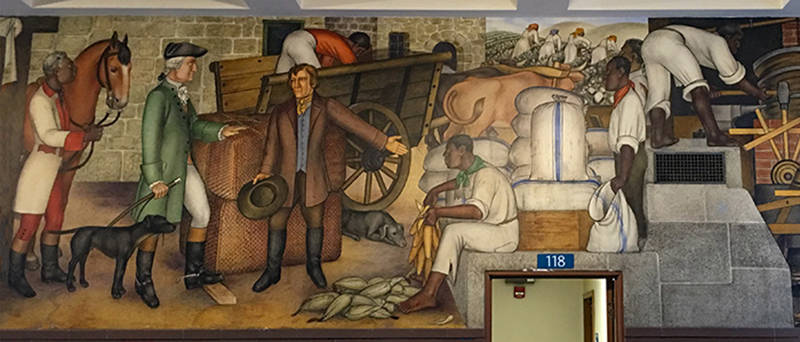
"caption": "A WPA-era mural by Victor Arnautoff depicting slave ownership is part of a new controversy at George Washington High School in San Francisco.",
"description": "A WPA-era mural by Victor Arnautoff depicting slave ownership is part of a new controversy at George Washington High School in San Francisco.",
"title": "gwhs-main",
"credit": "Courtesy George Washington High School Alumni Association",
"status": "inherit",
"isLoading": false,
"fetchFailed": false
},
"arts_13852809": {
"type": "attachments",
"id": "arts_13852809",
"meta": {
"index": "attachments_1716263798",
"site": "arts",
"id": "13852809",
"found": true
},
"parent": 13852803,
"imgSizes": {
"twentyfourteen-full-width": {
"file": "https://ww2.kqed.org/app/uploads/sites/2/2019/03/joseph-kosuth-wft-san-francisco_COVER-1038x576.jpg",
"width": 1038,
"mimeType": "image/jpeg",
"height": 576
},
"thumbnail": {
"file": "https://ww2.kqed.org/app/uploads/sites/2/2019/03/joseph-kosuth-wft-san-francisco_COVER-160x90.jpg",
"width": 160,
"mimeType": "image/jpeg",
"height": 90
},
"post-thumbnail": {
"file": "https://ww2.kqed.org/app/uploads/sites/2/2019/03/joseph-kosuth-wft-san-francisco_COVER-672x372.jpg",
"width": 672,
"mimeType": "image/jpeg",
"height": 372
},
"kqedFullSize": {
"file": "https://ww2.kqed.org/app/uploads/sites/2/2019/03/joseph-kosuth-wft-san-francisco_COVER.jpg",
"width": 1920,
"height": 1080
},
"large": {
"file": "https://ww2.kqed.org/app/uploads/sites/2/2019/03/joseph-kosuth-wft-san-francisco_COVER-1020x574.jpg",
"width": 1020,
"mimeType": "image/jpeg",
"height": 574
},
"complete_open_graph": {
"file": "https://ww2.kqed.org/app/uploads/sites/2/2019/03/joseph-kosuth-wft-san-francisco_COVER-1200x675.jpg",
"width": 1200,
"mimeType": "image/jpeg",
"height": 675
},
"guest-author-50": {
"file": "https://ww2.kqed.org/app/uploads/sites/2/2019/03/joseph-kosuth-wft-san-francisco_COVER-50x50.jpg",
"width": 50,
"mimeType": "image/jpeg",
"height": 50
},
"guest-author-96": {
"file": "https://ww2.kqed.org/app/uploads/sites/2/2019/03/joseph-kosuth-wft-san-francisco_COVER-96x96.jpg",
"width": 96,
"mimeType": "image/jpeg",
"height": 96
},
"medium": {
"file": "https://ww2.kqed.org/app/uploads/sites/2/2019/03/joseph-kosuth-wft-san-francisco_COVER-800x450.jpg",
"width": 800,
"mimeType": "image/jpeg",
"height": 450
},
"guest-author-64": {
"file": "https://ww2.kqed.org/app/uploads/sites/2/2019/03/joseph-kosuth-wft-san-francisco_COVER-64x64.jpg",
"width": 64,
"mimeType": "image/jpeg",
"height": 64
},
"guest-author-32": {
"file": "https://ww2.kqed.org/app/uploads/sites/2/2019/03/joseph-kosuth-wft-san-francisco_COVER-32x32.jpg",
"width": 32,
"mimeType": "image/jpeg",
"height": 32
},
"full-width": {
"file": "https://ww2.kqed.org/app/uploads/sites/2/2019/03/joseph-kosuth-wft-san-francisco_COVER-1920x1080.jpg",
"width": 1920,
"mimeType": "image/jpeg",
"height": 1080
},
"medium_large": {
"file": "https://ww2.kqed.org/app/uploads/sites/2/2019/03/joseph-kosuth-wft-san-francisco_COVER-768x432.jpg",
"width": 768,
"mimeType": "image/jpeg",
"height": 432
},
"guest-author-128": {
"file": "https://ww2.kqed.org/app/uploads/sites/2/2019/03/joseph-kosuth-wft-san-francisco_COVER-128x128.jpg",
"width": 128,
"mimeType": "image/jpeg",
"height": 128
}
},
"publishDate": 1552440155,
"modified": 1552440322,
"caption": "Nighttime view of Joseph Kosuth's 'W.F.T. (San Francisco)' on the side of the Bill Graham Civic Auditorium.",
"description": "Nighttime view of Joseph Kosuth's 'W.F.T. (San Francisco)' on the side of the Bill Graham Civic Auditorium.",
"title": "joseph-kosuth-wft-san-francisco_COVER",
"credit": "Ethan Kaplan Photography",
"status": "inherit",
"isLoading": false,
"fetchFailed": false
},
"arts_13843015": {
"type": "attachments",
"id": "arts_13843015",
"meta": {
"index": "attachments_1716263798",
"site": "arts",
"id": "13843015",
"found": true
},
"parent": 0,
"imgSizes": {
"small": {
"file": "https://ww2.kqed.org/app/uploads/sites/2/2018/10/ChrisBrown-520x293.jpg",
"width": 520,
"mimeType": "image/jpeg",
"height": 293
},
"twentyfourteen-full-width": {
"file": "https://ww2.kqed.org/app/uploads/sites/2/2018/10/ChrisBrown-1038x576.jpg",
"width": 1038,
"mimeType": "image/jpeg",
"height": 576
},
"thumbnail": {
"file": "https://ww2.kqed.org/app/uploads/sites/2/2018/10/ChrisBrown-160x90.jpg",
"width": 160,
"mimeType": "image/jpeg",
"height": 90
},
"fd-sm": {
"file": "https://ww2.kqed.org/app/uploads/sites/2/2018/10/ChrisBrown-960x540.jpg",
"width": 960,
"mimeType": "image/jpeg",
"height": 540
},
"post-thumbnail": {
"file": "https://ww2.kqed.org/app/uploads/sites/2/2018/10/ChrisBrown-672x372.jpg",
"width": 672,
"mimeType": "image/jpeg",
"height": 372
},
"xsmall": {
"file": "https://ww2.kqed.org/app/uploads/sites/2/2018/10/ChrisBrown-375x211.jpg",
"width": 375,
"mimeType": "image/jpeg",
"height": 211
},
"kqedFullSize": {
"file": "https://ww2.kqed.org/app/uploads/sites/2/2018/10/ChrisBrown.jpg",
"width": 1920,
"height": 1080
},
"large": {
"file": "https://ww2.kqed.org/app/uploads/sites/2/2018/10/ChrisBrown-1020x574.jpg",
"width": 1020,
"mimeType": "image/jpeg",
"height": 574
},
"xlarge": {
"file": "https://ww2.kqed.org/app/uploads/sites/2/2018/10/ChrisBrown-1180x664.jpg",
"width": 1180,
"mimeType": "image/jpeg",
"height": 664
},
"complete_open_graph": {
"file": "https://ww2.kqed.org/app/uploads/sites/2/2018/10/ChrisBrown-1200x675.jpg",
"width": 1200,
"mimeType": "image/jpeg",
"height": 675
},
"guest-author-50": {
"file": "https://ww2.kqed.org/app/uploads/sites/2/2018/10/ChrisBrown-50x50.jpg",
"width": 50,
"mimeType": "image/jpeg",
"height": 50
},
"guest-author-96": {
"file": "https://ww2.kqed.org/app/uploads/sites/2/2018/10/ChrisBrown-96x96.jpg",
"width": 96,
"mimeType": "image/jpeg",
"height": 96
},
"medium": {
"file": "https://ww2.kqed.org/app/uploads/sites/2/2018/10/ChrisBrown-800x450.jpg",
"width": 800,
"mimeType": "image/jpeg",
"height": 450
},
"guest-author-64": {
"file": "https://ww2.kqed.org/app/uploads/sites/2/2018/10/ChrisBrown-64x64.jpg",
"width": 64,
"mimeType": "image/jpeg",
"height": 64
},
"guest-author-32": {
"file": "https://ww2.kqed.org/app/uploads/sites/2/2018/10/ChrisBrown-32x32.jpg",
"width": 32,
"mimeType": "image/jpeg",
"height": 32
},
"fd-lrg": {
"file": "https://ww2.kqed.org/app/uploads/sites/2/2018/10/ChrisBrown-1920x1080.jpg",
"width": 1920,
"mimeType": "image/jpeg",
"height": 1080
},
"fd-med": {
"file": "https://ww2.kqed.org/app/uploads/sites/2/2018/10/ChrisBrown-1180x664.jpg",
"width": 1180,
"mimeType": "image/jpeg",
"height": 664
},
"full-width": {
"file": "https://ww2.kqed.org/app/uploads/sites/2/2018/10/ChrisBrown-1920x1080.jpg",
"width": 1920,
"mimeType": "image/jpeg",
"height": 1080
},
"detail": {
"file": "https://ww2.kqed.org/app/uploads/sites/2/2018/10/ChrisBrown-150x150.jpg",
"width": 150,
"mimeType": "image/jpeg",
"height": 150
},
"medium_large": {
"file": "https://ww2.kqed.org/app/uploads/sites/2/2018/10/ChrisBrown-768x432.jpg",
"width": 768,
"mimeType": "image/jpeg",
"height": 432
},
"guest-author-128": {
"file": "https://ww2.kqed.org/app/uploads/sites/2/2018/10/ChrisBrown-128x128.jpg",
"width": 128,
"mimeType": "image/jpeg",
"height": 128
},
"xxsmall": {
"file": "https://ww2.kqed.org/app/uploads/sites/2/2018/10/ChrisBrown-240x135.jpg",
"width": 240,
"mimeType": "image/jpeg",
"height": 135
}
},
"publishDate": 1539732748,
"modified": 1539732970,
"caption": "Chris Brown created sound art for the Downtown Berkeley BART plaza.",
"description": "Chris Brown created sound art for the Downtown Berkeley BART plaza.",
"title": "Chris Brown",
"credit": "Sam Lefebvre/KQED",
"status": "inherit",
"isLoading": false,
"fetchFailed": false
},
"arts_13840756": {
"type": "attachments",
"id": "arts_13840756",
"meta": {
"index": "attachments_1716263798",
"site": "arts",
"id": "13840756",
"found": true
},
"parent": 13840748,
"imgSizes": {
"small": {
"file": "https://ww2.kqed.org/app/uploads/sites/2/2018/09/EarlyDaysStatue-520x293.jpg",
"width": 520,
"mimeType": "image/jpeg",
"height": 293
},
"twentyfourteen-full-width": {
"file": "https://ww2.kqed.org/app/uploads/sites/2/2018/09/EarlyDaysStatue-1038x576.jpg",
"width": 1038,
"mimeType": "image/jpeg",
"height": 576
},
"thumbnail": {
"file": "https://ww2.kqed.org/app/uploads/sites/2/2018/09/EarlyDaysStatue-160x90.jpg",
"width": 160,
"mimeType": "image/jpeg",
"height": 90
},
"fd-sm": {
"file": "https://ww2.kqed.org/app/uploads/sites/2/2018/09/EarlyDaysStatue-960x540.jpg",
"width": 960,
"mimeType": "image/jpeg",
"height": 540
},
"post-thumbnail": {
"file": "https://ww2.kqed.org/app/uploads/sites/2/2018/09/EarlyDaysStatue-672x372.jpg",
"width": 672,
"mimeType": "image/jpeg",
"height": 372
},
"xsmall": {
"file": "https://ww2.kqed.org/app/uploads/sites/2/2018/09/EarlyDaysStatue-375x211.jpg",
"width": 375,
"mimeType": "image/jpeg",
"height": 211
},
"kqedFullSize": {
"file": "https://ww2.kqed.org/app/uploads/sites/2/2018/09/EarlyDaysStatue.jpg",
"width": 1920,
"height": 1080
},
"large": {
"file": "https://ww2.kqed.org/app/uploads/sites/2/2018/09/EarlyDaysStatue-1020x574.jpg",
"width": 1020,
"mimeType": "image/jpeg",
"height": 574
},
"xlarge": {
"file": "https://ww2.kqed.org/app/uploads/sites/2/2018/09/EarlyDaysStatue-1180x664.jpg",
"width": 1180,
"mimeType": "image/jpeg",
"height": 664
},
"complete_open_graph": {
"file": "https://ww2.kqed.org/app/uploads/sites/2/2018/09/EarlyDaysStatue-1200x675.jpg",
"width": 1200,
"mimeType": "image/jpeg",
"height": 675
},
"guest-author-50": {
"file": "https://ww2.kqed.org/app/uploads/sites/2/2018/09/EarlyDaysStatue-50x50.jpg",
"width": 50,
"mimeType": "image/jpeg",
"height": 50
},
"guest-author-96": {
"file": "https://ww2.kqed.org/app/uploads/sites/2/2018/09/EarlyDaysStatue-96x96.jpg",
"width": 96,
"mimeType": "image/jpeg",
"height": 96
},
"medium": {
"file": "https://ww2.kqed.org/app/uploads/sites/2/2018/09/EarlyDaysStatue-800x450.jpg",
"width": 800,
"mimeType": "image/jpeg",
"height": 450
},
"guest-author-64": {
"file": "https://ww2.kqed.org/app/uploads/sites/2/2018/09/EarlyDaysStatue-64x64.jpg",
"width": 64,
"mimeType": "image/jpeg",
"height": 64
},
"guest-author-32": {
"file": "https://ww2.kqed.org/app/uploads/sites/2/2018/09/EarlyDaysStatue-32x32.jpg",
"width": 32,
"mimeType": "image/jpeg",
"height": 32
},
"fd-lrg": {
"file": "https://ww2.kqed.org/app/uploads/sites/2/2018/09/EarlyDaysStatue-1920x1080.jpg",
"width": 1920,
"mimeType": "image/jpeg",
"height": 1080
},
"fd-med": {
"file": "https://ww2.kqed.org/app/uploads/sites/2/2018/09/EarlyDaysStatue-1180x664.jpg",
"width": 1180,
"mimeType": "image/jpeg",
"height": 664
},
"full-width": {
"file": "https://ww2.kqed.org/app/uploads/sites/2/2018/09/EarlyDaysStatue-1920x1080.jpg",
"width": 1920,
"mimeType": "image/jpeg",
"height": 1080
},
"detail": {
"file": "https://ww2.kqed.org/app/uploads/sites/2/2018/09/EarlyDaysStatue-150x150.jpg",
"width": 150,
"mimeType": "image/jpeg",
"height": 150
},
"medium_large": {
"file": "https://ww2.kqed.org/app/uploads/sites/2/2018/09/EarlyDaysStatue-768x432.jpg",
"width": 768,
"mimeType": "image/jpeg",
"height": 432
},
"guest-author-128": {
"file": "https://ww2.kqed.org/app/uploads/sites/2/2018/09/EarlyDaysStatue-128x128.jpg",
"width": 128,
"mimeType": "image/jpeg",
"height": 128
},
"xxsmall": {
"file": "https://ww2.kqed.org/app/uploads/sites/2/2018/09/EarlyDaysStatue-240x135.jpg",
"width": 240,
"mimeType": "image/jpeg",
"height": 135
}
},
"publishDate": 1536819843,
"modified": 1536819867,
"caption": "'Early Days,' part of the Pioneer Monument in San Francisco's Civic Center, will be removed in the wake of a Sept. 12 meeting at City Hall.",
"description": "'Early Days,' part of the Pioneer Monument in San Francisco's Civic Center, will be removed in the wake of a Sept. 12 meeting at City Hall.",
"title": "EarlyDaysStatue",
"credit": "Sam Lefebvre/KQED",
"status": "inherit",
"isLoading": false,
"fetchFailed": false
},
"arts_13840275": {
"type": "attachments",
"id": "arts_13840275",
"meta": {
"index": "attachments_1716263798",
"site": "arts",
"id": "13840275",
"found": true
},
"parent": 13840185,
"imgSizes": {
"small": {
"file": "https://ww2.kqed.org/app/uploads/sites/2/2018/09/Goggin.FinebalanceREV-520x293.jpg",
"width": 520,
"mimeType": "image/jpeg",
"height": 293
},
"thumbnail": {
"file": "https://ww2.kqed.org/app/uploads/sites/2/2018/09/Goggin.FinebalanceREV-160x90.jpg",
"width": 160,
"mimeType": "image/jpeg",
"height": 90
},
"post-thumbnail": {
"file": "https://ww2.kqed.org/app/uploads/sites/2/2018/09/Goggin.FinebalanceREV-672x372.jpg",
"width": 672,
"mimeType": "image/jpeg",
"height": 372
},
"xsmall": {
"file": "https://ww2.kqed.org/app/uploads/sites/2/2018/09/Goggin.FinebalanceREV-375x211.jpg",
"width": 375,
"mimeType": "image/jpeg",
"height": 211
},
"kqedFullSize": {
"file": "https://ww2.kqed.org/app/uploads/sites/2/2018/09/Goggin.FinebalanceREV.jpg",
"width": 800,
"height": 450
},
"guest-author-50": {
"file": "https://ww2.kqed.org/app/uploads/sites/2/2018/09/Goggin.FinebalanceREV-50x50.jpg",
"width": 50,
"mimeType": "image/jpeg",
"height": 50
},
"guest-author-96": {
"file": "https://ww2.kqed.org/app/uploads/sites/2/2018/09/Goggin.FinebalanceREV-96x96.jpg",
"width": 96,
"mimeType": "image/jpeg",
"height": 96
},
"medium": {
"file": "https://ww2.kqed.org/app/uploads/sites/2/2018/09/Goggin.FinebalanceREV-800x450.jpg",
"width": 800,
"mimeType": "image/jpeg",
"height": 450
},
"guest-author-64": {
"file": "https://ww2.kqed.org/app/uploads/sites/2/2018/09/Goggin.FinebalanceREV-64x64.jpg",
"width": 64,
"mimeType": "image/jpeg",
"height": 64
},
"guest-author-32": {
"file": "https://ww2.kqed.org/app/uploads/sites/2/2018/09/Goggin.FinebalanceREV-32x32.jpg",
"width": 32,
"mimeType": "image/jpeg",
"height": 32
},
"detail": {
"file": "https://ww2.kqed.org/app/uploads/sites/2/2018/09/Goggin.FinebalanceREV-150x150.jpg",
"width": 150,
"mimeType": "image/jpeg",
"height": 150
},
"medium_large": {
"file": "https://ww2.kqed.org/app/uploads/sites/2/2018/09/Goggin.FinebalanceREV-768x432.jpg",
"width": 768,
"mimeType": "image/jpeg",
"height": 432
},
"guest-author-128": {
"file": "https://ww2.kqed.org/app/uploads/sites/2/2018/09/Goggin.FinebalanceREV-128x128.jpg",
"width": 128,
"mimeType": "image/jpeg",
"height": 128
},
"xxsmall": {
"file": "https://ww2.kqed.org/app/uploads/sites/2/2018/09/Goggin.FinebalanceREV-240x135.jpg",
"width": 240,
"mimeType": "image/jpeg",
"height": 135
}
},
"publishDate": 1536076748,
"modified": 1536076763,
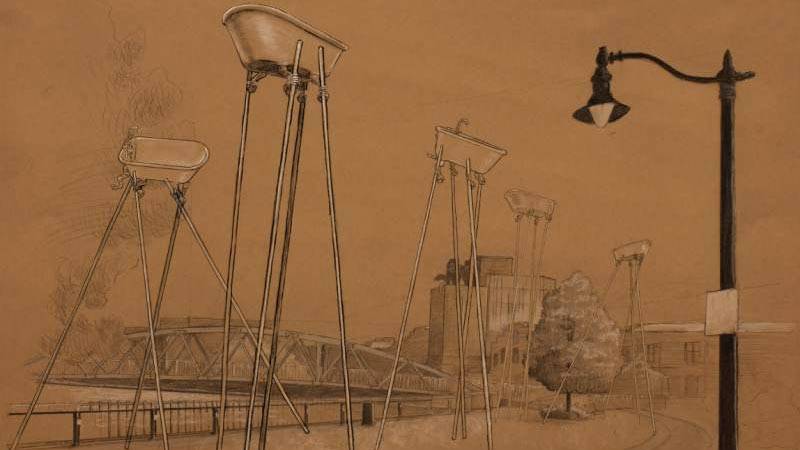
"caption": "An artist rendering of 'Fine Balance,' which involves bathtubs on stilts. ",
"description": "An artist rendering of 'Fine Balance,' which involves bathtubs on stilts. ",
"title": "Goggin.FinebalanceREV",
"credit": "Brian Goggin",
"status": "inherit",
"isLoading": false,
"fetchFailed": false
},
"arts_13834337": {
"type": "attachments",
"id": "arts_13834337",
"meta": {
"index": "attachments_1716263798",
"site": "arts",
"id": "13834337",
"found": true
},
"parent": 13834326,
"imgSizes": {
"small": {
"file": "https://ww2.kqed.org/app/uploads/sites/2/2018/06/OakMural-Header-520x347.jpg",
"width": 520,
"mimeType": "image/jpeg",
"height": 347
},
"twentyfourteen-full-width": {
"file": "https://ww2.kqed.org/app/uploads/sites/2/2018/06/OakMural-Header-1038x576.jpg",
"width": 1038,
"mimeType": "image/jpeg",
"height": 576
},
"thumbnail": {
"file": "https://ww2.kqed.org/app/uploads/sites/2/2018/06/OakMural-Header-160x107.jpg",
"width": 160,
"mimeType": "image/jpeg",
"height": 107
},
"fd-sm": {
"file": "https://ww2.kqed.org/app/uploads/sites/2/2018/06/OakMural-Header-960x640.jpg",
"width": 960,
"mimeType": "image/jpeg",
"height": 640
},
"post-thumbnail": {
"file": "https://ww2.kqed.org/app/uploads/sites/2/2018/06/OakMural-Header-672x372.jpg",
"width": 672,
"mimeType": "image/jpeg",
"height": 372
},
"xsmall": {
"file": "https://ww2.kqed.org/app/uploads/sites/2/2018/06/OakMural-Header-375x250.jpg",
"width": 375,
"mimeType": "image/jpeg",
"height": 250
},
"kqedFullSize": {
"file": "https://ww2.kqed.org/app/uploads/sites/2/2018/06/OakMural-Header.jpg",
"width": 1920,
"height": 1280
},
"large": {
"file": "https://ww2.kqed.org/app/uploads/sites/2/2018/06/OakMural-Header-1020x680.jpg",
"width": 1020,
"mimeType": "image/jpeg",
"height": 680
},
"xlarge": {
"file": "https://ww2.kqed.org/app/uploads/sites/2/2018/06/OakMural-Header-1180x787.jpg",
"width": 1180,
"mimeType": "image/jpeg",
"height": 787
},
"complete_open_graph": {
"file": "https://ww2.kqed.org/app/uploads/sites/2/2018/06/OakMural-Header-1200x800.jpg",
"width": 1200,
"mimeType": "image/jpeg",
"height": 800
},
"guest-author-50": {
"file": "https://ww2.kqed.org/app/uploads/sites/2/2018/06/OakMural-Header-50x50.jpg",
"width": 50,
"mimeType": "image/jpeg",
"height": 50
},
"guest-author-96": {
"file": "https://ww2.kqed.org/app/uploads/sites/2/2018/06/OakMural-Header-96x96.jpg",
"width": 96,
"mimeType": "image/jpeg",
"height": 96
},
"medium": {
"file": "https://ww2.kqed.org/app/uploads/sites/2/2018/06/OakMural-Header-800x533.jpg",
"width": 800,
"mimeType": "image/jpeg",
"height": 533
},
"guest-author-64": {
"file": "https://ww2.kqed.org/app/uploads/sites/2/2018/06/OakMural-Header-64x64.jpg",
"width": 64,
"mimeType": "image/jpeg",
"height": 64
},
"guest-author-32": {
"file": "https://ww2.kqed.org/app/uploads/sites/2/2018/06/OakMural-Header-32x32.jpg",
"width": 32,
"mimeType": "image/jpeg",
"height": 32
},
"fd-lrg": {
"file": "https://ww2.kqed.org/app/uploads/sites/2/2018/06/OakMural-Header-1920x1280.jpg",
"width": 1920,
"mimeType": "image/jpeg",
"height": 1280
},
"fd-med": {
"file": "https://ww2.kqed.org/app/uploads/sites/2/2018/06/OakMural-Header-1180x787.jpg",
"width": 1180,
"mimeType": "image/jpeg",
"height": 787
},
"full-width": {
"file": "https://ww2.kqed.org/app/uploads/sites/2/2018/06/OakMural-Header-1920x1280.jpg",
"width": 1920,
"mimeType": "image/jpeg",
"height": 1280
},
"detail": {
"file": "https://ww2.kqed.org/app/uploads/sites/2/2018/06/OakMural-Header-150x150.jpg",
"width": 150,
"mimeType": "image/jpeg",
"height": 150
},
"medium_large": {
"file": "https://ww2.kqed.org/app/uploads/sites/2/2018/06/OakMural-Header-768x512.jpg",
"width": 768,
"mimeType": "image/jpeg",
"height": 512
},
"guest-author-128": {
"file": "https://ww2.kqed.org/app/uploads/sites/2/2018/06/OakMural-Header-128x128.jpg",
"width": 128,
"mimeType": "image/jpeg",
"height": 128
},
"xxsmall": {
"file": "https://ww2.kqed.org/app/uploads/sites/2/2018/06/OakMural-Header-240x160.jpg",
"width": 240,
"mimeType": "image/jpeg",
"height": 160
}
},
"publishDate": 1528182591,
"modified": 1528182627,
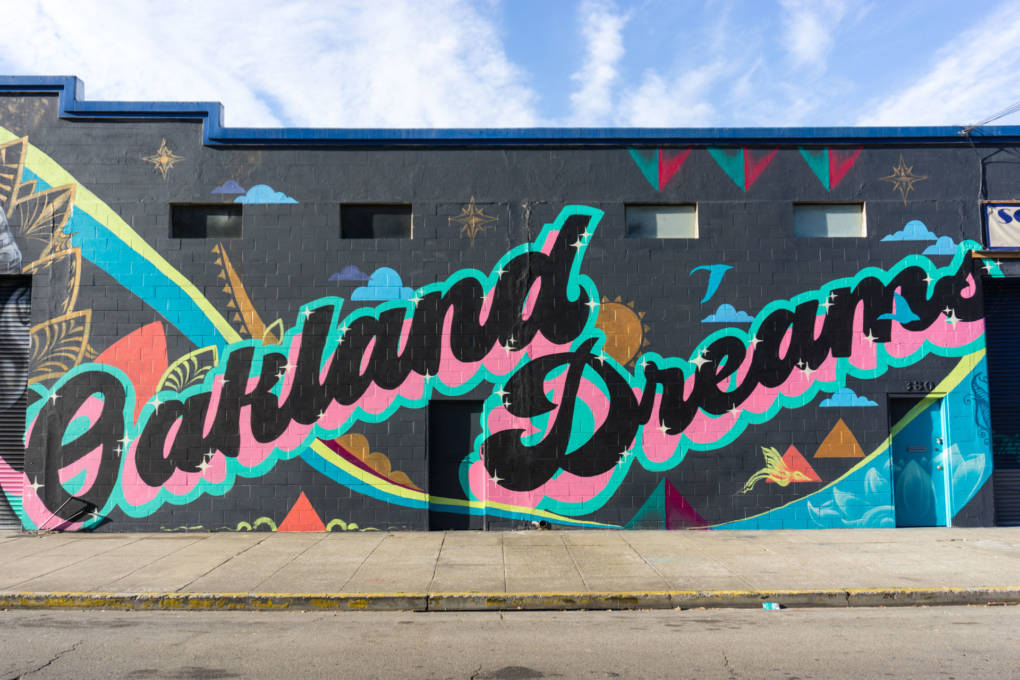
"caption": "Oakland Dreams mural by Trust Your Struggle Collective as part of Oakland Mural Festival 2018.",
"description": null,
"title": "OakMural-Header",
"credit": "Lina Blanco / KQED",
"status": "inherit",
"isLoading": false,
"fetchFailed": false
},
"arts_13858406": {
"type": "attachments",
"id": "arts_13858406",
"meta": {
"index": "attachments_1716263798",
"site": "arts",
"id": "13858406",
"found": true
},
"parent": 13832785,
"imgSizes": {
"twentyfourteen-full-width": {
"file": "https://ww2.kqed.org/app/uploads/sites/2/2018/05/pan-american-mural-shannonbadie-1038x576.jpg",
"width": 1038,
"mimeType": "image/jpeg",
"height": 576
},
"thumbnail": {
"file": "https://ww2.kqed.org/app/uploads/sites/2/2018/05/pan-american-mural-shannonbadie-160x95.jpg",
"width": 160,
"mimeType": "image/jpeg",
"height": 95
},
"post-thumbnail": {
"file": "https://ww2.kqed.org/app/uploads/sites/2/2018/05/pan-american-mural-shannonbadie-672x372.jpg",
"width": 672,
"mimeType": "image/jpeg",
"height": 372
},
"kqedFullSize": {
"file": "https://ww2.kqed.org/app/uploads/sites/2/2018/05/pan-american-mural-shannonbadie.jpg",
"width": 1920,
"height": 1134
},
"large": {
"file": "https://ww2.kqed.org/app/uploads/sites/2/2018/05/pan-american-mural-shannonbadie-1020x602.jpg",
"width": 1020,
"mimeType": "image/jpeg",
"height": 602
},
"complete_open_graph": {
"file": "https://ww2.kqed.org/app/uploads/sites/2/2018/05/pan-american-mural-shannonbadie-1200x709.jpg",
"width": 1200,
"mimeType": "image/jpeg",
"height": 709
},
"full-width": {
"file": "https://ww2.kqed.org/app/uploads/sites/2/2018/05/pan-american-mural-shannonbadie-1920x1134.jpg",
"width": 1920,
"mimeType": "image/jpeg",
"height": 1134
},
"medium": {
"file": "https://ww2.kqed.org/app/uploads/sites/2/2018/05/pan-american-mural-shannonbadie-800x473.jpg",
"width": 800,
"mimeType": "image/jpeg",
"height": 473
},
"medium_large": {
"file": "https://ww2.kqed.org/app/uploads/sites/2/2018/05/pan-american-mural-shannonbadie-768x454.jpg",
"width": 768,
"mimeType": "image/jpeg",
"height": 454
}
},
"publishDate": 1559083704,
"modified": 1559083782,
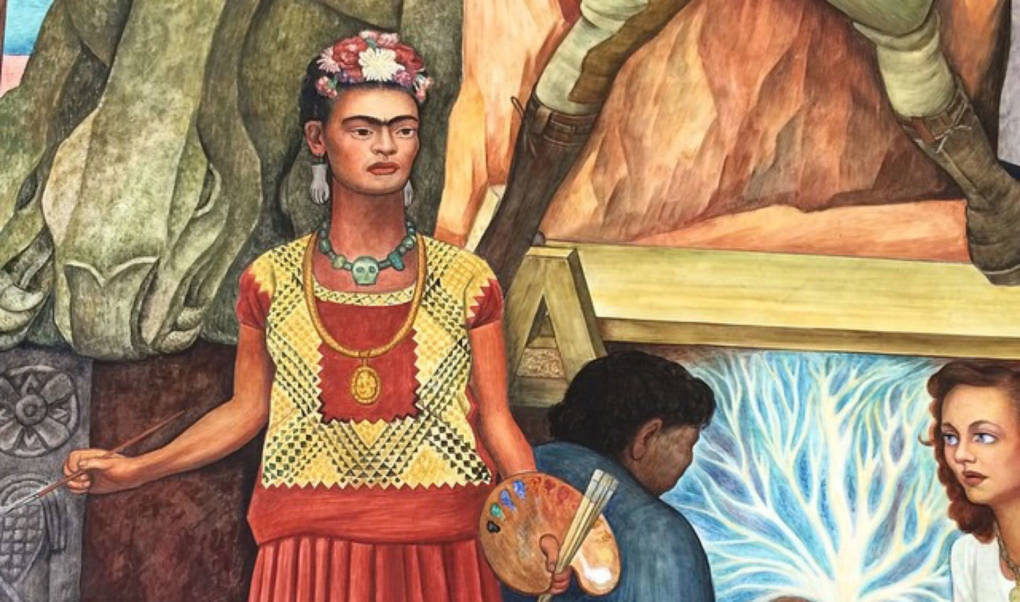
"caption": "A detail of Diego Rivera's 'Pan American Unity' mural featuring Frida Kahlo on view at City College of San Francisco. ",
"description": "A detail of Diego Rivera's 'Pan American Unity' mural featuring Frida Kahlo on view at City College of San Francisco. ",
"title": "pan-american-mural-shannonbadie",
"credit": "Shannon Badiee / Instagram",
"status": "inherit",
"isLoading": false,
"fetchFailed": false
},
"arts_13832988": {
"type": "attachments",
"id": "arts_13832988",
"meta": {
"index": "attachments_1716263798",
"site": "arts",
"id": "13832988",
"found": true
},
"parent": 13832983,
"imgSizes": {
"small": {
"file": "https://ww2.kqed.org/app/uploads/sites/2/2018/05/JCampbell_DayForNight_Rendering_5_COVER-520x293.jpg",
"width": 520,
"mimeType": "image/jpeg",
"height": 293
},
"twentyfourteen-full-width": {
"file": "https://ww2.kqed.org/app/uploads/sites/2/2018/05/JCampbell_DayForNight_Rendering_5_COVER-1038x576.jpg",
"width": 1038,
"mimeType": "image/jpeg",
"height": 576
},
"thumbnail": {
"file": "https://ww2.kqed.org/app/uploads/sites/2/2018/05/JCampbell_DayForNight_Rendering_5_COVER-160x90.jpg",
"width": 160,
"mimeType": "image/jpeg",
"height": 90
},
"fd-sm": {
"file": "https://ww2.kqed.org/app/uploads/sites/2/2018/05/JCampbell_DayForNight_Rendering_5_COVER-960x540.jpg",
"width": 960,
"mimeType": "image/jpeg",
"height": 540
},
"post-thumbnail": {
"file": "https://ww2.kqed.org/app/uploads/sites/2/2018/05/JCampbell_DayForNight_Rendering_5_COVER-672x372.jpg",
"width": 672,
"mimeType": "image/jpeg",
"height": 372
},
"xsmall": {
"file": "https://ww2.kqed.org/app/uploads/sites/2/2018/05/JCampbell_DayForNight_Rendering_5_COVER-375x211.jpg",
"width": 375,
"mimeType": "image/jpeg",
"height": 211
},
"kqedFullSize": {
"file": "https://ww2.kqed.org/app/uploads/sites/2/2018/05/JCampbell_DayForNight_Rendering_5_COVER.jpg",
"width": 1920,
"height": 1080
},
"large": {
"file": "https://ww2.kqed.org/app/uploads/sites/2/2018/05/JCampbell_DayForNight_Rendering_5_COVER-1020x574.jpg",
"width": 1020,
"mimeType": "image/jpeg",
"height": 574
},
"xlarge": {
"file": "https://ww2.kqed.org/app/uploads/sites/2/2018/05/JCampbell_DayForNight_Rendering_5_COVER-1180x664.jpg",
"width": 1180,
"mimeType": "image/jpeg",
"height": 664
},
"complete_open_graph": {
"file": "https://ww2.kqed.org/app/uploads/sites/2/2018/05/JCampbell_DayForNight_Rendering_5_COVER-1200x675.jpg",
"width": 1200,
"mimeType": "image/jpeg",
"height": 675
},
"guest-author-50": {
"file": "https://ww2.kqed.org/app/uploads/sites/2/2018/05/JCampbell_DayForNight_Rendering_5_COVER-50x50.jpg",
"width": 50,
"mimeType": "image/jpeg",
"height": 50
},
"guest-author-96": {
"file": "https://ww2.kqed.org/app/uploads/sites/2/2018/05/JCampbell_DayForNight_Rendering_5_COVER-96x96.jpg",
"width": 96,
"mimeType": "image/jpeg",
"height": 96
},
"medium": {
"file": "https://ww2.kqed.org/app/uploads/sites/2/2018/05/JCampbell_DayForNight_Rendering_5_COVER-800x450.jpg",
"width": 800,
"mimeType": "image/jpeg",
"height": 450
},
"guest-author-64": {
"file": "https://ww2.kqed.org/app/uploads/sites/2/2018/05/JCampbell_DayForNight_Rendering_5_COVER-64x64.jpg",
"width": 64,
"mimeType": "image/jpeg",
"height": 64
},
"guest-author-32": {
"file": "https://ww2.kqed.org/app/uploads/sites/2/2018/05/JCampbell_DayForNight_Rendering_5_COVER-32x32.jpg",
"width": 32,
"mimeType": "image/jpeg",
"height": 32
},
"fd-lrg": {
"file": "https://ww2.kqed.org/app/uploads/sites/2/2018/05/JCampbell_DayForNight_Rendering_5_COVER-1920x1080.jpg",
"width": 1920,
"mimeType": "image/jpeg",
"height": 1080
},
"fd-med": {
"file": "https://ww2.kqed.org/app/uploads/sites/2/2018/05/JCampbell_DayForNight_Rendering_5_COVER-1180x664.jpg",
"width": 1180,
"mimeType": "image/jpeg",
"height": 664
},
"full-width": {
"file": "https://ww2.kqed.org/app/uploads/sites/2/2018/05/JCampbell_DayForNight_Rendering_5_COVER-1920x1080.jpg",
"width": 1920,
"mimeType": "image/jpeg",
"height": 1080
},
"detail": {
"file": "https://ww2.kqed.org/app/uploads/sites/2/2018/05/JCampbell_DayForNight_Rendering_5_COVER-150x150.jpg",
"width": 150,
"mimeType": "image/jpeg",
"height": 150
},
"medium_large": {
"file": "https://ww2.kqed.org/app/uploads/sites/2/2018/05/JCampbell_DayForNight_Rendering_5_COVER-768x432.jpg",
"width": 768,
"mimeType": "image/jpeg",
"height": 432
},
"guest-author-128": {
"file": "https://ww2.kqed.org/app/uploads/sites/2/2018/05/JCampbell_DayForNight_Rendering_5_COVER-128x128.jpg",
"width": 128,
"mimeType": "image/jpeg",
"height": 128
},
"xxsmall": {
"file": "https://ww2.kqed.org/app/uploads/sites/2/2018/05/JCampbell_DayForNight_Rendering_5_COVER-240x135.jpg",
"width": 240,
"mimeType": "image/jpeg",
"height": 135
}
},
"publishDate": 1526948523,
"modified": 1527011323,
"caption": "Rendering of Jim Campbell's 'Day for Night,' 2018; Image by Steelblue.",
"description": "Rendering of Jim Campbell's 'Day for Night,' 2018; Image by Steelblue.",
"title": "Image by Steelblue",
"credit": "Courtesy of the artist and Boston Properties",
"status": "inherit",
"isLoading": false,
"fetchFailed": false
},
"arts_13830088": {
"type": "attachments",
"id": "arts_13830088",
"meta": {
"index": "attachments_1716263798",
"site": "arts",
"id": "13830088",
"found": true
},
"parent": 13830080,
"imgSizes": {
"small": {
"file": "https://ww2.kqed.org/app/uploads/sites/2/2018/04/RS30547_Ursa-Mater-San-Jose-2-qut-520x347.jpg",
"width": 520,
"mimeType": "image/jpeg",
"height": 347
},
"twentyfourteen-full-width": {
"file": "https://ww2.kqed.org/app/uploads/sites/2/2018/04/RS30547_Ursa-Mater-San-Jose-2-qut-1038x576.jpg",
"width": 1038,
"mimeType": "image/jpeg",
"height": 576
},
"thumbnail": {
"file": "https://ww2.kqed.org/app/uploads/sites/2/2018/04/RS30547_Ursa-Mater-San-Jose-2-qut-160x107.jpg",
"width": 160,
"mimeType": "image/jpeg",
"height": 107
},
"fd-sm": {
"file": "https://ww2.kqed.org/app/uploads/sites/2/2018/04/RS30547_Ursa-Mater-San-Jose-2-qut-960x640.jpg",
"width": 960,
"mimeType": "image/jpeg",
"height": 640
},
"post-thumbnail": {
"file": "https://ww2.kqed.org/app/uploads/sites/2/2018/04/RS30547_Ursa-Mater-San-Jose-2-qut-672x372.jpg",
"width": 672,
"mimeType": "image/jpeg",
"height": 372
},
"xsmall": {
"file": "https://ww2.kqed.org/app/uploads/sites/2/2018/04/RS30547_Ursa-Mater-San-Jose-2-qut-375x250.jpg",
"width": 375,
"mimeType": "image/jpeg",
"height": 250
},
"kqedFullSize": {
"file": "https://ww2.kqed.org/app/uploads/sites/2/2018/04/RS30547_Ursa-Mater-San-Jose-2-qut.jpg",
"width": 1920,
"height": 1280
},
"large": {
"file": "https://ww2.kqed.org/app/uploads/sites/2/2018/04/RS30547_Ursa-Mater-San-Jose-2-qut-1020x680.jpg",
"width": 1020,
"mimeType": "image/jpeg",
"height": 680
},
"xlarge": {
"file": "https://ww2.kqed.org/app/uploads/sites/2/2018/04/RS30547_Ursa-Mater-San-Jose-2-qut-1180x787.jpg",
"width": 1180,
"mimeType": "image/jpeg",
"height": 787
},
"complete_open_graph": {
"file": "https://ww2.kqed.org/app/uploads/sites/2/2018/04/RS30547_Ursa-Mater-San-Jose-2-qut-1200x800.jpg",
"width": 1200,
"mimeType": "image/jpeg",
"height": 800
},
"guest-author-50": {
"file": "https://ww2.kqed.org/app/uploads/sites/2/2018/04/RS30547_Ursa-Mater-San-Jose-2-qut-50x50.jpg",
"width": 50,
"mimeType": "image/jpeg",
"height": 50
},
"guest-author-96": {
"file": "https://ww2.kqed.org/app/uploads/sites/2/2018/04/RS30547_Ursa-Mater-San-Jose-2-qut-96x96.jpg",
"width": 96,
"mimeType": "image/jpeg",
"height": 96
},
"medium": {
"file": "https://ww2.kqed.org/app/uploads/sites/2/2018/04/RS30547_Ursa-Mater-San-Jose-2-qut-800x533.jpg",
"width": 800,
"mimeType": "image/jpeg",
"height": 533
},
"guest-author-64": {
"file": "https://ww2.kqed.org/app/uploads/sites/2/2018/04/RS30547_Ursa-Mater-San-Jose-2-qut-64x64.jpg",
"width": 64,
"mimeType": "image/jpeg",
"height": 64
},
"guest-author-32": {
"file": "https://ww2.kqed.org/app/uploads/sites/2/2018/04/RS30547_Ursa-Mater-San-Jose-2-qut-32x32.jpg",
"width": 32,
"mimeType": "image/jpeg",
"height": 32
},
"fd-lrg": {
"file": "https://ww2.kqed.org/app/uploads/sites/2/2018/04/RS30547_Ursa-Mater-San-Jose-2-qut-1920x1280.jpg",
"width": 1920,
"mimeType": "image/jpeg",
"height": 1280
},
"fd-med": {
"file": "https://ww2.kqed.org/app/uploads/sites/2/2018/04/RS30547_Ursa-Mater-San-Jose-2-qut-1180x787.jpg",
"width": 1180,
"mimeType": "image/jpeg",
"height": 787
},
"full-width": {
"file": "https://ww2.kqed.org/app/uploads/sites/2/2018/04/RS30547_Ursa-Mater-San-Jose-2-qut-1920x1280.jpg",
"width": 1920,
"mimeType": "image/jpeg",
"height": 1280
},
"detail": {
"file": "https://ww2.kqed.org/app/uploads/sites/2/2018/04/RS30547_Ursa-Mater-San-Jose-2-qut-150x150.jpg",
"width": 150,
"mimeType": "image/jpeg",
"height": 150
},
"medium_large": {
"file": "https://ww2.kqed.org/app/uploads/sites/2/2018/04/RS30547_Ursa-Mater-San-Jose-2-qut-768x512.jpg",
"width": 768,
"mimeType": "image/jpeg",
"height": 512
},
"guest-author-128": {
"file": "https://ww2.kqed.org/app/uploads/sites/2/2018/04/RS30547_Ursa-Mater-San-Jose-2-qut-128x128.jpg",
"width": 128,
"mimeType": "image/jpeg",
"height": 128
},
"xxsmall": {
"file": "https://ww2.kqed.org/app/uploads/sites/2/2018/04/RS30547_Ursa-Mater-San-Jose-2-qut-240x160.jpg",
"width": 240,
"mimeType": "image/jpeg",
"height": 160
}
},
"publishDate": 1524274223,
"modified": 1524274260,
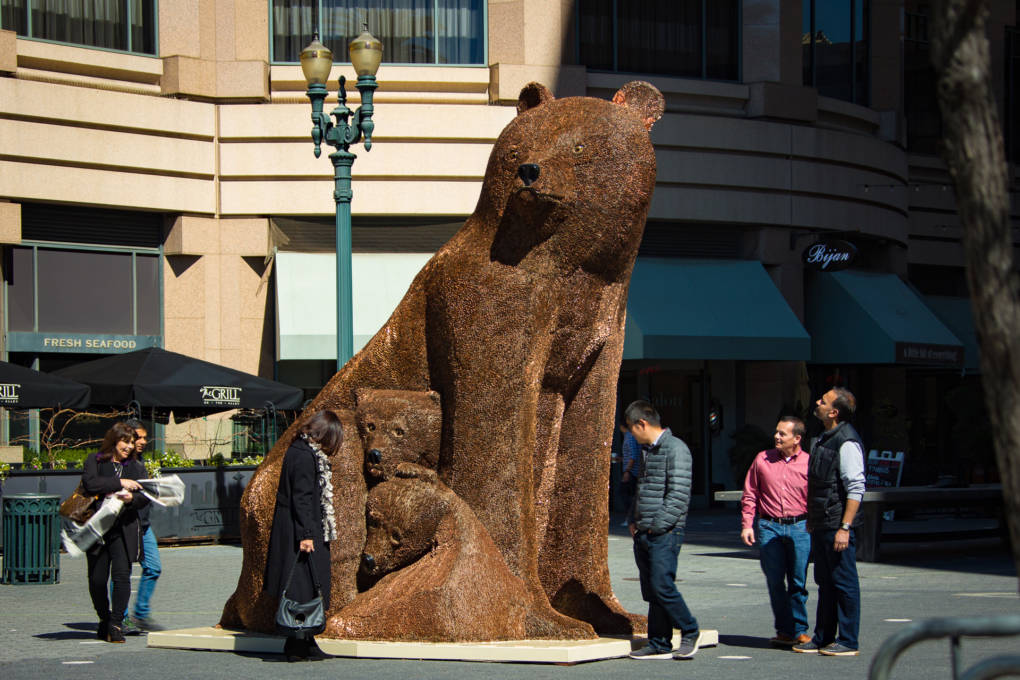
"caption": "\"Ursa Mater\" aka \"Mama Penny Bear\" is obviously, openly appealing to passers by in downtown San Jose. Californians love bears, for one thing, but most people do a second double-take when they realize the sculpture's \"fur\" is made of pennies.",
"description": "\"Ursa Mater\" aka \"Mama Penny Bear\" is obviously, openly appealing to passers by in downtown San Jose. Californians love bears, for one thing, but most people do a second double-take when they realize the sculpture's \"fur\" is made of pennies.",
"title": "RS30547_Ursa Mater San Jose 2-qut",
"credit": "Photo: Courtesy of Lisa Ferguson",
"status": "inherit",
"isLoading": false,
"fetchFailed": false
},
"arts_13809834": {
"type": "attachments",
"id": "arts_13809834",
"meta": {
"index": "attachments_1716263798",
"site": "arts",
"id": "13809834",
"found": true
},
"parent": 13809651,
"imgSizes": {
"small": {
"file": "https://ww2.kqed.org/app/uploads/sites/2/2017/09/Kim-memorial-Crop1-520x293.jpg",
"width": 520,
"mimeType": "image/jpeg",
"height": 293
},
"twentyfourteen-full-width": {
"file": "https://ww2.kqed.org/app/uploads/sites/2/2017/09/Kim-memorial-Crop1-1038x576.jpg",
"width": 1038,
"mimeType": "image/jpeg",
"height": 576
},
"thumbnail": {
"file": "https://ww2.kqed.org/app/uploads/sites/2/2017/09/Kim-memorial-Crop1-160x90.jpg",
"width": 160,
"mimeType": "image/jpeg",
"height": 90
},
"fd-sm": {
"file": "https://ww2.kqed.org/app/uploads/sites/2/2017/09/Kim-memorial-Crop1-960x540.jpg",
"width": 960,
"mimeType": "image/jpeg",
"height": 540
},
"post-thumbnail": {
"file": "https://ww2.kqed.org/app/uploads/sites/2/2017/09/Kim-memorial-Crop1-672x372.jpg",
"width": 672,
"mimeType": "image/jpeg",
"height": 372
},
"xsmall": {
"file": "https://ww2.kqed.org/app/uploads/sites/2/2017/09/Kim-memorial-Crop1-375x211.jpg",
"width": 375,
"mimeType": "image/jpeg",
"height": 211
},
"kqedFullSize": {
"file": "https://ww2.kqed.org/app/uploads/sites/2/2017/09/Kim-memorial-Crop1.jpg",
"width": 1920,
"height": 1080
},
"large": {
"file": "https://ww2.kqed.org/app/uploads/sites/2/2017/09/Kim-memorial-Crop1-1020x574.jpg",
"width": 1020,
"mimeType": "image/jpeg",
"height": 574
},
"xlarge": {
"file": "https://ww2.kqed.org/app/uploads/sites/2/2017/09/Kim-memorial-Crop1-1180x664.jpg",
"width": 1180,
"mimeType": "image/jpeg",
"height": 664
},
"guest-author-50": {
"file": "https://ww2.kqed.org/app/uploads/sites/2/2017/09/Kim-memorial-Crop1-50x50.jpg",
"width": 50,
"mimeType": "image/jpeg",
"height": 50
},
"guest-author-96": {
"file": "https://ww2.kqed.org/app/uploads/sites/2/2017/09/Kim-memorial-Crop1-96x96.jpg",
"width": 96,
"mimeType": "image/jpeg",
"height": 96
},
"medium": {
"file": "https://ww2.kqed.org/app/uploads/sites/2/2017/09/Kim-memorial-Crop1-800x450.jpg",
"width": 800,
"mimeType": "image/jpeg",
"height": 450
},
"guest-author-64": {
"file": "https://ww2.kqed.org/app/uploads/sites/2/2017/09/Kim-memorial-Crop1-64x64.jpg",
"width": 64,
"mimeType": "image/jpeg",
"height": 64
},
"guest-author-32": {
"file": "https://ww2.kqed.org/app/uploads/sites/2/2017/09/Kim-memorial-Crop1-32x32.jpg",
"width": 32,
"mimeType": "image/jpeg",
"height": 32
},
"fd-lrg": {
"file": "https://ww2.kqed.org/app/uploads/sites/2/2017/09/Kim-memorial-Crop1-1920x1080.jpg",
"width": 1920,
"mimeType": "image/jpeg",
"height": 1080
},
"fd-med": {
"file": "https://ww2.kqed.org/app/uploads/sites/2/2017/09/Kim-memorial-Crop1-1180x664.jpg",
"width": 1180,
"mimeType": "image/jpeg",
"height": 664
},
"full-width": {
"file": "https://ww2.kqed.org/app/uploads/sites/2/2017/09/Kim-memorial-Crop1-1920x1080.jpg",
"width": 1920,
"mimeType": "image/jpeg",
"height": 1080
},
"detail": {
"file": "https://ww2.kqed.org/app/uploads/sites/2/2017/09/Kim-memorial-Crop1-150x150.jpg",
"width": 150,
"mimeType": "image/jpeg",
"height": 150
},
"medium_large": {
"file": "https://ww2.kqed.org/app/uploads/sites/2/2017/09/Kim-memorial-Crop1-768x432.jpg",
"width": 768,
"mimeType": "image/jpeg",
"height": 432
},
"guest-author-128": {
"file": "https://ww2.kqed.org/app/uploads/sites/2/2017/09/Kim-memorial-Crop1-128x128.jpg",
"width": 128,
"mimeType": "image/jpeg",
"height": 128
},
"xxsmall": {
"file": "https://ww2.kqed.org/app/uploads/sites/2/2017/09/Kim-memorial-Crop1-240x135.jpg",
"width": 240,
"mimeType": "image/jpeg",
"height": 135
}
},
"publishDate": 1506559102,
"modified": 1506559179,
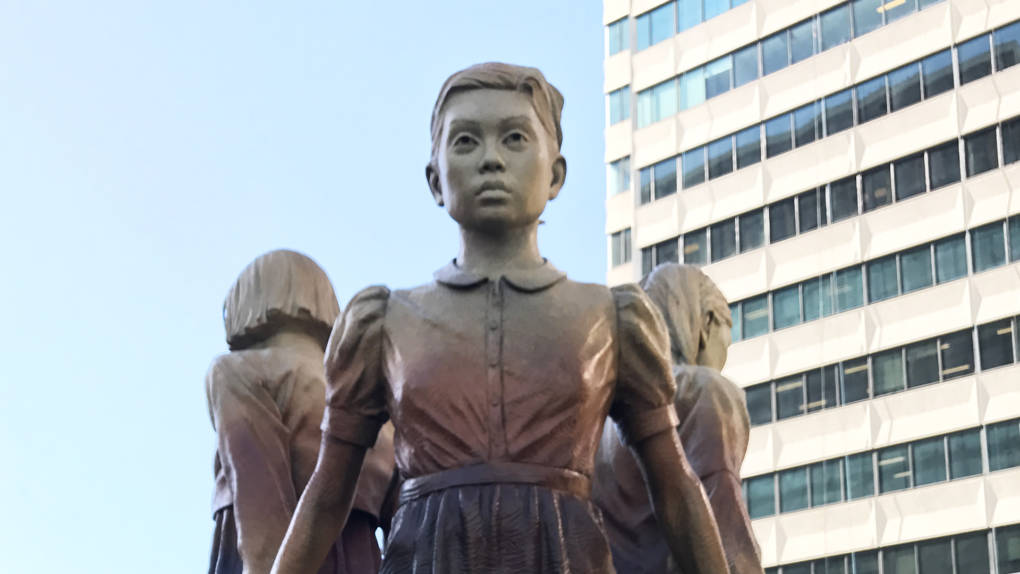
"caption": "The Comfort Women memorial at St. Mary's Square in San Francisco",
"description": "The Comfort Women memorial at St. Mary's Square in San Francisco",
"title": "Kim memorial Crop1",
"credit": "Phyllis Kim",
"status": "inherit",
"isLoading": false,
"fetchFailed": false
}
},
"audioPlayerReducer": {
"postId": "stream_live",
"isPaused": true,
"isPlaying": false,
"pfsActive": false,
"pledgeModalIsOpen": true,
"playerDrawerIsOpen": false,
"liveAudioPlayStartedAt": 0,
"liveAudioPlayContext": ""
},
"authorsReducer": {
"shotchkiss": {
"type": "authors",
"id": "61",
"meta": {
"index": "authors_1716337520",
"id": "61",
"found": true
},
"name": "Sarah Hotchkiss",
"firstName": "Sarah",
"lastName": "Hotchkiss",
"slug": "shotchkiss",
"email": "shotchkiss@kqed.org",
"display_author_email": true,
"staff_mastheads": [
"arts"
],
"title": "Senior Editor",
"bio": "Sarah Hotchkiss is a San Francisco \u003ca href=\"http://www.sarahhotchkiss.com\">artist\u003c/a> and arts writer. In 2019, she received the Dorothea & Leo Rabkin Foundation grant for visual art journalism and in 2020 she received a Society of Professional Journalists, Northern California award for excellence in arts and culture reporting.",
"avatar": "https://secure.gravatar.com/avatar/bc662df144b3d27fd8b1b6f1c2a420d34e91e53154d411bb7ad353cc8b6cea8d?s=600&d=blank&r=g",
"twitter": null,
"bluesky": null,
"facebook": null,
"instagram": null,
"linkedin": null,
"sites": [
{
"site": "",
"roles": [
"editor"
]
},
{
"site": "arts",
"roles": [
"Contributor",
"administrator"
]
},
{
"site": "artschool",
"roles": [
"administrator"
]
},
{
"site": "news",
"roles": [
"editor"
]
},
{
"site": "pop",
"roles": [
"administrator"
]
},
{
"site": "bayareabites",
"roles": [
"editor"
]
},
{
"site": "spark",
"roles": [
"editor"
]
},
{
"site": "checkplease",
"roles": [
"editor"
]
}
],
"headData": {
"title": "Sarah Hotchkiss | KQED",
"description": "Senior Editor",
"ogImgSrc": "https://secure.gravatar.com/avatar/bc662df144b3d27fd8b1b6f1c2a420d34e91e53154d411bb7ad353cc8b6cea8d?s=600&d=blank&r=g",
"twImgSrc": "https://secure.gravatar.com/avatar/bc662df144b3d27fd8b1b6f1c2a420d34e91e53154d411bb7ad353cc8b6cea8d?s=600&d=blank&r=g"
},
"isLoading": false,
"link": "/author/shotchkiss"
},
"kjones": {
"type": "authors",
"id": "93",
"meta": {
"index": "authors_1716337520",
"id": "93",
"found": true
},
"name": "Kevin L. Jones",
"firstName": "Kevin",
"lastName": "Jones",
"slug": "kjones",
"email": "kjones@kqed.org",
"display_author_email": false,
"staff_mastheads": [],
"title": null,
"bio": null,
"avatar": "https://secure.gravatar.com/avatar/12c65b5633ed39d0a59bb7f497eff645?s=600&d=blank&r=g",
"twitter": null,
"facebook": null,
"instagram": null,
"linkedin": null,
"sites": [
{
"site": "arts",
"roles": [
"subscriber"
]
},
{
"site": "styleguide",
"roles": [
"contributor"
]
},
{
"site": "artschool",
"roles": [
"subscriber"
]
},
{
"site": "news",
"roles": [
"subscriber"
]
},
{
"site": "pop",
"roles": [
"subscriber"
]
}
],
"headData": {
"title": "Kevin L. Jones | KQED",
"description": null,
"ogImgSrc": "https://secure.gravatar.com/avatar/12c65b5633ed39d0a59bb7f497eff645?s=600&d=blank&r=g",
"twImgSrc": "https://secure.gravatar.com/avatar/12c65b5633ed39d0a59bb7f497eff645?s=600&d=blank&r=g"
},
"isLoading": false,
"link": "/author/kjones"
},
"rachael-myrow": {
"type": "authors",
"id": "251",
"meta": {
"index": "authors_1716337520",
"id": "251",
"found": true
},
"name": "Rachael Myrow",
"firstName": "Rachael",
"lastName": "Myrow",
"slug": "rachael-myrow",
"email": "rmyrow@kqed.org",
"display_author_email": true,
"staff_mastheads": [
"news"
],
"title": "Senior Editor of KQED's Silicon Valley News Desk",
"bio": "• I write and edit stories about how Silicon Valley power and policies shape everyday life in California. I’m also passionate about making Bay Area history and culture more accessible to a broad public. • I’ve been a journalist for most of my life, starting in high school with The Franklin Press in Los Angeles, where I grew up. While earning my first degree in English at UC Berkeley, I got my start in public radio at KALX-FM. After completing a second degree in journalism at Cal, I landed my first professional job at Marketplace, then moved on to KPCC (now LAist), and then KQED, where I hosted The California Report for more than seven years. • My reporting has appeared on NPR, The World, WBUR’s \u003ci>Here & Now\u003c/i>, and the BBC. I also guest host for KQED’s \u003ci>Forum\u003c/i>, as well as the Commonwealth Club in San Francisco. • I speak periodically on media, democracy and technology issues, and do voiceover work for documentaries and educational video projects. • Outside of the studio, you'll find me hiking Bay Area trails and whipping up Insta-ready meals in my kitchen. • I do not accept gifts, money, or favors from anyone connected to my reporting, I don't pay people for information, and I do not support or donate to political causes. • I strive to treat the people I report on with fairness, honesty, and respect. I also recognize there are often multiple sides to a story and work to verify information through multiple sources and documentation. If I get something wrong, I correct it.",
"avatar": "https://secure.gravatar.com/avatar/3ed8a3c5f26025e4a805ba634cda8cd764906b97438a6d9ce216b044e340da4e?s=600&d=blank&r=g",
"twitter": "rachaelmyrow",
"bluesky": null,
"facebook": null,
"instagram": null,
"linkedin": "https://www.linkedin.com/in/rachaelmyrow/",
"sites": [
{
"site": "arts",
"roles": [
"administrator"
]
},
{
"site": "news",
"roles": [
"edit_others_posts",
"editor"
]
},
{
"site": "futureofyou",
"roles": [
"editor"
]
},
{
"site": "bayareabites",
"roles": [
"editor"
]
},
{
"site": "stateofhealth",
"roles": [
"editor"
]
},
{
"site": "science",
"roles": [
"editor"
]
},
{
"site": "food",
"roles": [
"editor"
]
},
{
"site": "forum",
"roles": [
"editor"
]
},
{
"site": "liveblog",
"roles": [
"author"
]
}
],
"headData": {
"title": "Rachael Myrow | KQED",
"description": "Senior Editor of KQED's Silicon Valley News Desk",
"ogImgSrc": "https://secure.gravatar.com/avatar/3ed8a3c5f26025e4a805ba634cda8cd764906b97438a6d9ce216b044e340da4e?s=600&d=blank&r=g",
"twImgSrc": "https://secure.gravatar.com/avatar/3ed8a3c5f26025e4a805ba634cda8cd764906b97438a6d9ce216b044e340da4e?s=600&d=blank&r=g"
},
"isLoading": false,
"link": "/author/rachael-myrow"
},
"slefebvre": {
"type": "authors",
"id": "11091",
"meta": {
"index": "authors_1716337520",
"id": "11091",
"found": true
},
"name": "Sam Lefebvre",
"firstName": "Sam",
"lastName": "Lefebvre",
"slug": "slefebvre",
"email": "sdlefebvre@gmail.com",
"display_author_email": false,
"staff_mastheads": [],
"title": "KQED Contributor",
"bio": "Sam Lefebvre is an award-winning reporter at KQED Arts. He has worked as an editor and columnist at the \u003cem>East Bay Express\u003c/em>, \u003cem>SF Weekly \u003c/em>and Impose Magazine, and his journalism and criticism has appeared in \u003cem>The New York Times\u003c/em>, the Guardian and Pitchfork.",
"avatar": "https://secure.gravatar.com/avatar/49d39b42930b77fb13784ddd9fa63fe780666b71bf289368509dba576b64e69b?s=600&d=blank&r=g",
"twitter": "Lefebvre_Sam",
"bluesky": null,
"facebook": null,
"instagram": null,
"linkedin": null,
"sites": [
{
"site": "arts",
"roles": [
"subscriber"
]
},
{
"site": "news",
"roles": [
"author"
]
}
],
"headData": {
"title": "Sam Lefebvre | KQED",
"description": "KQED Contributor",
"ogImgSrc": "https://secure.gravatar.com/avatar/49d39b42930b77fb13784ddd9fa63fe780666b71bf289368509dba576b64e69b?s=600&d=blank&r=g",
"twImgSrc": "https://secure.gravatar.com/avatar/49d39b42930b77fb13784ddd9fa63fe780666b71bf289368509dba576b64e69b?s=600&d=blank&r=g"
},
"isLoading": false,
"link": "/author/slefebvre"
},
"lblanco": {
"type": "authors",
"id": "11357",
"meta": {
"index": "authors_1716337520",
"id": "11357",
"found": true
},
"name": "Lina Blanco",
"firstName": "Lina",
"lastName": "Blanco",
"slug": "lblanco",
"email": "lblanco@kqed.org",
"display_author_email": false,
"staff_mastheads": [],
"title": null,
"bio": "Lina was a Senior Engagement Platforms Manager for KQED News, producing engagement strategies on social media at \u003ca href=\"https://twitter.com/KQEDnews\">@KQEDNews, \u003c/a>via \u003ca href=\"https://www.kqed.org/about/newsletters/\">KQED's daily newsletter\u003c/a> as well as texting campaigns with KQED readers and listeners. She also co-produces for KQED's bilingual news hub \u003ca href=\"https://www.instagram.com/kqedenespanol/\">KQED en Español\u003c/a>.\r\n\r\nLina previously worked for \u003ca href=\"https://kqed.org/arts\">KQED Arts\u003c/a> — supporting audience engagement efforts on the weekly \u003ca href=\"https://www.kqed.org/podcasts/rightnowish\">\u003cem>Rightnowish\u003c/em> \u003c/a>podcast, Webby-winning video series \u003ca href=\"https://www.kqed.org/if-cities-could-dance\">\u003cem>If Cities Could Dance\u003c/em>\u003c/a>, and daily Arts & Culture reporting. She won a \u003ca href=\"https://www.kqed.org/pressroom/10884/murrow\">National 2019 Edward R. Murrow Award for Excellence in Social Media\u003c/a> for KQED's series \u003cem>The Hustle\u003c/em>.\r\n\r\nBefore KQED, Lina worked as a graphic designer and digital storytelling facilitator at the \u003ca href=\"https://www.nativehealth.org/\">Native American Health Center\u003c/a>.\r\n\r\nShe's mom to a senior Chihuahua (plus one black cat) and lives in West Sonoma County on a small farmstead.",
"avatar": "https://secure.gravatar.com/avatar/77ec326d67223c38a436b87bcfd2a2e8?s=600&d=mm&r=g",
"twitter": "LinaBlanco",
"facebook": null,
"instagram": null,
"linkedin": null,
"sites": [
{
"site": "arts",
"roles": [
"subscriber"
]
},
{
"site": "news",
"roles": [
"subscriber"
]
},
{
"site": "pop",
"roles": [
"administrator"
]
},
{
"site": "about",
"roles": [
"administrator"
]
},
{
"site": "bayareabites",
"roles": [
"editor"
]
},
{
"site": "science",
"roles": [
"editor"
]
},
{
"site": "checkplease",
"roles": [
"editor"
]
},
{
"site": "food",
"roles": []
},
{
"site": "perspectives",
"roles": [
"editor"
]
}
],
"headData": {
"title": "Lina Blanco | KQED",
"description": null,
"ogImgSrc": "https://secure.gravatar.com/avatar/77ec326d67223c38a436b87bcfd2a2e8?s=600&d=mm&r=g",
"twImgSrc": "https://secure.gravatar.com/avatar/77ec326d67223c38a436b87bcfd2a2e8?s=600&d=mm&r=g"
},
"isLoading": false,
"link": "/author/lblanco"
}
},
"pagesReducer": {
"arts_tag_public-art": {
"type": "terms",
"id": "arts_2628",
"meta": {
"index": "terms_1716263798",
"site": "arts",
"id": "2628",
"score": 9.304616
},
"name": "Public Art",
"slug": "public-art",
"taxonomy": "tag",
"description": null,
"featImg": null,
"headData": {
"title": "Public Art | KQED Arts",
"description": null,
"ogTitle": null,
"ogDescription": null,
"ogImgId": null,
"twTitle": null,
"twDescription": null,
"twImgId": null
},
"ttid": 2640,
"isLoading": false,
"title": "Public Art",
"pageMeta": {
"site": "arts",
"WpPageTemplate": "page-topic-editorial",
"currentPage": 3
},
"blocks": [
{
"blockName": "kqed/post-list",
"attrs": {
"layout": "cardArticle2",
"query": "posts/arts?tag=public-art",
"seeMore": false,
"paginated": true,
"page": 3
}
},
{
"blockName": "kqed/ad"
}
]
}
},
"pfsSessionReducer": {},
"postsReducer": {
"stream_live": {
"type": "live",
"id": "stream_live",
"audioUrl": "https://streams.kqed.org/kqedradio",
"title": "Live Stream",
"excerpt": "Live Stream information currently unavailable.",
"link": "/radio",
"featImg": "",
"label": {
"name": "KQED Live",
"link": "/"
}
},
"stream_kqedNewscast": {
"type": "posts",
"id": "stream_kqedNewscast",
"audioUrl": "https://www.kqed.org/.stream/anon/radio/RDnews/newscast.mp3?_=1",
"title": "KQED Newscast",
"featImg": "",
"label": {
"name": "88.5 FM",
"link": "/"
}
},
"arts_13861153": {
"type": "posts",
"id": "arts_13861153",
"meta": {
"index": "posts_1716263798",
"site": "arts",
"id": "13861153",
"score": null,
"sort": [
1562871417000
]
},
"guestAuthors": [],
"slug": "its-criminal-cultural-funding-cuts-frustrate-oakland-artists",
"title": "'It’s Criminal': Cultural Funding Cuts Frustrate Oakland Artists",
"publishDate": 1562871417,
"format": "standard",
"headTitle": "‘It’s Criminal’: Cultural Funding Cuts Frustrate Oakland Artists | KQED",
"labelTerm": {
"site": "arts"
},
"content": "\u003cp>At 14th and Alice Streets in downtown Oakland, the “Universal Language” mural traces the city’s black performing arts heritage. The late dancer Ruth Beckford, an influential promoter of Afro-Haitian styles, looms above performers with her mentee Deborah Vaughan’s Dimensions Dance Theater, which operates nearby at the \u003ca href=\"http://mccatheater.com/\">Malonga Casquelourd Center for the Arts\u003c/a>. The center’s namesake, Congolese artist and teacher Malonga Casquelourd, beats a drum at the center of another wall.\u003c/p>\n\u003cp>The arts are but one theme of the 2,500 square foot mural, which also references organized labor and grassroots activism in Oakland’s black and Asian neighborhoods. Lead artists Desi Mundo and Pancho Peskador worked with the nonprofit Community Rejuvenation Project to conduct research and community outreach for six months before beginning to paint—an undertaking significantly buoyed a $40,000 grant from the City of Oakland’s Cultural Funding Program.\u003c/p>\n\u003cp>Fewer than five years after its completion in 2014, though, the mural is disappearing behind a housing development on what was previously a parking lot. At the same time, the city program that supported the mural, plus many individual artists and Malonga tenants, recently had its grant-making budget reduced by 17 percent. “It’s criminal,” said Theo Aytchan Williams, director of Malonga tenant \u003ca href=\"https://sambafunk.com/\">SambaFunk\u003c/a>. “How can that happen while the city is beginning to prosper?”\u003c/p>\n\u003cfigure id=\"attachment_13861188\" class=\"wp-caption aligncenter\" style=\"max-width: 800px\">\u003cimg loading=\"lazy\" decoding=\"async\" class=\"size-medium wp-image-13861188\" src=\"https://ww2.kqed.org/arts/wp-content/uploads/sites/2/2019/07/Universal-Language-Mural-Obscured-by-Development-2-800x450.jpg\" alt=\""Universal Language," a mural depicting Oakland's black performing arts heritage, will soon be completely obscured.\" width=\"800\" height=\"450\" srcset=\"https://cdn.kqed.org/wp-content/uploads/sites/2/2019/07/Universal-Language-Mural-Obscured-by-Development-2-800x450.jpg 800w, https://cdn.kqed.org/wp-content/uploads/sites/2/2019/07/Universal-Language-Mural-Obscured-by-Development-2-160x90.jpg 160w, https://cdn.kqed.org/wp-content/uploads/sites/2/2019/07/Universal-Language-Mural-Obscured-by-Development-2-768x432.jpg 768w, https://cdn.kqed.org/wp-content/uploads/sites/2/2019/07/Universal-Language-Mural-Obscured-by-Development-2-1020x574.jpg 1020w, https://cdn.kqed.org/wp-content/uploads/sites/2/2019/07/Universal-Language-Mural-Obscured-by-Development-2-1200x675.jpg 1200w, https://cdn.kqed.org/wp-content/uploads/sites/2/2019/07/Universal-Language-Mural-Obscured-by-Development-2.jpg 1920w\" sizes=\"(max-width: 800px) 100vw, 800px\">\u003cfigcaption class=\"wp-caption-text\">“Universal Language,” a mural depicting Oakland’s black performing arts heritage, will soon be completely obscured. \u003ccite>(Sam Lefebvre/KQED)\u003c/cite>\u003c/figcaption>\u003c/figure>\n\u003cp>Oakland artists and activists have long agitated for boosting the Cultural Funding Program’s budget and infrastructure, holding it up as an important front in the fight against displacement. The grant-making operation rates applicants with an equity lens, supporting work that lifts up communities at risk of cultural erasure as the affordability crisis reshapes the city. “The roster of those top-ranked organizations is the backbone of the Oakland arts community,” said Mundo.\u003c/p>\n\u003cp>In 2018, the Cultural Funding Program supported individual artist projects such as murals, performance series and documentaries; art-in-schools programs run by nonprofits including Destiny Arts Center and Women’s Audio Mission; and general operating subsidies for Creative Growth Art Center, Eastside Arts Alliance and the Oakland Ballet, among other institutions.\u003c/p>\n\u003cp>[ad fullwidth]\u003c/p>\n\u003cp>In some ways, the program has lately grown: Roberto Bedoya became the first Cultural Affairs Director in 2016, announcing an agenda of redressing historical injustice in the Cultural Plan last year. He also secured funding for a staffer to help reestablish an Art Commission; Oakland City Council approved related legislation Tuesday. And soon Bedoya will announce the first “cultural strategists in government”—artists embedded as “thought partners” in city departments.\u003c/p>\n\u003cfigure id=\"attachment_13861187\" class=\"wp-caption aligncenter\" style=\"max-width: 800px\">\u003cimg loading=\"lazy\" decoding=\"async\" class=\"size-medium wp-image-13861187\" src=\"https://ww2.kqed.org/arts/wp-content/uploads/sites/2/2019/07/Universal-Language-Mural-Obscured-by-Development-800x481.jpg\" alt=\"Another panel of "Universal Language," showing the Congolese artist Malonga Casquelourd, in front of Oakland's changing skyline.\" width=\"800\" height=\"481\" srcset=\"https://cdn.kqed.org/wp-content/uploads/sites/2/2019/07/Universal-Language-Mural-Obscured-by-Development-800x481.jpg 800w, https://cdn.kqed.org/wp-content/uploads/sites/2/2019/07/Universal-Language-Mural-Obscured-by-Development-160x96.jpg 160w, https://cdn.kqed.org/wp-content/uploads/sites/2/2019/07/Universal-Language-Mural-Obscured-by-Development-768x462.jpg 768w, https://cdn.kqed.org/wp-content/uploads/sites/2/2019/07/Universal-Language-Mural-Obscured-by-Development-1020x614.jpg 1020w, https://cdn.kqed.org/wp-content/uploads/sites/2/2019/07/Universal-Language-Mural-Obscured-by-Development-1200x722.jpg 1200w, https://cdn.kqed.org/wp-content/uploads/sites/2/2019/07/Universal-Language-Mural-Obscured-by-Development.jpg 1920w\" sizes=\"(max-width: 800px) 100vw, 800px\">\u003cfigcaption class=\"wp-caption-text\">Another panel of “Universal Language,” showing the Congolese artist Malonga Casquelourd, in front of Oakland’s changing skyline. \u003ccite>(Sam Lefebvre/KQED)\u003c/cite>\u003c/figcaption>\u003c/figure>\n\u003cp>As KQED \u003ca href=\"https://www.kqed.org/arts/13840996/oakland-introduces-expanded-art-grants-program-announces-2018-awardees\">previously reported\u003c/a>, Oakland Mayor Libby Schaaf has described Bedoya’s initiatives as part of the Cultural Affairs Unit’s rebound from the “devastating cuts of the recession,” but the budget City Council approved last month leaves his agency with more plans and less money: The annual grants budget is approximately 1,030,000, comprised of $730,000 from the general purpose fund and an anticipated $300,000 from hotel tax revenue, compared to $1,243,120 earmarked in 2017.\u003c/p>\n\u003cp>“Organizational support and arts in schools are the cornerstones of the creation of a future for the arts in our beloved city, and given the rapid, dizzying gentrification we’re experiencing it’s fundamental that you remove not one dollar from our cultural funding program,” said Angela Wellman, director of the Oakland Public Conservatory of Music, at the June 24 meeting.\u003c/p>\n\u003cp>The councilmembers included a policy directive in their budget urging city staff to “identify ways to restore and make permanent additional funding for cultural affairs” by May of next year.\u003c/p>\n\u003cp>According to the Cultural Plan, Oakland’s inflation-adjusted grant-making budget is nearly half of what was in 2001, and in recent years the number of applications has dramatically increased. This year, according to Bedoya, there were 25 percent more grant applicants than in 2018. “People are asking for support,” he said. “We’re still hoping the budget will increase along with the need.”\u003c/p>\n\u003cfigure id=\"attachment_13861183\" class=\"wp-caption aligncenter\" style=\"max-width: 800px\">\u003cimg loading=\"lazy\" decoding=\"async\" class=\"size-medium wp-image-13861183\" src=\"https://ww2.kqed.org/arts/wp-content/uploads/sites/2/2019/07/Malonga-Casquelourd-Center-for-the-Arts-800x450.jpg\" alt=\"The Cultural Funding Program supports many tenants of the city-owned Malonga Casquelourd Center for the Arts.\" width=\"800\" height=\"450\" srcset=\"https://cdn.kqed.org/wp-content/uploads/sites/2/2019/07/Malonga-Casquelourd-Center-for-the-Arts-800x450.jpg 800w, https://cdn.kqed.org/wp-content/uploads/sites/2/2019/07/Malonga-Casquelourd-Center-for-the-Arts-160x90.jpg 160w, https://cdn.kqed.org/wp-content/uploads/sites/2/2019/07/Malonga-Casquelourd-Center-for-the-Arts-768x432.jpg 768w, https://cdn.kqed.org/wp-content/uploads/sites/2/2019/07/Malonga-Casquelourd-Center-for-the-Arts-1020x574.jpg 1020w, https://cdn.kqed.org/wp-content/uploads/sites/2/2019/07/Malonga-Casquelourd-Center-for-the-Arts-1200x675.jpg 1200w, https://cdn.kqed.org/wp-content/uploads/sites/2/2019/07/Malonga-Casquelourd-Center-for-the-Arts.jpg 1920w\" sizes=\"(max-width: 800px) 100vw, 800px\">\u003cfigcaption class=\"wp-caption-text\">The Cultural Funding Program supports many tenants of the city-owned Malonga Casquelourd Center for the Arts. \u003ccite>(Sam Lefebvre/KQED)\u003c/cite>\u003c/figcaption>\u003c/figure>\n\u003cp>Mundo, head of the Community Rejuvenation Project, believes declining grant dollars reflects the “privatization of public artwork.” In downtown Oakland, there are more murals than ever; housing developers tout them as amenities, and sports teams sponsor them for promotion in the guise of grassroots fandom. Instead of the deeply-researched “Universal Language” mural, Mundo said, public artwork is increasingly advertisements or corporate commissions.\u003c/p>\n\u003cp>Mundo noted the bureaucracy of the Cultural Funding Program is its own frustration: Artists shouldn’t have to also be lobbyists and nonprofit administrators. Still, he called it a reliable supporter of projects with a point of view and rich cultural texture. The CFP’s support of “Universal Language,” for example, offset the cost of a Cantonese translator to interview neighbors, and to study performances to capture dancers’ expressive gestures on the wall.\u003c/p>\n\u003cp>“Universal Language” also depicts artists at a City Council meeting in 2003 to protest then-Mayor Jerry Brown’s attempt to shutter the Malonga Casquelourd Center for the Arts (then the Alice Arts Center)—content that isn’t likely to appear in public artwork sponsored by the city’s tourism bureau, Visit Oakland. “But now we’re moving towards a patronage system,” Mundo said. “Less cultural stories, less of the struggle, more of the commercial and abstract.”\u003c/p>\n\u003cfigure id=\"attachment_13861182\" class=\"wp-caption aligncenter\" style=\"max-width: 800px\">\u003cimg loading=\"lazy\" decoding=\"async\" class=\"size-medium wp-image-13861182\" src=\"https://ww2.kqed.org/arts/wp-content/uploads/sites/2/2019/07/CRP-Mural-on-Grand-Showing-Garvey-Community-Rejuvenation-Project-800x450.jpg\" alt=\"A Community Rejuvenation Project on Grand Ave in Oakland depicts the Pan-Africanist Marcus Garvey.\" width=\"800\" height=\"450\" srcset=\"https://cdn.kqed.org/wp-content/uploads/sites/2/2019/07/CRP-Mural-on-Grand-Showing-Garvey-Community-Rejuvenation-Project-800x450.jpg 800w, https://cdn.kqed.org/wp-content/uploads/sites/2/2019/07/CRP-Mural-on-Grand-Showing-Garvey-Community-Rejuvenation-Project-160x90.jpg 160w, https://cdn.kqed.org/wp-content/uploads/sites/2/2019/07/CRP-Mural-on-Grand-Showing-Garvey-Community-Rejuvenation-Project-768x432.jpg 768w, https://cdn.kqed.org/wp-content/uploads/sites/2/2019/07/CRP-Mural-on-Grand-Showing-Garvey-Community-Rejuvenation-Project-1020x574.jpg 1020w, https://cdn.kqed.org/wp-content/uploads/sites/2/2019/07/CRP-Mural-on-Grand-Showing-Garvey-Community-Rejuvenation-Project-1200x675.jpg 1200w, https://cdn.kqed.org/wp-content/uploads/sites/2/2019/07/CRP-Mural-on-Grand-Showing-Garvey-Community-Rejuvenation-Project.jpg 1920w\" sizes=\"(max-width: 800px) 100vw, 800px\">\u003cfigcaption class=\"wp-caption-text\">A Community Rejuvenation Project on Grand Ave in Oakland depicts the Pan-Africanist Marcus Garvey. \u003ccite>(Sam Lefebvre/KQED)\u003c/cite>\u003c/figcaption>\u003c/figure>\n\u003cp>The budget passed last month does include a $100,000 “community murals” fund, but it mostly continues a preexisting “graffiti abatement” fund by another name. Mundo’s organization tracked the abatement dollars, finding some councilmembers didn’t use them for public artwork at all. “It’s really a slush fund,” he said. “They’re almost appropriating money from cultural funding.”\u003c/p>\n\u003cp>Bedoya acknowledged the new fund is similarly aimed at deterring graffiti, but said his department will more closely oversee councilmembers’ projects. And Councilmember Dan Kalb said at the June 24 meeting that he welcomes the greater involvement from Bedoya’s department. “It’s better government to do this through cultural affairs,” Kalb said.\u003c/p>\n\u003cp>Also new in the city’s budget is $75,000 for signage and “capacity building” in the Black Arts Movement Business District, which Oakland established downtown in 2016. Ayodele Nzinga, founding director of Lower Bottom Playaz, said it’s the first time the city has funded the district at all. “The point is they created a district three years ago without so much as a plan or budget for a banner,” she said, adding that district stakeholders will use the money to seek private grants.\u003c/p>\n\u003cfigure id=\"attachment_10139725\" class=\"wp-caption alignright\" style=\"max-width: 300px\">\u003cimg loading=\"lazy\" decoding=\"async\" src=\"https://ww2.kqed.org/arts/wp-content/uploads/sites/2/2014/07/Mural-Wide-300x199.jpg\" alt='The \"Universal Language\" mural on Alice Street in downtown Oakland in 2014. ' width=\"300\" height=\"199\" class=\"size-medium wp-image-10139725\" srcset=\"https://cdn.kqed.org/wp-content/uploads/sites/2/2014/07/Mural-Wide-300x199.jpg 300w, https://cdn.kqed.org/wp-content/uploads/sites/2/2014/07/Mural-Wide-400x266.jpg 400w, https://cdn.kqed.org/wp-content/uploads/sites/2/2014/07/Mural-Wide.jpg 800w\" sizes=\"(max-width: 300px) 100vw, 300px\">\u003cfigcaption class=\"wp-caption-text\">The “Universal Language” mural on Alice Street in downtown Oakland in 2014. \u003ccite>(Courtesy Community Rejuvenation Project)\u003c/cite>\u003c/figcaption>\u003c/figure>\n\u003cp>As much as the “Universal Language” mural shows what Oakland stands to lose by reducing its investment in the arts, it also illustrates the power of cultural groups united by a common grievance. In 2016, when the project set to block “Universal Language” was first approved, the mural’s creators joined with neighborhood activists and Malonga tenants to appeal the development, citing concerns that it would further destabilize the scrappy cultural center.\u003c/p>\n\u003cp>They won a community benefits agreement—and modeled a negotiating tactic \u003ca href=\"https://www.kqed.org/arts/13861121/kaiser-auditorium-redevelopment-proceeds-with-permanent-affordability-for-arts-groups\">recently used\u003c/a> by critics of Orton Development’s plan to renovate the Henry J. Kaiser Convention Center—that required the developer to donate money to the Malonga, and also to help pay for a replacement mural nearby. Eric Arnold, who helped negotiate the deal, said the replacement mural will deal with similar themes, and that it will be on the wall of the Greenlining Institute two blocks away.\u003c/p>\n\u003cp>[ad floatright]\u003c/p>\n\u003cp>To Arnold, the way the mural’s removal spurred a powerful coalition of arts and neighborhood groups is a heartening example of frustrated community members taking matters into their own hands. “Whatever you think is against you, developers, city hall—there’s a way to change the narrative,” he said. The new mural, he added, might incorporate the tale of the old one.\u003c/p>\n\n",
"blocks": [],
"excerpt": "Oakland City Council’s recently approved budget leaves the Cultural Funding Program with more plans and less money. ",
"status": "publish",
"parent": 0,
"modified": 1726766680,
"stats": {
"hasAudio": false,
"hasVideo": false,
"hasChartOrMap": false,
"iframeSrcs": [],
"hasGoogleForm": false,
"hasGallery": false,
"hasHearkenModule": false,
"hasPolis": false,
"paragraphCount": 21,
"wordCount": 1480
},
"headData": {
"title": "'It’s Criminal': Cultural Funding Cuts Frustrate Oakland Artists | KQED",
"description": "Oakland City Council’s recently approved budget leaves the Cultural Funding Program with more plans and less money. ",
"ogTitle": "",
"ogDescription": "",
"ogImgId": "",
"twTitle": "",
"twDescription": "",
"twImgId": "",
"schema": {
"@context": "https://schema.org",
"@type": "Article",
"headline": "'It’s Criminal': Cultural Funding Cuts Frustrate Oakland Artists",
"datePublished": "2019-07-11T11:56:57-07:00",
"dateModified": "2024-09-19T10:24:40-07:00",
"image": "https://cdn.kqed.org/wp-content/uploads/2020/02/KQED-OG-Image@1x.png"
}
},
"sticky": false,
"templateType": "standard",
"featuredImageType": "standard",
"path": "/arts/13861153/its-criminal-cultural-funding-cuts-frustrate-oakland-artists",
"audioTrackLength": null,
"parsedContent": [
{
"type": "contentString",
"content": "\u003cdiv class=\"post-body\">\u003cp>\u003cp>At 14th and Alice Streets in downtown Oakland, the “Universal Language” mural traces the city’s black performing arts heritage. The late dancer Ruth Beckford, an influential promoter of Afro-Haitian styles, looms above performers with her mentee Deborah Vaughan’s Dimensions Dance Theater, which operates nearby at the \u003ca href=\"http://mccatheater.com/\">Malonga Casquelourd Center for the Arts\u003c/a>. The center’s namesake, Congolese artist and teacher Malonga Casquelourd, beats a drum at the center of another wall.\u003c/p>\n\u003cp>The arts are but one theme of the 2,500 square foot mural, which also references organized labor and grassroots activism in Oakland’s black and Asian neighborhoods. Lead artists Desi Mundo and Pancho Peskador worked with the nonprofit Community Rejuvenation Project to conduct research and community outreach for six months before beginning to paint—an undertaking significantly buoyed a $40,000 grant from the City of Oakland’s Cultural Funding Program.\u003c/p>\n\u003cp>Fewer than five years after its completion in 2014, though, the mural is disappearing behind a housing development on what was previously a parking lot. At the same time, the city program that supported the mural, plus many individual artists and Malonga tenants, recently had its grant-making budget reduced by 17 percent. “It’s criminal,” said Theo Aytchan Williams, director of Malonga tenant \u003ca href=\"https://sambafunk.com/\">SambaFunk\u003c/a>. “How can that happen while the city is beginning to prosper?”\u003c/p>\n\u003cfigure id=\"attachment_13861188\" class=\"wp-caption aligncenter\" style=\"max-width: 800px\">\u003cimg loading=\"lazy\" decoding=\"async\" class=\"size-medium wp-image-13861188\" src=\"https://ww2.kqed.org/arts/wp-content/uploads/sites/2/2019/07/Universal-Language-Mural-Obscured-by-Development-2-800x450.jpg\" alt=\""Universal Language," a mural depicting Oakland's black performing arts heritage, will soon be completely obscured.\" width=\"800\" height=\"450\" srcset=\"https://cdn.kqed.org/wp-content/uploads/sites/2/2019/07/Universal-Language-Mural-Obscured-by-Development-2-800x450.jpg 800w, https://cdn.kqed.org/wp-content/uploads/sites/2/2019/07/Universal-Language-Mural-Obscured-by-Development-2-160x90.jpg 160w, https://cdn.kqed.org/wp-content/uploads/sites/2/2019/07/Universal-Language-Mural-Obscured-by-Development-2-768x432.jpg 768w, https://cdn.kqed.org/wp-content/uploads/sites/2/2019/07/Universal-Language-Mural-Obscured-by-Development-2-1020x574.jpg 1020w, https://cdn.kqed.org/wp-content/uploads/sites/2/2019/07/Universal-Language-Mural-Obscured-by-Development-2-1200x675.jpg 1200w, https://cdn.kqed.org/wp-content/uploads/sites/2/2019/07/Universal-Language-Mural-Obscured-by-Development-2.jpg 1920w\" sizes=\"(max-width: 800px) 100vw, 800px\">\u003cfigcaption class=\"wp-caption-text\">“Universal Language,” a mural depicting Oakland’s black performing arts heritage, will soon be completely obscured. \u003ccite>(Sam Lefebvre/KQED)\u003c/cite>\u003c/figcaption>\u003c/figure>\n\u003cp>Oakland artists and activists have long agitated for boosting the Cultural Funding Program’s budget and infrastructure, holding it up as an important front in the fight against displacement. The grant-making operation rates applicants with an equity lens, supporting work that lifts up communities at risk of cultural erasure as the affordability crisis reshapes the city. “The roster of those top-ranked organizations is the backbone of the Oakland arts community,” said Mundo.\u003c/p>\n\u003cp>In 2018, the Cultural Funding Program supported individual artist projects such as murals, performance series and documentaries; art-in-schools programs run by nonprofits including Destiny Arts Center and Women’s Audio Mission; and general operating subsidies for Creative Growth Art Center, Eastside Arts Alliance and the Oakland Ballet, among other institutions.\u003c/p>\n\u003cp>\u003c/p>\u003c/div>",
"attributes": {
"named": {},
"numeric": []
}
},
{
"type": "component",
"content": "",
"name": "ad",
"attributes": {
"named": {
"label": "fullwidth"
},
"numeric": [
"fullwidth"
]
}
},
{
"type": "contentString",
"content": "\u003cdiv class=\"post-body\">\u003cp>\u003c/p>\n\u003cp>In some ways, the program has lately grown: Roberto Bedoya became the first Cultural Affairs Director in 2016, announcing an agenda of redressing historical injustice in the Cultural Plan last year. He also secured funding for a staffer to help reestablish an Art Commission; Oakland City Council approved related legislation Tuesday. And soon Bedoya will announce the first “cultural strategists in government”—artists embedded as “thought partners” in city departments.\u003c/p>\n\u003cfigure id=\"attachment_13861187\" class=\"wp-caption aligncenter\" style=\"max-width: 800px\">\u003cimg loading=\"lazy\" decoding=\"async\" class=\"size-medium wp-image-13861187\" src=\"https://ww2.kqed.org/arts/wp-content/uploads/sites/2/2019/07/Universal-Language-Mural-Obscured-by-Development-800x481.jpg\" alt=\"Another panel of "Universal Language," showing the Congolese artist Malonga Casquelourd, in front of Oakland's changing skyline.\" width=\"800\" height=\"481\" srcset=\"https://cdn.kqed.org/wp-content/uploads/sites/2/2019/07/Universal-Language-Mural-Obscured-by-Development-800x481.jpg 800w, https://cdn.kqed.org/wp-content/uploads/sites/2/2019/07/Universal-Language-Mural-Obscured-by-Development-160x96.jpg 160w, https://cdn.kqed.org/wp-content/uploads/sites/2/2019/07/Universal-Language-Mural-Obscured-by-Development-768x462.jpg 768w, https://cdn.kqed.org/wp-content/uploads/sites/2/2019/07/Universal-Language-Mural-Obscured-by-Development-1020x614.jpg 1020w, https://cdn.kqed.org/wp-content/uploads/sites/2/2019/07/Universal-Language-Mural-Obscured-by-Development-1200x722.jpg 1200w, https://cdn.kqed.org/wp-content/uploads/sites/2/2019/07/Universal-Language-Mural-Obscured-by-Development.jpg 1920w\" sizes=\"(max-width: 800px) 100vw, 800px\">\u003cfigcaption class=\"wp-caption-text\">Another panel of “Universal Language,” showing the Congolese artist Malonga Casquelourd, in front of Oakland’s changing skyline. \u003ccite>(Sam Lefebvre/KQED)\u003c/cite>\u003c/figcaption>\u003c/figure>\n\u003cp>As KQED \u003ca href=\"https://www.kqed.org/arts/13840996/oakland-introduces-expanded-art-grants-program-announces-2018-awardees\">previously reported\u003c/a>, Oakland Mayor Libby Schaaf has described Bedoya’s initiatives as part of the Cultural Affairs Unit’s rebound from the “devastating cuts of the recession,” but the budget City Council approved last month leaves his agency with more plans and less money: The annual grants budget is approximately 1,030,000, comprised of $730,000 from the general purpose fund and an anticipated $300,000 from hotel tax revenue, compared to $1,243,120 earmarked in 2017.\u003c/p>\n\u003cp>“Organizational support and arts in schools are the cornerstones of the creation of a future for the arts in our beloved city, and given the rapid, dizzying gentrification we’re experiencing it’s fundamental that you remove not one dollar from our cultural funding program,” said Angela Wellman, director of the Oakland Public Conservatory of Music, at the June 24 meeting.\u003c/p>\n\u003cp>The councilmembers included a policy directive in their budget urging city staff to “identify ways to restore and make permanent additional funding for cultural affairs” by May of next year.\u003c/p>\n\u003cp>According to the Cultural Plan, Oakland’s inflation-adjusted grant-making budget is nearly half of what was in 2001, and in recent years the number of applications has dramatically increased. This year, according to Bedoya, there were 25 percent more grant applicants than in 2018. “People are asking for support,” he said. “We’re still hoping the budget will increase along with the need.”\u003c/p>\n\u003cfigure id=\"attachment_13861183\" class=\"wp-caption aligncenter\" style=\"max-width: 800px\">\u003cimg loading=\"lazy\" decoding=\"async\" class=\"size-medium wp-image-13861183\" src=\"https://ww2.kqed.org/arts/wp-content/uploads/sites/2/2019/07/Malonga-Casquelourd-Center-for-the-Arts-800x450.jpg\" alt=\"The Cultural Funding Program supports many tenants of the city-owned Malonga Casquelourd Center for the Arts.\" width=\"800\" height=\"450\" srcset=\"https://cdn.kqed.org/wp-content/uploads/sites/2/2019/07/Malonga-Casquelourd-Center-for-the-Arts-800x450.jpg 800w, https://cdn.kqed.org/wp-content/uploads/sites/2/2019/07/Malonga-Casquelourd-Center-for-the-Arts-160x90.jpg 160w, https://cdn.kqed.org/wp-content/uploads/sites/2/2019/07/Malonga-Casquelourd-Center-for-the-Arts-768x432.jpg 768w, https://cdn.kqed.org/wp-content/uploads/sites/2/2019/07/Malonga-Casquelourd-Center-for-the-Arts-1020x574.jpg 1020w, https://cdn.kqed.org/wp-content/uploads/sites/2/2019/07/Malonga-Casquelourd-Center-for-the-Arts-1200x675.jpg 1200w, https://cdn.kqed.org/wp-content/uploads/sites/2/2019/07/Malonga-Casquelourd-Center-for-the-Arts.jpg 1920w\" sizes=\"(max-width: 800px) 100vw, 800px\">\u003cfigcaption class=\"wp-caption-text\">The Cultural Funding Program supports many tenants of the city-owned Malonga Casquelourd Center for the Arts. \u003ccite>(Sam Lefebvre/KQED)\u003c/cite>\u003c/figcaption>\u003c/figure>\n\u003cp>Mundo, head of the Community Rejuvenation Project, believes declining grant dollars reflects the “privatization of public artwork.” In downtown Oakland, there are more murals than ever; housing developers tout them as amenities, and sports teams sponsor them for promotion in the guise of grassroots fandom. Instead of the deeply-researched “Universal Language” mural, Mundo said, public artwork is increasingly advertisements or corporate commissions.\u003c/p>\n\u003cp>Mundo noted the bureaucracy of the Cultural Funding Program is its own frustration: Artists shouldn’t have to also be lobbyists and nonprofit administrators. Still, he called it a reliable supporter of projects with a point of view and rich cultural texture. The CFP’s support of “Universal Language,” for example, offset the cost of a Cantonese translator to interview neighbors, and to study performances to capture dancers’ expressive gestures on the wall.\u003c/p>\n\u003cp>“Universal Language” also depicts artists at a City Council meeting in 2003 to protest then-Mayor Jerry Brown’s attempt to shutter the Malonga Casquelourd Center for the Arts (then the Alice Arts Center)—content that isn’t likely to appear in public artwork sponsored by the city’s tourism bureau, Visit Oakland. “But now we’re moving towards a patronage system,” Mundo said. “Less cultural stories, less of the struggle, more of the commercial and abstract.”\u003c/p>\n\u003cfigure id=\"attachment_13861182\" class=\"wp-caption aligncenter\" style=\"max-width: 800px\">\u003cimg loading=\"lazy\" decoding=\"async\" class=\"size-medium wp-image-13861182\" src=\"https://ww2.kqed.org/arts/wp-content/uploads/sites/2/2019/07/CRP-Mural-on-Grand-Showing-Garvey-Community-Rejuvenation-Project-800x450.jpg\" alt=\"A Community Rejuvenation Project on Grand Ave in Oakland depicts the Pan-Africanist Marcus Garvey.\" width=\"800\" height=\"450\" srcset=\"https://cdn.kqed.org/wp-content/uploads/sites/2/2019/07/CRP-Mural-on-Grand-Showing-Garvey-Community-Rejuvenation-Project-800x450.jpg 800w, https://cdn.kqed.org/wp-content/uploads/sites/2/2019/07/CRP-Mural-on-Grand-Showing-Garvey-Community-Rejuvenation-Project-160x90.jpg 160w, https://cdn.kqed.org/wp-content/uploads/sites/2/2019/07/CRP-Mural-on-Grand-Showing-Garvey-Community-Rejuvenation-Project-768x432.jpg 768w, https://cdn.kqed.org/wp-content/uploads/sites/2/2019/07/CRP-Mural-on-Grand-Showing-Garvey-Community-Rejuvenation-Project-1020x574.jpg 1020w, https://cdn.kqed.org/wp-content/uploads/sites/2/2019/07/CRP-Mural-on-Grand-Showing-Garvey-Community-Rejuvenation-Project-1200x675.jpg 1200w, https://cdn.kqed.org/wp-content/uploads/sites/2/2019/07/CRP-Mural-on-Grand-Showing-Garvey-Community-Rejuvenation-Project.jpg 1920w\" sizes=\"(max-width: 800px) 100vw, 800px\">\u003cfigcaption class=\"wp-caption-text\">A Community Rejuvenation Project on Grand Ave in Oakland depicts the Pan-Africanist Marcus Garvey. \u003ccite>(Sam Lefebvre/KQED)\u003c/cite>\u003c/figcaption>\u003c/figure>\n\u003cp>The budget passed last month does include a $100,000 “community murals” fund, but it mostly continues a preexisting “graffiti abatement” fund by another name. Mundo’s organization tracked the abatement dollars, finding some councilmembers didn’t use them for public artwork at all. “It’s really a slush fund,” he said. “They’re almost appropriating money from cultural funding.”\u003c/p>\n\u003cp>Bedoya acknowledged the new fund is similarly aimed at deterring graffiti, but said his department will more closely oversee councilmembers’ projects. And Councilmember Dan Kalb said at the June 24 meeting that he welcomes the greater involvement from Bedoya’s department. “It’s better government to do this through cultural affairs,” Kalb said.\u003c/p>\n\u003cp>Also new in the city’s budget is $75,000 for signage and “capacity building” in the Black Arts Movement Business District, which Oakland established downtown in 2016. Ayodele Nzinga, founding director of Lower Bottom Playaz, said it’s the first time the city has funded the district at all. “The point is they created a district three years ago without so much as a plan or budget for a banner,” she said, adding that district stakeholders will use the money to seek private grants.\u003c/p>\n\u003cfigure id=\"attachment_10139725\" class=\"wp-caption alignright\" style=\"max-width: 300px\">\u003cimg loading=\"lazy\" decoding=\"async\" src=\"https://ww2.kqed.org/arts/wp-content/uploads/sites/2/2014/07/Mural-Wide-300x199.jpg\" alt='The \"Universal Language\" mural on Alice Street in downtown Oakland in 2014. ' width=\"300\" height=\"199\" class=\"size-medium wp-image-10139725\" srcset=\"https://cdn.kqed.org/wp-content/uploads/sites/2/2014/07/Mural-Wide-300x199.jpg 300w, https://cdn.kqed.org/wp-content/uploads/sites/2/2014/07/Mural-Wide-400x266.jpg 400w, https://cdn.kqed.org/wp-content/uploads/sites/2/2014/07/Mural-Wide.jpg 800w\" sizes=\"(max-width: 300px) 100vw, 300px\">\u003cfigcaption class=\"wp-caption-text\">The “Universal Language” mural on Alice Street in downtown Oakland in 2014. \u003ccite>(Courtesy Community Rejuvenation Project)\u003c/cite>\u003c/figcaption>\u003c/figure>\n\u003cp>As much as the “Universal Language” mural shows what Oakland stands to lose by reducing its investment in the arts, it also illustrates the power of cultural groups united by a common grievance. In 2016, when the project set to block “Universal Language” was first approved, the mural’s creators joined with neighborhood activists and Malonga tenants to appeal the development, citing concerns that it would further destabilize the scrappy cultural center.\u003c/p>\n\u003cp>They won a community benefits agreement—and modeled a negotiating tactic \u003ca href=\"https://www.kqed.org/arts/13861121/kaiser-auditorium-redevelopment-proceeds-with-permanent-affordability-for-arts-groups\">recently used\u003c/a> by critics of Orton Development’s plan to renovate the Henry J. Kaiser Convention Center—that required the developer to donate money to the Malonga, and also to help pay for a replacement mural nearby. Eric Arnold, who helped negotiate the deal, said the replacement mural will deal with similar themes, and that it will be on the wall of the Greenlining Institute two blocks away.\u003c/p>\n\u003cp>\u003c/p>\u003c/div>",
"attributes": {
"named": {},
"numeric": []
}
},
{
"type": "component",
"content": "",
"name": "ad",
"attributes": {
"named": {
"label": "floatright"
},
"numeric": [
"floatright"
]
}
},
{
"type": "contentString",
"content": "\u003cdiv class=\"post-body\">\u003cp>\u003c/p>\n\u003cp>To Arnold, the way the mural’s removal spurred a powerful coalition of arts and neighborhood groups is a heartening example of frustrated community members taking matters into their own hands. “Whatever you think is against you, developers, city hall—there’s a way to change the narrative,” he said. The new mural, he added, might incorporate the tale of the old one.\u003c/p>\n\n\u003c/div>\u003c/p>",
"attributes": {
"named": {},
"numeric": []
}
}
],
"link": "/arts/13861153/its-criminal-cultural-funding-cuts-frustrate-oakland-artists",
"authors": [
"11091"
],
"categories": [
"arts_1",
"arts_966",
"arts_235"
],
"tags": [
"arts_3560",
"arts_7624",
"arts_7821",
"arts_5914",
"arts_7819",
"arts_1118",
"arts_2819",
"arts_1737",
"arts_746",
"arts_596",
"arts_1143",
"arts_2628",
"arts_5637"
],
"featImg": "arts_13861185",
"label": "arts"
},
"arts_13860218": {
"type": "posts",
"id": "arts_13860218",
"meta": {
"index": "posts_1716263798",
"site": "arts",
"id": "13860218",
"score": null,
"sort": [
1561561236000
]
},
"parent": 0,
"labelTerm": {
"site": "arts"
},
"blocks": [],
"publishDate": 1561561236,
"format": "standard",
"title": "SFO’s Harvey Milk Terminal 1 to Open With New Public Art",
"headTitle": "SFO’s Harvey Milk Terminal 1 to Open With New Public Art | KQED",
"content": "\u003cp>When you’re listing off the Bay Area’s great art collections, chances are you’re forgetting one very important stockpile of visual art—the airport.\u003c/p>\n\u003cp>Outside of local museums, the San Francisco International Airport is, in fact, home to the largest and most valuable public collection of art in the region. \u003c/p>\n\u003cp>And it’s getting bigger.\u003c/p>\n\u003cp>[aside postID='arts_10998106' hero='https://ww2.kqed.org/wp-content/uploads/sites/2/2015/10/EllingsonCover-1180x664.jpg']\u003c/p>\n\u003cp>When the Harvey Milk Terminal 1 opens with nine of its planned 25 gates on July 23, it will contain five new public art commissions and 25 two-dimensional works, many of which are by Bay Area artists. Ultimately, the terminal will be home to a total of 14 new public artworks.\u003c/p>\n\u003cp>The terminal’s redesign and expansion will continue until 2023, but it’s the steady whine of construction that funds the airport’s art—SFO is subject to the Art Enrichment Ordinance, which requires two percent of the gross construction costs of publicly funded capital projects be allocated for public art. \u003c/p>\n\u003cp>As the first airport terminal in the world named for an LGBTQ+ leader, it’s fitting that a huge amount of temporary wall space is given over to the text and images of \u003ci>Harvey Milk: Messenger of Hope\u003c/i>, an SFO museum exhibit that will remain in place for at least two years. \u003c/p>\n\u003cfigure id=\"attachment_13860224\" class=\"wp-caption aligncenter\" style=\"max-width: 1200px\">\u003cimg loading=\"lazy\" decoding=\"async\" src=\"https://ww2.kqed.org/arts/wp-content/uploads/sites/2/2019/06/Mark-Handforth_1200.jpg\" alt=\"Rendering of Mark Handforth's ' Cadmium Red Giant' in Harvey Milk Terminal 1, SFO.\" width=\"1200\" height=\"1043\" class=\"size-full wp-image-13860224\" srcset=\"https://cdn.kqed.org/wp-content/uploads/sites/2/2019/06/Mark-Handforth_1200.jpg 1200w, https://cdn.kqed.org/wp-content/uploads/sites/2/2019/06/Mark-Handforth_1200-160x139.jpg 160w, https://cdn.kqed.org/wp-content/uploads/sites/2/2019/06/Mark-Handforth_1200-800x695.jpg 800w, https://cdn.kqed.org/wp-content/uploads/sites/2/2019/06/Mark-Handforth_1200-768x668.jpg 768w, https://cdn.kqed.org/wp-content/uploads/sites/2/2019/06/Mark-Handforth_1200-1020x887.jpg 1020w\" sizes=\"(max-width: 1200px) 100vw, 1200px\">\u003cfigcaption class=\"wp-caption-text\">Rendering of Mark Handforth’s ‘ Cadmium Red Giant’ in Harvey Milk Terminal 1, SFO. \u003ccite>(Courtesy of the San Francisco Arts Commission)\u003c/cite>\u003c/figcaption>\u003c/figure>\n\u003cp>“I have high hopes for the future of San Francisco,” reads a quote from Milk, in a block of introductory wall text just after the terminal’s security checkpoint. Stretching 380 feet, the exhibit includes dramatically blown-up images of Milk meeting with constituents; ephemera from his runs for city supervisor; newspaper articles documenting his assassination, along with that of Mayor George Moscone, by former Supervisor Dan White; and one particularly heartfelt handwritten note of condolence.\u003c/p>\n\u003cp>The nearly 100 images were gathered from the San Francisco Public Library and the GLBT Historical Society—and a November 2018 public call for images, which yielded some results that will actually enter the aforementioned collections, SFO Museum representatives say. \u003c/p>\n\u003cfigure id=\"attachment_13860222\" class=\"wp-caption alignright\" style=\"max-width: 500px\">\u003cimg loading=\"lazy\" decoding=\"async\" src=\"https://ww2.kqed.org/arts/wp-content/uploads/sites/2/2019/06/AMC1738_Untitled_sm_web.jpg\" alt=\"Artwork by Alicia McCarthy inside Harvey Milk Terminal 1 at the San Francisco International Airport.\" width=\"500\" height=\"495\" class=\"size-full wp-image-13860222\" srcset=\"https://cdn.kqed.org/wp-content/uploads/sites/2/2019/06/AMC1738_Untitled_sm_web.jpg 500w, https://cdn.kqed.org/wp-content/uploads/sites/2/2019/06/AMC1738_Untitled_sm_web-160x158.jpg 160w\" sizes=\"(max-width: 500px) 100vw, 500px\">\u003cfigcaption class=\"wp-caption-text\">Artwork by Alicia McCarthy inside Harvey Milk Terminal 1 at the San Francisco International Airport. \u003ccite>(Courtesy of the San Francisco Arts Comission )\u003c/cite>\u003c/figcaption>\u003c/figure>\n\u003cp>Until Terminal 1 construction is completed, this impressive display is only available to ticketed passengers, but a permanent (and much smaller) exhibition on the life and legacy of Harvey Milk will be installed outside the security checkpoint for the general public in 2021.\u003c/p>\n\u003cp>What isn’t going away is the first batch of the terminal’s permanent public artworks: two mosaic murals (\u003ca href=\"http://www.robertminervini.com/\" rel=\"noopener\" target=\"_blank\">Robert Minervini\u003c/a> and \u003ca href=\"http://www.jasonjagel.com/\" rel=\"noopener\" target=\"_blank\">Jason Jägel\u003c/a>), two hanging sculptures (\u003ca href=\"http://lizglynn.work/\" rel=\"noopener\" target=\"_blank\">Liz Glynn\u003c/a> and \u003ca href=\"https://gavinbrown.biz/artists/mark_handforth/works\" rel=\"noopener\" target=\"_blank\">Mark Hanforth\u003c/a>) and a wall installation (\u003ca href=\"https://art21.org/artist/leonardo-drew/\" rel=\"noopener\" target=\"_blank\">Leonardo Drew\u003c/a>).\u003c/p>\n\u003cp>Such artworks fulfill many functions at the airport, says Susan Pontious, the SFAC’s civic art collection and public art program director. One is wayfinding. Such as: “Meet me under that witchy red metal star with the silver tree branch and neon bits” (Hanforth’s \u003ci>Cadmium Red Giant\u003c/i>).\u003c/p>\n\u003cp>Another is as an introduction to the particular aesthetics of San Francisco. See the terminal’s “Mission Wall,” an alcove hung with two-dimensional work by artists associated with the Mission School—Barry McGee, Chris Johanson and Alicia McCarthy.\u003c/p>\n\u003cp>And then there’s the bald reality of how most people will spend quality time with SFO’s art: waiting for flights. Here we have Minervini’s delightfully intricate mosaic piece, \u003ci>Hyper-Natural Bay Area\u003c/i>, designed like a window looking across the Bay to a blue-hued San Francisco skyline (with the Salesforce tower still under construction). On the window’s “ledge,” an assortment of potted plants, cats, classical and Brancusi-looking sculpture, and a friendly wooden bear take shape courtesy of what Minervini estimates are millions of tile pieces. \u003c/p>\n\u003cfigure id=\"attachment_13860223\" class=\"wp-caption aligncenter\" style=\"max-width: 1200px\">\u003cimg loading=\"lazy\" decoding=\"async\" src=\"https://ww2.kqed.org/arts/wp-content/uploads/sites/2/2019/06/Jason-Jagel_1200.jpg\" alt=\"Rendering of Jason Jagel's 'The Author & Her Story,' in Harvey Milk Terminal 1, SFO.\" width=\"1200\" height=\"679\" class=\"size-full wp-image-13860223\" srcset=\"https://cdn.kqed.org/wp-content/uploads/sites/2/2019/06/Jason-Jagel_1200.jpg 1200w, https://cdn.kqed.org/wp-content/uploads/sites/2/2019/06/Jason-Jagel_1200-160x91.jpg 160w, https://cdn.kqed.org/wp-content/uploads/sites/2/2019/06/Jason-Jagel_1200-800x453.jpg 800w, https://cdn.kqed.org/wp-content/uploads/sites/2/2019/06/Jason-Jagel_1200-768x435.jpg 768w, https://cdn.kqed.org/wp-content/uploads/sites/2/2019/06/Jason-Jagel_1200-1020x577.jpg 1020w\" sizes=\"(max-width: 1200px) 100vw, 1200px\">\u003cfigcaption class=\"wp-caption-text\">Rendering of Jason Jagel’s ‘The Author & Her Story,’ in Harvey Milk Terminal 1, SFO. \u003ccite>(Courtesy of the San Francisco Arts Commission)\u003c/cite>\u003c/figcaption>\u003c/figure>\n\u003cp>A few gates down, Jägel’s \u003ci>The Author & Her Story\u003c/i>—despite being made from glazed tile and stretched to 13-by-33 feet—retains the rich, moody hues of the original oil painting that served as its model. Its fantastical scene of multicolored characters sitting around a sphere (a globe? a fortune teller’s crystal ball?) spreads to the mural’s very margins, suggesting imaginative possibilities beyond the tiles’ edges. Suffice to say: Both mosaics are full of details to keep the impatient traveler engaged and amused. \u003c/p>\n\u003cp>Unfortunately, the most unconventional pieces of the five new public artworks are the ones that might be hardest to observe for any substantial period of time. Drew’s \u003ci>Number 69S\u003c/i>, assembled from recycled materials and past artworks, spans three walls of a boarding area’s bulkheads and is best viewed from the center of the terminal walkway, likely to be too busy for looky-looing. \u003c/p>\n\u003cp>And Liz Glynn’s incredible \u003ci>Terra-Techne\u003c/i> hangs above the terminal’s new security check-in area—six separate representations of the world’s continents. Seen from below, cast stainless steel plants native to California seem to grow upside-down from each land mass. From above, Glynn covers the continents in circuit-board patterns made up of three-dimensional terracotta tiles.\u003c/p>\n\u003cp>Which is all to say: Next time you fly Jet Blue or Southwest, you might end up hoping for some slow lines. \u003c/p>\n\u003cp>\u003cimg loading=\"lazy\" decoding=\"async\" src=\"https://ww2.kqed.org/arts/wp-content/uploads/sites/2/2016/09/Q.Logo_.Break_.jpg\" alt=\"\" width=\"800\" height=\"78\" class=\"aligncenter size-full wp-image-12127869\" srcset=\"https://cdn.kqed.org/wp-content/uploads/sites/2/2016/09/Q.Logo_.Break_.jpg 800w, https://cdn.kqed.org/wp-content/uploads/sites/2/2016/09/Q.Logo_.Break_-400x39.jpg 400w, https://cdn.kqed.org/wp-content/uploads/sites/2/2016/09/Q.Logo_.Break_-768x75.jpg 768w\" sizes=\"(max-width: 800px) 100vw, 800px\">\u003c/p>\n\u003cp>\u003ci>Harvey Milk Terminal 1 opens to the public on July 23, 2019, with a free community day scheduled for Saturday, July 20. \u003ca href=\"https://www.eventbrite.com/e/sfo-harvey-milk-terminal-1-community-day-tickets-61464561157\" rel=\"noopener\" target=\"_blank\">Details here\u003c/a>.\u003c/i> \u003c/p>\n\u003cp>[ad fullwidth]\u003c/p>\n\u003cp>\u003c/p>\n",
"stats": {
"hasVideo": false,
"hasChartOrMap": false,
"hasAudio": false,
"hasPolis": false,
"wordCount": 984,
"hasGoogleForm": false,
"hasGallery": false,
"hasHearkenModule": false,
"iframeSrcs": [],
"paragraphCount": 22
},
"modified": 1705022608,
"excerpt": "The first phase of the redeveloped terminal, opening July 23, features five new public art pieces and an exhibition about Harvey Milk. ",
"headData": {
"twImgId": "",
"twTitle": "",
"ogTitle": "",
"ogImgId": "",
"twDescription": "",
"description": "The first phase of the redeveloped terminal, opening July 23, features five new public art pieces and an exhibition about Harvey Milk. ",
"title": "SFO’s Harvey Milk Terminal 1 to Open With New Public Art | KQED",
"ogDescription": "",
"schema": {
"@context": "https://schema.org",
"@type": "Article",
"headline": "SFO’s Harvey Milk Terminal 1 to Open With New Public Art",
"datePublished": "2019-06-26T08:00:36-07:00",
"dateModified": "2024-01-11T17:23:28-08:00",
"image": "https://cdn.kqed.org/wp-content/uploads/2020/02/KQED-OG-Image@1x.png"
}
},
"guestAuthors": [],
"slug": "sfos-harvey-milk-terminal-1-to-open-with-new-public-art",
"status": "publish",
"templateType": "standard",
"featuredImageType": "standard",
"sticky": false,
"path": "/arts/13860218/sfos-harvey-milk-terminal-1-to-open-with-new-public-art",
"audioTrackLength": null,
"parsedContent": [
{
"type": "contentString",
"content": "\u003cdiv class=\"post-body\">\u003cp>\u003cp>When you’re listing off the Bay Area’s great art collections, chances are you’re forgetting one very important stockpile of visual art—the airport.\u003c/p>\n\u003cp>Outside of local museums, the San Francisco International Airport is, in fact, home to the largest and most valuable public collection of art in the region. \u003c/p>\n\u003cp>And it’s getting bigger.\u003c/p>\n\u003cp>\u003c/p>\u003c/div>",
"attributes": {
"named": {},
"numeric": []
}
},
{
"type": "component",
"content": "",
"name": "aside",
"attributes": {
"named": {
"postid": "arts_10998106",
"hero": "https://ww2.kqed.org/wp-content/uploads/sites/2/2015/10/EllingsonCover-1180x664.jpg",
"label": ""
},
"numeric": []
}
},
{
"type": "contentString",
"content": "\u003cdiv class=\"post-body\">\u003cp>\u003c/p>\n\u003cp>When the Harvey Milk Terminal 1 opens with nine of its planned 25 gates on July 23, it will contain five new public art commissions and 25 two-dimensional works, many of which are by Bay Area artists. Ultimately, the terminal will be home to a total of 14 new public artworks.\u003c/p>\n\u003cp>The terminal’s redesign and expansion will continue until 2023, but it’s the steady whine of construction that funds the airport’s art—SFO is subject to the Art Enrichment Ordinance, which requires two percent of the gross construction costs of publicly funded capital projects be allocated for public art. \u003c/p>\n\u003cp>As the first airport terminal in the world named for an LGBTQ+ leader, it’s fitting that a huge amount of temporary wall space is given over to the text and images of \u003ci>Harvey Milk: Messenger of Hope\u003c/i>, an SFO museum exhibit that will remain in place for at least two years. \u003c/p>\n\u003cfigure id=\"attachment_13860224\" class=\"wp-caption aligncenter\" style=\"max-width: 1200px\">\u003cimg loading=\"lazy\" decoding=\"async\" src=\"https://ww2.kqed.org/arts/wp-content/uploads/sites/2/2019/06/Mark-Handforth_1200.jpg\" alt=\"Rendering of Mark Handforth's ' Cadmium Red Giant' in Harvey Milk Terminal 1, SFO.\" width=\"1200\" height=\"1043\" class=\"size-full wp-image-13860224\" srcset=\"https://cdn.kqed.org/wp-content/uploads/sites/2/2019/06/Mark-Handforth_1200.jpg 1200w, https://cdn.kqed.org/wp-content/uploads/sites/2/2019/06/Mark-Handforth_1200-160x139.jpg 160w, https://cdn.kqed.org/wp-content/uploads/sites/2/2019/06/Mark-Handforth_1200-800x695.jpg 800w, https://cdn.kqed.org/wp-content/uploads/sites/2/2019/06/Mark-Handforth_1200-768x668.jpg 768w, https://cdn.kqed.org/wp-content/uploads/sites/2/2019/06/Mark-Handforth_1200-1020x887.jpg 1020w\" sizes=\"(max-width: 1200px) 100vw, 1200px\">\u003cfigcaption class=\"wp-caption-text\">Rendering of Mark Handforth’s ‘ Cadmium Red Giant’ in Harvey Milk Terminal 1, SFO. \u003ccite>(Courtesy of the San Francisco Arts Commission)\u003c/cite>\u003c/figcaption>\u003c/figure>\n\u003cp>“I have high hopes for the future of San Francisco,” reads a quote from Milk, in a block of introductory wall text just after the terminal’s security checkpoint. Stretching 380 feet, the exhibit includes dramatically blown-up images of Milk meeting with constituents; ephemera from his runs for city supervisor; newspaper articles documenting his assassination, along with that of Mayor George Moscone, by former Supervisor Dan White; and one particularly heartfelt handwritten note of condolence.\u003c/p>\n\u003cp>The nearly 100 images were gathered from the San Francisco Public Library and the GLBT Historical Society—and a November 2018 public call for images, which yielded some results that will actually enter the aforementioned collections, SFO Museum representatives say. \u003c/p>\n\u003cfigure id=\"attachment_13860222\" class=\"wp-caption alignright\" style=\"max-width: 500px\">\u003cimg loading=\"lazy\" decoding=\"async\" src=\"https://ww2.kqed.org/arts/wp-content/uploads/sites/2/2019/06/AMC1738_Untitled_sm_web.jpg\" alt=\"Artwork by Alicia McCarthy inside Harvey Milk Terminal 1 at the San Francisco International Airport.\" width=\"500\" height=\"495\" class=\"size-full wp-image-13860222\" srcset=\"https://cdn.kqed.org/wp-content/uploads/sites/2/2019/06/AMC1738_Untitled_sm_web.jpg 500w, https://cdn.kqed.org/wp-content/uploads/sites/2/2019/06/AMC1738_Untitled_sm_web-160x158.jpg 160w\" sizes=\"(max-width: 500px) 100vw, 500px\">\u003cfigcaption class=\"wp-caption-text\">Artwork by Alicia McCarthy inside Harvey Milk Terminal 1 at the San Francisco International Airport. \u003ccite>(Courtesy of the San Francisco Arts Comission )\u003c/cite>\u003c/figcaption>\u003c/figure>\n\u003cp>Until Terminal 1 construction is completed, this impressive display is only available to ticketed passengers, but a permanent (and much smaller) exhibition on the life and legacy of Harvey Milk will be installed outside the security checkpoint for the general public in 2021.\u003c/p>\n\u003cp>What isn’t going away is the first batch of the terminal’s permanent public artworks: two mosaic murals (\u003ca href=\"http://www.robertminervini.com/\" rel=\"noopener\" target=\"_blank\">Robert Minervini\u003c/a> and \u003ca href=\"http://www.jasonjagel.com/\" rel=\"noopener\" target=\"_blank\">Jason Jägel\u003c/a>), two hanging sculptures (\u003ca href=\"http://lizglynn.work/\" rel=\"noopener\" target=\"_blank\">Liz Glynn\u003c/a> and \u003ca href=\"https://gavinbrown.biz/artists/mark_handforth/works\" rel=\"noopener\" target=\"_blank\">Mark Hanforth\u003c/a>) and a wall installation (\u003ca href=\"https://art21.org/artist/leonardo-drew/\" rel=\"noopener\" target=\"_blank\">Leonardo Drew\u003c/a>).\u003c/p>\n\u003cp>Such artworks fulfill many functions at the airport, says Susan Pontious, the SFAC’s civic art collection and public art program director. One is wayfinding. Such as: “Meet me under that witchy red metal star with the silver tree branch and neon bits” (Hanforth’s \u003ci>Cadmium Red Giant\u003c/i>).\u003c/p>\n\u003cp>Another is as an introduction to the particular aesthetics of San Francisco. See the terminal’s “Mission Wall,” an alcove hung with two-dimensional work by artists associated with the Mission School—Barry McGee, Chris Johanson and Alicia McCarthy.\u003c/p>\n\u003cp>And then there’s the bald reality of how most people will spend quality time with SFO’s art: waiting for flights. Here we have Minervini’s delightfully intricate mosaic piece, \u003ci>Hyper-Natural Bay Area\u003c/i>, designed like a window looking across the Bay to a blue-hued San Francisco skyline (with the Salesforce tower still under construction). On the window’s “ledge,” an assortment of potted plants, cats, classical and Brancusi-looking sculpture, and a friendly wooden bear take shape courtesy of what Minervini estimates are millions of tile pieces. \u003c/p>\n\u003cfigure id=\"attachment_13860223\" class=\"wp-caption aligncenter\" style=\"max-width: 1200px\">\u003cimg loading=\"lazy\" decoding=\"async\" src=\"https://ww2.kqed.org/arts/wp-content/uploads/sites/2/2019/06/Jason-Jagel_1200.jpg\" alt=\"Rendering of Jason Jagel's 'The Author & Her Story,' in Harvey Milk Terminal 1, SFO.\" width=\"1200\" height=\"679\" class=\"size-full wp-image-13860223\" srcset=\"https://cdn.kqed.org/wp-content/uploads/sites/2/2019/06/Jason-Jagel_1200.jpg 1200w, https://cdn.kqed.org/wp-content/uploads/sites/2/2019/06/Jason-Jagel_1200-160x91.jpg 160w, https://cdn.kqed.org/wp-content/uploads/sites/2/2019/06/Jason-Jagel_1200-800x453.jpg 800w, https://cdn.kqed.org/wp-content/uploads/sites/2/2019/06/Jason-Jagel_1200-768x435.jpg 768w, https://cdn.kqed.org/wp-content/uploads/sites/2/2019/06/Jason-Jagel_1200-1020x577.jpg 1020w\" sizes=\"(max-width: 1200px) 100vw, 1200px\">\u003cfigcaption class=\"wp-caption-text\">Rendering of Jason Jagel’s ‘The Author & Her Story,’ in Harvey Milk Terminal 1, SFO. \u003ccite>(Courtesy of the San Francisco Arts Commission)\u003c/cite>\u003c/figcaption>\u003c/figure>\n\u003cp>A few gates down, Jägel’s \u003ci>The Author & Her Story\u003c/i>—despite being made from glazed tile and stretched to 13-by-33 feet—retains the rich, moody hues of the original oil painting that served as its model. Its fantastical scene of multicolored characters sitting around a sphere (a globe? a fortune teller’s crystal ball?) spreads to the mural’s very margins, suggesting imaginative possibilities beyond the tiles’ edges. Suffice to say: Both mosaics are full of details to keep the impatient traveler engaged and amused. \u003c/p>\n\u003cp>Unfortunately, the most unconventional pieces of the five new public artworks are the ones that might be hardest to observe for any substantial period of time. Drew’s \u003ci>Number 69S\u003c/i>, assembled from recycled materials and past artworks, spans three walls of a boarding area’s bulkheads and is best viewed from the center of the terminal walkway, likely to be too busy for looky-looing. \u003c/p>\n\u003cp>And Liz Glynn’s incredible \u003ci>Terra-Techne\u003c/i> hangs above the terminal’s new security check-in area—six separate representations of the world’s continents. Seen from below, cast stainless steel plants native to California seem to grow upside-down from each land mass. From above, Glynn covers the continents in circuit-board patterns made up of three-dimensional terracotta tiles.\u003c/p>\n\u003cp>Which is all to say: Next time you fly Jet Blue or Southwest, you might end up hoping for some slow lines. \u003c/p>\n\u003cp>\u003cimg loading=\"lazy\" decoding=\"async\" src=\"https://ww2.kqed.org/arts/wp-content/uploads/sites/2/2016/09/Q.Logo_.Break_.jpg\" alt=\"\" width=\"800\" height=\"78\" class=\"aligncenter size-full wp-image-12127869\" srcset=\"https://cdn.kqed.org/wp-content/uploads/sites/2/2016/09/Q.Logo_.Break_.jpg 800w, https://cdn.kqed.org/wp-content/uploads/sites/2/2016/09/Q.Logo_.Break_-400x39.jpg 400w, https://cdn.kqed.org/wp-content/uploads/sites/2/2016/09/Q.Logo_.Break_-768x75.jpg 768w\" sizes=\"(max-width: 800px) 100vw, 800px\">\u003c/p>\n\u003cp>\u003ci>Harvey Milk Terminal 1 opens to the public on July 23, 2019, with a free community day scheduled for Saturday, July 20. \u003ca href=\"https://www.eventbrite.com/e/sfo-harvey-milk-terminal-1-community-day-tickets-61464561157\" rel=\"noopener\" target=\"_blank\">Details here\u003c/a>.\u003c/i> \u003c/p>\n\u003cp>\u003c/p>\u003c/div>",
"attributes": {
"named": {},
"numeric": []
}
},
{
"type": "component",
"content": "",
"name": "ad",
"attributes": {
"named": {
"label": "fullwidth"
},
"numeric": [
"fullwidth"
]
}
},
{
"type": "contentString",
"content": "\u003cdiv class=\"post-body\">\u003cp>\u003c/p>\n\u003cp>\u003c/p>\n\u003c/div>\u003c/p>",
"attributes": {
"named": {},
"numeric": []
}
}
],
"link": "/arts/13860218/sfos-harvey-milk-terminal-1-to-open-with-new-public-art",
"authors": [
"61"
],
"categories": [
"arts_235",
"arts_70"
],
"tags": [
"arts_1118",
"arts_4913",
"arts_596",
"arts_2628",
"arts_1879",
"arts_4231"
],
"featImg": "arts_13860289",
"label": "arts"
},
"arts_13854510": {
"type": "posts",
"id": "arts_13854510",
"meta": {
"index": "posts_1716263798",
"site": "arts",
"id": "13854510",
"score": null,
"sort": [
1554837977000
]
},
"parent": 0,
"labelTerm": {
"site": "arts"
},
"blocks": [],
"publishDate": 1554837977,
"format": "standard",
"title": "Mural Critiquing Slavery, Manifest Destiny Draws Controversy in San Francisco",
"headTitle": "Mural Critiquing Slavery, Manifest Destiny Draws Controversy in San Francisco | KQED",
"content": "\u003cp>A Great Depression-era mural depicting George Washington as a slave owner and promoter of the United States’ genocidal westward expansion is the latest public artwork to draw controversy in San Francisco.\u003c/p>\n\u003cp>\u003cem>Life of Washington\u003c/em>, a 13-panel fresco by Russian-born painter Victor Arnautoff, has greeted visitors to the lobby of George Washington High School in the Outer Richmond district since 1936. Now it’s complicating a nationwide referendum on public monuments to past exploitation.\u003c/p>\n\u003cp>Two panels of the Works Progress Administration-funded mural are primarily at issue: One shows Washington among his slaves at Mount Vernon, while in another, the country’s first president directs white men with guns westward, over the body of an apparently slain Native American. Artaunoff, a committed communist, intended the artwork as a corrective rebuke to the United States’ origin story.\u003c/p>\n\u003cp>Opponents of the mural, including the school board president and students, say it offensively shows oppressed minorities in an undignified light. Their criticism echoes activists’ \u003ca href=\"https://www.kqed.org/arts/13840748/early-days-statue-in-sf-deemed-racist-will-be-removed-following-re-vote\">successful call\u003c/a> last year to remove “Early Days,” a statue depicting a Native American kneeling beneath a Spanish colonizer, from the \u003cem>Pioneer Monument\u003c/em> sculptural group near San Francisco City Hall.\u003c/p>\n\u003cp>But supporters of the mural, including the George Washington High School Alumni Association and art scholars and critics, argue that \u003cem>Life of Washington\u003c/em> clearly critiques, instead of glorifies, colonization and racism. Arnautoff’s “daring murals,” \u003ca href=\"https://livingnewdeal.org/new-deal-murals-spur-controversy/\">wrote\u003c/a> New Deal scholar Gray Brechin, “depict the father of our country as also being the father of a genocide later claimed by the victors as Manifest Destiny.”\u003c/p>\n\u003cp>[ad fullwidth]\u003c/p>\n\u003cp>Brechin noted that Anton Refregier, another Russian-born leftist painter, received intense pushback for his relatively tame handling of similar themes in his Rincon Annex Post Office mural. \u003cem>Life of Washington\u003c/em> is “so contrary to the national mythology of the time that I have often wondered how the artist got away with such criticism in a public place,” Brechin wrote.\u003c/p>\n\u003cfigure id=\"attachment_13854564\" class=\"wp-caption aligncenter\" style=\"max-width: 800px\">\u003cimg loading=\"lazy\" decoding=\"async\" class=\"size-medium wp-image-13854564\" src=\"https://ww2.kqed.org/arts/wp-content/uploads/sites/2/2019/04/gwhs-mural-1-800x321.jpg\" alt=\"A WPA-era mural by Victor Arnautoff depicting slave ownership and Native American genocide is part of a new controversy at George Washington High School in San Francisco.\" width=\"800\" height=\"321\" srcset=\"https://cdn.kqed.org/wp-content/uploads/sites/2/2019/04/gwhs-mural-1-800x321.jpg 800w, https://cdn.kqed.org/wp-content/uploads/sites/2/2019/04/gwhs-mural-1-160x64.jpg 160w, https://cdn.kqed.org/wp-content/uploads/sites/2/2019/04/gwhs-mural-1-768x308.jpg 768w, https://cdn.kqed.org/wp-content/uploads/sites/2/2019/04/gwhs-mural-1.jpg 900w\" sizes=\"(max-width: 800px) 100vw, 800px\">\u003cfigcaption class=\"wp-caption-text\">A WPA-era mural by Victor Arnautoff depicting slave ownership and Native American genocide is part of a new controversy at George Washington High School in San Francisco. \u003ccite>(George Washington High School Alumni Association)\u003c/cite>\u003c/figcaption>\u003c/figure>\n\u003cp>But some students at George Washington, \u003ca href=\"https://www.sfchronicle.com/bayarea/article/Offensive-or-important-Debate-flares-anew-over-13748800.php\">speaking\u003c/a> to the \u003cem>San Francisco Chronicle\u003c/em>, criticized the imagery as unavoidable and distressing, regardless of the artist’s intentions. San Francisco Board of Education President Stevon Cook has asked the superintendent to determine the cost of removing \u003cem>Life of Washington\u003c/em> by the end of the school year in May.\u003c/p>\n\u003cp>Officials have also proposed changing the name of George Washington High School. Last year the school board cited the two panels in its rejection of a proposal to pursue landmark status for the building. The board then convened an 11-person “Reflection and Action Panel,” which recommended painting over or otherwise removing the entire mural.\u003c/p>\n\u003cp>Alumni association Vice President Lope Yap Jr., a Marin filmmaker and 1970 graduate, was a dissenting panelist. He said he sympathizes with students who have a “viscerally negative” reaction to the mural, but supports an alternative that obscures the disturbing panels.\u003c/p>\n\u003cp>“I’m not trying to criticize anyone’s emotional pain,” he said. “Where we part is the recommendation to whitewash or permanently remove the murals.”\u003c/p>\n\u003cp>Yap Jr. and the alumni association instead \u003ca href=\"https://sfrichmondreview.com/2019/03/29/george-washington-high-school-alumni-oppose-censoring-controversial-murals/\">propose\u003c/a> installing screening over the two panels “to prevent inadvertent viewing,” placing didactic plaques to clarify the artist’s intent, and complementing \u003cem>Life of Washington\u003c/em> with new, prominently installed murals positively depicting Native Americans.\u003c/p>\n\u003cp>In a statement, the alumni association called \u003cem>Life of Washington\u003c/em> a “radical and critical” artwork. “There are many New Deal murals depicting the founding of our country; very few even acknowledge slavery or the Native genocide. The Arnautoff murals should be preserved for their artistic, historical, and educational value.”\u003c/p>\n\u003cp>\u003cem>Life of Washington\u003c/em>‘s depiction of black people as slaves has long been controversial. In the 1960s, students pressured the school district to commission new murals by the black painter Dewey Crumpler; his \u003cem>Multi-Ethnic Heritage: Black, Asian, Native/Latin American\u003c/em> works, completed in 1974, show empowered minority figures.\u003c/p>\n\u003cp>\u003c/p>\n\u003cp>Arnautoff, who studied under Diego Rivera, also contributed artwork to the lobby of Coit Tower and several post offices in California. He was a Stanford University art professor from 1938-1962. In 1955, the House Un-American Activities Committee unsuccessfully sought to oust him from the teaching post because of his communist political beliefs.\u003c/p>\n\n",
"stats": {
"hasVideo": false,
"hasChartOrMap": false,
"hasAudio": false,
"hasPolis": false,
"wordCount": 756,
"hasGoogleForm": false,
"hasGallery": false,
"hasHearkenModule": false,
"iframeSrcs": [],
"paragraphCount": 16
},
"modified": 1705026366,
"excerpt": "The nationwide referendum on public monuments to past exploitation visits George Washington High School.",
"headData": {
"twImgId": "",
"twTitle": "",
"ogTitle": "",
"ogImgId": "",
"twDescription": "",
"description": "The nationwide referendum on public monuments to past exploitation visits George Washington High School.",
"title": "Mural Critiquing Slavery, Manifest Destiny Draws Controversy in San Francisco | KQED",
"ogDescription": "",
"schema": {
"@context": "https://schema.org",
"@type": "Article",
"headline": "Mural Critiquing Slavery, Manifest Destiny Draws Controversy in San Francisco",
"datePublished": "2019-04-09T12:26:17-07:00",
"dateModified": "2024-01-11T18:26:06-08:00",
"image": "https://cdn.kqed.org/wp-content/uploads/2020/02/KQED-OG-Image@1x.png"
}
},
"guestAuthors": [],
"slug": "mural-critiquing-slavery-manifest-destiny-draws-controversy-in-san-francisco",
"status": "publish",
"sticky": false,
"path": "/arts/13854510/mural-critiquing-slavery-manifest-destiny-draws-controversy-in-san-francisco",
"audioTrackLength": null,
"parsedContent": [
{
"type": "contentString",
"content": "\u003cdiv class=\"post-body\">\u003cp>\u003cp>A Great Depression-era mural depicting George Washington as a slave owner and promoter of the United States’ genocidal westward expansion is the latest public artwork to draw controversy in San Francisco.\u003c/p>\n\u003cp>\u003cem>Life of Washington\u003c/em>, a 13-panel fresco by Russian-born painter Victor Arnautoff, has greeted visitors to the lobby of George Washington High School in the Outer Richmond district since 1936. Now it’s complicating a nationwide referendum on public monuments to past exploitation.\u003c/p>\n\u003cp>Two panels of the Works Progress Administration-funded mural are primarily at issue: One shows Washington among his slaves at Mount Vernon, while in another, the country’s first president directs white men with guns westward, over the body of an apparently slain Native American. Artaunoff, a committed communist, intended the artwork as a corrective rebuke to the United States’ origin story.\u003c/p>\n\u003cp>Opponents of the mural, including the school board president and students, say it offensively shows oppressed minorities in an undignified light. Their criticism echoes activists’ \u003ca href=\"https://www.kqed.org/arts/13840748/early-days-statue-in-sf-deemed-racist-will-be-removed-following-re-vote\">successful call\u003c/a> last year to remove “Early Days,” a statue depicting a Native American kneeling beneath a Spanish colonizer, from the \u003cem>Pioneer Monument\u003c/em> sculptural group near San Francisco City Hall.\u003c/p>\n\u003cp>But supporters of the mural, including the George Washington High School Alumni Association and art scholars and critics, argue that \u003cem>Life of Washington\u003c/em> clearly critiques, instead of glorifies, colonization and racism. Arnautoff’s “daring murals,” \u003ca href=\"https://livingnewdeal.org/new-deal-murals-spur-controversy/\">wrote\u003c/a> New Deal scholar Gray Brechin, “depict the father of our country as also being the father of a genocide later claimed by the victors as Manifest Destiny.”\u003c/p>\n\u003cp>\u003c/p>\u003c/div>",
"attributes": {
"named": {},
"numeric": []
}
},
{
"type": "component",
"content": "",
"name": "ad",
"attributes": {
"named": {
"label": "fullwidth"
},
"numeric": [
"fullwidth"
]
}
},
{
"type": "contentString",
"content": "\u003cdiv class=\"post-body\">\u003cp>\u003c/p>\n\u003cp>Brechin noted that Anton Refregier, another Russian-born leftist painter, received intense pushback for his relatively tame handling of similar themes in his Rincon Annex Post Office mural. \u003cem>Life of Washington\u003c/em> is “so contrary to the national mythology of the time that I have often wondered how the artist got away with such criticism in a public place,” Brechin wrote.\u003c/p>\n\u003cfigure id=\"attachment_13854564\" class=\"wp-caption aligncenter\" style=\"max-width: 800px\">\u003cimg loading=\"lazy\" decoding=\"async\" class=\"size-medium wp-image-13854564\" src=\"https://ww2.kqed.org/arts/wp-content/uploads/sites/2/2019/04/gwhs-mural-1-800x321.jpg\" alt=\"A WPA-era mural by Victor Arnautoff depicting slave ownership and Native American genocide is part of a new controversy at George Washington High School in San Francisco.\" width=\"800\" height=\"321\" srcset=\"https://cdn.kqed.org/wp-content/uploads/sites/2/2019/04/gwhs-mural-1-800x321.jpg 800w, https://cdn.kqed.org/wp-content/uploads/sites/2/2019/04/gwhs-mural-1-160x64.jpg 160w, https://cdn.kqed.org/wp-content/uploads/sites/2/2019/04/gwhs-mural-1-768x308.jpg 768w, https://cdn.kqed.org/wp-content/uploads/sites/2/2019/04/gwhs-mural-1.jpg 900w\" sizes=\"(max-width: 800px) 100vw, 800px\">\u003cfigcaption class=\"wp-caption-text\">A WPA-era mural by Victor Arnautoff depicting slave ownership and Native American genocide is part of a new controversy at George Washington High School in San Francisco. \u003ccite>(George Washington High School Alumni Association)\u003c/cite>\u003c/figcaption>\u003c/figure>\n\u003cp>But some students at George Washington, \u003ca href=\"https://www.sfchronicle.com/bayarea/article/Offensive-or-important-Debate-flares-anew-over-13748800.php\">speaking\u003c/a> to the \u003cem>San Francisco Chronicle\u003c/em>, criticized the imagery as unavoidable and distressing, regardless of the artist’s intentions. San Francisco Board of Education President Stevon Cook has asked the superintendent to determine the cost of removing \u003cem>Life of Washington\u003c/em> by the end of the school year in May.\u003c/p>\n\u003cp>Officials have also proposed changing the name of George Washington High School. Last year the school board cited the two panels in its rejection of a proposal to pursue landmark status for the building. The board then convened an 11-person “Reflection and Action Panel,” which recommended painting over or otherwise removing the entire mural.\u003c/p>\n\u003cp>Alumni association Vice President Lope Yap Jr., a Marin filmmaker and 1970 graduate, was a dissenting panelist. He said he sympathizes with students who have a “viscerally negative” reaction to the mural, but supports an alternative that obscures the disturbing panels.\u003c/p>\n\u003cp>“I’m not trying to criticize anyone’s emotional pain,” he said. “Where we part is the recommendation to whitewash or permanently remove the murals.”\u003c/p>\n\u003cp>Yap Jr. and the alumni association instead \u003ca href=\"https://sfrichmondreview.com/2019/03/29/george-washington-high-school-alumni-oppose-censoring-controversial-murals/\">propose\u003c/a> installing screening over the two panels “to prevent inadvertent viewing,” placing didactic plaques to clarify the artist’s intent, and complementing \u003cem>Life of Washington\u003c/em> with new, prominently installed murals positively depicting Native Americans.\u003c/p>\n\u003cp>In a statement, the alumni association called \u003cem>Life of Washington\u003c/em> a “radical and critical” artwork. “There are many New Deal murals depicting the founding of our country; very few even acknowledge slavery or the Native genocide. The Arnautoff murals should be preserved for their artistic, historical, and educational value.”\u003c/p>\n\u003cp>\u003cem>Life of Washington\u003c/em>‘s depiction of black people as slaves has long been controversial. In the 1960s, students pressured the school district to commission new murals by the black painter Dewey Crumpler; his \u003cem>Multi-Ethnic Heritage: Black, Asian, Native/Latin American\u003c/em> works, completed in 1974, show empowered minority figures.\u003c/p>\n\u003cp>\u003c/p>\n\u003cp>Arnautoff, who studied under Diego Rivera, also contributed artwork to the lobby of Coit Tower and several post offices in California. He was a Stanford University art professor from 1938-1962. In 1955, the House Un-American Activities Committee unsuccessfully sought to oust him from the teaching post because of his communist political beliefs.\u003c/p>\n\n\u003c/div>\u003c/p>",
"attributes": {
"named": {},
"numeric": []
}
}
],
"link": "/arts/13854510/mural-critiquing-slavery-manifest-destiny-draws-controversy-in-san-francisco",
"authors": [
"11091"
],
"categories": [
"arts_1",
"arts_235",
"arts_70"
],
"tags": [
"arts_4170",
"arts_1118",
"arts_1737",
"arts_746",
"arts_596",
"arts_2628",
"arts_1146",
"arts_9159",
"arts_901"
],
"featImg": "arts_13854565",
"label": "arts"
},
"arts_13852803": {
"type": "posts",
"id": "arts_13852803",
"meta": {
"index": "posts_1716263798",
"site": "arts",
"id": "13852803",
"score": null,
"sort": [
1552489234000
]
},
"parent": 0,
"labelTerm": {
"site": "arts"
},
"blocks": [],
"publishDate": 1552489234,
"format": "standard",
"title": "What’s the Deal With That Neon on the Side of the Bill Graham Civic Auditorium?",
"headTitle": "What’s the Deal With That Neon on the Side of the Bill Graham Civic Auditorium? | KQED",
"content": "\u003cp>Tonight, the San Francisco Arts Commission will \u003ca href=\"https://www.sfartscommission.org/calendar/dedication-and-lighting-ceremony\" rel=\"noopener\" target=\"_blank\">flip the switch\u003c/a> on a large-scale neon artwork covering the western side of the Bill Graham Civic Auditorium. For anyone passing by Polk Street between Hayes and Grove, what was once a blank brick facade (interrupted by two utilitarian exterior stairways) now features Joseph Kosuth’s \u003ci>W.F.T. (San Francisco)\u003c/i>, a glowing map of the words “civic,” “auditorium,” and their etymological origins.\u003c/p>\n\u003cp>Ever at your service, let me answer some of your basic burning questions about this new bit of public art.\u003c/p>\n\u003cp>\u003cb>Who is this Joseph Kosuth guy?\u003c/b>\u003c/p>\n\u003cp>\u003ca href=\"http://origin.www.skny.com/artists/joseph-kosuth\" rel=\"noopener\" target=\"_blank\">Joseph Kosuth\u003c/a> is an American-born conceptual artist who currently splits his time between Rome and New York City. He rose to prominence in the New York scene of the 1960s, first as a student at the School of Visual Arts, then as a faculty member at the age of 22. And while his career has only grown since then (he’s participated in four different \u003ci>\u003ca href=\"https://en.wikipedia.org/wiki/Documenta\" rel=\"noopener\" target=\"_blank\">documenta\u003c/a>\u003c/i> exhibitions and three different Venice Biennales), he is perhaps best known for his early forays into the relationship between language and meaning. \u003c/p>\n\u003cp>[aside postID=\"arts_13832983,arts_13843006,news_11638989\" label=\"Related Coverage\"]\u003c/p>\n\u003cp>The Kosuth piece everyone and their cousin learns about in Contemporary Art History 101 is called \u003ci>\u003ca href=\"https://www.moma.org/collection/works/81435\" rel=\"noopener\" target=\"_blank\">One and Three Chairs\u003c/a>\u003c/i>, a presentation of one chair three different ways: actual chair, a photograph of the chair and a copy of the dictionary entry for the word “chair.” Object, image and language. \u003c/p>\n\u003cp>Trust me, when you’re a 20-year-old art student (the same age Kosuth was when he put this piece together), \u003ci>One and Three Chairs\u003c/i> blows your mind. \u003c/p>\n\u003cp>Fast forward to 2019 and Kosuth is 74, still producing work—including plenty of public art—that addresses the basic concerns he raised in his college years. How does art create meaning? And how does language shape the world?\u003c/p>\n\u003cp>\u003cb>Cool, but what does it \u003ci>mean\u003c/i>?\u003c/b>\u003c/p>\n\u003cp>First off, \u003ci>W.F.T.\u003c/i> is not, as my brain keeps telling me, a typo of \u003ci>W.T.F.\u003c/i> \u003c/p>\n\u003cp>It stands for “Word Family Tree,” a style of mapping words and their etymologies that Kosuth has used for a number of years. Tracing the word “civic” back to its roots, we learn it comes from \u003ci>civicus\u003c/i>, Latin for “of the community.” But it is also related to an Old English word for “family” and an Old High German word for “married couple.”\u003c/p>\n\u003cfigure id=\"attachment_13852810\" class=\"wp-caption alignright\" style=\"max-width: 640px\">\u003cimg loading=\"lazy\" decoding=\"async\" src=\"https://ww2.kqed.org/arts/wp-content/uploads/sites/2/2019/03/joseph-kosuth-wft-san-francisco_640.jpg\" alt=\"Detail of Joseph Kosuth's 'W.F.T. (San Francisco).'\" width=\"640\" height=\"960\" class=\"size-full wp-image-13852810\" srcset=\"https://cdn.kqed.org/wp-content/uploads/sites/2/2019/03/joseph-kosuth-wft-san-francisco_640.jpg 640w, https://cdn.kqed.org/wp-content/uploads/sites/2/2019/03/joseph-kosuth-wft-san-francisco_640-160x240.jpg 160w\" sizes=\"(max-width: 640px) 100vw, 640px\">\u003cfigcaption class=\"wp-caption-text\">Detail of Joseph Kosuth’s ‘W.F.T. (San Francisco).’ \u003ccite>(Ethan Kaplan Photography)\u003c/cite>\u003c/figcaption>\u003c/figure>\n\u003cp>Here, the SFAC would like to point to Civic Center (specifically City Hall) as a site pivotal to the history of same-sex marriage. Also: a Latin word for “civil” is another another “civic” precursor.\u003c/p>\n\u003cp>Whether or not audiences take the extra leap to connect \u003ci>W.F.T.\u003c/i> to San Francisco’s LGBT and Civil Rights movements is debatable, but Kosuth isn’t averse to a historical reading. “The basis of this project is language itself,” he says. “It is a work that is both a reflection on its own construction as well as on the history and culture of its own location.”\u003c/p>\n\u003cp>On the “auditorium” side of things, there’s a Latin word for that: \u003ci>auditorium\u003c/i>. It means, “place for hearing,” but it’s also linked to a Greek word for “perceive” and a Proto-Indo-European word for “make clear.”\u003c/p>\n\u003cp>But don’t take my word for it, all of this is spelled out, literally, in white neon. \u003c/p>\n\u003cp>\u003cb>Why is this art here, now?\u003c/b>\u003c/p>\n\u003cp>The installation is a product of the \u003ca href=\"https://www.sfartscommission.org/our-role-impact/about-commission/policies-guidelines/public-art-trust-guidelines\" rel=\"noopener\" target=\"_blank\">Public Art Trust\u003c/a>, an initiative launched by the SFAC in 2012 that provides an alternative destination for downtown developers’ 1%-for-art funds. Developers can either \u003ca href=\"https://www.kqed.org/arts/11671203/new-92-foot-statue-tallest-in-the-city-unveiled-in-downtown-san-francisco\" rel=\"noopener\" target=\"_blank\">place artwork on-site\u003c/a> (provided it’s publicly accessible), or they can deposit their requirement into the Public Art Trust, where it can be used to commission temporary art projects, fund capital improvements for nonprofit arts organizations, pay for restorations within the Civic Art Collection, or, in the case of Kosuth’s neon, pay for a new piece of permanent public art on a city-owned site.\u003c/p>\n\u003cp>This is the very first piece of public art to come out of the Public Art Trust endeavor. \u003c/p>\n\u003cp>[ad fullwidth]\u003c/p>\n\u003cp>\u003cb>So who paid for it?\u003c/b>\u003c/p>\n\u003cp>The developer footing the bill is Emerald Fund, a San Francisco-based company. Emerald Fund is responsible for two nearby residential buildings, \u003ca href=\"http://thecivicsf.com/\" rel=\"noopener\" target=\"_blank\">The Civic\u003c/a> (tagline: “The City at Your Doorstep”) and \u003ca href=\"https://150vanness.com/\" rel=\"noopener\" target=\"_blank\">150 Van Ness\u003c/a> (“Experience it all”), both of which contain units with views of Bill Graham Civic Auditorium’s western side.\u003c/p>\n\u003cp>And before you ask, the total project budget was $1,200,000.\u003c/p>\n\u003cfigure id=\"attachment_13852811\" class=\"wp-caption aligncenter\" style=\"max-width: 1200px\">\u003cimg loading=\"lazy\" decoding=\"async\" src=\"https://ww2.kqed.org/arts/wp-content/uploads/sites/2/2019/03/joseph-kosuth-wft-san-francisco_1200.jpg\" alt=\"Daytime view of Joseph Kosuth's 'W.F.T. (San Francisco).'\" width=\"1200\" height=\"800\" class=\"size-full wp-image-13852811\" srcset=\"https://cdn.kqed.org/wp-content/uploads/sites/2/2019/03/joseph-kosuth-wft-san-francisco_1200.jpg 1200w, https://cdn.kqed.org/wp-content/uploads/sites/2/2019/03/joseph-kosuth-wft-san-francisco_1200-160x107.jpg 160w, https://cdn.kqed.org/wp-content/uploads/sites/2/2019/03/joseph-kosuth-wft-san-francisco_1200-800x533.jpg 800w, https://cdn.kqed.org/wp-content/uploads/sites/2/2019/03/joseph-kosuth-wft-san-francisco_1200-768x512.jpg 768w, https://cdn.kqed.org/wp-content/uploads/sites/2/2019/03/joseph-kosuth-wft-san-francisco_1200-1020x680.jpg 1020w\" sizes=\"(max-width: 1200px) 100vw, 1200px\">\u003cfigcaption class=\"wp-caption-text\">Daytime view of Joseph Kosuth’s ‘W.F.T. (San Francisco).’ \u003ccite>(Ethan Kaplan Photography)\u003c/cite>\u003c/figcaption>\u003c/figure>\n\u003cp>\u003cb>Whoa. Neon!\u003c/b>\u003c/p>\n\u003cp>Right? We’re all in the wrong business. The tubes were fabricated by a venerable company named \u003ca href=\"http://www.neonlauro.it/\" rel=\"noopener\" target=\"_blank\">Neonlauro\u003c/a> just outside of Venice, Italy. Kosuth has worked with them before on a number of gallery and public art projects. \u003c/p>\n\u003cp>And this sucker is big—bigger actually, than the whole block. The SFAC says as far as they know, this is largest public display of neon in the city (someone might be hoarding a huge private cache of neon somewhere, but I’m feeling good about our chances on this one). \u003c/p>\n\u003cp>Bonus info, for those who (rightfully) care about this kind of thing: The tubes are attached through the mortar to prevent damage to the auditorium’s historic brick cladding. (The Historic Preservation Commission signed off on the project, never fear.)\u003c/p>\n\u003cp>\u003cb>When can I see it?\u003c/b> \u003c/p>\n\u003cp>After the \u003ca href=\"https://www.sfartscommission.org/calendar/dedication-and-lighting-ceremony\" rel=\"noopener\" target=\"_blank\">March 13, 6pm lighting ceremony\u003c/a>, the neon will be on from 6am to 11pm every day of the gosh darn week.\u003c/p>\n\u003cp>\u003c/p>\n",
"stats": {
"hasVideo": false,
"hasChartOrMap": false,
"hasAudio": false,
"hasPolis": false,
"wordCount": 1001,
"hasGoogleForm": false,
"hasGallery": false,
"hasHearkenModule": false,
"iframeSrcs": [],
"paragraphCount": 29
},
"modified": 1705026488,
"excerpt": "A new piece of privately funded public art lights up the Civic Center neighborhood with work by Joseph Kosuth.",
"headData": {
"twImgId": "",
"twTitle": "",
"ogTitle": "",
"ogImgId": "",
"twDescription": "",
"description": "A new piece of privately funded public art lights up the Civic Center neighborhood with work by Joseph Kosuth.",
"title": "What’s the Deal With That Neon on the Side of the Bill Graham Civic Auditorium? | KQED",
"ogDescription": "",
"schema": {
"@context": "https://schema.org",
"@type": "Article",
"headline": "What’s the Deal With That Neon on the Side of the Bill Graham Civic Auditorium?",
"datePublished": "2019-03-13T08:00:34-07:00",
"dateModified": "2024-01-11T18:28:08-08:00",
"image": "https://cdn.kqed.org/wp-content/uploads/2020/02/KQED-OG-Image@1x.png"
}
},
"guestAuthors": [],
"slug": "whats-the-deal-with-that-neon-on-the-side-of-the-bill-graham-civic-auditorium",
"status": "publish",
"sticky": false,
"path": "/arts/13852803/whats-the-deal-with-that-neon-on-the-side-of-the-bill-graham-civic-auditorium",
"audioTrackLength": null,
"parsedContent": [
{
"type": "contentString",
"content": "\u003cdiv class=\"post-body\">\u003cp>\u003cp>Tonight, the San Francisco Arts Commission will \u003ca href=\"https://www.sfartscommission.org/calendar/dedication-and-lighting-ceremony\" rel=\"noopener\" target=\"_blank\">flip the switch\u003c/a> on a large-scale neon artwork covering the western side of the Bill Graham Civic Auditorium. For anyone passing by Polk Street between Hayes and Grove, what was once a blank brick facade (interrupted by two utilitarian exterior stairways) now features Joseph Kosuth’s \u003ci>W.F.T. (San Francisco)\u003c/i>, a glowing map of the words “civic,” “auditorium,” and their etymological origins.\u003c/p>\n\u003cp>Ever at your service, let me answer some of your basic burning questions about this new bit of public art.\u003c/p>\n\u003cp>\u003cb>Who is this Joseph Kosuth guy?\u003c/b>\u003c/p>\n\u003cp>\u003ca href=\"http://origin.www.skny.com/artists/joseph-kosuth\" rel=\"noopener\" target=\"_blank\">Joseph Kosuth\u003c/a> is an American-born conceptual artist who currently splits his time between Rome and New York City. He rose to prominence in the New York scene of the 1960s, first as a student at the School of Visual Arts, then as a faculty member at the age of 22. And while his career has only grown since then (he’s participated in four different \u003ci>\u003ca href=\"https://en.wikipedia.org/wiki/Documenta\" rel=\"noopener\" target=\"_blank\">documenta\u003c/a>\u003c/i> exhibitions and three different Venice Biennales), he is perhaps best known for his early forays into the relationship between language and meaning. \u003c/p>\n\u003cp>\u003c/p>\u003c/div>",
"attributes": {
"named": {},
"numeric": []
}
},
{
"type": "component",
"content": "",
"name": "aside",
"attributes": {
"named": {
"postid": "arts_13832983,arts_13843006,news_11638989",
"label": "Related Coverage "
},
"numeric": []
}
},
{
"type": "contentString",
"content": "\u003cdiv class=\"post-body\">\u003cp>\u003c/p>\n\u003cp>The Kosuth piece everyone and their cousin learns about in Contemporary Art History 101 is called \u003ci>\u003ca href=\"https://www.moma.org/collection/works/81435\" rel=\"noopener\" target=\"_blank\">One and Three Chairs\u003c/a>\u003c/i>, a presentation of one chair three different ways: actual chair, a photograph of the chair and a copy of the dictionary entry for the word “chair.” Object, image and language. \u003c/p>\n\u003cp>Trust me, when you’re a 20-year-old art student (the same age Kosuth was when he put this piece together), \u003ci>One and Three Chairs\u003c/i> blows your mind. \u003c/p>\n\u003cp>Fast forward to 2019 and Kosuth is 74, still producing work—including plenty of public art—that addresses the basic concerns he raised in his college years. How does art create meaning? And how does language shape the world?\u003c/p>\n\u003cp>\u003cb>Cool, but what does it \u003ci>mean\u003c/i>?\u003c/b>\u003c/p>\n\u003cp>First off, \u003ci>W.F.T.\u003c/i> is not, as my brain keeps telling me, a typo of \u003ci>W.T.F.\u003c/i> \u003c/p>\n\u003cp>It stands for “Word Family Tree,” a style of mapping words and their etymologies that Kosuth has used for a number of years. Tracing the word “civic” back to its roots, we learn it comes from \u003ci>civicus\u003c/i>, Latin for “of the community.” But it is also related to an Old English word for “family” and an Old High German word for “married couple.”\u003c/p>\n\u003cfigure id=\"attachment_13852810\" class=\"wp-caption alignright\" style=\"max-width: 640px\">\u003cimg loading=\"lazy\" decoding=\"async\" src=\"https://ww2.kqed.org/arts/wp-content/uploads/sites/2/2019/03/joseph-kosuth-wft-san-francisco_640.jpg\" alt=\"Detail of Joseph Kosuth's 'W.F.T. (San Francisco).'\" width=\"640\" height=\"960\" class=\"size-full wp-image-13852810\" srcset=\"https://cdn.kqed.org/wp-content/uploads/sites/2/2019/03/joseph-kosuth-wft-san-francisco_640.jpg 640w, https://cdn.kqed.org/wp-content/uploads/sites/2/2019/03/joseph-kosuth-wft-san-francisco_640-160x240.jpg 160w\" sizes=\"(max-width: 640px) 100vw, 640px\">\u003cfigcaption class=\"wp-caption-text\">Detail of Joseph Kosuth’s ‘W.F.T. (San Francisco).’ \u003ccite>(Ethan Kaplan Photography)\u003c/cite>\u003c/figcaption>\u003c/figure>\n\u003cp>Here, the SFAC would like to point to Civic Center (specifically City Hall) as a site pivotal to the history of same-sex marriage. Also: a Latin word for “civil” is another another “civic” precursor.\u003c/p>\n\u003cp>Whether or not audiences take the extra leap to connect \u003ci>W.F.T.\u003c/i> to San Francisco’s LGBT and Civil Rights movements is debatable, but Kosuth isn’t averse to a historical reading. “The basis of this project is language itself,” he says. “It is a work that is both a reflection on its own construction as well as on the history and culture of its own location.”\u003c/p>\n\u003cp>On the “auditorium” side of things, there’s a Latin word for that: \u003ci>auditorium\u003c/i>. It means, “place for hearing,” but it’s also linked to a Greek word for “perceive” and a Proto-Indo-European word for “make clear.”\u003c/p>\n\u003cp>But don’t take my word for it, all of this is spelled out, literally, in white neon. \u003c/p>\n\u003cp>\u003cb>Why is this art here, now?\u003c/b>\u003c/p>\n\u003cp>The installation is a product of the \u003ca href=\"https://www.sfartscommission.org/our-role-impact/about-commission/policies-guidelines/public-art-trust-guidelines\" rel=\"noopener\" target=\"_blank\">Public Art Trust\u003c/a>, an initiative launched by the SFAC in 2012 that provides an alternative destination for downtown developers’ 1%-for-art funds. Developers can either \u003ca href=\"https://www.kqed.org/arts/11671203/new-92-foot-statue-tallest-in-the-city-unveiled-in-downtown-san-francisco\" rel=\"noopener\" target=\"_blank\">place artwork on-site\u003c/a> (provided it’s publicly accessible), or they can deposit their requirement into the Public Art Trust, where it can be used to commission temporary art projects, fund capital improvements for nonprofit arts organizations, pay for restorations within the Civic Art Collection, or, in the case of Kosuth’s neon, pay for a new piece of permanent public art on a city-owned site.\u003c/p>\n\u003cp>This is the very first piece of public art to come out of the Public Art Trust endeavor. \u003c/p>\n\u003cp>\u003c/p>\u003c/div>",
"attributes": {
"named": {},
"numeric": []
}
},
{
"type": "component",
"content": "",
"name": "ad",
"attributes": {
"named": {
"label": "fullwidth"
},
"numeric": [
"fullwidth"
]
}
},
{
"type": "contentString",
"content": "\u003cdiv class=\"post-body\">\u003cp>\u003c/p>\n\u003cp>\u003cb>So who paid for it?\u003c/b>\u003c/p>\n\u003cp>The developer footing the bill is Emerald Fund, a San Francisco-based company. Emerald Fund is responsible for two nearby residential buildings, \u003ca href=\"http://thecivicsf.com/\" rel=\"noopener\" target=\"_blank\">The Civic\u003c/a> (tagline: “The City at Your Doorstep”) and \u003ca href=\"https://150vanness.com/\" rel=\"noopener\" target=\"_blank\">150 Van Ness\u003c/a> (“Experience it all”), both of which contain units with views of Bill Graham Civic Auditorium’s western side.\u003c/p>\n\u003cp>And before you ask, the total project budget was $1,200,000.\u003c/p>\n\u003cfigure id=\"attachment_13852811\" class=\"wp-caption aligncenter\" style=\"max-width: 1200px\">\u003cimg loading=\"lazy\" decoding=\"async\" src=\"https://ww2.kqed.org/arts/wp-content/uploads/sites/2/2019/03/joseph-kosuth-wft-san-francisco_1200.jpg\" alt=\"Daytime view of Joseph Kosuth's 'W.F.T. (San Francisco).'\" width=\"1200\" height=\"800\" class=\"size-full wp-image-13852811\" srcset=\"https://cdn.kqed.org/wp-content/uploads/sites/2/2019/03/joseph-kosuth-wft-san-francisco_1200.jpg 1200w, https://cdn.kqed.org/wp-content/uploads/sites/2/2019/03/joseph-kosuth-wft-san-francisco_1200-160x107.jpg 160w, https://cdn.kqed.org/wp-content/uploads/sites/2/2019/03/joseph-kosuth-wft-san-francisco_1200-800x533.jpg 800w, https://cdn.kqed.org/wp-content/uploads/sites/2/2019/03/joseph-kosuth-wft-san-francisco_1200-768x512.jpg 768w, https://cdn.kqed.org/wp-content/uploads/sites/2/2019/03/joseph-kosuth-wft-san-francisco_1200-1020x680.jpg 1020w\" sizes=\"(max-width: 1200px) 100vw, 1200px\">\u003cfigcaption class=\"wp-caption-text\">Daytime view of Joseph Kosuth’s ‘W.F.T. (San Francisco).’ \u003ccite>(Ethan Kaplan Photography)\u003c/cite>\u003c/figcaption>\u003c/figure>\n\u003cp>\u003cb>Whoa. Neon!\u003c/b>\u003c/p>\n\u003cp>Right? We’re all in the wrong business. The tubes were fabricated by a venerable company named \u003ca href=\"http://www.neonlauro.it/\" rel=\"noopener\" target=\"_blank\">Neonlauro\u003c/a> just outside of Venice, Italy. Kosuth has worked with them before on a number of gallery and public art projects. \u003c/p>\n\u003cp>And this sucker is big—bigger actually, than the whole block. The SFAC says as far as they know, this is largest public display of neon in the city (someone might be hoarding a huge private cache of neon somewhere, but I’m feeling good about our chances on this one). \u003c/p>\n\u003cp>Bonus info, for those who (rightfully) care about this kind of thing: The tubes are attached through the mortar to prevent damage to the auditorium’s historic brick cladding. (The Historic Preservation Commission signed off on the project, never fear.)\u003c/p>\n\u003cp>\u003cb>When can I see it?\u003c/b> \u003c/p>\n\u003cp>After the \u003ca href=\"https://www.sfartscommission.org/calendar/dedication-and-lighting-ceremony\" rel=\"noopener\" target=\"_blank\">March 13, 6pm lighting ceremony\u003c/a>, the neon will be on from 6am to 11pm every day of the gosh darn week.\u003c/p>\n\u003cp>\u003c/p>\n\u003c/div>\u003c/p>",
"attributes": {
"named": {},
"numeric": []
}
}
],
"link": "/arts/13852803/whats-the-deal-with-that-neon-on-the-side-of-the-bill-graham-civic-auditorium",
"authors": [
"61"
],
"categories": [
"arts_235",
"arts_70"
],
"tags": [
"arts_1118",
"arts_6387",
"arts_596",
"arts_2628",
"arts_1879"
],
"featImg": "arts_13852809",
"label": "arts"
},
"arts_13843006": {
"type": "posts",
"id": "arts_13843006",
"meta": {
"index": "posts_1716263798",
"site": "arts",
"id": "13843006",
"score": null,
"sort": [
1539803052000
]
},
"parent": 0,
"labelTerm": {
"site": "arts"
},
"blocks": [],
"publishDate": 1539803052,
"format": "standard",
"title": "What Are Those Strange Sounds in the Air at the New Berkeley BART Plaza?",
"headTitle": "What Are Those Strange Sounds in the Air at the New Berkeley BART Plaza? | KQED",
"content": "\u003cp>The first thing East Bay educator and composer Chris Brown noticed about the new plaza atop downtown Berkeley’s BART station wasn’t the incandescent globe sculpture or LED stage lights but the speakers: eight of them in weatherproof casing, each mounted on the top of a 21-foot pole. “They aren’t arranged in a circle or a square,” he said. “They’re facing inwards—so people will walk through a sound hallway.”\u003c/p>\n\u003cp>Brown is the first participant in a unique series of public sound art installations at the renovated transit plaza. He created an audio collage called \u003cem>Flow in Place\u003c/em> from hours of field recordings—snippets of parties, performances, and unplaceable din—collected on three continents over the past 25 years. Each of the piece’s 140 fragments sweeps from one end of the eight-channel speaker array to the other; during a test last week, the ebb and flow felt enveloping, even pleasantly disorienting.\u003c/p>\n\u003cp>“I’ve thought about the installation as being analogous to an aquarium, where fish swim back and forth,” Brown said. “I also hope to see some commuters skipping.”\u003c/p>\n\u003cp>The plaza, which will also feature a Michael Christian sculpture and performances programmed by Taylor Street Production, debuts with a celebration this Thursday, Oct. 18. \u003cem>Flow in Place\u003c/em>, the first of ten sound art commissions, will run 7am to 10pm for two months, followed by works from artists including Maggi Payne, Danny Clay, Edmund Campion and Jim McKee. Jennifer Lovvorn, the city’s new chief cultural affairs officer, said the speakers and plaza are meant to be a platform for experimental music in the Bay Area, and to join the Berkeley Art Museum, UC Theater, and incoming \u003ca href=\"https://www.cityofberkeley.info/City_Manager/Civic_Arts/Public_Art_Galleries.aspx\">Cube Space\u003c/a> in cementing downtown Berkeley as an arts and culture destination.\u003c/p>\n\u003cp>Sound is a relatively undeveloped field of public art, but there are precedents: In New York, the amplified hum of a tunnel junction emanates from beneath an unmarked grate in Max Neuhaus’ \u003cem>Times Square\u003c/em>. In San Francisco, Bill Fontana’s field recordings play from the side of the North Beach library branch in \u003cem>Sonic Dreamscape\u003c/em>. Still, to Lovvorn’s knowledge, there isn’t a permanent, eight-or-more-channel speaker system for revolving sound installations sponsored by another city in the United States.\u003c/p>\n\u003cfigure id=\"attachment_13843010\" class=\"wp-caption alignnone\" style=\"max-width: 800px\">\u003cimg loading=\"lazy\" decoding=\"async\" class=\"size-medium wp-image-13843010\" src=\"https://ww2.kqed.org/arts/wp-content/uploads/sites/2/2018/10/IMG_0236-800x533.jpg\" alt=\"BugID installed the sound system. \" width=\"800\" height=\"533\" srcset=\"https://cdn.kqed.org/wp-content/uploads/sites/2/2018/10/IMG_0236-800x533.jpg 800w, https://cdn.kqed.org/wp-content/uploads/sites/2/2018/10/IMG_0236-160x107.jpg 160w, https://cdn.kqed.org/wp-content/uploads/sites/2/2018/10/IMG_0236-768x512.jpg 768w, https://cdn.kqed.org/wp-content/uploads/sites/2/2018/10/IMG_0236-1020x680.jpg 1020w, https://cdn.kqed.org/wp-content/uploads/sites/2/2018/10/IMG_0236-1200x800.jpg 1200w, https://cdn.kqed.org/wp-content/uploads/sites/2/2018/10/IMG_0236-1920x1280.jpg 1920w, https://cdn.kqed.org/wp-content/uploads/sites/2/2018/10/IMG_0236-1180x787.jpg 1180w, https://cdn.kqed.org/wp-content/uploads/sites/2/2018/10/IMG_0236-960x640.jpg 960w, https://cdn.kqed.org/wp-content/uploads/sites/2/2018/10/IMG_0236-240x160.jpg 240w, https://cdn.kqed.org/wp-content/uploads/sites/2/2018/10/IMG_0236-375x250.jpg 375w, https://cdn.kqed.org/wp-content/uploads/sites/2/2018/10/IMG_0236-520x347.jpg 520w, https://cdn.kqed.org/wp-content/uploads/sites/2/2018/10/IMG_0236.jpg 2048w\" sizes=\"(max-width: 800px) 100vw, 800px\">\u003cfigcaption class=\"wp-caption-text\">BugID installed the sound system. \u003ccite>(Sam Lefebvre/KQED )\u003c/cite>\u003c/figcaption>\u003c/figure>\n\u003cp>Plaza renovation began years ago, and Lovvorn said it occurred to Berkeley civic arts commissioners to retrofit the light poles with speakers accommodating sound art in perpetuity. “Rather than just doing a permanent sculpture at the site, the commissioners chose to create a platform to present a sound series,” she said. The cost of the Meyer Sound speakers, custom installation and ongoing technical support by BugID and $4,000 stipends for commissioned artists is nearly $350,000. \u003c/p>\n\u003cp>[ad fullwidth]\u003c/p>\n\u003cp>Although some businesses use sound (particularly \u003ca href=\"http://latimesblogs.latimes.com/culturemonster/2011/04/classical-music-still-works-at-dispersing-loitering-teens-.html\">classical music\u003c/a>) to discourage loitering, Lovvorn strongly pushed back against concerns that the project is similarly motivated. “We hope it attracts people and encourages them to linger around the plaza,” she said. “It’ll actually be interesting to see if a culture arises around the speakers.”\u003c/p>\n\u003cp>At the plaza last week, Lovvorn and Brown were waiting for a BugID technician to arrive and dial in the decibel level of \u003cem>Flow in Place\u003c/em>. The piece is not “narrative,” Brown said, meaning it’s not meant for start-to-finish listening. He explained that he wants it to complement, not overpower, the area ambiance. “It should sound integrated into the environment, as if it’s being generated in real-time,” he said. Still, Brown also wanted to hear it cranked, at least once. So did Lovvorn. “It’s a construction site, we can be loud,” she said. “If anyone complains—it’s a sound check.”\u003c/p>\n\u003cfigure id=\"attachment_13843009\" class=\"wp-caption alignnone\" style=\"max-width: 800px\">\u003cimg loading=\"lazy\" decoding=\"async\" class=\"size-medium wp-image-13843009\" src=\"https://ww2.kqed.org/arts/wp-content/uploads/sites/2/2018/10/IMG_0235-800x533.jpg\" alt=\"Brown hopes to see some commuter skipping.\" width=\"800\" height=\"533\" srcset=\"https://cdn.kqed.org/wp-content/uploads/sites/2/2018/10/IMG_0235-800x533.jpg 800w, https://cdn.kqed.org/wp-content/uploads/sites/2/2018/10/IMG_0235-160x107.jpg 160w, https://cdn.kqed.org/wp-content/uploads/sites/2/2018/10/IMG_0235-768x512.jpg 768w, https://cdn.kqed.org/wp-content/uploads/sites/2/2018/10/IMG_0235-1020x680.jpg 1020w, https://cdn.kqed.org/wp-content/uploads/sites/2/2018/10/IMG_0235-1200x800.jpg 1200w, https://cdn.kqed.org/wp-content/uploads/sites/2/2018/10/IMG_0235-1920x1280.jpg 1920w, https://cdn.kqed.org/wp-content/uploads/sites/2/2018/10/IMG_0235-1180x787.jpg 1180w, https://cdn.kqed.org/wp-content/uploads/sites/2/2018/10/IMG_0235-960x640.jpg 960w, https://cdn.kqed.org/wp-content/uploads/sites/2/2018/10/IMG_0235-240x160.jpg 240w, https://cdn.kqed.org/wp-content/uploads/sites/2/2018/10/IMG_0235-375x250.jpg 375w, https://cdn.kqed.org/wp-content/uploads/sites/2/2018/10/IMG_0235-520x347.jpg 520w, https://cdn.kqed.org/wp-content/uploads/sites/2/2018/10/IMG_0235.jpg 2048w\" sizes=\"(max-width: 800px) 100vw, 800px\">\u003cfigcaption class=\"wp-caption-text\">Brown hopes to see some commuters skipping. \u003ccite>(Sam Lefebvre/KQED )\u003c/cite>\u003c/figcaption>\u003c/figure>\n\u003cp>Brown recounted how, in the early 1990s, he mail-ordered a set of binaural microphones, which record sound the way it strikes a pair of human ears, and flew to Cuba to learn conga drumming on a grant from Mills College. (This year, Brown and Payne agreed to \u003ca href=\"https://www.eastbayexpress.com/oakland/pantheon-of-me-by-berkeleys-spellling-is-the-most-striking-local-debut-this-year/Content?oid=7855644\">retire early\u003c/a> from co-directing the school’s Center for Contemporary Music in order to offset budget cuts to the department.) He clipped the mics to his sunglasses. “The recordings here at the beginning, we’d just stepped off the plane and were having lunch on a plaza,” he said. “I felt like I was wearing an audio camera.”\u003c/p>\n\u003cp>As Brown paced across the plaza, still enclosed by chain-link fence, \u003cem>Flow in Place\u003c/em> stirred one memory after another. “Now we’re in Bali,” he said, as the sound of pattering drums and voice mingled with engine noise from a bus passing on Shattuck Avenue. “This was recorded in the Marin Headlands, a performance in one of the old batteries.” He walked in circles, looking upwards. “There’s also some stuff from the tennis courts at UC Berkeley.”\u003c/p>\n\u003cp>Brown marveled at the speaker system, saying it’s comparable to something found at a college with an electronic music program. (Later that afternoon, Brown and the BugID technician blasted Neil Young for kicks.) For \u003cem>Flow in Place\u003c/em>, he created an algorithm to randomize the order of the segments, and the length of each sample determines how it spatializes, or moves from one end of the plaza to the other; a worker passing by at the same time every day will encounter something different. “I thought about what kind of sounds or textures won’t dominate the public space, but will interact with it,” Brown said. “You can’t expect an audience’s full attention.”\u003c/p>\n\u003cp>“The horse clopping, that was a trip,” Lovvorn said.\u003c/p>\n\u003cp>\u003c/p>\n\u003cp>“Horse clopping?” Brown smiled, looking confused. “I don’t think that’s in there.”\u003c/p>\n\n",
"stats": {
"hasVideo": false,
"hasChartOrMap": false,
"hasAudio": false,
"hasPolis": false,
"wordCount": 1029,
"hasGoogleForm": false,
"hasGallery": false,
"hasHearkenModule": false,
"iframeSrcs": [],
"paragraphCount": 15
},
"modified": 1705027124,
"excerpt": "Chris Brown’s globetrotting field recordings begin a series of public sound-art installations.",
"headData": {
"twImgId": "",
"twTitle": "",
"ogTitle": "",
"ogImgId": "",
"twDescription": "",
"description": "Chris Brown’s globetrotting field recordings begin a series of public sound-art installations.",
"title": "What Are Those Strange Sounds in the Air at the New Berkeley BART Plaza? | KQED",
"ogDescription": "",
"schema": {
"@context": "https://schema.org",
"@type": "Article",
"headline": "What Are Those Strange Sounds in the Air at the New Berkeley BART Plaza?",
"datePublished": "2018-10-17T12:04:12-07:00",
"dateModified": "2024-01-11T18:38:44-08:00",
"image": "https://cdn.kqed.org/wp-content/uploads/2020/02/KQED-OG-Image@1x.png"
}
},
"guestAuthors": [],
"slug": "what-are-those-strange-sounds-in-the-air-at-the-new-berkeley-bart-plaza",
"status": "publish",
"sticky": false,
"path": "/arts/13843006/what-are-those-strange-sounds-in-the-air-at-the-new-berkeley-bart-plaza",
"audioTrackLength": null,
"parsedContent": [
{
"type": "contentString",
"content": "\u003cdiv class=\"post-body\">\u003cp>\u003cp>The first thing East Bay educator and composer Chris Brown noticed about the new plaza atop downtown Berkeley’s BART station wasn’t the incandescent globe sculpture or LED stage lights but the speakers: eight of them in weatherproof casing, each mounted on the top of a 21-foot pole. “They aren’t arranged in a circle or a square,” he said. “They’re facing inwards—so people will walk through a sound hallway.”\u003c/p>\n\u003cp>Brown is the first participant in a unique series of public sound art installations at the renovated transit plaza. He created an audio collage called \u003cem>Flow in Place\u003c/em> from hours of field recordings—snippets of parties, performances, and unplaceable din—collected on three continents over the past 25 years. Each of the piece’s 140 fragments sweeps from one end of the eight-channel speaker array to the other; during a test last week, the ebb and flow felt enveloping, even pleasantly disorienting.\u003c/p>\n\u003cp>“I’ve thought about the installation as being analogous to an aquarium, where fish swim back and forth,” Brown said. “I also hope to see some commuters skipping.”\u003c/p>\n\u003cp>The plaza, which will also feature a Michael Christian sculpture and performances programmed by Taylor Street Production, debuts with a celebration this Thursday, Oct. 18. \u003cem>Flow in Place\u003c/em>, the first of ten sound art commissions, will run 7am to 10pm for two months, followed by works from artists including Maggi Payne, Danny Clay, Edmund Campion and Jim McKee. Jennifer Lovvorn, the city’s new chief cultural affairs officer, said the speakers and plaza are meant to be a platform for experimental music in the Bay Area, and to join the Berkeley Art Museum, UC Theater, and incoming \u003ca href=\"https://www.cityofberkeley.info/City_Manager/Civic_Arts/Public_Art_Galleries.aspx\">Cube Space\u003c/a> in cementing downtown Berkeley as an arts and culture destination.\u003c/p>\n\u003cp>Sound is a relatively undeveloped field of public art, but there are precedents: In New York, the amplified hum of a tunnel junction emanates from beneath an unmarked grate in Max Neuhaus’ \u003cem>Times Square\u003c/em>. In San Francisco, Bill Fontana’s field recordings play from the side of the North Beach library branch in \u003cem>Sonic Dreamscape\u003c/em>. Still, to Lovvorn’s knowledge, there isn’t a permanent, eight-or-more-channel speaker system for revolving sound installations sponsored by another city in the United States.\u003c/p>\n\u003cfigure id=\"attachment_13843010\" class=\"wp-caption alignnone\" style=\"max-width: 800px\">\u003cimg loading=\"lazy\" decoding=\"async\" class=\"size-medium wp-image-13843010\" src=\"https://ww2.kqed.org/arts/wp-content/uploads/sites/2/2018/10/IMG_0236-800x533.jpg\" alt=\"BugID installed the sound system. \" width=\"800\" height=\"533\" srcset=\"https://cdn.kqed.org/wp-content/uploads/sites/2/2018/10/IMG_0236-800x533.jpg 800w, https://cdn.kqed.org/wp-content/uploads/sites/2/2018/10/IMG_0236-160x107.jpg 160w, https://cdn.kqed.org/wp-content/uploads/sites/2/2018/10/IMG_0236-768x512.jpg 768w, https://cdn.kqed.org/wp-content/uploads/sites/2/2018/10/IMG_0236-1020x680.jpg 1020w, https://cdn.kqed.org/wp-content/uploads/sites/2/2018/10/IMG_0236-1200x800.jpg 1200w, https://cdn.kqed.org/wp-content/uploads/sites/2/2018/10/IMG_0236-1920x1280.jpg 1920w, https://cdn.kqed.org/wp-content/uploads/sites/2/2018/10/IMG_0236-1180x787.jpg 1180w, https://cdn.kqed.org/wp-content/uploads/sites/2/2018/10/IMG_0236-960x640.jpg 960w, https://cdn.kqed.org/wp-content/uploads/sites/2/2018/10/IMG_0236-240x160.jpg 240w, https://cdn.kqed.org/wp-content/uploads/sites/2/2018/10/IMG_0236-375x250.jpg 375w, https://cdn.kqed.org/wp-content/uploads/sites/2/2018/10/IMG_0236-520x347.jpg 520w, https://cdn.kqed.org/wp-content/uploads/sites/2/2018/10/IMG_0236.jpg 2048w\" sizes=\"(max-width: 800px) 100vw, 800px\">\u003cfigcaption class=\"wp-caption-text\">BugID installed the sound system. \u003ccite>(Sam Lefebvre/KQED )\u003c/cite>\u003c/figcaption>\u003c/figure>\n\u003cp>Plaza renovation began years ago, and Lovvorn said it occurred to Berkeley civic arts commissioners to retrofit the light poles with speakers accommodating sound art in perpetuity. “Rather than just doing a permanent sculpture at the site, the commissioners chose to create a platform to present a sound series,” she said. The cost of the Meyer Sound speakers, custom installation and ongoing technical support by BugID and $4,000 stipends for commissioned artists is nearly $350,000. \u003c/p>\n\u003cp>\u003c/p>\u003c/div>",
"attributes": {
"named": {},
"numeric": []
}
},
{
"type": "component",
"content": "",
"name": "ad",
"attributes": {
"named": {
"label": "fullwidth"
},
"numeric": [
"fullwidth"
]
}
},
{
"type": "contentString",
"content": "\u003cdiv class=\"post-body\">\u003cp>\u003c/p>\n\u003cp>Although some businesses use sound (particularly \u003ca href=\"http://latimesblogs.latimes.com/culturemonster/2011/04/classical-music-still-works-at-dispersing-loitering-teens-.html\">classical music\u003c/a>) to discourage loitering, Lovvorn strongly pushed back against concerns that the project is similarly motivated. “We hope it attracts people and encourages them to linger around the plaza,” she said. “It’ll actually be interesting to see if a culture arises around the speakers.”\u003c/p>\n\u003cp>At the plaza last week, Lovvorn and Brown were waiting for a BugID technician to arrive and dial in the decibel level of \u003cem>Flow in Place\u003c/em>. The piece is not “narrative,” Brown said, meaning it’s not meant for start-to-finish listening. He explained that he wants it to complement, not overpower, the area ambiance. “It should sound integrated into the environment, as if it’s being generated in real-time,” he said. Still, Brown also wanted to hear it cranked, at least once. So did Lovvorn. “It’s a construction site, we can be loud,” she said. “If anyone complains—it’s a sound check.”\u003c/p>\n\u003cfigure id=\"attachment_13843009\" class=\"wp-caption alignnone\" style=\"max-width: 800px\">\u003cimg loading=\"lazy\" decoding=\"async\" class=\"size-medium wp-image-13843009\" src=\"https://ww2.kqed.org/arts/wp-content/uploads/sites/2/2018/10/IMG_0235-800x533.jpg\" alt=\"Brown hopes to see some commuter skipping.\" width=\"800\" height=\"533\" srcset=\"https://cdn.kqed.org/wp-content/uploads/sites/2/2018/10/IMG_0235-800x533.jpg 800w, https://cdn.kqed.org/wp-content/uploads/sites/2/2018/10/IMG_0235-160x107.jpg 160w, https://cdn.kqed.org/wp-content/uploads/sites/2/2018/10/IMG_0235-768x512.jpg 768w, https://cdn.kqed.org/wp-content/uploads/sites/2/2018/10/IMG_0235-1020x680.jpg 1020w, https://cdn.kqed.org/wp-content/uploads/sites/2/2018/10/IMG_0235-1200x800.jpg 1200w, https://cdn.kqed.org/wp-content/uploads/sites/2/2018/10/IMG_0235-1920x1280.jpg 1920w, https://cdn.kqed.org/wp-content/uploads/sites/2/2018/10/IMG_0235-1180x787.jpg 1180w, https://cdn.kqed.org/wp-content/uploads/sites/2/2018/10/IMG_0235-960x640.jpg 960w, https://cdn.kqed.org/wp-content/uploads/sites/2/2018/10/IMG_0235-240x160.jpg 240w, https://cdn.kqed.org/wp-content/uploads/sites/2/2018/10/IMG_0235-375x250.jpg 375w, https://cdn.kqed.org/wp-content/uploads/sites/2/2018/10/IMG_0235-520x347.jpg 520w, https://cdn.kqed.org/wp-content/uploads/sites/2/2018/10/IMG_0235.jpg 2048w\" sizes=\"(max-width: 800px) 100vw, 800px\">\u003cfigcaption class=\"wp-caption-text\">Brown hopes to see some commuters skipping. \u003ccite>(Sam Lefebvre/KQED )\u003c/cite>\u003c/figcaption>\u003c/figure>\n\u003cp>Brown recounted how, in the early 1990s, he mail-ordered a set of binaural microphones, which record sound the way it strikes a pair of human ears, and flew to Cuba to learn conga drumming on a grant from Mills College. (This year, Brown and Payne agreed to \u003ca href=\"https://www.eastbayexpress.com/oakland/pantheon-of-me-by-berkeleys-spellling-is-the-most-striking-local-debut-this-year/Content?oid=7855644\">retire early\u003c/a> from co-directing the school’s Center for Contemporary Music in order to offset budget cuts to the department.) He clipped the mics to his sunglasses. “The recordings here at the beginning, we’d just stepped off the plane and were having lunch on a plaza,” he said. “I felt like I was wearing an audio camera.”\u003c/p>\n\u003cp>As Brown paced across the plaza, still enclosed by chain-link fence, \u003cem>Flow in Place\u003c/em> stirred one memory after another. “Now we’re in Bali,” he said, as the sound of pattering drums and voice mingled with engine noise from a bus passing on Shattuck Avenue. “This was recorded in the Marin Headlands, a performance in one of the old batteries.” He walked in circles, looking upwards. “There’s also some stuff from the tennis courts at UC Berkeley.”\u003c/p>\n\u003cp>Brown marveled at the speaker system, saying it’s comparable to something found at a college with an electronic music program. (Later that afternoon, Brown and the BugID technician blasted Neil Young for kicks.) For \u003cem>Flow in Place\u003c/em>, he created an algorithm to randomize the order of the segments, and the length of each sample determines how it spatializes, or moves from one end of the plaza to the other; a worker passing by at the same time every day will encounter something different. “I thought about what kind of sounds or textures won’t dominate the public space, but will interact with it,” Brown said. “You can’t expect an audience’s full attention.”\u003c/p>\n\u003cp>“The horse clopping, that was a trip,” Lovvorn said.\u003c/p>\n\u003cp>\u003c/p>\n\u003cp>“Horse clopping?” Brown smiled, looking confused. “I don’t think that’s in there.”\u003c/p>\n\n\u003c/div>\u003c/p>",
"attributes": {
"named": {},
"numeric": []
}
}
],
"link": "/arts/13843006/what-are-those-strange-sounds-in-the-air-at-the-new-berkeley-bart-plaza",
"authors": [
"11091"
],
"categories": [
"arts_1",
"arts_69",
"arts_235"
],
"tags": [
"arts_5814",
"arts_1270",
"arts_1118",
"arts_2299",
"arts_746",
"arts_596",
"arts_2628"
],
"featImg": "arts_13843015",
"label": "arts"
},
"arts_13840748": {
"type": "posts",
"id": "arts_13840748",
"meta": {
"index": "posts_1716263798",
"site": "arts",
"id": "13840748",
"score": null,
"sort": [
1536818999000
]
},
"guestAuthors": [],
"slug": "early-days-statue-in-sf-deemed-racist-will-be-removed-following-re-vote",
"title": "'Early Days' Statue in SF, Deemed Racist, Will Be Removed Following Re-Vote",
"publishDate": 1536818999,
"format": "image",
"headTitle": "‘Early Days’ Statue in SF, Deemed Racist, Will Be Removed Following Re-Vote | KQED",
"labelTerm": {
"site": "arts"
},
"content": "\u003cp>The San Francisco Board of Appeals voted Wednesday to allow the removal of a Civic Center Plaza statue deemed racist by activists, cultural organizations and much of the city’s political establishment. The decision rejects challenges from a North Bay attorney who likened its removal to burning books in Nazi Germany and “taking the lips off the Mona Lisa.” \u003c/p>\n\u003cp>The vote upheld decisions by the San Francisco Arts Commission and the Historic Preservation Commission to remove “Early Days,” a monument near City Hall depicting a vaquero and a missionary looming over a Native American. A didactic plaque will replace the statue, which is one part of the Pioneer Monument, a group of 19th century sculptures. “Early Days” will be placed in storage.\u003c/p>\n\u003cp>“The San Francisco Arts Commission can now move forward with the removal of this racist and disrespectful sculpture, which has no place in our city,” reads a statement from the agency.\u003c/p>\n\u003cp>“The Arts Commission heard the public outcry against the imagery represented in the ‘Early Days’ sculpture and took the appropriate steps to help rectify an historic injustice,” added Director of Cultural Affairs Tom DeCaigny. \u003c/p>\n\u003cp>Efforts to remove “Early Days,” which critics call degrading and historically inaccurate, began decades ago and renewed last year amid a national movement against Confederate statues and other racist monuments. “We should not have the statue in Civic Center any more than we should have a statue of Robert E. Lee,” former Mayor Ed Lee said in 2017. \u003c/p>\n\u003cfigure id=\"attachment_13840757\" class=\"wp-caption aligncenter\" style=\"max-width: 600px\">\u003cimg loading=\"lazy\" decoding=\"async\" src=\"https://ww2.kqed.org/arts/wp-content/uploads/sites/2/2018/09/EarlyDaysFull.jpg\" alt=\"'Early Days,' part of the Pioneer Monument in San Francisco's Civic Center, will be removed in the wake of a Sept. 12 meeting at City Hall.\" width=\"600\" height=\"800\" class=\"size-full wp-image-13840757\" srcset=\"https://cdn.kqed.org/wp-content/uploads/sites/2/2018/09/EarlyDaysFull.jpg 600w, https://cdn.kqed.org/wp-content/uploads/sites/2/2018/09/EarlyDaysFull-160x213.jpg 160w, https://cdn.kqed.org/wp-content/uploads/sites/2/2018/09/EarlyDaysFull-240x320.jpg 240w, https://cdn.kqed.org/wp-content/uploads/sites/2/2018/09/EarlyDaysFull-375x500.jpg 375w, https://cdn.kqed.org/wp-content/uploads/sites/2/2018/09/EarlyDaysFull-520x693.jpg 520w\" sizes=\"(max-width: 600px) 100vw, 600px\">\u003cfigcaption class=\"wp-caption-text\">‘Early Days,’ part of the Pioneer Monument in San Francisco’s Civic Center, will be removed in the wake of a Sept. 12 meeting at City Hall. \u003ccite>(Sam Lefebvre/KQED)\u003c/cite>\u003c/figcaption>\u003c/figure>\n\u003cp>Flyers headlined “TEAR DOWN WHITE SUPREMACY” invited locals to voice their objections at the hearing, and dozens of speakers, most of them Native American, decried the statue during public comment. They pointed out that it erroneously depicts a Plains Indian, and invoked the systematic genocide and cultural repression visited upon Native Americans by Europeans—a legacy they said the statue celebrates and carries forward. \u003c/p>\n\u003cp>[ad fullwidth]\u003c/p>\n\u003cp>“I’m not asking you to destroy it,” said District 5 Supervisor Vallie Brown. “I’m asking you to take it and bury it somewhere deep in the basement where…no one has to see it.”\u003c/p>\n\u003cp>Stephen Schmid, an attorney in Petaluma, challenged the preservation commission’s decision, calling its removal “tantamount to destruction” at a Board of Appeals meeting in April. “We are not the Taliban,” he said. “We do not go and destroy ancient Buddhist temples.” The board at first voted to block the preservation commission’s decision, prompting outcry from then-Mayor Mark Farrell and the Board of Supervisors. \u003c/p>\n\u003cp>\u003c/p>\n\u003cp>In recent months, props and signs emphasizing the statue’s racist symbolism have appeared on “Early Days.” Currently red paint drips like blood from the title at its base. \u003c/p>\n\n",
"blocks": [],
"excerpt": "The 19th century monument near City Hall depicts a missionary and a vaquero looming over a fallen Native American.",
"status": "publish",
"parent": 0,
"modified": 1726770977,
"stats": {
"hasAudio": false,
"hasVideo": false,
"hasChartOrMap": false,
"iframeSrcs": [],
"hasGoogleForm": false,
"hasGallery": false,
"hasHearkenModule": false,
"hasPolis": false,
"paragraphCount": 11,
"wordCount": 513
},
"headData": {
"title": "'Early Days' Statue in SF, Deemed Racist, Will Be Removed Following Re-Vote | KQED",
"description": "The 19th century monument near City Hall depicts a missionary and a vaquero looming over a fallen Native American.",
"ogTitle": "",
"ogDescription": "",
"ogImgId": "",
"twTitle": "",
"twDescription": "",
"twImgId": "",
"schema": {
"@context": "https://schema.org",
"@type": "Article",
"headline": "'Early Days' Statue in SF, Deemed Racist, Will Be Removed Following Re-Vote",
"datePublished": "2018-09-12T23:09:59-07:00",
"dateModified": "2024-09-19T11:36:17-07:00",
"image": "https://cdn.kqed.org/wp-content/uploads/2020/02/KQED-OG-Image@1x.png"
}
},
"sticky": false,
"path": "/arts/13840748/early-days-statue-in-sf-deemed-racist-will-be-removed-following-re-vote",
"audioTrackLength": null,
"parsedContent": [
{
"type": "contentString",
"content": "\u003cdiv class=\"post-body\">\u003cp>\u003cp>The San Francisco Board of Appeals voted Wednesday to allow the removal of a Civic Center Plaza statue deemed racist by activists, cultural organizations and much of the city’s political establishment. The decision rejects challenges from a North Bay attorney who likened its removal to burning books in Nazi Germany and “taking the lips off the Mona Lisa.” \u003c/p>\n\u003cp>The vote upheld decisions by the San Francisco Arts Commission and the Historic Preservation Commission to remove “Early Days,” a monument near City Hall depicting a vaquero and a missionary looming over a Native American. A didactic plaque will replace the statue, which is one part of the Pioneer Monument, a group of 19th century sculptures. “Early Days” will be placed in storage.\u003c/p>\n\u003cp>“The San Francisco Arts Commission can now move forward with the removal of this racist and disrespectful sculpture, which has no place in our city,” reads a statement from the agency.\u003c/p>\n\u003cp>“The Arts Commission heard the public outcry against the imagery represented in the ‘Early Days’ sculpture and took the appropriate steps to help rectify an historic injustice,” added Director of Cultural Affairs Tom DeCaigny. \u003c/p>\n\u003cp>Efforts to remove “Early Days,” which critics call degrading and historically inaccurate, began decades ago and renewed last year amid a national movement against Confederate statues and other racist monuments. “We should not have the statue in Civic Center any more than we should have a statue of Robert E. Lee,” former Mayor Ed Lee said in 2017. \u003c/p>\n\u003cfigure id=\"attachment_13840757\" class=\"wp-caption aligncenter\" style=\"max-width: 600px\">\u003cimg loading=\"lazy\" decoding=\"async\" src=\"https://ww2.kqed.org/arts/wp-content/uploads/sites/2/2018/09/EarlyDaysFull.jpg\" alt=\"'Early Days,' part of the Pioneer Monument in San Francisco's Civic Center, will be removed in the wake of a Sept. 12 meeting at City Hall.\" width=\"600\" height=\"800\" class=\"size-full wp-image-13840757\" srcset=\"https://cdn.kqed.org/wp-content/uploads/sites/2/2018/09/EarlyDaysFull.jpg 600w, https://cdn.kqed.org/wp-content/uploads/sites/2/2018/09/EarlyDaysFull-160x213.jpg 160w, https://cdn.kqed.org/wp-content/uploads/sites/2/2018/09/EarlyDaysFull-240x320.jpg 240w, https://cdn.kqed.org/wp-content/uploads/sites/2/2018/09/EarlyDaysFull-375x500.jpg 375w, https://cdn.kqed.org/wp-content/uploads/sites/2/2018/09/EarlyDaysFull-520x693.jpg 520w\" sizes=\"(max-width: 600px) 100vw, 600px\">\u003cfigcaption class=\"wp-caption-text\">‘Early Days,’ part of the Pioneer Monument in San Francisco’s Civic Center, will be removed in the wake of a Sept. 12 meeting at City Hall. \u003ccite>(Sam Lefebvre/KQED)\u003c/cite>\u003c/figcaption>\u003c/figure>\n\u003cp>Flyers headlined “TEAR DOWN WHITE SUPREMACY” invited locals to voice their objections at the hearing, and dozens of speakers, most of them Native American, decried the statue during public comment. They pointed out that it erroneously depicts a Plains Indian, and invoked the systematic genocide and cultural repression visited upon Native Americans by Europeans—a legacy they said the statue celebrates and carries forward. \u003c/p>\n\u003cp>\u003c/p>\u003c/div>",
"attributes": {
"named": {},
"numeric": []
}
},
{
"type": "component",
"content": "",
"name": "ad",
"attributes": {
"named": {
"label": "fullwidth"
},
"numeric": [
"fullwidth"
]
}
},
{
"type": "contentString",
"content": "\u003cdiv class=\"post-body\">\u003cp>\u003c/p>\n\u003cp>“I’m not asking you to destroy it,” said District 5 Supervisor Vallie Brown. “I’m asking you to take it and bury it somewhere deep in the basement where…no one has to see it.”\u003c/p>\n\u003cp>Stephen Schmid, an attorney in Petaluma, challenged the preservation commission’s decision, calling its removal “tantamount to destruction” at a Board of Appeals meeting in April. “We are not the Taliban,” he said. “We do not go and destroy ancient Buddhist temples.” The board at first voted to block the preservation commission’s decision, prompting outcry from then-Mayor Mark Farrell and the Board of Supervisors. \u003c/p>\n\u003cp>\u003c/p>\n\u003cp>In recent months, props and signs emphasizing the statue’s racist symbolism have appeared on “Early Days.” Currently red paint drips like blood from the title at its base. \u003c/p>\n\n\u003c/div>\u003c/p>",
"attributes": {
"named": {},
"numeric": []
}
}
],
"link": "/arts/13840748/early-days-statue-in-sf-deemed-racist-will-be-removed-following-re-vote",
"authors": [
"11091"
],
"categories": [
"arts_235",
"arts_70"
],
"tags": [
"arts_4170",
"arts_1118",
"arts_3178",
"arts_746",
"arts_596",
"arts_2628"
],
"featImg": "arts_13840756",
"label": "arts"
},
"arts_13840185": {
"type": "posts",
"id": "arts_13840185",
"meta": {
"index": "posts_1716263798",
"site": "arts",
"id": "13840185",
"score": null,
"sort": [
1536159641000
]
},
"guestAuthors": [],
"slug": "petalumans-fundraise-to-block-citys-first-public-art-commission",
"title": "Petalumans Fundraise to Block City’s First Public Art Commission",
"publishDate": 1536159641,
"format": "aside",
"headTitle": "Petalumans Fundraise to Block City’s First Public Art Commission | KQED",
"labelTerm": {
"site": "arts"
},
"content": "\u003cfigure id=\"attachment_13840187\" class=\"wp-caption aligncenter\" style=\"max-width: 800px\">\u003cimg loading=\"lazy\" decoding=\"async\" class=\"size-medium wp-image-13840187\" src=\"https://ww2.kqed.org/arts/wp-content/uploads/sites/2/2018/09/Brian-Goggin-Fine-Balance-Artist-Rendering-800x641.jpeg\" alt=\"An artist rendering of 'Fine Balance,' which involves bathtubs on stilts. \" width=\"800\" height=\"641\" srcset=\"https://cdn.kqed.org/wp-content/uploads/sites/2/2018/09/Brian-Goggin-Fine-Balance-Artist-Rendering.jpeg 800w, https://cdn.kqed.org/wp-content/uploads/sites/2/2018/09/Brian-Goggin-Fine-Balance-Artist-Rendering-160x128.jpeg 160w, https://cdn.kqed.org/wp-content/uploads/sites/2/2018/09/Brian-Goggin-Fine-Balance-Artist-Rendering-768x615.jpeg 768w, https://cdn.kqed.org/wp-content/uploads/sites/2/2018/09/Brian-Goggin-Fine-Balance-Artist-Rendering-240x192.jpeg 240w, https://cdn.kqed.org/wp-content/uploads/sites/2/2018/09/Brian-Goggin-Fine-Balance-Artist-Rendering-375x300.jpeg 375w, https://cdn.kqed.org/wp-content/uploads/sites/2/2018/09/Brian-Goggin-Fine-Balance-Artist-Rendering-520x417.jpeg 520w\" sizes=\"(max-width: 800px) 100vw, 800px\">\u003cfigcaption class=\"wp-caption-text\">An artist rendering of ‘Fine Balance,’ which involves bathtubs on stilts. \u003ccite>(Brian Goggin)\u003c/cite>\u003c/figcaption>\u003c/figure>\n\u003cp>A 13-year effort to bring city-sponsored public art to Petaluma is encountering a small but vocal group of detractors in the North Bay, the \u003cem>Santa Rosa Press Democrat\u003c/em> first \u003ca href=\"https://www.pressdemocrat.com/news/8611300-181/petaluma-public-art-stirs-controversy\">reported\u003c/a>.\u003c/p>\n\u003cp>Petaluma’s Public Art Committee, created in 2005, commissioned \u003cem>Fine Balance\u003c/em> by San Francisco artist Brian Goggin using $150,000 in development fees earmarked for public art. The artist envisions five bathtubs on stilts near the Petaluma River on Water Street.\u003c/p>\n\u003cp>Goggin, a renowned sculptor \u003ca href=\"https://www.kqed.org/arts/12414388/meet-brian-goggin-gatekeeper-of-your-impossible-dreams\" rel=\"noopener\" target=\"_blank\">profiled by KQED Arts in 2016\u003c/a>, is known for San Francisco works including \u003cem>Defenestration\u003c/em>, which involved 45 pieces of furniture crawling along the exterior of a former tenement on Sixth Street; and \u003cem>Caruso’s Dream\u003c/em>, a sculptural canopy of pianos made from reclaimed factory windows and suspended above Ninth Street.\u003c/p>\n\u003cp>At approximately 20 feet tall, \u003cem>Fine Balance \u003c/em>is a similarly surreal, large-scale sculpture that the artist says references the adjacent river’s Gold Rush-era history of bathtub importing. Solar-powered LED lights will illuminate the waterfront sculptures at night.\u003c/p>\n\u003cp>“The image of a heavy object defying gravity relates to the uniqueness of Petaluma as both a counter-cultural beacon and a traditional base,” reads Goggin’s description of the work. “\u003cem>Fine Balance\u003c/em> refers to the agility required to navigate these times.”\u003c/p>\n\u003cp>[ad fullwidth]\u003c/p>\n\u003cp>[contextly_sidebar id=”Qj945eLSUttDFlXXwxWOje0wHbQHTEOv”]\u003c/p>\n\u003cp>To opposition leader Scott Andrews, however, Goggin’s proposal for Petaluma is a serious affront. Andrews, a local engineering consultant, has raised more than $3,000 on \u003ca href=\"https://www.gofundme.com/citicitizens-against-tubs-on-stilts\">GoFundMe\u003c/a> to oppose the artwork. The description calls \u003cem>Fine Balance\u003c/em> inappropriate for the location, unrelated to Petaluma, derivative of Salvador Dalí and the stilted Walkers from \u003cem>Star Wars\u003c/em>, a public health hazard, and an impediment to disabled citizens.\u003c/p>\n\u003cp>“The people raising a ruckus, it’s a small segment,” said Public Art Committee member and longtime North Bay arts figure Katherine Plank, adding that it’s unlikely to halt the project. “Those of us involved in the arts have been taken aback by the pushback,” she continued. “At first I thought, ‘Great, people care.’ Now I’m not sure.”\u003c/p>\n\u003cp>In November, a “spatial representation” of the sculptures will be installed as a preview of the piece, and Plank said \u003cem>Fine Balance\u003c/em> is tentatively expected to be completed by next August. “We’ve followed the letter of the law, and the majority of the city council said move ahead,” Plank said. “There is no other vote.”\u003c/p>\n\u003cp>Andrews, whose campaign seeks $5,000, said he’s considering using the money for an “ADA-style lawsuit,” and expressed his willingness to fight the art for the next 10 years.\u003c/p>\n\u003cp>Opponents of the artwork also include the Petaluma Valley Rotary club, which co-organizes the annual Petaluma River Craft Beer Festival on the Water Street site. Rotarians told the \u003cem>Press Democrat\u003c/em> the sculpture could displace 12 of 36 vendor booths, practically ending the festival.\u003c/p>\n\u003cp>But Plank called their concerns unfounded. “There’s no way they can know that,” she said. “Maybe they won’t put a booth where they did in the past, but those numbers are pulled out of thin air.”\u003c/p>\n\u003cp>\u003c/p>\n\u003cp>The Petaluma Public Art Committee issued a request for qualifications in 2014 and, in light of uninspiring applicants, another one in 2016. Goggin was chosen from a pool of 65, beating out Petaluma resident and Burning Man-associated sculptor David Best.\u003c/p>\n\n",
"blocks": [],
"excerpt": "'Fine Balance,' by San Francisco artist Brian Goggin, would place five bathtubs on stilts along the riverfront.",
"status": "publish",
"parent": 0,
"modified": 1726770985,
"stats": {
"hasAudio": false,
"hasVideo": false,
"hasChartOrMap": false,
"iframeSrcs": [],
"hasGoogleForm": false,
"hasGallery": false,
"hasHearkenModule": false,
"hasPolis": false,
"paragraphCount": 15,
"wordCount": 606
},
"headData": {
"title": "Petalumans Fundraise to Block City’s First Public Art Commission | KQED",
"description": "'Fine Balance,' by San Francisco artist Brian Goggin, would place five bathtubs on stilts along the riverfront.",
"ogTitle": "",
"ogDescription": "",
"ogImgId": "",
"twTitle": "",
"twDescription": "",
"twImgId": "",
"schema": {
"@context": "https://schema.org",
"@type": "Article",
"headline": "Petalumans Fundraise to Block City’s First Public Art Commission",
"datePublished": "2018-09-05T08:00:41-07:00",
"dateModified": "2024-09-19T11:36:25-07:00",
"image": "https://cdn.kqed.org/wp-content/uploads/2020/02/KQED-OG-Image@1x.png"
}
},
"sticky": false,
"path": "/arts/13840185/petalumans-fundraise-to-block-citys-first-public-art-commission",
"audioTrackLength": null,
"parsedContent": [
{
"type": "contentString",
"content": "\u003cdiv class=\"post-body\">\u003cp>\u003cfigure id=\"attachment_13840187\" class=\"wp-caption aligncenter\" style=\"max-width: 800px\">\u003cimg loading=\"lazy\" decoding=\"async\" class=\"size-medium wp-image-13840187\" src=\"https://ww2.kqed.org/arts/wp-content/uploads/sites/2/2018/09/Brian-Goggin-Fine-Balance-Artist-Rendering-800x641.jpeg\" alt=\"An artist rendering of 'Fine Balance,' which involves bathtubs on stilts. \" width=\"800\" height=\"641\" srcset=\"https://cdn.kqed.org/wp-content/uploads/sites/2/2018/09/Brian-Goggin-Fine-Balance-Artist-Rendering.jpeg 800w, https://cdn.kqed.org/wp-content/uploads/sites/2/2018/09/Brian-Goggin-Fine-Balance-Artist-Rendering-160x128.jpeg 160w, https://cdn.kqed.org/wp-content/uploads/sites/2/2018/09/Brian-Goggin-Fine-Balance-Artist-Rendering-768x615.jpeg 768w, https://cdn.kqed.org/wp-content/uploads/sites/2/2018/09/Brian-Goggin-Fine-Balance-Artist-Rendering-240x192.jpeg 240w, https://cdn.kqed.org/wp-content/uploads/sites/2/2018/09/Brian-Goggin-Fine-Balance-Artist-Rendering-375x300.jpeg 375w, https://cdn.kqed.org/wp-content/uploads/sites/2/2018/09/Brian-Goggin-Fine-Balance-Artist-Rendering-520x417.jpeg 520w\" sizes=\"(max-width: 800px) 100vw, 800px\">\u003cfigcaption class=\"wp-caption-text\">An artist rendering of ‘Fine Balance,’ which involves bathtubs on stilts. \u003ccite>(Brian Goggin)\u003c/cite>\u003c/figcaption>\u003c/figure>\n\u003cp>A 13-year effort to bring city-sponsored public art to Petaluma is encountering a small but vocal group of detractors in the North Bay, the \u003cem>Santa Rosa Press Democrat\u003c/em> first \u003ca href=\"https://www.pressdemocrat.com/news/8611300-181/petaluma-public-art-stirs-controversy\">reported\u003c/a>.\u003c/p>\n\u003cp>Petaluma’s Public Art Committee, created in 2005, commissioned \u003cem>Fine Balance\u003c/em> by San Francisco artist Brian Goggin using $150,000 in development fees earmarked for public art. The artist envisions five bathtubs on stilts near the Petaluma River on Water Street.\u003c/p>\n\u003cp>Goggin, a renowned sculptor \u003ca href=\"https://www.kqed.org/arts/12414388/meet-brian-goggin-gatekeeper-of-your-impossible-dreams\" rel=\"noopener\" target=\"_blank\">profiled by KQED Arts in 2016\u003c/a>, is known for San Francisco works including \u003cem>Defenestration\u003c/em>, which involved 45 pieces of furniture crawling along the exterior of a former tenement on Sixth Street; and \u003cem>Caruso’s Dream\u003c/em>, a sculptural canopy of pianos made from reclaimed factory windows and suspended above Ninth Street.\u003c/p>\n\u003cp>At approximately 20 feet tall, \u003cem>Fine Balance \u003c/em>is a similarly surreal, large-scale sculpture that the artist says references the adjacent river’s Gold Rush-era history of bathtub importing. Solar-powered LED lights will illuminate the waterfront sculptures at night.\u003c/p>\n\u003cp>“The image of a heavy object defying gravity relates to the uniqueness of Petaluma as both a counter-cultural beacon and a traditional base,” reads Goggin’s description of the work. “\u003cem>Fine Balance\u003c/em> refers to the agility required to navigate these times.”\u003c/p>\n\u003cp>\u003c/p>\u003c/div>",
"attributes": {
"named": {},
"numeric": []
}
},
{
"type": "component",
"content": "",
"name": "ad",
"attributes": {
"named": {
"label": "fullwidth"
},
"numeric": [
"fullwidth"
]
}
},
{
"type": "contentString",
"content": "\u003cdiv class=\"post-body\">\u003cp>\u003c/p>\n\u003cp>\u003c/p>\u003cp>\u003c/p>\u003cp>\u003c/p>\n\u003cp>To opposition leader Scott Andrews, however, Goggin’s proposal for Petaluma is a serious affront. Andrews, a local engineering consultant, has raised more than $3,000 on \u003ca href=\"https://www.gofundme.com/citicitizens-against-tubs-on-stilts\">GoFundMe\u003c/a> to oppose the artwork. The description calls \u003cem>Fine Balance\u003c/em> inappropriate for the location, unrelated to Petaluma, derivative of Salvador Dalí and the stilted Walkers from \u003cem>Star Wars\u003c/em>, a public health hazard, and an impediment to disabled citizens.\u003c/p>\n\u003cp>“The people raising a ruckus, it’s a small segment,” said Public Art Committee member and longtime North Bay arts figure Katherine Plank, adding that it’s unlikely to halt the project. “Those of us involved in the arts have been taken aback by the pushback,” she continued. “At first I thought, ‘Great, people care.’ Now I’m not sure.”\u003c/p>\n\u003cp>In November, a “spatial representation” of the sculptures will be installed as a preview of the piece, and Plank said \u003cem>Fine Balance\u003c/em> is tentatively expected to be completed by next August. “We’ve followed the letter of the law, and the majority of the city council said move ahead,” Plank said. “There is no other vote.”\u003c/p>\n\u003cp>Andrews, whose campaign seeks $5,000, said he’s considering using the money for an “ADA-style lawsuit,” and expressed his willingness to fight the art for the next 10 years.\u003c/p>\n\u003cp>Opponents of the artwork also include the Petaluma Valley Rotary club, which co-organizes the annual Petaluma River Craft Beer Festival on the Water Street site. Rotarians told the \u003cem>Press Democrat\u003c/em> the sculpture could displace 12 of 36 vendor booths, practically ending the festival.\u003c/p>\n\u003cp>But Plank called their concerns unfounded. “There’s no way they can know that,” she said. “Maybe they won’t put a booth where they did in the past, but those numbers are pulled out of thin air.”\u003c/p>\n\u003cp>\u003c/p>\n\u003cp>The Petaluma Public Art Committee issued a request for qualifications in 2014 and, in light of uninspiring applicants, another one in 2016. Goggin was chosen from a pool of 65, beating out Petaluma resident and Burning Man-associated sculptor David Best.\u003c/p>\n\n\u003c/div>\u003c/p>",
"attributes": {
"named": {},
"numeric": []
}
}
],
"link": "/arts/13840185/petalumans-fundraise-to-block-citys-first-public-art-commission",
"authors": [
"11091"
],
"categories": [
"arts_235",
"arts_70"
],
"tags": [
"arts_1118",
"arts_746",
"arts_596",
"arts_3231",
"arts_2628"
],
"featImg": "arts_13840275",
"label": "arts"
},
"arts_13834326": {
"type": "posts",
"id": "arts_13834326",
"meta": {
"index": "posts_1716263798",
"site": "arts",
"id": "13834326",
"score": null,
"sort": [
1528416915000
]
},
"guestAuthors": [],
"slug": "nine-new-murals-to-see-in-oakland-this-summer",
"title": "Nine New Murals To See in Oakland This Summer",
"publishDate": 1528416915,
"format": "image",
"headTitle": "Nine New Murals To See in Oakland This Summer | KQED",
"labelTerm": {
"site": "arts"
},
"content": "\u003cp>After last month’s \u003ca href=\"http://bamfestival.boomity.com/home\" target=\"_blank\" rel=\"noopener\">Oakland Mural Festival\u003c/a>, Oakland’s already-rich street art scene gained nine more stunning surfaces coated with public art. KQED Arts takes you on a tour to find out more about the artists and inspirations behind the murals.\u003c/p>\n\u003cfigure id=\"attachment_13834332\" class=\"wp-caption aligncenter\" style=\"max-width: 800px\">\u003cimg loading=\"lazy\" decoding=\"async\" class=\"wp-image-13834332 size-medium\" src=\"https://ww2.kqed.org/arts/wp-content/uploads/sites/2/2018/06/OakMural-7-800x533.jpg\" alt=\"\" width=\"800\" height=\"533\" srcset=\"https://cdn.kqed.org/wp-content/uploads/sites/2/2018/06/OakMural-7-800x533.jpg 800w, https://cdn.kqed.org/wp-content/uploads/sites/2/2018/06/OakMural-7-160x107.jpg 160w, https://cdn.kqed.org/wp-content/uploads/sites/2/2018/06/OakMural-7-768x512.jpg 768w, https://cdn.kqed.org/wp-content/uploads/sites/2/2018/06/OakMural-7-1020x680.jpg 1020w, https://cdn.kqed.org/wp-content/uploads/sites/2/2018/06/OakMural-7-960x640.jpg 960w, https://cdn.kqed.org/wp-content/uploads/sites/2/2018/06/OakMural-7-240x160.jpg 240w, https://cdn.kqed.org/wp-content/uploads/sites/2/2018/06/OakMural-7-375x250.jpg 375w, https://cdn.kqed.org/wp-content/uploads/sites/2/2018/06/OakMural-7-520x347.jpg 520w, https://cdn.kqed.org/wp-content/uploads/sites/2/2018/06/OakMural-7.jpg 1080w\" sizes=\"(max-width: 800px) 100vw, 800px\">\u003cfigcaption class=\"wp-caption-text\">‘Turfin” mural featuring the likeness of turf dancer No Noiz aka Noh Justice by Lower Bottoms Collective as part of Oakland Mural Festival 2018. \u003ccite>(Lina Blanco / KQED)\u003c/cite>\u003c/figcaption>\u003c/figure>\n\u003ch2>‘Turfin”\u003c/h2>\n\u003cp>\u003cb>Martin Luther King Jr Way and Embarcadero West\u003cbr>\n\u003ca href=\"http://www.creativeshields.com/\" target=\"_blank\" rel=\"noopener\">Creative Shields\u003c/a> a.k.a. Lower Bottoms Collective\u003c/b>\u003c/p>\n\u003cp>High above the train tracks on MLK and Embarcadero West, a turf dancer moves across a glowing Oakland skyline. Rocks quake under the weight of his steps and as he slides his way over massive concrete slabs and takes his first step right out of the frame.\u003c/p>\n\u003cp>“The mission of this was to represent authentic Oakland culture. We saw that possibility through turf dancing and showing that movement on the canvas,” explains James Shields, founder of Creative Shields and creator of the \u003ci>Hip Hop Coloring Book\u003c/i>. But why this mural, and why now?\u003c/p>\n\u003cp>“I feel like we have been losing the true authenticity in Oakland by having so many people come in and take over our equity out here—our space,” says Timothy B., an artist born and raised in Oakland.\u003c/p>\n\u003cp>[ad fullwidth]\u003c/p>\n\u003cp>The muse behind the mural is turf dancer Noh Justice (a.k.a. Nonoiz). When talking about his dance style, Noh Justice sums it up simply with what he calls “a hood ballet.” With turf dance, the creative process starts with anything around him: “Mainly our stories and our lives and things we don’t like to talk about.” It’s not the first mural he’s found himself starring in; he routinely (and proudly) points out another three Oakland walls to his kids.\u003c/p>\n\u003cp>The rocks floating around the dancer capture the force of his moves. “It shows he’s making an impact,” says Timothy, referencing the Hindu god Shiva, who destroys and recreates the world around him. “To me, he’s dancing for change. He’s making an impact and destroying his surroundings to create change for a new way of being.”\u003c/p>\n\u003cp>\u003cem>Follow their work on Instagram: \u003ca href=\"https://www.instagram.com/creativeshields/\" target=\"_blank\" rel=\"noopener\">@creativeshields\u003c/a>, \u003ca href=\"https://www.instagram.com/timothyb_art/\">@timothyb_art\u003c/a>, \u003ca href=\"https://www.instagram.com/chuckinglights/\" target=\"_blank\" rel=\"noopener\">@chuckinglights\u003c/a> and \u003ca href=\"https://www.instagram.com/berj.j.berj/\">@berj.j.berj\u003c/a>.\u003c/em>\u003c/p>\n\u003cfigure id=\"attachment_13834333\" class=\"wp-caption aligncenter\" style=\"max-width: 800px\">\u003cimg loading=\"lazy\" decoding=\"async\" class=\"size-medium wp-image-13834333\" src=\"https://ww2.kqed.org/arts/wp-content/uploads/sites/2/2018/06/OakMural-4-800x464.jpg\" alt=\"\" width=\"800\" height=\"464\" srcset=\"https://cdn.kqed.org/wp-content/uploads/sites/2/2018/06/OakMural-4-800x464.jpg 800w, https://cdn.kqed.org/wp-content/uploads/sites/2/2018/06/OakMural-4-160x93.jpg 160w, https://cdn.kqed.org/wp-content/uploads/sites/2/2018/06/OakMural-4-768x445.jpg 768w, https://cdn.kqed.org/wp-content/uploads/sites/2/2018/06/OakMural-4-1020x591.jpg 1020w, https://cdn.kqed.org/wp-content/uploads/sites/2/2018/06/OakMural-4-960x556.jpg 960w, https://cdn.kqed.org/wp-content/uploads/sites/2/2018/06/OakMural-4-240x139.jpg 240w, https://cdn.kqed.org/wp-content/uploads/sites/2/2018/06/OakMural-4-375x217.jpg 375w, https://cdn.kqed.org/wp-content/uploads/sites/2/2018/06/OakMural-4-520x301.jpg 520w, https://cdn.kqed.org/wp-content/uploads/sites/2/2018/06/OakMural-4.jpg 1080w\" sizes=\"(max-width: 800px) 100vw, 800px\">\u003cfigcaption class=\"wp-caption-text\">Artists Jack and Alise Eastgate review their completed work ‘Warmer Waters’ on the final day of Oakland Mural Festival 2018. \u003ccite>(Lina Blanco / KQED)\u003c/cite>\u003c/figcaption>\u003c/figure>\n\u003ch2>‘Warmer Waters’\u003c/h2>\n\u003cp>\u003cb>Martin Luther King Jr Way and 2nd\u003cbr>\n\u003ca href=\"http://www.aliseeastgate.com\" target=\"_blank\" rel=\"noopener\">Alise\u003c/a> and\u003ca href=\"http://www.jackeastgate.com\"> Jack\u003c/a> Eastgate\u003c/b>\u003c/p>\n\u003cp>Just blocks from the Jack London Inner Harbor, a little girl valiantly rides a whale moving westward. In \u003ci>Warmer Waters\u003c/i> (also known fondly as “Whale Rider”), artists Alise and Jack Eastgate play with movement across time and space. The whale reflects the presence of ancestors, while the little girl, adorned with symbols native to Fiji, stands between the present and future.\u003c/p>\n\u003cp>And their work is timely. Just days before completion, news broke of a beached whale found in the Jack London estuary. The industrialization of the oceans and the waning rights of people to freely move across borders inspire the Oakland-based muralists.\u003c/p>\n\u003cp>“A lot of things felt right about this wall,” says Alise. Located at 679 2nd Street, the two noted the serendipity of the address. 679 is the area code for Fiji, Jack’s birthplace, while the blooming magnolia tree just overhead brings a sense of nostalgia to Louisiana-born Alise.\u003c/p>\n\u003cp>\u003cem>Follow Alise & Jack Eastgate’s work on Instagram at \u003ca href=\"https://www.instagram.com/eastrandstudios/\">@eastrandstudios\u003c/a>.\u003c/em>\u003c/p>\n\u003cfigure id=\"attachment_13834334\" class=\"wp-caption aligncenter\" style=\"max-width: 800px\">\u003cimg loading=\"lazy\" decoding=\"async\" class=\"size-medium wp-image-13834334\" src=\"https://ww2.kqed.org/arts/wp-content/uploads/sites/2/2018/06/OakMural-6-800x533.jpg\" alt=\"\" width=\"800\" height=\"533\" srcset=\"https://cdn.kqed.org/wp-content/uploads/sites/2/2018/06/OakMural-6-800x533.jpg 800w, https://cdn.kqed.org/wp-content/uploads/sites/2/2018/06/OakMural-6-160x107.jpg 160w, https://cdn.kqed.org/wp-content/uploads/sites/2/2018/06/OakMural-6-768x512.jpg 768w, https://cdn.kqed.org/wp-content/uploads/sites/2/2018/06/OakMural-6-1020x680.jpg 1020w, https://cdn.kqed.org/wp-content/uploads/sites/2/2018/06/OakMural-6-960x640.jpg 960w, https://cdn.kqed.org/wp-content/uploads/sites/2/2018/06/OakMural-6-240x160.jpg 240w, https://cdn.kqed.org/wp-content/uploads/sites/2/2018/06/OakMural-6-375x250.jpg 375w, https://cdn.kqed.org/wp-content/uploads/sites/2/2018/06/OakMural-6-520x347.jpg 520w, https://cdn.kqed.org/wp-content/uploads/sites/2/2018/06/OakMural-6.jpg 1080w\" sizes=\"(max-width: 800px) 100vw, 800px\">\u003cfigcaption class=\"wp-caption-text\">‘Know Your Ancestors’ by Mike “Bam” Tyau and Jesus Rodriguez overlooks Martin Luther King Way and 2nd Street near the Port of Oakland. \u003ccite>(Lina Blanco / KQED)\u003c/cite>\u003c/figcaption>\u003c/figure>\n\u003ch2>‘Know Your Ancestors’\u003c/h2>\n\u003cp>\u003cb>Martin Luther King Jr Way and Embarcadero West\u003cbr>\n\u003ca href=\"http://miketyau.com\" target=\"_blank\" rel=\"noopener\">Mike “Bam” Tyau\u003c/a> and \u003ca href=\"https://www.josedejesusrodriguez.com\" target=\"_blank\" rel=\"noopener\">Jesus Rodriguez\u003c/a>\u003c/b>\u003c/p>\n\u003cp>In their latest collaboration, Mike “Bam” Tyau and Jesus Rodriguez pay vibrant homage to their roots. “Besides the Olmec and Chinese motifs as ancestral guardian totems, we painted these to remind people to go to their pillars of support during these trying times,” Mike wrote in an Instagram post at the end of the seven-day-long Oakland Mural Festival.\u003c/p>\n\u003cp>Foliage and mountains encompass two figures, references to the artists’ ancestral homelands. For Tyau, the leaves of the plants ground the composition with symbols pointing back to Mother Earth.\u003c/p>\n\u003cp>\u003cem>Follow Mike “Bam” Tyau and Jesus Rodriguez on Instagram at \u003ca href=\"https://www.instagram.com/miketyau/\" target=\"_blank\" rel=\"noopener\">@miketyau\u003c/a> and \u003ca href=\"https://www.instagram.com/ease_us/\" target=\"_blank\" rel=\"noopener\">@ease_us\u003c/a>.\u003c/em>\u003c/p>\n\u003cfigure id=\"attachment_13834338\" class=\"wp-caption aligncenter\" style=\"max-width: 800px\">\u003cimg loading=\"lazy\" decoding=\"async\" class=\"wp-image-13834338 size-medium\" src=\"https://ww2.kqed.org/arts/wp-content/uploads/sites/2/2018/06/OakMural-10-800x533.jpg\" alt=\"\" width=\"800\" height=\"533\" srcset=\"https://cdn.kqed.org/wp-content/uploads/sites/2/2018/06/OakMural-10-800x533.jpg 800w, https://cdn.kqed.org/wp-content/uploads/sites/2/2018/06/OakMural-10-160x107.jpg 160w, https://cdn.kqed.org/wp-content/uploads/sites/2/2018/06/OakMural-10-768x512.jpg 768w, https://cdn.kqed.org/wp-content/uploads/sites/2/2018/06/OakMural-10-1020x680.jpg 1020w, https://cdn.kqed.org/wp-content/uploads/sites/2/2018/06/OakMural-10-960x640.jpg 960w, https://cdn.kqed.org/wp-content/uploads/sites/2/2018/06/OakMural-10-240x160.jpg 240w, https://cdn.kqed.org/wp-content/uploads/sites/2/2018/06/OakMural-10-375x250.jpg 375w, https://cdn.kqed.org/wp-content/uploads/sites/2/2018/06/OakMural-10-520x347.jpg 520w, https://cdn.kqed.org/wp-content/uploads/sites/2/2018/06/OakMural-10.jpg 1080w\" sizes=\"(max-width: 800px) 100vw, 800px\">\u003cfigcaption class=\"wp-caption-text\">New work ‘Embassy of the Refugee’ by Caleb Duarte coming soon to Broadway and 2nd Street. \u003ccite>(Lina Blanco / KQED)\u003c/cite>\u003c/figcaption>\u003c/figure>\n\u003ch2>‘Embassy Of The Refugee’\u003c/h2>\n\u003cp>\u003cb>2nd and Broadway\u003cbr>\n\u003ca href=\"http://www.calebduarte.org/\" target=\"_blank\" rel=\"noopener\">Caleb Duarte\u003c/a> and Youth from Embassy of the Refugee Project\u003c/b>\u003c/p>\n\u003cp>“Our ability to create myth in order to understand certain realities; is what we do,” Duarte wrote on Instagram, under the image of his latest work. “Those of us with no political or economic power, exiles or displaced working people, turn to the creation of the ‘embassy of the refugee’… as a form of exercising a magical realism in order to thrive.”\u003c/p>\n\u003cp>Straddling a busy street that connects some of Oakland’s homeless encampments with million-dollar condos, Duarte’s silhouette of a figure pushing a shopping cart posits a powerful statement on the pursuit of finding “home.”\u003c/p>\n\u003cp>\u003cem>Follow Caleb Duarte on Instagram at \u003ca href=\"https://www.instagram.com/caleb_arte_/\" target=\"_blank\" rel=\"noopener\">@caleb_arte_\u003c/a>.\u003c/em>\u003c/p>\n\u003cfigure id=\"attachment_13834339\" class=\"wp-caption aligncenter\" style=\"max-width: 800px\">\u003cimg loading=\"lazy\" decoding=\"async\" class=\"size-medium wp-image-13834339\" src=\"https://ww2.kqed.org/arts/wp-content/uploads/sites/2/2018/06/OakMural-5-800x533.jpg\" alt=\"\" width=\"800\" height=\"533\" srcset=\"https://cdn.kqed.org/wp-content/uploads/sites/2/2018/06/OakMural-5-800x533.jpg 800w, https://cdn.kqed.org/wp-content/uploads/sites/2/2018/06/OakMural-5-160x107.jpg 160w, https://cdn.kqed.org/wp-content/uploads/sites/2/2018/06/OakMural-5-768x512.jpg 768w, https://cdn.kqed.org/wp-content/uploads/sites/2/2018/06/OakMural-5-1020x680.jpg 1020w, https://cdn.kqed.org/wp-content/uploads/sites/2/2018/06/OakMural-5-960x640.jpg 960w, https://cdn.kqed.org/wp-content/uploads/sites/2/2018/06/OakMural-5-240x160.jpg 240w, https://cdn.kqed.org/wp-content/uploads/sites/2/2018/06/OakMural-5-375x250.jpg 375w, https://cdn.kqed.org/wp-content/uploads/sites/2/2018/06/OakMural-5-520x347.jpg 520w, https://cdn.kqed.org/wp-content/uploads/sites/2/2018/06/OakMural-5.jpg 1080w\" sizes=\"(max-width: 800px) 100vw, 800px\">\u003cfigcaption class=\"wp-caption-text\">Trust Your Struggle collective unveiled their newest collaboration ‘Oakland Dreams’ as part of Oakland Mural Festival 2018. \u003ccite>(Lina Blanco / KQED)\u003c/cite>\u003c/figcaption>\u003c/figure>\n\u003ch2>‘Oakland Dreams’\u003c/h2>\n\u003cp>\u003cb>4th and Webster\u003cbr>\n\u003ca href=\"http://trustyourstruggle.com\" target=\"_blank\" rel=\"noopener\">Trust Your Struggle Collective\u003c/a>\u003c/b>\u003c/p>\n\u003cp>Two hands rise, palms open, up a wall. For the artists of Trust Your Struggle Collective, they simultaneously signify the power to hold on to, and reach for, your dreams.\u003c/p>\n\u003cp>Perhaps the most visually striking element of the collective’s mural are the two large words spanning the sun-soaked wall: “Oakland Dreams.” The second word pays homage to one of the founding members of the TDK (Those Damn Kids) aerosol collective, Mike “Dream” Francisco, who lost his life to gun violence in a senseless street robbery in 2000.\u003c/p>\n\u003cp>Images of flora and fauna run subtly throughout the mural. A lotus—a symbol often associated with transcendence—blooms from the sidewalk while a yellow hummingbird emerges from a red triangle glistening in the sun. Some interpretations of the hummingbird link back to the Aztec god Huitzilopochtli, a deity associated with the resurrection of a fallen warrior.\u003c/p>\n\u003cp>\u003cem>Follow Trust Your Struggle Collective on Instagram at \u003ca href=\"https://www.instagram.com/trustyourstrugglecollective/\" target=\"_blank\" rel=\"noopener\">@TrustYourStruggleCollective\u003c/a>, \u003ca href=\"https://www.instagram.com/erinyoshi/\" target=\"_blank\" rel=\"noopener\">@erinyoshi\u003c/a>, \u003ca href=\"https://www.instagram.com/nisha.k.sethi/\" target=\"_blank\" rel=\"noopener\">@Nisha.k.Sethi\u003c/a> and \u003ca href=\"https://www.instagram.com/misterbouncer/\" target=\"_blank\" rel=\"noopener\">@misterbouncer\u003c/a>.\u003c/em>\u003c/p>\n\u003cfigure id=\"attachment_13834340\" class=\"wp-caption aligncenter\" style=\"max-width: 800px\">\u003cimg loading=\"lazy\" decoding=\"async\" class=\"wp-image-13834340 size-medium\" src=\"https://ww2.kqed.org/arts/wp-content/uploads/sites/2/2018/06/OakMural-2-800x533.jpg\" alt=\"\" width=\"800\" height=\"533\" srcset=\"https://cdn.kqed.org/wp-content/uploads/sites/2/2018/06/OakMural-2-800x533.jpg 800w, https://cdn.kqed.org/wp-content/uploads/sites/2/2018/06/OakMural-2-160x107.jpg 160w, https://cdn.kqed.org/wp-content/uploads/sites/2/2018/06/OakMural-2-768x512.jpg 768w, https://cdn.kqed.org/wp-content/uploads/sites/2/2018/06/OakMural-2-1020x680.jpg 1020w, https://cdn.kqed.org/wp-content/uploads/sites/2/2018/06/OakMural-2-960x640.jpg 960w, https://cdn.kqed.org/wp-content/uploads/sites/2/2018/06/OakMural-2-240x160.jpg 240w, https://cdn.kqed.org/wp-content/uploads/sites/2/2018/06/OakMural-2-375x250.jpg 375w, https://cdn.kqed.org/wp-content/uploads/sites/2/2018/06/OakMural-2-520x347.jpg 520w, https://cdn.kqed.org/wp-content/uploads/sites/2/2018/06/OakMural-2.jpg 1080w\" sizes=\"(max-width: 800px) 100vw, 800px\">\u003cfigcaption class=\"wp-caption-text\">This mural of a giant rooster and the symbol ‘Han’ by Dave Young Kim and Erik T Burke is imbued with the symbolism of resistance. \u003ccite>(Lina Blanco / KQED)\u003c/cite>\u003c/figcaption>\u003c/figure>\n\u003ch2>‘Han’\u003c/h2>\n\u003cp>\u003cb>3rd and Webster\u003cbr>\n\u003ca href=\"https://www.daveyoungkim.com/\" target=\"_blank\" rel=\"noopener\">Dave Young Kim\u003c/a> and \u003ca href=\"http://eriktburke.com\" target=\"_blank\" rel=\"noopener\">Erik Burke\u003c/a>\u003c/b>\u003c/p>\n\u003cp>Even though this mural revolves around just three core elements—a way-larger-than-life rooster, a Chinese character and a “rising sun”—Dave Young Kim and Erik Burke’s newest work is anything but simple.\u003c/p>\n\u003cp>“The rooster traditionally symbolizes tenaciousness, never giving up,” Kim shared in an Instagram post. And in the composition, the rooster reigns supreme in spite of the Chinese symbol “恨,” pronounced “han” in Korean, that towers over its head.\u003c/p>\n\u003cp>To Kim, the symbol represents a feeling that being downtrodden could be both a burden and a source of empowerment. “It could crush you, or you could rise up and fight til the end,” he says.\u003c/p>\n\u003cp>Fittingly, the mural also gives a nod to Jack London, the prolific author who spent most of his childhood frequenting the waterfront district that now bears his name. Instead of a sun, a circular frame depicts a lone figure in a snowy landscape, facing a radiant fire for warmth. It’s painted after a photograph Burke fixated on for a long time, inspired by a scene in London’s short story “To Build A Fire.”\u003c/p>\n\u003cp>Reflecting on \u003ci>Han\u003c/i>, Kim says he found his “mural soulmate” when working with Burke. They had plenty of time to bond in the two-and-a-half days of long working hours.\u003c/p>\n\u003cp>\u003cem>Follow Dave Young Kim and Erik Burke on Instagram at \u003ca href=\"https://www.instagram.com/daveyoungkim/\" target=\"_blank\" rel=\"noopener\">@daveyoungkim\u003c/a> and \u003ca href=\"https://www.instagram.com/ou35/\" target=\"_blank\" rel=\"noopener\">@ou35\u003c/a>.\u003c/em>\u003c/p>\n\u003cfigure id=\"attachment_13834341\" class=\"wp-caption aligncenter\" style=\"max-width: 800px\">\u003cimg loading=\"lazy\" decoding=\"async\" class=\"size-medium wp-image-13834341\" src=\"https://ww2.kqed.org/arts/wp-content/uploads/sites/2/2018/06/OakMural-3-800x533.jpg\" alt=\"\" width=\"800\" height=\"533\" srcset=\"https://cdn.kqed.org/wp-content/uploads/sites/2/2018/06/OakMural-3-800x533.jpg 800w, https://cdn.kqed.org/wp-content/uploads/sites/2/2018/06/OakMural-3-160x107.jpg 160w, https://cdn.kqed.org/wp-content/uploads/sites/2/2018/06/OakMural-3-768x512.jpg 768w, https://cdn.kqed.org/wp-content/uploads/sites/2/2018/06/OakMural-3-1020x680.jpg 1020w, https://cdn.kqed.org/wp-content/uploads/sites/2/2018/06/OakMural-3-960x640.jpg 960w, https://cdn.kqed.org/wp-content/uploads/sites/2/2018/06/OakMural-3-240x160.jpg 240w, https://cdn.kqed.org/wp-content/uploads/sites/2/2018/06/OakMural-3-375x250.jpg 375w, https://cdn.kqed.org/wp-content/uploads/sites/2/2018/06/OakMural-3-520x347.jpg 520w, https://cdn.kqed.org/wp-content/uploads/sites/2/2018/06/OakMural-3.jpg 1080w\" sizes=\"(max-width: 800px) 100vw, 800px\">\u003cfigcaption class=\"wp-caption-text\">A collaborative work between Los Pobres Artistas muralist collective and students of Oakland International High School present two words ‘Earth’ and ‘Sanctuary.’ \u003ccite>(Lina Blanco / KQED)\u003c/cite>\u003c/figcaption>\u003c/figure>\n\u003ch2>‘Sanctuary Earth’\u003c/h2>\n\u003cp>\u003cb>4th and Webster\u003cbr>\n\u003ca href=\"http://lospobresartistas.com\" target=\"_blank\" rel=\"noopener\">Los Pobres Artists\u003c/a> and students from Oakland International High School\u003c/b>\u003c/p>\n\u003cp>Seven students and members of Los Pobres Artistas focused their creative energies on distilling images from the global refugee crisis. Sprawled across the right and the left sides of the mural are two words in all caps “EARTH” and “SANCTUARY.” At the center, giant hands support a raft filled with female refugees. In the foreground, schools of orange fish rise and fall as if to guide the raft safely to shore.\u003c/p>\n\u003cp>According to Los Pobres co-founder Thomas Jones, the mural stands for the idea that Earth can be a sanctuary for everybody.\u003c/p>\n\u003cp>\u003cem>Follow their work on Instagram \u003ca href=\"https://www.instagram.com/lospobresartistas/\" target=\"_blank\" rel=\"noopener\">@lospobresartistsas\u003c/a>, \u003ca href=\"https://www.instagram.com/hooperarts/\" target=\"_blank\" rel=\"noopener\">@hooperart\u003c/a>, \u003ca href=\"https://www.instagram.com/kilimunoz/\" target=\"_blank\" rel=\"noopener\">@kilimunoz\u003c/a>, \u003ca href=\"https://www.instagram.com/frederickoalvarado/\" target=\"_blank\" rel=\"noopener\">@frederickoalvarado\u003c/a> and \u003ca href=\"https://www.instagram.com/thomasjones_m/\" target=\"_blank\" rel=\"noopener\">@thomasjones_m\u003c/a>.\u003c/em>\u003c/p>\n\u003cfigure id=\"attachment_13834342\" class=\"wp-caption aligncenter\" style=\"max-width: 800px\">\u003cimg loading=\"lazy\" decoding=\"async\" class=\"size-medium wp-image-13834342\" src=\"https://ww2.kqed.org/arts/wp-content/uploads/sites/2/2018/06/OakMural-15-800x533.jpg\" alt=\"\" width=\"800\" height=\"533\" srcset=\"https://cdn.kqed.org/wp-content/uploads/sites/2/2018/06/OakMural-15-800x533.jpg 800w, https://cdn.kqed.org/wp-content/uploads/sites/2/2018/06/OakMural-15-160x107.jpg 160w, https://cdn.kqed.org/wp-content/uploads/sites/2/2018/06/OakMural-15-768x512.jpg 768w, https://cdn.kqed.org/wp-content/uploads/sites/2/2018/06/OakMural-15-1020x680.jpg 1020w, https://cdn.kqed.org/wp-content/uploads/sites/2/2018/06/OakMural-15-960x640.jpg 960w, https://cdn.kqed.org/wp-content/uploads/sites/2/2018/06/OakMural-15-240x160.jpg 240w, https://cdn.kqed.org/wp-content/uploads/sites/2/2018/06/OakMural-15-375x250.jpg 375w, https://cdn.kqed.org/wp-content/uploads/sites/2/2018/06/OakMural-15-520x347.jpg 520w, https://cdn.kqed.org/wp-content/uploads/sites/2/2018/06/OakMural-15.jpg 1080w\" sizes=\"(max-width: 800px) 100vw, 800px\">\u003cfigcaption class=\"wp-caption-text\">The unnamed work by Susan Green and Art Forces spans the back wall of SeaWolf Public House. \u003ccite>(Lina Blanco / KQED)\u003c/cite>\u003c/figcaption>\u003c/figure>\n\u003ch2>Unnamed\u003c/h2>\n\u003cp>\u003cb>4th and Webster\u003cbr>\n\u003ca href=\"http://susangreene.org/art-forces/\" target=\"_blank\" rel=\"noopener\">Susan Greene and Art Forces\u003c/a>\u003c/b>\u003c/p>\n\u003cp>Spanning the rear wall of Seawolf Public House, catch a golden-hued scene in which Cheemah, the “Mother of the Spirit-Fire” descends onto the Port of Oakland atop a giant eagle. Locals might instantly recognize the figure from a bronze statue placed in Jack London Square. Originally sculpted by Osprey Orielle Lake, the mythic being stands for “cultural diversity, world unity and care for the earth.”\u003c/p>\n\u003cp>And while the moment might look idyllic, a somewhat menacing clue stands out in the foreground. Two ships, halfway to shore, allude to the terrible reality of a colonized past.\u003c/p>\n\u003cp>\u003cem>Follow them on Instagram at \u003ca href=\"https://www.instagram.com/artforces/\" target=\"_blank\" rel=\"noopener\">@artforces\u003c/a>, \u003ca href=\"https://www.instagram.com/_attril/\" target=\"_blank\" rel=\"noopener\">@_attril\u003c/a>, \u003ca href=\"https://www.instagram.com/maxallbee/\" target=\"_blank\" rel=\"noopener\">@maxallbee\u003c/a>, \u003ca href=\"https://www.instagram.com/francolafresh/\" target=\"_blank\" rel=\"noopener\">@francolafresh\u003c/a>.\u003c/em>\u003c/p>\n\u003cfigure id=\"attachment_13834343\" class=\"wp-caption aligncenter\" style=\"max-width: 800px\">\u003cimg loading=\"lazy\" decoding=\"async\" class=\"size-medium wp-image-13834343\" src=\"https://ww2.kqed.org/arts/wp-content/uploads/sites/2/2018/06/OakMural-13-800x533.jpg\" alt=\"\" width=\"800\" height=\"533\" srcset=\"https://cdn.kqed.org/wp-content/uploads/sites/2/2018/06/OakMural-13-800x533.jpg 800w, https://cdn.kqed.org/wp-content/uploads/sites/2/2018/06/OakMural-13-160x107.jpg 160w, https://cdn.kqed.org/wp-content/uploads/sites/2/2018/06/OakMural-13-768x512.jpg 768w, https://cdn.kqed.org/wp-content/uploads/sites/2/2018/06/OakMural-13-1020x680.jpg 1020w, https://cdn.kqed.org/wp-content/uploads/sites/2/2018/06/OakMural-13-960x640.jpg 960w, https://cdn.kqed.org/wp-content/uploads/sites/2/2018/06/OakMural-13-240x160.jpg 240w, https://cdn.kqed.org/wp-content/uploads/sites/2/2018/06/OakMural-13-375x250.jpg 375w, https://cdn.kqed.org/wp-content/uploads/sites/2/2018/06/OakMural-13-520x347.jpg 520w, https://cdn.kqed.org/wp-content/uploads/sites/2/2018/06/OakMural-13.jpg 1080w\" sizes=\"(max-width: 800px) 100vw, 800px\">\u003cfigcaption class=\"wp-caption-text\">A tribute to Oakland’s elders and youth in one sprawling work by David Burke and friends.\u003c/figcaption>\u003c/figure>\n\u003ch2>‘Love Letter To Oakland’\u003c/h2>\n\u003cp>\u003cb>4th and Oak\u003cbr>\n\u003ca href=\"http://www.dburke.org/\">David Burke\u003c/a>\u003c/b>\u003c/p>\n\u003cp>In the photo-realistic \u003ci>A Love Letter to Oakland\u003c/i>, Burke and his collaborators bridge two generations. On the left, two Oakland artists, Tureeda Mikell and James Gayles, reach out across the downtown Oakland skyline toward two emerging local heroes — well-known muralist DJ Agana and youth activist Samuel Getachew. Between them, a glow lights their faces.\u003c/p>\n\u003cp>A satellite view of Oakland streets extends across the concrete canvas like roots—an enduring symbol of the city. In an interview with the \u003cem>East Bay Express\u003c/em>, Burke calls out the importance of the festival that allowed for his most recent collaboration: “[The mural] becomes part of their collective experience,” Burke said, “and must reflect the stories, the diversity, the values and the histories of that community.”\u003c/p>\n\u003cp>\u003cem>Follow David Burke and his collaborators on Instagram at \u003ca href=\"https://www.instagram.com/davidburke_studio/\" target=\"_blank\" rel=\"noopener\">@DavidBurke_Studio\u003c/a>, \u003ca href=\"https://www.instagram.com/joevicyeban/\" target=\"_blank\" rel=\"noopener\">@joevicyeban\u003c/a>, \u003ca href=\"https://www.instagram.com/dorias_brannon/\" target=\"_blank\" rel=\"noopener\">@dorias_brannon\u003c/a>, \u003ca href=\"https://www.instagram.com/blacksphinxofquartz/\" target=\"_blank\" rel=\"noopener\">@blacksphinxofquartz\u003c/a>.\u003c/em>\u003c/p>\n\u003cp>\u003cb>To make seeing these beautiful works easier, here’s a map to all the locations:\u003c/b>\u003c/p>\n\u003cp>[ad floatright]\u003c/p>\n\u003cp>\u003c!-- iframe plugin v.4.3 wordpress.org/plugins/iframe/ -->\u003cbr>\n\u003ciframe loading=\"lazy\" src=\"https://www.google.com/maps/d/embed?mid=1RyJwtH-ua5rYKrDET0kKYSXgdfhyMUZ1\" width=\"640\" height=\"480\" scrolling=\"yes\" class=\"iframe-class\" frameborder=\"0\">\u003c/iframe>\u003c/p>\n\n",
"blocks": [],
"excerpt": "Thanks to the Oakland Mural Fest, the Town now has even more public art to purview.",
"status": "publish",
"parent": 0,
"modified": 1726702734,
"stats": {
"hasAudio": false,
"hasVideo": false,
"hasChartOrMap": true,
"iframeSrcs": [
"https://www.google.com/maps/d/embed"
],
"hasGoogleForm": false,
"hasGallery": false,
"hasHearkenModule": false,
"hasPolis": false,
"paragraphCount": 49,
"wordCount": 1905
},
"headData": {
"title": "Nine New Murals To See in Oakland This Summer | KQED",
"description": "Thanks to the Oakland Mural Fest, the Town now has even more public art to purview.",
"ogTitle": "",
"ogDescription": "",
"ogImgId": "",
"twTitle": "",
"twDescription": "",
"twImgId": "",
"schema": {
"@context": "https://schema.org",
"@type": "Article",
"headline": "Nine New Murals To See in Oakland This Summer",
"datePublished": "2018-06-07T17:15:15-07:00",
"dateModified": "2024-09-18T16:38:54-07:00",
"image": "https://cdn.kqed.org/wp-content/uploads/2020/02/KQED-OG-Image@1x.png"
}
},
"sticky": false,
"path": "/arts/13834326/nine-new-murals-to-see-in-oakland-this-summer",
"audioTrackLength": null,
"parsedContent": [
{
"type": "contentString",
"content": "\u003cdiv class=\"post-body\">\u003cp>\u003cp>After last month’s \u003ca href=\"http://bamfestival.boomity.com/home\" target=\"_blank\" rel=\"noopener\">Oakland Mural Festival\u003c/a>, Oakland’s already-rich street art scene gained nine more stunning surfaces coated with public art. KQED Arts takes you on a tour to find out more about the artists and inspirations behind the murals.\u003c/p>\n\u003cfigure id=\"attachment_13834332\" class=\"wp-caption aligncenter\" style=\"max-width: 800px\">\u003cimg loading=\"lazy\" decoding=\"async\" class=\"wp-image-13834332 size-medium\" src=\"https://ww2.kqed.org/arts/wp-content/uploads/sites/2/2018/06/OakMural-7-800x533.jpg\" alt=\"\" width=\"800\" height=\"533\" srcset=\"https://cdn.kqed.org/wp-content/uploads/sites/2/2018/06/OakMural-7-800x533.jpg 800w, https://cdn.kqed.org/wp-content/uploads/sites/2/2018/06/OakMural-7-160x107.jpg 160w, https://cdn.kqed.org/wp-content/uploads/sites/2/2018/06/OakMural-7-768x512.jpg 768w, https://cdn.kqed.org/wp-content/uploads/sites/2/2018/06/OakMural-7-1020x680.jpg 1020w, https://cdn.kqed.org/wp-content/uploads/sites/2/2018/06/OakMural-7-960x640.jpg 960w, https://cdn.kqed.org/wp-content/uploads/sites/2/2018/06/OakMural-7-240x160.jpg 240w, https://cdn.kqed.org/wp-content/uploads/sites/2/2018/06/OakMural-7-375x250.jpg 375w, https://cdn.kqed.org/wp-content/uploads/sites/2/2018/06/OakMural-7-520x347.jpg 520w, https://cdn.kqed.org/wp-content/uploads/sites/2/2018/06/OakMural-7.jpg 1080w\" sizes=\"(max-width: 800px) 100vw, 800px\">\u003cfigcaption class=\"wp-caption-text\">‘Turfin” mural featuring the likeness of turf dancer No Noiz aka Noh Justice by Lower Bottoms Collective as part of Oakland Mural Festival 2018. \u003ccite>(Lina Blanco / KQED)\u003c/cite>\u003c/figcaption>\u003c/figure>\n\u003ch2>‘Turfin”\u003c/h2>\n\u003cp>\u003cb>Martin Luther King Jr Way and Embarcadero West\u003cbr>\n\u003ca href=\"http://www.creativeshields.com/\" target=\"_blank\" rel=\"noopener\">Creative Shields\u003c/a> a.k.a. Lower Bottoms Collective\u003c/b>\u003c/p>\n\u003cp>High above the train tracks on MLK and Embarcadero West, a turf dancer moves across a glowing Oakland skyline. Rocks quake under the weight of his steps and as he slides his way over massive concrete slabs and takes his first step right out of the frame.\u003c/p>\n\u003cp>“The mission of this was to represent authentic Oakland culture. We saw that possibility through turf dancing and showing that movement on the canvas,” explains James Shields, founder of Creative Shields and creator of the \u003ci>Hip Hop Coloring Book\u003c/i>. But why this mural, and why now?\u003c/p>\n\u003cp>“I feel like we have been losing the true authenticity in Oakland by having so many people come in and take over our equity out here—our space,” says Timothy B., an artist born and raised in Oakland.\u003c/p>\n\u003cp>\u003c/p>\u003c/div>",
"attributes": {
"named": {},
"numeric": []
}
},
{
"type": "component",
"content": "",
"name": "ad",
"attributes": {
"named": {
"label": "fullwidth"
},
"numeric": [
"fullwidth"
]
}
},
{
"type": "contentString",
"content": "\u003cdiv class=\"post-body\">\u003cp>\u003c/p>\n\u003cp>The muse behind the mural is turf dancer Noh Justice (a.k.a. Nonoiz). When talking about his dance style, Noh Justice sums it up simply with what he calls “a hood ballet.” With turf dance, the creative process starts with anything around him: “Mainly our stories and our lives and things we don’t like to talk about.” It’s not the first mural he’s found himself starring in; he routinely (and proudly) points out another three Oakland walls to his kids.\u003c/p>\n\u003cp>The rocks floating around the dancer capture the force of his moves. “It shows he’s making an impact,” says Timothy, referencing the Hindu god Shiva, who destroys and recreates the world around him. “To me, he’s dancing for change. He’s making an impact and destroying his surroundings to create change for a new way of being.”\u003c/p>\n\u003cp>\u003cem>Follow their work on Instagram: \u003ca href=\"https://www.instagram.com/creativeshields/\" target=\"_blank\" rel=\"noopener\">@creativeshields\u003c/a>, \u003ca href=\"https://www.instagram.com/timothyb_art/\">@timothyb_art\u003c/a>, \u003ca href=\"https://www.instagram.com/chuckinglights/\" target=\"_blank\" rel=\"noopener\">@chuckinglights\u003c/a> and \u003ca href=\"https://www.instagram.com/berj.j.berj/\">@berj.j.berj\u003c/a>.\u003c/em>\u003c/p>\n\u003cfigure id=\"attachment_13834333\" class=\"wp-caption aligncenter\" style=\"max-width: 800px\">\u003cimg loading=\"lazy\" decoding=\"async\" class=\"size-medium wp-image-13834333\" src=\"https://ww2.kqed.org/arts/wp-content/uploads/sites/2/2018/06/OakMural-4-800x464.jpg\" alt=\"\" width=\"800\" height=\"464\" srcset=\"https://cdn.kqed.org/wp-content/uploads/sites/2/2018/06/OakMural-4-800x464.jpg 800w, https://cdn.kqed.org/wp-content/uploads/sites/2/2018/06/OakMural-4-160x93.jpg 160w, https://cdn.kqed.org/wp-content/uploads/sites/2/2018/06/OakMural-4-768x445.jpg 768w, https://cdn.kqed.org/wp-content/uploads/sites/2/2018/06/OakMural-4-1020x591.jpg 1020w, https://cdn.kqed.org/wp-content/uploads/sites/2/2018/06/OakMural-4-960x556.jpg 960w, https://cdn.kqed.org/wp-content/uploads/sites/2/2018/06/OakMural-4-240x139.jpg 240w, https://cdn.kqed.org/wp-content/uploads/sites/2/2018/06/OakMural-4-375x217.jpg 375w, https://cdn.kqed.org/wp-content/uploads/sites/2/2018/06/OakMural-4-520x301.jpg 520w, https://cdn.kqed.org/wp-content/uploads/sites/2/2018/06/OakMural-4.jpg 1080w\" sizes=\"(max-width: 800px) 100vw, 800px\">\u003cfigcaption class=\"wp-caption-text\">Artists Jack and Alise Eastgate review their completed work ‘Warmer Waters’ on the final day of Oakland Mural Festival 2018. \u003ccite>(Lina Blanco / KQED)\u003c/cite>\u003c/figcaption>\u003c/figure>\n\u003ch2>‘Warmer Waters’\u003c/h2>\n\u003cp>\u003cb>Martin Luther King Jr Way and 2nd\u003cbr>\n\u003ca href=\"http://www.aliseeastgate.com\" target=\"_blank\" rel=\"noopener\">Alise\u003c/a> and\u003ca href=\"http://www.jackeastgate.com\"> Jack\u003c/a> Eastgate\u003c/b>\u003c/p>\n\u003cp>Just blocks from the Jack London Inner Harbor, a little girl valiantly rides a whale moving westward. In \u003ci>Warmer Waters\u003c/i> (also known fondly as “Whale Rider”), artists Alise and Jack Eastgate play with movement across time and space. The whale reflects the presence of ancestors, while the little girl, adorned with symbols native to Fiji, stands between the present and future.\u003c/p>\n\u003cp>And their work is timely. Just days before completion, news broke of a beached whale found in the Jack London estuary. The industrialization of the oceans and the waning rights of people to freely move across borders inspire the Oakland-based muralists.\u003c/p>\n\u003cp>“A lot of things felt right about this wall,” says Alise. Located at 679 2nd Street, the two noted the serendipity of the address. 679 is the area code for Fiji, Jack’s birthplace, while the blooming magnolia tree just overhead brings a sense of nostalgia to Louisiana-born Alise.\u003c/p>\n\u003cp>\u003cem>Follow Alise & Jack Eastgate’s work on Instagram at \u003ca href=\"https://www.instagram.com/eastrandstudios/\">@eastrandstudios\u003c/a>.\u003c/em>\u003c/p>\n\u003cfigure id=\"attachment_13834334\" class=\"wp-caption aligncenter\" style=\"max-width: 800px\">\u003cimg loading=\"lazy\" decoding=\"async\" class=\"size-medium wp-image-13834334\" src=\"https://ww2.kqed.org/arts/wp-content/uploads/sites/2/2018/06/OakMural-6-800x533.jpg\" alt=\"\" width=\"800\" height=\"533\" srcset=\"https://cdn.kqed.org/wp-content/uploads/sites/2/2018/06/OakMural-6-800x533.jpg 800w, https://cdn.kqed.org/wp-content/uploads/sites/2/2018/06/OakMural-6-160x107.jpg 160w, https://cdn.kqed.org/wp-content/uploads/sites/2/2018/06/OakMural-6-768x512.jpg 768w, https://cdn.kqed.org/wp-content/uploads/sites/2/2018/06/OakMural-6-1020x680.jpg 1020w, https://cdn.kqed.org/wp-content/uploads/sites/2/2018/06/OakMural-6-960x640.jpg 960w, https://cdn.kqed.org/wp-content/uploads/sites/2/2018/06/OakMural-6-240x160.jpg 240w, https://cdn.kqed.org/wp-content/uploads/sites/2/2018/06/OakMural-6-375x250.jpg 375w, https://cdn.kqed.org/wp-content/uploads/sites/2/2018/06/OakMural-6-520x347.jpg 520w, https://cdn.kqed.org/wp-content/uploads/sites/2/2018/06/OakMural-6.jpg 1080w\" sizes=\"(max-width: 800px) 100vw, 800px\">\u003cfigcaption class=\"wp-caption-text\">‘Know Your Ancestors’ by Mike “Bam” Tyau and Jesus Rodriguez overlooks Martin Luther King Way and 2nd Street near the Port of Oakland. \u003ccite>(Lina Blanco / KQED)\u003c/cite>\u003c/figcaption>\u003c/figure>\n\u003ch2>‘Know Your Ancestors’\u003c/h2>\n\u003cp>\u003cb>Martin Luther King Jr Way and Embarcadero West\u003cbr>\n\u003ca href=\"http://miketyau.com\" target=\"_blank\" rel=\"noopener\">Mike “Bam” Tyau\u003c/a> and \u003ca href=\"https://www.josedejesusrodriguez.com\" target=\"_blank\" rel=\"noopener\">Jesus Rodriguez\u003c/a>\u003c/b>\u003c/p>\n\u003cp>In their latest collaboration, Mike “Bam” Tyau and Jesus Rodriguez pay vibrant homage to their roots. “Besides the Olmec and Chinese motifs as ancestral guardian totems, we painted these to remind people to go to their pillars of support during these trying times,” Mike wrote in an Instagram post at the end of the seven-day-long Oakland Mural Festival.\u003c/p>\n\u003cp>Foliage and mountains encompass two figures, references to the artists’ ancestral homelands. For Tyau, the leaves of the plants ground the composition with symbols pointing back to Mother Earth.\u003c/p>\n\u003cp>\u003cem>Follow Mike “Bam” Tyau and Jesus Rodriguez on Instagram at \u003ca href=\"https://www.instagram.com/miketyau/\" target=\"_blank\" rel=\"noopener\">@miketyau\u003c/a> and \u003ca href=\"https://www.instagram.com/ease_us/\" target=\"_blank\" rel=\"noopener\">@ease_us\u003c/a>.\u003c/em>\u003c/p>\n\u003cfigure id=\"attachment_13834338\" class=\"wp-caption aligncenter\" style=\"max-width: 800px\">\u003cimg loading=\"lazy\" decoding=\"async\" class=\"wp-image-13834338 size-medium\" src=\"https://ww2.kqed.org/arts/wp-content/uploads/sites/2/2018/06/OakMural-10-800x533.jpg\" alt=\"\" width=\"800\" height=\"533\" srcset=\"https://cdn.kqed.org/wp-content/uploads/sites/2/2018/06/OakMural-10-800x533.jpg 800w, https://cdn.kqed.org/wp-content/uploads/sites/2/2018/06/OakMural-10-160x107.jpg 160w, https://cdn.kqed.org/wp-content/uploads/sites/2/2018/06/OakMural-10-768x512.jpg 768w, https://cdn.kqed.org/wp-content/uploads/sites/2/2018/06/OakMural-10-1020x680.jpg 1020w, https://cdn.kqed.org/wp-content/uploads/sites/2/2018/06/OakMural-10-960x640.jpg 960w, https://cdn.kqed.org/wp-content/uploads/sites/2/2018/06/OakMural-10-240x160.jpg 240w, https://cdn.kqed.org/wp-content/uploads/sites/2/2018/06/OakMural-10-375x250.jpg 375w, https://cdn.kqed.org/wp-content/uploads/sites/2/2018/06/OakMural-10-520x347.jpg 520w, https://cdn.kqed.org/wp-content/uploads/sites/2/2018/06/OakMural-10.jpg 1080w\" sizes=\"(max-width: 800px) 100vw, 800px\">\u003cfigcaption class=\"wp-caption-text\">New work ‘Embassy of the Refugee’ by Caleb Duarte coming soon to Broadway and 2nd Street. \u003ccite>(Lina Blanco / KQED)\u003c/cite>\u003c/figcaption>\u003c/figure>\n\u003ch2>‘Embassy Of The Refugee’\u003c/h2>\n\u003cp>\u003cb>2nd and Broadway\u003cbr>\n\u003ca href=\"http://www.calebduarte.org/\" target=\"_blank\" rel=\"noopener\">Caleb Duarte\u003c/a> and Youth from Embassy of the Refugee Project\u003c/b>\u003c/p>\n\u003cp>“Our ability to create myth in order to understand certain realities; is what we do,” Duarte wrote on Instagram, under the image of his latest work. “Those of us with no political or economic power, exiles or displaced working people, turn to the creation of the ‘embassy of the refugee’… as a form of exercising a magical realism in order to thrive.”\u003c/p>\n\u003cp>Straddling a busy street that connects some of Oakland’s homeless encampments with million-dollar condos, Duarte’s silhouette of a figure pushing a shopping cart posits a powerful statement on the pursuit of finding “home.”\u003c/p>\n\u003cp>\u003cem>Follow Caleb Duarte on Instagram at \u003ca href=\"https://www.instagram.com/caleb_arte_/\" target=\"_blank\" rel=\"noopener\">@caleb_arte_\u003c/a>.\u003c/em>\u003c/p>\n\u003cfigure id=\"attachment_13834339\" class=\"wp-caption aligncenter\" style=\"max-width: 800px\">\u003cimg loading=\"lazy\" decoding=\"async\" class=\"size-medium wp-image-13834339\" src=\"https://ww2.kqed.org/arts/wp-content/uploads/sites/2/2018/06/OakMural-5-800x533.jpg\" alt=\"\" width=\"800\" height=\"533\" srcset=\"https://cdn.kqed.org/wp-content/uploads/sites/2/2018/06/OakMural-5-800x533.jpg 800w, https://cdn.kqed.org/wp-content/uploads/sites/2/2018/06/OakMural-5-160x107.jpg 160w, https://cdn.kqed.org/wp-content/uploads/sites/2/2018/06/OakMural-5-768x512.jpg 768w, https://cdn.kqed.org/wp-content/uploads/sites/2/2018/06/OakMural-5-1020x680.jpg 1020w, https://cdn.kqed.org/wp-content/uploads/sites/2/2018/06/OakMural-5-960x640.jpg 960w, https://cdn.kqed.org/wp-content/uploads/sites/2/2018/06/OakMural-5-240x160.jpg 240w, https://cdn.kqed.org/wp-content/uploads/sites/2/2018/06/OakMural-5-375x250.jpg 375w, https://cdn.kqed.org/wp-content/uploads/sites/2/2018/06/OakMural-5-520x347.jpg 520w, https://cdn.kqed.org/wp-content/uploads/sites/2/2018/06/OakMural-5.jpg 1080w\" sizes=\"(max-width: 800px) 100vw, 800px\">\u003cfigcaption class=\"wp-caption-text\">Trust Your Struggle collective unveiled their newest collaboration ‘Oakland Dreams’ as part of Oakland Mural Festival 2018. \u003ccite>(Lina Blanco / KQED)\u003c/cite>\u003c/figcaption>\u003c/figure>\n\u003ch2>‘Oakland Dreams’\u003c/h2>\n\u003cp>\u003cb>4th and Webster\u003cbr>\n\u003ca href=\"http://trustyourstruggle.com\" target=\"_blank\" rel=\"noopener\">Trust Your Struggle Collective\u003c/a>\u003c/b>\u003c/p>\n\u003cp>Two hands rise, palms open, up a wall. For the artists of Trust Your Struggle Collective, they simultaneously signify the power to hold on to, and reach for, your dreams.\u003c/p>\n\u003cp>Perhaps the most visually striking element of the collective’s mural are the two large words spanning the sun-soaked wall: “Oakland Dreams.” The second word pays homage to one of the founding members of the TDK (Those Damn Kids) aerosol collective, Mike “Dream” Francisco, who lost his life to gun violence in a senseless street robbery in 2000.\u003c/p>\n\u003cp>Images of flora and fauna run subtly throughout the mural. A lotus—a symbol often associated with transcendence—blooms from the sidewalk while a yellow hummingbird emerges from a red triangle glistening in the sun. Some interpretations of the hummingbird link back to the Aztec god Huitzilopochtli, a deity associated with the resurrection of a fallen warrior.\u003c/p>\n\u003cp>\u003cem>Follow Trust Your Struggle Collective on Instagram at \u003ca href=\"https://www.instagram.com/trustyourstrugglecollective/\" target=\"_blank\" rel=\"noopener\">@TrustYourStruggleCollective\u003c/a>, \u003ca href=\"https://www.instagram.com/erinyoshi/\" target=\"_blank\" rel=\"noopener\">@erinyoshi\u003c/a>, \u003ca href=\"https://www.instagram.com/nisha.k.sethi/\" target=\"_blank\" rel=\"noopener\">@Nisha.k.Sethi\u003c/a> and \u003ca href=\"https://www.instagram.com/misterbouncer/\" target=\"_blank\" rel=\"noopener\">@misterbouncer\u003c/a>.\u003c/em>\u003c/p>\n\u003cfigure id=\"attachment_13834340\" class=\"wp-caption aligncenter\" style=\"max-width: 800px\">\u003cimg loading=\"lazy\" decoding=\"async\" class=\"wp-image-13834340 size-medium\" src=\"https://ww2.kqed.org/arts/wp-content/uploads/sites/2/2018/06/OakMural-2-800x533.jpg\" alt=\"\" width=\"800\" height=\"533\" srcset=\"https://cdn.kqed.org/wp-content/uploads/sites/2/2018/06/OakMural-2-800x533.jpg 800w, https://cdn.kqed.org/wp-content/uploads/sites/2/2018/06/OakMural-2-160x107.jpg 160w, https://cdn.kqed.org/wp-content/uploads/sites/2/2018/06/OakMural-2-768x512.jpg 768w, https://cdn.kqed.org/wp-content/uploads/sites/2/2018/06/OakMural-2-1020x680.jpg 1020w, https://cdn.kqed.org/wp-content/uploads/sites/2/2018/06/OakMural-2-960x640.jpg 960w, https://cdn.kqed.org/wp-content/uploads/sites/2/2018/06/OakMural-2-240x160.jpg 240w, https://cdn.kqed.org/wp-content/uploads/sites/2/2018/06/OakMural-2-375x250.jpg 375w, https://cdn.kqed.org/wp-content/uploads/sites/2/2018/06/OakMural-2-520x347.jpg 520w, https://cdn.kqed.org/wp-content/uploads/sites/2/2018/06/OakMural-2.jpg 1080w\" sizes=\"(max-width: 800px) 100vw, 800px\">\u003cfigcaption class=\"wp-caption-text\">This mural of a giant rooster and the symbol ‘Han’ by Dave Young Kim and Erik T Burke is imbued with the symbolism of resistance. \u003ccite>(Lina Blanco / KQED)\u003c/cite>\u003c/figcaption>\u003c/figure>\n\u003ch2>‘Han’\u003c/h2>\n\u003cp>\u003cb>3rd and Webster\u003cbr>\n\u003ca href=\"https://www.daveyoungkim.com/\" target=\"_blank\" rel=\"noopener\">Dave Young Kim\u003c/a> and \u003ca href=\"http://eriktburke.com\" target=\"_blank\" rel=\"noopener\">Erik Burke\u003c/a>\u003c/b>\u003c/p>\n\u003cp>Even though this mural revolves around just three core elements—a way-larger-than-life rooster, a Chinese character and a “rising sun”—Dave Young Kim and Erik Burke’s newest work is anything but simple.\u003c/p>\n\u003cp>“The rooster traditionally symbolizes tenaciousness, never giving up,” Kim shared in an Instagram post. And in the composition, the rooster reigns supreme in spite of the Chinese symbol “恨,” pronounced “han” in Korean, that towers over its head.\u003c/p>\n\u003cp>To Kim, the symbol represents a feeling that being downtrodden could be both a burden and a source of empowerment. “It could crush you, or you could rise up and fight til the end,” he says.\u003c/p>\n\u003cp>Fittingly, the mural also gives a nod to Jack London, the prolific author who spent most of his childhood frequenting the waterfront district that now bears his name. Instead of a sun, a circular frame depicts a lone figure in a snowy landscape, facing a radiant fire for warmth. It’s painted after a photograph Burke fixated on for a long time, inspired by a scene in London’s short story “To Build A Fire.”\u003c/p>\n\u003cp>Reflecting on \u003ci>Han\u003c/i>, Kim says he found his “mural soulmate” when working with Burke. They had plenty of time to bond in the two-and-a-half days of long working hours.\u003c/p>\n\u003cp>\u003cem>Follow Dave Young Kim and Erik Burke on Instagram at \u003ca href=\"https://www.instagram.com/daveyoungkim/\" target=\"_blank\" rel=\"noopener\">@daveyoungkim\u003c/a> and \u003ca href=\"https://www.instagram.com/ou35/\" target=\"_blank\" rel=\"noopener\">@ou35\u003c/a>.\u003c/em>\u003c/p>\n\u003cfigure id=\"attachment_13834341\" class=\"wp-caption aligncenter\" style=\"max-width: 800px\">\u003cimg loading=\"lazy\" decoding=\"async\" class=\"size-medium wp-image-13834341\" src=\"https://ww2.kqed.org/arts/wp-content/uploads/sites/2/2018/06/OakMural-3-800x533.jpg\" alt=\"\" width=\"800\" height=\"533\" srcset=\"https://cdn.kqed.org/wp-content/uploads/sites/2/2018/06/OakMural-3-800x533.jpg 800w, https://cdn.kqed.org/wp-content/uploads/sites/2/2018/06/OakMural-3-160x107.jpg 160w, https://cdn.kqed.org/wp-content/uploads/sites/2/2018/06/OakMural-3-768x512.jpg 768w, https://cdn.kqed.org/wp-content/uploads/sites/2/2018/06/OakMural-3-1020x680.jpg 1020w, https://cdn.kqed.org/wp-content/uploads/sites/2/2018/06/OakMural-3-960x640.jpg 960w, https://cdn.kqed.org/wp-content/uploads/sites/2/2018/06/OakMural-3-240x160.jpg 240w, https://cdn.kqed.org/wp-content/uploads/sites/2/2018/06/OakMural-3-375x250.jpg 375w, https://cdn.kqed.org/wp-content/uploads/sites/2/2018/06/OakMural-3-520x347.jpg 520w, https://cdn.kqed.org/wp-content/uploads/sites/2/2018/06/OakMural-3.jpg 1080w\" sizes=\"(max-width: 800px) 100vw, 800px\">\u003cfigcaption class=\"wp-caption-text\">A collaborative work between Los Pobres Artistas muralist collective and students of Oakland International High School present two words ‘Earth’ and ‘Sanctuary.’ \u003ccite>(Lina Blanco / KQED)\u003c/cite>\u003c/figcaption>\u003c/figure>\n\u003ch2>‘Sanctuary Earth’\u003c/h2>\n\u003cp>\u003cb>4th and Webster\u003cbr>\n\u003ca href=\"http://lospobresartistas.com\" target=\"_blank\" rel=\"noopener\">Los Pobres Artists\u003c/a> and students from Oakland International High School\u003c/b>\u003c/p>\n\u003cp>Seven students and members of Los Pobres Artistas focused their creative energies on distilling images from the global refugee crisis. Sprawled across the right and the left sides of the mural are two words in all caps “EARTH” and “SANCTUARY.” At the center, giant hands support a raft filled with female refugees. In the foreground, schools of orange fish rise and fall as if to guide the raft safely to shore.\u003c/p>\n\u003cp>According to Los Pobres co-founder Thomas Jones, the mural stands for the idea that Earth can be a sanctuary for everybody.\u003c/p>\n\u003cp>\u003cem>Follow their work on Instagram \u003ca href=\"https://www.instagram.com/lospobresartistas/\" target=\"_blank\" rel=\"noopener\">@lospobresartistsas\u003c/a>, \u003ca href=\"https://www.instagram.com/hooperarts/\" target=\"_blank\" rel=\"noopener\">@hooperart\u003c/a>, \u003ca href=\"https://www.instagram.com/kilimunoz/\" target=\"_blank\" rel=\"noopener\">@kilimunoz\u003c/a>, \u003ca href=\"https://www.instagram.com/frederickoalvarado/\" target=\"_blank\" rel=\"noopener\">@frederickoalvarado\u003c/a> and \u003ca href=\"https://www.instagram.com/thomasjones_m/\" target=\"_blank\" rel=\"noopener\">@thomasjones_m\u003c/a>.\u003c/em>\u003c/p>\n\u003cfigure id=\"attachment_13834342\" class=\"wp-caption aligncenter\" style=\"max-width: 800px\">\u003cimg loading=\"lazy\" decoding=\"async\" class=\"size-medium wp-image-13834342\" src=\"https://ww2.kqed.org/arts/wp-content/uploads/sites/2/2018/06/OakMural-15-800x533.jpg\" alt=\"\" width=\"800\" height=\"533\" srcset=\"https://cdn.kqed.org/wp-content/uploads/sites/2/2018/06/OakMural-15-800x533.jpg 800w, https://cdn.kqed.org/wp-content/uploads/sites/2/2018/06/OakMural-15-160x107.jpg 160w, https://cdn.kqed.org/wp-content/uploads/sites/2/2018/06/OakMural-15-768x512.jpg 768w, https://cdn.kqed.org/wp-content/uploads/sites/2/2018/06/OakMural-15-1020x680.jpg 1020w, https://cdn.kqed.org/wp-content/uploads/sites/2/2018/06/OakMural-15-960x640.jpg 960w, https://cdn.kqed.org/wp-content/uploads/sites/2/2018/06/OakMural-15-240x160.jpg 240w, https://cdn.kqed.org/wp-content/uploads/sites/2/2018/06/OakMural-15-375x250.jpg 375w, https://cdn.kqed.org/wp-content/uploads/sites/2/2018/06/OakMural-15-520x347.jpg 520w, https://cdn.kqed.org/wp-content/uploads/sites/2/2018/06/OakMural-15.jpg 1080w\" sizes=\"(max-width: 800px) 100vw, 800px\">\u003cfigcaption class=\"wp-caption-text\">The unnamed work by Susan Green and Art Forces spans the back wall of SeaWolf Public House. \u003ccite>(Lina Blanco / KQED)\u003c/cite>\u003c/figcaption>\u003c/figure>\n\u003ch2>Unnamed\u003c/h2>\n\u003cp>\u003cb>4th and Webster\u003cbr>\n\u003ca href=\"http://susangreene.org/art-forces/\" target=\"_blank\" rel=\"noopener\">Susan Greene and Art Forces\u003c/a>\u003c/b>\u003c/p>\n\u003cp>Spanning the rear wall of Seawolf Public House, catch a golden-hued scene in which Cheemah, the “Mother of the Spirit-Fire” descends onto the Port of Oakland atop a giant eagle. Locals might instantly recognize the figure from a bronze statue placed in Jack London Square. Originally sculpted by Osprey Orielle Lake, the mythic being stands for “cultural diversity, world unity and care for the earth.”\u003c/p>\n\u003cp>And while the moment might look idyllic, a somewhat menacing clue stands out in the foreground. Two ships, halfway to shore, allude to the terrible reality of a colonized past.\u003c/p>\n\u003cp>\u003cem>Follow them on Instagram at \u003ca href=\"https://www.instagram.com/artforces/\" target=\"_blank\" rel=\"noopener\">@artforces\u003c/a>, \u003ca href=\"https://www.instagram.com/_attril/\" target=\"_blank\" rel=\"noopener\">@_attril\u003c/a>, \u003ca href=\"https://www.instagram.com/maxallbee/\" target=\"_blank\" rel=\"noopener\">@maxallbee\u003c/a>, \u003ca href=\"https://www.instagram.com/francolafresh/\" target=\"_blank\" rel=\"noopener\">@francolafresh\u003c/a>.\u003c/em>\u003c/p>\n\u003cfigure id=\"attachment_13834343\" class=\"wp-caption aligncenter\" style=\"max-width: 800px\">\u003cimg loading=\"lazy\" decoding=\"async\" class=\"size-medium wp-image-13834343\" src=\"https://ww2.kqed.org/arts/wp-content/uploads/sites/2/2018/06/OakMural-13-800x533.jpg\" alt=\"\" width=\"800\" height=\"533\" srcset=\"https://cdn.kqed.org/wp-content/uploads/sites/2/2018/06/OakMural-13-800x533.jpg 800w, https://cdn.kqed.org/wp-content/uploads/sites/2/2018/06/OakMural-13-160x107.jpg 160w, https://cdn.kqed.org/wp-content/uploads/sites/2/2018/06/OakMural-13-768x512.jpg 768w, https://cdn.kqed.org/wp-content/uploads/sites/2/2018/06/OakMural-13-1020x680.jpg 1020w, https://cdn.kqed.org/wp-content/uploads/sites/2/2018/06/OakMural-13-960x640.jpg 960w, https://cdn.kqed.org/wp-content/uploads/sites/2/2018/06/OakMural-13-240x160.jpg 240w, https://cdn.kqed.org/wp-content/uploads/sites/2/2018/06/OakMural-13-375x250.jpg 375w, https://cdn.kqed.org/wp-content/uploads/sites/2/2018/06/OakMural-13-520x347.jpg 520w, https://cdn.kqed.org/wp-content/uploads/sites/2/2018/06/OakMural-13.jpg 1080w\" sizes=\"(max-width: 800px) 100vw, 800px\">\u003cfigcaption class=\"wp-caption-text\">A tribute to Oakland’s elders and youth in one sprawling work by David Burke and friends.\u003c/figcaption>\u003c/figure>\n\u003ch2>‘Love Letter To Oakland’\u003c/h2>\n\u003cp>\u003cb>4th and Oak\u003cbr>\n\u003ca href=\"http://www.dburke.org/\">David Burke\u003c/a>\u003c/b>\u003c/p>\n\u003cp>In the photo-realistic \u003ci>A Love Letter to Oakland\u003c/i>, Burke and his collaborators bridge two generations. On the left, two Oakland artists, Tureeda Mikell and James Gayles, reach out across the downtown Oakland skyline toward two emerging local heroes — well-known muralist DJ Agana and youth activist Samuel Getachew. Between them, a glow lights their faces.\u003c/p>\n\u003cp>A satellite view of Oakland streets extends across the concrete canvas like roots—an enduring symbol of the city. In an interview with the \u003cem>East Bay Express\u003c/em>, Burke calls out the importance of the festival that allowed for his most recent collaboration: “[The mural] becomes part of their collective experience,” Burke said, “and must reflect the stories, the diversity, the values and the histories of that community.”\u003c/p>\n\u003cp>\u003cem>Follow David Burke and his collaborators on Instagram at \u003ca href=\"https://www.instagram.com/davidburke_studio/\" target=\"_blank\" rel=\"noopener\">@DavidBurke_Studio\u003c/a>, \u003ca href=\"https://www.instagram.com/joevicyeban/\" target=\"_blank\" rel=\"noopener\">@joevicyeban\u003c/a>, \u003ca href=\"https://www.instagram.com/dorias_brannon/\" target=\"_blank\" rel=\"noopener\">@dorias_brannon\u003c/a>, \u003ca href=\"https://www.instagram.com/blacksphinxofquartz/\" target=\"_blank\" rel=\"noopener\">@blacksphinxofquartz\u003c/a>.\u003c/em>\u003c/p>\n\u003cp>\u003cb>To make seeing these beautiful works easier, here’s a map to all the locations:\u003c/b>\u003c/p>\n\u003cp>\u003c/p>\u003c/div>",
"attributes": {
"named": {},
"numeric": []
}
},
{
"type": "component",
"content": "",
"name": "ad",
"attributes": {
"named": {
"label": "floatright"
},
"numeric": [
"floatright"
]
}
},
{
"type": "contentString",
"content": "\u003cdiv class=\"post-body\">\u003cp>\u003c/p>\n\u003cp>\u003c!-- iframe plugin v.4.3 wordpress.org/plugins/iframe/ -->\u003cbr>\n\u003ciframe loading=\"lazy\" src=\"https://www.google.com/maps/d/embed?mid=1RyJwtH-ua5rYKrDET0kKYSXgdfhyMUZ1\" width=\"640\" height=\"480\" scrolling=\"yes\" class=\"iframe-class\" frameborder=\"0\">\u003c/iframe>\u003c/p>\n\n\u003c/div>\u003c/p>",
"attributes": {
"named": {},
"numeric": []
}
}
],
"link": "/arts/13834326/nine-new-murals-to-see-in-oakland-this-summer",
"authors": [
"11357"
],
"categories": [
"arts_70"
],
"tags": [
"arts_1118",
"arts_903",
"arts_1737",
"arts_1694",
"arts_596",
"arts_1143",
"arts_2628"
],
"featImg": "arts_13834337",
"label": "arts"
},
"arts_13832785": {
"type": "posts",
"id": "arts_13832785",
"meta": {
"index": "posts_1716263798",
"site": "arts",
"id": "13832785",
"score": null,
"sort": [
1527102041000
]
},
"guestAuthors": [],
"slug": "summertime-snaps-where-to-find-instagrammable-public-art",
"title": "The 7 Most Instagrammable Public Art Spots in the Bay Area",
"publishDate": 1527102041,
"format": "image",
"headTitle": "The 7 Most Instagrammable Public Art Spots in the Bay Area | KQED",
"labelTerm": {
"site": "arts"
},
"content": "\u003cp>In the Bay Area, art is all around you; it’s simply a matter of knowing where to look. While galleries and museums rightfully boast about their \u003ca href=\"https://www.kqed.org/arts/13857445/andy-warhol-sfmoma-see-what-we-did-there\" target=\"_blank\" rel=\"noopener\">summer shows\u003c/a>, you don’t necessarily have to step foot in a gallery in order to see (and shoot) some impressive art.\u003c/p>\n\u003cp>From the iconic masterworks to hidden gems, here’s your guide to snapping the best public art in the Bay Area.\u003c/p>\n\u003chr>\n\u003ch3>Calle 24 Latino Cultural District\u003c/h3>\n\u003ch4>\u003ca href=\"http://www.sfmuralarts.com/neighborhood/mission/2.html\" target=\"_blank\" rel=\"noopener\">More Information\u003c/a>\u003c/h4>\n\u003cp>https://www.instagram.com/p/BY3zCMuDZ9r/\u003c/p>\n\u003cp>We’d be remiss if we didn’t start in the heart of San Francisco’s longstanding \u003cem>muralista\u003c/em> community for our public art round-up. The Mission District murals—particularly along 24th Street and the Latino Cultural District—serve as San Francisco’s cultural archivists. As recent threats attempt to censor, destroy and literally \u003ca href=\"https://missionlocal.org/2017/06/missions-culture-not-for-sale-but-it-can-be-painted-over/\" target=\"_blank\" rel=\"noopener\">whitewash\u003c/a> some of the Mission’s iconic murals, exciting new movements within the community resist with paintbrushes, spray cans and creativity. Keep your eyes peeled for the work of \u003ca href=\"http://www.sfmuralarts.com/artist/precita-eyes/17.html\" target=\"_blank\" rel=\"noopener\">Precita Eyes Muralists\u003c/a>, \u003ca href=\"http://www.sfmuralarts.com/artist/mel-waters/388.html\" target=\"_blank\" rel=\"noopener\">Mel Waters\u003c/a>, \u003ca href=\"http://www.sfmuralarts.com/artist/laura-campos/8.html\" target=\"_blank\" rel=\"noopener\">Laura Campos\u003c/a>, \u003ca href=\"http://www.sfmuralarts.com/artist/eli-lippert/415.html\" target=\"_blank\" rel=\"noopener\">Eli Lippert\u003c/a> and \u003ca href=\"http://www.sfmuralarts.com/artist/marina-perez-wong/95.html\" target=\"_blank\" rel=\"noopener\">Marina Perez-Wong\u003c/a>.\u003c/p>\n\u003cp>Photo of “Once Upon A Time in The Mission” by \u003ca href=\"https://www.instagram.com/precitaeyes/\" target=\"_blank\" rel=\"noopener\">Precita Eyes, \u003c/a>\u003ca href=\"https://www.instagram.com/_attril/\" target=\"_blank\" rel=\"noopener\">@_attril\u003c/a>,\u003ca href=\"https://www.instagram.com/fouronefever/\" target=\"_blank\" rel=\"noopener\"> @fouronefever\u003c/a>, \u003ca href=\"https://www.instagram.com/cheph415/\" target=\"_blank\" rel=\"noopener\">@cheph415\u003c/a>, \u003ca href=\"https://www.instagram.com/dref415/\" target=\"_blank\" rel=\"noopener\">@dref415\u003c/a>, and \u003ca href=\"https://www.instagram.com/frederickoalvarado/\" target=\"_blank\" rel=\"noopener\">@frederickoalvarado. \u003c/a>\u003c/p>\n\u003chr>\n\u003ch3>San Jose’s Japantown Art Walk\u003c/h3>\n\u003ch3>\u003ca href=\"http://www.codeforsanjose.com/heartofthevalley\" target=\"_blank\" rel=\"noopener\">More Information\u003c/a>\u003c/h3>\n\u003cp>https://www.instagram.com/p/BqxugAhHGmU/\u003c/p>\n\u003cp>Spend any time in San Jose’s Japantown, and you’ll find yourself transported to a world of massive murals painted by the\u003ca href=\"https://www.kqed.org/arts/12899918/brightening-san-joses-japantown-one-mural-at-a-time\" target=\"_blank\" rel=\"noopener\"> Empire Seven\u003c/a> muralist crew. Founded in 2008 by Juan Carlos Araujo and Jennifer Ahn, Empire Seven and its gallery Empire Seven Studios take art into public places, creating new murals inspired by the city’s past, present and future. For them, community revitalization and beautification happens from the ground up, working with shop owners block-by-block throughout the neighborhood. Though their work is beloved by the public, street artists and muralists are no strangers to having their work defaced. Recently, Bay Area artist Jose Meza Velazquez \u003ca href=\"https://www.kqed.org/arts/13845793/walkabout-san-joses-chicano-murals\" target=\"_blank\" rel=\"noopener\">filed a lawsuit\u003c/a> against a real estate developer who painted over his iconic \u003cem>Mural de la Raza.\u003c/em> Now is a critical time to document San Jose’s murals and support the next generation of mural-makers.\u003c/p>\n\u003cp>You can follow a map of the Japantown murals with \u003ca href=\"https://www.codeforsanjose.com/heartofthevalley/\" target=\"_blank\" rel=\"noopener\">this interactive map\u003c/a> made possible by\u003ca href=\"https://www.yanyinchoy.com/\" target=\"_blank\" rel=\"noopener\"> Yan-Yin Choy\u003c/a> of \u003ca href=\"https://www.codeforsanjose.com/\" target=\"_blank\" rel=\"noopener\">Code for San Jose\u003c/a>.\u003c/p>\n\u003chr>\n\u003ch3>SoMa Street Art\u003c/h3>\n\u003cp>https://www.instagram.com/p/BbfsUhTBoMZ/\u003c/p>\n\u003cp>Ground zero for much of the city’s tech chaos, SoMa maintains its creative energy with new work from both local and international artists. Keep your eyes peeled for jaw-dropping blooms by\u003ca href=\"https://www.instagram.com/jetmar1/\" target=\"_blank\" rel=\"noopener\"> Jet Martinez\u003c/a>, vivid sheroes by \u003ca href=\"https://www.instagram.com/dj_agana/\" target=\"_blank\" rel=\"noopener\">Agana\u003c/a>, monochromatic musings of \u003ca href=\"https://www.instagram.com/zioziegler/\" target=\"_blank\" rel=\"noopener\">Zio Ziegler\u003c/a>, and portraits of resistance by \u003ca href=\"https://www.instagram.com/jessicasabogal/\" target=\"_blank\" rel=\"noopener\">Jess Sabogal\u003c/a>.\u003c/p>\n\u003chr>\n\u003ch3>‘Free To See’ at San Francisco Museum of Modern Art\u003c/h3>\n\u003ch4>\u003ca href=\"https://www.sfmoma.org/visit/free-to-see/\" target=\"_blank\" rel=\"noopener\">More Information\u003c/a>\u003c/h4>\n\u003cp>https://www.instagram.com/p/Bx3FnWOIh3A/\u003c/p>\n\u003cp>The secret’s out. From coral red bathrooms to five floors of rotating exhibitions, SFMOMA has solidified its reputation as an Instagrammer’s paradise. But while many patrons breeze by the first two floors in a rush up to the \u003ca href=\"https://www.kqed.org/arts/13832153/choose-your-own-adventure-the-summer-art-show-edition\" target=\"_blank\" rel=\"noopener\">hottest new shows\u003c/a>, they miss an art-filled playground for a photographer with a keen eye. High above the grand staircase at the museum’s third street entrance, you can stand face-to-face with the \u003ca href=\"http://sfist.com/2017/08/24/video_sfmoma_installs_largest_paint.php\" target=\"_blank\" rel=\"noopener\">first-largest painting\u003c/a> ever installed since the museum re-opened: an 80-foot-long, 20-foot-high, \u003ca href=\"https://www.sfmoma.org/exhibition/julie-mehretu-HOWL-eon-I-II\" target=\"_blank\" rel=\"noopener\">two-panel mural\u003c/a> by Julie Mehretu. Then meet a thousand—1,206 to be exact—San Franciscans and hear their stories in JR’s interactive video mural \u003cem>The Chronicles of San Francisco.\u003c/em> And on your way out, don’t overlook the vibrant \u003cem>Play Sculpture\u003c/em> by Isamu Noguchi.\u003c/p>\n\u003chr>\n\u003ch3>Diego Rivera’s Hidden San Francisco Murals\u003c/h3>\n\u003cp>https://www.instagram.com/p/ti30yuwa0J/\u003c/p>\n\u003cp>There’s no need to jet-set off to an international destination to get a slice of art history because San Francisco houses three hidden murals painted by the iconic Mexican muralist Diego Rivera. Tucked away in the Diego Rivera Theatre lobby at City College of San Francisco stands the massive \u003cem>Pan American Unity Mural\u003c/em> — the largest mural Rivera ever created. By 2020, \u003ca href=\"https://www.sfchronicle.com/entertainment/article/Diego-Rivera-mural-masterpiece-to-be-exhibited-in-12443281.php\" target=\"_blank\" rel=\"noopener\">SFMOMA\u003c/a> will move the 10-panel work into a free streetside gallery as the centerpiece of an exhibition dedicated to the legendary artist. The sheer scale and history of all three works are bound to satiate any art-hungry photographer.\u003c/p>\n\u003cp>\u003cem>Visit Rivera’s ‘The Making of a Fresco Showing the Building of a City’ at the \u003ca href=\"http://sfai.edu/about-sfai/diego-rivera-mural\" target=\"_blank\" rel=\"noopener\">San Francisco Art Institute\u003c/a> and ‘Allegory of California’ at \u003ca href=\"https://cityclubsf.com/\">City Club of San Francisco\u003c/a>.\u003c/em>\u003c/p>\n\u003chr>\n\u003ch3>Murals of Oakland: Downtown and Jack London District\u003c/h3>\n\u003ch4>\u003ca href=\"http://bamfest.org/oakland-mural-festival-map\">More Information\u003c/a>\u003c/h4>\n\u003cp>https://www.instagram.com/p/Bi52uVQH198/\u003c/p>\n\u003cp>\u003ca href=\"https://www.kqed.org/arts/13824746/young-oakland-superheroes-fight-for-their-mural\">Oakland heroes\u003c/a> and \u003ca href=\"https://localwiki.org/oakland/Girl_Mobb_Super_Wall\" target=\"_blank\" rel=\"noopener\">heroines\u003c/a> emerge from under overpasses and brighten concrete corners of The Town. Themes of representation, resistance and beauty can be found spanning across sidewalks all over Oakland, providing momentary respite from the realities of its \u003ca href=\"http://www.governing.com/gov-data/oakland-gentrification-maps-demographic-data.html\" target=\"_blank\" rel=\"noopener\">ongoing gentrification\u003c/a>. Spend an afternoon perusing the (arguably) \u003ca href=\"https://localwiki.org/oakland/Murals\">largest list of Oakland’s street art\u003c/a> maintained by Oakland Wiki, or take a walking tour of some of Oakland’s newest murals by featuring the work of \u003ca href=\"http://lospobresartistas.com/\" target=\"_blank\" rel=\"noopener\">Los Pobres Artistas\u003c/a>, \u003ca href=\"http://www.trustyourstruggle.com/a/\" target=\"_blank\" rel=\"noopener\">Trust Your Struggle\u003c/a>, \u003ca href=\"http://www.creativeshields.com/\" target=\"_blank\" rel=\"noopener\">Creative Shields\u003c/a> Creators Gone Create and \u003ca href=\"http://bamfest.org/home#fundraiser\" target=\"_blank\" rel=\"noopener\">others\u003c/a>.\u003c/p>\n\u003chr>\n\u003ch3>di Rosa’s Sculpture Garden\u003c/h3>\n\u003ch4>\u003ca href=\"http://www.dirosaart.org/outdoor-sculpture-tour/\">More Information\u003c/a>\u003c/h4>\n\u003cp>https://www.instagram.com/p/BZZUbJuneyA/\u003c/p>\n\u003cp>With over dozens of objects along a long trail on the rolling hills of wine country, \u003ca href=\"http://www.dirosaart.org/outdoor-sculpture-tour/\" target=\"_blank\" rel=\"noopener\">di Rosa’s Outdoor Sculpture Tour \u003c/a>surprises the eager photographer at every turn. Mark di Suvero’s \u003ca href=\"https://www.sculpture.org/documents/parksdir/p&g/dirosa/dirosa6.shtml\" target=\"_blank\" rel=\"noopener\">\u003cem>For Veroniva\u003c/em>\u003c/a> rises like a rubescent monument, while Gordon Huether’s aluminum \u003ca href=\"https://www.gordonhuether.com/aluminum-yucca\" target=\"_blank\" rel=\"noopener\">\u003cem>Yucca\u003c/em>\u003c/a> cuts through the soil like an offering to supernatural beings. And full disclosure, the di Rosa Outdoor Sculpture Tour isn’t quite “free, public art,” but supporting an arts organization that \u003ca href=\"https://www.kqed.org/arts/13815773/the-di-rosa-embraces-community-after-a-brush-with-disaster\" target=\"_blank\" rel=\"noopener\">served as a refuge\u003c/a> for the community after the North Bay fires should be considered $18 well spent.\u003c/p>\n\u003cp>[ad fullwidth]\u003c/p>\n\u003cp>\u003c/p>\n",
"blocks": [],
"excerpt": "From the iconic masterworks to hidden gems, here’s your guide to snapping the best public art of the Bay Area this summer.",
"status": "publish",
"parent": 0,
"modified": 1726702806,
"stats": {
"hasAudio": false,
"hasVideo": false,
"hasChartOrMap": false,
"iframeSrcs": [],
"hasGoogleForm": false,
"hasGallery": false,
"hasHearkenModule": false,
"hasPolis": false,
"paragraphCount": 14,
"wordCount": 1018
},
"headData": {
"title": "The 7 Most Instagrammable Public Art Spots in the Bay Area | KQED",
"description": "From the iconic masterworks to hidden gems, here’s your guide to snapping the best public art of the Bay Area this summer.",
"ogTitle": "",
"ogDescription": "",
"ogImgId": "",
"twTitle": "",
"twDescription": "",
"twImgId": "",
"schema": {
"@context": "https://schema.org",
"@type": "Article",
"headline": "The 7 Most Instagrammable Public Art Spots in the Bay Area",
"datePublished": "2018-05-23T12:00:41-07:00",
"dateModified": "2024-09-18T16:40:06-07:00",
"image": "https://cdn.kqed.org/wp-content/uploads/2020/02/KQED-OG-Image@1x.png"
}
},
"sticky": false,
"path": "/arts/13832785/summertime-snaps-where-to-find-instagrammable-public-art",
"audioTrackLength": null,
"parsedContent": [
{
"type": "contentString",
"content": "\u003cdiv class=\"post-body\">\u003cp>\u003cp>In the Bay Area, art is all around you; it’s simply a matter of knowing where to look. While galleries and museums rightfully boast about their \u003ca href=\"https://www.kqed.org/arts/13857445/andy-warhol-sfmoma-see-what-we-did-there\" target=\"_blank\" rel=\"noopener\">summer shows\u003c/a>, you don’t necessarily have to step foot in a gallery in order to see (and shoot) some impressive art.\u003c/p>\n\u003cp>From the iconic masterworks to hidden gems, here’s your guide to snapping the best public art in the Bay Area.\u003c/p>\n\u003chr>\n\u003ch3>Calle 24 Latino Cultural District\u003c/h3>\n\u003ch4>\u003ca href=\"http://www.sfmuralarts.com/neighborhood/mission/2.html\" target=\"_blank\" rel=\"noopener\">More Information\u003c/a>\u003c/h4>\u003c/p>\u003c/div>",
"attributes": {
"named": {},
"numeric": []
}
},
{
"type": "component",
"content": "",
"name": "instagramLink",
"attributes": {
"named": {
"instagramUrl": "https://www.instagram.com/p/BY3zCMuDZ9r/"
},
"numeric": []
}
},
{
"type": "contentString",
"content": "\u003cdiv class=\"post-body\">\u003cp>\u003cp>We’d be remiss if we didn’t start in the heart of San Francisco’s longstanding \u003cem>muralista\u003c/em> community for our public art round-up. The Mission District murals—particularly along 24th Street and the Latino Cultural District—serve as San Francisco’s cultural archivists. As recent threats attempt to censor, destroy and literally \u003ca href=\"https://missionlocal.org/2017/06/missions-culture-not-for-sale-but-it-can-be-painted-over/\" target=\"_blank\" rel=\"noopener\">whitewash\u003c/a> some of the Mission’s iconic murals, exciting new movements within the community resist with paintbrushes, spray cans and creativity. Keep your eyes peeled for the work of \u003ca href=\"http://www.sfmuralarts.com/artist/precita-eyes/17.html\" target=\"_blank\" rel=\"noopener\">Precita Eyes Muralists\u003c/a>, \u003ca href=\"http://www.sfmuralarts.com/artist/mel-waters/388.html\" target=\"_blank\" rel=\"noopener\">Mel Waters\u003c/a>, \u003ca href=\"http://www.sfmuralarts.com/artist/laura-campos/8.html\" target=\"_blank\" rel=\"noopener\">Laura Campos\u003c/a>, \u003ca href=\"http://www.sfmuralarts.com/artist/eli-lippert/415.html\" target=\"_blank\" rel=\"noopener\">Eli Lippert\u003c/a> and \u003ca href=\"http://www.sfmuralarts.com/artist/marina-perez-wong/95.html\" target=\"_blank\" rel=\"noopener\">Marina Perez-Wong\u003c/a>.\u003c/p>\n\u003cp>Photo of “Once Upon A Time in The Mission” by \u003ca href=\"https://www.instagram.com/precitaeyes/\" target=\"_blank\" rel=\"noopener\">Precita Eyes, \u003c/a>\u003ca href=\"https://www.instagram.com/_attril/\" target=\"_blank\" rel=\"noopener\">@_attril\u003c/a>,\u003ca href=\"https://www.instagram.com/fouronefever/\" target=\"_blank\" rel=\"noopener\"> @fouronefever\u003c/a>, \u003ca href=\"https://www.instagram.com/cheph415/\" target=\"_blank\" rel=\"noopener\">@cheph415\u003c/a>, \u003ca href=\"https://www.instagram.com/dref415/\" target=\"_blank\" rel=\"noopener\">@dref415\u003c/a>, and \u003ca href=\"https://www.instagram.com/frederickoalvarado/\" target=\"_blank\" rel=\"noopener\">@frederickoalvarado. \u003c/a>\u003c/p>\n\u003chr>\n\u003ch3>San Jose’s Japantown Art Walk\u003c/h3>\n\u003ch3>\u003ca href=\"http://www.codeforsanjose.com/heartofthevalley\" target=\"_blank\" rel=\"noopener\">More Information\u003c/a>\u003c/h3>\u003c/p>\u003c/div>",
"attributes": {
"named": {},
"numeric": []
}
},
{
"type": "component",
"content": "",
"name": "instagramLink",
"attributes": {
"named": {
"instagramUrl": "https://www.instagram.com/p/BqxugAhHGmU/"
},
"numeric": []
}
},
{
"type": "contentString",
"content": "\u003cdiv class=\"post-body\">\u003cp>\u003cp>Spend any time in San Jose’s Japantown, and you’ll find yourself transported to a world of massive murals painted by the\u003ca href=\"https://www.kqed.org/arts/12899918/brightening-san-joses-japantown-one-mural-at-a-time\" target=\"_blank\" rel=\"noopener\"> Empire Seven\u003c/a> muralist crew. Founded in 2008 by Juan Carlos Araujo and Jennifer Ahn, Empire Seven and its gallery Empire Seven Studios take art into public places, creating new murals inspired by the city’s past, present and future. For them, community revitalization and beautification happens from the ground up, working with shop owners block-by-block throughout the neighborhood. Though their work is beloved by the public, street artists and muralists are no strangers to having their work defaced. Recently, Bay Area artist Jose Meza Velazquez \u003ca href=\"https://www.kqed.org/arts/13845793/walkabout-san-joses-chicano-murals\" target=\"_blank\" rel=\"noopener\">filed a lawsuit\u003c/a> against a real estate developer who painted over his iconic \u003cem>Mural de la Raza.\u003c/em> Now is a critical time to document San Jose’s murals and support the next generation of mural-makers.\u003c/p>\n\u003cp>You can follow a map of the Japantown murals with \u003ca href=\"https://www.codeforsanjose.com/heartofthevalley/\" target=\"_blank\" rel=\"noopener\">this interactive map\u003c/a> made possible by\u003ca href=\"https://www.yanyinchoy.com/\" target=\"_blank\" rel=\"noopener\"> Yan-Yin Choy\u003c/a> of \u003ca href=\"https://www.codeforsanjose.com/\" target=\"_blank\" rel=\"noopener\">Code for San Jose\u003c/a>.\u003c/p>\n\u003chr>\n\u003ch3>SoMa Street Art\u003c/h3>\u003c/p>\u003c/div>",
"attributes": {
"named": {},
"numeric": []
}
},
{
"type": "component",
"content": "",
"name": "instagramLink",
"attributes": {
"named": {
"instagramUrl": "https://www.instagram.com/p/BbfsUhTBoMZ/"
},
"numeric": []
}
},
{
"type": "contentString",
"content": "\u003cdiv class=\"post-body\">\u003cp>\u003cp>Ground zero for much of the city’s tech chaos, SoMa maintains its creative energy with new work from both local and international artists. Keep your eyes peeled for jaw-dropping blooms by\u003ca href=\"https://www.instagram.com/jetmar1/\" target=\"_blank\" rel=\"noopener\"> Jet Martinez\u003c/a>, vivid sheroes by \u003ca href=\"https://www.instagram.com/dj_agana/\" target=\"_blank\" rel=\"noopener\">Agana\u003c/a>, monochromatic musings of \u003ca href=\"https://www.instagram.com/zioziegler/\" target=\"_blank\" rel=\"noopener\">Zio Ziegler\u003c/a>, and portraits of resistance by \u003ca href=\"https://www.instagram.com/jessicasabogal/\" target=\"_blank\" rel=\"noopener\">Jess Sabogal\u003c/a>.\u003c/p>\n\u003chr>\n\u003ch3>‘Free To See’ at San Francisco Museum of Modern Art\u003c/h3>\n\u003ch4>\u003ca href=\"https://www.sfmoma.org/visit/free-to-see/\" target=\"_blank\" rel=\"noopener\">More Information\u003c/a>\u003c/h4>\u003c/p>\u003c/div>",
"attributes": {
"named": {},
"numeric": []
}
},
{
"type": "component",
"content": "",
"name": "instagramLink",
"attributes": {
"named": {
"instagramUrl": "https://www.instagram.com/p/Bx3FnWOIh3A/"
},
"numeric": []
}
},
{
"type": "contentString",
"content": "\u003cdiv class=\"post-body\">\u003cp>\u003cp>The secret’s out. From coral red bathrooms to five floors of rotating exhibitions, SFMOMA has solidified its reputation as an Instagrammer’s paradise. But while many patrons breeze by the first two floors in a rush up to the \u003ca href=\"https://www.kqed.org/arts/13832153/choose-your-own-adventure-the-summer-art-show-edition\" target=\"_blank\" rel=\"noopener\">hottest new shows\u003c/a>, they miss an art-filled playground for a photographer with a keen eye. High above the grand staircase at the museum’s third street entrance, you can stand face-to-face with the \u003ca href=\"http://sfist.com/2017/08/24/video_sfmoma_installs_largest_paint.php\" target=\"_blank\" rel=\"noopener\">first-largest painting\u003c/a> ever installed since the museum re-opened: an 80-foot-long, 20-foot-high, \u003ca href=\"https://www.sfmoma.org/exhibition/julie-mehretu-HOWL-eon-I-II\" target=\"_blank\" rel=\"noopener\">two-panel mural\u003c/a> by Julie Mehretu. Then meet a thousand—1,206 to be exact—San Franciscans and hear their stories in JR’s interactive video mural \u003cem>The Chronicles of San Francisco.\u003c/em> And on your way out, don’t overlook the vibrant \u003cem>Play Sculpture\u003c/em> by Isamu Noguchi.\u003c/p>\n\u003chr>\n\u003ch3>Diego Rivera’s Hidden San Francisco Murals\u003c/h3>\u003c/p>\u003c/div>",
"attributes": {
"named": {},
"numeric": []
}
},
{
"type": "component",
"content": "",
"name": "instagramLink",
"attributes": {
"named": {
"instagramUrl": "https://www.instagram.com/p/ti30yuwa0J/"
},
"numeric": []
}
},
{
"type": "contentString",
"content": "\u003cdiv class=\"post-body\">\u003cp>\u003cp>There’s no need to jet-set off to an international destination to get a slice of art history because San Francisco houses three hidden murals painted by the iconic Mexican muralist Diego Rivera. Tucked away in the Diego Rivera Theatre lobby at City College of San Francisco stands the massive \u003cem>Pan American Unity Mural\u003c/em> — the largest mural Rivera ever created. By 2020, \u003ca href=\"https://www.sfchronicle.com/entertainment/article/Diego-Rivera-mural-masterpiece-to-be-exhibited-in-12443281.php\" target=\"_blank\" rel=\"noopener\">SFMOMA\u003c/a> will move the 10-panel work into a free streetside gallery as the centerpiece of an exhibition dedicated to the legendary artist. The sheer scale and history of all three works are bound to satiate any art-hungry photographer.\u003c/p>\n\u003cp>\u003cem>Visit Rivera’s ‘The Making of a Fresco Showing the Building of a City’ at the \u003ca href=\"http://sfai.edu/about-sfai/diego-rivera-mural\" target=\"_blank\" rel=\"noopener\">San Francisco Art Institute\u003c/a> and ‘Allegory of California’ at \u003ca href=\"https://cityclubsf.com/\">City Club of San Francisco\u003c/a>.\u003c/em>\u003c/p>\n\u003chr>\n\u003ch3>Murals of Oakland: Downtown and Jack London District\u003c/h3>\n\u003ch4>\u003ca href=\"http://bamfest.org/oakland-mural-festival-map\">More Information\u003c/a>\u003c/h4>\u003c/p>\u003c/div>",
"attributes": {
"named": {},
"numeric": []
}
},
{
"type": "component",
"content": "",
"name": "instagramLink",
"attributes": {
"named": {
"instagramUrl": "https://www.instagram.com/p/Bi52uVQH198/"
},
"numeric": []
}
},
{
"type": "contentString",
"content": "\u003cdiv class=\"post-body\">\u003cp>\u003cp>\u003ca href=\"https://www.kqed.org/arts/13824746/young-oakland-superheroes-fight-for-their-mural\">Oakland heroes\u003c/a> and \u003ca href=\"https://localwiki.org/oakland/Girl_Mobb_Super_Wall\" target=\"_blank\" rel=\"noopener\">heroines\u003c/a> emerge from under overpasses and brighten concrete corners of The Town. Themes of representation, resistance and beauty can be found spanning across sidewalks all over Oakland, providing momentary respite from the realities of its \u003ca href=\"http://www.governing.com/gov-data/oakland-gentrification-maps-demographic-data.html\" target=\"_blank\" rel=\"noopener\">ongoing gentrification\u003c/a>. Spend an afternoon perusing the (arguably) \u003ca href=\"https://localwiki.org/oakland/Murals\">largest list of Oakland’s street art\u003c/a> maintained by Oakland Wiki, or take a walking tour of some of Oakland’s newest murals by featuring the work of \u003ca href=\"http://lospobresartistas.com/\" target=\"_blank\" rel=\"noopener\">Los Pobres Artistas\u003c/a>, \u003ca href=\"http://www.trustyourstruggle.com/a/\" target=\"_blank\" rel=\"noopener\">Trust Your Struggle\u003c/a>, \u003ca href=\"http://www.creativeshields.com/\" target=\"_blank\" rel=\"noopener\">Creative Shields\u003c/a> Creators Gone Create and \u003ca href=\"http://bamfest.org/home#fundraiser\" target=\"_blank\" rel=\"noopener\">others\u003c/a>.\u003c/p>\n\u003chr>\n\u003ch3>di Rosa’s Sculpture Garden\u003c/h3>\n\u003ch4>\u003ca href=\"http://www.dirosaart.org/outdoor-sculpture-tour/\">More Information\u003c/a>\u003c/h4>\u003c/p>\u003c/div>",
"attributes": {
"named": {},
"numeric": []
}
},
{
"type": "component",
"content": "",
"name": "instagramLink",
"attributes": {
"named": {
"instagramUrl": "https://www.instagram.com/p/BZZUbJuneyA/"
},
"numeric": []
}
},
{
"type": "contentString",
"content": "\u003cdiv class=\"post-body\">\u003cp>\u003cp>With over dozens of objects along a long trail on the rolling hills of wine country, \u003ca href=\"http://www.dirosaart.org/outdoor-sculpture-tour/\" target=\"_blank\" rel=\"noopener\">di Rosa’s Outdoor Sculpture Tour \u003c/a>surprises the eager photographer at every turn. Mark di Suvero’s \u003ca href=\"https://www.sculpture.org/documents/parksdir/p&g/dirosa/dirosa6.shtml\" target=\"_blank\" rel=\"noopener\">\u003cem>For Veroniva\u003c/em>\u003c/a> rises like a rubescent monument, while Gordon Huether’s aluminum \u003ca href=\"https://www.gordonhuether.com/aluminum-yucca\" target=\"_blank\" rel=\"noopener\">\u003cem>Yucca\u003c/em>\u003c/a> cuts through the soil like an offering to supernatural beings. And full disclosure, the di Rosa Outdoor Sculpture Tour isn’t quite “free, public art,” but supporting an arts organization that \u003ca href=\"https://www.kqed.org/arts/13815773/the-di-rosa-embraces-community-after-a-brush-with-disaster\" target=\"_blank\" rel=\"noopener\">served as a refuge\u003c/a> for the community after the North Bay fires should be considered $18 well spent.\u003c/p>\n\u003cp>\u003c/p>\u003c/div>",
"attributes": {
"named": {},
"numeric": []
}
},
{
"type": "component",
"content": "",
"name": "ad",
"attributes": {
"named": {
"label": "fullwidth"
},
"numeric": [
"fullwidth"
]
}
},
{
"type": "contentString",
"content": "\u003cdiv class=\"post-body\">\u003cp>\u003c/p>\n\u003cp>\u003c/p>\n\u003c/div>\u003c/p>",
"attributes": {
"named": {},
"numeric": []
}
}
],
"link": "/arts/13832785/summertime-snaps-where-to-find-instagrammable-public-art",
"authors": [
"11357"
],
"categories": [
"arts_1",
"arts_70"
],
"tags": [
"arts_2225",
"arts_2647",
"arts_1118",
"arts_903",
"arts_7455",
"arts_2098",
"arts_1143",
"arts_2628",
"arts_4894",
"arts_1381",
"arts_4903",
"arts_901"
],
"featImg": "arts_13858406",
"label": "arts"
},
"arts_13832983": {
"type": "posts",
"id": "arts_13832983",
"meta": {
"index": "posts_1716263798",
"site": "arts",
"id": "13832983",
"score": null,
"sort": [
1526994002000
]
},
"guestAuthors": [],
"slug": "what-are-those-weird-images-on-top-of-the-salesforce-tower",
"title": "What are Those Weird Images on Top of the Salesforce Tower?",
"publishDate": 1526994002,
"format": "standard",
"headTitle": "What are Those Weird Images on Top of the Salesforce Tower? | KQED",
"labelTerm": {
"site": "arts"
},
"content": "\u003cp>The top of the Salesforce Tower has some weird things going on—you might have noticed. Here, I preempt some of the questions you might have about San Francisco-based artist \u003ca href=\"http://www.jimcampbell.tv/\" rel=\"noopener\" target=\"_blank\">Jim Campbell\u003c/a>’s installation atop the building, which begins its illuminated life Tuesday night, May 22.\u003c/p>\n\u003cp>\u003cb>What is going on?\u003c/b>\u003c/p>\n\u003cp>Okay, so there’s this thing called the internet. It facilitates this other thing called cloud computing. And Salesforce is one of the biggest cloud computing companies in the U.S.; the author of a customer relationship management (CRM) product that inspires fervent fandom. If you don’t work in the world of CRM-facilitated customer relationships, you may know them better for their annual impact upon San Francisco’s hotel bookings: Dreamforce, \u003ca href=\"http://www.businessinsider.com/salesforces-dreamboat-for-dreamforce-2015-9\" rel=\"noopener\" target=\"_blank\">the conference that filled a thousand ships\u003c/a>.\u003c/p>\n\u003cp>\u003cb>No, what’s going on with the lights on the tower?\u003c/b>\u003c/p>\n\u003cp>I was getting there. Patience. On April 11, 2014, Salesforce signed a lease for roughly half of the 1.4 million square feet in what was previously known as the Transbay Tower, thereby attaching their name to the tallest building in San Francisco. The structure’s top nine floors are unoccupied by people, but the upper six are covered in art; Jim Campbell’s \u003ci>Day for Night\u003c/i>, made up of over 100 aluminum panels and 11,000 LEDs, is a 100-foot-tall circular screen.\u003c/p>\n\u003cfigure id=\"attachment_13832986\" class=\"wp-caption aligncenter\" style=\"max-width: 1200px\">\u003cimg loading=\"lazy\" decoding=\"async\" src=\"https://ww2.kqed.org/arts/wp-content/uploads/sites/2/2018/05/JCampbell_DayForNight_Rendering_1_1200.jpg\" alt=\"Rendering of Jim Campbell's 'Day for Night,' 2018; Image by Steelblue.\" width=\"1200\" height=\"1200\" class=\"size-full wp-image-13832986\" srcset=\"https://cdn.kqed.org/wp-content/uploads/sites/2/2018/05/JCampbell_DayForNight_Rendering_1_1200.jpg 1200w, https://cdn.kqed.org/wp-content/uploads/sites/2/2018/05/JCampbell_DayForNight_Rendering_1_1200-160x160.jpg 160w, https://cdn.kqed.org/wp-content/uploads/sites/2/2018/05/JCampbell_DayForNight_Rendering_1_1200-800x800.jpg 800w, https://cdn.kqed.org/wp-content/uploads/sites/2/2018/05/JCampbell_DayForNight_Rendering_1_1200-768x768.jpg 768w, https://cdn.kqed.org/wp-content/uploads/sites/2/2018/05/JCampbell_DayForNight_Rendering_1_1200-1020x1020.jpg 1020w, https://cdn.kqed.org/wp-content/uploads/sites/2/2018/05/JCampbell_DayForNight_Rendering_1_1200-1180x1180.jpg 1180w, https://cdn.kqed.org/wp-content/uploads/sites/2/2018/05/JCampbell_DayForNight_Rendering_1_1200-960x960.jpg 960w, https://cdn.kqed.org/wp-content/uploads/sites/2/2018/05/JCampbell_DayForNight_Rendering_1_1200-240x240.jpg 240w, https://cdn.kqed.org/wp-content/uploads/sites/2/2018/05/JCampbell_DayForNight_Rendering_1_1200-375x375.jpg 375w, https://cdn.kqed.org/wp-content/uploads/sites/2/2018/05/JCampbell_DayForNight_Rendering_1_1200-520x520.jpg 520w, https://cdn.kqed.org/wp-content/uploads/sites/2/2018/05/JCampbell_DayForNight_Rendering_1_1200-32x32.jpg 32w, https://cdn.kqed.org/wp-content/uploads/sites/2/2018/05/JCampbell_DayForNight_Rendering_1_1200-50x50.jpg 50w, https://cdn.kqed.org/wp-content/uploads/sites/2/2018/05/JCampbell_DayForNight_Rendering_1_1200-64x64.jpg 64w, https://cdn.kqed.org/wp-content/uploads/sites/2/2018/05/JCampbell_DayForNight_Rendering_1_1200-96x96.jpg 96w, https://cdn.kqed.org/wp-content/uploads/sites/2/2018/05/JCampbell_DayForNight_Rendering_1_1200-128x128.jpg 128w, https://cdn.kqed.org/wp-content/uploads/sites/2/2018/05/JCampbell_DayForNight_Rendering_1_1200-150x150.jpg 150w\" sizes=\"(max-width: 1200px) 100vw, 1200px\">\u003cfigcaption class=\"wp-caption-text\">Rendering of Jim Campbell’s ‘Day for Night,’ 2018; Image by Steelblue. \u003ccite>(Courtesy of the artist and Boston Properties)\u003c/cite>\u003c/figcaption>\u003c/figure>\n\u003cp>\u003cb>Okay, so what will I see?\u003c/b>\u003c/p>\n\u003cp>[ad fullwidth]\u003c/p>\n\u003cp>I’m so glad you asked. Initial tests and interviews with Campbell point to an ever-changing video diary of life in San Francisco. At night, daily footage culled from video cameras placed throughout the city (at Ocean Beach, Golden Gate Park, Market Street, Embarcadero, maybe even the dump) encircle the tower and project softly into the night. Some educated guesses at the imagery: bodies in motion (swimming, running, dancing), puffy clouds, flapping birds, crashing waves and waving leaves. \u003c/p>\n\u003cp>\u003cb>Is it out of focus?\u003c/b>\u003c/p>\n\u003cp>Yes, but it’s supposed to be. Campbell’s known for reducing images down to their constituent parts: pixels. He has a longtime interest in what can be gleaned from the smallest amount of information possible. \u003c/p>\n\u003cp>“If you take away all of the details of an image, is there anything useful from an experience of looking at something that’s low resolution?” he said in a \u003ca href=\"https://www.kqed.org/arts/11086747/watch-jim-campbells-led-images-swimming-through-space\" rel=\"noopener\" target=\"_blank\">2015 interview with KQED Arts\u003c/a>. “Is there some sort of essence that can be found in taking an image and getting rid of most of the information?” I call it hi-tech lo-res. \u003c/p>\n\u003cp>In \u003ci>Day for Night\u003c/i>, the thousands of LEDs point back towards the building itself, to be reflected out into the city (and visible for up to 20 miles) via the perforated aluminum panels that cover the tower’s crown. Instead of a high resolution bombardment you might find in Hong Kong, Times Square or \u003ci>Blade Runner 2049\u003c/i>, Campbell aims for a subtle and more meditative report on the daily movements of people, wind and waves. \u003c/p>\n\u003cfigure id=\"attachment_13833038\" class=\"wp-caption aligncenter\" style=\"max-width: 850px\">\u003cimg loading=\"lazy\" decoding=\"async\" src=\"https://ww2.kqed.org/arts/wp-content/uploads/sites/2/2018/05/Tilted-plne.jpg\" alt=\"Jim Campbell, 'Tilted Plane,' 2011. \" width=\"850\" height=\"567\" class=\"size-full wp-image-13833038\" srcset=\"https://cdn.kqed.org/wp-content/uploads/sites/2/2018/05/Tilted-plne.jpg 850w, https://cdn.kqed.org/wp-content/uploads/sites/2/2018/05/Tilted-plne-160x107.jpg 160w, https://cdn.kqed.org/wp-content/uploads/sites/2/2018/05/Tilted-plne-800x534.jpg 800w, https://cdn.kqed.org/wp-content/uploads/sites/2/2018/05/Tilted-plne-768x512.jpg 768w, https://cdn.kqed.org/wp-content/uploads/sites/2/2018/05/Tilted-plne-240x160.jpg 240w, https://cdn.kqed.org/wp-content/uploads/sites/2/2018/05/Tilted-plne-375x250.jpg 375w, https://cdn.kqed.org/wp-content/uploads/sites/2/2018/05/Tilted-plne-520x347.jpg 520w\" sizes=\"(max-width: 850px) 100vw, 850px\">\u003cfigcaption class=\"wp-caption-text\">Jim Campbell, ‘Tilted Plane,’ 2011. \u003ccite>(Courtesy of SFMOMA)\u003c/cite>\u003c/figcaption>\u003c/figure>\n\u003cp>\u003cb>Sounds cool. How can I see more Jim Campbell up close?\u003c/b>\u003c/p>\n\u003cp>By happy coincidence (there’s no such thing as coincidences), the seventh floor of SFMOMA currently boasts the Campbell installation \u003ci>\u003ca href=\"https://www.sfmoma.org/exhibition/jim-campbell-tilted-plane/\" rel=\"noopener\" target=\"_blank\">Tilted Plane\u003c/a>\u003c/i>, a truly disorienting grid of suspended lightbulbs. As your eyes adjust to the array, you may be able to discern a moving image amid the flickering bulbs—that of birds in flight. May I suggest, for those not squeamish about such things, laying on the carpeted floor to look up at the art.\u003c/p>\n\u003cp>\u003cb>How long will the tower thingy be up?\u003c/b>\u003c/p>\n\u003cp>It’s permanent. So… as long as the Salesforce Tower stands.\u003c/p>\n\u003cp>\u003cb>Who paid for it?\u003c/b>\u003c/p>\n\u003cp>Long story short: the Salesforce Tower developers, companies called Hines and Boston Properties. \u003c/p>\n\u003cp>San Francisco has a “\u003ca href=\"https://www.sfartscommission.org/our-role-impact/programs/public-art\" rel=\"noopener\" target=\"_blank\">1%-for-art program\u003c/a>” which requires large downtown projects to display or commission public art in an amount that equals at least one percent of the total construction cost.\u003c/p>\n\u003cp>Developers can handle the process of buying or commissioning works themselves (like the \u003ca href=\"https://www.kqed.org/arts/10943416/below-market-rate-housing-gets-high-end-sol-lewitt-artwork\" rel=\"noopener\" target=\"_blank\">Sol LeWitt at the corner of 10th and Mission\u003c/a>), or dedicate a portion of their one percent to the city’s Public Art Trust, which directs those funds to projects like temporary public art programming (say, a dance festival) or maintaining the Civic Art Collection. \u003c/p>\n\u003cp>Boston Properties and Hines selected \u003ci>Day for Night\u003c/i> on their own (with help from a curatorial panel), without involving the San Francisco Public Art Commission (SFAC), which means Campbell didn’t go through a public review or any of the many steps involved in making new work for the SFAC. The piece did, however, appear before the San Francisco Planning Commission as courtesy. \u003ca href=\"http://commissions.sfplanning.org/cpcpackets/2012.0257EBX.pdf\" rel=\"noopener\" target=\"_blank\">Documents submitted to the commission\u003c/a> state Boston Properties spent, as of April 2017, approximately $4.5 million on the art installation, with another $1 million expected to complete the project, equaling about 1.66 percent of the total construction cost.\u003c/p>\n\u003cfigure id=\"attachment_13832987\" class=\"wp-caption aligncenter\" style=\"max-width: 1200px\">\u003cimg loading=\"lazy\" decoding=\"async\" src=\"https://ww2.kqed.org/arts/wp-content/uploads/sites/2/2018/05/JCampbell_DayForNight_Rendering_3_1200.jpg\" alt=\"Rendering of Jim Campbell's 'Day for Night,' 2018; Image by Steelblue.\" width=\"1200\" height=\"675\" class=\"size-full wp-image-13832987\" srcset=\"https://cdn.kqed.org/wp-content/uploads/sites/2/2018/05/JCampbell_DayForNight_Rendering_3_1200.jpg 1200w, https://cdn.kqed.org/wp-content/uploads/sites/2/2018/05/JCampbell_DayForNight_Rendering_3_1200-160x90.jpg 160w, https://cdn.kqed.org/wp-content/uploads/sites/2/2018/05/JCampbell_DayForNight_Rendering_3_1200-800x450.jpg 800w, https://cdn.kqed.org/wp-content/uploads/sites/2/2018/05/JCampbell_DayForNight_Rendering_3_1200-768x432.jpg 768w, https://cdn.kqed.org/wp-content/uploads/sites/2/2018/05/JCampbell_DayForNight_Rendering_3_1200-1020x574.jpg 1020w, https://cdn.kqed.org/wp-content/uploads/sites/2/2018/05/JCampbell_DayForNight_Rendering_3_1200-1180x664.jpg 1180w, https://cdn.kqed.org/wp-content/uploads/sites/2/2018/05/JCampbell_DayForNight_Rendering_3_1200-960x540.jpg 960w, https://cdn.kqed.org/wp-content/uploads/sites/2/2018/05/JCampbell_DayForNight_Rendering_3_1200-240x135.jpg 240w, https://cdn.kqed.org/wp-content/uploads/sites/2/2018/05/JCampbell_DayForNight_Rendering_3_1200-375x211.jpg 375w, https://cdn.kqed.org/wp-content/uploads/sites/2/2018/05/JCampbell_DayForNight_Rendering_3_1200-520x293.jpg 520w\" sizes=\"(max-width: 1200px) 100vw, 1200px\">\u003cfigcaption class=\"wp-caption-text\">Rendering of Jim Campbell’s ‘Day for Night,’ 2018; Image by Steelblue. \u003ccite>(Courtesy of the artist and Boston Properties)\u003c/cite>\u003c/figcaption>\u003c/figure>\n\u003cp>\u003cb>How long before someone finds the hidden cameras around the city and ruins this for everyone?\u003c/b>\u003c/p>\n\u003cp>Since Campbell’s studio plans to be involved in collecting and editing the video for the first year of the installation, fine-tuning what works when, chances are they’re not going to let people hijack the imagery. \u003c/p>\n\u003cp>\u003cb>Will I like it?\u003c/b>\u003c/p>\n\u003cp>\u003c/p>\n\u003cp>How should I know? Art is subjective. But at least you’re not in the dark anymore (with regards to what’s going on up there). \u003c/p>\n\n",
"blocks": [],
"excerpt": "Everything you need to know about the city's newest (and tallest) public art installation. ",
"status": "publish",
"parent": 0,
"modified": 1726771125,
"stats": {
"hasAudio": false,
"hasVideo": false,
"hasChartOrMap": false,
"iframeSrcs": [],
"hasGoogleForm": false,
"hasGallery": false,
"hasHearkenModule": false,
"hasPolis": false,
"paragraphCount": 26,
"wordCount": 977
},
"headData": {
"title": "What are Those Weird Images on Top of the Salesforce Tower? | KQED",
"description": "Everything you need to know about the city's newest (and tallest) public art installation. ",
"ogTitle": "",
"ogDescription": "",
"ogImgId": "",
"twTitle": "",
"twDescription": "",
"twImgId": "",
"schema": {
"@context": "https://schema.org",
"@type": "Article",
"headline": "What are Those Weird Images on Top of the Salesforce Tower?",
"datePublished": "2018-05-22T06:00:02-07:00",
"dateModified": "2024-09-19T11:38:45-07:00",
"image": "https://cdn.kqed.org/wp-content/uploads/2020/02/KQED-OG-Image@1x.png"
}
},
"sticky": false,
"path": "/arts/13832983/what-are-those-weird-images-on-top-of-the-salesforce-tower",
"audioTrackLength": null,
"parsedContent": [
{
"type": "contentString",
"content": "\u003cdiv class=\"post-body\">\u003cp>\u003cp>The top of the Salesforce Tower has some weird things going on—you might have noticed. Here, I preempt some of the questions you might have about San Francisco-based artist \u003ca href=\"http://www.jimcampbell.tv/\" rel=\"noopener\" target=\"_blank\">Jim Campbell\u003c/a>’s installation atop the building, which begins its illuminated life Tuesday night, May 22.\u003c/p>\n\u003cp>\u003cb>What is going on?\u003c/b>\u003c/p>\n\u003cp>Okay, so there’s this thing called the internet. It facilitates this other thing called cloud computing. And Salesforce is one of the biggest cloud computing companies in the U.S.; the author of a customer relationship management (CRM) product that inspires fervent fandom. If you don’t work in the world of CRM-facilitated customer relationships, you may know them better for their annual impact upon San Francisco’s hotel bookings: Dreamforce, \u003ca href=\"http://www.businessinsider.com/salesforces-dreamboat-for-dreamforce-2015-9\" rel=\"noopener\" target=\"_blank\">the conference that filled a thousand ships\u003c/a>.\u003c/p>\n\u003cp>\u003cb>No, what’s going on with the lights on the tower?\u003c/b>\u003c/p>\n\u003cp>I was getting there. Patience. On April 11, 2014, Salesforce signed a lease for roughly half of the 1.4 million square feet in what was previously known as the Transbay Tower, thereby attaching their name to the tallest building in San Francisco. The structure’s top nine floors are unoccupied by people, but the upper six are covered in art; Jim Campbell’s \u003ci>Day for Night\u003c/i>, made up of over 100 aluminum panels and 11,000 LEDs, is a 100-foot-tall circular screen.\u003c/p>\n\u003cfigure id=\"attachment_13832986\" class=\"wp-caption aligncenter\" style=\"max-width: 1200px\">\u003cimg loading=\"lazy\" decoding=\"async\" src=\"https://ww2.kqed.org/arts/wp-content/uploads/sites/2/2018/05/JCampbell_DayForNight_Rendering_1_1200.jpg\" alt=\"Rendering of Jim Campbell's 'Day for Night,' 2018; Image by Steelblue.\" width=\"1200\" height=\"1200\" class=\"size-full wp-image-13832986\" srcset=\"https://cdn.kqed.org/wp-content/uploads/sites/2/2018/05/JCampbell_DayForNight_Rendering_1_1200.jpg 1200w, https://cdn.kqed.org/wp-content/uploads/sites/2/2018/05/JCampbell_DayForNight_Rendering_1_1200-160x160.jpg 160w, https://cdn.kqed.org/wp-content/uploads/sites/2/2018/05/JCampbell_DayForNight_Rendering_1_1200-800x800.jpg 800w, https://cdn.kqed.org/wp-content/uploads/sites/2/2018/05/JCampbell_DayForNight_Rendering_1_1200-768x768.jpg 768w, https://cdn.kqed.org/wp-content/uploads/sites/2/2018/05/JCampbell_DayForNight_Rendering_1_1200-1020x1020.jpg 1020w, https://cdn.kqed.org/wp-content/uploads/sites/2/2018/05/JCampbell_DayForNight_Rendering_1_1200-1180x1180.jpg 1180w, https://cdn.kqed.org/wp-content/uploads/sites/2/2018/05/JCampbell_DayForNight_Rendering_1_1200-960x960.jpg 960w, https://cdn.kqed.org/wp-content/uploads/sites/2/2018/05/JCampbell_DayForNight_Rendering_1_1200-240x240.jpg 240w, https://cdn.kqed.org/wp-content/uploads/sites/2/2018/05/JCampbell_DayForNight_Rendering_1_1200-375x375.jpg 375w, https://cdn.kqed.org/wp-content/uploads/sites/2/2018/05/JCampbell_DayForNight_Rendering_1_1200-520x520.jpg 520w, https://cdn.kqed.org/wp-content/uploads/sites/2/2018/05/JCampbell_DayForNight_Rendering_1_1200-32x32.jpg 32w, https://cdn.kqed.org/wp-content/uploads/sites/2/2018/05/JCampbell_DayForNight_Rendering_1_1200-50x50.jpg 50w, https://cdn.kqed.org/wp-content/uploads/sites/2/2018/05/JCampbell_DayForNight_Rendering_1_1200-64x64.jpg 64w, https://cdn.kqed.org/wp-content/uploads/sites/2/2018/05/JCampbell_DayForNight_Rendering_1_1200-96x96.jpg 96w, https://cdn.kqed.org/wp-content/uploads/sites/2/2018/05/JCampbell_DayForNight_Rendering_1_1200-128x128.jpg 128w, https://cdn.kqed.org/wp-content/uploads/sites/2/2018/05/JCampbell_DayForNight_Rendering_1_1200-150x150.jpg 150w\" sizes=\"(max-width: 1200px) 100vw, 1200px\">\u003cfigcaption class=\"wp-caption-text\">Rendering of Jim Campbell’s ‘Day for Night,’ 2018; Image by Steelblue. \u003ccite>(Courtesy of the artist and Boston Properties)\u003c/cite>\u003c/figcaption>\u003c/figure>\n\u003cp>\u003cb>Okay, so what will I see?\u003c/b>\u003c/p>\n\u003cp>\u003c/p>\u003c/div>",
"attributes": {
"named": {},
"numeric": []
}
},
{
"type": "component",
"content": "",
"name": "ad",
"attributes": {
"named": {
"label": "fullwidth"
},
"numeric": [
"fullwidth"
]
}
},
{
"type": "contentString",
"content": "\u003cdiv class=\"post-body\">\u003cp>\u003c/p>\n\u003cp>I’m so glad you asked. Initial tests and interviews with Campbell point to an ever-changing video diary of life in San Francisco. At night, daily footage culled from video cameras placed throughout the city (at Ocean Beach, Golden Gate Park, Market Street, Embarcadero, maybe even the dump) encircle the tower and project softly into the night. Some educated guesses at the imagery: bodies in motion (swimming, running, dancing), puffy clouds, flapping birds, crashing waves and waving leaves. \u003c/p>\n\u003cp>\u003cb>Is it out of focus?\u003c/b>\u003c/p>\n\u003cp>Yes, but it’s supposed to be. Campbell’s known for reducing images down to their constituent parts: pixels. He has a longtime interest in what can be gleaned from the smallest amount of information possible. \u003c/p>\n\u003cp>“If you take away all of the details of an image, is there anything useful from an experience of looking at something that’s low resolution?” he said in a \u003ca href=\"https://www.kqed.org/arts/11086747/watch-jim-campbells-led-images-swimming-through-space\" rel=\"noopener\" target=\"_blank\">2015 interview with KQED Arts\u003c/a>. “Is there some sort of essence that can be found in taking an image and getting rid of most of the information?” I call it hi-tech lo-res. \u003c/p>\n\u003cp>In \u003ci>Day for Night\u003c/i>, the thousands of LEDs point back towards the building itself, to be reflected out into the city (and visible for up to 20 miles) via the perforated aluminum panels that cover the tower’s crown. Instead of a high resolution bombardment you might find in Hong Kong, Times Square or \u003ci>Blade Runner 2049\u003c/i>, Campbell aims for a subtle and more meditative report on the daily movements of people, wind and waves. \u003c/p>\n\u003cfigure id=\"attachment_13833038\" class=\"wp-caption aligncenter\" style=\"max-width: 850px\">\u003cimg loading=\"lazy\" decoding=\"async\" src=\"https://ww2.kqed.org/arts/wp-content/uploads/sites/2/2018/05/Tilted-plne.jpg\" alt=\"Jim Campbell, 'Tilted Plane,' 2011. \" width=\"850\" height=\"567\" class=\"size-full wp-image-13833038\" srcset=\"https://cdn.kqed.org/wp-content/uploads/sites/2/2018/05/Tilted-plne.jpg 850w, https://cdn.kqed.org/wp-content/uploads/sites/2/2018/05/Tilted-plne-160x107.jpg 160w, https://cdn.kqed.org/wp-content/uploads/sites/2/2018/05/Tilted-plne-800x534.jpg 800w, https://cdn.kqed.org/wp-content/uploads/sites/2/2018/05/Tilted-plne-768x512.jpg 768w, https://cdn.kqed.org/wp-content/uploads/sites/2/2018/05/Tilted-plne-240x160.jpg 240w, https://cdn.kqed.org/wp-content/uploads/sites/2/2018/05/Tilted-plne-375x250.jpg 375w, https://cdn.kqed.org/wp-content/uploads/sites/2/2018/05/Tilted-plne-520x347.jpg 520w\" sizes=\"(max-width: 850px) 100vw, 850px\">\u003cfigcaption class=\"wp-caption-text\">Jim Campbell, ‘Tilted Plane,’ 2011. \u003ccite>(Courtesy of SFMOMA)\u003c/cite>\u003c/figcaption>\u003c/figure>\n\u003cp>\u003cb>Sounds cool. How can I see more Jim Campbell up close?\u003c/b>\u003c/p>\n\u003cp>By happy coincidence (there’s no such thing as coincidences), the seventh floor of SFMOMA currently boasts the Campbell installation \u003ci>\u003ca href=\"https://www.sfmoma.org/exhibition/jim-campbell-tilted-plane/\" rel=\"noopener\" target=\"_blank\">Tilted Plane\u003c/a>\u003c/i>, a truly disorienting grid of suspended lightbulbs. As your eyes adjust to the array, you may be able to discern a moving image amid the flickering bulbs—that of birds in flight. May I suggest, for those not squeamish about such things, laying on the carpeted floor to look up at the art.\u003c/p>\n\u003cp>\u003cb>How long will the tower thingy be up?\u003c/b>\u003c/p>\n\u003cp>It’s permanent. So… as long as the Salesforce Tower stands.\u003c/p>\n\u003cp>\u003cb>Who paid for it?\u003c/b>\u003c/p>\n\u003cp>Long story short: the Salesforce Tower developers, companies called Hines and Boston Properties. \u003c/p>\n\u003cp>San Francisco has a “\u003ca href=\"https://www.sfartscommission.org/our-role-impact/programs/public-art\" rel=\"noopener\" target=\"_blank\">1%-for-art program\u003c/a>” which requires large downtown projects to display or commission public art in an amount that equals at least one percent of the total construction cost.\u003c/p>\n\u003cp>Developers can handle the process of buying or commissioning works themselves (like the \u003ca href=\"https://www.kqed.org/arts/10943416/below-market-rate-housing-gets-high-end-sol-lewitt-artwork\" rel=\"noopener\" target=\"_blank\">Sol LeWitt at the corner of 10th and Mission\u003c/a>), or dedicate a portion of their one percent to the city’s Public Art Trust, which directs those funds to projects like temporary public art programming (say, a dance festival) or maintaining the Civic Art Collection. \u003c/p>\n\u003cp>Boston Properties and Hines selected \u003ci>Day for Night\u003c/i> on their own (with help from a curatorial panel), without involving the San Francisco Public Art Commission (SFAC), which means Campbell didn’t go through a public review or any of the many steps involved in making new work for the SFAC. The piece did, however, appear before the San Francisco Planning Commission as courtesy. \u003ca href=\"http://commissions.sfplanning.org/cpcpackets/2012.0257EBX.pdf\" rel=\"noopener\" target=\"_blank\">Documents submitted to the commission\u003c/a> state Boston Properties spent, as of April 2017, approximately $4.5 million on the art installation, with another $1 million expected to complete the project, equaling about 1.66 percent of the total construction cost.\u003c/p>\n\u003cfigure id=\"attachment_13832987\" class=\"wp-caption aligncenter\" style=\"max-width: 1200px\">\u003cimg loading=\"lazy\" decoding=\"async\" src=\"https://ww2.kqed.org/arts/wp-content/uploads/sites/2/2018/05/JCampbell_DayForNight_Rendering_3_1200.jpg\" alt=\"Rendering of Jim Campbell's 'Day for Night,' 2018; Image by Steelblue.\" width=\"1200\" height=\"675\" class=\"size-full wp-image-13832987\" srcset=\"https://cdn.kqed.org/wp-content/uploads/sites/2/2018/05/JCampbell_DayForNight_Rendering_3_1200.jpg 1200w, https://cdn.kqed.org/wp-content/uploads/sites/2/2018/05/JCampbell_DayForNight_Rendering_3_1200-160x90.jpg 160w, https://cdn.kqed.org/wp-content/uploads/sites/2/2018/05/JCampbell_DayForNight_Rendering_3_1200-800x450.jpg 800w, https://cdn.kqed.org/wp-content/uploads/sites/2/2018/05/JCampbell_DayForNight_Rendering_3_1200-768x432.jpg 768w, https://cdn.kqed.org/wp-content/uploads/sites/2/2018/05/JCampbell_DayForNight_Rendering_3_1200-1020x574.jpg 1020w, https://cdn.kqed.org/wp-content/uploads/sites/2/2018/05/JCampbell_DayForNight_Rendering_3_1200-1180x664.jpg 1180w, https://cdn.kqed.org/wp-content/uploads/sites/2/2018/05/JCampbell_DayForNight_Rendering_3_1200-960x540.jpg 960w, https://cdn.kqed.org/wp-content/uploads/sites/2/2018/05/JCampbell_DayForNight_Rendering_3_1200-240x135.jpg 240w, https://cdn.kqed.org/wp-content/uploads/sites/2/2018/05/JCampbell_DayForNight_Rendering_3_1200-375x211.jpg 375w, https://cdn.kqed.org/wp-content/uploads/sites/2/2018/05/JCampbell_DayForNight_Rendering_3_1200-520x293.jpg 520w\" sizes=\"(max-width: 1200px) 100vw, 1200px\">\u003cfigcaption class=\"wp-caption-text\">Rendering of Jim Campbell’s ‘Day for Night,’ 2018; Image by Steelblue. \u003ccite>(Courtesy of the artist and Boston Properties)\u003c/cite>\u003c/figcaption>\u003c/figure>\n\u003cp>\u003cb>How long before someone finds the hidden cameras around the city and ruins this for everyone?\u003c/b>\u003c/p>\n\u003cp>Since Campbell’s studio plans to be involved in collecting and editing the video for the first year of the installation, fine-tuning what works when, chances are they’re not going to let people hijack the imagery. \u003c/p>\n\u003cp>\u003cb>Will I like it?\u003c/b>\u003c/p>\n\u003cp>\u003c/p>\n\u003cp>How should I know? Art is subjective. But at least you’re not in the dark anymore (with regards to what’s going on up there). \u003c/p>\n\n\u003c/div>\u003c/p>",
"attributes": {
"named": {},
"numeric": []
}
}
],
"link": "/arts/13832983/what-are-those-weird-images-on-top-of-the-salesforce-tower",
"authors": [
"61"
],
"categories": [
"arts_235",
"arts_70"
],
"tags": [
"arts_1118",
"arts_596",
"arts_2628"
],
"featImg": "arts_13832988",
"label": "arts"
},
"arts_13830080": {
"type": "posts",
"id": "arts_13830080",
"meta": {
"index": "posts_1716263798",
"site": "arts",
"id": "13830080",
"score": null,
"sort": [
1524922215000
]
},
"guestAuthors": [],
"slug": "mama-penny-bears-back-story-is-as-delightful-as-youd-expect",
"title": "Mama Penny Bear's Back Story is as Delightful as You'd Expect",
"publishDate": 1524922215,
"format": "audio",
"headTitle": "Mama Penny Bear’s Back Story is as Delightful as You’d Expect | KQED",
"labelTerm": {
"term": 140,
"site": "arts"
},
"content": "\u003cp>The sculpture is 12 feet tall — 12 feet six inches if you count the ears. A 5,700 pound grizzly bear with two cubs nestled into her side. She has a fancy Latin name, Ursa Mater, but really, everyone just calls her Mama Penny Bear — including the artists, \u003ca href=\"https://www.mr-and-mrs-ferguson.com\" target=\"_blank\" rel=\"noopener\">Robert and Lisa Ferguson\u003c/a>.\u003cb> \u003c/b>\u003c/p>\n\u003cp>Do I need to tell you they met and married three years later\u003cspan class=\"Apple-converted-space\"> \u003c/span>at Burning Man?\u003c/p>\n\u003cp>And every year, a few weeks after they return from the burn, Lisa will come up with a flash of inspiration for their next project.\u003cspan class=\"Apple-converted-space\"> Robert says, “\u003c/span>She’ll be sitting on the couch and go “Sooooo, hear me out. I have this idea.” She comes up with these concepts, then I’m the one that has to figure out how to execute ‘em.”\u003c/p>\n\u003cp>Robert has a welding company in Hayward. Lisa’s a cinematographer, and for a number of years now, she’s been obsessed with pennies.\u003cspan class=\"Apple-converted-space\"> “\u003c/span>Cause they’re being taken \u003ca href=\"http://www.mint.ca/store/mint/about-the-mint/phasing-out-the-penny-6900002#.Wtqboy-ZOMJ\" target=\"_blank\" rel=\"noopener\">out of circulation\u003c/a> in Canada,” Lisa says. Also, \u003cspan class=\"Apple-converted-space\">“\u003c/span>People have this thing with pennies, Cause they’re whimsical. It’s a fun coin.”\u003c/p>\n\u003cp>Lisa was the one who suggested tens of thousands of pennies turned on their sides would look like fur, and Robert figured he could get them to stay up and in using adhesive stucco called Loctite over a bear built of steel and foam. “You push the pennies in and two hours later, they weren’t coming out,” he says.\u003cb> \u003c/b>\u003ci>\u003c/i>\u003c/p>\n\u003cfigure id=\"attachment_13830089\" class=\"wp-caption aligncenter\" style=\"max-width: 800px\">\u003cimg loading=\"lazy\" decoding=\"async\" class=\"size-medium wp-image-13830089\" src=\"https://ww2.kqed.org/arts/wp-content/uploads/sites/2/2018/04/RS30549_Ursa-Mater-Burning-Man-1-qut-800x450.jpg\" alt=\""Ursa Mater" aka "Mama Penny Bear" on the Playa at Burning Man. "It's battle tested," says Robert Ferguson. "You're out in the desert in wind, blowing sand, heat, rain. And people are at it, 70,000 of them. At the end of the day, it comes home intact, you know you have something that's going to be able to be in the public eye."\" width=\"800\" height=\"450\" srcset=\"https://cdn.kqed.org/wp-content/uploads/sites/2/2018/04/RS30549_Ursa-Mater-Burning-Man-1-qut-800x450.jpg 800w, https://cdn.kqed.org/wp-content/uploads/sites/2/2018/04/RS30549_Ursa-Mater-Burning-Man-1-qut-160x90.jpg 160w, https://cdn.kqed.org/wp-content/uploads/sites/2/2018/04/RS30549_Ursa-Mater-Burning-Man-1-qut-768x432.jpg 768w, https://cdn.kqed.org/wp-content/uploads/sites/2/2018/04/RS30549_Ursa-Mater-Burning-Man-1-qut-1020x574.jpg 1020w, https://cdn.kqed.org/wp-content/uploads/sites/2/2018/04/RS30549_Ursa-Mater-Burning-Man-1-qut-1200x675.jpg 1200w, https://cdn.kqed.org/wp-content/uploads/sites/2/2018/04/RS30549_Ursa-Mater-Burning-Man-1-qut.jpg 1920w, https://cdn.kqed.org/wp-content/uploads/sites/2/2018/04/RS30549_Ursa-Mater-Burning-Man-1-qut-1180x664.jpg 1180w, https://cdn.kqed.org/wp-content/uploads/sites/2/2018/04/RS30549_Ursa-Mater-Burning-Man-1-qut-960x540.jpg 960w, https://cdn.kqed.org/wp-content/uploads/sites/2/2018/04/RS30549_Ursa-Mater-Burning-Man-1-qut-240x135.jpg 240w, https://cdn.kqed.org/wp-content/uploads/sites/2/2018/04/RS30549_Ursa-Mater-Burning-Man-1-qut-375x211.jpg 375w, https://cdn.kqed.org/wp-content/uploads/sites/2/2018/04/RS30549_Ursa-Mater-Burning-Man-1-qut-520x293.jpg 520w\" sizes=\"(max-width: 800px) 100vw, 800px\">\u003cfigcaption class=\"wp-caption-text\">“Ursa Mater” aka “Mama Penny Bear” on the Playa at Burning Man. “It’s battle tested,” says Robert Ferguson. “You’re out in the desert in wind, blowing sand, heat, rain. And people are at it, 70,000 of them. At the end of the day, it comes home intact, you know you have something that’s going to be able to be in the public eye.” \u003ccite>(Photo: Courtesy of Lisa Ferguson)\u003c/cite>\u003c/figcaption>\u003c/figure>\n\u003cp>A growing number of art works from Burning Man are moving on to the nation’s museums and city plazas. But only San Jose has a three year partnership with the \u003ca href=\"https://burningman.org/culture/burning-man-arts/\" target=\"_blank\" rel=\"noopener\">Burning Man Foundation\u003c/a> to bring a rotating cast of Burning Man sculptures to the city’s streets. It’s called the “Playa to the Paseo” project.\u003c/p>\n\u003cp>[ad fullwidth]\u003c/p>\n\u003cp>It all started when the Director of Cultural Affairs for the City of San Jose, Kerry Adams Hapner went to Burning Man for the first time in 2016. “I was blown away,” she says. ” The quality and scale of the artwork was unsurpassed. I know some select projects do receive grants from Burning Man, but the artists do it in large part on their own dime. And these artists are not necessarily the ones applying for our public art commissions.”\u003c/p>\n\u003cp>She was also excited by the outsider aesthetic of the art on display on the Burning Man playa. “So dynamic, engaging, interactive. I realized there is a huge opportunity here to assist the artists and deliver a reciprocal benefit to the community of San Jose,” steeped as it is, she says, in “authentic maker culture.”\u003c/p>\n\u003cp>The Burning Man Project gives out $1.3 million in grants each year and resources like fuel, heavy equipment, labor, et cetera. San Jose and Burning Man co-curate what gets selected, based largely on quality and what works in an urban environment. Cost and availability dictate how long the works stay up in San Jose.\u003c/p>\n\u003cp>Mama Penny Bear is the second of three Burning Man pieces installed in San Jose so far.\u003cspan class=\"Apple-converted-space\"> \u003c/span>The first was the Sonic Runway, at San Jose City Hall, from November to March of this year. The newest is“Tara Mechani” is a 15-foot-high metal figurative sculpture by Bay Area artist Dana Albany, now in the Plaza de Cesar Chavez though June 9, 2018.\u003c/p>\n\u003cfigure id=\"attachment_13830090\" class=\"wp-caption aligncenter\" style=\"max-width: 800px\">\u003cimg loading=\"lazy\" decoding=\"async\" class=\"size-medium wp-image-13830090\" src=\"https://ww2.kqed.org/arts/wp-content/uploads/sites/2/2018/04/RS30548_Penny-The-Goose-qut-800x533.jpg\" alt=\""Ursa Mater" aka "Mama Penny Bear" is the third in a series of penny sculptures that started with this goose. Coming next? A bald eagle. Lisa warns it will appear more threatening. "The eagle's staring right at you. The talons are at your chest level. So you'll feel like a squirrel or a gopher, about to be taken off the ground." \" width=\"800\" height=\"533\" srcset=\"https://cdn.kqed.org/wp-content/uploads/sites/2/2018/04/RS30548_Penny-The-Goose-qut-800x533.jpg 800w, https://cdn.kqed.org/wp-content/uploads/sites/2/2018/04/RS30548_Penny-The-Goose-qut-160x107.jpg 160w, https://cdn.kqed.org/wp-content/uploads/sites/2/2018/04/RS30548_Penny-The-Goose-qut-768x512.jpg 768w, https://cdn.kqed.org/wp-content/uploads/sites/2/2018/04/RS30548_Penny-The-Goose-qut-1020x680.jpg 1020w, https://cdn.kqed.org/wp-content/uploads/sites/2/2018/04/RS30548_Penny-The-Goose-qut-1200x800.jpg 1200w, https://cdn.kqed.org/wp-content/uploads/sites/2/2018/04/RS30548_Penny-The-Goose-qut.jpg 1920w, https://cdn.kqed.org/wp-content/uploads/sites/2/2018/04/RS30548_Penny-The-Goose-qut-1180x787.jpg 1180w, https://cdn.kqed.org/wp-content/uploads/sites/2/2018/04/RS30548_Penny-The-Goose-qut-960x640.jpg 960w, https://cdn.kqed.org/wp-content/uploads/sites/2/2018/04/RS30548_Penny-The-Goose-qut-240x160.jpg 240w, https://cdn.kqed.org/wp-content/uploads/sites/2/2018/04/RS30548_Penny-The-Goose-qut-375x250.jpg 375w, https://cdn.kqed.org/wp-content/uploads/sites/2/2018/04/RS30548_Penny-The-Goose-qut-520x347.jpg 520w\" sizes=\"(max-width: 800px) 100vw, 800px\">\u003cfigcaption class=\"wp-caption-text\">“Ursa Mater” aka “Mama Penny Bear” is the third in a series of penny sculptures that started with this goose. Coming next? A bald eagle. Lisa warns it will appear more threatening. “The eagle’s staring right at you. The talons are at your chest level. So you’ll feel like a squirrel or a gopher, about to be taken off the ground.” \u003ccite>(Photo: Courtesy of Lisa Ferguson)\u003c/cite>\u003c/figcaption>\u003c/figure>\n\u003cp>Mama Penny Bear is up in the Paseo de San Antonio near the Fairmont Hotel\u003cspan class=\"Apple-converted-space\"> \u003c/span>through the month of May. After that, it’s off to Lake Tahoe for a year. Ursa Major, the first bear the Fergusons made, is on view at Smithsonian’s \u003ca href=\"https://americanart.si.edu/exhibitions/burning-man\" target=\"_blank\" rel=\"noopener\">Renwick Gallery\u003c/a> in Washington DC. To see a great video of how both bears were made, click \u003ca href=\"https://www.mr-and-mrs-ferguson.com/ursa-major/\">here\u003c/a>.\u003c/p>\n\u003cp>Lisa and Robert say the first question everybody asks is how many pennies did it take to make Mama Penny Bear? “Also, why would anybody do this?” Lisa says, chuckling.\u003c/p>\n\u003cp>\u003c/p>\n\u003cp>If you don’t intuit the answer to the second question, there may be no answer that works for you. But the answer to the first question? 205,000 pennies.\u003c/p>\n\n",
"blocks": [],
"excerpt": "Each year in Nevada’s Black Rock Desert, enormous art installations go up. Many are burned. But not all. ",
"status": "publish",
"parent": 0,
"modified": 1726771150,
"stats": {
"hasAudio": false,
"hasVideo": false,
"hasChartOrMap": false,
"iframeSrcs": [],
"hasGoogleForm": false,
"hasGallery": false,
"hasHearkenModule": false,
"hasPolis": false,
"paragraphCount": 15,
"wordCount": 900
},
"headData": {
"title": "Mama Penny Bear's Back Story is as Delightful as You'd Expect | KQED",
"description": "Each year in Nevada’s Black Rock Desert, enormous art installations go up. Many are burned. But not all. ",
"ogTitle": "",
"ogDescription": "",
"ogImgId": "",
"twTitle": "",
"twDescription": "",
"twImgId": "",
"schema": {
"@context": "https://schema.org",
"@type": "Article",
"headline": "Mama Penny Bear's Back Story is as Delightful as You'd Expect",
"datePublished": "2018-04-28T06:30:15-07:00",
"dateModified": "2024-09-19T11:39:10-07:00",
"image": "https://cdn.kqed.org/wp-content/uploads/2020/02/KQED-OG-Image@1x.png"
}
},
"audioUrl": "https://www.kqed.org/.stream/anon/radio/2018/04/pennybears.mp3",
"sticky": false,
"path": "/arts/13830080/mama-penny-bears-back-story-is-as-delightful-as-youd-expect",
"audioTrackLength": null,
"parsedContent": [
{
"type": "contentString",
"content": "\u003cdiv class=\"post-body\">\u003cp>\u003cp>The sculpture is 12 feet tall — 12 feet six inches if you count the ears. A 5,700 pound grizzly bear with two cubs nestled into her side. She has a fancy Latin name, Ursa Mater, but really, everyone just calls her Mama Penny Bear — including the artists, \u003ca href=\"https://www.mr-and-mrs-ferguson.com\" target=\"_blank\" rel=\"noopener\">Robert and Lisa Ferguson\u003c/a>.\u003cb> \u003c/b>\u003c/p>\n\u003cp>Do I need to tell you they met and married three years later\u003cspan class=\"Apple-converted-space\"> \u003c/span>at Burning Man?\u003c/p>\n\u003cp>And every year, a few weeks after they return from the burn, Lisa will come up with a flash of inspiration for their next project.\u003cspan class=\"Apple-converted-space\"> Robert says, “\u003c/span>She’ll be sitting on the couch and go “Sooooo, hear me out. I have this idea.” She comes up with these concepts, then I’m the one that has to figure out how to execute ‘em.”\u003c/p>\n\u003cp>Robert has a welding company in Hayward. Lisa’s a cinematographer, and for a number of years now, she’s been obsessed with pennies.\u003cspan class=\"Apple-converted-space\"> “\u003c/span>Cause they’re being taken \u003ca href=\"http://www.mint.ca/store/mint/about-the-mint/phasing-out-the-penny-6900002#.Wtqboy-ZOMJ\" target=\"_blank\" rel=\"noopener\">out of circulation\u003c/a> in Canada,” Lisa says. Also, \u003cspan class=\"Apple-converted-space\">“\u003c/span>People have this thing with pennies, Cause they’re whimsical. It’s a fun coin.”\u003c/p>\n\u003cp>Lisa was the one who suggested tens of thousands of pennies turned on their sides would look like fur, and Robert figured he could get them to stay up and in using adhesive stucco called Loctite over a bear built of steel and foam. “You push the pennies in and two hours later, they weren’t coming out,” he says.\u003cb> \u003c/b>\u003ci>\u003c/i>\u003c/p>\n\u003cfigure id=\"attachment_13830089\" class=\"wp-caption aligncenter\" style=\"max-width: 800px\">\u003cimg loading=\"lazy\" decoding=\"async\" class=\"size-medium wp-image-13830089\" src=\"https://ww2.kqed.org/arts/wp-content/uploads/sites/2/2018/04/RS30549_Ursa-Mater-Burning-Man-1-qut-800x450.jpg\" alt=\""Ursa Mater" aka "Mama Penny Bear" on the Playa at Burning Man. "It's battle tested," says Robert Ferguson. "You're out in the desert in wind, blowing sand, heat, rain. And people are at it, 70,000 of them. At the end of the day, it comes home intact, you know you have something that's going to be able to be in the public eye."\" width=\"800\" height=\"450\" srcset=\"https://cdn.kqed.org/wp-content/uploads/sites/2/2018/04/RS30549_Ursa-Mater-Burning-Man-1-qut-800x450.jpg 800w, https://cdn.kqed.org/wp-content/uploads/sites/2/2018/04/RS30549_Ursa-Mater-Burning-Man-1-qut-160x90.jpg 160w, https://cdn.kqed.org/wp-content/uploads/sites/2/2018/04/RS30549_Ursa-Mater-Burning-Man-1-qut-768x432.jpg 768w, https://cdn.kqed.org/wp-content/uploads/sites/2/2018/04/RS30549_Ursa-Mater-Burning-Man-1-qut-1020x574.jpg 1020w, https://cdn.kqed.org/wp-content/uploads/sites/2/2018/04/RS30549_Ursa-Mater-Burning-Man-1-qut-1200x675.jpg 1200w, https://cdn.kqed.org/wp-content/uploads/sites/2/2018/04/RS30549_Ursa-Mater-Burning-Man-1-qut.jpg 1920w, https://cdn.kqed.org/wp-content/uploads/sites/2/2018/04/RS30549_Ursa-Mater-Burning-Man-1-qut-1180x664.jpg 1180w, https://cdn.kqed.org/wp-content/uploads/sites/2/2018/04/RS30549_Ursa-Mater-Burning-Man-1-qut-960x540.jpg 960w, https://cdn.kqed.org/wp-content/uploads/sites/2/2018/04/RS30549_Ursa-Mater-Burning-Man-1-qut-240x135.jpg 240w, https://cdn.kqed.org/wp-content/uploads/sites/2/2018/04/RS30549_Ursa-Mater-Burning-Man-1-qut-375x211.jpg 375w, https://cdn.kqed.org/wp-content/uploads/sites/2/2018/04/RS30549_Ursa-Mater-Burning-Man-1-qut-520x293.jpg 520w\" sizes=\"(max-width: 800px) 100vw, 800px\">\u003cfigcaption class=\"wp-caption-text\">“Ursa Mater” aka “Mama Penny Bear” on the Playa at Burning Man. “It’s battle tested,” says Robert Ferguson. “You’re out in the desert in wind, blowing sand, heat, rain. And people are at it, 70,000 of them. At the end of the day, it comes home intact, you know you have something that’s going to be able to be in the public eye.” \u003ccite>(Photo: Courtesy of Lisa Ferguson)\u003c/cite>\u003c/figcaption>\u003c/figure>\n\u003cp>A growing number of art works from Burning Man are moving on to the nation’s museums and city plazas. But only San Jose has a three year partnership with the \u003ca href=\"https://burningman.org/culture/burning-man-arts/\" target=\"_blank\" rel=\"noopener\">Burning Man Foundation\u003c/a> to bring a rotating cast of Burning Man sculptures to the city’s streets. It’s called the “Playa to the Paseo” project.\u003c/p>\n\u003cp>\u003c/p>\u003c/div>",
"attributes": {
"named": {},
"numeric": []
}
},
{
"type": "component",
"content": "",
"name": "ad",
"attributes": {
"named": {
"label": "fullwidth"
},
"numeric": [
"fullwidth"
]
}
},
{
"type": "contentString",
"content": "\u003cdiv class=\"post-body\">\u003cp>\u003c/p>\n\u003cp>It all started when the Director of Cultural Affairs for the City of San Jose, Kerry Adams Hapner went to Burning Man for the first time in 2016. “I was blown away,” she says. ” The quality and scale of the artwork was unsurpassed. I know some select projects do receive grants from Burning Man, but the artists do it in large part on their own dime. And these artists are not necessarily the ones applying for our public art commissions.”\u003c/p>\n\u003cp>She was also excited by the outsider aesthetic of the art on display on the Burning Man playa. “So dynamic, engaging, interactive. I realized there is a huge opportunity here to assist the artists and deliver a reciprocal benefit to the community of San Jose,” steeped as it is, she says, in “authentic maker culture.”\u003c/p>\n\u003cp>The Burning Man Project gives out $1.3 million in grants each year and resources like fuel, heavy equipment, labor, et cetera. San Jose and Burning Man co-curate what gets selected, based largely on quality and what works in an urban environment. Cost and availability dictate how long the works stay up in San Jose.\u003c/p>\n\u003cp>Mama Penny Bear is the second of three Burning Man pieces installed in San Jose so far.\u003cspan class=\"Apple-converted-space\"> \u003c/span>The first was the Sonic Runway, at San Jose City Hall, from November to March of this year. The newest is“Tara Mechani” is a 15-foot-high metal figurative sculpture by Bay Area artist Dana Albany, now in the Plaza de Cesar Chavez though June 9, 2018.\u003c/p>\n\u003cfigure id=\"attachment_13830090\" class=\"wp-caption aligncenter\" style=\"max-width: 800px\">\u003cimg loading=\"lazy\" decoding=\"async\" class=\"size-medium wp-image-13830090\" src=\"https://ww2.kqed.org/arts/wp-content/uploads/sites/2/2018/04/RS30548_Penny-The-Goose-qut-800x533.jpg\" alt=\""Ursa Mater" aka "Mama Penny Bear" is the third in a series of penny sculptures that started with this goose. Coming next? A bald eagle. Lisa warns it will appear more threatening. "The eagle's staring right at you. The talons are at your chest level. So you'll feel like a squirrel or a gopher, about to be taken off the ground." \" width=\"800\" height=\"533\" srcset=\"https://cdn.kqed.org/wp-content/uploads/sites/2/2018/04/RS30548_Penny-The-Goose-qut-800x533.jpg 800w, https://cdn.kqed.org/wp-content/uploads/sites/2/2018/04/RS30548_Penny-The-Goose-qut-160x107.jpg 160w, https://cdn.kqed.org/wp-content/uploads/sites/2/2018/04/RS30548_Penny-The-Goose-qut-768x512.jpg 768w, https://cdn.kqed.org/wp-content/uploads/sites/2/2018/04/RS30548_Penny-The-Goose-qut-1020x680.jpg 1020w, https://cdn.kqed.org/wp-content/uploads/sites/2/2018/04/RS30548_Penny-The-Goose-qut-1200x800.jpg 1200w, https://cdn.kqed.org/wp-content/uploads/sites/2/2018/04/RS30548_Penny-The-Goose-qut.jpg 1920w, https://cdn.kqed.org/wp-content/uploads/sites/2/2018/04/RS30548_Penny-The-Goose-qut-1180x787.jpg 1180w, https://cdn.kqed.org/wp-content/uploads/sites/2/2018/04/RS30548_Penny-The-Goose-qut-960x640.jpg 960w, https://cdn.kqed.org/wp-content/uploads/sites/2/2018/04/RS30548_Penny-The-Goose-qut-240x160.jpg 240w, https://cdn.kqed.org/wp-content/uploads/sites/2/2018/04/RS30548_Penny-The-Goose-qut-375x250.jpg 375w, https://cdn.kqed.org/wp-content/uploads/sites/2/2018/04/RS30548_Penny-The-Goose-qut-520x347.jpg 520w\" sizes=\"(max-width: 800px) 100vw, 800px\">\u003cfigcaption class=\"wp-caption-text\">“Ursa Mater” aka “Mama Penny Bear” is the third in a series of penny sculptures that started with this goose. Coming next? A bald eagle. Lisa warns it will appear more threatening. “The eagle’s staring right at you. The talons are at your chest level. So you’ll feel like a squirrel or a gopher, about to be taken off the ground.” \u003ccite>(Photo: Courtesy of Lisa Ferguson)\u003c/cite>\u003c/figcaption>\u003c/figure>\n\u003cp>Mama Penny Bear is up in the Paseo de San Antonio near the Fairmont Hotel\u003cspan class=\"Apple-converted-space\"> \u003c/span>through the month of May. After that, it’s off to Lake Tahoe for a year. Ursa Major, the first bear the Fergusons made, is on view at Smithsonian’s \u003ca href=\"https://americanart.si.edu/exhibitions/burning-man\" target=\"_blank\" rel=\"noopener\">Renwick Gallery\u003c/a> in Washington DC. To see a great video of how both bears were made, click \u003ca href=\"https://www.mr-and-mrs-ferguson.com/ursa-major/\">here\u003c/a>.\u003c/p>\n\u003cp>Lisa and Robert say the first question everybody asks is how many pennies did it take to make Mama Penny Bear? “Also, why would anybody do this?” Lisa says, chuckling.\u003c/p>\n\u003cp>\u003c/p>\n\u003cp>If you don’t intuit the answer to the second question, there may be no answer that works for you. But the answer to the first question? 205,000 pennies.\u003c/p>\n\n\u003c/div>\u003c/p>",
"attributes": {
"named": {},
"numeric": []
}
}
],
"link": "/arts/13830080/mama-penny-bears-back-story-is-as-delightful-as-youd-expect",
"authors": [
"251"
],
"programs": [
"arts_140"
],
"categories": [
"arts_1",
"arts_235",
"arts_70"
],
"tags": [
"arts_1335",
"arts_1118",
"arts_2628",
"arts_4642",
"arts_1084",
"arts_3001"
],
"featImg": "arts_13830088",
"label": "arts_140"
},
"arts_13809651": {
"type": "posts",
"id": "arts_13809651",
"meta": {
"index": "posts_1716263798",
"site": "arts",
"id": "13809651",
"score": null,
"sort": [
1506646197000
]
},
"guestAuthors": [],
"slug": "comfort-women-statue-strains-60-year-san-francisco-osaka-alliance",
"title": "'Comfort Women' Statue Strains 60-Year San Francisco-Osaka Alliance",
"publishDate": 1506646197,
"format": "image",
"headTitle": "‘Comfort Women’ Statue Strains 60-Year San Francisco-Osaka Alliance | KQED",
"labelTerm": {
"site": "arts"
},
"content": "\u003cp>This year, San Francisco and the Japanese city of Osaka celebrate 60 years of their sister city alliance. But a new statue in San Francisco has angered Osaka officials, and endangers the cities’ long friendship. \u003c/p>\n\u003cp>Last Friday, a statue memorializing the “comfort women” of the Imperial Japanese Army was unveiled in San Francisco’s Chinatown. The statue, called \u003ci>Column of Strength,\u003c/i> features three girls standing on a pedestal, holding hands. They represent the hundreds of thousands of young women from China, Korea, the Philippines, and other countries that were forced into sex slavery by the Japanese military in the ’30 and ’40s. A fourth, much older woman stands before the column looking up at the girls, exemplifying the age at which the surviving comfort women finally began talking publicly about the horrors they experienced. \u003c/p>\n\u003cp>Calling the statue “Japan-bashing,” Osaka mayor Hirofumi Yoshimura said this week that if San Francisco officials continue with plans to integrate the statue into a public park, he will push to end Osaka’s sister city relationship with San Francisco. \u003c/p>\n\u003cp>“If San Francisco were to accept the donation, it will mean the city has expressed its wish to accept it in a public space,” \u003ca href=\"https://japantoday.com/category/politics/Osaka-may-end-San-Francisco-sister-city-ties-over-%27comfort-woman%27-statue\" rel=\"noopener\" target=\"_blank\">Yoshimura told reporters\u003c/a> at a press conference earlier this week. “It would be the same as the city erecting it. Therefore, I will terminate our sister city relations.”\u003c/p>\n\u003cp>[contextly_sidebar id=”nO1Yiy29IOpgLRVsXSjtBCtNZegBLMkC”]\u003c/p>\n\u003cp>Many conservatives in Japan dispute the prevailing narrative of comfort women, and many others feel the continuing campaign to recognize these atrocities is divisive — including Jun Yamada, the Consul General of Japan in San Francisco. In a public statement released the day the San Francisco memorial was unveiled, Yamada released a statement \u003ca href=\"http://www.sf.us.emb-japan.go.jp/itpr_en/17_0921.html\" rel=\"noopener\" target=\"_blank\">condemning the campaign\u003c/a>:\u003c/p>\n\u003cblockquote>\u003cp>The difficulty of this issue lies in the fact that there are wildly conflicting views, even today, as to what actually happened. Unfortunately, the aim of current comfort women memorial movements seems to perpetuate and fixate on certain one-sided interpretations, without presenting credible evidence, in the form of physical statues.\n\u003c/p>\u003c/blockquote>\n\u003cp>But activists like Lillian Sing and Julie Tang of the \u003ca href=\"http://remembercomfortwomen.org/\" rel=\"noopener\" target=\"_blank\">Comfort Women Justice Coalition\u003c/a> don’t see their work as being one-sided. They spent over two years raising money and pushing for the installation of the \u003ci>Column of Strength\u003c/i> in San Francisco’s St. Mary’s Square. To them, the statue represents a truth that won’t be denied.\u003c/p>\n\u003cp>[ad fullwidth]\u003c/p>\n\u003cp>“The more Japan wants to tear down memorials, the more I want to put them up,” Sing said.\u003c/p>\n\u003ch3>Comfort Women — the Secret No One Wanted to Recognize\u003c/h3>\n\u003cp>\u003ca href=\"http://www.unc.edu/news/archives/feb97/comfort.html\" rel=\"noopener\" target=\"_blank\">Documents show\u003c/a> that in 1932, Japanese Gen. Okamura Yasuji ordered the army to establish comfort stations to alleviate the growing incidents of rape and sexually transmitted diseases amongst units fighting in China. Initially, the women were Japanese prostitutes and locals who were tricked into the work with promises of a factory job. But as the invasion of China and Korea ramped up, women were abducted and taken to stations by soldiers guided by the “Three Alls Policy”: kill all, burn all, loot all. At the comfort stations, the women were raped dozens of times a day. If they did not submit, they were beaten and tortured.\u003c/p>\n\u003cfigure id=\"attachment_13809835\" class=\"wp-caption alignright\" style=\"max-width: 800px\">\u003cimg loading=\"lazy\" decoding=\"async\" src=\"https://ww2.kqed.org/arts/wp-content/uploads/sites/2/2017/09/Kim-memorial1-800x1067.jpg\" alt=\"'Column of Strength,' taken at the unveiling ceremony on Sept. 22, 2017\" width=\"800\" height=\"1067\" class=\"size-medium wp-image-13809835\" srcset=\"https://cdn.kqed.org/wp-content/uploads/sites/2/2017/09/Kim-memorial1-800x1067.jpg 800w, https://cdn.kqed.org/wp-content/uploads/sites/2/2017/09/Kim-memorial1-160x213.jpg 160w, https://cdn.kqed.org/wp-content/uploads/sites/2/2017/09/Kim-memorial1-768x1024.jpg 768w, https://cdn.kqed.org/wp-content/uploads/sites/2/2017/09/Kim-memorial1-1020x1360.jpg 1020w, https://cdn.kqed.org/wp-content/uploads/sites/2/2017/09/Kim-memorial1.jpg 1920w, https://cdn.kqed.org/wp-content/uploads/sites/2/2017/09/Kim-memorial1-1180x1573.jpg 1180w, https://cdn.kqed.org/wp-content/uploads/sites/2/2017/09/Kim-memorial1-960x1280.jpg 960w, https://cdn.kqed.org/wp-content/uploads/sites/2/2017/09/Kim-memorial1-240x320.jpg 240w, https://cdn.kqed.org/wp-content/uploads/sites/2/2017/09/Kim-memorial1-375x500.jpg 375w, https://cdn.kqed.org/wp-content/uploads/sites/2/2017/09/Kim-memorial1-520x693.jpg 520w\" sizes=\"(max-width: 800px) 100vw, 800px\">\u003cfigcaption class=\"wp-caption-text\">‘Column of Strength,’ taken at the unveiling ceremony on Sept. 22, 2017. \u003ccite>(Phyllis Kim)\u003c/cite>\u003c/figcaption>\u003c/figure>\n\u003cp>The exact number of stationed comfort women is unknown. The most commonly accepted estimate is around 200,000, but researchers at \u003ca href=\"http://news.xinhuanet.com/english/2017-07/05/c_136419954.htm\" rel=\"noopener\" target=\"_blank\">Shanghai Normal University\u003c/a> updated the number in 2012 to between 360,000 and 410,000 women. They were mostly Korean and Chinese, but some were Filipina and Dutch. Their average age was 15 years old. \u003c/p>\n\u003cp>Stories of the comfort women and the horrors they faced didn’t reach the rest of the world until the early ’90s, when some Korean survivors began speaking out. But there were few survivors. Tang says that around 87 percent of comfort women died while in captivity, mostly from suicide.\u003c/p>\n\u003cp>“If I were a 15-year-old girl in captivity, being raped 30 to 40 times a day, I would die in a week,” Tang said. “They were commodities; they were not human beings. They were provisions that the Japanese military required.”\u003c/p>\n\u003cp>Those surviving and able to speak out about their experiences had to first overcome the shame that came from living as comfort women. Lee Yong-Soo, who was kidnapped at the age of 16 and forced into sexual slavery for two years, said she couldn’t talk about it until others began speaking out.\u003c/p>\n\u003cp>“I thought I was worthless. I didn’t talk about it, and nobody asked me,” Lee told the \u003ca href=\"https://www.washingtonpost.com/local/70-years-later-a-korean-comfort-woman-demands-apology-from-japan/2015/04/22/d1cf8794-e7ab-11e4-9767-6276fc9b0ada_story.html?utm_term=.bc9412260c3d\" rel=\"noopener\" target=\"_blank\">\u003cem>Washington Post\u003c/em> in 2015\u003c/a>. “My right to be happy, to marry, to have a family, it was all taken from me.”\u003c/p>\n\u003cp>For decades, Japan denied forcing women into sexual slavery. In 1991, Lee and other remaining comfort women demanded recognition and an apology from the Japanese government. Two years later, following a study confirming reports of coercion, Yōhei Kōno, Japan’s Chief Cabinet Secretary, \u003ca href=\"http://www.nytimes.com/1993/08/05/world/japan-admits-army-forced-women-into-war-brothels.html\" rel=\"noopener\" target=\"_blank\">released a statement\u003c/a> acknowledging the study’s findings, along with an official apology. \u003c/p>\n\u003cfigure id=\"attachment_13809919\" class=\"wp-caption aligncenter\" style=\"max-width: 800px\">\u003cimg loading=\"lazy\" decoding=\"async\" src=\"https://ww2.kqed.org/arts/wp-content/uploads/sites/2/2017/09/Comfort-Women-Korea-800x512.jpg\" alt='South Korean former \"comfort women\" Lee Yong-Soo (R) and Gil Won-Ok (C), who were forced into wartime sexual slavery for Japanese soldiers, shout slogans during an anti-Japanese rally commemorating the death of nine former sex slaves this year in front of the Japanese embassy in Seoul on December 30, 2015. South Korean \"comfort women\" and supporters vowed to step up protests against a deal between Seoul and Tokyo on resolving a long-running row over the comfort women. ' width=\"800\" height=\"512\" class=\"size-medium wp-image-13809919\" srcset=\"https://cdn.kqed.org/wp-content/uploads/sites/2/2017/09/Comfort-Women-Korea-800x512.jpg 800w, https://cdn.kqed.org/wp-content/uploads/sites/2/2017/09/Comfort-Women-Korea-160x102.jpg 160w, https://cdn.kqed.org/wp-content/uploads/sites/2/2017/09/Comfort-Women-Korea-768x491.jpg 768w, https://cdn.kqed.org/wp-content/uploads/sites/2/2017/09/Comfort-Women-Korea-1020x652.jpg 1020w, https://cdn.kqed.org/wp-content/uploads/sites/2/2017/09/Comfort-Women-Korea.jpg 1920w, https://cdn.kqed.org/wp-content/uploads/sites/2/2017/09/Comfort-Women-Korea-1180x755.jpg 1180w, https://cdn.kqed.org/wp-content/uploads/sites/2/2017/09/Comfort-Women-Korea-960x614.jpg 960w, https://cdn.kqed.org/wp-content/uploads/sites/2/2017/09/Comfort-Women-Korea-240x154.jpg 240w, https://cdn.kqed.org/wp-content/uploads/sites/2/2017/09/Comfort-Women-Korea-375x240.jpg 375w, https://cdn.kqed.org/wp-content/uploads/sites/2/2017/09/Comfort-Women-Korea-520x333.jpg 520w\" sizes=\"(max-width: 800px) 100vw, 800px\">\u003cfigcaption class=\"wp-caption-text\">South Korean former “comfort women” Lee Yong-Soo (R) and Gil Won-Ok (C), who were forced into wartime sexual slavery for Japanese soldiers, shout slogans during an anti-Japanese rally commemorating the death of nine former sex slaves this year in front of the Japanese embassy in Seoul on December 30, 2015. South Korean “comfort women” and supporters vowed to step up protests against a deal between Seoul and Tokyo on resolving a long-running row over the comfort women. \u003ccite>(Jung Yeon-Je/AFP/Getty Images)\u003c/cite>\u003c/figcaption>\u003c/figure>\n\u003cp>In recent years, both a conservative backlash against the Kono Statement and empathetic attempts to memorialize the comfort women have gained momentum. In 2007, while serving his first term as Japan’s Prime Minister, Shinzō Abe \u003ca href=\"http://www.telegraph.co.uk/news/worldnews/1544471/Japanese-PM-denies-wartime-comfort-women-were-forced.html\" rel=\"noopener\" target=\"_blank\">refuted the Kono Statement\u003c/a> and continues to do so today. And though it was Abe who reached an \u003ca href=\"http://www.bbc.com/news/world-asia-35188135\" rel=\"noopener\" target=\"_blank\">agreement with South Korea\u003c/a> to provide financial support to the 46 comfort women still living there, the Korean Government was made to remove a statue near the Japanese embassy in Seoul as part of the settlement.\u003c/p>\n\u003cp>“Japan and South Korea are now entering a new era,” Abe said at the time. “We should not drag this problem into the next generation.”\u003c/p>\n\u003cp>Now, the revisionist backlash has come the United States. In 2014, the pro-Japan \u003ca href=\"http://gaht.jp/\" rel=\"noopener\" target=\"_blank\">Global Alliance for Historical Truth\u003c/a> (GAHT) sued the southern California city of Glendale to stop the installation of a comfort women memorial. The legal battle went on for three years and finally ended when the U.S. Supreme Court \u003ca href=\"https://www.nbcnews.com/news/asian-america/supreme-court-declines-case-over-lawsuit-remove-comfort-women-memorial-n740996\" rel=\"noopener\" target=\"_blank\">refused to hear the case.\u003c/a>\u003c/p>\n\u003cp>Tang later said that the Glendale suit was “to intimidate and chill the local grassroots efforts to build ‘comfort women’ peace memorials.” But the opposition hasn’t succeeded. Since 2010, eight comfort women memorials have been erected in the United States, in smaller cities like Southfield, Michigan; Union City, New Jersey; and Fairfax, Virginia. On Sept. 22, San Francisco became the first major city to host a comfort women memorial. \u003c/p>\n\u003ch3>San Francisco Versus Osaka\u003c/h3>\n\u003cfigure id=\"attachment_13809833\" class=\"wp-caption alignright\" style=\"max-width: 800px\">\u003cimg loading=\"lazy\" decoding=\"async\" src=\"https://ww2.kqed.org/arts/wp-content/uploads/sites/2/2017/09/IMG_1116-800x1067.jpg\" alt=\"The fourth woman in San Francisco's comfort women memorial, 'Column of Strength.'\" width=\"800\" height=\"1067\" class=\"size-medium wp-image-13809833\" srcset=\"https://cdn.kqed.org/wp-content/uploads/sites/2/2017/09/IMG_1116-800x1067.jpg 800w, https://cdn.kqed.org/wp-content/uploads/sites/2/2017/09/IMG_1116-160x213.jpg 160w, https://cdn.kqed.org/wp-content/uploads/sites/2/2017/09/IMG_1116-768x1024.jpg 768w, https://cdn.kqed.org/wp-content/uploads/sites/2/2017/09/IMG_1116-1020x1360.jpg 1020w, https://cdn.kqed.org/wp-content/uploads/sites/2/2017/09/IMG_1116.jpg 1920w, https://cdn.kqed.org/wp-content/uploads/sites/2/2017/09/IMG_1116-1180x1573.jpg 1180w, https://cdn.kqed.org/wp-content/uploads/sites/2/2017/09/IMG_1116-960x1280.jpg 960w, https://cdn.kqed.org/wp-content/uploads/sites/2/2017/09/IMG_1116-240x320.jpg 240w, https://cdn.kqed.org/wp-content/uploads/sites/2/2017/09/IMG_1116-375x500.jpg 375w, https://cdn.kqed.org/wp-content/uploads/sites/2/2017/09/IMG_1116-520x693.jpg 520w\" sizes=\"(max-width: 800px) 100vw, 800px\">\u003cfigcaption class=\"wp-caption-text\">The fourth woman in San Francisco’s comfort women memorial, ‘Column of Strength.’ \u003ccite>(Phyllis Kim)\u003c/cite>\u003c/figcaption>\u003c/figure>\n\u003cp>Of its 18 sister city alliances, San Francisco’s relationship with Osaka is its oldest. Established in 1957 under San Francisco Mayor George Christopher, the alliance not only allowed the fostering of commercial relationships but cultural ones as well, such as a long-running \u003ca href=\"http://www.sf-osaka.org/modules/scholarship/index.php?content_id=3\" rel=\"noopener\" target=\"_blank\">student ambassadorship\u003c/a>. In 2007, San Francisco celebrated the 50th anniversary of the alliance by re-naming a block of Buchanan Street “Osaka Way.”\u003c/p>\n\u003cp>The relationship began to fray in 2013, after Tōru Hashimoto, then mayor of Osaka, \u003ca href=\"https://www.japantimes.co.jp/news/2012/08/23/news/no-evidence-sex-slaves-were-taken-by-military-hashimoto/#.Wc1B7bKGOM8\" rel=\"noopener\" target=\"_blank\">declared that\u003c/a> “there is no evidence that people called comfort women were taken away by violence or threat by the [Japanese] military.” After an international uproar, Hashimoto \u003ca href=\"https://web.archive.org/web/20130609070505/http://ajw.asahi.com/article/behind_news/politics/AJ201305130131\" rel=\"noopener\" target=\"_blank\">updated his statement\u003c/a> to admit that there were comfort women, but that they were “necessary” so the soldiers could “rest” during the war. \u003c/p>\n\u003cp>In response, an unnamed San Francisco city official \u003ca href=\"https://www.japantimes.co.jp/news/2013/06/12/national/san-francisco-spurned-hashimoto-amid-sex-slave-outrage/#.Wc1DxrKGOM-\" rel=\"noopener\" target=\"_blank\">sent a message\u003c/a> to Hashimoto asking him to cancel a scheduled visit to the city, stating, “The people of San Francisco do not, at present, welcome Hashimoto’s trip to the U.S.” Hashimoto abandoned his travel plans. The San Francisco Board of Supervisors followed up with a resolution \u003ca href=\"http://www.nichibei.org/2013/06/s-f-board-of-supervisors-condemns-hashimotos-remarks-about-wwii-brothels/\" rel=\"noopener\" target=\"_blank\">condemning Hashimoto’s statement\u003c/a> a month later. \u003c/p>\n\u003cp>In 2015, San Francisco reignited the debate when it \u003ca href=\"https://www.japantimes.co.jp/news/2015/09/23/national/politics-diplomacy/san-francisco-unanimously-adopts-measure-to-build-comfort-women-memorial/#.WcxL-bKGOM8\" rel=\"noopener\" target=\"_blank\">unanimously approved\u003c/a> the installation of a comfort women memorial in the city’s Chinatown area. \u003c/p>\n\u003cp>With each major step in the two-year process to design and build the memorial, the city endured pushback from Osaka officials and others. For example, when the Board of Supervisors approved sculptor \u003ca href=\"https://www.facebook.com/stevenwhytecarmel/\" rel=\"noopener\" target=\"_blank\">Steven Whyte\u003c/a>‘s design for the memorial back in January, Osaka Mayor Yoshimura \u003ca href=\"https://ww2.kqed.org/arts/wp-content/uploads/sites/2/2017/09/Ltr-of-Osaka-mayor-opposing-CWM-2-1-2017.pdf\">sent a letter\u003c/a> to San Francisco Mayor Ed Lee expressing concern “whether the [the statue] will negatively affect the exchange between our cities.” \u003c/p>\n\u003cp>Whyte later told the \u003ca href=\"http://www.sfchronicle.com/news/article/Memorialize-wartime-sex-slaves-known-as-12189721.php\" rel=\"noopener\" target=\"_blank\">San Francisco Chronicle\u003c/a> that he’s received over 1,000 emails demanding the project be aborted.\u003c/p>\n\u003cfigure id=\"attachment_13809933\" class=\"wp-caption aligncenter\" style=\"max-width: 800px\">\u003cimg loading=\"lazy\" decoding=\"async\" src=\"https://ww2.kqed.org/arts/wp-content/uploads/sites/2/2017/09/Column-plans-800x545.jpg\" alt=\"Steven Whyte's drawings for 'Column of Strength'\" width=\"800\" height=\"545\" class=\"size-medium wp-image-13809933\" srcset=\"https://cdn.kqed.org/wp-content/uploads/sites/2/2017/09/Column-plans-800x545.jpg 800w, https://cdn.kqed.org/wp-content/uploads/sites/2/2017/09/Column-plans-160x109.jpg 160w, https://cdn.kqed.org/wp-content/uploads/sites/2/2017/09/Column-plans-768x523.jpg 768w, https://cdn.kqed.org/wp-content/uploads/sites/2/2017/09/Column-plans.jpg 960w, https://cdn.kqed.org/wp-content/uploads/sites/2/2017/09/Column-plans-240x164.jpg 240w, https://cdn.kqed.org/wp-content/uploads/sites/2/2017/09/Column-plans-375x255.jpg 375w, https://cdn.kqed.org/wp-content/uploads/sites/2/2017/09/Column-plans-520x354.jpg 520w\" sizes=\"(max-width: 800px) 100vw, 800px\">\u003cfigcaption class=\"wp-caption-text\">Steven Whyte’s drawings for ‘Column of Strength.’ \u003ccite>(via Facebook)\u003c/cite>\u003c/figcaption>\u003c/figure>\n\u003ch3>The Battle Continues\u003c/h3>\n\u003cp>This week, when asked by reporters about plans to have San Francisco representatives visit Osaka in celebration of the 60th anniversary of the sister city alliance, \u003ca href=\"http://www.scmp.com/news/asia/diplomacy/article/2113015/it-japan-bashing-osaka-may-sever-sister-city-ties-san-francisco\" rel=\"noopener\" target=\"_blank\">Yoshimura responded\u003c/a>, “If San Francisco accepts [the statue] at the municipal government level, then we cannot shake hands with them and smile.”\u003c/p>\n\u003cp>On Tuesday, the Osaka City Assembly \u003ca href=\"https://headlines.yahoo.co.jp/hl?a=20170927-00000057-mbsnewsv-l27\" rel=\"noopener\" target=\"_blank\">considered a resolution\u003c/a> ending the sister city alliance, but rejected it. For Sing and Tang, the rejection was not surprising. \u003c/p>\n\u003cfigure id=\"attachment_13809934\" class=\"wp-caption alignright\" style=\"max-width: 800px\">\u003cimg loading=\"lazy\" decoding=\"async\" src=\"https://ww2.kqed.org/arts/wp-content/uploads/sites/2/2017/09/Scultpure-unveiling-800x449.jpg\" alt=\"Lillian Sing and Julie Tang celebrate the unveiling of the 'Column of Strength'\" width=\"800\" height=\"449\" class=\"size-medium wp-image-13809934\" srcset=\"https://cdn.kqed.org/wp-content/uploads/sites/2/2017/09/Scultpure-unveiling-800x449.jpg 800w, https://cdn.kqed.org/wp-content/uploads/sites/2/2017/09/Scultpure-unveiling-160x90.jpg 160w, https://cdn.kqed.org/wp-content/uploads/sites/2/2017/09/Scultpure-unveiling-768x431.jpg 768w, https://cdn.kqed.org/wp-content/uploads/sites/2/2017/09/Scultpure-unveiling.jpg 960w, https://cdn.kqed.org/wp-content/uploads/sites/2/2017/09/Scultpure-unveiling-240x135.jpg 240w, https://cdn.kqed.org/wp-content/uploads/sites/2/2017/09/Scultpure-unveiling-375x211.jpg 375w, https://cdn.kqed.org/wp-content/uploads/sites/2/2017/09/Scultpure-unveiling-520x292.jpg 520w\" sizes=\"(max-width: 800px) 100vw, 800px\">\u003cfigcaption class=\"wp-caption-text\">Lillian Sing and Julie Tang celebrate the unveiling of the ‘Column of Strength’ \u003ccite>(via Facebook)\u003c/cite>\u003c/figcaption>\u003c/figure>\n\u003cp>“The people of Osaka are our greatest supporters,” Sing said. Tang says that over 25 organizations based in Osaka support their work.\u003c/p>\n\u003cp>For Sing and Tang, the San Francisco memorial is just the beginning. Both are former judges who retired from their jobs to dedicate their time to the Comfort Women Justice Coalition. They plan to push for more memorials honoring the comfort women, in the hopes that rape will stop being accepted as an inevitable result of war. \u003c/p>\n\u003cp>“I look forward to the day when there’s a memorial to the comfort women in Tokyo, Japan,” Sing said.\u003c/p>\n\u003cp>[ad floatright]\u003c/p>\n\u003cp>\u003cimg loading=\"lazy\" decoding=\"async\" src=\"https://ww2.kqed.org/arts/wp-content/uploads/sites/2/2016/09/Q.Logo_.Break_.jpg\" alt=\"\" width=\"800\" height=\"78\" class=\"aligncenter size-full wp-image-12127869\" srcset=\"https://cdn.kqed.org/wp-content/uploads/sites/2/2016/09/Q.Logo_.Break_.jpg 800w, https://cdn.kqed.org/wp-content/uploads/sites/2/2016/09/Q.Logo_.Break_-400x39.jpg 400w, https://cdn.kqed.org/wp-content/uploads/sites/2/2016/09/Q.Logo_.Break_-768x75.jpg 768w\" sizes=\"(max-width: 800px) 100vw, 800px\">\u003c/p>\n\n",
"blocks": [],
"excerpt": "San Francisco's memorial to 'comfort women' — young girls forced into sexual slavery during the 1930s and 1940s — has angered the city's allies in Japan.",
"status": "publish",
"parent": 0,
"modified": 1726707065,
"stats": {
"hasAudio": false,
"hasVideo": false,
"hasChartOrMap": false,
"iframeSrcs": [],
"hasGoogleForm": false,
"hasGallery": false,
"hasHearkenModule": false,
"hasPolis": false,
"paragraphCount": 34,
"wordCount": 1797
},
"headData": {
"title": "'Comfort Women' Statue Strains 60-Year San Francisco-Osaka Alliance | KQED",
"description": "San Francisco's memorial to 'comfort women' — young girls forced into sexual slavery during the 1930s and 1940s — has angered the city's allies in Japan.",
"ogTitle": "",
"ogDescription": "",
"ogImgId": "",
"twTitle": "",
"twDescription": "",
"twImgId": "",
"schema": {
"@context": "https://schema.org",
"@type": "Article",
"headline": "'Comfort Women' Statue Strains 60-Year San Francisco-Osaka Alliance",
"datePublished": "2017-09-28T17:49:57-07:00",
"dateModified": "2024-09-18T17:51:05-07:00",
"image": "https://cdn.kqed.org/wp-content/uploads/2020/02/KQED-OG-Image@1x.png"
}
},
"sticky": false,
"path": "/arts/13809651/comfort-women-statue-strains-60-year-san-francisco-osaka-alliance",
"audioTrackLength": null,
"parsedContent": [
{
"type": "contentString",
"content": "\u003cdiv class=\"post-body\">\u003cp>\u003cp>This year, San Francisco and the Japanese city of Osaka celebrate 60 years of their sister city alliance. But a new statue in San Francisco has angered Osaka officials, and endangers the cities’ long friendship. \u003c/p>\n\u003cp>Last Friday, a statue memorializing the “comfort women” of the Imperial Japanese Army was unveiled in San Francisco’s Chinatown. The statue, called \u003ci>Column of Strength,\u003c/i> features three girls standing on a pedestal, holding hands. They represent the hundreds of thousands of young women from China, Korea, the Philippines, and other countries that were forced into sex slavery by the Japanese military in the ’30 and ’40s. A fourth, much older woman stands before the column looking up at the girls, exemplifying the age at which the surviving comfort women finally began talking publicly about the horrors they experienced. \u003c/p>\n\u003cp>Calling the statue “Japan-bashing,” Osaka mayor Hirofumi Yoshimura said this week that if San Francisco officials continue with plans to integrate the statue into a public park, he will push to end Osaka’s sister city relationship with San Francisco. \u003c/p>\n\u003cp>“If San Francisco were to accept the donation, it will mean the city has expressed its wish to accept it in a public space,” \u003ca href=\"https://japantoday.com/category/politics/Osaka-may-end-San-Francisco-sister-city-ties-over-%27comfort-woman%27-statue\" rel=\"noopener\" target=\"_blank\">Yoshimura told reporters\u003c/a> at a press conference earlier this week. “It would be the same as the city erecting it. Therefore, I will terminate our sister city relations.”\u003c/p>\n\u003cp>\u003c/p>\u003cp>\u003c/p>\u003cp>\u003c/p>\n\u003cp>Many conservatives in Japan dispute the prevailing narrative of comfort women, and many others feel the continuing campaign to recognize these atrocities is divisive — including Jun Yamada, the Consul General of Japan in San Francisco. In a public statement released the day the San Francisco memorial was unveiled, Yamada released a statement \u003ca href=\"http://www.sf.us.emb-japan.go.jp/itpr_en/17_0921.html\" rel=\"noopener\" target=\"_blank\">condemning the campaign\u003c/a>:\u003c/p>\n\u003cblockquote>\u003cp>The difficulty of this issue lies in the fact that there are wildly conflicting views, even today, as to what actually happened. Unfortunately, the aim of current comfort women memorial movements seems to perpetuate and fixate on certain one-sided interpretations, without presenting credible evidence, in the form of physical statues.\n\u003c/p>\u003c/blockquote>\n\u003cp>But activists like Lillian Sing and Julie Tang of the \u003ca href=\"http://remembercomfortwomen.org/\" rel=\"noopener\" target=\"_blank\">Comfort Women Justice Coalition\u003c/a> don’t see their work as being one-sided. They spent over two years raising money and pushing for the installation of the \u003ci>Column of Strength\u003c/i> in San Francisco’s St. Mary’s Square. To them, the statue represents a truth that won’t be denied.\u003c/p>\n\u003cp>\u003c/p>\u003c/div>",
"attributes": {
"named": {},
"numeric": []
}
},
{
"type": "component",
"content": "",
"name": "ad",
"attributes": {
"named": {
"label": "fullwidth"
},
"numeric": [
"fullwidth"
]
}
},
{
"type": "contentString",
"content": "\u003cdiv class=\"post-body\">\u003cp>\u003c/p>\n\u003cp>“The more Japan wants to tear down memorials, the more I want to put them up,” Sing said.\u003c/p>\n\u003ch3>Comfort Women — the Secret No One Wanted to Recognize\u003c/h3>\n\u003cp>\u003ca href=\"http://www.unc.edu/news/archives/feb97/comfort.html\" rel=\"noopener\" target=\"_blank\">Documents show\u003c/a> that in 1932, Japanese Gen. Okamura Yasuji ordered the army to establish comfort stations to alleviate the growing incidents of rape and sexually transmitted diseases amongst units fighting in China. Initially, the women were Japanese prostitutes and locals who were tricked into the work with promises of a factory job. But as the invasion of China and Korea ramped up, women were abducted and taken to stations by soldiers guided by the “Three Alls Policy”: kill all, burn all, loot all. At the comfort stations, the women were raped dozens of times a day. If they did not submit, they were beaten and tortured.\u003c/p>\n\u003cfigure id=\"attachment_13809835\" class=\"wp-caption alignright\" style=\"max-width: 800px\">\u003cimg loading=\"lazy\" decoding=\"async\" src=\"https://ww2.kqed.org/arts/wp-content/uploads/sites/2/2017/09/Kim-memorial1-800x1067.jpg\" alt=\"'Column of Strength,' taken at the unveiling ceremony on Sept. 22, 2017\" width=\"800\" height=\"1067\" class=\"size-medium wp-image-13809835\" srcset=\"https://cdn.kqed.org/wp-content/uploads/sites/2/2017/09/Kim-memorial1-800x1067.jpg 800w, https://cdn.kqed.org/wp-content/uploads/sites/2/2017/09/Kim-memorial1-160x213.jpg 160w, https://cdn.kqed.org/wp-content/uploads/sites/2/2017/09/Kim-memorial1-768x1024.jpg 768w, https://cdn.kqed.org/wp-content/uploads/sites/2/2017/09/Kim-memorial1-1020x1360.jpg 1020w, https://cdn.kqed.org/wp-content/uploads/sites/2/2017/09/Kim-memorial1.jpg 1920w, https://cdn.kqed.org/wp-content/uploads/sites/2/2017/09/Kim-memorial1-1180x1573.jpg 1180w, https://cdn.kqed.org/wp-content/uploads/sites/2/2017/09/Kim-memorial1-960x1280.jpg 960w, https://cdn.kqed.org/wp-content/uploads/sites/2/2017/09/Kim-memorial1-240x320.jpg 240w, https://cdn.kqed.org/wp-content/uploads/sites/2/2017/09/Kim-memorial1-375x500.jpg 375w, https://cdn.kqed.org/wp-content/uploads/sites/2/2017/09/Kim-memorial1-520x693.jpg 520w\" sizes=\"(max-width: 800px) 100vw, 800px\">\u003cfigcaption class=\"wp-caption-text\">‘Column of Strength,’ taken at the unveiling ceremony on Sept. 22, 2017. \u003ccite>(Phyllis Kim)\u003c/cite>\u003c/figcaption>\u003c/figure>\n\u003cp>The exact number of stationed comfort women is unknown. The most commonly accepted estimate is around 200,000, but researchers at \u003ca href=\"http://news.xinhuanet.com/english/2017-07/05/c_136419954.htm\" rel=\"noopener\" target=\"_blank\">Shanghai Normal University\u003c/a> updated the number in 2012 to between 360,000 and 410,000 women. They were mostly Korean and Chinese, but some were Filipina and Dutch. Their average age was 15 years old. \u003c/p>\n\u003cp>Stories of the comfort women and the horrors they faced didn’t reach the rest of the world until the early ’90s, when some Korean survivors began speaking out. But there were few survivors. Tang says that around 87 percent of comfort women died while in captivity, mostly from suicide.\u003c/p>\n\u003cp>“If I were a 15-year-old girl in captivity, being raped 30 to 40 times a day, I would die in a week,” Tang said. “They were commodities; they were not human beings. They were provisions that the Japanese military required.”\u003c/p>\n\u003cp>Those surviving and able to speak out about their experiences had to first overcome the shame that came from living as comfort women. Lee Yong-Soo, who was kidnapped at the age of 16 and forced into sexual slavery for two years, said she couldn’t talk about it until others began speaking out.\u003c/p>\n\u003cp>“I thought I was worthless. I didn’t talk about it, and nobody asked me,” Lee told the \u003ca href=\"https://www.washingtonpost.com/local/70-years-later-a-korean-comfort-woman-demands-apology-from-japan/2015/04/22/d1cf8794-e7ab-11e4-9767-6276fc9b0ada_story.html?utm_term=.bc9412260c3d\" rel=\"noopener\" target=\"_blank\">\u003cem>Washington Post\u003c/em> in 2015\u003c/a>. “My right to be happy, to marry, to have a family, it was all taken from me.”\u003c/p>\n\u003cp>For decades, Japan denied forcing women into sexual slavery. In 1991, Lee and other remaining comfort women demanded recognition and an apology from the Japanese government. Two years later, following a study confirming reports of coercion, Yōhei Kōno, Japan’s Chief Cabinet Secretary, \u003ca href=\"http://www.nytimes.com/1993/08/05/world/japan-admits-army-forced-women-into-war-brothels.html\" rel=\"noopener\" target=\"_blank\">released a statement\u003c/a> acknowledging the study’s findings, along with an official apology. \u003c/p>\n\u003cfigure id=\"attachment_13809919\" class=\"wp-caption aligncenter\" style=\"max-width: 800px\">\u003cimg loading=\"lazy\" decoding=\"async\" src=\"https://ww2.kqed.org/arts/wp-content/uploads/sites/2/2017/09/Comfort-Women-Korea-800x512.jpg\" alt='South Korean former \"comfort women\" Lee Yong-Soo (R) and Gil Won-Ok (C), who were forced into wartime sexual slavery for Japanese soldiers, shout slogans during an anti-Japanese rally commemorating the death of nine former sex slaves this year in front of the Japanese embassy in Seoul on December 30, 2015. South Korean \"comfort women\" and supporters vowed to step up protests against a deal between Seoul and Tokyo on resolving a long-running row over the comfort women. ' width=\"800\" height=\"512\" class=\"size-medium wp-image-13809919\" srcset=\"https://cdn.kqed.org/wp-content/uploads/sites/2/2017/09/Comfort-Women-Korea-800x512.jpg 800w, https://cdn.kqed.org/wp-content/uploads/sites/2/2017/09/Comfort-Women-Korea-160x102.jpg 160w, https://cdn.kqed.org/wp-content/uploads/sites/2/2017/09/Comfort-Women-Korea-768x491.jpg 768w, https://cdn.kqed.org/wp-content/uploads/sites/2/2017/09/Comfort-Women-Korea-1020x652.jpg 1020w, https://cdn.kqed.org/wp-content/uploads/sites/2/2017/09/Comfort-Women-Korea.jpg 1920w, https://cdn.kqed.org/wp-content/uploads/sites/2/2017/09/Comfort-Women-Korea-1180x755.jpg 1180w, https://cdn.kqed.org/wp-content/uploads/sites/2/2017/09/Comfort-Women-Korea-960x614.jpg 960w, https://cdn.kqed.org/wp-content/uploads/sites/2/2017/09/Comfort-Women-Korea-240x154.jpg 240w, https://cdn.kqed.org/wp-content/uploads/sites/2/2017/09/Comfort-Women-Korea-375x240.jpg 375w, https://cdn.kqed.org/wp-content/uploads/sites/2/2017/09/Comfort-Women-Korea-520x333.jpg 520w\" sizes=\"(max-width: 800px) 100vw, 800px\">\u003cfigcaption class=\"wp-caption-text\">South Korean former “comfort women” Lee Yong-Soo (R) and Gil Won-Ok (C), who were forced into wartime sexual slavery for Japanese soldiers, shout slogans during an anti-Japanese rally commemorating the death of nine former sex slaves this year in front of the Japanese embassy in Seoul on December 30, 2015. South Korean “comfort women” and supporters vowed to step up protests against a deal between Seoul and Tokyo on resolving a long-running row over the comfort women. \u003ccite>(Jung Yeon-Je/AFP/Getty Images)\u003c/cite>\u003c/figcaption>\u003c/figure>\n\u003cp>In recent years, both a conservative backlash against the Kono Statement and empathetic attempts to memorialize the comfort women have gained momentum. In 2007, while serving his first term as Japan’s Prime Minister, Shinzō Abe \u003ca href=\"http://www.telegraph.co.uk/news/worldnews/1544471/Japanese-PM-denies-wartime-comfort-women-were-forced.html\" rel=\"noopener\" target=\"_blank\">refuted the Kono Statement\u003c/a> and continues to do so today. And though it was Abe who reached an \u003ca href=\"http://www.bbc.com/news/world-asia-35188135\" rel=\"noopener\" target=\"_blank\">agreement with South Korea\u003c/a> to provide financial support to the 46 comfort women still living there, the Korean Government was made to remove a statue near the Japanese embassy in Seoul as part of the settlement.\u003c/p>\n\u003cp>“Japan and South Korea are now entering a new era,” Abe said at the time. “We should not drag this problem into the next generation.”\u003c/p>\n\u003cp>Now, the revisionist backlash has come the United States. In 2014, the pro-Japan \u003ca href=\"http://gaht.jp/\" rel=\"noopener\" target=\"_blank\">Global Alliance for Historical Truth\u003c/a> (GAHT) sued the southern California city of Glendale to stop the installation of a comfort women memorial. The legal battle went on for three years and finally ended when the U.S. Supreme Court \u003ca href=\"https://www.nbcnews.com/news/asian-america/supreme-court-declines-case-over-lawsuit-remove-comfort-women-memorial-n740996\" rel=\"noopener\" target=\"_blank\">refused to hear the case.\u003c/a>\u003c/p>\n\u003cp>Tang later said that the Glendale suit was “to intimidate and chill the local grassroots efforts to build ‘comfort women’ peace memorials.” But the opposition hasn’t succeeded. Since 2010, eight comfort women memorials have been erected in the United States, in smaller cities like Southfield, Michigan; Union City, New Jersey; and Fairfax, Virginia. On Sept. 22, San Francisco became the first major city to host a comfort women memorial. \u003c/p>\n\u003ch3>San Francisco Versus Osaka\u003c/h3>\n\u003cfigure id=\"attachment_13809833\" class=\"wp-caption alignright\" style=\"max-width: 800px\">\u003cimg loading=\"lazy\" decoding=\"async\" src=\"https://ww2.kqed.org/arts/wp-content/uploads/sites/2/2017/09/IMG_1116-800x1067.jpg\" alt=\"The fourth woman in San Francisco's comfort women memorial, 'Column of Strength.'\" width=\"800\" height=\"1067\" class=\"size-medium wp-image-13809833\" srcset=\"https://cdn.kqed.org/wp-content/uploads/sites/2/2017/09/IMG_1116-800x1067.jpg 800w, https://cdn.kqed.org/wp-content/uploads/sites/2/2017/09/IMG_1116-160x213.jpg 160w, https://cdn.kqed.org/wp-content/uploads/sites/2/2017/09/IMG_1116-768x1024.jpg 768w, https://cdn.kqed.org/wp-content/uploads/sites/2/2017/09/IMG_1116-1020x1360.jpg 1020w, https://cdn.kqed.org/wp-content/uploads/sites/2/2017/09/IMG_1116.jpg 1920w, https://cdn.kqed.org/wp-content/uploads/sites/2/2017/09/IMG_1116-1180x1573.jpg 1180w, https://cdn.kqed.org/wp-content/uploads/sites/2/2017/09/IMG_1116-960x1280.jpg 960w, https://cdn.kqed.org/wp-content/uploads/sites/2/2017/09/IMG_1116-240x320.jpg 240w, https://cdn.kqed.org/wp-content/uploads/sites/2/2017/09/IMG_1116-375x500.jpg 375w, https://cdn.kqed.org/wp-content/uploads/sites/2/2017/09/IMG_1116-520x693.jpg 520w\" sizes=\"(max-width: 800px) 100vw, 800px\">\u003cfigcaption class=\"wp-caption-text\">The fourth woman in San Francisco’s comfort women memorial, ‘Column of Strength.’ \u003ccite>(Phyllis Kim)\u003c/cite>\u003c/figcaption>\u003c/figure>\n\u003cp>Of its 18 sister city alliances, San Francisco’s relationship with Osaka is its oldest. Established in 1957 under San Francisco Mayor George Christopher, the alliance not only allowed the fostering of commercial relationships but cultural ones as well, such as a long-running \u003ca href=\"http://www.sf-osaka.org/modules/scholarship/index.php?content_id=3\" rel=\"noopener\" target=\"_blank\">student ambassadorship\u003c/a>. In 2007, San Francisco celebrated the 50th anniversary of the alliance by re-naming a block of Buchanan Street “Osaka Way.”\u003c/p>\n\u003cp>The relationship began to fray in 2013, after Tōru Hashimoto, then mayor of Osaka, \u003ca href=\"https://www.japantimes.co.jp/news/2012/08/23/news/no-evidence-sex-slaves-were-taken-by-military-hashimoto/#.Wc1B7bKGOM8\" rel=\"noopener\" target=\"_blank\">declared that\u003c/a> “there is no evidence that people called comfort women were taken away by violence or threat by the [Japanese] military.” After an international uproar, Hashimoto \u003ca href=\"https://web.archive.org/web/20130609070505/http://ajw.asahi.com/article/behind_news/politics/AJ201305130131\" rel=\"noopener\" target=\"_blank\">updated his statement\u003c/a> to admit that there were comfort women, but that they were “necessary” so the soldiers could “rest” during the war. \u003c/p>\n\u003cp>In response, an unnamed San Francisco city official \u003ca href=\"https://www.japantimes.co.jp/news/2013/06/12/national/san-francisco-spurned-hashimoto-amid-sex-slave-outrage/#.Wc1DxrKGOM-\" rel=\"noopener\" target=\"_blank\">sent a message\u003c/a> to Hashimoto asking him to cancel a scheduled visit to the city, stating, “The people of San Francisco do not, at present, welcome Hashimoto’s trip to the U.S.” Hashimoto abandoned his travel plans. The San Francisco Board of Supervisors followed up with a resolution \u003ca href=\"http://www.nichibei.org/2013/06/s-f-board-of-supervisors-condemns-hashimotos-remarks-about-wwii-brothels/\" rel=\"noopener\" target=\"_blank\">condemning Hashimoto’s statement\u003c/a> a month later. \u003c/p>\n\u003cp>In 2015, San Francisco reignited the debate when it \u003ca href=\"https://www.japantimes.co.jp/news/2015/09/23/national/politics-diplomacy/san-francisco-unanimously-adopts-measure-to-build-comfort-women-memorial/#.WcxL-bKGOM8\" rel=\"noopener\" target=\"_blank\">unanimously approved\u003c/a> the installation of a comfort women memorial in the city’s Chinatown area. \u003c/p>\n\u003cp>With each major step in the two-year process to design and build the memorial, the city endured pushback from Osaka officials and others. For example, when the Board of Supervisors approved sculptor \u003ca href=\"https://www.facebook.com/stevenwhytecarmel/\" rel=\"noopener\" target=\"_blank\">Steven Whyte\u003c/a>‘s design for the memorial back in January, Osaka Mayor Yoshimura \u003ca href=\"https://ww2.kqed.org/arts/wp-content/uploads/sites/2/2017/09/Ltr-of-Osaka-mayor-opposing-CWM-2-1-2017.pdf\">sent a letter\u003c/a> to San Francisco Mayor Ed Lee expressing concern “whether the [the statue] will negatively affect the exchange between our cities.” \u003c/p>\n\u003cp>Whyte later told the \u003ca href=\"http://www.sfchronicle.com/news/article/Memorialize-wartime-sex-slaves-known-as-12189721.php\" rel=\"noopener\" target=\"_blank\">San Francisco Chronicle\u003c/a> that he’s received over 1,000 emails demanding the project be aborted.\u003c/p>\n\u003cfigure id=\"attachment_13809933\" class=\"wp-caption aligncenter\" style=\"max-width: 800px\">\u003cimg loading=\"lazy\" decoding=\"async\" src=\"https://ww2.kqed.org/arts/wp-content/uploads/sites/2/2017/09/Column-plans-800x545.jpg\" alt=\"Steven Whyte's drawings for 'Column of Strength'\" width=\"800\" height=\"545\" class=\"size-medium wp-image-13809933\" srcset=\"https://cdn.kqed.org/wp-content/uploads/sites/2/2017/09/Column-plans-800x545.jpg 800w, https://cdn.kqed.org/wp-content/uploads/sites/2/2017/09/Column-plans-160x109.jpg 160w, https://cdn.kqed.org/wp-content/uploads/sites/2/2017/09/Column-plans-768x523.jpg 768w, https://cdn.kqed.org/wp-content/uploads/sites/2/2017/09/Column-plans.jpg 960w, https://cdn.kqed.org/wp-content/uploads/sites/2/2017/09/Column-plans-240x164.jpg 240w, https://cdn.kqed.org/wp-content/uploads/sites/2/2017/09/Column-plans-375x255.jpg 375w, https://cdn.kqed.org/wp-content/uploads/sites/2/2017/09/Column-plans-520x354.jpg 520w\" sizes=\"(max-width: 800px) 100vw, 800px\">\u003cfigcaption class=\"wp-caption-text\">Steven Whyte’s drawings for ‘Column of Strength.’ \u003ccite>(via Facebook)\u003c/cite>\u003c/figcaption>\u003c/figure>\n\u003ch3>The Battle Continues\u003c/h3>\n\u003cp>This week, when asked by reporters about plans to have San Francisco representatives visit Osaka in celebration of the 60th anniversary of the sister city alliance, \u003ca href=\"http://www.scmp.com/news/asia/diplomacy/article/2113015/it-japan-bashing-osaka-may-sever-sister-city-ties-san-francisco\" rel=\"noopener\" target=\"_blank\">Yoshimura responded\u003c/a>, “If San Francisco accepts [the statue] at the municipal government level, then we cannot shake hands with them and smile.”\u003c/p>\n\u003cp>On Tuesday, the Osaka City Assembly \u003ca href=\"https://headlines.yahoo.co.jp/hl?a=20170927-00000057-mbsnewsv-l27\" rel=\"noopener\" target=\"_blank\">considered a resolution\u003c/a> ending the sister city alliance, but rejected it. For Sing and Tang, the rejection was not surprising. \u003c/p>\n\u003cfigure id=\"attachment_13809934\" class=\"wp-caption alignright\" style=\"max-width: 800px\">\u003cimg loading=\"lazy\" decoding=\"async\" src=\"https://ww2.kqed.org/arts/wp-content/uploads/sites/2/2017/09/Scultpure-unveiling-800x449.jpg\" alt=\"Lillian Sing and Julie Tang celebrate the unveiling of the 'Column of Strength'\" width=\"800\" height=\"449\" class=\"size-medium wp-image-13809934\" srcset=\"https://cdn.kqed.org/wp-content/uploads/sites/2/2017/09/Scultpure-unveiling-800x449.jpg 800w, https://cdn.kqed.org/wp-content/uploads/sites/2/2017/09/Scultpure-unveiling-160x90.jpg 160w, https://cdn.kqed.org/wp-content/uploads/sites/2/2017/09/Scultpure-unveiling-768x431.jpg 768w, https://cdn.kqed.org/wp-content/uploads/sites/2/2017/09/Scultpure-unveiling.jpg 960w, https://cdn.kqed.org/wp-content/uploads/sites/2/2017/09/Scultpure-unveiling-240x135.jpg 240w, https://cdn.kqed.org/wp-content/uploads/sites/2/2017/09/Scultpure-unveiling-375x211.jpg 375w, https://cdn.kqed.org/wp-content/uploads/sites/2/2017/09/Scultpure-unveiling-520x292.jpg 520w\" sizes=\"(max-width: 800px) 100vw, 800px\">\u003cfigcaption class=\"wp-caption-text\">Lillian Sing and Julie Tang celebrate the unveiling of the ‘Column of Strength’ \u003ccite>(via Facebook)\u003c/cite>\u003c/figcaption>\u003c/figure>\n\u003cp>“The people of Osaka are our greatest supporters,” Sing said. Tang says that over 25 organizations based in Osaka support their work.\u003c/p>\n\u003cp>For Sing and Tang, the San Francisco memorial is just the beginning. Both are former judges who retired from their jobs to dedicate their time to the Comfort Women Justice Coalition. They plan to push for more memorials honoring the comfort women, in the hopes that rape will stop being accepted as an inevitable result of war. \u003c/p>\n\u003cp>“I look forward to the day when there’s a memorial to the comfort women in Tokyo, Japan,” Sing said.\u003c/p>\n\u003cp>\u003c/p>\u003c/div>",
"attributes": {
"named": {},
"numeric": []
}
},
{
"type": "component",
"content": "",
"name": "ad",
"attributes": {
"named": {
"label": "floatright"
},
"numeric": [
"floatright"
]
}
},
{
"type": "contentString",
"content": "\u003cdiv class=\"post-body\">\u003cp>\u003c/p>\n\u003cp>\u003cimg loading=\"lazy\" decoding=\"async\" src=\"https://ww2.kqed.org/arts/wp-content/uploads/sites/2/2016/09/Q.Logo_.Break_.jpg\" alt=\"\" width=\"800\" height=\"78\" class=\"aligncenter size-full wp-image-12127869\" srcset=\"https://cdn.kqed.org/wp-content/uploads/sites/2/2016/09/Q.Logo_.Break_.jpg 800w, https://cdn.kqed.org/wp-content/uploads/sites/2/2016/09/Q.Logo_.Break_-400x39.jpg 400w, https://cdn.kqed.org/wp-content/uploads/sites/2/2016/09/Q.Logo_.Break_-768x75.jpg 768w\" sizes=\"(max-width: 800px) 100vw, 800px\">\u003c/p>\n\n\u003c/div>\u003c/p>",
"attributes": {
"named": {},
"numeric": []
}
}
],
"link": "/arts/13809651/comfort-women-statue-strains-60-year-san-francisco-osaka-alliance",
"authors": [
"93"
],
"categories": [
"arts_235",
"arts_70"
],
"tags": [
"arts_1448",
"arts_2627",
"arts_596",
"arts_2628",
"arts_1146"
],
"featImg": "arts_13809834",
"label": "arts"
}
},
"podcastsReducer": {
"isFetching": false,
"fetchFailed": false,
"hasFetched": false,
"podcasts": {}
},
"radioProgramsReducer": {
"isFetching": false,
"fetchFailed": false,
"hasFetched": false,
"radioPrograms": {}
},
"radioSearchSegmentsReducer": {},
"programsReducer": {
"all-things-considered": {
"id": "all-things-considered",
"title": "All Things Considered",
"info": "Every weekday, \u003cem>All Things Considered\u003c/em> hosts Robert Siegel, Audie Cornish, Ari Shapiro, and Kelly McEvers present the program's trademark mix of news, interviews, commentaries, reviews, and offbeat features. Michel Martin hosts on the weekends.",
"airtime": "MON-FRI 1pm-2pm, 4:30pm-6:30pm\u003cbr />SAT-SUN 5pm-6pm",
"imageSrc": "https://cdn.kqed.org/wp-content/uploads/2024/04/All-Things-Considered-Podcast-Tile-360x360-1.jpg",
"officialWebsiteLink": "https://www.npr.org/programs/all-things-considered/",
"meta": {
"site": "news",
"source": "npr"
},
"link": "/radio/program/all-things-considered"
},
"american-suburb-podcast": {
"id": "american-suburb-podcast",
"title": "American Suburb: The Podcast",
"tagline": "The flip side of gentrification, told through one town",
"info": "Gentrification is changing cities across America, forcing people from neighborhoods they have long called home. Call them the displaced. Now those priced out of the Bay Area are looking for a better life in an unlikely place. American Suburb follows this migration to one California town along the Delta, 45 miles from San Francisco. But is this once sleepy suburb ready for them?",
"imageSrc": "https://cdn.kqed.org/wp-content/uploads/2024/04/American-Suburb-Podcast-Tile-703x703-1.jpg",
"officialWebsiteLink": "/news/series/american-suburb-podcast",
"meta": {
"site": "news",
"source": "kqed",
"order": 19
},
"link": "/news/series/american-suburb-podcast/",
"subscribe": {
"npr": "https://rpb3r.app.goo.gl/RBrW",
"apple": "https://itunes.apple.com/WebObjects/MZStore.woa/wa/viewPodcast?mt=2&id=1287748328",
"tuneIn": "https://tunein.com/radio/American-Suburb-p1086805/",
"rss": "https://ww2.kqed.org/news/series/american-suburb-podcast/feed/podcast",
"google": "https://podcasts.google.com/feed/aHR0cHM6Ly9mZWVkcy5tZWdhcGhvbmUuZm0vS1FJTkMzMDExODgxNjA5"
}
},
"baycurious": {
"id": "baycurious",
"title": "Bay Curious",
"tagline": "Exploring the Bay Area, one question at a time",
"info": "KQED’s new podcast, Bay Curious, gets to the bottom of the mysteries — both profound and peculiar — that give the Bay Area its unique identity. And we’ll do it with your help! You ask the questions. You decide what Bay Curious investigates. And you join us on the journey to find the answers.",
"imageSrc": "https://cdn.kqed.org/wp-content/uploads/2024/04/Bay-Curious-Podcast-Tile-703x703-1.jpg",
"imageAlt": "KQED Bay Curious",
"officialWebsiteLink": "/news/series/baycurious",
"meta": {
"site": "news",
"source": "kqed",
"order": 3
},
"link": "/podcasts/baycurious",
"subscribe": {
"apple": "https://podcasts.apple.com/us/podcast/bay-curious/id1172473406",
"npr": "https://www.npr.org/podcasts/500557090/bay-curious",
"rss": "https://ww2.kqed.org/news/category/bay-curious-podcast/feed/podcast",
"amazon": "https://music.amazon.com/podcasts/9a90d476-aa04-455d-9a4c-0871ed6216d4/bay-curious",
"stitcher": "https://www.stitcher.com/podcast/kqed/bay-curious",
"spotify": "https://open.spotify.com/show/6O76IdmhixfijmhTZLIJ8k"
}
},
"bbc-world-service": {
"id": "bbc-world-service",
"title": "BBC World Service",
"info": "The day's top stories from BBC News compiled twice daily in the week, once at weekends.",
"airtime": "MON-FRI 9pm-10pm, TUE-FRI 1am-2am",
"imageSrc": "https://cdn.kqed.org/wp-content/uploads/2024/04/BBC-World-Service-Podcast-Tile-360x360-1.jpg",
"officialWebsiteLink": "https://www.bbc.co.uk/sounds/play/live:bbc_world_service",
"meta": {
"site": "news",
"source": "BBC World Service"
},
"link": "/radio/program/bbc-world-service",
"subscribe": {
"apple": "https://itunes.apple.com/us/podcast/global-news-podcast/id135067274?mt=2",
"tuneIn": "https://tunein.com/radio/BBC-World-Service-p455581/",
"rss": "https://podcasts.files.bbci.co.uk/p02nq0gn.rss"
}
},
"californiareport": {
"id": "californiareport",
"title": "The California Report",
"tagline": "California, day by day",
"info": "KQED’s statewide radio news program providing daily coverage of issues, trends and public policy decisions.",
"imageSrc": "https://cdn.kqed.org/wp-content/uploads/2024/04/The-California-Report-Podcast-Tile-703x703-1.jpg",
"imageAlt": "KQED The California Report",
"officialWebsiteLink": "/californiareport",
"meta": {
"site": "news",
"source": "kqed",
"order": 8
},
"link": "/californiareport",
"subscribe": {
"apple": "https://podcasts.apple.com/us/podcast/kqeds-the-california-report/id79681292",
"amazon": "https://music.amazon.com/podcasts/26099305-72af-4542-9dde-ac1807fe36d5/kqed-s-the-california-report",
"npr": "https://www.npr.org/podcasts/432285393/the-california-report",
"stitcher": "https://www.stitcher.com/podcast/kqedfm-kqeds-the-california-report-podcast-8838",
"rss": "https://ww2.kqed.org/news/tag/tcram/feed/podcast"
}
},
"californiareportmagazine": {
"id": "californiareportmagazine",
"title": "The California Report Magazine",
"tagline": "Your state, your stories",
"info": "Every week, The California Report Magazine takes you on a road trip for the ears: to visit the places and meet the people who make California unique. The in-depth storytelling podcast from the California Report.",
"airtime": "FRI 4:30pm-5pm, 6:30pm-7pm, 11pm-11:30pm",
"imageSrc": "https://cdn.kqed.org/wp-content/uploads/2024/04/The-California-Report-Magazine-Podcast-Tile-703x703-1.jpg",
"imageAlt": "KQED The California Report Magazine",
"officialWebsiteLink": "/californiareportmagazine",
"meta": {
"site": "news",
"source": "kqed",
"order": 10
},
"link": "/californiareportmagazine",
"subscribe": {
"apple": "https://podcasts.apple.com/us/podcast/the-california-report-magazine/id1314750545",
"google": "https://podcasts.google.com/feed/aHR0cHM6Ly9mZWVkcy5tZWdhcGhvbmUuZm0vS1FJTkM3NjkwNjk1OTAz",
"npr": "https://www.npr.org/podcasts/564733126/the-california-report-magazine",
"stitcher": "https://www.stitcher.com/podcast/kqed/the-california-report-magazine",
"rss": "https://ww2.kqed.org/news/tag/tcrmag/feed/podcast"
}
},
"city-arts": {
"id": "city-arts",
"title": "City Arts & Lectures",
"info": "A one-hour radio program to hear celebrated writers, artists and thinkers address contemporary ideas and values, often discussing the creative process. Please note: tapes or transcripts are not available",
"imageSrc": "https://ww2.kqed.org/radio/wp-content/uploads/sites/50/2018/05/cityartsandlecture-300x300.jpg",
"officialWebsiteLink": "https://www.cityarts.net/",
"airtime": "SUN 1pm-2pm, TUE 10pm, WED 1am",
"meta": {
"site": "news",
"source": "City Arts & Lectures"
},
"link": "https://www.cityarts.net",
"subscribe": {
"tuneIn": "https://tunein.com/radio/City-Arts-and-Lectures-p692/",
"rss": "https://www.cityarts.net/feed/"
}
},
"closealltabs": {
"id": "closealltabs",
"title": "Close All Tabs",
"tagline": "Your irreverent guide to the trends redefining our world",
"info": "Close All Tabs breaks down how digital culture shapes our world through thoughtful insights and irreverent humor.",
"imageSrc": "https://cdn.kqed.org/wp-content/uploads/2025/02/CAT_2_Tile-scaled.jpg",
"imageAlt": "KQED Close All Tabs",
"officialWebsiteLink": "/podcasts/closealltabs",
"meta": {
"site": "news",
"source": "kqed",
"order": 1
},
"link": "/podcasts/closealltabs",
"subscribe": {
"apple": "https://podcasts.apple.com/us/podcast/close-all-tabs/id214663465",
"rss": "https://feeds.megaphone.fm/KQINC6993880386",
"amazon": "https://music.amazon.com/podcasts/92d9d4ac-67a3-4eed-b10a-fb45d45b1ef2/close-all-tabs",
"spotify": "https://open.spotify.com/show/6LAJFHnGK1pYXYzv6SIol6?si=deb0cae19813417c"
}
},
"code-switch-life-kit": {
"id": "code-switch-life-kit",
"title": "Code Switch / Life Kit",
"info": "\u003cem>Code Switch\u003c/em>, which listeners will hear in the first part of the hour, has fearless and much-needed conversations about race. Hosted by journalists of color, the show tackles the subject of race head-on, exploring how it impacts every part of society — from politics and pop culture to history, sports and more.\u003cbr />\u003cbr />\u003cem>Life Kit\u003c/em>, which will be in the second part of the hour, guides you through spaces and feelings no one prepares you for — from finances to mental health, from workplace microaggressions to imposter syndrome, from relationships to parenting. The show features experts with real world experience and shares their knowledge. Because everyone needs a little help being human.\u003cbr />\u003cbr />\u003ca href=\"https://www.npr.org/podcasts/510312/codeswitch\">\u003cem>Code Switch\u003c/em> offical site and podcast\u003c/a>\u003cbr />\u003ca href=\"https://www.npr.org/lifekit\">\u003cem>Life Kit\u003c/em> offical site and podcast\u003c/a>\u003cbr />",
"airtime": "SUN 9pm-10pm",
"imageSrc": "https://cdn.kqed.org/wp-content/uploads/2024/04/Code-Switch-Life-Kit-Podcast-Tile-360x360-1.jpg",
"meta": {
"site": "radio",
"source": "npr"
},
"link": "/radio/program/code-switch-life-kit",
"subscribe": {
"apple": "https://podcasts.apple.com/podcast/1112190608?mt=2&at=11l79Y&ct=nprdirectory",
"google": "https://podcasts.google.com/feed/aHR0cHM6Ly93d3cubnByLm9yZy9yc3MvcG9kY2FzdC5waHA_aWQ9NTEwMzEy",
"spotify": "https://open.spotify.com/show/3bExJ9JQpkwNhoHvaIIuyV",
"rss": "https://feeds.npr.org/510312/podcast.xml"
}
},
"commonwealth-club": {
"id": "commonwealth-club",
"title": "Commonwealth Club of California Podcast",
"info": "The Commonwealth Club of California is the nation's oldest and largest public affairs forum. As a non-partisan forum, The Club brings to the public airwaves diverse viewpoints on important topics. The Club's weekly radio broadcast - the oldest in the U.S., dating back to 1924 - is carried across the nation on public radio stations and is now podcasting. Our website archive features audio of our recent programs, as well as selected speeches from our long and distinguished history. This podcast feed is usually updated twice a week and is always un-edited.",
"airtime": "THU 10pm, FRI 1am",
"imageSrc": "https://cdn.kqed.org/wp-content/uploads/2024/04/Commonwealth-Club-Podcast-Tile-360x360-1.jpg",
"officialWebsiteLink": "https://www.commonwealthclub.org/podcasts",
"meta": {
"site": "news",
"source": "Commonwealth Club of California"
},
"link": "/radio/program/commonwealth-club",
"subscribe": {
"apple": "https://itunes.apple.com/us/podcast/commonwealth-club-of-california-podcast/id976334034?mt=2",
"google": "https://podcasts.google.com/feed/aHR0cDovL3d3dy5jb21tb253ZWFsdGhjbHViLm9yZy9hdWRpby9wb2RjYXN0L3dlZWtseS54bWw",
"tuneIn": "https://tunein.com/radio/Commonwealth-Club-of-California-p1060/"
}
},
"forum": {
"id": "forum",
"title": "Forum",
"tagline": "The conversation starts here",
"info": "KQED’s live call-in program discussing local, state, national and international issues, as well as in-depth interviews.",
"airtime": "MON-FRI 9am-11am, 10pm-11pm",
"imageSrc": "https://cdn.kqed.org/wp-content/uploads/2024/04/Forum-Podcast-Tile-703x703-1.jpg",
"imageAlt": "KQED Forum with Mina Kim and Alexis Madrigal",
"officialWebsiteLink": "/forum",
"meta": {
"site": "news",
"source": "kqed",
"order": 9
},
"link": "/forum",
"subscribe": {
"apple": "https://podcasts.apple.com/us/podcast/kqeds-forum/id73329719",
"google": "https://podcasts.google.com/feed/aHR0cHM6Ly9mZWVkcy5tZWdhcGhvbmUuZm0vS1FJTkM5NTU3MzgxNjMz",
"npr": "https://www.npr.org/podcasts/432307980/forum",
"stitcher": "https://www.stitcher.com/podcast/kqedfm-kqeds-forum-podcast",
"rss": "https://feeds.megaphone.fm/KQINC9557381633"
}
},
"freakonomics-radio": {
"id": "freakonomics-radio",
"title": "Freakonomics Radio",
"info": "Freakonomics Radio is a one-hour award-winning podcast and public-radio project hosted by Stephen Dubner, with co-author Steve Levitt as a regular guest. It is produced in partnership with WNYC.",
"imageSrc": "https://ww2.kqed.org/news/wp-content/uploads/sites/10/2018/05/freakonomicsRadio.png",
"officialWebsiteLink": "http://freakonomics.com/",
"airtime": "SUN 1am-2am, SAT 3pm-4pm",
"meta": {
"site": "radio",
"source": "WNYC"
},
"link": "/radio/program/freakonomics-radio",
"subscribe": {
"npr": "https://rpb3r.app.goo.gl/4s8b",
"apple": "https://itunes.apple.com/us/podcast/freakonomics-radio/id354668519",
"tuneIn": "https://tunein.com/podcasts/WNYC-Podcasts/Freakonomics-Radio-p272293/",
"rss": "https://feeds.feedburner.com/freakonomicsradio"
}
},
"fresh-air": {
"id": "fresh-air",
"title": "Fresh Air",
"info": "Hosted by Terry Gross, \u003cem>Fresh Air from WHYY\u003c/em> is the Peabody Award-winning weekday magazine of contemporary arts and issues. One of public radio's most popular programs, Fresh Air features intimate conversations with today's biggest luminaries.",
"airtime": "MON-FRI 7pm-8pm",
"imageSrc": "https://cdn.kqed.org/wp-content/uploads/2024/04/Fresh-Air-Podcast-Tile-360x360-1.jpg",
"officialWebsiteLink": "https://www.npr.org/programs/fresh-air/",
"meta": {
"site": "radio",
"source": "npr"
},
"link": "/radio/program/fresh-air",
"subscribe": {
"npr": "https://rpb3r.app.goo.gl/4s8b",
"apple": "https://itunes.apple.com/WebObjects/MZStore.woa/wa/viewPodcast?s=143441&mt=2&id=214089682&at=11l79Y&ct=nprdirectory",
"tuneIn": "https://tunein.com/radio/Fresh-Air-p17/",
"rss": "https://feeds.npr.org/381444908/podcast.xml"
}
},
"here-and-now": {
"id": "here-and-now",
"title": "Here & Now",
"info": "A live production of NPR and WBUR Boston, in collaboration with stations across the country, Here & Now reflects the fluid world of news as it's happening in the middle of the day, with timely, in-depth news, interviews and conversation. Hosted by Robin Young, Jeremy Hobson and Tonya Mosley.",
"airtime": "MON-THU 11am-12pm",
"imageSrc": "https://cdn.kqed.org/wp-content/uploads/2024/04/Here-And-Now-Podcast-Tile-360x360-1.jpg",
"officialWebsiteLink": "http://www.wbur.org/hereandnow",
"meta": {
"site": "news",
"source": "npr"
},
"link": "/radio/program/here-and-now",
"subsdcribe": {
"apple": "https://itunes.apple.com/WebObjects/MZStore.woa/wa/viewPodcast?mt=2&id=426698661",
"tuneIn": "https://tunein.com/radio/Here--Now-p211/",
"rss": "https://feeds.npr.org/510051/podcast.xml"
}
},
"hidden-brain": {
"id": "hidden-brain",
"title": "Hidden Brain",
"info": "Shankar Vedantam uses science and storytelling to reveal the unconscious patterns that drive human behavior, shape our choices and direct our relationships.",
"imageSrc": "https://ww2.kqed.org/radio/wp-content/uploads/sites/50/2018/05/hiddenbrain.jpg",
"officialWebsiteLink": "https://www.npr.org/series/423302056/hidden-brain",
"airtime": "SUN 7pm-8pm",
"meta": {
"site": "news",
"source": "NPR"
},
"link": "/radio/program/hidden-brain",
"subscribe": {
"apple": "https://itunes.apple.com/us/podcast/hidden-brain/id1028908750?mt=2",
"tuneIn": "https://tunein.com/podcasts/Science-Podcasts/Hidden-Brain-p787503/",
"rss": "https://feeds.npr.org/510308/podcast.xml"
}
},
"how-i-built-this": {
"id": "how-i-built-this",
"title": "How I Built This with Guy Raz",
"info": "Guy Raz dives into the stories behind some of the world's best known companies. How I Built This weaves a narrative journey about innovators, entrepreneurs and idealists—and the movements they built.",
"imageSrc": "https://ww2.kqed.org/news/wp-content/uploads/sites/10/2018/05/howIBuiltThis.png",
"officialWebsiteLink": "https://www.npr.org/podcasts/510313/how-i-built-this",
"airtime": "SUN 7:30pm-8pm",
"meta": {
"site": "news",
"source": "npr"
},
"link": "/radio/program/how-i-built-this",
"subscribe": {
"npr": "https://rpb3r.app.goo.gl/3zxy",
"apple": "https://itunes.apple.com/us/podcast/how-i-built-this-with-guy-raz/id1150510297?mt=2",
"tuneIn": "https://tunein.com/podcasts/Arts--Culture-Podcasts/How-I-Built-This-p910896/",
"rss": "https://feeds.npr.org/510313/podcast.xml"
}
},
"hyphenacion": {
"id": "hyphenacion",
"title": "Hyphenación",
"tagline": "Where conversation and cultura meet",
"info": "What kind of no sabo word is Hyphenación? For us, it’s about living within a hyphenation. Like being a third-gen Mexican-American from the Texas border now living that Bay Area Chicano life. Like Xorje! Each week we bring together a couple of hyphenated Latinos to talk all about personal life choices: family, careers, relationships, belonging … everything is on the table. ",
"imageSrc": "https://cdn.kqed.org/wp-content/uploads/2025/03/Hyphenacion_FinalAssets_PodcastTile.png",
"imageAlt": "KQED Hyphenación",
"officialWebsiteLink": "/podcasts/hyphenacion",
"meta": {
"site": "news",
"source": "kqed",
"order": 15
},
"link": "/podcasts/hyphenacion",
"subscribe": {
"apple": "https://podcasts.apple.com/us/podcast/hyphenaci%C3%B3n/id1191591838",
"spotify": "https://open.spotify.com/show/2p3Fifq96nw9BPcmFdIq0o?si=39209f7b25774f38",
"youtube": "https://www.youtube.com/c/kqedarts",
"amazon": "https://music.amazon.com/podcasts/6c3dd23c-93fb-4aab-97ba-1725fa6315f1/hyphenaci%C3%B3n",
"rss": "https://feeds.megaphone.fm/KQINC2275451163"
}
},
"jerrybrown": {
"id": "jerrybrown",
"title": "The Political Mind of Jerry Brown",
"tagline": "Lessons from a lifetime in politics",
"info": "The Political Mind of Jerry Brown brings listeners the wisdom of the former Governor, Mayor, and presidential candidate. Scott Shafer interviewed Brown for more than 40 hours, covering the former governor's life and half-century in the political game – and Brown has some lessons he'd like to share. ",
"imageSrc": "https://cdn.kqed.org/wp-content/uploads/2024/04/The-Political-Mind-of-Jerry-Brown-Podcast-Tile-703x703-1.jpg",
"imageAlt": "KQED The Political Mind of Jerry Brown",
"officialWebsiteLink": "/podcasts/jerrybrown",
"meta": {
"site": "news",
"source": "kqed",
"order": 18
},
"link": "/podcasts/jerrybrown",
"subscribe": {
"npr": "https://www.npr.org/podcasts/790253322/the-political-mind-of-jerry-brown",
"apple": "https://itunes.apple.com/us/podcast/id1492194549",
"rss": "https://ww2.kqed.org/news/series/jerrybrown/feed/podcast/",
"tuneIn": "http://tun.in/pjGcK",
"stitcher": "https://www.stitcher.com/podcast/kqed/the-political-mind-of-jerry-brown",
"spotify": "https://open.spotify.com/show/54C1dmuyFyKMFttY6X2j6r?si=K8SgRCoISNK6ZbjpXrX5-w",
"amazon": "https://music.amazon.com/podcasts/44420f75-3b0e-4301-ab3b-16da6b09e543/the-political-mind-of-jerry-brown"
}
},
"latino-usa": {
"id": "latino-usa",
"title": "Latino USA",
"airtime": "MON 1am-2am, SUN 6pm-7pm",
"info": "Latino USA, the radio journal of news and culture, is the only national, English-language radio program produced from a Latino perspective.",
"imageSrc": "https://ww2.kqed.org/radio/wp-content/uploads/sites/50/2018/04/latinoUsa.jpg",
"officialWebsiteLink": "http://latinousa.org/",
"meta": {
"site": "news",
"source": "npr"
},
"link": "/radio/program/latino-usa",
"subscribe": {
"npr": "https://rpb3r.app.goo.gl/xtTd",
"apple": "https://itunes.apple.com/WebObjects/MZStore.woa/wa/viewPodcast?s=143441&mt=2&id=79681317&at=11l79Y&ct=nprdirectory",
"tuneIn": "https://tunein.com/radio/Latino-USA-p621/",
"rss": "https://feeds.npr.org/510016/podcast.xml"
}
},
"marketplace": {
"id": "marketplace",
"title": "Marketplace",
"info": "Our flagship program, helmed by Kai Ryssdal, examines what the day in money delivered, through stories, conversations, newsworthy numbers and more. Updated Monday through Friday at about 3:30 p.m. PT.",
"airtime": "MON-FRI 4pm-4:30pm, MON-WED 6:30pm-7pm",
"imageSrc": "https://cdn.kqed.org/wp-content/uploads/2024/04/Marketplace-Podcast-Tile-360x360-1.jpg",
"officialWebsiteLink": "https://www.marketplace.org/",
"meta": {
"site": "news",
"source": "American Public Media"
},
"link": "/radio/program/marketplace",
"subscribe": {
"apple": "https://itunes.apple.com/WebObjects/MZStore.woa/wa/viewPodcast?s=143441&mt=2&id=201853034&at=11l79Y&ct=nprdirectory",
"tuneIn": "https://tunein.com/radio/APM-Marketplace-p88/",
"rss": "https://feeds.publicradio.org/public_feeds/marketplace-pm/rss/rss"
}
},
"masters-of-scale": {
"id": "masters-of-scale",
"title": "Masters of Scale",
"info": "Masters of Scale is an original podcast in which LinkedIn co-founder and Greylock Partner Reid Hoffman sets out to describe and prove theories that explain how great entrepreneurs take their companies from zero to a gazillion in ingenious fashion.",
"airtime": "Every other Wednesday June 12 through October 16 at 8pm (repeats Thursdays at 2am)",
"imageSrc": "https://cdn.kqed.org/wp-content/uploads/2024/04/Masters-of-Scale-Podcast-Tile-360x360-1.jpg",
"officialWebsiteLink": "https://mastersofscale.com/",
"meta": {
"site": "radio",
"source": "WaitWhat"
},
"link": "/radio/program/masters-of-scale",
"subscribe": {
"apple": "http://mastersofscale.app.link/",
"rss": "https://rss.art19.com/masters-of-scale"
}
},
"mindshift": {
"id": "mindshift",
"title": "MindShift",
"tagline": "A podcast about the future of learning and how we raise our kids",
"info": "The MindShift podcast explores the innovations in education that are shaping how kids learn. Hosts Ki Sung and Katrina Schwartz introduce listeners to educators, researchers, parents and students who are developing effective ways to improve how kids learn. We cover topics like how fed-up administrators are developing surprising tactics to deal with classroom disruptions; how listening to podcasts are helping kids develop reading skills; the consequences of overparenting; and why interdisciplinary learning can engage students on all ends of the traditional achievement spectrum. This podcast is part of the MindShift education site, a division of KQED News. KQED is an NPR/PBS member station based in San Francisco. You can also visit the MindShift website for episodes and supplemental blog posts or tweet us \u003ca href=\"https://twitter.com/MindShiftKQED\">@MindShiftKQED\u003c/a> or visit us at \u003ca href=\"/mindshift\">MindShift.KQED.org\u003c/a>",
"imageSrc": "https://cdn.kqed.org/wp-content/uploads/2024/04/Mindshift-Podcast-Tile-703x703-1.jpg",
"imageAlt": "KQED MindShift: How We Will Learn",
"officialWebsiteLink": "/mindshift/",
"meta": {
"site": "news",
"source": "kqed",
"order": 12
},
"link": "/podcasts/mindshift",
"subscribe": {
"apple": "https://podcasts.apple.com/us/podcast/mindshift-podcast/id1078765985",
"google": "https://podcasts.google.com/feed/aHR0cHM6Ly9mZWVkcy5tZWdhcGhvbmUuZm0vS1FJTkM1NzY0NjAwNDI5",
"npr": "https://www.npr.org/podcasts/464615685/mind-shift-podcast",
"stitcher": "https://www.stitcher.com/podcast/kqed/stories-teachers-share",
"spotify": "https://open.spotify.com/show/0MxSpNYZKNprFLCl7eEtyx"
}
},
"morning-edition": {
"id": "morning-edition",
"title": "Morning Edition",
"info": "\u003cem>Morning Edition\u003c/em> takes listeners around the country and the world with multi-faceted stories and commentaries every weekday. Hosts Steve Inskeep, David Greene and Rachel Martin bring you the latest breaking news and features to prepare you for the day.",
"airtime": "MON-FRI 3am-9am",
"imageSrc": "https://cdn.kqed.org/wp-content/uploads/2024/04/Morning-Edition-Podcast-Tile-360x360-1.jpg",
"officialWebsiteLink": "https://www.npr.org/programs/morning-edition/",
"meta": {
"site": "news",
"source": "npr"
},
"link": "/radio/program/morning-edition"
},
"onourwatch": {
"id": "onourwatch",
"title": "On Our Watch",
"tagline": "Deeply-reported investigative journalism",
"info": "For decades, the process for how police police themselves has been inconsistent – if not opaque. In some states, like California, these proceedings were completely hidden. After a new police transparency law unsealed scores of internal affairs files, our reporters set out to examine these cases and the shadow world of police discipline. On Our Watch brings listeners into the rooms where officers are questioned and witnesses are interrogated to find out who this system is really protecting. Is it the officers, or the public they've sworn to serve?",
"imageSrc": "https://cdn.kqed.org/wp-content/uploads/2024/04/On-Our-Watch-Podcast-Tile-703x703-1.jpg",
"imageAlt": "On Our Watch from NPR and KQED",
"officialWebsiteLink": "/podcasts/onourwatch",
"meta": {
"site": "news",
"source": "kqed",
"order": 11
},
"link": "/podcasts/onourwatch",
"subscribe": {
"apple": "https://podcasts.apple.com/podcast/id1567098962",
"google": "https://podcasts.google.com/feed/aHR0cHM6Ly9mZWVkcy5ucHIub3JnLzUxMDM2MC9wb2RjYXN0LnhtbD9zYz1nb29nbGVwb2RjYXN0cw",
"npr": "https://rpb3r.app.goo.gl/onourwatch",
"spotify": "https://open.spotify.com/show/0OLWoyizopu6tY1XiuX70x",
"tuneIn": "https://tunein.com/radio/On-Our-Watch-p1436229/",
"stitcher": "https://www.stitcher.com/show/on-our-watch",
"rss": "https://feeds.npr.org/510360/podcast.xml"
}
},
"on-the-media": {
"id": "on-the-media",
"title": "On The Media",
"info": "Our weekly podcast explores how the media 'sausage' is made, casts an incisive eye on fluctuations in the marketplace of ideas, and examines threats to the freedom of information and expression in America and abroad. For one hour a week, the show tries to lift the veil from the process of \"making media,\" especially news media, because it's through that lens that we see the world and the world sees us",
"airtime": "SUN 2pm-3pm, MON 12am-1am",
"imageSrc": "https://ww2.kqed.org/radio/wp-content/uploads/sites/50/2018/04/onTheMedia.png",
"officialWebsiteLink": "https://www.wnycstudios.org/shows/otm",
"meta": {
"site": "news",
"source": "wnyc"
},
"link": "/radio/program/on-the-media",
"subscribe": {
"apple": "https://itunes.apple.com/us/podcast/on-the-media/id73330715?mt=2",
"tuneIn": "https://tunein.com/radio/On-the-Media-p69/",
"rss": "http://feeds.wnyc.org/onthemedia"
}
},
"pbs-newshour": {
"id": "pbs-newshour",
"title": "PBS NewsHour",
"info": "Analysis, background reports and updates from the PBS NewsHour putting today's news in context.",
"airtime": "MON-FRI 3pm-4pm",
"imageSrc": "https://cdn.kqed.org/wp-content/uploads/2024/04/PBS-News-Hour-Podcast-Tile-360x360-1.jpg",
"officialWebsiteLink": "https://www.pbs.org/newshour/",
"meta": {
"site": "news",
"source": "pbs"
},
"link": "/radio/program/pbs-newshour",
"subscribe": {
"apple": "https://itunes.apple.com/us/podcast/pbs-newshour-full-show/id394432287?mt=2",
"tuneIn": "https://tunein.com/radio/PBS-NewsHour---Full-Show-p425698/",
"rss": "https://www.pbs.org/newshour/feeds/rss/podcasts/show"
}
},
"perspectives": {
"id": "perspectives",
"title": "Perspectives",
"tagline": "KQED's series of daily listener commentaries since 1991",
"info": "KQED's series of daily listener commentaries since 1991.",
"imageSrc": "https://cdn.kqed.org/wp-content/uploads/2025/01/Perspectives_Tile_Final.jpg",
"imageAlt": "KQED Perspectives",
"officialWebsiteLink": "/perspectives/",
"meta": {
"site": "radio",
"source": "kqed",
"order": 14
},
"link": "/perspectives",
"subscribe": {
"apple": "https://podcasts.apple.com/us/podcast/id73801135",
"npr": "https://www.npr.org/podcasts/432309616/perspectives",
"rss": "https://ww2.kqed.org/perspectives/category/perspectives/feed/",
"google": "https://podcasts.google.com/feed/aHR0cHM6Ly93dzIua3FlZC5vcmcvcGVyc3BlY3RpdmVzL2NhdGVnb3J5L3BlcnNwZWN0aXZlcy9mZWVkLw"
}
},
"planet-money": {
"id": "planet-money",
"title": "Planet Money",
"info": "The economy explained. Imagine you could call up a friend and say, Meet me at the bar and tell me what's going on with the economy. Now imagine that's actually a fun evening.",
"airtime": "SUN 3pm-4pm",
"imageSrc": "https://ww2.kqed.org/radio/wp-content/uploads/sites/50/2018/04/planetmoney.jpg",
"officialWebsiteLink": "https://www.npr.org/sections/money/",
"meta": {
"site": "news",
"source": "npr"
},
"link": "/radio/program/planet-money",
"subscribe": {
"npr": "https://rpb3r.app.goo.gl/M4f5",
"apple": "https://itunes.apple.com/us/podcast/planet-money/id290783428?mt=2",
"tuneIn": "https://tunein.com/podcasts/Business--Economics-Podcasts/Planet-Money-p164680/",
"rss": "https://feeds.npr.org/510289/podcast.xml"
}
},
"politicalbreakdown": {
"id": "politicalbreakdown",
"title": "Political Breakdown",
"tagline": "Politics from a personal perspective",
"info": "Political Breakdown is a new series that explores the political intersection of California and the nation. Each week hosts Scott Shafer and Marisa Lagos are joined with a new special guest to unpack politics -- with personality — and offer an insider’s glimpse at how politics happens.",
"airtime": "THU 6:30pm-7pm",
"imageSrc": "https://cdn.kqed.org/wp-content/uploads/2024/04/Political-Breakdown-2024-Podcast-Tile-703x703-1.jpg",
"imageAlt": "KQED Political Breakdown",
"officialWebsiteLink": "/podcasts/politicalbreakdown",
"meta": {
"site": "radio",
"source": "kqed",
"order": 5
},
"link": "/podcasts/politicalbreakdown",
"subscribe": {
"apple": "https://podcasts.apple.com/us/podcast/political-breakdown/id1327641087",
"amazon": "https://music.amazon.com/podcasts/e0c2d153-ad36-4c8d-901d-f1da6a724824/political-breakdown",
"npr": "https://www.npr.org/podcasts/572155894/political-breakdown",
"stitcher": "https://www.stitcher.com/podcast/kqed/political-breakdown",
"spotify": "https://open.spotify.com/show/07RVyIjIdk2WDuVehvBMoN",
"rss": "https://ww2.kqed.org/news/tag/political-breakdown/feed/podcast"
}
},
"possible": {
"id": "possible",
"title": "Possible",
"info": "Possible is hosted by entrepreneur Reid Hoffman and writer Aria Finger. Together in Possible, Hoffman and Finger lead enlightening discussions about building a brighter collective future. The show features interviews with visionary guests like Trevor Noah, Sam Altman and Janette Sadik-Khan. Possible paints an optimistic portrait of the world we can create through science, policy, business, art and our shared humanity. It asks: What if everything goes right for once? How can we get there? Each episode also includes a short fiction story generated by advanced AI GPT-4, serving as a thought-provoking springboard to speculate how humanity could leverage technology for good.",
"airtime": "SUN 2pm",
"imageSrc": "https://cdn.kqed.org/wp-content/uploads/2024/04/Possible-Podcast-Tile-360x360-1.jpg",
"officialWebsiteLink": "https://www.possible.fm/",
"meta": {
"site": "news",
"source": "Possible"
},
"link": "/radio/program/possible",
"subscribe": {
"apple": "https://podcasts.apple.com/us/podcast/possible/id1677184070",
"spotify": "https://open.spotify.com/show/730YpdUSNlMyPQwNnyjp4k"
}
},
"pri-the-world": {
"id": "pri-the-world",
"title": "PRI's The World: Latest Edition",
"info": "Each weekday, host Marco Werman and his team of producers bring you the world's most interesting stories in an hour of radio that reminds us just how small our planet really is.",
"airtime": "MON-FRI 2pm-3pm",
"imageSrc": "https://cdn.kqed.org/wp-content/uploads/2024/04/The-World-Podcast-Tile-360x360-1.jpg",
"officialWebsiteLink": "https://www.pri.org/programs/the-world",
"meta": {
"site": "news",
"source": "PRI"
},
"link": "/radio/program/pri-the-world",
"subscribe": {
"apple": "https://itunes.apple.com/us/podcast/pris-the-world-latest-edition/id278196007?mt=2",
"tuneIn": "https://tunein.com/podcasts/News--Politics-Podcasts/PRIs-The-World-p24/",
"rss": "http://feeds.feedburner.com/pri/theworld"
}
},
"radiolab": {
"id": "radiolab",
"title": "Radiolab",
"info": "A two-time Peabody Award-winner, Radiolab is an investigation told through sounds and stories, and centered around one big idea. In the Radiolab world, information sounds like music and science and culture collide. Hosted by Jad Abumrad and Robert Krulwich, the show is designed for listeners who demand skepticism, but appreciate wonder. WNYC Studios is the producer of other leading podcasts including Freakonomics Radio, Death, Sex & Money, On the Media and many more.",
"airtime": "SUN 12am-1am, SAT 2pm-3pm",
"imageSrc": "https://ww2.kqed.org/radio/wp-content/uploads/sites/50/2018/04/radiolab1400.png",
"officialWebsiteLink": "https://www.wnycstudios.org/shows/radiolab/",
"meta": {
"site": "science",
"source": "WNYC"
},
"link": "/radio/program/radiolab",
"subscribe": {
"apple": "https://itunes.apple.com/us/podcast/radiolab/id152249110?mt=2",
"tuneIn": "https://tunein.com/radio/RadioLab-p68032/",
"rss": "https://feeds.wnyc.org/radiolab"
}
},
"reveal": {
"id": "reveal",
"title": "Reveal",
"info": "Created by The Center for Investigative Reporting and PRX, Reveal is public radios first one-hour weekly radio show and podcast dedicated to investigative reporting. Credible, fact based and without a partisan agenda, Reveal combines the power and artistry of driveway moment storytelling with data-rich reporting on critically important issues. The result is stories that inform and inspire, arming our listeners with information to right injustices, hold the powerful accountable and improve lives.Reveal is hosted by Al Letson and showcases the award-winning work of CIR and newsrooms large and small across the nation. In a radio and podcast market crowded with choices, Reveal focuses on important and often surprising stories that illuminate the world for our listeners.",
"airtime": "SAT 4pm-5pm",
"imageSrc": "https://ww2.kqed.org/radio/wp-content/uploads/sites/50/2018/04/reveal300px.png",
"officialWebsiteLink": "https://www.revealnews.org/episodes/",
"meta": {
"site": "news",
"source": "npr"
},
"link": "/radio/program/reveal",
"subscribe": {
"apple": "https://itunes.apple.com/us/podcast/reveal/id886009669",
"tuneIn": "https://tunein.com/radio/Reveal-p679597/",
"rss": "http://feeds.revealradio.org/revealpodcast"
}
},
"rightnowish": {
"id": "rightnowish",
"title": "Rightnowish",
"tagline": "Art is where you find it",
"info": "Rightnowish digs into life in the Bay Area right now… ish. Journalist Pendarvis Harshaw takes us to galleries painted on the sides of liquor stores in West Oakland. We'll dance in warehouses in the Bayview, make smoothies with kids in South Berkeley, and listen to classical music in a 1984 Cutlass Supreme in Richmond. Every week, Pen talks to movers and shakers about how the Bay Area shapes what they create, and how they shape the place we call home.",
"imageSrc": "https://cdn.kqed.org/wp-content/uploads/2024/04/Rightnowish-Podcast-Tile-500x500-1.jpg",
"imageAlt": "KQED Rightnowish with Pendarvis Harshaw",
"officialWebsiteLink": "/podcasts/rightnowish",
"meta": {
"site": "arts",
"source": "kqed",
"order": 16
},
"link": "/podcasts/rightnowish",
"subscribe": {
"npr": "https://www.npr.org/podcasts/721590300/rightnowish",
"rss": "https://ww2.kqed.org/arts/programs/rightnowish/feed/podcast",
"apple": "https://podcasts.apple.com/us/podcast/rightnowish/id1482187648",
"stitcher": "https://www.stitcher.com/podcast/kqed/rightnowish",
"google": "https://podcasts.google.com/feed/aHR0cHM6Ly9mZWVkcy5tZWdhcGhvbmUuZm0vS1FJTkMxMjU5MTY3NDc4",
"spotify": "https://open.spotify.com/show/7kEJuafTzTVan7B78ttz1I"
}
},
"science-friday": {
"id": "science-friday",
"title": "Science Friday",
"info": "Science Friday is a weekly science talk show, broadcast live over public radio stations nationwide. Each week, the show focuses on science topics that are in the news and tries to bring an educated, balanced discussion to bear on the scientific issues at hand. Panels of expert guests join host Ira Flatow, a veteran science journalist, to discuss science and to take questions from listeners during the call-in portion of the program.",
"airtime": "FRI 11am-1pm",
"imageSrc": "https://cdn.kqed.org/wp-content/uploads/2024/04/Science-Friday-Podcast-Tile-360x360-1.jpg",
"officialWebsiteLink": "https://www.wnycstudios.org/shows/science-friday",
"meta": {
"site": "news",
"source": "npr"
},
"link": "/radio/program/science-friday",
"subscribe": {
"apple": "https://itunes.apple.com/WebObjects/MZStore.woa/wa/viewPodcast?s=143441&mt=2&id=73329284&at=11l79Y&ct=nprdirectory",
"tuneIn": "https://tunein.com/radio/Science-Friday-p394/",
"rss": "http://feeds.wnyc.org/science-friday"
}
},
"snap-judgment": {
"id": "snap-judgment",
"title": "Snap Judgment",
"tagline": "Real stories with killer beats",
"info": "The Snap Judgment radio show and podcast mixes real stories with killer beats to produce cinematic, dramatic radio. Snap's musical brand of storytelling dares listeners to see the world through the eyes of another. This is storytelling... with a BEAT!! Snap first aired on public radio stations nationwide in July 2010. Today, Snap Judgment airs on over 450 public radio stations and is brought to the airwaves by KQED & PRX.",
"airtime": "SAT 1pm-2pm, 9pm-10pm",
"imageSrc": "https://cdn.kqed.org/wp-content/uploads/2024/05/Snap-Judgment-Podcast-Tile-703x703-1.jpg",
"imageAlt": "KQED Snap Judgment",
"officialWebsiteLink": "https://snapjudgment.org",
"meta": {
"site": "arts",
"source": "kqed",
"order": 4
},
"link": "https://snapjudgment.org",
"subscribe": {
"apple": "https://podcasts.apple.com/us/podcast/snap-judgment/id283657561",
"npr": "https://www.npr.org/podcasts/449018144/snap-judgment",
"stitcher": "https://www.pandora.com/podcast/snap-judgment/PC:241?source=stitcher-sunset",
"spotify": "https://open.spotify.com/show/3Cct7ZWmxHNAtLgBTqjC5v",
"rss": "https://snap.feed.snapjudgment.org/"
}
},
"soldout": {
"id": "soldout",
"title": "SOLD OUT: Rethinking Housing in America",
"tagline": "A new future for housing",
"info": "Sold Out: Rethinking Housing in America",
"imageSrc": "https://cdn.kqed.org/wp-content/uploads/2024/04/Sold-Out-Podcast-Tile-703x703-1.jpg",
"imageAlt": "KQED Sold Out: Rethinking Housing in America",
"officialWebsiteLink": "/podcasts/soldout",
"meta": {
"site": "news",
"source": "kqed",
"order": 13
},
"link": "/podcasts/soldout",
"subscribe": {
"npr": "https://www.npr.org/podcasts/911586047/s-o-l-d-o-u-t-a-new-future-for-housing",
"apple": "https://podcasts.apple.com/us/podcast/introducing-sold-out-rethinking-housing-in-america/id1531354937",
"rss": "https://feeds.megaphone.fm/soldout",
"spotify": "https://open.spotify.com/show/38dTBSk2ISFoPiyYNoKn1X",
"stitcher": "https://www.stitcher.com/podcast/kqed/sold-out-rethinking-housing-in-america",
"tunein": "https://tunein.com/radio/SOLD-OUT-Rethinking-Housing-in-America-p1365871/"
}
},
"spooked": {
"id": "spooked",
"title": "Spooked",
"tagline": "True-life supernatural stories",
"info": "",
"imageSrc": "https://cdn.kqed.org/wp-content/uploads/2024/10/Spooked-Podcast-Tile-703x703-1.jpg",
"imageAlt": "KQED Spooked",
"officialWebsiteLink": "https://spookedpodcast.org/",
"meta": {
"site": "news",
"source": "kqed",
"order": 7
},
"link": "https://spookedpodcast.org/",
"subscribe": {
"apple": "https://podcasts.apple.com/us/podcast/spooked/id1279361017",
"npr": "https://www.npr.org/podcasts/549547848/snap-judgment-presents-spooked",
"spotify": "https://open.spotify.com/show/76571Rfl3m7PLJQZKQIGCT",
"rss": "https://feeds.simplecast.com/TBotaapn"
}
},
"tech-nation": {
"id": "tech-nation",
"title": "Tech Nation Radio Podcast",
"info": "Tech Nation is a weekly public radio program, hosted by Dr. Moira Gunn. Founded in 1993, it has grown from a simple interview show to a multi-faceted production, featuring conversations with noted technology and science leaders, and a weekly science and technology-related commentary.",
"airtime": "FRI 10pm",
"imageSrc": "https://cdn.kqed.org/wp-content/uploads/2024/04/Tech-Nation-Radio-Podcast-Tile-360x360-1.jpg",
"officialWebsiteLink": "http://technation.podomatic.com/",
"meta": {
"site": "science",
"source": "Tech Nation Media"
},
"link": "/radio/program/tech-nation",
"subscribe": {
"rss": "https://technation.podomatic.com/rss2.xml"
}
},
"ted-radio-hour": {
"id": "ted-radio-hour",
"title": "TED Radio Hour",
"info": "The TED Radio Hour is a journey through fascinating ideas, astonishing inventions, fresh approaches to old problems, and new ways to think and create.",
"airtime": "SUN 3pm-4pm, SAT 10pm-11pm",
"imageSrc": "https://ww2.kqed.org/radio/wp-content/uploads/sites/50/2018/04/tedRadioHour.jpg",
"officialWebsiteLink": "https://www.npr.org/programs/ted-radio-hour/?showDate=2018-06-22",
"meta": {
"site": "news",
"source": "npr"
},
"link": "/radio/program/ted-radio-hour",
"subscribe": {
"npr": "https://rpb3r.app.goo.gl/8vsS",
"apple": "https://itunes.apple.com/WebObjects/MZStore.woa/wa/viewPodcast?s=143441&mt=2&id=523121474&at=11l79Y&ct=nprdirectory",
"tuneIn": "https://tunein.com/radio/TED-Radio-Hour-p418021/",
"rss": "https://feeds.npr.org/510298/podcast.xml"
}
},
"thebay": {
"id": "thebay",
"title": "The Bay",
"tagline": "Local news to keep you rooted",
"info": "Host Devin Katayama walks you through the biggest story of the day with reporters and newsmakers.",
"imageSrc": "https://cdn.kqed.org/wp-content/uploads/2024/04/The-Bay-Podcast-Tile-703x703-1.jpg",
"imageAlt": "KQED The Bay",
"officialWebsiteLink": "/podcasts/thebay",
"meta": {
"site": "radio",
"source": "kqed",
"order": 2
},
"link": "/podcasts/thebay",
"subscribe": {
"apple": "https://podcasts.apple.com/us/podcast/the-bay/id1350043452",
"amazon": "https://music.amazon.com/podcasts/d800ea4c-7a2c-42f2-b861-edaf78a5db0b/the-bay",
"npr": "https://www.npr.org/podcasts/586725995/the-bay",
"stitcher": "https://www.stitcher.com/podcast/kqed/the-bay",
"spotify": "https://open.spotify.com/show/4BIKBKIujizLHlIlBNaAqQ",
"rss": "https://feeds.megaphone.fm/KQINC8259786327"
}
},
"thelatest": {
"id": "thelatest",
"title": "The Latest",
"tagline": "Trusted local news in real time",
"info": "",
"imageSrc": "https://cdn.kqed.org/wp-content/uploads/2025/05/The-Latest-2025-Podcast-Tile-703x703-1.jpg",
"imageAlt": "KQED The Latest",
"officialWebsiteLink": "/thelatest",
"meta": {
"site": "news",
"source": "kqed",
"order": 6
},
"link": "/thelatest",
"subscribe": {
"apple": "https://podcasts.apple.com/us/podcast/the-latest-from-kqed/id1197721799",
"npr": "https://www.npr.org/podcasts/1257949365/the-latest-from-k-q-e-d",
"spotify": "https://open.spotify.com/show/5KIIXMgM9GTi5AepwOYvIZ?si=bd3053fec7244dba",
"rss": "https://feeds.megaphone.fm/KQINC9137121918"
}
},
"theleap": {
"id": "theleap",
"title": "The Leap",
"tagline": "What if you closed your eyes, and jumped?",
"info": "Stories about people making dramatic, risky changes, told by award-winning public radio reporter Judy Campbell.",
"imageSrc": "https://cdn.kqed.org/wp-content/uploads/2024/04/The-Leap-Podcast-Tile-703x703-1.jpg",
"imageAlt": "KQED The Leap",
"officialWebsiteLink": "/podcasts/theleap",
"meta": {
"site": "news",
"source": "kqed",
"order": 17
},
"link": "/podcasts/theleap",
"subscribe": {
"apple": "https://podcasts.apple.com/us/podcast/the-leap/id1046668171",
"npr": "https://www.npr.org/podcasts/447248267/the-leap",
"stitcher": "https://www.stitcher.com/podcast/kqed/the-leap",
"spotify": "https://open.spotify.com/show/3sSlVHHzU0ytLwuGs1SD1U",
"rss": "https://ww2.kqed.org/news/programs/the-leap/feed/podcast"
}
},
"the-moth-radio-hour": {
"id": "the-moth-radio-hour",
"title": "The Moth Radio Hour",
"info": "Since its launch in 1997, The Moth has presented thousands of true stories, told live and without notes, to standing-room-only crowds worldwide. Moth storytellers stand alone, under a spotlight, with only a microphone and a roomful of strangers. The storyteller and the audience embark on a high-wire act of shared experience which is both terrifying and exhilarating. Since 2008, The Moth podcast has featured many of our favorite stories told live on Moth stages around the country. For information on all of our programs and live events, visit themoth.org.",
"airtime": "SAT 8pm-9pm and SUN 11am-12pm",
"imageSrc": "https://ww2.kqed.org/radio/wp-content/uploads/sites/50/2018/04/theMoth.jpg",
"officialWebsiteLink": "https://themoth.org/",
"meta": {
"site": "arts",
"source": "prx"
},
"link": "/radio/program/the-moth-radio-hour",
"subscribe": {
"apple": "https://itunes.apple.com/us/podcast/the-moth-podcast/id275699983?mt=2",
"tuneIn": "https://tunein.com/radio/The-Moth-p273888/",
"rss": "http://feeds.themoth.org/themothpodcast"
}
},
"the-new-yorker-radio-hour": {
"id": "the-new-yorker-radio-hour",
"title": "The New Yorker Radio Hour",
"info": "The New Yorker Radio Hour is a weekly program presented by the magazine's editor, David Remnick, and produced by WNYC Studios and The New Yorker. Each episode features a diverse mix of interviews, profiles, storytelling, and an occasional burst of humor inspired by the magazine, and shaped by its writers, artists, and editors. This isn't a radio version of a magazine, but something all its own, reflecting the rich possibilities of audio storytelling and conversation. Theme music for the show was composed and performed by Merrill Garbus of tUnE-YArDs.",
"airtime": "SAT 10am-11am",
"imageSrc": "https://cdn.kqed.org/wp-content/uploads/2024/04/The-New-Yorker-Podcast-Tile-360x360-1.jpg",
"officialWebsiteLink": "https://www.wnycstudios.org/shows/tnyradiohour",
"meta": {
"site": "arts",
"source": "WNYC"
},
"link": "/radio/program/the-new-yorker-radio-hour",
"subscribe": {
"apple": "https://itunes.apple.com/us/podcast/id1050430296",
"tuneIn": "https://tunein.com/podcasts/WNYC-Podcasts/New-Yorker-Radio-Hour-p803804/",
"rss": "https://feeds.feedburner.com/newyorkerradiohour"
}
},
"the-sam-sanders-show": {
"id": "the-sam-sanders-show",
"title": "The Sam Sanders Show",
"info": "One of public radio's most dynamic voices, Sam Sanders helped launch The NPR Politics Podcast and hosted NPR's hit show It's Been A Minute. Now, the award-winning host returns with something brand new, The Sam Sanders Show. Every week, Sam Sanders and friends dig into the culture that shapes our lives: what's driving the biggest trends, how artists really think, and even the memes you can't stop scrolling past. Sam is beloved for his way of unpacking the world and bringing you up close to fresh currents and engaging conversations. The Sam Sanders Show is smart, funny and always a good time.",
"airtime": "FRI 12-1pm AND SAT 11am-12pm",
"imageSrc": "https://cdn.kqed.org/wp-content/uploads/2025/11/The-Sam-Sanders-Show-Podcast-Tile-400x400-1.jpg",
"officialWebsiteLink": "https://www.kcrw.com/shows/the-sam-sanders-show/latest",
"meta": {
"site": "arts",
"source": "KCRW"
},
"link": "https://www.kcrw.com/shows/the-sam-sanders-show/latest",
"subscribe": {
"rss": "https://feed.cdnstream1.com/zjb/feed/download/ac/28/59/ac28594c-e1d0-4231-8728-61865cdc80e8.xml"
}
},
"the-splendid-table": {
"id": "the-splendid-table",
"title": "The Splendid Table",
"info": "\u003cem>The Splendid Table\u003c/em> hosts our nation's conversations about cooking, sustainability and food culture.",
"imageSrc": "https://cdn.kqed.org/wp-content/uploads/2024/04/The-Splendid-Table-Podcast-Tile-360x360-1.jpg",
"officialWebsiteLink": "https://www.splendidtable.org/",
"airtime": "SUN 10-11 pm",
"meta": {
"site": "radio",
"source": "npr"
},
"link": "/radio/program/the-splendid-table"
},
"this-american-life": {
"id": "this-american-life",
"title": "This American Life",
"info": "This American Life is a weekly public radio show, heard by 2.2 million people on more than 500 stations. Another 2.5 million people download the weekly podcast. It is hosted by Ira Glass, produced in collaboration with Chicago Public Media, delivered to stations by PRX The Public Radio Exchange, and has won all of the major broadcasting awards.",
"airtime": "SAT 12pm-1pm, 7pm-8pm",
"imageSrc": "https://ww2.kqed.org/radio/wp-content/uploads/sites/50/2018/04/thisAmericanLife.png",
"officialWebsiteLink": "https://www.thisamericanlife.org/",
"meta": {
"site": "news",
"source": "wbez"
},
"link": "/radio/program/this-american-life",
"subscribe": {
"apple": "https://itunes.apple.com/WebObjects/MZStore.woa/wa/viewPodcast?s=143441&mt=2&id=201671138&at=11l79Y&ct=nprdirectory",
"rss": "https://www.thisamericanlife.org/podcast/rss.xml"
}
},
"tinydeskradio": {
"id": "tinydeskradio",
"title": "Tiny Desk Radio",
"info": "We're bringing the best of Tiny Desk to the airwaves, only on public radio.",
"airtime": "SUN 8pm and SAT 9pm",
"imageSrc": "https://cdn.kqed.org/wp-content/uploads/2025/04/300x300-For-Member-Station-Logo-Tiny-Desk-Radio-@2x.png",
"officialWebsiteLink": "https://www.npr.org/series/g-s1-52030/tiny-desk-radio",
"meta": {
"site": "news",
"source": "npr"
},
"link": "/radio/program/tinydeskradio",
"subscribe": {
"rss": "https://feeds.npr.org/g-s1-52030/rss.xml"
}
},
"wait-wait-dont-tell-me": {
"id": "wait-wait-dont-tell-me",
"title": "Wait Wait... Don't Tell Me!",
"info": "Peter Sagal and Bill Kurtis host the weekly NPR News quiz show alongside some of the best and brightest news and entertainment personalities.",
"airtime": "SUN 10am-11am, SAT 11am-12pm, SAT 6pm-7pm",
"imageSrc": "https://cdn.kqed.org/wp-content/uploads/2024/04/Wait-Wait-Podcast-Tile-300x300-1.jpg",
"officialWebsiteLink": "https://www.npr.org/programs/wait-wait-dont-tell-me/",
"meta": {
"site": "news",
"source": "npr"
},
"link": "/radio/program/wait-wait-dont-tell-me",
"subscribe": {
"npr": "https://rpb3r.app.goo.gl/Xogv",
"apple": "https://itunes.apple.com/WebObjects/MZStore.woa/wa/viewPodcast?s=143441&mt=2&id=121493804&at=11l79Y&ct=nprdirectory",
"tuneIn": "https://tunein.com/radio/Wait-Wait-Dont-Tell-Me-p46/",
"rss": "https://feeds.npr.org/344098539/podcast.xml"
}
},
"weekend-edition-saturday": {
"id": "weekend-edition-saturday",
"title": "Weekend Edition Saturday",
"info": "Weekend Edition Saturday wraps up the week's news and offers a mix of analysis and features on a wide range of topics, including arts, sports, entertainment, and human interest stories. The two-hour program is hosted by NPR's Peabody Award-winning Scott Simon.",
"airtime": "SAT 5am-10am",
"imageSrc": "https://cdn.kqed.org/wp-content/uploads/2024/04/Weekend-Edition-Podcast-Tile-360x360-1.jpg",
"officialWebsiteLink": "https://www.npr.org/programs/weekend-edition-saturday/",
"meta": {
"site": "news",
"source": "npr"
},
"link": "/radio/program/weekend-edition-saturday"
},
"weekend-edition-sunday": {
"id": "weekend-edition-sunday",
"title": "Weekend Edition Sunday",
"info": "Weekend Edition Sunday features interviews with newsmakers, artists, scientists, politicians, musicians, writers, theologians and historians. The program has covered news events from Nelson Mandela's 1990 release from a South African prison to the capture of Saddam Hussein.",
"airtime": "SUN 5am-10am",
"imageSrc": "https://cdn.kqed.org/wp-content/uploads/2024/04/Weekend-Edition-Podcast-Tile-360x360-1.jpg",
"officialWebsiteLink": "https://www.npr.org/programs/weekend-edition-sunday/",
"meta": {
"site": "news",
"source": "npr"
},
"link": "/radio/program/weekend-edition-sunday"
}
},
"racesReducer": {},
"racesGenElectionReducer": {},
"racesGenElection2026Reducer": {},
"radioSchedulesReducer": {},
"listsReducer": {
"posts/arts?tag=public-art": {
"isFetching": false,
"latestQuery": {
"from": 24,
"size": 12
},
"vitalsOnly": false,
"totalRequested": 12,
"isLoading": false,
"isLoadingMore": true,
"total": {
"value": 37,
"relation": "eq"
},
"items": [
"arts_13861153",
"arts_13860218",
"arts_13854510",
"arts_13852803",
"arts_13843006",
"arts_13840748",
"arts_13840185",
"arts_13834326",
"arts_13832785",
"arts_13832983",
"arts_13830080",
"arts_13809651"
],
"complete": true
}
},
"recallGuideReducer": {
"intros": {},
"policy": {},
"candidates": {}
},
"savedArticleReducer": {
"articles": [],
"status": {}
},
"newslettersReducer": {
"isFetching": false,
"fetchFailed": false,
"hasFetched": false,
"newsletters": {},
"isSubscribing": false,
"isUnsubscribing": false,
"subscribedNewsletters": {}
},
"termsReducer": {
"about": {
"name": "About",
"type": "terms",
"id": "about",
"slug": "about",
"link": "/about",
"taxonomy": "site"
},
"arts": {
"name": "Arts & Culture",
"grouping": [
"arts",
"pop",
"trulyca"
],
"description": "KQED Arts provides daily in-depth coverage of the Bay Area's music, art, film, performing arts, literature and arts news, as well as cultural commentary and criticism.",
"type": "terms",
"id": "arts",
"slug": "arts",
"link": "/arts",
"taxonomy": "site"
},
"artschool": {
"name": "Art School",
"parent": "arts",
"type": "terms",
"id": "artschool",
"slug": "artschool",
"link": "/artschool",
"taxonomy": "site"
},
"bayareabites": {
"name": "KQED food",
"grouping": [
"food",
"bayareabites",
"checkplease"
],
"parent": "food",
"type": "terms",
"id": "bayareabites",
"slug": "bayareabites",
"link": "/food",
"taxonomy": "site"
},
"bayareahiphop": {
"name": "Bay Area Hiphop",
"type": "terms",
"id": "bayareahiphop",
"slug": "bayareahiphop",
"link": "/bayareahiphop",
"taxonomy": "site"
},
"campaign21": {
"name": "Campaign 21",
"type": "terms",
"id": "campaign21",
"slug": "campaign21",
"link": "/campaign21",
"taxonomy": "site"
},
"careers": {
"name": "Careers",
"type": "terms",
"id": "careers",
"slug": "careers",
"link": "/careers",
"taxonomy": "site"
},
"checkplease": {
"name": "KQED food",
"grouping": [
"food",
"bayareabites",
"checkplease"
],
"parent": "food",
"type": "terms",
"id": "checkplease",
"slug": "checkplease",
"link": "/food",
"taxonomy": "site"
},
"education": {
"name": "Education",
"grouping": [
"education"
],
"type": "terms",
"id": "education",
"slug": "education",
"link": "/education",
"taxonomy": "site"
},
"elections": {
"name": "Elections",
"type": "terms",
"id": "elections",
"slug": "elections",
"link": "/elections",
"taxonomy": "site"
},
"events": {
"name": "Events",
"type": "terms",
"id": "events",
"slug": "events",
"link": "/events",
"taxonomy": "site"
},
"event": {
"name": "Event",
"alias": "events",
"type": "terms",
"id": "event",
"slug": "event",
"link": "/event",
"taxonomy": "site"
},
"filmschoolshorts": {
"name": "Film School Shorts",
"type": "terms",
"id": "filmschoolshorts",
"slug": "filmschoolshorts",
"link": "/filmschoolshorts",
"taxonomy": "site"
},
"food": {
"name": "KQED food",
"grouping": [
"food",
"bayareabites",
"checkplease"
],
"type": "terms",
"id": "food",
"slug": "food",
"link": "/food",
"taxonomy": "site"
},
"forum": {
"name": "Forum",
"relatedContentQuery": "posts/forum?",
"parent": "news",
"type": "terms",
"id": "forum",
"slug": "forum",
"link": "/forum",
"taxonomy": "site"
},
"futureofyou": {
"name": "Future of You",
"grouping": [
"science",
"futureofyou"
],
"parent": "science",
"type": "terms",
"id": "futureofyou",
"slug": "futureofyou",
"link": "/futureofyou",
"taxonomy": "site"
},
"jpepinheart": {
"name": "KQED food",
"relatedContentQuery": "posts/food,bayareabites,checkplease",
"parent": "food",
"type": "terms",
"id": "jpepinheart",
"slug": "jpepinheart",
"link": "/food",
"taxonomy": "site"
},
"liveblog": {
"name": "Live Blog",
"type": "terms",
"id": "liveblog",
"slug": "liveblog",
"link": "/liveblog",
"taxonomy": "site"
},
"livetv": {
"name": "Live TV",
"parent": "tv",
"type": "terms",
"id": "livetv",
"slug": "livetv",
"link": "/livetv",
"taxonomy": "site"
},
"lowdown": {
"name": "The Lowdown",
"relatedContentQuery": "posts/lowdown?",
"parent": "news",
"type": "terms",
"id": "lowdown",
"slug": "lowdown",
"link": "/lowdown",
"taxonomy": "site"
},
"mindshift": {
"name": "Mindshift",
"parent": "news",
"description": "MindShift explores the future of education by highlighting the innovative – and sometimes counterintuitive – ways educators and parents are helping all children succeed.",
"type": "terms",
"id": "mindshift",
"slug": "mindshift",
"link": "/mindshift",
"taxonomy": "site"
},
"news": {
"name": "News",
"grouping": [
"news",
"forum"
],
"type": "terms",
"id": "news",
"slug": "news",
"link": "/news",
"taxonomy": "site"
},
"newsletters": {
"name": "newsletters",
"type": "terms",
"id": "newsletters",
"slug": "newsletters",
"link": "/newsletters",
"taxonomy": "site"
},
"perspectives": {
"name": "Perspectives",
"parent": "radio",
"type": "terms",
"id": "perspectives",
"slug": "perspectives",
"link": "/perspectives",
"taxonomy": "site"
},
"podcasts": {
"name": "Podcasts",
"type": "terms",
"id": "podcasts",
"slug": "podcasts",
"link": "/podcasts",
"taxonomy": "site"
},
"pop": {
"name": "Pop",
"parent": "arts",
"type": "terms",
"id": "pop",
"slug": "pop",
"link": "/pop",
"taxonomy": "site"
},
"pressroom": {
"name": "Pressroom",
"type": "terms",
"id": "pressroom",
"slug": "pressroom",
"link": "/pressroom",
"taxonomy": "site"
},
"quest": {
"name": "Quest",
"parent": "science",
"type": "terms",
"id": "quest",
"slug": "quest",
"link": "/quest",
"taxonomy": "site"
},
"radio": {
"name": "Radio",
"grouping": [
"forum",
"perspectives"
],
"description": "Listen to KQED Public Radio – home of Forum and The California Report – on 88.5 FM in San Francisco, 89.3 FM in Sacramento, 88.3 FM in Santa Rosa and 88.1 FM in Martinez.",
"type": "terms",
"id": "radio",
"slug": "radio",
"link": "/radio",
"taxonomy": "site"
},
"root": {
"name": "KQED",
"image": "https://ww2.kqed.org/app/uploads/2020/02/KQED-OG-Image@1x.png",
"imageWidth": 1200,
"imageHeight": 630,
"headData": {
"title": "KQED | News, Radio, Podcasts, TV | Public Media for Northern California",
"description": "KQED provides public radio, television, and independent reporting on issues that matter to the Bay Area. We’re the NPR and PBS member station for Northern California."
},
"type": "terms",
"id": "root",
"slug": "root",
"link": "/root",
"taxonomy": "site"
},
"science": {
"name": "Science",
"grouping": [
"science",
"futureofyou"
],
"description": "KQED Science brings you award-winning science and environment coverage from the Bay Area and beyond.",
"type": "terms",
"id": "science",
"slug": "science",
"link": "/science",
"taxonomy": "site"
},
"stateofhealth": {
"name": "State of Health",
"parent": "science",
"type": "terms",
"id": "stateofhealth",
"slug": "stateofhealth",
"link": "/stateofhealth",
"taxonomy": "site"
},
"support": {
"name": "Support",
"type": "terms",
"id": "support",
"slug": "support",
"link": "/support",
"taxonomy": "site"
},
"thedolist": {
"name": "The Do List",
"parent": "arts",
"type": "terms",
"id": "thedolist",
"slug": "thedolist",
"link": "/thedolist",
"taxonomy": "site"
},
"trulyca": {
"name": "Truly CA",
"grouping": [
"arts",
"pop",
"trulyca"
],
"parent": "arts",
"type": "terms",
"id": "trulyca",
"slug": "trulyca",
"link": "/trulyca",
"taxonomy": "site"
},
"tv": {
"name": "TV",
"type": "terms",
"id": "tv",
"slug": "tv",
"link": "/tv",
"taxonomy": "site"
},
"voterguide": {
"name": "Voter Guide",
"parent": "elections",
"alias": "elections",
"type": "terms",
"id": "voterguide",
"slug": "voterguide",
"link": "/voterguide",
"taxonomy": "site"
},
"guiaelectoral": {
"name": "Guia Electoral",
"parent": "elections",
"alias": "elections",
"type": "terms",
"id": "guiaelectoral",
"slug": "guiaelectoral",
"link": "/guiaelectoral",
"taxonomy": "site"
},
"arts_tag_public-art": {
"isLoading": true
},
"arts_2628": {
"type": "terms",
"id": "arts_2628",
"meta": {
"index": "terms_1716263798",
"site": "arts",
"id": "2628",
"found": true
},
"relationships": {},
"name": "Public Art",
"slug": "public-art",
"taxonomy": "tag",
"description": null,
"featImg": null,
"headData": {
"title": "Public Art | KQED Arts",
"description": null,
"ogTitle": null,
"ogDescription": null,
"ogImgId": null,
"twTitle": null,
"twDescription": null,
"twImgId": null
},
"ttid": 2640,
"isLoading": false,
"link": "/arts/tag/public-art"
},
"arts_1": {
"type": "terms",
"id": "arts_1",
"meta": {
"index": "terms_1716263798",
"site": "arts",
"id": "1",
"found": true
},
"relationships": {},
"featImg": null,
"name": "Arts",
"description": null,
"taxonomy": "category",
"headData": {
"twImgId": null,
"twTitle": null,
"ogTitle": null,
"ogImgId": null,
"twDescription": null,
"description": null,
"title": "Arts Archives | KQED Arts",
"ogDescription": null
},
"ttid": 1,
"slug": "arts",
"isLoading": false,
"link": "/arts/category/arts"
},
"arts_966": {
"type": "terms",
"id": "arts_966",
"meta": {
"index": "terms_1716263798",
"site": "arts",
"id": "966",
"found": true
},
"relationships": {},
"featImg": null,
"name": "Dance",
"description": null,
"taxonomy": "category",
"headData": {
"twImgId": null,
"twTitle": null,
"ogTitle": null,
"ogImgId": null,
"twDescription": null,
"description": null,
"title": "Dance Archives | KQED Arts",
"ogDescription": null
},
"ttid": 984,
"slug": "dance",
"isLoading": false,
"link": "/arts/category/dance"
},
"arts_235": {
"type": "terms",
"id": "arts_235",
"meta": {
"index": "terms_1716263798",
"site": "arts",
"id": "235",
"found": true
},
"relationships": {},
"featImg": null,
"name": "News",
"description": null,
"taxonomy": "category",
"headData": {
"twImgId": null,
"twTitle": null,
"ogTitle": null,
"ogImgId": null,
"twDescription": null,
"description": null,
"title": "News Archives | KQED Arts",
"ogDescription": null
},
"ttid": 236,
"slug": "news",
"isLoading": false,
"link": "/arts/category/news"
},
"arts_3560": {
"type": "terms",
"id": "arts_3560",
"meta": {
"index": "terms_1716263798",
"site": "arts",
"id": "3560",
"found": true
},
"relationships": {},
"featImg": null,
"name": "art grants",
"description": null,
"taxonomy": "tag",
"headData": {
"twImgId": null,
"twTitle": null,
"ogTitle": null,
"ogImgId": null,
"twDescription": null,
"description": null,
"title": "art grants Archives | KQED Arts",
"ogDescription": null
},
"ttid": 3572,
"slug": "art-grants",
"isLoading": false,
"link": "/arts/tag/art-grants"
},
"arts_7624": {
"type": "terms",
"id": "arts_7624",
"meta": {
"index": "terms_1716263798",
"site": "arts",
"id": "7624",
"found": true
},
"relationships": {},
"featImg": null,
"name": "ayodele nzinga",
"description": null,
"taxonomy": "tag",
"headData": {
"twImgId": null,
"twTitle": null,
"ogTitle": null,
"ogImgId": null,
"twDescription": null,
"description": null,
"title": "ayodele nzinga Archives | KQED Arts",
"ogDescription": null
},
"ttid": 7636,
"slug": "ayodele-nzinga",
"isLoading": false,
"link": "/arts/tag/ayodele-nzinga"
},
"arts_7821": {
"type": "terms",
"id": "arts_7821",
"meta": {
"index": "terms_1716263798",
"site": "arts",
"id": "7821",
"found": true
},
"relationships": {},
"featImg": null,
"name": "desi mundo",
"description": null,
"taxonomy": "tag",
"headData": {
"twImgId": null,
"twTitle": null,
"ogTitle": null,
"ogImgId": null,
"twDescription": null,
"description": null,
"title": "desi mundo Archives | KQED Arts",
"ogDescription": null
},
"ttid": 7833,
"slug": "desi-mundo",
"isLoading": false,
"link": "/arts/tag/desi-mundo"
},
"arts_5914": {
"type": "terms",
"id": "arts_5914",
"meta": {
"index": "terms_1716263798",
"site": "arts",
"id": "5914",
"found": true
},
"relationships": {},
"featImg": null,
"name": "displacement",
"description": null,
"taxonomy": "tag",
"headData": {
"twImgId": null,
"twTitle": null,
"ogTitle": null,
"ogImgId": null,
"twDescription": null,
"description": null,
"title": "displacement Archives | KQED Arts",
"ogDescription": null
},
"ttid": 5926,
"slug": "displacement",
"isLoading": false,
"link": "/arts/tag/displacement"
},
"arts_7819": {
"type": "terms",
"id": "arts_7819",
"meta": {
"index": "terms_1716263798",
"site": "arts",
"id": "7819",
"found": true
},
"relationships": {},
"featImg": null,
"name": "eric arnold",
"description": null,
"taxonomy": "tag",
"headData": {
"twImgId": null,
"twTitle": null,
"ogTitle": null,
"ogImgId": null,
"twDescription": null,
"description": null,
"title": "eric arnold Archives | KQED Arts",
"ogDescription": null
},
"ttid": 7831,
"slug": "eric-arnold",
"isLoading": false,
"link": "/arts/tag/eric-arnold"
},
"arts_1118": {
"type": "terms",
"id": "arts_1118",
"meta": {
"index": "terms_1716263798",
"site": "arts",
"id": "1118",
"found": true
},
"relationships": {},
"featImg": null,
"name": "featured",
"description": null,
"taxonomy": "tag",
"headData": {
"twImgId": null,
"twTitle": null,
"ogTitle": null,
"ogImgId": null,
"twDescription": null,
"description": null,
"title": "featured Archives | KQED Arts",
"ogDescription": null
},
"ttid": 1135,
"slug": "featured",
"isLoading": false,
"link": "/arts/tag/featured"
},
"arts_2819": {
"type": "terms",
"id": "arts_2819",
"meta": {
"index": "terms_1716263798",
"site": "arts",
"id": "2819",
"found": true
},
"relationships": {},
"featImg": null,
"name": "Malonga Casquelourd Center for the Arts",
"description": null,
"taxonomy": "tag",
"headData": {
"twImgId": null,
"twTitle": null,
"ogTitle": null,
"ogImgId": null,
"twDescription": null,
"description": null,
"title": "Malonga Casquelourd Center for the Arts Archives | KQED Arts",
"ogDescription": null
},
"ttid": 2831,
"slug": "malonga-casquelourd-center-for-the-arts",
"isLoading": false,
"link": "/arts/tag/malonga-casquelourd-center-for-the-arts"
},
"arts_1737": {
"type": "terms",
"id": "arts_1737",
"meta": {
"index": "terms_1716263798",
"site": "arts",
"id": "1737",
"found": true
},
"relationships": {},
"featImg": null,
"name": "murals",
"description": null,
"taxonomy": "tag",
"headData": {
"twImgId": null,
"twTitle": null,
"ogTitle": null,
"ogImgId": null,
"twDescription": null,
"description": null,
"title": "murals Archives | KQED Arts",
"ogDescription": null
},
"ttid": 1749,
"slug": "murals",
"isLoading": false,
"link": "/arts/tag/murals"
},
"arts_746": {
"type": "terms",
"id": "arts_746",
"meta": {
"index": "terms_1716263798",
"site": "arts",
"id": "746",
"found": true
},
"relationships": {},
"featImg": null,
"name": "news",
"description": null,
"taxonomy": "tag",
"headData": {
"twImgId": null,
"twTitle": null,
"ogTitle": null,
"ogImgId": null,
"twDescription": null,
"description": null,
"title": "news Archives | KQED Arts",
"ogDescription": null
},
"ttid": 764,
"slug": "news-2",
"isLoading": false,
"link": "/arts/tag/news-2"
},
"arts_596": {
"type": "terms",
"id": "arts_596",
"meta": {
"index": "terms_1716263798",
"site": "arts",
"id": "596",
"found": true
},
"relationships": {},
"featImg": null,
"name": "ntv",
"description": null,
"taxonomy": "tag",
"headData": {
"twImgId": null,
"twTitle": null,
"ogTitle": null,
"ogImgId": null,
"twDescription": null,
"description": null,
"title": "ntv Archives | KQED Arts",
"ogDescription": null
},
"ttid": 602,
"slug": "ntv",
"isLoading": false,
"link": "/arts/tag/ntv"
},
"arts_1143": {
"type": "terms",
"id": "arts_1143",
"meta": {
"index": "terms_1716263798",
"site": "arts",
"id": "1143",
"found": true
},
"relationships": {},
"featImg": null,
"name": "Oakland",
"description": null,
"taxonomy": "tag",
"headData": {
"twImgId": null,
"twTitle": null,
"ogTitle": null,
"ogImgId": null,
"twDescription": null,
"description": null,
"title": "Oakland Archives | KQED Arts",
"ogDescription": null
},
"ttid": 692,
"slug": "oakland",
"isLoading": false,
"link": "/arts/tag/oakland"
},
"arts_5637": {
"type": "terms",
"id": "arts_5637",
"meta": {
"index": "terms_1716263798",
"site": "arts",
"id": "5637",
"found": true
},
"relationships": {},
"featImg": null,
"name": "roberto bedoya",
"description": null,
"taxonomy": "tag",
"headData": {
"twImgId": null,
"twTitle": null,
"ogTitle": null,
"ogImgId": null,
"twDescription": null,
"description": null,
"title": "roberto bedoya Archives | KQED Arts",
"ogDescription": null
},
"ttid": 5649,
"slug": "roberto-bedoya",
"isLoading": false,
"link": "/arts/tag/roberto-bedoya"
},
"arts_70": {
"type": "terms",
"id": "arts_70",
"meta": {
"index": "terms_1716263798",
"site": "arts",
"id": "70",
"found": true
},
"relationships": {},
"featImg": null,
"name": "Visual Arts",
"description": null,
"taxonomy": "category",
"headData": {
"twImgId": null,
"twTitle": null,
"ogTitle": null,
"ogImgId": null,
"twDescription": null,
"description": null,
"title": "Visual Arts Archives | KQED Arts",
"ogDescription": null
},
"ttid": 71,
"slug": "visualarts",
"isLoading": false,
"link": "/arts/category/visualarts"
},
"arts_4913": {
"type": "terms",
"id": "arts_4913",
"meta": {
"index": "terms_1716263798",
"site": "arts",
"id": "4913",
"found": true
},
"relationships": {},
"featImg": null,
"name": "harvey milk",
"description": null,
"taxonomy": "tag",
"headData": {
"twImgId": null,
"twTitle": null,
"ogTitle": null,
"ogImgId": null,
"twDescription": null,
"description": null,
"title": "harvey milk Archives | KQED Arts",
"ogDescription": null
},
"ttid": 4925,
"slug": "harvey-milk",
"isLoading": false,
"link": "/arts/tag/harvey-milk"
},
"arts_1879": {
"type": "terms",
"id": "arts_1879",
"meta": {
"index": "terms_1716263798",
"site": "arts",
"id": "1879",
"found": true
},
"relationships": {},
"featImg": null,
"name": "sfac",
"description": null,
"taxonomy": "tag",
"headData": {
"twImgId": null,
"twTitle": null,
"ogTitle": null,
"ogImgId": null,
"twDescription": null,
"description": null,
"title": "sfac Archives | KQED Arts",
"ogDescription": null
},
"ttid": 1891,
"slug": "sfac",
"isLoading": false,
"link": "/arts/tag/sfac"
},
"arts_4231": {
"type": "terms",
"id": "arts_4231",
"meta": {
"index": "terms_1716263798",
"site": "arts",
"id": "4231",
"found": true
},
"relationships": {},
"featImg": null,
"name": "SFO",
"description": null,
"taxonomy": "tag",
"headData": {
"twImgId": null,
"twTitle": null,
"ogTitle": null,
"ogImgId": null,
"twDescription": null,
"description": null,
"title": "SFO Archives | KQED Arts",
"ogDescription": null
},
"ttid": 4243,
"slug": "sfo",
"isLoading": false,
"link": "/arts/tag/sfo"
},
"arts_4170": {
"type": "terms",
"id": "arts_4170",
"meta": {
"index": "terms_1716263798",
"site": "arts",
"id": "4170",
"found": true
},
"relationships": {},
"featImg": null,
"name": "early days statue",
"description": null,
"taxonomy": "tag",
"headData": {
"twImgId": null,
"twTitle": null,
"ogTitle": null,
"ogImgId": null,
"twDescription": null,
"description": null,
"title": "early days statue Archives | KQED Arts",
"ogDescription": null
},
"ttid": 4182,
"slug": "early-days-statue",
"isLoading": false,
"link": "/arts/tag/early-days-statue"
},
"arts_1146": {
"type": "terms",
"id": "arts_1146",
"meta": {
"index": "terms_1716263798",
"site": "arts",
"id": "1146",
"found": true
},
"relationships": {},
"featImg": null,
"name": "San Francisco",
"description": null,
"taxonomy": "tag",
"headData": {
"twImgId": null,
"twTitle": null,
"ogTitle": null,
"ogImgId": null,
"twDescription": null,
"description": null,
"title": "San Francisco Archives | KQED Arts",
"ogDescription": null
},
"ttid": 701,
"slug": "san-francisco",
"isLoading": false,
"link": "/arts/tag/san-francisco"
},
"arts_9159": {
"type": "terms",
"id": "arts_9159",
"meta": {
"index": "terms_1716263798",
"site": "arts",
"id": "9159",
"found": true
},
"relationships": {},
"featImg": null,
"name": "schools",
"description": null,
"taxonomy": "tag",
"headData": {
"twImgId": null,
"twTitle": null,
"ogTitle": null,
"ogImgId": null,
"twDescription": null,
"description": null,
"title": "schools Archives | KQED Arts",
"ogDescription": null
},
"ttid": 9171,
"slug": "schools",
"isLoading": false,
"link": "/arts/tag/schools"
},
"arts_901": {
"type": "terms",
"id": "arts_901",
"meta": {
"index": "terms_1716263798",
"site": "arts",
"id": "901",
"found": true
},
"relationships": {},
"featImg": null,
"name": "visual art",
"description": null,
"taxonomy": "tag",
"headData": {
"twImgId": null,
"twTitle": null,
"ogTitle": null,
"ogImgId": null,
"twDescription": null,
"description": null,
"title": "visual art Archives | KQED Arts",
"ogDescription": null
},
"ttid": 919,
"slug": "visual-art",
"isLoading": false,
"link": "/arts/tag/visual-art"
},
"arts_6387": {
"type": "terms",
"id": "arts_6387",
"meta": {
"index": "terms_1716263798",
"site": "arts",
"id": "6387",
"found": true
},
"relationships": {},
"featImg": null,
"name": "music venues",
"description": null,
"taxonomy": "tag",
"headData": {
"twImgId": null,
"twTitle": null,
"ogTitle": null,
"ogImgId": null,
"twDescription": null,
"description": null,
"title": "music venues Archives | KQED Arts",
"ogDescription": null
},
"ttid": 6399,
"slug": "music-venues",
"isLoading": false,
"link": "/arts/tag/music-venues"
},
"arts_69": {
"type": "terms",
"id": "arts_69",
"meta": {
"index": "terms_1716263798",
"site": "arts",
"id": "69",
"found": true
},
"relationships": {},
"featImg": null,
"name": "Music",
"description": null,
"taxonomy": "category",
"headData": {
"twImgId": null,
"twTitle": null,
"ogTitle": null,
"ogImgId": null,
"twDescription": null,
"description": null,
"title": "Music Archives | KQED Arts",
"ogDescription": null
},
"ttid": 70,
"slug": "music",
"isLoading": false,
"link": "/arts/category/music"
},
"arts_5814": {
"type": "terms",
"id": "arts_5814",
"meta": {
"index": "terms_1716263798",
"site": "arts",
"id": "5814",
"found": true
},
"relationships": {},
"featImg": null,
"name": "BART",
"description": null,
"taxonomy": "tag",
"headData": {
"twImgId": null,
"twTitle": null,
"ogTitle": null,
"ogImgId": null,
"twDescription": null,
"description": null,
"title": "BART Archives | KQED Arts",
"ogDescription": null
},
"ttid": 5826,
"slug": "bart",
"isLoading": false,
"link": "/arts/tag/bart"
},
"arts_1270": {
"type": "terms",
"id": "arts_1270",
"meta": {
"index": "terms_1716263798",
"site": "arts",
"id": "1270",
"found": true
},
"relationships": {},
"featImg": null,
"name": "Berkeley",
"description": null,
"taxonomy": "tag",
"headData": {
"twImgId": null,
"twTitle": null,
"ogTitle": null,
"ogImgId": null,
"twDescription": null,
"description": null,
"title": "Berkeley Archives | KQED Arts",
"ogDescription": null
},
"ttid": 1282,
"slug": "berkeley",
"isLoading": false,
"link": "/arts/tag/berkeley"
},
"arts_2299": {
"type": "terms",
"id": "arts_2299",
"meta": {
"index": "terms_1716263798",
"site": "arts",
"id": "2299",
"found": true
},
"relationships": {},
"featImg": null,
"name": "Mills College",
"description": null,
"taxonomy": "tag",
"headData": {
"twImgId": null,
"twTitle": null,
"ogTitle": null,
"ogImgId": null,
"twDescription": null,
"description": null,
"title": "Mills College Archives | KQED Arts",
"ogDescription": null
},
"ttid": 2311,
"slug": "mills-college",
"isLoading": false,
"link": "/arts/tag/mills-college"
},
"arts_3178": {
"type": "terms",
"id": "arts_3178",
"meta": {
"index": "terms_1716263798",
"site": "arts",
"id": "3178",
"found": true
},
"relationships": {},
"featImg": null,
"name": "native american",
"description": null,
"taxonomy": "tag",
"headData": {
"twImgId": null,
"twTitle": null,
"ogTitle": null,
"ogImgId": null,
"twDescription": null,
"description": null,
"title": "native american Archives | KQED Arts",
"ogDescription": null
},
"ttid": 3190,
"slug": "native-american",
"isLoading": false,
"link": "/arts/tag/native-american"
},
"arts_3231": {
"type": "terms",
"id": "arts_3231",
"meta": {
"index": "terms_1716263798",
"site": "arts",
"id": "3231",
"found": true
},
"relationships": {},
"featImg": null,
"name": "Petaluma",
"description": null,
"taxonomy": "tag",
"headData": {
"twImgId": null,
"twTitle": null,
"ogTitle": null,
"ogImgId": null,
"twDescription": null,
"description": null,
"title": "Petaluma Archives | KQED Arts",
"ogDescription": null
},
"ttid": 3243,
"slug": "petaluma",
"isLoading": false,
"link": "/arts/tag/petaluma"
},
"arts_903": {
"type": "terms",
"id": "arts_903",
"meta": {
"index": "terms_1716263798",
"site": "arts",
"id": "903",
"found": true
},
"relationships": {},
"featImg": null,
"name": "graffiti",
"description": null,
"taxonomy": "tag",
"headData": {
"twImgId": null,
"twTitle": null,
"ogTitle": null,
"ogImgId": null,
"twDescription": null,
"description": null,
"title": "graffiti Archives | KQED Arts",
"ogDescription": null
},
"ttid": 921,
"slug": "graffiti",
"isLoading": false,
"link": "/arts/tag/graffiti"
},
"arts_1694": {
"type": "terms",
"id": "arts_1694",
"meta": {
"index": "terms_1716263798",
"site": "arts",
"id": "1694",
"found": true
},
"relationships": {},
"featImg": null,
"name": "music festivals",
"description": null,
"taxonomy": "tag",
"headData": {
"twImgId": null,
"twTitle": null,
"ogTitle": null,
"ogImgId": null,
"twDescription": null,
"description": null,
"title": "music festivals Archives | KQED Arts",
"ogDescription": null
},
"ttid": 1706,
"slug": "music-festivals",
"isLoading": false,
"link": "/arts/tag/music-festivals"
},
"arts_2225": {
"type": "terms",
"id": "arts_2225",
"meta": {
"index": "terms_1716263798",
"site": "arts",
"id": "2225",
"found": true
},
"relationships": {},
"featImg": null,
"name": "di Rosa",
"description": null,
"taxonomy": "tag",
"headData": {
"twImgId": null,
"twTitle": null,
"ogTitle": null,
"ogImgId": null,
"twDescription": null,
"description": null,
"title": "di Rosa Archives | KQED Arts",
"ogDescription": null
},
"ttid": 2237,
"slug": "di-rosa",
"isLoading": false,
"link": "/arts/tag/di-rosa"
},
"arts_2647": {
"type": "terms",
"id": "arts_2647",
"meta": {
"index": "terms_1716263798",
"site": "arts",
"id": "2647",
"found": true
},
"relationships": {},
"featImg": null,
"name": "Diego Rivera",
"description": null,
"taxonomy": "tag",
"headData": {
"twImgId": null,
"twTitle": null,
"ogTitle": null,
"ogImgId": null,
"twDescription": null,
"description": null,
"title": "Diego Rivera Archives | KQED Arts",
"ogDescription": null
},
"ttid": 2659,
"slug": "diego-rivera",
"isLoading": false,
"link": "/arts/tag/diego-rivera"
},
"arts_7455": {
"type": "terms",
"id": "arts_7455",
"meta": {
"index": "terms_1716263798",
"site": "arts",
"id": "7455",
"found": true
},
"relationships": {},
"featImg": null,
"name": "hot summer guide 2019",
"description": null,
"taxonomy": "tag",
"headData": {
"twImgId": null,
"twTitle": null,
"ogTitle": null,
"ogImgId": null,
"twDescription": null,
"description": null,
"title": "hot summer guide 2019 Archives | KQED Arts",
"ogDescription": null
},
"ttid": 7467,
"slug": "hot-summer-guide-2019",
"isLoading": false,
"link": "/arts/tag/hot-summer-guide-2019"
},
"arts_2098": {
"type": "terms",
"id": "arts_2098",
"meta": {
"index": "terms_1716263798",
"site": "arts",
"id": "2098",
"found": true
},
"relationships": {},
"featImg": null,
"name": "instagram",
"description": null,
"taxonomy": "tag",
"headData": {
"twImgId": null,
"twTitle": null,
"ogTitle": null,
"ogImgId": null,
"twDescription": null,
"description": null,
"title": "instagram Archives | KQED Arts",
"ogDescription": null
},
"ttid": 2110,
"slug": "instagram",
"isLoading": false,
"link": "/arts/tag/instagram"
},
"arts_4894": {
"type": "terms",
"id": "arts_4894",
"meta": {
"index": "terms_1716263798",
"site": "arts",
"id": "4894",
"found": true
},
"relationships": {},
"featImg": null,
"name": "richard serra",
"description": null,
"taxonomy": "tag",
"headData": {
"twImgId": null,
"twTitle": null,
"ogTitle": null,
"ogImgId": null,
"twDescription": null,
"description": null,
"title": "richard serra Archives | KQED Arts",
"ogDescription": null
},
"ttid": 4906,
"slug": "richard-serra",
"isLoading": false,
"link": "/arts/tag/richard-serra"
},
"arts_1381": {
"type": "terms",
"id": "arts_1381",
"meta": {
"index": "terms_1716263798",
"site": "arts",
"id": "1381",
"found": true
},
"relationships": {},
"featImg": null,
"name": "SFMOMA",
"description": null,
"taxonomy": "tag",
"headData": {
"twImgId": null,
"twTitle": null,
"ogTitle": null,
"ogImgId": null,
"twDescription": null,
"description": null,
"title": "SFMOMA Archives | KQED Arts",
"ogDescription": null
},
"ttid": 1393,
"slug": "sfmoma",
"isLoading": false,
"link": "/arts/tag/sfmoma"
},
"arts_4903": {
"type": "terms",
"id": "arts_4903",
"meta": {
"index": "terms_1716263798",
"site": "arts",
"id": "4903",
"found": true
},
"relationships": {},
"featImg": null,
"name": "soma",
"description": null,
"taxonomy": "tag",
"headData": {
"twImgId": null,
"twTitle": null,
"ogTitle": null,
"ogImgId": null,
"twDescription": null,
"description": null,
"title": "soma Archives | KQED Arts",
"ogDescription": null
},
"ttid": 4915,
"slug": "soma",
"isLoading": false,
"link": "/arts/tag/soma"
},
"arts_140": {
"type": "terms",
"id": "arts_140",
"meta": {
"index": "terms_1716263798",
"site": "arts",
"id": "140",
"found": true
},
"relationships": {},
"name": "The Do List",
"slug": "the-do-list",
"taxonomy": "program",
"description": null,
"featImg": "https://cdn.kqed.org/wp-content/uploads/sites/2/2015/11/The-Do-LIst-logo-2014-horizontal-015.png",
"headData": {
"title": "The Do List Archives | KQED Arts",
"description": null,
"ogTitle": null,
"ogDescription": null,
"ogImgId": null,
"twTitle": null,
"twDescription": null,
"twImgId": null
},
"ttid": 141,
"isLoading": false,
"link": "/arts/program/the-do-list"
},
"arts_1335": {
"type": "terms",
"id": "arts_1335",
"meta": {
"index": "terms_1716263798",
"site": "arts",
"id": "1335",
"found": true
},
"relationships": {},
"featImg": null,
"name": "Burning Man",
"description": null,
"taxonomy": "tag",
"headData": {
"twImgId": null,
"twTitle": null,
"ogTitle": null,
"ogImgId": null,
"twDescription": null,
"description": null,
"title": "Burning Man Archives | KQED Arts",
"ogDescription": null
},
"ttid": 1347,
"slug": "burning-man",
"isLoading": false,
"link": "/arts/tag/burning-man"
},
"arts_4642": {
"type": "terms",
"id": "arts_4642",
"meta": {
"index": "terms_1716263798",
"site": "arts",
"id": "4642",
"found": true
},
"relationships": {},
"featImg": null,
"name": "Rachael Myrow",
"description": null,
"taxonomy": "tag",
"headData": {
"twImgId": null,
"twTitle": null,
"ogTitle": null,
"ogImgId": null,
"twDescription": null,
"description": null,
"title": "Rachael Myrow Archives | KQED Arts",
"ogDescription": null
},
"ttid": 4654,
"slug": "rachael-myrow",
"isLoading": false,
"link": "/arts/tag/rachael-myrow"
},
"arts_1084": {
"type": "terms",
"id": "arts_1084",
"meta": {
"index": "terms_1716263798",
"site": "arts",
"id": "1084",
"found": true
},
"relationships": {},
"featImg": null,
"name": "San Jose",
"description": null,
"taxonomy": "tag",
"headData": {
"twImgId": null,
"twTitle": null,
"ogTitle": null,
"ogImgId": null,
"twDescription": null,
"description": null,
"title": "San Jose Archives | KQED Arts",
"ogDescription": null
},
"ttid": 1101,
"slug": "san-jose",
"isLoading": false,
"link": "/arts/tag/san-jose"
},
"arts_3001": {
"type": "terms",
"id": "arts_3001",
"meta": {
"index": "terms_1716263798",
"site": "arts",
"id": "3001",
"found": true
},
"relationships": {},
"featImg": null,
"name": "silicon valley",
"description": null,
"taxonomy": "tag",
"headData": {
"twImgId": null,
"twTitle": null,
"ogTitle": null,
"ogImgId": null,
"twDescription": null,
"description": null,
"title": "silicon valley Archives | KQED Arts",
"ogDescription": null
},
"ttid": 3013,
"slug": "silicon-valley",
"isLoading": false,
"link": "/arts/tag/silicon-valley"
},
"arts_1448": {
"type": "terms",
"id": "arts_1448",
"meta": {
"index": "terms_1716263798",
"site": "arts",
"id": "1448",
"found": true
},
"relationships": {},
"featImg": null,
"name": "art wire",
"description": null,
"taxonomy": "tag",
"headData": {
"twImgId": null,
"twTitle": null,
"ogTitle": null,
"ogImgId": null,
"twDescription": null,
"description": null,
"title": "art wire Archives | KQED Arts",
"ogDescription": null
},
"ttid": 1460,
"slug": "art-wire",
"isLoading": false,
"link": "/arts/tag/art-wire"
},
"arts_2627": {
"type": "terms",
"id": "arts_2627",
"meta": {
"index": "terms_1716263798",
"site": "arts",
"id": "2627",
"found": true
},
"relationships": {},
"featImg": null,
"name": "japan",
"description": null,
"taxonomy": "tag",
"headData": {
"twImgId": null,
"twTitle": null,
"ogTitle": null,
"ogImgId": null,
"twDescription": null,
"description": null,
"title": "japan Archives | KQED Arts",
"ogDescription": null
},
"ttid": 2639,
"slug": "japan",
"isLoading": false,
"link": "/arts/tag/japan"
}
},
"userPermissionsReducer": {
"wpLoggedIn": false
},
"eventsReducer": {},
"fssReducer": {},
"tvDailyScheduleReducer": {},
"tvWeeklyScheduleReducer": {},
"tvPrimetimeScheduleReducer": {},
"tvMonthlyScheduleReducer": {},
"userAccountReducer": {
"user": {
"email": null,
"emailStatus": "EMAIL_UNVALIDATED",
"loggedStatus": "LOGGED_OUT",
"loggingChecked": false,
"articles": [],
"firstName": null,
"lastName": null,
"phoneNumber": null,
"fetchingMembership": false,
"membershipError": false,
"memberships": [
{
"id": null,
"startDate": null,
"firstName": null,
"lastName": null,
"familyNumber": null,
"memberNumber": null,
"memberSince": null,
"expirationDate": null,
"pfsEligible": false,
"isSustaining": false,
"membershipLevel": "Prospect",
"membershipStatus": "Non Member",
"lastGiftDate": null,
"renewalDate": null,
"lastDonationAmount": null
}
]
},
"authModal": {
"isOpen": false,
"view": "LANDING_VIEW"
},
"error": null
},
"youthMediaReducer": {},
"checkPleaseReducer": {
"filterData": {
"region": {
"key": "Restaurant Region",
"filters": [
"Any Region"
]
},
"cuisine": {
"key": "Restaurant Cuisine",
"filters": [
"Any Cuisine"
]
}
},
"restaurantDataById": {},
"restaurantIdsSorted": [],
"error": null
},
"userAgentReducer": {
"userAgent": "Mozilla/5.0 AppleWebKit/537.36 (KHTML, like Gecko; compatible; ClaudeBot/1.0; +claudebot@anthropic.com)",
"isBot": true
},
"requestOutcomesReducer": {
"notFound": []
}
}