window.__IS_SSR__=true
window.__INITIAL_STATE__={
"attachmentsReducer": {
"audio_0": {
"type": "attachments",
"id": "audio_0",
"imgSizes": {
"kqedFullSize": {
"file": "https://ww2.kqed.org/news/wp-content/themes/KQED-unified/img/audio_bgs/background0.jpg"
}
}
},
"audio_1": {
"type": "attachments",
"id": "audio_1",
"imgSizes": {
"kqedFullSize": {
"file": "https://ww2.kqed.org/news/wp-content/themes/KQED-unified/img/audio_bgs/background1.jpg"
}
}
},
"audio_2": {
"type": "attachments",
"id": "audio_2",
"imgSizes": {
"kqedFullSize": {
"file": "https://ww2.kqed.org/news/wp-content/themes/KQED-unified/img/audio_bgs/background2.jpg"
}
}
},
"audio_3": {
"type": "attachments",
"id": "audio_3",
"imgSizes": {
"kqedFullSize": {
"file": "https://ww2.kqed.org/news/wp-content/themes/KQED-unified/img/audio_bgs/background3.jpg"
}
}
},
"audio_4": {
"type": "attachments",
"id": "audio_4",
"imgSizes": {
"kqedFullSize": {
"file": "https://ww2.kqed.org/news/wp-content/themes/KQED-unified/img/audio_bgs/background4.jpg"
}
}
},
"placeholder": {
"type": "attachments",
"id": "placeholder",
"imgSizes": {
"thumbnail": {
"file": "https://cdn.kqed.org/wp-content/uploads/2024/12/KQED-Default-Image-816638274-2000x1333-1-160x107.jpg",
"width": 160,
"height": 107,
"mimeType": "image/jpeg"
},
"medium": {
"file": "https://cdn.kqed.org/wp-content/uploads/2024/12/KQED-Default-Image-816638274-2000x1333-1-800x533.jpg",
"width": 800,
"height": 533,
"mimeType": "image/jpeg"
},
"medium_large": {
"file": "https://cdn.kqed.org/wp-content/uploads/2024/12/KQED-Default-Image-816638274-2000x1333-1-768x512.jpg",
"width": 768,
"height": 512,
"mimeType": "image/jpeg"
},
"large": {
"file": "https://cdn.kqed.org/wp-content/uploads/2024/12/KQED-Default-Image-816638274-2000x1333-1-1020x680.jpg",
"width": 1020,
"height": 680,
"mimeType": "image/jpeg"
},
"1536x1536": {
"file": "https://cdn.kqed.org/wp-content/uploads/2024/12/KQED-Default-Image-816638274-2000x1333-1-1536x1024.jpg",
"width": 1536,
"height": 1024,
"mimeType": "image/jpeg"
},
"fd-lrg": {
"file": "https://cdn.kqed.org/wp-content/uploads/2024/12/KQED-Default-Image-816638274-2000x1333-1-1536x1024.jpg",
"width": 1536,
"height": 1024,
"mimeType": "image/jpeg"
},
"fd-med": {
"file": "https://cdn.kqed.org/wp-content/uploads/2024/12/KQED-Default-Image-816638274-2000x1333-1-1020x680.jpg",
"width": 1020,
"height": 680,
"mimeType": "image/jpeg"
},
"fd-sm": {
"file": "https://cdn.kqed.org/wp-content/uploads/2024/12/KQED-Default-Image-816638274-2000x1333-1-800x533.jpg",
"width": 800,
"height": 533,
"mimeType": "image/jpeg"
},
"post-thumbnail": {
"file": "https://cdn.kqed.org/wp-content/uploads/2024/12/KQED-Default-Image-816638274-2000x1333-1-672x372.jpg",
"width": 672,
"height": 372,
"mimeType": "image/jpeg"
},
"twentyfourteen-full-width": {
"file": "https://cdn.kqed.org/wp-content/uploads/2024/12/KQED-Default-Image-816638274-2000x1333-1-1038x576.jpg",
"width": 1038,
"height": 576,
"mimeType": "image/jpeg"
},
"xxsmall": {
"file": "https://cdn.kqed.org/wp-content/uploads/2024/12/KQED-Default-Image-816638274-2000x1333-1-160x107.jpg",
"width": 160,
"height": 107,
"mimeType": "image/jpeg"
},
"xsmall": {
"file": "https://cdn.kqed.org/wp-content/uploads/2024/12/KQED-Default-Image-816638274-2000x1333-1-672x372.jpg",
"width": 672,
"height": 372,
"mimeType": "image/jpeg"
},
"small": {
"file": "https://cdn.kqed.org/wp-content/uploads/2024/12/KQED-Default-Image-816638274-2000x1333-1-672x372.jpg",
"width": 672,
"height": 372,
"mimeType": "image/jpeg"
},
"xlarge": {
"file": "https://cdn.kqed.org/wp-content/uploads/2024/12/KQED-Default-Image-816638274-2000x1333-1-1020x680.jpg",
"width": 1020,
"height": 680,
"mimeType": "image/jpeg"
},
"full-width": {
"file": "https://cdn.kqed.org/wp-content/uploads/2024/12/KQED-Default-Image-816638274-2000x1333-1-1920x1280.jpg",
"width": 1920,
"height": 1280,
"mimeType": "image/jpeg"
},
"guest-author-32": {
"file": "https://cdn.kqed.org/wp-content/uploads/2025/01/KQED-Default-Image-816638274-1333x1333-1-160x160.jpg",
"width": 32,
"height": 32,
"mimeType": "image/jpeg"
},
"guest-author-50": {
"file": "https://cdn.kqed.org/wp-content/uploads/2025/01/KQED-Default-Image-816638274-1333x1333-1-160x160.jpg",
"width": 50,
"height": 50,
"mimeType": "image/jpeg"
},
"guest-author-64": {
"file": "https://cdn.kqed.org/wp-content/uploads/2025/01/KQED-Default-Image-816638274-1333x1333-1-160x160.jpg",
"width": 64,
"height": 64,
"mimeType": "image/jpeg"
},
"guest-author-96": {
"file": "https://cdn.kqed.org/wp-content/uploads/2025/01/KQED-Default-Image-816638274-1333x1333-1-160x160.jpg",
"width": 96,
"height": 96,
"mimeType": "image/jpeg"
},
"guest-author-128": {
"file": "https://cdn.kqed.org/wp-content/uploads/2025/01/KQED-Default-Image-816638274-1333x1333-1-160x160.jpg",
"width": 128,
"height": 128,
"mimeType": "image/jpeg"
},
"detail": {
"file": "https://cdn.kqed.org/wp-content/uploads/2025/01/KQED-Default-Image-816638274-1333x1333-1-160x160.jpg",
"width": 160,
"height": 160,
"mimeType": "image/jpeg"
},
"kqedFullSize": {
"file": "https://cdn.kqed.org/wp-content/uploads/2024/12/KQED-Default-Image-816638274-2000x1333-1.jpg",
"width": 2000,
"height": 1333
}
}
},
"arts_13840607": {
"type": "attachments",
"id": "arts_13840607",
"meta": {
"index": "attachments_1716263798",
"site": "arts",
"id": "13840607",
"found": true
},
"parent": 13840484,
"imgSizes": {
"small": {
"file": "https://ww2.kqed.org/app/uploads/sites/2/2018/09/p18-maloney-isakoisako-a-20180902-870x489-520x292.jpg",
"width": 520,
"mimeType": "image/jpeg",
"height": 292
},
"thumbnail": {
"file": "https://ww2.kqed.org/app/uploads/sites/2/2018/09/p18-maloney-isakoisako-a-20180902-870x489-160x90.jpg",
"width": 160,
"mimeType": "image/jpeg",
"height": 90
},
"post-thumbnail": {
"file": "https://ww2.kqed.org/app/uploads/sites/2/2018/09/p18-maloney-isakoisako-a-20180902-870x489-672x372.jpg",
"width": 672,
"mimeType": "image/jpeg",
"height": 372
},
"xsmall": {
"file": "https://ww2.kqed.org/app/uploads/sites/2/2018/09/p18-maloney-isakoisako-a-20180902-870x489-375x211.jpg",
"width": 375,
"mimeType": "image/jpeg",
"height": 211
},
"kqedFullSize": {
"file": "https://ww2.kqed.org/app/uploads/sites/2/2018/09/p18-maloney-isakoisako-a-20180902-870x489.jpg",
"width": 870,
"height": 489
},
"guest-author-50": {
"file": "https://ww2.kqed.org/app/uploads/sites/2/2018/09/p18-maloney-isakoisako-a-20180902-870x489-50x50.jpg",
"width": 50,
"mimeType": "image/jpeg",
"height": 50
},
"guest-author-96": {
"file": "https://ww2.kqed.org/app/uploads/sites/2/2018/09/p18-maloney-isakoisako-a-20180902-870x489-96x96.jpg",
"width": 96,
"mimeType": "image/jpeg",
"height": 96
},
"medium": {
"file": "https://ww2.kqed.org/app/uploads/sites/2/2018/09/p18-maloney-isakoisako-a-20180902-870x489-800x450.jpg",
"width": 800,
"mimeType": "image/jpeg",
"height": 450
},
"guest-author-64": {
"file": "https://ww2.kqed.org/app/uploads/sites/2/2018/09/p18-maloney-isakoisako-a-20180902-870x489-64x64.jpg",
"width": 64,
"mimeType": "image/jpeg",
"height": 64
},
"guest-author-32": {
"file": "https://ww2.kqed.org/app/uploads/sites/2/2018/09/p18-maloney-isakoisako-a-20180902-870x489-32x32.jpg",
"width": 32,
"mimeType": "image/jpeg",
"height": 32
},
"detail": {
"file": "https://ww2.kqed.org/app/uploads/sites/2/2018/09/p18-maloney-isakoisako-a-20180902-870x489-150x150.jpg",
"width": 150,
"mimeType": "image/jpeg",
"height": 150
},
"medium_large": {
"file": "https://ww2.kqed.org/app/uploads/sites/2/2018/09/p18-maloney-isakoisako-a-20180902-870x489-768x432.jpg",
"width": 768,
"mimeType": "image/jpeg",
"height": 432
},
"guest-author-128": {
"file": "https://ww2.kqed.org/app/uploads/sites/2/2018/09/p18-maloney-isakoisako-a-20180902-870x489-128x128.jpg",
"width": 128,
"mimeType": "image/jpeg",
"height": 128
},
"xxsmall": {
"file": "https://ww2.kqed.org/app/uploads/sites/2/2018/09/p18-maloney-isakoisako-a-20180902-870x489-240x135.jpg",
"width": 240,
"mimeType": "image/jpeg",
"height": 135
}
},
"publishDate": 1536624134,
"modified": 1536624134,
"caption": null,
"description": null,
"title": "p18-maloney-isakoisako-a-20180902-870x489",
"credit": null,
"status": "inherit",
"isLoading": false,
"fetchFailed": false
},
"arts_13839535": {
"type": "attachments",
"id": "arts_13839535",
"meta": {
"index": "attachments_1716263798",
"site": "arts",
"id": "13839535",
"found": true
},
"parent": 13839454,
"imgSizes": {
"small": {
"file": "https://ww2.kqed.org/app/uploads/sites/2/2018/08/fallpreview-1-520x278.jpg",
"width": 520,
"mimeType": "image/jpeg",
"height": 278
},
"twentyfourteen-full-width": {
"file": "https://ww2.kqed.org/app/uploads/sites/2/2018/08/fallpreview-1-1038x576.jpg",
"width": 1038,
"mimeType": "image/jpeg",
"height": 576
},
"thumbnail": {
"file": "https://ww2.kqed.org/app/uploads/sites/2/2018/08/fallpreview-1-160x86.jpg",
"width": 160,
"mimeType": "image/jpeg",
"height": 86
},
"fd-sm": {
"file": "https://ww2.kqed.org/app/uploads/sites/2/2018/08/fallpreview-1-960x513.jpg",
"width": 960,
"mimeType": "image/jpeg",
"height": 513
},
"post-thumbnail": {
"file": "https://ww2.kqed.org/app/uploads/sites/2/2018/08/fallpreview-1-672x372.jpg",
"width": 672,
"mimeType": "image/jpeg",
"height": 372
},
"xsmall": {
"file": "https://ww2.kqed.org/app/uploads/sites/2/2018/08/fallpreview-1-375x200.jpg",
"width": 375,
"mimeType": "image/jpeg",
"height": 200
},
"kqedFullSize": {
"file": "https://ww2.kqed.org/app/uploads/sites/2/2018/08/fallpreview-1.jpg",
"width": 2048,
"height": 1095
},
"large": {
"file": "https://ww2.kqed.org/app/uploads/sites/2/2018/08/fallpreview-1-1020x545.jpg",
"width": 1020,
"mimeType": "image/jpeg",
"height": 545
},
"xlarge": {
"file": "https://ww2.kqed.org/app/uploads/sites/2/2018/08/fallpreview-1-1180x631.jpg",
"width": 1180,
"mimeType": "image/jpeg",
"height": 631
},
"complete_open_graph": {
"file": "https://ww2.kqed.org/app/uploads/sites/2/2018/08/fallpreview-1-1200x641.jpg",
"width": 1200,
"mimeType": "image/jpeg",
"height": 641
},
"guest-author-50": {
"file": "https://ww2.kqed.org/app/uploads/sites/2/2018/08/fallpreview-1-50x50.jpg",
"width": 50,
"mimeType": "image/jpeg",
"height": 50
},
"guest-author-96": {
"file": "https://ww2.kqed.org/app/uploads/sites/2/2018/08/fallpreview-1-96x96.jpg",
"width": 96,
"mimeType": "image/jpeg",
"height": 96
},
"medium": {
"file": "https://ww2.kqed.org/app/uploads/sites/2/2018/08/fallpreview-1-800x428.jpg",
"width": 800,
"mimeType": "image/jpeg",
"height": 428
},
"guest-author-64": {
"file": "https://ww2.kqed.org/app/uploads/sites/2/2018/08/fallpreview-1-64x64.jpg",
"width": 64,
"mimeType": "image/jpeg",
"height": 64
},
"guest-author-32": {
"file": "https://ww2.kqed.org/app/uploads/sites/2/2018/08/fallpreview-1-32x32.jpg",
"width": 32,
"mimeType": "image/jpeg",
"height": 32
},
"fd-lrg": {
"file": "https://ww2.kqed.org/app/uploads/sites/2/2018/08/fallpreview-1-1920x1026.jpg",
"width": 1920,
"mimeType": "image/jpeg",
"height": 1026
},
"fd-med": {
"file": "https://ww2.kqed.org/app/uploads/sites/2/2018/08/fallpreview-1-1180x631.jpg",
"width": 1180,
"mimeType": "image/jpeg",
"height": 631
},
"full-width": {
"file": "https://ww2.kqed.org/app/uploads/sites/2/2018/08/fallpreview-1-1920x1026.jpg",
"width": 1920,
"mimeType": "image/jpeg",
"height": 1026
},
"detail": {
"file": "https://ww2.kqed.org/app/uploads/sites/2/2018/08/fallpreview-1-150x150.jpg",
"width": 150,
"mimeType": "image/jpeg",
"height": 150
},
"medium_large": {
"file": "https://ww2.kqed.org/app/uploads/sites/2/2018/08/fallpreview-1-768x410.jpg",
"width": 768,
"mimeType": "image/jpeg",
"height": 410
},
"guest-author-128": {
"file": "https://ww2.kqed.org/app/uploads/sites/2/2018/08/fallpreview-1-128x128.jpg",
"width": 128,
"mimeType": "image/jpeg",
"height": 128
},
"xxsmall": {
"file": "https://ww2.kqed.org/app/uploads/sites/2/2018/08/fallpreview-1-240x128.jpg",
"width": 240,
"mimeType": "image/jpeg",
"height": 128
}
},
"publishDate": 1534902179,
"modified": 1534902179,
"caption": null,
"description": null,
"title": "fallpreview",
"credit": null,
"status": "inherit",
"isLoading": false,
"fetchFailed": false
},
"arts_13839456": {
"type": "attachments",
"id": "arts_13839456",
"meta": {
"index": "attachments_1716263798",
"site": "arts",
"id": "13839456",
"found": true
},
"parent": 13839425,
"imgSizes": {
"small": {
"file": "https://ww2.kqed.org/app/uploads/sites/2/2018/08/TomClark-520x293.jpg",
"width": 520,
"mimeType": "image/jpeg",
"height": 293
},
"thumbnail": {
"file": "https://ww2.kqed.org/app/uploads/sites/2/2018/08/TomClark-160x90.jpg",
"width": 160,
"mimeType": "image/jpeg",
"height": 90
},
"post-thumbnail": {
"file": "https://ww2.kqed.org/app/uploads/sites/2/2018/08/TomClark-672x372.jpg",
"width": 672,
"mimeType": "image/jpeg",
"height": 372
},
"xsmall": {
"file": "https://ww2.kqed.org/app/uploads/sites/2/2018/08/TomClark-375x211.jpg",
"width": 375,
"mimeType": "image/jpeg",
"height": 211
},
"kqedFullSize": {
"file": "https://ww2.kqed.org/app/uploads/sites/2/2018/08/TomClark.jpg",
"width": 800,
"height": 451
},
"guest-author-50": {
"file": "https://ww2.kqed.org/app/uploads/sites/2/2018/08/TomClark-50x50.jpg",
"width": 50,
"mimeType": "image/jpeg",
"height": 50
},
"guest-author-96": {
"file": "https://ww2.kqed.org/app/uploads/sites/2/2018/08/TomClark-96x96.jpg",
"width": 96,
"mimeType": "image/jpeg",
"height": 96
},
"medium": {
"file": "https://ww2.kqed.org/app/uploads/sites/2/2018/08/TomClark-800x451.jpg",
"width": 800,
"mimeType": "image/jpeg",
"height": 451
},
"guest-author-64": {
"file": "https://ww2.kqed.org/app/uploads/sites/2/2018/08/TomClark-64x64.jpg",
"width": 64,
"mimeType": "image/jpeg",
"height": 64
},
"guest-author-32": {
"file": "https://ww2.kqed.org/app/uploads/sites/2/2018/08/TomClark-32x32.jpg",
"width": 32,
"mimeType": "image/jpeg",
"height": 32
},
"detail": {
"file": "https://ww2.kqed.org/app/uploads/sites/2/2018/08/TomClark-150x150.jpg",
"width": 150,
"mimeType": "image/jpeg",
"height": 150
},
"medium_large": {
"file": "https://ww2.kqed.org/app/uploads/sites/2/2018/08/TomClark-768x433.jpg",
"width": 768,
"mimeType": "image/jpeg",
"height": 433
},
"guest-author-128": {
"file": "https://ww2.kqed.org/app/uploads/sites/2/2018/08/TomClark-128x128.jpg",
"width": 128,
"mimeType": "image/jpeg",
"height": 128
},
"xxsmall": {
"file": "https://ww2.kqed.org/app/uploads/sites/2/2018/08/TomClark-240x135.jpg",
"width": 240,
"mimeType": "image/jpeg",
"height": 135
}
},
"publishDate": 1534869981,
"modified": 1534879185,
"caption": "Tom Clark, 77, was struck by a car and killed in Berkeley; the driver involved in the accident is cooperating with investigators. ",
"description": "Tom Clark, 77, was struck by a car and killed in Berkeley; the driver involved in the accident is cooperating with investigators. ",
"title": "TomClark",
"credit": null,
"status": "inherit",
"isLoading": false,
"fetchFailed": false
},
"arts_13918873": {
"type": "attachments",
"id": "arts_13918873",
"meta": {
"index": "attachments_1716263798",
"site": "arts",
"id": "13918873",
"found": true
},
"parent": 13838466,
"imgSizes": {
"twentyfourteen-full-width": {
"file": "https://ww2.kqed.org/app/uploads/sites/2/2018/08/ASHAforWP-1038x576.jpg",
"width": 1038,
"mimeType": "image/jpeg",
"height": 576
},
"thumbnail": {
"file": "https://ww2.kqed.org/app/uploads/sites/2/2018/08/ASHAforWP-160x90.jpg",
"width": 160,
"mimeType": "image/jpeg",
"height": 90
},
"post-thumbnail": {
"file": "https://ww2.kqed.org/app/uploads/sites/2/2018/08/ASHAforWP-672x372.jpg",
"width": 672,
"mimeType": "image/jpeg",
"height": 372
},
"kqedFullSize": {
"file": "https://ww2.kqed.org/app/uploads/sites/2/2018/08/ASHAforWP.jpg",
"width": 1080,
"height": 607
},
"large": {
"file": "https://ww2.kqed.org/app/uploads/sites/2/2018/08/ASHAforWP-1020x573.jpg",
"width": 1020,
"mimeType": "image/jpeg",
"height": 573
},
"medium": {
"file": "https://ww2.kqed.org/app/uploads/sites/2/2018/08/ASHAforWP-800x450.jpg",
"width": 800,
"mimeType": "image/jpeg",
"height": 450
},
"medium_large": {
"file": "https://ww2.kqed.org/app/uploads/sites/2/2018/08/ASHAforWP-768x432.jpg",
"width": 768,
"mimeType": "image/jpeg",
"height": 432
}
},
"publishDate": 1662664573,
"modified": 1662664778,
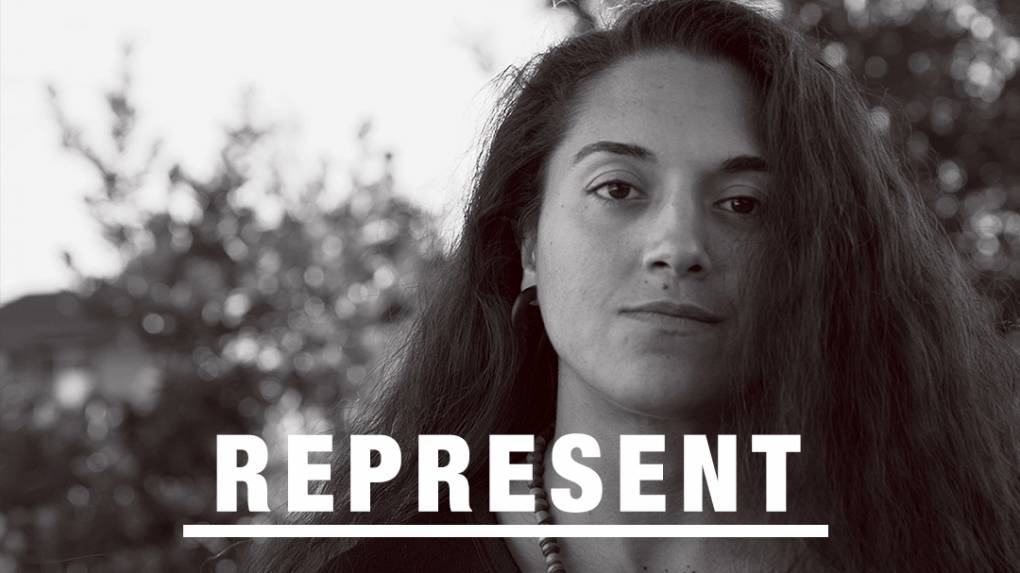
"caption": "ASHA, San Jose-based artist, educator and revolutionary.",
"description": "ASHA, San Jose-based artist, educator and revolutionary.",
"title": "ASHAforWP",
"credit": "Claudia Escobar",
"status": "inherit",
"altTag": "A close-up of a woman with long hair who is looking straight into the camera.",
"isLoading": false,
"fetchFailed": false
},
"arts_13836938": {
"type": "attachments",
"id": "arts_13836938",
"meta": {
"index": "attachments_1716263798",
"site": "arts",
"id": "13836938",
"found": true
},
"parent": 13836922,
"imgSizes": {
"small": {
"file": "https://ww2.kqed.org/app/uploads/sites/2/2018/07/heatherjune_1024x1024-520x346.jpg",
"width": 520,
"mimeType": "image/jpeg",
"height": 346
},
"thumbnail": {
"file": "https://ww2.kqed.org/app/uploads/sites/2/2018/07/heatherjune_1024x1024-160x107.jpg",
"width": 160,
"mimeType": "image/jpeg",
"height": 107
},
"post-thumbnail": {
"file": "https://ww2.kqed.org/app/uploads/sites/2/2018/07/heatherjune_1024x1024-672x372.jpg",
"width": 672,
"mimeType": "image/jpeg",
"height": 372
},
"xsmall": {
"file": "https://ww2.kqed.org/app/uploads/sites/2/2018/07/heatherjune_1024x1024-375x250.jpg",
"width": 375,
"mimeType": "image/jpeg",
"height": 250
},
"kqedFullSize": {
"file": "https://ww2.kqed.org/app/uploads/sites/2/2018/07/heatherjune_1024x1024.jpg",
"width": 800,
"height": 533
},
"guest-author-50": {
"file": "https://ww2.kqed.org/app/uploads/sites/2/2018/07/heatherjune_1024x1024-50x50.jpg",
"width": 50,
"mimeType": "image/jpeg",
"height": 50
},
"guest-author-96": {
"file": "https://ww2.kqed.org/app/uploads/sites/2/2018/07/heatherjune_1024x1024-96x96.jpg",
"width": 96,
"mimeType": "image/jpeg",
"height": 96
},
"medium": {
"file": "https://ww2.kqed.org/app/uploads/sites/2/2018/07/heatherjune_1024x1024-800x533.jpg",
"width": 800,
"mimeType": "image/jpeg",
"height": 533
},
"guest-author-64": {
"file": "https://ww2.kqed.org/app/uploads/sites/2/2018/07/heatherjune_1024x1024-64x64.jpg",
"width": 64,
"mimeType": "image/jpeg",
"height": 64
},
"guest-author-32": {
"file": "https://ww2.kqed.org/app/uploads/sites/2/2018/07/heatherjune_1024x1024-32x32.jpg",
"width": 32,
"mimeType": "image/jpeg",
"height": 32
},
"detail": {
"file": "https://ww2.kqed.org/app/uploads/sites/2/2018/07/heatherjune_1024x1024-150x150.jpg",
"width": 150,
"mimeType": "image/jpeg",
"height": 150
},
"medium_large": {
"file": "https://ww2.kqed.org/app/uploads/sites/2/2018/07/heatherjune_1024x1024-768x512.jpg",
"width": 768,
"mimeType": "image/jpeg",
"height": 512
},
"guest-author-128": {
"file": "https://ww2.kqed.org/app/uploads/sites/2/2018/07/heatherjune_1024x1024-128x128.jpg",
"width": 128,
"mimeType": "image/jpeg",
"height": 128
},
"xxsmall": {
"file": "https://ww2.kqed.org/app/uploads/sites/2/2018/07/heatherjune_1024x1024-240x160.jpg",
"width": 240,
"mimeType": "image/jpeg",
"height": 160
}
},
"publishDate": 1531351718,
"modified": 1531351745,
"caption": "Photo credit: Garrett Gibbons",
"description": null,
"title": "heatherjune_1024x1024",
"credit": null,
"status": "inherit",
"isLoading": false,
"fetchFailed": false
},
"arts_13834718": {
"type": "attachments",
"id": "arts_13834718",
"meta": {
"index": "attachments_1716263798",
"site": "arts",
"id": "13834718",
"found": true
},
"parent": 13834645,
"imgSizes": {
"small": {
"file": "https://ww2.kqed.org/app/uploads/sites/2/2018/06/books-collage-520x293.jpg",
"width": 520,
"mimeType": "image/jpeg",
"height": 293
},
"thumbnail": {
"file": "https://ww2.kqed.org/app/uploads/sites/2/2018/06/books-collage-160x90.jpg",
"width": 160,
"mimeType": "image/jpeg",
"height": 90
},
"post-thumbnail": {
"file": "https://ww2.kqed.org/app/uploads/sites/2/2018/06/books-collage-672x372.jpg",
"width": 672,
"mimeType": "image/jpeg",
"height": 372
},
"xsmall": {
"file": "https://ww2.kqed.org/app/uploads/sites/2/2018/06/books-collage-375x211.jpg",
"width": 375,
"mimeType": "image/jpeg",
"height": 211
},
"kqedFullSize": {
"file": "https://ww2.kqed.org/app/uploads/sites/2/2018/06/books-collage.jpg",
"width": 800,
"height": 450
},
"guest-author-50": {
"file": "https://ww2.kqed.org/app/uploads/sites/2/2018/06/books-collage-50x50.jpg",
"width": 50,
"mimeType": "image/jpeg",
"height": 50
},
"guest-author-96": {
"file": "https://ww2.kqed.org/app/uploads/sites/2/2018/06/books-collage-96x96.jpg",
"width": 96,
"mimeType": "image/jpeg",
"height": 96
},
"medium": {
"file": "https://ww2.kqed.org/app/uploads/sites/2/2018/06/books-collage-800x450.jpg",
"width": 800,
"mimeType": "image/jpeg",
"height": 450
},
"guest-author-64": {
"file": "https://ww2.kqed.org/app/uploads/sites/2/2018/06/books-collage-64x64.jpg",
"width": 64,
"mimeType": "image/jpeg",
"height": 64
},
"guest-author-32": {
"file": "https://ww2.kqed.org/app/uploads/sites/2/2018/06/books-collage-32x32.jpg",
"width": 32,
"mimeType": "image/jpeg",
"height": 32
},
"detail": {
"file": "https://ww2.kqed.org/app/uploads/sites/2/2018/06/books-collage-150x150.jpg",
"width": 150,
"mimeType": "image/jpeg",
"height": 150
},
"medium_large": {
"file": "https://ww2.kqed.org/app/uploads/sites/2/2018/06/books-collage-768x432.jpg",
"width": 768,
"mimeType": "image/jpeg",
"height": 432
},
"guest-author-128": {
"file": "https://ww2.kqed.org/app/uploads/sites/2/2018/06/books-collage-128x128.jpg",
"width": 128,
"mimeType": "image/jpeg",
"height": 128
},
"xxsmall": {
"file": "https://ww2.kqed.org/app/uploads/sites/2/2018/06/books-collage-240x135.jpg",
"width": 240,
"mimeType": "image/jpeg",
"height": 135
}
},
"publishDate": 1528482074,
"modified": 1528482074,
"caption": null,
"description": null,
"title": "books collage",
"credit": null,
"status": "inherit",
"isLoading": false,
"fetchFailed": false
},
"arts_13828698": {
"type": "attachments",
"id": "arts_13828698",
"meta": {
"index": "attachments_1716263798",
"site": "arts",
"id": "13828698",
"found": true
},
"parent": 13828645,
"imgSizes": {
"small": {
"file": "https://ww2.kqed.org/app/uploads/sites/2/2018/04/Charles20Amirkhanian20credit20Michael20Melnyk20-201mb-1-520x346.jpg",
"width": 520,
"mimeType": "image/jpeg",
"height": 346
},
"twentyfourteen-full-width": {
"file": "https://ww2.kqed.org/app/uploads/sites/2/2018/04/Charles20Amirkhanian20credit20Michael20Melnyk20-201mb-1-1038x576.jpg",
"width": 1038,
"mimeType": "image/jpeg",
"height": 576
},
"thumbnail": {
"file": "https://ww2.kqed.org/app/uploads/sites/2/2018/04/Charles20Amirkhanian20credit20Michael20Melnyk20-201mb-1-160x106.jpg",
"width": 160,
"mimeType": "image/jpeg",
"height": 106
},
"fd-sm": {
"file": "https://ww2.kqed.org/app/uploads/sites/2/2018/04/Charles20Amirkhanian20credit20Michael20Melnyk20-201mb-1-960x639.jpg",
"width": 960,
"mimeType": "image/jpeg",
"height": 639
},
"post-thumbnail": {
"file": "https://ww2.kqed.org/app/uploads/sites/2/2018/04/Charles20Amirkhanian20credit20Michael20Melnyk20-201mb-1-672x372.jpg",
"width": 672,
"mimeType": "image/jpeg",
"height": 372
},
"xsmall": {
"file": "https://ww2.kqed.org/app/uploads/sites/2/2018/04/Charles20Amirkhanian20credit20Michael20Melnyk20-201mb-1-375x250.jpg",
"width": 375,
"mimeType": "image/jpeg",
"height": 250
},
"kqedFullSize": {
"file": "https://ww2.kqed.org/app/uploads/sites/2/2018/04/Charles20Amirkhanian20credit20Michael20Melnyk20-201mb-1.jpg",
"width": 2048,
"height": 1363
},
"large": {
"file": "https://ww2.kqed.org/app/uploads/sites/2/2018/04/Charles20Amirkhanian20credit20Michael20Melnyk20-201mb-1-1020x679.jpg",
"width": 1020,
"mimeType": "image/jpeg",
"height": 679
},
"xlarge": {
"file": "https://ww2.kqed.org/app/uploads/sites/2/2018/04/Charles20Amirkhanian20credit20Michael20Melnyk20-201mb-1-1180x785.jpg",
"width": 1180,
"mimeType": "image/jpeg",
"height": 785
},
"guest-author-50": {
"file": "https://ww2.kqed.org/app/uploads/sites/2/2018/04/Charles20Amirkhanian20credit20Michael20Melnyk20-201mb-1-50x50.jpg",
"width": 50,
"mimeType": "image/jpeg",
"height": 50
},
"guest-author-96": {
"file": "https://ww2.kqed.org/app/uploads/sites/2/2018/04/Charles20Amirkhanian20credit20Michael20Melnyk20-201mb-1-96x96.jpg",
"width": 96,
"mimeType": "image/jpeg",
"height": 96
},
"medium": {
"file": "https://ww2.kqed.org/app/uploads/sites/2/2018/04/Charles20Amirkhanian20credit20Michael20Melnyk20-201mb-1-800x532.jpg",
"width": 800,
"mimeType": "image/jpeg",
"height": 532
},
"guest-author-64": {
"file": "https://ww2.kqed.org/app/uploads/sites/2/2018/04/Charles20Amirkhanian20credit20Michael20Melnyk20-201mb-1-64x64.jpg",
"width": 64,
"mimeType": "image/jpeg",
"height": 64
},
"guest-author-32": {
"file": "https://ww2.kqed.org/app/uploads/sites/2/2018/04/Charles20Amirkhanian20credit20Michael20Melnyk20-201mb-1-32x32.jpg",
"width": 32,
"mimeType": "image/jpeg",
"height": 32
},
"fd-lrg": {
"file": "https://ww2.kqed.org/app/uploads/sites/2/2018/04/Charles20Amirkhanian20credit20Michael20Melnyk20-201mb-1-1920x1278.jpg",
"width": 1920,
"mimeType": "image/jpeg",
"height": 1278
},
"fd-med": {
"file": "https://ww2.kqed.org/app/uploads/sites/2/2018/04/Charles20Amirkhanian20credit20Michael20Melnyk20-201mb-1-1180x785.jpg",
"width": 1180,
"mimeType": "image/jpeg",
"height": 785
},
"full-width": {
"file": "https://ww2.kqed.org/app/uploads/sites/2/2018/04/Charles20Amirkhanian20credit20Michael20Melnyk20-201mb-1-1920x1278.jpg",
"width": 1920,
"mimeType": "image/jpeg",
"height": 1278
},
"detail": {
"file": "https://ww2.kqed.org/app/uploads/sites/2/2018/04/Charles20Amirkhanian20credit20Michael20Melnyk20-201mb-1-150x150.jpg",
"width": 150,
"mimeType": "image/jpeg",
"height": 150
},
"medium_large": {
"file": "https://ww2.kqed.org/app/uploads/sites/2/2018/04/Charles20Amirkhanian20credit20Michael20Melnyk20-201mb-1-768x511.jpg",
"width": 768,
"mimeType": "image/jpeg",
"height": 511
},
"guest-author-128": {
"file": "https://ww2.kqed.org/app/uploads/sites/2/2018/04/Charles20Amirkhanian20credit20Michael20Melnyk20-201mb-1-128x128.jpg",
"width": 128,
"mimeType": "image/jpeg",
"height": 128
},
"xxsmall": {
"file": "https://ww2.kqed.org/app/uploads/sites/2/2018/04/Charles20Amirkhanian20credit20Michael20Melnyk20-201mb-1-240x160.jpg",
"width": 240,
"mimeType": "image/jpeg",
"height": 160
}
},
"publishDate": 1522886837,
"modified": 1522886921,
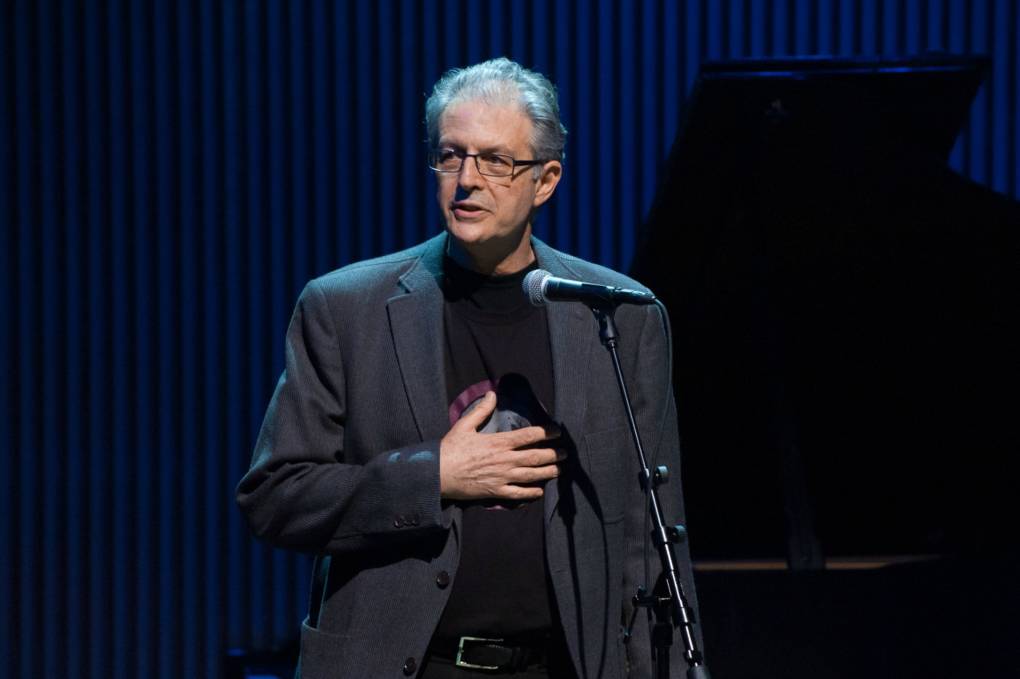
"caption": "Charles Amirkhanian is Artistic Director of the Other Minds Festival, now in its 23rd year.",
"description": "Charles Amirkhanian is Artistic Director of the Other Minds Festival, now in its 23rd year.",
"title": "CharlesAmirkhaniancreditMichaelMelnyk-1mb",
"credit": "Photo: Courtesy of Mike Melnyk",
"status": "inherit",
"isLoading": false,
"fetchFailed": false
},
"arts_13825309": {
"type": "attachments",
"id": "arts_13825309",
"meta": {
"index": "attachments_1716263798",
"site": "arts",
"id": "13825309",
"found": true
},
"parent": 13825251,
"imgSizes": {
"small": {
"file": "https://ww2.kqed.org/app/uploads/sites/2/2018/02/Howl.MAIN_.Chloe_-520x293.jpg",
"width": 520,
"mimeType": "image/jpeg",
"height": 293
},
"twentyfourteen-full-width": {
"file": "https://ww2.kqed.org/app/uploads/sites/2/2018/02/Howl.MAIN_.Chloe_-1038x576.jpg",
"width": 1038,
"mimeType": "image/jpeg",
"height": 576
},
"thumbnail": {
"file": "https://ww2.kqed.org/app/uploads/sites/2/2018/02/Howl.MAIN_.Chloe_-160x90.jpg",
"width": 160,
"mimeType": "image/jpeg",
"height": 90
},
"fd-sm": {
"file": "https://ww2.kqed.org/app/uploads/sites/2/2018/02/Howl.MAIN_.Chloe_-960x540.jpg",
"width": 960,
"mimeType": "image/jpeg",
"height": 540
},
"post-thumbnail": {
"file": "https://ww2.kqed.org/app/uploads/sites/2/2018/02/Howl.MAIN_.Chloe_-672x372.jpg",
"width": 672,
"mimeType": "image/jpeg",
"height": 372
},
"xsmall": {
"file": "https://ww2.kqed.org/app/uploads/sites/2/2018/02/Howl.MAIN_.Chloe_-375x211.jpg",
"width": 375,
"mimeType": "image/jpeg",
"height": 211
},
"kqedFullSize": {
"file": "https://ww2.kqed.org/app/uploads/sites/2/2018/02/Howl.MAIN_.Chloe_.jpg",
"width": 1500,
"height": 844
},
"large": {
"file": "https://ww2.kqed.org/app/uploads/sites/2/2018/02/Howl.MAIN_.Chloe_-1020x574.jpg",
"width": 1020,
"mimeType": "image/jpeg",
"height": 574
},
"xlarge": {
"file": "https://ww2.kqed.org/app/uploads/sites/2/2018/02/Howl.MAIN_.Chloe_-1180x664.jpg",
"width": 1180,
"mimeType": "image/jpeg",
"height": 664
},
"guest-author-50": {
"file": "https://ww2.kqed.org/app/uploads/sites/2/2018/02/Howl.MAIN_.Chloe_-50x50.jpg",
"width": 50,
"mimeType": "image/jpeg",
"height": 50
},
"guest-author-96": {
"file": "https://ww2.kqed.org/app/uploads/sites/2/2018/02/Howl.MAIN_.Chloe_-96x96.jpg",
"width": 96,
"mimeType": "image/jpeg",
"height": 96
},
"medium": {
"file": "https://ww2.kqed.org/app/uploads/sites/2/2018/02/Howl.MAIN_.Chloe_-800x450.jpg",
"width": 800,
"mimeType": "image/jpeg",
"height": 450
},
"guest-author-64": {
"file": "https://ww2.kqed.org/app/uploads/sites/2/2018/02/Howl.MAIN_.Chloe_-64x64.jpg",
"width": 64,
"mimeType": "image/jpeg",
"height": 64
},
"guest-author-32": {
"file": "https://ww2.kqed.org/app/uploads/sites/2/2018/02/Howl.MAIN_.Chloe_-32x32.jpg",
"width": 32,
"mimeType": "image/jpeg",
"height": 32
},
"fd-med": {
"file": "https://ww2.kqed.org/app/uploads/sites/2/2018/02/Howl.MAIN_.Chloe_-1180x664.jpg",
"width": 1180,
"mimeType": "image/jpeg",
"height": 664
},
"detail": {
"file": "https://ww2.kqed.org/app/uploads/sites/2/2018/02/Howl.MAIN_.Chloe_-150x150.jpg",
"width": 150,
"mimeType": "image/jpeg",
"height": 150
},
"medium_large": {
"file": "https://ww2.kqed.org/app/uploads/sites/2/2018/02/Howl.MAIN_.Chloe_-768x432.jpg",
"width": 768,
"mimeType": "image/jpeg",
"height": 432
},
"guest-author-128": {
"file": "https://ww2.kqed.org/app/uploads/sites/2/2018/02/Howl.MAIN_.Chloe_-128x128.jpg",
"width": 128,
"mimeType": "image/jpeg",
"height": 128
},
"xxsmall": {
"file": "https://ww2.kqed.org/app/uploads/sites/2/2018/02/Howl.MAIN_.Chloe_-240x135.jpg",
"width": 240,
"mimeType": "image/jpeg",
"height": 135
}
},
"publishDate": 1519327607,
"modified": 1519327898,
"caption": "Album cover detail for Allen Ginsberg's 'Howl.' The 1959 recording is re-released in a deluxe vinyl box set this week.",
"description": "Album cover detail for Allen Ginsberg's 'Howl.' The 1959 recording is re-released in a deluxe vinyl box set this week.",
"title": "Howl.MAIN.Chloe",
"credit": "Craft Recordings",
"status": "inherit",
"isLoading": false,
"fetchFailed": false
},
"arts_13824750": {
"type": "attachments",
"id": "arts_13824750",
"meta": {
"index": "attachments_1716263798",
"site": "arts",
"id": "13824750",
"found": true
},
"parent": 13824749,
"imgSizes": {
"small": {
"file": "https://ww2.kqed.org/app/uploads/sites/2/2018/02/Courtesy-Allen-Ginsberg-Estate-e1518737068556-520x307.jpg",
"width": 520,
"mimeType": "image/jpeg",
"height": 307
},
"twentyfourteen-full-width": {
"file": "https://ww2.kqed.org/app/uploads/sites/2/2018/02/Courtesy-Allen-Ginsberg-Estate-e1518737068556-1038x576.jpg",
"width": 1038,
"mimeType": "image/jpeg",
"height": 576
},
"thumbnail": {
"file": "https://ww2.kqed.org/app/uploads/sites/2/2018/02/Courtesy-Allen-Ginsberg-Estate-e1518737068556-160x94.jpg",
"width": 160,
"mimeType": "image/jpeg",
"height": 94
},
"fd-sm": {
"file": "https://ww2.kqed.org/app/uploads/sites/2/2018/02/Courtesy-Allen-Ginsberg-Estate-e1518737068556-960x566.jpg",
"width": 960,
"mimeType": "image/jpeg",
"height": 566
},
"post-thumbnail": {
"file": "https://ww2.kqed.org/app/uploads/sites/2/2018/02/Courtesy-Allen-Ginsberg-Estate-e1518737068556-672x372.jpg",
"width": 672,
"mimeType": "image/jpeg",
"height": 372
},
"xsmall": {
"file": "https://ww2.kqed.org/app/uploads/sites/2/2018/02/Courtesy-Allen-Ginsberg-Estate-e1518737068556-375x221.jpg",
"width": 375,
"mimeType": "image/jpeg",
"height": 221
},
"kqedFullSize": {
"file": "https://ww2.kqed.org/app/uploads/sites/2/2018/02/Courtesy-Allen-Ginsberg-Estate-e1518737068556.jpg",
"width": 2048,
"height": 1208
},
"large": {
"file": "https://ww2.kqed.org/app/uploads/sites/2/2018/02/Courtesy-Allen-Ginsberg-Estate-e1518737068556-1020x602.jpg",
"width": 1020,
"mimeType": "image/jpeg",
"height": 602
},
"xlarge": {
"file": "https://ww2.kqed.org/app/uploads/sites/2/2018/02/Courtesy-Allen-Ginsberg-Estate-e1518737068556-1180x696.jpg",
"width": 1180,
"mimeType": "image/jpeg",
"height": 696
},
"guest-author-50": {
"file": "https://ww2.kqed.org/app/uploads/sites/2/2018/02/Courtesy-Allen-Ginsberg-Estate-e1518737068556-50x50.jpg",
"width": 50,
"mimeType": "image/jpeg",
"height": 50
},
"guest-author-96": {
"file": "https://ww2.kqed.org/app/uploads/sites/2/2018/02/Courtesy-Allen-Ginsberg-Estate-e1518737068556-96x96.jpg",
"width": 96,
"mimeType": "image/jpeg",
"height": 96
},
"medium": {
"file": "https://ww2.kqed.org/app/uploads/sites/2/2018/02/Courtesy-Allen-Ginsberg-Estate-e1518737068556-800x472.jpg",
"width": 800,
"mimeType": "image/jpeg",
"height": 472
},
"guest-author-64": {
"file": "https://ww2.kqed.org/app/uploads/sites/2/2018/02/Courtesy-Allen-Ginsberg-Estate-e1518737068556-64x64.jpg",
"width": 64,
"mimeType": "image/jpeg",
"height": 64
},
"guest-author-32": {
"file": "https://ww2.kqed.org/app/uploads/sites/2/2018/02/Courtesy-Allen-Ginsberg-Estate-e1518737068556-32x32.jpg",
"width": 32,
"mimeType": "image/jpeg",
"height": 32
},
"fd-lrg": {
"file": "https://ww2.kqed.org/app/uploads/sites/2/2018/02/Courtesy-Allen-Ginsberg-Estate-e1518737068556-1920x1133.jpg",
"width": 1920,
"mimeType": "image/jpeg",
"height": 1133
},
"fd-med": {
"file": "https://ww2.kqed.org/app/uploads/sites/2/2018/02/Courtesy-Allen-Ginsberg-Estate-e1518737068556-1180x696.jpg",
"width": 1180,
"mimeType": "image/jpeg",
"height": 696
},
"full-width": {
"file": "https://ww2.kqed.org/app/uploads/sites/2/2018/02/Courtesy-Allen-Ginsberg-Estate-e1518737068556-1920x1133.jpg",
"width": 1920,
"mimeType": "image/jpeg",
"height": 1133
},
"detail": {
"file": "https://ww2.kqed.org/app/uploads/sites/2/2018/02/Courtesy-Allen-Ginsberg-Estate-e1518737068556-150x150.jpg",
"width": 150,
"mimeType": "image/jpeg",
"height": 150
},
"medium_large": {
"file": "https://ww2.kqed.org/app/uploads/sites/2/2018/02/Courtesy-Allen-Ginsberg-Estate-e1518737068556-768x453.jpg",
"width": 768,
"mimeType": "image/jpeg",
"height": 453
},
"guest-author-128": {
"file": "https://ww2.kqed.org/app/uploads/sites/2/2018/02/Courtesy-Allen-Ginsberg-Estate-e1518737068556-128x128.jpg",
"width": 128,
"mimeType": "image/jpeg",
"height": 128
},
"xxsmall": {
"file": "https://ww2.kqed.org/app/uploads/sites/2/2018/02/Courtesy-Allen-Ginsberg-Estate-e1518737068556-240x142.jpg",
"width": 240,
"mimeType": "image/jpeg",
"height": 142
}
},
"publishDate": 1518736909,
"modified": 1518737015,
"caption": "Allen Ginsberg at his typewriter, date unknown.",
"description": "Allen Ginsberg at his typewriter, date unknown.",
"title": "Courtesy Allen Ginsberg Estate",
"credit": "Courtesy Allen Ginsberg Estate",
"status": "inherit",
"isLoading": false,
"fetchFailed": false
},
"arts_13816108": {
"type": "attachments",
"id": "arts_13816108",
"meta": {
"index": "attachments_1716263798",
"site": "arts",
"id": "13816108",
"found": true
},
"parent": 13816083,
"imgSizes": {
"small": {
"file": "https://ww2.kqed.org/app/uploads/sites/2/2017/11/madness_samsax-520x215.jpeg",
"width": 520,
"mimeType": "image/jpeg",
"height": 215
},
"twentyfourteen-full-width": {
"file": "https://ww2.kqed.org/app/uploads/sites/2/2017/11/madness_samsax-1038x576.jpeg",
"width": 1038,
"mimeType": "image/jpeg",
"height": 576
},
"thumbnail": {
"file": "https://ww2.kqed.org/app/uploads/sites/2/2017/11/madness_samsax-160x66.jpeg",
"width": 160,
"mimeType": "image/jpeg",
"height": 66
},
"fd-sm": {
"file": "https://ww2.kqed.org/app/uploads/sites/2/2017/11/madness_samsax-960x397.jpeg",
"width": 960,
"mimeType": "image/jpeg",
"height": 397
},
"post-thumbnail": {
"file": "https://ww2.kqed.org/app/uploads/sites/2/2017/11/madness_samsax-672x372.jpeg",
"width": 672,
"mimeType": "image/jpeg",
"height": 372
},
"xsmall": {
"file": "https://ww2.kqed.org/app/uploads/sites/2/2017/11/madness_samsax-375x155.jpeg",
"width": 375,
"mimeType": "image/jpeg",
"height": 155
},
"kqedFullSize": {
"file": "https://ww2.kqed.org/app/uploads/sites/2/2017/11/madness_samsax.jpeg",
"width": 4000,
"height": 1655
},
"large": {
"file": "https://ww2.kqed.org/app/uploads/sites/2/2017/11/madness_samsax-1020x422.jpeg",
"width": 1020,
"mimeType": "image/jpeg",
"height": 422
},
"xlarge": {
"file": "https://ww2.kqed.org/app/uploads/sites/2/2017/11/madness_samsax-1180x488.jpeg",
"width": 1180,
"mimeType": "image/jpeg",
"height": 488
},
"guest-author-50": {
"file": "https://ww2.kqed.org/app/uploads/sites/2/2017/11/madness_samsax-50x50.jpeg",
"width": 50,
"mimeType": "image/jpeg",
"height": 50
},
"guest-author-96": {
"file": "https://ww2.kqed.org/app/uploads/sites/2/2017/11/madness_samsax-96x96.jpeg",
"width": 96,
"mimeType": "image/jpeg",
"height": 96
},
"medium": {
"file": "https://ww2.kqed.org/app/uploads/sites/2/2017/11/madness_samsax-800x331.jpeg",
"width": 800,
"mimeType": "image/jpeg",
"height": 331
},
"guest-author-64": {
"file": "https://ww2.kqed.org/app/uploads/sites/2/2017/11/madness_samsax-64x64.jpeg",
"width": 64,
"mimeType": "image/jpeg",
"height": 64
},
"guest-author-32": {
"file": "https://ww2.kqed.org/app/uploads/sites/2/2017/11/madness_samsax-32x32.jpeg",
"width": 32,
"mimeType": "image/jpeg",
"height": 32
},
"fd-lrg": {
"file": "https://ww2.kqed.org/app/uploads/sites/2/2017/11/madness_samsax-1920x794.jpeg",
"width": 1920,
"mimeType": "image/jpeg",
"height": 794
},
"fd-med": {
"file": "https://ww2.kqed.org/app/uploads/sites/2/2017/11/madness_samsax-1180x488.jpeg",
"width": 1180,
"mimeType": "image/jpeg",
"height": 488
},
"full-width": {
"file": "https://ww2.kqed.org/app/uploads/sites/2/2017/11/madness_samsax-1920x794.jpeg",
"width": 1920,
"mimeType": "image/jpeg",
"height": 794
},
"detail": {
"file": "https://ww2.kqed.org/app/uploads/sites/2/2017/11/madness_samsax-150x150.jpeg",
"width": 150,
"mimeType": "image/jpeg",
"height": 150
},
"medium_large": {
"file": "https://ww2.kqed.org/app/uploads/sites/2/2017/11/madness_samsax-768x318.jpeg",
"width": 768,
"mimeType": "image/jpeg",
"height": 318
},
"guest-author-128": {
"file": "https://ww2.kqed.org/app/uploads/sites/2/2017/11/madness_samsax-128x128.jpeg",
"width": 128,
"mimeType": "image/jpeg",
"height": 128
},
"xxsmall": {
"file": "https://ww2.kqed.org/app/uploads/sites/2/2017/11/madness_samsax-240x99.jpeg",
"width": 240,
"mimeType": "image/jpeg",
"height": 99
}
},
"publishDate": 1512000355,
"modified": 1512000458,
"caption": "Photo of Sam Sax by B.A. Van Sise. Collage by Ingrid Rojas Contreras",
"description": null,
"title": "madness_samsax",
"credit": null,
"status": "inherit",
"isLoading": false,
"fetchFailed": false
},
"arts_13789908": {
"type": "attachments",
"id": "arts_13789908",
"meta": {
"index": "attachments_1716263798",
"site": "arts",
"id": "13789908",
"found": true
},
"parent": 0,
"imgSizes": {
"small": {
"file": "https://ww2.kqed.org/app/uploads/sites/2/2017/08/chinaka-header-edited-520x293.jpg",
"width": 520,
"mimeType": "image/jpeg",
"height": 293
},
"twentyfourteen-full-width": {
"file": "https://ww2.kqed.org/app/uploads/sites/2/2017/08/chinaka-header-edited-1038x576.jpg",
"width": 1038,
"mimeType": "image/jpeg",
"height": 576
},
"thumbnail": {
"file": "https://ww2.kqed.org/app/uploads/sites/2/2017/08/chinaka-header-edited-160x90.jpg",
"width": 160,
"mimeType": "image/jpeg",
"height": 90
},
"fd-sm": {
"file": "https://ww2.kqed.org/app/uploads/sites/2/2017/08/chinaka-header-edited-960x540.jpg",
"width": 960,
"mimeType": "image/jpeg",
"height": 540
},
"post-thumbnail": {
"file": "https://ww2.kqed.org/app/uploads/sites/2/2017/08/chinaka-header-edited-672x372.jpg",
"width": 672,
"mimeType": "image/jpeg",
"height": 372
},
"xsmall": {
"file": "https://ww2.kqed.org/app/uploads/sites/2/2017/08/chinaka-header-edited-375x211.jpg",
"width": 375,
"mimeType": "image/jpeg",
"height": 211
},
"kqedFullSize": {
"file": "https://ww2.kqed.org/app/uploads/sites/2/2017/08/chinaka-header-edited.jpg",
"width": 1920,
"height": 1080
},
"large": {
"file": "https://ww2.kqed.org/app/uploads/sites/2/2017/08/chinaka-header-edited-1020x574.jpg",
"width": 1020,
"mimeType": "image/jpeg",
"height": 574
},
"xlarge": {
"file": "https://ww2.kqed.org/app/uploads/sites/2/2017/08/chinaka-header-edited-1180x664.jpg",
"width": 1180,
"mimeType": "image/jpeg",
"height": 664
},
"guest-author-50": {
"file": "https://ww2.kqed.org/app/uploads/sites/2/2017/08/chinaka-header-edited-50x50.jpg",
"width": 50,
"mimeType": "image/jpeg",
"height": 50
},
"guest-author-96": {
"file": "https://ww2.kqed.org/app/uploads/sites/2/2017/08/chinaka-header-edited-96x96.jpg",
"width": 96,
"mimeType": "image/jpeg",
"height": 96
},
"medium": {
"file": "https://ww2.kqed.org/app/uploads/sites/2/2017/08/chinaka-header-edited-800x450.jpg",
"width": 800,
"mimeType": "image/jpeg",
"height": 450
},
"guest-author-64": {
"file": "https://ww2.kqed.org/app/uploads/sites/2/2017/08/chinaka-header-edited-64x64.jpg",
"width": 64,
"mimeType": "image/jpeg",
"height": 64
},
"guest-author-32": {
"file": "https://ww2.kqed.org/app/uploads/sites/2/2017/08/chinaka-header-edited-32x32.jpg",
"width": 32,
"mimeType": "image/jpeg",
"height": 32
},
"fd-lrg": {
"file": "https://ww2.kqed.org/app/uploads/sites/2/2017/08/chinaka-header-edited-1920x1080.jpg",
"width": 1920,
"mimeType": "image/jpeg",
"height": 1080
},
"fd-med": {
"file": "https://ww2.kqed.org/app/uploads/sites/2/2017/08/chinaka-header-edited-1180x664.jpg",
"width": 1180,
"mimeType": "image/jpeg",
"height": 664
},
"full-width": {
"file": "https://ww2.kqed.org/app/uploads/sites/2/2017/08/chinaka-header-edited-1920x1080.jpg",
"width": 1920,
"mimeType": "image/jpeg",
"height": 1080
},
"detail": {
"file": "https://ww2.kqed.org/app/uploads/sites/2/2017/08/chinaka-header-edited-150x150.jpg",
"width": 150,
"mimeType": "image/jpeg",
"height": 150
},
"medium_large": {
"file": "https://ww2.kqed.org/app/uploads/sites/2/2017/08/chinaka-header-edited-768x432.jpg",
"width": 768,
"mimeType": "image/jpeg",
"height": 432
},
"guest-author-128": {
"file": "https://ww2.kqed.org/app/uploads/sites/2/2017/08/chinaka-header-edited-128x128.jpg",
"width": 128,
"mimeType": "image/jpeg",
"height": 128
},
"xxsmall": {
"file": "https://ww2.kqed.org/app/uploads/sites/2/2017/08/chinaka-header-edited-240x135.jpg",
"width": 240,
"mimeType": "image/jpeg",
"height": 135
}
},
"publishDate": 1501626281,
"modified": 1501736369,
"caption": "Chinaka Hodge.",
"description": "Chinaka Hodge.",
"title": "Chinaka Hodge.",
"credit": "Photo: Christina Campbell",
"status": "inherit",
"isLoading": false,
"fetchFailed": false
},
"arts_13741264": {
"type": "attachments",
"id": "arts_13741264",
"meta": {
"index": "attachments_1716263798",
"site": "arts",
"id": "13741264",
"found": true
},
"parent": 0,
"imgSizes": {
"small": {
"file": "https://ww2.kqed.org/app/uploads/sites/2/2017/07/w2w-header-janice-520x293.jpg",
"width": 520,
"mimeType": "image/jpeg",
"height": 293
},
"twentyfourteen-full-width": {
"file": "https://ww2.kqed.org/app/uploads/sites/2/2017/07/w2w-header-janice-1038x576.jpg",
"width": 1038,
"mimeType": "image/jpeg",
"height": 576
},
"thumbnail": {
"file": "https://ww2.kqed.org/app/uploads/sites/2/2017/07/w2w-header-janice-160x90.jpg",
"width": 160,
"mimeType": "image/jpeg",
"height": 90
},
"fd-sm": {
"file": "https://ww2.kqed.org/app/uploads/sites/2/2017/07/w2w-header-janice-960x540.jpg",
"width": 960,
"mimeType": "image/jpeg",
"height": 540
},
"post-thumbnail": {
"file": "https://ww2.kqed.org/app/uploads/sites/2/2017/07/w2w-header-janice-672x372.jpg",
"width": 672,
"mimeType": "image/jpeg",
"height": 372
},
"xsmall": {
"file": "https://ww2.kqed.org/app/uploads/sites/2/2017/07/w2w-header-janice-375x211.jpg",
"width": 375,
"mimeType": "image/jpeg",
"height": 211
},
"kqedFullSize": {
"file": "https://ww2.kqed.org/app/uploads/sites/2/2017/07/w2w-header-janice.jpg",
"width": 1920,
"height": 1080
},
"large": {
"file": "https://ww2.kqed.org/app/uploads/sites/2/2017/07/w2w-header-janice-1020x574.jpg",
"width": 1020,
"mimeType": "image/jpeg",
"height": 574
},
"xlarge": {
"file": "https://ww2.kqed.org/app/uploads/sites/2/2017/07/w2w-header-janice-1180x664.jpg",
"width": 1180,
"mimeType": "image/jpeg",
"height": 664
},
"guest-author-50": {
"file": "https://ww2.kqed.org/app/uploads/sites/2/2017/07/w2w-header-janice-50x50.jpg",
"width": 50,
"mimeType": "image/jpeg",
"height": 50
},
"guest-author-96": {
"file": "https://ww2.kqed.org/app/uploads/sites/2/2017/07/w2w-header-janice-96x96.jpg",
"width": 96,
"mimeType": "image/jpeg",
"height": 96
},
"medium": {
"file": "https://ww2.kqed.org/app/uploads/sites/2/2017/07/w2w-header-janice-800x450.jpg",
"width": 800,
"mimeType": "image/jpeg",
"height": 450
},
"guest-author-64": {
"file": "https://ww2.kqed.org/app/uploads/sites/2/2017/07/w2w-header-janice-64x64.jpg",
"width": 64,
"mimeType": "image/jpeg",
"height": 64
},
"guest-author-32": {
"file": "https://ww2.kqed.org/app/uploads/sites/2/2017/07/w2w-header-janice-32x32.jpg",
"width": 32,
"mimeType": "image/jpeg",
"height": 32
},
"fd-lrg": {
"file": "https://ww2.kqed.org/app/uploads/sites/2/2017/07/w2w-header-janice-1920x1080.jpg",
"width": 1920,
"mimeType": "image/jpeg",
"height": 1080
},
"fd-med": {
"file": "https://ww2.kqed.org/app/uploads/sites/2/2017/07/w2w-header-janice-1180x664.jpg",
"width": 1180,
"mimeType": "image/jpeg",
"height": 664
},
"full-width": {
"file": "https://ww2.kqed.org/app/uploads/sites/2/2017/07/w2w-header-janice-1920x1080.jpg",
"width": 1920,
"mimeType": "image/jpeg",
"height": 1080
},
"detail": {
"file": "https://ww2.kqed.org/app/uploads/sites/2/2017/07/w2w-header-janice-150x150.jpg",
"width": 150,
"mimeType": "image/jpeg",
"height": 150
},
"medium_large": {
"file": "https://ww2.kqed.org/app/uploads/sites/2/2017/07/w2w-header-janice-768x432.jpg",
"width": 768,
"mimeType": "image/jpeg",
"height": 432
},
"guest-author-128": {
"file": "https://ww2.kqed.org/app/uploads/sites/2/2017/07/w2w-header-janice-128x128.jpg",
"width": 128,
"mimeType": "image/jpeg",
"height": 128
},
"xxsmall": {
"file": "https://ww2.kqed.org/app/uploads/sites/2/2017/07/w2w-header-janice-240x135.jpg",
"width": 240,
"mimeType": "image/jpeg",
"height": 135
}
},
"publishDate": 1501028302,
"modified": 1501273268,
"caption": "Janice Sapigao.",
"description": "Janice Sapigao.",
"title": "Janice Lobo Sapigao",
"credit": "Photo: Christina Campbell",
"status": "inherit",
"isLoading": false,
"fetchFailed": false
}
},
"audioPlayerReducer": {
"postId": "stream_live",
"isPaused": true,
"isPlaying": false,
"pfsActive": false,
"pledgeModalIsOpen": true,
"playerDrawerIsOpen": false,
"liveAudioPlayStartedAt": 0,
"liveAudioPlayContext": ""
},
"authorsReducer": {
"byline_arts_13838466": {
"type": "authors",
"id": "byline_arts_13838466",
"meta": {
"override": true
},
"slug": "byline_arts_13838466",
"name": "Mary Mendoza",
"isLoading": false
},
"irojascontreras": {
"type": "authors",
"id": "78",
"meta": {
"index": "authors_1716337520",
"id": "78",
"found": true
},
"name": "Ingrid Rojas Contreras",
"firstName": "Ingrid",
"lastName": "Rojas Contreras",
"slug": "irojascontreras",
"email": "ingrid.rojas.c@gmail.com",
"display_author_email": false,
"staff_mastheads": [],
"title": null,
"bio": "Ingrid Rojas Contreras lives in San Francisco with her books. Her debut novel\u003cem> Fruit of the Drunken Tree \u003c/em>is forthcoming from Doubleday (Summer 2018). Find more at \u003ca href=\"http://www.ingridrojascontreras.com\">www.ingridrojascontreras.com\u003c/a>.",
"avatar": "https://secure.gravatar.com/avatar/908d94de9342e71b9d5ceaa8152a16a0?s=600&d=blank&r=g",
"twitter": null,
"facebook": null,
"instagram": null,
"linkedin": null,
"sites": [
{
"site": "arts",
"roles": [
"Contributor",
"contributor"
]
}
],
"headData": {
"title": "Ingrid Rojas Contreras | KQED",
"description": null,
"ogImgSrc": "https://secure.gravatar.com/avatar/908d94de9342e71b9d5ceaa8152a16a0?s=600&d=blank&r=g",
"twImgSrc": "https://secure.gravatar.com/avatar/908d94de9342e71b9d5ceaa8152a16a0?s=600&d=blank&r=g"
},
"isLoading": false,
"link": "/author/irojascontreras"
},
"gmeline": {
"type": "authors",
"id": "185",
"meta": {
"index": "authors_1716337520",
"id": "185",
"found": true
},
"name": "Gabe Meline",
"firstName": "Gabe",
"lastName": "Meline",
"slug": "gmeline",
"email": "gmeline@kqed.org",
"display_author_email": true,
"staff_mastheads": [
"arts"
],
"title": "Senior Editor, KQED Arts & Culture",
"bio": "Gabe Meline entered journalism at age 15 making photocopied zines, and has since earned awards from the Edward R. Murrow Awards, the Society for Professional Journalists, the Online Journalism Awards, the Association of Alternative Newsweeklies and the California Newspaper Publishers Association. Prior to KQED, he was the editor of the \u003cem>North Bay Bohemian\u003c/em> and a touring musician. He lives with his wife and daughter in his hometown of Santa Rosa, CA.",
"avatar": "https://secure.gravatar.com/avatar/5bebe57be0d8bc2dd318934feb47299e2d2d10cba28d09d8d7afb389a2ce2bdd?s=600&d=blank&r=g",
"twitter": null,
"bluesky": null,
"facebook": null,
"instagram": null,
"linkedin": null,
"sites": [
{
"site": "",
"roles": [
"editor"
]
},
{
"site": "arts",
"roles": [
"administrator"
]
},
{
"site": "artschool",
"roles": [
"editor"
]
},
{
"site": "news",
"roles": [
"author"
]
},
{
"site": "pop",
"roles": [
"editor"
]
},
{
"site": "bayareabites",
"roles": [
"editor"
]
},
{
"site": "food",
"roles": [
"editor"
]
},
{
"site": "forum",
"roles": [
"administrator"
]
},
{
"site": "liveblog",
"roles": [
"editor"
]
},
{
"site": "hiphop",
"roles": [
"editor"
]
}
],
"headData": {
"title": "Gabe Meline | KQED",
"description": "Senior Editor, KQED Arts & Culture",
"ogImgSrc": "https://secure.gravatar.com/avatar/5bebe57be0d8bc2dd318934feb47299e2d2d10cba28d09d8d7afb389a2ce2bdd?s=600&d=blank&r=g",
"twImgSrc": "https://secure.gravatar.com/avatar/5bebe57be0d8bc2dd318934feb47299e2d2d10cba28d09d8d7afb389a2ce2bdd?s=600&d=blank&r=g"
},
"isLoading": false,
"link": "/author/gmeline"
},
"rachael-myrow": {
"type": "authors",
"id": "251",
"meta": {
"index": "authors_1716337520",
"id": "251",
"found": true
},
"name": "Rachael Myrow",
"firstName": "Rachael",
"lastName": "Myrow",
"slug": "rachael-myrow",
"email": "rmyrow@kqed.org",
"display_author_email": true,
"staff_mastheads": [
"news"
],
"title": "Senior Editor of KQED's Silicon Valley News Desk",
"bio": "• I write and edit stories about how Silicon Valley power and policies shape everyday life in California. I’m also passionate about making Bay Area history and culture more accessible to a broad public. • I’ve been a journalist for most of my life, starting in high school with The Franklin Press in Los Angeles, where I grew up. While earning my first degree in English at UC Berkeley, I got my start in public radio at KALX-FM. After completing a second degree in journalism at Cal, I landed my first professional job at Marketplace, then moved on to KPCC (now LAist), and then KQED, where I hosted The California Report for more than seven years. • My reporting has appeared on NPR, The World, WBUR’s \u003ci>Here & Now\u003c/i>, and the BBC. I also guest host for KQED’s \u003ci>Forum\u003c/i>, as well as the Commonwealth Club in San Francisco. • I speak periodically on media, democracy and technology issues, and do voiceover work for documentaries and educational video projects. • Outside of the studio, you'll find me hiking Bay Area trails and whipping up Insta-ready meals in my kitchen. • I do not accept gifts, money, or favors from anyone connected to my reporting, I don't pay people for information, and I do not support or donate to political causes. • I strive to treat the people I report on with fairness, honesty, and respect. I also recognize there are often multiple sides to a story and work to verify information through multiple sources and documentation. If I get something wrong, I correct it.",
"avatar": "https://secure.gravatar.com/avatar/3ed8a3c5f26025e4a805ba634cda8cd764906b97438a6d9ce216b044e340da4e?s=600&d=blank&r=g",
"twitter": "rachaelmyrow",
"bluesky": null,
"facebook": null,
"instagram": null,
"linkedin": "https://www.linkedin.com/in/rachaelmyrow/",
"sites": [
{
"site": "arts",
"roles": [
"administrator"
]
},
{
"site": "news",
"roles": [
"edit_others_posts",
"editor"
]
},
{
"site": "futureofyou",
"roles": [
"editor"
]
},
{
"site": "bayareabites",
"roles": [
"editor"
]
},
{
"site": "stateofhealth",
"roles": [
"editor"
]
},
{
"site": "science",
"roles": [
"editor"
]
},
{
"site": "food",
"roles": [
"editor"
]
},
{
"site": "forum",
"roles": [
"editor"
]
},
{
"site": "liveblog",
"roles": [
"author"
]
}
],
"headData": {
"title": "Rachael Myrow | KQED",
"description": "Senior Editor of KQED's Silicon Valley News Desk",
"ogImgSrc": "https://secure.gravatar.com/avatar/3ed8a3c5f26025e4a805ba634cda8cd764906b97438a6d9ce216b044e340da4e?s=600&d=blank&r=g",
"twImgSrc": "https://secure.gravatar.com/avatar/3ed8a3c5f26025e4a805ba634cda8cd764906b97438a6d9ce216b044e340da4e?s=600&d=blank&r=g"
},
"isLoading": false,
"link": "/author/rachael-myrow"
},
"esilvers": {
"type": "authors",
"id": "7237",
"meta": {
"index": "authors_1716337520",
"id": "7237",
"found": true
},
"name": "Emma Silvers",
"firstName": "Emma",
"lastName": "Silvers",
"slug": "esilvers",
"email": "esilvers@kqed.org",
"display_author_email": false,
"staff_mastheads": [],
"title": "KQED Contributor",
"bio": "Emma Silvers is an editor at KQED Arts and a former digital producer at KQED News. Born and raised in the Bay Area, she has previously been an arts and entertainment editor at the \u003cem>San Francisco Chronicle\u003c/em>, \u003cem>SF Weekly\u003c/em> and the \u003cem>San Francisco Bay Guardian.\u003c/em> \u003ca href=\"https://www.emmasilvers.com\">Her work\u003c/a> has also appeared in \u003cem>Rolling Stone\u003c/em>, Pitchfork and \u003cem>Mother Jones\u003c/em>. In 2017 she was the recipient of the Society of Professional Journalists-Northern California's award for arts and culture reporting. In 1993 she \u003ca href=\"https://www.kqed.org/pop/16759/wait-what-my-coworker-was-a-voice-over-hyperventilator-for-jurassic-park\">hyperventilated in \u003cem>Jurassic Park\u003c/em>\u003c/a>.",
"avatar": "https://secure.gravatar.com/avatar/247beada39b88ea5759db1f51dba05cf?s=600&d=blank&r=g",
"twitter": "emmaruthless",
"facebook": null,
"instagram": null,
"linkedin": null,
"sites": [
{
"site": "arts",
"roles": [
"editor"
]
},
{
"site": "news",
"roles": [
"editor"
]
},
{
"site": "pop",
"roles": [
"contributor"
]
},
{
"site": "bayareabites",
"roles": [
"editor"
]
},
{
"site": "food",
"roles": [
"contributor"
]
},
{
"site": "liveblog",
"roles": [
"editor"
]
}
],
"headData": {
"title": "Emma Silvers | KQED",
"description": "KQED Contributor",
"ogImgSrc": "https://secure.gravatar.com/avatar/247beada39b88ea5759db1f51dba05cf?s=600&d=blank&r=g",
"twImgSrc": "https://secure.gravatar.com/avatar/247beada39b88ea5759db1f51dba05cf?s=600&d=blank&r=g"
},
"isLoading": false,
"link": "/author/esilvers"
},
"cveltman": {
"type": "authors",
"id": "8608",
"meta": {
"index": "authors_1716337520",
"id": "8608",
"found": true
},
"name": "Chloe Veltman",
"firstName": "Chloe",
"lastName": "Veltman",
"slug": "cveltman",
"email": "cveltman@kqed.org",
"display_author_email": true,
"staff_mastheads": [],
"title": "Arts and Culture Reporter",
"bio": "Chloe Veltman is a former arts and culture reporter for KQED. Prior to joining the organization, she launched and led the arts bureau at Colorado Public Radio, served as the Bay Area's culture columnist for the New York Times, and was the founder, host and executive producer of VoiceBox, a national award-winning weekly podcast/radio show and live events series all about the human voice. Chloe is the recipient of numerous prizes, grants and fellowships including a Webby Award for her work on interactive storytelling, both the John S Knight Journalism Fellowship and Humanities Center Fellowship at Stanford University, the Sundance Arts Writing Fellowship and a Library of Congress Research Fellowship. She is the author of the book \"On Acting\" and has appeared as a guest lecturer at Yale University and the San Francisco Conservatory of Music among other institutions. She holds a BA in english literature from King's College, Cambridge, and a Masters in Dramaturgy from the Central School of Speech and Drama/Harvard Institute for Advanced Theater Training.\r\n\u003ca href=\"https://www.chloeveltman.com\">www.chloeveltman.com\u003c/a>",
"avatar": "https://secure.gravatar.com/avatar/55403394b00a1ddab683952c2eb2cf85?s=600&d=blank&r=g",
"twitter": "chloeveltman",
"facebook": null,
"instagram": null,
"linkedin": null,
"sites": [
{
"site": "arts",
"roles": []
},
{
"site": "news",
"roles": [
"author"
]
},
{
"site": "pop",
"roles": [
"editor"
]
},
{
"site": "science",
"roles": []
}
],
"headData": {
"title": "Chloe Veltman | KQED",
"description": "Arts and Culture Reporter",
"ogImgSrc": "https://secure.gravatar.com/avatar/55403394b00a1ddab683952c2eb2cf85?s=600&d=blank&r=g",
"twImgSrc": "https://secure.gravatar.com/avatar/55403394b00a1ddab683952c2eb2cf85?s=600&d=blank&r=g"
},
"isLoading": false,
"link": "/author/cveltman"
},
"slefebvre": {
"type": "authors",
"id": "11091",
"meta": {
"index": "authors_1716337520",
"id": "11091",
"found": true
},
"name": "Sam Lefebvre",
"firstName": "Sam",
"lastName": "Lefebvre",
"slug": "slefebvre",
"email": "sdlefebvre@gmail.com",
"display_author_email": false,
"staff_mastheads": [],
"title": "KQED Contributor",
"bio": "Sam Lefebvre is an award-winning reporter at KQED Arts. He has worked as an editor and columnist at the \u003cem>East Bay Express\u003c/em>, \u003cem>SF Weekly \u003c/em>and Impose Magazine, and his journalism and criticism has appeared in \u003cem>The New York Times\u003c/em>, the Guardian and Pitchfork.",
"avatar": "https://secure.gravatar.com/avatar/49d39b42930b77fb13784ddd9fa63fe780666b71bf289368509dba576b64e69b?s=600&d=blank&r=g",
"twitter": "Lefebvre_Sam",
"bluesky": null,
"facebook": null,
"instagram": null,
"linkedin": null,
"sites": [
{
"site": "arts",
"roles": [
"subscriber"
]
},
{
"site": "news",
"roles": [
"author"
]
}
],
"headData": {
"title": "Sam Lefebvre | KQED",
"description": "KQED Contributor",
"ogImgSrc": "https://secure.gravatar.com/avatar/49d39b42930b77fb13784ddd9fa63fe780666b71bf289368509dba576b64e69b?s=600&d=blank&r=g",
"twImgSrc": "https://secure.gravatar.com/avatar/49d39b42930b77fb13784ddd9fa63fe780666b71bf289368509dba576b64e69b?s=600&d=blank&r=g"
},
"isLoading": false,
"link": "/author/slefebvre"
},
"ogpenn": {
"type": "authors",
"id": "11491",
"meta": {
"index": "authors_1716337520",
"id": "11491",
"found": true
},
"name": "Pendarvis Harshaw",
"firstName": "Pendarvis",
"lastName": "Harshaw",
"slug": "ogpenn",
"email": "ogpenn@gmail.com",
"display_author_email": false,
"staff_mastheads": [
"arts"
],
"title": "Community Engagement Reporter",
"bio": "Pendarvis Harshaw is an educator, host and writer with KQED Arts.",
"avatar": "https://secure.gravatar.com/avatar/972b77ee8e3f346ae2b00622661187fbfabd059b5693bbdc1475ea7a722fd4cd?s=600&d=blank&r=g",
"twitter": null,
"bluesky": null,
"facebook": null,
"instagram": "ogpenn",
"linkedin": null,
"sites": [
{
"site": "arts",
"roles": [
"administrator"
]
},
{
"site": "news",
"roles": [
"editor"
]
},
{
"site": "bayareabites",
"roles": [
"author"
]
},
{
"site": "hiphop",
"roles": [
"editor"
]
}
],
"headData": {
"title": "Pendarvis Harshaw | KQED",
"description": "Community Engagement Reporter",
"ogImgSrc": "https://secure.gravatar.com/avatar/972b77ee8e3f346ae2b00622661187fbfabd059b5693bbdc1475ea7a722fd4cd?s=600&d=blank&r=g",
"twImgSrc": "https://secure.gravatar.com/avatar/972b77ee8e3f346ae2b00622661187fbfabd059b5693bbdc1475ea7a722fd4cd?s=600&d=blank&r=g"
},
"isLoading": false,
"link": "/author/ogpenn"
}
},
"pagesReducer": {
"arts_tag_poetry": {
"type": "terms",
"id": "arts_1496",
"meta": {
"index": "terms_1716263798",
"site": "arts",
"id": "1496",
"score": 8.457483
},
"featImg": null,
"name": "Poetry",
"description": null,
"taxonomy": "tag",
"headData": {
"twImgId": null,
"twTitle": null,
"ogTitle": null,
"ogImgId": null,
"twDescription": null,
"description": null,
"title": "Poetry Archives | KQED Arts",
"ogDescription": null
},
"ttid": 1508,
"slug": "poetry",
"isLoading": false,
"title": "Poetry",
"pageMeta": {
"site": "arts",
"WpPageTemplate": "page-topic-editorial",
"currentPage": 8
},
"blocks": [
{
"blockName": "kqed/post-list",
"attrs": {
"layout": "cardArticle2",
"query": "posts/arts?tag=poetry",
"seeMore": false,
"paginated": true,
"page": 8
}
},
{
"blockName": "kqed/ad"
}
]
}
},
"pfsSessionReducer": {},
"postsReducer": {
"stream_live": {
"type": "live",
"id": "stream_live",
"audioUrl": "https://streams.kqed.org/kqedradio",
"title": "Live Stream",
"excerpt": "Live Stream information currently unavailable.",
"link": "/radio",
"featImg": "",
"label": {
"name": "KQED Live",
"link": "/"
}
},
"stream_kqedNewscast": {
"type": "posts",
"id": "stream_kqedNewscast",
"audioUrl": "https://www.kqed.org/.stream/anon/radio/RDnews/newscast.mp3?_=1",
"title": "KQED Newscast",
"featImg": "",
"label": {
"name": "88.5 FM",
"link": "/"
}
},
"arts_13840484": {
"type": "posts",
"id": "arts_13840484",
"meta": {
"index": "posts_1716263798",
"site": "arts",
"id": "13840484",
"score": null,
"sort": [
1536625236000
]
},
"guestAuthors": [],
"slug": "this-heartrending-poetry-debut-follows-four-generations-from-japan-to-america",
"title": "This Heartrending Poetry Debut Follows Four Generations from Japan to America",
"publishDate": 1536625236,
"format": "standard",
"headTitle": "This Heartrending Poetry Debut Follows Four Generations from Japan to America | KQED",
"labelTerm": {
"site": "arts"
},
"content": "\u003cp>One lives many lives as an immigrant. When you’re a first-generation immigrant, your life fractures in two—there was the life you left behind and the new one that emerges in your adopted land. When you are second generation, the fractures of your parents’ lives extend into yours: their reasons for leaving become an integral part of how you understand yourself, akin to a salient physical trait—a mole, say, or dimples in your cheeks.\u003c/p>\n\u003cp>There are many books that explore the experiences of first- and second-generation immigrants, together and separately. \u003cem>Isako Isako\u003c/em>, the debut poetry collection by Bay Area writer Mia Ayumi Malhotra, is different: it follows four generations of Japanese and Japanese-American women through polyphonic perspectives that explore home, identity and history and its racial and political overtones.\u003c/p>\n\u003cfigure id=\"attachment_13840571\" class=\"wp-caption aligncenter\" style=\"max-width: 800px\">\u003cimg loading=\"lazy\" decoding=\"async\" class=\"size-medium wp-image-13840571\" src=\"https://ww2.kqed.org/arts/wp-content/uploads/sites/2/2018/09/Japanese_internment_detainees-800x590.jpg\" alt=\"\" width=\"800\" height=\"590\" srcset=\"https://cdn.kqed.org/wp-content/uploads/sites/2/2018/09/Japanese_internment_detainees-800x590.jpg 800w, https://cdn.kqed.org/wp-content/uploads/sites/2/2018/09/Japanese_internment_detainees-160x118.jpg 160w, https://cdn.kqed.org/wp-content/uploads/sites/2/2018/09/Japanese_internment_detainees-768x566.jpg 768w, https://cdn.kqed.org/wp-content/uploads/sites/2/2018/09/Japanese_internment_detainees-1020x752.jpg 1020w, https://cdn.kqed.org/wp-content/uploads/sites/2/2018/09/Japanese_internment_detainees-960x708.jpg 960w, https://cdn.kqed.org/wp-content/uploads/sites/2/2018/09/Japanese_internment_detainees-240x177.jpg 240w, https://cdn.kqed.org/wp-content/uploads/sites/2/2018/09/Japanese_internment_detainees-375x276.jpg 375w, https://cdn.kqed.org/wp-content/uploads/sites/2/2018/09/Japanese_internment_detainees-520x383.jpg 520w, https://cdn.kqed.org/wp-content/uploads/sites/2/2018/09/Japanese_internment_detainees.jpg 1141w\" sizes=\"(max-width: 800px) 100vw, 800px\">\u003cfigcaption class=\"wp-caption-text\">Japanese Americans in front of poster with internment orders. Records of War Relocation Authority. Wikimedia Commons.\u003c/figcaption>\u003c/figure>\n\u003cp>Malhotra boldly begins with a reproduction of the Civilian Exclusion Order No. 34, which ordered that all people of Japanese ancestry (both citizens and immigrants) be taken to internment camps. I can’t say that I had ever sat down to read this order from beginning to end, but this time I did. “Evacuees must carry with them on departure for the Assembly Center… (a) Bedding and linens (no mattress) for each member of the family; (b) Toilet articles… (c) Extra clothing…; (d) Sufficient knives, forks, spoons, plates, bowls, cups.” The nightmarishly trivial use of “evacuees” in this order has its own chilling effect—a reminder of how a government’s language can so easily be deployed against its own people.\u003c/p>\n\u003cp>\u003ci>Isako Isako\u003c/i> was born from stories Malhotra heard from her maternal grandmother, who lived in Japan during World War II and the ensuing American occupation, later immigrating to the U.S. Malhotra’s grandmother also told stories about her own mother (Malhotra’s great-grandmother). In “History of Isako,\u003cem>” \u003c/em>one of the most stunning poems in the collection, the speaker of the poem begins by telling her own story:\u003c/p>\n\u003cblockquote>\u003cp>During war Isako is lady watch city fade to rubble. Is lady hide in Kobe church as air raid siren shrill overhead. Is lady strain for voice of emperor on radio then sell kimono and shred potato to rice.\u003c/p>\u003c/blockquote>\n\u003cp>The preternatural present tense in this poem and the broken English creates a delicate and strained aura, all the more so, as we follow Isako’s journey into the U.S.:\u003c/p>\n\u003cblockquote>\u003cp>Is lady cross Pacific on S.S. Cleveland. Isako is lady turn from train track when spat upon. Is lady in Arkansas desert. Is lady wipe dust from tin plate in mess hall. Is released from camp to board Whites Only train.\u003c/p>\u003c/blockquote>\n\u003cp>In the second part of this poem, we hear from the writer of Isako’s story: “When I write about Isako I use words like ______ and ________ knowing such designations make no sense. I use these details to make Isako at home on a page that is otherwise white.”\u003c/p>\n\u003cp>[ad fullwidth]\u003c/p>\n\u003cp>The passage is a stunning choice to move us through history and the inheritance of history in this manner. The writer of Isako’s story is aware of the foreignness of the white page, the strain of race and the impossibility of Isako to be really at home in its landscape.\u003c/p>\n\u003cp>It is beautiful to see Isako and the writer of Isako’s story together in the next poem—even if in it, Isako is scolding her granddaughter for not knowing how to fold a kimono properly. But our sense of ease does not last for long. Next, in the final part of the poem, Malhotra remixes the language of the Civilian Exclusion Order which we had encountered earlier, and does so to unnerving proportions:\u003c/p>\n\u003cblockquote>\u003cp>instructions to all living persons Japanese in the following ancestry area persons alien will be evacuated pursuant to from non-alien ancestry noon provisions this dated 12 o’clock… evacuees must carry property following them on departure for Assembly Center between hours the 8AM the 5PM bedding (no mattress) linens for members each family articles toilet for members each of family will be packaged marked plainly with name and owner numbered in accordance\u003c/p>\u003c/blockquote>\n\u003cp>The strength in \u003cem>Isako Isako\u003c/em> lies in the tributaries of its different voices, how they are arranged together, how they echo each other and, finally, how they run aground into the same voice, the same story.\u003c/p>\n\u003cp>What is the connection between the sparkling syntax of a young girl living her childhood in America and the broken English of her immigrant grandmother? Isako says in one poem: “Behind barbed wire all question run to one.”\u003c/p>\n\u003cp>The images I encountered in this book, and especially Isako’s voice, will remain with me for quite some time.\u003c/p>\n\u003cp>\u003cimg loading=\"lazy\" decoding=\"async\" class=\"aligncenter size-medium wp-image-12935470\" src=\"https://ww2.kqed.org/arts/wp-content/uploads/sites/2/2017/03/Spine-1-800x42.jpg\" alt=\"\" width=\"800\" height=\"42\" srcset=\"https://cdn.kqed.org/wp-content/uploads/sites/2/2017/03/Spine-1.jpg 800w, https://cdn.kqed.org/wp-content/uploads/sites/2/2017/03/Spine-1-160x8.jpg 160w, https://cdn.kqed.org/wp-content/uploads/sites/2/2017/03/Spine-1-768x40.jpg 768w, https://cdn.kqed.org/wp-content/uploads/sites/2/2017/03/Spine-1-240x13.jpg 240w, https://cdn.kqed.org/wp-content/uploads/sites/2/2017/03/Spine-1-375x20.jpg 375w, https://cdn.kqed.org/wp-content/uploads/sites/2/2017/03/Spine-1-520x27.jpg 520w\" sizes=\"(max-width: 800px) 100vw, 800px\">\u003c/p>\n\u003cp>\u003cem>Mia Ayumi Malhotra reads at E.M. Wolfman General Interest Small Bookstore (410 13th St.) in Oakland on Sept. 22 with Bonnie Chau and Ploi Pirapokin. Details \u003ca href=\"http://wolfmanhomerepair.com/event/2018/9/22/all-roads-lead-to-blood-bonnie-chau-with-kundiman-fellows\" target=\"_blank\" rel=\"noopener\">here\u003c/a>. \u003c/em>\u003c/p>\n\u003cp>\u003c/p>\n\u003cp>\u003cem>The Spine is a biweekly column. Catch us back here in two weeks.\u003c/em>\u003c/p>\n\n",
"blocks": [],
"excerpt": "Mia Ayumi Malhotra's 'Isako Isako' is a raw glimpse into how trauma travels through generations. ",
"status": "publish",
"parent": 0,
"modified": 1726699982,
"stats": {
"hasAudio": false,
"hasVideo": false,
"hasChartOrMap": false,
"iframeSrcs": [],
"hasGoogleForm": false,
"hasGallery": false,
"hasHearkenModule": false,
"hasPolis": false,
"paragraphCount": 19,
"wordCount": 875
},
"headData": {
"title": "This Heartrending Poetry Debut Follows Four Generations from Japan to America | KQED",
"description": "Mia Ayumi Malhotra's 'Isako Isako' is a raw glimpse into how trauma travels through generations. ",
"ogTitle": "",
"ogDescription": "",
"ogImgId": "",
"twTitle": "",
"twDescription": "",
"twImgId": "",
"schema": {
"@context": "https://schema.org",
"@type": "Article",
"headline": "This Heartrending Poetry Debut Follows Four Generations from Japan to America",
"datePublished": "2018-09-10T17:20:36-07:00",
"dateModified": "2024-09-18T15:53:02-07:00",
"image": "https://cdn.kqed.org/wp-content/uploads/2020/02/KQED-OG-Image@1x.png"
}
},
"sticky": false,
"path": "/arts/13840484/this-heartrending-poetry-debut-follows-four-generations-from-japan-to-america",
"audioTrackLength": null,
"parsedContent": [
{
"type": "contentString",
"content": "\u003cdiv class=\"post-body\">\u003cp>\u003cp>One lives many lives as an immigrant. When you’re a first-generation immigrant, your life fractures in two—there was the life you left behind and the new one that emerges in your adopted land. When you are second generation, the fractures of your parents’ lives extend into yours: their reasons for leaving become an integral part of how you understand yourself, akin to a salient physical trait—a mole, say, or dimples in your cheeks.\u003c/p>\n\u003cp>There are many books that explore the experiences of first- and second-generation immigrants, together and separately. \u003cem>Isako Isako\u003c/em>, the debut poetry collection by Bay Area writer Mia Ayumi Malhotra, is different: it follows four generations of Japanese and Japanese-American women through polyphonic perspectives that explore home, identity and history and its racial and political overtones.\u003c/p>\n\u003cfigure id=\"attachment_13840571\" class=\"wp-caption aligncenter\" style=\"max-width: 800px\">\u003cimg loading=\"lazy\" decoding=\"async\" class=\"size-medium wp-image-13840571\" src=\"https://ww2.kqed.org/arts/wp-content/uploads/sites/2/2018/09/Japanese_internment_detainees-800x590.jpg\" alt=\"\" width=\"800\" height=\"590\" srcset=\"https://cdn.kqed.org/wp-content/uploads/sites/2/2018/09/Japanese_internment_detainees-800x590.jpg 800w, https://cdn.kqed.org/wp-content/uploads/sites/2/2018/09/Japanese_internment_detainees-160x118.jpg 160w, https://cdn.kqed.org/wp-content/uploads/sites/2/2018/09/Japanese_internment_detainees-768x566.jpg 768w, https://cdn.kqed.org/wp-content/uploads/sites/2/2018/09/Japanese_internment_detainees-1020x752.jpg 1020w, https://cdn.kqed.org/wp-content/uploads/sites/2/2018/09/Japanese_internment_detainees-960x708.jpg 960w, https://cdn.kqed.org/wp-content/uploads/sites/2/2018/09/Japanese_internment_detainees-240x177.jpg 240w, https://cdn.kqed.org/wp-content/uploads/sites/2/2018/09/Japanese_internment_detainees-375x276.jpg 375w, https://cdn.kqed.org/wp-content/uploads/sites/2/2018/09/Japanese_internment_detainees-520x383.jpg 520w, https://cdn.kqed.org/wp-content/uploads/sites/2/2018/09/Japanese_internment_detainees.jpg 1141w\" sizes=\"(max-width: 800px) 100vw, 800px\">\u003cfigcaption class=\"wp-caption-text\">Japanese Americans in front of poster with internment orders. Records of War Relocation Authority. Wikimedia Commons.\u003c/figcaption>\u003c/figure>\n\u003cp>Malhotra boldly begins with a reproduction of the Civilian Exclusion Order No. 34, which ordered that all people of Japanese ancestry (both citizens and immigrants) be taken to internment camps. I can’t say that I had ever sat down to read this order from beginning to end, but this time I did. “Evacuees must carry with them on departure for the Assembly Center… (a) Bedding and linens (no mattress) for each member of the family; (b) Toilet articles… (c) Extra clothing…; (d) Sufficient knives, forks, spoons, plates, bowls, cups.” The nightmarishly trivial use of “evacuees” in this order has its own chilling effect—a reminder of how a government’s language can so easily be deployed against its own people.\u003c/p>\n\u003cp>\u003ci>Isako Isako\u003c/i> was born from stories Malhotra heard from her maternal grandmother, who lived in Japan during World War II and the ensuing American occupation, later immigrating to the U.S. Malhotra’s grandmother also told stories about her own mother (Malhotra’s great-grandmother). In “History of Isako,\u003cem>” \u003c/em>one of the most stunning poems in the collection, the speaker of the poem begins by telling her own story:\u003c/p>\n\u003cblockquote>\u003cp>During war Isako is lady watch city fade to rubble. Is lady hide in Kobe church as air raid siren shrill overhead. Is lady strain for voice of emperor on radio then sell kimono and shred potato to rice.\u003c/p>\u003c/blockquote>\n\u003cp>The preternatural present tense in this poem and the broken English creates a delicate and strained aura, all the more so, as we follow Isako’s journey into the U.S.:\u003c/p>\n\u003cblockquote>\u003cp>Is lady cross Pacific on S.S. Cleveland. Isako is lady turn from train track when spat upon. Is lady in Arkansas desert. Is lady wipe dust from tin plate in mess hall. Is released from camp to board Whites Only train.\u003c/p>\u003c/blockquote>\n\u003cp>In the second part of this poem, we hear from the writer of Isako’s story: “When I write about Isako I use words like ______ and ________ knowing such designations make no sense. I use these details to make Isako at home on a page that is otherwise white.”\u003c/p>\n\u003cp>\u003c/p>\u003c/div>",
"attributes": {
"named": {},
"numeric": []
}
},
{
"type": "component",
"content": "",
"name": "ad",
"attributes": {
"named": {
"label": "fullwidth"
},
"numeric": [
"fullwidth"
]
}
},
{
"type": "contentString",
"content": "\u003cdiv class=\"post-body\">\u003cp>\u003c/p>\n\u003cp>The passage is a stunning choice to move us through history and the inheritance of history in this manner. The writer of Isako’s story is aware of the foreignness of the white page, the strain of race and the impossibility of Isako to be really at home in its landscape.\u003c/p>\n\u003cp>It is beautiful to see Isako and the writer of Isako’s story together in the next poem—even if in it, Isako is scolding her granddaughter for not knowing how to fold a kimono properly. But our sense of ease does not last for long. Next, in the final part of the poem, Malhotra remixes the language of the Civilian Exclusion Order which we had encountered earlier, and does so to unnerving proportions:\u003c/p>\n\u003cblockquote>\u003cp>instructions to all living persons Japanese in the following ancestry area persons alien will be evacuated pursuant to from non-alien ancestry noon provisions this dated 12 o’clock… evacuees must carry property following them on departure for Assembly Center between hours the 8AM the 5PM bedding (no mattress) linens for members each family articles toilet for members each of family will be packaged marked plainly with name and owner numbered in accordance\u003c/p>\u003c/blockquote>\n\u003cp>The strength in \u003cem>Isako Isako\u003c/em> lies in the tributaries of its different voices, how they are arranged together, how they echo each other and, finally, how they run aground into the same voice, the same story.\u003c/p>\n\u003cp>What is the connection between the sparkling syntax of a young girl living her childhood in America and the broken English of her immigrant grandmother? Isako says in one poem: “Behind barbed wire all question run to one.”\u003c/p>\n\u003cp>The images I encountered in this book, and especially Isako’s voice, will remain with me for quite some time.\u003c/p>\n\u003cp>\u003cimg loading=\"lazy\" decoding=\"async\" class=\"aligncenter size-medium wp-image-12935470\" src=\"https://ww2.kqed.org/arts/wp-content/uploads/sites/2/2017/03/Spine-1-800x42.jpg\" alt=\"\" width=\"800\" height=\"42\" srcset=\"https://cdn.kqed.org/wp-content/uploads/sites/2/2017/03/Spine-1.jpg 800w, https://cdn.kqed.org/wp-content/uploads/sites/2/2017/03/Spine-1-160x8.jpg 160w, https://cdn.kqed.org/wp-content/uploads/sites/2/2017/03/Spine-1-768x40.jpg 768w, https://cdn.kqed.org/wp-content/uploads/sites/2/2017/03/Spine-1-240x13.jpg 240w, https://cdn.kqed.org/wp-content/uploads/sites/2/2017/03/Spine-1-375x20.jpg 375w, https://cdn.kqed.org/wp-content/uploads/sites/2/2017/03/Spine-1-520x27.jpg 520w\" sizes=\"(max-width: 800px) 100vw, 800px\">\u003c/p>\n\u003cp>\u003cem>Mia Ayumi Malhotra reads at E.M. Wolfman General Interest Small Bookstore (410 13th St.) in Oakland on Sept. 22 with Bonnie Chau and Ploi Pirapokin. Details \u003ca href=\"http://wolfmanhomerepair.com/event/2018/9/22/all-roads-lead-to-blood-bonnie-chau-with-kundiman-fellows\" target=\"_blank\" rel=\"noopener\">here\u003c/a>. \u003c/em>\u003c/p>\n\u003cp>\u003c/p>\n\u003cp>\u003cem>The Spine is a biweekly column. Catch us back here in two weeks.\u003c/em>\u003c/p>\n\n\u003c/div>\u003c/p>",
"attributes": {
"named": {},
"numeric": []
}
}
],
"link": "/arts/13840484/this-heartrending-poetry-debut-follows-four-generations-from-japan-to-america",
"authors": [
"78"
],
"categories": [
"arts_73"
],
"tags": [
"arts_1118",
"arts_4922",
"arts_596",
"arts_1496"
],
"featImg": "arts_13840607",
"label": "arts"
},
"arts_13839454": {
"type": "posts",
"id": "arts_13839454",
"meta": {
"index": "posts_1716263798",
"site": "arts",
"id": "13839454",
"score": null,
"sort": [
1535382048000
]
},
"guestAuthors": [],
"slug": "brunch-with-isabel-allende-and-other-book-events-to-look-forward-to-this-fall",
"title": "Brunch with Isabel Allende and Other Book Events to Look Forward to This Fall",
"publishDate": 1535382048,
"format": "image",
"headTitle": "Brunch with Isabel Allende and Other Book Events to Look Forward to This Fall | KQED",
"labelTerm": {
"site": "arts"
},
"content": "\u003cp>Fall is the best season for reading—there are no oily thumbprints to stain your pages, no sand getting stuck in the crevice of your book spine and no squinting at a glaringly sunlit page. Instead, time is spent indoors, fireside, donning comfortable sweaters, sipping tea. If squinting happens, it is only in accompaniment to the silent judgment of an author’s unfortunate word choice.\u003c/p>\n\u003cp>This fall, the Bay Area is exceptionally wealthy in books and literary events. With new releases by Eileen Myles and Juan Gabriel Vásquez and exciting engagements—including a brunch with Chilean author Isabel Allende—this fall’s literary season is not one to miss. Here are some of the highlights from the coming months.\u003c/p>\n\u003ch2>September\u003c/h2>\n\u003cp>\u003cstrong>\u003ca href=\"http://www.zspace.org/aboutwordforword/\" target=\"_blank\" rel=\"noopener\">Word for Word\u003c/a>\u003c/strong>\u003cbr>\n\u003cstrong>Z Space. Sept. 1–2, 8pm. \u003c/strong>\u003c/p>\n\u003cp>\u003cimg loading=\"lazy\" decoding=\"async\" class=\"size-medium wp-image-13839469 aligncenter\" src=\"https://ww2.kqed.org/arts/wp-content/uploads/sites/2/2018/08/AnniversayBanner25yearsfinal-800x333.png\" alt=\"\" width=\"800\" height=\"333\" srcset=\"https://cdn.kqed.org/wp-content/uploads/sites/2/2018/08/AnniversayBanner25yearsfinal.png 800w, https://cdn.kqed.org/wp-content/uploads/sites/2/2018/08/AnniversayBanner25yearsfinal-160x67.png 160w, https://cdn.kqed.org/wp-content/uploads/sites/2/2018/08/AnniversayBanner25yearsfinal-768x320.png 768w, https://cdn.kqed.org/wp-content/uploads/sites/2/2018/08/AnniversayBanner25yearsfinal-240x100.png 240w, https://cdn.kqed.org/wp-content/uploads/sites/2/2018/08/AnniversayBanner25yearsfinal-375x156.png 375w, https://cdn.kqed.org/wp-content/uploads/sites/2/2018/08/AnniversayBanner25yearsfinal-520x216.png 520w\" sizes=\"(max-width: 800px) 100vw, 800px\">\u003c/p>\n\u003cp>I read a lot this summer and am looking forward to taking a break with Z Space’s \u003cem>Word for Word—\u003c/em>a series where a short story is turned into a play and performed in full (in whatever way possible). \u003cem>Word for Word \u003c/em>celebrates its 25th anniversary with performances of Tobias Wolff’s \u003cem>Deep Kiss \u003c/em>and George Saunders’ \u003cem>Victory Lap\u003c/em>. Both are stories about teenage lives and that incandescent moment when everything changes.\u003c/p>\n\u003cp>[ad fullwidth]\u003c/p>\n\u003cp>\u003cstrong>Gabriela Alemán reads from \u003cem>Poso Wells\u003c/em>\u003c/strong>\u003cstrong>.\u003cbr>\nSept. 4, 7pm. \u003ca href=\"http://www.citylights.com/book/?GCOI=87286100812940\" target=\"_blank\" rel=\"noopener\">City Lights Booksellers\u003c/a>.\u003c/strong>\u003c/p>\n\u003cp>Ecuadorian author Gabriela Alemán’s celebrates her first work in English at City Lights. \u003cem>Poso Wells\u003c/em> is a noir, feminist and absurdist eco-thriller about corruption, exploitation and a woman on the run.\u003c/p>\n\u003cp>\u003cstrong>Vanessa Hua in conversation with Lydia Kiesling. \u003c/strong>\u003cbr>\n\u003cstrong>Sept. 6, 7pm. \u003ca href=\"http://www.citylights.com/bookstore/?fa=event&event_id=3253\" target=\"_blank\" rel=\"noopener\">City Lights Booksellers\u003c/a>.\u003c/strong>\u003c/p>\n\u003cp>\u003cimg loading=\"lazy\" decoding=\"async\" class=\"alignright wp-image-13839479 size-thumbnail\" src=\"https://ww2.kqed.org/arts/wp-content/uploads/sites/2/2018/08/river-160x243.jpg\" alt=\"\" width=\"160\" height=\"243\" srcset=\"https://cdn.kqed.org/wp-content/uploads/sites/2/2018/08/river-160x243.jpg 160w, https://cdn.kqed.org/wp-content/uploads/sites/2/2018/08/river-240x364.jpg 240w, https://cdn.kqed.org/wp-content/uploads/sites/2/2018/08/river.jpg 313w\" sizes=\"(max-width: 160px) 100vw, 160px\">\u003c/p>\n\u003cp>In one of my favorite pairings of the season, Vanessa Hua and Lydia Kiesling will read from their debuts, both of which touch on different aspects of motherhood. \u003cem>A River of Stars\u003c/em> tells the story of a Chinese woman who comes to the U.S. to a secret maternity center seeking citizenship for her unborn baby; in \u003cem>The Golden State, \u003c/em>a young mother careens on the verge of a breakdown.\u003c/p>\n\u003cp>\u003cstrong>Brunch with Isabel Allende.\u003c/strong>\u003cbr>\n\u003cstrong>Sept. 15, 10:30am. \u003ca href=\"https://www.bookpassage.com/event/literary-brunch-isabel-allende-midst-winter-corte-madera-store\" target=\"_blank\" rel=\"noopener\">Book Passage\u003c/a>.\u003c/strong>\u003c/p>\n\u003cp>\u003cimg loading=\"lazy\" decoding=\"async\" class=\"alignright wp-image-13839485 size-thumbnail\" src=\"https://ww2.kqed.org/arts/wp-content/uploads/sites/2/2018/08/isabel-e1534882835145-160x209.jpg\" alt=\"\" width=\"160\" height=\"209\" srcset=\"https://cdn.kqed.org/wp-content/uploads/sites/2/2018/08/isabel-e1534882835145-160x209.jpg 160w, https://cdn.kqed.org/wp-content/uploads/sites/2/2018/08/isabel-e1534882835145-800x1046.jpg 800w, https://cdn.kqed.org/wp-content/uploads/sites/2/2018/08/isabel-e1534882835145-768x1004.jpg 768w, https://cdn.kqed.org/wp-content/uploads/sites/2/2018/08/isabel-e1534882835145-918x1200.jpg 918w, https://cdn.kqed.org/wp-content/uploads/sites/2/2018/08/isabel-e1534882835145-960x1255.jpg 960w, https://cdn.kqed.org/wp-content/uploads/sites/2/2018/08/isabel-e1534882835145-240x314.jpg 240w, https://cdn.kqed.org/wp-content/uploads/sites/2/2018/08/isabel-e1534882835145-375x490.jpg 375w, https://cdn.kqed.org/wp-content/uploads/sites/2/2018/08/isabel-e1534882835145-520x680.jpg 520w, https://cdn.kqed.org/wp-content/uploads/sites/2/2018/08/isabel-e1534882835145.jpg 962w\" sizes=\"(max-width: 160px) 100vw, 160px\">\u003c/p>\n\u003cp>This is not a drill: you can get brunch with Isabel Allende. Allende is celebrating the paperback release of \u003cem>In the Midst of Winter\u003c/em>. If this event sells out before you can snag a ticket, Allende will be in conversation with Khaled Hosseini on Friday, Sept. 28 at 7pm, also at \u003ca href=\"https://www.bookpassage.com/event/khaled-hosseini-isabel-allende-sea-prayer-corte-madera-store\" target=\"_blank\" rel=\"noopener\">Book Passage\u003c/a>.\u003c/p>\n\u003cp>\u003cstrong>Nomadic Press chapbook release party.\u003c/strong>\u003cbr>\n\u003cstrong>Sept. 22, 7pm. \u003ca href=\"https://www.facebook.com/events/191304171447195\" target=\"_blank\" rel=\"noopener\">Nomadic Press\u003c/a>.\u003c/strong>\u003c/p>\n\u003cp>\u003cimg loading=\"lazy\" decoding=\"async\" class=\"aligncenter size-medium wp-image-13839480\" src=\"https://ww2.kqed.org/arts/wp-content/uploads/sites/2/2018/08/nomadic-press-800x287.jpg\" alt=\"\" width=\"800\" height=\"287\" srcset=\"https://cdn.kqed.org/wp-content/uploads/sites/2/2018/08/nomadic-press-800x287.jpg 800w, https://cdn.kqed.org/wp-content/uploads/sites/2/2018/08/nomadic-press-160x57.jpg 160w, https://cdn.kqed.org/wp-content/uploads/sites/2/2018/08/nomadic-press-768x276.jpg 768w, https://cdn.kqed.org/wp-content/uploads/sites/2/2018/08/nomadic-press-1020x366.jpg 1020w, https://cdn.kqed.org/wp-content/uploads/sites/2/2018/08/nomadic-press-1200x431.jpg 1200w, https://cdn.kqed.org/wp-content/uploads/sites/2/2018/08/nomadic-press-1920x690.jpg 1920w, https://cdn.kqed.org/wp-content/uploads/sites/2/2018/08/nomadic-press-1180x424.jpg 1180w, https://cdn.kqed.org/wp-content/uploads/sites/2/2018/08/nomadic-press-960x345.jpg 960w, https://cdn.kqed.org/wp-content/uploads/sites/2/2018/08/nomadic-press-240x86.jpg 240w, https://cdn.kqed.org/wp-content/uploads/sites/2/2018/08/nomadic-press-375x135.jpg 375w, https://cdn.kqed.org/wp-content/uploads/sites/2/2018/08/nomadic-press-520x187.jpg 520w, https://cdn.kqed.org/wp-content/uploads/sites/2/2018/08/nomadic-press.jpg 2048w\" sizes=\"(max-width: 800px) 100vw, 800px\">\u003c/p>\n\u003cp>The chapbooks Nomadic Press puts out are a joy to read. So save all your money so you can have your pick at Nomadic Press’ fall release party for their chapbook collection: it includes \u003cem>Ordinary Villains\u003c/em> by EK Keith, \u003cem>Adaptations\u003c/em> by Emily Pinkerton,\u003cem> By the Lemon Tree\u003c/em> by Keenan Norris,\u003cem> How it Happens\u003c/em> by Joyce E. Young,\u003cem> If the Color is Fugitive\u003c/em> by Sara Mithra, \u003cem>When a Purple Rose Blooms\u003c/em> by Jenee Darden and\u003cem> An Object in Motion\u003c/em> by Patrick Newson.\u003c/p>\n\u003ch2>October\u003c/h2>\n\u003cp>\u003cimg loading=\"lazy\" decoding=\"async\" class=\"wp-image-13839483 size-thumbnail alignright\" src=\"https://ww2.kqed.org/arts/wp-content/uploads/sites/2/2018/08/shapeofruins-160x243.jpg\" alt=\"\" width=\"160\" height=\"243\" srcset=\"https://cdn.kqed.org/wp-content/uploads/sites/2/2018/08/shapeofruins-160x243.jpg 160w, https://cdn.kqed.org/wp-content/uploads/sites/2/2018/08/shapeofruins-240x365.jpg 240w, https://cdn.kqed.org/wp-content/uploads/sites/2/2018/08/shapeofruins.jpg 263w\" sizes=\"(max-width: 160px) 100vw, 160px\">\u003cstrong>Juan Gabriel presents \u003cem>The Shape of Ruins\u003c/em>. \u003c/strong>\u003cbr>\n\u003cstrong>Oct. 1, 7pm. \u003ca href=\"https://www.greenapplebooks.com/event/9th-ave-juan-gabriel-vasquez-0\" target=\"_blank\" rel=\"noopener\">Green Apple Books\u003c/a>.\u003c/strong>\u003c/p>\n\u003cp>Start your October right by securing your copy of \u003cem>The Shape of the Ruins\u003c/em>, the latest by Juan Gabriel Vásquez. This novel distills and expands on the questions and myths surrounding two different assassinations of important Colombian leaders in the ’80s. In \u003cem>The Shape of the Ruins, \u003c/em>Vásquez seems to be asking how life relates to history and facts and conspiracy, where none are obviously demarcated.\u003c/p>\n\u003cp>\u003cimg loading=\"lazy\" decoding=\"async\" class=\"alignright wp-image-13839484 size-thumbnail\" src=\"https://ww2.kqed.org/arts/wp-content/uploads/sites/2/2018/08/a-dream-called-home-160x241.jpg\" alt=\"\" width=\"160\" height=\"241\" srcset=\"https://cdn.kqed.org/wp-content/uploads/sites/2/2018/08/a-dream-called-home-160x241.jpg 160w, https://cdn.kqed.org/wp-content/uploads/sites/2/2018/08/a-dream-called-home-800x1207.jpg 800w, https://cdn.kqed.org/wp-content/uploads/sites/2/2018/08/a-dream-called-home-768x1159.jpg 768w, https://cdn.kqed.org/wp-content/uploads/sites/2/2018/08/a-dream-called-home-1020x1539.jpg 1020w, https://cdn.kqed.org/wp-content/uploads/sites/2/2018/08/a-dream-called-home-795x1200.jpg 795w, https://cdn.kqed.org/wp-content/uploads/sites/2/2018/08/a-dream-called-home-1180x1781.jpg 1180w, https://cdn.kqed.org/wp-content/uploads/sites/2/2018/08/a-dream-called-home-960x1449.jpg 960w, https://cdn.kqed.org/wp-content/uploads/sites/2/2018/08/a-dream-called-home-240x362.jpg 240w, https://cdn.kqed.org/wp-content/uploads/sites/2/2018/08/a-dream-called-home-375x566.jpg 375w, https://cdn.kqed.org/wp-content/uploads/sites/2/2018/08/a-dream-called-home-520x785.jpg 520w, https://cdn.kqed.org/wp-content/uploads/sites/2/2018/08/a-dream-called-home.jpg 1400w\" sizes=\"(max-width: 160px) 100vw, 160px\">\u003c/p>\n\u003cp>\u003cstrong>Reyna Grande in conversation with Carolina De Robertis.\u003c/strong>\u003cbr>\n\u003cstrong>Oct. 3 at 7:30pm. \u003ca href=\"https://www.facebook.com/events/1848137401947135/\" target=\"_blank\" rel=\"noopener\">The Bindery\u003c/a>.\u003c/strong>\u003c/p>\n\u003cp>Reyna Grande is the acclaimed author of \u003cem>The Distance Between Us\u003c/em>, a heartfelt and dazzling memoir about crossing the border when she was nine years old. In her latest memoir, \u003cem>A Dream Called Home\u003c/em>, Grande writes with searing wit and candor about pursuing her dreams, finding a home in words and the quest to build a home that will endure.\u003c/p>\n\u003cp>\u003cstrong>Nadya Tolokonnikova of Pussy Riot.\u003c/strong>\u003cbr>\n\u003cstrong>Oct 10. 7pm. \u003ca href=\"https://www.jccsf.org/arts-ideas/nadya-tolokonnikova/\" target=\"_blank\" rel=\"noopener\">Jewish Community Center of San Francisco\u003c/a>.\u003c/strong>\u003c/p>\n\u003cp>Here’s a chance to hear Nadya Tolokonnikova of Pussy Riot speak about her 10 rules of revolution. Tolokonnikova was imprisoned for 18 months by the Russian government when she and other Pussy Riot members performed an anti-Putin protest song in a Moscow church. Her new book, \u003cem>Read & Riot\u003c/em>, is a Pussy Riot guide to activism.\u003c/p>\n\u003cp>\u003cstrong>Kiese Laymon in conversation with Tongo Eisen Martin.\u003c/strong>\u003cbr>\n\u003cstrong>Oct. 25, \u003cspan class=\"date-display-range\">\u003cspan class=\"date-display-start\">6:30pm.\u003c/span>\u003c/span>\u003c/strong>\u003cstrong>\u003cspan class=\"date-display-range\">\u003cspan class=\"date-display-start\"> \u003ca href=\"http://poetry.sfsu.edu/events/29098-common-writers-series-kiese-laymon-and-tongo-eisen-martin-reading-their-work\">Marcus Books\u003c/a>.\u003c/span>\u003c/span>\u003c/strong>\u003c/p>\n\u003cp>Beloved writer Kiese Laymon will be reading with Tongo Eisen Martin for this evening curated by San Francisco State University’s In Common writer series. In \u003cem>Heavy: An American Memoir, \u003c/em>Laymon turns his attention to his coming of age in Mississippi, a lifetime of secrets and what his and his family’s failed attempts to attain freedom and love mean to the nation.\u003c/p>\n\u003ch2>November\u003cstrong>\u003cem>\u003cimg loading=\"lazy\" decoding=\"async\" class=\"alignright wp-image-13839499 size-thumbnail\" src=\"https://ww2.kqed.org/arts/wp-content/uploads/sites/2/2018/08/evolution-160x240.jpg\" alt=\"\" width=\"160\" height=\"240\" srcset=\"https://cdn.kqed.org/wp-content/uploads/sites/2/2018/08/evolution-160x240.jpg 160w, https://cdn.kqed.org/wp-content/uploads/sites/2/2018/08/evolution-240x359.jpg 240w, https://cdn.kqed.org/wp-content/uploads/sites/2/2018/08/evolution.jpg 334w\" sizes=\"(max-width: 160px) 100vw, 160px\">\u003c/em>\u003c/strong>\u003c/h2>\n\u003cp>\u003cstrong>Eileen Myles reads new poetry. \u003c/strong>\u003cbr>\n\u003cstrong>Nov. 7, 7pm. \u003ca href=\"https://www.ptreyesbooks.com/event/eileen-myles\" target=\"_blank\" rel=\"noopener\">Point Reyes Bookstore\u003c/a>.\u003c/strong>\u003c/p>\n\u003cp>I’ve waited eleven years for a new poetry collection by Eileen Myles, and I couldn’t be more excited. In \u003cem>Evolution,\u003c/em> Myles writes with trademark wit and candor about travel, the aisles of Target and an utopian future where Myles is elected president.\u003c/p>\n\u003cp>\u003cstrong>Micah Perks in conversation with Kate Schatz and Lucy Jane Bledsoe.\u003c/strong>\u003cbr>\n\u003cstrong>Nov. 7, 7pm. \u003ca href=\"https://www.facebook.com/events/426512097848699/\">The Bindery\u003c/a>.\u003c/strong>\u003c/p>\n\u003cp>\u003cem>True Love and Other Dreams of Miraculous Escape \u003c/em>is a strange and hilarious wonder. These interlinked stories explore the eventualities of escape, of running from and toward love. Micah Perks is the author of the novels \u003cem>What Becomes Us, We Are Gathered Here \u003c/em>and the memoir \u003cem>Pagan Time\u003c/em>.\u003c/p>\n\u003cp>\u003cstrong>Nicole Chung in conversation with Daniel Mallory Ortberg. \u003c/strong>\u003cbr>\n\u003cstrong>Nov. 12, 7pm. \u003c/strong>\u003cstrong>\u003ca href=\"https://www.greenapplebooks.com/event/9th-ave-nicole-chung-and-daniel-mallory-ortberg\" target=\"_blank\" rel=\"noopener\">Green Apple Books\u003c/a>.\u003c/strong>\u003cem>\u003cstrong>\u003cimg loading=\"lazy\" decoding=\"async\" class=\"alignright wp-image-13839503 size-thumbnail\" src=\"https://ww2.kqed.org/arts/wp-content/uploads/sites/2/2018/08/allyoucaneverknow-160x242.jpg\" alt=\"\" width=\"160\" height=\"242\" srcset=\"https://cdn.kqed.org/wp-content/uploads/sites/2/2018/08/allyoucaneverknow-160x242.jpg 160w, https://cdn.kqed.org/wp-content/uploads/sites/2/2018/08/allyoucaneverknow-240x362.jpg 240w, https://cdn.kqed.org/wp-content/uploads/sites/2/2018/08/allyoucaneverknow.jpg 265w\" sizes=\"(max-width: 160px) 100vw, 160px\">\u003c/strong>\u003c/em>\u003c/p>\n\u003cp>There’s been considerable excitement over Nicole Chung’s debut memoir, \u003cem>All You Can Ever Know, \u003c/em>and with good reason. In this stunning memoir, Chung questions her origin story and searches for the people who gave her up for adoption. It is a book full of flights of insight, beauty and so much heart. At Green Apple Books, Daniel Mallory Ortberg, the author of Slate’s \u003ca href=\"http://www.slate.com/articles/life/dear_prudence.html\" target=\"_blank\" rel=\"noopener\">Dear Prudence\u003c/a> advice column, will join her in conversation.\u003c/p>\n\u003ch2>December\u003c/h2>\n\u003cp>\u003cstrong>Chaya Bhuvaneswar reads from \u003cem>White Dancing Elephants\u003c/em>. Dec, 6, 7pm. \u003ca href=\"http://www.citylights.com/bookstore/?fa=event&event_id=3292\" target=\"_blank\" rel=\"noopener\">City Lights Booksellers\u003c/a>.\u003c/strong>\u003c/p>\n\u003cp>Winner of the Dzanc Books Short Story Collection Prize, \u003cem>White Dancing Elephants \u003c/em>is urgent, captivating and deeply evocative. In seventeen stories, Chaya Bhuvaneswar explores experiences of harassment and violence from the points of view of women of color.\u003c/p>\n\u003cfigure id=\"attachment_11092805\" class=\"wp-caption alignright\" style=\"max-width: 800px\">\u003cimg loading=\"lazy\" decoding=\"async\" class=\"size-medium wp-image-11092805\" src=\"https://ww2.kqed.org/arts/wp-content/uploads/sites/2/2015/11/Ta-Nehisi-Coatescrop-800x450.jpg\" alt=\"Writer Ta-Nehisi Coates speaks onstage at the New Yorker Festival 2015\" width=\"800\" height=\"450\" srcset=\"https://cdn.kqed.org/wp-content/uploads/sites/2/2015/11/Ta-Nehisi-Coatescrop.jpg 800w, https://cdn.kqed.org/wp-content/uploads/sites/2/2015/11/Ta-Nehisi-Coatescrop-400x225.jpg 400w\" sizes=\"(max-width: 800px) 100vw, 800px\">\u003cfigcaption class=\"wp-caption-text\">Writer Ta-Nehisi Coates speaks onstage at the New Yorker Festival 2015 \u003ccite>(Photo: Anna Webber/Getty Images)\u003c/cite>\u003c/figcaption>\u003c/figure>\n\u003cp>\u003cstrong>A conversation with Ta-Nehisi Coates. \u003c/strong>\u003cbr>\n\u003cstrong>Dec. 17 at 7pm. \u003c/strong>\u003cstrong>\u003ca href=\"https://www.jccsf.org/arts-ideas/ta-nehisi-coates/\" target=\"_blank\" rel=\"noopener\">Jewish Community Center of San Francisco\u003c/a>.\u003c/strong>\u003c/p>\n\u003cp>I can’t think of a better way to finish your literary year than by going to see Ta-Nehisi Coates. With his incisive journalism and best-selling books (\u003cem>Between the World and Me \u003c/em>and \u003cem>We Were Eight Years in Power\u003c/em>), Coates has shifted national debate over and over again.\u003c/p>\n\u003cp>\u003cimg loading=\"lazy\" decoding=\"async\" class=\"aligncenter size-medium wp-image-12935470\" src=\"https://ww2.kqed.org/arts/wp-content/uploads/sites/2/2017/03/Spine-1-800x42.jpg\" alt=\"\" width=\"800\" height=\"42\" srcset=\"https://cdn.kqed.org/wp-content/uploads/sites/2/2017/03/Spine-1.jpg 800w, https://cdn.kqed.org/wp-content/uploads/sites/2/2017/03/Spine-1-160x8.jpg 160w, https://cdn.kqed.org/wp-content/uploads/sites/2/2017/03/Spine-1-768x40.jpg 768w, https://cdn.kqed.org/wp-content/uploads/sites/2/2017/03/Spine-1-240x13.jpg 240w, https://cdn.kqed.org/wp-content/uploads/sites/2/2017/03/Spine-1-375x20.jpg 375w, https://cdn.kqed.org/wp-content/uploads/sites/2/2017/03/Spine-1-520x27.jpg 520w\" sizes=\"(max-width: 800px) 100vw, 800px\">\u003c/p>\n\u003cp>[ad floatright]\u003c/p>\n\u003cp>\u003cem>The Spine is a biweekly column. Catch us back here in two weeks.\u003c/em>\u003c/p>\n\n",
"blocks": [],
"excerpt": "Readings, parties and panels for Bay Area book lovers. ",
"status": "publish",
"parent": 0,
"modified": 1726699987,
"stats": {
"hasAudio": false,
"hasVideo": false,
"hasChartOrMap": false,
"iframeSrcs": [],
"hasGoogleForm": false,
"hasGallery": false,
"hasHearkenModule": false,
"hasPolis": false,
"paragraphCount": 39,
"wordCount": 1239
},
"headData": {
"title": "Brunch with Isabel Allende and Other Book Events to Look Forward to This Fall | KQED",
"description": "Readings, parties and panels for Bay Area book lovers. ",
"ogTitle": "",
"ogDescription": "",
"ogImgId": "",
"twTitle": "",
"twDescription": "",
"twImgId": "",
"schema": {
"@context": "https://schema.org",
"@type": "Article",
"headline": "Brunch with Isabel Allende and Other Book Events to Look Forward to This Fall",
"datePublished": "2018-08-27T08:00:48-07:00",
"dateModified": "2024-09-18T15:53:07-07:00",
"image": "https://cdn.kqed.org/wp-content/uploads/2020/02/KQED-OG-Image@1x.png"
}
},
"sticky": false,
"path": "/arts/13839454/brunch-with-isabel-allende-and-other-book-events-to-look-forward-to-this-fall",
"audioTrackLength": null,
"parsedContent": [
{
"type": "contentString",
"content": "\u003cdiv class=\"post-body\">\u003cp>\u003cp>Fall is the best season for reading—there are no oily thumbprints to stain your pages, no sand getting stuck in the crevice of your book spine and no squinting at a glaringly sunlit page. Instead, time is spent indoors, fireside, donning comfortable sweaters, sipping tea. If squinting happens, it is only in accompaniment to the silent judgment of an author’s unfortunate word choice.\u003c/p>\n\u003cp>This fall, the Bay Area is exceptionally wealthy in books and literary events. With new releases by Eileen Myles and Juan Gabriel Vásquez and exciting engagements—including a brunch with Chilean author Isabel Allende—this fall’s literary season is not one to miss. Here are some of the highlights from the coming months.\u003c/p>\n\u003ch2>September\u003c/h2>\n\u003cp>\u003cstrong>\u003ca href=\"http://www.zspace.org/aboutwordforword/\" target=\"_blank\" rel=\"noopener\">Word for Word\u003c/a>\u003c/strong>\u003cbr>\n\u003cstrong>Z Space. Sept. 1–2, 8pm. \u003c/strong>\u003c/p>\n\u003cp>\u003cimg loading=\"lazy\" decoding=\"async\" class=\"size-medium wp-image-13839469 aligncenter\" src=\"https://ww2.kqed.org/arts/wp-content/uploads/sites/2/2018/08/AnniversayBanner25yearsfinal-800x333.png\" alt=\"\" width=\"800\" height=\"333\" srcset=\"https://cdn.kqed.org/wp-content/uploads/sites/2/2018/08/AnniversayBanner25yearsfinal.png 800w, https://cdn.kqed.org/wp-content/uploads/sites/2/2018/08/AnniversayBanner25yearsfinal-160x67.png 160w, https://cdn.kqed.org/wp-content/uploads/sites/2/2018/08/AnniversayBanner25yearsfinal-768x320.png 768w, https://cdn.kqed.org/wp-content/uploads/sites/2/2018/08/AnniversayBanner25yearsfinal-240x100.png 240w, https://cdn.kqed.org/wp-content/uploads/sites/2/2018/08/AnniversayBanner25yearsfinal-375x156.png 375w, https://cdn.kqed.org/wp-content/uploads/sites/2/2018/08/AnniversayBanner25yearsfinal-520x216.png 520w\" sizes=\"(max-width: 800px) 100vw, 800px\">\u003c/p>\n\u003cp>I read a lot this summer and am looking forward to taking a break with Z Space’s \u003cem>Word for Word—\u003c/em>a series where a short story is turned into a play and performed in full (in whatever way possible). \u003cem>Word for Word \u003c/em>celebrates its 25th anniversary with performances of Tobias Wolff’s \u003cem>Deep Kiss \u003c/em>and George Saunders’ \u003cem>Victory Lap\u003c/em>. Both are stories about teenage lives and that incandescent moment when everything changes.\u003c/p>\n\u003cp>\u003c/p>\u003c/div>",
"attributes": {
"named": {},
"numeric": []
}
},
{
"type": "component",
"content": "",
"name": "ad",
"attributes": {
"named": {
"label": "fullwidth"
},
"numeric": [
"fullwidth"
]
}
},
{
"type": "contentString",
"content": "\u003cdiv class=\"post-body\">\u003cp>\u003c/p>\n\u003cp>\u003cstrong>Gabriela Alemán reads from \u003cem>Poso Wells\u003c/em>\u003c/strong>\u003cstrong>.\u003cbr>\nSept. 4, 7pm. \u003ca href=\"http://www.citylights.com/book/?GCOI=87286100812940\" target=\"_blank\" rel=\"noopener\">City Lights Booksellers\u003c/a>.\u003c/strong>\u003c/p>\n\u003cp>Ecuadorian author Gabriela Alemán’s celebrates her first work in English at City Lights. \u003cem>Poso Wells\u003c/em> is a noir, feminist and absurdist eco-thriller about corruption, exploitation and a woman on the run.\u003c/p>\n\u003cp>\u003cstrong>Vanessa Hua in conversation with Lydia Kiesling. \u003c/strong>\u003cbr>\n\u003cstrong>Sept. 6, 7pm. \u003ca href=\"http://www.citylights.com/bookstore/?fa=event&event_id=3253\" target=\"_blank\" rel=\"noopener\">City Lights Booksellers\u003c/a>.\u003c/strong>\u003c/p>\n\u003cp>\u003cimg loading=\"lazy\" decoding=\"async\" class=\"alignright wp-image-13839479 size-thumbnail\" src=\"https://ww2.kqed.org/arts/wp-content/uploads/sites/2/2018/08/river-160x243.jpg\" alt=\"\" width=\"160\" height=\"243\" srcset=\"https://cdn.kqed.org/wp-content/uploads/sites/2/2018/08/river-160x243.jpg 160w, https://cdn.kqed.org/wp-content/uploads/sites/2/2018/08/river-240x364.jpg 240w, https://cdn.kqed.org/wp-content/uploads/sites/2/2018/08/river.jpg 313w\" sizes=\"(max-width: 160px) 100vw, 160px\">\u003c/p>\n\u003cp>In one of my favorite pairings of the season, Vanessa Hua and Lydia Kiesling will read from their debuts, both of which touch on different aspects of motherhood. \u003cem>A River of Stars\u003c/em> tells the story of a Chinese woman who comes to the U.S. to a secret maternity center seeking citizenship for her unborn baby; in \u003cem>The Golden State, \u003c/em>a young mother careens on the verge of a breakdown.\u003c/p>\n\u003cp>\u003cstrong>Brunch with Isabel Allende.\u003c/strong>\u003cbr>\n\u003cstrong>Sept. 15, 10:30am. \u003ca href=\"https://www.bookpassage.com/event/literary-brunch-isabel-allende-midst-winter-corte-madera-store\" target=\"_blank\" rel=\"noopener\">Book Passage\u003c/a>.\u003c/strong>\u003c/p>\n\u003cp>\u003cimg loading=\"lazy\" decoding=\"async\" class=\"alignright wp-image-13839485 size-thumbnail\" src=\"https://ww2.kqed.org/arts/wp-content/uploads/sites/2/2018/08/isabel-e1534882835145-160x209.jpg\" alt=\"\" width=\"160\" height=\"209\" srcset=\"https://cdn.kqed.org/wp-content/uploads/sites/2/2018/08/isabel-e1534882835145-160x209.jpg 160w, https://cdn.kqed.org/wp-content/uploads/sites/2/2018/08/isabel-e1534882835145-800x1046.jpg 800w, https://cdn.kqed.org/wp-content/uploads/sites/2/2018/08/isabel-e1534882835145-768x1004.jpg 768w, https://cdn.kqed.org/wp-content/uploads/sites/2/2018/08/isabel-e1534882835145-918x1200.jpg 918w, https://cdn.kqed.org/wp-content/uploads/sites/2/2018/08/isabel-e1534882835145-960x1255.jpg 960w, https://cdn.kqed.org/wp-content/uploads/sites/2/2018/08/isabel-e1534882835145-240x314.jpg 240w, https://cdn.kqed.org/wp-content/uploads/sites/2/2018/08/isabel-e1534882835145-375x490.jpg 375w, https://cdn.kqed.org/wp-content/uploads/sites/2/2018/08/isabel-e1534882835145-520x680.jpg 520w, https://cdn.kqed.org/wp-content/uploads/sites/2/2018/08/isabel-e1534882835145.jpg 962w\" sizes=\"(max-width: 160px) 100vw, 160px\">\u003c/p>\n\u003cp>This is not a drill: you can get brunch with Isabel Allende. Allende is celebrating the paperback release of \u003cem>In the Midst of Winter\u003c/em>. If this event sells out before you can snag a ticket, Allende will be in conversation with Khaled Hosseini on Friday, Sept. 28 at 7pm, also at \u003ca href=\"https://www.bookpassage.com/event/khaled-hosseini-isabel-allende-sea-prayer-corte-madera-store\" target=\"_blank\" rel=\"noopener\">Book Passage\u003c/a>.\u003c/p>\n\u003cp>\u003cstrong>Nomadic Press chapbook release party.\u003c/strong>\u003cbr>\n\u003cstrong>Sept. 22, 7pm. \u003ca href=\"https://www.facebook.com/events/191304171447195\" target=\"_blank\" rel=\"noopener\">Nomadic Press\u003c/a>.\u003c/strong>\u003c/p>\n\u003cp>\u003cimg loading=\"lazy\" decoding=\"async\" class=\"aligncenter size-medium wp-image-13839480\" src=\"https://ww2.kqed.org/arts/wp-content/uploads/sites/2/2018/08/nomadic-press-800x287.jpg\" alt=\"\" width=\"800\" height=\"287\" srcset=\"https://cdn.kqed.org/wp-content/uploads/sites/2/2018/08/nomadic-press-800x287.jpg 800w, https://cdn.kqed.org/wp-content/uploads/sites/2/2018/08/nomadic-press-160x57.jpg 160w, https://cdn.kqed.org/wp-content/uploads/sites/2/2018/08/nomadic-press-768x276.jpg 768w, https://cdn.kqed.org/wp-content/uploads/sites/2/2018/08/nomadic-press-1020x366.jpg 1020w, https://cdn.kqed.org/wp-content/uploads/sites/2/2018/08/nomadic-press-1200x431.jpg 1200w, https://cdn.kqed.org/wp-content/uploads/sites/2/2018/08/nomadic-press-1920x690.jpg 1920w, https://cdn.kqed.org/wp-content/uploads/sites/2/2018/08/nomadic-press-1180x424.jpg 1180w, https://cdn.kqed.org/wp-content/uploads/sites/2/2018/08/nomadic-press-960x345.jpg 960w, https://cdn.kqed.org/wp-content/uploads/sites/2/2018/08/nomadic-press-240x86.jpg 240w, https://cdn.kqed.org/wp-content/uploads/sites/2/2018/08/nomadic-press-375x135.jpg 375w, https://cdn.kqed.org/wp-content/uploads/sites/2/2018/08/nomadic-press-520x187.jpg 520w, https://cdn.kqed.org/wp-content/uploads/sites/2/2018/08/nomadic-press.jpg 2048w\" sizes=\"(max-width: 800px) 100vw, 800px\">\u003c/p>\n\u003cp>The chapbooks Nomadic Press puts out are a joy to read. So save all your money so you can have your pick at Nomadic Press’ fall release party for their chapbook collection: it includes \u003cem>Ordinary Villains\u003c/em> by EK Keith, \u003cem>Adaptations\u003c/em> by Emily Pinkerton,\u003cem> By the Lemon Tree\u003c/em> by Keenan Norris,\u003cem> How it Happens\u003c/em> by Joyce E. Young,\u003cem> If the Color is Fugitive\u003c/em> by Sara Mithra, \u003cem>When a Purple Rose Blooms\u003c/em> by Jenee Darden and\u003cem> An Object in Motion\u003c/em> by Patrick Newson.\u003c/p>\n\u003ch2>October\u003c/h2>\n\u003cp>\u003cimg loading=\"lazy\" decoding=\"async\" class=\"wp-image-13839483 size-thumbnail alignright\" src=\"https://ww2.kqed.org/arts/wp-content/uploads/sites/2/2018/08/shapeofruins-160x243.jpg\" alt=\"\" width=\"160\" height=\"243\" srcset=\"https://cdn.kqed.org/wp-content/uploads/sites/2/2018/08/shapeofruins-160x243.jpg 160w, https://cdn.kqed.org/wp-content/uploads/sites/2/2018/08/shapeofruins-240x365.jpg 240w, https://cdn.kqed.org/wp-content/uploads/sites/2/2018/08/shapeofruins.jpg 263w\" sizes=\"(max-width: 160px) 100vw, 160px\">\u003cstrong>Juan Gabriel presents \u003cem>The Shape of Ruins\u003c/em>. \u003c/strong>\u003cbr>\n\u003cstrong>Oct. 1, 7pm. \u003ca href=\"https://www.greenapplebooks.com/event/9th-ave-juan-gabriel-vasquez-0\" target=\"_blank\" rel=\"noopener\">Green Apple Books\u003c/a>.\u003c/strong>\u003c/p>\n\u003cp>Start your October right by securing your copy of \u003cem>The Shape of the Ruins\u003c/em>, the latest by Juan Gabriel Vásquez. This novel distills and expands on the questions and myths surrounding two different assassinations of important Colombian leaders in the ’80s. In \u003cem>The Shape of the Ruins, \u003c/em>Vásquez seems to be asking how life relates to history and facts and conspiracy, where none are obviously demarcated.\u003c/p>\n\u003cp>\u003cimg loading=\"lazy\" decoding=\"async\" class=\"alignright wp-image-13839484 size-thumbnail\" src=\"https://ww2.kqed.org/arts/wp-content/uploads/sites/2/2018/08/a-dream-called-home-160x241.jpg\" alt=\"\" width=\"160\" height=\"241\" srcset=\"https://cdn.kqed.org/wp-content/uploads/sites/2/2018/08/a-dream-called-home-160x241.jpg 160w, https://cdn.kqed.org/wp-content/uploads/sites/2/2018/08/a-dream-called-home-800x1207.jpg 800w, https://cdn.kqed.org/wp-content/uploads/sites/2/2018/08/a-dream-called-home-768x1159.jpg 768w, https://cdn.kqed.org/wp-content/uploads/sites/2/2018/08/a-dream-called-home-1020x1539.jpg 1020w, https://cdn.kqed.org/wp-content/uploads/sites/2/2018/08/a-dream-called-home-795x1200.jpg 795w, https://cdn.kqed.org/wp-content/uploads/sites/2/2018/08/a-dream-called-home-1180x1781.jpg 1180w, https://cdn.kqed.org/wp-content/uploads/sites/2/2018/08/a-dream-called-home-960x1449.jpg 960w, https://cdn.kqed.org/wp-content/uploads/sites/2/2018/08/a-dream-called-home-240x362.jpg 240w, https://cdn.kqed.org/wp-content/uploads/sites/2/2018/08/a-dream-called-home-375x566.jpg 375w, https://cdn.kqed.org/wp-content/uploads/sites/2/2018/08/a-dream-called-home-520x785.jpg 520w, https://cdn.kqed.org/wp-content/uploads/sites/2/2018/08/a-dream-called-home.jpg 1400w\" sizes=\"(max-width: 160px) 100vw, 160px\">\u003c/p>\n\u003cp>\u003cstrong>Reyna Grande in conversation with Carolina De Robertis.\u003c/strong>\u003cbr>\n\u003cstrong>Oct. 3 at 7:30pm. \u003ca href=\"https://www.facebook.com/events/1848137401947135/\" target=\"_blank\" rel=\"noopener\">The Bindery\u003c/a>.\u003c/strong>\u003c/p>\n\u003cp>Reyna Grande is the acclaimed author of \u003cem>The Distance Between Us\u003c/em>, a heartfelt and dazzling memoir about crossing the border when she was nine years old. In her latest memoir, \u003cem>A Dream Called Home\u003c/em>, Grande writes with searing wit and candor about pursuing her dreams, finding a home in words and the quest to build a home that will endure.\u003c/p>\n\u003cp>\u003cstrong>Nadya Tolokonnikova of Pussy Riot.\u003c/strong>\u003cbr>\n\u003cstrong>Oct 10. 7pm. \u003ca href=\"https://www.jccsf.org/arts-ideas/nadya-tolokonnikova/\" target=\"_blank\" rel=\"noopener\">Jewish Community Center of San Francisco\u003c/a>.\u003c/strong>\u003c/p>\n\u003cp>Here’s a chance to hear Nadya Tolokonnikova of Pussy Riot speak about her 10 rules of revolution. Tolokonnikova was imprisoned for 18 months by the Russian government when she and other Pussy Riot members performed an anti-Putin protest song in a Moscow church. Her new book, \u003cem>Read & Riot\u003c/em>, is a Pussy Riot guide to activism.\u003c/p>\n\u003cp>\u003cstrong>Kiese Laymon in conversation with Tongo Eisen Martin.\u003c/strong>\u003cbr>\n\u003cstrong>Oct. 25, \u003cspan class=\"date-display-range\">\u003cspan class=\"date-display-start\">6:30pm.\u003c/span>\u003c/span>\u003c/strong>\u003cstrong>\u003cspan class=\"date-display-range\">\u003cspan class=\"date-display-start\"> \u003ca href=\"http://poetry.sfsu.edu/events/29098-common-writers-series-kiese-laymon-and-tongo-eisen-martin-reading-their-work\">Marcus Books\u003c/a>.\u003c/span>\u003c/span>\u003c/strong>\u003c/p>\n\u003cp>Beloved writer Kiese Laymon will be reading with Tongo Eisen Martin for this evening curated by San Francisco State University’s In Common writer series. In \u003cem>Heavy: An American Memoir, \u003c/em>Laymon turns his attention to his coming of age in Mississippi, a lifetime of secrets and what his and his family’s failed attempts to attain freedom and love mean to the nation.\u003c/p>\n\u003ch2>November\u003cstrong>\u003cem>\u003cimg loading=\"lazy\" decoding=\"async\" class=\"alignright wp-image-13839499 size-thumbnail\" src=\"https://ww2.kqed.org/arts/wp-content/uploads/sites/2/2018/08/evolution-160x240.jpg\" alt=\"\" width=\"160\" height=\"240\" srcset=\"https://cdn.kqed.org/wp-content/uploads/sites/2/2018/08/evolution-160x240.jpg 160w, https://cdn.kqed.org/wp-content/uploads/sites/2/2018/08/evolution-240x359.jpg 240w, https://cdn.kqed.org/wp-content/uploads/sites/2/2018/08/evolution.jpg 334w\" sizes=\"(max-width: 160px) 100vw, 160px\">\u003c/em>\u003c/strong>\u003c/h2>\n\u003cp>\u003cstrong>Eileen Myles reads new poetry. \u003c/strong>\u003cbr>\n\u003cstrong>Nov. 7, 7pm. \u003ca href=\"https://www.ptreyesbooks.com/event/eileen-myles\" target=\"_blank\" rel=\"noopener\">Point Reyes Bookstore\u003c/a>.\u003c/strong>\u003c/p>\n\u003cp>I’ve waited eleven years for a new poetry collection by Eileen Myles, and I couldn’t be more excited. In \u003cem>Evolution,\u003c/em> Myles writes with trademark wit and candor about travel, the aisles of Target and an utopian future where Myles is elected president.\u003c/p>\n\u003cp>\u003cstrong>Micah Perks in conversation with Kate Schatz and Lucy Jane Bledsoe.\u003c/strong>\u003cbr>\n\u003cstrong>Nov. 7, 7pm. \u003ca href=\"https://www.facebook.com/events/426512097848699/\">The Bindery\u003c/a>.\u003c/strong>\u003c/p>\n\u003cp>\u003cem>True Love and Other Dreams of Miraculous Escape \u003c/em>is a strange and hilarious wonder. These interlinked stories explore the eventualities of escape, of running from and toward love. Micah Perks is the author of the novels \u003cem>What Becomes Us, We Are Gathered Here \u003c/em>and the memoir \u003cem>Pagan Time\u003c/em>.\u003c/p>\n\u003cp>\u003cstrong>Nicole Chung in conversation with Daniel Mallory Ortberg. \u003c/strong>\u003cbr>\n\u003cstrong>Nov. 12, 7pm. \u003c/strong>\u003cstrong>\u003ca href=\"https://www.greenapplebooks.com/event/9th-ave-nicole-chung-and-daniel-mallory-ortberg\" target=\"_blank\" rel=\"noopener\">Green Apple Books\u003c/a>.\u003c/strong>\u003cem>\u003cstrong>\u003cimg loading=\"lazy\" decoding=\"async\" class=\"alignright wp-image-13839503 size-thumbnail\" src=\"https://ww2.kqed.org/arts/wp-content/uploads/sites/2/2018/08/allyoucaneverknow-160x242.jpg\" alt=\"\" width=\"160\" height=\"242\" srcset=\"https://cdn.kqed.org/wp-content/uploads/sites/2/2018/08/allyoucaneverknow-160x242.jpg 160w, https://cdn.kqed.org/wp-content/uploads/sites/2/2018/08/allyoucaneverknow-240x362.jpg 240w, https://cdn.kqed.org/wp-content/uploads/sites/2/2018/08/allyoucaneverknow.jpg 265w\" sizes=\"(max-width: 160px) 100vw, 160px\">\u003c/strong>\u003c/em>\u003c/p>\n\u003cp>There’s been considerable excitement over Nicole Chung’s debut memoir, \u003cem>All You Can Ever Know, \u003c/em>and with good reason. In this stunning memoir, Chung questions her origin story and searches for the people who gave her up for adoption. It is a book full of flights of insight, beauty and so much heart. At Green Apple Books, Daniel Mallory Ortberg, the author of Slate’s \u003ca href=\"http://www.slate.com/articles/life/dear_prudence.html\" target=\"_blank\" rel=\"noopener\">Dear Prudence\u003c/a> advice column, will join her in conversation.\u003c/p>\n\u003ch2>December\u003c/h2>\n\u003cp>\u003cstrong>Chaya Bhuvaneswar reads from \u003cem>White Dancing Elephants\u003c/em>. Dec, 6, 7pm. \u003ca href=\"http://www.citylights.com/bookstore/?fa=event&event_id=3292\" target=\"_blank\" rel=\"noopener\">City Lights Booksellers\u003c/a>.\u003c/strong>\u003c/p>\n\u003cp>Winner of the Dzanc Books Short Story Collection Prize, \u003cem>White Dancing Elephants \u003c/em>is urgent, captivating and deeply evocative. In seventeen stories, Chaya Bhuvaneswar explores experiences of harassment and violence from the points of view of women of color.\u003c/p>\n\u003cfigure id=\"attachment_11092805\" class=\"wp-caption alignright\" style=\"max-width: 800px\">\u003cimg loading=\"lazy\" decoding=\"async\" class=\"size-medium wp-image-11092805\" src=\"https://ww2.kqed.org/arts/wp-content/uploads/sites/2/2015/11/Ta-Nehisi-Coatescrop-800x450.jpg\" alt=\"Writer Ta-Nehisi Coates speaks onstage at the New Yorker Festival 2015\" width=\"800\" height=\"450\" srcset=\"https://cdn.kqed.org/wp-content/uploads/sites/2/2015/11/Ta-Nehisi-Coatescrop.jpg 800w, https://cdn.kqed.org/wp-content/uploads/sites/2/2015/11/Ta-Nehisi-Coatescrop-400x225.jpg 400w\" sizes=\"(max-width: 800px) 100vw, 800px\">\u003cfigcaption class=\"wp-caption-text\">Writer Ta-Nehisi Coates speaks onstage at the New Yorker Festival 2015 \u003ccite>(Photo: Anna Webber/Getty Images)\u003c/cite>\u003c/figcaption>\u003c/figure>\n\u003cp>\u003cstrong>A conversation with Ta-Nehisi Coates. \u003c/strong>\u003cbr>\n\u003cstrong>Dec. 17 at 7pm. \u003c/strong>\u003cstrong>\u003ca href=\"https://www.jccsf.org/arts-ideas/ta-nehisi-coates/\" target=\"_blank\" rel=\"noopener\">Jewish Community Center of San Francisco\u003c/a>.\u003c/strong>\u003c/p>\n\u003cp>I can’t think of a better way to finish your literary year than by going to see Ta-Nehisi Coates. With his incisive journalism and best-selling books (\u003cem>Between the World and Me \u003c/em>and \u003cem>We Were Eight Years in Power\u003c/em>), Coates has shifted national debate over and over again.\u003c/p>\n\u003cp>\u003cimg loading=\"lazy\" decoding=\"async\" class=\"aligncenter size-medium wp-image-12935470\" src=\"https://ww2.kqed.org/arts/wp-content/uploads/sites/2/2017/03/Spine-1-800x42.jpg\" alt=\"\" width=\"800\" height=\"42\" srcset=\"https://cdn.kqed.org/wp-content/uploads/sites/2/2017/03/Spine-1.jpg 800w, https://cdn.kqed.org/wp-content/uploads/sites/2/2017/03/Spine-1-160x8.jpg 160w, https://cdn.kqed.org/wp-content/uploads/sites/2/2017/03/Spine-1-768x40.jpg 768w, https://cdn.kqed.org/wp-content/uploads/sites/2/2017/03/Spine-1-240x13.jpg 240w, https://cdn.kqed.org/wp-content/uploads/sites/2/2017/03/Spine-1-375x20.jpg 375w, https://cdn.kqed.org/wp-content/uploads/sites/2/2017/03/Spine-1-520x27.jpg 520w\" sizes=\"(max-width: 800px) 100vw, 800px\">\u003c/p>\n\u003cp>\u003c/p>\u003c/div>",
"attributes": {
"named": {},
"numeric": []
}
},
{
"type": "component",
"content": "",
"name": "ad",
"attributes": {
"named": {
"label": "floatright"
},
"numeric": [
"floatright"
]
}
},
{
"type": "contentString",
"content": "\u003cdiv class=\"post-body\">\u003cp>\u003c/p>\n\u003cp>\u003cem>The Spine is a biweekly column. Catch us back here in two weeks.\u003c/em>\u003c/p>\n\n\u003c/div>\u003c/p>",
"attributes": {
"named": {},
"numeric": []
}
}
],
"link": "/arts/13839454/brunch-with-isabel-allende-and-other-book-events-to-look-forward-to-this-fall",
"authors": [
"78"
],
"categories": [
"arts_73"
],
"tags": [
"arts_928",
"arts_5537",
"arts_1006",
"arts_4566",
"arts_1496",
"arts_913",
"arts_1234"
],
"featImg": "arts_13839535",
"label": "arts"
},
"arts_13839425": {
"type": "posts",
"id": "arts_13839425",
"meta": {
"index": "posts_1716263798",
"site": "arts",
"id": "13839425",
"score": null,
"sort": [
1534879727000
]
},
"guestAuthors": [],
"slug": "tom-clark-berkeley-poet-killed-in-auto-collision",
"title": "Tom Clark, Berkeley Poet, Killed in Auto Collision",
"publishDate": 1534879727,
"format": "standard",
"headTitle": "Tom Clark, Berkeley Poet, Killed in Auto Collision | KQED",
"labelTerm": {
"site": "arts"
},
"content": "\u003cp>Tom Clark, an extensively published poet and biographer, died after being struck by a car Friday night in Berkeley, the Alameda County coroner’s office confirmed. He was 77. \u003c/p>\n\u003cp>\u003ca href=\"https://www.berkeleyside.com/2018/08/18/tom-clark-renowned-poet-and-biographer-dies-in-north-berkeley-traffic-collision\">Berkeleyside reported\u003c/a> that Clark was crossing The Alameda at Marin Avenue in North Berkeley when the collision occurred. A Berkeley police spokesperson told the news outlet that the driver, a 59-year-old Richmond man, is cooperating with the investigation, and that the motorist didn’t appear to be impaired by drugs or alcohol. \u003c/p>\n\u003cp>According to a \u003ca href=\"https://www.poetryfoundation.org/poets/tom-clark\">Poetry Foundation biography\u003c/a>, Clark wrote dozens of books of poetry and multiple novels and story collections, plus biographies of literary figures such as Jack Kerouac and Robert Creeley. Between 1963 and 1973 Clark was poetry editor of esteemed literary publication \u003cem>Paris Review\u003c/em>, and his criticism appeared in outlets including the \u003cem>San Francisco Chronicle\u003c/em> and \u003cem>New York Times\u003c/em>. \u003c/p>\n\u003cp>“Tom Clark, the lyric imp of American poetry, has delivered many decades’ worth of goofy, melancholic, cosmic, playful, and wiggy poems,” wrote Billy Collins, poet laureate of the United States from 2001 to 2003, in a review of one of Clark’s final books of poetry, \u003cem>Light & Shade\u003c/em>. \u003c/p>\n\u003cp>According to the \u003ca href=\"https://www.poets.org/poetsorg/poet/tom-clark\">Academy of American poets\u003c/a>, Clark was born March 1, 1941 in Chicago, Illinois, and worked as a young man at Wrigley Field and Comiskey Park, observing mid-century sports figures that he’d later reference in poems and prose. Clark attended John Carroll University in Ohio and then the University of Michigan before studying at Cambridge University in England, where he met and hitchhiked across Europe with Allen Ginsberg. \u003c/p>\n\u003cp>[ad fullwidth]\u003c/p>\n\u003cp>“Clark’s poems ranged across many subjects and styles,” reads the Poetry Foundation biography, describing his work as “topical, political, and engaged with American experience.” Reviewing a 1992 book of poetry, \u003cem>Chronicle\u003c/em> critic Joel Lewis called Clark “one of American poetry’s most consistent and constant chroniclers of our long sleepwalk to parts unknown.”\u003c/p>\n\u003cp>He is survived by his wife of 40 years, Angelica Heinegg. Together they maintained a blog, \u003ca href=\"http://tomclarkblog.blogspot.com/\">Beyond the Pale\u003c/a>. It was updated the day Clark died with a post about refugees.\u003c/p>\n\u003cp>\u003c/p>\n\u003cp>Clark was honored with fellowships and awards from organizations including the Guggenheim Foundation, the Rockefeller Foundation, and the National Endowment for the Arts.\u003c/p>\n\n",
"blocks": [],
"excerpt": "The driver involved in the Friday night accident is cooperating with investigators. ",
"status": "publish",
"parent": 0,
"modified": 1726704904,
"stats": {
"hasAudio": false,
"hasVideo": false,
"hasChartOrMap": false,
"iframeSrcs": [],
"hasGoogleForm": false,
"hasGallery": false,
"hasHearkenModule": false,
"hasPolis": false,
"paragraphCount": 10,
"wordCount": 389
},
"headData": {
"title": "Tom Clark, Berkeley Poet, Killed in Auto Collision | KQED",
"description": "The driver involved in the Friday night accident is cooperating with investigators. ",
"ogTitle": "",
"ogDescription": "",
"ogImgId": "",
"twTitle": "",
"twDescription": "",
"twImgId": "",
"schema": {
"@context": "https://schema.org",
"@type": "Article",
"headline": "Tom Clark, Berkeley Poet, Killed in Auto Collision",
"datePublished": "2018-08-21T12:28:47-07:00",
"dateModified": "2024-09-18T17:15:04-07:00",
"image": "https://cdn.kqed.org/wp-content/uploads/2020/02/KQED-OG-Image@1x.png"
}
},
"sticky": false,
"path": "/arts/13839425/tom-clark-berkeley-poet-killed-in-auto-collision",
"audioTrackLength": null,
"parsedContent": [
{
"type": "contentString",
"content": "\u003cdiv class=\"post-body\">\u003cp>\u003cp>Tom Clark, an extensively published poet and biographer, died after being struck by a car Friday night in Berkeley, the Alameda County coroner’s office confirmed. He was 77. \u003c/p>\n\u003cp>\u003ca href=\"https://www.berkeleyside.com/2018/08/18/tom-clark-renowned-poet-and-biographer-dies-in-north-berkeley-traffic-collision\">Berkeleyside reported\u003c/a> that Clark was crossing The Alameda at Marin Avenue in North Berkeley when the collision occurred. A Berkeley police spokesperson told the news outlet that the driver, a 59-year-old Richmond man, is cooperating with the investigation, and that the motorist didn’t appear to be impaired by drugs or alcohol. \u003c/p>\n\u003cp>According to a \u003ca href=\"https://www.poetryfoundation.org/poets/tom-clark\">Poetry Foundation biography\u003c/a>, Clark wrote dozens of books of poetry and multiple novels and story collections, plus biographies of literary figures such as Jack Kerouac and Robert Creeley. Between 1963 and 1973 Clark was poetry editor of esteemed literary publication \u003cem>Paris Review\u003c/em>, and his criticism appeared in outlets including the \u003cem>San Francisco Chronicle\u003c/em> and \u003cem>New York Times\u003c/em>. \u003c/p>\n\u003cp>“Tom Clark, the lyric imp of American poetry, has delivered many decades’ worth of goofy, melancholic, cosmic, playful, and wiggy poems,” wrote Billy Collins, poet laureate of the United States from 2001 to 2003, in a review of one of Clark’s final books of poetry, \u003cem>Light & Shade\u003c/em>. \u003c/p>\n\u003cp>According to the \u003ca href=\"https://www.poets.org/poetsorg/poet/tom-clark\">Academy of American poets\u003c/a>, Clark was born March 1, 1941 in Chicago, Illinois, and worked as a young man at Wrigley Field and Comiskey Park, observing mid-century sports figures that he’d later reference in poems and prose. Clark attended John Carroll University in Ohio and then the University of Michigan before studying at Cambridge University in England, where he met and hitchhiked across Europe with Allen Ginsberg. \u003c/p>\n\u003cp>\u003c/p>\u003c/div>",
"attributes": {
"named": {},
"numeric": []
}
},
{
"type": "component",
"content": "",
"name": "ad",
"attributes": {
"named": {
"label": "fullwidth"
},
"numeric": [
"fullwidth"
]
}
},
{
"type": "contentString",
"content": "\u003cdiv class=\"post-body\">\u003cp>\u003c/p>\n\u003cp>“Clark’s poems ranged across many subjects and styles,” reads the Poetry Foundation biography, describing his work as “topical, political, and engaged with American experience.” Reviewing a 1992 book of poetry, \u003cem>Chronicle\u003c/em> critic Joel Lewis called Clark “one of American poetry’s most consistent and constant chroniclers of our long sleepwalk to parts unknown.”\u003c/p>\n\u003cp>He is survived by his wife of 40 years, Angelica Heinegg. Together they maintained a blog, \u003ca href=\"http://tomclarkblog.blogspot.com/\">Beyond the Pale\u003c/a>. It was updated the day Clark died with a post about refugees.\u003c/p>\n\u003cp>\u003c/p>\n\u003cp>Clark was honored with fellowships and awards from organizations including the Guggenheim Foundation, the Rockefeller Foundation, and the National Endowment for the Arts.\u003c/p>\n\n\u003c/div>\u003c/p>",
"attributes": {
"named": {},
"numeric": []
}
}
],
"link": "/arts/13839425/tom-clark-berkeley-poet-killed-in-auto-collision",
"authors": [
"11091"
],
"categories": [
"arts_73",
"arts_235"
],
"tags": [
"arts_1270",
"arts_746",
"arts_596",
"arts_1496"
],
"featImg": "arts_13839456",
"label": "arts"
},
"arts_13838466": {
"type": "posts",
"id": "arts_13838466",
"meta": {
"index": "posts_1716263798",
"site": "arts",
"id": "13838466",
"score": null,
"sort": [
1533682745000
]
},
"guestAuthors": [],
"slug": "asha-san-jose-artist-educator-and-revolutionary-wants-you-to-speak-up",
"title": "ASHA, San Jose Artist, Educator and Revolutionary, Wants You to Speak Up",
"publishDate": 1533682745,
"format": "video",
"headTitle": "ASHA, San Jose Artist, Educator and Revolutionary, Wants You to Speak Up | KQED",
"labelTerm": {
"site": "arts"
},
"content": "\u003cp>Whether she’s teaching history to eighth graders at Monroe Middle School, performing spoken-word poetry at \u003ca href=\"https://workssanjose.org/\">Works/San José\u003c/a> or rallying a crowd of protestors,\u003ca href=\"http://www.ashapoet.com/\"> ASHA\u003c/a> is unapologetically herself.\u003c/p>\n\u003cp>Part of that confidence and stage presence comes from knowing her family’s story—the result of generations of displacement and migration—won’t be told by anyone else, especially not the history books. That realization came early: In sixth grade she found her family’s name, Sudra, summed up in two brief paragraphs about India’s caste system.\u003c/p>\n\u003cp>“My family story is so much more rich than that,” she says, tracing their path from India to British-run East Africa, then to refugee camps in England and finally, Los Angeles, where she was born.\u003c/p>\n\u003cp>Her family’s trajectory deeply informs her own art, where she talks about the ramifications of colonialism, the realities of growing up as a person of color in the United States, and how she grew to be comfortable in her own skin.\u003c/p>\n\u003cp>In her history classes, she provides students with the tools to examine their own identities and learn about their families’ paths to San Jose. On stage and at the front of the classroom, she refuses to let her story—or theirs—be erased or forgotten.\u003c/p>\n\u003cp>[ad fullwidth]\u003c/p>\n\u003cp>“I’m calling on you to speak up,” ASHA says. “Find your story, find your history. No one will speak for us.” — \u003cem>Text by Sarah Hotchkiss\u003c/em>\u003c/p>\n\u003cp>\u003cem>Watch ASHA perform an excerpt from her poem ‘She Walked’ below.\u003c/em>\u003c/p>\n\u003cp>\u003c/p>\n\u003cp>https://www.instagram.com/p/BmMXj8jlOKV/?taken-by=kqed_arts\u003c/p>\n\n",
"blocks": [],
"excerpt": "The spoken-word poet urges her audiences and students to tell their own stories, refusing to let them be erased or forgotten.",
"status": "publish",
"parent": 0,
"modified": 1726771014,
"stats": {
"hasAudio": false,
"hasVideo": false,
"hasChartOrMap": false,
"iframeSrcs": [],
"hasGoogleForm": false,
"hasGallery": false,
"hasHearkenModule": false,
"hasPolis": false,
"paragraphCount": 9,
"wordCount": 284
},
"headData": {
"title": "ASHA, San Jose Artist, Educator and Revolutionary, Wants You to Speak Up | KQED",
"description": "The spoken-word poet urges her audiences and students to tell their own stories, refusing to let them be erased or forgotten.",
"ogTitle": "",
"ogDescription": "",
"ogImgId": "",
"twTitle": "",
"twDescription": "",
"twImgId": "",
"schema": {
"@context": "https://schema.org",
"@type": "Article",
"headline": "ASHA, San Jose Artist, Educator and Revolutionary, Wants You to Speak Up",
"datePublished": "2018-08-07T15:59:05-07:00",
"dateModified": "2024-09-19T11:36:54-07:00",
"image": "https://cdn.kqed.org/wp-content/uploads/2020/02/KQED-OG-Image@1x.png"
}
},
"videoEmbed": "https://youtu.be/l2jAYMcpruM",
"pbsMediaId": "3071158062",
"sticky": false,
"nprByline": "Mary Mendoza",
"excludeFromSiteSearch": "Include",
"showOnAuthorArchivePages": "No",
"path": "/arts/13838466/asha-san-jose-artist-educator-and-revolutionary-wants-you-to-speak-up",
"audioTrackLength": null,
"parsedContent": [
{
"type": "contentString",
"content": "\u003cdiv class=\"post-body\">\u003cp>\u003cp>Whether she’s teaching history to eighth graders at Monroe Middle School, performing spoken-word poetry at \u003ca href=\"https://workssanjose.org/\">Works/San José\u003c/a> or rallying a crowd of protestors,\u003ca href=\"http://www.ashapoet.com/\"> ASHA\u003c/a> is unapologetically herself.\u003c/p>\n\u003cp>Part of that confidence and stage presence comes from knowing her family’s story—the result of generations of displacement and migration—won’t be told by anyone else, especially not the history books. That realization came early: In sixth grade she found her family’s name, Sudra, summed up in two brief paragraphs about India’s caste system.\u003c/p>\n\u003cp>“My family story is so much more rich than that,” she says, tracing their path from India to British-run East Africa, then to refugee camps in England and finally, Los Angeles, where she was born.\u003c/p>\n\u003cp>Her family’s trajectory deeply informs her own art, where she talks about the ramifications of colonialism, the realities of growing up as a person of color in the United States, and how she grew to be comfortable in her own skin.\u003c/p>\n\u003cp>In her history classes, she provides students with the tools to examine their own identities and learn about their families’ paths to San Jose. On stage and at the front of the classroom, she refuses to let her story—or theirs—be erased or forgotten.\u003c/p>\n\u003cp>\u003c/p>\u003c/div>",
"attributes": {
"named": {},
"numeric": []
}
},
{
"type": "component",
"content": "",
"name": "ad",
"attributes": {
"named": {
"label": "fullwidth"
},
"numeric": [
"fullwidth"
]
}
},
{
"type": "contentString",
"content": "\u003cdiv class=\"post-body\">\u003cp>\u003c/p>\n\u003cp>“I’m calling on you to speak up,” ASHA says. “Find your story, find your history. No one will speak for us.” — \u003cem>Text by Sarah Hotchkiss\u003c/em>\u003c/p>\n\u003cp>\u003cem>Watch ASHA perform an excerpt from her poem ‘She Walked’ below.\u003c/em>\u003c/p>\n\u003cp>\u003c/p>\u003c/p>\u003c/div>",
"attributes": {
"named": {},
"numeric": []
}
},
{
"type": "component",
"content": "",
"name": "instagramLink",
"attributes": {
"named": {
"instagramUrl": "https://www.instagram.com/p/BmMXj8jlOKV/?taken-by=kqed_arts"
},
"numeric": []
}
},
{
"type": "contentString",
"content": "\u003cdiv class=\"post-body\">\u003cp>\n\u003c/div>\u003c/p>",
"attributes": {
"named": {},
"numeric": []
}
}
],
"link": "/arts/13838466/asha-san-jose-artist-educator-and-revolutionary-wants-you-to-speak-up",
"authors": [
"byline_arts_13838466"
],
"categories": [
"arts_1"
],
"tags": [
"arts_1118",
"arts_2640",
"arts_5266",
"arts_4205",
"arts_596",
"arts_1496",
"arts_3126",
"arts_1084",
"arts_2728",
"arts_5267",
"arts_1007"
],
"featImg": "arts_13918873",
"label": "arts"
},
"arts_13836922": {
"type": "posts",
"id": "arts_13836922",
"meta": {
"index": "posts_1716263798",
"site": "arts",
"id": "13836922",
"score": null,
"sort": [
1531753231000
]
},
"guestAuthors": [],
"slug": "heather-june-gibbons-poetry-will-make-you-put-your-phone-down",
"title": "Heather June Gibbons' Poetry Will Make You Put Your Phone Down",
"publishDate": 1531753231,
"format": "standard",
"headTitle": "Heather June Gibbons’ Poetry Will Make You Put Your Phone Down | KQED",
"labelTerm": {
"site": "arts"
},
"content": "\u003cp>Heather June Gibbons’s debut poetry book, \u003cem>Her Mouth as Souvenir\u003c/em>, is a study of distraction, mediated reality and our humdrum efforts to avoid reflection by filling our time with activity.\u003c/p>\n\u003cp>Here is a poetry collection to read instead of reaching for your phone—however, it is also a poetry collection that will make you \u003cem>want\u003c/em> to reach for your phone, as it reminds you quite eloquently of the fugue state of your mind as you caress your tiny screen. In either case, \u003cem>Her Mouth as Souvenir\u003c/em>, out this month, precisely delineates the modern state of frayed nerves.\u003c/p>\n\u003cp>Here is the opening:\u003c/p>\n\u003cblockquote>\u003cp>My project is plain persistence, self as spatula\u003cbr>\nscraping self as burned crud off skillet.\u003c/p>\u003c/blockquote>\n\u003cp>Personally, I don’t think more apt lines have been written to describe daily life in 2018. Divided into three sections, the poems in this book explore modern distraction and misperception, love and regret. Gibbons is at her best when she focuses her considerable powers on the boredom of inactivity or the strangeness of interacting with machines. In “Self-Portrait as Tongue” Gibbons writes:\u003c/p>\n\u003cblockquote>\u003cp>A strange kind of stress\u003cbr>\nwaving my hands back and forth\u003cbr>\nin front of a touch-free dispenser\u003cbr>\nwaiting for its sensor to sense me\u003c/p>\u003c/blockquote>\n\u003cp>This kind of low-key anxiety runs through the whole collection. As in the excerpt above, Gibbons’s images usually carry something of the surreal in them, even though they seem quite ordinary at face value.\u003cbr>\n\u003cimg loading=\"lazy\" decoding=\"async\" class=\"aligncenter size-medium wp-image-13837136\" src=\"https://ww2.kqed.org/arts/wp-content/uploads/sites/2/2018/07/her-mouth-as-souvenir-800x1236.jpg\" alt=\"Cover of 'Her Mouth as Souvenir' by Heather June Gibbons.\" width=\"800\" height=\"1236\" srcset=\"https://cdn.kqed.org/wp-content/uploads/sites/2/2018/07/her-mouth-as-souvenir-800x1236.jpg 800w, https://cdn.kqed.org/wp-content/uploads/sites/2/2018/07/her-mouth-as-souvenir-160x247.jpg 160w, https://cdn.kqed.org/wp-content/uploads/sites/2/2018/07/her-mouth-as-souvenir-768x1187.jpg 768w, https://cdn.kqed.org/wp-content/uploads/sites/2/2018/07/her-mouth-as-souvenir-776x1200.jpg 776w, https://cdn.kqed.org/wp-content/uploads/sites/2/2018/07/her-mouth-as-souvenir-240x371.jpg 240w, https://cdn.kqed.org/wp-content/uploads/sites/2/2018/07/her-mouth-as-souvenir-375x580.jpg 375w, https://cdn.kqed.org/wp-content/uploads/sites/2/2018/07/her-mouth-as-souvenir-520x804.jpg 520w, https://cdn.kqed.org/wp-content/uploads/sites/2/2018/07/her-mouth-as-souvenir.jpg 825w\" sizes=\"(max-width: 800px) 100vw, 800px\">\u003c/p>\n\u003cp>[ad fullwidth]\u003c/p>\n\u003cp>Gibbons is a poet who can make words turn at their heels, so that the ordinary comes to wrestle with the routine terror of the ungraspable. Those moments where the unknown darts through aren’t always triggered by technology. In “Dusting,” for example, the act of cleaning a dark room becomes something else when the light turns on and the speaker of the poem realizes:\u003c/p>\n\u003cblockquote>\u003cp>it was filthy, there were\u003cbr>\nsigns of me everywhere\u003cbr>\nfootprints in the dust\u003cbr>\nchalk smears in the shape\u003cbr>\nof my hand, tracks from\u003cbr>\nmy knees from where\u003cbr>\nI had been crawling—\u003c/p>\u003c/blockquote>\n\u003cp>Elsewhere in the book, Gibbons describes scanning the horizon, “weary of parallax.” Parallax is a term for native error in perception—a thing seen from different angles appears to be at a different location. When you close one eye and look at an object, it is rooted in place. But if you switch and close the other eye, the object appears to move. Many poems in this connection have parallax as a centering question. In that regard, they are all wonderful.\u003c/p>\n\u003cp>Is there a parallax in how we view ourselves in different scenarios? Here is Gibbons again:\u003c/p>\n\u003cblockquote>\u003cp>I like to imagine I’m getting smarter now\u003cbr>\nthat I know things like the heart is mostly water,\u003cbr>\nbut I still get carded buying cigarettes after yoga.\u003c/p>\n\u003cp> \u003c/p>\n\u003cp>I know, I’m trying. At night, my neighborhood\u003cbr>\nis very quiet but for the occasional lunatic\u003cbr>\nsetting fire to a trashcan and a pack of girls\u003c/p>\n\u003cp> \u003c/p>\n\u003cp>whose hyperbolic gestures of inebriated\u003cbr>\naffection I watch from my window.\u003cbr>\nWill my body gnarl and yellow? Silly question.\u003c/p>\u003c/blockquote>\n\u003cp>The answer seems to be yes. Yes, our bodies will gnarl and yellow. Yes, there is a parallax to everything.\u003c/p>\n\u003cp>\u003cimg loading=\"lazy\" decoding=\"async\" class=\"aligncenter size-medium wp-image-12935470\" src=\"https://ww2.kqed.org/arts/wp-content/uploads/sites/2/2017/03/Spine-1-800x42.jpg\" alt=\"\" width=\"800\" height=\"42\" srcset=\"https://cdn.kqed.org/wp-content/uploads/sites/2/2017/03/Spine-1.jpg 800w, https://cdn.kqed.org/wp-content/uploads/sites/2/2017/03/Spine-1-160x8.jpg 160w, https://cdn.kqed.org/wp-content/uploads/sites/2/2017/03/Spine-1-768x40.jpg 768w, https://cdn.kqed.org/wp-content/uploads/sites/2/2017/03/Spine-1-240x13.jpg 240w, https://cdn.kqed.org/wp-content/uploads/sites/2/2017/03/Spine-1-375x20.jpg 375w, https://cdn.kqed.org/wp-content/uploads/sites/2/2017/03/Spine-1-520x27.jpg 520w\" sizes=\"(max-width: 800px) 100vw, 800px\">\u003c/p>\n\u003cp>\u003cem>Heather June Gibbons celebrates her release July 18 at the Bindery in San Francisco. Details \u003ca href=\"https://www.booksmith.com/event/bindery-launch-heather-june-gibbons-her-mouth-souvenir\" target=\"_blank\" rel=\"noopener\">here\u003c/a>. \u003c/em>\u003c/p>\n\u003cp>\u003c/p>\n\u003cp>\u003cem>The Spine is a biweekly column. Catch us back here in two weeks.\u003c/em>\u003c/p>\n\n",
"blocks": [],
"excerpt": "'Her Mouth As Souvenir' is a study of distraction, mediated reality and our efforts to avoid reflection by filling our time with activity.",
"status": "publish",
"parent": 0,
"modified": 1726700894,
"stats": {
"hasAudio": false,
"hasVideo": false,
"hasChartOrMap": false,
"iframeSrcs": [],
"hasGoogleForm": false,
"hasGallery": false,
"hasHearkenModule": false,
"hasPolis": false,
"paragraphCount": 20,
"wordCount": 580
},
"headData": {
"title": "Heather June Gibbons' Poetry Will Make You Put Your Phone Down | KQED",
"description": "'Her Mouth As Souvenir' is a study of distraction, mediated reality and our efforts to avoid reflection by filling our time with activity.",
"ogTitle": "",
"ogDescription": "",
"ogImgId": "",
"twTitle": "",
"twDescription": "",
"twImgId": "",
"schema": {
"@context": "https://schema.org",
"@type": "Article",
"headline": "Heather June Gibbons' Poetry Will Make You Put Your Phone Down",
"datePublished": "2018-07-16T08:00:31-07:00",
"dateModified": "2024-09-18T16:08:14-07:00",
"image": "https://cdn.kqed.org/wp-content/uploads/2020/02/KQED-OG-Image@1x.png"
}
},
"sticky": false,
"path": "/arts/13836922/heather-june-gibbons-poetry-will-make-you-put-your-phone-down",
"audioTrackLength": null,
"parsedContent": [
{
"type": "contentString",
"content": "\u003cdiv class=\"post-body\">\u003cp>\u003cp>Heather June Gibbons’s debut poetry book, \u003cem>Her Mouth as Souvenir\u003c/em>, is a study of distraction, mediated reality and our humdrum efforts to avoid reflection by filling our time with activity.\u003c/p>\n\u003cp>Here is a poetry collection to read instead of reaching for your phone—however, it is also a poetry collection that will make you \u003cem>want\u003c/em> to reach for your phone, as it reminds you quite eloquently of the fugue state of your mind as you caress your tiny screen. In either case, \u003cem>Her Mouth as Souvenir\u003c/em>, out this month, precisely delineates the modern state of frayed nerves.\u003c/p>\n\u003cp>Here is the opening:\u003c/p>\n\u003cblockquote>\u003cp>My project is plain persistence, self as spatula\u003cbr>\nscraping self as burned crud off skillet.\u003c/p>\u003c/blockquote>\n\u003cp>Personally, I don’t think more apt lines have been written to describe daily life in 2018. Divided into three sections, the poems in this book explore modern distraction and misperception, love and regret. Gibbons is at her best when she focuses her considerable powers on the boredom of inactivity or the strangeness of interacting with machines. In “Self-Portrait as Tongue” Gibbons writes:\u003c/p>\n\u003cblockquote>\u003cp>A strange kind of stress\u003cbr>\nwaving my hands back and forth\u003cbr>\nin front of a touch-free dispenser\u003cbr>\nwaiting for its sensor to sense me\u003c/p>\u003c/blockquote>\n\u003cp>This kind of low-key anxiety runs through the whole collection. As in the excerpt above, Gibbons’s images usually carry something of the surreal in them, even though they seem quite ordinary at face value.\u003cbr>\n\u003cimg loading=\"lazy\" decoding=\"async\" class=\"aligncenter size-medium wp-image-13837136\" src=\"https://ww2.kqed.org/arts/wp-content/uploads/sites/2/2018/07/her-mouth-as-souvenir-800x1236.jpg\" alt=\"Cover of 'Her Mouth as Souvenir' by Heather June Gibbons.\" width=\"800\" height=\"1236\" srcset=\"https://cdn.kqed.org/wp-content/uploads/sites/2/2018/07/her-mouth-as-souvenir-800x1236.jpg 800w, https://cdn.kqed.org/wp-content/uploads/sites/2/2018/07/her-mouth-as-souvenir-160x247.jpg 160w, https://cdn.kqed.org/wp-content/uploads/sites/2/2018/07/her-mouth-as-souvenir-768x1187.jpg 768w, https://cdn.kqed.org/wp-content/uploads/sites/2/2018/07/her-mouth-as-souvenir-776x1200.jpg 776w, https://cdn.kqed.org/wp-content/uploads/sites/2/2018/07/her-mouth-as-souvenir-240x371.jpg 240w, https://cdn.kqed.org/wp-content/uploads/sites/2/2018/07/her-mouth-as-souvenir-375x580.jpg 375w, https://cdn.kqed.org/wp-content/uploads/sites/2/2018/07/her-mouth-as-souvenir-520x804.jpg 520w, https://cdn.kqed.org/wp-content/uploads/sites/2/2018/07/her-mouth-as-souvenir.jpg 825w\" sizes=\"(max-width: 800px) 100vw, 800px\">\u003c/p>\n\u003cp>\u003c/p>\u003c/div>",
"attributes": {
"named": {},
"numeric": []
}
},
{
"type": "component",
"content": "",
"name": "ad",
"attributes": {
"named": {
"label": "fullwidth"
},
"numeric": [
"fullwidth"
]
}
},
{
"type": "contentString",
"content": "\u003cdiv class=\"post-body\">\u003cp>\u003c/p>\n\u003cp>Gibbons is a poet who can make words turn at their heels, so that the ordinary comes to wrestle with the routine terror of the ungraspable. Those moments where the unknown darts through aren’t always triggered by technology. In “Dusting,” for example, the act of cleaning a dark room becomes something else when the light turns on and the speaker of the poem realizes:\u003c/p>\n\u003cblockquote>\u003cp>it was filthy, there were\u003cbr>\nsigns of me everywhere\u003cbr>\nfootprints in the dust\u003cbr>\nchalk smears in the shape\u003cbr>\nof my hand, tracks from\u003cbr>\nmy knees from where\u003cbr>\nI had been crawling—\u003c/p>\u003c/blockquote>\n\u003cp>Elsewhere in the book, Gibbons describes scanning the horizon, “weary of parallax.” Parallax is a term for native error in perception—a thing seen from different angles appears to be at a different location. When you close one eye and look at an object, it is rooted in place. But if you switch and close the other eye, the object appears to move. Many poems in this connection have parallax as a centering question. In that regard, they are all wonderful.\u003c/p>\n\u003cp>Is there a parallax in how we view ourselves in different scenarios? Here is Gibbons again:\u003c/p>\n\u003cblockquote>\u003cp>I like to imagine I’m getting smarter now\u003cbr>\nthat I know things like the heart is mostly water,\u003cbr>\nbut I still get carded buying cigarettes after yoga.\u003c/p>\n\u003cp> \u003c/p>\n\u003cp>I know, I’m trying. At night, my neighborhood\u003cbr>\nis very quiet but for the occasional lunatic\u003cbr>\nsetting fire to a trashcan and a pack of girls\u003c/p>\n\u003cp> \u003c/p>\n\u003cp>whose hyperbolic gestures of inebriated\u003cbr>\naffection I watch from my window.\u003cbr>\nWill my body gnarl and yellow? Silly question.\u003c/p>\u003c/blockquote>\n\u003cp>The answer seems to be yes. Yes, our bodies will gnarl and yellow. Yes, there is a parallax to everything.\u003c/p>\n\u003cp>\u003cimg loading=\"lazy\" decoding=\"async\" class=\"aligncenter size-medium wp-image-12935470\" src=\"https://ww2.kqed.org/arts/wp-content/uploads/sites/2/2017/03/Spine-1-800x42.jpg\" alt=\"\" width=\"800\" height=\"42\" srcset=\"https://cdn.kqed.org/wp-content/uploads/sites/2/2017/03/Spine-1.jpg 800w, https://cdn.kqed.org/wp-content/uploads/sites/2/2017/03/Spine-1-160x8.jpg 160w, https://cdn.kqed.org/wp-content/uploads/sites/2/2017/03/Spine-1-768x40.jpg 768w, https://cdn.kqed.org/wp-content/uploads/sites/2/2017/03/Spine-1-240x13.jpg 240w, https://cdn.kqed.org/wp-content/uploads/sites/2/2017/03/Spine-1-375x20.jpg 375w, https://cdn.kqed.org/wp-content/uploads/sites/2/2017/03/Spine-1-520x27.jpg 520w\" sizes=\"(max-width: 800px) 100vw, 800px\">\u003c/p>\n\u003cp>\u003cem>Heather June Gibbons celebrates her release July 18 at the Bindery in San Francisco. Details \u003ca href=\"https://www.booksmith.com/event/bindery-launch-heather-june-gibbons-her-mouth-souvenir\" target=\"_blank\" rel=\"noopener\">here\u003c/a>. \u003c/em>\u003c/p>\n\u003cp>\u003c/p>\n\u003cp>\u003cem>The Spine is a biweekly column. Catch us back here in two weeks.\u003c/em>\u003c/p>\n\n\u003c/div>\u003c/p>",
"attributes": {
"named": {},
"numeric": []
}
}
],
"link": "/arts/13836922/heather-june-gibbons-poetry-will-make-you-put-your-phone-down",
"authors": [
"78"
],
"categories": [
"arts_1"
],
"tags": [
"arts_1118",
"arts_596",
"arts_1496"
],
"featImg": "arts_13836938",
"label": "arts"
},
"arts_13834645": {
"type": "posts",
"id": "arts_13834645",
"meta": {
"index": "posts_1716263798",
"site": "arts",
"id": "13834645",
"score": null,
"sort": [
1528642823000
]
},
"parent": 0,
"labelTerm": {
"site": "arts"
},
"blocks": [],
"publishDate": 1528642823,
"format": "standard",
"title": "Books About Oakland, Race, Sports and Tech to Add to Your Summer Reading List",
"headTitle": "Books About Oakland, Race, Sports and Tech to Add to Your Summer Reading List | KQED",
"content": "\u003cp>\u003cspan style=\"font-size: 4.6875em;float: left;line-height: 0.733em;padding: 0.05em 0.1em 0 0;font-family: times, serif, georgia\">S\u003c/span>ummer is almost here, and that means it’s time to make a million plans and actually complete only three of them, two of which you didn’t plan on doing in the first place.\u003c/p>\n\u003cp>\u003cimg loading=\"lazy\" decoding=\"async\" class=\"alignright size-thumbnail wp-image-13833985\" src=\"https://ww2.kqed.org/arts/wp-content/uploads/sites/2/2018/05/OGPenn.Cap_-160x184.jpg\" alt=\"\" width=\"160\" height=\"184\" srcset=\"https://cdn.kqed.org/wp-content/uploads/sites/2/2018/05/OGPenn.Cap_-160x184.jpg 160w, https://cdn.kqed.org/wp-content/uploads/sites/2/2018/05/OGPenn.Cap_.jpg 180w\" sizes=\"(max-width: 160px) 100vw, 160px\">\u003c/p>\n\u003cp>That said, the one thing I’m committed to this summer is reading. In order to stick to it, I’ve created a summer reading list and a system of accountability. Well, it’s more like this: I’ll write this list and hold myself accountable.\u003c/p>\n\u003cp>I’ve done this in the past with certain books I just had to read. Books about my hometown, like Summer Brenner’s \u003cem>Oakland Tales\u003c/em> and Tobie Gene Levingston’s \u003cem>Soul on Bikes\u003c/em>. Or the book I’m currently reading, Isabel Wilkerson’s \u003cem>The Warmth Of Other Suns\u003c/em>, which isn’t about Oakland specifically, but mentions it along with other cities north of the Mason-Dixon Line and west of the Mississippi River, in a deep dive into the Great Migration.\u003c/p>\n\u003cp>After I finish this book, I’m going on a reading spree. All summer. Here’s my list:\u003c/p>\n\u003cp>[ad fullwidth]\u003c/p>\n\u003cp>\u003cimg loading=\"lazy\" decoding=\"async\" class=\"alignright size-full wp-image-13834719\" src=\"https://ww2.kqed.org/arts/wp-content/uploads/sites/2/2018/06/Chinaka.jpg\" alt=\"\" width=\"343\" height=\"499\" srcset=\"https://cdn.kqed.org/wp-content/uploads/sites/2/2018/06/Chinaka.jpg 343w, https://cdn.kqed.org/wp-content/uploads/sites/2/2018/06/Chinaka-160x233.jpg 160w, https://cdn.kqed.org/wp-content/uploads/sites/2/2018/06/Chinaka-240x349.jpg 240w\" sizes=\"(max-width: 343px) 100vw, 343px\">\u003cspan style=\"font-size: 4.6875em;float: left;line-height: 0.733em;padding: 0.05em 0.1em 0 0;font-family: times, serif, georgia\">F\u003c/span>irst up is Chinaka’s Hodge’s \u003cem>Dated Emcees\u003c/em>. Hodge, a well-known poet and playwright, is also a friend and writer I’ve long admired. Needless to say, she’s going to have some strong words for me when she finds out I haven’t read the book she published over a year ago.\u003c/p>\n\u003cp>I also plan to read \u003cem>Golden\u003c/em> by Marcus Thompson II, another writer I know from Oakland. It’s an unauthorized biography of Steph Curry from the point of view of a journalist and longtime Warriors fan. I got it a year ago, and Thompson even signed it himself. I was going to read the book as soon as I bought it, but then the Warriors won the championship, I celebrated and played with my daughter all summer and forgot about reading in general. Not happening this year. Well, I will celebrate the Warriors winning the finals and I’ll certainly play with my daughter, but I won’t forget about reading.\u003c/p>\n\u003cp>I \u003cem>have\u003c/em> to read Darryl “Lil D” Reed’s \u003cem>Weight\u003c/em>. Reed, who I met at the \u003ca href=\"https://www.eastbayexpress.com/oakland/510-day-2018/Slideshow/15971843/15971848\" target=\"_blank\" rel=\"noopener noreferrer\">510 Day\u003c/a> anti-gentrification gathering on the bank of the tidal lagoon we call Lake Merritt, is an Oakland legend. The former drug kingpin rose to the status of a local folk hero in the ’80s. He was sentenced to 35 years in federal prison and served 26 before being pardoned by former President Barack Obama. He’s been an active member of the community since his release, attending local events and making appearances in the media, sharing his perspective as a formerly incarcerated person. I’m inspired by his influence and can’t wait to learn more about how he used to move back in the day.\u003c/p>\n\u003cp>\u003cspan style=\"font-size: 4.6875em;float: left;line-height: 0.733em;padding: 0.05em 0.1em 0 0;font-family: times, serif, georgia\">L\u003c/span>et’s talk about new releases.\u003c/p>\n\u003cp>The ones I’m interested in include collections of personal poetry, investigations of data breaches and the anti-black political philosophy of the United States. And all of the authors are either originally from or currently reside in the Bay.\u003c/p>\n\u003cp>Zoé Samudzi, a doctoral student at the University of California San Francisco, a public scholar and probably one of my top-10 people to follow on \u003ca href=\"https://twitter.com/ztsamudzi\" target=\"_blank\" rel=\"noopener noreferrer\">Twitter\u003c/a>, is on the verge of publishing her first book co-written by William C. Anderson, \u003cem>As Black As Resistance\u003c/em>. When I asked Samudzi about the book, she said, “I’d love readers to walk away with a better idea of how central anti-blackness is to how race in the United States is organized. And also that we can’t simply be reactive in our politics, we have to have a more thorough understanding of this country’s origins and what it was created to protect and maintain.”\u003c/p>\n\u003cp>Russell Morse, with whom I spent a couple summers at the now defunct New America Media, just published his book, \u003cem>Holy Name\u003c/em>. Morse, a native San Franciscan who once wrote for \u003cem>Rolling Stone\u003c/em>, told me that this publication is a “lyric memoir.” He says it chronicles the journey of a formerly incarcerated kid who lost a girlfriend to a police shooting, only to find his redemption byway of writing his way through the “apocalyptic” Bush years. “Readers can expect an acute, at times poetic reminder that political issues—police shootings, mass incarceration—are intensely personal and emotional experiences that transcend discourse and might be better understood poetically,” said Morse.\u003c/p>\n\u003cp>\u003cimg loading=\"lazy\" decoding=\"async\" class=\"alignleft size-full wp-image-13834720\" src=\"https://ww2.kqed.org/arts/wp-content/uploads/sites/2/2018/06/Cyrus-2.jpg\" alt=\"\" width=\"333\" height=\"499\" srcset=\"https://cdn.kqed.org/wp-content/uploads/sites/2/2018/06/Cyrus-2.jpg 333w, https://cdn.kqed.org/wp-content/uploads/sites/2/2018/06/Cyrus-2-160x240.jpg 160w, https://cdn.kqed.org/wp-content/uploads/sites/2/2018/06/Cyrus-2-240x360.jpg 240w\" sizes=\"(max-width: 333px) 100vw, 333px\">Dameon Bledsoe, an author from Richmond, just published his first book, \u003cem>America’s Young Black Male 2000\u003c/em>. This lengthy coming-of-age memoir is “a testimonial meant to help broaden horizons, provide reason and dispel stereotypes,” as the author and emcee told me.\u003c/p>\n\u003cp>Melissa Jones’ \u003cem>Black Girl Mango Seeds\u003c/em> is a collection of poetry that I’m excited to pick up. Jones, whom I know as another active member of my community—a dancer, educator and now published author—told me that the book “focuses on the multi-layered experiences of black women, both traumatic and celebratory, which is an opportunity for readers to build awareness around the beauty and complexity of black womanhood.”\u003c/p>\n\u003cp>Cyrus Farivar, editor at \u003cem>Ars Technica\u003c/em>, is a go-to voice on the issue of data and surveillance. Farivar’s book \u003cem>Habeas Data\u003c/em> is “about 50 years of surveillance law in America and how the current state of the law is in many ways inadequate for the type of police tech commonly in use nationwide, including in Oakland,” as he told me. I’ve been reading his work for over four years now, and I’ve even had a chance to have a beer with him to discuss more than just the world of data, as we are both fathers, bearded bikers, avid baseball fans (although he likes the Dodgers—yuck!) and regulars at the Oakland Museum’s weekly Friday night festivities. Can’t wait to read his book!\u003c/p>\n\u003cp>\u003cspan style=\"font-size: 4.6875em;float: left;line-height: 0.733em;padding: 0.05em 0.1em 0 0;font-family: times, serif, georgia\">L\u003c/span>astly, the books I’m most excited about: children’s books!\u003c/p>\n\u003cp>My daughter and I have been meaning to read Robert Trujillo’s \u003cem>Furqan’s First Flat Top: El Primer Corte de Mesita de Furqan\u003c/em> and Jesse Byrd’s \u003cem>A Sunny Tale For Rainy Days\u003c/em>. And I’ll get to those, but it might have to wait until I finish \u003cem>The Three Gems\u003c/em>, which is written by an elementary school-aged author named Maureen Tran, with illustrations by Jessica Jones. Jones is another longtime friend and creator whom I’ve admired since—sheesh, I can’t even tell you.\u003c/p>\n\u003cfigure id=\"attachment_13834721\" class=\"wp-caption aligncenter\" style=\"max-width: 800px\">\u003cimg loading=\"lazy\" decoding=\"async\" class=\"size-medium wp-image-13834721\" src=\"https://ww2.kqed.org/arts/wp-content/uploads/sites/2/2018/06/image2-800x618.jpeg\" alt=\"An illustration by Jessica Jones from Maureen Tran's 'The Three Gems.'\" width=\"800\" height=\"618\" srcset=\"https://cdn.kqed.org/wp-content/uploads/sites/2/2018/06/image2-800x618.jpeg 800w, https://cdn.kqed.org/wp-content/uploads/sites/2/2018/06/image2-160x124.jpeg 160w, https://cdn.kqed.org/wp-content/uploads/sites/2/2018/06/image2-768x593.jpeg 768w, https://cdn.kqed.org/wp-content/uploads/sites/2/2018/06/image2-1020x788.jpeg 1020w, https://cdn.kqed.org/wp-content/uploads/sites/2/2018/06/image2-1200x927.jpeg 1200w, https://cdn.kqed.org/wp-content/uploads/sites/2/2018/06/image2-1920x1484.jpeg 1920w, https://cdn.kqed.org/wp-content/uploads/sites/2/2018/06/image2-1180x912.jpeg 1180w, https://cdn.kqed.org/wp-content/uploads/sites/2/2018/06/image2-960x742.jpeg 960w, https://cdn.kqed.org/wp-content/uploads/sites/2/2018/06/image2-240x185.jpeg 240w, https://cdn.kqed.org/wp-content/uploads/sites/2/2018/06/image2-375x290.jpeg 375w, https://cdn.kqed.org/wp-content/uploads/sites/2/2018/06/image2-520x402.jpeg 520w, https://cdn.kqed.org/wp-content/uploads/sites/2/2018/06/image2.jpeg 2048w\" sizes=\"(max-width: 800px) 100vw, 800px\">\u003cfigcaption class=\"wp-caption-text\">An illustration by Jessica Jones from Maureen Tran’s ‘The Three Gems.’ \u003ccite>(Jessica Jones)\u003c/cite>\u003c/figcaption>\u003c/figure>\n\u003cp>I’ve commissioned Jones for illustrations, asked her about designing tattoos for me and dreamed about the day I’ll be able to afford one of her large art pieces. One day. But until then, I’ll settle for having a book of her work. And not just any book, but a children’s book that is written by a young person. When I asked Jones about the book, coming out this weekend through Chapter 510, she said, “If the reader can take anything from this story, it would be that you can accomplish the strangest things with determination and support.”\u003c/p>\n\u003cp>[ad floatright]\u003c/p>\n\u003cp>Accomplish strange things, like reading all summer? Sounds like the perfect motivation for me to complete my summer \u003cdel datetime=\"2018-06-07T22:34:19+00:00\">reading\u003c/del> to-do list.\u003c/p>\n\n",
"stats": {
"hasVideo": false,
"hasChartOrMap": false,
"hasAudio": false,
"hasPolis": false,
"wordCount": 1304,
"hasGoogleForm": false,
"hasGallery": false,
"hasHearkenModule": false,
"iframeSrcs": [],
"paragraphCount": 21
},
"modified": 1705027669,
"excerpt": "Columnist Pendarvis Harshaw shares his summer reading list, which includes crucial nonfiction and uplifting children's books. ",
"headData": {
"twImgId": "",
"twTitle": "",
"ogTitle": "",
"ogImgId": "",
"twDescription": "",
"description": "Columnist Pendarvis Harshaw shares his summer reading list, which includes crucial nonfiction and uplifting children's books. ",
"title": "Books About Oakland, Race, Sports and Tech to Add to Your Summer Reading List | KQED",
"ogDescription": "",
"schema": {
"@context": "https://schema.org",
"@type": "Article",
"headline": "Books About Oakland, Race, Sports and Tech to Add to Your Summer Reading List",
"datePublished": "2018-06-10T08:00:23-07:00",
"dateModified": "2024-01-11T18:47:49-08:00",
"image": "https://cdn.kqed.org/wp-content/uploads/2020/02/KQED-OG-Image@1x.png"
}
},
"guestAuthors": [],
"slug": "books-about-oakland-race-sports-and-tech-to-add-to-your-summer-reading-list",
"status": "publish",
"excludeFromSiteSearch": "Include",
"sticky": false,
"articleAge": "0",
"path": "/arts/13834645/books-about-oakland-race-sports-and-tech-to-add-to-your-summer-reading-list",
"audioTrackLength": null,
"parsedContent": [
{
"type": "contentString",
"content": "\u003cdiv class=\"post-body\">\u003cp>\u003cp>\u003cspan style=\"font-size: 4.6875em;float: left;line-height: 0.733em;padding: 0.05em 0.1em 0 0;font-family: times, serif, georgia\">S\u003c/span>ummer is almost here, and that means it’s time to make a million plans and actually complete only three of them, two of which you didn’t plan on doing in the first place.\u003c/p>\n\u003cp>\u003cimg loading=\"lazy\" decoding=\"async\" class=\"alignright size-thumbnail wp-image-13833985\" src=\"https://ww2.kqed.org/arts/wp-content/uploads/sites/2/2018/05/OGPenn.Cap_-160x184.jpg\" alt=\"\" width=\"160\" height=\"184\" srcset=\"https://cdn.kqed.org/wp-content/uploads/sites/2/2018/05/OGPenn.Cap_-160x184.jpg 160w, https://cdn.kqed.org/wp-content/uploads/sites/2/2018/05/OGPenn.Cap_.jpg 180w\" sizes=\"(max-width: 160px) 100vw, 160px\">\u003c/p>\n\u003cp>That said, the one thing I’m committed to this summer is reading. In order to stick to it, I’ve created a summer reading list and a system of accountability. Well, it’s more like this: I’ll write this list and hold myself accountable.\u003c/p>\n\u003cp>I’ve done this in the past with certain books I just had to read. Books about my hometown, like Summer Brenner’s \u003cem>Oakland Tales\u003c/em> and Tobie Gene Levingston’s \u003cem>Soul on Bikes\u003c/em>. Or the book I’m currently reading, Isabel Wilkerson’s \u003cem>The Warmth Of Other Suns\u003c/em>, which isn’t about Oakland specifically, but mentions it along with other cities north of the Mason-Dixon Line and west of the Mississippi River, in a deep dive into the Great Migration.\u003c/p>\n\u003cp>After I finish this book, I’m going on a reading spree. All summer. Here’s my list:\u003c/p>\n\u003cp>\u003c/p>\u003c/div>",
"attributes": {
"named": {},
"numeric": []
}
},
{
"type": "component",
"content": "",
"name": "ad",
"attributes": {
"named": {
"label": "fullwidth"
},
"numeric": [
"fullwidth"
]
}
},
{
"type": "contentString",
"content": "\u003cdiv class=\"post-body\">\u003cp>\u003c/p>\n\u003cp>\u003cimg loading=\"lazy\" decoding=\"async\" class=\"alignright size-full wp-image-13834719\" src=\"https://ww2.kqed.org/arts/wp-content/uploads/sites/2/2018/06/Chinaka.jpg\" alt=\"\" width=\"343\" height=\"499\" srcset=\"https://cdn.kqed.org/wp-content/uploads/sites/2/2018/06/Chinaka.jpg 343w, https://cdn.kqed.org/wp-content/uploads/sites/2/2018/06/Chinaka-160x233.jpg 160w, https://cdn.kqed.org/wp-content/uploads/sites/2/2018/06/Chinaka-240x349.jpg 240w\" sizes=\"(max-width: 343px) 100vw, 343px\">\u003cspan style=\"font-size: 4.6875em;float: left;line-height: 0.733em;padding: 0.05em 0.1em 0 0;font-family: times, serif, georgia\">F\u003c/span>irst up is Chinaka’s Hodge’s \u003cem>Dated Emcees\u003c/em>. Hodge, a well-known poet and playwright, is also a friend and writer I’ve long admired. Needless to say, she’s going to have some strong words for me when she finds out I haven’t read the book she published over a year ago.\u003c/p>\n\u003cp>I also plan to read \u003cem>Golden\u003c/em> by Marcus Thompson II, another writer I know from Oakland. It’s an unauthorized biography of Steph Curry from the point of view of a journalist and longtime Warriors fan. I got it a year ago, and Thompson even signed it himself. I was going to read the book as soon as I bought it, but then the Warriors won the championship, I celebrated and played with my daughter all summer and forgot about reading in general. Not happening this year. Well, I will celebrate the Warriors winning the finals and I’ll certainly play with my daughter, but I won’t forget about reading.\u003c/p>\n\u003cp>I \u003cem>have\u003c/em> to read Darryl “Lil D” Reed’s \u003cem>Weight\u003c/em>. Reed, who I met at the \u003ca href=\"https://www.eastbayexpress.com/oakland/510-day-2018/Slideshow/15971843/15971848\" target=\"_blank\" rel=\"noopener noreferrer\">510 Day\u003c/a> anti-gentrification gathering on the bank of the tidal lagoon we call Lake Merritt, is an Oakland legend. The former drug kingpin rose to the status of a local folk hero in the ’80s. He was sentenced to 35 years in federal prison and served 26 before being pardoned by former President Barack Obama. He’s been an active member of the community since his release, attending local events and making appearances in the media, sharing his perspective as a formerly incarcerated person. I’m inspired by his influence and can’t wait to learn more about how he used to move back in the day.\u003c/p>\n\u003cp>\u003cspan style=\"font-size: 4.6875em;float: left;line-height: 0.733em;padding: 0.05em 0.1em 0 0;font-family: times, serif, georgia\">L\u003c/span>et’s talk about new releases.\u003c/p>\n\u003cp>The ones I’m interested in include collections of personal poetry, investigations of data breaches and the anti-black political philosophy of the United States. And all of the authors are either originally from or currently reside in the Bay.\u003c/p>\n\u003cp>Zoé Samudzi, a doctoral student at the University of California San Francisco, a public scholar and probably one of my top-10 people to follow on \u003ca href=\"https://twitter.com/ztsamudzi\" target=\"_blank\" rel=\"noopener noreferrer\">Twitter\u003c/a>, is on the verge of publishing her first book co-written by William C. Anderson, \u003cem>As Black As Resistance\u003c/em>. When I asked Samudzi about the book, she said, “I’d love readers to walk away with a better idea of how central anti-blackness is to how race in the United States is organized. And also that we can’t simply be reactive in our politics, we have to have a more thorough understanding of this country’s origins and what it was created to protect and maintain.”\u003c/p>\n\u003cp>Russell Morse, with whom I spent a couple summers at the now defunct New America Media, just published his book, \u003cem>Holy Name\u003c/em>. Morse, a native San Franciscan who once wrote for \u003cem>Rolling Stone\u003c/em>, told me that this publication is a “lyric memoir.” He says it chronicles the journey of a formerly incarcerated kid who lost a girlfriend to a police shooting, only to find his redemption byway of writing his way through the “apocalyptic” Bush years. “Readers can expect an acute, at times poetic reminder that political issues—police shootings, mass incarceration—are intensely personal and emotional experiences that transcend discourse and might be better understood poetically,” said Morse.\u003c/p>\n\u003cp>\u003cimg loading=\"lazy\" decoding=\"async\" class=\"alignleft size-full wp-image-13834720\" src=\"https://ww2.kqed.org/arts/wp-content/uploads/sites/2/2018/06/Cyrus-2.jpg\" alt=\"\" width=\"333\" height=\"499\" srcset=\"https://cdn.kqed.org/wp-content/uploads/sites/2/2018/06/Cyrus-2.jpg 333w, https://cdn.kqed.org/wp-content/uploads/sites/2/2018/06/Cyrus-2-160x240.jpg 160w, https://cdn.kqed.org/wp-content/uploads/sites/2/2018/06/Cyrus-2-240x360.jpg 240w\" sizes=\"(max-width: 333px) 100vw, 333px\">Dameon Bledsoe, an author from Richmond, just published his first book, \u003cem>America’s Young Black Male 2000\u003c/em>. This lengthy coming-of-age memoir is “a testimonial meant to help broaden horizons, provide reason and dispel stereotypes,” as the author and emcee told me.\u003c/p>\n\u003cp>Melissa Jones’ \u003cem>Black Girl Mango Seeds\u003c/em> is a collection of poetry that I’m excited to pick up. Jones, whom I know as another active member of my community—a dancer, educator and now published author—told me that the book “focuses on the multi-layered experiences of black women, both traumatic and celebratory, which is an opportunity for readers to build awareness around the beauty and complexity of black womanhood.”\u003c/p>\n\u003cp>Cyrus Farivar, editor at \u003cem>Ars Technica\u003c/em>, is a go-to voice on the issue of data and surveillance. Farivar’s book \u003cem>Habeas Data\u003c/em> is “about 50 years of surveillance law in America and how the current state of the law is in many ways inadequate for the type of police tech commonly in use nationwide, including in Oakland,” as he told me. I’ve been reading his work for over four years now, and I’ve even had a chance to have a beer with him to discuss more than just the world of data, as we are both fathers, bearded bikers, avid baseball fans (although he likes the Dodgers—yuck!) and regulars at the Oakland Museum’s weekly Friday night festivities. Can’t wait to read his book!\u003c/p>\n\u003cp>\u003cspan style=\"font-size: 4.6875em;float: left;line-height: 0.733em;padding: 0.05em 0.1em 0 0;font-family: times, serif, georgia\">L\u003c/span>astly, the books I’m most excited about: children’s books!\u003c/p>\n\u003cp>My daughter and I have been meaning to read Robert Trujillo’s \u003cem>Furqan’s First Flat Top: El Primer Corte de Mesita de Furqan\u003c/em> and Jesse Byrd’s \u003cem>A Sunny Tale For Rainy Days\u003c/em>. And I’ll get to those, but it might have to wait until I finish \u003cem>The Three Gems\u003c/em>, which is written by an elementary school-aged author named Maureen Tran, with illustrations by Jessica Jones. Jones is another longtime friend and creator whom I’ve admired since—sheesh, I can’t even tell you.\u003c/p>\n\u003cfigure id=\"attachment_13834721\" class=\"wp-caption aligncenter\" style=\"max-width: 800px\">\u003cimg loading=\"lazy\" decoding=\"async\" class=\"size-medium wp-image-13834721\" src=\"https://ww2.kqed.org/arts/wp-content/uploads/sites/2/2018/06/image2-800x618.jpeg\" alt=\"An illustration by Jessica Jones from Maureen Tran's 'The Three Gems.'\" width=\"800\" height=\"618\" srcset=\"https://cdn.kqed.org/wp-content/uploads/sites/2/2018/06/image2-800x618.jpeg 800w, https://cdn.kqed.org/wp-content/uploads/sites/2/2018/06/image2-160x124.jpeg 160w, https://cdn.kqed.org/wp-content/uploads/sites/2/2018/06/image2-768x593.jpeg 768w, https://cdn.kqed.org/wp-content/uploads/sites/2/2018/06/image2-1020x788.jpeg 1020w, https://cdn.kqed.org/wp-content/uploads/sites/2/2018/06/image2-1200x927.jpeg 1200w, https://cdn.kqed.org/wp-content/uploads/sites/2/2018/06/image2-1920x1484.jpeg 1920w, https://cdn.kqed.org/wp-content/uploads/sites/2/2018/06/image2-1180x912.jpeg 1180w, https://cdn.kqed.org/wp-content/uploads/sites/2/2018/06/image2-960x742.jpeg 960w, https://cdn.kqed.org/wp-content/uploads/sites/2/2018/06/image2-240x185.jpeg 240w, https://cdn.kqed.org/wp-content/uploads/sites/2/2018/06/image2-375x290.jpeg 375w, https://cdn.kqed.org/wp-content/uploads/sites/2/2018/06/image2-520x402.jpeg 520w, https://cdn.kqed.org/wp-content/uploads/sites/2/2018/06/image2.jpeg 2048w\" sizes=\"(max-width: 800px) 100vw, 800px\">\u003cfigcaption class=\"wp-caption-text\">An illustration by Jessica Jones from Maureen Tran’s ‘The Three Gems.’ \u003ccite>(Jessica Jones)\u003c/cite>\u003c/figcaption>\u003c/figure>\n\u003cp>I’ve commissioned Jones for illustrations, asked her about designing tattoos for me and dreamed about the day I’ll be able to afford one of her large art pieces. One day. But until then, I’ll settle for having a book of her work. And not just any book, but a children’s book that is written by a young person. When I asked Jones about the book, coming out this weekend through Chapter 510, she said, “If the reader can take anything from this story, it would be that you can accomplish the strangest things with determination and support.”\u003c/p>\n\u003cp>\u003c/p>\u003c/div>",
"attributes": {
"named": {},
"numeric": []
}
},
{
"type": "component",
"content": "",
"name": "ad",
"attributes": {
"named": {
"label": "floatright"
},
"numeric": [
"floatright"
]
}
},
{
"type": "contentString",
"content": "\u003cdiv class=\"post-body\">\u003cp>\u003c/p>\n\u003cp>Accomplish strange things, like reading all summer? Sounds like the perfect motivation for me to complete my summer \u003cdel datetime=\"2018-06-07T22:34:19+00:00\">reading\u003c/del> to-do list.\u003c/p>\n\n\u003c/div>\u003c/p>",
"attributes": {
"named": {},
"numeric": []
}
}
],
"link": "/arts/13834645/books-about-oakland-race-sports-and-tech-to-add-to-your-summer-reading-list",
"authors": [
"11491"
],
"categories": [
"arts_73",
"arts_2303"
],
"tags": [
"arts_2767",
"arts_1118",
"arts_596",
"arts_2356",
"arts_4814",
"arts_1496"
],
"featImg": "arts_13834718",
"label": "arts"
},
"arts_13828645": {
"type": "posts",
"id": "arts_13828645",
"meta": {
"index": "posts_1716263798",
"site": "arts",
"id": "13828645",
"score": null,
"sort": [
1522889079000
]
},
"guestAuthors": [],
"slug": "other-minds-festival-celebrates-cerebral-and-witty-sound-poetry",
"title": "Other Minds Festival Celebrates Cerebral and Witty Sound Poetry",
"publishDate": 1522889079,
"format": "standard",
"headTitle": "Other Minds Festival Celebrates Cerebral and Witty Sound Poetry | KQED",
"labelTerm": {
"term": 140,
"site": "arts"
},
"content": "\u003cp>It’s time again for the annual \u003ca href=\"https://www.otherminds.org\" target=\"_blank\" rel=\"noopener\">Other Minds Festival\u003c/a>, this year at \u003ca href=\"https://www.odc.dance\" target=\"_blank\" rel=\"noopener\">ODC Theater\u003c/a> in San Francisco: 22 sound poets from five different countries.\u003c/p>\n\u003cp>Sound poetry? Yes. Hear me out. Or rather, hear artistic director and composer Charles Amirkhanian out: “Sound poetry is the intermediary between composition of music and writing of literature,” he says.\u003c/p>\n\u003cp>“The approaches to sound poetry vary widely. You have some people who are using purely speech and sometimes just parts of words. Sometimes full sentences. Sometimes, they’re intoning or chanting or singing. But the idea is that, if you read what they’re doing on the page, it wouldn’t be a performance of the word. It has to be heard out loud.”\u003c/p>\n\u003cp>The week-long festival explores the roots of the movement, from its origins in Italian Futurism, through the German Dadaist movement, and into the radical literature of Austria, France, and the United States.\u003c/p>\n\u003cp>Among the highlights: the U.S. premiere of the entire three-movement \u003cem>Gesprochene Musik\u003c/em> by Ernst Toch. His grandson, writer Lawrence Weschler, has made an arrangement of one movement, the \u003ci>Geographical Fugue\u003c/i>, that would probably make his granddad roll in his grave. Instead of “Trinidad, and the big Mississippi and the town Honolulu and Lake Titicaca,” Weschler inserted medical terms into the piece; his new version of the movement starts with “Syphillis!”\u003c/p>\n\u003cp>[ad fullwidth]\u003c/p>\n\u003cp>There are also many local sound poets involved: Michael McClure, Clark Coolidge, Sheila Davies Sumner, Susan Stone, Amy X Neuburg, and Pamela Z, my new sound poetry favorite.\u003c/p>\n\u003cp>https://www.youtube.com/watch?v=j7AZsQoD630\u003c/p>\n\u003cp>As you can see, sound poetry is cerebral, but it’s also humorous. “Of course,” says Amirkhanian. “Because when you’re speaking, and your language doesn’t make sense, naturally, people are going to find it very funny.”\u003c/p>\n\u003cp>The Other Minds Festival runs 9-14 at ODC Theater. \u003ca href=\"https://www.otherminds.org\" target=\"_blank\" rel=\"noopener\">Details here.\u003c/a>\u003c/p>\n\u003cp>\u003c/p>\n\u003cp>\u003cimg loading=\"lazy\" decoding=\"async\" class=\"aligncenter size-full wp-image-12127869\" src=\"https://ww2.kqed.org/arts/wp-content/uploads/sites/2/2016/09/Q.Logo_.Break_.jpg\" alt=\"\" width=\"800\" height=\"78\" srcset=\"https://cdn.kqed.org/wp-content/uploads/sites/2/2016/09/Q.Logo_.Break_.jpg 800w, https://cdn.kqed.org/wp-content/uploads/sites/2/2016/09/Q.Logo_.Break_-400x39.jpg 400w, https://cdn.kqed.org/wp-content/uploads/sites/2/2016/09/Q.Logo_.Break_-768x75.jpg 768w\" sizes=\"(max-width: 800px) 100vw, 800px\">\u003c/p>\n\n",
"blocks": [],
"excerpt": "The Other Minds Festival always features the radical edge of music and this year is no exception. The theme is sound poetry.",
"status": "publish",
"parent": 0,
"modified": 1726771174,
"stats": {
"hasAudio": false,
"hasVideo": true,
"hasChartOrMap": false,
"iframeSrcs": [],
"hasGoogleForm": false,
"hasGallery": false,
"hasHearkenModule": false,
"hasPolis": false,
"paragraphCount": 11,
"wordCount": 333
},
"headData": {
"title": "Other Minds Festival Celebrates Cerebral and Witty Sound Poetry | KQED",
"description": "The Other Minds Festival always features the radical edge of music and this year is no exception. The theme is sound poetry.",
"ogTitle": "",
"ogDescription": "",
"ogImgId": "",
"twTitle": "",
"twDescription": "",
"twImgId": "",
"schema": {
"@context": "https://schema.org",
"@type": "Article",
"headline": "Other Minds Festival Celebrates Cerebral and Witty Sound Poetry",
"datePublished": "2018-04-04T17:44:39-07:00",
"dateModified": "2024-09-19T11:39:34-07:00",
"image": "https://cdn.kqed.org/wp-content/uploads/2020/02/KQED-OG-Image@1x.png"
}
},
"sticky": false,
"path": "/arts/13828645/other-minds-festival-celebrates-cerebral-and-witty-sound-poetry",
"audioTrackLength": null,
"parsedContent": [
{
"type": "contentString",
"content": "\u003cdiv class=\"post-body\">\u003cp>\u003cp>It’s time again for the annual \u003ca href=\"https://www.otherminds.org\" target=\"_blank\" rel=\"noopener\">Other Minds Festival\u003c/a>, this year at \u003ca href=\"https://www.odc.dance\" target=\"_blank\" rel=\"noopener\">ODC Theater\u003c/a> in San Francisco: 22 sound poets from five different countries.\u003c/p>\n\u003cp>Sound poetry? Yes. Hear me out. Or rather, hear artistic director and composer Charles Amirkhanian out: “Sound poetry is the intermediary between composition of music and writing of literature,” he says.\u003c/p>\n\u003cp>“The approaches to sound poetry vary widely. You have some people who are using purely speech and sometimes just parts of words. Sometimes full sentences. Sometimes, they’re intoning or chanting or singing. But the idea is that, if you read what they’re doing on the page, it wouldn’t be a performance of the word. It has to be heard out loud.”\u003c/p>\n\u003cp>The week-long festival explores the roots of the movement, from its origins in Italian Futurism, through the German Dadaist movement, and into the radical literature of Austria, France, and the United States.\u003c/p>\n\u003cp>Among the highlights: the U.S. premiere of the entire three-movement \u003cem>Gesprochene Musik\u003c/em> by Ernst Toch. His grandson, writer Lawrence Weschler, has made an arrangement of one movement, the \u003ci>Geographical Fugue\u003c/i>, that would probably make his granddad roll in his grave. Instead of “Trinidad, and the big Mississippi and the town Honolulu and Lake Titicaca,” Weschler inserted medical terms into the piece; his new version of the movement starts with “Syphillis!”\u003c/p>\n\u003cp>\u003c/p>\u003c/div>",
"attributes": {
"named": {},
"numeric": []
}
},
{
"type": "component",
"content": "",
"name": "ad",
"attributes": {
"named": {
"label": "fullwidth"
},
"numeric": [
"fullwidth"
]
}
},
{
"type": "contentString",
"content": "\u003cdiv class=\"post-body\">\u003cp>\u003c/p>\n\u003cp>There are also many local sound poets involved: Michael McClure, Clark Coolidge, Sheila Davies Sumner, Susan Stone, Amy X Neuburg, and Pamela Z, my new sound poetry favorite.\u003c/p>\u003c/p>\u003cp>\u003cspan class='utils-parseShortcode-shortcodes-__youtubeShortcode__embedYoutube'>\n \u003cspan class='utils-parseShortcode-shortcodes-__youtubeShortcode__embedYoutubeInside'>\n \u003ciframe\n loading='lazy'\n class='utils-parseShortcode-shortcodes-__youtubeShortcode__youtubePlayer'\n type='text/html'\n src='//www.youtube.com/embed/j7AZsQoD630'\n title='//www.youtube.com/embed/j7AZsQoD630'\n allowfullscreen='true'\n style='border:0;'>\u003c/iframe>\n \u003c/span>\n \u003c/span>\u003c/p>\u003cp>\u003cp>As you can see, sound poetry is cerebral, but it’s also humorous. “Of course,” says Amirkhanian. “Because when you’re speaking, and your language doesn’t make sense, naturally, people are going to find it very funny.”\u003c/p>\n\u003cp>The Other Minds Festival runs 9-14 at ODC Theater. \u003ca href=\"https://www.otherminds.org\" target=\"_blank\" rel=\"noopener\">Details here.\u003c/a>\u003c/p>\n\u003cp>\u003c/p>\n\u003cp>\u003cimg loading=\"lazy\" decoding=\"async\" class=\"aligncenter size-full wp-image-12127869\" src=\"https://ww2.kqed.org/arts/wp-content/uploads/sites/2/2016/09/Q.Logo_.Break_.jpg\" alt=\"\" width=\"800\" height=\"78\" srcset=\"https://cdn.kqed.org/wp-content/uploads/sites/2/2016/09/Q.Logo_.Break_.jpg 800w, https://cdn.kqed.org/wp-content/uploads/sites/2/2016/09/Q.Logo_.Break_-400x39.jpg 400w, https://cdn.kqed.org/wp-content/uploads/sites/2/2016/09/Q.Logo_.Break_-768x75.jpg 768w\" sizes=\"(max-width: 800px) 100vw, 800px\">\u003c/p>\n\n\u003c/div>\u003c/p>",
"attributes": {
"named": {},
"numeric": []
}
}
],
"link": "/arts/13828645/other-minds-festival-celebrates-cerebral-and-witty-sound-poetry",
"authors": [
"251"
],
"programs": [
"arts_140"
],
"categories": [
"arts_69"
],
"tags": [
"arts_1406",
"arts_1692",
"arts_1496",
"arts_1146"
],
"featImg": "arts_13828698",
"label": "arts_140"
},
"arts_13825251": {
"type": "posts",
"id": "arts_13825251",
"meta": {
"index": "posts_1716263798",
"site": "arts",
"id": "13825251",
"score": null,
"sort": [
1519401636000
]
},
"guestAuthors": [],
"slug": "reading-ginsbergs-howl-in-the-wake-of-the-florida-school-shooting",
"title": "Reading Ginsberg's 'Howl' in the Wake of the Florida School Shooting",
"publishDate": 1519401636,
"format": "audio",
"headTitle": "Reading Ginsberg’s ‘Howl’ in the Wake of the Florida School Shooting | KQED",
"labelTerm": {
"site": "arts"
},
"content": "\u003cp>For years, poet Tenaya Nasser-Frederick avoided “\u003ca href=\"https://www.poetryfoundation.org/poems/49303/howl\">Howl\u003c/a>.”\u003c/p>\n\u003cp>“I just stayed away from poets like Allen Ginsberg, because they were too popular,” Nasser-Frederick says. “I didn’t need to read them. Everyone else read them.”\u003c/p>\n\u003cp>But right now, the 24-year-old California native finds the work arresting.\u003c/p>\n\u003cfigure id=\"attachment_13825302\" class=\"wp-caption aligncenter\" style=\"max-width: 800px\">\u003cimg loading=\"lazy\" decoding=\"async\" class=\"size-medium wp-image-13825302\" src=\"https://ww2.kqed.org/arts/wp-content/uploads/sites/2/2018/02/Tenaya-Nasser-Frederick-e1519314616551-800x491.jpg\" alt=\"San Francisco-born Poet Tenaya Nasser-Frederick was turned on to 'Howl' recently.\" width=\"800\" height=\"491\" srcset=\"https://cdn.kqed.org/wp-content/uploads/sites/2/2018/02/Tenaya-Nasser-Frederick-e1519314616551-800x491.jpg 800w, https://cdn.kqed.org/wp-content/uploads/sites/2/2018/02/Tenaya-Nasser-Frederick-e1519314616551-160x98.jpg 160w, https://cdn.kqed.org/wp-content/uploads/sites/2/2018/02/Tenaya-Nasser-Frederick-e1519314616551-768x471.jpg 768w, https://cdn.kqed.org/wp-content/uploads/sites/2/2018/02/Tenaya-Nasser-Frederick-e1519314616551-1020x625.jpg 1020w, https://cdn.kqed.org/wp-content/uploads/sites/2/2018/02/Tenaya-Nasser-Frederick-e1519314616551-1180x724.jpg 1180w, https://cdn.kqed.org/wp-content/uploads/sites/2/2018/02/Tenaya-Nasser-Frederick-e1519314616551-960x589.jpg 960w, https://cdn.kqed.org/wp-content/uploads/sites/2/2018/02/Tenaya-Nasser-Frederick-e1519314616551-240x147.jpg 240w, https://cdn.kqed.org/wp-content/uploads/sites/2/2018/02/Tenaya-Nasser-Frederick-e1519314616551-375x230.jpg 375w, https://cdn.kqed.org/wp-content/uploads/sites/2/2018/02/Tenaya-Nasser-Frederick-e1519314616551-520x319.jpg 520w, https://cdn.kqed.org/wp-content/uploads/sites/2/2018/02/Tenaya-Nasser-Frederick-e1519314616551.jpg 1745w\" sizes=\"(max-width: 800px) 100vw, 800px\">\u003cfigcaption class=\"wp-caption-text\">San Francisco-born Poet Tenaya Nasser-Frederick was turned on to ‘Howl’ recently. \u003ccite>(Photo: Jackson Meazle)\u003c/cite>\u003c/figcaption>\u003c/figure>\n\u003cp>After the \u003ca href=\"https://ww2.kqed.org/forum/2018/02/14/shooting-at-high-school-in-broward-county-florida-leaves-at-least-seventeen-dead/\" target=\"_blank\" rel=\"noopener\">recent school shooting\u003c/a> in Florida, he’s especially floored by Ginsberg’s looming image of the murderous Biblical god Moloch in the poem’s second section.\u003c/p>\n\u003cp>“The fact that you have this metaphor for the military-industrial complex being a god of child sacrifice,” Nasser-Frederick says. “It just hits you over the head with how pertinent that is this past week.”\u003c/p>\n\u003cp>[ad fullwidth]\u003c/p>\n\u003cp>Friday sees the re-release by \u003ca href=\"http://www.concordmusicgroup.com/labels/craft-recordings/\">Craft Recordings\u003c/a> of Ginsberg reciting the work in a \u003ca href=\"https://ww2.kqed.org/arts/2018/02/20/railing-against-fascism-and-compacency-howl-relevant-as-ever/\" target=\"_blank\" rel=\"noopener\">deluxe vinyl box set\u003c/a> with new liner notes, a replica of the original Pocket Poets’ edition of “Howl,” and other ephemera.\u003c/p>\n\u003cp>\u003ciframe loading=\"lazy\" title='Allen Ginsberg reads \"Howl,\" (Big Table Chicago Reading, 1959)' width=\"640\" height=\"480\" src=\"https://www.youtube.com/embed/WkNp56UZax4?feature=oembed\" frameborder=\"0\" allow=\"accelerometer; autoplay; clipboard-write; encrypted-media; gyroscope; picture-in-picture; web-share\" referrerpolicy=\"strict-origin-when-cross-origin\" allowfullscreen>\u003c/iframe>\u003c/p>\n\u003cp>By the time the poem was recorded in 1959, “Howl” had chalked a win for free speech when a California Superior Court judge ruled in favor of the violent, sexually-charged poem in a highly-publicized obscenity trial.\u003c/p>\n\u003cp>“It was a groundbreaking case that led the way for other kinds of literature and, to a certain extent, recordings being acceptable on the marketplace because they were products of censorship,” says Bill Belmont, who produced the original recording for Berkeley’s Fantasy Records. (The label would later issue several LPs by comedian Lenny Bruce.)\u003c/p>\n\u003cfigure id=\"attachment_13825257\" class=\"wp-caption alignright\" style=\"max-width: 506px\">\u003cimg loading=\"lazy\" decoding=\"async\" class=\"size-full wp-image-13825257\" src=\"https://ww2.kqed.org/arts/wp-content/uploads/sites/2/2018/02/the-howl-trial-photo-credit-city-lighta-archive.jpg\" alt=\"The 'Howl' obscenity trial.\" width=\"506\" height=\"381\" srcset=\"https://cdn.kqed.org/wp-content/uploads/sites/2/2018/02/the-howl-trial-photo-credit-city-lighta-archive.jpg 506w, https://cdn.kqed.org/wp-content/uploads/sites/2/2018/02/the-howl-trial-photo-credit-city-lighta-archive-160x120.jpg 160w, https://cdn.kqed.org/wp-content/uploads/sites/2/2018/02/the-howl-trial-photo-credit-city-lighta-archive-240x181.jpg 240w, https://cdn.kqed.org/wp-content/uploads/sites/2/2018/02/the-howl-trial-photo-credit-city-lighta-archive-375x282.jpg 375w\" sizes=\"(max-width: 506px) 100vw, 506px\">\u003cfigcaption class=\"wp-caption-text\">The ‘Howl’ obscenity trial. \u003ccite>(Photo: Courtesy of City Lights)\u003c/cite>\u003c/figcaption>\u003c/figure>\n\u003cp>The written work, published in the collection \u003cem>Howl and Other Poems\u003c/em> by San Francisco’s City Lights, has sold more than 1.2 million copies since its release in 1956. “It’s been a consistent seller for us,” says Garrett Caples, an editor at City Lights.\u003c/p>\n\u003cp>And it continues to speak to the younger generation in this moment, six decades on.\u003c/p>\n\u003cp>Unlike Nasser-Frederick, 31-year-old poetry teacher Sam Sax has long been a “Howl” groupie. Having mentored many Bay Area youth poets, Sax now lives in New York.\u003c/p>\n\u003cfigure id=\"attachment_13825262\" class=\"wp-caption aligncenter\" style=\"max-width: 800px\">\u003cimg loading=\"lazy\" decoding=\"async\" class=\"wp-image-13825262 size-medium\" src=\"https://ww2.kqed.org/arts/wp-content/uploads/sites/2/2018/02/IMG_5259-e1519273369471-800x560.jpg\" alt=\"Poetry teacher Sam Sax who's long been a fan of "Howl".\" width=\"800\" height=\"560\" srcset=\"https://cdn.kqed.org/wp-content/uploads/sites/2/2018/02/IMG_5259-e1519273369471-800x560.jpg 800w, https://cdn.kqed.org/wp-content/uploads/sites/2/2018/02/IMG_5259-e1519273369471-160x112.jpg 160w, https://cdn.kqed.org/wp-content/uploads/sites/2/2018/02/IMG_5259-e1519273369471-768x537.jpg 768w, https://cdn.kqed.org/wp-content/uploads/sites/2/2018/02/IMG_5259-e1519273369471-1020x713.jpg 1020w, https://cdn.kqed.org/wp-content/uploads/sites/2/2018/02/IMG_5259-e1519273369471-1920x1343.jpg 1920w, https://cdn.kqed.org/wp-content/uploads/sites/2/2018/02/IMG_5259-e1519273369471-1180x825.jpg 1180w, https://cdn.kqed.org/wp-content/uploads/sites/2/2018/02/IMG_5259-e1519273369471-960x671.jpg 960w, https://cdn.kqed.org/wp-content/uploads/sites/2/2018/02/IMG_5259-e1519273369471-240x168.jpg 240w, https://cdn.kqed.org/wp-content/uploads/sites/2/2018/02/IMG_5259-e1519273369471-375x262.jpg 375w, https://cdn.kqed.org/wp-content/uploads/sites/2/2018/02/IMG_5259-e1519273369471-520x364.jpg 520w, https://cdn.kqed.org/wp-content/uploads/sites/2/2018/02/IMG_5259-e1519273369471.jpg 1976w\" sizes=\"(max-width: 800px) 100vw, 800px\">\u003cfigcaption class=\"wp-caption-text\">Poetry teacher Sam Sax, a longtime fan of ‘Howl.’ \u003ccite>(Photo: Hollis Rafkin-Sax)\u003c/cite>\u003c/figcaption>\u003c/figure>\n\u003cp>“‘Howl’ was extremely formative to me in my early writing life,” Sax says. “It was the first time I heard a queer poet reading queer poems.”\u003c/p>\n\u003cp>Sax says “Howl” hasn’t entirely stood the test of time. He points to Ginsberg’s famous opening lines:\u003c/p>\n\u003cp>\u003cem>I saw the best minds of my generation destroyed by madness, starving hysterical naked,\u003cbr>\n\u003c/em>\u003cem>dragging themselves through the negro streets at dawn looking for an angry fix.\u003c/em>\u003c/p>\n\u003cp>“The ‘negro streets’ feels very much a product of the 1950s,” Sax says. “And now when we read it, it feels super out of place and racist.”\u003c/p>\n\u003cfigure id=\"attachment_13824750\" class=\"wp-caption aligncenter\" style=\"max-width: 800px\">\u003cimg loading=\"lazy\" decoding=\"async\" class=\"size-medium wp-image-13824750\" src=\"https://ww2.kqed.org/arts/wp-content/uploads/sites/2/2018/02/Courtesy-Allen-Ginsberg-Estate-e1518737068556-800x472.jpg\" alt=\"Allen Ginsberg at his typewriter, date unknown.\" width=\"800\" height=\"472\" srcset=\"https://cdn.kqed.org/wp-content/uploads/sites/2/2018/02/Courtesy-Allen-Ginsberg-Estate-e1518737068556-800x472.jpg 800w, https://cdn.kqed.org/wp-content/uploads/sites/2/2018/02/Courtesy-Allen-Ginsberg-Estate-e1518737068556-160x94.jpg 160w, https://cdn.kqed.org/wp-content/uploads/sites/2/2018/02/Courtesy-Allen-Ginsberg-Estate-e1518737068556-768x453.jpg 768w, https://cdn.kqed.org/wp-content/uploads/sites/2/2018/02/Courtesy-Allen-Ginsberg-Estate-e1518737068556-1020x602.jpg 1020w, https://cdn.kqed.org/wp-content/uploads/sites/2/2018/02/Courtesy-Allen-Ginsberg-Estate-e1518737068556-1920x1133.jpg 1920w, https://cdn.kqed.org/wp-content/uploads/sites/2/2018/02/Courtesy-Allen-Ginsberg-Estate-e1518737068556-1180x696.jpg 1180w, https://cdn.kqed.org/wp-content/uploads/sites/2/2018/02/Courtesy-Allen-Ginsberg-Estate-e1518737068556-960x566.jpg 960w, https://cdn.kqed.org/wp-content/uploads/sites/2/2018/02/Courtesy-Allen-Ginsberg-Estate-e1518737068556-240x142.jpg 240w, https://cdn.kqed.org/wp-content/uploads/sites/2/2018/02/Courtesy-Allen-Ginsberg-Estate-e1518737068556-375x221.jpg 375w, https://cdn.kqed.org/wp-content/uploads/sites/2/2018/02/Courtesy-Allen-Ginsberg-Estate-e1518737068556-520x307.jpg 520w, https://cdn.kqed.org/wp-content/uploads/sites/2/2018/02/Courtesy-Allen-Ginsberg-Estate-e1518737068556.jpg 2048w\" sizes=\"(max-width: 800px) 100vw, 800px\">\u003cfigcaption class=\"wp-caption-text\">Allen Ginsberg at his typewriter, date unknown. \u003ccite>(Courtesy Allen Ginsberg Estate)\u003c/cite>\u003c/figcaption>\u003c/figure>\n\u003cp>But at a time when the far right has tried to co-opt the free speech movement, Sax admires the ways “Howl” continues to resonate today, as people across the political spectrum feel like their first amendment rights are under fire.\u003c/p>\n\u003cp>“There’s never been a time in my life where I’ve seen poetry as potentially challenging to current politics and current modes methods of violence,” Sax says. “So I think speech at this moment, and particularly a poem, can be more dangerous now than it has ever been.”\u003c/p>\n\u003cp>\u003c/p>\n\u003cp>\u003cimg loading=\"lazy\" decoding=\"async\" class=\"aligncenter size-medium wp-image-12127869\" src=\"https://ww2.kqed.org/arts/wp-content/uploads/sites/2/2016/09/Q.Logo_.Break_-800x78.jpg\" alt=\"\" width=\"800\" height=\"78\" srcset=\"https://cdn.kqed.org/wp-content/uploads/sites/2/2016/09/Q.Logo_.Break_.jpg 800w, https://cdn.kqed.org/wp-content/uploads/sites/2/2016/09/Q.Logo_.Break_-400x39.jpg 400w, https://cdn.kqed.org/wp-content/uploads/sites/2/2016/09/Q.Logo_.Break_-768x75.jpg 768w\" sizes=\"(max-width: 800px) 100vw, 800px\">\u003c/p>\n\n",
"blocks": [],
"excerpt": "'You have this metaphor for the military-industrial complex being a god of child sacrifice... It just hits you over the head.\"",
"status": "publish",
"parent": 0,
"modified": 1726703025,
"stats": {
"hasAudio": false,
"hasVideo": true,
"hasChartOrMap": false,
"iframeSrcs": [],
"hasGoogleForm": false,
"hasGallery": false,
"hasHearkenModule": false,
"hasPolis": false,
"paragraphCount": 21,
"wordCount": 630
},
"headData": {
"title": "Reading Ginsberg's 'Howl' in the Wake of the Florida School Shooting | KQED",
"description": "'You have this metaphor for the military-industrial complex being a god of child sacrifice... It just hits you over the head."",
"ogTitle": "",
"ogDescription": "",
"ogImgId": "",
"twTitle": "",
"twDescription": "",
"twImgId": "",
"schema": {
"@context": "https://schema.org",
"@type": "Article",
"headline": "Reading Ginsberg's 'Howl' in the Wake of the Florida School Shooting",
"datePublished": "2018-02-23T08:00:36-08:00",
"dateModified": "2024-09-18T16:43:45-07:00",
"image": "https://cdn.kqed.org/wp-content/uploads/2020/02/KQED-OG-Image@1x.png"
}
},
"audioUrl": "https://www.kqed.org/.stream/anon/radio/tcr/2018/02/HowlTodayVeltmanTCRAM180223.mp3",
"sticky": false,
"path": "/arts/13825251/reading-ginsbergs-howl-in-the-wake-of-the-florida-school-shooting",
"audioTrackLength": null,
"parsedContent": [
{
"type": "contentString",
"content": "\u003cdiv class=\"post-body\">\u003cp>\u003cp>For years, poet Tenaya Nasser-Frederick avoided “\u003ca href=\"https://www.poetryfoundation.org/poems/49303/howl\">Howl\u003c/a>.”\u003c/p>\n\u003cp>“I just stayed away from poets like Allen Ginsberg, because they were too popular,” Nasser-Frederick says. “I didn’t need to read them. Everyone else read them.”\u003c/p>\n\u003cp>But right now, the 24-year-old California native finds the work arresting.\u003c/p>\n\u003cfigure id=\"attachment_13825302\" class=\"wp-caption aligncenter\" style=\"max-width: 800px\">\u003cimg loading=\"lazy\" decoding=\"async\" class=\"size-medium wp-image-13825302\" src=\"https://ww2.kqed.org/arts/wp-content/uploads/sites/2/2018/02/Tenaya-Nasser-Frederick-e1519314616551-800x491.jpg\" alt=\"San Francisco-born Poet Tenaya Nasser-Frederick was turned on to 'Howl' recently.\" width=\"800\" height=\"491\" srcset=\"https://cdn.kqed.org/wp-content/uploads/sites/2/2018/02/Tenaya-Nasser-Frederick-e1519314616551-800x491.jpg 800w, https://cdn.kqed.org/wp-content/uploads/sites/2/2018/02/Tenaya-Nasser-Frederick-e1519314616551-160x98.jpg 160w, https://cdn.kqed.org/wp-content/uploads/sites/2/2018/02/Tenaya-Nasser-Frederick-e1519314616551-768x471.jpg 768w, https://cdn.kqed.org/wp-content/uploads/sites/2/2018/02/Tenaya-Nasser-Frederick-e1519314616551-1020x625.jpg 1020w, https://cdn.kqed.org/wp-content/uploads/sites/2/2018/02/Tenaya-Nasser-Frederick-e1519314616551-1180x724.jpg 1180w, https://cdn.kqed.org/wp-content/uploads/sites/2/2018/02/Tenaya-Nasser-Frederick-e1519314616551-960x589.jpg 960w, https://cdn.kqed.org/wp-content/uploads/sites/2/2018/02/Tenaya-Nasser-Frederick-e1519314616551-240x147.jpg 240w, https://cdn.kqed.org/wp-content/uploads/sites/2/2018/02/Tenaya-Nasser-Frederick-e1519314616551-375x230.jpg 375w, https://cdn.kqed.org/wp-content/uploads/sites/2/2018/02/Tenaya-Nasser-Frederick-e1519314616551-520x319.jpg 520w, https://cdn.kqed.org/wp-content/uploads/sites/2/2018/02/Tenaya-Nasser-Frederick-e1519314616551.jpg 1745w\" sizes=\"(max-width: 800px) 100vw, 800px\">\u003cfigcaption class=\"wp-caption-text\">San Francisco-born Poet Tenaya Nasser-Frederick was turned on to ‘Howl’ recently. \u003ccite>(Photo: Jackson Meazle)\u003c/cite>\u003c/figcaption>\u003c/figure>\n\u003cp>After the \u003ca href=\"https://ww2.kqed.org/forum/2018/02/14/shooting-at-high-school-in-broward-county-florida-leaves-at-least-seventeen-dead/\" target=\"_blank\" rel=\"noopener\">recent school shooting\u003c/a> in Florida, he’s especially floored by Ginsberg’s looming image of the murderous Biblical god Moloch in the poem’s second section.\u003c/p>\n\u003cp>“The fact that you have this metaphor for the military-industrial complex being a god of child sacrifice,” Nasser-Frederick says. “It just hits you over the head with how pertinent that is this past week.”\u003c/p>\n\u003cp>\u003c/p>\u003c/div>",
"attributes": {
"named": {},
"numeric": []
}
},
{
"type": "component",
"content": "",
"name": "ad",
"attributes": {
"named": {
"label": "fullwidth"
},
"numeric": [
"fullwidth"
]
}
},
{
"type": "contentString",
"content": "\u003cdiv class=\"post-body\">\u003cp>\u003c/p>\n\u003cp>Friday sees the re-release by \u003ca href=\"http://www.concordmusicgroup.com/labels/craft-recordings/\">Craft Recordings\u003c/a> of Ginsberg reciting the work in a \u003ca href=\"https://ww2.kqed.org/arts/2018/02/20/railing-against-fascism-and-compacency-howl-relevant-as-ever/\" target=\"_blank\" rel=\"noopener\">deluxe vinyl box set\u003c/a> with new liner notes, a replica of the original Pocket Poets’ edition of “Howl,” and other ephemera.\u003c/p>\n\u003cp>\u003ciframe loading=\"lazy\" title='Allen Ginsberg reads \"Howl,\" (Big Table Chicago Reading, 1959)' width=\"640\" height=\"480\" src=\"https://www.youtube.com/embed/WkNp56UZax4?feature=oembed\" frameborder=\"0\" allow=\"accelerometer; autoplay; clipboard-write; encrypted-media; gyroscope; picture-in-picture; web-share\" referrerpolicy=\"strict-origin-when-cross-origin\" allowfullscreen>\u003c/iframe>\u003c/p>\n\u003cp>By the time the poem was recorded in 1959, “Howl” had chalked a win for free speech when a California Superior Court judge ruled in favor of the violent, sexually-charged poem in a highly-publicized obscenity trial.\u003c/p>\n\u003cp>“It was a groundbreaking case that led the way for other kinds of literature and, to a certain extent, recordings being acceptable on the marketplace because they were products of censorship,” says Bill Belmont, who produced the original recording for Berkeley’s Fantasy Records. (The label would later issue several LPs by comedian Lenny Bruce.)\u003c/p>\n\u003cfigure id=\"attachment_13825257\" class=\"wp-caption alignright\" style=\"max-width: 506px\">\u003cimg loading=\"lazy\" decoding=\"async\" class=\"size-full wp-image-13825257\" src=\"https://ww2.kqed.org/arts/wp-content/uploads/sites/2/2018/02/the-howl-trial-photo-credit-city-lighta-archive.jpg\" alt=\"The 'Howl' obscenity trial.\" width=\"506\" height=\"381\" srcset=\"https://cdn.kqed.org/wp-content/uploads/sites/2/2018/02/the-howl-trial-photo-credit-city-lighta-archive.jpg 506w, https://cdn.kqed.org/wp-content/uploads/sites/2/2018/02/the-howl-trial-photo-credit-city-lighta-archive-160x120.jpg 160w, https://cdn.kqed.org/wp-content/uploads/sites/2/2018/02/the-howl-trial-photo-credit-city-lighta-archive-240x181.jpg 240w, https://cdn.kqed.org/wp-content/uploads/sites/2/2018/02/the-howl-trial-photo-credit-city-lighta-archive-375x282.jpg 375w\" sizes=\"(max-width: 506px) 100vw, 506px\">\u003cfigcaption class=\"wp-caption-text\">The ‘Howl’ obscenity trial. \u003ccite>(Photo: Courtesy of City Lights)\u003c/cite>\u003c/figcaption>\u003c/figure>\n\u003cp>The written work, published in the collection \u003cem>Howl and Other Poems\u003c/em> by San Francisco’s City Lights, has sold more than 1.2 million copies since its release in 1956. “It’s been a consistent seller for us,” says Garrett Caples, an editor at City Lights.\u003c/p>\n\u003cp>And it continues to speak to the younger generation in this moment, six decades on.\u003c/p>\n\u003cp>Unlike Nasser-Frederick, 31-year-old poetry teacher Sam Sax has long been a “Howl” groupie. Having mentored many Bay Area youth poets, Sax now lives in New York.\u003c/p>\n\u003cfigure id=\"attachment_13825262\" class=\"wp-caption aligncenter\" style=\"max-width: 800px\">\u003cimg loading=\"lazy\" decoding=\"async\" class=\"wp-image-13825262 size-medium\" src=\"https://ww2.kqed.org/arts/wp-content/uploads/sites/2/2018/02/IMG_5259-e1519273369471-800x560.jpg\" alt=\"Poetry teacher Sam Sax who's long been a fan of "Howl".\" width=\"800\" height=\"560\" srcset=\"https://cdn.kqed.org/wp-content/uploads/sites/2/2018/02/IMG_5259-e1519273369471-800x560.jpg 800w, https://cdn.kqed.org/wp-content/uploads/sites/2/2018/02/IMG_5259-e1519273369471-160x112.jpg 160w, https://cdn.kqed.org/wp-content/uploads/sites/2/2018/02/IMG_5259-e1519273369471-768x537.jpg 768w, https://cdn.kqed.org/wp-content/uploads/sites/2/2018/02/IMG_5259-e1519273369471-1020x713.jpg 1020w, https://cdn.kqed.org/wp-content/uploads/sites/2/2018/02/IMG_5259-e1519273369471-1920x1343.jpg 1920w, https://cdn.kqed.org/wp-content/uploads/sites/2/2018/02/IMG_5259-e1519273369471-1180x825.jpg 1180w, https://cdn.kqed.org/wp-content/uploads/sites/2/2018/02/IMG_5259-e1519273369471-960x671.jpg 960w, https://cdn.kqed.org/wp-content/uploads/sites/2/2018/02/IMG_5259-e1519273369471-240x168.jpg 240w, https://cdn.kqed.org/wp-content/uploads/sites/2/2018/02/IMG_5259-e1519273369471-375x262.jpg 375w, https://cdn.kqed.org/wp-content/uploads/sites/2/2018/02/IMG_5259-e1519273369471-520x364.jpg 520w, https://cdn.kqed.org/wp-content/uploads/sites/2/2018/02/IMG_5259-e1519273369471.jpg 1976w\" sizes=\"(max-width: 800px) 100vw, 800px\">\u003cfigcaption class=\"wp-caption-text\">Poetry teacher Sam Sax, a longtime fan of ‘Howl.’ \u003ccite>(Photo: Hollis Rafkin-Sax)\u003c/cite>\u003c/figcaption>\u003c/figure>\n\u003cp>“‘Howl’ was extremely formative to me in my early writing life,” Sax says. “It was the first time I heard a queer poet reading queer poems.”\u003c/p>\n\u003cp>Sax says “Howl” hasn’t entirely stood the test of time. He points to Ginsberg’s famous opening lines:\u003c/p>\n\u003cp>\u003cem>I saw the best minds of my generation destroyed by madness, starving hysterical naked,\u003cbr>\n\u003c/em>\u003cem>dragging themselves through the negro streets at dawn looking for an angry fix.\u003c/em>\u003c/p>\n\u003cp>“The ‘negro streets’ feels very much a product of the 1950s,” Sax says. “And now when we read it, it feels super out of place and racist.”\u003c/p>\n\u003cfigure id=\"attachment_13824750\" class=\"wp-caption aligncenter\" style=\"max-width: 800px\">\u003cimg loading=\"lazy\" decoding=\"async\" class=\"size-medium wp-image-13824750\" src=\"https://ww2.kqed.org/arts/wp-content/uploads/sites/2/2018/02/Courtesy-Allen-Ginsberg-Estate-e1518737068556-800x472.jpg\" alt=\"Allen Ginsberg at his typewriter, date unknown.\" width=\"800\" height=\"472\" srcset=\"https://cdn.kqed.org/wp-content/uploads/sites/2/2018/02/Courtesy-Allen-Ginsberg-Estate-e1518737068556-800x472.jpg 800w, https://cdn.kqed.org/wp-content/uploads/sites/2/2018/02/Courtesy-Allen-Ginsberg-Estate-e1518737068556-160x94.jpg 160w, https://cdn.kqed.org/wp-content/uploads/sites/2/2018/02/Courtesy-Allen-Ginsberg-Estate-e1518737068556-768x453.jpg 768w, https://cdn.kqed.org/wp-content/uploads/sites/2/2018/02/Courtesy-Allen-Ginsberg-Estate-e1518737068556-1020x602.jpg 1020w, https://cdn.kqed.org/wp-content/uploads/sites/2/2018/02/Courtesy-Allen-Ginsberg-Estate-e1518737068556-1920x1133.jpg 1920w, https://cdn.kqed.org/wp-content/uploads/sites/2/2018/02/Courtesy-Allen-Ginsberg-Estate-e1518737068556-1180x696.jpg 1180w, https://cdn.kqed.org/wp-content/uploads/sites/2/2018/02/Courtesy-Allen-Ginsberg-Estate-e1518737068556-960x566.jpg 960w, https://cdn.kqed.org/wp-content/uploads/sites/2/2018/02/Courtesy-Allen-Ginsberg-Estate-e1518737068556-240x142.jpg 240w, https://cdn.kqed.org/wp-content/uploads/sites/2/2018/02/Courtesy-Allen-Ginsberg-Estate-e1518737068556-375x221.jpg 375w, https://cdn.kqed.org/wp-content/uploads/sites/2/2018/02/Courtesy-Allen-Ginsberg-Estate-e1518737068556-520x307.jpg 520w, https://cdn.kqed.org/wp-content/uploads/sites/2/2018/02/Courtesy-Allen-Ginsberg-Estate-e1518737068556.jpg 2048w\" sizes=\"(max-width: 800px) 100vw, 800px\">\u003cfigcaption class=\"wp-caption-text\">Allen Ginsberg at his typewriter, date unknown. \u003ccite>(Courtesy Allen Ginsberg Estate)\u003c/cite>\u003c/figcaption>\u003c/figure>\n\u003cp>But at a time when the far right has tried to co-opt the free speech movement, Sax admires the ways “Howl” continues to resonate today, as people across the political spectrum feel like their first amendment rights are under fire.\u003c/p>\n\u003cp>“There’s never been a time in my life where I’ve seen poetry as potentially challenging to current politics and current modes methods of violence,” Sax says. “So I think speech at this moment, and particularly a poem, can be more dangerous now than it has ever been.”\u003c/p>\n\u003cp>\u003c/p>\n\u003cp>\u003cimg loading=\"lazy\" decoding=\"async\" class=\"aligncenter size-medium wp-image-12127869\" src=\"https://ww2.kqed.org/arts/wp-content/uploads/sites/2/2016/09/Q.Logo_.Break_-800x78.jpg\" alt=\"\" width=\"800\" height=\"78\" srcset=\"https://cdn.kqed.org/wp-content/uploads/sites/2/2016/09/Q.Logo_.Break_.jpg 800w, https://cdn.kqed.org/wp-content/uploads/sites/2/2016/09/Q.Logo_.Break_-400x39.jpg 400w, https://cdn.kqed.org/wp-content/uploads/sites/2/2016/09/Q.Logo_.Break_-768x75.jpg 768w\" sizes=\"(max-width: 800px) 100vw, 800px\">\u003c/p>\n\n\u003c/div>\u003c/p>",
"attributes": {
"named": {},
"numeric": []
}
}
],
"link": "/arts/13825251/reading-ginsbergs-howl-in-the-wake-of-the-florida-school-shooting",
"authors": [
"8608"
],
"categories": [
"arts_73",
"arts_235"
],
"tags": [
"arts_1037",
"arts_1119",
"arts_1118",
"arts_596",
"arts_1496",
"arts_4358"
],
"featImg": "arts_13825309",
"label": "arts"
},
"arts_13824749": {
"type": "posts",
"id": "arts_13824749",
"meta": {
"index": "posts_1716263798",
"site": "arts",
"id": "13824749",
"score": null,
"sort": [
1519156824000
]
},
"guestAuthors": [],
"slug": "railing-against-fascism-and-compacency-howl-relevant-as-ever",
"title": "Railing Against Fascism and Complacency, 'Howl' Relevant as Ever",
"publishDate": 1519156824,
"format": "standard",
"headTitle": "Railing Against Fascism and Complacency, ‘Howl’ Relevant as Ever | KQED",
"labelTerm": {
"site": "arts"
},
"content": "\u003cp>“Hold back the edges of your gowns, Ladies, we are going through hell.”\u003c/p>\n\u003cp>This is how William Carlos Williams introduced “Howl,” the landmark work by Allen Ginsberg, in its November 1956 printing by Lawrence Ferlinghetti’s City Lights. The tiny book marked the first time its title poem — which famously went on to be the center of a 1957 obscenity trial in California State Superior Court — had been published. But “Howl” was already the stuff of legends, thanks to Ginsberg’s powerful live performances of the piece. After the first reading in 1955, at San Francisco’s Six Gallery (immortalized in Jack Kerouac’s \u003cem>Dharma Bums\u003c/em>), Ginsberg’s March 1956 performance of the poem at Berkeley’s Town Hall Theater was packed to the gills with fans.\u003c/p>\n\u003cp>“Ginsberg was a magnificent reader, even back then [in the early stages of his career],” says Garrett Caples, City Lights’ poetry editor. “He knew what he was doing in terms of oration, and he was obviously heavily influenced by jazz. He was just a marvelous performer.”\u003c/p>\n\u003cp>https://www.youtube.com/watch?v=WkNp56UZax4\u003c/p>\n\u003cp>If you’re not lucky enough to have ever seen Ginsberg live, however, there’s the next best thing: recordings. In early 1959, the poet read his famous piece and others at a benefit for a new literary magazine that had been born out of censorship at the University of Chicago. Later that year, Berkeley’s Fantasy Records pressed the recording to translucent red vinyl and released it as \u003cem>HOWL and Other Poems\u003c/em>. And nearly 60 years later, at a time when the poem’s impassioned cry against fascism and complacency is as relevant as ever, the poet is getting a posthumous reissue.\u003c/p>\n\u003cp>[ad fullwidth]\u003c/p>\n\u003cp>Out Feb. 23 on Craft Recordings and feted with a Feb. 22 reception at City Lights’ iconic North Beach bookstore, the set includes Ginsberg’s readings on, yes, translucent red vinyl; a replica of the original Pocket Poets’ edition of \u003cem>Howl\u003c/em> — Caples notes it’s the first staple-bound book the publisher has put out in quite a while; a reproduction of the original City Lights invite to the 1956 reading; and a black-and-white photo of Ginsberg at his typewriter. (\u003ca href=\"https://en.wikipedia.org/wiki/Record_Store_Day\" target=\"_blank\" rel=\"noopener\">Record Store Day\u003c/a> is still a couple months away, but when you’re one of the most influential poets of the 20th century, you can apparently get your own deluxe reissue box set any day of the year.)\u003c/p>\n\u003cp>New, too, are liner notes by poet Anne Waldman, a peer of Ginsberg’s who was at his bedside when he died, and Ann Charters, a Beat scholar who writes of attending Ginsberg’s Berkeley reading of the title poem as a 19-year-old freshman at Cal.\u003c/p>\n\u003cfigure id=\"attachment_13824756\" class=\"wp-caption aligncenter\" style=\"max-width: 800px\">\u003ca href=\"https://ww2.kqed.org/arts/wp-content/uploads/sites/2/2018/02/Pack-Shot.jpg\">\u003cimg loading=\"lazy\" decoding=\"async\" class=\"size-medium wp-image-13824756\" src=\"https://ww2.kqed.org/arts/wp-content/uploads/sites/2/2018/02/Pack-Shot-800x615.jpg\" alt=\"\" width=\"800\" height=\"615\" srcset=\"https://cdn.kqed.org/wp-content/uploads/sites/2/2018/02/Pack-Shot-800x615.jpg 800w, https://cdn.kqed.org/wp-content/uploads/sites/2/2018/02/Pack-Shot-160x123.jpg 160w, https://cdn.kqed.org/wp-content/uploads/sites/2/2018/02/Pack-Shot-768x591.jpg 768w, https://cdn.kqed.org/wp-content/uploads/sites/2/2018/02/Pack-Shot-1020x785.jpg 1020w, https://cdn.kqed.org/wp-content/uploads/sites/2/2018/02/Pack-Shot-1920x1477.jpg 1920w, https://cdn.kqed.org/wp-content/uploads/sites/2/2018/02/Pack-Shot-1180x908.jpg 1180w, https://cdn.kqed.org/wp-content/uploads/sites/2/2018/02/Pack-Shot-960x738.jpg 960w, https://cdn.kqed.org/wp-content/uploads/sites/2/2018/02/Pack-Shot-240x185.jpg 240w, https://cdn.kqed.org/wp-content/uploads/sites/2/2018/02/Pack-Shot-375x288.jpg 375w, https://cdn.kqed.org/wp-content/uploads/sites/2/2018/02/Pack-Shot-520x400.jpg 520w, https://cdn.kqed.org/wp-content/uploads/sites/2/2018/02/Pack-Shot.jpg 2048w\" sizes=\"(max-width: 800px) 100vw, 800px\">\u003c/a>\u003cfigcaption class=\"wp-caption-text\">The new HOWL box set.\u003c/figcaption>\u003c/figure>\n\u003cp>But the audio itself, once you get it on a turntable, really needs no window dressing. In each poem — “Howl” is the centerpiece, but “Supermarket In California,” “America,” “Kaddish” and others are all searing — Ginsberg’s cadence, which has been compared to that of a cantor, is at once soothing and invigorating. His skill as a performer comes as no surprise, of course, to those aware of his impact on music: Bob Dylan, Patti Smith, the Clash, U2, and other musical icons have long cited Ginsberg’s work as an influence. In 1990, Philip Glass composed a chamber opera titled \u003cem>Hydrogen Jukebox\u003c/em> that was built around the poem.\u003c/p>\n\u003cp>In more recent years, the poem’s impact has hardly faded from pop culture. The 2010 movie \u003cem>Howl\u003c/em> explored the Six Gallery reading and obscenity trial, with James Franco portraying the poet. In 2015, at a \u003ca href=\"https://www.npr.org/2015/04/12/399159190/i-saw-the-all-stars-of-our-generation-honor-allen-ginsbergs-howl\" target=\"_blank\" rel=\"noopener\">Los Angeles event celebrating the poem’s 50th anniversary\u003c/a>, Courtney Love, Peaches, Devendra Banhart, and Nick Cave all performed in tribute, while Amy Poehler and Chris Parnell collaborated with producer Mocean Worker to turn Ginsberg’s “Ballad of the Skeletons” into a hip-hop song. (The lineage between rhythmically performed spoken-word poetry and modern-day rap has, of course, \u003ca href=\"https://www.npr.org/templates/story/story.php?storyId=131125923\">been well-documented\u003c/a>.)\u003c/p>\n\u003cp>It’s not hard to see why the poet’s work has held up, to say the least: On the 1959 recording, Ginsberg’s empathy comes across in stereo. His words are bold and unflinching, yet simultaneously self-effacing and humble. Which is to say, his poetry is terrifically human; not to mention brave, even before one considers the implications of writing about gay sex, drugs, and communism in the height of red scare-America.\u003c/p>\n\u003cp>“If you had to reduce the 20th century to two English poems it’d be [T.S. Eliot’s] ‘The Waste Land’ in the first half and ‘Howl’ in the second,” says Caples. “It was epoch-shifting. How seldom that a work of art’s influence is this thoroughgoing… and we’re still reaping the benefits.”\u003c/p>\n\u003cfigure id=\"attachment_13824758\" class=\"wp-caption aligncenter\" style=\"max-width: 750px\">\u003ca href=\"https://ww2.kqed.org/arts/wp-content/uploads/sites/2/2018/02/Image-1.png\">\u003cimg loading=\"lazy\" decoding=\"async\" class=\"size-full wp-image-13824758\" src=\"https://ww2.kqed.org/arts/wp-content/uploads/sites/2/2018/02/Image-1.png\" alt=\"\" width=\"750\" height=\"466\" srcset=\"https://cdn.kqed.org/wp-content/uploads/sites/2/2018/02/Image-1.png 750w, https://cdn.kqed.org/wp-content/uploads/sites/2/2018/02/Image-1-160x99.png 160w, https://cdn.kqed.org/wp-content/uploads/sites/2/2018/02/Image-1-240x149.png 240w, https://cdn.kqed.org/wp-content/uploads/sites/2/2018/02/Image-1-375x233.png 375w, https://cdn.kqed.org/wp-content/uploads/sites/2/2018/02/Image-1-520x323.png 520w\" sizes=\"(max-width: 750px) 100vw, 750px\">\u003c/a>\u003cfigcaption class=\"wp-caption-text\">A reprint of the original invitation to the first reading of HOWL in San Francisco.\u003c/figcaption>\u003c/figure>\n\u003cp>The other poems on the record weren’t actually published until 1961, he notes, meaning they existed as part of an “oral audio object” for mass consumption before they were available to read — and provided a peek into where Ginsberg’s writing was going at the time, as well.\u003c/p>\n\u003cp>Ginsberg’s death in 1997 from liver cancer wasn’t just a loss for the poetry world, says Caples, when I mention wishing the writer were around to respond to our current political moment.\u003c/p>\n\u003cp>“It was a loss to American culture,” he says, noting he actually takes some comfort in the persistent germaneness of the poem’s themes — it shows that what we’re dealing with isn’t entirely new. “There aren’t many poets in America that people would bother to turn to for their take on world events.”\u003c/p>\n\u003cp>Caples will speak at the City Lights event, alongside Charters, San Francisco Poet Laureate Kim Schuck, poet Neeli Cherkovski, and Bill Belmont, who produced the box set. Present in the air in the bookstore and in the spaces between the words of “Howl,” of course, will be \u003ca href=\"https://ww2.kqed.org/news/2015/03/03/at-95-lawrence-ferlinghetti-recounts-more-than-six-decades-of-life-in-san-francisco/\" target=\"_blank\" rel=\"noopener\">Lawrence Ferlinghetti\u003c/a>, who provided a physical center for Beat writers with his bookshop and a platform with his publishing house. Ferlinghetti was the one arrested in 1957 on charges of printing and selling lewd and indecent material; at 98, he’s one of the few members of the Beat generation who can tell its stories firsthand.\u003c/p>\n\u003cp>“We are kind of spoiled in that sense,” says Caples. “We still have Lawrence Ferlinghetti.”\u003c/p>\n\u003cp>\u003cimg loading=\"lazy\" decoding=\"async\" class=\"aligncenter size-medium wp-image-12127869\" src=\"https://ww2.kqed.org/arts/wp-content/uploads/sites/2/2016/09/Q.Logo_.Break_-800x78.jpg\" alt=\"\" width=\"800\" height=\"78\" srcset=\"https://cdn.kqed.org/wp-content/uploads/sites/2/2016/09/Q.Logo_.Break_.jpg 800w, https://cdn.kqed.org/wp-content/uploads/sites/2/2016/09/Q.Logo_.Break_-400x39.jpg 400w, https://cdn.kqed.org/wp-content/uploads/sites/2/2016/09/Q.Logo_.Break_-768x75.jpg 768w\" sizes=\"(max-width: 800px) 100vw, 800px\">\u003c/p>\n\u003cp>[ad floatright]\u003c/p>\n\u003cp>\u003cem>A reception for the reissue of ‘Howl’ on vinyl takes place at 7pm on Thursday, Feb. 22 at City Lights Bookstore, 261 Columbus Ave. in San Francisco. Free; \u003ca href=\"http://www.citylights.com/info/?fa=event&event_id=3132\" target=\"_blank\" rel=\"noopener\">click here for more info\u003c/a>. \u003c/em>\u003c/p>\n\n",
"blocks": [],
"excerpt": "A new vinyl box set of Allen Ginsberg reading his masterpiece is a revelation.",
"status": "publish",
"parent": 0,
"modified": 1726771231,
"stats": {
"hasAudio": false,
"hasVideo": true,
"hasChartOrMap": false,
"iframeSrcs": [],
"hasGoogleForm": false,
"hasGallery": false,
"hasHearkenModule": false,
"hasPolis": false,
"paragraphCount": 19,
"wordCount": 1194
},
"headData": {
"title": "Railing Against Fascism and Complacency, 'Howl' Relevant as Ever | KQED",
"description": "A new vinyl box set of Allen Ginsberg reading his masterpiece is a revelation.",
"ogTitle": "",
"ogDescription": "",
"ogImgId": "",
"twTitle": "",
"twDescription": "",
"twImgId": "",
"schema": {
"@context": "https://schema.org",
"@type": "Article",
"headline": "Railing Against Fascism and Complacency, 'Howl' Relevant as Ever",
"datePublished": "2018-02-20T12:00:24-08:00",
"dateModified": "2024-09-19T11:40:31-07:00",
"image": "https://cdn.kqed.org/wp-content/uploads/2020/02/KQED-OG-Image@1x.png"
}
},
"sticky": false,
"path": "/arts/13824749/railing-against-fascism-and-compacency-howl-relevant-as-ever",
"audioTrackLength": null,
"parsedContent": [
{
"type": "contentString",
"content": "\u003cdiv class=\"post-body\">\u003cp>\u003cp>“Hold back the edges of your gowns, Ladies, we are going through hell.”\u003c/p>\n\u003cp>This is how William Carlos Williams introduced “Howl,” the landmark work by Allen Ginsberg, in its November 1956 printing by Lawrence Ferlinghetti’s City Lights. The tiny book marked the first time its title poem — which famously went on to be the center of a 1957 obscenity trial in California State Superior Court — had been published. But “Howl” was already the stuff of legends, thanks to Ginsberg’s powerful live performances of the piece. After the first reading in 1955, at San Francisco’s Six Gallery (immortalized in Jack Kerouac’s \u003cem>Dharma Bums\u003c/em>), Ginsberg’s March 1956 performance of the poem at Berkeley’s Town Hall Theater was packed to the gills with fans.\u003c/p>\n\u003cp>“Ginsberg was a magnificent reader, even back then [in the early stages of his career],” says Garrett Caples, City Lights’ poetry editor. “He knew what he was doing in terms of oration, and he was obviously heavily influenced by jazz. He was just a marvelous performer.”\u003c/p>\u003c/p>\u003cp>\u003cspan class='utils-parseShortcode-shortcodes-__youtubeShortcode__embedYoutube'>\n \u003cspan class='utils-parseShortcode-shortcodes-__youtubeShortcode__embedYoutubeInside'>\n \u003ciframe\n loading='lazy'\n class='utils-parseShortcode-shortcodes-__youtubeShortcode__youtubePlayer'\n type='text/html'\n src='//www.youtube.com/embed/WkNp56UZax4'\n title='//www.youtube.com/embed/WkNp56UZax4'\n allowfullscreen='true'\n style='border:0;'>\u003c/iframe>\n \u003c/span>\n \u003c/span>\u003c/p>\u003cp>\u003cp>If you’re not lucky enough to have ever seen Ginsberg live, however, there’s the next best thing: recordings. In early 1959, the poet read his famous piece and others at a benefit for a new literary magazine that had been born out of censorship at the University of Chicago. Later that year, Berkeley’s Fantasy Records pressed the recording to translucent red vinyl and released it as \u003cem>HOWL and Other Poems\u003c/em>. And nearly 60 years later, at a time when the poem’s impassioned cry against fascism and complacency is as relevant as ever, the poet is getting a posthumous reissue.\u003c/p>\n\u003cp>\u003c/p>\u003c/div>",
"attributes": {
"named": {},
"numeric": []
}
},
{
"type": "component",
"content": "",
"name": "ad",
"attributes": {
"named": {
"label": "fullwidth"
},
"numeric": [
"fullwidth"
]
}
},
{
"type": "contentString",
"content": "\u003cdiv class=\"post-body\">\u003cp>\u003c/p>\n\u003cp>Out Feb. 23 on Craft Recordings and feted with a Feb. 22 reception at City Lights’ iconic North Beach bookstore, the set includes Ginsberg’s readings on, yes, translucent red vinyl; a replica of the original Pocket Poets’ edition of \u003cem>Howl\u003c/em> — Caples notes it’s the first staple-bound book the publisher has put out in quite a while; a reproduction of the original City Lights invite to the 1956 reading; and a black-and-white photo of Ginsberg at his typewriter. (\u003ca href=\"https://en.wikipedia.org/wiki/Record_Store_Day\" target=\"_blank\" rel=\"noopener\">Record Store Day\u003c/a> is still a couple months away, but when you’re one of the most influential poets of the 20th century, you can apparently get your own deluxe reissue box set any day of the year.)\u003c/p>\n\u003cp>New, too, are liner notes by poet Anne Waldman, a peer of Ginsberg’s who was at his bedside when he died, and Ann Charters, a Beat scholar who writes of attending Ginsberg’s Berkeley reading of the title poem as a 19-year-old freshman at Cal.\u003c/p>\n\u003cfigure id=\"attachment_13824756\" class=\"wp-caption aligncenter\" style=\"max-width: 800px\">\u003ca href=\"https://ww2.kqed.org/arts/wp-content/uploads/sites/2/2018/02/Pack-Shot.jpg\">\u003cimg loading=\"lazy\" decoding=\"async\" class=\"size-medium wp-image-13824756\" src=\"https://ww2.kqed.org/arts/wp-content/uploads/sites/2/2018/02/Pack-Shot-800x615.jpg\" alt=\"\" width=\"800\" height=\"615\" srcset=\"https://cdn.kqed.org/wp-content/uploads/sites/2/2018/02/Pack-Shot-800x615.jpg 800w, https://cdn.kqed.org/wp-content/uploads/sites/2/2018/02/Pack-Shot-160x123.jpg 160w, https://cdn.kqed.org/wp-content/uploads/sites/2/2018/02/Pack-Shot-768x591.jpg 768w, https://cdn.kqed.org/wp-content/uploads/sites/2/2018/02/Pack-Shot-1020x785.jpg 1020w, https://cdn.kqed.org/wp-content/uploads/sites/2/2018/02/Pack-Shot-1920x1477.jpg 1920w, https://cdn.kqed.org/wp-content/uploads/sites/2/2018/02/Pack-Shot-1180x908.jpg 1180w, https://cdn.kqed.org/wp-content/uploads/sites/2/2018/02/Pack-Shot-960x738.jpg 960w, https://cdn.kqed.org/wp-content/uploads/sites/2/2018/02/Pack-Shot-240x185.jpg 240w, https://cdn.kqed.org/wp-content/uploads/sites/2/2018/02/Pack-Shot-375x288.jpg 375w, https://cdn.kqed.org/wp-content/uploads/sites/2/2018/02/Pack-Shot-520x400.jpg 520w, https://cdn.kqed.org/wp-content/uploads/sites/2/2018/02/Pack-Shot.jpg 2048w\" sizes=\"(max-width: 800px) 100vw, 800px\">\u003c/a>\u003cfigcaption class=\"wp-caption-text\">The new HOWL box set.\u003c/figcaption>\u003c/figure>\n\u003cp>But the audio itself, once you get it on a turntable, really needs no window dressing. In each poem — “Howl” is the centerpiece, but “Supermarket In California,” “America,” “Kaddish” and others are all searing — Ginsberg’s cadence, which has been compared to that of a cantor, is at once soothing and invigorating. His skill as a performer comes as no surprise, of course, to those aware of his impact on music: Bob Dylan, Patti Smith, the Clash, U2, and other musical icons have long cited Ginsberg’s work as an influence. In 1990, Philip Glass composed a chamber opera titled \u003cem>Hydrogen Jukebox\u003c/em> that was built around the poem.\u003c/p>\n\u003cp>In more recent years, the poem’s impact has hardly faded from pop culture. The 2010 movie \u003cem>Howl\u003c/em> explored the Six Gallery reading and obscenity trial, with James Franco portraying the poet. In 2015, at a \u003ca href=\"https://www.npr.org/2015/04/12/399159190/i-saw-the-all-stars-of-our-generation-honor-allen-ginsbergs-howl\" target=\"_blank\" rel=\"noopener\">Los Angeles event celebrating the poem’s 50th anniversary\u003c/a>, Courtney Love, Peaches, Devendra Banhart, and Nick Cave all performed in tribute, while Amy Poehler and Chris Parnell collaborated with producer Mocean Worker to turn Ginsberg’s “Ballad of the Skeletons” into a hip-hop song. (The lineage between rhythmically performed spoken-word poetry and modern-day rap has, of course, \u003ca href=\"https://www.npr.org/templates/story/story.php?storyId=131125923\">been well-documented\u003c/a>.)\u003c/p>\n\u003cp>It’s not hard to see why the poet’s work has held up, to say the least: On the 1959 recording, Ginsberg’s empathy comes across in stereo. His words are bold and unflinching, yet simultaneously self-effacing and humble. Which is to say, his poetry is terrifically human; not to mention brave, even before one considers the implications of writing about gay sex, drugs, and communism in the height of red scare-America.\u003c/p>\n\u003cp>“If you had to reduce the 20th century to two English poems it’d be [T.S. Eliot’s] ‘The Waste Land’ in the first half and ‘Howl’ in the second,” says Caples. “It was epoch-shifting. How seldom that a work of art’s influence is this thoroughgoing… and we’re still reaping the benefits.”\u003c/p>\n\u003cfigure id=\"attachment_13824758\" class=\"wp-caption aligncenter\" style=\"max-width: 750px\">\u003ca href=\"https://ww2.kqed.org/arts/wp-content/uploads/sites/2/2018/02/Image-1.png\">\u003cimg loading=\"lazy\" decoding=\"async\" class=\"size-full wp-image-13824758\" src=\"https://ww2.kqed.org/arts/wp-content/uploads/sites/2/2018/02/Image-1.png\" alt=\"\" width=\"750\" height=\"466\" srcset=\"https://cdn.kqed.org/wp-content/uploads/sites/2/2018/02/Image-1.png 750w, https://cdn.kqed.org/wp-content/uploads/sites/2/2018/02/Image-1-160x99.png 160w, https://cdn.kqed.org/wp-content/uploads/sites/2/2018/02/Image-1-240x149.png 240w, https://cdn.kqed.org/wp-content/uploads/sites/2/2018/02/Image-1-375x233.png 375w, https://cdn.kqed.org/wp-content/uploads/sites/2/2018/02/Image-1-520x323.png 520w\" sizes=\"(max-width: 750px) 100vw, 750px\">\u003c/a>\u003cfigcaption class=\"wp-caption-text\">A reprint of the original invitation to the first reading of HOWL in San Francisco.\u003c/figcaption>\u003c/figure>\n\u003cp>The other poems on the record weren’t actually published until 1961, he notes, meaning they existed as part of an “oral audio object” for mass consumption before they were available to read — and provided a peek into where Ginsberg’s writing was going at the time, as well.\u003c/p>\n\u003cp>Ginsberg’s death in 1997 from liver cancer wasn’t just a loss for the poetry world, says Caples, when I mention wishing the writer were around to respond to our current political moment.\u003c/p>\n\u003cp>“It was a loss to American culture,” he says, noting he actually takes some comfort in the persistent germaneness of the poem’s themes — it shows that what we’re dealing with isn’t entirely new. “There aren’t many poets in America that people would bother to turn to for their take on world events.”\u003c/p>\n\u003cp>Caples will speak at the City Lights event, alongside Charters, San Francisco Poet Laureate Kim Schuck, poet Neeli Cherkovski, and Bill Belmont, who produced the box set. Present in the air in the bookstore and in the spaces between the words of “Howl,” of course, will be \u003ca href=\"https://ww2.kqed.org/news/2015/03/03/at-95-lawrence-ferlinghetti-recounts-more-than-six-decades-of-life-in-san-francisco/\" target=\"_blank\" rel=\"noopener\">Lawrence Ferlinghetti\u003c/a>, who provided a physical center for Beat writers with his bookshop and a platform with his publishing house. Ferlinghetti was the one arrested in 1957 on charges of printing and selling lewd and indecent material; at 98, he’s one of the few members of the Beat generation who can tell its stories firsthand.\u003c/p>\n\u003cp>“We are kind of spoiled in that sense,” says Caples. “We still have Lawrence Ferlinghetti.”\u003c/p>\n\u003cp>\u003cimg loading=\"lazy\" decoding=\"async\" class=\"aligncenter size-medium wp-image-12127869\" src=\"https://ww2.kqed.org/arts/wp-content/uploads/sites/2/2016/09/Q.Logo_.Break_-800x78.jpg\" alt=\"\" width=\"800\" height=\"78\" srcset=\"https://cdn.kqed.org/wp-content/uploads/sites/2/2016/09/Q.Logo_.Break_.jpg 800w, https://cdn.kqed.org/wp-content/uploads/sites/2/2016/09/Q.Logo_.Break_-400x39.jpg 400w, https://cdn.kqed.org/wp-content/uploads/sites/2/2016/09/Q.Logo_.Break_-768x75.jpg 768w\" sizes=\"(max-width: 800px) 100vw, 800px\">\u003c/p>\n\u003cp>\u003c/p>\u003c/div>",
"attributes": {
"named": {},
"numeric": []
}
},
{
"type": "component",
"content": "",
"name": "ad",
"attributes": {
"named": {
"label": "floatright"
},
"numeric": [
"floatright"
]
}
},
{
"type": "contentString",
"content": "\u003cdiv class=\"post-body\">\u003cp>\u003c/p>\n\u003cp>\u003cem>A reception for the reissue of ‘Howl’ on vinyl takes place at 7pm on Thursday, Feb. 22 at City Lights Bookstore, 261 Columbus Ave. in San Francisco. Free; \u003ca href=\"http://www.citylights.com/info/?fa=event&event_id=3132\" target=\"_blank\" rel=\"noopener\">click here for more info\u003c/a>. \u003c/em>\u003c/p>\n\n\u003c/div>\u003c/p>",
"attributes": {
"named": {},
"numeric": []
}
}
],
"link": "/arts/13824749/railing-against-fascism-and-compacency-howl-relevant-as-ever",
"authors": [
"7237"
],
"categories": [
"arts_73",
"arts_235"
],
"tags": [
"arts_2208",
"arts_4012",
"arts_596",
"arts_1496",
"arts_769"
],
"featImg": "arts_13824750",
"label": "arts"
},
"arts_13816083": {
"type": "posts",
"id": "arts_13816083",
"meta": {
"index": "posts_1716263798",
"site": "arts",
"id": "13816083",
"score": null,
"sort": [
1512316815000
]
},
"guestAuthors": [],
"slug": "sam-sax-turns-sterile-medical-terminology-into-poetry",
"title": "Sam Sax Turns Sterile Medical Terminology Into Poetry",
"publishDate": 1512316815,
"format": "image",
"headTitle": "Sam Sax Turns Sterile Medical Terminology Into Poetry | KQED",
"labelTerm": {
"site": "arts"
},
"content": "\u003cp>There is something aesthetic about the nomenclature of disease. Our language for illness relies heavily on Hellenic, Germanic, and Latin roots. Just take a look at Appendix C of the American Psychiatric Association’s \u003cem>Diagnostic and Statistical Manual\u003c/em> (published in 1952) below. Those consonant clusters are interrupted by the rare and delicate use of the French — \u003cem>Folie de doute — \u003c/em>and the never-not-unnerving inclusion of homosexuality as a mental illness.\u003c/p>\n\u003cp>In this way, the first DSM enacts a kind of horrific poetry, devastating to those disenfranchised from the power to name.\u003c/p>\n\u003cp>\u003cimg loading=\"lazy\" decoding=\"async\" class=\"wp-image-13816084 alignleft\" src=\"https://ww2.kqed.org/arts/wp-content/uploads/sites/2/2017/11/appendixc-e1511998535863.jpeg\" alt=\"\" width=\"850\" height=\"298\" srcset=\"https://cdn.kqed.org/wp-content/uploads/sites/2/2017/11/appendixc-e1511998535863.jpeg 2000w, https://cdn.kqed.org/wp-content/uploads/sites/2/2017/11/appendixc-e1511998535863-160x56.jpeg 160w, https://cdn.kqed.org/wp-content/uploads/sites/2/2017/11/appendixc-e1511998535863-800x280.jpeg 800w, https://cdn.kqed.org/wp-content/uploads/sites/2/2017/11/appendixc-e1511998535863-768x269.jpeg 768w, https://cdn.kqed.org/wp-content/uploads/sites/2/2017/11/appendixc-e1511998535863-1020x357.jpeg 1020w, https://cdn.kqed.org/wp-content/uploads/sites/2/2017/11/appendixc-e1511998535863-1920x672.jpeg 1920w, https://cdn.kqed.org/wp-content/uploads/sites/2/2017/11/appendixc-e1511998535863-1180x413.jpeg 1180w, https://cdn.kqed.org/wp-content/uploads/sites/2/2017/11/appendixc-e1511998535863-960x336.jpeg 960w, https://cdn.kqed.org/wp-content/uploads/sites/2/2017/11/appendixc-e1511998535863-240x84.jpeg 240w, https://cdn.kqed.org/wp-content/uploads/sites/2/2017/11/appendixc-e1511998535863-375x131.jpeg 375w, https://cdn.kqed.org/wp-content/uploads/sites/2/2017/11/appendixc-e1511998535863-520x182.jpeg 520w\" sizes=\"(max-width: 850px) 100vw, 850px\">\u003c/p>\n\u003cp>Sam Sax’s debut poetry collection, \u003cem>Madness\u003c/em>, uses this same appendix to set off its four sections. When the first DSM was published, religious constructs scaffolded scientific understanding — and religious concepts of sin were attached to mental health. Throughout \u003cem>Madness\u003c/em>, the appendix serves as a constant and brutal reminder of the fact that homosexuality was once — and still sometimes is — described as disease, defect, developmental arrest, and demonic possession.\u003c/p>\n\u003cp>Chosen by Terrence Hayes for Penguin Books as winner of the National Poetry Series, \u003cem>Madness\u003c/em> bends back to this problematic history with an unblinking and haunting quality. In “On Conversion Therapy” Sax writes:\u003c/p>\n\u003cblockquote>\n\u003cblockquote>\u003cp>grandpa’s initial response\u003cbr>\nupon learning i was queer\u003cbr>\nwas to look to history\u003cbr>\nfor the ways i could be fixed\u003c/p>\n\u003cp>***\u003c/p>\n\u003cp>hypnosis : group talk : cocaine : bladder washing : electroconvulsive shock therapy : strychnine : chemical & nonchemical castration […]\u003c/p>\n\u003cp>***\u003c/p>\n\u003cp>the first endocrinologist experimenting in the field\u003cbr>\ntransplanted the testicles of straight men into homosexuals\u003cbr>\nattempting to hormonally reorder their orientation.\u003cbr>\nof course without immunosuppresants their bodies\u003cbr>\nrejected these unfamiliar organs.\u003c/p>\u003c/blockquote>\n\u003c/blockquote>\n\u003cfigure id=\"attachment_13816112\" class=\"wp-caption aligncenter\" style=\"max-width: 640px\">\u003cimg loading=\"lazy\" decoding=\"async\" class=\"size-large wp-image-13816112\" src=\"https://ww2.kqed.org/arts/wp-content/uploads/sites/2/2017/11/Cutting_the_Stone_of_madness-1020x667.png\" alt=\"\" width=\"640\" height=\"419\" srcset=\"https://cdn.kqed.org/wp-content/uploads/sites/2/2017/11/Cutting_the_Stone_of_madness-1020x667.png 1020w, https://cdn.kqed.org/wp-content/uploads/sites/2/2017/11/Cutting_the_Stone_of_madness-160x105.png 160w, https://cdn.kqed.org/wp-content/uploads/sites/2/2017/11/Cutting_the_Stone_of_madness-800x523.png 800w, https://cdn.kqed.org/wp-content/uploads/sites/2/2017/11/Cutting_the_Stone_of_madness-768x502.png 768w, https://cdn.kqed.org/wp-content/uploads/sites/2/2017/11/Cutting_the_Stone_of_madness-1180x771.png 1180w, https://cdn.kqed.org/wp-content/uploads/sites/2/2017/11/Cutting_the_Stone_of_madness-960x628.png 960w, https://cdn.kqed.org/wp-content/uploads/sites/2/2017/11/Cutting_the_Stone_of_madness-240x157.png 240w, https://cdn.kqed.org/wp-content/uploads/sites/2/2017/11/Cutting_the_Stone_of_madness-375x245.png 375w, https://cdn.kqed.org/wp-content/uploads/sites/2/2017/11/Cutting_the_Stone_of_madness-520x340.png 520w, https://cdn.kqed.org/wp-content/uploads/sites/2/2017/11/Cutting_the_Stone_of_madness.png 1473w\" sizes=\"(max-width: 640px) 100vw, 640px\">\u003cfigcaption class=\"wp-caption-text\">The Cure of Folly (Extraction of the Stone of Madness) by Hieronymus Bosch. Close up. WIkimedia Commons\u003c/figcaption>\u003c/figure>\n\u003cp>Sax shows us the mind as an electric force, a dark ether to be reckoned with. Many of his poems begin with the pseudo-science of yore and end with meditations on the mysteries of the mind. Often, they read like an illumination of the dark side of the moon:\u003c/p>\n\u003cblockquote>\u003cp>the surgeon peels each man\u003cbr>\nback careful as leather-bound\u003cbr>\nbible & all the dead letters,\u003cbr>\nall the generations experimented\u003cbr>\nupon, the enslaved & saved\u003cbr>\nalike are there, before\u003cbr>\nour interiority finally clicked\u003cbr>\ninto place. once, before science\u003cbr>\ndrew its maps, you might have cut\u003cbr>\nopen a dead man’s stomach\u003cbr>\n& watched a masque of old horses\u003cbr>\ncome dancing out.\u003c/p>\u003c/blockquote>\n\u003cp>In \u003cem>Madness\u003c/em>, Sax questions who owns the naming rights to our pain. His poems are mostly titled after scientific terms for mental illnesses, but he gives us humanity instead of clinical descriptions. “Satyriasis,” or the “uncontrollable or excessive sexual desire in a man,” for instance, is unbridled desire for life:\u003c/p>\n\u003cblockquote>\u003cp>… i am large.\u003cbr>\ni contain mitochondria clubbed\u003cbr>\ninto cells, i contain blue\u003cbr>\ncellophane shoved in my mouth,\u003cbr>\ni contain unnatural lubricants,\u003cbr>\nthe smell of latex & fennel. o\u003cbr>\ndoctor, what a white coat you\u003cbr>\nhave. o father what sweet rope.\u003cbr>\no government how absurd\u003cbr>\nto believe desire requires\u003cbr>\ngovernance. keep giving lust\u003cbr>\nan ugly name, i’ll keep making it\u003cbr>\nsing…\u003c/p>\u003c/blockquote>\n\u003cp>Reading \u003cem>Madness \u003c/em>made me feel the most sane I’ve felt in 2017. I highly recommend this debut collection.\u003c/p>\n\u003cp>[ad fullwidth]\u003c/p>\n\u003cp>\u003cimg loading=\"lazy\" decoding=\"async\" class=\"aligncenter size-full wp-image-12935470\" src=\"https://ww2.kqed.org/arts/wp-content/uploads/sites/2/2017/03/Spine-1.jpg\" alt=\"\" width=\"800\" height=\"42\" srcset=\"https://cdn.kqed.org/wp-content/uploads/sites/2/2017/03/Spine-1.jpg 800w, https://cdn.kqed.org/wp-content/uploads/sites/2/2017/03/Spine-1-160x8.jpg 160w, https://cdn.kqed.org/wp-content/uploads/sites/2/2017/03/Spine-1-768x40.jpg 768w, https://cdn.kqed.org/wp-content/uploads/sites/2/2017/03/Spine-1-240x13.jpg 240w, https://cdn.kqed.org/wp-content/uploads/sites/2/2017/03/Spine-1-375x20.jpg 375w, https://cdn.kqed.org/wp-content/uploads/sites/2/2017/03/Spine-1-520x27.jpg 520w\" sizes=\"(max-width: 800px) 100vw, 800px\">\u003c/p>\n\u003cp>\u003cem>Sam Sax will be celebrating the publication of his debut with D.A. Powell at City Lights Bookstore (261 Columbus Ave.) in San Francisco on Thursday, December 7, at 7 p.m.\u003c/em>\u003c/p>\n\u003cp>\u003c/p>\n\u003cp>\u003cem>The Spine is a biweekly book column. Catch us back here in two weeks.\u003c/em>\u003c/p>\n\n",
"blocks": [],
"excerpt": "The poet's debut collection, 'Madness,' reclaims language that described homosexuality as a disease. ",
"status": "publish",
"parent": 0,
"modified": 1726700128,
"stats": {
"hasAudio": false,
"hasVideo": false,
"hasChartOrMap": false,
"iframeSrcs": [],
"hasGoogleForm": false,
"hasGallery": false,
"hasHearkenModule": false,
"hasPolis": false,
"paragraphCount": 20,
"wordCount": 594
},
"headData": {
"title": "Sam Sax Turns Sterile Medical Terminology Into Poetry | KQED",
"description": "The poet's debut collection, 'Madness,' reclaims language that described homosexuality as a disease. ",
"ogTitle": "",
"ogDescription": "",
"ogImgId": "",
"twTitle": "",
"twDescription": "",
"twImgId": "",
"schema": {
"@context": "https://schema.org",
"@type": "Article",
"headline": "Sam Sax Turns Sterile Medical Terminology Into Poetry",
"datePublished": "2017-12-03T08:00:15-08:00",
"dateModified": "2024-09-18T15:55:28-07:00",
"image": "https://cdn.kqed.org/wp-content/uploads/2020/02/KQED-OG-Image@1x.png"
}
},
"sticky": false,
"path": "/arts/13816083/sam-sax-turns-sterile-medical-terminology-into-poetry",
"audioTrackLength": null,
"parsedContent": [
{
"type": "contentString",
"content": "\u003cdiv class=\"post-body\">\u003cp>\u003cp>There is something aesthetic about the nomenclature of disease. Our language for illness relies heavily on Hellenic, Germanic, and Latin roots. Just take a look at Appendix C of the American Psychiatric Association’s \u003cem>Diagnostic and Statistical Manual\u003c/em> (published in 1952) below. Those consonant clusters are interrupted by the rare and delicate use of the French — \u003cem>Folie de doute — \u003c/em>and the never-not-unnerving inclusion of homosexuality as a mental illness.\u003c/p>\n\u003cp>In this way, the first DSM enacts a kind of horrific poetry, devastating to those disenfranchised from the power to name.\u003c/p>\n\u003cp>\u003cimg loading=\"lazy\" decoding=\"async\" class=\"wp-image-13816084 alignleft\" src=\"https://ww2.kqed.org/arts/wp-content/uploads/sites/2/2017/11/appendixc-e1511998535863.jpeg\" alt=\"\" width=\"850\" height=\"298\" srcset=\"https://cdn.kqed.org/wp-content/uploads/sites/2/2017/11/appendixc-e1511998535863.jpeg 2000w, https://cdn.kqed.org/wp-content/uploads/sites/2/2017/11/appendixc-e1511998535863-160x56.jpeg 160w, https://cdn.kqed.org/wp-content/uploads/sites/2/2017/11/appendixc-e1511998535863-800x280.jpeg 800w, https://cdn.kqed.org/wp-content/uploads/sites/2/2017/11/appendixc-e1511998535863-768x269.jpeg 768w, https://cdn.kqed.org/wp-content/uploads/sites/2/2017/11/appendixc-e1511998535863-1020x357.jpeg 1020w, https://cdn.kqed.org/wp-content/uploads/sites/2/2017/11/appendixc-e1511998535863-1920x672.jpeg 1920w, https://cdn.kqed.org/wp-content/uploads/sites/2/2017/11/appendixc-e1511998535863-1180x413.jpeg 1180w, https://cdn.kqed.org/wp-content/uploads/sites/2/2017/11/appendixc-e1511998535863-960x336.jpeg 960w, https://cdn.kqed.org/wp-content/uploads/sites/2/2017/11/appendixc-e1511998535863-240x84.jpeg 240w, https://cdn.kqed.org/wp-content/uploads/sites/2/2017/11/appendixc-e1511998535863-375x131.jpeg 375w, https://cdn.kqed.org/wp-content/uploads/sites/2/2017/11/appendixc-e1511998535863-520x182.jpeg 520w\" sizes=\"(max-width: 850px) 100vw, 850px\">\u003c/p>\n\u003cp>Sam Sax’s debut poetry collection, \u003cem>Madness\u003c/em>, uses this same appendix to set off its four sections. When the first DSM was published, religious constructs scaffolded scientific understanding — and religious concepts of sin were attached to mental health. Throughout \u003cem>Madness\u003c/em>, the appendix serves as a constant and brutal reminder of the fact that homosexuality was once — and still sometimes is — described as disease, defect, developmental arrest, and demonic possession.\u003c/p>\n\u003cp>Chosen by Terrence Hayes for Penguin Books as winner of the National Poetry Series, \u003cem>Madness\u003c/em> bends back to this problematic history with an unblinking and haunting quality. In “On Conversion Therapy” Sax writes:\u003c/p>\n\u003cblockquote>\n\u003cblockquote>\u003cp>grandpa’s initial response\u003cbr>\nupon learning i was queer\u003cbr>\nwas to look to history\u003cbr>\nfor the ways i could be fixed\u003c/p>\n\u003cp>***\u003c/p>\n\u003cp>hypnosis : group talk : cocaine : bladder washing : electroconvulsive shock therapy : strychnine : chemical & nonchemical castration […]\u003c/p>\n\u003cp>***\u003c/p>\n\u003cp>the first endocrinologist experimenting in the field\u003cbr>\ntransplanted the testicles of straight men into homosexuals\u003cbr>\nattempting to hormonally reorder their orientation.\u003cbr>\nof course without immunosuppresants their bodies\u003cbr>\nrejected these unfamiliar organs.\u003c/p>\u003c/blockquote>\n\u003c/blockquote>\n\u003cfigure id=\"attachment_13816112\" class=\"wp-caption aligncenter\" style=\"max-width: 640px\">\u003cimg loading=\"lazy\" decoding=\"async\" class=\"size-large wp-image-13816112\" src=\"https://ww2.kqed.org/arts/wp-content/uploads/sites/2/2017/11/Cutting_the_Stone_of_madness-1020x667.png\" alt=\"\" width=\"640\" height=\"419\" srcset=\"https://cdn.kqed.org/wp-content/uploads/sites/2/2017/11/Cutting_the_Stone_of_madness-1020x667.png 1020w, https://cdn.kqed.org/wp-content/uploads/sites/2/2017/11/Cutting_the_Stone_of_madness-160x105.png 160w, https://cdn.kqed.org/wp-content/uploads/sites/2/2017/11/Cutting_the_Stone_of_madness-800x523.png 800w, https://cdn.kqed.org/wp-content/uploads/sites/2/2017/11/Cutting_the_Stone_of_madness-768x502.png 768w, https://cdn.kqed.org/wp-content/uploads/sites/2/2017/11/Cutting_the_Stone_of_madness-1180x771.png 1180w, https://cdn.kqed.org/wp-content/uploads/sites/2/2017/11/Cutting_the_Stone_of_madness-960x628.png 960w, https://cdn.kqed.org/wp-content/uploads/sites/2/2017/11/Cutting_the_Stone_of_madness-240x157.png 240w, https://cdn.kqed.org/wp-content/uploads/sites/2/2017/11/Cutting_the_Stone_of_madness-375x245.png 375w, https://cdn.kqed.org/wp-content/uploads/sites/2/2017/11/Cutting_the_Stone_of_madness-520x340.png 520w, https://cdn.kqed.org/wp-content/uploads/sites/2/2017/11/Cutting_the_Stone_of_madness.png 1473w\" sizes=\"(max-width: 640px) 100vw, 640px\">\u003cfigcaption class=\"wp-caption-text\">The Cure of Folly (Extraction of the Stone of Madness) by Hieronymus Bosch. Close up. WIkimedia Commons\u003c/figcaption>\u003c/figure>\n\u003cp>Sax shows us the mind as an electric force, a dark ether to be reckoned with. Many of his poems begin with the pseudo-science of yore and end with meditations on the mysteries of the mind. Often, they read like an illumination of the dark side of the moon:\u003c/p>\n\u003cblockquote>\u003cp>the surgeon peels each man\u003cbr>\nback careful as leather-bound\u003cbr>\nbible & all the dead letters,\u003cbr>\nall the generations experimented\u003cbr>\nupon, the enslaved & saved\u003cbr>\nalike are there, before\u003cbr>\nour interiority finally clicked\u003cbr>\ninto place. once, before science\u003cbr>\ndrew its maps, you might have cut\u003cbr>\nopen a dead man’s stomach\u003cbr>\n& watched a masque of old horses\u003cbr>\ncome dancing out.\u003c/p>\u003c/blockquote>\n\u003cp>In \u003cem>Madness\u003c/em>, Sax questions who owns the naming rights to our pain. His poems are mostly titled after scientific terms for mental illnesses, but he gives us humanity instead of clinical descriptions. “Satyriasis,” or the “uncontrollable or excessive sexual desire in a man,” for instance, is unbridled desire for life:\u003c/p>\n\u003cblockquote>\u003cp>… i am large.\u003cbr>\ni contain mitochondria clubbed\u003cbr>\ninto cells, i contain blue\u003cbr>\ncellophane shoved in my mouth,\u003cbr>\ni contain unnatural lubricants,\u003cbr>\nthe smell of latex & fennel. o\u003cbr>\ndoctor, what a white coat you\u003cbr>\nhave. o father what sweet rope.\u003cbr>\no government how absurd\u003cbr>\nto believe desire requires\u003cbr>\ngovernance. keep giving lust\u003cbr>\nan ugly name, i’ll keep making it\u003cbr>\nsing…\u003c/p>\u003c/blockquote>\n\u003cp>Reading \u003cem>Madness \u003c/em>made me feel the most sane I’ve felt in 2017. I highly recommend this debut collection.\u003c/p>\n\u003cp>\u003c/p>\u003c/div>",
"attributes": {
"named": {},
"numeric": []
}
},
{
"type": "component",
"content": "",
"name": "ad",
"attributes": {
"named": {
"label": "fullwidth"
},
"numeric": [
"fullwidth"
]
}
},
{
"type": "contentString",
"content": "\u003cdiv class=\"post-body\">\u003cp>\u003c/p>\n\u003cp>\u003cimg loading=\"lazy\" decoding=\"async\" class=\"aligncenter size-full wp-image-12935470\" src=\"https://ww2.kqed.org/arts/wp-content/uploads/sites/2/2017/03/Spine-1.jpg\" alt=\"\" width=\"800\" height=\"42\" srcset=\"https://cdn.kqed.org/wp-content/uploads/sites/2/2017/03/Spine-1.jpg 800w, https://cdn.kqed.org/wp-content/uploads/sites/2/2017/03/Spine-1-160x8.jpg 160w, https://cdn.kqed.org/wp-content/uploads/sites/2/2017/03/Spine-1-768x40.jpg 768w, https://cdn.kqed.org/wp-content/uploads/sites/2/2017/03/Spine-1-240x13.jpg 240w, https://cdn.kqed.org/wp-content/uploads/sites/2/2017/03/Spine-1-375x20.jpg 375w, https://cdn.kqed.org/wp-content/uploads/sites/2/2017/03/Spine-1-520x27.jpg 520w\" sizes=\"(max-width: 800px) 100vw, 800px\">\u003c/p>\n\u003cp>\u003cem>Sam Sax will be celebrating the publication of his debut with D.A. Powell at City Lights Bookstore (261 Columbus Ave.) in San Francisco on Thursday, December 7, at 7 p.m.\u003c/em>\u003c/p>\n\u003cp>\u003c/p>\n\u003cp>\u003cem>The Spine is a biweekly book column. Catch us back here in two weeks.\u003c/em>\u003c/p>\n\n\u003c/div>\u003c/p>",
"attributes": {
"named": {},
"numeric": []
}
}
],
"link": "/arts/13816083/sam-sax-turns-sterile-medical-terminology-into-poetry",
"authors": [
"78"
],
"categories": [
"arts_73"
],
"tags": [
"arts_1118",
"arts_596",
"arts_1496"
],
"featImg": "arts_13816108",
"label": "arts"
},
"arts_13798311": {
"type": "posts",
"id": "arts_13798311",
"meta": {
"index": "posts_1716263798",
"site": "arts",
"id": "13798311",
"score": null,
"sort": [
1501772411000
]
},
"guestAuthors": [],
"slug": "women-to-watch-chinaka-hodge",
"title": "Women to Watch: Chinaka Hodge",
"publishDate": 1501772411,
"format": "image",
"headTitle": "Women to Watch: Chinaka Hodge | KQED",
"labelTerm": {
"site": "arts"
},
"content": "\u003cp>\u003cem>Welcome to KQED Arts’ \u003ca href=\"https://ww2.kqed.org/arts/series/women-to-watch/\" target=\"_blank\" rel=\"noopener noreferrer\">Women to Watch\u003c/a>, a series celebrating 20 local women artists, creatives and makers who are pushing boundaries in 2017. Driven by passion for their own disciplines, from photography to comedy and every other medium in between, these women are true vanguards paving the way in their respective communities.\u003c/em>\u003c/p>\n\u003cp>By now, Chinaka Hodge should need no introduction. As an MC and poet of two books (\u003cem>For Girls With Hips\u003c/em> and \u003cem>Dated Emcees\u003c/em>), she strings together words with intelligence, poignancy and wit; as a writer and activist, she brings deliberation and care to her work.\u003c/p>\n\u003cp>[contextly_sidebar id=”yXoZj9kOYLirJQRxOcteb8LRxskxjkcH”]\u003c/p>\n\u003cp>Raised in Oakland since birth, Hodge has lived on Myrtle Street in West Oakland all the way up to Sequoyah Hills — and nearly everywhere in between. Now 32 and splitting time between her hometown and Los Angeles, Hodge is one of Oakland’s perpetually inspiring ambassadors. Whether she’s \u003ca href=\"http://variety.com/2016/tv/news/minors-series-ryan-coogler-destin-cretton-charles-king-1201714996/\" target=\"_blank\" rel=\"noopener noreferrer\">writing a TV series about juvenile institutionalization\u003c/a> with director Ryan Coogler, \u003ca href=\"https://www.eastbayexpress.com/oakland/bobby-seales-history-of-resistance/Content?oid=5091255\" target=\"_blank\" rel=\"noopener noreferrer\">discussing the legacy of the Black Panthers\u003c/a> with founding member Bobby Seale, or \u003ca href=\"https://www.ted.com/talks/chinaka_hodge_what_will_you_tell_your_daughters_about_2016\" target=\"_blank\" rel=\"noopener noreferrer\">delivering a powerful meditation on the current political landscape\u003c/a>, everything she does is worth one’s attention.\u003c/p>\n\u003cp>I talked to Hodge over the phone from Los Angeles, where she’s a staff writer on the TV show \u003cem>Rise\u003c/em>, set to air next Spring. But though you can take the poet out of The Town, you can’t take The Town out of the poet; “I love every nook and cranny of Oakland like it’s a family member,” she says. The proof’s below.\u003c/p>\n\u003cp>[ad fullwidth]\u003c/p>\n\u003cp>https://youtu.be/7tLy6sOJ7aI\u003c/p>\n\u003cp>\u003cstrong>These days it’s pretty rare for an artist working in Oakland to have been raised in Oakland since birth. What kind of perspective does that give you in your work?\u003c/strong>\u003c/p>\n\u003cp>I think it’s just one of the most diverse places in the world, and I feel like I got the best of the best growing up in the Bay. I got the best of ideas. I was raised by Black Panthers, and UC Berkeley professors, and a cadre of folks who were inventing what it meant to work in the non-profit sector, and forerunners in both black and brown education. I had a really great palette to pull from. I feel like that was a huge influence on me.\u003c/p>\n\u003cp>I grew up in all parts of Oakland. I grew up in West Oakland with my dad, and my mom lived in East Oakland in the flats and in the Fruitvale district, then we moved to the hills. I was in North Oakland as soon as I came back from college, and then I moved to Jack London right after that. I’m an all-city kind of girl. I love every nook and cranny of Oakland like it’s a family member. That’s something rare, and it can’t really be manufactured. Even if you’re a great artist from the Midwest or the East Coast that ends up in Oakland, there’s nothing like being from there and being able to document what you know, what you’ve seen, what you predict, what’s changed. We have a style all our own. It’s like, you’re going to write a certain way if you grew up listening to E-40 exclusively. You know what I mean?\u003c/p>\n\u003cfigure id=\"attachment_13789850\" class=\"wp-caption alignright\" style=\"max-width: 1920px\">\u003cimg loading=\"lazy\" decoding=\"async\" class=\"size-full wp-image-13789850\" src=\"https://ww2.kqed.org/arts/wp-content/uploads/sites/2/2017/08/chinaka-edited-1.jpg\" alt=\"Chinaka Hodge\" width=\"1920\" height=\"1080\" srcset=\"https://cdn.kqed.org/wp-content/uploads/sites/2/2017/08/chinaka-edited-1.jpg 1920w, https://cdn.kqed.org/wp-content/uploads/sites/2/2017/08/chinaka-edited-1-160x90.jpg 160w, https://cdn.kqed.org/wp-content/uploads/sites/2/2017/08/chinaka-edited-1-800x450.jpg 800w, https://cdn.kqed.org/wp-content/uploads/sites/2/2017/08/chinaka-edited-1-768x432.jpg 768w, https://cdn.kqed.org/wp-content/uploads/sites/2/2017/08/chinaka-edited-1-1020x574.jpg 1020w, https://cdn.kqed.org/wp-content/uploads/sites/2/2017/08/chinaka-edited-1-1180x664.jpg 1180w, https://cdn.kqed.org/wp-content/uploads/sites/2/2017/08/chinaka-edited-1-960x540.jpg 960w, https://cdn.kqed.org/wp-content/uploads/sites/2/2017/08/chinaka-edited-1-240x135.jpg 240w, https://cdn.kqed.org/wp-content/uploads/sites/2/2017/08/chinaka-edited-1-375x211.jpg 375w, https://cdn.kqed.org/wp-content/uploads/sites/2/2017/08/chinaka-edited-1-520x293.jpg 520w\" sizes=\"(max-width: 1920px) 100vw, 1920px\">\u003cfigcaption class=\"wp-caption-text\">Chinaka Hodge. \u003ccite>(Photo: Christina Campbell)\u003c/cite>\u003c/figcaption>\u003c/figure>\n\u003cp>\u003cstrong>Your book \u003cem>Dated Emcees\u003c/em> tells a lot of \u003ca href=\"https://ww2.kqed.org/arts/2016/05/08/chinaka-hodge-shines-a-harsh-true-light-on-life-in-hip-hop-with-dated-emcees/\" target=\"_blank\" rel=\"noopener noreferrer\">your story in relationships with rappers\u003c/a>, but it also speaks for so many other women on the other side of the stories heard on rap albums. What advice would you have for younger women attracted to, or hypnotized by rappers today?\u003c/strong>\u003c/p>\n\u003cp>Write your own music. Be your own storyteller. I spent a lot of time in my 20s dazzled by the talents of others, and not as interested in cultivating my own. I think that my 30s have really been about being unafraid to be great. That’s something I feel decadent, or foolish even, saying aloud to you right now, but my advice to women who are hypnotized — that’s a really good choice of words, “hypnotized by rappers” — I would say be your own delight, be your own best thing, like Toni Morrison.\u003c/p>\n\u003cp>That said, I was a \u003ca href=\"http://youthspeaks.org/\" target=\"_blank\" rel=\"noopener noreferrer\">Youth Speaks\u003c/a> kid. I started performing at 14, and I wish I’d started later, to be honest. It would have served me to have spent a little less time in the limelight, as such a young person. I wanted to be a star when I was a kid, and I think that growing up on stage is hard. So I wish I’d started sharing my work a little later, maybe in my early 20s, but I will say I was blessed by being around so many amazing young poets from the time I was 14 until now.\u003c/p>\n\u003cfigure id=\"attachment_13789875\" class=\"wp-caption aligncenter\" style=\"max-width: 800px\">\u003cimg loading=\"lazy\" decoding=\"async\" class=\"size-medium wp-image-13789875\" src=\"https://ww2.kqed.org/arts/wp-content/uploads/sites/2/2017/08/chinaka-edited-2-800x450.jpg\" alt=\"Chinaka Hodge\" width=\"800\" height=\"450\" srcset=\"https://cdn.kqed.org/wp-content/uploads/sites/2/2017/08/chinaka-edited-2-800x450.jpg 800w, https://cdn.kqed.org/wp-content/uploads/sites/2/2017/08/chinaka-edited-2-160x90.jpg 160w, https://cdn.kqed.org/wp-content/uploads/sites/2/2017/08/chinaka-edited-2-768x432.jpg 768w, https://cdn.kqed.org/wp-content/uploads/sites/2/2017/08/chinaka-edited-2-1020x574.jpg 1020w, https://cdn.kqed.org/wp-content/uploads/sites/2/2017/08/chinaka-edited-2.jpg 1920w, https://cdn.kqed.org/wp-content/uploads/sites/2/2017/08/chinaka-edited-2-1180x664.jpg 1180w, https://cdn.kqed.org/wp-content/uploads/sites/2/2017/08/chinaka-edited-2-960x540.jpg 960w, https://cdn.kqed.org/wp-content/uploads/sites/2/2017/08/chinaka-edited-2-240x135.jpg 240w, https://cdn.kqed.org/wp-content/uploads/sites/2/2017/08/chinaka-edited-2-375x211.jpg 375w, https://cdn.kqed.org/wp-content/uploads/sites/2/2017/08/chinaka-edited-2-520x293.jpg 520w\" sizes=\"(max-width: 800px) 100vw, 800px\">\u003cfigcaption class=\"wp-caption-text\">Chinaka Hodge. \u003ccite>(Photo: Christina Campbell)\u003c/cite>\u003c/figcaption>\u003c/figure>\n\u003cp>\u003cstrong>You mentioned Youth Speaks, which had a big impact on you. What are some other places or people in the Bay Area who made you who you are today?\u003c/strong>\u003c/p>\n\u003cp>Oh, man. I’d have to say my parents, and my family. I’m the eldest of eight siblings. I’d say Sarah Tramble, who was my next-door neighbor and who passed away this year at 100 years old. Dave Eggers, and Michael Chabon, and Ayelet Waldman, who also helped contribute to the cost of my NYU education. I’d say 826 Valencia, as an organization, because of that. I’d say Youth Together, which did workshops at Berkeley High, and at Oakland Schools on agencies of freedom and power, when I was a high school student. I’d say Ile Omode, which is the private institution I went to that seeks to educate black children to be prepared leaders in the world. I went there. My parents actually started the school for us, and it’s in its 30th year now. I’d say Shelton’s Primary Education Center, and Gym Rompers, where I did gymnastics, and taught. I’d say Oakland Freedom Schools, and Allen Temple Baptist Church. I’d say \u003ca href=\"http://www.berkeleydailyplanet.com/issue/2006-06-13/article/24383\" target=\"_blank\" rel=\"noopener noreferrer\">Rick Ayers\u003c/a>, man, and the classrooms at Berkeley High School.\u003c/p>\n\u003cp>I feel like I was so lucky to have been born in the right time, and place, and to have been raised by so many people who believed that young people should have art as a tool, and who invested in me. I don’t know, I get emotional when I start talking about it. We talk about it as if one organization saves one kid’s life, and I think the Bay Area is a huge web of a lot of organizations working together to change the way we see youth, and the way that youth see the world. I think it’s easy to get bogged down with how crazy the world is, but I think we would do well to remember our resources. I had arts education, and I had it in the ’90s, coming out of crack-era ’80s Oakland. I had art when it mattered, and \u003cem>how\u003c/em> it mattered. Yeah, I could go on forever.\u003c/p>\n\u003cp>\u003cstrong>Lately, Oakland is rapidly losing its black population. What can be done? Where do you see Oakland going?\u003c/strong>\u003c/p>\n\u003cp>To me, Oakland is as much an idea as it is a fixed place. Oakland is Daveed Diggs on \u003cem>Blackish\u003c/em>, and on the \u003cem>Hamilton\u003c/em> stage. Oakland is Ambrose Akinmusire in Tokyo. Many of those who can’t afford to live there go out to proselytize about what Oakland was, or what Oakland is.\u003c/p>\n\u003cp>I am terrified of where Oakland is going. I’m really concerned not only that artists can’t be there, but people I grew up with, and know, and love, they can’t afford to raise their kids there. We’re being supplanted by an influx of literally thousands of people every year who have no interest in investing in the established culture. It’d be like moving to Paris, and being like, “Fuck the Eiffel Tower. Fuck baguettes.”\u003c/p>\n\u003cp>It baffles me every day, and I hope that the market moves in our favor, that developers are more conscientious about how art and culture are necessary in order to have a thriving city, and that art without context is just decoration. I think it’s incumbent upon all of us to make the Bay Area what we want it to be — an affordable, safe haven for art and politics, as it’s always been. We all make this very weird distinction that the technologists are the ones who are destroying the Bay Area, and I posit every single time that my mom has been a black technologist working in the Bay Area since the ’80s, and she also had respect for art, and culture. She’s also a transplant from the Midwest, but I think she moved here respectfully, and I think she moved here to try and improve the area, as opposed to being a succubus upon it.\u003c/p>\n\u003cp>Oakland will never die. I’m just dubious about what happens next.\u003c/p>\n\u003cp>\u003c!-- iframe plugin v.4.3 wordpress.org/plugins/iframe/ -->\u003cbr>\n\u003ciframe loading=\"lazy\" src=\"https://embed.ted.com/talks/chinaka_hodge_what_will_you_tell_your_daughters_about_2016\" width=\"854px\" height=\"480px\" frameborder=\"0\" scrolling=\"no\" class=\"iframe-class\">\u003c/iframe>\u003c/p>\n\u003cp>\u003cstrong>While we’re talking about hope in the face of hopelessness, you had a very popular poem recently, “\u003ca href=\"https://www.ted.com/talks/chinaka_hodge_what_will_you_tell_your_daughters_about_2016\" target=\"_blank\" rel=\"noopener noreferrer\">What Will You Tell Your Daughters About 2016?\u003c/a>” Some people wake up and compulsively check the news, and get out and march as much as they can, and ride this roller coaster of outrage and defeat. Other people are just trying to disconnect entirely. How are you dealing with it?\u003c/strong>\u003c/p>\n\u003cp>I’m trying to figure it out. I watched the whole election process, and I was pretty confident he was going to win, based on the way he was ruling the half hour immediately following debates. He’s really set a model where Kim Kardashian can run next term, and win. We elected royalty, basically. No platform, all popularity, all media spin, all media cycles. I \u003cem>am\u003c/em> hopeful in the face of hopelessness, because I believe that the universe operates in balance, and will balance itself out, just as water does, just as life does, and I believe that… I have a perhaps naïve belief that good will eventually prosper over evil.\u003c/p>\n\u003cp>My major advice for myself is to remain painfully aware, and not get caught up, while the White House does its prestidigitation act. I refuse to be distracted by one hand, while the other perpetrates war. I talked to Miss Tramble, the neighbor I was talking about before, right after the election. She was 100 at the time. I asked her was she worried, and she was like, “You know, I’ve seen many of these men come and go, and we all outlast them, so don’t worry no mo’, not one second longer.” That’s kind of what I’ve adopted. Stay vigilant, remain artistic, remain a truth-teller, put the skills that I say I’ve been honing for this moment to work, but not to be scared, not to be afraid anymore. That’s kinda where I land.\u003c/p>\n\u003cp>\u003cstrong>A lot of your work is informed by a love of music, particularly hip-hop. What would you say are your top five hip-hop albums? Of all time, or right now, whatever, don’t overthink it.\u003c/strong>\u003c/p>\n\u003cp>I’d say \u003ca href=\"https://www.youtube.com/watch?v=eSX7LmESZQ4\" target=\"_blank\" rel=\"noopener noreferrer\">Noname, \u003cem>Telefone\u003c/em>\u003c/a>. I’d say Kendrick Lamar, \u003cem>To Pimp a Butterfly\u003c/em> — this last album is not my favorite of his, I understand how it’s useful, but I love \u003cem>To Pimp a Butterfly\u003c/em>, and a bunch of my friends are on it. I would say clipping. — I like \u003ca href=\"https://clppng.bandcamp.com/album/midcity\" target=\"_blank\" rel=\"noopener noreferrer\">\u003cem>Midcity\u003c/em>\u003c/a> a lot, though their last album’s great. That’s the homey Daveed Diggs’ rap group. What am I actually listening to? Outkast, \u003cem>Stankonia\u003c/em>. That’d be up there. One more. Man, whose do I just love the most? I’ll say, just because I hope the Queen returns, \u003cem>The Miseducation of Lauryn Hill\u003c/em>. Still the greatest ever.\u003c/p>\n\u003cp>\u003cstrong>What does your ideal future look like for women artists in the Bay Area?\u003c/strong>\u003c/p>\n\u003cp>That we are able to eat, work, breathe, and revolt without fear for our bodies, or our minds’ injury. That we learn to use our privilege to extend the privilege to those without it. And that we get to knock “I Got 5 On It” at the end of every party.\u003c/p>\n\u003cp>\u003cimg loading=\"lazy\" decoding=\"async\" class=\"aligncenter size-medium wp-image-12127869\" src=\"https://ww2.kqed.org/arts/wp-content/uploads/sites/2/2016/09/Q.Logo_.Break_-800x78.jpg\" alt=\"\" width=\"800\" height=\"78\" srcset=\"https://cdn.kqed.org/wp-content/uploads/sites/2/2016/09/Q.Logo_.Break_.jpg 800w, https://cdn.kqed.org/wp-content/uploads/sites/2/2016/09/Q.Logo_.Break_-400x39.jpg 400w, https://cdn.kqed.org/wp-content/uploads/sites/2/2016/09/Q.Logo_.Break_-768x75.jpg 768w\" sizes=\"(max-width: 800px) 100vw, 800px\">\u003c/p>\n\u003cp>\u003cem>Learn more about Chinaka Hodge \u003ca href=\"http://chinakahodge.com/\" target=\"_blank\" rel=\"noopener noreferrer\">here\u003c/a>.\u003c/em>\u003c/p>\n\u003cp>[ad floatright]\u003c/p>\n\u003cp>\u003cem>Curious about who else made the list? Check out the \u003ca href=\"https://ww2.kqed.org/arts/series/women-to-watch/\" target=\"_blank\" rel=\"noopener noreferrer\">Women to Watch \u003c/a>series page, including photo galleries, interviews, and videos.\u003c/em>\u003c/p>\n\n",
"blocks": [],
"excerpt": "Raised in Oakland since birth, Chinaka Hodge is one of our favorite writers and poets, stringing together words with intelligence, poignancy and wit.",
"status": "publish",
"parent": 0,
"modified": 1726785573,
"stats": {
"hasAudio": false,
"hasVideo": false,
"hasChartOrMap": true,
"iframeSrcs": [
"https://embed.ted.com/talks/chinaka_hodge_what_will_you_tell_your_daughters_about_2016"
],
"hasGoogleForm": false,
"hasGallery": false,
"hasHearkenModule": false,
"hasPolis": false,
"paragraphCount": 32,
"wordCount": 2165
},
"headData": {
"title": "Women to Watch: Chinaka Hodge | KQED",
"description": "Raised in Oakland since birth, Chinaka Hodge is one of our favorite writers and poets, stringing together words with intelligence, poignancy and wit.",
"ogTitle": "",
"ogDescription": "",
"ogImgId": "",
"twTitle": "",
"twDescription": "",
"twImgId": "",
"schema": {
"@context": "https://schema.org",
"@type": "Article",
"headline": "Women to Watch: Chinaka Hodge",
"datePublished": "2017-08-03T08:00:11-07:00",
"dateModified": "2024-09-19T15:39:33-07:00",
"image": "https://cdn.kqed.org/wp-content/uploads/2020/02/KQED-OG-Image@1x.png"
}
},
"sticky": false,
"path": "/arts/13798311/women-to-watch-chinaka-hodge",
"audioTrackLength": null,
"parsedContent": [
{
"type": "contentString",
"content": "\u003cdiv class=\"post-body\">\u003cp>\u003cp>\u003cem>Welcome to KQED Arts’ \u003ca href=\"https://ww2.kqed.org/arts/series/women-to-watch/\" target=\"_blank\" rel=\"noopener noreferrer\">Women to Watch\u003c/a>, a series celebrating 20 local women artists, creatives and makers who are pushing boundaries in 2017. Driven by passion for their own disciplines, from photography to comedy and every other medium in between, these women are true vanguards paving the way in their respective communities.\u003c/em>\u003c/p>\n\u003cp>By now, Chinaka Hodge should need no introduction. As an MC and poet of two books (\u003cem>For Girls With Hips\u003c/em> and \u003cem>Dated Emcees\u003c/em>), she strings together words with intelligence, poignancy and wit; as a writer and activist, she brings deliberation and care to her work.\u003c/p>\n\u003cp>\u003c/p>\u003cp>\u003c/p>\u003cp>\u003c/p>\n\u003cp>Raised in Oakland since birth, Hodge has lived on Myrtle Street in West Oakland all the way up to Sequoyah Hills — and nearly everywhere in between. Now 32 and splitting time between her hometown and Los Angeles, Hodge is one of Oakland’s perpetually inspiring ambassadors. Whether she’s \u003ca href=\"http://variety.com/2016/tv/news/minors-series-ryan-coogler-destin-cretton-charles-king-1201714996/\" target=\"_blank\" rel=\"noopener noreferrer\">writing a TV series about juvenile institutionalization\u003c/a> with director Ryan Coogler, \u003ca href=\"https://www.eastbayexpress.com/oakland/bobby-seales-history-of-resistance/Content?oid=5091255\" target=\"_blank\" rel=\"noopener noreferrer\">discussing the legacy of the Black Panthers\u003c/a> with founding member Bobby Seale, or \u003ca href=\"https://www.ted.com/talks/chinaka_hodge_what_will_you_tell_your_daughters_about_2016\" target=\"_blank\" rel=\"noopener noreferrer\">delivering a powerful meditation on the current political landscape\u003c/a>, everything she does is worth one’s attention.\u003c/p>\n\u003cp>I talked to Hodge over the phone from Los Angeles, where she’s a staff writer on the TV show \u003cem>Rise\u003c/em>, set to air next Spring. But though you can take the poet out of The Town, you can’t take The Town out of the poet; “I love every nook and cranny of Oakland like it’s a family member,” she says. The proof’s below.\u003c/p>\n\u003cp>\u003c/p>\u003c/div>",
"attributes": {
"named": {},
"numeric": []
}
},
{
"type": "component",
"content": "",
"name": "ad",
"attributes": {
"named": {
"label": "fullwidth"
},
"numeric": [
"fullwidth"
]
}
},
{
"type": "contentString",
"content": "\u003cdiv class=\"post-body\">\u003cp>\u003c/p>\u003c/p>\u003cp>\u003cspan class='utils-parseShortcode-shortcodes-__youtubeShortcode__embedYoutube'>\n \u003cspan class='utils-parseShortcode-shortcodes-__youtubeShortcode__embedYoutubeInside'>\n \u003ciframe\n loading='lazy'\n class='utils-parseShortcode-shortcodes-__youtubeShortcode__youtubePlayer'\n type='text/html'\n src='//www.youtube.com/embed/7tLy6sOJ7aI'\n title='//www.youtube.com/embed/7tLy6sOJ7aI'\n allowfullscreen='true'\n style='border:0;'>\u003c/iframe>\n \u003c/span>\n \u003c/span>\u003c/p>\u003cp>\u003cp>\u003cstrong>These days it’s pretty rare for an artist working in Oakland to have been raised in Oakland since birth. What kind of perspective does that give you in your work?\u003c/strong>\u003c/p>\n\u003cp>I think it’s just one of the most diverse places in the world, and I feel like I got the best of the best growing up in the Bay. I got the best of ideas. I was raised by Black Panthers, and UC Berkeley professors, and a cadre of folks who were inventing what it meant to work in the non-profit sector, and forerunners in both black and brown education. I had a really great palette to pull from. I feel like that was a huge influence on me.\u003c/p>\n\u003cp>I grew up in all parts of Oakland. I grew up in West Oakland with my dad, and my mom lived in East Oakland in the flats and in the Fruitvale district, then we moved to the hills. I was in North Oakland as soon as I came back from college, and then I moved to Jack London right after that. I’m an all-city kind of girl. I love every nook and cranny of Oakland like it’s a family member. That’s something rare, and it can’t really be manufactured. Even if you’re a great artist from the Midwest or the East Coast that ends up in Oakland, there’s nothing like being from there and being able to document what you know, what you’ve seen, what you predict, what’s changed. We have a style all our own. It’s like, you’re going to write a certain way if you grew up listening to E-40 exclusively. You know what I mean?\u003c/p>\n\u003cfigure id=\"attachment_13789850\" class=\"wp-caption alignright\" style=\"max-width: 1920px\">\u003cimg loading=\"lazy\" decoding=\"async\" class=\"size-full wp-image-13789850\" src=\"https://ww2.kqed.org/arts/wp-content/uploads/sites/2/2017/08/chinaka-edited-1.jpg\" alt=\"Chinaka Hodge\" width=\"1920\" height=\"1080\" srcset=\"https://cdn.kqed.org/wp-content/uploads/sites/2/2017/08/chinaka-edited-1.jpg 1920w, https://cdn.kqed.org/wp-content/uploads/sites/2/2017/08/chinaka-edited-1-160x90.jpg 160w, https://cdn.kqed.org/wp-content/uploads/sites/2/2017/08/chinaka-edited-1-800x450.jpg 800w, https://cdn.kqed.org/wp-content/uploads/sites/2/2017/08/chinaka-edited-1-768x432.jpg 768w, https://cdn.kqed.org/wp-content/uploads/sites/2/2017/08/chinaka-edited-1-1020x574.jpg 1020w, https://cdn.kqed.org/wp-content/uploads/sites/2/2017/08/chinaka-edited-1-1180x664.jpg 1180w, https://cdn.kqed.org/wp-content/uploads/sites/2/2017/08/chinaka-edited-1-960x540.jpg 960w, https://cdn.kqed.org/wp-content/uploads/sites/2/2017/08/chinaka-edited-1-240x135.jpg 240w, https://cdn.kqed.org/wp-content/uploads/sites/2/2017/08/chinaka-edited-1-375x211.jpg 375w, https://cdn.kqed.org/wp-content/uploads/sites/2/2017/08/chinaka-edited-1-520x293.jpg 520w\" sizes=\"(max-width: 1920px) 100vw, 1920px\">\u003cfigcaption class=\"wp-caption-text\">Chinaka Hodge. \u003ccite>(Photo: Christina Campbell)\u003c/cite>\u003c/figcaption>\u003c/figure>\n\u003cp>\u003cstrong>Your book \u003cem>Dated Emcees\u003c/em> tells a lot of \u003ca href=\"https://ww2.kqed.org/arts/2016/05/08/chinaka-hodge-shines-a-harsh-true-light-on-life-in-hip-hop-with-dated-emcees/\" target=\"_blank\" rel=\"noopener noreferrer\">your story in relationships with rappers\u003c/a>, but it also speaks for so many other women on the other side of the stories heard on rap albums. What advice would you have for younger women attracted to, or hypnotized by rappers today?\u003c/strong>\u003c/p>\n\u003cp>Write your own music. Be your own storyteller. I spent a lot of time in my 20s dazzled by the talents of others, and not as interested in cultivating my own. I think that my 30s have really been about being unafraid to be great. That’s something I feel decadent, or foolish even, saying aloud to you right now, but my advice to women who are hypnotized — that’s a really good choice of words, “hypnotized by rappers” — I would say be your own delight, be your own best thing, like Toni Morrison.\u003c/p>\n\u003cp>That said, I was a \u003ca href=\"http://youthspeaks.org/\" target=\"_blank\" rel=\"noopener noreferrer\">Youth Speaks\u003c/a> kid. I started performing at 14, and I wish I’d started later, to be honest. It would have served me to have spent a little less time in the limelight, as such a young person. I wanted to be a star when I was a kid, and I think that growing up on stage is hard. So I wish I’d started sharing my work a little later, maybe in my early 20s, but I will say I was blessed by being around so many amazing young poets from the time I was 14 until now.\u003c/p>\n\u003cfigure id=\"attachment_13789875\" class=\"wp-caption aligncenter\" style=\"max-width: 800px\">\u003cimg loading=\"lazy\" decoding=\"async\" class=\"size-medium wp-image-13789875\" src=\"https://ww2.kqed.org/arts/wp-content/uploads/sites/2/2017/08/chinaka-edited-2-800x450.jpg\" alt=\"Chinaka Hodge\" width=\"800\" height=\"450\" srcset=\"https://cdn.kqed.org/wp-content/uploads/sites/2/2017/08/chinaka-edited-2-800x450.jpg 800w, https://cdn.kqed.org/wp-content/uploads/sites/2/2017/08/chinaka-edited-2-160x90.jpg 160w, https://cdn.kqed.org/wp-content/uploads/sites/2/2017/08/chinaka-edited-2-768x432.jpg 768w, https://cdn.kqed.org/wp-content/uploads/sites/2/2017/08/chinaka-edited-2-1020x574.jpg 1020w, https://cdn.kqed.org/wp-content/uploads/sites/2/2017/08/chinaka-edited-2.jpg 1920w, https://cdn.kqed.org/wp-content/uploads/sites/2/2017/08/chinaka-edited-2-1180x664.jpg 1180w, https://cdn.kqed.org/wp-content/uploads/sites/2/2017/08/chinaka-edited-2-960x540.jpg 960w, https://cdn.kqed.org/wp-content/uploads/sites/2/2017/08/chinaka-edited-2-240x135.jpg 240w, https://cdn.kqed.org/wp-content/uploads/sites/2/2017/08/chinaka-edited-2-375x211.jpg 375w, https://cdn.kqed.org/wp-content/uploads/sites/2/2017/08/chinaka-edited-2-520x293.jpg 520w\" sizes=\"(max-width: 800px) 100vw, 800px\">\u003cfigcaption class=\"wp-caption-text\">Chinaka Hodge. \u003ccite>(Photo: Christina Campbell)\u003c/cite>\u003c/figcaption>\u003c/figure>\n\u003cp>\u003cstrong>You mentioned Youth Speaks, which had a big impact on you. What are some other places or people in the Bay Area who made you who you are today?\u003c/strong>\u003c/p>\n\u003cp>Oh, man. I’d have to say my parents, and my family. I’m the eldest of eight siblings. I’d say Sarah Tramble, who was my next-door neighbor and who passed away this year at 100 years old. Dave Eggers, and Michael Chabon, and Ayelet Waldman, who also helped contribute to the cost of my NYU education. I’d say 826 Valencia, as an organization, because of that. I’d say Youth Together, which did workshops at Berkeley High, and at Oakland Schools on agencies of freedom and power, when I was a high school student. I’d say Ile Omode, which is the private institution I went to that seeks to educate black children to be prepared leaders in the world. I went there. My parents actually started the school for us, and it’s in its 30th year now. I’d say Shelton’s Primary Education Center, and Gym Rompers, where I did gymnastics, and taught. I’d say Oakland Freedom Schools, and Allen Temple Baptist Church. I’d say \u003ca href=\"http://www.berkeleydailyplanet.com/issue/2006-06-13/article/24383\" target=\"_blank\" rel=\"noopener noreferrer\">Rick Ayers\u003c/a>, man, and the classrooms at Berkeley High School.\u003c/p>\n\u003cp>I feel like I was so lucky to have been born in the right time, and place, and to have been raised by so many people who believed that young people should have art as a tool, and who invested in me. I don’t know, I get emotional when I start talking about it. We talk about it as if one organization saves one kid’s life, and I think the Bay Area is a huge web of a lot of organizations working together to change the way we see youth, and the way that youth see the world. I think it’s easy to get bogged down with how crazy the world is, but I think we would do well to remember our resources. I had arts education, and I had it in the ’90s, coming out of crack-era ’80s Oakland. I had art when it mattered, and \u003cem>how\u003c/em> it mattered. Yeah, I could go on forever.\u003c/p>\n\u003cp>\u003cstrong>Lately, Oakland is rapidly losing its black population. What can be done? Where do you see Oakland going?\u003c/strong>\u003c/p>\n\u003cp>To me, Oakland is as much an idea as it is a fixed place. Oakland is Daveed Diggs on \u003cem>Blackish\u003c/em>, and on the \u003cem>Hamilton\u003c/em> stage. Oakland is Ambrose Akinmusire in Tokyo. Many of those who can’t afford to live there go out to proselytize about what Oakland was, or what Oakland is.\u003c/p>\n\u003cp>I am terrified of where Oakland is going. I’m really concerned not only that artists can’t be there, but people I grew up with, and know, and love, they can’t afford to raise their kids there. We’re being supplanted by an influx of literally thousands of people every year who have no interest in investing in the established culture. It’d be like moving to Paris, and being like, “Fuck the Eiffel Tower. Fuck baguettes.”\u003c/p>\n\u003cp>It baffles me every day, and I hope that the market moves in our favor, that developers are more conscientious about how art and culture are necessary in order to have a thriving city, and that art without context is just decoration. I think it’s incumbent upon all of us to make the Bay Area what we want it to be — an affordable, safe haven for art and politics, as it’s always been. We all make this very weird distinction that the technologists are the ones who are destroying the Bay Area, and I posit every single time that my mom has been a black technologist working in the Bay Area since the ’80s, and she also had respect for art, and culture. She’s also a transplant from the Midwest, but I think she moved here respectfully, and I think she moved here to try and improve the area, as opposed to being a succubus upon it.\u003c/p>\n\u003cp>Oakland will never die. I’m just dubious about what happens next.\u003c/p>\n\u003cp>\u003c!-- iframe plugin v.4.3 wordpress.org/plugins/iframe/ -->\u003cbr>\n\u003ciframe loading=\"lazy\" src=\"https://embed.ted.com/talks/chinaka_hodge_what_will_you_tell_your_daughters_about_2016\" width=\"854px\" height=\"480px\" frameborder=\"0\" scrolling=\"no\" class=\"iframe-class\">\u003c/iframe>\u003c/p>\n\u003cp>\u003cstrong>While we’re talking about hope in the face of hopelessness, you had a very popular poem recently, “\u003ca href=\"https://www.ted.com/talks/chinaka_hodge_what_will_you_tell_your_daughters_about_2016\" target=\"_blank\" rel=\"noopener noreferrer\">What Will You Tell Your Daughters About 2016?\u003c/a>” Some people wake up and compulsively check the news, and get out and march as much as they can, and ride this roller coaster of outrage and defeat. Other people are just trying to disconnect entirely. How are you dealing with it?\u003c/strong>\u003c/p>\n\u003cp>I’m trying to figure it out. I watched the whole election process, and I was pretty confident he was going to win, based on the way he was ruling the half hour immediately following debates. He’s really set a model where Kim Kardashian can run next term, and win. We elected royalty, basically. No platform, all popularity, all media spin, all media cycles. I \u003cem>am\u003c/em> hopeful in the face of hopelessness, because I believe that the universe operates in balance, and will balance itself out, just as water does, just as life does, and I believe that… I have a perhaps naïve belief that good will eventually prosper over evil.\u003c/p>\n\u003cp>My major advice for myself is to remain painfully aware, and not get caught up, while the White House does its prestidigitation act. I refuse to be distracted by one hand, while the other perpetrates war. I talked to Miss Tramble, the neighbor I was talking about before, right after the election. She was 100 at the time. I asked her was she worried, and she was like, “You know, I’ve seen many of these men come and go, and we all outlast them, so don’t worry no mo’, not one second longer.” That’s kind of what I’ve adopted. Stay vigilant, remain artistic, remain a truth-teller, put the skills that I say I’ve been honing for this moment to work, but not to be scared, not to be afraid anymore. That’s kinda where I land.\u003c/p>\n\u003cp>\u003cstrong>A lot of your work is informed by a love of music, particularly hip-hop. What would you say are your top five hip-hop albums? Of all time, or right now, whatever, don’t overthink it.\u003c/strong>\u003c/p>\n\u003cp>I’d say \u003ca href=\"https://www.youtube.com/watch?v=eSX7LmESZQ4\" target=\"_blank\" rel=\"noopener noreferrer\">Noname, \u003cem>Telefone\u003c/em>\u003c/a>. I’d say Kendrick Lamar, \u003cem>To Pimp a Butterfly\u003c/em> — this last album is not my favorite of his, I understand how it’s useful, but I love \u003cem>To Pimp a Butterfly\u003c/em>, and a bunch of my friends are on it. I would say clipping. — I like \u003ca href=\"https://clppng.bandcamp.com/album/midcity\" target=\"_blank\" rel=\"noopener noreferrer\">\u003cem>Midcity\u003c/em>\u003c/a> a lot, though their last album’s great. That’s the homey Daveed Diggs’ rap group. What am I actually listening to? Outkast, \u003cem>Stankonia\u003c/em>. That’d be up there. One more. Man, whose do I just love the most? I’ll say, just because I hope the Queen returns, \u003cem>The Miseducation of Lauryn Hill\u003c/em>. Still the greatest ever.\u003c/p>\n\u003cp>\u003cstrong>What does your ideal future look like for women artists in the Bay Area?\u003c/strong>\u003c/p>\n\u003cp>That we are able to eat, work, breathe, and revolt without fear for our bodies, or our minds’ injury. That we learn to use our privilege to extend the privilege to those without it. And that we get to knock “I Got 5 On It” at the end of every party.\u003c/p>\n\u003cp>\u003cimg loading=\"lazy\" decoding=\"async\" class=\"aligncenter size-medium wp-image-12127869\" src=\"https://ww2.kqed.org/arts/wp-content/uploads/sites/2/2016/09/Q.Logo_.Break_-800x78.jpg\" alt=\"\" width=\"800\" height=\"78\" srcset=\"https://cdn.kqed.org/wp-content/uploads/sites/2/2016/09/Q.Logo_.Break_.jpg 800w, https://cdn.kqed.org/wp-content/uploads/sites/2/2016/09/Q.Logo_.Break_-400x39.jpg 400w, https://cdn.kqed.org/wp-content/uploads/sites/2/2016/09/Q.Logo_.Break_-768x75.jpg 768w\" sizes=\"(max-width: 800px) 100vw, 800px\">\u003c/p>\n\u003cp>\u003cem>Learn more about Chinaka Hodge \u003ca href=\"http://chinakahodge.com/\" target=\"_blank\" rel=\"noopener noreferrer\">here\u003c/a>.\u003c/em>\u003c/p>\n\u003cp>\u003c/p>\u003c/div>",
"attributes": {
"named": {},
"numeric": []
}
},
{
"type": "component",
"content": "",
"name": "ad",
"attributes": {
"named": {
"label": "floatright"
},
"numeric": [
"floatright"
]
}
},
{
"type": "contentString",
"content": "\u003cdiv class=\"post-body\">\u003cp>\u003c/p>\n\u003cp>\u003cem>Curious about who else made the list? Check out the \u003ca href=\"https://ww2.kqed.org/arts/series/women-to-watch/\" target=\"_blank\" rel=\"noopener noreferrer\">Women to Watch \u003c/a>series page, including photo galleries, interviews, and videos.\u003c/em>\u003c/p>\n\n\u003c/div>\u003c/p>",
"attributes": {
"named": {},
"numeric": []
}
}
],
"link": "/arts/13798311/women-to-watch-chinaka-hodge",
"authors": [
"185"
],
"categories": [
"arts_73"
],
"tags": [
"arts_1118",
"arts_596",
"arts_1496",
"arts_4337",
"arts_1950"
],
"featImg": "arts_13789908",
"label": "arts"
},
"arts_13661123": {
"type": "posts",
"id": "arts_13661123",
"meta": {
"index": "posts_1716263798",
"site": "arts",
"id": "13661123",
"score": null,
"sort": [
1501419645000
]
},
"guestAuthors": [],
"slug": "women-to-watch-janice-sapigao",
"title": "Women to Watch: Janice Sapigao",
"publishDate": 1501419645,
"format": "image",
"headTitle": "Women to Watch: Janice Sapigao | KQED",
"labelTerm": {
"site": "arts"
},
"content": "\u003cp>\u003cb>\u003c/b>\u003ci>Welcome to KQED Arts’ \u003c/i>\u003ca href=\"http://ww2.kqed.org/arts/women-to-watch/\">\u003ci>Women to Watch\u003c/i>\u003c/a>\u003ci>, a series celebrating 20 local women artists, creatives and makers who are pushing boundaries in 2017. Driven by passion for their own disciplines, from photography to comedy and every other medium in between, these women are true vanguards paving the way in their respective communities.\u003c/i>\u003c/p>\n\u003cp>\u003ca href=\"http://www.janicewrites.com\" target=\"_blank\" rel=\"noopener noreferrer\">Janice Lobo Sapigao\u003c/a> grew up in Northside San Jose, the child of first-generation Filipino immigrants. Her mom worked the night shift, her dad, the day shift, and so Sapigao never saw them together except on weekends. After her dad died when she was just six years old, her family moved in with her cousin — and his family of 12 people.\u003c/p>\n\u003cp>“I lived in the same room with my mom and my brother for eight years,” Sapigao says. “I was the youngest, really quiet and observant. I didn’t really talk much, which is different from the way I am now!” Now, Sapigao loves to talk, and write, and teach others to do the same.\u003c/p>\n\u003cp>She’s published two books of poetry —\u003cb>\u003ci> \u003c/i>\u003c/b>\u003ci>microchips for millions\u003c/i> and \u003ci>Like a Solid to a Shadow\u003c/i>\u003cb>\u003ci> —\u003c/i>\u003c/b> as well as two chapbooks: \u003ci>you don’t know what you don’t know\u003c/i> and \u003ci>toxic city\u003c/i>. She is the Associate Editor of \u003ci>TAYO Literary Magazine.\u003c/i> She co-founded an open mic in Los Angeles called the \u003ca href=\"http://www.facebook.com/thesundayjump\">\u003cb>Sunday Jump\u003c/b>\u003c/a>. She also teaches part-time at Skyline College in San Bruno and San Jose City College, working with many students who haven’t had positive experiences with English literature.\u003c/p>\n\u003cfigure id=\"attachment_13741267\" class=\"wp-caption aligncenter\" style=\"max-width: 800px\">\u003cimg loading=\"lazy\" decoding=\"async\" class=\"size-medium wp-image-13741267\" src=\"https://ww2.kqed.org/arts/wp-content/uploads/sites/2/2017/07/w2w-janice-edited-800x450.jpg\" alt=\"Janice Sapigao.\" width=\"800\" height=\"450\" srcset=\"https://cdn.kqed.org/wp-content/uploads/sites/2/2017/07/w2w-janice-edited-800x450.jpg 800w, https://cdn.kqed.org/wp-content/uploads/sites/2/2017/07/w2w-janice-edited-160x90.jpg 160w, https://cdn.kqed.org/wp-content/uploads/sites/2/2017/07/w2w-janice-edited-768x432.jpg 768w, https://cdn.kqed.org/wp-content/uploads/sites/2/2017/07/w2w-janice-edited-1020x574.jpg 1020w, https://cdn.kqed.org/wp-content/uploads/sites/2/2017/07/w2w-janice-edited.jpg 1920w, https://cdn.kqed.org/wp-content/uploads/sites/2/2017/07/w2w-janice-edited-1180x664.jpg 1180w, https://cdn.kqed.org/wp-content/uploads/sites/2/2017/07/w2w-janice-edited-960x540.jpg 960w, https://cdn.kqed.org/wp-content/uploads/sites/2/2017/07/w2w-janice-edited-240x135.jpg 240w, https://cdn.kqed.org/wp-content/uploads/sites/2/2017/07/w2w-janice-edited-375x211.jpg 375w, https://cdn.kqed.org/wp-content/uploads/sites/2/2017/07/w2w-janice-edited-520x293.jpg 520w\" sizes=\"(max-width: 800px) 100vw, 800px\">\u003cfigcaption class=\"wp-caption-text\">Janice Sapigao. \u003ccite>(Photo: Christina Campbell)\u003c/cite>\u003c/figcaption>\u003c/figure>\n\u003cp>\u003cb>Did I \u003ca href=\"https://www.youtube.com/watch?v=uU5Pw9S4950\" target=\"_blank\" rel=\"noopener noreferrer\">hear right\u003c/a> watching one of your readings on YouTube: Sapigao means “nuts of the bird?”\u003c/b>\u003c/p>\n\u003cp>[ad fullwidth]\u003c/p>\n\u003cp>When I lived in L.A. (for grad school), I was doing community work in the historic Filipino neighborhood there and I met an elder who taught me \u003cem>Ilokano\u003c/em> (a native language in the Philippines), and he told me that. I haven’t checked with any other source, but I like it.\u003c/p>\n\u003cp>\u003cb>Your parents were first-generation immigrants. How did your mother react when you told her “I want to be a poet!”\u003c/b>\u003c/p>\n\u003cp>I never had a moment when I told her I want to be a poet. What she tells my family is that I’m a journalist. She knows that I’ve always written, and I’ve read a lot of books. Her context around writing is different. In the Philippines, especially under martial law, writing was the way you could save your life and risk your life at the same time. A journalist is the closest thing to describing what it is that I do. I don’t know how else to say it, because my Americanness is seeping into everything, and maybe the words in English are not enough to say what she knows and I understand. That’s what my poetry looks like: the pieces of a puzzle trying to come together.\u003c/p>\n\u003cp>https://youtu.be/XfMONYmAGuA\u003c/p>\n\u003cp>\u003cb>How does teaching pull on different muscles from the work you do as an individual artist?\u003c/b>\u003c/p>\n\u003cp>Teaching forces me — in a good way — to rethink the possibilities of writing, and the possibilities of a story. A lot of students who come in to my classes will say “I’ve never read a book in its entirety.” Or “I’ve never written an essay that I liked.” They think saying that may get me to cut them some slack. I think that’s where the work begins. How can I really change the narrative of what students have been taught belongs in an English class?\u003c/p>\n\u003cp>[youtube https://www.youtube.com/watch?v=uU5Pw9S4950]\u003c/p>\n\u003cp>\u003cb>What do you find most challenging about being an artist in the South Bay?\u003c/b>\u003c/p>\n\u003cp>I look really young, and I am young, but I feel, being a Filipina, and being an artist, people treat me really shitty. There’s a lack of support from librarians, editors, people in my community who may be thinking that they’re helping me. In grad school, nobody said “Here’s how you’ll really be treated.” Especially when you’re a writer who identifies with several communities of struggle. Every time I try to stand up for myself or question, I get that same negative reaction. Community organizing has taught me that you can’t move the community if the community doesn’t want to move.\u003c/p>\n\u003cp>\u003cb>What organizations are supportive and “doing it right”?\u003c/b>\u003c/p>\n\u003cp>\u003ca href=\"https://www.siliconvalleydebug.org\" target=\"_blank\" rel=\"noopener noreferrer\">Silicon Valley Debug\u003c/a>. I just started writing a book review column for them. They’ve been super supportive. They do the same with other folks. It’s so welcoming. That’s a necessary resource in San Jose.\u003c/p>\n\u003cp>\u003cb>What does your ideal future look like for women artists in the Bay Area?\u003c/b>\u003c/p>\n\u003cp>I think of three things: money; more time to create; and residencies which combines both of those things. That are also local and easy to get into! There’s \u003ca href=\"http://www.djerassi.org\" target=\"_blank\" rel=\"noopener noreferrer\">Djerassi\u003c/a> and \u003ca href=\"http://montalvoarts.org/programs/residency/\" target=\"_blank\" rel=\"noopener noreferrer\">Montalvo\u003c/a>, but those are spaces for folks who’ve been able to build up their resumes, not for emerging artists.\u003c/p>\n\u003cp>\u003cimg loading=\"lazy\" decoding=\"async\" class=\"aligncenter size-medium wp-image-12127869\" src=\"https://ww2.kqed.org/arts/wp-content/uploads/sites/2/2016/09/Q.Logo_.Break_-800x78.jpg\" alt=\"\" width=\"800\" height=\"78\" srcset=\"https://cdn.kqed.org/wp-content/uploads/sites/2/2016/09/Q.Logo_.Break_.jpg 800w, https://cdn.kqed.org/wp-content/uploads/sites/2/2016/09/Q.Logo_.Break_-400x39.jpg 400w, https://cdn.kqed.org/wp-content/uploads/sites/2/2016/09/Q.Logo_.Break_-768x75.jpg 768w\" sizes=\"(max-width: 800px) 100vw, 800px\">\u003c/p>\n\u003cp>\u003ci>Curious about who else made the list? Check out the \u003c/i>\u003ca href=\"http://ww2.kqed.org/arts/women-to-watch/\">\u003ci>Women to Watch \u003c/i>\u003c/a>\u003ci>series page, including photo galleries, interviews, and videos.\u003c/i>\u003c/p>\n\u003cp>\u003c/p>\n\u003cp>\u003ci>Do you know a Bay Area artist who is doing amazing things? \u003c/i>\u003ca href=\"https://www.instagram.com/kqed_arts/\">\u003ci>We\u003c/i>\u003c/a>\u003ci> want to hear from you! Highlight her efforts using \u003c/i>\u003ca href=\"https://www.instagram.com/explore/tags/baybrilliant/\">\u003ci>#BayBrilliant\u003c/i>\u003c/a>\u003ci>.\u003c/i>\u003c/p>\n\n",
"blocks": [],
"excerpt": "As a poet, writer, editor and teacher, Janice Sapigao imparts the power of the written word to the new generation.",
"status": "publish",
"parent": 0,
"modified": 1726785578,
"stats": {
"hasAudio": false,
"hasVideo": true,
"hasChartOrMap": false,
"iframeSrcs": [],
"hasGoogleForm": false,
"hasGallery": false,
"hasHearkenModule": false,
"hasPolis": false,
"paragraphCount": 22,
"wordCount": 937
},
"headData": {
"title": "Women to Watch: Janice Sapigao | KQED",
"description": "As a poet, writer, editor and teacher, Janice Sapigao imparts the power of the written word to the new generation.",
"ogTitle": "",
"ogDescription": "",
"ogImgId": "",
"twTitle": "",
"twDescription": "",
"twImgId": "",
"schema": {
"@context": "https://schema.org",
"@type": "Article",
"headline": "Women to Watch: Janice Sapigao",
"datePublished": "2017-07-30T06:00:45-07:00",
"dateModified": "2024-09-19T15:39:38-07:00",
"image": "https://cdn.kqed.org/wp-content/uploads/2020/02/KQED-OG-Image@1x.png"
}
},
"sticky": false,
"path": "/arts/13661123/women-to-watch-janice-sapigao",
"audioTrackLength": null,
"parsedContent": [
{
"type": "contentString",
"content": "\u003cdiv class=\"post-body\">\u003cp>\u003cp>\u003cb>\u003c/b>\u003ci>Welcome to KQED Arts’ \u003c/i>\u003ca href=\"http://ww2.kqed.org/arts/women-to-watch/\">\u003ci>Women to Watch\u003c/i>\u003c/a>\u003ci>, a series celebrating 20 local women artists, creatives and makers who are pushing boundaries in 2017. Driven by passion for their own disciplines, from photography to comedy and every other medium in between, these women are true vanguards paving the way in their respective communities.\u003c/i>\u003c/p>\n\u003cp>\u003ca href=\"http://www.janicewrites.com\" target=\"_blank\" rel=\"noopener noreferrer\">Janice Lobo Sapigao\u003c/a> grew up in Northside San Jose, the child of first-generation Filipino immigrants. Her mom worked the night shift, her dad, the day shift, and so Sapigao never saw them together except on weekends. After her dad died when she was just six years old, her family moved in with her cousin — and his family of 12 people.\u003c/p>\n\u003cp>“I lived in the same room with my mom and my brother for eight years,” Sapigao says. “I was the youngest, really quiet and observant. I didn’t really talk much, which is different from the way I am now!” Now, Sapigao loves to talk, and write, and teach others to do the same.\u003c/p>\n\u003cp>She’s published two books of poetry —\u003cb>\u003ci> \u003c/i>\u003c/b>\u003ci>microchips for millions\u003c/i> and \u003ci>Like a Solid to a Shadow\u003c/i>\u003cb>\u003ci> —\u003c/i>\u003c/b> as well as two chapbooks: \u003ci>you don’t know what you don’t know\u003c/i> and \u003ci>toxic city\u003c/i>. She is the Associate Editor of \u003ci>TAYO Literary Magazine.\u003c/i> She co-founded an open mic in Los Angeles called the \u003ca href=\"http://www.facebook.com/thesundayjump\">\u003cb>Sunday Jump\u003c/b>\u003c/a>. She also teaches part-time at Skyline College in San Bruno and San Jose City College, working with many students who haven’t had positive experiences with English literature.\u003c/p>\n\u003cfigure id=\"attachment_13741267\" class=\"wp-caption aligncenter\" style=\"max-width: 800px\">\u003cimg loading=\"lazy\" decoding=\"async\" class=\"size-medium wp-image-13741267\" src=\"https://ww2.kqed.org/arts/wp-content/uploads/sites/2/2017/07/w2w-janice-edited-800x450.jpg\" alt=\"Janice Sapigao.\" width=\"800\" height=\"450\" srcset=\"https://cdn.kqed.org/wp-content/uploads/sites/2/2017/07/w2w-janice-edited-800x450.jpg 800w, https://cdn.kqed.org/wp-content/uploads/sites/2/2017/07/w2w-janice-edited-160x90.jpg 160w, https://cdn.kqed.org/wp-content/uploads/sites/2/2017/07/w2w-janice-edited-768x432.jpg 768w, https://cdn.kqed.org/wp-content/uploads/sites/2/2017/07/w2w-janice-edited-1020x574.jpg 1020w, https://cdn.kqed.org/wp-content/uploads/sites/2/2017/07/w2w-janice-edited.jpg 1920w, https://cdn.kqed.org/wp-content/uploads/sites/2/2017/07/w2w-janice-edited-1180x664.jpg 1180w, https://cdn.kqed.org/wp-content/uploads/sites/2/2017/07/w2w-janice-edited-960x540.jpg 960w, https://cdn.kqed.org/wp-content/uploads/sites/2/2017/07/w2w-janice-edited-240x135.jpg 240w, https://cdn.kqed.org/wp-content/uploads/sites/2/2017/07/w2w-janice-edited-375x211.jpg 375w, https://cdn.kqed.org/wp-content/uploads/sites/2/2017/07/w2w-janice-edited-520x293.jpg 520w\" sizes=\"(max-width: 800px) 100vw, 800px\">\u003cfigcaption class=\"wp-caption-text\">Janice Sapigao. \u003ccite>(Photo: Christina Campbell)\u003c/cite>\u003c/figcaption>\u003c/figure>\n\u003cp>\u003cb>Did I \u003ca href=\"https://www.youtube.com/watch?v=uU5Pw9S4950\" target=\"_blank\" rel=\"noopener noreferrer\">hear right\u003c/a> watching one of your readings on YouTube: Sapigao means “nuts of the bird?”\u003c/b>\u003c/p>\n\u003cp>\u003c/p>\u003c/div>",
"attributes": {
"named": {},
"numeric": []
}
},
{
"type": "component",
"content": "",
"name": "ad",
"attributes": {
"named": {
"label": "fullwidth"
},
"numeric": [
"fullwidth"
]
}
},
{
"type": "contentString",
"content": "\u003cdiv class=\"post-body\">\u003cp>\u003c/p>\n\u003cp>When I lived in L.A. (for grad school), I was doing community work in the historic Filipino neighborhood there and I met an elder who taught me \u003cem>Ilokano\u003c/em> (a native language in the Philippines), and he told me that. I haven’t checked with any other source, but I like it.\u003c/p>\n\u003cp>\u003cb>Your parents were first-generation immigrants. How did your mother react when you told her “I want to be a poet!”\u003c/b>\u003c/p>\n\u003cp>I never had a moment when I told her I want to be a poet. What she tells my family is that I’m a journalist. She knows that I’ve always written, and I’ve read a lot of books. Her context around writing is different. In the Philippines, especially under martial law, writing was the way you could save your life and risk your life at the same time. A journalist is the closest thing to describing what it is that I do. I don’t know how else to say it, because my Americanness is seeping into everything, and maybe the words in English are not enough to say what she knows and I understand. That’s what my poetry looks like: the pieces of a puzzle trying to come together.\u003c/p>\u003c/p>\u003cp>\u003cspan class='utils-parseShortcode-shortcodes-__youtubeShortcode__embedYoutube'>\n \u003cspan class='utils-parseShortcode-shortcodes-__youtubeShortcode__embedYoutubeInside'>\n \u003ciframe\n loading='lazy'\n class='utils-parseShortcode-shortcodes-__youtubeShortcode__youtubePlayer'\n type='text/html'\n src='//www.youtube.com/embed/XfMONYmAGuA'\n title='//www.youtube.com/embed/XfMONYmAGuA'\n allowfullscreen='true'\n style='border:0;'>\u003c/iframe>\n \u003c/span>\n \u003c/span>\u003c/p>\u003cp>\u003cp>\u003cb>How does teaching pull on different muscles from the work you do as an individual artist?\u003c/b>\u003c/p>\n\u003cp>Teaching forces me — in a good way — to rethink the possibilities of writing, and the possibilities of a story. A lot of students who come in to my classes will say “I’ve never read a book in its entirety.” Or “I’ve never written an essay that I liked.” They think saying that may get me to cut them some slack. I think that’s where the work begins. How can I really change the narrative of what students have been taught belongs in an English class?\u003c/p>\n\u003cp>\u003c/p>\u003cp>\u003cspan class='utils-parseShortcode-shortcodes-__youtubeShortcode__embedYoutube'>\n \u003cspan class='utils-parseShortcode-shortcodes-__youtubeShortcode__embedYoutubeInside'>\n \u003ciframe\n loading='lazy'\n class='utils-parseShortcode-shortcodes-__youtubeShortcode__youtubePlayer'\n type='text/html'\n src='//www.youtube.com/embed/uU5Pw9S4950'\n title='//www.youtube.com/embed/uU5Pw9S4950'\n allowfullscreen='true'\n style='border:0;'>\u003c/iframe>\n \u003c/span>\n \u003c/span>\u003c/p>\u003cp>\u003c/p>\n\u003cp>\u003cb>What do you find most challenging about being an artist in the South Bay?\u003c/b>\u003c/p>\n\u003cp>I look really young, and I am young, but I feel, being a Filipina, and being an artist, people treat me really shitty. There’s a lack of support from librarians, editors, people in my community who may be thinking that they’re helping me. In grad school, nobody said “Here’s how you’ll really be treated.” Especially when you’re a writer who identifies with several communities of struggle. Every time I try to stand up for myself or question, I get that same negative reaction. Community organizing has taught me that you can’t move the community if the community doesn’t want to move.\u003c/p>\n\u003cp>\u003cb>What organizations are supportive and “doing it right”?\u003c/b>\u003c/p>\n\u003cp>\u003ca href=\"https://www.siliconvalleydebug.org\" target=\"_blank\" rel=\"noopener noreferrer\">Silicon Valley Debug\u003c/a>. I just started writing a book review column for them. They’ve been super supportive. They do the same with other folks. It’s so welcoming. That’s a necessary resource in San Jose.\u003c/p>\n\u003cp>\u003cb>What does your ideal future look like for women artists in the Bay Area?\u003c/b>\u003c/p>\n\u003cp>I think of three things: money; more time to create; and residencies which combines both of those things. That are also local and easy to get into! There’s \u003ca href=\"http://www.djerassi.org\" target=\"_blank\" rel=\"noopener noreferrer\">Djerassi\u003c/a> and \u003ca href=\"http://montalvoarts.org/programs/residency/\" target=\"_blank\" rel=\"noopener noreferrer\">Montalvo\u003c/a>, but those are spaces for folks who’ve been able to build up their resumes, not for emerging artists.\u003c/p>\n\u003cp>\u003cimg loading=\"lazy\" decoding=\"async\" class=\"aligncenter size-medium wp-image-12127869\" src=\"https://ww2.kqed.org/arts/wp-content/uploads/sites/2/2016/09/Q.Logo_.Break_-800x78.jpg\" alt=\"\" width=\"800\" height=\"78\" srcset=\"https://cdn.kqed.org/wp-content/uploads/sites/2/2016/09/Q.Logo_.Break_.jpg 800w, https://cdn.kqed.org/wp-content/uploads/sites/2/2016/09/Q.Logo_.Break_-400x39.jpg 400w, https://cdn.kqed.org/wp-content/uploads/sites/2/2016/09/Q.Logo_.Break_-768x75.jpg 768w\" sizes=\"(max-width: 800px) 100vw, 800px\">\u003c/p>\n\u003cp>\u003ci>Curious about who else made the list? Check out the \u003c/i>\u003ca href=\"http://ww2.kqed.org/arts/women-to-watch/\">\u003ci>Women to Watch \u003c/i>\u003c/a>\u003ci>series page, including photo galleries, interviews, and videos.\u003c/i>\u003c/p>\n\u003cp>\u003c/p>\n\u003cp>\u003ci>Do you know a Bay Area artist who is doing amazing things? \u003c/i>\u003ca href=\"https://www.instagram.com/kqed_arts/\">\u003ci>We\u003c/i>\u003c/a>\u003ci> want to hear from you! Highlight her efforts using \u003c/i>\u003ca href=\"https://www.instagram.com/explore/tags/baybrilliant/\">\u003ci>#BayBrilliant\u003c/i>\u003c/a>\u003ci>.\u003c/i>\u003c/p>\n\n\u003c/div>\u003c/p>",
"attributes": {
"named": {},
"numeric": []
}
}
],
"link": "/arts/13661123/women-to-watch-janice-sapigao",
"authors": [
"251"
],
"categories": [
"arts_73"
],
"tags": [
"arts_1118",
"arts_1176",
"arts_596",
"arts_1496",
"arts_4642",
"arts_1084",
"arts_4337",
"arts_1950"
],
"featImg": "arts_13741264",
"label": "arts"
}
},
"podcastsReducer": {
"isFetching": false,
"fetchFailed": false,
"hasFetched": false,
"podcasts": {}
},
"radioProgramsReducer": {
"isFetching": false,
"fetchFailed": false,
"hasFetched": false,
"radioPrograms": {}
},
"radioSearchSegmentsReducer": {},
"programsReducer": {
"all-things-considered": {
"id": "all-things-considered",
"title": "All Things Considered",
"info": "Every weekday, \u003cem>All Things Considered\u003c/em> hosts Robert Siegel, Audie Cornish, Ari Shapiro, and Kelly McEvers present the program's trademark mix of news, interviews, commentaries, reviews, and offbeat features. Michel Martin hosts on the weekends.",
"airtime": "MON-FRI 1pm-2pm, 4:30pm-6:30pm\u003cbr />SAT-SUN 5pm-6pm",
"imageSrc": "https://cdn.kqed.org/wp-content/uploads/2024/04/All-Things-Considered-Podcast-Tile-360x360-1.jpg",
"officialWebsiteLink": "https://www.npr.org/programs/all-things-considered/",
"meta": {
"site": "news",
"source": "npr"
},
"link": "/radio/program/all-things-considered"
},
"american-suburb-podcast": {
"id": "american-suburb-podcast",
"title": "American Suburb: The Podcast",
"tagline": "The flip side of gentrification, told through one town",
"info": "Gentrification is changing cities across America, forcing people from neighborhoods they have long called home. Call them the displaced. Now those priced out of the Bay Area are looking for a better life in an unlikely place. American Suburb follows this migration to one California town along the Delta, 45 miles from San Francisco. But is this once sleepy suburb ready for them?",
"imageSrc": "https://cdn.kqed.org/wp-content/uploads/2024/04/American-Suburb-Podcast-Tile-703x703-1.jpg",
"officialWebsiteLink": "/news/series/american-suburb-podcast",
"meta": {
"site": "news",
"source": "kqed",
"order": 19
},
"link": "/news/series/american-suburb-podcast/",
"subscribe": {
"npr": "https://rpb3r.app.goo.gl/RBrW",
"apple": "https://itunes.apple.com/WebObjects/MZStore.woa/wa/viewPodcast?mt=2&id=1287748328",
"tuneIn": "https://tunein.com/radio/American-Suburb-p1086805/",
"rss": "https://ww2.kqed.org/news/series/american-suburb-podcast/feed/podcast",
"google": "https://podcasts.google.com/feed/aHR0cHM6Ly9mZWVkcy5tZWdhcGhvbmUuZm0vS1FJTkMzMDExODgxNjA5"
}
},
"baycurious": {
"id": "baycurious",
"title": "Bay Curious",
"tagline": "Exploring the Bay Area, one question at a time",
"info": "KQED’s new podcast, Bay Curious, gets to the bottom of the mysteries — both profound and peculiar — that give the Bay Area its unique identity. And we’ll do it with your help! You ask the questions. You decide what Bay Curious investigates. And you join us on the journey to find the answers.",
"imageSrc": "https://cdn.kqed.org/wp-content/uploads/2024/04/Bay-Curious-Podcast-Tile-703x703-1.jpg",
"imageAlt": "KQED Bay Curious",
"officialWebsiteLink": "/news/series/baycurious",
"meta": {
"site": "news",
"source": "kqed",
"order": 3
},
"link": "/podcasts/baycurious",
"subscribe": {
"apple": "https://podcasts.apple.com/us/podcast/bay-curious/id1172473406",
"npr": "https://www.npr.org/podcasts/500557090/bay-curious",
"rss": "https://ww2.kqed.org/news/category/bay-curious-podcast/feed/podcast",
"amazon": "https://music.amazon.com/podcasts/9a90d476-aa04-455d-9a4c-0871ed6216d4/bay-curious",
"stitcher": "https://www.stitcher.com/podcast/kqed/bay-curious",
"spotify": "https://open.spotify.com/show/6O76IdmhixfijmhTZLIJ8k"
}
},
"bbc-world-service": {
"id": "bbc-world-service",
"title": "BBC World Service",
"info": "The day's top stories from BBC News compiled twice daily in the week, once at weekends.",
"airtime": "MON-FRI 9pm-10pm, TUE-FRI 1am-2am",
"imageSrc": "https://cdn.kqed.org/wp-content/uploads/2024/04/BBC-World-Service-Podcast-Tile-360x360-1.jpg",
"officialWebsiteLink": "https://www.bbc.co.uk/sounds/play/live:bbc_world_service",
"meta": {
"site": "news",
"source": "BBC World Service"
},
"link": "/radio/program/bbc-world-service",
"subscribe": {
"apple": "https://itunes.apple.com/us/podcast/global-news-podcast/id135067274?mt=2",
"tuneIn": "https://tunein.com/radio/BBC-World-Service-p455581/",
"rss": "https://podcasts.files.bbci.co.uk/p02nq0gn.rss"
}
},
"californiareport": {
"id": "californiareport",
"title": "The California Report",
"tagline": "California, day by day",
"info": "KQED’s statewide radio news program providing daily coverage of issues, trends and public policy decisions.",
"imageSrc": "https://cdn.kqed.org/wp-content/uploads/2024/04/The-California-Report-Podcast-Tile-703x703-1.jpg",
"imageAlt": "KQED The California Report",
"officialWebsiteLink": "/californiareport",
"meta": {
"site": "news",
"source": "kqed",
"order": 8
},
"link": "/californiareport",
"subscribe": {
"apple": "https://podcasts.apple.com/us/podcast/kqeds-the-california-report/id79681292",
"amazon": "https://music.amazon.com/podcasts/26099305-72af-4542-9dde-ac1807fe36d5/kqed-s-the-california-report",
"npr": "https://www.npr.org/podcasts/432285393/the-california-report",
"stitcher": "https://www.stitcher.com/podcast/kqedfm-kqeds-the-california-report-podcast-8838",
"rss": "https://ww2.kqed.org/news/tag/tcram/feed/podcast"
}
},
"californiareportmagazine": {
"id": "californiareportmagazine",
"title": "The California Report Magazine",
"tagline": "Your state, your stories",
"info": "Every week, The California Report Magazine takes you on a road trip for the ears: to visit the places and meet the people who make California unique. The in-depth storytelling podcast from the California Report.",
"airtime": "FRI 4:30pm-5pm, 6:30pm-7pm, 11pm-11:30pm",
"imageSrc": "https://cdn.kqed.org/wp-content/uploads/2024/04/The-California-Report-Magazine-Podcast-Tile-703x703-1.jpg",
"imageAlt": "KQED The California Report Magazine",
"officialWebsiteLink": "/californiareportmagazine",
"meta": {
"site": "news",
"source": "kqed",
"order": 10
},
"link": "/californiareportmagazine",
"subscribe": {
"apple": "https://podcasts.apple.com/us/podcast/the-california-report-magazine/id1314750545",
"google": "https://podcasts.google.com/feed/aHR0cHM6Ly9mZWVkcy5tZWdhcGhvbmUuZm0vS1FJTkM3NjkwNjk1OTAz",
"npr": "https://www.npr.org/podcasts/564733126/the-california-report-magazine",
"stitcher": "https://www.stitcher.com/podcast/kqed/the-california-report-magazine",
"rss": "https://ww2.kqed.org/news/tag/tcrmag/feed/podcast"
}
},
"city-arts": {
"id": "city-arts",
"title": "City Arts & Lectures",
"info": "A one-hour radio program to hear celebrated writers, artists and thinkers address contemporary ideas and values, often discussing the creative process. Please note: tapes or transcripts are not available",
"imageSrc": "https://ww2.kqed.org/radio/wp-content/uploads/sites/50/2018/05/cityartsandlecture-300x300.jpg",
"officialWebsiteLink": "https://www.cityarts.net/",
"airtime": "SUN 1pm-2pm, TUE 10pm, WED 1am",
"meta": {
"site": "news",
"source": "City Arts & Lectures"
},
"link": "https://www.cityarts.net",
"subscribe": {
"tuneIn": "https://tunein.com/radio/City-Arts-and-Lectures-p692/",
"rss": "https://www.cityarts.net/feed/"
}
},
"closealltabs": {
"id": "closealltabs",
"title": "Close All Tabs",
"tagline": "Your irreverent guide to the trends redefining our world",
"info": "Close All Tabs breaks down how digital culture shapes our world through thoughtful insights and irreverent humor.",
"imageSrc": "https://cdn.kqed.org/wp-content/uploads/2025/02/CAT_2_Tile-scaled.jpg",
"imageAlt": "KQED Close All Tabs",
"officialWebsiteLink": "/podcasts/closealltabs",
"meta": {
"site": "news",
"source": "kqed",
"order": 1
},
"link": "/podcasts/closealltabs",
"subscribe": {
"apple": "https://podcasts.apple.com/us/podcast/close-all-tabs/id214663465",
"rss": "https://feeds.megaphone.fm/KQINC6993880386",
"amazon": "https://music.amazon.com/podcasts/92d9d4ac-67a3-4eed-b10a-fb45d45b1ef2/close-all-tabs",
"spotify": "https://open.spotify.com/show/6LAJFHnGK1pYXYzv6SIol6?si=deb0cae19813417c"
}
},
"code-switch-life-kit": {
"id": "code-switch-life-kit",
"title": "Code Switch / Life Kit",
"info": "\u003cem>Code Switch\u003c/em>, which listeners will hear in the first part of the hour, has fearless and much-needed conversations about race. Hosted by journalists of color, the show tackles the subject of race head-on, exploring how it impacts every part of society — from politics and pop culture to history, sports and more.\u003cbr />\u003cbr />\u003cem>Life Kit\u003c/em>, which will be in the second part of the hour, guides you through spaces and feelings no one prepares you for — from finances to mental health, from workplace microaggressions to imposter syndrome, from relationships to parenting. The show features experts with real world experience and shares their knowledge. Because everyone needs a little help being human.\u003cbr />\u003cbr />\u003ca href=\"https://www.npr.org/podcasts/510312/codeswitch\">\u003cem>Code Switch\u003c/em> offical site and podcast\u003c/a>\u003cbr />\u003ca href=\"https://www.npr.org/lifekit\">\u003cem>Life Kit\u003c/em> offical site and podcast\u003c/a>\u003cbr />",
"airtime": "SUN 9pm-10pm",
"imageSrc": "https://cdn.kqed.org/wp-content/uploads/2024/04/Code-Switch-Life-Kit-Podcast-Tile-360x360-1.jpg",
"meta": {
"site": "radio",
"source": "npr"
},
"link": "/radio/program/code-switch-life-kit",
"subscribe": {
"apple": "https://podcasts.apple.com/podcast/1112190608?mt=2&at=11l79Y&ct=nprdirectory",
"google": "https://podcasts.google.com/feed/aHR0cHM6Ly93d3cubnByLm9yZy9yc3MvcG9kY2FzdC5waHA_aWQ9NTEwMzEy",
"spotify": "https://open.spotify.com/show/3bExJ9JQpkwNhoHvaIIuyV",
"rss": "https://feeds.npr.org/510312/podcast.xml"
}
},
"commonwealth-club": {
"id": "commonwealth-club",
"title": "Commonwealth Club of California Podcast",
"info": "The Commonwealth Club of California is the nation's oldest and largest public affairs forum. As a non-partisan forum, The Club brings to the public airwaves diverse viewpoints on important topics. The Club's weekly radio broadcast - the oldest in the U.S., dating back to 1924 - is carried across the nation on public radio stations and is now podcasting. Our website archive features audio of our recent programs, as well as selected speeches from our long and distinguished history. This podcast feed is usually updated twice a week and is always un-edited.",
"airtime": "THU 10pm, FRI 1am",
"imageSrc": "https://cdn.kqed.org/wp-content/uploads/2024/04/Commonwealth-Club-Podcast-Tile-360x360-1.jpg",
"officialWebsiteLink": "https://www.commonwealthclub.org/podcasts",
"meta": {
"site": "news",
"source": "Commonwealth Club of California"
},
"link": "/radio/program/commonwealth-club",
"subscribe": {
"apple": "https://itunes.apple.com/us/podcast/commonwealth-club-of-california-podcast/id976334034?mt=2",
"google": "https://podcasts.google.com/feed/aHR0cDovL3d3dy5jb21tb253ZWFsdGhjbHViLm9yZy9hdWRpby9wb2RjYXN0L3dlZWtseS54bWw",
"tuneIn": "https://tunein.com/radio/Commonwealth-Club-of-California-p1060/"
}
},
"forum": {
"id": "forum",
"title": "Forum",
"tagline": "The conversation starts here",
"info": "KQED’s live call-in program discussing local, state, national and international issues, as well as in-depth interviews.",
"airtime": "MON-FRI 9am-11am, 10pm-11pm",
"imageSrc": "https://cdn.kqed.org/wp-content/uploads/2024/04/Forum-Podcast-Tile-703x703-1.jpg",
"imageAlt": "KQED Forum with Mina Kim and Alexis Madrigal",
"officialWebsiteLink": "/forum",
"meta": {
"site": "news",
"source": "kqed",
"order": 9
},
"link": "/forum",
"subscribe": {
"apple": "https://podcasts.apple.com/us/podcast/kqeds-forum/id73329719",
"google": "https://podcasts.google.com/feed/aHR0cHM6Ly9mZWVkcy5tZWdhcGhvbmUuZm0vS1FJTkM5NTU3MzgxNjMz",
"npr": "https://www.npr.org/podcasts/432307980/forum",
"stitcher": "https://www.stitcher.com/podcast/kqedfm-kqeds-forum-podcast",
"rss": "https://feeds.megaphone.fm/KQINC9557381633"
}
},
"freakonomics-radio": {
"id": "freakonomics-radio",
"title": "Freakonomics Radio",
"info": "Freakonomics Radio is a one-hour award-winning podcast and public-radio project hosted by Stephen Dubner, with co-author Steve Levitt as a regular guest. It is produced in partnership with WNYC.",
"imageSrc": "https://ww2.kqed.org/news/wp-content/uploads/sites/10/2018/05/freakonomicsRadio.png",
"officialWebsiteLink": "http://freakonomics.com/",
"airtime": "SUN 1am-2am, SAT 3pm-4pm",
"meta": {
"site": "radio",
"source": "WNYC"
},
"link": "/radio/program/freakonomics-radio",
"subscribe": {
"npr": "https://rpb3r.app.goo.gl/4s8b",
"apple": "https://itunes.apple.com/us/podcast/freakonomics-radio/id354668519",
"tuneIn": "https://tunein.com/podcasts/WNYC-Podcasts/Freakonomics-Radio-p272293/",
"rss": "https://feeds.feedburner.com/freakonomicsradio"
}
},
"fresh-air": {
"id": "fresh-air",
"title": "Fresh Air",
"info": "Hosted by Terry Gross, \u003cem>Fresh Air from WHYY\u003c/em> is the Peabody Award-winning weekday magazine of contemporary arts and issues. One of public radio's most popular programs, Fresh Air features intimate conversations with today's biggest luminaries.",
"airtime": "MON-FRI 7pm-8pm",
"imageSrc": "https://cdn.kqed.org/wp-content/uploads/2024/04/Fresh-Air-Podcast-Tile-360x360-1.jpg",
"officialWebsiteLink": "https://www.npr.org/programs/fresh-air/",
"meta": {
"site": "radio",
"source": "npr"
},
"link": "/radio/program/fresh-air",
"subscribe": {
"npr": "https://rpb3r.app.goo.gl/4s8b",
"apple": "https://itunes.apple.com/WebObjects/MZStore.woa/wa/viewPodcast?s=143441&mt=2&id=214089682&at=11l79Y&ct=nprdirectory",
"tuneIn": "https://tunein.com/radio/Fresh-Air-p17/",
"rss": "https://feeds.npr.org/381444908/podcast.xml"
}
},
"here-and-now": {
"id": "here-and-now",
"title": "Here & Now",
"info": "A live production of NPR and WBUR Boston, in collaboration with stations across the country, Here & Now reflects the fluid world of news as it's happening in the middle of the day, with timely, in-depth news, interviews and conversation. Hosted by Robin Young, Jeremy Hobson and Tonya Mosley.",
"airtime": "MON-THU 11am-12pm",
"imageSrc": "https://cdn.kqed.org/wp-content/uploads/2024/04/Here-And-Now-Podcast-Tile-360x360-1.jpg",
"officialWebsiteLink": "http://www.wbur.org/hereandnow",
"meta": {
"site": "news",
"source": "npr"
},
"link": "/radio/program/here-and-now",
"subsdcribe": {
"apple": "https://itunes.apple.com/WebObjects/MZStore.woa/wa/viewPodcast?mt=2&id=426698661",
"tuneIn": "https://tunein.com/radio/Here--Now-p211/",
"rss": "https://feeds.npr.org/510051/podcast.xml"
}
},
"hidden-brain": {
"id": "hidden-brain",
"title": "Hidden Brain",
"info": "Shankar Vedantam uses science and storytelling to reveal the unconscious patterns that drive human behavior, shape our choices and direct our relationships.",
"imageSrc": "https://ww2.kqed.org/radio/wp-content/uploads/sites/50/2018/05/hiddenbrain.jpg",
"officialWebsiteLink": "https://www.npr.org/series/423302056/hidden-brain",
"airtime": "SUN 7pm-8pm",
"meta": {
"site": "news",
"source": "NPR"
},
"link": "/radio/program/hidden-brain",
"subscribe": {
"apple": "https://itunes.apple.com/us/podcast/hidden-brain/id1028908750?mt=2",
"tuneIn": "https://tunein.com/podcasts/Science-Podcasts/Hidden-Brain-p787503/",
"rss": "https://feeds.npr.org/510308/podcast.xml"
}
},
"how-i-built-this": {
"id": "how-i-built-this",
"title": "How I Built This with Guy Raz",
"info": "Guy Raz dives into the stories behind some of the world's best known companies. How I Built This weaves a narrative journey about innovators, entrepreneurs and idealists—and the movements they built.",
"imageSrc": "https://ww2.kqed.org/news/wp-content/uploads/sites/10/2018/05/howIBuiltThis.png",
"officialWebsiteLink": "https://www.npr.org/podcasts/510313/how-i-built-this",
"airtime": "SUN 7:30pm-8pm",
"meta": {
"site": "news",
"source": "npr"
},
"link": "/radio/program/how-i-built-this",
"subscribe": {
"npr": "https://rpb3r.app.goo.gl/3zxy",
"apple": "https://itunes.apple.com/us/podcast/how-i-built-this-with-guy-raz/id1150510297?mt=2",
"tuneIn": "https://tunein.com/podcasts/Arts--Culture-Podcasts/How-I-Built-This-p910896/",
"rss": "https://feeds.npr.org/510313/podcast.xml"
}
},
"hyphenacion": {
"id": "hyphenacion",
"title": "Hyphenación",
"tagline": "Where conversation and cultura meet",
"info": "What kind of no sabo word is Hyphenación? For us, it’s about living within a hyphenation. Like being a third-gen Mexican-American from the Texas border now living that Bay Area Chicano life. Like Xorje! Each week we bring together a couple of hyphenated Latinos to talk all about personal life choices: family, careers, relationships, belonging … everything is on the table. ",
"imageSrc": "https://cdn.kqed.org/wp-content/uploads/2025/03/Hyphenacion_FinalAssets_PodcastTile.png",
"imageAlt": "KQED Hyphenación",
"officialWebsiteLink": "/podcasts/hyphenacion",
"meta": {
"site": "news",
"source": "kqed",
"order": 15
},
"link": "/podcasts/hyphenacion",
"subscribe": {
"apple": "https://podcasts.apple.com/us/podcast/hyphenaci%C3%B3n/id1191591838",
"spotify": "https://open.spotify.com/show/2p3Fifq96nw9BPcmFdIq0o?si=39209f7b25774f38",
"youtube": "https://www.youtube.com/c/kqedarts",
"amazon": "https://music.amazon.com/podcasts/6c3dd23c-93fb-4aab-97ba-1725fa6315f1/hyphenaci%C3%B3n",
"rss": "https://feeds.megaphone.fm/KQINC2275451163"
}
},
"jerrybrown": {
"id": "jerrybrown",
"title": "The Political Mind of Jerry Brown",
"tagline": "Lessons from a lifetime in politics",
"info": "The Political Mind of Jerry Brown brings listeners the wisdom of the former Governor, Mayor, and presidential candidate. Scott Shafer interviewed Brown for more than 40 hours, covering the former governor's life and half-century in the political game – and Brown has some lessons he'd like to share. ",
"imageSrc": "https://cdn.kqed.org/wp-content/uploads/2024/04/The-Political-Mind-of-Jerry-Brown-Podcast-Tile-703x703-1.jpg",
"imageAlt": "KQED The Political Mind of Jerry Brown",
"officialWebsiteLink": "/podcasts/jerrybrown",
"meta": {
"site": "news",
"source": "kqed",
"order": 18
},
"link": "/podcasts/jerrybrown",
"subscribe": {
"npr": "https://www.npr.org/podcasts/790253322/the-political-mind-of-jerry-brown",
"apple": "https://itunes.apple.com/us/podcast/id1492194549",
"rss": "https://ww2.kqed.org/news/series/jerrybrown/feed/podcast/",
"tuneIn": "http://tun.in/pjGcK",
"stitcher": "https://www.stitcher.com/podcast/kqed/the-political-mind-of-jerry-brown",
"spotify": "https://open.spotify.com/show/54C1dmuyFyKMFttY6X2j6r?si=K8SgRCoISNK6ZbjpXrX5-w",
"amazon": "https://music.amazon.com/podcasts/44420f75-3b0e-4301-ab3b-16da6b09e543/the-political-mind-of-jerry-brown"
}
},
"latino-usa": {
"id": "latino-usa",
"title": "Latino USA",
"airtime": "MON 1am-2am, SUN 6pm-7pm",
"info": "Latino USA, the radio journal of news and culture, is the only national, English-language radio program produced from a Latino perspective.",
"imageSrc": "https://ww2.kqed.org/radio/wp-content/uploads/sites/50/2018/04/latinoUsa.jpg",
"officialWebsiteLink": "http://latinousa.org/",
"meta": {
"site": "news",
"source": "npr"
},
"link": "/radio/program/latino-usa",
"subscribe": {
"npr": "https://rpb3r.app.goo.gl/xtTd",
"apple": "https://itunes.apple.com/WebObjects/MZStore.woa/wa/viewPodcast?s=143441&mt=2&id=79681317&at=11l79Y&ct=nprdirectory",
"tuneIn": "https://tunein.com/radio/Latino-USA-p621/",
"rss": "https://feeds.npr.org/510016/podcast.xml"
}
},
"marketplace": {
"id": "marketplace",
"title": "Marketplace",
"info": "Our flagship program, helmed by Kai Ryssdal, examines what the day in money delivered, through stories, conversations, newsworthy numbers and more. Updated Monday through Friday at about 3:30 p.m. PT.",
"airtime": "MON-FRI 4pm-4:30pm, MON-WED 6:30pm-7pm",
"imageSrc": "https://cdn.kqed.org/wp-content/uploads/2024/04/Marketplace-Podcast-Tile-360x360-1.jpg",
"officialWebsiteLink": "https://www.marketplace.org/",
"meta": {
"site": "news",
"source": "American Public Media"
},
"link": "/radio/program/marketplace",
"subscribe": {
"apple": "https://itunes.apple.com/WebObjects/MZStore.woa/wa/viewPodcast?s=143441&mt=2&id=201853034&at=11l79Y&ct=nprdirectory",
"tuneIn": "https://tunein.com/radio/APM-Marketplace-p88/",
"rss": "https://feeds.publicradio.org/public_feeds/marketplace-pm/rss/rss"
}
},
"masters-of-scale": {
"id": "masters-of-scale",
"title": "Masters of Scale",
"info": "Masters of Scale is an original podcast in which LinkedIn co-founder and Greylock Partner Reid Hoffman sets out to describe and prove theories that explain how great entrepreneurs take their companies from zero to a gazillion in ingenious fashion.",
"airtime": "Every other Wednesday June 12 through October 16 at 8pm (repeats Thursdays at 2am)",
"imageSrc": "https://cdn.kqed.org/wp-content/uploads/2024/04/Masters-of-Scale-Podcast-Tile-360x360-1.jpg",
"officialWebsiteLink": "https://mastersofscale.com/",
"meta": {
"site": "radio",
"source": "WaitWhat"
},
"link": "/radio/program/masters-of-scale",
"subscribe": {
"apple": "http://mastersofscale.app.link/",
"rss": "https://rss.art19.com/masters-of-scale"
}
},
"mindshift": {
"id": "mindshift",
"title": "MindShift",
"tagline": "A podcast about the future of learning and how we raise our kids",
"info": "The MindShift podcast explores the innovations in education that are shaping how kids learn. Hosts Ki Sung and Katrina Schwartz introduce listeners to educators, researchers, parents and students who are developing effective ways to improve how kids learn. We cover topics like how fed-up administrators are developing surprising tactics to deal with classroom disruptions; how listening to podcasts are helping kids develop reading skills; the consequences of overparenting; and why interdisciplinary learning can engage students on all ends of the traditional achievement spectrum. This podcast is part of the MindShift education site, a division of KQED News. KQED is an NPR/PBS member station based in San Francisco. You can also visit the MindShift website for episodes and supplemental blog posts or tweet us \u003ca href=\"https://twitter.com/MindShiftKQED\">@MindShiftKQED\u003c/a> or visit us at \u003ca href=\"/mindshift\">MindShift.KQED.org\u003c/a>",
"imageSrc": "https://cdn.kqed.org/wp-content/uploads/2024/04/Mindshift-Podcast-Tile-703x703-1.jpg",
"imageAlt": "KQED MindShift: How We Will Learn",
"officialWebsiteLink": "/mindshift/",
"meta": {
"site": "news",
"source": "kqed",
"order": 12
},
"link": "/podcasts/mindshift",
"subscribe": {
"apple": "https://podcasts.apple.com/us/podcast/mindshift-podcast/id1078765985",
"google": "https://podcasts.google.com/feed/aHR0cHM6Ly9mZWVkcy5tZWdhcGhvbmUuZm0vS1FJTkM1NzY0NjAwNDI5",
"npr": "https://www.npr.org/podcasts/464615685/mind-shift-podcast",
"stitcher": "https://www.stitcher.com/podcast/kqed/stories-teachers-share",
"spotify": "https://open.spotify.com/show/0MxSpNYZKNprFLCl7eEtyx"
}
},
"morning-edition": {
"id": "morning-edition",
"title": "Morning Edition",
"info": "\u003cem>Morning Edition\u003c/em> takes listeners around the country and the world with multi-faceted stories and commentaries every weekday. Hosts Steve Inskeep, David Greene and Rachel Martin bring you the latest breaking news and features to prepare you for the day.",
"airtime": "MON-FRI 3am-9am",
"imageSrc": "https://cdn.kqed.org/wp-content/uploads/2024/04/Morning-Edition-Podcast-Tile-360x360-1.jpg",
"officialWebsiteLink": "https://www.npr.org/programs/morning-edition/",
"meta": {
"site": "news",
"source": "npr"
},
"link": "/radio/program/morning-edition"
},
"onourwatch": {
"id": "onourwatch",
"title": "On Our Watch",
"tagline": "Deeply-reported investigative journalism",
"info": "For decades, the process for how police police themselves has been inconsistent – if not opaque. In some states, like California, these proceedings were completely hidden. After a new police transparency law unsealed scores of internal affairs files, our reporters set out to examine these cases and the shadow world of police discipline. On Our Watch brings listeners into the rooms where officers are questioned and witnesses are interrogated to find out who this system is really protecting. Is it the officers, or the public they've sworn to serve?",
"imageSrc": "https://cdn.kqed.org/wp-content/uploads/2024/04/On-Our-Watch-Podcast-Tile-703x703-1.jpg",
"imageAlt": "On Our Watch from NPR and KQED",
"officialWebsiteLink": "/podcasts/onourwatch",
"meta": {
"site": "news",
"source": "kqed",
"order": 11
},
"link": "/podcasts/onourwatch",
"subscribe": {
"apple": "https://podcasts.apple.com/podcast/id1567098962",
"google": "https://podcasts.google.com/feed/aHR0cHM6Ly9mZWVkcy5ucHIub3JnLzUxMDM2MC9wb2RjYXN0LnhtbD9zYz1nb29nbGVwb2RjYXN0cw",
"npr": "https://rpb3r.app.goo.gl/onourwatch",
"spotify": "https://open.spotify.com/show/0OLWoyizopu6tY1XiuX70x",
"tuneIn": "https://tunein.com/radio/On-Our-Watch-p1436229/",
"stitcher": "https://www.stitcher.com/show/on-our-watch",
"rss": "https://feeds.npr.org/510360/podcast.xml"
}
},
"on-the-media": {
"id": "on-the-media",
"title": "On The Media",
"info": "Our weekly podcast explores how the media 'sausage' is made, casts an incisive eye on fluctuations in the marketplace of ideas, and examines threats to the freedom of information and expression in America and abroad. For one hour a week, the show tries to lift the veil from the process of \"making media,\" especially news media, because it's through that lens that we see the world and the world sees us",
"airtime": "SUN 2pm-3pm, MON 12am-1am",
"imageSrc": "https://ww2.kqed.org/radio/wp-content/uploads/sites/50/2018/04/onTheMedia.png",
"officialWebsiteLink": "https://www.wnycstudios.org/shows/otm",
"meta": {
"site": "news",
"source": "wnyc"
},
"link": "/radio/program/on-the-media",
"subscribe": {
"apple": "https://itunes.apple.com/us/podcast/on-the-media/id73330715?mt=2",
"tuneIn": "https://tunein.com/radio/On-the-Media-p69/",
"rss": "http://feeds.wnyc.org/onthemedia"
}
},
"pbs-newshour": {
"id": "pbs-newshour",
"title": "PBS NewsHour",
"info": "Analysis, background reports and updates from the PBS NewsHour putting today's news in context.",
"airtime": "MON-FRI 3pm-4pm",
"imageSrc": "https://cdn.kqed.org/wp-content/uploads/2024/04/PBS-News-Hour-Podcast-Tile-360x360-1.jpg",
"officialWebsiteLink": "https://www.pbs.org/newshour/",
"meta": {
"site": "news",
"source": "pbs"
},
"link": "/radio/program/pbs-newshour",
"subscribe": {
"apple": "https://itunes.apple.com/us/podcast/pbs-newshour-full-show/id394432287?mt=2",
"tuneIn": "https://tunein.com/radio/PBS-NewsHour---Full-Show-p425698/",
"rss": "https://www.pbs.org/newshour/feeds/rss/podcasts/show"
}
},
"perspectives": {
"id": "perspectives",
"title": "Perspectives",
"tagline": "KQED's series of daily listener commentaries since 1991",
"info": "KQED's series of daily listener commentaries since 1991.",
"imageSrc": "https://cdn.kqed.org/wp-content/uploads/2025/01/Perspectives_Tile_Final.jpg",
"imageAlt": "KQED Perspectives",
"officialWebsiteLink": "/perspectives/",
"meta": {
"site": "radio",
"source": "kqed",
"order": 14
},
"link": "/perspectives",
"subscribe": {
"apple": "https://podcasts.apple.com/us/podcast/id73801135",
"npr": "https://www.npr.org/podcasts/432309616/perspectives",
"rss": "https://ww2.kqed.org/perspectives/category/perspectives/feed/",
"google": "https://podcasts.google.com/feed/aHR0cHM6Ly93dzIua3FlZC5vcmcvcGVyc3BlY3RpdmVzL2NhdGVnb3J5L3BlcnNwZWN0aXZlcy9mZWVkLw"
}
},
"planet-money": {
"id": "planet-money",
"title": "Planet Money",
"info": "The economy explained. Imagine you could call up a friend and say, Meet me at the bar and tell me what's going on with the economy. Now imagine that's actually a fun evening.",
"airtime": "SUN 3pm-4pm",
"imageSrc": "https://ww2.kqed.org/radio/wp-content/uploads/sites/50/2018/04/planetmoney.jpg",
"officialWebsiteLink": "https://www.npr.org/sections/money/",
"meta": {
"site": "news",
"source": "npr"
},
"link": "/radio/program/planet-money",
"subscribe": {
"npr": "https://rpb3r.app.goo.gl/M4f5",
"apple": "https://itunes.apple.com/us/podcast/planet-money/id290783428?mt=2",
"tuneIn": "https://tunein.com/podcasts/Business--Economics-Podcasts/Planet-Money-p164680/",
"rss": "https://feeds.npr.org/510289/podcast.xml"
}
},
"politicalbreakdown": {
"id": "politicalbreakdown",
"title": "Political Breakdown",
"tagline": "Politics from a personal perspective",
"info": "Political Breakdown is a new series that explores the political intersection of California and the nation. Each week hosts Scott Shafer and Marisa Lagos are joined with a new special guest to unpack politics -- with personality — and offer an insider’s glimpse at how politics happens.",
"airtime": "THU 6:30pm-7pm",
"imageSrc": "https://cdn.kqed.org/wp-content/uploads/2024/04/Political-Breakdown-2024-Podcast-Tile-703x703-1.jpg",
"imageAlt": "KQED Political Breakdown",
"officialWebsiteLink": "/podcasts/politicalbreakdown",
"meta": {
"site": "radio",
"source": "kqed",
"order": 5
},
"link": "/podcasts/politicalbreakdown",
"subscribe": {
"apple": "https://podcasts.apple.com/us/podcast/political-breakdown/id1327641087",
"amazon": "https://music.amazon.com/podcasts/e0c2d153-ad36-4c8d-901d-f1da6a724824/political-breakdown",
"npr": "https://www.npr.org/podcasts/572155894/political-breakdown",
"stitcher": "https://www.stitcher.com/podcast/kqed/political-breakdown",
"spotify": "https://open.spotify.com/show/07RVyIjIdk2WDuVehvBMoN",
"rss": "https://ww2.kqed.org/news/tag/political-breakdown/feed/podcast"
}
},
"possible": {
"id": "possible",
"title": "Possible",
"info": "Possible is hosted by entrepreneur Reid Hoffman and writer Aria Finger. Together in Possible, Hoffman and Finger lead enlightening discussions about building a brighter collective future. The show features interviews with visionary guests like Trevor Noah, Sam Altman and Janette Sadik-Khan. Possible paints an optimistic portrait of the world we can create through science, policy, business, art and our shared humanity. It asks: What if everything goes right for once? How can we get there? Each episode also includes a short fiction story generated by advanced AI GPT-4, serving as a thought-provoking springboard to speculate how humanity could leverage technology for good.",
"airtime": "SUN 2pm",
"imageSrc": "https://cdn.kqed.org/wp-content/uploads/2024/04/Possible-Podcast-Tile-360x360-1.jpg",
"officialWebsiteLink": "https://www.possible.fm/",
"meta": {
"site": "news",
"source": "Possible"
},
"link": "/radio/program/possible",
"subscribe": {
"apple": "https://podcasts.apple.com/us/podcast/possible/id1677184070",
"spotify": "https://open.spotify.com/show/730YpdUSNlMyPQwNnyjp4k"
}
},
"pri-the-world": {
"id": "pri-the-world",
"title": "PRI's The World: Latest Edition",
"info": "Each weekday, host Marco Werman and his team of producers bring you the world's most interesting stories in an hour of radio that reminds us just how small our planet really is.",
"airtime": "MON-FRI 2pm-3pm",
"imageSrc": "https://cdn.kqed.org/wp-content/uploads/2024/04/The-World-Podcast-Tile-360x360-1.jpg",
"officialWebsiteLink": "https://www.pri.org/programs/the-world",
"meta": {
"site": "news",
"source": "PRI"
},
"link": "/radio/program/pri-the-world",
"subscribe": {
"apple": "https://itunes.apple.com/us/podcast/pris-the-world-latest-edition/id278196007?mt=2",
"tuneIn": "https://tunein.com/podcasts/News--Politics-Podcasts/PRIs-The-World-p24/",
"rss": "http://feeds.feedburner.com/pri/theworld"
}
},
"radiolab": {
"id": "radiolab",
"title": "Radiolab",
"info": "A two-time Peabody Award-winner, Radiolab is an investigation told through sounds and stories, and centered around one big idea. In the Radiolab world, information sounds like music and science and culture collide. Hosted by Jad Abumrad and Robert Krulwich, the show is designed for listeners who demand skepticism, but appreciate wonder. WNYC Studios is the producer of other leading podcasts including Freakonomics Radio, Death, Sex & Money, On the Media and many more.",
"airtime": "SUN 12am-1am, SAT 2pm-3pm",
"imageSrc": "https://ww2.kqed.org/radio/wp-content/uploads/sites/50/2018/04/radiolab1400.png",
"officialWebsiteLink": "https://www.wnycstudios.org/shows/radiolab/",
"meta": {
"site": "science",
"source": "WNYC"
},
"link": "/radio/program/radiolab",
"subscribe": {
"apple": "https://itunes.apple.com/us/podcast/radiolab/id152249110?mt=2",
"tuneIn": "https://tunein.com/radio/RadioLab-p68032/",
"rss": "https://feeds.wnyc.org/radiolab"
}
},
"reveal": {
"id": "reveal",
"title": "Reveal",
"info": "Created by The Center for Investigative Reporting and PRX, Reveal is public radios first one-hour weekly radio show and podcast dedicated to investigative reporting. Credible, fact based and without a partisan agenda, Reveal combines the power and artistry of driveway moment storytelling with data-rich reporting on critically important issues. The result is stories that inform and inspire, arming our listeners with information to right injustices, hold the powerful accountable and improve lives.Reveal is hosted by Al Letson and showcases the award-winning work of CIR and newsrooms large and small across the nation. In a radio and podcast market crowded with choices, Reveal focuses on important and often surprising stories that illuminate the world for our listeners.",
"airtime": "SAT 4pm-5pm",
"imageSrc": "https://ww2.kqed.org/radio/wp-content/uploads/sites/50/2018/04/reveal300px.png",
"officialWebsiteLink": "https://www.revealnews.org/episodes/",
"meta": {
"site": "news",
"source": "npr"
},
"link": "/radio/program/reveal",
"subscribe": {
"apple": "https://itunes.apple.com/us/podcast/reveal/id886009669",
"tuneIn": "https://tunein.com/radio/Reveal-p679597/",
"rss": "http://feeds.revealradio.org/revealpodcast"
}
},
"rightnowish": {
"id": "rightnowish",
"title": "Rightnowish",
"tagline": "Art is where you find it",
"info": "Rightnowish digs into life in the Bay Area right now… ish. Journalist Pendarvis Harshaw takes us to galleries painted on the sides of liquor stores in West Oakland. We'll dance in warehouses in the Bayview, make smoothies with kids in South Berkeley, and listen to classical music in a 1984 Cutlass Supreme in Richmond. Every week, Pen talks to movers and shakers about how the Bay Area shapes what they create, and how they shape the place we call home.",
"imageSrc": "https://cdn.kqed.org/wp-content/uploads/2024/04/Rightnowish-Podcast-Tile-500x500-1.jpg",
"imageAlt": "KQED Rightnowish with Pendarvis Harshaw",
"officialWebsiteLink": "/podcasts/rightnowish",
"meta": {
"site": "arts",
"source": "kqed",
"order": 16
},
"link": "/podcasts/rightnowish",
"subscribe": {
"npr": "https://www.npr.org/podcasts/721590300/rightnowish",
"rss": "https://ww2.kqed.org/arts/programs/rightnowish/feed/podcast",
"apple": "https://podcasts.apple.com/us/podcast/rightnowish/id1482187648",
"stitcher": "https://www.stitcher.com/podcast/kqed/rightnowish",
"google": "https://podcasts.google.com/feed/aHR0cHM6Ly9mZWVkcy5tZWdhcGhvbmUuZm0vS1FJTkMxMjU5MTY3NDc4",
"spotify": "https://open.spotify.com/show/7kEJuafTzTVan7B78ttz1I"
}
},
"science-friday": {
"id": "science-friday",
"title": "Science Friday",
"info": "Science Friday is a weekly science talk show, broadcast live over public radio stations nationwide. Each week, the show focuses on science topics that are in the news and tries to bring an educated, balanced discussion to bear on the scientific issues at hand. Panels of expert guests join host Ira Flatow, a veteran science journalist, to discuss science and to take questions from listeners during the call-in portion of the program.",
"airtime": "FRI 11am-1pm",
"imageSrc": "https://cdn.kqed.org/wp-content/uploads/2024/04/Science-Friday-Podcast-Tile-360x360-1.jpg",
"officialWebsiteLink": "https://www.wnycstudios.org/shows/science-friday",
"meta": {
"site": "news",
"source": "npr"
},
"link": "/radio/program/science-friday",
"subscribe": {
"apple": "https://itunes.apple.com/WebObjects/MZStore.woa/wa/viewPodcast?s=143441&mt=2&id=73329284&at=11l79Y&ct=nprdirectory",
"tuneIn": "https://tunein.com/radio/Science-Friday-p394/",
"rss": "http://feeds.wnyc.org/science-friday"
}
},
"snap-judgment": {
"id": "snap-judgment",
"title": "Snap Judgment",
"tagline": "Real stories with killer beats",
"info": "The Snap Judgment radio show and podcast mixes real stories with killer beats to produce cinematic, dramatic radio. Snap's musical brand of storytelling dares listeners to see the world through the eyes of another. This is storytelling... with a BEAT!! Snap first aired on public radio stations nationwide in July 2010. Today, Snap Judgment airs on over 450 public radio stations and is brought to the airwaves by KQED & PRX.",
"airtime": "SAT 1pm-2pm, 9pm-10pm",
"imageSrc": "https://cdn.kqed.org/wp-content/uploads/2024/05/Snap-Judgment-Podcast-Tile-703x703-1.jpg",
"imageAlt": "KQED Snap Judgment",
"officialWebsiteLink": "https://snapjudgment.org",
"meta": {
"site": "arts",
"source": "kqed",
"order": 4
},
"link": "https://snapjudgment.org",
"subscribe": {
"apple": "https://podcasts.apple.com/us/podcast/snap-judgment/id283657561",
"npr": "https://www.npr.org/podcasts/449018144/snap-judgment",
"stitcher": "https://www.pandora.com/podcast/snap-judgment/PC:241?source=stitcher-sunset",
"spotify": "https://open.spotify.com/show/3Cct7ZWmxHNAtLgBTqjC5v",
"rss": "https://snap.feed.snapjudgment.org/"
}
},
"soldout": {
"id": "soldout",
"title": "SOLD OUT: Rethinking Housing in America",
"tagline": "A new future for housing",
"info": "Sold Out: Rethinking Housing in America",
"imageSrc": "https://cdn.kqed.org/wp-content/uploads/2024/04/Sold-Out-Podcast-Tile-703x703-1.jpg",
"imageAlt": "KQED Sold Out: Rethinking Housing in America",
"officialWebsiteLink": "/podcasts/soldout",
"meta": {
"site": "news",
"source": "kqed",
"order": 13
},
"link": "/podcasts/soldout",
"subscribe": {
"npr": "https://www.npr.org/podcasts/911586047/s-o-l-d-o-u-t-a-new-future-for-housing",
"apple": "https://podcasts.apple.com/us/podcast/introducing-sold-out-rethinking-housing-in-america/id1531354937",
"rss": "https://feeds.megaphone.fm/soldout",
"spotify": "https://open.spotify.com/show/38dTBSk2ISFoPiyYNoKn1X",
"stitcher": "https://www.stitcher.com/podcast/kqed/sold-out-rethinking-housing-in-america",
"tunein": "https://tunein.com/radio/SOLD-OUT-Rethinking-Housing-in-America-p1365871/"
}
},
"spooked": {
"id": "spooked",
"title": "Spooked",
"tagline": "True-life supernatural stories",
"info": "",
"imageSrc": "https://cdn.kqed.org/wp-content/uploads/2024/10/Spooked-Podcast-Tile-703x703-1.jpg",
"imageAlt": "KQED Spooked",
"officialWebsiteLink": "https://spookedpodcast.org/",
"meta": {
"site": "news",
"source": "kqed",
"order": 7
},
"link": "https://spookedpodcast.org/",
"subscribe": {
"apple": "https://podcasts.apple.com/us/podcast/spooked/id1279361017",
"npr": "https://www.npr.org/podcasts/549547848/snap-judgment-presents-spooked",
"spotify": "https://open.spotify.com/show/76571Rfl3m7PLJQZKQIGCT",
"rss": "https://feeds.simplecast.com/TBotaapn"
}
},
"tech-nation": {
"id": "tech-nation",
"title": "Tech Nation Radio Podcast",
"info": "Tech Nation is a weekly public radio program, hosted by Dr. Moira Gunn. Founded in 1993, it has grown from a simple interview show to a multi-faceted production, featuring conversations with noted technology and science leaders, and a weekly science and technology-related commentary.",
"airtime": "FRI 10pm",
"imageSrc": "https://cdn.kqed.org/wp-content/uploads/2024/04/Tech-Nation-Radio-Podcast-Tile-360x360-1.jpg",
"officialWebsiteLink": "http://technation.podomatic.com/",
"meta": {
"site": "science",
"source": "Tech Nation Media"
},
"link": "/radio/program/tech-nation",
"subscribe": {
"rss": "https://technation.podomatic.com/rss2.xml"
}
},
"ted-radio-hour": {
"id": "ted-radio-hour",
"title": "TED Radio Hour",
"info": "The TED Radio Hour is a journey through fascinating ideas, astonishing inventions, fresh approaches to old problems, and new ways to think and create.",
"airtime": "SUN 3pm-4pm, SAT 10pm-11pm",
"imageSrc": "https://ww2.kqed.org/radio/wp-content/uploads/sites/50/2018/04/tedRadioHour.jpg",
"officialWebsiteLink": "https://www.npr.org/programs/ted-radio-hour/?showDate=2018-06-22",
"meta": {
"site": "news",
"source": "npr"
},
"link": "/radio/program/ted-radio-hour",
"subscribe": {
"npr": "https://rpb3r.app.goo.gl/8vsS",
"apple": "https://itunes.apple.com/WebObjects/MZStore.woa/wa/viewPodcast?s=143441&mt=2&id=523121474&at=11l79Y&ct=nprdirectory",
"tuneIn": "https://tunein.com/radio/TED-Radio-Hour-p418021/",
"rss": "https://feeds.npr.org/510298/podcast.xml"
}
},
"thebay": {
"id": "thebay",
"title": "The Bay",
"tagline": "Local news to keep you rooted",
"info": "Host Devin Katayama walks you through the biggest story of the day with reporters and newsmakers.",
"imageSrc": "https://cdn.kqed.org/wp-content/uploads/2024/04/The-Bay-Podcast-Tile-703x703-1.jpg",
"imageAlt": "KQED The Bay",
"officialWebsiteLink": "/podcasts/thebay",
"meta": {
"site": "radio",
"source": "kqed",
"order": 2
},
"link": "/podcasts/thebay",
"subscribe": {
"apple": "https://podcasts.apple.com/us/podcast/the-bay/id1350043452",
"amazon": "https://music.amazon.com/podcasts/d800ea4c-7a2c-42f2-b861-edaf78a5db0b/the-bay",
"npr": "https://www.npr.org/podcasts/586725995/the-bay",
"stitcher": "https://www.stitcher.com/podcast/kqed/the-bay",
"spotify": "https://open.spotify.com/show/4BIKBKIujizLHlIlBNaAqQ",
"rss": "https://feeds.megaphone.fm/KQINC8259786327"
}
},
"thelatest": {
"id": "thelatest",
"title": "The Latest",
"tagline": "Trusted local news in real time",
"info": "",
"imageSrc": "https://cdn.kqed.org/wp-content/uploads/2025/05/The-Latest-2025-Podcast-Tile-703x703-1.jpg",
"imageAlt": "KQED The Latest",
"officialWebsiteLink": "/thelatest",
"meta": {
"site": "news",
"source": "kqed",
"order": 6
},
"link": "/thelatest",
"subscribe": {
"apple": "https://podcasts.apple.com/us/podcast/the-latest-from-kqed/id1197721799",
"npr": "https://www.npr.org/podcasts/1257949365/the-latest-from-k-q-e-d",
"spotify": "https://open.spotify.com/show/5KIIXMgM9GTi5AepwOYvIZ?si=bd3053fec7244dba",
"rss": "https://feeds.megaphone.fm/KQINC9137121918"
}
},
"theleap": {
"id": "theleap",
"title": "The Leap",
"tagline": "What if you closed your eyes, and jumped?",
"info": "Stories about people making dramatic, risky changes, told by award-winning public radio reporter Judy Campbell.",
"imageSrc": "https://cdn.kqed.org/wp-content/uploads/2024/04/The-Leap-Podcast-Tile-703x703-1.jpg",
"imageAlt": "KQED The Leap",
"officialWebsiteLink": "/podcasts/theleap",
"meta": {
"site": "news",
"source": "kqed",
"order": 17
},
"link": "/podcasts/theleap",
"subscribe": {
"apple": "https://podcasts.apple.com/us/podcast/the-leap/id1046668171",
"npr": "https://www.npr.org/podcasts/447248267/the-leap",
"stitcher": "https://www.stitcher.com/podcast/kqed/the-leap",
"spotify": "https://open.spotify.com/show/3sSlVHHzU0ytLwuGs1SD1U",
"rss": "https://ww2.kqed.org/news/programs/the-leap/feed/podcast"
}
},
"the-moth-radio-hour": {
"id": "the-moth-radio-hour",
"title": "The Moth Radio Hour",
"info": "Since its launch in 1997, The Moth has presented thousands of true stories, told live and without notes, to standing-room-only crowds worldwide. Moth storytellers stand alone, under a spotlight, with only a microphone and a roomful of strangers. The storyteller and the audience embark on a high-wire act of shared experience which is both terrifying and exhilarating. Since 2008, The Moth podcast has featured many of our favorite stories told live on Moth stages around the country. For information on all of our programs and live events, visit themoth.org.",
"airtime": "SAT 8pm-9pm and SUN 11am-12pm",
"imageSrc": "https://ww2.kqed.org/radio/wp-content/uploads/sites/50/2018/04/theMoth.jpg",
"officialWebsiteLink": "https://themoth.org/",
"meta": {
"site": "arts",
"source": "prx"
},
"link": "/radio/program/the-moth-radio-hour",
"subscribe": {
"apple": "https://itunes.apple.com/us/podcast/the-moth-podcast/id275699983?mt=2",
"tuneIn": "https://tunein.com/radio/The-Moth-p273888/",
"rss": "http://feeds.themoth.org/themothpodcast"
}
},
"the-new-yorker-radio-hour": {
"id": "the-new-yorker-radio-hour",
"title": "The New Yorker Radio Hour",
"info": "The New Yorker Radio Hour is a weekly program presented by the magazine's editor, David Remnick, and produced by WNYC Studios and The New Yorker. Each episode features a diverse mix of interviews, profiles, storytelling, and an occasional burst of humor inspired by the magazine, and shaped by its writers, artists, and editors. This isn't a radio version of a magazine, but something all its own, reflecting the rich possibilities of audio storytelling and conversation. Theme music for the show was composed and performed by Merrill Garbus of tUnE-YArDs.",
"airtime": "SAT 10am-11am",
"imageSrc": "https://cdn.kqed.org/wp-content/uploads/2024/04/The-New-Yorker-Podcast-Tile-360x360-1.jpg",
"officialWebsiteLink": "https://www.wnycstudios.org/shows/tnyradiohour",
"meta": {
"site": "arts",
"source": "WNYC"
},
"link": "/radio/program/the-new-yorker-radio-hour",
"subscribe": {
"apple": "https://itunes.apple.com/us/podcast/id1050430296",
"tuneIn": "https://tunein.com/podcasts/WNYC-Podcasts/New-Yorker-Radio-Hour-p803804/",
"rss": "https://feeds.feedburner.com/newyorkerradiohour"
}
},
"the-sam-sanders-show": {
"id": "the-sam-sanders-show",
"title": "The Sam Sanders Show",
"info": "One of public radio's most dynamic voices, Sam Sanders helped launch The NPR Politics Podcast and hosted NPR's hit show It's Been A Minute. Now, the award-winning host returns with something brand new, The Sam Sanders Show. Every week, Sam Sanders and friends dig into the culture that shapes our lives: what's driving the biggest trends, how artists really think, and even the memes you can't stop scrolling past. Sam is beloved for his way of unpacking the world and bringing you up close to fresh currents and engaging conversations. The Sam Sanders Show is smart, funny and always a good time.",
"airtime": "FRI 12-1pm AND SAT 11am-12pm",
"imageSrc": "https://cdn.kqed.org/wp-content/uploads/2025/11/The-Sam-Sanders-Show-Podcast-Tile-400x400-1.jpg",
"officialWebsiteLink": "https://www.kcrw.com/shows/the-sam-sanders-show/latest",
"meta": {
"site": "arts",
"source": "KCRW"
},
"link": "https://www.kcrw.com/shows/the-sam-sanders-show/latest",
"subscribe": {
"rss": "https://feed.cdnstream1.com/zjb/feed/download/ac/28/59/ac28594c-e1d0-4231-8728-61865cdc80e8.xml"
}
},
"the-splendid-table": {
"id": "the-splendid-table",
"title": "The Splendid Table",
"info": "\u003cem>The Splendid Table\u003c/em> hosts our nation's conversations about cooking, sustainability and food culture.",
"imageSrc": "https://cdn.kqed.org/wp-content/uploads/2024/04/The-Splendid-Table-Podcast-Tile-360x360-1.jpg",
"officialWebsiteLink": "https://www.splendidtable.org/",
"airtime": "SUN 10-11 pm",
"meta": {
"site": "radio",
"source": "npr"
},
"link": "/radio/program/the-splendid-table"
},
"this-american-life": {
"id": "this-american-life",
"title": "This American Life",
"info": "This American Life is a weekly public radio show, heard by 2.2 million people on more than 500 stations. Another 2.5 million people download the weekly podcast. It is hosted by Ira Glass, produced in collaboration with Chicago Public Media, delivered to stations by PRX The Public Radio Exchange, and has won all of the major broadcasting awards.",
"airtime": "SAT 12pm-1pm, 7pm-8pm",
"imageSrc": "https://ww2.kqed.org/radio/wp-content/uploads/sites/50/2018/04/thisAmericanLife.png",
"officialWebsiteLink": "https://www.thisamericanlife.org/",
"meta": {
"site": "news",
"source": "wbez"
},
"link": "/radio/program/this-american-life",
"subscribe": {
"apple": "https://itunes.apple.com/WebObjects/MZStore.woa/wa/viewPodcast?s=143441&mt=2&id=201671138&at=11l79Y&ct=nprdirectory",
"rss": "https://www.thisamericanlife.org/podcast/rss.xml"
}
},
"tinydeskradio": {
"id": "tinydeskradio",
"title": "Tiny Desk Radio",
"info": "We're bringing the best of Tiny Desk to the airwaves, only on public radio.",
"airtime": "SUN 8pm and SAT 9pm",
"imageSrc": "https://cdn.kqed.org/wp-content/uploads/2025/04/300x300-For-Member-Station-Logo-Tiny-Desk-Radio-@2x.png",
"officialWebsiteLink": "https://www.npr.org/series/g-s1-52030/tiny-desk-radio",
"meta": {
"site": "news",
"source": "npr"
},
"link": "/radio/program/tinydeskradio",
"subscribe": {
"rss": "https://feeds.npr.org/g-s1-52030/rss.xml"
}
},
"wait-wait-dont-tell-me": {
"id": "wait-wait-dont-tell-me",
"title": "Wait Wait... Don't Tell Me!",
"info": "Peter Sagal and Bill Kurtis host the weekly NPR News quiz show alongside some of the best and brightest news and entertainment personalities.",
"airtime": "SUN 10am-11am, SAT 11am-12pm, SAT 6pm-7pm",
"imageSrc": "https://cdn.kqed.org/wp-content/uploads/2024/04/Wait-Wait-Podcast-Tile-300x300-1.jpg",
"officialWebsiteLink": "https://www.npr.org/programs/wait-wait-dont-tell-me/",
"meta": {
"site": "news",
"source": "npr"
},
"link": "/radio/program/wait-wait-dont-tell-me",
"subscribe": {
"npr": "https://rpb3r.app.goo.gl/Xogv",
"apple": "https://itunes.apple.com/WebObjects/MZStore.woa/wa/viewPodcast?s=143441&mt=2&id=121493804&at=11l79Y&ct=nprdirectory",
"tuneIn": "https://tunein.com/radio/Wait-Wait-Dont-Tell-Me-p46/",
"rss": "https://feeds.npr.org/344098539/podcast.xml"
}
},
"weekend-edition-saturday": {
"id": "weekend-edition-saturday",
"title": "Weekend Edition Saturday",
"info": "Weekend Edition Saturday wraps up the week's news and offers a mix of analysis and features on a wide range of topics, including arts, sports, entertainment, and human interest stories. The two-hour program is hosted by NPR's Peabody Award-winning Scott Simon.",
"airtime": "SAT 5am-10am",
"imageSrc": "https://cdn.kqed.org/wp-content/uploads/2024/04/Weekend-Edition-Podcast-Tile-360x360-1.jpg",
"officialWebsiteLink": "https://www.npr.org/programs/weekend-edition-saturday/",
"meta": {
"site": "news",
"source": "npr"
},
"link": "/radio/program/weekend-edition-saturday"
},
"weekend-edition-sunday": {
"id": "weekend-edition-sunday",
"title": "Weekend Edition Sunday",
"info": "Weekend Edition Sunday features interviews with newsmakers, artists, scientists, politicians, musicians, writers, theologians and historians. The program has covered news events from Nelson Mandela's 1990 release from a South African prison to the capture of Saddam Hussein.",
"airtime": "SUN 5am-10am",
"imageSrc": "https://cdn.kqed.org/wp-content/uploads/2024/04/Weekend-Edition-Podcast-Tile-360x360-1.jpg",
"officialWebsiteLink": "https://www.npr.org/programs/weekend-edition-sunday/",
"meta": {
"site": "news",
"source": "npr"
},
"link": "/radio/program/weekend-edition-sunday"
}
},
"racesReducer": {},
"racesGenElectionReducer": {},
"racesGenElection2026Reducer": {},
"radioSchedulesReducer": {},
"listsReducer": {
"posts/arts?tag=poetry": {
"isFetching": false,
"latestQuery": {
"from": 84,
"size": 12
},
"vitalsOnly": false,
"totalRequested": 12,
"isLoading": false,
"isLoadingMore": true,
"total": {
"value": 97,
"relation": "eq"
},
"items": [
"arts_13840484",
"arts_13839454",
"arts_13839425",
"arts_13838466",
"arts_13836922",
"arts_13834645",
"arts_13828645",
"arts_13825251",
"arts_13824749",
"arts_13816083",
"arts_13798311",
"arts_13661123"
],
"complete": true
}
},
"recallGuideReducer": {
"intros": {},
"policy": {},
"candidates": {}
},
"savedArticleReducer": {
"articles": [],
"status": {}
},
"newslettersReducer": {
"isFetching": false,
"fetchFailed": false,
"hasFetched": false,
"newsletters": {},
"isSubscribing": false,
"isUnsubscribing": false,
"subscribedNewsletters": {}
},
"termsReducer": {
"about": {
"name": "About",
"type": "terms",
"id": "about",
"slug": "about",
"link": "/about",
"taxonomy": "site"
},
"arts": {
"name": "Arts & Culture",
"grouping": [
"arts",
"pop",
"trulyca"
],
"description": "KQED Arts provides daily in-depth coverage of the Bay Area's music, art, film, performing arts, literature and arts news, as well as cultural commentary and criticism.",
"type": "terms",
"id": "arts",
"slug": "arts",
"link": "/arts",
"taxonomy": "site"
},
"artschool": {
"name": "Art School",
"parent": "arts",
"type": "terms",
"id": "artschool",
"slug": "artschool",
"link": "/artschool",
"taxonomy": "site"
},
"bayareabites": {
"name": "KQED food",
"grouping": [
"food",
"bayareabites",
"checkplease"
],
"parent": "food",
"type": "terms",
"id": "bayareabites",
"slug": "bayareabites",
"link": "/food",
"taxonomy": "site"
},
"bayareahiphop": {
"name": "Bay Area Hiphop",
"type": "terms",
"id": "bayareahiphop",
"slug": "bayareahiphop",
"link": "/bayareahiphop",
"taxonomy": "site"
},
"campaign21": {
"name": "Campaign 21",
"type": "terms",
"id": "campaign21",
"slug": "campaign21",
"link": "/campaign21",
"taxonomy": "site"
},
"careers": {
"name": "Careers",
"type": "terms",
"id": "careers",
"slug": "careers",
"link": "/careers",
"taxonomy": "site"
},
"checkplease": {
"name": "KQED food",
"grouping": [
"food",
"bayareabites",
"checkplease"
],
"parent": "food",
"type": "terms",
"id": "checkplease",
"slug": "checkplease",
"link": "/food",
"taxonomy": "site"
},
"education": {
"name": "Education",
"grouping": [
"education"
],
"type": "terms",
"id": "education",
"slug": "education",
"link": "/education",
"taxonomy": "site"
},
"elections": {
"name": "Elections",
"type": "terms",
"id": "elections",
"slug": "elections",
"link": "/elections",
"taxonomy": "site"
},
"events": {
"name": "Events",
"type": "terms",
"id": "events",
"slug": "events",
"link": "/events",
"taxonomy": "site"
},
"event": {
"name": "Event",
"alias": "events",
"type": "terms",
"id": "event",
"slug": "event",
"link": "/event",
"taxonomy": "site"
},
"filmschoolshorts": {
"name": "Film School Shorts",
"type": "terms",
"id": "filmschoolshorts",
"slug": "filmschoolshorts",
"link": "/filmschoolshorts",
"taxonomy": "site"
},
"food": {
"name": "KQED food",
"grouping": [
"food",
"bayareabites",
"checkplease"
],
"type": "terms",
"id": "food",
"slug": "food",
"link": "/food",
"taxonomy": "site"
},
"forum": {
"name": "Forum",
"relatedContentQuery": "posts/forum?",
"parent": "news",
"type": "terms",
"id": "forum",
"slug": "forum",
"link": "/forum",
"taxonomy": "site"
},
"futureofyou": {
"name": "Future of You",
"grouping": [
"science",
"futureofyou"
],
"parent": "science",
"type": "terms",
"id": "futureofyou",
"slug": "futureofyou",
"link": "/futureofyou",
"taxonomy": "site"
},
"jpepinheart": {
"name": "KQED food",
"relatedContentQuery": "posts/food,bayareabites,checkplease",
"parent": "food",
"type": "terms",
"id": "jpepinheart",
"slug": "jpepinheart",
"link": "/food",
"taxonomy": "site"
},
"liveblog": {
"name": "Live Blog",
"type": "terms",
"id": "liveblog",
"slug": "liveblog",
"link": "/liveblog",
"taxonomy": "site"
},
"livetv": {
"name": "Live TV",
"parent": "tv",
"type": "terms",
"id": "livetv",
"slug": "livetv",
"link": "/livetv",
"taxonomy": "site"
},
"lowdown": {
"name": "The Lowdown",
"relatedContentQuery": "posts/lowdown?",
"parent": "news",
"type": "terms",
"id": "lowdown",
"slug": "lowdown",
"link": "/lowdown",
"taxonomy": "site"
},
"mindshift": {
"name": "Mindshift",
"parent": "news",
"description": "MindShift explores the future of education by highlighting the innovative – and sometimes counterintuitive – ways educators and parents are helping all children succeed.",
"type": "terms",
"id": "mindshift",
"slug": "mindshift",
"link": "/mindshift",
"taxonomy": "site"
},
"news": {
"name": "News",
"grouping": [
"news",
"forum"
],
"type": "terms",
"id": "news",
"slug": "news",
"link": "/news",
"taxonomy": "site"
},
"newsletters": {
"name": "newsletters",
"type": "terms",
"id": "newsletters",
"slug": "newsletters",
"link": "/newsletters",
"taxonomy": "site"
},
"perspectives": {
"name": "Perspectives",
"parent": "radio",
"type": "terms",
"id": "perspectives",
"slug": "perspectives",
"link": "/perspectives",
"taxonomy": "site"
},
"podcasts": {
"name": "Podcasts",
"type": "terms",
"id": "podcasts",
"slug": "podcasts",
"link": "/podcasts",
"taxonomy": "site"
},
"pop": {
"name": "Pop",
"parent": "arts",
"type": "terms",
"id": "pop",
"slug": "pop",
"link": "/pop",
"taxonomy": "site"
},
"pressroom": {
"name": "Pressroom",
"type": "terms",
"id": "pressroom",
"slug": "pressroom",
"link": "/pressroom",
"taxonomy": "site"
},
"quest": {
"name": "Quest",
"parent": "science",
"type": "terms",
"id": "quest",
"slug": "quest",
"link": "/quest",
"taxonomy": "site"
},
"radio": {
"name": "Radio",
"grouping": [
"forum",
"perspectives"
],
"description": "Listen to KQED Public Radio – home of Forum and The California Report – on 88.5 FM in San Francisco, 89.3 FM in Sacramento, 88.3 FM in Santa Rosa and 88.1 FM in Martinez.",
"type": "terms",
"id": "radio",
"slug": "radio",
"link": "/radio",
"taxonomy": "site"
},
"root": {
"name": "KQED",
"image": "https://ww2.kqed.org/app/uploads/2020/02/KQED-OG-Image@1x.png",
"imageWidth": 1200,
"imageHeight": 630,
"headData": {
"title": "KQED | News, Radio, Podcasts, TV | Public Media for Northern California",
"description": "KQED provides public radio, television, and independent reporting on issues that matter to the Bay Area. We’re the NPR and PBS member station for Northern California."
},
"type": "terms",
"id": "root",
"slug": "root",
"link": "/root",
"taxonomy": "site"
},
"science": {
"name": "Science",
"grouping": [
"science",
"futureofyou"
],
"description": "KQED Science brings you award-winning science and environment coverage from the Bay Area and beyond.",
"type": "terms",
"id": "science",
"slug": "science",
"link": "/science",
"taxonomy": "site"
},
"stateofhealth": {
"name": "State of Health",
"parent": "science",
"type": "terms",
"id": "stateofhealth",
"slug": "stateofhealth",
"link": "/stateofhealth",
"taxonomy": "site"
},
"support": {
"name": "Support",
"type": "terms",
"id": "support",
"slug": "support",
"link": "/support",
"taxonomy": "site"
},
"thedolist": {
"name": "The Do List",
"parent": "arts",
"type": "terms",
"id": "thedolist",
"slug": "thedolist",
"link": "/thedolist",
"taxonomy": "site"
},
"trulyca": {
"name": "Truly CA",
"grouping": [
"arts",
"pop",
"trulyca"
],
"parent": "arts",
"type": "terms",
"id": "trulyca",
"slug": "trulyca",
"link": "/trulyca",
"taxonomy": "site"
},
"tv": {
"name": "TV",
"type": "terms",
"id": "tv",
"slug": "tv",
"link": "/tv",
"taxonomy": "site"
},
"voterguide": {
"name": "Voter Guide",
"parent": "elections",
"alias": "elections",
"type": "terms",
"id": "voterguide",
"slug": "voterguide",
"link": "/voterguide",
"taxonomy": "site"
},
"guiaelectoral": {
"name": "Guia Electoral",
"parent": "elections",
"alias": "elections",
"type": "terms",
"id": "guiaelectoral",
"slug": "guiaelectoral",
"link": "/guiaelectoral",
"taxonomy": "site"
},
"arts_tag_poetry": {
"isLoading": true
},
"arts_1496": {
"type": "terms",
"id": "arts_1496",
"meta": {
"index": "terms_1716263798",
"site": "arts",
"id": "1496",
"found": true
},
"relationships": {},
"featImg": null,
"name": "Poetry",
"description": null,
"taxonomy": "tag",
"headData": {
"twImgId": null,
"twTitle": null,
"ogTitle": null,
"ogImgId": null,
"twDescription": null,
"description": null,
"title": "Poetry Archives | KQED Arts",
"ogDescription": null
},
"ttid": 1508,
"slug": "poetry",
"isLoading": false,
"link": "/arts/tag/poetry"
},
"arts_73": {
"type": "terms",
"id": "arts_73",
"meta": {
"index": "terms_1716263798",
"site": "arts",
"id": "73",
"found": true
},
"relationships": {},
"featImg": null,
"name": "Books",
"description": null,
"taxonomy": "category",
"headData": {
"twImgId": null,
"twTitle": null,
"ogTitle": null,
"ogImgId": null,
"twDescription": null,
"description": null,
"title": "Books Archives | KQED Arts",
"ogDescription": null
},
"ttid": 74,
"slug": "literature",
"isLoading": false,
"link": "/arts/category/literature"
},
"arts_1118": {
"type": "terms",
"id": "arts_1118",
"meta": {
"index": "terms_1716263798",
"site": "arts",
"id": "1118",
"found": true
},
"relationships": {},
"featImg": null,
"name": "featured",
"description": null,
"taxonomy": "tag",
"headData": {
"twImgId": null,
"twTitle": null,
"ogTitle": null,
"ogImgId": null,
"twDescription": null,
"description": null,
"title": "featured Archives | KQED Arts",
"ogDescription": null
},
"ttid": 1135,
"slug": "featured",
"isLoading": false,
"link": "/arts/tag/featured"
},
"arts_4922": {
"type": "terms",
"id": "arts_4922",
"meta": {
"index": "terms_1716263798",
"site": "arts",
"id": "4922",
"found": true
},
"relationships": {},
"featImg": null,
"name": "japanese internment",
"description": null,
"taxonomy": "tag",
"headData": {
"twImgId": null,
"twTitle": null,
"ogTitle": null,
"ogImgId": null,
"twDescription": null,
"description": null,
"title": "japanese internment Archives | KQED Arts",
"ogDescription": null
},
"ttid": 4934,
"slug": "japanese-internment",
"isLoading": false,
"link": "/arts/tag/japanese-internment"
},
"arts_596": {
"type": "terms",
"id": "arts_596",
"meta": {
"index": "terms_1716263798",
"site": "arts",
"id": "596",
"found": true
},
"relationships": {},
"featImg": null,
"name": "ntv",
"description": null,
"taxonomy": "tag",
"headData": {
"twImgId": null,
"twTitle": null,
"ogTitle": null,
"ogImgId": null,
"twDescription": null,
"description": null,
"title": "ntv Archives | KQED Arts",
"ogDescription": null
},
"ttid": 602,
"slug": "ntv",
"isLoading": false,
"link": "/arts/tag/ntv"
},
"arts_928": {
"type": "terms",
"id": "arts_928",
"meta": {
"index": "terms_1716263798",
"site": "arts",
"id": "928",
"found": true
},
"relationships": {},
"featImg": null,
"name": "books",
"description": null,
"taxonomy": "tag",
"headData": {
"twImgId": null,
"twTitle": null,
"ogTitle": null,
"ogImgId": null,
"twDescription": null,
"description": null,
"title": "books Archives | KQED Arts",
"ogDescription": null
},
"ttid": 946,
"slug": "books",
"isLoading": false,
"link": "/arts/tag/books"
},
"arts_5537": {
"type": "terms",
"id": "arts_5537",
"meta": {
"index": "terms_1716263798",
"site": "arts",
"id": "5537",
"found": true
},
"relationships": {},
"featImg": null,
"name": "fall arts guide 2018",
"description": null,
"taxonomy": "tag",
"headData": {
"twImgId": null,
"twTitle": null,
"ogTitle": null,
"ogImgId": null,
"twDescription": null,
"description": null,
"title": "fall arts guide 2018 Archives | KQED Arts",
"ogDescription": null
},
"ttid": 5549,
"slug": "fall-arts-guide-2018",
"isLoading": false,
"link": "/arts/tag/fall-arts-guide-2018"
},
"arts_1006": {
"type": "terms",
"id": "arts_1006",
"meta": {
"index": "terms_1716263798",
"site": "arts",
"id": "1006",
"found": true
},
"relationships": {},
"featImg": null,
"name": "guide",
"description": null,
"taxonomy": "tag",
"headData": {
"twImgId": null,
"twTitle": null,
"ogTitle": null,
"ogImgId": null,
"twDescription": null,
"description": null,
"title": "guide Archives | KQED Arts",
"ogDescription": null
},
"ttid": 1023,
"slug": "guide",
"isLoading": false,
"link": "/arts/tag/guide"
},
"arts_4566": {
"type": "terms",
"id": "arts_4566",
"meta": {
"index": "terms_1716263798",
"site": "arts",
"id": "4566",
"found": true
},
"relationships": {},
"featImg": null,
"name": "literature",
"description": null,
"taxonomy": "tag",
"headData": {
"twImgId": null,
"twTitle": null,
"ogTitle": null,
"ogImgId": null,
"twDescription": null,
"description": null,
"title": "literature Archives | KQED Arts",
"ogDescription": null
},
"ttid": 4578,
"slug": "literature",
"isLoading": false,
"link": "/arts/tag/literature"
},
"arts_913": {
"type": "terms",
"id": "arts_913",
"meta": {
"index": "terms_1716263798",
"site": "arts",
"id": "913",
"found": true
},
"relationships": {},
"featImg": null,
"name": "punk",
"description": null,
"taxonomy": "tag",
"headData": {
"twImgId": null,
"twTitle": null,
"ogTitle": null,
"ogImgId": null,
"twDescription": null,
"description": null,
"title": "punk Archives | KQED Arts",
"ogDescription": null
},
"ttid": 931,
"slug": "punk",
"isLoading": false,
"link": "/arts/tag/punk"
},
"arts_1234": {
"type": "terms",
"id": "arts_1234",
"meta": {
"index": "terms_1716263798",
"site": "arts",
"id": "1234",
"found": true
},
"relationships": {},
"featImg": null,
"name": "the spine",
"description": null,
"taxonomy": "tag",
"headData": {
"twImgId": null,
"twTitle": null,
"ogTitle": null,
"ogImgId": null,
"twDescription": null,
"description": null,
"title": "the spine Archives | KQED Arts",
"ogDescription": null
},
"ttid": 1246,
"slug": "the-spine",
"isLoading": false,
"link": "/arts/tag/the-spine"
},
"arts_235": {
"type": "terms",
"id": "arts_235",
"meta": {
"index": "terms_1716263798",
"site": "arts",
"id": "235",
"found": true
},
"relationships": {},
"featImg": null,
"name": "News",
"description": null,
"taxonomy": "category",
"headData": {
"twImgId": null,
"twTitle": null,
"ogTitle": null,
"ogImgId": null,
"twDescription": null,
"description": null,
"title": "News Archives | KQED Arts",
"ogDescription": null
},
"ttid": 236,
"slug": "news",
"isLoading": false,
"link": "/arts/category/news"
},
"arts_1270": {
"type": "terms",
"id": "arts_1270",
"meta": {
"index": "terms_1716263798",
"site": "arts",
"id": "1270",
"found": true
},
"relationships": {},
"featImg": null,
"name": "Berkeley",
"description": null,
"taxonomy": "tag",
"headData": {
"twImgId": null,
"twTitle": null,
"ogTitle": null,
"ogImgId": null,
"twDescription": null,
"description": null,
"title": "Berkeley Archives | KQED Arts",
"ogDescription": null
},
"ttid": 1282,
"slug": "berkeley",
"isLoading": false,
"link": "/arts/tag/berkeley"
},
"arts_746": {
"type": "terms",
"id": "arts_746",
"meta": {
"index": "terms_1716263798",
"site": "arts",
"id": "746",
"found": true
},
"relationships": {},
"featImg": null,
"name": "news",
"description": null,
"taxonomy": "tag",
"headData": {
"twImgId": null,
"twTitle": null,
"ogTitle": null,
"ogImgId": null,
"twDescription": null,
"description": null,
"title": "news Archives | KQED Arts",
"ogDescription": null
},
"ttid": 764,
"slug": "news-2",
"isLoading": false,
"link": "/arts/tag/news-2"
},
"arts_1": {
"type": "terms",
"id": "arts_1",
"meta": {
"index": "terms_1716263798",
"site": "arts",
"id": "1",
"found": true
},
"relationships": {},
"featImg": null,
"name": "Arts",
"description": null,
"taxonomy": "category",
"headData": {
"twImgId": null,
"twTitle": null,
"ogTitle": null,
"ogImgId": null,
"twDescription": null,
"description": null,
"title": "Arts Archives | KQED Arts",
"ogDescription": null
},
"ttid": 1,
"slug": "arts",
"isLoading": false,
"link": "/arts/category/arts"
},
"arts_2640": {
"type": "terms",
"id": "arts_2640",
"meta": {
"index": "terms_1716263798",
"site": "arts",
"id": "2640",
"found": true
},
"relationships": {},
"featImg": null,
"name": "history",
"description": null,
"taxonomy": "tag",
"headData": {
"twImgId": null,
"twTitle": null,
"ogTitle": null,
"ogImgId": null,
"twDescription": null,
"description": null,
"title": "history Archives | KQED Arts",
"ogDescription": null
},
"ttid": 2652,
"slug": "history",
"isLoading": false,
"link": "/arts/tag/history"
},
"arts_5266": {
"type": "terms",
"id": "arts_5266",
"meta": {
"index": "terms_1716263798",
"site": "arts",
"id": "5266",
"found": true
},
"relationships": {},
"featImg": null,
"name": "KQED Arts",
"description": null,
"taxonomy": "tag",
"headData": {
"twImgId": null,
"twTitle": null,
"ogTitle": null,
"ogImgId": null,
"twDescription": null,
"description": null,
"title": "KQED Arts Archives | KQED Arts",
"ogDescription": null
},
"ttid": 5278,
"slug": "kqed-arts",
"isLoading": false,
"link": "/arts/tag/kqed-arts"
},
"arts_4205": {
"type": "terms",
"id": "arts_4205",
"meta": {
"index": "terms_1716263798",
"site": "arts",
"id": "4205",
"found": true
},
"relationships": {},
"featImg": null,
"name": "latest video",
"description": null,
"taxonomy": "tag",
"headData": {
"twImgId": null,
"twTitle": null,
"ogTitle": null,
"ogImgId": null,
"twDescription": null,
"description": null,
"title": "latest video Archives | KQED Arts",
"ogDescription": null
},
"ttid": 4217,
"slug": "latest-video",
"isLoading": false,
"link": "/arts/tag/latest-video"
},
"arts_3126": {
"type": "terms",
"id": "arts_3126",
"meta": {
"index": "terms_1716263798",
"site": "arts",
"id": "3126",
"found": true
},
"relationships": {},
"featImg": null,
"name": "represent",
"description": null,
"taxonomy": "tag",
"headData": {
"twImgId": null,
"twTitle": null,
"ogTitle": null,
"ogImgId": null,
"twDescription": null,
"description": null,
"title": "represent Archives | KQED Arts",
"ogDescription": null
},
"ttid": 3138,
"slug": "represent",
"isLoading": false,
"link": "/arts/tag/represent"
},
"arts_1084": {
"type": "terms",
"id": "arts_1084",
"meta": {
"index": "terms_1716263798",
"site": "arts",
"id": "1084",
"found": true
},
"relationships": {},
"featImg": null,
"name": "San Jose",
"description": null,
"taxonomy": "tag",
"headData": {
"twImgId": null,
"twTitle": null,
"ogTitle": null,
"ogImgId": null,
"twDescription": null,
"description": null,
"title": "San Jose Archives | KQED Arts",
"ogDescription": null
},
"ttid": 1101,
"slug": "san-jose",
"isLoading": false,
"link": "/arts/tag/san-jose"
},
"arts_2728": {
"type": "terms",
"id": "arts_2728",
"meta": {
"index": "terms_1716263798",
"site": "arts",
"id": "2728",
"found": true
},
"relationships": {},
"featImg": null,
"name": "Spoken Word Poetry",
"description": null,
"taxonomy": "tag",
"headData": {
"twImgId": null,
"twTitle": null,
"ogTitle": null,
"ogImgId": null,
"twDescription": null,
"description": null,
"title": "Spoken Word Poetry Archives | KQED Arts",
"ogDescription": null
},
"ttid": 2740,
"slug": "spoken-word-poetry",
"isLoading": false,
"link": "/arts/tag/spoken-word-poetry"
},
"arts_5267": {
"type": "terms",
"id": "arts_5267",
"meta": {
"index": "terms_1716263798",
"site": "arts",
"id": "5267",
"found": true
},
"relationships": {},
"featImg": null,
"name": "topvideo",
"description": null,
"taxonomy": "tag",
"headData": {
"twImgId": null,
"twTitle": null,
"ogTitle": null,
"ogImgId": null,
"twDescription": null,
"description": null,
"title": "topvideo Archives | KQED Arts",
"ogDescription": null
},
"ttid": 5279,
"slug": "topvideo",
"isLoading": false,
"link": "/arts/tag/topvideo"
},
"arts_1007": {
"type": "terms",
"id": "arts_1007",
"meta": {
"index": "terms_1716263798",
"site": "arts",
"id": "1007",
"found": true
},
"relationships": {},
"featImg": null,
"name": "video",
"description": null,
"taxonomy": "tag",
"headData": {
"twImgId": null,
"twTitle": null,
"ogTitle": null,
"ogImgId": null,
"twDescription": null,
"description": null,
"title": "video Archives | KQED Arts",
"ogDescription": null
},
"ttid": 1024,
"slug": "video",
"isLoading": false,
"link": "/arts/tag/video"
},
"arts_2303": {
"type": "terms",
"id": "arts_2303",
"meta": {
"index": "terms_1716263798",
"site": "arts",
"id": "2303",
"found": true
},
"relationships": {},
"featImg": null,
"name": "Commentary",
"description": null,
"taxonomy": "category",
"headData": {
"twImgId": null,
"twTitle": null,
"ogTitle": null,
"ogImgId": null,
"twDescription": null,
"description": null,
"title": "Commentary Archives | KQED Arts",
"ogDescription": null
},
"ttid": 2315,
"slug": "commentary",
"isLoading": false,
"link": "/arts/category/commentary"
},
"arts_2767": {
"type": "terms",
"id": "arts_2767",
"meta": {
"index": "terms_1716263798",
"site": "arts",
"id": "2767",
"found": true
},
"relationships": {},
"featImg": null,
"name": "commentary",
"description": null,
"taxonomy": "tag",
"headData": {
"twImgId": null,
"twTitle": null,
"ogTitle": null,
"ogImgId": null,
"twDescription": null,
"description": null,
"title": "commentary Archives | KQED Arts",
"ogDescription": null
},
"ttid": 2779,
"slug": "commentary",
"isLoading": false,
"link": "/arts/tag/commentary"
},
"arts_2356": {
"type": "terms",
"id": "arts_2356",
"meta": {
"index": "terms_1716263798",
"site": "arts",
"id": "2356",
"found": true
},
"relationships": {},
"featImg": null,
"name": "ogpenn",
"description": null,
"taxonomy": "tag",
"headData": {
"twImgId": null,
"twTitle": null,
"ogTitle": null,
"ogImgId": null,
"twDescription": null,
"description": null,
"title": "ogpenn Archives | KQED Arts",
"ogDescription": null
},
"ttid": 2368,
"slug": "ogpenn",
"isLoading": false,
"link": "/arts/tag/ogpenn"
},
"arts_4814": {
"type": "terms",
"id": "arts_4814",
"meta": {
"index": "terms_1716263798",
"site": "arts",
"id": "4814",
"found": true
},
"relationships": {},
"featImg": null,
"name": "pendarvis harshaw",
"description": null,
"taxonomy": "tag",
"headData": {
"twImgId": null,
"twTitle": null,
"ogTitle": null,
"ogImgId": null,
"twDescription": null,
"description": null,
"title": "pendarvis harshaw Archives | KQED Arts",
"ogDescription": null
},
"ttid": 4826,
"slug": "pendarvis-harshaw",
"isLoading": false,
"link": "/arts/tag/pendarvis-harshaw"
},
"arts_140": {
"type": "terms",
"id": "arts_140",
"meta": {
"index": "terms_1716263798",
"site": "arts",
"id": "140",
"found": true
},
"relationships": {},
"name": "The Do List",
"slug": "the-do-list",
"taxonomy": "program",
"description": null,
"featImg": "https://cdn.kqed.org/wp-content/uploads/sites/2/2015/11/The-Do-LIst-logo-2014-horizontal-015.png",
"headData": {
"title": "The Do List Archives | KQED Arts",
"description": null,
"ogTitle": null,
"ogDescription": null,
"ogImgId": null,
"twTitle": null,
"twDescription": null,
"twImgId": null
},
"ttid": 141,
"isLoading": false,
"link": "/arts/program/the-do-list"
},
"arts_69": {
"type": "terms",
"id": "arts_69",
"meta": {
"index": "terms_1716263798",
"site": "arts",
"id": "69",
"found": true
},
"relationships": {},
"featImg": null,
"name": "Music",
"description": null,
"taxonomy": "category",
"headData": {
"twImgId": null,
"twTitle": null,
"ogTitle": null,
"ogImgId": null,
"twDescription": null,
"description": null,
"title": "Music Archives | KQED Arts",
"ogDescription": null
},
"ttid": 70,
"slug": "music",
"isLoading": false,
"link": "/arts/category/music"
},
"arts_1406": {
"type": "terms",
"id": "arts_1406",
"meta": {
"index": "terms_1716263798",
"site": "arts",
"id": "1406",
"found": true
},
"relationships": {},
"featImg": null,
"name": "ODC",
"description": null,
"taxonomy": "tag",
"headData": {
"twImgId": null,
"twTitle": null,
"ogTitle": null,
"ogImgId": null,
"twDescription": null,
"description": null,
"title": "ODC Archives | KQED Arts",
"ogDescription": null
},
"ttid": 1418,
"slug": "odc",
"isLoading": false,
"link": "/arts/tag/odc"
},
"arts_1692": {
"type": "terms",
"id": "arts_1692",
"meta": {
"index": "terms_1716263798",
"site": "arts",
"id": "1692",
"found": true
},
"relationships": {},
"featImg": null,
"name": "other minds",
"description": null,
"taxonomy": "tag",
"headData": {
"twImgId": null,
"twTitle": null,
"ogTitle": null,
"ogImgId": null,
"twDescription": null,
"description": null,
"title": "other minds Archives | KQED Arts",
"ogDescription": null
},
"ttid": 1704,
"slug": "other-minds",
"isLoading": false,
"link": "/arts/tag/other-minds"
},
"arts_1146": {
"type": "terms",
"id": "arts_1146",
"meta": {
"index": "terms_1716263798",
"site": "arts",
"id": "1146",
"found": true
},
"relationships": {},
"featImg": null,
"name": "San Francisco",
"description": null,
"taxonomy": "tag",
"headData": {
"twImgId": null,
"twTitle": null,
"ogTitle": null,
"ogImgId": null,
"twDescription": null,
"description": null,
"title": "San Francisco Archives | KQED Arts",
"ogDescription": null
},
"ttid": 701,
"slug": "san-francisco",
"isLoading": false,
"link": "/arts/tag/san-francisco"
},
"arts_1037": {
"type": "terms",
"id": "arts_1037",
"meta": {
"index": "terms_1716263798",
"site": "arts",
"id": "1037",
"found": true
},
"relationships": {},
"featImg": null,
"name": "audio",
"description": null,
"taxonomy": "tag",
"headData": {
"twImgId": null,
"twTitle": null,
"ogTitle": null,
"ogImgId": null,
"twDescription": null,
"description": null,
"title": "audio Archives | KQED Arts",
"ogDescription": null
},
"ttid": 1054,
"slug": "audio",
"isLoading": false,
"link": "/arts/tag/audio"
},
"arts_1119": {
"type": "terms",
"id": "arts_1119",
"meta": {
"index": "terms_1716263798",
"site": "arts",
"id": "1119",
"found": true
},
"relationships": {},
"featImg": null,
"name": "feature",
"description": null,
"taxonomy": "tag",
"headData": {
"twImgId": null,
"twTitle": null,
"ogTitle": null,
"ogImgId": null,
"twDescription": null,
"description": null,
"title": "feature Archives | KQED Arts",
"ogDescription": null
},
"ttid": 1136,
"slug": "feature",
"isLoading": false,
"link": "/arts/tag/feature"
},
"arts_4358": {
"type": "terms",
"id": "arts_4358",
"meta": {
"index": "terms_1716263798",
"site": "arts",
"id": "4358",
"found": true
},
"relationships": {},
"featImg": null,
"name": "TGAR news",
"description": null,
"taxonomy": "tag",
"headData": {
"twImgId": null,
"twTitle": null,
"ogTitle": null,
"ogImgId": null,
"twDescription": null,
"description": null,
"title": "TGAR news Archives | KQED Arts",
"ogDescription": null
},
"ttid": 4370,
"slug": "tgar-news",
"isLoading": false,
"link": "/arts/tag/tgar-news"
},
"arts_2208": {
"type": "terms",
"id": "arts_2208",
"meta": {
"index": "terms_1716263798",
"site": "arts",
"id": "2208",
"found": true
},
"relationships": {},
"featImg": null,
"name": "city lights",
"description": null,
"taxonomy": "tag",
"headData": {
"twImgId": null,
"twTitle": null,
"ogTitle": null,
"ogImgId": null,
"twDescription": null,
"description": null,
"title": "city lights Archives | KQED Arts",
"ogDescription": null
},
"ttid": 2220,
"slug": "city-lights",
"isLoading": false,
"link": "/arts/tag/city-lights"
},
"arts_4012": {
"type": "terms",
"id": "arts_4012",
"meta": {
"index": "terms_1716263798",
"site": "arts",
"id": "4012",
"found": true
},
"relationships": {},
"featImg": null,
"name": "lawrence ferlinghetti",
"description": null,
"taxonomy": "tag",
"headData": {
"twImgId": null,
"twTitle": null,
"ogTitle": null,
"ogImgId": null,
"twDescription": null,
"description": null,
"title": "lawrence ferlinghetti Archives | KQED Arts",
"ogDescription": null
},
"ttid": 4024,
"slug": "lawrence-ferlinghetti",
"isLoading": false,
"link": "/arts/tag/lawrence-ferlinghetti"
},
"arts_769": {
"type": "terms",
"id": "arts_769",
"meta": {
"index": "terms_1716263798",
"site": "arts",
"id": "769",
"found": true
},
"relationships": {},
"featImg": null,
"name": "review",
"description": null,
"taxonomy": "tag",
"headData": {
"twImgId": null,
"twTitle": null,
"ogTitle": null,
"ogImgId": null,
"twDescription": null,
"description": null,
"title": "review Archives | KQED Arts",
"ogDescription": null
},
"ttid": 787,
"slug": "review",
"isLoading": false,
"link": "/arts/tag/review"
},
"arts_4337": {
"type": "terms",
"id": "arts_4337",
"meta": {
"index": "terms_1716263798",
"site": "arts",
"id": "4337",
"found": true
},
"relationships": {},
"featImg": null,
"name": "women-to-watch-2017",
"description": null,
"taxonomy": "tag",
"headData": {
"twImgId": null,
"twTitle": null,
"ogTitle": null,
"ogImgId": null,
"twDescription": null,
"description": null,
"title": "women-to-watch-2017 Archives | KQED Arts",
"ogDescription": null
},
"ttid": 4349,
"slug": "women-to-watch-2017",
"isLoading": false,
"link": "/arts/tag/women-to-watch-2017"
},
"arts_1950": {
"type": "terms",
"id": "arts_1950",
"meta": {
"index": "terms_1716263798",
"site": "arts",
"id": "1950",
"found": true
},
"relationships": {},
"featImg": null,
"name": "women-to-watch-featured",
"description": null,
"taxonomy": "tag",
"headData": {
"twImgId": null,
"twTitle": null,
"ogTitle": null,
"ogImgId": null,
"twDescription": null,
"description": null,
"title": "women-to-watch-featured Archives | KQED Arts",
"ogDescription": null
},
"ttid": 1962,
"slug": "women-to-watch-featured",
"isLoading": false,
"link": "/arts/tag/women-to-watch-featured"
},
"arts_1176": {
"type": "terms",
"id": "arts_1176",
"meta": {
"index": "terms_1716263798",
"site": "arts",
"id": "1176",
"found": true
},
"relationships": {},
"featImg": null,
"name": "Filipino-American",
"description": null,
"taxonomy": "tag",
"headData": {
"twImgId": null,
"twTitle": null,
"ogTitle": null,
"ogImgId": null,
"twDescription": null,
"description": null,
"title": "Filipino-American Archives | KQED Arts",
"ogDescription": null
},
"ttid": 1188,
"slug": "filipino-american",
"isLoading": false,
"link": "/arts/tag/filipino-american"
},
"arts_4642": {
"type": "terms",
"id": "arts_4642",
"meta": {
"index": "terms_1716263798",
"site": "arts",
"id": "4642",
"found": true
},
"relationships": {},
"featImg": null,
"name": "Rachael Myrow",
"description": null,
"taxonomy": "tag",
"headData": {
"twImgId": null,
"twTitle": null,
"ogTitle": null,
"ogImgId": null,
"twDescription": null,
"description": null,
"title": "Rachael Myrow Archives | KQED Arts",
"ogDescription": null
},
"ttid": 4654,
"slug": "rachael-myrow",
"isLoading": false,
"link": "/arts/tag/rachael-myrow"
}
},
"userPermissionsReducer": {
"wpLoggedIn": false
},
"eventsReducer": {},
"fssReducer": {},
"tvDailyScheduleReducer": {},
"tvWeeklyScheduleReducer": {},
"tvPrimetimeScheduleReducer": {},
"tvMonthlyScheduleReducer": {},
"userAccountReducer": {
"user": {
"email": null,
"emailStatus": "EMAIL_UNVALIDATED",
"loggedStatus": "LOGGED_OUT",
"loggingChecked": false,
"articles": [],
"firstName": null,
"lastName": null,
"phoneNumber": null,
"fetchingMembership": false,
"membershipError": false,
"memberships": [
{
"id": null,
"startDate": null,
"firstName": null,
"lastName": null,
"familyNumber": null,
"memberNumber": null,
"memberSince": null,
"expirationDate": null,
"pfsEligible": false,
"isSustaining": false,
"membershipLevel": "Prospect",
"membershipStatus": "Non Member",
"lastGiftDate": null,
"renewalDate": null,
"lastDonationAmount": null
}
]
},
"authModal": {
"isOpen": false,
"view": "LANDING_VIEW"
},
"error": null
},
"youthMediaReducer": {},
"checkPleaseReducer": {
"filterData": {
"region": {
"key": "Restaurant Region",
"filters": [
"Any Region"
]
},
"cuisine": {
"key": "Restaurant Cuisine",
"filters": [
"Any Cuisine"
]
}
},
"restaurantDataById": {},
"restaurantIdsSorted": [],
"error": null
},
"userAgentReducer": {
"userAgent": "Mozilla/5.0 AppleWebKit/537.36 (KHTML, like Gecko; compatible; ClaudeBot/1.0; +claudebot@anthropic.com)",
"isBot": true
},
"requestOutcomesReducer": {
"notFound": []
}
}