window.__IS_SSR__=true
window.__INITIAL_STATE__={
"attachmentsReducer": {
"audio_0": {
"type": "attachments",
"id": "audio_0",
"imgSizes": {
"kqedFullSize": {
"file": "https://ww2.kqed.org/news/wp-content/themes/KQED-unified/img/audio_bgs/background0.jpg"
}
}
},
"audio_1": {
"type": "attachments",
"id": "audio_1",
"imgSizes": {
"kqedFullSize": {
"file": "https://ww2.kqed.org/news/wp-content/themes/KQED-unified/img/audio_bgs/background1.jpg"
}
}
},
"audio_2": {
"type": "attachments",
"id": "audio_2",
"imgSizes": {
"kqedFullSize": {
"file": "https://ww2.kqed.org/news/wp-content/themes/KQED-unified/img/audio_bgs/background2.jpg"
}
}
},
"audio_3": {
"type": "attachments",
"id": "audio_3",
"imgSizes": {
"kqedFullSize": {
"file": "https://ww2.kqed.org/news/wp-content/themes/KQED-unified/img/audio_bgs/background3.jpg"
}
}
},
"audio_4": {
"type": "attachments",
"id": "audio_4",
"imgSizes": {
"kqedFullSize": {
"file": "https://ww2.kqed.org/news/wp-content/themes/KQED-unified/img/audio_bgs/background4.jpg"
}
}
},
"placeholder": {
"type": "attachments",
"id": "placeholder",
"imgSizes": {
"thumbnail": {
"file": "https://cdn.kqed.org/wp-content/uploads/2024/12/KQED-Default-Image-816638274-2000x1333-1-160x107.jpg",
"width": 160,
"height": 107,
"mimeType": "image/jpeg"
},
"medium": {
"file": "https://cdn.kqed.org/wp-content/uploads/2024/12/KQED-Default-Image-816638274-2000x1333-1-800x533.jpg",
"width": 800,
"height": 533,
"mimeType": "image/jpeg"
},
"medium_large": {
"file": "https://cdn.kqed.org/wp-content/uploads/2024/12/KQED-Default-Image-816638274-2000x1333-1-768x512.jpg",
"width": 768,
"height": 512,
"mimeType": "image/jpeg"
},
"large": {
"file": "https://cdn.kqed.org/wp-content/uploads/2024/12/KQED-Default-Image-816638274-2000x1333-1-1020x680.jpg",
"width": 1020,
"height": 680,
"mimeType": "image/jpeg"
},
"1536x1536": {
"file": "https://cdn.kqed.org/wp-content/uploads/2024/12/KQED-Default-Image-816638274-2000x1333-1-1536x1024.jpg",
"width": 1536,
"height": 1024,
"mimeType": "image/jpeg"
},
"fd-lrg": {
"file": "https://cdn.kqed.org/wp-content/uploads/2024/12/KQED-Default-Image-816638274-2000x1333-1-1536x1024.jpg",
"width": 1536,
"height": 1024,
"mimeType": "image/jpeg"
},
"fd-med": {
"file": "https://cdn.kqed.org/wp-content/uploads/2024/12/KQED-Default-Image-816638274-2000x1333-1-1020x680.jpg",
"width": 1020,
"height": 680,
"mimeType": "image/jpeg"
},
"fd-sm": {
"file": "https://cdn.kqed.org/wp-content/uploads/2024/12/KQED-Default-Image-816638274-2000x1333-1-800x533.jpg",
"width": 800,
"height": 533,
"mimeType": "image/jpeg"
},
"post-thumbnail": {
"file": "https://cdn.kqed.org/wp-content/uploads/2024/12/KQED-Default-Image-816638274-2000x1333-1-672x372.jpg",
"width": 672,
"height": 372,
"mimeType": "image/jpeg"
},
"twentyfourteen-full-width": {
"file": "https://cdn.kqed.org/wp-content/uploads/2024/12/KQED-Default-Image-816638274-2000x1333-1-1038x576.jpg",
"width": 1038,
"height": 576,
"mimeType": "image/jpeg"
},
"xxsmall": {
"file": "https://cdn.kqed.org/wp-content/uploads/2024/12/KQED-Default-Image-816638274-2000x1333-1-160x107.jpg",
"width": 160,
"height": 107,
"mimeType": "image/jpeg"
},
"xsmall": {
"file": "https://cdn.kqed.org/wp-content/uploads/2024/12/KQED-Default-Image-816638274-2000x1333-1-672x372.jpg",
"width": 672,
"height": 372,
"mimeType": "image/jpeg"
},
"small": {
"file": "https://cdn.kqed.org/wp-content/uploads/2024/12/KQED-Default-Image-816638274-2000x1333-1-672x372.jpg",
"width": 672,
"height": 372,
"mimeType": "image/jpeg"
},
"xlarge": {
"file": "https://cdn.kqed.org/wp-content/uploads/2024/12/KQED-Default-Image-816638274-2000x1333-1-1020x680.jpg",
"width": 1020,
"height": 680,
"mimeType": "image/jpeg"
},
"full-width": {
"file": "https://cdn.kqed.org/wp-content/uploads/2024/12/KQED-Default-Image-816638274-2000x1333-1-1920x1280.jpg",
"width": 1920,
"height": 1280,
"mimeType": "image/jpeg"
},
"guest-author-32": {
"file": "https://cdn.kqed.org/wp-content/uploads/2025/01/KQED-Default-Image-816638274-1333x1333-1-160x160.jpg",
"width": 32,
"height": 32,
"mimeType": "image/jpeg"
},
"guest-author-50": {
"file": "https://cdn.kqed.org/wp-content/uploads/2025/01/KQED-Default-Image-816638274-1333x1333-1-160x160.jpg",
"width": 50,
"height": 50,
"mimeType": "image/jpeg"
},
"guest-author-64": {
"file": "https://cdn.kqed.org/wp-content/uploads/2025/01/KQED-Default-Image-816638274-1333x1333-1-160x160.jpg",
"width": 64,
"height": 64,
"mimeType": "image/jpeg"
},
"guest-author-96": {
"file": "https://cdn.kqed.org/wp-content/uploads/2025/01/KQED-Default-Image-816638274-1333x1333-1-160x160.jpg",
"width": 96,
"height": 96,
"mimeType": "image/jpeg"
},
"guest-author-128": {
"file": "https://cdn.kqed.org/wp-content/uploads/2025/01/KQED-Default-Image-816638274-1333x1333-1-160x160.jpg",
"width": 128,
"height": 128,
"mimeType": "image/jpeg"
},
"detail": {
"file": "https://cdn.kqed.org/wp-content/uploads/2025/01/KQED-Default-Image-816638274-1333x1333-1-160x160.jpg",
"width": 160,
"height": 160,
"mimeType": "image/jpeg"
},
"kqedFullSize": {
"file": "https://cdn.kqed.org/wp-content/uploads/2024/12/KQED-Default-Image-816638274-2000x1333-1.jpg",
"width": 2000,
"height": 1333
}
}
},
"arts_13961190": {
"type": "attachments",
"id": "arts_13961190",
"meta": {
"index": "attachments_1716263798",
"site": "arts",
"id": "13961190",
"found": true
},
"title": "DSC08515",
"publishDate": 1721142856,
"status": "inherit",
"parent": 13961188,
"modified": 1721239852,
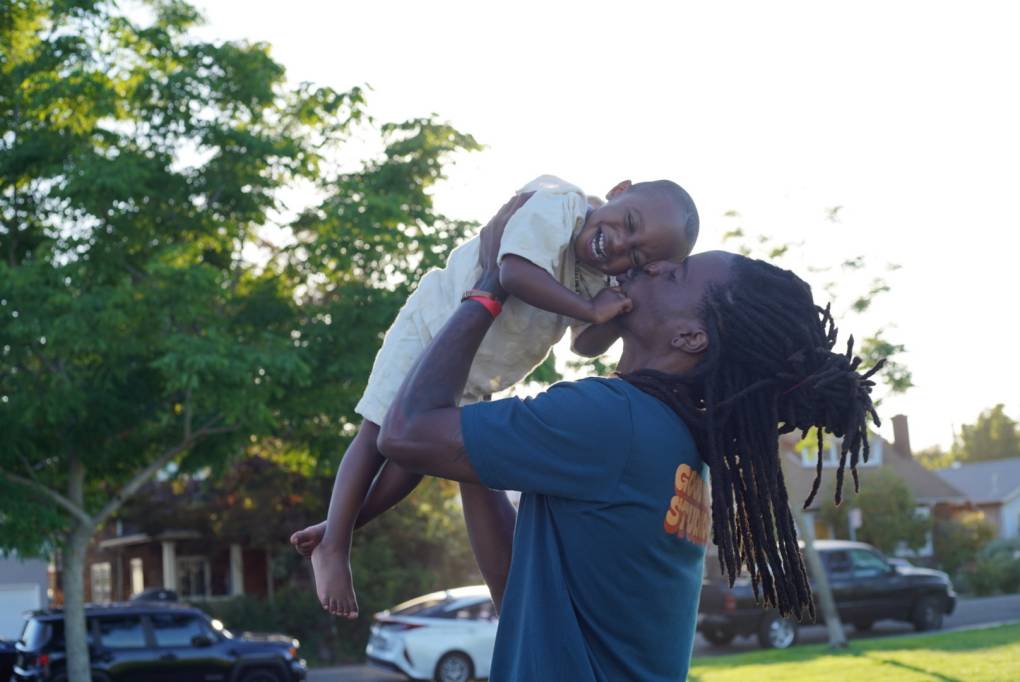
"caption": "Artist Timothy B. and his son share a moment at San Pablo Park in Berkeley. ",
"credit": "Pendarvis Harshaw",
"altTag": "Man with locs holding a smiling baby.",
"description": "Artist Timothy B. and his son share a moment at San Pablo Park in Berkeley. ",
"imgSizes": {
"medium": {
"file": "https://cdn.kqed.org/wp-content/uploads/sites/2/2024/07/DSC08515-800x535.jpg",
"width": 800,
"height": 535,
"mimeType": "image/jpeg"
},
"large": {
"file": "https://cdn.kqed.org/wp-content/uploads/sites/2/2024/07/DSC08515-1020x682.jpg",
"width": 1020,
"height": 682,
"mimeType": "image/jpeg"
},
"thumbnail": {
"file": "https://cdn.kqed.org/wp-content/uploads/sites/2/2024/07/DSC08515-160x107.jpg",
"width": 160,
"height": 107,
"mimeType": "image/jpeg"
},
"medium_large": {
"file": "https://cdn.kqed.org/wp-content/uploads/sites/2/2024/07/DSC08515-768x513.jpg",
"width": 768,
"height": 513,
"mimeType": "image/jpeg"
},
"1536x1536": {
"file": "https://cdn.kqed.org/wp-content/uploads/sites/2/2024/07/DSC08515-1536x1027.jpg",
"width": 1536,
"height": 1027,
"mimeType": "image/jpeg"
},
"post-thumbnail": {
"file": "https://cdn.kqed.org/wp-content/uploads/sites/2/2024/07/DSC08515-672x372.jpg",
"width": 672,
"height": 372,
"mimeType": "image/jpeg"
},
"twentyfourteen-full-width": {
"file": "https://cdn.kqed.org/wp-content/uploads/sites/2/2024/07/DSC08515-1038x576.jpg",
"width": 1038,
"height": 576,
"mimeType": "image/jpeg"
},
"kqedFullSize": {
"file": "https://cdn.kqed.org/wp-content/uploads/sites/2/2024/07/DSC08515.jpg",
"width": 1616,
"height": 1080
}
},
"isLoading": false,
"fetchFailed": false
},
"arts_13836463": {
"type": "attachments",
"id": "arts_13836463",
"meta": {
"index": "attachments_1716263798",
"site": "arts",
"id": "13836463",
"found": true
},
"parent": 13836455,
"imgSizes": {
"small": {
"file": "https://ww2.kqed.org/app/uploads/sites/2/2018/07/SorryToBotherYou.TessaBike-520x347.jpg",
"width": 520,
"mimeType": "image/jpeg",
"height": 347
},
"twentyfourteen-full-width": {
"file": "https://ww2.kqed.org/app/uploads/sites/2/2018/07/SorryToBotherYou.TessaBike-1038x576.jpg",
"width": 1038,
"mimeType": "image/jpeg",
"height": 576
},
"thumbnail": {
"file": "https://ww2.kqed.org/app/uploads/sites/2/2018/07/SorryToBotherYou.TessaBike-160x107.jpg",
"width": 160,
"mimeType": "image/jpeg",
"height": 107
},
"fd-sm": {
"file": "https://ww2.kqed.org/app/uploads/sites/2/2018/07/SorryToBotherYou.TessaBike-960x640.jpg",
"width": 960,
"mimeType": "image/jpeg",
"height": 640
},
"post-thumbnail": {
"file": "https://ww2.kqed.org/app/uploads/sites/2/2018/07/SorryToBotherYou.TessaBike-672x372.jpg",
"width": 672,
"mimeType": "image/jpeg",
"height": 372
},
"xsmall": {
"file": "https://ww2.kqed.org/app/uploads/sites/2/2018/07/SorryToBotherYou.TessaBike-375x250.jpg",
"width": 375,
"mimeType": "image/jpeg",
"height": 250
},
"kqedFullSize": {
"file": "https://ww2.kqed.org/app/uploads/sites/2/2018/07/SorryToBotherYou.TessaBike.jpg",
"width": 1920,
"height": 1280
},
"large": {
"file": "https://ww2.kqed.org/app/uploads/sites/2/2018/07/SorryToBotherYou.TessaBike-1020x680.jpg",
"width": 1020,
"mimeType": "image/jpeg",
"height": 680
},
"xlarge": {
"file": "https://ww2.kqed.org/app/uploads/sites/2/2018/07/SorryToBotherYou.TessaBike-1180x787.jpg",
"width": 1180,
"mimeType": "image/jpeg",
"height": 787
},
"complete_open_graph": {
"file": "https://ww2.kqed.org/app/uploads/sites/2/2018/07/SorryToBotherYou.TessaBike-1200x800.jpg",
"width": 1200,
"mimeType": "image/jpeg",
"height": 800
},
"guest-author-50": {
"file": "https://ww2.kqed.org/app/uploads/sites/2/2018/07/SorryToBotherYou.TessaBike-50x50.jpg",
"width": 50,
"mimeType": "image/jpeg",
"height": 50
},
"guest-author-96": {
"file": "https://ww2.kqed.org/app/uploads/sites/2/2018/07/SorryToBotherYou.TessaBike-96x96.jpg",
"width": 96,
"mimeType": "image/jpeg",
"height": 96
},
"medium": {
"file": "https://ww2.kqed.org/app/uploads/sites/2/2018/07/SorryToBotherYou.TessaBike-800x533.jpg",
"width": 800,
"mimeType": "image/jpeg",
"height": 533
},
"guest-author-64": {
"file": "https://ww2.kqed.org/app/uploads/sites/2/2018/07/SorryToBotherYou.TessaBike-64x64.jpg",
"width": 64,
"mimeType": "image/jpeg",
"height": 64
},
"guest-author-32": {
"file": "https://ww2.kqed.org/app/uploads/sites/2/2018/07/SorryToBotherYou.TessaBike-32x32.jpg",
"width": 32,
"mimeType": "image/jpeg",
"height": 32
},
"fd-lrg": {
"file": "https://ww2.kqed.org/app/uploads/sites/2/2018/07/SorryToBotherYou.TessaBike-1920x1280.jpg",
"width": 1920,
"mimeType": "image/jpeg",
"height": 1280
},
"fd-med": {
"file": "https://ww2.kqed.org/app/uploads/sites/2/2018/07/SorryToBotherYou.TessaBike-1180x787.jpg",
"width": 1180,
"mimeType": "image/jpeg",
"height": 787
},
"full-width": {
"file": "https://ww2.kqed.org/app/uploads/sites/2/2018/07/SorryToBotherYou.TessaBike-1920x1280.jpg",
"width": 1920,
"mimeType": "image/jpeg",
"height": 1280
},
"detail": {
"file": "https://ww2.kqed.org/app/uploads/sites/2/2018/07/SorryToBotherYou.TessaBike-150x150.jpg",
"width": 150,
"mimeType": "image/jpeg",
"height": 150
},
"medium_large": {
"file": "https://ww2.kqed.org/app/uploads/sites/2/2018/07/SorryToBotherYou.TessaBike-768x512.jpg",
"width": 768,
"mimeType": "image/jpeg",
"height": 512
},
"guest-author-128": {
"file": "https://ww2.kqed.org/app/uploads/sites/2/2018/07/SorryToBotherYou.TessaBike-128x128.jpg",
"width": 128,
"mimeType": "image/jpeg",
"height": 128
},
"xxsmall": {
"file": "https://ww2.kqed.org/app/uploads/sites/2/2018/07/SorryToBotherYou.TessaBike-240x160.jpg",
"width": 240,
"mimeType": "image/jpeg",
"height": 160
}
},
"publishDate": 1530774364,
"modified": 1530774946,
"caption": "Tessa Thompson on the set of 'Sorry to Bother You.'",
"description": "Tessa Thompson on the set of 'Sorry to Bother You.'",
"title": "SorryToBotherYou.TessaBike",
"credit": "Courtesy Annapurna Pictures",
"status": "inherit",
"isLoading": false,
"fetchFailed": false
},
"arts_13959343": {
"type": "attachments",
"id": "arts_13959343",
"meta": {
"index": "attachments_1716263798",
"site": "arts",
"id": "13959343",
"found": true
},
"title": "240605-TALLTEE-14-BL-KQED",
"publishDate": 1717629576,
"status": "inherit",
"parent": 0,
"modified": 1717629692,
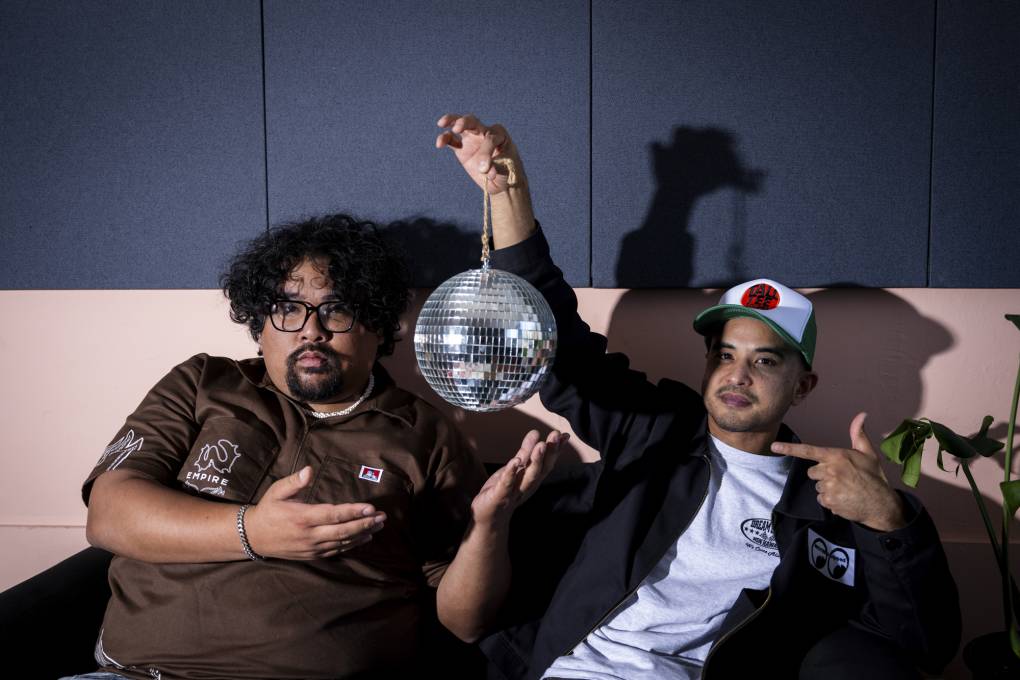
"caption": "Jon “Joog” Macapinlac and Alexander “Flex” Lim sit at their studio in Oakland on June 5, 2024, from the funk band Tall Tee.",
"credit": "Beth LaBerge/KQED",
"altTag": null,
"description": null,
"imgSizes": {
"medium": {
"file": "https://cdn.kqed.org/wp-content/uploads/sites/2/2024/06/240605-TALLTEE-14-BL-KQED-800x533.jpg",
"width": 800,
"height": 533,
"mimeType": "image/jpeg"
},
"large": {
"file": "https://cdn.kqed.org/wp-content/uploads/sites/2/2024/06/240605-TALLTEE-14-BL-KQED-1020x680.jpg",
"width": 1020,
"height": 680,
"mimeType": "image/jpeg"
},
"thumbnail": {
"file": "https://cdn.kqed.org/wp-content/uploads/sites/2/2024/06/240605-TALLTEE-14-BL-KQED-160x107.jpg",
"width": 160,
"height": 107,
"mimeType": "image/jpeg"
},
"medium_large": {
"file": "https://cdn.kqed.org/wp-content/uploads/sites/2/2024/06/240605-TALLTEE-14-BL-KQED-768x512.jpg",
"width": 768,
"height": 512,
"mimeType": "image/jpeg"
},
"1536x1536": {
"file": "https://cdn.kqed.org/wp-content/uploads/sites/2/2024/06/240605-TALLTEE-14-BL-KQED-1536x1024.jpg",
"width": 1536,
"height": 1024,
"mimeType": "image/jpeg"
},
"post-thumbnail": {
"file": "https://cdn.kqed.org/wp-content/uploads/sites/2/2024/06/240605-TALLTEE-14-BL-KQED-672x372.jpg",
"width": 672,
"height": 372,
"mimeType": "image/jpeg"
},
"twentyfourteen-full-width": {
"file": "https://cdn.kqed.org/wp-content/uploads/sites/2/2024/06/240605-TALLTEE-14-BL-KQED-1038x576.jpg",
"width": 1038,
"height": 576,
"mimeType": "image/jpeg"
},
"full-width": {
"file": "https://cdn.kqed.org/wp-content/uploads/sites/2/2024/06/240605-TALLTEE-14-BL-KQED-1920x1280.jpg",
"width": 1920,
"height": 1280,
"mimeType": "image/jpeg"
},
"kqedFullSize": {
"file": "https://cdn.kqed.org/wp-content/uploads/sites/2/2024/06/240605-TALLTEE-14-BL-KQED.jpg",
"width": 2000,
"height": 1333
}
},
"isLoading": false,
"fetchFailed": false
},
"arts_13960943": {
"type": "attachments",
"id": "arts_13960943",
"meta": {
"index": "attachments_1716263798",
"site": "arts",
"id": "13960943",
"found": true
},
"title": "240709-ManMustWak2-45-BL_qed",
"publishDate": 1720644853,
"status": "inherit",
"parent": 0,
"modified": 1720656196,
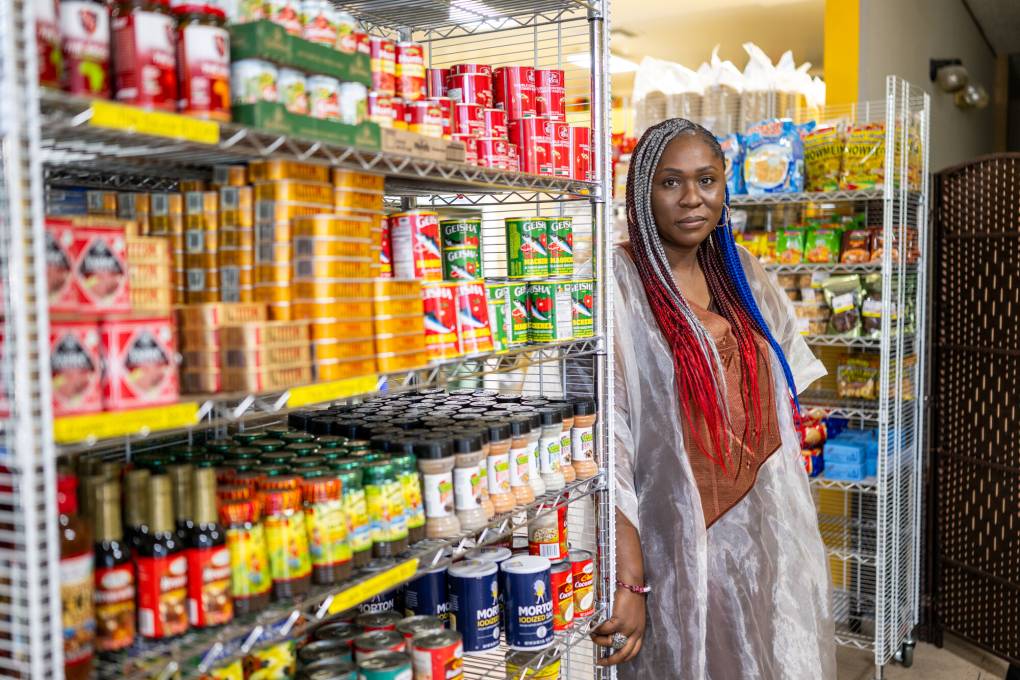
"caption": "Owner Queenkay Amamgbo at the E. 18th Street location of Man Must Wak, an Afro-Caribbean market, in Oakland on July 9, 2024. Amamgbo opened the second location of the market near Lake Merritt in June of 2024.",
"credit": "Beth LaBerge/KQED",
"altTag": "A woman with long red, white and blue braids poses next to a display of spices and tinned fish inside an African market.",
"description": null,
"imgSizes": {
"medium": {
"file": "https://cdn.kqed.org/wp-content/uploads/sites/2/2024/07/240709-ManMustWak2-45-BL_qed-800x533.jpg",
"width": 800,
"height": 533,
"mimeType": "image/jpeg"
},
"large": {
"file": "https://cdn.kqed.org/wp-content/uploads/sites/2/2024/07/240709-ManMustWak2-45-BL_qed-1020x680.jpg",
"width": 1020,
"height": 680,
"mimeType": "image/jpeg"
},
"thumbnail": {
"file": "https://cdn.kqed.org/wp-content/uploads/sites/2/2024/07/240709-ManMustWak2-45-BL_qed-160x107.jpg",
"width": 160,
"height": 107,
"mimeType": "image/jpeg"
},
"medium_large": {
"file": "https://cdn.kqed.org/wp-content/uploads/sites/2/2024/07/240709-ManMustWak2-45-BL_qed-768x512.jpg",
"width": 768,
"height": 512,
"mimeType": "image/jpeg"
},
"1536x1536": {
"file": "https://cdn.kqed.org/wp-content/uploads/sites/2/2024/07/240709-ManMustWak2-45-BL_qed-1536x1024.jpg",
"width": 1536,
"height": 1024,
"mimeType": "image/jpeg"
},
"post-thumbnail": {
"file": "https://cdn.kqed.org/wp-content/uploads/sites/2/2024/07/240709-ManMustWak2-45-BL_qed-672x372.jpg",
"width": 672,
"height": 372,
"mimeType": "image/jpeg"
},
"twentyfourteen-full-width": {
"file": "https://cdn.kqed.org/wp-content/uploads/sites/2/2024/07/240709-ManMustWak2-45-BL_qed-1038x576.jpg",
"width": 1038,
"height": 576,
"mimeType": "image/jpeg"
},
"full-width": {
"file": "https://cdn.kqed.org/wp-content/uploads/sites/2/2024/07/240709-ManMustWak2-45-BL_qed-1920x1280.jpg",
"width": 1920,
"height": 1280,
"mimeType": "image/jpeg"
},
"kqedFullSize": {
"file": "https://cdn.kqed.org/wp-content/uploads/sites/2/2024/07/240709-ManMustWak2-45-BL_qed.jpg",
"width": 2000,
"height": 1333
}
},
"isLoading": false,
"fetchFailed": false
},
"arts_13960708": {
"type": "attachments",
"id": "arts_13960708",
"meta": {
"index": "attachments_1716263798",
"site": "arts",
"id": "13960708",
"found": true
},
"title": "Ballers.MAIN",
"publishDate": 1720464043,
"status": "inherit",
"parent": 13960687,
"modified": 1720464063,
"caption": null,
"credit": "Jason Novak",
"altTag": null,
"description": null,
"imgSizes": {
"medium": {
"file": "https://cdn.kqed.org/wp-content/uploads/sites/2/2024/07/Ballers.MAIN_-800x450.jpg",
"width": 800,
"height": 450,
"mimeType": "image/jpeg"
},
"large": {
"file": "https://cdn.kqed.org/wp-content/uploads/sites/2/2024/07/Ballers.MAIN_-1020x574.jpg",
"width": 1020,
"height": 574,
"mimeType": "image/jpeg"
},
"thumbnail": {
"file": "https://cdn.kqed.org/wp-content/uploads/sites/2/2024/07/Ballers.MAIN_-160x90.jpg",
"width": 160,
"height": 90,
"mimeType": "image/jpeg"
},
"medium_large": {
"file": "https://cdn.kqed.org/wp-content/uploads/sites/2/2024/07/Ballers.MAIN_-768x432.jpg",
"width": 768,
"height": 432,
"mimeType": "image/jpeg"
},
"post-thumbnail": {
"file": "https://cdn.kqed.org/wp-content/uploads/sites/2/2024/07/Ballers.MAIN_-672x372.jpg",
"width": 672,
"height": 372,
"mimeType": "image/jpeg"
},
"twentyfourteen-full-width": {
"file": "https://cdn.kqed.org/wp-content/uploads/sites/2/2024/07/Ballers.MAIN_-1038x576.jpg",
"width": 1038,
"height": 576,
"mimeType": "image/jpeg"
},
"kqedFullSize": {
"file": "https://cdn.kqed.org/wp-content/uploads/sites/2/2024/07/Ballers.MAIN_.jpg",
"width": 1201,
"height": 676
}
},
"isLoading": false,
"fetchFailed": false
},
"arts_13960583": {
"type": "attachments",
"id": "arts_13960583",
"meta": {
"index": "attachments_1716263798",
"site": "arts",
"id": "13960583",
"found": true
},
"title": "jollof kitchen crop",
"publishDate": 1719617887,
"status": "inherit",
"parent": 13960580,
"modified": 1719617999,
"caption": "Customers enjoying their orders of Jollof Kitchen's Nigerian-style jollof rice. Owner Kemi Tijaniqudus won the Oakland edition of Jollof Festival in 2021 and 2023.",
"credit": "Courtesy of Jollof Kitchen",
"altTag": "Customers eating jollof rice out of black plastic takeout containers.",
"description": null,
"imgSizes": {
"medium": {
"file": "https://cdn.kqed.org/wp-content/uploads/sites/2/2024/07/jollof-kitchen-crop-800x550.jpg",
"width": 800,
"height": 550,
"mimeType": "image/jpeg"
},
"large": {
"file": "https://cdn.kqed.org/wp-content/uploads/sites/2/2024/07/jollof-kitchen-crop-1020x702.jpg",
"width": 1020,
"height": 702,
"mimeType": "image/jpeg"
},
"thumbnail": {
"file": "https://cdn.kqed.org/wp-content/uploads/sites/2/2024/07/jollof-kitchen-crop-160x110.jpg",
"width": 160,
"height": 110,
"mimeType": "image/jpeg"
},
"medium_large": {
"file": "https://cdn.kqed.org/wp-content/uploads/sites/2/2024/07/jollof-kitchen-crop-768x528.jpg",
"width": 768,
"height": 528,
"mimeType": "image/jpeg"
},
"1536x1536": {
"file": "https://cdn.kqed.org/wp-content/uploads/sites/2/2024/07/jollof-kitchen-crop-1536x1057.jpg",
"width": 1536,
"height": 1057,
"mimeType": "image/jpeg"
},
"post-thumbnail": {
"file": "https://cdn.kqed.org/wp-content/uploads/sites/2/2024/07/jollof-kitchen-crop-672x372.jpg",
"width": 672,
"height": 372,
"mimeType": "image/jpeg"
},
"twentyfourteen-full-width": {
"file": "https://cdn.kqed.org/wp-content/uploads/sites/2/2024/07/jollof-kitchen-crop-1038x576.jpg",
"width": 1038,
"height": 576,
"mimeType": "image/jpeg"
},
"kqedFullSize": {
"file": "https://cdn.kqed.org/wp-content/uploads/sites/2/2024/07/jollof-kitchen-crop.jpg",
"width": 1920,
"height": 1321
}
},
"isLoading": false,
"fetchFailed": false
},
"arts_13960396": {
"type": "attachments",
"id": "arts_13960396",
"meta": {
"index": "attachments_1716263798",
"site": "arts",
"id": "13960396",
"found": true
},
"title": "DSCF4271",
"publishDate": 1719519051,
"status": "inherit",
"parent": 13960139,
"modified": 1719519274,
"caption": "Hugo Gonzales went from working in construction to curating rare mezcal in the Bay Area.",
"credit": "Darius Riley",
"altTag": "a man holds up two shots of mezcal inside a garage",
"description": null,
"imgSizes": {
"medium": {
"file": "https://cdn.kqed.org/wp-content/uploads/sites/2/2024/06/DSCF4271-800x600.jpg",
"width": 800,
"height": 600,
"mimeType": "image/jpeg"
},
"large": {
"file": "https://cdn.kqed.org/wp-content/uploads/sites/2/2024/06/DSCF4271-1020x765.jpg",
"width": 1020,
"height": 765,
"mimeType": "image/jpeg"
},
"thumbnail": {
"file": "https://cdn.kqed.org/wp-content/uploads/sites/2/2024/06/DSCF4271-160x120.jpg",
"width": 160,
"height": 120,
"mimeType": "image/jpeg"
},
"medium_large": {
"file": "https://cdn.kqed.org/wp-content/uploads/sites/2/2024/06/DSCF4271-768x576.jpg",
"width": 768,
"height": 576,
"mimeType": "image/jpeg"
},
"1536x1536": {
"file": "https://cdn.kqed.org/wp-content/uploads/sites/2/2024/06/DSCF4271-1536x1152.jpg",
"width": 1536,
"height": 1152,
"mimeType": "image/jpeg"
},
"2048x2048": {
"file": "https://cdn.kqed.org/wp-content/uploads/sites/2/2024/06/DSCF4271-2048x1536.jpg",
"width": 2048,
"height": 1536,
"mimeType": "image/jpeg"
},
"post-thumbnail": {
"file": "https://cdn.kqed.org/wp-content/uploads/sites/2/2024/06/DSCF4271-672x372.jpg",
"width": 672,
"height": 372,
"mimeType": "image/jpeg"
},
"twentyfourteen-full-width": {
"file": "https://cdn.kqed.org/wp-content/uploads/sites/2/2024/06/DSCF4271-1038x576.jpg",
"width": 1038,
"height": 576,
"mimeType": "image/jpeg"
},
"full-width": {
"file": "https://cdn.kqed.org/wp-content/uploads/sites/2/2024/06/DSCF4271-1920x1440.jpg",
"width": 1920,
"height": 1440,
"mimeType": "image/jpeg"
},
"kqedFullSize": {
"file": "https://cdn.kqed.org/wp-content/uploads/sites/2/2024/06/DSCF4271-scaled.jpg",
"width": 2560,
"height": 1920
}
},
"isLoading": false,
"fetchFailed": false
},
"arts_13960348": {
"type": "attachments",
"id": "arts_13960348",
"meta": {
"index": "attachments_1716263798",
"site": "arts",
"id": "13960348",
"found": true
},
"title": "boriqua roberto clemente crop",
"publishDate": 1719429036,
"status": "inherit",
"parent": 13960344,
"modified": 1719429163,
"caption": "The #21 Roberto Clemente is the bestseller at Boriqua Kitchen. The Puerto Rican food truck plans to reopen in July 2024 after a three-month hiatus.",
"credit": "Luke Tsai/KQED",
"altTag": "Chunks of fried chicken with red beans and yellow rice in a takeout carton.",
"description": null,
"imgSizes": {
"medium": {
"file": "https://cdn.kqed.org/wp-content/uploads/sites/2/2024/06/boriqua-roberto-clemente-crop-800x450.jpg",
"width": 800,
"height": 450,
"mimeType": "image/jpeg"
},
"large": {
"file": "https://cdn.kqed.org/wp-content/uploads/sites/2/2024/06/boriqua-roberto-clemente-crop-1020x574.jpg",
"width": 1020,
"height": 574,
"mimeType": "image/jpeg"
},
"thumbnail": {
"file": "https://cdn.kqed.org/wp-content/uploads/sites/2/2024/06/boriqua-roberto-clemente-crop-160x90.jpg",
"width": 160,
"height": 90,
"mimeType": "image/jpeg"
},
"medium_large": {
"file": "https://cdn.kqed.org/wp-content/uploads/sites/2/2024/06/boriqua-roberto-clemente-crop-768x432.jpg",
"width": 768,
"height": 432,
"mimeType": "image/jpeg"
},
"1536x1536": {
"file": "https://cdn.kqed.org/wp-content/uploads/sites/2/2024/06/boriqua-roberto-clemente-crop-1536x864.jpg",
"width": 1536,
"height": 864,
"mimeType": "image/jpeg"
},
"post-thumbnail": {
"file": "https://cdn.kqed.org/wp-content/uploads/sites/2/2024/06/boriqua-roberto-clemente-crop-672x372.jpg",
"width": 672,
"height": 372,
"mimeType": "image/jpeg"
},
"twentyfourteen-full-width": {
"file": "https://cdn.kqed.org/wp-content/uploads/sites/2/2024/06/boriqua-roberto-clemente-crop-1038x576.jpg",
"width": 1038,
"height": 576,
"mimeType": "image/jpeg"
},
"kqedFullSize": {
"file": "https://cdn.kqed.org/wp-content/uploads/sites/2/2024/06/boriqua-roberto-clemente-crop.jpg",
"width": 1920,
"height": 1080
}
},
"isLoading": false,
"fetchFailed": false
},
"arts_13960257": {
"type": "attachments",
"id": "arts_13960257",
"meta": {
"index": "attachments_1716263798",
"site": "arts",
"id": "13960257",
"found": true
},
"title": "Andre3000.16x9",
"publishDate": 1719337801,
"status": "inherit",
"parent": 13960252,
"modified": 1719339286,
"caption": "Andre 3000.",
"credit": "Gabe Drechsler",
"altTag": "Black and white image of rapper André 3000 wearing headphones.",
"description": null,
"imgSizes": {
"medium": {
"file": "https://cdn.kqed.org/wp-content/uploads/sites/2/2024/06/Andre3000.16x9-800x450.jpg",
"width": 800,
"height": 450,
"mimeType": "image/jpeg"
},
"large": {
"file": "https://cdn.kqed.org/wp-content/uploads/sites/2/2024/06/Andre3000.16x9-1020x574.jpg",
"width": 1020,
"height": 574,
"mimeType": "image/jpeg"
},
"thumbnail": {
"file": "https://cdn.kqed.org/wp-content/uploads/sites/2/2024/06/Andre3000.16x9-160x90.jpg",
"width": 160,
"height": 90,
"mimeType": "image/jpeg"
},
"medium_large": {
"file": "https://cdn.kqed.org/wp-content/uploads/sites/2/2024/06/Andre3000.16x9-768x432.jpg",
"width": 768,
"height": 432,
"mimeType": "image/jpeg"
},
"1536x1536": {
"file": "https://cdn.kqed.org/wp-content/uploads/sites/2/2024/06/Andre3000.16x9-1536x864.jpg",
"width": 1536,
"height": 864,
"mimeType": "image/jpeg"
},
"post-thumbnail": {
"file": "https://cdn.kqed.org/wp-content/uploads/sites/2/2024/06/Andre3000.16x9-672x372.jpg",
"width": 672,
"height": 372,
"mimeType": "image/jpeg"
},
"twentyfourteen-full-width": {
"file": "https://cdn.kqed.org/wp-content/uploads/sites/2/2024/06/Andre3000.16x9-1038x576.jpg",
"width": 1038,
"height": 576,
"mimeType": "image/jpeg"
},
"kqedFullSize": {
"file": "https://cdn.kqed.org/wp-content/uploads/sites/2/2024/06/Andre3000.16x9.jpg",
"width": 1920,
"height": 1080
}
},
"isLoading": false,
"fetchFailed": false
},
"arts_13960077": {
"type": "attachments",
"id": "arts_13960077",
"meta": {
"index": "attachments_1716263798",
"site": "arts",
"id": "13960077",
"found": true
},
"title": "Kendrick.Timothy-Norris-Getty-Images",
"publishDate": 1718923473,
"status": "inherit",
"parent": 13960019,
"modified": 1718989750,
"caption": "Kendrick Lamar performs during 'The Pop Out – Ken & Friends' at the Forum on June 19, 2024 in Inglewood, California.",
"credit": "Timothy Norris/Getty Images",
"altTag": "A Black man in a red hoodie raps on the mic and holds one finger aloft while an arena ceiling bathed in golden light is in the background",
"description": null,
"imgSizes": {
"medium": {
"file": "https://cdn.kqed.org/wp-content/uploads/sites/2/2024/06/Kendrick.Timothy-Norris-Getty-Images-800x450.jpg",
"width": 800,
"height": 450,
"mimeType": "image/jpeg"
},
"large": {
"file": "https://cdn.kqed.org/wp-content/uploads/sites/2/2024/06/Kendrick.Timothy-Norris-Getty-Images-1020x574.jpg",
"width": 1020,
"height": 574,
"mimeType": "image/jpeg"
},
"thumbnail": {
"file": "https://cdn.kqed.org/wp-content/uploads/sites/2/2024/06/Kendrick.Timothy-Norris-Getty-Images-160x90.jpg",
"width": 160,
"height": 90,
"mimeType": "image/jpeg"
},
"medium_large": {
"file": "https://cdn.kqed.org/wp-content/uploads/sites/2/2024/06/Kendrick.Timothy-Norris-Getty-Images-768x432.jpg",
"width": 768,
"height": 432,
"mimeType": "image/jpeg"
},
"1536x1536": {
"file": "https://cdn.kqed.org/wp-content/uploads/sites/2/2024/06/Kendrick.Timothy-Norris-Getty-Images-1536x864.jpg",
"width": 1536,
"height": 864,
"mimeType": "image/jpeg"
},
"post-thumbnail": {
"file": "https://cdn.kqed.org/wp-content/uploads/sites/2/2024/06/Kendrick.Timothy-Norris-Getty-Images-672x372.jpg",
"width": 672,
"height": 372,
"mimeType": "image/jpeg"
},
"twentyfourteen-full-width": {
"file": "https://cdn.kqed.org/wp-content/uploads/sites/2/2024/06/Kendrick.Timothy-Norris-Getty-Images-1038x576.jpg",
"width": 1038,
"height": 576,
"mimeType": "image/jpeg"
},
"kqedFullSize": {
"file": "https://cdn.kqed.org/wp-content/uploads/sites/2/2024/06/Kendrick.Timothy-Norris-Getty-Images.jpg",
"width": 1920,
"height": 1080
}
},
"isLoading": false,
"fetchFailed": false
},
"arts_13957301": {
"type": "attachments",
"id": "arts_13957301",
"meta": {
"index": "attachments_1716263798",
"site": "arts",
"id": "13957301",
"found": true
},
"title": "240503-TIPUNAN-35-BL-KQED",
"publishDate": 1715030088,
"status": "inherit",
"parent": 0,
"modified": 1718306268,
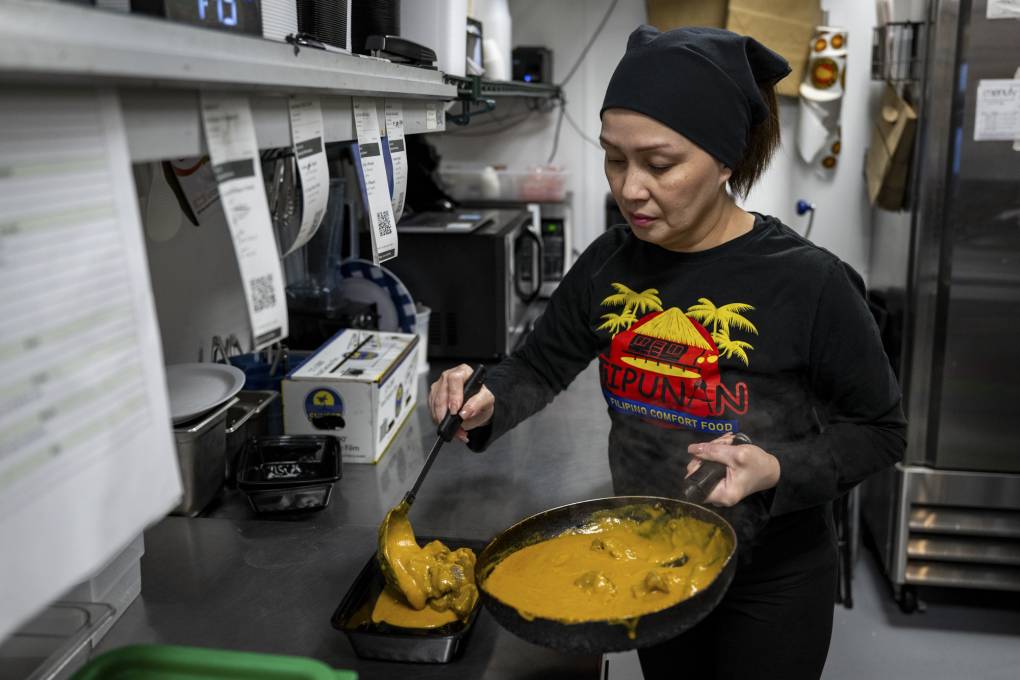
"caption": "Executive Chef Kai Torres-Cansino prepares an order of kare-kare in the kitchen of Tipunan, a restaurant serving Filipino comfort food at the Oakland Food Hall ghost kitchen facility on May 3, 2024. ",
"credit": "Beth LaBerge/KQED",
"altTag": "A woman in a black headwrap prepares Filipino food inside a restaurant kitchen.",
"description": null,
"imgSizes": {
"medium": {
"file": "https://cdn.kqed.org/wp-content/uploads/sites/2/2024/05/240503-TIPUNAN-35-BL-KQED-800x533.jpg",
"width": 800,
"height": 533,
"mimeType": "image/jpeg"
},
"large": {
"file": "https://cdn.kqed.org/wp-content/uploads/sites/2/2024/05/240503-TIPUNAN-35-BL-KQED-1020x680.jpg",
"width": 1020,
"height": 680,
"mimeType": "image/jpeg"
},
"thumbnail": {
"file": "https://cdn.kqed.org/wp-content/uploads/sites/2/2024/05/240503-TIPUNAN-35-BL-KQED-160x107.jpg",
"width": 160,
"height": 107,
"mimeType": "image/jpeg"
},
"medium_large": {
"file": "https://cdn.kqed.org/wp-content/uploads/sites/2/2024/05/240503-TIPUNAN-35-BL-KQED-768x512.jpg",
"width": 768,
"height": 512,
"mimeType": "image/jpeg"
},
"1536x1536": {
"file": "https://cdn.kqed.org/wp-content/uploads/sites/2/2024/05/240503-TIPUNAN-35-BL-KQED-1536x1024.jpg",
"width": 1536,
"height": 1024,
"mimeType": "image/jpeg"
},
"post-thumbnail": {
"file": "https://cdn.kqed.org/wp-content/uploads/sites/2/2024/05/240503-TIPUNAN-35-BL-KQED-672x372.jpg",
"width": 672,
"height": 372,
"mimeType": "image/jpeg"
},
"twentyfourteen-full-width": {
"file": "https://cdn.kqed.org/wp-content/uploads/sites/2/2024/05/240503-TIPUNAN-35-BL-KQED-1038x576.jpg",
"width": 1038,
"height": 576,
"mimeType": "image/jpeg"
},
"full-width": {
"file": "https://cdn.kqed.org/wp-content/uploads/sites/2/2024/05/240503-TIPUNAN-35-BL-KQED-1920x1280.jpg",
"width": 1920,
"height": 1280,
"mimeType": "image/jpeg"
},
"kqedFullSize": {
"file": "https://cdn.kqed.org/wp-content/uploads/sites/2/2024/05/240503-TIPUNAN-35-BL-KQED.jpg",
"width": 2000,
"height": 1333
}
},
"isLoading": false,
"fetchFailed": false
},
"arts_13959581": {
"type": "attachments",
"id": "arts_13959581",
"meta": {
"index": "attachments_1716263798",
"site": "arts",
"id": "13959581",
"found": true
},
"title": "Too Short by Loryan",
"publishDate": 1718120492,
"status": "inherit",
"parent": 13959579,
"modified": 1718126492,
"caption": "Short Dog is in the house: seen here rocking the stage at Urban Peace Movement's 'Town Up Tuesday' event in May 2024. Short will be on the stage again this week discussing music, community, culture and more at the 'That's Oakland, Baby!' event.",
"credit": "Loryan Boyette-Tindall",
"altTag": "Man on stage wearing a black shirt with a gold chain around his neck and a microphone in his left hand as he smiles.",
"description": null,
"imgSizes": {
"medium": {
"file": "https://cdn.kqed.org/wp-content/uploads/sites/2/2024/06/Too-Short-by-Loryan-800x535.png",
"width": 800,
"height": 535,
"mimeType": "image/png"
},
"large": {
"file": "https://cdn.kqed.org/wp-content/uploads/sites/2/2024/06/Too-Short-by-Loryan-1020x682.png",
"width": 1020,
"height": 682,
"mimeType": "image/png"
},
"thumbnail": {
"file": "https://cdn.kqed.org/wp-content/uploads/sites/2/2024/06/Too-Short-by-Loryan-160x107.png",
"width": 160,
"height": 107,
"mimeType": "image/png"
},
"medium_large": {
"file": "https://cdn.kqed.org/wp-content/uploads/sites/2/2024/06/Too-Short-by-Loryan-768x513.png",
"width": 768,
"height": 513,
"mimeType": "image/png"
},
"1536x1536": {
"file": "https://cdn.kqed.org/wp-content/uploads/sites/2/2024/06/Too-Short-by-Loryan-1536x1027.png",
"width": 1536,
"height": 1027,
"mimeType": "image/png"
},
"post-thumbnail": {
"file": "https://cdn.kqed.org/wp-content/uploads/sites/2/2024/06/Too-Short-by-Loryan-672x372.png",
"width": 672,
"height": 372,
"mimeType": "image/png"
},
"twentyfourteen-full-width": {
"file": "https://cdn.kqed.org/wp-content/uploads/sites/2/2024/06/Too-Short-by-Loryan-1038x576.png",
"width": 1038,
"height": 576,
"mimeType": "image/png"
},
"kqedFullSize": {
"file": "https://cdn.kqed.org/wp-content/uploads/sites/2/2024/06/Too-Short-by-Loryan.png",
"width": 1610,
"height": 1076
}
},
"isLoading": false,
"fetchFailed": false
}
},
"audioPlayerReducer": {
"postId": "stream_live",
"isPaused": true,
"isPlaying": false,
"pfsActive": false,
"pledgeModalIsOpen": true,
"playerDrawerIsOpen": false,
"liveAudioPlayStartedAt": 0,
"liveAudioPlayContext": ""
},
"authorsReducer": {
"byline_arts_13960687": {
"type": "authors",
"id": "byline_arts_13960687",
"meta": {
"override": true
},
"slug": "byline_arts_13960687",
"name": "Jason Novak and Alan Chazaro",
"isLoading": false
},
"gmeline": {
"type": "authors",
"id": "185",
"meta": {
"index": "authors_1716337520",
"id": "185",
"found": true
},
"name": "Gabe Meline",
"firstName": "Gabe",
"lastName": "Meline",
"slug": "gmeline",
"email": "gmeline@kqed.org",
"display_author_email": true,
"staff_mastheads": [
"arts"
],
"title": "Senior Editor, KQED Arts & Culture",
"bio": "Gabe Meline entered journalism at age 15 making photocopied zines, and has since earned awards from the Edward R. Murrow Awards, the Society for Professional Journalists, the Online Journalism Awards, the Association of Alternative Newsweeklies and the California Newspaper Publishers Association. Prior to KQED, he was the editor of the \u003cem>North Bay Bohemian\u003c/em> and a touring musician. He lives with his wife and daughter in his hometown of Santa Rosa, CA.",
"avatar": "https://secure.gravatar.com/avatar/5bebe57be0d8bc2dd318934feb47299e2d2d10cba28d09d8d7afb389a2ce2bdd?s=600&d=blank&r=g",
"twitter": null,
"bluesky": null,
"facebook": null,
"instagram": null,
"linkedin": null,
"sites": [
{
"site": "",
"roles": [
"editor"
]
},
{
"site": "arts",
"roles": [
"administrator"
]
},
{
"site": "artschool",
"roles": [
"editor"
]
},
{
"site": "news",
"roles": [
"author"
]
},
{
"site": "pop",
"roles": [
"editor"
]
},
{
"site": "bayareabites",
"roles": [
"editor"
]
},
{
"site": "food",
"roles": [
"editor"
]
},
{
"site": "liveblog",
"roles": [
"editor"
]
},
{
"site": "hiphop",
"roles": [
"editor"
]
}
],
"headData": {
"title": "Gabe Meline | KQED",
"description": "Senior Editor, KQED Arts & Culture",
"ogImgSrc": "https://secure.gravatar.com/avatar/5bebe57be0d8bc2dd318934feb47299e2d2d10cba28d09d8d7afb389a2ce2bdd?s=600&d=blank&r=g",
"twImgSrc": "https://secure.gravatar.com/avatar/5bebe57be0d8bc2dd318934feb47299e2d2d10cba28d09d8d7afb389a2ce2bdd?s=600&d=blank&r=g"
},
"isLoading": false,
"link": "/author/gmeline"
},
"nvoynovskaya": {
"type": "authors",
"id": "11387",
"meta": {
"index": "authors_1716337520",
"id": "11387",
"found": true
},
"name": "Nastia Voynovskaya",
"firstName": "Nastia",
"lastName": "Voynovskaya",
"slug": "nvoynovskaya",
"email": "nvoynovskaya@kqed.org",
"display_author_email": false,
"staff_mastheads": [
"arts"
],
"title": "Editor and reporter",
"bio": "Nastia Voynovskaya is a reporter and editor at KQED Arts & Culture. She's been covering the arts in the Bay Area for over a decade, with a focus on music, queer culture, labor issues and grassroots organizing. She has edited KQED story series such as Trans Bay: A History of San Francisco's Gender-Diverse Community, and co-created KQED's Bay Area hip-hop history project, That's My Word. Nastia's work has been recognized by the Society of Professional Journalists and San Francisco Press Club. She holds a BA in comparative literature from UC Berkeley.",
"avatar": "https://secure.gravatar.com/avatar/5025ee460e5a85d69ca20ea6c6f2f80d7e17795c828f61ea3aecfcd924e9042e?s=600&d=blank&r=g",
"twitter": null,
"bluesky": null,
"facebook": null,
"instagram": "https://www.instagram.com/nananastia/",
"linkedin": null,
"sites": [
{
"site": "arts",
"roles": [
"administrator"
]
},
{
"site": "news",
"roles": [
"editor"
]
},
{
"site": "pop",
"roles": [
"administrator"
]
},
{
"site": "bayareabites",
"roles": [
"editor"
]
},
{
"site": "podcasts",
"roles": [
"editor"
]
},
{
"site": "hiphop",
"roles": [
"editor"
]
}
],
"headData": {
"title": "Nastia Voynovskaya | KQED",
"description": "Editor and reporter",
"ogImgSrc": "https://secure.gravatar.com/avatar/5025ee460e5a85d69ca20ea6c6f2f80d7e17795c828f61ea3aecfcd924e9042e?s=600&d=blank&r=g",
"twImgSrc": "https://secure.gravatar.com/avatar/5025ee460e5a85d69ca20ea6c6f2f80d7e17795c828f61ea3aecfcd924e9042e?s=600&d=blank&r=g"
},
"isLoading": false,
"link": "/author/nvoynovskaya"
},
"ogpenn": {
"type": "authors",
"id": "11491",
"meta": {
"index": "authors_1716337520",
"id": "11491",
"found": true
},
"name": "Pendarvis Harshaw",
"firstName": "Pendarvis",
"lastName": "Harshaw",
"slug": "ogpenn",
"email": "ogpenn@gmail.com",
"display_author_email": false,
"staff_mastheads": [
"arts"
],
"title": "Community Engagement Reporter",
"bio": "Pendarvis Harshaw is an educator, host and writer with KQED Arts.",
"avatar": "https://secure.gravatar.com/avatar/972b77ee8e3f346ae2b00622661187fbfabd059b5693bbdc1475ea7a722fd4cd?s=600&d=blank&r=g",
"twitter": null,
"bluesky": null,
"facebook": null,
"instagram": "ogpenn",
"linkedin": null,
"sites": [
{
"site": "arts",
"roles": [
"administrator"
]
},
{
"site": "news",
"roles": [
"editor"
]
},
{
"site": "bayareabites",
"roles": [
"author"
]
},
{
"site": "hiphop",
"roles": [
"editor"
]
}
],
"headData": {
"title": "Pendarvis Harshaw | KQED",
"description": "Community Engagement Reporter",
"ogImgSrc": "https://secure.gravatar.com/avatar/972b77ee8e3f346ae2b00622661187fbfabd059b5693bbdc1475ea7a722fd4cd?s=600&d=blank&r=g",
"twImgSrc": "https://secure.gravatar.com/avatar/972b77ee8e3f346ae2b00622661187fbfabd059b5693bbdc1475ea7a722fd4cd?s=600&d=blank&r=g"
},
"isLoading": false,
"link": "/author/ogpenn"
},
"mmedina": {
"type": "authors",
"id": "11528",
"meta": {
"index": "authors_1716337520",
"id": "11528",
"found": true
},
"name": "Marisol Medina-Cadena",
"firstName": "Marisol",
"lastName": "Medina-Cadena",
"slug": "mmedina",
"email": "mmedina@KQED.org",
"display_author_email": true,
"staff_mastheads": [],
"title": "Producer, Rightnowish Podcast",
"bio": "Marisol Medina-Cadena is a radio reporter and podcast producer. Before working at KQED, she produced for PBS member station, KCET, in Los Angeles. In 2017, Marisol won an Emmy Award for her work on the televised documentary, \u003cem>City Rising\u003c/em>, examining California's affordable housing crisis and the historical roots of gentrification.",
"avatar": "https://secure.gravatar.com/avatar/6c3db46a1cabb5e1fe9a365b5f4e681e?s=600&d=blank&r=g",
"twitter": "marisolreports",
"facebook": null,
"instagram": null,
"linkedin": null,
"sites": [
{
"site": "arts",
"roles": []
},
{
"site": "news",
"roles": [
"edit_others_posts"
]
}
],
"headData": {
"title": "Marisol Medina-Cadena | KQED",
"description": "Producer, Rightnowish Podcast",
"ogImgSrc": "https://secure.gravatar.com/avatar/6c3db46a1cabb5e1fe9a365b5f4e681e?s=600&d=blank&r=g",
"twImgSrc": "https://secure.gravatar.com/avatar/6c3db46a1cabb5e1fe9a365b5f4e681e?s=600&d=blank&r=g"
},
"isLoading": false,
"link": "/author/mmedina"
},
"ltsai": {
"type": "authors",
"id": "11743",
"meta": {
"index": "authors_1716337520",
"id": "11743",
"found": true
},
"name": "Luke Tsai",
"firstName": "Luke",
"lastName": "Tsai",
"slug": "ltsai",
"email": "ltsai@kqed.org",
"display_author_email": true,
"staff_mastheads": [
"arts"
],
"title": "Food Editor",
"bio": "Luke Tsai is KQED's food editor and resident stinky tofu connoisseur. Prior to KQED, he was an editor at Eater SF, \u003cem>San Francisco \u003c/em>magazine, and the \u003cem>East Bay Express\u003c/em>, and his work has also appeared in TASTE, the \u003cem>San Francisco Chronicle\u003c/em>, and the \u003cem>Best Food Writing\u003c/em> anthology. When he isn't writing or editing, you'll find him eating most everything he can get his hands on.",
"avatar": "https://secure.gravatar.com/avatar/1e59b45bf191526e7339d6ba46e33a57b2030d25c27660ecc64ea3cb863e34f7?s=600&d=blank&r=g",
"twitter": "theluketsai",
"bluesky": null,
"facebook": null,
"instagram": null,
"linkedin": null,
"sites": [
{
"site": "",
"roles": [
"editor"
]
},
{
"site": "arts",
"roles": [
"administrator"
]
},
{
"site": "news",
"roles": [
"editor",
"contributor"
]
},
{
"site": "bayareabites",
"roles": [
"editor"
]
},
{
"site": "food",
"roles": [
"editor"
]
}
],
"headData": {
"title": "Luke Tsai | KQED",
"description": "Food Editor",
"ogImgSrc": "https://secure.gravatar.com/avatar/1e59b45bf191526e7339d6ba46e33a57b2030d25c27660ecc64ea3cb863e34f7?s=600&d=blank&r=g",
"twImgSrc": "https://secure.gravatar.com/avatar/1e59b45bf191526e7339d6ba46e33a57b2030d25c27660ecc64ea3cb863e34f7?s=600&d=blank&r=g"
},
"isLoading": false,
"link": "/author/ltsai"
},
"achazaro": {
"type": "authors",
"id": "11748",
"meta": {
"index": "authors_1716337520",
"id": "11748",
"found": true
},
"name": "Alan Chazaro",
"firstName": "Alan",
"lastName": "Chazaro",
"slug": "achazaro",
"email": "agchazaro@gmail.com",
"display_author_email": true,
"staff_mastheads": [],
"title": "Food Writer and Reporter",
"bio": "Alan Chazaro is the author of \u003cem>This Is Not a Frank Ocean Cover Album\u003c/em> (Black Lawrence Press, 2019), \u003cem>Piñata Theory\u003c/em> (Black Lawrence Press, 2020), and \u003cem>Notes from the Eastern Span of the Bay Bridge\u003c/em> (Ghost City Press, 2021). He is a graduate of June Jordan’s Poetry for the People program at UC Berkeley and a former Lawrence Ferlinghetti Fellow at the University of San Francisco. He writes about sports, food, art, music, education, and culture while repping the Bay on \u003ca href=\"https://twitter.com/alan_chazaro\">Twitter\u003c/a> and \u003ca href=\"https://www.instagram.com/alan_chazaro/?hl=en\">Instagram\u003c/a> at @alan_chazaro.",
"avatar": "https://secure.gravatar.com/avatar/ea8b6dd970fc5c29e7a188e7d5861df7?s=600&d=blank&r=g",
"twitter": "alan_chazaro",
"facebook": null,
"instagram": null,
"linkedin": null,
"sites": [
{
"site": "arts",
"roles": [
"contributor"
]
},
{
"site": "news",
"roles": [
"editor"
]
}
],
"headData": {
"title": "Alan Chazaro | KQED",
"description": "Food Writer and Reporter",
"ogImgSrc": "https://secure.gravatar.com/avatar/ea8b6dd970fc5c29e7a188e7d5861df7?s=600&d=blank&r=g",
"twImgSrc": "https://secure.gravatar.com/avatar/ea8b6dd970fc5c29e7a188e7d5861df7?s=600&d=blank&r=g"
},
"isLoading": false,
"link": "/author/achazaro"
},
"rockyrivera": {
"type": "authors",
"id": "11846",
"meta": {
"index": "authors_1716337520",
"id": "11846",
"found": true
},
"name": "Rocky Rivera",
"firstName": "Rocky",
"lastName": "Rivera",
"slug": "rockyrivera",
"email": "ms.rocky.rivera@gmail.com",
"display_author_email": false,
"staff_mastheads": [],
"title": "KQED Contributor",
"bio": "Rocky Rivera is a journalist, emcee, author and activist from San Francisco. She has released four albums through her label, Beatrock Music, and a ten-volume mixtape series with DJ Roza. She released her first book in 2021, entitled \u003cem>Snakeskin: Essays by Rocky Rivera\u003c/em>. Her latest album dropped in September 2024 and is called \"Long Kiss Goodnight\" with emcee/producer Otayo Dubb. She currently writes the Frisco Foodies column as a love letter to her hometown.",
"avatar": "https://secure.gravatar.com/avatar/946241ee2c59e6040607dfc75240d91b?s=600&d=blank&r=g",
"twitter": null,
"facebook": "https://m.facebook.com/rockyriveramusic",
"instagram": "https://instagram.com/rockyrivera",
"linkedin": "https://www.linkedin.com/in/krishtinedeleon/",
"sites": [
{
"site": "arts",
"roles": [
"author"
]
}
],
"headData": {
"title": "Rocky Rivera | KQED",
"description": "KQED Contributor",
"ogImgSrc": "https://secure.gravatar.com/avatar/946241ee2c59e6040607dfc75240d91b?s=600&d=blank&r=g",
"twImgSrc": "https://secure.gravatar.com/avatar/946241ee2c59e6040607dfc75240d91b?s=600&d=blank&r=g"
},
"isLoading": false,
"link": "/author/rockyrivera"
},
"bduffett": {
"type": "authors",
"id": "11902",
"meta": {
"index": "authors_1716337520",
"id": "11902",
"found": true
},
"name": "Becky Duffett",
"firstName": "Becky",
"lastName": "Duffett",
"slug": "bduffett",
"email": "duffettr@gmail.com",
"display_author_email": false,
"staff_mastheads": [],
"title": "KQED Contributor",
"bio": null,
"avatar": "https://secure.gravatar.com/avatar/e5baf1733e81ecc5f55104a3c095028c?s=600&d=blank&r=g",
"twitter": null,
"facebook": null,
"instagram": null,
"linkedin": null,
"sites": [
{
"site": "arts",
"roles": [
"contributor"
]
}
],
"headData": {
"title": "Becky Duffett | KQED",
"description": "KQED Contributor",
"ogImgSrc": "https://secure.gravatar.com/avatar/e5baf1733e81ecc5f55104a3c095028c?s=600&d=blank&r=g",
"twImgSrc": "https://secure.gravatar.com/avatar/e5baf1733e81ecc5f55104a3c095028c?s=600&d=blank&r=g"
},
"isLoading": false,
"link": "/author/bduffett"
}
},
"pagesReducer": {
"arts_tag_oakland": {
"type": "terms",
"id": "arts_1143",
"meta": {
"index": "terms_1716263798",
"site": "arts",
"id": "1143",
"score": 6.883923
},
"featImg": null,
"name": "Oakland",
"description": null,
"taxonomy": "tag",
"headData": {
"twImgId": null,
"twTitle": null,
"ogTitle": null,
"ogImgId": null,
"twDescription": null,
"description": null,
"title": "Oakland Archives | KQED Arts",
"ogDescription": null
},
"ttid": 692,
"slug": "oakland",
"isLoading": false,
"title": "Oakland",
"pageMeta": {
"site": "arts",
"WpPageTemplate": "page-topic-editorial",
"currentPage": 17
},
"blocks": [
{
"blockName": "kqed/post-list",
"attrs": {
"layout": "cardArticle2",
"query": "posts/arts?tag=oakland",
"seeMore": false,
"paginated": true,
"page": 17
}
},
{
"blockName": "kqed/ad"
}
]
}
},
"pfsSessionReducer": {},
"postsReducer": {
"stream_live": {
"type": "live",
"id": "stream_live",
"audioUrl": "https://streams.kqed.org/kqedradio",
"title": "Live Stream",
"excerpt": "Live Stream information currently unavailable.",
"link": "/radio",
"featImg": "",
"label": {
"name": "KQED Live",
"link": "/"
}
},
"stream_kqedNewscast": {
"type": "posts",
"id": "stream_kqedNewscast",
"audioUrl": "https://www.kqed.org/.stream/anon/radio/RDnews/newscast.mp3?_=1",
"title": "KQED Newscast",
"featImg": "",
"label": {
"name": "88.5 FM",
"link": "/"
}
},
"arts_13961188": {
"type": "posts",
"id": "arts_13961188",
"meta": {
"index": "posts_1716263798",
"site": "arts",
"id": "13961188",
"score": null,
"sort": [
1721296854000
]
},
"guestAuthors": [],
"slug": "rightnowishs-grand-finale-words-of-wisdom-from-timothy-b",
"title": "Rightnowish’s Grand Finale: Words of Wisdom From Timothy B.",
"publishDate": 1721296854,
"format": "audio",
"headTitle": "Rightnowish’s Grand Finale: Words of Wisdom From Timothy B. | KQED",
"labelTerm": {
"term": 8720,
"site": "arts"
},
"content": "\u003cp>\u003ca href=\"#episode-transcript\">\u003ci>\u003cspan style=\"font-weight: 400\">View the full episode transcript.\u003c/span>\u003c/i>\u003c/a>\u003c/p>\n\u003cp>On this final episode of the Rightnowish podcast, we end back where we started — but with some pretty significant updates.\u003c/p>\n\u003cp>In the fall of 2019, renowned visual artist \u003ca href=\"https://www.instagram.com/timothyb_art/\" target=\"_blank\" rel=\"noopener\">Timothy B.\u003c/a> gave us the first full Rightnowish interview for an episode titled “\u003ca href=\"https://www.kqed.org/arts/13868502/from-d-boys-to-dope-art\" target=\"_blank\" rel=\"noopener\">From D-Boys to Dope Art.”\u003c/a>\u003c/p>\n\u003cp>During that interview, Timothy B. was flanked by his mother Dana Bluitt and his father Timothy Bluitt Sr. as he shared with us his perspective on mural making, community building and his work in Oakland. We also discussed how Timothy B.’s colorful paintings on the streets of the Town differ drastically from the work his father did in Oakland during the ’80s and early ’90s.\u003c/p>\n\u003cp>Timothy Sr., a representative of East Oakland’s legendary 69 Mob, was incarcerated in a federal penitentiary for over two decades. During that time, Mrs. Bluitt held the family down. Timothy B. took notes from both his mother and father, and flourished because of the strength of his parents.\u003c/p>\n\u003cp>Now, five years after our last conversation on tape, Timothy B. is a father too. Stepping into parenthood has changed his painting schedule and personal priorities. But he remains creative.\u003c/p>\n\u003cfigure id=\"attachment_13961247\" class=\"wp-caption aligncenter\" style=\"max-width: 800px\">\u003cimg loading=\"lazy\" decoding=\"async\" class=\"wp-image-13961247 size-medium\" src=\"https://cdn.kqed.org/wp-content/uploads/sites/2/2024/07/Screenshot-2024-07-16-at-11.40.56%E2%80%AFPM-800x1100.png\" alt=\"Timothy B. stands on a lift in front of a mural he painted at the East Oakland Youth Center dedicated to journalist and political prisoner Mumia Abu-Jamal.\" width=\"800\" height=\"1100\" srcset=\"https://cdn.kqed.org/wp-content/uploads/sites/2/2024/07/Screenshot-2024-07-16-at-11.40.56 PM-800x1100.png 800w, https://cdn.kqed.org/wp-content/uploads/sites/2/2024/07/Screenshot-2024-07-16-at-11.40.56 PM-160x220.png 160w, https://cdn.kqed.org/wp-content/uploads/sites/2/2024/07/Screenshot-2024-07-16-at-11.40.56 PM-768x1056.png 768w, https://cdn.kqed.org/wp-content/uploads/sites/2/2024/07/Screenshot-2024-07-16-at-11.40.56 PM.png 972w\" sizes=\"auto, (max-width: 800px) 100vw, 800px\">\u003cfigcaption class=\"wp-caption-text\">Timothy B. stands on a lift in front of a mural he painted at the East Oakland Youth Center dedicated to journalist and political prisoner Mumia Abu-Jamal. \u003ccite>(Courtesy of Timothy B. )\u003c/cite>\u003c/figcaption>\u003c/figure>\n\u003cp>In fact, having painted numerous murals around the Town and beyond, his work is getting out there more than ever. In Oakland, his work can be seen at places like the corner store on Grand and Ellita, as well as the broad side of buildings on 7th and Washington, 82nd and International, and 15th and Webster. He has more murals in the works, plus he’s expanding beyond walls: this past February, his designs were commissioned, printed on T-shirts and given away at \u003ca href=\"https://www.instagram.com/p/C3RDwNIPJNl/?hl=en\" target=\"_blank\" rel=\"noopener\">a Golden State Warriors home game\u003c/a>.\u003c/p>\n\u003cp>This week, we discuss how Timothy B. has grown, and how Oakland has changed. And then Timothy B. gives us some advice on how to deal with major life transitions; advice I needed to hear as we end the Rightnowish podcast.\u003c/p>\n\u003cp>\u003c!-- iframe plugin v.4.3 wordpress.org/plugins/iframe/ -->\u003cbr>\n\u003ciframe loading=\"lazy\" frameborder=\"0\" height=\"200\" scrolling=\"no\" src=\"https://playlist.megaphone.fm/?e=KQINC4636659965\" width=\"100%\" class=\"iframe-class\">\u003c/iframe>\u003c/p>\n\u003cp>\u003cimg loading=\"lazy\" decoding=\"async\" class=\"aligncenter size-full wp-image-12127869\" src=\"https://ww2.kqed.org/app/uploads/sites/2/2016/09/Q.Logo_.Break_.jpg\" alt=\"\" width=\"800\" height=\"78\" srcset=\"https://cdn.kqed.org/wp-content/uploads/sites/2/2016/09/Q.Logo_.Break_.jpg 800w, https://cdn.kqed.org/wp-content/uploads/sites/2/2016/09/Q.Logo_.Break_-400x39.jpg 400w, https://cdn.kqed.org/wp-content/uploads/sites/2/2016/09/Q.Logo_.Break_-768x75.jpg 768w\" sizes=\"auto, (max-width: 800px) 100vw, 800px\">\u003c/p>\n\u003cp>\u003cstrong>\u003cem>Rightnowish is an arts and culture podcast produced at KQED. Listen to it wherever you get your podcasts or click the play button at the top of this page and subscribe to the show on \u003ca href=\"https://www.npr.org/podcasts/721590300/rightnowish\">NPR One\u003c/a>, \u003ca href=\"https://open.spotify.com/show/7kEJuafTzTVan7B78ttz1I\">Spotify\u003c/a>, \u003ca href=\"https://podcasts.apple.com/us/podcast/rightnowish/id1482187648\">Apple Podcasts\u003c/a>, \u003ca href=\"https://tunein.com/podcasts/Arts--Culture-Podcasts/Rightnowish-p1258245/\">TuneIn\u003c/a>, \u003ca href=\"https://www.stitcher.com/podcast/kqed/rightnowish\">Stitcher\u003c/a> or wherever you get your podcasts. \u003c/em>\u003c/strong>\u003c/p>\n\u003ch2 id=\"episode-transcript\">Episode Transcript\u003c/h2>\n\u003cp>\u003ci>\u003cspan style=\"font-weight: 400\">This is a computer-generated transcript. While our team has reviewed it, there may be errors.\u003c/span>\u003c/i>\u003c/p>\n\u003cp>\u003ci>\u003cspan style=\"font-weight: 400\">[Music]\u003c/span>\u003c/i>\u003c/p>\n\u003cp>\u003cb>Pendarvis Harshaw, Host: \u003c/b>\u003cspan style=\"font-weight: 400\">What’s up Rightnowish listeners, I’m your host Pendarvis Harshaw.\u003cbr>\n\u003c/span>\u003cspan style=\"font-weight: 400\">\u003cbr>\n\u003c/span>\u003cspan style=\"font-weight: 400\">We are here. At the grand finale, the final episode of Rightnowish. We’ve had an amazing 5 year run, so much love, so many memories. Thank you all for rocking with us. \u003c/span>\u003c/p>\n\u003cp>\u003cspan style=\"font-weight: 400\">To host an arts and culture show in the Bay Area, it’s been so dope, I haven’t fully processed it. But for now I can say that I’m extremely grateful…grateful for the emails, comments on social posts and conversations at bars and coffee shops…grateful that we’ve had the support from KQED and from the community…grateful to the people who shared their stories with us, and to everyone who listened. I could go on but, yeah, grateful. \u003c/span>\u003c/p>\n\u003cp>\u003cspan style=\"font-weight: 400\">That being said, to bookend this Rightnowish podcast, we’re going back to where we started: a conversation with the very first guest on the show– renowned visual artist, Timothy B. We caught up with him via zoom from his Oakland studio.\u003c/span>\u003c/p>\n\u003cp>\u003cspan style=\"font-weight: 400\">Timothy’s work can be found all around the Bay, and beyond. He’s painted images of community members, goddesses and of Huey P. Newton. His mural of the late Nipsey Hussle on Grand and Perkins in Oakland is a trademark piece. Another mural on a wall further down Grand pays homage to the memory of Nia Wilson, a young woman who was slain on a BART platform in July of 2018.\u003c/span>\u003c/p>\n\u003cp>\u003cspan style=\"font-weight: 400\">In the first episode of Rightnowish, Timothy B. and I discussed how his work on the streets of the town differs drastically from the work his father did. His dad, Timothy Bliutt Sr., is a factor from East Oakland’s legendary 69 Mob, and he also served a significant amount of time in a federal penitentiary. And from there Mrs. Dana Bluitt, Timothy B.’s mother, held the family down. \u003c/span>\u003c/p>\n\u003cp>\u003cspan style=\"font-weight: 400\">Which brings us to today– over the last five years a lot has changed for Timothy B. He’s a father now. So, for this final episode, we chop it up about Oakland, art and mental health, as well as fatherhood, personal relationships and the process of dealing with life’s big transitions.\u003c/span>\u003c/p>\n\u003cp>\u003cspan style=\"font-weight: 400\">As you might imagine, I could use that advice right now… ish. Yeah, more after this. \u003c/span>\u003c/p>\n\u003cp>\u003cb>Pendarvis Harshaw: \u003c/b>\u003cspan style=\"font-weight: 400\">There we go, there we go, there we go, Timothy B! I’m really excited to talk to you today for a number of reasons, really because you were the first interview in the Rightnowish series. You started us off on a good note, and so much has changed over the past 5 years. And when I think of all the changes that you have experienced, the biggest one is fatherhood. And our past conversation was about family and your parents and how they poured into you, and how that shows up in your artistry and given your relationship with your parents, what does it mean to you to be a father now? \u003c/span>\u003c/p>\n\u003cp>\u003cb>Timothy B: \u003c/b>\u003cspan style=\"font-weight: 400\">You know, my son, he’s, he’s going to be the first to experience having a father and grandfather in I don’t know in how many generations, you know. So, you know, that’s power in itself. Because my father was incarcerated for 24 years of my life, to receive the opportunity to be a father now is monumental. I could give, ya know, my son, he’s…he won’t ever know what it’s like to not have a father around, you know? God forbid anything happens to me. \u003c/span>\u003c/p>\n\u003cp>\u003cspan style=\"font-weight: 400\">As you know, being a father yourself, I’m learning a lot around patience. Being a father is probably like, one of my hardest tasks, you know, just trying to balance everything. And I don’t cook to often, right? I think that’s probably like, my biggest challenge is just cooking different meals \u003c/span>\u003ci>\u003cspan style=\"font-weight: 400\">[laughs] \u003c/span>\u003c/i>\u003cspan style=\"font-weight: 400\">that he would eat.\u003c/span>\u003c/p>\n\u003cp>\u003cb>Pendarvis Harshaw: \u003c/b>\u003cspan style=\"font-weight: 400\">Gotta gotta learn more than just the spaghetti. I remember I stepped my game up. \u003c/span>\u003ci>\u003cspan style=\"font-weight: 400\">[laughs]\u003c/span>\u003c/i>\u003cspan style=\"font-weight: 400\"> I’m tired of having spaghetti, Dawg. \u003c/span>\u003c/p>\n\u003cp>\u003cb>Timothy B: \u003c/b>\u003cspan style=\"font-weight: 400\">Yeah, for me, man, it’s mashed potatoes and broccoli \u003c/span>\u003ci>\u003cspan style=\"font-weight: 400\">[laughs]\u003c/span>\u003c/i>\u003c/p>\n\u003cp>\u003cb>Pendarvis Harshaw:\u003c/b>\u003cspan style=\"font-weight: 400\"> But that’s clutch, that’s clutch yeah. \u003c/span>\u003c/p>\n\u003cp>\u003cb>Timothy B: \u003c/b>\u003cspan style=\"font-weight: 400\">But yeah, it’s been an amazing journey so far. You know, just seeing how, how much joy he bring, not to just myself, but everybody around. I feel like he was just, he was brought at the perfect time. He gave my family hope. \u003c/span>\u003c/p>\n\u003cp>\u003cb>Pendarvis Harshaw: \u003c/b>\u003cspan style=\"font-weight: 400\">You mentioned the balance, the balancing act and, I mean, you are a renowned artist. How has parenthood changed your schedule as an artist?\u003c/span>\u003c/p>\n\u003cp>\u003cb>Timothy B: \u003c/b>\u003cspan style=\"font-weight: 400\">Considering that I have my son four days a week,\u003c/span> \u003cspan style=\"font-weight: 400\">I don’t have much time to focus on my work like I used to. \u003c/span>\u003c/p>\n\u003cp>\u003cspan style=\"font-weight: 400\">When I’m off father-duty, I’m a lot more focused than I used to be. Whereas before I used to cat-off a little bit. But these days, time management skills is a lot much better, ya feel me? So, I think I’m a little more disciplined now than I was back then.\u003c/span>\u003c/p>\n\u003cp>\u003cb>Pendarvis Harshaw: \u003c/b>\u003cspan style=\"font-weight: 400\">What are some of the things that you’re dealing with with life right now? \u003c/span>\u003c/p>\n\u003cp>\u003cb>Timothy B:\u003c/b> \u003cspan style=\"font-weight: 400\">It’s a trip because you know all these great things are happening in the art department. You know a lot of people, they see me accomplishing great things every month. I’m having unveiling, there’s a celebration, I’m being honored by The Warriors and Allen Temple Baptist Church and it’s just love being thrown my way, but at the, on the flip side of it, man I’ve been feeling like sh*t. I’m feeling terrible, you know, just for the reasons that my personal relationships to the people I love the most, you know are in sh*t. It’s like, I don’t know man. Just trying to find that balance. \u003c/span>\u003c/p>\n\u003cp>\u003cb>Pendarvis Harshaw: \u003c/b>\u003cspan style=\"font-weight: 400\">What’s your method to the madness? How do you deal with it all? \u003c/span>\u003c/p>\n\u003cp>\u003cb>Timothy B: \u003c/b>\u003cspan style=\"font-weight: 400\">Martial arts, you know, has really helped. I’ve been, you know, getting some sun. And also just accepting that people are going to feel how they feel, you know. Like, there’s nothing, you know, there’s certain things you just can’t do. You know, you can’t control how people think of you. You know, like, if your intentions is to do right by people, but they don’t, they can’t receive it for whatever reason, yo, that’s outside of you. \u003c/span>\u003c/p>\n\u003cp>\u003cspan style=\"font-weight: 400\">But I’m learning, you know, these days to, you know, continue to just show the love that I want to receive and if they could receive it from you. Cool. You know, if they not, if they can’t, I’m still going to try to pour as much as I can. You feel me? But, you know, just set my boundaries to protect my heart. \u003c/span>\u003c/p>\n\u003cp>\u003ci>\u003cspan style=\"font-weight: 400\">[Music]\u003c/span>\u003c/i>\u003c/p>\n\u003cp>\u003cb>Timothy B: \u003c/b>\u003cspan style=\"font-weight: 400\">You know, the last thing I want to do is like, be here, be out here angry or frustrated. You feel me? So, you know, as of late I’ve been, like, moving in gratitude. \u003c/span>\u003c/p>\n\u003cp>\u003cb>Pendarvis Harshaw: \u003c/b>\u003cspan style=\"font-weight: 400\">You once told me that your artwork is an escape for you. Does it still provide that same escape? \u003c/span>\u003c/p>\n\u003cp>\u003cb>Timothy B: \u003c/b>\u003cspan style=\"font-weight: 400\">Yeah man, it really does. It really does. Because I mean, essentially, you know, I create worlds, you know whenever, you know, I’m logging into the arts, I’m in a whole different zone. Like, I’m in a whole different thinking space, \u003c/span>\u003c/p>\n\u003cp>\u003cb>Pendarvis Harshaw:\u003c/b>\u003cspan style=\"font-weight: 400\">Can you describe your style? \u003c/span>\u003c/p>\n\u003cp>\u003cb>Timothy B: \u003c/b>\u003cspan style=\"font-weight: 400\">I think I have, like a Afro-futuristic, surrealist style. I love, like, a stylistic, illustrative type of art, you know, similar to, like, you know, like, comic book style. \u003c/span>\u003c/p>\n\u003cp>\u003cspan style=\"font-weight: 400\">I’m thinking of, like, I’ll read, like, you know, like the \u003c/span>\u003ci>\u003cspan style=\"font-weight: 400\">Black Panther\u003c/span>\u003c/i>\u003cspan style=\"font-weight: 400\">, the one that was written by Ta-Nehisi Coates.\u003c/span>\u003c/p>\n\u003cp>\u003cb>Timothy B: \u003c/b>\u003cspan style=\"font-weight: 400\">I can’t think of who the illustrator is right now, but his work is is tight. You know, it’s like it’s highly detailed, kind of wanderlust. And whenever I think of my work, you know, I try to give that kind of a Candyland type feel, you know, but with, you know, a real sense of reality, \u003c/span>\u003c/p>\n\u003cp>\u003cb>Pendarvis Harshaw:\u003c/b>\u003cspan style=\"font-weight: 400\">That makes perfect sense. But I like what you say like surrealism, Afrofuturism, a little, you know, flavor to make it shine. And I could fully see that in your work, man. \u003c/span>\u003c/p>\n\u003cp>\u003cspan style=\"font-weight: 400\">I’m thinking about a design you did earlier this year that debuted for The Warriors during Black History Month, real big deal, man. Walk me through the process of designing that image. \u003c/span>\u003c/p>\n\u003cp>\u003cb>Timothy B: \u003c/b>\u003cspan style=\"font-weight: 400\">I usually start with looking at different references. I would write down, like my intentions for the design, how I want it to feel, what I want it to represent. \u003c/span>\u003c/p>\n\u003cp>\u003ci>\u003cspan style=\"font-weight: 400\">[Music]\u003c/span>\u003c/i>\u003c/p>\n\u003cp>\u003cb>Timothy B: \u003c/b>\u003cspan style=\"font-weight: 400\">That piece was like, it was themed around manifesting your life, your destiny, your dreams. And it was of a boy, you know, with his hands out and like his strength, his power is in his hands. Right? And my, you know, thinking about myself, you know, I’ve been able to manifest everything I want in life, you know, like I’m living the dream right now. \u003c/span>\u003c/p>\n\u003cp>\u003cspan style=\"font-weight: 400\">Man, it all came from my hands. You know, I’ve been able to travel the world. I’ve been able to buy the cars I want. I’ve been able to live in the space I want to live in. All because of these hands. \u003c/span>\u003c/p>\n\u003cp>\u003cspan style=\"font-weight: 400\">Behind him was, the elders, you know, that were standing together in prayer, praying over the boy. You know, I come from a big village as you know. My family has always been, ya know, real good at uplifting me in whatever I wanted to do. And, so, you know, that’s what that piece was about. \u003c/span>\u003c/p>\n\u003cp>\u003ci>\u003cspan style=\"font-weight: 400\">[Music]\u003c/span>\u003c/i>\u003c/p>\n\u003cp>\u003cb>Pendarvis Harshaw: \u003c/b>\u003cspan style=\"font-weight: 400\">Having that image printed on hundreds of thousands of t-shirts inside of The Warriors’ Chase Center, what was it like for you to walk in that evening and see your art?\u003c/span>\u003c/p>\n\u003cp>\u003cb>Timothy B: \u003c/b>\u003cspan style=\"font-weight: 400\">It was unreal. I would say it was unreal. Like, I don’t even think it really like resonated until afterwards. It was a reminder that I’ve came a long way. You know, like I, you know, I remember, you know, being in college telling myself that one day all this is going to make sense. \u003c/span>\u003c/p>\n\u003cp>\u003cspan style=\"font-weight: 400\">So now, to be in this position where, like you say, I got t-shirts, I’m doing.. got t-shirts all over the arena, the Chase. You know, I could barely even afford to be in the arena but now, you know, I’m in partnership with The Warriors, you feel me. It was like, man, like, it’s just it’s euphoric. \u003c/span>\u003c/p>\n\u003cp>\u003cb>Pendarvis Harshaw: \u003c/b>\u003cspan style=\"font-weight: 400\">You had your son with you? \u003c/span>\u003c/p>\n\u003cp>\u003cb>Timothy B: \u003c/b>\u003cspan style=\"font-weight: 400\">My son going everywhere with me. You feel me? Like he needs to know that anything is possible at a very young age.\u003c/span>\u003c/p>\n\u003cp>\u003cb>Pendarvis Harshaw: \u003c/b>\u003cspan style=\"font-weight: 400\">What does it mean for someone to come up to you and compliment your work and give you your flowers? \u003c/span>\u003c/p>\n\u003cp>\u003cb>Timothy B: \u003c/b>\u003cspan style=\"font-weight: 400\">What that means to me is that one… people, people see me. And that feels good in itself to be seen, to be recognized, and also to be appreciated for the things that you love to do that you think no one sees. It’d be one thing if I was out here popular for, like, putting out negativity. But when you’re not with that, when you out here putting, you know, spreading love, that’s what you receive. Everywhere you go is just love. \u003c/span>\u003c/p>\n\u003cp>\u003cb>Pendarvis Harshaw: \u003c/b>\u003cspan style=\"font-weight: 400\">Beyond putting paint where it ain’t and just doing an immaculate job at it, you’re also the founder of Good Air Studios, where you host live events and workshops for artists. Bringing it back a little bit, the last time we talked you were at Mouse Cat, and five years, a lot has changed. How was Good Air different from Mouse Cat? \u003c/span>\u003c/p>\n\u003cp>\u003cb>Timothy B: \u003c/b>\u003cspan style=\"font-weight: 400\">The Mouse Cat, personal studio is just all about…it’s my living space, you know. This is where I create, where I sleep, you know, but I needed a space for the community. \u003c/span>\u003c/p>\n\u003cp>\u003cb>Timothy B: \u003c/b>\u003cspan style=\"font-weight: 400\">For the longest time I’ve been doing this arts stuff, running this business by myself. I wanted to share this with other people. There’s a bunch of artists that look up to me and want to work by my side. And I want to be there to work in collaboration with them and teach them and learn from them. So I wanted to, you know, create a space for, you know, me and the community to connect and build. That’s how Good Air Studios came about. \u003c/span>\u003c/p>\n\u003cp>\u003cspan style=\"font-weight: 400\">For months, I was looking in this space, and I was just trying to, you know, figure out how I was going to pay that rent. So I reached out to all my closest friends and, you know, I pitched the idea to them, and then they believed in what I was talking about and now we here. \u003c/span>\u003cb> \u003c/b>\u003cspan style=\"font-weight: 400\">We makin’ enough money to pay rent, you know, but that’s a milestone. \u003c/span>\u003c/p>\n\u003cp>\u003cb>Pendarvis Harshaw:\u003c/b>\u003cspan style=\"font-weight: 400\">That’s gotta be dope to see it happening, the wheels are turning.\u003c/span> \u003cspan style=\"font-weight: 400\">I’ve been to the space it’s high ceilings, you know, like old warehouse just covered in art everywhere, the ping pong tables out front. You got the vibes and all of that is important. But the… what you just said beyond just the esthetics, this is about having space for creatives to come together. Why do you think that’s important for creatives in the Bay area right now? \u003c/span>\u003c/p>\n\u003cp>\u003cb>Timothy B: \u003c/b>\u003cspan style=\"font-weight: 400\">I feel like we as Black artists need a space for us, you know? And that’s what Good Air Studio is, you know? And it’s not just for Black artists, of course, but we are trying to encourage the Black community to come out and even those who don’t really draw like that and who want to learn, you know, we want to host workshops for them so they could develop the confidence to, you know, express themselves through that medium. We doing something really dope. \u003c/span>\u003c/p>\n\u003cp>\u003cb>Pendarvis Harshaw: \u003c/b>\u003cspan style=\"font-weight: 400\"> I feel like you personally, and also the larger ideas that come from you and your circle are very representative of creatives in the Bay Area right now. And also like, looking forward, I feel like y’all have a foot on the pulse of the now and also have some say in what’s to come down the pipeline.\u003c/span>\u003c/p>\n\u003cp>\u003ci>\u003cspan style=\"font-weight: 400\">[Music]\u003c/span>\u003c/i>\u003c/p>\n\u003cp>\u003cb>Pendarvis Harshaw: \u003c/b>\u003cspan style=\"font-weight: 400\">And we’re coming to the end of producing this show. With that, there’s a slight relief that I don’t do the same thing over and over again and there’s some sadness of like losing this thing that I love, right? And you as a person who’s gone through some transitions in your life, what advice would you give to myself and the Rightnowish team as we go through this transition? \u003c/span>\u003c/p>\n\u003cp>\u003cb>Timothy B: \u003c/b>\u003cspan style=\"font-weight: 400\">We all creatives here. So no matter what we doing, we are doing something..we gon do something dope. So I guess my advice is to, continue to move in purpose, you know, and continue to move, towards whatever it is that is fulfilling your spirit, you know, because that is the thing that is going to wake us all up. That’s the… you like, you starting this show, this is the thing that we all needed. We needed to hear these stories of, you know, all these local celebrities. We use these stories that just, you know, remind us of maybe what we doing or, maybe get an insight of, you know, what is out there. Yeah man, continue to explore and experiment, it will happen for you, I promise you. \u003c/span>\u003c/p>\n\u003cp>\u003cb>Pendarvis Harshaw: \u003c/b>\u003cspan style=\"font-weight: 400\">Thank you. Thank you for sharing some insight into your life as a parent and also your life as an artist, man. And like, yeah, I can’t thank you enough because, you know, you changed the visual landscape at a place that we love. And that’s, that’s a hell of a task. So thank you. \u003c/span>\u003c/p>\n\u003cp>\u003ci>\u003cspan style=\"font-weight: 400\">[Music]\u003c/span>\u003c/i>\u003c/p>\n\u003cp>\u003cb>Pendarvis Harshaw: \u003c/b>\u003cspan style=\"font-weight: 400\">There’s this thing that happens in journalism sometimes, where the person you’re interviewing speaks your truths. And all you can do is nod in agreement as the tape rolls. Timothy B.’s thoughts on community interaction — how it’s fueled his art and community service, even while dealing with all that life can throw at him. Yeah, bingo. That’s been a big part of this Rightnowish experience. \u003c/span>\u003c/p>\n\u003cp>\u003cspan style=\"font-weight: 400\">So Timothy B, Thank you again for your words of wisdom, your story and your work. \u003c/span>\u003c/p>\n\u003cp>\u003cspan style=\"font-weight: 400\">To keep up with Timothy B’s visual arts, live events and more follow him on Instagram at timothyb underscore art. That’s t-i-m-o-t-h-y-b underscore art. \u003c/span>\u003c/p>\n\u003cp>\u003cspan style=\"font-weight: 400\">And, wow…. for the last time here go the show credits:\u003c/span>\u003c/p>\n\u003cp>\u003cspan style=\"font-weight: 400\">This episode was hosted by me, Pendarvis Harshaw\u003cbr>\n\u003c/span>\u003cspan style=\"font-weight: 400\">Marisol Medina-Cadena is the Rightnowish producer. \u003c/span>\u003c/p>\n\u003cp>\u003cspan style=\"font-weight: 400\">Some of the music you heard in the episode was sourced from Audio Network.\u003cbr>\n\u003c/span>\u003cbr>\nChris Hambrick and Chris Egusa edited this episode.\u003cbr>\nChristopher Beale is our engineer.\u003cbr>\nThe Rightnowish team is also supported by Jen Chien, Ugur Dursun, Holly Kernan and Katie Sprenger.\u003c/p>\n\u003cp>\u003cspan style=\"font-weight: 400\">\u003cbr>\n\u003c/span>\u003cspan style=\"font-weight: 400\">Aight yall. This is the end. Thanks again. As a wise person once told me: keep it lit. Peace. \u003c/span>\u003c/p>\n\u003cp>\u003cspan style=\"font-weight: 400\">Rightnowish is a KQED production.\u003c/span>\u003c/p>\n\u003cp>[ad fullwidth]\u003c/p>\n\u003cp>[ad floatright]\u003c/p>\n",
"blocks": [],
"excerpt": "Rightnowish ends its five-year run by checking back in with its very first guest, Timothy B. ",
"status": "publish",
"parent": 0,
"modified": 1750117995,
"stats": {
"hasAudio": true,
"hasVideo": false,
"hasChartOrMap": false,
"iframeSrcs": [],
"hasGoogleForm": false,
"hasGallery": false,
"hasHearkenModule": false,
"hasPolis": false,
"paragraphCount": 80,
"wordCount": 3587
},
"headData": {
"title": "Rightnowish’s Grand Finale: Words of Wisdom From Timothy B. | KQED",
"description": "On this final episode of the Rightnowish podcast, we end back where we started and check in with renowned visual artist Timothy B., who was the very first Rightnowish guest.",
"ogTitle": "",
"ogDescription": "",
"ogImgId": "",
"twTitle": "",
"twDescription": "",
"twImgId": "",
"socialDescription": "On this final episode of the Rightnowish podcast, we end back where we started and check in with renowned visual artist Timothy B., who was the very first Rightnowish guest.",
"schema": {
"@context": "https://schema.org",
"@type": "Article",
"headline": "Rightnowish’s Grand Finale: Words of Wisdom From Timothy B.",
"datePublished": "2024-07-18T03:00:54-07:00",
"dateModified": "2025-06-16T16:53:15-07:00",
"image": "https://cdn.kqed.org/wp-content/uploads/2020/02/KQED-OG-Image@1x.png"
}
},
"audioUrl": "https://www.podtrac.com/pts/redirect.mp3/chrt.fm/track/G6C7C3/traffic.megaphone.fm/KQINC4636659965.mp3?updated=1721260825",
"sticky": false,
"nprStoryId": "kqed-13961188",
"templateType": "standard",
"featuredImageType": "standard",
"excludeFromSiteSearch": "Include",
"articleAge": "0",
"path": "/arts/13961188/rightnowishs-grand-finale-words-of-wisdom-from-timothy-b",
"audioTrackLength": null,
"parsedContent": [
{
"type": "contentString",
"content": "\u003cdiv class=\"post-body\">\u003cp>\u003cp>\u003ca href=\"#episode-transcript\">\u003ci>\u003cspan style=\"font-weight: 400\">View the full episode transcript.\u003c/span>\u003c/i>\u003c/a>\u003c/p>\n\u003cp>On this final episode of the Rightnowish podcast, we end back where we started — but with some pretty significant updates.\u003c/p>\n\u003cp>In the fall of 2019, renowned visual artist \u003ca href=\"https://www.instagram.com/timothyb_art/\" target=\"_blank\" rel=\"noopener\">Timothy B.\u003c/a> gave us the first full Rightnowish interview for an episode titled “\u003ca href=\"https://www.kqed.org/arts/13868502/from-d-boys-to-dope-art\" target=\"_blank\" rel=\"noopener\">From D-Boys to Dope Art.”\u003c/a>\u003c/p>\n\u003cp>During that interview, Timothy B. was flanked by his mother Dana Bluitt and his father Timothy Bluitt Sr. as he shared with us his perspective on mural making, community building and his work in Oakland. We also discussed how Timothy B.’s colorful paintings on the streets of the Town differ drastically from the work his father did in Oakland during the ’80s and early ’90s.\u003c/p>\n\u003cp>Timothy Sr., a representative of East Oakland’s legendary 69 Mob, was incarcerated in a federal penitentiary for over two decades. During that time, Mrs. Bluitt held the family down. Timothy B. took notes from both his mother and father, and flourished because of the strength of his parents.\u003c/p>\n\u003cp>Now, five years after our last conversation on tape, Timothy B. is a father too. Stepping into parenthood has changed his painting schedule and personal priorities. But he remains creative.\u003c/p>\n\u003cfigure id=\"attachment_13961247\" class=\"wp-caption aligncenter\" style=\"max-width: 800px\">\u003cimg loading=\"lazy\" decoding=\"async\" class=\"wp-image-13961247 size-medium\" src=\"https://cdn.kqed.org/wp-content/uploads/sites/2/2024/07/Screenshot-2024-07-16-at-11.40.56%E2%80%AFPM-800x1100.png\" alt=\"Timothy B. stands on a lift in front of a mural he painted at the East Oakland Youth Center dedicated to journalist and political prisoner Mumia Abu-Jamal.\" width=\"800\" height=\"1100\" srcset=\"https://cdn.kqed.org/wp-content/uploads/sites/2/2024/07/Screenshot-2024-07-16-at-11.40.56 PM-800x1100.png 800w, https://cdn.kqed.org/wp-content/uploads/sites/2/2024/07/Screenshot-2024-07-16-at-11.40.56 PM-160x220.png 160w, https://cdn.kqed.org/wp-content/uploads/sites/2/2024/07/Screenshot-2024-07-16-at-11.40.56 PM-768x1056.png 768w, https://cdn.kqed.org/wp-content/uploads/sites/2/2024/07/Screenshot-2024-07-16-at-11.40.56 PM.png 972w\" sizes=\"auto, (max-width: 800px) 100vw, 800px\">\u003cfigcaption class=\"wp-caption-text\">Timothy B. stands on a lift in front of a mural he painted at the East Oakland Youth Center dedicated to journalist and political prisoner Mumia Abu-Jamal. \u003ccite>(Courtesy of Timothy B. )\u003c/cite>\u003c/figcaption>\u003c/figure>\n\u003cp>In fact, having painted numerous murals around the Town and beyond, his work is getting out there more than ever. In Oakland, his work can be seen at places like the corner store on Grand and Ellita, as well as the broad side of buildings on 7th and Washington, 82nd and International, and 15th and Webster. He has more murals in the works, plus he’s expanding beyond walls: this past February, his designs were commissioned, printed on T-shirts and given away at \u003ca href=\"https://www.instagram.com/p/C3RDwNIPJNl/?hl=en\" target=\"_blank\" rel=\"noopener\">a Golden State Warriors home game\u003c/a>.\u003c/p>\n\u003cp>This week, we discuss how Timothy B. has grown, and how Oakland has changed. And then Timothy B. gives us some advice on how to deal with major life transitions; advice I needed to hear as we end the Rightnowish podcast.\u003c/p>\n\u003cp>\u003c!-- iframe plugin v.4.3 wordpress.org/plugins/iframe/ -->\u003cbr>\n\u003ciframe loading=\"lazy\" frameborder=\"0\" height=\"200\" scrolling=\"no\" src=\"https://playlist.megaphone.fm/?e=KQINC4636659965\" width=\"100%\" class=\"iframe-class\">\u003c/iframe>\u003c/p>\n\u003cp>\u003cimg loading=\"lazy\" decoding=\"async\" class=\"aligncenter size-full wp-image-12127869\" src=\"https://ww2.kqed.org/app/uploads/sites/2/2016/09/Q.Logo_.Break_.jpg\" alt=\"\" width=\"800\" height=\"78\" srcset=\"https://cdn.kqed.org/wp-content/uploads/sites/2/2016/09/Q.Logo_.Break_.jpg 800w, https://cdn.kqed.org/wp-content/uploads/sites/2/2016/09/Q.Logo_.Break_-400x39.jpg 400w, https://cdn.kqed.org/wp-content/uploads/sites/2/2016/09/Q.Logo_.Break_-768x75.jpg 768w\" sizes=\"auto, (max-width: 800px) 100vw, 800px\">\u003c/p>\n\u003cp>\u003cstrong>\u003cem>Rightnowish is an arts and culture podcast produced at KQED. Listen to it wherever you get your podcasts or click the play button at the top of this page and subscribe to the show on \u003ca href=\"https://www.npr.org/podcasts/721590300/rightnowish\">NPR One\u003c/a>, \u003ca href=\"https://open.spotify.com/show/7kEJuafTzTVan7B78ttz1I\">Spotify\u003c/a>, \u003ca href=\"https://podcasts.apple.com/us/podcast/rightnowish/id1482187648\">Apple Podcasts\u003c/a>, \u003ca href=\"https://tunein.com/podcasts/Arts--Culture-Podcasts/Rightnowish-p1258245/\">TuneIn\u003c/a>, \u003ca href=\"https://www.stitcher.com/podcast/kqed/rightnowish\">Stitcher\u003c/a> or wherever you get your podcasts. \u003c/em>\u003c/strong>\u003c/div>",
"attributes": {
"named": {},
"numeric": []
}
},
{
"type": "contentString",
"content": "\u003cdiv class=\"post-content post-body\">\u003ch2 id=\"episode-transcript\">Episode Transcript\u003c/h2>\n\u003cp>\u003ci>\u003cspan style=\"font-weight: 400\">This is a computer-generated transcript. While our team has reviewed it, there may be errors.\u003c/span>\u003c/i>\u003c/p>\n\u003cp>\u003ci>\u003cspan style=\"font-weight: 400\">[Music]\u003c/span>\u003c/i>\u003c/p>\n\u003cp>\u003cb>Pendarvis Harshaw, Host: \u003c/b>\u003cspan style=\"font-weight: 400\">What’s up Rightnowish listeners, I’m your host Pendarvis Harshaw.\u003cbr>\n\u003c/span>\u003cspan style=\"font-weight: 400\">\u003cbr>\n\u003c/span>\u003cspan style=\"font-weight: 400\">We are here. At the grand finale, the final episode of Rightnowish. We’ve had an amazing 5 year run, so much love, so many memories. Thank you all for rocking with us. \u003c/span>\u003c/p>\n\u003cp>\u003cspan style=\"font-weight: 400\">To host an arts and culture show in the Bay Area, it’s been so dope, I haven’t fully processed it. But for now I can say that I’m extremely grateful…grateful for the emails, comments on social posts and conversations at bars and coffee shops…grateful that we’ve had the support from KQED and from the community…grateful to the people who shared their stories with us, and to everyone who listened. I could go on but, yeah, grateful. \u003c/span>\u003c/p>\n\u003cp>\u003cspan style=\"font-weight: 400\">That being said, to bookend this Rightnowish podcast, we’re going back to where we started: a conversation with the very first guest on the show– renowned visual artist, Timothy B. We caught up with him via zoom from his Oakland studio.\u003c/span>\u003c/p>\n\u003cp>\u003cspan style=\"font-weight: 400\">Timothy’s work can be found all around the Bay, and beyond. He’s painted images of community members, goddesses and of Huey P. Newton. His mural of the late Nipsey Hussle on Grand and Perkins in Oakland is a trademark piece. Another mural on a wall further down Grand pays homage to the memory of Nia Wilson, a young woman who was slain on a BART platform in July of 2018.\u003c/span>\u003c/p>\n\u003cp>\u003cspan style=\"font-weight: 400\">In the first episode of Rightnowish, Timothy B. and I discussed how his work on the streets of the town differs drastically from the work his father did. His dad, Timothy Bliutt Sr., is a factor from East Oakland’s legendary 69 Mob, and he also served a significant amount of time in a federal penitentiary. And from there Mrs. Dana Bluitt, Timothy B.’s mother, held the family down. \u003c/span>\u003c/p>\n\u003cp>\u003cspan style=\"font-weight: 400\">Which brings us to today– over the last five years a lot has changed for Timothy B. He’s a father now. So, for this final episode, we chop it up about Oakland, art and mental health, as well as fatherhood, personal relationships and the process of dealing with life’s big transitions.\u003c/span>\u003c/p>\n\u003cp>\u003cspan style=\"font-weight: 400\">As you might imagine, I could use that advice right now… ish. Yeah, more after this. \u003c/span>\u003c/p>\n\u003cp>\u003cb>Pendarvis Harshaw: \u003c/b>\u003cspan style=\"font-weight: 400\">There we go, there we go, there we go, Timothy B! I’m really excited to talk to you today for a number of reasons, really because you were the first interview in the Rightnowish series. You started us off on a good note, and so much has changed over the past 5 years. And when I think of all the changes that you have experienced, the biggest one is fatherhood. And our past conversation was about family and your parents and how they poured into you, and how that shows up in your artistry and given your relationship with your parents, what does it mean to you to be a father now? \u003c/span>\u003c/p>\n\u003cp>\u003cb>Timothy B: \u003c/b>\u003cspan style=\"font-weight: 400\">You know, my son, he’s, he’s going to be the first to experience having a father and grandfather in I don’t know in how many generations, you know. So, you know, that’s power in itself. Because my father was incarcerated for 24 years of my life, to receive the opportunity to be a father now is monumental. I could give, ya know, my son, he’s…he won’t ever know what it’s like to not have a father around, you know? God forbid anything happens to me. \u003c/span>\u003c/p>\n\u003cp>\u003cspan style=\"font-weight: 400\">As you know, being a father yourself, I’m learning a lot around patience. Being a father is probably like, one of my hardest tasks, you know, just trying to balance everything. And I don’t cook to often, right? I think that’s probably like, my biggest challenge is just cooking different meals \u003c/span>\u003ci>\u003cspan style=\"font-weight: 400\">[laughs] \u003c/span>\u003c/i>\u003cspan style=\"font-weight: 400\">that he would eat.\u003c/span>\u003c/p>\n\u003cp>\u003cb>Pendarvis Harshaw: \u003c/b>\u003cspan style=\"font-weight: 400\">Gotta gotta learn more than just the spaghetti. I remember I stepped my game up. \u003c/span>\u003ci>\u003cspan style=\"font-weight: 400\">[laughs]\u003c/span>\u003c/i>\u003cspan style=\"font-weight: 400\"> I’m tired of having spaghetti, Dawg. \u003c/span>\u003c/p>\n\u003cp>\u003cb>Timothy B: \u003c/b>\u003cspan style=\"font-weight: 400\">Yeah, for me, man, it’s mashed potatoes and broccoli \u003c/span>\u003ci>\u003cspan style=\"font-weight: 400\">[laughs]\u003c/span>\u003c/i>\u003c/p>\n\u003cp>\u003cb>Pendarvis Harshaw:\u003c/b>\u003cspan style=\"font-weight: 400\"> But that’s clutch, that’s clutch yeah. \u003c/span>\u003c/p>\n\u003cp>\u003cb>Timothy B: \u003c/b>\u003cspan style=\"font-weight: 400\">But yeah, it’s been an amazing journey so far. You know, just seeing how, how much joy he bring, not to just myself, but everybody around. I feel like he was just, he was brought at the perfect time. He gave my family hope. \u003c/span>\u003c/p>\n\u003cp>\u003cb>Pendarvis Harshaw: \u003c/b>\u003cspan style=\"font-weight: 400\">You mentioned the balance, the balancing act and, I mean, you are a renowned artist. How has parenthood changed your schedule as an artist?\u003c/span>\u003c/p>\n\u003cp>\u003cb>Timothy B: \u003c/b>\u003cspan style=\"font-weight: 400\">Considering that I have my son four days a week,\u003c/span> \u003cspan style=\"font-weight: 400\">I don’t have much time to focus on my work like I used to. \u003c/span>\u003c/p>\n\u003cp>\u003cspan style=\"font-weight: 400\">When I’m off father-duty, I’m a lot more focused than I used to be. Whereas before I used to cat-off a little bit. But these days, time management skills is a lot much better, ya feel me? So, I think I’m a little more disciplined now than I was back then.\u003c/span>\u003c/p>\n\u003cp>\u003cb>Pendarvis Harshaw: \u003c/b>\u003cspan style=\"font-weight: 400\">What are some of the things that you’re dealing with with life right now? \u003c/span>\u003c/p>\n\u003cp>\u003cb>Timothy B:\u003c/b> \u003cspan style=\"font-weight: 400\">It’s a trip because you know all these great things are happening in the art department. You know a lot of people, they see me accomplishing great things every month. I’m having unveiling, there’s a celebration, I’m being honored by The Warriors and Allen Temple Baptist Church and it’s just love being thrown my way, but at the, on the flip side of it, man I’ve been feeling like sh*t. I’m feeling terrible, you know, just for the reasons that my personal relationships to the people I love the most, you know are in sh*t. It’s like, I don’t know man. Just trying to find that balance. \u003c/span>\u003c/p>\n\u003cp>\u003cb>Pendarvis Harshaw: \u003c/b>\u003cspan style=\"font-weight: 400\">What’s your method to the madness? How do you deal with it all? \u003c/span>\u003c/p>\n\u003cp>\u003cb>Timothy B: \u003c/b>\u003cspan style=\"font-weight: 400\">Martial arts, you know, has really helped. I’ve been, you know, getting some sun. And also just accepting that people are going to feel how they feel, you know. Like, there’s nothing, you know, there’s certain things you just can’t do. You know, you can’t control how people think of you. You know, like, if your intentions is to do right by people, but they don’t, they can’t receive it for whatever reason, yo, that’s outside of you. \u003c/span>\u003c/p>\n\u003cp>\u003cspan style=\"font-weight: 400\">But I’m learning, you know, these days to, you know, continue to just show the love that I want to receive and if they could receive it from you. Cool. You know, if they not, if they can’t, I’m still going to try to pour as much as I can. You feel me? But, you know, just set my boundaries to protect my heart. \u003c/span>\u003c/p>\n\u003cp>\u003ci>\u003cspan style=\"font-weight: 400\">[Music]\u003c/span>\u003c/i>\u003c/p>\n\u003cp>\u003cb>Timothy B: \u003c/b>\u003cspan style=\"font-weight: 400\">You know, the last thing I want to do is like, be here, be out here angry or frustrated. You feel me? So, you know, as of late I’ve been, like, moving in gratitude. \u003c/span>\u003c/p>\n\u003cp>\u003cb>Pendarvis Harshaw: \u003c/b>\u003cspan style=\"font-weight: 400\">You once told me that your artwork is an escape for you. Does it still provide that same escape? \u003c/span>\u003c/p>\n\u003cp>\u003cb>Timothy B: \u003c/b>\u003cspan style=\"font-weight: 400\">Yeah man, it really does. It really does. Because I mean, essentially, you know, I create worlds, you know whenever, you know, I’m logging into the arts, I’m in a whole different zone. Like, I’m in a whole different thinking space, \u003c/span>\u003c/p>\n\u003cp>\u003cb>Pendarvis Harshaw:\u003c/b>\u003cspan style=\"font-weight: 400\">Can you describe your style? \u003c/span>\u003c/p>\n\u003cp>\u003cb>Timothy B: \u003c/b>\u003cspan style=\"font-weight: 400\">I think I have, like a Afro-futuristic, surrealist style. I love, like, a stylistic, illustrative type of art, you know, similar to, like, you know, like, comic book style. \u003c/span>\u003c/p>\n\u003cp>\u003cspan style=\"font-weight: 400\">I’m thinking of, like, I’ll read, like, you know, like the \u003c/span>\u003ci>\u003cspan style=\"font-weight: 400\">Black Panther\u003c/span>\u003c/i>\u003cspan style=\"font-weight: 400\">, the one that was written by Ta-Nehisi Coates.\u003c/span>\u003c/p>\n\u003cp>\u003cb>Timothy B: \u003c/b>\u003cspan style=\"font-weight: 400\">I can’t think of who the illustrator is right now, but his work is is tight. You know, it’s like it’s highly detailed, kind of wanderlust. And whenever I think of my work, you know, I try to give that kind of a Candyland type feel, you know, but with, you know, a real sense of reality, \u003c/span>\u003c/p>\n\u003cp>\u003cb>Pendarvis Harshaw:\u003c/b>\u003cspan style=\"font-weight: 400\">That makes perfect sense. But I like what you say like surrealism, Afrofuturism, a little, you know, flavor to make it shine. And I could fully see that in your work, man. \u003c/span>\u003c/p>\n\u003cp>\u003cspan style=\"font-weight: 400\">I’m thinking about a design you did earlier this year that debuted for The Warriors during Black History Month, real big deal, man. Walk me through the process of designing that image. \u003c/span>\u003c/p>\n\u003cp>\u003cb>Timothy B: \u003c/b>\u003cspan style=\"font-weight: 400\">I usually start with looking at different references. I would write down, like my intentions for the design, how I want it to feel, what I want it to represent. \u003c/span>\u003c/p>\n\u003cp>\u003ci>\u003cspan style=\"font-weight: 400\">[Music]\u003c/span>\u003c/i>\u003c/p>\n\u003cp>\u003cb>Timothy B: \u003c/b>\u003cspan style=\"font-weight: 400\">That piece was like, it was themed around manifesting your life, your destiny, your dreams. And it was of a boy, you know, with his hands out and like his strength, his power is in his hands. Right? And my, you know, thinking about myself, you know, I’ve been able to manifest everything I want in life, you know, like I’m living the dream right now. \u003c/span>\u003c/p>\n\u003cp>\u003cspan style=\"font-weight: 400\">Man, it all came from my hands. You know, I’ve been able to travel the world. I’ve been able to buy the cars I want. I’ve been able to live in the space I want to live in. All because of these hands. \u003c/span>\u003c/p>\n\u003cp>\u003cspan style=\"font-weight: 400\">Behind him was, the elders, you know, that were standing together in prayer, praying over the boy. You know, I come from a big village as you know. My family has always been, ya know, real good at uplifting me in whatever I wanted to do. And, so, you know, that’s what that piece was about. \u003c/span>\u003c/p>\n\u003cp>\u003ci>\u003cspan style=\"font-weight: 400\">[Music]\u003c/span>\u003c/i>\u003c/p>\n\u003cp>\u003cb>Pendarvis Harshaw: \u003c/b>\u003cspan style=\"font-weight: 400\">Having that image printed on hundreds of thousands of t-shirts inside of The Warriors’ Chase Center, what was it like for you to walk in that evening and see your art?\u003c/span>\u003c/p>\n\u003cp>\u003cb>Timothy B: \u003c/b>\u003cspan style=\"font-weight: 400\">It was unreal. I would say it was unreal. Like, I don’t even think it really like resonated until afterwards. It was a reminder that I’ve came a long way. You know, like I, you know, I remember, you know, being in college telling myself that one day all this is going to make sense. \u003c/span>\u003c/p>\n\u003cp>\u003cspan style=\"font-weight: 400\">So now, to be in this position where, like you say, I got t-shirts, I’m doing.. got t-shirts all over the arena, the Chase. You know, I could barely even afford to be in the arena but now, you know, I’m in partnership with The Warriors, you feel me. It was like, man, like, it’s just it’s euphoric. \u003c/span>\u003c/p>\n\u003cp>\u003cb>Pendarvis Harshaw: \u003c/b>\u003cspan style=\"font-weight: 400\">You had your son with you? \u003c/span>\u003c/p>\n\u003cp>\u003cb>Timothy B: \u003c/b>\u003cspan style=\"font-weight: 400\">My son going everywhere with me. You feel me? Like he needs to know that anything is possible at a very young age.\u003c/span>\u003c/p>\n\u003cp>\u003cb>Pendarvis Harshaw: \u003c/b>\u003cspan style=\"font-weight: 400\">What does it mean for someone to come up to you and compliment your work and give you your flowers? \u003c/span>\u003c/p>\n\u003cp>\u003cb>Timothy B: \u003c/b>\u003cspan style=\"font-weight: 400\">What that means to me is that one… people, people see me. And that feels good in itself to be seen, to be recognized, and also to be appreciated for the things that you love to do that you think no one sees. It’d be one thing if I was out here popular for, like, putting out negativity. But when you’re not with that, when you out here putting, you know, spreading love, that’s what you receive. Everywhere you go is just love. \u003c/span>\u003c/p>\n\u003cp>\u003cb>Pendarvis Harshaw: \u003c/b>\u003cspan style=\"font-weight: 400\">Beyond putting paint where it ain’t and just doing an immaculate job at it, you’re also the founder of Good Air Studios, where you host live events and workshops for artists. Bringing it back a little bit, the last time we talked you were at Mouse Cat, and five years, a lot has changed. How was Good Air different from Mouse Cat? \u003c/span>\u003c/p>\n\u003cp>\u003cb>Timothy B: \u003c/b>\u003cspan style=\"font-weight: 400\">The Mouse Cat, personal studio is just all about…it’s my living space, you know. This is where I create, where I sleep, you know, but I needed a space for the community. \u003c/span>\u003c/p>\n\u003cp>\u003cb>Timothy B: \u003c/b>\u003cspan style=\"font-weight: 400\">For the longest time I’ve been doing this arts stuff, running this business by myself. I wanted to share this with other people. There’s a bunch of artists that look up to me and want to work by my side. And I want to be there to work in collaboration with them and teach them and learn from them. So I wanted to, you know, create a space for, you know, me and the community to connect and build. That’s how Good Air Studios came about. \u003c/span>\u003c/p>\n\u003cp>\u003cspan style=\"font-weight: 400\">For months, I was looking in this space, and I was just trying to, you know, figure out how I was going to pay that rent. So I reached out to all my closest friends and, you know, I pitched the idea to them, and then they believed in what I was talking about and now we here. \u003c/span>\u003cb> \u003c/b>\u003cspan style=\"font-weight: 400\">We makin’ enough money to pay rent, you know, but that’s a milestone. \u003c/span>\u003c/p>\n\u003cp>\u003cb>Pendarvis Harshaw:\u003c/b>\u003cspan style=\"font-weight: 400\">That’s gotta be dope to see it happening, the wheels are turning.\u003c/span> \u003cspan style=\"font-weight: 400\">I’ve been to the space it’s high ceilings, you know, like old warehouse just covered in art everywhere, the ping pong tables out front. You got the vibes and all of that is important. But the… what you just said beyond just the esthetics, this is about having space for creatives to come together. Why do you think that’s important for creatives in the Bay area right now? \u003c/span>\u003c/p>\n\u003cp>\u003cb>Timothy B: \u003c/b>\u003cspan style=\"font-weight: 400\">I feel like we as Black artists need a space for us, you know? And that’s what Good Air Studio is, you know? And it’s not just for Black artists, of course, but we are trying to encourage the Black community to come out and even those who don’t really draw like that and who want to learn, you know, we want to host workshops for them so they could develop the confidence to, you know, express themselves through that medium. We doing something really dope. \u003c/span>\u003c/p>\n\u003cp>\u003cb>Pendarvis Harshaw: \u003c/b>\u003cspan style=\"font-weight: 400\"> I feel like you personally, and also the larger ideas that come from you and your circle are very representative of creatives in the Bay Area right now. And also like, looking forward, I feel like y’all have a foot on the pulse of the now and also have some say in what’s to come down the pipeline.\u003c/span>\u003c/p>\n\u003cp>\u003ci>\u003cspan style=\"font-weight: 400\">[Music]\u003c/span>\u003c/i>\u003c/p>\n\u003cp>\u003cb>Pendarvis Harshaw: \u003c/b>\u003cspan style=\"font-weight: 400\">And we’re coming to the end of producing this show. With that, there’s a slight relief that I don’t do the same thing over and over again and there’s some sadness of like losing this thing that I love, right? And you as a person who’s gone through some transitions in your life, what advice would you give to myself and the Rightnowish team as we go through this transition? \u003c/span>\u003c/p>\n\u003cp>\u003cb>Timothy B: \u003c/b>\u003cspan style=\"font-weight: 400\">We all creatives here. So no matter what we doing, we are doing something..we gon do something dope. So I guess my advice is to, continue to move in purpose, you know, and continue to move, towards whatever it is that is fulfilling your spirit, you know, because that is the thing that is going to wake us all up. That’s the… you like, you starting this show, this is the thing that we all needed. We needed to hear these stories of, you know, all these local celebrities. We use these stories that just, you know, remind us of maybe what we doing or, maybe get an insight of, you know, what is out there. Yeah man, continue to explore and experiment, it will happen for you, I promise you. \u003c/span>\u003c/p>\n\u003cp>\u003cb>Pendarvis Harshaw: \u003c/b>\u003cspan style=\"font-weight: 400\">Thank you. Thank you for sharing some insight into your life as a parent and also your life as an artist, man. And like, yeah, I can’t thank you enough because, you know, you changed the visual landscape at a place that we love. And that’s, that’s a hell of a task. So thank you. \u003c/span>\u003c/p>\n\u003cp>\u003ci>\u003cspan style=\"font-weight: 400\">[Music]\u003c/span>\u003c/i>\u003c/p>\n\u003cp>\u003cb>Pendarvis Harshaw: \u003c/b>\u003cspan style=\"font-weight: 400\">There’s this thing that happens in journalism sometimes, where the person you’re interviewing speaks your truths. And all you can do is nod in agreement as the tape rolls. Timothy B.’s thoughts on community interaction — how it’s fueled his art and community service, even while dealing with all that life can throw at him. Yeah, bingo. That’s been a big part of this Rightnowish experience. \u003c/span>\u003c/p>\n\u003cp>\u003cspan style=\"font-weight: 400\">So Timothy B, Thank you again for your words of wisdom, your story and your work. \u003c/span>\u003c/p>\n\u003cp>\u003cspan style=\"font-weight: 400\">To keep up with Timothy B’s visual arts, live events and more follow him on Instagram at timothyb underscore art. That’s t-i-m-o-t-h-y-b underscore art. \u003c/span>\u003c/p>\n\u003cp>\u003cspan style=\"font-weight: 400\">And, wow…. for the last time here go the show credits:\u003c/span>\u003c/p>\n\u003cp>\u003cspan style=\"font-weight: 400\">This episode was hosted by me, Pendarvis Harshaw\u003cbr>\n\u003c/span>\u003cspan style=\"font-weight: 400\">Marisol Medina-Cadena is the Rightnowish producer. \u003c/span>\u003c/p>\n\u003cp>\u003cspan style=\"font-weight: 400\">Some of the music you heard in the episode was sourced from Audio Network.\u003cbr>\n\u003c/span>\u003cbr>\nChris Hambrick and Chris Egusa edited this episode.\u003cbr>\nChristopher Beale is our engineer.\u003cbr>\nThe Rightnowish team is also supported by Jen Chien, Ugur Dursun, Holly Kernan and Katie Sprenger.\u003c/p>\n\u003cp>\u003cspan style=\"font-weight: 400\">\u003cbr>\n\u003c/span>\u003cspan style=\"font-weight: 400\">Aight yall. This is the end. Thanks again. As a wise person once told me: keep it lit. Peace. \u003c/span>\u003c/p>\n\u003cp>\u003cspan style=\"font-weight: 400\">Rightnowish is a KQED production.\u003c/span>\u003c/p>\n\u003cp>\u003c/p>\n\u003cp>\u003c/p>\n\u003c/div>"
}
],
"link": "/arts/13961188/rightnowishs-grand-finale-words-of-wisdom-from-timothy-b",
"authors": [
"11491",
"11528"
],
"programs": [
"arts_8720"
],
"categories": [
"arts_1",
"arts_21759",
"arts_70"
],
"tags": [
"arts_1737",
"arts_1143"
],
"featImg": "arts_13961190",
"label": "arts_8720"
},
"arts_13961266": {
"type": "posts",
"id": "arts_13961266",
"meta": {
"index": "posts_1716263798",
"site": "arts",
"id": "13961266",
"score": null,
"sort": [
1721244561000
]
},
"guestAuthors": [],
"slug": "oakland-film-initiative-rebate-program",
"title": "It Just Got a Little Easier to Film a Movie in Oakland",
"publishDate": 1721244561,
"format": "standard",
"headTitle": "It Just Got a Little Easier to Film a Movie in Oakland | KQED",
"labelTerm": {
"site": "arts"
},
"content": "\u003cp>Filmmakers wanting to shoot in Oakland got a boost Tuesday as the Oakland City Council formally voted in a city-managed film rebate program.\u003c/p>\n\u003cp>The Oakland Film Initiative will provide a 10% rebate on qualified local spending in film production, including costs associated with purchased or rented items, contracted services and wages for local residents. \u003c/p>\n\u003cp>An additional 2.5% rebate will be available to film productions with a budget of at least $250,000 which spend production funds in zip codes with high unemployment or at a worker-owned co-op. \u003c/p>\n\u003cp>[aside postID='arts_13870719']Despite the prominence of locally filmed movies like \u003cem>Blindspotting\u003c/em> and \u003cem>Sorry to Bother You\u003c/em>, both released in 2018, filming in Oakland has taken a nosedive. Film permits issued in the city have decreased from a high of 247 permits in 2019 to just 74 permits in 2023. (Oakland-set scenes in \u003cem>Black Panther\u003c/em> were filmed in Atlanta.)\u003c/p>\n\u003cp>The initiative is similar to rebate or tax credit programs in San Francisco, San Antonio, New Orleans and Oklahoma City. The amendment to the city code was crafted with strong involvement by Samatha Bempong of the the \u003ca href=\"https://www.youtube.com/playlist?list=PLblGGfZj_RYHir9u8jFn4LV3lkLcKNWnE\">East Bay Film Collective\u003c/a>, whose cofounders include comedian W. Kamau Bell, the Center for Cultural Power’s president Favianna Rodriguez, actor and producer Rafael Casal, filmmaker Cheryl Dunye, filmmaker Peter Nicks and pastor Michael McBride’s Live Free organization. \u003c/p>\n\u003cfigure id=\"attachment_13837233\" class=\"wp-caption aligncenter\" style=\"max-width: 1920px\">\u003cimg loading=\"lazy\" decoding=\"async\" src=\"https://cdn.kqed.org/wp-content/uploads/sites/2/2018/07/044Blindspotting_252_C.jpg\" alt=\"two men in movers uniforms\" width=\"1920\" height=\"1080\" class=\"size-full wp-image-13837233\" srcset=\"https://cdn.kqed.org/wp-content/uploads/sites/2/2018/07/044Blindspotting_252_C.jpg 1920w, https://cdn.kqed.org/wp-content/uploads/sites/2/2018/07/044Blindspotting_252_C-160x90.jpg 160w, https://cdn.kqed.org/wp-content/uploads/sites/2/2018/07/044Blindspotting_252_C-800x450.jpg 800w, https://cdn.kqed.org/wp-content/uploads/sites/2/2018/07/044Blindspotting_252_C-768x432.jpg 768w, https://cdn.kqed.org/wp-content/uploads/sites/2/2018/07/044Blindspotting_252_C-1020x574.jpg 1020w, https://cdn.kqed.org/wp-content/uploads/sites/2/2018/07/044Blindspotting_252_C-1200x675.jpg 1200w, https://cdn.kqed.org/wp-content/uploads/sites/2/2018/07/044Blindspotting_252_C-1180x664.jpg 1180w, https://cdn.kqed.org/wp-content/uploads/sites/2/2018/07/044Blindspotting_252_C-960x540.jpg 960w, https://cdn.kqed.org/wp-content/uploads/sites/2/2018/07/044Blindspotting_252_C-240x135.jpg 240w, https://cdn.kqed.org/wp-content/uploads/sites/2/2018/07/044Blindspotting_252_C-375x211.jpg 375w, https://cdn.kqed.org/wp-content/uploads/sites/2/2018/07/044Blindspotting_252_C-520x293.jpg 520w\" sizes=\"(max-width: 1920px) 100vw, 1920px\">\u003cfigcaption class=\"wp-caption-text\">Daveed Diggs and Rafael Casal in a still from ‘Blindspotting.’ \u003ccite>(Ariel Nava)\u003c/cite>\u003c/figcaption>\u003c/figure>\n\u003cp>One week before the council’s initial vote, Steph Curry’s multimedia company Unanimous Media and collective Thirty Ink joined the group, giving the initiative high-profile support. \u003c/p>\n\u003cp>[ad fullwidth]\u003c/p>\n\u003cp>On top of the additional 2.5% rebate for working in certain zip codes and with worker-owned collectives, “we wanted to make sure to exclude commercials from the smaller productions carve-out,” said Greg Minor of the city’s Economic Workforce Development Department, just before the initial vote on July 2. \u003c/p>\n\u003cp>According to the amendment’s text: “Film permittees producing commercial advertising shall not be eligible for a rebate under this provision.”\u003c/p>\n\u003cp>Minor noted that another late change was to set aside 10% of the city’s rebate funds to productions with a lower budget, between $50,000 and $250,000, “to support documentaries and smaller productions.”\u003c/p>\n\u003cp>In addition to incentivizing filmmakers, Councilmember Treva Reid cited the ordinance’s overall financial benefits. “I believe that this decision that we’re making today will help us secure more grants, more industry incentives, and more state funding,” Reid said. \u003c/p>\n\u003cp>\u003c/p>\n\u003cp>A final vote on the initiative passed unanimously on July 16.\u003c/p>\n\n",
"blocks": [],
"excerpt": "The Oakland Film Initiative, passed by city council, provides rebates for films shot in the city.",
"status": "publish",
"parent": 0,
"modified": 1721318870,
"stats": {
"hasAudio": false,
"hasVideo": false,
"hasChartOrMap": false,
"iframeSrcs": [],
"hasGoogleForm": false,
"hasGallery": false,
"hasHearkenModule": false,
"hasPolis": false,
"paragraphCount": 13,
"wordCount": 447
},
"headData": {
"title": "It Just Got a Little Easier to Film a Movie in Oakland | KQED",
"description": "The Oakland Film Initiative, passed by city council, provides rebates for films shot in the city.",
"ogTitle": "",
"ogDescription": "",
"ogImgId": "",
"twTitle": "",
"twDescription": "",
"twImgId": "",
"schema": {
"@context": "https://schema.org",
"@type": "Article",
"headline": "It Just Got a Little Easier to Film a Movie in Oakland",
"datePublished": "2024-07-17T12:29:21-07:00",
"dateModified": "2024-07-18T09:07:50-07:00",
"image": "https://cdn.kqed.org/wp-content/uploads/2020/02/KQED-OG-Image@1x.png"
}
},
"sticky": false,
"nprStoryId": "kqed-13961266",
"templateType": "standard",
"featuredImageType": "standard",
"excludeFromSiteSearch": "Include",
"articleAge": "0",
"path": "/arts/13961266/oakland-film-initiative-rebate-program",
"audioTrackLength": null,
"parsedContent": [
{
"type": "contentString",
"content": "\u003cdiv class=\"post-body\">\u003cp>\u003cp>Filmmakers wanting to shoot in Oakland got a boost Tuesday as the Oakland City Council formally voted in a city-managed film rebate program.\u003c/p>\n\u003cp>The Oakland Film Initiative will provide a 10% rebate on qualified local spending in film production, including costs associated with purchased or rented items, contracted services and wages for local residents. \u003c/p>\n\u003cp>An additional 2.5% rebate will be available to film productions with a budget of at least $250,000 which spend production funds in zip codes with high unemployment or at a worker-owned co-op. \u003c/p>\n\u003cp>\u003c/p>\u003c/div>",
"attributes": {
"named": {},
"numeric": []
}
},
{
"type": "component",
"content": "",
"name": "aside",
"attributes": {
"named": {
"postid": "arts_13870719",
"label": ""
},
"numeric": []
}
},
{
"type": "contentString",
"content": "\u003cdiv class=\"post-body\">\u003cp>Despite the prominence of locally filmed movies like \u003cem>Blindspotting\u003c/em> and \u003cem>Sorry to Bother You\u003c/em>, both released in 2018, filming in Oakland has taken a nosedive. Film permits issued in the city have decreased from a high of 247 permits in 2019 to just 74 permits in 2023. (Oakland-set scenes in \u003cem>Black Panther\u003c/em> were filmed in Atlanta.)\u003c/p>\n\u003cp>The initiative is similar to rebate or tax credit programs in San Francisco, San Antonio, New Orleans and Oklahoma City. The amendment to the city code was crafted with strong involvement by Samatha Bempong of the the \u003ca href=\"https://www.youtube.com/playlist?list=PLblGGfZj_RYHir9u8jFn4LV3lkLcKNWnE\">East Bay Film Collective\u003c/a>, whose cofounders include comedian W. Kamau Bell, the Center for Cultural Power’s president Favianna Rodriguez, actor and producer Rafael Casal, filmmaker Cheryl Dunye, filmmaker Peter Nicks and pastor Michael McBride’s Live Free organization. \u003c/p>\n\u003cfigure id=\"attachment_13837233\" class=\"wp-caption aligncenter\" style=\"max-width: 1920px\">\u003cimg loading=\"lazy\" decoding=\"async\" src=\"https://cdn.kqed.org/wp-content/uploads/sites/2/2018/07/044Blindspotting_252_C.jpg\" alt=\"two men in movers uniforms\" width=\"1920\" height=\"1080\" class=\"size-full wp-image-13837233\" srcset=\"https://cdn.kqed.org/wp-content/uploads/sites/2/2018/07/044Blindspotting_252_C.jpg 1920w, https://cdn.kqed.org/wp-content/uploads/sites/2/2018/07/044Blindspotting_252_C-160x90.jpg 160w, https://cdn.kqed.org/wp-content/uploads/sites/2/2018/07/044Blindspotting_252_C-800x450.jpg 800w, https://cdn.kqed.org/wp-content/uploads/sites/2/2018/07/044Blindspotting_252_C-768x432.jpg 768w, https://cdn.kqed.org/wp-content/uploads/sites/2/2018/07/044Blindspotting_252_C-1020x574.jpg 1020w, https://cdn.kqed.org/wp-content/uploads/sites/2/2018/07/044Blindspotting_252_C-1200x675.jpg 1200w, https://cdn.kqed.org/wp-content/uploads/sites/2/2018/07/044Blindspotting_252_C-1180x664.jpg 1180w, https://cdn.kqed.org/wp-content/uploads/sites/2/2018/07/044Blindspotting_252_C-960x540.jpg 960w, https://cdn.kqed.org/wp-content/uploads/sites/2/2018/07/044Blindspotting_252_C-240x135.jpg 240w, https://cdn.kqed.org/wp-content/uploads/sites/2/2018/07/044Blindspotting_252_C-375x211.jpg 375w, https://cdn.kqed.org/wp-content/uploads/sites/2/2018/07/044Blindspotting_252_C-520x293.jpg 520w\" sizes=\"(max-width: 1920px) 100vw, 1920px\">\u003cfigcaption class=\"wp-caption-text\">Daveed Diggs and Rafael Casal in a still from ‘Blindspotting.’ \u003ccite>(Ariel Nava)\u003c/cite>\u003c/figcaption>\u003c/figure>\n\u003cp>One week before the council’s initial vote, Steph Curry’s multimedia company Unanimous Media and collective Thirty Ink joined the group, giving the initiative high-profile support. \u003c/p>\n\u003cp>\u003c/p>\u003c/div>",
"attributes": {
"named": {},
"numeric": []
}
},
{
"type": "component",
"content": "",
"name": "ad",
"attributes": {
"named": {
"label": "fullwidth"
},
"numeric": [
"fullwidth"
]
}
},
{
"type": "contentString",
"content": "\u003cdiv class=\"post-body\">\u003cp>\u003c/p>\n\u003cp>On top of the additional 2.5% rebate for working in certain zip codes and with worker-owned collectives, “we wanted to make sure to exclude commercials from the smaller productions carve-out,” said Greg Minor of the city’s Economic Workforce Development Department, just before the initial vote on July 2. \u003c/p>\n\u003cp>According to the amendment’s text: “Film permittees producing commercial advertising shall not be eligible for a rebate under this provision.”\u003c/p>\n\u003cp>Minor noted that another late change was to set aside 10% of the city’s rebate funds to productions with a lower budget, between $50,000 and $250,000, “to support documentaries and smaller productions.”\u003c/p>\n\u003cp>In addition to incentivizing filmmakers, Councilmember Treva Reid cited the ordinance’s overall financial benefits. “I believe that this decision that we’re making today will help us secure more grants, more industry incentives, and more state funding,” Reid said. \u003c/p>\n\u003cp>\u003c/p>\n\u003cp>A final vote on the initiative passed unanimously on July 16.\u003c/p>\n\n\u003c/div>\u003c/p>",
"attributes": {
"named": {},
"numeric": []
}
}
],
"link": "/arts/13961266/oakland-film-initiative-rebate-program",
"authors": [
"185"
],
"categories": [
"arts_1",
"arts_74",
"arts_235"
],
"tags": [
"arts_10278",
"arts_3465",
"arts_1143",
"arts_22218",
"arts_2450"
],
"featImg": "arts_13836463",
"label": "arts"
},
"arts_13961014": {
"type": "posts",
"id": "arts_13961014",
"meta": {
"index": "posts_1716263798",
"site": "arts",
"id": "13961014",
"score": null,
"sort": [
1720800022000
]
},
"guestAuthors": [],
"slug": "tall-tees-sun-drenched-summer-funk",
"title": "Tall Tee’s Sun-Drenched Summer Funk",
"publishDate": 1720800022,
"format": "standard",
"headTitle": "Tall Tee’s Sun-Drenched Summer Funk | KQED",
"labelTerm": {
"site": "arts"
},
"content": "\u003cp>Years before they released an album, the Bay Area funk duo \u003ca href=\"https://www.instagram.com/tallteesound\">Tall Tee\u003c/a> began building their fan base off the strength of friendship. Not only does their laidback camaraderie translate easily on stage, but the two members, \u003ca href=\"https://www.instagram.com/joogmac/\">Joog Mac\u003c/a> and \u003ca href=\"https://www.instagram.com/flexone/\">Flex One\u003c/a>, keep their hands in countless creative communities and hustles. For Joog, it’s his genre-spanning DJ collective \u003ca href=\"https://www.instagram.com/joogmac/\">Bussdown\u003c/a>, comfort food pop-up \u003ca href=\"https://www.instagram.com/that_smax/\">SMAX\u003c/a>, and work in the \u003ca href=\"https://www.kqed.org/arts/13923081/purity-wine-richmond-new-years-eve-party-inclusive-natural-winery\">natural wine industry\u003c/a>. For Flex, it’s videography, photography and even muay Thai.\u003c/p>\n\u003cp>Folks from all of these scenes show up when Tall Tee rocks a show. And whether they’re collaborating or pursuing solo ventures, Flex and Joog support each other completely. But that wasn’t necessarily the case when the two first met as San Francisco State University students over a decade ago, when they opened for underground hip-hop legends Zion I as two separate rap acts.\u003c/p>\n\u003cp>https://youtu.be/iW_1yQsyTq8?si=e0SGpnEI2qu3h3N4\u003c/p>\n\u003cp>“I saw what I thought was going to be my rival,” jokingly admits Flex, who was born and raised in San Francisco. “[But he] actually had similar interests, and we were in the same [broadcasting] program.”\u003c/p>\n\u003cp>The two eventually began working on music together, and after years of growing their hype through shows at venues like Oakland hotspot Crybaby, Tall Tee has officially arrived with their debut album \u003ci>Talk to Me\u003c/i>. Released in June, it’s full of feel-good, two-stepping boogie tracks prime for summer pool parties and barbecues. Over fat bass and wiggly synths with a booty-shaking groove, Flex and Joog tag-team singing and rapping, with dynamic flows and unpretentious lyrics that are as fun as they are cheeky. (It’s hard not to sing along, grinning, to lead single “So Fly,” where Joog rhymes “stick-ay ick-ay” with “freak-ay zeak-ay.”)\u003c/p>\n\u003cfigure id=\"attachment_13959342\" class=\"wp-caption aligncenter\" style=\"max-width: 2000px\">\u003cimg loading=\"lazy\" decoding=\"async\" class=\"size-full wp-image-13959342\" src=\"https://cdn.kqed.org/wp-content/uploads/sites/2/2024/06/240605-TALLTEE-07-BL-KQED.jpg\" alt=\"\" width=\"2000\" height=\"1333\" srcset=\"https://cdn.kqed.org/wp-content/uploads/sites/2/2024/06/240605-TALLTEE-07-BL-KQED.jpg 2000w, https://cdn.kqed.org/wp-content/uploads/sites/2/2024/06/240605-TALLTEE-07-BL-KQED-800x533.jpg 800w, https://cdn.kqed.org/wp-content/uploads/sites/2/2024/06/240605-TALLTEE-07-BL-KQED-1020x680.jpg 1020w, https://cdn.kqed.org/wp-content/uploads/sites/2/2024/06/240605-TALLTEE-07-BL-KQED-160x107.jpg 160w, https://cdn.kqed.org/wp-content/uploads/sites/2/2024/06/240605-TALLTEE-07-BL-KQED-768x512.jpg 768w, https://cdn.kqed.org/wp-content/uploads/sites/2/2024/06/240605-TALLTEE-07-BL-KQED-1536x1024.jpg 1536w, https://cdn.kqed.org/wp-content/uploads/sites/2/2024/06/240605-TALLTEE-07-BL-KQED-1920x1280.jpg 1920w\" sizes=\"(max-width: 2000px) 100vw, 2000px\">\u003cfigcaption class=\"wp-caption-text\">Alexander “Flex” Lim (left) and Jon “Joog” Macapinlac sit at their studio in Oakland on June 5, 2024, from the funk band Tall Tee. \u003ccite>(Beth LaBerge/KQED)\u003c/cite>\u003c/figcaption>\u003c/figure>\n\u003cp>Tall Tee taps into a deep Bay Area legacy of funk that began in the ’70s with Sly and the Family Stone, who hailed from Joog’s hometown of Vallejo. During the same era in San Francisco, Flex’s uncles formed the barrier-breaking Filipino-led funk, rock and soul band \u003ca href=\"https://www.kqed.org/arts/13926503/dakila-guerssen-records-asian-american-filipino-rock-history-san-francisco\">Dakila\u003c/a>, one of the first U.S. bands to sing in Tagalog.\u003c/p>\n\u003cp>It’s not lost on Tall Tee that funk also forms the backbone of the West Coast hip-hop they grew up on. “I was a student of \u003ca href=\"https://www.daveyd.com/whoisdaveyd.html\">Davey D\u003c/a>’s at SF State, and he really made you aware that in the East [Coast] they had DJ crews, but here everyone had a funk band in their garage,” says Flex, referencing the renowned local radio host and hip-hop scholar. “So I really try to pay homage and bring that same energy.”\u003c/p>\n\u003cp>\u003c!-- iframe plugin v.4.3 wordpress.org/plugins/iframe/ -->\u003cbr>\n\u003ciframe loading=\"lazy\" style=\"border: 0; width: 100%; height: 120px;\" src=\"https://bandcamp.com/EmbeddedPlayer/album=2436567542/size=large/bgcol=ffffff/linkcol=0687f5/tracklist=false/artwork=small/transparent=true/\" width=\"100%\" height=\"500\" scrolling=\"yes\" class=\"iframe-class\" frameborder=\"0\">\u003c/iframe>\u003c/p>\n\u003cp>The boogie style that makes up Tall Tee’s sound emerged in the early ’80s, when funk musicians embraced the sleek, digitized sounds of emerging synthesizer technologies, and blended funk with disco. As influences, Flex and Joog cite \u003ca href=\"https://youtu.be/zSOUNeiTkiE?si=bqqSRPb5WfG3-2FC\">Kashif\u003c/a>, a hitmaker who penned Evelyn Champagne King’s “\u003ca href=\"https://youtu.be/p9f_4F-GZgY?si=NpHjjRS94wkH2AZ8\">I’m in Love\u003c/a>”; R&B great \u003ca href=\"https://youtu.be/jtMHsNhQBvI?si=xhIe3BlAzNkjWSa2\">Patrice Rushen\u003c/a>; and Cameo, the flamboyant, leather-clad band of “\u003ca href=\"https://youtu.be/sn8KYD1Vco0?si=bws-0UHGEr6N_fpg\">Candy\u003c/a>” fame. [aside postid='arts_13960094,arts_13926503,arts_13923978']\u003c/p>\n\u003cp>Once deemed cheesy and uncool (namely because of the \u003ca href=\"https://www.bbc.com/culture/article/20230922-the-night-angry-rock-fans-destroyed-disco-music\">racist and homophobic backlash\u003c/a> against disco), boogie experienced a revival over the past decade thanks to crate-digging DJs who recontextualized the genre and showed the world that it actually slaps. (And it’s not just for record collectors \u003cspan style=\"font-weight: 400\">—\u003c/span> you can now turn on your radio and hear \u003ca href=\"https://slate.com/culture/2024/06/sabrina-carpenter-espresso-song-summer-boogie-post-disco.html\">a boogie bassline\u003c/a> in Sabrina Carpenter’s massive hit “Espresso.”)\u003c/p>\n\u003cp>Locally, the chief architects of its resurgence are the crew behind the\u003ca href=\"https://www.kqed.org/arts/13837743/how-sweater-funk-djs-revived-boogie-a-once-uncool-sound\"> long-running party Sweater Funk\u003c/a>. After SF State, Joog and Flex became Sweater Funk regulars, and the all-vinyl dive bar dance party led Joog and Flex to \u003ca href=\"https://www.instagram.com/elive_beats/\">E. Live\u003c/a>, the producer of \u003ci>Talk to Me\u003c/i>. Their collaboration began in 2017, when Joog rapped over an instrumental E. Live posted online; after hearing his verse, E. Live invited Joog to one of his shows.\u003c/p>\n\u003cp>At the show, “when I met him, he was already playing. And then, like, in the middle of his set, he just handed me the mic and we did the song I recorded over,” Joog recalls. “My homies were actually smoking outside, and they were like, ‘Oh shit, is that Joog inside on the mic?’”\u003c/p>\n\u003cfigure id=\"attachment_13959345\" class=\"wp-caption aligncenter\" style=\"max-width: 2000px\">\u003cimg loading=\"lazy\" decoding=\"async\" class=\"size-full wp-image-13959345\" src=\"https://cdn.kqed.org/wp-content/uploads/sites/2/2024/06/240605-TALLTEE-40-BL-KQED.jpg\" alt=\"\" width=\"2000\" height=\"1333\" srcset=\"https://cdn.kqed.org/wp-content/uploads/sites/2/2024/06/240605-TALLTEE-40-BL-KQED.jpg 2000w, https://cdn.kqed.org/wp-content/uploads/sites/2/2024/06/240605-TALLTEE-40-BL-KQED-800x533.jpg 800w, https://cdn.kqed.org/wp-content/uploads/sites/2/2024/06/240605-TALLTEE-40-BL-KQED-1020x680.jpg 1020w, https://cdn.kqed.org/wp-content/uploads/sites/2/2024/06/240605-TALLTEE-40-BL-KQED-160x107.jpg 160w, https://cdn.kqed.org/wp-content/uploads/sites/2/2024/06/240605-TALLTEE-40-BL-KQED-768x512.jpg 768w, https://cdn.kqed.org/wp-content/uploads/sites/2/2024/06/240605-TALLTEE-40-BL-KQED-1536x1024.jpg 1536w, https://cdn.kqed.org/wp-content/uploads/sites/2/2024/06/240605-TALLTEE-40-BL-KQED-1920x1280.jpg 1920w\" sizes=\"(max-width: 2000px) 100vw, 2000px\">\u003cfigcaption class=\"wp-caption-text\">Alexander “Flex” Lim and Jon “Joog” Macapinlac work with Deshawn Guilloux and Jarin Tindall, aka OG Jarin, at OG Jarin’s studio in Oakland on June 5, 2024. \u003ccite>(Beth LaBerge/KQED)\u003c/cite>\u003c/figcaption>\u003c/figure>\n\u003cp>The impromptu collab paved the way for the 10 groove-laden, cruise-with-the-windows-down tracks that make up \u003ci>Talk to Me\u003c/i>. Up next, Tall Tee will perform at 7th West on Aug. 3 for the party DAMoakland, and they’ll join E. Live on stage at The Independent on Aug. 16, opening for fellow funk revivalists Planet Booty. The duo is also self-funding an independent vinyl release of \u003ci>Talk to Me\u003c/i>, and working on a release party where they’ll perform with a full band, followed by a fall mini-tour in Japan. [ad fullwidth]\u003c/p>\n\u003cp>“We’ve garnered a lot of support through friends and through doing shows and performing, just through face to face and word of mouth for a long time,” says Joog. “This album was our first effort to make it very official.”\u003c/p>\n\u003chr>\n\u003cp>\u003cem>Tall Tee performs on \u003ca href=\"https://www.eventbrite.com/e/damoakland-7th-west-tickets-919796585347\">Saturday, Aug. 3, as part of DAMoakland at 7th West in Oakland\u003c/a>; and with E. Live on \u003ca href=\"https://apeconcerts.com/events/planet-booty-240816/\">Friday, Aug. 16, at The Independent in San Francisco\u003c/a>. Follow \u003ca href=\"https://www.instagram.com/tallteesound/\">Tall Tee on Instagram\u003c/a> for show announcements and updates. \u003c/em>\u003c/p>\n\u003cp>\u003c/p>\n",
"blocks": [],
"excerpt": "After years of building up hype through word of mouth, the duo arrives with their debut album, 'Talk to Me.'",
"status": "publish",
"parent": 0,
"modified": 1720736930,
"stats": {
"hasAudio": false,
"hasVideo": false,
"hasChartOrMap": true,
"iframeSrcs": [
"https://bandcamp.com/EmbeddedPlayer/album=2436567542/size=large/bgcol=ffffff/linkcol=0687f5/tracklist=false/artwork=small/transparent=true/"
],
"hasGoogleForm": false,
"hasGallery": false,
"hasHearkenModule": false,
"hasPolis": false,
"paragraphCount": 15,
"wordCount": 1018
},
"headData": {
"title": "Tall Tee’s Sun-Drenched Summer Funk | KQED",
"description": "After years of building up hype through word of mouth, the duo arrives with their debut album, 'Talk to Me.'",
"ogTitle": "",
"ogDescription": "",
"ogImgId": "",
"twTitle": "",
"twDescription": "",
"twImgId": "",
"schema": {
"@context": "https://schema.org",
"@type": "Article",
"headline": "Tall Tee’s Sun-Drenched Summer Funk",
"datePublished": "2024-07-12T09:00:22-07:00",
"dateModified": "2024-07-11T15:28:50-07:00",
"image": "https://cdn.kqed.org/wp-content/uploads/2020/02/KQED-OG-Image@1x.png"
}
},
"sticky": false,
"templateType": "standard",
"featuredImageType": "standard",
"excludeFromSiteSearch": "Include",
"articleAge": "0",
"path": "/arts/13961014/tall-tees-sun-drenched-summer-funk",
"audioTrackLength": null,
"parsedContent": [
{
"type": "contentString",
"content": "\u003cdiv class=\"post-body\">\u003cp>\u003cp>Years before they released an album, the Bay Area funk duo \u003ca href=\"https://www.instagram.com/tallteesound\">Tall Tee\u003c/a> began building their fan base off the strength of friendship. Not only does their laidback camaraderie translate easily on stage, but the two members, \u003ca href=\"https://www.instagram.com/joogmac/\">Joog Mac\u003c/a> and \u003ca href=\"https://www.instagram.com/flexone/\">Flex One\u003c/a>, keep their hands in countless creative communities and hustles. For Joog, it’s his genre-spanning DJ collective \u003ca href=\"https://www.instagram.com/joogmac/\">Bussdown\u003c/a>, comfort food pop-up \u003ca href=\"https://www.instagram.com/that_smax/\">SMAX\u003c/a>, and work in the \u003ca href=\"https://www.kqed.org/arts/13923081/purity-wine-richmond-new-years-eve-party-inclusive-natural-winery\">natural wine industry\u003c/a>. For Flex, it’s videography, photography and even muay Thai.\u003c/p>\n\u003cp>Folks from all of these scenes show up when Tall Tee rocks a show. And whether they’re collaborating or pursuing solo ventures, Flex and Joog support each other completely. But that wasn’t necessarily the case when the two first met as San Francisco State University students over a decade ago, when they opened for underground hip-hop legends Zion I as two separate rap acts.\u003c/p>\u003c/p>\u003cp>\u003cspan class='utils-parseShortcode-shortcodes-__youtubeShortcode__embedYoutube'>\n \u003cspan class='utils-parseShortcode-shortcodes-__youtubeShortcode__embedYoutubeInside'>\n \u003ciframe\n loading='lazy'\n class='utils-parseShortcode-shortcodes-__youtubeShortcode__youtubePlayer'\n type='text/html'\n src='//www.youtube.com/embed/iW_1yQsyTq8'\n title='//www.youtube.com/embed/iW_1yQsyTq8'\n allowfullscreen='true'\n style='border:0;'>\u003c/iframe>\n \u003c/span>\n \u003c/span>\u003c/p>\u003cp>\u003cp>“I saw what I thought was going to be my rival,” jokingly admits Flex, who was born and raised in San Francisco. “[But he] actually had similar interests, and we were in the same [broadcasting] program.”\u003c/p>\n\u003cp>The two eventually began working on music together, and after years of growing their hype through shows at venues like Oakland hotspot Crybaby, Tall Tee has officially arrived with their debut album \u003ci>Talk to Me\u003c/i>. Released in June, it’s full of feel-good, two-stepping boogie tracks prime for summer pool parties and barbecues. Over fat bass and wiggly synths with a booty-shaking groove, Flex and Joog tag-team singing and rapping, with dynamic flows and unpretentious lyrics that are as fun as they are cheeky. (It’s hard not to sing along, grinning, to lead single “So Fly,” where Joog rhymes “stick-ay ick-ay” with “freak-ay zeak-ay.”)\u003c/p>\n\u003cfigure id=\"attachment_13959342\" class=\"wp-caption aligncenter\" style=\"max-width: 2000px\">\u003cimg loading=\"lazy\" decoding=\"async\" class=\"size-full wp-image-13959342\" src=\"https://cdn.kqed.org/wp-content/uploads/sites/2/2024/06/240605-TALLTEE-07-BL-KQED.jpg\" alt=\"\" width=\"2000\" height=\"1333\" srcset=\"https://cdn.kqed.org/wp-content/uploads/sites/2/2024/06/240605-TALLTEE-07-BL-KQED.jpg 2000w, https://cdn.kqed.org/wp-content/uploads/sites/2/2024/06/240605-TALLTEE-07-BL-KQED-800x533.jpg 800w, https://cdn.kqed.org/wp-content/uploads/sites/2/2024/06/240605-TALLTEE-07-BL-KQED-1020x680.jpg 1020w, https://cdn.kqed.org/wp-content/uploads/sites/2/2024/06/240605-TALLTEE-07-BL-KQED-160x107.jpg 160w, https://cdn.kqed.org/wp-content/uploads/sites/2/2024/06/240605-TALLTEE-07-BL-KQED-768x512.jpg 768w, https://cdn.kqed.org/wp-content/uploads/sites/2/2024/06/240605-TALLTEE-07-BL-KQED-1536x1024.jpg 1536w, https://cdn.kqed.org/wp-content/uploads/sites/2/2024/06/240605-TALLTEE-07-BL-KQED-1920x1280.jpg 1920w\" sizes=\"(max-width: 2000px) 100vw, 2000px\">\u003cfigcaption class=\"wp-caption-text\">Alexander “Flex” Lim (left) and Jon “Joog” Macapinlac sit at their studio in Oakland on June 5, 2024, from the funk band Tall Tee. \u003ccite>(Beth LaBerge/KQED)\u003c/cite>\u003c/figcaption>\u003c/figure>\n\u003cp>Tall Tee taps into a deep Bay Area legacy of funk that began in the ’70s with Sly and the Family Stone, who hailed from Joog’s hometown of Vallejo. During the same era in San Francisco, Flex’s uncles formed the barrier-breaking Filipino-led funk, rock and soul band \u003ca href=\"https://www.kqed.org/arts/13926503/dakila-guerssen-records-asian-american-filipino-rock-history-san-francisco\">Dakila\u003c/a>, one of the first U.S. bands to sing in Tagalog.\u003c/p>\n\u003cp>It’s not lost on Tall Tee that funk also forms the backbone of the West Coast hip-hop they grew up on. “I was a student of \u003ca href=\"https://www.daveyd.com/whoisdaveyd.html\">Davey D\u003c/a>’s at SF State, and he really made you aware that in the East [Coast] they had DJ crews, but here everyone had a funk band in their garage,” says Flex, referencing the renowned local radio host and hip-hop scholar. “So I really try to pay homage and bring that same energy.”\u003c/p>\n\u003cp>\u003c!-- iframe plugin v.4.3 wordpress.org/plugins/iframe/ -->\u003cbr>\n\u003ciframe loading=\"lazy\" style=\"border: 0; width: 100%; height: 120px;\" src=\"https://bandcamp.com/EmbeddedPlayer/album=2436567542/size=large/bgcol=ffffff/linkcol=0687f5/tracklist=false/artwork=small/transparent=true/\" width=\"100%\" height=\"500\" scrolling=\"yes\" class=\"iframe-class\" frameborder=\"0\">\u003c/iframe>\u003c/p>\n\u003cp>The boogie style that makes up Tall Tee’s sound emerged in the early ’80s, when funk musicians embraced the sleek, digitized sounds of emerging synthesizer technologies, and blended funk with disco. As influences, Flex and Joog cite \u003ca href=\"https://youtu.be/zSOUNeiTkiE?si=bqqSRPb5WfG3-2FC\">Kashif\u003c/a>, a hitmaker who penned Evelyn Champagne King’s “\u003ca href=\"https://youtu.be/p9f_4F-GZgY?si=NpHjjRS94wkH2AZ8\">I’m in Love\u003c/a>”; R&B great \u003ca href=\"https://youtu.be/jtMHsNhQBvI?si=xhIe3BlAzNkjWSa2\">Patrice Rushen\u003c/a>; and Cameo, the flamboyant, leather-clad band of “\u003ca href=\"https://youtu.be/sn8KYD1Vco0?si=bws-0UHGEr6N_fpg\">Candy\u003c/a>” fame. \u003c/p>\u003c/div>",
"attributes": {
"named": {},
"numeric": []
}
},
{
"type": "component",
"content": "",
"name": "aside",
"attributes": {
"named": {
"postid": "arts_13960094,arts_13926503,arts_13923978",
"label": ""
},
"numeric": []
}
},
{
"type": "contentString",
"content": "\u003cdiv class=\"post-body\">\u003cp>\u003c/p>\n\u003cp>Once deemed cheesy and uncool (namely because of the \u003ca href=\"https://www.bbc.com/culture/article/20230922-the-night-angry-rock-fans-destroyed-disco-music\">racist and homophobic backlash\u003c/a> against disco), boogie experienced a revival over the past decade thanks to crate-digging DJs who recontextualized the genre and showed the world that it actually slaps. (And it’s not just for record collectors \u003cspan style=\"font-weight: 400\">—\u003c/span> you can now turn on your radio and hear \u003ca href=\"https://slate.com/culture/2024/06/sabrina-carpenter-espresso-song-summer-boogie-post-disco.html\">a boogie bassline\u003c/a> in Sabrina Carpenter’s massive hit “Espresso.”)\u003c/p>\n\u003cp>Locally, the chief architects of its resurgence are the crew behind the\u003ca href=\"https://www.kqed.org/arts/13837743/how-sweater-funk-djs-revived-boogie-a-once-uncool-sound\"> long-running party Sweater Funk\u003c/a>. After SF State, Joog and Flex became Sweater Funk regulars, and the all-vinyl dive bar dance party led Joog and Flex to \u003ca href=\"https://www.instagram.com/elive_beats/\">E. Live\u003c/a>, the producer of \u003ci>Talk to Me\u003c/i>. Their collaboration began in 2017, when Joog rapped over an instrumental E. Live posted online; after hearing his verse, E. Live invited Joog to one of his shows.\u003c/p>\n\u003cp>At the show, “when I met him, he was already playing. And then, like, in the middle of his set, he just handed me the mic and we did the song I recorded over,” Joog recalls. “My homies were actually smoking outside, and they were like, ‘Oh shit, is that Joog inside on the mic?’”\u003c/p>\n\u003cfigure id=\"attachment_13959345\" class=\"wp-caption aligncenter\" style=\"max-width: 2000px\">\u003cimg loading=\"lazy\" decoding=\"async\" class=\"size-full wp-image-13959345\" src=\"https://cdn.kqed.org/wp-content/uploads/sites/2/2024/06/240605-TALLTEE-40-BL-KQED.jpg\" alt=\"\" width=\"2000\" height=\"1333\" srcset=\"https://cdn.kqed.org/wp-content/uploads/sites/2/2024/06/240605-TALLTEE-40-BL-KQED.jpg 2000w, https://cdn.kqed.org/wp-content/uploads/sites/2/2024/06/240605-TALLTEE-40-BL-KQED-800x533.jpg 800w, https://cdn.kqed.org/wp-content/uploads/sites/2/2024/06/240605-TALLTEE-40-BL-KQED-1020x680.jpg 1020w, https://cdn.kqed.org/wp-content/uploads/sites/2/2024/06/240605-TALLTEE-40-BL-KQED-160x107.jpg 160w, https://cdn.kqed.org/wp-content/uploads/sites/2/2024/06/240605-TALLTEE-40-BL-KQED-768x512.jpg 768w, https://cdn.kqed.org/wp-content/uploads/sites/2/2024/06/240605-TALLTEE-40-BL-KQED-1536x1024.jpg 1536w, https://cdn.kqed.org/wp-content/uploads/sites/2/2024/06/240605-TALLTEE-40-BL-KQED-1920x1280.jpg 1920w\" sizes=\"(max-width: 2000px) 100vw, 2000px\">\u003cfigcaption class=\"wp-caption-text\">Alexander “Flex” Lim and Jon “Joog” Macapinlac work with Deshawn Guilloux and Jarin Tindall, aka OG Jarin, at OG Jarin’s studio in Oakland on June 5, 2024. \u003ccite>(Beth LaBerge/KQED)\u003c/cite>\u003c/figcaption>\u003c/figure>\n\u003cp>The impromptu collab paved the way for the 10 groove-laden, cruise-with-the-windows-down tracks that make up \u003ci>Talk to Me\u003c/i>. Up next, Tall Tee will perform at 7th West on Aug. 3 for the party DAMoakland, and they’ll join E. Live on stage at The Independent on Aug. 16, opening for fellow funk revivalists Planet Booty. The duo is also self-funding an independent vinyl release of \u003ci>Talk to Me\u003c/i>, and working on a release party where they’ll perform with a full band, followed by a fall mini-tour in Japan. \u003c/p>\u003c/div>",
"attributes": {
"named": {},
"numeric": []
}
},
{
"type": "component",
"content": "",
"name": "ad",
"attributes": {
"named": {
"label": "fullwidth"
},
"numeric": [
"fullwidth"
]
}
},
{
"type": "contentString",
"content": "\u003cdiv class=\"post-body\">\u003cp>\u003c/p>\n\u003cp>“We’ve garnered a lot of support through friends and through doing shows and performing, just through face to face and word of mouth for a long time,” says Joog. “This album was our first effort to make it very official.”\u003c/p>\n\u003chr>\n\u003cp>\u003cem>Tall Tee performs on \u003ca href=\"https://www.eventbrite.com/e/damoakland-7th-west-tickets-919796585347\">Saturday, Aug. 3, as part of DAMoakland at 7th West in Oakland\u003c/a>; and with E. Live on \u003ca href=\"https://apeconcerts.com/events/planet-booty-240816/\">Friday, Aug. 16, at The Independent in San Francisco\u003c/a>. Follow \u003ca href=\"https://www.instagram.com/tallteesound/\">Tall Tee on Instagram\u003c/a> for show announcements and updates. \u003c/em>\u003c/p>\n\u003cp>\u003c/p>\n\u003c/div>\u003c/p>",
"attributes": {
"named": {},
"numeric": []
}
}
],
"link": "/arts/13961014/tall-tees-sun-drenched-summer-funk",
"authors": [
"11387"
],
"categories": [
"arts_1",
"arts_69"
],
"tags": [
"arts_10278",
"arts_1923",
"arts_831",
"arts_1143"
],
"featImg": "arts_13959343",
"label": "arts"
},
"arts_13960933": {
"type": "posts",
"id": "arts_13960933",
"meta": {
"index": "posts_1716263798",
"site": "arts",
"id": "13960933",
"score": null,
"sort": [
1720711853000
]
},
"guestAuthors": [],
"slug": "man-must-wak-west-african-market-a-new-restaurant-oakland-lake-merritt",
"title": "Beloved African and Caribbean Market Is Opening a New Restaurant in Oakland",
"publishDate": 1720711853,
"format": "standard",
"headTitle": "Beloved African and Caribbean Market Is Opening a New Restaurant in Oakland | KQED",
"labelTerm": {},
"content": "\u003cp>A few weeks ago on a formerly quiet corner near Lake Merritt, anyone buzzing by on 18th Street might have spotted a freshly painted building in juicy mango yellow. A small crowd gathered around a colorful mural while tables and umbrellas spilled across the parking lot and the smoky scent of jollof rice and jerk chicken filled the air.\u003c/p>\n\u003cp>Welcome to the new flagship for \u003ca href=\"https://manmustwak.net\">Man Must Wak\u003c/a>, one of the few African and Caribbean markets in the Bay Area. The store celebrated the grand opening of its new Oakland location on Saturday, June 15, and announced plans to build out a fast-casual restaurant on the premises by summer 2025. “This is a decades-long dream,” says owner Queenkay Amamgbo. “I wanted a place where I could have a kitchen and a parking lot.”\u003c/p>\n\u003cp>Man Must Wak has been serving the community for 26 years. “It’s one of the first African grocery stores in the Bay Area,” says Kemi Tijaniqudus of \u003ca href=\"https://thejollofkitchen.com\">Jollof Kitchen\u003c/a>, the Nigerian food truck. “That’s where I started going since the minute I stepped into this country.” She’s one of many local chefs who are regulars, along with Frantz Felix of \u003ca href=\"https://www.kqed.org/arts/13936332/tchaka-haitian-restaurant-oakland\">T’chaka\u003c/a> and Roxanne Mosley of \u003ca href=\"https://sweetfingersrestaurant.com\">Sweet Fingers\u003c/a>. The original market on 8th Street in Old Oakland is the place to go for hard-to-find ingredients that offer a taste of home, like goat, stockfish, egusi (melon seeds) and plantain chips.\u003c/p>\n\u003cp>Amamgbo, the owner, grew up in Lagos and comes from the Igbo tribe of southeast Nigeria. She moved to the States when she was 18 to live with an aunt in Washington, D.C., before continuing to Hollywood to pursue a career in acting. There she met her first husband Charles Emeka Amamgbo, a businessman headed to Holland or back to Nigeria. The couple compromised and settled in the Bay Area.\u003c/p>\n\u003cfigure id=\"attachment_13960959\" class=\"wp-caption alignnone\" style=\"max-width: 2000px\">\u003cimg loading=\"lazy\" decoding=\"async\" class=\"size-full wp-image-13960959\" src=\"https://cdn.kqed.org/wp-content/uploads/sites/2/2024/07/240709-ManMustWak2-42-BL_qed.jpg\" alt=\"Afro-Caribbean market Man Must Wak's bright yellow storefront with a mural depicting a woman strolling through a bustling African outdoor market.\" width=\"2000\" height=\"1333\" srcset=\"https://cdn.kqed.org/wp-content/uploads/sites/2/2024/07/240709-ManMustWak2-42-BL_qed.jpg 2000w, https://cdn.kqed.org/wp-content/uploads/sites/2/2024/07/240709-ManMustWak2-42-BL_qed-800x533.jpg 800w, https://cdn.kqed.org/wp-content/uploads/sites/2/2024/07/240709-ManMustWak2-42-BL_qed-1020x680.jpg 1020w, https://cdn.kqed.org/wp-content/uploads/sites/2/2024/07/240709-ManMustWak2-42-BL_qed-160x107.jpg 160w, https://cdn.kqed.org/wp-content/uploads/sites/2/2024/07/240709-ManMustWak2-42-BL_qed-768x512.jpg 768w, https://cdn.kqed.org/wp-content/uploads/sites/2/2024/07/240709-ManMustWak2-42-BL_qed-1536x1024.jpg 1536w, https://cdn.kqed.org/wp-content/uploads/sites/2/2024/07/240709-ManMustWak2-42-BL_qed-1920x1280.jpg 1920w\" sizes=\"(max-width: 2000px) 100vw, 2000px\">\u003cfigcaption class=\"wp-caption-text\">The market’s new location — just a couple of blocks away from Lake Merritt — will eventually feature a fast-casual restaurant. \u003ccite>(Beth LaBerge/KQED)\u003c/cite>\u003c/figcaption>\u003c/figure>\n\u003cp>Charles opened the original Man Must Wak in downtown Oakland in 1998. Amamgbo says he was tired of working for European companies and loved serving the West African community. “He liked to help people. People came in for advice and to seek solace,” Amamgbo says. “I learned a lot from him, that you should have a safe space for people to come to.” The name Man Must Wak literally means “man must eat” in Nigerian Pidgin, so it’s slang for a universal truth: “Whether you’re paying with EBT or an Amex Black Card, we’ve all gotta eat.”\u003c/p>\n\u003cp>[ad fullwidth]\u003c/p>\n\u003cp>Charles died from leukemia in 2007 at only 43 years old. Amamgbo became a young widow at 33, with their two little boys then six and three. She had been busy working a corporate job and taking care of a sick husband. She knew the vendors and customers at the market but hadn’t looked at the books. When she inherited Man Must Wak, she realized the business was $100,000 in debt, had not paid taxes for four or five years, and was behind on payments to vendors.\u003c/p>\n\u003cp>\u003cspan style=\"font-weight: 400\">\u003cspan style=\"color: #2b2b2b;font-weight: 400\">[aside postID='arts_13936332,arts_13960580']\u003c/span>\u003c/span>She ran Man Must Wak by herself as a single mom for the next decade, with the support of close family and friends and loyal employees. In the beginning, she heard some people placed bets on how many months she would last before she closed shop and moved back to L.A. “I just went tunnel-vision and focused on survival mode,” Amamgbo says. “It’s through tragedy or loss that you know who really cares about you.”\u003c/p>\n\u003cp>Years later, a lady from church told Amamgbo to get coffee with this “really nice guy.” Amamgbo recognized Dennis Itua, a former customer who had moved away for a few years. She liked his dimples and creative streak as an interior designer, but wasn’t convinced — “he was very quiet.” When they did finally get together, Itua said, “You just be your Oprah, and I’ll be your Stedman,” referring to the TV star’s longtime partner. A couple of years ago, when the real Stedman Graham came into Man Must Wak, Itua happened to be in the shop to casually greet the celebrity. Shoppers in the store were delighted and it blew up on Facebook.\u003c/p>\n\u003cfigure id=\"attachment_13960860\" class=\"wp-caption alignnone\" style=\"max-width: 2000px\">\u003cimg loading=\"lazy\" decoding=\"async\" class=\"size-full wp-image-13960860\" src=\"https://cdn.kqed.org/wp-content/uploads/sites/2/2024/07/240709-ManMustWak2-12-BL.jpg\" alt=\"A married couple shares a laugh while standing behind the counter inside the market they run.\" width=\"2000\" height=\"1333\" srcset=\"https://cdn.kqed.org/wp-content/uploads/sites/2/2024/07/240709-ManMustWak2-12-BL.jpg 2000w, https://cdn.kqed.org/wp-content/uploads/sites/2/2024/07/240709-ManMustWak2-12-BL-800x533.jpg 800w, https://cdn.kqed.org/wp-content/uploads/sites/2/2024/07/240709-ManMustWak2-12-BL-1020x680.jpg 1020w, https://cdn.kqed.org/wp-content/uploads/sites/2/2024/07/240709-ManMustWak2-12-BL-160x107.jpg 160w, https://cdn.kqed.org/wp-content/uploads/sites/2/2024/07/240709-ManMustWak2-12-BL-768x512.jpg 768w, https://cdn.kqed.org/wp-content/uploads/sites/2/2024/07/240709-ManMustWak2-12-BL-1536x1024.jpg 1536w, https://cdn.kqed.org/wp-content/uploads/sites/2/2024/07/240709-ManMustWak2-12-BL-1920x1280.jpg 1920w\" sizes=\"(max-width: 2000px) 100vw, 2000px\">\u003cfigcaption class=\"wp-caption-text\">Amamgbo and husband Dennis Itua stand behind the counter at the E. 18th Street location of Man Must Wak. \u003ccite>(Beth LaBerge/KQED)\u003c/cite>\u003c/figcaption>\u003c/figure>\n\u003cp>The couple got married in 2017, and Itua has been an integral part of the business ever since. Along with their three boys: Chika Amamgbo (22 years old) recently graduated from Howard University, Lota Amamgbo (19) is going to study arts at SF State and Ero Itua (20) is at film school in L.A. They’ve all worked weekends and summers stocking shelves and bagging groceries. “We want to build a strong, solid legacy,” Amamgbo says. “You don’t have to work here, but this is going to be something you can be part of and run.”\u003c/p>\n\u003cp>The new market by Lake Merritt will eventually be triple the size of the original. Amamgbo took out an SBA loan to buy the entire standalone building. The market itself is 7,500 square feet, the parking lot is 2,000 square feet and they plan to build out and up, adding an extension and rooftop deck. For now, they started with a fresh coat of yellow paint and rolled in shelves. Amamgbo’s nephew, the artist Gabriel Olubori Babaoye, painted the mural on the storefront, inspired by an African woman wading through a bustling market. The big renovation is still to come, but the vision for the fast-casual restaurant is a hot bar lined with steaming trays of grilled meats, fried rice and more. So you’ll swing through the door, hit the hot bar right in the center, peruse the market over to the left, and snag a seat at one of the tables outside.\u003c/p>\n\u003cfigure id=\"attachment_13960962\" class=\"wp-caption alignnone\" style=\"max-width: 1600px\">\u003cimg loading=\"lazy\" decoding=\"async\" class=\"size-full wp-image-13960962\" src=\"https://cdn.kqed.org/wp-content/uploads/sites/2/2024/07/A7400282_websize.jpg\" alt=\"Meat cooking on a grill.\" width=\"1600\" height=\"1067\" srcset=\"https://cdn.kqed.org/wp-content/uploads/sites/2/2024/07/A7400282_websize.jpg 1600w, https://cdn.kqed.org/wp-content/uploads/sites/2/2024/07/A7400282_websize-800x534.jpg 800w, https://cdn.kqed.org/wp-content/uploads/sites/2/2024/07/A7400282_websize-1020x680.jpg 1020w, https://cdn.kqed.org/wp-content/uploads/sites/2/2024/07/A7400282_websize-160x107.jpg 160w, https://cdn.kqed.org/wp-content/uploads/sites/2/2024/07/A7400282_websize-768x512.jpg 768w, https://cdn.kqed.org/wp-content/uploads/sites/2/2024/07/A7400282_websize-1536x1024.jpg 1536w\" sizes=\"(max-width: 1600px) 100vw, 1600px\">\u003cfigcaption class=\"wp-caption-text\">Meat sizzling on the grill during Man Must Wak’s grand opening event on June 15, 2024. \u003ccite>(Joseph Sintum Photography, courtesy of Man Must Wak)\u003c/cite>\u003c/figcaption>\u003c/figure>\n\u003cfigure id=\"attachment_13960946\" class=\"wp-caption alignnone\" style=\"max-width: 2000px\">\u003cimg loading=\"lazy\" decoding=\"async\" class=\"size-full wp-image-13960946\" src=\"https://cdn.kqed.org/wp-content/uploads/sites/2/2024/07/240709-ManMustWak2-26-BL_qed.jpg\" alt=\"A woman shows off a bag of Scotch bonnet peppers.\" width=\"2000\" height=\"1333\" srcset=\"https://cdn.kqed.org/wp-content/uploads/sites/2/2024/07/240709-ManMustWak2-26-BL_qed.jpg 2000w, https://cdn.kqed.org/wp-content/uploads/sites/2/2024/07/240709-ManMustWak2-26-BL_qed-800x533.jpg 800w, https://cdn.kqed.org/wp-content/uploads/sites/2/2024/07/240709-ManMustWak2-26-BL_qed-1020x680.jpg 1020w, https://cdn.kqed.org/wp-content/uploads/sites/2/2024/07/240709-ManMustWak2-26-BL_qed-160x107.jpg 160w, https://cdn.kqed.org/wp-content/uploads/sites/2/2024/07/240709-ManMustWak2-26-BL_qed-768x512.jpg 768w, https://cdn.kqed.org/wp-content/uploads/sites/2/2024/07/240709-ManMustWak2-26-BL_qed-1536x1024.jpg 1536w, https://cdn.kqed.org/wp-content/uploads/sites/2/2024/07/240709-ManMustWak2-26-BL_qed-1920x1280.jpg 1920w\" sizes=\"(max-width: 2000px) 100vw, 2000px\">\u003cfigcaption class=\"wp-caption-text\">Amamgbo shows off a package of frozen Scotch bonnet peppers — just one of the many Afro-Caribbean specialty ingredients her market carries. \u003ccite>(Beth LaBerge/KQED)\u003c/cite>\u003c/figcaption>\u003c/figure>\n\u003cp>They plan to add the restaurant by summer 2025. Itua, the chef of the family, grew up in hospitality — his father owned hotels, restaurants and bakeries in Nigeria. He’s been cooking behind the scenes for years, handling all of the prepared foods and catering. “It’ll be a fusion of African and Caribbean cuisine,” Amamgbo says. “The best of both worlds.” She’s already talking big game about their jollof rice. “The best Nigerian jollof rice. Period.” Itua’s specialty is a whole fish which he seasons and grills “to perfection.” Jamaican favorites will include curry goat and jerk chicken, along with spinach sauce, okra sauce and moi moi (bean pudding).\u003c/p>\n\u003cp>For longtime fans of the Man Must Wak, it’ll be exciting to swing by and try hot items for the first time. And for a whole new audience of Oakland diners, it’s a rare opportunity to taste West African home cooking in a central location. Star chef Pierre Thiam, who just made the \u003ca href=\"https://www.instagram.com/p/C8J_y75yhdm/?hl=en&img_index=1\">James Beard Cookbook Hall of Fame\u003c/a>, says he can’t wait. “West African cuisine is finally getting recognized worldwide,” Thiam says. He cites restaurants like \u003ca href=\"https://www.tatiananyc.com\">Tatiana\u003c/a> in New York, an impossible-to-get reservation, and \u003ca href=\"https://guide.michelin.com/us/en/greater-london/london/restaurant/ikoyi\">Ikoyi\u003c/a> and \u003ca href=\"https://guide.michelin.com/us/en/greater-london/london/restaurant/akoko\">Akoko\u003c/a> in London, which finally snagged Michelin stars, and insists it’s just as important to have an accessible market and restaurant in the heart of Oakland.\u003c/p>\n\u003cp>“She’s a strong personality. She’s a queen,” he says of Amamgbo. “You have to respect that … Culture is so powerful, and that really is a blessing for us West Africans to have a place like that, and it’s a blessing for others who haven’t experienced it before.”\u003c/p>\n\u003cfigure id=\"attachment_13960964\" class=\"wp-caption alignnone\" style=\"max-width: 1999px\">\u003cimg loading=\"lazy\" decoding=\"async\" class=\"size-full wp-image-13960964\" src=\"https://cdn.kqed.org/wp-content/uploads/sites/2/2024/07/240709-ManMustWak2-08-BL_qed.jpg\" alt=\"A man and woman stand in front of the yellow mural that decorates the front of their Afro-Caribbean market.\" width=\"1999\" height=\"1333\" srcset=\"https://cdn.kqed.org/wp-content/uploads/sites/2/2024/07/240709-ManMustWak2-08-BL_qed.jpg 1999w, https://cdn.kqed.org/wp-content/uploads/sites/2/2024/07/240709-ManMustWak2-08-BL_qed-800x533.jpg 800w, https://cdn.kqed.org/wp-content/uploads/sites/2/2024/07/240709-ManMustWak2-08-BL_qed-1020x680.jpg 1020w, https://cdn.kqed.org/wp-content/uploads/sites/2/2024/07/240709-ManMustWak2-08-BL_qed-160x107.jpg 160w, https://cdn.kqed.org/wp-content/uploads/sites/2/2024/07/240709-ManMustWak2-08-BL_qed-768x512.jpg 768w, https://cdn.kqed.org/wp-content/uploads/sites/2/2024/07/240709-ManMustWak2-08-BL_qed-1536x1024.jpg 1536w, https://cdn.kqed.org/wp-content/uploads/sites/2/2024/07/240709-ManMustWak2-08-BL_qed-1920x1280.jpg 1920w\" sizes=\"(max-width: 1999px) 100vw, 1999px\">\u003cfigcaption class=\"wp-caption-text\">Amamgbo and Itua stand in front of their new Lake Merritt storefront. The restaurant portion of the business is expected to open in summer 2025. \u003ccite>(Beth LaBerge/KQED)\u003c/cite>\u003c/figcaption>\u003c/figure>\n\u003cp>In the meantime, while the restaurant is still in the works, Amamgbo plans to get this party started. The new market is already fully open for business, and Itua will be firing up the grill for more events in the parking lot this summer.\u003c/p>\n\u003cp>“We are your home away from home, a place where you go to feel loved and accepted,” Amamgbo says. “You’re not judged for being too loud, because we are loud.”\u003c/p>\n\u003chr>\n\u003cp>[ad floatright]\u003c/p>\n\u003cp>\u003ci>Man Must Wak’s new market and forthcoming restaurant is located at 401 E. 18th St. in Oakland, near Lake Merritt; its current hours are 9:30 a.m. to 6:30 p.m. daily. The original Old Oakland location remains open 9:30 a.m. to 6:30 p.m. daily at 547 8th St. Follow the market’s \u003c/i>\u003ca href=\"https://www.instagram.com/manmustwak/?hl=en\">\u003ci>Instagram\u003c/i>\u003c/a>\u003ci> page for updates and details about upcoming events.\u003c/i>\u003c/p>\n\n",
"blocks": [],
"excerpt": "Man Must Wak opened a new market location on June 15 and plans to add a fast-casual restaurant by summer 2025.",
"status": "publish",
"parent": 0,
"modified": 1720802579,
"stats": {
"hasAudio": false,
"hasVideo": false,
"hasChartOrMap": false,
"iframeSrcs": [],
"hasGoogleForm": false,
"hasGallery": false,
"hasHearkenModule": false,
"hasPolis": false,
"paragraphCount": 18,
"wordCount": 1595
},
"headData": {
"title": "Beloved Afro-Caribbean Market Will Open a Restaurant in Oakland | KQED",
"description": "Man Must Wak opened a new market location on June 15 and plans to add a fast-casual restaurant by summer 2025.",
"ogTitle": "Beloved African and Caribbean Market Is Opening a New Restaurant in Oakland",
"ogDescription": "",
"ogImgId": "",
"twTitle": "Beloved African and Caribbean Market Is Opening a New Restaurant in Oakland",
"twDescription": "",
"twImgId": "",
"socialTitle": "Beloved Afro-Caribbean Market Will Open a Restaurant in Oakland %%page%% %%sep%% KQED",
"schema": {
"@context": "https://schema.org",
"@type": "Article",
"headline": "Beloved African and Caribbean Market Is Opening a New Restaurant in Oakland",
"datePublished": "2024-07-11T08:30:53-07:00",
"dateModified": "2024-07-12T09:42:59-07:00",
"image": "https://cdn.kqed.org/wp-content/uploads/2020/02/KQED-OG-Image@1x.png"
}
},
"source": "Food",
"sourceUrl": "https://www.kqed.org/food",
"sticky": false,
"nprStoryId": "kqed-13960933",
"excludeFromSiteSearch": "Include",
"articleAge": "0",
"path": "/arts/13960933/man-must-wak-west-african-market-a-new-restaurant-oakland-lake-merritt",
"audioTrackLength": null,
"parsedContent": [
{
"type": "contentString",
"content": "\u003cdiv class=\"post-body\">\u003cp>\u003cp>A few weeks ago on a formerly quiet corner near Lake Merritt, anyone buzzing by on 18th Street might have spotted a freshly painted building in juicy mango yellow. A small crowd gathered around a colorful mural while tables and umbrellas spilled across the parking lot and the smoky scent of jollof rice and jerk chicken filled the air.\u003c/p>\n\u003cp>Welcome to the new flagship for \u003ca href=\"https://manmustwak.net\">Man Must Wak\u003c/a>, one of the few African and Caribbean markets in the Bay Area. The store celebrated the grand opening of its new Oakland location on Saturday, June 15, and announced plans to build out a fast-casual restaurant on the premises by summer 2025. “This is a decades-long dream,” says owner Queenkay Amamgbo. “I wanted a place where I could have a kitchen and a parking lot.”\u003c/p>\n\u003cp>Man Must Wak has been serving the community for 26 years. “It’s one of the first African grocery stores in the Bay Area,” says Kemi Tijaniqudus of \u003ca href=\"https://thejollofkitchen.com\">Jollof Kitchen\u003c/a>, the Nigerian food truck. “That’s where I started going since the minute I stepped into this country.” She’s one of many local chefs who are regulars, along with Frantz Felix of \u003ca href=\"https://www.kqed.org/arts/13936332/tchaka-haitian-restaurant-oakland\">T’chaka\u003c/a> and Roxanne Mosley of \u003ca href=\"https://sweetfingersrestaurant.com\">Sweet Fingers\u003c/a>. The original market on 8th Street in Old Oakland is the place to go for hard-to-find ingredients that offer a taste of home, like goat, stockfish, egusi (melon seeds) and plantain chips.\u003c/p>\n\u003cp>Amamgbo, the owner, grew up in Lagos and comes from the Igbo tribe of southeast Nigeria. She moved to the States when she was 18 to live with an aunt in Washington, D.C., before continuing to Hollywood to pursue a career in acting. There she met her first husband Charles Emeka Amamgbo, a businessman headed to Holland or back to Nigeria. The couple compromised and settled in the Bay Area.\u003c/p>\n\u003cfigure id=\"attachment_13960959\" class=\"wp-caption alignnone\" style=\"max-width: 2000px\">\u003cimg loading=\"lazy\" decoding=\"async\" class=\"size-full wp-image-13960959\" src=\"https://cdn.kqed.org/wp-content/uploads/sites/2/2024/07/240709-ManMustWak2-42-BL_qed.jpg\" alt=\"Afro-Caribbean market Man Must Wak's bright yellow storefront with a mural depicting a woman strolling through a bustling African outdoor market.\" width=\"2000\" height=\"1333\" srcset=\"https://cdn.kqed.org/wp-content/uploads/sites/2/2024/07/240709-ManMustWak2-42-BL_qed.jpg 2000w, https://cdn.kqed.org/wp-content/uploads/sites/2/2024/07/240709-ManMustWak2-42-BL_qed-800x533.jpg 800w, https://cdn.kqed.org/wp-content/uploads/sites/2/2024/07/240709-ManMustWak2-42-BL_qed-1020x680.jpg 1020w, https://cdn.kqed.org/wp-content/uploads/sites/2/2024/07/240709-ManMustWak2-42-BL_qed-160x107.jpg 160w, https://cdn.kqed.org/wp-content/uploads/sites/2/2024/07/240709-ManMustWak2-42-BL_qed-768x512.jpg 768w, https://cdn.kqed.org/wp-content/uploads/sites/2/2024/07/240709-ManMustWak2-42-BL_qed-1536x1024.jpg 1536w, https://cdn.kqed.org/wp-content/uploads/sites/2/2024/07/240709-ManMustWak2-42-BL_qed-1920x1280.jpg 1920w\" sizes=\"(max-width: 2000px) 100vw, 2000px\">\u003cfigcaption class=\"wp-caption-text\">The market’s new location — just a couple of blocks away from Lake Merritt — will eventually feature a fast-casual restaurant. \u003ccite>(Beth LaBerge/KQED)\u003c/cite>\u003c/figcaption>\u003c/figure>\n\u003cp>Charles opened the original Man Must Wak in downtown Oakland in 1998. Amamgbo says he was tired of working for European companies and loved serving the West African community. “He liked to help people. People came in for advice and to seek solace,” Amamgbo says. “I learned a lot from him, that you should have a safe space for people to come to.” The name Man Must Wak literally means “man must eat” in Nigerian Pidgin, so it’s slang for a universal truth: “Whether you’re paying with EBT or an Amex Black Card, we’ve all gotta eat.”\u003c/p>\n\u003cp>\u003c/p>\u003c/div>",
"attributes": {
"named": {},
"numeric": []
}
},
{
"type": "component",
"content": "",
"name": "ad",
"attributes": {
"named": {
"label": "fullwidth"
},
"numeric": [
"fullwidth"
]
}
},
{
"type": "contentString",
"content": "\u003cdiv class=\"post-body\">\u003cp>\u003c/p>\n\u003cp>Charles died from leukemia in 2007 at only 43 years old. Amamgbo became a young widow at 33, with their two little boys then six and three. She had been busy working a corporate job and taking care of a sick husband. She knew the vendors and customers at the market but hadn’t looked at the books. When she inherited Man Must Wak, she realized the business was $100,000 in debt, had not paid taxes for four or five years, and was behind on payments to vendors.\u003c/p>\n\u003cp>\u003cspan style=\"font-weight: 400\">\u003cspan style=\"color: #2b2b2b;font-weight: 400\">\u003c/p>\u003c/div>",
"attributes": {
"named": {},
"numeric": []
}
},
{
"type": "component",
"content": "",
"name": "aside",
"attributes": {
"named": {
"postid": "arts_13936332,arts_13960580",
"label": ""
},
"numeric": []
}
},
{
"type": "contentString",
"content": "\u003cdiv class=\"post-body\">\u003cp>\u003c/span>\u003c/span>She ran Man Must Wak by herself as a single mom for the next decade, with the support of close family and friends and loyal employees. In the beginning, she heard some people placed bets on how many months she would last before she closed shop and moved back to L.A. “I just went tunnel-vision and focused on survival mode,” Amamgbo says. “It’s through tragedy or loss that you know who really cares about you.”\u003c/p>\n\u003cp>Years later, a lady from church told Amamgbo to get coffee with this “really nice guy.” Amamgbo recognized Dennis Itua, a former customer who had moved away for a few years. She liked his dimples and creative streak as an interior designer, but wasn’t convinced — “he was very quiet.” When they did finally get together, Itua said, “You just be your Oprah, and I’ll be your Stedman,” referring to the TV star’s longtime partner. A couple of years ago, when the real Stedman Graham came into Man Must Wak, Itua happened to be in the shop to casually greet the celebrity. Shoppers in the store were delighted and it blew up on Facebook.\u003c/p>\n\u003cfigure id=\"attachment_13960860\" class=\"wp-caption alignnone\" style=\"max-width: 2000px\">\u003cimg loading=\"lazy\" decoding=\"async\" class=\"size-full wp-image-13960860\" src=\"https://cdn.kqed.org/wp-content/uploads/sites/2/2024/07/240709-ManMustWak2-12-BL.jpg\" alt=\"A married couple shares a laugh while standing behind the counter inside the market they run.\" width=\"2000\" height=\"1333\" srcset=\"https://cdn.kqed.org/wp-content/uploads/sites/2/2024/07/240709-ManMustWak2-12-BL.jpg 2000w, https://cdn.kqed.org/wp-content/uploads/sites/2/2024/07/240709-ManMustWak2-12-BL-800x533.jpg 800w, https://cdn.kqed.org/wp-content/uploads/sites/2/2024/07/240709-ManMustWak2-12-BL-1020x680.jpg 1020w, https://cdn.kqed.org/wp-content/uploads/sites/2/2024/07/240709-ManMustWak2-12-BL-160x107.jpg 160w, https://cdn.kqed.org/wp-content/uploads/sites/2/2024/07/240709-ManMustWak2-12-BL-768x512.jpg 768w, https://cdn.kqed.org/wp-content/uploads/sites/2/2024/07/240709-ManMustWak2-12-BL-1536x1024.jpg 1536w, https://cdn.kqed.org/wp-content/uploads/sites/2/2024/07/240709-ManMustWak2-12-BL-1920x1280.jpg 1920w\" sizes=\"(max-width: 2000px) 100vw, 2000px\">\u003cfigcaption class=\"wp-caption-text\">Amamgbo and husband Dennis Itua stand behind the counter at the E. 18th Street location of Man Must Wak. \u003ccite>(Beth LaBerge/KQED)\u003c/cite>\u003c/figcaption>\u003c/figure>\n\u003cp>The couple got married in 2017, and Itua has been an integral part of the business ever since. Along with their three boys: Chika Amamgbo (22 years old) recently graduated from Howard University, Lota Amamgbo (19) is going to study arts at SF State and Ero Itua (20) is at film school in L.A. They’ve all worked weekends and summers stocking shelves and bagging groceries. “We want to build a strong, solid legacy,” Amamgbo says. “You don’t have to work here, but this is going to be something you can be part of and run.”\u003c/p>\n\u003cp>The new market by Lake Merritt will eventually be triple the size of the original. Amamgbo took out an SBA loan to buy the entire standalone building. The market itself is 7,500 square feet, the parking lot is 2,000 square feet and they plan to build out and up, adding an extension and rooftop deck. For now, they started with a fresh coat of yellow paint and rolled in shelves. Amamgbo’s nephew, the artist Gabriel Olubori Babaoye, painted the mural on the storefront, inspired by an African woman wading through a bustling market. The big renovation is still to come, but the vision for the fast-casual restaurant is a hot bar lined with steaming trays of grilled meats, fried rice and more. So you’ll swing through the door, hit the hot bar right in the center, peruse the market over to the left, and snag a seat at one of the tables outside.\u003c/p>\n\u003cfigure id=\"attachment_13960962\" class=\"wp-caption alignnone\" style=\"max-width: 1600px\">\u003cimg loading=\"lazy\" decoding=\"async\" class=\"size-full wp-image-13960962\" src=\"https://cdn.kqed.org/wp-content/uploads/sites/2/2024/07/A7400282_websize.jpg\" alt=\"Meat cooking on a grill.\" width=\"1600\" height=\"1067\" srcset=\"https://cdn.kqed.org/wp-content/uploads/sites/2/2024/07/A7400282_websize.jpg 1600w, https://cdn.kqed.org/wp-content/uploads/sites/2/2024/07/A7400282_websize-800x534.jpg 800w, https://cdn.kqed.org/wp-content/uploads/sites/2/2024/07/A7400282_websize-1020x680.jpg 1020w, https://cdn.kqed.org/wp-content/uploads/sites/2/2024/07/A7400282_websize-160x107.jpg 160w, https://cdn.kqed.org/wp-content/uploads/sites/2/2024/07/A7400282_websize-768x512.jpg 768w, https://cdn.kqed.org/wp-content/uploads/sites/2/2024/07/A7400282_websize-1536x1024.jpg 1536w\" sizes=\"(max-width: 1600px) 100vw, 1600px\">\u003cfigcaption class=\"wp-caption-text\">Meat sizzling on the grill during Man Must Wak’s grand opening event on June 15, 2024. \u003ccite>(Joseph Sintum Photography, courtesy of Man Must Wak)\u003c/cite>\u003c/figcaption>\u003c/figure>\n\u003cfigure id=\"attachment_13960946\" class=\"wp-caption alignnone\" style=\"max-width: 2000px\">\u003cimg loading=\"lazy\" decoding=\"async\" class=\"size-full wp-image-13960946\" src=\"https://cdn.kqed.org/wp-content/uploads/sites/2/2024/07/240709-ManMustWak2-26-BL_qed.jpg\" alt=\"A woman shows off a bag of Scotch bonnet peppers.\" width=\"2000\" height=\"1333\" srcset=\"https://cdn.kqed.org/wp-content/uploads/sites/2/2024/07/240709-ManMustWak2-26-BL_qed.jpg 2000w, https://cdn.kqed.org/wp-content/uploads/sites/2/2024/07/240709-ManMustWak2-26-BL_qed-800x533.jpg 800w, https://cdn.kqed.org/wp-content/uploads/sites/2/2024/07/240709-ManMustWak2-26-BL_qed-1020x680.jpg 1020w, https://cdn.kqed.org/wp-content/uploads/sites/2/2024/07/240709-ManMustWak2-26-BL_qed-160x107.jpg 160w, https://cdn.kqed.org/wp-content/uploads/sites/2/2024/07/240709-ManMustWak2-26-BL_qed-768x512.jpg 768w, https://cdn.kqed.org/wp-content/uploads/sites/2/2024/07/240709-ManMustWak2-26-BL_qed-1536x1024.jpg 1536w, https://cdn.kqed.org/wp-content/uploads/sites/2/2024/07/240709-ManMustWak2-26-BL_qed-1920x1280.jpg 1920w\" sizes=\"(max-width: 2000px) 100vw, 2000px\">\u003cfigcaption class=\"wp-caption-text\">Amamgbo shows off a package of frozen Scotch bonnet peppers — just one of the many Afro-Caribbean specialty ingredients her market carries. \u003ccite>(Beth LaBerge/KQED)\u003c/cite>\u003c/figcaption>\u003c/figure>\n\u003cp>They plan to add the restaurant by summer 2025. Itua, the chef of the family, grew up in hospitality — his father owned hotels, restaurants and bakeries in Nigeria. He’s been cooking behind the scenes for years, handling all of the prepared foods and catering. “It’ll be a fusion of African and Caribbean cuisine,” Amamgbo says. “The best of both worlds.” She’s already talking big game about their jollof rice. “The best Nigerian jollof rice. Period.” Itua’s specialty is a whole fish which he seasons and grills “to perfection.” Jamaican favorites will include curry goat and jerk chicken, along with spinach sauce, okra sauce and moi moi (bean pudding).\u003c/p>\n\u003cp>For longtime fans of the Man Must Wak, it’ll be exciting to swing by and try hot items for the first time. And for a whole new audience of Oakland diners, it’s a rare opportunity to taste West African home cooking in a central location. Star chef Pierre Thiam, who just made the \u003ca href=\"https://www.instagram.com/p/C8J_y75yhdm/?hl=en&img_index=1\">James Beard Cookbook Hall of Fame\u003c/a>, says he can’t wait. “West African cuisine is finally getting recognized worldwide,” Thiam says. He cites restaurants like \u003ca href=\"https://www.tatiananyc.com\">Tatiana\u003c/a> in New York, an impossible-to-get reservation, and \u003ca href=\"https://guide.michelin.com/us/en/greater-london/london/restaurant/ikoyi\">Ikoyi\u003c/a> and \u003ca href=\"https://guide.michelin.com/us/en/greater-london/london/restaurant/akoko\">Akoko\u003c/a> in London, which finally snagged Michelin stars, and insists it’s just as important to have an accessible market and restaurant in the heart of Oakland.\u003c/p>\n\u003cp>“She’s a strong personality. She’s a queen,” he says of Amamgbo. “You have to respect that … Culture is so powerful, and that really is a blessing for us West Africans to have a place like that, and it’s a blessing for others who haven’t experienced it before.”\u003c/p>\n\u003cfigure id=\"attachment_13960964\" class=\"wp-caption alignnone\" style=\"max-width: 1999px\">\u003cimg loading=\"lazy\" decoding=\"async\" class=\"size-full wp-image-13960964\" src=\"https://cdn.kqed.org/wp-content/uploads/sites/2/2024/07/240709-ManMustWak2-08-BL_qed.jpg\" alt=\"A man and woman stand in front of the yellow mural that decorates the front of their Afro-Caribbean market.\" width=\"1999\" height=\"1333\" srcset=\"https://cdn.kqed.org/wp-content/uploads/sites/2/2024/07/240709-ManMustWak2-08-BL_qed.jpg 1999w, https://cdn.kqed.org/wp-content/uploads/sites/2/2024/07/240709-ManMustWak2-08-BL_qed-800x533.jpg 800w, https://cdn.kqed.org/wp-content/uploads/sites/2/2024/07/240709-ManMustWak2-08-BL_qed-1020x680.jpg 1020w, https://cdn.kqed.org/wp-content/uploads/sites/2/2024/07/240709-ManMustWak2-08-BL_qed-160x107.jpg 160w, https://cdn.kqed.org/wp-content/uploads/sites/2/2024/07/240709-ManMustWak2-08-BL_qed-768x512.jpg 768w, https://cdn.kqed.org/wp-content/uploads/sites/2/2024/07/240709-ManMustWak2-08-BL_qed-1536x1024.jpg 1536w, https://cdn.kqed.org/wp-content/uploads/sites/2/2024/07/240709-ManMustWak2-08-BL_qed-1920x1280.jpg 1920w\" sizes=\"(max-width: 1999px) 100vw, 1999px\">\u003cfigcaption class=\"wp-caption-text\">Amamgbo and Itua stand in front of their new Lake Merritt storefront. The restaurant portion of the business is expected to open in summer 2025. \u003ccite>(Beth LaBerge/KQED)\u003c/cite>\u003c/figcaption>\u003c/figure>\n\u003cp>In the meantime, while the restaurant is still in the works, Amamgbo plans to get this party started. The new market is already fully open for business, and Itua will be firing up the grill for more events in the parking lot this summer.\u003c/p>\n\u003cp>“We are your home away from home, a place where you go to feel loved and accepted,” Amamgbo says. “You’re not judged for being too loud, because we are loud.”\u003c/p>\n\u003chr>\n\u003cp>\u003c/p>\u003c/div>",
"attributes": {
"named": {},
"numeric": []
}
},
{
"type": "component",
"content": "",
"name": "ad",
"attributes": {
"named": {
"label": "floatright"
},
"numeric": [
"floatright"
]
}
},
{
"type": "contentString",
"content": "\u003cdiv class=\"post-body\">\u003cp>\u003c/p>\n\u003cp>\u003ci>Man Must Wak’s new market and forthcoming restaurant is located at 401 E. 18th St. in Oakland, near Lake Merritt; its current hours are 9:30 a.m. to 6:30 p.m. daily. The original Old Oakland location remains open 9:30 a.m. to 6:30 p.m. daily at 547 8th St. Follow the market’s \u003c/i>\u003ca href=\"https://www.instagram.com/manmustwak/?hl=en\">\u003ci>Instagram\u003c/i>\u003c/a>\u003ci> page for updates and details about upcoming events.\u003c/i>\u003c/p>\n\n\u003c/div>\u003c/p>",
"attributes": {
"named": {},
"numeric": []
}
}
],
"link": "/arts/13960933/man-must-wak-west-african-market-a-new-restaurant-oakland-lake-merritt",
"authors": [
"11902"
],
"categories": [
"arts_1",
"arts_12276"
],
"tags": [
"arts_2438",
"arts_21619",
"arts_10278",
"arts_1297",
"arts_1785",
"arts_1143",
"arts_15755",
"arts_21774"
],
"featImg": "arts_13960943",
"label": "source_arts_13960933"
},
"arts_13960687": {
"type": "posts",
"id": "arts_13960687",
"meta": {
"index": "posts_1716263798",
"site": "arts",
"id": "13960687",
"score": null,
"sort": [
1720540800000
]
},
"guestAuthors": [],
"slug": "oakland-ballers-baseball-summertime-fans",
"title": "Summertime Baseball, Oakland Style",
"publishDate": 1720540800,
"format": "aside",
"headTitle": "Summertime Baseball, Oakland Style | KQED",
"labelTerm": {
"site": "arts"
},
"content": "\u003cp>\u003cimg loading=\"lazy\" decoding=\"async\" src=\"https://cdn.kqed.org/wp-content/uploads/sites/2/2024/07/Ballers.1.jpeg\" alt=\"\" width=\"1232\" height=\"1600\" class=\"aligncenter size-full wp-image-13960698\" srcset=\"https://cdn.kqed.org/wp-content/uploads/sites/2/2024/07/Ballers.1.jpeg 1232w, https://cdn.kqed.org/wp-content/uploads/sites/2/2024/07/Ballers.1-800x1039.jpeg 800w, https://cdn.kqed.org/wp-content/uploads/sites/2/2024/07/Ballers.1-1020x1325.jpeg 1020w, https://cdn.kqed.org/wp-content/uploads/sites/2/2024/07/Ballers.1-160x208.jpeg 160w, https://cdn.kqed.org/wp-content/uploads/sites/2/2024/07/Ballers.1-768x997.jpeg 768w, https://cdn.kqed.org/wp-content/uploads/sites/2/2024/07/Ballers.1-1183x1536.jpeg 1183w\" sizes=\"(max-width: 1232px) 100vw, 1232px\">\u003c/p>\n\u003cp>\u003cimg loading=\"lazy\" decoding=\"async\" src=\"https://cdn.kqed.org/wp-content/uploads/sites/2/2024/07/Ballers.2.jpeg\" alt=\"\" width=\"1230\" height=\"1600\" class=\"aligncenter size-full wp-image-13960697\" srcset=\"https://cdn.kqed.org/wp-content/uploads/sites/2/2024/07/Ballers.2.jpeg 1230w, https://cdn.kqed.org/wp-content/uploads/sites/2/2024/07/Ballers.2-800x1041.jpeg 800w, https://cdn.kqed.org/wp-content/uploads/sites/2/2024/07/Ballers.2-1020x1327.jpeg 1020w, https://cdn.kqed.org/wp-content/uploads/sites/2/2024/07/Ballers.2-160x208.jpeg 160w, https://cdn.kqed.org/wp-content/uploads/sites/2/2024/07/Ballers.2-768x999.jpeg 768w, https://cdn.kqed.org/wp-content/uploads/sites/2/2024/07/Ballers.2-1181x1536.jpeg 1181w\" sizes=\"(max-width: 1230px) 100vw, 1230px\">\u003c/p>\n\u003cp>\u003cimg loading=\"lazy\" decoding=\"async\" src=\"https://cdn.kqed.org/wp-content/uploads/sites/2/2024/07/Ballers.3.jpeg\" alt=\"\" width=\"1236\" height=\"1600\" class=\"aligncenter size-full wp-image-13960696\" srcset=\"https://cdn.kqed.org/wp-content/uploads/sites/2/2024/07/Ballers.3.jpeg 1236w, https://cdn.kqed.org/wp-content/uploads/sites/2/2024/07/Ballers.3-800x1036.jpeg 800w, https://cdn.kqed.org/wp-content/uploads/sites/2/2024/07/Ballers.3-1020x1320.jpeg 1020w, https://cdn.kqed.org/wp-content/uploads/sites/2/2024/07/Ballers.3-160x207.jpeg 160w, https://cdn.kqed.org/wp-content/uploads/sites/2/2024/07/Ballers.3-768x994.jpeg 768w, https://cdn.kqed.org/wp-content/uploads/sites/2/2024/07/Ballers.3-1187x1536.jpeg 1187w\" sizes=\"(max-width: 1236px) 100vw, 1236px\">\u003c/p>\n\u003cp>\u003cimg loading=\"lazy\" decoding=\"async\" src=\"https://cdn.kqed.org/wp-content/uploads/sites/2/2024/07/Ballers.4.rev_.jpg\" alt=\"\" width=\"1237\" height=\"1600\" class=\"aligncenter size-full wp-image-13960750\" srcset=\"https://cdn.kqed.org/wp-content/uploads/sites/2/2024/07/Ballers.4.rev_.jpg 1237w, https://cdn.kqed.org/wp-content/uploads/sites/2/2024/07/Ballers.4.rev_-800x1035.jpg 800w, https://cdn.kqed.org/wp-content/uploads/sites/2/2024/07/Ballers.4.rev_-1020x1319.jpg 1020w, https://cdn.kqed.org/wp-content/uploads/sites/2/2024/07/Ballers.4.rev_-160x207.jpg 160w, https://cdn.kqed.org/wp-content/uploads/sites/2/2024/07/Ballers.4.rev_-768x993.jpg 768w, https://cdn.kqed.org/wp-content/uploads/sites/2/2024/07/Ballers.4.rev_-1188x1536.jpg 1188w\" sizes=\"(max-width: 1237px) 100vw, 1237px\">\u003c/p>\n\u003cp>\u003cimg loading=\"lazy\" decoding=\"async\" src=\"https://cdn.kqed.org/wp-content/uploads/sites/2/2024/07/Ballers.5.jpeg\" alt=\"\" width=\"1247\" height=\"1600\" class=\"aligncenter size-full wp-image-13960694\" srcset=\"https://cdn.kqed.org/wp-content/uploads/sites/2/2024/07/Ballers.5.jpeg 1247w, https://cdn.kqed.org/wp-content/uploads/sites/2/2024/07/Ballers.5-800x1026.jpeg 800w, https://cdn.kqed.org/wp-content/uploads/sites/2/2024/07/Ballers.5-1020x1309.jpeg 1020w, https://cdn.kqed.org/wp-content/uploads/sites/2/2024/07/Ballers.5-160x205.jpeg 160w, https://cdn.kqed.org/wp-content/uploads/sites/2/2024/07/Ballers.5-768x985.jpeg 768w, https://cdn.kqed.org/wp-content/uploads/sites/2/2024/07/Ballers.5-1197x1536.jpeg 1197w\" sizes=\"(max-width: 1247px) 100vw, 1247px\">\u003c/p>\n\u003cp>[ad fullwidth]\u003c/p>\n\u003cp>\u003cimg loading=\"lazy\" decoding=\"async\" src=\"https://cdn.kqed.org/wp-content/uploads/sites/2/2024/07/Ballers.6.jpeg\" alt=\"\" width=\"1248\" height=\"1600\" class=\"aligncenter size-full wp-image-13960693\" srcset=\"https://cdn.kqed.org/wp-content/uploads/sites/2/2024/07/Ballers.6.jpeg 1248w, https://cdn.kqed.org/wp-content/uploads/sites/2/2024/07/Ballers.6-800x1026.jpeg 800w, https://cdn.kqed.org/wp-content/uploads/sites/2/2024/07/Ballers.6-1020x1308.jpeg 1020w, https://cdn.kqed.org/wp-content/uploads/sites/2/2024/07/Ballers.6-160x205.jpeg 160w, https://cdn.kqed.org/wp-content/uploads/sites/2/2024/07/Ballers.6-768x985.jpeg 768w, https://cdn.kqed.org/wp-content/uploads/sites/2/2024/07/Ballers.6-1198x1536.jpeg 1198w\" sizes=\"(max-width: 1248px) 100vw, 1248px\">\u003c/p>\n\u003cp>\u003cimg loading=\"lazy\" decoding=\"async\" src=\"https://cdn.kqed.org/wp-content/uploads/sites/2/2024/07/Ballers.7.jpeg\" alt=\"\" width=\"1240\" height=\"1600\" class=\"aligncenter size-full wp-image-13960692\" srcset=\"https://cdn.kqed.org/wp-content/uploads/sites/2/2024/07/Ballers.7.jpeg 1240w, https://cdn.kqed.org/wp-content/uploads/sites/2/2024/07/Ballers.7-800x1032.jpeg 800w, https://cdn.kqed.org/wp-content/uploads/sites/2/2024/07/Ballers.7-1020x1316.jpeg 1020w, https://cdn.kqed.org/wp-content/uploads/sites/2/2024/07/Ballers.7-160x206.jpeg 160w, https://cdn.kqed.org/wp-content/uploads/sites/2/2024/07/Ballers.7-768x991.jpeg 768w, https://cdn.kqed.org/wp-content/uploads/sites/2/2024/07/Ballers.7-1190x1536.jpeg 1190w\" sizes=\"(max-width: 1240px) 100vw, 1240px\">\u003c/p>\n\u003cp>\u003cimg loading=\"lazy\" decoding=\"async\" src=\"https://cdn.kqed.org/wp-content/uploads/sites/2/2024/07/Ballers.8.jpeg\" alt=\"\" width=\"1245\" height=\"1600\" class=\"aligncenter size-full wp-image-13960691\" srcset=\"https://cdn.kqed.org/wp-content/uploads/sites/2/2024/07/Ballers.8.jpeg 1245w, https://cdn.kqed.org/wp-content/uploads/sites/2/2024/07/Ballers.8-800x1028.jpeg 800w, https://cdn.kqed.org/wp-content/uploads/sites/2/2024/07/Ballers.8-1020x1311.jpeg 1020w, https://cdn.kqed.org/wp-content/uploads/sites/2/2024/07/Ballers.8-160x206.jpeg 160w, https://cdn.kqed.org/wp-content/uploads/sites/2/2024/07/Ballers.8-768x987.jpeg 768w, https://cdn.kqed.org/wp-content/uploads/sites/2/2024/07/Ballers.8-1195x1536.jpeg 1195w\" sizes=\"(max-width: 1245px) 100vw, 1245px\">\u003c/p>\n\u003cp>\u003cimg loading=\"lazy\" decoding=\"async\" src=\"https://cdn.kqed.org/wp-content/uploads/sites/2/2024/07/Ballers.9.jpeg\" alt=\"\" width=\"1242\" height=\"1600\" class=\"aligncenter size-full wp-image-13960690\" srcset=\"https://cdn.kqed.org/wp-content/uploads/sites/2/2024/07/Ballers.9.jpeg 1242w, https://cdn.kqed.org/wp-content/uploads/sites/2/2024/07/Ballers.9-800x1031.jpeg 800w, https://cdn.kqed.org/wp-content/uploads/sites/2/2024/07/Ballers.9-1020x1314.jpeg 1020w, https://cdn.kqed.org/wp-content/uploads/sites/2/2024/07/Ballers.9-160x206.jpeg 160w, https://cdn.kqed.org/wp-content/uploads/sites/2/2024/07/Ballers.9-768x989.jpeg 768w, https://cdn.kqed.org/wp-content/uploads/sites/2/2024/07/Ballers.9-1192x1536.jpeg 1192w\" sizes=\"(max-width: 1242px) 100vw, 1242px\">\u003c/p>\n\u003cp>\u003c/p>\n\u003cp>\u003cimg loading=\"lazy\" decoding=\"async\" src=\"https://cdn.kqed.org/wp-content/uploads/sites/2/2024/07/Ballers.10.jpeg\" alt=\"\" width=\"1240\" height=\"1600\" class=\"aligncenter size-full wp-image-13960689\" srcset=\"https://cdn.kqed.org/wp-content/uploads/sites/2/2024/07/Ballers.10.jpeg 1240w, https://cdn.kqed.org/wp-content/uploads/sites/2/2024/07/Ballers.10-800x1032.jpeg 800w, https://cdn.kqed.org/wp-content/uploads/sites/2/2024/07/Ballers.10-1020x1316.jpeg 1020w, https://cdn.kqed.org/wp-content/uploads/sites/2/2024/07/Ballers.10-160x206.jpeg 160w, https://cdn.kqed.org/wp-content/uploads/sites/2/2024/07/Ballers.10-768x991.jpeg 768w, https://cdn.kqed.org/wp-content/uploads/sites/2/2024/07/Ballers.10-1190x1536.jpeg 1190w\" sizes=\"(max-width: 1240px) 100vw, 1240px\">\u003c/p>\n\n",
"blocks": [],
"excerpt": "The Oakland Ballers and a horde of loyal fans are building a new sports era in The Town.",
"status": "publish",
"parent": 0,
"modified": 1720541121,
"stats": {
"hasAudio": false,
"hasVideo": false,
"hasChartOrMap": false,
"iframeSrcs": [],
"hasGoogleForm": false,
"hasGallery": false,
"hasHearkenModule": false,
"hasPolis": false,
"paragraphCount": 12,
"wordCount": 2
},
"headData": {
"title": "The Oakland Ballers and Their Fans Are Building a New Baseball Era | KQED",
"description": "The Oakland Ballers and a horde of loyal fans are building a new sports era in The Town.",
"ogTitle": "",
"ogDescription": "",
"ogImgId": "",
"twTitle": "",
"twDescription": "",
"twImgId": "",
"socialTitle": "The Oakland Ballers and Their Fans Are Building a New Baseball Era %%page%% %%sep%% KQED",
"schema": {
"@context": "https://schema.org",
"@type": "Article",
"headline": "Summertime Baseball, Oakland Style",
"datePublished": "2024-07-09T09:00:00-07:00",
"dateModified": "2024-07-09T09:05:21-07:00",
"image": "https://cdn.kqed.org/wp-content/uploads/2020/02/KQED-OG-Image@1x.png"
}
},
"sticky": false,
"WpOldSlug": "summertime-baseball-oakland-style",
"nprByline": "Jason Novak and Alan Chazaro",
"nprStoryId": "kqed-13960687",
"templateType": "standard",
"featuredImageType": "standard",
"excludeFromSiteSearch": "Include",
"showOnAuthorArchivePages": "Yes",
"articleAge": "0",
"path": "/arts/13960687/oakland-ballers-baseball-summertime-fans",
"audioTrackLength": null,
"parsedContent": [
{
"type": "contentString",
"content": "\u003cdiv class=\"post-body\">\u003cp>\u003cp>\u003cimg loading=\"lazy\" decoding=\"async\" src=\"https://cdn.kqed.org/wp-content/uploads/sites/2/2024/07/Ballers.1.jpeg\" alt=\"\" width=\"1232\" height=\"1600\" class=\"aligncenter size-full wp-image-13960698\" srcset=\"https://cdn.kqed.org/wp-content/uploads/sites/2/2024/07/Ballers.1.jpeg 1232w, https://cdn.kqed.org/wp-content/uploads/sites/2/2024/07/Ballers.1-800x1039.jpeg 800w, https://cdn.kqed.org/wp-content/uploads/sites/2/2024/07/Ballers.1-1020x1325.jpeg 1020w, https://cdn.kqed.org/wp-content/uploads/sites/2/2024/07/Ballers.1-160x208.jpeg 160w, https://cdn.kqed.org/wp-content/uploads/sites/2/2024/07/Ballers.1-768x997.jpeg 768w, https://cdn.kqed.org/wp-content/uploads/sites/2/2024/07/Ballers.1-1183x1536.jpeg 1183w\" sizes=\"(max-width: 1232px) 100vw, 1232px\">\u003c/p>\n\u003cp>\u003cimg loading=\"lazy\" decoding=\"async\" src=\"https://cdn.kqed.org/wp-content/uploads/sites/2/2024/07/Ballers.2.jpeg\" alt=\"\" width=\"1230\" height=\"1600\" class=\"aligncenter size-full wp-image-13960697\" srcset=\"https://cdn.kqed.org/wp-content/uploads/sites/2/2024/07/Ballers.2.jpeg 1230w, https://cdn.kqed.org/wp-content/uploads/sites/2/2024/07/Ballers.2-800x1041.jpeg 800w, https://cdn.kqed.org/wp-content/uploads/sites/2/2024/07/Ballers.2-1020x1327.jpeg 1020w, https://cdn.kqed.org/wp-content/uploads/sites/2/2024/07/Ballers.2-160x208.jpeg 160w, https://cdn.kqed.org/wp-content/uploads/sites/2/2024/07/Ballers.2-768x999.jpeg 768w, https://cdn.kqed.org/wp-content/uploads/sites/2/2024/07/Ballers.2-1181x1536.jpeg 1181w\" sizes=\"(max-width: 1230px) 100vw, 1230px\">\u003c/p>\n\u003cp>\u003cimg loading=\"lazy\" decoding=\"async\" src=\"https://cdn.kqed.org/wp-content/uploads/sites/2/2024/07/Ballers.3.jpeg\" alt=\"\" width=\"1236\" height=\"1600\" class=\"aligncenter size-full wp-image-13960696\" srcset=\"https://cdn.kqed.org/wp-content/uploads/sites/2/2024/07/Ballers.3.jpeg 1236w, https://cdn.kqed.org/wp-content/uploads/sites/2/2024/07/Ballers.3-800x1036.jpeg 800w, https://cdn.kqed.org/wp-content/uploads/sites/2/2024/07/Ballers.3-1020x1320.jpeg 1020w, https://cdn.kqed.org/wp-content/uploads/sites/2/2024/07/Ballers.3-160x207.jpeg 160w, https://cdn.kqed.org/wp-content/uploads/sites/2/2024/07/Ballers.3-768x994.jpeg 768w, https://cdn.kqed.org/wp-content/uploads/sites/2/2024/07/Ballers.3-1187x1536.jpeg 1187w\" sizes=\"(max-width: 1236px) 100vw, 1236px\">\u003c/p>\n\u003cp>\u003cimg loading=\"lazy\" decoding=\"async\" src=\"https://cdn.kqed.org/wp-content/uploads/sites/2/2024/07/Ballers.4.rev_.jpg\" alt=\"\" width=\"1237\" height=\"1600\" class=\"aligncenter size-full wp-image-13960750\" srcset=\"https://cdn.kqed.org/wp-content/uploads/sites/2/2024/07/Ballers.4.rev_.jpg 1237w, https://cdn.kqed.org/wp-content/uploads/sites/2/2024/07/Ballers.4.rev_-800x1035.jpg 800w, https://cdn.kqed.org/wp-content/uploads/sites/2/2024/07/Ballers.4.rev_-1020x1319.jpg 1020w, https://cdn.kqed.org/wp-content/uploads/sites/2/2024/07/Ballers.4.rev_-160x207.jpg 160w, https://cdn.kqed.org/wp-content/uploads/sites/2/2024/07/Ballers.4.rev_-768x993.jpg 768w, https://cdn.kqed.org/wp-content/uploads/sites/2/2024/07/Ballers.4.rev_-1188x1536.jpg 1188w\" sizes=\"(max-width: 1237px) 100vw, 1237px\">\u003c/p>\n\u003cp>\u003cimg loading=\"lazy\" decoding=\"async\" src=\"https://cdn.kqed.org/wp-content/uploads/sites/2/2024/07/Ballers.5.jpeg\" alt=\"\" width=\"1247\" height=\"1600\" class=\"aligncenter size-full wp-image-13960694\" srcset=\"https://cdn.kqed.org/wp-content/uploads/sites/2/2024/07/Ballers.5.jpeg 1247w, https://cdn.kqed.org/wp-content/uploads/sites/2/2024/07/Ballers.5-800x1026.jpeg 800w, https://cdn.kqed.org/wp-content/uploads/sites/2/2024/07/Ballers.5-1020x1309.jpeg 1020w, https://cdn.kqed.org/wp-content/uploads/sites/2/2024/07/Ballers.5-160x205.jpeg 160w, https://cdn.kqed.org/wp-content/uploads/sites/2/2024/07/Ballers.5-768x985.jpeg 768w, https://cdn.kqed.org/wp-content/uploads/sites/2/2024/07/Ballers.5-1197x1536.jpeg 1197w\" sizes=\"(max-width: 1247px) 100vw, 1247px\">\u003c/p>\n\u003cp>\u003c/p>\u003c/div>",
"attributes": {
"named": {},
"numeric": []
}
},
{
"type": "component",
"content": "",
"name": "ad",
"attributes": {
"named": {
"label": "fullwidth"
},
"numeric": [
"fullwidth"
]
}
},
{
"type": "contentString",
"content": "\u003cdiv class=\"post-body\">\u003cp>\u003c/p>\n\u003cp>\u003cimg loading=\"lazy\" decoding=\"async\" src=\"https://cdn.kqed.org/wp-content/uploads/sites/2/2024/07/Ballers.6.jpeg\" alt=\"\" width=\"1248\" height=\"1600\" class=\"aligncenter size-full wp-image-13960693\" srcset=\"https://cdn.kqed.org/wp-content/uploads/sites/2/2024/07/Ballers.6.jpeg 1248w, https://cdn.kqed.org/wp-content/uploads/sites/2/2024/07/Ballers.6-800x1026.jpeg 800w, https://cdn.kqed.org/wp-content/uploads/sites/2/2024/07/Ballers.6-1020x1308.jpeg 1020w, https://cdn.kqed.org/wp-content/uploads/sites/2/2024/07/Ballers.6-160x205.jpeg 160w, https://cdn.kqed.org/wp-content/uploads/sites/2/2024/07/Ballers.6-768x985.jpeg 768w, https://cdn.kqed.org/wp-content/uploads/sites/2/2024/07/Ballers.6-1198x1536.jpeg 1198w\" sizes=\"(max-width: 1248px) 100vw, 1248px\">\u003c/p>\n\u003cp>\u003cimg loading=\"lazy\" decoding=\"async\" src=\"https://cdn.kqed.org/wp-content/uploads/sites/2/2024/07/Ballers.7.jpeg\" alt=\"\" width=\"1240\" height=\"1600\" class=\"aligncenter size-full wp-image-13960692\" srcset=\"https://cdn.kqed.org/wp-content/uploads/sites/2/2024/07/Ballers.7.jpeg 1240w, https://cdn.kqed.org/wp-content/uploads/sites/2/2024/07/Ballers.7-800x1032.jpeg 800w, https://cdn.kqed.org/wp-content/uploads/sites/2/2024/07/Ballers.7-1020x1316.jpeg 1020w, https://cdn.kqed.org/wp-content/uploads/sites/2/2024/07/Ballers.7-160x206.jpeg 160w, https://cdn.kqed.org/wp-content/uploads/sites/2/2024/07/Ballers.7-768x991.jpeg 768w, https://cdn.kqed.org/wp-content/uploads/sites/2/2024/07/Ballers.7-1190x1536.jpeg 1190w\" sizes=\"(max-width: 1240px) 100vw, 1240px\">\u003c/p>\n\u003cp>\u003cimg loading=\"lazy\" decoding=\"async\" src=\"https://cdn.kqed.org/wp-content/uploads/sites/2/2024/07/Ballers.8.jpeg\" alt=\"\" width=\"1245\" height=\"1600\" class=\"aligncenter size-full wp-image-13960691\" srcset=\"https://cdn.kqed.org/wp-content/uploads/sites/2/2024/07/Ballers.8.jpeg 1245w, https://cdn.kqed.org/wp-content/uploads/sites/2/2024/07/Ballers.8-800x1028.jpeg 800w, https://cdn.kqed.org/wp-content/uploads/sites/2/2024/07/Ballers.8-1020x1311.jpeg 1020w, https://cdn.kqed.org/wp-content/uploads/sites/2/2024/07/Ballers.8-160x206.jpeg 160w, https://cdn.kqed.org/wp-content/uploads/sites/2/2024/07/Ballers.8-768x987.jpeg 768w, https://cdn.kqed.org/wp-content/uploads/sites/2/2024/07/Ballers.8-1195x1536.jpeg 1195w\" sizes=\"(max-width: 1245px) 100vw, 1245px\">\u003c/p>\n\u003cp>\u003cimg loading=\"lazy\" decoding=\"async\" src=\"https://cdn.kqed.org/wp-content/uploads/sites/2/2024/07/Ballers.9.jpeg\" alt=\"\" width=\"1242\" height=\"1600\" class=\"aligncenter size-full wp-image-13960690\" srcset=\"https://cdn.kqed.org/wp-content/uploads/sites/2/2024/07/Ballers.9.jpeg 1242w, https://cdn.kqed.org/wp-content/uploads/sites/2/2024/07/Ballers.9-800x1031.jpeg 800w, https://cdn.kqed.org/wp-content/uploads/sites/2/2024/07/Ballers.9-1020x1314.jpeg 1020w, https://cdn.kqed.org/wp-content/uploads/sites/2/2024/07/Ballers.9-160x206.jpeg 160w, https://cdn.kqed.org/wp-content/uploads/sites/2/2024/07/Ballers.9-768x989.jpeg 768w, https://cdn.kqed.org/wp-content/uploads/sites/2/2024/07/Ballers.9-1192x1536.jpeg 1192w\" sizes=\"(max-width: 1242px) 100vw, 1242px\">\u003c/p>\n\u003cp>\u003c/p>\n\u003cp>\u003cimg loading=\"lazy\" decoding=\"async\" src=\"https://cdn.kqed.org/wp-content/uploads/sites/2/2024/07/Ballers.10.jpeg\" alt=\"\" width=\"1240\" height=\"1600\" class=\"aligncenter size-full wp-image-13960689\" srcset=\"https://cdn.kqed.org/wp-content/uploads/sites/2/2024/07/Ballers.10.jpeg 1240w, https://cdn.kqed.org/wp-content/uploads/sites/2/2024/07/Ballers.10-800x1032.jpeg 800w, https://cdn.kqed.org/wp-content/uploads/sites/2/2024/07/Ballers.10-1020x1316.jpeg 1020w, https://cdn.kqed.org/wp-content/uploads/sites/2/2024/07/Ballers.10-160x206.jpeg 160w, https://cdn.kqed.org/wp-content/uploads/sites/2/2024/07/Ballers.10-768x991.jpeg 768w, https://cdn.kqed.org/wp-content/uploads/sites/2/2024/07/Ballers.10-1190x1536.jpeg 1190w\" sizes=\"(max-width: 1240px) 100vw, 1240px\">\u003c/p>\n\n\u003c/div>\u003c/p>",
"attributes": {
"named": {},
"numeric": []
}
}
],
"link": "/arts/13960687/oakland-ballers-baseball-summertime-fans",
"authors": [
"byline_arts_13960687"
],
"categories": [
"arts_1",
"arts_13238"
],
"tags": [
"arts_10092",
"arts_10342",
"arts_10278",
"arts_1143",
"arts_1551",
"arts_21764"
],
"featImg": "arts_13960708",
"label": "arts"
},
"arts_13960580": {
"type": "posts",
"id": "arts_13960580",
"meta": {
"index": "posts_1716263798",
"site": "arts",
"id": "13960580",
"score": null,
"sort": [
1719936049000
]
},
"guestAuthors": [],
"slug": "jollof-festival-oakland-west-african-food-competition-nigerian-sierra-leone",
"title": "At Jollof Festival Oakland, West African Chefs Face Off in a Battle Royale of Rice",
"publishDate": 1719936049,
"format": "standard",
"headTitle": "At Jollof Festival Oakland, West African Chefs Face Off in a Battle Royale of Rice | KQED",
"labelTerm": {},
"content": "\u003cp>In West African diasporic communities, jollof rice isn’t just a delicious dish. It’s the red-tinged subject of a thousand dinner table squabbles, Facebook group feuds and friendly trash-talk sessions. Who makes it best? Is it Gambia or Senegal, where \u003ca href=\"https://trtafrika.com/lifestyle/the-unending-spicy-debate-on-west-africas-jollof-rice-17657471\">jollof rice is believed to have originated\u003c/a>? Or is it Nigeria or Ghana or one the many other countries across West Africa that have embraced and added their own unique twists to the beloved staple dish?\u003c/p>\n\u003cp>That eternal debate is the basis of \u003ca href=\"https://jolloffestival.com/\">Jollof Festival\u003c/a>, a touring nationwide cultural celebration and nationality-based jollof rice competition that will stop in 12 different cities this year, including Oakland on July 13.\u003c/p>\n\u003cp>Kemi Tijaniqudus, who runs the Nigerian food truck \u003ca href=\"https://www.instagram.com/jollofkitchen/\">Jollof Kitchen\u003c/a>, won the Oakland edition both years she competed, 2021 and 2023. Her victories are a point of pride, not just for herself but for the Bay Area’s broader Nigerian community.\u003c/p>\n\u003cp>As she puts it, “People have different opinions, but hey, we always win. You can choose whatever you like, but I know I will take the crown.” In fact, Tijaniqudus says part of the reason she has retired from the competition and won’t be competing this year is because it’s unfair: “I already know Nigerian jollof is going to win.”\u003c/p>\n\u003cp>If those sound like fighting words, that’s all part of the fun — and the friendly but heated rivalry — of Jollof Festival, where delicious food meets a healthy dose of cultural and nationalistic pride.\u003c/p>\n\u003cp>[ad fullwidth]\u003c/p>\n\u003cp>Co-produced by Jollof Festival founder Ishmael Osekre and two local collaborators — Quiana Webster and Dj Leone, both active participants in Oakland’s Afrobeats and R&B scenes — the Oakland event will feature local chefs and caterers competing on behalf of Ghana, Nigeria, Liberia, Senegal and Sierra Leone.\u003c/p>\n\u003cp>\u003cspan style=\"font-weight: 400\">\u003cspan style=\"color: #2b2b2b;font-weight: 400\">[aside postID='arts_13896069,arts_13953866,arts_13954267']\u003c/span>\u003c/span>Here’s how it works: Anyone can pay a $10 general admission ticket to take part in the day’s festivities, which will include a range of West African food vendors; booths selling clothing, jewelry and art; and various cultural performances and family-friendly activities. But attendees who want a vote will have to buy a higher-tier ($45) ticket, which gives access to a blind tasting of jollof rice samples from each of the competitors.\u003c/p>\n\u003cp>Since it’s a blind tasting, a voter with roots in, say, Ghana technically wouldn’t be able to just automatically vote for the Ghanaian entry. The judging should be based on taste alone — though savvy jollof heads might still be able to sniff out their own mother country’s representative. For instance, Tijaniqudus explains that Nigerian jollof is famous for its telltale smokiness, so anyone familiar with that taste would have recognized her entry last year after taking one bite: “Oh shit, this is Nigerian jollof!” And Ralphina Seymoun, who represented Gambia at last year’s competition along with her husband Mohamed Bereteh, says she served a special white jollof — made with broken jasmine rice and no tomatoes — that you would only find in Gambia.\u003c/p>\n\u003cfigure id=\"attachment_13960585\" class=\"wp-caption alignnone\" style=\"max-width: 1920px\">\u003cimg loading=\"lazy\" decoding=\"async\" class=\"size-full wp-image-13960585\" src=\"https://cdn.kqed.org/wp-content/uploads/sites/2/2024/07/tutti-fruti-jollof.jpg\" alt=\"A takeout container of jollof rice and two plastic bags of juice.\" width=\"1920\" height=\"1920\" srcset=\"https://cdn.kqed.org/wp-content/uploads/sites/2/2024/07/tutti-fruti-jollof.jpg 1920w, https://cdn.kqed.org/wp-content/uploads/sites/2/2024/07/tutti-fruti-jollof-800x800.jpg 800w, https://cdn.kqed.org/wp-content/uploads/sites/2/2024/07/tutti-fruti-jollof-1020x1020.jpg 1020w, https://cdn.kqed.org/wp-content/uploads/sites/2/2024/07/tutti-fruti-jollof-160x160.jpg 160w, https://cdn.kqed.org/wp-content/uploads/sites/2/2024/07/tutti-fruti-jollof-768x768.jpg 768w, https://cdn.kqed.org/wp-content/uploads/sites/2/2024/07/tutti-fruti-jollof-1536x1536.jpg 1536w\" sizes=\"(max-width: 1920px) 100vw, 1920px\">\u003cfigcaption class=\"wp-caption-text\">Gambian-style white jollof rice courtesy of San Jose’s Ralphina Seymoun and Mohamed Bereteh. \u003ccite>(Courtesy of Tutti Fruti Kitchen)\u003c/cite>\u003c/figcaption>\u003c/figure>\n\u003cp>Seymon’s San Jose–based catering business, Tutti Fruti Kitchen, didn’t win last year’s Jollof Festival. Gambia is such a tiny country, she explains, that it would be tough to beat out Nigeria in a popularity contest. “But we sold out first,” she says with evident pride. This year Seymoun and her husband will switch gears and compete on behalf of Bereteh’s native Sierra Leone. It’s a simpler style of red rice, Seymoun explains, with its main distinguishing feature that the meat and gravy are cooked separately and served on top instead of everything getting stir-fried together.\u003c/p>\n\u003cp>While the names of her rivals have yet to be released, she’s sure to be up against stiff competition — again, with contenders representing Ghana, Nigeria, Liberia and Senegal also gunning for the crown. Will Seymon’s second time be the charm, allowing Sierra Leone to hoist up the final trophy this year?\u003c/p>\n\u003cp>The only way to find out, as the event organizers like to say, is to let the jollof wars begin.\u003c/p>\n\u003chr>\n\u003cp>\u003c/p>\n\u003cp>\u003ca href=\"https://jolloffestival.com/\">\u003ci>Jollof Festival Oakland\u003c/i>\u003c/a>\u003ci> will take place on Saturday, July 13, 2–7 p.m., at 7th West (1255 7th St.) in West Oakland — though, as the event organizers’\u003c/i>\u003ca href=\"https://events.eventnoire.com/e/jollof-festival-oak24/tickets\"> \u003ci>disclaimer\u003c/i>\u003c/a>\u003ci> notes, “This is an African event, things may run on African time.” Tickets start at $10 — $45 if you want to participate (and vote) in the blind tasting of the competitors’ jollof entries.\u003c/i>\u003c/p>\n\n",
"blocks": [],
"excerpt": "In this traveling jollof war, only one nation can reign supreme. ",
"status": "publish",
"parent": 0,
"modified": 1719944959,
"stats": {
"hasAudio": false,
"hasVideo": false,
"hasChartOrMap": false,
"iframeSrcs": [],
"hasGoogleForm": false,
"hasGallery": false,
"hasHearkenModule": false,
"hasPolis": false,
"paragraphCount": 14,
"wordCount": 810
},
"headData": {
"title": "At Jollof Festival Oakland, West African Chefs Face Off in a Battle Royale of Rice | KQED",
"description": "In this traveling jollof war, only one nation can reign supreme. ",
"ogTitle": "",
"ogDescription": "",
"ogImgId": "",
"twTitle": "",
"twDescription": "",
"twImgId": "",
"schema": {
"@context": "https://schema.org",
"@type": "Article",
"headline": "At Jollof Festival Oakland, West African Chefs Face Off in a Battle Royale of Rice",
"datePublished": "2024-07-02T09:00:49-07:00",
"dateModified": "2024-07-02T11:29:19-07:00",
"image": "https://cdn.kqed.org/wp-content/uploads/2020/02/KQED-OG-Image@1x.png"
}
},
"source": "Food",
"sourceUrl": "https://www.kqed.org/food",
"sticky": false,
"nprStoryId": "kqed-13960580",
"excludeFromSiteSearch": "Include",
"articleAge": "0",
"path": "/arts/13960580/jollof-festival-oakland-west-african-food-competition-nigerian-sierra-leone",
"audioTrackLength": null,
"parsedContent": [
{
"type": "contentString",
"content": "\u003cdiv class=\"post-body\">\u003cp>\u003cp>In West African diasporic communities, jollof rice isn’t just a delicious dish. It’s the red-tinged subject of a thousand dinner table squabbles, Facebook group feuds and friendly trash-talk sessions. Who makes it best? Is it Gambia or Senegal, where \u003ca href=\"https://trtafrika.com/lifestyle/the-unending-spicy-debate-on-west-africas-jollof-rice-17657471\">jollof rice is believed to have originated\u003c/a>? Or is it Nigeria or Ghana or one the many other countries across West Africa that have embraced and added their own unique twists to the beloved staple dish?\u003c/p>\n\u003cp>That eternal debate is the basis of \u003ca href=\"https://jolloffestival.com/\">Jollof Festival\u003c/a>, a touring nationwide cultural celebration and nationality-based jollof rice competition that will stop in 12 different cities this year, including Oakland on July 13.\u003c/p>\n\u003cp>Kemi Tijaniqudus, who runs the Nigerian food truck \u003ca href=\"https://www.instagram.com/jollofkitchen/\">Jollof Kitchen\u003c/a>, won the Oakland edition both years she competed, 2021 and 2023. Her victories are a point of pride, not just for herself but for the Bay Area’s broader Nigerian community.\u003c/p>\n\u003cp>As she puts it, “People have different opinions, but hey, we always win. You can choose whatever you like, but I know I will take the crown.” In fact, Tijaniqudus says part of the reason she has retired from the competition and won’t be competing this year is because it’s unfair: “I already know Nigerian jollof is going to win.”\u003c/p>\n\u003cp>If those sound like fighting words, that’s all part of the fun — and the friendly but heated rivalry — of Jollof Festival, where delicious food meets a healthy dose of cultural and nationalistic pride.\u003c/p>\n\u003cp>\u003c/p>\u003c/div>",
"attributes": {
"named": {},
"numeric": []
}
},
{
"type": "component",
"content": "",
"name": "ad",
"attributes": {
"named": {
"label": "fullwidth"
},
"numeric": [
"fullwidth"
]
}
},
{
"type": "contentString",
"content": "\u003cdiv class=\"post-body\">\u003cp>\u003c/p>\n\u003cp>Co-produced by Jollof Festival founder Ishmael Osekre and two local collaborators — Quiana Webster and Dj Leone, both active participants in Oakland’s Afrobeats and R&B scenes — the Oakland event will feature local chefs and caterers competing on behalf of Ghana, Nigeria, Liberia, Senegal and Sierra Leone.\u003c/p>\n\u003cp>\u003cspan style=\"font-weight: 400\">\u003cspan style=\"color: #2b2b2b;font-weight: 400\">\u003c/p>\u003c/div>",
"attributes": {
"named": {},
"numeric": []
}
},
{
"type": "component",
"content": "",
"name": "aside",
"attributes": {
"named": {
"postid": "arts_13896069,arts_13953866,arts_13954267",
"label": ""
},
"numeric": []
}
},
{
"type": "contentString",
"content": "\u003cdiv class=\"post-body\">\u003cp>\u003c/span>\u003c/span>Here’s how it works: Anyone can pay a $10 general admission ticket to take part in the day’s festivities, which will include a range of West African food vendors; booths selling clothing, jewelry and art; and various cultural performances and family-friendly activities. But attendees who want a vote will have to buy a higher-tier ($45) ticket, which gives access to a blind tasting of jollof rice samples from each of the competitors.\u003c/p>\n\u003cp>Since it’s a blind tasting, a voter with roots in, say, Ghana technically wouldn’t be able to just automatically vote for the Ghanaian entry. The judging should be based on taste alone — though savvy jollof heads might still be able to sniff out their own mother country’s representative. For instance, Tijaniqudus explains that Nigerian jollof is famous for its telltale smokiness, so anyone familiar with that taste would have recognized her entry last year after taking one bite: “Oh shit, this is Nigerian jollof!” And Ralphina Seymoun, who represented Gambia at last year’s competition along with her husband Mohamed Bereteh, says she served a special white jollof — made with broken jasmine rice and no tomatoes — that you would only find in Gambia.\u003c/p>\n\u003cfigure id=\"attachment_13960585\" class=\"wp-caption alignnone\" style=\"max-width: 1920px\">\u003cimg loading=\"lazy\" decoding=\"async\" class=\"size-full wp-image-13960585\" src=\"https://cdn.kqed.org/wp-content/uploads/sites/2/2024/07/tutti-fruti-jollof.jpg\" alt=\"A takeout container of jollof rice and two plastic bags of juice.\" width=\"1920\" height=\"1920\" srcset=\"https://cdn.kqed.org/wp-content/uploads/sites/2/2024/07/tutti-fruti-jollof.jpg 1920w, https://cdn.kqed.org/wp-content/uploads/sites/2/2024/07/tutti-fruti-jollof-800x800.jpg 800w, https://cdn.kqed.org/wp-content/uploads/sites/2/2024/07/tutti-fruti-jollof-1020x1020.jpg 1020w, https://cdn.kqed.org/wp-content/uploads/sites/2/2024/07/tutti-fruti-jollof-160x160.jpg 160w, https://cdn.kqed.org/wp-content/uploads/sites/2/2024/07/tutti-fruti-jollof-768x768.jpg 768w, https://cdn.kqed.org/wp-content/uploads/sites/2/2024/07/tutti-fruti-jollof-1536x1536.jpg 1536w\" sizes=\"(max-width: 1920px) 100vw, 1920px\">\u003cfigcaption class=\"wp-caption-text\">Gambian-style white jollof rice courtesy of San Jose’s Ralphina Seymoun and Mohamed Bereteh. \u003ccite>(Courtesy of Tutti Fruti Kitchen)\u003c/cite>\u003c/figcaption>\u003c/figure>\n\u003cp>Seymon’s San Jose–based catering business, Tutti Fruti Kitchen, didn’t win last year’s Jollof Festival. Gambia is such a tiny country, she explains, that it would be tough to beat out Nigeria in a popularity contest. “But we sold out first,” she says with evident pride. This year Seymoun and her husband will switch gears and compete on behalf of Bereteh’s native Sierra Leone. It’s a simpler style of red rice, Seymoun explains, with its main distinguishing feature that the meat and gravy are cooked separately and served on top instead of everything getting stir-fried together.\u003c/p>\n\u003cp>While the names of her rivals have yet to be released, she’s sure to be up against stiff competition — again, with contenders representing Ghana, Nigeria, Liberia and Senegal also gunning for the crown. Will Seymon’s second time be the charm, allowing Sierra Leone to hoist up the final trophy this year?\u003c/p>\n\u003cp>The only way to find out, as the event organizers like to say, is to let the jollof wars begin.\u003c/p>\n\u003chr>\n\u003cp>\u003c/p>\n\u003cp>\u003ca href=\"https://jolloffestival.com/\">\u003ci>Jollof Festival Oakland\u003c/i>\u003c/a>\u003ci> will take place on Saturday, July 13, 2–7 p.m., at 7th West (1255 7th St.) in West Oakland — though, as the event organizers’\u003c/i>\u003ca href=\"https://events.eventnoire.com/e/jollof-festival-oak24/tickets\"> \u003ci>disclaimer\u003c/i>\u003c/a>\u003ci> notes, “This is an African event, things may run on African time.” Tickets start at $10 — $45 if you want to participate (and vote) in the blind tasting of the competitors’ jollof entries.\u003c/i>\u003c/p>\n\n\u003c/div>\u003c/p>",
"attributes": {
"named": {},
"numeric": []
}
}
],
"link": "/arts/13960580/jollof-festival-oakland-west-african-food-competition-nigerian-sierra-leone",
"authors": [
"11743"
],
"programs": [
"arts_140"
],
"categories": [
"arts_1",
"arts_12276"
],
"tags": [
"arts_2438",
"arts_11374",
"arts_1297",
"arts_1143",
"arts_585",
"arts_21774",
"arts_2533"
],
"featImg": "arts_13960583",
"label": "source_arts_13960580"
},
"arts_13960139": {
"type": "posts",
"id": "arts_13960139",
"meta": {
"index": "posts_1716263798",
"site": "arts",
"id": "13960139",
"score": null,
"sort": [
1719846040000
]
},
"guestAuthors": [],
"slug": "mezcal-tastings-hugo-gonzales-east-oakland-garage",
"title": "This Rare-Bottle Mezcal Collector Offers Unique Tastings in Oakland",
"publishDate": 1719846040,
"format": "standard",
"headTitle": "This Rare-Bottle Mezcal Collector Offers Unique Tastings in Oakland | KQED",
"labelTerm": {},
"content": "\u003cp>Behind a Victorian house near High Street in East Oakland — in a residential neighborhood where adults and kids playfully linger outside after dark, and rubber tire marks etch the concrete like scriptures from a history of sideshows — the Bay Area’s most off-the-radar mezcal session awaits.\u003c/p>\n\u003cp>It’s where \u003ca href=\"https://www.instagram.com/agavesanto/?locale=en-GB\">Hugo Gonzalez\u003c/a>, a self-described mezcal storyteller, invited me for a private crash course on the smoky Mexican spirit.\u003c/p>\n\u003cp>Our night began by picking up an order of tacos from nearby \u003ca href=\"https://www.visitoakland.com/listing/taquer%C3%ADa-el-paisa/2949/\">El Paisa\u003c/a>, which should be on every short list of the Bay Area’s most fire taquerias. We took our loot back to a nondescript garage, where Gonzalez proceeded to deliver the most elevated and quirkily passionate mezcal tasting I’ve ever had.\u003c/p>\n\u003cp>With over 100 rare bottles of regionally diverse Mexican spirits in his personal stash to go along with a bookshelf of related texts, mezcal production maps, vintage mezcal paraphernalia and a “tasting wheel” — a large set of concentric circles with a dictionary’s worth of vocab to precisely pinpoint flavor profiles ranging from cinnamon to shrimp — Gonzalez is more than qualified to teach others about Mexico’s ancient relationship with the agave distillate.\u003c/p>\n\u003cfigure id=\"attachment_13960405\" class=\"wp-caption alignnone\" style=\"max-width: 2560px\">\u003cimg loading=\"lazy\" decoding=\"async\" class=\"size-full wp-image-13960405\" src=\"https://cdn.kqed.org/wp-content/uploads/sites/2/2024/06/DSCF3860-scaled.jpg\" alt=\"a mezcal expert explains his favorite mezcal options to a journalist sitting at the same table\" width=\"2560\" height=\"1920\" srcset=\"https://cdn.kqed.org/wp-content/uploads/sites/2/2024/06/DSCF3860-scaled.jpg 2560w, https://cdn.kqed.org/wp-content/uploads/sites/2/2024/06/DSCF3860-800x600.jpg 800w, https://cdn.kqed.org/wp-content/uploads/sites/2/2024/06/DSCF3860-1020x765.jpg 1020w, https://cdn.kqed.org/wp-content/uploads/sites/2/2024/06/DSCF3860-160x120.jpg 160w, https://cdn.kqed.org/wp-content/uploads/sites/2/2024/06/DSCF3860-768x576.jpg 768w, https://cdn.kqed.org/wp-content/uploads/sites/2/2024/06/DSCF3860-1536x1152.jpg 1536w, https://cdn.kqed.org/wp-content/uploads/sites/2/2024/06/DSCF3860-2048x1536.jpg 2048w, https://cdn.kqed.org/wp-content/uploads/sites/2/2024/06/DSCF3860-1920x1440.jpg 1920w\" sizes=\"(max-width: 2560px) 100vw, 2560px\">\u003cfigcaption class=\"wp-caption-text\">Gonzalez (right) teaches KQED journalist Alan Chazaro about the various nuances of mezcal. \u003ccite>(Darius Riley)\u003c/cite>\u003c/figcaption>\u003c/figure>\n\u003cp>His journey and approach are unorthodox. Having grown up in the Xochimilco neighborhood of Mexico City, Gonzalez was once a lawyer and a government employee before marrying a U.S. citizen and moving to Cambodia for environmental work. Eventually, his wife — a first-generation Hungarian American who was raised in the Bay Area — convinced him to move here in 2013.\u003c/p>\n\u003cp>[ad fullwidth]\u003c/p>\n\u003cp>Upon arriving, he worked in construction for five years. Despite being good with his hands, the physical demands and constant overtime shifts led him to seek another, more inspiring career path based on his heritage.\u003c/p>\n\u003cp>“In Mexico, we have something called ‘saboreada’ (tastings),” he says while pouring me a splash of micro-batch, Oaxacan mezcal. “I decided to start doing that here. I don’t want to go back to construction.”\u003c/p>\n\u003cp>Gonzalez didn’t bluff. For the past six years, he has plunged himself deep into the mezcal multiverse. The devoted connoisseur regularly visits Mexico’s palenques (old-world mezcal distilleries) and occasionally treks into the Mexican hillsides for days on end to accompany the maestros as they concoct tiny 40-liter batches from start to finish. He then returns to the Bay Area and disseminates what he’s learned.\u003c/p>\n\u003cfigure id=\"attachment_13960402\" class=\"wp-caption alignnone\" style=\"max-width: 2560px\">\u003cimg loading=\"lazy\" decoding=\"async\" class=\"size-full wp-image-13960402\" src=\"https://cdn.kqed.org/wp-content/uploads/sites/2/2024/06/DSCF3800-scaled.jpg\" alt=\"a map of Mexico showing where agaves are from\" width=\"2560\" height=\"1920\" srcset=\"https://cdn.kqed.org/wp-content/uploads/sites/2/2024/06/DSCF3800-scaled.jpg 2560w, https://cdn.kqed.org/wp-content/uploads/sites/2/2024/06/DSCF3800-800x600.jpg 800w, https://cdn.kqed.org/wp-content/uploads/sites/2/2024/06/DSCF3800-1020x765.jpg 1020w, https://cdn.kqed.org/wp-content/uploads/sites/2/2024/06/DSCF3800-160x120.jpg 160w, https://cdn.kqed.org/wp-content/uploads/sites/2/2024/06/DSCF3800-768x576.jpg 768w, https://cdn.kqed.org/wp-content/uploads/sites/2/2024/06/DSCF3800-1536x1152.jpg 1536w, https://cdn.kqed.org/wp-content/uploads/sites/2/2024/06/DSCF3800-2048x1536.jpg 2048w, https://cdn.kqed.org/wp-content/uploads/sites/2/2024/06/DSCF3800-1920x1440.jpg 1920w\" sizes=\"(max-width: 2560px) 100vw, 2560px\">\u003cfigcaption class=\"wp-caption-text\">There are roughly 200 agave species in Mexico. Gonzalez identifies which regions produce the best kinds for distinct variations of mezcal. \u003ccite>(Darius Riley)\u003c/cite>\u003c/figcaption>\u003c/figure>\n\u003cp>Gonzalez, who once preferred to drink pulque, a fermented beverage that is nearly impossible to find outside of Mexico, slowly became a fan of mezcal while living in California, where he gained a newfound appreciation for the distilled spirit’s Mexican tradition.\u003c/p>\n\u003cp>Currently, Gonzalez works part-time as a mezcal consultant at \u003ca href=\"https://www.instagram.com/odin.oakland/?hl=en\">Odin Mezcaleria\u003c/a>, a Mexican restaurant in Oakland’s Jack London Square that serves the best variations of mezcal cocktails I’ve encountered in the Bay. He’s also a member of \u003ca href=\"https://maestrosdelmezcal.com/\">Maestros del Mezcal\u003c/a>, a non-profit that supports the artisanal traditions of non-corporatized mezcal producers in Mexico, which he sometimes gives public talks about (including at a recent \u003ca href=\"https://www.kqed.org/event/4143\">KQED Live event\u003c/a>). He’s also is a brand ambassador for a handful of mezcals that have entered the U.S. market in recent years.\u003c/p>\n\u003cp>\u003cspan style=\"font-weight: 400\">\u003cspan style=\"color: #2b2b2b;font-weight: 400\">[aside postID='arts_13917398,arts_13920076,arts_13899700']\u003c/span>\u003c/span>Like mezcal itself, Gonzalez is somewhat roguish — a Mexican immigrant who simply loves the beverage and genuinely wants to inform others about how, where and why it’s produced. He’s especially mindful of the maestros, too.\u003c/p>\n\u003cp>“It’s important to talk about small productions of small [scale] mezcaleros,” he tells me. “[It’s] one of the most important things. Transparency.”\u003c/p>\n\u003cp>During my visit, he makes a point to name every maestro when holding up each bottle. (Most small-batch productions show the region where the mezcal comes from, the genus of agave, any materials and processes used, and who made it by first and last name.) Throughout the night Gonzalez riffs like a freewheeling jazz musician, improvising with personal anecdotes and backstories about each mezcal and its maestro. It’s not just a flamboyant show of bravado; Gonzalez also drops bountiful knowledge.\u003c/p>\n\u003cfigure id=\"attachment_13960399\" class=\"wp-caption alignnone\" style=\"max-width: 2560px\">\u003cimg loading=\"lazy\" decoding=\"async\" class=\"size-full wp-image-13960399\" src=\"https://cdn.kqed.org/wp-content/uploads/sites/2/2024/06/DSCF4161-scaled.jpg\" alt=\"four bottles of mezcal from Mexico displayed on a table\" width=\"2560\" height=\"1920\" srcset=\"https://cdn.kqed.org/wp-content/uploads/sites/2/2024/06/DSCF4161-scaled.jpg 2560w, https://cdn.kqed.org/wp-content/uploads/sites/2/2024/06/DSCF4161-800x600.jpg 800w, https://cdn.kqed.org/wp-content/uploads/sites/2/2024/06/DSCF4161-1020x765.jpg 1020w, https://cdn.kqed.org/wp-content/uploads/sites/2/2024/06/DSCF4161-160x120.jpg 160w, https://cdn.kqed.org/wp-content/uploads/sites/2/2024/06/DSCF4161-768x576.jpg 768w, https://cdn.kqed.org/wp-content/uploads/sites/2/2024/06/DSCF4161-1536x1152.jpg 1536w, https://cdn.kqed.org/wp-content/uploads/sites/2/2024/06/DSCF4161-2048x1536.jpg 2048w, https://cdn.kqed.org/wp-content/uploads/sites/2/2024/06/DSCF4161-1920x1440.jpg 1920w\" sizes=\"(max-width: 2560px) 100vw, 2560px\">\u003cfigcaption class=\"wp-caption-text\">Gonzalez has a penchant for small-batch mezcal that can only be found in Mexico. \u003ccite>(Darius Riley)\u003c/cite>\u003c/figcaption>\u003c/figure>\n\u003cp>One of the main points he drives home is simple: Each mezcal is extremely nuanced in process, craft and result, differing from maestro to maestro, pueblo to pueblo. Mezcal is extremely varied and comes from multiple sources (Mexico has over 300 agave species that vary across the changing climates of the country’s 32 states). Though largely associated with \u003ca href=\"https://atmos.earth/mezcal-oaxaca-environmental-impact/\">Oaxaca — which admittedly accounts for over 90% of mezcal production in the world and has grown in demand at an alarming rate\u003c/a> — mezcal is cultivated in ten disparate regions of Mexico. Oaxaca’s biodiversity certainly allows for an ideal proliferation of the agave-based drink, but as my time with Gonzalez progressed, he went deeper into his metaphorical bag to reveal some of the rarest mezcals I’ve ever tasted, spanning from areas in Guerrero, Chihuahua, Zacatecas and Tamaulipas. He effectively took me on a tour of Mexico with each quarter-shot of mezcal while connecting the dots on his agave map.\u003c/p>\n\u003cp>One shot of mezcal might yield a zing of gun metal. Another could evoke strawberries. The next? Maybe copper. One mezcal I tasted even had notes of salt and seafood.\u003c/p>\n\u003cfigure id=\"attachment_13960397\" class=\"wp-caption alignright\" style=\"max-width: 1920px\">\u003cimg loading=\"lazy\" decoding=\"async\" class=\"size-full wp-image-13960397\" src=\"https://cdn.kqed.org/wp-content/uploads/sites/2/2024/06/DSCF4264-scaled.jpg\" alt=\"a digitized photo of an indigenous Mexican man wearing a cowboy hat\" width=\"1920\" height=\"2560\" srcset=\"https://cdn.kqed.org/wp-content/uploads/sites/2/2024/06/DSCF4264-scaled.jpg 1920w, https://cdn.kqed.org/wp-content/uploads/sites/2/2024/06/DSCF4264-800x1067.jpg 800w, https://cdn.kqed.org/wp-content/uploads/sites/2/2024/06/DSCF4264-1020x1360.jpg 1020w, https://cdn.kqed.org/wp-content/uploads/sites/2/2024/06/DSCF4264-160x213.jpg 160w, https://cdn.kqed.org/wp-content/uploads/sites/2/2024/06/DSCF4264-768x1024.jpg 768w, https://cdn.kqed.org/wp-content/uploads/sites/2/2024/06/DSCF4264-1152x1536.jpg 1152w, https://cdn.kqed.org/wp-content/uploads/sites/2/2024/06/DSCF4264-1536x2048.jpg 1536w\" sizes=\"(max-width: 1920px) 100vw, 1920px\">\u003cfigcaption class=\"wp-caption-text\">Throughout the year, Gonzalez visits Mexico to spend time with maestros and learn about mezcal from the source. \u003ccite>(Darius Riley)\u003c/cite>\u003c/figcaption>\u003c/figure>\n\u003cp>In explaining each pour, Gonzalez is more of a professor than he is a bartender, more poet than salesman. As a former construction worker who knows what it means to use his hands as a means to make ends meet, he has a kindred gratitude for the type of corporeal rigor that mezcal-making demands of its maestros. This isn’t a big-corporate industry, after all; mezcal is still largely homegrown and handmade, demanding a kind of slow-burning discipline of bygone techniques that reflect the slow burn that follows each sip.\u003c/p>\n\u003cp>Coyote-, armadillo- and turkey-distilled mezcals (made with \u003ca href=\"https://www.eater.com/drinks/2016/2/9/10939962/what-is-mezcal-de-pechuga\">a redistillation process\u003c/a> wherein the animal’s carcass is hung over the still)? He’s got that. Unlabeled stashes straight from the pit-fired earth? Yep, it’s a casual part of his rotation. But more than the sipping and smoke blowing, it’s about the context — the magical surrealism that is inherent in Mexico that Gonzalez so effortlessly summons on this side of the border. In the broadest sense, to learn about and better understand mezcal — its permutations, its origins, its peculiarities — is to learn about and better understand Mexico. (“Not all of it is smoky,” Gonzalez says of mezcal, but his aphorism can be applied to the negative perceptions surrounding Mexico as well.)\u003c/p>\n\u003cp>To be clear, I’ve had my fair share of mezcal dalliances; I once found myself drinking mezcal with the governor of Michoacan at a family dinner on a bull ranch. I’ve also sipped it with my uncles and cousins in Veracruz, and enjoyed it at family parties in the States. But an evening with East Oakland’s underground mezcal king is unlike any bar stool I’ve sat on or any drinking tour I’ve attended. For some, \u003ca href=\"https://www.bonappetit.com/story/mezcal-with-yola-jimenez?_sp=f2f2c4d6-bf70-4f1a-9418-23351d1500d7.1718083917830\">mezcal is seen as a spiritual aid\u003c/a>, and it is with this kind of deep reverence that Gonzalez handles the holy beverage.\u003c/p>\n\u003cfigure id=\"attachment_13960400\" class=\"wp-caption alignnone\" style=\"max-width: 2560px\">\u003cimg loading=\"lazy\" decoding=\"async\" class=\"size-full wp-image-13960400\" src=\"https://cdn.kqed.org/wp-content/uploads/sites/2/2024/06/DSCF4148-scaled.jpg\" alt=\"a mezcal expert points to a circular graph on a table to explain the flavor profiles of mezcal\" width=\"2560\" height=\"1920\" srcset=\"https://cdn.kqed.org/wp-content/uploads/sites/2/2024/06/DSCF4148-scaled.jpg 2560w, https://cdn.kqed.org/wp-content/uploads/sites/2/2024/06/DSCF4148-800x600.jpg 800w, https://cdn.kqed.org/wp-content/uploads/sites/2/2024/06/DSCF4148-1020x765.jpg 1020w, https://cdn.kqed.org/wp-content/uploads/sites/2/2024/06/DSCF4148-160x120.jpg 160w, https://cdn.kqed.org/wp-content/uploads/sites/2/2024/06/DSCF4148-768x576.jpg 768w, https://cdn.kqed.org/wp-content/uploads/sites/2/2024/06/DSCF4148-1536x1152.jpg 1536w, https://cdn.kqed.org/wp-content/uploads/sites/2/2024/06/DSCF4148-2048x1536.jpg 2048w, https://cdn.kqed.org/wp-content/uploads/sites/2/2024/06/DSCF4148-1920x1440.jpg 1920w\" sizes=\"(max-width: 2560px) 100vw, 2560px\">\u003cfigcaption class=\"wp-caption-text\">The tasting wheel allows Gonzalez, and his guests, to pinpoint the various textures and complexities of mezcal’s many flavors. \u003ccite>(Darius Riley)\u003c/cite>\u003c/figcaption>\u003c/figure>\n\u003cp>Mezcal in the Bay Area is usually associated with high-end cocktails, which tend to dilute the spirit. It’s rarely consumed in the same way bar-goers might ask for a shot of tequila or a glass of whiskey on the rocks. Though mezcal has entered the mainstream’s vocabulary in recent years, it remains far behind tequila and Corona in terms of its market size and popularity. Part of the reason is that mezcal simply requires a Herculean effort — along with a deep, intimate knowledge — to produce. It lacks the kind of celebrity investment, distribution and brand power of other, more popular Mexican alcoholic beverages. Mezcal is more esoteric, and \u003ca href=\"https://www.bonappetit.com/story/what-is-mezcal\">the Mexican government has sometimes even struggled with enforcing the “quasi-illegal shenanigans” surrounding it\u003c/a>. A\u003ca href=\"https://agaveroadtrip.com/episodes/s2e116-why-lou-says-agave-spirits-instead-of-mezcal\"> Mexican law enacted in 1994 “stole” the word mezcal\u003c/a> from artisanal makers and “laid claim” to it. An \u003cem>Eater\u003c/em> article, appropriately titled “\u003ca href=\"https://www.eater.com/22929882/mezcal-destilado-de-agave-distilling-indigenous-culture-oaxaca\">The Great Mezcal Heist\u003c/a>,” goes into depth on it all.\u003c/p>\n\u003cp>For Gonzalez, those misunderstandings are part of what attracts him to the beverage. Like the rest of us, he’s learning as he goes, and he aims to bring clarity and focus to those layers. Sitting inside a clandestine garage with a belly full of suadero and a few pours of rare mezcal, I’m happy to be along for the liquid ride.\u003c/p>\n\u003cp>“People ask me, ‘Are you a sommelier for mezcal, a mezcalier?’ No, I am not,” he says. “I am not an expert. Actually, every time I start to read more about it or try to study it too hard, I get more confused. So the only thing I can do is go to Mexico to explore, to make connections with the people and master distillers, to get the most direct knowledge I can. Then I share the best that I can with you. I am just a storyteller.”\u003c/p>\n\u003chr>\n\u003cp>[ad floatright]\u003c/p>\n\u003cp>\u003cem>Hugo Gonzalez is available for private tastings and educational mezcal sessions. Contact him on Instagram (\u003c/em>\u003cem>\u003ca href=\"https://www.instagram.com/agavesanto/?locale=en-GB\">@agavesanto\u003c/a>) for more details.\u003c/em>\u003c/p>\n\n",
"blocks": [],
"excerpt": "How a former construction worker from Mexico turned himself into the Bay Area's underground mezcal king.",
"status": "publish",
"parent": 0,
"modified": 1726701080,
"stats": {
"hasAudio": false,
"hasVideo": false,
"hasChartOrMap": false,
"iframeSrcs": [],
"hasGoogleForm": false,
"hasGallery": false,
"hasHearkenModule": false,
"hasPolis": false,
"paragraphCount": 24,
"wordCount": 1703
},
"headData": {
"title": "Hugo Gonzalez Is East Oakland's Underground Mezcal King | KQED",
"description": "How a former construction worker from Mexico turned himself into the Bay Area's underground mezcal king.",
"ogTitle": "This Rare-Bottle Mezcal Collector Offers Unique Tastings in an East Oakland Garage",
"ogDescription": "",
"ogImgId": "",
"twTitle": "This Rare-Bottle Mezcal Collector Offers Unique Tastings in an East Oakland Garage",
"twDescription": "",
"twImgId": "",
"socialTitle": "Hugo Gonzalez Is East Oakland's Underground Mezcal King %%page%% %%sep%% KQED",
"schema": {
"@context": "https://schema.org",
"@type": "Article",
"headline": "This Rare-Bottle Mezcal Collector Offers Unique Tastings in Oakland",
"datePublished": "2024-07-01T08:00:40-07:00",
"dateModified": "2024-09-18T16:11:20-07:00",
"image": "https://cdn.kqed.org/wp-content/uploads/2020/02/KQED-OG-Image@1x.png"
}
},
"source": "Food",
"sourceUrl": "https://www.kqed.org/food",
"sticky": false,
"nprStoryId": "kqed-13960139",
"excludeFromSiteSearch": "Include",
"articleAge": "0",
"path": "/arts/13960139/mezcal-tastings-hugo-gonzales-east-oakland-garage",
"audioTrackLength": null,
"parsedContent": [
{
"type": "contentString",
"content": "\u003cdiv class=\"post-body\">\u003cp>\u003cp>Behind a Victorian house near High Street in East Oakland — in a residential neighborhood where adults and kids playfully linger outside after dark, and rubber tire marks etch the concrete like scriptures from a history of sideshows — the Bay Area’s most off-the-radar mezcal session awaits.\u003c/p>\n\u003cp>It’s where \u003ca href=\"https://www.instagram.com/agavesanto/?locale=en-GB\">Hugo Gonzalez\u003c/a>, a self-described mezcal storyteller, invited me for a private crash course on the smoky Mexican spirit.\u003c/p>\n\u003cp>Our night began by picking up an order of tacos from nearby \u003ca href=\"https://www.visitoakland.com/listing/taquer%C3%ADa-el-paisa/2949/\">El Paisa\u003c/a>, which should be on every short list of the Bay Area’s most fire taquerias. We took our loot back to a nondescript garage, where Gonzalez proceeded to deliver the most elevated and quirkily passionate mezcal tasting I’ve ever had.\u003c/p>\n\u003cp>With over 100 rare bottles of regionally diverse Mexican spirits in his personal stash to go along with a bookshelf of related texts, mezcal production maps, vintage mezcal paraphernalia and a “tasting wheel” — a large set of concentric circles with a dictionary’s worth of vocab to precisely pinpoint flavor profiles ranging from cinnamon to shrimp — Gonzalez is more than qualified to teach others about Mexico’s ancient relationship with the agave distillate.\u003c/p>\n\u003cfigure id=\"attachment_13960405\" class=\"wp-caption alignnone\" style=\"max-width: 2560px\">\u003cimg loading=\"lazy\" decoding=\"async\" class=\"size-full wp-image-13960405\" src=\"https://cdn.kqed.org/wp-content/uploads/sites/2/2024/06/DSCF3860-scaled.jpg\" alt=\"a mezcal expert explains his favorite mezcal options to a journalist sitting at the same table\" width=\"2560\" height=\"1920\" srcset=\"https://cdn.kqed.org/wp-content/uploads/sites/2/2024/06/DSCF3860-scaled.jpg 2560w, https://cdn.kqed.org/wp-content/uploads/sites/2/2024/06/DSCF3860-800x600.jpg 800w, https://cdn.kqed.org/wp-content/uploads/sites/2/2024/06/DSCF3860-1020x765.jpg 1020w, https://cdn.kqed.org/wp-content/uploads/sites/2/2024/06/DSCF3860-160x120.jpg 160w, https://cdn.kqed.org/wp-content/uploads/sites/2/2024/06/DSCF3860-768x576.jpg 768w, https://cdn.kqed.org/wp-content/uploads/sites/2/2024/06/DSCF3860-1536x1152.jpg 1536w, https://cdn.kqed.org/wp-content/uploads/sites/2/2024/06/DSCF3860-2048x1536.jpg 2048w, https://cdn.kqed.org/wp-content/uploads/sites/2/2024/06/DSCF3860-1920x1440.jpg 1920w\" sizes=\"(max-width: 2560px) 100vw, 2560px\">\u003cfigcaption class=\"wp-caption-text\">Gonzalez (right) teaches KQED journalist Alan Chazaro about the various nuances of mezcal. \u003ccite>(Darius Riley)\u003c/cite>\u003c/figcaption>\u003c/figure>\n\u003cp>His journey and approach are unorthodox. Having grown up in the Xochimilco neighborhood of Mexico City, Gonzalez was once a lawyer and a government employee before marrying a U.S. citizen and moving to Cambodia for environmental work. Eventually, his wife — a first-generation Hungarian American who was raised in the Bay Area — convinced him to move here in 2013.\u003c/p>\n\u003cp>\u003c/p>\u003c/div>",
"attributes": {
"named": {},
"numeric": []
}
},
{
"type": "component",
"content": "",
"name": "ad",
"attributes": {
"named": {
"label": "fullwidth"
},
"numeric": [
"fullwidth"
]
}
},
{
"type": "contentString",
"content": "\u003cdiv class=\"post-body\">\u003cp>\u003c/p>\n\u003cp>Upon arriving, he worked in construction for five years. Despite being good with his hands, the physical demands and constant overtime shifts led him to seek another, more inspiring career path based on his heritage.\u003c/p>\n\u003cp>“In Mexico, we have something called ‘saboreada’ (tastings),” he says while pouring me a splash of micro-batch, Oaxacan mezcal. “I decided to start doing that here. I don’t want to go back to construction.”\u003c/p>\n\u003cp>Gonzalez didn’t bluff. For the past six years, he has plunged himself deep into the mezcal multiverse. The devoted connoisseur regularly visits Mexico’s palenques (old-world mezcal distilleries) and occasionally treks into the Mexican hillsides for days on end to accompany the maestros as they concoct tiny 40-liter batches from start to finish. He then returns to the Bay Area and disseminates what he’s learned.\u003c/p>\n\u003cfigure id=\"attachment_13960402\" class=\"wp-caption alignnone\" style=\"max-width: 2560px\">\u003cimg loading=\"lazy\" decoding=\"async\" class=\"size-full wp-image-13960402\" src=\"https://cdn.kqed.org/wp-content/uploads/sites/2/2024/06/DSCF3800-scaled.jpg\" alt=\"a map of Mexico showing where agaves are from\" width=\"2560\" height=\"1920\" srcset=\"https://cdn.kqed.org/wp-content/uploads/sites/2/2024/06/DSCF3800-scaled.jpg 2560w, https://cdn.kqed.org/wp-content/uploads/sites/2/2024/06/DSCF3800-800x600.jpg 800w, https://cdn.kqed.org/wp-content/uploads/sites/2/2024/06/DSCF3800-1020x765.jpg 1020w, https://cdn.kqed.org/wp-content/uploads/sites/2/2024/06/DSCF3800-160x120.jpg 160w, https://cdn.kqed.org/wp-content/uploads/sites/2/2024/06/DSCF3800-768x576.jpg 768w, https://cdn.kqed.org/wp-content/uploads/sites/2/2024/06/DSCF3800-1536x1152.jpg 1536w, https://cdn.kqed.org/wp-content/uploads/sites/2/2024/06/DSCF3800-2048x1536.jpg 2048w, https://cdn.kqed.org/wp-content/uploads/sites/2/2024/06/DSCF3800-1920x1440.jpg 1920w\" sizes=\"(max-width: 2560px) 100vw, 2560px\">\u003cfigcaption class=\"wp-caption-text\">There are roughly 200 agave species in Mexico. Gonzalez identifies which regions produce the best kinds for distinct variations of mezcal. \u003ccite>(Darius Riley)\u003c/cite>\u003c/figcaption>\u003c/figure>\n\u003cp>Gonzalez, who once preferred to drink pulque, a fermented beverage that is nearly impossible to find outside of Mexico, slowly became a fan of mezcal while living in California, where he gained a newfound appreciation for the distilled spirit’s Mexican tradition.\u003c/p>\n\u003cp>Currently, Gonzalez works part-time as a mezcal consultant at \u003ca href=\"https://www.instagram.com/odin.oakland/?hl=en\">Odin Mezcaleria\u003c/a>, a Mexican restaurant in Oakland’s Jack London Square that serves the best variations of mezcal cocktails I’ve encountered in the Bay. He’s also a member of \u003ca href=\"https://maestrosdelmezcal.com/\">Maestros del Mezcal\u003c/a>, a non-profit that supports the artisanal traditions of non-corporatized mezcal producers in Mexico, which he sometimes gives public talks about (including at a recent \u003ca href=\"https://www.kqed.org/event/4143\">KQED Live event\u003c/a>). He’s also is a brand ambassador for a handful of mezcals that have entered the U.S. market in recent years.\u003c/p>\n\u003cp>\u003cspan style=\"font-weight: 400\">\u003cspan style=\"color: #2b2b2b;font-weight: 400\">\u003c/p>\u003c/div>",
"attributes": {
"named": {},
"numeric": []
}
},
{
"type": "component",
"content": "",
"name": "aside",
"attributes": {
"named": {
"postid": "arts_13917398,arts_13920076,arts_13899700",
"label": ""
},
"numeric": []
}
},
{
"type": "contentString",
"content": "\u003cdiv class=\"post-body\">\u003cp>\u003c/span>\u003c/span>Like mezcal itself, Gonzalez is somewhat roguish — a Mexican immigrant who simply loves the beverage and genuinely wants to inform others about how, where and why it’s produced. He’s especially mindful of the maestros, too.\u003c/p>\n\u003cp>“It’s important to talk about small productions of small [scale] mezcaleros,” he tells me. “[It’s] one of the most important things. Transparency.”\u003c/p>\n\u003cp>During my visit, he makes a point to name every maestro when holding up each bottle. (Most small-batch productions show the region where the mezcal comes from, the genus of agave, any materials and processes used, and who made it by first and last name.) Throughout the night Gonzalez riffs like a freewheeling jazz musician, improvising with personal anecdotes and backstories about each mezcal and its maestro. It’s not just a flamboyant show of bravado; Gonzalez also drops bountiful knowledge.\u003c/p>\n\u003cfigure id=\"attachment_13960399\" class=\"wp-caption alignnone\" style=\"max-width: 2560px\">\u003cimg loading=\"lazy\" decoding=\"async\" class=\"size-full wp-image-13960399\" src=\"https://cdn.kqed.org/wp-content/uploads/sites/2/2024/06/DSCF4161-scaled.jpg\" alt=\"four bottles of mezcal from Mexico displayed on a table\" width=\"2560\" height=\"1920\" srcset=\"https://cdn.kqed.org/wp-content/uploads/sites/2/2024/06/DSCF4161-scaled.jpg 2560w, https://cdn.kqed.org/wp-content/uploads/sites/2/2024/06/DSCF4161-800x600.jpg 800w, https://cdn.kqed.org/wp-content/uploads/sites/2/2024/06/DSCF4161-1020x765.jpg 1020w, https://cdn.kqed.org/wp-content/uploads/sites/2/2024/06/DSCF4161-160x120.jpg 160w, https://cdn.kqed.org/wp-content/uploads/sites/2/2024/06/DSCF4161-768x576.jpg 768w, https://cdn.kqed.org/wp-content/uploads/sites/2/2024/06/DSCF4161-1536x1152.jpg 1536w, https://cdn.kqed.org/wp-content/uploads/sites/2/2024/06/DSCF4161-2048x1536.jpg 2048w, https://cdn.kqed.org/wp-content/uploads/sites/2/2024/06/DSCF4161-1920x1440.jpg 1920w\" sizes=\"(max-width: 2560px) 100vw, 2560px\">\u003cfigcaption class=\"wp-caption-text\">Gonzalez has a penchant for small-batch mezcal that can only be found in Mexico. \u003ccite>(Darius Riley)\u003c/cite>\u003c/figcaption>\u003c/figure>\n\u003cp>One of the main points he drives home is simple: Each mezcal is extremely nuanced in process, craft and result, differing from maestro to maestro, pueblo to pueblo. Mezcal is extremely varied and comes from multiple sources (Mexico has over 300 agave species that vary across the changing climates of the country’s 32 states). Though largely associated with \u003ca href=\"https://atmos.earth/mezcal-oaxaca-environmental-impact/\">Oaxaca — which admittedly accounts for over 90% of mezcal production in the world and has grown in demand at an alarming rate\u003c/a> — mezcal is cultivated in ten disparate regions of Mexico. Oaxaca’s biodiversity certainly allows for an ideal proliferation of the agave-based drink, but as my time with Gonzalez progressed, he went deeper into his metaphorical bag to reveal some of the rarest mezcals I’ve ever tasted, spanning from areas in Guerrero, Chihuahua, Zacatecas and Tamaulipas. He effectively took me on a tour of Mexico with each quarter-shot of mezcal while connecting the dots on his agave map.\u003c/p>\n\u003cp>One shot of mezcal might yield a zing of gun metal. Another could evoke strawberries. The next? Maybe copper. One mezcal I tasted even had notes of salt and seafood.\u003c/p>\n\u003cfigure id=\"attachment_13960397\" class=\"wp-caption alignright\" style=\"max-width: 1920px\">\u003cimg loading=\"lazy\" decoding=\"async\" class=\"size-full wp-image-13960397\" src=\"https://cdn.kqed.org/wp-content/uploads/sites/2/2024/06/DSCF4264-scaled.jpg\" alt=\"a digitized photo of an indigenous Mexican man wearing a cowboy hat\" width=\"1920\" height=\"2560\" srcset=\"https://cdn.kqed.org/wp-content/uploads/sites/2/2024/06/DSCF4264-scaled.jpg 1920w, https://cdn.kqed.org/wp-content/uploads/sites/2/2024/06/DSCF4264-800x1067.jpg 800w, https://cdn.kqed.org/wp-content/uploads/sites/2/2024/06/DSCF4264-1020x1360.jpg 1020w, https://cdn.kqed.org/wp-content/uploads/sites/2/2024/06/DSCF4264-160x213.jpg 160w, https://cdn.kqed.org/wp-content/uploads/sites/2/2024/06/DSCF4264-768x1024.jpg 768w, https://cdn.kqed.org/wp-content/uploads/sites/2/2024/06/DSCF4264-1152x1536.jpg 1152w, https://cdn.kqed.org/wp-content/uploads/sites/2/2024/06/DSCF4264-1536x2048.jpg 1536w\" sizes=\"(max-width: 1920px) 100vw, 1920px\">\u003cfigcaption class=\"wp-caption-text\">Throughout the year, Gonzalez visits Mexico to spend time with maestros and learn about mezcal from the source. \u003ccite>(Darius Riley)\u003c/cite>\u003c/figcaption>\u003c/figure>\n\u003cp>In explaining each pour, Gonzalez is more of a professor than he is a bartender, more poet than salesman. As a former construction worker who knows what it means to use his hands as a means to make ends meet, he has a kindred gratitude for the type of corporeal rigor that mezcal-making demands of its maestros. This isn’t a big-corporate industry, after all; mezcal is still largely homegrown and handmade, demanding a kind of slow-burning discipline of bygone techniques that reflect the slow burn that follows each sip.\u003c/p>\n\u003cp>Coyote-, armadillo- and turkey-distilled mezcals (made with \u003ca href=\"https://www.eater.com/drinks/2016/2/9/10939962/what-is-mezcal-de-pechuga\">a redistillation process\u003c/a> wherein the animal’s carcass is hung over the still)? He’s got that. Unlabeled stashes straight from the pit-fired earth? Yep, it’s a casual part of his rotation. But more than the sipping and smoke blowing, it’s about the context — the magical surrealism that is inherent in Mexico that Gonzalez so effortlessly summons on this side of the border. In the broadest sense, to learn about and better understand mezcal — its permutations, its origins, its peculiarities — is to learn about and better understand Mexico. (“Not all of it is smoky,” Gonzalez says of mezcal, but his aphorism can be applied to the negative perceptions surrounding Mexico as well.)\u003c/p>\n\u003cp>To be clear, I’ve had my fair share of mezcal dalliances; I once found myself drinking mezcal with the governor of Michoacan at a family dinner on a bull ranch. I’ve also sipped it with my uncles and cousins in Veracruz, and enjoyed it at family parties in the States. But an evening with East Oakland’s underground mezcal king is unlike any bar stool I’ve sat on or any drinking tour I’ve attended. For some, \u003ca href=\"https://www.bonappetit.com/story/mezcal-with-yola-jimenez?_sp=f2f2c4d6-bf70-4f1a-9418-23351d1500d7.1718083917830\">mezcal is seen as a spiritual aid\u003c/a>, and it is with this kind of deep reverence that Gonzalez handles the holy beverage.\u003c/p>\n\u003cfigure id=\"attachment_13960400\" class=\"wp-caption alignnone\" style=\"max-width: 2560px\">\u003cimg loading=\"lazy\" decoding=\"async\" class=\"size-full wp-image-13960400\" src=\"https://cdn.kqed.org/wp-content/uploads/sites/2/2024/06/DSCF4148-scaled.jpg\" alt=\"a mezcal expert points to a circular graph on a table to explain the flavor profiles of mezcal\" width=\"2560\" height=\"1920\" srcset=\"https://cdn.kqed.org/wp-content/uploads/sites/2/2024/06/DSCF4148-scaled.jpg 2560w, https://cdn.kqed.org/wp-content/uploads/sites/2/2024/06/DSCF4148-800x600.jpg 800w, https://cdn.kqed.org/wp-content/uploads/sites/2/2024/06/DSCF4148-1020x765.jpg 1020w, https://cdn.kqed.org/wp-content/uploads/sites/2/2024/06/DSCF4148-160x120.jpg 160w, https://cdn.kqed.org/wp-content/uploads/sites/2/2024/06/DSCF4148-768x576.jpg 768w, https://cdn.kqed.org/wp-content/uploads/sites/2/2024/06/DSCF4148-1536x1152.jpg 1536w, https://cdn.kqed.org/wp-content/uploads/sites/2/2024/06/DSCF4148-2048x1536.jpg 2048w, https://cdn.kqed.org/wp-content/uploads/sites/2/2024/06/DSCF4148-1920x1440.jpg 1920w\" sizes=\"(max-width: 2560px) 100vw, 2560px\">\u003cfigcaption class=\"wp-caption-text\">The tasting wheel allows Gonzalez, and his guests, to pinpoint the various textures and complexities of mezcal’s many flavors. \u003ccite>(Darius Riley)\u003c/cite>\u003c/figcaption>\u003c/figure>\n\u003cp>Mezcal in the Bay Area is usually associated with high-end cocktails, which tend to dilute the spirit. It’s rarely consumed in the same way bar-goers might ask for a shot of tequila or a glass of whiskey on the rocks. Though mezcal has entered the mainstream’s vocabulary in recent years, it remains far behind tequila and Corona in terms of its market size and popularity. Part of the reason is that mezcal simply requires a Herculean effort — along with a deep, intimate knowledge — to produce. It lacks the kind of celebrity investment, distribution and brand power of other, more popular Mexican alcoholic beverages. Mezcal is more esoteric, and \u003ca href=\"https://www.bonappetit.com/story/what-is-mezcal\">the Mexican government has sometimes even struggled with enforcing the “quasi-illegal shenanigans” surrounding it\u003c/a>. A\u003ca href=\"https://agaveroadtrip.com/episodes/s2e116-why-lou-says-agave-spirits-instead-of-mezcal\"> Mexican law enacted in 1994 “stole” the word mezcal\u003c/a> from artisanal makers and “laid claim” to it. An \u003cem>Eater\u003c/em> article, appropriately titled “\u003ca href=\"https://www.eater.com/22929882/mezcal-destilado-de-agave-distilling-indigenous-culture-oaxaca\">The Great Mezcal Heist\u003c/a>,” goes into depth on it all.\u003c/p>\n\u003cp>For Gonzalez, those misunderstandings are part of what attracts him to the beverage. Like the rest of us, he’s learning as he goes, and he aims to bring clarity and focus to those layers. Sitting inside a clandestine garage with a belly full of suadero and a few pours of rare mezcal, I’m happy to be along for the liquid ride.\u003c/p>\n\u003cp>“People ask me, ‘Are you a sommelier for mezcal, a mezcalier?’ No, I am not,” he says. “I am not an expert. Actually, every time I start to read more about it or try to study it too hard, I get more confused. So the only thing I can do is go to Mexico to explore, to make connections with the people and master distillers, to get the most direct knowledge I can. Then I share the best that I can with you. I am just a storyteller.”\u003c/p>\n\u003chr>\n\u003cp>\u003c/p>\u003c/div>",
"attributes": {
"named": {},
"numeric": []
}
},
{
"type": "component",
"content": "",
"name": "ad",
"attributes": {
"named": {
"label": "floatright"
},
"numeric": [
"floatright"
]
}
},
{
"type": "contentString",
"content": "\u003cdiv class=\"post-body\">\u003cp>\u003c/p>\n\u003cp>\u003cem>Hugo Gonzalez is available for private tastings and educational mezcal sessions. Contact him on Instagram (\u003c/em>\u003cem>\u003ca href=\"https://www.instagram.com/agavesanto/?locale=en-GB\">@agavesanto\u003c/a>) for more details.\u003c/em>\u003c/p>\n\n\u003c/div>\u003c/p>",
"attributes": {
"named": {},
"numeric": []
}
}
],
"link": "/arts/13960139/mezcal-tastings-hugo-gonzales-east-oakland-garage",
"authors": [
"11748"
],
"categories": [
"arts_1",
"arts_12276"
],
"tags": [
"arts_5016",
"arts_10278",
"arts_14985",
"arts_7234",
"arts_5573",
"arts_1143"
],
"featImg": "arts_13960396",
"label": "source_arts_13960139"
},
"arts_13960344": {
"type": "posts",
"id": "arts_13960344",
"meta": {
"index": "posts_1716263798",
"site": "arts",
"id": "13960344",
"score": null,
"sort": [
1719429710000
]
},
"guestAuthors": [],
"slug": "puerto-rican-food-truck-boriqua-kitchen-bay-area-richmond",
"title": "The Bay Area’s Only Puerto Rican Food Truck Is Coming Back",
"publishDate": 1719429710,
"format": "standard",
"headTitle": "The Bay Area’s Only Puerto Rican Food Truck Is Coming Back | KQED",
"labelTerm": {},
"content": "\u003cp>Many Friday nights, I’ve pulled up to the \u003ca href=\"https://www.kqed.org/arts/tag/richmond\">Richmond\u003c/a> Costco to grab a quick, comforting dinner — not of the warehouse retailer’s famously cheap hot dogs and rotisserie chicken, but something much better: a heaping arroz con gandules combo plate from the food truck parked outside.\u003c/p>\n\u003cp>Such are the pleasures of \u003ca href=\"https://www.instagram.com/boriquakitchen/\">Boriqua Kitchen\u003c/a>. As the Bay Area’s only Puerto Rican food truck, it has routinely drawn big crowds at its regular stops — in Richmond, Vallejo and Oakland — where customers line up for chef-owner Darren Anthony Lamboy’s signature “#21 Roberto Clemente” (fried boneless chicken thigh pieces with rice, beans and sweet plantains); its crisp, garlicky tostones; and perhaps my favorite empanadas in the Bay — the deep-fried Puerto Rican variety, stuffed chock-full with incredibly juicy, well-seasoned ground beef.\u003c/p>\n\u003cfigure id=\"attachment_13960349\" class=\"wp-caption alignleft\" style=\"max-width: 800px\">\u003cimg loading=\"lazy\" decoding=\"async\" class=\"wp-image-13960349 size-medium\" src=\"https://cdn.kqed.org/wp-content/uploads/sites/2/2024/06/boriqua-sign-800x1067.jpg\" alt='A wooden menu signboard reads \"Puerto Rican Street Food\" at the top.' width=\"800\" height=\"1067\" srcset=\"https://cdn.kqed.org/wp-content/uploads/sites/2/2024/06/boriqua-sign-800x1067.jpg 800w, https://cdn.kqed.org/wp-content/uploads/sites/2/2024/06/boriqua-sign-1020x1360.jpg 1020w, https://cdn.kqed.org/wp-content/uploads/sites/2/2024/06/boriqua-sign-160x213.jpg 160w, https://cdn.kqed.org/wp-content/uploads/sites/2/2024/06/boriqua-sign-768x1024.jpg 768w, https://cdn.kqed.org/wp-content/uploads/sites/2/2024/06/boriqua-sign-1152x1536.jpg 1152w, https://cdn.kqed.org/wp-content/uploads/sites/2/2024/06/boriqua-sign-1536x2048.jpg 1536w, https://cdn.kqed.org/wp-content/uploads/sites/2/2024/06/boriqua-sign.jpg 1920w\" sizes=\"(max-width: 800px) 100vw, 800px\">\u003cfigcaption class=\"wp-caption-text\">Boriqua 2.0 will expand on its old menu (pictured here) with a number of homestyle specials. \u003ccite>(Luke Tsai/KQED)\u003c/cite>\u003c/figcaption>\u003c/figure>\n\u003cp>All until this past spring, anyway, when Lamboy \u003ca href=\"https://www.instagram.com/p/C4v8Sy9v91g/?img_index=1\">announced that the business was closing\u003c/a>, at least until he was able to secure enough funds to purchase a new food truck.\u003c/p>\n\u003cp>Good news, though, for longtime customers in need of their sofrito and mayuketchup fix: Just three months later, Lamboy was in fact able to buy that new truck. Now, if all goes according to plan, the chef will launch Boriqua Kitchen 2.0 in the next couple of weeks — with an updated menu he promises will be bigger and better than ever.\u003c/p>\n\u003cp>Born and raised in Jersey City, New Jersey (with its robust Puerto Rican community), Lamboy has been a staple of the Bay Area’s small but growing Puerto Rican food scene since the mid-2010s. He briefly helped out at \u003ca href=\"https://eastbayexpress.com/borinquen-soul-dishes-out-puerto-rican-grandma-food-inside-an-oakland-convenience-store-2-1/\">Borinquen Soul\u003c/a> — a legendary, now-shuttered spot inside an Oakland convenience store — before attending culinary school and then launching Boriqua Kitchen in 2017.\u003c/p>\n\u003cp>[ad fullwidth]\u003c/p>\n\u003cp>But after six and a half years, the old trailer had accumulated a lot of wear and tear and needed to be brought up to code, Lamboy explains. “It served its purpose,” he says. “It was time to get a new one.”\u003c/p>\n\u003cp>Part of what the shiny new truck, along with a new commissary kitchen in Albany̦, will allow Lamboy to do is expand his menu beyond its six or seven best-known staples. So he plans to bring back his alcapurria — the custardy, oblong beef picadillo fritters — which many regard to be the \u003ca href=\"https://sf.eater.com/2019/9/24/20881911/puerto-rican-food-alcapurrias-bay-area-food-truck-boriqua-kitchen\">best in the Bay Area\u003c/a>, but rarely showed up on the menu the past couple of years. He’ll serve mini mofongos (mashed fried plantains) and, as an occasional special, the slow-roasted, crispy-skinned pork shoulder known as pernil.\u003c/p>\n\u003cfigure id=\"attachment_13960350\" class=\"wp-caption alignnone\" style=\"max-width: 1920px\">\u003cimg loading=\"lazy\" decoding=\"async\" class=\"size-full wp-image-13960350\" src=\"https://cdn.kqed.org/wp-content/uploads/sites/2/2024/06/boriqua-pork-chop.jpg\" alt=\"Fried pork chops over yellow rice in a takeout carton.\" width=\"1920\" height=\"1440\" srcset=\"https://cdn.kqed.org/wp-content/uploads/sites/2/2024/06/boriqua-pork-chop.jpg 1920w, https://cdn.kqed.org/wp-content/uploads/sites/2/2024/06/boriqua-pork-chop-800x600.jpg 800w, https://cdn.kqed.org/wp-content/uploads/sites/2/2024/06/boriqua-pork-chop-1020x765.jpg 1020w, https://cdn.kqed.org/wp-content/uploads/sites/2/2024/06/boriqua-pork-chop-160x120.jpg 160w, https://cdn.kqed.org/wp-content/uploads/sites/2/2024/06/boriqua-pork-chop-768x576.jpg 768w, https://cdn.kqed.org/wp-content/uploads/sites/2/2024/06/boriqua-pork-chop-1536x1152.jpg 1536w\" sizes=\"(max-width: 1920px) 100vw, 1920px\">\u003cfigcaption class=\"wp-caption-text\">The ‘piñones’ fried pork chop meal. \u003ccite>(Luke Tsai/KQED)\u003c/cite>\u003c/figcaption>\u003c/figure>\n\u003cp>\u003cspan style=\"font-weight: 400\">\u003cspan style=\"color: #2b2b2b;font-weight: 400\">[aside postID='arts_13919177,arts_13920581']\u003c/span>\u003c/span>Indeed, Lamboy says he’s most excited about the opportunity to offer more “authentic” homestyle chef’s specials — dishes like sancocho, a hearty meat-and-vegetable stew, and his homemade rum cake. “That’s what I want to be known for: being authentic and consistent,” Lamboy says. “Those are the two things I take to the heart.”\u003c/p>\n\u003cp>As for Boriqua Kitchen’s grand reopening, Lamboy says the new truck is currently en route. If there isn’t an unexpected delay, he hopes to relaunch the business with an all-day celebration in the park — maybe at Lake Merritt, though he hasn’t yet decided on the exact time and place.\u003c/p>\n\u003chr>\n\u003cp>\u003c/p>\n\u003cp>\u003ca href=\"https://www.instagram.com/boriquakitchen/\">\u003ci>Follow Boriqua Kitchen on Instagram\u003c/i>\u003c/a>\u003ci> for updates on the food truck’s schedule and reopening date.\u003c/i>\u003c/p>\n\n",
"blocks": [],
"excerpt": "After a three-month hiatus, Boriqua Kitchen will once again roll out the pernil and the ‘Roberto Clemente.’ ",
"status": "publish",
"parent": 0,
"modified": 1719433759,
"stats": {
"hasAudio": false,
"hasVideo": false,
"hasChartOrMap": false,
"iframeSrcs": [],
"hasGoogleForm": false,
"hasGallery": false,
"hasHearkenModule": false,
"hasPolis": false,
"paragraphCount": 12,
"wordCount": 622
},
"headData": {
"title": "The Bay Area’s Only Puerto Rican Food Truck Is Coming Back | KQED",
"description": "After a three-month hiatus, Boriqua Kitchen will once again roll out the pernil and the ‘Roberto Clemente.’ ",
"ogTitle": "",
"ogDescription": "",
"ogImgId": "",
"twTitle": "",
"twDescription": "",
"twImgId": "",
"socialTitle": "The Bay Area’s Only Puerto Rican Food Truck Is Coming Back %%page%% %%sep%% KQED",
"schema": {
"@context": "https://schema.org",
"@type": "Article",
"headline": "The Bay Area’s Only Puerto Rican Food Truck Is Coming Back",
"datePublished": "2024-06-26T12:21:50-07:00",
"dateModified": "2024-06-26T13:29:19-07:00",
"image": "https://cdn.kqed.org/wp-content/uploads/2020/02/KQED-OG-Image@1x.png"
}
},
"source": "Food",
"sourceUrl": "https://www.kqed.org/food/",
"sticky": false,
"nprStoryId": "kqed-13960344",
"excludeFromSiteSearch": "Include",
"articleAge": "0",
"path": "/arts/13960344/puerto-rican-food-truck-boriqua-kitchen-bay-area-richmond",
"audioTrackLength": null,
"parsedContent": [
{
"type": "contentString",
"content": "\u003cdiv class=\"post-body\">\u003cp>\u003cp>Many Friday nights, I’ve pulled up to the \u003ca href=\"https://www.kqed.org/arts/tag/richmond\">Richmond\u003c/a> Costco to grab a quick, comforting dinner — not of the warehouse retailer’s famously cheap hot dogs and rotisserie chicken, but something much better: a heaping arroz con gandules combo plate from the food truck parked outside.\u003c/p>\n\u003cp>Such are the pleasures of \u003ca href=\"https://www.instagram.com/boriquakitchen/\">Boriqua Kitchen\u003c/a>. As the Bay Area’s only Puerto Rican food truck, it has routinely drawn big crowds at its regular stops — in Richmond, Vallejo and Oakland — where customers line up for chef-owner Darren Anthony Lamboy’s signature “#21 Roberto Clemente” (fried boneless chicken thigh pieces with rice, beans and sweet plantains); its crisp, garlicky tostones; and perhaps my favorite empanadas in the Bay — the deep-fried Puerto Rican variety, stuffed chock-full with incredibly juicy, well-seasoned ground beef.\u003c/p>\n\u003cfigure id=\"attachment_13960349\" class=\"wp-caption alignleft\" style=\"max-width: 800px\">\u003cimg loading=\"lazy\" decoding=\"async\" class=\"wp-image-13960349 size-medium\" src=\"https://cdn.kqed.org/wp-content/uploads/sites/2/2024/06/boriqua-sign-800x1067.jpg\" alt='A wooden menu signboard reads \"Puerto Rican Street Food\" at the top.' width=\"800\" height=\"1067\" srcset=\"https://cdn.kqed.org/wp-content/uploads/sites/2/2024/06/boriqua-sign-800x1067.jpg 800w, https://cdn.kqed.org/wp-content/uploads/sites/2/2024/06/boriqua-sign-1020x1360.jpg 1020w, https://cdn.kqed.org/wp-content/uploads/sites/2/2024/06/boriqua-sign-160x213.jpg 160w, https://cdn.kqed.org/wp-content/uploads/sites/2/2024/06/boriqua-sign-768x1024.jpg 768w, https://cdn.kqed.org/wp-content/uploads/sites/2/2024/06/boriqua-sign-1152x1536.jpg 1152w, https://cdn.kqed.org/wp-content/uploads/sites/2/2024/06/boriqua-sign-1536x2048.jpg 1536w, https://cdn.kqed.org/wp-content/uploads/sites/2/2024/06/boriqua-sign.jpg 1920w\" sizes=\"(max-width: 800px) 100vw, 800px\">\u003cfigcaption class=\"wp-caption-text\">Boriqua 2.0 will expand on its old menu (pictured here) with a number of homestyle specials. \u003ccite>(Luke Tsai/KQED)\u003c/cite>\u003c/figcaption>\u003c/figure>\n\u003cp>All until this past spring, anyway, when Lamboy \u003ca href=\"https://www.instagram.com/p/C4v8Sy9v91g/?img_index=1\">announced that the business was closing\u003c/a>, at least until he was able to secure enough funds to purchase a new food truck.\u003c/p>\n\u003cp>Good news, though, for longtime customers in need of their sofrito and mayuketchup fix: Just three months later, Lamboy was in fact able to buy that new truck. Now, if all goes according to plan, the chef will launch Boriqua Kitchen 2.0 in the next couple of weeks — with an updated menu he promises will be bigger and better than ever.\u003c/p>\n\u003cp>Born and raised in Jersey City, New Jersey (with its robust Puerto Rican community), Lamboy has been a staple of the Bay Area’s small but growing Puerto Rican food scene since the mid-2010s. He briefly helped out at \u003ca href=\"https://eastbayexpress.com/borinquen-soul-dishes-out-puerto-rican-grandma-food-inside-an-oakland-convenience-store-2-1/\">Borinquen Soul\u003c/a> — a legendary, now-shuttered spot inside an Oakland convenience store — before attending culinary school and then launching Boriqua Kitchen in 2017.\u003c/p>\n\u003cp>\u003c/p>\u003c/div>",
"attributes": {
"named": {},
"numeric": []
}
},
{
"type": "component",
"content": "",
"name": "ad",
"attributes": {
"named": {
"label": "fullwidth"
},
"numeric": [
"fullwidth"
]
}
},
{
"type": "contentString",
"content": "\u003cdiv class=\"post-body\">\u003cp>\u003c/p>\n\u003cp>But after six and a half years, the old trailer had accumulated a lot of wear and tear and needed to be brought up to code, Lamboy explains. “It served its purpose,” he says. “It was time to get a new one.”\u003c/p>\n\u003cp>Part of what the shiny new truck, along with a new commissary kitchen in Albany̦, will allow Lamboy to do is expand his menu beyond its six or seven best-known staples. So he plans to bring back his alcapurria — the custardy, oblong beef picadillo fritters — which many regard to be the \u003ca href=\"https://sf.eater.com/2019/9/24/20881911/puerto-rican-food-alcapurrias-bay-area-food-truck-boriqua-kitchen\">best in the Bay Area\u003c/a>, but rarely showed up on the menu the past couple of years. He’ll serve mini mofongos (mashed fried plantains) and, as an occasional special, the slow-roasted, crispy-skinned pork shoulder known as pernil.\u003c/p>\n\u003cfigure id=\"attachment_13960350\" class=\"wp-caption alignnone\" style=\"max-width: 1920px\">\u003cimg loading=\"lazy\" decoding=\"async\" class=\"size-full wp-image-13960350\" src=\"https://cdn.kqed.org/wp-content/uploads/sites/2/2024/06/boriqua-pork-chop.jpg\" alt=\"Fried pork chops over yellow rice in a takeout carton.\" width=\"1920\" height=\"1440\" srcset=\"https://cdn.kqed.org/wp-content/uploads/sites/2/2024/06/boriqua-pork-chop.jpg 1920w, https://cdn.kqed.org/wp-content/uploads/sites/2/2024/06/boriqua-pork-chop-800x600.jpg 800w, https://cdn.kqed.org/wp-content/uploads/sites/2/2024/06/boriqua-pork-chop-1020x765.jpg 1020w, https://cdn.kqed.org/wp-content/uploads/sites/2/2024/06/boriqua-pork-chop-160x120.jpg 160w, https://cdn.kqed.org/wp-content/uploads/sites/2/2024/06/boriqua-pork-chop-768x576.jpg 768w, https://cdn.kqed.org/wp-content/uploads/sites/2/2024/06/boriqua-pork-chop-1536x1152.jpg 1536w\" sizes=\"(max-width: 1920px) 100vw, 1920px\">\u003cfigcaption class=\"wp-caption-text\">The ‘piñones’ fried pork chop meal. \u003ccite>(Luke Tsai/KQED)\u003c/cite>\u003c/figcaption>\u003c/figure>\n\u003cp>\u003cspan style=\"font-weight: 400\">\u003cspan style=\"color: #2b2b2b;font-weight: 400\">\u003c/p>\u003c/div>",
"attributes": {
"named": {},
"numeric": []
}
},
{
"type": "component",
"content": "",
"name": "aside",
"attributes": {
"named": {
"postid": "arts_13919177,arts_13920581",
"label": ""
},
"numeric": []
}
},
{
"type": "contentString",
"content": "\u003cdiv class=\"post-body\">\u003cp>\u003c/span>\u003c/span>Indeed, Lamboy says he’s most excited about the opportunity to offer more “authentic” homestyle chef’s specials — dishes like sancocho, a hearty meat-and-vegetable stew, and his homemade rum cake. “That’s what I want to be known for: being authentic and consistent,” Lamboy says. “Those are the two things I take to the heart.”\u003c/p>\n\u003cp>As for Boriqua Kitchen’s grand reopening, Lamboy says the new truck is currently en route. If there isn’t an unexpected delay, he hopes to relaunch the business with an all-day celebration in the park — maybe at Lake Merritt, though he hasn’t yet decided on the exact time and place.\u003c/p>\n\u003chr>\n\u003cp>\u003c/p>\n\u003cp>\u003ca href=\"https://www.instagram.com/boriquakitchen/\">\u003ci>Follow Boriqua Kitchen on Instagram\u003c/i>\u003c/a>\u003ci> for updates on the food truck’s schedule and reopening date.\u003c/i>\u003c/p>\n\n\u003c/div>\u003c/p>",
"attributes": {
"named": {},
"numeric": []
}
}
],
"link": "/arts/13960344/puerto-rican-food-truck-boriqua-kitchen-bay-area-richmond",
"authors": [
"11743"
],
"programs": [
"arts_140"
],
"categories": [
"arts_1",
"arts_12276"
],
"tags": [
"arts_10278",
"arts_1297",
"arts_22196",
"arts_1143",
"arts_4244",
"arts_2479",
"arts_585"
],
"featImg": "arts_13960348",
"label": "source_arts_13960344"
},
"arts_13960252": {
"type": "posts",
"id": "arts_13960252",
"meta": {
"index": "posts_1716263798",
"site": "arts",
"id": "13960252",
"score": null,
"sort": [
1719339681000
]
},
"guestAuthors": [],
"slug": "andre-3000-presale-code-oakland-fox-theater-ticket-alert",
"title": "Ticket Alert: André 3000 Is Bringing His Flute to Oakland's Fox Theater",
"publishDate": 1719339681,
"format": "aside",
"headTitle": "Ticket Alert: André 3000 Is Bringing His Flute to Oakland’s Fox Theater | KQED",
"labelTerm": {
"term": 140,
"site": "arts"
},
"content": "\u003cfigure id=\"attachment_13960259\" class=\"wp-caption aligncenter\" style=\"max-width: 1920px\">\u003cimg loading=\"lazy\" decoding=\"async\" src=\"https://cdn.kqed.org/wp-content/uploads/sites/2/2024/06/11_Andre-Nashville.jpg\" alt=\"Black and white image of rapper André 3000 wearing headphones.\" width=\"1920\" height=\"1440\" class=\"size-full wp-image-13960259\" srcset=\"https://cdn.kqed.org/wp-content/uploads/sites/2/2024/06/11_Andre-Nashville.jpg 1920w, https://cdn.kqed.org/wp-content/uploads/sites/2/2024/06/11_Andre-Nashville-800x600.jpg 800w, https://cdn.kqed.org/wp-content/uploads/sites/2/2024/06/11_Andre-Nashville-1020x765.jpg 1020w, https://cdn.kqed.org/wp-content/uploads/sites/2/2024/06/11_Andre-Nashville-160x120.jpg 160w, https://cdn.kqed.org/wp-content/uploads/sites/2/2024/06/11_Andre-Nashville-768x576.jpg 768w, https://cdn.kqed.org/wp-content/uploads/sites/2/2024/06/11_Andre-Nashville-1536x1152.jpg 1536w\" sizes=\"(max-width: 1920px) 100vw, 1920px\">\u003cfigcaption class=\"wp-caption-text\">Andre 3000. \u003ccite>(Gabe Drechsler)\u003c/cite>\u003c/figcaption>\u003c/figure>\n\u003cp>Hip-hop legend André 3000 is bringing his flute back to the Bay Area: The former Outkast rapper’s \u003ca href=\"https://andre3000.com/\">just-announced fall tour\u003c/a> will hit Oakland’s Fox Theater on Oct. 5.\u003c/p>\n\u003cp>It’s Andre 3000’s second national tour for \u003cem>New Blue Sun\u003c/em>, the new-agey solo jazz album he released last fall. In February, he played a series of \u003ca href=\"https://48hills.org/2024/02/andre-3000-spoke-another-language-at-bimbos/\">vibey\u003c/a>, sold-out shows in \u003ca href=\"https://48hills.org/2024/02/flute-in-hand-andre-3000-returns-after-a-decade-to-conquer-the-bay/\">Berkeley\u003c/a> and \u003ca href=\"https://www.sfgate.com/sf-culture/article/andre-3000-concert-review-san-francisco-18678561.php\">San Francisco\u003c/a>.\u003c/p>\n\u003cp>This time, André 3000 and his band of Los Angeles jazz musicians will make just one Bay Area stop.\u003c/p>\n\u003cp>Here’s how to score seats: Tickets for the all-ages show \u003ca href=\"https://www.ticketmaster.com/event/1C0060D1BB5627B6?camefrom=CFC_ANOTHERPLANET_artist&brand=anotherplanet\">go on sale to the general public on Friday, Jun. 28, at 10 a.m.\u003c/a>, with reserved seating \u003ca href=\"https://thefoxoakland.com/events/andre-3000-241005\">starting at $59.50\u003c/a> plus fees. A \u003ca href=\"https://www.ticketmaster.com/event/1C0060D1BB5627B6?camefrom=CFC_ANOTHERPLANET_artist&brand=anotherplanet\">presale\u003c/a> for the show the Fox Theater will start on Thursday, Jun. 27, at 10 a.m., which can be unlocked using the presale code \u003cstrong>drexl\u003c/strong>. There will also be an artist presale starting on Wednesday, Jun. 26, at 10 a.m.\u003c/p>\n\u003cp>Full ticket sales and presales are listed \u003ca href=\"https://www.ticketmaster.com/event/1C0060D1BB5627B6?camefrom=CFC_ANOTHERPLANET_artist&brand=anotherplanet\">here\u003c/a>.\u003c/p>\n\u003cp>[ad fullwidth]\u003c/p>\u003cp>\u003c/p>\n",
"blocks": [],
"excerpt": "The hip-hop legend — now in his jazz flute era — will kick off a 26-city fall tour in September.",
"status": "publish",
"parent": 0,
"modified": 1719339681,
"stats": {
"hasAudio": false,
"hasVideo": false,
"hasChartOrMap": false,
"iframeSrcs": [],
"hasGoogleForm": false,
"hasGallery": false,
"hasHearkenModule": false,
"hasPolis": false,
"paragraphCount": 7,
"wordCount": 189
},
"headData": {
"title": "Ticket Alert: Presale Code for André 3000 at the Fox Theater in Oakland | KQED",
"description": "The hip-hop legend — now in his jazz flute era — will kick off a 26-city fall tour in September.",
"ogTitle": "Ticket Alert: André 3000 Is Bringing His Flute to Oakland's Fox Theater",
"ogDescription": "",
"ogImgId": "",
"twTitle": "Ticket Alert: André 3000 Is Bringing His Flute to Oakland's Fox Theater",
"twDescription": "",
"twImgId": "",
"socialTitle": "Ticket Alert: Presale Code for André 3000 at the Fox Theater in Oakland %%page%% %%sep%% KQED",
"schema": {
"@context": "https://schema.org",
"@type": "Article",
"headline": "Ticket Alert: André 3000 Is Bringing His Flute to Oakland's Fox Theater",
"datePublished": "2024-06-25T11:21:21-07:00",
"dateModified": "2024-06-25T11:21:21-07:00",
"image": "https://cdn.kqed.org/wp-content/uploads/2020/02/KQED-OG-Image@1x.png"
}
},
"sticky": false,
"nprStoryId": "kqed-13960252",
"templateType": "standard",
"featuredImageType": "standard",
"excludeFromSiteSearch": "Include",
"articleAge": "0",
"path": "/arts/13960252/andre-3000-presale-code-oakland-fox-theater-ticket-alert",
"audioTrackLength": null,
"parsedContent": [
{
"type": "contentString",
"content": "\u003cdiv class=\"post-body\">\u003cp>\u003cfigure id=\"attachment_13960259\" class=\"wp-caption aligncenter\" style=\"max-width: 1920px\">\u003cimg loading=\"lazy\" decoding=\"async\" src=\"https://cdn.kqed.org/wp-content/uploads/sites/2/2024/06/11_Andre-Nashville.jpg\" alt=\"Black and white image of rapper André 3000 wearing headphones.\" width=\"1920\" height=\"1440\" class=\"size-full wp-image-13960259\" srcset=\"https://cdn.kqed.org/wp-content/uploads/sites/2/2024/06/11_Andre-Nashville.jpg 1920w, https://cdn.kqed.org/wp-content/uploads/sites/2/2024/06/11_Andre-Nashville-800x600.jpg 800w, https://cdn.kqed.org/wp-content/uploads/sites/2/2024/06/11_Andre-Nashville-1020x765.jpg 1020w, https://cdn.kqed.org/wp-content/uploads/sites/2/2024/06/11_Andre-Nashville-160x120.jpg 160w, https://cdn.kqed.org/wp-content/uploads/sites/2/2024/06/11_Andre-Nashville-768x576.jpg 768w, https://cdn.kqed.org/wp-content/uploads/sites/2/2024/06/11_Andre-Nashville-1536x1152.jpg 1536w\" sizes=\"(max-width: 1920px) 100vw, 1920px\">\u003cfigcaption class=\"wp-caption-text\">Andre 3000. \u003ccite>(Gabe Drechsler)\u003c/cite>\u003c/figcaption>\u003c/figure>\n\u003cp>Hip-hop legend André 3000 is bringing his flute back to the Bay Area: The former Outkast rapper’s \u003ca href=\"https://andre3000.com/\">just-announced fall tour\u003c/a> will hit Oakland’s Fox Theater on Oct. 5.\u003c/p>\n\u003cp>It’s Andre 3000’s second national tour for \u003cem>New Blue Sun\u003c/em>, the new-agey solo jazz album he released last fall. In February, he played a series of \u003ca href=\"https://48hills.org/2024/02/andre-3000-spoke-another-language-at-bimbos/\">vibey\u003c/a>, sold-out shows in \u003ca href=\"https://48hills.org/2024/02/flute-in-hand-andre-3000-returns-after-a-decade-to-conquer-the-bay/\">Berkeley\u003c/a> and \u003ca href=\"https://www.sfgate.com/sf-culture/article/andre-3000-concert-review-san-francisco-18678561.php\">San Francisco\u003c/a>.\u003c/p>\n\u003cp>This time, André 3000 and his band of Los Angeles jazz musicians will make just one Bay Area stop.\u003c/p>\n\u003cp>Here’s how to score seats: Tickets for the all-ages show \u003ca href=\"https://www.ticketmaster.com/event/1C0060D1BB5627B6?camefrom=CFC_ANOTHERPLANET_artist&brand=anotherplanet\">go on sale to the general public on Friday, Jun. 28, at 10 a.m.\u003c/a>, with reserved seating \u003ca href=\"https://thefoxoakland.com/events/andre-3000-241005\">starting at $59.50\u003c/a> plus fees. A \u003ca href=\"https://www.ticketmaster.com/event/1C0060D1BB5627B6?camefrom=CFC_ANOTHERPLANET_artist&brand=anotherplanet\">presale\u003c/a> for the show the Fox Theater will start on Thursday, Jun. 27, at 10 a.m., which can be unlocked using the presale code \u003cstrong>drexl\u003c/strong>. There will also be an artist presale starting on Wednesday, Jun. 26, at 10 a.m.\u003c/p>\n\u003cp>Full ticket sales and presales are listed \u003ca href=\"https://www.ticketmaster.com/event/1C0060D1BB5627B6?camefrom=CFC_ANOTHERPLANET_artist&brand=anotherplanet\">here\u003c/a>.\u003c/p>\n\u003cp>\u003c/p>\u003c/div>",
"attributes": {
"named": {},
"numeric": []
}
},
{
"type": "component",
"content": "",
"name": "ad",
"attributes": {
"named": {
"label": "fullwidth"
},
"numeric": [
"fullwidth"
]
}
},
{
"type": "contentString",
"content": "\u003cdiv class=\"post-body\">\u003cp>\u003c/p>\u003cp>\u003c/p>\n\u003c/div>\u003c/p>",
"attributes": {
"named": {},
"numeric": []
}
}
],
"link": "/arts/13960252/andre-3000-presale-code-oakland-fox-theater-ticket-alert",
"authors": [
"11743"
],
"programs": [
"arts_140"
],
"categories": [
"arts_1",
"arts_69"
],
"tags": [
"arts_22191",
"arts_3944",
"arts_831",
"arts_1143",
"arts_700"
],
"featImg": "arts_13960257",
"label": "arts_140"
},
"arts_13960019": {
"type": "posts",
"id": "arts_13960019",
"meta": {
"index": "posts_1716263798",
"site": "arts",
"id": "13960019",
"score": null,
"sort": [
1718906228000
]
},
"guestAuthors": [],
"slug": "the-culture-kendrick-lamar-pop-out-juneteenth",
"title": "The Culture",
"publishDate": 1718906228,
"format": "standard",
"headTitle": "The Culture | KQED",
"labelTerm": {},
"content": "\u003cp>[dropcap]T[/dropcap]here’s a difference between Black culture and American culture. Sometimes, they unfortunately get intertwined.\u003c/p>\n\u003cp>\u003cimg loading=\"lazy\" decoding=\"async\" src=\"https://ww2.kqed.org/arts/wp-content/uploads/sites/2/2018/05/OGPenn.Cap_-160x184.jpg\" alt=\"\" width=\"160\" height=\"184\" class=\"alignright size-thumbnail wp-image-13833985\" srcset=\"https://cdn.kqed.org/wp-content/uploads/sites/2/2018/05/OGPenn.Cap_-160x184.jpg 160w, https://cdn.kqed.org/wp-content/uploads/sites/2/2018/05/OGPenn.Cap_.jpg 180w\" sizes=\"(max-width: 160px) 100vw, 160px\"> In America, the coolness of being Black is often enmeshed with the ever-present danger of being Black. Big, beautiful smiles on African American children are a gauze for the gaping wounds caused by conditions from which many of them come. The strength and solidarity of Black love is too often held up in contrast to the hate this country has instilled in its people; our people.\u003c/p>\n\u003cp>Let’s dissect “the culture.”\u003c/p>\n\u003cfigure id=\"attachment_13960027\" class=\"wp-caption aligncenter\" style=\"max-width: 1200px\">\u003cimg loading=\"lazy\" decoding=\"async\" src=\"https://cdn.kqed.org/wp-content/uploads/sites/2/2024/06/download-3.jpg\" alt=\"\" width=\"1200\" height=\"800\" class=\"size-full wp-image-13960027\" srcset=\"https://cdn.kqed.org/wp-content/uploads/sites/2/2024/06/download-3.jpg 1200w, https://cdn.kqed.org/wp-content/uploads/sites/2/2024/06/download-3-800x533.jpg 800w, https://cdn.kqed.org/wp-content/uploads/sites/2/2024/06/download-3-1020x680.jpg 1020w, https://cdn.kqed.org/wp-content/uploads/sites/2/2024/06/download-3-160x107.jpg 160w, https://cdn.kqed.org/wp-content/uploads/sites/2/2024/06/download-3-768x512.jpg 768w\" sizes=\"(max-width: 1200px) 100vw, 1200px\">\u003cfigcaption class=\"wp-caption-text\">Charity Nichols reads a book at the Oakland Museum of California’s Garden on June 19, 2024. \u003ccite>(Gina Castro/KQED)\u003c/cite>\u003c/figcaption>\u003c/figure>\n\u003cp>I celebrated Juneteenth with household chores and reading before sitting on the couch, oscillating between social media apps and double-tapping posts celebrating the anniversary of enslaved Africans in Texas learning that they’d been freed. In the background, my TV screen illuminated with images and music from \u003ca href=\"https://en.wikipedia.org/wiki/The_Pop_Out:_Ken_%26_Friends\">The Pop Out\u003c/a>, a one-day festival featuring hip-hop acts from Los Angeles, headlined by Kendrick Lamar.\u003c/p>\n\u003cp>Narrated \u003ca href=\"https://www.instagram.com/p/C8bJVTVu1sN/?img_index=1\" target=\"_blank\" rel=\"noopener\">by Vallejo’s E-40\u003c/a>, the event put Black inner-city culture of L.A. front and center: red and blue flags, Chuck Taylors, fingers twisting up as sets were repped and folks dancing– or rather walkin’– in honor of their hoods.\u003c/p>\n\u003cp>[ad fullwidth]\u003c/p>\n\u003cp>Younger artists like Westside Boogie and Kalan.FrFr performed on the same stage that Dr. Dre would later rock. Viewers were reminded that Problem now performs under his name JasonMartin, that Tommy The Clown has been putting in community work for over three decades, and that DJ Mustard’s extensive list of hits still slap.\u003c/p>\n\u003cfigure id=\"attachment_13960106\" class=\"wp-caption aligncenter\" style=\"max-width: 1920px\">\u003cimg loading=\"lazy\" decoding=\"async\" src=\"https://cdn.kqed.org/wp-content/uploads/sites/2/2024/06/GettyImages-2158458558.jpg\" alt=\"\" width=\"1920\" height=\"1280\" class=\"size-full wp-image-13960106\" srcset=\"https://cdn.kqed.org/wp-content/uploads/sites/2/2024/06/GettyImages-2158458558.jpg 1920w, https://cdn.kqed.org/wp-content/uploads/sites/2/2024/06/GettyImages-2158458558-800x533.jpg 800w, https://cdn.kqed.org/wp-content/uploads/sites/2/2024/06/GettyImages-2158458558-1020x680.jpg 1020w, https://cdn.kqed.org/wp-content/uploads/sites/2/2024/06/GettyImages-2158458558-160x107.jpg 160w, https://cdn.kqed.org/wp-content/uploads/sites/2/2024/06/GettyImages-2158458558-768x512.jpg 768w, https://cdn.kqed.org/wp-content/uploads/sites/2/2024/06/GettyImages-2158458558-1536x1024.jpg 1536w\" sizes=\"(max-width: 1920px) 100vw, 1920px\">\u003cfigcaption class=\"wp-caption-text\">Kendrick Lamar performs during ‘The Pop Out – Ken & Friends’ at the Forum on June 19, 2024 in Inglewood, California. \u003ccite>(Timothy Norris/Getty Images)\u003c/cite>\u003c/figcaption>\u003c/figure>\n\u003cp>Then Kendrick hit the stage, opening with his track “Euphoria,” a six-minute diss song that dropped earlier this year, aimed at Canadian rapper Drake. The audience rapped along bar for bar. Kendrick then brought out his former TDE label-mates Jay Rock, Ab-Soul and ScHoolboy Q for hit songs like “Money Trees” and “Collard Greens.”\u003c/p>\n\u003cp>And then it was time for the mega-hit song of the summer, “\u003ca href=\"https://www.youtube.com/watch?v=T6eK-2OQtew\" target=\"_blank\" rel=\"noopener\">Not Like Us\u003c/a>.” Having grown from a Drake diss to a party anthem, “Not Like Us” is now part of the lexicon. “Sometimes you gotta pop out and show niggas” is the mantra for 2024.\u003c/p>\n\u003cp>With the song, and the event as a whole, Kendrick’s goal wasn’t solely to tarnish Drake’s reputation for speaking foul on the West Coast. Kendrick accomplished that handily by running back “Not Like Us” not once, not twice, but instead performing it five times in a row. His true aim went much higher: to use the region’s animosity of one man to unify the notoriously splintered communities of Southern California.\u003c/p>\n\u003cp>[aside postID='arts_13912853']“This shit making me emotional,” said Kendrick to the crowd, as a growing number of performers and professional athletes came on stage toward the end of the show. “We been fucked up since Nipsey died… we been fucked up since Kobe died.”\u003c/p>\n\u003cp>As people got into place for a group photo, Kendrick, wearing a red hoodie, glasses and a red Dodgers cap, continued to speak to the audience. “We done lost a lot of homies to this music shit, a lot of homies to this street shit. And for all of us to be on stage together, unity, from each side of muthafuckin’ L.A. — crips, bloods, pirus — that shit is special, man.”\u003c/p>\n\u003cp>All this at the Forum in Inglewood, where Kobe and Shaq carried on the legacy of the Showtime Lakers that Kareem and Magic created. A place where superstars like Prince and Whitney Houston gave legendary performances. And now, a historic showing of Black Los Angeles culture. On Juneteenth, nonetheless.\u003c/p>\n\u003cfigure id=\"attachment_13960030\" class=\"wp-caption aligncenter\" style=\"max-width: 1400px\">\u003cimg loading=\"lazy\" decoding=\"async\" src=\"https://cdn.kqed.org/wp-content/uploads/sites/2/2024/06/kendrick.popout.group_.amazonmusic.twitch.jpg\" alt=\"\" width=\"1400\" height=\"933\" class=\"size-full wp-image-13960030\" srcset=\"https://cdn.kqed.org/wp-content/uploads/sites/2/2024/06/kendrick.popout.group_.amazonmusic.twitch.jpg 1400w, https://cdn.kqed.org/wp-content/uploads/sites/2/2024/06/kendrick.popout.group_.amazonmusic.twitch-800x533.jpg 800w, https://cdn.kqed.org/wp-content/uploads/sites/2/2024/06/kendrick.popout.group_.amazonmusic.twitch-1020x680.jpg 1020w, https://cdn.kqed.org/wp-content/uploads/sites/2/2024/06/kendrick.popout.group_.amazonmusic.twitch-160x107.jpg 160w, https://cdn.kqed.org/wp-content/uploads/sites/2/2024/06/kendrick.popout.group_.amazonmusic.twitch-768x512.jpg 768w\" sizes=\"(max-width: 1400px) 100vw, 1400px\">\u003cfigcaption class=\"wp-caption-text\">Kendrick Lamar assembles a historic group photo onstage at the Forum in Inglewood, California, June 19, 2024. \u003ccite>(Amazon Music / Twitch)\u003c/cite>\u003c/figcaption>\u003c/figure>\n\u003cp>[dropcap]I[/dropcap]t was beautiful. It could’ve simply been a diss-track party. Instead, it illustrated how deeply committed Kendrick is to his community’s culture.\u003c/p>\n\u003cp>It also reminded me that he’s not one to shy away from critiquing it as well.\u003c/p>\n\u003cp>In 2022, ahead of the release of his album \u003cem>Mr. Morale & the Big Steppers\u003c/em>, Kendrick dropped the song “The Heart Part 5.” He opens the song candidly talking about conflicts of \u003cem>the culture\u003c/em>. “In a land where hurt people hurt people,” says Kendrick, “fuck calling it culture.”\u003c/p>\n\u003cfigure id=\"attachment_13960105\" class=\"wp-caption aligncenter\" style=\"max-width: 1920px\">\u003cimg loading=\"lazy\" decoding=\"async\" src=\"https://cdn.kqed.org/wp-content/uploads/sites/2/2024/06/GettyImages-2157939644.jpg\" alt=\"\" width=\"1920\" height=\"1280\" class=\"size-full wp-image-13960105\" srcset=\"https://cdn.kqed.org/wp-content/uploads/sites/2/2024/06/GettyImages-2157939644.jpg 1920w, https://cdn.kqed.org/wp-content/uploads/sites/2/2024/06/GettyImages-2157939644-800x533.jpg 800w, https://cdn.kqed.org/wp-content/uploads/sites/2/2024/06/GettyImages-2157939644-1020x680.jpg 1020w, https://cdn.kqed.org/wp-content/uploads/sites/2/2024/06/GettyImages-2157939644-160x107.jpg 160w, https://cdn.kqed.org/wp-content/uploads/sites/2/2024/06/GettyImages-2157939644-768x512.jpg 768w, https://cdn.kqed.org/wp-content/uploads/sites/2/2024/06/GettyImages-2157939644-1536x1024.jpg 1536w\" sizes=\"(max-width: 1920px) 100vw, 1920px\">\u003cfigcaption class=\"wp-caption-text\">(From left) Parlet Cooper, Daja Herad, Omarri Beck, and Christian Johnson, pose for a portrait before the Kendrick Lamar Pop Out concert on Juneteenth at The Forum on Wednesday, June 19, 2024 in Inglewood, CA. \u003ccite>(Michael Blackshire / Los Angeles Times via Getty Images)\u003c/cite>\u003c/figcaption>\u003c/figure>\n\u003cp>Kendrick didn’t perform that song last night, but I woke up thinking about it. It crossed my mind as I lay in bed scrolling social media, the sun rising on the first day of summer.\u003c/p>\n\u003cp>In my feed, images of people attending The Pop Out and joyous Juneteenth celebrations around the country collided with heinous videos showing multiple people shot in the aftermath of an event by Lake Merritt in Oakland.\u003c/p>\n\u003cp>According to reports, thousands of people were present. Many of them were young folks of color, Black people. I scrolled and saw clips of sunshine, food, music — people celebrating freedom. And then I heard recordings of gunshots, saw people ducking and diving, pools of blood and a limp body.\u003c/p>\n\u003cp>The culture.\u003c/p>\n\u003cfigure id=\"attachment_13960026\" class=\"wp-caption aligncenter\" style=\"max-width: 1200px\">\u003cimg loading=\"lazy\" decoding=\"async\" src=\"https://cdn.kqed.org/wp-content/uploads/sites/2/2024/06/download-2.jpg\" alt=\"\" width=\"1200\" height=\"800\" class=\"size-full wp-image-13960026\" srcset=\"https://cdn.kqed.org/wp-content/uploads/sites/2/2024/06/download-2.jpg 1200w, https://cdn.kqed.org/wp-content/uploads/sites/2/2024/06/download-2-800x533.jpg 800w, https://cdn.kqed.org/wp-content/uploads/sites/2/2024/06/download-2-1020x680.jpg 1020w, https://cdn.kqed.org/wp-content/uploads/sites/2/2024/06/download-2-160x107.jpg 160w, https://cdn.kqed.org/wp-content/uploads/sites/2/2024/06/download-2-768x512.jpg 768w\" sizes=\"(max-width: 1200px) 100vw, 1200px\">\u003cfigcaption class=\"wp-caption-text\">Individuals dance at the Hella Juneteenth ‘The Cookout’ at the Oakland Museum of California’s Garden on June 19, 2024. \u003ccite>(Gina Castro/KQED)\u003c/cite>\u003c/figcaption>\u003c/figure>\n\u003cp>This isn’t just Oakland. There were also unfortunate shootings at or after recent Juneteenth celebrations in \u003ca href=\"https://www.wavy.com/news/local-news/norfolk/police-shooting-in-norfolk-at-the-800-e-olney-road/\" target=\"_blank\" rel=\"noopener\">Norfolk, Virginia\u003c/a>; \u003ca href=\"https://www.wisn.com/article/detective-opens-fire-on-shooter-who-killed-teen-at-milwaukee-park-after-juneteenth-event/61182147\" target=\"_blank\" rel=\"noopener\">Milwaukee, Wisconsin\u003c/a>; and \u003ca href=\"https://www.cbsnews.com/news/round-rock-texas-shooting-juneteenth-celebration/\" target=\"_blank\" rel=\"noopener\">in Texas, just north of Austin.\u003c/a>\u003c/p>\n\u003cp>As you read this, there are news outlets and social media pundits taking these examples of pain and framing them as an aspect of Black culture.\u003c/p>\n\u003cp>But it’s American culture.\u003c/p>\n\u003cp>Well, it’s American. I wouldn’t even call it culture. \u003cem>In a land where hurt people hurt people, fuck calling it culture.\u003c/em>\u003c/p>\n\u003cfigure id=\"attachment_13960028\" class=\"wp-caption aligncenter\" style=\"max-width: 1200px\">\u003cimg loading=\"lazy\" decoding=\"async\" src=\"https://cdn.kqed.org/wp-content/uploads/sites/2/2024/06/20240619_JuneteenthCookout_GC-44_scr.jpg\" alt=\"\" width=\"1200\" height=\"800\" class=\"size-full wp-image-13960028\" srcset=\"https://cdn.kqed.org/wp-content/uploads/sites/2/2024/06/20240619_JuneteenthCookout_GC-44_scr.jpg 1200w, https://cdn.kqed.org/wp-content/uploads/sites/2/2024/06/20240619_JuneteenthCookout_GC-44_scr-800x533.jpg 800w, https://cdn.kqed.org/wp-content/uploads/sites/2/2024/06/20240619_JuneteenthCookout_GC-44_scr-1020x680.jpg 1020w, https://cdn.kqed.org/wp-content/uploads/sites/2/2024/06/20240619_JuneteenthCookout_GC-44_scr-160x107.jpg 160w, https://cdn.kqed.org/wp-content/uploads/sites/2/2024/06/20240619_JuneteenthCookout_GC-44_scr-768x512.jpg 768w\" sizes=\"(max-width: 1200px) 100vw, 1200px\">\u003cfigcaption class=\"wp-caption-text\">A family eats together at the Hella Juneteenth ‘The Cookout’ at the Oakland Museum of California’s Garden on June 19, 2024. \u003ccite>(Gina Castro/KQED)\u003c/cite>\u003c/figcaption>\u003c/figure>\n\u003cp>[dropcap]K[/dropcap]endrick’s show at the Forum wasn’t perfect. There’s righteous critiques about the lack of women performing, and the platforming of Dr. Dre given\u003ca href=\"https://thegrio.com/2023/02/14/dr-dre-has-long-been-accused-of-violence-against-women-why-is-he-still-being-rewarded/\" target=\"_blank\" rel=\"noopener\"> his documented cases of domestic abuse\u003c/a>. There’s even the age-old notion that showcasing “gang culture” might lead others to want to be a part of that lifestyle.\u003c/p>\n\u003cp>But what our cousins to the south got \u003cem>right\u003c/em> was unity. That’s Black culture, that’s African diasporic culture. We come together as a people. For funerals, parties and more, we unify. Coming together to celebrate the downfall of a collective enemy — be it a culture vulture who poses as a pop star or the institution of slavery — Black folks come together.\u003c/p>\n\u003cp>But the question remains: how can we continue to be in community, and not let the very American culture of guns and violence continue to creep into our celebrations?\u003c/p>\n\u003cp>Communication. Community. Cultivating healthy methods of healing. Offering resources. Getting rid of the pervasive American war-bent mindset. We know what the answers are, but we haven’t shown that we can apply them en masse.\u003c/p>\n\u003cp>[ad floatright]\u003c/p>\n\u003cp>I look forward to the day we collectively pop out, together — like Kendrick showed us — to celebrate Black culture.\u003c/p>\n\n",
"blocks": [],
"excerpt": "On Juneteenth, Kendrick Lamar showed a way forward for Black celebration — beyond American violence.",
"status": "publish",
"parent": 0,
"modified": 1726701178,
"stats": {
"hasAudio": false,
"hasVideo": false,
"hasChartOrMap": false,
"iframeSrcs": [],
"hasGoogleForm": false,
"hasGallery": false,
"hasHearkenModule": false,
"hasPolis": false,
"paragraphCount": 30,
"wordCount": 1337
},
"headData": {
"title": "What Kendrick's Pop Out Meant for the Culture on Juneteenth | KQED",
"description": "On Juneteenth, Kendrick Lamar showed a way forward for Black celebration — beyond American violence.",
"ogTitle": "",
"ogDescription": "",
"ogImgId": "",
"twTitle": "",
"twDescription": "",
"twImgId": "",
"socialTitle": "What Kendrick's Pop Out Meant for the Culture on Juneteenth %%page%% %%sep%% KQED",
"schema": {
"@context": "https://schema.org",
"@type": "Article",
"headline": "The Culture",
"datePublished": "2024-06-20T10:57:08-07:00",
"dateModified": "2024-09-18T16:12:58-07:00",
"image": "https://cdn.kqed.org/wp-content/uploads/2020/02/KQED-OG-Image@1x.png"
}
},
"source": "Commentary",
"sourceUrl": "https://www.kqed.org/artscommentary",
"sticky": false,
"nprStoryId": "kqed-13960019",
"templateType": "standard",
"featuredImageType": "standard",
"excludeFromSiteSearch": "Include",
"articleAge": "0",
"path": "/arts/13960019/the-culture-kendrick-lamar-pop-out-juneteenth",
"audioTrackLength": null,
"parsedContent": [
{
"type": "contentString",
"content": "\u003cdiv class=\"post-body\">\u003cp>\u003cp>\u003c/p>\u003cp>\u003cspan class=\"utils-parseShortcode-shortcodes-__dropcapShortcode__dropcap\">T\u003c/span>\u003c/p>\u003cp>here’s a difference between Black culture and American culture. Sometimes, they unfortunately get intertwined.\u003c/p>\n\u003cp>\u003cimg loading=\"lazy\" decoding=\"async\" src=\"https://ww2.kqed.org/arts/wp-content/uploads/sites/2/2018/05/OGPenn.Cap_-160x184.jpg\" alt=\"\" width=\"160\" height=\"184\" class=\"alignright size-thumbnail wp-image-13833985\" srcset=\"https://cdn.kqed.org/wp-content/uploads/sites/2/2018/05/OGPenn.Cap_-160x184.jpg 160w, https://cdn.kqed.org/wp-content/uploads/sites/2/2018/05/OGPenn.Cap_.jpg 180w\" sizes=\"(max-width: 160px) 100vw, 160px\"> In America, the coolness of being Black is often enmeshed with the ever-present danger of being Black. Big, beautiful smiles on African American children are a gauze for the gaping wounds caused by conditions from which many of them come. The strength and solidarity of Black love is too often held up in contrast to the hate this country has instilled in its people; our people.\u003c/p>\n\u003cp>Let’s dissect “the culture.”\u003c/p>\n\u003cfigure id=\"attachment_13960027\" class=\"wp-caption aligncenter\" style=\"max-width: 1200px\">\u003cimg loading=\"lazy\" decoding=\"async\" src=\"https://cdn.kqed.org/wp-content/uploads/sites/2/2024/06/download-3.jpg\" alt=\"\" width=\"1200\" height=\"800\" class=\"size-full wp-image-13960027\" srcset=\"https://cdn.kqed.org/wp-content/uploads/sites/2/2024/06/download-3.jpg 1200w, https://cdn.kqed.org/wp-content/uploads/sites/2/2024/06/download-3-800x533.jpg 800w, https://cdn.kqed.org/wp-content/uploads/sites/2/2024/06/download-3-1020x680.jpg 1020w, https://cdn.kqed.org/wp-content/uploads/sites/2/2024/06/download-3-160x107.jpg 160w, https://cdn.kqed.org/wp-content/uploads/sites/2/2024/06/download-3-768x512.jpg 768w\" sizes=\"(max-width: 1200px) 100vw, 1200px\">\u003cfigcaption class=\"wp-caption-text\">Charity Nichols reads a book at the Oakland Museum of California’s Garden on June 19, 2024. \u003ccite>(Gina Castro/KQED)\u003c/cite>\u003c/figcaption>\u003c/figure>\n\u003cp>I celebrated Juneteenth with household chores and reading before sitting on the couch, oscillating between social media apps and double-tapping posts celebrating the anniversary of enslaved Africans in Texas learning that they’d been freed. In the background, my TV screen illuminated with images and music from \u003ca href=\"https://en.wikipedia.org/wiki/The_Pop_Out:_Ken_%26_Friends\">The Pop Out\u003c/a>, a one-day festival featuring hip-hop acts from Los Angeles, headlined by Kendrick Lamar.\u003c/p>\n\u003cp>Narrated \u003ca href=\"https://www.instagram.com/p/C8bJVTVu1sN/?img_index=1\" target=\"_blank\" rel=\"noopener\">by Vallejo’s E-40\u003c/a>, the event put Black inner-city culture of L.A. front and center: red and blue flags, Chuck Taylors, fingers twisting up as sets were repped and folks dancing– or rather walkin’– in honor of their hoods.\u003c/p>\n\u003cp>\u003c/p>\u003c/div>",
"attributes": {
"named": {},
"numeric": []
}
},
{
"type": "component",
"content": "",
"name": "ad",
"attributes": {
"named": {
"label": "fullwidth"
},
"numeric": [
"fullwidth"
]
}
},
{
"type": "contentString",
"content": "\u003cdiv class=\"post-body\">\u003cp>\u003c/p>\n\u003cp>Younger artists like Westside Boogie and Kalan.FrFr performed on the same stage that Dr. Dre would later rock. Viewers were reminded that Problem now performs under his name JasonMartin, that Tommy The Clown has been putting in community work for over three decades, and that DJ Mustard’s extensive list of hits still slap.\u003c/p>\n\u003cfigure id=\"attachment_13960106\" class=\"wp-caption aligncenter\" style=\"max-width: 1920px\">\u003cimg loading=\"lazy\" decoding=\"async\" src=\"https://cdn.kqed.org/wp-content/uploads/sites/2/2024/06/GettyImages-2158458558.jpg\" alt=\"\" width=\"1920\" height=\"1280\" class=\"size-full wp-image-13960106\" srcset=\"https://cdn.kqed.org/wp-content/uploads/sites/2/2024/06/GettyImages-2158458558.jpg 1920w, https://cdn.kqed.org/wp-content/uploads/sites/2/2024/06/GettyImages-2158458558-800x533.jpg 800w, https://cdn.kqed.org/wp-content/uploads/sites/2/2024/06/GettyImages-2158458558-1020x680.jpg 1020w, https://cdn.kqed.org/wp-content/uploads/sites/2/2024/06/GettyImages-2158458558-160x107.jpg 160w, https://cdn.kqed.org/wp-content/uploads/sites/2/2024/06/GettyImages-2158458558-768x512.jpg 768w, https://cdn.kqed.org/wp-content/uploads/sites/2/2024/06/GettyImages-2158458558-1536x1024.jpg 1536w\" sizes=\"(max-width: 1920px) 100vw, 1920px\">\u003cfigcaption class=\"wp-caption-text\">Kendrick Lamar performs during ‘The Pop Out – Ken & Friends’ at the Forum on June 19, 2024 in Inglewood, California. \u003ccite>(Timothy Norris/Getty Images)\u003c/cite>\u003c/figcaption>\u003c/figure>\n\u003cp>Then Kendrick hit the stage, opening with his track “Euphoria,” a six-minute diss song that dropped earlier this year, aimed at Canadian rapper Drake. The audience rapped along bar for bar. Kendrick then brought out his former TDE label-mates Jay Rock, Ab-Soul and ScHoolboy Q for hit songs like “Money Trees” and “Collard Greens.”\u003c/p>\n\u003cp>And then it was time for the mega-hit song of the summer, “\u003ca href=\"https://www.youtube.com/watch?v=T6eK-2OQtew\" target=\"_blank\" rel=\"noopener\">Not Like Us\u003c/a>.” Having grown from a Drake diss to a party anthem, “Not Like Us” is now part of the lexicon. “Sometimes you gotta pop out and show niggas” is the mantra for 2024.\u003c/p>\n\u003cp>With the song, and the event as a whole, Kendrick’s goal wasn’t solely to tarnish Drake’s reputation for speaking foul on the West Coast. Kendrick accomplished that handily by running back “Not Like Us” not once, not twice, but instead performing it five times in a row. His true aim went much higher: to use the region’s animosity of one man to unify the notoriously splintered communities of Southern California.\u003c/p>\n\u003cp>\u003c/p>\u003c/div>",
"attributes": {
"named": {},
"numeric": []
}
},
{
"type": "component",
"content": "",
"name": "aside",
"attributes": {
"named": {
"postid": "arts_13912853",
"label": ""
},
"numeric": []
}
},
{
"type": "contentString",
"content": "\u003cdiv class=\"post-body\">\u003cp>“This shit making me emotional,” said Kendrick to the crowd, as a growing number of performers and professional athletes came on stage toward the end of the show. “We been fucked up since Nipsey died… we been fucked up since Kobe died.”\u003c/p>\n\u003cp>As people got into place for a group photo, Kendrick, wearing a red hoodie, glasses and a red Dodgers cap, continued to speak to the audience. “We done lost a lot of homies to this music shit, a lot of homies to this street shit. And for all of us to be on stage together, unity, from each side of muthafuckin’ L.A. — crips, bloods, pirus — that shit is special, man.”\u003c/p>\n\u003cp>All this at the Forum in Inglewood, where Kobe and Shaq carried on the legacy of the Showtime Lakers that Kareem and Magic created. A place where superstars like Prince and Whitney Houston gave legendary performances. And now, a historic showing of Black Los Angeles culture. On Juneteenth, nonetheless.\u003c/p>\n\u003cfigure id=\"attachment_13960030\" class=\"wp-caption aligncenter\" style=\"max-width: 1400px\">\u003cimg loading=\"lazy\" decoding=\"async\" src=\"https://cdn.kqed.org/wp-content/uploads/sites/2/2024/06/kendrick.popout.group_.amazonmusic.twitch.jpg\" alt=\"\" width=\"1400\" height=\"933\" class=\"size-full wp-image-13960030\" srcset=\"https://cdn.kqed.org/wp-content/uploads/sites/2/2024/06/kendrick.popout.group_.amazonmusic.twitch.jpg 1400w, https://cdn.kqed.org/wp-content/uploads/sites/2/2024/06/kendrick.popout.group_.amazonmusic.twitch-800x533.jpg 800w, https://cdn.kqed.org/wp-content/uploads/sites/2/2024/06/kendrick.popout.group_.amazonmusic.twitch-1020x680.jpg 1020w, https://cdn.kqed.org/wp-content/uploads/sites/2/2024/06/kendrick.popout.group_.amazonmusic.twitch-160x107.jpg 160w, https://cdn.kqed.org/wp-content/uploads/sites/2/2024/06/kendrick.popout.group_.amazonmusic.twitch-768x512.jpg 768w\" sizes=\"(max-width: 1400px) 100vw, 1400px\">\u003cfigcaption class=\"wp-caption-text\">Kendrick Lamar assembles a historic group photo onstage at the Forum in Inglewood, California, June 19, 2024. \u003ccite>(Amazon Music / Twitch)\u003c/cite>\u003c/figcaption>\u003c/figure>\n\u003cp>\u003c/p>\u003cp>\u003cspan class=\"utils-parseShortcode-shortcodes-__dropcapShortcode__dropcap\">I\u003c/span>\u003c/p>\u003cp>t was beautiful. It could’ve simply been a diss-track party. Instead, it illustrated how deeply committed Kendrick is to his community’s culture.\u003c/p>\n\u003cp>It also reminded me that he’s not one to shy away from critiquing it as well.\u003c/p>\n\u003cp>In 2022, ahead of the release of his album \u003cem>Mr. Morale & the Big Steppers\u003c/em>, Kendrick dropped the song “The Heart Part 5.” He opens the song candidly talking about conflicts of \u003cem>the culture\u003c/em>. “In a land where hurt people hurt people,” says Kendrick, “fuck calling it culture.”\u003c/p>\n\u003cfigure id=\"attachment_13960105\" class=\"wp-caption aligncenter\" style=\"max-width: 1920px\">\u003cimg loading=\"lazy\" decoding=\"async\" src=\"https://cdn.kqed.org/wp-content/uploads/sites/2/2024/06/GettyImages-2157939644.jpg\" alt=\"\" width=\"1920\" height=\"1280\" class=\"size-full wp-image-13960105\" srcset=\"https://cdn.kqed.org/wp-content/uploads/sites/2/2024/06/GettyImages-2157939644.jpg 1920w, https://cdn.kqed.org/wp-content/uploads/sites/2/2024/06/GettyImages-2157939644-800x533.jpg 800w, https://cdn.kqed.org/wp-content/uploads/sites/2/2024/06/GettyImages-2157939644-1020x680.jpg 1020w, https://cdn.kqed.org/wp-content/uploads/sites/2/2024/06/GettyImages-2157939644-160x107.jpg 160w, https://cdn.kqed.org/wp-content/uploads/sites/2/2024/06/GettyImages-2157939644-768x512.jpg 768w, https://cdn.kqed.org/wp-content/uploads/sites/2/2024/06/GettyImages-2157939644-1536x1024.jpg 1536w\" sizes=\"(max-width: 1920px) 100vw, 1920px\">\u003cfigcaption class=\"wp-caption-text\">(From left) Parlet Cooper, Daja Herad, Omarri Beck, and Christian Johnson, pose for a portrait before the Kendrick Lamar Pop Out concert on Juneteenth at The Forum on Wednesday, June 19, 2024 in Inglewood, CA. \u003ccite>(Michael Blackshire / Los Angeles Times via Getty Images)\u003c/cite>\u003c/figcaption>\u003c/figure>\n\u003cp>Kendrick didn’t perform that song last night, but I woke up thinking about it. It crossed my mind as I lay in bed scrolling social media, the sun rising on the first day of summer.\u003c/p>\n\u003cp>In my feed, images of people attending The Pop Out and joyous Juneteenth celebrations around the country collided with heinous videos showing multiple people shot in the aftermath of an event by Lake Merritt in Oakland.\u003c/p>\n\u003cp>According to reports, thousands of people were present. Many of them were young folks of color, Black people. I scrolled and saw clips of sunshine, food, music — people celebrating freedom. And then I heard recordings of gunshots, saw people ducking and diving, pools of blood and a limp body.\u003c/p>\n\u003cp>The culture.\u003c/p>\n\u003cfigure id=\"attachment_13960026\" class=\"wp-caption aligncenter\" style=\"max-width: 1200px\">\u003cimg loading=\"lazy\" decoding=\"async\" src=\"https://cdn.kqed.org/wp-content/uploads/sites/2/2024/06/download-2.jpg\" alt=\"\" width=\"1200\" height=\"800\" class=\"size-full wp-image-13960026\" srcset=\"https://cdn.kqed.org/wp-content/uploads/sites/2/2024/06/download-2.jpg 1200w, https://cdn.kqed.org/wp-content/uploads/sites/2/2024/06/download-2-800x533.jpg 800w, https://cdn.kqed.org/wp-content/uploads/sites/2/2024/06/download-2-1020x680.jpg 1020w, https://cdn.kqed.org/wp-content/uploads/sites/2/2024/06/download-2-160x107.jpg 160w, https://cdn.kqed.org/wp-content/uploads/sites/2/2024/06/download-2-768x512.jpg 768w\" sizes=\"(max-width: 1200px) 100vw, 1200px\">\u003cfigcaption class=\"wp-caption-text\">Individuals dance at the Hella Juneteenth ‘The Cookout’ at the Oakland Museum of California’s Garden on June 19, 2024. \u003ccite>(Gina Castro/KQED)\u003c/cite>\u003c/figcaption>\u003c/figure>\n\u003cp>This isn’t just Oakland. There were also unfortunate shootings at or after recent Juneteenth celebrations in \u003ca href=\"https://www.wavy.com/news/local-news/norfolk/police-shooting-in-norfolk-at-the-800-e-olney-road/\" target=\"_blank\" rel=\"noopener\">Norfolk, Virginia\u003c/a>; \u003ca href=\"https://www.wisn.com/article/detective-opens-fire-on-shooter-who-killed-teen-at-milwaukee-park-after-juneteenth-event/61182147\" target=\"_blank\" rel=\"noopener\">Milwaukee, Wisconsin\u003c/a>; and \u003ca href=\"https://www.cbsnews.com/news/round-rock-texas-shooting-juneteenth-celebration/\" target=\"_blank\" rel=\"noopener\">in Texas, just north of Austin.\u003c/a>\u003c/p>\n\u003cp>As you read this, there are news outlets and social media pundits taking these examples of pain and framing them as an aspect of Black culture.\u003c/p>\n\u003cp>But it’s American culture.\u003c/p>\n\u003cp>Well, it’s American. I wouldn’t even call it culture. \u003cem>In a land where hurt people hurt people, fuck calling it culture.\u003c/em>\u003c/p>\n\u003cfigure id=\"attachment_13960028\" class=\"wp-caption aligncenter\" style=\"max-width: 1200px\">\u003cimg loading=\"lazy\" decoding=\"async\" src=\"https://cdn.kqed.org/wp-content/uploads/sites/2/2024/06/20240619_JuneteenthCookout_GC-44_scr.jpg\" alt=\"\" width=\"1200\" height=\"800\" class=\"size-full wp-image-13960028\" srcset=\"https://cdn.kqed.org/wp-content/uploads/sites/2/2024/06/20240619_JuneteenthCookout_GC-44_scr.jpg 1200w, https://cdn.kqed.org/wp-content/uploads/sites/2/2024/06/20240619_JuneteenthCookout_GC-44_scr-800x533.jpg 800w, https://cdn.kqed.org/wp-content/uploads/sites/2/2024/06/20240619_JuneteenthCookout_GC-44_scr-1020x680.jpg 1020w, https://cdn.kqed.org/wp-content/uploads/sites/2/2024/06/20240619_JuneteenthCookout_GC-44_scr-160x107.jpg 160w, https://cdn.kqed.org/wp-content/uploads/sites/2/2024/06/20240619_JuneteenthCookout_GC-44_scr-768x512.jpg 768w\" sizes=\"(max-width: 1200px) 100vw, 1200px\">\u003cfigcaption class=\"wp-caption-text\">A family eats together at the Hella Juneteenth ‘The Cookout’ at the Oakland Museum of California’s Garden on June 19, 2024. \u003ccite>(Gina Castro/KQED)\u003c/cite>\u003c/figcaption>\u003c/figure>\n\u003cp>\u003c/p>\u003cp>\u003cspan class=\"utils-parseShortcode-shortcodes-__dropcapShortcode__dropcap\">K\u003c/span>\u003c/p>\u003cp>endrick’s show at the Forum wasn’t perfect. There’s righteous critiques about the lack of women performing, and the platforming of Dr. Dre given\u003ca href=\"https://thegrio.com/2023/02/14/dr-dre-has-long-been-accused-of-violence-against-women-why-is-he-still-being-rewarded/\" target=\"_blank\" rel=\"noopener\"> his documented cases of domestic abuse\u003c/a>. There’s even the age-old notion that showcasing “gang culture” might lead others to want to be a part of that lifestyle.\u003c/p>\n\u003cp>But what our cousins to the south got \u003cem>right\u003c/em> was unity. That’s Black culture, that’s African diasporic culture. We come together as a people. For funerals, parties and more, we unify. Coming together to celebrate the downfall of a collective enemy — be it a culture vulture who poses as a pop star or the institution of slavery — Black folks come together.\u003c/p>\n\u003cp>But the question remains: how can we continue to be in community, and not let the very American culture of guns and violence continue to creep into our celebrations?\u003c/p>\n\u003cp>Communication. Community. Cultivating healthy methods of healing. Offering resources. Getting rid of the pervasive American war-bent mindset. We know what the answers are, but we haven’t shown that we can apply them en masse.\u003c/p>\n\u003cp>\u003c/p>\u003c/div>",
"attributes": {
"named": {},
"numeric": []
}
},
{
"type": "component",
"content": "",
"name": "ad",
"attributes": {
"named": {
"label": "floatright"
},
"numeric": [
"floatright"
]
}
},
{
"type": "contentString",
"content": "\u003cdiv class=\"post-body\">\u003cp>\u003c/p>\n\u003cp>I look forward to the day we collectively pop out, together — like Kendrick showed us — to celebrate Black culture.\u003c/p>\n\n\u003c/div>\u003c/p>",
"attributes": {
"named": {},
"numeric": []
}
}
],
"link": "/arts/13960019/the-culture-kendrick-lamar-pop-out-juneteenth",
"authors": [
"11491"
],
"categories": [
"arts_1",
"arts_69"
],
"tags": [
"arts_2767",
"arts_10342",
"arts_10278",
"arts_7465",
"arts_1774",
"arts_1785",
"arts_1143"
],
"featImg": "arts_13960077",
"label": "source_arts_13960019"
},
"arts_13959765": {
"type": "posts",
"id": "arts_13959765",
"meta": {
"index": "posts_1716263798",
"site": "arts",
"id": "13959765",
"score": null,
"sort": [
1718308825000
]
},
"guestAuthors": [],
"slug": "best-filipino-restaurant-oakland-tipunan-ghost-kitchen",
"title": "The Best Filipino Restaurant in the Bay Area Isn’t a Restaurant at All",
"publishDate": 1718308825,
"format": "standard",
"headTitle": "The Best Filipino Restaurant in the Bay Area Isn’t a Restaurant at All | KQED",
"labelTerm": {},
"content": "\u003cp>\u003cstrong>\u003cem>Frisco Foodies is a recurring column in which a San Francisco local shares food memories of growing up in a now rapidly changing city.\u003c/em>\u003c/strong>\u003c/p>\n\u003cp>[dropcap]I[/dropcap]n 1986, when my family first moved to San Francisco from Angeles City, in the Philippines, we were enamored with American fast food: seafood pizza at Shakey’s and Uno’s deep dish on Friday nights, a bucket of KFC with corn and coleslaw, and a “choco shake” from the “McDo’s” drive-thru on Gellert on the way to Lolo’s house.\u003c/p>\n\u003cp>But on special occasions, we would gather the family for a big Filipino feast. We’d head to Fiesta Filipina in Daly City and eat pancit palabok and lechon kawali in an upscale setting, amongst other Filipinos who longed for that sense of community. I remember shifting uncomfortably on the bamboo chairs that mirrored my own living room set at home, my mom always urging me to order the fresh young coconut juice with the red straw peeking out of its top hat, and the halo-halo for dessert. Though we usually ate these dishes at home, the experience of enjoying them out among our people was what made growing up Pinay in The City feel special.\u003c/p>\n\u003cp>Back then, there were so many big Filipino family restaurants to choose from. If you grew up Filipino on the Peninsula in the ’80s and ’90s, you know how to finish the vintage restaurant jingle, “Tito Rey’s…” To this day, any Gen Xer or elder Millennial worth their soy sauce will respond, “…Night or Day!” The bustling 200-seat eatery-turned-nightclub in South San Francisco, with its full bar and ballroom, accommodated the large wave of Filipinos who immigrated to the Bay Area after World War II, increasing the population fivefold. Sadly, the restaurant is no longer around, but the memories of that jingle — and a time when newly-immigrated parents like mine had a place to dine, drink and dance the night away — are burned into my brain.\u003c/p>\n\u003cfigure id=\"attachment_13959780\" class=\"wp-caption alignnone\" style=\"max-width: 2000px\">\u003cimg loading=\"lazy\" decoding=\"async\" class=\"size-full wp-image-13959780\" src=\"https://cdn.kqed.org/wp-content/uploads/sites/2/2024/06/FF-5-1980s-filipino-restaurant.jpg\" alt=\"Vintage photo of a man singing karaoke at a Filipino restaurant in the 1980s. A group of children seated at a table look on.\" width=\"2000\" height=\"1372\" srcset=\"https://cdn.kqed.org/wp-content/uploads/sites/2/2024/06/FF-5-1980s-filipino-restaurant.jpg 2000w, https://cdn.kqed.org/wp-content/uploads/sites/2/2024/06/FF-5-1980s-filipino-restaurant-800x549.jpg 800w, https://cdn.kqed.org/wp-content/uploads/sites/2/2024/06/FF-5-1980s-filipino-restaurant-1020x700.jpg 1020w, https://cdn.kqed.org/wp-content/uploads/sites/2/2024/06/FF-5-1980s-filipino-restaurant-160x110.jpg 160w, https://cdn.kqed.org/wp-content/uploads/sites/2/2024/06/FF-5-1980s-filipino-restaurant-768x527.jpg 768w, https://cdn.kqed.org/wp-content/uploads/sites/2/2024/06/FF-5-1980s-filipino-restaurant-1536x1054.jpg 1536w, https://cdn.kqed.org/wp-content/uploads/sites/2/2024/06/FF-5-1980s-filipino-restaurant-1920x1317.jpg 1920w\" sizes=\"(max-width: 2000px) 100vw, 2000px\">\u003cfigcaption class=\"wp-caption-text\">A young Rocky Rivera (2nd from the right, in green) watches a karaoke singer at a restaurant in Angeles City in the Philippines during the mid-1980s. \u003ccite>(Courtesy of Rocky Rivera)\u003c/cite>\u003c/figcaption>\u003c/figure>\n\u003cp>And as we grew older, it was South City establishments like Tito Rey’s and Solita’s that allowed my dance troupe to use their restaurant as a venue because they always had a ballroom — or, at the very least, a dance floor. It was there that I learned that a “Filipino goodbye” was the opposite of an \u003ca href=\"https://slate.com/human-interest/2023/09/irish-goodbye-exit-why-chronic-illness.html\">Irish one\u003c/a>. Kids like me would whine to their parents “Can we go now?” while they made their leisurely rounds bidding farewell.\u003c/p>\n\u003cp>[ad fullwidth]\u003c/p>\n\u003cp>It’s hard to imagine doing the same now that I’m the parent. It seems like most of today’s Filipino restaurants have either gone fine dining or fast fusion — and, in the meantime, all of those big, family-focused spots have closed. None of the new places are jumping on a Saturday night with a live cover band and couples dressed to the nines, cha-cha-ing it up to the latest hits. Those “third places” for Bay Area Filipinos have largely disappeared, even as our food has finally hit the mainstream. Few places are providing for our need to be fed \u003ci>and\u003c/i> entertained.\u003c/p>\n\u003cp>To be honest, not many of them are serving the kind of Filipino food I want to eat either. This upbringing of abundance made my palate sharp, discerning and always waxing nostalgic. I constantly compare the food at local Fil-Am restaurants to my own mother or grandmother’s style of cooking. And since both sides of my family hail from Pampanga, the culinary capital of the Philippines, I’m not often impressed.\u003c/p>\n\u003cfigure id=\"attachment_13957299\" class=\"wp-caption alignnone\" style=\"max-width: 2000px\">\u003cimg loading=\"lazy\" decoding=\"async\" class=\"size-full wp-image-13957299\" src=\"https://cdn.kqed.org/wp-content/uploads/sites/2/2024/05/240503-TIPUNAN-16-BL-KQED.jpg\" alt=\"Pork sisig in a plastic takeout container.\" width=\"2000\" height=\"1333\" srcset=\"https://cdn.kqed.org/wp-content/uploads/sites/2/2024/05/240503-TIPUNAN-16-BL-KQED.jpg 2000w, https://cdn.kqed.org/wp-content/uploads/sites/2/2024/05/240503-TIPUNAN-16-BL-KQED-800x533.jpg 800w, https://cdn.kqed.org/wp-content/uploads/sites/2/2024/05/240503-TIPUNAN-16-BL-KQED-1020x680.jpg 1020w, https://cdn.kqed.org/wp-content/uploads/sites/2/2024/05/240503-TIPUNAN-16-BL-KQED-160x107.jpg 160w, https://cdn.kqed.org/wp-content/uploads/sites/2/2024/05/240503-TIPUNAN-16-BL-KQED-768x512.jpg 768w, https://cdn.kqed.org/wp-content/uploads/sites/2/2024/05/240503-TIPUNAN-16-BL-KQED-1536x1024.jpg 1536w, https://cdn.kqed.org/wp-content/uploads/sites/2/2024/05/240503-TIPUNAN-16-BL-KQED-1920x1280.jpg 1920w\" sizes=\"(max-width: 2000px) 100vw, 2000px\">\u003cfigcaption class=\"wp-caption-text\">An order of Tipunan’s pork sisig, served in a takeout container. \u003ccite>(Beth LaBerge/KQED)\u003c/cite>\u003c/figcaption>\u003c/figure>\n\u003cp>Until one day in 2020 when I \u003ca href=\"https://www.kqed.org/arts/13921079/mom-tribute-dia-de-los-muertos-filipino-food-altar-frisco-foodies\">really needed a plate of comfort food\u003c/a> and found it at Tipunan in Oakland — in my opinion, the best classic Filipino food in all of the Bay Area. Deep in the throes of the pandemic, the restaurant’s rich pork belly kare-kare and tangy sinigang provided solace when I was grieving the loss of my mother, strengthening my connection to the motherland that I felt was jeopardized after her passing. And when my father-in-law passed six months after that, we put a plate of his favorite — pork sisig — on our family altar, again courtesy of Tipunan. We ate a lot of takeout during that time, with condolences offered in the form of Venmo pings and food delivery gift cards. It was the ideal consolation for the void we all felt, except for one thing: The place didn’t exist. Which is to say, it didn’t have a physical restaurant space beyond its DoorDash ordering menu.\u003c/p>\n\u003cp style=\"text-align: center\">***\u003c/p>\n\u003cp>On a recent Friday, Chef Kai Torres-Cansino meets me in the small dining area of Oakland Food Hall, a ghost kitchen facility off East 12th, along with her partner in life and business, Jojo Cansino. They are the founders of Tipunan, which in Tagalog means “gathering place”— an irony not lost on me when I made a vow to finally track them down. Before they moved into this new space in Jingletown, there was no dine-in portion of the restaurant, just a kitchen a few blocks away off East 18th. Even now, the handful of picnic tables outside their new facility are mostly occupied by DoorDash drivers rather than actual customers.\u003c/p>\n\u003cfigure id=\"attachment_13957303\" class=\"wp-caption alignnone\" style=\"max-width: 2000px\">\u003cimg loading=\"lazy\" decoding=\"async\" class=\"size-full wp-image-13957303\" src=\"https://cdn.kqed.org/wp-content/uploads/sites/2/2024/05/240503-TIPUNAN-43-BL-KQED.jpg\" alt=\"Exterior of the Oakland Food Hall ghost kitchen facility.\" width=\"2000\" height=\"1333\" srcset=\"https://cdn.kqed.org/wp-content/uploads/sites/2/2024/05/240503-TIPUNAN-43-BL-KQED.jpg 2000w, https://cdn.kqed.org/wp-content/uploads/sites/2/2024/05/240503-TIPUNAN-43-BL-KQED-800x533.jpg 800w, https://cdn.kqed.org/wp-content/uploads/sites/2/2024/05/240503-TIPUNAN-43-BL-KQED-1020x680.jpg 1020w, https://cdn.kqed.org/wp-content/uploads/sites/2/2024/05/240503-TIPUNAN-43-BL-KQED-160x107.jpg 160w, https://cdn.kqed.org/wp-content/uploads/sites/2/2024/05/240503-TIPUNAN-43-BL-KQED-768x512.jpg 768w, https://cdn.kqed.org/wp-content/uploads/sites/2/2024/05/240503-TIPUNAN-43-BL-KQED-1536x1024.jpg 1536w, https://cdn.kqed.org/wp-content/uploads/sites/2/2024/05/240503-TIPUNAN-43-BL-KQED-1920x1280.jpg 1920w\" sizes=\"(max-width: 2000px) 100vw, 2000px\">\u003cfigcaption class=\"wp-caption-text\">The exterior of Oakland Food Hall, which markets itself as a “restaurant co-op” primarily specializing in to-go meals. \u003ccite>(Beth LaBerge/KQED)\u003c/cite>\u003c/figcaption>\u003c/figure>\n\u003cp>Inside these ghost kitchens, Chef Kai cooks her homestyle dishes from Bicol and Pampanga, the cities in the Philippines where her mother and father grew up, respectively. These recipes were passed down from generation to generation, and growing up, she remembers experiencing them most vividly during big reunions with her father’s side of the family in Pampanga.\u003c/p>\n\u003cp>“Have you tried my tocino?” she asks, referring to the specialty dish of sweet marinated pork. “I really love it because it’s really Kapampangan tocino.” She tells me about how she tweaked the recipe to make it taste more similar to the carabao style that’s popular in her hometown. “It’s a little bit sweet-and-sour taste but very Kapampangan. It’s so good,” she says with pride.\u003c/p>\n\u003cp>Growing up, she learned how to cook from her mom: first chopping tomatoes, then moving up to boiling water and, later, sautéeing and grilling. Her family owned bowling lanes in Manila and Pampanga, so they always ran a cafe on-site, giving Kai the experience to know what good food should taste like — and, more importantly, how to make it to order.\u003c/p>\n\u003cfigure id=\"attachment_13957298\" class=\"wp-caption alignnone\" style=\"max-width: 2000px\">\u003cimg loading=\"lazy\" decoding=\"async\" class=\"size-full wp-image-13957298\" src=\"https://cdn.kqed.org/wp-content/uploads/sites/2/2024/05/240503-TIPUNAN-14-BL-KQED.jpg\" alt=\"\" width=\"2000\" height=\"1333\" srcset=\"https://cdn.kqed.org/wp-content/uploads/sites/2/2024/05/240503-TIPUNAN-14-BL-KQED.jpg 2000w, https://cdn.kqed.org/wp-content/uploads/sites/2/2024/05/240503-TIPUNAN-14-BL-KQED-800x533.jpg 800w, https://cdn.kqed.org/wp-content/uploads/sites/2/2024/05/240503-TIPUNAN-14-BL-KQED-1020x680.jpg 1020w, https://cdn.kqed.org/wp-content/uploads/sites/2/2024/05/240503-TIPUNAN-14-BL-KQED-160x107.jpg 160w, https://cdn.kqed.org/wp-content/uploads/sites/2/2024/05/240503-TIPUNAN-14-BL-KQED-768x512.jpg 768w, https://cdn.kqed.org/wp-content/uploads/sites/2/2024/05/240503-TIPUNAN-14-BL-KQED-1536x1024.jpg 1536w, https://cdn.kqed.org/wp-content/uploads/sites/2/2024/05/240503-TIPUNAN-14-BL-KQED-1920x1280.jpg 1920w\" sizes=\"(max-width: 2000px) 100vw, 2000px\">\u003cfigcaption class=\"wp-caption-text\">A spread of Filipino dishes includes kare-kare, a classic stew with a thick savory peanut sauce. For dining in, the Oakland Food Hall offers a handful of seats inside and several picnic tables outside — though often these are occupied by delivery app drivers. \u003ccite>(Beth LaBerge/KQED)\u003c/cite>\u003c/figcaption>\u003c/figure>\n\u003cp>During this visit to Tipunan, I’ve ordered my usuals: pork rib sinigang, pork sisig, crispy pork belly kare-kare and turon, or caramelized banana lumpia, for dessert. As usual, the sinigang is perfectly sour with tamarind. The kare-kare comes with its savory peanut sauce, bok choy and cabbage kept separate from the ulam, like my Lola used to do, to prevent it from getting soggy — and of course, the crispy pork belly, which takes at least 24 hours to prepare, is spectacular. They also offer healthier tofu versions of their sisig and kare-kare, though Chef Kai stresses that she’s “not a fan of fusion.” “That’s why the food is very classic,” she says.\u003c/p>\n\u003cp>Serving classic Filipino food is easier said than done, as many in the diaspora are extra harsh on businesses that don’t match their taste of home cooking. Any Filipino restaurant will share the same review: “It’s good, but not as good as my Nanay’s and Lola’s.” But Tipunan’s many four- and five-star reviews on DoorDash differ, likening the chef’s cooking to their own family’s spread, a feeling that hits the heart as much as it fills the stomach.\u003c/p>\n\u003cp>While Chef Kai has the seasoned palate, her partner, Jojo, is the one who surprised her with a business proposal. “The idea came about because at home, I don’t do any of the cooking because I am usually busy at work,”Jojo explains. “My wife does all the cooking.” So Jojo proposed starting their own business, at first just selling Kai’s prized banana bread and then, eventually, her Filipino home cooking.\u003c/p>\n\u003cfigure id=\"attachment_13957302\" class=\"wp-caption alignnone\" style=\"max-width: 2000px\">\u003cimg loading=\"lazy\" decoding=\"async\" class=\"size-full wp-image-13957302\" src=\"https://cdn.kqed.org/wp-content/uploads/sites/2/2024/05/240503-TIPUNAN-38-BL-KQED.jpg\" alt=\"A touch screen menu for a Filipino restaurant.\" width=\"2000\" height=\"1333\" srcset=\"https://cdn.kqed.org/wp-content/uploads/sites/2/2024/05/240503-TIPUNAN-38-BL-KQED.jpg 2000w, https://cdn.kqed.org/wp-content/uploads/sites/2/2024/05/240503-TIPUNAN-38-BL-KQED-800x533.jpg 800w, https://cdn.kqed.org/wp-content/uploads/sites/2/2024/05/240503-TIPUNAN-38-BL-KQED-1020x680.jpg 1020w, https://cdn.kqed.org/wp-content/uploads/sites/2/2024/05/240503-TIPUNAN-38-BL-KQED-160x107.jpg 160w, https://cdn.kqed.org/wp-content/uploads/sites/2/2024/05/240503-TIPUNAN-38-BL-KQED-768x512.jpg 768w, https://cdn.kqed.org/wp-content/uploads/sites/2/2024/05/240503-TIPUNAN-38-BL-KQED-1536x1024.jpg 1536w, https://cdn.kqed.org/wp-content/uploads/sites/2/2024/05/240503-TIPUNAN-38-BL-KQED-1920x1280.jpg 1920w\" sizes=\"(max-width: 2000px) 100vw, 2000px\">\u003cfigcaption class=\"wp-caption-text\">At Oakland Food Hall, food from over 20 restaurants can be ordered online or on a touchscreen. \u003ccite>(Beth LaBerge/KQED)\u003c/cite>\u003c/figcaption>\u003c/figure>\n\u003cp>“I have the spirit of an entrepreneur and I’ve been working for myself for, maybe, fifteen years. And [Kai] was working for a corporate food service,” Jojo recalls. She says she inherited that knack for business from her grandmother, Corazon M. Espino, the first woman governor of the Nueva Vizcaya province in the Philippines. Because she and Kai started the business during the pandemic, they prioritized starting small with a kitchen that had a low start-up cost. For a whole year, it was just the two of them working late into the night and washing dishes afterward. When they got an opportunity to relocate to Oakland Food Hall, it was the streamlined system and better access point for delivery drivers that sealed the deal.\u003c/p>\n\u003cp>I must admit that I panicked during the time Tipunan went offline to move locations. I thought to myself that it was too good to be true, wondering about the volatility of starting their business in Oakland, which only has two other traditional Filipino restaurants in the entire city. When they finally went back online, I vowed to track down who was behind this mysterious restaurant with zero social media presence and not even a storefront to promote their business. But now, seeing Tipunan thrive amongst the other kitchens in the food hall, I have hope in this scrappy contender borne from a shared entrepreneurial spirit and love for our culture’s traditional recipes.\u003c/p>\n\u003cp>\u003cspan style=\"font-weight: 400\">[aside postID='arts_13921079,arts_13939383,arts_13956683']\u003c/span>As I look around the massive building that houses over twenty partner restaurants in one place, I marvel at its capacity to feed the community, while also employing multiple businesses in one location. It touts itself as a “restaurant co-op” whose mission is “to become your go-to spot for to-go meal.” Inside is a maze of kitchens that are more similar to studios in Hollywood lots than actual restaurants. It’s hard to tell if these “cloud” or “ghost kitchens” are good or bad for the actual workers, but they were a necessity during the pandemic when we were all forced to stay at home indefinitely.\u003c/p>\n\u003cp>And since Tipunan moved in from their previous ghost kitchen in May of 2022, they’ve increased their staff to five and expanded their menu to include bulgogi tacos and burritos. “Some people lost their job and closed their restaurants during the pandemic, and we were the lucky ones because that’s when Tipunan was born,” says Kai. Unlike a full-service restaurant, they’ve been able to experiment with new items and ideas with lower risk, first introducing them to existing customers before branching out.\u003c/p>\n\u003cp>Deep down, however, Jojo still wishes they could open a dine-in location. In fact, the couple first met at a \u003ca href=\"https://thefortsf.com/\">Filipino restaurant on the Peninsula \u003c/a>— one that still has events and live music on Saturday nights. “I want to have a space like that, where people on the weekends say, ‘Hey what are you doing? Let’s go hang out at Tipunan. Let’s get something to eat.’ And when you get there, there’s entertainment, we have fun and we create memories,” she says. The most important thing, however, is that they now have a business that’s able to support five employees. “That to me, is rewarding by itself.”\u003c/p>\n\u003cfigure id=\"attachment_13957300\" class=\"wp-caption alignnone\" style=\"max-width: 2000px\">\u003cimg loading=\"lazy\" decoding=\"async\" class=\"size-full wp-image-13957300\" src=\"https://cdn.kqed.org/wp-content/uploads/sites/2/2024/05/240503-TIPUNAN-20-BL-KQED.jpg\" alt='Two Filipino women in black \"Tipunan\" shirts sit laughinh on a picnic table.' width=\"2000\" height=\"1333\" srcset=\"https://cdn.kqed.org/wp-content/uploads/sites/2/2024/05/240503-TIPUNAN-20-BL-KQED.jpg 2000w, https://cdn.kqed.org/wp-content/uploads/sites/2/2024/05/240503-TIPUNAN-20-BL-KQED-800x533.jpg 800w, https://cdn.kqed.org/wp-content/uploads/sites/2/2024/05/240503-TIPUNAN-20-BL-KQED-1020x680.jpg 1020w, https://cdn.kqed.org/wp-content/uploads/sites/2/2024/05/240503-TIPUNAN-20-BL-KQED-160x107.jpg 160w, https://cdn.kqed.org/wp-content/uploads/sites/2/2024/05/240503-TIPUNAN-20-BL-KQED-768x512.jpg 768w, https://cdn.kqed.org/wp-content/uploads/sites/2/2024/05/240503-TIPUNAN-20-BL-KQED-1536x1024.jpg 1536w, https://cdn.kqed.org/wp-content/uploads/sites/2/2024/05/240503-TIPUNAN-20-BL-KQED-1920x1280.jpg 1920w\" sizes=\"(max-width: 2000px) 100vw, 2000px\">\u003cfigcaption class=\"wp-caption-text\">Founders Jojo Cansino (left) and Chef Kai Torres-Cansino sit on a picnic table outside of Tipunan’s ghost kitchen facility. \u003ccite>(Beth LaBerge/KQED)\u003c/cite>\u003c/figcaption>\u003c/figure>\n\u003cp>With so many full-fledged restaurants in the Bay Area still unable to operate seven days a week, those childhood memories of being out and about eating FIlipino food with my family feel like \u003ca href=\"https://www.foundsf.org/index.php?title=DALY_CITY:_THE_NEW_FILIPINOTOWN\">ancient history\u003c/a>. Hearing elders belt out karaoke hits, their voices hoarse with raucous laughter and drowned in San Miguel beer, felt like a piece of home — except it was right there in South City. A place to find the love of your life, even, like Kai and Jojo did.\u003c/p>\n\u003cp>For now, I’m just grateful that a place like Tipunan exists to preserve those old recipes and to feed us during all of those important family celebrations — even if we’re laying out the takeout cartons on the dining room table at home.\u003c/p>\n\u003cp>And, for Chef Kai, at least, the idea of running one of those big family restaurants that used to rule the Bay Area’s Filipino scene is more than a little daunting. “At this kitchen, we’re already here 12 hours a day. How much more at a dine-in to maintain the consistency and quality, and then have the entertainment and bar? I’m gonna be drunk every night!” she laughs.\u003c/p>\n\u003chr>\n\u003cp>\u003ca href=\"https://tipunan.com/\">\u003ci>Tipunan\u003c/i>\u003c/a>\u003ci> is open for \u003c/i>\u003ca href=\"https://tipunan.com/order-online\">\u003ci>online orders\u003c/i>\u003c/a>\u003ci>, with pickup available at 2353 E.12th St. in Oakland.\u003c/i>\u003c/p>\n\u003cp>[ad floatright]\u003c/p>\n\u003cp>\u003cem>\u003ca href=\"https://www.kqed.org/arts/13921079/mom-tribute-dia-de-los-muertos-filipino-food-altar-frisco-foodies\">Rocky Rivera\u003c/a> is a journalist, emcee, author and activist from San Francisco. She has four musical projects out, three of those with her label Beatrock Music. She released her first book, entitled \u003c/em>Snakeskin: Essays by Rocky Rivera, \u003cem> in 2021\u003c/em>\u003cem>.\u003c/em>\u003c/p>\n\n",
"blocks": [],
"excerpt": "Tipunan is serving the Bay's most delicious, most traditional Filipino food out of an Oakland ghost kitchen.",
"status": "publish",
"parent": 0,
"modified": 1718559219,
"stats": {
"hasAudio": false,
"hasVideo": false,
"hasChartOrMap": false,
"iframeSrcs": [],
"hasGoogleForm": false,
"hasGallery": false,
"hasHearkenModule": false,
"hasPolis": false,
"paragraphCount": 27,
"wordCount": 2438
},
"headData": {
"title": "The Bay Area's Best Filipino Restaurant Is Run Out of a Ghost Kitchen | KQED",
"description": "Tipunan is serving the Bay's most delicious, most traditional Filipino food out of an Oakland ghost kitchen.",
"ogTitle": "The Best Filipino Restaurant in the Bay Area Isn’t a Restaurant at All",
"ogDescription": "",
"ogImgId": "",
"twTitle": "The Best Filipino Restaurant in the Bay Area Isn’t a Restaurant at All",
"twDescription": "",
"twImgId": "",
"socialTitle": "The Bay Area's Best Filipino Restaurant Is Run Out of a Ghost Kitchen %%page%% %%sep%% KQED",
"schema": {
"@context": "https://schema.org",
"@type": "Article",
"headline": "The Best Filipino Restaurant in the Bay Area Isn’t a Restaurant at All",
"datePublished": "2024-06-13T13:00:25-07:00",
"dateModified": "2024-06-16T10:33:39-07:00",
"image": "https://cdn.kqed.org/wp-content/uploads/2020/02/KQED-OG-Image@1x.png"
}
},
"source": "Frisco Foodies",
"sourceUrl": "https://www.kqed.org/arts/tag/frisco-foodies",
"sticky": false,
"nprStoryId": "kqed-13959765",
"templateType": "standard",
"featuredImageType": "standard",
"excludeFromSiteSearch": "Include",
"articleAge": "0",
"path": "/arts/13959765/best-filipino-restaurant-oakland-tipunan-ghost-kitchen",
"audioTrackLength": null,
"parsedContent": [
{
"type": "contentString",
"content": "\u003cdiv class=\"post-body\">\u003cp>\u003cp>\u003cstrong>\u003cem>Frisco Foodies is a recurring column in which a San Francisco local shares food memories of growing up in a now rapidly changing city.\u003c/em>\u003c/strong>\u003c/p>\n\u003cp>\u003c/p>\u003cp>\u003cspan class=\"utils-parseShortcode-shortcodes-__dropcapShortcode__dropcap\">I\u003c/span>\u003c/p>\u003cp>n 1986, when my family first moved to San Francisco from Angeles City, in the Philippines, we were enamored with American fast food: seafood pizza at Shakey’s and Uno’s deep dish on Friday nights, a bucket of KFC with corn and coleslaw, and a “choco shake” from the “McDo’s” drive-thru on Gellert on the way to Lolo’s house.\u003c/p>\n\u003cp>But on special occasions, we would gather the family for a big Filipino feast. We’d head to Fiesta Filipina in Daly City and eat pancit palabok and lechon kawali in an upscale setting, amongst other Filipinos who longed for that sense of community. I remember shifting uncomfortably on the bamboo chairs that mirrored my own living room set at home, my mom always urging me to order the fresh young coconut juice with the red straw peeking out of its top hat, and the halo-halo for dessert. Though we usually ate these dishes at home, the experience of enjoying them out among our people was what made growing up Pinay in The City feel special.\u003c/p>\n\u003cp>Back then, there were so many big Filipino family restaurants to choose from. If you grew up Filipino on the Peninsula in the ’80s and ’90s, you know how to finish the vintage restaurant jingle, “Tito Rey’s…” To this day, any Gen Xer or elder Millennial worth their soy sauce will respond, “…Night or Day!” The bustling 200-seat eatery-turned-nightclub in South San Francisco, with its full bar and ballroom, accommodated the large wave of Filipinos who immigrated to the Bay Area after World War II, increasing the population fivefold. Sadly, the restaurant is no longer around, but the memories of that jingle — and a time when newly-immigrated parents like mine had a place to dine, drink and dance the night away — are burned into my brain.\u003c/p>\n\u003cfigure id=\"attachment_13959780\" class=\"wp-caption alignnone\" style=\"max-width: 2000px\">\u003cimg loading=\"lazy\" decoding=\"async\" class=\"size-full wp-image-13959780\" src=\"https://cdn.kqed.org/wp-content/uploads/sites/2/2024/06/FF-5-1980s-filipino-restaurant.jpg\" alt=\"Vintage photo of a man singing karaoke at a Filipino restaurant in the 1980s. A group of children seated at a table look on.\" width=\"2000\" height=\"1372\" srcset=\"https://cdn.kqed.org/wp-content/uploads/sites/2/2024/06/FF-5-1980s-filipino-restaurant.jpg 2000w, https://cdn.kqed.org/wp-content/uploads/sites/2/2024/06/FF-5-1980s-filipino-restaurant-800x549.jpg 800w, https://cdn.kqed.org/wp-content/uploads/sites/2/2024/06/FF-5-1980s-filipino-restaurant-1020x700.jpg 1020w, https://cdn.kqed.org/wp-content/uploads/sites/2/2024/06/FF-5-1980s-filipino-restaurant-160x110.jpg 160w, https://cdn.kqed.org/wp-content/uploads/sites/2/2024/06/FF-5-1980s-filipino-restaurant-768x527.jpg 768w, https://cdn.kqed.org/wp-content/uploads/sites/2/2024/06/FF-5-1980s-filipino-restaurant-1536x1054.jpg 1536w, https://cdn.kqed.org/wp-content/uploads/sites/2/2024/06/FF-5-1980s-filipino-restaurant-1920x1317.jpg 1920w\" sizes=\"(max-width: 2000px) 100vw, 2000px\">\u003cfigcaption class=\"wp-caption-text\">A young Rocky Rivera (2nd from the right, in green) watches a karaoke singer at a restaurant in Angeles City in the Philippines during the mid-1980s. \u003ccite>(Courtesy of Rocky Rivera)\u003c/cite>\u003c/figcaption>\u003c/figure>\n\u003cp>And as we grew older, it was South City establishments like Tito Rey’s and Solita’s that allowed my dance troupe to use their restaurant as a venue because they always had a ballroom — or, at the very least, a dance floor. It was there that I learned that a “Filipino goodbye” was the opposite of an \u003ca href=\"https://slate.com/human-interest/2023/09/irish-goodbye-exit-why-chronic-illness.html\">Irish one\u003c/a>. Kids like me would whine to their parents “Can we go now?” while they made their leisurely rounds bidding farewell.\u003c/p>\n\u003cp>\u003c/p>\u003c/div>",
"attributes": {
"named": {},
"numeric": []
}
},
{
"type": "component",
"content": "",
"name": "ad",
"attributes": {
"named": {
"label": "fullwidth"
},
"numeric": [
"fullwidth"
]
}
},
{
"type": "contentString",
"content": "\u003cdiv class=\"post-body\">\u003cp>\u003c/p>\n\u003cp>It’s hard to imagine doing the same now that I’m the parent. It seems like most of today’s Filipino restaurants have either gone fine dining or fast fusion — and, in the meantime, all of those big, family-focused spots have closed. None of the new places are jumping on a Saturday night with a live cover band and couples dressed to the nines, cha-cha-ing it up to the latest hits. Those “third places” for Bay Area Filipinos have largely disappeared, even as our food has finally hit the mainstream. Few places are providing for our need to be fed \u003ci>and\u003c/i> entertained.\u003c/p>\n\u003cp>To be honest, not many of them are serving the kind of Filipino food I want to eat either. This upbringing of abundance made my palate sharp, discerning and always waxing nostalgic. I constantly compare the food at local Fil-Am restaurants to my own mother or grandmother’s style of cooking. And since both sides of my family hail from Pampanga, the culinary capital of the Philippines, I’m not often impressed.\u003c/p>\n\u003cfigure id=\"attachment_13957299\" class=\"wp-caption alignnone\" style=\"max-width: 2000px\">\u003cimg loading=\"lazy\" decoding=\"async\" class=\"size-full wp-image-13957299\" src=\"https://cdn.kqed.org/wp-content/uploads/sites/2/2024/05/240503-TIPUNAN-16-BL-KQED.jpg\" alt=\"Pork sisig in a plastic takeout container.\" width=\"2000\" height=\"1333\" srcset=\"https://cdn.kqed.org/wp-content/uploads/sites/2/2024/05/240503-TIPUNAN-16-BL-KQED.jpg 2000w, https://cdn.kqed.org/wp-content/uploads/sites/2/2024/05/240503-TIPUNAN-16-BL-KQED-800x533.jpg 800w, https://cdn.kqed.org/wp-content/uploads/sites/2/2024/05/240503-TIPUNAN-16-BL-KQED-1020x680.jpg 1020w, https://cdn.kqed.org/wp-content/uploads/sites/2/2024/05/240503-TIPUNAN-16-BL-KQED-160x107.jpg 160w, https://cdn.kqed.org/wp-content/uploads/sites/2/2024/05/240503-TIPUNAN-16-BL-KQED-768x512.jpg 768w, https://cdn.kqed.org/wp-content/uploads/sites/2/2024/05/240503-TIPUNAN-16-BL-KQED-1536x1024.jpg 1536w, https://cdn.kqed.org/wp-content/uploads/sites/2/2024/05/240503-TIPUNAN-16-BL-KQED-1920x1280.jpg 1920w\" sizes=\"(max-width: 2000px) 100vw, 2000px\">\u003cfigcaption class=\"wp-caption-text\">An order of Tipunan’s pork sisig, served in a takeout container. \u003ccite>(Beth LaBerge/KQED)\u003c/cite>\u003c/figcaption>\u003c/figure>\n\u003cp>Until one day in 2020 when I \u003ca href=\"https://www.kqed.org/arts/13921079/mom-tribute-dia-de-los-muertos-filipino-food-altar-frisco-foodies\">really needed a plate of comfort food\u003c/a> and found it at Tipunan in Oakland — in my opinion, the best classic Filipino food in all of the Bay Area. Deep in the throes of the pandemic, the restaurant’s rich pork belly kare-kare and tangy sinigang provided solace when I was grieving the loss of my mother, strengthening my connection to the motherland that I felt was jeopardized after her passing. And when my father-in-law passed six months after that, we put a plate of his favorite — pork sisig — on our family altar, again courtesy of Tipunan. We ate a lot of takeout during that time, with condolences offered in the form of Venmo pings and food delivery gift cards. It was the ideal consolation for the void we all felt, except for one thing: The place didn’t exist. Which is to say, it didn’t have a physical restaurant space beyond its DoorDash ordering menu.\u003c/p>\n\u003cp style=\"text-align: center\">***\u003c/p>\n\u003cp>On a recent Friday, Chef Kai Torres-Cansino meets me in the small dining area of Oakland Food Hall, a ghost kitchen facility off East 12th, along with her partner in life and business, Jojo Cansino. They are the founders of Tipunan, which in Tagalog means “gathering place”— an irony not lost on me when I made a vow to finally track them down. Before they moved into this new space in Jingletown, there was no dine-in portion of the restaurant, just a kitchen a few blocks away off East 18th. Even now, the handful of picnic tables outside their new facility are mostly occupied by DoorDash drivers rather than actual customers.\u003c/p>\n\u003cfigure id=\"attachment_13957303\" class=\"wp-caption alignnone\" style=\"max-width: 2000px\">\u003cimg loading=\"lazy\" decoding=\"async\" class=\"size-full wp-image-13957303\" src=\"https://cdn.kqed.org/wp-content/uploads/sites/2/2024/05/240503-TIPUNAN-43-BL-KQED.jpg\" alt=\"Exterior of the Oakland Food Hall ghost kitchen facility.\" width=\"2000\" height=\"1333\" srcset=\"https://cdn.kqed.org/wp-content/uploads/sites/2/2024/05/240503-TIPUNAN-43-BL-KQED.jpg 2000w, https://cdn.kqed.org/wp-content/uploads/sites/2/2024/05/240503-TIPUNAN-43-BL-KQED-800x533.jpg 800w, https://cdn.kqed.org/wp-content/uploads/sites/2/2024/05/240503-TIPUNAN-43-BL-KQED-1020x680.jpg 1020w, https://cdn.kqed.org/wp-content/uploads/sites/2/2024/05/240503-TIPUNAN-43-BL-KQED-160x107.jpg 160w, https://cdn.kqed.org/wp-content/uploads/sites/2/2024/05/240503-TIPUNAN-43-BL-KQED-768x512.jpg 768w, https://cdn.kqed.org/wp-content/uploads/sites/2/2024/05/240503-TIPUNAN-43-BL-KQED-1536x1024.jpg 1536w, https://cdn.kqed.org/wp-content/uploads/sites/2/2024/05/240503-TIPUNAN-43-BL-KQED-1920x1280.jpg 1920w\" sizes=\"(max-width: 2000px) 100vw, 2000px\">\u003cfigcaption class=\"wp-caption-text\">The exterior of Oakland Food Hall, which markets itself as a “restaurant co-op” primarily specializing in to-go meals. \u003ccite>(Beth LaBerge/KQED)\u003c/cite>\u003c/figcaption>\u003c/figure>\n\u003cp>Inside these ghost kitchens, Chef Kai cooks her homestyle dishes from Bicol and Pampanga, the cities in the Philippines where her mother and father grew up, respectively. These recipes were passed down from generation to generation, and growing up, she remembers experiencing them most vividly during big reunions with her father’s side of the family in Pampanga.\u003c/p>\n\u003cp>“Have you tried my tocino?” she asks, referring to the specialty dish of sweet marinated pork. “I really love it because it’s really Kapampangan tocino.” She tells me about how she tweaked the recipe to make it taste more similar to the carabao style that’s popular in her hometown. “It’s a little bit sweet-and-sour taste but very Kapampangan. It’s so good,” she says with pride.\u003c/p>\n\u003cp>Growing up, she learned how to cook from her mom: first chopping tomatoes, then moving up to boiling water and, later, sautéeing and grilling. Her family owned bowling lanes in Manila and Pampanga, so they always ran a cafe on-site, giving Kai the experience to know what good food should taste like — and, more importantly, how to make it to order.\u003c/p>\n\u003cfigure id=\"attachment_13957298\" class=\"wp-caption alignnone\" style=\"max-width: 2000px\">\u003cimg loading=\"lazy\" decoding=\"async\" class=\"size-full wp-image-13957298\" src=\"https://cdn.kqed.org/wp-content/uploads/sites/2/2024/05/240503-TIPUNAN-14-BL-KQED.jpg\" alt=\"\" width=\"2000\" height=\"1333\" srcset=\"https://cdn.kqed.org/wp-content/uploads/sites/2/2024/05/240503-TIPUNAN-14-BL-KQED.jpg 2000w, https://cdn.kqed.org/wp-content/uploads/sites/2/2024/05/240503-TIPUNAN-14-BL-KQED-800x533.jpg 800w, https://cdn.kqed.org/wp-content/uploads/sites/2/2024/05/240503-TIPUNAN-14-BL-KQED-1020x680.jpg 1020w, https://cdn.kqed.org/wp-content/uploads/sites/2/2024/05/240503-TIPUNAN-14-BL-KQED-160x107.jpg 160w, https://cdn.kqed.org/wp-content/uploads/sites/2/2024/05/240503-TIPUNAN-14-BL-KQED-768x512.jpg 768w, https://cdn.kqed.org/wp-content/uploads/sites/2/2024/05/240503-TIPUNAN-14-BL-KQED-1536x1024.jpg 1536w, https://cdn.kqed.org/wp-content/uploads/sites/2/2024/05/240503-TIPUNAN-14-BL-KQED-1920x1280.jpg 1920w\" sizes=\"(max-width: 2000px) 100vw, 2000px\">\u003cfigcaption class=\"wp-caption-text\">A spread of Filipino dishes includes kare-kare, a classic stew with a thick savory peanut sauce. For dining in, the Oakland Food Hall offers a handful of seats inside and several picnic tables outside — though often these are occupied by delivery app drivers. \u003ccite>(Beth LaBerge/KQED)\u003c/cite>\u003c/figcaption>\u003c/figure>\n\u003cp>During this visit to Tipunan, I’ve ordered my usuals: pork rib sinigang, pork sisig, crispy pork belly kare-kare and turon, or caramelized banana lumpia, for dessert. As usual, the sinigang is perfectly sour with tamarind. The kare-kare comes with its savory peanut sauce, bok choy and cabbage kept separate from the ulam, like my Lola used to do, to prevent it from getting soggy — and of course, the crispy pork belly, which takes at least 24 hours to prepare, is spectacular. They also offer healthier tofu versions of their sisig and kare-kare, though Chef Kai stresses that she’s “not a fan of fusion.” “That’s why the food is very classic,” she says.\u003c/p>\n\u003cp>Serving classic Filipino food is easier said than done, as many in the diaspora are extra harsh on businesses that don’t match their taste of home cooking. Any Filipino restaurant will share the same review: “It’s good, but not as good as my Nanay’s and Lola’s.” But Tipunan’s many four- and five-star reviews on DoorDash differ, likening the chef’s cooking to their own family’s spread, a feeling that hits the heart as much as it fills the stomach.\u003c/p>\n\u003cp>While Chef Kai has the seasoned palate, her partner, Jojo, is the one who surprised her with a business proposal. “The idea came about because at home, I don’t do any of the cooking because I am usually busy at work,”Jojo explains. “My wife does all the cooking.” So Jojo proposed starting their own business, at first just selling Kai’s prized banana bread and then, eventually, her Filipino home cooking.\u003c/p>\n\u003cfigure id=\"attachment_13957302\" class=\"wp-caption alignnone\" style=\"max-width: 2000px\">\u003cimg loading=\"lazy\" decoding=\"async\" class=\"size-full wp-image-13957302\" src=\"https://cdn.kqed.org/wp-content/uploads/sites/2/2024/05/240503-TIPUNAN-38-BL-KQED.jpg\" alt=\"A touch screen menu for a Filipino restaurant.\" width=\"2000\" height=\"1333\" srcset=\"https://cdn.kqed.org/wp-content/uploads/sites/2/2024/05/240503-TIPUNAN-38-BL-KQED.jpg 2000w, https://cdn.kqed.org/wp-content/uploads/sites/2/2024/05/240503-TIPUNAN-38-BL-KQED-800x533.jpg 800w, https://cdn.kqed.org/wp-content/uploads/sites/2/2024/05/240503-TIPUNAN-38-BL-KQED-1020x680.jpg 1020w, https://cdn.kqed.org/wp-content/uploads/sites/2/2024/05/240503-TIPUNAN-38-BL-KQED-160x107.jpg 160w, https://cdn.kqed.org/wp-content/uploads/sites/2/2024/05/240503-TIPUNAN-38-BL-KQED-768x512.jpg 768w, https://cdn.kqed.org/wp-content/uploads/sites/2/2024/05/240503-TIPUNAN-38-BL-KQED-1536x1024.jpg 1536w, https://cdn.kqed.org/wp-content/uploads/sites/2/2024/05/240503-TIPUNAN-38-BL-KQED-1920x1280.jpg 1920w\" sizes=\"(max-width: 2000px) 100vw, 2000px\">\u003cfigcaption class=\"wp-caption-text\">At Oakland Food Hall, food from over 20 restaurants can be ordered online or on a touchscreen. \u003ccite>(Beth LaBerge/KQED)\u003c/cite>\u003c/figcaption>\u003c/figure>\n\u003cp>“I have the spirit of an entrepreneur and I’ve been working for myself for, maybe, fifteen years. And [Kai] was working for a corporate food service,” Jojo recalls. She says she inherited that knack for business from her grandmother, Corazon M. Espino, the first woman governor of the Nueva Vizcaya province in the Philippines. Because she and Kai started the business during the pandemic, they prioritized starting small with a kitchen that had a low start-up cost. For a whole year, it was just the two of them working late into the night and washing dishes afterward. When they got an opportunity to relocate to Oakland Food Hall, it was the streamlined system and better access point for delivery drivers that sealed the deal.\u003c/p>\n\u003cp>I must admit that I panicked during the time Tipunan went offline to move locations. I thought to myself that it was too good to be true, wondering about the volatility of starting their business in Oakland, which only has two other traditional Filipino restaurants in the entire city. When they finally went back online, I vowed to track down who was behind this mysterious restaurant with zero social media presence and not even a storefront to promote their business. But now, seeing Tipunan thrive amongst the other kitchens in the food hall, I have hope in this scrappy contender borne from a shared entrepreneurial spirit and love for our culture’s traditional recipes.\u003c/p>\n\u003cp>\u003cspan style=\"font-weight: 400\">\u003c/p>\u003c/div>",
"attributes": {
"named": {},
"numeric": []
}
},
{
"type": "component",
"content": "",
"name": "aside",
"attributes": {
"named": {
"postid": "arts_13921079,arts_13939383,arts_13956683",
"label": ""
},
"numeric": []
}
},
{
"type": "contentString",
"content": "\u003cdiv class=\"post-body\">\u003cp>\u003c/span>As I look around the massive building that houses over twenty partner restaurants in one place, I marvel at its capacity to feed the community, while also employing multiple businesses in one location. It touts itself as a “restaurant co-op” whose mission is “to become your go-to spot for to-go meal.” Inside is a maze of kitchens that are more similar to studios in Hollywood lots than actual restaurants. It’s hard to tell if these “cloud” or “ghost kitchens” are good or bad for the actual workers, but they were a necessity during the pandemic when we were all forced to stay at home indefinitely.\u003c/p>\n\u003cp>And since Tipunan moved in from their previous ghost kitchen in May of 2022, they’ve increased their staff to five and expanded their menu to include bulgogi tacos and burritos. “Some people lost their job and closed their restaurants during the pandemic, and we were the lucky ones because that’s when Tipunan was born,” says Kai. Unlike a full-service restaurant, they’ve been able to experiment with new items and ideas with lower risk, first introducing them to existing customers before branching out.\u003c/p>\n\u003cp>Deep down, however, Jojo still wishes they could open a dine-in location. In fact, the couple first met at a \u003ca href=\"https://thefortsf.com/\">Filipino restaurant on the Peninsula \u003c/a>— one that still has events and live music on Saturday nights. “I want to have a space like that, where people on the weekends say, ‘Hey what are you doing? Let’s go hang out at Tipunan. Let’s get something to eat.’ And when you get there, there’s entertainment, we have fun and we create memories,” she says. The most important thing, however, is that they now have a business that’s able to support five employees. “That to me, is rewarding by itself.”\u003c/p>\n\u003cfigure id=\"attachment_13957300\" class=\"wp-caption alignnone\" style=\"max-width: 2000px\">\u003cimg loading=\"lazy\" decoding=\"async\" class=\"size-full wp-image-13957300\" src=\"https://cdn.kqed.org/wp-content/uploads/sites/2/2024/05/240503-TIPUNAN-20-BL-KQED.jpg\" alt='Two Filipino women in black \"Tipunan\" shirts sit laughinh on a picnic table.' width=\"2000\" height=\"1333\" srcset=\"https://cdn.kqed.org/wp-content/uploads/sites/2/2024/05/240503-TIPUNAN-20-BL-KQED.jpg 2000w, https://cdn.kqed.org/wp-content/uploads/sites/2/2024/05/240503-TIPUNAN-20-BL-KQED-800x533.jpg 800w, https://cdn.kqed.org/wp-content/uploads/sites/2/2024/05/240503-TIPUNAN-20-BL-KQED-1020x680.jpg 1020w, https://cdn.kqed.org/wp-content/uploads/sites/2/2024/05/240503-TIPUNAN-20-BL-KQED-160x107.jpg 160w, https://cdn.kqed.org/wp-content/uploads/sites/2/2024/05/240503-TIPUNAN-20-BL-KQED-768x512.jpg 768w, https://cdn.kqed.org/wp-content/uploads/sites/2/2024/05/240503-TIPUNAN-20-BL-KQED-1536x1024.jpg 1536w, https://cdn.kqed.org/wp-content/uploads/sites/2/2024/05/240503-TIPUNAN-20-BL-KQED-1920x1280.jpg 1920w\" sizes=\"(max-width: 2000px) 100vw, 2000px\">\u003cfigcaption class=\"wp-caption-text\">Founders Jojo Cansino (left) and Chef Kai Torres-Cansino sit on a picnic table outside of Tipunan’s ghost kitchen facility. \u003ccite>(Beth LaBerge/KQED)\u003c/cite>\u003c/figcaption>\u003c/figure>\n\u003cp>With so many full-fledged restaurants in the Bay Area still unable to operate seven days a week, those childhood memories of being out and about eating FIlipino food with my family feel like \u003ca href=\"https://www.foundsf.org/index.php?title=DALY_CITY:_THE_NEW_FILIPINOTOWN\">ancient history\u003c/a>. Hearing elders belt out karaoke hits, their voices hoarse with raucous laughter and drowned in San Miguel beer, felt like a piece of home — except it was right there in South City. A place to find the love of your life, even, like Kai and Jojo did.\u003c/p>\n\u003cp>For now, I’m just grateful that a place like Tipunan exists to preserve those old recipes and to feed us during all of those important family celebrations — even if we’re laying out the takeout cartons on the dining room table at home.\u003c/p>\n\u003cp>And, for Chef Kai, at least, the idea of running one of those big family restaurants that used to rule the Bay Area’s Filipino scene is more than a little daunting. “At this kitchen, we’re already here 12 hours a day. How much more at a dine-in to maintain the consistency and quality, and then have the entertainment and bar? I’m gonna be drunk every night!” she laughs.\u003c/p>\n\u003chr>\n\u003cp>\u003ca href=\"https://tipunan.com/\">\u003ci>Tipunan\u003c/i>\u003c/a>\u003ci> is open for \u003c/i>\u003ca href=\"https://tipunan.com/order-online\">\u003ci>online orders\u003c/i>\u003c/a>\u003ci>, with pickup available at 2353 E.12th St. in Oakland.\u003c/i>\u003c/p>\n\u003cp>\u003c/p>\u003c/div>",
"attributes": {
"named": {},
"numeric": []
}
},
{
"type": "component",
"content": "",
"name": "ad",
"attributes": {
"named": {
"label": "floatright"
},
"numeric": [
"floatright"
]
}
},
{
"type": "contentString",
"content": "\u003cdiv class=\"post-body\">\u003cp>\u003c/p>\n\u003cp>\u003cem>\u003ca href=\"https://www.kqed.org/arts/13921079/mom-tribute-dia-de-los-muertos-filipino-food-altar-frisco-foodies\">Rocky Rivera\u003c/a> is a journalist, emcee, author and activist from San Francisco. She has four musical projects out, three of those with her label Beatrock Music. She released her first book, entitled \u003c/em>Snakeskin: Essays by Rocky Rivera, \u003cem> in 2021\u003c/em>\u003cem>.\u003c/em>\u003c/p>\n\n\u003c/div>\u003c/p>",
"attributes": {
"named": {},
"numeric": []
}
}
],
"link": "/arts/13959765/best-filipino-restaurant-oakland-tipunan-ghost-kitchen",
"authors": [
"11846"
],
"categories": [
"arts_1",
"arts_12276"
],
"tags": [
"arts_10278",
"arts_14183",
"arts_1297",
"arts_18971",
"arts_1143",
"arts_4200"
],
"featImg": "arts_13957301",
"label": "source_arts_13959765"
},
"arts_13959579": {
"type": "posts",
"id": "arts_13959579",
"meta": {
"index": "posts_1716263798",
"site": "arts",
"id": "13959579",
"score": null,
"sort": [
1718129748000
]
},
"guestAuthors": [],
"slug": "too-short-danyel-smith-dwayne-wiggins-thats-oakland-baby",
"title": "Too Short, Danyel Smith and D’Wayne Wiggins Chop It Up About The Town",
"publishDate": 1718129748,
"format": "standard",
"headTitle": "Too Short, Danyel Smith and D’Wayne Wiggins Chop It Up About The Town | KQED",
"labelTerm": {
"term": 140,
"site": "arts"
},
"content": "\u003cp>The city of Oakland is well known for punching above its weight when it comes to its influence on popular culture. In sports, entertainment, politics and more, the small town in the East Bay has produced numerous people who’ve left their mark on the world.\u003c/p>\n\u003cp>Every once in a while, these stars descend from the cosmos and come together under one roof. This week offers just such an occasion.\u003c/p>\n\u003cp>On Wednesday, June 12 the nonprofit community-based organization \u003ca href=\"https://urbanpeacemovement.org/\">Urban Peace Movement\u003c/a> presents “\u003ca href=\"https://www.eventbrite.com/e/thats-oakland-baby-tickets-908637157197?\">That’s Oakland, Baby!\u003c/a>”, a free town hall discussion with hip-hop icon \u003ca href=\"https://www.kqed.org/arts/tag/too-short\">Too Short\u003c/a>, author and pop culture historian \u003ca href=\"https://www.kqed.org/arts/13894159/from-oakland-to-black-girl-songbook-danyel-smith-stays-true-to-the-town\">Danyel Smith\u003c/a>, and legendary musician \u003ca href=\"https://www.kqed.org/arts/13937961/tony-toni-tone-reunion-oakland-interview-paramount-theatre\">D’Wayne Wiggins\u003c/a> (of Tony! Toni! Toné!).\u003c/p>\n\u003cfigure id=\"attachment_13959582\" class=\"wp-caption aligncenter\" style=\"max-width: 2560px\">\u003cimg loading=\"lazy\" decoding=\"async\" class=\"size-full wp-image-13959582\" src=\"https://cdn.kqed.org/wp-content/uploads/sites/2/2024/06/IMG_0840-scaled.jpg\" alt=\"Woman talking while sitting with laptop on knees in tall chair, man sits beside her on stage\" width=\"2560\" height=\"1920\" srcset=\"https://cdn.kqed.org/wp-content/uploads/sites/2/2024/06/IMG_0840-scaled.jpg 2560w, https://cdn.kqed.org/wp-content/uploads/sites/2/2024/06/IMG_0840-800x600.jpg 800w, https://cdn.kqed.org/wp-content/uploads/sites/2/2024/06/IMG_0840-1020x765.jpg 1020w, https://cdn.kqed.org/wp-content/uploads/sites/2/2024/06/IMG_0840-160x120.jpg 160w, https://cdn.kqed.org/wp-content/uploads/sites/2/2024/06/IMG_0840-768x576.jpg 768w, https://cdn.kqed.org/wp-content/uploads/sites/2/2024/06/IMG_0840-1536x1152.jpg 1536w, https://cdn.kqed.org/wp-content/uploads/sites/2/2024/06/IMG_0840-2048x1536.jpg 2048w, https://cdn.kqed.org/wp-content/uploads/sites/2/2024/06/IMG_0840-1920x1440.jpg 1920w\" sizes=\"(max-width: 2560px) 100vw, 2560px\">\u003cfigcaption class=\"wp-caption-text\">Author Danyel Smith, on stage in San Francisco at The Battery, discussing her book, ‘Shine Bright: A Personal History of Black Women in Pop’ in June 2022. \u003ccite>(Pendarvis Harshaw)\u003c/cite>\u003c/figcaption>\u003c/figure>\n\u003cp>The talented trio will discuss their individual journeys to stardom; all hail from East Oakland and represent a wide array of family and community experiences. They’ll also discuss the longstanding legacy of Oakland, covering the Town’s unique culture, deep musical history, the push toward innovation and the righteous fight for social justice.\u003c/p>\n\u003cp>Throughout their careers all three panelists have exhibited the indomitable spirit of resistance that’s ever-present in the people who come from the jewel of the East Bay. The conversation, taking place at the Oakland Tech’s auditorium, will be accompanied by a set from mix master \u003ca href=\"https://www.instagram.com/1djslowpoke/?hl=en\" target=\"_blank\" rel=\"noopener\">DJ Slowpoke\u003c/a>.\u003c/p>\n\u003cp>[ad fullwidth]\u003c/p>\n\u003cp>Given all that’s happening in Oakland right now — changes in population, conversations about public safety and the latest wave of talented artists preparing to make their mark on the world — it’s the perfect time for the stars to align.\u003c/p>\n\u003chr>\n\u003cp>\u003c/p>\n\u003cp>\u003ci>‘That’s Oakland, Baby!’ takes place June 12, 6–9:30 p.m. at the Oakland Technical High School auditorium (300-340 42nd St.). Doors open at 5:30 p.m. \u003ca href=\"https://www.eventbrite.com/e/thats-oakland-baby-tickets-908637157197?\">Reserve a free ticket here\u003c/a>.\u003c/i>\u003c/p>\n\n",
"blocks": [],
"excerpt": "The talented trio discuss their individual journeys from East Oakland to stardom at a free June 12 event.",
"status": "publish",
"parent": 0,
"modified": 1726770912,
"stats": {
"hasAudio": false,
"hasVideo": false,
"hasChartOrMap": false,
"iframeSrcs": [],
"hasGoogleForm": false,
"hasGallery": false,
"hasHearkenModule": false,
"hasPolis": false,
"paragraphCount": 9,
"wordCount": 347
},
"headData": {
"title": "Too Short, Danyel Smith and D’Wayne Wiggins: ‘That’s Oakland, Baby!’ | KQED",
"description": "The talented trio discuss their individual journeys from East Oakland to stardom at a free June 12 event.",
"ogTitle": "Too Short, Danyel Smith and D’Wayne Wiggins Chop It Up About The Town",
"ogDescription": "",
"ogImgId": "",
"twTitle": "Too Short, Danyel Smith and D’Wayne Wiggins Chop It Up About The Town",
"twDescription": "",
"twImgId": "",
"socialTitle": "Too Short, Danyel Smith and D’Wayne Wiggins: ‘That’s Oakland, Baby!’ %%page%% %%sep%% KQED",
"schema": {
"@context": "https://schema.org",
"@type": "Article",
"headline": "Too Short, Danyel Smith and D’Wayne Wiggins Chop It Up About The Town",
"datePublished": "2024-06-11T11:15:48-07:00",
"dateModified": "2024-09-19T11:35:12-07:00",
"image": "https://cdn.kqed.org/wp-content/uploads/2020/02/KQED-OG-Image@1x.png"
}
},
"sticky": false,
"nprStoryId": "kqed-13959579",
"templateType": "standard",
"featuredImageType": "standard",
"excludeFromSiteSearch": "Include",
"articleAge": "0",
"path": "/arts/13959579/too-short-danyel-smith-dwayne-wiggins-thats-oakland-baby",
"audioTrackLength": null,
"parsedContent": [
{
"type": "contentString",
"content": "\u003cdiv class=\"post-body\">\u003cp>\u003cp>The city of Oakland is well known for punching above its weight when it comes to its influence on popular culture. In sports, entertainment, politics and more, the small town in the East Bay has produced numerous people who’ve left their mark on the world.\u003c/p>\n\u003cp>Every once in a while, these stars descend from the cosmos and come together under one roof. This week offers just such an occasion.\u003c/p>\n\u003cp>On Wednesday, June 12 the nonprofit community-based organization \u003ca href=\"https://urbanpeacemovement.org/\">Urban Peace Movement\u003c/a> presents “\u003ca href=\"https://www.eventbrite.com/e/thats-oakland-baby-tickets-908637157197?\">That’s Oakland, Baby!\u003c/a>”, a free town hall discussion with hip-hop icon \u003ca href=\"https://www.kqed.org/arts/tag/too-short\">Too Short\u003c/a>, author and pop culture historian \u003ca href=\"https://www.kqed.org/arts/13894159/from-oakland-to-black-girl-songbook-danyel-smith-stays-true-to-the-town\">Danyel Smith\u003c/a>, and legendary musician \u003ca href=\"https://www.kqed.org/arts/13937961/tony-toni-tone-reunion-oakland-interview-paramount-theatre\">D’Wayne Wiggins\u003c/a> (of Tony! Toni! Toné!).\u003c/p>\n\u003cfigure id=\"attachment_13959582\" class=\"wp-caption aligncenter\" style=\"max-width: 2560px\">\u003cimg loading=\"lazy\" decoding=\"async\" class=\"size-full wp-image-13959582\" src=\"https://cdn.kqed.org/wp-content/uploads/sites/2/2024/06/IMG_0840-scaled.jpg\" alt=\"Woman talking while sitting with laptop on knees in tall chair, man sits beside her on stage\" width=\"2560\" height=\"1920\" srcset=\"https://cdn.kqed.org/wp-content/uploads/sites/2/2024/06/IMG_0840-scaled.jpg 2560w, https://cdn.kqed.org/wp-content/uploads/sites/2/2024/06/IMG_0840-800x600.jpg 800w, https://cdn.kqed.org/wp-content/uploads/sites/2/2024/06/IMG_0840-1020x765.jpg 1020w, https://cdn.kqed.org/wp-content/uploads/sites/2/2024/06/IMG_0840-160x120.jpg 160w, https://cdn.kqed.org/wp-content/uploads/sites/2/2024/06/IMG_0840-768x576.jpg 768w, https://cdn.kqed.org/wp-content/uploads/sites/2/2024/06/IMG_0840-1536x1152.jpg 1536w, https://cdn.kqed.org/wp-content/uploads/sites/2/2024/06/IMG_0840-2048x1536.jpg 2048w, https://cdn.kqed.org/wp-content/uploads/sites/2/2024/06/IMG_0840-1920x1440.jpg 1920w\" sizes=\"(max-width: 2560px) 100vw, 2560px\">\u003cfigcaption class=\"wp-caption-text\">Author Danyel Smith, on stage in San Francisco at The Battery, discussing her book, ‘Shine Bright: A Personal History of Black Women in Pop’ in June 2022. \u003ccite>(Pendarvis Harshaw)\u003c/cite>\u003c/figcaption>\u003c/figure>\n\u003cp>The talented trio will discuss their individual journeys to stardom; all hail from East Oakland and represent a wide array of family and community experiences. They’ll also discuss the longstanding legacy of Oakland, covering the Town’s unique culture, deep musical history, the push toward innovation and the righteous fight for social justice.\u003c/p>\n\u003cp>Throughout their careers all three panelists have exhibited the indomitable spirit of resistance that’s ever-present in the people who come from the jewel of the East Bay. The conversation, taking place at the Oakland Tech’s auditorium, will be accompanied by a set from mix master \u003ca href=\"https://www.instagram.com/1djslowpoke/?hl=en\" target=\"_blank\" rel=\"noopener\">DJ Slowpoke\u003c/a>.\u003c/p>\n\u003cp>\u003c/p>\u003c/div>",
"attributes": {
"named": {},
"numeric": []
}
},
{
"type": "component",
"content": "",
"name": "ad",
"attributes": {
"named": {
"label": "fullwidth"
},
"numeric": [
"fullwidth"
]
}
},
{
"type": "contentString",
"content": "\u003cdiv class=\"post-body\">\u003cp>\u003c/p>\n\u003cp>Given all that’s happening in Oakland right now — changes in population, conversations about public safety and the latest wave of talented artists preparing to make their mark on the world — it’s the perfect time for the stars to align.\u003c/p>\n\u003chr>\n\u003cp>\u003c/p>\n\u003cp>\u003ci>‘That’s Oakland, Baby!’ takes place June 12, 6–9:30 p.m. at the Oakland Technical High School auditorium (300-340 42nd St.). Doors open at 5:30 p.m. \u003ca href=\"https://www.eventbrite.com/e/thats-oakland-baby-tickets-908637157197?\">Reserve a free ticket here\u003c/a>.\u003c/i>\u003c/p>\n\n\u003c/div>\u003c/p>",
"attributes": {
"named": {},
"numeric": []
}
}
],
"link": "/arts/13959579/too-short-danyel-smith-dwayne-wiggins-thats-oakland-baby",
"authors": [
"11491"
],
"programs": [
"arts_140"
],
"categories": [
"arts_1"
],
"tags": [
"arts_10278",
"arts_1143",
"arts_585",
"arts_3478"
],
"featImg": "arts_13959581",
"label": "arts_140"
}
},
"podcastsReducer": {
"isFetching": false,
"fetchFailed": false,
"hasFetched": false,
"podcasts": {}
},
"radioProgramsReducer": {
"isFetching": false,
"fetchFailed": false,
"hasFetched": false,
"radioPrograms": {}
},
"programsReducer": {
"all-things-considered": {
"id": "all-things-considered",
"title": "All Things Considered",
"info": "Every weekday, \u003cem>All Things Considered\u003c/em> hosts Robert Siegel, Audie Cornish, Ari Shapiro, and Kelly McEvers present the program's trademark mix of news, interviews, commentaries, reviews, and offbeat features. Michel Martin hosts on the weekends.",
"airtime": "MON-FRI 1pm-2pm, 4:30pm-6:30pm\u003cbr />SAT-SUN 5pm-6pm",
"imageSrc": "https://cdn.kqed.org/wp-content/uploads/2024/04/All-Things-Considered-Podcast-Tile-360x360-1.jpg",
"officialWebsiteLink": "https://www.npr.org/programs/all-things-considered/",
"meta": {
"site": "news",
"source": "npr"
},
"link": "/radio/program/all-things-considered"
},
"american-suburb-podcast": {
"id": "american-suburb-podcast",
"title": "American Suburb: The Podcast",
"tagline": "The flip side of gentrification, told through one town",
"info": "Gentrification is changing cities across America, forcing people from neighborhoods they have long called home. Call them the displaced. Now those priced out of the Bay Area are looking for a better life in an unlikely place. American Suburb follows this migration to one California town along the Delta, 45 miles from San Francisco. But is this once sleepy suburb ready for them?",
"imageSrc": "https://cdn.kqed.org/wp-content/uploads/2024/04/American-Suburb-Podcast-Tile-703x703-1.jpg",
"officialWebsiteLink": "/news/series/american-suburb-podcast",
"meta": {
"site": "news",
"source": "kqed",
"order": 19
},
"link": "/news/series/american-suburb-podcast/",
"subscribe": {
"npr": "https://rpb3r.app.goo.gl/RBrW",
"apple": "https://itunes.apple.com/WebObjects/MZStore.woa/wa/viewPodcast?mt=2&id=1287748328",
"tuneIn": "https://tunein.com/radio/American-Suburb-p1086805/",
"rss": "https://ww2.kqed.org/news/series/american-suburb-podcast/feed/podcast",
"google": "https://podcasts.google.com/feed/aHR0cHM6Ly9mZWVkcy5tZWdhcGhvbmUuZm0vS1FJTkMzMDExODgxNjA5"
}
},
"baycurious": {
"id": "baycurious",
"title": "Bay Curious",
"tagline": "Exploring the Bay Area, one question at a time",
"info": "KQED’s new podcast, Bay Curious, gets to the bottom of the mysteries — both profound and peculiar — that give the Bay Area its unique identity. And we’ll do it with your help! You ask the questions. You decide what Bay Curious investigates. And you join us on the journey to find the answers.",
"imageSrc": "https://cdn.kqed.org/wp-content/uploads/2024/04/Bay-Curious-Podcast-Tile-703x703-1.jpg",
"imageAlt": "KQED Bay Curious",
"officialWebsiteLink": "/news/series/baycurious",
"meta": {
"site": "news",
"source": "kqed",
"order": 3
},
"link": "/podcasts/baycurious",
"subscribe": {
"apple": "https://podcasts.apple.com/us/podcast/bay-curious/id1172473406",
"npr": "https://www.npr.org/podcasts/500557090/bay-curious",
"rss": "https://ww2.kqed.org/news/category/bay-curious-podcast/feed/podcast",
"amazon": "https://music.amazon.com/podcasts/9a90d476-aa04-455d-9a4c-0871ed6216d4/bay-curious",
"stitcher": "https://www.stitcher.com/podcast/kqed/bay-curious",
"spotify": "https://open.spotify.com/show/6O76IdmhixfijmhTZLIJ8k"
}
},
"bbc-world-service": {
"id": "bbc-world-service",
"title": "BBC World Service",
"info": "The day's top stories from BBC News compiled twice daily in the week, once at weekends.",
"airtime": "MON-FRI 9pm-10pm, TUE-FRI 1am-2am",
"imageSrc": "https://cdn.kqed.org/wp-content/uploads/2024/04/BBC-World-Service-Podcast-Tile-360x360-1.jpg",
"officialWebsiteLink": "https://www.bbc.co.uk/sounds/play/live:bbc_world_service",
"meta": {
"site": "news",
"source": "BBC World Service"
},
"link": "/radio/program/bbc-world-service",
"subscribe": {
"apple": "https://itunes.apple.com/us/podcast/global-news-podcast/id135067274?mt=2",
"tuneIn": "https://tunein.com/radio/BBC-World-Service-p455581/",
"rss": "https://podcasts.files.bbci.co.uk/p02nq0gn.rss"
}
},
"californiareport": {
"id": "californiareport",
"title": "The California Report",
"tagline": "California, day by day",
"info": "KQED’s statewide radio news program providing daily coverage of issues, trends and public policy decisions.",
"imageSrc": "https://cdn.kqed.org/wp-content/uploads/2024/04/The-California-Report-Podcast-Tile-703x703-1.jpg",
"imageAlt": "KQED The California Report",
"officialWebsiteLink": "/californiareport",
"meta": {
"site": "news",
"source": "kqed",
"order": 8
},
"link": "/californiareport",
"subscribe": {
"apple": "https://podcasts.apple.com/us/podcast/kqeds-the-california-report/id79681292",
"amazon": "https://music.amazon.com/podcasts/26099305-72af-4542-9dde-ac1807fe36d5/kqed-s-the-california-report",
"npr": "https://www.npr.org/podcasts/432285393/the-california-report",
"stitcher": "https://www.stitcher.com/podcast/kqedfm-kqeds-the-california-report-podcast-8838",
"rss": "https://ww2.kqed.org/news/tag/tcram/feed/podcast"
}
},
"californiareportmagazine": {
"id": "californiareportmagazine",
"title": "The California Report Magazine",
"tagline": "Your state, your stories",
"info": "Every week, The California Report Magazine takes you on a road trip for the ears: to visit the places and meet the people who make California unique. The in-depth storytelling podcast from the California Report.",
"airtime": "FRI 4:30pm-5pm, 6:30pm-7pm, 11pm-11:30pm",
"imageSrc": "https://cdn.kqed.org/wp-content/uploads/2024/04/The-California-Report-Magazine-Podcast-Tile-703x703-1.jpg",
"imageAlt": "KQED The California Report Magazine",
"officialWebsiteLink": "/californiareportmagazine",
"meta": {
"site": "news",
"source": "kqed",
"order": 10
},
"link": "/californiareportmagazine",
"subscribe": {
"apple": "https://podcasts.apple.com/us/podcast/the-california-report-magazine/id1314750545",
"google": "https://podcasts.google.com/feed/aHR0cHM6Ly9mZWVkcy5tZWdhcGhvbmUuZm0vS1FJTkM3NjkwNjk1OTAz",
"npr": "https://www.npr.org/podcasts/564733126/the-california-report-magazine",
"stitcher": "https://www.stitcher.com/podcast/kqed/the-california-report-magazine",
"rss": "https://ww2.kqed.org/news/tag/tcrmag/feed/podcast"
}
},
"city-arts": {
"id": "city-arts",
"title": "City Arts & Lectures",
"info": "A one-hour radio program to hear celebrated writers, artists and thinkers address contemporary ideas and values, often discussing the creative process. Please note: tapes or transcripts are not available",
"imageSrc": "https://ww2.kqed.org/radio/wp-content/uploads/sites/50/2018/05/cityartsandlecture-300x300.jpg",
"officialWebsiteLink": "https://www.cityarts.net/",
"airtime": "SUN 1pm-2pm, TUE 10pm, WED 1am",
"meta": {
"site": "news",
"source": "City Arts & Lectures"
},
"link": "https://www.cityarts.net",
"subscribe": {
"tuneIn": "https://tunein.com/radio/City-Arts-and-Lectures-p692/",
"rss": "https://www.cityarts.net/feed/"
}
},
"closealltabs": {
"id": "closealltabs",
"title": "Close All Tabs",
"tagline": "Your irreverent guide to the trends redefining our world",
"info": "Close All Tabs breaks down how digital culture shapes our world through thoughtful insights and irreverent humor.",
"imageSrc": "https://cdn.kqed.org/wp-content/uploads/2025/02/CAT_2_Tile-scaled.jpg",
"imageAlt": "KQED Close All Tabs",
"officialWebsiteLink": "/podcasts/closealltabs",
"meta": {
"site": "news",
"source": "kqed",
"order": 1
},
"link": "/podcasts/closealltabs",
"subscribe": {
"apple": "https://podcasts.apple.com/us/podcast/close-all-tabs/id214663465",
"rss": "https://feeds.megaphone.fm/KQINC6993880386",
"amazon": "https://music.amazon.com/podcasts/92d9d4ac-67a3-4eed-b10a-fb45d45b1ef2/close-all-tabs",
"spotify": "https://open.spotify.com/show/6LAJFHnGK1pYXYzv6SIol6?si=deb0cae19813417c"
}
},
"code-switch-life-kit": {
"id": "code-switch-life-kit",
"title": "Code Switch / Life Kit",
"info": "\u003cem>Code Switch\u003c/em>, which listeners will hear in the first part of the hour, has fearless and much-needed conversations about race. Hosted by journalists of color, the show tackles the subject of race head-on, exploring how it impacts every part of society — from politics and pop culture to history, sports and more.\u003cbr />\u003cbr />\u003cem>Life Kit\u003c/em>, which will be in the second part of the hour, guides you through spaces and feelings no one prepares you for — from finances to mental health, from workplace microaggressions to imposter syndrome, from relationships to parenting. The show features experts with real world experience and shares their knowledge. Because everyone needs a little help being human.\u003cbr />\u003cbr />\u003ca href=\"https://www.npr.org/podcasts/510312/codeswitch\">\u003cem>Code Switch\u003c/em> offical site and podcast\u003c/a>\u003cbr />\u003ca href=\"https://www.npr.org/lifekit\">\u003cem>Life Kit\u003c/em> offical site and podcast\u003c/a>\u003cbr />",
"airtime": "SUN 9pm-10pm",
"imageSrc": "https://cdn.kqed.org/wp-content/uploads/2024/04/Code-Switch-Life-Kit-Podcast-Tile-360x360-1.jpg",
"meta": {
"site": "radio",
"source": "npr"
},
"link": "/radio/program/code-switch-life-kit",
"subscribe": {
"apple": "https://podcasts.apple.com/podcast/1112190608?mt=2&at=11l79Y&ct=nprdirectory",
"google": "https://podcasts.google.com/feed/aHR0cHM6Ly93d3cubnByLm9yZy9yc3MvcG9kY2FzdC5waHA_aWQ9NTEwMzEy",
"spotify": "https://open.spotify.com/show/3bExJ9JQpkwNhoHvaIIuyV",
"rss": "https://feeds.npr.org/510312/podcast.xml"
}
},
"commonwealth-club": {
"id": "commonwealth-club",
"title": "Commonwealth Club of California Podcast",
"info": "The Commonwealth Club of California is the nation's oldest and largest public affairs forum. As a non-partisan forum, The Club brings to the public airwaves diverse viewpoints on important topics. The Club's weekly radio broadcast - the oldest in the U.S., dating back to 1924 - is carried across the nation on public radio stations and is now podcasting. Our website archive features audio of our recent programs, as well as selected speeches from our long and distinguished history. This podcast feed is usually updated twice a week and is always un-edited.",
"airtime": "THU 10pm, FRI 1am",
"imageSrc": "https://cdn.kqed.org/wp-content/uploads/2024/04/Commonwealth-Club-Podcast-Tile-360x360-1.jpg",
"officialWebsiteLink": "https://www.commonwealthclub.org/podcasts",
"meta": {
"site": "news",
"source": "Commonwealth Club of California"
},
"link": "/radio/program/commonwealth-club",
"subscribe": {
"apple": "https://itunes.apple.com/us/podcast/commonwealth-club-of-california-podcast/id976334034?mt=2",
"google": "https://podcasts.google.com/feed/aHR0cDovL3d3dy5jb21tb253ZWFsdGhjbHViLm9yZy9hdWRpby9wb2RjYXN0L3dlZWtseS54bWw",
"tuneIn": "https://tunein.com/radio/Commonwealth-Club-of-California-p1060/"
}
},
"forum": {
"id": "forum",
"title": "Forum",
"tagline": "The conversation starts here",
"info": "KQED’s live call-in program discussing local, state, national and international issues, as well as in-depth interviews.",
"airtime": "MON-FRI 9am-11am, 10pm-11pm",
"imageSrc": "https://cdn.kqed.org/wp-content/uploads/2024/04/Forum-Podcast-Tile-703x703-1.jpg",
"imageAlt": "KQED Forum with Mina Kim and Alexis Madrigal",
"officialWebsiteLink": "/forum",
"meta": {
"site": "news",
"source": "kqed",
"order": 9
},
"link": "/forum",
"subscribe": {
"apple": "https://podcasts.apple.com/us/podcast/kqeds-forum/id73329719",
"google": "https://podcasts.google.com/feed/aHR0cHM6Ly9mZWVkcy5tZWdhcGhvbmUuZm0vS1FJTkM5NTU3MzgxNjMz",
"npr": "https://www.npr.org/podcasts/432307980/forum",
"stitcher": "https://www.stitcher.com/podcast/kqedfm-kqeds-forum-podcast",
"rss": "https://feeds.megaphone.fm/KQINC9557381633"
}
},
"freakonomics-radio": {
"id": "freakonomics-radio",
"title": "Freakonomics Radio",
"info": "Freakonomics Radio is a one-hour award-winning podcast and public-radio project hosted by Stephen Dubner, with co-author Steve Levitt as a regular guest. It is produced in partnership with WNYC.",
"imageSrc": "https://ww2.kqed.org/news/wp-content/uploads/sites/10/2018/05/freakonomicsRadio.png",
"officialWebsiteLink": "http://freakonomics.com/",
"airtime": "SUN 1am-2am, SAT 3pm-4pm",
"meta": {
"site": "radio",
"source": "WNYC"
},
"link": "/radio/program/freakonomics-radio",
"subscribe": {
"npr": "https://rpb3r.app.goo.gl/4s8b",
"apple": "https://itunes.apple.com/us/podcast/freakonomics-radio/id354668519",
"tuneIn": "https://tunein.com/podcasts/WNYC-Podcasts/Freakonomics-Radio-p272293/",
"rss": "https://feeds.feedburner.com/freakonomicsradio"
}
},
"fresh-air": {
"id": "fresh-air",
"title": "Fresh Air",
"info": "Hosted by Terry Gross, \u003cem>Fresh Air from WHYY\u003c/em> is the Peabody Award-winning weekday magazine of contemporary arts and issues. One of public radio's most popular programs, Fresh Air features intimate conversations with today's biggest luminaries.",
"airtime": "MON-FRI 7pm-8pm",
"imageSrc": "https://cdn.kqed.org/wp-content/uploads/2024/04/Fresh-Air-Podcast-Tile-360x360-1.jpg",
"officialWebsiteLink": "https://www.npr.org/programs/fresh-air/",
"meta": {
"site": "radio",
"source": "npr"
},
"link": "/radio/program/fresh-air",
"subscribe": {
"npr": "https://rpb3r.app.goo.gl/4s8b",
"apple": "https://itunes.apple.com/WebObjects/MZStore.woa/wa/viewPodcast?s=143441&mt=2&id=214089682&at=11l79Y&ct=nprdirectory",
"tuneIn": "https://tunein.com/radio/Fresh-Air-p17/",
"rss": "https://feeds.npr.org/381444908/podcast.xml"
}
},
"here-and-now": {
"id": "here-and-now",
"title": "Here & Now",
"info": "A live production of NPR and WBUR Boston, in collaboration with stations across the country, Here & Now reflects the fluid world of news as it's happening in the middle of the day, with timely, in-depth news, interviews and conversation. Hosted by Robin Young, Jeremy Hobson and Tonya Mosley.",
"airtime": "MON-THU 11am-12pm",
"imageSrc": "https://cdn.kqed.org/wp-content/uploads/2024/04/Here-And-Now-Podcast-Tile-360x360-1.jpg",
"officialWebsiteLink": "http://www.wbur.org/hereandnow",
"meta": {
"site": "news",
"source": "npr"
},
"link": "/radio/program/here-and-now",
"subsdcribe": {
"apple": "https://itunes.apple.com/WebObjects/MZStore.woa/wa/viewPodcast?mt=2&id=426698661",
"tuneIn": "https://tunein.com/radio/Here--Now-p211/",
"rss": "https://feeds.npr.org/510051/podcast.xml"
}
},
"hidden-brain": {
"id": "hidden-brain",
"title": "Hidden Brain",
"info": "Shankar Vedantam uses science and storytelling to reveal the unconscious patterns that drive human behavior, shape our choices and direct our relationships.",
"imageSrc": "https://ww2.kqed.org/radio/wp-content/uploads/sites/50/2018/05/hiddenbrain.jpg",
"officialWebsiteLink": "https://www.npr.org/series/423302056/hidden-brain",
"airtime": "SUN 7pm-8pm",
"meta": {
"site": "news",
"source": "NPR"
},
"link": "/radio/program/hidden-brain",
"subscribe": {
"apple": "https://itunes.apple.com/us/podcast/hidden-brain/id1028908750?mt=2",
"tuneIn": "https://tunein.com/podcasts/Science-Podcasts/Hidden-Brain-p787503/",
"rss": "https://feeds.npr.org/510308/podcast.xml"
}
},
"how-i-built-this": {
"id": "how-i-built-this",
"title": "How I Built This with Guy Raz",
"info": "Guy Raz dives into the stories behind some of the world's best known companies. How I Built This weaves a narrative journey about innovators, entrepreneurs and idealists—and the movements they built.",
"imageSrc": "https://ww2.kqed.org/news/wp-content/uploads/sites/10/2018/05/howIBuiltThis.png",
"officialWebsiteLink": "https://www.npr.org/podcasts/510313/how-i-built-this",
"airtime": "SUN 7:30pm-8pm",
"meta": {
"site": "news",
"source": "npr"
},
"link": "/radio/program/how-i-built-this",
"subscribe": {
"npr": "https://rpb3r.app.goo.gl/3zxy",
"apple": "https://itunes.apple.com/us/podcast/how-i-built-this-with-guy-raz/id1150510297?mt=2",
"tuneIn": "https://tunein.com/podcasts/Arts--Culture-Podcasts/How-I-Built-This-p910896/",
"rss": "https://feeds.npr.org/510313/podcast.xml"
}
},
"hyphenacion": {
"id": "hyphenacion",
"title": "Hyphenación",
"tagline": "Where conversation and cultura meet",
"info": "What kind of no sabo word is Hyphenación? For us, it’s about living within a hyphenation. Like being a third-gen Mexican-American from the Texas border now living that Bay Area Chicano life. Like Xorje! Each week we bring together a couple of hyphenated Latinos to talk all about personal life choices: family, careers, relationships, belonging … everything is on the table. ",
"imageSrc": "https://cdn.kqed.org/wp-content/uploads/2025/03/Hyphenacion_FinalAssets_PodcastTile.png",
"imageAlt": "KQED Hyphenación",
"officialWebsiteLink": "/podcasts/hyphenacion",
"meta": {
"site": "news",
"source": "kqed",
"order": 15
},
"link": "/podcasts/hyphenacion",
"subscribe": {
"apple": "https://podcasts.apple.com/us/podcast/hyphenaci%C3%B3n/id1191591838",
"spotify": "https://open.spotify.com/show/2p3Fifq96nw9BPcmFdIq0o?si=39209f7b25774f38",
"youtube": "https://www.youtube.com/c/kqedarts",
"amazon": "https://music.amazon.com/podcasts/6c3dd23c-93fb-4aab-97ba-1725fa6315f1/hyphenaci%C3%B3n",
"rss": "https://feeds.megaphone.fm/KQINC2275451163"
}
},
"jerrybrown": {
"id": "jerrybrown",
"title": "The Political Mind of Jerry Brown",
"tagline": "Lessons from a lifetime in politics",
"info": "The Political Mind of Jerry Brown brings listeners the wisdom of the former Governor, Mayor, and presidential candidate. Scott Shafer interviewed Brown for more than 40 hours, covering the former governor's life and half-century in the political game – and Brown has some lessons he'd like to share. ",
"imageSrc": "https://cdn.kqed.org/wp-content/uploads/2024/04/The-Political-Mind-of-Jerry-Brown-Podcast-Tile-703x703-1.jpg",
"imageAlt": "KQED The Political Mind of Jerry Brown",
"officialWebsiteLink": "/podcasts/jerrybrown",
"meta": {
"site": "news",
"source": "kqed",
"order": 18
},
"link": "/podcasts/jerrybrown",
"subscribe": {
"npr": "https://www.npr.org/podcasts/790253322/the-political-mind-of-jerry-brown",
"apple": "https://itunes.apple.com/us/podcast/id1492194549",
"rss": "https://ww2.kqed.org/news/series/jerrybrown/feed/podcast/",
"tuneIn": "http://tun.in/pjGcK",
"stitcher": "https://www.stitcher.com/podcast/kqed/the-political-mind-of-jerry-brown",
"spotify": "https://open.spotify.com/show/54C1dmuyFyKMFttY6X2j6r?si=K8SgRCoISNK6ZbjpXrX5-w",
"amazon": "https://music.amazon.com/podcasts/44420f75-3b0e-4301-ab3b-16da6b09e543/the-political-mind-of-jerry-brown"
}
},
"latino-usa": {
"id": "latino-usa",
"title": "Latino USA",
"airtime": "MON 1am-2am, SUN 6pm-7pm",
"info": "Latino USA, the radio journal of news and culture, is the only national, English-language radio program produced from a Latino perspective.",
"imageSrc": "https://ww2.kqed.org/radio/wp-content/uploads/sites/50/2018/04/latinoUsa.jpg",
"officialWebsiteLink": "http://latinousa.org/",
"meta": {
"site": "news",
"source": "npr"
},
"link": "/radio/program/latino-usa",
"subscribe": {
"npr": "https://rpb3r.app.goo.gl/xtTd",
"apple": "https://itunes.apple.com/WebObjects/MZStore.woa/wa/viewPodcast?s=143441&mt=2&id=79681317&at=11l79Y&ct=nprdirectory",
"tuneIn": "https://tunein.com/radio/Latino-USA-p621/",
"rss": "https://feeds.npr.org/510016/podcast.xml"
}
},
"marketplace": {
"id": "marketplace",
"title": "Marketplace",
"info": "Our flagship program, helmed by Kai Ryssdal, examines what the day in money delivered, through stories, conversations, newsworthy numbers and more. Updated Monday through Friday at about 3:30 p.m. PT.",
"airtime": "MON-FRI 4pm-4:30pm, MON-WED 6:30pm-7pm",
"imageSrc": "https://cdn.kqed.org/wp-content/uploads/2024/04/Marketplace-Podcast-Tile-360x360-1.jpg",
"officialWebsiteLink": "https://www.marketplace.org/",
"meta": {
"site": "news",
"source": "American Public Media"
},
"link": "/radio/program/marketplace",
"subscribe": {
"apple": "https://itunes.apple.com/WebObjects/MZStore.woa/wa/viewPodcast?s=143441&mt=2&id=201853034&at=11l79Y&ct=nprdirectory",
"tuneIn": "https://tunein.com/radio/APM-Marketplace-p88/",
"rss": "https://feeds.publicradio.org/public_feeds/marketplace-pm/rss/rss"
}
},
"masters-of-scale": {
"id": "masters-of-scale",
"title": "Masters of Scale",
"info": "Masters of Scale is an original podcast in which LinkedIn co-founder and Greylock Partner Reid Hoffman sets out to describe and prove theories that explain how great entrepreneurs take their companies from zero to a gazillion in ingenious fashion.",
"airtime": "Every other Wednesday June 12 through October 16 at 8pm (repeats Thursdays at 2am)",
"imageSrc": "https://cdn.kqed.org/wp-content/uploads/2024/04/Masters-of-Scale-Podcast-Tile-360x360-1.jpg",
"officialWebsiteLink": "https://mastersofscale.com/",
"meta": {
"site": "radio",
"source": "WaitWhat"
},
"link": "/radio/program/masters-of-scale",
"subscribe": {
"apple": "http://mastersofscale.app.link/",
"rss": "https://rss.art19.com/masters-of-scale"
}
},
"mindshift": {
"id": "mindshift",
"title": "MindShift",
"tagline": "A podcast about the future of learning and how we raise our kids",
"info": "The MindShift podcast explores the innovations in education that are shaping how kids learn. Hosts Ki Sung and Katrina Schwartz introduce listeners to educators, researchers, parents and students who are developing effective ways to improve how kids learn. We cover topics like how fed-up administrators are developing surprising tactics to deal with classroom disruptions; how listening to podcasts are helping kids develop reading skills; the consequences of overparenting; and why interdisciplinary learning can engage students on all ends of the traditional achievement spectrum. This podcast is part of the MindShift education site, a division of KQED News. KQED is an NPR/PBS member station based in San Francisco. You can also visit the MindShift website for episodes and supplemental blog posts or tweet us \u003ca href=\"https://twitter.com/MindShiftKQED\">@MindShiftKQED\u003c/a> or visit us at \u003ca href=\"/mindshift\">MindShift.KQED.org\u003c/a>",
"imageSrc": "https://cdn.kqed.org/wp-content/uploads/2024/04/Mindshift-Podcast-Tile-703x703-1.jpg",
"imageAlt": "KQED MindShift: How We Will Learn",
"officialWebsiteLink": "/mindshift/",
"meta": {
"site": "news",
"source": "kqed",
"order": 12
},
"link": "/podcasts/mindshift",
"subscribe": {
"apple": "https://podcasts.apple.com/us/podcast/mindshift-podcast/id1078765985",
"google": "https://podcasts.google.com/feed/aHR0cHM6Ly9mZWVkcy5tZWdhcGhvbmUuZm0vS1FJTkM1NzY0NjAwNDI5",
"npr": "https://www.npr.org/podcasts/464615685/mind-shift-podcast",
"stitcher": "https://www.stitcher.com/podcast/kqed/stories-teachers-share",
"spotify": "https://open.spotify.com/show/0MxSpNYZKNprFLCl7eEtyx"
}
},
"morning-edition": {
"id": "morning-edition",
"title": "Morning Edition",
"info": "\u003cem>Morning Edition\u003c/em> takes listeners around the country and the world with multi-faceted stories and commentaries every weekday. Hosts Steve Inskeep, David Greene and Rachel Martin bring you the latest breaking news and features to prepare you for the day.",
"airtime": "MON-FRI 3am-9am",
"imageSrc": "https://cdn.kqed.org/wp-content/uploads/2024/04/Morning-Edition-Podcast-Tile-360x360-1.jpg",
"officialWebsiteLink": "https://www.npr.org/programs/morning-edition/",
"meta": {
"site": "news",
"source": "npr"
},
"link": "/radio/program/morning-edition"
},
"onourwatch": {
"id": "onourwatch",
"title": "On Our Watch",
"tagline": "Deeply-reported investigative journalism",
"info": "For decades, the process for how police police themselves has been inconsistent – if not opaque. In some states, like California, these proceedings were completely hidden. After a new police transparency law unsealed scores of internal affairs files, our reporters set out to examine these cases and the shadow world of police discipline. On Our Watch brings listeners into the rooms where officers are questioned and witnesses are interrogated to find out who this system is really protecting. Is it the officers, or the public they've sworn to serve?",
"imageSrc": "https://cdn.kqed.org/wp-content/uploads/2024/04/On-Our-Watch-Podcast-Tile-703x703-1.jpg",
"imageAlt": "On Our Watch from NPR and KQED",
"officialWebsiteLink": "/podcasts/onourwatch",
"meta": {
"site": "news",
"source": "kqed",
"order": 11
},
"link": "/podcasts/onourwatch",
"subscribe": {
"apple": "https://podcasts.apple.com/podcast/id1567098962",
"google": "https://podcasts.google.com/feed/aHR0cHM6Ly9mZWVkcy5ucHIub3JnLzUxMDM2MC9wb2RjYXN0LnhtbD9zYz1nb29nbGVwb2RjYXN0cw",
"npr": "https://rpb3r.app.goo.gl/onourwatch",
"spotify": "https://open.spotify.com/show/0OLWoyizopu6tY1XiuX70x",
"tuneIn": "https://tunein.com/radio/On-Our-Watch-p1436229/",
"stitcher": "https://www.stitcher.com/show/on-our-watch",
"rss": "https://feeds.npr.org/510360/podcast.xml"
}
},
"on-the-media": {
"id": "on-the-media",
"title": "On The Media",
"info": "Our weekly podcast explores how the media 'sausage' is made, casts an incisive eye on fluctuations in the marketplace of ideas, and examines threats to the freedom of information and expression in America and abroad. For one hour a week, the show tries to lift the veil from the process of \"making media,\" especially news media, because it's through that lens that we see the world and the world sees us",
"airtime": "SUN 2pm-3pm, MON 12am-1am",
"imageSrc": "https://ww2.kqed.org/radio/wp-content/uploads/sites/50/2018/04/onTheMedia.png",
"officialWebsiteLink": "https://www.wnycstudios.org/shows/otm",
"meta": {
"site": "news",
"source": "wnyc"
},
"link": "/radio/program/on-the-media",
"subscribe": {
"apple": "https://itunes.apple.com/us/podcast/on-the-media/id73330715?mt=2",
"tuneIn": "https://tunein.com/radio/On-the-Media-p69/",
"rss": "http://feeds.wnyc.org/onthemedia"
}
},
"pbs-newshour": {
"id": "pbs-newshour",
"title": "PBS NewsHour",
"info": "Analysis, background reports and updates from the PBS NewsHour putting today's news in context.",
"airtime": "MON-FRI 3pm-4pm",
"imageSrc": "https://cdn.kqed.org/wp-content/uploads/2024/04/PBS-News-Hour-Podcast-Tile-360x360-1.jpg",
"officialWebsiteLink": "https://www.pbs.org/newshour/",
"meta": {
"site": "news",
"source": "pbs"
},
"link": "/radio/program/pbs-newshour",
"subscribe": {
"apple": "https://itunes.apple.com/us/podcast/pbs-newshour-full-show/id394432287?mt=2",
"tuneIn": "https://tunein.com/radio/PBS-NewsHour---Full-Show-p425698/",
"rss": "https://www.pbs.org/newshour/feeds/rss/podcasts/show"
}
},
"perspectives": {
"id": "perspectives",
"title": "Perspectives",
"tagline": "KQED's series of daily listener commentaries since 1991",
"info": "KQED's series of daily listener commentaries since 1991.",
"imageSrc": "https://cdn.kqed.org/wp-content/uploads/2025/01/Perspectives_Tile_Final.jpg",
"imageAlt": "KQED Perspectives",
"officialWebsiteLink": "/perspectives/",
"meta": {
"site": "radio",
"source": "kqed",
"order": 14
},
"link": "/perspectives",
"subscribe": {
"apple": "https://podcasts.apple.com/us/podcast/id73801135",
"npr": "https://www.npr.org/podcasts/432309616/perspectives",
"rss": "https://ww2.kqed.org/perspectives/category/perspectives/feed/",
"google": "https://podcasts.google.com/feed/aHR0cHM6Ly93dzIua3FlZC5vcmcvcGVyc3BlY3RpdmVzL2NhdGVnb3J5L3BlcnNwZWN0aXZlcy9mZWVkLw"
}
},
"planet-money": {
"id": "planet-money",
"title": "Planet Money",
"info": "The economy explained. Imagine you could call up a friend and say, Meet me at the bar and tell me what's going on with the economy. Now imagine that's actually a fun evening.",
"airtime": "SUN 3pm-4pm",
"imageSrc": "https://ww2.kqed.org/radio/wp-content/uploads/sites/50/2018/04/planetmoney.jpg",
"officialWebsiteLink": "https://www.npr.org/sections/money/",
"meta": {
"site": "news",
"source": "npr"
},
"link": "/radio/program/planet-money",
"subscribe": {
"npr": "https://rpb3r.app.goo.gl/M4f5",
"apple": "https://itunes.apple.com/us/podcast/planet-money/id290783428?mt=2",
"tuneIn": "https://tunein.com/podcasts/Business--Economics-Podcasts/Planet-Money-p164680/",
"rss": "https://feeds.npr.org/510289/podcast.xml"
}
},
"politicalbreakdown": {
"id": "politicalbreakdown",
"title": "Political Breakdown",
"tagline": "Politics from a personal perspective",
"info": "Political Breakdown is a new series that explores the political intersection of California and the nation. Each week hosts Scott Shafer and Marisa Lagos are joined with a new special guest to unpack politics -- with personality — and offer an insider’s glimpse at how politics happens.",
"airtime": "THU 6:30pm-7pm",
"imageSrc": "https://cdn.kqed.org/wp-content/uploads/2024/04/Political-Breakdown-2024-Podcast-Tile-703x703-1.jpg",
"imageAlt": "KQED Political Breakdown",
"officialWebsiteLink": "/podcasts/politicalbreakdown",
"meta": {
"site": "radio",
"source": "kqed",
"order": 5
},
"link": "/podcasts/politicalbreakdown",
"subscribe": {
"apple": "https://podcasts.apple.com/us/podcast/political-breakdown/id1327641087",
"amazon": "https://music.amazon.com/podcasts/e0c2d153-ad36-4c8d-901d-f1da6a724824/political-breakdown",
"npr": "https://www.npr.org/podcasts/572155894/political-breakdown",
"stitcher": "https://www.stitcher.com/podcast/kqed/political-breakdown",
"spotify": "https://open.spotify.com/show/07RVyIjIdk2WDuVehvBMoN",
"rss": "https://ww2.kqed.org/news/tag/political-breakdown/feed/podcast"
}
},
"possible": {
"id": "possible",
"title": "Possible",
"info": "Possible is hosted by entrepreneur Reid Hoffman and writer Aria Finger. Together in Possible, Hoffman and Finger lead enlightening discussions about building a brighter collective future. The show features interviews with visionary guests like Trevor Noah, Sam Altman and Janette Sadik-Khan. Possible paints an optimistic portrait of the world we can create through science, policy, business, art and our shared humanity. It asks: What if everything goes right for once? How can we get there? Each episode also includes a short fiction story generated by advanced AI GPT-4, serving as a thought-provoking springboard to speculate how humanity could leverage technology for good.",
"airtime": "SUN 2pm",
"imageSrc": "https://cdn.kqed.org/wp-content/uploads/2024/04/Possible-Podcast-Tile-360x360-1.jpg",
"officialWebsiteLink": "https://www.possible.fm/",
"meta": {
"site": "news",
"source": "Possible"
},
"link": "/radio/program/possible",
"subscribe": {
"apple": "https://podcasts.apple.com/us/podcast/possible/id1677184070",
"spotify": "https://open.spotify.com/show/730YpdUSNlMyPQwNnyjp4k"
}
},
"pri-the-world": {
"id": "pri-the-world",
"title": "PRI's The World: Latest Edition",
"info": "Each weekday, host Marco Werman and his team of producers bring you the world's most interesting stories in an hour of radio that reminds us just how small our planet really is.",
"airtime": "MON-FRI 2pm-3pm",
"imageSrc": "https://cdn.kqed.org/wp-content/uploads/2024/04/The-World-Podcast-Tile-360x360-1.jpg",
"officialWebsiteLink": "https://www.pri.org/programs/the-world",
"meta": {
"site": "news",
"source": "PRI"
},
"link": "/radio/program/pri-the-world",
"subscribe": {
"apple": "https://itunes.apple.com/us/podcast/pris-the-world-latest-edition/id278196007?mt=2",
"tuneIn": "https://tunein.com/podcasts/News--Politics-Podcasts/PRIs-The-World-p24/",
"rss": "http://feeds.feedburner.com/pri/theworld"
}
},
"radiolab": {
"id": "radiolab",
"title": "Radiolab",
"info": "A two-time Peabody Award-winner, Radiolab is an investigation told through sounds and stories, and centered around one big idea. In the Radiolab world, information sounds like music and science and culture collide. Hosted by Jad Abumrad and Robert Krulwich, the show is designed for listeners who demand skepticism, but appreciate wonder. WNYC Studios is the producer of other leading podcasts including Freakonomics Radio, Death, Sex & Money, On the Media and many more.",
"airtime": "SUN 12am-1am, SAT 2pm-3pm",
"imageSrc": "https://ww2.kqed.org/radio/wp-content/uploads/sites/50/2018/04/radiolab1400.png",
"officialWebsiteLink": "https://www.wnycstudios.org/shows/radiolab/",
"meta": {
"site": "science",
"source": "WNYC"
},
"link": "/radio/program/radiolab",
"subscribe": {
"apple": "https://itunes.apple.com/us/podcast/radiolab/id152249110?mt=2",
"tuneIn": "https://tunein.com/radio/RadioLab-p68032/",
"rss": "https://feeds.wnyc.org/radiolab"
}
},
"reveal": {
"id": "reveal",
"title": "Reveal",
"info": "Created by The Center for Investigative Reporting and PRX, Reveal is public radios first one-hour weekly radio show and podcast dedicated to investigative reporting. Credible, fact based and without a partisan agenda, Reveal combines the power and artistry of driveway moment storytelling with data-rich reporting on critically important issues. The result is stories that inform and inspire, arming our listeners with information to right injustices, hold the powerful accountable and improve lives.Reveal is hosted by Al Letson and showcases the award-winning work of CIR and newsrooms large and small across the nation. In a radio and podcast market crowded with choices, Reveal focuses on important and often surprising stories that illuminate the world for our listeners.",
"airtime": "SAT 4pm-5pm",
"imageSrc": "https://ww2.kqed.org/radio/wp-content/uploads/sites/50/2018/04/reveal300px.png",
"officialWebsiteLink": "https://www.revealnews.org/episodes/",
"meta": {
"site": "news",
"source": "npr"
},
"link": "/radio/program/reveal",
"subscribe": {
"apple": "https://itunes.apple.com/us/podcast/reveal/id886009669",
"tuneIn": "https://tunein.com/radio/Reveal-p679597/",
"rss": "http://feeds.revealradio.org/revealpodcast"
}
},
"rightnowish": {
"id": "rightnowish",
"title": "Rightnowish",
"tagline": "Art is where you find it",
"info": "Rightnowish digs into life in the Bay Area right now… ish. Journalist Pendarvis Harshaw takes us to galleries painted on the sides of liquor stores in West Oakland. We'll dance in warehouses in the Bayview, make smoothies with kids in South Berkeley, and listen to classical music in a 1984 Cutlass Supreme in Richmond. Every week, Pen talks to movers and shakers about how the Bay Area shapes what they create, and how they shape the place we call home.",
"imageSrc": "https://cdn.kqed.org/wp-content/uploads/2024/04/Rightnowish-Podcast-Tile-500x500-1.jpg",
"imageAlt": "KQED Rightnowish with Pendarvis Harshaw",
"officialWebsiteLink": "/podcasts/rightnowish",
"meta": {
"site": "arts",
"source": "kqed",
"order": 16
},
"link": "/podcasts/rightnowish",
"subscribe": {
"npr": "https://www.npr.org/podcasts/721590300/rightnowish",
"rss": "https://ww2.kqed.org/arts/programs/rightnowish/feed/podcast",
"apple": "https://podcasts.apple.com/us/podcast/rightnowish/id1482187648",
"stitcher": "https://www.stitcher.com/podcast/kqed/rightnowish",
"google": "https://podcasts.google.com/feed/aHR0cHM6Ly9mZWVkcy5tZWdhcGhvbmUuZm0vS1FJTkMxMjU5MTY3NDc4",
"spotify": "https://open.spotify.com/show/7kEJuafTzTVan7B78ttz1I"
}
},
"science-friday": {
"id": "science-friday",
"title": "Science Friday",
"info": "Science Friday is a weekly science talk show, broadcast live over public radio stations nationwide. Each week, the show focuses on science topics that are in the news and tries to bring an educated, balanced discussion to bear on the scientific issues at hand. Panels of expert guests join host Ira Flatow, a veteran science journalist, to discuss science and to take questions from listeners during the call-in portion of the program.",
"airtime": "FRI 11am-1pm",
"imageSrc": "https://cdn.kqed.org/wp-content/uploads/2024/04/Science-Friday-Podcast-Tile-360x360-1.jpg",
"officialWebsiteLink": "https://www.wnycstudios.org/shows/science-friday",
"meta": {
"site": "news",
"source": "npr"
},
"link": "/radio/program/science-friday",
"subscribe": {
"apple": "https://itunes.apple.com/WebObjects/MZStore.woa/wa/viewPodcast?s=143441&mt=2&id=73329284&at=11l79Y&ct=nprdirectory",
"tuneIn": "https://tunein.com/radio/Science-Friday-p394/",
"rss": "http://feeds.wnyc.org/science-friday"
}
},
"snap-judgment": {
"id": "snap-judgment",
"title": "Snap Judgment",
"tagline": "Real stories with killer beats",
"info": "The Snap Judgment radio show and podcast mixes real stories with killer beats to produce cinematic, dramatic radio. Snap's musical brand of storytelling dares listeners to see the world through the eyes of another. This is storytelling... with a BEAT!! Snap first aired on public radio stations nationwide in July 2010. Today, Snap Judgment airs on over 450 public radio stations and is brought to the airwaves by KQED & PRX.",
"airtime": "SAT 1pm-2pm, 9pm-10pm",
"imageSrc": "https://cdn.kqed.org/wp-content/uploads/2024/05/Snap-Judgment-Podcast-Tile-703x703-1.jpg",
"imageAlt": "KQED Snap Judgment",
"officialWebsiteLink": "https://snapjudgment.org",
"meta": {
"site": "arts",
"source": "kqed",
"order": 4
},
"link": "https://snapjudgment.org",
"subscribe": {
"apple": "https://podcasts.apple.com/us/podcast/snap-judgment/id283657561",
"npr": "https://www.npr.org/podcasts/449018144/snap-judgment",
"stitcher": "https://www.pandora.com/podcast/snap-judgment/PC:241?source=stitcher-sunset",
"spotify": "https://open.spotify.com/show/3Cct7ZWmxHNAtLgBTqjC5v",
"rss": "https://snap.feed.snapjudgment.org/"
}
},
"soldout": {
"id": "soldout",
"title": "SOLD OUT: Rethinking Housing in America",
"tagline": "A new future for housing",
"info": "Sold Out: Rethinking Housing in America",
"imageSrc": "https://cdn.kqed.org/wp-content/uploads/2024/04/Sold-Out-Podcast-Tile-703x703-1.jpg",
"imageAlt": "KQED Sold Out: Rethinking Housing in America",
"officialWebsiteLink": "/podcasts/soldout",
"meta": {
"site": "news",
"source": "kqed",
"order": 13
},
"link": "/podcasts/soldout",
"subscribe": {
"npr": "https://www.npr.org/podcasts/911586047/s-o-l-d-o-u-t-a-new-future-for-housing",
"apple": "https://podcasts.apple.com/us/podcast/introducing-sold-out-rethinking-housing-in-america/id1531354937",
"rss": "https://feeds.megaphone.fm/soldout",
"spotify": "https://open.spotify.com/show/38dTBSk2ISFoPiyYNoKn1X",
"stitcher": "https://www.stitcher.com/podcast/kqed/sold-out-rethinking-housing-in-america",
"tunein": "https://tunein.com/radio/SOLD-OUT-Rethinking-Housing-in-America-p1365871/"
}
},
"spooked": {
"id": "spooked",
"title": "Spooked",
"tagline": "True-life supernatural stories",
"info": "",
"imageSrc": "https://cdn.kqed.org/wp-content/uploads/2024/10/Spooked-Podcast-Tile-703x703-1.jpg",
"imageAlt": "KQED Spooked",
"officialWebsiteLink": "https://spookedpodcast.org/",
"meta": {
"site": "news",
"source": "kqed",
"order": 7
},
"link": "https://spookedpodcast.org/",
"subscribe": {
"apple": "https://podcasts.apple.com/us/podcast/spooked/id1279361017",
"npr": "https://www.npr.org/podcasts/549547848/snap-judgment-presents-spooked",
"spotify": "https://open.spotify.com/show/76571Rfl3m7PLJQZKQIGCT",
"rss": "https://feeds.simplecast.com/TBotaapn"
}
},
"tech-nation": {
"id": "tech-nation",
"title": "Tech Nation Radio Podcast",
"info": "Tech Nation is a weekly public radio program, hosted by Dr. Moira Gunn. Founded in 1993, it has grown from a simple interview show to a multi-faceted production, featuring conversations with noted technology and science leaders, and a weekly science and technology-related commentary.",
"airtime": "FRI 10pm",
"imageSrc": "https://cdn.kqed.org/wp-content/uploads/2024/04/Tech-Nation-Radio-Podcast-Tile-360x360-1.jpg",
"officialWebsiteLink": "http://technation.podomatic.com/",
"meta": {
"site": "science",
"source": "Tech Nation Media"
},
"link": "/radio/program/tech-nation",
"subscribe": {
"rss": "https://technation.podomatic.com/rss2.xml"
}
},
"ted-radio-hour": {
"id": "ted-radio-hour",
"title": "TED Radio Hour",
"info": "The TED Radio Hour is a journey through fascinating ideas, astonishing inventions, fresh approaches to old problems, and new ways to think and create.",
"airtime": "SUN 3pm-4pm, SAT 10pm-11pm",
"imageSrc": "https://ww2.kqed.org/radio/wp-content/uploads/sites/50/2018/04/tedRadioHour.jpg",
"officialWebsiteLink": "https://www.npr.org/programs/ted-radio-hour/?showDate=2018-06-22",
"meta": {
"site": "news",
"source": "npr"
},
"link": "/radio/program/ted-radio-hour",
"subscribe": {
"npr": "https://rpb3r.app.goo.gl/8vsS",
"apple": "https://itunes.apple.com/WebObjects/MZStore.woa/wa/viewPodcast?s=143441&mt=2&id=523121474&at=11l79Y&ct=nprdirectory",
"tuneIn": "https://tunein.com/radio/TED-Radio-Hour-p418021/",
"rss": "https://feeds.npr.org/510298/podcast.xml"
}
},
"thebay": {
"id": "thebay",
"title": "The Bay",
"tagline": "Local news to keep you rooted",
"info": "Host Devin Katayama walks you through the biggest story of the day with reporters and newsmakers.",
"imageSrc": "https://cdn.kqed.org/wp-content/uploads/2024/04/The-Bay-Podcast-Tile-703x703-1.jpg",
"imageAlt": "KQED The Bay",
"officialWebsiteLink": "/podcasts/thebay",
"meta": {
"site": "radio",
"source": "kqed",
"order": 2
},
"link": "/podcasts/thebay",
"subscribe": {
"apple": "https://podcasts.apple.com/us/podcast/the-bay/id1350043452",
"amazon": "https://music.amazon.com/podcasts/d800ea4c-7a2c-42f2-b861-edaf78a5db0b/the-bay",
"npr": "https://www.npr.org/podcasts/586725995/the-bay",
"stitcher": "https://www.stitcher.com/podcast/kqed/the-bay",
"spotify": "https://open.spotify.com/show/4BIKBKIujizLHlIlBNaAqQ",
"rss": "https://feeds.megaphone.fm/KQINC8259786327"
}
},
"thelatest": {
"id": "thelatest",
"title": "The Latest",
"tagline": "Trusted local news in real time",
"info": "",
"imageSrc": "https://cdn.kqed.org/wp-content/uploads/2025/05/The-Latest-2025-Podcast-Tile-703x703-1.jpg",
"imageAlt": "KQED The Latest",
"officialWebsiteLink": "/thelatest",
"meta": {
"site": "news",
"source": "kqed",
"order": 6
},
"link": "/thelatest",
"subscribe": {
"apple": "https://podcasts.apple.com/us/podcast/the-latest-from-kqed/id1197721799",
"npr": "https://www.npr.org/podcasts/1257949365/the-latest-from-k-q-e-d",
"spotify": "https://open.spotify.com/show/5KIIXMgM9GTi5AepwOYvIZ?si=bd3053fec7244dba",
"rss": "https://feeds.megaphone.fm/KQINC9137121918"
}
},
"theleap": {
"id": "theleap",
"title": "The Leap",
"tagline": "What if you closed your eyes, and jumped?",
"info": "Stories about people making dramatic, risky changes, told by award-winning public radio reporter Judy Campbell.",
"imageSrc": "https://cdn.kqed.org/wp-content/uploads/2024/04/The-Leap-Podcast-Tile-703x703-1.jpg",
"imageAlt": "KQED The Leap",
"officialWebsiteLink": "/podcasts/theleap",
"meta": {
"site": "news",
"source": "kqed",
"order": 17
},
"link": "/podcasts/theleap",
"subscribe": {
"apple": "https://podcasts.apple.com/us/podcast/the-leap/id1046668171",
"npr": "https://www.npr.org/podcasts/447248267/the-leap",
"stitcher": "https://www.stitcher.com/podcast/kqed/the-leap",
"spotify": "https://open.spotify.com/show/3sSlVHHzU0ytLwuGs1SD1U",
"rss": "https://ww2.kqed.org/news/programs/the-leap/feed/podcast"
}
},
"the-moth-radio-hour": {
"id": "the-moth-radio-hour",
"title": "The Moth Radio Hour",
"info": "Since its launch in 1997, The Moth has presented thousands of true stories, told live and without notes, to standing-room-only crowds worldwide. Moth storytellers stand alone, under a spotlight, with only a microphone and a roomful of strangers. The storyteller and the audience embark on a high-wire act of shared experience which is both terrifying and exhilarating. Since 2008, The Moth podcast has featured many of our favorite stories told live on Moth stages around the country. For information on all of our programs and live events, visit themoth.org.",
"airtime": "SAT 8pm-9pm and SUN 11am-12pm",
"imageSrc": "https://ww2.kqed.org/radio/wp-content/uploads/sites/50/2018/04/theMoth.jpg",
"officialWebsiteLink": "https://themoth.org/",
"meta": {
"site": "arts",
"source": "prx"
},
"link": "/radio/program/the-moth-radio-hour",
"subscribe": {
"apple": "https://itunes.apple.com/us/podcast/the-moth-podcast/id275699983?mt=2",
"tuneIn": "https://tunein.com/radio/The-Moth-p273888/",
"rss": "http://feeds.themoth.org/themothpodcast"
}
},
"the-new-yorker-radio-hour": {
"id": "the-new-yorker-radio-hour",
"title": "The New Yorker Radio Hour",
"info": "The New Yorker Radio Hour is a weekly program presented by the magazine's editor, David Remnick, and produced by WNYC Studios and The New Yorker. Each episode features a diverse mix of interviews, profiles, storytelling, and an occasional burst of humor inspired by the magazine, and shaped by its writers, artists, and editors. This isn't a radio version of a magazine, but something all its own, reflecting the rich possibilities of audio storytelling and conversation. Theme music for the show was composed and performed by Merrill Garbus of tUnE-YArDs.",
"airtime": "SAT 10am-11am",
"imageSrc": "https://cdn.kqed.org/wp-content/uploads/2024/04/The-New-Yorker-Podcast-Tile-360x360-1.jpg",
"officialWebsiteLink": "https://www.wnycstudios.org/shows/tnyradiohour",
"meta": {
"site": "arts",
"source": "WNYC"
},
"link": "/radio/program/the-new-yorker-radio-hour",
"subscribe": {
"apple": "https://itunes.apple.com/us/podcast/id1050430296",
"tuneIn": "https://tunein.com/podcasts/WNYC-Podcasts/New-Yorker-Radio-Hour-p803804/",
"rss": "https://feeds.feedburner.com/newyorkerradiohour"
}
},
"the-sam-sanders-show": {
"id": "the-sam-sanders-show",
"title": "The Sam Sanders Show",
"info": "One of public radio's most dynamic voices, Sam Sanders helped launch The NPR Politics Podcast and hosted NPR's hit show It's Been A Minute. Now, the award-winning host returns with something brand new, The Sam Sanders Show. Every week, Sam Sanders and friends dig into the culture that shapes our lives: what's driving the biggest trends, how artists really think, and even the memes you can't stop scrolling past. Sam is beloved for his way of unpacking the world and bringing you up close to fresh currents and engaging conversations. The Sam Sanders Show is smart, funny and always a good time.",
"airtime": "FRI 12-1pm AND SAT 11am-12pm",
"imageSrc": "https://cdn.kqed.org/wp-content/uploads/2025/11/The-Sam-Sanders-Show-Podcast-Tile-400x400-1.jpg",
"officialWebsiteLink": "https://www.kcrw.com/shows/the-sam-sanders-show/latest",
"meta": {
"site": "arts",
"source": "KCRW"
},
"link": "https://www.kcrw.com/shows/the-sam-sanders-show/latest",
"subscribe": {
"rss": "https://feed.cdnstream1.com/zjb/feed/download/ac/28/59/ac28594c-e1d0-4231-8728-61865cdc80e8.xml"
}
},
"the-splendid-table": {
"id": "the-splendid-table",
"title": "The Splendid Table",
"info": "\u003cem>The Splendid Table\u003c/em> hosts our nation's conversations about cooking, sustainability and food culture.",
"imageSrc": "https://cdn.kqed.org/wp-content/uploads/2024/04/The-Splendid-Table-Podcast-Tile-360x360-1.jpg",
"officialWebsiteLink": "https://www.splendidtable.org/",
"airtime": "SUN 10-11 pm",
"meta": {
"site": "radio",
"source": "npr"
},
"link": "/radio/program/the-splendid-table"
},
"this-american-life": {
"id": "this-american-life",
"title": "This American Life",
"info": "This American Life is a weekly public radio show, heard by 2.2 million people on more than 500 stations. Another 2.5 million people download the weekly podcast. It is hosted by Ira Glass, produced in collaboration with Chicago Public Media, delivered to stations by PRX The Public Radio Exchange, and has won all of the major broadcasting awards.",
"airtime": "SAT 12pm-1pm, 7pm-8pm",
"imageSrc": "https://ww2.kqed.org/radio/wp-content/uploads/sites/50/2018/04/thisAmericanLife.png",
"officialWebsiteLink": "https://www.thisamericanlife.org/",
"meta": {
"site": "news",
"source": "wbez"
},
"link": "/radio/program/this-american-life",
"subscribe": {
"apple": "https://itunes.apple.com/WebObjects/MZStore.woa/wa/viewPodcast?s=143441&mt=2&id=201671138&at=11l79Y&ct=nprdirectory",
"rss": "https://www.thisamericanlife.org/podcast/rss.xml"
}
},
"tinydeskradio": {
"id": "tinydeskradio",
"title": "Tiny Desk Radio",
"info": "We're bringing the best of Tiny Desk to the airwaves, only on public radio.",
"airtime": "SUN 8pm and SAT 9pm",
"imageSrc": "https://cdn.kqed.org/wp-content/uploads/2025/04/300x300-For-Member-Station-Logo-Tiny-Desk-Radio-@2x.png",
"officialWebsiteLink": "https://www.npr.org/series/g-s1-52030/tiny-desk-radio",
"meta": {
"site": "news",
"source": "npr"
},
"link": "/radio/program/tinydeskradio",
"subscribe": {
"rss": "https://feeds.npr.org/g-s1-52030/rss.xml"
}
},
"wait-wait-dont-tell-me": {
"id": "wait-wait-dont-tell-me",
"title": "Wait Wait... Don't Tell Me!",
"info": "Peter Sagal and Bill Kurtis host the weekly NPR News quiz show alongside some of the best and brightest news and entertainment personalities.",
"airtime": "SUN 10am-11am, SAT 11am-12pm, SAT 6pm-7pm",
"imageSrc": "https://cdn.kqed.org/wp-content/uploads/2024/04/Wait-Wait-Podcast-Tile-300x300-1.jpg",
"officialWebsiteLink": "https://www.npr.org/programs/wait-wait-dont-tell-me/",
"meta": {
"site": "news",
"source": "npr"
},
"link": "/radio/program/wait-wait-dont-tell-me",
"subscribe": {
"npr": "https://rpb3r.app.goo.gl/Xogv",
"apple": "https://itunes.apple.com/WebObjects/MZStore.woa/wa/viewPodcast?s=143441&mt=2&id=121493804&at=11l79Y&ct=nprdirectory",
"tuneIn": "https://tunein.com/radio/Wait-Wait-Dont-Tell-Me-p46/",
"rss": "https://feeds.npr.org/344098539/podcast.xml"
}
},
"weekend-edition-saturday": {
"id": "weekend-edition-saturday",
"title": "Weekend Edition Saturday",
"info": "Weekend Edition Saturday wraps up the week's news and offers a mix of analysis and features on a wide range of topics, including arts, sports, entertainment, and human interest stories. The two-hour program is hosted by NPR's Peabody Award-winning Scott Simon.",
"airtime": "SAT 5am-10am",
"imageSrc": "https://cdn.kqed.org/wp-content/uploads/2024/04/Weekend-Edition-Podcast-Tile-360x360-1.jpg",
"officialWebsiteLink": "https://www.npr.org/programs/weekend-edition-saturday/",
"meta": {
"site": "news",
"source": "npr"
},
"link": "/radio/program/weekend-edition-saturday"
},
"weekend-edition-sunday": {
"id": "weekend-edition-sunday",
"title": "Weekend Edition Sunday",
"info": "Weekend Edition Sunday features interviews with newsmakers, artists, scientists, politicians, musicians, writers, theologians and historians. The program has covered news events from Nelson Mandela's 1990 release from a South African prison to the capture of Saddam Hussein.",
"airtime": "SUN 5am-10am",
"imageSrc": "https://cdn.kqed.org/wp-content/uploads/2024/04/Weekend-Edition-Podcast-Tile-360x360-1.jpg",
"officialWebsiteLink": "https://www.npr.org/programs/weekend-edition-sunday/",
"meta": {
"site": "news",
"source": "npr"
},
"link": "/radio/program/weekend-edition-sunday"
}
},
"racesReducer": {},
"racesGenElectionReducer": {},
"racesGenElection2026Reducer": {},
"radioSchedulesReducer": {},
"listsReducer": {
"posts/arts?tag=oakland": {
"isFetching": false,
"latestQuery": {
"from": 192,
"size": 12
},
"vitalsOnly": false,
"totalRequested": 12,
"isLoading": false,
"isLoadingMore": true,
"total": {
"value": 791,
"relation": "eq"
},
"items": [
"arts_13961188",
"arts_13961266",
"arts_13961014",
"arts_13960933",
"arts_13960687",
"arts_13960580",
"arts_13960139",
"arts_13960344",
"arts_13960252",
"arts_13960019",
"arts_13959765",
"arts_13959579"
],
"complete": true
}
},
"recallGuideReducer": {
"intros": {},
"policy": {},
"candidates": {}
},
"savedArticleReducer": {
"articles": [],
"status": {}
},
"newslettersReducer": {
"isFetching": false,
"fetchFailed": false,
"hasFetched": false,
"newsletters": {},
"isSubscribing": false,
"isUnsubscribing": false,
"subscribedNewsletters": {}
},
"termsReducer": {
"about": {
"name": "About",
"type": "terms",
"id": "about",
"slug": "about",
"link": "/about",
"taxonomy": "site"
},
"arts": {
"name": "Arts & Culture",
"grouping": [
"arts",
"pop",
"trulyca"
],
"description": "KQED Arts provides daily in-depth coverage of the Bay Area's music, art, film, performing arts, literature and arts news, as well as cultural commentary and criticism.",
"type": "terms",
"id": "arts",
"slug": "arts",
"link": "/arts",
"taxonomy": "site"
},
"artschool": {
"name": "Art School",
"parent": "arts",
"type": "terms",
"id": "artschool",
"slug": "artschool",
"link": "/artschool",
"taxonomy": "site"
},
"bayareabites": {
"name": "KQED food",
"grouping": [
"food",
"bayareabites",
"checkplease"
],
"parent": "food",
"type": "terms",
"id": "bayareabites",
"slug": "bayareabites",
"link": "/food",
"taxonomy": "site"
},
"bayareahiphop": {
"name": "Bay Area Hiphop",
"type": "terms",
"id": "bayareahiphop",
"slug": "bayareahiphop",
"link": "/bayareahiphop",
"taxonomy": "site"
},
"campaign21": {
"name": "Campaign 21",
"type": "terms",
"id": "campaign21",
"slug": "campaign21",
"link": "/campaign21",
"taxonomy": "site"
},
"careers": {
"name": "Careers",
"type": "terms",
"id": "careers",
"slug": "careers",
"link": "/careers",
"taxonomy": "site"
},
"checkplease": {
"name": "KQED food",
"grouping": [
"food",
"bayareabites",
"checkplease"
],
"parent": "food",
"type": "terms",
"id": "checkplease",
"slug": "checkplease",
"link": "/food",
"taxonomy": "site"
},
"education": {
"name": "Education",
"grouping": [
"education"
],
"type": "terms",
"id": "education",
"slug": "education",
"link": "/education",
"taxonomy": "site"
},
"elections": {
"name": "Elections",
"type": "terms",
"id": "elections",
"slug": "elections",
"link": "/elections",
"taxonomy": "site"
},
"events": {
"name": "Events",
"type": "terms",
"id": "events",
"slug": "events",
"link": "/events",
"taxonomy": "site"
},
"event": {
"name": "Event",
"alias": "events",
"type": "terms",
"id": "event",
"slug": "event",
"link": "/event",
"taxonomy": "site"
},
"filmschoolshorts": {
"name": "Film School Shorts",
"type": "terms",
"id": "filmschoolshorts",
"slug": "filmschoolshorts",
"link": "/filmschoolshorts",
"taxonomy": "site"
},
"food": {
"name": "KQED food",
"grouping": [
"food",
"bayareabites",
"checkplease"
],
"type": "terms",
"id": "food",
"slug": "food",
"link": "/food",
"taxonomy": "site"
},
"forum": {
"name": "Forum",
"relatedContentQuery": "posts/forum?",
"parent": "news",
"type": "terms",
"id": "forum",
"slug": "forum",
"link": "/forum",
"taxonomy": "site"
},
"futureofyou": {
"name": "Future of You",
"grouping": [
"science",
"futureofyou"
],
"parent": "science",
"type": "terms",
"id": "futureofyou",
"slug": "futureofyou",
"link": "/futureofyou",
"taxonomy": "site"
},
"jpepinheart": {
"name": "KQED food",
"relatedContentQuery": "posts/food,bayareabites,checkplease",
"parent": "food",
"type": "terms",
"id": "jpepinheart",
"slug": "jpepinheart",
"link": "/food",
"taxonomy": "site"
},
"liveblog": {
"name": "Live Blog",
"type": "terms",
"id": "liveblog",
"slug": "liveblog",
"link": "/liveblog",
"taxonomy": "site"
},
"livetv": {
"name": "Live TV",
"parent": "tv",
"type": "terms",
"id": "livetv",
"slug": "livetv",
"link": "/livetv",
"taxonomy": "site"
},
"lowdown": {
"name": "The Lowdown",
"relatedContentQuery": "posts/lowdown?",
"parent": "news",
"type": "terms",
"id": "lowdown",
"slug": "lowdown",
"link": "/lowdown",
"taxonomy": "site"
},
"mindshift": {
"name": "Mindshift",
"parent": "news",
"description": "MindShift explores the future of education by highlighting the innovative – and sometimes counterintuitive – ways educators and parents are helping all children succeed.",
"type": "terms",
"id": "mindshift",
"slug": "mindshift",
"link": "/mindshift",
"taxonomy": "site"
},
"news": {
"name": "News",
"grouping": [
"news",
"forum"
],
"type": "terms",
"id": "news",
"slug": "news",
"link": "/news",
"taxonomy": "site"
},
"newsletters": {
"name": "newsletters",
"type": "terms",
"id": "newsletters",
"slug": "newsletters",
"link": "/newsletters",
"taxonomy": "site"
},
"perspectives": {
"name": "Perspectives",
"parent": "radio",
"type": "terms",
"id": "perspectives",
"slug": "perspectives",
"link": "/perspectives",
"taxonomy": "site"
},
"podcasts": {
"name": "Podcasts",
"type": "terms",
"id": "podcasts",
"slug": "podcasts",
"link": "/podcasts",
"taxonomy": "site"
},
"pop": {
"name": "Pop",
"parent": "arts",
"type": "terms",
"id": "pop",
"slug": "pop",
"link": "/pop",
"taxonomy": "site"
},
"pressroom": {
"name": "Pressroom",
"type": "terms",
"id": "pressroom",
"slug": "pressroom",
"link": "/pressroom",
"taxonomy": "site"
},
"quest": {
"name": "Quest",
"parent": "science",
"type": "terms",
"id": "quest",
"slug": "quest",
"link": "/quest",
"taxonomy": "site"
},
"radio": {
"name": "Radio",
"grouping": [
"forum",
"perspectives"
],
"description": "Listen to KQED Public Radio – home of Forum and The California Report – on 88.5 FM in San Francisco, 89.3 FM in Sacramento, 88.3 FM in Santa Rosa and 88.1 FM in Martinez.",
"type": "terms",
"id": "radio",
"slug": "radio",
"link": "/radio",
"taxonomy": "site"
},
"root": {
"name": "KQED",
"image": "https://ww2.kqed.org/app/uploads/2020/02/KQED-OG-Image@1x.png",
"imageWidth": 1200,
"imageHeight": 630,
"headData": {
"title": "KQED | News, Radio, Podcasts, TV | Public Media for Northern California",
"description": "KQED provides public radio, television, and independent reporting on issues that matter to the Bay Area. We’re the NPR and PBS member station for Northern California."
},
"type": "terms",
"id": "root",
"slug": "root",
"link": "/root",
"taxonomy": "site"
},
"science": {
"name": "Science",
"grouping": [
"science",
"futureofyou"
],
"description": "KQED Science brings you award-winning science and environment coverage from the Bay Area and beyond.",
"type": "terms",
"id": "science",
"slug": "science",
"link": "/science",
"taxonomy": "site"
},
"stateofhealth": {
"name": "State of Health",
"parent": "science",
"type": "terms",
"id": "stateofhealth",
"slug": "stateofhealth",
"link": "/stateofhealth",
"taxonomy": "site"
},
"support": {
"name": "Support",
"type": "terms",
"id": "support",
"slug": "support",
"link": "/support",
"taxonomy": "site"
},
"thedolist": {
"name": "The Do List",
"parent": "arts",
"type": "terms",
"id": "thedolist",
"slug": "thedolist",
"link": "/thedolist",
"taxonomy": "site"
},
"trulyca": {
"name": "Truly CA",
"grouping": [
"arts",
"pop",
"trulyca"
],
"parent": "arts",
"type": "terms",
"id": "trulyca",
"slug": "trulyca",
"link": "/trulyca",
"taxonomy": "site"
},
"tv": {
"name": "TV",
"type": "terms",
"id": "tv",
"slug": "tv",
"link": "/tv",
"taxonomy": "site"
},
"voterguide": {
"name": "Voter Guide",
"parent": "elections",
"alias": "elections",
"type": "terms",
"id": "voterguide",
"slug": "voterguide",
"link": "/voterguide",
"taxonomy": "site"
},
"guiaelectoral": {
"name": "Guia Electoral",
"parent": "elections",
"alias": "elections",
"type": "terms",
"id": "guiaelectoral",
"slug": "guiaelectoral",
"link": "/guiaelectoral",
"taxonomy": "site"
},
"arts_tag_oakland": {
"isLoading": true
},
"arts_1143": {
"type": "terms",
"id": "arts_1143",
"meta": {
"index": "terms_1716263798",
"site": "arts",
"id": "1143",
"found": true
},
"relationships": {},
"featImg": null,
"name": "Oakland",
"description": null,
"taxonomy": "tag",
"headData": {
"twImgId": null,
"twTitle": null,
"ogTitle": null,
"ogImgId": null,
"twDescription": null,
"description": null,
"title": "Oakland Archives | KQED Arts",
"ogDescription": null
},
"ttid": 692,
"slug": "oakland",
"isLoading": false,
"link": "/arts/tag/oakland"
},
"source_arts_13960933": {
"type": "terms",
"id": "source_arts_13960933",
"meta": {
"override": true
},
"name": "Food",
"link": "https://www.kqed.org/food",
"isLoading": false
},
"source_arts_13960580": {
"type": "terms",
"id": "source_arts_13960580",
"meta": {
"override": true
},
"name": "Food",
"link": "https://www.kqed.org/food",
"isLoading": false
},
"source_arts_13960139": {
"type": "terms",
"id": "source_arts_13960139",
"meta": {
"override": true
},
"name": "Food",
"link": "https://www.kqed.org/food",
"isLoading": false
},
"source_arts_13960344": {
"type": "terms",
"id": "source_arts_13960344",
"meta": {
"override": true
},
"name": "Food",
"link": "https://www.kqed.org/food/",
"isLoading": false
},
"source_arts_13960019": {
"type": "terms",
"id": "source_arts_13960019",
"meta": {
"override": true
},
"name": "Commentary",
"link": "https://www.kqed.org/artscommentary",
"isLoading": false
},
"source_arts_13959765": {
"type": "terms",
"id": "source_arts_13959765",
"meta": {
"override": true
},
"name": "Frisco Foodies",
"link": "https://www.kqed.org/arts/tag/frisco-foodies",
"isLoading": false
},
"arts_8720": {
"type": "terms",
"id": "arts_8720",
"meta": {
"index": "terms_1716263798",
"site": "arts",
"id": "8720",
"found": true
},
"relationships": {},
"featImg": null,
"name": "Rightnowish",
"description": null,
"taxonomy": "program",
"headData": {
"twImgId": null,
"twTitle": null,
"ogTitle": null,
"ogImgId": null,
"twDescription": null,
"description": null,
"title": "Rightnowish Archives | KQED Arts",
"ogDescription": null
},
"ttid": 8732,
"slug": "rightnowish",
"isLoading": false,
"link": "/arts/program/rightnowish"
},
"arts_1": {
"type": "terms",
"id": "arts_1",
"meta": {
"index": "terms_1716263798",
"site": "arts",
"id": "1",
"found": true
},
"relationships": {},
"featImg": null,
"name": "Arts",
"description": null,
"taxonomy": "category",
"headData": {
"twImgId": null,
"twTitle": null,
"ogTitle": null,
"ogImgId": null,
"twDescription": null,
"description": null,
"title": "Arts Archives | KQED Arts",
"ogDescription": null
},
"ttid": 1,
"slug": "arts",
"isLoading": false,
"link": "/arts/category/arts"
},
"arts_21759": {
"type": "terms",
"id": "arts_21759",
"meta": {
"index": "terms_1716263798",
"site": "arts",
"id": "21759",
"found": true
},
"relationships": {},
"featImg": null,
"name": "Podcast",
"description": null,
"taxonomy": "category",
"headData": {
"twImgId": null,
"twTitle": null,
"ogTitle": null,
"ogImgId": null,
"twDescription": null,
"description": null,
"title": "Podcast Archives | KQED Arts",
"ogDescription": null
},
"ttid": 21771,
"slug": "podcast",
"isLoading": false,
"link": "/arts/category/podcast"
},
"arts_70": {
"type": "terms",
"id": "arts_70",
"meta": {
"index": "terms_1716263798",
"site": "arts",
"id": "70",
"found": true
},
"relationships": {},
"featImg": null,
"name": "Visual Arts",
"description": null,
"taxonomy": "category",
"headData": {
"twImgId": null,
"twTitle": null,
"ogTitle": null,
"ogImgId": null,
"twDescription": null,
"description": null,
"title": "Visual Arts Archives | KQED Arts",
"ogDescription": null
},
"ttid": 71,
"slug": "visualarts",
"isLoading": false,
"link": "/arts/category/visualarts"
},
"arts_1737": {
"type": "terms",
"id": "arts_1737",
"meta": {
"index": "terms_1716263798",
"site": "arts",
"id": "1737",
"found": true
},
"relationships": {},
"featImg": null,
"name": "murals",
"description": null,
"taxonomy": "tag",
"headData": {
"twImgId": null,
"twTitle": null,
"ogTitle": null,
"ogImgId": null,
"twDescription": null,
"description": null,
"title": "murals Archives | KQED Arts",
"ogDescription": null
},
"ttid": 1749,
"slug": "murals",
"isLoading": false,
"link": "/arts/tag/murals"
},
"arts_21866": {
"type": "terms",
"id": "arts_21866",
"meta": {
"index": "terms_1716263798",
"site": "arts",
"id": "21866",
"found": true
},
"relationships": {},
"featImg": null,
"name": "Arts and Culture",
"description": null,
"taxonomy": "interest",
"headData": {
"twImgId": null,
"twTitle": null,
"ogTitle": null,
"ogImgId": null,
"twDescription": null,
"description": null,
"title": "Arts and Culture Archives | KQED Arts",
"ogDescription": null
},
"ttid": 21878,
"slug": "arts-and-culture",
"isLoading": false,
"link": "/arts/interest/arts-and-culture"
},
"arts_21871": {
"type": "terms",
"id": "arts_21871",
"meta": {
"index": "terms_1716263798",
"site": "arts",
"id": "21871",
"found": true
},
"relationships": {},
"featImg": null,
"name": "East Bay",
"description": null,
"taxonomy": "interest",
"headData": {
"twImgId": null,
"twTitle": null,
"ogTitle": null,
"ogImgId": null,
"twDescription": null,
"description": null,
"title": "East Bay Archives | KQED Arts",
"ogDescription": null
},
"ttid": 21883,
"slug": "east-bay",
"isLoading": false,
"link": "/arts/interest/east-bay"
},
"arts_21860": {
"type": "terms",
"id": "arts_21860",
"meta": {
"index": "terms_1716263798",
"site": "arts",
"id": "21860",
"found": true
},
"relationships": {},
"featImg": null,
"name": "Oakland",
"description": null,
"taxonomy": "interest",
"headData": {
"twImgId": null,
"twTitle": null,
"ogTitle": null,
"ogImgId": null,
"twDescription": null,
"description": null,
"title": "Oakland Archives | KQED Arts",
"ogDescription": null
},
"ttid": 21872,
"slug": "oakland",
"isLoading": false,
"link": "/arts/interest/oakland"
},
"arts_74": {
"type": "terms",
"id": "arts_74",
"meta": {
"index": "terms_1716263798",
"site": "arts",
"id": "74",
"found": true
},
"relationships": {},
"featImg": null,
"name": "Movies",
"description": null,
"taxonomy": "category",
"headData": {
"twImgId": null,
"twTitle": null,
"ogTitle": null,
"ogImgId": null,
"twDescription": null,
"description": null,
"title": "Movies Archives | KQED Arts",
"ogDescription": null
},
"ttid": 75,
"slug": "movies",
"isLoading": false,
"link": "/arts/category/movies"
},
"arts_235": {
"type": "terms",
"id": "arts_235",
"meta": {
"index": "terms_1716263798",
"site": "arts",
"id": "235",
"found": true
},
"relationships": {},
"featImg": null,
"name": "News",
"description": null,
"taxonomy": "category",
"headData": {
"twImgId": null,
"twTitle": null,
"ogTitle": null,
"ogImgId": null,
"twDescription": null,
"description": null,
"title": "News Archives | KQED Arts",
"ogDescription": null
},
"ttid": 236,
"slug": "news",
"isLoading": false,
"link": "/arts/category/news"
},
"arts_10278": {
"type": "terms",
"id": "arts_10278",
"meta": {
"index": "terms_1716263798",
"site": "arts",
"id": "10278",
"found": true
},
"relationships": {},
"featImg": null,
"name": "featured-arts",
"description": null,
"taxonomy": "tag",
"headData": {
"twImgId": null,
"twTitle": null,
"ogTitle": null,
"ogImgId": null,
"twDescription": null,
"description": null,
"title": "featured-arts Archives | KQED Arts",
"ogDescription": null
},
"ttid": 10290,
"slug": "featured-arts",
"isLoading": false,
"link": "/arts/tag/featured-arts"
},
"arts_3465": {
"type": "terms",
"id": "arts_3465",
"meta": {
"index": "terms_1716263798",
"site": "arts",
"id": "3465",
"found": true
},
"relationships": {},
"featImg": null,
"name": "movies",
"description": null,
"taxonomy": "tag",
"headData": {
"twImgId": null,
"twTitle": null,
"ogTitle": null,
"ogImgId": null,
"twDescription": null,
"description": null,
"title": "movies Archives | KQED Arts",
"ogDescription": null
},
"ttid": 3477,
"slug": "movies",
"isLoading": false,
"link": "/arts/tag/movies"
},
"arts_22218": {
"type": "terms",
"id": "arts_22218",
"meta": {
"index": "terms_1716263798",
"site": "arts",
"id": "22218",
"found": true
},
"relationships": {},
"name": "steph curry",
"slug": "steph-curry",
"taxonomy": "tag",
"description": null,
"featImg": null,
"headData": {
"title": "steph curry Archives | KQED Arts",
"description": null,
"ogTitle": null,
"ogDescription": null,
"ogImgId": null,
"twTitle": null,
"twDescription": null,
"twImgId": null
},
"ttid": 22230,
"isLoading": false,
"link": "/arts/tag/steph-curry"
},
"arts_2450": {
"type": "terms",
"id": "arts_2450",
"meta": {
"index": "terms_1716263798",
"site": "arts",
"id": "2450",
"found": true
},
"relationships": {},
"featImg": null,
"name": "w. kamau bell",
"description": null,
"taxonomy": "tag",
"headData": {
"twImgId": null,
"twTitle": null,
"ogTitle": null,
"ogImgId": null,
"twDescription": null,
"description": null,
"title": "w. kamau bell Archives | KQED Arts",
"ogDescription": null
},
"ttid": 2462,
"slug": "w-kamau-bell",
"isLoading": false,
"link": "/arts/tag/w-kamau-bell"
},
"arts_69": {
"type": "terms",
"id": "arts_69",
"meta": {
"index": "terms_1716263798",
"site": "arts",
"id": "69",
"found": true
},
"relationships": {},
"featImg": null,
"name": "Music",
"description": null,
"taxonomy": "category",
"headData": {
"twImgId": null,
"twTitle": null,
"ogTitle": null,
"ogImgId": null,
"twDescription": null,
"description": null,
"title": "Music Archives | KQED Arts",
"ogDescription": null
},
"ttid": 70,
"slug": "music",
"isLoading": false,
"link": "/arts/category/music"
},
"arts_1923": {
"type": "terms",
"id": "arts_1923",
"meta": {
"index": "terms_1716263798",
"site": "arts",
"id": "1923",
"found": true
},
"relationships": {},
"featImg": null,
"name": "Funk",
"description": null,
"taxonomy": "tag",
"headData": {
"twImgId": null,
"twTitle": null,
"ogTitle": null,
"ogImgId": null,
"twDescription": null,
"description": null,
"title": "Funk Archives | KQED Arts",
"ogDescription": null
},
"ttid": 1935,
"slug": "funk",
"isLoading": false,
"link": "/arts/tag/funk"
},
"arts_831": {
"type": "terms",
"id": "arts_831",
"meta": {
"index": "terms_1716263798",
"site": "arts",
"id": "831",
"found": true
},
"relationships": {},
"featImg": null,
"name": "Hip Hop",
"description": null,
"taxonomy": "tag",
"headData": {
"twImgId": null,
"twTitle": null,
"socialTitle": "Fresh Off the Streets: Get Amped by the Bay's Hottest Hip-Hop Stories",
"ogTitle": null,
"ogImgId": null,
"twDescription": null,
"description": "Discover rising stars, hidden gems, and live events that'll keep your head nodding. Find your next favorite local hip hop artist right here.",
"metaRobotsNoIndex": "index",
"title": "Fresh Off the Streets: Get Amped by the Bay's Hottest Hip-Hop Stories",
"ogDescription": null
},
"ttid": 849,
"slug": "hip-hop",
"isLoading": false,
"link": "/arts/tag/hip-hop"
},
"arts_21879": {
"type": "terms",
"id": "arts_21879",
"meta": {
"index": "terms_1716263798",
"site": "arts",
"id": "21879",
"found": true
},
"relationships": {},
"featImg": null,
"name": "Entertainment",
"description": null,
"taxonomy": "interest",
"headData": {
"twImgId": null,
"twTitle": null,
"ogTitle": null,
"ogImgId": null,
"twDescription": null,
"description": null,
"title": "Entertainment Archives | KQED Arts",
"ogDescription": null
},
"ttid": 21891,
"slug": "entertainment",
"isLoading": false,
"link": "/arts/interest/entertainment"
},
"arts_12276": {
"type": "terms",
"id": "arts_12276",
"meta": {
"index": "terms_1716263798",
"site": "arts",
"id": "12276",
"found": true
},
"relationships": {},
"featImg": null,
"name": "Food",
"description": null,
"taxonomy": "category",
"headData": {
"twImgId": null,
"twTitle": null,
"ogTitle": null,
"ogImgId": null,
"twDescription": null,
"description": "Explore the Bay Area culinary scene through KQED's food stories, recipes, dining experiences, and stories from the diverse tastemakers that define the Bay's cuisines.",
"title": "Bay Area Food Archives, Articles, News, and Reviews | KQED",
"ogDescription": null
},
"ttid": 12288,
"slug": "food",
"isLoading": false,
"link": "/arts/category/food"
},
"arts_2438": {
"type": "terms",
"id": "arts_2438",
"meta": {
"index": "terms_1716263798",
"site": "arts",
"id": "2438",
"found": true
},
"relationships": {},
"featImg": null,
"name": "African diaspora",
"description": null,
"taxonomy": "tag",
"headData": {
"twImgId": null,
"twTitle": null,
"ogTitle": null,
"ogImgId": null,
"twDescription": null,
"description": null,
"title": "African diaspora Archives | KQED Arts",
"ogDescription": null
},
"ttid": 2450,
"slug": "african-diaspora",
"isLoading": false,
"link": "/arts/tag/african-diaspora"
},
"arts_21619": {
"type": "terms",
"id": "arts_21619",
"meta": {
"index": "terms_1716263798",
"site": "arts",
"id": "21619",
"found": true
},
"relationships": {},
"featImg": null,
"name": "caribbean food",
"description": null,
"taxonomy": "tag",
"headData": {
"twImgId": null,
"twTitle": null,
"ogTitle": null,
"ogImgId": null,
"twDescription": null,
"description": null,
"title": "caribbean food Archives | KQED Arts",
"ogDescription": null
},
"ttid": 21631,
"slug": "caribbean-food",
"isLoading": false,
"link": "/arts/tag/caribbean-food"
},
"arts_1297": {
"type": "terms",
"id": "arts_1297",
"meta": {
"index": "terms_1716263798",
"site": "arts",
"id": "1297",
"found": true
},
"relationships": {},
"featImg": null,
"name": "food",
"description": null,
"taxonomy": "tag",
"headData": {
"twImgId": null,
"twTitle": null,
"ogTitle": null,
"ogImgId": null,
"twDescription": null,
"description": null,
"title": "food Archives | KQED Arts",
"ogDescription": null
},
"ttid": 1309,
"slug": "food",
"isLoading": false,
"link": "/arts/tag/food"
},
"arts_1785": {
"type": "terms",
"id": "arts_1785",
"meta": {
"index": "terms_1716263798",
"site": "arts",
"id": "1785",
"found": true
},
"relationships": {},
"featImg": null,
"name": "lake merritt",
"description": null,
"taxonomy": "tag",
"headData": {
"twImgId": null,
"twTitle": null,
"ogTitle": null,
"ogImgId": null,
"twDescription": null,
"description": null,
"title": "lake merritt Archives | KQED Arts",
"ogDescription": null
},
"ttid": 1797,
"slug": "lake-merritt",
"isLoading": false,
"link": "/arts/tag/lake-merritt"
},
"arts_15755": {
"type": "terms",
"id": "arts_15755",
"meta": {
"index": "terms_1716263798",
"site": "arts",
"id": "15755",
"found": true
},
"relationships": {},
"featImg": null,
"name": "Old Oakland",
"description": null,
"taxonomy": "tag",
"headData": {
"twImgId": null,
"twTitle": null,
"ogTitle": null,
"ogImgId": null,
"twDescription": null,
"description": null,
"title": "Old Oakland Archives | KQED Arts",
"ogDescription": null
},
"ttid": 15767,
"slug": "old-oakland",
"isLoading": false,
"link": "/arts/tag/old-oakland"
},
"arts_21774": {
"type": "terms",
"id": "arts_21774",
"meta": {
"index": "terms_1716263798",
"site": "arts",
"id": "21774",
"found": true
},
"relationships": {},
"featImg": null,
"name": "west african",
"description": null,
"taxonomy": "tag",
"headData": {
"twImgId": null,
"twTitle": null,
"ogTitle": null,
"ogImgId": null,
"twDescription": null,
"description": null,
"title": "west african Archives | KQED Arts",
"ogDescription": null
},
"ttid": 21786,
"slug": "west-african",
"isLoading": false,
"link": "/arts/tag/west-african"
},
"arts_21868": {
"type": "terms",
"id": "arts_21868",
"meta": {
"index": "terms_1716263798",
"site": "arts",
"id": "21868",
"found": true
},
"relationships": {},
"featImg": null,
"name": "California",
"description": null,
"taxonomy": "interest",
"headData": {
"twImgId": null,
"twTitle": null,
"ogTitle": null,
"ogImgId": null,
"twDescription": null,
"description": null,
"title": "California Archives | KQED Arts",
"ogDescription": null
},
"ttid": 21880,
"slug": "california",
"isLoading": false,
"link": "/arts/interest/california"
},
"arts_21865": {
"type": "terms",
"id": "arts_21865",
"meta": {
"index": "terms_1716263798",
"site": "arts",
"id": "21865",
"found": true
},
"relationships": {},
"featImg": null,
"name": "Food and Drink",
"description": null,
"taxonomy": "interest",
"headData": {
"twImgId": null,
"twTitle": null,
"ogTitle": null,
"ogImgId": null,
"twDescription": null,
"description": null,
"title": "Food and Drink Archives | KQED Arts",
"ogDescription": null
},
"ttid": 21877,
"slug": "food-and-drink",
"isLoading": false,
"link": "/arts/interest/food-and-drink"
},
"arts_21863": {
"type": "terms",
"id": "arts_21863",
"meta": {
"index": "terms_1716263798",
"site": "arts",
"id": "21863",
"found": true
},
"relationships": {},
"featImg": null,
"name": "News",
"description": null,
"taxonomy": "interest",
"headData": {
"twImgId": null,
"twTitle": null,
"ogTitle": null,
"ogImgId": null,
"twDescription": null,
"description": null,
"title": "News Archives | KQED Arts",
"ogDescription": null
},
"ttid": 21875,
"slug": "news",
"isLoading": false,
"link": "/arts/interest/news"
},
"arts_13238": {
"type": "terms",
"id": "arts_13238",
"meta": {
"index": "terms_1716263798",
"site": "arts",
"id": "13238",
"found": true
},
"relationships": {},
"featImg": null,
"name": "Sports",
"description": null,
"taxonomy": "category",
"headData": {
"twImgId": null,
"twTitle": null,
"ogTitle": null,
"ogImgId": null,
"twDescription": null,
"description": null,
"title": "Sports Archives | KQED Arts",
"ogDescription": null
},
"ttid": 13250,
"slug": "sports",
"isLoading": false,
"link": "/arts/category/sports"
},
"arts_10092": {
"type": "terms",
"id": "arts_10092",
"meta": {
"index": "terms_1716263798",
"site": "arts",
"id": "10092",
"found": true
},
"relationships": {},
"featImg": null,
"name": "Baseball",
"description": null,
"taxonomy": "tag",
"headData": {
"twImgId": null,
"twTitle": null,
"ogTitle": null,
"ogImgId": null,
"twDescription": null,
"description": null,
"title": "Baseball Archives | KQED Arts",
"ogDescription": null
},
"ttid": 10104,
"slug": "baseball",
"isLoading": false,
"link": "/arts/tag/baseball"
},
"arts_10342": {
"type": "terms",
"id": "arts_10342",
"meta": {
"index": "terms_1716263798",
"site": "arts",
"id": "10342",
"found": true
},
"relationships": {},
"featImg": null,
"name": "editorspick",
"description": null,
"taxonomy": "tag",
"headData": {
"twImgId": null,
"twTitle": null,
"ogTitle": null,
"ogImgId": null,
"twDescription": null,
"description": null,
"title": "editorspick Archives | KQED Arts",
"ogDescription": null
},
"ttid": 10354,
"slug": "editorspick",
"isLoading": false,
"link": "/arts/tag/editorspick"
},
"arts_1551": {
"type": "terms",
"id": "arts_1551",
"meta": {
"index": "terms_1716263798",
"site": "arts",
"id": "1551",
"found": true
},
"relationships": {},
"featImg": null,
"name": "oakland a's",
"description": null,
"taxonomy": "tag",
"headData": {
"twImgId": null,
"twTitle": null,
"ogTitle": null,
"ogImgId": null,
"twDescription": null,
"description": null,
"title": "oakland a's Archives | KQED Arts",
"ogDescription": null
},
"ttid": 1563,
"slug": "oakland-as",
"isLoading": false,
"link": "/arts/tag/oakland-as"
},
"arts_21764": {
"type": "terms",
"id": "arts_21764",
"meta": {
"index": "terms_1716263798",
"site": "arts",
"id": "21764",
"found": true
},
"relationships": {},
"name": "Oakland Ballers",
"slug": "oakland-ballers",
"taxonomy": "tag",
"description": null,
"featImg": null,
"headData": {
"title": "Oakland Ballers | KQED Arts",
"description": null,
"ogTitle": null,
"ogDescription": null,
"ogImgId": null,
"twTitle": null,
"twDescription": null,
"twImgId": null
},
"ttid": 21776,
"isLoading": false,
"link": "/arts/tag/oakland-ballers"
},
"arts_140": {
"type": "terms",
"id": "arts_140",
"meta": {
"index": "terms_1716263798",
"site": "arts",
"id": "140",
"found": true
},
"relationships": {},
"name": "The Do List",
"slug": "the-do-list",
"taxonomy": "program",
"description": null,
"featImg": "https://cdn.kqed.org/wp-content/uploads/sites/2/2015/11/The-Do-LIst-logo-2014-horizontal-015.png",
"headData": {
"title": "The Do List Archives | KQED Arts",
"description": null,
"ogTitle": null,
"ogDescription": null,
"ogImgId": null,
"twTitle": null,
"twDescription": null,
"twImgId": null
},
"ttid": 141,
"isLoading": false,
"link": "/arts/program/the-do-list"
},
"arts_11374": {
"type": "terms",
"id": "arts_11374",
"meta": {
"index": "terms_1716263798",
"site": "arts",
"id": "11374",
"found": true
},
"relationships": {},
"featImg": null,
"name": "arts-featured",
"description": null,
"taxonomy": "tag",
"headData": {
"twImgId": null,
"twTitle": null,
"ogTitle": null,
"ogImgId": null,
"twDescription": null,
"description": null,
"title": "arts-featured Archives | KQED Arts",
"ogDescription": null
},
"ttid": 11386,
"slug": "arts-featured",
"isLoading": false,
"link": "/arts/tag/arts-featured"
},
"arts_585": {
"type": "terms",
"id": "arts_585",
"meta": {
"index": "terms_1716263798",
"site": "arts",
"id": "585",
"found": true
},
"relationships": {},
"featImg": null,
"name": "thedolist",
"description": null,
"taxonomy": "tag",
"headData": {
"twImgId": null,
"twTitle": null,
"ogTitle": null,
"ogImgId": null,
"twDescription": null,
"description": null,
"title": "thedolist Archives | KQED Arts",
"ogDescription": null
},
"ttid": 590,
"slug": "thedolist",
"isLoading": false,
"link": "/arts/tag/thedolist"
},
"arts_2533": {
"type": "terms",
"id": "arts_2533",
"meta": {
"index": "terms_1716263798",
"site": "arts",
"id": "2533",
"found": true
},
"relationships": {},
"featImg": null,
"name": "West Oakland",
"description": null,
"taxonomy": "tag",
"headData": {
"twImgId": null,
"twTitle": null,
"ogTitle": null,
"ogImgId": null,
"twDescription": null,
"description": null,
"title": "West Oakland Archives | KQED Arts",
"ogDescription": null
},
"ttid": 2545,
"slug": "west-oakland",
"isLoading": false,
"link": "/arts/tag/west-oakland"
},
"arts_21870": {
"type": "terms",
"id": "arts_21870",
"meta": {
"index": "terms_1716263798",
"site": "arts",
"id": "21870",
"found": true
},
"relationships": {},
"featImg": null,
"name": "Events",
"description": null,
"taxonomy": "interest",
"headData": {
"twImgId": null,
"twTitle": null,
"ogTitle": null,
"ogImgId": null,
"twDescription": null,
"description": null,
"title": "Events Archives | KQED Arts",
"ogDescription": null
},
"ttid": 21882,
"slug": "events",
"isLoading": false,
"link": "/arts/interest/events"
},
"arts_21861": {
"type": "terms",
"id": "arts_21861",
"meta": {
"index": "terms_1716263798",
"site": "arts",
"id": "21861",
"found": true
},
"relationships": {},
"featImg": null,
"name": "South Bay",
"description": null,
"taxonomy": "interest",
"headData": {
"twImgId": null,
"twTitle": null,
"ogTitle": null,
"ogImgId": null,
"twDescription": null,
"description": null,
"title": "South Bay Archives | KQED Arts",
"ogDescription": null
},
"ttid": 21873,
"slug": "south-bay",
"isLoading": false,
"link": "/arts/interest/south-bay"
},
"arts_5016": {
"type": "terms",
"id": "arts_5016",
"meta": {
"index": "terms_1716263798",
"site": "arts",
"id": "5016",
"found": true
},
"relationships": {},
"featImg": null,
"name": "east oakland",
"description": null,
"taxonomy": "tag",
"headData": {
"twImgId": null,
"twTitle": null,
"ogTitle": null,
"ogImgId": null,
"twDescription": null,
"description": null,
"title": "east oakland Archives | KQED Arts",
"ogDescription": null
},
"ttid": 5028,
"slug": "east-oakland",
"isLoading": false,
"link": "/arts/tag/east-oakland"
},
"arts_14985": {
"type": "terms",
"id": "arts_14985",
"meta": {
"index": "terms_1716263798",
"site": "arts",
"id": "14985",
"found": true
},
"relationships": {},
"featImg": null,
"name": "mexican food",
"description": null,
"taxonomy": "tag",
"headData": {
"twImgId": null,
"twTitle": null,
"ogTitle": null,
"ogImgId": null,
"twDescription": null,
"description": null,
"title": "mexican food Archives | KQED Arts",
"ogDescription": null
},
"ttid": 14997,
"slug": "mexican-food",
"isLoading": false,
"link": "/arts/tag/mexican-food"
},
"arts_7234": {
"type": "terms",
"id": "arts_7234",
"meta": {
"index": "terms_1716263798",
"site": "arts",
"id": "7234",
"found": true
},
"relationships": {},
"featImg": null,
"name": "Mexican traditions",
"description": null,
"taxonomy": "tag",
"headData": {
"twImgId": null,
"twTitle": null,
"ogTitle": null,
"ogImgId": null,
"twDescription": null,
"description": null,
"title": "Mexican traditions Archives | KQED Arts",
"ogDescription": null
},
"ttid": 7246,
"slug": "mexican-traditions",
"isLoading": false,
"link": "/arts/tag/mexican-traditions"
},
"arts_5573": {
"type": "terms",
"id": "arts_5573",
"meta": {
"index": "terms_1716263798",
"site": "arts",
"id": "5573",
"found": true
},
"relationships": {},
"featImg": null,
"name": "mexico",
"description": null,
"taxonomy": "tag",
"headData": {
"twImgId": null,
"twTitle": null,
"ogTitle": null,
"ogImgId": null,
"twDescription": null,
"description": null,
"title": "mexico Archives | KQED Arts",
"ogDescription": null
},
"ttid": 5585,
"slug": "mexico",
"isLoading": false,
"link": "/arts/tag/mexico"
},
"arts_22196": {
"type": "terms",
"id": "arts_22196",
"meta": {
"index": "terms_1716263798",
"site": "arts",
"id": "22196",
"found": true
},
"relationships": {},
"name": "food truck",
"slug": "food-truck",
"taxonomy": "tag",
"description": null,
"featImg": null,
"headData": {
"title": "food truck Archives | KQED Arts",
"description": null,
"ogTitle": null,
"ogDescription": null,
"ogImgId": null,
"twTitle": null,
"twDescription": null,
"twImgId": null
},
"ttid": 22208,
"isLoading": false,
"link": "/arts/tag/food-truck"
},
"arts_4244": {
"type": "terms",
"id": "arts_4244",
"meta": {
"index": "terms_1716263798",
"site": "arts",
"id": "4244",
"found": true
},
"relationships": {},
"featImg": null,
"name": "Puerto Rico",
"description": null,
"taxonomy": "tag",
"headData": {
"twImgId": null,
"twTitle": null,
"ogTitle": null,
"ogImgId": null,
"twDescription": null,
"description": null,
"title": "Puerto Rico Archives | KQED Arts",
"ogDescription": null
},
"ttid": 4256,
"slug": "puerto-rico",
"isLoading": false,
"link": "/arts/tag/puerto-rico"
},
"arts_2479": {
"type": "terms",
"id": "arts_2479",
"meta": {
"index": "terms_1716263798",
"site": "arts",
"id": "2479",
"found": true
},
"relationships": {},
"featImg": null,
"name": "Richmond",
"description": null,
"taxonomy": "tag",
"headData": {
"twImgId": null,
"twTitle": null,
"ogTitle": null,
"ogImgId": null,
"twDescription": null,
"description": null,
"title": "Richmond Archives | KQED Arts",
"ogDescription": null
},
"ttid": 2491,
"slug": "richmond",
"isLoading": false,
"link": "/arts/tag/richmond"
},
"arts_22191": {
"type": "terms",
"id": "arts_22191",
"meta": {
"index": "terms_1716263798",
"site": "arts",
"id": "22191",
"found": true
},
"relationships": {},
"name": "andre 3000",
"slug": "andre-3000",
"taxonomy": "tag",
"description": null,
"featImg": null,
"headData": {
"title": "andre 3000 Archives | KQED Arts",
"description": null,
"ogTitle": null,
"ogDescription": null,
"ogImgId": null,
"twTitle": null,
"twDescription": null,
"twImgId": null
},
"ttid": 22203,
"isLoading": false,
"link": "/arts/tag/andre-3000"
},
"arts_3944": {
"type": "terms",
"id": "arts_3944",
"meta": {
"index": "terms_1716263798",
"site": "arts",
"id": "3944",
"found": true
},
"relationships": {},
"featImg": null,
"name": "fox theater",
"description": null,
"taxonomy": "tag",
"headData": {
"twImgId": null,
"twTitle": null,
"ogTitle": null,
"ogImgId": null,
"twDescription": null,
"description": null,
"title": "fox theater Archives | KQED Arts",
"ogDescription": null
},
"ttid": 3956,
"slug": "fox-theater",
"isLoading": false,
"link": "/arts/tag/fox-theater"
},
"arts_700": {
"type": "terms",
"id": "arts_700",
"meta": {
"index": "terms_1716263798",
"site": "arts",
"id": "700",
"found": true
},
"relationships": {},
"featImg": null,
"name": "ticket alert",
"description": null,
"taxonomy": "tag",
"headData": {
"twImgId": null,
"twTitle": null,
"ogTitle": null,
"ogImgId": null,
"twDescription": null,
"description": null,
"title": "ticket alert Archives | KQED Arts",
"ogDescription": null
},
"ttid": 711,
"slug": "ticket-alert",
"isLoading": false,
"link": "/arts/tag/ticket-alert"
},
"arts_2767": {
"type": "terms",
"id": "arts_2767",
"meta": {
"index": "terms_1716263798",
"site": "arts",
"id": "2767",
"found": true
},
"relationships": {},
"featImg": null,
"name": "commentary",
"description": null,
"taxonomy": "tag",
"headData": {
"twImgId": null,
"twTitle": null,
"ogTitle": null,
"ogImgId": null,
"twDescription": null,
"description": null,
"title": "commentary Archives | KQED Arts",
"ogDescription": null
},
"ttid": 2779,
"slug": "commentary",
"isLoading": false,
"link": "/arts/tag/commentary"
},
"arts_7465": {
"type": "terms",
"id": "arts_7465",
"meta": {
"index": "terms_1716263798",
"site": "arts",
"id": "7465",
"found": true
},
"relationships": {},
"featImg": null,
"name": "juneteenth",
"description": null,
"taxonomy": "tag",
"headData": {
"twImgId": null,
"twTitle": null,
"ogTitle": null,
"ogImgId": null,
"twDescription": null,
"description": null,
"title": "juneteenth Archives | KQED Arts",
"ogDescription": null
},
"ttid": 7477,
"slug": "juneteenth",
"isLoading": false,
"link": "/arts/tag/juneteenth"
},
"arts_1774": {
"type": "terms",
"id": "arts_1774",
"meta": {
"index": "terms_1716263798",
"site": "arts",
"id": "1774",
"found": true
},
"relationships": {},
"featImg": null,
"name": "kendrick lamar",
"description": null,
"taxonomy": "tag",
"headData": {
"twImgId": null,
"twTitle": null,
"ogTitle": null,
"ogImgId": null,
"twDescription": null,
"description": null,
"title": "kendrick lamar Archives | KQED Arts",
"ogDescription": null
},
"ttid": 1786,
"slug": "kendrick-lamar",
"isLoading": false,
"link": "/arts/tag/kendrick-lamar"
},
"arts_14183": {
"type": "terms",
"id": "arts_14183",
"meta": {
"index": "terms_1716263798",
"site": "arts",
"id": "14183",
"found": true
},
"relationships": {},
"featImg": null,
"name": "Filipino food",
"description": null,
"taxonomy": "tag",
"headData": {
"twImgId": null,
"twTitle": null,
"ogTitle": null,
"ogImgId": null,
"twDescription": null,
"description": null,
"title": "Filipino food Archives | KQED Arts",
"ogDescription": null
},
"ttid": 14195,
"slug": "filipino-food",
"isLoading": false,
"link": "/arts/tag/filipino-food"
},
"arts_18971": {
"type": "terms",
"id": "arts_18971",
"meta": {
"index": "terms_1716263798",
"site": "arts",
"id": "18971",
"found": true
},
"relationships": {},
"featImg": null,
"name": "frisco foodies",
"description": null,
"taxonomy": "tag",
"headData": {
"twImgId": null,
"twTitle": null,
"ogTitle": null,
"ogImgId": null,
"twDescription": null,
"description": null,
"title": "frisco foodies Archives | KQED Arts",
"ogDescription": null
},
"ttid": 18983,
"slug": "frisco-foodies",
"isLoading": false,
"link": "/arts/tag/frisco-foodies"
},
"arts_4200": {
"type": "terms",
"id": "arts_4200",
"meta": {
"index": "terms_1716263798",
"site": "arts",
"id": "4200",
"found": true
},
"relationships": {},
"featImg": null,
"name": "South San Francisco",
"description": null,
"taxonomy": "tag",
"headData": {
"twImgId": null,
"twTitle": null,
"ogTitle": null,
"ogImgId": null,
"twDescription": null,
"description": null,
"title": "South San Francisco Archives | KQED Arts",
"ogDescription": null
},
"ttid": 4212,
"slug": "south-san-francisco",
"isLoading": false,
"link": "/arts/tag/south-san-francisco"
},
"arts_21878": {
"type": "terms",
"id": "arts_21878",
"meta": {
"index": "terms_1716263798",
"site": "arts",
"id": "21878",
"found": true
},
"relationships": {},
"featImg": null,
"name": "Immigration",
"description": null,
"taxonomy": "interest",
"headData": {
"twImgId": null,
"twTitle": null,
"ogTitle": null,
"ogImgId": null,
"twDescription": null,
"description": null,
"title": "Immigration Archives | KQED Arts",
"ogDescription": null
},
"ttid": 21890,
"slug": "immigration",
"isLoading": false,
"link": "/arts/interest/immigration"
},
"arts_21859": {
"type": "terms",
"id": "arts_21859",
"meta": {
"index": "terms_1716263798",
"site": "arts",
"id": "21859",
"found": true
},
"relationships": {},
"featImg": null,
"name": "San Francisco",
"description": null,
"taxonomy": "interest",
"headData": {
"twImgId": null,
"twTitle": null,
"ogTitle": null,
"ogImgId": null,
"twDescription": null,
"description": null,
"title": "San Francisco Archives | KQED Arts",
"ogDescription": null
},
"ttid": 21871,
"slug": "san-francisco",
"isLoading": false,
"link": "/arts/interest/san-francisco"
},
"arts_3478": {
"type": "terms",
"id": "arts_3478",
"meta": {
"index": "terms_1716263798",
"site": "arts",
"id": "3478",
"found": true
},
"relationships": {},
"featImg": null,
"name": "Too Short",
"description": null,
"taxonomy": "tag",
"headData": {
"twImgId": null,
"twTitle": null,
"ogTitle": null,
"ogImgId": null,
"twDescription": null,
"description": null,
"title": "Too Short Archives | KQED Arts",
"ogDescription": null
},
"ttid": 3490,
"slug": "too-short",
"isLoading": false,
"link": "/arts/tag/too-short"
}
},
"userPermissionsReducer": {
"wpLoggedIn": false
},
"eventsReducer": {},
"fssReducer": {},
"tvDailyScheduleReducer": {},
"tvWeeklyScheduleReducer": {},
"tvPrimetimeScheduleReducer": {},
"tvMonthlyScheduleReducer": {},
"userAccountReducer": {
"user": {
"email": null,
"emailStatus": "EMAIL_UNVALIDATED",
"loggedStatus": "LOGGED_OUT",
"loggingChecked": false,
"articles": [],
"firstName": null,
"lastName": null,
"phoneNumber": null,
"fetchingMembership": false,
"membershipError": false,
"memberships": [
{
"id": null,
"startDate": null,
"firstName": null,
"lastName": null,
"familyNumber": null,
"memberNumber": null,
"memberSince": null,
"expirationDate": null,
"pfsEligible": false,
"isSustaining": false,
"membershipLevel": "Prospect",
"membershipStatus": "Non Member",
"lastGiftDate": null,
"renewalDate": null,
"lastDonationAmount": null
}
]
},
"authModal": {
"isOpen": false,
"view": "LANDING_VIEW"
},
"error": null
},
"youthMediaReducer": {},
"checkPleaseReducer": {
"filterData": {
"region": {
"key": "Restaurant Region",
"filters": [
"Any Region"
]
},
"cuisine": {
"key": "Restaurant Cuisine",
"filters": [
"Any Cuisine"
]
}
},
"restaurantDataById": {},
"restaurantIdsSorted": [],
"error": null
},
"userAgentReducer": {
"userAgent": "Mozilla/5.0 AppleWebKit/537.36 (KHTML, like Gecko; compatible; ClaudeBot/1.0; +claudebot@anthropic.com)",
"isBot": true
}
}