window.__IS_SSR__=true
window.__INITIAL_STATE__={
"attachmentsReducer": {
"audio_0": {
"type": "attachments",
"id": "audio_0",
"imgSizes": {
"kqedFullSize": {
"file": "https://ww2.kqed.org/news/wp-content/themes/KQED-unified/img/audio_bgs/background0.jpg"
}
}
},
"audio_1": {
"type": "attachments",
"id": "audio_1",
"imgSizes": {
"kqedFullSize": {
"file": "https://ww2.kqed.org/news/wp-content/themes/KQED-unified/img/audio_bgs/background1.jpg"
}
}
},
"audio_2": {
"type": "attachments",
"id": "audio_2",
"imgSizes": {
"kqedFullSize": {
"file": "https://ww2.kqed.org/news/wp-content/themes/KQED-unified/img/audio_bgs/background2.jpg"
}
}
},
"audio_3": {
"type": "attachments",
"id": "audio_3",
"imgSizes": {
"kqedFullSize": {
"file": "https://ww2.kqed.org/news/wp-content/themes/KQED-unified/img/audio_bgs/background3.jpg"
}
}
},
"audio_4": {
"type": "attachments",
"id": "audio_4",
"imgSizes": {
"kqedFullSize": {
"file": "https://ww2.kqed.org/news/wp-content/themes/KQED-unified/img/audio_bgs/background4.jpg"
}
}
},
"placeholder": {
"type": "attachments",
"id": "placeholder",
"imgSizes": {
"thumbnail": {
"file": "https://cdn.kqed.org/wp-content/uploads/2024/12/KQED-Default-Image-816638274-2000x1333-1-160x107.jpg",
"width": 160,
"height": 107,
"mimeType": "image/jpeg"
},
"medium": {
"file": "https://cdn.kqed.org/wp-content/uploads/2024/12/KQED-Default-Image-816638274-2000x1333-1-800x533.jpg",
"width": 800,
"height": 533,
"mimeType": "image/jpeg"
},
"medium_large": {
"file": "https://cdn.kqed.org/wp-content/uploads/2024/12/KQED-Default-Image-816638274-2000x1333-1-768x512.jpg",
"width": 768,
"height": 512,
"mimeType": "image/jpeg"
},
"large": {
"file": "https://cdn.kqed.org/wp-content/uploads/2024/12/KQED-Default-Image-816638274-2000x1333-1-1020x680.jpg",
"width": 1020,
"height": 680,
"mimeType": "image/jpeg"
},
"1536x1536": {
"file": "https://cdn.kqed.org/wp-content/uploads/2024/12/KQED-Default-Image-816638274-2000x1333-1-1536x1024.jpg",
"width": 1536,
"height": 1024,
"mimeType": "image/jpeg"
},
"fd-lrg": {
"file": "https://cdn.kqed.org/wp-content/uploads/2024/12/KQED-Default-Image-816638274-2000x1333-1-1536x1024.jpg",
"width": 1536,
"height": 1024,
"mimeType": "image/jpeg"
},
"fd-med": {
"file": "https://cdn.kqed.org/wp-content/uploads/2024/12/KQED-Default-Image-816638274-2000x1333-1-1020x680.jpg",
"width": 1020,
"height": 680,
"mimeType": "image/jpeg"
},
"fd-sm": {
"file": "https://cdn.kqed.org/wp-content/uploads/2024/12/KQED-Default-Image-816638274-2000x1333-1-800x533.jpg",
"width": 800,
"height": 533,
"mimeType": "image/jpeg"
},
"post-thumbnail": {
"file": "https://cdn.kqed.org/wp-content/uploads/2024/12/KQED-Default-Image-816638274-2000x1333-1-672x372.jpg",
"width": 672,
"height": 372,
"mimeType": "image/jpeg"
},
"twentyfourteen-full-width": {
"file": "https://cdn.kqed.org/wp-content/uploads/2024/12/KQED-Default-Image-816638274-2000x1333-1-1038x576.jpg",
"width": 1038,
"height": 576,
"mimeType": "image/jpeg"
},
"xxsmall": {
"file": "https://cdn.kqed.org/wp-content/uploads/2024/12/KQED-Default-Image-816638274-2000x1333-1-160x107.jpg",
"width": 160,
"height": 107,
"mimeType": "image/jpeg"
},
"xsmall": {
"file": "https://cdn.kqed.org/wp-content/uploads/2024/12/KQED-Default-Image-816638274-2000x1333-1-672x372.jpg",
"width": 672,
"height": 372,
"mimeType": "image/jpeg"
},
"small": {
"file": "https://cdn.kqed.org/wp-content/uploads/2024/12/KQED-Default-Image-816638274-2000x1333-1-672x372.jpg",
"width": 672,
"height": 372,
"mimeType": "image/jpeg"
},
"xlarge": {
"file": "https://cdn.kqed.org/wp-content/uploads/2024/12/KQED-Default-Image-816638274-2000x1333-1-1020x680.jpg",
"width": 1020,
"height": 680,
"mimeType": "image/jpeg"
},
"full-width": {
"file": "https://cdn.kqed.org/wp-content/uploads/2024/12/KQED-Default-Image-816638274-2000x1333-1-1920x1280.jpg",
"width": 1920,
"height": 1280,
"mimeType": "image/jpeg"
},
"guest-author-32": {
"file": "https://cdn.kqed.org/wp-content/uploads/2025/01/KQED-Default-Image-816638274-1333x1333-1-160x160.jpg",
"width": 32,
"height": 32,
"mimeType": "image/jpeg"
},
"guest-author-50": {
"file": "https://cdn.kqed.org/wp-content/uploads/2025/01/KQED-Default-Image-816638274-1333x1333-1-160x160.jpg",
"width": 50,
"height": 50,
"mimeType": "image/jpeg"
},
"guest-author-64": {
"file": "https://cdn.kqed.org/wp-content/uploads/2025/01/KQED-Default-Image-816638274-1333x1333-1-160x160.jpg",
"width": 64,
"height": 64,
"mimeType": "image/jpeg"
},
"guest-author-96": {
"file": "https://cdn.kqed.org/wp-content/uploads/2025/01/KQED-Default-Image-816638274-1333x1333-1-160x160.jpg",
"width": 96,
"height": 96,
"mimeType": "image/jpeg"
},
"guest-author-128": {
"file": "https://cdn.kqed.org/wp-content/uploads/2025/01/KQED-Default-Image-816638274-1333x1333-1-160x160.jpg",
"width": 128,
"height": 128,
"mimeType": "image/jpeg"
},
"detail": {
"file": "https://cdn.kqed.org/wp-content/uploads/2025/01/KQED-Default-Image-816638274-1333x1333-1-160x160.jpg",
"width": 160,
"height": 160,
"mimeType": "image/jpeg"
},
"kqedFullSize": {
"file": "https://cdn.kqed.org/wp-content/uploads/2024/12/KQED-Default-Image-816638274-2000x1333-1.jpg",
"width": 2000,
"height": 1333
}
}
},
"arts_13977113": {
"type": "attachments",
"id": "arts_13977113",
"meta": {
"index": "attachments_1716263798",
"site": "arts",
"id": "13977113",
"found": true
},
"title": "Dafna Kory in the INNA Jam kitchen in Emeryville on June 2, 2025.",
"publishDate": 1749126177,
"status": "inherit",
"parent": 13977103,
"modified": 1749126202,
"caption": "Dafna Kory in the INNA Jam kitchen in Emeryville on June 2, 2025.",
"credit": "Martin do Nascimento/KQED",
"altTag": null,
"description": null,
"imgSizes": {
"medium": {
"file": "https://cdn.kqed.org/wp-content/uploads/sites/2/2025/06/250602-INNA-JAM-CLOSING-MD-01-KQED-1-800x534.jpg",
"width": 800,
"height": 534,
"mimeType": "image/jpeg"
},
"large": {
"file": "https://cdn.kqed.org/wp-content/uploads/sites/2/2025/06/250602-INNA-JAM-CLOSING-MD-01-KQED-1-1020x680.jpg",
"width": 1020,
"height": 680,
"mimeType": "image/jpeg"
},
"thumbnail": {
"file": "https://cdn.kqed.org/wp-content/uploads/sites/2/2025/06/250602-INNA-JAM-CLOSING-MD-01-KQED-1-160x107.jpg",
"width": 160,
"height": 107,
"mimeType": "image/jpeg"
},
"medium_large": {
"file": "https://cdn.kqed.org/wp-content/uploads/sites/2/2025/06/250602-INNA-JAM-CLOSING-MD-01-KQED-1-768x512.jpg",
"width": 768,
"height": 512,
"mimeType": "image/jpeg"
},
"1536x1536": {
"file": "https://cdn.kqed.org/wp-content/uploads/sites/2/2025/06/250602-INNA-JAM-CLOSING-MD-01-KQED-1-1536x1025.jpg",
"width": 1536,
"height": 1025,
"mimeType": "image/jpeg"
},
"post-thumbnail": {
"file": "https://cdn.kqed.org/wp-content/uploads/sites/2/2025/06/250602-INNA-JAM-CLOSING-MD-01-KQED-1-672x372.jpg",
"width": 672,
"height": 372,
"mimeType": "image/jpeg"
},
"twentyfourteen-full-width": {
"file": "https://cdn.kqed.org/wp-content/uploads/sites/2/2025/06/250602-INNA-JAM-CLOSING-MD-01-KQED-1-1038x576.jpg",
"width": 1038,
"height": 576,
"mimeType": "image/jpeg"
},
"full-width": {
"file": "https://cdn.kqed.org/wp-content/uploads/sites/2/2025/06/250602-INNA-JAM-CLOSING-MD-01-KQED-1-1920x1281.jpg",
"width": 1920,
"height": 1281,
"mimeType": "image/jpeg"
},
"kqedFullSize": {
"file": "https://cdn.kqed.org/wp-content/uploads/sites/2/2025/06/250602-INNA-JAM-CLOSING-MD-01-KQED-1.jpg",
"width": 2000,
"height": 1334
}
},
"isLoading": false,
"fetchFailed": false
},
"arts_13977042": {
"type": "attachments",
"id": "arts_13977042",
"meta": {
"index": "attachments_1716263798",
"site": "arts",
"id": "13977042",
"found": true
},
"title": "Hamburger Arepa",
"publishDate": 1748984710,
"status": "inherit",
"parent": 13977033,
"modified": 1748984938,
"caption": "Salpikitos' menu includes cross-cultural items like this burger-inspired arepa. The food stand is located on Alum Rock Avenue in East San Jose.",
"credit": "Octavio Peña",
"altTag": "An overstuffed arepa, filled with beef patty, quail eggs and more, served on a paper plate.",
"description": null,
"imgSizes": {
"medium": {
"file": "https://cdn.kqed.org/wp-content/uploads/sites/2/2025/06/Hamburger-Arepa-800x450.jpg",
"width": 800,
"height": 450,
"mimeType": "image/jpeg"
},
"large": {
"file": "https://cdn.kqed.org/wp-content/uploads/sites/2/2025/06/Hamburger-Arepa-1020x574.jpg",
"width": 1020,
"height": 574,
"mimeType": "image/jpeg"
},
"thumbnail": {
"file": "https://cdn.kqed.org/wp-content/uploads/sites/2/2025/06/Hamburger-Arepa-160x90.jpg",
"width": 160,
"height": 90,
"mimeType": "image/jpeg"
},
"medium_large": {
"file": "https://cdn.kqed.org/wp-content/uploads/sites/2/2025/06/Hamburger-Arepa-768x432.jpg",
"width": 768,
"height": 432,
"mimeType": "image/jpeg"
},
"1536x1536": {
"file": "https://cdn.kqed.org/wp-content/uploads/sites/2/2025/06/Hamburger-Arepa-1536x865.jpg",
"width": 1536,
"height": 865,
"mimeType": "image/jpeg"
},
"post-thumbnail": {
"file": "https://cdn.kqed.org/wp-content/uploads/sites/2/2025/06/Hamburger-Arepa-672x372.jpg",
"width": 672,
"height": 372,
"mimeType": "image/jpeg"
},
"twentyfourteen-full-width": {
"file": "https://cdn.kqed.org/wp-content/uploads/sites/2/2025/06/Hamburger-Arepa-1038x576.jpg",
"width": 1038,
"height": 576,
"mimeType": "image/jpeg"
},
"full-width": {
"file": "https://cdn.kqed.org/wp-content/uploads/sites/2/2025/06/Hamburger-Arepa-1920x1081.jpg",
"width": 1920,
"height": 1081,
"mimeType": "image/jpeg"
},
"kqedFullSize": {
"file": "https://cdn.kqed.org/wp-content/uploads/sites/2/2025/06/Hamburger-Arepa.jpg",
"width": 2000,
"height": 1126
}
},
"isLoading": false,
"fetchFailed": false
},
"arts_13976889": {
"type": "attachments",
"id": "arts_13976889",
"meta": {
"index": "attachments_1716263798",
"site": "arts",
"id": "13976889",
"found": true
},
"title": "moca slurping event",
"publishDate": 1748554882,
"status": "inherit",
"parent": 13976887,
"modified": 1748555323,
"caption": "The first iteration of Horvitz's slurping performance took place at Soup & Tart in Los Angeles on June 8, 2023. Presented by Active Cultures at the Geffen Contemporary at MOCA. ",
"credit": "Photos by Roadwork, courtesy of the artists and Active Cultures",
"altTag": "Several people crouch on the ground slurping udon noodles while a man captures the sound with a microphone.",
"description": null,
"imgSizes": {
"medium": {
"file": "https://cdn.kqed.org/wp-content/uploads/sites/2/2025/05/moca-slurping-event-800x450.jpg",
"width": 800,
"height": 450,
"mimeType": "image/jpeg"
},
"large": {
"file": "https://cdn.kqed.org/wp-content/uploads/sites/2/2025/05/moca-slurping-event-1020x574.jpg",
"width": 1020,
"height": 574,
"mimeType": "image/jpeg"
},
"thumbnail": {
"file": "https://cdn.kqed.org/wp-content/uploads/sites/2/2025/05/moca-slurping-event-160x90.jpg",
"width": 160,
"height": 90,
"mimeType": "image/jpeg"
},
"medium_large": {
"file": "https://cdn.kqed.org/wp-content/uploads/sites/2/2025/05/moca-slurping-event-768x432.jpg",
"width": 768,
"height": 432,
"mimeType": "image/jpeg"
},
"1536x1536": {
"file": "https://cdn.kqed.org/wp-content/uploads/sites/2/2025/05/moca-slurping-event-1536x864.jpg",
"width": 1536,
"height": 864,
"mimeType": "image/jpeg"
},
"post-thumbnail": {
"file": "https://cdn.kqed.org/wp-content/uploads/sites/2/2025/05/moca-slurping-event-672x372.jpg",
"width": 672,
"height": 372,
"mimeType": "image/jpeg"
},
"twentyfourteen-full-width": {
"file": "https://cdn.kqed.org/wp-content/uploads/sites/2/2025/05/moca-slurping-event-1038x576.jpg",
"width": 1038,
"height": 576,
"mimeType": "image/jpeg"
},
"full-width": {
"file": "https://cdn.kqed.org/wp-content/uploads/sites/2/2025/05/moca-slurping-event-1920x1080.jpg",
"width": 1920,
"height": 1080,
"mimeType": "image/jpeg"
},
"kqedFullSize": {
"file": "https://cdn.kqed.org/wp-content/uploads/sites/2/2025/05/moca-slurping-event.jpg",
"width": 2000,
"height": 1125
}
},
"isLoading": false,
"fetchFailed": false
},
"arts_13976701": {
"type": "attachments",
"id": "arts_13976701",
"meta": {
"index": "attachments_1716263798",
"site": "arts",
"id": "13976701",
"found": true
},
"title": "4-kings2-crop",
"publishDate": 1747965780,
"status": "inherit",
"parent": 13976695,
"modified": 1747965828,
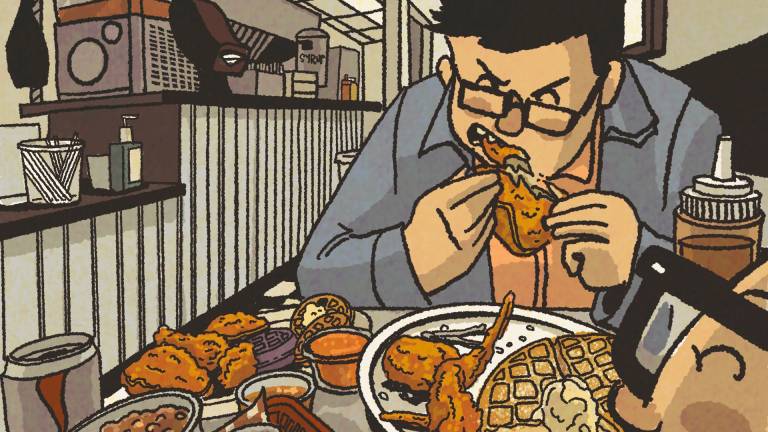
"caption": "Part of the excitement at Four Kings comes from covering the table with an abundance of dishes. The new-school Cantonese restaurant is open until 11 p.m. on the weekends in SF Chinatown.",
"credit": "Thien Pham",
"altTag": "Illustration: Two men devouring a table full of Cantonese dishes, including roast squab, fried soft-shell crabs, and a pork chop rice bowl.",
"description": null,
"imgSizes": {
"medium": {
"file": "https://cdn.kqed.org/wp-content/uploads/sites/2/2025/05/4-kings2-crop-800x450.jpg",
"width": 800,
"height": 450,
"mimeType": "image/jpeg"
},
"large": {
"file": "https://cdn.kqed.org/wp-content/uploads/sites/2/2025/05/4-kings2-crop-1020x574.jpg",
"width": 1020,
"height": 574,
"mimeType": "image/jpeg"
},
"thumbnail": {
"file": "https://cdn.kqed.org/wp-content/uploads/sites/2/2025/05/4-kings2-crop-160x90.jpg",
"width": 160,
"height": 90,
"mimeType": "image/jpeg"
},
"medium_large": {
"file": "https://cdn.kqed.org/wp-content/uploads/sites/2/2025/05/4-kings2-crop-768x432.jpg",
"width": 768,
"height": 432,
"mimeType": "image/jpeg"
},
"1536x1536": {
"file": "https://cdn.kqed.org/wp-content/uploads/sites/2/2025/05/4-kings2-crop-1536x864.jpg",
"width": 1536,
"height": 864,
"mimeType": "image/jpeg"
},
"post-thumbnail": {
"file": "https://cdn.kqed.org/wp-content/uploads/sites/2/2025/05/4-kings2-crop-672x372.jpg",
"width": 672,
"height": 372,
"mimeType": "image/jpeg"
},
"twentyfourteen-full-width": {
"file": "https://cdn.kqed.org/wp-content/uploads/sites/2/2025/05/4-kings2-crop-1038x576.jpg",
"width": 1038,
"height": 576,
"mimeType": "image/jpeg"
},
"kqedFullSize": {
"file": "https://cdn.kqed.org/wp-content/uploads/sites/2/2025/05/4-kings2-crop.jpg",
"width": 1920,
"height": 1080
}
},
"isLoading": false,
"fetchFailed": false
},
"arts_13976335": {
"type": "attachments",
"id": "arts_13976335",
"meta": {
"index": "attachments_1716263798",
"site": "arts",
"id": "13976335",
"found": true
},
"title": "sea ranch cafe crop",
"publishDate": 1747269373,
"status": "inherit",
"parent": 13976236,
"modified": 1747269742,
"caption": "View from the Cafe at the Sea Ranch Lodge.",
"credit": "Luke Tsai/KQED",
"altTag": "Cappuccino in a white cup on a wood table. The view outside the window is of a grassy cliff and, beyond that, a blue sky and sea.",
"description": null,
"imgSizes": {
"medium": {
"file": "https://cdn.kqed.org/wp-content/uploads/sites/2/2025/05/sea-ranch-cafe-crop-800x450.jpg",
"width": 800,
"height": 450,
"mimeType": "image/jpeg"
},
"large": {
"file": "https://cdn.kqed.org/wp-content/uploads/sites/2/2025/05/sea-ranch-cafe-crop-1020x574.jpg",
"width": 1020,
"height": 574,
"mimeType": "image/jpeg"
},
"thumbnail": {
"file": "https://cdn.kqed.org/wp-content/uploads/sites/2/2025/05/sea-ranch-cafe-crop-160x90.jpg",
"width": 160,
"height": 90,
"mimeType": "image/jpeg"
},
"medium_large": {
"file": "https://cdn.kqed.org/wp-content/uploads/sites/2/2025/05/sea-ranch-cafe-crop-768x432.jpg",
"width": 768,
"height": 432,
"mimeType": "image/jpeg"
},
"1536x1536": {
"file": "https://cdn.kqed.org/wp-content/uploads/sites/2/2025/05/sea-ranch-cafe-crop-1536x864.jpg",
"width": 1536,
"height": 864,
"mimeType": "image/jpeg"
},
"post-thumbnail": {
"file": "https://cdn.kqed.org/wp-content/uploads/sites/2/2025/05/sea-ranch-cafe-crop-672x372.jpg",
"width": 672,
"height": 372,
"mimeType": "image/jpeg"
},
"twentyfourteen-full-width": {
"file": "https://cdn.kqed.org/wp-content/uploads/sites/2/2025/05/sea-ranch-cafe-crop-1038x576.jpg",
"width": 1038,
"height": 576,
"mimeType": "image/jpeg"
},
"full-width": {
"file": "https://cdn.kqed.org/wp-content/uploads/sites/2/2025/05/sea-ranch-cafe-crop-1920x1080.jpg",
"width": 1920,
"height": 1080,
"mimeType": "image/jpeg"
},
"kqedFullSize": {
"file": "https://cdn.kqed.org/wp-content/uploads/sites/2/2025/05/sea-ranch-cafe-crop.jpg",
"width": 2000,
"height": 1125
}
},
"isLoading": false,
"fetchFailed": false
},
"arts_13975959": {
"type": "attachments",
"id": "arts_13975959",
"meta": {
"index": "attachments_1716263798",
"site": "arts",
"id": "13975959",
"found": true
},
"title": "pho vy exterior",
"publishDate": 1746823538,
"status": "inherit",
"parent": 13975954,
"modified": 1746823628,
"caption": "Phở Vy has been an East Oakland staple since 2016. The restaurant's last day of business will be May 18, 2025.",
"credit": "Luke Tsai/KQED",
"altTag": "Exterior of a Vietnamese restaurant. The sign on the yellow awning reads, \"Pho Vy.\"",
"description": null,
"imgSizes": {
"medium": {
"file": "https://cdn.kqed.org/wp-content/uploads/sites/2/2025/05/pho-vy-exterior-800x450.jpg",
"width": 800,
"height": 450,
"mimeType": "image/jpeg"
},
"large": {
"file": "https://cdn.kqed.org/wp-content/uploads/sites/2/2025/05/pho-vy-exterior-1020x574.jpg",
"width": 1020,
"height": 574,
"mimeType": "image/jpeg"
},
"thumbnail": {
"file": "https://cdn.kqed.org/wp-content/uploads/sites/2/2025/05/pho-vy-exterior-160x90.jpg",
"width": 160,
"height": 90,
"mimeType": "image/jpeg"
},
"medium_large": {
"file": "https://cdn.kqed.org/wp-content/uploads/sites/2/2025/05/pho-vy-exterior-768x432.jpg",
"width": 768,
"height": 432,
"mimeType": "image/jpeg"
},
"1536x1536": {
"file": "https://cdn.kqed.org/wp-content/uploads/sites/2/2025/05/pho-vy-exterior-1536x864.jpg",
"width": 1536,
"height": 864,
"mimeType": "image/jpeg"
},
"post-thumbnail": {
"file": "https://cdn.kqed.org/wp-content/uploads/sites/2/2025/05/pho-vy-exterior-672x372.jpg",
"width": 672,
"height": 372,
"mimeType": "image/jpeg"
},
"twentyfourteen-full-width": {
"file": "https://cdn.kqed.org/wp-content/uploads/sites/2/2025/05/pho-vy-exterior-1038x576.jpg",
"width": 1038,
"height": 576,
"mimeType": "image/jpeg"
},
"full-width": {
"file": "https://cdn.kqed.org/wp-content/uploads/sites/2/2025/05/pho-vy-exterior-1920x1080.jpg",
"width": 1920,
"height": 1080,
"mimeType": "image/jpeg"
},
"kqedFullSize": {
"file": "https://cdn.kqed.org/wp-content/uploads/sites/2/2025/05/pho-vy-exterior.jpg",
"width": 2000,
"height": 1125
}
},
"isLoading": false,
"fetchFailed": false
},
"arts_13975911": {
"type": "attachments",
"id": "arts_13975911",
"meta": {
"index": "attachments_1716263798",
"site": "arts",
"id": "13975911",
"found": true
},
"title": "heyma-1 cropped",
"publishDate": 1746748662,
"status": "inherit",
"parent": 13975908,
"modified": 1746748805,
"caption": "In Berkeley, Heyma Yemeni Coffee combines both traditional and contemporary aspects of Yemeni coffee culture.",
"credit": "Wahab Algarmi",
"altTag": "Illustration: two men sit in front of a table loaded with cakes, pastries and coffee.",
"description": null,
"imgSizes": {
"medium": {
"file": "https://cdn.kqed.org/wp-content/uploads/sites/2/2025/05/heyma-1-cropped-800x450.jpg",
"width": 800,
"height": 450,
"mimeType": "image/jpeg"
},
"large": {
"file": "https://cdn.kqed.org/wp-content/uploads/sites/2/2025/05/heyma-1-cropped-1020x574.jpg",
"width": 1020,
"height": 574,
"mimeType": "image/jpeg"
},
"thumbnail": {
"file": "https://cdn.kqed.org/wp-content/uploads/sites/2/2025/05/heyma-1-cropped-160x90.jpg",
"width": 160,
"height": 90,
"mimeType": "image/jpeg"
},
"medium_large": {
"file": "https://cdn.kqed.org/wp-content/uploads/sites/2/2025/05/heyma-1-cropped-768x432.jpg",
"width": 768,
"height": 432,
"mimeType": "image/jpeg"
},
"1536x1536": {
"file": "https://cdn.kqed.org/wp-content/uploads/sites/2/2025/05/heyma-1-cropped-1536x864.jpg",
"width": 1536,
"height": 864,
"mimeType": "image/jpeg"
},
"post-thumbnail": {
"file": "https://cdn.kqed.org/wp-content/uploads/sites/2/2025/05/heyma-1-cropped-672x372.jpg",
"width": 672,
"height": 372,
"mimeType": "image/jpeg"
},
"twentyfourteen-full-width": {
"file": "https://cdn.kqed.org/wp-content/uploads/sites/2/2025/05/heyma-1-cropped-1038x576.jpg",
"width": 1038,
"height": 576,
"mimeType": "image/jpeg"
},
"kqedFullSize": {
"file": "https://cdn.kqed.org/wp-content/uploads/sites/2/2025/05/heyma-1-cropped.jpg",
"width": 1920,
"height": 1080
}
},
"isLoading": false,
"fetchFailed": false
},
"arts_13975875": {
"type": "attachments",
"id": "arts_13975875",
"meta": {
"index": "attachments_1716263798",
"site": "arts",
"id": "13975875",
"found": true
},
"title": "crixa cropped",
"publishDate": 1746665966,
"status": "inherit",
"parent": 13975870,
"modified": 1746666020,
"caption": "Crixa Cakes, a Berkeley institution since 1998, will close on May 10, 2025.",
"credit": "Luke Tsai/KQED",
"altTag": "Exterior of bakery. The sign reads \"Crixa Cakes.\"",
"description": null,
"imgSizes": {
"medium": {
"file": "https://cdn.kqed.org/wp-content/uploads/sites/2/2025/05/crixa-cropped-800x450.jpg",
"width": 800,
"height": 450,
"mimeType": "image/jpeg"
},
"large": {
"file": "https://cdn.kqed.org/wp-content/uploads/sites/2/2025/05/crixa-cropped-1020x574.jpg",
"width": 1020,
"height": 574,
"mimeType": "image/jpeg"
},
"thumbnail": {
"file": "https://cdn.kqed.org/wp-content/uploads/sites/2/2025/05/crixa-cropped-160x90.jpg",
"width": 160,
"height": 90,
"mimeType": "image/jpeg"
},
"medium_large": {
"file": "https://cdn.kqed.org/wp-content/uploads/sites/2/2025/05/crixa-cropped-768x432.jpg",
"width": 768,
"height": 432,
"mimeType": "image/jpeg"
},
"1536x1536": {
"file": "https://cdn.kqed.org/wp-content/uploads/sites/2/2025/05/crixa-cropped-1536x864.jpg",
"width": 1536,
"height": 864,
"mimeType": "image/jpeg"
},
"post-thumbnail": {
"file": "https://cdn.kqed.org/wp-content/uploads/sites/2/2025/05/crixa-cropped-672x372.jpg",
"width": 672,
"height": 372,
"mimeType": "image/jpeg"
},
"twentyfourteen-full-width": {
"file": "https://cdn.kqed.org/wp-content/uploads/sites/2/2025/05/crixa-cropped-1038x576.jpg",
"width": 1038,
"height": 576,
"mimeType": "image/jpeg"
},
"full-width": {
"file": "https://cdn.kqed.org/wp-content/uploads/sites/2/2025/05/crixa-cropped-1920x1080.jpg",
"width": 1920,
"height": 1080,
"mimeType": "image/jpeg"
},
"kqedFullSize": {
"file": "https://cdn.kqed.org/wp-content/uploads/sites/2/2025/05/crixa-cropped.jpg",
"width": 2000,
"height": 1125
}
},
"isLoading": false,
"fetchFailed": false
},
"arts_13975798": {
"type": "attachments",
"id": "arts_13975798",
"meta": {
"index": "attachments_1716263798",
"site": "arts",
"id": "13975798",
"found": true
},
"title": "minced pork rice liangs village crop",
"publishDate": 1746567053,
"status": "inherit",
"parent": 13975796,
"modified": 1746567151,
"caption": "Braised minced pork rice (aka lu rou fan) from Liang's Village, one of the anchor food vendors at this year's Taiwanese American Culture Festival. The event returns to San Francisco's Union Square on Saturday, May 10.",
"credit": "Courtesy of Liang's Village",
"altTag": "Close up of a bowl of Taiwanese braised pork rice.",
"description": null,
"imgSizes": {
"medium": {
"file": "https://cdn.kqed.org/wp-content/uploads/sites/2/2025/05/minced-pork-rice-liangs-village-crop-800x450.jpg",
"width": 800,
"height": 450,
"mimeType": "image/jpeg"
},
"large": {
"file": "https://cdn.kqed.org/wp-content/uploads/sites/2/2025/05/minced-pork-rice-liangs-village-crop-1020x573.jpg",
"width": 1020,
"height": 573,
"mimeType": "image/jpeg"
},
"thumbnail": {
"file": "https://cdn.kqed.org/wp-content/uploads/sites/2/2025/05/minced-pork-rice-liangs-village-crop-160x90.jpg",
"width": 160,
"height": 90,
"mimeType": "image/jpeg"
},
"medium_large": {
"file": "https://cdn.kqed.org/wp-content/uploads/sites/2/2025/05/minced-pork-rice-liangs-village-crop-768x432.jpg",
"width": 768,
"height": 432,
"mimeType": "image/jpeg"
},
"1536x1536": {
"file": "https://cdn.kqed.org/wp-content/uploads/sites/2/2025/05/minced-pork-rice-liangs-village-crop-1536x863.jpg",
"width": 1536,
"height": 863,
"mimeType": "image/jpeg"
},
"post-thumbnail": {
"file": "https://cdn.kqed.org/wp-content/uploads/sites/2/2025/05/minced-pork-rice-liangs-village-crop-672x372.jpg",
"width": 672,
"height": 372,
"mimeType": "image/jpeg"
},
"twentyfourteen-full-width": {
"file": "https://cdn.kqed.org/wp-content/uploads/sites/2/2025/05/minced-pork-rice-liangs-village-crop-1038x576.jpg",
"width": 1038,
"height": 576,
"mimeType": "image/jpeg"
},
"full-width": {
"file": "https://cdn.kqed.org/wp-content/uploads/sites/2/2025/05/minced-pork-rice-liangs-village-crop-1920x1079.jpg",
"width": 1920,
"height": 1079,
"mimeType": "image/jpeg"
},
"kqedFullSize": {
"file": "https://cdn.kqed.org/wp-content/uploads/sites/2/2025/05/minced-pork-rice-liangs-village-crop.jpg",
"width": 2000,
"height": 1124
}
},
"isLoading": false,
"fetchFailed": false
},
"arts_13975562": {
"type": "attachments",
"id": "arts_13975562",
"meta": {
"index": "attachments_1716263798",
"site": "arts",
"id": "13975562",
"found": true
},
"title": "sherry cobbler crop",
"publishDate": 1746057282,
"status": "inherit",
"parent": 13975555,
"modified": 1746057318,
"caption": "Toni Tipton-Martin's take on a sherry cobbler cocktail, from her book 'Juke Joints, Jazz Clubs & Juice.'",
"credit": "Brittany Conerly, courtesy of Clarkson Potter",
"altTag": null,
"description": null,
"imgSizes": {
"medium": {
"file": "https://cdn.kqed.org/wp-content/uploads/sites/2/2025/04/sherry-cobbler-crop-800x450.jpg",
"width": 800,
"height": 450,
"mimeType": "image/jpeg"
},
"large": {
"file": "https://cdn.kqed.org/wp-content/uploads/sites/2/2025/04/sherry-cobbler-crop-1020x574.jpg",
"width": 1020,
"height": 574,
"mimeType": "image/jpeg"
},
"thumbnail": {
"file": "https://cdn.kqed.org/wp-content/uploads/sites/2/2025/04/sherry-cobbler-crop-160x90.jpg",
"width": 160,
"height": 90,
"mimeType": "image/jpeg"
},
"medium_large": {
"file": "https://cdn.kqed.org/wp-content/uploads/sites/2/2025/04/sherry-cobbler-crop-768x432.jpg",
"width": 768,
"height": 432,
"mimeType": "image/jpeg"
},
"1536x1536": {
"file": "https://cdn.kqed.org/wp-content/uploads/sites/2/2025/04/sherry-cobbler-crop-1536x864.jpg",
"width": 1536,
"height": 864,
"mimeType": "image/jpeg"
},
"post-thumbnail": {
"file": "https://cdn.kqed.org/wp-content/uploads/sites/2/2025/04/sherry-cobbler-crop-672x372.jpg",
"width": 672,
"height": 372,
"mimeType": "image/jpeg"
},
"twentyfourteen-full-width": {
"file": "https://cdn.kqed.org/wp-content/uploads/sites/2/2025/04/sherry-cobbler-crop-1038x576.jpg",
"width": 1038,
"height": 576,
"mimeType": "image/jpeg"
},
"full-width": {
"file": "https://cdn.kqed.org/wp-content/uploads/sites/2/2025/04/sherry-cobbler-crop-1920x1080.jpg",
"width": 1920,
"height": 1080,
"mimeType": "image/jpeg"
},
"kqedFullSize": {
"file": "https://cdn.kqed.org/wp-content/uploads/sites/2/2025/04/sherry-cobbler-crop.jpg",
"width": 2000,
"height": 1125
}
},
"isLoading": false,
"fetchFailed": false
},
"arts_13975436": {
"type": "attachments",
"id": "arts_13975436",
"meta": {
"index": "attachments_1716263798",
"site": "arts",
"id": "13975436",
"found": true
},
"title": "viet thanh nguyen featured",
"publishDate": 1745886498,
"status": "inherit",
"parent": 13975429,
"modified": 1745944402,
"caption": "Novelist Viet Thanh Nguyen holds up a photograph of his parents' old grocery store, Sàigòn Mới, in front of the sleek apartment complex that replaced it in downtown San Jose.",
"credit": "Alex Tran/KQED",
"altTag": "Portrait of Asian man holding an old photograph in front of a sleek apartment building.",
"description": null,
"imgSizes": {
"medium": {
"file": "https://cdn.kqed.org/wp-content/uploads/sites/2/2025/04/viet-thanh-nguyen-featured-800x450.jpg",
"width": 800,
"height": 450,
"mimeType": "image/jpeg"
},
"large": {
"file": "https://cdn.kqed.org/wp-content/uploads/sites/2/2025/04/viet-thanh-nguyen-featured-1020x574.jpg",
"width": 1020,
"height": 574,
"mimeType": "image/jpeg"
},
"thumbnail": {
"file": "https://cdn.kqed.org/wp-content/uploads/sites/2/2025/04/viet-thanh-nguyen-featured-160x90.jpg",
"width": 160,
"height": 90,
"mimeType": "image/jpeg"
},
"medium_large": {
"file": "https://cdn.kqed.org/wp-content/uploads/sites/2/2025/04/viet-thanh-nguyen-featured-768x432.jpg",
"width": 768,
"height": 432,
"mimeType": "image/jpeg"
},
"1536x1536": {
"file": "https://cdn.kqed.org/wp-content/uploads/sites/2/2025/04/viet-thanh-nguyen-featured-1536x864.jpg",
"width": 1536,
"height": 864,
"mimeType": "image/jpeg"
},
"post-thumbnail": {
"file": "https://cdn.kqed.org/wp-content/uploads/sites/2/2025/04/viet-thanh-nguyen-featured-672x372.jpg",
"width": 672,
"height": 372,
"mimeType": "image/jpeg"
},
"twentyfourteen-full-width": {
"file": "https://cdn.kqed.org/wp-content/uploads/sites/2/2025/04/viet-thanh-nguyen-featured-1038x576.jpg",
"width": 1038,
"height": 576,
"mimeType": "image/jpeg"
},
"full-width": {
"file": "https://cdn.kqed.org/wp-content/uploads/sites/2/2025/04/viet-thanh-nguyen-featured-1920x1080.jpg",
"width": 1920,
"height": 1080,
"mimeType": "image/jpeg"
},
"kqedFullSize": {
"file": "https://cdn.kqed.org/wp-content/uploads/sites/2/2025/04/viet-thanh-nguyen-featured.jpg",
"width": 2000,
"height": 1125
}
},
"isLoading": false,
"fetchFailed": false
},
"arts_13975316": {
"type": "attachments",
"id": "arts_13975316",
"meta": {
"index": "attachments_1716263798",
"site": "arts",
"id": "13975316",
"found": true
},
"title": "hinodeya1-crop",
"publishDate": 1745539212,
"status": "inherit",
"parent": 13975308,
"modified": 1745539244,
"caption": "Hinodeya Ramen's Union Square location is known for its late hours and its seafood-based dashi broth.",
"credit": "Thien Pham",
"altTag": "Illustration: two men slurp bowls of ramen inside a crowded restaurant.",
"description": null,
"imgSizes": {
"medium": {
"file": "https://cdn.kqed.org/wp-content/uploads/sites/2/2025/04/hinodeya1-crop-800x450.jpg",
"width": 800,
"height": 450,
"mimeType": "image/jpeg"
},
"large": {
"file": "https://cdn.kqed.org/wp-content/uploads/sites/2/2025/04/hinodeya1-crop-1020x574.jpg",
"width": 1020,
"height": 574,
"mimeType": "image/jpeg"
},
"thumbnail": {
"file": "https://cdn.kqed.org/wp-content/uploads/sites/2/2025/04/hinodeya1-crop-160x90.jpg",
"width": 160,
"height": 90,
"mimeType": "image/jpeg"
},
"medium_large": {
"file": "https://cdn.kqed.org/wp-content/uploads/sites/2/2025/04/hinodeya1-crop-768x432.jpg",
"width": 768,
"height": 432,
"mimeType": "image/jpeg"
},
"1536x1536": {
"file": "https://cdn.kqed.org/wp-content/uploads/sites/2/2025/04/hinodeya1-crop-1536x864.jpg",
"width": 1536,
"height": 864,
"mimeType": "image/jpeg"
},
"post-thumbnail": {
"file": "https://cdn.kqed.org/wp-content/uploads/sites/2/2025/04/hinodeya1-crop-672x372.jpg",
"width": 672,
"height": 372,
"mimeType": "image/jpeg"
},
"twentyfourteen-full-width": {
"file": "https://cdn.kqed.org/wp-content/uploads/sites/2/2025/04/hinodeya1-crop-1038x576.jpg",
"width": 1038,
"height": 576,
"mimeType": "image/jpeg"
},
"kqedFullSize": {
"file": "https://cdn.kqed.org/wp-content/uploads/sites/2/2025/04/hinodeya1-crop.jpg",
"width": 1920,
"height": 1080
}
},
"isLoading": false,
"fetchFailed": false
}
},
"audioPlayerReducer": {
"postId": "stream_live",
"isPaused": true,
"isPlaying": false,
"pfsActive": false,
"pledgeModalIsOpen": true,
"playerDrawerIsOpen": false,
"liveAudioPlayStartedAt": 0,
"liveAudioPlayContext": ""
},
"authorsReducer": {
"byline_arts_13975908": {
"type": "authors",
"id": "byline_arts_13975908",
"meta": {
"override": true
},
"slug": "byline_arts_13975908",
"name": "Luke Tsai and Wahab Algarmi",
"isLoading": false
},
"ltsai": {
"type": "authors",
"id": "11743",
"meta": {
"index": "authors_1716337520",
"id": "11743",
"found": true
},
"name": "Luke Tsai",
"firstName": "Luke",
"lastName": "Tsai",
"slug": "ltsai",
"email": "ltsai@kqed.org",
"display_author_email": true,
"staff_mastheads": [
"arts"
],
"title": "Food Editor",
"bio": "Luke Tsai is KQED's food editor and resident stinky tofu connoisseur. Prior to KQED, he was an editor at Eater SF, \u003cem>San Francisco \u003c/em>magazine, and the \u003cem>East Bay Express\u003c/em>, and his work has also appeared in TASTE, the \u003cem>San Francisco Chronicle\u003c/em>, and the \u003cem>Best Food Writing\u003c/em> anthology. When he isn't writing or editing, you'll find him eating most everything he can get his hands on.",
"avatar": "https://secure.gravatar.com/avatar/1e59b45bf191526e7339d6ba46e33a57b2030d25c27660ecc64ea3cb863e34f7?s=600&d=blank&r=g",
"twitter": "theluketsai",
"bluesky": null,
"facebook": null,
"instagram": null,
"linkedin": null,
"sites": [
{
"site": "",
"roles": [
"editor"
]
},
{
"site": "arts",
"roles": [
"administrator"
]
},
{
"site": "news",
"roles": [
"editor",
"contributor"
]
},
{
"site": "bayareabites",
"roles": [
"editor"
]
},
{
"site": "food",
"roles": [
"editor"
]
}
],
"headData": {
"title": "Luke Tsai | KQED",
"description": "Food Editor",
"ogImgSrc": "https://secure.gravatar.com/avatar/1e59b45bf191526e7339d6ba46e33a57b2030d25c27660ecc64ea3cb863e34f7?s=600&d=blank&r=g",
"twImgSrc": "https://secure.gravatar.com/avatar/1e59b45bf191526e7339d6ba46e33a57b2030d25c27660ecc64ea3cb863e34f7?s=600&d=blank&r=g"
},
"isLoading": false,
"link": "/author/ltsai"
},
"tpham": {
"type": "authors",
"id": "11753",
"meta": {
"index": "authors_1716337520",
"id": "11753",
"found": true
},
"name": "Thien Pham",
"firstName": "Thien",
"lastName": "Pham",
"slug": "tpham",
"email": "thiendog@gmail.com",
"display_author_email": false,
"staff_mastheads": [],
"title": "KQED Contributor",
"bio": null,
"avatar": "https://secure.gravatar.com/avatar/fa68ed7d6a785e5294a7bb79a3f409c3?s=600&d=blank&r=g",
"twitter": null,
"facebook": null,
"instagram": null,
"linkedin": null,
"sites": [
{
"site": "arts",
"roles": [
"contributor"
]
}
],
"headData": {
"title": "Thien Pham | KQED",
"description": "KQED Contributor",
"ogImgSrc": "https://secure.gravatar.com/avatar/fa68ed7d6a785e5294a7bb79a3f409c3?s=600&d=blank&r=g",
"twImgSrc": "https://secure.gravatar.com/avatar/fa68ed7d6a785e5294a7bb79a3f409c3?s=600&d=blank&r=g"
},
"isLoading": false,
"link": "/author/tpham"
},
"opena": {
"type": "authors",
"id": "11903",
"meta": {
"index": "authors_1716337520",
"id": "11903",
"found": true
},
"name": "Octavio Peña",
"firstName": "Octavio",
"lastName": "Peña",
"slug": "opena",
"email": "octaviopenagutierrez@gmail.com",
"display_author_email": false,
"staff_mastheads": [],
"title": "KQED Contributor",
"bio": null,
"avatar": "https://secure.gravatar.com/avatar/8fb464e0c705ab58fc9d18e06211557c?s=600&d=blank&r=g",
"twitter": null,
"facebook": null,
"instagram": null,
"linkedin": null,
"sites": [
{
"site": "arts",
"roles": [
"contributor"
]
}
],
"headData": {
"title": "Octavio Peña | KQED",
"description": "KQED Contributor",
"ogImgSrc": "https://secure.gravatar.com/avatar/8fb464e0c705ab58fc9d18e06211557c?s=600&d=blank&r=g",
"twImgSrc": "https://secure.gravatar.com/avatar/8fb464e0c705ab58fc9d18e06211557c?s=600&d=blank&r=g"
},
"isLoading": false,
"link": "/author/opena"
}
},
"pagesReducer": {
"arts_tag_food": {
"type": "terms",
"id": "arts_1297",
"meta": {
"index": "terms_1716263798",
"site": "arts",
"id": "1297",
"score": 7.4214654
},
"featImg": null,
"name": "food",
"description": null,
"taxonomy": "tag",
"headData": {
"twImgId": null,
"twTitle": null,
"ogTitle": null,
"ogImgId": null,
"twDescription": null,
"description": null,
"title": "food Archives | KQED Arts",
"ogDescription": null
},
"ttid": 1309,
"slug": "food",
"isLoading": false,
"title": "food",
"pageMeta": {
"site": "arts",
"WpPageTemplate": "page-topic-editorial",
"currentPage": 8
},
"blocks": [
{
"blockName": "kqed/post-list",
"attrs": {
"layout": "cardArticle2",
"query": "posts/arts?tag=food",
"seeMore": false,
"paginated": true,
"page": 8
}
},
{
"blockName": "kqed/ad"
}
]
}
},
"pfsSessionReducer": {},
"postsReducer": {
"stream_live": {
"type": "live",
"id": "stream_live",
"audioUrl": "https://streams.kqed.org/kqedradio",
"title": "Live Stream",
"excerpt": "Live Stream information currently unavailable.",
"link": "/radio",
"featImg": "",
"label": {
"name": "KQED Live",
"link": "/"
}
},
"stream_kqedNewscast": {
"type": "posts",
"id": "stream_kqedNewscast",
"audioUrl": "https://www.kqed.org/.stream/anon/radio/RDnews/newscast.mp3?_=1",
"title": "KQED Newscast",
"featImg": "",
"label": {
"name": "88.5 FM",
"link": "/"
}
},
"arts_13977103": {
"type": "posts",
"id": "arts_13977103",
"meta": {
"index": "posts_1716263798",
"site": "arts",
"id": "13977103",
"score": null,
"sort": [
1749135603000
]
},
"guestAuthors": [],
"slug": "inna-jam-closing-emeryville-berkeley",
"title": "A Beloved East Bay Jam Maker Is Closing Shop After 15 Years",
"publishDate": 1749135603,
"format": "standard",
"headTitle": "A Beloved East Bay Jam Maker Is Closing Shop After 15 Years | KQED",
"labelTerm": {},
"content": "\u003cp>It all started with a plate of cream cheese, pepper jelly and crackers. Trying that classic appetizer for the first time during a \u003ca href=\"https://www.kqed.org/arts/tag/thanksgiving\">Thanksgiving\u003c/a> feast in 2008, Dafna Kory remembers thinking it was “the most amazing thing ever.” Afterwards, when she wasn’t able to find a local source for jalapeño jam, she simply decided to make her own.\u003c/p>\n\u003cp>For Kory, that first batch of \u003ca href=\"https://innajam.com/products/plenty-spicy-jalapeno-jam\">spicy-sweet pepper jam\u003c/a> wound up setting her whole life on a new course: She started making jam obsessively out of whatever fruits she was able to forage in her Berkeley neighborhood. In 2010, she left her career as a video editor and started what would quickly become one of the Bay Area’s most beloved jam companies: \u003ca href=\"https://innajam.com/\">INNA Jam\u003c/a>.\u003c/p>\n\u003cp>Now, 15 years later, that jam journey is coming to an end — but not because the company is struggling for business, Kory stresses. She’s simply decided it’s \u003ca href=\"https://innajam.com/pages/final-year\">time to move on\u003c/a>. INNA will continue making its fruit-forward organic jams and shrubs (drinking vinegars) at its small production facility in Emeryville through the end of September. And then it will close its doors for good.\u003c/p>\n\u003cp>The Bay Area has never had any shortage of acclaimed jam makers with broad cult followings, like Berkeley legend \u003ca href=\"https://www.latimes.com/food/story/2021-01-13/june-taylor-berkeley-jam-marmalade-closing\">June Taylor\u003c/a>, a \u003ca href=\"https://www.berkeleyside.org/2011/02/18/jammaker-turns-hobby-into-thriving-local-business\">longtime hero\u003c/a> of Kory’s. When INNA burst onto the scene in the early 2010s, Kory recalls, “I think the thing that set me apart was the simplicity of my jams.” Other jam makers who had deep culinary backgrounds often seemed most interested in coaxing out surprising flavors by combining multiple fruits or layering them with other ingredients. Kory, on the other hand, “came to it from a love of fruit.”\u003c/p>\n\u003cfigure id=\"attachment_13977016\" class=\"wp-caption alignnone\" style=\"max-width: 2000px\">\u003cimg loading=\"lazy\" decoding=\"async\" class=\"size-full wp-image-13977016\" src=\"https://cdn.kqed.org/wp-content/uploads/sites/2/2025/06/250602-INNA-JAM-CLOSING-MD-07-KQED.jpg\" alt=\"Jars of Albion strawberry jam on a shelf.\" width=\"2000\" height=\"1334\" srcset=\"https://cdn.kqed.org/wp-content/uploads/sites/2/2025/06/250602-INNA-JAM-CLOSING-MD-07-KQED.jpg 2000w, https://cdn.kqed.org/wp-content/uploads/sites/2/2025/06/250602-INNA-JAM-CLOSING-MD-07-KQED-800x534.jpg 800w, https://cdn.kqed.org/wp-content/uploads/sites/2/2025/06/250602-INNA-JAM-CLOSING-MD-07-KQED-1020x680.jpg 1020w, https://cdn.kqed.org/wp-content/uploads/sites/2/2025/06/250602-INNA-JAM-CLOSING-MD-07-KQED-160x107.jpg 160w, https://cdn.kqed.org/wp-content/uploads/sites/2/2025/06/250602-INNA-JAM-CLOSING-MD-07-KQED-768x512.jpg 768w, https://cdn.kqed.org/wp-content/uploads/sites/2/2025/06/250602-INNA-JAM-CLOSING-MD-07-KQED-1536x1025.jpg 1536w, https://cdn.kqed.org/wp-content/uploads/sites/2/2025/06/250602-INNA-JAM-CLOSING-MD-07-KQED-1920x1281.jpg 1920w\" sizes=\"auto, (max-width: 2000px) 100vw, 2000px\">\u003cfigcaption class=\"wp-caption-text\">Jars of strawberry jam. \u003ccite>(Martin do Nascimento/KQED)\u003c/cite>\u003c/figcaption>\u003c/figure>\n\u003cp>What that meant, practically, was that she always tried to make each jam the purest possible expression of a specific fruit varietal — i.e., not just strawberry jam but a limited edition jam highlighting the floral juiciness of a Seascape strawberry. She understood, and loved, the bright Hawaiian-punch sweetness of a Flavor King pluot, the honeysuckle perfume of a Blenheim apricot, and the sticky, caramelly richness of a Black Mission fig (a jam Ina Garten herself declared \u003ca href=\"https://www.facebook.com/watch/?v=10154645798017324\">her favorite\u003c/a>).\u003c/p>\n\u003cp>[ad fullwidth]\u003c/p>\n\u003cp>Most of INNA’s jams have only three ingredients: the fruit itself, fruit pectin and organic cane sugar. It’s an approach that has resonated with the farmers market fanatics in the Oakland/Berkeley area, in particular. Even the minimalistic packaging Kory designed was meant to highlight her approach: a transparent jar with almost no label to speak of, so you could see exactly what you’d be getting.\u003c/p>\n\u003cp>“People would always say it reminds them of the jam that their grandma or aunt or mom used to make, in its freshness and clarity,” Kory says.\u003c/p>\n\u003cp>\u003cspan style=\"font-weight: 400\">\u003cspan style=\"color: #2b2b2b;font-weight: 400\">[aside postID='arts_13975870,arts_13930727,arts_13925835']\u003c/span>\u003c/span>Maybe the most unusual thing about INNA’s impending closure is that there is no sad story that precipitated it — no COVID-era sales plummet or evil landlord hiking up the rent. Instead, she just talks about how physically and mentally taxing it has been to run a small food business for 15 years. “As truly wonderful as this work is, it’s time for me to take a break and to do something else to take it down a notch,” she says.\u003c/p>\n\u003cp>Kory actually announced the news \u003ca href=\"https://innajam.com/pages/final-year\">last September\u003c/a>, a full year before she planned to shut her doors, so longtime customers could stock up on their favorites if they wanted to.\u003c/p>\n\u003cp>“I don’t take it lightly that you’ve welcomed the food we make into your homes and lives,” she wrote in a farewell letter to customers. “I would love this final year to be a celebration — an opportunity to enjoy the ephemeral deliciousness of the incredible fruit we are so lucky to preserve, for just a little bit longer.”\u003c/p>\n\u003cfigure id=\"attachment_13977015\" class=\"wp-caption alignnone\" style=\"max-width: 2000px\">\u003cimg loading=\"lazy\" decoding=\"async\" class=\"size-full wp-image-13977015\" src=\"https://cdn.kqed.org/wp-content/uploads/sites/2/2025/06/250602-INNA-JAM-CLOSING-MD-05-KQED.jpg\" alt=\"Big pots on a row of stovetops in a commercial kitchen.\" width=\"2000\" height=\"1334\" srcset=\"https://cdn.kqed.org/wp-content/uploads/sites/2/2025/06/250602-INNA-JAM-CLOSING-MD-05-KQED.jpg 2000w, https://cdn.kqed.org/wp-content/uploads/sites/2/2025/06/250602-INNA-JAM-CLOSING-MD-05-KQED-800x534.jpg 800w, https://cdn.kqed.org/wp-content/uploads/sites/2/2025/06/250602-INNA-JAM-CLOSING-MD-05-KQED-1020x680.jpg 1020w, https://cdn.kqed.org/wp-content/uploads/sites/2/2025/06/250602-INNA-JAM-CLOSING-MD-05-KQED-160x107.jpg 160w, https://cdn.kqed.org/wp-content/uploads/sites/2/2025/06/250602-INNA-JAM-CLOSING-MD-05-KQED-768x512.jpg 768w, https://cdn.kqed.org/wp-content/uploads/sites/2/2025/06/250602-INNA-JAM-CLOSING-MD-05-KQED-1536x1025.jpg 1536w, https://cdn.kqed.org/wp-content/uploads/sites/2/2025/06/250602-INNA-JAM-CLOSING-MD-05-KQED-1920x1281.jpg 1920w\" sizes=\"auto, (max-width: 2000px) 100vw, 2000px\">\u003cfigcaption class=\"wp-caption-text\">Pots for cooking jam in the INNA Jam kitchen. \u003ccite>(Martin do Nascimento/KQED)\u003c/cite>\u003c/figcaption>\u003c/figure>\n\u003cp>What she’s most grateful for, she says, is how she’s been able to spend 15 years making something that’s just “a nice part of people’s day.” For her personally, it’s the only job she’s ever had that’s allowed her to express every part of herself — developing recipes, working on the production line, handling shipping and customer service, doing graphic design, and collaborating with farmers. “It was thrilling and hard and beautiful and everything I ever wanted,” she says.\u003c/p>\n\u003cp>Still, Kory doesn’t see herself reopening INNA, or starting any other kind of food business, in the future. Most immediately, once she ships out her final jars of jam this fall, she says she’s going to focus on supporting other small business owners. About 12 years ago, she started a community forum called Provender Social Club that provides resources and peer support to small food businesses. It now has more than 1,200 members. For now, Kory wants to expand that platform, particularly in terms of helping fledgling food entrepreneurs with their bookkeeping.\u003c/p>\n\u003cp>If she does make jam in the future? It’ll just be for fun — and it won’t be for a while. “I think I’ve eaten enough for a lifetime,” Kory says, laughing. “I look forward to eating fresh fruit.”\u003c/p>\n\u003cp>\u003c/p>\n\u003cp>\u003ca href=\"https://innajam.com/\">\u003ci>INNA Jam\u003c/i>\u003c/a>\u003ci> will be open — and making jam — through the end of September. Customers can order online for nationwide shipping or in-person pickup at the company’s Emeryville production facility (1307 61st St.). INNA’s jams and shrubs will also continue to be sold in grocery stores \u003c/i>\u003ca href=\"https://innajam.com/pages/retailers\">\u003ci>in the Bay Area and beyond\u003c/i>\u003c/a>\u003ci> until they sell out completely — almost certainly before the end of the year, Kory says.\u003c/i>\u003c/p>\n\n",
"blocks": [],
"excerpt": "INNA Jam founder Dafna Kory says she’s going out on her own terms.",
"status": "publish",
"parent": 0,
"modified": 1749236387,
"stats": {
"hasAudio": false,
"hasVideo": false,
"hasChartOrMap": false,
"iframeSrcs": [],
"hasGoogleForm": false,
"hasGallery": false,
"hasHearkenModule": false,
"hasPolis": false,
"paragraphCount": 16,
"wordCount": 1011
},
"headData": {
"title": "INNA Jam Is Closing Shop After 15 Years | KQED",
"description": "INNA Jam founder Dafna Kory says she’s going out on her own terms.",
"ogTitle": "A Beloved East Bay Jam Maker Is Closing Shop After 15 Years",
"ogDescription": "",
"ogImgId": "",
"twTitle": "A Beloved East Bay Jam Maker Is Closing Shop After 15 Years",
"twDescription": "",
"twImgId": "",
"socialTitle": "INNA Jam Is Closing Shop After 15 Years %%page%% %%sep%% KQED",
"schema": {
"@context": "https://schema.org",
"@type": "Article",
"headline": "A Beloved East Bay Jam Maker Is Closing Shop After 15 Years",
"datePublished": "2025-06-05T08:00:03-07:00",
"dateModified": "2025-06-06T11:59:47-07:00",
"image": "https://cdn.kqed.org/wp-content/uploads/2020/02/KQED-OG-Image@1x.png"
}
},
"source": "Food",
"sourceUrl": "https://www.kqed.org/food",
"sticky": false,
"nprStoryId": "kqed-13977103",
"templateType": "standard",
"featuredImageType": "standard",
"excludeFromSiteSearch": "Include",
"articleAge": "0",
"path": "/arts/13977103/inna-jam-closing-emeryville-berkeley",
"audioTrackLength": null,
"parsedContent": [
{
"type": "contentString",
"content": "\u003cdiv class=\"post-body\">\u003cp>\u003cp>It all started with a plate of cream cheese, pepper jelly and crackers. Trying that classic appetizer for the first time during a \u003ca href=\"https://www.kqed.org/arts/tag/thanksgiving\">Thanksgiving\u003c/a> feast in 2008, Dafna Kory remembers thinking it was “the most amazing thing ever.” Afterwards, when she wasn’t able to find a local source for jalapeño jam, she simply decided to make her own.\u003c/p>\n\u003cp>For Kory, that first batch of \u003ca href=\"https://innajam.com/products/plenty-spicy-jalapeno-jam\">spicy-sweet pepper jam\u003c/a> wound up setting her whole life on a new course: She started making jam obsessively out of whatever fruits she was able to forage in her Berkeley neighborhood. In 2010, she left her career as a video editor and started what would quickly become one of the Bay Area’s most beloved jam companies: \u003ca href=\"https://innajam.com/\">INNA Jam\u003c/a>.\u003c/p>\n\u003cp>Now, 15 years later, that jam journey is coming to an end — but not because the company is struggling for business, Kory stresses. She’s simply decided it’s \u003ca href=\"https://innajam.com/pages/final-year\">time to move on\u003c/a>. INNA will continue making its fruit-forward organic jams and shrubs (drinking vinegars) at its small production facility in Emeryville through the end of September. And then it will close its doors for good.\u003c/p>\n\u003cp>The Bay Area has never had any shortage of acclaimed jam makers with broad cult followings, like Berkeley legend \u003ca href=\"https://www.latimes.com/food/story/2021-01-13/june-taylor-berkeley-jam-marmalade-closing\">June Taylor\u003c/a>, a \u003ca href=\"https://www.berkeleyside.org/2011/02/18/jammaker-turns-hobby-into-thriving-local-business\">longtime hero\u003c/a> of Kory’s. When INNA burst onto the scene in the early 2010s, Kory recalls, “I think the thing that set me apart was the simplicity of my jams.” Other jam makers who had deep culinary backgrounds often seemed most interested in coaxing out surprising flavors by combining multiple fruits or layering them with other ingredients. Kory, on the other hand, “came to it from a love of fruit.”\u003c/p>\n\u003cfigure id=\"attachment_13977016\" class=\"wp-caption alignnone\" style=\"max-width: 2000px\">\u003cimg loading=\"lazy\" decoding=\"async\" class=\"size-full wp-image-13977016\" src=\"https://cdn.kqed.org/wp-content/uploads/sites/2/2025/06/250602-INNA-JAM-CLOSING-MD-07-KQED.jpg\" alt=\"Jars of Albion strawberry jam on a shelf.\" width=\"2000\" height=\"1334\" srcset=\"https://cdn.kqed.org/wp-content/uploads/sites/2/2025/06/250602-INNA-JAM-CLOSING-MD-07-KQED.jpg 2000w, https://cdn.kqed.org/wp-content/uploads/sites/2/2025/06/250602-INNA-JAM-CLOSING-MD-07-KQED-800x534.jpg 800w, https://cdn.kqed.org/wp-content/uploads/sites/2/2025/06/250602-INNA-JAM-CLOSING-MD-07-KQED-1020x680.jpg 1020w, https://cdn.kqed.org/wp-content/uploads/sites/2/2025/06/250602-INNA-JAM-CLOSING-MD-07-KQED-160x107.jpg 160w, https://cdn.kqed.org/wp-content/uploads/sites/2/2025/06/250602-INNA-JAM-CLOSING-MD-07-KQED-768x512.jpg 768w, https://cdn.kqed.org/wp-content/uploads/sites/2/2025/06/250602-INNA-JAM-CLOSING-MD-07-KQED-1536x1025.jpg 1536w, https://cdn.kqed.org/wp-content/uploads/sites/2/2025/06/250602-INNA-JAM-CLOSING-MD-07-KQED-1920x1281.jpg 1920w\" sizes=\"auto, (max-width: 2000px) 100vw, 2000px\">\u003cfigcaption class=\"wp-caption-text\">Jars of strawberry jam. \u003ccite>(Martin do Nascimento/KQED)\u003c/cite>\u003c/figcaption>\u003c/figure>\n\u003cp>What that meant, practically, was that she always tried to make each jam the purest possible expression of a specific fruit varietal — i.e., not just strawberry jam but a limited edition jam highlighting the floral juiciness of a Seascape strawberry. She understood, and loved, the bright Hawaiian-punch sweetness of a Flavor King pluot, the honeysuckle perfume of a Blenheim apricot, and the sticky, caramelly richness of a Black Mission fig (a jam Ina Garten herself declared \u003ca href=\"https://www.facebook.com/watch/?v=10154645798017324\">her favorite\u003c/a>).\u003c/p>\n\u003cp>\u003c/p>\u003c/div>",
"attributes": {
"named": {},
"numeric": []
}
},
{
"type": "component",
"content": "",
"name": "ad",
"attributes": {
"named": {
"label": "fullwidth"
},
"numeric": [
"fullwidth"
]
}
},
{
"type": "contentString",
"content": "\u003cdiv class=\"post-body\">\u003cp>\u003c/p>\n\u003cp>Most of INNA’s jams have only three ingredients: the fruit itself, fruit pectin and organic cane sugar. It’s an approach that has resonated with the farmers market fanatics in the Oakland/Berkeley area, in particular. Even the minimalistic packaging Kory designed was meant to highlight her approach: a transparent jar with almost no label to speak of, so you could see exactly what you’d be getting.\u003c/p>\n\u003cp>“People would always say it reminds them of the jam that their grandma or aunt or mom used to make, in its freshness and clarity,” Kory says.\u003c/p>\n\u003cp>\u003cspan style=\"font-weight: 400\">\u003cspan style=\"color: #2b2b2b;font-weight: 400\">\u003c/p>\u003c/div>",
"attributes": {
"named": {},
"numeric": []
}
},
{
"type": "component",
"content": "",
"name": "aside",
"attributes": {
"named": {
"postid": "arts_13975870,arts_13930727,arts_13925835",
"label": ""
},
"numeric": []
}
},
{
"type": "contentString",
"content": "\u003cdiv class=\"post-body\">\u003cp>\u003c/span>\u003c/span>Maybe the most unusual thing about INNA’s impending closure is that there is no sad story that precipitated it — no COVID-era sales plummet or evil landlord hiking up the rent. Instead, she just talks about how physically and mentally taxing it has been to run a small food business for 15 years. “As truly wonderful as this work is, it’s time for me to take a break and to do something else to take it down a notch,” she says.\u003c/p>\n\u003cp>Kory actually announced the news \u003ca href=\"https://innajam.com/pages/final-year\">last September\u003c/a>, a full year before she planned to shut her doors, so longtime customers could stock up on their favorites if they wanted to.\u003c/p>\n\u003cp>“I don’t take it lightly that you’ve welcomed the food we make into your homes and lives,” she wrote in a farewell letter to customers. “I would love this final year to be a celebration — an opportunity to enjoy the ephemeral deliciousness of the incredible fruit we are so lucky to preserve, for just a little bit longer.”\u003c/p>\n\u003cfigure id=\"attachment_13977015\" class=\"wp-caption alignnone\" style=\"max-width: 2000px\">\u003cimg loading=\"lazy\" decoding=\"async\" class=\"size-full wp-image-13977015\" src=\"https://cdn.kqed.org/wp-content/uploads/sites/2/2025/06/250602-INNA-JAM-CLOSING-MD-05-KQED.jpg\" alt=\"Big pots on a row of stovetops in a commercial kitchen.\" width=\"2000\" height=\"1334\" srcset=\"https://cdn.kqed.org/wp-content/uploads/sites/2/2025/06/250602-INNA-JAM-CLOSING-MD-05-KQED.jpg 2000w, https://cdn.kqed.org/wp-content/uploads/sites/2/2025/06/250602-INNA-JAM-CLOSING-MD-05-KQED-800x534.jpg 800w, https://cdn.kqed.org/wp-content/uploads/sites/2/2025/06/250602-INNA-JAM-CLOSING-MD-05-KQED-1020x680.jpg 1020w, https://cdn.kqed.org/wp-content/uploads/sites/2/2025/06/250602-INNA-JAM-CLOSING-MD-05-KQED-160x107.jpg 160w, https://cdn.kqed.org/wp-content/uploads/sites/2/2025/06/250602-INNA-JAM-CLOSING-MD-05-KQED-768x512.jpg 768w, https://cdn.kqed.org/wp-content/uploads/sites/2/2025/06/250602-INNA-JAM-CLOSING-MD-05-KQED-1536x1025.jpg 1536w, https://cdn.kqed.org/wp-content/uploads/sites/2/2025/06/250602-INNA-JAM-CLOSING-MD-05-KQED-1920x1281.jpg 1920w\" sizes=\"auto, (max-width: 2000px) 100vw, 2000px\">\u003cfigcaption class=\"wp-caption-text\">Pots for cooking jam in the INNA Jam kitchen. \u003ccite>(Martin do Nascimento/KQED)\u003c/cite>\u003c/figcaption>\u003c/figure>\n\u003cp>What she’s most grateful for, she says, is how she’s been able to spend 15 years making something that’s just “a nice part of people’s day.” For her personally, it’s the only job she’s ever had that’s allowed her to express every part of herself — developing recipes, working on the production line, handling shipping and customer service, doing graphic design, and collaborating with farmers. “It was thrilling and hard and beautiful and everything I ever wanted,” she says.\u003c/p>\n\u003cp>Still, Kory doesn’t see herself reopening INNA, or starting any other kind of food business, in the future. Most immediately, once she ships out her final jars of jam this fall, she says she’s going to focus on supporting other small business owners. About 12 years ago, she started a community forum called Provender Social Club that provides resources and peer support to small food businesses. It now has more than 1,200 members. For now, Kory wants to expand that platform, particularly in terms of helping fledgling food entrepreneurs with their bookkeeping.\u003c/p>\n\u003cp>If she does make jam in the future? It’ll just be for fun — and it won’t be for a while. “I think I’ve eaten enough for a lifetime,” Kory says, laughing. “I look forward to eating fresh fruit.”\u003c/p>\n\u003cp>\u003c/p>\n\u003cp>\u003ca href=\"https://innajam.com/\">\u003ci>INNA Jam\u003c/i>\u003c/a>\u003ci> will be open — and making jam — through the end of September. Customers can order online for nationwide shipping or in-person pickup at the company’s Emeryville production facility (1307 61st St.). INNA’s jams and shrubs will also continue to be sold in grocery stores \u003c/i>\u003ca href=\"https://innajam.com/pages/retailers\">\u003ci>in the Bay Area and beyond\u003c/i>\u003c/a>\u003ci> until they sell out completely — almost certainly before the end of the year, Kory says.\u003c/i>\u003c/p>\n\n\u003c/div>\u003c/p>",
"attributes": {
"named": {},
"numeric": []
}
}
],
"link": "/arts/13977103/inna-jam-closing-emeryville-berkeley",
"authors": [
"11743"
],
"categories": [
"arts_1",
"arts_12276",
"arts_235"
],
"tags": [
"arts_10331",
"arts_6357",
"arts_10278",
"arts_1297"
],
"featImg": "arts_13977113",
"label": "source_arts_13977103"
},
"arts_13977033": {
"type": "posts",
"id": "arts_13977033",
"meta": {
"index": "posts_1716263798",
"site": "arts",
"id": "13977033",
"score": null,
"sort": [
1748985708000
]
},
"guestAuthors": [],
"slug": "salpikitos-arepas-san-jose-charcoal-grill-late-night",
"title": "San Jose’s New Late-Night Hot Spot Serves Smoky, Charcoal-Grilled Arepas",
"publishDate": 1748985708,
"format": "standard",
"headTitle": "San Jose’s New Late-Night Hot Spot Serves Smoky, Charcoal-Grilled Arepas | KQED",
"labelTerm": {},
"content": "\u003cp>On a recent Saturday night, I was food-truck-hopping in East \u003ca href=\"https://www.kqed.org/arts/tag/san-jose\">San Jose\u003c/a> when the aroma of charcoal lured me to a small food stand on Alum Rock — a Colombian arepa joint called \u003ca href=\"https://www.instagram.com/salpikitos.usa24/?hl=en\">Salpikitos\u003c/a>, it turned out. I felt like I had stumbled into a family’s backyard barbecue. There was an assembly line of cooks. One tended to a simmering pot of speckled quail eggs; another fanned the flames while searing a batch of arepas on the grill. It was nearly midnight and every table was packed with customers chowing down on charred masa cakes and sipping bottles of Colombiana cola.\u003c/p>\n\u003cp>For research purposes, I ordered the fattest arepa on the menu, the desgranada, which overflowed with beef, corn, plantain, avocado, chicharron and quail eggs skewered on toothpicks. I loved the contrast between the crisp, brittle masa and the creamy filling. It was one of the tastiest arepas I’ve come across in the Bay Area.\u003c/p>\n\u003cp>Edward Tovar and Vivian Sanchez opened the San Jose location of Salpikitos last December, but the business was born in Villavicencio, Colombia, in 2008. Tovar’s brother, Carlos Kaleet, started out selling arepas from a street stall and eventually expanded to a brick-and-mortar location in Villavicencio and another in Bogota. Tovar and Sanchez worked alongside Kaleet back in Colombia and got his blessing to continue the family business when they moved to the United States three years ago. Over the last six months, they’ve transformed Salpikitos from a simple food stall that had a few scattered tables to something more like an outdoor restaurant, complete with a walled-off, fully built-out kitchen.\u003c/p>\n\u003cfigure id=\"attachment_13977046\" class=\"wp-caption alignnone\" style=\"max-width: 2000px\">\u003cimg loading=\"lazy\" decoding=\"async\" class=\"size-full wp-image-13977046\" src=\"https://cdn.kqed.org/wp-content/uploads/sites/2/2025/06/Choripin%CC%83a-on-Grill.jpg\" alt=\"An arepa topped with shredded cheese and pinapples cooking over a charcoal grill, alongside a sausage link.\" width=\"2000\" height=\"1333\" srcset=\"https://cdn.kqed.org/wp-content/uploads/sites/2/2025/06/Choripiña-on-Grill.jpg 2000w, https://cdn.kqed.org/wp-content/uploads/sites/2/2025/06/Choripiña-on-Grill-800x533.jpg 800w, https://cdn.kqed.org/wp-content/uploads/sites/2/2025/06/Choripiña-on-Grill-1020x680.jpg 1020w, https://cdn.kqed.org/wp-content/uploads/sites/2/2025/06/Choripiña-on-Grill-160x107.jpg 160w, https://cdn.kqed.org/wp-content/uploads/sites/2/2025/06/Choripiña-on-Grill-768x512.jpg 768w, https://cdn.kqed.org/wp-content/uploads/sites/2/2025/06/Choripiña-on-Grill-1536x1024.jpg 1536w, https://cdn.kqed.org/wp-content/uploads/sites/2/2025/06/Choripiña-on-Grill-1920x1280.jpg 1920w\" sizes=\"auto, (max-width: 2000px) 100vw, 2000px\">\u003cfigcaption class=\"wp-caption-text\">Salpikitos’ calling card is that it cooks its arepas on a charcoal grill, imparting the corn cakes with a smoky flavor. Pictured here are the components of the choripiña. \u003ccite>(Octavio Peña)\u003c/cite>\u003c/figcaption>\u003c/figure>\n\u003cp>\u003cspan style=\"font-weight: 400\">\u003cspan style=\"color: #2b2b2b;font-weight: 400\">[aside postID='arts_13971280,arts_13954112,arts_13939388']\u003c/span>\u003c/span>Of course, the food stand’s specialty is its arepas, which are a kind of masa cake that originated in Colombia and Venezuela. There’s a growing number of Colombian and Venezuelan food businesses in San Jose that make these stuffed corn cakes, but almost always on an indoor griddle. What makes the arepas at Salpikitos special is that they’re grilled over charcoal to impart a smoky flavor and a light char. Plus, the cooks make the masa from scratch using white corn kernels. “Before we had an electric machine,” says Sanchez, “but right now, we’re grinding it by hand. It takes about two and a half hours for the thirty pounds of masa we make per day.” The arepas are sturdy enough to encase an incredible amount of filling and have a subtle corn flavor that serves as a blank slate for a diverse cast of ingredients.\u003c/p>\n\u003cp>The couple spent years studying the recipes at the original Salpikitos to replicate the flavors as precisely as possible. “The spices, amounts and ingredients are all the same we used in Colombia,” says Sanchez. There are over a dozen varieties of stuffed arepas on the menu. The top seller is the aforementioned desgranada. Sanchez’s personal favorite is the shrimp arepa filled with gooey cheese, tomatoes, red onions, avocado and paprika.\u003c/p>\n\u003cfigure id=\"attachment_13977043\" class=\"wp-caption alignnone\" style=\"max-width: 2000px\">\u003cimg loading=\"lazy\" decoding=\"async\" class=\"size-full wp-image-13977043\" src=\"https://cdn.kqed.org/wp-content/uploads/sites/2/2025/06/Edward-Tovar-and-Vivian-Sanchez.jpg\" alt=\"A man and woman, both dressed in black, pose for a portrait next to a fence.\" width=\"2000\" height=\"1126\" srcset=\"https://cdn.kqed.org/wp-content/uploads/sites/2/2025/06/Edward-Tovar-and-Vivian-Sanchez.jpg 2000w, https://cdn.kqed.org/wp-content/uploads/sites/2/2025/06/Edward-Tovar-and-Vivian-Sanchez-800x450.jpg 800w, https://cdn.kqed.org/wp-content/uploads/sites/2/2025/06/Edward-Tovar-and-Vivian-Sanchez-1020x574.jpg 1020w, https://cdn.kqed.org/wp-content/uploads/sites/2/2025/06/Edward-Tovar-and-Vivian-Sanchez-160x90.jpg 160w, https://cdn.kqed.org/wp-content/uploads/sites/2/2025/06/Edward-Tovar-and-Vivian-Sanchez-768x432.jpg 768w, https://cdn.kqed.org/wp-content/uploads/sites/2/2025/06/Edward-Tovar-and-Vivian-Sanchez-1536x865.jpg 1536w, https://cdn.kqed.org/wp-content/uploads/sites/2/2025/06/Edward-Tovar-and-Vivian-Sanchez-1920x1081.jpg 1920w\" sizes=\"auto, (max-width: 2000px) 100vw, 2000px\">\u003cfigcaption class=\"wp-caption-text\">Owners Edward Tovar and Vivian Sanchez. \u003ccite>(Octavio Peña)\u003c/cite>\u003c/figcaption>\u003c/figure>\n\u003cp>On the other hand, Tovar says his favorite dish isn’t a stuffed arepa at all. It’s the choripiña — a plain, unstuffed arepa topped with melted cheese and chunks of macerated pineapple, and served with a grilled Colombian chorizo link on top. All of the flavors come together incredibly well — the smoke-infused corn flavor of the grilled masa, the tart sweetness of the pineapple, the richness of the cheese, and the savoriness of the spice-infused chorizo. It’s also just a fun eating experience, since you can wrap the arepa around the sausage and bite into the whole thing as if it were a large stuffed taco.\u003c/p>\n\u003cp>[ad fullwidth]\u003c/p>\n\u003cp>Tovar and Sanchez say their menu is identical to the one at the Salpikitos locations in Colombia, so I was surprised to see dishes inspired by American and Mexican cuisine. The rancher burger arepa is filled with traditional burger toppings along with the addition of corn and quail eggs. Those two aren’t ingredients I would ever typically consider adding to my burger, but I can confirm that the combination works exceptionally well, especially with the hard sear the beef patty gets on the grill. The Mexicana, on the other hand, features beans, jalapeño, tomato, avocado, cheese and meat with a tangy red salsa.\u003c/p>\n\u003cfigure id=\"attachment_13977044\" class=\"wp-caption alignnone\" style=\"max-width: 2000px\">\u003cimg loading=\"lazy\" decoding=\"async\" class=\"size-full wp-image-13977044\" src=\"https://cdn.kqed.org/wp-content/uploads/sites/2/2025/06/Desgranada.jpg\" alt=\"A cheesy, overstuffed arepa on a paper plate.\" width=\"2000\" height=\"1333\" srcset=\"https://cdn.kqed.org/wp-content/uploads/sites/2/2025/06/Desgranada.jpg 2000w, https://cdn.kqed.org/wp-content/uploads/sites/2/2025/06/Desgranada-800x533.jpg 800w, https://cdn.kqed.org/wp-content/uploads/sites/2/2025/06/Desgranada-1020x680.jpg 1020w, https://cdn.kqed.org/wp-content/uploads/sites/2/2025/06/Desgranada-160x107.jpg 160w, https://cdn.kqed.org/wp-content/uploads/sites/2/2025/06/Desgranada-768x512.jpg 768w, https://cdn.kqed.org/wp-content/uploads/sites/2/2025/06/Desgranada-1536x1024.jpg 1536w, https://cdn.kqed.org/wp-content/uploads/sites/2/2025/06/Desgranada-1920x1280.jpg 1920w\" sizes=\"auto, (max-width: 2000px) 100vw, 2000px\">\u003cfigcaption class=\"wp-caption-text\">The fat, overstuffed desgranada is the bestseller. \u003ccite>(Octavio Peña)\u003c/cite>\u003c/figcaption>\u003c/figure>\n\u003cfigure id=\"attachment_13977045\" class=\"wp-caption alignnone\" style=\"max-width: 2000px\">\u003cimg loading=\"lazy\" decoding=\"async\" class=\"size-full wp-image-13977045\" src=\"https://cdn.kqed.org/wp-content/uploads/sites/2/2025/06/Choripin%CC%83a.jpg\" alt=\"Arepa topped with chopped pineapple and a sausage link.\" width=\"2000\" height=\"1333\" srcset=\"https://cdn.kqed.org/wp-content/uploads/sites/2/2025/06/Choripiña.jpg 2000w, https://cdn.kqed.org/wp-content/uploads/sites/2/2025/06/Choripiña-800x533.jpg 800w, https://cdn.kqed.org/wp-content/uploads/sites/2/2025/06/Choripiña-1020x680.jpg 1020w, https://cdn.kqed.org/wp-content/uploads/sites/2/2025/06/Choripiña-160x107.jpg 160w, https://cdn.kqed.org/wp-content/uploads/sites/2/2025/06/Choripiña-768x512.jpg 768w, https://cdn.kqed.org/wp-content/uploads/sites/2/2025/06/Choripiña-1536x1024.jpg 1536w, https://cdn.kqed.org/wp-content/uploads/sites/2/2025/06/Choripiña-1920x1280.jpg 1920w\" sizes=\"auto, (max-width: 2000px) 100vw, 2000px\">\u003cfigcaption class=\"wp-caption-text\">The choripiña isn’t stuffed — instead, chopped pineapple and a grilled chorizo link are placed on top. \u003ccite>(Octavio Peña)\u003c/cite>\u003c/figcaption>\u003c/figure>\n\u003cp>When asked about their favorite menu item, every Salpikitos employee recommended something different. In other words, it’s the type of place where there’s something for everyone.\u003c/p>\n\u003cp>Salpikitos isn’t visible from the street, and it’s tucked directly in the middle of the food truck park. Which is to say, the place isn’t easy to come across accidentally, yet the tables fill up nearly every night of the week, and the owners say they sell around 150 arepas a day. It’s become a popular late-night spot for diners in the mood for Colombian barbecue who gather near the fire as the cold night air fills with smoke and chatter.\u003c/p>\n\u003cp>“We feel customers come here because of the flavor of the arepa,” says Sanchez. “Customers tell us the flavor is unique because of the charcoal. It’s the essence of the arepa.”\u003c/p>\n\u003chr>\n\u003cp>\u003c/p>\n\u003cp>\u003ca href=\"https://www.instagram.com/salpikitos.usa24/?hl=en\">\u003ci>Salpikitos\u003c/i>\u003c/a>\u003ci> is open Monday through Friday 7 p.m.–12 a.m. and Saturday to Sunday 5 p.m.–midnight at 1948 Alum Rock Ave. in San Jose.\u003c/i>\u003c/p>\n\n",
"blocks": [],
"excerpt": "Salpikitos is the first U.S. location for a family business born in Colombia.",
"status": "publish",
"parent": 0,
"modified": 1749193221,
"stats": {
"hasAudio": false,
"hasVideo": false,
"hasChartOrMap": false,
"iframeSrcs": [],
"hasGoogleForm": false,
"hasGallery": false,
"hasHearkenModule": false,
"hasPolis": false,
"paragraphCount": 13,
"wordCount": 1012
},
"headData": {
"title": "San Jose’s New Late-Night Hot Spot Serves Smoky, Charcoal-Grilled Arepas | KQED",
"description": "Salpikitos is the first U.S. location for a family business born in Colombia.",
"ogTitle": "",
"ogDescription": "",
"ogImgId": "",
"twTitle": "",
"twDescription": "",
"twImgId": "",
"schema": {
"@context": "https://schema.org",
"@type": "Article",
"headline": "San Jose’s New Late-Night Hot Spot Serves Smoky, Charcoal-Grilled Arepas",
"datePublished": "2025-06-03T14:21:48-07:00",
"dateModified": "2025-06-06T00:00:21-07:00",
"image": "https://cdn.kqed.org/wp-content/uploads/2020/02/KQED-OG-Image@1x.png"
}
},
"source": "Food",
"sourceUrl": "https://www.kqed.org/food",
"sticky": false,
"nprStoryId": "kqed-13977033",
"templateType": "standard",
"featuredImageType": "standard",
"excludeFromSiteSearch": "Include",
"articleAge": "0",
"path": "/arts/13977033/salpikitos-arepas-san-jose-charcoal-grill-late-night",
"audioTrackLength": null,
"parsedContent": [
{
"type": "contentString",
"content": "\u003cdiv class=\"post-body\">\u003cp>\u003cp>On a recent Saturday night, I was food-truck-hopping in East \u003ca href=\"https://www.kqed.org/arts/tag/san-jose\">San Jose\u003c/a> when the aroma of charcoal lured me to a small food stand on Alum Rock — a Colombian arepa joint called \u003ca href=\"https://www.instagram.com/salpikitos.usa24/?hl=en\">Salpikitos\u003c/a>, it turned out. I felt like I had stumbled into a family’s backyard barbecue. There was an assembly line of cooks. One tended to a simmering pot of speckled quail eggs; another fanned the flames while searing a batch of arepas on the grill. It was nearly midnight and every table was packed with customers chowing down on charred masa cakes and sipping bottles of Colombiana cola.\u003c/p>\n\u003cp>For research purposes, I ordered the fattest arepa on the menu, the desgranada, which overflowed with beef, corn, plantain, avocado, chicharron and quail eggs skewered on toothpicks. I loved the contrast between the crisp, brittle masa and the creamy filling. It was one of the tastiest arepas I’ve come across in the Bay Area.\u003c/p>\n\u003cp>Edward Tovar and Vivian Sanchez opened the San Jose location of Salpikitos last December, but the business was born in Villavicencio, Colombia, in 2008. Tovar’s brother, Carlos Kaleet, started out selling arepas from a street stall and eventually expanded to a brick-and-mortar location in Villavicencio and another in Bogota. Tovar and Sanchez worked alongside Kaleet back in Colombia and got his blessing to continue the family business when they moved to the United States three years ago. Over the last six months, they’ve transformed Salpikitos from a simple food stall that had a few scattered tables to something more like an outdoor restaurant, complete with a walled-off, fully built-out kitchen.\u003c/p>\n\u003cfigure id=\"attachment_13977046\" class=\"wp-caption alignnone\" style=\"max-width: 2000px\">\u003cimg loading=\"lazy\" decoding=\"async\" class=\"size-full wp-image-13977046\" src=\"https://cdn.kqed.org/wp-content/uploads/sites/2/2025/06/Choripin%CC%83a-on-Grill.jpg\" alt=\"An arepa topped with shredded cheese and pinapples cooking over a charcoal grill, alongside a sausage link.\" width=\"2000\" height=\"1333\" srcset=\"https://cdn.kqed.org/wp-content/uploads/sites/2/2025/06/Choripiña-on-Grill.jpg 2000w, https://cdn.kqed.org/wp-content/uploads/sites/2/2025/06/Choripiña-on-Grill-800x533.jpg 800w, https://cdn.kqed.org/wp-content/uploads/sites/2/2025/06/Choripiña-on-Grill-1020x680.jpg 1020w, https://cdn.kqed.org/wp-content/uploads/sites/2/2025/06/Choripiña-on-Grill-160x107.jpg 160w, https://cdn.kqed.org/wp-content/uploads/sites/2/2025/06/Choripiña-on-Grill-768x512.jpg 768w, https://cdn.kqed.org/wp-content/uploads/sites/2/2025/06/Choripiña-on-Grill-1536x1024.jpg 1536w, https://cdn.kqed.org/wp-content/uploads/sites/2/2025/06/Choripiña-on-Grill-1920x1280.jpg 1920w\" sizes=\"auto, (max-width: 2000px) 100vw, 2000px\">\u003cfigcaption class=\"wp-caption-text\">Salpikitos’ calling card is that it cooks its arepas on a charcoal grill, imparting the corn cakes with a smoky flavor. Pictured here are the components of the choripiña. \u003ccite>(Octavio Peña)\u003c/cite>\u003c/figcaption>\u003c/figure>\n\u003cp>\u003cspan style=\"font-weight: 400\">\u003cspan style=\"color: #2b2b2b;font-weight: 400\">\u003c/p>\u003c/div>",
"attributes": {
"named": {},
"numeric": []
}
},
{
"type": "component",
"content": "",
"name": "aside",
"attributes": {
"named": {
"postid": "arts_13971280,arts_13954112,arts_13939388",
"label": ""
},
"numeric": []
}
},
{
"type": "contentString",
"content": "\u003cdiv class=\"post-body\">\u003cp>\u003c/span>\u003c/span>Of course, the food stand’s specialty is its arepas, which are a kind of masa cake that originated in Colombia and Venezuela. There’s a growing number of Colombian and Venezuelan food businesses in San Jose that make these stuffed corn cakes, but almost always on an indoor griddle. What makes the arepas at Salpikitos special is that they’re grilled over charcoal to impart a smoky flavor and a light char. Plus, the cooks make the masa from scratch using white corn kernels. “Before we had an electric machine,” says Sanchez, “but right now, we’re grinding it by hand. It takes about two and a half hours for the thirty pounds of masa we make per day.” The arepas are sturdy enough to encase an incredible amount of filling and have a subtle corn flavor that serves as a blank slate for a diverse cast of ingredients.\u003c/p>\n\u003cp>The couple spent years studying the recipes at the original Salpikitos to replicate the flavors as precisely as possible. “The spices, amounts and ingredients are all the same we used in Colombia,” says Sanchez. There are over a dozen varieties of stuffed arepas on the menu. The top seller is the aforementioned desgranada. Sanchez’s personal favorite is the shrimp arepa filled with gooey cheese, tomatoes, red onions, avocado and paprika.\u003c/p>\n\u003cfigure id=\"attachment_13977043\" class=\"wp-caption alignnone\" style=\"max-width: 2000px\">\u003cimg loading=\"lazy\" decoding=\"async\" class=\"size-full wp-image-13977043\" src=\"https://cdn.kqed.org/wp-content/uploads/sites/2/2025/06/Edward-Tovar-and-Vivian-Sanchez.jpg\" alt=\"A man and woman, both dressed in black, pose for a portrait next to a fence.\" width=\"2000\" height=\"1126\" srcset=\"https://cdn.kqed.org/wp-content/uploads/sites/2/2025/06/Edward-Tovar-and-Vivian-Sanchez.jpg 2000w, https://cdn.kqed.org/wp-content/uploads/sites/2/2025/06/Edward-Tovar-and-Vivian-Sanchez-800x450.jpg 800w, https://cdn.kqed.org/wp-content/uploads/sites/2/2025/06/Edward-Tovar-and-Vivian-Sanchez-1020x574.jpg 1020w, https://cdn.kqed.org/wp-content/uploads/sites/2/2025/06/Edward-Tovar-and-Vivian-Sanchez-160x90.jpg 160w, https://cdn.kqed.org/wp-content/uploads/sites/2/2025/06/Edward-Tovar-and-Vivian-Sanchez-768x432.jpg 768w, https://cdn.kqed.org/wp-content/uploads/sites/2/2025/06/Edward-Tovar-and-Vivian-Sanchez-1536x865.jpg 1536w, https://cdn.kqed.org/wp-content/uploads/sites/2/2025/06/Edward-Tovar-and-Vivian-Sanchez-1920x1081.jpg 1920w\" sizes=\"auto, (max-width: 2000px) 100vw, 2000px\">\u003cfigcaption class=\"wp-caption-text\">Owners Edward Tovar and Vivian Sanchez. \u003ccite>(Octavio Peña)\u003c/cite>\u003c/figcaption>\u003c/figure>\n\u003cp>On the other hand, Tovar says his favorite dish isn’t a stuffed arepa at all. It’s the choripiña — a plain, unstuffed arepa topped with melted cheese and chunks of macerated pineapple, and served with a grilled Colombian chorizo link on top. All of the flavors come together incredibly well — the smoke-infused corn flavor of the grilled masa, the tart sweetness of the pineapple, the richness of the cheese, and the savoriness of the spice-infused chorizo. It’s also just a fun eating experience, since you can wrap the arepa around the sausage and bite into the whole thing as if it were a large stuffed taco.\u003c/p>\n\u003cp>\u003c/p>\u003c/div>",
"attributes": {
"named": {},
"numeric": []
}
},
{
"type": "component",
"content": "",
"name": "ad",
"attributes": {
"named": {
"label": "fullwidth"
},
"numeric": [
"fullwidth"
]
}
},
{
"type": "contentString",
"content": "\u003cdiv class=\"post-body\">\u003cp>\u003c/p>\n\u003cp>Tovar and Sanchez say their menu is identical to the one at the Salpikitos locations in Colombia, so I was surprised to see dishes inspired by American and Mexican cuisine. The rancher burger arepa is filled with traditional burger toppings along with the addition of corn and quail eggs. Those two aren’t ingredients I would ever typically consider adding to my burger, but I can confirm that the combination works exceptionally well, especially with the hard sear the beef patty gets on the grill. The Mexicana, on the other hand, features beans, jalapeño, tomato, avocado, cheese and meat with a tangy red salsa.\u003c/p>\n\u003cfigure id=\"attachment_13977044\" class=\"wp-caption alignnone\" style=\"max-width: 2000px\">\u003cimg loading=\"lazy\" decoding=\"async\" class=\"size-full wp-image-13977044\" src=\"https://cdn.kqed.org/wp-content/uploads/sites/2/2025/06/Desgranada.jpg\" alt=\"A cheesy, overstuffed arepa on a paper plate.\" width=\"2000\" height=\"1333\" srcset=\"https://cdn.kqed.org/wp-content/uploads/sites/2/2025/06/Desgranada.jpg 2000w, https://cdn.kqed.org/wp-content/uploads/sites/2/2025/06/Desgranada-800x533.jpg 800w, https://cdn.kqed.org/wp-content/uploads/sites/2/2025/06/Desgranada-1020x680.jpg 1020w, https://cdn.kqed.org/wp-content/uploads/sites/2/2025/06/Desgranada-160x107.jpg 160w, https://cdn.kqed.org/wp-content/uploads/sites/2/2025/06/Desgranada-768x512.jpg 768w, https://cdn.kqed.org/wp-content/uploads/sites/2/2025/06/Desgranada-1536x1024.jpg 1536w, https://cdn.kqed.org/wp-content/uploads/sites/2/2025/06/Desgranada-1920x1280.jpg 1920w\" sizes=\"auto, (max-width: 2000px) 100vw, 2000px\">\u003cfigcaption class=\"wp-caption-text\">The fat, overstuffed desgranada is the bestseller. \u003ccite>(Octavio Peña)\u003c/cite>\u003c/figcaption>\u003c/figure>\n\u003cfigure id=\"attachment_13977045\" class=\"wp-caption alignnone\" style=\"max-width: 2000px\">\u003cimg loading=\"lazy\" decoding=\"async\" class=\"size-full wp-image-13977045\" src=\"https://cdn.kqed.org/wp-content/uploads/sites/2/2025/06/Choripin%CC%83a.jpg\" alt=\"Arepa topped with chopped pineapple and a sausage link.\" width=\"2000\" height=\"1333\" srcset=\"https://cdn.kqed.org/wp-content/uploads/sites/2/2025/06/Choripiña.jpg 2000w, https://cdn.kqed.org/wp-content/uploads/sites/2/2025/06/Choripiña-800x533.jpg 800w, https://cdn.kqed.org/wp-content/uploads/sites/2/2025/06/Choripiña-1020x680.jpg 1020w, https://cdn.kqed.org/wp-content/uploads/sites/2/2025/06/Choripiña-160x107.jpg 160w, https://cdn.kqed.org/wp-content/uploads/sites/2/2025/06/Choripiña-768x512.jpg 768w, https://cdn.kqed.org/wp-content/uploads/sites/2/2025/06/Choripiña-1536x1024.jpg 1536w, https://cdn.kqed.org/wp-content/uploads/sites/2/2025/06/Choripiña-1920x1280.jpg 1920w\" sizes=\"auto, (max-width: 2000px) 100vw, 2000px\">\u003cfigcaption class=\"wp-caption-text\">The choripiña isn’t stuffed — instead, chopped pineapple and a grilled chorizo link are placed on top. \u003ccite>(Octavio Peña)\u003c/cite>\u003c/figcaption>\u003c/figure>\n\u003cp>When asked about their favorite menu item, every Salpikitos employee recommended something different. In other words, it’s the type of place where there’s something for everyone.\u003c/p>\n\u003cp>Salpikitos isn’t visible from the street, and it’s tucked directly in the middle of the food truck park. Which is to say, the place isn’t easy to come across accidentally, yet the tables fill up nearly every night of the week, and the owners say they sell around 150 arepas a day. It’s become a popular late-night spot for diners in the mood for Colombian barbecue who gather near the fire as the cold night air fills with smoke and chatter.\u003c/p>\n\u003cp>“We feel customers come here because of the flavor of the arepa,” says Sanchez. “Customers tell us the flavor is unique because of the charcoal. It’s the essence of the arepa.”\u003c/p>\n\u003chr>\n\u003cp>\u003c/p>\n\u003cp>\u003ca href=\"https://www.instagram.com/salpikitos.usa24/?hl=en\">\u003ci>Salpikitos\u003c/i>\u003c/a>\u003ci> is open Monday through Friday 7 p.m.–12 a.m. and Saturday to Sunday 5 p.m.–midnight at 1948 Alum Rock Ave. in San Jose.\u003c/i>\u003c/p>\n\n\u003c/div>\u003c/p>",
"attributes": {
"named": {},
"numeric": []
}
}
],
"link": "/arts/13977033/salpikitos-arepas-san-jose-charcoal-grill-late-night",
"authors": [
"11903"
],
"categories": [
"arts_1",
"arts_12276"
],
"tags": [
"arts_10278",
"arts_1297",
"arts_8805",
"arts_14801",
"arts_1084"
],
"featImg": "arts_13977042",
"label": "source_arts_13977033"
},
"arts_13976887": {
"type": "posts",
"id": "arts_13976887",
"meta": {
"index": "posts_1716263798",
"site": "arts",
"id": "13976887",
"score": null,
"sort": [
1748556467000
]
},
"guestAuthors": [],
"slug": "kids-slurping-noodles-udon-bampfa-berkeley-david-horvitz",
"title": "Teaching Your Kids the Fine Art of Slurping Noodles",
"publishDate": 1748556467,
"format": "standard",
"headTitle": "Teaching Your Kids the Fine Art of Slurping Noodles | KQED",
"labelTerm": {},
"content": "\u003cp>For multimedia artist David Horvitz, slurping noodles isn’t just a way of eating. The Los Angeles-based artist says that as a half-Japanese person, he sees it as part of his cultural heritage: In \u003ca href=\"https://www.kqed.org/arts/tag/japan\">Japan\u003c/a>, after all, slurping is widely understood to be the correct way to enjoy a bowl of noodles, and to show appreciation to the person who cooked them. Here in America, where slurping is considered bad table manners, Horvitz always wanted to teach his own daughters the pleasures of a proper slurp.\u003c/p>\n\u003cp>And so Horvitz turned noisy eating into part of his art practice. Or, to be specific, he and Bay Area chef Leif Hedendal will be putting on a kid-friendly experiential art show of sorts at the Berkeley Art Museum and Pacific Film Archive this Sunday entitled \u003ca href=\"https://bampfa.org/event/teach-your-children-slurp-noodles\">Teach Your Children to Slurp Noodles\u003c/a>. Hedendal will serve bowls of homemade udon, and the young participants will slurp those noodles while mic’d up to an amplifier, creating live noise performance — a sonic soundscape of slurping, if you will.\u003c/p>\n\u003cp>Reached by phone, Horvitz explains that the origin of the project was a \u003ca href=\"https://mocastore.org/products/1037032\">screen print\u003c/a> he created in 2023, also called \u003ci>Teach Your Children to Slurp Noodles\u003c/i>, for which he hand-wrote those words with actual udon noodles, let them dry, and then screen printed them onto Japanese washi paper. Later, he and five other Asian artist friends put on the first version of the live slurping performance at a \u003ca href=\"https://active-cultures.org/project/soup-tart-los-angeles/\">Museum of Contemporary Art (MOCA) event\u003c/a> in Little Tokyo in L.A. They ordered udon from a little Japanese diner called Suehiro Cafe, a couple blocks away. “We slurped [the noodles] with a microphone,” Horvitz recalls, “and my friend processed it live with an analog synth and made these crazy sounds.”\u003c/p>\n\u003cfigure id=\"attachment_13976893\" class=\"wp-caption alignnone\" style=\"max-width: 1920px\">\u003cimg loading=\"lazy\" decoding=\"async\" class=\"size-full wp-image-13976893\" src=\"https://cdn.kqed.org/wp-content/uploads/sites/2/2025/05/teach-your-children-to-slurp-scaled.jpg\" alt='Screen print of squiggly letters made with udon noodles. The text reads, \"Teach Your Children to Slurp Noodles.\"' width=\"1920\" height=\"2560\" srcset=\"https://cdn.kqed.org/wp-content/uploads/sites/2/2025/05/teach-your-children-to-slurp-scaled.jpg 1920w, https://cdn.kqed.org/wp-content/uploads/sites/2/2025/05/teach-your-children-to-slurp-800x1067.jpg 800w, https://cdn.kqed.org/wp-content/uploads/sites/2/2025/05/teach-your-children-to-slurp-1020x1360.jpg 1020w, https://cdn.kqed.org/wp-content/uploads/sites/2/2025/05/teach-your-children-to-slurp-160x213.jpg 160w, https://cdn.kqed.org/wp-content/uploads/sites/2/2025/05/teach-your-children-to-slurp-768x1024.jpg 768w, https://cdn.kqed.org/wp-content/uploads/sites/2/2025/05/teach-your-children-to-slurp-1152x1536.jpg 1152w, https://cdn.kqed.org/wp-content/uploads/sites/2/2025/05/teach-your-children-to-slurp-1536x2048.jpg 1536w\" sizes=\"auto, (max-width: 1920px) 100vw, 1920px\">\u003cfigcaption class=\"wp-caption-text\">David Horvitz, ‘Teach Your Children to Slurp Noodles,’ 2023. \u003ccite>(Courtesy of David Horvitz)\u003c/cite>\u003c/figcaption>\u003c/figure>\n\u003cp>\u003cspan style=\"font-weight: 400\">\u003cspan style=\"color: #2b2b2b;font-weight: 400\">[aside postID='arts_13934852,arts_13935854']\u003c/span>\u003c/span>Now, recasting the event in Berkeley with a focus on kids, Horvitz mostly hopes the noodle-slurping extravaganza will be a lot of fun. But he also sees an educational component. For Japanese American kids like his own, it’s a matter of knowing their history and lineage — and knowing that they can stand up for themselves if, say, a classmate sees them slurping and tells them it’s weird. And for non-Japanese kids? The message is that “slurping \u003ci>is \u003c/i>the proper etiquette,” Horvitz says. “You can tell that to your parents when you go home — that they should be slurping too.”\u003c/p>\n\u003cp>Oh, and the udon for the BAMPFA event won’t be your run-of-the-mill cup o’ noodles. To prepare, Hedendal, known for cooking elaborate dinners \u003ca href=\"https://www.nytimes.com/2020/01/22/t-magazine/jessica-silverman-gallery.html\">for Bay Area art-world luminati\u003c/a>, asked \u003ca href=\"https://www.kqed.org/forum/2010101895308/rintaro-cookbook-brings-the-izakaya-to-your-kitchen\">Sylvan Mishima Brackett\u003c/a> (chef-owner of the Mission District izakaya Rintaro) to give him a lesson in making udon from scratch — in other words, these will be pedigreed, \u003ci>hand-rolled\u003c/i> noodles that the kiddos will be hoovering up.\u003c/p>\n\u003cp>[ad fullwidth]\u003c/p>\n\u003cp>In addition to enjoying a good, comforting meal, participants will also use some of the extra noodles to create sumi ink art that they can bring home. And Hedendal hopes to incorporate some impromptu noodle-making lessons as well.\u003c/p>\n\u003cp>And, as Horvitz notes, even though the event is ostensibly geared toward children, noodle lovers of all ages are welcome to participate. “Adults who don’t slurp should learn how to slurp too,” he says.\u003c/p>\n\u003chr>\n\u003cp>\u003c/p>\n\u003cp>\u003ci>There will be two sessions of ‘Teach Your Children to Slurp Noodles’ at BAMPFA (2155 Center St., Berkeley) on Sunday, June 1, at noon and 1 p.m. Space is limited, and \u003c/i>\u003ca href=\"https://bampfa.org/event/teach-your-children-slurp-noodles\">\u003ci>advance tickets\u003c/i>\u003c/a>\u003ci> are required, though Horvitz says he’ll do his best to accommodate anyone who comes.\u003c/i>\u003c/p>\n\n",
"blocks": [],
"excerpt": "Artist David Horvitz’s udon event at BAMPFA is an ode to noisy eating.",
"status": "publish",
"parent": 0,
"modified": 1748556467,
"stats": {
"hasAudio": false,
"hasVideo": false,
"hasChartOrMap": false,
"iframeSrcs": [],
"hasGoogleForm": false,
"hasGallery": false,
"hasHearkenModule": false,
"hasPolis": false,
"paragraphCount": 10,
"wordCount": 639
},
"headData": {
"title": "A Berkeley Udon Event Teaches Kids to Slurp Their Noodles | KQED",
"description": "Artist David Horvitz’s udon event at BAMPFA is an ode to noisy eating.",
"ogTitle": "Teaching Your Kids the Fine Art of Slurping Noodles",
"ogDescription": "",
"ogImgId": "",
"twTitle": "Teaching Your Kids the Fine Art of Slurping Noodles",
"twDescription": "",
"twImgId": "",
"socialTitle": "A Berkeley Udon Event Teaches Kids to Slurp Their Noodles %%page%% %%sep%% KQED",
"schema": {
"@context": "https://schema.org",
"@type": "Article",
"headline": "Teaching Your Kids the Fine Art of Slurping Noodles",
"datePublished": "2025-05-29T15:07:47-07:00",
"dateModified": "2025-05-29T15:07:47-07:00",
"image": "https://cdn.kqed.org/wp-content/uploads/2020/02/KQED-OG-Image@1x.png"
}
},
"source": "Food",
"sourceUrl": "https://www.kqed.org/food",
"sticky": false,
"WpOldSlug": "kids-slurping-noodles-japanese-etiquette-bampfa-berkeley-david-horvitz",
"nprStoryId": "kqed-13976887",
"templateType": "standard",
"featuredImageType": "standard",
"excludeFromSiteSearch": "Include",
"articleAge": "0",
"path": "/arts/13976887/kids-slurping-noodles-udon-bampfa-berkeley-david-horvitz",
"audioTrackLength": null,
"parsedContent": [
{
"type": "contentString",
"content": "\u003cdiv class=\"post-body\">\u003cp>\u003cp>For multimedia artist David Horvitz, slurping noodles isn’t just a way of eating. The Los Angeles-based artist says that as a half-Japanese person, he sees it as part of his cultural heritage: In \u003ca href=\"https://www.kqed.org/arts/tag/japan\">Japan\u003c/a>, after all, slurping is widely understood to be the correct way to enjoy a bowl of noodles, and to show appreciation to the person who cooked them. Here in America, where slurping is considered bad table manners, Horvitz always wanted to teach his own daughters the pleasures of a proper slurp.\u003c/p>\n\u003cp>And so Horvitz turned noisy eating into part of his art practice. Or, to be specific, he and Bay Area chef Leif Hedendal will be putting on a kid-friendly experiential art show of sorts at the Berkeley Art Museum and Pacific Film Archive this Sunday entitled \u003ca href=\"https://bampfa.org/event/teach-your-children-slurp-noodles\">Teach Your Children to Slurp Noodles\u003c/a>. Hedendal will serve bowls of homemade udon, and the young participants will slurp those noodles while mic’d up to an amplifier, creating live noise performance — a sonic soundscape of slurping, if you will.\u003c/p>\n\u003cp>Reached by phone, Horvitz explains that the origin of the project was a \u003ca href=\"https://mocastore.org/products/1037032\">screen print\u003c/a> he created in 2023, also called \u003ci>Teach Your Children to Slurp Noodles\u003c/i>, for which he hand-wrote those words with actual udon noodles, let them dry, and then screen printed them onto Japanese washi paper. Later, he and five other Asian artist friends put on the first version of the live slurping performance at a \u003ca href=\"https://active-cultures.org/project/soup-tart-los-angeles/\">Museum of Contemporary Art (MOCA) event\u003c/a> in Little Tokyo in L.A. They ordered udon from a little Japanese diner called Suehiro Cafe, a couple blocks away. “We slurped [the noodles] with a microphone,” Horvitz recalls, “and my friend processed it live with an analog synth and made these crazy sounds.”\u003c/p>\n\u003cfigure id=\"attachment_13976893\" class=\"wp-caption alignnone\" style=\"max-width: 1920px\">\u003cimg loading=\"lazy\" decoding=\"async\" class=\"size-full wp-image-13976893\" src=\"https://cdn.kqed.org/wp-content/uploads/sites/2/2025/05/teach-your-children-to-slurp-scaled.jpg\" alt='Screen print of squiggly letters made with udon noodles. The text reads, \"Teach Your Children to Slurp Noodles.\"' width=\"1920\" height=\"2560\" srcset=\"https://cdn.kqed.org/wp-content/uploads/sites/2/2025/05/teach-your-children-to-slurp-scaled.jpg 1920w, https://cdn.kqed.org/wp-content/uploads/sites/2/2025/05/teach-your-children-to-slurp-800x1067.jpg 800w, https://cdn.kqed.org/wp-content/uploads/sites/2/2025/05/teach-your-children-to-slurp-1020x1360.jpg 1020w, https://cdn.kqed.org/wp-content/uploads/sites/2/2025/05/teach-your-children-to-slurp-160x213.jpg 160w, https://cdn.kqed.org/wp-content/uploads/sites/2/2025/05/teach-your-children-to-slurp-768x1024.jpg 768w, https://cdn.kqed.org/wp-content/uploads/sites/2/2025/05/teach-your-children-to-slurp-1152x1536.jpg 1152w, https://cdn.kqed.org/wp-content/uploads/sites/2/2025/05/teach-your-children-to-slurp-1536x2048.jpg 1536w\" sizes=\"auto, (max-width: 1920px) 100vw, 1920px\">\u003cfigcaption class=\"wp-caption-text\">David Horvitz, ‘Teach Your Children to Slurp Noodles,’ 2023. \u003ccite>(Courtesy of David Horvitz)\u003c/cite>\u003c/figcaption>\u003c/figure>\n\u003cp>\u003cspan style=\"font-weight: 400\">\u003cspan style=\"color: #2b2b2b;font-weight: 400\">\u003c/p>\u003c/div>",
"attributes": {
"named": {},
"numeric": []
}
},
{
"type": "component",
"content": "",
"name": "aside",
"attributes": {
"named": {
"postid": "arts_13934852,arts_13935854",
"label": ""
},
"numeric": []
}
},
{
"type": "contentString",
"content": "\u003cdiv class=\"post-body\">\u003cp>\u003c/span>\u003c/span>Now, recasting the event in Berkeley with a focus on kids, Horvitz mostly hopes the noodle-slurping extravaganza will be a lot of fun. But he also sees an educational component. For Japanese American kids like his own, it’s a matter of knowing their history and lineage — and knowing that they can stand up for themselves if, say, a classmate sees them slurping and tells them it’s weird. And for non-Japanese kids? The message is that “slurping \u003ci>is \u003c/i>the proper etiquette,” Horvitz says. “You can tell that to your parents when you go home — that they should be slurping too.”\u003c/p>\n\u003cp>Oh, and the udon for the BAMPFA event won’t be your run-of-the-mill cup o’ noodles. To prepare, Hedendal, known for cooking elaborate dinners \u003ca href=\"https://www.nytimes.com/2020/01/22/t-magazine/jessica-silverman-gallery.html\">for Bay Area art-world luminati\u003c/a>, asked \u003ca href=\"https://www.kqed.org/forum/2010101895308/rintaro-cookbook-brings-the-izakaya-to-your-kitchen\">Sylvan Mishima Brackett\u003c/a> (chef-owner of the Mission District izakaya Rintaro) to give him a lesson in making udon from scratch — in other words, these will be pedigreed, \u003ci>hand-rolled\u003c/i> noodles that the kiddos will be hoovering up.\u003c/p>\n\u003cp>\u003c/p>\u003c/div>",
"attributes": {
"named": {},
"numeric": []
}
},
{
"type": "component",
"content": "",
"name": "ad",
"attributes": {
"named": {
"label": "fullwidth"
},
"numeric": [
"fullwidth"
]
}
},
{
"type": "contentString",
"content": "\u003cdiv class=\"post-body\">\u003cp>\u003c/p>\n\u003cp>In addition to enjoying a good, comforting meal, participants will also use some of the extra noodles to create sumi ink art that they can bring home. And Hedendal hopes to incorporate some impromptu noodle-making lessons as well.\u003c/p>\n\u003cp>And, as Horvitz notes, even though the event is ostensibly geared toward children, noodle lovers of all ages are welcome to participate. “Adults who don’t slurp should learn how to slurp too,” he says.\u003c/p>\n\u003chr>\n\u003cp>\u003c/p>\n\u003cp>\u003ci>There will be two sessions of ‘Teach Your Children to Slurp Noodles’ at BAMPFA (2155 Center St., Berkeley) on Sunday, June 1, at noon and 1 p.m. Space is limited, and \u003c/i>\u003ca href=\"https://bampfa.org/event/teach-your-children-slurp-noodles\">\u003ci>advance tickets\u003c/i>\u003c/a>\u003ci> are required, though Horvitz says he’ll do his best to accommodate anyone who comes.\u003c/i>\u003c/p>\n\n\u003c/div>\u003c/p>",
"attributes": {
"named": {},
"numeric": []
}
}
],
"link": "/arts/13976887/kids-slurping-noodles-udon-bampfa-berkeley-david-horvitz",
"authors": [
"11743"
],
"programs": [
"arts_140"
],
"categories": [
"arts_1",
"arts_12276"
],
"tags": [
"arts_2227",
"arts_1270",
"arts_10278",
"arts_1297",
"arts_21673",
"arts_21732",
"arts_4681",
"arts_14679",
"arts_585"
],
"featImg": "arts_13976889",
"label": "source_arts_13976887"
},
"arts_13976695": {
"type": "posts",
"id": "arts_13976695",
"meta": {
"index": "posts_1716263798",
"site": "arts",
"id": "13976695",
"score": null,
"sort": [
1747976387000
]
},
"guestAuthors": [],
"slug": "four-kings-sf-chinatown-late-night-cantonese-hong-kong-squab",
"title": "This Buzzy Late-Night Restaurant in Chinatown Lives Up to All the Hype",
"publishDate": 1747976387,
"format": "aside",
"headTitle": "This Buzzy Late-Night Restaurant in Chinatown Lives Up to All the Hype | KQED",
"labelTerm": {},
"content": "\u003cfigure id=\"attachment_13976699\" class=\"wp-caption alignnone\" style=\"max-width: 1920px\">\u003cimg loading=\"lazy\" decoding=\"async\" class=\"size-full wp-image-13976699\" src=\"https://cdn.kqed.org/wp-content/uploads/sites/2/2025/05/4-kings2.jpg\" alt=\"Illustration: Two men devouring a table full of Cantonese dishes, including roast squab, fried soft-shell crabs, and a pork chop rice bowl.\" width=\"1920\" height=\"1920\" srcset=\"https://cdn.kqed.org/wp-content/uploads/sites/2/2025/05/4-kings2.jpg 1920w, https://cdn.kqed.org/wp-content/uploads/sites/2/2025/05/4-kings2-800x800.jpg 800w, https://cdn.kqed.org/wp-content/uploads/sites/2/2025/05/4-kings2-1020x1020.jpg 1020w, https://cdn.kqed.org/wp-content/uploads/sites/2/2025/05/4-kings2-160x160.jpg 160w, https://cdn.kqed.org/wp-content/uploads/sites/2/2025/05/4-kings2-768x768.jpg 768w, https://cdn.kqed.org/wp-content/uploads/sites/2/2025/05/4-kings2-1536x1536.jpg 1536w\" sizes=\"auto, (max-width: 1920px) 100vw, 1920px\">\u003cfigcaption class=\"wp-caption-text\">Part of the excitement at Four Kings comes from covering the table with an abundance of dishes. The new-school Cantonese restaurant is open until 11 p.m. on the weekends in SF Chinatown. \u003ccite>(Thien Pham)\u003c/cite>\u003c/figcaption>\u003c/figure>\n\u003cp>\u003ca href=\"https://www.kqed.org/arts/tag/the-midnight-diners\">\u003ci>The Midnight Diners\u003c/i>\u003c/a>\u003ci> is a regular collaboration between KQED food editor Luke Tsai and graphic novelist \u003c/i>\u003ca href=\"https://www.instagram.com/thiendog/?hl=en\">\u003ci>Thien Pham\u003c/i>\u003c/a>\u003ci>. Follow them each week as they explore the hot pot restaurants, taco carts and 24-hour casino buffets that make up the Bay Area’s after-hours dining scene.\u003c/i>\u003c/p>\n\u003cp>The buzziest, most popular restaurant in San Francisco today sits in the heart of \u003ca href=\"https://www.kqed.org/arts/tag/chinatown\">Chinatown\u003c/a>, in a cheerful alleyway festooned with red lanterns, directly downstairs from a Kumon (as the restaurant’s young, first-gen Cantonese proprietors are fond of \u003ca href=\"https://www.itsfourkings.com/about\">pointing out\u003c/a>). In that way, \u003ca href=\"https://www.instagram.com/fourkings__/?hl=en\">Four Kings\u003c/a> feels a little bit like some metaphor for millennial Asian America, or maybe just the setting for a novel I’d like to read — one whose plot hinges on the re-creation of some particularly decadent and nostalgic version of claypot rice or Hong Kong pepper steak.\u003c/p>\n\u003cp>Of course, we had come to this bustling Hong Kong–inspired diner late on a Friday night because we’d heard it stays open, and fully packed, until 11 p.m. on weekends — and because we finally wanted to see for ourselves if the place lived up to all the hype.\u003c/p>\n\u003cp>More than a year after the restaurant’s feverishly anticipated debut, Four Kings \u003ci>still \u003c/i>gets booked up weeks in advance. Luckily for night owls, 9:30 p.m. is the most likely time you might be able to land a last-minute reservation. That’s also the best time to just show up and get in line, as we did, hoping to snag one of the tables they save for walk-ins. (We only had to wait about half an hour.)\u003c/p>\n\u003cp>Even apart from the food, Four Kings comes advertised as a \u003ca href=\"https://www.sfchronicle.com/food/restaurants/article/four-kings-cantonese-chinatown-19431105.php\">rollicking good time\u003c/a>, and the vibes are indeed excellent from the moment you walk in: Posters of ’80s and ’90s Cantopop idols decorate the walls, and their songs provide a boisterous, deeply nostalgic \u003ca href=\"https://open.spotify.com/playlist/7m5GmSTmYNqJ0VpZFyPG6A?si=c8282f11eef64212&nd=1&dlsi=d4a6f3ea1bdf4a88\">soundtrack\u003c/a> for your meal — lots of moody, sentimental rock ballads with sick guitar riffs. The counter is lined with Polaroids, lucky cat dolls and shochu bottles, and everyone is talking loudly, waving around their chopsticks, throwing back Tsingtao lagers and almond-milk highballs.\u003c/p>\n\u003cp>[ad fullwidth]\u003c/p>\n\u003cp>What we loved about the place, even before we’d taken a bite of the food, was how casual and low-key it was compared to other similarly trendy, acclaimed Bay Area restaurants. The one-page menu is peppered with little cartoon drawings and doesn’t feel the need to name-check any farm or fine-dining technique (despite the \u003ca href=\"https://www.kqed.org/arts/13962284/four-kings-hong-kong-restaurant-san-francisco-chinatown-hella-hungry-interview\">chefs’ fancy pedigrees\u003c/a>). And while Four Kings isn’t an inexpensive restaurant, the kitchen’s bells and whistles don’t call attention to themselves, so even the most exciting dishes just feel like really, really good versions of classic Cantonese cuisine.\u003c/p>\n\u003cfigure id=\"attachment_13976700\" class=\"wp-caption alignnone\" style=\"max-width: 1920px\">\u003cimg loading=\"lazy\" decoding=\"async\" class=\"size-full wp-image-13976700\" src=\"https://cdn.kqed.org/wp-content/uploads/sites/2/2025/05/4-kings1.jpg\" alt='Illustration: The exterior of a restaurant in Chinatown. The sign about says \"Kumon.\" And there are red lanterns strung up overhead.' width=\"1920\" height=\"1920\" srcset=\"https://cdn.kqed.org/wp-content/uploads/sites/2/2025/05/4-kings1.jpg 1920w, https://cdn.kqed.org/wp-content/uploads/sites/2/2025/05/4-kings1-800x800.jpg 800w, https://cdn.kqed.org/wp-content/uploads/sites/2/2025/05/4-kings1-1020x1020.jpg 1020w, https://cdn.kqed.org/wp-content/uploads/sites/2/2025/05/4-kings1-160x160.jpg 160w, https://cdn.kqed.org/wp-content/uploads/sites/2/2025/05/4-kings1-768x768.jpg 768w, https://cdn.kqed.org/wp-content/uploads/sites/2/2025/05/4-kings1-1536x1536.jpg 1536w\" sizes=\"auto, (max-width: 1920px) 100vw, 1920px\">\u003cfigcaption class=\"wp-caption-text\">The restaurant is downstairs from a Kumon. \u003ccite>(Thien Pham)\u003c/cite>\u003c/figcaption>\u003c/figure>\n\u003cp>The chefs \u003ca href=\"https://www.kqed.org/arts/13962284/four-kings-hong-kong-restaurant-san-francisco-chinatown-hella-hungry-interview\">have said\u003c/a> they designed the menu to consist mostly shareable small plates, not much bigger than a standard dim sum, because of the narrowness of their dining room. Budget-minded diners might complain about the price-to-portion-size ratio, but if you order prudently, you can eat really well for about $50 a person.\u003c/p>\n\u003cp>That said: We didn’t order prudently.\u003c/p>\n\u003cp>The best and worst thing about Four Kings is that there are so many amazing-sounding dishes, on both the regular menu and the handwritten specials board, that you really have to restrain yourself from ordering way too much food. (We could have assembled a whole feast out of dishes we lusted after but weren’t able to make room for this time: mapo spaghetti and Singaporean chili crab, clams with black bean sauce and whole fried petrale sole, and and and…)\u003c/p>\n\u003cp>The net effect was that we wound up filling our table with an abundance of little and not-so-little dishes, one after another. First the complimentary peanuts (roasted with bits of seaweed) and garlicky smacked cucumbers. Then, a sinus-clearing salad of hot mustard jellyfish, cut thick so they resembled udon noodles, but with a pleasing, cartilaginous crunch. Chili crisp pig’s head, cut into thin, fat-speckled rounds and topped with chrysanthemum greens. One perfect butter-seared scallop served on the half-shell over a nest of umami-drenched vermicelli.\u003c/p>\n\u003cp>[aside postID='arts_13975908,arts_13967564,arts_13962759']If Four Kings has a signature dish, it’s probably the fried squab (i.e., young pigeon), which comes cut into succulent quarters, claws still attached, tiny head staring back at you on the plate. The bird’s bronzed, glistening skin was immaculately crisp, giving away to a burst of soft fat when we bit in. The pink meat was rich and earthy, like duck with an extra bit of oomph. We tore the squab apart with our hands, squeezing lemon over top and dipping each morsel into a dish of tongue-tingling Sichuan-pepper-salt. If you’re bold and willing to work at it a little, even the head makes for good eating — the bits of crispy skin and the sweet, creamy brain in the center.\u003c/p>\n\u003cp>The prospect of 10 p.m. squab alone makes Four Kings an elite late-night dining destination, but I’d be remiss if I didn’t note that it wasn’t even our favorite dish of the night. That title goes to the “typhoon shelter” soft-shell crab, one of the daily specials. Popularized by a genre of floating restaurant that used to hold court in Hong Kong’s typhoon-safe protective harbors, the “typhoon shelter” style refers to seafood that’s batter-fried and topped with a ton of crispy fried garlic and, in this particular version, fried basil. To make the dish even more outlandishly luxurious, Four Kings also places the crunchy crustaceans on top of a layer of aioli — another rich counterpoint to the tender, sweet flesh inside the shell.\u003c/p>\n\u003cp>And there was so much more. A hefty fried pork chop rice bowl with sweet onions and velvety tomato-egg gravy. Water spinach electried with the pungent jolt of fermented shrimp paste. For dessert, mango pudding with tangy strawberry sorbet, served in a pool of liquified almond tofu.\u003c/p>\n\u003cp>We ate and we ate until we couldn’t possibly take another bite, and then we packed up our leftovers, leaning back ruefully, our hands on our bellies. That’s the kind of energy that Four Kings inspires: At almost every table, people were hunched over four or five different plates at once, crossing chopsticks, double-dipping, letting all those big flavors mingle together. Who’s going to stop you if you decide to dip a morsel of fried squab in the pig head chili oil? What’s to keep you from drizzling some of the fermented shrimp sauce from the ong choy over your pork chop rice?\u003c/p>\n\u003cp>We didn’t regret any of it. And walking back out into the crisp Chinatown night, we were already dreaming about all those dishes we couldn’t wait to try next time.\u003c/p>\n\u003chr>\n\u003cp>[ad floatright]\u003c/p>\n\u003cp>\u003ca href=\"https://www.instagram.com/fourkings__/?hl=en\">\u003ci>Four Kings\u003c/i>\u003c/a>\u003ci> is open Thursday through Saturday 6–11 p.m. and Sunday to Monday 6–10:30 p.m. at 710 Commercial St. in San Francisco. \u003c/i>\u003c/p>\n\n",
"blocks": [],
"excerpt": "SF’s new hot spot for late-night fried squab, pig head and ‘typhoon shelter’ crab. ",
"status": "publish",
"parent": 0,
"modified": 1747976387,
"stats": {
"hasAudio": false,
"hasVideo": false,
"hasChartOrMap": false,
"iframeSrcs": [],
"hasGoogleForm": false,
"hasGallery": false,
"hasHearkenModule": false,
"hasPolis": false,
"paragraphCount": 18,
"wordCount": 1273
},
"headData": {
"title": "Four Kings in SF Chinatown Lives Up to the Hype | KQED",
"description": "SF’s new hot spot for late-night fried squab, pig head and ‘typhoon shelter’ crab. ",
"ogTitle": "This Buzzy Late-Night Restaurant in Chinatown Lives Up to All the Hype",
"ogDescription": "",
"ogImgId": "",
"twTitle": "This Buzzy Late-Night Restaurant in Chinatown Lives Up to All the Hype",
"twDescription": "",
"twImgId": "",
"socialTitle": "Four Kings in SF Chinatown Lives Up to the Hype %%page%% %%sep%% KQED",
"schema": {
"@context": "https://schema.org",
"@type": "Article",
"headline": "This Buzzy Late-Night Restaurant in Chinatown Lives Up to All the Hype",
"datePublished": "2025-05-22T21:59:47-07:00",
"dateModified": "2025-05-22T21:59:47-07:00",
"image": "https://cdn.kqed.org/wp-content/uploads/2020/02/KQED-OG-Image@1x.png"
}
},
"source": "The Midnight Diners",
"sourceUrl": "https://www.kqed.org/arts/tag/the-midnight-diners",
"sticky": false,
"nprStoryId": "kqed-13976695",
"templateType": "standard",
"featuredImageType": "standard",
"excludeFromSiteSearch": "Include",
"articleAge": "0",
"path": "/arts/13976695/four-kings-sf-chinatown-late-night-cantonese-hong-kong-squab",
"audioTrackLength": null,
"parsedContent": [
{
"type": "contentString",
"content": "\u003cdiv class=\"post-body\">\u003cp>\u003cfigure id=\"attachment_13976699\" class=\"wp-caption alignnone\" style=\"max-width: 1920px\">\u003cimg loading=\"lazy\" decoding=\"async\" class=\"size-full wp-image-13976699\" src=\"https://cdn.kqed.org/wp-content/uploads/sites/2/2025/05/4-kings2.jpg\" alt=\"Illustration: Two men devouring a table full of Cantonese dishes, including roast squab, fried soft-shell crabs, and a pork chop rice bowl.\" width=\"1920\" height=\"1920\" srcset=\"https://cdn.kqed.org/wp-content/uploads/sites/2/2025/05/4-kings2.jpg 1920w, https://cdn.kqed.org/wp-content/uploads/sites/2/2025/05/4-kings2-800x800.jpg 800w, https://cdn.kqed.org/wp-content/uploads/sites/2/2025/05/4-kings2-1020x1020.jpg 1020w, https://cdn.kqed.org/wp-content/uploads/sites/2/2025/05/4-kings2-160x160.jpg 160w, https://cdn.kqed.org/wp-content/uploads/sites/2/2025/05/4-kings2-768x768.jpg 768w, https://cdn.kqed.org/wp-content/uploads/sites/2/2025/05/4-kings2-1536x1536.jpg 1536w\" sizes=\"auto, (max-width: 1920px) 100vw, 1920px\">\u003cfigcaption class=\"wp-caption-text\">Part of the excitement at Four Kings comes from covering the table with an abundance of dishes. The new-school Cantonese restaurant is open until 11 p.m. on the weekends in SF Chinatown. \u003ccite>(Thien Pham)\u003c/cite>\u003c/figcaption>\u003c/figure>\n\u003cp>\u003ca href=\"https://www.kqed.org/arts/tag/the-midnight-diners\">\u003ci>The Midnight Diners\u003c/i>\u003c/a>\u003ci> is a regular collaboration between KQED food editor Luke Tsai and graphic novelist \u003c/i>\u003ca href=\"https://www.instagram.com/thiendog/?hl=en\">\u003ci>Thien Pham\u003c/i>\u003c/a>\u003ci>. Follow them each week as they explore the hot pot restaurants, taco carts and 24-hour casino buffets that make up the Bay Area’s after-hours dining scene.\u003c/i>\u003c/p>\n\u003cp>The buzziest, most popular restaurant in San Francisco today sits in the heart of \u003ca href=\"https://www.kqed.org/arts/tag/chinatown\">Chinatown\u003c/a>, in a cheerful alleyway festooned with red lanterns, directly downstairs from a Kumon (as the restaurant’s young, first-gen Cantonese proprietors are fond of \u003ca href=\"https://www.itsfourkings.com/about\">pointing out\u003c/a>). In that way, \u003ca href=\"https://www.instagram.com/fourkings__/?hl=en\">Four Kings\u003c/a> feels a little bit like some metaphor for millennial Asian America, or maybe just the setting for a novel I’d like to read — one whose plot hinges on the re-creation of some particularly decadent and nostalgic version of claypot rice or Hong Kong pepper steak.\u003c/p>\n\u003cp>Of course, we had come to this bustling Hong Kong–inspired diner late on a Friday night because we’d heard it stays open, and fully packed, until 11 p.m. on weekends — and because we finally wanted to see for ourselves if the place lived up to all the hype.\u003c/p>\n\u003cp>More than a year after the restaurant’s feverishly anticipated debut, Four Kings \u003ci>still \u003c/i>gets booked up weeks in advance. Luckily for night owls, 9:30 p.m. is the most likely time you might be able to land a last-minute reservation. That’s also the best time to just show up and get in line, as we did, hoping to snag one of the tables they save for walk-ins. (We only had to wait about half an hour.)\u003c/p>\n\u003cp>Even apart from the food, Four Kings comes advertised as a \u003ca href=\"https://www.sfchronicle.com/food/restaurants/article/four-kings-cantonese-chinatown-19431105.php\">rollicking good time\u003c/a>, and the vibes are indeed excellent from the moment you walk in: Posters of ’80s and ’90s Cantopop idols decorate the walls, and their songs provide a boisterous, deeply nostalgic \u003ca href=\"https://open.spotify.com/playlist/7m5GmSTmYNqJ0VpZFyPG6A?si=c8282f11eef64212&nd=1&dlsi=d4a6f3ea1bdf4a88\">soundtrack\u003c/a> for your meal — lots of moody, sentimental rock ballads with sick guitar riffs. The counter is lined with Polaroids, lucky cat dolls and shochu bottles, and everyone is talking loudly, waving around their chopsticks, throwing back Tsingtao lagers and almond-milk highballs.\u003c/p>\n\u003cp>\u003c/p>\u003c/div>",
"attributes": {
"named": {},
"numeric": []
}
},
{
"type": "component",
"content": "",
"name": "ad",
"attributes": {
"named": {
"label": "fullwidth"
},
"numeric": [
"fullwidth"
]
}
},
{
"type": "contentString",
"content": "\u003cdiv class=\"post-body\">\u003cp>\u003c/p>\n\u003cp>What we loved about the place, even before we’d taken a bite of the food, was how casual and low-key it was compared to other similarly trendy, acclaimed Bay Area restaurants. The one-page menu is peppered with little cartoon drawings and doesn’t feel the need to name-check any farm or fine-dining technique (despite the \u003ca href=\"https://www.kqed.org/arts/13962284/four-kings-hong-kong-restaurant-san-francisco-chinatown-hella-hungry-interview\">chefs’ fancy pedigrees\u003c/a>). And while Four Kings isn’t an inexpensive restaurant, the kitchen’s bells and whistles don’t call attention to themselves, so even the most exciting dishes just feel like really, really good versions of classic Cantonese cuisine.\u003c/p>\n\u003cfigure id=\"attachment_13976700\" class=\"wp-caption alignnone\" style=\"max-width: 1920px\">\u003cimg loading=\"lazy\" decoding=\"async\" class=\"size-full wp-image-13976700\" src=\"https://cdn.kqed.org/wp-content/uploads/sites/2/2025/05/4-kings1.jpg\" alt='Illustration: The exterior of a restaurant in Chinatown. The sign about says \"Kumon.\" And there are red lanterns strung up overhead.' width=\"1920\" height=\"1920\" srcset=\"https://cdn.kqed.org/wp-content/uploads/sites/2/2025/05/4-kings1.jpg 1920w, https://cdn.kqed.org/wp-content/uploads/sites/2/2025/05/4-kings1-800x800.jpg 800w, https://cdn.kqed.org/wp-content/uploads/sites/2/2025/05/4-kings1-1020x1020.jpg 1020w, https://cdn.kqed.org/wp-content/uploads/sites/2/2025/05/4-kings1-160x160.jpg 160w, https://cdn.kqed.org/wp-content/uploads/sites/2/2025/05/4-kings1-768x768.jpg 768w, https://cdn.kqed.org/wp-content/uploads/sites/2/2025/05/4-kings1-1536x1536.jpg 1536w\" sizes=\"auto, (max-width: 1920px) 100vw, 1920px\">\u003cfigcaption class=\"wp-caption-text\">The restaurant is downstairs from a Kumon. \u003ccite>(Thien Pham)\u003c/cite>\u003c/figcaption>\u003c/figure>\n\u003cp>The chefs \u003ca href=\"https://www.kqed.org/arts/13962284/four-kings-hong-kong-restaurant-san-francisco-chinatown-hella-hungry-interview\">have said\u003c/a> they designed the menu to consist mostly shareable small plates, not much bigger than a standard dim sum, because of the narrowness of their dining room. Budget-minded diners might complain about the price-to-portion-size ratio, but if you order prudently, you can eat really well for about $50 a person.\u003c/p>\n\u003cp>That said: We didn’t order prudently.\u003c/p>\n\u003cp>The best and worst thing about Four Kings is that there are so many amazing-sounding dishes, on both the regular menu and the handwritten specials board, that you really have to restrain yourself from ordering way too much food. (We could have assembled a whole feast out of dishes we lusted after but weren’t able to make room for this time: mapo spaghetti and Singaporean chili crab, clams with black bean sauce and whole fried petrale sole, and and and…)\u003c/p>\n\u003cp>The net effect was that we wound up filling our table with an abundance of little and not-so-little dishes, one after another. First the complimentary peanuts (roasted with bits of seaweed) and garlicky smacked cucumbers. Then, a sinus-clearing salad of hot mustard jellyfish, cut thick so they resembled udon noodles, but with a pleasing, cartilaginous crunch. Chili crisp pig’s head, cut into thin, fat-speckled rounds and topped with chrysanthemum greens. One perfect butter-seared scallop served on the half-shell over a nest of umami-drenched vermicelli.\u003c/p>\n\u003cp>\u003c/p>\u003c/div>",
"attributes": {
"named": {},
"numeric": []
}
},
{
"type": "component",
"content": "",
"name": "aside",
"attributes": {
"named": {
"postid": "arts_13975908,arts_13967564,arts_13962759",
"label": ""
},
"numeric": []
}
},
{
"type": "contentString",
"content": "\u003cdiv class=\"post-body\">\u003cp>If Four Kings has a signature dish, it’s probably the fried squab (i.e., young pigeon), which comes cut into succulent quarters, claws still attached, tiny head staring back at you on the plate. The bird’s bronzed, glistening skin was immaculately crisp, giving away to a burst of soft fat when we bit in. The pink meat was rich and earthy, like duck with an extra bit of oomph. We tore the squab apart with our hands, squeezing lemon over top and dipping each morsel into a dish of tongue-tingling Sichuan-pepper-salt. If you’re bold and willing to work at it a little, even the head makes for good eating — the bits of crispy skin and the sweet, creamy brain in the center.\u003c/p>\n\u003cp>The prospect of 10 p.m. squab alone makes Four Kings an elite late-night dining destination, but I’d be remiss if I didn’t note that it wasn’t even our favorite dish of the night. That title goes to the “typhoon shelter” soft-shell crab, one of the daily specials. Popularized by a genre of floating restaurant that used to hold court in Hong Kong’s typhoon-safe protective harbors, the “typhoon shelter” style refers to seafood that’s batter-fried and topped with a ton of crispy fried garlic and, in this particular version, fried basil. To make the dish even more outlandishly luxurious, Four Kings also places the crunchy crustaceans on top of a layer of aioli — another rich counterpoint to the tender, sweet flesh inside the shell.\u003c/p>\n\u003cp>And there was so much more. A hefty fried pork chop rice bowl with sweet onions and velvety tomato-egg gravy. Water spinach electried with the pungent jolt of fermented shrimp paste. For dessert, mango pudding with tangy strawberry sorbet, served in a pool of liquified almond tofu.\u003c/p>\n\u003cp>We ate and we ate until we couldn’t possibly take another bite, and then we packed up our leftovers, leaning back ruefully, our hands on our bellies. That’s the kind of energy that Four Kings inspires: At almost every table, people were hunched over four or five different plates at once, crossing chopsticks, double-dipping, letting all those big flavors mingle together. Who’s going to stop you if you decide to dip a morsel of fried squab in the pig head chili oil? What’s to keep you from drizzling some of the fermented shrimp sauce from the ong choy over your pork chop rice?\u003c/p>\n\u003cp>We didn’t regret any of it. And walking back out into the crisp Chinatown night, we were already dreaming about all those dishes we couldn’t wait to try next time.\u003c/p>\n\u003chr>\n\u003cp>\u003c/p>\u003c/div>",
"attributes": {
"named": {},
"numeric": []
}
},
{
"type": "component",
"content": "",
"name": "ad",
"attributes": {
"named": {
"label": "floatright"
},
"numeric": [
"floatright"
]
}
},
{
"type": "contentString",
"content": "\u003cdiv class=\"post-body\">\u003cp>\u003c/p>\n\u003cp>\u003ca href=\"https://www.instagram.com/fourkings__/?hl=en\">\u003ci>Four Kings\u003c/i>\u003c/a>\u003ci> is open Thursday through Saturday 6–11 p.m. and Sunday to Monday 6–10:30 p.m. at 710 Commercial St. in San Francisco. \u003c/i>\u003c/p>\n\n\u003c/div>\u003c/p>",
"attributes": {
"named": {},
"numeric": []
}
}
],
"link": "/arts/13976695/four-kings-sf-chinatown-late-night-cantonese-hong-kong-squab",
"authors": [
"11743",
"11753"
],
"series": [
"arts_22316"
],
"categories": [
"arts_1",
"arts_12276",
"arts_235"
],
"tags": [
"arts_2654",
"arts_21727",
"arts_10278",
"arts_1297",
"arts_8805",
"arts_1146",
"arts_21928"
],
"featImg": "arts_13976701",
"label": "source_arts_13976695"
},
"arts_13976236": {
"type": "posts",
"id": "arts_13976236",
"meta": {
"index": "posts_1716263798",
"site": "arts",
"id": "13976236",
"score": null,
"sort": [
1747414834000
]
},
"guestAuthors": [],
"slug": "best-scenic-restaurants-with-a-view-bay-area",
"title": "6 Scenic Bay Area Meals That Are Worth the Drive",
"publishDate": 1747414834,
"format": "aside",
"headTitle": "6 Scenic Bay Area Meals That Are Worth the Drive | KQED",
"labelTerm": {},
"content": "\u003cfigure id=\"attachment_13976340\" class=\"wp-caption alignnone\" style=\"max-width: 2000px\">\u003cimg loading=\"lazy\" decoding=\"async\" class=\"size-full wp-image-13976340\" src=\"https://cdn.kqed.org/wp-content/uploads/sites/2/2025/05/sea-ranch-cafe.jpg\" alt=\"Cappuccino in a white cup on a wood table. The view outside the window is of a grassy cliff and, beyond that, a blue sky and sea.\" width=\"2000\" height=\"1500\" srcset=\"https://cdn.kqed.org/wp-content/uploads/sites/2/2025/05/sea-ranch-cafe.jpg 2000w, https://cdn.kqed.org/wp-content/uploads/sites/2/2025/05/sea-ranch-cafe-800x600.jpg 800w, https://cdn.kqed.org/wp-content/uploads/sites/2/2025/05/sea-ranch-cafe-1020x765.jpg 1020w, https://cdn.kqed.org/wp-content/uploads/sites/2/2025/05/sea-ranch-cafe-160x120.jpg 160w, https://cdn.kqed.org/wp-content/uploads/sites/2/2025/05/sea-ranch-cafe-768x576.jpg 768w, https://cdn.kqed.org/wp-content/uploads/sites/2/2025/05/sea-ranch-cafe-1536x1152.jpg 1536w, https://cdn.kqed.org/wp-content/uploads/sites/2/2025/05/sea-ranch-cafe-1920x1440.jpg 1920w\" sizes=\"auto, (max-width: 2000px) 100vw, 2000px\">\u003cfigcaption class=\"wp-caption-text\">View from the Cafe at the Sea Ranch Lodge. \u003ccite>(Luke Tsai/KQED)\u003c/cite>\u003c/figcaption>\u003c/figure>\n\u003cp>\u003cb>\u003ci>Be sure to check out our full \u003ca href=\"https://www.kqed.org/arts/tag/summer-guide-2025\">2025 Summer Arts Guide to live music, movies, art, theater, festivals and more\u003c/a> in the Bay Area.\u003c/i>\u003c/b>\u003c/p>\n\u003cp> \u003c/p>\n\u003cp>I like a swanky view of the ocean (or river or mountaintop) with my dinner as much as the next person. The problem is that, more often than not, those top-floor, waterfront restaurants want to charge you an unspoken “view tax” for the privilege of enjoying the scenery. That’s how you end up dropping $200 for a mediocre meal that would cost you less than half as much at a normal restaurant where the main focus is the \u003ca href=\"https://www.kqed.org/arts/tag/food\">food\u003c/a>. And it’s why I’ve pretty much stopped eating anywhere remotely fancy when road-tripping in unfamiliar areas.\u003c/p>\n\u003cp>Luckily, the Bay Area is home to plenty of \u003ci>non\u003c/i>-fancy restaurants that still offer million-dollar views, and even a handful of fancy-view restaurants that wind up being worth the price. Here are a few of my favorites.\u003c/p>\n\u003ch2>The Cafe at the Sea Ranch Lodge\u003c/h2>\n\u003cp>\u003cem>60 Sea Walk Dr., Sea Ranch\u003c/em>\u003c/p>\n\u003cp>[ad fullwidth]\u003c/p>\n\u003cp>Tucked away on the prettiest stretch of the Sonoma coast, the \u003ca href=\"https://www.thesearanchlodge.com/\">Sea Ranch Lodge\u003c/a> is a marvel of \u003ca href=\"https://www.kqed.org/arts/13957530/barbara-stauffacher-solomon-supergraphics-obituary\">colorful supergraphics\u003c/a> and \u003ca href=\"https://www.dwell.com/article/sea-ranch-architecture-7f30ea15\">minimalist architecture\u003c/a> inspired by the local terrain. Even if you can’t afford to plop down $600 or $700 to actually \u003ca href=\"https://www.thesearanchlodge.com/lodging/\">stay the night\u003c/a> at the lodge itself, tromping around the rolling hills and cliffs out back makes for a fantastic day trip. My suggestion? Start the day at the Lodge’s casual cafe, where you can enjoy a picture-perfect cappuccino and a crisp-griddled, Crunchwrap-like “Break-a-dilla,” which comes stuffed with scrambled eggs, queso fresco and (optional) bacon. Whether you sit in front of the big picture windows or on the deck outside, the panoramic views of that coastline can’t be beat.\u003c/p>\n\u003cfigure id=\"attachment_13976330\" class=\"wp-caption alignnone\" style=\"max-width: 2000px\">\u003cimg loading=\"lazy\" decoding=\"async\" class=\"size-full wp-image-13976330\" src=\"https://cdn.kqed.org/wp-content/uploads/sites/2/2025/05/shadowbrook-prime-rib.jpg\" alt=\"Prime rib cooked quite pink and rare on a white place with mashed potatoes and creamed spinach.\" width=\"2000\" height=\"1500\" srcset=\"https://cdn.kqed.org/wp-content/uploads/sites/2/2025/05/shadowbrook-prime-rib.jpg 2000w, https://cdn.kqed.org/wp-content/uploads/sites/2/2025/05/shadowbrook-prime-rib-800x600.jpg 800w, https://cdn.kqed.org/wp-content/uploads/sites/2/2025/05/shadowbrook-prime-rib-1020x765.jpg 1020w, https://cdn.kqed.org/wp-content/uploads/sites/2/2025/05/shadowbrook-prime-rib-160x120.jpg 160w, https://cdn.kqed.org/wp-content/uploads/sites/2/2025/05/shadowbrook-prime-rib-768x576.jpg 768w, https://cdn.kqed.org/wp-content/uploads/sites/2/2025/05/shadowbrook-prime-rib-1536x1152.jpg 1536w, https://cdn.kqed.org/wp-content/uploads/sites/2/2025/05/shadowbrook-prime-rib-1920x1440.jpg 1920w\" sizes=\"auto, (max-width: 2000px) 100vw, 2000px\">\u003cfigcaption class=\"wp-caption-text\">The prime rib plate at Shadowbrook. \u003ccite>(Luke Tsai/KQED)\u003c/cite>\u003c/figcaption>\u003c/figure>\n\u003ch2>Shadowbrook\u003c/h2>\n\u003cp>\u003cem>1750 Wharf Rd., Capitola\u003c/em>\u003c/p>\n\u003cp>This sprawling, 78-year-old ski chalet–style restaurant serves reasonably tasty American and Italian American classics that feel like a time warp to the 1950s or ’60s — pretty good chicken parm and prime rib (pro tip: ask for extra jus), and a truly excellent appetizer of fried baby artichokes. In truth, Shadowbrook is more famous for everything else \u003ci>besides \u003c/i>the food: the quaint vintage taxicab shuttle for guests staying at nearby hotels; the old-timey service; and, especially, the picturesque funicular (or “hillavator”) ride to the restaurant itself, which sits at the bottom of a hill. That isn’t a bad thing: This is the kind of restaurant where the whole experience adds up to more than the sum of its parts, especially once you factor in the exquisite views — the cypress trees up above, and Soquel Creek and the rest of Capitola down below.\u003c/p>\n\u003cfigure id=\"attachment_13976334\" class=\"wp-caption alignnone\" style=\"max-width: 2000px\">\u003cimg loading=\"lazy\" decoding=\"async\" class=\"size-full wp-image-13976334\" src=\"https://cdn.kqed.org/wp-content/uploads/sites/2/2025/05/barbaras-fish-and-chips.jpg\" alt=\"Fish and chips on a plate with a lemon wedge.\" width=\"2000\" height=\"1500\" srcset=\"https://cdn.kqed.org/wp-content/uploads/sites/2/2025/05/barbaras-fish-and-chips.jpg 2000w, https://cdn.kqed.org/wp-content/uploads/sites/2/2025/05/barbaras-fish-and-chips-800x600.jpg 800w, https://cdn.kqed.org/wp-content/uploads/sites/2/2025/05/barbaras-fish-and-chips-1020x765.jpg 1020w, https://cdn.kqed.org/wp-content/uploads/sites/2/2025/05/barbaras-fish-and-chips-160x120.jpg 160w, https://cdn.kqed.org/wp-content/uploads/sites/2/2025/05/barbaras-fish-and-chips-768x576.jpg 768w, https://cdn.kqed.org/wp-content/uploads/sites/2/2025/05/barbaras-fish-and-chips-1536x1152.jpg 1536w, https://cdn.kqed.org/wp-content/uploads/sites/2/2025/05/barbaras-fish-and-chips-1920x1440.jpg 1920w\" sizes=\"auto, (max-width: 2000px) 100vw, 2000px\">\u003cfigcaption class=\"wp-caption-text\">Fish and chips at Barbara’s Fishtrap in Half Moon Bay. \u003ccite>(Luke Tsai/KQED)\u003c/cite>\u003c/figcaption>\u003c/figure>\n\u003ch2>Barbara’s Fishtrap\u003c/h2>\n\u003cp>\u003cem>281 Capistrano Rd., Half Moon Bay\u003c/em>\u003c/p>\n\u003cp>Maybe the best of the dozens of little seafood shacks that you’ll find up and down California’s “Slow Coast” region, Barbara’s sits on a quiet, relatively uncrowded beach and serves up some of the tastiest, most impeccably fried fish and chips I’ve had in the Bay. I’ll also recommend ordering yet another version of fried artichoke hearts (a particular specialty of this southern stretch of the Bay). Barbara’s juicy, piping-hot version has the airiest tempura batter and is delicious dipped in ranch dressing — a combination made only more delightful if you time your meal to coincide with a classic California beach sunset.\u003c/p>\n\u003cfigure id=\"attachment_13976338\" class=\"wp-caption alignnone\" style=\"max-width: 2000px\">\u003cimg loading=\"lazy\" decoding=\"async\" class=\"size-full wp-image-13976338\" src=\"https://cdn.kqed.org/wp-content/uploads/sites/2/2025/05/pacific-lighthouse-bbq.jpg\" alt=\"Crispy-skinned roast pork belly on a table in front of a window showing views of yachts in the marina.\" width=\"2000\" height=\"1500\" srcset=\"https://cdn.kqed.org/wp-content/uploads/sites/2/2025/05/pacific-lighthouse-bbq.jpg 2000w, https://cdn.kqed.org/wp-content/uploads/sites/2/2025/05/pacific-lighthouse-bbq-800x600.jpg 800w, https://cdn.kqed.org/wp-content/uploads/sites/2/2025/05/pacific-lighthouse-bbq-1020x765.jpg 1020w, https://cdn.kqed.org/wp-content/uploads/sites/2/2025/05/pacific-lighthouse-bbq-160x120.jpg 160w, https://cdn.kqed.org/wp-content/uploads/sites/2/2025/05/pacific-lighthouse-bbq-768x576.jpg 768w, https://cdn.kqed.org/wp-content/uploads/sites/2/2025/05/pacific-lighthouse-bbq-1536x1152.jpg 1536w, https://cdn.kqed.org/wp-content/uploads/sites/2/2025/05/pacific-lighthouse-bbq-1920x1440.jpg 1920w\" sizes=\"auto, (max-width: 2000px) 100vw, 2000px\">\u003cfigcaption class=\"wp-caption-text\">Yacht views and Cantonese-style barbecue at Pacific Lighthouse. \u003ccite>(Luke Tsai/KQED)\u003c/cite>\u003c/figcaption>\u003c/figure>\n\u003ch2>Pacific Lighthouse\u003c/h2>\n\u003cp>\u003cem>1051 Pacific Marina, Alameda\u003c/em>\u003c/p>\n\u003cp>From its vantage point right on the marina in Alameda, Pacific Lighthouse might boast the best waterfront views of any dim sum restaurant in the Bay — certainly among those whose dim sum is actually worth eating. They don’t do cart dim sum here, but the paper checkbox menu offers a surprisingly robust mix of classics and more creative, contemporary dishes. My favorites: the crunchy-skinned barbecue pork belly; the crisp-topped “French”-style baked pork buns; and the wonderfully eggy, sugar-dusted doughnuts. The service and self-seating system are both a bit of a free-for-all, so I’ve found the best approach is to show up right when the restaurant opens at 10:30 a.m. and send the fastest, most decisive walker in your group to snag one of the tables by the back windows, with their view of the yachts on the water.\u003c/p>\n\u003cfigure id=\"attachment_13976333\" class=\"wp-caption alignnone\" style=\"max-width: 2000px\">\u003cimg loading=\"lazy\" decoding=\"async\" class=\"size-full wp-image-13976333\" src=\"https://cdn.kqed.org/wp-content/uploads/sites/2/2025/05/warehouse-cafe-prime-rib-2.jpg\" alt=\"Overhead view of a bloody-centered slab of prime rib and a foil-wrapped baked potato.\" width=\"2000\" height=\"1500\" srcset=\"https://cdn.kqed.org/wp-content/uploads/sites/2/2025/05/warehouse-cafe-prime-rib-2.jpg 2000w, https://cdn.kqed.org/wp-content/uploads/sites/2/2025/05/warehouse-cafe-prime-rib-2-800x600.jpg 800w, https://cdn.kqed.org/wp-content/uploads/sites/2/2025/05/warehouse-cafe-prime-rib-2-1020x765.jpg 1020w, https://cdn.kqed.org/wp-content/uploads/sites/2/2025/05/warehouse-cafe-prime-rib-2-160x120.jpg 160w, https://cdn.kqed.org/wp-content/uploads/sites/2/2025/05/warehouse-cafe-prime-rib-2-768x576.jpg 768w, https://cdn.kqed.org/wp-content/uploads/sites/2/2025/05/warehouse-cafe-prime-rib-2-1536x1152.jpg 1536w, https://cdn.kqed.org/wp-content/uploads/sites/2/2025/05/warehouse-cafe-prime-rib-2-1920x1440.jpg 1920w\" sizes=\"auto, (max-width: 2000px) 100vw, 2000px\">\u003cfigcaption class=\"wp-caption-text\">Warehouse Cafe’s prime rib plate, served at one of the bar’s outdoor patio tables. \u003ccite>(Luke Tsai/KQED)\u003c/cite>\u003c/figcaption>\u003c/figure>\n\u003cfigure id=\"attachment_13976332\" class=\"wp-caption alignnone\" style=\"max-width: 2000px\">\u003cimg loading=\"lazy\" decoding=\"async\" class=\"size-full wp-image-13976332\" src=\"https://cdn.kqed.org/wp-content/uploads/sites/2/2025/05/warehouse-cafe-view.jpg\" alt=\"View of a sunset over the waterfront, from the other side of a chain link fence.\" width=\"2000\" height=\"1500\" srcset=\"https://cdn.kqed.org/wp-content/uploads/sites/2/2025/05/warehouse-cafe-view.jpg 2000w, https://cdn.kqed.org/wp-content/uploads/sites/2/2025/05/warehouse-cafe-view-800x600.jpg 800w, https://cdn.kqed.org/wp-content/uploads/sites/2/2025/05/warehouse-cafe-view-1020x765.jpg 1020w, https://cdn.kqed.org/wp-content/uploads/sites/2/2025/05/warehouse-cafe-view-160x120.jpg 160w, https://cdn.kqed.org/wp-content/uploads/sites/2/2025/05/warehouse-cafe-view-768x576.jpg 768w, https://cdn.kqed.org/wp-content/uploads/sites/2/2025/05/warehouse-cafe-view-1536x1152.jpg 1536w, https://cdn.kqed.org/wp-content/uploads/sites/2/2025/05/warehouse-cafe-view-1920x1440.jpg 1920w\" sizes=\"auto, (max-width: 2000px) 100vw, 2000px\">\u003cfigcaption class=\"wp-caption-text\">Sunset view from the parking lot. \u003ccite>(Luke Tsai/KQED)\u003c/cite>\u003c/figcaption>\u003c/figure>\n\u003ch2>Warehouse Cafe\u003c/h2>\n\u003cp>\u003cem>5 Canyon Lake Dr., Port Costa\u003c/em>\u003c/p>\n\u003cp>Warehouse Cafe is a legendary East Bay biker bar, beloved by locals for its taxidermy-themed decor; no-nonsense bartenders; gruff, mammoth beer selection; and occasionally rowdy clientele. Food lovers mostly know the place for its Friday and Saturday night prime rib special — a big ol’ slab of beef served with a baked potato, garlicky mushrooms and all the fixins. The plate used to be one of the \u003ca href=\"https://sf.eater.com/2020/10/19/21519931/warehouse-cafe-port-costa-biker-bar-prime-rib-pandemic\">best deals in the entire Bay Area\u003c/a>, and it’s still worth seeking out even now that the price has spiked to a still-fairly-reasonable $45 (cash only). As far as scenery goes, the bar’s patio does overlook the Carquinez Strait shoreline, but the best view comes at the end of a nighttime drive up the long, winding country road that spills out into downtown Port Costa proper: a \u003ca href=\"https://www.kqed.org/news/12002191/for-a-taste-of-the-old-west-head-to-this-tiny-bay-area-town\">ghostly\u003c/a> vision of old-timey saloons and rickety Victorians, all lit up by twinkly string lights. It’s enough to take your breath away. Note: The Warehouse’s prime rib special starts at 6 p.m. on Fridays and 5 p.m. on Saturdays.\u003c/p>\n\u003cfigure id=\"attachment_13976331\" class=\"wp-caption alignnone\" style=\"max-width: 2000px\">\u003cimg loading=\"lazy\" decoding=\"async\" class=\"size-full wp-image-13976331\" src=\"https://cdn.kqed.org/wp-content/uploads/sites/2/2025/05/wild-flour-bread.jpg\" alt=\"Chalkboard menu for Wild Flour Bread, with a colorful hand-drawn tree. \" width=\"2000\" height=\"2000\" srcset=\"https://cdn.kqed.org/wp-content/uploads/sites/2/2025/05/wild-flour-bread.jpg 2000w, https://cdn.kqed.org/wp-content/uploads/sites/2/2025/05/wild-flour-bread-800x800.jpg 800w, https://cdn.kqed.org/wp-content/uploads/sites/2/2025/05/wild-flour-bread-1020x1020.jpg 1020w, https://cdn.kqed.org/wp-content/uploads/sites/2/2025/05/wild-flour-bread-160x160.jpg 160w, https://cdn.kqed.org/wp-content/uploads/sites/2/2025/05/wild-flour-bread-768x768.jpg 768w, https://cdn.kqed.org/wp-content/uploads/sites/2/2025/05/wild-flour-bread-1536x1536.jpg 1536w, https://cdn.kqed.org/wp-content/uploads/sites/2/2025/05/wild-flour-bread-1920x1920.jpg 1920w\" sizes=\"auto, (max-width: 2000px) 100vw, 2000px\">\u003cfigcaption class=\"wp-caption-text\">The chalkboard menu at Wild Flour Bread in Sonoma County. \u003ccite>(Luke Tsai/KQED)\u003c/cite>\u003c/figcaption>\u003c/figure>\n\u003ch2>Wild Flour Bread\u003c/h2>\n\u003cp>\u003cem>140 Bohemian Hwy., Freestone\u003c/em>\u003c/p>\n\u003cp>[ad floatright]\u003c/p>\n\u003cp>Every scenic restaurant roundup (this one included) seems to skew toward waterfront vistas, but sometimes a wild garden view provides most inspiring view — especially when it comes with a side of tasty baked goods. A popular pit stop for daytrippers heading out to the Russian River Valley, Wild Flour Bread has mostly operated as a takeout window since the start of COVID. But the best seats in the house have always been the adirondack chairs in the garden out back, among the daisies, nasturtiums and trellises of fruit-laden tomato plants. It’s the perfect setting to enjoy a coffee, a craggy scone and a dense, crusty loaf of one of Wild Flour’s famous cheese fougasses.\u003c/p>\n\n",
"blocks": [],
"excerpt": "Prime rib plates, breakfast burritos and fried artichokes — without the ‘view tax.’",
"status": "publish",
"parent": 0,
"modified": 1783975280,
"stats": {
"hasAudio": false,
"hasVideo": false,
"hasChartOrMap": false,
"iframeSrcs": [],
"hasGoogleForm": false,
"hasGallery": false,
"hasHearkenModule": false,
"hasPolis": false,
"paragraphCount": 17,
"wordCount": 1181
},
"headData": {
"title": "The Best Scenic Bay Area Meals That Are Worth the Drive | KQED",
"description": "Prime rib plates, breakfast burritos and fried artichokes — without the ‘view tax.’",
"ogTitle": "6 Scenic Bay Area Meals That Are Worth the Drive",
"ogDescription": "",
"ogImgId": "",
"twTitle": "6 Scenic Bay Area Meals That Are Worth the Drive",
"twDescription": "",
"twImgId": "",
"socialTitle": "The Best Scenic Bay Area Meals That Are Worth the Drive %%page%% %%sep%% KQED",
"schema": {
"@context": "https://schema.org",
"@type": "Article",
"headline": "6 Scenic Bay Area Meals That Are Worth the Drive",
"datePublished": "2025-05-16T10:00:34-07:00",
"dateModified": "2026-07-13T13:41:20-07:00",
"image": "https://cdn.kqed.org/wp-content/uploads/2020/02/KQED-OG-Image@1x.png"
}
},
"primaryCategory": {
"termId": 12276,
"slug": "food",
"name": "Food"
},
"source": "Summer Guide 2025",
"sourceUrl": "https://www.kqed.org/arts/tag/summer-guide-2025",
"sticky": false,
"nprStoryId": "kqed-13976236",
"templateType": "standard",
"featuredImageType": "standard",
"excludeFromSiteSearch": "Include",
"articleAge": "0",
"path": "/arts/13976236/best-scenic-restaurants-with-a-view-bay-area",
"audioTrackLength": null,
"parsedContent": [
{
"type": "contentString",
"content": "\u003cdiv class=\"post-body\">\u003cp>\u003cfigure id=\"attachment_13976340\" class=\"wp-caption alignnone\" style=\"max-width: 2000px\">\u003cimg loading=\"lazy\" decoding=\"async\" class=\"size-full wp-image-13976340\" src=\"https://cdn.kqed.org/wp-content/uploads/sites/2/2025/05/sea-ranch-cafe.jpg\" alt=\"Cappuccino in a white cup on a wood table. The view outside the window is of a grassy cliff and, beyond that, a blue sky and sea.\" width=\"2000\" height=\"1500\" srcset=\"https://cdn.kqed.org/wp-content/uploads/sites/2/2025/05/sea-ranch-cafe.jpg 2000w, https://cdn.kqed.org/wp-content/uploads/sites/2/2025/05/sea-ranch-cafe-800x600.jpg 800w, https://cdn.kqed.org/wp-content/uploads/sites/2/2025/05/sea-ranch-cafe-1020x765.jpg 1020w, https://cdn.kqed.org/wp-content/uploads/sites/2/2025/05/sea-ranch-cafe-160x120.jpg 160w, https://cdn.kqed.org/wp-content/uploads/sites/2/2025/05/sea-ranch-cafe-768x576.jpg 768w, https://cdn.kqed.org/wp-content/uploads/sites/2/2025/05/sea-ranch-cafe-1536x1152.jpg 1536w, https://cdn.kqed.org/wp-content/uploads/sites/2/2025/05/sea-ranch-cafe-1920x1440.jpg 1920w\" sizes=\"auto, (max-width: 2000px) 100vw, 2000px\">\u003cfigcaption class=\"wp-caption-text\">View from the Cafe at the Sea Ranch Lodge. \u003ccite>(Luke Tsai/KQED)\u003c/cite>\u003c/figcaption>\u003c/figure>\n\u003cp>\u003cb>\u003ci>Be sure to check out our full \u003ca href=\"https://www.kqed.org/arts/tag/summer-guide-2025\">2025 Summer Arts Guide to live music, movies, art, theater, festivals and more\u003c/a> in the Bay Area.\u003c/i>\u003c/b>\u003c/p>\n\u003cp> \u003c/p>\n\u003cp>I like a swanky view of the ocean (or river or mountaintop) with my dinner as much as the next person. The problem is that, more often than not, those top-floor, waterfront restaurants want to charge you an unspoken “view tax” for the privilege of enjoying the scenery. That’s how you end up dropping $200 for a mediocre meal that would cost you less than half as much at a normal restaurant where the main focus is the \u003ca href=\"https://www.kqed.org/arts/tag/food\">food\u003c/a>. And it’s why I’ve pretty much stopped eating anywhere remotely fancy when road-tripping in unfamiliar areas.\u003c/p>\n\u003cp>Luckily, the Bay Area is home to plenty of \u003ci>non\u003c/i>-fancy restaurants that still offer million-dollar views, and even a handful of fancy-view restaurants that wind up being worth the price. Here are a few of my favorites.\u003c/p>\n\u003ch2>The Cafe at the Sea Ranch Lodge\u003c/h2>\n\u003cp>\u003cem>60 Sea Walk Dr., Sea Ranch\u003c/em>\u003c/p>\n\u003cp>\u003c/p>\u003c/div>",
"attributes": {
"named": {},
"numeric": []
}
},
{
"type": "component",
"content": "",
"name": "ad",
"attributes": {
"named": {
"label": "fullwidth"
},
"numeric": [
"fullwidth"
]
}
},
{
"type": "contentString",
"content": "\u003cdiv class=\"post-body\">\u003cp>\u003c/p>\n\u003cp>Tucked away on the prettiest stretch of the Sonoma coast, the \u003ca href=\"https://www.thesearanchlodge.com/\">Sea Ranch Lodge\u003c/a> is a marvel of \u003ca href=\"https://www.kqed.org/arts/13957530/barbara-stauffacher-solomon-supergraphics-obituary\">colorful supergraphics\u003c/a> and \u003ca href=\"https://www.dwell.com/article/sea-ranch-architecture-7f30ea15\">minimalist architecture\u003c/a> inspired by the local terrain. Even if you can’t afford to plop down $600 or $700 to actually \u003ca href=\"https://www.thesearanchlodge.com/lodging/\">stay the night\u003c/a> at the lodge itself, tromping around the rolling hills and cliffs out back makes for a fantastic day trip. My suggestion? Start the day at the Lodge’s casual cafe, where you can enjoy a picture-perfect cappuccino and a crisp-griddled, Crunchwrap-like “Break-a-dilla,” which comes stuffed with scrambled eggs, queso fresco and (optional) bacon. Whether you sit in front of the big picture windows or on the deck outside, the panoramic views of that coastline can’t be beat.\u003c/p>\n\u003cfigure id=\"attachment_13976330\" class=\"wp-caption alignnone\" style=\"max-width: 2000px\">\u003cimg loading=\"lazy\" decoding=\"async\" class=\"size-full wp-image-13976330\" src=\"https://cdn.kqed.org/wp-content/uploads/sites/2/2025/05/shadowbrook-prime-rib.jpg\" alt=\"Prime rib cooked quite pink and rare on a white place with mashed potatoes and creamed spinach.\" width=\"2000\" height=\"1500\" srcset=\"https://cdn.kqed.org/wp-content/uploads/sites/2/2025/05/shadowbrook-prime-rib.jpg 2000w, https://cdn.kqed.org/wp-content/uploads/sites/2/2025/05/shadowbrook-prime-rib-800x600.jpg 800w, https://cdn.kqed.org/wp-content/uploads/sites/2/2025/05/shadowbrook-prime-rib-1020x765.jpg 1020w, https://cdn.kqed.org/wp-content/uploads/sites/2/2025/05/shadowbrook-prime-rib-160x120.jpg 160w, https://cdn.kqed.org/wp-content/uploads/sites/2/2025/05/shadowbrook-prime-rib-768x576.jpg 768w, https://cdn.kqed.org/wp-content/uploads/sites/2/2025/05/shadowbrook-prime-rib-1536x1152.jpg 1536w, https://cdn.kqed.org/wp-content/uploads/sites/2/2025/05/shadowbrook-prime-rib-1920x1440.jpg 1920w\" sizes=\"auto, (max-width: 2000px) 100vw, 2000px\">\u003cfigcaption class=\"wp-caption-text\">The prime rib plate at Shadowbrook. \u003ccite>(Luke Tsai/KQED)\u003c/cite>\u003c/figcaption>\u003c/figure>\n\u003ch2>Shadowbrook\u003c/h2>\n\u003cp>\u003cem>1750 Wharf Rd., Capitola\u003c/em>\u003c/p>\n\u003cp>This sprawling, 78-year-old ski chalet–style restaurant serves reasonably tasty American and Italian American classics that feel like a time warp to the 1950s or ’60s — pretty good chicken parm and prime rib (pro tip: ask for extra jus), and a truly excellent appetizer of fried baby artichokes. In truth, Shadowbrook is more famous for everything else \u003ci>besides \u003c/i>the food: the quaint vintage taxicab shuttle for guests staying at nearby hotels; the old-timey service; and, especially, the picturesque funicular (or “hillavator”) ride to the restaurant itself, which sits at the bottom of a hill. That isn’t a bad thing: This is the kind of restaurant where the whole experience adds up to more than the sum of its parts, especially once you factor in the exquisite views — the cypress trees up above, and Soquel Creek and the rest of Capitola down below.\u003c/p>\n\u003cfigure id=\"attachment_13976334\" class=\"wp-caption alignnone\" style=\"max-width: 2000px\">\u003cimg loading=\"lazy\" decoding=\"async\" class=\"size-full wp-image-13976334\" src=\"https://cdn.kqed.org/wp-content/uploads/sites/2/2025/05/barbaras-fish-and-chips.jpg\" alt=\"Fish and chips on a plate with a lemon wedge.\" width=\"2000\" height=\"1500\" srcset=\"https://cdn.kqed.org/wp-content/uploads/sites/2/2025/05/barbaras-fish-and-chips.jpg 2000w, https://cdn.kqed.org/wp-content/uploads/sites/2/2025/05/barbaras-fish-and-chips-800x600.jpg 800w, https://cdn.kqed.org/wp-content/uploads/sites/2/2025/05/barbaras-fish-and-chips-1020x765.jpg 1020w, https://cdn.kqed.org/wp-content/uploads/sites/2/2025/05/barbaras-fish-and-chips-160x120.jpg 160w, https://cdn.kqed.org/wp-content/uploads/sites/2/2025/05/barbaras-fish-and-chips-768x576.jpg 768w, https://cdn.kqed.org/wp-content/uploads/sites/2/2025/05/barbaras-fish-and-chips-1536x1152.jpg 1536w, https://cdn.kqed.org/wp-content/uploads/sites/2/2025/05/barbaras-fish-and-chips-1920x1440.jpg 1920w\" sizes=\"auto, (max-width: 2000px) 100vw, 2000px\">\u003cfigcaption class=\"wp-caption-text\">Fish and chips at Barbara’s Fishtrap in Half Moon Bay. \u003ccite>(Luke Tsai/KQED)\u003c/cite>\u003c/figcaption>\u003c/figure>\n\u003ch2>Barbara’s Fishtrap\u003c/h2>\n\u003cp>\u003cem>281 Capistrano Rd., Half Moon Bay\u003c/em>\u003c/p>\n\u003cp>Maybe the best of the dozens of little seafood shacks that you’ll find up and down California’s “Slow Coast” region, Barbara’s sits on a quiet, relatively uncrowded beach and serves up some of the tastiest, most impeccably fried fish and chips I’ve had in the Bay. I’ll also recommend ordering yet another version of fried artichoke hearts (a particular specialty of this southern stretch of the Bay). Barbara’s juicy, piping-hot version has the airiest tempura batter and is delicious dipped in ranch dressing — a combination made only more delightful if you time your meal to coincide with a classic California beach sunset.\u003c/p>\n\u003cfigure id=\"attachment_13976338\" class=\"wp-caption alignnone\" style=\"max-width: 2000px\">\u003cimg loading=\"lazy\" decoding=\"async\" class=\"size-full wp-image-13976338\" src=\"https://cdn.kqed.org/wp-content/uploads/sites/2/2025/05/pacific-lighthouse-bbq.jpg\" alt=\"Crispy-skinned roast pork belly on a table in front of a window showing views of yachts in the marina.\" width=\"2000\" height=\"1500\" srcset=\"https://cdn.kqed.org/wp-content/uploads/sites/2/2025/05/pacific-lighthouse-bbq.jpg 2000w, https://cdn.kqed.org/wp-content/uploads/sites/2/2025/05/pacific-lighthouse-bbq-800x600.jpg 800w, https://cdn.kqed.org/wp-content/uploads/sites/2/2025/05/pacific-lighthouse-bbq-1020x765.jpg 1020w, https://cdn.kqed.org/wp-content/uploads/sites/2/2025/05/pacific-lighthouse-bbq-160x120.jpg 160w, https://cdn.kqed.org/wp-content/uploads/sites/2/2025/05/pacific-lighthouse-bbq-768x576.jpg 768w, https://cdn.kqed.org/wp-content/uploads/sites/2/2025/05/pacific-lighthouse-bbq-1536x1152.jpg 1536w, https://cdn.kqed.org/wp-content/uploads/sites/2/2025/05/pacific-lighthouse-bbq-1920x1440.jpg 1920w\" sizes=\"auto, (max-width: 2000px) 100vw, 2000px\">\u003cfigcaption class=\"wp-caption-text\">Yacht views and Cantonese-style barbecue at Pacific Lighthouse. \u003ccite>(Luke Tsai/KQED)\u003c/cite>\u003c/figcaption>\u003c/figure>\n\u003ch2>Pacific Lighthouse\u003c/h2>\n\u003cp>\u003cem>1051 Pacific Marina, Alameda\u003c/em>\u003c/p>\n\u003cp>From its vantage point right on the marina in Alameda, Pacific Lighthouse might boast the best waterfront views of any dim sum restaurant in the Bay — certainly among those whose dim sum is actually worth eating. They don’t do cart dim sum here, but the paper checkbox menu offers a surprisingly robust mix of classics and more creative, contemporary dishes. My favorites: the crunchy-skinned barbecue pork belly; the crisp-topped “French”-style baked pork buns; and the wonderfully eggy, sugar-dusted doughnuts. The service and self-seating system are both a bit of a free-for-all, so I’ve found the best approach is to show up right when the restaurant opens at 10:30 a.m. and send the fastest, most decisive walker in your group to snag one of the tables by the back windows, with their view of the yachts on the water.\u003c/p>\n\u003cfigure id=\"attachment_13976333\" class=\"wp-caption alignnone\" style=\"max-width: 2000px\">\u003cimg loading=\"lazy\" decoding=\"async\" class=\"size-full wp-image-13976333\" src=\"https://cdn.kqed.org/wp-content/uploads/sites/2/2025/05/warehouse-cafe-prime-rib-2.jpg\" alt=\"Overhead view of a bloody-centered slab of prime rib and a foil-wrapped baked potato.\" width=\"2000\" height=\"1500\" srcset=\"https://cdn.kqed.org/wp-content/uploads/sites/2/2025/05/warehouse-cafe-prime-rib-2.jpg 2000w, https://cdn.kqed.org/wp-content/uploads/sites/2/2025/05/warehouse-cafe-prime-rib-2-800x600.jpg 800w, https://cdn.kqed.org/wp-content/uploads/sites/2/2025/05/warehouse-cafe-prime-rib-2-1020x765.jpg 1020w, https://cdn.kqed.org/wp-content/uploads/sites/2/2025/05/warehouse-cafe-prime-rib-2-160x120.jpg 160w, https://cdn.kqed.org/wp-content/uploads/sites/2/2025/05/warehouse-cafe-prime-rib-2-768x576.jpg 768w, https://cdn.kqed.org/wp-content/uploads/sites/2/2025/05/warehouse-cafe-prime-rib-2-1536x1152.jpg 1536w, https://cdn.kqed.org/wp-content/uploads/sites/2/2025/05/warehouse-cafe-prime-rib-2-1920x1440.jpg 1920w\" sizes=\"auto, (max-width: 2000px) 100vw, 2000px\">\u003cfigcaption class=\"wp-caption-text\">Warehouse Cafe’s prime rib plate, served at one of the bar’s outdoor patio tables. \u003ccite>(Luke Tsai/KQED)\u003c/cite>\u003c/figcaption>\u003c/figure>\n\u003cfigure id=\"attachment_13976332\" class=\"wp-caption alignnone\" style=\"max-width: 2000px\">\u003cimg loading=\"lazy\" decoding=\"async\" class=\"size-full wp-image-13976332\" src=\"https://cdn.kqed.org/wp-content/uploads/sites/2/2025/05/warehouse-cafe-view.jpg\" alt=\"View of a sunset over the waterfront, from the other side of a chain link fence.\" width=\"2000\" height=\"1500\" srcset=\"https://cdn.kqed.org/wp-content/uploads/sites/2/2025/05/warehouse-cafe-view.jpg 2000w, https://cdn.kqed.org/wp-content/uploads/sites/2/2025/05/warehouse-cafe-view-800x600.jpg 800w, https://cdn.kqed.org/wp-content/uploads/sites/2/2025/05/warehouse-cafe-view-1020x765.jpg 1020w, https://cdn.kqed.org/wp-content/uploads/sites/2/2025/05/warehouse-cafe-view-160x120.jpg 160w, https://cdn.kqed.org/wp-content/uploads/sites/2/2025/05/warehouse-cafe-view-768x576.jpg 768w, https://cdn.kqed.org/wp-content/uploads/sites/2/2025/05/warehouse-cafe-view-1536x1152.jpg 1536w, https://cdn.kqed.org/wp-content/uploads/sites/2/2025/05/warehouse-cafe-view-1920x1440.jpg 1920w\" sizes=\"auto, (max-width: 2000px) 100vw, 2000px\">\u003cfigcaption class=\"wp-caption-text\">Sunset view from the parking lot. \u003ccite>(Luke Tsai/KQED)\u003c/cite>\u003c/figcaption>\u003c/figure>\n\u003ch2>Warehouse Cafe\u003c/h2>\n\u003cp>\u003cem>5 Canyon Lake Dr., Port Costa\u003c/em>\u003c/p>\n\u003cp>Warehouse Cafe is a legendary East Bay biker bar, beloved by locals for its taxidermy-themed decor; no-nonsense bartenders; gruff, mammoth beer selection; and occasionally rowdy clientele. Food lovers mostly know the place for its Friday and Saturday night prime rib special — a big ol’ slab of beef served with a baked potato, garlicky mushrooms and all the fixins. The plate used to be one of the \u003ca href=\"https://sf.eater.com/2020/10/19/21519931/warehouse-cafe-port-costa-biker-bar-prime-rib-pandemic\">best deals in the entire Bay Area\u003c/a>, and it’s still worth seeking out even now that the price has spiked to a still-fairly-reasonable $45 (cash only). As far as scenery goes, the bar’s patio does overlook the Carquinez Strait shoreline, but the best view comes at the end of a nighttime drive up the long, winding country road that spills out into downtown Port Costa proper: a \u003ca href=\"https://www.kqed.org/news/12002191/for-a-taste-of-the-old-west-head-to-this-tiny-bay-area-town\">ghostly\u003c/a> vision of old-timey saloons and rickety Victorians, all lit up by twinkly string lights. It’s enough to take your breath away. Note: The Warehouse’s prime rib special starts at 6 p.m. on Fridays and 5 p.m. on Saturdays.\u003c/p>\n\u003cfigure id=\"attachment_13976331\" class=\"wp-caption alignnone\" style=\"max-width: 2000px\">\u003cimg loading=\"lazy\" decoding=\"async\" class=\"size-full wp-image-13976331\" src=\"https://cdn.kqed.org/wp-content/uploads/sites/2/2025/05/wild-flour-bread.jpg\" alt=\"Chalkboard menu for Wild Flour Bread, with a colorful hand-drawn tree. \" width=\"2000\" height=\"2000\" srcset=\"https://cdn.kqed.org/wp-content/uploads/sites/2/2025/05/wild-flour-bread.jpg 2000w, https://cdn.kqed.org/wp-content/uploads/sites/2/2025/05/wild-flour-bread-800x800.jpg 800w, https://cdn.kqed.org/wp-content/uploads/sites/2/2025/05/wild-flour-bread-1020x1020.jpg 1020w, https://cdn.kqed.org/wp-content/uploads/sites/2/2025/05/wild-flour-bread-160x160.jpg 160w, https://cdn.kqed.org/wp-content/uploads/sites/2/2025/05/wild-flour-bread-768x768.jpg 768w, https://cdn.kqed.org/wp-content/uploads/sites/2/2025/05/wild-flour-bread-1536x1536.jpg 1536w, https://cdn.kqed.org/wp-content/uploads/sites/2/2025/05/wild-flour-bread-1920x1920.jpg 1920w\" sizes=\"auto, (max-width: 2000px) 100vw, 2000px\">\u003cfigcaption class=\"wp-caption-text\">The chalkboard menu at Wild Flour Bread in Sonoma County. \u003ccite>(Luke Tsai/KQED)\u003c/cite>\u003c/figcaption>\u003c/figure>\n\u003ch2>Wild Flour Bread\u003c/h2>\n\u003cp>\u003cem>140 Bohemian Hwy., Freestone\u003c/em>\u003c/p>\n\u003cp>\u003c/p>\u003c/div>",
"attributes": {
"named": {},
"numeric": []
}
},
{
"type": "component",
"content": "",
"name": "ad",
"attributes": {
"named": {
"label": "floatright"
},
"numeric": [
"floatright"
]
}
},
{
"type": "contentString",
"content": "\u003cdiv class=\"post-body\">\u003cp>\u003c/p>\n\u003cp>Every scenic restaurant roundup (this one included) seems to skew toward waterfront vistas, but sometimes a wild garden view provides most inspiring view — especially when it comes with a side of tasty baked goods. A popular pit stop for daytrippers heading out to the Russian River Valley, Wild Flour Bread has mostly operated as a takeout window since the start of COVID. But the best seats in the house have always been the adirondack chairs in the garden out back, among the daisies, nasturtiums and trellises of fruit-laden tomato plants. It’s the perfect setting to enjoy a coffee, a craggy scone and a dense, crusty loaf of one of Wild Flour’s famous cheese fougasses.\u003c/p>\n\n\u003c/div>\u003c/p>",
"attributes": {
"named": {},
"numeric": []
}
}
],
"link": "/arts/13976236/best-scenic-restaurants-with-a-view-bay-area",
"authors": [
"11743"
],
"programs": [
"arts_140"
],
"categories": [
"arts_1",
"arts_12276",
"arts_235"
],
"tags": [
"arts_22483",
"arts_10278",
"arts_1297",
"arts_585",
"arts_7085"
],
"featImg": "arts_13976335",
"label": "source_arts_13976236"
},
"arts_13975954": {
"type": "posts",
"id": "arts_13975954",
"meta": {
"index": "posts_1716263798",
"site": "arts",
"id": "13975954",
"score": null,
"sort": [
1746824165000
]
},
"guestAuthors": [],
"slug": "pho-vy-oakland-vietnamese-restaurant-closing",
"title": "One of Oakland’s Most Popular Phở Restaurants Is Closing",
"publishDate": 1746824165,
"format": "standard",
"headTitle": "One of Oakland’s Most Popular Phở Restaurants Is Closing | KQED",
"labelTerm": {},
"content": "\u003cp>For the past nine years, Phở Vy has built a dedicated following for its soul-warming noodle soups and trendy fusion tacos. Many Vietnamese food connoisseurs regard it as the very best phở restaurant in Oakland and possibly the entire East Bay.\u003c/p>\n\u003cp>But now, the restaurant is closing, Phở Vy’s owners \u003ca href=\"https://www.instagram.com/p/DIcsdzkJ_Hq/?hl=en\">announced on Instagram\u003c/a> last month. Its last day of business will be May 18.\u003c/p>\n\u003cp>Tuan Nguyen and his wife, Trang Truong, opened Phở Vy in 2016 after closing the smaller phở shop they used to run in Livermore. The new restaurant’s name and \u003ca href=\"https://www.instagram.com/p/BiG9MJaFjQn/?__d=1\">logo\u003c/a> were inspired by the couple’s young niece, Vy, who, as a toddler, was a constant presence in the dining room during those early years. (Now 9, Vy — along with her mom — currently runs a \u003ca href=\"https://www.instagram.com/laniluvcakes/\">cupcake pop-up\u003c/a> out of the restaurant.)\u003c/p>\n\u003cp>As Nguyen recalls, the restaurant got off to a slow start but soon cultivated a loyal, diverse base of customers who appreciated Phở Vy’s family-friendly atmosphere and, of course, the delicious food. The phở alone was light years ahead of the vast majority of Vietnamese spots in Oakland, especially in terms of the richness and clear flavor of the broth. Phở Vy was also one of the only phở restaurants in the East Bay that offered nuoc beo, the scallion-infused rendered beef fat traditionally added to give the soup an extra boost of fattiness, by request.\u003c/p>\n\u003cfigure id=\"attachment_13975960\" class=\"wp-caption alignnone\" style=\"max-width: 2000px\">\u003cimg loading=\"lazy\" decoding=\"async\" class=\"size-full wp-image-13975960\" src=\"https://cdn.kqed.org/wp-content/uploads/sites/2/2025/05/PhoVy_SpecialCombination.jpg\" alt=\"Bowl of pho with accompanying herbs against a black background.\" width=\"2000\" height=\"1501\" srcset=\"https://cdn.kqed.org/wp-content/uploads/sites/2/2025/05/PhoVy_SpecialCombination.jpg 2000w, https://cdn.kqed.org/wp-content/uploads/sites/2/2025/05/PhoVy_SpecialCombination-800x600.jpg 800w, https://cdn.kqed.org/wp-content/uploads/sites/2/2025/05/PhoVy_SpecialCombination-1020x766.jpg 1020w, https://cdn.kqed.org/wp-content/uploads/sites/2/2025/05/PhoVy_SpecialCombination-160x120.jpg 160w, https://cdn.kqed.org/wp-content/uploads/sites/2/2025/05/PhoVy_SpecialCombination-768x576.jpg 768w, https://cdn.kqed.org/wp-content/uploads/sites/2/2025/05/PhoVy_SpecialCombination-1536x1153.jpg 1536w, https://cdn.kqed.org/wp-content/uploads/sites/2/2025/05/PhoVy_SpecialCombination-1920x1441.jpg 1920w\" sizes=\"auto, (max-width: 2000px) 100vw, 2000px\">\u003cfigcaption class=\"wp-caption-text\">The restaurant was known for serving one of the best versions of phở in the East Bay. \u003ccite>(Courtesy of Phở Vy)\u003c/cite>\u003c/figcaption>\u003c/figure>\n\u003cp>I’ve often said that Bay Area phở lovers \u003ca href=\"https://www.kqed.org/arts/13904835/san-jose-immigrant-food\">really need to drive down to San Jose\u003c/a> to get their hands on a truly excellent bowl of noodles. Phở Vy has the long been the one exception to that rule — the only phở spot in the East Bay I was willing to make a special trip for.\u003c/p>\n\u003cp>[ad fullwidth]\u003c/p>\n\u003cp>During the pandemic, Nguyen also started to experiment with fusion recipes inspired by the burgeoning \u003ca href=\"https://sf.eater.com/2019/11/21/20937687/el-garage-quesabirria-birria-taco-richmond-instagram\">quesabirria trend\u003c/a>, as well as his own lifelong love of Mexican food, born out of his childhood in Oakland. Eventually, he started serving \u003ca href=\"https://www.kqed.org/arts/13895488/pho-vy-oakland-vietnamese-tacos-quesabirria-bo-kho\">a riff on quesabirria\u003c/a> that incorporated the restaurant’s other signature dish: bò kho, or Vietnamese beef stew, made using a family recipe from his mother’s hometown of Mỹ Tho in Vietnam. Garnished with fresh herbs and the kind of sweet pickled vegetables you’d put on bánh mì, those beef stew tacos went on to become one of the restaurant’s \u003ca href=\"https://www.sfchronicle.com/food/article/bay-area-quesabirria-17073409.php\">most popular dishes\u003c/a>.\u003c/p>\n\u003cp>“There are times where people would order party trays of it with 300 to 400 tacos per order,” Nguyen says. “It’s been selling like crazy.”\u003c/p>\n\u003cfigure id=\"attachment_13895514\" class=\"wp-caption alignnone\" style=\"max-width: 2560px\">\u003cimg loading=\"lazy\" decoding=\"async\" class=\"size-full wp-image-13895514\" src=\"https://cdn.kqed.org/wp-content/uploads/sites/2/2021/04/PhyVyTaco_closeup-scaled.jpg\" alt=\"Closeup of a Vietnamese taco, with stewed beef and pickled carrot and daikon.\" width=\"2560\" height=\"1536\" srcset=\"https://cdn.kqed.org/wp-content/uploads/sites/2/2021/04/PhyVyTaco_closeup-scaled.jpg 2560w, https://cdn.kqed.org/wp-content/uploads/sites/2/2021/04/PhyVyTaco_closeup-800x480.jpg 800w, https://cdn.kqed.org/wp-content/uploads/sites/2/2021/04/PhyVyTaco_closeup-1020x612.jpg 1020w, https://cdn.kqed.org/wp-content/uploads/sites/2/2021/04/PhyVyTaco_closeup-160x96.jpg 160w, https://cdn.kqed.org/wp-content/uploads/sites/2/2021/04/PhyVyTaco_closeup-768x461.jpg 768w, https://cdn.kqed.org/wp-content/uploads/sites/2/2021/04/PhyVyTaco_closeup-1536x922.jpg 1536w, https://cdn.kqed.org/wp-content/uploads/sites/2/2021/04/PhyVyTaco_closeup-2048x1229.jpg 2048w, https://cdn.kqed.org/wp-content/uploads/sites/2/2021/04/PhyVyTaco_closeup-1920x1152.jpg 1920w\" sizes=\"auto, (max-width: 2560px) 100vw, 2560px\">\u003cfigcaption class=\"wp-caption-text\">A close-up view of the Phở Vy’s bo kho taco. \u003ccite>(Luke Tsai/KQED)\u003c/cite>\u003c/figcaption>\u003c/figure>\n\u003cp>Nguyen describes Phở Vy’s closure as “temporary” and says it was largely motivated by his family’s desire to slow down and take care of their aging parents. Apart from that, the decision was driven by the usual mélange of reasons that have caused other restaurants in Oakland to shut their doors in recent years. A lot of it, Nguyen says, was a growing sense that the stretch of International Boulevard where the restaurant sits might no longer be the best fit: The canopies on their outdoor patio keep getting stolen. The sex work trade on International Boulevard has crept closer to the outside of the restaurant, making some of the young families who dine there uncomfortable. And customers are always telling Nguyen they’re in a rush because they’re worried about car break-ins.\u003c/p>\n\u003cp>\u003cspan style=\"font-weight: 400\">\u003cspan style=\"color: #2b2b2b;font-weight: 400\">[aside postID='arts_13975870,arts_13895488,arts_13905293']\u003c/span>\u003c/span>“Everything adds up,” he says.\u003c/p>\n\u003cp>Through it all, Nguyen says the restaurant has continued to do brisk business — but even then, their margins have gotten thinner as ingredient prices have gone up. Meanwhile, the restaurant’s lease expired last month, and Nguyen and Truong haven’t been able to come to an agreement with the landlord on rent.\u003c/p>\n\u003cp>For now, Nguyen says he feels like they just need to take a break, reset, and then begin looking for a new location — ideally still in Oakland. While the shop is closed, he’ll probably still do some catering and pop-ups (maybe a bò kho taco side business?) to keep himself busy. All told, he imagines the restaurant will stay closed for a year or longer.\u003c/p>\n\u003cp>“It’s all about timing,” he says. “But I have a really good feeling that there’s going to be a reopening.”\u003c/p>\n\u003chr>\n\u003cp>\u003c/p>\n\u003cp>\u003ca href=\"https://www.instagram.com/phovyoakland/?hl=en\">\u003ci>Phở Vy\u003c/i>\u003c/a>\u003ci> is open 10 a.m.–8 p.m. every day except Thursdays, when the restaurant is closed, at 401 International Blvd. in Oakland. Its final day of business will be Sunday, May 18.\u003c/i>\u003c/p>\n\n",
"blocks": [],
"excerpt": "Phở Vy’s last day will be May 18, but its owners hope to find a new location.",
"status": "publish",
"parent": 0,
"modified": 1746824627,
"stats": {
"hasAudio": false,
"hasVideo": false,
"hasChartOrMap": false,
"iframeSrcs": [],
"hasGoogleForm": false,
"hasGallery": false,
"hasHearkenModule": false,
"hasPolis": false,
"paragraphCount": 15,
"wordCount": 850
},
"headData": {
"title": "Oakland's Best Pho Restaurant Is Closing | KQED",
"description": "Phở Vy’s last day will be May 18, but its owners hope to find a new location.",
"ogTitle": "One of Oakland’s Most Popular Phở Restaurants Is Closing",
"ogDescription": "",
"ogImgId": "",
"twTitle": "One of Oakland’s Most Popular Phở Restaurants Is Closing",
"twDescription": "",
"twImgId": "",
"socialTitle": "Oakland's Best Pho Restaurant Is Closing %%page%% %%sep%% KQED",
"schema": {
"@context": "https://schema.org",
"@type": "Article",
"headline": "One of Oakland’s Most Popular Phở Restaurants Is Closing",
"datePublished": "2025-05-09T13:56:05-07:00",
"dateModified": "2025-05-09T14:03:47-07:00",
"image": "https://cdn.kqed.org/wp-content/uploads/2020/02/KQED-OG-Image@1x.png"
}
},
"source": "Food",
"sticky": false,
"nprStoryId": "kqed-13975954",
"templateType": "standard",
"featuredImageType": "standard",
"excludeFromSiteSearch": "Include",
"articleAge": "0",
"path": "/arts/13975954/pho-vy-oakland-vietnamese-restaurant-closing",
"audioTrackLength": null,
"parsedContent": [
{
"type": "contentString",
"content": "\u003cdiv class=\"post-body\">\u003cp>\u003cp>For the past nine years, Phở Vy has built a dedicated following for its soul-warming noodle soups and trendy fusion tacos. Many Vietnamese food connoisseurs regard it as the very best phở restaurant in Oakland and possibly the entire East Bay.\u003c/p>\n\u003cp>But now, the restaurant is closing, Phở Vy’s owners \u003ca href=\"https://www.instagram.com/p/DIcsdzkJ_Hq/?hl=en\">announced on Instagram\u003c/a> last month. Its last day of business will be May 18.\u003c/p>\n\u003cp>Tuan Nguyen and his wife, Trang Truong, opened Phở Vy in 2016 after closing the smaller phở shop they used to run in Livermore. The new restaurant’s name and \u003ca href=\"https://www.instagram.com/p/BiG9MJaFjQn/?__d=1\">logo\u003c/a> were inspired by the couple’s young niece, Vy, who, as a toddler, was a constant presence in the dining room during those early years. (Now 9, Vy — along with her mom — currently runs a \u003ca href=\"https://www.instagram.com/laniluvcakes/\">cupcake pop-up\u003c/a> out of the restaurant.)\u003c/p>\n\u003cp>As Nguyen recalls, the restaurant got off to a slow start but soon cultivated a loyal, diverse base of customers who appreciated Phở Vy’s family-friendly atmosphere and, of course, the delicious food. The phở alone was light years ahead of the vast majority of Vietnamese spots in Oakland, especially in terms of the richness and clear flavor of the broth. Phở Vy was also one of the only phở restaurants in the East Bay that offered nuoc beo, the scallion-infused rendered beef fat traditionally added to give the soup an extra boost of fattiness, by request.\u003c/p>\n\u003cfigure id=\"attachment_13975960\" class=\"wp-caption alignnone\" style=\"max-width: 2000px\">\u003cimg loading=\"lazy\" decoding=\"async\" class=\"size-full wp-image-13975960\" src=\"https://cdn.kqed.org/wp-content/uploads/sites/2/2025/05/PhoVy_SpecialCombination.jpg\" alt=\"Bowl of pho with accompanying herbs against a black background.\" width=\"2000\" height=\"1501\" srcset=\"https://cdn.kqed.org/wp-content/uploads/sites/2/2025/05/PhoVy_SpecialCombination.jpg 2000w, https://cdn.kqed.org/wp-content/uploads/sites/2/2025/05/PhoVy_SpecialCombination-800x600.jpg 800w, https://cdn.kqed.org/wp-content/uploads/sites/2/2025/05/PhoVy_SpecialCombination-1020x766.jpg 1020w, https://cdn.kqed.org/wp-content/uploads/sites/2/2025/05/PhoVy_SpecialCombination-160x120.jpg 160w, https://cdn.kqed.org/wp-content/uploads/sites/2/2025/05/PhoVy_SpecialCombination-768x576.jpg 768w, https://cdn.kqed.org/wp-content/uploads/sites/2/2025/05/PhoVy_SpecialCombination-1536x1153.jpg 1536w, https://cdn.kqed.org/wp-content/uploads/sites/2/2025/05/PhoVy_SpecialCombination-1920x1441.jpg 1920w\" sizes=\"auto, (max-width: 2000px) 100vw, 2000px\">\u003cfigcaption class=\"wp-caption-text\">The restaurant was known for serving one of the best versions of phở in the East Bay. \u003ccite>(Courtesy of Phở Vy)\u003c/cite>\u003c/figcaption>\u003c/figure>\n\u003cp>I’ve often said that Bay Area phở lovers \u003ca href=\"https://www.kqed.org/arts/13904835/san-jose-immigrant-food\">really need to drive down to San Jose\u003c/a> to get their hands on a truly excellent bowl of noodles. Phở Vy has the long been the one exception to that rule — the only phở spot in the East Bay I was willing to make a special trip for.\u003c/p>\n\u003cp>\u003c/p>\u003c/div>",
"attributes": {
"named": {},
"numeric": []
}
},
{
"type": "component",
"content": "",
"name": "ad",
"attributes": {
"named": {
"label": "fullwidth"
},
"numeric": [
"fullwidth"
]
}
},
{
"type": "contentString",
"content": "\u003cdiv class=\"post-body\">\u003cp>\u003c/p>\n\u003cp>During the pandemic, Nguyen also started to experiment with fusion recipes inspired by the burgeoning \u003ca href=\"https://sf.eater.com/2019/11/21/20937687/el-garage-quesabirria-birria-taco-richmond-instagram\">quesabirria trend\u003c/a>, as well as his own lifelong love of Mexican food, born out of his childhood in Oakland. Eventually, he started serving \u003ca href=\"https://www.kqed.org/arts/13895488/pho-vy-oakland-vietnamese-tacos-quesabirria-bo-kho\">a riff on quesabirria\u003c/a> that incorporated the restaurant’s other signature dish: bò kho, or Vietnamese beef stew, made using a family recipe from his mother’s hometown of Mỹ Tho in Vietnam. Garnished with fresh herbs and the kind of sweet pickled vegetables you’d put on bánh mì, those beef stew tacos went on to become one of the restaurant’s \u003ca href=\"https://www.sfchronicle.com/food/article/bay-area-quesabirria-17073409.php\">most popular dishes\u003c/a>.\u003c/p>\n\u003cp>“There are times where people would order party trays of it with 300 to 400 tacos per order,” Nguyen says. “It’s been selling like crazy.”\u003c/p>\n\u003cfigure id=\"attachment_13895514\" class=\"wp-caption alignnone\" style=\"max-width: 2560px\">\u003cimg loading=\"lazy\" decoding=\"async\" class=\"size-full wp-image-13895514\" src=\"https://cdn.kqed.org/wp-content/uploads/sites/2/2021/04/PhyVyTaco_closeup-scaled.jpg\" alt=\"Closeup of a Vietnamese taco, with stewed beef and pickled carrot and daikon.\" width=\"2560\" height=\"1536\" srcset=\"https://cdn.kqed.org/wp-content/uploads/sites/2/2021/04/PhyVyTaco_closeup-scaled.jpg 2560w, https://cdn.kqed.org/wp-content/uploads/sites/2/2021/04/PhyVyTaco_closeup-800x480.jpg 800w, https://cdn.kqed.org/wp-content/uploads/sites/2/2021/04/PhyVyTaco_closeup-1020x612.jpg 1020w, https://cdn.kqed.org/wp-content/uploads/sites/2/2021/04/PhyVyTaco_closeup-160x96.jpg 160w, https://cdn.kqed.org/wp-content/uploads/sites/2/2021/04/PhyVyTaco_closeup-768x461.jpg 768w, https://cdn.kqed.org/wp-content/uploads/sites/2/2021/04/PhyVyTaco_closeup-1536x922.jpg 1536w, https://cdn.kqed.org/wp-content/uploads/sites/2/2021/04/PhyVyTaco_closeup-2048x1229.jpg 2048w, https://cdn.kqed.org/wp-content/uploads/sites/2/2021/04/PhyVyTaco_closeup-1920x1152.jpg 1920w\" sizes=\"auto, (max-width: 2560px) 100vw, 2560px\">\u003cfigcaption class=\"wp-caption-text\">A close-up view of the Phở Vy’s bo kho taco. \u003ccite>(Luke Tsai/KQED)\u003c/cite>\u003c/figcaption>\u003c/figure>\n\u003cp>Nguyen describes Phở Vy’s closure as “temporary” and says it was largely motivated by his family’s desire to slow down and take care of their aging parents. Apart from that, the decision was driven by the usual mélange of reasons that have caused other restaurants in Oakland to shut their doors in recent years. A lot of it, Nguyen says, was a growing sense that the stretch of International Boulevard where the restaurant sits might no longer be the best fit: The canopies on their outdoor patio keep getting stolen. The sex work trade on International Boulevard has crept closer to the outside of the restaurant, making some of the young families who dine there uncomfortable. And customers are always telling Nguyen they’re in a rush because they’re worried about car break-ins.\u003c/p>\n\u003cp>\u003cspan style=\"font-weight: 400\">\u003cspan style=\"color: #2b2b2b;font-weight: 400\">\u003c/p>\u003c/div>",
"attributes": {
"named": {},
"numeric": []
}
},
{
"type": "component",
"content": "",
"name": "aside",
"attributes": {
"named": {
"postid": "arts_13975870,arts_13895488,arts_13905293",
"label": ""
},
"numeric": []
}
},
{
"type": "contentString",
"content": "\u003cdiv class=\"post-body\">\u003cp>\u003c/span>\u003c/span>“Everything adds up,” he says.\u003c/p>\n\u003cp>Through it all, Nguyen says the restaurant has continued to do brisk business — but even then, their margins have gotten thinner as ingredient prices have gone up. Meanwhile, the restaurant’s lease expired last month, and Nguyen and Truong haven’t been able to come to an agreement with the landlord on rent.\u003c/p>\n\u003cp>For now, Nguyen says he feels like they just need to take a break, reset, and then begin looking for a new location — ideally still in Oakland. While the shop is closed, he’ll probably still do some catering and pop-ups (maybe a bò kho taco side business?) to keep himself busy. All told, he imagines the restaurant will stay closed for a year or longer.\u003c/p>\n\u003cp>“It’s all about timing,” he says. “But I have a really good feeling that there’s going to be a reopening.”\u003c/p>\n\u003chr>\n\u003cp>\u003c/p>\n\u003cp>\u003ca href=\"https://www.instagram.com/phovyoakland/?hl=en\">\u003ci>Phở Vy\u003c/i>\u003c/a>\u003ci> is open 10 a.m.–8 p.m. every day except Thursdays, when the restaurant is closed, at 401 International Blvd. in Oakland. Its final day of business will be Sunday, May 18.\u003c/i>\u003c/p>\n\n\u003c/div>\u003c/p>",
"attributes": {
"named": {},
"numeric": []
}
}
],
"link": "/arts/13975954/pho-vy-oakland-vietnamese-restaurant-closing",
"authors": [
"11743"
],
"categories": [
"arts_1",
"arts_12276"
],
"tags": [
"arts_10331",
"arts_5016",
"arts_10278",
"arts_1297",
"arts_1143",
"arts_19019",
"arts_14059",
"arts_10330",
"arts_4385",
"arts_15126"
],
"featImg": "arts_13975959",
"label": "source_arts_13975954"
},
"arts_13975908": {
"type": "posts",
"id": "arts_13975908",
"meta": {
"index": "posts_1716263798",
"site": "arts",
"id": "13975908",
"score": null,
"sort": [
1746749446000
]
},
"guestAuthors": [],
"slug": "heyma-yemeni-coffee-shop-berkeley-late-night",
"title": "A Yemeni Coffee Shop Keeps the Masses Well Caffeinated Until Midnight",
"publishDate": 1746749446,
"format": "aside",
"headTitle": "A Yemeni Coffee Shop Keeps the Masses Well Caffeinated Until Midnight | KQED",
"labelTerm": {},
"content": "\u003cfigure id=\"attachment_13975912\" class=\"wp-caption alignnone\" style=\"max-width: 1920px\">\u003cimg loading=\"lazy\" decoding=\"async\" class=\"size-full wp-image-13975912\" src=\"https://cdn.kqed.org/wp-content/uploads/sites/2/2025/05/heyma-1.jpg\" alt=\"\" width=\"1920\" height=\"1920\" srcset=\"https://cdn.kqed.org/wp-content/uploads/sites/2/2025/05/heyma-1.jpg 1920w, https://cdn.kqed.org/wp-content/uploads/sites/2/2025/05/heyma-1-800x800.jpg 800w, https://cdn.kqed.org/wp-content/uploads/sites/2/2025/05/heyma-1-1020x1020.jpg 1020w, https://cdn.kqed.org/wp-content/uploads/sites/2/2025/05/heyma-1-160x160.jpg 160w, https://cdn.kqed.org/wp-content/uploads/sites/2/2025/05/heyma-1-768x768.jpg 768w, https://cdn.kqed.org/wp-content/uploads/sites/2/2025/05/heyma-1-1536x1536.jpg 1536w\" sizes=\"auto, (max-width: 1920px) 100vw, 1920px\">\u003cfigcaption class=\"wp-caption-text\">In Berkeley, Heyma Yemeni Coffee combines both traditional and contemporary aspects of Yemeni coffee culture. \u003ccite>(Wahab Algarmi)\u003c/cite>\u003c/figcaption>\u003c/figure>\n\u003cp>\u003ca href=\"https://www.kqed.org/arts/tag/the-midnight-diners\">\u003ci>The Midnight Diners\u003c/i>\u003c/a>\u003ci> is a regular collaboration between KQED food editor Luke Tsai and graphic novelist \u003c/i>\u003ca href=\"https://www.instagram.com/thiendog/?hl=en\">\u003ci>Thien Pham\u003c/i>\u003c/a>\u003ci>. Follow them each week as they explore the hot pot restaurants, taco carts and 24-hour casino buffets that make up the Bay Area’s after-hours dining scene. This week they were joined by guest artist \u003c/i>\u003ca href=\"https://www.instagram.com/wahabalg/\">\u003ci>Wahab Algarmi\u003c/i>\u003c/a>\u003ci>, whose debut middle grade graphic novel, \u003c/i>\u003ca href=\"https://www.harpercollins.com/products/almost-sunset-wahab-algarmi?variant=42563431989282\">Almost Sunset\u003c/a>\u003ci>, is available in bookstores now. \u003c/i>\u003c/p>\n\u003cp>In a college town like Berkeley, a \u003ca href=\"https://www.kqed.org/arts/tag/coffee-shops\">coffee shop\u003c/a> open past 10 o’clock at night is a precious commodity. These days, night owl students looking for a place to caffeinate and park their laptops for a couple of hours are more than likely to find themselves at one type of cafe in particular: a Yemeni coffee house.\u003c/p>\n\u003cp>So when we dropped by \u003ca href=\"https://www.instagram.com/heymacoffee/\">Heyma Yemeni Coffee\u003c/a> on a late Sunday night shortly before finals week at UC Berkeley, it was both surprising and completely \u003ci>unsurprising\u003c/i> to see how packed the place was, with a throng of undergrads waiting in line to buy blistering-hot cups of coffee infused with cardamom and maybe a honey-soaked pastry for good measure.\u003c/p>\n\u003cp>If you’ve been paying attention to the local coffee scene, you might know that Heyma is one of the dozen or so \u003ca href=\"https://www.sfchronicle.com/food/restaurants/article/yemeni-coffee-shop-cafe-18270887.php\">Yemeni coffee shops\u003c/a> that have opened in the Bay Area, all in the past three years, at a rate that only seems to be accelerating. They all have a similar vibe, with their Arab design elements and menus heavy on spiced coffees and the same handful of Yemeni pastries.\u003c/p>\n\u003cp>At Heyma, the design is the first thing you notice — the cozy little alcoves lined with black-and-gold arabesque and, in the center of the room, the traditional U-shaped Majlis sofa, where a couple of college kids were sprawled out with their MacBooks. Still, at first glance, you might mistake the place for any other trendy Gen Z cafe or boba shop. The emphasis of the branding and the menu is skewed toward the kinds of flashy drinks and desserts currently popular on TikTok and Instagram: There are matcha lattes and Redbull mojitos, and we spotted at least three or four variations on \u003ca href=\"https://www.nytimes.com/2025/01/23/dining/dubai-chocolate-cant-get-knafeh-it.html\">Dubai chocolate\u003c/a>.\u003c/p>\n\u003cfigure id=\"attachment_13975914\" class=\"wp-caption alignnone\" style=\"max-width: 1920px\">\u003cimg loading=\"lazy\" decoding=\"async\" class=\"size-full wp-image-13975914\" src=\"https://cdn.kqed.org/wp-content/uploads/sites/2/2025/05/heyma-2.jpg\" alt='Illustration: The exterior of a busy coffee shop lit up at night. The sign says, \"Heyma Coffee & Tea\"' width=\"1920\" height=\"1920\" srcset=\"https://cdn.kqed.org/wp-content/uploads/sites/2/2025/05/heyma-2.jpg 1920w, https://cdn.kqed.org/wp-content/uploads/sites/2/2025/05/heyma-2-800x800.jpg 800w, https://cdn.kqed.org/wp-content/uploads/sites/2/2025/05/heyma-2-1020x1020.jpg 1020w, https://cdn.kqed.org/wp-content/uploads/sites/2/2025/05/heyma-2-160x160.jpg 160w, https://cdn.kqed.org/wp-content/uploads/sites/2/2025/05/heyma-2-768x768.jpg 768w, https://cdn.kqed.org/wp-content/uploads/sites/2/2025/05/heyma-2-1536x1536.jpg 1536w\" sizes=\"auto, (max-width: 1920px) 100vw, 1920px\">\u003cfigcaption class=\"wp-caption-text\">Heyma stays open until midnight on weekends. \u003ccite>(Wahab Algarmi)\u003c/cite>\u003c/figcaption>\u003c/figure>\n\u003cp>At the same time, it’s clear that this is a place of real cultural pride. Just inside the entrance, a large sign summarizes the long history of coffee in Yemen, where 15th century Sufi monks were believed to be the \u003ca href=\"https://www.undp.org/stories/yemeni-coffee-personal-us\">first people to cultivate it\u003c/a> as a beverage. Above the counter, a poem in untranslated Arabic — “\u003ca href=\"https://www.youtube.com/watch?v=LNxDY8jIpCE\">Love and Coffee\u003c/a>,” by the Yemeni poet Mutaher Ali Al-Eryani — celebrates the joy of the coffee harvest. At the bottom of the digital menu board, it says simply, “Free Palestine.”\u003c/p>\n\u003cp>[ad fullwidth]\u003c/p>\n\u003cp>The demographics of the shop’s clientele reflects this mix of influences. During our visit, about half the customers were the same laptop-toting college kids you’ll find at any late-night cafe in Berkeley. The other half consisted of Arab Americans of all ages just hanging out, including one big family that came in at around 10 o’clock, kids clambering over the sofa, everyone dressed up as though they’d just come from the symphony. They ordered such a big spread of food, the staff brought it out in a wooden crate.\u003c/p>\n\u003cp>When the Arabic speaker in our group asked one of the shop’s young Yemeni American baristas whether they sell any drinks that are uniquely Yemeni, he was quick to recommend an off-menu limeade — just lime juice, water and sugar (perhaps a little bit of cream?), whirred in a blender until light and frothy. It’s the same drink you’ll find on any street corner in Yemen, we were told. And it was incredibly refreshing, easily the best drink we had all night.\u003c/p>\n\u003cp>\u003cspan style=\"font-weight: 400\">\u003cspan style=\"color: #2b2b2b;font-weight: 400\">[aside postID='arts_13975308,arts_13954597,arts_13966812']\u003c/span>\u003c/span>Meanwhile, the most striking of the pastries was the honeycomb: dough balls stuffed with cream cheese, arranged into a pleasingly geometric cake-slice shape, drizzled with honey, and then blasted in the oven until everything puffs up golden-brown. It was fun pulling the balls apart at the table, like monkey bread; each bite struck a nice balance between sweet and savory. If you want a toasty carb bomb that’s purely savory, the oniony beef sambusas and boat-shaped cheese manakish both hit the spot.\u003c/p>\n\u003cp>Heyma also goes straight to the top of the list of places I’ll hit up when I’m in the mood for cake at 11 o’clock at night (which for me is at least two or three nights a week). Among the many Dubai chocolate riffs on the menu, we wound up ordering a slice of green and black Dubai chocolate cheesecake, which was as tasty as it was aesthetically pleasing (if perhaps not as pistachio-y as we would have liked). My favorite, though, was the saffron milk cake — one of the many tres-leches-like cakes that the shop sells. It came soaked through with milk and sweet condensed milk and topped with a layer of whipped cream, and was so impossibly moist and airy-light, I would have happily eaten two more slices.\u003c/p>\n\u003cp>Of course, you can’t talk about a Yemeni coffee shop without trying the coffee itself, even if it is 11 p.m. on a work night. And here’s where I have to admit my own hubris: In my desire to try a swath of the menu, I ordered — and finished — not one but two of Heyma’s coffee drinks. First, I had the cardamom and cinnamon–infused Heyma Latte, whose spiced sweetness reminded me of drinks I’ve had at other second-generation diasporic Yemeni and Palestinian cafes. And then the mufawaar, a more traditional medium-roast coffee brewed with cardamom and cream. It was wonderfully fragrant and, as it turns out, very, very strong.\u003c/p>\n\u003cp>I enjoyed both drinks very much at the time. And I enjoyed reminiscing about them, too, a little while later, when I lay in bed wide awake at 3 a.m.\u003c/p>\n\u003chr>\n\u003cp>[ad floatright]\u003c/p>\n\u003cp>\u003ca href=\"https://www.instagram.com/heymacoffee/\">\u003ci>Heyma Yemeni Coffee\u003c/i>\u003c/a>\u003ci> is open Monday through Thursday 7:30 a.m.–11:30 p.m., Friday 7:30 a.m.–midnight, Saturday 8 a.m.-midnight, and Sunday 8 a.m.–11 p.m. at 1122 University Ave. in Berkeley. \u003c/i>\u003c/p>\n\n",
"blocks": [],
"excerpt": "Heyma’s pastries and cardamom-infused lattes are late-night fuel for Berkeley college students and families alike.",
"status": "publish",
"parent": 0,
"modified": 1746749446,
"stats": {
"hasAudio": false,
"hasVideo": false,
"hasChartOrMap": false,
"iframeSrcs": [],
"hasGoogleForm": false,
"hasGallery": false,
"hasHearkenModule": false,
"hasPolis": false,
"paragraphCount": 15,
"wordCount": 1118
},
"headData": {
"title": "Heyma Yemeni Coffee Keeps Berkeley Well Caffeinated Until Midnight | KQED",
"description": "Heyma’s pastries and cardamom-infused lattes are late-night fuel for Berkeley college students and families alike.",
"ogTitle": "A Yemeni Coffee Shop Keeps the Masses Well Caffeinated Until Midnight",
"ogDescription": "",
"ogImgId": "",
"twTitle": "A Yemeni Coffee Shop Keeps the Masses Well Caffeinated Until Midnight",
"twDescription": "",
"twImgId": "",
"socialTitle": "Heyma Yemeni Coffee Keeps Berkeley Well Caffeinated Until Midnight %%page%% %%sep%% KQED",
"schema": {
"@context": "https://schema.org",
"@type": "Article",
"headline": "A Yemeni Coffee Shop Keeps the Masses Well Caffeinated Until Midnight",
"datePublished": "2025-05-08T17:10:46-07:00",
"dateModified": "2025-05-08T17:10:46-07:00",
"image": "https://cdn.kqed.org/wp-content/uploads/2020/02/KQED-OG-Image@1x.png"
}
},
"source": "The Midnight Diners",
"sourceUrl": "https://www.kqed.org/arts/tag/the-midnight-diners",
"sticky": false,
"nprByline": "Luke Tsai and Wahab Algarmi",
"nprStoryId": "kqed-13975908",
"templateType": "standard",
"featuredImageType": "standard",
"excludeFromSiteSearch": "Include",
"showOnAuthorArchivePages": "No",
"articleAge": "0",
"path": "/arts/13975908/heyma-yemeni-coffee-shop-berkeley-late-night",
"audioTrackLength": null,
"parsedContent": [
{
"type": "contentString",
"content": "\u003cdiv class=\"post-body\">\u003cp>\u003cfigure id=\"attachment_13975912\" class=\"wp-caption alignnone\" style=\"max-width: 1920px\">\u003cimg loading=\"lazy\" decoding=\"async\" class=\"size-full wp-image-13975912\" src=\"https://cdn.kqed.org/wp-content/uploads/sites/2/2025/05/heyma-1.jpg\" alt=\"\" width=\"1920\" height=\"1920\" srcset=\"https://cdn.kqed.org/wp-content/uploads/sites/2/2025/05/heyma-1.jpg 1920w, https://cdn.kqed.org/wp-content/uploads/sites/2/2025/05/heyma-1-800x800.jpg 800w, https://cdn.kqed.org/wp-content/uploads/sites/2/2025/05/heyma-1-1020x1020.jpg 1020w, https://cdn.kqed.org/wp-content/uploads/sites/2/2025/05/heyma-1-160x160.jpg 160w, https://cdn.kqed.org/wp-content/uploads/sites/2/2025/05/heyma-1-768x768.jpg 768w, https://cdn.kqed.org/wp-content/uploads/sites/2/2025/05/heyma-1-1536x1536.jpg 1536w\" sizes=\"auto, (max-width: 1920px) 100vw, 1920px\">\u003cfigcaption class=\"wp-caption-text\">In Berkeley, Heyma Yemeni Coffee combines both traditional and contemporary aspects of Yemeni coffee culture. \u003ccite>(Wahab Algarmi)\u003c/cite>\u003c/figcaption>\u003c/figure>\n\u003cp>\u003ca href=\"https://www.kqed.org/arts/tag/the-midnight-diners\">\u003ci>The Midnight Diners\u003c/i>\u003c/a>\u003ci> is a regular collaboration between KQED food editor Luke Tsai and graphic novelist \u003c/i>\u003ca href=\"https://www.instagram.com/thiendog/?hl=en\">\u003ci>Thien Pham\u003c/i>\u003c/a>\u003ci>. Follow them each week as they explore the hot pot restaurants, taco carts and 24-hour casino buffets that make up the Bay Area’s after-hours dining scene. This week they were joined by guest artist \u003c/i>\u003ca href=\"https://www.instagram.com/wahabalg/\">\u003ci>Wahab Algarmi\u003c/i>\u003c/a>\u003ci>, whose debut middle grade graphic novel, \u003c/i>\u003ca href=\"https://www.harpercollins.com/products/almost-sunset-wahab-algarmi?variant=42563431989282\">Almost Sunset\u003c/a>\u003ci>, is available in bookstores now. \u003c/i>\u003c/p>\n\u003cp>In a college town like Berkeley, a \u003ca href=\"https://www.kqed.org/arts/tag/coffee-shops\">coffee shop\u003c/a> open past 10 o’clock at night is a precious commodity. These days, night owl students looking for a place to caffeinate and park their laptops for a couple of hours are more than likely to find themselves at one type of cafe in particular: a Yemeni coffee house.\u003c/p>\n\u003cp>So when we dropped by \u003ca href=\"https://www.instagram.com/heymacoffee/\">Heyma Yemeni Coffee\u003c/a> on a late Sunday night shortly before finals week at UC Berkeley, it was both surprising and completely \u003ci>unsurprising\u003c/i> to see how packed the place was, with a throng of undergrads waiting in line to buy blistering-hot cups of coffee infused with cardamom and maybe a honey-soaked pastry for good measure.\u003c/p>\n\u003cp>If you’ve been paying attention to the local coffee scene, you might know that Heyma is one of the dozen or so \u003ca href=\"https://www.sfchronicle.com/food/restaurants/article/yemeni-coffee-shop-cafe-18270887.php\">Yemeni coffee shops\u003c/a> that have opened in the Bay Area, all in the past three years, at a rate that only seems to be accelerating. They all have a similar vibe, with their Arab design elements and menus heavy on spiced coffees and the same handful of Yemeni pastries.\u003c/p>\n\u003cp>At Heyma, the design is the first thing you notice — the cozy little alcoves lined with black-and-gold arabesque and, in the center of the room, the traditional U-shaped Majlis sofa, where a couple of college kids were sprawled out with their MacBooks. Still, at first glance, you might mistake the place for any other trendy Gen Z cafe or boba shop. The emphasis of the branding and the menu is skewed toward the kinds of flashy drinks and desserts currently popular on TikTok and Instagram: There are matcha lattes and Redbull mojitos, and we spotted at least three or four variations on \u003ca href=\"https://www.nytimes.com/2025/01/23/dining/dubai-chocolate-cant-get-knafeh-it.html\">Dubai chocolate\u003c/a>.\u003c/p>\n\u003cfigure id=\"attachment_13975914\" class=\"wp-caption alignnone\" style=\"max-width: 1920px\">\u003cimg loading=\"lazy\" decoding=\"async\" class=\"size-full wp-image-13975914\" src=\"https://cdn.kqed.org/wp-content/uploads/sites/2/2025/05/heyma-2.jpg\" alt='Illustration: The exterior of a busy coffee shop lit up at night. The sign says, \"Heyma Coffee & Tea\"' width=\"1920\" height=\"1920\" srcset=\"https://cdn.kqed.org/wp-content/uploads/sites/2/2025/05/heyma-2.jpg 1920w, https://cdn.kqed.org/wp-content/uploads/sites/2/2025/05/heyma-2-800x800.jpg 800w, https://cdn.kqed.org/wp-content/uploads/sites/2/2025/05/heyma-2-1020x1020.jpg 1020w, https://cdn.kqed.org/wp-content/uploads/sites/2/2025/05/heyma-2-160x160.jpg 160w, https://cdn.kqed.org/wp-content/uploads/sites/2/2025/05/heyma-2-768x768.jpg 768w, https://cdn.kqed.org/wp-content/uploads/sites/2/2025/05/heyma-2-1536x1536.jpg 1536w\" sizes=\"auto, (max-width: 1920px) 100vw, 1920px\">\u003cfigcaption class=\"wp-caption-text\">Heyma stays open until midnight on weekends. \u003ccite>(Wahab Algarmi)\u003c/cite>\u003c/figcaption>\u003c/figure>\n\u003cp>At the same time, it’s clear that this is a place of real cultural pride. Just inside the entrance, a large sign summarizes the long history of coffee in Yemen, where 15th century Sufi monks were believed to be the \u003ca href=\"https://www.undp.org/stories/yemeni-coffee-personal-us\">first people to cultivate it\u003c/a> as a beverage. Above the counter, a poem in untranslated Arabic — “\u003ca href=\"https://www.youtube.com/watch?v=LNxDY8jIpCE\">Love and Coffee\u003c/a>,” by the Yemeni poet Mutaher Ali Al-Eryani — celebrates the joy of the coffee harvest. At the bottom of the digital menu board, it says simply, “Free Palestine.”\u003c/p>\n\u003cp>\u003c/p>\u003c/div>",
"attributes": {
"named": {},
"numeric": []
}
},
{
"type": "component",
"content": "",
"name": "ad",
"attributes": {
"named": {
"label": "fullwidth"
},
"numeric": [
"fullwidth"
]
}
},
{
"type": "contentString",
"content": "\u003cdiv class=\"post-body\">\u003cp>\u003c/p>\n\u003cp>The demographics of the shop’s clientele reflects this mix of influences. During our visit, about half the customers were the same laptop-toting college kids you’ll find at any late-night cafe in Berkeley. The other half consisted of Arab Americans of all ages just hanging out, including one big family that came in at around 10 o’clock, kids clambering over the sofa, everyone dressed up as though they’d just come from the symphony. They ordered such a big spread of food, the staff brought it out in a wooden crate.\u003c/p>\n\u003cp>When the Arabic speaker in our group asked one of the shop’s young Yemeni American baristas whether they sell any drinks that are uniquely Yemeni, he was quick to recommend an off-menu limeade — just lime juice, water and sugar (perhaps a little bit of cream?), whirred in a blender until light and frothy. It’s the same drink you’ll find on any street corner in Yemen, we were told. And it was incredibly refreshing, easily the best drink we had all night.\u003c/p>\n\u003cp>\u003cspan style=\"font-weight: 400\">\u003cspan style=\"color: #2b2b2b;font-weight: 400\">\u003c/p>\u003c/div>",
"attributes": {
"named": {},
"numeric": []
}
},
{
"type": "component",
"content": "",
"name": "aside",
"attributes": {
"named": {
"postid": "arts_13975308,arts_13954597,arts_13966812",
"label": ""
},
"numeric": []
}
},
{
"type": "contentString",
"content": "\u003cdiv class=\"post-body\">\u003cp>\u003c/span>\u003c/span>Meanwhile, the most striking of the pastries was the honeycomb: dough balls stuffed with cream cheese, arranged into a pleasingly geometric cake-slice shape, drizzled with honey, and then blasted in the oven until everything puffs up golden-brown. It was fun pulling the balls apart at the table, like monkey bread; each bite struck a nice balance between sweet and savory. If you want a toasty carb bomb that’s purely savory, the oniony beef sambusas and boat-shaped cheese manakish both hit the spot.\u003c/p>\n\u003cp>Heyma also goes straight to the top of the list of places I’ll hit up when I’m in the mood for cake at 11 o’clock at night (which for me is at least two or three nights a week). Among the many Dubai chocolate riffs on the menu, we wound up ordering a slice of green and black Dubai chocolate cheesecake, which was as tasty as it was aesthetically pleasing (if perhaps not as pistachio-y as we would have liked). My favorite, though, was the saffron milk cake — one of the many tres-leches-like cakes that the shop sells. It came soaked through with milk and sweet condensed milk and topped with a layer of whipped cream, and was so impossibly moist and airy-light, I would have happily eaten two more slices.\u003c/p>\n\u003cp>Of course, you can’t talk about a Yemeni coffee shop without trying the coffee itself, even if it is 11 p.m. on a work night. And here’s where I have to admit my own hubris: In my desire to try a swath of the menu, I ordered — and finished — not one but two of Heyma’s coffee drinks. First, I had the cardamom and cinnamon–infused Heyma Latte, whose spiced sweetness reminded me of drinks I’ve had at other second-generation diasporic Yemeni and Palestinian cafes. And then the mufawaar, a more traditional medium-roast coffee brewed with cardamom and cream. It was wonderfully fragrant and, as it turns out, very, very strong.\u003c/p>\n\u003cp>I enjoyed both drinks very much at the time. And I enjoyed reminiscing about them, too, a little while later, when I lay in bed wide awake at 3 a.m.\u003c/p>\n\u003chr>\n\u003cp>\u003c/p>\u003c/div>",
"attributes": {
"named": {},
"numeric": []
}
},
{
"type": "component",
"content": "",
"name": "ad",
"attributes": {
"named": {
"label": "floatright"
},
"numeric": [
"floatright"
]
}
},
{
"type": "contentString",
"content": "\u003cdiv class=\"post-body\">\u003cp>\u003c/p>\n\u003cp>\u003ca href=\"https://www.instagram.com/heymacoffee/\">\u003ci>Heyma Yemeni Coffee\u003c/i>\u003c/a>\u003ci> is open Monday through Thursday 7:30 a.m.–11:30 p.m., Friday 7:30 a.m.–midnight, Saturday 8 a.m.-midnight, and Sunday 8 a.m.–11 p.m. at 1122 University Ave. in Berkeley. \u003c/i>\u003c/p>\n\n\u003c/div>\u003c/p>",
"attributes": {
"named": {},
"numeric": []
}
}
],
"link": "/arts/13975908/heyma-yemeni-coffee-shop-berkeley-late-night",
"authors": [
"byline_arts_13975908"
],
"series": [
"arts_22316"
],
"categories": [
"arts_1",
"arts_12276"
],
"tags": [
"arts_1270",
"arts_20950",
"arts_10278",
"arts_1297",
"arts_8805",
"arts_21928"
],
"featImg": "arts_13975911",
"label": "source_arts_13975908"
},
"arts_13975870": {
"type": "posts",
"id": "arts_13975870",
"meta": {
"index": "posts_1716263798",
"site": "arts",
"id": "13975870",
"score": null,
"sort": [
1746666802000
]
},
"guestAuthors": [],
"slug": "crixa-cakes-bakery-berkeley-closing",
"title": "Crixa Cakes Was My Favorite Bay Area Bakery. Now It's Closing",
"publishDate": 1746666802,
"format": "aside",
"headTitle": "Crixa Cakes Was My Favorite Bay Area Bakery. Now It’s Closing | KQED",
"labelTerm": {},
"content": "\u003cfigure id=\"attachment_13975876\" class=\"wp-caption alignnone\" style=\"max-width: 2000px\">\u003cimg loading=\"lazy\" decoding=\"async\" class=\"size-full wp-image-13975876\" src=\"https://cdn.kqed.org/wp-content/uploads/sites/2/2025/05/crixa-exterior.jpg\" alt='Exterior of bakery. The sign reads \"Crixa Cakes.\"' width=\"2000\" height=\"1500\" srcset=\"https://cdn.kqed.org/wp-content/uploads/sites/2/2025/05/crixa-exterior.jpg 2000w, https://cdn.kqed.org/wp-content/uploads/sites/2/2025/05/crixa-exterior-800x600.jpg 800w, https://cdn.kqed.org/wp-content/uploads/sites/2/2025/05/crixa-exterior-1020x765.jpg 1020w, https://cdn.kqed.org/wp-content/uploads/sites/2/2025/05/crixa-exterior-160x120.jpg 160w, https://cdn.kqed.org/wp-content/uploads/sites/2/2025/05/crixa-exterior-768x576.jpg 768w, https://cdn.kqed.org/wp-content/uploads/sites/2/2025/05/crixa-exterior-1536x1152.jpg 1536w, https://cdn.kqed.org/wp-content/uploads/sites/2/2025/05/crixa-exterior-1920x1440.jpg 1920w\" sizes=\"auto, (max-width: 2000px) 100vw, 2000px\">\u003cfigcaption class=\"wp-caption-text\">Crixa Cakes, a Berkeley institution since 1998, will close on May 10, 2025. \u003ccite>(Luke Tsai/KQED)\u003c/cite>\u003c/figcaption>\u003c/figure>\n\u003cp>For the past 15 years, my family has had exactly three \u003ca href=\"https://www.kqed.org/arts/tag/thanksgiving\">Thanksgiving\u003c/a> rituals: a potluck dinner with the Kaye-Hsu family, morning-after turkey jook and, most important of all, a deep-dish pumpkin pie from Crixa Cakes in Berkeley. Two of the Crixa pies, preferably.\u003c/p>\n\u003cp>What a marvel those hefty, thick-crusted beauties were — the filling sweet but not-too-sweet and preternaturally smooth; the tender, buttery crust \u003ci>plentiful \u003c/i>(as the pastry gods intended) and slightly soggy on the inside. It’s as delicious eaten on a stomach completely stuffed full of turkey and green bean casserole as it is nibbled on sneakily, a day or two later, standing in front of the fridge at midnight. I’ve gone so far as to proclaim it the \u003ca href=\"https://www.instagram.com/p/CyMZZYOymAU/\">greatest pumpkin pie on earth\u003c/a>.\u003c/p>\n\u003cp>You can imagine our collective distress, then, when we got word, via an email newsletter sent out two weeks ago and \u003ca href=\"https://www.crixacakes.com/s/stories/crixa-crossroads-ahead\">posted on the bakery’s website\u003c/a>, that Crixa will be closing its doors for the foreseeable future after \u003ca href=\"https://www.sfchronicle.com/food/restaurants/article/crixa-cakes-closing-20310841.php\">27 years in Berkeley\u003c/a>. Its last day of business will be Saturday, May 10.\u003c/p>\n\u003cfigure id=\"attachment_13975877\" class=\"wp-caption alignnone\" style=\"max-width: 2000px\">\u003cimg loading=\"lazy\" decoding=\"async\" class=\"size-full wp-image-13975877\" src=\"https://cdn.kqed.org/wp-content/uploads/sites/2/2025/05/crixa-pie.jpg\" alt=\"Whole deep-dish style pumpkin pie in the box.\" width=\"2000\" height=\"1500\" srcset=\"https://cdn.kqed.org/wp-content/uploads/sites/2/2025/05/crixa-pie.jpg 2000w, https://cdn.kqed.org/wp-content/uploads/sites/2/2025/05/crixa-pie-800x600.jpg 800w, https://cdn.kqed.org/wp-content/uploads/sites/2/2025/05/crixa-pie-1020x765.jpg 1020w, https://cdn.kqed.org/wp-content/uploads/sites/2/2025/05/crixa-pie-160x120.jpg 160w, https://cdn.kqed.org/wp-content/uploads/sites/2/2025/05/crixa-pie-768x576.jpg 768w, https://cdn.kqed.org/wp-content/uploads/sites/2/2025/05/crixa-pie-1536x1152.jpg 1536w, https://cdn.kqed.org/wp-content/uploads/sites/2/2025/05/crixa-pie-1920x1440.jpg 1920w\" sizes=\"auto, (max-width: 2000px) 100vw, 2000px\">\u003cfigcaption class=\"wp-caption-text\">The beloved deep dish style pumpkin pie. \u003ccite>(Luke Tsai/KQED)\u003c/cite>\u003c/figcaption>\u003c/figure>\n\u003cp>In their note, co-owners Zoltan Der and Elizabeth Kloian said they “no longer want to do business with [their] landlord” and won’t extend their lease when it expires at the end of the month.\u003c/p>\n\u003cp>It marks the end of an era, then, for one of Berkeley’s most classic food institutions. Funnily enough, as much as I love that pumpkin pie, it probably wasn’t even one of the bakery’s most famous items. If anything, the summer pies — a gooey showcase for peak-season berries and stone fruit — are even more spectacular than the pumpkin. Beyond that, Crixa is an Eastern and Central European bakery first and foremost, specializing in hard-to-find, intricately spiced Old World delicacies like poppyseed kifli, plum-and-custard kolaches, saffron buns and kirsch-soaked vanilla chiffon cake.\u003c/p>\n\u003cp>[ad fullwidth]\u003c/p>\n\u003cp>\u003cspan style=\"font-weight: 400\">\u003cspan style=\"color: #2b2b2b;font-weight: 400\">[aside postID='arts_13954342,arts_13958926']\u003c/span>\u003c/span>What I appreciated just as much as the cakes and pastries themselves, however, was Crixa’s utter indifference to any kind of trendiness or ingratiation. Der and Kloaian ran the place with a brand of taciturn stoicism I couldn’t help but admire — always polite but never overfamiliar, even with longtime regulars. On Saturday mornings, I’d show up at around 11:30, when the pies came out of the oven; grab a number; and then wait patiently in the long, orderly line that curved around the outside of the bakery. God help the wayward customer who tried to cut in line for a pickup order, or otherwise subvert their carefully calibrated rules and systems: You’d get a stern talking-to, and you’d almost certainly deserve it.\u003c/p>\n\u003cfigure id=\"attachment_13975878\" class=\"wp-caption alignnone\" style=\"max-width: 2000px\">\u003cimg loading=\"lazy\" decoding=\"async\" class=\"size-full wp-image-13975878\" src=\"https://cdn.kqed.org/wp-content/uploads/sites/2/2025/05/crixa-cream-cake.jpg\" alt=\"Strawberry cream cake inside a display case.\" width=\"2000\" height=\"2000\" srcset=\"https://cdn.kqed.org/wp-content/uploads/sites/2/2025/05/crixa-cream-cake.jpg 2000w, https://cdn.kqed.org/wp-content/uploads/sites/2/2025/05/crixa-cream-cake-800x800.jpg 800w, https://cdn.kqed.org/wp-content/uploads/sites/2/2025/05/crixa-cream-cake-1020x1020.jpg 1020w, https://cdn.kqed.org/wp-content/uploads/sites/2/2025/05/crixa-cream-cake-160x160.jpg 160w, https://cdn.kqed.org/wp-content/uploads/sites/2/2025/05/crixa-cream-cake-768x768.jpg 768w, https://cdn.kqed.org/wp-content/uploads/sites/2/2025/05/crixa-cream-cake-1536x1536.jpg 1536w, https://cdn.kqed.org/wp-content/uploads/sites/2/2025/05/crixa-cream-cake-1920x1920.jpg 1920w\" sizes=\"auto, (max-width: 2000px) 100vw, 2000px\">\u003cfigcaption class=\"wp-caption-text\">Crixa’s strawberry cream cake, one of its many Eastern European–style desserts. \u003ccite>(Luke Tsai/KQED)\u003c/cite>\u003c/figcaption>\u003c/figure>\n\u003cp>Those kinds of idiosyncrasies only made me love the place even more. All told, Crixa has been my favorite bakery in Berkeley, the East Bay and quite possibly the entire Bay Area. And now it simply won’t exist.\u003c/p>\n\u003cp>In their farewell message, Der and Kloian did leave open the possibility of reopening in a new location at a future date. For now, however, they say they’ll focus on writing a Crixa Cakes cookbook and wrapping up their last few days of business. One thing’s for certain: The line outside the bakery these final days, full of Crixa superfans — myself included — hoping for one last slice of pie, will be as long as it has ever been.\u003c/p>\n\u003chr>\n\u003cp>\u003c/p>\n\u003cp>\u003ca href=\"https://www.crixacakes.com/\">\u003ci>Crixa Cakes\u003c/i>\u003c/a>\u003ci> is open Wednesday to Saturday, 11:30 a.m.–3 p.m. The bakery’s final day of business will be Saturday, May 10.\u003c/i>\u003c/p>\n\n",
"blocks": [],
"excerpt": "Crixa’s last day in Berkeley will be May 10.",
"status": "publish",
"parent": 0,
"modified": 1746761694,
"stats": {
"hasAudio": false,
"hasVideo": false,
"hasChartOrMap": false,
"iframeSrcs": [],
"hasGoogleForm": false,
"hasGallery": false,
"hasHearkenModule": false,
"hasPolis": false,
"paragraphCount": 11,
"wordCount": 670
},
"headData": {
"title": "Crixa Cakes Bakery in Berkeley Is Closing After 27 Years | KQED",
"description": "Crixa’s last day in Berkeley will be May 10.",
"ogTitle": "Crixa Cakes Was My Favorite Bay Area Bakery. Now It's Closing",
"ogDescription": "",
"ogImgId": "",
"twTitle": "Crixa Cakes Was My Favorite Bay Area Bakery. Now It's Closing",
"twDescription": "",
"twImgId": "",
"socialTitle": "Crixa Cakes Bakery in Berkeley Is Closing After 27 Years %%page%% %%sep%% KQED",
"schema": {
"@context": "https://schema.org",
"@type": "Article",
"headline": "Crixa Cakes Was My Favorite Bay Area Bakery. Now It's Closing",
"datePublished": "2025-05-07T18:13:22-07:00",
"dateModified": "2025-05-08T20:34:54-07:00",
"image": "https://cdn.kqed.org/wp-content/uploads/2020/02/KQED-OG-Image@1x.png"
}
},
"source": "Food",
"sourceUrl": "https://www.kqed.org/food",
"sticky": false,
"WpOldSlug": "one-of-the-bay-areas-best-bakeries-is-closing-after-27-years",
"nprStoryId": "kqed-13975870",
"templateType": "standard",
"featuredImageType": "standard",
"excludeFromSiteSearch": "Include",
"articleAge": "0",
"path": "/arts/13975870/crixa-cakes-bakery-berkeley-closing",
"audioTrackLength": null,
"parsedContent": [
{
"type": "contentString",
"content": "\u003cdiv class=\"post-body\">\u003cp>\u003cfigure id=\"attachment_13975876\" class=\"wp-caption alignnone\" style=\"max-width: 2000px\">\u003cimg loading=\"lazy\" decoding=\"async\" class=\"size-full wp-image-13975876\" src=\"https://cdn.kqed.org/wp-content/uploads/sites/2/2025/05/crixa-exterior.jpg\" alt='Exterior of bakery. The sign reads \"Crixa Cakes.\"' width=\"2000\" height=\"1500\" srcset=\"https://cdn.kqed.org/wp-content/uploads/sites/2/2025/05/crixa-exterior.jpg 2000w, https://cdn.kqed.org/wp-content/uploads/sites/2/2025/05/crixa-exterior-800x600.jpg 800w, https://cdn.kqed.org/wp-content/uploads/sites/2/2025/05/crixa-exterior-1020x765.jpg 1020w, https://cdn.kqed.org/wp-content/uploads/sites/2/2025/05/crixa-exterior-160x120.jpg 160w, https://cdn.kqed.org/wp-content/uploads/sites/2/2025/05/crixa-exterior-768x576.jpg 768w, https://cdn.kqed.org/wp-content/uploads/sites/2/2025/05/crixa-exterior-1536x1152.jpg 1536w, https://cdn.kqed.org/wp-content/uploads/sites/2/2025/05/crixa-exterior-1920x1440.jpg 1920w\" sizes=\"auto, (max-width: 2000px) 100vw, 2000px\">\u003cfigcaption class=\"wp-caption-text\">Crixa Cakes, a Berkeley institution since 1998, will close on May 10, 2025. \u003ccite>(Luke Tsai/KQED)\u003c/cite>\u003c/figcaption>\u003c/figure>\n\u003cp>For the past 15 years, my family has had exactly three \u003ca href=\"https://www.kqed.org/arts/tag/thanksgiving\">Thanksgiving\u003c/a> rituals: a potluck dinner with the Kaye-Hsu family, morning-after turkey jook and, most important of all, a deep-dish pumpkin pie from Crixa Cakes in Berkeley. Two of the Crixa pies, preferably.\u003c/p>\n\u003cp>What a marvel those hefty, thick-crusted beauties were — the filling sweet but not-too-sweet and preternaturally smooth; the tender, buttery crust \u003ci>plentiful \u003c/i>(as the pastry gods intended) and slightly soggy on the inside. It’s as delicious eaten on a stomach completely stuffed full of turkey and green bean casserole as it is nibbled on sneakily, a day or two later, standing in front of the fridge at midnight. I’ve gone so far as to proclaim it the \u003ca href=\"https://www.instagram.com/p/CyMZZYOymAU/\">greatest pumpkin pie on earth\u003c/a>.\u003c/p>\n\u003cp>You can imagine our collective distress, then, when we got word, via an email newsletter sent out two weeks ago and \u003ca href=\"https://www.crixacakes.com/s/stories/crixa-crossroads-ahead\">posted on the bakery’s website\u003c/a>, that Crixa will be closing its doors for the foreseeable future after \u003ca href=\"https://www.sfchronicle.com/food/restaurants/article/crixa-cakes-closing-20310841.php\">27 years in Berkeley\u003c/a>. Its last day of business will be Saturday, May 10.\u003c/p>\n\u003cfigure id=\"attachment_13975877\" class=\"wp-caption alignnone\" style=\"max-width: 2000px\">\u003cimg loading=\"lazy\" decoding=\"async\" class=\"size-full wp-image-13975877\" src=\"https://cdn.kqed.org/wp-content/uploads/sites/2/2025/05/crixa-pie.jpg\" alt=\"Whole deep-dish style pumpkin pie in the box.\" width=\"2000\" height=\"1500\" srcset=\"https://cdn.kqed.org/wp-content/uploads/sites/2/2025/05/crixa-pie.jpg 2000w, https://cdn.kqed.org/wp-content/uploads/sites/2/2025/05/crixa-pie-800x600.jpg 800w, https://cdn.kqed.org/wp-content/uploads/sites/2/2025/05/crixa-pie-1020x765.jpg 1020w, https://cdn.kqed.org/wp-content/uploads/sites/2/2025/05/crixa-pie-160x120.jpg 160w, https://cdn.kqed.org/wp-content/uploads/sites/2/2025/05/crixa-pie-768x576.jpg 768w, https://cdn.kqed.org/wp-content/uploads/sites/2/2025/05/crixa-pie-1536x1152.jpg 1536w, https://cdn.kqed.org/wp-content/uploads/sites/2/2025/05/crixa-pie-1920x1440.jpg 1920w\" sizes=\"auto, (max-width: 2000px) 100vw, 2000px\">\u003cfigcaption class=\"wp-caption-text\">The beloved deep dish style pumpkin pie. \u003ccite>(Luke Tsai/KQED)\u003c/cite>\u003c/figcaption>\u003c/figure>\n\u003cp>In their note, co-owners Zoltan Der and Elizabeth Kloian said they “no longer want to do business with [their] landlord” and won’t extend their lease when it expires at the end of the month.\u003c/p>\n\u003cp>It marks the end of an era, then, for one of Berkeley’s most classic food institutions. Funnily enough, as much as I love that pumpkin pie, it probably wasn’t even one of the bakery’s most famous items. If anything, the summer pies — a gooey showcase for peak-season berries and stone fruit — are even more spectacular than the pumpkin. Beyond that, Crixa is an Eastern and Central European bakery first and foremost, specializing in hard-to-find, intricately spiced Old World delicacies like poppyseed kifli, plum-and-custard kolaches, saffron buns and kirsch-soaked vanilla chiffon cake.\u003c/p>\n\u003cp>\u003c/p>\u003c/div>",
"attributes": {
"named": {},
"numeric": []
}
},
{
"type": "component",
"content": "",
"name": "ad",
"attributes": {
"named": {
"label": "fullwidth"
},
"numeric": [
"fullwidth"
]
}
},
{
"type": "contentString",
"content": "\u003cdiv class=\"post-body\">\u003cp>\u003c/p>\n\u003cp>\u003cspan style=\"font-weight: 400\">\u003cspan style=\"color: #2b2b2b;font-weight: 400\">\u003c/p>\u003c/div>",
"attributes": {
"named": {},
"numeric": []
}
},
{
"type": "component",
"content": "",
"name": "aside",
"attributes": {
"named": {
"postid": "arts_13954342,arts_13958926",
"label": ""
},
"numeric": []
}
},
{
"type": "contentString",
"content": "\u003cdiv class=\"post-body\">\u003cp>\u003c/span>\u003c/span>What I appreciated just as much as the cakes and pastries themselves, however, was Crixa’s utter indifference to any kind of trendiness or ingratiation. Der and Kloaian ran the place with a brand of taciturn stoicism I couldn’t help but admire — always polite but never overfamiliar, even with longtime regulars. On Saturday mornings, I’d show up at around 11:30, when the pies came out of the oven; grab a number; and then wait patiently in the long, orderly line that curved around the outside of the bakery. God help the wayward customer who tried to cut in line for a pickup order, or otherwise subvert their carefully calibrated rules and systems: You’d get a stern talking-to, and you’d almost certainly deserve it.\u003c/p>\n\u003cfigure id=\"attachment_13975878\" class=\"wp-caption alignnone\" style=\"max-width: 2000px\">\u003cimg loading=\"lazy\" decoding=\"async\" class=\"size-full wp-image-13975878\" src=\"https://cdn.kqed.org/wp-content/uploads/sites/2/2025/05/crixa-cream-cake.jpg\" alt=\"Strawberry cream cake inside a display case.\" width=\"2000\" height=\"2000\" srcset=\"https://cdn.kqed.org/wp-content/uploads/sites/2/2025/05/crixa-cream-cake.jpg 2000w, https://cdn.kqed.org/wp-content/uploads/sites/2/2025/05/crixa-cream-cake-800x800.jpg 800w, https://cdn.kqed.org/wp-content/uploads/sites/2/2025/05/crixa-cream-cake-1020x1020.jpg 1020w, https://cdn.kqed.org/wp-content/uploads/sites/2/2025/05/crixa-cream-cake-160x160.jpg 160w, https://cdn.kqed.org/wp-content/uploads/sites/2/2025/05/crixa-cream-cake-768x768.jpg 768w, https://cdn.kqed.org/wp-content/uploads/sites/2/2025/05/crixa-cream-cake-1536x1536.jpg 1536w, https://cdn.kqed.org/wp-content/uploads/sites/2/2025/05/crixa-cream-cake-1920x1920.jpg 1920w\" sizes=\"auto, (max-width: 2000px) 100vw, 2000px\">\u003cfigcaption class=\"wp-caption-text\">Crixa’s strawberry cream cake, one of its many Eastern European–style desserts. \u003ccite>(Luke Tsai/KQED)\u003c/cite>\u003c/figcaption>\u003c/figure>\n\u003cp>Those kinds of idiosyncrasies only made me love the place even more. All told, Crixa has been my favorite bakery in Berkeley, the East Bay and quite possibly the entire Bay Area. And now it simply won’t exist.\u003c/p>\n\u003cp>In their farewell message, Der and Kloian did leave open the possibility of reopening in a new location at a future date. For now, however, they say they’ll focus on writing a Crixa Cakes cookbook and wrapping up their last few days of business. One thing’s for certain: The line outside the bakery these final days, full of Crixa superfans — myself included — hoping for one last slice of pie, will be as long as it has ever been.\u003c/p>\n\u003chr>\n\u003cp>\u003c/p>\n\u003cp>\u003ca href=\"https://www.crixacakes.com/\">\u003ci>Crixa Cakes\u003c/i>\u003c/a>\u003ci> is open Wednesday to Saturday, 11:30 a.m.–3 p.m. The bakery’s final day of business will be Saturday, May 10.\u003c/i>\u003c/p>\n\n\u003c/div>\u003c/p>",
"attributes": {
"named": {},
"numeric": []
}
}
],
"link": "/arts/13975870/crixa-cakes-bakery-berkeley-closing",
"authors": [
"11743"
],
"categories": [
"arts_1",
"arts_12276"
],
"tags": [
"arts_1270",
"arts_10331",
"arts_22144",
"arts_10278",
"arts_1297"
],
"featImg": "arts_13975875",
"label": "source_arts_13975870"
},
"arts_13975796": {
"type": "posts",
"id": "arts_13975796",
"meta": {
"index": "posts_1716263798",
"site": "arts",
"id": "13975796",
"score": null,
"sort": [
1746568058000
]
},
"guestAuthors": [],
"slug": "biggest-taiwanese-american-food-festival-union-square-sf-2025",
"title": "The West Coast’s Biggest Taiwanese Culture Festival Returns to Union Square",
"publishDate": 1746568058,
"format": "aside",
"headTitle": "The West Coast’s Biggest Taiwanese Culture Festival Returns to Union Square | KQED",
"labelTerm": {},
"content": "\u003cfigure id=\"attachment_13975799\" class=\"wp-caption alignnone\" style=\"max-width: 2000px\">\u003cimg loading=\"lazy\" decoding=\"async\" class=\"wp-image-13975799 size-full\" src=\"https://cdn.kqed.org/wp-content/uploads/sites/2/2025/05/minced-pork-rice_liangsvillage.jpg\" alt=\"\" width=\"2000\" height=\"2000\" srcset=\"https://cdn.kqed.org/wp-content/uploads/sites/2/2025/05/minced-pork-rice_liangsvillage.jpg 2000w, https://cdn.kqed.org/wp-content/uploads/sites/2/2025/05/minced-pork-rice_liangsvillage-800x800.jpg 800w, https://cdn.kqed.org/wp-content/uploads/sites/2/2025/05/minced-pork-rice_liangsvillage-1020x1020.jpg 1020w, https://cdn.kqed.org/wp-content/uploads/sites/2/2025/05/minced-pork-rice_liangsvillage-160x160.jpg 160w, https://cdn.kqed.org/wp-content/uploads/sites/2/2025/05/minced-pork-rice_liangsvillage-768x768.jpg 768w, https://cdn.kqed.org/wp-content/uploads/sites/2/2025/05/minced-pork-rice_liangsvillage-1536x1536.jpg 1536w, https://cdn.kqed.org/wp-content/uploads/sites/2/2025/05/minced-pork-rice_liangsvillage-1920x1920.jpg 1920w\" sizes=\"auto, (max-width: 2000px) 100vw, 2000px\">\u003cfigcaption class=\"wp-caption-text\">Braised minced pork rice (aka lu rou fan) from Liang’s Village, one of the anchor food vendors at this year’s Taiwanese American Culture Festival. The event returns to San Francisco’s Union Square on Saturday, May 10. \u003ccite>(Courtesy of Liang's Village)\u003c/cite>\u003c/figcaption>\u003c/figure>\n\u003cp>The regional cuisines of \u003ca href=\"https://www.kqed.org/arts/tag/taiwanese-food\">Taiwan\u003c/a> are vast and \u003ca href=\"https://www.kqed.org/arts/13959259/taiwanese-cookbook-clarissa-wei-interview-sf-bay-area\">endlessly diverse\u003c/a>, but any Taiwanese food festival worth its salt has to hit all the classics: beef noodle soup, fat-drenched lu rou fan and popcorn chicken bedecked with crispy basil leaves. An ice-cold \u003ca href=\"https://www.kqed.org/arts/13957666/best-boba-shops-bay-area-berkeley-cupertino-sf\">boba\u003c/a> tea to wash it all down.\u003c/p>\n\u003cp>On Saturday, May 10, San Francisco’s 32nd annual \u003ca href=\"https://www.tap-sf.org/tacf\">Taiwanese American Culture Festival\u003c/a> returns, and Union Square will be awash with all of those foundational dishes and more. The biggest event of its kind on the West Coast, the festival has steadily expanded its food offerings since returning from a pandemic-era pause a couple years ago. These days, the Union Square extravaganza boasts more hot food options, a greater mix of established restaurants and up-and-coming pop-ups and collaborations with national brands like \u003ca href=\"https://yunhai.shop/?srsltid=AfmBOopYianPsDWj8Rd9N-5OjplGot2cVCJSsdQx9ajuG6_FDZM2Jca4\">Yun Hai\u003c/a>. (The Brooklyn-based Taiwanese pantry’s sauces and dried fruit snacks are a staple for countless second-gen Taiwanese food enthusiasts.)\u003c/p>\n\u003cp>\u003cspan style=\"font-weight: 400\">\u003cspan style=\"color: #2b2b2b;font-weight: 400\">[aside postID='arts_13897936,arts_13959259']\u003c/span>\u003c/span>An ideal food tour of this year’s festival offerings might include a stop at the Liang’s Village stall for a hearty bowl of beef noodle soup and some spicy, Pingtung-style \u003ca href=\"https://www.kqed.org/arts/13897684/pandemic-taiwanese-food-liangs-village\">cold peanut noodles\u003c/a>, especially if it’s a hot day. Both Liang’s and the boba shop Mr. Green Bubble will be selling the succulent braised pork belly rice bowls known as \u003ca href=\"https://www.kqed.org/arts/13897498/mama-liu-lu-rou-fan-taiwanese-food-comic\">lu rou fan\u003c/a>, though my personal favorite is Mr. Green Bubble’s take on Taiwanese popcorn chicken — one of the best versions you’ll find at a boba shop. Meanwhile, Hayward cult favorite MITK will offer some of the most nostalgic street food dishes: oyster pancakes, black pepper buns and \u003ca href=\"https://www.kqed.org/arts/13897868/taiwanese-breakfast-bay-area\">fan tuan\u003c/a> (aka “rice burritos”).\u003c/p>\n\u003cfigure id=\"attachment_13975803\" class=\"wp-caption aligncenter\" style=\"max-width: 2000px\">\u003cimg loading=\"lazy\" decoding=\"async\" class=\"size-full wp-image-13975803\" src=\"https://cdn.kqed.org/wp-content/uploads/sites/2/2025/05/2024_09_02_HotDogBun_0159-dana-mariko-chang.jpg\" alt=\"Taiwanese-style hot dog bun on a plate, against a red backdrop.\" width=\"2000\" height=\"2500\" srcset=\"https://cdn.kqed.org/wp-content/uploads/sites/2/2025/05/2024_09_02_HotDogBun_0159-dana-mariko-chang.jpg 2000w, https://cdn.kqed.org/wp-content/uploads/sites/2/2025/05/2024_09_02_HotDogBun_0159-dana-mariko-chang-800x1000.jpg 800w, https://cdn.kqed.org/wp-content/uploads/sites/2/2025/05/2024_09_02_HotDogBun_0159-dana-mariko-chang-1020x1275.jpg 1020w, https://cdn.kqed.org/wp-content/uploads/sites/2/2025/05/2024_09_02_HotDogBun_0159-dana-mariko-chang-160x200.jpg 160w, https://cdn.kqed.org/wp-content/uploads/sites/2/2025/05/2024_09_02_HotDogBun_0159-dana-mariko-chang-768x960.jpg 768w, https://cdn.kqed.org/wp-content/uploads/sites/2/2025/05/2024_09_02_HotDogBun_0159-dana-mariko-chang-1229x1536.jpg 1229w, https://cdn.kqed.org/wp-content/uploads/sites/2/2025/05/2024_09_02_HotDogBun_0159-dana-mariko-chang-1638x2048.jpg 1638w, https://cdn.kqed.org/wp-content/uploads/sites/2/2025/05/2024_09_02_HotDogBun_0159-dana-mariko-chang-1920x2400.jpg 1920w\" sizes=\"auto, (max-width: 2000px) 100vw, 2000px\">\u003cfigcaption class=\"wp-caption-text\">A Taiwanese-style hot dog bun from Little Moon Bakehouse. \u003ccite>(Dana Mariko Chang, courtesy of Little Moon Bakehouse)\u003c/cite>\u003c/figcaption>\u003c/figure>\n\u003cp>Those with a sweet tooth can make a beeline for \u003ca href=\"https://www.instagram.com/littlemoonbakehouse/\">Little Moon Bakehouse\u003c/a> (formerly \u003ca href=\"https://www.kqed.org/arts/13908103/lunar-new-year-vegan-mooncake-biscuits-annies-t-cakes\">Annie’s T Cakes\u003c/a>) for Taiwanese-inspired buns and pastries, and \u003ca href=\"https://www.instagram.com/nekosama_ba/\">Nekosama’s\u003c/a> assortment of cute cat-shaped cookies.\u003c/p>\n\u003cp>The festival will include a \u003ca href=\"https://www.instagram.com/p/DJMzPyuP56A/\">book fair\u003c/a> highlighting Taiwanese American authors, fun merch from local artists and designers, and a robust lineup of both traditional and contemporary cultural performances (headlined by singer-songwriter \u003ca href=\"https://www.tiktok.com/@whoisnikorain/video/7433878639504248110\">Niko Rain\u003c/a>).\u003c/p>\n\u003cp>[ad fullwidth]\u003c/p>\n\u003cp>But for many visitors, checking out each year’s food lineup is the most exciting part of the festival. Who knows? Maybe next year \u003ca href=\"https://www.kqed.org/arts/13940133/stinky-tofu-childrens-book-ra-pu-zel\">stinky tofu\u003c/a> will even make an appearance.\u003c/p>\n\u003cfigure id=\"attachment_13975806\" class=\"wp-caption alignnone\" style=\"max-width: 2000px\">\u003cimg loading=\"lazy\" decoding=\"async\" class=\"size-full wp-image-13975806\" src=\"https://cdn.kqed.org/wp-content/uploads/sites/2/2025/05/mtk-at-tacf-24.jpg\" alt=\"Food stall at a food festival in Union Square, San Francisco.\" width=\"2000\" height=\"1500\" srcset=\"https://cdn.kqed.org/wp-content/uploads/sites/2/2025/05/mtk-at-tacf-24.jpg 2000w, https://cdn.kqed.org/wp-content/uploads/sites/2/2025/05/mtk-at-tacf-24-800x600.jpg 800w, https://cdn.kqed.org/wp-content/uploads/sites/2/2025/05/mtk-at-tacf-24-1020x765.jpg 1020w, https://cdn.kqed.org/wp-content/uploads/sites/2/2025/05/mtk-at-tacf-24-160x120.jpg 160w, https://cdn.kqed.org/wp-content/uploads/sites/2/2025/05/mtk-at-tacf-24-768x576.jpg 768w, https://cdn.kqed.org/wp-content/uploads/sites/2/2025/05/mtk-at-tacf-24-1536x1152.jpg 1536w, https://cdn.kqed.org/wp-content/uploads/sites/2/2025/05/mtk-at-tacf-24-1920x1440.jpg 1920w\" sizes=\"auto, (max-width: 2000px) 100vw, 2000px\">\u003cfigcaption class=\"wp-caption-text\">MITK’s stall at the 2024 edition of the festival. This year, the Hayward catering business will be selling oyster pancakes, fan tuan and more. \u003ccite>(Courtesy of MITK)\u003c/cite>\u003c/figcaption>\u003c/figure>\n\u003chr>\n\u003cp>\u003c/p>\n\u003cp>\u003ci>This year’s \u003c/i>\u003ca href=\"https://www.tap-sf.org/tacf\">\u003ci>Taiwanese American Cultural Festival\u003c/i>\u003c/a>\u003ci> will take place on Saturday, May 10, 10 a.m.–4 p.m. at Union Square in San Francisco. Admission is free.\u003c/i>\u003c/p>\n\n",
"blocks": [],
"excerpt": "Expect boba, beef noodle soup, popcorn chicken and other classics.",
"status": "publish",
"parent": 0,
"modified": 1746568058,
"stats": {
"hasAudio": false,
"hasVideo": false,
"hasChartOrMap": false,
"iframeSrcs": [],
"hasGoogleForm": false,
"hasGallery": false,
"hasHearkenModule": false,
"hasPolis": false,
"paragraphCount": 9,
"wordCount": 523
},
"headData": {
"title": "The West Coast’s Biggest Taiwanese Culture Festival Returns to Union Square | KQED",
"description": "Expect boba, beef noodle soup, popcorn chicken and other classics.",
"ogTitle": "",
"ogDescription": "",
"ogImgId": "",
"twTitle": "",
"twDescription": "",
"twImgId": "",
"schema": {
"@context": "https://schema.org",
"@type": "Article",
"headline": "The West Coast’s Biggest Taiwanese Culture Festival Returns to Union Square",
"datePublished": "2025-05-06T14:47:38-07:00",
"dateModified": "2025-05-06T14:47:38-07:00",
"image": "https://cdn.kqed.org/wp-content/uploads/2020/02/KQED-OG-Image@1x.png"
}
},
"source": "Food",
"sourceUrl": "https://www.kqed.org/food",
"sticky": false,
"nprStoryId": "kqed-13975796",
"templateType": "standard",
"featuredImageType": "standard",
"excludeFromSiteSearch": "Include",
"articleAge": "0",
"path": "/arts/13975796/biggest-taiwanese-american-food-festival-union-square-sf-2025",
"audioTrackLength": null,
"parsedContent": [
{
"type": "contentString",
"content": "\u003cdiv class=\"post-body\">\u003cp>\u003cfigure id=\"attachment_13975799\" class=\"wp-caption alignnone\" style=\"max-width: 2000px\">\u003cimg loading=\"lazy\" decoding=\"async\" class=\"wp-image-13975799 size-full\" src=\"https://cdn.kqed.org/wp-content/uploads/sites/2/2025/05/minced-pork-rice_liangsvillage.jpg\" alt=\"\" width=\"2000\" height=\"2000\" srcset=\"https://cdn.kqed.org/wp-content/uploads/sites/2/2025/05/minced-pork-rice_liangsvillage.jpg 2000w, https://cdn.kqed.org/wp-content/uploads/sites/2/2025/05/minced-pork-rice_liangsvillage-800x800.jpg 800w, https://cdn.kqed.org/wp-content/uploads/sites/2/2025/05/minced-pork-rice_liangsvillage-1020x1020.jpg 1020w, https://cdn.kqed.org/wp-content/uploads/sites/2/2025/05/minced-pork-rice_liangsvillage-160x160.jpg 160w, https://cdn.kqed.org/wp-content/uploads/sites/2/2025/05/minced-pork-rice_liangsvillage-768x768.jpg 768w, https://cdn.kqed.org/wp-content/uploads/sites/2/2025/05/minced-pork-rice_liangsvillage-1536x1536.jpg 1536w, https://cdn.kqed.org/wp-content/uploads/sites/2/2025/05/minced-pork-rice_liangsvillage-1920x1920.jpg 1920w\" sizes=\"auto, (max-width: 2000px) 100vw, 2000px\">\u003cfigcaption class=\"wp-caption-text\">Braised minced pork rice (aka lu rou fan) from Liang’s Village, one of the anchor food vendors at this year’s Taiwanese American Culture Festival. The event returns to San Francisco’s Union Square on Saturday, May 10. \u003ccite>(Courtesy of Liang's Village)\u003c/cite>\u003c/figcaption>\u003c/figure>\n\u003cp>The regional cuisines of \u003ca href=\"https://www.kqed.org/arts/tag/taiwanese-food\">Taiwan\u003c/a> are vast and \u003ca href=\"https://www.kqed.org/arts/13959259/taiwanese-cookbook-clarissa-wei-interview-sf-bay-area\">endlessly diverse\u003c/a>, but any Taiwanese food festival worth its salt has to hit all the classics: beef noodle soup, fat-drenched lu rou fan and popcorn chicken bedecked with crispy basil leaves. An ice-cold \u003ca href=\"https://www.kqed.org/arts/13957666/best-boba-shops-bay-area-berkeley-cupertino-sf\">boba\u003c/a> tea to wash it all down.\u003c/p>\n\u003cp>On Saturday, May 10, San Francisco’s 32nd annual \u003ca href=\"https://www.tap-sf.org/tacf\">Taiwanese American Culture Festival\u003c/a> returns, and Union Square will be awash with all of those foundational dishes and more. The biggest event of its kind on the West Coast, the festival has steadily expanded its food offerings since returning from a pandemic-era pause a couple years ago. These days, the Union Square extravaganza boasts more hot food options, a greater mix of established restaurants and up-and-coming pop-ups and collaborations with national brands like \u003ca href=\"https://yunhai.shop/?srsltid=AfmBOopYianPsDWj8Rd9N-5OjplGot2cVCJSsdQx9ajuG6_FDZM2Jca4\">Yun Hai\u003c/a>. (The Brooklyn-based Taiwanese pantry’s sauces and dried fruit snacks are a staple for countless second-gen Taiwanese food enthusiasts.)\u003c/p>\n\u003cp>\u003cspan style=\"font-weight: 400\">\u003cspan style=\"color: #2b2b2b;font-weight: 400\">\u003c/p>\u003c/div>",
"attributes": {
"named": {},
"numeric": []
}
},
{
"type": "component",
"content": "",
"name": "aside",
"attributes": {
"named": {
"postid": "arts_13897936,arts_13959259",
"label": ""
},
"numeric": []
}
},
{
"type": "contentString",
"content": "\u003cdiv class=\"post-body\">\u003cp>\u003c/span>\u003c/span>An ideal food tour of this year’s festival offerings might include a stop at the Liang’s Village stall for a hearty bowl of beef noodle soup and some spicy, Pingtung-style \u003ca href=\"https://www.kqed.org/arts/13897684/pandemic-taiwanese-food-liangs-village\">cold peanut noodles\u003c/a>, especially if it’s a hot day. Both Liang’s and the boba shop Mr. Green Bubble will be selling the succulent braised pork belly rice bowls known as \u003ca href=\"https://www.kqed.org/arts/13897498/mama-liu-lu-rou-fan-taiwanese-food-comic\">lu rou fan\u003c/a>, though my personal favorite is Mr. Green Bubble’s take on Taiwanese popcorn chicken — one of the best versions you’ll find at a boba shop. Meanwhile, Hayward cult favorite MITK will offer some of the most nostalgic street food dishes: oyster pancakes, black pepper buns and \u003ca href=\"https://www.kqed.org/arts/13897868/taiwanese-breakfast-bay-area\">fan tuan\u003c/a> (aka “rice burritos”).\u003c/p>\n\u003cfigure id=\"attachment_13975803\" class=\"wp-caption aligncenter\" style=\"max-width: 2000px\">\u003cimg loading=\"lazy\" decoding=\"async\" class=\"size-full wp-image-13975803\" src=\"https://cdn.kqed.org/wp-content/uploads/sites/2/2025/05/2024_09_02_HotDogBun_0159-dana-mariko-chang.jpg\" alt=\"Taiwanese-style hot dog bun on a plate, against a red backdrop.\" width=\"2000\" height=\"2500\" srcset=\"https://cdn.kqed.org/wp-content/uploads/sites/2/2025/05/2024_09_02_HotDogBun_0159-dana-mariko-chang.jpg 2000w, https://cdn.kqed.org/wp-content/uploads/sites/2/2025/05/2024_09_02_HotDogBun_0159-dana-mariko-chang-800x1000.jpg 800w, https://cdn.kqed.org/wp-content/uploads/sites/2/2025/05/2024_09_02_HotDogBun_0159-dana-mariko-chang-1020x1275.jpg 1020w, https://cdn.kqed.org/wp-content/uploads/sites/2/2025/05/2024_09_02_HotDogBun_0159-dana-mariko-chang-160x200.jpg 160w, https://cdn.kqed.org/wp-content/uploads/sites/2/2025/05/2024_09_02_HotDogBun_0159-dana-mariko-chang-768x960.jpg 768w, https://cdn.kqed.org/wp-content/uploads/sites/2/2025/05/2024_09_02_HotDogBun_0159-dana-mariko-chang-1229x1536.jpg 1229w, https://cdn.kqed.org/wp-content/uploads/sites/2/2025/05/2024_09_02_HotDogBun_0159-dana-mariko-chang-1638x2048.jpg 1638w, https://cdn.kqed.org/wp-content/uploads/sites/2/2025/05/2024_09_02_HotDogBun_0159-dana-mariko-chang-1920x2400.jpg 1920w\" sizes=\"auto, (max-width: 2000px) 100vw, 2000px\">\u003cfigcaption class=\"wp-caption-text\">A Taiwanese-style hot dog bun from Little Moon Bakehouse. \u003ccite>(Dana Mariko Chang, courtesy of Little Moon Bakehouse)\u003c/cite>\u003c/figcaption>\u003c/figure>\n\u003cp>Those with a sweet tooth can make a beeline for \u003ca href=\"https://www.instagram.com/littlemoonbakehouse/\">Little Moon Bakehouse\u003c/a> (formerly \u003ca href=\"https://www.kqed.org/arts/13908103/lunar-new-year-vegan-mooncake-biscuits-annies-t-cakes\">Annie’s T Cakes\u003c/a>) for Taiwanese-inspired buns and pastries, and \u003ca href=\"https://www.instagram.com/nekosama_ba/\">Nekosama’s\u003c/a> assortment of cute cat-shaped cookies.\u003c/p>\n\u003cp>The festival will include a \u003ca href=\"https://www.instagram.com/p/DJMzPyuP56A/\">book fair\u003c/a> highlighting Taiwanese American authors, fun merch from local artists and designers, and a robust lineup of both traditional and contemporary cultural performances (headlined by singer-songwriter \u003ca href=\"https://www.tiktok.com/@whoisnikorain/video/7433878639504248110\">Niko Rain\u003c/a>).\u003c/p>\n\u003cp>\u003c/p>\u003c/div>",
"attributes": {
"named": {},
"numeric": []
}
},
{
"type": "component",
"content": "",
"name": "ad",
"attributes": {
"named": {
"label": "fullwidth"
},
"numeric": [
"fullwidth"
]
}
},
{
"type": "contentString",
"content": "\u003cdiv class=\"post-body\">\u003cp>\u003c/p>\n\u003cp>But for many visitors, checking out each year’s food lineup is the most exciting part of the festival. Who knows? Maybe next year \u003ca href=\"https://www.kqed.org/arts/13940133/stinky-tofu-childrens-book-ra-pu-zel\">stinky tofu\u003c/a> will even make an appearance.\u003c/p>\n\u003cfigure id=\"attachment_13975806\" class=\"wp-caption alignnone\" style=\"max-width: 2000px\">\u003cimg loading=\"lazy\" decoding=\"async\" class=\"size-full wp-image-13975806\" src=\"https://cdn.kqed.org/wp-content/uploads/sites/2/2025/05/mtk-at-tacf-24.jpg\" alt=\"Food stall at a food festival in Union Square, San Francisco.\" width=\"2000\" height=\"1500\" srcset=\"https://cdn.kqed.org/wp-content/uploads/sites/2/2025/05/mtk-at-tacf-24.jpg 2000w, https://cdn.kqed.org/wp-content/uploads/sites/2/2025/05/mtk-at-tacf-24-800x600.jpg 800w, https://cdn.kqed.org/wp-content/uploads/sites/2/2025/05/mtk-at-tacf-24-1020x765.jpg 1020w, https://cdn.kqed.org/wp-content/uploads/sites/2/2025/05/mtk-at-tacf-24-160x120.jpg 160w, https://cdn.kqed.org/wp-content/uploads/sites/2/2025/05/mtk-at-tacf-24-768x576.jpg 768w, https://cdn.kqed.org/wp-content/uploads/sites/2/2025/05/mtk-at-tacf-24-1536x1152.jpg 1536w, https://cdn.kqed.org/wp-content/uploads/sites/2/2025/05/mtk-at-tacf-24-1920x1440.jpg 1920w\" sizes=\"auto, (max-width: 2000px) 100vw, 2000px\">\u003cfigcaption class=\"wp-caption-text\">MITK’s stall at the 2024 edition of the festival. This year, the Hayward catering business will be selling oyster pancakes, fan tuan and more. \u003ccite>(Courtesy of MITK)\u003c/cite>\u003c/figcaption>\u003c/figure>\n\u003chr>\n\u003cp>\u003c/p>\n\u003cp>\u003ci>This year’s \u003c/i>\u003ca href=\"https://www.tap-sf.org/tacf\">\u003ci>Taiwanese American Cultural Festival\u003c/i>\u003c/a>\u003ci> will take place on Saturday, May 10, 10 a.m.–4 p.m. at Union Square in San Francisco. Admission is free.\u003c/i>\u003c/p>\n\n\u003c/div>\u003c/p>",
"attributes": {
"named": {},
"numeric": []
}
}
],
"link": "/arts/13975796/biggest-taiwanese-american-food-festival-union-square-sf-2025",
"authors": [
"11743"
],
"programs": [
"arts_140"
],
"categories": [
"arts_1",
"arts_12276"
],
"tags": [
"arts_14125",
"arts_10278",
"arts_1297",
"arts_14398",
"arts_1146",
"arts_14396",
"arts_15151",
"arts_585"
],
"featImg": "arts_13975798",
"label": "source_arts_13975796"
},
"arts_13975555": {
"type": "posts",
"id": "arts_13975555",
"meta": {
"index": "posts_1716263798",
"site": "arts",
"id": "13975555",
"score": null,
"sort": [
1746058883000
]
},
"guestAuthors": [],
"slug": "juke-joints-black-cocktail-history-toni-tipton-martin-moad-sf",
"title": "From the Juke Joint to the Museum: A Celebration of Black Cocktail Innovators",
"publishDate": 1746058883,
"format": "aside",
"headTitle": "From the Juke Joint to the Museum: A Celebration of Black Cocktail Innovators | KQED",
"labelTerm": {},
"content": "\u003cfigure id=\"attachment_13975561\" class=\"wp-caption alignnone\" style=\"max-width: 1958px\">\u003cimg loading=\"lazy\" decoding=\"async\" class=\"size-full wp-image-13975561\" src=\"https://cdn.kqed.org/wp-content/uploads/sites/2/2025/04/sherry-cobbler-scaled.jpg\" alt=\"Amber-colored cocktail with ice, garnished by a blackberry, in a sherry glass.\" width=\"1958\" height=\"2560\" srcset=\"https://cdn.kqed.org/wp-content/uploads/sites/2/2025/04/sherry-cobbler-scaled.jpg 1958w, https://cdn.kqed.org/wp-content/uploads/sites/2/2025/04/sherry-cobbler-800x1046.jpg 800w, https://cdn.kqed.org/wp-content/uploads/sites/2/2025/04/sherry-cobbler-1020x1334.jpg 1020w, https://cdn.kqed.org/wp-content/uploads/sites/2/2025/04/sherry-cobbler-160x209.jpg 160w, https://cdn.kqed.org/wp-content/uploads/sites/2/2025/04/sherry-cobbler-768x1004.jpg 768w, https://cdn.kqed.org/wp-content/uploads/sites/2/2025/04/sherry-cobbler-1175x1536.jpg 1175w, https://cdn.kqed.org/wp-content/uploads/sites/2/2025/04/sherry-cobbler-1566x2048.jpg 1566w, https://cdn.kqed.org/wp-content/uploads/sites/2/2025/04/sherry-cobbler-1920x2510.jpg 1920w\" sizes=\"auto, (max-width: 1958px) 100vw, 1958px\">\u003cfigcaption class=\"wp-caption-text\">Toni Tipton-Martin’s take on a sherry cobbler cocktail, from her book ‘Juke Joints, Jazz Clubs & Juice.’ \u003ccite>(Brittany Conerly, courtesy of Clarkson Potter)\u003c/cite>\u003c/figcaption>\u003c/figure>\n\u003cp>Years ago, when food journalist Toni Tipton-Martin first started researching the history of African American \u003ca href=\"https://www.kqed.org/arts/tag/cocktails\">cocktail\u003c/a> recipes, she was struck by how few books were solely dedicated to that topic. Of course Tipton-Martin, who in the ’90s became the first Black food editor for a major American daily newspaper, is probably \u003ci>best\u003c/i> known for her \u003ca href=\"https://www.americastestkitchen.com/articles/3404-toni-tipton-martin-cookbook-collection-library\">prodigious collection of African American cookbooks\u003c/a>. Those hundreds of volumes, many of them rare, inspired and informed her two prior James Beard Award–winning books, \u003ci>The Jemima Code \u003c/i>and \u003ci>Jubilee\u003c/i>, which cast a spotlight on the unsung stories of Black cooks in America.\u003c/p>\n\u003cfigure id=\"attachment_13975566\" class=\"wp-caption alignright\" style=\"max-width: 350px\">\u003cimg loading=\"lazy\" decoding=\"async\" class=\"wp-image-13975566\" src=\"https://cdn.kqed.org/wp-content/uploads/sites/2/2025/04/Toni-Tipton-Martin_Pableaux-Johnson-1-scaled.jpg\" alt=\"Woman in coral-colored top poses for author headshot.\" width=\"350\" height=\"525\" srcset=\"https://cdn.kqed.org/wp-content/uploads/sites/2/2025/04/Toni-Tipton-Martin_Pableaux-Johnson-1-scaled.jpg 1707w, https://cdn.kqed.org/wp-content/uploads/sites/2/2025/04/Toni-Tipton-Martin_Pableaux-Johnson-1-800x1200.jpg 800w, https://cdn.kqed.org/wp-content/uploads/sites/2/2025/04/Toni-Tipton-Martin_Pableaux-Johnson-1-1020x1530.jpg 1020w, https://cdn.kqed.org/wp-content/uploads/sites/2/2025/04/Toni-Tipton-Martin_Pableaux-Johnson-1-160x240.jpg 160w, https://cdn.kqed.org/wp-content/uploads/sites/2/2025/04/Toni-Tipton-Martin_Pableaux-Johnson-1-768x1152.jpg 768w, https://cdn.kqed.org/wp-content/uploads/sites/2/2025/04/Toni-Tipton-Martin_Pableaux-Johnson-1-1024x1536.jpg 1024w, https://cdn.kqed.org/wp-content/uploads/sites/2/2025/04/Toni-Tipton-Martin_Pableaux-Johnson-1-1365x2048.jpg 1365w, https://cdn.kqed.org/wp-content/uploads/sites/2/2025/04/Toni-Tipton-Martin_Pableaux-Johnson-1-1920x2880.jpg 1920w\" sizes=\"auto, (max-width: 350px) 100vw, 350px\">\u003cfigcaption class=\"wp-caption-text\">Tipton-Martin was the first Black food editor at a daily newspaper in the U.S. \u003ccite>(Pableaux Johnson)\u003c/cite>\u003c/figcaption>\u003c/figure>\n\u003cp>And yet the fact remained: “There are two books published in 1917 and 1919 by male bartenders, and then mixology disappears from the pages of Black cookbooks,” Tipton-Martin explains. “It’s only recently come back with any real gusto.”\u003c/p>\n\u003cp>Tipton-Martin’s investigation into this long absence and oversight — which, no surprise, was largely tied to racism — forms the basis for her 2023 book, \u003ca href=\"https://bookshop.org/p/books/juke-joints-jazz-clubs-and-juice-a-cocktail-recipe-book-a-celebration-of-black-mixology-toni-tipton-martin/19782063?ean=9780593233825&next=t\">\u003ci>Juke Joints, Jazz Clubs & Juice\u003c/i>\u003c/a>. It is, on the one hand, a wide-spanning cocktail recipe book that features a whole kaleidoscope of juleps, rum punches and home-fermented wines inspired by recipes she found in 200 years’ worth of African American cookbooks, ranging from an \u003ca href=\"https://www.scribd.com/document/114995111/1827-House-Servant-s-Directory-by-Robert-Roberts\">1827 domestic workers’ handbook\u003c/a> to T-Pain’s compulsively readable \u003ci>Can I Mix You a Drink?\u003c/i> (the rapper-turned-singer’s 2021 book of cocktails named after his own hit songs). More than that, it’s a celebration of all the mostly untold stories of how African Americans have helped shape this country’s cocktail culture.\u003c/p>\n\u003cp>The book is also the focus of “\u003ca href=\"https://www.moadsf.org/event/diaspora-dinner-featuring-toni-tipton-martin\">A Jazzed Up Evening with Toni Tipton-Martin,\u003c/a>” a swanky May 10 dinner event at San Francisco’s \u003ca href=\"https://www.kqed.org/arts/tag/museum-of-the-african-diaspora\">Museum of the African Diaspora\u003c/a>. Tipton-Martin will be on hand to give a talk. \u003ca href=\"https://www.kqed.org/arts/13953773/in-praise-of-tammy-hall-bay-area-jazz-piano\">Tammy Hall\u003c/a>, the Bay Area’s own Grammy-winning jazz pianist, will perform. And, naturally, there will be an opulent spread of food and drinks inspired by recipes from both \u003ci>Juke Joints \u003c/i>and \u003ci>Jubilee\u003c/i>: a California sherry cobbler cocktail, Savannah-style pickled shrimp, string beans a la Creole and more.\u003c/p>\n\u003cp>The event is part of MoAD’s long-running “Diaspora Dinner” series, curated by chef-in-residence \u003ca href=\"https://www.kqed.org/arts/13923936/moad-new-chef-in-residence-jocelyn-jackson-peoples-kitchen-collective\">Jocelyn Jackson\u003c/a>. It’s the museum’s flagship fundraising event, known for bringing some of the country’s most prominent Black scholars and chefs to San Francisco. (Recent editions have featured food historian \u003ca href=\"https://www.kqed.org/arts/13956497/moad-diaspora-dinner-high-on-the-hog-jessica-harris-sf\">Jessica B. Harris\u003c/a> and the Bay’s own \u003ca href=\"https://www.kqed.org/arts/13930013/moad-diaspora-dinner-bay-area-black-women-chefs-intergenerational-sf-bayview\">Sarah Kirnon\u003c/a>.)\u003c/p>\n\u003cp>[ad fullwidth]\u003c/p>\n\u003cp>Ultimately, Tipton-Martin says what she learned from her research is that there was a fairly simple explanation for why there were no Black cocktail books in the 1920s and ‘30s and on through the peak years of the civil rights movement — and it wasn’t because there weren’t talented, creative Black bartenders. Instead, what stood out to her was the stigma that was associated with alcohol consumption.\u003c/p>\n\u003cp>\u003cimg loading=\"lazy\" decoding=\"async\" class=\"alignleft wp-image-13975571\" src=\"https://cdn.kqed.org/wp-content/uploads/sites/2/2025/04/COVER-Juke-Joints.jpg\" alt=\"Book cover featuring a cocktail garnished with lemon peel. The title reads, 'Juke Joints, Jazz Clubs & Juice.'\" width=\"350\" height=\"447\" srcset=\"https://cdn.kqed.org/wp-content/uploads/sites/2/2025/04/COVER-Juke-Joints.jpg 2000w, https://cdn.kqed.org/wp-content/uploads/sites/2/2025/04/COVER-Juke-Joints-800x1022.jpg 800w, https://cdn.kqed.org/wp-content/uploads/sites/2/2025/04/COVER-Juke-Joints-1020x1303.jpg 1020w, https://cdn.kqed.org/wp-content/uploads/sites/2/2025/04/COVER-Juke-Joints-160x204.jpg 160w, https://cdn.kqed.org/wp-content/uploads/sites/2/2025/04/COVER-Juke-Joints-768x981.jpg 768w, https://cdn.kqed.org/wp-content/uploads/sites/2/2025/04/COVER-Juke-Joints-1203x1536.jpg 1203w, https://cdn.kqed.org/wp-content/uploads/sites/2/2025/04/COVER-Juke-Joints-1604x2048.jpg 1604w, https://cdn.kqed.org/wp-content/uploads/sites/2/2025/04/COVER-Juke-Joints-1920x2452.jpg 1920w\" sizes=\"auto, (max-width: 350px) 100vw, 350px\">“Black people were depicted in very negative and stereotyped ways in post-slavery America, in retaliation for freedom,” Tipton-Martin says. “So when Black people are portrayed in relation to spirits, they’re associated with debauchery — violent Black men, wild Black women, people wasting their money.” As a result, Black cookbook writers who wanted to prove their competence and expertise tended to avoid focusing too much on alcohol.\u003c/p>\n\u003cp>Perhaps the most prominent example of how Black drinking culture was disparaged was the public perception of \u003ca href=\"https://capitalbnews.org/sinners-blues-juke-joints-clarksdale/\">juke joints\u003c/a>, the informal (and often secretive) Black drinking establishments located on the outskirts of rural farming communities in the South. In the ads, newspaper photos, literature and films in the early 20th century, juke joints were invariably portrayed as places where irresponsible drunkards would get into knife fights and gamble away their week’s wages. But as Tipton-Martin read more about juke joints, she found that they were also places where the local Black community might hold ice cream socials or church fundraisers. They were places where you could unwind with a good hot meal and moonshine served in a jar. (One need look no further than \u003ci>Sinners\u003c/i>, Ryan Coogler’s Southern gothic masterpiece of the moment, for a \u003ca href=\"https://andscape.com/features/sinners-movie-brought-us-home-and-refused-to-let-vampires-take-it-from-us/\">vision of a juke joint\u003c/a> as a testament to the power of community, diaspora and transcendent Black art — both before and after the vampires arrive.)\u003c/p>\n\u003cfigure id=\"attachment_13975560\" class=\"wp-caption alignnone\" style=\"max-width: 2000px\">\u003cimg loading=\"lazy\" decoding=\"async\" class=\"size-full wp-image-13975560\" src=\"https://cdn.kqed.org/wp-content/uploads/sites/2/2025/04/2024-5-4_Diaspora-Dinner_67_tinashe_chidarikire.jpg\" alt=\"Guests seated at long tables for a fancy dinner banquet. The neon sign on the wall reads, 'MoAD'.\" width=\"2000\" height=\"1125\" srcset=\"https://cdn.kqed.org/wp-content/uploads/sites/2/2025/04/2024-5-4_Diaspora-Dinner_67_tinashe_chidarikire.jpg 2000w, https://cdn.kqed.org/wp-content/uploads/sites/2/2025/04/2024-5-4_Diaspora-Dinner_67_tinashe_chidarikire-800x450.jpg 800w, https://cdn.kqed.org/wp-content/uploads/sites/2/2025/04/2024-5-4_Diaspora-Dinner_67_tinashe_chidarikire-1020x574.jpg 1020w, https://cdn.kqed.org/wp-content/uploads/sites/2/2025/04/2024-5-4_Diaspora-Dinner_67_tinashe_chidarikire-160x90.jpg 160w, https://cdn.kqed.org/wp-content/uploads/sites/2/2025/04/2024-5-4_Diaspora-Dinner_67_tinashe_chidarikire-768x432.jpg 768w, https://cdn.kqed.org/wp-content/uploads/sites/2/2025/04/2024-5-4_Diaspora-Dinner_67_tinashe_chidarikire-1536x864.jpg 1536w, https://cdn.kqed.org/wp-content/uploads/sites/2/2025/04/2024-5-4_Diaspora-Dinner_67_tinashe_chidarikire-1920x1080.jpg 1920w\" sizes=\"auto, (max-width: 2000px) 100vw, 2000px\">\u003cfigcaption class=\"wp-caption-text\">Guests seated at MoAD’s 2024 Diaspora Dinner, which featured the food historian Jessica B. Harris. The dinner is the museum’s flagship fundraising event. \u003ccite>(Tinashe Chidarikire, courtesy of MoAD)\u003c/cite>\u003c/figcaption>\u003c/figure>\n\u003cp>\u003cspan style=\"font-weight: 400\">\u003cspan style=\"color: #2b2b2b;font-weight: 400\">[aside postID='arts_13972079,arts_13953773']\u003c/span>\u003c/span>And so, as Tipton-Martin writes in her introduction to \u003ci>Juke Joints\u003c/i>: “My ambition is to ensure that African American workers who plied their trade behind the bar are not forgotten.” The MoAD dinner, with its menu chock-full of nods to this long, too-often-ignored history of influential Black mixologists, is just another part of that mission. And when guests go home at the end of the evening, perhaps with a new recipe or two in their repertoire, her hope isn’t that they’ll tell their friends that they made a drink from Toni Tipton-Martin’s \u003ci>Juke Joints\u003c/i>. Instead, she hopes they’ll talk about Malinda’s Russell’s \u003ci>Domestic Cookbook \u003c/i>from 1866, or Julian Anderson’s 1919 compendium, \u003ci>Julian’s Recipes.\u003c/i>\u003c/p>\n\u003cp>“That’s the way we keep the ancestors’ stories alive,” she says.\u003c/p>\n\u003chr>\n\u003cp>\u003c/p>\n\u003cp>\u003ci>MoAD’s Toni Tipton-Martin event will be on Saturday, May 10, 6–9 p.m. at the St. Regis Hotel (125 3rd St., San Francisco). As of this posting, a limited number of \u003c/i>\u003ca href=\"https://www.moadsf.org/event/diaspora-dinner-featuring-toni-tipton-martin\">\u003ci>tickets are still available\u003c/i>\u003c/a>\u003ci> — $250 for general admission, $500 for VIP tickets.\u003c/i>\u003c/p>\n\n",
"blocks": [],
"excerpt": "The award-winning food journalist Toni Tipton-Martin comes to MoAD on May 10.",
"status": "publish",
"parent": 0,
"modified": 1746061329,
"stats": {
"hasAudio": false,
"hasVideo": false,
"hasChartOrMap": false,
"iframeSrcs": [],
"hasGoogleForm": false,
"hasGallery": false,
"hasHearkenModule": false,
"hasPolis": false,
"paragraphCount": 13,
"wordCount": 1043
},
"headData": {
"title": "MoAD Celebrates 'Juke Joints,' Black Cocktail Innovators | KQED",
"description": "The award-winning food journalist Toni Tipton-Martin comes to MoAD on May 10.",
"ogTitle": "From the Juke Joint to the Museum: A Celebration of Black Cocktail Innovators",
"ogDescription": "",
"ogImgId": "",
"twTitle": "From the Juke Joint to the Museum: A Celebration of Black Cocktail Innovators",
"twDescription": "",
"twImgId": "",
"socialTitle": "MoAD Celebrates 'Juke Joints,' Black Cocktail Innovators %%page%% %%sep%% KQED",
"schema": {
"@context": "https://schema.org",
"@type": "Article",
"headline": "From the Juke Joint to the Museum: A Celebration of Black Cocktail Innovators",
"datePublished": "2025-04-30T17:21:23-07:00",
"dateModified": "2025-04-30T18:02:09-07:00",
"image": "https://cdn.kqed.org/wp-content/uploads/2020/02/KQED-OG-Image@1x.png"
}
},
"source": "Food",
"sourceUrl": "https://www.kqed.org/food",
"sticky": false,
"nprStoryId": "kqed-13975555",
"templateType": "standard",
"featuredImageType": "standard",
"excludeFromSiteSearch": "Include",
"articleAge": "0",
"path": "/arts/13975555/juke-joints-black-cocktail-history-toni-tipton-martin-moad-sf",
"audioTrackLength": null,
"parsedContent": [
{
"type": "contentString",
"content": "\u003cdiv class=\"post-body\">\u003cp>\u003cfigure id=\"attachment_13975561\" class=\"wp-caption alignnone\" style=\"max-width: 1958px\">\u003cimg loading=\"lazy\" decoding=\"async\" class=\"size-full wp-image-13975561\" src=\"https://cdn.kqed.org/wp-content/uploads/sites/2/2025/04/sherry-cobbler-scaled.jpg\" alt=\"Amber-colored cocktail with ice, garnished by a blackberry, in a sherry glass.\" width=\"1958\" height=\"2560\" srcset=\"https://cdn.kqed.org/wp-content/uploads/sites/2/2025/04/sherry-cobbler-scaled.jpg 1958w, https://cdn.kqed.org/wp-content/uploads/sites/2/2025/04/sherry-cobbler-800x1046.jpg 800w, https://cdn.kqed.org/wp-content/uploads/sites/2/2025/04/sherry-cobbler-1020x1334.jpg 1020w, https://cdn.kqed.org/wp-content/uploads/sites/2/2025/04/sherry-cobbler-160x209.jpg 160w, https://cdn.kqed.org/wp-content/uploads/sites/2/2025/04/sherry-cobbler-768x1004.jpg 768w, https://cdn.kqed.org/wp-content/uploads/sites/2/2025/04/sherry-cobbler-1175x1536.jpg 1175w, https://cdn.kqed.org/wp-content/uploads/sites/2/2025/04/sherry-cobbler-1566x2048.jpg 1566w, https://cdn.kqed.org/wp-content/uploads/sites/2/2025/04/sherry-cobbler-1920x2510.jpg 1920w\" sizes=\"auto, (max-width: 1958px) 100vw, 1958px\">\u003cfigcaption class=\"wp-caption-text\">Toni Tipton-Martin’s take on a sherry cobbler cocktail, from her book ‘Juke Joints, Jazz Clubs & Juice.’ \u003ccite>(Brittany Conerly, courtesy of Clarkson Potter)\u003c/cite>\u003c/figcaption>\u003c/figure>\n\u003cp>Years ago, when food journalist Toni Tipton-Martin first started researching the history of African American \u003ca href=\"https://www.kqed.org/arts/tag/cocktails\">cocktail\u003c/a> recipes, she was struck by how few books were solely dedicated to that topic. Of course Tipton-Martin, who in the ’90s became the first Black food editor for a major American daily newspaper, is probably \u003ci>best\u003c/i> known for her \u003ca href=\"https://www.americastestkitchen.com/articles/3404-toni-tipton-martin-cookbook-collection-library\">prodigious collection of African American cookbooks\u003c/a>. Those hundreds of volumes, many of them rare, inspired and informed her two prior James Beard Award–winning books, \u003ci>The Jemima Code \u003c/i>and \u003ci>Jubilee\u003c/i>, which cast a spotlight on the unsung stories of Black cooks in America.\u003c/p>\n\u003cfigure id=\"attachment_13975566\" class=\"wp-caption alignright\" style=\"max-width: 350px\">\u003cimg loading=\"lazy\" decoding=\"async\" class=\"wp-image-13975566\" src=\"https://cdn.kqed.org/wp-content/uploads/sites/2/2025/04/Toni-Tipton-Martin_Pableaux-Johnson-1-scaled.jpg\" alt=\"Woman in coral-colored top poses for author headshot.\" width=\"350\" height=\"525\" srcset=\"https://cdn.kqed.org/wp-content/uploads/sites/2/2025/04/Toni-Tipton-Martin_Pableaux-Johnson-1-scaled.jpg 1707w, https://cdn.kqed.org/wp-content/uploads/sites/2/2025/04/Toni-Tipton-Martin_Pableaux-Johnson-1-800x1200.jpg 800w, https://cdn.kqed.org/wp-content/uploads/sites/2/2025/04/Toni-Tipton-Martin_Pableaux-Johnson-1-1020x1530.jpg 1020w, https://cdn.kqed.org/wp-content/uploads/sites/2/2025/04/Toni-Tipton-Martin_Pableaux-Johnson-1-160x240.jpg 160w, https://cdn.kqed.org/wp-content/uploads/sites/2/2025/04/Toni-Tipton-Martin_Pableaux-Johnson-1-768x1152.jpg 768w, https://cdn.kqed.org/wp-content/uploads/sites/2/2025/04/Toni-Tipton-Martin_Pableaux-Johnson-1-1024x1536.jpg 1024w, https://cdn.kqed.org/wp-content/uploads/sites/2/2025/04/Toni-Tipton-Martin_Pableaux-Johnson-1-1365x2048.jpg 1365w, https://cdn.kqed.org/wp-content/uploads/sites/2/2025/04/Toni-Tipton-Martin_Pableaux-Johnson-1-1920x2880.jpg 1920w\" sizes=\"auto, (max-width: 350px) 100vw, 350px\">\u003cfigcaption class=\"wp-caption-text\">Tipton-Martin was the first Black food editor at a daily newspaper in the U.S. \u003ccite>(Pableaux Johnson)\u003c/cite>\u003c/figcaption>\u003c/figure>\n\u003cp>And yet the fact remained: “There are two books published in 1917 and 1919 by male bartenders, and then mixology disappears from the pages of Black cookbooks,” Tipton-Martin explains. “It’s only recently come back with any real gusto.”\u003c/p>\n\u003cp>Tipton-Martin’s investigation into this long absence and oversight — which, no surprise, was largely tied to racism — forms the basis for her 2023 book, \u003ca href=\"https://bookshop.org/p/books/juke-joints-jazz-clubs-and-juice-a-cocktail-recipe-book-a-celebration-of-black-mixology-toni-tipton-martin/19782063?ean=9780593233825&next=t\">\u003ci>Juke Joints, Jazz Clubs & Juice\u003c/i>\u003c/a>. It is, on the one hand, a wide-spanning cocktail recipe book that features a whole kaleidoscope of juleps, rum punches and home-fermented wines inspired by recipes she found in 200 years’ worth of African American cookbooks, ranging from an \u003ca href=\"https://www.scribd.com/document/114995111/1827-House-Servant-s-Directory-by-Robert-Roberts\">1827 domestic workers’ handbook\u003c/a> to T-Pain’s compulsively readable \u003ci>Can I Mix You a Drink?\u003c/i> (the rapper-turned-singer’s 2021 book of cocktails named after his own hit songs). More than that, it’s a celebration of all the mostly untold stories of how African Americans have helped shape this country’s cocktail culture.\u003c/p>\n\u003cp>The book is also the focus of “\u003ca href=\"https://www.moadsf.org/event/diaspora-dinner-featuring-toni-tipton-martin\">A Jazzed Up Evening with Toni Tipton-Martin,\u003c/a>” a swanky May 10 dinner event at San Francisco’s \u003ca href=\"https://www.kqed.org/arts/tag/museum-of-the-african-diaspora\">Museum of the African Diaspora\u003c/a>. Tipton-Martin will be on hand to give a talk. \u003ca href=\"https://www.kqed.org/arts/13953773/in-praise-of-tammy-hall-bay-area-jazz-piano\">Tammy Hall\u003c/a>, the Bay Area’s own Grammy-winning jazz pianist, will perform. And, naturally, there will be an opulent spread of food and drinks inspired by recipes from both \u003ci>Juke Joints \u003c/i>and \u003ci>Jubilee\u003c/i>: a California sherry cobbler cocktail, Savannah-style pickled shrimp, string beans a la Creole and more.\u003c/p>\n\u003cp>The event is part of MoAD’s long-running “Diaspora Dinner” series, curated by chef-in-residence \u003ca href=\"https://www.kqed.org/arts/13923936/moad-new-chef-in-residence-jocelyn-jackson-peoples-kitchen-collective\">Jocelyn Jackson\u003c/a>. It’s the museum’s flagship fundraising event, known for bringing some of the country’s most prominent Black scholars and chefs to San Francisco. (Recent editions have featured food historian \u003ca href=\"https://www.kqed.org/arts/13956497/moad-diaspora-dinner-high-on-the-hog-jessica-harris-sf\">Jessica B. Harris\u003c/a> and the Bay’s own \u003ca href=\"https://www.kqed.org/arts/13930013/moad-diaspora-dinner-bay-area-black-women-chefs-intergenerational-sf-bayview\">Sarah Kirnon\u003c/a>.)\u003c/p>\n\u003cp>\u003c/p>\u003c/div>",
"attributes": {
"named": {},
"numeric": []
}
},
{
"type": "component",
"content": "",
"name": "ad",
"attributes": {
"named": {
"label": "fullwidth"
},
"numeric": [
"fullwidth"
]
}
},
{
"type": "contentString",
"content": "\u003cdiv class=\"post-body\">\u003cp>\u003c/p>\n\u003cp>Ultimately, Tipton-Martin says what she learned from her research is that there was a fairly simple explanation for why there were no Black cocktail books in the 1920s and ‘30s and on through the peak years of the civil rights movement — and it wasn’t because there weren’t talented, creative Black bartenders. Instead, what stood out to her was the stigma that was associated with alcohol consumption.\u003c/p>\n\u003cp>\u003cimg loading=\"lazy\" decoding=\"async\" class=\"alignleft wp-image-13975571\" src=\"https://cdn.kqed.org/wp-content/uploads/sites/2/2025/04/COVER-Juke-Joints.jpg\" alt=\"Book cover featuring a cocktail garnished with lemon peel. The title reads, 'Juke Joints, Jazz Clubs & Juice.'\" width=\"350\" height=\"447\" srcset=\"https://cdn.kqed.org/wp-content/uploads/sites/2/2025/04/COVER-Juke-Joints.jpg 2000w, https://cdn.kqed.org/wp-content/uploads/sites/2/2025/04/COVER-Juke-Joints-800x1022.jpg 800w, https://cdn.kqed.org/wp-content/uploads/sites/2/2025/04/COVER-Juke-Joints-1020x1303.jpg 1020w, https://cdn.kqed.org/wp-content/uploads/sites/2/2025/04/COVER-Juke-Joints-160x204.jpg 160w, https://cdn.kqed.org/wp-content/uploads/sites/2/2025/04/COVER-Juke-Joints-768x981.jpg 768w, https://cdn.kqed.org/wp-content/uploads/sites/2/2025/04/COVER-Juke-Joints-1203x1536.jpg 1203w, https://cdn.kqed.org/wp-content/uploads/sites/2/2025/04/COVER-Juke-Joints-1604x2048.jpg 1604w, https://cdn.kqed.org/wp-content/uploads/sites/2/2025/04/COVER-Juke-Joints-1920x2452.jpg 1920w\" sizes=\"auto, (max-width: 350px) 100vw, 350px\">“Black people were depicted in very negative and stereotyped ways in post-slavery America, in retaliation for freedom,” Tipton-Martin says. “So when Black people are portrayed in relation to spirits, they’re associated with debauchery — violent Black men, wild Black women, people wasting their money.” As a result, Black cookbook writers who wanted to prove their competence and expertise tended to avoid focusing too much on alcohol.\u003c/p>\n\u003cp>Perhaps the most prominent example of how Black drinking culture was disparaged was the public perception of \u003ca href=\"https://capitalbnews.org/sinners-blues-juke-joints-clarksdale/\">juke joints\u003c/a>, the informal (and often secretive) Black drinking establishments located on the outskirts of rural farming communities in the South. In the ads, newspaper photos, literature and films in the early 20th century, juke joints were invariably portrayed as places where irresponsible drunkards would get into knife fights and gamble away their week’s wages. But as Tipton-Martin read more about juke joints, she found that they were also places where the local Black community might hold ice cream socials or church fundraisers. They were places where you could unwind with a good hot meal and moonshine served in a jar. (One need look no further than \u003ci>Sinners\u003c/i>, Ryan Coogler’s Southern gothic masterpiece of the moment, for a \u003ca href=\"https://andscape.com/features/sinners-movie-brought-us-home-and-refused-to-let-vampires-take-it-from-us/\">vision of a juke joint\u003c/a> as a testament to the power of community, diaspora and transcendent Black art — both before and after the vampires arrive.)\u003c/p>\n\u003cfigure id=\"attachment_13975560\" class=\"wp-caption alignnone\" style=\"max-width: 2000px\">\u003cimg loading=\"lazy\" decoding=\"async\" class=\"size-full wp-image-13975560\" src=\"https://cdn.kqed.org/wp-content/uploads/sites/2/2025/04/2024-5-4_Diaspora-Dinner_67_tinashe_chidarikire.jpg\" alt=\"Guests seated at long tables for a fancy dinner banquet. The neon sign on the wall reads, 'MoAD'.\" width=\"2000\" height=\"1125\" srcset=\"https://cdn.kqed.org/wp-content/uploads/sites/2/2025/04/2024-5-4_Diaspora-Dinner_67_tinashe_chidarikire.jpg 2000w, https://cdn.kqed.org/wp-content/uploads/sites/2/2025/04/2024-5-4_Diaspora-Dinner_67_tinashe_chidarikire-800x450.jpg 800w, https://cdn.kqed.org/wp-content/uploads/sites/2/2025/04/2024-5-4_Diaspora-Dinner_67_tinashe_chidarikire-1020x574.jpg 1020w, https://cdn.kqed.org/wp-content/uploads/sites/2/2025/04/2024-5-4_Diaspora-Dinner_67_tinashe_chidarikire-160x90.jpg 160w, https://cdn.kqed.org/wp-content/uploads/sites/2/2025/04/2024-5-4_Diaspora-Dinner_67_tinashe_chidarikire-768x432.jpg 768w, https://cdn.kqed.org/wp-content/uploads/sites/2/2025/04/2024-5-4_Diaspora-Dinner_67_tinashe_chidarikire-1536x864.jpg 1536w, https://cdn.kqed.org/wp-content/uploads/sites/2/2025/04/2024-5-4_Diaspora-Dinner_67_tinashe_chidarikire-1920x1080.jpg 1920w\" sizes=\"auto, (max-width: 2000px) 100vw, 2000px\">\u003cfigcaption class=\"wp-caption-text\">Guests seated at MoAD’s 2024 Diaspora Dinner, which featured the food historian Jessica B. Harris. The dinner is the museum’s flagship fundraising event. \u003ccite>(Tinashe Chidarikire, courtesy of MoAD)\u003c/cite>\u003c/figcaption>\u003c/figure>\n\u003cp>\u003cspan style=\"font-weight: 400\">\u003cspan style=\"color: #2b2b2b;font-weight: 400\">\u003c/p>\u003c/div>",
"attributes": {
"named": {},
"numeric": []
}
},
{
"type": "component",
"content": "",
"name": "aside",
"attributes": {
"named": {
"postid": "arts_13972079,arts_13953773",
"label": ""
},
"numeric": []
}
},
{
"type": "contentString",
"content": "\u003cdiv class=\"post-body\">\u003cp>\u003c/span>\u003c/span>And so, as Tipton-Martin writes in her introduction to \u003ci>Juke Joints\u003c/i>: “My ambition is to ensure that African American workers who plied their trade behind the bar are not forgotten.” The MoAD dinner, with its menu chock-full of nods to this long, too-often-ignored history of influential Black mixologists, is just another part of that mission. And when guests go home at the end of the evening, perhaps with a new recipe or two in their repertoire, her hope isn’t that they’ll tell their friends that they made a drink from Toni Tipton-Martin’s \u003ci>Juke Joints\u003c/i>. Instead, she hopes they’ll talk about Malinda’s Russell’s \u003ci>Domestic Cookbook \u003c/i>from 1866, or Julian Anderson’s 1919 compendium, \u003ci>Julian’s Recipes.\u003c/i>\u003c/p>\n\u003cp>“That’s the way we keep the ancestors’ stories alive,” she says.\u003c/p>\n\u003chr>\n\u003cp>\u003c/p>\n\u003cp>\u003ci>MoAD’s Toni Tipton-Martin event will be on Saturday, May 10, 6–9 p.m. at the St. Regis Hotel (125 3rd St., San Francisco). As of this posting, a limited number of \u003c/i>\u003ca href=\"https://www.moadsf.org/event/diaspora-dinner-featuring-toni-tipton-martin\">\u003ci>tickets are still available\u003c/i>\u003c/a>\u003ci> — $250 for general admission, $500 for VIP tickets.\u003c/i>\u003c/p>\n\n\u003c/div>\u003c/p>",
"attributes": {
"named": {},
"numeric": []
}
}
],
"link": "/arts/13975555/juke-joints-black-cocktail-history-toni-tipton-martin-moad-sf",
"authors": [
"11743"
],
"programs": [
"arts_140"
],
"categories": [
"arts_1",
"arts_12276",
"arts_235"
],
"tags": [
"arts_4097",
"arts_22055",
"arts_16106",
"arts_10278",
"arts_1297",
"arts_1987",
"arts_1146",
"arts_585"
],
"featImg": "arts_13975562",
"label": "source_arts_13975555"
},
"arts_13975429": {
"type": "posts",
"id": "arts_13975429",
"meta": {
"index": "posts_1716263798",
"site": "arts",
"id": "13975429",
"score": null,
"sort": [
1745935223000
]
},
"guestAuthors": [],
"slug": "viet-thanh-nguyen-vietnamese-grocery-store-san-jose",
"title": "Viet Thanh Nguyen on Growing Up at His Parents’ Grocery Store in San José",
"publishDate": 1745935223,
"format": "standard",
"headTitle": "Viet Thanh Nguyen on Growing Up at His Parents’ Grocery Store in San José | KQED",
"labelTerm": {},
"content": "\u003cp>Long before Viet Thanh Nguyen became a Pulitzer Prize–winning novelist, he was one of \u003ca href=\"https://www.kqed.org/news/12037680/san-jose-became-home-betty-duong-vietnamese-americans\">thousands of Vietnamese refugee kids\u003c/a> who grew up in \u003ca href=\"https://www.kqed.org/arts/tag/san-jose\">San José\u003c/a> during the 1970s and ’80s. On evenings and weekends, he’d help out at his parents’ grocery store in downtown San José, where his family moved in 1978 when he was seven years old. It was reportedly the second-ever Vietnamese grocery store in the city, and Nguyen’s experiences there helped inform his debut novel, \u003ci>The Sympathizer\u003c/i>, and subsequent works.\u003c/p>\n\u003cp>A few weeks before the anniversary of the end of the Vietnam War, KQED met with Nguyen — who now lives in Southern California — at the site of his parents’ old shop, currently occupied by an upscale apartment building across the street from City Hall. He reflected on the impact of his family’s store, his favorite childhood treats, and his memories of those early years for San José’s burgeoning Vietnamese community — decades before the flashy all-Vietnamese mega-malls and \u003ca href=\"https://www.kqed.org/sanjosefood\">nationally recognized food scene\u003c/a> the city is known for today.\u003c/p>\n\u003cp>\u003ci>This interview has been edited for length and clarity.\u003c/i>\u003c/p>\n\u003cp>\u003cb>KQED: Can you tell us about a little bit about your parents’ store in San José? \u003cspan style=\"font-weight: 400\">[aside postID='news_12037680']\u003c/span>\u003c/b>\u003c/p>\n\u003cp>\u003cb>Viet Thanh Nguyen:\u003c/b> My parents opened a grocery store on East Santa Clara Street in 1978 or 1979. That whole corner there, underneath [what’s now a] very big apartment complex, was the Sàigòn Mới. It was not much to look at: a single-story grocery store, perhaps the second Vietnamese grocery store in San José, California. My parents ran it for about a decade. It was one of the centers of Vietnamese life because people could go, speak Vietnamese, buy rice, buy all of the kinds of things Vietnamese people needed to cook. I still meet people today, four decades later, who remember coming to my parents’ store.\u003c/p>\n\u003cfigure id=\"attachment_13975437\" class=\"wp-caption alignnone\" style=\"max-width: 2000px\">\u003cimg loading=\"lazy\" decoding=\"async\" class=\"size-full wp-image-13975437\" src=\"https://cdn.kqed.org/wp-content/uploads/sites/2/2025/04/New-Saigon-Market-early-1980s.jpg\" alt=\"Old 1980s photograph of a Vietnamese grocery store with cars parked outside. The sign reads, 'Sàigòn Mới'. \" width=\"2000\" height=\"1358\" srcset=\"https://cdn.kqed.org/wp-content/uploads/sites/2/2025/04/New-Saigon-Market-early-1980s.jpg 2000w, https://cdn.kqed.org/wp-content/uploads/sites/2/2025/04/New-Saigon-Market-early-1980s-800x543.jpg 800w, https://cdn.kqed.org/wp-content/uploads/sites/2/2025/04/New-Saigon-Market-early-1980s-1020x693.jpg 1020w, https://cdn.kqed.org/wp-content/uploads/sites/2/2025/04/New-Saigon-Market-early-1980s-160x109.jpg 160w, https://cdn.kqed.org/wp-content/uploads/sites/2/2025/04/New-Saigon-Market-early-1980s-768x521.jpg 768w, https://cdn.kqed.org/wp-content/uploads/sites/2/2025/04/New-Saigon-Market-early-1980s-1536x1043.jpg 1536w, https://cdn.kqed.org/wp-content/uploads/sites/2/2025/04/New-Saigon-Market-early-1980s-1920x1304.jpg 1920w\" sizes=\"auto, (max-width: 2000px) 100vw, 2000px\">\u003cfigcaption class=\"wp-caption-text\">Nguyen’s parents opened the store in the late ’70s and ran it for about a decade. \u003ccite>(Courtesy of Viet Thanh Nguyen)\u003c/cite>\u003c/figcaption>\u003c/figure>\n\u003cp>Eventually, of course, what happened is that San José got so successful that the city forced all these Vietnamese businesses on Santa Clara Street to sell to them under eminent domain. So everything you see there now didn’t exist in the 1970s and 1980s. Now the new San José City Hall [is here], but way back then it was Winchell’s Donuts and the Kragen Auto Parts. On Sundays, we would go to Vietnamese mass down the street at St. Patrick’s, and then I would go help my parents at the store, buy a dozen donuts at Winchell’s and read the \u003ci>San Jose Mercury News\u003c/i>. And that’s how I spent my weekends.\u003c/p>\n\u003cp>[ad fullwidth]\u003c/p>\n\u003cp>Running a grocery store was not easy. My parents were working 12- to 14-hour days almost every day of the year, except for the Catholic holidays. \u003ca href=\"https://www.instagram.com/p/CEuckOVBcgf/\">They were shot in that store on Christmas Eve\u003c/a>. It was a hard life. And so the last thing I wanted to do was to work in a grocery store. And one way that we actually deviated from stereotype is that my parents didn’t make my brother and me work in the store very much. What I did is that after they got home from their long day, after dinner, I would help them do the accounting. I would stamp the checks, count the money, stamp the food stamps and the Aid to Families with Dependent Children coupons. This is how I knew that life was hard for the Vietnamese in San José because I think half my parents’ revenue was from food stamps. Vietnamese people really needed the social welfare.\u003c/p>\n\u003cp>My way of coping with this was to go to the Martin Luther King Jr. Public Library, and I just read a lot. That was how I escaped from the pressures of refugee life.\u003c/p>\n\u003cfigure id=\"attachment_13975439\" class=\"wp-caption alignnone\" style=\"max-width: 2000px\">\u003cimg loading=\"lazy\" decoding=\"async\" class=\"size-full wp-image-13975439\" src=\"https://cdn.kqed.org/wp-content/uploads/sites/2/2025/04/viet-car.jpg\" alt=\"Asian American teenager leans against a sporty white coupe in a photo taken during the 1980s.\" width=\"2000\" height=\"926\" srcset=\"https://cdn.kqed.org/wp-content/uploads/sites/2/2025/04/viet-car.jpg 2000w, https://cdn.kqed.org/wp-content/uploads/sites/2/2025/04/viet-car-800x370.jpg 800w, https://cdn.kqed.org/wp-content/uploads/sites/2/2025/04/viet-car-1020x472.jpg 1020w, https://cdn.kqed.org/wp-content/uploads/sites/2/2025/04/viet-car-160x74.jpg 160w, https://cdn.kqed.org/wp-content/uploads/sites/2/2025/04/viet-car-768x356.jpg 768w, https://cdn.kqed.org/wp-content/uploads/sites/2/2025/04/viet-car-1536x711.jpg 1536w, https://cdn.kqed.org/wp-content/uploads/sites/2/2025/04/viet-car-1920x889.jpg 1920w\" sizes=\"auto, (max-width: 2000px) 100vw, 2000px\">\u003cfigcaption class=\"wp-caption-text\">Nguyen as a teenager in the late ’80s, posing in front of his car. \u003ccite>(Courtesy of Viet Thanh Nguyen)\u003c/cite>\u003c/figcaption>\u003c/figure>\n\u003cp>\u003cb>KQED: Do you have any favorite memories of the store from when you were a kid?\u003c/b>\u003c/p>\n\u003cp>\u003cb>Nguyen: \u003c/b>The grocery store sold all kinds of things. Obviously it sold nuoc mam. There was a butcher in the back, so there was meat and fish. There were all kinds of canned goods, like canned lychees, and every kind of ingredient you would need to make Vietnamese food. Lots of rice — 20-pound sacks, 50-pound sacks of rice. We also had baked goods, Vietnamese pastries and lots of candy. Being the son of a grocery store owner, what that meant is I could eat all that as much as I wanted. So some of my best memories were ladyfinger cookies, Lu Petit Ecolier chocolate biscuits and, especially, chocolate-covered cherries.\u003c/p>\n\u003cp>\u003cb>KQED: How would you say Vietnamese refugees like your parents change San José and America as a whole?\u003c/b>\u003c/p>\n\u003cp>\u003cb>Nguyen: \u003c/b>You can drive through many streets here, see the Vietnamese businesses, and see how the Vietnamese have made themselves into a part of San José. And this is how immigrants and refugees stake their claim to this country: They buy property and they put their name on it, so that people know there are people of a particular group here. My parents, when they opened their store, they had a big sign [that said] “Sàigòn Mới.” But they never translated that, which I never understood. Why didn’t they just call it the New Saigon?\u003c/p>\n\u003cp>I think they called it the Sàigòn Mới because they weren’t trying to appeal to other Americans. They were trying to create a Vietnamese community — but because they and others created that Vietnamese community, they also created a Vietnamese American community. I’m not sure that was their ambition, but that’s what happened.\u003c/p>\n\u003cfigure id=\"attachment_13975442\" class=\"wp-caption alignnone\" style=\"max-width: 1828px\">\u003cimg loading=\"lazy\" decoding=\"async\" class=\"size-full wp-image-13975442\" src=\"https://cdn.kqed.org/wp-content/uploads/sites/2/2025/04/Tungs-family-1981-scaled.jpg\" alt=\"Photo of an Asian family — mother, father, and two sons — posing for a portrait.\" width=\"1828\" height=\"2560\" srcset=\"https://cdn.kqed.org/wp-content/uploads/sites/2/2025/04/Tungs-family-1981-scaled.jpg 1828w, https://cdn.kqed.org/wp-content/uploads/sites/2/2025/04/Tungs-family-1981-800x1120.jpg 800w, https://cdn.kqed.org/wp-content/uploads/sites/2/2025/04/Tungs-family-1981-1020x1429.jpg 1020w, https://cdn.kqed.org/wp-content/uploads/sites/2/2025/04/Tungs-family-1981-160x224.jpg 160w, https://cdn.kqed.org/wp-content/uploads/sites/2/2025/04/Tungs-family-1981-768x1076.jpg 768w, https://cdn.kqed.org/wp-content/uploads/sites/2/2025/04/Tungs-family-1981-1097x1536.jpg 1097w, https://cdn.kqed.org/wp-content/uploads/sites/2/2025/04/Tungs-family-1981-1462x2048.jpg 1462w, https://cdn.kqed.org/wp-content/uploads/sites/2/2025/04/Tungs-family-1981-1920x2689.jpg 1920w\" sizes=\"auto, (max-width: 1828px) 100vw, 1828px\">\u003cfigcaption class=\"wp-caption-text\">The Nguyen family in 1981. \u003ccite>(Courtesy of Viet Thanh Nguyen)\u003c/cite>\u003c/figcaption>\u003c/figure>\n\u003cp>\u003cb>KQED: During those early years for San José’s Vietnamese community, were there Vietnamese restaurants in the city that you would go to with your family?\u003c/b>\u003c/p>\n\u003cp>There was a whole Vietnamese restaurant scene in San José. Every Sunday we would go to Vietnamese Sunday mass at St. Patrick’s Church right down the street on Santa Clara Street, and then we’d go to Phở Hòa. This was a very important part of being Vietnamese. I learned how to use chopsticks and eat phở with both hands and all this kind of stuff.\u003c/p>\n\u003cp>Only later would I hear \u003ca href=\"https://www.latimes.com/archives/la-xpm-1991-04-24-mn-691-story.html\">the rumors\u003c/a> that Phở Hòa was supposedly part of this international phở chain where the profits were being used to support efforts to take Vietnam back through military measures. I have no idea if it was true, but this was the rumor, and I put it into my novel, \u003ci>The Sympathizer\u003c/i>.\u003c/p>\n\u003cp>\u003cb>KQED: Besides the pho, was there a favorite treat that you remember from when you were little that you would crave and that you seek out in the city?\u003c/b>\u003c/p>\n\u003cp>\u003cspan style=\"font-weight: 400\">[aside postID='arts_13904913,arts_13930458,arts_13905293']\u003c/span>The sweet treats were the chè and flan. Vietnamese flan is different from Mexican flan or Spanish flan. There’s no butter or cheese or goat’s milk or anything like that — just eggs and sugar. It was really, really sweet. My cousin would make some terrific flan.\u003c/p>\n\u003cp>And my parents would make chè at home. Unfortunately, they made the kinds I didn’t like because \u003ca href=\"https://www.kqed.org/arts/13904913/vietnamese-drinks-boba-che-guide-san-jose\">there are many different varieties\u003c/a>. But going to the restaurants, you could get stuff like sương sa hạt lựu, which was my favorite chè. That was our version of Baskin-Robbins’ 31 flavors, except we had maybe seven or eight.\u003c/p>\n\u003cp>\u003cb>KQED: What else do you think is important for people to know or remember about your family’s experiences as Vietnamese refugees living in San José?\u003c/b>\u003c/p>\n\u003cp>I have a very personal relationship to this area of downtown San José because I grew up here. And so I remember the way it was in the 1970s and the 1980s. Vietnamese Americans today, if they were born after that time period, won’t know that. So you can come here as a Vietnamese American, and you can see City Hall, you see Starbucks, you see this big apartment complex, and that’s just the way things are for you. But I can see what used to be here. And so, for me, there’s a personal sense of loss of what used to be that was where I spent my childhood, where my parents had worked and suffered so much, along with so many other Vietnamese people.\u003c/p>\n\u003cfigure id=\"attachment_13975441\" class=\"wp-caption alignnone\" style=\"max-width: 2000px\">\u003cimg loading=\"lazy\" decoding=\"async\" class=\"size-full wp-image-13975441\" src=\"https://cdn.kqed.org/wp-content/uploads/sites/2/2025/04/Mom-and-Dad.jpg\" alt=\"Black and white photo of an Asian couple.\" width=\"2000\" height=\"1423\" srcset=\"https://cdn.kqed.org/wp-content/uploads/sites/2/2025/04/Mom-and-Dad.jpg 2000w, https://cdn.kqed.org/wp-content/uploads/sites/2/2025/04/Mom-and-Dad-800x569.jpg 800w, https://cdn.kqed.org/wp-content/uploads/sites/2/2025/04/Mom-and-Dad-1020x726.jpg 1020w, https://cdn.kqed.org/wp-content/uploads/sites/2/2025/04/Mom-and-Dad-160x114.jpg 160w, https://cdn.kqed.org/wp-content/uploads/sites/2/2025/04/Mom-and-Dad-768x546.jpg 768w, https://cdn.kqed.org/wp-content/uploads/sites/2/2025/04/Mom-and-Dad-1536x1093.jpg 1536w, https://cdn.kqed.org/wp-content/uploads/sites/2/2025/04/Mom-and-Dad-1920x1366.jpg 1920w\" sizes=\"auto, (max-width: 2000px) 100vw, 2000px\">\u003cfigcaption class=\"wp-caption-text\">An early photo of Nguyen’s parents, who came to the United States as refugees in 1975. \u003ccite>(Courtesy of Viet Thanh Nguyen)\u003c/cite>\u003c/figcaption>\u003c/figure>\n\u003cp>Every country, including the United States, goes through historical change, goes through gentrification, and we are all stricken in different ways with amnesia. But for those of us who remember the way things used to be, I think there is an obligation to remember, to tell stories about that, to try to make sure other people know the history. And so that’s not just about the Sàigòn Mới, but it’s a metaphor for our relationship to history in general. If you grew up here as a Vietnamese American in San José, you may not have a sense of what your parents and your grandparents and your great-grandparents went through to provide you with this opportunity to go shopping in these \u003ca href=\"https://www.kqed.org/news/12009871/an-evening-at-san-joses-story-road-night-market\">sleek Vietnamese malls\u003c/a> and to have a good time in \u003ca href=\"https://www.kqed.org/arts/13904913/vietnamese-drinks-boba-che-guide-san-jose\">Vietnamese cafes\u003c/a>, but there was a lot of turmoil, a lot of suffering, a lot of angst and melancholy that goes into the making of the Vietnamese community, all of which has faded and is fading away.\u003c/p>\n\u003cp>That’s why it’s so crucial for those of us who were there to hang onto those feelings and to continue telling those stories for future generations.\u003c/p>\n\u003chr>\n\u003cblockquote class=\"tiktok-embed\" style=\"max-width: 605px;min-width: 325px\" cite=\"https://www.tiktok.com/@kqednews/video/7499231197927656750\" data-video-id=\"7499231197927656750\">\n\u003csection>\u003ca title=\"@kqednews\" href=\"https://www.tiktok.com/@kqednews?refer=embed\" target=\"_blank\" rel=\"noopener\">@kqednews\u003c/a>Long before Viet Thanh Nguyen became a Pulitzer Prize–winning novelist, he was one of thousands of Vietnamese refugee kids who grew up in San Jose during the 1970s and ’80s. On evenings and weekends, he’d help out at his parents’ grocery store in downtown San Jose, the second-ever Vietnamese grocery store in the city. Nguyen’s experiences there helped inform his debut novel, The Sympathizer, and subsequent works.\u003ca title=\"♬ original sound - KQED News\" href=\"https://www.tiktok.com/music/original-sound-7499231276847598379?refer=embed\" target=\"_blank\" rel=\"noopener\">♬ original sound – KQED News\u003c/a>\u003c/section>\n\u003c/blockquote>\n\u003cp>[ad floatright]\u003c/p>\n\u003cp>[tiktok]\u003c/p>\n\n",
"blocks": [],
"excerpt": "The Pulitzer Prize–winning novelist was one of thousands of Vietnamese refugee kids who grew up in SJ the ’70s and ’80s.",
"status": "publish",
"parent": 0,
"modified": 1746060238,
"stats": {
"hasAudio": false,
"hasVideo": false,
"hasChartOrMap": false,
"iframeSrcs": [],
"hasGoogleForm": false,
"hasGallery": false,
"hasHearkenModule": false,
"hasPolis": false,
"paragraphCount": 26,
"wordCount": 1829
},
"headData": {
"title": "Viet Thanh Nguyen on His Parents' Vietnamese Grocery Store in San Jose | KQED",
"description": "The Pulitzer Prize–winning novelist was one of thousands of Vietnamese refugee kids who grew up in SJ the ’70s and ’80s.",
"ogTitle": "Viet Thanh Nguyen on Growing Up at His Parents’ Grocery Store in San Jose",
"ogDescription": "",
"ogImgId": "",
"twTitle": "Viet Thanh Nguyen on Growing Up at His Parents’ Grocery Store in San Jose",
"twDescription": "",
"twImgId": "",
"socialTitle": "Viet Thanh Nguyen on His Parents' Vietnamese Grocery Store in San Jose %%page%% %%sep%% KQED",
"schema": {
"@context": "https://schema.org",
"@type": "Article",
"headline": "Viet Thanh Nguyen on Growing Up at His Parents’ Grocery Store in San José",
"datePublished": "2025-04-29T07:00:23-07:00",
"dateModified": "2025-04-30T17:43:58-07:00",
"image": "https://cdn.kqed.org/wp-content/uploads/2020/02/KQED-OG-Image@1x.png"
}
},
"source": "Food",
"sourceUrl": "https://www.kqed.org/food",
"sticky": false,
"nprStoryId": "kqed-13975429",
"templateType": "standard",
"featuredImageType": "standard",
"excludeFromSiteSearch": "Include",
"articleAge": "0",
"path": "/arts/13975429/viet-thanh-nguyen-vietnamese-grocery-store-san-jose",
"audioTrackLength": null,
"parsedContent": [
{
"type": "contentString",
"content": "\u003cdiv class=\"post-body\">\u003cp>\u003cp>Long before Viet Thanh Nguyen became a Pulitzer Prize–winning novelist, he was one of \u003ca href=\"https://www.kqed.org/news/12037680/san-jose-became-home-betty-duong-vietnamese-americans\">thousands of Vietnamese refugee kids\u003c/a> who grew up in \u003ca href=\"https://www.kqed.org/arts/tag/san-jose\">San José\u003c/a> during the 1970s and ’80s. On evenings and weekends, he’d help out at his parents’ grocery store in downtown San José, where his family moved in 1978 when he was seven years old. It was reportedly the second-ever Vietnamese grocery store in the city, and Nguyen’s experiences there helped inform his debut novel, \u003ci>The Sympathizer\u003c/i>, and subsequent works.\u003c/p>\n\u003cp>A few weeks before the anniversary of the end of the Vietnam War, KQED met with Nguyen — who now lives in Southern California — at the site of his parents’ old shop, currently occupied by an upscale apartment building across the street from City Hall. He reflected on the impact of his family’s store, his favorite childhood treats, and his memories of those early years for San José’s burgeoning Vietnamese community — decades before the flashy all-Vietnamese mega-malls and \u003ca href=\"https://www.kqed.org/sanjosefood\">nationally recognized food scene\u003c/a> the city is known for today.\u003c/p>\n\u003cp>\u003ci>This interview has been edited for length and clarity.\u003c/i>\u003c/p>\n\u003cp>\u003cb>KQED: Can you tell us about a little bit about your parents’ store in San José? \u003cspan style=\"font-weight: 400\">\u003c/p>\u003c/div>",
"attributes": {
"named": {},
"numeric": []
}
},
{
"type": "component",
"content": "",
"name": "aside",
"attributes": {
"named": {
"postid": "news_12037680",
"label": ""
},
"numeric": []
}
},
{
"type": "contentString",
"content": "\u003cdiv class=\"post-body\">\u003cp>\u003c/span>\u003c/b>\u003c/p>\n\u003cp>\u003cb>Viet Thanh Nguyen:\u003c/b> My parents opened a grocery store on East Santa Clara Street in 1978 or 1979. That whole corner there, underneath [what’s now a] very big apartment complex, was the Sàigòn Mới. It was not much to look at: a single-story grocery store, perhaps the second Vietnamese grocery store in San José, California. My parents ran it for about a decade. It was one of the centers of Vietnamese life because people could go, speak Vietnamese, buy rice, buy all of the kinds of things Vietnamese people needed to cook. I still meet people today, four decades later, who remember coming to my parents’ store.\u003c/p>\n\u003cfigure id=\"attachment_13975437\" class=\"wp-caption alignnone\" style=\"max-width: 2000px\">\u003cimg loading=\"lazy\" decoding=\"async\" class=\"size-full wp-image-13975437\" src=\"https://cdn.kqed.org/wp-content/uploads/sites/2/2025/04/New-Saigon-Market-early-1980s.jpg\" alt=\"Old 1980s photograph of a Vietnamese grocery store with cars parked outside. The sign reads, 'Sàigòn Mới'. \" width=\"2000\" height=\"1358\" srcset=\"https://cdn.kqed.org/wp-content/uploads/sites/2/2025/04/New-Saigon-Market-early-1980s.jpg 2000w, https://cdn.kqed.org/wp-content/uploads/sites/2/2025/04/New-Saigon-Market-early-1980s-800x543.jpg 800w, https://cdn.kqed.org/wp-content/uploads/sites/2/2025/04/New-Saigon-Market-early-1980s-1020x693.jpg 1020w, https://cdn.kqed.org/wp-content/uploads/sites/2/2025/04/New-Saigon-Market-early-1980s-160x109.jpg 160w, https://cdn.kqed.org/wp-content/uploads/sites/2/2025/04/New-Saigon-Market-early-1980s-768x521.jpg 768w, https://cdn.kqed.org/wp-content/uploads/sites/2/2025/04/New-Saigon-Market-early-1980s-1536x1043.jpg 1536w, https://cdn.kqed.org/wp-content/uploads/sites/2/2025/04/New-Saigon-Market-early-1980s-1920x1304.jpg 1920w\" sizes=\"auto, (max-width: 2000px) 100vw, 2000px\">\u003cfigcaption class=\"wp-caption-text\">Nguyen’s parents opened the store in the late ’70s and ran it for about a decade. \u003ccite>(Courtesy of Viet Thanh Nguyen)\u003c/cite>\u003c/figcaption>\u003c/figure>\n\u003cp>Eventually, of course, what happened is that San José got so successful that the city forced all these Vietnamese businesses on Santa Clara Street to sell to them under eminent domain. So everything you see there now didn’t exist in the 1970s and 1980s. Now the new San José City Hall [is here], but way back then it was Winchell’s Donuts and the Kragen Auto Parts. On Sundays, we would go to Vietnamese mass down the street at St. Patrick’s, and then I would go help my parents at the store, buy a dozen donuts at Winchell’s and read the \u003ci>San Jose Mercury News\u003c/i>. And that’s how I spent my weekends.\u003c/p>\n\u003cp>\u003c/p>\u003c/div>",
"attributes": {
"named": {},
"numeric": []
}
},
{
"type": "component",
"content": "",
"name": "ad",
"attributes": {
"named": {
"label": "fullwidth"
},
"numeric": [
"fullwidth"
]
}
},
{
"type": "contentString",
"content": "\u003cdiv class=\"post-body\">\u003cp>\u003c/p>\n\u003cp>Running a grocery store was not easy. My parents were working 12- to 14-hour days almost every day of the year, except for the Catholic holidays. \u003ca href=\"https://www.instagram.com/p/CEuckOVBcgf/\">They were shot in that store on Christmas Eve\u003c/a>. It was a hard life. And so the last thing I wanted to do was to work in a grocery store. And one way that we actually deviated from stereotype is that my parents didn’t make my brother and me work in the store very much. What I did is that after they got home from their long day, after dinner, I would help them do the accounting. I would stamp the checks, count the money, stamp the food stamps and the Aid to Families with Dependent Children coupons. This is how I knew that life was hard for the Vietnamese in San José because I think half my parents’ revenue was from food stamps. Vietnamese people really needed the social welfare.\u003c/p>\n\u003cp>My way of coping with this was to go to the Martin Luther King Jr. Public Library, and I just read a lot. That was how I escaped from the pressures of refugee life.\u003c/p>\n\u003cfigure id=\"attachment_13975439\" class=\"wp-caption alignnone\" style=\"max-width: 2000px\">\u003cimg loading=\"lazy\" decoding=\"async\" class=\"size-full wp-image-13975439\" src=\"https://cdn.kqed.org/wp-content/uploads/sites/2/2025/04/viet-car.jpg\" alt=\"Asian American teenager leans against a sporty white coupe in a photo taken during the 1980s.\" width=\"2000\" height=\"926\" srcset=\"https://cdn.kqed.org/wp-content/uploads/sites/2/2025/04/viet-car.jpg 2000w, https://cdn.kqed.org/wp-content/uploads/sites/2/2025/04/viet-car-800x370.jpg 800w, https://cdn.kqed.org/wp-content/uploads/sites/2/2025/04/viet-car-1020x472.jpg 1020w, https://cdn.kqed.org/wp-content/uploads/sites/2/2025/04/viet-car-160x74.jpg 160w, https://cdn.kqed.org/wp-content/uploads/sites/2/2025/04/viet-car-768x356.jpg 768w, https://cdn.kqed.org/wp-content/uploads/sites/2/2025/04/viet-car-1536x711.jpg 1536w, https://cdn.kqed.org/wp-content/uploads/sites/2/2025/04/viet-car-1920x889.jpg 1920w\" sizes=\"auto, (max-width: 2000px) 100vw, 2000px\">\u003cfigcaption class=\"wp-caption-text\">Nguyen as a teenager in the late ’80s, posing in front of his car. \u003ccite>(Courtesy of Viet Thanh Nguyen)\u003c/cite>\u003c/figcaption>\u003c/figure>\n\u003cp>\u003cb>KQED: Do you have any favorite memories of the store from when you were a kid?\u003c/b>\u003c/p>\n\u003cp>\u003cb>Nguyen: \u003c/b>The grocery store sold all kinds of things. Obviously it sold nuoc mam. There was a butcher in the back, so there was meat and fish. There were all kinds of canned goods, like canned lychees, and every kind of ingredient you would need to make Vietnamese food. Lots of rice — 20-pound sacks, 50-pound sacks of rice. We also had baked goods, Vietnamese pastries and lots of candy. Being the son of a grocery store owner, what that meant is I could eat all that as much as I wanted. So some of my best memories were ladyfinger cookies, Lu Petit Ecolier chocolate biscuits and, especially, chocolate-covered cherries.\u003c/p>\n\u003cp>\u003cb>KQED: How would you say Vietnamese refugees like your parents change San José and America as a whole?\u003c/b>\u003c/p>\n\u003cp>\u003cb>Nguyen: \u003c/b>You can drive through many streets here, see the Vietnamese businesses, and see how the Vietnamese have made themselves into a part of San José. And this is how immigrants and refugees stake their claim to this country: They buy property and they put their name on it, so that people know there are people of a particular group here. My parents, when they opened their store, they had a big sign [that said] “Sàigòn Mới.” But they never translated that, which I never understood. Why didn’t they just call it the New Saigon?\u003c/p>\n\u003cp>I think they called it the Sàigòn Mới because they weren’t trying to appeal to other Americans. They were trying to create a Vietnamese community — but because they and others created that Vietnamese community, they also created a Vietnamese American community. I’m not sure that was their ambition, but that’s what happened.\u003c/p>\n\u003cfigure id=\"attachment_13975442\" class=\"wp-caption alignnone\" style=\"max-width: 1828px\">\u003cimg loading=\"lazy\" decoding=\"async\" class=\"size-full wp-image-13975442\" src=\"https://cdn.kqed.org/wp-content/uploads/sites/2/2025/04/Tungs-family-1981-scaled.jpg\" alt=\"Photo of an Asian family — mother, father, and two sons — posing for a portrait.\" width=\"1828\" height=\"2560\" srcset=\"https://cdn.kqed.org/wp-content/uploads/sites/2/2025/04/Tungs-family-1981-scaled.jpg 1828w, https://cdn.kqed.org/wp-content/uploads/sites/2/2025/04/Tungs-family-1981-800x1120.jpg 800w, https://cdn.kqed.org/wp-content/uploads/sites/2/2025/04/Tungs-family-1981-1020x1429.jpg 1020w, https://cdn.kqed.org/wp-content/uploads/sites/2/2025/04/Tungs-family-1981-160x224.jpg 160w, https://cdn.kqed.org/wp-content/uploads/sites/2/2025/04/Tungs-family-1981-768x1076.jpg 768w, https://cdn.kqed.org/wp-content/uploads/sites/2/2025/04/Tungs-family-1981-1097x1536.jpg 1097w, https://cdn.kqed.org/wp-content/uploads/sites/2/2025/04/Tungs-family-1981-1462x2048.jpg 1462w, https://cdn.kqed.org/wp-content/uploads/sites/2/2025/04/Tungs-family-1981-1920x2689.jpg 1920w\" sizes=\"auto, (max-width: 1828px) 100vw, 1828px\">\u003cfigcaption class=\"wp-caption-text\">The Nguyen family in 1981. \u003ccite>(Courtesy of Viet Thanh Nguyen)\u003c/cite>\u003c/figcaption>\u003c/figure>\n\u003cp>\u003cb>KQED: During those early years for San José’s Vietnamese community, were there Vietnamese restaurants in the city that you would go to with your family?\u003c/b>\u003c/p>\n\u003cp>There was a whole Vietnamese restaurant scene in San José. Every Sunday we would go to Vietnamese Sunday mass at St. Patrick’s Church right down the street on Santa Clara Street, and then we’d go to Phở Hòa. This was a very important part of being Vietnamese. I learned how to use chopsticks and eat phở with both hands and all this kind of stuff.\u003c/p>\n\u003cp>Only later would I hear \u003ca href=\"https://www.latimes.com/archives/la-xpm-1991-04-24-mn-691-story.html\">the rumors\u003c/a> that Phở Hòa was supposedly part of this international phở chain where the profits were being used to support efforts to take Vietnam back through military measures. I have no idea if it was true, but this was the rumor, and I put it into my novel, \u003ci>The Sympathizer\u003c/i>.\u003c/p>\n\u003cp>\u003cb>KQED: Besides the pho, was there a favorite treat that you remember from when you were little that you would crave and that you seek out in the city?\u003c/b>\u003c/p>\n\u003cp>\u003cspan style=\"font-weight: 400\">\u003c/p>\u003c/div>",
"attributes": {
"named": {},
"numeric": []
}
},
{
"type": "component",
"content": "",
"name": "aside",
"attributes": {
"named": {
"postid": "arts_13904913,arts_13930458,arts_13905293",
"label": ""
},
"numeric": []
}
},
{
"type": "contentString",
"content": "\u003cdiv class=\"post-body\">\u003cp>\u003c/span>The sweet treats were the chè and flan. Vietnamese flan is different from Mexican flan or Spanish flan. There’s no butter or cheese or goat’s milk or anything like that — just eggs and sugar. It was really, really sweet. My cousin would make some terrific flan.\u003c/p>\n\u003cp>And my parents would make chè at home. Unfortunately, they made the kinds I didn’t like because \u003ca href=\"https://www.kqed.org/arts/13904913/vietnamese-drinks-boba-che-guide-san-jose\">there are many different varieties\u003c/a>. But going to the restaurants, you could get stuff like sương sa hạt lựu, which was my favorite chè. That was our version of Baskin-Robbins’ 31 flavors, except we had maybe seven or eight.\u003c/p>\n\u003cp>\u003cb>KQED: What else do you think is important for people to know or remember about your family’s experiences as Vietnamese refugees living in San José?\u003c/b>\u003c/p>\n\u003cp>I have a very personal relationship to this area of downtown San José because I grew up here. And so I remember the way it was in the 1970s and the 1980s. Vietnamese Americans today, if they were born after that time period, won’t know that. So you can come here as a Vietnamese American, and you can see City Hall, you see Starbucks, you see this big apartment complex, and that’s just the way things are for you. But I can see what used to be here. And so, for me, there’s a personal sense of loss of what used to be that was where I spent my childhood, where my parents had worked and suffered so much, along with so many other Vietnamese people.\u003c/p>\n\u003cfigure id=\"attachment_13975441\" class=\"wp-caption alignnone\" style=\"max-width: 2000px\">\u003cimg loading=\"lazy\" decoding=\"async\" class=\"size-full wp-image-13975441\" src=\"https://cdn.kqed.org/wp-content/uploads/sites/2/2025/04/Mom-and-Dad.jpg\" alt=\"Black and white photo of an Asian couple.\" width=\"2000\" height=\"1423\" srcset=\"https://cdn.kqed.org/wp-content/uploads/sites/2/2025/04/Mom-and-Dad.jpg 2000w, https://cdn.kqed.org/wp-content/uploads/sites/2/2025/04/Mom-and-Dad-800x569.jpg 800w, https://cdn.kqed.org/wp-content/uploads/sites/2/2025/04/Mom-and-Dad-1020x726.jpg 1020w, https://cdn.kqed.org/wp-content/uploads/sites/2/2025/04/Mom-and-Dad-160x114.jpg 160w, https://cdn.kqed.org/wp-content/uploads/sites/2/2025/04/Mom-and-Dad-768x546.jpg 768w, https://cdn.kqed.org/wp-content/uploads/sites/2/2025/04/Mom-and-Dad-1536x1093.jpg 1536w, https://cdn.kqed.org/wp-content/uploads/sites/2/2025/04/Mom-and-Dad-1920x1366.jpg 1920w\" sizes=\"auto, (max-width: 2000px) 100vw, 2000px\">\u003cfigcaption class=\"wp-caption-text\">An early photo of Nguyen’s parents, who came to the United States as refugees in 1975. \u003ccite>(Courtesy of Viet Thanh Nguyen)\u003c/cite>\u003c/figcaption>\u003c/figure>\n\u003cp>Every country, including the United States, goes through historical change, goes through gentrification, and we are all stricken in different ways with amnesia. But for those of us who remember the way things used to be, I think there is an obligation to remember, to tell stories about that, to try to make sure other people know the history. And so that’s not just about the Sàigòn Mới, but it’s a metaphor for our relationship to history in general. If you grew up here as a Vietnamese American in San José, you may not have a sense of what your parents and your grandparents and your great-grandparents went through to provide you with this opportunity to go shopping in these \u003ca href=\"https://www.kqed.org/news/12009871/an-evening-at-san-joses-story-road-night-market\">sleek Vietnamese malls\u003c/a> and to have a good time in \u003ca href=\"https://www.kqed.org/arts/13904913/vietnamese-drinks-boba-che-guide-san-jose\">Vietnamese cafes\u003c/a>, but there was a lot of turmoil, a lot of suffering, a lot of angst and melancholy that goes into the making of the Vietnamese community, all of which has faded and is fading away.\u003c/p>\n\u003cp>That’s why it’s so crucial for those of us who were there to hang onto those feelings and to continue telling those stories for future generations.\u003c/p>\n\u003chr>\n\u003cblockquote class=\"tiktok-embed\" style=\"max-width: 605px;min-width: 325px\" cite=\"https://www.tiktok.com/@kqednews/video/7499231197927656750\" data-video-id=\"7499231197927656750\">\n\u003csection>\u003ca title=\"@kqednews\" href=\"https://www.tiktok.com/@kqednews?refer=embed\" target=\"_blank\" rel=\"noopener\">@kqednews\u003c/a>Long before Viet Thanh Nguyen became a Pulitzer Prize–winning novelist, he was one of thousands of Vietnamese refugee kids who grew up in San Jose during the 1970s and ’80s. On evenings and weekends, he’d help out at his parents’ grocery store in downtown San Jose, the second-ever Vietnamese grocery store in the city. Nguyen’s experiences there helped inform his debut novel, The Sympathizer, and subsequent works.\u003ca title=\"♬ original sound - KQED News\" href=\"https://www.tiktok.com/music/original-sound-7499231276847598379?refer=embed\" target=\"_blank\" rel=\"noopener\">♬ original sound – KQED News\u003c/a>\u003c/section>\n\u003c/blockquote>\n\u003cp>\u003c/p>\u003c/div>",
"attributes": {
"named": {},
"numeric": []
}
},
{
"type": "component",
"content": "",
"name": "ad",
"attributes": {
"named": {
"label": "floatright"
},
"numeric": [
"floatright"
]
}
},
{
"type": "contentString",
"content": "\u003cdiv class=\"post-body\">\u003cp>\u003c/p>\n\u003cp>\u003c/p>\u003c/div>",
"attributes": {
"named": {},
"numeric": []
}
},
{
"type": "component",
"content": "",
"name": "tiktok",
"attributes": {
"named": {
"label": ""
},
"numeric": []
}
},
{
"type": "contentString",
"content": "\u003cdiv class=\"post-body\">\u003cp>\u003c/p>\n\n\u003c/div>\u003c/p>",
"attributes": {
"named": {},
"numeric": []
}
}
],
"link": "/arts/13975429/viet-thanh-nguyen-vietnamese-grocery-store-san-jose",
"authors": [
"11743"
],
"categories": [
"arts_1",
"arts_12276",
"arts_235"
],
"tags": [
"arts_10278",
"arts_1297",
"arts_1050",
"arts_746",
"arts_989",
"arts_1084",
"arts_4385",
"arts_15126"
],
"featImg": "arts_13975436",
"label": "source_arts_13975429"
},
"arts_13975308": {
"type": "posts",
"id": "arts_13975308",
"meta": {
"index": "posts_1716263798",
"site": "arts",
"id": "13975308",
"score": null,
"sort": [
1745539452000
]
},
"guestAuthors": [],
"slug": "hinodeya-dashi-ramen-late-night-san-francisco-union-square",
"title": "This Union Square Ramen Shop Slings Pure Ocean Umami Until 3:30 a.m.",
"publishDate": 1745539452,
"format": "aside",
"headTitle": "This Union Square Ramen Shop Slings Pure Ocean Umami Until 3:30 a.m. | KQED",
"labelTerm": {},
"content": "\u003cfigure id=\"attachment_13975312\" class=\"wp-caption alignnone\" style=\"max-width: 1920px\">\u003cimg loading=\"lazy\" decoding=\"async\" class=\"size-full wp-image-13975312\" src=\"https://cdn.kqed.org/wp-content/uploads/sites/2/2025/04/hinodeya1.jpg\" alt=\"Illustration: two men slurp bowls of ramen inside a crowded restaurant.\" width=\"1920\" height=\"1920\" srcset=\"https://cdn.kqed.org/wp-content/uploads/sites/2/2025/04/hinodeya1.jpg 1920w, https://cdn.kqed.org/wp-content/uploads/sites/2/2025/04/hinodeya1-800x800.jpg 800w, https://cdn.kqed.org/wp-content/uploads/sites/2/2025/04/hinodeya1-1020x1020.jpg 1020w, https://cdn.kqed.org/wp-content/uploads/sites/2/2025/04/hinodeya1-160x160.jpg 160w, https://cdn.kqed.org/wp-content/uploads/sites/2/2025/04/hinodeya1-768x768.jpg 768w, https://cdn.kqed.org/wp-content/uploads/sites/2/2025/04/hinodeya1-1536x1536.jpg 1536w\" sizes=\"auto, (max-width: 1920px) 100vw, 1920px\">\u003cfigcaption class=\"wp-caption-text\">Hinodeya Ramen’s Union Square location is known for its late hours and its seafood-based dashi broth. \u003ccite>(Thien Pham)\u003c/cite>\u003c/figcaption>\u003c/figure>\n\u003cp>\u003ca href=\"https://www.kqed.org/arts/tag/the-midnight-diners\">\u003ci>The Midnight Diners\u003c/i>\u003c/a>\u003ci> is a regular collaboration between KQED food editor Luke Tsai and graphic novelist \u003c/i>\u003ca href=\"https://www.instagram.com/thiendog/?hl=en\">\u003ci>Thien Pham\u003c/i>\u003c/a>\u003ci>. Follow them each week as they explore the hot pot restaurants, taco carts and 24-hour casino buffets that make up the Bay Area’s after-hours dining scene.\u003c/i>\u003c/p>\n\u003cp>At 11 o’clock on a recent Friday night, the busiest restaurant in Union Square wasn’t a pizza joint or all-night diner, but instead a tiny ramen shop specializing in a relatively undersung, niche soup style. That about sums up \u003ca href=\"https://www.kqed.org/arts/tag/san-francisco\">San Francisco\u003c/a> food culture in a nutshell.\u003c/p>\n\u003cp>The noodle shop in question is \u003ca href=\"https://hinodeyaramen.com/\">Hinodeya Ramen\u003c/a>, which first brought its vaunted dashi ramen to San Francisco from Japan’s \u003ca href=\"https://tabelog.com/en/saitama/A1104/A110402/11030891/\">Saitama prefecture\u003c/a> in \u003ca href=\"https://sf.eater.com/2016/11/15/13644518/hinodeya-dashi-ramen-japantown-san-francisco\">2016\u003c/a>. Its owners made the bold move of opening a new late-night Union Square outpost in 2022 — in the thick of the pandemic, when the vibes downtown were perhaps at their \u003ca href=\"https://www.sfchronicle.com/sf/article/sf-union-square-alliance-17321368.php\">lowest point\u003c/a>. It’s one of just a small handful of restaurants in the neighborhood that are open past midnight. In fact, on weekends you can still get a bowl of steaming-hot ramen as late as 3:30 a.m.\u003c/p>\n\u003cp>Of course thousands of words have been written about downtown San Francisco’s \u003ca href=\"https://www.kqed.org/arts/13939383/downtown-san-francisco-doom-spiral-sucka-flea-market-holiday-spirit\">retail apocalypse\u003c/a> and the slow-simmering \u003ca href=\"https://www.sfchronicle.com/sf/article/union-square-macys-18693950.php?utm_content=hed&sid=616ef88e1a685b526a1e6649&ss=A&st_rid=661447bf-9cf8-473c-87cb-db1dea567b1c&utm_source=newsletter&utm_medium=email&utm_term=headlines&utm_campaign=sfc_morningfix\">demise of Union Square\u003c/a>. But at least within the tight, noisy confines of this pint-sized ramen restaurant, you would never guess any of that. During the entirety of our visit, the dining room was filled to capacity — more than 30 ramen eaters crammed practically shoulder to shoulder — with what looked to be an equal mix of SF locals and tourists. At the table next to us: a smiley college-age Latino couple on a date. A few tables down: a big, multi-generational Asian American family, including an 80-plus-year-old grandma with her face mask pulled down for ease of slurping.\u003c/p>\n\u003cp>Our server told us they get one big rush of customers from around 10 p.m. to midnight, and then another at 2 a.m., when the bars let out. Everyone seemed to be having a good time.\u003c/p>\n\u003cp>[ad fullwidth]\u003c/p>\n\u003cp>You may have heard that in Japan, ramen is considered fast food, which isn’t a statement on quality but a matter of pure speed and accessibility. Hinodeya stays true to that spirit: Even though there were five or six parties ahead of us in line when we first stepped through the restaurant’s curtained doorway at a little past 10 o’clock, we were seated within minutes. The food also came out in a flash, just minutes after I buzzed in our QR code orders on my phone.\u003c/p>\n\u003cfigure id=\"attachment_13975314\" class=\"wp-caption alignnone\" style=\"max-width: 1920px\">\u003cimg loading=\"lazy\" decoding=\"async\" class=\"size-full wp-image-13975314\" src=\"https://cdn.kqed.org/wp-content/uploads/sites/2/2025/04/hinodeya2.jpg\" alt='Illustration: Exterior of a ramen restaurant at night. The sign reads \"Hinodeya Ramen Bar.\"' width=\"1920\" height=\"1920\" srcset=\"https://cdn.kqed.org/wp-content/uploads/sites/2/2025/04/hinodeya2.jpg 1920w, https://cdn.kqed.org/wp-content/uploads/sites/2/2025/04/hinodeya2-800x800.jpg 800w, https://cdn.kqed.org/wp-content/uploads/sites/2/2025/04/hinodeya2-1020x1020.jpg 1020w, https://cdn.kqed.org/wp-content/uploads/sites/2/2025/04/hinodeya2-160x160.jpg 160w, https://cdn.kqed.org/wp-content/uploads/sites/2/2025/04/hinodeya2-768x768.jpg 768w, https://cdn.kqed.org/wp-content/uploads/sites/2/2025/04/hinodeya2-1536x1536.jpg 1536w\" sizes=\"auto, (max-width: 1920px) 100vw, 1920px\">\u003cfigcaption class=\"wp-caption-text\">Open since 2022, the Union Square shop is open until 3:30 a.m. on weekends. \u003ccite>(Thien Pham)\u003c/cite>\u003c/figcaption>\u003c/figure>\n\u003cp>In comparison to other top ramen shops, the noodles, chashu, soft-boiled egg and other toppings at Hinodeya are all perfectly adequate. But the shop’s be-all end-all is its dashi broth — especially for ramen enthusiasts tired of the thick, creamy, extra fatty tonkotsu style that’s so pervasive in the Bay Area. Instead of just boiling bones to smithereens, the basis of Hinodeya’s standard house ramen is a relatively light, clear soup that’s all balance and nuance, oriented around the umami of the sea: kombu, bonito flakes and scallop bouillon. The dried scallop, in particular, gives the broth an incredible depth of oceanic flavor, and a touch of pork fat adds just the right amount of luxurious richness.\u003c/p>\n\u003cp>The dashi broth is low-key one of my favorite ramen broths in the Bay; it’s the kind of soup I could slurp down once or twice a week without ever getting tired of it. It feels frankly preposterous to have access to something this good, served this quickly, at 2 or 3 in the morning — right smack in the middle of Union Square, no less.\u003c/p>\n\u003cp>\u003cspan style=\"font-weight: 400\">\u003cspan style=\"color: #2b2b2b;font-weight: 400\">[aside postID='arts_13974383,arts_13973430,arts_13972197']\u003c/span>\u003c/span>Hinodeya also offers a bunch of special ramens, available in limited quantities, like a sukiyaki beef ramen and a ramen topped with fried pork cutlet. And so the other nice thing about the Union Square shop is that, at least during our visit, all of the specials were still available even at 11 p.m. In keeping with the ocean umami theme, we went with the shop’s other signature dish, the hamaguri ramen, which comes topped with a couple dozen sweet littleneck clams in their shells. Here, Hinodeya’s standard dashi soup gets doctored up with a hit of fresh garlic and, of course, all of the clams’ briny juices. This is the ramen for you if you’re a linguine alle vongole lover — if your favorite part of an order of steamed Quahogs is sipping the clam liquor at the bottom of the bowl.\u003c/p>\n\u003cp>The non-ramen dishes at Hinodeya are equally well calibrated for late-night enjoyment, like the juicy, crisp-bottomed gyoza, which come with a side of salty concentrated dashi broth — the ideal dipping sauce, it turns out. If you’re feeling extra hungry, you can finish off the meal with a big ol’ bowl of rice. We opted for the gyudon, a hearty rice bowl that comes topped with thin slices of tender, soy-sauce-simmered beef and a runny-yolked poached egg. But plain white rice would also hit the spot, especially for \u003ca href=\"https://jewidiarta.medium.com/tetsu-kariya-akira-hanasaki-oishinbo-a-la-carte-ramen-gyoza-f69d4bb812e3\">connoisseurs who know the pleasures\u003c/a> of using rice to soak up the last dregs of your leftover ramen broth.\u003c/p>\n\u003cp>We saved just enough room for one last, not-too-sweet bite for dessert: a little square bowl of jello-like matcha pudding topped with a dollop of whipped cream. And just like that, about an hour after we sat down, even having taken our time, we were back out on the street, our bellies full, the taste of the ocean on our tongues. Up above us, the glittering lights of the big Union Square hotels shined just as brightly as they ever did.\u003c/p>\n\u003chr>\n\u003cp>[ad floatright]\u003c/p>\n\u003cp>\u003ci>Hinodeya Ramen’s \u003c/i>\u003ca href=\"https://hinodeya-unionsquare.square.site/\">\u003ci>Union Square location\u003c/i>\u003c/a>\u003ci> is open 10 a.m.–3:30 a.m. Fridays and Saturdays and 10 a.m.–1:30 p.m. the rest of the week at 219 O’Farrell St. in San Francisco. The restaurant also has locations in Japantown, the Financial District, Newark and San Jose.\u003c/i>\u003c/p>\n\n",
"blocks": [],
"excerpt": "Hinodeya Ramen's rare dashi broth is a favorite among both locals and tourists.",
"status": "publish",
"parent": 0,
"modified": 1745540206,
"stats": {
"hasAudio": false,
"hasVideo": false,
"hasChartOrMap": false,
"iframeSrcs": [],
"hasGoogleForm": false,
"hasGallery": false,
"hasHearkenModule": false,
"hasPolis": false,
"paragraphCount": 14,
"wordCount": 1108
},
"headData": {
"title": "Hinodeya Serves Rare Late-Night Ramen in SF's Union Square | KQED",
"description": "Hinodeya Ramen's rare dashi broth is a favorite among both locals and tourists.",
"ogTitle": "This Union Square Ramen Shop Slings Pure Ocean Umami Until 3:30 a.m.",
"ogDescription": "",
"ogImgId": "",
"twTitle": "This Union Square Ramen Shop Slings Pure Ocean Umami Until 3:30 a.m.",
"twDescription": "",
"twImgId": "",
"socialTitle": "Hinodeya Serves Rare Late-Night Ramen in SF's Union Square%%page%% %%sep%% KQED",
"schema": {
"@context": "https://schema.org",
"@type": "Article",
"headline": "This Union Square Ramen Shop Slings Pure Ocean Umami Until 3:30 a.m.",
"datePublished": "2025-04-24T17:04:12-07:00",
"dateModified": "2025-04-24T17:16:46-07:00",
"image": "https://cdn.kqed.org/wp-content/uploads/2020/02/KQED-OG-Image@1x.png"
}
},
"source": "The Midnight Diners",
"sourceUrl": "https://www.kqed.org/arts/tag/the-midnight-diners",
"sticky": false,
"nprStoryId": "kqed-13975308",
"templateType": "standard",
"featuredImageType": "standard",
"excludeFromSiteSearch": "Include",
"articleAge": "0",
"path": "/arts/13975308/hinodeya-dashi-ramen-late-night-san-francisco-union-square",
"audioTrackLength": null,
"parsedContent": [
{
"type": "contentString",
"content": "\u003cdiv class=\"post-body\">\u003cp>\u003cfigure id=\"attachment_13975312\" class=\"wp-caption alignnone\" style=\"max-width: 1920px\">\u003cimg loading=\"lazy\" decoding=\"async\" class=\"size-full wp-image-13975312\" src=\"https://cdn.kqed.org/wp-content/uploads/sites/2/2025/04/hinodeya1.jpg\" alt=\"Illustration: two men slurp bowls of ramen inside a crowded restaurant.\" width=\"1920\" height=\"1920\" srcset=\"https://cdn.kqed.org/wp-content/uploads/sites/2/2025/04/hinodeya1.jpg 1920w, https://cdn.kqed.org/wp-content/uploads/sites/2/2025/04/hinodeya1-800x800.jpg 800w, https://cdn.kqed.org/wp-content/uploads/sites/2/2025/04/hinodeya1-1020x1020.jpg 1020w, https://cdn.kqed.org/wp-content/uploads/sites/2/2025/04/hinodeya1-160x160.jpg 160w, https://cdn.kqed.org/wp-content/uploads/sites/2/2025/04/hinodeya1-768x768.jpg 768w, https://cdn.kqed.org/wp-content/uploads/sites/2/2025/04/hinodeya1-1536x1536.jpg 1536w\" sizes=\"auto, (max-width: 1920px) 100vw, 1920px\">\u003cfigcaption class=\"wp-caption-text\">Hinodeya Ramen’s Union Square location is known for its late hours and its seafood-based dashi broth. \u003ccite>(Thien Pham)\u003c/cite>\u003c/figcaption>\u003c/figure>\n\u003cp>\u003ca href=\"https://www.kqed.org/arts/tag/the-midnight-diners\">\u003ci>The Midnight Diners\u003c/i>\u003c/a>\u003ci> is a regular collaboration between KQED food editor Luke Tsai and graphic novelist \u003c/i>\u003ca href=\"https://www.instagram.com/thiendog/?hl=en\">\u003ci>Thien Pham\u003c/i>\u003c/a>\u003ci>. Follow them each week as they explore the hot pot restaurants, taco carts and 24-hour casino buffets that make up the Bay Area’s after-hours dining scene.\u003c/i>\u003c/p>\n\u003cp>At 11 o’clock on a recent Friday night, the busiest restaurant in Union Square wasn’t a pizza joint or all-night diner, but instead a tiny ramen shop specializing in a relatively undersung, niche soup style. That about sums up \u003ca href=\"https://www.kqed.org/arts/tag/san-francisco\">San Francisco\u003c/a> food culture in a nutshell.\u003c/p>\n\u003cp>The noodle shop in question is \u003ca href=\"https://hinodeyaramen.com/\">Hinodeya Ramen\u003c/a>, which first brought its vaunted dashi ramen to San Francisco from Japan’s \u003ca href=\"https://tabelog.com/en/saitama/A1104/A110402/11030891/\">Saitama prefecture\u003c/a> in \u003ca href=\"https://sf.eater.com/2016/11/15/13644518/hinodeya-dashi-ramen-japantown-san-francisco\">2016\u003c/a>. Its owners made the bold move of opening a new late-night Union Square outpost in 2022 — in the thick of the pandemic, when the vibes downtown were perhaps at their \u003ca href=\"https://www.sfchronicle.com/sf/article/sf-union-square-alliance-17321368.php\">lowest point\u003c/a>. It’s one of just a small handful of restaurants in the neighborhood that are open past midnight. In fact, on weekends you can still get a bowl of steaming-hot ramen as late as 3:30 a.m.\u003c/p>\n\u003cp>Of course thousands of words have been written about downtown San Francisco’s \u003ca href=\"https://www.kqed.org/arts/13939383/downtown-san-francisco-doom-spiral-sucka-flea-market-holiday-spirit\">retail apocalypse\u003c/a> and the slow-simmering \u003ca href=\"https://www.sfchronicle.com/sf/article/union-square-macys-18693950.php?utm_content=hed&sid=616ef88e1a685b526a1e6649&ss=A&st_rid=661447bf-9cf8-473c-87cb-db1dea567b1c&utm_source=newsletter&utm_medium=email&utm_term=headlines&utm_campaign=sfc_morningfix\">demise of Union Square\u003c/a>. But at least within the tight, noisy confines of this pint-sized ramen restaurant, you would never guess any of that. During the entirety of our visit, the dining room was filled to capacity — more than 30 ramen eaters crammed practically shoulder to shoulder — with what looked to be an equal mix of SF locals and tourists. At the table next to us: a smiley college-age Latino couple on a date. A few tables down: a big, multi-generational Asian American family, including an 80-plus-year-old grandma with her face mask pulled down for ease of slurping.\u003c/p>\n\u003cp>Our server told us they get one big rush of customers from around 10 p.m. to midnight, and then another at 2 a.m., when the bars let out. Everyone seemed to be having a good time.\u003c/p>\n\u003cp>\u003c/p>\u003c/div>",
"attributes": {
"named": {},
"numeric": []
}
},
{
"type": "component",
"content": "",
"name": "ad",
"attributes": {
"named": {
"label": "fullwidth"
},
"numeric": [
"fullwidth"
]
}
},
{
"type": "contentString",
"content": "\u003cdiv class=\"post-body\">\u003cp>\u003c/p>\n\u003cp>You may have heard that in Japan, ramen is considered fast food, which isn’t a statement on quality but a matter of pure speed and accessibility. Hinodeya stays true to that spirit: Even though there were five or six parties ahead of us in line when we first stepped through the restaurant’s curtained doorway at a little past 10 o’clock, we were seated within minutes. The food also came out in a flash, just minutes after I buzzed in our QR code orders on my phone.\u003c/p>\n\u003cfigure id=\"attachment_13975314\" class=\"wp-caption alignnone\" style=\"max-width: 1920px\">\u003cimg loading=\"lazy\" decoding=\"async\" class=\"size-full wp-image-13975314\" src=\"https://cdn.kqed.org/wp-content/uploads/sites/2/2025/04/hinodeya2.jpg\" alt='Illustration: Exterior of a ramen restaurant at night. The sign reads \"Hinodeya Ramen Bar.\"' width=\"1920\" height=\"1920\" srcset=\"https://cdn.kqed.org/wp-content/uploads/sites/2/2025/04/hinodeya2.jpg 1920w, https://cdn.kqed.org/wp-content/uploads/sites/2/2025/04/hinodeya2-800x800.jpg 800w, https://cdn.kqed.org/wp-content/uploads/sites/2/2025/04/hinodeya2-1020x1020.jpg 1020w, https://cdn.kqed.org/wp-content/uploads/sites/2/2025/04/hinodeya2-160x160.jpg 160w, https://cdn.kqed.org/wp-content/uploads/sites/2/2025/04/hinodeya2-768x768.jpg 768w, https://cdn.kqed.org/wp-content/uploads/sites/2/2025/04/hinodeya2-1536x1536.jpg 1536w\" sizes=\"auto, (max-width: 1920px) 100vw, 1920px\">\u003cfigcaption class=\"wp-caption-text\">Open since 2022, the Union Square shop is open until 3:30 a.m. on weekends. \u003ccite>(Thien Pham)\u003c/cite>\u003c/figcaption>\u003c/figure>\n\u003cp>In comparison to other top ramen shops, the noodles, chashu, soft-boiled egg and other toppings at Hinodeya are all perfectly adequate. But the shop’s be-all end-all is its dashi broth — especially for ramen enthusiasts tired of the thick, creamy, extra fatty tonkotsu style that’s so pervasive in the Bay Area. Instead of just boiling bones to smithereens, the basis of Hinodeya’s standard house ramen is a relatively light, clear soup that’s all balance and nuance, oriented around the umami of the sea: kombu, bonito flakes and scallop bouillon. The dried scallop, in particular, gives the broth an incredible depth of oceanic flavor, and a touch of pork fat adds just the right amount of luxurious richness.\u003c/p>\n\u003cp>The dashi broth is low-key one of my favorite ramen broths in the Bay; it’s the kind of soup I could slurp down once or twice a week without ever getting tired of it. It feels frankly preposterous to have access to something this good, served this quickly, at 2 or 3 in the morning — right smack in the middle of Union Square, no less.\u003c/p>\n\u003cp>\u003cspan style=\"font-weight: 400\">\u003cspan style=\"color: #2b2b2b;font-weight: 400\">\u003c/p>\u003c/div>",
"attributes": {
"named": {},
"numeric": []
}
},
{
"type": "component",
"content": "",
"name": "aside",
"attributes": {
"named": {
"postid": "arts_13974383,arts_13973430,arts_13972197",
"label": ""
},
"numeric": []
}
},
{
"type": "contentString",
"content": "\u003cdiv class=\"post-body\">\u003cp>\u003c/span>\u003c/span>Hinodeya also offers a bunch of special ramens, available in limited quantities, like a sukiyaki beef ramen and a ramen topped with fried pork cutlet. And so the other nice thing about the Union Square shop is that, at least during our visit, all of the specials were still available even at 11 p.m. In keeping with the ocean umami theme, we went with the shop’s other signature dish, the hamaguri ramen, which comes topped with a couple dozen sweet littleneck clams in their shells. Here, Hinodeya’s standard dashi soup gets doctored up with a hit of fresh garlic and, of course, all of the clams’ briny juices. This is the ramen for you if you’re a linguine alle vongole lover — if your favorite part of an order of steamed Quahogs is sipping the clam liquor at the bottom of the bowl.\u003c/p>\n\u003cp>The non-ramen dishes at Hinodeya are equally well calibrated for late-night enjoyment, like the juicy, crisp-bottomed gyoza, which come with a side of salty concentrated dashi broth — the ideal dipping sauce, it turns out. If you’re feeling extra hungry, you can finish off the meal with a big ol’ bowl of rice. We opted for the gyudon, a hearty rice bowl that comes topped with thin slices of tender, soy-sauce-simmered beef and a runny-yolked poached egg. But plain white rice would also hit the spot, especially for \u003ca href=\"https://jewidiarta.medium.com/tetsu-kariya-akira-hanasaki-oishinbo-a-la-carte-ramen-gyoza-f69d4bb812e3\">connoisseurs who know the pleasures\u003c/a> of using rice to soak up the last dregs of your leftover ramen broth.\u003c/p>\n\u003cp>We saved just enough room for one last, not-too-sweet bite for dessert: a little square bowl of jello-like matcha pudding topped with a dollop of whipped cream. And just like that, about an hour after we sat down, even having taken our time, we were back out on the street, our bellies full, the taste of the ocean on our tongues. Up above us, the glittering lights of the big Union Square hotels shined just as brightly as they ever did.\u003c/p>\n\u003chr>\n\u003cp>\u003c/p>\u003c/div>",
"attributes": {
"named": {},
"numeric": []
}
},
{
"type": "component",
"content": "",
"name": "ad",
"attributes": {
"named": {
"label": "floatright"
},
"numeric": [
"floatright"
]
}
},
{
"type": "contentString",
"content": "\u003cdiv class=\"post-body\">\u003cp>\u003c/p>\n\u003cp>\u003ci>Hinodeya Ramen’s \u003c/i>\u003ca href=\"https://hinodeya-unionsquare.square.site/\">\u003ci>Union Square location\u003c/i>\u003c/a>\u003ci> is open 10 a.m.–3:30 a.m. Fridays and Saturdays and 10 a.m.–1:30 p.m. the rest of the week at 219 O’Farrell St. in San Francisco. The restaurant also has locations in Japantown, the Financial District, Newark and San Jose.\u003c/i>\u003c/p>\n\n\u003c/div>\u003c/p>",
"attributes": {
"named": {},
"numeric": []
}
}
],
"link": "/arts/13975308/hinodeya-dashi-ramen-late-night-san-francisco-union-square",
"authors": [
"11743",
"11753"
],
"series": [
"arts_22316"
],
"categories": [
"arts_1",
"arts_12276",
"arts_235"
],
"tags": [
"arts_10278",
"arts_1297",
"arts_8805",
"arts_13915",
"arts_1146",
"arts_21928"
],
"featImg": "arts_13975316",
"label": "source_arts_13975308"
}
},
"podcastsReducer": {
"isFetching": false,
"fetchFailed": false,
"hasFetched": false,
"podcasts": {}
},
"radioProgramsReducer": {
"isFetching": false,
"fetchFailed": false,
"hasFetched": false,
"radioPrograms": {}
},
"programsReducer": {
"all-things-considered": {
"id": "all-things-considered",
"title": "All Things Considered",
"info": "Every weekday, \u003cem>All Things Considered\u003c/em> hosts Robert Siegel, Audie Cornish, Ari Shapiro, and Kelly McEvers present the program's trademark mix of news, interviews, commentaries, reviews, and offbeat features. Michel Martin hosts on the weekends.",
"airtime": "MON-FRI 1pm-2pm, 4:30pm-6:30pm\u003cbr />SAT-SUN 5pm-6pm",
"imageSrc": "https://cdn.kqed.org/wp-content/uploads/2024/04/All-Things-Considered-Podcast-Tile-360x360-1.jpg",
"officialWebsiteLink": "https://www.npr.org/programs/all-things-considered/",
"meta": {
"site": "news",
"source": "npr"
},
"link": "/radio/program/all-things-considered"
},
"american-suburb-podcast": {
"id": "american-suburb-podcast",
"title": "American Suburb: The Podcast",
"tagline": "The flip side of gentrification, told through one town",
"info": "Gentrification is changing cities across America, forcing people from neighborhoods they have long called home. Call them the displaced. Now those priced out of the Bay Area are looking for a better life in an unlikely place. American Suburb follows this migration to one California town along the Delta, 45 miles from San Francisco. But is this once sleepy suburb ready for them?",
"imageSrc": "https://cdn.kqed.org/wp-content/uploads/2024/04/American-Suburb-Podcast-Tile-703x703-1.jpg",
"officialWebsiteLink": "/news/series/american-suburb-podcast",
"meta": {
"site": "news",
"source": "kqed",
"order": 19
},
"link": "/news/series/american-suburb-podcast/",
"subscribe": {
"npr": "https://rpb3r.app.goo.gl/RBrW",
"apple": "https://itunes.apple.com/WebObjects/MZStore.woa/wa/viewPodcast?mt=2&id=1287748328",
"tuneIn": "https://tunein.com/radio/American-Suburb-p1086805/",
"rss": "https://ww2.kqed.org/news/series/american-suburb-podcast/feed/podcast",
"google": "https://podcasts.google.com/feed/aHR0cHM6Ly9mZWVkcy5tZWdhcGhvbmUuZm0vS1FJTkMzMDExODgxNjA5"
}
},
"baycurious": {
"id": "baycurious",
"title": "Bay Curious",
"tagline": "Exploring the Bay Area, one question at a time",
"info": "KQED’s new podcast, Bay Curious, gets to the bottom of the mysteries — both profound and peculiar — that give the Bay Area its unique identity. And we’ll do it with your help! You ask the questions. You decide what Bay Curious investigates. And you join us on the journey to find the answers.",
"imageSrc": "https://cdn.kqed.org/wp-content/uploads/2024/04/Bay-Curious-Podcast-Tile-703x703-1.jpg",
"imageAlt": "KQED Bay Curious",
"officialWebsiteLink": "/news/series/baycurious",
"meta": {
"site": "news",
"source": "kqed",
"order": 3
},
"link": "/podcasts/baycurious",
"subscribe": {
"apple": "https://podcasts.apple.com/us/podcast/bay-curious/id1172473406",
"npr": "https://www.npr.org/podcasts/500557090/bay-curious",
"rss": "https://ww2.kqed.org/news/category/bay-curious-podcast/feed/podcast",
"amazon": "https://music.amazon.com/podcasts/9a90d476-aa04-455d-9a4c-0871ed6216d4/bay-curious",
"stitcher": "https://www.stitcher.com/podcast/kqed/bay-curious",
"spotify": "https://open.spotify.com/show/6O76IdmhixfijmhTZLIJ8k"
}
},
"bbc-world-service": {
"id": "bbc-world-service",
"title": "BBC World Service",
"info": "The day's top stories from BBC News compiled twice daily in the week, once at weekends.",
"airtime": "MON-FRI 9pm-10pm, TUE-FRI 1am-2am",
"imageSrc": "https://cdn.kqed.org/wp-content/uploads/2024/04/BBC-World-Service-Podcast-Tile-360x360-1.jpg",
"officialWebsiteLink": "https://www.bbc.co.uk/sounds/play/live:bbc_world_service",
"meta": {
"site": "news",
"source": "BBC World Service"
},
"link": "/radio/program/bbc-world-service",
"subscribe": {
"apple": "https://itunes.apple.com/us/podcast/global-news-podcast/id135067274?mt=2",
"tuneIn": "https://tunein.com/radio/BBC-World-Service-p455581/",
"rss": "https://podcasts.files.bbci.co.uk/p02nq0gn.rss"
}
},
"californiareport": {
"id": "californiareport",
"title": "The California Report",
"tagline": "California, day by day",
"info": "KQED’s statewide radio news program providing daily coverage of issues, trends and public policy decisions.",
"imageSrc": "https://cdn.kqed.org/wp-content/uploads/2024/04/The-California-Report-Podcast-Tile-703x703-1.jpg",
"imageAlt": "KQED The California Report",
"officialWebsiteLink": "/californiareport",
"meta": {
"site": "news",
"source": "kqed",
"order": 8
},
"link": "/californiareport",
"subscribe": {
"apple": "https://podcasts.apple.com/us/podcast/kqeds-the-california-report/id79681292",
"amazon": "https://music.amazon.com/podcasts/26099305-72af-4542-9dde-ac1807fe36d5/kqed-s-the-california-report",
"npr": "https://www.npr.org/podcasts/432285393/the-california-report",
"stitcher": "https://www.stitcher.com/podcast/kqedfm-kqeds-the-california-report-podcast-8838",
"rss": "https://ww2.kqed.org/news/tag/tcram/feed/podcast"
}
},
"californiareportmagazine": {
"id": "californiareportmagazine",
"title": "The California Report Magazine",
"tagline": "Your state, your stories",
"info": "Every week, The California Report Magazine takes you on a road trip for the ears: to visit the places and meet the people who make California unique. The in-depth storytelling podcast from the California Report.",
"airtime": "FRI 4:30pm-5pm, 6:30pm-7pm, 11pm-11:30pm",
"imageSrc": "https://cdn.kqed.org/wp-content/uploads/2024/04/The-California-Report-Magazine-Podcast-Tile-703x703-1.jpg",
"imageAlt": "KQED The California Report Magazine",
"officialWebsiteLink": "/californiareportmagazine",
"meta": {
"site": "news",
"source": "kqed",
"order": 10
},
"link": "/californiareportmagazine",
"subscribe": {
"apple": "https://podcasts.apple.com/us/podcast/the-california-report-magazine/id1314750545",
"google": "https://podcasts.google.com/feed/aHR0cHM6Ly9mZWVkcy5tZWdhcGhvbmUuZm0vS1FJTkM3NjkwNjk1OTAz",
"npr": "https://www.npr.org/podcasts/564733126/the-california-report-magazine",
"stitcher": "https://www.stitcher.com/podcast/kqed/the-california-report-magazine",
"rss": "https://ww2.kqed.org/news/tag/tcrmag/feed/podcast"
}
},
"city-arts": {
"id": "city-arts",
"title": "City Arts & Lectures",
"info": "A one-hour radio program to hear celebrated writers, artists and thinkers address contemporary ideas and values, often discussing the creative process. Please note: tapes or transcripts are not available",
"imageSrc": "https://ww2.kqed.org/radio/wp-content/uploads/sites/50/2018/05/cityartsandlecture-300x300.jpg",
"officialWebsiteLink": "https://www.cityarts.net/",
"airtime": "SUN 1pm-2pm, TUE 10pm, WED 1am",
"meta": {
"site": "news",
"source": "City Arts & Lectures"
},
"link": "https://www.cityarts.net",
"subscribe": {
"tuneIn": "https://tunein.com/radio/City-Arts-and-Lectures-p692/",
"rss": "https://www.cityarts.net/feed/"
}
},
"closealltabs": {
"id": "closealltabs",
"title": "Close All Tabs",
"tagline": "Your irreverent guide to the trends redefining our world",
"info": "Close All Tabs breaks down how digital culture shapes our world through thoughtful insights and irreverent humor.",
"imageSrc": "https://cdn.kqed.org/wp-content/uploads/2025/02/CAT_2_Tile-scaled.jpg",
"imageAlt": "KQED Close All Tabs",
"officialWebsiteLink": "/podcasts/closealltabs",
"meta": {
"site": "news",
"source": "kqed",
"order": 1
},
"link": "/podcasts/closealltabs",
"subscribe": {
"apple": "https://podcasts.apple.com/us/podcast/close-all-tabs/id214663465",
"rss": "https://feeds.megaphone.fm/KQINC6993880386",
"amazon": "https://music.amazon.com/podcasts/92d9d4ac-67a3-4eed-b10a-fb45d45b1ef2/close-all-tabs",
"spotify": "https://open.spotify.com/show/6LAJFHnGK1pYXYzv6SIol6?si=deb0cae19813417c"
}
},
"code-switch-life-kit": {
"id": "code-switch-life-kit",
"title": "Code Switch / Life Kit",
"info": "\u003cem>Code Switch\u003c/em>, which listeners will hear in the first part of the hour, has fearless and much-needed conversations about race. Hosted by journalists of color, the show tackles the subject of race head-on, exploring how it impacts every part of society — from politics and pop culture to history, sports and more.\u003cbr />\u003cbr />\u003cem>Life Kit\u003c/em>, which will be in the second part of the hour, guides you through spaces and feelings no one prepares you for — from finances to mental health, from workplace microaggressions to imposter syndrome, from relationships to parenting. The show features experts with real world experience and shares their knowledge. Because everyone needs a little help being human.\u003cbr />\u003cbr />\u003ca href=\"https://www.npr.org/podcasts/510312/codeswitch\">\u003cem>Code Switch\u003c/em> offical site and podcast\u003c/a>\u003cbr />\u003ca href=\"https://www.npr.org/lifekit\">\u003cem>Life Kit\u003c/em> offical site and podcast\u003c/a>\u003cbr />",
"airtime": "SUN 9pm-10pm",
"imageSrc": "https://cdn.kqed.org/wp-content/uploads/2024/04/Code-Switch-Life-Kit-Podcast-Tile-360x360-1.jpg",
"meta": {
"site": "radio",
"source": "npr"
},
"link": "/radio/program/code-switch-life-kit",
"subscribe": {
"apple": "https://podcasts.apple.com/podcast/1112190608?mt=2&at=11l79Y&ct=nprdirectory",
"google": "https://podcasts.google.com/feed/aHR0cHM6Ly93d3cubnByLm9yZy9yc3MvcG9kY2FzdC5waHA_aWQ9NTEwMzEy",
"spotify": "https://open.spotify.com/show/3bExJ9JQpkwNhoHvaIIuyV",
"rss": "https://feeds.npr.org/510312/podcast.xml"
}
},
"commonwealth-club": {
"id": "commonwealth-club",
"title": "Commonwealth Club of California Podcast",
"info": "The Commonwealth Club of California is the nation's oldest and largest public affairs forum. As a non-partisan forum, The Club brings to the public airwaves diverse viewpoints on important topics. The Club's weekly radio broadcast - the oldest in the U.S., dating back to 1924 - is carried across the nation on public radio stations and is now podcasting. Our website archive features audio of our recent programs, as well as selected speeches from our long and distinguished history. This podcast feed is usually updated twice a week and is always un-edited.",
"airtime": "THU 10pm, FRI 1am",
"imageSrc": "https://cdn.kqed.org/wp-content/uploads/2024/04/Commonwealth-Club-Podcast-Tile-360x360-1.jpg",
"officialWebsiteLink": "https://www.commonwealthclub.org/podcasts",
"meta": {
"site": "news",
"source": "Commonwealth Club of California"
},
"link": "/radio/program/commonwealth-club",
"subscribe": {
"apple": "https://itunes.apple.com/us/podcast/commonwealth-club-of-california-podcast/id976334034?mt=2",
"google": "https://podcasts.google.com/feed/aHR0cDovL3d3dy5jb21tb253ZWFsdGhjbHViLm9yZy9hdWRpby9wb2RjYXN0L3dlZWtseS54bWw",
"tuneIn": "https://tunein.com/radio/Commonwealth-Club-of-California-p1060/"
}
},
"forum": {
"id": "forum",
"title": "Forum",
"tagline": "The conversation starts here",
"info": "KQED’s live call-in program discussing local, state, national and international issues, as well as in-depth interviews.",
"airtime": "MON-FRI 9am-11am, 10pm-11pm",
"imageSrc": "https://cdn.kqed.org/wp-content/uploads/2024/04/Forum-Podcast-Tile-703x703-1.jpg",
"imageAlt": "KQED Forum with Mina Kim and Alexis Madrigal",
"officialWebsiteLink": "/forum",
"meta": {
"site": "news",
"source": "kqed",
"order": 9
},
"link": "/forum",
"subscribe": {
"apple": "https://podcasts.apple.com/us/podcast/kqeds-forum/id73329719",
"google": "https://podcasts.google.com/feed/aHR0cHM6Ly9mZWVkcy5tZWdhcGhvbmUuZm0vS1FJTkM5NTU3MzgxNjMz",
"npr": "https://www.npr.org/podcasts/432307980/forum",
"stitcher": "https://www.stitcher.com/podcast/kqedfm-kqeds-forum-podcast",
"rss": "https://feeds.megaphone.fm/KQINC9557381633"
}
},
"freakonomics-radio": {
"id": "freakonomics-radio",
"title": "Freakonomics Radio",
"info": "Freakonomics Radio is a one-hour award-winning podcast and public-radio project hosted by Stephen Dubner, with co-author Steve Levitt as a regular guest. It is produced in partnership with WNYC.",
"imageSrc": "https://ww2.kqed.org/news/wp-content/uploads/sites/10/2018/05/freakonomicsRadio.png",
"officialWebsiteLink": "http://freakonomics.com/",
"airtime": "SUN 1am-2am, SAT 3pm-4pm",
"meta": {
"site": "radio",
"source": "WNYC"
},
"link": "/radio/program/freakonomics-radio",
"subscribe": {
"npr": "https://rpb3r.app.goo.gl/4s8b",
"apple": "https://itunes.apple.com/us/podcast/freakonomics-radio/id354668519",
"tuneIn": "https://tunein.com/podcasts/WNYC-Podcasts/Freakonomics-Radio-p272293/",
"rss": "https://feeds.feedburner.com/freakonomicsradio"
}
},
"fresh-air": {
"id": "fresh-air",
"title": "Fresh Air",
"info": "Hosted by Terry Gross, \u003cem>Fresh Air from WHYY\u003c/em> is the Peabody Award-winning weekday magazine of contemporary arts and issues. One of public radio's most popular programs, Fresh Air features intimate conversations with today's biggest luminaries.",
"airtime": "MON-FRI 7pm-8pm",
"imageSrc": "https://cdn.kqed.org/wp-content/uploads/2024/04/Fresh-Air-Podcast-Tile-360x360-1.jpg",
"officialWebsiteLink": "https://www.npr.org/programs/fresh-air/",
"meta": {
"site": "radio",
"source": "npr"
},
"link": "/radio/program/fresh-air",
"subscribe": {
"npr": "https://rpb3r.app.goo.gl/4s8b",
"apple": "https://itunes.apple.com/WebObjects/MZStore.woa/wa/viewPodcast?s=143441&mt=2&id=214089682&at=11l79Y&ct=nprdirectory",
"tuneIn": "https://tunein.com/radio/Fresh-Air-p17/",
"rss": "https://feeds.npr.org/381444908/podcast.xml"
}
},
"here-and-now": {
"id": "here-and-now",
"title": "Here & Now",
"info": "A live production of NPR and WBUR Boston, in collaboration with stations across the country, Here & Now reflects the fluid world of news as it's happening in the middle of the day, with timely, in-depth news, interviews and conversation. Hosted by Robin Young, Jeremy Hobson and Tonya Mosley.",
"airtime": "MON-THU 11am-12pm",
"imageSrc": "https://cdn.kqed.org/wp-content/uploads/2024/04/Here-And-Now-Podcast-Tile-360x360-1.jpg",
"officialWebsiteLink": "http://www.wbur.org/hereandnow",
"meta": {
"site": "news",
"source": "npr"
},
"link": "/radio/program/here-and-now",
"subsdcribe": {
"apple": "https://itunes.apple.com/WebObjects/MZStore.woa/wa/viewPodcast?mt=2&id=426698661",
"tuneIn": "https://tunein.com/radio/Here--Now-p211/",
"rss": "https://feeds.npr.org/510051/podcast.xml"
}
},
"hidden-brain": {
"id": "hidden-brain",
"title": "Hidden Brain",
"info": "Shankar Vedantam uses science and storytelling to reveal the unconscious patterns that drive human behavior, shape our choices and direct our relationships.",
"imageSrc": "https://ww2.kqed.org/radio/wp-content/uploads/sites/50/2018/05/hiddenbrain.jpg",
"officialWebsiteLink": "https://www.npr.org/series/423302056/hidden-brain",
"airtime": "SUN 7pm-8pm",
"meta": {
"site": "news",
"source": "NPR"
},
"link": "/radio/program/hidden-brain",
"subscribe": {
"apple": "https://itunes.apple.com/us/podcast/hidden-brain/id1028908750?mt=2",
"tuneIn": "https://tunein.com/podcasts/Science-Podcasts/Hidden-Brain-p787503/",
"rss": "https://feeds.npr.org/510308/podcast.xml"
}
},
"how-i-built-this": {
"id": "how-i-built-this",
"title": "How I Built This with Guy Raz",
"info": "Guy Raz dives into the stories behind some of the world's best known companies. How I Built This weaves a narrative journey about innovators, entrepreneurs and idealists—and the movements they built.",
"imageSrc": "https://ww2.kqed.org/news/wp-content/uploads/sites/10/2018/05/howIBuiltThis.png",
"officialWebsiteLink": "https://www.npr.org/podcasts/510313/how-i-built-this",
"airtime": "SUN 7:30pm-8pm",
"meta": {
"site": "news",
"source": "npr"
},
"link": "/radio/program/how-i-built-this",
"subscribe": {
"npr": "https://rpb3r.app.goo.gl/3zxy",
"apple": "https://itunes.apple.com/us/podcast/how-i-built-this-with-guy-raz/id1150510297?mt=2",
"tuneIn": "https://tunein.com/podcasts/Arts--Culture-Podcasts/How-I-Built-This-p910896/",
"rss": "https://feeds.npr.org/510313/podcast.xml"
}
},
"hyphenacion": {
"id": "hyphenacion",
"title": "Hyphenación",
"tagline": "Where conversation and cultura meet",
"info": "What kind of no sabo word is Hyphenación? For us, it’s about living within a hyphenation. Like being a third-gen Mexican-American from the Texas border now living that Bay Area Chicano life. Like Xorje! Each week we bring together a couple of hyphenated Latinos to talk all about personal life choices: family, careers, relationships, belonging … everything is on the table. ",
"imageSrc": "https://cdn.kqed.org/wp-content/uploads/2025/03/Hyphenacion_FinalAssets_PodcastTile.png",
"imageAlt": "KQED Hyphenación",
"officialWebsiteLink": "/podcasts/hyphenacion",
"meta": {
"site": "news",
"source": "kqed",
"order": 15
},
"link": "/podcasts/hyphenacion",
"subscribe": {
"apple": "https://podcasts.apple.com/us/podcast/hyphenaci%C3%B3n/id1191591838",
"spotify": "https://open.spotify.com/show/2p3Fifq96nw9BPcmFdIq0o?si=39209f7b25774f38",
"youtube": "https://www.youtube.com/c/kqedarts",
"amazon": "https://music.amazon.com/podcasts/6c3dd23c-93fb-4aab-97ba-1725fa6315f1/hyphenaci%C3%B3n",
"rss": "https://feeds.megaphone.fm/KQINC2275451163"
}
},
"jerrybrown": {
"id": "jerrybrown",
"title": "The Political Mind of Jerry Brown",
"tagline": "Lessons from a lifetime in politics",
"info": "The Political Mind of Jerry Brown brings listeners the wisdom of the former Governor, Mayor, and presidential candidate. Scott Shafer interviewed Brown for more than 40 hours, covering the former governor's life and half-century in the political game and Brown has some lessons he'd like to share. ",
"imageSrc": "https://cdn.kqed.org/wp-content/uploads/2024/04/The-Political-Mind-of-Jerry-Brown-Podcast-Tile-703x703-1.jpg",
"imageAlt": "KQED The Political Mind of Jerry Brown",
"officialWebsiteLink": "/podcasts/jerrybrown",
"meta": {
"site": "news",
"source": "kqed",
"order": 18
},
"link": "/podcasts/jerrybrown",
"subscribe": {
"npr": "https://www.npr.org/podcasts/790253322/the-political-mind-of-jerry-brown",
"apple": "https://itunes.apple.com/us/podcast/id1492194549",
"rss": "https://ww2.kqed.org/news/series/jerrybrown/feed/podcast/",
"tuneIn": "http://tun.in/pjGcK",
"stitcher": "https://www.stitcher.com/podcast/kqed/the-political-mind-of-jerry-brown",
"spotify": "https://open.spotify.com/show/54C1dmuyFyKMFttY6X2j6r?si=K8SgRCoISNK6ZbjpXrX5-w",
"amazon": "https://music.amazon.com/podcasts/44420f75-3b0e-4301-ab3b-16da6b09e543/the-political-mind-of-jerry-brown"
}
},
"latino-usa": {
"id": "latino-usa",
"title": "Latino USA",
"airtime": "MON 1am-2am, SUN 6pm-7pm",
"info": "Latino USA, the radio journal of news and culture, is the only national, English-language radio program produced from a Latino perspective.",
"imageSrc": "https://ww2.kqed.org/radio/wp-content/uploads/sites/50/2018/04/latinoUsa.jpg",
"officialWebsiteLink": "http://latinousa.org/",
"meta": {
"site": "news",
"source": "npr"
},
"link": "/radio/program/latino-usa",
"subscribe": {
"npr": "https://rpb3r.app.goo.gl/xtTd",
"apple": "https://itunes.apple.com/WebObjects/MZStore.woa/wa/viewPodcast?s=143441&mt=2&id=79681317&at=11l79Y&ct=nprdirectory",
"tuneIn": "https://tunein.com/radio/Latino-USA-p621/",
"rss": "https://feeds.npr.org/510016/podcast.xml"
}
},
"marketplace": {
"id": "marketplace",
"title": "Marketplace",
"info": "Our flagship program, helmed by Kai Ryssdal, examines what the day in money delivered, through stories, conversations, newsworthy numbers and more. Updated Monday through Friday at about 3:30 p.m. PT.",
"airtime": "MON-FRI 4pm-4:30pm, MON-WED 6:30pm-7pm",
"imageSrc": "https://cdn.kqed.org/wp-content/uploads/2024/04/Marketplace-Podcast-Tile-360x360-1.jpg",
"officialWebsiteLink": "https://www.marketplace.org/",
"meta": {
"site": "news",
"source": "American Public Media"
},
"link": "/radio/program/marketplace",
"subscribe": {
"apple": "https://itunes.apple.com/WebObjects/MZStore.woa/wa/viewPodcast?s=143441&mt=2&id=201853034&at=11l79Y&ct=nprdirectory",
"tuneIn": "https://tunein.com/radio/APM-Marketplace-p88/",
"rss": "https://feeds.publicradio.org/public_feeds/marketplace-pm/rss/rss"
}
},
"masters-of-scale": {
"id": "masters-of-scale",
"title": "Masters of Scale",
"info": "Masters of Scale is an original podcast in which LinkedIn co-founder and Greylock Partner Reid Hoffman sets out to describe and prove theories that explain how great entrepreneurs take their companies from zero to a gazillion in ingenious fashion.",
"airtime": "Every other Wednesday June 12 through October 16 at 8pm (repeats Thursdays at 2am)",
"imageSrc": "https://cdn.kqed.org/wp-content/uploads/2024/04/Masters-of-Scale-Podcast-Tile-360x360-1.jpg",
"officialWebsiteLink": "https://mastersofscale.com/",
"meta": {
"site": "radio",
"source": "WaitWhat"
},
"link": "/radio/program/masters-of-scale",
"subscribe": {
"apple": "http://mastersofscale.app.link/",
"rss": "https://rss.art19.com/masters-of-scale"
}
},
"mindshift": {
"id": "mindshift",
"title": "MindShift",
"tagline": "A podcast about the future of learning and how we raise our kids",
"info": "The MindShift podcast explores the innovations in education that are shaping how kids learn. Hosts Ki Sung and Katrina Schwartz introduce listeners to educators, researchers, parents and students who are developing effective ways to improve how kids learn. We cover topics like how fed-up administrators are developing surprising tactics to deal with classroom disruptions; how listening to podcasts are helping kids develop reading skills; the consequences of overparenting; and why interdisciplinary learning can engage students on all ends of the traditional achievement spectrum. This podcast is part of the MindShift education site, a division of KQED News. KQED is an NPR/PBS member station based in San Francisco. You can also visit the MindShift website for episodes and supplemental blog posts or tweet us \u003ca href=\"https://twitter.com/MindShiftKQED\">@MindShiftKQED\u003c/a> or visit us at \u003ca href=\"/mindshift\">MindShift.KQED.org\u003c/a>",
"imageSrc": "https://cdn.kqed.org/wp-content/uploads/2024/04/Mindshift-Podcast-Tile-703x703-1.jpg",
"imageAlt": "KQED MindShift: How We Will Learn",
"officialWebsiteLink": "/mindshift/",
"meta": {
"site": "news",
"source": "kqed",
"order": 12
},
"link": "/podcasts/mindshift",
"subscribe": {
"apple": "https://podcasts.apple.com/us/podcast/mindshift-podcast/id1078765985",
"google": "https://podcasts.google.com/feed/aHR0cHM6Ly9mZWVkcy5tZWdhcGhvbmUuZm0vS1FJTkM1NzY0NjAwNDI5",
"npr": "https://www.npr.org/podcasts/464615685/mind-shift-podcast",
"stitcher": "https://www.stitcher.com/podcast/kqed/stories-teachers-share",
"spotify": "https://open.spotify.com/show/0MxSpNYZKNprFLCl7eEtyx"
}
},
"morning-edition": {
"id": "morning-edition",
"title": "Morning Edition",
"info": "\u003cem>Morning Edition\u003c/em> takes listeners around the country and the world with multi-faceted stories and commentaries every weekday. Hosts Steve Inskeep, David Greene and Rachel Martin bring you the latest breaking news and features to prepare you for the day.",
"airtime": "MON-FRI 3am-9am",
"imageSrc": "https://cdn.kqed.org/wp-content/uploads/2024/04/Morning-Edition-Podcast-Tile-360x360-1.jpg",
"officialWebsiteLink": "https://www.npr.org/programs/morning-edition/",
"meta": {
"site": "news",
"source": "npr"
},
"link": "/radio/program/morning-edition"
},
"onourwatch": {
"id": "onourwatch",
"title": "On Our Watch",
"tagline": "Deeply-reported investigative journalism",
"info": "For decades, the process for how police police themselves has been inconsistent – if not opaque. In some states, like California, these proceedings were completely hidden. After a new police transparency law unsealed scores of internal affairs files, our reporters set out to examine these cases and the shadow world of police discipline. On Our Watch brings listeners into the rooms where officers are questioned and witnesses are interrogated to find out who this system is really protecting. Is it the officers, or the public they've sworn to serve?",
"imageSrc": "https://cdn.kqed.org/wp-content/uploads/2024/04/On-Our-Watch-Podcast-Tile-703x703-1.jpg",
"imageAlt": "On Our Watch from NPR and KQED",
"officialWebsiteLink": "/podcasts/onourwatch",
"meta": {
"site": "news",
"source": "kqed",
"order": 11
},
"link": "/podcasts/onourwatch",
"subscribe": {
"apple": "https://podcasts.apple.com/podcast/id1567098962",
"google": "https://podcasts.google.com/feed/aHR0cHM6Ly9mZWVkcy5ucHIub3JnLzUxMDM2MC9wb2RjYXN0LnhtbD9zYz1nb29nbGVwb2RjYXN0cw",
"npr": "https://rpb3r.app.goo.gl/onourwatch",
"spotify": "https://open.spotify.com/show/0OLWoyizopu6tY1XiuX70x",
"tuneIn": "https://tunein.com/radio/On-Our-Watch-p1436229/",
"stitcher": "https://www.stitcher.com/show/on-our-watch",
"rss": "https://feeds.npr.org/510360/podcast.xml"
}
},
"on-the-media": {
"id": "on-the-media",
"title": "On The Media",
"info": "Our weekly podcast explores how the media 'sausage' is made, casts an incisive eye on fluctuations in the marketplace of ideas, and examines threats to the freedom of information and expression in America and abroad. For one hour a week, the show tries to lift the veil from the process of \"making media,\" especially news media, because it's through that lens that we see the world and the world sees us",
"airtime": "SUN 2pm-3pm, MON 12am-1am",
"imageSrc": "https://ww2.kqed.org/radio/wp-content/uploads/sites/50/2018/04/onTheMedia.png",
"officialWebsiteLink": "https://www.wnycstudios.org/shows/otm",
"meta": {
"site": "news",
"source": "wnyc"
},
"link": "/radio/program/on-the-media",
"subscribe": {
"apple": "https://itunes.apple.com/us/podcast/on-the-media/id73330715?mt=2",
"tuneIn": "https://tunein.com/radio/On-the-Media-p69/",
"rss": "http://feeds.wnyc.org/onthemedia"
}
},
"pbs-newshour": {
"id": "pbs-newshour",
"title": "PBS NewsHour",
"info": "Analysis, background reports and updates from the PBS NewsHour putting today's news in context.",
"airtime": "MON-FRI 3pm-4pm",
"imageSrc": "https://cdn.kqed.org/wp-content/uploads/2024/04/PBS-News-Hour-Podcast-Tile-360x360-1.jpg",
"officialWebsiteLink": "https://www.pbs.org/newshour/",
"meta": {
"site": "news",
"source": "pbs"
},
"link": "/radio/program/pbs-newshour",
"subscribe": {
"apple": "https://itunes.apple.com/us/podcast/pbs-newshour-full-show/id394432287?mt=2",
"tuneIn": "https://tunein.com/radio/PBS-NewsHour---Full-Show-p425698/",
"rss": "https://www.pbs.org/newshour/feeds/rss/podcasts/show"
}
},
"perspectives": {
"id": "perspectives",
"title": "Perspectives",
"tagline": "KQED's series of daily listener commentaries since 1991",
"info": "KQED's series of daily listener commentaries since 1991.",
"imageSrc": "https://cdn.kqed.org/wp-content/uploads/2025/01/Perspectives_Tile_Final.jpg",
"imageAlt": "KQED Perspectives",
"officialWebsiteLink": "/perspectives/",
"meta": {
"site": "radio",
"source": "kqed",
"order": 14
},
"link": "/perspectives",
"subscribe": {
"apple": "https://podcasts.apple.com/us/podcast/id73801135",
"npr": "https://www.npr.org/podcasts/432309616/perspectives",
"rss": "https://ww2.kqed.org/perspectives/category/perspectives/feed/",
"google": "https://podcasts.google.com/feed/aHR0cHM6Ly93dzIua3FlZC5vcmcvcGVyc3BlY3RpdmVzL2NhdGVnb3J5L3BlcnNwZWN0aXZlcy9mZWVkLw"
}
},
"planet-money": {
"id": "planet-money",
"title": "Planet Money",
"info": "The economy explained. Imagine you could call up a friend and say, Meet me at the bar and tell me what's going on with the economy. Now imagine that's actually a fun evening.",
"airtime": "SUN 3pm-4pm",
"imageSrc": "https://ww2.kqed.org/radio/wp-content/uploads/sites/50/2018/04/planetmoney.jpg",
"officialWebsiteLink": "https://www.npr.org/sections/money/",
"meta": {
"site": "news",
"source": "npr"
},
"link": "/radio/program/planet-money",
"subscribe": {
"npr": "https://rpb3r.app.goo.gl/M4f5",
"apple": "https://itunes.apple.com/us/podcast/planet-money/id290783428?mt=2",
"tuneIn": "https://tunein.com/podcasts/Business--Economics-Podcasts/Planet-Money-p164680/",
"rss": "https://feeds.npr.org/510289/podcast.xml"
}
},
"politicalbreakdown": {
"id": "politicalbreakdown",
"title": "Political Breakdown",
"tagline": "Politics from a personal perspective",
"info": "Political Breakdown is a new series that explores the political intersection of California and the nation. Each week hosts Scott Shafer and Marisa Lagos are joined with a new special guest to unpack politics -- with personality — and offer an insider’s glimpse at how politics happens.",
"airtime": "THU 6:30pm-7pm",
"imageSrc": "https://cdn.kqed.org/wp-content/uploads/2024/04/Political-Breakdown-2024-Podcast-Tile-703x703-1.jpg",
"imageAlt": "KQED Political Breakdown",
"officialWebsiteLink": "/podcasts/politicalbreakdown",
"meta": {
"site": "radio",
"source": "kqed",
"order": 5
},
"link": "/podcasts/politicalbreakdown",
"subscribe": {
"apple": "https://podcasts.apple.com/us/podcast/political-breakdown/id1327641087",
"amazon": "https://music.amazon.com/podcasts/e0c2d153-ad36-4c8d-901d-f1da6a724824/political-breakdown",
"npr": "https://www.npr.org/podcasts/572155894/political-breakdown",
"stitcher": "https://www.stitcher.com/podcast/kqed/political-breakdown",
"spotify": "https://open.spotify.com/show/07RVyIjIdk2WDuVehvBMoN",
"rss": "https://ww2.kqed.org/news/tag/political-breakdown/feed/podcast"
}
},
"possible": {
"id": "possible",
"title": "Possible",
"info": "Possible is hosted by entrepreneur Reid Hoffman and writer Aria Finger. Together in Possible, Hoffman and Finger lead enlightening discussions about building a brighter collective future. The show features interviews with visionary guests like Trevor Noah, Sam Altman and Janette Sadik-Khan. Possible paints an optimistic portrait of the world we can create through science, policy, business, art and our shared humanity. It asks: What if everything goes right for once? How can we get there? Each episode also includes a short fiction story generated by advanced AI GPT-4, serving as a thought-provoking springboard to speculate how humanity could leverage technology for good.",
"airtime": "SUN 2pm",
"imageSrc": "https://cdn.kqed.org/wp-content/uploads/2024/04/Possible-Podcast-Tile-360x360-1.jpg",
"officialWebsiteLink": "https://www.possible.fm/",
"meta": {
"site": "news",
"source": "Possible"
},
"link": "/radio/program/possible",
"subscribe": {
"apple": "https://podcasts.apple.com/us/podcast/possible/id1677184070",
"spotify": "https://open.spotify.com/show/730YpdUSNlMyPQwNnyjp4k"
}
},
"pri-the-world": {
"id": "pri-the-world",
"title": "PRI's The World: Latest Edition",
"info": "Each weekday, host Marco Werman and his team of producers bring you the world's most interesting stories in an hour of radio that reminds us just how small our planet really is.",
"airtime": "MON-FRI 2pm-3pm",
"imageSrc": "https://cdn.kqed.org/wp-content/uploads/2024/04/The-World-Podcast-Tile-360x360-1.jpg",
"officialWebsiteLink": "https://www.pri.org/programs/the-world",
"meta": {
"site": "news",
"source": "PRI"
},
"link": "/radio/program/pri-the-world",
"subscribe": {
"apple": "https://itunes.apple.com/us/podcast/pris-the-world-latest-edition/id278196007?mt=2",
"tuneIn": "https://tunein.com/podcasts/News--Politics-Podcasts/PRIs-The-World-p24/",
"rss": "http://feeds.feedburner.com/pri/theworld"
}
},
"radiolab": {
"id": "radiolab",
"title": "Radiolab",
"info": "A two-time Peabody Award-winner, Radiolab is an investigation told through sounds and stories, and centered around one big idea. In the Radiolab world, information sounds like music and science and culture collide. Hosted by Jad Abumrad and Robert Krulwich, the show is designed for listeners who demand skepticism, but appreciate wonder. WNYC Studios is the producer of other leading podcasts including Freakonomics Radio, Death, Sex & Money, On the Media and many more.",
"airtime": "SUN 12am-1am, SAT 2pm-3pm",
"imageSrc": "https://ww2.kqed.org/radio/wp-content/uploads/sites/50/2018/04/radiolab1400.png",
"officialWebsiteLink": "https://www.wnycstudios.org/shows/radiolab/",
"meta": {
"site": "science",
"source": "WNYC"
},
"link": "/radio/program/radiolab",
"subscribe": {
"apple": "https://itunes.apple.com/us/podcast/radiolab/id152249110?mt=2",
"tuneIn": "https://tunein.com/radio/RadioLab-p68032/",
"rss": "https://feeds.wnyc.org/radiolab"
}
},
"reveal": {
"id": "reveal",
"title": "Reveal",
"info": "Created by The Center for Investigative Reporting and PRX, Reveal is public radios first one-hour weekly radio show and podcast dedicated to investigative reporting. Credible, fact based and without a partisan agenda, Reveal combines the power and artistry of driveway moment storytelling with data-rich reporting on critically important issues. The result is stories that inform and inspire, arming our listeners with information to right injustices, hold the powerful accountable and improve lives.Reveal is hosted by Al Letson and showcases the award-winning work of CIR and newsrooms large and small across the nation. In a radio and podcast market crowded with choices, Reveal focuses on important and often surprising stories that illuminate the world for our listeners.",
"airtime": "SAT 4pm-5pm",
"imageSrc": "https://ww2.kqed.org/radio/wp-content/uploads/sites/50/2018/04/reveal300px.png",
"officialWebsiteLink": "https://www.revealnews.org/episodes/",
"meta": {
"site": "news",
"source": "npr"
},
"link": "/radio/program/reveal",
"subscribe": {
"apple": "https://itunes.apple.com/us/podcast/reveal/id886009669",
"tuneIn": "https://tunein.com/radio/Reveal-p679597/",
"rss": "http://feeds.revealradio.org/revealpodcast"
}
},
"rightnowish": {
"id": "rightnowish",
"title": "Rightnowish",
"tagline": "Art is where you find it",
"info": "Rightnowish digs into life in the Bay Area right now… ish. Journalist Pendarvis Harshaw takes us to galleries painted on the sides of liquor stores in West Oakland. We'll dance in warehouses in the Bayview, make smoothies with kids in South Berkeley, and listen to classical music in a 1984 Cutlass Supreme in Richmond. Every week, Pen talks to movers and shakers about how the Bay Area shapes what they create, and how they shape the place we call home.",
"imageSrc": "https://cdn.kqed.org/wp-content/uploads/2024/04/Rightnowish-Podcast-Tile-500x500-1.jpg",
"imageAlt": "KQED Rightnowish with Pendarvis Harshaw",
"officialWebsiteLink": "/podcasts/rightnowish",
"meta": {
"site": "arts",
"source": "kqed",
"order": 16
},
"link": "/podcasts/rightnowish",
"subscribe": {
"npr": "https://www.npr.org/podcasts/721590300/rightnowish",
"rss": "https://ww2.kqed.org/arts/programs/rightnowish/feed/podcast",
"apple": "https://podcasts.apple.com/us/podcast/rightnowish/id1482187648",
"stitcher": "https://www.stitcher.com/podcast/kqed/rightnowish",
"google": "https://podcasts.google.com/feed/aHR0cHM6Ly9mZWVkcy5tZWdhcGhvbmUuZm0vS1FJTkMxMjU5MTY3NDc4",
"spotify": "https://open.spotify.com/show/7kEJuafTzTVan7B78ttz1I"
}
},
"science-friday": {
"id": "science-friday",
"title": "Science Friday",
"info": "Science Friday is a weekly science talk show, broadcast live over public radio stations nationwide. Each week, the show focuses on science topics that are in the news and tries to bring an educated, balanced discussion to bear on the scientific issues at hand. Panels of expert guests join host Ira Flatow, a veteran science journalist, to discuss science and to take questions from listeners during the call-in portion of the program.",
"airtime": "FRI 11am-1pm",
"imageSrc": "https://cdn.kqed.org/wp-content/uploads/2024/04/Science-Friday-Podcast-Tile-360x360-1.jpg",
"officialWebsiteLink": "https://www.wnycstudios.org/shows/science-friday",
"meta": {
"site": "news",
"source": "npr"
},
"link": "/radio/program/science-friday",
"subscribe": {
"apple": "https://itunes.apple.com/WebObjects/MZStore.woa/wa/viewPodcast?s=143441&mt=2&id=73329284&at=11l79Y&ct=nprdirectory",
"tuneIn": "https://tunein.com/radio/Science-Friday-p394/",
"rss": "http://feeds.wnyc.org/science-friday"
}
},
"snap-judgment": {
"id": "snap-judgment",
"title": "Snap Judgment",
"tagline": "Real stories with killer beats",
"info": "The Snap Judgment radio show and podcast mixes real stories with killer beats to produce cinematic, dramatic radio. Snap's musical brand of storytelling dares listeners to see the world through the eyes of another. This is storytelling... with a BEAT!! Snap first aired on public radio stations nationwide in July 2010. Today, Snap Judgment airs on over 450 public radio stations and is brought to the airwaves by KQED & PRX.",
"airtime": "SAT 1pm-2pm, 9pm-10pm",
"imageSrc": "https://cdn.kqed.org/wp-content/uploads/2024/05/Snap-Judgment-Podcast-Tile-703x703-1.jpg",
"imageAlt": "KQED Snap Judgment",
"officialWebsiteLink": "https://snapjudgment.org",
"meta": {
"site": "arts",
"source": "kqed",
"order": 4
},
"link": "https://snapjudgment.org",
"subscribe": {
"apple": "https://podcasts.apple.com/us/podcast/snap-judgment/id283657561",
"npr": "https://www.npr.org/podcasts/449018144/snap-judgment",
"stitcher": "https://www.pandora.com/podcast/snap-judgment/PC:241?source=stitcher-sunset",
"spotify": "https://open.spotify.com/show/3Cct7ZWmxHNAtLgBTqjC5v",
"rss": "https://snap.feed.snapjudgment.org/"
}
},
"soldout": {
"id": "soldout",
"title": "SOLD OUT: Rethinking Housing in America",
"tagline": "A new future for housing",
"info": "Sold Out: Rethinking Housing in America",
"imageSrc": "https://cdn.kqed.org/wp-content/uploads/2024/04/Sold-Out-Podcast-Tile-703x703-1.jpg",
"imageAlt": "KQED Sold Out: Rethinking Housing in America",
"officialWebsiteLink": "/podcasts/soldout",
"meta": {
"site": "news",
"source": "kqed",
"order": 13
},
"link": "/podcasts/soldout",
"subscribe": {
"npr": "https://www.npr.org/podcasts/911586047/s-o-l-d-o-u-t-a-new-future-for-housing",
"apple": "https://podcasts.apple.com/us/podcast/introducing-sold-out-rethinking-housing-in-america/id1531354937",
"rss": "https://feeds.megaphone.fm/soldout",
"spotify": "https://open.spotify.com/show/38dTBSk2ISFoPiyYNoKn1X",
"stitcher": "https://www.stitcher.com/podcast/kqed/sold-out-rethinking-housing-in-america",
"tunein": "https://tunein.com/radio/SOLD-OUT-Rethinking-Housing-in-America-p1365871/"
}
},
"spooked": {
"id": "spooked",
"title": "Spooked",
"tagline": "True-life supernatural stories",
"info": "",
"imageSrc": "https://cdn.kqed.org/wp-content/uploads/2024/10/Spooked-Podcast-Tile-703x703-1.jpg",
"imageAlt": "KQED Spooked",
"officialWebsiteLink": "https://spookedpodcast.org/",
"meta": {
"site": "news",
"source": "kqed",
"order": 7
},
"link": "https://spookedpodcast.org/",
"subscribe": {
"apple": "https://podcasts.apple.com/us/podcast/spooked/id1279361017",
"npr": "https://www.npr.org/podcasts/549547848/snap-judgment-presents-spooked",
"spotify": "https://open.spotify.com/show/76571Rfl3m7PLJQZKQIGCT",
"rss": "https://feeds.simplecast.com/TBotaapn"
}
},
"tech-nation": {
"id": "tech-nation",
"title": "Tech Nation Radio Podcast",
"info": "Tech Nation is a weekly public radio program, hosted by Dr. Moira Gunn. Founded in 1993, it has grown from a simple interview show to a multi-faceted production, featuring conversations with noted technology and science leaders, and a weekly science and technology-related commentary.",
"airtime": "FRI 10pm",
"imageSrc": "https://cdn.kqed.org/wp-content/uploads/2024/04/Tech-Nation-Radio-Podcast-Tile-360x360-1.jpg",
"officialWebsiteLink": "http://technation.podomatic.com/",
"meta": {
"site": "science",
"source": "Tech Nation Media"
},
"link": "/radio/program/tech-nation",
"subscribe": {
"rss": "https://technation.podomatic.com/rss2.xml"
}
},
"ted-radio-hour": {
"id": "ted-radio-hour",
"title": "TED Radio Hour",
"info": "The TED Radio Hour is a journey through fascinating ideas, astonishing inventions, fresh approaches to old problems, and new ways to think and create.",
"airtime": "SUN 3pm-4pm, SAT 10pm-11pm",
"imageSrc": "https://ww2.kqed.org/radio/wp-content/uploads/sites/50/2018/04/tedRadioHour.jpg",
"officialWebsiteLink": "https://www.npr.org/programs/ted-radio-hour/?showDate=2018-06-22",
"meta": {
"site": "news",
"source": "npr"
},
"link": "/radio/program/ted-radio-hour",
"subscribe": {
"npr": "https://rpb3r.app.goo.gl/8vsS",
"apple": "https://itunes.apple.com/WebObjects/MZStore.woa/wa/viewPodcast?s=143441&mt=2&id=523121474&at=11l79Y&ct=nprdirectory",
"tuneIn": "https://tunein.com/radio/TED-Radio-Hour-p418021/",
"rss": "https://feeds.npr.org/510298/podcast.xml"
}
},
"thebay": {
"id": "thebay",
"title": "The Bay",
"tagline": "Local news to keep you rooted",
"info": "Host Devin Katayama walks you through the biggest story of the day with reporters and newsmakers.",
"imageSrc": "https://cdn.kqed.org/wp-content/uploads/2024/04/The-Bay-Podcast-Tile-703x703-1.jpg",
"imageAlt": "KQED The Bay",
"officialWebsiteLink": "/podcasts/thebay",
"meta": {
"site": "radio",
"source": "kqed",
"order": 2
},
"link": "/podcasts/thebay",
"subscribe": {
"apple": "https://podcasts.apple.com/us/podcast/the-bay/id1350043452",
"amazon": "https://music.amazon.com/podcasts/d800ea4c-7a2c-42f2-b861-edaf78a5db0b/the-bay",
"npr": "https://www.npr.org/podcasts/586725995/the-bay",
"stitcher": "https://www.stitcher.com/podcast/kqed/the-bay",
"spotify": "https://open.spotify.com/show/4BIKBKIujizLHlIlBNaAqQ",
"rss": "https://feeds.megaphone.fm/KQINC8259786327"
}
},
"thelatest": {
"id": "thelatest",
"title": "The Latest",
"tagline": "Trusted local news in real time",
"info": "",
"imageSrc": "https://cdn.kqed.org/wp-content/uploads/2025/05/The-Latest-2025-Podcast-Tile-703x703-1.jpg",
"imageAlt": "KQED The Latest",
"officialWebsiteLink": "/thelatest",
"meta": {
"site": "news",
"source": "kqed",
"order": 6
},
"link": "/thelatest",
"subscribe": {
"apple": "https://podcasts.apple.com/us/podcast/the-latest-from-kqed/id1197721799",
"npr": "https://www.npr.org/podcasts/1257949365/the-latest-from-k-q-e-d",
"spotify": "https://open.spotify.com/show/5KIIXMgM9GTi5AepwOYvIZ?si=bd3053fec7244dba",
"rss": "https://feeds.megaphone.fm/KQINC9137121918"
}
},
"theleap": {
"id": "theleap",
"title": "The Leap",
"tagline": "What if you closed your eyes, and jumped?",
"info": "Stories about people making dramatic, risky changes, told by award-winning public radio reporter Judy Campbell.",
"imageSrc": "https://cdn.kqed.org/wp-content/uploads/2024/04/The-Leap-Podcast-Tile-703x703-1.jpg",
"imageAlt": "KQED The Leap",
"officialWebsiteLink": "/podcasts/theleap",
"meta": {
"site": "news",
"source": "kqed",
"order": 17
},
"link": "/podcasts/theleap",
"subscribe": {
"apple": "https://podcasts.apple.com/us/podcast/the-leap/id1046668171",
"npr": "https://www.npr.org/podcasts/447248267/the-leap",
"stitcher": "https://www.stitcher.com/podcast/kqed/the-leap",
"spotify": "https://open.spotify.com/show/3sSlVHHzU0ytLwuGs1SD1U",
"rss": "https://ww2.kqed.org/news/programs/the-leap/feed/podcast"
}
},
"the-moth-radio-hour": {
"id": "the-moth-radio-hour",
"title": "The Moth Radio Hour",
"info": "Since its launch in 1997, The Moth has presented thousands of true stories, told live and without notes, to standing-room-only crowds worldwide. Moth storytellers stand alone, under a spotlight, with only a microphone and a roomful of strangers. The storyteller and the audience embark on a high-wire act of shared experience which is both terrifying and exhilarating. Since 2008, The Moth podcast has featured many of our favorite stories told live on Moth stages around the country. For information on all of our programs and live events, visit themoth.org.",
"airtime": "SAT 8pm-9pm and SUN 11am-12pm",
"imageSrc": "https://ww2.kqed.org/radio/wp-content/uploads/sites/50/2018/04/theMoth.jpg",
"officialWebsiteLink": "https://themoth.org/",
"meta": {
"site": "arts",
"source": "prx"
},
"link": "/radio/program/the-moth-radio-hour",
"subscribe": {
"apple": "https://itunes.apple.com/us/podcast/the-moth-podcast/id275699983?mt=2",
"tuneIn": "https://tunein.com/radio/The-Moth-p273888/",
"rss": "http://feeds.themoth.org/themothpodcast"
}
},
"the-new-yorker-radio-hour": {
"id": "the-new-yorker-radio-hour",
"title": "The New Yorker Radio Hour",
"info": "The New Yorker Radio Hour is a weekly program presented by the magazine's editor, David Remnick, and produced by WNYC Studios and The New Yorker. Each episode features a diverse mix of interviews, profiles, storytelling, and an occasional burst of humor inspired by the magazine, and shaped by its writers, artists, and editors. This isn't a radio version of a magazine, but something all its own, reflecting the rich possibilities of audio storytelling and conversation. Theme music for the show was composed and performed by Merrill Garbus of tUnE-YArDs.",
"airtime": "SAT 10am-11am",
"imageSrc": "https://cdn.kqed.org/wp-content/uploads/2024/04/The-New-Yorker-Podcast-Tile-360x360-1.jpg",
"officialWebsiteLink": "https://www.wnycstudios.org/shows/tnyradiohour",
"meta": {
"site": "arts",
"source": "WNYC"
},
"link": "/radio/program/the-new-yorker-radio-hour",
"subscribe": {
"apple": "https://itunes.apple.com/us/podcast/id1050430296",
"tuneIn": "https://tunein.com/podcasts/WNYC-Podcasts/New-Yorker-Radio-Hour-p803804/",
"rss": "https://feeds.feedburner.com/newyorkerradiohour"
}
},
"the-sam-sanders-show": {
"id": "the-sam-sanders-show",
"title": "The Sam Sanders Show",
"info": "One of public radio's most dynamic voices, Sam Sanders helped launch The NPR Politics Podcast and hosted NPR's hit show It's Been A Minute. Now, the award-winning host returns with something brand new, The Sam Sanders Show. Every week, Sam Sanders and friends dig into the culture that shapes our lives: what's driving the biggest trends, how artists really think, and even the memes you can't stop scrolling past. Sam is beloved for his way of unpacking the world and bringing you up close to fresh currents and engaging conversations. The Sam Sanders Show is smart, funny and always a good time.",
"airtime": "FRI 12-1pm AND SAT 11am-12pm",
"imageSrc": "https://cdn.kqed.org/wp-content/uploads/2025/11/The-Sam-Sanders-Show-Podcast-Tile-400x400-1.jpg",
"officialWebsiteLink": "https://www.kcrw.com/shows/the-sam-sanders-show/latest",
"meta": {
"site": "arts",
"source": "KCRW"
},
"link": "https://www.kcrw.com/shows/the-sam-sanders-show/latest",
"subscribe": {
"rss": "https://feed.cdnstream1.com/zjb/feed/download/ac/28/59/ac28594c-e1d0-4231-8728-61865cdc80e8.xml"
}
},
"the-splendid-table": {
"id": "the-splendid-table",
"title": "The Splendid Table",
"info": "\u003cem>The Splendid Table\u003c/em> hosts our nation's conversations about cooking, sustainability and food culture.",
"imageSrc": "https://cdn.kqed.org/wp-content/uploads/2024/04/The-Splendid-Table-Podcast-Tile-360x360-1.jpg",
"officialWebsiteLink": "https://www.splendidtable.org/",
"airtime": "SUN 10-11 pm",
"meta": {
"site": "radio",
"source": "npr"
},
"link": "/radio/program/the-splendid-table"
},
"this-american-life": {
"id": "this-american-life",
"title": "This American Life",
"info": "This American Life is a weekly public radio show, heard by 2.2 million people on more than 500 stations. Another 2.5 million people download the weekly podcast. It is hosted by Ira Glass, produced in collaboration with Chicago Public Media, delivered to stations by PRX The Public Radio Exchange, and has won all of the major broadcasting awards.",
"airtime": "SAT 12pm-1pm, 7pm-8pm",
"imageSrc": "https://ww2.kqed.org/radio/wp-content/uploads/sites/50/2018/04/thisAmericanLife.png",
"officialWebsiteLink": "https://www.thisamericanlife.org/",
"meta": {
"site": "news",
"source": "wbez"
},
"link": "/radio/program/this-american-life",
"subscribe": {
"apple": "https://itunes.apple.com/WebObjects/MZStore.woa/wa/viewPodcast?s=143441&mt=2&id=201671138&at=11l79Y&ct=nprdirectory",
"rss": "https://www.thisamericanlife.org/podcast/rss.xml"
}
},
"tinydeskradio": {
"id": "tinydeskradio",
"title": "Tiny Desk Radio",
"info": "We're bringing the best of Tiny Desk to the airwaves, only on public radio.",
"airtime": "SUN 8pm and SAT 9pm",
"imageSrc": "https://cdn.kqed.org/wp-content/uploads/2025/04/300x300-For-Member-Station-Logo-Tiny-Desk-Radio-@2x.png",
"officialWebsiteLink": "https://www.npr.org/series/g-s1-52030/tiny-desk-radio",
"meta": {
"site": "news",
"source": "npr"
},
"link": "/radio/program/tinydeskradio",
"subscribe": {
"rss": "https://feeds.npr.org/g-s1-52030/rss.xml"
}
},
"wait-wait-dont-tell-me": {
"id": "wait-wait-dont-tell-me",
"title": "Wait Wait... Don't Tell Me!",
"info": "Peter Sagal and Bill Kurtis host the weekly NPR News quiz show alongside some of the best and brightest news and entertainment personalities.",
"airtime": "SUN 10am-11am, SAT 11am-12pm, SAT 6pm-7pm",
"imageSrc": "https://cdn.kqed.org/wp-content/uploads/2024/04/Wait-Wait-Podcast-Tile-300x300-1.jpg",
"officialWebsiteLink": "https://www.npr.org/programs/wait-wait-dont-tell-me/",
"meta": {
"site": "news",
"source": "npr"
},
"link": "/radio/program/wait-wait-dont-tell-me",
"subscribe": {
"npr": "https://rpb3r.app.goo.gl/Xogv",
"apple": "https://itunes.apple.com/WebObjects/MZStore.woa/wa/viewPodcast?s=143441&mt=2&id=121493804&at=11l79Y&ct=nprdirectory",
"tuneIn": "https://tunein.com/radio/Wait-Wait-Dont-Tell-Me-p46/",
"rss": "https://feeds.npr.org/344098539/podcast.xml"
}
},
"weekend-edition-saturday": {
"id": "weekend-edition-saturday",
"title": "Weekend Edition Saturday",
"info": "Weekend Edition Saturday wraps up the week's news and offers a mix of analysis and features on a wide range of topics, including arts, sports, entertainment, and human interest stories. The two-hour program is hosted by NPR's Peabody Award-winning Scott Simon.",
"airtime": "SAT 5am-10am",
"imageSrc": "https://cdn.kqed.org/wp-content/uploads/2024/04/Weekend-Edition-Podcast-Tile-360x360-1.jpg",
"officialWebsiteLink": "https://www.npr.org/programs/weekend-edition-saturday/",
"meta": {
"site": "news",
"source": "npr"
},
"link": "/radio/program/weekend-edition-saturday"
},
"weekend-edition-sunday": {
"id": "weekend-edition-sunday",
"title": "Weekend Edition Sunday",
"info": "Weekend Edition Sunday features interviews with newsmakers, artists, scientists, politicians, musicians, writers, theologians and historians. The program has covered news events from Nelson Mandela's 1990 release from a South African prison to the capture of Saddam Hussein.",
"airtime": "SUN 5am-10am",
"imageSrc": "https://cdn.kqed.org/wp-content/uploads/2024/04/Weekend-Edition-Podcast-Tile-360x360-1.jpg",
"officialWebsiteLink": "https://www.npr.org/programs/weekend-edition-sunday/",
"meta": {
"site": "news",
"source": "npr"
},
"link": "/radio/program/weekend-edition-sunday"
}
},
"racesReducer": {},
"racesGenElectionReducer": {},
"racesGenElection2026Reducer": {},
"radioSchedulesReducer": {},
"listsReducer": {
"posts/arts?tag=food": {
"isFetching": false,
"latestQuery": {
"from": 84,
"size": 12
},
"vitalsOnly": false,
"totalRequested": 12,
"isLoading": false,
"isLoadingMore": true,
"total": {
"value": 468,
"relation": "eq"
},
"items": [
"arts_13977103",
"arts_13977033",
"arts_13976887",
"arts_13976695",
"arts_13976236",
"arts_13975954",
"arts_13975908",
"arts_13975870",
"arts_13975796",
"arts_13975555",
"arts_13975429",
"arts_13975308"
],
"complete": true
}
},
"recallGuideReducer": {
"intros": {},
"policy": {},
"candidates": {}
},
"savedArticleReducer": {
"articles": [],
"status": {}
},
"newslettersReducer": {
"isFetching": false,
"fetchFailed": false,
"hasFetched": false,
"newsletters": {},
"isSubscribing": false,
"isUnsubscribing": false,
"subscribedNewsletters": {}
},
"termsReducer": {
"about": {
"name": "About",
"type": "terms",
"id": "about",
"slug": "about",
"link": "/about",
"taxonomy": "site"
},
"arts": {
"name": "Arts & Culture",
"grouping": [
"arts",
"pop",
"trulyca"
],
"description": "KQED Arts provides daily in-depth coverage of the Bay Area's music, art, film, performing arts, literature and arts news, as well as cultural commentary and criticism.",
"type": "terms",
"id": "arts",
"slug": "arts",
"link": "/arts",
"taxonomy": "site"
},
"artschool": {
"name": "Art School",
"parent": "arts",
"type": "terms",
"id": "artschool",
"slug": "artschool",
"link": "/artschool",
"taxonomy": "site"
},
"bayareabites": {
"name": "KQED food",
"grouping": [
"food",
"bayareabites",
"checkplease"
],
"parent": "food",
"type": "terms",
"id": "bayareabites",
"slug": "bayareabites",
"link": "/food",
"taxonomy": "site"
},
"bayareahiphop": {
"name": "Bay Area Hiphop",
"type": "terms",
"id": "bayareahiphop",
"slug": "bayareahiphop",
"link": "/bayareahiphop",
"taxonomy": "site"
},
"campaign21": {
"name": "Campaign 21",
"type": "terms",
"id": "campaign21",
"slug": "campaign21",
"link": "/campaign21",
"taxonomy": "site"
},
"careers": {
"name": "Careers",
"type": "terms",
"id": "careers",
"slug": "careers",
"link": "/careers",
"taxonomy": "site"
},
"checkplease": {
"name": "KQED food",
"grouping": [
"food",
"bayareabites",
"checkplease"
],
"parent": "food",
"type": "terms",
"id": "checkplease",
"slug": "checkplease",
"link": "/food",
"taxonomy": "site"
},
"education": {
"name": "Education",
"grouping": [
"education"
],
"type": "terms",
"id": "education",
"slug": "education",
"link": "/education",
"taxonomy": "site"
},
"elections": {
"name": "Elections",
"type": "terms",
"id": "elections",
"slug": "elections",
"link": "/elections",
"taxonomy": "site"
},
"events": {
"name": "Events",
"type": "terms",
"id": "events",
"slug": "events",
"link": "/events",
"taxonomy": "site"
},
"event": {
"name": "Event",
"alias": "events",
"type": "terms",
"id": "event",
"slug": "event",
"link": "/event",
"taxonomy": "site"
},
"filmschoolshorts": {
"name": "Film School Shorts",
"type": "terms",
"id": "filmschoolshorts",
"slug": "filmschoolshorts",
"link": "/filmschoolshorts",
"taxonomy": "site"
},
"food": {
"name": "KQED food",
"grouping": [
"food",
"bayareabites",
"checkplease"
],
"type": "terms",
"id": "food",
"slug": "food",
"link": "/food",
"taxonomy": "site"
},
"forum": {
"name": "Forum",
"relatedContentQuery": "posts/forum?",
"parent": "news",
"type": "terms",
"id": "forum",
"slug": "forum",
"link": "/forum",
"taxonomy": "site"
},
"futureofyou": {
"name": "Future of You",
"grouping": [
"science",
"futureofyou"
],
"parent": "science",
"type": "terms",
"id": "futureofyou",
"slug": "futureofyou",
"link": "/futureofyou",
"taxonomy": "site"
},
"jpepinheart": {
"name": "KQED food",
"relatedContentQuery": "posts/food,bayareabites,checkplease",
"parent": "food",
"type": "terms",
"id": "jpepinheart",
"slug": "jpepinheart",
"link": "/food",
"taxonomy": "site"
},
"liveblog": {
"name": "Live Blog",
"type": "terms",
"id": "liveblog",
"slug": "liveblog",
"link": "/liveblog",
"taxonomy": "site"
},
"livetv": {
"name": "Live TV",
"parent": "tv",
"type": "terms",
"id": "livetv",
"slug": "livetv",
"link": "/livetv",
"taxonomy": "site"
},
"lowdown": {
"name": "The Lowdown",
"relatedContentQuery": "posts/lowdown?",
"parent": "news",
"type": "terms",
"id": "lowdown",
"slug": "lowdown",
"link": "/lowdown",
"taxonomy": "site"
},
"mindshift": {
"name": "Mindshift",
"parent": "news",
"description": "MindShift explores the future of education by highlighting the innovative – and sometimes counterintuitive – ways educators and parents are helping all children succeed.",
"type": "terms",
"id": "mindshift",
"slug": "mindshift",
"link": "/mindshift",
"taxonomy": "site"
},
"news": {
"name": "News",
"grouping": [
"news",
"forum"
],
"type": "terms",
"id": "news",
"slug": "news",
"link": "/news",
"taxonomy": "site"
},
"newsletters": {
"name": "newsletters",
"type": "terms",
"id": "newsletters",
"slug": "newsletters",
"link": "/newsletters",
"taxonomy": "site"
},
"perspectives": {
"name": "Perspectives",
"parent": "radio",
"type": "terms",
"id": "perspectives",
"slug": "perspectives",
"link": "/perspectives",
"taxonomy": "site"
},
"podcasts": {
"name": "Podcasts",
"type": "terms",
"id": "podcasts",
"slug": "podcasts",
"link": "/podcasts",
"taxonomy": "site"
},
"pop": {
"name": "Pop",
"parent": "arts",
"type": "terms",
"id": "pop",
"slug": "pop",
"link": "/pop",
"taxonomy": "site"
},
"pressroom": {
"name": "Pressroom",
"type": "terms",
"id": "pressroom",
"slug": "pressroom",
"link": "/pressroom",
"taxonomy": "site"
},
"quest": {
"name": "Quest",
"parent": "science",
"type": "terms",
"id": "quest",
"slug": "quest",
"link": "/quest",
"taxonomy": "site"
},
"radio": {
"name": "Radio",
"grouping": [
"forum",
"perspectives"
],
"description": "Listen to KQED Public Radio – home of Forum and The California Report – on 88.5 FM in San Francisco, 89.3 FM in Sacramento, 88.3 FM in Santa Rosa and 88.1 FM in Martinez.",
"type": "terms",
"id": "radio",
"slug": "radio",
"link": "/radio",
"taxonomy": "site"
},
"root": {
"name": "KQED",
"image": "https://ww2.kqed.org/app/uploads/2020/02/KQED-OG-Image@1x.png",
"imageWidth": 1200,
"imageHeight": 630,
"headData": {
"title": "KQED | News, Radio, Podcasts, TV | Public Media for Northern California",
"description": "KQED provides public radio, television, and independent reporting on issues that matter to the Bay Area. We’re the NPR and PBS member station for Northern California."
},
"type": "terms",
"id": "root",
"slug": "root",
"link": "/root",
"taxonomy": "site"
},
"science": {
"name": "Science",
"grouping": [
"science",
"futureofyou"
],
"description": "KQED Science brings you award-winning science and environment coverage from the Bay Area and beyond.",
"type": "terms",
"id": "science",
"slug": "science",
"link": "/science",
"taxonomy": "site"
},
"stateofhealth": {
"name": "State of Health",
"parent": "science",
"type": "terms",
"id": "stateofhealth",
"slug": "stateofhealth",
"link": "/stateofhealth",
"taxonomy": "site"
},
"support": {
"name": "Support",
"type": "terms",
"id": "support",
"slug": "support",
"link": "/support",
"taxonomy": "site"
},
"thedolist": {
"name": "The Do List",
"parent": "arts",
"type": "terms",
"id": "thedolist",
"slug": "thedolist",
"link": "/thedolist",
"taxonomy": "site"
},
"trulyca": {
"name": "Truly CA",
"grouping": [
"arts",
"pop",
"trulyca"
],
"parent": "arts",
"type": "terms",
"id": "trulyca",
"slug": "trulyca",
"link": "/trulyca",
"taxonomy": "site"
},
"tv": {
"name": "TV",
"type": "terms",
"id": "tv",
"slug": "tv",
"link": "/tv",
"taxonomy": "site"
},
"voterguide": {
"name": "Voter Guide",
"parent": "elections",
"alias": "elections",
"type": "terms",
"id": "voterguide",
"slug": "voterguide",
"link": "/voterguide",
"taxonomy": "site"
},
"guiaelectoral": {
"name": "Guia Electoral",
"parent": "elections",
"alias": "elections",
"type": "terms",
"id": "guiaelectoral",
"slug": "guiaelectoral",
"link": "/guiaelectoral",
"taxonomy": "site"
},
"arts_tag_food": {
"isLoading": true
},
"arts_1297": {
"type": "terms",
"id": "arts_1297",
"meta": {
"index": "terms_1716263798",
"site": "arts",
"id": "1297",
"found": true
},
"relationships": {},
"featImg": null,
"name": "food",
"description": null,
"taxonomy": "tag",
"headData": {
"twImgId": null,
"twTitle": null,
"ogTitle": null,
"ogImgId": null,
"twDescription": null,
"description": null,
"title": "food Archives | KQED Arts",
"ogDescription": null
},
"ttid": 1309,
"slug": "food",
"isLoading": false,
"link": "/arts/tag/food"
},
"source_arts_13977103": {
"type": "terms",
"id": "source_arts_13977103",
"meta": {
"override": true
},
"name": "Food",
"link": "https://www.kqed.org/food",
"isLoading": false
},
"source_arts_13977033": {
"type": "terms",
"id": "source_arts_13977033",
"meta": {
"override": true
},
"name": "Food",
"link": "https://www.kqed.org/food",
"isLoading": false
},
"source_arts_13976887": {
"type": "terms",
"id": "source_arts_13976887",
"meta": {
"override": true
},
"name": "Food",
"link": "https://www.kqed.org/food",
"isLoading": false
},
"source_arts_13976695": {
"type": "terms",
"id": "source_arts_13976695",
"meta": {
"override": true
},
"name": "The Midnight Diners",
"link": "https://www.kqed.org/arts/tag/the-midnight-diners",
"isLoading": false
},
"source_arts_13976236": {
"type": "terms",
"id": "source_arts_13976236",
"meta": {
"override": true
},
"name": "Summer Guide 2025",
"link": "https://www.kqed.org/arts/tag/summer-guide-2025",
"isLoading": false
},
"source_arts_13975954": {
"type": "terms",
"id": "source_arts_13975954",
"meta": {
"override": true
},
"name": "Food",
"isLoading": false
},
"source_arts_13975908": {
"type": "terms",
"id": "source_arts_13975908",
"meta": {
"override": true
},
"name": "The Midnight Diners",
"link": "https://www.kqed.org/arts/tag/the-midnight-diners",
"isLoading": false
},
"source_arts_13975870": {
"type": "terms",
"id": "source_arts_13975870",
"meta": {
"override": true
},
"name": "Food",
"link": "https://www.kqed.org/food",
"isLoading": false
},
"source_arts_13975796": {
"type": "terms",
"id": "source_arts_13975796",
"meta": {
"override": true
},
"name": "Food",
"link": "https://www.kqed.org/food",
"isLoading": false
},
"source_arts_13975555": {
"type": "terms",
"id": "source_arts_13975555",
"meta": {
"override": true
},
"name": "Food",
"link": "https://www.kqed.org/food",
"isLoading": false
},
"source_arts_13975429": {
"type": "terms",
"id": "source_arts_13975429",
"meta": {
"override": true
},
"name": "Food",
"link": "https://www.kqed.org/food",
"isLoading": false
},
"source_arts_13975308": {
"type": "terms",
"id": "source_arts_13975308",
"meta": {
"override": true
},
"name": "The Midnight Diners",
"link": "https://www.kqed.org/arts/tag/the-midnight-diners",
"isLoading": false
},
"arts_1": {
"type": "terms",
"id": "arts_1",
"meta": {
"index": "terms_1716263798",
"site": "arts",
"id": "1",
"found": true
},
"relationships": {},
"featImg": null,
"name": "Arts",
"description": null,
"taxonomy": "category",
"headData": {
"twImgId": null,
"twTitle": null,
"ogTitle": null,
"ogImgId": null,
"twDescription": null,
"description": null,
"title": "Arts Archives | KQED Arts",
"ogDescription": null
},
"ttid": 1,
"slug": "arts",
"isLoading": false,
"link": "/arts/category/arts"
},
"arts_12276": {
"type": "terms",
"id": "arts_12276",
"meta": {
"index": "terms_1716263798",
"site": "arts",
"id": "12276",
"found": true
},
"relationships": {},
"featImg": null,
"name": "Food",
"description": null,
"taxonomy": "category",
"headData": {
"twImgId": null,
"twTitle": null,
"ogTitle": null,
"ogImgId": null,
"twDescription": null,
"description": "Explore the Bay Area culinary scene through KQED's food stories, recipes, dining experiences, and stories from the diverse tastemakers that define the Bay's cuisines.",
"title": "Bay Area Food Archives, Articles, News, and Reviews | KQED",
"ogDescription": null
},
"ttid": 12288,
"slug": "food",
"isLoading": false,
"link": "/arts/category/food"
},
"arts_235": {
"type": "terms",
"id": "arts_235",
"meta": {
"index": "terms_1716263798",
"site": "arts",
"id": "235",
"found": true
},
"relationships": {},
"featImg": null,
"name": "News",
"description": null,
"taxonomy": "category",
"headData": {
"twImgId": null,
"twTitle": null,
"ogTitle": null,
"ogImgId": null,
"twDescription": null,
"description": null,
"title": "News Archives | KQED Arts",
"ogDescription": null
},
"ttid": 236,
"slug": "news",
"isLoading": false,
"link": "/arts/category/news"
},
"arts_10331": {
"type": "terms",
"id": "arts_10331",
"meta": {
"index": "terms_1716263798",
"site": "arts",
"id": "10331",
"found": true
},
"relationships": {},
"featImg": null,
"name": "closures",
"description": null,
"taxonomy": "tag",
"headData": {
"twImgId": null,
"twTitle": null,
"ogTitle": null,
"ogImgId": null,
"twDescription": null,
"description": null,
"title": "closures Archives | KQED Arts",
"ogDescription": null
},
"ttid": 10343,
"slug": "closures",
"isLoading": false,
"link": "/arts/tag/closures"
},
"arts_6357": {
"type": "terms",
"id": "arts_6357",
"meta": {
"index": "terms_1716263798",
"site": "arts",
"id": "6357",
"found": true
},
"relationships": {},
"featImg": null,
"name": "emeryville",
"description": null,
"taxonomy": "tag",
"headData": {
"twImgId": null,
"twTitle": null,
"ogTitle": null,
"ogImgId": null,
"twDescription": null,
"description": null,
"title": "emeryville Archives | KQED Arts",
"ogDescription": null
},
"ttid": 6369,
"slug": "emeryville",
"isLoading": false,
"link": "/arts/tag/emeryville"
},
"arts_10278": {
"type": "terms",
"id": "arts_10278",
"meta": {
"index": "terms_1716263798",
"site": "arts",
"id": "10278",
"found": true
},
"relationships": {},
"featImg": null,
"name": "featured-arts",
"description": null,
"taxonomy": "tag",
"headData": {
"twImgId": null,
"twTitle": null,
"ogTitle": null,
"ogImgId": null,
"twDescription": null,
"description": null,
"title": "featured-arts Archives | KQED Arts",
"ogDescription": null
},
"ttid": 10290,
"slug": "featured-arts",
"isLoading": false,
"link": "/arts/tag/featured-arts"
},
"arts_21866": {
"type": "terms",
"id": "arts_21866",
"meta": {
"index": "terms_1716263798",
"site": "arts",
"id": "21866",
"found": true
},
"relationships": {},
"featImg": null,
"name": "Arts and Culture",
"description": null,
"taxonomy": "interest",
"headData": {
"twImgId": null,
"twTitle": null,
"ogTitle": null,
"ogImgId": null,
"twDescription": null,
"description": null,
"title": "Arts and Culture Archives | KQED Arts",
"ogDescription": null
},
"ttid": 21878,
"slug": "arts-and-culture",
"isLoading": false,
"link": "/arts/interest/arts-and-culture"
},
"arts_21871": {
"type": "terms",
"id": "arts_21871",
"meta": {
"index": "terms_1716263798",
"site": "arts",
"id": "21871",
"found": true
},
"relationships": {},
"featImg": null,
"name": "East Bay",
"description": null,
"taxonomy": "interest",
"headData": {
"twImgId": null,
"twTitle": null,
"ogTitle": null,
"ogImgId": null,
"twDescription": null,
"description": null,
"title": "East Bay Archives | KQED Arts",
"ogDescription": null
},
"ttid": 21883,
"slug": "east-bay",
"isLoading": false,
"link": "/arts/interest/east-bay"
},
"arts_21865": {
"type": "terms",
"id": "arts_21865",
"meta": {
"index": "terms_1716263798",
"site": "arts",
"id": "21865",
"found": true
},
"relationships": {},
"featImg": null,
"name": "Food and Drink",
"description": null,
"taxonomy": "interest",
"headData": {
"twImgId": null,
"twTitle": null,
"ogTitle": null,
"ogImgId": null,
"twDescription": null,
"description": null,
"title": "Food and Drink Archives | KQED Arts",
"ogDescription": null
},
"ttid": 21877,
"slug": "food-and-drink",
"isLoading": false,
"link": "/arts/interest/food-and-drink"
},
"arts_21863": {
"type": "terms",
"id": "arts_21863",
"meta": {
"index": "terms_1716263798",
"site": "arts",
"id": "21863",
"found": true
},
"relationships": {},
"featImg": null,
"name": "News",
"description": null,
"taxonomy": "interest",
"headData": {
"twImgId": null,
"twTitle": null,
"ogTitle": null,
"ogImgId": null,
"twDescription": null,
"description": null,
"title": "News Archives | KQED Arts",
"ogDescription": null
},
"ttid": 21875,
"slug": "news",
"isLoading": false,
"link": "/arts/interest/news"
},
"arts_8805": {
"type": "terms",
"id": "arts_8805",
"meta": {
"index": "terms_1716263798",
"site": "arts",
"id": "8805",
"found": true
},
"relationships": {},
"featImg": null,
"name": "late night",
"description": null,
"taxonomy": "tag",
"headData": {
"twImgId": null,
"twTitle": null,
"ogTitle": null,
"ogImgId": null,
"twDescription": null,
"description": null,
"title": "late night Archives | KQED Arts",
"ogDescription": null
},
"ttid": 8817,
"slug": "late-night",
"isLoading": false,
"link": "/arts/tag/late-night"
},
"arts_14801": {
"type": "terms",
"id": "arts_14801",
"meta": {
"index": "terms_1716263798",
"site": "arts",
"id": "14801",
"found": true
},
"relationships": {},
"featImg": null,
"name": "latin america",
"description": null,
"taxonomy": "tag",
"headData": {
"twImgId": null,
"twTitle": null,
"ogTitle": null,
"ogImgId": null,
"twDescription": null,
"description": null,
"title": "latin america Archives | KQED Arts",
"ogDescription": null
},
"ttid": 14813,
"slug": "latin-america",
"isLoading": false,
"link": "/arts/tag/latin-america"
},
"arts_1084": {
"type": "terms",
"id": "arts_1084",
"meta": {
"index": "terms_1716263798",
"site": "arts",
"id": "1084",
"found": true
},
"relationships": {},
"featImg": null,
"name": "San Jose",
"description": null,
"taxonomy": "tag",
"headData": {
"twImgId": null,
"twTitle": null,
"ogTitle": null,
"ogImgId": null,
"twDescription": null,
"description": null,
"title": "San Jose Archives | KQED Arts",
"ogDescription": null
},
"ttid": 1101,
"slug": "san-jose",
"isLoading": false,
"link": "/arts/tag/san-jose"
},
"arts_21861": {
"type": "terms",
"id": "arts_21861",
"meta": {
"index": "terms_1716263798",
"site": "arts",
"id": "21861",
"found": true
},
"relationships": {},
"featImg": null,
"name": "South Bay",
"description": null,
"taxonomy": "interest",
"headData": {
"twImgId": null,
"twTitle": null,
"ogTitle": null,
"ogImgId": null,
"twDescription": null,
"description": null,
"title": "South Bay Archives | KQED Arts",
"ogDescription": null
},
"ttid": 21873,
"slug": "south-bay",
"isLoading": false,
"link": "/arts/interest/south-bay"
},
"arts_140": {
"type": "terms",
"id": "arts_140",
"meta": {
"index": "terms_1716263798",
"site": "arts",
"id": "140",
"found": true
},
"relationships": {},
"name": "The Do List",
"slug": "the-do-list",
"taxonomy": "program",
"description": null,
"featImg": "https://cdn.kqed.org/wp-content/uploads/sites/2/2015/11/The-Do-LIst-logo-2014-horizontal-015.png",
"headData": {
"title": "The Do List Archives | KQED Arts",
"description": null,
"ogTitle": null,
"ogDescription": null,
"ogImgId": null,
"twTitle": null,
"twDescription": null,
"twImgId": null
},
"ttid": 141,
"isLoading": false,
"link": "/arts/program/the-do-list"
},
"arts_2227": {
"type": "terms",
"id": "arts_2227",
"meta": {
"index": "terms_1716263798",
"site": "arts",
"id": "2227",
"found": true
},
"relationships": {},
"featImg": null,
"name": "BAMPFA",
"description": null,
"taxonomy": "tag",
"headData": {
"twImgId": null,
"twTitle": null,
"ogTitle": null,
"ogImgId": null,
"twDescription": null,
"description": null,
"title": "BAMPFA Archives | KQED Arts",
"ogDescription": null
},
"ttid": 2239,
"slug": "bampfa",
"isLoading": false,
"link": "/arts/tag/bampfa"
},
"arts_1270": {
"type": "terms",
"id": "arts_1270",
"meta": {
"index": "terms_1716263798",
"site": "arts",
"id": "1270",
"found": true
},
"relationships": {},
"featImg": null,
"name": "Berkeley",
"description": null,
"taxonomy": "tag",
"headData": {
"twImgId": null,
"twTitle": null,
"ogTitle": null,
"ogImgId": null,
"twDescription": null,
"description": null,
"title": "Berkeley Archives | KQED Arts",
"ogDescription": null
},
"ttid": 1282,
"slug": "berkeley",
"isLoading": false,
"link": "/arts/tag/berkeley"
},
"arts_21673": {
"type": "terms",
"id": "arts_21673",
"meta": {
"index": "terms_1716263798",
"site": "arts",
"id": "21673",
"found": true
},
"relationships": {},
"featImg": null,
"name": "japanese american",
"description": null,
"taxonomy": "tag",
"headData": {
"twImgId": null,
"twTitle": null,
"ogTitle": null,
"ogImgId": null,
"twDescription": null,
"description": null,
"title": "japanese american Archives | KQED Arts",
"ogDescription": null
},
"ttid": 21685,
"slug": "japanese-american",
"isLoading": false,
"link": "/arts/tag/japanese-american"
},
"arts_21732": {
"type": "terms",
"id": "arts_21732",
"meta": {
"index": "terms_1716263798",
"site": "arts",
"id": "21732",
"found": true
},
"relationships": {},
"featImg": null,
"name": "japanese food",
"description": null,
"taxonomy": "tag",
"headData": {
"twImgId": null,
"twTitle": null,
"ogTitle": null,
"ogImgId": null,
"twDescription": null,
"description": null,
"title": "japanese food Archives | KQED Arts",
"ogDescription": null
},
"ttid": 21744,
"slug": "japanese-food",
"isLoading": false,
"link": "/arts/tag/japanese-food"
},
"arts_4681": {
"type": "terms",
"id": "arts_4681",
"meta": {
"index": "terms_1716263798",
"site": "arts",
"id": "4681",
"found": true
},
"relationships": {},
"featImg": null,
"name": "los angeles",
"description": null,
"taxonomy": "tag",
"headData": {
"twImgId": null,
"twTitle": null,
"ogTitle": null,
"ogImgId": null,
"twDescription": null,
"description": null,
"title": "los angeles Archives | KQED Arts",
"ogDescription": null
},
"ttid": 4693,
"slug": "los-angeles",
"isLoading": false,
"link": "/arts/tag/los-angeles"
},
"arts_14679": {
"type": "terms",
"id": "arts_14679",
"meta": {
"index": "terms_1716263798",
"site": "arts",
"id": "14679",
"found": true
},
"relationships": {},
"featImg": null,
"name": "multimedia",
"description": null,
"taxonomy": "tag",
"headData": {
"twImgId": null,
"twTitle": null,
"ogTitle": null,
"ogImgId": null,
"twDescription": null,
"description": null,
"title": "multimedia Archives | KQED Arts",
"ogDescription": null
},
"ttid": 14691,
"slug": "multimedia",
"isLoading": false,
"link": "/arts/tag/multimedia"
},
"arts_585": {
"type": "terms",
"id": "arts_585",
"meta": {
"index": "terms_1716263798",
"site": "arts",
"id": "585",
"found": true
},
"relationships": {},
"featImg": null,
"name": "thedolist",
"description": null,
"taxonomy": "tag",
"headData": {
"twImgId": null,
"twTitle": null,
"ogTitle": null,
"ogImgId": null,
"twDescription": null,
"description": null,
"title": "thedolist Archives | KQED Arts",
"ogDescription": null
},
"ttid": 590,
"slug": "thedolist",
"isLoading": false,
"link": "/arts/tag/thedolist"
},
"arts_21872": {
"type": "terms",
"id": "arts_21872",
"meta": {
"index": "terms_1716263798",
"site": "arts",
"id": "21872",
"found": true
},
"relationships": {},
"featImg": null,
"name": "Berkeley",
"description": null,
"taxonomy": "interest",
"headData": {
"twImgId": null,
"twTitle": null,
"ogTitle": null,
"ogImgId": null,
"twDescription": null,
"description": null,
"title": "Berkeley Archives | KQED Arts",
"ogDescription": null
},
"ttid": 21884,
"slug": "berkeley",
"isLoading": false,
"link": "/arts/interest/berkeley"
},
"arts_21870": {
"type": "terms",
"id": "arts_21870",
"meta": {
"index": "terms_1716263798",
"site": "arts",
"id": "21870",
"found": true
},
"relationships": {},
"featImg": null,
"name": "Events",
"description": null,
"taxonomy": "interest",
"headData": {
"twImgId": null,
"twTitle": null,
"ogTitle": null,
"ogImgId": null,
"twDescription": null,
"description": null,
"title": "Events Archives | KQED Arts",
"ogDescription": null
},
"ttid": 21882,
"slug": "events",
"isLoading": false,
"link": "/arts/interest/events"
},
"arts_22316": {
"type": "terms",
"id": "arts_22316",
"meta": {
"index": "terms_1716263798",
"site": "arts",
"id": "22316",
"found": true
},
"relationships": {},
"name": "The Midnight Diners",
"slug": "midnight-diners",
"taxonomy": "series",
"description": null,
"featImg": null,
"headData": {
"title": "The Midnight Diners | KQED Arts",
"description": null,
"ogTitle": null,
"ogDescription": null,
"ogImgId": null,
"twTitle": null,
"twDescription": null,
"twImgId": null
},
"ttid": 22328,
"isLoading": false,
"link": "/arts/series/midnight-diners"
},
"arts_2654": {
"type": "terms",
"id": "arts_2654",
"meta": {
"index": "terms_1716263798",
"site": "arts",
"id": "2654",
"found": true
},
"relationships": {},
"featImg": null,
"name": "chinatown",
"description": null,
"taxonomy": "tag",
"headData": {
"twImgId": null,
"twTitle": null,
"ogTitle": null,
"ogImgId": null,
"twDescription": null,
"description": null,
"title": "chinatown Archives | KQED Arts",
"ogDescription": null
},
"ttid": 2666,
"slug": "chinatown",
"isLoading": false,
"link": "/arts/tag/chinatown"
},
"arts_21727": {
"type": "terms",
"id": "arts_21727",
"meta": {
"index": "terms_1716263798",
"site": "arts",
"id": "21727",
"found": true
},
"relationships": {},
"featImg": null,
"name": "chinese food",
"description": null,
"taxonomy": "tag",
"headData": {
"twImgId": null,
"twTitle": null,
"ogTitle": null,
"ogImgId": null,
"twDescription": null,
"description": null,
"title": "chinese food Archives | KQED Arts",
"ogDescription": null
},
"ttid": 21739,
"slug": "chinese-food",
"isLoading": false,
"link": "/arts/tag/chinese-food"
},
"arts_1146": {
"type": "terms",
"id": "arts_1146",
"meta": {
"index": "terms_1716263798",
"site": "arts",
"id": "1146",
"found": true
},
"relationships": {},
"featImg": null,
"name": "San Francisco",
"description": null,
"taxonomy": "tag",
"headData": {
"twImgId": null,
"twTitle": null,
"ogTitle": null,
"ogImgId": null,
"twDescription": null,
"description": null,
"title": "San Francisco Archives | KQED Arts",
"ogDescription": null
},
"ttid": 701,
"slug": "san-francisco",
"isLoading": false,
"link": "/arts/tag/san-francisco"
},
"arts_21928": {
"type": "terms",
"id": "arts_21928",
"meta": {
"index": "terms_1716263798",
"site": "arts",
"id": "21928",
"found": true
},
"relationships": {},
"featImg": null,
"name": "The Midnight Diners",
"description": "The Midnight Diners is a regular collaboration between KQED food editor Luke Tsai and artist Thien Pham. Follow them each week as they explore the hot pot restaurants, taco carts and 24-hour casino buffets that make up the Bay Area’s after-hours dining scene.",
"taxonomy": "tag",
"headData": {
"twImgId": null,
"twTitle": null,
"ogTitle": null,
"ogImgId": null,
"twDescription": null,
"description": "The Midnight Diners is a regular collaboration between KQED food editor Luke Tsai and artist Thien Pham. Follow them each week as they explore the hot pot restaurants, taco carts and 24-hour casino buffets that make up the Bay Area’s after-hours dining scene.",
"title": "The Midnight Diners Archives | KQED Arts",
"ogDescription": null
},
"ttid": 21940,
"slug": "the-midnight-diners",
"isLoading": false,
"link": "/arts/tag/the-midnight-diners"
},
"arts_21859": {
"type": "terms",
"id": "arts_21859",
"meta": {
"index": "terms_1716263798",
"site": "arts",
"id": "21859",
"found": true
},
"relationships": {},
"featImg": null,
"name": "San Francisco",
"description": null,
"taxonomy": "interest",
"headData": {
"twImgId": null,
"twTitle": null,
"ogTitle": null,
"ogImgId": null,
"twDescription": null,
"description": null,
"title": "San Francisco Archives | KQED Arts",
"ogDescription": null
},
"ttid": 21871,
"slug": "san-francisco",
"isLoading": false,
"link": "/arts/interest/san-francisco"
},
"arts_22483": {
"type": "terms",
"id": "arts_22483",
"meta": {
"index": "terms_1716263798",
"site": "arts",
"id": "22483",
"found": true
},
"relationships": {},
"name": "Bay Area Summer Guide 2025",
"slug": "summer-guide-2025",
"taxonomy": "tag",
"description": "Browse our 2025 Bay Area summer guides, including:\r\n\u003cul>\r\n \t\u003cli>\u003ca href=\"https://www.kqed.org/arts/13975778/summer-concerts-music-festivals-bay-area-san-francisco-napa-oakland\">Concerts and music festivals\u003c/a>\u003c/li>\r\n \t\u003cli>\u003ca href=\"https://www.kqed.org/arts/13976029/summer-movie-guide-2025-film-festivals\">Film festivals and the best movies\u003c/a>\u003c/li>\r\n \t\u003cli>\u003ca href=\"https://www.kqed.org/arts/13976079/best-plays-musicals-summer-bay-area\">Best plays and musicals\u003c/a>\u003c/li>\r\n \t\u003cli>\u003ca href=\"https://www.kqed.org/arts/13976229/visual-art-summer-2025-guide-museums-galleries-shows\">Museum and gallery shows\u003c/a>\u003c/li>\r\n \t\u003cli>\u003ca href=\"https://www.kqed.org/arts/13963258/best-bay-area-night-markets-summer-2025\">Night markets\u003c/a>\u003c/li>\r\n\u003c/ul>\r\nSee below for even more ways to enjoy and enrich your summer.",
"featImg": null,
"headData": {
"title": "Bay Area Summer Guide 2025 | KQED Arts",
"description": "Browse our 2025 Bay Area summer guides, including: summer concerts and music festivals, film festivals and the best movies, plays and musicals & night markets",
"ogTitle": null,
"ogDescription": null,
"ogImgId": null,
"twTitle": null,
"twDescription": null,
"twImgId": null
},
"ttid": 22495,
"isLoading": false,
"link": "/arts/tag/summer-guide-2025"
},
"arts_7085": {
"type": "terms",
"id": "arts_7085",
"meta": {
"index": "terms_1716263798",
"site": "arts",
"id": "7085",
"found": true
},
"relationships": {},
"featImg": null,
"name": "Travel",
"description": null,
"taxonomy": "tag",
"headData": {
"twImgId": null,
"twTitle": null,
"ogTitle": null,
"ogImgId": null,
"twDescription": null,
"description": null,
"title": "Travel Archives | KQED Arts",
"ogDescription": null
},
"ttid": 7097,
"slug": "travel",
"isLoading": false,
"link": "/arts/tag/travel"
},
"arts_21868": {
"type": "terms",
"id": "arts_21868",
"meta": {
"index": "terms_1716263798",
"site": "arts",
"id": "21868",
"found": true
},
"relationships": {},
"featImg": null,
"name": "California",
"description": null,
"taxonomy": "interest",
"headData": {
"twImgId": null,
"twTitle": null,
"ogTitle": null,
"ogImgId": null,
"twDescription": null,
"description": null,
"title": "California Archives | KQED Arts",
"ogDescription": null
},
"ttid": 21880,
"slug": "california",
"isLoading": false,
"link": "/arts/interest/california"
},
"arts_21873": {
"type": "terms",
"id": "arts_21873",
"meta": {
"index": "terms_1716263798",
"site": "arts",
"id": "21873",
"found": true
},
"relationships": {},
"featImg": null,
"name": "North Bay",
"description": null,
"taxonomy": "interest",
"headData": {
"twImgId": null,
"twTitle": null,
"ogTitle": null,
"ogImgId": null,
"twDescription": null,
"description": null,
"title": "North Bay Archives | KQED Arts",
"ogDescription": null
},
"ttid": 21885,
"slug": "north-bay",
"isLoading": false,
"link": "/arts/interest/north-bay"
},
"arts_21874": {
"type": "terms",
"id": "arts_21874",
"meta": {
"index": "terms_1716263798",
"site": "arts",
"id": "21874",
"found": true
},
"relationships": {},
"featImg": null,
"name": "Peninsula",
"description": null,
"taxonomy": "interest",
"headData": {
"twImgId": null,
"twTitle": null,
"ogTitle": null,
"ogImgId": null,
"twDescription": null,
"description": null,
"title": "Peninsula Archives | KQED Arts",
"ogDescription": null
},
"ttid": 21886,
"slug": "peninsula",
"isLoading": false,
"link": "/arts/interest/peninsula"
},
"arts_5016": {
"type": "terms",
"id": "arts_5016",
"meta": {
"index": "terms_1716263798",
"site": "arts",
"id": "5016",
"found": true
},
"relationships": {},
"featImg": null,
"name": "east oakland",
"description": null,
"taxonomy": "tag",
"headData": {
"twImgId": null,
"twTitle": null,
"ogTitle": null,
"ogImgId": null,
"twDescription": null,
"description": null,
"title": "east oakland Archives | KQED Arts",
"ogDescription": null
},
"ttid": 5028,
"slug": "east-oakland",
"isLoading": false,
"link": "/arts/tag/east-oakland"
},
"arts_1143": {
"type": "terms",
"id": "arts_1143",
"meta": {
"index": "terms_1716263798",
"site": "arts",
"id": "1143",
"found": true
},
"relationships": {},
"featImg": null,
"name": "Oakland",
"description": null,
"taxonomy": "tag",
"headData": {
"twImgId": null,
"twTitle": null,
"ogTitle": null,
"ogImgId": null,
"twDescription": null,
"description": null,
"title": "Oakland Archives | KQED Arts",
"ogDescription": null
},
"ttid": 692,
"slug": "oakland",
"isLoading": false,
"link": "/arts/tag/oakland"
},
"arts_19019": {
"type": "terms",
"id": "arts_19019",
"meta": {
"index": "terms_1716263798",
"site": "arts",
"id": "19019",
"found": true
},
"relationships": {},
"featImg": null,
"name": "pho",
"description": null,
"taxonomy": "tag",
"headData": {
"twImgId": null,
"twTitle": null,
"ogTitle": null,
"ogImgId": null,
"twDescription": null,
"description": null,
"title": "pho Archives | KQED Arts",
"ogDescription": null
},
"ttid": 19031,
"slug": "pho",
"isLoading": false,
"link": "/arts/tag/pho"
},
"arts_14059": {
"type": "terms",
"id": "arts_14059",
"meta": {
"index": "terms_1716263798",
"site": "arts",
"id": "14059",
"found": true
},
"relationships": {},
"featImg": null,
"name": "pho vy",
"description": null,
"taxonomy": "tag",
"headData": {
"twImgId": null,
"twTitle": null,
"ogTitle": null,
"ogImgId": null,
"twDescription": null,
"description": null,
"title": "pho vy Archives | KQED Arts",
"ogDescription": null
},
"ttid": 14071,
"slug": "pho-vy",
"isLoading": false,
"link": "/arts/tag/pho-vy"
},
"arts_10330": {
"type": "terms",
"id": "arts_10330",
"meta": {
"index": "terms_1716263798",
"site": "arts",
"id": "10330",
"found": true
},
"relationships": {},
"featImg": null,
"name": "restaurants closed",
"description": null,
"taxonomy": "tag",
"headData": {
"twImgId": null,
"twTitle": null,
"ogTitle": null,
"ogImgId": null,
"twDescription": null,
"description": null,
"title": "restaurants closed Archives | KQED Arts",
"ogDescription": null
},
"ttid": 10342,
"slug": "restaurants-closed",
"isLoading": false,
"link": "/arts/tag/restaurants-closed"
},
"arts_4385": {
"type": "terms",
"id": "arts_4385",
"meta": {
"index": "terms_1716263798",
"site": "arts",
"id": "4385",
"found": true
},
"relationships": {},
"featImg": null,
"name": "Vietnamese",
"description": null,
"taxonomy": "tag",
"headData": {
"twImgId": null,
"twTitle": null,
"ogTitle": null,
"ogImgId": null,
"twDescription": null,
"description": null,
"title": "Vietnamese Archives | KQED Arts",
"ogDescription": null
},
"ttid": 4397,
"slug": "vietnamese",
"isLoading": false,
"link": "/arts/tag/vietnamese"
},
"arts_15126": {
"type": "terms",
"id": "arts_15126",
"meta": {
"index": "terms_1716263798",
"site": "arts",
"id": "15126",
"found": true
},
"relationships": {},
"featImg": null,
"name": "vietnamese food",
"description": null,
"taxonomy": "tag",
"headData": {
"twImgId": null,
"twTitle": null,
"ogTitle": null,
"ogImgId": null,
"twDescription": null,
"description": null,
"title": "vietnamese food Archives | KQED Arts",
"ogDescription": null
},
"ttid": 15138,
"slug": "vietnamese-food",
"isLoading": false,
"link": "/arts/tag/vietnamese-food"
},
"arts_21860": {
"type": "terms",
"id": "arts_21860",
"meta": {
"index": "terms_1716263798",
"site": "arts",
"id": "21860",
"found": true
},
"relationships": {},
"featImg": null,
"name": "Oakland",
"description": null,
"taxonomy": "interest",
"headData": {
"twImgId": null,
"twTitle": null,
"ogTitle": null,
"ogImgId": null,
"twDescription": null,
"description": null,
"title": "Oakland Archives | KQED Arts",
"ogDescription": null
},
"ttid": 21872,
"slug": "oakland",
"isLoading": false,
"link": "/arts/interest/oakland"
},
"arts_20950": {
"type": "terms",
"id": "arts_20950",
"meta": {
"index": "terms_1716263798",
"site": "arts",
"id": "20950",
"found": true
},
"relationships": {},
"featImg": null,
"name": "coffee shops",
"description": null,
"taxonomy": "tag",
"headData": {
"twImgId": null,
"twTitle": null,
"ogTitle": null,
"ogImgId": null,
"twDescription": null,
"description": null,
"title": "coffee shops Archives | KQED Arts",
"ogDescription": null
},
"ttid": 20962,
"slug": "coffee-shops",
"isLoading": false,
"link": "/arts/tag/coffee-shops"
},
"arts_22144": {
"type": "terms",
"id": "arts_22144",
"meta": {
"index": "terms_1716263798",
"site": "arts",
"id": "22144",
"found": true
},
"relationships": {},
"featImg": null,
"name": "dessert",
"description": null,
"taxonomy": "tag",
"headData": {
"twImgId": null,
"twTitle": null,
"ogTitle": null,
"ogImgId": null,
"twDescription": null,
"description": null,
"title": "dessert Archives | KQED Arts",
"ogDescription": null
},
"ttid": 22156,
"slug": "dessert",
"isLoading": false,
"link": "/arts/tag/dessert"
},
"arts_14125": {
"type": "terms",
"id": "arts_14125",
"meta": {
"index": "terms_1716263798",
"site": "arts",
"id": "14125",
"found": true
},
"relationships": {},
"featImg": null,
"name": "beef noodle soup",
"description": null,
"taxonomy": "tag",
"headData": {
"twImgId": null,
"twTitle": null,
"ogTitle": null,
"ogImgId": null,
"twDescription": null,
"description": null,
"title": "beef noodle soup Archives | KQED Arts",
"ogDescription": null
},
"ttid": 14137,
"slug": "beef-noodle-soup",
"isLoading": false,
"link": "/arts/tag/beef-noodle-soup"
},
"arts_14398": {
"type": "terms",
"id": "arts_14398",
"meta": {
"index": "terms_1716263798",
"site": "arts",
"id": "14398",
"found": true
},
"relationships": {},
"featImg": null,
"name": "lu rou fan",
"description": null,
"taxonomy": "tag",
"headData": {
"twImgId": null,
"twTitle": null,
"ogTitle": null,
"ogImgId": null,
"twDescription": null,
"description": null,
"title": "lu rou fan Archives | KQED Arts",
"ogDescription": null
},
"ttid": 14410,
"slug": "lu-rou-fan",
"isLoading": false,
"link": "/arts/tag/lu-rou-fan"
},
"arts_14396": {
"type": "terms",
"id": "arts_14396",
"meta": {
"index": "terms_1716263798",
"site": "arts",
"id": "14396",
"found": true
},
"relationships": {},
"featImg": null,
"name": "taiwanese",
"description": null,
"taxonomy": "tag",
"headData": {
"twImgId": null,
"twTitle": null,
"ogTitle": null,
"ogImgId": null,
"twDescription": null,
"description": null,
"title": "taiwanese Archives | KQED Arts",
"ogDescription": null
},
"ttid": 14408,
"slug": "taiwanese",
"isLoading": false,
"link": "/arts/tag/taiwanese"
},
"arts_15151": {
"type": "terms",
"id": "arts_15151",
"meta": {
"index": "terms_1716263798",
"site": "arts",
"id": "15151",
"found": true
},
"relationships": {},
"featImg": null,
"name": "taiwanese food",
"description": null,
"taxonomy": "tag",
"headData": {
"twImgId": null,
"twTitle": null,
"ogTitle": null,
"ogImgId": null,
"twDescription": null,
"description": null,
"title": "taiwanese food Archives | KQED Arts",
"ogDescription": null
},
"ttid": 15163,
"slug": "taiwanese-food",
"isLoading": false,
"link": "/arts/tag/taiwanese-food"
},
"arts_4097": {
"type": "terms",
"id": "arts_4097",
"meta": {
"index": "terms_1716263798",
"site": "arts",
"id": "4097",
"found": true
},
"relationships": {},
"featImg": null,
"name": "black history",
"description": null,
"taxonomy": "tag",
"headData": {
"twImgId": null,
"twTitle": null,
"ogTitle": null,
"ogImgId": null,
"twDescription": null,
"description": null,
"title": "black history Archives | KQED Arts",
"ogDescription": null
},
"ttid": 4109,
"slug": "black-history",
"isLoading": false,
"link": "/arts/tag/black-history"
},
"arts_22055": {
"type": "terms",
"id": "arts_22055",
"meta": {
"index": "terms_1716263798",
"site": "arts",
"id": "22055",
"found": true
},
"relationships": {},
"featImg": null,
"name": "cocktails",
"description": null,
"taxonomy": "tag",
"headData": {
"twImgId": null,
"twTitle": null,
"ogTitle": null,
"ogImgId": null,
"twDescription": null,
"description": null,
"title": "cocktails Archives | KQED Arts",
"ogDescription": null
},
"ttid": 22067,
"slug": "cocktails",
"isLoading": false,
"link": "/arts/tag/cocktails"
},
"arts_16106": {
"type": "terms",
"id": "arts_16106",
"meta": {
"index": "terms_1716263798",
"site": "arts",
"id": "16106",
"found": true
},
"relationships": {},
"featImg": null,
"name": "cookbook",
"description": null,
"taxonomy": "tag",
"headData": {
"twImgId": null,
"twTitle": null,
"ogTitle": null,
"ogImgId": null,
"twDescription": null,
"description": null,
"title": "cookbook Archives | KQED Arts",
"ogDescription": null
},
"ttid": 16118,
"slug": "cookbook",
"isLoading": false,
"link": "/arts/tag/cookbook"
},
"arts_1987": {
"type": "terms",
"id": "arts_1987",
"meta": {
"index": "terms_1716263798",
"site": "arts",
"id": "1987",
"found": true
},
"relationships": {},
"featImg": null,
"name": "Museum of the African Diaspora",
"description": null,
"taxonomy": "tag",
"headData": {
"twImgId": null,
"twTitle": null,
"ogTitle": null,
"ogImgId": null,
"twDescription": null,
"description": null,
"title": "Museum of the African Diaspora Archives | KQED Arts",
"ogDescription": null
},
"ttid": 1999,
"slug": "museum-of-the-african-diaspora",
"isLoading": false,
"link": "/arts/tag/museum-of-the-african-diaspora"
},
"arts_1050": {
"type": "terms",
"id": "arts_1050",
"meta": {
"index": "terms_1716263798",
"site": "arts",
"id": "1050",
"found": true
},
"relationships": {},
"featImg": null,
"name": "interview",
"description": null,
"taxonomy": "tag",
"headData": {
"twImgId": null,
"twTitle": null,
"ogTitle": null,
"ogImgId": null,
"twDescription": null,
"description": null,
"title": "interview Archives | KQED Arts",
"ogDescription": null
},
"ttid": 1067,
"slug": "interview",
"isLoading": false,
"link": "/arts/tag/interview"
},
"arts_746": {
"type": "terms",
"id": "arts_746",
"meta": {
"index": "terms_1716263798",
"site": "arts",
"id": "746",
"found": true
},
"relationships": {},
"featImg": null,
"name": "news",
"description": null,
"taxonomy": "tag",
"headData": {
"twImgId": null,
"twTitle": null,
"ogTitle": null,
"ogImgId": null,
"twDescription": null,
"description": null,
"title": "news Archives | KQED Arts",
"ogDescription": null
},
"ttid": 764,
"slug": "news-2",
"isLoading": false,
"link": "/arts/tag/news-2"
},
"arts_989": {
"type": "terms",
"id": "arts_989",
"meta": {
"index": "terms_1716263798",
"site": "arts",
"id": "989",
"found": true
},
"relationships": {},
"featImg": null,
"name": "Q&A",
"description": null,
"taxonomy": "tag",
"headData": {
"twImgId": null,
"twTitle": null,
"ogTitle": null,
"ogImgId": null,
"twDescription": null,
"description": null,
"title": "Q&A Archives | KQED Arts",
"ogDescription": null
},
"ttid": 1007,
"slug": "qa",
"isLoading": false,
"link": "/arts/tag/qa"
},
"arts_21878": {
"type": "terms",
"id": "arts_21878",
"meta": {
"index": "terms_1716263798",
"site": "arts",
"id": "21878",
"found": true
},
"relationships": {},
"featImg": null,
"name": "Immigration",
"description": null,
"taxonomy": "interest",
"headData": {
"twImgId": null,
"twTitle": null,
"ogTitle": null,
"ogImgId": null,
"twDescription": null,
"description": null,
"title": "Immigration Archives | KQED Arts",
"ogDescription": null
},
"ttid": 21890,
"slug": "immigration",
"isLoading": false,
"link": "/arts/interest/immigration"
},
"arts_13915": {
"type": "terms",
"id": "arts_13915",
"meta": {
"index": "terms_1716263798",
"site": "arts",
"id": "13915",
"found": true
},
"relationships": {},
"featImg": null,
"name": "ramen",
"description": null,
"taxonomy": "tag",
"headData": {
"twImgId": null,
"twTitle": null,
"ogTitle": null,
"ogImgId": null,
"twDescription": null,
"description": null,
"title": "ramen Archives | KQED Arts",
"ogDescription": null
},
"ttid": 13927,
"slug": "ramen",
"isLoading": false,
"link": "/arts/tag/ramen"
},
"arts_21879": {
"type": "terms",
"id": "arts_21879",
"meta": {
"index": "terms_1716263798",
"site": "arts",
"id": "21879",
"found": true
},
"relationships": {},
"featImg": null,
"name": "Entertainment",
"description": null,
"taxonomy": "interest",
"headData": {
"twImgId": null,
"twTitle": null,
"ogTitle": null,
"ogImgId": null,
"twDescription": null,
"description": null,
"title": "Entertainment Archives | KQED Arts",
"ogDescription": null
},
"ttid": 21891,
"slug": "entertainment",
"isLoading": false,
"link": "/arts/interest/entertainment"
}
},
"userPermissionsReducer": {
"wpLoggedIn": false
},
"eventsReducer": {},
"fssReducer": {},
"tvDailyScheduleReducer": {},
"tvWeeklyScheduleReducer": {},
"tvPrimetimeScheduleReducer": {},
"tvMonthlyScheduleReducer": {},
"userAccountReducer": {
"user": {
"email": null,
"emailStatus": "EMAIL_UNVALIDATED",
"loggedStatus": "LOGGED_OUT",
"loggingChecked": false,
"articles": [],
"firstName": null,
"lastName": null,
"phoneNumber": null,
"fetchingMembership": false,
"membershipError": false,
"memberships": [
{
"id": null,
"startDate": null,
"firstName": null,
"lastName": null,
"familyNumber": null,
"memberNumber": null,
"memberSince": null,
"expirationDate": null,
"pfsEligible": false,
"isSustaining": false,
"membershipLevel": "Prospect",
"membershipStatus": "Non Member",
"lastGiftDate": null,
"renewalDate": null,
"lastDonationAmount": null
}
]
},
"authModal": {
"isOpen": false,
"view": "LANDING_VIEW"
},
"error": null
},
"youthMediaReducer": {},
"checkPleaseReducer": {
"filterData": {
"region": {
"key": "Restaurant Region",
"filters": [
"Any Region"
]
},
"cuisine": {
"key": "Restaurant Cuisine",
"filters": [
"Any Cuisine"
]
}
},
"restaurantDataById": {},
"restaurantIdsSorted": [],
"error": null
},
"userAgentReducer": {
"userAgent": "Mozilla/5.0 AppleWebKit/537.36 (KHTML, like Gecko; compatible; ClaudeBot/1.0; +claudebot@anthropic.com)",
"isBot": true
}
}