window.__IS_SSR__=true
window.__INITIAL_STATE__={
"attachmentsReducer": {
"audio_0": {
"type": "attachments",
"id": "audio_0",
"imgSizes": {
"kqedFullSize": {
"file": "https://ww2.kqed.org/news/wp-content/themes/KQED-unified/img/audio_bgs/background0.jpg"
}
}
},
"audio_1": {
"type": "attachments",
"id": "audio_1",
"imgSizes": {
"kqedFullSize": {
"file": "https://ww2.kqed.org/news/wp-content/themes/KQED-unified/img/audio_bgs/background1.jpg"
}
}
},
"audio_2": {
"type": "attachments",
"id": "audio_2",
"imgSizes": {
"kqedFullSize": {
"file": "https://ww2.kqed.org/news/wp-content/themes/KQED-unified/img/audio_bgs/background2.jpg"
}
}
},
"audio_3": {
"type": "attachments",
"id": "audio_3",
"imgSizes": {
"kqedFullSize": {
"file": "https://ww2.kqed.org/news/wp-content/themes/KQED-unified/img/audio_bgs/background3.jpg"
}
}
},
"audio_4": {
"type": "attachments",
"id": "audio_4",
"imgSizes": {
"kqedFullSize": {
"file": "https://ww2.kqed.org/news/wp-content/themes/KQED-unified/img/audio_bgs/background4.jpg"
}
}
},
"placeholder": {
"type": "attachments",
"id": "placeholder",
"imgSizes": {
"thumbnail": {
"file": "https://cdn.kqed.org/wp-content/uploads/2024/12/KQED-Default-Image-816638274-2000x1333-1-160x107.jpg",
"width": 160,
"height": 107,
"mimeType": "image/jpeg"
},
"medium": {
"file": "https://cdn.kqed.org/wp-content/uploads/2024/12/KQED-Default-Image-816638274-2000x1333-1-800x533.jpg",
"width": 800,
"height": 533,
"mimeType": "image/jpeg"
},
"medium_large": {
"file": "https://cdn.kqed.org/wp-content/uploads/2024/12/KQED-Default-Image-816638274-2000x1333-1-768x512.jpg",
"width": 768,
"height": 512,
"mimeType": "image/jpeg"
},
"large": {
"file": "https://cdn.kqed.org/wp-content/uploads/2024/12/KQED-Default-Image-816638274-2000x1333-1-1020x680.jpg",
"width": 1020,
"height": 680,
"mimeType": "image/jpeg"
},
"1536x1536": {
"file": "https://cdn.kqed.org/wp-content/uploads/2024/12/KQED-Default-Image-816638274-2000x1333-1-1536x1024.jpg",
"width": 1536,
"height": 1024,
"mimeType": "image/jpeg"
},
"fd-lrg": {
"file": "https://cdn.kqed.org/wp-content/uploads/2024/12/KQED-Default-Image-816638274-2000x1333-1-1536x1024.jpg",
"width": 1536,
"height": 1024,
"mimeType": "image/jpeg"
},
"fd-med": {
"file": "https://cdn.kqed.org/wp-content/uploads/2024/12/KQED-Default-Image-816638274-2000x1333-1-1020x680.jpg",
"width": 1020,
"height": 680,
"mimeType": "image/jpeg"
},
"fd-sm": {
"file": "https://cdn.kqed.org/wp-content/uploads/2024/12/KQED-Default-Image-816638274-2000x1333-1-800x533.jpg",
"width": 800,
"height": 533,
"mimeType": "image/jpeg"
},
"post-thumbnail": {
"file": "https://cdn.kqed.org/wp-content/uploads/2024/12/KQED-Default-Image-816638274-2000x1333-1-672x372.jpg",
"width": 672,
"height": 372,
"mimeType": "image/jpeg"
},
"twentyfourteen-full-width": {
"file": "https://cdn.kqed.org/wp-content/uploads/2024/12/KQED-Default-Image-816638274-2000x1333-1-1038x576.jpg",
"width": 1038,
"height": 576,
"mimeType": "image/jpeg"
},
"xxsmall": {
"file": "https://cdn.kqed.org/wp-content/uploads/2024/12/KQED-Default-Image-816638274-2000x1333-1-160x107.jpg",
"width": 160,
"height": 107,
"mimeType": "image/jpeg"
},
"xsmall": {
"file": "https://cdn.kqed.org/wp-content/uploads/2024/12/KQED-Default-Image-816638274-2000x1333-1-672x372.jpg",
"width": 672,
"height": 372,
"mimeType": "image/jpeg"
},
"small": {
"file": "https://cdn.kqed.org/wp-content/uploads/2024/12/KQED-Default-Image-816638274-2000x1333-1-672x372.jpg",
"width": 672,
"height": 372,
"mimeType": "image/jpeg"
},
"xlarge": {
"file": "https://cdn.kqed.org/wp-content/uploads/2024/12/KQED-Default-Image-816638274-2000x1333-1-1020x680.jpg",
"width": 1020,
"height": 680,
"mimeType": "image/jpeg"
},
"full-width": {
"file": "https://cdn.kqed.org/wp-content/uploads/2024/12/KQED-Default-Image-816638274-2000x1333-1-1920x1280.jpg",
"width": 1920,
"height": 1280,
"mimeType": "image/jpeg"
},
"guest-author-32": {
"file": "https://cdn.kqed.org/wp-content/uploads/2025/01/KQED-Default-Image-816638274-1333x1333-1-160x160.jpg",
"width": 32,
"height": 32,
"mimeType": "image/jpeg"
},
"guest-author-50": {
"file": "https://cdn.kqed.org/wp-content/uploads/2025/01/KQED-Default-Image-816638274-1333x1333-1-160x160.jpg",
"width": 50,
"height": 50,
"mimeType": "image/jpeg"
},
"guest-author-64": {
"file": "https://cdn.kqed.org/wp-content/uploads/2025/01/KQED-Default-Image-816638274-1333x1333-1-160x160.jpg",
"width": 64,
"height": 64,
"mimeType": "image/jpeg"
},
"guest-author-96": {
"file": "https://cdn.kqed.org/wp-content/uploads/2025/01/KQED-Default-Image-816638274-1333x1333-1-160x160.jpg",
"width": 96,
"height": 96,
"mimeType": "image/jpeg"
},
"guest-author-128": {
"file": "https://cdn.kqed.org/wp-content/uploads/2025/01/KQED-Default-Image-816638274-1333x1333-1-160x160.jpg",
"width": 128,
"height": 128,
"mimeType": "image/jpeg"
},
"detail": {
"file": "https://cdn.kqed.org/wp-content/uploads/2025/01/KQED-Default-Image-816638274-1333x1333-1-160x160.jpg",
"width": 160,
"height": 160,
"mimeType": "image/jpeg"
},
"kqedFullSize": {
"file": "https://cdn.kqed.org/wp-content/uploads/2024/12/KQED-Default-Image-816638274-2000x1333-1.jpg",
"width": 2000,
"height": 1333
}
}
},
"arts_13968473": {
"type": "attachments",
"id": "arts_13968473",
"meta": {
"index": "attachments_1716263798",
"site": "arts",
"id": "13968473",
"found": true
},
"title": "AllWeImagine_Key_02",
"publishDate": 1732237528,
"status": "inherit",
"parent": 13968437,
"modified": 1732238232,
"caption": "A still from Payal Kapadia's 'All We Imagine as Light.'",
"credit": "Janus Films",
"altTag": "two south asian women look into a rice cooker",
"description": null,
"imgSizes": {
"medium": {
"file": "https://cdn.kqed.org/wp-content/uploads/sites/2/2024/11/AllWeImagine_Key_02-800x450.jpeg",
"width": 800,
"height": 450,
"mimeType": "image/jpeg"
},
"large": {
"file": "https://cdn.kqed.org/wp-content/uploads/sites/2/2024/11/AllWeImagine_Key_02-1020x574.jpeg",
"width": 1020,
"height": 574,
"mimeType": "image/jpeg"
},
"thumbnail": {
"file": "https://cdn.kqed.org/wp-content/uploads/sites/2/2024/11/AllWeImagine_Key_02-160x90.jpeg",
"width": 160,
"height": 90,
"mimeType": "image/jpeg"
},
"medium_large": {
"file": "https://cdn.kqed.org/wp-content/uploads/sites/2/2024/11/AllWeImagine_Key_02-768x432.jpeg",
"width": 768,
"height": 432,
"mimeType": "image/jpeg"
},
"1536x1536": {
"file": "https://cdn.kqed.org/wp-content/uploads/sites/2/2024/11/AllWeImagine_Key_02-1536x864.jpeg",
"width": 1536,
"height": 864,
"mimeType": "image/jpeg"
},
"2048x2048": {
"file": "https://cdn.kqed.org/wp-content/uploads/sites/2/2024/11/AllWeImagine_Key_02-2048x1152.jpeg",
"width": 2048,
"height": 1152,
"mimeType": "image/jpeg"
},
"post-thumbnail": {
"file": "https://cdn.kqed.org/wp-content/uploads/sites/2/2024/11/AllWeImagine_Key_02-672x372.jpeg",
"width": 672,
"height": 372,
"mimeType": "image/jpeg"
},
"twentyfourteen-full-width": {
"file": "https://cdn.kqed.org/wp-content/uploads/sites/2/2024/11/AllWeImagine_Key_02-1038x576.jpeg",
"width": 1038,
"height": 576,
"mimeType": "image/jpeg"
},
"full-width": {
"file": "https://cdn.kqed.org/wp-content/uploads/sites/2/2024/11/AllWeImagine_Key_02-1920x1080.jpeg",
"width": 1920,
"height": 1080,
"mimeType": "image/jpeg"
},
"kqedFullSize": {
"file": "https://cdn.kqed.org/wp-content/uploads/sites/2/2024/11/AllWeImagine_Key_02.jpeg",
"width": 2388,
"height": 1343
}
},
"isLoading": false,
"fetchFailed": false
},
"arts_13967852": {
"type": "attachments",
"id": "arts_13967852",
"meta": {
"index": "attachments_1716263798",
"site": "arts",
"id": "13967852",
"found": true
},
"title": "Dahomey_Still_1_2000",
"publishDate": 1731012545,
"status": "inherit",
"parent": 13967848,
"modified": 1731012688,
"caption": "Still from Mati Diop's 'Dahomey.'",
"credit": "Courtesy of MUBI",
"altTag": "Black man looks at figurative statues",
"description": null,
"imgSizes": {
"medium": {
"file": "https://cdn.kqed.org/wp-content/uploads/sites/2/2024/11/Dahomey_Still_1_2000-800x422.jpg",
"width": 800,
"height": 422,
"mimeType": "image/jpeg"
},
"large": {
"file": "https://cdn.kqed.org/wp-content/uploads/sites/2/2024/11/Dahomey_Still_1_2000-1020x538.jpg",
"width": 1020,
"height": 538,
"mimeType": "image/jpeg"
},
"thumbnail": {
"file": "https://cdn.kqed.org/wp-content/uploads/sites/2/2024/11/Dahomey_Still_1_2000-160x84.jpg",
"width": 160,
"height": 84,
"mimeType": "image/jpeg"
},
"medium_large": {
"file": "https://cdn.kqed.org/wp-content/uploads/sites/2/2024/11/Dahomey_Still_1_2000-768x405.jpg",
"width": 768,
"height": 405,
"mimeType": "image/jpeg"
},
"1536x1536": {
"file": "https://cdn.kqed.org/wp-content/uploads/sites/2/2024/11/Dahomey_Still_1_2000-1536x810.jpg",
"width": 1536,
"height": 810,
"mimeType": "image/jpeg"
},
"post-thumbnail": {
"file": "https://cdn.kqed.org/wp-content/uploads/sites/2/2024/11/Dahomey_Still_1_2000-672x372.jpg",
"width": 672,
"height": 372,
"mimeType": "image/jpeg"
},
"twentyfourteen-full-width": {
"file": "https://cdn.kqed.org/wp-content/uploads/sites/2/2024/11/Dahomey_Still_1_2000-1038x576.jpg",
"width": 1038,
"height": 576,
"mimeType": "image/jpeg"
},
"full-width": {
"file": "https://cdn.kqed.org/wp-content/uploads/sites/2/2024/11/Dahomey_Still_1_2000-1920x1013.jpg",
"width": 1920,
"height": 1013,
"mimeType": "image/jpeg"
},
"kqedFullSize": {
"file": "https://cdn.kqed.org/wp-content/uploads/sites/2/2024/11/Dahomey_Still_1_2000.jpg",
"width": 2000,
"height": 1055
}
},
"isLoading": false,
"fetchFailed": false
},
"arts_13967571": {
"type": "attachments",
"id": "arts_13967571",
"meta": {
"index": "attachments_1716263798",
"site": "arts",
"id": "13967571",
"found": true
},
"title": "Hugh Grant is perfectly cast as a theologian hellbent on teaching two Mormon missionaries some religious lessons.",
"publishDate": 1730414423,
"status": "inherit",
"parent": 13967549,
"modified": 1730414465,
"caption": "Hugh Grant is perfectly cast as a theologian hellbent on teaching two Mormon missionaries some religious lessons. ",
"credit": "A24",
"altTag": "A grey-haired man wearing a shirt and cardigan stands before and between two female figures who are facing him.",
"description": null,
"imgSizes": {
"medium": {
"file": "https://cdn.kqed.org/wp-content/uploads/sites/2/2024/10/heretic-800x532.jpg",
"width": 800,
"height": 532,
"mimeType": "image/jpeg"
},
"large": {
"file": "https://cdn.kqed.org/wp-content/uploads/sites/2/2024/10/heretic-1020x679.jpg",
"width": 1020,
"height": 679,
"mimeType": "image/jpeg"
},
"thumbnail": {
"file": "https://cdn.kqed.org/wp-content/uploads/sites/2/2024/10/heretic-160x106.jpg",
"width": 160,
"height": 106,
"mimeType": "image/jpeg"
},
"medium_large": {
"file": "https://cdn.kqed.org/wp-content/uploads/sites/2/2024/10/heretic-768x511.jpg",
"width": 768,
"height": 511,
"mimeType": "image/jpeg"
},
"1536x1536": {
"file": "https://cdn.kqed.org/wp-content/uploads/sites/2/2024/10/heretic-1536x1022.jpg",
"width": 1536,
"height": 1022,
"mimeType": "image/jpeg"
},
"post-thumbnail": {
"file": "https://cdn.kqed.org/wp-content/uploads/sites/2/2024/10/heretic-672x372.jpg",
"width": 672,
"height": 372,
"mimeType": "image/jpeg"
},
"twentyfourteen-full-width": {
"file": "https://cdn.kqed.org/wp-content/uploads/sites/2/2024/10/heretic-1038x576.jpg",
"width": 1038,
"height": 576,
"mimeType": "image/jpeg"
},
"full-width": {
"file": "https://cdn.kqed.org/wp-content/uploads/sites/2/2024/10/heretic-1920x1278.jpg",
"width": 1920,
"height": 1278,
"mimeType": "image/jpeg"
},
"kqedFullSize": {
"file": "https://cdn.kqed.org/wp-content/uploads/sites/2/2024/10/heretic.jpg",
"width": 2000,
"height": 1331
}
},
"isLoading": false,
"fetchFailed": false
},
"arts_13967340": {
"type": "attachments",
"id": "arts_13967340",
"meta": {
"index": "attachments_1716263798",
"site": "arts",
"id": "13967340",
"found": true
},
"title": "Sorry cinema - Ahmed Hassouna",
"publishDate": 1730136132,
"status": "inherit",
"parent": 13967293,
"modified": 1730139583,
"caption": "A still from Ahmed Hassouna's 'Sorry Cinema,' part of 'From Ground Zero' at the Arab Film Festival.",
"credit": "Courtesy Arab Film Festival",
"altTag": "man sits on chair under lean-to, destroyed city of rubble in background",
"description": null,
"imgSizes": {
"medium": {
"file": "https://cdn.kqed.org/wp-content/uploads/sites/2/2024/10/Sorry-cinema-Ahmed-Hassouna-800x450.jpg",
"width": 800,
"height": 450,
"mimeType": "image/jpeg"
},
"large": {
"file": "https://cdn.kqed.org/wp-content/uploads/sites/2/2024/10/Sorry-cinema-Ahmed-Hassouna-1020x574.jpg",
"width": 1020,
"height": 574,
"mimeType": "image/jpeg"
},
"thumbnail": {
"file": "https://cdn.kqed.org/wp-content/uploads/sites/2/2024/10/Sorry-cinema-Ahmed-Hassouna-160x90.jpg",
"width": 160,
"height": 90,
"mimeType": "image/jpeg"
},
"medium_large": {
"file": "https://cdn.kqed.org/wp-content/uploads/sites/2/2024/10/Sorry-cinema-Ahmed-Hassouna-768x432.jpg",
"width": 768,
"height": 432,
"mimeType": "image/jpeg"
},
"1536x1536": {
"file": "https://cdn.kqed.org/wp-content/uploads/sites/2/2024/10/Sorry-cinema-Ahmed-Hassouna-1536x864.jpg",
"width": 1536,
"height": 864,
"mimeType": "image/jpeg"
},
"post-thumbnail": {
"file": "https://cdn.kqed.org/wp-content/uploads/sites/2/2024/10/Sorry-cinema-Ahmed-Hassouna-672x372.jpg",
"width": 672,
"height": 372,
"mimeType": "image/jpeg"
},
"twentyfourteen-full-width": {
"file": "https://cdn.kqed.org/wp-content/uploads/sites/2/2024/10/Sorry-cinema-Ahmed-Hassouna-1038x576.jpg",
"width": 1038,
"height": 576,
"mimeType": "image/jpeg"
},
"kqedFullSize": {
"file": "https://cdn.kqed.org/wp-content/uploads/sites/2/2024/10/Sorry-cinema-Ahmed-Hassouna.jpg",
"width": 1920,
"height": 1080
}
},
"isLoading": false,
"fetchFailed": false
},
"arts_13967268": {
"type": "attachments",
"id": "arts_13967268",
"meta": {
"index": "attachments_1716263798",
"site": "arts",
"id": "13967268",
"found": true
},
"title": "Mikey-Madison-as-Ani-and-Mark-Eydelshteyn-as-Ivan.-Courtesy-of-NEON_2000",
"publishDate": 1729803886,
"status": "inherit",
"parent": 13967226,
"modified": 1729803944,
"caption": "Mikey Madison as Ani and Mark Eydelshteyn as Ivan in a scene from 'Anora.'",
"credit": "Courtesy of NEON",
"altTag": "in crowded scene, young woman sits on lap of young man in dark shades",
"description": null,
"imgSizes": {
"medium": {
"file": "https://cdn.kqed.org/wp-content/uploads/sites/2/2024/10/Mikey-Madison-as-Ani-and-Mark-Eydelshteyn-as-Ivan.-Courtesy-of-NEON_2000-800x334.jpg",
"width": 800,
"height": 334,
"mimeType": "image/jpeg"
},
"large": {
"file": "https://cdn.kqed.org/wp-content/uploads/sites/2/2024/10/Mikey-Madison-as-Ani-and-Mark-Eydelshteyn-as-Ivan.-Courtesy-of-NEON_2000-1020x426.jpg",
"width": 1020,
"height": 426,
"mimeType": "image/jpeg"
},
"thumbnail": {
"file": "https://cdn.kqed.org/wp-content/uploads/sites/2/2024/10/Mikey-Madison-as-Ani-and-Mark-Eydelshteyn-as-Ivan.-Courtesy-of-NEON_2000-160x67.jpg",
"width": 160,
"height": 67,
"mimeType": "image/jpeg"
},
"medium_large": {
"file": "https://cdn.kqed.org/wp-content/uploads/sites/2/2024/10/Mikey-Madison-as-Ani-and-Mark-Eydelshteyn-as-Ivan.-Courtesy-of-NEON_2000-768x321.jpg",
"width": 768,
"height": 321,
"mimeType": "image/jpeg"
},
"1536x1536": {
"file": "https://cdn.kqed.org/wp-content/uploads/sites/2/2024/10/Mikey-Madison-as-Ani-and-Mark-Eydelshteyn-as-Ivan.-Courtesy-of-NEON_2000-1536x642.jpg",
"width": 1536,
"height": 642,
"mimeType": "image/jpeg"
},
"post-thumbnail": {
"file": "https://cdn.kqed.org/wp-content/uploads/sites/2/2024/10/Mikey-Madison-as-Ani-and-Mark-Eydelshteyn-as-Ivan.-Courtesy-of-NEON_2000-672x372.jpg",
"width": 672,
"height": 372,
"mimeType": "image/jpeg"
},
"twentyfourteen-full-width": {
"file": "https://cdn.kqed.org/wp-content/uploads/sites/2/2024/10/Mikey-Madison-as-Ani-and-Mark-Eydelshteyn-as-Ivan.-Courtesy-of-NEON_2000-1038x576.jpg",
"width": 1038,
"height": 576,
"mimeType": "image/jpeg"
},
"full-width": {
"file": "https://cdn.kqed.org/wp-content/uploads/sites/2/2024/10/Mikey-Madison-as-Ani-and-Mark-Eydelshteyn-as-Ivan.-Courtesy-of-NEON_2000-1920x803.jpg",
"width": 1920,
"height": 803,
"mimeType": "image/jpeg"
},
"kqedFullSize": {
"file": "https://cdn.kqed.org/wp-content/uploads/sites/2/2024/10/Mikey-Madison-as-Ani-and-Mark-Eydelshteyn-as-Ivan.-Courtesy-of-NEON_2000.jpg",
"width": 2000,
"height": 836
}
},
"isLoading": false,
"fetchFailed": false
},
"arts_13905395": {
"type": "attachments",
"id": "arts_13905395",
"meta": {
"index": "attachments_1716263798",
"site": "arts",
"id": "13905395",
"found": true
},
"parent": 13904911,
"imgSizes": {
"twentyfourteen-full-width": {
"file": "https://ww2.kqed.org/app/uploads/sites/2/2021/10/Screen-Shot-2021-10-28-at-2.03.04-PM-1038x576.png",
"width": 1038,
"mimeType": "image/png",
"height": 576
},
"thumbnail": {
"file": "https://ww2.kqed.org/app/uploads/sites/2/2021/10/Screen-Shot-2021-10-28-at-2.03.04-PM-160x110.png",
"width": 160,
"mimeType": "image/png",
"height": 110
},
"post-thumbnail": {
"file": "https://ww2.kqed.org/app/uploads/sites/2/2021/10/Screen-Shot-2021-10-28-at-2.03.04-PM-672x372.png",
"width": 672,
"mimeType": "image/png",
"height": 372
},
"kqedFullSize": {
"file": "https://ww2.kqed.org/app/uploads/sites/2/2021/10/Screen-Shot-2021-10-28-at-2.03.04-PM-e1635455249851.png",
"width": 1920,
"height": 1316
},
"2048x2048": {
"file": "https://ww2.kqed.org/app/uploads/sites/2/2021/10/Screen-Shot-2021-10-28-at-2.03.04-PM-2048x1404.png",
"width": 2048,
"mimeType": "image/png",
"height": 1404
},
"large": {
"file": "https://ww2.kqed.org/app/uploads/sites/2/2021/10/Screen-Shot-2021-10-28-at-2.03.04-PM-1020x699.png",
"width": 1020,
"mimeType": "image/png",
"height": 699
},
"1536x1536": {
"file": "https://ww2.kqed.org/app/uploads/sites/2/2021/10/Screen-Shot-2021-10-28-at-2.03.04-PM-1536x1053.png",
"width": 1536,
"mimeType": "image/png",
"height": 1053
},
"full-width": {
"file": "https://ww2.kqed.org/app/uploads/sites/2/2021/10/Screen-Shot-2021-10-28-at-2.03.04-PM-1920x1316.png",
"width": 1920,
"mimeType": "image/png",
"height": 1316
},
"medium": {
"file": "https://ww2.kqed.org/app/uploads/sites/2/2021/10/Screen-Shot-2021-10-28-at-2.03.04-PM-800x548.png",
"width": 800,
"mimeType": "image/png",
"height": 548
},
"medium_large": {
"file": "https://ww2.kqed.org/app/uploads/sites/2/2021/10/Screen-Shot-2021-10-28-at-2.03.04-PM-768x526.png",
"width": 768,
"mimeType": "image/png",
"height": 526
}
},
"publishDate": 1635455004,
"modified": 1636508432,
"caption": "Donald Sutherland living the opposite of his best life in 1978's 'Invasion of the Body Snatchers.'",
"description": "Donald Sutherland living the opposite of his best life in 1978's 'Invasion of the Body Snatchers.'",
"title": "Donald Sutherland living the opposite of his best life in 1978's 'Invasion of the Body Snatchers.'",
"credit": null,
"status": "inherit",
"altTag": "A man wearing a Mackintosh coat, points straight ahead, mouth agape, eyes wide in a horrific expression.",
"isLoading": false,
"fetchFailed": false
},
"arts_13963055": {
"type": "attachments",
"id": "arts_13963055",
"meta": {
"index": "attachments_1716263798",
"site": "arts",
"id": "13963055",
"found": true
},
"title": "Megalopolis_2000",
"publishDate": 1724365108,
"status": "inherit",
"parent": 13962898,
"modified": 1727391573,
"caption": "Adam Driver and Nathalie Emmanuel in Francis Ford Coppola's 'Megalopolis.'",
"credit": "Courtesy of Lionsgate",
"altTag": "A man peers through a looking glass, a woman stands behind him, city in background",
"description": null,
"imgSizes": {
"medium": {
"file": "https://cdn.kqed.org/wp-content/uploads/sites/2/2024/08/Megalopolis_2000-800x400.jpg",
"width": 800,
"height": 400,
"mimeType": "image/jpeg"
},
"large": {
"file": "https://cdn.kqed.org/wp-content/uploads/sites/2/2024/08/Megalopolis_2000-1020x509.jpg",
"width": 1020,
"height": 509,
"mimeType": "image/jpeg"
},
"thumbnail": {
"file": "https://cdn.kqed.org/wp-content/uploads/sites/2/2024/08/Megalopolis_2000-160x80.jpg",
"width": 160,
"height": 80,
"mimeType": "image/jpeg"
},
"medium_large": {
"file": "https://cdn.kqed.org/wp-content/uploads/sites/2/2024/08/Megalopolis_2000-768x384.jpg",
"width": 768,
"height": 384,
"mimeType": "image/jpeg"
},
"1536x1536": {
"file": "https://cdn.kqed.org/wp-content/uploads/sites/2/2024/08/Megalopolis_2000-1536x767.jpg",
"width": 1536,
"height": 767,
"mimeType": "image/jpeg"
},
"post-thumbnail": {
"file": "https://cdn.kqed.org/wp-content/uploads/sites/2/2024/08/Megalopolis_2000-672x372.jpg",
"width": 672,
"height": 372,
"mimeType": "image/jpeg"
},
"twentyfourteen-full-width": {
"file": "https://cdn.kqed.org/wp-content/uploads/sites/2/2024/08/Megalopolis_2000-1038x576.jpg",
"width": 1038,
"height": 576,
"mimeType": "image/jpeg"
},
"full-width": {
"file": "https://cdn.kqed.org/wp-content/uploads/sites/2/2024/08/Megalopolis_2000-1920x959.jpg",
"width": 1920,
"height": 959,
"mimeType": "image/jpeg"
},
"kqedFullSize": {
"file": "https://cdn.kqed.org/wp-content/uploads/sites/2/2024/08/Megalopolis_2000.jpg",
"width": 2000,
"height": 999
}
},
"isLoading": false,
"fetchFailed": false
},
"arts_13965377": {
"type": "attachments",
"id": "arts_13965377",
"meta": {
"index": "attachments_1716263798",
"site": "arts",
"id": "13965377",
"found": true
},
"title": "RequiemEspresso_web",
"publishDate": 1727124211,
"status": "inherit",
"parent": 13965368,
"modified": 1727124535,
"caption": "A still from the feature-length 'Requiem Espresso,' screening at the 2024 Scumdance Film Festival. 'It's like 'The World's End' mixed with 'The Blues Brothers.' But in Italy.'",
"credit": "Courtesy of Scumdance",
"altTag": "two men in purple track jackets in car with bobblehead of pope on dash",
"description": null,
"imgSizes": {
"medium": {
"file": "https://cdn.kqed.org/wp-content/uploads/sites/2/2024/09/RequiemEspresso_web-800x433.jpg",
"width": 800,
"height": 433,
"mimeType": "image/jpeg"
},
"large": {
"file": "https://cdn.kqed.org/wp-content/uploads/sites/2/2024/09/RequiemEspresso_web-1020x553.jpg",
"width": 1020,
"height": 553,
"mimeType": "image/jpeg"
},
"thumbnail": {
"file": "https://cdn.kqed.org/wp-content/uploads/sites/2/2024/09/RequiemEspresso_web-160x87.jpg",
"width": 160,
"height": 87,
"mimeType": "image/jpeg"
},
"medium_large": {
"file": "https://cdn.kqed.org/wp-content/uploads/sites/2/2024/09/RequiemEspresso_web-768x416.jpg",
"width": 768,
"height": 416,
"mimeType": "image/jpeg"
},
"1536x1536": {
"file": "https://cdn.kqed.org/wp-content/uploads/sites/2/2024/09/RequiemEspresso_web-1536x832.jpg",
"width": 1536,
"height": 832,
"mimeType": "image/jpeg"
},
"post-thumbnail": {
"file": "https://cdn.kqed.org/wp-content/uploads/sites/2/2024/09/RequiemEspresso_web-672x372.jpg",
"width": 672,
"height": 372,
"mimeType": "image/jpeg"
},
"twentyfourteen-full-width": {
"file": "https://cdn.kqed.org/wp-content/uploads/sites/2/2024/09/RequiemEspresso_web-1038x576.jpg",
"width": 1038,
"height": 576,
"mimeType": "image/jpeg"
},
"kqedFullSize": {
"file": "https://cdn.kqed.org/wp-content/uploads/sites/2/2024/09/RequiemEspresso_web.jpg",
"width": 1920,
"height": 1040
}
},
"isLoading": false,
"fetchFailed": false
},
"arts_13965187": {
"type": "attachments",
"id": "arts_13965187",
"meta": {
"index": "attachments_1716263798",
"site": "arts",
"id": "13965187",
"found": true
},
"title": "TheSubstance_Still_01_2000",
"publishDate": 1726788222,
"status": "inherit",
"parent": 13965103,
"modified": 1726788441,
"caption": "Demi Moore as Elisabeth Sparkle in 'The Substance.'",
"credit": "Courtesy of MUBI",
"altTag": "White woman with long dark hair looks in mirror",
"description": null,
"imgSizes": {
"medium": {
"file": "https://cdn.kqed.org/wp-content/uploads/sites/2/2024/09/TheSubstance_Still_01_2000-800x532.jpg",
"width": 800,
"height": 532,
"mimeType": "image/jpeg"
},
"large": {
"file": "https://cdn.kqed.org/wp-content/uploads/sites/2/2024/09/TheSubstance_Still_01_2000-1020x679.jpg",
"width": 1020,
"height": 679,
"mimeType": "image/jpeg"
},
"thumbnail": {
"file": "https://cdn.kqed.org/wp-content/uploads/sites/2/2024/09/TheSubstance_Still_01_2000-160x106.jpg",
"width": 160,
"height": 106,
"mimeType": "image/jpeg"
},
"medium_large": {
"file": "https://cdn.kqed.org/wp-content/uploads/sites/2/2024/09/TheSubstance_Still_01_2000-768x511.jpg",
"width": 768,
"height": 511,
"mimeType": "image/jpeg"
},
"1536x1536": {
"file": "https://cdn.kqed.org/wp-content/uploads/sites/2/2024/09/TheSubstance_Still_01_2000-1536x1022.jpg",
"width": 1536,
"height": 1022,
"mimeType": "image/jpeg"
},
"post-thumbnail": {
"file": "https://cdn.kqed.org/wp-content/uploads/sites/2/2024/09/TheSubstance_Still_01_2000-672x372.jpg",
"width": 672,
"height": 372,
"mimeType": "image/jpeg"
},
"twentyfourteen-full-width": {
"file": "https://cdn.kqed.org/wp-content/uploads/sites/2/2024/09/TheSubstance_Still_01_2000-1038x576.jpg",
"width": 1038,
"height": 576,
"mimeType": "image/jpeg"
},
"full-width": {
"file": "https://cdn.kqed.org/wp-content/uploads/sites/2/2024/09/TheSubstance_Still_01_2000-1920x1278.jpg",
"width": 1920,
"height": 1278,
"mimeType": "image/jpeg"
},
"kqedFullSize": {
"file": "https://cdn.kqed.org/wp-content/uploads/sites/2/2024/09/TheSubstance_Still_01_2000.jpg",
"width": 2000,
"height": 1331
}
},
"isLoading": false,
"fetchFailed": false
},
"arts_13951998": {
"type": "attachments",
"id": "arts_13951998",
"meta": {
"index": "attachments_1716263798",
"site": "arts",
"id": "13951998",
"found": true
},
"title": "SORRY WE'RE DEAD",
"publishDate": 1707444416,
"status": "inherit",
"parent": 13951958,
"modified": 1726520439,
"caption": "A still from Alex Zajicek's 'Sorry We're Dead,' which plays Feb. 10 and streams online.",
"credit": "Courtesy of SF IndieFest",
"altTag": "Woman seen from above in bed with \"L\" sticker on her forehead",
"description": null,
"imgSizes": {
"medium": {
"file": "https://cdn.kqed.org/wp-content/uploads/sites/2/2024/02/SORRY-WERE-DEAD-800x338.jpg",
"width": 800,
"height": 338,
"mimeType": "image/jpeg"
},
"large": {
"file": "https://cdn.kqed.org/wp-content/uploads/sites/2/2024/02/SORRY-WERE-DEAD-1020x430.jpg",
"width": 1020,
"height": 430,
"mimeType": "image/jpeg"
},
"thumbnail": {
"file": "https://cdn.kqed.org/wp-content/uploads/sites/2/2024/02/SORRY-WERE-DEAD-160x68.jpg",
"width": 160,
"height": 68,
"mimeType": "image/jpeg"
},
"medium_large": {
"file": "https://cdn.kqed.org/wp-content/uploads/sites/2/2024/02/SORRY-WERE-DEAD-768x324.jpg",
"width": 768,
"height": 324,
"mimeType": "image/jpeg"
},
"1536x1536": {
"file": "https://cdn.kqed.org/wp-content/uploads/sites/2/2024/02/SORRY-WERE-DEAD-1536x648.jpg",
"width": 1536,
"height": 648,
"mimeType": "image/jpeg"
},
"post-thumbnail": {
"file": "https://cdn.kqed.org/wp-content/uploads/sites/2/2024/02/SORRY-WERE-DEAD-672x372.jpg",
"width": 672,
"height": 372,
"mimeType": "image/jpeg"
},
"twentyfourteen-full-width": {
"file": "https://cdn.kqed.org/wp-content/uploads/sites/2/2024/02/SORRY-WERE-DEAD-1038x576.jpg",
"width": 1038,
"height": 576,
"mimeType": "image/jpeg"
},
"kqedFullSize": {
"file": "https://cdn.kqed.org/wp-content/uploads/sites/2/2024/02/SORRY-WERE-DEAD.jpg",
"width": 1920,
"height": 810
}
},
"isLoading": false,
"fetchFailed": false
},
"arts_13963739": {
"type": "attachments",
"id": "arts_13963739",
"meta": {
"index": "attachments_1716263798",
"site": "arts",
"id": "13963739",
"found": true
},
"title": "SMB-still1_2000",
"publishDate": 1725566835,
"status": "inherit",
"parent": 13963688,
"modified": 1725567424,
"caption": "Director Jazmin Jones in a scene from 'Seeking Mavis Beacon.'",
"credit": "Courtesy of NEON",
"altTag": "Black woman leans over light table with loupe to look at slides",
"description": null,
"imgSizes": {
"medium": {
"file": "https://cdn.kqed.org/wp-content/uploads/sites/2/2024/09/SMB-still1_2000-800x422.jpg",
"width": 800,
"height": 422,
"mimeType": "image/jpeg"
},
"large": {
"file": "https://cdn.kqed.org/wp-content/uploads/sites/2/2024/09/SMB-still1_2000-1020x538.jpg",
"width": 1020,
"height": 538,
"mimeType": "image/jpeg"
},
"thumbnail": {
"file": "https://cdn.kqed.org/wp-content/uploads/sites/2/2024/09/SMB-still1_2000-160x84.jpg",
"width": 160,
"height": 84,
"mimeType": "image/jpeg"
},
"medium_large": {
"file": "https://cdn.kqed.org/wp-content/uploads/sites/2/2024/09/SMB-still1_2000-768x405.jpg",
"width": 768,
"height": 405,
"mimeType": "image/jpeg"
},
"1536x1536": {
"file": "https://cdn.kqed.org/wp-content/uploads/sites/2/2024/09/SMB-still1_2000-1536x810.jpg",
"width": 1536,
"height": 810,
"mimeType": "image/jpeg"
},
"post-thumbnail": {
"file": "https://cdn.kqed.org/wp-content/uploads/sites/2/2024/09/SMB-still1_2000-672x372.jpg",
"width": 672,
"height": 372,
"mimeType": "image/jpeg"
},
"twentyfourteen-full-width": {
"file": "https://cdn.kqed.org/wp-content/uploads/sites/2/2024/09/SMB-still1_2000-1038x576.jpg",
"width": 1038,
"height": 576,
"mimeType": "image/jpeg"
},
"full-width": {
"file": "https://cdn.kqed.org/wp-content/uploads/sites/2/2024/09/SMB-still1_2000-1920x1013.jpg",
"width": 1920,
"height": 1013,
"mimeType": "image/jpeg"
},
"kqedFullSize": {
"file": "https://cdn.kqed.org/wp-content/uploads/sites/2/2024/09/SMB-still1_2000.jpg",
"width": 2000,
"height": 1055
}
},
"isLoading": false,
"fetchFailed": false
},
"arts_13963373": {
"type": "attachments",
"id": "arts_13963373",
"meta": {
"index": "attachments_1716263798",
"site": "arts",
"id": "13963373",
"found": true
},
"title": "07-Maia,-Pedro---March-of-Time-(2023)---still2_2000",
"publishDate": 1724889334,
"status": "inherit",
"parent": 13963339,
"modified": 1724889503,
"caption": "Pedro Maia, still from 'March of Time,' 2023, part of Crossroad's Program 2, 'we spoke of dust' on Aug. 30, 2024. ",
"credit": "Courtesy the artist and SF Cinematheque",
"altTag": "abstract flowing colors of yellow, blue and black",
"description": null,
"imgSizes": {
"medium": {
"file": "https://cdn.kqed.org/wp-content/uploads/sites/2/2024/08/07-Maia-Pedro-March-of-Time-2023-still2_2000-800x600.jpg",
"width": 800,
"height": 600,
"mimeType": "image/jpeg"
},
"large": {
"file": "https://cdn.kqed.org/wp-content/uploads/sites/2/2024/08/07-Maia-Pedro-March-of-Time-2023-still2_2000-1020x765.jpg",
"width": 1020,
"height": 765,
"mimeType": "image/jpeg"
},
"thumbnail": {
"file": "https://cdn.kqed.org/wp-content/uploads/sites/2/2024/08/07-Maia-Pedro-March-of-Time-2023-still2_2000-160x120.jpg",
"width": 160,
"height": 120,
"mimeType": "image/jpeg"
},
"medium_large": {
"file": "https://cdn.kqed.org/wp-content/uploads/sites/2/2024/08/07-Maia-Pedro-March-of-Time-2023-still2_2000-768x576.jpg",
"width": 768,
"height": 576,
"mimeType": "image/jpeg"
},
"1536x1536": {
"file": "https://cdn.kqed.org/wp-content/uploads/sites/2/2024/08/07-Maia-Pedro-March-of-Time-2023-still2_2000-1536x1152.jpg",
"width": 1536,
"height": 1152,
"mimeType": "image/jpeg"
},
"post-thumbnail": {
"file": "https://cdn.kqed.org/wp-content/uploads/sites/2/2024/08/07-Maia-Pedro-March-of-Time-2023-still2_2000-672x372.jpg",
"width": 672,
"height": 372,
"mimeType": "image/jpeg"
},
"twentyfourteen-full-width": {
"file": "https://cdn.kqed.org/wp-content/uploads/sites/2/2024/08/07-Maia-Pedro-March-of-Time-2023-still2_2000-1038x576.jpg",
"width": 1038,
"height": 576,
"mimeType": "image/jpeg"
},
"full-width": {
"file": "https://cdn.kqed.org/wp-content/uploads/sites/2/2024/08/07-Maia-Pedro-March-of-Time-2023-still2_2000-1920x1440.jpg",
"width": 1920,
"height": 1440,
"mimeType": "image/jpeg"
},
"kqedFullSize": {
"file": "https://cdn.kqed.org/wp-content/uploads/sites/2/2024/08/07-Maia-Pedro-March-of-Time-2023-still2_2000.jpg",
"width": 2000,
"height": 1500
}
},
"isLoading": false,
"fetchFailed": false
}
},
"audioPlayerReducer": {
"postId": "stream_live",
"isPaused": true,
"isPlaying": false,
"pfsActive": false,
"pledgeModalIsOpen": true,
"playerDrawerIsOpen": false,
"liveAudioPlayStartedAt": 0,
"liveAudioPlayContext": ""
},
"authorsReducer": {
"mfox": {
"type": "authors",
"id": "22",
"meta": {
"index": "authors_1716337520",
"id": "22",
"found": true
},
"name": "Michael Fox",
"firstName": "Michael",
"lastName": "Fox",
"slug": "mfox",
"email": "foxonfilm@yahoo.com",
"display_author_email": false,
"staff_mastheads": [],
"title": "KQED Contributor",
"bio": "Michael Fox has written about film for dozens of publications since 1987. He is a founding member of the San Francisco Bay Area Film Critics Circle.",
"avatar": "https://secure.gravatar.com/avatar/d9849d6c659c41414795c471d907bb97b396e2a32b88e20e6ff66f65fbdd6dcd?s=600&d=blank&r=g",
"twitter": null,
"bluesky": null,
"facebook": null,
"instagram": null,
"linkedin": null,
"sites": [
{
"site": "arts",
"roles": [
"Contributor",
"contributor"
]
}
],
"headData": {
"title": "Michael Fox | KQED",
"description": "KQED Contributor",
"ogImgSrc": "https://secure.gravatar.com/avatar/d9849d6c659c41414795c471d907bb97b396e2a32b88e20e6ff66f65fbdd6dcd?s=600&d=blank&r=g",
"twImgSrc": "https://secure.gravatar.com/avatar/d9849d6c659c41414795c471d907bb97b396e2a32b88e20e6ff66f65fbdd6dcd?s=600&d=blank&r=g"
},
"isLoading": false,
"link": "/author/mfox"
},
"shotchkiss": {
"type": "authors",
"id": "61",
"meta": {
"index": "authors_1716337520",
"id": "61",
"found": true
},
"name": "Sarah Hotchkiss",
"firstName": "Sarah",
"lastName": "Hotchkiss",
"slug": "shotchkiss",
"email": "shotchkiss@kqed.org",
"display_author_email": true,
"staff_mastheads": [
"arts"
],
"title": "Senior Editor",
"bio": "Sarah Hotchkiss is a San Francisco \u003ca href=\"http://www.sarahhotchkiss.com\">artist\u003c/a> and arts writer. In 2019, she received the Dorothea & Leo Rabkin Foundation grant for visual art journalism and in 2020 she received a Society of Professional Journalists, Northern California award for excellence in arts and culture reporting.",
"avatar": "https://secure.gravatar.com/avatar/bc662df144b3d27fd8b1b6f1c2a420d34e91e53154d411bb7ad353cc8b6cea8d?s=600&d=blank&r=g",
"twitter": null,
"bluesky": null,
"facebook": null,
"instagram": null,
"linkedin": null,
"sites": [
{
"site": "",
"roles": [
"editor"
]
},
{
"site": "arts",
"roles": [
"Contributor",
"administrator"
]
},
{
"site": "artschool",
"roles": [
"administrator"
]
},
{
"site": "news",
"roles": [
"editor"
]
},
{
"site": "pop",
"roles": [
"administrator"
]
},
{
"site": "bayareabites",
"roles": [
"editor"
]
},
{
"site": "spark",
"roles": [
"editor"
]
},
{
"site": "checkplease",
"roles": [
"editor"
]
}
],
"headData": {
"title": "Sarah Hotchkiss | KQED",
"description": "Senior Editor",
"ogImgSrc": "https://secure.gravatar.com/avatar/bc662df144b3d27fd8b1b6f1c2a420d34e91e53154d411bb7ad353cc8b6cea8d?s=600&d=blank&r=g",
"twImgSrc": "https://secure.gravatar.com/avatar/bc662df144b3d27fd8b1b6f1c2a420d34e91e53154d411bb7ad353cc8b6cea8d?s=600&d=blank&r=g"
},
"isLoading": false,
"link": "/author/shotchkiss"
},
"ralexandra": {
"type": "authors",
"id": "11242",
"meta": {
"index": "authors_1716337520",
"id": "11242",
"found": true
},
"name": "Rae Alexandra",
"firstName": "Rae",
"lastName": "Alexandra",
"slug": "ralexandra",
"email": "ralexandra@kqed.org",
"display_author_email": true,
"staff_mastheads": [],
"title": "Reporter/Producer",
"bio": "Rae Alexandra is a Reporter/Producer for KQED Arts & Culture, and the creator/author of the \u003ca href=\"https://www.kqed.org/arts/program/rebel-girls-from-bay-area-history\">Rebel Girls From Bay Area History\u003c/a> and \u003ca href=\"https://www.kqed.org/bizarrebayarea\">Bizarre Bay Area\u003c/a> series. Her debut book, \u003ca href=\"https://citylights.com/politics-current-events-history/unsung-heroines35-women-who-changed/\">Unsung Heroines: 35 Women Who Changed the Bay Area\u003c/a> was published by City Lights in March 2026. In 2023, Rae was awarded an SPJ Excellence in Journalism Award for Arts & Culture. Rae was born and raised in Wales and subsequently — even after two decades in Northern California — still uses phrases that regularly baffle her coworkers.",
"avatar": "https://secure.gravatar.com/avatar/edfee8176c80cc0a382b051190f5341997df378a934a5774dcb0977732dfd401?s=600&d=blank&r=g",
"twitter": null,
"bluesky": null,
"facebook": null,
"instagram": null,
"linkedin": null,
"sites": [
{
"site": "arts",
"roles": [
"subscriber"
]
},
{
"site": "news",
"roles": [
"subscriber"
]
},
{
"site": "pop",
"roles": [
"subscriber"
]
},
{
"site": "bayareabites",
"roles": [
"subscriber"
]
},
{
"site": "science",
"roles": [
"subscriber"
]
}
],
"headData": {
"title": "Rae Alexandra | KQED",
"description": "Reporter/Producer",
"ogImgSrc": "https://secure.gravatar.com/avatar/edfee8176c80cc0a382b051190f5341997df378a934a5774dcb0977732dfd401?s=600&d=blank&r=g",
"twImgSrc": "https://secure.gravatar.com/avatar/edfee8176c80cc0a382b051190f5341997df378a934a5774dcb0977732dfd401?s=600&d=blank&r=g"
},
"isLoading": false,
"link": "/author/ralexandra"
},
"sfaulise": {
"type": "authors",
"id": "11919",
"meta": {
"index": "authors_1716337520",
"id": "11919",
"found": true
},
"name": "Shannon Faulise",
"firstName": "Shannon",
"lastName": "Faulise",
"slug": "sfaulise",
"email": "sfaulise@kqed.org",
"display_author_email": false,
"staff_mastheads": [],
"title": "Contributor, KQED Arts & Culture",
"bio": "Shannon Faulise is a graduate of the UC Berkeley Graduate School of Journalism, where she concentrated on photojournalism and feature writing. Shannon's photos, audio pieces and written stories have appeared in The Oaklandside, The Redwood City Pulse and KALX. Outside of reporting, Shannon loves kpop, women's sports and concerts. She served as an intern for KQED Arts & Culture in 2024–25.",
"avatar": "https://secure.gravatar.com/avatar/76449df2627a603d6b02f0534ec3c913007029bff4f1c0572071401f9a293a02?s=600&d=blank&r=g",
"twitter": null,
"bluesky": null,
"facebook": null,
"instagram": null,
"linkedin": null,
"sites": [
{
"site": "arts",
"roles": [
"subscriber"
]
}
],
"headData": {
"title": "Shannon Faulise | KQED",
"description": "Contributor, KQED Arts & Culture",
"ogImgSrc": "https://secure.gravatar.com/avatar/76449df2627a603d6b02f0534ec3c913007029bff4f1c0572071401f9a293a02?s=600&d=blank&r=g",
"twImgSrc": "https://secure.gravatar.com/avatar/76449df2627a603d6b02f0534ec3c913007029bff4f1c0572071401f9a293a02?s=600&d=blank&r=g"
},
"isLoading": false,
"link": "/author/sfaulise"
}
},
"pagesReducer": {
"arts_tag_film": {
"type": "terms",
"id": "arts_977",
"meta": {
"index": "terms_1716263798",
"site": "arts",
"id": "977",
"score": 8.284343
},
"name": "Film",
"slug": "film",
"taxonomy": "tag",
"description": null,
"featImg": null,
"headData": {
"title": "Film Archives | KQED Arts",
"description": null,
"ogTitle": null,
"ogDescription": null,
"ogImgId": null,
"twTitle": null,
"twDescription": null,
"twImgId": null
},
"ttid": 995,
"isLoading": false,
"title": "Film",
"pageMeta": {
"site": "arts",
"WpPageTemplate": "page-topic-editorial",
"currentPage": 7
},
"blocks": [
{
"blockName": "kqed/post-list",
"attrs": {
"layout": "cardArticle2",
"query": "posts/arts?tag=film",
"seeMore": false,
"paginated": true,
"page": 7
}
},
{
"blockName": "kqed/ad"
}
]
}
},
"pfsSessionReducer": {},
"postsReducer": {
"stream_live": {
"type": "live",
"id": "stream_live",
"audioUrl": "https://streams.kqed.org/kqedradio",
"title": "Live Stream",
"excerpt": "Live Stream information currently unavailable.",
"link": "/radio",
"featImg": "",
"label": {
"name": "KQED Live",
"link": "/"
}
},
"stream_kqedNewscast": {
"type": "posts",
"id": "stream_kqedNewscast",
"audioUrl": "https://www.kqed.org/.stream/anon/radio/RDnews/newscast.mp3?_=1",
"title": "KQED Newscast",
"featImg": "",
"label": {
"name": "88.5 FM",
"link": "/"
}
},
"arts_13968437": {
"type": "posts",
"id": "arts_13968437",
"meta": {
"index": "posts_1716263798",
"site": "arts",
"id": "13968437",
"score": null,
"sort": [
1732238272000
]
},
"guestAuthors": [],
"slug": "all-we-imagine-as-light-movie-review-india-mumbai",
"title": "Urban Life is a Beacon of Opportunity in Tender ‘All We Imagine as Light’",
"publishDate": 1732238272,
"format": "standard",
"headTitle": "Urban Life is a Beacon of Opportunity in Tender ‘All We Imagine as Light’ | KQED",
"labelTerm": {
"term": 140,
"site": "arts"
},
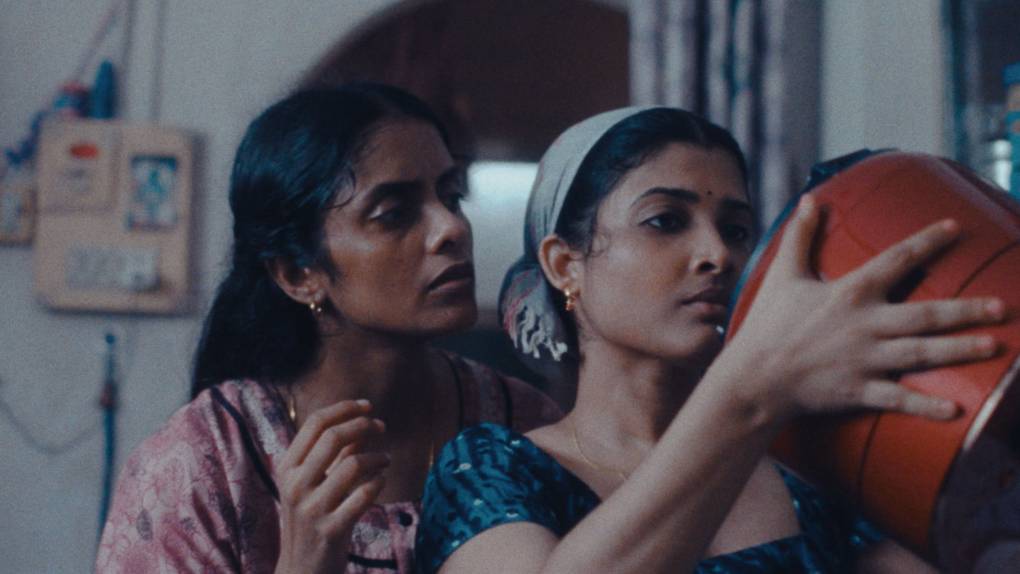
"content": "\u003cp>“There are eight million stories in the Naked City,” the narrator declared at the end of the late-’50s-early ’60s New York TV police procedural (as well as the 1948 movie that inspired it). “This has been one of them.”\u003c/p>\n\u003cp>Indian filmmaker Payal Kapadia’s Cannes-awarded narrative feature debut, \u003cem>All We Imagine as Light\u003c/em>, is uninterested in crime and cops. A slow-burn journey from the prosaic to the profound, this much-needed balm for the soul follows four everyday people threading their way among Mumbai’s 21 million stories.\u003c/p>\n\u003cp>Like every big city since forever, Mumbai attracts people from all over like moths to a flame with the promise of better-paying jobs. The movies, and real life to some extent, have taught us that cities are Meccas of endless possibilities, opportunities and destinies. In the Mumbai of \u003cem>All We Imagine as Light\u003c/em> (and the cities where I’ve lived) jobs do exist but relationships are intense and generally short-lived.\u003c/p>\n\u003cp>“Some people call this the city of dreams, but I don’t,” an off-screen voice says while we watch trains traverse the sprawling nighttime landscape. “I think it’s the city of illusions.”\u003c/p>\n\u003cp>(Kapadia drops in other anonymous first-person testimonies from time to time that feel like actual interviews. Her first feature film, \u003cem>A Night of Knowing Nothing\u003c/em>, was a documentary, so it’s a reasonable assumption.)\u003c/p>\n\u003cfigure id=\"attachment_13968470\" class=\"wp-caption aligncenter\" style=\"max-width: 1800px\">\u003cimg loading=\"lazy\" decoding=\"async\" class=\"size-full wp-image-13968470\" src=\"https://cdn.kqed.org/wp-content/uploads/sites/2/2024/11/AllWeImagine_Key_03.jpg\" alt=\"woman in blue uniform leans back in chair at work\" width=\"1800\" height=\"1080\" srcset=\"https://cdn.kqed.org/wp-content/uploads/sites/2/2024/11/AllWeImagine_Key_03.jpg 1800w, https://cdn.kqed.org/wp-content/uploads/sites/2/2024/11/AllWeImagine_Key_03-800x480.jpg 800w, https://cdn.kqed.org/wp-content/uploads/sites/2/2024/11/AllWeImagine_Key_03-1020x612.jpg 1020w, https://cdn.kqed.org/wp-content/uploads/sites/2/2024/11/AllWeImagine_Key_03-160x96.jpg 160w, https://cdn.kqed.org/wp-content/uploads/sites/2/2024/11/AllWeImagine_Key_03-768x461.jpg 768w, https://cdn.kqed.org/wp-content/uploads/sites/2/2024/11/AllWeImagine_Key_03-1536x922.jpg 1536w\" sizes=\"auto, (max-width: 1800px) 100vw, 1800px\">\u003cfigcaption class=\"wp-caption-text\">A still from Payal Kapadia’s ‘All We Imagine as Light.’ \u003ccite>(Janus Films)\u003c/cite>\u003c/figcaption>\u003c/figure>\n\u003cp>The three hospital staff who drive the film — strong, independent women of different generations who support themselves — have traded some of their dreams and all of their illusions for concrete reality. Ace head nurse Prabha (Kani Kusruti) has settled into a satisfying mid-career routine, but autonomy can’t conceal her loneliness — a yearning for being appreciated and valued outside the hospital.\u003c/p>\n\u003cp>[ad fullwidth]\u003c/p>\n\u003cp>Then a chance for romance presents itself. A doctor conveys his attraction to Prabha in the most vulnerable way imaginable: He gives her a poem (that, significantly, suggests a non-native’s solitary experience of city life). “My dreams are made of everyday things, small and scattered, that I have left behind,” he writes. “My hope is just another casket of things I carry with me wherever I go / And now, you are there in a neighbor’s house like a burning lamp whose glow I watch to keep me warm at night.”\u003c/p>\n\u003cp>Prabha shares her apartment with a spirited young nurse, Anu (an exceptional Divya Prabha), whose determination to live her life on her terms is exhilarating. Anu is agog when a mysterious package arrives, containing a German-made rice cooker, and we learn that Prabha is married, and her husband has worked and lived abroad for many years.\u003c/p>\n\u003cp>Anu can’t imagine acceding to a marriage arranged by her father, as Prabha did. No surprise since her boyfriend is Muslim, which would not sit well with her traditional Hindu family “back home.” The film’s youngest characters are the most acclimated to their adopted city; the scenes of Shiaz and Anu sharing meals at outdoor food stands and making out on park benches vibrate with excitement.\u003c/p>\n\u003cfigure id=\"attachment_13968475\" class=\"wp-caption aligncenter\" style=\"max-width: 1800px\">\u003cimg loading=\"lazy\" decoding=\"async\" class=\"size-full wp-image-13968475\" src=\"https://cdn.kqed.org/wp-content/uploads/sites/2/2024/11/AllWeImagine_Key_07.jpg\" alt=\"man and woman hold on to supports above their heads in crowded train \" width=\"1800\" height=\"1080\" srcset=\"https://cdn.kqed.org/wp-content/uploads/sites/2/2024/11/AllWeImagine_Key_07.jpg 1800w, https://cdn.kqed.org/wp-content/uploads/sites/2/2024/11/AllWeImagine_Key_07-800x480.jpg 800w, https://cdn.kqed.org/wp-content/uploads/sites/2/2024/11/AllWeImagine_Key_07-1020x612.jpg 1020w, https://cdn.kqed.org/wp-content/uploads/sites/2/2024/11/AllWeImagine_Key_07-160x96.jpg 160w, https://cdn.kqed.org/wp-content/uploads/sites/2/2024/11/AllWeImagine_Key_07-768x461.jpg 768w, https://cdn.kqed.org/wp-content/uploads/sites/2/2024/11/AllWeImagine_Key_07-1536x922.jpg 1536w\" sizes=\"auto, (max-width: 1800px) 100vw, 1800px\">\u003cfigcaption class=\"wp-caption-text\">A still from Payal Kapadia’s ‘All We Imagine as Light.’ \u003ccite>(Janus Films)\u003c/cite>\u003c/figcaption>\u003c/figure>\n\u003cp>We ponder their future together when even long-term residents can be upended by unforeseen circumstances. The older hospital cook Parvaty (Chhaya Kadam) is suddenly threatened with eviction after two decades in her apartment. Prabha finds her a lawyer, but he can’t help unless Parvaty locates some long-forgotten document.\u003c/p>\n\u003cp>The social commentary in \u003cem>All We Imagine as Light\u003c/em>, such as it is, illuminates the characters and provides texture, color and depth. It never feels as if Kapadia has hobbyhorses to ride, such as modernity over tradition, or the profiteering of developers, or family planning as the responsibility of women (the upshot of a hospital interaction between Anu and a young mother).\u003c/p>\n\u003cp>Kapadia, like the late, great Indian filmmaker Satyajit Ray, immerses us with uncommon empathy in the rhythms and struggles of everyday life. Implicit in both directors’ films is the individual’s responsibility to adjust (though not necessarily conform) to and contribute to the fabric of society.\u003c/p>\n\u003cp>Yet despite winning the Grand Prize at Cannes, \u003cem>All We Imagine as Light\u003c/em> was not chosen as India’s official submission for the Academy Award for Best International Film. The Film Federation of India selected \u003cem>Laapataa Ladies\u003c/em>, a charming, smart but more narratively and visually conventional film that’s streaming on Netflix. The FFI decision ignited a \u003ca href=\"https://www.hollywoodreporter.com/movies/movie-news/india-all-we-imagine-as-light-laapataa-ladies-oscars-controversy-explained-1236011778/\">controversy\u003c/a> that provoked its president to say about \u003cem>All We Imagine as Light\u003c/em>, “The jury said that they were watching a European film taking place in India, not an Indian film taking place in India.”\u003c/p>\n\u003cfigure id=\"attachment_13968471\" class=\"wp-caption aligncenter\" style=\"max-width: 1800px\">\u003cimg loading=\"lazy\" decoding=\"async\" class=\"size-full wp-image-13968471\" src=\"https://cdn.kqed.org/wp-content/uploads/sites/2/2024/11/AllWeImagine_Key_09.jpg\" alt=\"woman with headscarf and sunglasses holds onto post with flags\" width=\"1800\" height=\"1080\" srcset=\"https://cdn.kqed.org/wp-content/uploads/sites/2/2024/11/AllWeImagine_Key_09.jpg 1800w, https://cdn.kqed.org/wp-content/uploads/sites/2/2024/11/AllWeImagine_Key_09-800x480.jpg 800w, https://cdn.kqed.org/wp-content/uploads/sites/2/2024/11/AllWeImagine_Key_09-1020x612.jpg 1020w, https://cdn.kqed.org/wp-content/uploads/sites/2/2024/11/AllWeImagine_Key_09-160x96.jpg 160w, https://cdn.kqed.org/wp-content/uploads/sites/2/2024/11/AllWeImagine_Key_09-768x461.jpg 768w, https://cdn.kqed.org/wp-content/uploads/sites/2/2024/11/AllWeImagine_Key_09-1536x922.jpg 1536w\" sizes=\"auto, (max-width: 1800px) 100vw, 1800px\">\u003cfigcaption class=\"wp-caption-text\">A still from Payal Kapadia’s ‘All We Imagine as Light.’ \u003ccite>(Janus Films)\u003c/cite>\u003c/figcaption>\u003c/figure>\n\u003cp>I grant that the soundtrack by Topshe lends the film a Western indie vibe. But the film also has a lovely dance duet to an Indian pop song that reminds us Bollywood is not far away. In any event, the FFI statement offers a singularly confining view of Indian cinema. At the same time, it’s a terrific endorsement for American fans of arthouse films.\u003c/p>\n\u003cp>Midway through the intoxicating \u003cem>All We Imagine as Light\u003c/em>, Prabha and Anu accompany Parvaty to her coastal village in Ratnagiri. Unbeknownst to them, quiet revelations await. Don’t worry, the movie doesn’t turn into a simplistic reverie about how the countryside is better — more down to earth, more authentic — than the city.\u003c/p>\n\u003cp>But the tone does shift, from neorealism to magical near-realism. The fluid, frenetic movement of the city (exemplified by those ubiquitous trains) and the glare of nighttime lights evaporate in the rural setting. Unexpected possibilities emerge, if the characters will embrace them.\u003c/p>\n\u003cp>After Prabha reveals the existence of her absent husband, someone says, “When people go abroad, they can lose their minds, or their memory. That’s how it is.” It can also happen when someone migrates to a city. Or from one city to another. Or, for that matter, when they move home.\u003c/p>\n\u003cp>As a lifelong city dweller, I experienced \u003cem>All We Imagine as Light\u003c/em> as a generous gift. Share it widely.\u003c/p>\n\u003chr>\n\u003cp>[ad floatright]\u003c/p>\n\u003cp>\u003ci>‘All We Imagine as Light’ plays \u003ca href=\"https://roxie.com/film/all-we-imagine-as-light/\">Jan. 7–21 at the Roxie\u003c/a>.\u003c/i>\u003c/p>\n\n",
"blocks": [],
"excerpt": "Payal Kapadia’s intoxicating Cannes-awarded debut follows three working women in the megacity of Mumbai.",
"status": "publish",
"parent": 0,
"modified": 1736291890,
"stats": {
"hasAudio": false,
"hasVideo": false,
"hasChartOrMap": false,
"iframeSrcs": [],
"hasGoogleForm": false,
"hasGallery": false,
"hasHearkenModule": false,
"hasPolis": false,
"paragraphCount": 21,
"wordCount": 1108
},
"headData": {
"title": "‘All We Imagine as Light’ Review: Profound Film of City Life | KQED",
"description": "Payal Kapadia’s intoxicating Cannes-awarded debut follows three working women in the megacity of Mumbai.",
"ogTitle": "Urban Life is a Beacon of Opportunity in Tender ‘All We Imagine as Light’",
"ogDescription": "",
"ogImgId": "",
"twTitle": "Urban Life is a Beacon of Opportunity in Tender ‘All We Imagine as Light’",
"twDescription": "",
"twImgId": "",
"socialTitle": "‘All We Imagine as Light’ Review: Profound Film of City Life %%page%% %%sep%% KQED",
"schema": {
"@context": "https://schema.org",
"@type": "Article",
"headline": "Urban Life is a Beacon of Opportunity in Tender ‘All We Imagine as Light’",
"datePublished": "2024-11-21T17:17:52-08:00",
"dateModified": "2025-01-07T15:18:10-08:00",
"image": "https://cdn.kqed.org/wp-content/uploads/2020/02/KQED-OG-Image@1x.png"
}
},
"sticky": false,
"nprStoryId": "kqed-13968437",
"templateType": "standard",
"featuredImageType": "standard",
"excludeFromSiteSearch": "Include",
"showOnAuthorArchivePages": "Yes",
"articleAge": "0",
"path": "/arts/13968437/all-we-imagine-as-light-movie-review-india-mumbai",
"audioTrackLength": null,
"parsedContent": [
{
"type": "contentString",
"content": "\u003cdiv class=\"post-body\">\u003cp>\u003cp>“There are eight million stories in the Naked City,” the narrator declared at the end of the late-’50s-early ’60s New York TV police procedural (as well as the 1948 movie that inspired it). “This has been one of them.”\u003c/p>\n\u003cp>Indian filmmaker Payal Kapadia’s Cannes-awarded narrative feature debut, \u003cem>All We Imagine as Light\u003c/em>, is uninterested in crime and cops. A slow-burn journey from the prosaic to the profound, this much-needed balm for the soul follows four everyday people threading their way among Mumbai’s 21 million stories.\u003c/p>\n\u003cp>Like every big city since forever, Mumbai attracts people from all over like moths to a flame with the promise of better-paying jobs. The movies, and real life to some extent, have taught us that cities are Meccas of endless possibilities, opportunities and destinies. In the Mumbai of \u003cem>All We Imagine as Light\u003c/em> (and the cities where I’ve lived) jobs do exist but relationships are intense and generally short-lived.\u003c/p>\n\u003cp>“Some people call this the city of dreams, but I don’t,” an off-screen voice says while we watch trains traverse the sprawling nighttime landscape. “I think it’s the city of illusions.”\u003c/p>\n\u003cp>(Kapadia drops in other anonymous first-person testimonies from time to time that feel like actual interviews. Her first feature film, \u003cem>A Night of Knowing Nothing\u003c/em>, was a documentary, so it’s a reasonable assumption.)\u003c/p>\n\u003cfigure id=\"attachment_13968470\" class=\"wp-caption aligncenter\" style=\"max-width: 1800px\">\u003cimg loading=\"lazy\" decoding=\"async\" class=\"size-full wp-image-13968470\" src=\"https://cdn.kqed.org/wp-content/uploads/sites/2/2024/11/AllWeImagine_Key_03.jpg\" alt=\"woman in blue uniform leans back in chair at work\" width=\"1800\" height=\"1080\" srcset=\"https://cdn.kqed.org/wp-content/uploads/sites/2/2024/11/AllWeImagine_Key_03.jpg 1800w, https://cdn.kqed.org/wp-content/uploads/sites/2/2024/11/AllWeImagine_Key_03-800x480.jpg 800w, https://cdn.kqed.org/wp-content/uploads/sites/2/2024/11/AllWeImagine_Key_03-1020x612.jpg 1020w, https://cdn.kqed.org/wp-content/uploads/sites/2/2024/11/AllWeImagine_Key_03-160x96.jpg 160w, https://cdn.kqed.org/wp-content/uploads/sites/2/2024/11/AllWeImagine_Key_03-768x461.jpg 768w, https://cdn.kqed.org/wp-content/uploads/sites/2/2024/11/AllWeImagine_Key_03-1536x922.jpg 1536w\" sizes=\"auto, (max-width: 1800px) 100vw, 1800px\">\u003cfigcaption class=\"wp-caption-text\">A still from Payal Kapadia’s ‘All We Imagine as Light.’ \u003ccite>(Janus Films)\u003c/cite>\u003c/figcaption>\u003c/figure>\n\u003cp>The three hospital staff who drive the film — strong, independent women of different generations who support themselves — have traded some of their dreams and all of their illusions for concrete reality. Ace head nurse Prabha (Kani Kusruti) has settled into a satisfying mid-career routine, but autonomy can’t conceal her loneliness — a yearning for being appreciated and valued outside the hospital.\u003c/p>\n\u003cp>\u003c/p>\u003c/div>",
"attributes": {
"named": {},
"numeric": []
}
},
{
"type": "component",
"content": "",
"name": "ad",
"attributes": {
"named": {
"label": "fullwidth"
},
"numeric": [
"fullwidth"
]
}
},
{
"type": "contentString",
"content": "\u003cdiv class=\"post-body\">\u003cp>\u003c/p>\n\u003cp>Then a chance for romance presents itself. A doctor conveys his attraction to Prabha in the most vulnerable way imaginable: He gives her a poem (that, significantly, suggests a non-native’s solitary experience of city life). “My dreams are made of everyday things, small and scattered, that I have left behind,” he writes. “My hope is just another casket of things I carry with me wherever I go / And now, you are there in a neighbor’s house like a burning lamp whose glow I watch to keep me warm at night.”\u003c/p>\n\u003cp>Prabha shares her apartment with a spirited young nurse, Anu (an exceptional Divya Prabha), whose determination to live her life on her terms is exhilarating. Anu is agog when a mysterious package arrives, containing a German-made rice cooker, and we learn that Prabha is married, and her husband has worked and lived abroad for many years.\u003c/p>\n\u003cp>Anu can’t imagine acceding to a marriage arranged by her father, as Prabha did. No surprise since her boyfriend is Muslim, which would not sit well with her traditional Hindu family “back home.” The film’s youngest characters are the most acclimated to their adopted city; the scenes of Shiaz and Anu sharing meals at outdoor food stands and making out on park benches vibrate with excitement.\u003c/p>\n\u003cfigure id=\"attachment_13968475\" class=\"wp-caption aligncenter\" style=\"max-width: 1800px\">\u003cimg loading=\"lazy\" decoding=\"async\" class=\"size-full wp-image-13968475\" src=\"https://cdn.kqed.org/wp-content/uploads/sites/2/2024/11/AllWeImagine_Key_07.jpg\" alt=\"man and woman hold on to supports above their heads in crowded train \" width=\"1800\" height=\"1080\" srcset=\"https://cdn.kqed.org/wp-content/uploads/sites/2/2024/11/AllWeImagine_Key_07.jpg 1800w, https://cdn.kqed.org/wp-content/uploads/sites/2/2024/11/AllWeImagine_Key_07-800x480.jpg 800w, https://cdn.kqed.org/wp-content/uploads/sites/2/2024/11/AllWeImagine_Key_07-1020x612.jpg 1020w, https://cdn.kqed.org/wp-content/uploads/sites/2/2024/11/AllWeImagine_Key_07-160x96.jpg 160w, https://cdn.kqed.org/wp-content/uploads/sites/2/2024/11/AllWeImagine_Key_07-768x461.jpg 768w, https://cdn.kqed.org/wp-content/uploads/sites/2/2024/11/AllWeImagine_Key_07-1536x922.jpg 1536w\" sizes=\"auto, (max-width: 1800px) 100vw, 1800px\">\u003cfigcaption class=\"wp-caption-text\">A still from Payal Kapadia’s ‘All We Imagine as Light.’ \u003ccite>(Janus Films)\u003c/cite>\u003c/figcaption>\u003c/figure>\n\u003cp>We ponder their future together when even long-term residents can be upended by unforeseen circumstances. The older hospital cook Parvaty (Chhaya Kadam) is suddenly threatened with eviction after two decades in her apartment. Prabha finds her a lawyer, but he can’t help unless Parvaty locates some long-forgotten document.\u003c/p>\n\u003cp>The social commentary in \u003cem>All We Imagine as Light\u003c/em>, such as it is, illuminates the characters and provides texture, color and depth. It never feels as if Kapadia has hobbyhorses to ride, such as modernity over tradition, or the profiteering of developers, or family planning as the responsibility of women (the upshot of a hospital interaction between Anu and a young mother).\u003c/p>\n\u003cp>Kapadia, like the late, great Indian filmmaker Satyajit Ray, immerses us with uncommon empathy in the rhythms and struggles of everyday life. Implicit in both directors’ films is the individual’s responsibility to adjust (though not necessarily conform) to and contribute to the fabric of society.\u003c/p>\n\u003cp>Yet despite winning the Grand Prize at Cannes, \u003cem>All We Imagine as Light\u003c/em> was not chosen as India’s official submission for the Academy Award for Best International Film. The Film Federation of India selected \u003cem>Laapataa Ladies\u003c/em>, a charming, smart but more narratively and visually conventional film that’s streaming on Netflix. The FFI decision ignited a \u003ca href=\"https://www.hollywoodreporter.com/movies/movie-news/india-all-we-imagine-as-light-laapataa-ladies-oscars-controversy-explained-1236011778/\">controversy\u003c/a> that provoked its president to say about \u003cem>All We Imagine as Light\u003c/em>, “The jury said that they were watching a European film taking place in India, not an Indian film taking place in India.”\u003c/p>\n\u003cfigure id=\"attachment_13968471\" class=\"wp-caption aligncenter\" style=\"max-width: 1800px\">\u003cimg loading=\"lazy\" decoding=\"async\" class=\"size-full wp-image-13968471\" src=\"https://cdn.kqed.org/wp-content/uploads/sites/2/2024/11/AllWeImagine_Key_09.jpg\" alt=\"woman with headscarf and sunglasses holds onto post with flags\" width=\"1800\" height=\"1080\" srcset=\"https://cdn.kqed.org/wp-content/uploads/sites/2/2024/11/AllWeImagine_Key_09.jpg 1800w, https://cdn.kqed.org/wp-content/uploads/sites/2/2024/11/AllWeImagine_Key_09-800x480.jpg 800w, https://cdn.kqed.org/wp-content/uploads/sites/2/2024/11/AllWeImagine_Key_09-1020x612.jpg 1020w, https://cdn.kqed.org/wp-content/uploads/sites/2/2024/11/AllWeImagine_Key_09-160x96.jpg 160w, https://cdn.kqed.org/wp-content/uploads/sites/2/2024/11/AllWeImagine_Key_09-768x461.jpg 768w, https://cdn.kqed.org/wp-content/uploads/sites/2/2024/11/AllWeImagine_Key_09-1536x922.jpg 1536w\" sizes=\"auto, (max-width: 1800px) 100vw, 1800px\">\u003cfigcaption class=\"wp-caption-text\">A still from Payal Kapadia’s ‘All We Imagine as Light.’ \u003ccite>(Janus Films)\u003c/cite>\u003c/figcaption>\u003c/figure>\n\u003cp>I grant that the soundtrack by Topshe lends the film a Western indie vibe. But the film also has a lovely dance duet to an Indian pop song that reminds us Bollywood is not far away. In any event, the FFI statement offers a singularly confining view of Indian cinema. At the same time, it’s a terrific endorsement for American fans of arthouse films.\u003c/p>\n\u003cp>Midway through the intoxicating \u003cem>All We Imagine as Light\u003c/em>, Prabha and Anu accompany Parvaty to her coastal village in Ratnagiri. Unbeknownst to them, quiet revelations await. Don’t worry, the movie doesn’t turn into a simplistic reverie about how the countryside is better — more down to earth, more authentic — than the city.\u003c/p>\n\u003cp>But the tone does shift, from neorealism to magical near-realism. The fluid, frenetic movement of the city (exemplified by those ubiquitous trains) and the glare of nighttime lights evaporate in the rural setting. Unexpected possibilities emerge, if the characters will embrace them.\u003c/p>\n\u003cp>After Prabha reveals the existence of her absent husband, someone says, “When people go abroad, they can lose their minds, or their memory. That’s how it is.” It can also happen when someone migrates to a city. Or from one city to another. Or, for that matter, when they move home.\u003c/p>\n\u003cp>As a lifelong city dweller, I experienced \u003cem>All We Imagine as Light\u003c/em> as a generous gift. Share it widely.\u003c/p>\n\u003chr>\n\u003cp>\u003c/p>\u003c/div>",
"attributes": {
"named": {},
"numeric": []
}
},
{
"type": "component",
"content": "",
"name": "ad",
"attributes": {
"named": {
"label": "floatright"
},
"numeric": [
"floatright"
]
}
},
{
"type": "contentString",
"content": "\u003cdiv class=\"post-body\">\u003cp>\u003c/p>\n\u003cp>\u003ci>‘All We Imagine as Light’ plays \u003ca href=\"https://roxie.com/film/all-we-imagine-as-light/\">Jan. 7–21 at the Roxie\u003c/a>.\u003c/i>\u003c/p>\n\n\u003c/div>\u003c/p>",
"attributes": {
"named": {},
"numeric": []
}
}
],
"link": "/arts/13968437/all-we-imagine-as-light-movie-review-india-mumbai",
"authors": [
"22"
],
"programs": [
"arts_140"
],
"categories": [
"arts_1",
"arts_74",
"arts_22313"
],
"tags": [
"arts_10278",
"arts_977",
"arts_769",
"arts_585"
],
"featImg": "arts_13968473",
"label": "arts_140"
},
"arts_13967848": {
"type": "posts",
"id": "arts_13967848",
"meta": {
"index": "posts_1716263798",
"site": "arts",
"id": "13967848",
"score": null,
"sort": [
1731018604000
]
},
"guestAuthors": [],
"slug": "dahomey-review-mati-diop-benin-documentary",
"title": "‘Dahomey’ Follows Relics’ Return to Benin in a Moving Documentary",
"publishDate": 1731018604,
"format": "standard",
"headTitle": "‘Dahomey’ Follows Relics’ Return to Benin in a Moving Documentary | KQED",
"labelTerm": {
"term": 140,
"site": "arts"
},
"content": "\u003cp>French filmmaker Mati Diop’s evocative \u003cem>Dahomey\u003c/em> centers on 26 statues and cultural objects — a handful of the estimated 5,000 pieces stolen at the end of the 19th century — that France returned to Benin in 2021. Opening Friday, Nov. 8 at the \u003ca href=\"https://roxie.com/film/dahomey/\">Roxie\u003c/a> after its recent local premiere at the Mill Valley Film Festival, the unexpectedly inspiring documentary transports us along with the crates to West Africa, movingly capturing the immediacy of art in contemporary life.\u003c/p>\n\u003cp>Before the pieces deplane in Benin, however, and go on view at the Palais de la Marina (the presidential residence) in a historical and artistic celebration of national importance, Diop invites us to contemplate their painful exile in the recesses of Paris’ Musée du quai Branly – Jacques Chirac. She and Haitian novelist and poet Makenzy Orcel give the treasures an internal monologue that evokes the anguish of colonialism and the denial of self-determination.\u003c/p>\n\u003cp>Diop imbues the pieces with a mournful anger that contrasts with the detached attitude of museum conservators and manual laborers who treat them as physical objects to be measured, packed and forklifted. This opening section effectively makes us question the significance of relics, the relevance of history and the latent power of art.\u003c/p>\n\u003cfigure id=\"attachment_13967854\" class=\"wp-caption aligncenter\" style=\"max-width: 2000px\">\u003cimg loading=\"lazy\" decoding=\"async\" src=\"https://cdn.kqed.org/wp-content/uploads/sites/2/2024/11/Dahomey_Still_4_2000.jpg\" alt=\"girl looks through glass in school uniform\" width=\"2000\" height=\"1055\" class=\"size-full wp-image-13967854\" srcset=\"https://cdn.kqed.org/wp-content/uploads/sites/2/2024/11/Dahomey_Still_4_2000.jpg 2000w, https://cdn.kqed.org/wp-content/uploads/sites/2/2024/11/Dahomey_Still_4_2000-800x422.jpg 800w, https://cdn.kqed.org/wp-content/uploads/sites/2/2024/11/Dahomey_Still_4_2000-1020x538.jpg 1020w, https://cdn.kqed.org/wp-content/uploads/sites/2/2024/11/Dahomey_Still_4_2000-160x84.jpg 160w, https://cdn.kqed.org/wp-content/uploads/sites/2/2024/11/Dahomey_Still_4_2000-768x405.jpg 768w, https://cdn.kqed.org/wp-content/uploads/sites/2/2024/11/Dahomey_Still_4_2000-1536x810.jpg 1536w, https://cdn.kqed.org/wp-content/uploads/sites/2/2024/11/Dahomey_Still_4_2000-1920x1013.jpg 1920w\" sizes=\"(max-width: 2000px) 100vw, 2000px\">\u003cfigcaption class=\"wp-caption-text\">Still from Mati Diop’s ‘Dahomey.’ \u003ccite>(Courtesy of MUBI)\u003c/cite>\u003c/figcaption>\u003c/figure>\n\u003cp>This has been a topic of conversation forever, of course, in museums and art galleries (and beyond). It may seem more au courant in our digital world where people and events “trend” and vanish in hours. \u003cem>Dahomey\u003c/em> gains another resonance in the wake of an election that indicates, among other things, that Americans are largely uninterested in the past and cannot even recall events that took place four years ago.\u003c/p>\n\u003cp>But let us consider instead the Kingdom of Dahomey, which flourished, in part on enslaved labor and the transatlantic slave trade, for some 300 years. After a decade of wars with France and the overthrow of its King Béhanzin, Dahomey became part of French West Africa in 1904. The Republic of Dahomey won its independence in 1960, and the country renamed itself Benin in 1975.\u003c/p>\n\u003cp>[ad fullwidth]\u003c/p>\n\u003cp>Mati Diop was born in Paris; she is an actor, writer and director whose acclaimed 2019 narrative feature debut, \u003cem>\u003ca href=\"https://www.netflix.com/title/81082007\">Atlantics\u003c/a>\u003c/em>, is streaming on Netflix. Diop’s Sengalese father, Wasis, is a musician and her late uncle, Djibril Diop Mambéty, was a filmmaker. She spent her formative years in France and Senegal, which accounts for her interest in the repatriation of (some of) Benin’s looted artworks.\u003c/p>\n\u003cfigure id=\"attachment_13967853\" class=\"wp-caption aligncenter\" style=\"max-width: 2000px\">\u003cimg loading=\"lazy\" decoding=\"async\" src=\"https://cdn.kqed.org/wp-content/uploads/sites/2/2024/11/Dahomey_Still_2_2000.jpg\" alt=\"man raises hand in seated group\" width=\"2000\" height=\"1125\" class=\"size-full wp-image-13967853\" srcset=\"https://cdn.kqed.org/wp-content/uploads/sites/2/2024/11/Dahomey_Still_2_2000.jpg 2000w, https://cdn.kqed.org/wp-content/uploads/sites/2/2024/11/Dahomey_Still_2_2000-800x450.jpg 800w, https://cdn.kqed.org/wp-content/uploads/sites/2/2024/11/Dahomey_Still_2_2000-1020x574.jpg 1020w, https://cdn.kqed.org/wp-content/uploads/sites/2/2024/11/Dahomey_Still_2_2000-160x90.jpg 160w, https://cdn.kqed.org/wp-content/uploads/sites/2/2024/11/Dahomey_Still_2_2000-768x432.jpg 768w, https://cdn.kqed.org/wp-content/uploads/sites/2/2024/11/Dahomey_Still_2_2000-1536x864.jpg 1536w, https://cdn.kqed.org/wp-content/uploads/sites/2/2024/11/Dahomey_Still_2_2000-1920x1080.jpg 1920w\" sizes=\"(max-width: 2000px) 100vw, 2000px\">\u003cfigcaption class=\"wp-caption-text\">Still from Mati Diop’s ‘Dahomey.’ \u003ccite>(Courtesy of MUBI)\u003c/cite>\u003c/figcaption>\u003c/figure>\n\u003cp>Once the artworks have landed in Benin, Diop exhibits both generosity and good judgment by devoting a chunk of the film (which clocks in at a succinct 68 minutes) to the opinions of the Beninese. Not through person-on-the-street interviews, mind you, but via an eloquent discussion among informed and impassioned University of Abomey-Calavi students.\u003c/p>\n\u003cp>[aside tag='film' label='More to watch']This sequence is the best part of \u003cem>Dahomey\u003c/em> for all sorts of reasons. The students speak beautifully about the pieces as relics from the reign of kings and symbols of Western colonialism, and also as works of art. They know their history as well as its limits; that is, they see the past primarily as instrumental in their responsibility for creating Benin’s future.\u003c/p>\n\u003cp>One student, in fact, downplaying the importance of the pieces still held in France, argues persuasively, “Our immaterial heritage — our dances, traditions and knowhow — are still in our country!” \u003c/p>\n\u003cp>\u003cem>Dahomey\u003c/em>, which won the Golden Bear at the Berlin International Film Festival, is unquestionably a dark-room theatrical experience. But it also deserves a permanent venue, such as a long-term installation at the Museum of the African Diaspora (MoAD) or the San Francisco Museum of Modern Art. Its themes of cultural identity and ownership, and independence and self-determination, are relevant to all former colonies.\u003c/p>\n\u003chr>\n\u003cp>\u003c/p>\n\u003cp>\u003ci>‘\u003ca href=\"https://roxie.com/film/dahomey/\">Dahomey\u003c/a>’ opens Nov. 8, 2024 at the Roxie.\u003c/i>\u003c/p>\n\n",
"blocks": [],
"excerpt": "French filmmaker Mati Diop’s evocative documentary encompasses history, art, colonialism and identity.",
"status": "publish",
"parent": 0,
"modified": 1731015997,
"stats": {
"hasAudio": false,
"hasVideo": false,
"hasChartOrMap": false,
"iframeSrcs": [],
"hasGoogleForm": false,
"hasGallery": false,
"hasHearkenModule": false,
"hasPolis": false,
"paragraphCount": 13,
"wordCount": 685
},
"headData": {
"title": "‘Dahomey’ Review: Relics Return in Moving Documentary | KQED",
"description": "French filmmaker Mati Diop’s evocative documentary encompasses history, art, colonialism and identity.",
"ogTitle": "‘Dahomey’ Follows Relics’ Return to Benin in a Moving Documentary",
"ogDescription": "",
"ogImgId": "",
"twTitle": "‘Dahomey’ Follows Relics’ Return to Benin in a Moving Documentary",
"twDescription": "",
"twImgId": "",
"socialTitle": "‘Dahomey’ Review: Relics Return in Moving Documentary %%page%% %%sep%% KQED",
"schema": {
"@context": "https://schema.org",
"@type": "Article",
"headline": "‘Dahomey’ Follows Relics’ Return to Benin in a Moving Documentary",
"datePublished": "2024-11-07T14:30:04-08:00",
"dateModified": "2024-11-07T13:46:37-08:00",
"image": "https://cdn.kqed.org/wp-content/uploads/2020/02/KQED-OG-Image@1x.png"
}
},
"sticky": false,
"templateType": "standard",
"featuredImageType": "standard",
"excludeFromSiteSearch": "Include",
"articleAge": "0",
"path": "/arts/13967848/dahomey-review-mati-diop-benin-documentary",
"audioTrackLength": null,
"parsedContent": [
{
"type": "contentString",
"content": "\u003cdiv class=\"post-body\">\u003cp>\u003cp>French filmmaker Mati Diop’s evocative \u003cem>Dahomey\u003c/em> centers on 26 statues and cultural objects — a handful of the estimated 5,000 pieces stolen at the end of the 19th century — that France returned to Benin in 2021. Opening Friday, Nov. 8 at the \u003ca href=\"https://roxie.com/film/dahomey/\">Roxie\u003c/a> after its recent local premiere at the Mill Valley Film Festival, the unexpectedly inspiring documentary transports us along with the crates to West Africa, movingly capturing the immediacy of art in contemporary life.\u003c/p>\n\u003cp>Before the pieces deplane in Benin, however, and go on view at the Palais de la Marina (the presidential residence) in a historical and artistic celebration of national importance, Diop invites us to contemplate their painful exile in the recesses of Paris’ Musée du quai Branly – Jacques Chirac. She and Haitian novelist and poet Makenzy Orcel give the treasures an internal monologue that evokes the anguish of colonialism and the denial of self-determination.\u003c/p>\n\u003cp>Diop imbues the pieces with a mournful anger that contrasts with the detached attitude of museum conservators and manual laborers who treat them as physical objects to be measured, packed and forklifted. This opening section effectively makes us question the significance of relics, the relevance of history and the latent power of art.\u003c/p>\n\u003cfigure id=\"attachment_13967854\" class=\"wp-caption aligncenter\" style=\"max-width: 2000px\">\u003cimg loading=\"lazy\" decoding=\"async\" src=\"https://cdn.kqed.org/wp-content/uploads/sites/2/2024/11/Dahomey_Still_4_2000.jpg\" alt=\"girl looks through glass in school uniform\" width=\"2000\" height=\"1055\" class=\"size-full wp-image-13967854\" srcset=\"https://cdn.kqed.org/wp-content/uploads/sites/2/2024/11/Dahomey_Still_4_2000.jpg 2000w, https://cdn.kqed.org/wp-content/uploads/sites/2/2024/11/Dahomey_Still_4_2000-800x422.jpg 800w, https://cdn.kqed.org/wp-content/uploads/sites/2/2024/11/Dahomey_Still_4_2000-1020x538.jpg 1020w, https://cdn.kqed.org/wp-content/uploads/sites/2/2024/11/Dahomey_Still_4_2000-160x84.jpg 160w, https://cdn.kqed.org/wp-content/uploads/sites/2/2024/11/Dahomey_Still_4_2000-768x405.jpg 768w, https://cdn.kqed.org/wp-content/uploads/sites/2/2024/11/Dahomey_Still_4_2000-1536x810.jpg 1536w, https://cdn.kqed.org/wp-content/uploads/sites/2/2024/11/Dahomey_Still_4_2000-1920x1013.jpg 1920w\" sizes=\"(max-width: 2000px) 100vw, 2000px\">\u003cfigcaption class=\"wp-caption-text\">Still from Mati Diop’s ‘Dahomey.’ \u003ccite>(Courtesy of MUBI)\u003c/cite>\u003c/figcaption>\u003c/figure>\n\u003cp>This has been a topic of conversation forever, of course, in museums and art galleries (and beyond). It may seem more au courant in our digital world where people and events “trend” and vanish in hours. \u003cem>Dahomey\u003c/em> gains another resonance in the wake of an election that indicates, among other things, that Americans are largely uninterested in the past and cannot even recall events that took place four years ago.\u003c/p>\n\u003cp>But let us consider instead the Kingdom of Dahomey, which flourished, in part on enslaved labor and the transatlantic slave trade, for some 300 years. After a decade of wars with France and the overthrow of its King Béhanzin, Dahomey became part of French West Africa in 1904. The Republic of Dahomey won its independence in 1960, and the country renamed itself Benin in 1975.\u003c/p>\n\u003cp>\u003c/p>\u003c/div>",
"attributes": {
"named": {},
"numeric": []
}
},
{
"type": "component",
"content": "",
"name": "ad",
"attributes": {
"named": {
"label": "fullwidth"
},
"numeric": [
"fullwidth"
]
}
},
{
"type": "contentString",
"content": "\u003cdiv class=\"post-body\">\u003cp>\u003c/p>\n\u003cp>Mati Diop was born in Paris; she is an actor, writer and director whose acclaimed 2019 narrative feature debut, \u003cem>\u003ca href=\"https://www.netflix.com/title/81082007\">Atlantics\u003c/a>\u003c/em>, is streaming on Netflix. Diop’s Sengalese father, Wasis, is a musician and her late uncle, Djibril Diop Mambéty, was a filmmaker. She spent her formative years in France and Senegal, which accounts for her interest in the repatriation of (some of) Benin’s looted artworks.\u003c/p>\n\u003cfigure id=\"attachment_13967853\" class=\"wp-caption aligncenter\" style=\"max-width: 2000px\">\u003cimg loading=\"lazy\" decoding=\"async\" src=\"https://cdn.kqed.org/wp-content/uploads/sites/2/2024/11/Dahomey_Still_2_2000.jpg\" alt=\"man raises hand in seated group\" width=\"2000\" height=\"1125\" class=\"size-full wp-image-13967853\" srcset=\"https://cdn.kqed.org/wp-content/uploads/sites/2/2024/11/Dahomey_Still_2_2000.jpg 2000w, https://cdn.kqed.org/wp-content/uploads/sites/2/2024/11/Dahomey_Still_2_2000-800x450.jpg 800w, https://cdn.kqed.org/wp-content/uploads/sites/2/2024/11/Dahomey_Still_2_2000-1020x574.jpg 1020w, https://cdn.kqed.org/wp-content/uploads/sites/2/2024/11/Dahomey_Still_2_2000-160x90.jpg 160w, https://cdn.kqed.org/wp-content/uploads/sites/2/2024/11/Dahomey_Still_2_2000-768x432.jpg 768w, https://cdn.kqed.org/wp-content/uploads/sites/2/2024/11/Dahomey_Still_2_2000-1536x864.jpg 1536w, https://cdn.kqed.org/wp-content/uploads/sites/2/2024/11/Dahomey_Still_2_2000-1920x1080.jpg 1920w\" sizes=\"(max-width: 2000px) 100vw, 2000px\">\u003cfigcaption class=\"wp-caption-text\">Still from Mati Diop’s ‘Dahomey.’ \u003ccite>(Courtesy of MUBI)\u003c/cite>\u003c/figcaption>\u003c/figure>\n\u003cp>Once the artworks have landed in Benin, Diop exhibits both generosity and good judgment by devoting a chunk of the film (which clocks in at a succinct 68 minutes) to the opinions of the Beninese. Not through person-on-the-street interviews, mind you, but via an eloquent discussion among informed and impassioned University of Abomey-Calavi students.\u003c/p>\n\u003cp>\u003c/p>\u003c/div>",
"attributes": {
"named": {},
"numeric": []
}
},
{
"type": "component",
"content": "",
"name": "aside",
"attributes": {
"named": {
"tag": "film",
"label": "More to watch "
},
"numeric": []
}
},
{
"type": "contentString",
"content": "\u003cdiv class=\"post-body\">\u003cp>This sequence is the best part of \u003cem>Dahomey\u003c/em> for all sorts of reasons. The students speak beautifully about the pieces as relics from the reign of kings and symbols of Western colonialism, and also as works of art. They know their history as well as its limits; that is, they see the past primarily as instrumental in their responsibility for creating Benin’s future.\u003c/p>\n\u003cp>One student, in fact, downplaying the importance of the pieces still held in France, argues persuasively, “Our immaterial heritage — our dances, traditions and knowhow — are still in our country!” \u003c/p>\n\u003cp>\u003cem>Dahomey\u003c/em>, which won the Golden Bear at the Berlin International Film Festival, is unquestionably a dark-room theatrical experience. But it also deserves a permanent venue, such as a long-term installation at the Museum of the African Diaspora (MoAD) or the San Francisco Museum of Modern Art. Its themes of cultural identity and ownership, and independence and self-determination, are relevant to all former colonies.\u003c/p>\n\u003chr>\n\u003cp>\u003c/p>\n\u003cp>\u003ci>‘\u003ca href=\"https://roxie.com/film/dahomey/\">Dahomey\u003c/a>’ opens Nov. 8, 2024 at the Roxie.\u003c/i>\u003c/p>\n\n\u003c/div>\u003c/p>",
"attributes": {
"named": {},
"numeric": []
}
}
],
"link": "/arts/13967848/dahomey-review-mati-diop-benin-documentary",
"authors": [
"22"
],
"programs": [
"arts_140"
],
"categories": [
"arts_1",
"arts_74",
"arts_22313"
],
"tags": [
"arts_10278",
"arts_977",
"arts_22367",
"arts_585"
],
"featImg": "arts_13967852",
"label": "arts_140"
},
"arts_13967549": {
"type": "posts",
"id": "arts_13967549",
"meta": {
"index": "posts_1716263798",
"site": "arts",
"id": "13967549",
"score": null,
"sort": [
1730417897000
]
},
"guestAuthors": [],
"slug": "heretic-movie-review-hugh-grant-horror-mormon-missionaries-monopoly",
"title": "‘Heretic’ Is a Delicious Spiral Into a Hell of Hugh Grant’s Making",
"publishDate": 1730417897,
"format": "standard",
"headTitle": "‘Heretic’ Is a Delicious Spiral Into a Hell of Hugh Grant’s Making | KQED",
"labelTerm": {
"term": 140,
"site": "arts"
},
"content": "\u003cp>In new horror movie \u003cem>Heretic\u003c/em>, the terror begins with the promise of a home-cooked blueberry pie. The pie is just one of the ways in which the villain of the piece, Mr. Reed (a superbly sinister Hugh Grant) lures two Mormon missionaries into his spiraling nightmare of a home. The pie — or rather, the lack of one — is the first indication Sister Barnes (\u003cem>Yellowjackets\u003c/em>’ Sophie Thatcher) and Sister Paxton (Chloe East) have that they’re in danger. Blueberry pie appears again and again throughout.\u003c/p>\n\u003cp>[aside postid='pop_105670']That pie is just one of several seemingly innocuous items used to terrifying effect in \u003cem>Heretic\u003c/em>. There’s a watering can. The key to a bike lock. A scented candle. A record player. A letter opener. A box of matches. Not one but four different editions of Monopoly (yes, the board game). These are the objects that raise the stakes in \u003cem>Heretic\u003c/em>, a story that believably centers a homely Englishman in a cozy cardigan as its most malevolent presence. The film also consistently uses the good manners and polite vernaculars of its three central characters to fray nerves and raise tension. It is a masterful and refreshing way to reinvent the horror house trope.\u003c/p>\n\u003cp>Mr. Reed’s reasons for luring the missionaries into his home aren’t immediately clear. His pretense that he wishes to learn more about the Church of the Latter Day Saints lasts only minutes and, sensing something is amiss, the women make a very sensible attempt at escape that proves fruitless. (One of the engaging things about \u003cem>Heretic\u003c/em> is that the women at the center of it consistently make the best decisions available to them, unlike so many horror protagonists.)\u003c/p>\n\u003cp>https://www.youtube.com/watch?v=O9i2vmFhSSY\u003c/p>\n\u003cp>Before long, once he has Barnes and Paxton captured, Reed does his darnedest to persuade the women that Jesus is a mere “echo of something real” that existed eons before the birth of Christ. (This section is so well done, it might have some viewers running home and checking the foundations of their own faith.) This all slowly escalates until Reed chillingly forces Barnes and Paxton to choose between two doors that may or may not lead to an exit from his home: one is marked “belief,” the other “disbelief.” What happens to them after that … I’d rather not spoil the experience.\u003c/p>\n\u003cp>[ad fullwidth]\u003c/p>\n\u003cp>What I will say is that one of \u003cem>Heretic\u003c/em>’s greatest successes is the way it permits its central characters to do spiritual battle. Mr. Reed is a theologian who desperately wants to take two sheltered missionaries down a peg or two. He — and the audience — is not expecting it when the young, seemingly naive women turn out to be worthy intellectual adversaries. Of course, the greatest (and darkest) surprises of all come once everyone reaches the lowest point of the house. The camera’s brief nod to an illustration of Dante’s \u003cem>Inferno\u003c/em> is no accident.\u003c/p>\n\u003cp>[aside postid='arts_13904911']\u003cem>Heretic\u003c/em> is the kind of perfect storm that doesn’t come along often enough in the horror genre. It benefits from excellent casting (Grant is a revelation), beautiful but discombobulating direction and a brilliantly cerebral undercurrent that runs throughout. But it doesn’t skimp on the things horror fans expect from their genre either: grotesque imagery, out-of-left-field shocks, red herrings and, yes, a decent amount of bloodletting.\u003c/p>\n\u003cp>Horror has been guilty for many years of taking Christian concepts and boiling them down to their most simplistic tenets. It’s all too easy to pit evil against good, demon against holy person and have God (or Satan — thanks, \u003cem>Hereditary\u003c/em>!) win out in the end. What \u003cem>Heretic\u003c/em> does is infinitely more complex and thought-provoking. And that’s a more delicious experience than gobbling down any number of blueberry pies.\u003c/p>\n\u003chr>\n\u003cp>\u003c/p>\n\u003cp>\u003ci>‘Heretic’ opens nationwide on Nov. 8, 2024.\u003c/i>\u003c/p>\n\n",
"blocks": [],
"excerpt": "In this refreshing horror, a theologian is hellbent on testing two captive Mormons missionaries’ faith.",
"status": "publish",
"parent": 0,
"modified": 1730417985,
"stats": {
"hasAudio": false,
"hasVideo": true,
"hasChartOrMap": false,
"iframeSrcs": [],
"hasGoogleForm": false,
"hasGallery": false,
"hasHearkenModule": false,
"hasPolis": false,
"paragraphCount": 10,
"wordCount": 669
},
"headData": {
"title": "Movie Review: Hugh Grant Spirals Down to Hell in ‘Heretic’ | KQED",
"description": "In this refreshing horror, a theologian is hellbent on testing two captive Mormons missionaries’ faith.",
"ogTitle": "‘Heretic’ Is a Delicious Spiral Into a Hell of Hugh Grant’s Making",
"ogDescription": "",
"ogImgId": "",
"twTitle": "‘Heretic’ Is a Delicious Spiral Into a Hell of Hugh Grant’s Making",
"twDescription": "",
"twImgId": "",
"socialTitle": "Movie Review: Hugh Grant Spirals Down to Hell in ‘Heretic’%%page%% %%sep%% KQED",
"schema": {
"@context": "https://schema.org",
"@type": "Article",
"headline": "‘Heretic’ Is a Delicious Spiral Into a Hell of Hugh Grant’s Making",
"datePublished": "2024-10-31T16:38:17-07:00",
"dateModified": "2024-10-31T16:39:45-07:00",
"image": "https://cdn.kqed.org/wp-content/uploads/2020/02/KQED-OG-Image@1x.png"
}
},
"sticky": false,
"nprStoryId": "kqed-13967549",
"templateType": "standard",
"featuredImageType": "standard",
"excludeFromSiteSearch": "Include",
"articleAge": "0",
"path": "/arts/13967549/heretic-movie-review-hugh-grant-horror-mormon-missionaries-monopoly",
"audioTrackLength": null,
"parsedContent": [
{
"type": "contentString",
"content": "\u003cdiv class=\"post-body\">\u003cp>\u003cp>In new horror movie \u003cem>Heretic\u003c/em>, the terror begins with the promise of a home-cooked blueberry pie. The pie is just one of the ways in which the villain of the piece, Mr. Reed (a superbly sinister Hugh Grant) lures two Mormon missionaries into his spiraling nightmare of a home. The pie — or rather, the lack of one — is the first indication Sister Barnes (\u003cem>Yellowjackets\u003c/em>’ Sophie Thatcher) and Sister Paxton (Chloe East) have that they’re in danger. Blueberry pie appears again and again throughout.\u003c/p>\n\u003cp>\u003c/p>\u003c/div>",
"attributes": {
"named": {},
"numeric": []
}
},
{
"type": "component",
"content": "",
"name": "aside",
"attributes": {
"named": {
"postid": "pop_105670",
"label": ""
},
"numeric": []
}
},
{
"type": "contentString",
"content": "\u003cdiv class=\"post-body\">\u003cp>That pie is just one of several seemingly innocuous items used to terrifying effect in \u003cem>Heretic\u003c/em>. There’s a watering can. The key to a bike lock. A scented candle. A record player. A letter opener. A box of matches. Not one but four different editions of Monopoly (yes, the board game). These are the objects that raise the stakes in \u003cem>Heretic\u003c/em>, a story that believably centers a homely Englishman in a cozy cardigan as its most malevolent presence. The film also consistently uses the good manners and polite vernaculars of its three central characters to fray nerves and raise tension. It is a masterful and refreshing way to reinvent the horror house trope.\u003c/p>\n\u003cp>Mr. Reed’s reasons for luring the missionaries into his home aren’t immediately clear. His pretense that he wishes to learn more about the Church of the Latter Day Saints lasts only minutes and, sensing something is amiss, the women make a very sensible attempt at escape that proves fruitless. (One of the engaging things about \u003cem>Heretic\u003c/em> is that the women at the center of it consistently make the best decisions available to them, unlike so many horror protagonists.)\u003c/p>\u003c/p>\u003cp>\u003cspan class='utils-parseShortcode-shortcodes-__youtubeShortcode__embedYoutube'>\n \u003cspan class='utils-parseShortcode-shortcodes-__youtubeShortcode__embedYoutubeInside'>\n \u003ciframe\n loading='lazy'\n class='utils-parseShortcode-shortcodes-__youtubeShortcode__youtubePlayer'\n type='text/html'\n src='//www.youtube.com/embed/O9i2vmFhSSY'\n title='//www.youtube.com/embed/O9i2vmFhSSY'\n allowfullscreen='true'\n style='border:0;'>\u003c/iframe>\n \u003c/span>\n \u003c/span>\u003c/p>\u003cp>\u003cp>Before long, once he has Barnes and Paxton captured, Reed does his darnedest to persuade the women that Jesus is a mere “echo of something real” that existed eons before the birth of Christ. (This section is so well done, it might have some viewers running home and checking the foundations of their own faith.) This all slowly escalates until Reed chillingly forces Barnes and Paxton to choose between two doors that may or may not lead to an exit from his home: one is marked “belief,” the other “disbelief.” What happens to them after that … I’d rather not spoil the experience.\u003c/p>\n\u003cp>\u003c/p>\u003c/div>",
"attributes": {
"named": {},
"numeric": []
}
},
{
"type": "component",
"content": "",
"name": "ad",
"attributes": {
"named": {
"label": "fullwidth"
},
"numeric": [
"fullwidth"
]
}
},
{
"type": "contentString",
"content": "\u003cdiv class=\"post-body\">\u003cp>\u003c/p>\n\u003cp>What I will say is that one of \u003cem>Heretic\u003c/em>’s greatest successes is the way it permits its central characters to do spiritual battle. Mr. Reed is a theologian who desperately wants to take two sheltered missionaries down a peg or two. He — and the audience — is not expecting it when the young, seemingly naive women turn out to be worthy intellectual adversaries. Of course, the greatest (and darkest) surprises of all come once everyone reaches the lowest point of the house. The camera’s brief nod to an illustration of Dante’s \u003cem>Inferno\u003c/em> is no accident.\u003c/p>\n\u003cp>\u003c/p>\u003c/div>",
"attributes": {
"named": {},
"numeric": []
}
},
{
"type": "component",
"content": "",
"name": "aside",
"attributes": {
"named": {
"postid": "arts_13904911",
"label": ""
},
"numeric": []
}
},
{
"type": "contentString",
"content": "\u003cdiv class=\"post-body\">\u003cp>\u003cem>Heretic\u003c/em> is the kind of perfect storm that doesn’t come along often enough in the horror genre. It benefits from excellent casting (Grant is a revelation), beautiful but discombobulating direction and a brilliantly cerebral undercurrent that runs throughout. But it doesn’t skimp on the things horror fans expect from their genre either: grotesque imagery, out-of-left-field shocks, red herrings and, yes, a decent amount of bloodletting.\u003c/p>\n\u003cp>Horror has been guilty for many years of taking Christian concepts and boiling them down to their most simplistic tenets. It’s all too easy to pit evil against good, demon against holy person and have God (or Satan — thanks, \u003cem>Hereditary\u003c/em>!) win out in the end. What \u003cem>Heretic\u003c/em> does is infinitely more complex and thought-provoking. And that’s a more delicious experience than gobbling down any number of blueberry pies.\u003c/p>\n\u003chr>\n\u003cp>\u003c/p>\n\u003cp>\u003ci>‘Heretic’ opens nationwide on Nov. 8, 2024.\u003c/i>\u003c/p>\n\n\u003c/div>\u003c/p>",
"attributes": {
"named": {},
"numeric": []
}
}
],
"link": "/arts/13967549/heretic-movie-review-hugh-grant-horror-mormon-missionaries-monopoly",
"authors": [
"11242"
],
"programs": [
"arts_140"
],
"categories": [
"arts_1",
"arts_74",
"arts_75",
"arts_22313"
],
"tags": [
"arts_10278",
"arts_977",
"arts_5087",
"arts_769",
"arts_585"
],
"featImg": "arts_13967571",
"label": "arts_140"
},
"arts_13967293": {
"type": "posts",
"id": "arts_13967293",
"meta": {
"index": "posts_1716263798",
"site": "arts",
"id": "13967293",
"score": null,
"sort": [
1730139677000
]
},
"guestAuthors": [],
"slug": "arab-film-festival-from-ground-zero-gaza-palestinian-short-films",
"title": "‘From Ground Zero’ Documents Gaza Life During Wartime",
"publishDate": 1730139677,
"format": "standard",
"headTitle": "‘From Ground Zero’ Documents Gaza Life During Wartime | KQED",
"labelTerm": {},
"content": "\u003cp>Consider the enormous difficulty of making a feature film in Gaza, even before the war of the last 13 months. Ahmed Hassouna persevered for four and a half years, he recounts in his blistering short film, \u003cem>Sorry Cinema\u003c/em>. When he finished in 2019, Palestine didn’t have even a single movie house to show it. \u003c/p>\n\u003cp>Hassouna includes a quick-cut montage of production shots from \u003cem>Istrupya\u003c/em> (\u003cem>Senseless Loss\u003c/em>), which feel terribly nostalgic juxtaposed with contemporary verité footage of bombed-out buildings and parachuted-in supplies. In need of firewood for cooking, he chops up his film slate (or clapperboard), ending \u003cem>Sorry Cinema\u003c/em> by watching his dreams literally go up in smoke.\u003c/p>\n\u003cp>A highlight among the 22 shorts that comprise the Arab Film Festival’s centerpiece film, \u003cem>\u003ca href=\"https://arabfilm2024.eventive.org/films/66e05f0fceca0300a4ccece7\">From Ground Zero\u003c/a>\u003c/em>, \u003cem>Sorry Cinema\u003c/em> eloquently conveys both the intangible costs of war and the impulse to make art in impossible circumstances.\u003c/p>\n\u003cfigure id=\"attachment_13967342\" class=\"wp-caption aligncenter\" style=\"max-width: 1920px\">\u003cimg loading=\"lazy\" decoding=\"async\" src=\"https://cdn.kqed.org/wp-content/uploads/sites/2/2024/10/Hell_s-Heaven-Karim-Satoum_04.jpg\" alt=\"boy plays drums on an assortment of upturned buckets, others watch\" width=\"1920\" height=\"1080\" class=\"size-full wp-image-13967342\" srcset=\"https://cdn.kqed.org/wp-content/uploads/sites/2/2024/10/Hell_s-Heaven-Karim-Satoum_04.jpg 1920w, https://cdn.kqed.org/wp-content/uploads/sites/2/2024/10/Hell_s-Heaven-Karim-Satoum_04-800x450.jpg 800w, https://cdn.kqed.org/wp-content/uploads/sites/2/2024/10/Hell_s-Heaven-Karim-Satoum_04-1020x574.jpg 1020w, https://cdn.kqed.org/wp-content/uploads/sites/2/2024/10/Hell_s-Heaven-Karim-Satoum_04-160x90.jpg 160w, https://cdn.kqed.org/wp-content/uploads/sites/2/2024/10/Hell_s-Heaven-Karim-Satoum_04-768x432.jpg 768w, https://cdn.kqed.org/wp-content/uploads/sites/2/2024/10/Hell_s-Heaven-Karim-Satoum_04-1536x864.jpg 1536w\" sizes=\"auto, (max-width: 1920px) 100vw, 1920px\">\u003cfigcaption class=\"wp-caption-text\">Still from Karim Satoum’s ‘Hell’s Heaven.’ \u003ccite>(Courtesy of Arab Film Festival)\u003c/cite>\u003c/figcaption>\u003c/figure>\n\u003cp>Another haunting first-person piece, Ala’a Islam Ayoub’s \u003cem>Overburden\u003c/em>, revisits the young filmmaker’s decision not to take any of her beloved books when she and her mother hurriedly fled the city of Gaza for the north. “What is heavier than oppression?” she asks bitterly. “How could I have thought for an instant that my books weighed more?”\u003c/p>\n\u003cp>Palestine’s official submission for the Academy Award for Best International Feature Film, \u003cem>From Ground Zero\u003c/em> screens Wednesday, Oct. 30 at the New Parkway Theater in Oakland. \u003ci>Editor’s note: The screening is sold out, and the film is not included in the festival’s online program, though attempts are being made as of publication to add an additional screening.\u003c/i>\u003c/p>\n\u003cp>[ad fullwidth]\u003c/p>\n\u003cp>Spearheaded and produced by Palestinian filmmaker Rashid Masharawi, \u003cem>From Ground Zero\u003c/em> encompasses films of varying ambition and accomplishment. The overall quality is remarkably high, especially given the uncertain and dangerous conditions on the ground. \u003c/p>\n\u003cp>The most jarring case of those conditions — reality, that is — eclipsing fiction is \u003cem>Taxi Wanissa\u003c/em>, a neorealist portrait of a man who makes a living carrying goods and passengers on a wagon pulled by his donkey Wanissa. Suddenly, filmmaker Etimad Washah appears on camera to recount the deaths of her brother and his children, her ensuing depression and inability to continue production. With that, the screen goes black, and the only appropriate reaction is stunned, respectful silence.\u003c/p>\n\u003cfigure id=\"attachment_13967345\" class=\"wp-caption aligncenter\" style=\"max-width: 1920px\">\u003cimg loading=\"lazy\" decoding=\"async\" src=\"https://cdn.kqed.org/wp-content/uploads/sites/2/2024/10/Out_of_frame-Neda_a-Abu-Hasna.jpg\" alt=\"woman in hijab stands next to art prints hung on wall\" width=\"1920\" height=\"1080\" class=\"size-full wp-image-13967345\" srcset=\"https://cdn.kqed.org/wp-content/uploads/sites/2/2024/10/Out_of_frame-Neda_a-Abu-Hasna.jpg 1920w, https://cdn.kqed.org/wp-content/uploads/sites/2/2024/10/Out_of_frame-Neda_a-Abu-Hasna-800x450.jpg 800w, https://cdn.kqed.org/wp-content/uploads/sites/2/2024/10/Out_of_frame-Neda_a-Abu-Hasna-1020x574.jpg 1020w, https://cdn.kqed.org/wp-content/uploads/sites/2/2024/10/Out_of_frame-Neda_a-Abu-Hasna-160x90.jpg 160w, https://cdn.kqed.org/wp-content/uploads/sites/2/2024/10/Out_of_frame-Neda_a-Abu-Hasna-768x432.jpg 768w, https://cdn.kqed.org/wp-content/uploads/sites/2/2024/10/Out_of_frame-Neda_a-Abu-Hasna-1536x864.jpg 1536w\" sizes=\"auto, (max-width: 1920px) 100vw, 1920px\">\u003cfigcaption class=\"wp-caption-text\">A still from Neda’a Abu Hasna’s ‘Out of Frame.’ \u003ccite>(Courtesy of Arab Film Festival)\u003c/cite>\u003c/figcaption>\u003c/figure>\n\u003cp>Another kind of horror invades Khamis Masharawi’s \u003cem>Soft Skin\u003c/em>. Several endearing refugee children in colorful clothes make cutout figures for a stop-motion animated film drawn from their experiences of war. They show off their names, scripted by their mothers on their arms and legs in bold black ink.\u003c/p>\n\u003cp>Why? No explanation is needed by this point, just seven films into \u003cem>From Ground Zero\u003c/em>. We’ve already seen enough piles of rubble — destroyed homes — where some people are buried and others are pulled from the wreckage. Think about it: children don’t carry ID.\u003c/p>\n\u003cp>Given the sanitized state of TV news and Americans’ general indifference to what goes on anywhere outside the U.S., \u003cem>From Ground Zero\u003c/em> is an enormously essential compilation that should be seen widely. Does that read like a political comment? Surely people with strong opinions who have taken a side in what is characterized as the war between Israel and Hamas will watch \u003cem>From Ground Zero\u003c/em> — and read reviews — from their own perspectives.\u003c/p>\n\u003cp>But I did not hear either entity invoked once across 22 films. No fingers are pointed. Aside from Ala’a Ayoub’s utterance of “oppression” and several invocations of “martyrs” to describe loved ones who were killed in air raids, the causes and sources of the violence are secondary to surviving it.\u003c/p>\n\u003cfigure id=\"attachment_13967343\" class=\"wp-caption aligncenter\" style=\"max-width: 1920px\">\u003cimg loading=\"lazy\" decoding=\"async\" src=\"https://cdn.kqed.org/wp-content/uploads/sites/2/2024/10/Everything-is-Fine-Nidal-Damo-e1730138242538.jpg\" alt=\"man in suit with sunglasses on head smiles with both arms raised\" width=\"1920\" height=\"1068\" class=\"size-full wp-image-13967343\" srcset=\"https://cdn.kqed.org/wp-content/uploads/sites/2/2024/10/Everything-is-Fine-Nidal-Damo-e1730138242538.jpg 1920w, https://cdn.kqed.org/wp-content/uploads/sites/2/2024/10/Everything-is-Fine-Nidal-Damo-e1730138242538-800x445.jpg 800w, https://cdn.kqed.org/wp-content/uploads/sites/2/2024/10/Everything-is-Fine-Nidal-Damo-e1730138242538-1020x567.jpg 1020w, https://cdn.kqed.org/wp-content/uploads/sites/2/2024/10/Everything-is-Fine-Nidal-Damo-e1730138242538-160x89.jpg 160w, https://cdn.kqed.org/wp-content/uploads/sites/2/2024/10/Everything-is-Fine-Nidal-Damo-e1730138242538-768x427.jpg 768w, https://cdn.kqed.org/wp-content/uploads/sites/2/2024/10/Everything-is-Fine-Nidal-Damo-e1730138242538-1536x854.jpg 1536w, https://cdn.kqed.org/wp-content/uploads/sites/2/2024/10/Everything-is-Fine-Nidal-Damo-e1730138242538-1038x576.jpg 1038w\" sizes=\"auto, (max-width: 1920px) 100vw, 1920px\">\u003cfigcaption class=\"wp-caption-text\">A still from Nidal Damo’s ‘Everything is Fine.’ \u003ccite>(Courtesy of Arab Film Festival)\u003c/cite>\u003c/figcaption>\u003c/figure>\n\u003cp>The subjects of the films, start to finish, are innocent civilians. Consequently, the vignettes of life during wartime that comprise \u003cem>From Ground Zero\u003c/em> take their place, sadly, in the long annals of human suffering. “I don’t know when the war will end,” writer Diana El Shinawy says in Mustafa Al Nabij’s \u003cem>Offering\u003c/em>. “We will all need therapy to endure all the pain. No one is OK.”\u003c/p>\n\u003cp>[aside postID='arts_13966771,arts_13966738']These 22 films are documents of powerlessness, and they are also cries of protest at that lack of power. For all the shots of rubble and tents, of people queuing for water and bread, \u003cem>From Ground Zero\u003c/em> is less a tour of hell than an affirmation of life. In fact, some viewers may find it hard to believe the hope and optimism willfully summoned by filmmaker Hana Eleiwa in \u003cem>No\u003c/em>. Dismissing suggestions to interview victims, she hangs out instead with a band that rejects despair. “No to everything that destroys us,” declares singer Rahaf Shamali, smiling in the sunshine.\u003c/p>\n\u003cp>You may be surprised, as I was, that a couple of the films take a mildly comedic slant. Nidal Damo’s \u003cem>Everything is Fine\u003c/em> follows a stand-up comic (!) traveling to and prepping for (outdoor haircut, makeshift shower) his gig that night. In \u003cem>Hell’s Heaven\u003c/em>, Karim Satoum awakens in a body bag, then displays a mordant wit reminiscent of Palestinian filmmaker Elia Suleiman in revisiting the events of the previous day that led to this moment.\u003c/p>\n\u003cp>You have to admire the spirit and the character of filmmakers seeing, or seeking, a glimmer of light among the clouds. Even then, Sartoum won’t, or can’t, ignore the truth. “Nothing remains of this city except the sea,” he says in voice-over, doggedly putting one foot in front of the other.\u003c/p>\n\u003chr>\n\u003cp>\u003c/p>\n\u003cp>\u003ci>‘From Ground Zero,’ now shortlisted for the Academy Award for International Feature Film plays \u003ca href=\"https://roxie.com/film/from-ground-zero/\">Jan. 7–20 at the Roxie\u003c/a>.\u003c/i>\u003c/p>\n\n",
"blocks": [],
"excerpt": "The powerful presentation collects 22 short films made during the last year.",
"status": "publish",
"parent": 0,
"modified": 1750185734,
"stats": {
"hasAudio": false,
"hasVideo": false,
"hasChartOrMap": false,
"iframeSrcs": [],
"hasGoogleForm": false,
"hasGallery": false,
"hasHearkenModule": false,
"hasPolis": false,
"paragraphCount": 18,
"wordCount": 1023
},
"headData": {
"title": "‘From Ground Zero’ Documents Gaza Life During Wartime | KQED",
"description": "The powerful presentation collects 22 short films made during the last year.",
"ogTitle": "",
"ogDescription": "",
"ogImgId": "",
"twTitle": "",
"twDescription": "",
"twImgId": "",
"schema": {
"@context": "https://schema.org",
"@type": "Article",
"headline": "‘From Ground Zero’ Documents Gaza Life During Wartime",
"datePublished": "2024-10-28T11:21:17-07:00",
"dateModified": "2025-06-17T11:42:14-07:00",
"image": "https://cdn.kqed.org/wp-content/uploads/2020/02/KQED-OG-Image@1x.png"
}
},
"source": "The Do List",
"sourceUrl": "https://www.kqed.org/thedolist",
"sticky": false,
"nprStoryId": "kqed-13967293",
"templateType": "standard",
"featuredImageType": "standard",
"excludeFromSiteSearch": "Include",
"articleAge": "0",
"path": "/arts/13967293/arab-film-festival-from-ground-zero-gaza-palestinian-short-films",
"audioTrackLength": null,
"parsedContent": [
{
"type": "contentString",
"content": "\u003cdiv class=\"post-body\">\u003cp>\u003cp>Consider the enormous difficulty of making a feature film in Gaza, even before the war of the last 13 months. Ahmed Hassouna persevered for four and a half years, he recounts in his blistering short film, \u003cem>Sorry Cinema\u003c/em>. When he finished in 2019, Palestine didn’t have even a single movie house to show it. \u003c/p>\n\u003cp>Hassouna includes a quick-cut montage of production shots from \u003cem>Istrupya\u003c/em> (\u003cem>Senseless Loss\u003c/em>), which feel terribly nostalgic juxtaposed with contemporary verité footage of bombed-out buildings and parachuted-in supplies. In need of firewood for cooking, he chops up his film slate (or clapperboard), ending \u003cem>Sorry Cinema\u003c/em> by watching his dreams literally go up in smoke.\u003c/p>\n\u003cp>A highlight among the 22 shorts that comprise the Arab Film Festival’s centerpiece film, \u003cem>\u003ca href=\"https://arabfilm2024.eventive.org/films/66e05f0fceca0300a4ccece7\">From Ground Zero\u003c/a>\u003c/em>, \u003cem>Sorry Cinema\u003c/em> eloquently conveys both the intangible costs of war and the impulse to make art in impossible circumstances.\u003c/p>\n\u003cfigure id=\"attachment_13967342\" class=\"wp-caption aligncenter\" style=\"max-width: 1920px\">\u003cimg loading=\"lazy\" decoding=\"async\" src=\"https://cdn.kqed.org/wp-content/uploads/sites/2/2024/10/Hell_s-Heaven-Karim-Satoum_04.jpg\" alt=\"boy plays drums on an assortment of upturned buckets, others watch\" width=\"1920\" height=\"1080\" class=\"size-full wp-image-13967342\" srcset=\"https://cdn.kqed.org/wp-content/uploads/sites/2/2024/10/Hell_s-Heaven-Karim-Satoum_04.jpg 1920w, https://cdn.kqed.org/wp-content/uploads/sites/2/2024/10/Hell_s-Heaven-Karim-Satoum_04-800x450.jpg 800w, https://cdn.kqed.org/wp-content/uploads/sites/2/2024/10/Hell_s-Heaven-Karim-Satoum_04-1020x574.jpg 1020w, https://cdn.kqed.org/wp-content/uploads/sites/2/2024/10/Hell_s-Heaven-Karim-Satoum_04-160x90.jpg 160w, https://cdn.kqed.org/wp-content/uploads/sites/2/2024/10/Hell_s-Heaven-Karim-Satoum_04-768x432.jpg 768w, https://cdn.kqed.org/wp-content/uploads/sites/2/2024/10/Hell_s-Heaven-Karim-Satoum_04-1536x864.jpg 1536w\" sizes=\"auto, (max-width: 1920px) 100vw, 1920px\">\u003cfigcaption class=\"wp-caption-text\">Still from Karim Satoum’s ‘Hell’s Heaven.’ \u003ccite>(Courtesy of Arab Film Festival)\u003c/cite>\u003c/figcaption>\u003c/figure>\n\u003cp>Another haunting first-person piece, Ala’a Islam Ayoub’s \u003cem>Overburden\u003c/em>, revisits the young filmmaker’s decision not to take any of her beloved books when she and her mother hurriedly fled the city of Gaza for the north. “What is heavier than oppression?” she asks bitterly. “How could I have thought for an instant that my books weighed more?”\u003c/p>\n\u003cp>Palestine’s official submission for the Academy Award for Best International Feature Film, \u003cem>From Ground Zero\u003c/em> screens Wednesday, Oct. 30 at the New Parkway Theater in Oakland. \u003ci>Editor’s note: The screening is sold out, and the film is not included in the festival’s online program, though attempts are being made as of publication to add an additional screening.\u003c/i>\u003c/p>\n\u003cp>\u003c/p>\u003c/div>",
"attributes": {
"named": {},
"numeric": []
}
},
{
"type": "component",
"content": "",
"name": "ad",
"attributes": {
"named": {
"label": "fullwidth"
},
"numeric": [
"fullwidth"
]
}
},
{
"type": "contentString",
"content": "\u003cdiv class=\"post-body\">\u003cp>\u003c/p>\n\u003cp>Spearheaded and produced by Palestinian filmmaker Rashid Masharawi, \u003cem>From Ground Zero\u003c/em> encompasses films of varying ambition and accomplishment. The overall quality is remarkably high, especially given the uncertain and dangerous conditions on the ground. \u003c/p>\n\u003cp>The most jarring case of those conditions — reality, that is — eclipsing fiction is \u003cem>Taxi Wanissa\u003c/em>, a neorealist portrait of a man who makes a living carrying goods and passengers on a wagon pulled by his donkey Wanissa. Suddenly, filmmaker Etimad Washah appears on camera to recount the deaths of her brother and his children, her ensuing depression and inability to continue production. With that, the screen goes black, and the only appropriate reaction is stunned, respectful silence.\u003c/p>\n\u003cfigure id=\"attachment_13967345\" class=\"wp-caption aligncenter\" style=\"max-width: 1920px\">\u003cimg loading=\"lazy\" decoding=\"async\" src=\"https://cdn.kqed.org/wp-content/uploads/sites/2/2024/10/Out_of_frame-Neda_a-Abu-Hasna.jpg\" alt=\"woman in hijab stands next to art prints hung on wall\" width=\"1920\" height=\"1080\" class=\"size-full wp-image-13967345\" srcset=\"https://cdn.kqed.org/wp-content/uploads/sites/2/2024/10/Out_of_frame-Neda_a-Abu-Hasna.jpg 1920w, https://cdn.kqed.org/wp-content/uploads/sites/2/2024/10/Out_of_frame-Neda_a-Abu-Hasna-800x450.jpg 800w, https://cdn.kqed.org/wp-content/uploads/sites/2/2024/10/Out_of_frame-Neda_a-Abu-Hasna-1020x574.jpg 1020w, https://cdn.kqed.org/wp-content/uploads/sites/2/2024/10/Out_of_frame-Neda_a-Abu-Hasna-160x90.jpg 160w, https://cdn.kqed.org/wp-content/uploads/sites/2/2024/10/Out_of_frame-Neda_a-Abu-Hasna-768x432.jpg 768w, https://cdn.kqed.org/wp-content/uploads/sites/2/2024/10/Out_of_frame-Neda_a-Abu-Hasna-1536x864.jpg 1536w\" sizes=\"auto, (max-width: 1920px) 100vw, 1920px\">\u003cfigcaption class=\"wp-caption-text\">A still from Neda’a Abu Hasna’s ‘Out of Frame.’ \u003ccite>(Courtesy of Arab Film Festival)\u003c/cite>\u003c/figcaption>\u003c/figure>\n\u003cp>Another kind of horror invades Khamis Masharawi’s \u003cem>Soft Skin\u003c/em>. Several endearing refugee children in colorful clothes make cutout figures for a stop-motion animated film drawn from their experiences of war. They show off their names, scripted by their mothers on their arms and legs in bold black ink.\u003c/p>\n\u003cp>Why? No explanation is needed by this point, just seven films into \u003cem>From Ground Zero\u003c/em>. We’ve already seen enough piles of rubble — destroyed homes — where some people are buried and others are pulled from the wreckage. Think about it: children don’t carry ID.\u003c/p>\n\u003cp>Given the sanitized state of TV news and Americans’ general indifference to what goes on anywhere outside the U.S., \u003cem>From Ground Zero\u003c/em> is an enormously essential compilation that should be seen widely. Does that read like a political comment? Surely people with strong opinions who have taken a side in what is characterized as the war between Israel and Hamas will watch \u003cem>From Ground Zero\u003c/em> — and read reviews — from their own perspectives.\u003c/p>\n\u003cp>But I did not hear either entity invoked once across 22 films. No fingers are pointed. Aside from Ala’a Ayoub’s utterance of “oppression” and several invocations of “martyrs” to describe loved ones who were killed in air raids, the causes and sources of the violence are secondary to surviving it.\u003c/p>\n\u003cfigure id=\"attachment_13967343\" class=\"wp-caption aligncenter\" style=\"max-width: 1920px\">\u003cimg loading=\"lazy\" decoding=\"async\" src=\"https://cdn.kqed.org/wp-content/uploads/sites/2/2024/10/Everything-is-Fine-Nidal-Damo-e1730138242538.jpg\" alt=\"man in suit with sunglasses on head smiles with both arms raised\" width=\"1920\" height=\"1068\" class=\"size-full wp-image-13967343\" srcset=\"https://cdn.kqed.org/wp-content/uploads/sites/2/2024/10/Everything-is-Fine-Nidal-Damo-e1730138242538.jpg 1920w, https://cdn.kqed.org/wp-content/uploads/sites/2/2024/10/Everything-is-Fine-Nidal-Damo-e1730138242538-800x445.jpg 800w, https://cdn.kqed.org/wp-content/uploads/sites/2/2024/10/Everything-is-Fine-Nidal-Damo-e1730138242538-1020x567.jpg 1020w, https://cdn.kqed.org/wp-content/uploads/sites/2/2024/10/Everything-is-Fine-Nidal-Damo-e1730138242538-160x89.jpg 160w, https://cdn.kqed.org/wp-content/uploads/sites/2/2024/10/Everything-is-Fine-Nidal-Damo-e1730138242538-768x427.jpg 768w, https://cdn.kqed.org/wp-content/uploads/sites/2/2024/10/Everything-is-Fine-Nidal-Damo-e1730138242538-1536x854.jpg 1536w, https://cdn.kqed.org/wp-content/uploads/sites/2/2024/10/Everything-is-Fine-Nidal-Damo-e1730138242538-1038x576.jpg 1038w\" sizes=\"auto, (max-width: 1920px) 100vw, 1920px\">\u003cfigcaption class=\"wp-caption-text\">A still from Nidal Damo’s ‘Everything is Fine.’ \u003ccite>(Courtesy of Arab Film Festival)\u003c/cite>\u003c/figcaption>\u003c/figure>\n\u003cp>The subjects of the films, start to finish, are innocent civilians. Consequently, the vignettes of life during wartime that comprise \u003cem>From Ground Zero\u003c/em> take their place, sadly, in the long annals of human suffering. “I don’t know when the war will end,” writer Diana El Shinawy says in Mustafa Al Nabij’s \u003cem>Offering\u003c/em>. “We will all need therapy to endure all the pain. No one is OK.”\u003c/p>\n\u003cp>\u003c/p>\u003c/div>",
"attributes": {
"named": {},
"numeric": []
}
},
{
"type": "component",
"content": "",
"name": "aside",
"attributes": {
"named": {
"postid": "arts_13966771,arts_13966738",
"label": ""
},
"numeric": []
}
},
{
"type": "contentString",
"content": "\u003cdiv class=\"post-body\">\u003cp>These 22 films are documents of powerlessness, and they are also cries of protest at that lack of power. For all the shots of rubble and tents, of people queuing for water and bread, \u003cem>From Ground Zero\u003c/em> is less a tour of hell than an affirmation of life. In fact, some viewers may find it hard to believe the hope and optimism willfully summoned by filmmaker Hana Eleiwa in \u003cem>No\u003c/em>. Dismissing suggestions to interview victims, she hangs out instead with a band that rejects despair. “No to everything that destroys us,” declares singer Rahaf Shamali, smiling in the sunshine.\u003c/p>\n\u003cp>You may be surprised, as I was, that a couple of the films take a mildly comedic slant. Nidal Damo’s \u003cem>Everything is Fine\u003c/em> follows a stand-up comic (!) traveling to and prepping for (outdoor haircut, makeshift shower) his gig that night. In \u003cem>Hell’s Heaven\u003c/em>, Karim Satoum awakens in a body bag, then displays a mordant wit reminiscent of Palestinian filmmaker Elia Suleiman in revisiting the events of the previous day that led to this moment.\u003c/p>\n\u003cp>You have to admire the spirit and the character of filmmakers seeing, or seeking, a glimmer of light among the clouds. Even then, Sartoum won’t, or can’t, ignore the truth. “Nothing remains of this city except the sea,” he says in voice-over, doggedly putting one foot in front of the other.\u003c/p>\n\u003chr>\n\u003cp>\u003c/p>\n\u003cp>\u003ci>‘From Ground Zero,’ now shortlisted for the Academy Award for International Feature Film plays \u003ca href=\"https://roxie.com/film/from-ground-zero/\">Jan. 7–20 at the Roxie\u003c/a>.\u003c/i>\u003c/p>\n\n\u003c/div>\u003c/p>",
"attributes": {
"named": {},
"numeric": []
}
}
],
"link": "/arts/13967293/arab-film-festival-from-ground-zero-gaza-palestinian-short-films",
"authors": [
"22"
],
"programs": [
"arts_140"
],
"categories": [
"arts_1",
"arts_74",
"arts_22313"
],
"tags": [
"arts_13672",
"arts_10278",
"arts_977",
"arts_8838",
"arts_769",
"arts_585"
],
"featImg": "arts_13967340",
"label": "source_arts_13967293"
},
"arts_13967226": {
"type": "posts",
"id": "arts_13967226",
"meta": {
"index": "posts_1716263798",
"site": "arts",
"id": "13967226",
"score": null,
"sort": [
1729804966000
]
},
"guestAuthors": [],
"slug": "anora-movie-review-sean-baker-mikey-madison",
"title": "‘Anora’ Disguises Its Moral Center in a Swirl of Exuberance and Mayhem",
"publishDate": 1729804966,
"format": "standard",
"headTitle": "‘Anora’ Disguises Its Moral Center in a Swirl of Exuberance and Mayhem | KQED",
"labelTerm": {
"term": 140,
"site": "arts"
},
"content": "\u003cp>\u003cem>Anora\u003c/em>, like almost every film ever made about a sex worker, is a fable of power and freedom. Writer-director Sean Baker’s great triumph is concealing the story’s somewhat inevitable Marxist moral in an entertaining swirl of comic exuberance and manic mayhem.\u003c/p>\n\u003cp>Until, that is, the main character’s heartbreaking revelation literally at the last minute, in a sequence so stunningly executed by actress and director that it transforms the entire movie.\u003c/p>\n\u003cp>\u003cem>Anora\u003c/em> (opening Friday, Oct. 25 in the Bay Area) spans a month or so in the life of a 23-year-old exotic (i.e., lap) dancer at the top of her game. Mikey Madison portrays Ani with a convincing blend of after-hours swagger, rough-edge New York attitude and, under that crusty/smooth veneer, a streak of naiveté.\u003c/p>\n\u003cp>Ani, you see, thinks she’s in complete control of her situation. She uses her power — sex, that is — to make a good living, then mocks her customers’ compliance after they leave. She argues and negotiates with the club owner as if they’re equals (or she’s a superstar, like Aaron Judge) rather than his employee.\u003c/p>\n\u003cfigure id=\"attachment_13967269\" class=\"wp-caption aligncenter\" style=\"max-width: 2000px\">\u003cimg loading=\"lazy\" decoding=\"async\" src=\"https://cdn.kqed.org/wp-content/uploads/sites/2/2024/10/Mikey-Madison-as-Ani.-Courtesy-of-NEON_2000.jpg\" alt=\"blue and purple-lit woman on crowded dance floor\" width=\"2000\" height=\"1333\" class=\"size-full wp-image-13967269\" srcset=\"https://cdn.kqed.org/wp-content/uploads/sites/2/2024/10/Mikey-Madison-as-Ani.-Courtesy-of-NEON_2000.jpg 2000w, https://cdn.kqed.org/wp-content/uploads/sites/2/2024/10/Mikey-Madison-as-Ani.-Courtesy-of-NEON_2000-800x533.jpg 800w, https://cdn.kqed.org/wp-content/uploads/sites/2/2024/10/Mikey-Madison-as-Ani.-Courtesy-of-NEON_2000-1020x680.jpg 1020w, https://cdn.kqed.org/wp-content/uploads/sites/2/2024/10/Mikey-Madison-as-Ani.-Courtesy-of-NEON_2000-160x107.jpg 160w, https://cdn.kqed.org/wp-content/uploads/sites/2/2024/10/Mikey-Madison-as-Ani.-Courtesy-of-NEON_2000-768x512.jpg 768w, https://cdn.kqed.org/wp-content/uploads/sites/2/2024/10/Mikey-Madison-as-Ani.-Courtesy-of-NEON_2000-1536x1024.jpg 1536w, https://cdn.kqed.org/wp-content/uploads/sites/2/2024/10/Mikey-Madison-as-Ani.-Courtesy-of-NEON_2000-1920x1280.jpg 1920w\" sizes=\"(max-width: 2000px) 100vw, 2000px\">\u003cfigcaption class=\"wp-caption-text\">Mikey Madison as Ani in ‘Anora.’\u003c/figcaption>\u003c/figure>\n\u003cp>Baker (\u003cem>Tangerine\u003c/em>, \u003cem>The Florida Project\u003c/em>, \u003cem>Red Rocket\u003c/em>) skillfully walks a tightrope between two simplistic audience reactions. We aren’t encouraged to bask voyeuristically in Mikey’s hot nocturnal playground nor do we view her with the condescension of world-wise adults who know (from the movies, if not real life) that sex work is a grinding downward spiral.\u003c/p>\n\u003cp>[ad fullwidth]\u003c/p>\n\u003cp>Instead we see Ani as someone who has yet to learn what every woman who’s ever waited tables or mixed a drink knows: At the end of the day, the person with the money has the power. If you’re working for tips, you’re going to swallow some crap. To pretend otherwise is delusional.\u003c/p>\n\u003cp>Perhaps Ani harbors another pipe dream, that a well-off customer will woo her and take her out of the life. Rest assured that Baker doesn’t venture into \u003cem>Pretty Woman\u003c/em> territory, nor does he suggest that marriage can be a kinder, gentler variation of prostitution. We’re firmly in the post-feminist, girls-just-want-to-have-fun-on-their-own-terms world. (I suspect the Cannes jury gave \u003cem>Anora\u003c/em> the Palme d’Or for its portrait of contemporary female independence in tandem with its depiction of capitalism gone wild.)\u003c/p>\n\u003cp>Ani does win the lottery, in a manner of speaking, only the customer isn’t some divorced middle-aged guy but an immature Russian a few years younger than her. Ivan (Mark Eydelshteyn) has an even more compressed world view than Ani: Ensconced in his parents’ gated house with a bottomless allowance, he doesn’t look beyond his next video-game session or drug-fueled party.\u003c/p>\n\u003cfigure id=\"attachment_13967271\" class=\"wp-caption aligncenter\" style=\"max-width: 2000px\">\u003cimg loading=\"lazy\" decoding=\"async\" src=\"https://cdn.kqed.org/wp-content/uploads/sites/2/2024/10/Yura-Borisov-as-Igor-Vache-Tovmasyan-as-Garnick_2000.jpg\" alt=\"two men in car, smoking\" width=\"2000\" height=\"836\" class=\"size-full wp-image-13967271\" srcset=\"https://cdn.kqed.org/wp-content/uploads/sites/2/2024/10/Yura-Borisov-as-Igor-Vache-Tovmasyan-as-Garnick_2000.jpg 2000w, https://cdn.kqed.org/wp-content/uploads/sites/2/2024/10/Yura-Borisov-as-Igor-Vache-Tovmasyan-as-Garnick_2000-800x334.jpg 800w, https://cdn.kqed.org/wp-content/uploads/sites/2/2024/10/Yura-Borisov-as-Igor-Vache-Tovmasyan-as-Garnick_2000-1020x426.jpg 1020w, https://cdn.kqed.org/wp-content/uploads/sites/2/2024/10/Yura-Borisov-as-Igor-Vache-Tovmasyan-as-Garnick_2000-160x67.jpg 160w, https://cdn.kqed.org/wp-content/uploads/sites/2/2024/10/Yura-Borisov-as-Igor-Vache-Tovmasyan-as-Garnick_2000-768x321.jpg 768w, https://cdn.kqed.org/wp-content/uploads/sites/2/2024/10/Yura-Borisov-as-Igor-Vache-Tovmasyan-as-Garnick_2000-1536x642.jpg 1536w, https://cdn.kqed.org/wp-content/uploads/sites/2/2024/10/Yura-Borisov-as-Igor-Vache-Tovmasyan-as-Garnick_2000-1920x803.jpg 1920w\" sizes=\"(max-width: 2000px) 100vw, 2000px\">\u003cfigcaption class=\"wp-caption-text\">Yura Borisov as Igor and Vache Tovmasyan as Garnick in ‘Anora.’ \u003ccite>(Courtesy of NEON)\u003c/cite>\u003c/figcaption>\u003c/figure>\n\u003cp>\u003cem>Anora\u003c/em> envelops the viewer as well, in a succession of fantasy interiors: the purplish men’s club, an over-the-top Las Vegas hotel suite, the opulent isolation of Ivan’s house. We know that none of it is real, but Ani revels in every setting. If you’re thinking that Cyndi Lauper has passed the turntable to Tina Turner (what’s love got to do with it?), well, Baker has a twist for you.\u003c/p>\n\u003cp>What happened in Vegas doesn’t stay in Vegas, and Ivan’s parents are seriously displeased. They dispatch minions to the mansion, and for a few minutes it appears we’ve segued to the dangerous (and darkly funny) world of the Safdie brothers (\u003cem>Good Time\u003c/em>, \u003cem>Uncut Gems\u003c/em>) where minor miscreants find themselves on the wrong side of very, very bad people.\u003c/p>\n\u003cp>Violence is not in the offing, thankfully. But for Ani, who’s held captive and physically restrained — lest she destroy every piece of expensive bric-a-brac and art — nothing is worse than being denied her freedom. And her autonomy, for she insists on her and Ivan’s commitment to each other.\u003c/p>\n\u003cp>\u003cem>Anora\u003c/em> isn’t a Preston Sturges-style parable of conning a rube for money and unexpectedly falling in love. It’s hard to imagine Mikey Madison, who gives a wildly go-for-broke performance, as a calculating Barbara Stanwyck type. She’s a china-smashing bull in this fervid second half, where the movie becomes an upside-down comedy of manners with Ani the working-class outsider trampling the social order and rules with a remarkable steadfastness, purity and defiance.\u003c/p>\n\u003cfigure id=\"attachment_13967270\" class=\"wp-caption aligncenter\" style=\"max-width: 2000px\">\u003cimg loading=\"lazy\" decoding=\"async\" src=\"https://cdn.kqed.org/wp-content/uploads/sites/2/2024/10/Mikey-Madison-as-Ani.-Courtesy-of-NEON_2000b.jpg\" alt=\"woman smiles into mirror, holding up hand with wedding ring\" width=\"2000\" height=\"836\" class=\"size-full wp-image-13967270\" srcset=\"https://cdn.kqed.org/wp-content/uploads/sites/2/2024/10/Mikey-Madison-as-Ani.-Courtesy-of-NEON_2000b.jpg 2000w, https://cdn.kqed.org/wp-content/uploads/sites/2/2024/10/Mikey-Madison-as-Ani.-Courtesy-of-NEON_2000b-800x334.jpg 800w, https://cdn.kqed.org/wp-content/uploads/sites/2/2024/10/Mikey-Madison-as-Ani.-Courtesy-of-NEON_2000b-1020x426.jpg 1020w, https://cdn.kqed.org/wp-content/uploads/sites/2/2024/10/Mikey-Madison-as-Ani.-Courtesy-of-NEON_2000b-160x67.jpg 160w, https://cdn.kqed.org/wp-content/uploads/sites/2/2024/10/Mikey-Madison-as-Ani.-Courtesy-of-NEON_2000b-768x321.jpg 768w, https://cdn.kqed.org/wp-content/uploads/sites/2/2024/10/Mikey-Madison-as-Ani.-Courtesy-of-NEON_2000b-1536x642.jpg 1536w, https://cdn.kqed.org/wp-content/uploads/sites/2/2024/10/Mikey-Madison-as-Ani.-Courtesy-of-NEON_2000b-1920x803.jpg 1920w\" sizes=\"(max-width: 2000px) 100vw, 2000px\">\u003cfigcaption class=\"wp-caption-text\">Mikey Madison as Ani in ‘Anora.’ \u003ccite>(Courtesy of NEON)\u003c/cite>\u003c/figcaption>\u003c/figure>\n\u003cp>In transforming this powerless girl, a sex worker of no status and little education, into the film’s moral center, Baker has made a genuinely subversive work. The great pleasure and perhaps greater accomplishment of \u003cem>Anora\u003c/em> is that it doesn’t play at any point as social commentary. Ani has no agenda beyond (and no higher stakes than) her continued independence, and Baker and Madison keep us riveted on that.\u003c/p>\n\u003cp>Ani’s last-minute breakdown/breakthrough, in which she sees how she uses sex in every relationship to communicate and control, is as personal as it gets. And yet, as vital and au courant as \u003cem>Anora\u003c/em> is, I expect it will be pushed out of the year-end awards conversation by the unusually large number of “serious” movies coming our way in the next couple months.\u003c/p>\n\u003cp>Serious being a relative term, of course. I doubt that Ani has read \u003cem>The Great Gatsby\u003c/em>, but she would recognize her paramour in it.\u003c/p>\n\u003cp>“They were careless people,” F. Scott Fitzgerald wrote a century ago, “Tom and Daisy — they smashed up things and creatures and then retreated back into their money or their vast carelessness or whatever it was that kept them together, and let other people clean up the mess they had made.”\u003c/p>\n\u003chr>\n\u003cp>\u003c/p>\n\u003cp>\u003ci>‘Anora’ opens in Bay Area theaters on Friday, Oct. 25.\u003c/i>\u003c/p>\n\n",
"blocks": [],
"excerpt": "Like almost every film about a sex worker, Sean Baker’s Cannes-winning romp is a fable of power and freedom.",
"status": "publish",
"parent": 0,
"modified": 1729805020,
"stats": {
"hasAudio": false,
"hasVideo": false,
"hasChartOrMap": false,
"iframeSrcs": [],
"hasGoogleForm": false,
"hasGallery": false,
"hasHearkenModule": false,
"hasPolis": false,
"paragraphCount": 19,
"wordCount": 1034
},
"headData": {
"title": "‘Anora’ Review: An Entertaining Swirl With a Moral Center | KQED",
"description": "Like almost every film about a sex worker, Sean Baker’s Cannes-winning romp is a fable of power and freedom.",
"ogTitle": "‘Anora’ Disguises Its Moral Center in a Swirl of Exuberance and Mayhem",
"ogDescription": "",
"ogImgId": "",
"twTitle": "‘Anora’ Disguises Its Moral Center in a Swirl of Exuberance and Mayhem",
"twDescription": "",
"twImgId": "",
"socialTitle": "‘Anora’ Review: An Entertaining Swirl With a Moral Center %%page%% %%sep%% KQED",
"schema": {
"@context": "https://schema.org",
"@type": "Article",
"headline": "‘Anora’ Disguises Its Moral Center in a Swirl of Exuberance and Mayhem",
"datePublished": "2024-10-24T14:22:46-07:00",
"dateModified": "2024-10-24T14:23:40-07:00",
"image": "https://cdn.kqed.org/wp-content/uploads/2020/02/KQED-OG-Image@1x.png"
}
},
"sticky": false,
"nprStoryId": "kqed-13967226",
"templateType": "standard",
"featuredImageType": "standard",
"excludeFromSiteSearch": "Include",
"articleAge": "0",
"path": "/arts/13967226/anora-movie-review-sean-baker-mikey-madison",
"audioTrackLength": null,
"parsedContent": [
{
"type": "contentString",
"content": "\u003cdiv class=\"post-body\">\u003cp>\u003cp>\u003cem>Anora\u003c/em>, like almost every film ever made about a sex worker, is a fable of power and freedom. Writer-director Sean Baker’s great triumph is concealing the story’s somewhat inevitable Marxist moral in an entertaining swirl of comic exuberance and manic mayhem.\u003c/p>\n\u003cp>Until, that is, the main character’s heartbreaking revelation literally at the last minute, in a sequence so stunningly executed by actress and director that it transforms the entire movie.\u003c/p>\n\u003cp>\u003cem>Anora\u003c/em> (opening Friday, Oct. 25 in the Bay Area) spans a month or so in the life of a 23-year-old exotic (i.e., lap) dancer at the top of her game. Mikey Madison portrays Ani with a convincing blend of after-hours swagger, rough-edge New York attitude and, under that crusty/smooth veneer, a streak of naiveté.\u003c/p>\n\u003cp>Ani, you see, thinks she’s in complete control of her situation. She uses her power — sex, that is — to make a good living, then mocks her customers’ compliance after they leave. She argues and negotiates with the club owner as if they’re equals (or she’s a superstar, like Aaron Judge) rather than his employee.\u003c/p>\n\u003cfigure id=\"attachment_13967269\" class=\"wp-caption aligncenter\" style=\"max-width: 2000px\">\u003cimg loading=\"lazy\" decoding=\"async\" src=\"https://cdn.kqed.org/wp-content/uploads/sites/2/2024/10/Mikey-Madison-as-Ani.-Courtesy-of-NEON_2000.jpg\" alt=\"blue and purple-lit woman on crowded dance floor\" width=\"2000\" height=\"1333\" class=\"size-full wp-image-13967269\" srcset=\"https://cdn.kqed.org/wp-content/uploads/sites/2/2024/10/Mikey-Madison-as-Ani.-Courtesy-of-NEON_2000.jpg 2000w, https://cdn.kqed.org/wp-content/uploads/sites/2/2024/10/Mikey-Madison-as-Ani.-Courtesy-of-NEON_2000-800x533.jpg 800w, https://cdn.kqed.org/wp-content/uploads/sites/2/2024/10/Mikey-Madison-as-Ani.-Courtesy-of-NEON_2000-1020x680.jpg 1020w, https://cdn.kqed.org/wp-content/uploads/sites/2/2024/10/Mikey-Madison-as-Ani.-Courtesy-of-NEON_2000-160x107.jpg 160w, https://cdn.kqed.org/wp-content/uploads/sites/2/2024/10/Mikey-Madison-as-Ani.-Courtesy-of-NEON_2000-768x512.jpg 768w, https://cdn.kqed.org/wp-content/uploads/sites/2/2024/10/Mikey-Madison-as-Ani.-Courtesy-of-NEON_2000-1536x1024.jpg 1536w, https://cdn.kqed.org/wp-content/uploads/sites/2/2024/10/Mikey-Madison-as-Ani.-Courtesy-of-NEON_2000-1920x1280.jpg 1920w\" sizes=\"(max-width: 2000px) 100vw, 2000px\">\u003cfigcaption class=\"wp-caption-text\">Mikey Madison as Ani in ‘Anora.’\u003c/figcaption>\u003c/figure>\n\u003cp>Baker (\u003cem>Tangerine\u003c/em>, \u003cem>The Florida Project\u003c/em>, \u003cem>Red Rocket\u003c/em>) skillfully walks a tightrope between two simplistic audience reactions. We aren’t encouraged to bask voyeuristically in Mikey’s hot nocturnal playground nor do we view her with the condescension of world-wise adults who know (from the movies, if not real life) that sex work is a grinding downward spiral.\u003c/p>\n\u003cp>\u003c/p>\u003c/div>",
"attributes": {
"named": {},
"numeric": []
}
},
{
"type": "component",
"content": "",
"name": "ad",
"attributes": {
"named": {
"label": "fullwidth"
},
"numeric": [
"fullwidth"
]
}
},
{
"type": "contentString",
"content": "\u003cdiv class=\"post-body\">\u003cp>\u003c/p>\n\u003cp>Instead we see Ani as someone who has yet to learn what every woman who’s ever waited tables or mixed a drink knows: At the end of the day, the person with the money has the power. If you’re working for tips, you’re going to swallow some crap. To pretend otherwise is delusional.\u003c/p>\n\u003cp>Perhaps Ani harbors another pipe dream, that a well-off customer will woo her and take her out of the life. Rest assured that Baker doesn’t venture into \u003cem>Pretty Woman\u003c/em> territory, nor does he suggest that marriage can be a kinder, gentler variation of prostitution. We’re firmly in the post-feminist, girls-just-want-to-have-fun-on-their-own-terms world. (I suspect the Cannes jury gave \u003cem>Anora\u003c/em> the Palme d’Or for its portrait of contemporary female independence in tandem with its depiction of capitalism gone wild.)\u003c/p>\n\u003cp>Ani does win the lottery, in a manner of speaking, only the customer isn’t some divorced middle-aged guy but an immature Russian a few years younger than her. Ivan (Mark Eydelshteyn) has an even more compressed world view than Ani: Ensconced in his parents’ gated house with a bottomless allowance, he doesn’t look beyond his next video-game session or drug-fueled party.\u003c/p>\n\u003cfigure id=\"attachment_13967271\" class=\"wp-caption aligncenter\" style=\"max-width: 2000px\">\u003cimg loading=\"lazy\" decoding=\"async\" src=\"https://cdn.kqed.org/wp-content/uploads/sites/2/2024/10/Yura-Borisov-as-Igor-Vache-Tovmasyan-as-Garnick_2000.jpg\" alt=\"two men in car, smoking\" width=\"2000\" height=\"836\" class=\"size-full wp-image-13967271\" srcset=\"https://cdn.kqed.org/wp-content/uploads/sites/2/2024/10/Yura-Borisov-as-Igor-Vache-Tovmasyan-as-Garnick_2000.jpg 2000w, https://cdn.kqed.org/wp-content/uploads/sites/2/2024/10/Yura-Borisov-as-Igor-Vache-Tovmasyan-as-Garnick_2000-800x334.jpg 800w, https://cdn.kqed.org/wp-content/uploads/sites/2/2024/10/Yura-Borisov-as-Igor-Vache-Tovmasyan-as-Garnick_2000-1020x426.jpg 1020w, https://cdn.kqed.org/wp-content/uploads/sites/2/2024/10/Yura-Borisov-as-Igor-Vache-Tovmasyan-as-Garnick_2000-160x67.jpg 160w, https://cdn.kqed.org/wp-content/uploads/sites/2/2024/10/Yura-Borisov-as-Igor-Vache-Tovmasyan-as-Garnick_2000-768x321.jpg 768w, https://cdn.kqed.org/wp-content/uploads/sites/2/2024/10/Yura-Borisov-as-Igor-Vache-Tovmasyan-as-Garnick_2000-1536x642.jpg 1536w, https://cdn.kqed.org/wp-content/uploads/sites/2/2024/10/Yura-Borisov-as-Igor-Vache-Tovmasyan-as-Garnick_2000-1920x803.jpg 1920w\" sizes=\"(max-width: 2000px) 100vw, 2000px\">\u003cfigcaption class=\"wp-caption-text\">Yura Borisov as Igor and Vache Tovmasyan as Garnick in ‘Anora.’ \u003ccite>(Courtesy of NEON)\u003c/cite>\u003c/figcaption>\u003c/figure>\n\u003cp>\u003cem>Anora\u003c/em> envelops the viewer as well, in a succession of fantasy interiors: the purplish men’s club, an over-the-top Las Vegas hotel suite, the opulent isolation of Ivan’s house. We know that none of it is real, but Ani revels in every setting. If you’re thinking that Cyndi Lauper has passed the turntable to Tina Turner (what’s love got to do with it?), well, Baker has a twist for you.\u003c/p>\n\u003cp>What happened in Vegas doesn’t stay in Vegas, and Ivan’s parents are seriously displeased. They dispatch minions to the mansion, and for a few minutes it appears we’ve segued to the dangerous (and darkly funny) world of the Safdie brothers (\u003cem>Good Time\u003c/em>, \u003cem>Uncut Gems\u003c/em>) where minor miscreants find themselves on the wrong side of very, very bad people.\u003c/p>\n\u003cp>Violence is not in the offing, thankfully. But for Ani, who’s held captive and physically restrained — lest she destroy every piece of expensive bric-a-brac and art — nothing is worse than being denied her freedom. And her autonomy, for she insists on her and Ivan’s commitment to each other.\u003c/p>\n\u003cp>\u003cem>Anora\u003c/em> isn’t a Preston Sturges-style parable of conning a rube for money and unexpectedly falling in love. It’s hard to imagine Mikey Madison, who gives a wildly go-for-broke performance, as a calculating Barbara Stanwyck type. She’s a china-smashing bull in this fervid second half, where the movie becomes an upside-down comedy of manners with Ani the working-class outsider trampling the social order and rules with a remarkable steadfastness, purity and defiance.\u003c/p>\n\u003cfigure id=\"attachment_13967270\" class=\"wp-caption aligncenter\" style=\"max-width: 2000px\">\u003cimg loading=\"lazy\" decoding=\"async\" src=\"https://cdn.kqed.org/wp-content/uploads/sites/2/2024/10/Mikey-Madison-as-Ani.-Courtesy-of-NEON_2000b.jpg\" alt=\"woman smiles into mirror, holding up hand with wedding ring\" width=\"2000\" height=\"836\" class=\"size-full wp-image-13967270\" srcset=\"https://cdn.kqed.org/wp-content/uploads/sites/2/2024/10/Mikey-Madison-as-Ani.-Courtesy-of-NEON_2000b.jpg 2000w, https://cdn.kqed.org/wp-content/uploads/sites/2/2024/10/Mikey-Madison-as-Ani.-Courtesy-of-NEON_2000b-800x334.jpg 800w, https://cdn.kqed.org/wp-content/uploads/sites/2/2024/10/Mikey-Madison-as-Ani.-Courtesy-of-NEON_2000b-1020x426.jpg 1020w, https://cdn.kqed.org/wp-content/uploads/sites/2/2024/10/Mikey-Madison-as-Ani.-Courtesy-of-NEON_2000b-160x67.jpg 160w, https://cdn.kqed.org/wp-content/uploads/sites/2/2024/10/Mikey-Madison-as-Ani.-Courtesy-of-NEON_2000b-768x321.jpg 768w, https://cdn.kqed.org/wp-content/uploads/sites/2/2024/10/Mikey-Madison-as-Ani.-Courtesy-of-NEON_2000b-1536x642.jpg 1536w, https://cdn.kqed.org/wp-content/uploads/sites/2/2024/10/Mikey-Madison-as-Ani.-Courtesy-of-NEON_2000b-1920x803.jpg 1920w\" sizes=\"(max-width: 2000px) 100vw, 2000px\">\u003cfigcaption class=\"wp-caption-text\">Mikey Madison as Ani in ‘Anora.’ \u003ccite>(Courtesy of NEON)\u003c/cite>\u003c/figcaption>\u003c/figure>\n\u003cp>In transforming this powerless girl, a sex worker of no status and little education, into the film’s moral center, Baker has made a genuinely subversive work. The great pleasure and perhaps greater accomplishment of \u003cem>Anora\u003c/em> is that it doesn’t play at any point as social commentary. Ani has no agenda beyond (and no higher stakes than) her continued independence, and Baker and Madison keep us riveted on that.\u003c/p>\n\u003cp>Ani’s last-minute breakdown/breakthrough, in which she sees how she uses sex in every relationship to communicate and control, is as personal as it gets. And yet, as vital and au courant as \u003cem>Anora\u003c/em> is, I expect it will be pushed out of the year-end awards conversation by the unusually large number of “serious” movies coming our way in the next couple months.\u003c/p>\n\u003cp>Serious being a relative term, of course. I doubt that Ani has read \u003cem>The Great Gatsby\u003c/em>, but she would recognize her paramour in it.\u003c/p>\n\u003cp>“They were careless people,” F. Scott Fitzgerald wrote a century ago, “Tom and Daisy — they smashed up things and creatures and then retreated back into their money or their vast carelessness or whatever it was that kept them together, and let other people clean up the mess they had made.”\u003c/p>\n\u003chr>\n\u003cp>\u003c/p>\n\u003cp>\u003ci>‘Anora’ opens in Bay Area theaters on Friday, Oct. 25.\u003c/i>\u003c/p>\n\n\u003c/div>\u003c/p>",
"attributes": {
"named": {},
"numeric": []
}
}
],
"link": "/arts/13967226/anora-movie-review-sean-baker-mikey-madison",
"authors": [
"22"
],
"programs": [
"arts_140"
],
"categories": [
"arts_1",
"arts_74",
"arts_22313"
],
"tags": [
"arts_10278",
"arts_977",
"arts_769",
"arts_585"
],
"featImg": "arts_13967268",
"label": "arts_140"
},
"arts_13904911": {
"type": "posts",
"id": "arts_13904911",
"meta": {
"index": "posts_1716263798",
"site": "arts",
"id": "13904911",
"score": null,
"sort": [
1728674736000
]
},
"guestAuthors": [],
"slug": "bay-area-horror-movies-to-stream-this-halloween",
"title": "7 Bay Area Horror Movies For Your Halloween Viewing Pleasure",
"publishDate": 1728674736,
"format": "standard",
"headTitle": "7 Bay Area Horror Movies For Your Halloween Viewing Pleasure | KQED",
"labelTerm": {},
"content": "\u003cp>If your idea of a perfect Halloween is turning off all the lights, tucking yourself under a blanket, and snuggling up next to a bag of fun-size candy for a horror movie marathon, you’re not alone. It’s a strategy that effectively removes the pressure of coming up with a costume idea and picking a party to attend. But it does present one pretty major quandary: what the hell to watch?\u003c/p>\n\u003cp>To aid you in this decision, we’ve come up with a list of classic horror movies—all filmed in the Bay Area, all available to stream or rent, and all liable to make your Halloween better.\u003c/p>\n\u003ch4>\u003cem>Cujo\u003c/em> (1983)\u003c/h4>\n\u003cp>https://www.youtube.com/watch?v=vFUD8b-BZCc\u003c/p>\n\u003cp>An entire generation of ’80s kids is still walking around with a lifelong phobia of St. Bernards because of the sheer terror wrought by \u003cem>Cujo. \u003c/em>It’s a simple but disarmingly realistic concept: a large dog gets rabies from a bat bite and descends into madness, ambushing humans as he goes. One mother and son get caught in his proverbial crosshairs, trapped in their broken-down car with no escape.\u003c/p>\n\u003cp>Filmed in locations around the North Bay (Petaluma, Santa Rosa, Glenn Ellen and Mendocino), the movie was given a different (less bleak) ending than Stephen King’s original text. Despite this—and the fact that in some “attack” scenes the dog is transparently trying to cuddle screaming actors—\u003cem>Cujo\u003c/em> remains one of the better Stephen King movie adaptations. Dee Wallace’s performance will stay with you long after the credits roll.\u003c/p>\n\u003cp>[ad fullwidth]\u003c/p>\n\u003cp>\u003cem>‘Cujo’ is streaming now on Tubi.\u003c/em>\u003c/p>\n\u003ch4>\u003cstrong>\u003cem>It Came From Beneath the Sea\u003c/em> (1955)\u003c/strong>\u003c/h4>\n\u003cp>https://www.youtube.com/watch?v=oEm1c-sBRfY\u003c/p>\n\u003cp>If you’ve ever wanted to see a giant radioactive octopus throwing its tentacles around downtown San Francisco, this is the film for you. Having had its habitat in the Philippines destroyed by thermonuclear tests, and after authorities repeatedly attempt to electrocute it, the poor, unfeasibly massive octopus arrives in the city and promptly goes berserk. It wrecks buildings! It squishes men! It squeezes the Ferry Building’s clock tower to death! It even wraps itself around the Golden Gate Bridge like it wants to make babies with it. Yes, it’s completely preposterous, but if you can’t watch a giant furious octopus suction-cupping bystanders to death on Halloween, when can you?\u003c/p>\n\u003cp>\u003cem>‘It Came From Beneath the Sea’ is streaming now on Tubi.\u003c/em>\u003c/p>\n\u003ch4>\u003cstrong>\u003cem>Burnt Offerings\u003c/em> (1976)\u003c/strong>\u003c/h4>\n\u003cp>https://www.youtube.com/watch?v=Oo_6Fb5k2lo\u003c/p>\n\u003cp>In its earliest stages, it’s tempting to view \u003cem>Burnt Offerings\u003c/em> as just another bog-standard haunted house movie. Don’t be fooled. By the time the story has spiraled to its (absolutely bananas) climax, you’ll realize the filmmakers have lulled you into a false sense of security on purpose, only to pull the antique rug out from under you.\u003c/p>\n\u003cp>[aside postid='pop_106535']Filmed in Oakland’s Dunsmuir House (a location with \u003ca href=\"https://en.wikipedia.org/wiki/Dunsmuir_House\" target=\"_blank\" rel=\"noopener noreferrer\">a tragic real-life history\u003c/a>), the home here—like the one in Netflix’s \u003cem>Haunting of Hill House\u003c/em>—has a character and motivation all of its own. All of which is compounded by some spectacular over-acting by Oliver Reed, Karen Black and Bette Davis. The moral of the story? Don’t take on a summer rental if it comes with an old lady in the attic that you’re obliged to feed.\u003c/p>\n\u003cp>\u003cem>‘Burnt Offerings’ is streaming now on Tubi.\u003c/em>\u003c/p>\n\u003ch4>\u003cem>Phantasm\u003c/em> (1979)\u003c/h4>\n\u003cp>https://www.youtube.com/watch?v=RIRVOepV9Ik\u003c/p>\n\u003cp>Reanimated corpses. Hell portals. Severed fingers that turn into insects. Flying silver spheres with spikes. Horny teens getting stabbed in cemeteries. Evil minions that may or may not have been inspired by \u003cem>Star Wars\u003c/em> Jawas. Absolutely nothing about \u003cem>Phantasm\u003c/em> makes any sense at all. (\u003cem>At all\u003c/em>!) But if you want to see Dunsmuir House again, while also feeling like you’ve taken strong hallucinogens, this is a good one to watch back-to-back with \u003cem>Burnt Offerings\u003c/em>.\u003c/p>\n\u003cp>\u003cem>‘Phantasm’ is streaming now on Pluto TV, the Roku Channel and Tubi.\u003c/em>\u003c/p>\n\u003ch4>\u003cem>The Birds\u003c/em> (1963)\u003c/h4>\n\u003cp>https://www.youtube.com/watch?v=ydLJtKlVVZw\u003c/p>\n\u003cp>Let’s be real. If seagulls and their tiny evil faces decided tomorrow that humans needed to be eradicated, they could probably pull it off. Throw every other bird on Earth into the mix and, as one Bodega Bay bystander states in the middle of this Alfred Hitchcock classic, “Why, if that happened, we wouldn’t have a chance.” (It’s worth also keeping in mind that \u003ca href=\"https://www.mercurynews.com/2015/12/07/this-hitchcock-movie-was-inspired-by-crab-toxin-frenzy-in-capitola/\" target=\"_blank\" rel=\"noopener noreferrer\">\u003cem>The Birds\u003c/em> was inspired by a real-life event\u003c/a> in which a Northern California town was attacked en masse by seabirds, in 1961.)\u003c/p>\n\u003cp>[aside postid=’arts_[aside postid='arts_13936524']‘]Witnessing San Francisco’s Melanie Daniels (charmingly played by Tippi Hedren) slowly devolve from a self-assured, independent practical joker to a traumatized shell is genuinely perturbing here. And not a little harrowing now that we know about \u003ca href=\"https://variety.com/2017/film/news/tippi-hedren-alfred-hitchcock-the-birds-sexual-harassment-1202637959/\" target=\"_blank\" rel=\"noopener noreferrer\">Hitchcock’s appalling treatment of Hedren\u003c/a> in real life. But the lure of \u003cem>The Birds\u003c/em> remains (Bodega Bay continues to be a hotspot for Hitchcock tourists), as does the lore. Unsubstantiated rumors persist that the Bay Area’s crow population increased enormously after Hitchcock released the birds into the wild at the end of filming. Just pray they don’t turn on us one day…\u003c/p>\n\u003cp>\u003cem>‘The Birds’ is streaming now on Netflix.\u003c/em>\u003c/p>\n\u003ch4>\u003cem>The Fog\u003c/em> (1980)\u003c/h4>\n\u003cp>https://www.youtube.com/watch?v=fUyunS1hGyQ\u003c/p>\n\u003cp>\u003cem>The Fog\u003c/em> is the kind of unintentionally hilarious horror movie that is best watched in groups, with some sort of drinking game fashioned after it. Drink every time someone says “Mrs Kobritz”! Drink every time a dead body lands on Jamie Lee Curtis! Drink every time some idiot doesn’t notice there’s a rotting, hook-handed pirate ghost directly next to them?\u003c/p>\n\u003cp>Primarily filmed in Point Reyes (with some Bodega Bay and L.A. thrown in), \u003cem>The Fog\u003c/em> is a movie that came really close to making some salient points about the sins of our forefathers, only to sacrifice it all for plumes of dry ice and a hearty amount of face-stabbing.\u003c/p>\n\u003cp>\u003cem>‘The Fog’ is streaming now on Amazon Prime.\u003c/em>\u003c/p>\n\u003ch4>\u003cem>Invasion of the Body Snatchers\u003c/em> (1978)\u003c/h4>\n\u003cp>https://www.youtube.com/watch?v=vc_0dlmSq7I\u003c/p>\n\u003cp>Did the disturbing \u003ca href=\"https://www.imdb.com/title/tt0049366/?ref_=fn_al_tt_3\" target=\"_blank\" rel=\"noopener noreferrer\">1956 classic\u003c/a> \u003cem>need\u003c/em> a more high-tech do-over? Not really. But boy oh boy, did it get a good one. The casting for the 1978 remake was damn near perfect (hello, young Jeff Goldblum!), and paranoia and panic is so thoroughly seeped into every scene, you can’t help but feel completely immersed in the characters’ nightmare, as one-by-one they’re replaced with alien replicas.\u003c/p>\n\u003cp>\u003cem>Invasion\u003c/em> is also that rare San Francisco movie that includes Things That Locals Like, including Sutro Tower, Bimbo’s, the Broadway tunnel, and even (\u003cem>gasp!\u003c/em>) the Tenderloin. Plus! It contains the Donald Sutherland scene—\u003ca href=\"https://tenor.com/view/donald-sutherland-pod-people-podpeople-body-gif-10811761\" target=\"_blank\" rel=\"noopener noreferrer\">you already know the one\u003c/a>—that launched a thousand gifs. A true horror classic and a scary little love letter to San Francisco.\u003c/p>\n\u003cp>\u003cem>‘Invasion of the Body Snatchers’ is streaming now on Amazon Prime. (The 1956 original is also free on the Roku Channel, should you fancy a double feature.)\u003c/em>\u003c/p>\n\u003cp>[ad floatright]\u003c/p>\n\u003cp>Happy Halloween, horror fans!\u003c/p>\n\n",
"blocks": [],
"excerpt": "Skipping the parties for a movie marathon? Watch these locally filmed scary classics, available to stream or rent.",
"status": "publish",
"parent": 0,
"modified": 1784411326,
"stats": {
"hasAudio": false,
"hasVideo": true,
"hasChartOrMap": false,
"iframeSrcs": [],
"hasGoogleForm": false,
"hasGallery": false,
"hasHearkenModule": false,
"hasPolis": false,
"paragraphCount": 24,
"wordCount": 1254
},
"headData": {
"title": "7 Horror Movies That Were Filmed in the SF Bay Area | KQED",
"description": "Skipping the parties for a movie marathon? Watch these locally filmed scary classics, available to stream or rent.",
"ogTitle": "7 Bay Area Horror Movies For Your Halloween Viewing Pleasure",
"ogDescription": "",
"ogImgId": "",
"twTitle": "7 Bay Area Horror Movies For Your Halloween Viewing Pleasure",
"twDescription": "",
"twImgId": "",
"socialTitle": "7 Horror Movies That Were Filmed in the SF Bay Area %%page%% %%sep%% KQED",
"schema": {
"@context": "https://schema.org",
"@type": "Article",
"headline": "7 Bay Area Horror Movies For Your Halloween Viewing Pleasure",
"datePublished": "2024-10-11T12:25:36-07:00",
"dateModified": "2026-07-18T14:48:46-07:00",
"image": "https://cdn.kqed.org/wp-content/uploads/2020/02/KQED-OG-Image@1x.png"
}
},
"primaryCategory": {
"termId": 74,
"slug": "movies",
"name": "Movies"
},
"source": "The Do List",
"sourceUrl": "https://www.kqed.org/thedolist",
"sticky": false,
"templateType": "standard",
"featuredImageType": "standard",
"excludeFromSiteSearch": "Include",
"articleAge": "0",
"path": "/arts/13904911/bay-area-horror-movies-to-stream-this-halloween",
"audioTrackLength": null,
"parsedContent": [
{
"type": "contentString",
"content": "\u003cdiv class=\"post-body\">\u003cp>\u003cp>If your idea of a perfect Halloween is turning off all the lights, tucking yourself under a blanket, and snuggling up next to a bag of fun-size candy for a horror movie marathon, you’re not alone. It’s a strategy that effectively removes the pressure of coming up with a costume idea and picking a party to attend. But it does present one pretty major quandary: what the hell to watch?\u003c/p>\n\u003cp>To aid you in this decision, we’ve come up with a list of classic horror movies—all filmed in the Bay Area, all available to stream or rent, and all liable to make your Halloween better.\u003c/p>\n\u003ch4>\u003cem>Cujo\u003c/em> (1983)\u003c/h4>\u003c/p>\u003cp>\u003cspan class='utils-parseShortcode-shortcodes-__youtubeShortcode__embedYoutube'>\n \u003cspan class='utils-parseShortcode-shortcodes-__youtubeShortcode__embedYoutubeInside'>\n \u003ciframe\n loading='lazy'\n class='utils-parseShortcode-shortcodes-__youtubeShortcode__youtubePlayer'\n type='text/html'\n src='//www.youtube.com/embed/vFUD8b-BZCc'\n title='//www.youtube.com/embed/vFUD8b-BZCc'\n allowfullscreen='true'\n style='border:0;'>\u003c/iframe>\n \u003c/span>\n \u003c/span>\u003c/p>\u003cp>\u003cp>An entire generation of ’80s kids is still walking around with a lifelong phobia of St. Bernards because of the sheer terror wrought by \u003cem>Cujo. \u003c/em>It’s a simple but disarmingly realistic concept: a large dog gets rabies from a bat bite and descends into madness, ambushing humans as he goes. One mother and son get caught in his proverbial crosshairs, trapped in their broken-down car with no escape.\u003c/p>\n\u003cp>Filmed in locations around the North Bay (Petaluma, Santa Rosa, Glenn Ellen and Mendocino), the movie was given a different (less bleak) ending than Stephen King’s original text. Despite this—and the fact that in some “attack” scenes the dog is transparently trying to cuddle screaming actors—\u003cem>Cujo\u003c/em> remains one of the better Stephen King movie adaptations. Dee Wallace’s performance will stay with you long after the credits roll.\u003c/p>\n\u003cp>\u003c/p>\u003c/div>",
"attributes": {
"named": {},
"numeric": []
}
},
{
"type": "component",
"content": "",
"name": "ad",
"attributes": {
"named": {
"label": "fullwidth"
},
"numeric": [
"fullwidth"
]
}
},
{
"type": "contentString",
"content": "\u003cdiv class=\"post-body\">\u003cp>\u003c/p>\n\u003cp>\u003cem>‘Cujo’ is streaming now on Tubi.\u003c/em>\u003c/p>\n\u003ch4>\u003cstrong>\u003cem>It Came From Beneath the Sea\u003c/em> (1955)\u003c/strong>\u003c/h4>\u003c/p>\u003cp>\u003cspan class='utils-parseShortcode-shortcodes-__youtubeShortcode__embedYoutube'>\n \u003cspan class='utils-parseShortcode-shortcodes-__youtubeShortcode__embedYoutubeInside'>\n \u003ciframe\n loading='lazy'\n class='utils-parseShortcode-shortcodes-__youtubeShortcode__youtubePlayer'\n type='text/html'\n src='//www.youtube.com/embed/oEm1c-sBRfY'\n title='//www.youtube.com/embed/oEm1c-sBRfY'\n allowfullscreen='true'\n style='border:0;'>\u003c/iframe>\n \u003c/span>\n \u003c/span>\u003c/p>\u003cp>\u003cp>If you’ve ever wanted to see a giant radioactive octopus throwing its tentacles around downtown San Francisco, this is the film for you. Having had its habitat in the Philippines destroyed by thermonuclear tests, and after authorities repeatedly attempt to electrocute it, the poor, unfeasibly massive octopus arrives in the city and promptly goes berserk. It wrecks buildings! It squishes men! It squeezes the Ferry Building’s clock tower to death! It even wraps itself around the Golden Gate Bridge like it wants to make babies with it. Yes, it’s completely preposterous, but if you can’t watch a giant furious octopus suction-cupping bystanders to death on Halloween, when can you?\u003c/p>\n\u003cp>\u003cem>‘It Came From Beneath the Sea’ is streaming now on Tubi.\u003c/em>\u003c/p>\n\u003ch4>\u003cstrong>\u003cem>Burnt Offerings\u003c/em> (1976)\u003c/strong>\u003c/h4>\u003c/p>\u003cp>\u003cspan class='utils-parseShortcode-shortcodes-__youtubeShortcode__embedYoutube'>\n \u003cspan class='utils-parseShortcode-shortcodes-__youtubeShortcode__embedYoutubeInside'>\n \u003ciframe\n loading='lazy'\n class='utils-parseShortcode-shortcodes-__youtubeShortcode__youtubePlayer'\n type='text/html'\n src='//www.youtube.com/embed/Oo_6Fb5k2lo'\n title='//www.youtube.com/embed/Oo_6Fb5k2lo'\n allowfullscreen='true'\n style='border:0;'>\u003c/iframe>\n \u003c/span>\n \u003c/span>\u003c/p>\u003cp>\u003cp>In its earliest stages, it’s tempting to view \u003cem>Burnt Offerings\u003c/em> as just another bog-standard haunted house movie. Don’t be fooled. By the time the story has spiraled to its (absolutely bananas) climax, you’ll realize the filmmakers have lulled you into a false sense of security on purpose, only to pull the antique rug out from under you.\u003c/p>\n\u003cp>\u003c/p>\u003c/div>",
"attributes": {
"named": {},
"numeric": []
}
},
{
"type": "component",
"content": "",
"name": "aside",
"attributes": {
"named": {
"postid": "pop_106535",
"label": ""
},
"numeric": []
}
},
{
"type": "contentString",
"content": "\u003cdiv class=\"post-body\">\u003cp>Filmed in Oakland’s Dunsmuir House (a location with \u003ca href=\"https://en.wikipedia.org/wiki/Dunsmuir_House\" target=\"_blank\" rel=\"noopener noreferrer\">a tragic real-life history\u003c/a>), the home here—like the one in Netflix’s \u003cem>Haunting of Hill House\u003c/em>—has a character and motivation all of its own. All of which is compounded by some spectacular over-acting by Oliver Reed, Karen Black and Bette Davis. The moral of the story? Don’t take on a summer rental if it comes with an old lady in the attic that you’re obliged to feed.\u003c/p>\n\u003cp>\u003cem>‘Burnt Offerings’ is streaming now on Tubi.\u003c/em>\u003c/p>\n\u003ch4>\u003cem>Phantasm\u003c/em> (1979)\u003c/h4>\u003c/p>\u003cp>\u003cspan class='utils-parseShortcode-shortcodes-__youtubeShortcode__embedYoutube'>\n \u003cspan class='utils-parseShortcode-shortcodes-__youtubeShortcode__embedYoutubeInside'>\n \u003ciframe\n loading='lazy'\n class='utils-parseShortcode-shortcodes-__youtubeShortcode__youtubePlayer'\n type='text/html'\n src='//www.youtube.com/embed/RIRVOepV9Ik'\n title='//www.youtube.com/embed/RIRVOepV9Ik'\n allowfullscreen='true'\n style='border:0;'>\u003c/iframe>\n \u003c/span>\n \u003c/span>\u003c/p>\u003cp>\u003cp>Reanimated corpses. Hell portals. Severed fingers that turn into insects. Flying silver spheres with spikes. Horny teens getting stabbed in cemeteries. Evil minions that may or may not have been inspired by \u003cem>Star Wars\u003c/em> Jawas. Absolutely nothing about \u003cem>Phantasm\u003c/em> makes any sense at all. (\u003cem>At all\u003c/em>!) But if you want to see Dunsmuir House again, while also feeling like you’ve taken strong hallucinogens, this is a good one to watch back-to-back with \u003cem>Burnt Offerings\u003c/em>.\u003c/p>\n\u003cp>\u003cem>‘Phantasm’ is streaming now on Pluto TV, the Roku Channel and Tubi.\u003c/em>\u003c/p>\n\u003ch4>\u003cem>The Birds\u003c/em> (1963)\u003c/h4>\u003c/p>\u003cp>\u003cspan class='utils-parseShortcode-shortcodes-__youtubeShortcode__embedYoutube'>\n \u003cspan class='utils-parseShortcode-shortcodes-__youtubeShortcode__embedYoutubeInside'>\n \u003ciframe\n loading='lazy'\n class='utils-parseShortcode-shortcodes-__youtubeShortcode__youtubePlayer'\n type='text/html'\n src='//www.youtube.com/embed/ydLJtKlVVZw'\n title='//www.youtube.com/embed/ydLJtKlVVZw'\n allowfullscreen='true'\n style='border:0;'>\u003c/iframe>\n \u003c/span>\n \u003c/span>\u003c/p>\u003cp>\u003cp>Let’s be real. If seagulls and their tiny evil faces decided tomorrow that humans needed to be eradicated, they could probably pull it off. Throw every other bird on Earth into the mix and, as one Bodega Bay bystander states in the middle of this Alfred Hitchcock classic, “Why, if that happened, we wouldn’t have a chance.” (It’s worth also keeping in mind that \u003ca href=\"https://www.mercurynews.com/2015/12/07/this-hitchcock-movie-was-inspired-by-crab-toxin-frenzy-in-capitola/\" target=\"_blank\" rel=\"noopener noreferrer\">\u003cem>The Birds\u003c/em> was inspired by a real-life event\u003c/a> in which a Northern California town was attacked en masse by seabirds, in 1961.)\u003c/p>\n\u003cp>\u003c/p>\u003c/div>",
"attributes": {
"named": {},
"numeric": []
}
},
{
"type": "component",
"content": "",
"name": "aside",
"attributes": {
"named": {
"postid": "arts_13936524",
"label": ""
},
"numeric": []
}
},
{
"type": "contentString",
"content": "\u003cdiv class=\"post-body\">\u003cp>‘]Witnessing San Francisco’s Melanie Daniels (charmingly played by Tippi Hedren) slowly devolve from a self-assured, independent practical joker to a traumatized shell is genuinely perturbing here. And not a little harrowing now that we know about \u003ca href=\"https://variety.com/2017/film/news/tippi-hedren-alfred-hitchcock-the-birds-sexual-harassment-1202637959/\" target=\"_blank\" rel=\"noopener noreferrer\">Hitchcock’s appalling treatment of Hedren\u003c/a> in real life. But the lure of \u003cem>The Birds\u003c/em> remains (Bodega Bay continues to be a hotspot for Hitchcock tourists), as does the lore. Unsubstantiated rumors persist that the Bay Area’s crow population increased enormously after Hitchcock released the birds into the wild at the end of filming. Just pray they don’t turn on us one day…\u003c/p>\n\u003cp>\u003cem>‘The Birds’ is streaming now on Netflix.\u003c/em>\u003c/p>\n\u003ch4>\u003cem>The Fog\u003c/em> (1980)\u003c/h4>\u003c/p>\u003cp>\u003cspan class='utils-parseShortcode-shortcodes-__youtubeShortcode__embedYoutube'>\n \u003cspan class='utils-parseShortcode-shortcodes-__youtubeShortcode__embedYoutubeInside'>\n \u003ciframe\n loading='lazy'\n class='utils-parseShortcode-shortcodes-__youtubeShortcode__youtubePlayer'\n type='text/html'\n src='//www.youtube.com/embed/fUyunS1hGyQ'\n title='//www.youtube.com/embed/fUyunS1hGyQ'\n allowfullscreen='true'\n style='border:0;'>\u003c/iframe>\n \u003c/span>\n \u003c/span>\u003c/p>\u003cp>\u003cp>\u003cem>The Fog\u003c/em> is the kind of unintentionally hilarious horror movie that is best watched in groups, with some sort of drinking game fashioned after it. Drink every time someone says “Mrs Kobritz”! Drink every time a dead body lands on Jamie Lee Curtis! Drink every time some idiot doesn’t notice there’s a rotting, hook-handed pirate ghost directly next to them?\u003c/p>\n\u003cp>Primarily filmed in Point Reyes (with some Bodega Bay and L.A. thrown in), \u003cem>The Fog\u003c/em> is a movie that came really close to making some salient points about the sins of our forefathers, only to sacrifice it all for plumes of dry ice and a hearty amount of face-stabbing.\u003c/p>\n\u003cp>\u003cem>‘The Fog’ is streaming now on Amazon Prime.\u003c/em>\u003c/p>\n\u003ch4>\u003cem>Invasion of the Body Snatchers\u003c/em> (1978)\u003c/h4>\u003c/p>\u003cp>\u003cspan class='utils-parseShortcode-shortcodes-__youtubeShortcode__embedYoutube'>\n \u003cspan class='utils-parseShortcode-shortcodes-__youtubeShortcode__embedYoutubeInside'>\n \u003ciframe\n loading='lazy'\n class='utils-parseShortcode-shortcodes-__youtubeShortcode__youtubePlayer'\n type='text/html'\n src='//www.youtube.com/embed/vc_0dlmSq7I'\n title='//www.youtube.com/embed/vc_0dlmSq7I'\n allowfullscreen='true'\n style='border:0;'>\u003c/iframe>\n \u003c/span>\n \u003c/span>\u003c/p>\u003cp>\u003cp>Did the disturbing \u003ca href=\"https://www.imdb.com/title/tt0049366/?ref_=fn_al_tt_3\" target=\"_blank\" rel=\"noopener noreferrer\">1956 classic\u003c/a> \u003cem>need\u003c/em> a more high-tech do-over? Not really. But boy oh boy, did it get a good one. The casting for the 1978 remake was damn near perfect (hello, young Jeff Goldblum!), and paranoia and panic is so thoroughly seeped into every scene, you can’t help but feel completely immersed in the characters’ nightmare, as one-by-one they’re replaced with alien replicas.\u003c/p>\n\u003cp>\u003cem>Invasion\u003c/em> is also that rare San Francisco movie that includes Things That Locals Like, including Sutro Tower, Bimbo’s, the Broadway tunnel, and even (\u003cem>gasp!\u003c/em>) the Tenderloin. Plus! It contains the Donald Sutherland scene—\u003ca href=\"https://tenor.com/view/donald-sutherland-pod-people-podpeople-body-gif-10811761\" target=\"_blank\" rel=\"noopener noreferrer\">you already know the one\u003c/a>—that launched a thousand gifs. A true horror classic and a scary little love letter to San Francisco.\u003c/p>\n\u003cp>\u003cem>‘Invasion of the Body Snatchers’ is streaming now on Amazon Prime. (The 1956 original is also free on the Roku Channel, should you fancy a double feature.)\u003c/em>\u003c/p>\n\u003cp>\u003c/p>\u003c/div>",
"attributes": {
"named": {},
"numeric": []
}
},
{
"type": "component",
"content": "",
"name": "ad",
"attributes": {
"named": {
"label": "floatright"
},
"numeric": [
"floatright"
]
}
},
{
"type": "contentString",
"content": "\u003cdiv class=\"post-body\">\u003cp>\u003c/p>\n\u003cp>Happy Halloween, horror fans!\u003c/p>\n\n\u003c/div>\u003c/p>",
"attributes": {
"named": {},
"numeric": []
}
}
],
"link": "/arts/13904911/bay-area-horror-movies-to-stream-this-halloween",
"authors": [
"11242"
],
"programs": [
"arts_140"
],
"categories": [
"arts_1",
"arts_74",
"arts_75",
"arts_22313"
],
"tags": [
"arts_3669",
"arts_14353",
"arts_928",
"arts_10278",
"arts_977",
"arts_1206",
"arts_1143",
"arts_3231",
"arts_1146",
"arts_2721",
"arts_585"
],
"featImg": "arts_13905395",
"label": "source_arts_13904911"
},
"arts_13965555": {
"type": "posts",
"id": "arts_13965555",
"meta": {
"index": "posts_1716263798",
"site": "arts",
"id": "13965555",
"score": null,
"sort": [
1727396257000
]
},
"guestAuthors": [],
"slug": "megalopolis-francis-ford-coppola-review",
"title": "Coppola’s ‘Megalopolis’ Is a Monument to the Impermanent Edifice of Ego",
"publishDate": 1727396257,
"format": "standard",
"headTitle": "Coppola’s ‘Megalopolis’ Is a Monument to the Impermanent Edifice of Ego | KQED",
"labelTerm": {
"term": 140,
"site": "arts"
},
"content": "\u003cp>Francis Ford Coppola’s long-gestating \u003cem>Megalopolis\u003c/em> is a dizzying portrayal of excess and egotism. Fitting for a Roman epic set in modern America, as the auteur describes it, but not quite as much fun as it sounds. Coppola throws everything he’s got at the screen but, alas, almost nothing sticks.\u003c/p>\n\u003cp>The film is named for the radiant and virtuous city within a city imagined by Manhattan architect Cesar Catilina (Adam Driver). A legend in his own mind, Cesar cavalierly blows up low-income housing to make way for his development, indifferent to the people displaced by his grand vision.\u003c/p>\n\u003cp>Naturally, Cesar lives and works in a stunning studio at the tippy top of a shimmering skyscraper, close to heaven with his head in the clouds. Coppola seems unaware that we plebeians don’t see Cesar as a living god in silken threads but as a spoiled, out-of-touch tech billionaire.\u003c/p>\n\u003cfigure id=\"attachment_13965593\" class=\"wp-caption aligncenter\" style=\"max-width: 2000px\">\u003cimg loading=\"lazy\" decoding=\"async\" src=\"https://cdn.kqed.org/wp-content/uploads/sites/2/2024/09/Megalopolis_beams_2000.jpg\" alt=\"\" width=\"2000\" height=\"1000\" class=\"size-full wp-image-13965593\" srcset=\"https://cdn.kqed.org/wp-content/uploads/sites/2/2024/09/Megalopolis_beams_2000.jpg 2000w, https://cdn.kqed.org/wp-content/uploads/sites/2/2024/09/Megalopolis_beams_2000-800x400.jpg 800w, https://cdn.kqed.org/wp-content/uploads/sites/2/2024/09/Megalopolis_beams_2000-1020x510.jpg 1020w, https://cdn.kqed.org/wp-content/uploads/sites/2/2024/09/Megalopolis_beams_2000-160x80.jpg 160w, https://cdn.kqed.org/wp-content/uploads/sites/2/2024/09/Megalopolis_beams_2000-768x384.jpg 768w, https://cdn.kqed.org/wp-content/uploads/sites/2/2024/09/Megalopolis_beams_2000-1536x768.jpg 1536w, https://cdn.kqed.org/wp-content/uploads/sites/2/2024/09/Megalopolis_beams_2000-1920x960.jpg 1920w\" sizes=\"(max-width: 2000px) 100vw, 2000px\">\u003cfigcaption class=\"wp-caption-text\">Nathalie Emmanuel and Adam Driver in ‘Megalopolis.’ \u003ccite>(Courtesy of Lionsgate)\u003c/cite>\u003c/figcaption>\u003c/figure>\n\u003cp>Cesar isn’t a villain to Coppola but an artist, a utopian, a creator of worlds, a futurist, a dreamer. Cesar represents the best of humanity — creativity — and thus must be allowed his indulgences, missteps and flaws. To state the blindingly obvious, Coppola identifies with Cesar.\u003c/p>\n\u003cp>The Philistines in the crowd may jeer Coppola’s self-serving and self-serious framing of his own life’s work. Especially when contrasted with the witty self-deprecation with which Federico Fellini depicted the foibles of artists.\u003c/p>\n\u003cp>[ad fullwidth]\u003c/p>\n\u003cp>I find it both admirable (what vitality and persistence!) and sad (what is there to prove?) that the writer-director of a quartet of certified masterpieces (\u003cem>The Godfather\u003c/em>, \u003cem>The Conversation\u003c/em>, \u003cem>The Godfather Part II\u003c/em> and \u003cem>Apocalypse Now\u003c/em>) is compelled some 50 years later and at this point in his life to spend $120 million of his own money to defend or declare that he is not merely a filmmaker of commercial movies but an artist.\u003c/p>\n\u003cfigure id=\"attachment_13965595\" class=\"wp-caption aligncenter\" style=\"max-width: 2560px\">\u003cimg loading=\"lazy\" decoding=\"async\" src=\"https://cdn.kqed.org/wp-content/uploads/sites/2/2024/09/ffc_adamdriver_2000-scaled.jpg\" alt=\"Older man talks to younger man, both seated on movie set\" width=\"2560\" height=\"1700\" class=\"size-full wp-image-13965595\" srcset=\"https://cdn.kqed.org/wp-content/uploads/sites/2/2024/09/ffc_adamdriver_2000-scaled.jpg 2560w, https://cdn.kqed.org/wp-content/uploads/sites/2/2024/09/ffc_adamdriver_2000-800x531.jpg 800w, https://cdn.kqed.org/wp-content/uploads/sites/2/2024/09/ffc_adamdriver_2000-1020x677.jpg 1020w, https://cdn.kqed.org/wp-content/uploads/sites/2/2024/09/ffc_adamdriver_2000-160x106.jpg 160w, https://cdn.kqed.org/wp-content/uploads/sites/2/2024/09/ffc_adamdriver_2000-768x510.jpg 768w, https://cdn.kqed.org/wp-content/uploads/sites/2/2024/09/ffc_adamdriver_2000-1536x1020.jpg 1536w, https://cdn.kqed.org/wp-content/uploads/sites/2/2024/09/ffc_adamdriver_2000-2048x1360.jpg 2048w, https://cdn.kqed.org/wp-content/uploads/sites/2/2024/09/ffc_adamdriver_2000-1920x1275.jpg 1920w\" sizes=\"(max-width: 2560px) 100vw, 2560px\">\u003cfigcaption class=\"wp-caption-text\">Writer-director Francis Ford Coppola and Adam Driver on the set of ‘Megalopolis.’ \u003ccite>(Courtesy of Lionsgate)\u003c/cite>\u003c/figcaption>\u003c/figure>\n\u003cp>Coppola’s rejoinder, no doubt, is that he has something to say about the present moment in America. In \u003cem>Megalopolis\u003c/em>, compromised politicians (Giancarlo Esposito as Mayor Cicero) joined with mega-wealthy fossils (Jon Voight as Hamilton Crassus III) are helpless to solve problems while cynical fascist wannabes gain supporters among the disenfranchised masses.\u003c/p>\n\u003cp>Borrowing from Shakespeare, Herman Hesse and 20th-century New York urban planner Robert Moses, Coppola has devised a film of Big Ideas that lands with a chorus of thuds. For all the pomp and pretense, the plot is a rehash of the old tropes of ambition, greed, power and betrayal with scarcely a fresh or moving insight into human nature. \u003c/p>\n\u003cp>Familiarity doesn’t necessarily breed contempt if we care about the characters strutting and fretting upon the stage. Without exception, we don’t. The platitudes spilling from Cesar’s mouth might seem less pretentious if they were delivered by an actor who exuded warmth and naturalism. The women in the film are astonishingly one-dimensional, either conniving (Aubrey Plaza as TV reporter Wow Platinum) or loyal (Nathalie Emmanuel as the mayor’s daughter who falls for Cesar). \u003c/p>\n\u003cfigure id=\"attachment_13965592\" class=\"wp-caption aligncenter\" style=\"max-width: 2000px\">\u003cimg loading=\"lazy\" decoding=\"async\" src=\"https://cdn.kqed.org/wp-content/uploads/sites/2/2024/09/Megalopolis_AubreyPlaza_2000.jpg\" alt=\"Blonde woman in black dress\" width=\"2000\" height=\"1000\" class=\"size-full wp-image-13965592\" srcset=\"https://cdn.kqed.org/wp-content/uploads/sites/2/2024/09/Megalopolis_AubreyPlaza_2000.jpg 2000w, https://cdn.kqed.org/wp-content/uploads/sites/2/2024/09/Megalopolis_AubreyPlaza_2000-800x400.jpg 800w, https://cdn.kqed.org/wp-content/uploads/sites/2/2024/09/Megalopolis_AubreyPlaza_2000-1020x510.jpg 1020w, https://cdn.kqed.org/wp-content/uploads/sites/2/2024/09/Megalopolis_AubreyPlaza_2000-160x80.jpg 160w, https://cdn.kqed.org/wp-content/uploads/sites/2/2024/09/Megalopolis_AubreyPlaza_2000-768x384.jpg 768w, https://cdn.kqed.org/wp-content/uploads/sites/2/2024/09/Megalopolis_AubreyPlaza_2000-1536x768.jpg 1536w, https://cdn.kqed.org/wp-content/uploads/sites/2/2024/09/Megalopolis_AubreyPlaza_2000-1920x960.jpg 1920w\" sizes=\"(max-width: 2000px) 100vw, 2000px\">\u003cfigcaption class=\"wp-caption-text\">Aubrey Plaza as Wow Platinum in ‘Megalopolis.’ \u003ccite>(Courtesy of Lionsgate)\u003c/cite>\u003c/figcaption>\u003c/figure>\n\u003cp>In lieu of flesh-and-blood characters and compelling drama, Coppola overwhelms us with a visual phantasmagoria of imagery and techniques. Visual effects, split screens, animation, voiceover narration by Laurence Fishburne (relegated to Cesar’s driver/bodyguard and erstwhile historian Fundi Romaine) — the saving grace of \u003cem>Megalopolis\u003c/em> is that, in the time-honored parlance of Hollywood, all the money is up on the screen.\u003c/p>\n\u003cp>In the most lavish example, all the characters convene at Madison Square Garden for a benefit fundraiser. The bread and circuses in this scene, which goes on for at least 15 minutes, features trapeze artists and wrestling gladiators as well as the requisite champagne and coke. Amid the orchestrated chaos, there is a chariot race.\u003c/p>\n\u003cp>Echoes of ancient Rome! Homage to \u003cem>Ben-Hur\u003c/em>! Contemplate the expense! For two shots amounting to 10 seconds of screen time, I kid you not.\u003c/p>\n\u003cp>Coppola treats it like a throwaway bit, and maybe that’s his point: Money and human life are insignificant to the powerful and terminally decadent. Unfortunately, \u003cem>Megalopolis\u003c/em> is an unceasing barrage of lavishly produced, stunningly costumed, beautifully photographed moments that leave fleeting, flickering impressions.\u003c/p>\n\u003cfigure id=\"attachment_13965597\" class=\"wp-caption aligncenter\" style=\"max-width: 2000px\">\u003cimg loading=\"lazy\" decoding=\"async\" src=\"https://cdn.kqed.org/wp-content/uploads/sites/2/2024/09/Megalopolis_2000.jpg\" alt=\"glowing flower stand in moody scene\" width=\"2000\" height=\"998\" class=\"size-full wp-image-13965597\" srcset=\"https://cdn.kqed.org/wp-content/uploads/sites/2/2024/09/Megalopolis_2000.jpg 2000w, https://cdn.kqed.org/wp-content/uploads/sites/2/2024/09/Megalopolis_2000-800x399.jpg 800w, https://cdn.kqed.org/wp-content/uploads/sites/2/2024/09/Megalopolis_2000-1020x509.jpg 1020w, https://cdn.kqed.org/wp-content/uploads/sites/2/2024/09/Megalopolis_2000-160x80.jpg 160w, https://cdn.kqed.org/wp-content/uploads/sites/2/2024/09/Megalopolis_2000-768x383.jpg 768w, https://cdn.kqed.org/wp-content/uploads/sites/2/2024/09/Megalopolis_2000-1536x766.jpg 1536w, https://cdn.kqed.org/wp-content/uploads/sites/2/2024/09/Megalopolis_2000-1920x958.jpg 1920w\" sizes=\"(max-width: 2000px) 100vw, 2000px\">\u003cfigcaption class=\"wp-caption-text\">A still from Francis Ford Coppola’s ‘Megalopolis.’ \u003ccite>(Courtesy of Lionsgate)\u003c/cite>\u003c/figcaption>\u003c/figure>\n\u003cp>Perhaps Coppola has become impatient (like late-career Orson Welles) with the building-block shoot-and-edit requirements of narrative storytelling, or enamored with the grandiosity of philosophy and the ephemerality of poetry (like Terrence Malick). The experience of watching \u003cem>Megalopolis\u003c/em> is less that of an engrossing, inexorable story than an overlong music video.\u003c/p>\n\u003cp>In the course of his career, Coppola has pushed and stretched the narrative form. He successfully introduced operatic emotion into a pulp crime yarn (\u003cem>The Godfather\u003c/em>). He took a literary header in \u003cem>Apocalypse Now\u003c/em> with Brando’s speechifying from the pages of Joseph Conrad’s \u003cem>Heart of Darkness\u003c/em>. He shot the Las Vegas-set romance \u003cem>One From the Heart\u003c/em> on a soundstage in an effort to confront and transcend the artifice of filmed entertainment.\u003c/p>\n\u003cp>The filmmaking in \u003cem>Megalopolis\u003c/em> aspires to be innovative, which is a remarkable impulse in an octogenarian filmmaker. The film has energy and even beauty. If it is Coppola’s grand finale, it’s not a terrible note to end on. It’s just a shame that his ambition, and perhaps his ego, didn’t result in a pithier, punchier saga for Cesar Catalina.\u003c/p>\n\u003chr>\n\u003cp>\u003c/p>\n\u003cp>\u003ci>‘Megalopolis’ opens Friday, Sept. 27, 2024.\u003c/i>\u003c/p>\n\n",
"blocks": [],
"excerpt": "Borrowing from Shakespeare, Hesse and Robert Moses, the filmmaker offers a fable of present-day U.S. as ancient Rome.",
"status": "publish",
"parent": 0,
"modified": 1727396257,
"stats": {
"hasAudio": false,
"hasVideo": false,
"hasChartOrMap": false,
"iframeSrcs": [],
"hasGoogleForm": false,
"hasGallery": false,
"hasHearkenModule": false,
"hasPolis": false,
"paragraphCount": 19,
"wordCount": 969
},
"headData": {
"title": "Coppola’s ‘Megalopolis’: A Dizzying Portrayal of Egotism | KQED",
"description": "Borrowing from Shakespeare, Hesse and Robert Moses, the filmmaker offers a fable of present-day U.S. as ancient Rome.",
"ogTitle": "Coppola’s ‘Megalopolis’ Is a Monument to the Impermanent Edifice of Ego",
"ogDescription": "",
"ogImgId": "",
"twTitle": "Coppola’s ‘Megalopolis’ Is a Monument to the Impermanent Edifice of Ego",
"twDescription": "",
"twImgId": "",
"socialTitle": "Coppola’s ‘Megalopolis’: A Dizzying Portrayal of Egotism %%page%% %%sep%% KQED",
"schema": {
"@context": "https://schema.org",
"@type": "Article",
"headline": "Coppola’s ‘Megalopolis’ Is a Monument to the Impermanent Edifice of Ego",
"datePublished": "2024-09-26T17:17:37-07:00",
"dateModified": "2024-09-26T17:17:37-07:00",
"image": "https://cdn.kqed.org/wp-content/uploads/2020/02/KQED-OG-Image@1x.png"
}
},
"sticky": false,
"nprStoryId": "kqed-13965555",
"templateType": "standard",
"featuredImageType": "standard",
"excludeFromSiteSearch": "Include",
"articleAge": "0",
"path": "/arts/13965555/megalopolis-francis-ford-coppola-review",
"audioTrackLength": null,
"parsedContent": [
{
"type": "contentString",
"content": "\u003cdiv class=\"post-body\">\u003cp>\u003cp>Francis Ford Coppola’s long-gestating \u003cem>Megalopolis\u003c/em> is a dizzying portrayal of excess and egotism. Fitting for a Roman epic set in modern America, as the auteur describes it, but not quite as much fun as it sounds. Coppola throws everything he’s got at the screen but, alas, almost nothing sticks.\u003c/p>\n\u003cp>The film is named for the radiant and virtuous city within a city imagined by Manhattan architect Cesar Catilina (Adam Driver). A legend in his own mind, Cesar cavalierly blows up low-income housing to make way for his development, indifferent to the people displaced by his grand vision.\u003c/p>\n\u003cp>Naturally, Cesar lives and works in a stunning studio at the tippy top of a shimmering skyscraper, close to heaven with his head in the clouds. Coppola seems unaware that we plebeians don’t see Cesar as a living god in silken threads but as a spoiled, out-of-touch tech billionaire.\u003c/p>\n\u003cfigure id=\"attachment_13965593\" class=\"wp-caption aligncenter\" style=\"max-width: 2000px\">\u003cimg loading=\"lazy\" decoding=\"async\" src=\"https://cdn.kqed.org/wp-content/uploads/sites/2/2024/09/Megalopolis_beams_2000.jpg\" alt=\"\" width=\"2000\" height=\"1000\" class=\"size-full wp-image-13965593\" srcset=\"https://cdn.kqed.org/wp-content/uploads/sites/2/2024/09/Megalopolis_beams_2000.jpg 2000w, https://cdn.kqed.org/wp-content/uploads/sites/2/2024/09/Megalopolis_beams_2000-800x400.jpg 800w, https://cdn.kqed.org/wp-content/uploads/sites/2/2024/09/Megalopolis_beams_2000-1020x510.jpg 1020w, https://cdn.kqed.org/wp-content/uploads/sites/2/2024/09/Megalopolis_beams_2000-160x80.jpg 160w, https://cdn.kqed.org/wp-content/uploads/sites/2/2024/09/Megalopolis_beams_2000-768x384.jpg 768w, https://cdn.kqed.org/wp-content/uploads/sites/2/2024/09/Megalopolis_beams_2000-1536x768.jpg 1536w, https://cdn.kqed.org/wp-content/uploads/sites/2/2024/09/Megalopolis_beams_2000-1920x960.jpg 1920w\" sizes=\"(max-width: 2000px) 100vw, 2000px\">\u003cfigcaption class=\"wp-caption-text\">Nathalie Emmanuel and Adam Driver in ‘Megalopolis.’ \u003ccite>(Courtesy of Lionsgate)\u003c/cite>\u003c/figcaption>\u003c/figure>\n\u003cp>Cesar isn’t a villain to Coppola but an artist, a utopian, a creator of worlds, a futurist, a dreamer. Cesar represents the best of humanity — creativity — and thus must be allowed his indulgences, missteps and flaws. To state the blindingly obvious, Coppola identifies with Cesar.\u003c/p>\n\u003cp>The Philistines in the crowd may jeer Coppola’s self-serving and self-serious framing of his own life’s work. Especially when contrasted with the witty self-deprecation with which Federico Fellini depicted the foibles of artists.\u003c/p>\n\u003cp>\u003c/p>\u003c/div>",
"attributes": {
"named": {},
"numeric": []
}
},
{
"type": "component",
"content": "",
"name": "ad",
"attributes": {
"named": {
"label": "fullwidth"
},
"numeric": [
"fullwidth"
]
}
},
{
"type": "contentString",
"content": "\u003cdiv class=\"post-body\">\u003cp>\u003c/p>\n\u003cp>I find it both admirable (what vitality and persistence!) and sad (what is there to prove?) that the writer-director of a quartet of certified masterpieces (\u003cem>The Godfather\u003c/em>, \u003cem>The Conversation\u003c/em>, \u003cem>The Godfather Part II\u003c/em> and \u003cem>Apocalypse Now\u003c/em>) is compelled some 50 years later and at this point in his life to spend $120 million of his own money to defend or declare that he is not merely a filmmaker of commercial movies but an artist.\u003c/p>\n\u003cfigure id=\"attachment_13965595\" class=\"wp-caption aligncenter\" style=\"max-width: 2560px\">\u003cimg loading=\"lazy\" decoding=\"async\" src=\"https://cdn.kqed.org/wp-content/uploads/sites/2/2024/09/ffc_adamdriver_2000-scaled.jpg\" alt=\"Older man talks to younger man, both seated on movie set\" width=\"2560\" height=\"1700\" class=\"size-full wp-image-13965595\" srcset=\"https://cdn.kqed.org/wp-content/uploads/sites/2/2024/09/ffc_adamdriver_2000-scaled.jpg 2560w, https://cdn.kqed.org/wp-content/uploads/sites/2/2024/09/ffc_adamdriver_2000-800x531.jpg 800w, https://cdn.kqed.org/wp-content/uploads/sites/2/2024/09/ffc_adamdriver_2000-1020x677.jpg 1020w, https://cdn.kqed.org/wp-content/uploads/sites/2/2024/09/ffc_adamdriver_2000-160x106.jpg 160w, https://cdn.kqed.org/wp-content/uploads/sites/2/2024/09/ffc_adamdriver_2000-768x510.jpg 768w, https://cdn.kqed.org/wp-content/uploads/sites/2/2024/09/ffc_adamdriver_2000-1536x1020.jpg 1536w, https://cdn.kqed.org/wp-content/uploads/sites/2/2024/09/ffc_adamdriver_2000-2048x1360.jpg 2048w, https://cdn.kqed.org/wp-content/uploads/sites/2/2024/09/ffc_adamdriver_2000-1920x1275.jpg 1920w\" sizes=\"(max-width: 2560px) 100vw, 2560px\">\u003cfigcaption class=\"wp-caption-text\">Writer-director Francis Ford Coppola and Adam Driver on the set of ‘Megalopolis.’ \u003ccite>(Courtesy of Lionsgate)\u003c/cite>\u003c/figcaption>\u003c/figure>\n\u003cp>Coppola’s rejoinder, no doubt, is that he has something to say about the present moment in America. In \u003cem>Megalopolis\u003c/em>, compromised politicians (Giancarlo Esposito as Mayor Cicero) joined with mega-wealthy fossils (Jon Voight as Hamilton Crassus III) are helpless to solve problems while cynical fascist wannabes gain supporters among the disenfranchised masses.\u003c/p>\n\u003cp>Borrowing from Shakespeare, Herman Hesse and 20th-century New York urban planner Robert Moses, Coppola has devised a film of Big Ideas that lands with a chorus of thuds. For all the pomp and pretense, the plot is a rehash of the old tropes of ambition, greed, power and betrayal with scarcely a fresh or moving insight into human nature. \u003c/p>\n\u003cp>Familiarity doesn’t necessarily breed contempt if we care about the characters strutting and fretting upon the stage. Without exception, we don’t. The platitudes spilling from Cesar’s mouth might seem less pretentious if they were delivered by an actor who exuded warmth and naturalism. The women in the film are astonishingly one-dimensional, either conniving (Aubrey Plaza as TV reporter Wow Platinum) or loyal (Nathalie Emmanuel as the mayor’s daughter who falls for Cesar). \u003c/p>\n\u003cfigure id=\"attachment_13965592\" class=\"wp-caption aligncenter\" style=\"max-width: 2000px\">\u003cimg loading=\"lazy\" decoding=\"async\" src=\"https://cdn.kqed.org/wp-content/uploads/sites/2/2024/09/Megalopolis_AubreyPlaza_2000.jpg\" alt=\"Blonde woman in black dress\" width=\"2000\" height=\"1000\" class=\"size-full wp-image-13965592\" srcset=\"https://cdn.kqed.org/wp-content/uploads/sites/2/2024/09/Megalopolis_AubreyPlaza_2000.jpg 2000w, https://cdn.kqed.org/wp-content/uploads/sites/2/2024/09/Megalopolis_AubreyPlaza_2000-800x400.jpg 800w, https://cdn.kqed.org/wp-content/uploads/sites/2/2024/09/Megalopolis_AubreyPlaza_2000-1020x510.jpg 1020w, https://cdn.kqed.org/wp-content/uploads/sites/2/2024/09/Megalopolis_AubreyPlaza_2000-160x80.jpg 160w, https://cdn.kqed.org/wp-content/uploads/sites/2/2024/09/Megalopolis_AubreyPlaza_2000-768x384.jpg 768w, https://cdn.kqed.org/wp-content/uploads/sites/2/2024/09/Megalopolis_AubreyPlaza_2000-1536x768.jpg 1536w, https://cdn.kqed.org/wp-content/uploads/sites/2/2024/09/Megalopolis_AubreyPlaza_2000-1920x960.jpg 1920w\" sizes=\"(max-width: 2000px) 100vw, 2000px\">\u003cfigcaption class=\"wp-caption-text\">Aubrey Plaza as Wow Platinum in ‘Megalopolis.’ \u003ccite>(Courtesy of Lionsgate)\u003c/cite>\u003c/figcaption>\u003c/figure>\n\u003cp>In lieu of flesh-and-blood characters and compelling drama, Coppola overwhelms us with a visual phantasmagoria of imagery and techniques. Visual effects, split screens, animation, voiceover narration by Laurence Fishburne (relegated to Cesar’s driver/bodyguard and erstwhile historian Fundi Romaine) — the saving grace of \u003cem>Megalopolis\u003c/em> is that, in the time-honored parlance of Hollywood, all the money is up on the screen.\u003c/p>\n\u003cp>In the most lavish example, all the characters convene at Madison Square Garden for a benefit fundraiser. The bread and circuses in this scene, which goes on for at least 15 minutes, features trapeze artists and wrestling gladiators as well as the requisite champagne and coke. Amid the orchestrated chaos, there is a chariot race.\u003c/p>\n\u003cp>Echoes of ancient Rome! Homage to \u003cem>Ben-Hur\u003c/em>! Contemplate the expense! For two shots amounting to 10 seconds of screen time, I kid you not.\u003c/p>\n\u003cp>Coppola treats it like a throwaway bit, and maybe that’s his point: Money and human life are insignificant to the powerful and terminally decadent. Unfortunately, \u003cem>Megalopolis\u003c/em> is an unceasing barrage of lavishly produced, stunningly costumed, beautifully photographed moments that leave fleeting, flickering impressions.\u003c/p>\n\u003cfigure id=\"attachment_13965597\" class=\"wp-caption aligncenter\" style=\"max-width: 2000px\">\u003cimg loading=\"lazy\" decoding=\"async\" src=\"https://cdn.kqed.org/wp-content/uploads/sites/2/2024/09/Megalopolis_2000.jpg\" alt=\"glowing flower stand in moody scene\" width=\"2000\" height=\"998\" class=\"size-full wp-image-13965597\" srcset=\"https://cdn.kqed.org/wp-content/uploads/sites/2/2024/09/Megalopolis_2000.jpg 2000w, https://cdn.kqed.org/wp-content/uploads/sites/2/2024/09/Megalopolis_2000-800x399.jpg 800w, https://cdn.kqed.org/wp-content/uploads/sites/2/2024/09/Megalopolis_2000-1020x509.jpg 1020w, https://cdn.kqed.org/wp-content/uploads/sites/2/2024/09/Megalopolis_2000-160x80.jpg 160w, https://cdn.kqed.org/wp-content/uploads/sites/2/2024/09/Megalopolis_2000-768x383.jpg 768w, https://cdn.kqed.org/wp-content/uploads/sites/2/2024/09/Megalopolis_2000-1536x766.jpg 1536w, https://cdn.kqed.org/wp-content/uploads/sites/2/2024/09/Megalopolis_2000-1920x958.jpg 1920w\" sizes=\"(max-width: 2000px) 100vw, 2000px\">\u003cfigcaption class=\"wp-caption-text\">A still from Francis Ford Coppola’s ‘Megalopolis.’ \u003ccite>(Courtesy of Lionsgate)\u003c/cite>\u003c/figcaption>\u003c/figure>\n\u003cp>Perhaps Coppola has become impatient (like late-career Orson Welles) with the building-block shoot-and-edit requirements of narrative storytelling, or enamored with the grandiosity of philosophy and the ephemerality of poetry (like Terrence Malick). The experience of watching \u003cem>Megalopolis\u003c/em> is less that of an engrossing, inexorable story than an overlong music video.\u003c/p>\n\u003cp>In the course of his career, Coppola has pushed and stretched the narrative form. He successfully introduced operatic emotion into a pulp crime yarn (\u003cem>The Godfather\u003c/em>). He took a literary header in \u003cem>Apocalypse Now\u003c/em> with Brando’s speechifying from the pages of Joseph Conrad’s \u003cem>Heart of Darkness\u003c/em>. He shot the Las Vegas-set romance \u003cem>One From the Heart\u003c/em> on a soundstage in an effort to confront and transcend the artifice of filmed entertainment.\u003c/p>\n\u003cp>The filmmaking in \u003cem>Megalopolis\u003c/em> aspires to be innovative, which is a remarkable impulse in an octogenarian filmmaker. The film has energy and even beauty. If it is Coppola’s grand finale, it’s not a terrible note to end on. It’s just a shame that his ambition, and perhaps his ego, didn’t result in a pithier, punchier saga for Cesar Catalina.\u003c/p>\n\u003chr>\n\u003cp>\u003c/p>\n\u003cp>\u003ci>‘Megalopolis’ opens Friday, Sept. 27, 2024.\u003c/i>\u003c/p>\n\n\u003c/div>\u003c/p>",
"attributes": {
"named": {},
"numeric": []
}
}
],
"link": "/arts/13965555/megalopolis-francis-ford-coppola-review",
"authors": [
"22"
],
"programs": [
"arts_140"
],
"categories": [
"arts_1",
"arts_74"
],
"tags": [
"arts_977",
"arts_769",
"arts_585"
],
"featImg": "arts_13963055",
"label": "arts_140"
},
"arts_13965368": {
"type": "posts",
"id": "arts_13965368",
"meta": {
"index": "posts_1716263798",
"site": "arts",
"id": "13965368",
"score": null,
"sort": [
1727127347000
]
},
"guestAuthors": [],
"slug": "scumdance-film-festival-the-lost-church-san-francisco",
"title": "Scumdance Film Festival Gleefully Celebrates Lowbrow, B-Movie Culture",
"publishDate": 1727127347,
"format": "standard",
"headTitle": "Scumdance Film Festival Gleefully Celebrates Lowbrow, B-Movie Culture | KQED",
"labelTerm": {
"term": 140,
"site": "arts"
},
"content": "\u003cp>Festival director George Sukara describes the films that make up the one-day program of the \u003ca href=\"https://www.scum.dance/\">Scumdance Film Festival\u003c/a> as really sleazy, really gory and really goofy. But he has a disclaimer: “I think at the core they’re made by genuinely nice people.”\u003c/p>\n\u003cp>For this year’s festival, he and a jury sifted through over 100 submissions of shorts and feature-length films from around the world, selecting 24 that will screen at San Francisco’s The Lost Church on Saturday, Sept. 28, starting at 3 p.m.\u003c/p>\n\u003cp>Obviously, this is no Sundance, as the groan-inducing festival title suggests.\u003c/p>\n\u003cp>Scumdance specializes in “the best (and worst) of lowbrow culture.” That means genre offerings like underground, horror, splatter, grindcore, exploitation, punk, hot-rod, rock and roll, and biker films. Tonally, the movies can range from self-knowing musical spoofs to dark horror underpinned with social commentary. \u003c/p>\n\u003cp>In that vein, last year, the best feature winner was \u003ci>\u003ca href=\"https://www.intotheshedmovie.com/\">Into the Shed\u003c/a>\u003c/i>, a 52-minute stoner horror movie made by four friends on MiniDV during the pandemic lockdown. The audience favorite short was \u003ci>\u003ca href=\"https://www.kylemangionesmith.com/annihilator\">Annihilator\u003c/a>\u003c/i>, about a young man obsessed with snuff films who fantasizes about starring in one.\u003c/p>\n\u003cp>[ad fullwidth]\u003c/p>\n\u003cp>https://youtu.be/YRDxUj0vzCw?feature=shared\u003c/p>\n\u003cp>“For the most part, the movies have very, very small budgets and they’re a total labor of love,” Sukara says. “And sometimes we’re the only festival to accept some of the movies. So it’s kind of nice to be giving people a voice regardless of how much money they have. And that’s why we haven’t changed the price.”\u003c/p>\n\u003cp>It costs filmmakers between $10 and $30 to submit their films to the festival, though Sukara also lists out numerous instances of fee waivers for students and international filmmakers. “I end up becoming Instagram friends with all of the filmmakers and watching their success,” he says. “It’s really exciting to see.” \u003c/p>\n\u003cp>This year, the festival’s eighth, he’s especially excited to show \u003ci>Mr. Sun\u003c/i>, a short by former Bay Area resident \u003ca href=\"https://avivasiegel.com/\">Aviva Siegal\u003c/a>, co-producer of the beloved live comedy show \u003ca href=\"https://www.instagram.com/talkiescomedy/\">Talkies\u003c/a> (now also transplanted to Los Angeles). Then there’s a documentary about legendary B-movie director Albert Pyun, who made the fantasy film \u003ci>The Sword and the Sorcerer\u003c/i> (1982), the Jean-Claude Van Damme flick \u003ci>Cyborg\u003c/i> (1989), and many, many straight-to-video cult classics. \u003c/p>\n\u003cp>Another highlight: \u003ci>\u003ca href=\"https://www.instagram.com/p/C_t7wUUy5LZ/\">Flavedoom 2\u003c/a>\u003c/i>, made by Bay Area choreographers and dancers Karla Quintero and Shareen DeRyan, who are also die-hard horror fans. “It’s really effective,” Sukara says. “I’m excited to show that, I think it’s our first dance piece that we’ve had.” \u003c/p>\n\u003cfigure id=\"attachment_13965375\" class=\"wp-caption aligncenter\" style=\"max-width: 1920px\">\u003cimg loading=\"lazy\" decoding=\"async\" src=\"https://cdn.kqed.org/wp-content/uploads/sites/2/2024/09/Friends-With-Myself-1_web.jpg\" alt=\"blob with eyeball in dreamy purple and pink cosmic scene\" width=\"1920\" height=\"1014\" class=\"size-full wp-image-13965375\" srcset=\"https://cdn.kqed.org/wp-content/uploads/sites/2/2024/09/Friends-With-Myself-1_web.jpg 1920w, https://cdn.kqed.org/wp-content/uploads/sites/2/2024/09/Friends-With-Myself-1_web-800x423.jpg 800w, https://cdn.kqed.org/wp-content/uploads/sites/2/2024/09/Friends-With-Myself-1_web-1020x539.jpg 1020w, https://cdn.kqed.org/wp-content/uploads/sites/2/2024/09/Friends-With-Myself-1_web-160x85.jpg 160w, https://cdn.kqed.org/wp-content/uploads/sites/2/2024/09/Friends-With-Myself-1_web-768x406.jpg 768w, https://cdn.kqed.org/wp-content/uploads/sites/2/2024/09/Friends-With-Myself-1_web-1536x811.jpg 1536w\" sizes=\"(max-width: 1920px) 100vw, 1920px\">\u003cfigcaption class=\"wp-caption-text\">A still from ‘Friends With Myself,’ a short screening at the 2024 Scumdance Film Festival. \u003ccite>(Courtesy of Scumdance)\u003c/cite>\u003c/figcaption>\u003c/figure>\n\u003cp>A gleeful enthusiasm for making and watching movies of all stripes presides over the entire Scumdance endeavor. Sukara, for his part, has been involved with the festival since it started in Reno in 2017. \u003ci>HELL!\u003c/i>, a rock-and-roll musical comedy he co-wrote and co-directed, won the audience award for best feature at the very first Scumdance. “I loved it,” Sukara remembers. “I loved seeing all the different stuff, the really low-budget stuff.” \u003c/p>\n\u003cp>He became fast friends with festival founder Travis Calvert and remained involved in various capacities, jurying submissions over the years. Sukara took over from Calvert as organizer last year, when the festival moved to San Francisco. His personal experience with the festival’s capacity for camaraderie helps fuel his own enthusiasm for the event. \u003c/p>\n\u003cp>While not every filmmaker can make it in person to Saturday’s festival, Sukara expects a number of them (close to 10!) to be present. At the end of the seven-hour long event, the awards ceremony involves bestowing an actual trophy upon each of the winners.\u003c/p>\n\u003cp>“There’s no quick and easy way to pick out what’s a Scumdance movie,” Sukara explains, but of one thing he is certain: “People show up and movies get shown and people have a good time.”\u003c/p>\n\u003chr>\n\u003cp>\u003c/p>\n\u003cp>\u003ci>The \u003ca href=\"https://www.scum.dance/\">Scumdance Film Festival\u003c/a> takes place at The Lost Church (988 Columbus Ave., San Francisco) on Saturday, Sept. 28, 3–10 p.m.\u003c/i>\u003c/p>\n\n",
"blocks": [],
"excerpt": "The one-of-a-kind festival spools out at The Lost Church with an emphasis on sleazy, goofy and gory genre films. ",
"status": "publish",
"parent": 0,
"modified": 1727127422,
"stats": {
"hasAudio": false,
"hasVideo": false,
"hasChartOrMap": false,
"iframeSrcs": [],
"hasGoogleForm": false,
"hasGallery": false,
"hasHearkenModule": false,
"hasPolis": false,
"paragraphCount": 16,
"wordCount": 745
},
"headData": {
"title": "Scumdance Film Festival Returns to The Lost Church SF | KQED",
"description": "The one-of-a-kind festival spools out at The Lost Church with an emphasis on sleazy, goofy and gory genre films. ",
"ogTitle": "Scumdance Film Festival Gleefully Celebrates Lowbrow, B-Movie Culture",
"ogDescription": "",
"ogImgId": "",
"twTitle": "Scumdance Film Festival Gleefully Celebrates Lowbrow, B-Movie Culture",
"twDescription": "",
"twImgId": "",
"socialTitle": "Scumdance Film Festival Returns to The Lost Church SF %%page%% %%sep%% KQED",
"schema": {
"@context": "https://schema.org",
"@type": "Article",
"headline": "Scumdance Film Festival Gleefully Celebrates Lowbrow, B-Movie Culture",
"datePublished": "2024-09-23T14:35:47-07:00",
"dateModified": "2024-09-23T14:37:02-07:00",
"image": "https://cdn.kqed.org/wp-content/uploads/2020/02/KQED-OG-Image@1x.png"
}
},
"sticky": false,
"nprStoryId": "kqed-13965368",
"templateType": "standard",
"featuredImageType": "standard",
"excludeFromSiteSearch": "Include",
"articleAge": "0",
"path": "/arts/13965368/scumdance-film-festival-the-lost-church-san-francisco",
"audioTrackLength": null,
"parsedContent": [
{
"type": "contentString",
"content": "\u003cdiv class=\"post-body\">\u003cp>\u003cp>Festival director George Sukara describes the films that make up the one-day program of the \u003ca href=\"https://www.scum.dance/\">Scumdance Film Festival\u003c/a> as really sleazy, really gory and really goofy. But he has a disclaimer: “I think at the core they’re made by genuinely nice people.”\u003c/p>\n\u003cp>For this year’s festival, he and a jury sifted through over 100 submissions of shorts and feature-length films from around the world, selecting 24 that will screen at San Francisco’s The Lost Church on Saturday, Sept. 28, starting at 3 p.m.\u003c/p>\n\u003cp>Obviously, this is no Sundance, as the groan-inducing festival title suggests.\u003c/p>\n\u003cp>Scumdance specializes in “the best (and worst) of lowbrow culture.” That means genre offerings like underground, horror, splatter, grindcore, exploitation, punk, hot-rod, rock and roll, and biker films. Tonally, the movies can range from self-knowing musical spoofs to dark horror underpinned with social commentary. \u003c/p>\n\u003cp>In that vein, last year, the best feature winner was \u003ci>\u003ca href=\"https://www.intotheshedmovie.com/\">Into the Shed\u003c/a>\u003c/i>, a 52-minute stoner horror movie made by four friends on MiniDV during the pandemic lockdown. The audience favorite short was \u003ci>\u003ca href=\"https://www.kylemangionesmith.com/annihilator\">Annihilator\u003c/a>\u003c/i>, about a young man obsessed with snuff films who fantasizes about starring in one.\u003c/p>\n\u003cp>\u003c/p>\u003c/div>",
"attributes": {
"named": {},
"numeric": []
}
},
{
"type": "component",
"content": "",
"name": "ad",
"attributes": {
"named": {
"label": "fullwidth"
},
"numeric": [
"fullwidth"
]
}
},
{
"type": "contentString",
"content": "\u003cdiv class=\"post-body\">\u003cp>\u003c/p>\u003c/p>\u003cp>\u003cspan class='utils-parseShortcode-shortcodes-__youtubeShortcode__embedYoutube'>\n \u003cspan class='utils-parseShortcode-shortcodes-__youtubeShortcode__embedYoutubeInside'>\n \u003ciframe\n loading='lazy'\n class='utils-parseShortcode-shortcodes-__youtubeShortcode__youtubePlayer'\n type='text/html'\n src='//www.youtube.com/embed/YRDxUj0vzCw'\n title='//www.youtube.com/embed/YRDxUj0vzCw'\n allowfullscreen='true'\n style='border:0;'>\u003c/iframe>\n \u003c/span>\n \u003c/span>\u003c/p>\u003cp>\u003cp>“For the most part, the movies have very, very small budgets and they’re a total labor of love,” Sukara says. “And sometimes we’re the only festival to accept some of the movies. So it’s kind of nice to be giving people a voice regardless of how much money they have. And that’s why we haven’t changed the price.”\u003c/p>\n\u003cp>It costs filmmakers between $10 and $30 to submit their films to the festival, though Sukara also lists out numerous instances of fee waivers for students and international filmmakers. “I end up becoming Instagram friends with all of the filmmakers and watching their success,” he says. “It’s really exciting to see.” \u003c/p>\n\u003cp>This year, the festival’s eighth, he’s especially excited to show \u003ci>Mr. Sun\u003c/i>, a short by former Bay Area resident \u003ca href=\"https://avivasiegel.com/\">Aviva Siegal\u003c/a>, co-producer of the beloved live comedy show \u003ca href=\"https://www.instagram.com/talkiescomedy/\">Talkies\u003c/a> (now also transplanted to Los Angeles). Then there’s a documentary about legendary B-movie director Albert Pyun, who made the fantasy film \u003ci>The Sword and the Sorcerer\u003c/i> (1982), the Jean-Claude Van Damme flick \u003ci>Cyborg\u003c/i> (1989), and many, many straight-to-video cult classics. \u003c/p>\n\u003cp>Another highlight: \u003ci>\u003ca href=\"https://www.instagram.com/p/C_t7wUUy5LZ/\">Flavedoom 2\u003c/a>\u003c/i>, made by Bay Area choreographers and dancers Karla Quintero and Shareen DeRyan, who are also die-hard horror fans. “It’s really effective,” Sukara says. “I’m excited to show that, I think it’s our first dance piece that we’ve had.” \u003c/p>\n\u003cfigure id=\"attachment_13965375\" class=\"wp-caption aligncenter\" style=\"max-width: 1920px\">\u003cimg loading=\"lazy\" decoding=\"async\" src=\"https://cdn.kqed.org/wp-content/uploads/sites/2/2024/09/Friends-With-Myself-1_web.jpg\" alt=\"blob with eyeball in dreamy purple and pink cosmic scene\" width=\"1920\" height=\"1014\" class=\"size-full wp-image-13965375\" srcset=\"https://cdn.kqed.org/wp-content/uploads/sites/2/2024/09/Friends-With-Myself-1_web.jpg 1920w, https://cdn.kqed.org/wp-content/uploads/sites/2/2024/09/Friends-With-Myself-1_web-800x423.jpg 800w, https://cdn.kqed.org/wp-content/uploads/sites/2/2024/09/Friends-With-Myself-1_web-1020x539.jpg 1020w, https://cdn.kqed.org/wp-content/uploads/sites/2/2024/09/Friends-With-Myself-1_web-160x85.jpg 160w, https://cdn.kqed.org/wp-content/uploads/sites/2/2024/09/Friends-With-Myself-1_web-768x406.jpg 768w, https://cdn.kqed.org/wp-content/uploads/sites/2/2024/09/Friends-With-Myself-1_web-1536x811.jpg 1536w\" sizes=\"(max-width: 1920px) 100vw, 1920px\">\u003cfigcaption class=\"wp-caption-text\">A still from ‘Friends With Myself,’ a short screening at the 2024 Scumdance Film Festival. \u003ccite>(Courtesy of Scumdance)\u003c/cite>\u003c/figcaption>\u003c/figure>\n\u003cp>A gleeful enthusiasm for making and watching movies of all stripes presides over the entire Scumdance endeavor. Sukara, for his part, has been involved with the festival since it started in Reno in 2017. \u003ci>HELL!\u003c/i>, a rock-and-roll musical comedy he co-wrote and co-directed, won the audience award for best feature at the very first Scumdance. “I loved it,” Sukara remembers. “I loved seeing all the different stuff, the really low-budget stuff.” \u003c/p>\n\u003cp>He became fast friends with festival founder Travis Calvert and remained involved in various capacities, jurying submissions over the years. Sukara took over from Calvert as organizer last year, when the festival moved to San Francisco. His personal experience with the festival’s capacity for camaraderie helps fuel his own enthusiasm for the event. \u003c/p>\n\u003cp>While not every filmmaker can make it in person to Saturday’s festival, Sukara expects a number of them (close to 10!) to be present. At the end of the seven-hour long event, the awards ceremony involves bestowing an actual trophy upon each of the winners.\u003c/p>\n\u003cp>“There’s no quick and easy way to pick out what’s a Scumdance movie,” Sukara explains, but of one thing he is certain: “People show up and movies get shown and people have a good time.”\u003c/p>\n\u003chr>\n\u003cp>\u003c/p>\n\u003cp>\u003ci>The \u003ca href=\"https://www.scum.dance/\">Scumdance Film Festival\u003c/a> takes place at The Lost Church (988 Columbus Ave., San Francisco) on Saturday, Sept. 28, 3–10 p.m.\u003c/i>\u003c/p>\n\n\u003c/div>\u003c/p>",
"attributes": {
"named": {},
"numeric": []
}
}
],
"link": "/arts/13965368/scumdance-film-festival-the-lost-church-san-francisco",
"authors": [
"61"
],
"programs": [
"arts_140"
],
"categories": [
"arts_1",
"arts_74",
"arts_22313"
],
"tags": [
"arts_977",
"arts_585"
],
"featImg": "arts_13965377",
"label": "arts_140"
},
"arts_13965103": {
"type": "posts",
"id": "arts_13965103",
"meta": {
"index": "posts_1716263798",
"site": "arts",
"id": "13965103",
"score": null,
"sort": [
1726789584000
]
},
"guestAuthors": [],
"slug": "the-substance-review-demi-moore-margaret-qualley",
"title": "Beauty Is a Beast in LA-Set ‘The Substance’",
"publishDate": 1726789584,
"format": "standard",
"headTitle": "Beauty Is a Beast in LA-Set ‘The Substance’ | KQED",
"labelTerm": {
"term": 140,
"site": "arts"
},
"content": "\u003cp>A drop, a drip, a splash, a geyser. For a while, the procession and progression of blood in \u003cem>The Substance\u003c/em> is deliberate and measured, and done with purpose. But subtlety isn’t French writer-director Coralie Fargeat’s strong suit, and restraint isn’t a hallmark of shock cinema.\u003c/p>\n\u003cp>[aside postID='arts_13962898,arts_13963828']Consequently, \u003cem>The Substance\u003c/em> goes off the rails long before Fargeat spins the spigot and drenches the audience in a climactic deluge of crimson. Intended as satire, the movie is off-putting; as social commentary, it’s incoherent; and as a feminist statement, it reeks of vicious self-loathing.\u003c/p>\n\u003cp>\u003cem>The Substance\u003c/em> and its gorgeous cipher of a protagonist, Elisabeth Sparkle (played by Demi Moore), are driven by \u003cem>The Twilight Zone\u003c/em> notion that the fountain of youth is available via an injectable, under-the-counter formula. On the back side of a primetime career that garnered her a star on the Hollywood Walk of Fame, Elisabeth is susceptible to a plug for “the substance” (as it’s called) after she’s fired from her daytime-TV exercise program by the network chief (Dennis Quaid, in a grotesquely cartoonish caricature of a leering entertainment exec).\u003c/p>\n\u003cfigure id=\"attachment_13965192\" class=\"wp-caption aligncenter\" style=\"max-width: 2000px\">\u003cimg loading=\"lazy\" decoding=\"async\" src=\"https://cdn.kqed.org/wp-content/uploads/sites/2/2024/09/TheSubstance_Still_08_2000.jpg\" alt=\"White man in patterned suit sucks on a shrimp\" width=\"2000\" height=\"1125\" class=\"size-full wp-image-13965192\" srcset=\"https://cdn.kqed.org/wp-content/uploads/sites/2/2024/09/TheSubstance_Still_08_2000.jpg 2000w, https://cdn.kqed.org/wp-content/uploads/sites/2/2024/09/TheSubstance_Still_08_2000-800x450.jpg 800w, https://cdn.kqed.org/wp-content/uploads/sites/2/2024/09/TheSubstance_Still_08_2000-1020x574.jpg 1020w, https://cdn.kqed.org/wp-content/uploads/sites/2/2024/09/TheSubstance_Still_08_2000-160x90.jpg 160w, https://cdn.kqed.org/wp-content/uploads/sites/2/2024/09/TheSubstance_Still_08_2000-768x432.jpg 768w, https://cdn.kqed.org/wp-content/uploads/sites/2/2024/09/TheSubstance_Still_08_2000-1536x864.jpg 1536w, https://cdn.kqed.org/wp-content/uploads/sites/2/2024/09/TheSubstance_Still_08_2000-1920x1080.jpg 1920w\" sizes=\"(max-width: 2000px) 100vw, 2000px\">\u003cfigcaption class=\"wp-caption-text\">Dennis Quaid as Harvey in ‘The Substance.’ \u003ccite>(Courtesy of MUBI)\u003c/cite>\u003c/figcaption>\u003c/figure>\n\u003cp>On paper and in theory, the desire for a brand-new 20-something body and wrinkle-free face may seem self-evident and universal. In a world where Botox, plastic surgery and Ozempic are pervasive and routine, the substance would seem to be just one step further. After all, women have always had to suffer to be beautiful. Corsets and girdles have simply been supplanted by better living through chemistry.\u003c/p>\n\u003cp>But if we are expected to empathize with a flesh-and-blood movie character, we need more. Does Elisabeth crave the work or the fame? Is she afraid that this is the end of her career, and her worth? She didn’t get that star for her looks or her exercise show, so at one time she was an excellent, or popular, actress (even if the only framed piece hanging in her apartment isn’t a movie poster but a portrait of her workout persona). It’s illogical, and anachronistic, that she isn’t being offered roles. (For the record, Moore is 62 and works steadily.)\u003c/p>\n\u003cp>[ad fullwidth]\u003c/p>\n\u003cp>Yet Elisabeth is barely given a moment of self-doubt or self-reflection, and from all appearances has no friends or agent to confide in and commiserate with. Fargeat’s decision to omit backstory and flesh out the character isn’t a streamlining timesaver — \u003cem>The Substance\u003c/em> clocks in at two and a quarter hours — but a calculation that deprives Elisabeth of any internal life. She is the embodiment of “beauty is skin deep,” and it’s not an attractive quality.\u003c/p>\n\u003cfigure id=\"attachment_13965190\" class=\"wp-caption aligncenter\" style=\"max-width: 2000px\">\u003cimg loading=\"lazy\" decoding=\"async\" src=\"https://cdn.kqed.org/wp-content/uploads/sites/2/2024/09/TheSubstance_Still_06_2000.jpg\" alt=\"Young white woman poses in splits in front of portrait of older woman in leotard\" width=\"2000\" height=\"1125\" class=\"size-full wp-image-13965190\" srcset=\"https://cdn.kqed.org/wp-content/uploads/sites/2/2024/09/TheSubstance_Still_06_2000.jpg 2000w, https://cdn.kqed.org/wp-content/uploads/sites/2/2024/09/TheSubstance_Still_06_2000-800x450.jpg 800w, https://cdn.kqed.org/wp-content/uploads/sites/2/2024/09/TheSubstance_Still_06_2000-1020x574.jpg 1020w, https://cdn.kqed.org/wp-content/uploads/sites/2/2024/09/TheSubstance_Still_06_2000-160x90.jpg 160w, https://cdn.kqed.org/wp-content/uploads/sites/2/2024/09/TheSubstance_Still_06_2000-768x432.jpg 768w, https://cdn.kqed.org/wp-content/uploads/sites/2/2024/09/TheSubstance_Still_06_2000-1536x864.jpg 1536w, https://cdn.kqed.org/wp-content/uploads/sites/2/2024/09/TheSubstance_Still_06_2000-1920x1080.jpg 1920w\" sizes=\"(max-width: 2000px) 100vw, 2000px\">\u003cfigcaption class=\"wp-caption-text\">Margaret Qualley as Sue in ‘The Substance.’ \u003ccite>(Courtesy of MUBI)\u003c/cite>\u003c/figcaption>\u003c/figure>\n\u003cp>The substance, for better and worse, doesn’t rejuvenate Elisabeth’s physique. (Imagine the crazy explanation you’d have to concoct if you showed up one day looking 25 years younger.) Instead, her back splits open and Sue, a fully formed person (Margaret Qualley of \u003cem>Maid\u003c/em>), emerges. Fargeat revels in delivering an especially horrific “birth” scene, raw with bewilderment, pain and scars.\u003c/p>\n\u003cp>The movie’s sets — spotless high-rise bathrooms and TV studios and hallways — largely consist of pristine blocks of primary colors. Eye-catching in their own right, they are designed to display the discharges of the female body for maximum grossness and, especially, shame.\u003c/p>\n\u003cp>Naturally, the substance comes with procedures and side effects. Elisabeth and Sue share an existence in which they absolutely, positively must “switch” every week. So Sue goes on auditions and acquires a boy toy while Elisabeth is comatose on the bathroom floor. The next week, Elisabeth lounges at home looking out her floor-to-ceiling windows at Los Angeles — and the massive billboard of Sue in a leotard after she is cast, much too conveniently, as the new centerpiece of that daily TV exercise show.\u003c/p>\n\u003cp>Elisabeth awakens every other week to a mess of empty liquor bottles, the scent of consummated passion and that damn billboard, kindling a fierce jealousy of the life her doppelgänger is enjoying. So she devises a form of payback. Unfortunately, \u003cem>The Substance\u003c/em> misses the opportunity for a blackly hilarious duel between bad roommates — Fargeat’s sense of humor veers toward the cruel rather than the comic — and accelerates into the horrible consequences of violating the substance’s protocols.\u003c/p>\n\u003cfigure id=\"attachment_13965194\" class=\"wp-caption aligncenter\" style=\"max-width: 2000px\">\u003cimg loading=\"lazy\" decoding=\"async\" src=\"https://cdn.kqed.org/wp-content/uploads/sites/2/2024/09/TheSubstance_Still_07_2000.jpg\" alt=\"Woman vacuums in front of large windows, billboard of woman in leotard in background\" width=\"2000\" height=\"1125\" class=\"size-full wp-image-13965194\" srcset=\"https://cdn.kqed.org/wp-content/uploads/sites/2/2024/09/TheSubstance_Still_07_2000.jpg 2000w, https://cdn.kqed.org/wp-content/uploads/sites/2/2024/09/TheSubstance_Still_07_2000-800x450.jpg 800w, https://cdn.kqed.org/wp-content/uploads/sites/2/2024/09/TheSubstance_Still_07_2000-1020x574.jpg 1020w, https://cdn.kqed.org/wp-content/uploads/sites/2/2024/09/TheSubstance_Still_07_2000-160x90.jpg 160w, https://cdn.kqed.org/wp-content/uploads/sites/2/2024/09/TheSubstance_Still_07_2000-768x432.jpg 768w, https://cdn.kqed.org/wp-content/uploads/sites/2/2024/09/TheSubstance_Still_07_2000-1536x864.jpg 1536w, https://cdn.kqed.org/wp-content/uploads/sites/2/2024/09/TheSubstance_Still_07_2000-1920x1080.jpg 1920w\" sizes=\"(max-width: 2000px) 100vw, 2000px\">\u003cfigcaption class=\"wp-caption-text\">Demi Moore as Elisabeth Sparkle in ‘The Substance.’ \u003ccite>(Courtesy of MUBI)\u003c/cite>\u003c/figcaption>\u003c/figure>\n\u003cp>The dynamic between Sue and Elisabeth devolves into that of a rebellious, full-of-life teenager and a wise-but-frustrated mother. No laughs to be had there, that’s for sure. But instead of heart-wrenching domestic drama, imagine that relationship as a bare knuckle, Grand Guignol cage match (where the cage is a multimillion-dollar condo).\u003c/p>\n\u003cp>By this point, it’s clear that \u003cem>The Substance\u003c/em> isn’t critiquing the male gaze, or the importance (and shallowness) of physical appearance in society, or even the exploitation of youth and beauty by the media, advertisers and corporations. Men in positions of authority, the presumed targets of the revenge we have been anticipating for most of the movie, turn out to be, surprisingly, ancillary players.\u003c/p>\n\u003cp>In lieu of the satisfying catharsis implicit in that payback scenario — payback for the suffering women endured — \u003cem>The Substance\u003c/em> smashes us with something far more disturbing. Sue and Elisabeth’s knock-down-drag-out showdown is a visceral depiction of the rivalry and competition between women. Ah, but Fargeat has an even uglier reality she wants us to confront: women’s fear of aging, exemplified by the loss of beauty. \u003c/p>\n\u003cfigure id=\"attachment_13965191\" class=\"wp-caption aligncenter\" style=\"max-width: 2000px\">\u003cimg loading=\"lazy\" decoding=\"async\" src=\"https://cdn.kqed.org/wp-content/uploads/sites/2/2024/09/TheSubstance_Still_09_2000.jpg\" alt=\"Person in robe with gold dragon pattern stands over white woman with sutures down spine in tiled room\" width=\"2000\" height=\"1331\" class=\"size-full wp-image-13965191\" srcset=\"https://cdn.kqed.org/wp-content/uploads/sites/2/2024/09/TheSubstance_Still_09_2000.jpg 2000w, https://cdn.kqed.org/wp-content/uploads/sites/2/2024/09/TheSubstance_Still_09_2000-800x532.jpg 800w, https://cdn.kqed.org/wp-content/uploads/sites/2/2024/09/TheSubstance_Still_09_2000-1020x679.jpg 1020w, https://cdn.kqed.org/wp-content/uploads/sites/2/2024/09/TheSubstance_Still_09_2000-160x106.jpg 160w, https://cdn.kqed.org/wp-content/uploads/sites/2/2024/09/TheSubstance_Still_09_2000-768x511.jpg 768w, https://cdn.kqed.org/wp-content/uploads/sites/2/2024/09/TheSubstance_Still_09_2000-1536x1022.jpg 1536w, https://cdn.kqed.org/wp-content/uploads/sites/2/2024/09/TheSubstance_Still_09_2000-1920x1278.jpg 1920w\" sizes=\"(max-width: 2000px) 100vw, 2000px\">\u003cfigcaption class=\"wp-caption-text\">A scene from ‘The Substance.’ \u003ccite>(Courtesy of MUBI)\u003c/cite>\u003c/figcaption>\u003c/figure>\n\u003cp>We’ve finally reached the nasty heart of \u003cem>The Substance\u003c/em>. Given the film’s erratic execution, the reaction of female audiences may prove to be its most illuminating element. I expect the response to Sue and Elisabeth — which character women identify and sympathize with more — will correlate with the viewer’s age.\u003c/p>\n\u003cp>Along with the obvious differences in perspectives on beauty and mortality, I’m thinking of the tolerance for watching violence, and particularly woman-on-woman violence. Be advised Fargeat does not pull any punches.\u003c/p>\n\u003cp>For all the blood showered on the audience, \u003cem>The Substance\u003c/em> doesn’t affect us through its characterizations or performances. Nonetheless, be prepared the next time you look in the mirror.\u003c/p>\n\u003chr>\n\u003cp>[ad floatright]\u003c/p>\n\u003cp>\u003ci>‘The Substance’ is in theaters Friday, Sept. 20, 2024.\u003c/i>\u003c/p>\n\n",
"blocks": [],
"excerpt": "Demi Moore and Margaret Qualley star in a new body horror film that doesn’t pull any punches. ",
"status": "publish",
"parent": 0,
"modified": 1727126160,
"stats": {
"hasAudio": false,
"hasVideo": false,
"hasChartOrMap": false,
"iframeSrcs": [],
"hasGoogleForm": false,
"hasGallery": false,
"hasHearkenModule": false,
"hasPolis": false,
"paragraphCount": 19,
"wordCount": 1142
},
"headData": {
"title": "Beauty Is a Beast in LA-Set ‘The Substance’ | KQED",
"description": "Demi Moore and Margaret Qualley star in a new body horror film that doesn’t pull any punches. ",
"ogTitle": "",
"ogDescription": "",
"ogImgId": "",
"twTitle": "",
"twDescription": "",
"twImgId": "",
"schema": {
"@context": "https://schema.org",
"@type": "Article",
"headline": "Beauty Is a Beast in LA-Set ‘The Substance’",
"datePublished": "2024-09-19T16:46:24-07:00",
"dateModified": "2024-09-23T14:16:00-07:00",
"image": "https://cdn.kqed.org/wp-content/uploads/2020/02/KQED-OG-Image@1x.png"
}
},
"sticky": false,
"nprStoryId": "kqed-13965103",
"templateType": "standard",
"featuredImageType": "standard",
"subhead": "The stalker in Coralie Fargeat's gore-fest is (the horror!) getting older.",
"excludeFromSiteSearch": "Include",
"articleAge": "0",
"path": "/arts/13965103/the-substance-review-demi-moore-margaret-qualley",
"audioTrackLength": null,
"parsedContent": [
{
"type": "contentString",
"content": "\u003cdiv class=\"post-body\">\u003cp>\u003cp>A drop, a drip, a splash, a geyser. For a while, the procession and progression of blood in \u003cem>The Substance\u003c/em> is deliberate and measured, and done with purpose. But subtlety isn’t French writer-director Coralie Fargeat’s strong suit, and restraint isn’t a hallmark of shock cinema.\u003c/p>\n\u003cp>\u003c/p>\u003c/div>",
"attributes": {
"named": {},
"numeric": []
}
},
{
"type": "component",
"content": "",
"name": "aside",
"attributes": {
"named": {
"postid": "arts_13962898,arts_13963828",
"label": ""
},
"numeric": []
}
},
{
"type": "contentString",
"content": "\u003cdiv class=\"post-body\">\u003cp>Consequently, \u003cem>The Substance\u003c/em> goes off the rails long before Fargeat spins the spigot and drenches the audience in a climactic deluge of crimson. Intended as satire, the movie is off-putting; as social commentary, it’s incoherent; and as a feminist statement, it reeks of vicious self-loathing.\u003c/p>\n\u003cp>\u003cem>The Substance\u003c/em> and its gorgeous cipher of a protagonist, Elisabeth Sparkle (played by Demi Moore), are driven by \u003cem>The Twilight Zone\u003c/em> notion that the fountain of youth is available via an injectable, under-the-counter formula. On the back side of a primetime career that garnered her a star on the Hollywood Walk of Fame, Elisabeth is susceptible to a plug for “the substance” (as it’s called) after she’s fired from her daytime-TV exercise program by the network chief (Dennis Quaid, in a grotesquely cartoonish caricature of a leering entertainment exec).\u003c/p>\n\u003cfigure id=\"attachment_13965192\" class=\"wp-caption aligncenter\" style=\"max-width: 2000px\">\u003cimg loading=\"lazy\" decoding=\"async\" src=\"https://cdn.kqed.org/wp-content/uploads/sites/2/2024/09/TheSubstance_Still_08_2000.jpg\" alt=\"White man in patterned suit sucks on a shrimp\" width=\"2000\" height=\"1125\" class=\"size-full wp-image-13965192\" srcset=\"https://cdn.kqed.org/wp-content/uploads/sites/2/2024/09/TheSubstance_Still_08_2000.jpg 2000w, https://cdn.kqed.org/wp-content/uploads/sites/2/2024/09/TheSubstance_Still_08_2000-800x450.jpg 800w, https://cdn.kqed.org/wp-content/uploads/sites/2/2024/09/TheSubstance_Still_08_2000-1020x574.jpg 1020w, https://cdn.kqed.org/wp-content/uploads/sites/2/2024/09/TheSubstance_Still_08_2000-160x90.jpg 160w, https://cdn.kqed.org/wp-content/uploads/sites/2/2024/09/TheSubstance_Still_08_2000-768x432.jpg 768w, https://cdn.kqed.org/wp-content/uploads/sites/2/2024/09/TheSubstance_Still_08_2000-1536x864.jpg 1536w, https://cdn.kqed.org/wp-content/uploads/sites/2/2024/09/TheSubstance_Still_08_2000-1920x1080.jpg 1920w\" sizes=\"(max-width: 2000px) 100vw, 2000px\">\u003cfigcaption class=\"wp-caption-text\">Dennis Quaid as Harvey in ‘The Substance.’ \u003ccite>(Courtesy of MUBI)\u003c/cite>\u003c/figcaption>\u003c/figure>\n\u003cp>On paper and in theory, the desire for a brand-new 20-something body and wrinkle-free face may seem self-evident and universal. In a world where Botox, plastic surgery and Ozempic are pervasive and routine, the substance would seem to be just one step further. After all, women have always had to suffer to be beautiful. Corsets and girdles have simply been supplanted by better living through chemistry.\u003c/p>\n\u003cp>But if we are expected to empathize with a flesh-and-blood movie character, we need more. Does Elisabeth crave the work or the fame? Is she afraid that this is the end of her career, and her worth? She didn’t get that star for her looks or her exercise show, so at one time she was an excellent, or popular, actress (even if the only framed piece hanging in her apartment isn’t a movie poster but a portrait of her workout persona). It’s illogical, and anachronistic, that she isn’t being offered roles. (For the record, Moore is 62 and works steadily.)\u003c/p>\n\u003cp>\u003c/p>\u003c/div>",
"attributes": {
"named": {},
"numeric": []
}
},
{
"type": "component",
"content": "",
"name": "ad",
"attributes": {
"named": {
"label": "fullwidth"
},
"numeric": [
"fullwidth"
]
}
},
{
"type": "contentString",
"content": "\u003cdiv class=\"post-body\">\u003cp>\u003c/p>\n\u003cp>Yet Elisabeth is barely given a moment of self-doubt or self-reflection, and from all appearances has no friends or agent to confide in and commiserate with. Fargeat’s decision to omit backstory and flesh out the character isn’t a streamlining timesaver — \u003cem>The Substance\u003c/em> clocks in at two and a quarter hours — but a calculation that deprives Elisabeth of any internal life. She is the embodiment of “beauty is skin deep,” and it’s not an attractive quality.\u003c/p>\n\u003cfigure id=\"attachment_13965190\" class=\"wp-caption aligncenter\" style=\"max-width: 2000px\">\u003cimg loading=\"lazy\" decoding=\"async\" src=\"https://cdn.kqed.org/wp-content/uploads/sites/2/2024/09/TheSubstance_Still_06_2000.jpg\" alt=\"Young white woman poses in splits in front of portrait of older woman in leotard\" width=\"2000\" height=\"1125\" class=\"size-full wp-image-13965190\" srcset=\"https://cdn.kqed.org/wp-content/uploads/sites/2/2024/09/TheSubstance_Still_06_2000.jpg 2000w, https://cdn.kqed.org/wp-content/uploads/sites/2/2024/09/TheSubstance_Still_06_2000-800x450.jpg 800w, https://cdn.kqed.org/wp-content/uploads/sites/2/2024/09/TheSubstance_Still_06_2000-1020x574.jpg 1020w, https://cdn.kqed.org/wp-content/uploads/sites/2/2024/09/TheSubstance_Still_06_2000-160x90.jpg 160w, https://cdn.kqed.org/wp-content/uploads/sites/2/2024/09/TheSubstance_Still_06_2000-768x432.jpg 768w, https://cdn.kqed.org/wp-content/uploads/sites/2/2024/09/TheSubstance_Still_06_2000-1536x864.jpg 1536w, https://cdn.kqed.org/wp-content/uploads/sites/2/2024/09/TheSubstance_Still_06_2000-1920x1080.jpg 1920w\" sizes=\"(max-width: 2000px) 100vw, 2000px\">\u003cfigcaption class=\"wp-caption-text\">Margaret Qualley as Sue in ‘The Substance.’ \u003ccite>(Courtesy of MUBI)\u003c/cite>\u003c/figcaption>\u003c/figure>\n\u003cp>The substance, for better and worse, doesn’t rejuvenate Elisabeth’s physique. (Imagine the crazy explanation you’d have to concoct if you showed up one day looking 25 years younger.) Instead, her back splits open and Sue, a fully formed person (Margaret Qualley of \u003cem>Maid\u003c/em>), emerges. Fargeat revels in delivering an especially horrific “birth” scene, raw with bewilderment, pain and scars.\u003c/p>\n\u003cp>The movie’s sets — spotless high-rise bathrooms and TV studios and hallways — largely consist of pristine blocks of primary colors. Eye-catching in their own right, they are designed to display the discharges of the female body for maximum grossness and, especially, shame.\u003c/p>\n\u003cp>Naturally, the substance comes with procedures and side effects. Elisabeth and Sue share an existence in which they absolutely, positively must “switch” every week. So Sue goes on auditions and acquires a boy toy while Elisabeth is comatose on the bathroom floor. The next week, Elisabeth lounges at home looking out her floor-to-ceiling windows at Los Angeles — and the massive billboard of Sue in a leotard after she is cast, much too conveniently, as the new centerpiece of that daily TV exercise show.\u003c/p>\n\u003cp>Elisabeth awakens every other week to a mess of empty liquor bottles, the scent of consummated passion and that damn billboard, kindling a fierce jealousy of the life her doppelgänger is enjoying. So she devises a form of payback. Unfortunately, \u003cem>The Substance\u003c/em> misses the opportunity for a blackly hilarious duel between bad roommates — Fargeat’s sense of humor veers toward the cruel rather than the comic — and accelerates into the horrible consequences of violating the substance’s protocols.\u003c/p>\n\u003cfigure id=\"attachment_13965194\" class=\"wp-caption aligncenter\" style=\"max-width: 2000px\">\u003cimg loading=\"lazy\" decoding=\"async\" src=\"https://cdn.kqed.org/wp-content/uploads/sites/2/2024/09/TheSubstance_Still_07_2000.jpg\" alt=\"Woman vacuums in front of large windows, billboard of woman in leotard in background\" width=\"2000\" height=\"1125\" class=\"size-full wp-image-13965194\" srcset=\"https://cdn.kqed.org/wp-content/uploads/sites/2/2024/09/TheSubstance_Still_07_2000.jpg 2000w, https://cdn.kqed.org/wp-content/uploads/sites/2/2024/09/TheSubstance_Still_07_2000-800x450.jpg 800w, https://cdn.kqed.org/wp-content/uploads/sites/2/2024/09/TheSubstance_Still_07_2000-1020x574.jpg 1020w, https://cdn.kqed.org/wp-content/uploads/sites/2/2024/09/TheSubstance_Still_07_2000-160x90.jpg 160w, https://cdn.kqed.org/wp-content/uploads/sites/2/2024/09/TheSubstance_Still_07_2000-768x432.jpg 768w, https://cdn.kqed.org/wp-content/uploads/sites/2/2024/09/TheSubstance_Still_07_2000-1536x864.jpg 1536w, https://cdn.kqed.org/wp-content/uploads/sites/2/2024/09/TheSubstance_Still_07_2000-1920x1080.jpg 1920w\" sizes=\"(max-width: 2000px) 100vw, 2000px\">\u003cfigcaption class=\"wp-caption-text\">Demi Moore as Elisabeth Sparkle in ‘The Substance.’ \u003ccite>(Courtesy of MUBI)\u003c/cite>\u003c/figcaption>\u003c/figure>\n\u003cp>The dynamic between Sue and Elisabeth devolves into that of a rebellious, full-of-life teenager and a wise-but-frustrated mother. No laughs to be had there, that’s for sure. But instead of heart-wrenching domestic drama, imagine that relationship as a bare knuckle, Grand Guignol cage match (where the cage is a multimillion-dollar condo).\u003c/p>\n\u003cp>By this point, it’s clear that \u003cem>The Substance\u003c/em> isn’t critiquing the male gaze, or the importance (and shallowness) of physical appearance in society, or even the exploitation of youth and beauty by the media, advertisers and corporations. Men in positions of authority, the presumed targets of the revenge we have been anticipating for most of the movie, turn out to be, surprisingly, ancillary players.\u003c/p>\n\u003cp>In lieu of the satisfying catharsis implicit in that payback scenario — payback for the suffering women endured — \u003cem>The Substance\u003c/em> smashes us with something far more disturbing. Sue and Elisabeth’s knock-down-drag-out showdown is a visceral depiction of the rivalry and competition between women. Ah, but Fargeat has an even uglier reality she wants us to confront: women’s fear of aging, exemplified by the loss of beauty. \u003c/p>\n\u003cfigure id=\"attachment_13965191\" class=\"wp-caption aligncenter\" style=\"max-width: 2000px\">\u003cimg loading=\"lazy\" decoding=\"async\" src=\"https://cdn.kqed.org/wp-content/uploads/sites/2/2024/09/TheSubstance_Still_09_2000.jpg\" alt=\"Person in robe with gold dragon pattern stands over white woman with sutures down spine in tiled room\" width=\"2000\" height=\"1331\" class=\"size-full wp-image-13965191\" srcset=\"https://cdn.kqed.org/wp-content/uploads/sites/2/2024/09/TheSubstance_Still_09_2000.jpg 2000w, https://cdn.kqed.org/wp-content/uploads/sites/2/2024/09/TheSubstance_Still_09_2000-800x532.jpg 800w, https://cdn.kqed.org/wp-content/uploads/sites/2/2024/09/TheSubstance_Still_09_2000-1020x679.jpg 1020w, https://cdn.kqed.org/wp-content/uploads/sites/2/2024/09/TheSubstance_Still_09_2000-160x106.jpg 160w, https://cdn.kqed.org/wp-content/uploads/sites/2/2024/09/TheSubstance_Still_09_2000-768x511.jpg 768w, https://cdn.kqed.org/wp-content/uploads/sites/2/2024/09/TheSubstance_Still_09_2000-1536x1022.jpg 1536w, https://cdn.kqed.org/wp-content/uploads/sites/2/2024/09/TheSubstance_Still_09_2000-1920x1278.jpg 1920w\" sizes=\"(max-width: 2000px) 100vw, 2000px\">\u003cfigcaption class=\"wp-caption-text\">A scene from ‘The Substance.’ \u003ccite>(Courtesy of MUBI)\u003c/cite>\u003c/figcaption>\u003c/figure>\n\u003cp>We’ve finally reached the nasty heart of \u003cem>The Substance\u003c/em>. Given the film’s erratic execution, the reaction of female audiences may prove to be its most illuminating element. I expect the response to Sue and Elisabeth — which character women identify and sympathize with more — will correlate with the viewer’s age.\u003c/p>\n\u003cp>Along with the obvious differences in perspectives on beauty and mortality, I’m thinking of the tolerance for watching violence, and particularly woman-on-woman violence. Be advised Fargeat does not pull any punches.\u003c/p>\n\u003cp>For all the blood showered on the audience, \u003cem>The Substance\u003c/em> doesn’t affect us through its characterizations or performances. Nonetheless, be prepared the next time you look in the mirror.\u003c/p>\n\u003chr>\n\u003cp>\u003c/p>\u003c/div>",
"attributes": {
"named": {},
"numeric": []
}
},
{
"type": "component",
"content": "",
"name": "ad",
"attributes": {
"named": {
"label": "floatright"
},
"numeric": [
"floatright"
]
}
},
{
"type": "contentString",
"content": "\u003cdiv class=\"post-body\">\u003cp>\u003c/p>\n\u003cp>\u003ci>‘The Substance’ is in theaters Friday, Sept. 20, 2024.\u003c/i>\u003c/p>\n\n\u003c/div>\u003c/p>",
"attributes": {
"named": {},
"numeric": []
}
}
],
"link": "/arts/13965103/the-substance-review-demi-moore-margaret-qualley",
"authors": [
"22"
],
"programs": [
"arts_140"
],
"categories": [
"arts_1",
"arts_74"
],
"tags": [
"arts_10278",
"arts_977",
"arts_769",
"arts_7580",
"arts_585"
],
"featImg": "arts_13965187",
"label": "arts_140"
},
"arts_13964353": {
"type": "posts",
"id": "arts_13964353",
"meta": {
"index": "posts_1716263798",
"site": "arts",
"id": "13964353",
"score": null,
"sort": [
1726528680000
]
},
"guestAuthors": [],
"slug": "sorry-were-dead-review-oakland-international-film-festival",
"title": "‘Sorry, We’re Dead’ Depicts a Deadpan Quarter-Life Crisis With a Bay Area Bent",
"publishDate": 1726528680,
"format": "standard",
"headTitle": "‘Sorry, We’re Dead’ Depicts a Deadpan Quarter-Life Crisis With a Bay Area Bent | KQED",
"labelTerm": {
"term": 140,
"site": "arts"
},
"content": "\u003cp>In his first feature film \u003ci>\u003ca href=\"https://www.oiff.org/events/united-states/california/oakland/friday-september-20th-800-bottled-spirits-rt-3415-min-840-sorry-were-dead-rt-86-min/\">Sorry, We’re Dead\u003c/a>\u003c/i>, Bay Area filmmaker Alex Zajicek combines absurdism, comedy and his love of metanarrative to portray the unraveling of Lana Jing’s life as she endures a career-related, quarter-life crisis. Armed with sarcasm and the encouragement of a secret admirer, Jing could be closer than ever to reaching her destiny — or at least a path leading away from her current job.\u003c/p>\n\u003cp>[aside postID='arts_13962898,arts_13963828']\u003ci>Sorry, We’re Dead\u003c/i> is one of the many films playing at the \u003ca href=\"https://www.oiff.org/\">Oakland International Film Festival\u003c/a>, which kicked off its 22nd year last week. With the hope of using film to capture and uplift Bay Area ways of life, there’s something for everyone in \u003ca href=\"https://www.oiff.org/screenings/\">this year’s lineup\u003c/a> of films made for and inspired by local folks.\u003c/p>\n\u003cp>In Contra Costa county, we meet Lana Jing (Sarah Lee) deeply engulfed in ennui as a result of her tedious, soul-sucking job as a video editor of college lectures. Jing is at a crossroads in her professional life, but lacks the confidence or drive to do anything about it. She knows she needs to take action in some way, and quickly — a chipper voicemail from her boss late at night tells us she’s about to get even more videos added to her plate, despite an already booked calendar. Jing is immobilized, overwhelmed, only able to lie back in bed on the verge of tears, holding a plush, stuffed chicken. \u003c/p>\n\u003cfigure id=\"attachment_13964369\" class=\"wp-caption alignright\" style=\"max-width: 540px\">\u003cimg loading=\"lazy\" decoding=\"async\" src=\"https://cdn.kqed.org/wp-content/uploads/sites/2/2024/09/sorry-poster.jpg\" alt=\"Poster with actors and sign that reads film title on yellow background\" width=\"540\" height=\"800\" class=\"size-full wp-image-13964369\" srcset=\"https://cdn.kqed.org/wp-content/uploads/sites/2/2024/09/sorry-poster.jpg 540w, https://cdn.kqed.org/wp-content/uploads/sites/2/2024/09/sorry-poster-160x237.jpg 160w\" sizes=\"(max-width: 540px) 100vw, 540px\">\u003cfigcaption class=\"wp-caption-text\">Alex Zajicek’s debut feature stars Sarah Lee as Lana Jing, a burned-out aspiring filmmaker. \u003ccite>(Courtesy of Oakland International Film Festival)\u003c/cite>\u003c/figcaption>\u003c/figure>\n\u003cp>Outside of her video editing job, Jing, whose character contains traces of Aubrey Plaza and her deadpan delivery style, has been working to get her own film career off the ground. But with more work and a potential promotion on the horizon, Jing has had less and less time to focus on her own endeavors. Her last bit of hope feels dependent on getting a response from a California screenwriting contest. Friends like her coworker Burd Juarez (San José-born Davied Morales) have been trying to encourage her, offering connections to freelance gigs, but she’d need the confidence to actually pick up the phone and call those job prospects. “I probably can’t even do what they need,” she tells Juarez.\u003c/p>\n\u003cp>If Jing’s relatable imposter syndrome doesn’t immediately suck you in, Alex Zajicek’s supply of dry humor for the character will. Jing has the ability to break the fourth wall á la \u003ci>The Office\u003c/i>, and helps us get a sense of every new character we meet by providing us with on-screen chyrons. \u003c/p>\n\u003cp>Her roommate, Monica Walker (Anna Sharpe) gets a bullet point that lets us know she’s Jing’s best friend. Jin’s (annoying) coworker Michael Stevens (Chris Morrell), gets a chyron that not only follows him as he moves on screen, but covers up his head. \u003c/p>\n\u003cp>At times, Zajicek’s cinematic choices reminded me a bit of \u003ci>Scott Pilgrim vs. The World\u003c/i>. There are scenes shot in black and white, stop-motion animations, tiny cartoon versions of Jing’s character that sit on her shoulders, absurd signage, and Apple sound effects added to real-life actions. \u003c/p>\n\u003cp>[ad fullwidth]\u003c/p>\n\u003cp>Zajicek, a known fan of adding meta elements to his work, throws in plenty of those moments too. In one scene Jing sits with her roommate Walker in the car and says, “I could really use like, a third act turning point right now that fixes everything.” Walker laughs and replies, “Imagine if the film ended right now.” On screen, the credits start rolling. “I wonder who’s playing me,” Jing asks. \u003c/p>\n\u003cp>Her dialogue with Walker is the only thing keeping us tethered to the plot while the cast and crew names appear in white against a black screen. “Sarah … Lee,” Jing reads. “This is my movie, why couldn’t I couldn’t get Constance Wu to play me?” she asks. “Who’s even directing it? Alex …” she struggles to pronounce Zajicek’s last name. \u003c/p>\n\u003cp>https://vimeo.com/921251025\u003c/p>\n\u003cp>Festivalgoers will also appreciate Zajicek’s nods to everyday Bay Area life. At one point, Walker turns to Jing and says, “You ready to brave the city traffic?” Cut to a scene of standstill traffic on a Bay Area bridge, complete with honking, wailing sirens and agonized screaming. \u003c/p>\n\u003cp>Perhaps the best moment for locals comes toward the film’s end. Wheels spinning from another difficult lecture video edit, Walker pulls Jing out of bed to try and enjoy some time in the sun, away from work. “It’s so depressing here,” Jing says of the surrounding greenery. “It’s all gonna be dead by summer.” \u003c/p>\n\u003cp>“That’s what all the grass in California does,” Walker counters. “It doesn’t die, it’s just dormant.” Maybe this whole time, Jing too has been waiting for one good, heavy rain to help her sprout up with the energy to escape her ennui and start again. \u003c/p>\n\u003chr>\n\u003cp>\u003ci>‘\u003ca href=\"https://www.oiff.org/events/united-states/california/oakland/friday-september-20th-800-bottled-spirits-rt-3415-min-840-sorry-were-dead-rt-86-min/\">Sorry, We’re Dead\u003c/a>’ plays at Northeastern University (formerly Mills College, 5000 MacArthur Blvd., Oakland) as part of the \u003ca href=\"https://www.oiff.org/\">Oakland International Film Festival\u003c/a> on Friday, Sept. 20, 2024, 8:40 p.m. It also screens at the \u003ca href=\"https://www.thenewparkway.com/\">New Parkway Theater\u003c/a> (474 24th St., Oakland) on Sept. 29, 12:15 p.m.\u003c/i>\u003c/p>\n\u003cp>\u003c/p>\n",
"blocks": [],
"excerpt": "Alex Zajicek’s debut feature, set in Contra Costa county, plays at the Oakland International Film Festival.",
"status": "publish",
"parent": 0,
"modified": 1726528680,
"stats": {
"hasAudio": false,
"hasVideo": false,
"hasChartOrMap": false,
"iframeSrcs": [],
"hasGoogleForm": false,
"hasGallery": false,
"hasHearkenModule": false,
"hasPolis": false,
"paragraphCount": 15,
"wordCount": 946
},
"headData": {
"title": "‘Sorry, We’re Dead’ Review: A Deadpan Quarter-Life Crisis | KQED",
"description": "Alex Zajicek’s debut feature, set in Contra Costa county, plays at the Oakland International Film Festival.",
"ogTitle": "‘Sorry, We’re Dead’ Depicts a Deadpan Quarter-Life Crisis With a Bay Area Bent",
"ogDescription": "",
"ogImgId": "",
"twTitle": "‘Sorry, We’re Dead’ Depicts a Deadpan Quarter-Life Crisis With a Bay Area Bent",
"twDescription": "",
"twImgId": "",
"socialTitle": "‘Sorry, We’re Dead’ Review: A Deadpan Quarter-Life Crisis %%page%% %%sep%% KQED",
"schema": {
"@context": "https://schema.org",
"@type": "Article",
"headline": "‘Sorry, We’re Dead’ Depicts a Deadpan Quarter-Life Crisis With a Bay Area Bent",
"datePublished": "2024-09-16T16:18:00-07:00",
"dateModified": "2024-09-16T16:18:00-07:00",
"image": "https://cdn.kqed.org/wp-content/uploads/2020/02/KQED-OG-Image@1x.png"
}
},
"sticky": false,
"WpOldSlug": "sorry-were-dead-oakland-international-film-festival",
"nprStoryId": "kqed-13964353",
"templateType": "standard",
"featuredImageType": "standard",
"excludeFromSiteSearch": "Include",
"articleAge": "0",
"path": "/arts/13964353/sorry-were-dead-review-oakland-international-film-festival",
"audioTrackLength": null,
"parsedContent": [
{
"type": "contentString",
"content": "\u003cdiv class=\"post-body\">\u003cp>\u003cp>In his first feature film \u003ci>\u003ca href=\"https://www.oiff.org/events/united-states/california/oakland/friday-september-20th-800-bottled-spirits-rt-3415-min-840-sorry-were-dead-rt-86-min/\">Sorry, We’re Dead\u003c/a>\u003c/i>, Bay Area filmmaker Alex Zajicek combines absurdism, comedy and his love of metanarrative to portray the unraveling of Lana Jing’s life as she endures a career-related, quarter-life crisis. Armed with sarcasm and the encouragement of a secret admirer, Jing could be closer than ever to reaching her destiny — or at least a path leading away from her current job.\u003c/p>\n\u003cp>\u003c/p>\u003c/div>",
"attributes": {
"named": {},
"numeric": []
}
},
{
"type": "component",
"content": "",
"name": "aside",
"attributes": {
"named": {
"postid": "arts_13962898,arts_13963828",
"label": ""
},
"numeric": []
}
},
{
"type": "contentString",
"content": "\u003cdiv class=\"post-body\">\u003cp>\u003ci>Sorry, We’re Dead\u003c/i> is one of the many films playing at the \u003ca href=\"https://www.oiff.org/\">Oakland International Film Festival\u003c/a>, which kicked off its 22nd year last week. With the hope of using film to capture and uplift Bay Area ways of life, there’s something for everyone in \u003ca href=\"https://www.oiff.org/screenings/\">this year’s lineup\u003c/a> of films made for and inspired by local folks.\u003c/p>\n\u003cp>In Contra Costa county, we meet Lana Jing (Sarah Lee) deeply engulfed in ennui as a result of her tedious, soul-sucking job as a video editor of college lectures. Jing is at a crossroads in her professional life, but lacks the confidence or drive to do anything about it. She knows she needs to take action in some way, and quickly — a chipper voicemail from her boss late at night tells us she’s about to get even more videos added to her plate, despite an already booked calendar. Jing is immobilized, overwhelmed, only able to lie back in bed on the verge of tears, holding a plush, stuffed chicken. \u003c/p>\n\u003cfigure id=\"attachment_13964369\" class=\"wp-caption alignright\" style=\"max-width: 540px\">\u003cimg loading=\"lazy\" decoding=\"async\" src=\"https://cdn.kqed.org/wp-content/uploads/sites/2/2024/09/sorry-poster.jpg\" alt=\"Poster with actors and sign that reads film title on yellow background\" width=\"540\" height=\"800\" class=\"size-full wp-image-13964369\" srcset=\"https://cdn.kqed.org/wp-content/uploads/sites/2/2024/09/sorry-poster.jpg 540w, https://cdn.kqed.org/wp-content/uploads/sites/2/2024/09/sorry-poster-160x237.jpg 160w\" sizes=\"(max-width: 540px) 100vw, 540px\">\u003cfigcaption class=\"wp-caption-text\">Alex Zajicek’s debut feature stars Sarah Lee as Lana Jing, a burned-out aspiring filmmaker. \u003ccite>(Courtesy of Oakland International Film Festival)\u003c/cite>\u003c/figcaption>\u003c/figure>\n\u003cp>Outside of her video editing job, Jing, whose character contains traces of Aubrey Plaza and her deadpan delivery style, has been working to get her own film career off the ground. But with more work and a potential promotion on the horizon, Jing has had less and less time to focus on her own endeavors. Her last bit of hope feels dependent on getting a response from a California screenwriting contest. Friends like her coworker Burd Juarez (San José-born Davied Morales) have been trying to encourage her, offering connections to freelance gigs, but she’d need the confidence to actually pick up the phone and call those job prospects. “I probably can’t even do what they need,” she tells Juarez.\u003c/p>\n\u003cp>If Jing’s relatable imposter syndrome doesn’t immediately suck you in, Alex Zajicek’s supply of dry humor for the character will. Jing has the ability to break the fourth wall á la \u003ci>The Office\u003c/i>, and helps us get a sense of every new character we meet by providing us with on-screen chyrons. \u003c/p>\n\u003cp>Her roommate, Monica Walker (Anna Sharpe) gets a bullet point that lets us know she’s Jing’s best friend. Jin’s (annoying) coworker Michael Stevens (Chris Morrell), gets a chyron that not only follows him as he moves on screen, but covers up his head. \u003c/p>\n\u003cp>At times, Zajicek’s cinematic choices reminded me a bit of \u003ci>Scott Pilgrim vs. The World\u003c/i>. There are scenes shot in black and white, stop-motion animations, tiny cartoon versions of Jing’s character that sit on her shoulders, absurd signage, and Apple sound effects added to real-life actions. \u003c/p>\n\u003cp>\u003c/p>\u003c/div>",
"attributes": {
"named": {},
"numeric": []
}
},
{
"type": "component",
"content": "",
"name": "ad",
"attributes": {
"named": {
"label": "fullwidth"
},
"numeric": [
"fullwidth"
]
}
},
{
"type": "contentString",
"content": "\u003cdiv class=\"post-body\">\u003cp>\u003c/p>\n\u003cp>Zajicek, a known fan of adding meta elements to his work, throws in plenty of those moments too. In one scene Jing sits with her roommate Walker in the car and says, “I could really use like, a third act turning point right now that fixes everything.” Walker laughs and replies, “Imagine if the film ended right now.” On screen, the credits start rolling. “I wonder who’s playing me,” Jing asks. \u003c/p>\n\u003cp>Her dialogue with Walker is the only thing keeping us tethered to the plot while the cast and crew names appear in white against a black screen. “Sarah … Lee,” Jing reads. “This is my movie, why couldn’t I couldn’t get Constance Wu to play me?” she asks. “Who’s even directing it? Alex …” she struggles to pronounce Zajicek’s last name. \u003c/p>\u003c/p>\u003c/div>",
"attributes": {
"named": {},
"numeric": []
}
},
{
"type": "component",
"content": "",
"name": "vimeoLink",
"attributes": {
"named": {
"vimeoId": "921251025"
},
"numeric": []
}
},
{
"type": "contentString",
"content": "\u003cdiv class=\"post-body\">\u003cp>\u003cp>Festivalgoers will also appreciate Zajicek’s nods to everyday Bay Area life. At one point, Walker turns to Jing and says, “You ready to brave the city traffic?” Cut to a scene of standstill traffic on a Bay Area bridge, complete with honking, wailing sirens and agonized screaming. \u003c/p>\n\u003cp>Perhaps the best moment for locals comes toward the film’s end. Wheels spinning from another difficult lecture video edit, Walker pulls Jing out of bed to try and enjoy some time in the sun, away from work. “It’s so depressing here,” Jing says of the surrounding greenery. “It’s all gonna be dead by summer.” \u003c/p>\n\u003cp>“That’s what all the grass in California does,” Walker counters. “It doesn’t die, it’s just dormant.” Maybe this whole time, Jing too has been waiting for one good, heavy rain to help her sprout up with the energy to escape her ennui and start again. \u003c/p>\n\u003chr>\n\u003cp>\u003ci>‘\u003ca href=\"https://www.oiff.org/events/united-states/california/oakland/friday-september-20th-800-bottled-spirits-rt-3415-min-840-sorry-were-dead-rt-86-min/\">Sorry, We’re Dead\u003c/a>’ plays at Northeastern University (formerly Mills College, 5000 MacArthur Blvd., Oakland) as part of the \u003ca href=\"https://www.oiff.org/\">Oakland International Film Festival\u003c/a> on Friday, Sept. 20, 2024, 8:40 p.m. It also screens at the \u003ca href=\"https://www.thenewparkway.com/\">New Parkway Theater\u003c/a> (474 24th St., Oakland) on Sept. 29, 12:15 p.m.\u003c/i>\u003c/p>\n\u003cp>\u003c/p>\n\u003c/div>\u003c/p>",
"attributes": {
"named": {},
"numeric": []
}
}
],
"link": "/arts/13964353/sorry-were-dead-review-oakland-international-film-festival",
"authors": [
"11919"
],
"programs": [
"arts_140"
],
"categories": [
"arts_1",
"arts_74"
],
"tags": [
"arts_10278",
"arts_977",
"arts_585"
],
"featImg": "arts_13951998",
"label": "arts_140"
},
"arts_13963688": {
"type": "posts",
"id": "arts_13963688",
"meta": {
"index": "posts_1716263798",
"site": "arts",
"id": "13963688",
"score": null,
"sort": [
1725573945000
]
},
"guestAuthors": [],
"slug": "seeking-mavis-beacon-documentary-review-jazmin-jones",
"title": "‘Seeking Mavis Beacon’ Argues That Not Everyone Needs to Be Found",
"publishDate": 1725573945,
"format": "standard",
"headTitle": "‘Seeking Mavis Beacon’ Argues That Not Everyone Needs to Be Found | KQED",
"labelTerm": {
"term": 140,
"site": "arts"
},
"content": "\u003cp>For certain generations of schoolchildren, the software \u003ca href=\"https://en.wikipedia.org/wiki/Mavis_Beacon_Teaches_Typing\">Mavis Beacon Teaches Typing\u003c/a> was \u003ci>the\u003c/i> gateway to a life spent clacking away at keyboards. For an hour or so each week, we would file into our school computer labs and learn about QWERTY, practice using the shift key and work on upping our WPM with a truly stressful speed typing exercise that involved outpacing a pursuing car and avoiding typos in the form of bug splats on the windshield. \u003c/p>\n\u003cp>[aside postID='arts_13962898']Mavis was our benevolent, if fictional, instructor. She beamed from the \u003ca href=\"https://www.allvideoclassicgames.com/cdn/shop/products/mavis_beacon2_box.jpg\">cover of the Software Toolworks packaging\u003c/a> as a rare sight in a world of technology dreamed up by white men in Silicon Valley garages: a Black woman of great knowledge and skill.\u003c/p>\n\u003cp>For director \u003ca href=\"https://www.jazminjones.com/\">Jazmin Jones\u003c/a> and her collaborator and associate producer \u003ca href=\"https://www.instagram.com/cyberdoula/?hl=en\">Olivia McKayla Ross\u003c/a>, Mavis Beacon is a hero, a symbol of their right to use and create technology. In this vein, their project to find the real woman who posed for the role of Mavis in 1987 — Haitian immigrant Renée L’Espérance — is a kind of mythical quest. \u003ci>\u003ca href=\"https://roxie.com/film/seeking-mavis-beacon/\">Seeking Mavis Beacon\u003c/a>\u003c/i>, Jones’ excellent new documentary opening Sept. 6 at the Roxie, follows the pair’s attempts to find L’Espérance, honor her and eventually give her the respect and consideration she did not receive as Toolworks’ self-proclaimed “Betty Crocker.”\u003c/p>\n\u003cfigure id=\"attachment_13963740\" class=\"wp-caption aligncenter\" style=\"max-width: 2000px\">\u003cimg loading=\"lazy\" decoding=\"async\" src=\"https://cdn.kqed.org/wp-content/uploads/sites/2/2024/09/SMBstill2_2000.jpg\" alt=\"Two Black women face each other across table in eclectically decorated space\" width=\"2000\" height=\"1055\" class=\"size-full wp-image-13963740\" srcset=\"https://cdn.kqed.org/wp-content/uploads/sites/2/2024/09/SMBstill2_2000.jpg 2000w, https://cdn.kqed.org/wp-content/uploads/sites/2/2024/09/SMBstill2_2000-800x422.jpg 800w, https://cdn.kqed.org/wp-content/uploads/sites/2/2024/09/SMBstill2_2000-1020x538.jpg 1020w, https://cdn.kqed.org/wp-content/uploads/sites/2/2024/09/SMBstill2_2000-160x84.jpg 160w, https://cdn.kqed.org/wp-content/uploads/sites/2/2024/09/SMBstill2_2000-768x405.jpg 768w, https://cdn.kqed.org/wp-content/uploads/sites/2/2024/09/SMBstill2_2000-1536x810.jpg 1536w, https://cdn.kqed.org/wp-content/uploads/sites/2/2024/09/SMBstill2_2000-1920x1013.jpg 1920w\" sizes=\"(max-width: 2000px) 100vw, 2000px\">\u003cfigcaption class=\"wp-caption-text\">Olivia McKayla Ross and Jazmin Jones in their West Oakland headquarters in a scene from ‘Seeking Mavis Beacon.’ \u003ccite>(Courtesy of NEON)\u003c/cite>\u003c/figcaption>\u003c/figure>\n\u003cp>Filmed between 2020 and 2023, \u003ci>Seeking\u003c/i> is many things: a thrilling IRL investigation; an argument for representation in technology; a manifesto on cyberfeminism; a buddy film; a cross-country adventure; a pandemic-era story about separation and dislocation; and an ethical conundrum that plays out transparently, sensitively, in very real conversations. \u003c/p>\n\u003cp>“It’s about us on the road, finding ourselves [in a] coming-of-age journey,” Jones says. “Which is great because initially I thought I was just making a really brooding detective movie. And with Olivia’s involvement came the whimsy.”\u003c/p>\n\u003cp>[ad fullwidth]\u003c/p>\n\u003cp>The first half of \u003ci>Seeking\u003c/i> has a kind of madcap momentum, fueled by Jones and Ross’ neon-hued build-out of their West Oakland investigation headquarters, their warm hang sessions and surreal man-on-the-street interviews about the lasting influence of Mavis Beacon. The pair are dressed fabulously throughout.\u003c/p>\n\u003cp>Between this footage, the documentary deploys a computer desktop view as an evidence board (though there’s a physical one of those too). Files and videos pop up and play in ingenious, fast-paced montage sequences. For those used to staring at a computer screen with too many tabs open, this presentation feels completely natural, and allows for delightful, wide-ranging references: a Stan Brakhage experimental film clip, a Sade interview about stepping back from fame. \u003c/p>\n\u003cfigure id=\"attachment_13963741\" class=\"wp-caption aligncenter\" style=\"max-width: 2000px\">\u003cimg loading=\"lazy\" decoding=\"async\" src=\"https://cdn.kqed.org/wp-content/uploads/sites/2/2024/09/SMBstill5_2000.jpg\" alt=\"Black women stand around a circle of candles\" width=\"2000\" height=\"1055\" class=\"size-full wp-image-13963741\" srcset=\"https://cdn.kqed.org/wp-content/uploads/sites/2/2024/09/SMBstill5_2000.jpg 2000w, https://cdn.kqed.org/wp-content/uploads/sites/2/2024/09/SMBstill5_2000-800x422.jpg 800w, https://cdn.kqed.org/wp-content/uploads/sites/2/2024/09/SMBstill5_2000-1020x538.jpg 1020w, https://cdn.kqed.org/wp-content/uploads/sites/2/2024/09/SMBstill5_2000-160x84.jpg 160w, https://cdn.kqed.org/wp-content/uploads/sites/2/2024/09/SMBstill5_2000-768x405.jpg 768w, https://cdn.kqed.org/wp-content/uploads/sites/2/2024/09/SMBstill5_2000-1536x810.jpg 1536w, https://cdn.kqed.org/wp-content/uploads/sites/2/2024/09/SMBstill5_2000-1920x1013.jpg 1920w\" sizes=\"(max-width: 2000px) 100vw, 2000px\">\u003cfigcaption class=\"wp-caption-text\">A ritual conducted in Jones and Ross’ West Oakland headquarters in a scene from ‘Seeking Mavis Beacon.’ \u003ccite>(Courtesy of NEON)\u003c/cite>\u003c/figcaption>\u003c/figure>\n\u003cp>At roughly the midway point, a shift occurs. “We thought that the reason no one had spoken to Renée is because the right people hadn’t asked the right questions,” Jones says. But what if L’Espérance’s two-decade-plus absence from the public eye is actually a calculated move? We watch, in real time, as Jones and Ross reevaluate their own narrative understanding of the situation. \u003c/p>\n\u003cp>Tracking people down for the sake of feeding either nostalgia or collective curiosity has become a cottage industry in the realms of documentary film, podcasting and “where are they now” clickbait stories. Most of those offerings leave a icky aftertaste, but \u003ci>Seeking Mavis Beacon\u003c/i> stands apart, through the clear earnestness of its protagonists and the care they take to consider the ramifications of continuing their search.\u003c/p>\n\u003cp>By the end of the film, Jones and Ross have gone through something, and we’ve been right there along with them, examining our own impulses towards cut-and-dry answers and easily searchable results. The manifesto has shifted: people have the right to disappear.\u003c/p>\n\u003cp>“There was a really sweet young filmmaker at the beginning that was like, ‘We’re going to give her a platform that she never had, and she’s going to love us, and we’re going to be best friends and get the best interview ever,’” Jones says. “I’m really glad that I got to grow past that.”\u003c/p>\n\u003cp>The film’s great gift is that it models a new relationship to information, privacy and artmaking that is not only fun to watch, but just as instructive as a certain high-stakes typing test. \u003c/p>\n\u003chr>\n\u003cp>\u003c/p>\n\u003cp>\u003ci>‘\u003ca href=\"https://roxie.com/film/seeking-mavis-beacon/\">Seeking Mavis Beacon\u003c/a>’ begins screening at the Roxie Theater (3117 16th St., San Francisco) on Sept. 6, 2024.\u003c/i>\u003c/p>\n\n",
"blocks": [],
"excerpt": "In a new documentary, two DIY detectives search for the real woman whose face launched an educational software empire.",
"status": "publish",
"parent": 0,
"modified": 1725573945,
"stats": {
"hasAudio": false,
"hasVideo": false,
"hasChartOrMap": false,
"iframeSrcs": [],
"hasGoogleForm": false,
"hasGallery": false,
"hasHearkenModule": false,
"hasPolis": false,
"paragraphCount": 15,
"wordCount": 828
},
"headData": {
"title": "‘Seeking Mavis Beacon’ Review: An Icon Remains Elusive | KQED",
"description": "In a new documentary, two DIY detectives search for the real woman whose face launched an educational software empire.",
"ogTitle": "‘Seeking Mavis Beacon’ Argues That Not Everyone Needs to Be Found",
"ogDescription": "",
"ogImgId": "",
"twTitle": "‘Seeking Mavis Beacon’ Argues That Not Everyone Needs to Be Found",
"twDescription": "",
"twImgId": "",
"socialTitle": "‘Seeking Mavis Beacon’ Review: An Icon Remains Elusive %%page%% %%sep%% KQED",
"schema": {
"@context": "https://schema.org",
"@type": "Article",
"headline": "‘Seeking Mavis Beacon’ Argues That Not Everyone Needs to Be Found",
"datePublished": "2024-09-05T15:05:45-07:00",
"dateModified": "2024-09-05T15:05:45-07:00",
"image": "https://cdn.kqed.org/wp-content/uploads/2020/02/KQED-OG-Image@1x.png"
}
},
"sticky": false,
"nprStoryId": "kqed-13963688",
"templateType": "standard",
"featuredImageType": "standard",
"excludeFromSiteSearch": "Include",
"articleAge": "0",
"path": "/arts/13963688/seeking-mavis-beacon-documentary-review-jazmin-jones",
"audioTrackLength": null,
"parsedContent": [
{
"type": "contentString",
"content": "\u003cdiv class=\"post-body\">\u003cp>\u003cp>For certain generations of schoolchildren, the software \u003ca href=\"https://en.wikipedia.org/wiki/Mavis_Beacon_Teaches_Typing\">Mavis Beacon Teaches Typing\u003c/a> was \u003ci>the\u003c/i> gateway to a life spent clacking away at keyboards. For an hour or so each week, we would file into our school computer labs and learn about QWERTY, practice using the shift key and work on upping our WPM with a truly stressful speed typing exercise that involved outpacing a pursuing car and avoiding typos in the form of bug splats on the windshield. \u003c/p>\n\u003cp>\u003c/p>\u003c/div>",
"attributes": {
"named": {},
"numeric": []
}
},
{
"type": "component",
"content": "",
"name": "aside",
"attributes": {
"named": {
"postid": "arts_13962898",
"label": ""
},
"numeric": []
}
},
{
"type": "contentString",
"content": "\u003cdiv class=\"post-body\">\u003cp>Mavis was our benevolent, if fictional, instructor. She beamed from the \u003ca href=\"https://www.allvideoclassicgames.com/cdn/shop/products/mavis_beacon2_box.jpg\">cover of the Software Toolworks packaging\u003c/a> as a rare sight in a world of technology dreamed up by white men in Silicon Valley garages: a Black woman of great knowledge and skill.\u003c/p>\n\u003cp>For director \u003ca href=\"https://www.jazminjones.com/\">Jazmin Jones\u003c/a> and her collaborator and associate producer \u003ca href=\"https://www.instagram.com/cyberdoula/?hl=en\">Olivia McKayla Ross\u003c/a>, Mavis Beacon is a hero, a symbol of their right to use and create technology. In this vein, their project to find the real woman who posed for the role of Mavis in 1987 — Haitian immigrant Renée L’Espérance — is a kind of mythical quest. \u003ci>\u003ca href=\"https://roxie.com/film/seeking-mavis-beacon/\">Seeking Mavis Beacon\u003c/a>\u003c/i>, Jones’ excellent new documentary opening Sept. 6 at the Roxie, follows the pair’s attempts to find L’Espérance, honor her and eventually give her the respect and consideration she did not receive as Toolworks’ self-proclaimed “Betty Crocker.”\u003c/p>\n\u003cfigure id=\"attachment_13963740\" class=\"wp-caption aligncenter\" style=\"max-width: 2000px\">\u003cimg loading=\"lazy\" decoding=\"async\" src=\"https://cdn.kqed.org/wp-content/uploads/sites/2/2024/09/SMBstill2_2000.jpg\" alt=\"Two Black women face each other across table in eclectically decorated space\" width=\"2000\" height=\"1055\" class=\"size-full wp-image-13963740\" srcset=\"https://cdn.kqed.org/wp-content/uploads/sites/2/2024/09/SMBstill2_2000.jpg 2000w, https://cdn.kqed.org/wp-content/uploads/sites/2/2024/09/SMBstill2_2000-800x422.jpg 800w, https://cdn.kqed.org/wp-content/uploads/sites/2/2024/09/SMBstill2_2000-1020x538.jpg 1020w, https://cdn.kqed.org/wp-content/uploads/sites/2/2024/09/SMBstill2_2000-160x84.jpg 160w, https://cdn.kqed.org/wp-content/uploads/sites/2/2024/09/SMBstill2_2000-768x405.jpg 768w, https://cdn.kqed.org/wp-content/uploads/sites/2/2024/09/SMBstill2_2000-1536x810.jpg 1536w, https://cdn.kqed.org/wp-content/uploads/sites/2/2024/09/SMBstill2_2000-1920x1013.jpg 1920w\" sizes=\"(max-width: 2000px) 100vw, 2000px\">\u003cfigcaption class=\"wp-caption-text\">Olivia McKayla Ross and Jazmin Jones in their West Oakland headquarters in a scene from ‘Seeking Mavis Beacon.’ \u003ccite>(Courtesy of NEON)\u003c/cite>\u003c/figcaption>\u003c/figure>\n\u003cp>Filmed between 2020 and 2023, \u003ci>Seeking\u003c/i> is many things: a thrilling IRL investigation; an argument for representation in technology; a manifesto on cyberfeminism; a buddy film; a cross-country adventure; a pandemic-era story about separation and dislocation; and an ethical conundrum that plays out transparently, sensitively, in very real conversations. \u003c/p>\n\u003cp>“It’s about us on the road, finding ourselves [in a] coming-of-age journey,” Jones says. “Which is great because initially I thought I was just making a really brooding detective movie. And with Olivia’s involvement came the whimsy.”\u003c/p>\n\u003cp>\u003c/p>\u003c/div>",
"attributes": {
"named": {},
"numeric": []
}
},
{
"type": "component",
"content": "",
"name": "ad",
"attributes": {
"named": {
"label": "fullwidth"
},
"numeric": [
"fullwidth"
]
}
},
{
"type": "contentString",
"content": "\u003cdiv class=\"post-body\">\u003cp>\u003c/p>\n\u003cp>The first half of \u003ci>Seeking\u003c/i> has a kind of madcap momentum, fueled by Jones and Ross’ neon-hued build-out of their West Oakland investigation headquarters, their warm hang sessions and surreal man-on-the-street interviews about the lasting influence of Mavis Beacon. The pair are dressed fabulously throughout.\u003c/p>\n\u003cp>Between this footage, the documentary deploys a computer desktop view as an evidence board (though there’s a physical one of those too). Files and videos pop up and play in ingenious, fast-paced montage sequences. For those used to staring at a computer screen with too many tabs open, this presentation feels completely natural, and allows for delightful, wide-ranging references: a Stan Brakhage experimental film clip, a Sade interview about stepping back from fame. \u003c/p>\n\u003cfigure id=\"attachment_13963741\" class=\"wp-caption aligncenter\" style=\"max-width: 2000px\">\u003cimg loading=\"lazy\" decoding=\"async\" src=\"https://cdn.kqed.org/wp-content/uploads/sites/2/2024/09/SMBstill5_2000.jpg\" alt=\"Black women stand around a circle of candles\" width=\"2000\" height=\"1055\" class=\"size-full wp-image-13963741\" srcset=\"https://cdn.kqed.org/wp-content/uploads/sites/2/2024/09/SMBstill5_2000.jpg 2000w, https://cdn.kqed.org/wp-content/uploads/sites/2/2024/09/SMBstill5_2000-800x422.jpg 800w, https://cdn.kqed.org/wp-content/uploads/sites/2/2024/09/SMBstill5_2000-1020x538.jpg 1020w, https://cdn.kqed.org/wp-content/uploads/sites/2/2024/09/SMBstill5_2000-160x84.jpg 160w, https://cdn.kqed.org/wp-content/uploads/sites/2/2024/09/SMBstill5_2000-768x405.jpg 768w, https://cdn.kqed.org/wp-content/uploads/sites/2/2024/09/SMBstill5_2000-1536x810.jpg 1536w, https://cdn.kqed.org/wp-content/uploads/sites/2/2024/09/SMBstill5_2000-1920x1013.jpg 1920w\" sizes=\"(max-width: 2000px) 100vw, 2000px\">\u003cfigcaption class=\"wp-caption-text\">A ritual conducted in Jones and Ross’ West Oakland headquarters in a scene from ‘Seeking Mavis Beacon.’ \u003ccite>(Courtesy of NEON)\u003c/cite>\u003c/figcaption>\u003c/figure>\n\u003cp>At roughly the midway point, a shift occurs. “We thought that the reason no one had spoken to Renée is because the right people hadn’t asked the right questions,” Jones says. But what if L’Espérance’s two-decade-plus absence from the public eye is actually a calculated move? We watch, in real time, as Jones and Ross reevaluate their own narrative understanding of the situation. \u003c/p>\n\u003cp>Tracking people down for the sake of feeding either nostalgia or collective curiosity has become a cottage industry in the realms of documentary film, podcasting and “where are they now” clickbait stories. Most of those offerings leave a icky aftertaste, but \u003ci>Seeking Mavis Beacon\u003c/i> stands apart, through the clear earnestness of its protagonists and the care they take to consider the ramifications of continuing their search.\u003c/p>\n\u003cp>By the end of the film, Jones and Ross have gone through something, and we’ve been right there along with them, examining our own impulses towards cut-and-dry answers and easily searchable results. The manifesto has shifted: people have the right to disappear.\u003c/p>\n\u003cp>“There was a really sweet young filmmaker at the beginning that was like, ‘We’re going to give her a platform that she never had, and she’s going to love us, and we’re going to be best friends and get the best interview ever,’” Jones says. “I’m really glad that I got to grow past that.”\u003c/p>\n\u003cp>The film’s great gift is that it models a new relationship to information, privacy and artmaking that is not only fun to watch, but just as instructive as a certain high-stakes typing test. \u003c/p>\n\u003chr>\n\u003cp>\u003c/p>\n\u003cp>\u003ci>‘\u003ca href=\"https://roxie.com/film/seeking-mavis-beacon/\">Seeking Mavis Beacon\u003c/a>’ begins screening at the Roxie Theater (3117 16th St., San Francisco) on Sept. 6, 2024.\u003c/i>\u003c/p>\n\n\u003c/div>\u003c/p>",
"attributes": {
"named": {},
"numeric": []
}
}
],
"link": "/arts/13963688/seeking-mavis-beacon-documentary-review-jazmin-jones",
"authors": [
"61"
],
"programs": [
"arts_140"
],
"categories": [
"arts_1",
"arts_74"
],
"tags": [
"arts_10278",
"arts_977",
"arts_769",
"arts_585"
],
"featImg": "arts_13963739",
"label": "arts_140"
},
"arts_13963339": {
"type": "posts",
"id": "arts_13963339",
"meta": {
"index": "posts_1716263798",
"site": "arts",
"id": "13963339",
"score": null,
"sort": [
1724950847000
]
},
"guestAuthors": [],
"slug": "crossroads-sf-cinematheque-experimental-film-festival",
"title": "Crossroads Offers the Most Extraordinarily Idiosyncratic Films You’ll See All Year",
"publishDate": 1724950847,
"format": "standard",
"headTitle": "Crossroads Offers the Most Extraordinarily Idiosyncratic Films You’ll See All Year | KQED",
"labelTerm": {
"term": 140,
"site": "arts"
},
"content": "\u003cp>When I landed in San Francisco in 1985, avant-garde cinema was everywhere. San Francisco Cinematheque presented weekly screenings in the San Francisco Art Institute auditorium, while institutional heavyweights SFMOMA (whose vaunted Art in Cinema program began in 1946) and BAMPFA regularly showed experimental films.\u003c/p>\n\u003cp>Thriving on the cultural fringe outside the mainstream, experimental film was a fixture at scruffy venues on the geographical periphery, i.e., the Mission (Other Cinema), China Basin (the no nothing cinema) and the Haight (the Red Vic Movie House, which booked a night of student films every semester). The Castro and the Roxie chipped in with screenings of transgressive underground filmmakers Kenneth Anger, Curt McDowell and George Kuchar.\u003c/p>\n\u003cp>We won’t rehash how San Francisco and the world have changed in the ensuing decades (for one thing, \u003ca href=\"https://www.kqed.org/arts/13900144/sfmomas-cuts-to-film-other-programs-cause-widespread-outrage\">SFMOMA terminated its film program\u003c/a> in 2021). In response, longtime SF Cinematheque director Steve Polta shifted several years ago to a lighter calendar of ad hoc screenings augmented by a major annual festival.\u003c/p>\n\u003cfigure id=\"attachment_13963374\" class=\"wp-caption aligncenter\" style=\"max-width: 2000px\">\u003cimg loading=\"lazy\" decoding=\"async\" src=\"https://cdn.kqed.org/wp-content/uploads/sites/2/2024/08/01-Angerame-Dominic-SFAI-A-Ghost-Story-2024_2000.jpg\" alt=\"black-and-white image of a fresco of a man chained to a pillar\" width=\"2000\" height=\"1378\" class=\"size-full wp-image-13963374\" srcset=\"https://cdn.kqed.org/wp-content/uploads/sites/2/2024/08/01-Angerame-Dominic-SFAI-A-Ghost-Story-2024_2000.jpg 2000w, https://cdn.kqed.org/wp-content/uploads/sites/2/2024/08/01-Angerame-Dominic-SFAI-A-Ghost-Story-2024_2000-800x551.jpg 800w, https://cdn.kqed.org/wp-content/uploads/sites/2/2024/08/01-Angerame-Dominic-SFAI-A-Ghost-Story-2024_2000-1020x703.jpg 1020w, https://cdn.kqed.org/wp-content/uploads/sites/2/2024/08/01-Angerame-Dominic-SFAI-A-Ghost-Story-2024_2000-160x110.jpg 160w, https://cdn.kqed.org/wp-content/uploads/sites/2/2024/08/01-Angerame-Dominic-SFAI-A-Ghost-Story-2024_2000-768x529.jpg 768w, https://cdn.kqed.org/wp-content/uploads/sites/2/2024/08/01-Angerame-Dominic-SFAI-A-Ghost-Story-2024_2000-1536x1058.jpg 1536w, https://cdn.kqed.org/wp-content/uploads/sites/2/2024/08/01-Angerame-Dominic-SFAI-A-Ghost-Story-2024_2000-1920x1323.jpg 1920w\" sizes=\"(max-width: 2000px) 100vw, 2000px\">\u003cfigcaption class=\"wp-caption-text\">A still from Dominic Angergame’s ‘The San Francisco Art Institute (A Ghost Story),’ 2024. \u003ccite>(Courtesy the artist and SF Cinematheque)\u003c/cite>\u003c/figcaption>\u003c/figure>\n\u003cp>The 15th edition of \u003ca href=\"https://www.sfcinematheque.org/crossroads/crossroads-2024/\">Crossroads\u003c/a>, screening Friday, Aug. 30 through Sunday, Sept. 1 at Gray Area in the Mission, comprises 10 skillfully curated programs of short works from around the world. They are the most extraordinarily idiosyncratic and uncompromising films you’ll see this year, even taking into account the featured contributions of cinematographers, composers and other collaborators.\u003c/p>\n\u003cp>The opening film of “\u003ca href=\"https://www.sfcinematheque.org/screening/crossroads-2024-program-1/\">utopia springs from fertile soil\u003c/a>,” Program 1 — Side 1, Track 1, as it were — is San Francisco stalwart Dominic Angerame’s \u003cem>The San Francisco Art Institute (A Ghost Story)\u003c/em>. The title is self-explanatory if you know \u003ca href=\"https://www.kqed.org/arts/13916517/sfai-closed-students-for-action-usf-aquisition\">SFAI shuttered two years ago\u003c/a>; Angerame blesses us with nine haunted minutes of black-and-white, Dziga Vertov–inflected shots of faces, film gear and unpopulated vistas of the brutalist-yet-inviting campus.\u003c/p>\n\u003cp>[ad fullwidth]\u003c/p>\n\u003cp>Most of the works in Program 1 play like an elegy for lost human contact in a sea of concrete and glass. Here’s where the artists’ synopses are instructive in appreciating avant-garde cinema: Ross Meckfessel describes the protagonist of his \u003cem>Spark From a Falling Star\u003c/em> as an “odd, unseen alien presence … that transforms people [and] public spaces [and] floats unmoored through the real and virtual alike.”\u003c/p>\n\u003cfigure id=\"attachment_13963375\" class=\"wp-caption aligncenter\" style=\"max-width: 2000px\">\u003cimg loading=\"lazy\" decoding=\"async\" src=\"https://cdn.kqed.org/wp-content/uploads/sites/2/2024/08/06-Meckfessel-Ross-Spark-from-a-Falling-Star_2000.jpg\" alt=\"close-up of person's cheek and profile\" width=\"2000\" height=\"1500\" class=\"size-full wp-image-13963375\" srcset=\"https://cdn.kqed.org/wp-content/uploads/sites/2/2024/08/06-Meckfessel-Ross-Spark-from-a-Falling-Star_2000.jpg 2000w, https://cdn.kqed.org/wp-content/uploads/sites/2/2024/08/06-Meckfessel-Ross-Spark-from-a-Falling-Star_2000-800x600.jpg 800w, https://cdn.kqed.org/wp-content/uploads/sites/2/2024/08/06-Meckfessel-Ross-Spark-from-a-Falling-Star_2000-1020x765.jpg 1020w, https://cdn.kqed.org/wp-content/uploads/sites/2/2024/08/06-Meckfessel-Ross-Spark-from-a-Falling-Star_2000-160x120.jpg 160w, https://cdn.kqed.org/wp-content/uploads/sites/2/2024/08/06-Meckfessel-Ross-Spark-from-a-Falling-Star_2000-768x576.jpg 768w, https://cdn.kqed.org/wp-content/uploads/sites/2/2024/08/06-Meckfessel-Ross-Spark-from-a-Falling-Star_2000-1536x1152.jpg 1536w, https://cdn.kqed.org/wp-content/uploads/sites/2/2024/08/06-Meckfessel-Ross-Spark-from-a-Falling-Star_2000-1920x1440.jpg 1920w\" sizes=\"(max-width: 2000px) 100vw, 2000px\">\u003cfigcaption class=\"wp-caption-text\">A still from Ross Meckfessel’s ‘Spark from a Falling Star,’ 2023. \u003ccite>(Courtesy of the artist and SF Cinematheque)\u003c/cite>\u003c/figcaption>\u003c/figure>\n\u003cp>My interpretation didn’t correspond exactly to Meckfessel’s intention, but that’s all right. I got the mood of indifference and alienation. Experimental films often work on the viewer like poems, or abstract paintings, which is to say that it’s more important, and more satisfying, to experience them than to explain them.\u003c/p>\n\u003cp>That said, numerous festival films express a social and/or political critique. A highlight of Program 2 (“\u003ca href=\"https://www.sfcinematheque.org/screening/crossroads-2024-program-2/\">we spoke of dust\u003c/a>”) is \u003cem>Sunflower Siege Engine\u003c/em> by Crossroads regular Sky Hopinka. The filmmaker anchors his richly evocative 21st-century contemplation of reservations, resistance and spirituality in 1969 newsreel footage of Richard Oakes delivering his “Proclamation to the Great White Father and All His People.” \u003c/p>\n\u003cp>Alcatraz Island is more than suitable for a reservation, Oakes said during the Indigenous occupation. “It would be fitting and symbolic that ships from all over the world, entering the Golden Gate, would first see Indian Land, and thus be reminded of the true history of this nation.” Hopinka (who packs a great deal into 12 minutes) makes a subtle, pointed comment by including the reporter’s off-screen directions to Oakes; even when the revolution is televised, it must conform to that medium’s format.\u003c/p>\n\u003cfigure id=\"attachment_13963376\" class=\"wp-caption aligncenter\" style=\"max-width: 1708px\">\u003cimg loading=\"lazy\" decoding=\"async\" src=\"https://cdn.kqed.org/wp-content/uploads/sites/2/2024/08/Quaintance-Morgan-Efforts-Of-Nature-2023-still-1.png\" alt=\"blurry image of man in foreground with small crowd behind him\" width=\"1708\" height=\"1286\" class=\"size-full wp-image-13963376\" srcset=\"https://cdn.kqed.org/wp-content/uploads/sites/2/2024/08/Quaintance-Morgan-Efforts-Of-Nature-2023-still-1.png 1708w, https://cdn.kqed.org/wp-content/uploads/sites/2/2024/08/Quaintance-Morgan-Efforts-Of-Nature-2023-still-1-800x602.png 800w, https://cdn.kqed.org/wp-content/uploads/sites/2/2024/08/Quaintance-Morgan-Efforts-Of-Nature-2023-still-1-1020x768.png 1020w, https://cdn.kqed.org/wp-content/uploads/sites/2/2024/08/Quaintance-Morgan-Efforts-Of-Nature-2023-still-1-160x120.png 160w, https://cdn.kqed.org/wp-content/uploads/sites/2/2024/08/Quaintance-Morgan-Efforts-Of-Nature-2023-still-1-768x578.png 768w, https://cdn.kqed.org/wp-content/uploads/sites/2/2024/08/Quaintance-Morgan-Efforts-Of-Nature-2023-still-1-1536x1156.png 1536w\" sizes=\"(max-width: 1708px) 100vw, 1708px\">\u003cfigcaption class=\"wp-caption-text\">A still from Morgan Quaintance’s ‘Efforts of Nature,’ 2023. \u003ccite>(Courtesy of the artist and SF Cinematheque)\u003c/cite>\u003c/figcaption>\u003c/figure>\n\u003cp>Polta set another important piece, London filmmaker Morgan Quaintance’s fascinating \u003cem>Efforts of Nature\u003c/em>, as the capstone of Program 3 (“\u003ca href=\"https://www.sfcinematheque.org/screening/crossroads-2024-program-3/\">depending on the light to make a difference\u003c/a>”). Like Hopinka, Quaintance reaches into the past for powerful words, those of renowned poet and Vietnam War veteran Yusef Komunyakaa. Among other things, the film asks us to consider the relationship between the past and the present in terms of the pace of progress.\u003c/p>\n\u003cp>Crossroads’ core audience is the still-significant Bay Area population of experimental filmmakers and artists of all stripes, as well as the savvier corporate worker in advertising and graphic design. For those moviegoers who have never immersed themselves in an hour-long program of non-narrative film, in the rhythm of light and shadow, the mysterious magic of pure cinema, there is no better place to begin than Crossroads.\u003c/p>\n\u003chr>\n\u003cp>\u003c/p>\n\u003cp>\u003ci>Crossroads takes place Aug. 30–Sept. 1 at Gray Area (2665 Mission St., San Francisco). \u003ca href=\"https://www.sfcinematheque.org/crossroads/crossroads-2024/\">Click here for tickets and more information\u003c/a>.\u003c/i>\u003c/p>\n\n",
"blocks": [],
"excerpt": "SF Cinematheque screens the best avant-garde short films from around the world at Gray Area in the Mission.",
"status": "publish",
"parent": 0,
"modified": 1724956164,
"stats": {
"hasAudio": false,
"hasVideo": false,
"hasChartOrMap": false,
"iframeSrcs": [],
"hasGoogleForm": false,
"hasGallery": false,
"hasHearkenModule": false,
"hasPolis": false,
"paragraphCount": 14,
"wordCount": 830
},
"headData": {
"title": "Crossroads: Experimental Short Films From Around the World | KQED",
"description": "SF Cinematheque screens the best avant-garde short films from around the world at Gray Area in the Mission.",
"ogTitle": "Crossroads Offers the Most Idiosyncratic Films You’ll See All Year",
"ogDescription": "",
"ogImgId": "",
"twTitle": "Crossroads Offers the Most Idiosyncratic Films You’ll See All Year",
"twDescription": "",
"twImgId": "",
"socialTitle": "Crossroads: Experimental Short Films From Around the World %%page%% %%sep%% KQED",
"schema": {
"@context": "https://schema.org",
"@type": "Article",
"headline": "Crossroads Offers the Most Extraordinarily Idiosyncratic Films You’ll See All Year",
"datePublished": "2024-08-29T10:00:47-07:00",
"dateModified": "2024-08-29T11:29:24-07:00",
"image": "https://cdn.kqed.org/wp-content/uploads/2020/02/KQED-OG-Image@1x.png"
}
},
"sticky": false,
"nprStoryId": "kqed-13963339",
"templateType": "standard",
"featuredImageType": "standard",
"excludeFromSiteSearch": "Include",
"articleAge": "0",
"path": "/arts/13963339/crossroads-sf-cinematheque-experimental-film-festival",
"audioTrackLength": null,
"parsedContent": [
{
"type": "contentString",
"content": "\u003cdiv class=\"post-body\">\u003cp>\u003cp>When I landed in San Francisco in 1985, avant-garde cinema was everywhere. San Francisco Cinematheque presented weekly screenings in the San Francisco Art Institute auditorium, while institutional heavyweights SFMOMA (whose vaunted Art in Cinema program began in 1946) and BAMPFA regularly showed experimental films.\u003c/p>\n\u003cp>Thriving on the cultural fringe outside the mainstream, experimental film was a fixture at scruffy venues on the geographical periphery, i.e., the Mission (Other Cinema), China Basin (the no nothing cinema) and the Haight (the Red Vic Movie House, which booked a night of student films every semester). The Castro and the Roxie chipped in with screenings of transgressive underground filmmakers Kenneth Anger, Curt McDowell and George Kuchar.\u003c/p>\n\u003cp>We won’t rehash how San Francisco and the world have changed in the ensuing decades (for one thing, \u003ca href=\"https://www.kqed.org/arts/13900144/sfmomas-cuts-to-film-other-programs-cause-widespread-outrage\">SFMOMA terminated its film program\u003c/a> in 2021). In response, longtime SF Cinematheque director Steve Polta shifted several years ago to a lighter calendar of ad hoc screenings augmented by a major annual festival.\u003c/p>\n\u003cfigure id=\"attachment_13963374\" class=\"wp-caption aligncenter\" style=\"max-width: 2000px\">\u003cimg loading=\"lazy\" decoding=\"async\" src=\"https://cdn.kqed.org/wp-content/uploads/sites/2/2024/08/01-Angerame-Dominic-SFAI-A-Ghost-Story-2024_2000.jpg\" alt=\"black-and-white image of a fresco of a man chained to a pillar\" width=\"2000\" height=\"1378\" class=\"size-full wp-image-13963374\" srcset=\"https://cdn.kqed.org/wp-content/uploads/sites/2/2024/08/01-Angerame-Dominic-SFAI-A-Ghost-Story-2024_2000.jpg 2000w, https://cdn.kqed.org/wp-content/uploads/sites/2/2024/08/01-Angerame-Dominic-SFAI-A-Ghost-Story-2024_2000-800x551.jpg 800w, https://cdn.kqed.org/wp-content/uploads/sites/2/2024/08/01-Angerame-Dominic-SFAI-A-Ghost-Story-2024_2000-1020x703.jpg 1020w, https://cdn.kqed.org/wp-content/uploads/sites/2/2024/08/01-Angerame-Dominic-SFAI-A-Ghost-Story-2024_2000-160x110.jpg 160w, https://cdn.kqed.org/wp-content/uploads/sites/2/2024/08/01-Angerame-Dominic-SFAI-A-Ghost-Story-2024_2000-768x529.jpg 768w, https://cdn.kqed.org/wp-content/uploads/sites/2/2024/08/01-Angerame-Dominic-SFAI-A-Ghost-Story-2024_2000-1536x1058.jpg 1536w, https://cdn.kqed.org/wp-content/uploads/sites/2/2024/08/01-Angerame-Dominic-SFAI-A-Ghost-Story-2024_2000-1920x1323.jpg 1920w\" sizes=\"(max-width: 2000px) 100vw, 2000px\">\u003cfigcaption class=\"wp-caption-text\">A still from Dominic Angergame’s ‘The San Francisco Art Institute (A Ghost Story),’ 2024. \u003ccite>(Courtesy the artist and SF Cinematheque)\u003c/cite>\u003c/figcaption>\u003c/figure>\n\u003cp>The 15th edition of \u003ca href=\"https://www.sfcinematheque.org/crossroads/crossroads-2024/\">Crossroads\u003c/a>, screening Friday, Aug. 30 through Sunday, Sept. 1 at Gray Area in the Mission, comprises 10 skillfully curated programs of short works from around the world. They are the most extraordinarily idiosyncratic and uncompromising films you’ll see this year, even taking into account the featured contributions of cinematographers, composers and other collaborators.\u003c/p>\n\u003cp>The opening film of “\u003ca href=\"https://www.sfcinematheque.org/screening/crossroads-2024-program-1/\">utopia springs from fertile soil\u003c/a>,” Program 1 — Side 1, Track 1, as it were — is San Francisco stalwart Dominic Angerame’s \u003cem>The San Francisco Art Institute (A Ghost Story)\u003c/em>. The title is self-explanatory if you know \u003ca href=\"https://www.kqed.org/arts/13916517/sfai-closed-students-for-action-usf-aquisition\">SFAI shuttered two years ago\u003c/a>; Angerame blesses us with nine haunted minutes of black-and-white, Dziga Vertov–inflected shots of faces, film gear and unpopulated vistas of the brutalist-yet-inviting campus.\u003c/p>\n\u003cp>\u003c/p>\u003c/div>",
"attributes": {
"named": {},
"numeric": []
}
},
{
"type": "component",
"content": "",
"name": "ad",
"attributes": {
"named": {
"label": "fullwidth"
},
"numeric": [
"fullwidth"
]
}
},
{
"type": "contentString",
"content": "\u003cdiv class=\"post-body\">\u003cp>\u003c/p>\n\u003cp>Most of the works in Program 1 play like an elegy for lost human contact in a sea of concrete and glass. Here’s where the artists’ synopses are instructive in appreciating avant-garde cinema: Ross Meckfessel describes the protagonist of his \u003cem>Spark From a Falling Star\u003c/em> as an “odd, unseen alien presence … that transforms people [and] public spaces [and] floats unmoored through the real and virtual alike.”\u003c/p>\n\u003cfigure id=\"attachment_13963375\" class=\"wp-caption aligncenter\" style=\"max-width: 2000px\">\u003cimg loading=\"lazy\" decoding=\"async\" src=\"https://cdn.kqed.org/wp-content/uploads/sites/2/2024/08/06-Meckfessel-Ross-Spark-from-a-Falling-Star_2000.jpg\" alt=\"close-up of person's cheek and profile\" width=\"2000\" height=\"1500\" class=\"size-full wp-image-13963375\" srcset=\"https://cdn.kqed.org/wp-content/uploads/sites/2/2024/08/06-Meckfessel-Ross-Spark-from-a-Falling-Star_2000.jpg 2000w, https://cdn.kqed.org/wp-content/uploads/sites/2/2024/08/06-Meckfessel-Ross-Spark-from-a-Falling-Star_2000-800x600.jpg 800w, https://cdn.kqed.org/wp-content/uploads/sites/2/2024/08/06-Meckfessel-Ross-Spark-from-a-Falling-Star_2000-1020x765.jpg 1020w, https://cdn.kqed.org/wp-content/uploads/sites/2/2024/08/06-Meckfessel-Ross-Spark-from-a-Falling-Star_2000-160x120.jpg 160w, https://cdn.kqed.org/wp-content/uploads/sites/2/2024/08/06-Meckfessel-Ross-Spark-from-a-Falling-Star_2000-768x576.jpg 768w, https://cdn.kqed.org/wp-content/uploads/sites/2/2024/08/06-Meckfessel-Ross-Spark-from-a-Falling-Star_2000-1536x1152.jpg 1536w, https://cdn.kqed.org/wp-content/uploads/sites/2/2024/08/06-Meckfessel-Ross-Spark-from-a-Falling-Star_2000-1920x1440.jpg 1920w\" sizes=\"(max-width: 2000px) 100vw, 2000px\">\u003cfigcaption class=\"wp-caption-text\">A still from Ross Meckfessel’s ‘Spark from a Falling Star,’ 2023. \u003ccite>(Courtesy of the artist and SF Cinematheque)\u003c/cite>\u003c/figcaption>\u003c/figure>\n\u003cp>My interpretation didn’t correspond exactly to Meckfessel’s intention, but that’s all right. I got the mood of indifference and alienation. Experimental films often work on the viewer like poems, or abstract paintings, which is to say that it’s more important, and more satisfying, to experience them than to explain them.\u003c/p>\n\u003cp>That said, numerous festival films express a social and/or political critique. A highlight of Program 2 (“\u003ca href=\"https://www.sfcinematheque.org/screening/crossroads-2024-program-2/\">we spoke of dust\u003c/a>”) is \u003cem>Sunflower Siege Engine\u003c/em> by Crossroads regular Sky Hopinka. The filmmaker anchors his richly evocative 21st-century contemplation of reservations, resistance and spirituality in 1969 newsreel footage of Richard Oakes delivering his “Proclamation to the Great White Father and All His People.” \u003c/p>\n\u003cp>Alcatraz Island is more than suitable for a reservation, Oakes said during the Indigenous occupation. “It would be fitting and symbolic that ships from all over the world, entering the Golden Gate, would first see Indian Land, and thus be reminded of the true history of this nation.” Hopinka (who packs a great deal into 12 minutes) makes a subtle, pointed comment by including the reporter’s off-screen directions to Oakes; even when the revolution is televised, it must conform to that medium’s format.\u003c/p>\n\u003cfigure id=\"attachment_13963376\" class=\"wp-caption aligncenter\" style=\"max-width: 1708px\">\u003cimg loading=\"lazy\" decoding=\"async\" src=\"https://cdn.kqed.org/wp-content/uploads/sites/2/2024/08/Quaintance-Morgan-Efforts-Of-Nature-2023-still-1.png\" alt=\"blurry image of man in foreground with small crowd behind him\" width=\"1708\" height=\"1286\" class=\"size-full wp-image-13963376\" srcset=\"https://cdn.kqed.org/wp-content/uploads/sites/2/2024/08/Quaintance-Morgan-Efforts-Of-Nature-2023-still-1.png 1708w, https://cdn.kqed.org/wp-content/uploads/sites/2/2024/08/Quaintance-Morgan-Efforts-Of-Nature-2023-still-1-800x602.png 800w, https://cdn.kqed.org/wp-content/uploads/sites/2/2024/08/Quaintance-Morgan-Efforts-Of-Nature-2023-still-1-1020x768.png 1020w, https://cdn.kqed.org/wp-content/uploads/sites/2/2024/08/Quaintance-Morgan-Efforts-Of-Nature-2023-still-1-160x120.png 160w, https://cdn.kqed.org/wp-content/uploads/sites/2/2024/08/Quaintance-Morgan-Efforts-Of-Nature-2023-still-1-768x578.png 768w, https://cdn.kqed.org/wp-content/uploads/sites/2/2024/08/Quaintance-Morgan-Efforts-Of-Nature-2023-still-1-1536x1156.png 1536w\" sizes=\"(max-width: 1708px) 100vw, 1708px\">\u003cfigcaption class=\"wp-caption-text\">A still from Morgan Quaintance’s ‘Efforts of Nature,’ 2023. \u003ccite>(Courtesy of the artist and SF Cinematheque)\u003c/cite>\u003c/figcaption>\u003c/figure>\n\u003cp>Polta set another important piece, London filmmaker Morgan Quaintance’s fascinating \u003cem>Efforts of Nature\u003c/em>, as the capstone of Program 3 (“\u003ca href=\"https://www.sfcinematheque.org/screening/crossroads-2024-program-3/\">depending on the light to make a difference\u003c/a>”). Like Hopinka, Quaintance reaches into the past for powerful words, those of renowned poet and Vietnam War veteran Yusef Komunyakaa. Among other things, the film asks us to consider the relationship between the past and the present in terms of the pace of progress.\u003c/p>\n\u003cp>Crossroads’ core audience is the still-significant Bay Area population of experimental filmmakers and artists of all stripes, as well as the savvier corporate worker in advertising and graphic design. For those moviegoers who have never immersed themselves in an hour-long program of non-narrative film, in the rhythm of light and shadow, the mysterious magic of pure cinema, there is no better place to begin than Crossroads.\u003c/p>\n\u003chr>\n\u003cp>\u003c/p>\n\u003cp>\u003ci>Crossroads takes place Aug. 30–Sept. 1 at Gray Area (2665 Mission St., San Francisco). \u003ca href=\"https://www.sfcinematheque.org/crossroads/crossroads-2024/\">Click here for tickets and more information\u003c/a>.\u003c/i>\u003c/p>\n\n\u003c/div>\u003c/p>",
"attributes": {
"named": {},
"numeric": []
}
}
],
"link": "/arts/13963339/crossroads-sf-cinematheque-experimental-film-festival",
"authors": [
"22"
],
"programs": [
"arts_140"
],
"categories": [
"arts_1",
"arts_74"
],
"tags": [
"arts_977",
"arts_5052",
"arts_585"
],
"featImg": "arts_13963373",
"label": "arts_140"
}
},
"podcastsReducer": {
"isFetching": false,
"fetchFailed": false,
"hasFetched": false,
"podcasts": {}
},
"radioProgramsReducer": {
"isFetching": false,
"fetchFailed": false,
"hasFetched": false,
"radioPrograms": {}
},
"radioSearchSegmentsReducer": {},
"programsReducer": {
"all-things-considered": {
"id": "all-things-considered",
"title": "All Things Considered",
"info": "Every weekday, \u003cem>All Things Considered\u003c/em> hosts Robert Siegel, Audie Cornish, Ari Shapiro, and Kelly McEvers present the program's trademark mix of news, interviews, commentaries, reviews, and offbeat features. Michel Martin hosts on the weekends.",
"airtime": "MON-FRI 1pm-2pm, 4:30pm-6:30pm\u003cbr />SAT-SUN 5pm-6pm",
"imageSrc": "https://cdn.kqed.org/wp-content/uploads/2024/04/All-Things-Considered-Podcast-Tile-360x360-1.jpg",
"officialWebsiteLink": "https://www.npr.org/programs/all-things-considered/",
"meta": {
"site": "news",
"source": "npr"
},
"link": "/radio/program/all-things-considered"
},
"american-suburb-podcast": {
"id": "american-suburb-podcast",
"title": "American Suburb: The Podcast",
"tagline": "The flip side of gentrification, told through one town",
"info": "Gentrification is changing cities across America, forcing people from neighborhoods they have long called home. Call them the displaced. Now those priced out of the Bay Area are looking for a better life in an unlikely place. American Suburb follows this migration to one California town along the Delta, 45 miles from San Francisco. But is this once sleepy suburb ready for them?",
"imageSrc": "https://cdn.kqed.org/wp-content/uploads/2024/04/American-Suburb-Podcast-Tile-703x703-1.jpg",
"officialWebsiteLink": "/news/series/american-suburb-podcast",
"meta": {
"site": "news",
"source": "kqed",
"order": 19
},
"link": "/news/series/american-suburb-podcast/",
"subscribe": {
"npr": "https://rpb3r.app.goo.gl/RBrW",
"apple": "https://itunes.apple.com/WebObjects/MZStore.woa/wa/viewPodcast?mt=2&id=1287748328",
"tuneIn": "https://tunein.com/radio/American-Suburb-p1086805/",
"rss": "https://ww2.kqed.org/news/series/american-suburb-podcast/feed/podcast",
"google": "https://podcasts.google.com/feed/aHR0cHM6Ly9mZWVkcy5tZWdhcGhvbmUuZm0vS1FJTkMzMDExODgxNjA5"
}
},
"baycurious": {
"id": "baycurious",
"title": "Bay Curious",
"tagline": "Exploring the Bay Area, one question at a time",
"info": "KQED’s new podcast, Bay Curious, gets to the bottom of the mysteries — both profound and peculiar — that give the Bay Area its unique identity. And we’ll do it with your help! You ask the questions. You decide what Bay Curious investigates. And you join us on the journey to find the answers.",
"imageSrc": "https://cdn.kqed.org/wp-content/uploads/2024/04/Bay-Curious-Podcast-Tile-703x703-1.jpg",
"imageAlt": "KQED Bay Curious",
"officialWebsiteLink": "/news/series/baycurious",
"meta": {
"site": "news",
"source": "kqed",
"order": 3
},
"link": "/podcasts/baycurious",
"subscribe": {
"apple": "https://podcasts.apple.com/us/podcast/bay-curious/id1172473406",
"npr": "https://www.npr.org/podcasts/500557090/bay-curious",
"rss": "https://ww2.kqed.org/news/category/bay-curious-podcast/feed/podcast",
"amazon": "https://music.amazon.com/podcasts/9a90d476-aa04-455d-9a4c-0871ed6216d4/bay-curious",
"stitcher": "https://www.stitcher.com/podcast/kqed/bay-curious",
"spotify": "https://open.spotify.com/show/6O76IdmhixfijmhTZLIJ8k"
}
},
"bbc-world-service": {
"id": "bbc-world-service",
"title": "BBC World Service",
"info": "The day's top stories from BBC News compiled twice daily in the week, once at weekends.",
"airtime": "MON-FRI 9pm-10pm, TUE-FRI 1am-2am",
"imageSrc": "https://cdn.kqed.org/wp-content/uploads/2024/04/BBC-World-Service-Podcast-Tile-360x360-1.jpg",
"officialWebsiteLink": "https://www.bbc.co.uk/sounds/play/live:bbc_world_service",
"meta": {
"site": "news",
"source": "BBC World Service"
},
"link": "/radio/program/bbc-world-service",
"subscribe": {
"apple": "https://itunes.apple.com/us/podcast/global-news-podcast/id135067274?mt=2",
"tuneIn": "https://tunein.com/radio/BBC-World-Service-p455581/",
"rss": "https://podcasts.files.bbci.co.uk/p02nq0gn.rss"
}
},
"californiareport": {
"id": "californiareport",
"title": "The California Report",
"tagline": "California, day by day",
"info": "KQED’s statewide radio news program providing daily coverage of issues, trends and public policy decisions.",
"imageSrc": "https://cdn.kqed.org/wp-content/uploads/2024/04/The-California-Report-Podcast-Tile-703x703-1.jpg",
"imageAlt": "KQED The California Report",
"officialWebsiteLink": "/californiareport",
"meta": {
"site": "news",
"source": "kqed",
"order": 8
},
"link": "/californiareport",
"subscribe": {
"apple": "https://podcasts.apple.com/us/podcast/kqeds-the-california-report/id79681292",
"amazon": "https://music.amazon.com/podcasts/26099305-72af-4542-9dde-ac1807fe36d5/kqed-s-the-california-report",
"npr": "https://www.npr.org/podcasts/432285393/the-california-report",
"stitcher": "https://www.stitcher.com/podcast/kqedfm-kqeds-the-california-report-podcast-8838",
"rss": "https://ww2.kqed.org/news/tag/tcram/feed/podcast"
}
},
"californiareportmagazine": {
"id": "californiareportmagazine",
"title": "The California Report Magazine",
"tagline": "Your state, your stories",
"info": "Every week, The California Report Magazine takes you on a road trip for the ears: to visit the places and meet the people who make California unique. The in-depth storytelling podcast from the California Report.",
"airtime": "FRI 4:30pm-5pm, 6:30pm-7pm, 11pm-11:30pm",
"imageSrc": "https://cdn.kqed.org/wp-content/uploads/2024/04/The-California-Report-Magazine-Podcast-Tile-703x703-1.jpg",
"imageAlt": "KQED The California Report Magazine",
"officialWebsiteLink": "/californiareportmagazine",
"meta": {
"site": "news",
"source": "kqed",
"order": 10
},
"link": "/californiareportmagazine",
"subscribe": {
"apple": "https://podcasts.apple.com/us/podcast/the-california-report-magazine/id1314750545",
"google": "https://podcasts.google.com/feed/aHR0cHM6Ly9mZWVkcy5tZWdhcGhvbmUuZm0vS1FJTkM3NjkwNjk1OTAz",
"npr": "https://www.npr.org/podcasts/564733126/the-california-report-magazine",
"stitcher": "https://www.stitcher.com/podcast/kqed/the-california-report-magazine",
"rss": "https://ww2.kqed.org/news/tag/tcrmag/feed/podcast"
}
},
"city-arts": {
"id": "city-arts",
"title": "City Arts & Lectures",
"info": "A one-hour radio program to hear celebrated writers, artists and thinkers address contemporary ideas and values, often discussing the creative process. Please note: tapes or transcripts are not available",
"imageSrc": "https://ww2.kqed.org/radio/wp-content/uploads/sites/50/2018/05/cityartsandlecture-300x300.jpg",
"officialWebsiteLink": "https://www.cityarts.net/",
"airtime": "SUN 1pm-2pm, TUE 10pm, WED 1am",
"meta": {
"site": "news",
"source": "City Arts & Lectures"
},
"link": "https://www.cityarts.net",
"subscribe": {
"tuneIn": "https://tunein.com/radio/City-Arts-and-Lectures-p692/",
"rss": "https://www.cityarts.net/feed/"
}
},
"closealltabs": {
"id": "closealltabs",
"title": "Close All Tabs",
"tagline": "Your irreverent guide to the trends redefining our world",
"info": "Close All Tabs breaks down how digital culture shapes our world through thoughtful insights and irreverent humor.",
"imageSrc": "https://cdn.kqed.org/wp-content/uploads/2025/02/CAT_2_Tile-scaled.jpg",
"imageAlt": "KQED Close All Tabs",
"officialWebsiteLink": "/podcasts/closealltabs",
"meta": {
"site": "news",
"source": "kqed",
"order": 1
},
"link": "/podcasts/closealltabs",
"subscribe": {
"apple": "https://podcasts.apple.com/us/podcast/close-all-tabs/id214663465",
"rss": "https://feeds.megaphone.fm/KQINC6993880386",
"amazon": "https://music.amazon.com/podcasts/92d9d4ac-67a3-4eed-b10a-fb45d45b1ef2/close-all-tabs",
"spotify": "https://open.spotify.com/show/6LAJFHnGK1pYXYzv6SIol6?si=deb0cae19813417c"
}
},
"code-switch-life-kit": {
"id": "code-switch-life-kit",
"title": "Code Switch / Life Kit",
"info": "\u003cem>Code Switch\u003c/em>, which listeners will hear in the first part of the hour, has fearless and much-needed conversations about race. Hosted by journalists of color, the show tackles the subject of race head-on, exploring how it impacts every part of society — from politics and pop culture to history, sports and more.\u003cbr />\u003cbr />\u003cem>Life Kit\u003c/em>, which will be in the second part of the hour, guides you through spaces and feelings no one prepares you for — from finances to mental health, from workplace microaggressions to imposter syndrome, from relationships to parenting. The show features experts with real world experience and shares their knowledge. Because everyone needs a little help being human.\u003cbr />\u003cbr />\u003ca href=\"https://www.npr.org/podcasts/510312/codeswitch\">\u003cem>Code Switch\u003c/em> offical site and podcast\u003c/a>\u003cbr />\u003ca href=\"https://www.npr.org/lifekit\">\u003cem>Life Kit\u003c/em> offical site and podcast\u003c/a>\u003cbr />",
"airtime": "SUN 9pm-10pm",
"imageSrc": "https://cdn.kqed.org/wp-content/uploads/2024/04/Code-Switch-Life-Kit-Podcast-Tile-360x360-1.jpg",
"meta": {
"site": "radio",
"source": "npr"
},
"link": "/radio/program/code-switch-life-kit",
"subscribe": {
"apple": "https://podcasts.apple.com/podcast/1112190608?mt=2&at=11l79Y&ct=nprdirectory",
"google": "https://podcasts.google.com/feed/aHR0cHM6Ly93d3cubnByLm9yZy9yc3MvcG9kY2FzdC5waHA_aWQ9NTEwMzEy",
"spotify": "https://open.spotify.com/show/3bExJ9JQpkwNhoHvaIIuyV",
"rss": "https://feeds.npr.org/510312/podcast.xml"
}
},
"commonwealth-club": {
"id": "commonwealth-club",
"title": "Commonwealth Club of California Podcast",
"info": "The Commonwealth Club of California is the nation's oldest and largest public affairs forum. As a non-partisan forum, The Club brings to the public airwaves diverse viewpoints on important topics. The Club's weekly radio broadcast - the oldest in the U.S., dating back to 1924 - is carried across the nation on public radio stations and is now podcasting. Our website archive features audio of our recent programs, as well as selected speeches from our long and distinguished history. This podcast feed is usually updated twice a week and is always un-edited.",
"airtime": "THU 10pm, FRI 1am",
"imageSrc": "https://cdn.kqed.org/wp-content/uploads/2024/04/Commonwealth-Club-Podcast-Tile-360x360-1.jpg",
"officialWebsiteLink": "https://www.commonwealthclub.org/podcasts",
"meta": {
"site": "news",
"source": "Commonwealth Club of California"
},
"link": "/radio/program/commonwealth-club",
"subscribe": {
"apple": "https://itunes.apple.com/us/podcast/commonwealth-club-of-california-podcast/id976334034?mt=2",
"google": "https://podcasts.google.com/feed/aHR0cDovL3d3dy5jb21tb253ZWFsdGhjbHViLm9yZy9hdWRpby9wb2RjYXN0L3dlZWtseS54bWw",
"tuneIn": "https://tunein.com/radio/Commonwealth-Club-of-California-p1060/"
}
},
"forum": {
"id": "forum",
"title": "Forum",
"tagline": "The conversation starts here",
"info": "KQED’s live call-in program discussing local, state, national and international issues, as well as in-depth interviews.",
"airtime": "MON-FRI 9am-11am, 10pm-11pm",
"imageSrc": "https://cdn.kqed.org/wp-content/uploads/2024/04/Forum-Podcast-Tile-703x703-1.jpg",
"imageAlt": "KQED Forum with Mina Kim and Alexis Madrigal",
"officialWebsiteLink": "/forum",
"meta": {
"site": "news",
"source": "kqed",
"order": 9
},
"link": "/forum",
"subscribe": {
"apple": "https://podcasts.apple.com/us/podcast/kqeds-forum/id73329719",
"google": "https://podcasts.google.com/feed/aHR0cHM6Ly9mZWVkcy5tZWdhcGhvbmUuZm0vS1FJTkM5NTU3MzgxNjMz",
"npr": "https://www.npr.org/podcasts/432307980/forum",
"stitcher": "https://www.stitcher.com/podcast/kqedfm-kqeds-forum-podcast",
"rss": "https://feeds.megaphone.fm/KQINC9557381633"
}
},
"freakonomics-radio": {
"id": "freakonomics-radio",
"title": "Freakonomics Radio",
"info": "Freakonomics Radio is a one-hour award-winning podcast and public-radio project hosted by Stephen Dubner, with co-author Steve Levitt as a regular guest. It is produced in partnership with WNYC.",
"imageSrc": "https://ww2.kqed.org/news/wp-content/uploads/sites/10/2018/05/freakonomicsRadio.png",
"officialWebsiteLink": "http://freakonomics.com/",
"airtime": "SUN 1am-2am, SAT 3pm-4pm",
"meta": {
"site": "radio",
"source": "WNYC"
},
"link": "/radio/program/freakonomics-radio",
"subscribe": {
"npr": "https://rpb3r.app.goo.gl/4s8b",
"apple": "https://itunes.apple.com/us/podcast/freakonomics-radio/id354668519",
"tuneIn": "https://tunein.com/podcasts/WNYC-Podcasts/Freakonomics-Radio-p272293/",
"rss": "https://feeds.feedburner.com/freakonomicsradio"
}
},
"fresh-air": {
"id": "fresh-air",
"title": "Fresh Air",
"info": "Hosted by Terry Gross, \u003cem>Fresh Air from WHYY\u003c/em> is the Peabody Award-winning weekday magazine of contemporary arts and issues. One of public radio's most popular programs, Fresh Air features intimate conversations with today's biggest luminaries.",
"airtime": "MON-FRI 7pm-8pm",
"imageSrc": "https://cdn.kqed.org/wp-content/uploads/2024/04/Fresh-Air-Podcast-Tile-360x360-1.jpg",
"officialWebsiteLink": "https://www.npr.org/programs/fresh-air/",
"meta": {
"site": "radio",
"source": "npr"
},
"link": "/radio/program/fresh-air",
"subscribe": {
"npr": "https://rpb3r.app.goo.gl/4s8b",
"apple": "https://itunes.apple.com/WebObjects/MZStore.woa/wa/viewPodcast?s=143441&mt=2&id=214089682&at=11l79Y&ct=nprdirectory",
"tuneIn": "https://tunein.com/radio/Fresh-Air-p17/",
"rss": "https://feeds.npr.org/381444908/podcast.xml"
}
},
"here-and-now": {
"id": "here-and-now",
"title": "Here & Now",
"info": "A live production of NPR and WBUR Boston, in collaboration with stations across the country, Here & Now reflects the fluid world of news as it's happening in the middle of the day, with timely, in-depth news, interviews and conversation. Hosted by Robin Young, Jeremy Hobson and Tonya Mosley.",
"airtime": "MON-THU 11am-12pm",
"imageSrc": "https://cdn.kqed.org/wp-content/uploads/2024/04/Here-And-Now-Podcast-Tile-360x360-1.jpg",
"officialWebsiteLink": "http://www.wbur.org/hereandnow",
"meta": {
"site": "news",
"source": "npr"
},
"link": "/radio/program/here-and-now",
"subsdcribe": {
"apple": "https://itunes.apple.com/WebObjects/MZStore.woa/wa/viewPodcast?mt=2&id=426698661",
"tuneIn": "https://tunein.com/radio/Here--Now-p211/",
"rss": "https://feeds.npr.org/510051/podcast.xml"
}
},
"hidden-brain": {
"id": "hidden-brain",
"title": "Hidden Brain",
"info": "Shankar Vedantam uses science and storytelling to reveal the unconscious patterns that drive human behavior, shape our choices and direct our relationships.",
"imageSrc": "https://ww2.kqed.org/radio/wp-content/uploads/sites/50/2018/05/hiddenbrain.jpg",
"officialWebsiteLink": "https://www.npr.org/series/423302056/hidden-brain",
"airtime": "SUN 7pm-8pm",
"meta": {
"site": "news",
"source": "NPR"
},
"link": "/radio/program/hidden-brain",
"subscribe": {
"apple": "https://itunes.apple.com/us/podcast/hidden-brain/id1028908750?mt=2",
"tuneIn": "https://tunein.com/podcasts/Science-Podcasts/Hidden-Brain-p787503/",
"rss": "https://feeds.npr.org/510308/podcast.xml"
}
},
"how-i-built-this": {
"id": "how-i-built-this",
"title": "How I Built This with Guy Raz",
"info": "Guy Raz dives into the stories behind some of the world's best known companies. How I Built This weaves a narrative journey about innovators, entrepreneurs and idealists—and the movements they built.",
"imageSrc": "https://ww2.kqed.org/news/wp-content/uploads/sites/10/2018/05/howIBuiltThis.png",
"officialWebsiteLink": "https://www.npr.org/podcasts/510313/how-i-built-this",
"airtime": "SUN 7:30pm-8pm",
"meta": {
"site": "news",
"source": "npr"
},
"link": "/radio/program/how-i-built-this",
"subscribe": {
"npr": "https://rpb3r.app.goo.gl/3zxy",
"apple": "https://itunes.apple.com/us/podcast/how-i-built-this-with-guy-raz/id1150510297?mt=2",
"tuneIn": "https://tunein.com/podcasts/Arts--Culture-Podcasts/How-I-Built-This-p910896/",
"rss": "https://feeds.npr.org/510313/podcast.xml"
}
},
"hyphenacion": {
"id": "hyphenacion",
"title": "Hyphenación",
"tagline": "Where conversation and cultura meet",
"info": "What kind of no sabo word is Hyphenación? For us, it’s about living within a hyphenation. Like being a third-gen Mexican-American from the Texas border now living that Bay Area Chicano life. Like Xorje! Each week we bring together a couple of hyphenated Latinos to talk all about personal life choices: family, careers, relationships, belonging … everything is on the table. ",
"imageSrc": "https://cdn.kqed.org/wp-content/uploads/2025/03/Hyphenacion_FinalAssets_PodcastTile.png",
"imageAlt": "KQED Hyphenación",
"officialWebsiteLink": "/podcasts/hyphenacion",
"meta": {
"site": "news",
"source": "kqed",
"order": 15
},
"link": "/podcasts/hyphenacion",
"subscribe": {
"apple": "https://podcasts.apple.com/us/podcast/hyphenaci%C3%B3n/id1191591838",
"spotify": "https://open.spotify.com/show/2p3Fifq96nw9BPcmFdIq0o?si=39209f7b25774f38",
"youtube": "https://www.youtube.com/c/kqedarts",
"amazon": "https://music.amazon.com/podcasts/6c3dd23c-93fb-4aab-97ba-1725fa6315f1/hyphenaci%C3%B3n",
"rss": "https://feeds.megaphone.fm/KQINC2275451163"
}
},
"jerrybrown": {
"id": "jerrybrown",
"title": "The Political Mind of Jerry Brown",
"tagline": "Lessons from a lifetime in politics",
"info": "The Political Mind of Jerry Brown brings listeners the wisdom of the former Governor, Mayor, and presidential candidate. Scott Shafer interviewed Brown for more than 40 hours, covering the former governor's life and half-century in the political game – and Brown has some lessons he'd like to share. ",
"imageSrc": "https://cdn.kqed.org/wp-content/uploads/2024/04/The-Political-Mind-of-Jerry-Brown-Podcast-Tile-703x703-1.jpg",
"imageAlt": "KQED The Political Mind of Jerry Brown",
"officialWebsiteLink": "/podcasts/jerrybrown",
"meta": {
"site": "news",
"source": "kqed",
"order": 18
},
"link": "/podcasts/jerrybrown",
"subscribe": {
"npr": "https://www.npr.org/podcasts/790253322/the-political-mind-of-jerry-brown",
"apple": "https://itunes.apple.com/us/podcast/id1492194549",
"rss": "https://ww2.kqed.org/news/series/jerrybrown/feed/podcast/",
"tuneIn": "http://tun.in/pjGcK",
"stitcher": "https://www.stitcher.com/podcast/kqed/the-political-mind-of-jerry-brown",
"spotify": "https://open.spotify.com/show/54C1dmuyFyKMFttY6X2j6r?si=K8SgRCoISNK6ZbjpXrX5-w",
"amazon": "https://music.amazon.com/podcasts/44420f75-3b0e-4301-ab3b-16da6b09e543/the-political-mind-of-jerry-brown"
}
},
"latino-usa": {
"id": "latino-usa",
"title": "Latino USA",
"airtime": "MON 1am-2am, SUN 6pm-7pm",
"info": "Latino USA, the radio journal of news and culture, is the only national, English-language radio program produced from a Latino perspective.",
"imageSrc": "https://ww2.kqed.org/radio/wp-content/uploads/sites/50/2018/04/latinoUsa.jpg",
"officialWebsiteLink": "http://latinousa.org/",
"meta": {
"site": "news",
"source": "npr"
},
"link": "/radio/program/latino-usa",
"subscribe": {
"npr": "https://rpb3r.app.goo.gl/xtTd",
"apple": "https://itunes.apple.com/WebObjects/MZStore.woa/wa/viewPodcast?s=143441&mt=2&id=79681317&at=11l79Y&ct=nprdirectory",
"tuneIn": "https://tunein.com/radio/Latino-USA-p621/",
"rss": "https://feeds.npr.org/510016/podcast.xml"
}
},
"marketplace": {
"id": "marketplace",
"title": "Marketplace",
"info": "Our flagship program, helmed by Kai Ryssdal, examines what the day in money delivered, through stories, conversations, newsworthy numbers and more. Updated Monday through Friday at about 3:30 p.m. PT.",
"airtime": "MON-FRI 4pm-4:30pm, MON-WED 6:30pm-7pm",
"imageSrc": "https://cdn.kqed.org/wp-content/uploads/2024/04/Marketplace-Podcast-Tile-360x360-1.jpg",
"officialWebsiteLink": "https://www.marketplace.org/",
"meta": {
"site": "news",
"source": "American Public Media"
},
"link": "/radio/program/marketplace",
"subscribe": {
"apple": "https://itunes.apple.com/WebObjects/MZStore.woa/wa/viewPodcast?s=143441&mt=2&id=201853034&at=11l79Y&ct=nprdirectory",
"tuneIn": "https://tunein.com/radio/APM-Marketplace-p88/",
"rss": "https://feeds.publicradio.org/public_feeds/marketplace-pm/rss/rss"
}
},
"masters-of-scale": {
"id": "masters-of-scale",
"title": "Masters of Scale",
"info": "Masters of Scale is an original podcast in which LinkedIn co-founder and Greylock Partner Reid Hoffman sets out to describe and prove theories that explain how great entrepreneurs take their companies from zero to a gazillion in ingenious fashion.",
"airtime": "Every other Wednesday June 12 through October 16 at 8pm (repeats Thursdays at 2am)",
"imageSrc": "https://cdn.kqed.org/wp-content/uploads/2024/04/Masters-of-Scale-Podcast-Tile-360x360-1.jpg",
"officialWebsiteLink": "https://mastersofscale.com/",
"meta": {
"site": "radio",
"source": "WaitWhat"
},
"link": "/radio/program/masters-of-scale",
"subscribe": {
"apple": "http://mastersofscale.app.link/",
"rss": "https://rss.art19.com/masters-of-scale"
}
},
"mindshift": {
"id": "mindshift",
"title": "MindShift",
"tagline": "A podcast about the future of learning and how we raise our kids",
"info": "The MindShift podcast explores the innovations in education that are shaping how kids learn. Hosts Ki Sung and Katrina Schwartz introduce listeners to educators, researchers, parents and students who are developing effective ways to improve how kids learn. We cover topics like how fed-up administrators are developing surprising tactics to deal with classroom disruptions; how listening to podcasts are helping kids develop reading skills; the consequences of overparenting; and why interdisciplinary learning can engage students on all ends of the traditional achievement spectrum. This podcast is part of the MindShift education site, a division of KQED News. KQED is an NPR/PBS member station based in San Francisco. You can also visit the MindShift website for episodes and supplemental blog posts or tweet us \u003ca href=\"https://twitter.com/MindShiftKQED\">@MindShiftKQED\u003c/a> or visit us at \u003ca href=\"/mindshift\">MindShift.KQED.org\u003c/a>",
"imageSrc": "https://cdn.kqed.org/wp-content/uploads/2024/04/Mindshift-Podcast-Tile-703x703-1.jpg",
"imageAlt": "KQED MindShift: How We Will Learn",
"officialWebsiteLink": "/mindshift/",
"meta": {
"site": "news",
"source": "kqed",
"order": 12
},
"link": "/podcasts/mindshift",
"subscribe": {
"apple": "https://podcasts.apple.com/us/podcast/mindshift-podcast/id1078765985",
"google": "https://podcasts.google.com/feed/aHR0cHM6Ly9mZWVkcy5tZWdhcGhvbmUuZm0vS1FJTkM1NzY0NjAwNDI5",
"npr": "https://www.npr.org/podcasts/464615685/mind-shift-podcast",
"stitcher": "https://www.stitcher.com/podcast/kqed/stories-teachers-share",
"spotify": "https://open.spotify.com/show/0MxSpNYZKNprFLCl7eEtyx"
}
},
"morning-edition": {
"id": "morning-edition",
"title": "Morning Edition",
"info": "\u003cem>Morning Edition\u003c/em> takes listeners around the country and the world with multi-faceted stories and commentaries every weekday. Hosts Steve Inskeep, David Greene and Rachel Martin bring you the latest breaking news and features to prepare you for the day.",
"airtime": "MON-FRI 3am-9am",
"imageSrc": "https://cdn.kqed.org/wp-content/uploads/2024/04/Morning-Edition-Podcast-Tile-360x360-1.jpg",
"officialWebsiteLink": "https://www.npr.org/programs/morning-edition/",
"meta": {
"site": "news",
"source": "npr"
},
"link": "/radio/program/morning-edition"
},
"onourwatch": {
"id": "onourwatch",
"title": "On Our Watch",
"tagline": "Deeply-reported investigative journalism",
"info": "For decades, the process for how police police themselves has been inconsistent – if not opaque. In some states, like California, these proceedings were completely hidden. After a new police transparency law unsealed scores of internal affairs files, our reporters set out to examine these cases and the shadow world of police discipline. On Our Watch brings listeners into the rooms where officers are questioned and witnesses are interrogated to find out who this system is really protecting. Is it the officers, or the public they've sworn to serve?",
"imageSrc": "https://cdn.kqed.org/wp-content/uploads/2024/04/On-Our-Watch-Podcast-Tile-703x703-1.jpg",
"imageAlt": "On Our Watch from NPR and KQED",
"officialWebsiteLink": "/podcasts/onourwatch",
"meta": {
"site": "news",
"source": "kqed",
"order": 11
},
"link": "/podcasts/onourwatch",
"subscribe": {
"apple": "https://podcasts.apple.com/podcast/id1567098962",
"google": "https://podcasts.google.com/feed/aHR0cHM6Ly9mZWVkcy5ucHIub3JnLzUxMDM2MC9wb2RjYXN0LnhtbD9zYz1nb29nbGVwb2RjYXN0cw",
"npr": "https://rpb3r.app.goo.gl/onourwatch",
"spotify": "https://open.spotify.com/show/0OLWoyizopu6tY1XiuX70x",
"tuneIn": "https://tunein.com/radio/On-Our-Watch-p1436229/",
"stitcher": "https://www.stitcher.com/show/on-our-watch",
"rss": "https://feeds.npr.org/510360/podcast.xml"
}
},
"on-the-media": {
"id": "on-the-media",
"title": "On The Media",
"info": "Our weekly podcast explores how the media 'sausage' is made, casts an incisive eye on fluctuations in the marketplace of ideas, and examines threats to the freedom of information and expression in America and abroad. For one hour a week, the show tries to lift the veil from the process of \"making media,\" especially news media, because it's through that lens that we see the world and the world sees us",
"airtime": "SUN 2pm-3pm, MON 12am-1am",
"imageSrc": "https://ww2.kqed.org/radio/wp-content/uploads/sites/50/2018/04/onTheMedia.png",
"officialWebsiteLink": "https://www.wnycstudios.org/shows/otm",
"meta": {
"site": "news",
"source": "wnyc"
},
"link": "/radio/program/on-the-media",
"subscribe": {
"apple": "https://itunes.apple.com/us/podcast/on-the-media/id73330715?mt=2",
"tuneIn": "https://tunein.com/radio/On-the-Media-p69/",
"rss": "http://feeds.wnyc.org/onthemedia"
}
},
"pbs-newshour": {
"id": "pbs-newshour",
"title": "PBS NewsHour",
"info": "Analysis, background reports and updates from the PBS NewsHour putting today's news in context.",
"airtime": "MON-FRI 3pm-4pm",
"imageSrc": "https://cdn.kqed.org/wp-content/uploads/2024/04/PBS-News-Hour-Podcast-Tile-360x360-1.jpg",
"officialWebsiteLink": "https://www.pbs.org/newshour/",
"meta": {
"site": "news",
"source": "pbs"
},
"link": "/radio/program/pbs-newshour",
"subscribe": {
"apple": "https://itunes.apple.com/us/podcast/pbs-newshour-full-show/id394432287?mt=2",
"tuneIn": "https://tunein.com/radio/PBS-NewsHour---Full-Show-p425698/",
"rss": "https://www.pbs.org/newshour/feeds/rss/podcasts/show"
}
},
"perspectives": {
"id": "perspectives",
"title": "Perspectives",
"tagline": "KQED's series of daily listener commentaries since 1991",
"info": "KQED's series of daily listener commentaries since 1991.",
"imageSrc": "https://cdn.kqed.org/wp-content/uploads/2025/01/Perspectives_Tile_Final.jpg",
"imageAlt": "KQED Perspectives",
"officialWebsiteLink": "/perspectives/",
"meta": {
"site": "radio",
"source": "kqed",
"order": 14
},
"link": "/perspectives",
"subscribe": {
"apple": "https://podcasts.apple.com/us/podcast/id73801135",
"npr": "https://www.npr.org/podcasts/432309616/perspectives",
"rss": "https://ww2.kqed.org/perspectives/category/perspectives/feed/",
"google": "https://podcasts.google.com/feed/aHR0cHM6Ly93dzIua3FlZC5vcmcvcGVyc3BlY3RpdmVzL2NhdGVnb3J5L3BlcnNwZWN0aXZlcy9mZWVkLw"
}
},
"planet-money": {
"id": "planet-money",
"title": "Planet Money",
"info": "The economy explained. Imagine you could call up a friend and say, Meet me at the bar and tell me what's going on with the economy. Now imagine that's actually a fun evening.",
"airtime": "SUN 3pm-4pm",
"imageSrc": "https://ww2.kqed.org/radio/wp-content/uploads/sites/50/2018/04/planetmoney.jpg",
"officialWebsiteLink": "https://www.npr.org/sections/money/",
"meta": {
"site": "news",
"source": "npr"
},
"link": "/radio/program/planet-money",
"subscribe": {
"npr": "https://rpb3r.app.goo.gl/M4f5",
"apple": "https://itunes.apple.com/us/podcast/planet-money/id290783428?mt=2",
"tuneIn": "https://tunein.com/podcasts/Business--Economics-Podcasts/Planet-Money-p164680/",
"rss": "https://feeds.npr.org/510289/podcast.xml"
}
},
"politicalbreakdown": {
"id": "politicalbreakdown",
"title": "Political Breakdown",
"tagline": "Politics from a personal perspective",
"info": "Political Breakdown is a new series that explores the political intersection of California and the nation. Each week hosts Scott Shafer and Marisa Lagos are joined with a new special guest to unpack politics -- with personality — and offer an insider’s glimpse at how politics happens.",
"airtime": "THU 6:30pm-7pm",
"imageSrc": "https://cdn.kqed.org/wp-content/uploads/2024/04/Political-Breakdown-2024-Podcast-Tile-703x703-1.jpg",
"imageAlt": "KQED Political Breakdown",
"officialWebsiteLink": "/podcasts/politicalbreakdown",
"meta": {
"site": "radio",
"source": "kqed",
"order": 5
},
"link": "/podcasts/politicalbreakdown",
"subscribe": {
"apple": "https://podcasts.apple.com/us/podcast/political-breakdown/id1327641087",
"amazon": "https://music.amazon.com/podcasts/e0c2d153-ad36-4c8d-901d-f1da6a724824/political-breakdown",
"npr": "https://www.npr.org/podcasts/572155894/political-breakdown",
"stitcher": "https://www.stitcher.com/podcast/kqed/political-breakdown",
"spotify": "https://open.spotify.com/show/07RVyIjIdk2WDuVehvBMoN",
"rss": "https://ww2.kqed.org/news/tag/political-breakdown/feed/podcast"
}
},
"possible": {
"id": "possible",
"title": "Possible",
"info": "Possible is hosted by entrepreneur Reid Hoffman and writer Aria Finger. Together in Possible, Hoffman and Finger lead enlightening discussions about building a brighter collective future. The show features interviews with visionary guests like Trevor Noah, Sam Altman and Janette Sadik-Khan. Possible paints an optimistic portrait of the world we can create through science, policy, business, art and our shared humanity. It asks: What if everything goes right for once? How can we get there? Each episode also includes a short fiction story generated by advanced AI GPT-4, serving as a thought-provoking springboard to speculate how humanity could leverage technology for good.",
"airtime": "SUN 2pm",
"imageSrc": "https://cdn.kqed.org/wp-content/uploads/2024/04/Possible-Podcast-Tile-360x360-1.jpg",
"officialWebsiteLink": "https://www.possible.fm/",
"meta": {
"site": "news",
"source": "Possible"
},
"link": "/radio/program/possible",
"subscribe": {
"apple": "https://podcasts.apple.com/us/podcast/possible/id1677184070",
"spotify": "https://open.spotify.com/show/730YpdUSNlMyPQwNnyjp4k"
}
},
"pri-the-world": {
"id": "pri-the-world",
"title": "PRI's The World: Latest Edition",
"info": "Each weekday, host Marco Werman and his team of producers bring you the world's most interesting stories in an hour of radio that reminds us just how small our planet really is.",
"airtime": "MON-FRI 2pm-3pm",
"imageSrc": "https://cdn.kqed.org/wp-content/uploads/2024/04/The-World-Podcast-Tile-360x360-1.jpg",
"officialWebsiteLink": "https://www.pri.org/programs/the-world",
"meta": {
"site": "news",
"source": "PRI"
},
"link": "/radio/program/pri-the-world",
"subscribe": {
"apple": "https://itunes.apple.com/us/podcast/pris-the-world-latest-edition/id278196007?mt=2",
"tuneIn": "https://tunein.com/podcasts/News--Politics-Podcasts/PRIs-The-World-p24/",
"rss": "http://feeds.feedburner.com/pri/theworld"
}
},
"radiolab": {
"id": "radiolab",
"title": "Radiolab",
"info": "A two-time Peabody Award-winner, Radiolab is an investigation told through sounds and stories, and centered around one big idea. In the Radiolab world, information sounds like music and science and culture collide. Hosted by Jad Abumrad and Robert Krulwich, the show is designed for listeners who demand skepticism, but appreciate wonder. WNYC Studios is the producer of other leading podcasts including Freakonomics Radio, Death, Sex & Money, On the Media and many more.",
"airtime": "SUN 12am-1am, SAT 2pm-3pm",
"imageSrc": "https://ww2.kqed.org/radio/wp-content/uploads/sites/50/2018/04/radiolab1400.png",
"officialWebsiteLink": "https://www.wnycstudios.org/shows/radiolab/",
"meta": {
"site": "science",
"source": "WNYC"
},
"link": "/radio/program/radiolab",
"subscribe": {
"apple": "https://itunes.apple.com/us/podcast/radiolab/id152249110?mt=2",
"tuneIn": "https://tunein.com/radio/RadioLab-p68032/",
"rss": "https://feeds.wnyc.org/radiolab"
}
},
"reveal": {
"id": "reveal",
"title": "Reveal",
"info": "Created by The Center for Investigative Reporting and PRX, Reveal is public radios first one-hour weekly radio show and podcast dedicated to investigative reporting. Credible, fact based and without a partisan agenda, Reveal combines the power and artistry of driveway moment storytelling with data-rich reporting on critically important issues. The result is stories that inform and inspire, arming our listeners with information to right injustices, hold the powerful accountable and improve lives.Reveal is hosted by Al Letson and showcases the award-winning work of CIR and newsrooms large and small across the nation. In a radio and podcast market crowded with choices, Reveal focuses on important and often surprising stories that illuminate the world for our listeners.",
"airtime": "SAT 4pm-5pm",
"imageSrc": "https://ww2.kqed.org/radio/wp-content/uploads/sites/50/2018/04/reveal300px.png",
"officialWebsiteLink": "https://www.revealnews.org/episodes/",
"meta": {
"site": "news",
"source": "npr"
},
"link": "/radio/program/reveal",
"subscribe": {
"apple": "https://itunes.apple.com/us/podcast/reveal/id886009669",
"tuneIn": "https://tunein.com/radio/Reveal-p679597/",
"rss": "http://feeds.revealradio.org/revealpodcast"
}
},
"rightnowish": {
"id": "rightnowish",
"title": "Rightnowish",
"tagline": "Art is where you find it",
"info": "Rightnowish digs into life in the Bay Area right now… ish. Journalist Pendarvis Harshaw takes us to galleries painted on the sides of liquor stores in West Oakland. We'll dance in warehouses in the Bayview, make smoothies with kids in South Berkeley, and listen to classical music in a 1984 Cutlass Supreme in Richmond. Every week, Pen talks to movers and shakers about how the Bay Area shapes what they create, and how they shape the place we call home.",
"imageSrc": "https://cdn.kqed.org/wp-content/uploads/2024/04/Rightnowish-Podcast-Tile-500x500-1.jpg",
"imageAlt": "KQED Rightnowish with Pendarvis Harshaw",
"officialWebsiteLink": "/podcasts/rightnowish",
"meta": {
"site": "arts",
"source": "kqed",
"order": 16
},
"link": "/podcasts/rightnowish",
"subscribe": {
"npr": "https://www.npr.org/podcasts/721590300/rightnowish",
"rss": "https://ww2.kqed.org/arts/programs/rightnowish/feed/podcast",
"apple": "https://podcasts.apple.com/us/podcast/rightnowish/id1482187648",
"stitcher": "https://www.stitcher.com/podcast/kqed/rightnowish",
"google": "https://podcasts.google.com/feed/aHR0cHM6Ly9mZWVkcy5tZWdhcGhvbmUuZm0vS1FJTkMxMjU5MTY3NDc4",
"spotify": "https://open.spotify.com/show/7kEJuafTzTVan7B78ttz1I"
}
},
"science-friday": {
"id": "science-friday",
"title": "Science Friday",
"info": "Science Friday is a weekly science talk show, broadcast live over public radio stations nationwide. Each week, the show focuses on science topics that are in the news and tries to bring an educated, balanced discussion to bear on the scientific issues at hand. Panels of expert guests join host Ira Flatow, a veteran science journalist, to discuss science and to take questions from listeners during the call-in portion of the program.",
"airtime": "FRI 11am-1pm",
"imageSrc": "https://cdn.kqed.org/wp-content/uploads/2024/04/Science-Friday-Podcast-Tile-360x360-1.jpg",
"officialWebsiteLink": "https://www.wnycstudios.org/shows/science-friday",
"meta": {
"site": "news",
"source": "npr"
},
"link": "/radio/program/science-friday",
"subscribe": {
"apple": "https://itunes.apple.com/WebObjects/MZStore.woa/wa/viewPodcast?s=143441&mt=2&id=73329284&at=11l79Y&ct=nprdirectory",
"tuneIn": "https://tunein.com/radio/Science-Friday-p394/",
"rss": "http://feeds.wnyc.org/science-friday"
}
},
"snap-judgment": {
"id": "snap-judgment",
"title": "Snap Judgment",
"tagline": "Real stories with killer beats",
"info": "The Snap Judgment radio show and podcast mixes real stories with killer beats to produce cinematic, dramatic radio. Snap's musical brand of storytelling dares listeners to see the world through the eyes of another. This is storytelling... with a BEAT!! Snap first aired on public radio stations nationwide in July 2010. Today, Snap Judgment airs on over 450 public radio stations and is brought to the airwaves by KQED & PRX.",
"airtime": "SAT 1pm-2pm, 9pm-10pm",
"imageSrc": "https://cdn.kqed.org/wp-content/uploads/2024/05/Snap-Judgment-Podcast-Tile-703x703-1.jpg",
"imageAlt": "KQED Snap Judgment",
"officialWebsiteLink": "https://snapjudgment.org",
"meta": {
"site": "arts",
"source": "kqed",
"order": 4
},
"link": "https://snapjudgment.org",
"subscribe": {
"apple": "https://podcasts.apple.com/us/podcast/snap-judgment/id283657561",
"npr": "https://www.npr.org/podcasts/449018144/snap-judgment",
"stitcher": "https://www.pandora.com/podcast/snap-judgment/PC:241?source=stitcher-sunset",
"spotify": "https://open.spotify.com/show/3Cct7ZWmxHNAtLgBTqjC5v",
"rss": "https://snap.feed.snapjudgment.org/"
}
},
"soldout": {
"id": "soldout",
"title": "SOLD OUT: Rethinking Housing in America",
"tagline": "A new future for housing",
"info": "Sold Out: Rethinking Housing in America",
"imageSrc": "https://cdn.kqed.org/wp-content/uploads/2024/04/Sold-Out-Podcast-Tile-703x703-1.jpg",
"imageAlt": "KQED Sold Out: Rethinking Housing in America",
"officialWebsiteLink": "/podcasts/soldout",
"meta": {
"site": "news",
"source": "kqed",
"order": 13
},
"link": "/podcasts/soldout",
"subscribe": {
"npr": "https://www.npr.org/podcasts/911586047/s-o-l-d-o-u-t-a-new-future-for-housing",
"apple": "https://podcasts.apple.com/us/podcast/introducing-sold-out-rethinking-housing-in-america/id1531354937",
"rss": "https://feeds.megaphone.fm/soldout",
"spotify": "https://open.spotify.com/show/38dTBSk2ISFoPiyYNoKn1X",
"stitcher": "https://www.stitcher.com/podcast/kqed/sold-out-rethinking-housing-in-america",
"tunein": "https://tunein.com/radio/SOLD-OUT-Rethinking-Housing-in-America-p1365871/"
}
},
"spooked": {
"id": "spooked",
"title": "Spooked",
"tagline": "True-life supernatural stories",
"info": "",
"imageSrc": "https://cdn.kqed.org/wp-content/uploads/2024/10/Spooked-Podcast-Tile-703x703-1.jpg",
"imageAlt": "KQED Spooked",
"officialWebsiteLink": "https://spookedpodcast.org/",
"meta": {
"site": "news",
"source": "kqed",
"order": 7
},
"link": "https://spookedpodcast.org/",
"subscribe": {
"apple": "https://podcasts.apple.com/us/podcast/spooked/id1279361017",
"npr": "https://www.npr.org/podcasts/549547848/snap-judgment-presents-spooked",
"spotify": "https://open.spotify.com/show/76571Rfl3m7PLJQZKQIGCT",
"rss": "https://feeds.simplecast.com/TBotaapn"
}
},
"tech-nation": {
"id": "tech-nation",
"title": "Tech Nation Radio Podcast",
"info": "Tech Nation is a weekly public radio program, hosted by Dr. Moira Gunn. Founded in 1993, it has grown from a simple interview show to a multi-faceted production, featuring conversations with noted technology and science leaders, and a weekly science and technology-related commentary.",
"airtime": "FRI 10pm",
"imageSrc": "https://cdn.kqed.org/wp-content/uploads/2024/04/Tech-Nation-Radio-Podcast-Tile-360x360-1.jpg",
"officialWebsiteLink": "http://technation.podomatic.com/",
"meta": {
"site": "science",
"source": "Tech Nation Media"
},
"link": "/radio/program/tech-nation",
"subscribe": {
"rss": "https://technation.podomatic.com/rss2.xml"
}
},
"ted-radio-hour": {
"id": "ted-radio-hour",
"title": "TED Radio Hour",
"info": "The TED Radio Hour is a journey through fascinating ideas, astonishing inventions, fresh approaches to old problems, and new ways to think and create.",
"airtime": "SUN 3pm-4pm, SAT 10pm-11pm",
"imageSrc": "https://ww2.kqed.org/radio/wp-content/uploads/sites/50/2018/04/tedRadioHour.jpg",
"officialWebsiteLink": "https://www.npr.org/programs/ted-radio-hour/?showDate=2018-06-22",
"meta": {
"site": "news",
"source": "npr"
},
"link": "/radio/program/ted-radio-hour",
"subscribe": {
"npr": "https://rpb3r.app.goo.gl/8vsS",
"apple": "https://itunes.apple.com/WebObjects/MZStore.woa/wa/viewPodcast?s=143441&mt=2&id=523121474&at=11l79Y&ct=nprdirectory",
"tuneIn": "https://tunein.com/radio/TED-Radio-Hour-p418021/",
"rss": "https://feeds.npr.org/510298/podcast.xml"
}
},
"thebay": {
"id": "thebay",
"title": "The Bay",
"tagline": "Local news to keep you rooted",
"info": "Host Devin Katayama walks you through the biggest story of the day with reporters and newsmakers.",
"imageSrc": "https://cdn.kqed.org/wp-content/uploads/2024/04/The-Bay-Podcast-Tile-703x703-1.jpg",
"imageAlt": "KQED The Bay",
"officialWebsiteLink": "/podcasts/thebay",
"meta": {
"site": "radio",
"source": "kqed",
"order": 2
},
"link": "/podcasts/thebay",
"subscribe": {
"apple": "https://podcasts.apple.com/us/podcast/the-bay/id1350043452",
"amazon": "https://music.amazon.com/podcasts/d800ea4c-7a2c-42f2-b861-edaf78a5db0b/the-bay",
"npr": "https://www.npr.org/podcasts/586725995/the-bay",
"stitcher": "https://www.stitcher.com/podcast/kqed/the-bay",
"spotify": "https://open.spotify.com/show/4BIKBKIujizLHlIlBNaAqQ",
"rss": "https://feeds.megaphone.fm/KQINC8259786327"
}
},
"thelatest": {
"id": "thelatest",
"title": "The Latest",
"tagline": "Trusted local news in real time",
"info": "",
"imageSrc": "https://cdn.kqed.org/wp-content/uploads/2025/05/The-Latest-2025-Podcast-Tile-703x703-1.jpg",
"imageAlt": "KQED The Latest",
"officialWebsiteLink": "/thelatest",
"meta": {
"site": "news",
"source": "kqed",
"order": 6
},
"link": "/thelatest",
"subscribe": {
"apple": "https://podcasts.apple.com/us/podcast/the-latest-from-kqed/id1197721799",
"npr": "https://www.npr.org/podcasts/1257949365/the-latest-from-k-q-e-d",
"spotify": "https://open.spotify.com/show/5KIIXMgM9GTi5AepwOYvIZ?si=bd3053fec7244dba",
"rss": "https://feeds.megaphone.fm/KQINC9137121918"
}
},
"theleap": {
"id": "theleap",
"title": "The Leap",
"tagline": "What if you closed your eyes, and jumped?",
"info": "Stories about people making dramatic, risky changes, told by award-winning public radio reporter Judy Campbell.",
"imageSrc": "https://cdn.kqed.org/wp-content/uploads/2024/04/The-Leap-Podcast-Tile-703x703-1.jpg",
"imageAlt": "KQED The Leap",
"officialWebsiteLink": "/podcasts/theleap",
"meta": {
"site": "news",
"source": "kqed",
"order": 17
},
"link": "/podcasts/theleap",
"subscribe": {
"apple": "https://podcasts.apple.com/us/podcast/the-leap/id1046668171",
"npr": "https://www.npr.org/podcasts/447248267/the-leap",
"stitcher": "https://www.stitcher.com/podcast/kqed/the-leap",
"spotify": "https://open.spotify.com/show/3sSlVHHzU0ytLwuGs1SD1U",
"rss": "https://ww2.kqed.org/news/programs/the-leap/feed/podcast"
}
},
"the-moth-radio-hour": {
"id": "the-moth-radio-hour",
"title": "The Moth Radio Hour",
"info": "Since its launch in 1997, The Moth has presented thousands of true stories, told live and without notes, to standing-room-only crowds worldwide. Moth storytellers stand alone, under a spotlight, with only a microphone and a roomful of strangers. The storyteller and the audience embark on a high-wire act of shared experience which is both terrifying and exhilarating. Since 2008, The Moth podcast has featured many of our favorite stories told live on Moth stages around the country. For information on all of our programs and live events, visit themoth.org.",
"airtime": "SAT 8pm-9pm and SUN 11am-12pm",
"imageSrc": "https://ww2.kqed.org/radio/wp-content/uploads/sites/50/2018/04/theMoth.jpg",
"officialWebsiteLink": "https://themoth.org/",
"meta": {
"site": "arts",
"source": "prx"
},
"link": "/radio/program/the-moth-radio-hour",
"subscribe": {
"apple": "https://itunes.apple.com/us/podcast/the-moth-podcast/id275699983?mt=2",
"tuneIn": "https://tunein.com/radio/The-Moth-p273888/",
"rss": "http://feeds.themoth.org/themothpodcast"
}
},
"the-new-yorker-radio-hour": {
"id": "the-new-yorker-radio-hour",
"title": "The New Yorker Radio Hour",
"info": "The New Yorker Radio Hour is a weekly program presented by the magazine's editor, David Remnick, and produced by WNYC Studios and The New Yorker. Each episode features a diverse mix of interviews, profiles, storytelling, and an occasional burst of humor inspired by the magazine, and shaped by its writers, artists, and editors. This isn't a radio version of a magazine, but something all its own, reflecting the rich possibilities of audio storytelling and conversation. Theme music for the show was composed and performed by Merrill Garbus of tUnE-YArDs.",
"airtime": "SAT 10am-11am",
"imageSrc": "https://cdn.kqed.org/wp-content/uploads/2024/04/The-New-Yorker-Podcast-Tile-360x360-1.jpg",
"officialWebsiteLink": "https://www.wnycstudios.org/shows/tnyradiohour",
"meta": {
"site": "arts",
"source": "WNYC"
},
"link": "/radio/program/the-new-yorker-radio-hour",
"subscribe": {
"apple": "https://itunes.apple.com/us/podcast/id1050430296",
"tuneIn": "https://tunein.com/podcasts/WNYC-Podcasts/New-Yorker-Radio-Hour-p803804/",
"rss": "https://feeds.feedburner.com/newyorkerradiohour"
}
},
"the-sam-sanders-show": {
"id": "the-sam-sanders-show",
"title": "The Sam Sanders Show",
"info": "One of public radio's most dynamic voices, Sam Sanders helped launch The NPR Politics Podcast and hosted NPR's hit show It's Been A Minute. Now, the award-winning host returns with something brand new, The Sam Sanders Show. Every week, Sam Sanders and friends dig into the culture that shapes our lives: what's driving the biggest trends, how artists really think, and even the memes you can't stop scrolling past. Sam is beloved for his way of unpacking the world and bringing you up close to fresh currents and engaging conversations. The Sam Sanders Show is smart, funny and always a good time.",
"airtime": "FRI 12-1pm AND SAT 11am-12pm",
"imageSrc": "https://cdn.kqed.org/wp-content/uploads/2025/11/The-Sam-Sanders-Show-Podcast-Tile-400x400-1.jpg",
"officialWebsiteLink": "https://www.kcrw.com/shows/the-sam-sanders-show/latest",
"meta": {
"site": "arts",
"source": "KCRW"
},
"link": "https://www.kcrw.com/shows/the-sam-sanders-show/latest",
"subscribe": {
"rss": "https://feed.cdnstream1.com/zjb/feed/download/ac/28/59/ac28594c-e1d0-4231-8728-61865cdc80e8.xml"
}
},
"the-splendid-table": {
"id": "the-splendid-table",
"title": "The Splendid Table",
"info": "\u003cem>The Splendid Table\u003c/em> hosts our nation's conversations about cooking, sustainability and food culture.",
"imageSrc": "https://cdn.kqed.org/wp-content/uploads/2024/04/The-Splendid-Table-Podcast-Tile-360x360-1.jpg",
"officialWebsiteLink": "https://www.splendidtable.org/",
"airtime": "SUN 10-11 pm",
"meta": {
"site": "radio",
"source": "npr"
},
"link": "/radio/program/the-splendid-table"
},
"this-american-life": {
"id": "this-american-life",
"title": "This American Life",
"info": "This American Life is a weekly public radio show, heard by 2.2 million people on more than 500 stations. Another 2.5 million people download the weekly podcast. It is hosted by Ira Glass, produced in collaboration with Chicago Public Media, delivered to stations by PRX The Public Radio Exchange, and has won all of the major broadcasting awards.",
"airtime": "SAT 12pm-1pm, 7pm-8pm",
"imageSrc": "https://ww2.kqed.org/radio/wp-content/uploads/sites/50/2018/04/thisAmericanLife.png",
"officialWebsiteLink": "https://www.thisamericanlife.org/",
"meta": {
"site": "news",
"source": "wbez"
},
"link": "/radio/program/this-american-life",
"subscribe": {
"apple": "https://itunes.apple.com/WebObjects/MZStore.woa/wa/viewPodcast?s=143441&mt=2&id=201671138&at=11l79Y&ct=nprdirectory",
"rss": "https://www.thisamericanlife.org/podcast/rss.xml"
}
},
"tinydeskradio": {
"id": "tinydeskradio",
"title": "Tiny Desk Radio",
"info": "We're bringing the best of Tiny Desk to the airwaves, only on public radio.",
"airtime": "SUN 8pm and SAT 9pm",
"imageSrc": "https://cdn.kqed.org/wp-content/uploads/2025/04/300x300-For-Member-Station-Logo-Tiny-Desk-Radio-@2x.png",
"officialWebsiteLink": "https://www.npr.org/series/g-s1-52030/tiny-desk-radio",
"meta": {
"site": "news",
"source": "npr"
},
"link": "/radio/program/tinydeskradio",
"subscribe": {
"rss": "https://feeds.npr.org/g-s1-52030/rss.xml"
}
},
"wait-wait-dont-tell-me": {
"id": "wait-wait-dont-tell-me",
"title": "Wait Wait... Don't Tell Me!",
"info": "Peter Sagal and Bill Kurtis host the weekly NPR News quiz show alongside some of the best and brightest news and entertainment personalities.",
"airtime": "SUN 10am-11am, SAT 11am-12pm, SAT 6pm-7pm",
"imageSrc": "https://cdn.kqed.org/wp-content/uploads/2024/04/Wait-Wait-Podcast-Tile-300x300-1.jpg",
"officialWebsiteLink": "https://www.npr.org/programs/wait-wait-dont-tell-me/",
"meta": {
"site": "news",
"source": "npr"
},
"link": "/radio/program/wait-wait-dont-tell-me",
"subscribe": {
"npr": "https://rpb3r.app.goo.gl/Xogv",
"apple": "https://itunes.apple.com/WebObjects/MZStore.woa/wa/viewPodcast?s=143441&mt=2&id=121493804&at=11l79Y&ct=nprdirectory",
"tuneIn": "https://tunein.com/radio/Wait-Wait-Dont-Tell-Me-p46/",
"rss": "https://feeds.npr.org/344098539/podcast.xml"
}
},
"weekend-edition-saturday": {
"id": "weekend-edition-saturday",
"title": "Weekend Edition Saturday",
"info": "Weekend Edition Saturday wraps up the week's news and offers a mix of analysis and features on a wide range of topics, including arts, sports, entertainment, and human interest stories. The two-hour program is hosted by NPR's Peabody Award-winning Scott Simon.",
"airtime": "SAT 5am-10am",
"imageSrc": "https://cdn.kqed.org/wp-content/uploads/2024/04/Weekend-Edition-Podcast-Tile-360x360-1.jpg",
"officialWebsiteLink": "https://www.npr.org/programs/weekend-edition-saturday/",
"meta": {
"site": "news",
"source": "npr"
},
"link": "/radio/program/weekend-edition-saturday"
},
"weekend-edition-sunday": {
"id": "weekend-edition-sunday",
"title": "Weekend Edition Sunday",
"info": "Weekend Edition Sunday features interviews with newsmakers, artists, scientists, politicians, musicians, writers, theologians and historians. The program has covered news events from Nelson Mandela's 1990 release from a South African prison to the capture of Saddam Hussein.",
"airtime": "SUN 5am-10am",
"imageSrc": "https://cdn.kqed.org/wp-content/uploads/2024/04/Weekend-Edition-Podcast-Tile-360x360-1.jpg",
"officialWebsiteLink": "https://www.npr.org/programs/weekend-edition-sunday/",
"meta": {
"site": "news",
"source": "npr"
},
"link": "/radio/program/weekend-edition-sunday"
}
},
"racesReducer": {},
"racesGenElectionReducer": {},
"racesGenElection2026Reducer": {},
"racesGenElection2026PresidentialReducer": {},
"radioSchedulesReducer": {},
"listsReducer": {
"posts/arts?tag=film": {
"isFetching": false,
"latestQuery": {
"from": 72,
"size": 12
},
"vitalsOnly": false,
"totalRequested": 12,
"isLoading": false,
"isLoadingMore": true,
"total": {
"value": 656,
"relation": "eq"
},
"items": [
"arts_13968437",
"arts_13967848",
"arts_13967549",
"arts_13967293",
"arts_13967226",
"arts_13904911",
"arts_13965555",
"arts_13965368",
"arts_13965103",
"arts_13964353",
"arts_13963688",
"arts_13963339"
],
"complete": true
}
},
"recallGuideReducer": {
"intros": {},
"policy": {},
"candidates": {}
},
"savedArticleReducer": {
"articles": [],
"status": {}
},
"newslettersReducer": {
"isFetching": false,
"fetchFailed": false,
"hasFetched": false,
"newsletters": {},
"isSubscribing": false,
"isUnsubscribing": false,
"subscribedNewsletters": {}
},
"termsReducer": {
"about": {
"name": "About",
"type": "terms",
"id": "about",
"slug": "about",
"link": "/about",
"taxonomy": "site"
},
"arts": {
"name": "Arts & Culture",
"grouping": [
"arts",
"pop",
"trulyca"
],
"description": "KQED Arts provides daily in-depth coverage of the Bay Area's music, art, film, performing arts, literature and arts news, as well as cultural commentary and criticism.",
"type": "terms",
"id": "arts",
"slug": "arts",
"link": "/arts",
"taxonomy": "site"
},
"artschool": {
"name": "Art School",
"parent": "arts",
"type": "terms",
"id": "artschool",
"slug": "artschool",
"link": "/artschool",
"taxonomy": "site"
},
"bayareabites": {
"name": "KQED food",
"grouping": [
"food",
"bayareabites",
"checkplease"
],
"parent": "food",
"type": "terms",
"id": "bayareabites",
"slug": "bayareabites",
"link": "/food",
"taxonomy": "site"
},
"bayareahiphop": {
"name": "Bay Area Hiphop",
"type": "terms",
"id": "bayareahiphop",
"slug": "bayareahiphop",
"link": "/bayareahiphop",
"taxonomy": "site"
},
"campaign21": {
"name": "Campaign 21",
"type": "terms",
"id": "campaign21",
"slug": "campaign21",
"link": "/campaign21",
"taxonomy": "site"
},
"careers": {
"name": "Careers",
"type": "terms",
"id": "careers",
"slug": "careers",
"link": "/careers",
"taxonomy": "site"
},
"checkplease": {
"name": "KQED food",
"grouping": [
"food",
"bayareabites",
"checkplease"
],
"parent": "food",
"type": "terms",
"id": "checkplease",
"slug": "checkplease",
"link": "/food",
"taxonomy": "site"
},
"education": {
"name": "Education",
"grouping": [
"education"
],
"type": "terms",
"id": "education",
"slug": "education",
"link": "/education",
"taxonomy": "site"
},
"elections": {
"name": "Elections",
"type": "terms",
"id": "elections",
"slug": "elections",
"link": "/elections",
"taxonomy": "site"
},
"events": {
"name": "Events",
"type": "terms",
"id": "events",
"slug": "events",
"link": "/events",
"taxonomy": "site"
},
"event": {
"name": "Event",
"alias": "events",
"type": "terms",
"id": "event",
"slug": "event",
"link": "/event",
"taxonomy": "site"
},
"filmschoolshorts": {
"name": "Film School Shorts",
"type": "terms",
"id": "filmschoolshorts",
"slug": "filmschoolshorts",
"link": "/filmschoolshorts",
"taxonomy": "site"
},
"food": {
"name": "KQED food",
"grouping": [
"food",
"bayareabites",
"checkplease"
],
"type": "terms",
"id": "food",
"slug": "food",
"link": "/food",
"taxonomy": "site"
},
"forum": {
"name": "Forum",
"relatedContentQuery": "posts/forum?",
"parent": "news",
"type": "terms",
"id": "forum",
"slug": "forum",
"link": "/forum",
"taxonomy": "site"
},
"futureofyou": {
"name": "Future of You",
"grouping": [
"science",
"futureofyou"
],
"parent": "science",
"type": "terms",
"id": "futureofyou",
"slug": "futureofyou",
"link": "/futureofyou",
"taxonomy": "site"
},
"jpepinheart": {
"name": "KQED food",
"relatedContentQuery": "posts/food,bayareabites,checkplease",
"parent": "food",
"type": "terms",
"id": "jpepinheart",
"slug": "jpepinheart",
"link": "/food",
"taxonomy": "site"
},
"liveblog": {
"name": "Live Blog",
"type": "terms",
"id": "liveblog",
"slug": "liveblog",
"link": "/liveblog",
"taxonomy": "site"
},
"livetv": {
"name": "Live TV",
"parent": "tv",
"type": "terms",
"id": "livetv",
"slug": "livetv",
"link": "/livetv",
"taxonomy": "site"
},
"lowdown": {
"name": "The Lowdown",
"relatedContentQuery": "posts/lowdown?",
"parent": "news",
"type": "terms",
"id": "lowdown",
"slug": "lowdown",
"link": "/lowdown",
"taxonomy": "site"
},
"mindshift": {
"name": "Mindshift",
"parent": "news",
"description": "MindShift explores the future of education by highlighting the innovative – and sometimes counterintuitive – ways educators and parents are helping all children succeed.",
"type": "terms",
"id": "mindshift",
"slug": "mindshift",
"link": "/mindshift",
"taxonomy": "site"
},
"news": {
"name": "News",
"grouping": [
"news",
"forum"
],
"type": "terms",
"id": "news",
"slug": "news",
"link": "/news",
"taxonomy": "site"
},
"newsletters": {
"name": "newsletters",
"type": "terms",
"id": "newsletters",
"slug": "newsletters",
"link": "/newsletters",
"taxonomy": "site"
},
"perspectives": {
"name": "Perspectives",
"parent": "radio",
"type": "terms",
"id": "perspectives",
"slug": "perspectives",
"link": "/perspectives",
"taxonomy": "site"
},
"podcasts": {
"name": "Podcasts",
"type": "terms",
"id": "podcasts",
"slug": "podcasts",
"link": "/podcasts",
"taxonomy": "site"
},
"pop": {
"name": "Pop",
"parent": "arts",
"type": "terms",
"id": "pop",
"slug": "pop",
"link": "/pop",
"taxonomy": "site"
},
"pressroom": {
"name": "Pressroom",
"type": "terms",
"id": "pressroom",
"slug": "pressroom",
"link": "/pressroom",
"taxonomy": "site"
},
"quest": {
"name": "Quest",
"parent": "science",
"type": "terms",
"id": "quest",
"slug": "quest",
"link": "/quest",
"taxonomy": "site"
},
"radio": {
"name": "Radio",
"grouping": [
"forum",
"perspectives"
],
"description": "Listen to KQED Public Radio – home of Forum and The California Report – on 88.5 FM in San Francisco, 89.3 FM in Sacramento, 88.3 FM in Santa Rosa and 88.1 FM in Martinez.",
"type": "terms",
"id": "radio",
"slug": "radio",
"link": "/radio",
"taxonomy": "site"
},
"root": {
"name": "KQED",
"image": "https://ww2.kqed.org/app/uploads/2020/02/KQED-OG-Image@1x.png",
"imageWidth": 1200,
"imageHeight": 630,
"headData": {
"title": "KQED | News, Radio, Podcasts, TV | Public Media for Northern California",
"description": "KQED provides public radio, television, and independent reporting on issues that matter to the Bay Area. We’re the NPR and PBS member station for Northern California."
},
"type": "terms",
"id": "root",
"slug": "root",
"link": "/root",
"taxonomy": "site"
},
"science": {
"name": "Science",
"grouping": [
"science",
"futureofyou"
],
"description": "KQED Science brings you award-winning science and environment coverage from the Bay Area and beyond.",
"type": "terms",
"id": "science",
"slug": "science",
"link": "/science",
"taxonomy": "site"
},
"stateofhealth": {
"name": "State of Health",
"parent": "science",
"type": "terms",
"id": "stateofhealth",
"slug": "stateofhealth",
"link": "/stateofhealth",
"taxonomy": "site"
},
"support": {
"name": "Support",
"type": "terms",
"id": "support",
"slug": "support",
"link": "/support",
"taxonomy": "site"
},
"thedolist": {
"name": "The Do List",
"parent": "arts",
"type": "terms",
"id": "thedolist",
"slug": "thedolist",
"link": "/thedolist",
"taxonomy": "site"
},
"trulyca": {
"name": "Truly CA",
"grouping": [
"arts",
"pop",
"trulyca"
],
"parent": "arts",
"type": "terms",
"id": "trulyca",
"slug": "trulyca",
"link": "/trulyca",
"taxonomy": "site"
},
"tv": {
"name": "TV",
"type": "terms",
"id": "tv",
"slug": "tv",
"link": "/tv",
"taxonomy": "site"
},
"voterguide": {
"name": "Voter Guide",
"parent": "elections",
"alias": "elections",
"type": "terms",
"id": "voterguide",
"slug": "voterguide",
"link": "/voterguide",
"taxonomy": "site"
},
"guiaelectoral": {
"name": "Guia Electoral",
"parent": "elections",
"alias": "elections",
"type": "terms",
"id": "guiaelectoral",
"slug": "guiaelectoral",
"link": "/guiaelectoral",
"taxonomy": "site"
},
"arts_tag_film": {
"isLoading": true
},
"arts_977": {
"type": "terms",
"id": "arts_977",
"meta": {
"index": "terms_1716263798",
"site": "arts",
"id": "977",
"found": true
},
"relationships": {},
"name": "Film",
"slug": "film",
"taxonomy": "tag",
"description": null,
"featImg": null,
"headData": {
"title": "Film Archives | KQED Arts",
"description": null,
"ogTitle": null,
"ogDescription": null,
"ogImgId": null,
"twTitle": null,
"twDescription": null,
"twImgId": null
},
"ttid": 995,
"isLoading": false,
"link": "/arts/tag/film"
},
"source_arts_13967293": {
"type": "terms",
"id": "source_arts_13967293",
"meta": {
"override": true
},
"name": "The Do List",
"link": "https://www.kqed.org/thedolist",
"isLoading": false
},
"source_arts_13904911": {
"type": "terms",
"id": "source_arts_13904911",
"meta": {
"override": true
},
"name": "The Do List",
"link": "https://www.kqed.org/thedolist",
"isLoading": false
},
"arts_140": {
"type": "terms",
"id": "arts_140",
"meta": {
"index": "terms_1716263798",
"site": "arts",
"id": "140",
"found": true
},
"relationships": {},
"name": "The Do List",
"slug": "the-do-list",
"taxonomy": "program",
"description": null,
"featImg": "https://cdn.kqed.org/wp-content/uploads/sites/2/2015/11/The-Do-LIst-logo-2014-horizontal-015.png",
"headData": {
"title": "The Do List Archives | KQED Arts",
"description": null,
"ogTitle": null,
"ogDescription": null,
"ogImgId": null,
"twTitle": null,
"twDescription": null,
"twImgId": null
},
"ttid": 141,
"isLoading": false,
"link": "/arts/program/the-do-list"
},
"arts_1": {
"type": "terms",
"id": "arts_1",
"meta": {
"index": "terms_1716263798",
"site": "arts",
"id": "1",
"found": true
},
"relationships": {},
"featImg": null,
"name": "Arts",
"description": null,
"taxonomy": "category",
"headData": {
"twImgId": null,
"twTitle": null,
"ogTitle": null,
"ogImgId": null,
"twDescription": null,
"description": null,
"title": "Arts Archives | KQED Arts",
"ogDescription": null
},
"ttid": 1,
"slug": "arts",
"isLoading": false,
"link": "/arts/category/arts"
},
"arts_74": {
"type": "terms",
"id": "arts_74",
"meta": {
"index": "terms_1716263798",
"site": "arts",
"id": "74",
"found": true
},
"relationships": {},
"featImg": null,
"name": "Movies",
"description": null,
"taxonomy": "category",
"headData": {
"twImgId": null,
"twTitle": null,
"ogTitle": null,
"ogImgId": null,
"twDescription": null,
"description": null,
"title": "Movies Archives | KQED Arts",
"ogDescription": null
},
"ttid": 75,
"slug": "movies",
"isLoading": false,
"link": "/arts/category/movies"
},
"arts_22313": {
"type": "terms",
"id": "arts_22313",
"meta": {
"index": "terms_1716263798",
"site": "arts",
"id": "22313",
"found": true
},
"relationships": {},
"name": "The Do List",
"slug": "the-do-list",
"taxonomy": "category",
"description": null,
"featImg": null,
"headData": {
"title": "The Do List | KQED Arts",
"description": null,
"ogTitle": null,
"ogDescription": null,
"ogImgId": null,
"twTitle": null,
"twDescription": null,
"twImgId": null
},
"ttid": 22325,
"isLoading": false,
"link": "/arts/category/the-do-list"
},
"arts_10278": {
"type": "terms",
"id": "arts_10278",
"meta": {
"index": "terms_1716263798",
"site": "arts",
"id": "10278",
"found": true
},
"relationships": {},
"featImg": null,
"name": "featured-arts",
"description": null,
"taxonomy": "tag",
"headData": {
"twImgId": null,
"twTitle": null,
"ogTitle": null,
"ogImgId": null,
"twDescription": null,
"description": null,
"title": "featured-arts Archives | KQED Arts",
"ogDescription": null
},
"ttid": 10290,
"slug": "featured-arts",
"isLoading": false,
"link": "/arts/tag/featured-arts"
},
"arts_769": {
"type": "terms",
"id": "arts_769",
"meta": {
"index": "terms_1716263798",
"site": "arts",
"id": "769",
"found": true
},
"relationships": {},
"featImg": null,
"name": "review",
"description": null,
"taxonomy": "tag",
"headData": {
"twImgId": null,
"twTitle": null,
"ogTitle": null,
"ogImgId": null,
"twDescription": null,
"description": null,
"title": "review Archives | KQED Arts",
"ogDescription": null
},
"ttid": 787,
"slug": "review",
"isLoading": false,
"link": "/arts/tag/review"
},
"arts_585": {
"type": "terms",
"id": "arts_585",
"meta": {
"index": "terms_1716263798",
"site": "arts",
"id": "585",
"found": true
},
"relationships": {},
"featImg": null,
"name": "thedolist",
"description": null,
"taxonomy": "tag",
"headData": {
"twImgId": null,
"twTitle": null,
"ogTitle": null,
"ogImgId": null,
"twDescription": null,
"description": null,
"title": "thedolist Archives | KQED Arts",
"ogDescription": null
},
"ttid": 590,
"slug": "thedolist",
"isLoading": false,
"link": "/arts/tag/thedolist"
},
"arts_21866": {
"type": "terms",
"id": "arts_21866",
"meta": {
"index": "terms_1716263798",
"site": "arts",
"id": "21866",
"found": true
},
"relationships": {},
"featImg": null,
"name": "Arts and Culture",
"description": null,
"taxonomy": "interest",
"headData": {
"twImgId": null,
"twTitle": null,
"ogTitle": null,
"ogImgId": null,
"twDescription": null,
"description": null,
"title": "Arts and Culture Archives | KQED Arts",
"ogDescription": null
},
"ttid": 21878,
"slug": "arts-and-culture",
"isLoading": false,
"link": "/arts/interest/arts-and-culture"
},
"arts_21879": {
"type": "terms",
"id": "arts_21879",
"meta": {
"index": "terms_1716263798",
"site": "arts",
"id": "21879",
"found": true
},
"relationships": {},
"featImg": null,
"name": "Entertainment",
"description": null,
"taxonomy": "interest",
"headData": {
"twImgId": null,
"twTitle": null,
"ogTitle": null,
"ogImgId": null,
"twDescription": null,
"description": null,
"title": "Entertainment Archives | KQED Arts",
"ogDescription": null
},
"ttid": 21891,
"slug": "entertainment",
"isLoading": false,
"link": "/arts/interest/entertainment"
},
"arts_21859": {
"type": "terms",
"id": "arts_21859",
"meta": {
"index": "terms_1716263798",
"site": "arts",
"id": "21859",
"found": true
},
"relationships": {},
"featImg": null,
"name": "San Francisco",
"description": null,
"taxonomy": "interest",
"headData": {
"twImgId": null,
"twTitle": null,
"ogTitle": null,
"ogImgId": null,
"twDescription": null,
"description": null,
"title": "San Francisco Archives | KQED Arts",
"ogDescription": null
},
"ttid": 21871,
"slug": "san-francisco",
"isLoading": false,
"link": "/arts/interest/san-francisco"
},
"arts_22367": {
"type": "terms",
"id": "arts_22367",
"meta": {
"index": "terms_1716263798",
"site": "arts",
"id": "22367",
"found": true
},
"relationships": {},
"name": "reveiw",
"slug": "reveiw",
"taxonomy": "tag",
"description": null,
"featImg": null,
"headData": {
"title": "reveiw | KQED Arts",
"description": null,
"ogTitle": null,
"ogDescription": null,
"ogImgId": null,
"twTitle": null,
"twDescription": null,
"twImgId": null
},
"ttid": 22379,
"isLoading": false,
"link": "/arts/tag/reveiw"
},
"arts_21870": {
"type": "terms",
"id": "arts_21870",
"meta": {
"index": "terms_1716263798",
"site": "arts",
"id": "21870",
"found": true
},
"relationships": {},
"featImg": null,
"name": "Events",
"description": null,
"taxonomy": "interest",
"headData": {
"twImgId": null,
"twTitle": null,
"ogTitle": null,
"ogImgId": null,
"twDescription": null,
"description": null,
"title": "Events Archives | KQED Arts",
"ogDescription": null
},
"ttid": 21882,
"slug": "events",
"isLoading": false,
"link": "/arts/interest/events"
},
"arts_75": {
"type": "terms",
"id": "arts_75",
"meta": {
"index": "terms_1716263798",
"site": "arts",
"id": "75",
"found": true
},
"relationships": {},
"featImg": null,
"name": "Pop Culture",
"description": null,
"taxonomy": "category",
"headData": {
"twImgId": null,
"twTitle": null,
"ogTitle": null,
"ogImgId": null,
"twDescription": null,
"description": null,
"title": "Pop Culture Archives | KQED Arts",
"ogDescription": null
},
"ttid": 76,
"slug": "popculture",
"isLoading": false,
"link": "/arts/category/popculture"
},
"arts_5087": {
"type": "terms",
"id": "arts_5087",
"meta": {
"index": "terms_1716263798",
"site": "arts",
"id": "5087",
"found": true
},
"relationships": {},
"featImg": null,
"name": "horror",
"description": null,
"taxonomy": "tag",
"headData": {
"twImgId": null,
"twTitle": null,
"ogTitle": null,
"ogImgId": null,
"twDescription": null,
"description": null,
"title": "horror Archives | KQED Arts",
"ogDescription": null
},
"ttid": 5099,
"slug": "horror",
"isLoading": false,
"link": "/arts/tag/horror"
},
"arts_13672": {
"type": "terms",
"id": "arts_13672",
"meta": {
"index": "terms_1716263798",
"site": "arts",
"id": "13672",
"found": true
},
"relationships": {},
"name": "Documentaries",
"slug": "documentaries",
"taxonomy": "tag",
"description": null,
"featImg": null,
"headData": {
"title": "Documentaries | KQED Arts",
"description": null,
"ogTitle": null,
"ogDescription": null,
"ogImgId": null,
"twTitle": null,
"twDescription": null,
"twImgId": null
},
"ttid": 13684,
"isLoading": false,
"link": "/arts/tag/documentaries"
},
"arts_8838": {
"type": "terms",
"id": "arts_8838",
"meta": {
"index": "terms_1716263798",
"site": "arts",
"id": "8838",
"found": true
},
"relationships": {},
"featImg": null,
"name": "gaza",
"description": null,
"taxonomy": "tag",
"headData": {
"twImgId": null,
"twTitle": null,
"ogTitle": null,
"ogImgId": null,
"twDescription": null,
"description": null,
"title": "gaza Archives | KQED Arts",
"ogDescription": null
},
"ttid": 8850,
"slug": "gaza",
"isLoading": false,
"link": "/arts/tag/gaza"
},
"arts_3669": {
"type": "terms",
"id": "arts_3669",
"meta": {
"index": "terms_1716263798",
"site": "arts",
"id": "3669",
"found": true
},
"relationships": {},
"featImg": null,
"name": "alfred hitchcock",
"description": null,
"taxonomy": "tag",
"headData": {
"twImgId": null,
"twTitle": null,
"ogTitle": null,
"ogImgId": null,
"twDescription": null,
"description": null,
"title": "alfred hitchcock Archives | KQED Arts",
"ogDescription": null
},
"ttid": 3681,
"slug": "alfred-hitchcock",
"isLoading": false,
"link": "/arts/tag/alfred-hitchcock"
},
"arts_14353": {
"type": "terms",
"id": "arts_14353",
"meta": {
"index": "terms_1716263798",
"site": "arts",
"id": "14353",
"found": true
},
"relationships": {},
"featImg": null,
"name": "bizarrebayarea",
"description": null,
"taxonomy": "tag",
"headData": {
"twImgId": null,
"twTitle": null,
"ogTitle": null,
"ogImgId": null,
"twDescription": null,
"description": null,
"title": "bizarrebayarea Archives | KQED Arts",
"ogDescription": null
},
"ttid": 14365,
"slug": "bizarrebayarea",
"isLoading": false,
"link": "/arts/tag/bizarrebayarea"
},
"arts_928": {
"type": "terms",
"id": "arts_928",
"meta": {
"index": "terms_1716263798",
"site": "arts",
"id": "928",
"found": true
},
"relationships": {},
"featImg": null,
"name": "books",
"description": null,
"taxonomy": "tag",
"headData": {
"twImgId": null,
"twTitle": null,
"ogTitle": null,
"ogImgId": null,
"twDescription": null,
"description": null,
"title": "books Archives | KQED Arts",
"ogDescription": null
},
"ttid": 946,
"slug": "books",
"isLoading": false,
"link": "/arts/tag/books"
},
"arts_1206": {
"type": "terms",
"id": "arts_1206",
"meta": {
"index": "terms_1716263798",
"site": "arts",
"id": "1206",
"found": true
},
"relationships": {},
"featImg": null,
"name": "halloween",
"description": null,
"taxonomy": "tag",
"headData": {
"twImgId": null,
"twTitle": null,
"ogTitle": null,
"ogImgId": null,
"twDescription": null,
"description": null,
"title": "halloween Archives | KQED Arts",
"ogDescription": null
},
"ttid": 1218,
"slug": "halloween",
"isLoading": false,
"link": "/arts/tag/halloween"
},
"arts_1143": {
"type": "terms",
"id": "arts_1143",
"meta": {
"index": "terms_1716263798",
"site": "arts",
"id": "1143",
"found": true
},
"relationships": {},
"featImg": null,
"name": "Oakland",
"description": null,
"taxonomy": "tag",
"headData": {
"twImgId": null,
"twTitle": null,
"ogTitle": null,
"ogImgId": null,
"twDescription": null,
"description": null,
"title": "Oakland Archives | KQED Arts",
"ogDescription": null
},
"ttid": 692,
"slug": "oakland",
"isLoading": false,
"link": "/arts/tag/oakland"
},
"arts_3231": {
"type": "terms",
"id": "arts_3231",
"meta": {
"index": "terms_1716263798",
"site": "arts",
"id": "3231",
"found": true
},
"relationships": {},
"featImg": null,
"name": "Petaluma",
"description": null,
"taxonomy": "tag",
"headData": {
"twImgId": null,
"twTitle": null,
"ogTitle": null,
"ogImgId": null,
"twDescription": null,
"description": null,
"title": "Petaluma Archives | KQED Arts",
"ogDescription": null
},
"ttid": 3243,
"slug": "petaluma",
"isLoading": false,
"link": "/arts/tag/petaluma"
},
"arts_1146": {
"type": "terms",
"id": "arts_1146",
"meta": {
"index": "terms_1716263798",
"site": "arts",
"id": "1146",
"found": true
},
"relationships": {},
"featImg": null,
"name": "San Francisco",
"description": null,
"taxonomy": "tag",
"headData": {
"twImgId": null,
"twTitle": null,
"ogTitle": null,
"ogImgId": null,
"twDescription": null,
"description": null,
"title": "San Francisco Archives | KQED Arts",
"ogDescription": null
},
"ttid": 701,
"slug": "san-francisco",
"isLoading": false,
"link": "/arts/tag/san-francisco"
},
"arts_2721": {
"type": "terms",
"id": "arts_2721",
"meta": {
"index": "terms_1716263798",
"site": "arts",
"id": "2721",
"found": true
},
"relationships": {},
"featImg": null,
"name": "Santa Rosa",
"description": null,
"taxonomy": "tag",
"headData": {
"twImgId": null,
"twTitle": null,
"ogTitle": null,
"ogImgId": null,
"twDescription": null,
"description": null,
"title": "Santa Rosa Archives | KQED Arts",
"ogDescription": null
},
"ttid": 2733,
"slug": "santa-rosa",
"isLoading": false,
"link": "/arts/tag/santa-rosa"
},
"arts_7580": {
"type": "terms",
"id": "arts_7580",
"meta": {
"index": "terms_1716263798",
"site": "arts",
"id": "7580",
"found": true
},
"relationships": {},
"featImg": null,
"name": "sexism",
"description": null,
"taxonomy": "tag",
"headData": {
"twImgId": null,
"twTitle": null,
"ogTitle": null,
"ogImgId": null,
"twDescription": null,
"description": null,
"title": "sexism Archives | KQED Arts",
"ogDescription": null
},
"ttid": 7592,
"slug": "sexism",
"isLoading": false,
"link": "/arts/tag/sexism"
},
"arts_21871": {
"type": "terms",
"id": "arts_21871",
"meta": {
"index": "terms_1716263798",
"site": "arts",
"id": "21871",
"found": true
},
"relationships": {},
"featImg": null,
"name": "East Bay",
"description": null,
"taxonomy": "interest",
"headData": {
"twImgId": null,
"twTitle": null,
"ogTitle": null,
"ogImgId": null,
"twDescription": null,
"description": null,
"title": "East Bay Archives | KQED Arts",
"ogDescription": null
},
"ttid": 21883,
"slug": "east-bay",
"isLoading": false,
"link": "/arts/interest/east-bay"
},
"arts_21860": {
"type": "terms",
"id": "arts_21860",
"meta": {
"index": "terms_1716263798",
"site": "arts",
"id": "21860",
"found": true
},
"relationships": {},
"featImg": null,
"name": "Oakland",
"description": null,
"taxonomy": "interest",
"headData": {
"twImgId": null,
"twTitle": null,
"ogTitle": null,
"ogImgId": null,
"twDescription": null,
"description": null,
"title": "Oakland Archives | KQED Arts",
"ogDescription": null
},
"ttid": 21872,
"slug": "oakland",
"isLoading": false,
"link": "/arts/interest/oakland"
},
"arts_21862": {
"type": "terms",
"id": "arts_21862",
"meta": {
"index": "terms_1716263798",
"site": "arts",
"id": "21862",
"found": true
},
"relationships": {},
"featImg": null,
"name": "Technology",
"description": null,
"taxonomy": "interest",
"headData": {
"twImgId": null,
"twTitle": null,
"ogTitle": null,
"ogImgId": null,
"twDescription": null,
"description": null,
"title": "Technology Archives | KQED Arts",
"ogDescription": null
},
"ttid": 21874,
"slug": "technology",
"isLoading": false,
"link": "/arts/interest/technology"
},
"arts_5052": {
"type": "terms",
"id": "arts_5052",
"meta": {
"index": "terms_1716263798",
"site": "arts",
"id": "5052",
"found": true
},
"relationships": {},
"featImg": null,
"name": "sf cinematheque",
"description": null,
"taxonomy": "tag",
"headData": {
"twImgId": null,
"twTitle": null,
"ogTitle": null,
"ogImgId": null,
"twDescription": null,
"description": null,
"title": "sf cinematheque Archives | KQED Arts",
"ogDescription": null
},
"ttid": 5064,
"slug": "sf-cinematheque",
"isLoading": false,
"link": "/arts/tag/sf-cinematheque"
}
},
"userPermissionsReducer": {
"wpLoggedIn": false
},
"eventsReducer": {},
"fssReducer": {},
"tvDailyScheduleReducer": {},
"tvWeeklyScheduleReducer": {},
"tvPrimetimeScheduleReducer": {},
"tvMonthlyScheduleReducer": {},
"userAccountReducer": {
"user": {
"email": null,
"emailStatus": "EMAIL_UNVALIDATED",
"loggedStatus": "LOGGED_OUT",
"loggingChecked": false,
"articles": [],
"firstName": null,
"lastName": null,
"phoneNumber": null,
"fetchingMembership": false,
"membershipError": false,
"memberships": [
{
"id": null,
"startDate": null,
"firstName": null,
"lastName": null,
"familyNumber": null,
"memberNumber": null,
"memberSince": null,
"expirationDate": null,
"pfsEligible": false,
"isSustaining": false,
"membershipLevel": "Prospect",
"membershipStatus": "Non Member",
"lastGiftDate": null,
"renewalDate": null,
"lastDonationAmount": null
}
]
},
"authModal": {
"isOpen": false,
"view": "LANDING_VIEW"
},
"error": null
},
"youthMediaReducer": {},
"checkPleaseReducer": {
"filterData": {
"region": {
"key": "Restaurant Region",
"filters": [
"Any Region"
]
},
"cuisine": {
"key": "Restaurant Cuisine",
"filters": [
"Any Cuisine"
]
}
},
"restaurantDataById": {},
"restaurantIdsSorted": [],
"error": null
},
"userAgentReducer": {
"userAgent": "Mozilla/5.0 AppleWebKit/537.36 (KHTML, like Gecko; compatible; ClaudeBot/1.0; +claudebot@anthropic.com)",
"isBot": true
},
"requestOutcomesReducer": {
"notFound": []
}
}