window.__IS_SSR__=true
window.__INITIAL_STATE__={
"attachmentsReducer": {
"audio_0": {
"type": "attachments",
"id": "audio_0",
"imgSizes": {
"kqedFullSize": {
"file": "https://ww2.kqed.org/news/wp-content/themes/KQED-unified/img/audio_bgs/background0.jpg"
}
}
},
"audio_1": {
"type": "attachments",
"id": "audio_1",
"imgSizes": {
"kqedFullSize": {
"file": "https://ww2.kqed.org/news/wp-content/themes/KQED-unified/img/audio_bgs/background1.jpg"
}
}
},
"audio_2": {
"type": "attachments",
"id": "audio_2",
"imgSizes": {
"kqedFullSize": {
"file": "https://ww2.kqed.org/news/wp-content/themes/KQED-unified/img/audio_bgs/background2.jpg"
}
}
},
"audio_3": {
"type": "attachments",
"id": "audio_3",
"imgSizes": {
"kqedFullSize": {
"file": "https://ww2.kqed.org/news/wp-content/themes/KQED-unified/img/audio_bgs/background3.jpg"
}
}
},
"audio_4": {
"type": "attachments",
"id": "audio_4",
"imgSizes": {
"kqedFullSize": {
"file": "https://ww2.kqed.org/news/wp-content/themes/KQED-unified/img/audio_bgs/background4.jpg"
}
}
},
"placeholder": {
"type": "attachments",
"id": "placeholder",
"imgSizes": {
"thumbnail": {
"file": "https://cdn.kqed.org/wp-content/uploads/2024/12/KQED-Default-Image-816638274-2000x1333-1-160x107.jpg",
"width": 160,
"height": 107,
"mimeType": "image/jpeg"
},
"medium": {
"file": "https://cdn.kqed.org/wp-content/uploads/2024/12/KQED-Default-Image-816638274-2000x1333-1-800x533.jpg",
"width": 800,
"height": 533,
"mimeType": "image/jpeg"
},
"medium_large": {
"file": "https://cdn.kqed.org/wp-content/uploads/2024/12/KQED-Default-Image-816638274-2000x1333-1-768x512.jpg",
"width": 768,
"height": 512,
"mimeType": "image/jpeg"
},
"large": {
"file": "https://cdn.kqed.org/wp-content/uploads/2024/12/KQED-Default-Image-816638274-2000x1333-1-1020x680.jpg",
"width": 1020,
"height": 680,
"mimeType": "image/jpeg"
},
"1536x1536": {
"file": "https://cdn.kqed.org/wp-content/uploads/2024/12/KQED-Default-Image-816638274-2000x1333-1-1536x1024.jpg",
"width": 1536,
"height": 1024,
"mimeType": "image/jpeg"
},
"fd-lrg": {
"file": "https://cdn.kqed.org/wp-content/uploads/2024/12/KQED-Default-Image-816638274-2000x1333-1-1536x1024.jpg",
"width": 1536,
"height": 1024,
"mimeType": "image/jpeg"
},
"fd-med": {
"file": "https://cdn.kqed.org/wp-content/uploads/2024/12/KQED-Default-Image-816638274-2000x1333-1-1020x680.jpg",
"width": 1020,
"height": 680,
"mimeType": "image/jpeg"
},
"fd-sm": {
"file": "https://cdn.kqed.org/wp-content/uploads/2024/12/KQED-Default-Image-816638274-2000x1333-1-800x533.jpg",
"width": 800,
"height": 533,
"mimeType": "image/jpeg"
},
"post-thumbnail": {
"file": "https://cdn.kqed.org/wp-content/uploads/2024/12/KQED-Default-Image-816638274-2000x1333-1-672x372.jpg",
"width": 672,
"height": 372,
"mimeType": "image/jpeg"
},
"twentyfourteen-full-width": {
"file": "https://cdn.kqed.org/wp-content/uploads/2024/12/KQED-Default-Image-816638274-2000x1333-1-1038x576.jpg",
"width": 1038,
"height": 576,
"mimeType": "image/jpeg"
},
"xxsmall": {
"file": "https://cdn.kqed.org/wp-content/uploads/2024/12/KQED-Default-Image-816638274-2000x1333-1-160x107.jpg",
"width": 160,
"height": 107,
"mimeType": "image/jpeg"
},
"xsmall": {
"file": "https://cdn.kqed.org/wp-content/uploads/2024/12/KQED-Default-Image-816638274-2000x1333-1-672x372.jpg",
"width": 672,
"height": 372,
"mimeType": "image/jpeg"
},
"small": {
"file": "https://cdn.kqed.org/wp-content/uploads/2024/12/KQED-Default-Image-816638274-2000x1333-1-672x372.jpg",
"width": 672,
"height": 372,
"mimeType": "image/jpeg"
},
"xlarge": {
"file": "https://cdn.kqed.org/wp-content/uploads/2024/12/KQED-Default-Image-816638274-2000x1333-1-1020x680.jpg",
"width": 1020,
"height": 680,
"mimeType": "image/jpeg"
},
"full-width": {
"file": "https://cdn.kqed.org/wp-content/uploads/2024/12/KQED-Default-Image-816638274-2000x1333-1-1920x1280.jpg",
"width": 1920,
"height": 1280,
"mimeType": "image/jpeg"
},
"guest-author-32": {
"file": "https://cdn.kqed.org/wp-content/uploads/2025/01/KQED-Default-Image-816638274-1333x1333-1-160x160.jpg",
"width": 32,
"height": 32,
"mimeType": "image/jpeg"
},
"guest-author-50": {
"file": "https://cdn.kqed.org/wp-content/uploads/2025/01/KQED-Default-Image-816638274-1333x1333-1-160x160.jpg",
"width": 50,
"height": 50,
"mimeType": "image/jpeg"
},
"guest-author-64": {
"file": "https://cdn.kqed.org/wp-content/uploads/2025/01/KQED-Default-Image-816638274-1333x1333-1-160x160.jpg",
"width": 64,
"height": 64,
"mimeType": "image/jpeg"
},
"guest-author-96": {
"file": "https://cdn.kqed.org/wp-content/uploads/2025/01/KQED-Default-Image-816638274-1333x1333-1-160x160.jpg",
"width": 96,
"height": 96,
"mimeType": "image/jpeg"
},
"guest-author-128": {
"file": "https://cdn.kqed.org/wp-content/uploads/2025/01/KQED-Default-Image-816638274-1333x1333-1-160x160.jpg",
"width": 128,
"height": 128,
"mimeType": "image/jpeg"
},
"detail": {
"file": "https://cdn.kqed.org/wp-content/uploads/2025/01/KQED-Default-Image-816638274-1333x1333-1-160x160.jpg",
"width": 160,
"height": 160,
"mimeType": "image/jpeg"
},
"kqedFullSize": {
"file": "https://cdn.kqed.org/wp-content/uploads/2024/12/KQED-Default-Image-816638274-2000x1333-1.jpg",
"width": 2000,
"height": 1333
}
}
},
"arts_13846341": {
"type": "attachments",
"id": "arts_13846341",
"meta": {
"index": "attachments_1716263798",
"site": "arts",
"id": "13846341",
"found": true
},
"parent": 13846310,
"imgSizes": {
"twentyfourteen-full-width": {
"file": "https://ww2.kqed.org/app/uploads/sites/2/2018/12/Talibah_BTL_Thumbnail-copy-1038x576.jpg",
"width": 1038,
"mimeType": "image/jpeg",
"height": 576
},
"thumbnail": {
"file": "https://ww2.kqed.org/app/uploads/sites/2/2018/12/Talibah_BTL_Thumbnail-copy-160x90.jpg",
"width": 160,
"mimeType": "image/jpeg",
"height": 90
},
"post-thumbnail": {
"file": "https://ww2.kqed.org/app/uploads/sites/2/2018/12/Talibah_BTL_Thumbnail-copy-672x372.jpg",
"width": 672,
"mimeType": "image/jpeg",
"height": 372
},
"kqedFullSize": {
"file": "https://ww2.kqed.org/app/uploads/sites/2/2018/12/Talibah_BTL_Thumbnail-copy.jpg",
"width": 1920,
"height": 1079
},
"large": {
"file": "https://ww2.kqed.org/app/uploads/sites/2/2018/12/Talibah_BTL_Thumbnail-copy-1020x573.jpg",
"width": 1020,
"mimeType": "image/jpeg",
"height": 573
},
"complete_open_graph": {
"file": "https://ww2.kqed.org/app/uploads/sites/2/2018/12/Talibah_BTL_Thumbnail-copy-1200x674.jpg",
"width": 1200,
"mimeType": "image/jpeg",
"height": 674
},
"guest-author-50": {
"file": "https://ww2.kqed.org/app/uploads/sites/2/2018/12/Talibah_BTL_Thumbnail-copy-50x50.jpg",
"width": 50,
"mimeType": "image/jpeg",
"height": 50
},
"guest-author-96": {
"file": "https://ww2.kqed.org/app/uploads/sites/2/2018/12/Talibah_BTL_Thumbnail-copy-96x96.jpg",
"width": 96,
"mimeType": "image/jpeg",
"height": 96
},
"medium": {
"file": "https://ww2.kqed.org/app/uploads/sites/2/2018/12/Talibah_BTL_Thumbnail-copy-800x450.jpg",
"width": 800,
"mimeType": "image/jpeg",
"height": 450
},
"guest-author-64": {
"file": "https://ww2.kqed.org/app/uploads/sites/2/2018/12/Talibah_BTL_Thumbnail-copy-64x64.jpg",
"width": 64,
"mimeType": "image/jpeg",
"height": 64
},
"guest-author-32": {
"file": "https://ww2.kqed.org/app/uploads/sites/2/2018/12/Talibah_BTL_Thumbnail-copy-32x32.jpg",
"width": 32,
"mimeType": "image/jpeg",
"height": 32
},
"full-width": {
"file": "https://ww2.kqed.org/app/uploads/sites/2/2018/12/Talibah_BTL_Thumbnail-copy-1920x1079.jpg",
"width": 1920,
"mimeType": "image/jpeg",
"height": 1079
},
"detail": {
"file": "https://ww2.kqed.org/app/uploads/sites/2/2018/12/Talibah_BTL_Thumbnail-copy-150x150.jpg",
"width": 150,
"mimeType": "image/jpeg",
"height": 150
},
"medium_large": {
"file": "https://ww2.kqed.org/app/uploads/sites/2/2018/12/Talibah_BTL_Thumbnail-copy-768x432.jpg",
"width": 768,
"mimeType": "image/jpeg",
"height": 432
},
"guest-author-128": {
"file": "https://ww2.kqed.org/app/uploads/sites/2/2018/12/Talibah_BTL_Thumbnail-copy-128x128.jpg",
"width": 128,
"mimeType": "image/jpeg",
"height": 128
}
},
"publishDate": 1543958800,
"modified": 1543958800,
"caption": null,
"description": null,
"title": "Talibah_BTL_Thumbnail copy",
"credit": null,
"status": "inherit",
"isLoading": false,
"fetchFailed": false
},
"arts_13845566": {
"type": "attachments",
"id": "arts_13845566",
"meta": {
"index": "attachments_1716263798",
"site": "arts",
"id": "13845566",
"found": true
},
"parent": 13845564,
"imgSizes": {
"small": {
"file": "https://ww2.kqed.org/app/uploads/sites/2/2018/11/Shannon-in-Nashville_Cover_1920_2-520x293.jpg",
"width": 520,
"mimeType": "image/jpeg",
"height": 293
},
"twentyfourteen-full-width": {
"file": "https://ww2.kqed.org/app/uploads/sites/2/2018/11/Shannon-in-Nashville_Cover_1920_2-1038x576.jpg",
"width": 1038,
"mimeType": "image/jpeg",
"height": 576
},
"thumbnail": {
"file": "https://ww2.kqed.org/app/uploads/sites/2/2018/11/Shannon-in-Nashville_Cover_1920_2-160x90.jpg",
"width": 160,
"mimeType": "image/jpeg",
"height": 90
},
"fd-sm": {
"file": "https://ww2.kqed.org/app/uploads/sites/2/2018/11/Shannon-in-Nashville_Cover_1920_2-960x540.jpg",
"width": 960,
"mimeType": "image/jpeg",
"height": 540
},
"post-thumbnail": {
"file": "https://ww2.kqed.org/app/uploads/sites/2/2018/11/Shannon-in-Nashville_Cover_1920_2-672x372.jpg",
"width": 672,
"mimeType": "image/jpeg",
"height": 372
},
"xsmall": {
"file": "https://ww2.kqed.org/app/uploads/sites/2/2018/11/Shannon-in-Nashville_Cover_1920_2-375x211.jpg",
"width": 375,
"mimeType": "image/jpeg",
"height": 211
},
"kqedFullSize": {
"file": "https://ww2.kqed.org/app/uploads/sites/2/2018/11/Shannon-in-Nashville_Cover_1920_2.jpg",
"width": 1920,
"height": 1080
},
"large": {
"file": "https://ww2.kqed.org/app/uploads/sites/2/2018/11/Shannon-in-Nashville_Cover_1920_2-1020x574.jpg",
"width": 1020,
"mimeType": "image/jpeg",
"height": 574
},
"xlarge": {
"file": "https://ww2.kqed.org/app/uploads/sites/2/2018/11/Shannon-in-Nashville_Cover_1920_2-1180x664.jpg",
"width": 1180,
"mimeType": "image/jpeg",
"height": 664
},
"complete_open_graph": {
"file": "https://ww2.kqed.org/app/uploads/sites/2/2018/11/Shannon-in-Nashville_Cover_1920_2-1200x675.jpg",
"width": 1200,
"mimeType": "image/jpeg",
"height": 675
},
"guest-author-50": {
"file": "https://ww2.kqed.org/app/uploads/sites/2/2018/11/Shannon-in-Nashville_Cover_1920_2-50x50.jpg",
"width": 50,
"mimeType": "image/jpeg",
"height": 50
},
"guest-author-96": {
"file": "https://ww2.kqed.org/app/uploads/sites/2/2018/11/Shannon-in-Nashville_Cover_1920_2-96x96.jpg",
"width": 96,
"mimeType": "image/jpeg",
"height": 96
},
"medium": {
"file": "https://ww2.kqed.org/app/uploads/sites/2/2018/11/Shannon-in-Nashville_Cover_1920_2-800x450.jpg",
"width": 800,
"mimeType": "image/jpeg",
"height": 450
},
"guest-author-64": {
"file": "https://ww2.kqed.org/app/uploads/sites/2/2018/11/Shannon-in-Nashville_Cover_1920_2-64x64.jpg",
"width": 64,
"mimeType": "image/jpeg",
"height": 64
},
"guest-author-32": {
"file": "https://ww2.kqed.org/app/uploads/sites/2/2018/11/Shannon-in-Nashville_Cover_1920_2-32x32.jpg",
"width": 32,
"mimeType": "image/jpeg",
"height": 32
},
"fd-lrg": {
"file": "https://ww2.kqed.org/app/uploads/sites/2/2018/11/Shannon-in-Nashville_Cover_1920_2-1920x1080.jpg",
"width": 1920,
"mimeType": "image/jpeg",
"height": 1080
},
"fd-med": {
"file": "https://ww2.kqed.org/app/uploads/sites/2/2018/11/Shannon-in-Nashville_Cover_1920_2-1180x664.jpg",
"width": 1180,
"mimeType": "image/jpeg",
"height": 664
},
"full-width": {
"file": "https://ww2.kqed.org/app/uploads/sites/2/2018/11/Shannon-in-Nashville_Cover_1920_2-1920x1080.jpg",
"width": 1920,
"mimeType": "image/jpeg",
"height": 1080
},
"detail": {
"file": "https://ww2.kqed.org/app/uploads/sites/2/2018/11/Shannon-in-Nashville_Cover_1920_2-150x150.jpg",
"width": 150,
"mimeType": "image/jpeg",
"height": 150
},
"medium_large": {
"file": "https://ww2.kqed.org/app/uploads/sites/2/2018/11/Shannon-in-Nashville_Cover_1920_2-768x432.jpg",
"width": 768,
"mimeType": "image/jpeg",
"height": 432
},
"guest-author-128": {
"file": "https://ww2.kqed.org/app/uploads/sites/2/2018/11/Shannon-in-Nashville_Cover_1920_2-128x128.jpg",
"width": 128,
"mimeType": "image/jpeg",
"height": 128
},
"xxsmall": {
"file": "https://ww2.kqed.org/app/uploads/sites/2/2018/11/Shannon-in-Nashville_Cover_1920_2-240x135.jpg",
"width": 240,
"mimeType": "image/jpeg",
"height": 135
}
},
"publishDate": 1543193222,
"modified": 1543193341,
"caption": "Shannon Shaw's debut solo album 'Shannon in Nashville' out on Easy Eye Sound.",
"description": "Shannon Shaw's debut solo album 'Shannon in Nashville' out on Easy Eye Sound.",
"title": "Shannon-in-Nashville_Cover_1920_2",
"credit": null,
"status": "inherit",
"isLoading": false,
"fetchFailed": false
},
"arts_13846058": {
"type": "attachments",
"id": "arts_13846058",
"meta": {
"index": "attachments_1716263798",
"site": "arts",
"id": "13846058",
"found": true
},
"parent": 13846027,
"imgSizes": {
"twentyfourteen-full-width": {
"file": "https://ww2.kqed.org/app/uploads/sites/2/2018/11/thefavourite-emma-2-1920-1038x576.jpg",
"width": 1038,
"mimeType": "image/jpeg",
"height": 576
},
"thumbnail": {
"file": "https://ww2.kqed.org/app/uploads/sites/2/2018/11/thefavourite-emma-2-1920-160x82.jpg",
"width": 160,
"mimeType": "image/jpeg",
"height": 82
},
"post-thumbnail": {
"file": "https://ww2.kqed.org/app/uploads/sites/2/2018/11/thefavourite-emma-2-1920-672x372.jpg",
"width": 672,
"mimeType": "image/jpeg",
"height": 372
},
"kqedFullSize": {
"file": "https://ww2.kqed.org/app/uploads/sites/2/2018/11/thefavourite-emma-2-1920.jpg",
"width": 1920,
"height": 981
},
"large": {
"file": "https://ww2.kqed.org/app/uploads/sites/2/2018/11/thefavourite-emma-2-1920-1020x521.jpg",
"width": 1020,
"mimeType": "image/jpeg",
"height": 521
},
"complete_open_graph": {
"file": "https://ww2.kqed.org/app/uploads/sites/2/2018/11/thefavourite-emma-2-1920-1200x613.jpg",
"width": 1200,
"mimeType": "image/jpeg",
"height": 613
},
"guest-author-50": {
"file": "https://ww2.kqed.org/app/uploads/sites/2/2018/11/thefavourite-emma-2-1920-50x50.jpg",
"width": 50,
"mimeType": "image/jpeg",
"height": 50
},
"guest-author-96": {
"file": "https://ww2.kqed.org/app/uploads/sites/2/2018/11/thefavourite-emma-2-1920-96x96.jpg",
"width": 96,
"mimeType": "image/jpeg",
"height": 96
},
"medium": {
"file": "https://ww2.kqed.org/app/uploads/sites/2/2018/11/thefavourite-emma-2-1920-800x409.jpg",
"width": 800,
"mimeType": "image/jpeg",
"height": 409
},
"guest-author-64": {
"file": "https://ww2.kqed.org/app/uploads/sites/2/2018/11/thefavourite-emma-2-1920-64x64.jpg",
"width": 64,
"mimeType": "image/jpeg",
"height": 64
},
"guest-author-32": {
"file": "https://ww2.kqed.org/app/uploads/sites/2/2018/11/thefavourite-emma-2-1920-32x32.jpg",
"width": 32,
"mimeType": "image/jpeg",
"height": 32
},
"full-width": {
"file": "https://ww2.kqed.org/app/uploads/sites/2/2018/11/thefavourite-emma-2-1920-1920x981.jpg",
"width": 1920,
"mimeType": "image/jpeg",
"height": 981
},
"detail": {
"file": "https://ww2.kqed.org/app/uploads/sites/2/2018/11/thefavourite-emma-2-1920-150x150.jpg",
"width": 150,
"mimeType": "image/jpeg",
"height": 150
},
"medium_large": {
"file": "https://ww2.kqed.org/app/uploads/sites/2/2018/11/thefavourite-emma-2-1920-768x392.jpg",
"width": 768,
"mimeType": "image/jpeg",
"height": 392
},
"guest-author-128": {
"file": "https://ww2.kqed.org/app/uploads/sites/2/2018/11/thefavourite-emma-2-1920-128x128.jpg",
"width": 128,
"mimeType": "image/jpeg",
"height": 128
}
},
"publishDate": 1543609539,
"modified": 1543609621,
"caption": "Still from 'The Favourite' trailer starring Emma Stone, Rachel Weisz and Olivia Colman.",
"description": "Still from 'The Favourite' trailer starring Emma Stone, Rachel Weisz and Olivia Colman.",
"title": "thefavourite-emma-2-1920",
"credit": "Fox Searchlight/YouTube",
"status": "inherit",
"isLoading": false,
"fetchFailed": false
},
"arts_13845639": {
"type": "attachments",
"id": "arts_13845639",
"meta": {
"index": "attachments_1716263798",
"site": "arts",
"id": "13845639",
"found": true
},
"parent": 13845637,
"imgSizes": {
"small": {
"file": "https://ww2.kqed.org/app/uploads/sites/2/2018/11/Rade-Serbedzija_The-Last-Prosecco_COVER-520x292.jpg",
"width": 520,
"mimeType": "image/jpeg",
"height": 292
},
"twentyfourteen-full-width": {
"file": "https://ww2.kqed.org/app/uploads/sites/2/2018/11/Rade-Serbedzija_The-Last-Prosecco_COVER-1038x576.jpg",
"width": 1038,
"mimeType": "image/jpeg",
"height": 576
},
"thumbnail": {
"file": "https://ww2.kqed.org/app/uploads/sites/2/2018/11/Rade-Serbedzija_The-Last-Prosecco_COVER-160x90.jpg",
"width": 160,
"mimeType": "image/jpeg",
"height": 90
},
"fd-sm": {
"file": "https://ww2.kqed.org/app/uploads/sites/2/2018/11/Rade-Serbedzija_The-Last-Prosecco_COVER-960x540.jpg",
"width": 960,
"mimeType": "image/jpeg",
"height": 540
},
"post-thumbnail": {
"file": "https://ww2.kqed.org/app/uploads/sites/2/2018/11/Rade-Serbedzija_The-Last-Prosecco_COVER-672x372.jpg",
"width": 672,
"mimeType": "image/jpeg",
"height": 372
},
"xsmall": {
"file": "https://ww2.kqed.org/app/uploads/sites/2/2018/11/Rade-Serbedzija_The-Last-Prosecco_COVER-375x211.jpg",
"width": 375,
"mimeType": "image/jpeg",
"height": 211
},
"kqedFullSize": {
"file": "https://ww2.kqed.org/app/uploads/sites/2/2018/11/Rade-Serbedzija_The-Last-Prosecco_COVER.jpg",
"width": 1282,
"height": 721
},
"large": {
"file": "https://ww2.kqed.org/app/uploads/sites/2/2018/11/Rade-Serbedzija_The-Last-Prosecco_COVER-1020x574.jpg",
"width": 1020,
"mimeType": "image/jpeg",
"height": 574
},
"xlarge": {
"file": "https://ww2.kqed.org/app/uploads/sites/2/2018/11/Rade-Serbedzija_The-Last-Prosecco_COVER-1180x664.jpg",
"width": 1180,
"mimeType": "image/jpeg",
"height": 664
},
"complete_open_graph": {
"file": "https://ww2.kqed.org/app/uploads/sites/2/2018/11/Rade-Serbedzija_The-Last-Prosecco_COVER-1200x675.jpg",
"width": 1200,
"mimeType": "image/jpeg",
"height": 675
},
"guest-author-50": {
"file": "https://ww2.kqed.org/app/uploads/sites/2/2018/11/Rade-Serbedzija_The-Last-Prosecco_COVER-50x50.jpg",
"width": 50,
"mimeType": "image/jpeg",
"height": 50
},
"guest-author-96": {
"file": "https://ww2.kqed.org/app/uploads/sites/2/2018/11/Rade-Serbedzija_The-Last-Prosecco_COVER-96x96.jpg",
"width": 96,
"mimeType": "image/jpeg",
"height": 96
},
"medium": {
"file": "https://ww2.kqed.org/app/uploads/sites/2/2018/11/Rade-Serbedzija_The-Last-Prosecco_COVER-800x450.jpg",
"width": 800,
"mimeType": "image/jpeg",
"height": 450
},
"guest-author-64": {
"file": "https://ww2.kqed.org/app/uploads/sites/2/2018/11/Rade-Serbedzija_The-Last-Prosecco_COVER-64x64.jpg",
"width": 64,
"mimeType": "image/jpeg",
"height": 64
},
"guest-author-32": {
"file": "https://ww2.kqed.org/app/uploads/sites/2/2018/11/Rade-Serbedzija_The-Last-Prosecco_COVER-32x32.jpg",
"width": 32,
"mimeType": "image/jpeg",
"height": 32
},
"fd-med": {
"file": "https://ww2.kqed.org/app/uploads/sites/2/2018/11/Rade-Serbedzija_The-Last-Prosecco_COVER-1180x664.jpg",
"width": 1180,
"mimeType": "image/jpeg",
"height": 664
},
"detail": {
"file": "https://ww2.kqed.org/app/uploads/sites/2/2018/11/Rade-Serbedzija_The-Last-Prosecco_COVER-150x150.jpg",
"width": 150,
"mimeType": "image/jpeg",
"height": 150
},
"medium_large": {
"file": "https://ww2.kqed.org/app/uploads/sites/2/2018/11/Rade-Serbedzija_The-Last-Prosecco_COVER-768x432.jpg",
"width": 768,
"mimeType": "image/jpeg",
"height": 432
},
"guest-author-128": {
"file": "https://ww2.kqed.org/app/uploads/sites/2/2018/11/Rade-Serbedzija_The-Last-Prosecco_COVER-128x128.jpg",
"width": 128,
"mimeType": "image/jpeg",
"height": 128
},
"xxsmall": {
"file": "https://ww2.kqed.org/app/uploads/sites/2/2018/11/Rade-Serbedzija_The-Last-Prosecco_COVER-240x135.jpg",
"width": 240,
"mimeType": "image/jpeg",
"height": 135
}
},
"publishDate": 1543259127,
"modified": 1543259469,
"caption": "Still from 'The Last Prosecco.'",
"description": "Still from 'The Last Prosecco.'",
"title": "Finchè c'è Prosecco c'è Speranza",
"credit": "Courtesy of New Italian Cinema",
"status": "inherit",
"isLoading": false,
"fetchFailed": false
},
"arts_13845443": {
"type": "attachments",
"id": "arts_13845443",
"meta": {
"index": "attachments_1716263798",
"site": "arts",
"id": "13845443",
"found": true
},
"parent": 13845442,
"imgSizes": {
"twentyfourteen-full-width": {
"file": "https://ww2.kqed.org/app/uploads/sites/2/2018/11/at-eternitys-gate-aeg_001_rgb_wide-5ae4793d371adf24477d15a2bd8ecdf65465a9e5-1-1038x576.jpg",
"width": 1038,
"mimeType": "image/jpeg",
"height": 576
},
"thumbnail": {
"file": "https://ww2.kqed.org/app/uploads/sites/2/2018/11/at-eternitys-gate-aeg_001_rgb_wide-5ae4793d371adf24477d15a2bd8ecdf65465a9e5-1-160x90.jpg",
"width": 160,
"mimeType": "image/jpeg",
"height": 90
},
"post-thumbnail": {
"file": "https://ww2.kqed.org/app/uploads/sites/2/2018/11/at-eternitys-gate-aeg_001_rgb_wide-5ae4793d371adf24477d15a2bd8ecdf65465a9e5-1-672x372.jpg",
"width": 672,
"mimeType": "image/jpeg",
"height": 372
},
"kqedFullSize": {
"file": "https://ww2.kqed.org/app/uploads/sites/2/2018/11/at-eternitys-gate-aeg_001_rgb_wide-5ae4793d371adf24477d15a2bd8ecdf65465a9e5-1.jpg",
"width": 2048,
"height": 1152
},
"large": {
"file": "https://ww2.kqed.org/app/uploads/sites/2/2018/11/at-eternitys-gate-aeg_001_rgb_wide-5ae4793d371adf24477d15a2bd8ecdf65465a9e5-1-1020x574.jpg",
"width": 1020,
"mimeType": "image/jpeg",
"height": 574
},
"complete_open_graph": {
"file": "https://ww2.kqed.org/app/uploads/sites/2/2018/11/at-eternitys-gate-aeg_001_rgb_wide-5ae4793d371adf24477d15a2bd8ecdf65465a9e5-1-1200x675.jpg",
"width": 1200,
"mimeType": "image/jpeg",
"height": 675
},
"guest-author-50": {
"file": "https://ww2.kqed.org/app/uploads/sites/2/2018/11/at-eternitys-gate-aeg_001_rgb_wide-5ae4793d371adf24477d15a2bd8ecdf65465a9e5-1-50x50.jpg",
"width": 50,
"mimeType": "image/jpeg",
"height": 50
},
"guest-author-96": {
"file": "https://ww2.kqed.org/app/uploads/sites/2/2018/11/at-eternitys-gate-aeg_001_rgb_wide-5ae4793d371adf24477d15a2bd8ecdf65465a9e5-1-96x96.jpg",
"width": 96,
"mimeType": "image/jpeg",
"height": 96
},
"medium": {
"file": "https://ww2.kqed.org/app/uploads/sites/2/2018/11/at-eternitys-gate-aeg_001_rgb_wide-5ae4793d371adf24477d15a2bd8ecdf65465a9e5-1-800x450.jpg",
"width": 800,
"mimeType": "image/jpeg",
"height": 450
},
"guest-author-64": {
"file": "https://ww2.kqed.org/app/uploads/sites/2/2018/11/at-eternitys-gate-aeg_001_rgb_wide-5ae4793d371adf24477d15a2bd8ecdf65465a9e5-1-64x64.jpg",
"width": 64,
"mimeType": "image/jpeg",
"height": 64
},
"guest-author-32": {
"file": "https://ww2.kqed.org/app/uploads/sites/2/2018/11/at-eternitys-gate-aeg_001_rgb_wide-5ae4793d371adf24477d15a2bd8ecdf65465a9e5-1-32x32.jpg",
"width": 32,
"mimeType": "image/jpeg",
"height": 32
},
"full-width": {
"file": "https://ww2.kqed.org/app/uploads/sites/2/2018/11/at-eternitys-gate-aeg_001_rgb_wide-5ae4793d371adf24477d15a2bd8ecdf65465a9e5-1-1920x1080.jpg",
"width": 1920,
"mimeType": "image/jpeg",
"height": 1080
},
"detail": {
"file": "https://ww2.kqed.org/app/uploads/sites/2/2018/11/at-eternitys-gate-aeg_001_rgb_wide-5ae4793d371adf24477d15a2bd8ecdf65465a9e5-1-150x150.jpg",
"width": 150,
"mimeType": "image/jpeg",
"height": 150
},
"medium_large": {
"file": "https://ww2.kqed.org/app/uploads/sites/2/2018/11/at-eternitys-gate-aeg_001_rgb_wide-5ae4793d371adf24477d15a2bd8ecdf65465a9e5-1-768x432.jpg",
"width": 768,
"mimeType": "image/jpeg",
"height": 432
},
"guest-author-128": {
"file": "https://ww2.kqed.org/app/uploads/sites/2/2018/11/at-eternitys-gate-aeg_001_rgb_wide-5ae4793d371adf24477d15a2bd8ecdf65465a9e5-1-128x128.jpg",
"width": 128,
"mimeType": "image/jpeg",
"height": 128
}
},
"publishDate": 1542824284,
"modified": 1542824551,
"caption": "The Ear of Living Dangerously: Willem Dafoe is Vincent Van Gogh in Julian Schnabel's 'At Eternity's Gate.'",
"description": "The Ear of Living Dangerously: Willem Dafoe is Vincent Van Gogh in Julian Schnabel's 'At Eternity's Gate.'",
"title": "The Ear of Living Dangerously: Willem Dafoe is Vincent Van Gogh in Julian Schnabel's At Eternity's Gate.",
"credit": "Lily Gavin/CBS Films",
"status": "inherit",
"isLoading": false,
"fetchFailed": false
},
"arts_13845265": {
"type": "attachments",
"id": "arts_13845265",
"meta": {
"index": "attachments_1716263798",
"site": "arts",
"id": "13845265",
"found": true
},
"parent": 13844783,
"imgSizes": {
"thumbnail": {
"file": "https://ww2.kqed.org/app/uploads/sites/2/2018/11/IBSCT_01405_R_proxy_md_COVER-160x90.jpg",
"width": 160,
"mimeType": "image/jpeg",
"height": 90
},
"post-thumbnail": {
"file": "https://ww2.kqed.org/app/uploads/sites/2/2018/11/IBSCT_01405_R_proxy_md_COVER-672x372.jpg",
"width": 672,
"mimeType": "image/jpeg",
"height": 372
},
"kqedFullSize": {
"file": "https://ww2.kqed.org/app/uploads/sites/2/2018/11/IBSCT_01405_R_proxy_md_COVER.jpg",
"width": 800,
"height": 450
},
"guest-author-50": {
"file": "https://ww2.kqed.org/app/uploads/sites/2/2018/11/IBSCT_01405_R_proxy_md_COVER-50x50.jpg",
"width": 50,
"mimeType": "image/jpeg",
"height": 50
},
"guest-author-96": {
"file": "https://ww2.kqed.org/app/uploads/sites/2/2018/11/IBSCT_01405_R_proxy_md_COVER-96x96.jpg",
"width": 96,
"mimeType": "image/jpeg",
"height": 96
},
"medium": {
"file": "https://ww2.kqed.org/app/uploads/sites/2/2018/11/IBSCT_01405_R_proxy_md_COVER-800x450.jpg",
"width": 800,
"mimeType": "image/jpeg",
"height": 450
},
"guest-author-64": {
"file": "https://ww2.kqed.org/app/uploads/sites/2/2018/11/IBSCT_01405_R_proxy_md_COVER-64x64.jpg",
"width": 64,
"mimeType": "image/jpeg",
"height": 64
},
"detail": {
"file": "https://ww2.kqed.org/app/uploads/sites/2/2018/11/IBSCT_01405_R_proxy_md_COVER-150x150.jpg",
"width": 150,
"mimeType": "image/jpeg",
"height": 150
},
"guest-author-32": {
"file": "https://ww2.kqed.org/app/uploads/sites/2/2018/11/IBSCT_01405_R_proxy_md_COVER-32x32.jpg",
"width": 32,
"mimeType": "image/jpeg",
"height": 32
},
"medium_large": {
"file": "https://ww2.kqed.org/app/uploads/sites/2/2018/11/IBSCT_01405_R_proxy_md_COVER-768x432.jpg",
"width": 768,
"mimeType": "image/jpeg",
"height": 432
},
"guest-author-128": {
"file": "https://ww2.kqed.org/app/uploads/sites/2/2018/11/IBSCT_01405_R_proxy_md_COVER-128x128.jpg",
"width": 128,
"mimeType": "image/jpeg",
"height": 128
}
},
"publishDate": 1542669248,
"modified": 1542669523,
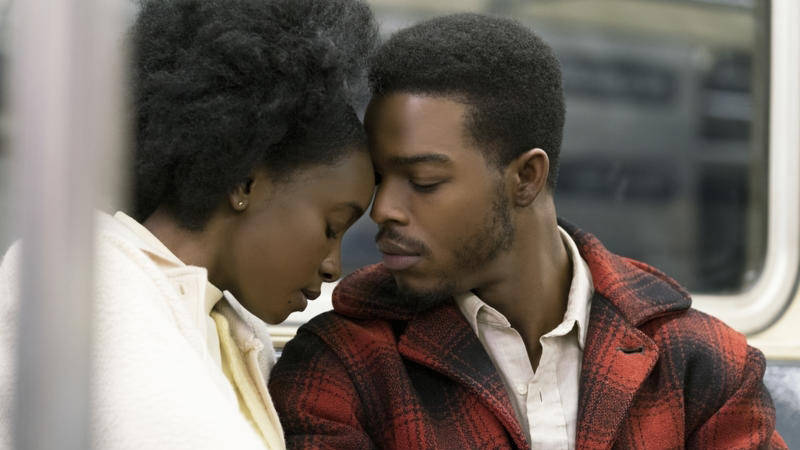
"caption": "KiKi Layne as Tish and Stephan James as Fonny star in Barry Jenkins’ 'If Beale Street Could Talk.'",
"description": "KiKi Layne as Tish and Stephan James as Fonny star in Barry Jenkins’ 'If Beale Street Could Talk.'",
"title": "IBSCT_01405_R_proxy_md_COVER",
"credit": "Annapurna Pictures",
"status": "inherit",
"isLoading": false,
"fetchFailed": false
},
"arts_13845050": {
"type": "attachments",
"id": "arts_13845050",
"meta": {
"index": "attachments_1716263798",
"site": "arts",
"id": "13845050",
"found": true
},
"parent": 13845049,
"imgSizes": {
"small": {
"file": "https://ww2.kqed.org/app/uploads/sites/2/2018/11/fb2-03580r_wide-024a66bd0d0310dc6d0f7a2408256e4c9613fceb-520x292.jpg",
"width": 520,
"mimeType": "image/jpeg",
"height": 292
},
"twentyfourteen-full-width": {
"file": "https://ww2.kqed.org/app/uploads/sites/2/2018/11/fb2-03580r_wide-024a66bd0d0310dc6d0f7a2408256e4c9613fceb-1038x576.jpg",
"width": 1038,
"mimeType": "image/jpeg",
"height": 576
},
"thumbnail": {
"file": "https://ww2.kqed.org/app/uploads/sites/2/2018/11/fb2-03580r_wide-024a66bd0d0310dc6d0f7a2408256e4c9613fceb-160x90.jpg",
"width": 160,
"mimeType": "image/jpeg",
"height": 90
},
"fd-sm": {
"file": "https://ww2.kqed.org/app/uploads/sites/2/2018/11/fb2-03580r_wide-024a66bd0d0310dc6d0f7a2408256e4c9613fceb-960x540.jpg",
"width": 960,
"mimeType": "image/jpeg",
"height": 540
},
"post-thumbnail": {
"file": "https://ww2.kqed.org/app/uploads/sites/2/2018/11/fb2-03580r_wide-024a66bd0d0310dc6d0f7a2408256e4c9613fceb-672x372.jpg",
"width": 672,
"mimeType": "image/jpeg",
"height": 372
},
"xsmall": {
"file": "https://ww2.kqed.org/app/uploads/sites/2/2018/11/fb2-03580r_wide-024a66bd0d0310dc6d0f7a2408256e4c9613fceb-375x211.jpg",
"width": 375,
"mimeType": "image/jpeg",
"height": 211
},
"kqedFullSize": {
"file": "https://ww2.kqed.org/app/uploads/sites/2/2018/11/fb2-03580r_wide-024a66bd0d0310dc6d0f7a2408256e4c9613fceb.jpg",
"width": 2048,
"height": 1152
},
"large": {
"file": "https://ww2.kqed.org/app/uploads/sites/2/2018/11/fb2-03580r_wide-024a66bd0d0310dc6d0f7a2408256e4c9613fceb-1020x574.jpg",
"width": 1020,
"mimeType": "image/jpeg",
"height": 574
},
"xlarge": {
"file": "https://ww2.kqed.org/app/uploads/sites/2/2018/11/fb2-03580r_wide-024a66bd0d0310dc6d0f7a2408256e4c9613fceb-1180x664.jpg",
"width": 1180,
"mimeType": "image/jpeg",
"height": 664
},
"complete_open_graph": {
"file": "https://ww2.kqed.org/app/uploads/sites/2/2018/11/fb2-03580r_wide-024a66bd0d0310dc6d0f7a2408256e4c9613fceb-1200x675.jpg",
"width": 1200,
"mimeType": "image/jpeg",
"height": 675
},
"guest-author-50": {
"file": "https://ww2.kqed.org/app/uploads/sites/2/2018/11/fb2-03580r_wide-024a66bd0d0310dc6d0f7a2408256e4c9613fceb-50x50.jpg",
"width": 50,
"mimeType": "image/jpeg",
"height": 50
},
"guest-author-96": {
"file": "https://ww2.kqed.org/app/uploads/sites/2/2018/11/fb2-03580r_wide-024a66bd0d0310dc6d0f7a2408256e4c9613fceb-96x96.jpg",
"width": 96,
"mimeType": "image/jpeg",
"height": 96
},
"medium": {
"file": "https://ww2.kqed.org/app/uploads/sites/2/2018/11/fb2-03580r_wide-024a66bd0d0310dc6d0f7a2408256e4c9613fceb-800x450.jpg",
"width": 800,
"mimeType": "image/jpeg",
"height": 450
},
"guest-author-64": {
"file": "https://ww2.kqed.org/app/uploads/sites/2/2018/11/fb2-03580r_wide-024a66bd0d0310dc6d0f7a2408256e4c9613fceb-64x64.jpg",
"width": 64,
"mimeType": "image/jpeg",
"height": 64
},
"guest-author-32": {
"file": "https://ww2.kqed.org/app/uploads/sites/2/2018/11/fb2-03580r_wide-024a66bd0d0310dc6d0f7a2408256e4c9613fceb-32x32.jpg",
"width": 32,
"mimeType": "image/jpeg",
"height": 32
},
"fd-lrg": {
"file": "https://ww2.kqed.org/app/uploads/sites/2/2018/11/fb2-03580r_wide-024a66bd0d0310dc6d0f7a2408256e4c9613fceb-1920x1080.jpg",
"width": 1920,
"mimeType": "image/jpeg",
"height": 1080
},
"fd-med": {
"file": "https://ww2.kqed.org/app/uploads/sites/2/2018/11/fb2-03580r_wide-024a66bd0d0310dc6d0f7a2408256e4c9613fceb-1180x664.jpg",
"width": 1180,
"mimeType": "image/jpeg",
"height": 664
},
"full-width": {
"file": "https://ww2.kqed.org/app/uploads/sites/2/2018/11/fb2-03580r_wide-024a66bd0d0310dc6d0f7a2408256e4c9613fceb-1920x1080.jpg",
"width": 1920,
"mimeType": "image/jpeg",
"height": 1080
},
"detail": {
"file": "https://ww2.kqed.org/app/uploads/sites/2/2018/11/fb2-03580r_wide-024a66bd0d0310dc6d0f7a2408256e4c9613fceb-150x150.jpg",
"width": 150,
"mimeType": "image/jpeg",
"height": 150
},
"medium_large": {
"file": "https://ww2.kqed.org/app/uploads/sites/2/2018/11/fb2-03580r_wide-024a66bd0d0310dc6d0f7a2408256e4c9613fceb-768x432.jpg",
"width": 768,
"mimeType": "image/jpeg",
"height": 432
},
"guest-author-128": {
"file": "https://ww2.kqed.org/app/uploads/sites/2/2018/11/fb2-03580r_wide-024a66bd0d0310dc6d0f7a2408256e4c9613fceb-128x128.jpg",
"width": 128,
"mimeType": "image/jpeg",
"height": 128
},
"xxsmall": {
"file": "https://ww2.kqed.org/app/uploads/sites/2/2018/11/fb2-03580r_wide-024a66bd0d0310dc6d0f7a2408256e4c9613fceb-240x135.jpg",
"width": 240,
"mimeType": "image/jpeg",
"height": 135
}
},
"publishDate": 1542338565,
"modified": 1542338565,
"caption": null,
"description": "Back on my beast: Eddie Redmayne returns to his old, squirrelly tricks as Newt Scamander in\u003cem> Fantastic Beasts: The Crimes of Grindelwald\u003c/em>",
"title": "Back on my beast: Eddie Redmayne returns to his old, squirrelly tricks as Newt Scamander in Fantastic Beasts: The Crimes of Grindelwald.",
"credit": null,
"status": "inherit",
"isLoading": false,
"fetchFailed": false
},
"arts_13844955": {
"type": "attachments",
"id": "arts_13844955",
"meta": {
"index": "attachments_1716263798",
"site": "arts",
"id": "13844955",
"found": true
},
"parent": 13844798,
"imgSizes": {
"small": {
"file": "https://ww2.kqed.org/app/uploads/sites/2/2018/11/Pete_BTL_Thumbnail_Smaller_Logo-520x293.jpg",
"width": 520,
"mimeType": "image/jpeg",
"height": 293
},
"twentyfourteen-full-width": {
"file": "https://ww2.kqed.org/app/uploads/sites/2/2018/11/Pete_BTL_Thumbnail_Smaller_Logo-1038x576.jpg",
"width": 1038,
"mimeType": "image/jpeg",
"height": 576
},
"thumbnail": {
"file": "https://ww2.kqed.org/app/uploads/sites/2/2018/11/Pete_BTL_Thumbnail_Smaller_Logo-160x90.jpg",
"width": 160,
"mimeType": "image/jpeg",
"height": 90
},
"fd-sm": {
"file": "https://ww2.kqed.org/app/uploads/sites/2/2018/11/Pete_BTL_Thumbnail_Smaller_Logo-960x540.jpg",
"width": 960,
"mimeType": "image/jpeg",
"height": 540
},
"post-thumbnail": {
"file": "https://ww2.kqed.org/app/uploads/sites/2/2018/11/Pete_BTL_Thumbnail_Smaller_Logo-672x372.jpg",
"width": 672,
"mimeType": "image/jpeg",
"height": 372
},
"xsmall": {
"file": "https://ww2.kqed.org/app/uploads/sites/2/2018/11/Pete_BTL_Thumbnail_Smaller_Logo-375x211.jpg",
"width": 375,
"mimeType": "image/jpeg",
"height": 211
},
"kqedFullSize": {
"file": "https://ww2.kqed.org/app/uploads/sites/2/2018/11/Pete_BTL_Thumbnail_Smaller_Logo.jpg",
"width": 1920,
"height": 1080
},
"large": {
"file": "https://ww2.kqed.org/app/uploads/sites/2/2018/11/Pete_BTL_Thumbnail_Smaller_Logo-1020x574.jpg",
"width": 1020,
"mimeType": "image/jpeg",
"height": 574
},
"xlarge": {
"file": "https://ww2.kqed.org/app/uploads/sites/2/2018/11/Pete_BTL_Thumbnail_Smaller_Logo-1180x664.jpg",
"width": 1180,
"mimeType": "image/jpeg",
"height": 664
},
"complete_open_graph": {
"file": "https://ww2.kqed.org/app/uploads/sites/2/2018/11/Pete_BTL_Thumbnail_Smaller_Logo-1200x675.jpg",
"width": 1200,
"mimeType": "image/jpeg",
"height": 675
},
"guest-author-50": {
"file": "https://ww2.kqed.org/app/uploads/sites/2/2018/11/Pete_BTL_Thumbnail_Smaller_Logo-50x50.jpg",
"width": 50,
"mimeType": "image/jpeg",
"height": 50
},
"guest-author-96": {
"file": "https://ww2.kqed.org/app/uploads/sites/2/2018/11/Pete_BTL_Thumbnail_Smaller_Logo-96x96.jpg",
"width": 96,
"mimeType": "image/jpeg",
"height": 96
},
"medium": {
"file": "https://ww2.kqed.org/app/uploads/sites/2/2018/11/Pete_BTL_Thumbnail_Smaller_Logo-800x450.jpg",
"width": 800,
"mimeType": "image/jpeg",
"height": 450
},
"guest-author-64": {
"file": "https://ww2.kqed.org/app/uploads/sites/2/2018/11/Pete_BTL_Thumbnail_Smaller_Logo-64x64.jpg",
"width": 64,
"mimeType": "image/jpeg",
"height": 64
},
"guest-author-32": {
"file": "https://ww2.kqed.org/app/uploads/sites/2/2018/11/Pete_BTL_Thumbnail_Smaller_Logo-32x32.jpg",
"width": 32,
"mimeType": "image/jpeg",
"height": 32
},
"fd-lrg": {
"file": "https://ww2.kqed.org/app/uploads/sites/2/2018/11/Pete_BTL_Thumbnail_Smaller_Logo-1920x1080.jpg",
"width": 1920,
"mimeType": "image/jpeg",
"height": 1080
},
"fd-med": {
"file": "https://ww2.kqed.org/app/uploads/sites/2/2018/11/Pete_BTL_Thumbnail_Smaller_Logo-1180x664.jpg",
"width": 1180,
"mimeType": "image/jpeg",
"height": 664
},
"full-width": {
"file": "https://ww2.kqed.org/app/uploads/sites/2/2018/11/Pete_BTL_Thumbnail_Smaller_Logo-1920x1080.jpg",
"width": 1920,
"mimeType": "image/jpeg",
"height": 1080
},
"detail": {
"file": "https://ww2.kqed.org/app/uploads/sites/2/2018/11/Pete_BTL_Thumbnail_Smaller_Logo-150x150.jpg",
"width": 150,
"mimeType": "image/jpeg",
"height": 150
},
"medium_large": {
"file": "https://ww2.kqed.org/app/uploads/sites/2/2018/11/Pete_BTL_Thumbnail_Smaller_Logo-768x432.jpg",
"width": 768,
"mimeType": "image/jpeg",
"height": 432
},
"guest-author-128": {
"file": "https://ww2.kqed.org/app/uploads/sites/2/2018/11/Pete_BTL_Thumbnail_Smaller_Logo-128x128.jpg",
"width": 128,
"mimeType": "image/jpeg",
"height": 128
},
"xxsmall": {
"file": "https://ww2.kqed.org/app/uploads/sites/2/2018/11/Pete_BTL_Thumbnail_Smaller_Logo-240x135.jpg",
"width": 240,
"mimeType": "image/jpeg",
"height": 135
}
},
"publishDate": 1542244002,
"modified": 1542244561,
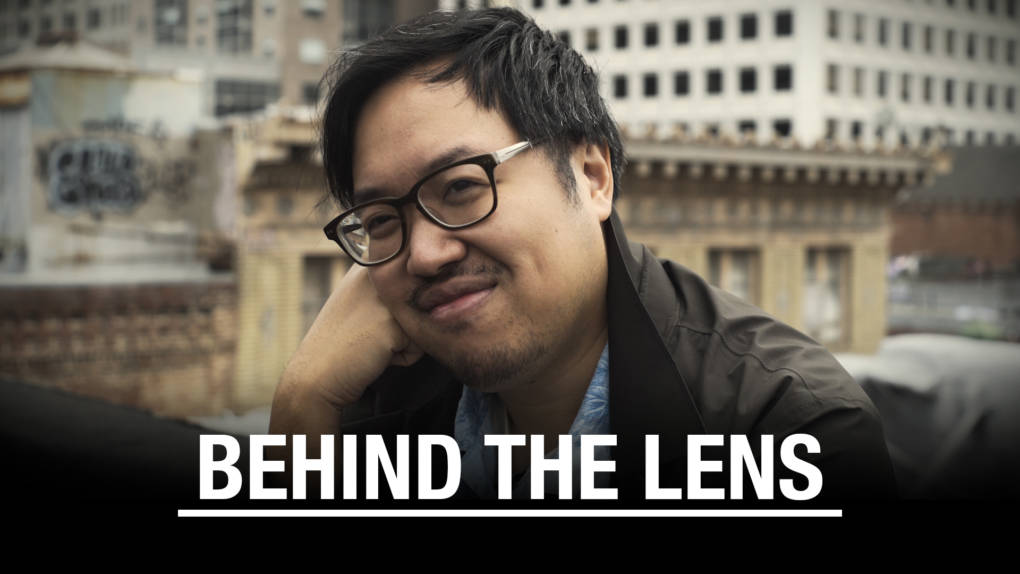
"caption": "Pete Lee sits on a rooftop in San Francisco's Chinatown",
"description": null,
"title": "Pete_BTL_Thumbnail_Smaller_Logo",
"credit": null,
"status": "inherit",
"isLoading": false,
"fetchFailed": false
},
"arts_13844590": {
"type": "attachments",
"id": "arts_13844590",
"meta": {
"index": "attachments_1716263798",
"site": "arts",
"id": "13844590",
"found": true
},
"parent": 13844589,
"imgSizes": {
"small": {
"file": "https://ww2.kqed.org/app/uploads/sites/2/2018/11/jeffgoldblum_20180629_losangeles_universalmusic_paridukovic_usage3_shot_06_459_b_wide-b1f0ddbdd6d92a8a8133cf3db5e6d4197e71543e-520x293.jpg",
"width": 520,
"mimeType": "image/jpeg",
"height": 293
},
"twentyfourteen-full-width": {
"file": "https://ww2.kqed.org/app/uploads/sites/2/2018/11/jeffgoldblum_20180629_losangeles_universalmusic_paridukovic_usage3_shot_06_459_b_wide-b1f0ddbdd6d92a8a8133cf3db5e6d4197e71543e-1038x576.jpg",
"width": 1038,
"mimeType": "image/jpeg",
"height": 576
},
"thumbnail": {
"file": "https://ww2.kqed.org/app/uploads/sites/2/2018/11/jeffgoldblum_20180629_losangeles_universalmusic_paridukovic_usage3_shot_06_459_b_wide-b1f0ddbdd6d92a8a8133cf3db5e6d4197e71543e-160x90.jpg",
"width": 160,
"mimeType": "image/jpeg",
"height": 90
},
"fd-sm": {
"file": "https://ww2.kqed.org/app/uploads/sites/2/2018/11/jeffgoldblum_20180629_losangeles_universalmusic_paridukovic_usage3_shot_06_459_b_wide-b1f0ddbdd6d92a8a8133cf3db5e6d4197e71543e-960x540.jpg",
"width": 960,
"mimeType": "image/jpeg",
"height": 540
},
"post-thumbnail": {
"file": "https://ww2.kqed.org/app/uploads/sites/2/2018/11/jeffgoldblum_20180629_losangeles_universalmusic_paridukovic_usage3_shot_06_459_b_wide-b1f0ddbdd6d92a8a8133cf3db5e6d4197e71543e-672x372.jpg",
"width": 672,
"mimeType": "image/jpeg",
"height": 372
},
"xsmall": {
"file": "https://ww2.kqed.org/app/uploads/sites/2/2018/11/jeffgoldblum_20180629_losangeles_universalmusic_paridukovic_usage3_shot_06_459_b_wide-b1f0ddbdd6d92a8a8133cf3db5e6d4197e71543e-375x211.jpg",
"width": 375,
"mimeType": "image/jpeg",
"height": 211
},
"kqedFullSize": {
"file": "https://ww2.kqed.org/app/uploads/sites/2/2018/11/jeffgoldblum_20180629_losangeles_universalmusic_paridukovic_usage3_shot_06_459_b_wide-b1f0ddbdd6d92a8a8133cf3db5e6d4197e71543e-e1541785136243.jpg",
"width": 1920,
"height": 1080
},
"large": {
"file": "https://ww2.kqed.org/app/uploads/sites/2/2018/11/jeffgoldblum_20180629_losangeles_universalmusic_paridukovic_usage3_shot_06_459_b_wide-b1f0ddbdd6d92a8a8133cf3db5e6d4197e71543e-1020x574.jpg",
"width": 1020,
"mimeType": "image/jpeg",
"height": 574
},
"xlarge": {
"file": "https://ww2.kqed.org/app/uploads/sites/2/2018/11/jeffgoldblum_20180629_losangeles_universalmusic_paridukovic_usage3_shot_06_459_b_wide-b1f0ddbdd6d92a8a8133cf3db5e6d4197e71543e-1180x664.jpg",
"width": 1180,
"mimeType": "image/jpeg",
"height": 664
},
"complete_open_graph": {
"file": "https://ww2.kqed.org/app/uploads/sites/2/2018/11/jeffgoldblum_20180629_losangeles_universalmusic_paridukovic_usage3_shot_06_459_b_wide-b1f0ddbdd6d92a8a8133cf3db5e6d4197e71543e-1200x675.jpg",
"width": 1200,
"mimeType": "image/jpeg",
"height": 675
},
"guest-author-50": {
"file": "https://ww2.kqed.org/app/uploads/sites/2/2018/11/jeffgoldblum_20180629_losangeles_universalmusic_paridukovic_usage3_shot_06_459_b_wide-b1f0ddbdd6d92a8a8133cf3db5e6d4197e71543e-50x50.jpg",
"width": 50,
"mimeType": "image/jpeg",
"height": 50
},
"guest-author-96": {
"file": "https://ww2.kqed.org/app/uploads/sites/2/2018/11/jeffgoldblum_20180629_losangeles_universalmusic_paridukovic_usage3_shot_06_459_b_wide-b1f0ddbdd6d92a8a8133cf3db5e6d4197e71543e-96x96.jpg",
"width": 96,
"mimeType": "image/jpeg",
"height": 96
},
"medium": {
"file": "https://ww2.kqed.org/app/uploads/sites/2/2018/11/jeffgoldblum_20180629_losangeles_universalmusic_paridukovic_usage3_shot_06_459_b_wide-b1f0ddbdd6d92a8a8133cf3db5e6d4197e71543e-800x450.jpg",
"width": 800,
"mimeType": "image/jpeg",
"height": 450
},
"guest-author-64": {
"file": "https://ww2.kqed.org/app/uploads/sites/2/2018/11/jeffgoldblum_20180629_losangeles_universalmusic_paridukovic_usage3_shot_06_459_b_wide-b1f0ddbdd6d92a8a8133cf3db5e6d4197e71543e-64x64.jpg",
"width": 64,
"mimeType": "image/jpeg",
"height": 64
},
"guest-author-32": {
"file": "https://ww2.kqed.org/app/uploads/sites/2/2018/11/jeffgoldblum_20180629_losangeles_universalmusic_paridukovic_usage3_shot_06_459_b_wide-b1f0ddbdd6d92a8a8133cf3db5e6d4197e71543e-32x32.jpg",
"width": 32,
"mimeType": "image/jpeg",
"height": 32
},
"fd-lrg": {
"file": "https://ww2.kqed.org/app/uploads/sites/2/2018/11/jeffgoldblum_20180629_losangeles_universalmusic_paridukovic_usage3_shot_06_459_b_wide-b1f0ddbdd6d92a8a8133cf3db5e6d4197e71543e-1920x1080.jpg",
"width": 1920,
"mimeType": "image/jpeg",
"height": 1080
},
"fd-med": {
"file": "https://ww2.kqed.org/app/uploads/sites/2/2018/11/jeffgoldblum_20180629_losangeles_universalmusic_paridukovic_usage3_shot_06_459_b_wide-b1f0ddbdd6d92a8a8133cf3db5e6d4197e71543e-1180x664.jpg",
"width": 1180,
"mimeType": "image/jpeg",
"height": 664
},
"full-width": {
"file": "https://ww2.kqed.org/app/uploads/sites/2/2018/11/jeffgoldblum_20180629_losangeles_universalmusic_paridukovic_usage3_shot_06_459_b_wide-b1f0ddbdd6d92a8a8133cf3db5e6d4197e71543e-1920x1080.jpg",
"width": 1920,
"mimeType": "image/jpeg",
"height": 1080
},
"detail": {
"file": "https://ww2.kqed.org/app/uploads/sites/2/2018/11/jeffgoldblum_20180629_losangeles_universalmusic_paridukovic_usage3_shot_06_459_b_wide-b1f0ddbdd6d92a8a8133cf3db5e6d4197e71543e-150x150.jpg",
"width": 150,
"mimeType": "image/jpeg",
"height": 150
},
"medium_large": {
"file": "https://ww2.kqed.org/app/uploads/sites/2/2018/11/jeffgoldblum_20180629_losangeles_universalmusic_paridukovic_usage3_shot_06_459_b_wide-b1f0ddbdd6d92a8a8133cf3db5e6d4197e71543e-768x432.jpg",
"width": 768,
"mimeType": "image/jpeg",
"height": 432
},
"guest-author-128": {
"file": "https://ww2.kqed.org/app/uploads/sites/2/2018/11/jeffgoldblum_20180629_losangeles_universalmusic_paridukovic_usage3_shot_06_459_b_wide-b1f0ddbdd6d92a8a8133cf3db5e6d4197e71543e-128x128.jpg",
"width": 128,
"mimeType": "image/jpeg",
"height": 128
},
"xxsmall": {
"file": "https://ww2.kqed.org/app/uploads/sites/2/2018/11/jeffgoldblum_20180629_losangeles_universalmusic_paridukovic_usage3_shot_06_459_b_wide-b1f0ddbdd6d92a8a8133cf3db5e6d4197e71543e-240x135.jpg",
"width": 240,
"mimeType": "image/jpeg",
"height": 135
}
},
"publishDate": 1541784971,
"modified": 1541785118,
"caption": "Jeff Goldblum's new album with his jazz group, The Mildred Snitzer Orchestra, is called The Capitol Studios Sessions.",
"description": "Jeff Goldblum's new album with his jazz group, The Mildred Snitzer Orchestra, is called \u003cem>The Capitol Studios Sessions\u003c/em>",
"title": "Jeff Goldblum's new album with his jazz group, The Mildred Snitzer Orchestra, is called The Capitol Studios Sessions.",
"credit": "Pari Dukovic/Courtesy of the artist",
"status": "inherit",
"isLoading": false,
"fetchFailed": false
},
"arts_13844419": {
"type": "attachments",
"id": "arts_13844419",
"meta": {
"index": "attachments_1716263798",
"site": "arts",
"id": "13844419",
"found": true
},
"parent": 13844417,
"imgSizes": {
"small": {
"file": "https://ww2.kqed.org/app/uploads/sites/2/2018/11/Ed-Mock-courtesy-Frameline-520x293.jpg",
"width": 520,
"mimeType": "image/jpeg",
"height": 293
},
"thumbnail": {
"file": "https://ww2.kqed.org/app/uploads/sites/2/2018/11/Ed-Mock-courtesy-Frameline-160x90.jpg",
"width": 160,
"mimeType": "image/jpeg",
"height": 90
},
"post-thumbnail": {
"file": "https://ww2.kqed.org/app/uploads/sites/2/2018/11/Ed-Mock-courtesy-Frameline-672x372.jpg",
"width": 672,
"mimeType": "image/jpeg",
"height": 372
},
"xsmall": {
"file": "https://ww2.kqed.org/app/uploads/sites/2/2018/11/Ed-Mock-courtesy-Frameline-375x211.jpg",
"width": 375,
"mimeType": "image/jpeg",
"height": 211
},
"kqedFullSize": {
"file": "https://ww2.kqed.org/app/uploads/sites/2/2018/11/Ed-Mock-courtesy-Frameline.jpg",
"width": 940,
"height": 529
},
"guest-author-50": {
"file": "https://ww2.kqed.org/app/uploads/sites/2/2018/11/Ed-Mock-courtesy-Frameline-50x50.jpg",
"width": 50,
"mimeType": "image/jpeg",
"height": 50
},
"guest-author-96": {
"file": "https://ww2.kqed.org/app/uploads/sites/2/2018/11/Ed-Mock-courtesy-Frameline-96x96.jpg",
"width": 96,
"mimeType": "image/jpeg",
"height": 96
},
"medium": {
"file": "https://ww2.kqed.org/app/uploads/sites/2/2018/11/Ed-Mock-courtesy-Frameline-800x450.jpg",
"width": 800,
"mimeType": "image/jpeg",
"height": 450
},
"guest-author-64": {
"file": "https://ww2.kqed.org/app/uploads/sites/2/2018/11/Ed-Mock-courtesy-Frameline-64x64.jpg",
"width": 64,
"mimeType": "image/jpeg",
"height": 64
},
"guest-author-32": {
"file": "https://ww2.kqed.org/app/uploads/sites/2/2018/11/Ed-Mock-courtesy-Frameline-32x32.jpg",
"width": 32,
"mimeType": "image/jpeg",
"height": 32
},
"detail": {
"file": "https://ww2.kqed.org/app/uploads/sites/2/2018/11/Ed-Mock-courtesy-Frameline-150x150.jpg",
"width": 150,
"mimeType": "image/jpeg",
"height": 150
},
"medium_large": {
"file": "https://ww2.kqed.org/app/uploads/sites/2/2018/11/Ed-Mock-courtesy-Frameline-768x432.jpg",
"width": 768,
"mimeType": "image/jpeg",
"height": 432
},
"guest-author-128": {
"file": "https://ww2.kqed.org/app/uploads/sites/2/2018/11/Ed-Mock-courtesy-Frameline-128x128.jpg",
"width": 128,
"mimeType": "image/jpeg",
"height": 128
},
"xxsmall": {
"file": "https://ww2.kqed.org/app/uploads/sites/2/2018/11/Ed-Mock-courtesy-Frameline-240x135.jpg",
"width": 240,
"mimeType": "image/jpeg",
"height": 135
}
},
"publishDate": 1541534819,
"modified": 1541534873,
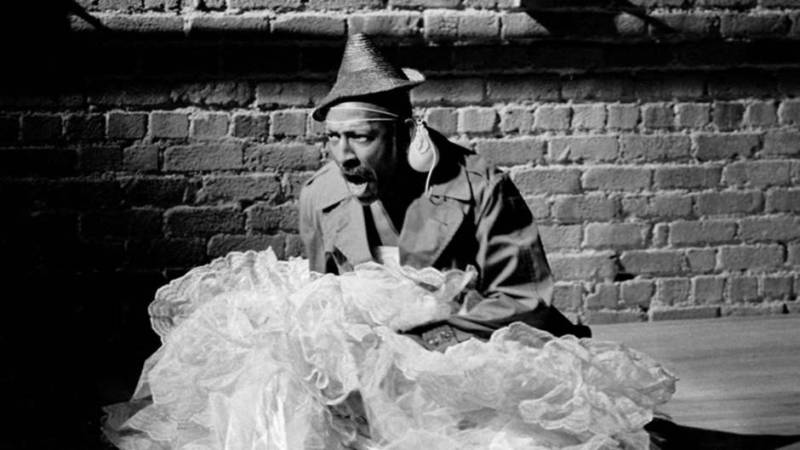
"caption": "San Francisco dancer and instructor Ed Mock is the subject of a documentary by Brontez Purnell. ",
"description": "San Francisco dancer and instructor Ed Mock is the subject of a documentary by Brontez Purnell. ",
"title": "Ed Mock courtesy Frameline",
"credit": "Courtesy Frameline ",
"status": "inherit",
"isLoading": false,
"fetchFailed": false
},
"arts_13844960": {
"type": "attachments",
"id": "arts_13844960",
"meta": {
"index": "attachments_1716263798",
"site": "arts",
"id": "13844960",
"found": true
},
"parent": 13844441,
"imgSizes": {
"small": {
"file": "https://ww2.kqed.org/app/uploads/sites/2/2018/11/Nijla_BTL_Thumbnail-520x293.jpg",
"width": 520,
"mimeType": "image/jpeg",
"height": 293
},
"twentyfourteen-full-width": {
"file": "https://ww2.kqed.org/app/uploads/sites/2/2018/11/Nijla_BTL_Thumbnail-1038x576.jpg",
"width": 1038,
"mimeType": "image/jpeg",
"height": 576
},
"thumbnail": {
"file": "https://ww2.kqed.org/app/uploads/sites/2/2018/11/Nijla_BTL_Thumbnail-160x90.jpg",
"width": 160,
"mimeType": "image/jpeg",
"height": 90
},
"fd-sm": {
"file": "https://ww2.kqed.org/app/uploads/sites/2/2018/11/Nijla_BTL_Thumbnail-960x540.jpg",
"width": 960,
"mimeType": "image/jpeg",
"height": 540
},
"post-thumbnail": {
"file": "https://ww2.kqed.org/app/uploads/sites/2/2018/11/Nijla_BTL_Thumbnail-672x372.jpg",
"width": 672,
"mimeType": "image/jpeg",
"height": 372
},
"xsmall": {
"file": "https://ww2.kqed.org/app/uploads/sites/2/2018/11/Nijla_BTL_Thumbnail-375x211.jpg",
"width": 375,
"mimeType": "image/jpeg",
"height": 211
},
"kqedFullSize": {
"file": "https://ww2.kqed.org/app/uploads/sites/2/2018/11/Nijla_BTL_Thumbnail.jpg",
"width": 1920,
"height": 1080
},
"large": {
"file": "https://ww2.kqed.org/app/uploads/sites/2/2018/11/Nijla_BTL_Thumbnail-1020x574.jpg",
"width": 1020,
"mimeType": "image/jpeg",
"height": 574
},
"xlarge": {
"file": "https://ww2.kqed.org/app/uploads/sites/2/2018/11/Nijla_BTL_Thumbnail-1180x664.jpg",
"width": 1180,
"mimeType": "image/jpeg",
"height": 664
},
"complete_open_graph": {
"file": "https://ww2.kqed.org/app/uploads/sites/2/2018/11/Nijla_BTL_Thumbnail-1200x675.jpg",
"width": 1200,
"mimeType": "image/jpeg",
"height": 675
},
"guest-author-50": {
"file": "https://ww2.kqed.org/app/uploads/sites/2/2018/11/Nijla_BTL_Thumbnail-50x50.jpg",
"width": 50,
"mimeType": "image/jpeg",
"height": 50
},
"guest-author-96": {
"file": "https://ww2.kqed.org/app/uploads/sites/2/2018/11/Nijla_BTL_Thumbnail-96x96.jpg",
"width": 96,
"mimeType": "image/jpeg",
"height": 96
},
"medium": {
"file": "https://ww2.kqed.org/app/uploads/sites/2/2018/11/Nijla_BTL_Thumbnail-800x450.jpg",
"width": 800,
"mimeType": "image/jpeg",
"height": 450
},
"guest-author-64": {
"file": "https://ww2.kqed.org/app/uploads/sites/2/2018/11/Nijla_BTL_Thumbnail-64x64.jpg",
"width": 64,
"mimeType": "image/jpeg",
"height": 64
},
"guest-author-32": {
"file": "https://ww2.kqed.org/app/uploads/sites/2/2018/11/Nijla_BTL_Thumbnail-32x32.jpg",
"width": 32,
"mimeType": "image/jpeg",
"height": 32
},
"fd-lrg": {
"file": "https://ww2.kqed.org/app/uploads/sites/2/2018/11/Nijla_BTL_Thumbnail-1920x1080.jpg",
"width": 1920,
"mimeType": "image/jpeg",
"height": 1080
},
"fd-med": {
"file": "https://ww2.kqed.org/app/uploads/sites/2/2018/11/Nijla_BTL_Thumbnail-1180x664.jpg",
"width": 1180,
"mimeType": "image/jpeg",
"height": 664
},
"full-width": {
"file": "https://ww2.kqed.org/app/uploads/sites/2/2018/11/Nijla_BTL_Thumbnail-1920x1080.jpg",
"width": 1920,
"mimeType": "image/jpeg",
"height": 1080
},
"detail": {
"file": "https://ww2.kqed.org/app/uploads/sites/2/2018/11/Nijla_BTL_Thumbnail-150x150.jpg",
"width": 150,
"mimeType": "image/jpeg",
"height": 150
},
"medium_large": {
"file": "https://ww2.kqed.org/app/uploads/sites/2/2018/11/Nijla_BTL_Thumbnail-768x432.jpg",
"width": 768,
"mimeType": "image/jpeg",
"height": 432
},
"guest-author-128": {
"file": "https://ww2.kqed.org/app/uploads/sites/2/2018/11/Nijla_BTL_Thumbnail-128x128.jpg",
"width": 128,
"mimeType": "image/jpeg",
"height": 128
},
"xxsmall": {
"file": "https://ww2.kqed.org/app/uploads/sites/2/2018/11/Nijla_BTL_Thumbnail-240x135.jpg",
"width": 240,
"mimeType": "image/jpeg",
"height": 135
}
},
"publishDate": 1542244692,
"modified": 1542244692,
"caption": null,
"description": null,
"title": "Nijla_BTL_Thumbnail",
"credit": null,
"status": "inherit",
"isLoading": false,
"fetchFailed": false
},
"arts_13844351": {
"type": "attachments",
"id": "arts_13844351",
"meta": {
"index": "attachments_1716263798",
"site": "arts",
"id": "13844351",
"found": true
},
"parent": 13844332,
"imgSizes": {
"small": {
"file": "https://ww2.kqed.org/app/uploads/sites/2/2018/11/Cinematografo.MAIN_-520x293.jpg",
"width": 520,
"mimeType": "image/jpeg",
"height": 293
},
"twentyfourteen-full-width": {
"file": "https://ww2.kqed.org/app/uploads/sites/2/2018/11/Cinematografo.MAIN_-1038x576.jpg",
"width": 1038,
"mimeType": "image/jpeg",
"height": 576
},
"thumbnail": {
"file": "https://ww2.kqed.org/app/uploads/sites/2/2018/11/Cinematografo.MAIN_-160x90.jpg",
"width": 160,
"mimeType": "image/jpeg",
"height": 90
},
"fd-sm": {
"file": "https://ww2.kqed.org/app/uploads/sites/2/2018/11/Cinematografo.MAIN_-960x540.jpg",
"width": 960,
"mimeType": "image/jpeg",
"height": 540
},
"post-thumbnail": {
"file": "https://ww2.kqed.org/app/uploads/sites/2/2018/11/Cinematografo.MAIN_-672x372.jpg",
"width": 672,
"mimeType": "image/jpeg",
"height": 372
},
"xsmall": {
"file": "https://ww2.kqed.org/app/uploads/sites/2/2018/11/Cinematografo.MAIN_-375x211.jpg",
"width": 375,
"mimeType": "image/jpeg",
"height": 211
},
"kqedFullSize": {
"file": "https://ww2.kqed.org/app/uploads/sites/2/2018/11/Cinematografo.MAIN_.jpg",
"width": 1920,
"height": 1080
},
"large": {
"file": "https://ww2.kqed.org/app/uploads/sites/2/2018/11/Cinematografo.MAIN_-1020x574.jpg",
"width": 1020,
"mimeType": "image/jpeg",
"height": 574
},
"xlarge": {
"file": "https://ww2.kqed.org/app/uploads/sites/2/2018/11/Cinematografo.MAIN_-1180x664.jpg",
"width": 1180,
"mimeType": "image/jpeg",
"height": 664
},
"complete_open_graph": {
"file": "https://ww2.kqed.org/app/uploads/sites/2/2018/11/Cinematografo.MAIN_-1200x675.jpg",
"width": 1200,
"mimeType": "image/jpeg",
"height": 675
},
"guest-author-50": {
"file": "https://ww2.kqed.org/app/uploads/sites/2/2018/11/Cinematografo.MAIN_-50x50.jpg",
"width": 50,
"mimeType": "image/jpeg",
"height": 50
},
"guest-author-96": {
"file": "https://ww2.kqed.org/app/uploads/sites/2/2018/11/Cinematografo.MAIN_-96x96.jpg",
"width": 96,
"mimeType": "image/jpeg",
"height": 96
},
"medium": {
"file": "https://ww2.kqed.org/app/uploads/sites/2/2018/11/Cinematografo.MAIN_-800x450.jpg",
"width": 800,
"mimeType": "image/jpeg",
"height": 450
},
"guest-author-64": {
"file": "https://ww2.kqed.org/app/uploads/sites/2/2018/11/Cinematografo.MAIN_-64x64.jpg",
"width": 64,
"mimeType": "image/jpeg",
"height": 64
},
"guest-author-32": {
"file": "https://ww2.kqed.org/app/uploads/sites/2/2018/11/Cinematografo.MAIN_-32x32.jpg",
"width": 32,
"mimeType": "image/jpeg",
"height": 32
},
"fd-lrg": {
"file": "https://ww2.kqed.org/app/uploads/sites/2/2018/11/Cinematografo.MAIN_-1920x1080.jpg",
"width": 1920,
"mimeType": "image/jpeg",
"height": 1080
},
"fd-med": {
"file": "https://ww2.kqed.org/app/uploads/sites/2/2018/11/Cinematografo.MAIN_-1180x664.jpg",
"width": 1180,
"mimeType": "image/jpeg",
"height": 664
},
"full-width": {
"file": "https://ww2.kqed.org/app/uploads/sites/2/2018/11/Cinematografo.MAIN_-1920x1080.jpg",
"width": 1920,
"mimeType": "image/jpeg",
"height": 1080
},
"detail": {
"file": "https://ww2.kqed.org/app/uploads/sites/2/2018/11/Cinematografo.MAIN_-150x150.jpg",
"width": 150,
"mimeType": "image/jpeg",
"height": 150
},
"medium_large": {
"file": "https://ww2.kqed.org/app/uploads/sites/2/2018/11/Cinematografo.MAIN_-768x432.jpg",
"width": 768,
"mimeType": "image/jpeg",
"height": 432
},
"guest-author-128": {
"file": "https://ww2.kqed.org/app/uploads/sites/2/2018/11/Cinematografo.MAIN_-128x128.jpg",
"width": 128,
"mimeType": "image/jpeg",
"height": 128
},
"xxsmall": {
"file": "https://ww2.kqed.org/app/uploads/sites/2/2018/11/Cinematografo.MAIN_-240x135.jpg",
"width": 240,
"mimeType": "image/jpeg",
"height": 135
}
},
"publishDate": 1541451829,
"modified": 1541452648,
"caption": "A scene from H.P. Mendoza's 'Bitter Melon,' which tells the story of a family Christmas reunion in the Mission.",
"description": "A scene from H.P. Mendoza's 'Bitter Melon,' which tells the story of a family Christmas reunion in the Mission.",
"title": "Cinematografo.MAIN",
"credit": "Courtesy Cinematografo International Film Festival",
"status": "inherit",
"isLoading": false,
"fetchFailed": false
}
},
"audioPlayerReducer": {
"postId": "stream_live",
"isPaused": true,
"isPlaying": false,
"pfsActive": false,
"pledgeModalIsOpen": true,
"playerDrawerIsOpen": false,
"liveAudioPlayStartedAt": 0,
"liveAudioPlayContext": ""
},
"authorsReducer": {
"byline_arts_13846027": {
"type": "authors",
"id": "byline_arts_13846027",
"meta": {
"override": true
},
"slug": "byline_arts_13846027",
"name": "Glen Weldon",
"isLoading": false
},
"byline_arts_13845442": {
"type": "authors",
"id": "byline_arts_13845442",
"meta": {
"override": true
},
"slug": "byline_arts_13845442",
"name": "Andrew Lapin",
"isLoading": false
},
"byline_arts_13845049": {
"type": "authors",
"id": "byline_arts_13845049",
"meta": {
"override": true
},
"slug": "byline_arts_13845049",
"name": "Glen Weldon",
"isLoading": false
},
"byline_arts_13844589": {
"type": "authors",
"id": "byline_arts_13844589",
"meta": {
"override": true
},
"slug": "byline_arts_13844589",
"name": "Danny Hajek",
"isLoading": false
},
"byline_arts_13844441": {
"type": "authors",
"id": "byline_arts_13844441",
"meta": {
"override": true
},
"slug": "byline_arts_13844441",
"name": "Benjamin Michel",
"isLoading": false
},
"mfox": {
"type": "authors",
"id": "22",
"meta": {
"index": "authors_1716337520",
"id": "22",
"found": true
},
"name": "Michael Fox",
"firstName": "Michael",
"lastName": "Fox",
"slug": "mfox",
"email": "foxonfilm@yahoo.com",
"display_author_email": false,
"staff_mastheads": [],
"title": "KQED Contributor",
"bio": "Michael Fox has written about film for dozens of publications since 1987. He is a founding member of the San Francisco Bay Area Film Critics Circle.",
"avatar": "https://secure.gravatar.com/avatar/d9849d6c659c41414795c471d907bb97b396e2a32b88e20e6ff66f65fbdd6dcd?s=600&d=blank&r=g",
"twitter": null,
"bluesky": null,
"facebook": null,
"instagram": null,
"linkedin": null,
"sites": [
{
"site": "arts",
"roles": [
"Contributor",
"contributor"
]
}
],
"headData": {
"title": "Michael Fox | KQED",
"description": "KQED Contributor",
"ogImgSrc": "https://secure.gravatar.com/avatar/d9849d6c659c41414795c471d907bb97b396e2a32b88e20e6ff66f65fbdd6dcd?s=600&d=blank&r=g",
"twImgSrc": "https://secure.gravatar.com/avatar/d9849d6c659c41414795c471d907bb97b396e2a32b88e20e6ff66f65fbdd6dcd?s=600&d=blank&r=g"
},
"isLoading": false,
"link": "/author/mfox"
},
"jedalatpour": {
"type": "authors",
"id": "42",
"meta": {
"index": "authors_1716337520",
"id": "42",
"found": true
},
"name": "Jeffrey Edalatpour",
"firstName": "Jeffrey",
"lastName": "Edalatpour",
"slug": "jedalatpour",
"email": "jedalatpour@kqed.org",
"display_author_email": false,
"staff_mastheads": [],
"title": null,
"bio": "Jeffrey Edalatpour's first published article was a 1999 film review of Pedro Almodovar’s \u003ci>All About My Mother. \u003c/i>Since then, his writing about arts, food and culture has appeared in a variety of print and online publications, including: KQED Arts, \u003ci>Metro Silicon Valley, Interview Magazine, \u003c/i>Berkeleyside.com, The Rumpus and \u003ci>SF Weekly. \u003c/i>His favorite Iris Murdoch novels (in no particular order) are \u003ci>The Bell, An Unofficial Rose \u003c/i>and\u003ci>The Black Prince\u003c/i>\u003ci>. \u003c/i>In other words, his home library is an anglophile’s dream.",
"avatar": "https://secure.gravatar.com/avatar/ed59ec60f4980f3a45d0c3758c17a4d4?s=600&d=blank&r=g",
"twitter": "jsedalatpour",
"facebook": null,
"instagram": null,
"linkedin": null,
"sites": [
{
"site": "arts",
"roles": [
"Contributor",
"contributor"
]
},
{
"site": "about",
"roles": [
"contributor"
]
},
{
"site": "bayareabites",
"roles": [
"author"
]
}
],
"headData": {
"title": "Jeffrey Edalatpour | KQED",
"description": null,
"ogImgSrc": "https://secure.gravatar.com/avatar/ed59ec60f4980f3a45d0c3758c17a4d4?s=600&d=blank&r=g",
"twImgSrc": "https://secure.gravatar.com/avatar/ed59ec60f4980f3a45d0c3758c17a4d4?s=600&d=blank&r=g"
},
"isLoading": false,
"link": "/author/jedalatpour"
},
"kwhalen": {
"type": "authors",
"id": "3248",
"meta": {
"index": "authors_1716337520",
"id": "3248",
"found": true
},
"name": "Kelly Whalen",
"firstName": "Kelly",
"lastName": "Whalen",
"slug": "kwhalen",
"email": "kwhalen@kqed.org",
"display_author_email": false,
"staff_mastheads": [],
"title": "Senior Video Producer",
"bio": "Kelly Whalen is a filmmaker and educator who directs and produces social justice documentaries and award-winning arts and culture web series. She is the creator of KQED Arts’ three-time Webby Award-winning YouTube series \u003cem>If Cities Could Dance\u003c/em>, featuring dancers across the country representing their cities’ signature moves, and the director of \u003cem>When the Waters Get Deep\u003c/em>, a documentary about Oakland-based artists SOL Development and their work toward healing their communities’ trauma from gun violence.",
"avatar": "https://secure.gravatar.com/avatar/1a2b57e8a13abdcfc3d4966d9c0e1512?s=600&d=blank&r=g",
"twitter": "kellyfilmmaker",
"facebook": null,
"instagram": null,
"linkedin": null,
"sites": [
{
"site": "arts",
"roles": [
"subscriber"
]
}
],
"headData": {
"title": "Kelly Whalen | KQED",
"description": "Senior Video Producer",
"ogImgSrc": "https://secure.gravatar.com/avatar/1a2b57e8a13abdcfc3d4966d9c0e1512?s=600&d=blank&r=g",
"twImgSrc": "https://secure.gravatar.com/avatar/1a2b57e8a13abdcfc3d4966d9c0e1512?s=600&d=blank&r=g"
},
"isLoading": false,
"link": "/author/kwhalen"
},
"slefebvre": {
"type": "authors",
"id": "11091",
"meta": {
"index": "authors_1716337520",
"id": "11091",
"found": true
},
"name": "Sam Lefebvre",
"firstName": "Sam",
"lastName": "Lefebvre",
"slug": "slefebvre",
"email": "sdlefebvre@gmail.com",
"display_author_email": false,
"staff_mastheads": [],
"title": "KQED Contributor",
"bio": "Sam Lefebvre is an award-winning reporter at KQED Arts. He has worked as an editor and columnist at the \u003cem>East Bay Express\u003c/em>, \u003cem>SF Weekly \u003c/em>and Impose Magazine, and his journalism and criticism has appeared in \u003cem>The New York Times\u003c/em>, the Guardian and Pitchfork.",
"avatar": "https://secure.gravatar.com/avatar/49d39b42930b77fb13784ddd9fa63fe780666b71bf289368509dba576b64e69b?s=600&d=blank&r=g",
"twitter": "Lefebvre_Sam",
"bluesky": null,
"facebook": null,
"instagram": null,
"linkedin": null,
"sites": [
{
"site": "arts",
"roles": [
"subscriber"
]
},
{
"site": "news",
"roles": [
"author"
]
}
],
"headData": {
"title": "Sam Lefebvre | KQED",
"description": "KQED Contributor",
"ogImgSrc": "https://secure.gravatar.com/avatar/49d39b42930b77fb13784ddd9fa63fe780666b71bf289368509dba576b64e69b?s=600&d=blank&r=g",
"twImgSrc": "https://secure.gravatar.com/avatar/49d39b42930b77fb13784ddd9fa63fe780666b71bf289368509dba576b64e69b?s=600&d=blank&r=g"
},
"isLoading": false,
"link": "/author/slefebvre"
},
"cescobar": {
"type": "authors",
"id": "11241",
"meta": {
"index": "authors_1716337520",
"id": "11241",
"found": true
},
"name": "Claudia Escobar",
"firstName": "Claudia",
"lastName": "Escobar",
"slug": "cescobar",
"email": "cescobar@kqed.org",
"display_author_email": false,
"staff_mastheads": [],
"title": "KQED Contributor",
"bio": "Tropical latin visual story teller extraordinaire! bread maker apprentice.",
"avatar": "https://secure.gravatar.com/avatar/39af590a0e19126bafbf121ec9d891a77a3d680061d7cc03d720efe706992707?s=600&d=blank&r=g",
"twitter": null,
"bluesky": null,
"facebook": null,
"instagram": null,
"linkedin": null,
"sites": [
{
"site": "arts",
"roles": [
"subscriber"
]
},
{
"site": "news",
"roles": [
"author"
]
}
],
"headData": {
"title": "Claudia Escobar | KQED",
"description": "KQED Contributor",
"ogImgSrc": "https://secure.gravatar.com/avatar/39af590a0e19126bafbf121ec9d891a77a3d680061d7cc03d720efe706992707?s=600&d=blank&r=g",
"twImgSrc": "https://secure.gravatar.com/avatar/39af590a0e19126bafbf121ec9d891a77a3d680061d7cc03d720efe706992707?s=600&d=blank&r=g"
},
"isLoading": false,
"link": "/author/cescobar"
},
"lblanco": {
"type": "authors",
"id": "11357",
"meta": {
"index": "authors_1716337520",
"id": "11357",
"found": true
},
"name": "Lina Blanco",
"firstName": "Lina",
"lastName": "Blanco",
"slug": "lblanco",
"email": "lblanco@kqed.org",
"display_author_email": false,
"staff_mastheads": [],
"title": null,
"bio": "Lina was a Senior Engagement Platforms Manager for KQED News, producing engagement strategies on social media at \u003ca href=\"https://twitter.com/KQEDnews\">@KQEDNews, \u003c/a>via \u003ca href=\"https://www.kqed.org/about/newsletters/\">KQED's daily newsletter\u003c/a> as well as texting campaigns with KQED readers and listeners. She also co-produces for KQED's bilingual news hub \u003ca href=\"https://www.instagram.com/kqedenespanol/\">KQED en Español\u003c/a>.\r\n\r\nLina previously worked for \u003ca href=\"https://kqed.org/arts\">KQED Arts\u003c/a> — supporting audience engagement efforts on the weekly \u003ca href=\"https://www.kqed.org/podcasts/rightnowish\">\u003cem>Rightnowish\u003c/em> \u003c/a>podcast, Webby-winning video series \u003ca href=\"https://www.kqed.org/if-cities-could-dance\">\u003cem>If Cities Could Dance\u003c/em>\u003c/a>, and daily Arts & Culture reporting. She won a \u003ca href=\"https://www.kqed.org/pressroom/10884/murrow\">National 2019 Edward R. Murrow Award for Excellence in Social Media\u003c/a> for KQED's series \u003cem>The Hustle\u003c/em>.\r\n\r\nBefore KQED, Lina worked as a graphic designer and digital storytelling facilitator at the \u003ca href=\"https://www.nativehealth.org/\">Native American Health Center\u003c/a>.\r\n\r\nShe's mom to a senior Chihuahua (plus one black cat) and lives in West Sonoma County on a small farmstead.",
"avatar": "https://secure.gravatar.com/avatar/77ec326d67223c38a436b87bcfd2a2e8?s=600&d=mm&r=g",
"twitter": "LinaBlanco",
"facebook": null,
"instagram": null,
"linkedin": null,
"sites": [
{
"site": "arts",
"roles": [
"subscriber"
]
},
{
"site": "news",
"roles": [
"subscriber"
]
},
{
"site": "pop",
"roles": [
"administrator"
]
},
{
"site": "about",
"roles": [
"administrator"
]
},
{
"site": "bayareabites",
"roles": [
"editor"
]
},
{
"site": "science",
"roles": [
"editor"
]
},
{
"site": "checkplease",
"roles": [
"editor"
]
},
{
"site": "food",
"roles": []
},
{
"site": "perspectives",
"roles": [
"editor"
]
}
],
"headData": {
"title": "Lina Blanco | KQED",
"description": null,
"ogImgSrc": "https://secure.gravatar.com/avatar/77ec326d67223c38a436b87bcfd2a2e8?s=600&d=mm&r=g",
"twImgSrc": "https://secure.gravatar.com/avatar/77ec326d67223c38a436b87bcfd2a2e8?s=600&d=mm&r=g"
},
"isLoading": false,
"link": "/author/lblanco"
}
},
"pagesReducer": {
"arts_tag_film": {
"type": "terms",
"id": "arts_977",
"meta": {
"index": "terms_1716263798",
"site": "arts",
"id": "977",
"score": 8.284364
},
"name": "Film",
"slug": "film",
"taxonomy": "tag",
"description": null,
"featImg": null,
"headData": {
"title": "Film Archives | KQED Arts",
"description": null,
"ogTitle": null,
"ogDescription": null,
"ogImgId": null,
"twTitle": null,
"twDescription": null,
"twImgId": null
},
"ttid": 995,
"isLoading": false,
"title": "Film",
"pageMeta": {
"site": "arts",
"WpPageTemplate": "page-topic-editorial",
"currentPage": 45
},
"blocks": [
{
"blockName": "kqed/post-list",
"attrs": {
"layout": "cardArticle2",
"query": "posts/arts?tag=film",
"seeMore": false,
"paginated": true,
"page": 45
}
},
{
"blockName": "kqed/ad"
}
]
}
},
"pfsSessionReducer": {},
"postsReducer": {
"stream_live": {
"type": "live",
"id": "stream_live",
"audioUrl": "https://streams.kqed.org/kqedradio",
"title": "Live Stream",
"excerpt": "Live Stream information currently unavailable.",
"link": "/radio",
"featImg": "",
"label": {
"name": "KQED Live",
"link": "/"
}
},
"stream_kqedNewscast": {
"type": "posts",
"id": "stream_kqedNewscast",
"audioUrl": "https://www.kqed.org/.stream/anon/radio/RDnews/newscast.mp3?_=1",
"title": "KQED Newscast",
"featImg": "",
"label": {
"name": "88.5 FM",
"link": "/"
}
},
"arts_13846310": {
"type": "posts",
"id": "arts_13846310",
"meta": {
"index": "posts_1716263798",
"site": "arts",
"id": "13846310",
"score": null,
"sort": [
1543971001000
]
},
"parent": 0,
"labelTerm": {
"site": "arts",
"term": 3500
},
"blocks": [],
"publishDate": 1543971001,
"format": "video",
"title": "Scars Become Badges of Honor in Talibah Newman’s Children-Centered Films",
"headTitle": "Scars Become Badges of Honor in Talibah Newman’s Children-Centered Films | KQED",
"content": "\u003cp>\u003cem>Editor’s Note: \u003ca href=\"https://www.kqed.org/arts/series/behind-the-lens\" target=\"_blank\" rel=\"noopener noreferrer\">Behind the Lens\u003c/a> is a digital video series featuring bold California indie filmmakers pushing the boundaries of their craft. Each episode captures the personal experiences that inform a filmmaker’s work and the risks they take to bring stories to the screen.\u003c/em>\u003c/p>\n\u003cp>\u003cspan style=\"font-weight: 400\">Talibah Newman doesn’t back down from a challenge. In her 14-year career as a writer, director and producer, she’s worked predominantly with children (no easy task), to tell stories about their innocence and resilience.\u003c/span>\u003c/p>\n\u003cp>\u003cspan style=\"font-weight: 400\">“I’m trying to be Peter Pan, in a way,” says \u003ca href=\"http://talibahnewman.com/\" target=\"_blank\" rel=\"noopener noreferrer\">the Oakland-based filmmaker\u003c/a>, “trying to recreate children who are fierce no matter what they’ve experienced in life.” Instead of Neverland, those efforts have landed her films at American Black Film Festival and Los Angeles Film Festival, and with distribution by HBO and \u003c/span>\u003ca href=\"https://ww2.kqed.org/filmschoolshorts/\" target=\"_blank\" rel=\"noopener noreferrer\">\u003ci>\u003cspan style=\"font-weight: 400\">Film School Shorts\u003c/span>\u003c/i>\u003cspan style=\"font-weight: 400\">.\u003c/span>\u003c/a>\u003c/p>\n\u003cp>\u003cspan style=\"font-weight: 400\">The oldest of five, Newman grew up in South Dallas and often draws from her family’s experiences in the stories she creates. In \u003c/span>\u003ci>\u003cspan style=\"font-weight: 400\">\u003ca href=\"http://ww2.kqed.org/filmschoolshorts/films/busted-on-brigham-lane-2/\" target=\"_blank\" rel=\"noopener noreferrer\">Busted on Brigham Lane\u003c/a>,\u003c/span>\u003c/i>\u003cspan style=\"font-weight: 400\"> two sisters have very different relationships with their estranged father. (While Newman is close with her father, she watched her half-siblings struggle with their father’s absence at birthdays and school recitals.)\u003c/span>\u003c/p>\n\u003cp>\u003cspan style=\"font-weight: 400\">In her 18-minute short, \u003c/span>\u003ci>\u003cspan style=\"font-weight: 400\">Sweet Honey Chile’\u003c/span>\u003c/i>\u003cspan style=\"font-weight: 400\">, a boy explores his gender identity while searching for meaning after his gay grandfather’s death. It’s Newman’s way of honoring her own brother, who experienced hardship when he came out as a teenager. “I want to show how that which you feel might have been a permanent scar, can be your own blessing or your own badge of honor,” she says.\u003c/span>\u003c/p>\n\u003cp>[ad fullwidth]\u003c/p>\n\u003cp>\u003cspan style=\"font-weight: 400\">More recently, Newman directed an episode of \u003c/span>\u003ci>\u003cspan style=\"font-weight: 400\">Greenwood Avenue: A Virtual Reality Project\u003c/span>\u003c/i>\u003cspan style=\"font-weight: 400\">, revisiting the destruction of a thriving black community in 1921 Tulsa, Oklahoma, through the eyes of a young girl. The series, created by Ayana Baraka, will be distributed on Youtube’s VR180 platform next year.\u003c/span>\u003c/p>\n\u003cp>\u003cspan style=\"font-weight: 400\">Newman believes filmmaking provides her with a space to share a sense of hope—in the possibility of growth, understanding and healing—for the black community, for women and within families.\u003c/span>\u003c/p>\n\u003cp>\u003cspan style=\"font-weight: 400\">KQED sat down with Newman to talk about the value of film school, balancing filmmaking with motherhood, and the gap between creative talent and financiers she hopes will one day be bridged. — \u003cem>Introductory Text by Sarah Hotchkiss\u003c/em>\u003c/span>\u003c/p>\n\u003cfigure id=\"attachment_13846376\" class=\"wp-caption aligncenter\" style=\"max-width: 800px\">\u003cimg loading=\"lazy\" decoding=\"async\" class=\"size-medium wp-image-13846376\" src=\"https://ww2.kqed.org/arts/wp-content/uploads/sites/2/2018/12/Talibah_SweetHoneyChile-1-800x450.jpg\" alt=\"\" width=\"800\" height=\"450\" srcset=\"https://cdn.kqed.org/wp-content/uploads/sites/2/2018/12/Talibah_SweetHoneyChile-1-800x450.jpg 800w, https://cdn.kqed.org/wp-content/uploads/sites/2/2018/12/Talibah_SweetHoneyChile-1-160x90.jpg 160w, https://cdn.kqed.org/wp-content/uploads/sites/2/2018/12/Talibah_SweetHoneyChile-1-768x432.jpg 768w, https://cdn.kqed.org/wp-content/uploads/sites/2/2018/12/Talibah_SweetHoneyChile-1-1020x574.jpg 1020w, https://cdn.kqed.org/wp-content/uploads/sites/2/2018/12/Talibah_SweetHoneyChile-1-1200x675.jpg 1200w, https://cdn.kqed.org/wp-content/uploads/sites/2/2018/12/Talibah_SweetHoneyChile-1.jpg 1433w\" sizes=\"(max-width: 800px) 100vw, 800px\">\u003cfigcaption class=\"wp-caption-text\">Still from Sweet Honey Chile, courtesy of Talibah Newman\u003c/figcaption>\u003c/figure>\n\u003cp>\u003cb>How did you get your start in writing and directing film?\u003c/b>\u003c/p>\n\u003cp>\u003cspan style=\"font-weight: 400\">I come from a family of artists. \u003c/span>\u003cspan style=\"font-weight: 400\">So I think my intuitive desire to be a filmmaker comes from being raised in a family that sees the world through art. \u003c/span>\u003cspan style=\"font-weight: 400\">Growing up, I was always the child in the corner writing a poem or my own plays. Then in high school, I had a teacher who introduced me to screenwriting as a profession, and I ended up going to Columbia University to study film. \u003c/span>\u003c/p>\n\u003cp>\u003cspan style=\"font-weight: 400\">I also interned for a lot of different production companies, and through a friend of my late grandfather, I connected with Malcolm Lee, who hired me as a post-production assistant on \u003c/span>\u003ci>\u003cspan style=\"font-weight: 400\">Welcome Home, Roscoe Jenkins\u003c/span>\u003c/i>\u003cspan style=\"font-weight: 400\">, then on \u003c/span>\u003ci>\u003cspan style=\"font-weight: 400\">Soul Men\u003c/span>\u003c/i>\u003cspan style=\"font-weight: 400\">, as Malcolm’s assistant. Working on \u003c/span>\u003ci>\u003cspan style=\"font-weight: 400\">Soul Men\u003c/span>\u003c/i>\u003cspan style=\"font-weight: 400\"> from start to finish was a great way for me to be able to see all of the moving parts involved in making a feature-length film. Afterwards, I knew I wanted to follow the same path as Malcolm and ended up choosing Columbia for graduate school. The price tag for an M.F.A. in film is exorbitant, but that traditional route, studying the craft of filmmaking, being amongst a class of only 60 people, and the structure, where we were constantly creating, was really beneficial for me. I wouldn’t trade it for the world. \u003c/span>\u003c/p>\n\u003cp>\u003cb>After studying and working in New York for 15 years, how are you adjusting to life in Oakland? \u003c/b>\u003c/p>\n\u003cp>\u003cspan style=\"font-weight: 400\">When moving to Oakland, I didn’t know what creative community I would encounter. To my surprise, \u003c/span>\u003cspan style=\"font-weight: 400\">I’ve found that there is a thriving creative community here, rooted in activism and around community work. I’m very grateful for the spirit of Oakland. The people are extremely strong and driven, and they’re proud of their community and their city, and that’s been something that’s really beautiful to witness. \u003c/span>\u003c/p>\n\u003cp>\u003cb>How do you define success for yourself?\u003c/b>\u003c/p>\n\u003cp>\u003cspan style=\"font-weight: 400\">I define success by being able to work on projects I’m passionate about, and also by contributing something to my community, and to the people that I’m working with at this stage in my career. I can’t offer a lot of money, but it’s important to me to help teach others some of the things that I might have learned in film school. So I consider mentorship a huge part of what it is that I do as a filmmaker. \u003c/span>\u003c/p>\n\u003cp>\u003cspan style=\"font-weight: 400\">Initially when wanting to become a filmmaker I had thought that becoming a parent would inhibit some of the things that I was trying to do creatively. But now that I’m a mother, success for me is finding the balance of flow, and integrating all of those things, because I think that every piece of my life, every facet, should inform each other.\u003c/span>\u003c/p>\n\u003cfigure id=\"attachment_13846336\" class=\"wp-caption aligncenter\" style=\"max-width: 800px\">\u003cimg loading=\"lazy\" decoding=\"async\" class=\"size-medium wp-image-13846336\" src=\"https://ww2.kqed.org/arts/wp-content/uploads/sites/2/2018/12/Talibahdaughterrunning-800x450.jpg\" alt=\"\" width=\"800\" height=\"450\" srcset=\"https://cdn.kqed.org/wp-content/uploads/sites/2/2018/12/Talibahdaughterrunning-800x450.jpg 800w, https://cdn.kqed.org/wp-content/uploads/sites/2/2018/12/Talibahdaughterrunning-160x90.jpg 160w, https://cdn.kqed.org/wp-content/uploads/sites/2/2018/12/Talibahdaughterrunning-768x432.jpg 768w, https://cdn.kqed.org/wp-content/uploads/sites/2/2018/12/Talibahdaughterrunning-1020x574.jpg 1020w, https://cdn.kqed.org/wp-content/uploads/sites/2/2018/12/Talibahdaughterrunning-1200x675.jpg 1200w, https://cdn.kqed.org/wp-content/uploads/sites/2/2018/12/Talibahdaughterrunning.jpg 1920w\" sizes=\"(max-width: 800px) 100vw, 800px\">\u003cfigcaption class=\"wp-caption-text\">Talibah Newman with daughter Samba \u003ccite>(Kelly Whalen)\u003c/cite>\u003c/figcaption>\u003c/figure>\n\u003cp>\u003cb>What’s something you wish you could say to your younger self?\u003c/b>\u003c/p>\n\u003cp>\u003cspan style=\"font-weight: 400\">Don’t be hard on yourself for making mistakes. Mistakes are important to learn from and grow. Also, never shrink yourself to accommodate those around you. In grad school, I was one of maybe three or four black people in a class of 60. And it was majority male. Sometimes, to be a female filmmaker of color in this atmosphere can be daunting–enough to make you give up. I remind myself that there aren’t necessarily only a few slots for women of color filmmakers. But it’s important to take action and create your own agency and create these spaces where you can make your own work, without having to be chosen by someone to make work. \u003c/span>\u003c/p>\n\u003cp>\u003cb>What is a source of inspiration to you that might be surprising to other people?\u003c/b>\u003c/p>\n\u003cp>\u003cspan style=\"font-weight: 400\">Water–whether it’s in a shower or going to the ocean to say a small prayer, or just sitting, allowing nature to unfold around me–helps to inspire my flow of ideas as a filmmaker. I think it’s something my mother instilled in me. My mother is \u003c/span>\u003cspan style=\"font-weight: 400\">an Ifa priestess, part of a West African tradition, and water rituals, water cleansings, have been a huge part of my life.\u003c/span>\u003c/p>\n\u003cp>\u003cspan style=\"font-weight: 400\">I think about the significance of ancestors traversing water, and the numerous rituals that those ancestors held onto when they got to America. There are so many ways that water can be transformed. And I think that, as a filmmaker, it’s important to be malleable like water. Sometimes you need to move fast, like boiling water, and sometimes you need to be still in certain parts of your process. \u003c/span>\u003c/p>\n\u003cp>\u003cb>What does the future of filmmaking look like in your ideal world?\u003c/b>\u003c/p>\n\u003cp>[ad floatright]\u003c/p>\n\u003cp>\u003cspan style=\"font-weight: 400\">It would be a space where women and people of color, in particular, had direct access to the network of people financing films. \u003c/span>\u003cspan style=\"font-weight: 400\">There are a lot of programs that promote the craft, but there aren’t a lot of programs that promote how to finance your films. So there are tons of wonderful, talented filmmakers out there that just don’t have the access to the means to make larger budget films. Every story probably has someone who wants to make it and wants to finance it–you just have to find that match. Tinder for filmmakers and financiers. I think it will make it a lot easier for us to be able to see the talent that is out there and for it to not just to be on the shoulders of five people who the industry has selected to make everything. \u003c/span>\u003c/p>\n\n",
"stats": {
"hasVideo": false,
"hasChartOrMap": false,
"hasAudio": false,
"hasPolis": false,
"wordCount": 1378,
"hasGoogleForm": false,
"hasGallery": false,
"hasHearkenModule": false,
"iframeSrcs": [],
"paragraphCount": 25
},
"modified": 1705026920,
"excerpt": "The Oakland filmmaker creates stories of children’s innocence and resilience to inspire growth and healing for the black community and within families.\r\n",
"headData": {
"twImgId": "",
"twTitle": "",
"ogTitle": "",
"ogImgId": "",
"twDescription": "",
"description": "The Oakland filmmaker creates stories of children’s innocence and resilience to inspire growth and healing for the black community and within families.\r\n",
"title": "Scars Become Badges of Honor in Talibah Newman’s Children-Centered Films | KQED",
"ogDescription": "",
"schema": {
"@context": "https://schema.org",
"@type": "Article",
"headline": "Scars Become Badges of Honor in Talibah Newman’s Children-Centered Films",
"datePublished": "2018-12-04T16:50:01-08:00",
"dateModified": "2024-01-11T18:35:20-08:00",
"image": "https://cdn.kqed.org/wp-content/uploads/2020/02/KQED-OG-Image@1x.png"
}
},
"guestAuthors": [],
"slug": "behind-the-lens-talibah-newman",
"status": "publish",
"videoEmbed": "https://vimeo.com/304491380",
"excludeFromSiteSearch": "Include",
"pbsMediaId": "3019558893",
"sticky": false,
"WpOldSlug": "scars-become-badges-of-honor-in-talibah-newmans-children-centered-films",
"path": "/arts/13846310/behind-the-lens-talibah-newman",
"audioTrackLength": null,
"parsedContent": [
{
"type": "contentString",
"content": "\u003cdiv class=\"post-body\">\u003cp>\u003cp>\u003cem>Editor’s Note: \u003ca href=\"https://www.kqed.org/arts/series/behind-the-lens\" target=\"_blank\" rel=\"noopener noreferrer\">Behind the Lens\u003c/a> is a digital video series featuring bold California indie filmmakers pushing the boundaries of their craft. Each episode captures the personal experiences that inform a filmmaker’s work and the risks they take to bring stories to the screen.\u003c/em>\u003c/p>\n\u003cp>\u003cspan style=\"font-weight: 400\">Talibah Newman doesn’t back down from a challenge. In her 14-year career as a writer, director and producer, she’s worked predominantly with children (no easy task), to tell stories about their innocence and resilience.\u003c/span>\u003c/p>\n\u003cp>\u003cspan style=\"font-weight: 400\">“I’m trying to be Peter Pan, in a way,” says \u003ca href=\"http://talibahnewman.com/\" target=\"_blank\" rel=\"noopener noreferrer\">the Oakland-based filmmaker\u003c/a>, “trying to recreate children who are fierce no matter what they’ve experienced in life.” Instead of Neverland, those efforts have landed her films at American Black Film Festival and Los Angeles Film Festival, and with distribution by HBO and \u003c/span>\u003ca href=\"https://ww2.kqed.org/filmschoolshorts/\" target=\"_blank\" rel=\"noopener noreferrer\">\u003ci>\u003cspan style=\"font-weight: 400\">Film School Shorts\u003c/span>\u003c/i>\u003cspan style=\"font-weight: 400\">.\u003c/span>\u003c/a>\u003c/p>\n\u003cp>\u003cspan style=\"font-weight: 400\">The oldest of five, Newman grew up in South Dallas and often draws from her family’s experiences in the stories she creates. In \u003c/span>\u003ci>\u003cspan style=\"font-weight: 400\">\u003ca href=\"http://ww2.kqed.org/filmschoolshorts/films/busted-on-brigham-lane-2/\" target=\"_blank\" rel=\"noopener noreferrer\">Busted on Brigham Lane\u003c/a>,\u003c/span>\u003c/i>\u003cspan style=\"font-weight: 400\"> two sisters have very different relationships with their estranged father. (While Newman is close with her father, she watched her half-siblings struggle with their father’s absence at birthdays and school recitals.)\u003c/span>\u003c/p>\n\u003cp>\u003cspan style=\"font-weight: 400\">In her 18-minute short, \u003c/span>\u003ci>\u003cspan style=\"font-weight: 400\">Sweet Honey Chile’\u003c/span>\u003c/i>\u003cspan style=\"font-weight: 400\">, a boy explores his gender identity while searching for meaning after his gay grandfather’s death. It’s Newman’s way of honoring her own brother, who experienced hardship when he came out as a teenager. “I want to show how that which you feel might have been a permanent scar, can be your own blessing or your own badge of honor,” she says.\u003c/span>\u003c/p>\n\u003cp>\u003c/p>\u003c/div>",
"attributes": {
"named": {},
"numeric": []
}
},
{
"type": "component",
"content": "",
"name": "ad",
"attributes": {
"named": {
"label": "fullwidth"
},
"numeric": [
"fullwidth"
]
}
},
{
"type": "contentString",
"content": "\u003cdiv class=\"post-body\">\u003cp>\u003c/p>\n\u003cp>\u003cspan style=\"font-weight: 400\">More recently, Newman directed an episode of \u003c/span>\u003ci>\u003cspan style=\"font-weight: 400\">Greenwood Avenue: A Virtual Reality Project\u003c/span>\u003c/i>\u003cspan style=\"font-weight: 400\">, revisiting the destruction of a thriving black community in 1921 Tulsa, Oklahoma, through the eyes of a young girl. The series, created by Ayana Baraka, will be distributed on Youtube’s VR180 platform next year.\u003c/span>\u003c/p>\n\u003cp>\u003cspan style=\"font-weight: 400\">Newman believes filmmaking provides her with a space to share a sense of hope—in the possibility of growth, understanding and healing—for the black community, for women and within families.\u003c/span>\u003c/p>\n\u003cp>\u003cspan style=\"font-weight: 400\">KQED sat down with Newman to talk about the value of film school, balancing filmmaking with motherhood, and the gap between creative talent and financiers she hopes will one day be bridged. — \u003cem>Introductory Text by Sarah Hotchkiss\u003c/em>\u003c/span>\u003c/p>\n\u003cfigure id=\"attachment_13846376\" class=\"wp-caption aligncenter\" style=\"max-width: 800px\">\u003cimg loading=\"lazy\" decoding=\"async\" class=\"size-medium wp-image-13846376\" src=\"https://ww2.kqed.org/arts/wp-content/uploads/sites/2/2018/12/Talibah_SweetHoneyChile-1-800x450.jpg\" alt=\"\" width=\"800\" height=\"450\" srcset=\"https://cdn.kqed.org/wp-content/uploads/sites/2/2018/12/Talibah_SweetHoneyChile-1-800x450.jpg 800w, https://cdn.kqed.org/wp-content/uploads/sites/2/2018/12/Talibah_SweetHoneyChile-1-160x90.jpg 160w, https://cdn.kqed.org/wp-content/uploads/sites/2/2018/12/Talibah_SweetHoneyChile-1-768x432.jpg 768w, https://cdn.kqed.org/wp-content/uploads/sites/2/2018/12/Talibah_SweetHoneyChile-1-1020x574.jpg 1020w, https://cdn.kqed.org/wp-content/uploads/sites/2/2018/12/Talibah_SweetHoneyChile-1-1200x675.jpg 1200w, https://cdn.kqed.org/wp-content/uploads/sites/2/2018/12/Talibah_SweetHoneyChile-1.jpg 1433w\" sizes=\"(max-width: 800px) 100vw, 800px\">\u003cfigcaption class=\"wp-caption-text\">Still from Sweet Honey Chile, courtesy of Talibah Newman\u003c/figcaption>\u003c/figure>\n\u003cp>\u003cb>How did you get your start in writing and directing film?\u003c/b>\u003c/p>\n\u003cp>\u003cspan style=\"font-weight: 400\">I come from a family of artists. \u003c/span>\u003cspan style=\"font-weight: 400\">So I think my intuitive desire to be a filmmaker comes from being raised in a family that sees the world through art. \u003c/span>\u003cspan style=\"font-weight: 400\">Growing up, I was always the child in the corner writing a poem or my own plays. Then in high school, I had a teacher who introduced me to screenwriting as a profession, and I ended up going to Columbia University to study film. \u003c/span>\u003c/p>\n\u003cp>\u003cspan style=\"font-weight: 400\">I also interned for a lot of different production companies, and through a friend of my late grandfather, I connected with Malcolm Lee, who hired me as a post-production assistant on \u003c/span>\u003ci>\u003cspan style=\"font-weight: 400\">Welcome Home, Roscoe Jenkins\u003c/span>\u003c/i>\u003cspan style=\"font-weight: 400\">, then on \u003c/span>\u003ci>\u003cspan style=\"font-weight: 400\">Soul Men\u003c/span>\u003c/i>\u003cspan style=\"font-weight: 400\">, as Malcolm’s assistant. Working on \u003c/span>\u003ci>\u003cspan style=\"font-weight: 400\">Soul Men\u003c/span>\u003c/i>\u003cspan style=\"font-weight: 400\"> from start to finish was a great way for me to be able to see all of the moving parts involved in making a feature-length film. Afterwards, I knew I wanted to follow the same path as Malcolm and ended up choosing Columbia for graduate school. The price tag for an M.F.A. in film is exorbitant, but that traditional route, studying the craft of filmmaking, being amongst a class of only 60 people, and the structure, where we were constantly creating, was really beneficial for me. I wouldn’t trade it for the world. \u003c/span>\u003c/p>\n\u003cp>\u003cb>After studying and working in New York for 15 years, how are you adjusting to life in Oakland? \u003c/b>\u003c/p>\n\u003cp>\u003cspan style=\"font-weight: 400\">When moving to Oakland, I didn’t know what creative community I would encounter. To my surprise, \u003c/span>\u003cspan style=\"font-weight: 400\">I’ve found that there is a thriving creative community here, rooted in activism and around community work. I’m very grateful for the spirit of Oakland. The people are extremely strong and driven, and they’re proud of their community and their city, and that’s been something that’s really beautiful to witness. \u003c/span>\u003c/p>\n\u003cp>\u003cb>How do you define success for yourself?\u003c/b>\u003c/p>\n\u003cp>\u003cspan style=\"font-weight: 400\">I define success by being able to work on projects I’m passionate about, and also by contributing something to my community, and to the people that I’m working with at this stage in my career. I can’t offer a lot of money, but it’s important to me to help teach others some of the things that I might have learned in film school. So I consider mentorship a huge part of what it is that I do as a filmmaker. \u003c/span>\u003c/p>\n\u003cp>\u003cspan style=\"font-weight: 400\">Initially when wanting to become a filmmaker I had thought that becoming a parent would inhibit some of the things that I was trying to do creatively. But now that I’m a mother, success for me is finding the balance of flow, and integrating all of those things, because I think that every piece of my life, every facet, should inform each other.\u003c/span>\u003c/p>\n\u003cfigure id=\"attachment_13846336\" class=\"wp-caption aligncenter\" style=\"max-width: 800px\">\u003cimg loading=\"lazy\" decoding=\"async\" class=\"size-medium wp-image-13846336\" src=\"https://ww2.kqed.org/arts/wp-content/uploads/sites/2/2018/12/Talibahdaughterrunning-800x450.jpg\" alt=\"\" width=\"800\" height=\"450\" srcset=\"https://cdn.kqed.org/wp-content/uploads/sites/2/2018/12/Talibahdaughterrunning-800x450.jpg 800w, https://cdn.kqed.org/wp-content/uploads/sites/2/2018/12/Talibahdaughterrunning-160x90.jpg 160w, https://cdn.kqed.org/wp-content/uploads/sites/2/2018/12/Talibahdaughterrunning-768x432.jpg 768w, https://cdn.kqed.org/wp-content/uploads/sites/2/2018/12/Talibahdaughterrunning-1020x574.jpg 1020w, https://cdn.kqed.org/wp-content/uploads/sites/2/2018/12/Talibahdaughterrunning-1200x675.jpg 1200w, https://cdn.kqed.org/wp-content/uploads/sites/2/2018/12/Talibahdaughterrunning.jpg 1920w\" sizes=\"(max-width: 800px) 100vw, 800px\">\u003cfigcaption class=\"wp-caption-text\">Talibah Newman with daughter Samba \u003ccite>(Kelly Whalen)\u003c/cite>\u003c/figcaption>\u003c/figure>\n\u003cp>\u003cb>What’s something you wish you could say to your younger self?\u003c/b>\u003c/p>\n\u003cp>\u003cspan style=\"font-weight: 400\">Don’t be hard on yourself for making mistakes. Mistakes are important to learn from and grow. Also, never shrink yourself to accommodate those around you. In grad school, I was one of maybe three or four black people in a class of 60. And it was majority male. Sometimes, to be a female filmmaker of color in this atmosphere can be daunting–enough to make you give up. I remind myself that there aren’t necessarily only a few slots for women of color filmmakers. But it’s important to take action and create your own agency and create these spaces where you can make your own work, without having to be chosen by someone to make work. \u003c/span>\u003c/p>\n\u003cp>\u003cb>What is a source of inspiration to you that might be surprising to other people?\u003c/b>\u003c/p>\n\u003cp>\u003cspan style=\"font-weight: 400\">Water–whether it’s in a shower or going to the ocean to say a small prayer, or just sitting, allowing nature to unfold around me–helps to inspire my flow of ideas as a filmmaker. I think it’s something my mother instilled in me. My mother is \u003c/span>\u003cspan style=\"font-weight: 400\">an Ifa priestess, part of a West African tradition, and water rituals, water cleansings, have been a huge part of my life.\u003c/span>\u003c/p>\n\u003cp>\u003cspan style=\"font-weight: 400\">I think about the significance of ancestors traversing water, and the numerous rituals that those ancestors held onto when they got to America. There are so many ways that water can be transformed. And I think that, as a filmmaker, it’s important to be malleable like water. Sometimes you need to move fast, like boiling water, and sometimes you need to be still in certain parts of your process. \u003c/span>\u003c/p>\n\u003cp>\u003cb>What does the future of filmmaking look like in your ideal world?\u003c/b>\u003c/p>\n\u003cp>\u003c/p>\u003c/div>",
"attributes": {
"named": {},
"numeric": []
}
},
{
"type": "component",
"content": "",
"name": "ad",
"attributes": {
"named": {
"label": "floatright"
},
"numeric": [
"floatright"
]
}
},
{
"type": "contentString",
"content": "\u003cdiv class=\"post-body\">\u003cp>\u003c/p>\n\u003cp>\u003cspan style=\"font-weight: 400\">It would be a space where women and people of color, in particular, had direct access to the network of people financing films. \u003c/span>\u003cspan style=\"font-weight: 400\">There are a lot of programs that promote the craft, but there aren’t a lot of programs that promote how to finance your films. So there are tons of wonderful, talented filmmakers out there that just don’t have the access to the means to make larger budget films. Every story probably has someone who wants to make it and wants to finance it–you just have to find that match. Tinder for filmmakers and financiers. I think it will make it a lot easier for us to be able to see the talent that is out there and for it to not just to be on the shoulders of five people who the industry has selected to make everything. \u003c/span>\u003c/p>\n\n\u003c/div>\u003c/p>",
"attributes": {
"named": {},
"numeric": []
}
}
],
"link": "/arts/13846310/behind-the-lens-talibah-newman",
"authors": [
"3248"
],
"series": [
"arts_3500"
],
"categories": [
"arts_74"
],
"tags": [
"arts_2771",
"arts_1118",
"arts_977",
"arts_596",
"arts_1007"
],
"featImg": "arts_13846341",
"label": "arts_3500"
},
"arts_13845564": {
"type": "posts",
"id": "arts_13845564",
"meta": {
"index": "posts_1716263798",
"site": "arts",
"id": "13845564",
"score": null,
"sort": [
1543867205000
]
},
"guestAuthors": [],
"slug": "the-10-best-bay-area-albums-of-2018-shannon-shaw-shannon-in-nashville",
"title": "The 10 Best Bay Area Albums of 2018: Shannon Shaw, 'Shannon in Nashville'",
"publishDate": 1543867205,
"format": "aside",
"headTitle": "The 10 Best Bay Area Albums of 2018: Shannon Shaw, ‘Shannon in Nashville’ | KQED",
"labelTerm": {
"site": "arts"
},
"content": "\u003cfigure id=\"attachment_13846215\" class=\"wp-caption alignright\" style=\"max-width: 800px\">\u003cimg loading=\"lazy\" decoding=\"async\" class=\"size-medium wp-image-13846215\" src=\"https://ww2.kqed.org/arts/wp-content/uploads/sites/2/2018/12/shannon-in-nashville--800x800.jpg\" alt=\"\" width=\"800\" height=\"800\" srcset=\"https://cdn.kqed.org/wp-content/uploads/sites/2/2018/12/shannon-in-nashville--800x800.jpg 800w, https://cdn.kqed.org/wp-content/uploads/sites/2/2018/12/shannon-in-nashville--160x160.jpg 160w, https://cdn.kqed.org/wp-content/uploads/sites/2/2018/12/shannon-in-nashville--768x768.jpg 768w, https://cdn.kqed.org/wp-content/uploads/sites/2/2018/12/shannon-in-nashville--1020x1020.jpg 1020w, https://cdn.kqed.org/wp-content/uploads/sites/2/2018/12/shannon-in-nashville--32x32.jpg 32w, https://cdn.kqed.org/wp-content/uploads/sites/2/2018/12/shannon-in-nashville--50x50.jpg 50w, https://cdn.kqed.org/wp-content/uploads/sites/2/2018/12/shannon-in-nashville--64x64.jpg 64w, https://cdn.kqed.org/wp-content/uploads/sites/2/2018/12/shannon-in-nashville--96x96.jpg 96w, https://cdn.kqed.org/wp-content/uploads/sites/2/2018/12/shannon-in-nashville--128x128.jpg 128w, https://cdn.kqed.org/wp-content/uploads/sites/2/2018/12/shannon-in-nashville--150x150.jpg 150w, https://cdn.kqed.org/wp-content/uploads/sites/2/2018/12/shannon-in-nashville-.jpg 1200w\" sizes=\"(max-width: 800px) 100vw, 800px\" />\u003cfigcaption class=\"wp-caption-text\">Album art for Shannon Shaw’s ‘Shannon in Nashville.’\u003c/figcaption>\u003c/figure>\n\u003cp>\u003cem>We’re posting our favorite Bay Area albums of 2018 every weekday through Dec. 14. \u003ca href=\"https://www.kqed.org/arts/tag/best-bay-area-albums-2018\" target=\"_blank\" rel=\"noopener\">Check back here\u003c/a> to see who else made the list. \u003c/em>\u003c/p>\n\u003cp>With their campy, countercultural take on retro Americana, Shannon and the Clams look like they walked right off a \u003ca href=\"https://www.kqed.org/forum/201406091000/john-waters-guide-to-the-hitchhiking-galaxy\" target=\"_blank\" rel=\"noopener\">John Waters\u003c/a> movie set. And even Waters, the “\u003ca href=\"https://noisey.vice.com/en_us/article/kzaajx/john-waters-is-the-filthy-uncle-of-punk\" target=\"_blank\" rel=\"noopener\">Filthy Uncle of Punk\u003c/a>” himself, is a \u003ca href=\"http://larecord.com/archive/2015/09/15/shannon-and-the-clams-interview-gone-by-the-dawn\" target=\"_blank\" rel=\"noopener\">fan\u003c/a> of the Oakland garage-rock revivalists, who’ve been a mainstay of the East Bay’s underground scene for nearly a decade.\u003c/p>\n\u003cp>2018 marked an evolution for bandleader Shannon Shaw, whose \u003ca href=\"https://www.kqed.org/arts/13823414/dan-auerbach-brings-a-rippin-band-to-the-fillmore\" target=\"_blank\" rel=\"noopener\">Dan Auerbach\u003c/a>-produced solo debut, \u003cem>Shannon in Nashville \u003c/em>(Easy Eye Sound), showcases a more personal and courageous side to her songwriting. [contextly_sidebar id=”9RhvtDZ8Um4C6kXdKqScOLcJCLLVX83R”]\u003c/p>\n\u003cp>\u003cem>Shannon in Nashville\u003c/em> shimmies into cathartic rock’n’roll about tragic love, self-reflection and heartbreak, with all of the raw emotion of the final wail in Roy Orbison’s “Crying.” Old-school session musicians who played with legends like Elvis and Orbison, Shaw’s hero, assisted on the project, which masterfully blends gut-wrenching blues, doo-wop harmonies, country croons and punk percussion into an album that cuts straight to the heart. But what stands out is the singularity of Shaw’s well-loved rasp and tenacity that lingers with every syllable.\u003c/p>\n\u003cp>\u003ciframe loading=\"lazy\" title=\"Shannon Shaw - Freddies 'n' Teddies [Official Video]\" width=\"640\" height=\"360\" src=\"https://www.youtube.com/embed/cixEFBfYSOQ?feature=oembed\" frameborder=\"0\" allow=\"accelerometer; autoplay; clipboard-write; encrypted-media; gyroscope; picture-in-picture; web-share\" referrerpolicy=\"strict-origin-when-cross-origin\" allowfullscreen>\u003c/iframe>\u003c/p>\n\u003cp>With a vocal intensity comparable to Motown stalwart Mary Wells, Shaw nails a danceable bop spattered with pangs of sorrow on “Cryin’ My Eyes Out”: “Here I am, cryin’ my eyes out / Wonderin’ when things will change / When will they change?” “Broke My Own,” with its crescendo of crashing cymbals, bursts open like a raw wound, landing on the agonizing realization: “My worst enemy is my own flesh and bone\u003cem>.”\u003c/em>\u003c/p>\n\u003cp>“Leather, Metal, Steel” conjures the liberating feeling of smashing on the gas with the windows down on a solo road trip, belting at the top of one’s lungs. Accompanied by the wail of a loan trumpet, Shaw evokes a rugged independence, her raspy timbre pacing over the lines: “(She’s leavin’) before she forgets how to feel / (She’s leavin’) with leather, metal and steel.”\u003c/p>\n\u003cp>“Freddies ‘n’ Teddies” evokes the soulful rhythm and mystique of Dusty Springfield’s “Spooky,” another one of Shaw’s inspirations (\u003cem>Shannon In Nashville\u003c/em> gets its name from \u003cem>Dusty in Memphis\u003c/em>). The track courses with self-empowerment as Shaw casts off insincere men wasting her time.\u003c/p>\n\u003cp>Nostalgic yet imaginative, \u003cem>Shannon in Nashville\u003c/em> gets its strength from Shaw’s rich arc of storytelling. Resist temptation to tap “shuffle” when you listen to this album: it’s meant to be played like vinyl. A side, flip, B side. Repeat as necessary.\u003c/p>\n\u003cp>\u003c!-- iframe plugin v.4.3 wordpress.org/plugins/iframe/ -->\u003cbr />\n\u003ciframe loading=\"lazy\" src=\"https://embed.spotify.com/?uri=spotify%3Aalbum%3A4M9uQm7mOVQkwYa2iRP7Tt\" width=\"300\" height=\"380\" frameborder=\"0\" allowtransparency=\"true\" scrolling=\"yes\" class=\"iframe-class\">\u003c/iframe>\u003c/p>\n\u003cp>[ad fullwidth]\u003cbr />\n[ad floatright] \u003c/p>\n",
"blocks": [],
"excerpt": "Shannon Shaw's solo debut captivates with its gut-wrenching croons and rich, personal storytelling.",
"status": "publish",
"parent": 0,
"modified": 1726703208,
"stats": {
"hasAudio": true,
"hasVideo": true,
"hasChartOrMap": false,
"iframeSrcs": [],
"hasGoogleForm": false,
"hasGallery": false,
"hasHearkenModule": false,
"hasPolis": false,
"paragraphCount": 11,
"wordCount": 488
},
"headData": {
"title": "The 10 Best Bay Area Albums of 2018: Shannon Shaw, 'Shannon in Nashville' | KQED",
"description": "Shannon Shaw's solo debut captivates with its gut-wrenching croons and rich, personal storytelling.",
"ogTitle": "",
"ogDescription": "",
"ogImgId": "",
"twTitle": "",
"twDescription": "",
"twImgId": "",
"schema": {
"@context": "https://schema.org",
"@type": "Article",
"headline": "The 10 Best Bay Area Albums of 2018: Shannon Shaw, 'Shannon in Nashville'",
"datePublished": "2018-12-03T12:00:05-08:00",
"dateModified": "2024-09-18T16:46:48-07:00",
"image": "https://cdn.kqed.org/wp-content/uploads/2020/02/KQED-OG-Image@1x.png"
}
},
"sticky": false,
"path": "/arts/13845564/the-10-best-bay-area-albums-of-2018-shannon-shaw-shannon-in-nashville",
"audioTrackLength": null,
"parsedContent": [
{
"type": "contentString",
"content": "\u003cdiv class=\"post-body\">\u003cp>\u003cfigure id=\"attachment_13846215\" class=\"wp-caption alignright\" style=\"max-width: 800px\">\u003cimg loading=\"lazy\" decoding=\"async\" class=\"size-medium wp-image-13846215\" src=\"https://ww2.kqed.org/arts/wp-content/uploads/sites/2/2018/12/shannon-in-nashville--800x800.jpg\" alt=\"\" width=\"800\" height=\"800\" srcset=\"https://cdn.kqed.org/wp-content/uploads/sites/2/2018/12/shannon-in-nashville--800x800.jpg 800w, https://cdn.kqed.org/wp-content/uploads/sites/2/2018/12/shannon-in-nashville--160x160.jpg 160w, https://cdn.kqed.org/wp-content/uploads/sites/2/2018/12/shannon-in-nashville--768x768.jpg 768w, https://cdn.kqed.org/wp-content/uploads/sites/2/2018/12/shannon-in-nashville--1020x1020.jpg 1020w, https://cdn.kqed.org/wp-content/uploads/sites/2/2018/12/shannon-in-nashville--32x32.jpg 32w, https://cdn.kqed.org/wp-content/uploads/sites/2/2018/12/shannon-in-nashville--50x50.jpg 50w, https://cdn.kqed.org/wp-content/uploads/sites/2/2018/12/shannon-in-nashville--64x64.jpg 64w, https://cdn.kqed.org/wp-content/uploads/sites/2/2018/12/shannon-in-nashville--96x96.jpg 96w, https://cdn.kqed.org/wp-content/uploads/sites/2/2018/12/shannon-in-nashville--128x128.jpg 128w, https://cdn.kqed.org/wp-content/uploads/sites/2/2018/12/shannon-in-nashville--150x150.jpg 150w, https://cdn.kqed.org/wp-content/uploads/sites/2/2018/12/shannon-in-nashville-.jpg 1200w\" sizes=\"(max-width: 800px) 100vw, 800px\" />\u003cfigcaption class=\"wp-caption-text\">Album art for Shannon Shaw’s ‘Shannon in Nashville.’\u003c/figcaption>\u003c/figure>\n\u003cp>\u003cem>We’re posting our favorite Bay Area albums of 2018 every weekday through Dec. 14. \u003ca href=\"https://www.kqed.org/arts/tag/best-bay-area-albums-2018\" target=\"_blank\" rel=\"noopener\">Check back here\u003c/a> to see who else made the list. \u003c/em>\u003c/p>\n\u003cp>With their campy, countercultural take on retro Americana, Shannon and the Clams look like they walked right off a \u003ca href=\"https://www.kqed.org/forum/201406091000/john-waters-guide-to-the-hitchhiking-galaxy\" target=\"_blank\" rel=\"noopener\">John Waters\u003c/a> movie set. And even Waters, the “\u003ca href=\"https://noisey.vice.com/en_us/article/kzaajx/john-waters-is-the-filthy-uncle-of-punk\" target=\"_blank\" rel=\"noopener\">Filthy Uncle of Punk\u003c/a>” himself, is a \u003ca href=\"http://larecord.com/archive/2015/09/15/shannon-and-the-clams-interview-gone-by-the-dawn\" target=\"_blank\" rel=\"noopener\">fan\u003c/a> of the Oakland garage-rock revivalists, who’ve been a mainstay of the East Bay’s underground scene for nearly a decade.\u003c/p>\n\u003cp>2018 marked an evolution for bandleader Shannon Shaw, whose \u003ca href=\"https://www.kqed.org/arts/13823414/dan-auerbach-brings-a-rippin-band-to-the-fillmore\" target=\"_blank\" rel=\"noopener\">Dan Auerbach\u003c/a>-produced solo debut, \u003cem>Shannon in Nashville \u003c/em>(Easy Eye Sound), showcases a more personal and courageous side to her songwriting. \u003c/p>\u003cp>\u003c/p>\u003cp>\u003c/p>\n\u003cp>\u003cem>Shannon in Nashville\u003c/em> shimmies into cathartic rock’n’roll about tragic love, self-reflection and heartbreak, with all of the raw emotion of the final wail in Roy Orbison’s “Crying.” Old-school session musicians who played with legends like Elvis and Orbison, Shaw’s hero, assisted on the project, which masterfully blends gut-wrenching blues, doo-wop harmonies, country croons and punk percussion into an album that cuts straight to the heart. But what stands out is the singularity of Shaw’s well-loved rasp and tenacity that lingers with every syllable.\u003c/p>\n\u003cp>\u003ciframe loading=\"lazy\" title=\"Shannon Shaw - Freddies 'n' Teddies [Official Video]\" width=\"640\" height=\"360\" src=\"https://www.youtube.com/embed/cixEFBfYSOQ?feature=oembed\" frameborder=\"0\" allow=\"accelerometer; autoplay; clipboard-write; encrypted-media; gyroscope; picture-in-picture; web-share\" referrerpolicy=\"strict-origin-when-cross-origin\" allowfullscreen>\u003c/iframe>\u003c/p>\n\u003cp>With a vocal intensity comparable to Motown stalwart Mary Wells, Shaw nails a danceable bop spattered with pangs of sorrow on “Cryin’ My Eyes Out”: “Here I am, cryin’ my eyes out / Wonderin’ when things will change / When will they change?” “Broke My Own,” with its crescendo of crashing cymbals, bursts open like a raw wound, landing on the agonizing realization: “My worst enemy is my own flesh and bone\u003cem>.”\u003c/em>\u003c/p>\n\u003cp>“Leather, Metal, Steel” conjures the liberating feeling of smashing on the gas with the windows down on a solo road trip, belting at the top of one’s lungs. Accompanied by the wail of a loan trumpet, Shaw evokes a rugged independence, her raspy timbre pacing over the lines: “(She’s leavin’) before she forgets how to feel / (She’s leavin’) with leather, metal and steel.”\u003c/p>\n\u003cp>“Freddies ‘n’ Teddies” evokes the soulful rhythm and mystique of Dusty Springfield’s “Spooky,” another one of Shaw’s inspirations (\u003cem>Shannon In Nashville\u003c/em> gets its name from \u003cem>Dusty in Memphis\u003c/em>). The track courses with self-empowerment as Shaw casts off insincere men wasting her time.\u003c/p>\n\u003cp>Nostalgic yet imaginative, \u003cem>Shannon in Nashville\u003c/em> gets its strength from Shaw’s rich arc of storytelling. Resist temptation to tap “shuffle” when you listen to this album: it’s meant to be played like vinyl. A side, flip, B side. Repeat as necessary.\u003c/p>\n\u003cp>\u003c!-- iframe plugin v.4.3 wordpress.org/plugins/iframe/ -->\u003cbr />\n\u003ciframe loading=\"lazy\" src=\"https://embed.spotify.com/?uri=spotify%3Aalbum%3A4M9uQm7mOVQkwYa2iRP7Tt\" width=\"300\" height=\"380\" frameborder=\"0\" allowtransparency=\"true\" scrolling=\"yes\" class=\"iframe-class\">\u003c/iframe>\u003c/p>\n\u003cp>\u003c/p>\u003c/div>",
"attributes": {
"named": {},
"numeric": []
}
},
{
"type": "component",
"content": "",
"name": "ad",
"attributes": {
"named": {
"label": "fullwidth"
},
"numeric": [
"fullwidth"
]
}
},
{
"type": "contentString",
"content": "\u003cdiv class=\"post-body\">\u003cp>\u003cbr />\n\u003c/p>\u003c/div>",
"attributes": {
"named": {},
"numeric": []
}
},
{
"type": "component",
"content": "",
"name": "ad",
"attributes": {
"named": {
"label": "floatright"
},
"numeric": [
"floatright"
]
}
},
{
"type": "contentString",
"content": "\u003cdiv class=\"post-body\">\u003cp> \u003c/p>\n\u003c/div>\u003c/p>",
"attributes": {
"named": {},
"numeric": []
}
}
],
"link": "/arts/13845564/the-10-best-bay-area-albums-of-2018-shannon-shaw-shannon-in-nashville",
"authors": [
"11357"
],
"categories": [
"arts_69"
],
"tags": [
"arts_1118",
"arts_977",
"arts_21788",
"arts_3823",
"arts_6140"
],
"featImg": "arts_13845566",
"label": "arts"
},
"arts_13846027": {
"type": "posts",
"id": "arts_13846027",
"meta": {
"index": "posts_1716263798",
"site": "arts",
"id": "13846027",
"score": null,
"sort": [
1543586435000
]
},
"parent": 0,
"labelTerm": {
"site": "arts",
"term": 137
},
"blocks": [],
"publishDate": 1543586435,
"format": "standard",
"title": "'The Favourite': Sou Smart, Sou Wicked, Sou Witty, Sou Gououd",
"headTitle": "‘The Favourite’: Sou Smart, Sou Wicked, Sou Witty, Sou Gououd | KQED",
"content": "\u003cp>“Favour is a breeze that shifts direction all the time,” warns scheming snot Robert Harley, 1st Earl of Oxford and Earl Mortimer (Nicholas Hoult), early in Yorgos Lanthimos’ delightfully scabrous period comedy, \u003cem>The Favourite\u003c/em>. He’s right about that: In the early-18th-century court of Britain’s Queen Anne (Olivia Colman), that shifting breeze regularly reaches gale-force intensity.\u003c/p>\n\u003cp>And it’s not simply the Queen’s favor—er, favour—that proves so mercurial. As the film progresses, our sympathies get brutally buffeted about among its three major players: the weak-willed Anne; her sublimely vicious adviser Sarah, Duchess of Marlborough (Rachel Weisz); and the ambitious, wiser-than-she-lets-on servant Abigail (Emma Stone). Weisz and Stone constantly plot and counter-plot against each other as Colman’s Anne dithers and waffles and screams at whatever unlucky attendant should happen to enter her field of vision.\u003c/p>\n\u003cp>https://youtu.be/SYb-wkehT1g\u003c/p>\n\u003cp>At first, Colman makes Anne a downright hateful figure. Having spent her reign infantilized by those around her, she barks willfully childish demands from her bedchamber, throws tantrums, hurls herself into salty spirals of self-pity and too-willingly shunts the affairs of state onto Weisz’s Sarah. But Colman’s just too damn good to leave it at that; Anne’s initial repellent awfulness soon softens into something more pitiable, even empathetic, while her mewling self-pity hardens into a kind of resigned self-awareness—often over the course of a single scene. It’s a remarkable performance, at once hilarious and achingly sad.\u003c/p>\n\u003cp>As Sarah, Rachel Weisz gazes out at the world from behind a fixed, steely, calculating expression, her mouth pressed into a thin reptilian smile that should be registered as a lethal weapon. As she trades waspishly witty barbs with Stone (the screenplay by Deborah Davis and Tony McNamara teems with quotable insults, both veiled and very, very not), what begins as a hairline fracture in her cocksure veneer soon spiders into a crackle finish; she’s worried about her station. She has every right to be.\u003c/p>\n\u003cp>[ad fullwidth]\u003c/p>\n\u003cp>That’s because she’s watching, in horror, the same thing we’re watching: Emma Stone’s Abigail shuffling off her plain, humble outer layer to reveal the shrewd and cunning creature of raw ambition that lies beneath. Stone’s never been better than she is here, as the character of Abigail threads a perilous needle. The first time we see her, she’s literally thrown in the mud. She then proceeds to get dismissed, exploited, abused, and thrown into still more mud—this time at the bottom of a ditch—and if all that weren’t enough to win our sympathies, and our sympathetic thirst for vengeance, there’s also the small but telling fact that she’s played by Emma Freaking Stone, an actress who works with an audience’s empathy the way J.M.W. Turner worked with oils. As Abigail learns to play the game of court, we cheer her on—and when she goes further, and further still, and her lip inevitably curls into a sneer, we’re \u003cem>still\u003c/em> with her, though we should know better.\u003c/p>\n\u003cp>In films like \u003cem>Dogtooth\u003c/em>, \u003cem>The Lobster\u003c/em> and \u003cem>The Killing of A Sacred Deer\u003c/em>, director Lanthimos established his signature, deadpan aesthetic. His characters didn’t so much speak as intone their lines in a flat, affectless monotone which served at first to amuse and fascinate, then ultimately to unsettle, our perceptions. \u003cem>The Favourite\u003c/em> forgoes such verbal constraints to freely admit messy human emotions—it’s downright awash with them—and the vocal inflections that attend them. The fact that Lanthimos didn’t write the script means that the dialogue is sharper and more acidic than usual, favoring the venomous over the vacuous.\u003c/p>\n\u003cp>Yet this is unmistakably a Lanthimos joint: The world of the film feels both familiar and foreign. Here are all the expected period-drama trappings: wigs and Whigs, Tories and topiaries, bustles and corsets and flounces. But Lanthimos films the action from low angles, to highlight the well-appointed yet oppressive ceilings hanging over everything, and underscores the artifice by employing fish-eye lenses and double-exposure to allow us to see the world through his characters’ skewed perceptions. And he doesn’t skimp on the vaguely absurdist details: dandies in powdered wigs parade their beloved ducks; a naked man gleefully withstands an odd pomegranate fusillade; a decorous waltz transforms into a kind of antic soul-train line-dance.\u003c/p>\n\u003cp>Everything looks both stately and grubby, somehow. Cinematographer Robbie Ryan’s dull, colorless light leaches through heavily leaded windows to make the rooms, with their dark rich wood and sumptuous fabrics, look passionless, even sickly.\u003c/p>\n\u003cp>\u003c/p>\n\u003cp>That grayed-out quality of light suggests Anne’s emotional and physical state: She’s fading, and not terribly slowly. Gout and depression are catching up with her, leading to a final shot that’s even more arresting, and mysterious, and unforgettable than the uncompromising, charmingly merciless film that preceded it.\u003c/p>\n\n",
"stats": {
"hasVideo": false,
"hasChartOrMap": false,
"hasAudio": false,
"hasPolis": false,
"wordCount": 874,
"hasGoogleForm": false,
"hasGallery": false,
"hasHearkenModule": false,
"iframeSrcs": [],
"paragraphCount": 11
},
"modified": 1705026939,
"excerpt": "The Extra U Is For Unctuous: Yorgos Lanthimos' latest is a gleefully nasty piece of work about a queen (the spectacular Olivia Colman) and two women (Rachel Weisz and Emma Stone) vying for her favor.",
"headData": {
"twImgId": "",
"twTitle": "",
"ogTitle": "",
"ogImgId": "",
"twDescription": "",
"description": "The Extra U Is For Unctuous: Yorgos Lanthimos' latest is a gleefully nasty piece of work about a queen (the spectacular Olivia Colman) and two women (Rachel Weisz and Emma Stone) vying for her favor.",
"title": "'The Favourite': Sou Smart, Sou Wicked, Sou Witty, Sou Gououd | KQED",
"ogDescription": "",
"schema": {
"@context": "https://schema.org",
"@type": "Article",
"headline": "'The Favourite': Sou Smart, Sou Wicked, Sou Witty, Sou Gououd",
"datePublished": "2018-11-30T06:00:35-08:00",
"dateModified": "2024-01-11T18:35:39-08:00",
"image": "https://cdn.kqed.org/wp-content/uploads/2020/02/KQED-OG-Image@1x.png"
}
},
"guestAuthors": [],
"slug": "the-favourite-sou-smart-sou-wicked-sou-witty-sou-gououd",
"status": "publish",
"nprApiLink": "http://api.npr.org/query?id=670833369&apiKey=MDAxOTAwOTE4MDEyMTkxMDAzNjczZDljZA004",
"nprByline": "Glen Weldon",
"nprStoryDate": "Wed, 28 Nov 2018 12:41:14 -0500",
"nprLastModifiedDate": "Wed, 28 Nov 2018 12:41:57 -0500",
"sticky": false,
"nprHtmlLink": "https://www.npr.org/2018/11/28/670833369/the-favourite-sou-smart-sou-wicked-sou-witty-sou-gououd?ft=nprml&f=670833369",
"nprImageAgency": "Fox Searchlight",
"nprImageCredit": "Atsushi Nishijima",
"nprStoryId": "670833369",
"nprRetrievedStory": "1",
"nprPubDate": "Wed, 28 Nov 2018 12:41:00 -0500",
"path": "/arts/13846027/the-favourite-sou-smart-sou-wicked-sou-witty-sou-gououd",
"audioTrackLength": null,
"parsedContent": [
{
"type": "contentString",
"content": "\u003cdiv class=\"post-body\">\u003cp>\u003cp>“Favour is a breeze that shifts direction all the time,” warns scheming snot Robert Harley, 1st Earl of Oxford and Earl Mortimer (Nicholas Hoult), early in Yorgos Lanthimos’ delightfully scabrous period comedy, \u003cem>The Favourite\u003c/em>. He’s right about that: In the early-18th-century court of Britain’s Queen Anne (Olivia Colman), that shifting breeze regularly reaches gale-force intensity.\u003c/p>\n\u003cp>And it’s not simply the Queen’s favor—er, favour—that proves so mercurial. As the film progresses, our sympathies get brutally buffeted about among its three major players: the weak-willed Anne; her sublimely vicious adviser Sarah, Duchess of Marlborough (Rachel Weisz); and the ambitious, wiser-than-she-lets-on servant Abigail (Emma Stone). Weisz and Stone constantly plot and counter-plot against each other as Colman’s Anne dithers and waffles and screams at whatever unlucky attendant should happen to enter her field of vision.\u003c/p>\u003c/p>\u003cp>\u003cspan class='utils-parseShortcode-shortcodes-__youtubeShortcode__embedYoutube'>\n \u003cspan class='utils-parseShortcode-shortcodes-__youtubeShortcode__embedYoutubeInside'>\n \u003ciframe\n loading='lazy'\n class='utils-parseShortcode-shortcodes-__youtubeShortcode__youtubePlayer'\n type='text/html'\n src='//www.youtube.com/embed/SYb-wkehT1g'\n title='//www.youtube.com/embed/SYb-wkehT1g'\n allowfullscreen='true'\n style='border:0;'>\u003c/iframe>\n \u003c/span>\n \u003c/span>\u003c/p>\u003cp>\u003cp>At first, Colman makes Anne a downright hateful figure. Having spent her reign infantilized by those around her, she barks willfully childish demands from her bedchamber, throws tantrums, hurls herself into salty spirals of self-pity and too-willingly shunts the affairs of state onto Weisz’s Sarah. But Colman’s just too damn good to leave it at that; Anne’s initial repellent awfulness soon softens into something more pitiable, even empathetic, while her mewling self-pity hardens into a kind of resigned self-awareness—often over the course of a single scene. It’s a remarkable performance, at once hilarious and achingly sad.\u003c/p>\n\u003cp>As Sarah, Rachel Weisz gazes out at the world from behind a fixed, steely, calculating expression, her mouth pressed into a thin reptilian smile that should be registered as a lethal weapon. As she trades waspishly witty barbs with Stone (the screenplay by Deborah Davis and Tony McNamara teems with quotable insults, both veiled and very, very not), what begins as a hairline fracture in her cocksure veneer soon spiders into a crackle finish; she’s worried about her station. She has every right to be.\u003c/p>\n\u003cp>\u003c/p>\u003c/div>",
"attributes": {
"named": {},
"numeric": []
}
},
{
"type": "component",
"content": "",
"name": "ad",
"attributes": {
"named": {
"label": "fullwidth"
},
"numeric": [
"fullwidth"
]
}
},
{
"type": "contentString",
"content": "\u003cdiv class=\"post-body\">\u003cp>\u003c/p>\n\u003cp>That’s because she’s watching, in horror, the same thing we’re watching: Emma Stone’s Abigail shuffling off her plain, humble outer layer to reveal the shrewd and cunning creature of raw ambition that lies beneath. Stone’s never been better than she is here, as the character of Abigail threads a perilous needle. The first time we see her, she’s literally thrown in the mud. She then proceeds to get dismissed, exploited, abused, and thrown into still more mud—this time at the bottom of a ditch—and if all that weren’t enough to win our sympathies, and our sympathetic thirst for vengeance, there’s also the small but telling fact that she’s played by Emma Freaking Stone, an actress who works with an audience’s empathy the way J.M.W. Turner worked with oils. As Abigail learns to play the game of court, we cheer her on—and when she goes further, and further still, and her lip inevitably curls into a sneer, we’re \u003cem>still\u003c/em> with her, though we should know better.\u003c/p>\n\u003cp>In films like \u003cem>Dogtooth\u003c/em>, \u003cem>The Lobster\u003c/em> and \u003cem>The Killing of A Sacred Deer\u003c/em>, director Lanthimos established his signature, deadpan aesthetic. His characters didn’t so much speak as intone their lines in a flat, affectless monotone which served at first to amuse and fascinate, then ultimately to unsettle, our perceptions. \u003cem>The Favourite\u003c/em> forgoes such verbal constraints to freely admit messy human emotions—it’s downright awash with them—and the vocal inflections that attend them. The fact that Lanthimos didn’t write the script means that the dialogue is sharper and more acidic than usual, favoring the venomous over the vacuous.\u003c/p>\n\u003cp>Yet this is unmistakably a Lanthimos joint: The world of the film feels both familiar and foreign. Here are all the expected period-drama trappings: wigs and Whigs, Tories and topiaries, bustles and corsets and flounces. But Lanthimos films the action from low angles, to highlight the well-appointed yet oppressive ceilings hanging over everything, and underscores the artifice by employing fish-eye lenses and double-exposure to allow us to see the world through his characters’ skewed perceptions. And he doesn’t skimp on the vaguely absurdist details: dandies in powdered wigs parade their beloved ducks; a naked man gleefully withstands an odd pomegranate fusillade; a decorous waltz transforms into a kind of antic soul-train line-dance.\u003c/p>\n\u003cp>Everything looks both stately and grubby, somehow. Cinematographer Robbie Ryan’s dull, colorless light leaches through heavily leaded windows to make the rooms, with their dark rich wood and sumptuous fabrics, look passionless, even sickly.\u003c/p>\n\u003cp>\u003c/p>\n\u003cp>That grayed-out quality of light suggests Anne’s emotional and physical state: She’s fading, and not terribly slowly. Gout and depression are catching up with her, leading to a final shot that’s even more arresting, and mysterious, and unforgettable than the uncompromising, charmingly merciless film that preceded it.\u003c/p>\n\n\u003c/div>\u003c/p>",
"attributes": {
"named": {},
"numeric": []
}
}
],
"link": "/arts/13846027/the-favourite-sou-smart-sou-wicked-sou-witty-sou-gououd",
"authors": [
"byline_arts_13846027"
],
"categories": [
"arts_74"
],
"tags": [
"arts_1118",
"arts_977",
"arts_6124"
],
"affiliates": [
"arts_137"
],
"featImg": "arts_13846058",
"label": "arts_137"
},
"arts_13845637": {
"type": "posts",
"id": "arts_13845637",
"meta": {
"index": "posts_1716263798",
"site": "arts",
"id": "13845637",
"score": null,
"sort": [
1543262450000
]
},
"parent": 0,
"labelTerm": {
"site": "arts",
"term": 140
},
"blocks": [],
"publishDate": 1543262450,
"format": "standard",
"title": "Now Playing! Discover Fresh Filmmaking Icons at New Italian Cinema",
"headTitle": "Now Playing! Discover Fresh Filmmaking Icons at New Italian Cinema | KQED",
"content": "\u003cp>The history of post-war Italian cinema is a mellifluous litany of household names, from Rossellini and De Sica to Taviani and Benigni. But recognizable icons are in short supply these days, a byproduct of the vagaries of foreign film distribution in the U.S. So partly by happenstance and partly by design, the annual \u003ca href=\"http://www.newitaliancinema.org/2018\" rel=\"noopener\" target=\"_blank\">New Italian Cinema\u003c/a> series, running Nov. 30–Dec. 2 at San Francisco’s Vogue Theatre, is a festival of discovery.\u003c/p>\n\u003cp>The “design” element is embodied by the City of Florence Award competition of first or second features. The six new talents on offer range from wunderkind scaremeister Antonio Padovan’s Northern Italian murder mystery \u003cem>The Last Prosecco\u003c/em> (Dec. 1 at 6pm) to documentary filmmaker Andrea Magnani’s poignantly comic narrative debut, \u003cem>Easy\u003c/em> (Dec. 2 at 4:30pm), about an overweight slacker determined to transport the body of a Hungarian construction worker to his home.\u003c/p>\n\u003cfigure id=\"attachment_13845638\" class=\"wp-caption aligncenter\" style=\"max-width: 1280px\">\u003cimg loading=\"lazy\" decoding=\"async\" src=\"https://ww2.kqed.org/arts/wp-content/uploads/sites/2/2018/11/Open-to-the-Public_03.jpg\" alt=\"Still from 'Open to the Public.'\" width=\"1280\" height=\"716\" class=\"size-full wp-image-13845638\" srcset=\"https://cdn.kqed.org/wp-content/uploads/sites/2/2018/11/Open-to-the-Public_03.jpg 1280w, https://cdn.kqed.org/wp-content/uploads/sites/2/2018/11/Open-to-the-Public_03-160x90.jpg 160w, https://cdn.kqed.org/wp-content/uploads/sites/2/2018/11/Open-to-the-Public_03-800x448.jpg 800w, https://cdn.kqed.org/wp-content/uploads/sites/2/2018/11/Open-to-the-Public_03-768x430.jpg 768w, https://cdn.kqed.org/wp-content/uploads/sites/2/2018/11/Open-to-the-Public_03-1020x571.jpg 1020w, https://cdn.kqed.org/wp-content/uploads/sites/2/2018/11/Open-to-the-Public_03-1200x671.jpg 1200w\" sizes=\"(max-width: 1280px) 100vw, 1280px\">\u003cfigcaption class=\"wp-caption-text\">Still from ‘Open to the Public.’ \u003ccite>(Courtesy of New Italian Cinema)\u003c/cite>\u003c/figcaption>\u003c/figure>\n\u003cp>“Happenstance” is an unfair word to apply to the rest of the program, except in the sense that every festival of new films is dependent on this year’s output. The Italian Cultural Institute (who presents the fest with New Italian Cinema Events of Florence) has done the great service of programming a pair of one-hour docs about Italian institutions (Dec. 2 at 7:15pm) that U.S. audiences would almost certainly never see otherwise: Enrico Maisto’s verite \u003cem>The Call\u003c/em> spends a day in Milan’s criminal courts with a batch of querulous jurors, while Silvia Bellotti’s \u003cem>Open to the Public\u003c/em> visits the offices of Naples’ public housing administrators. Humanity meets bureaucracy, Italian-style.\u003c/p>\n\u003cp>[ad fullwidth]\u003c/p>\u003cp>\u003c/p>\n",
"stats": {
"hasVideo": false,
"hasChartOrMap": false,
"hasAudio": false,
"hasPolis": false,
"wordCount": 294,
"hasGoogleForm": false,
"hasGallery": false,
"hasHearkenModule": false,
"iframeSrcs": [],
"paragraphCount": 5
},
"modified": 1705026967,
"excerpt": "Italian cinema isn't only a thing of the past—new talents serve up mysteries, comedies and eye-opening documentaries in this year's festival. ",
"headData": {
"twImgId": "",
"twTitle": "",
"ogTitle": "",
"ogImgId": "",
"twDescription": "",
"description": "Italian cinema isn't only a thing of the past—new talents serve up mysteries, comedies and eye-opening documentaries in this year's festival. ",
"title": "Now Playing! Discover Fresh Filmmaking Icons at New Italian Cinema | KQED",
"ogDescription": "",
"schema": {
"@context": "https://schema.org",
"@type": "Article",
"headline": "Now Playing! Discover Fresh Filmmaking Icons at New Italian Cinema",
"datePublished": "2018-11-26T12:00:50-08:00",
"dateModified": "2024-01-11T18:36:07-08:00",
"image": "https://cdn.kqed.org/wp-content/uploads/2020/02/KQED-OG-Image@1x.png"
}
},
"guestAuthors": [],
"slug": "now-playing-discover-fresh-filmmaking-icons-at-new-italian-cinema",
"status": "publish",
"sticky": false,
"path": "/arts/13845637/now-playing-discover-fresh-filmmaking-icons-at-new-italian-cinema",
"audioTrackLength": null,
"parsedContent": [
{
"type": "contentString",
"content": "\u003cdiv class=\"post-body\">\u003cp>\u003cp>The history of post-war Italian cinema is a mellifluous litany of household names, from Rossellini and De Sica to Taviani and Benigni. But recognizable icons are in short supply these days, a byproduct of the vagaries of foreign film distribution in the U.S. So partly by happenstance and partly by design, the annual \u003ca href=\"http://www.newitaliancinema.org/2018\" rel=\"noopener\" target=\"_blank\">New Italian Cinema\u003c/a> series, running Nov. 30–Dec. 2 at San Francisco’s Vogue Theatre, is a festival of discovery.\u003c/p>\n\u003cp>The “design” element is embodied by the City of Florence Award competition of first or second features. The six new talents on offer range from wunderkind scaremeister Antonio Padovan’s Northern Italian murder mystery \u003cem>The Last Prosecco\u003c/em> (Dec. 1 at 6pm) to documentary filmmaker Andrea Magnani’s poignantly comic narrative debut, \u003cem>Easy\u003c/em> (Dec. 2 at 4:30pm), about an overweight slacker determined to transport the body of a Hungarian construction worker to his home.\u003c/p>\n\u003cfigure id=\"attachment_13845638\" class=\"wp-caption aligncenter\" style=\"max-width: 1280px\">\u003cimg loading=\"lazy\" decoding=\"async\" src=\"https://ww2.kqed.org/arts/wp-content/uploads/sites/2/2018/11/Open-to-the-Public_03.jpg\" alt=\"Still from 'Open to the Public.'\" width=\"1280\" height=\"716\" class=\"size-full wp-image-13845638\" srcset=\"https://cdn.kqed.org/wp-content/uploads/sites/2/2018/11/Open-to-the-Public_03.jpg 1280w, https://cdn.kqed.org/wp-content/uploads/sites/2/2018/11/Open-to-the-Public_03-160x90.jpg 160w, https://cdn.kqed.org/wp-content/uploads/sites/2/2018/11/Open-to-the-Public_03-800x448.jpg 800w, https://cdn.kqed.org/wp-content/uploads/sites/2/2018/11/Open-to-the-Public_03-768x430.jpg 768w, https://cdn.kqed.org/wp-content/uploads/sites/2/2018/11/Open-to-the-Public_03-1020x571.jpg 1020w, https://cdn.kqed.org/wp-content/uploads/sites/2/2018/11/Open-to-the-Public_03-1200x671.jpg 1200w\" sizes=\"(max-width: 1280px) 100vw, 1280px\">\u003cfigcaption class=\"wp-caption-text\">Still from ‘Open to the Public.’ \u003ccite>(Courtesy of New Italian Cinema)\u003c/cite>\u003c/figcaption>\u003c/figure>\n\u003cp>“Happenstance” is an unfair word to apply to the rest of the program, except in the sense that every festival of new films is dependent on this year’s output. The Italian Cultural Institute (who presents the fest with New Italian Cinema Events of Florence) has done the great service of programming a pair of one-hour docs about Italian institutions (Dec. 2 at 7:15pm) that U.S. audiences would almost certainly never see otherwise: Enrico Maisto’s verite \u003cem>The Call\u003c/em> spends a day in Milan’s criminal courts with a batch of querulous jurors, while Silvia Bellotti’s \u003cem>Open to the Public\u003c/em> visits the offices of Naples’ public housing administrators. Humanity meets bureaucracy, Italian-style.\u003c/p>\n\u003cp>\u003c/p>\u003c/div>",
"attributes": {
"named": {},
"numeric": []
}
},
{
"type": "component",
"content": "",
"name": "ad",
"attributes": {
"named": {
"label": "fullwidth"
},
"numeric": [
"fullwidth"
]
}
},
{
"type": "contentString",
"content": "\u003cdiv class=\"post-body\">\u003cp>\u003c/p>\u003cp>\u003c/p>\n\u003c/div>\u003c/p>",
"attributes": {
"named": {},
"numeric": []
}
}
],
"link": "/arts/13845637/now-playing-discover-fresh-filmmaking-icons-at-new-italian-cinema",
"authors": [
"22"
],
"programs": [
"arts_140"
],
"categories": [
"arts_74"
],
"tags": [
"arts_977",
"arts_1006",
"arts_3465",
"arts_1334",
"arts_4221"
],
"featImg": "arts_13845639",
"label": "arts_140"
},
"arts_13845442": {
"type": "posts",
"id": "arts_13845442",
"meta": {
"index": "posts_1716263798",
"site": "arts",
"id": "13845442",
"score": null,
"sort": [
1542981626000
]
},
"parent": 0,
"labelTerm": {
"site": "arts",
"term": 137
},
"blocks": [],
"publishDate": 1542981626,
"format": "standard",
"title": "'At Eternity's Gate': Dafoe Is Van Gogh, And You Should Go",
"headTitle": "‘At Eternity’s Gate’: Dafoe Is Van Gogh, And You Should Go | KQED",
"content": "\u003cp>The short, brilliant, tragic life of Vincent Van Gogh has long been a source of inspiration for creatives of all types. Something about the mystique of the artist with severe mental illness, whose greatness was only recognized years after his death, resonates with frustrated souls the world over. But it can be distressingly easy for a story as nuanced and contradictory as Van Gogh’s, with all its bright colors and violent strokes, to become flattened into easy answers under the harsh light of the camera, an artist’s implement that so rarely matches the delicacy of the paintbrush.\u003c/p>\n\u003cp>What a treat, then, to arrive \u003cem>At Eternity’s Gate\u003c/em>. The lovely new biopic by Julian Schnabel offers a vision of Van Gogh’s final days that is at once bold, blissful and deeply sad. Focusing on the final few years of the painter’s life, when he left Paris for the rural southern French town of Arles in order to be near the nature that so inspired him, Schnabel (with co-writers Jean-Claude Carrière and Louise Kugelberg) feeds his subject’s thirst for purpose without sugarcoating the immense darkness that plagued him as his mental and physical health deteriorated. This is a very textured film, like one of its subject’s paintings, with their great, big globs of color coming off the canvases.\u003c/p>\n\u003cp>https://youtu.be/T77PDm3e1iE\u003c/p>\n\u003cp>At 63, Willem Dafoe is nearly twice the age Van Gogh was when he died. Yet the actor helps close that noticeable gap with the tremendous physicality he brings to the role – one of the finest performances of the year. Gazing out at the dewy fields with glee, rubbing the blessed dirt on his face to better understand its properties, Dafoe’s Van Gogh is often too blissed-out on the feelings of life to take in much of any other sense. We see him paint in rough, rambunctious strokes fitting of someone who could churn out a completed work in an hour. He’s barely able to set up his easel in a field before he goes to town. \u003c/p>\n\u003cp>But the actor is also very good at making Van Gogh unpleasant to be around: blowing past social cues, exploding at a group of schoolchildren who invade his space, getting too close to people who clearly think he smells bad. As he loses his grip on sanity in the film’s second half, he can no longer allow his devotion to the work to overcome his shortcomings in life. Dafoe’s final scenes are dark and deflating, with only a desperate hope that someday in the future, people will enjoy his paintings.\u003c/p>\n\u003cp>[ad fullwidth]\u003c/p>\n\u003cp>In the film’s telling, Van Gogh had two important people left in his life during this time: brother Theo (Rupert Friend), an art dealer who supported him financially as he tried to drum up a market for his paintings; and friend and art-world contemporary Paul Gauguin (Oscar Isaac), who encouraged his talents even as he challenged the technique. Both men come to visit him as his mood seesaws, and he’s despondent when they leave, which leads to, yes, the ear. Yet it’s not some overwrought fit of madness that makes him cut it off, and in fact we don’t even see the action itself, only the shame of its aftermath. \u003c/p>\n\u003cp>The bond between Van Gogh and Gauguin is an uneven one, because Gauguin has money – he dresses in sharp suits and casually speaks of his travels to exotic locales, while his friend, who worships him, makes do with torn workpants and rarely bathes. Though the two artists are mostly friendly, trading musings on painting philosophy and the direction of the Paris art scene, there’s a tension between them that approaches the operatic. In one of the film’s best scenes, Van Gogh walks in on Gauguin painting a portrait of his boarding-house proprietor Madame Ginoux (Emmanuelle Seigner), and hurriedly unpacks his canvas to construct a \u003ca href=\"https://www.metmuseum.org/art/collection/search/436529\" target=\"_blank\" rel=\"noopener\">lickety-split portrait\u003c/a> of his own.\u003c/p>\n\u003cp>\u003c/p>\n\u003cp>Schnabel often films scenes from Van Gogh’s point of view, the camera shaking as he trudges through farmland or tries to get a stranger to pose for him. The style can get exhausting, and occasionally ill-fitting for a film about someone who saw the world differently from the rest of us. Last year’s \u003ca href=\"https://www.npr.org/2017/09/26/553775055/-loving-vincent-paints-van-gough-into-a-murder-mystery\" target=\"_blank\" rel=\"noopener\">\u003cem>Loving Vincent\u003c/em>\u003c/a>, an astonishing animated film about Van Gogh’s death, employed a large team of painters to craft every frame in an approximation of his own style, an example of artists rising to the challenge to render one of their finest in a new medium. That film might have been far prettier to look at, but the two movies are able to speak to different sides of Van Gogh’s life and legacy. \u003cem>At Eternity’s Gate\u003c/em> allows its portrait to be a bit uglier, more sorrowful, and embodied by an actor and script who know how painful the act of creating beauty can be sometimes. Hopefully this film, at least, can be appreciated in its lifetime.\u003c/p>\n\n",
"stats": {
"hasVideo": false,
"hasChartOrMap": false,
"hasAudio": false,
"hasPolis": false,
"wordCount": 870,
"hasGoogleForm": false,
"hasGallery": false,
"hasHearkenModule": false,
"iframeSrcs": [],
"paragraphCount": 9
},
"modified": 1705026976,
"excerpt": "Julian Schnabel's \"bold, blissful and deeply sad\" film about Vincent Van Gogh's final days is as textured as the artist's canvases; Willem Dafoe delivers \"one of the finest performances of the year.\"",
"headData": {
"twImgId": "",
"twTitle": "",
"ogTitle": "",
"ogImgId": "",
"twDescription": "",
"description": "Julian Schnabel's "bold, blissful and deeply sad" film about Vincent Van Gogh's final days is as textured as the artist's canvases; Willem Dafoe delivers "one of the finest performances of the year."",
"title": "'At Eternity's Gate': Dafoe Is Van Gogh, And You Should Go | KQED",
"ogDescription": "",
"schema": {
"@context": "https://schema.org",
"@type": "Article",
"headline": "'At Eternity's Gate': Dafoe Is Van Gogh, And You Should Go",
"datePublished": "2018-11-23T06:00:26-08:00",
"dateModified": "2024-01-11T18:36:16-08:00",
"image": "https://cdn.kqed.org/wp-content/uploads/2020/02/KQED-OG-Image@1x.png"
}
},
"guestAuthors": [],
"slug": "at-eternitys-gate-dafoe-is-van-gogh-and-you-should-go",
"status": "publish",
"nprApiLink": "http://api.npr.org/query?id=666946576&apiKey=MDAxOTAwOTE4MDEyMTkxMDAzNjczZDljZA004",
"nprByline": "Andrew Lapin",
"nprStoryDate": "Thu, 15 Nov 2018 17:00:29 -0500",
"nprLastModifiedDate": "Thu, 15 Nov 2018 17:00:29 -0500",
"sticky": false,
"nprHtmlLink": "https://www.npr.org/2018/11/15/666946576/at-eternity-s-gate-dafoe-is-van-gogh-and-you-should-go?ft=nprml&f=666946576",
"nprImageAgency": "CBS Films",
"nprImageCredit": "Lily Gavin",
"nprStoryId": "666946576",
"nprRetrievedStory": "1",
"nprPubDate": "Thu, 15 Nov 2018 17:00:00 -0500",
"path": "/arts/13845442/at-eternitys-gate-dafoe-is-van-gogh-and-you-should-go",
"audioTrackLength": null,
"parsedContent": [
{
"type": "contentString",
"content": "\u003cdiv class=\"post-body\">\u003cp>\u003cp>The short, brilliant, tragic life of Vincent Van Gogh has long been a source of inspiration for creatives of all types. Something about the mystique of the artist with severe mental illness, whose greatness was only recognized years after his death, resonates with frustrated souls the world over. But it can be distressingly easy for a story as nuanced and contradictory as Van Gogh’s, with all its bright colors and violent strokes, to become flattened into easy answers under the harsh light of the camera, an artist’s implement that so rarely matches the delicacy of the paintbrush.\u003c/p>\n\u003cp>What a treat, then, to arrive \u003cem>At Eternity’s Gate\u003c/em>. The lovely new biopic by Julian Schnabel offers a vision of Van Gogh’s final days that is at once bold, blissful and deeply sad. Focusing on the final few years of the painter’s life, when he left Paris for the rural southern French town of Arles in order to be near the nature that so inspired him, Schnabel (with co-writers Jean-Claude Carrière and Louise Kugelberg) feeds his subject’s thirst for purpose without sugarcoating the immense darkness that plagued him as his mental and physical health deteriorated. This is a very textured film, like one of its subject’s paintings, with their great, big globs of color coming off the canvases.\u003c/p>\u003c/p>\u003cp>\u003cspan class='utils-parseShortcode-shortcodes-__youtubeShortcode__embedYoutube'>\n \u003cspan class='utils-parseShortcode-shortcodes-__youtubeShortcode__embedYoutubeInside'>\n \u003ciframe\n loading='lazy'\n class='utils-parseShortcode-shortcodes-__youtubeShortcode__youtubePlayer'\n type='text/html'\n src='//www.youtube.com/embed/T77PDm3e1iE'\n title='//www.youtube.com/embed/T77PDm3e1iE'\n allowfullscreen='true'\n style='border:0;'>\u003c/iframe>\n \u003c/span>\n \u003c/span>\u003c/p>\u003cp>\u003cp>At 63, Willem Dafoe is nearly twice the age Van Gogh was when he died. Yet the actor helps close that noticeable gap with the tremendous physicality he brings to the role – one of the finest performances of the year. Gazing out at the dewy fields with glee, rubbing the blessed dirt on his face to better understand its properties, Dafoe’s Van Gogh is often too blissed-out on the feelings of life to take in much of any other sense. We see him paint in rough, rambunctious strokes fitting of someone who could churn out a completed work in an hour. He’s barely able to set up his easel in a field before he goes to town. \u003c/p>\n\u003cp>But the actor is also very good at making Van Gogh unpleasant to be around: blowing past social cues, exploding at a group of schoolchildren who invade his space, getting too close to people who clearly think he smells bad. As he loses his grip on sanity in the film’s second half, he can no longer allow his devotion to the work to overcome his shortcomings in life. Dafoe’s final scenes are dark and deflating, with only a desperate hope that someday in the future, people will enjoy his paintings.\u003c/p>\n\u003cp>\u003c/p>\u003c/div>",
"attributes": {
"named": {},
"numeric": []
}
},
{
"type": "component",
"content": "",
"name": "ad",
"attributes": {
"named": {
"label": "fullwidth"
},
"numeric": [
"fullwidth"
]
}
},
{
"type": "contentString",
"content": "\u003cdiv class=\"post-body\">\u003cp>\u003c/p>\n\u003cp>In the film’s telling, Van Gogh had two important people left in his life during this time: brother Theo (Rupert Friend), an art dealer who supported him financially as he tried to drum up a market for his paintings; and friend and art-world contemporary Paul Gauguin (Oscar Isaac), who encouraged his talents even as he challenged the technique. Both men come to visit him as his mood seesaws, and he’s despondent when they leave, which leads to, yes, the ear. Yet it’s not some overwrought fit of madness that makes him cut it off, and in fact we don’t even see the action itself, only the shame of its aftermath. \u003c/p>\n\u003cp>The bond between Van Gogh and Gauguin is an uneven one, because Gauguin has money – he dresses in sharp suits and casually speaks of his travels to exotic locales, while his friend, who worships him, makes do with torn workpants and rarely bathes. Though the two artists are mostly friendly, trading musings on painting philosophy and the direction of the Paris art scene, there’s a tension between them that approaches the operatic. In one of the film’s best scenes, Van Gogh walks in on Gauguin painting a portrait of his boarding-house proprietor Madame Ginoux (Emmanuelle Seigner), and hurriedly unpacks his canvas to construct a \u003ca href=\"https://www.metmuseum.org/art/collection/search/436529\" target=\"_blank\" rel=\"noopener\">lickety-split portrait\u003c/a> of his own.\u003c/p>\n\u003cp>\u003c/p>\n\u003cp>Schnabel often films scenes from Van Gogh’s point of view, the camera shaking as he trudges through farmland or tries to get a stranger to pose for him. The style can get exhausting, and occasionally ill-fitting for a film about someone who saw the world differently from the rest of us. Last year’s \u003ca href=\"https://www.npr.org/2017/09/26/553775055/-loving-vincent-paints-van-gough-into-a-murder-mystery\" target=\"_blank\" rel=\"noopener\">\u003cem>Loving Vincent\u003c/em>\u003c/a>, an astonishing animated film about Van Gogh’s death, employed a large team of painters to craft every frame in an approximation of his own style, an example of artists rising to the challenge to render one of their finest in a new medium. That film might have been far prettier to look at, but the two movies are able to speak to different sides of Van Gogh’s life and legacy. \u003cem>At Eternity’s Gate\u003c/em> allows its portrait to be a bit uglier, more sorrowful, and embodied by an actor and script who know how painful the act of creating beauty can be sometimes. Hopefully this film, at least, can be appreciated in its lifetime.\u003c/p>\n\n\u003c/div>\u003c/p>",
"attributes": {
"named": {},
"numeric": []
}
}
],
"link": "/arts/13845442/at-eternitys-gate-dafoe-is-van-gogh-and-you-should-go",
"authors": [
"byline_arts_13845442"
],
"categories": [
"arts_74"
],
"tags": [
"arts_977",
"arts_769",
"arts_901"
],
"affiliates": [
"arts_137"
],
"featImg": "arts_13845443",
"label": "arts_137"
},
"arts_13844783": {
"type": "posts",
"id": "arts_13844783",
"meta": {
"index": "posts_1716263798",
"site": "arts",
"id": "13844783",
"score": null,
"sort": [
1542744055000
]
},
"guestAuthors": [],
"slug": "barry-jenkins-enjoys-doing-laundry-talks-beale-street",
"title": "Barry Jenkins Enjoys Doing Laundry, Talks 'Beale Street'",
"publishDate": 1542744055,
"format": "standard",
"headTitle": "Barry Jenkins Enjoys Doing Laundry, Talks ‘Beale Street’ | KQED",
"labelTerm": {
"site": "arts"
},
"content": "\u003cp>In October, shortly before my Fairmont Hotel interview with Barry Jenkins, the filmmaker \u003ca href=\"https://twitter.com/barryjenkins/status/1051552969672470528\" rel=\"noopener\" target=\"_blank\">tweeted a photograph\u003c/a> of one clean, pink button down shirt captioned, “A very efficient SF laundry day at the coin op on Bush, real chill laundromat.” \u003c/p>\n\u003cp>It wasn’t the kind of messaging you’d expect to see from the Academy Award-winner (for best screenplay) and director of \u003cem>Moonlight\u003c/em>. The truth is, despite a social media feed that includes trips to film festivals around the world, Jenkins is down to earth. \u003c/p>\n\u003cp>He was in San Francisco to screen his latest film \u003cem>If Beale Street Could Talk\u003c/em>, a love story set in New York City during the 1970s adapted from a James Baldwin novel. I started the interview with the most important—and pressing—question.\u003c/p>\n\u003cp>\u003cstrong>Did anyone recognize you in the laundromat?\u003c/strong>\u003c/p>\n\u003cp>No, no, no. I’m not recognized many places, certainly not laundromats. Unless it’s LA or I’m walking a red carpet. I actually enjoy doing laundry. It’s 90 minutes and you know that you’re making progress, that things are soiled and now they’re cleaned. And it’s always this magnetic, hypnotic sound in laundromats. I just love it.\u003c/p>\n\u003cfigure id=\"attachment_13844787\" class=\"wp-caption aligncenter\" style=\"max-width: 800px\">\u003cimg loading=\"lazy\" decoding=\"async\" src=\"https://ww2.kqed.org/arts/wp-content/uploads/sites/2/2018/11/IBSCT_11669_R_proxy_md.jpg\" alt=\"L to R: Teyonah Parris as Ernestine, KiKi Layne as Tish, and Regina King as Sharon star in Barry Jenkins’ 'If Beale Street Could Talk.'\" width=\"800\" height=\"534\" class=\"size-full wp-image-13844787\" srcset=\"https://cdn.kqed.org/wp-content/uploads/sites/2/2018/11/IBSCT_11669_R_proxy_md.jpg 800w, https://cdn.kqed.org/wp-content/uploads/sites/2/2018/11/IBSCT_11669_R_proxy_md-160x107.jpg 160w, https://cdn.kqed.org/wp-content/uploads/sites/2/2018/11/IBSCT_11669_R_proxy_md-768x513.jpg 768w, https://cdn.kqed.org/wp-content/uploads/sites/2/2018/11/IBSCT_11669_R_proxy_md-240x160.jpg 240w, https://cdn.kqed.org/wp-content/uploads/sites/2/2018/11/IBSCT_11669_R_proxy_md-375x250.jpg 375w, https://cdn.kqed.org/wp-content/uploads/sites/2/2018/11/IBSCT_11669_R_proxy_md-520x347.jpg 520w\" sizes=\"(max-width: 800px) 100vw, 800px\">\u003cfigcaption class=\"wp-caption-text\">L to R: Teyonah Parris as Ernestine, KiKi Layne as Tish, and Regina King as Sharon star in Barry Jenkins’ ‘If Beale Street Could Talk.’ \u003ccite>(Annapurna Pictures)\u003c/cite>\u003c/figcaption>\u003c/figure>\n\u003cp>\u003cstrong>I was almost late to the movie, stuck on a train, texting my friend and running down the street to get there on time. It was such a contrast to the world inside the movie. You slow down the pace of modern life in \u003cem>If Beale Street Could Talk\u003c/em> from the very first frame.\u003c/strong>\u003c/p>\n\u003cp>[ad fullwidth]\u003c/p>\n\u003cp>After the last film [\u003cem>Moonlight\u003c/em>], I think the audience should know what they’re in for when they come to these movies that we make. Honestly, the way we ingest images is often at a very rapid clip. Now, you go to the \u003cem>New York Times\u003c/em> or ESPN, and you gotta watch a 15 second spot. Spots used to be 60 seconds. Now we’re telling the same story in less time. We’re used to very rapidly ingesting all these nuggets of information, but there’s no emotion around the nugget. In cinema, especially if you’re going to give me two hours, why does that two hours need to flow at this same pace of this hectic, unnatural experience of everyday life now with all these gadgets that we have? To me, it’s just about what is the tone and feeling of the thing? We’re going to create the space for the tone and the feeling to rebuild themselves.\u003c/p>\n\u003cp>\u003cstrong>Justin Simien recently interviewed you for his podcast \u003ca href=\"https://www.kcrw.com/news-culture/shows/dont-at-me/the-auteur-barry-jenkins\" target=\"_blank\" rel=\"noopener\">Don’t @ Me\u003c/a>. He asked you to choose one favorite film. You came up with three but he held you to your top choice, Wong Kar-wai’s \u003ca href=\"https://bampfa.org/event/mood-love-1\" target=\"_blank\" rel=\"noopener\">\u003cem>In the Mood for Love\u003c/em>\u003c/a>. What were your other two?\u003c/strong>\u003c/p>\n\u003cp>\u003cem>Silent Light\u003c/em> (2007) by Carlos Reygadas, for sure. It’s a story set in this Mennonite community in Mexico, which is very strange. It’s about this idea of the human heart having the capacity to love more than one person despite everything the religion tells him is feasible or possible. The third would’ve been \u003cem>\u003ca href=\"https://www.killerofsheep.com/\" target=\"_blank\" rel=\"noopener\">Killer of Sheep\u003c/a>\u003c/em> (1978) by Charles Burnett.\u003c/p>\n\u003cfigure id=\"attachment_13844788\" class=\"wp-caption aligncenter\" style=\"max-width: 800px\">\u003cimg loading=\"lazy\" decoding=\"async\" src=\"https://ww2.kqed.org/arts/wp-content/uploads/sites/2/2018/11/beale_stills_round_1__1.72.1.T_proxy_md.jpg\" alt=\"Stephan James stars as Fonny in Barry Jenkins’ 'If Beale Street Could Talk.'\" width=\"800\" height=\"400\" class=\"size-full wp-image-13844788\" srcset=\"https://cdn.kqed.org/wp-content/uploads/sites/2/2018/11/beale_stills_round_1__1.72.1.T_proxy_md.jpg 800w, https://cdn.kqed.org/wp-content/uploads/sites/2/2018/11/beale_stills_round_1__1.72.1.T_proxy_md-160x80.jpg 160w, https://cdn.kqed.org/wp-content/uploads/sites/2/2018/11/beale_stills_round_1__1.72.1.T_proxy_md-768x384.jpg 768w, https://cdn.kqed.org/wp-content/uploads/sites/2/2018/11/beale_stills_round_1__1.72.1.T_proxy_md-240x120.jpg 240w, https://cdn.kqed.org/wp-content/uploads/sites/2/2018/11/beale_stills_round_1__1.72.1.T_proxy_md-375x188.jpg 375w, https://cdn.kqed.org/wp-content/uploads/sites/2/2018/11/beale_stills_round_1__1.72.1.T_proxy_md-520x260.jpg 520w\" sizes=\"(max-width: 800px) 100vw, 800px\">\u003cfigcaption class=\"wp-caption-text\">Stephan James stars as Fonny in Barry Jenkins’ ‘If Beale Street Could Talk.’ \u003ccite>(Annapurna Pictures)\u003c/cite>\u003c/figcaption>\u003c/figure>\n\u003cp>\u003cstrong>In \u003ci>Beale Street\u003c/i>, Stephan James plays Fonny Hunt, the male lead who’s arrested for a crime he didn’t commit. James does a remarkable job of showing how Fonny begins to change once he’s incarcerated. What led you to cast him?\u003c/strong>\u003c/p>\n\u003cp>He played Jesse Owens in \u003cem>Race\u003c/em>. He was in the film \u003cem>Selma\u003c/em>, just really wise beyond his years. And the biggest thing with his performance [in \u003cem>Beale Street\u003c/em>] is through glass. There’s literally this barrier between him and Tish [his girlfriend, played by KiKi Layne] and between him and the audience. You need to feel what he’s going through in order to track this de-evolution, this deterioration of his person. Stephan and I talked about what that was like and how it was different than what Chiron [the main character] undergoes in \u003cem>Moonlight\u003c/em>. I’d say the analog for him in \u003cem>Moonlight\u003c/em> is in the third chapter where you’re starting to see the life come back into Chiron’s eyes as he spends this fictive, long day into night with his childhood crush.\u003c/p>\n\u003cp>In \u003cem>Beale Street\u003c/em>, you’re seeing Stephan take the opposite journey, where at the beginning, there’s all this hope and vitality. Fonny and Tish are both naïve in the beginning, where they think, he’ll be in prison a week and then we’ll go home and have our baby. But as the reality sets in, you start to see him drift away from his own dream. It’s a lovely and very nuanced performance.\u003c/p>\n\u003cp>\u003cstrong>In \u003cem>Beale Street\u003c/em> as in \u003cem>Moonlight\u003c/em>, how do you get such sensitive performances from your male actors?\u003c/strong>\u003c/p>\n\u003cp>Part of it is casting. The other part is creating a working environment that feels like a space where the men won’t be judged for revealing this part of themselves. Because I’m sure we all have that within us. It’s just the world teaches us that we’re not allowed to show it, and we’re not allowed to “indulge it,” air quotes. Because it feels like an indulgence to allow ourselves to be vulnerable as men. But the scenario that these characters in these last two films find themselves in are almost hyper-vulnerable. Like hyper-masculinity is a word, this is hyper-vulnerability.\u003c/p>\n\u003cfigure id=\"attachment_13844789\" class=\"wp-caption aligncenter\" style=\"max-width: 800px\">\u003cimg loading=\"lazy\" decoding=\"async\" class=\"size-medium wp-image-13844789\" src=\"https://ww2.kqed.org/arts/wp-content/uploads/sites/2/2018/11/IBSCT_05520_RC_proxy_md-800x534.jpg\" alt=\"\" width=\"800\" height=\"534\" srcset=\"https://cdn.kqed.org/wp-content/uploads/sites/2/2018/11/IBSCT_05520_RC_proxy_md.jpg 800w, https://cdn.kqed.org/wp-content/uploads/sites/2/2018/11/IBSCT_05520_RC_proxy_md-160x107.jpg 160w, https://cdn.kqed.org/wp-content/uploads/sites/2/2018/11/IBSCT_05520_RC_proxy_md-768x513.jpg 768w, https://cdn.kqed.org/wp-content/uploads/sites/2/2018/11/IBSCT_05520_RC_proxy_md-240x160.jpg 240w, https://cdn.kqed.org/wp-content/uploads/sites/2/2018/11/IBSCT_05520_RC_proxy_md-375x250.jpg 375w, https://cdn.kqed.org/wp-content/uploads/sites/2/2018/11/IBSCT_05520_RC_proxy_md-520x347.jpg 520w\" sizes=\"(max-width: 800px) 100vw, 800px\">\u003cfigcaption class=\"wp-caption-text\">Stephan James as Fonny and Brian Tyree Henry as Daniel star in Barry Jenkins’ ‘If Beale Street Could Talk’ (Annapurna Pictures) \u003ccite>(Annapurna Pictures)\u003c/cite>\u003c/figcaption>\u003c/figure>\n\u003cp>But to go back to your question about pacing, the scene of the peak male vulnerability in this film is when Fonny’s [and his] friend, Daniel, played by Brian Tyree Henry, have this random encounter in the street. And then there’s this 15-minute sequence where you slowly start to see this exterior posture start to erode and the reality of this is full of nerve endings, a damaged man rebuilding himself.\u003c/p>\n\u003cp>\u003cstrong>Regina King plays Tish’s mother Sharon. Before she says a word to her daughter in their first scene together, you can tell that Sharon has Tish’s back.\u003c/strong>\u003c/p>\n\u003cp>What I love about that is that’s a scene where they could say everything, but because of the power of their faces—and I’ve watched this movie with so many audiences—and the women in the audience, they know what KiKi is going to say before she says it because they can read it on Regina’s face. To me, when you talk about technique, that is, in my films, I want to say everything in as few words as possible. When you work with somebody like Regina King, the words are fine, but it’s all there on the face.\u003c/p>\n\u003cp>\u003cimg loading=\"lazy\" decoding=\"async\" src=\"https://ww2.kqed.org/arts/wp-content/uploads/sites/2/2016/09/Q.Logo_.Break_.jpg\" alt=\"\" width=\"800\" height=\"78\" class=\"aligncenter size-full wp-image-12127869\" srcset=\"https://cdn.kqed.org/wp-content/uploads/sites/2/2016/09/Q.Logo_.Break_.jpg 800w, https://cdn.kqed.org/wp-content/uploads/sites/2/2016/09/Q.Logo_.Break_-400x39.jpg 400w, https://cdn.kqed.org/wp-content/uploads/sites/2/2016/09/Q.Logo_.Break_-768x75.jpg 768w\" sizes=\"(max-width: 800px) 100vw, 800px\">\u003c/p>\n\u003cp>\u003cem>This interview is part of the KQED Film Hub Newsletter. \u003ca href=\"http://eepurl.com/dqfPBv\" rel=\"noopener\" target=\"_blank\">Click here to subscribe now\u003c/a>.\u003c/em>\u003c/p>\n\u003cp>[ad floatright]\u003c/p>\n\u003cp>‘If Beale Street Could Talk’ opens in San Francisco on Tuesday, December 25.\u003c/p>\n\n",
"blocks": [],
"excerpt": "The Academy Award-winner and director of 'Moonlight' shares his stance on slowing down time—both in his films and everyday life. ",
"status": "publish",
"parent": 0,
"modified": 1726702222,
"stats": {
"hasAudio": false,
"hasVideo": false,
"hasChartOrMap": false,
"iframeSrcs": [],
"hasGoogleForm": false,
"hasGallery": false,
"hasHearkenModule": false,
"hasPolis": false,
"paragraphCount": 22,
"wordCount": 1276
},
"headData": {
"title": "Barry Jenkins Enjoys Doing Laundry, Talks 'Beale Street' | KQED",
"description": "The Academy Award-winner and director of 'Moonlight' shares his stance on slowing down time—both in his films and everyday life. ",
"ogTitle": "",
"ogDescription": "",
"ogImgId": "",
"twTitle": "",
"twDescription": "",
"twImgId": "",
"schema": {
"@context": "https://schema.org",
"@type": "Article",
"headline": "Barry Jenkins Enjoys Doing Laundry, Talks 'Beale Street'",
"datePublished": "2018-11-20T12:00:55-08:00",
"dateModified": "2024-09-18T16:30:22-07:00",
"image": "https://cdn.kqed.org/wp-content/uploads/2020/02/KQED-OG-Image@1x.png"
}
},
"sticky": false,
"path": "/arts/13844783/barry-jenkins-enjoys-doing-laundry-talks-beale-street",
"audioTrackLength": null,
"parsedContent": [
{
"type": "contentString",
"content": "\u003cdiv class=\"post-body\">\u003cp>\u003cp>In October, shortly before my Fairmont Hotel interview with Barry Jenkins, the filmmaker \u003ca href=\"https://twitter.com/barryjenkins/status/1051552969672470528\" rel=\"noopener\" target=\"_blank\">tweeted a photograph\u003c/a> of one clean, pink button down shirt captioned, “A very efficient SF laundry day at the coin op on Bush, real chill laundromat.” \u003c/p>\n\u003cp>It wasn’t the kind of messaging you’d expect to see from the Academy Award-winner (for best screenplay) and director of \u003cem>Moonlight\u003c/em>. The truth is, despite a social media feed that includes trips to film festivals around the world, Jenkins is down to earth. \u003c/p>\n\u003cp>He was in San Francisco to screen his latest film \u003cem>If Beale Street Could Talk\u003c/em>, a love story set in New York City during the 1970s adapted from a James Baldwin novel. I started the interview with the most important—and pressing—question.\u003c/p>\n\u003cp>\u003cstrong>Did anyone recognize you in the laundromat?\u003c/strong>\u003c/p>\n\u003cp>No, no, no. I’m not recognized many places, certainly not laundromats. Unless it’s LA or I’m walking a red carpet. I actually enjoy doing laundry. It’s 90 minutes and you know that you’re making progress, that things are soiled and now they’re cleaned. And it’s always this magnetic, hypnotic sound in laundromats. I just love it.\u003c/p>\n\u003cfigure id=\"attachment_13844787\" class=\"wp-caption aligncenter\" style=\"max-width: 800px\">\u003cimg loading=\"lazy\" decoding=\"async\" src=\"https://ww2.kqed.org/arts/wp-content/uploads/sites/2/2018/11/IBSCT_11669_R_proxy_md.jpg\" alt=\"L to R: Teyonah Parris as Ernestine, KiKi Layne as Tish, and Regina King as Sharon star in Barry Jenkins’ 'If Beale Street Could Talk.'\" width=\"800\" height=\"534\" class=\"size-full wp-image-13844787\" srcset=\"https://cdn.kqed.org/wp-content/uploads/sites/2/2018/11/IBSCT_11669_R_proxy_md.jpg 800w, https://cdn.kqed.org/wp-content/uploads/sites/2/2018/11/IBSCT_11669_R_proxy_md-160x107.jpg 160w, https://cdn.kqed.org/wp-content/uploads/sites/2/2018/11/IBSCT_11669_R_proxy_md-768x513.jpg 768w, https://cdn.kqed.org/wp-content/uploads/sites/2/2018/11/IBSCT_11669_R_proxy_md-240x160.jpg 240w, https://cdn.kqed.org/wp-content/uploads/sites/2/2018/11/IBSCT_11669_R_proxy_md-375x250.jpg 375w, https://cdn.kqed.org/wp-content/uploads/sites/2/2018/11/IBSCT_11669_R_proxy_md-520x347.jpg 520w\" sizes=\"(max-width: 800px) 100vw, 800px\">\u003cfigcaption class=\"wp-caption-text\">L to R: Teyonah Parris as Ernestine, KiKi Layne as Tish, and Regina King as Sharon star in Barry Jenkins’ ‘If Beale Street Could Talk.’ \u003ccite>(Annapurna Pictures)\u003c/cite>\u003c/figcaption>\u003c/figure>\n\u003cp>\u003cstrong>I was almost late to the movie, stuck on a train, texting my friend and running down the street to get there on time. It was such a contrast to the world inside the movie. You slow down the pace of modern life in \u003cem>If Beale Street Could Talk\u003c/em> from the very first frame.\u003c/strong>\u003c/p>\n\u003cp>\u003c/p>\u003c/div>",
"attributes": {
"named": {},
"numeric": []
}
},
{
"type": "component",
"content": "",
"name": "ad",
"attributes": {
"named": {
"label": "fullwidth"
},
"numeric": [
"fullwidth"
]
}
},
{
"type": "contentString",
"content": "\u003cdiv class=\"post-body\">\u003cp>\u003c/p>\n\u003cp>After the last film [\u003cem>Moonlight\u003c/em>], I think the audience should know what they’re in for when they come to these movies that we make. Honestly, the way we ingest images is often at a very rapid clip. Now, you go to the \u003cem>New York Times\u003c/em> or ESPN, and you gotta watch a 15 second spot. Spots used to be 60 seconds. Now we’re telling the same story in less time. We’re used to very rapidly ingesting all these nuggets of information, but there’s no emotion around the nugget. In cinema, especially if you’re going to give me two hours, why does that two hours need to flow at this same pace of this hectic, unnatural experience of everyday life now with all these gadgets that we have? To me, it’s just about what is the tone and feeling of the thing? We’re going to create the space for the tone and the feeling to rebuild themselves.\u003c/p>\n\u003cp>\u003cstrong>Justin Simien recently interviewed you for his podcast \u003ca href=\"https://www.kcrw.com/news-culture/shows/dont-at-me/the-auteur-barry-jenkins\" target=\"_blank\" rel=\"noopener\">Don’t @ Me\u003c/a>. He asked you to choose one favorite film. You came up with three but he held you to your top choice, Wong Kar-wai’s \u003ca href=\"https://bampfa.org/event/mood-love-1\" target=\"_blank\" rel=\"noopener\">\u003cem>In the Mood for Love\u003c/em>\u003c/a>. What were your other two?\u003c/strong>\u003c/p>\n\u003cp>\u003cem>Silent Light\u003c/em> (2007) by Carlos Reygadas, for sure. It’s a story set in this Mennonite community in Mexico, which is very strange. It’s about this idea of the human heart having the capacity to love more than one person despite everything the religion tells him is feasible or possible. The third would’ve been \u003cem>\u003ca href=\"https://www.killerofsheep.com/\" target=\"_blank\" rel=\"noopener\">Killer of Sheep\u003c/a>\u003c/em> (1978) by Charles Burnett.\u003c/p>\n\u003cfigure id=\"attachment_13844788\" class=\"wp-caption aligncenter\" style=\"max-width: 800px\">\u003cimg loading=\"lazy\" decoding=\"async\" src=\"https://ww2.kqed.org/arts/wp-content/uploads/sites/2/2018/11/beale_stills_round_1__1.72.1.T_proxy_md.jpg\" alt=\"Stephan James stars as Fonny in Barry Jenkins’ 'If Beale Street Could Talk.'\" width=\"800\" height=\"400\" class=\"size-full wp-image-13844788\" srcset=\"https://cdn.kqed.org/wp-content/uploads/sites/2/2018/11/beale_stills_round_1__1.72.1.T_proxy_md.jpg 800w, https://cdn.kqed.org/wp-content/uploads/sites/2/2018/11/beale_stills_round_1__1.72.1.T_proxy_md-160x80.jpg 160w, https://cdn.kqed.org/wp-content/uploads/sites/2/2018/11/beale_stills_round_1__1.72.1.T_proxy_md-768x384.jpg 768w, https://cdn.kqed.org/wp-content/uploads/sites/2/2018/11/beale_stills_round_1__1.72.1.T_proxy_md-240x120.jpg 240w, https://cdn.kqed.org/wp-content/uploads/sites/2/2018/11/beale_stills_round_1__1.72.1.T_proxy_md-375x188.jpg 375w, https://cdn.kqed.org/wp-content/uploads/sites/2/2018/11/beale_stills_round_1__1.72.1.T_proxy_md-520x260.jpg 520w\" sizes=\"(max-width: 800px) 100vw, 800px\">\u003cfigcaption class=\"wp-caption-text\">Stephan James stars as Fonny in Barry Jenkins’ ‘If Beale Street Could Talk.’ \u003ccite>(Annapurna Pictures)\u003c/cite>\u003c/figcaption>\u003c/figure>\n\u003cp>\u003cstrong>In \u003ci>Beale Street\u003c/i>, Stephan James plays Fonny Hunt, the male lead who’s arrested for a crime he didn’t commit. James does a remarkable job of showing how Fonny begins to change once he’s incarcerated. What led you to cast him?\u003c/strong>\u003c/p>\n\u003cp>He played Jesse Owens in \u003cem>Race\u003c/em>. He was in the film \u003cem>Selma\u003c/em>, just really wise beyond his years. And the biggest thing with his performance [in \u003cem>Beale Street\u003c/em>] is through glass. There’s literally this barrier between him and Tish [his girlfriend, played by KiKi Layne] and between him and the audience. You need to feel what he’s going through in order to track this de-evolution, this deterioration of his person. Stephan and I talked about what that was like and how it was different than what Chiron [the main character] undergoes in \u003cem>Moonlight\u003c/em>. I’d say the analog for him in \u003cem>Moonlight\u003c/em> is in the third chapter where you’re starting to see the life come back into Chiron’s eyes as he spends this fictive, long day into night with his childhood crush.\u003c/p>\n\u003cp>In \u003cem>Beale Street\u003c/em>, you’re seeing Stephan take the opposite journey, where at the beginning, there’s all this hope and vitality. Fonny and Tish are both naïve in the beginning, where they think, he’ll be in prison a week and then we’ll go home and have our baby. But as the reality sets in, you start to see him drift away from his own dream. It’s a lovely and very nuanced performance.\u003c/p>\n\u003cp>\u003cstrong>In \u003cem>Beale Street\u003c/em> as in \u003cem>Moonlight\u003c/em>, how do you get such sensitive performances from your male actors?\u003c/strong>\u003c/p>\n\u003cp>Part of it is casting. The other part is creating a working environment that feels like a space where the men won’t be judged for revealing this part of themselves. Because I’m sure we all have that within us. It’s just the world teaches us that we’re not allowed to show it, and we’re not allowed to “indulge it,” air quotes. Because it feels like an indulgence to allow ourselves to be vulnerable as men. But the scenario that these characters in these last two films find themselves in are almost hyper-vulnerable. Like hyper-masculinity is a word, this is hyper-vulnerability.\u003c/p>\n\u003cfigure id=\"attachment_13844789\" class=\"wp-caption aligncenter\" style=\"max-width: 800px\">\u003cimg loading=\"lazy\" decoding=\"async\" class=\"size-medium wp-image-13844789\" src=\"https://ww2.kqed.org/arts/wp-content/uploads/sites/2/2018/11/IBSCT_05520_RC_proxy_md-800x534.jpg\" alt=\"\" width=\"800\" height=\"534\" srcset=\"https://cdn.kqed.org/wp-content/uploads/sites/2/2018/11/IBSCT_05520_RC_proxy_md.jpg 800w, https://cdn.kqed.org/wp-content/uploads/sites/2/2018/11/IBSCT_05520_RC_proxy_md-160x107.jpg 160w, https://cdn.kqed.org/wp-content/uploads/sites/2/2018/11/IBSCT_05520_RC_proxy_md-768x513.jpg 768w, https://cdn.kqed.org/wp-content/uploads/sites/2/2018/11/IBSCT_05520_RC_proxy_md-240x160.jpg 240w, https://cdn.kqed.org/wp-content/uploads/sites/2/2018/11/IBSCT_05520_RC_proxy_md-375x250.jpg 375w, https://cdn.kqed.org/wp-content/uploads/sites/2/2018/11/IBSCT_05520_RC_proxy_md-520x347.jpg 520w\" sizes=\"(max-width: 800px) 100vw, 800px\">\u003cfigcaption class=\"wp-caption-text\">Stephan James as Fonny and Brian Tyree Henry as Daniel star in Barry Jenkins’ ‘If Beale Street Could Talk’ (Annapurna Pictures) \u003ccite>(Annapurna Pictures)\u003c/cite>\u003c/figcaption>\u003c/figure>\n\u003cp>But to go back to your question about pacing, the scene of the peak male vulnerability in this film is when Fonny’s [and his] friend, Daniel, played by Brian Tyree Henry, have this random encounter in the street. And then there’s this 15-minute sequence where you slowly start to see this exterior posture start to erode and the reality of this is full of nerve endings, a damaged man rebuilding himself.\u003c/p>\n\u003cp>\u003cstrong>Regina King plays Tish’s mother Sharon. Before she says a word to her daughter in their first scene together, you can tell that Sharon has Tish’s back.\u003c/strong>\u003c/p>\n\u003cp>What I love about that is that’s a scene where they could say everything, but because of the power of their faces—and I’ve watched this movie with so many audiences—and the women in the audience, they know what KiKi is going to say before she says it because they can read it on Regina’s face. To me, when you talk about technique, that is, in my films, I want to say everything in as few words as possible. When you work with somebody like Regina King, the words are fine, but it’s all there on the face.\u003c/p>\n\u003cp>\u003cimg loading=\"lazy\" decoding=\"async\" src=\"https://ww2.kqed.org/arts/wp-content/uploads/sites/2/2016/09/Q.Logo_.Break_.jpg\" alt=\"\" width=\"800\" height=\"78\" class=\"aligncenter size-full wp-image-12127869\" srcset=\"https://cdn.kqed.org/wp-content/uploads/sites/2/2016/09/Q.Logo_.Break_.jpg 800w, https://cdn.kqed.org/wp-content/uploads/sites/2/2016/09/Q.Logo_.Break_-400x39.jpg 400w, https://cdn.kqed.org/wp-content/uploads/sites/2/2016/09/Q.Logo_.Break_-768x75.jpg 768w\" sizes=\"(max-width: 800px) 100vw, 800px\">\u003c/p>\n\u003cp>\u003cem>This interview is part of the KQED Film Hub Newsletter. \u003ca href=\"http://eepurl.com/dqfPBv\" rel=\"noopener\" target=\"_blank\">Click here to subscribe now\u003c/a>.\u003c/em>\u003c/p>\n\u003cp>\u003c/p>\u003c/div>",
"attributes": {
"named": {},
"numeric": []
}
},
{
"type": "component",
"content": "",
"name": "ad",
"attributes": {
"named": {
"label": "floatright"
},
"numeric": [
"floatright"
]
}
},
{
"type": "contentString",
"content": "\u003cdiv class=\"post-body\">\u003cp>\u003c/p>\n\u003cp>‘If Beale Street Could Talk’ opens in San Francisco on Tuesday, December 25.\u003c/p>\n\n\u003c/div>\u003c/p>",
"attributes": {
"named": {},
"numeric": []
}
}
],
"link": "/arts/13844783/barry-jenkins-enjoys-doing-laundry-talks-beale-street",
"authors": [
"42"
],
"categories": [
"arts_74"
],
"tags": [
"arts_977",
"arts_3087",
"arts_3465",
"arts_596",
"arts_989"
],
"featImg": "arts_13845265",
"label": "arts"
},
"arts_13845049": {
"type": "posts",
"id": "arts_13845049",
"meta": {
"index": "posts_1716263798",
"site": "arts",
"id": "13845049",
"score": null,
"sort": [
1542376812000
]
},
"parent": 0,
"labelTerm": {
"site": "arts",
"term": 137
},
"blocks": [],
"publishDate": 1542376812,
"format": "standard",
"title": "'Fantastic Beasts: The Crimes Of Grindelwald': Beasts? Check. Crimes? Check. Fantastic? Not Quite.",
"headTitle": "‘Fantastic Beasts: The Crimes Of Grindelwald’: Beasts? Check. Crimes? Check. Fantastic? Not Quite. | KQED",
"content": "\u003cp>Hands up, everyone who liked the \u003cem>Harry Potter \u003c/em>series — books and/or movies — at least well enough.\u003c/p>\n\u003cp>OK, well, that’s a \u003cem>lot \u003c/em>of you.\u003c/p>\n\u003cp>Keep them up if you made it all the way through 2016’s \u003cem>Fantastic Beasts and Where to Find Them\u003c/em> — a prequel to the canonical Potter stories, in which Eddie Redmayne played magizoologist Newt Scamander, who came to New York City in 1926 with a magical valise and an annoying, squirrelly affect.\u003c/p>\n\u003cp>Hunh. Thought that would eliminate more of you than it did.\u003c/p>\n\u003cp>Okay, now \u003cem>only \u003c/em>keep them up if you came away from \u003cem>Fantastic Beasts \u003c/em>disappointed. If you liked the setting — the so-called Wizarding World, U.S. edition — but felt the story a meandering, muddled, overstuffed mess that leaned too hard into the cutesy-wutesy magical critters. If to you it captured some of the stylistic flourishes of \u003cem>Harry Potter\u003c/em>, but none of the distinctive particulars, none of the \u003cem>feel\u003c/em>, none — let’s just get this out of the way — of the magic.\u003c/p>\n\u003cp>[ad fullwidth]\u003c/p>\n\u003cp>Okay. Now. If your hand isn’t up, you’re excused. This next bit isn’t for you — you either don’t care about J.K. Rowling’s world, or you’re so devoted to it that you managed to ignore the fact that \u003cem>Fantastic Beasts \u003c/em>was a cinematic Obscurus — an noisy ball of violent, nonsensical narrative chaos, albeit one that did boffo B.O.\u003c/p>\n\u003cp>So off with you. Everyone else? The ones still sticking around? Here’s the scoop.\u003c/p>\n\u003cp>\u003cem>The Crimes of Grindelwald\u003c/em> is better than the first \u003cem>Beasts \u003c/em>film, and not just because that turns out to be such a low bar to clear, but because it has a firmer grasp on what kind of movie it wants to be. It feels more familiarly Potter-y, in that it assumes the distinctive narrative shape of Harry Potter stories.\u003c/p>\n\u003cp>Once again: Structurally, it’s \u003cem>familiar\u003c/em>, not, you know: \u003cem>good\u003c/em>.\u003c/p>\n\u003cp>https://youtu.be/8bYBOVWLNIs\u003c/p>\n\u003cp>Can we all admit, here, that the plots of Harry Potter books and movies were always frustrating in the extreme? Rowling’s characters delighted in keeping vital information from Harry — and by extension, the reader — turning every tale into an ersatz, low-rent mystery where the goal was never to uncover whodunnit, but to eke out even the most basic understanding of whatthehellsgoingon? Inevitably, we’d discover the answers — well, “discover” is inaccurate. We’d be \u003cem>told\u003c/em>, when Rowling would finally sit Harry down to have him listen to an extended monologue, filled with secret history to which neither he nor we could have been expected to be privy.\u003c/p>\n\u003cp>That’s the kind of plotting \u003cem>The Crimes of Grindelwald\u003c/em> serves up, down to a hilariously out-of-nowhere pseudo-climactic scene in which characters who’ve spent the movie scheming to murder one another just stand around listening patiently to a series of monologues like they’re sleepy kindergartners at storytime.\u003c/p>\n\u003cp>No, it doesn’t work. No, it’s not, not even a little bit, \u003cem>good\u003c/em>. But it’s familiar.\u003c/p>\n\u003cp>It’s actually an improvement, in a very small, specific way. You’ll recall that all of that information was kept from Harry and his friends because no one tells kids anything, forcing them to glean any and all actionable intel via that most overused trope in all of kid-lit: eavesdropping. \u003cem>Magical \u003c/em>eavesdropping, to be sure, but even so: They’d learn something, jump to the wrong conclusion, and proceed to labor under that misinformation until the penultimate chapter, when someone (usually Dumbledore) would finally explain the situation in full. Rinse, repeat. \u003cem>Accio \u003c/em>annoyance.\u003c/p>\n\u003cp>There’s none of that here, at least.\u003c/p>\n\u003cp>Eddie Redmayne’s Newt Scamander is an adult, and he finds things out using magic. There’s a cool sequence when he reconstructs a crime scene using a glittery gold magical powder — pixiedusting for fingerprints, as it were. This time out, the sheer number of putatively hilarious beasts on hand is dialed mercifully back, but the ones who do turn up tend to be used strategically, to bring about some concrete result, instead of simply as a means to up the film’s Whimsy Quotient.\u003c/p>\n\u003cp>Redmayne’s performance, as Newt, remains just as mannered and tic-ridden as ever. But thanks to a brief flashback sequence featuring a teenage Newt played by Joshua Shea, who gamely matches Redmayne’s every furtive head-tilt and skittering glance, it seems less hammy and indulgent, and more a defined, characterizing choice.\u003c/p>\n\u003cp>Of course, one of the main reasons that \u003cem>Grindelwald \u003c/em>works better than the film that preceded it is a function of its status as the middle film of a trilogy. The business of world-building, which the first film made such a corned-beef hash of, is over, and now there is only the task of moving the various characters across the board like the Wizard’s Chess pieces they are. As such, it has a more singular sense of purpose, as all the meandering subplots of the film’s first hour eventually lock in place and fit together.\u003c/p>\n\u003cp>The plot, such as it is: Young Dumbledore (Jude Law) sends Newt to Paris, where a newly escaped Grindelwald (Johnny Depp) is gathering his faithful — pure-blood wizards — in an attempt to rule both the Wizarding world and the human world. Meanwhile, Ezra Miller’s (checks notes) Credence Barebone is … (checks notes again, frowns, shrugs) … \u003cem>Credence Barebone\u003c/em> is also in Paris, searching for his mother, alongside sort-of-girlfriend Nagini (Claudia Kim) a Maledictus cursed to one day turn into a snake. (Yes.)\u003c/p>\n\u003cp>Also there’s love-interest stuff: Newt and his Auror girlfriend Tina (Katherine Waterston) are on the outs over a misunderstanding that could be clarified with a ten-second conversation, but isn’t, because Rowling gonna Rowling. Newt’s pals Jacob (Dan Fogler) and Queenie (Alison Sudol, doing a lot with one of the film’s many underwritten roles for women) show up, as well, and the script puts them through some clearly defined changes that at least \u003cem>feel \u003c/em>like narrative progress.\u003c/p>\n\u003cp>The film’s chief problem is Grindelwald, a dull-as-dishwater villain we’re repeatedly told is charming and deceitful, although Depp’s performance fights hard against any such reading. The character of Grindelwald is \u003cem>supposed \u003c/em>to use guile and rhetoric to win wizards to his side by promising them the chance to “live openly, and love freely” — a not-particularly coy attempt by the screenplay to underline the gay subtext between Grindelwald and Law’s Hot Dumbledore — but Depp just hams it up like a Pantomime baddie.\u003c/p>\n\u003cp>Everything about the guy is second-rate. Voldemort had disquieting slits where his nose should be; Grindelwald a single, discolored iris. When Voldemort summoned \u003cem>his \u003c/em>followers, a leering skull with a snake slithering through its eye-sockets manifested in the sky:\u003cem> that \u003c/em>wizard had \u003cem>style\u003c/em>. When Grindelwald attempts the same move, the buildings of Paris simply get shadowy tarps thrown over them; it’s unclear if he’s calling an army or renovating masonry.\u003c/p>\n\u003cp>So, now. All of you who stuck around? Relax. \u003cem>Grindelwald \u003c/em>is a better, more purposeful and thus more propulsive film than the first, and it does possess its unique charms: Several characters only alluded to in the \u003cem>Harry Potter\u003c/em> tales pop up here, goosing appreciative gasps from the audience in the process. The sight of Hogwarts, accompanied by John Williams’ familiar fanfare, elicits applause.\u003c/p>\n\u003cp>[ad floatright]\u003c/p>\n\u003cp>And not for nothing? Law looks \u003cem>great \u003c/em>as a Dumbledore in bespoke tweed (\u003cem>Fantastic Vests and Where To Find Them\u003c/em>!), even if seeing him so put-together evokes a twinge of sadness at the shapeless robes and chunky jewelry that we know lie in his future, just \u003cem>waiting \u003c/em>to turn him into the Wizarding World’s equivalent of a Santa Fe gallery owner named Jade.\u003c/p>\n\n",
"stats": {
"hasVideo": false,
"hasChartOrMap": false,
"hasAudio": false,
"hasPolis": false,
"wordCount": 1371,
"hasGoogleForm": false,
"hasGallery": false,
"hasHearkenModule": false,
"iframeSrcs": [],
"paragraphCount": 25
},
"modified": 1705027005,
"excerpt": "The second installment of J.K. Rowling's follow-up 'Potter' franchise is as overstuffed as the first, but it's less muddled.",
"headData": {
"twImgId": "",
"twTitle": "",
"ogTitle": "",
"ogImgId": "",
"twDescription": "",
"description": "The second installment of J.K. Rowling's follow-up 'Potter' franchise is as overstuffed as the first, but it's less muddled.",
"title": "'Fantastic Beasts: The Crimes Of Grindelwald': Beasts? Check. Crimes? Check. Fantastic? Not Quite. | KQED",
"ogDescription": "",
"schema": {
"@context": "https://schema.org",
"@type": "Article",
"headline": "'Fantastic Beasts: The Crimes Of Grindelwald': Beasts? Check. Crimes? Check. Fantastic? Not Quite.",
"datePublished": "2018-11-16T06:00:12-08:00",
"dateModified": "2024-01-11T18:36:45-08:00",
"image": "https://cdn.kqed.org/wp-content/uploads/2020/02/KQED-OG-Image@1x.png"
}
},
"guestAuthors": [],
"slug": "fantastic-beasts-the-crimes-of-grindelwald-beasts-check-crimes-check-fantastic-not-quite",
"status": "publish",
"nprApiLink": "http://api.npr.org/query?id=666938264&apiKey=MDAxOTAwOTE4MDEyMTkxMDAzNjczZDljZA004",
"nprByline": "Glen Weldon",
"nprStoryDate": "Thu, 15 Nov 2018 17:00:59 -0500",
"nprLastModifiedDate": "Thu, 15 Nov 2018 17:07:36 -0500",
"sticky": false,
"nprHtmlLink": "https://www.npr.org/2018/11/15/666938264/fantastic-beasts-the-crimes-of-grindelwald-beasts-check-crimes-check-fantastic-n?ft=nprml&f=666938264",
"nprImageAgency": "Warner Bros. Pictures",
"nprImageCredit": "Jaap Buitendijk",
"nprStoryId": "666938264",
"nprRetrievedStory": "1",
"nprPubDate": "Thu, 15 Nov 2018 17:00:00 -0500",
"path": "/arts/13845049/fantastic-beasts-the-crimes-of-grindelwald-beasts-check-crimes-check-fantastic-not-quite",
"audioTrackLength": null,
"parsedContent": [
{
"type": "contentString",
"content": "\u003cdiv class=\"post-body\">\u003cp>\u003cp>Hands up, everyone who liked the \u003cem>Harry Potter \u003c/em>series — books and/or movies — at least well enough.\u003c/p>\n\u003cp>OK, well, that’s a \u003cem>lot \u003c/em>of you.\u003c/p>\n\u003cp>Keep them up if you made it all the way through 2016’s \u003cem>Fantastic Beasts and Where to Find Them\u003c/em> — a prequel to the canonical Potter stories, in which Eddie Redmayne played magizoologist Newt Scamander, who came to New York City in 1926 with a magical valise and an annoying, squirrelly affect.\u003c/p>\n\u003cp>Hunh. Thought that would eliminate more of you than it did.\u003c/p>\n\u003cp>Okay, now \u003cem>only \u003c/em>keep them up if you came away from \u003cem>Fantastic Beasts \u003c/em>disappointed. If you liked the setting — the so-called Wizarding World, U.S. edition — but felt the story a meandering, muddled, overstuffed mess that leaned too hard into the cutesy-wutesy magical critters. If to you it captured some of the stylistic flourishes of \u003cem>Harry Potter\u003c/em>, but none of the distinctive particulars, none of the \u003cem>feel\u003c/em>, none — let’s just get this out of the way — of the magic.\u003c/p>\n\u003cp>\u003c/p>\u003c/div>",
"attributes": {
"named": {},
"numeric": []
}
},
{
"type": "component",
"content": "",
"name": "ad",
"attributes": {
"named": {
"label": "fullwidth"
},
"numeric": [
"fullwidth"
]
}
},
{
"type": "contentString",
"content": "\u003cdiv class=\"post-body\">\u003cp>\u003c/p>\n\u003cp>Okay. Now. If your hand isn’t up, you’re excused. This next bit isn’t for you — you either don’t care about J.K. Rowling’s world, or you’re so devoted to it that you managed to ignore the fact that \u003cem>Fantastic Beasts \u003c/em>was a cinematic Obscurus — an noisy ball of violent, nonsensical narrative chaos, albeit one that did boffo B.O.\u003c/p>\n\u003cp>So off with you. Everyone else? The ones still sticking around? Here’s the scoop.\u003c/p>\n\u003cp>\u003cem>The Crimes of Grindelwald\u003c/em> is better than the first \u003cem>Beasts \u003c/em>film, and not just because that turns out to be such a low bar to clear, but because it has a firmer grasp on what kind of movie it wants to be. It feels more familiarly Potter-y, in that it assumes the distinctive narrative shape of Harry Potter stories.\u003c/p>\n\u003cp>Once again: Structurally, it’s \u003cem>familiar\u003c/em>, not, you know: \u003cem>good\u003c/em>.\u003c/p>\u003c/p>\u003cp>\u003cspan class='utils-parseShortcode-shortcodes-__youtubeShortcode__embedYoutube'>\n \u003cspan class='utils-parseShortcode-shortcodes-__youtubeShortcode__embedYoutubeInside'>\n \u003ciframe\n loading='lazy'\n class='utils-parseShortcode-shortcodes-__youtubeShortcode__youtubePlayer'\n type='text/html'\n src='//www.youtube.com/embed/8bYBOVWLNIs'\n title='//www.youtube.com/embed/8bYBOVWLNIs'\n allowfullscreen='true'\n style='border:0;'>\u003c/iframe>\n \u003c/span>\n \u003c/span>\u003c/p>\u003cp>\u003cp>Can we all admit, here, that the plots of Harry Potter books and movies were always frustrating in the extreme? Rowling’s characters delighted in keeping vital information from Harry — and by extension, the reader — turning every tale into an ersatz, low-rent mystery where the goal was never to uncover whodunnit, but to eke out even the most basic understanding of whatthehellsgoingon? Inevitably, we’d discover the answers — well, “discover” is inaccurate. We’d be \u003cem>told\u003c/em>, when Rowling would finally sit Harry down to have him listen to an extended monologue, filled with secret history to which neither he nor we could have been expected to be privy.\u003c/p>\n\u003cp>That’s the kind of plotting \u003cem>The Crimes of Grindelwald\u003c/em> serves up, down to a hilariously out-of-nowhere pseudo-climactic scene in which characters who’ve spent the movie scheming to murder one another just stand around listening patiently to a series of monologues like they’re sleepy kindergartners at storytime.\u003c/p>\n\u003cp>No, it doesn’t work. No, it’s not, not even a little bit, \u003cem>good\u003c/em>. But it’s familiar.\u003c/p>\n\u003cp>It’s actually an improvement, in a very small, specific way. You’ll recall that all of that information was kept from Harry and his friends because no one tells kids anything, forcing them to glean any and all actionable intel via that most overused trope in all of kid-lit: eavesdropping. \u003cem>Magical \u003c/em>eavesdropping, to be sure, but even so: They’d learn something, jump to the wrong conclusion, and proceed to labor under that misinformation until the penultimate chapter, when someone (usually Dumbledore) would finally explain the situation in full. Rinse, repeat. \u003cem>Accio \u003c/em>annoyance.\u003c/p>\n\u003cp>There’s none of that here, at least.\u003c/p>\n\u003cp>Eddie Redmayne’s Newt Scamander is an adult, and he finds things out using magic. There’s a cool sequence when he reconstructs a crime scene using a glittery gold magical powder — pixiedusting for fingerprints, as it were. This time out, the sheer number of putatively hilarious beasts on hand is dialed mercifully back, but the ones who do turn up tend to be used strategically, to bring about some concrete result, instead of simply as a means to up the film’s Whimsy Quotient.\u003c/p>\n\u003cp>Redmayne’s performance, as Newt, remains just as mannered and tic-ridden as ever. But thanks to a brief flashback sequence featuring a teenage Newt played by Joshua Shea, who gamely matches Redmayne’s every furtive head-tilt and skittering glance, it seems less hammy and indulgent, and more a defined, characterizing choice.\u003c/p>\n\u003cp>Of course, one of the main reasons that \u003cem>Grindelwald \u003c/em>works better than the film that preceded it is a function of its status as the middle film of a trilogy. The business of world-building, which the first film made such a corned-beef hash of, is over, and now there is only the task of moving the various characters across the board like the Wizard’s Chess pieces they are. As such, it has a more singular sense of purpose, as all the meandering subplots of the film’s first hour eventually lock in place and fit together.\u003c/p>\n\u003cp>The plot, such as it is: Young Dumbledore (Jude Law) sends Newt to Paris, where a newly escaped Grindelwald (Johnny Depp) is gathering his faithful — pure-blood wizards — in an attempt to rule both the Wizarding world and the human world. Meanwhile, Ezra Miller’s (checks notes) Credence Barebone is … (checks notes again, frowns, shrugs) … \u003cem>Credence Barebone\u003c/em> is also in Paris, searching for his mother, alongside sort-of-girlfriend Nagini (Claudia Kim) a Maledictus cursed to one day turn into a snake. (Yes.)\u003c/p>\n\u003cp>Also there’s love-interest stuff: Newt and his Auror girlfriend Tina (Katherine Waterston) are on the outs over a misunderstanding that could be clarified with a ten-second conversation, but isn’t, because Rowling gonna Rowling. Newt’s pals Jacob (Dan Fogler) and Queenie (Alison Sudol, doing a lot with one of the film’s many underwritten roles for women) show up, as well, and the script puts them through some clearly defined changes that at least \u003cem>feel \u003c/em>like narrative progress.\u003c/p>\n\u003cp>The film’s chief problem is Grindelwald, a dull-as-dishwater villain we’re repeatedly told is charming and deceitful, although Depp’s performance fights hard against any such reading. The character of Grindelwald is \u003cem>supposed \u003c/em>to use guile and rhetoric to win wizards to his side by promising them the chance to “live openly, and love freely” — a not-particularly coy attempt by the screenplay to underline the gay subtext between Grindelwald and Law’s Hot Dumbledore — but Depp just hams it up like a Pantomime baddie.\u003c/p>\n\u003cp>Everything about the guy is second-rate. Voldemort had disquieting slits where his nose should be; Grindelwald a single, discolored iris. When Voldemort summoned \u003cem>his \u003c/em>followers, a leering skull with a snake slithering through its eye-sockets manifested in the sky:\u003cem> that \u003c/em>wizard had \u003cem>style\u003c/em>. When Grindelwald attempts the same move, the buildings of Paris simply get shadowy tarps thrown over them; it’s unclear if he’s calling an army or renovating masonry.\u003c/p>\n\u003cp>So, now. All of you who stuck around? Relax. \u003cem>Grindelwald \u003c/em>is a better, more purposeful and thus more propulsive film than the first, and it does possess its unique charms: Several characters only alluded to in the \u003cem>Harry Potter\u003c/em> tales pop up here, goosing appreciative gasps from the audience in the process. The sight of Hogwarts, accompanied by John Williams’ familiar fanfare, elicits applause.\u003c/p>\n\u003cp>\u003c/p>\u003c/div>",
"attributes": {
"named": {},
"numeric": []
}
},
{
"type": "component",
"content": "",
"name": "ad",
"attributes": {
"named": {
"label": "floatright"
},
"numeric": [
"floatright"
]
}
},
{
"type": "contentString",
"content": "\u003cdiv class=\"post-body\">\u003cp>\u003c/p>\n\u003cp>And not for nothing? Law looks \u003cem>great \u003c/em>as a Dumbledore in bespoke tweed (\u003cem>Fantastic Vests and Where To Find Them\u003c/em>!), even if seeing him so put-together evokes a twinge of sadness at the shapeless robes and chunky jewelry that we know lie in his future, just \u003cem>waiting \u003c/em>to turn him into the Wizarding World’s equivalent of a Santa Fe gallery owner named Jade.\u003c/p>\n\n\u003c/div>\u003c/p>",
"attributes": {
"named": {},
"numeric": []
}
}
],
"link": "/arts/13845049/fantastic-beasts-the-crimes-of-grindelwald-beasts-check-crimes-check-fantastic-not-quite",
"authors": [
"byline_arts_13845049"
],
"categories": [
"arts_74"
],
"tags": [
"arts_1118",
"arts_977",
"arts_1376",
"arts_1377",
"arts_769"
],
"affiliates": [
"arts_137"
],
"featImg": "arts_13845050",
"label": "arts_137"
},
"arts_13844798": {
"type": "posts",
"id": "arts_13844798",
"meta": {
"index": "posts_1716263798",
"site": "arts",
"id": "13844798",
"score": null,
"sort": [
1542151140000
]
},
"parent": 0,
"labelTerm": {
"site": "arts",
"term": 3500
},
"blocks": [],
"publishDate": 1542151140,
"format": "video",
"title": "Loners, Rappers, and Bankrobbers: Pete Lee Brings the Bay's Scrappiness to Life",
"headTitle": "Loners, Rappers, and Bankrobbers: Pete Lee Brings the Bay’s Scrappiness to Life | KQED",
"content": "\u003cp>\u003ci>\u003cspan style=\"font-weight: 400\">Editor’s Note: \u003c/span>\u003c/i>\u003ca href=\"https://www.kqed.org/arts/series/behind-the-lens\">\u003ci>\u003cspan style=\"font-weight: 400\">Behind the Lens\u003c/span>\u003c/i>\u003c/a>\u003ci>\u003cspan style=\"font-weight: 400\"> is a digital video series featuring bold California indie filmmakers pushing the boundaries of their craft. Each episode captures the personal experiences that inform a filmmaker’s work and the risks they take to bring stories to the screen.\u003c/span>\u003c/i>\u003c/p>\n\u003cp>\u003ca href=\"http://www.ohpetelee.com\" target=\"_blank\" rel=\"noopener noreferrer\">\u003cem>Pete Lee\u003c/em>\u003c/a> has never been known to stay in one lane. He’s a writer and director; his short film \u003ca href=\"https://vimeo.com/223838773\" target=\"_blank\" rel=\"noopener noreferrer\">\u003cem>Don’t Be a Hero\u003c/em>\u003c/a> premiered as an official selection at 2018’s Sundance Film Festival. He makes stylish, athletic music videos (for \u003ca href=\"https://www.youtube.com/watch?v=uaFQw52wJug\" target=\"_blank\" rel=\"noopener noreferrer\">The Coup\u003c/a>, \u003ca href=\"https://www.youtube.com/watch?v=3JrDVPsVbVA\" target=\"_blank\" rel=\"noopener noreferrer\">Atmosphere\u003c/a> and \u003ca href=\"https://www.youtube.com/watch?v=XabAnAJjDik\" target=\"_blank\" rel=\"noopener noreferrer\">Aesop Rock\u003c/a>, among others). He’s also a food photographer, a lifelong kung fu aficionado, an outspoken advocate for immigrants and homeless folks, and an erstwhile musician-slash-standup-comedian who likes to cover Mariah Carey.\u003c/p>\n\u003cp>But the most accurate word for Lee, really, is ringleader: wherever he goes, interesting people follow. You only need one glimpse of the Taiwan-born, Boston suburb-raised 36-year-old giving direction on a film set—or making jokes and bossing his friends-turned-sous-chefs around in his tiny kitchen in the Mission District as he cooks dinner for a packed house of local artists, writers and musicians—to understand you’re dealing with someone special.\u003c/p>\n\u003cp>Lee’s a ham, but there’s a distinctly collaborative thread that runs through his films: an eye for an unlikely pairing or mashup, a gift for knowing when to step back and let magic work—and then a tendency to just say “to hell with it” and invite everyone to join in. He’s scrappy in a way that screams Bay Area, drawn to artistic and logistical challenges that would make other filmmakers balk. And, whether solo or through \u003ca href=\"http://www.wearescandinavia.com\" target=\"_blank\" rel=\"noopener noreferrer\">\u003cem>Scandinavia\u003c/em>\u003c/a>, the Bay Area production company he co-founded, he always manages to get others excited about outrageous, sometimes far-from-lucrative creative endeavors as well.\u003c/p>\n\u003cp>His protagonists are often loners and outsiders. But: “I’m at my best when I’m in the company of other people,” is how Lee puts it. KQED Arts sat down with the filmmaker to hear more. —\u003cem>Intro by Emma Silvers\u003c/em>\u003c/p>\n\u003cfigure id=\"attachment_13844805\" class=\"wp-caption aligncenter\" style=\"max-width: 800px\">\u003cimg loading=\"lazy\" decoding=\"async\" class=\"size-medium wp-image-13844805\" src=\"https://ww2.kqed.org/arts/wp-content/uploads/sites/2/2018/11/BTL_PeteLee_DBAH-800x450.jpg\" alt=\"\" width=\"800\" height=\"450\" srcset=\"https://cdn.kqed.org/wp-content/uploads/sites/2/2018/11/BTL_PeteLee_DBAH-800x450.jpg 800w, https://cdn.kqed.org/wp-content/uploads/sites/2/2018/11/BTL_PeteLee_DBAH-160x90.jpg 160w, https://cdn.kqed.org/wp-content/uploads/sites/2/2018/11/BTL_PeteLee_DBAH-768x432.jpg 768w, https://cdn.kqed.org/wp-content/uploads/sites/2/2018/11/BTL_PeteLee_DBAH-1020x574.jpg 1020w, https://cdn.kqed.org/wp-content/uploads/sites/2/2018/11/BTL_PeteLee_DBAH-1200x675.jpg 1200w, https://cdn.kqed.org/wp-content/uploads/sites/2/2018/11/BTL_PeteLee_DBAH-1180x664.jpg 1180w, https://cdn.kqed.org/wp-content/uploads/sites/2/2018/11/BTL_PeteLee_DBAH-960x540.jpg 960w, https://cdn.kqed.org/wp-content/uploads/sites/2/2018/11/BTL_PeteLee_DBAH-240x135.jpg 240w, https://cdn.kqed.org/wp-content/uploads/sites/2/2018/11/BTL_PeteLee_DBAH-375x211.jpg 375w, https://cdn.kqed.org/wp-content/uploads/sites/2/2018/11/BTL_PeteLee_DBAH-520x293.jpg 520w, https://cdn.kqed.org/wp-content/uploads/sites/2/2018/11/BTL_PeteLee_DBAH.jpg 1390w\" sizes=\"(max-width: 800px) 100vw, 800px\">\u003cfigcaption class=\"wp-caption-text\">Still from “Don’t be A Hero” \u003ccite>(Courtesy of Pete Lee)\u003c/cite>\u003c/figcaption>\u003c/figure>\n\u003cp>\u003cb>How did you get your start in filmmaking?\u003c/b>\u003c/p>\n\u003cp>[ad fullwidth]\u003c/p>\n\u003cp>\u003cb>Pete: \u003c/b>\u003cspan style=\"font-weight: 400\">When I was 16, my cousin got me a bootleg DVD, an instructional video of Jackie Chan teaching how to shoot fight scenes. So I got a camera and grabbed one of my high school classmates who could do backflips, and then we started making things. But my first like real gig was working with a local hip-hop group Zion I. They were looking to do some guerrilla-style music videos for their new album coming out. They didn’t have any money, but I knew that that was probably going to be the quickest way for me to really get some practice, so I started working with them and made six music videos that summer. The first, I had two or three helpers, and by the end, I had formed this pretty sizable film crew, with a lot of people in film who didn’t just want to hustle on commercial sets. So we kept a very loose, collaborative atmosphere, and I think the payoff was a lot of really interesting work from people with very different backgrounds. And that was the start of this little family [of filmmakers] forming in Oakland. \u003c/span>\u003c/p>\n\u003cp>\u003cb>How do you define success for yourself? \u003c/b>\u003c/p>\n\u003cp>\u003cb>Pete: \u003c/b>\u003cspan style=\"font-weight: 400\">Success for me is if I can keep working with inspiring people whose work I admire. Most of my friends I’ve met on film sets through filmmaking, and most of the people that I’ve considered family, I’ve met through film, so I just want to keep doing that. Also, by “inspiring,” I don’t mean in a high school counselor kind of way. Sometimes motivation comes from being competitive with one another and sometimes it can come from hearing really tough words from people you like.\u003c/span>\u003c/p>\n\u003cfigure id=\"attachment_13844808\" class=\"wp-caption aligncenter\" style=\"max-width: 800px\">\u003cimg loading=\"lazy\" decoding=\"async\" class=\"wp-image-13844808 size-medium\" src=\"https://ww2.kqed.org/arts/wp-content/uploads/sites/2/2018/11/RopeAdope2-800x450.jpg\" alt=\"\" width=\"800\" height=\"450\" srcset=\"https://cdn.kqed.org/wp-content/uploads/sites/2/2018/11/RopeAdope2-800x450.jpg 800w, https://cdn.kqed.org/wp-content/uploads/sites/2/2018/11/RopeAdope2-160x90.jpg 160w, https://cdn.kqed.org/wp-content/uploads/sites/2/2018/11/RopeAdope2-768x432.jpg 768w, https://cdn.kqed.org/wp-content/uploads/sites/2/2018/11/RopeAdope2-1020x574.jpg 1020w, https://cdn.kqed.org/wp-content/uploads/sites/2/2018/11/RopeAdope2-1200x675.jpg 1200w, https://cdn.kqed.org/wp-content/uploads/sites/2/2018/11/RopeAdope2.jpg 1920w, https://cdn.kqed.org/wp-content/uploads/sites/2/2018/11/RopeAdope2-1180x664.jpg 1180w, https://cdn.kqed.org/wp-content/uploads/sites/2/2018/11/RopeAdope2-960x540.jpg 960w, https://cdn.kqed.org/wp-content/uploads/sites/2/2018/11/RopeAdope2-240x135.jpg 240w, https://cdn.kqed.org/wp-content/uploads/sites/2/2018/11/RopeAdope2-375x211.jpg 375w, https://cdn.kqed.org/wp-content/uploads/sites/2/2018/11/RopeAdope2-520x293.jpg 520w\" sizes=\"(max-width: 800px) 100vw, 800px\">\u003cfigcaption class=\"wp-caption-text\">Still from “Rope A Dope 2”\u003cbr>Courtesy of Pete Lee\u003c/figcaption>\u003c/figure>\n\u003cp>\u003cb>What’s something you wish you could say to your younger self?\u003c/b>\u003c/p>\n\u003cp>\u003cb>Pete: \u003c/b>Filmmaking, freelancing, can be a really tough business. When times get slow, it can feel really, really lonely, especially in a place like San Francisco when there’s not much of a film industry. I would tell myself: ‘Hang in there, and whether you are hibernating or working on your passion projects or trying to reach out to everyone, just understand that we’ve been conditioned to be embarrassed by things beyond our control, like money. Just ride it out, and worry about whether or not you’re putting good work into the world.’\u003c/p>\n\u003cp>There are so many setbacks in filmmaking, so many moving parts. Even when you feel like you failed, it can be hard to know by the final product what adjustments should’ve been made, because the situations are so specific. Was it that I didn’t know how to talk to the actors, or because the weather was just bad that day so the shot looks bad, or that I’m not very good at logistics and making a schedule? And you can think, ‘I’m not meant for this,’ and question, ‘Am I a real artist, a \u003cem>filmmaker\u003c/em>?’ When I was younger I think that identity, that status, was really important to me.\u003c/p>\n\u003cp>\u003cb>What is a source of inspiration to you that might be surprising to other people?\u003c/b>\u003c/p>\n\u003cp>There’s a really beautiful church and community called the \u003ca href=\"http://www.cityofrefugeucc.org/\" target=\"_blank\" rel=\"noopener noreferrer\">City of Refuge\u003c/a> that used to be in San Francisco, but I think, because of gentrification, they are now in East Oakland. They don’t have the biggest choir, church band or whatever, and it’s not a super polished church. But there’s something about their music, and their Sunday services that just really, really moves me. A lot of the people that the church serves are queer and transgender, and I always just feel like it really is true to its name, City of Refuge. And sometimes when I feel disconnected from humanity, or I get a little cynical or whatever, I go there to get lost in the music and the spirit of the place.\u003c/p>\n\u003cfigure id=\"attachment_13844809\" class=\"wp-caption aligncenter\" style=\"max-width: 800px\">\u003cimg loading=\"lazy\" decoding=\"async\" class=\"size-medium wp-image-13844809\" src=\"https://ww2.kqed.org/arts/wp-content/uploads/sites/2/2018/11/BTL_Pete_Meklit_SuperNova-800x450.jpg\" alt=\"\" width=\"800\" height=\"450\" srcset=\"https://cdn.kqed.org/wp-content/uploads/sites/2/2018/11/BTL_Pete_Meklit_SuperNova-800x450.jpg 800w, https://cdn.kqed.org/wp-content/uploads/sites/2/2018/11/BTL_Pete_Meklit_SuperNova-160x90.jpg 160w, https://cdn.kqed.org/wp-content/uploads/sites/2/2018/11/BTL_Pete_Meklit_SuperNova-768x432.jpg 768w, https://cdn.kqed.org/wp-content/uploads/sites/2/2018/11/BTL_Pete_Meklit_SuperNova-1020x574.jpg 1020w, https://cdn.kqed.org/wp-content/uploads/sites/2/2018/11/BTL_Pete_Meklit_SuperNova-1200x675.jpg 1200w, https://cdn.kqed.org/wp-content/uploads/sites/2/2018/11/BTL_Pete_Meklit_SuperNova-1180x664.jpg 1180w, https://cdn.kqed.org/wp-content/uploads/sites/2/2018/11/BTL_Pete_Meklit_SuperNova-960x540.jpg 960w, https://cdn.kqed.org/wp-content/uploads/sites/2/2018/11/BTL_Pete_Meklit_SuperNova-240x135.jpg 240w, https://cdn.kqed.org/wp-content/uploads/sites/2/2018/11/BTL_Pete_Meklit_SuperNova-375x211.jpg 375w, https://cdn.kqed.org/wp-content/uploads/sites/2/2018/11/BTL_Pete_Meklit_SuperNova-520x293.jpg 520w, https://cdn.kqed.org/wp-content/uploads/sites/2/2018/11/BTL_Pete_Meklit_SuperNova.jpg 1440w\" sizes=\"(max-width: 800px) 100vw, 800px\">\u003cfigcaption class=\"wp-caption-text\">Still from Meklit’s video “Super Nova”\u003cbr>Courtesy of Pete Lee\u003c/figcaption>\u003c/figure>\n\u003cp>\u003cb>What does the future of filmmaking look like in your ideal world?\u003c/b>\u003c/p>\n\u003cp>[ad floatright]\u003c/p>\n\u003cp>\u003cspan style=\"font-weight: 400\">I’m really excited by this resurgence of different types of stories and approaches. They kind of come in booms, like very personal independent films and really intelligent takes on genre films with political implications, like \u003c/span>\u003ci>\u003cspan style=\"font-weight: 400\">Get Out\u003c/span>\u003c/i>\u003cspan style=\"font-weight: 400\">. And on television and in web series too, all these artists are figuring out different ways to break storytelling [conventions]. Shows like \u003c/span>\u003ci>\u003cspan style=\"font-weight: 400\">Atlanta\u003c/span>\u003c/i>;\u003cspan style=\"font-weight: 400\"> or \u003c/span>\u003ci>\u003cspan style=\"font-weight: 400\">Nanette\u003c/span>\u003c/i>\u003cspan style=\"font-weight: 400\">,\u003c/span>\u003cspan style=\"font-weight: 400\"> the Netflix comedy special [featuring Australian Hannah Gadsby]; \u003c/span>\u003cspan style=\"font-weight: 400\">the really personal documentary \u003c/span>\u003ci>\u003cspan style=\"font-weight: 400\">Minding the Gap \u003c/span>\u003c/i>\u003cspan style=\"font-weight: 400\">that came out this year. I’m excited that we have all these really young filmmakers who are learning to put all of that together—to tell personal stories that are fun, or infused with genre and pop culture that we grow up with, and using that to a political end, and to give strength to people. Very quickly the boom can fade, or things could turn formulaic quickly and everyone turns lazy—that might also be a possible outcome. But I’m excited by the possibility that we might get 10 great years of personal filmmaking that’s really joyful and vibrant and has the ability to change the discourse. \u003cem>–Interview by Masha Pershay\u003c/em>\u003c/span>\u003c/p>\n\n",
"stats": {
"hasVideo": false,
"hasChartOrMap": false,
"hasAudio": false,
"hasPolis": false,
"wordCount": 1326,
"hasGoogleForm": false,
"hasGallery": false,
"hasHearkenModule": false,
"iframeSrcs": [],
"paragraphCount": 18
},
"modified": 1705027022,
"excerpt": "San Francisco filmmaker Pete Lee is a creative ringleader: wherever the Taiwan-born, 36-year-old goes, interesting people follow. ",
"headData": {
"twImgId": "",
"twTitle": "",
"ogTitle": "",
"ogImgId": "",
"twDescription": "",
"description": "San Francisco filmmaker Pete Lee is a creative ringleader: wherever the Taiwan-born, 36-year-old goes, interesting people follow. ",
"title": "Loners, Rappers, and Bankrobbers: Pete Lee Brings the Bay's Scrappiness to Life | KQED",
"ogDescription": "",
"schema": {
"@context": "https://schema.org",
"@type": "Article",
"headline": "Loners, Rappers, and Bankrobbers: Pete Lee Brings the Bay's Scrappiness to Life",
"datePublished": "2018-11-13T15:19:00-08:00",
"dateModified": "2024-01-11T18:37:02-08:00",
"image": "https://cdn.kqed.org/wp-content/uploads/2020/02/KQED-OG-Image@1x.png"
}
},
"guestAuthors": [],
"slug": "loners-rappers-and-bankrobbers-pete-lee-brings-the-bays-scrappiness-to-life",
"status": "publish",
"videoEmbed": "https://vimeo.com/300596576",
"excludeFromSiteSearch": "Include",
"pbsMediaId": "3018604747",
"sticky": false,
"path": "/arts/13844798/loners-rappers-and-bankrobbers-pete-lee-brings-the-bays-scrappiness-to-life",
"audioTrackLength": null,
"parsedContent": [
{
"type": "contentString",
"content": "\u003cdiv class=\"post-body\">\u003cp>\u003cp>\u003ci>\u003cspan style=\"font-weight: 400\">Editor’s Note: \u003c/span>\u003c/i>\u003ca href=\"https://www.kqed.org/arts/series/behind-the-lens\">\u003ci>\u003cspan style=\"font-weight: 400\">Behind the Lens\u003c/span>\u003c/i>\u003c/a>\u003ci>\u003cspan style=\"font-weight: 400\"> is a digital video series featuring bold California indie filmmakers pushing the boundaries of their craft. Each episode captures the personal experiences that inform a filmmaker’s work and the risks they take to bring stories to the screen.\u003c/span>\u003c/i>\u003c/p>\n\u003cp>\u003ca href=\"http://www.ohpetelee.com\" target=\"_blank\" rel=\"noopener noreferrer\">\u003cem>Pete Lee\u003c/em>\u003c/a> has never been known to stay in one lane. He’s a writer and director; his short film \u003ca href=\"https://vimeo.com/223838773\" target=\"_blank\" rel=\"noopener noreferrer\">\u003cem>Don’t Be a Hero\u003c/em>\u003c/a> premiered as an official selection at 2018’s Sundance Film Festival. He makes stylish, athletic music videos (for \u003ca href=\"https://www.youtube.com/watch?v=uaFQw52wJug\" target=\"_blank\" rel=\"noopener noreferrer\">The Coup\u003c/a>, \u003ca href=\"https://www.youtube.com/watch?v=3JrDVPsVbVA\" target=\"_blank\" rel=\"noopener noreferrer\">Atmosphere\u003c/a> and \u003ca href=\"https://www.youtube.com/watch?v=XabAnAJjDik\" target=\"_blank\" rel=\"noopener noreferrer\">Aesop Rock\u003c/a>, among others). He’s also a food photographer, a lifelong kung fu aficionado, an outspoken advocate for immigrants and homeless folks, and an erstwhile musician-slash-standup-comedian who likes to cover Mariah Carey.\u003c/p>\n\u003cp>But the most accurate word for Lee, really, is ringleader: wherever he goes, interesting people follow. You only need one glimpse of the Taiwan-born, Boston suburb-raised 36-year-old giving direction on a film set—or making jokes and bossing his friends-turned-sous-chefs around in his tiny kitchen in the Mission District as he cooks dinner for a packed house of local artists, writers and musicians—to understand you’re dealing with someone special.\u003c/p>\n\u003cp>Lee’s a ham, but there’s a distinctly collaborative thread that runs through his films: an eye for an unlikely pairing or mashup, a gift for knowing when to step back and let magic work—and then a tendency to just say “to hell with it” and invite everyone to join in. He’s scrappy in a way that screams Bay Area, drawn to artistic and logistical challenges that would make other filmmakers balk. And, whether solo or through \u003ca href=\"http://www.wearescandinavia.com\" target=\"_blank\" rel=\"noopener noreferrer\">\u003cem>Scandinavia\u003c/em>\u003c/a>, the Bay Area production company he co-founded, he always manages to get others excited about outrageous, sometimes far-from-lucrative creative endeavors as well.\u003c/p>\n\u003cp>His protagonists are often loners and outsiders. But: “I’m at my best when I’m in the company of other people,” is how Lee puts it. KQED Arts sat down with the filmmaker to hear more. —\u003cem>Intro by Emma Silvers\u003c/em>\u003c/p>\n\u003cfigure id=\"attachment_13844805\" class=\"wp-caption aligncenter\" style=\"max-width: 800px\">\u003cimg loading=\"lazy\" decoding=\"async\" class=\"size-medium wp-image-13844805\" src=\"https://ww2.kqed.org/arts/wp-content/uploads/sites/2/2018/11/BTL_PeteLee_DBAH-800x450.jpg\" alt=\"\" width=\"800\" height=\"450\" srcset=\"https://cdn.kqed.org/wp-content/uploads/sites/2/2018/11/BTL_PeteLee_DBAH-800x450.jpg 800w, https://cdn.kqed.org/wp-content/uploads/sites/2/2018/11/BTL_PeteLee_DBAH-160x90.jpg 160w, https://cdn.kqed.org/wp-content/uploads/sites/2/2018/11/BTL_PeteLee_DBAH-768x432.jpg 768w, https://cdn.kqed.org/wp-content/uploads/sites/2/2018/11/BTL_PeteLee_DBAH-1020x574.jpg 1020w, https://cdn.kqed.org/wp-content/uploads/sites/2/2018/11/BTL_PeteLee_DBAH-1200x675.jpg 1200w, https://cdn.kqed.org/wp-content/uploads/sites/2/2018/11/BTL_PeteLee_DBAH-1180x664.jpg 1180w, https://cdn.kqed.org/wp-content/uploads/sites/2/2018/11/BTL_PeteLee_DBAH-960x540.jpg 960w, https://cdn.kqed.org/wp-content/uploads/sites/2/2018/11/BTL_PeteLee_DBAH-240x135.jpg 240w, https://cdn.kqed.org/wp-content/uploads/sites/2/2018/11/BTL_PeteLee_DBAH-375x211.jpg 375w, https://cdn.kqed.org/wp-content/uploads/sites/2/2018/11/BTL_PeteLee_DBAH-520x293.jpg 520w, https://cdn.kqed.org/wp-content/uploads/sites/2/2018/11/BTL_PeteLee_DBAH.jpg 1390w\" sizes=\"(max-width: 800px) 100vw, 800px\">\u003cfigcaption class=\"wp-caption-text\">Still from “Don’t be A Hero” \u003ccite>(Courtesy of Pete Lee)\u003c/cite>\u003c/figcaption>\u003c/figure>\n\u003cp>\u003cb>How did you get your start in filmmaking?\u003c/b>\u003c/p>\n\u003cp>\u003c/p>\u003c/div>",
"attributes": {
"named": {},
"numeric": []
}
},
{
"type": "component",
"content": "",
"name": "ad",
"attributes": {
"named": {
"label": "fullwidth"
},
"numeric": [
"fullwidth"
]
}
},
{
"type": "contentString",
"content": "\u003cdiv class=\"post-body\">\u003cp>\u003c/p>\n\u003cp>\u003cb>Pete: \u003c/b>\u003cspan style=\"font-weight: 400\">When I was 16, my cousin got me a bootleg DVD, an instructional video of Jackie Chan teaching how to shoot fight scenes. So I got a camera and grabbed one of my high school classmates who could do backflips, and then we started making things. But my first like real gig was working with a local hip-hop group Zion I. They were looking to do some guerrilla-style music videos for their new album coming out. They didn’t have any money, but I knew that that was probably going to be the quickest way for me to really get some practice, so I started working with them and made six music videos that summer. The first, I had two or three helpers, and by the end, I had formed this pretty sizable film crew, with a lot of people in film who didn’t just want to hustle on commercial sets. So we kept a very loose, collaborative atmosphere, and I think the payoff was a lot of really interesting work from people with very different backgrounds. And that was the start of this little family [of filmmakers] forming in Oakland. \u003c/span>\u003c/p>\n\u003cp>\u003cb>How do you define success for yourself? \u003c/b>\u003c/p>\n\u003cp>\u003cb>Pete: \u003c/b>\u003cspan style=\"font-weight: 400\">Success for me is if I can keep working with inspiring people whose work I admire. Most of my friends I’ve met on film sets through filmmaking, and most of the people that I’ve considered family, I’ve met through film, so I just want to keep doing that. Also, by “inspiring,” I don’t mean in a high school counselor kind of way. Sometimes motivation comes from being competitive with one another and sometimes it can come from hearing really tough words from people you like.\u003c/span>\u003c/p>\n\u003cfigure id=\"attachment_13844808\" class=\"wp-caption aligncenter\" style=\"max-width: 800px\">\u003cimg loading=\"lazy\" decoding=\"async\" class=\"wp-image-13844808 size-medium\" src=\"https://ww2.kqed.org/arts/wp-content/uploads/sites/2/2018/11/RopeAdope2-800x450.jpg\" alt=\"\" width=\"800\" height=\"450\" srcset=\"https://cdn.kqed.org/wp-content/uploads/sites/2/2018/11/RopeAdope2-800x450.jpg 800w, https://cdn.kqed.org/wp-content/uploads/sites/2/2018/11/RopeAdope2-160x90.jpg 160w, https://cdn.kqed.org/wp-content/uploads/sites/2/2018/11/RopeAdope2-768x432.jpg 768w, https://cdn.kqed.org/wp-content/uploads/sites/2/2018/11/RopeAdope2-1020x574.jpg 1020w, https://cdn.kqed.org/wp-content/uploads/sites/2/2018/11/RopeAdope2-1200x675.jpg 1200w, https://cdn.kqed.org/wp-content/uploads/sites/2/2018/11/RopeAdope2.jpg 1920w, https://cdn.kqed.org/wp-content/uploads/sites/2/2018/11/RopeAdope2-1180x664.jpg 1180w, https://cdn.kqed.org/wp-content/uploads/sites/2/2018/11/RopeAdope2-960x540.jpg 960w, https://cdn.kqed.org/wp-content/uploads/sites/2/2018/11/RopeAdope2-240x135.jpg 240w, https://cdn.kqed.org/wp-content/uploads/sites/2/2018/11/RopeAdope2-375x211.jpg 375w, https://cdn.kqed.org/wp-content/uploads/sites/2/2018/11/RopeAdope2-520x293.jpg 520w\" sizes=\"(max-width: 800px) 100vw, 800px\">\u003cfigcaption class=\"wp-caption-text\">Still from “Rope A Dope 2”\u003cbr>Courtesy of Pete Lee\u003c/figcaption>\u003c/figure>\n\u003cp>\u003cb>What’s something you wish you could say to your younger self?\u003c/b>\u003c/p>\n\u003cp>\u003cb>Pete: \u003c/b>Filmmaking, freelancing, can be a really tough business. When times get slow, it can feel really, really lonely, especially in a place like San Francisco when there’s not much of a film industry. I would tell myself: ‘Hang in there, and whether you are hibernating or working on your passion projects or trying to reach out to everyone, just understand that we’ve been conditioned to be embarrassed by things beyond our control, like money. Just ride it out, and worry about whether or not you’re putting good work into the world.’\u003c/p>\n\u003cp>There are so many setbacks in filmmaking, so many moving parts. Even when you feel like you failed, it can be hard to know by the final product what adjustments should’ve been made, because the situations are so specific. Was it that I didn’t know how to talk to the actors, or because the weather was just bad that day so the shot looks bad, or that I’m not very good at logistics and making a schedule? And you can think, ‘I’m not meant for this,’ and question, ‘Am I a real artist, a \u003cem>filmmaker\u003c/em>?’ When I was younger I think that identity, that status, was really important to me.\u003c/p>\n\u003cp>\u003cb>What is a source of inspiration to you that might be surprising to other people?\u003c/b>\u003c/p>\n\u003cp>There’s a really beautiful church and community called the \u003ca href=\"http://www.cityofrefugeucc.org/\" target=\"_blank\" rel=\"noopener noreferrer\">City of Refuge\u003c/a> that used to be in San Francisco, but I think, because of gentrification, they are now in East Oakland. They don’t have the biggest choir, church band or whatever, and it’s not a super polished church. But there’s something about their music, and their Sunday services that just really, really moves me. A lot of the people that the church serves are queer and transgender, and I always just feel like it really is true to its name, City of Refuge. And sometimes when I feel disconnected from humanity, or I get a little cynical or whatever, I go there to get lost in the music and the spirit of the place.\u003c/p>\n\u003cfigure id=\"attachment_13844809\" class=\"wp-caption aligncenter\" style=\"max-width: 800px\">\u003cimg loading=\"lazy\" decoding=\"async\" class=\"size-medium wp-image-13844809\" src=\"https://ww2.kqed.org/arts/wp-content/uploads/sites/2/2018/11/BTL_Pete_Meklit_SuperNova-800x450.jpg\" alt=\"\" width=\"800\" height=\"450\" srcset=\"https://cdn.kqed.org/wp-content/uploads/sites/2/2018/11/BTL_Pete_Meklit_SuperNova-800x450.jpg 800w, https://cdn.kqed.org/wp-content/uploads/sites/2/2018/11/BTL_Pete_Meklit_SuperNova-160x90.jpg 160w, https://cdn.kqed.org/wp-content/uploads/sites/2/2018/11/BTL_Pete_Meklit_SuperNova-768x432.jpg 768w, https://cdn.kqed.org/wp-content/uploads/sites/2/2018/11/BTL_Pete_Meklit_SuperNova-1020x574.jpg 1020w, https://cdn.kqed.org/wp-content/uploads/sites/2/2018/11/BTL_Pete_Meklit_SuperNova-1200x675.jpg 1200w, https://cdn.kqed.org/wp-content/uploads/sites/2/2018/11/BTL_Pete_Meklit_SuperNova-1180x664.jpg 1180w, https://cdn.kqed.org/wp-content/uploads/sites/2/2018/11/BTL_Pete_Meklit_SuperNova-960x540.jpg 960w, https://cdn.kqed.org/wp-content/uploads/sites/2/2018/11/BTL_Pete_Meklit_SuperNova-240x135.jpg 240w, https://cdn.kqed.org/wp-content/uploads/sites/2/2018/11/BTL_Pete_Meklit_SuperNova-375x211.jpg 375w, https://cdn.kqed.org/wp-content/uploads/sites/2/2018/11/BTL_Pete_Meklit_SuperNova-520x293.jpg 520w, https://cdn.kqed.org/wp-content/uploads/sites/2/2018/11/BTL_Pete_Meklit_SuperNova.jpg 1440w\" sizes=\"(max-width: 800px) 100vw, 800px\">\u003cfigcaption class=\"wp-caption-text\">Still from Meklit’s video “Super Nova”\u003cbr>Courtesy of Pete Lee\u003c/figcaption>\u003c/figure>\n\u003cp>\u003cb>What does the future of filmmaking look like in your ideal world?\u003c/b>\u003c/p>\n\u003cp>\u003c/p>\u003c/div>",
"attributes": {
"named": {},
"numeric": []
}
},
{
"type": "component",
"content": "",
"name": "ad",
"attributes": {
"named": {
"label": "floatright"
},
"numeric": [
"floatright"
]
}
},
{
"type": "contentString",
"content": "\u003cdiv class=\"post-body\">\u003cp>\u003c/p>\n\u003cp>\u003cspan style=\"font-weight: 400\">I’m really excited by this resurgence of different types of stories and approaches. They kind of come in booms, like very personal independent films and really intelligent takes on genre films with political implications, like \u003c/span>\u003ci>\u003cspan style=\"font-weight: 400\">Get Out\u003c/span>\u003c/i>\u003cspan style=\"font-weight: 400\">. And on television and in web series too, all these artists are figuring out different ways to break storytelling [conventions]. Shows like \u003c/span>\u003ci>\u003cspan style=\"font-weight: 400\">Atlanta\u003c/span>\u003c/i>;\u003cspan style=\"font-weight: 400\"> or \u003c/span>\u003ci>\u003cspan style=\"font-weight: 400\">Nanette\u003c/span>\u003c/i>\u003cspan style=\"font-weight: 400\">,\u003c/span>\u003cspan style=\"font-weight: 400\"> the Netflix comedy special [featuring Australian Hannah Gadsby]; \u003c/span>\u003cspan style=\"font-weight: 400\">the really personal documentary \u003c/span>\u003ci>\u003cspan style=\"font-weight: 400\">Minding the Gap \u003c/span>\u003c/i>\u003cspan style=\"font-weight: 400\">that came out this year. I’m excited that we have all these really young filmmakers who are learning to put all of that together—to tell personal stories that are fun, or infused with genre and pop culture that we grow up with, and using that to a political end, and to give strength to people. Very quickly the boom can fade, or things could turn formulaic quickly and everyone turns lazy—that might also be a possible outcome. But I’m excited by the possibility that we might get 10 great years of personal filmmaking that’s really joyful and vibrant and has the ability to change the discourse. \u003cem>–Interview by Masha Pershay\u003c/em>\u003c/span>\u003c/p>\n\n\u003c/div>\u003c/p>",
"attributes": {
"named": {},
"numeric": []
}
}
],
"link": "/arts/13844798/loners-rappers-and-bankrobbers-pete-lee-brings-the-bays-scrappiness-to-life",
"authors": [
"11241"
],
"series": [
"arts_3500"
],
"categories": [
"arts_74"
],
"tags": [
"arts_1331",
"arts_2771",
"arts_1118",
"arts_977",
"arts_831",
"arts_596",
"arts_924",
"arts_1007"
],
"featImg": "arts_13844955",
"label": "arts_3500"
},
"arts_13844589": {
"type": "posts",
"id": "arts_13844589",
"meta": {
"index": "posts_1716263798",
"site": "arts",
"id": "13844589",
"score": null,
"sort": [
1541785300000
]
},
"parent": 0,
"labelTerm": {
"site": "arts",
"term": 137
},
"blocks": [],
"publishDate": 1541785300,
"format": "image",
"title": "Jeff Goldblum The Jazz Artist? Life, Uh, Finds A Way",
"headTitle": "Jeff Goldblum The Jazz Artist? Life, Uh, Finds A Way | KQED",
"content": "\u003cp>When he’s not busy on a movie set, Jeff Goldblum owns Wednesday nights in Los Angeles.\u003c/p>\n\u003cp>\u003c!-- iframe plugin v.4.3 wordpress.org/plugins/iframe/ -->\u003cbr>\n\u003ciframe loading=\"lazy\" src=\"https://www.npr.org/player/embed/664380882/666038529\" width=\"100%\" height=\"290\" frameborder=\"0\" scrolling=\"no\" class=\"iframe-class\">\u003c/iframe>\u003c/p>\n\u003cp>The actor, known for roles in Hollywood blockbusters and a singular, chin-stroking comic persona, plays piano in a jazz band with a standing weekly gig, which he calls The Mildred Snitzer Orchestra. The performances are casual and unstructured, with the man of the hour playing keys one moment, holding court and posing for photos with attendees the next, just generally being … well, Jeff Goldblum.\u003c/p>\n\u003cp>[contextly_sidebar id=”cC8tpilx6wNodlavn9rqJiyEMm49iTkO”]\u003c/p>\n\u003cp>NPR’s David Greene joined Goldblum to talk about \u003cem>The Capitol Studios Sessions\u003c/em>, an album that captures the live show by recreating it — bringing a stage, a buffet, a live audience and guest stars including comedian Sarah Silverman into the storied recording space.\u003c/p>\n\u003chr>\n\u003ch3>Interview Highlights\u003c/h3>\n\u003cp>\u003cstrong>On discovering jazz as a teenager\u003c/strong>\u003c/p>\n\u003cp>[ad fullwidth]\u003c/p>\n\u003cp>Some of these chords started to do something to me that I hadn’t experienced before, and that was just delicious to me — when I discovered that blues scale, my God. So I learned a little bit about that, and got to start to play things. And then — listen to this, what a strange boy I was — one day when I was 15, I locked the door from the inside in our study, where I didn’t think anybody would find me, hear me or bother me. Got the yellow pages, looked up cocktail lounges, and starting with A and going down to Z, I cold-called. I thought I was some kind of scammy salesman or something like that. And I said, “Hi, I understand you need a piano player.” Most of them would say, “No, you’ve been misinformed” — hang up on you. [But] some would say, “Well, jeez … we have a piano. Nobody’s been playing it. You play?” And so I did, and I got a couple of jobs. It was magical.\u003c/p>\n\u003cp>\u003cstrong>On how his two creative practices affect one another\u003c/strong>\u003c/p>\n\u003cp>There’s a cross-training aspect of this, so that my music, I’m just doing it for fun, without nerves really. It has bled over into my acting experience. … I didn’t [used to] feel like a fraud exactly, but I felt like I had to shock myself into functionality. I felt I had to rearrange my molecules and achieve some kind of condition of freedom or aliveness, in order to be worthy of participation in some show or another. The seeds of me knowing myself were there, but it was unformed and underdeveloped, and I had good reason to be scared.\u003c/p>\n\u003cp>\u003cstrong>On the social element of his jazz shows\u003c/strong>\u003c/p>\n\u003cp>\u003c/p>\n\u003cp>It has become kind of an improvised show, where I commune with people and meet them, and interesting people show up. It’s kind of a living room experience that we turn it into. No one’s turning on the lights or introducing me; I kind of start talking and taking pictures with them and finding out who they are and playing games with them, which I like to do. Everything is sort of playful. … People seem to get a kick out of it. And then I go on my Instagram account the next day, see if they’ve posted anything … see how I looked the night before, see how they looked. See if they’re people I can remember. “Oh, yeah. They were nice.”\u003c/p>\n\u003cdiv class=\"fullattribution\">Copyright 2018 NPR. To see more, visit http://www.npr.org/.\u003cimg decoding=\"async\" src=\"https://www.google-analytics.com/__utm.gif?utmac=UA-5828686-4&utmdt=Jeff+Goldblum+The+Jazz+Artist%3F+Life%2C+Uh%2C+Finds+A+Way&utme=8(APIKey)9(MDAxOTAwOTE4MDEyMTkxMDAzNjczZDljZA004)\">\u003c/div>\n\n",
"stats": {
"hasVideo": false,
"hasChartOrMap": false,
"hasAudio": false,
"hasPolis": false,
"wordCount": 603,
"hasGoogleForm": false,
"hasGallery": false,
"hasHearkenModule": false,
"iframeSrcs": [],
"paragraphCount": 13
},
"modified": 1705027035,
"excerpt": "At his weekly gigs in L.A. — and now on a new live album — you'll find the actor playing keys one moment, holding court with attendees the next and just generally being ... well, Jeff Goldblum.",
"headData": {
"twImgId": "",
"twTitle": "",
"ogTitle": "",
"ogImgId": "",
"twDescription": "",
"description": "At his weekly gigs in L.A. — and now on a new live album — you'll find the actor playing keys one moment, holding court with attendees the next and just generally being ... well, Jeff Goldblum.",
"title": "Jeff Goldblum The Jazz Artist? Life, Uh, Finds A Way | KQED",
"ogDescription": "",
"schema": {
"@context": "https://schema.org",
"@type": "Article",
"headline": "Jeff Goldblum The Jazz Artist? Life, Uh, Finds A Way",
"datePublished": "2018-11-09T09:41:40-08:00",
"dateModified": "2024-01-11T18:37:15-08:00",
"image": "https://cdn.kqed.org/wp-content/uploads/2020/02/KQED-OG-Image@1x.png"
}
},
"guestAuthors": [],
"slug": "jeff-goldblum-the-jazz-artist-life-uh-finds-a-way",
"status": "publish",
"nprApiLink": "http://api.npr.org/query?id=664380882&apiKey=MDAxOTAwOTE4MDEyMTkxMDAzNjczZDljZA004",
"nprStoryDate": "Fri, 09 Nov 2018 05:15:00 -0500",
"nprLastModifiedDate": "Fri, 09 Nov 2018 09:18:02 -0500",
"nprHtmlLink": "https://www.npr.org/2018/11/09/664380882/jeff-goldblum-the-jazz-artist-life-uh-finds-a-way?ft=nprml&f=664380882",
"nprAudio": "https://ondemand.npr.org/anon.npr-mp3/npr/me/2018/11/20181109_me_jeff_goldblum_the_jazz_artist_life_uh_finds_a_way.mp3?orgId=1&topicId=1105&aggIds=92756586&d=426&p=3&story=664380882&ft=nprml&f=664380882",
"nprImageAgency": "Courtesy of the artist",
"nprAudioM3u": "http://api.npr.org/m3u/1666038529-c1f832.m3u?orgId=1&topicId=1105&aggIds=92756586&d=426&p=3&story=664380882&ft=nprml&f=664380882",
"nprStoryId": "664380882",
"nprByline": "Danny Hajek",
"sticky": false,
"audioTrackLength": 426,
"nprImageCredit": "Pari Dukovic",
"nprRetrievedStory": "1",
"nprPubDate": "Fri, 09 Nov 2018 11:42:00 -0500",
"path": "/arts/13844589/jeff-goldblum-the-jazz-artist-life-uh-finds-a-way",
"audioUrl": "https://ondemand.npr.org/anon.npr-mp3/npr/me/2018/11/20181109_me_jeff_goldblum_the_jazz_artist_life_uh_finds_a_way.mp3?orgId=1&topicId=1105&aggIds=92756586&d=426&p=3&story=664380882&ft=nprml&f=664380882",
"parsedContent": [
{
"type": "contentString",
"content": "\u003cdiv class=\"post-body\">\u003cp>\u003cp>When he’s not busy on a movie set, Jeff Goldblum owns Wednesday nights in Los Angeles.\u003c/p>\n\u003cp>\u003c!-- iframe plugin v.4.3 wordpress.org/plugins/iframe/ -->\u003cbr>\n\u003ciframe loading=\"lazy\" src=\"https://www.npr.org/player/embed/664380882/666038529\" width=\"100%\" height=\"290\" frameborder=\"0\" scrolling=\"no\" class=\"iframe-class\">\u003c/iframe>\u003c/p>\n\u003cp>The actor, known for roles in Hollywood blockbusters and a singular, chin-stroking comic persona, plays piano in a jazz band with a standing weekly gig, which he calls The Mildred Snitzer Orchestra. The performances are casual and unstructured, with the man of the hour playing keys one moment, holding court and posing for photos with attendees the next, just generally being … well, Jeff Goldblum.\u003c/p>\n\u003cp>\u003c/p>\u003cp>\u003c/p>\u003cp>\u003c/p>\n\u003cp>NPR’s David Greene joined Goldblum to talk about \u003cem>The Capitol Studios Sessions\u003c/em>, an album that captures the live show by recreating it — bringing a stage, a buffet, a live audience and guest stars including comedian Sarah Silverman into the storied recording space.\u003c/p>\n\u003chr>\n\u003ch3>Interview Highlights\u003c/h3>\n\u003cp>\u003cstrong>On discovering jazz as a teenager\u003c/strong>\u003c/p>\n\u003cp>\u003c/p>\u003c/div>",
"attributes": {
"named": {},
"numeric": []
}
},
{
"type": "component",
"content": "",
"name": "ad",
"attributes": {
"named": {
"label": "fullwidth"
},
"numeric": [
"fullwidth"
]
}
},
{
"type": "contentString",
"content": "\u003cdiv class=\"post-body\">\u003cp>\u003c/p>\n\u003cp>Some of these chords started to do something to me that I hadn’t experienced before, and that was just delicious to me — when I discovered that blues scale, my God. So I learned a little bit about that, and got to start to play things. And then — listen to this, what a strange boy I was — one day when I was 15, I locked the door from the inside in our study, where I didn’t think anybody would find me, hear me or bother me. Got the yellow pages, looked up cocktail lounges, and starting with A and going down to Z, I cold-called. I thought I was some kind of scammy salesman or something like that. And I said, “Hi, I understand you need a piano player.” Most of them would say, “No, you’ve been misinformed” — hang up on you. [But] some would say, “Well, jeez … we have a piano. Nobody’s been playing it. You play?” And so I did, and I got a couple of jobs. It was magical.\u003c/p>\n\u003cp>\u003cstrong>On how his two creative practices affect one another\u003c/strong>\u003c/p>\n\u003cp>There’s a cross-training aspect of this, so that my music, I’m just doing it for fun, without nerves really. It has bled over into my acting experience. … I didn’t [used to] feel like a fraud exactly, but I felt like I had to shock myself into functionality. I felt I had to rearrange my molecules and achieve some kind of condition of freedom or aliveness, in order to be worthy of participation in some show or another. The seeds of me knowing myself were there, but it was unformed and underdeveloped, and I had good reason to be scared.\u003c/p>\n\u003cp>\u003cstrong>On the social element of his jazz shows\u003c/strong>\u003c/p>\n\u003cp>\u003c/p>\n\u003cp>It has become kind of an improvised show, where I commune with people and meet them, and interesting people show up. It’s kind of a living room experience that we turn it into. No one’s turning on the lights or introducing me; I kind of start talking and taking pictures with them and finding out who they are and playing games with them, which I like to do. Everything is sort of playful. … People seem to get a kick out of it. And then I go on my Instagram account the next day, see if they’ve posted anything … see how I looked the night before, see how they looked. See if they’re people I can remember. “Oh, yeah. They were nice.”\u003c/p>\n\u003cdiv class=\"fullattribution\">Copyright 2018 NPR. To see more, visit http://www.npr.org/.\u003cimg decoding=\"async\" src=\"https://www.google-analytics.com/__utm.gif?utmac=UA-5828686-4&utmdt=Jeff+Goldblum+The+Jazz+Artist%3F+Life%2C+Uh%2C+Finds+A+Way&utme=8(APIKey)9(MDAxOTAwOTE4MDEyMTkxMDAzNjczZDljZA004)\">\u003c/div>\n\n\u003c/div>\u003c/p>",
"attributes": {
"named": {},
"numeric": []
}
}
],
"link": "/arts/13844589/jeff-goldblum-the-jazz-artist-life-uh-finds-a-way",
"authors": [
"byline_arts_13844589"
],
"categories": [
"arts_69"
],
"tags": [
"arts_5320",
"arts_977",
"arts_596"
],
"affiliates": [
"arts_137"
],
"featImg": "arts_13844590",
"label": "arts_137"
},
"arts_13844417": {
"type": "posts",
"id": "arts_13844417",
"meta": {
"index": "posts_1716263798",
"site": "arts",
"id": "13844417",
"score": null,
"sort": [
1541692844000
]
},
"parent": 0,
"labelTerm": {
"site": "arts",
"term": 140
},
"blocks": [],
"publishDate": 1541692844,
"format": "standard",
"title": "Ed Mock, Late San Francisco Dance Legend, Lives on in Documentary",
"headTitle": "Ed Mock, Late San Francisco Dance Legend, Lives on in Documentary | KQED",
"content": "\u003cp>In 2013, Amara Tabor-Smith organized a site-specific performance series honoring her late mentor, the San Francisco dancer and instructor Ed Mock. One of the participants was the artist and writer Brontez Purnell, who was awed to learn of another gay, black man with a bold vision of movement and performance who’d thrived and toiled in the Bay Area until his untimely death of AIDS-related illness in 1986. Purnell decided to continue Tabor-Smith’s campaign highlighting Mock’s legacy with a documentary, \u003ci>Unstoppable Feat: The Dances of Ed Mock\u003c/i>. Part biography and part tribute, with archival footage, reminiscences from collaborators and new realizations of Mock’s work, the film also became a personal journey for Purnell, exemplifying the unique perspective artists bring to the secret histories of their predecessors. \u003c/p>\n\u003cp>“As a gay man, as a black man, it was really comforting to know that I had an ancestor,” Purnell says in the trailer to his film, which screens Thursday, Nov. 15 at the Landmark Piedmont Theatre in Oakland. “We’re still looking for maps, we’re still trying to map out our history, our present, and so many of our stories were lost with the AIDS epidemic.”\u003c/p>\n\u003cp>Billed as a free encore to the \u003ca href=\"https://www.frameline.org/festival\">Frameline\u003c/a> LGBTQ film festival, admission to the screening is first come, first served.\u003c/p>\n\u003cp>[youtube https://www.youtube.com/watch?v=omlWtPvfzsk]\u003c/p>\n\u003cp>[ad fullwidth]\u003c/p>\u003cp>\u003c/p>\n",
"stats": {
"hasVideo": true,
"hasChartOrMap": false,
"hasAudio": false,
"hasPolis": false,
"wordCount": 241,
"hasGoogleForm": false,
"hasGallery": false,
"hasHearkenModule": false,
"iframeSrcs": [],
"paragraphCount": 6
},
"modified": 1705027042,
"excerpt": null,
"headData": {
"twImgId": "",
"twTitle": "",
"ogTitle": "",
"ogImgId": "",
"twDescription": "",
"description": "In 2013, Amara Tabor-Smith organized a site-specific performance series honoring her late mentor, the San Francisco dancer and instructor Ed Mock. One of the participants was the artist and writer Brontez Purnell, who was awed to learn of another gay, black man with a bold vision of movement and performance who'd thrived and toiled in",
"title": "Ed Mock, Late San Francisco Dance Legend, Lives on in Documentary | KQED",
"ogDescription": "",
"schema": {
"@context": "https://schema.org",
"@type": "Article",
"headline": "Ed Mock, Late San Francisco Dance Legend, Lives on in Documentary",
"datePublished": "2018-11-08T08:00:44-08:00",
"dateModified": "2024-01-11T18:37:22-08:00",
"image": "https://cdn.kqed.org/wp-content/uploads/2020/02/KQED-OG-Image@1x.png"
}
},
"guestAuthors": [],
"slug": "ed-mock-late-san-francisco-dance-legend-lives-on-in-documentary",
"status": "publish",
"sticky": false,
"path": "/arts/13844417/ed-mock-late-san-francisco-dance-legend-lives-on-in-documentary",
"audioTrackLength": null,
"parsedContent": [
{
"type": "contentString",
"content": "\u003cdiv class=\"post-body\">\u003cp>\u003cp>In 2013, Amara Tabor-Smith organized a site-specific performance series honoring her late mentor, the San Francisco dancer and instructor Ed Mock. One of the participants was the artist and writer Brontez Purnell, who was awed to learn of another gay, black man with a bold vision of movement and performance who’d thrived and toiled in the Bay Area until his untimely death of AIDS-related illness in 1986. Purnell decided to continue Tabor-Smith’s campaign highlighting Mock’s legacy with a documentary, \u003ci>Unstoppable Feat: The Dances of Ed Mock\u003c/i>. Part biography and part tribute, with archival footage, reminiscences from collaborators and new realizations of Mock’s work, the film also became a personal journey for Purnell, exemplifying the unique perspective artists bring to the secret histories of their predecessors. \u003c/p>\n\u003cp>“As a gay man, as a black man, it was really comforting to know that I had an ancestor,” Purnell says in the trailer to his film, which screens Thursday, Nov. 15 at the Landmark Piedmont Theatre in Oakland. “We’re still looking for maps, we’re still trying to map out our history, our present, and so many of our stories were lost with the AIDS epidemic.”\u003c/p>\n\u003cp>Billed as a free encore to the \u003ca href=\"https://www.frameline.org/festival\">Frameline\u003c/a> LGBTQ film festival, admission to the screening is first come, first served.\u003c/p>\n\u003cp>\u003c/p>\u003cp>\u003cspan class='utils-parseShortcode-shortcodes-__youtubeShortcode__embedYoutube'>\n \u003cspan class='utils-parseShortcode-shortcodes-__youtubeShortcode__embedYoutubeInside'>\n \u003ciframe\n loading='lazy'\n class='utils-parseShortcode-shortcodes-__youtubeShortcode__youtubePlayer'\n type='text/html'\n src='//www.youtube.com/embed/omlWtPvfzsk'\n title='//www.youtube.com/embed/omlWtPvfzsk'\n allowfullscreen='true'\n style='border:0;'>\u003c/iframe>\n \u003c/span>\n \u003c/span>\u003c/p>\u003cp>\u003c/p>\n\u003cp>\u003c/p>\u003c/div>",
"attributes": {
"named": {},
"numeric": []
}
},
{
"type": "component",
"content": "",
"name": "ad",
"attributes": {
"named": {
"label": "fullwidth"
},
"numeric": [
"fullwidth"
]
}
},
{
"type": "contentString",
"content": "\u003cdiv class=\"post-body\">\u003cp>\u003c/p>\u003cp>\u003c/p>\n\u003c/div>\u003c/p>",
"attributes": {
"named": {},
"numeric": []
}
}
],
"link": "/arts/13844417/ed-mock-late-san-francisco-dance-legend-lives-on-in-documentary",
"authors": [
"11091"
],
"programs": [
"arts_140"
],
"categories": [
"arts_1",
"arts_966"
],
"tags": [
"arts_3713",
"arts_1831",
"arts_879",
"arts_977"
],
"featImg": "arts_13844419",
"label": "arts_140"
},
"arts_13844441": {
"type": "posts",
"id": "arts_13844441",
"meta": {
"index": "posts_1716263798",
"site": "arts",
"id": "13844441",
"score": null,
"sort": [
1541549463000
]
},
"parent": 0,
"labelTerm": {
"site": "arts",
"term": 3500
},
"blocks": [],
"publishDate": 1541549463,
"format": "video",
"title": "Nijla Mu'min Brings a Black Muslim Coming-of-Age Story to the Big Screen",
"headTitle": "Nijla Mu’min Brings a Black Muslim Coming-of-Age Story to the Big Screen | KQED",
"content": "\u003cp>\u003cem>Editor’s Note: \u003ca href=\"https://www.kqed.org/arts/series/behind-the-lens\" target=\"_blank\" rel=\"noopener noreferrer\">Behind the Lens\u003c/a> is a digital video series featuring bold California indie filmmakers pushing the boundaries of their craft. Each episode captures the personal experiences that inform a filmmaker’s work and the risks they take to bring stories to the screen.\u003c/em>\u003c/p>\n\u003cp>\u003cspan style=\"font-weight: 400\">Nijla Mu’min didn’t grow up with much media that reflected her experience as an African-American Muslim woman, so she created her own. Her semi-autobiographical film, \u003c/span>\u003ci>\u003cspan style=\"font-weight: 400\">Jinn\u003c/span>\u003c/i>\u003cspan style=\"font-weight: 400\">, follows a teen girl named Summer as she navigates friendship, love, sexuality—and all the confusing territory that comes with being a teenager—while adjusting to her mom’s newfound Islamic faith. “I love the African-American Muslim community I was born into, but just like many teenage girls and teenagers, I began to question a lot as I got older,” says \u003ca href=\"https://www.nijlamumin.com/\" target=\"_blank\" rel=\"noopener noreferrer\">Mu’min\u003c/a>, who was born and raised in the East Bay and attended a mosque in East Oakland.\u003c/span>\u003c/p>\n\u003cp>\u003cspan style=\"font-weight: 400\">After Summer’s mom converts to Islam, her expectations of her daughter clash with Summer’s lived reality as a high schooler in Los Angeles, where Mu’min shot the film. Questions of family and belonging, faith and community arise as Summer attempts to balance her religion and the pressures of being a teen—something Mu’min went through as a young girl in the Bay Area, though she says her parents weren’t quite as strict. Mu’min, whose directorial credits include Ava Duvernay’s hit series \u003ci>Queen Sugar\u003c/i> on Oprah’s TV network\u003c/span>\u003cspan style=\"font-weight: 400\">, addresses these threads of inquiry with skill; her characters don’t have all the answers, and the messy ways they respond to their complex circumstances makes them feel all the more human.\u003c/span>\u003c/p>\n\u003cp>\u003ca href=\"https://www.jinnfilm.com/\" target=\"_blank\" rel=\"noopener noreferrer\">\u003ci>\u003cspan style=\"font-weight: 400\">Jinn\u003c/span>\u003c/i>\u003c/a>\u003cspan style=\"font-weight: 400\"> enjoyed a successful run on the festival circuit, picking up awards at SXSW and the Blackstar Film Festival. Following a sold-out Oakland premiere last month at the Matatu Festival at Grand Lake Theatre, \u003c/span>\u003ci>\u003cspan style=\"font-weight: 400\">Jinn\u003c/span>\u003c/i>\u003cspan style=\"font-weight: 400\"> hits theaters on Nov. 15. KQED Arts sat down with Mu’min to learn more about her first love of poetry, the motivations behind her filmmaking and how more diverse representation in Hollywood can lead to better, more nuanced storytelling.\u003c/span>\u003c/p>\n\u003cp> \u003c/p>\n\u003cfigure id=\"attachment_13844456\" class=\"wp-caption aligncenter\" style=\"max-width: 800px\">\u003cimg loading=\"lazy\" decoding=\"async\" class=\"wp-image-13844456 size-medium\" src=\"https://ww2.kqed.org/arts/wp-content/uploads/sites/2/2018/11/JInn_Screenshot3-2-800x450.jpg\" alt=\"\" width=\"800\" height=\"450\" srcset=\"https://cdn.kqed.org/wp-content/uploads/sites/2/2018/11/JInn_Screenshot3-2-800x450.jpg 800w, https://cdn.kqed.org/wp-content/uploads/sites/2/2018/11/JInn_Screenshot3-2-160x90.jpg 160w, https://cdn.kqed.org/wp-content/uploads/sites/2/2018/11/JInn_Screenshot3-2-768x432.jpg 768w, https://cdn.kqed.org/wp-content/uploads/sites/2/2018/11/JInn_Screenshot3-2-1020x574.jpg 1020w, https://cdn.kqed.org/wp-content/uploads/sites/2/2018/11/JInn_Screenshot3-2-1200x675.jpg 1200w, https://cdn.kqed.org/wp-content/uploads/sites/2/2018/11/JInn_Screenshot3-2-1180x664.jpg 1180w, https://cdn.kqed.org/wp-content/uploads/sites/2/2018/11/JInn_Screenshot3-2-960x540.jpg 960w, https://cdn.kqed.org/wp-content/uploads/sites/2/2018/11/JInn_Screenshot3-2-240x135.jpg 240w, https://cdn.kqed.org/wp-content/uploads/sites/2/2018/11/JInn_Screenshot3-2-375x211.jpg 375w, https://cdn.kqed.org/wp-content/uploads/sites/2/2018/11/JInn_Screenshot3-2-520x293.jpg 520w, https://cdn.kqed.org/wp-content/uploads/sites/2/2018/11/JInn_Screenshot3-2.jpg 1512w\" sizes=\"(max-width: 800px) 100vw, 800px\">\u003cfigcaption class=\"wp-caption-text\">Still from Jinn, courtesy of Nijla Mu’min\u003c/figcaption>\u003c/figure>\n\u003cp> \u003c/p>\n\u003cp>[ad fullwidth]\u003c/p>\n\u003cp>\u003cb>How did you get your start in filmmaking?\u003c/b>\u003c/p>\n\u003cp>\u003cspan style=\"font-weight: 400\">Filmmaking was a natural progression from other arts forms that I was immersed in first — creative writing and poetry. I started writing poetry when I was a young girl and continued throughout college into adulthood. Then when I attended UC Berkeley, I developed a love of 35 millimeter film photography; developing and printing my own photos was just very cathartic for me, and I loved telling stories through photography. So I felt like filmmaking was the next destination for me. I started to take film classes at UC Berkeley and made my first short film on a North Oakland street corner. And from there I went to film school at \u003c/span>\u003cspan style=\"font-weight: 400\">the California Institute of the Arts (CalArts.) \u003c/span>\u003c/p>\n\u003cp>\u003cb>How do you define success for yourself?\u003c/b>\u003c/p>\n\u003cp>\u003cspan style=\"font-weight: 400\">Success for me is being able to create and keep creating and to know that those creations are impacting people on an emotional level. At the same time I want to be able to live comfortably and be able to have a car and pay my bills. So that is a part of success too. We’re taught, ‘oh, we’re just artists, and we’re just here to make art.’ But we have to have a sustainable life. And I’m trying to get to the point where I don’t have to worry about how am I going to pay my rent and I can create every single day. \u003c/span>\u003c/p>\n\u003cp>\u003cb>What is a source of inspiration for you that might be surprising to other people? \u003c/b>\u003c/p>\n\u003cp>\u003cspan style=\"font-weight: 400\">I don’t really share this a lot, but when I was a young girl, in the first grade, I had some struggles with reading. Reading and writing was difficult. And I had a teacher who even went to the point of saying that maybe I should repeat the grade. I didn’t want that, so it became like an obsession. I became such an avid reader. I started reading novels, adult fiction, black fiction, black history books, anything I could get my hands on. Then I started writing. So that core inspiration is I was doubted at an early age. I was told that I couldn’t do something, and I said, ‘no, I can do it.’ And I feel like that’s my greatest strength. Being told that I couldn’t do something, only made me do it better.\u003c/span>\u003c/p>\n\u003cfigure id=\"attachment_13844457\" class=\"wp-caption aligncenter\" style=\"max-width: 800px\">\u003cimg loading=\"lazy\" decoding=\"async\" class=\"size-medium wp-image-13844457\" src=\"https://ww2.kqed.org/arts/wp-content/uploads/sites/2/2018/11/Jinn_screenshot-2-800x450.jpg\" alt=\"\" width=\"800\" height=\"450\" srcset=\"https://cdn.kqed.org/wp-content/uploads/sites/2/2018/11/Jinn_screenshot-2-800x450.jpg 800w, https://cdn.kqed.org/wp-content/uploads/sites/2/2018/11/Jinn_screenshot-2-160x90.jpg 160w, https://cdn.kqed.org/wp-content/uploads/sites/2/2018/11/Jinn_screenshot-2-768x432.jpg 768w, https://cdn.kqed.org/wp-content/uploads/sites/2/2018/11/Jinn_screenshot-2-1020x574.jpg 1020w, https://cdn.kqed.org/wp-content/uploads/sites/2/2018/11/Jinn_screenshot-2-1200x675.jpg 1200w, https://cdn.kqed.org/wp-content/uploads/sites/2/2018/11/Jinn_screenshot-2-1180x664.jpg 1180w, https://cdn.kqed.org/wp-content/uploads/sites/2/2018/11/Jinn_screenshot-2-960x540.jpg 960w, https://cdn.kqed.org/wp-content/uploads/sites/2/2018/11/Jinn_screenshot-2-240x135.jpg 240w, https://cdn.kqed.org/wp-content/uploads/sites/2/2018/11/Jinn_screenshot-2-375x211.jpg 375w, https://cdn.kqed.org/wp-content/uploads/sites/2/2018/11/Jinn_screenshot-2-520x292.jpg 520w, https://cdn.kqed.org/wp-content/uploads/sites/2/2018/11/Jinn_screenshot-2.jpg 1513w\" sizes=\"(max-width: 800px) 100vw, 800px\">\u003cfigcaption class=\"wp-caption-text\">Still from Jinn, courtesy of Nijla Mu’min\u003c/figcaption>\u003c/figure>\n\u003cp>\u003cb>What is something you wish you could say to your younger self?\u003c/b>\u003c/p>\n\u003cp>\u003cspan style=\"font-weight: 400\">I would tell myself to not always seek approval from other people, because if that’s what’s motivating you, that is not going to be sustainable. Early on, I wanted to be in certain places; I wanted to be accepted by certain people. Sometimes we need that approval to just remind us that we need to keep going. But when it doesn’t come, you have to find another way to be inspired — either from inside yourself or being around other like-minded artists or going to a movie and being moved by someone else’s art. You have to know in your heart that you have to tell your truth, and you’re going to do it no matter what, and it’s something that people want to see.\u003c/span>\u003c/p>\n\u003cp>\u003cb>What does the future of filmmaking look like in your ideal world?\u003c/b>\u003c/p>\n\u003cp>[ad floatright]\u003c/p>\n\u003cp>\u003cspan style=\"font-weight: 400\">In my ideal world, women, people of color, LGBTQ people are running the studio system and greenlighting films. That’s really the only way that we’ll see an influx of nuanced, meaningful films — if the people who are making the decisions reflect the creators and we see those positions being taken by people that look like us. Then I think we could see true equity in terms of hiring practices, in terms of people getting in the door. You know it is hard to just get in the room. So that’s what I envision for the future — more of us in decision-making roles to make it possible for us to be successful, and to direct those hundred million dollar-plus films. Because it’s not that we can’t do it, the opportunities just are not given to us. \u003c/span>\u003c/p>\n\n",
"stats": {
"hasVideo": false,
"hasChartOrMap": false,
"hasAudio": false,
"hasPolis": false,
"wordCount": 1129,
"hasGoogleForm": false,
"hasGallery": false,
"hasHearkenModule": false,
"iframeSrcs": [],
"paragraphCount": 16
},
"modified": 1705027048,
"excerpt": "Meet the award-winning director and writer whose experience growing up Muslim in the Bay Area inspired 'Jinn'.",
"headData": {
"twImgId": "",
"twTitle": "",
"ogTitle": "",
"ogImgId": "",
"twDescription": "",
"description": "Meet the award-winning director and writer whose experience growing up Muslim in the Bay Area inspired 'Jinn'.",
"title": "Nijla Mu'min Brings a Black Muslim Coming-of-Age Story to the Big Screen | KQED",
"ogDescription": "",
"schema": {
"@context": "https://schema.org",
"@type": "Article",
"headline": "Nijla Mu'min Brings a Black Muslim Coming-of-Age Story to the Big Screen",
"datePublished": "2018-11-06T16:11:03-08:00",
"dateModified": "2024-01-11T18:37:28-08:00",
"image": "https://cdn.kqed.org/wp-content/uploads/2020/02/KQED-OG-Image@1x.png"
}
},
"guestAuthors": [],
"slug": "behind-the-lens-nijla-mumin",
"status": "publish",
"videoEmbed": "https://vimeo.com/299335974",
"nprByline": "Benjamin Michel",
"excludeFromSiteSearch": "Include",
"pbsMediaId": "3018296311",
"sticky": false,
"showOnAuthorArchivePages": "No",
"path": "/arts/13844441/behind-the-lens-nijla-mumin",
"audioTrackLength": null,
"parsedContent": [
{
"type": "contentString",
"content": "\u003cdiv class=\"post-body\">\u003cp>\u003cp>\u003cem>Editor’s Note: \u003ca href=\"https://www.kqed.org/arts/series/behind-the-lens\" target=\"_blank\" rel=\"noopener noreferrer\">Behind the Lens\u003c/a> is a digital video series featuring bold California indie filmmakers pushing the boundaries of their craft. Each episode captures the personal experiences that inform a filmmaker’s work and the risks they take to bring stories to the screen.\u003c/em>\u003c/p>\n\u003cp>\u003cspan style=\"font-weight: 400\">Nijla Mu’min didn’t grow up with much media that reflected her experience as an African-American Muslim woman, so she created her own. Her semi-autobiographical film, \u003c/span>\u003ci>\u003cspan style=\"font-weight: 400\">Jinn\u003c/span>\u003c/i>\u003cspan style=\"font-weight: 400\">, follows a teen girl named Summer as she navigates friendship, love, sexuality—and all the confusing territory that comes with being a teenager—while adjusting to her mom’s newfound Islamic faith. “I love the African-American Muslim community I was born into, but just like many teenage girls and teenagers, I began to question a lot as I got older,” says \u003ca href=\"https://www.nijlamumin.com/\" target=\"_blank\" rel=\"noopener noreferrer\">Mu’min\u003c/a>, who was born and raised in the East Bay and attended a mosque in East Oakland.\u003c/span>\u003c/p>\n\u003cp>\u003cspan style=\"font-weight: 400\">After Summer’s mom converts to Islam, her expectations of her daughter clash with Summer’s lived reality as a high schooler in Los Angeles, where Mu’min shot the film. Questions of family and belonging, faith and community arise as Summer attempts to balance her religion and the pressures of being a teen—something Mu’min went through as a young girl in the Bay Area, though she says her parents weren’t quite as strict. Mu’min, whose directorial credits include Ava Duvernay’s hit series \u003ci>Queen Sugar\u003c/i> on Oprah’s TV network\u003c/span>\u003cspan style=\"font-weight: 400\">, addresses these threads of inquiry with skill; her characters don’t have all the answers, and the messy ways they respond to their complex circumstances makes them feel all the more human.\u003c/span>\u003c/p>\n\u003cp>\u003ca href=\"https://www.jinnfilm.com/\" target=\"_blank\" rel=\"noopener noreferrer\">\u003ci>\u003cspan style=\"font-weight: 400\">Jinn\u003c/span>\u003c/i>\u003c/a>\u003cspan style=\"font-weight: 400\"> enjoyed a successful run on the festival circuit, picking up awards at SXSW and the Blackstar Film Festival. Following a sold-out Oakland premiere last month at the Matatu Festival at Grand Lake Theatre, \u003c/span>\u003ci>\u003cspan style=\"font-weight: 400\">Jinn\u003c/span>\u003c/i>\u003cspan style=\"font-weight: 400\"> hits theaters on Nov. 15. KQED Arts sat down with Mu’min to learn more about her first love of poetry, the motivations behind her filmmaking and how more diverse representation in Hollywood can lead to better, more nuanced storytelling.\u003c/span>\u003c/p>\n\u003cp> \u003c/p>\n\u003cfigure id=\"attachment_13844456\" class=\"wp-caption aligncenter\" style=\"max-width: 800px\">\u003cimg loading=\"lazy\" decoding=\"async\" class=\"wp-image-13844456 size-medium\" src=\"https://ww2.kqed.org/arts/wp-content/uploads/sites/2/2018/11/JInn_Screenshot3-2-800x450.jpg\" alt=\"\" width=\"800\" height=\"450\" srcset=\"https://cdn.kqed.org/wp-content/uploads/sites/2/2018/11/JInn_Screenshot3-2-800x450.jpg 800w, https://cdn.kqed.org/wp-content/uploads/sites/2/2018/11/JInn_Screenshot3-2-160x90.jpg 160w, https://cdn.kqed.org/wp-content/uploads/sites/2/2018/11/JInn_Screenshot3-2-768x432.jpg 768w, https://cdn.kqed.org/wp-content/uploads/sites/2/2018/11/JInn_Screenshot3-2-1020x574.jpg 1020w, https://cdn.kqed.org/wp-content/uploads/sites/2/2018/11/JInn_Screenshot3-2-1200x675.jpg 1200w, https://cdn.kqed.org/wp-content/uploads/sites/2/2018/11/JInn_Screenshot3-2-1180x664.jpg 1180w, https://cdn.kqed.org/wp-content/uploads/sites/2/2018/11/JInn_Screenshot3-2-960x540.jpg 960w, https://cdn.kqed.org/wp-content/uploads/sites/2/2018/11/JInn_Screenshot3-2-240x135.jpg 240w, https://cdn.kqed.org/wp-content/uploads/sites/2/2018/11/JInn_Screenshot3-2-375x211.jpg 375w, https://cdn.kqed.org/wp-content/uploads/sites/2/2018/11/JInn_Screenshot3-2-520x293.jpg 520w, https://cdn.kqed.org/wp-content/uploads/sites/2/2018/11/JInn_Screenshot3-2.jpg 1512w\" sizes=\"(max-width: 800px) 100vw, 800px\">\u003cfigcaption class=\"wp-caption-text\">Still from Jinn, courtesy of Nijla Mu’min\u003c/figcaption>\u003c/figure>\n\u003cp> \u003c/p>\n\u003cp>\u003c/p>\u003c/div>",
"attributes": {
"named": {},
"numeric": []
}
},
{
"type": "component",
"content": "",
"name": "ad",
"attributes": {
"named": {
"label": "fullwidth"
},
"numeric": [
"fullwidth"
]
}
},
{
"type": "contentString",
"content": "\u003cdiv class=\"post-body\">\u003cp>\u003c/p>\n\u003cp>\u003cb>How did you get your start in filmmaking?\u003c/b>\u003c/p>\n\u003cp>\u003cspan style=\"font-weight: 400\">Filmmaking was a natural progression from other arts forms that I was immersed in first — creative writing and poetry. I started writing poetry when I was a young girl and continued throughout college into adulthood. Then when I attended UC Berkeley, I developed a love of 35 millimeter film photography; developing and printing my own photos was just very cathartic for me, and I loved telling stories through photography. So I felt like filmmaking was the next destination for me. I started to take film classes at UC Berkeley and made my first short film on a North Oakland street corner. And from there I went to film school at \u003c/span>\u003cspan style=\"font-weight: 400\">the California Institute of the Arts (CalArts.) \u003c/span>\u003c/p>\n\u003cp>\u003cb>How do you define success for yourself?\u003c/b>\u003c/p>\n\u003cp>\u003cspan style=\"font-weight: 400\">Success for me is being able to create and keep creating and to know that those creations are impacting people on an emotional level. At the same time I want to be able to live comfortably and be able to have a car and pay my bills. So that is a part of success too. We’re taught, ‘oh, we’re just artists, and we’re just here to make art.’ But we have to have a sustainable life. And I’m trying to get to the point where I don’t have to worry about how am I going to pay my rent and I can create every single day. \u003c/span>\u003c/p>\n\u003cp>\u003cb>What is a source of inspiration for you that might be surprising to other people? \u003c/b>\u003c/p>\n\u003cp>\u003cspan style=\"font-weight: 400\">I don’t really share this a lot, but when I was a young girl, in the first grade, I had some struggles with reading. Reading and writing was difficult. And I had a teacher who even went to the point of saying that maybe I should repeat the grade. I didn’t want that, so it became like an obsession. I became such an avid reader. I started reading novels, adult fiction, black fiction, black history books, anything I could get my hands on. Then I started writing. So that core inspiration is I was doubted at an early age. I was told that I couldn’t do something, and I said, ‘no, I can do it.’ And I feel like that’s my greatest strength. Being told that I couldn’t do something, only made me do it better.\u003c/span>\u003c/p>\n\u003cfigure id=\"attachment_13844457\" class=\"wp-caption aligncenter\" style=\"max-width: 800px\">\u003cimg loading=\"lazy\" decoding=\"async\" class=\"size-medium wp-image-13844457\" src=\"https://ww2.kqed.org/arts/wp-content/uploads/sites/2/2018/11/Jinn_screenshot-2-800x450.jpg\" alt=\"\" width=\"800\" height=\"450\" srcset=\"https://cdn.kqed.org/wp-content/uploads/sites/2/2018/11/Jinn_screenshot-2-800x450.jpg 800w, https://cdn.kqed.org/wp-content/uploads/sites/2/2018/11/Jinn_screenshot-2-160x90.jpg 160w, https://cdn.kqed.org/wp-content/uploads/sites/2/2018/11/Jinn_screenshot-2-768x432.jpg 768w, https://cdn.kqed.org/wp-content/uploads/sites/2/2018/11/Jinn_screenshot-2-1020x574.jpg 1020w, https://cdn.kqed.org/wp-content/uploads/sites/2/2018/11/Jinn_screenshot-2-1200x675.jpg 1200w, https://cdn.kqed.org/wp-content/uploads/sites/2/2018/11/Jinn_screenshot-2-1180x664.jpg 1180w, https://cdn.kqed.org/wp-content/uploads/sites/2/2018/11/Jinn_screenshot-2-960x540.jpg 960w, https://cdn.kqed.org/wp-content/uploads/sites/2/2018/11/Jinn_screenshot-2-240x135.jpg 240w, https://cdn.kqed.org/wp-content/uploads/sites/2/2018/11/Jinn_screenshot-2-375x211.jpg 375w, https://cdn.kqed.org/wp-content/uploads/sites/2/2018/11/Jinn_screenshot-2-520x292.jpg 520w, https://cdn.kqed.org/wp-content/uploads/sites/2/2018/11/Jinn_screenshot-2.jpg 1513w\" sizes=\"(max-width: 800px) 100vw, 800px\">\u003cfigcaption class=\"wp-caption-text\">Still from Jinn, courtesy of Nijla Mu’min\u003c/figcaption>\u003c/figure>\n\u003cp>\u003cb>What is something you wish you could say to your younger self?\u003c/b>\u003c/p>\n\u003cp>\u003cspan style=\"font-weight: 400\">I would tell myself to not always seek approval from other people, because if that’s what’s motivating you, that is not going to be sustainable. Early on, I wanted to be in certain places; I wanted to be accepted by certain people. Sometimes we need that approval to just remind us that we need to keep going. But when it doesn’t come, you have to find another way to be inspired — either from inside yourself or being around other like-minded artists or going to a movie and being moved by someone else’s art. You have to know in your heart that you have to tell your truth, and you’re going to do it no matter what, and it’s something that people want to see.\u003c/span>\u003c/p>\n\u003cp>\u003cb>What does the future of filmmaking look like in your ideal world?\u003c/b>\u003c/p>\n\u003cp>\u003c/p>\u003c/div>",
"attributes": {
"named": {},
"numeric": []
}
},
{
"type": "component",
"content": "",
"name": "ad",
"attributes": {
"named": {
"label": "floatright"
},
"numeric": [
"floatright"
]
}
},
{
"type": "contentString",
"content": "\u003cdiv class=\"post-body\">\u003cp>\u003c/p>\n\u003cp>\u003cspan style=\"font-weight: 400\">In my ideal world, women, people of color, LGBTQ people are running the studio system and greenlighting films. That’s really the only way that we’ll see an influx of nuanced, meaningful films — if the people who are making the decisions reflect the creators and we see those positions being taken by people that look like us. Then I think we could see true equity in terms of hiring practices, in terms of people getting in the door. You know it is hard to just get in the room. So that’s what I envision for the future — more of us in decision-making roles to make it possible for us to be successful, and to direct those hundred million dollar-plus films. Because it’s not that we can’t do it, the opportunities just are not given to us. \u003c/span>\u003c/p>\n\n\u003c/div>\u003c/p>",
"attributes": {
"named": {},
"numeric": []
}
}
],
"link": "/arts/13844441/behind-the-lens-nijla-mumin",
"authors": [
"byline_arts_13844441"
],
"series": [
"arts_3500"
],
"categories": [
"arts_74"
],
"tags": [
"arts_2771",
"arts_1118",
"arts_977",
"arts_3851",
"arts_596",
"arts_1007"
],
"featImg": "arts_13844960",
"label": "arts_3500"
},
"arts_13844332": {
"type": "posts",
"id": "arts_13844332",
"meta": {
"index": "posts_1716263798",
"site": "arts",
"id": "13844332",
"score": null,
"sort": [
1541453401000
]
},
"parent": 0,
"labelTerm": {
"site": "arts",
"term": 140
},
"blocks": [],
"publishDate": 1541453401,
"format": "standard",
"title": "Now Playing! Filipino Family Affairs at Cinematografo",
"headTitle": "Now Playing! Filipino Family Affairs at Cinematografo | KQED",
"content": "\u003cp>\u003ca href=\"https://cinematografofilmfestival.com\" rel=\"noopener\" target=\"_blank\">The Cinematografo International Film Festival\u003c/a> is only in its second year, but its founders picked an excellent time to launch. Despite the perennial problem of budget constraints, Filipino cinema is currently enjoying a period of remarkably robust creativity. \u003cem>Signal Rock\u003c/em>, the opening-night film (Nov. 8) and the Philippines’ official submission for the Academy Award for Foreign Language Film, is an excellent entry point for Bay Area moviegoers looking to catch the buzz.\u003c/p>\n\u003cp>Intoy (played by Christian Bables), the underachieving protagonist of veteran director Chito S. Rono’s perceptive drama, lives in the small community of Biri with his parents and brother. The family’s main breadwinner, Intoy’s sister, lives and works in Finland. Her disembodied voice on a cell phone is best heard on the picturesque, elevated Signal Rock; when Intoy learns that she may lose custody of her daughter, he enlists the villagers in a clever scheme.\u003c/p>\n\u003cfigure id=\"attachment_13844353\" class=\"wp-caption aligncenter\" style=\"max-width: 640px\">\u003cimg loading=\"lazy\" decoding=\"async\" src=\"https://ww2.kqed.org/arts/wp-content/uploads/sites/2/2018/11/SIGNAL-ROCK-full.jpeg\" alt=\"A scene from 'Signal Rock.'\" width=\"640\" height=\"279\" class=\"size-full wp-image-13844353\" srcset=\"https://cdn.kqed.org/wp-content/uploads/sites/2/2018/11/SIGNAL-ROCK-full.jpeg 640w, https://cdn.kqed.org/wp-content/uploads/sites/2/2018/11/SIGNAL-ROCK-full-160x70.jpeg 160w, https://cdn.kqed.org/wp-content/uploads/sites/2/2018/11/SIGNAL-ROCK-full-240x105.jpeg 240w, https://cdn.kqed.org/wp-content/uploads/sites/2/2018/11/SIGNAL-ROCK-full-375x163.jpeg 375w, https://cdn.kqed.org/wp-content/uploads/sites/2/2018/11/SIGNAL-ROCK-full-520x227.jpeg 520w\" sizes=\"(max-width: 640px) 100vw, 640px\">\u003cfigcaption class=\"wp-caption-text\">A scene from ‘Signal Rock.’ \u003ccite>(Courtesy Cinematografo International Film Festival)\u003c/cite>\u003c/figcaption>\u003c/figure>\n\u003cp>The beautifully shot \u003cem>Signal Rock\u003c/em> deftly traverses a wide range of Filipino—and universal—concerns, from economic insecurity and lack of opportunity to casual corruption and community cooperation. Rono and Bables are scheduled to attend the Cinematografo International Film Festival, which runs Nov. 8–11 at the AMC Kabuki 8 in San Francico.\u003c/p>\n\u003cp>Closer to home, gifted local indie filmmaker H.P. Mendoza’s third feature, \u003cem>Bitter Melon\u003c/em>, unfolds at a family Christmas reunion in the Mission. The darkly comedic ensemble piece, which had its world premiere at CAAMFest in May, confronts some familiar sibling tensions—and the scars and specter of domestic violence—through a smartly constructed script and a talented cast that includes Jon Norman Schneider, L.A. Renigen, Theresa Navarro, Patrick Epino and Brian Rivera.\u003c/p>\n\u003cp>Mendoza is one of a small handful of Bay Area writer-directors who eschew an L.A. career path and whose work deserves a wider (read: mainstream) audience. \u003cem>Bitter Melon\u003c/em> is a step forward in a career well worth watching.\u003c/p>\n\u003cp>[ad fullwidth]\u003c/p>\u003cp>\u003c/p>\n",
"stats": {
"hasVideo": false,
"hasChartOrMap": false,
"hasAudio": false,
"hasPolis": false,
"wordCount": 342,
"hasGoogleForm": false,
"hasGallery": false,
"hasHearkenModule": false,
"iframeSrcs": [],
"paragraphCount": 7
},
"modified": 1705027054,
"excerpt": "Filipino cinema is enjoying a period of remarkably robust creativity; here are two local ways to catch the buzz.",
"headData": {
"twImgId": "",
"twTitle": "",
"ogTitle": "",
"ogImgId": "",
"twDescription": "",
"description": "Filipino cinema is enjoying a period of remarkably robust creativity; here are two local ways to catch the buzz.",
"title": "Now Playing! Filipino Family Affairs at Cinematografo | KQED",
"ogDescription": "",
"schema": {
"@context": "https://schema.org",
"@type": "Article",
"headline": "Now Playing! Filipino Family Affairs at Cinematografo",
"datePublished": "2018-11-05T13:30:01-08:00",
"dateModified": "2024-01-11T18:37:34-08:00",
"image": "https://cdn.kqed.org/wp-content/uploads/2020/02/KQED-OG-Image@1x.png"
}
},
"guestAuthors": [],
"slug": "now-playing-filipino-family-affairs-at-cinematografo",
"status": "publish",
"sticky": false,
"path": "/arts/13844332/now-playing-filipino-family-affairs-at-cinematografo",
"audioTrackLength": null,
"parsedContent": [
{
"type": "contentString",
"content": "\u003cdiv class=\"post-body\">\u003cp>\u003cp>\u003ca href=\"https://cinematografofilmfestival.com\" rel=\"noopener\" target=\"_blank\">The Cinematografo International Film Festival\u003c/a> is only in its second year, but its founders picked an excellent time to launch. Despite the perennial problem of budget constraints, Filipino cinema is currently enjoying a period of remarkably robust creativity. \u003cem>Signal Rock\u003c/em>, the opening-night film (Nov. 8) and the Philippines’ official submission for the Academy Award for Foreign Language Film, is an excellent entry point for Bay Area moviegoers looking to catch the buzz.\u003c/p>\n\u003cp>Intoy (played by Christian Bables), the underachieving protagonist of veteran director Chito S. Rono’s perceptive drama, lives in the small community of Biri with his parents and brother. The family’s main breadwinner, Intoy’s sister, lives and works in Finland. Her disembodied voice on a cell phone is best heard on the picturesque, elevated Signal Rock; when Intoy learns that she may lose custody of her daughter, he enlists the villagers in a clever scheme.\u003c/p>\n\u003cfigure id=\"attachment_13844353\" class=\"wp-caption aligncenter\" style=\"max-width: 640px\">\u003cimg loading=\"lazy\" decoding=\"async\" src=\"https://ww2.kqed.org/arts/wp-content/uploads/sites/2/2018/11/SIGNAL-ROCK-full.jpeg\" alt=\"A scene from 'Signal Rock.'\" width=\"640\" height=\"279\" class=\"size-full wp-image-13844353\" srcset=\"https://cdn.kqed.org/wp-content/uploads/sites/2/2018/11/SIGNAL-ROCK-full.jpeg 640w, https://cdn.kqed.org/wp-content/uploads/sites/2/2018/11/SIGNAL-ROCK-full-160x70.jpeg 160w, https://cdn.kqed.org/wp-content/uploads/sites/2/2018/11/SIGNAL-ROCK-full-240x105.jpeg 240w, https://cdn.kqed.org/wp-content/uploads/sites/2/2018/11/SIGNAL-ROCK-full-375x163.jpeg 375w, https://cdn.kqed.org/wp-content/uploads/sites/2/2018/11/SIGNAL-ROCK-full-520x227.jpeg 520w\" sizes=\"(max-width: 640px) 100vw, 640px\">\u003cfigcaption class=\"wp-caption-text\">A scene from ‘Signal Rock.’ \u003ccite>(Courtesy Cinematografo International Film Festival)\u003c/cite>\u003c/figcaption>\u003c/figure>\n\u003cp>The beautifully shot \u003cem>Signal Rock\u003c/em> deftly traverses a wide range of Filipino—and universal—concerns, from economic insecurity and lack of opportunity to casual corruption and community cooperation. Rono and Bables are scheduled to attend the Cinematografo International Film Festival, which runs Nov. 8–11 at the AMC Kabuki 8 in San Francico.\u003c/p>\n\u003cp>Closer to home, gifted local indie filmmaker H.P. Mendoza’s third feature, \u003cem>Bitter Melon\u003c/em>, unfolds at a family Christmas reunion in the Mission. The darkly comedic ensemble piece, which had its world premiere at CAAMFest in May, confronts some familiar sibling tensions—and the scars and specter of domestic violence—through a smartly constructed script and a talented cast that includes Jon Norman Schneider, L.A. Renigen, Theresa Navarro, Patrick Epino and Brian Rivera.\u003c/p>\n\u003cp>Mendoza is one of a small handful of Bay Area writer-directors who eschew an L.A. career path and whose work deserves a wider (read: mainstream) audience. \u003cem>Bitter Melon\u003c/em> is a step forward in a career well worth watching.\u003c/p>\n\u003cp>\u003c/p>\u003c/div>",
"attributes": {
"named": {},
"numeric": []
}
},
{
"type": "component",
"content": "",
"name": "ad",
"attributes": {
"named": {
"label": "fullwidth"
},
"numeric": [
"fullwidth"
]
}
},
{
"type": "contentString",
"content": "\u003cdiv class=\"post-body\">\u003cp>\u003c/p>\u003cp>\u003c/p>\n\u003c/div>\u003c/p>",
"attributes": {
"named": {},
"numeric": []
}
}
],
"link": "/arts/13844332/now-playing-filipino-family-affairs-at-cinematografo",
"authors": [
"22"
],
"programs": [
"arts_140"
],
"categories": [
"arts_74"
],
"tags": [
"arts_977",
"arts_596",
"arts_905"
],
"featImg": "arts_13844351",
"label": "arts_140"
}
},
"podcastsReducer": {
"isFetching": false,
"fetchFailed": false,
"hasFetched": false,
"podcasts": {}
},
"radioProgramsReducer": {
"isFetching": false,
"fetchFailed": false,
"hasFetched": false,
"radioPrograms": {}
},
"radioSearchSegmentsReducer": {},
"programsReducer": {
"all-things-considered": {
"id": "all-things-considered",
"title": "All Things Considered",
"info": "Every weekday, \u003cem>All Things Considered\u003c/em> hosts Robert Siegel, Audie Cornish, Ari Shapiro, and Kelly McEvers present the program's trademark mix of news, interviews, commentaries, reviews, and offbeat features. Michel Martin hosts on the weekends.",
"airtime": "MON-FRI 1pm-2pm, 4:30pm-6:30pm\u003cbr />SAT-SUN 5pm-6pm",
"imageSrc": "https://cdn.kqed.org/wp-content/uploads/2024/04/All-Things-Considered-Podcast-Tile-360x360-1.jpg",
"officialWebsiteLink": "https://www.npr.org/programs/all-things-considered/",
"meta": {
"site": "news",
"source": "npr"
},
"link": "/radio/program/all-things-considered"
},
"american-suburb-podcast": {
"id": "american-suburb-podcast",
"title": "American Suburb: The Podcast",
"tagline": "The flip side of gentrification, told through one town",
"info": "Gentrification is changing cities across America, forcing people from neighborhoods they have long called home. Call them the displaced. Now those priced out of the Bay Area are looking for a better life in an unlikely place. American Suburb follows this migration to one California town along the Delta, 45 miles from San Francisco. But is this once sleepy suburb ready for them?",
"imageSrc": "https://cdn.kqed.org/wp-content/uploads/2024/04/American-Suburb-Podcast-Tile-703x703-1.jpg",
"officialWebsiteLink": "/news/series/american-suburb-podcast",
"meta": {
"site": "news",
"source": "kqed",
"order": 19
},
"link": "/news/series/american-suburb-podcast/",
"subscribe": {
"npr": "https://rpb3r.app.goo.gl/RBrW",
"apple": "https://itunes.apple.com/WebObjects/MZStore.woa/wa/viewPodcast?mt=2&id=1287748328",
"tuneIn": "https://tunein.com/radio/American-Suburb-p1086805/",
"rss": "https://ww2.kqed.org/news/series/american-suburb-podcast/feed/podcast",
"google": "https://podcasts.google.com/feed/aHR0cHM6Ly9mZWVkcy5tZWdhcGhvbmUuZm0vS1FJTkMzMDExODgxNjA5"
}
},
"baycurious": {
"id": "baycurious",
"title": "Bay Curious",
"tagline": "Exploring the Bay Area, one question at a time",
"info": "KQED’s new podcast, Bay Curious, gets to the bottom of the mysteries — both profound and peculiar — that give the Bay Area its unique identity. And we’ll do it with your help! You ask the questions. You decide what Bay Curious investigates. And you join us on the journey to find the answers.",
"imageSrc": "https://cdn.kqed.org/wp-content/uploads/2024/04/Bay-Curious-Podcast-Tile-703x703-1.jpg",
"imageAlt": "KQED Bay Curious",
"officialWebsiteLink": "/news/series/baycurious",
"meta": {
"site": "news",
"source": "kqed",
"order": 3
},
"link": "/podcasts/baycurious",
"subscribe": {
"apple": "https://podcasts.apple.com/us/podcast/bay-curious/id1172473406",
"npr": "https://www.npr.org/podcasts/500557090/bay-curious",
"rss": "https://ww2.kqed.org/news/category/bay-curious-podcast/feed/podcast",
"amazon": "https://music.amazon.com/podcasts/9a90d476-aa04-455d-9a4c-0871ed6216d4/bay-curious",
"stitcher": "https://www.stitcher.com/podcast/kqed/bay-curious",
"spotify": "https://open.spotify.com/show/6O76IdmhixfijmhTZLIJ8k"
}
},
"bbc-world-service": {
"id": "bbc-world-service",
"title": "BBC World Service",
"info": "The day's top stories from BBC News compiled twice daily in the week, once at weekends.",
"airtime": "MON-FRI 9pm-10pm, TUE-FRI 1am-2am",
"imageSrc": "https://cdn.kqed.org/wp-content/uploads/2024/04/BBC-World-Service-Podcast-Tile-360x360-1.jpg",
"officialWebsiteLink": "https://www.bbc.co.uk/sounds/play/live:bbc_world_service",
"meta": {
"site": "news",
"source": "BBC World Service"
},
"link": "/radio/program/bbc-world-service",
"subscribe": {
"apple": "https://itunes.apple.com/us/podcast/global-news-podcast/id135067274?mt=2",
"tuneIn": "https://tunein.com/radio/BBC-World-Service-p455581/",
"rss": "https://podcasts.files.bbci.co.uk/p02nq0gn.rss"
}
},
"californiareport": {
"id": "californiareport",
"title": "The California Report",
"tagline": "California, day by day",
"info": "KQED’s statewide radio news program providing daily coverage of issues, trends and public policy decisions.",
"imageSrc": "https://cdn.kqed.org/wp-content/uploads/2024/04/The-California-Report-Podcast-Tile-703x703-1.jpg",
"imageAlt": "KQED The California Report",
"officialWebsiteLink": "/californiareport",
"meta": {
"site": "news",
"source": "kqed",
"order": 8
},
"link": "/californiareport",
"subscribe": {
"apple": "https://podcasts.apple.com/us/podcast/kqeds-the-california-report/id79681292",
"amazon": "https://music.amazon.com/podcasts/26099305-72af-4542-9dde-ac1807fe36d5/kqed-s-the-california-report",
"npr": "https://www.npr.org/podcasts/432285393/the-california-report",
"stitcher": "https://www.stitcher.com/podcast/kqedfm-kqeds-the-california-report-podcast-8838",
"rss": "https://ww2.kqed.org/news/tag/tcram/feed/podcast"
}
},
"californiareportmagazine": {
"id": "californiareportmagazine",
"title": "The California Report Magazine",
"tagline": "Your state, your stories",
"info": "Every week, The California Report Magazine takes you on a road trip for the ears: to visit the places and meet the people who make California unique. The in-depth storytelling podcast from the California Report.",
"airtime": "FRI 4:30pm-5pm, 6:30pm-7pm, 11pm-11:30pm",
"imageSrc": "https://cdn.kqed.org/wp-content/uploads/2024/04/The-California-Report-Magazine-Podcast-Tile-703x703-1.jpg",
"imageAlt": "KQED The California Report Magazine",
"officialWebsiteLink": "/californiareportmagazine",
"meta": {
"site": "news",
"source": "kqed",
"order": 10
},
"link": "/californiareportmagazine",
"subscribe": {
"apple": "https://podcasts.apple.com/us/podcast/the-california-report-magazine/id1314750545",
"google": "https://podcasts.google.com/feed/aHR0cHM6Ly9mZWVkcy5tZWdhcGhvbmUuZm0vS1FJTkM3NjkwNjk1OTAz",
"npr": "https://www.npr.org/podcasts/564733126/the-california-report-magazine",
"stitcher": "https://www.stitcher.com/podcast/kqed/the-california-report-magazine",
"rss": "https://ww2.kqed.org/news/tag/tcrmag/feed/podcast"
}
},
"city-arts": {
"id": "city-arts",
"title": "City Arts & Lectures",
"info": "A one-hour radio program to hear celebrated writers, artists and thinkers address contemporary ideas and values, often discussing the creative process. Please note: tapes or transcripts are not available",
"imageSrc": "https://ww2.kqed.org/radio/wp-content/uploads/sites/50/2018/05/cityartsandlecture-300x300.jpg",
"officialWebsiteLink": "https://www.cityarts.net/",
"airtime": "SUN 1pm-2pm, TUE 10pm, WED 1am",
"meta": {
"site": "news",
"source": "City Arts & Lectures"
},
"link": "https://www.cityarts.net",
"subscribe": {
"tuneIn": "https://tunein.com/radio/City-Arts-and-Lectures-p692/",
"rss": "https://www.cityarts.net/feed/"
}
},
"closealltabs": {
"id": "closealltabs",
"title": "Close All Tabs",
"tagline": "Your irreverent guide to the trends redefining our world",
"info": "Close All Tabs breaks down how digital culture shapes our world through thoughtful insights and irreverent humor.",
"imageSrc": "https://cdn.kqed.org/wp-content/uploads/2025/02/CAT_2_Tile-scaled.jpg",
"imageAlt": "KQED Close All Tabs",
"officialWebsiteLink": "/podcasts/closealltabs",
"meta": {
"site": "news",
"source": "kqed",
"order": 1
},
"link": "/podcasts/closealltabs",
"subscribe": {
"apple": "https://podcasts.apple.com/us/podcast/close-all-tabs/id214663465",
"rss": "https://feeds.megaphone.fm/KQINC6993880386",
"amazon": "https://music.amazon.com/podcasts/92d9d4ac-67a3-4eed-b10a-fb45d45b1ef2/close-all-tabs",
"spotify": "https://open.spotify.com/show/6LAJFHnGK1pYXYzv6SIol6?si=deb0cae19813417c"
}
},
"code-switch-life-kit": {
"id": "code-switch-life-kit",
"title": "Code Switch / Life Kit",
"info": "\u003cem>Code Switch\u003c/em>, which listeners will hear in the first part of the hour, has fearless and much-needed conversations about race. Hosted by journalists of color, the show tackles the subject of race head-on, exploring how it impacts every part of society — from politics and pop culture to history, sports and more.\u003cbr />\u003cbr />\u003cem>Life Kit\u003c/em>, which will be in the second part of the hour, guides you through spaces and feelings no one prepares you for — from finances to mental health, from workplace microaggressions to imposter syndrome, from relationships to parenting. The show features experts with real world experience and shares their knowledge. Because everyone needs a little help being human.\u003cbr />\u003cbr />\u003ca href=\"https://www.npr.org/podcasts/510312/codeswitch\">\u003cem>Code Switch\u003c/em> offical site and podcast\u003c/a>\u003cbr />\u003ca href=\"https://www.npr.org/lifekit\">\u003cem>Life Kit\u003c/em> offical site and podcast\u003c/a>\u003cbr />",
"airtime": "SUN 9pm-10pm",
"imageSrc": "https://cdn.kqed.org/wp-content/uploads/2024/04/Code-Switch-Life-Kit-Podcast-Tile-360x360-1.jpg",
"meta": {
"site": "radio",
"source": "npr"
},
"link": "/radio/program/code-switch-life-kit",
"subscribe": {
"apple": "https://podcasts.apple.com/podcast/1112190608?mt=2&at=11l79Y&ct=nprdirectory",
"google": "https://podcasts.google.com/feed/aHR0cHM6Ly93d3cubnByLm9yZy9yc3MvcG9kY2FzdC5waHA_aWQ9NTEwMzEy",
"spotify": "https://open.spotify.com/show/3bExJ9JQpkwNhoHvaIIuyV",
"rss": "https://feeds.npr.org/510312/podcast.xml"
}
},
"commonwealth-club": {
"id": "commonwealth-club",
"title": "Commonwealth Club of California Podcast",
"info": "The Commonwealth Club of California is the nation's oldest and largest public affairs forum. As a non-partisan forum, The Club brings to the public airwaves diverse viewpoints on important topics. The Club's weekly radio broadcast - the oldest in the U.S., dating back to 1924 - is carried across the nation on public radio stations and is now podcasting. Our website archive features audio of our recent programs, as well as selected speeches from our long and distinguished history. This podcast feed is usually updated twice a week and is always un-edited.",
"airtime": "THU 10pm, FRI 1am",
"imageSrc": "https://cdn.kqed.org/wp-content/uploads/2024/04/Commonwealth-Club-Podcast-Tile-360x360-1.jpg",
"officialWebsiteLink": "https://www.commonwealthclub.org/podcasts",
"meta": {
"site": "news",
"source": "Commonwealth Club of California"
},
"link": "/radio/program/commonwealth-club",
"subscribe": {
"apple": "https://itunes.apple.com/us/podcast/commonwealth-club-of-california-podcast/id976334034?mt=2",
"google": "https://podcasts.google.com/feed/aHR0cDovL3d3dy5jb21tb253ZWFsdGhjbHViLm9yZy9hdWRpby9wb2RjYXN0L3dlZWtseS54bWw",
"tuneIn": "https://tunein.com/radio/Commonwealth-Club-of-California-p1060/"
}
},
"forum": {
"id": "forum",
"title": "Forum",
"tagline": "The conversation starts here",
"info": "KQED’s live call-in program discussing local, state, national and international issues, as well as in-depth interviews.",
"airtime": "MON-FRI 9am-11am, 10pm-11pm",
"imageSrc": "https://cdn.kqed.org/wp-content/uploads/2024/04/Forum-Podcast-Tile-703x703-1.jpg",
"imageAlt": "KQED Forum with Mina Kim and Alexis Madrigal",
"officialWebsiteLink": "/forum",
"meta": {
"site": "news",
"source": "kqed",
"order": 9
},
"link": "/forum",
"subscribe": {
"apple": "https://podcasts.apple.com/us/podcast/kqeds-forum/id73329719",
"google": "https://podcasts.google.com/feed/aHR0cHM6Ly9mZWVkcy5tZWdhcGhvbmUuZm0vS1FJTkM5NTU3MzgxNjMz",
"npr": "https://www.npr.org/podcasts/432307980/forum",
"stitcher": "https://www.stitcher.com/podcast/kqedfm-kqeds-forum-podcast",
"rss": "https://feeds.megaphone.fm/KQINC9557381633"
}
},
"freakonomics-radio": {
"id": "freakonomics-radio",
"title": "Freakonomics Radio",
"info": "Freakonomics Radio is a one-hour award-winning podcast and public-radio project hosted by Stephen Dubner, with co-author Steve Levitt as a regular guest. It is produced in partnership with WNYC.",
"imageSrc": "https://ww2.kqed.org/news/wp-content/uploads/sites/10/2018/05/freakonomicsRadio.png",
"officialWebsiteLink": "http://freakonomics.com/",
"airtime": "SUN 1am-2am, SAT 3pm-4pm",
"meta": {
"site": "radio",
"source": "WNYC"
},
"link": "/radio/program/freakonomics-radio",
"subscribe": {
"npr": "https://rpb3r.app.goo.gl/4s8b",
"apple": "https://itunes.apple.com/us/podcast/freakonomics-radio/id354668519",
"tuneIn": "https://tunein.com/podcasts/WNYC-Podcasts/Freakonomics-Radio-p272293/",
"rss": "https://feeds.feedburner.com/freakonomicsradio"
}
},
"fresh-air": {
"id": "fresh-air",
"title": "Fresh Air",
"info": "Hosted by Terry Gross, \u003cem>Fresh Air from WHYY\u003c/em> is the Peabody Award-winning weekday magazine of contemporary arts and issues. One of public radio's most popular programs, Fresh Air features intimate conversations with today's biggest luminaries.",
"airtime": "MON-FRI 7pm-8pm",
"imageSrc": "https://cdn.kqed.org/wp-content/uploads/2024/04/Fresh-Air-Podcast-Tile-360x360-1.jpg",
"officialWebsiteLink": "https://www.npr.org/programs/fresh-air/",
"meta": {
"site": "radio",
"source": "npr"
},
"link": "/radio/program/fresh-air",
"subscribe": {
"npr": "https://rpb3r.app.goo.gl/4s8b",
"apple": "https://itunes.apple.com/WebObjects/MZStore.woa/wa/viewPodcast?s=143441&mt=2&id=214089682&at=11l79Y&ct=nprdirectory",
"tuneIn": "https://tunein.com/radio/Fresh-Air-p17/",
"rss": "https://feeds.npr.org/381444908/podcast.xml"
}
},
"here-and-now": {
"id": "here-and-now",
"title": "Here & Now",
"info": "A live production of NPR and WBUR Boston, in collaboration with stations across the country, Here & Now reflects the fluid world of news as it's happening in the middle of the day, with timely, in-depth news, interviews and conversation. Hosted by Robin Young, Jeremy Hobson and Tonya Mosley.",
"airtime": "MON-THU 11am-12pm",
"imageSrc": "https://cdn.kqed.org/wp-content/uploads/2024/04/Here-And-Now-Podcast-Tile-360x360-1.jpg",
"officialWebsiteLink": "http://www.wbur.org/hereandnow",
"meta": {
"site": "news",
"source": "npr"
},
"link": "/radio/program/here-and-now",
"subsdcribe": {
"apple": "https://itunes.apple.com/WebObjects/MZStore.woa/wa/viewPodcast?mt=2&id=426698661",
"tuneIn": "https://tunein.com/radio/Here--Now-p211/",
"rss": "https://feeds.npr.org/510051/podcast.xml"
}
},
"hidden-brain": {
"id": "hidden-brain",
"title": "Hidden Brain",
"info": "Shankar Vedantam uses science and storytelling to reveal the unconscious patterns that drive human behavior, shape our choices and direct our relationships.",
"imageSrc": "https://ww2.kqed.org/radio/wp-content/uploads/sites/50/2018/05/hiddenbrain.jpg",
"officialWebsiteLink": "https://www.npr.org/series/423302056/hidden-brain",
"airtime": "SUN 7pm-8pm",
"meta": {
"site": "news",
"source": "NPR"
},
"link": "/radio/program/hidden-brain",
"subscribe": {
"apple": "https://itunes.apple.com/us/podcast/hidden-brain/id1028908750?mt=2",
"tuneIn": "https://tunein.com/podcasts/Science-Podcasts/Hidden-Brain-p787503/",
"rss": "https://feeds.npr.org/510308/podcast.xml"
}
},
"how-i-built-this": {
"id": "how-i-built-this",
"title": "How I Built This with Guy Raz",
"info": "Guy Raz dives into the stories behind some of the world's best known companies. How I Built This weaves a narrative journey about innovators, entrepreneurs and idealists—and the movements they built.",
"imageSrc": "https://ww2.kqed.org/news/wp-content/uploads/sites/10/2018/05/howIBuiltThis.png",
"officialWebsiteLink": "https://www.npr.org/podcasts/510313/how-i-built-this",
"airtime": "SUN 7:30pm-8pm",
"meta": {
"site": "news",
"source": "npr"
},
"link": "/radio/program/how-i-built-this",
"subscribe": {
"npr": "https://rpb3r.app.goo.gl/3zxy",
"apple": "https://itunes.apple.com/us/podcast/how-i-built-this-with-guy-raz/id1150510297?mt=2",
"tuneIn": "https://tunein.com/podcasts/Arts--Culture-Podcasts/How-I-Built-This-p910896/",
"rss": "https://feeds.npr.org/510313/podcast.xml"
}
},
"hyphenacion": {
"id": "hyphenacion",
"title": "Hyphenación",
"tagline": "Where conversation and cultura meet",
"info": "What kind of no sabo word is Hyphenación? For us, it’s about living within a hyphenation. Like being a third-gen Mexican-American from the Texas border now living that Bay Area Chicano life. Like Xorje! Each week we bring together a couple of hyphenated Latinos to talk all about personal life choices: family, careers, relationships, belonging … everything is on the table. ",
"imageSrc": "https://cdn.kqed.org/wp-content/uploads/2025/03/Hyphenacion_FinalAssets_PodcastTile.png",
"imageAlt": "KQED Hyphenación",
"officialWebsiteLink": "/podcasts/hyphenacion",
"meta": {
"site": "news",
"source": "kqed",
"order": 15
},
"link": "/podcasts/hyphenacion",
"subscribe": {
"apple": "https://podcasts.apple.com/us/podcast/hyphenaci%C3%B3n/id1191591838",
"spotify": "https://open.spotify.com/show/2p3Fifq96nw9BPcmFdIq0o?si=39209f7b25774f38",
"youtube": "https://www.youtube.com/c/kqedarts",
"amazon": "https://music.amazon.com/podcasts/6c3dd23c-93fb-4aab-97ba-1725fa6315f1/hyphenaci%C3%B3n",
"rss": "https://feeds.megaphone.fm/KQINC2275451163"
}
},
"jerrybrown": {
"id": "jerrybrown",
"title": "The Political Mind of Jerry Brown",
"tagline": "Lessons from a lifetime in politics",
"info": "The Political Mind of Jerry Brown brings listeners the wisdom of the former Governor, Mayor, and presidential candidate. Scott Shafer interviewed Brown for more than 40 hours, covering the former governor's life and half-century in the political game – and Brown has some lessons he'd like to share. ",
"imageSrc": "https://cdn.kqed.org/wp-content/uploads/2024/04/The-Political-Mind-of-Jerry-Brown-Podcast-Tile-703x703-1.jpg",
"imageAlt": "KQED The Political Mind of Jerry Brown",
"officialWebsiteLink": "/podcasts/jerrybrown",
"meta": {
"site": "news",
"source": "kqed",
"order": 18
},
"link": "/podcasts/jerrybrown",
"subscribe": {
"npr": "https://www.npr.org/podcasts/790253322/the-political-mind-of-jerry-brown",
"apple": "https://itunes.apple.com/us/podcast/id1492194549",
"rss": "https://ww2.kqed.org/news/series/jerrybrown/feed/podcast/",
"tuneIn": "http://tun.in/pjGcK",
"stitcher": "https://www.stitcher.com/podcast/kqed/the-political-mind-of-jerry-brown",
"spotify": "https://open.spotify.com/show/54C1dmuyFyKMFttY6X2j6r?si=K8SgRCoISNK6ZbjpXrX5-w",
"amazon": "https://music.amazon.com/podcasts/44420f75-3b0e-4301-ab3b-16da6b09e543/the-political-mind-of-jerry-brown"
}
},
"latino-usa": {
"id": "latino-usa",
"title": "Latino USA",
"airtime": "MON 1am-2am, SUN 6pm-7pm",
"info": "Latino USA, the radio journal of news and culture, is the only national, English-language radio program produced from a Latino perspective.",
"imageSrc": "https://ww2.kqed.org/radio/wp-content/uploads/sites/50/2018/04/latinoUsa.jpg",
"officialWebsiteLink": "http://latinousa.org/",
"meta": {
"site": "news",
"source": "npr"
},
"link": "/radio/program/latino-usa",
"subscribe": {
"npr": "https://rpb3r.app.goo.gl/xtTd",
"apple": "https://itunes.apple.com/WebObjects/MZStore.woa/wa/viewPodcast?s=143441&mt=2&id=79681317&at=11l79Y&ct=nprdirectory",
"tuneIn": "https://tunein.com/radio/Latino-USA-p621/",
"rss": "https://feeds.npr.org/510016/podcast.xml"
}
},
"marketplace": {
"id": "marketplace",
"title": "Marketplace",
"info": "Our flagship program, helmed by Kai Ryssdal, examines what the day in money delivered, through stories, conversations, newsworthy numbers and more. Updated Monday through Friday at about 3:30 p.m. PT.",
"airtime": "MON-FRI 4pm-4:30pm, MON-WED 6:30pm-7pm",
"imageSrc": "https://cdn.kqed.org/wp-content/uploads/2024/04/Marketplace-Podcast-Tile-360x360-1.jpg",
"officialWebsiteLink": "https://www.marketplace.org/",
"meta": {
"site": "news",
"source": "American Public Media"
},
"link": "/radio/program/marketplace",
"subscribe": {
"apple": "https://itunes.apple.com/WebObjects/MZStore.woa/wa/viewPodcast?s=143441&mt=2&id=201853034&at=11l79Y&ct=nprdirectory",
"tuneIn": "https://tunein.com/radio/APM-Marketplace-p88/",
"rss": "https://feeds.publicradio.org/public_feeds/marketplace-pm/rss/rss"
}
},
"masters-of-scale": {
"id": "masters-of-scale",
"title": "Masters of Scale",
"info": "Masters of Scale is an original podcast in which LinkedIn co-founder and Greylock Partner Reid Hoffman sets out to describe and prove theories that explain how great entrepreneurs take their companies from zero to a gazillion in ingenious fashion.",
"airtime": "Every other Wednesday June 12 through October 16 at 8pm (repeats Thursdays at 2am)",
"imageSrc": "https://cdn.kqed.org/wp-content/uploads/2024/04/Masters-of-Scale-Podcast-Tile-360x360-1.jpg",
"officialWebsiteLink": "https://mastersofscale.com/",
"meta": {
"site": "radio",
"source": "WaitWhat"
},
"link": "/radio/program/masters-of-scale",
"subscribe": {
"apple": "http://mastersofscale.app.link/",
"rss": "https://rss.art19.com/masters-of-scale"
}
},
"mindshift": {
"id": "mindshift",
"title": "MindShift",
"tagline": "A podcast about the future of learning and how we raise our kids",
"info": "The MindShift podcast explores the innovations in education that are shaping how kids learn. Hosts Ki Sung and Katrina Schwartz introduce listeners to educators, researchers, parents and students who are developing effective ways to improve how kids learn. We cover topics like how fed-up administrators are developing surprising tactics to deal with classroom disruptions; how listening to podcasts are helping kids develop reading skills; the consequences of overparenting; and why interdisciplinary learning can engage students on all ends of the traditional achievement spectrum. This podcast is part of the MindShift education site, a division of KQED News. KQED is an NPR/PBS member station based in San Francisco. You can also visit the MindShift website for episodes and supplemental blog posts or tweet us \u003ca href=\"https://twitter.com/MindShiftKQED\">@MindShiftKQED\u003c/a> or visit us at \u003ca href=\"/mindshift\">MindShift.KQED.org\u003c/a>",
"imageSrc": "https://cdn.kqed.org/wp-content/uploads/2024/04/Mindshift-Podcast-Tile-703x703-1.jpg",
"imageAlt": "KQED MindShift: How We Will Learn",
"officialWebsiteLink": "/mindshift/",
"meta": {
"site": "news",
"source": "kqed",
"order": 12
},
"link": "/podcasts/mindshift",
"subscribe": {
"apple": "https://podcasts.apple.com/us/podcast/mindshift-podcast/id1078765985",
"google": "https://podcasts.google.com/feed/aHR0cHM6Ly9mZWVkcy5tZWdhcGhvbmUuZm0vS1FJTkM1NzY0NjAwNDI5",
"npr": "https://www.npr.org/podcasts/464615685/mind-shift-podcast",
"stitcher": "https://www.stitcher.com/podcast/kqed/stories-teachers-share",
"spotify": "https://open.spotify.com/show/0MxSpNYZKNprFLCl7eEtyx"
}
},
"morning-edition": {
"id": "morning-edition",
"title": "Morning Edition",
"info": "\u003cem>Morning Edition\u003c/em> takes listeners around the country and the world with multi-faceted stories and commentaries every weekday. Hosts Steve Inskeep, David Greene and Rachel Martin bring you the latest breaking news and features to prepare you for the day.",
"airtime": "MON-FRI 3am-9am",
"imageSrc": "https://cdn.kqed.org/wp-content/uploads/2024/04/Morning-Edition-Podcast-Tile-360x360-1.jpg",
"officialWebsiteLink": "https://www.npr.org/programs/morning-edition/",
"meta": {
"site": "news",
"source": "npr"
},
"link": "/radio/program/morning-edition"
},
"onourwatch": {
"id": "onourwatch",
"title": "On Our Watch",
"tagline": "Deeply-reported investigative journalism",
"info": "For decades, the process for how police police themselves has been inconsistent – if not opaque. In some states, like California, these proceedings were completely hidden. After a new police transparency law unsealed scores of internal affairs files, our reporters set out to examine these cases and the shadow world of police discipline. On Our Watch brings listeners into the rooms where officers are questioned and witnesses are interrogated to find out who this system is really protecting. Is it the officers, or the public they've sworn to serve?",
"imageSrc": "https://cdn.kqed.org/wp-content/uploads/2024/04/On-Our-Watch-Podcast-Tile-703x703-1.jpg",
"imageAlt": "On Our Watch from NPR and KQED",
"officialWebsiteLink": "/podcasts/onourwatch",
"meta": {
"site": "news",
"source": "kqed",
"order": 11
},
"link": "/podcasts/onourwatch",
"subscribe": {
"apple": "https://podcasts.apple.com/podcast/id1567098962",
"google": "https://podcasts.google.com/feed/aHR0cHM6Ly9mZWVkcy5ucHIub3JnLzUxMDM2MC9wb2RjYXN0LnhtbD9zYz1nb29nbGVwb2RjYXN0cw",
"npr": "https://rpb3r.app.goo.gl/onourwatch",
"spotify": "https://open.spotify.com/show/0OLWoyizopu6tY1XiuX70x",
"tuneIn": "https://tunein.com/radio/On-Our-Watch-p1436229/",
"stitcher": "https://www.stitcher.com/show/on-our-watch",
"rss": "https://feeds.npr.org/510360/podcast.xml"
}
},
"on-the-media": {
"id": "on-the-media",
"title": "On The Media",
"info": "Our weekly podcast explores how the media 'sausage' is made, casts an incisive eye on fluctuations in the marketplace of ideas, and examines threats to the freedom of information and expression in America and abroad. For one hour a week, the show tries to lift the veil from the process of \"making media,\" especially news media, because it's through that lens that we see the world and the world sees us",
"airtime": "SUN 2pm-3pm, MON 12am-1am",
"imageSrc": "https://ww2.kqed.org/radio/wp-content/uploads/sites/50/2018/04/onTheMedia.png",
"officialWebsiteLink": "https://www.wnycstudios.org/shows/otm",
"meta": {
"site": "news",
"source": "wnyc"
},
"link": "/radio/program/on-the-media",
"subscribe": {
"apple": "https://itunes.apple.com/us/podcast/on-the-media/id73330715?mt=2",
"tuneIn": "https://tunein.com/radio/On-the-Media-p69/",
"rss": "http://feeds.wnyc.org/onthemedia"
}
},
"pbs-newshour": {
"id": "pbs-newshour",
"title": "PBS NewsHour",
"info": "Analysis, background reports and updates from the PBS NewsHour putting today's news in context.",
"airtime": "MON-FRI 3pm-4pm",
"imageSrc": "https://cdn.kqed.org/wp-content/uploads/2024/04/PBS-News-Hour-Podcast-Tile-360x360-1.jpg",
"officialWebsiteLink": "https://www.pbs.org/newshour/",
"meta": {
"site": "news",
"source": "pbs"
},
"link": "/radio/program/pbs-newshour",
"subscribe": {
"apple": "https://itunes.apple.com/us/podcast/pbs-newshour-full-show/id394432287?mt=2",
"tuneIn": "https://tunein.com/radio/PBS-NewsHour---Full-Show-p425698/",
"rss": "https://www.pbs.org/newshour/feeds/rss/podcasts/show"
}
},
"perspectives": {
"id": "perspectives",
"title": "Perspectives",
"tagline": "KQED's series of daily listener commentaries since 1991",
"info": "KQED's series of daily listener commentaries since 1991.",
"imageSrc": "https://cdn.kqed.org/wp-content/uploads/2025/01/Perspectives_Tile_Final.jpg",
"imageAlt": "KQED Perspectives",
"officialWebsiteLink": "/perspectives/",
"meta": {
"site": "radio",
"source": "kqed",
"order": 14
},
"link": "/perspectives",
"subscribe": {
"apple": "https://podcasts.apple.com/us/podcast/id73801135",
"npr": "https://www.npr.org/podcasts/432309616/perspectives",
"rss": "https://ww2.kqed.org/perspectives/category/perspectives/feed/",
"google": "https://podcasts.google.com/feed/aHR0cHM6Ly93dzIua3FlZC5vcmcvcGVyc3BlY3RpdmVzL2NhdGVnb3J5L3BlcnNwZWN0aXZlcy9mZWVkLw"
}
},
"planet-money": {
"id": "planet-money",
"title": "Planet Money",
"info": "The economy explained. Imagine you could call up a friend and say, Meet me at the bar and tell me what's going on with the economy. Now imagine that's actually a fun evening.",
"airtime": "SUN 3pm-4pm",
"imageSrc": "https://ww2.kqed.org/radio/wp-content/uploads/sites/50/2018/04/planetmoney.jpg",
"officialWebsiteLink": "https://www.npr.org/sections/money/",
"meta": {
"site": "news",
"source": "npr"
},
"link": "/radio/program/planet-money",
"subscribe": {
"npr": "https://rpb3r.app.goo.gl/M4f5",
"apple": "https://itunes.apple.com/us/podcast/planet-money/id290783428?mt=2",
"tuneIn": "https://tunein.com/podcasts/Business--Economics-Podcasts/Planet-Money-p164680/",
"rss": "https://feeds.npr.org/510289/podcast.xml"
}
},
"politicalbreakdown": {
"id": "politicalbreakdown",
"title": "Political Breakdown",
"tagline": "Politics from a personal perspective",
"info": "Political Breakdown is a new series that explores the political intersection of California and the nation. Each week hosts Scott Shafer and Marisa Lagos are joined with a new special guest to unpack politics -- with personality — and offer an insider’s glimpse at how politics happens.",
"airtime": "THU 6:30pm-7pm",
"imageSrc": "https://cdn.kqed.org/wp-content/uploads/2024/04/Political-Breakdown-2024-Podcast-Tile-703x703-1.jpg",
"imageAlt": "KQED Political Breakdown",
"officialWebsiteLink": "/podcasts/politicalbreakdown",
"meta": {
"site": "radio",
"source": "kqed",
"order": 5
},
"link": "/podcasts/politicalbreakdown",
"subscribe": {
"apple": "https://podcasts.apple.com/us/podcast/political-breakdown/id1327641087",
"amazon": "https://music.amazon.com/podcasts/e0c2d153-ad36-4c8d-901d-f1da6a724824/political-breakdown",
"npr": "https://www.npr.org/podcasts/572155894/political-breakdown",
"stitcher": "https://www.stitcher.com/podcast/kqed/political-breakdown",
"spotify": "https://open.spotify.com/show/07RVyIjIdk2WDuVehvBMoN",
"rss": "https://ww2.kqed.org/news/tag/political-breakdown/feed/podcast"
}
},
"possible": {
"id": "possible",
"title": "Possible",
"info": "Possible is hosted by entrepreneur Reid Hoffman and writer Aria Finger. Together in Possible, Hoffman and Finger lead enlightening discussions about building a brighter collective future. The show features interviews with visionary guests like Trevor Noah, Sam Altman and Janette Sadik-Khan. Possible paints an optimistic portrait of the world we can create through science, policy, business, art and our shared humanity. It asks: What if everything goes right for once? How can we get there? Each episode also includes a short fiction story generated by advanced AI GPT-4, serving as a thought-provoking springboard to speculate how humanity could leverage technology for good.",
"airtime": "SUN 2pm",
"imageSrc": "https://cdn.kqed.org/wp-content/uploads/2024/04/Possible-Podcast-Tile-360x360-1.jpg",
"officialWebsiteLink": "https://www.possible.fm/",
"meta": {
"site": "news",
"source": "Possible"
},
"link": "/radio/program/possible",
"subscribe": {
"apple": "https://podcasts.apple.com/us/podcast/possible/id1677184070",
"spotify": "https://open.spotify.com/show/730YpdUSNlMyPQwNnyjp4k"
}
},
"pri-the-world": {
"id": "pri-the-world",
"title": "PRI's The World: Latest Edition",
"info": "Each weekday, host Marco Werman and his team of producers bring you the world's most interesting stories in an hour of radio that reminds us just how small our planet really is.",
"airtime": "MON-FRI 2pm-3pm",
"imageSrc": "https://cdn.kqed.org/wp-content/uploads/2024/04/The-World-Podcast-Tile-360x360-1.jpg",
"officialWebsiteLink": "https://www.pri.org/programs/the-world",
"meta": {
"site": "news",
"source": "PRI"
},
"link": "/radio/program/pri-the-world",
"subscribe": {
"apple": "https://itunes.apple.com/us/podcast/pris-the-world-latest-edition/id278196007?mt=2",
"tuneIn": "https://tunein.com/podcasts/News--Politics-Podcasts/PRIs-The-World-p24/",
"rss": "http://feeds.feedburner.com/pri/theworld"
}
},
"radiolab": {
"id": "radiolab",
"title": "Radiolab",
"info": "A two-time Peabody Award-winner, Radiolab is an investigation told through sounds and stories, and centered around one big idea. In the Radiolab world, information sounds like music and science and culture collide. Hosted by Jad Abumrad and Robert Krulwich, the show is designed for listeners who demand skepticism, but appreciate wonder. WNYC Studios is the producer of other leading podcasts including Freakonomics Radio, Death, Sex & Money, On the Media and many more.",
"airtime": "SUN 12am-1am, SAT 2pm-3pm",
"imageSrc": "https://ww2.kqed.org/radio/wp-content/uploads/sites/50/2018/04/radiolab1400.png",
"officialWebsiteLink": "https://www.wnycstudios.org/shows/radiolab/",
"meta": {
"site": "science",
"source": "WNYC"
},
"link": "/radio/program/radiolab",
"subscribe": {
"apple": "https://itunes.apple.com/us/podcast/radiolab/id152249110?mt=2",
"tuneIn": "https://tunein.com/radio/RadioLab-p68032/",
"rss": "https://feeds.wnyc.org/radiolab"
}
},
"reveal": {
"id": "reveal",
"title": "Reveal",
"info": "Created by The Center for Investigative Reporting and PRX, Reveal is public radios first one-hour weekly radio show and podcast dedicated to investigative reporting. Credible, fact based and without a partisan agenda, Reveal combines the power and artistry of driveway moment storytelling with data-rich reporting on critically important issues. The result is stories that inform and inspire, arming our listeners with information to right injustices, hold the powerful accountable and improve lives.Reveal is hosted by Al Letson and showcases the award-winning work of CIR and newsrooms large and small across the nation. In a radio and podcast market crowded with choices, Reveal focuses on important and often surprising stories that illuminate the world for our listeners.",
"airtime": "SAT 4pm-5pm",
"imageSrc": "https://ww2.kqed.org/radio/wp-content/uploads/sites/50/2018/04/reveal300px.png",
"officialWebsiteLink": "https://www.revealnews.org/episodes/",
"meta": {
"site": "news",
"source": "npr"
},
"link": "/radio/program/reveal",
"subscribe": {
"apple": "https://itunes.apple.com/us/podcast/reveal/id886009669",
"tuneIn": "https://tunein.com/radio/Reveal-p679597/",
"rss": "http://feeds.revealradio.org/revealpodcast"
}
},
"rightnowish": {
"id": "rightnowish",
"title": "Rightnowish",
"tagline": "Art is where you find it",
"info": "Rightnowish digs into life in the Bay Area right now… ish. Journalist Pendarvis Harshaw takes us to galleries painted on the sides of liquor stores in West Oakland. We'll dance in warehouses in the Bayview, make smoothies with kids in South Berkeley, and listen to classical music in a 1984 Cutlass Supreme in Richmond. Every week, Pen talks to movers and shakers about how the Bay Area shapes what they create, and how they shape the place we call home.",
"imageSrc": "https://cdn.kqed.org/wp-content/uploads/2024/04/Rightnowish-Podcast-Tile-500x500-1.jpg",
"imageAlt": "KQED Rightnowish with Pendarvis Harshaw",
"officialWebsiteLink": "/podcasts/rightnowish",
"meta": {
"site": "arts",
"source": "kqed",
"order": 16
},
"link": "/podcasts/rightnowish",
"subscribe": {
"npr": "https://www.npr.org/podcasts/721590300/rightnowish",
"rss": "https://ww2.kqed.org/arts/programs/rightnowish/feed/podcast",
"apple": "https://podcasts.apple.com/us/podcast/rightnowish/id1482187648",
"stitcher": "https://www.stitcher.com/podcast/kqed/rightnowish",
"google": "https://podcasts.google.com/feed/aHR0cHM6Ly9mZWVkcy5tZWdhcGhvbmUuZm0vS1FJTkMxMjU5MTY3NDc4",
"spotify": "https://open.spotify.com/show/7kEJuafTzTVan7B78ttz1I"
}
},
"science-friday": {
"id": "science-friday",
"title": "Science Friday",
"info": "Science Friday is a weekly science talk show, broadcast live over public radio stations nationwide. Each week, the show focuses on science topics that are in the news and tries to bring an educated, balanced discussion to bear on the scientific issues at hand. Panels of expert guests join host Ira Flatow, a veteran science journalist, to discuss science and to take questions from listeners during the call-in portion of the program.",
"airtime": "FRI 11am-1pm",
"imageSrc": "https://cdn.kqed.org/wp-content/uploads/2024/04/Science-Friday-Podcast-Tile-360x360-1.jpg",
"officialWebsiteLink": "https://www.wnycstudios.org/shows/science-friday",
"meta": {
"site": "news",
"source": "npr"
},
"link": "/radio/program/science-friday",
"subscribe": {
"apple": "https://itunes.apple.com/WebObjects/MZStore.woa/wa/viewPodcast?s=143441&mt=2&id=73329284&at=11l79Y&ct=nprdirectory",
"tuneIn": "https://tunein.com/radio/Science-Friday-p394/",
"rss": "http://feeds.wnyc.org/science-friday"
}
},
"snap-judgment": {
"id": "snap-judgment",
"title": "Snap Judgment",
"tagline": "Real stories with killer beats",
"info": "The Snap Judgment radio show and podcast mixes real stories with killer beats to produce cinematic, dramatic radio. Snap's musical brand of storytelling dares listeners to see the world through the eyes of another. This is storytelling... with a BEAT!! Snap first aired on public radio stations nationwide in July 2010. Today, Snap Judgment airs on over 450 public radio stations and is brought to the airwaves by KQED & PRX.",
"airtime": "SAT 1pm-2pm, 9pm-10pm",
"imageSrc": "https://cdn.kqed.org/wp-content/uploads/2024/05/Snap-Judgment-Podcast-Tile-703x703-1.jpg",
"imageAlt": "KQED Snap Judgment",
"officialWebsiteLink": "https://snapjudgment.org",
"meta": {
"site": "arts",
"source": "kqed",
"order": 4
},
"link": "https://snapjudgment.org",
"subscribe": {
"apple": "https://podcasts.apple.com/us/podcast/snap-judgment/id283657561",
"npr": "https://www.npr.org/podcasts/449018144/snap-judgment",
"stitcher": "https://www.pandora.com/podcast/snap-judgment/PC:241?source=stitcher-sunset",
"spotify": "https://open.spotify.com/show/3Cct7ZWmxHNAtLgBTqjC5v",
"rss": "https://snap.feed.snapjudgment.org/"
}
},
"soldout": {
"id": "soldout",
"title": "SOLD OUT: Rethinking Housing in America",
"tagline": "A new future for housing",
"info": "Sold Out: Rethinking Housing in America",
"imageSrc": "https://cdn.kqed.org/wp-content/uploads/2024/04/Sold-Out-Podcast-Tile-703x703-1.jpg",
"imageAlt": "KQED Sold Out: Rethinking Housing in America",
"officialWebsiteLink": "/podcasts/soldout",
"meta": {
"site": "news",
"source": "kqed",
"order": 13
},
"link": "/podcasts/soldout",
"subscribe": {
"npr": "https://www.npr.org/podcasts/911586047/s-o-l-d-o-u-t-a-new-future-for-housing",
"apple": "https://podcasts.apple.com/us/podcast/introducing-sold-out-rethinking-housing-in-america/id1531354937",
"rss": "https://feeds.megaphone.fm/soldout",
"spotify": "https://open.spotify.com/show/38dTBSk2ISFoPiyYNoKn1X",
"stitcher": "https://www.stitcher.com/podcast/kqed/sold-out-rethinking-housing-in-america",
"tunein": "https://tunein.com/radio/SOLD-OUT-Rethinking-Housing-in-America-p1365871/"
}
},
"spooked": {
"id": "spooked",
"title": "Spooked",
"tagline": "True-life supernatural stories",
"info": "",
"imageSrc": "https://cdn.kqed.org/wp-content/uploads/2024/10/Spooked-Podcast-Tile-703x703-1.jpg",
"imageAlt": "KQED Spooked",
"officialWebsiteLink": "https://spookedpodcast.org/",
"meta": {
"site": "news",
"source": "kqed",
"order": 7
},
"link": "https://spookedpodcast.org/",
"subscribe": {
"apple": "https://podcasts.apple.com/us/podcast/spooked/id1279361017",
"npr": "https://www.npr.org/podcasts/549547848/snap-judgment-presents-spooked",
"spotify": "https://open.spotify.com/show/76571Rfl3m7PLJQZKQIGCT",
"rss": "https://feeds.simplecast.com/TBotaapn"
}
},
"tech-nation": {
"id": "tech-nation",
"title": "Tech Nation Radio Podcast",
"info": "Tech Nation is a weekly public radio program, hosted by Dr. Moira Gunn. Founded in 1993, it has grown from a simple interview show to a multi-faceted production, featuring conversations with noted technology and science leaders, and a weekly science and technology-related commentary.",
"airtime": "FRI 10pm",
"imageSrc": "https://cdn.kqed.org/wp-content/uploads/2024/04/Tech-Nation-Radio-Podcast-Tile-360x360-1.jpg",
"officialWebsiteLink": "http://technation.podomatic.com/",
"meta": {
"site": "science",
"source": "Tech Nation Media"
},
"link": "/radio/program/tech-nation",
"subscribe": {
"rss": "https://technation.podomatic.com/rss2.xml"
}
},
"ted-radio-hour": {
"id": "ted-radio-hour",
"title": "TED Radio Hour",
"info": "The TED Radio Hour is a journey through fascinating ideas, astonishing inventions, fresh approaches to old problems, and new ways to think and create.",
"airtime": "SUN 3pm-4pm, SAT 10pm-11pm",
"imageSrc": "https://ww2.kqed.org/radio/wp-content/uploads/sites/50/2018/04/tedRadioHour.jpg",
"officialWebsiteLink": "https://www.npr.org/programs/ted-radio-hour/?showDate=2018-06-22",
"meta": {
"site": "news",
"source": "npr"
},
"link": "/radio/program/ted-radio-hour",
"subscribe": {
"npr": "https://rpb3r.app.goo.gl/8vsS",
"apple": "https://itunes.apple.com/WebObjects/MZStore.woa/wa/viewPodcast?s=143441&mt=2&id=523121474&at=11l79Y&ct=nprdirectory",
"tuneIn": "https://tunein.com/radio/TED-Radio-Hour-p418021/",
"rss": "https://feeds.npr.org/510298/podcast.xml"
}
},
"thebay": {
"id": "thebay",
"title": "The Bay",
"tagline": "Local news to keep you rooted",
"info": "Host Devin Katayama walks you through the biggest story of the day with reporters and newsmakers.",
"imageSrc": "https://cdn.kqed.org/wp-content/uploads/2024/04/The-Bay-Podcast-Tile-703x703-1.jpg",
"imageAlt": "KQED The Bay",
"officialWebsiteLink": "/podcasts/thebay",
"meta": {
"site": "radio",
"source": "kqed",
"order": 2
},
"link": "/podcasts/thebay",
"subscribe": {
"apple": "https://podcasts.apple.com/us/podcast/the-bay/id1350043452",
"amazon": "https://music.amazon.com/podcasts/d800ea4c-7a2c-42f2-b861-edaf78a5db0b/the-bay",
"npr": "https://www.npr.org/podcasts/586725995/the-bay",
"stitcher": "https://www.stitcher.com/podcast/kqed/the-bay",
"spotify": "https://open.spotify.com/show/4BIKBKIujizLHlIlBNaAqQ",
"rss": "https://feeds.megaphone.fm/KQINC8259786327"
}
},
"thelatest": {
"id": "thelatest",
"title": "The Latest",
"tagline": "Trusted local news in real time",
"info": "",
"imageSrc": "https://cdn.kqed.org/wp-content/uploads/2025/05/The-Latest-2025-Podcast-Tile-703x703-1.jpg",
"imageAlt": "KQED The Latest",
"officialWebsiteLink": "/thelatest",
"meta": {
"site": "news",
"source": "kqed",
"order": 6
},
"link": "/thelatest",
"subscribe": {
"apple": "https://podcasts.apple.com/us/podcast/the-latest-from-kqed/id1197721799",
"npr": "https://www.npr.org/podcasts/1257949365/the-latest-from-k-q-e-d",
"spotify": "https://open.spotify.com/show/5KIIXMgM9GTi5AepwOYvIZ?si=bd3053fec7244dba",
"rss": "https://feeds.megaphone.fm/KQINC9137121918"
}
},
"theleap": {
"id": "theleap",
"title": "The Leap",
"tagline": "What if you closed your eyes, and jumped?",
"info": "Stories about people making dramatic, risky changes, told by award-winning public radio reporter Judy Campbell.",
"imageSrc": "https://cdn.kqed.org/wp-content/uploads/2024/04/The-Leap-Podcast-Tile-703x703-1.jpg",
"imageAlt": "KQED The Leap",
"officialWebsiteLink": "/podcasts/theleap",
"meta": {
"site": "news",
"source": "kqed",
"order": 17
},
"link": "/podcasts/theleap",
"subscribe": {
"apple": "https://podcasts.apple.com/us/podcast/the-leap/id1046668171",
"npr": "https://www.npr.org/podcasts/447248267/the-leap",
"stitcher": "https://www.stitcher.com/podcast/kqed/the-leap",
"spotify": "https://open.spotify.com/show/3sSlVHHzU0ytLwuGs1SD1U",
"rss": "https://ww2.kqed.org/news/programs/the-leap/feed/podcast"
}
},
"the-moth-radio-hour": {
"id": "the-moth-radio-hour",
"title": "The Moth Radio Hour",
"info": "Since its launch in 1997, The Moth has presented thousands of true stories, told live and without notes, to standing-room-only crowds worldwide. Moth storytellers stand alone, under a spotlight, with only a microphone and a roomful of strangers. The storyteller and the audience embark on a high-wire act of shared experience which is both terrifying and exhilarating. Since 2008, The Moth podcast has featured many of our favorite stories told live on Moth stages around the country. For information on all of our programs and live events, visit themoth.org.",
"airtime": "SAT 8pm-9pm and SUN 11am-12pm",
"imageSrc": "https://ww2.kqed.org/radio/wp-content/uploads/sites/50/2018/04/theMoth.jpg",
"officialWebsiteLink": "https://themoth.org/",
"meta": {
"site": "arts",
"source": "prx"
},
"link": "/radio/program/the-moth-radio-hour",
"subscribe": {
"apple": "https://itunes.apple.com/us/podcast/the-moth-podcast/id275699983?mt=2",
"tuneIn": "https://tunein.com/radio/The-Moth-p273888/",
"rss": "http://feeds.themoth.org/themothpodcast"
}
},
"the-new-yorker-radio-hour": {
"id": "the-new-yorker-radio-hour",
"title": "The New Yorker Radio Hour",
"info": "The New Yorker Radio Hour is a weekly program presented by the magazine's editor, David Remnick, and produced by WNYC Studios and The New Yorker. Each episode features a diverse mix of interviews, profiles, storytelling, and an occasional burst of humor inspired by the magazine, and shaped by its writers, artists, and editors. This isn't a radio version of a magazine, but something all its own, reflecting the rich possibilities of audio storytelling and conversation. Theme music for the show was composed and performed by Merrill Garbus of tUnE-YArDs.",
"airtime": "SAT 10am-11am",
"imageSrc": "https://cdn.kqed.org/wp-content/uploads/2024/04/The-New-Yorker-Podcast-Tile-360x360-1.jpg",
"officialWebsiteLink": "https://www.wnycstudios.org/shows/tnyradiohour",
"meta": {
"site": "arts",
"source": "WNYC"
},
"link": "/radio/program/the-new-yorker-radio-hour",
"subscribe": {
"apple": "https://itunes.apple.com/us/podcast/id1050430296",
"tuneIn": "https://tunein.com/podcasts/WNYC-Podcasts/New-Yorker-Radio-Hour-p803804/",
"rss": "https://feeds.feedburner.com/newyorkerradiohour"
}
},
"the-sam-sanders-show": {
"id": "the-sam-sanders-show",
"title": "The Sam Sanders Show",
"info": "One of public radio's most dynamic voices, Sam Sanders helped launch The NPR Politics Podcast and hosted NPR's hit show It's Been A Minute. Now, the award-winning host returns with something brand new, The Sam Sanders Show. Every week, Sam Sanders and friends dig into the culture that shapes our lives: what's driving the biggest trends, how artists really think, and even the memes you can't stop scrolling past. Sam is beloved for his way of unpacking the world and bringing you up close to fresh currents and engaging conversations. The Sam Sanders Show is smart, funny and always a good time.",
"airtime": "FRI 12-1pm AND SAT 11am-12pm",
"imageSrc": "https://cdn.kqed.org/wp-content/uploads/2025/11/The-Sam-Sanders-Show-Podcast-Tile-400x400-1.jpg",
"officialWebsiteLink": "https://www.kcrw.com/shows/the-sam-sanders-show/latest",
"meta": {
"site": "arts",
"source": "KCRW"
},
"link": "https://www.kcrw.com/shows/the-sam-sanders-show/latest",
"subscribe": {
"rss": "https://feed.cdnstream1.com/zjb/feed/download/ac/28/59/ac28594c-e1d0-4231-8728-61865cdc80e8.xml"
}
},
"the-splendid-table": {
"id": "the-splendid-table",
"title": "The Splendid Table",
"info": "\u003cem>The Splendid Table\u003c/em> hosts our nation's conversations about cooking, sustainability and food culture.",
"imageSrc": "https://cdn.kqed.org/wp-content/uploads/2024/04/The-Splendid-Table-Podcast-Tile-360x360-1.jpg",
"officialWebsiteLink": "https://www.splendidtable.org/",
"airtime": "SUN 10-11 pm",
"meta": {
"site": "radio",
"source": "npr"
},
"link": "/radio/program/the-splendid-table"
},
"this-american-life": {
"id": "this-american-life",
"title": "This American Life",
"info": "This American Life is a weekly public radio show, heard by 2.2 million people on more than 500 stations. Another 2.5 million people download the weekly podcast. It is hosted by Ira Glass, produced in collaboration with Chicago Public Media, delivered to stations by PRX The Public Radio Exchange, and has won all of the major broadcasting awards.",
"airtime": "SAT 12pm-1pm, 7pm-8pm",
"imageSrc": "https://ww2.kqed.org/radio/wp-content/uploads/sites/50/2018/04/thisAmericanLife.png",
"officialWebsiteLink": "https://www.thisamericanlife.org/",
"meta": {
"site": "news",
"source": "wbez"
},
"link": "/radio/program/this-american-life",
"subscribe": {
"apple": "https://itunes.apple.com/WebObjects/MZStore.woa/wa/viewPodcast?s=143441&mt=2&id=201671138&at=11l79Y&ct=nprdirectory",
"rss": "https://www.thisamericanlife.org/podcast/rss.xml"
}
},
"tinydeskradio": {
"id": "tinydeskradio",
"title": "Tiny Desk Radio",
"info": "We're bringing the best of Tiny Desk to the airwaves, only on public radio.",
"airtime": "SUN 8pm and SAT 9pm",
"imageSrc": "https://cdn.kqed.org/wp-content/uploads/2025/04/300x300-For-Member-Station-Logo-Tiny-Desk-Radio-@2x.png",
"officialWebsiteLink": "https://www.npr.org/series/g-s1-52030/tiny-desk-radio",
"meta": {
"site": "news",
"source": "npr"
},
"link": "/radio/program/tinydeskradio",
"subscribe": {
"rss": "https://feeds.npr.org/g-s1-52030/rss.xml"
}
},
"wait-wait-dont-tell-me": {
"id": "wait-wait-dont-tell-me",
"title": "Wait Wait... Don't Tell Me!",
"info": "Peter Sagal and Bill Kurtis host the weekly NPR News quiz show alongside some of the best and brightest news and entertainment personalities.",
"airtime": "SUN 10am-11am, SAT 11am-12pm, SAT 6pm-7pm",
"imageSrc": "https://cdn.kqed.org/wp-content/uploads/2024/04/Wait-Wait-Podcast-Tile-300x300-1.jpg",
"officialWebsiteLink": "https://www.npr.org/programs/wait-wait-dont-tell-me/",
"meta": {
"site": "news",
"source": "npr"
},
"link": "/radio/program/wait-wait-dont-tell-me",
"subscribe": {
"npr": "https://rpb3r.app.goo.gl/Xogv",
"apple": "https://itunes.apple.com/WebObjects/MZStore.woa/wa/viewPodcast?s=143441&mt=2&id=121493804&at=11l79Y&ct=nprdirectory",
"tuneIn": "https://tunein.com/radio/Wait-Wait-Dont-Tell-Me-p46/",
"rss": "https://feeds.npr.org/344098539/podcast.xml"
}
},
"weekend-edition-saturday": {
"id": "weekend-edition-saturday",
"title": "Weekend Edition Saturday",
"info": "Weekend Edition Saturday wraps up the week's news and offers a mix of analysis and features on a wide range of topics, including arts, sports, entertainment, and human interest stories. The two-hour program is hosted by NPR's Peabody Award-winning Scott Simon.",
"airtime": "SAT 5am-10am",
"imageSrc": "https://cdn.kqed.org/wp-content/uploads/2024/04/Weekend-Edition-Podcast-Tile-360x360-1.jpg",
"officialWebsiteLink": "https://www.npr.org/programs/weekend-edition-saturday/",
"meta": {
"site": "news",
"source": "npr"
},
"link": "/radio/program/weekend-edition-saturday"
},
"weekend-edition-sunday": {
"id": "weekend-edition-sunday",
"title": "Weekend Edition Sunday",
"info": "Weekend Edition Sunday features interviews with newsmakers, artists, scientists, politicians, musicians, writers, theologians and historians. The program has covered news events from Nelson Mandela's 1990 release from a South African prison to the capture of Saddam Hussein.",
"airtime": "SUN 5am-10am",
"imageSrc": "https://cdn.kqed.org/wp-content/uploads/2024/04/Weekend-Edition-Podcast-Tile-360x360-1.jpg",
"officialWebsiteLink": "https://www.npr.org/programs/weekend-edition-sunday/",
"meta": {
"site": "news",
"source": "npr"
},
"link": "/radio/program/weekend-edition-sunday"
}
},
"racesReducer": {},
"racesGenElectionReducer": {},
"racesGenElection2026Reducer": {},
"racesGenElection2026PresidentialReducer": {},
"radioSchedulesReducer": {},
"listsReducer": {
"posts/arts?tag=film": {
"isFetching": false,
"latestQuery": {
"from": 528,
"size": 12
},
"vitalsOnly": false,
"totalRequested": 12,
"isLoading": false,
"isLoadingMore": true,
"total": {
"value": 656,
"relation": "eq"
},
"items": [
"arts_13846310",
"arts_13845564",
"arts_13846027",
"arts_13845637",
"arts_13845442",
"arts_13844783",
"arts_13845049",
"arts_13844798",
"arts_13844589",
"arts_13844417",
"arts_13844441",
"arts_13844332"
],
"complete": true
}
},
"recallGuideReducer": {
"intros": {},
"policy": {},
"candidates": {}
},
"savedArticleReducer": {
"articles": [],
"status": {}
},
"newslettersReducer": {
"isFetching": false,
"fetchFailed": false,
"hasFetched": false,
"newsletters": {},
"isSubscribing": false,
"isUnsubscribing": false,
"subscribedNewsletters": {}
},
"termsReducer": {
"about": {
"name": "About",
"type": "terms",
"id": "about",
"slug": "about",
"link": "/about",
"taxonomy": "site"
},
"arts": {
"name": "Arts & Culture",
"grouping": [
"arts",
"pop",
"trulyca"
],
"description": "KQED Arts provides daily in-depth coverage of the Bay Area's music, art, film, performing arts, literature and arts news, as well as cultural commentary and criticism.",
"type": "terms",
"id": "arts",
"slug": "arts",
"link": "/arts",
"taxonomy": "site"
},
"artschool": {
"name": "Art School",
"parent": "arts",
"type": "terms",
"id": "artschool",
"slug": "artschool",
"link": "/artschool",
"taxonomy": "site"
},
"bayareabites": {
"name": "KQED food",
"grouping": [
"food",
"bayareabites",
"checkplease"
],
"parent": "food",
"type": "terms",
"id": "bayareabites",
"slug": "bayareabites",
"link": "/food",
"taxonomy": "site"
},
"bayareahiphop": {
"name": "Bay Area Hiphop",
"type": "terms",
"id": "bayareahiphop",
"slug": "bayareahiphop",
"link": "/bayareahiphop",
"taxonomy": "site"
},
"campaign21": {
"name": "Campaign 21",
"type": "terms",
"id": "campaign21",
"slug": "campaign21",
"link": "/campaign21",
"taxonomy": "site"
},
"careers": {
"name": "Careers",
"type": "terms",
"id": "careers",
"slug": "careers",
"link": "/careers",
"taxonomy": "site"
},
"checkplease": {
"name": "KQED food",
"grouping": [
"food",
"bayareabites",
"checkplease"
],
"parent": "food",
"type": "terms",
"id": "checkplease",
"slug": "checkplease",
"link": "/food",
"taxonomy": "site"
},
"education": {
"name": "Education",
"grouping": [
"education"
],
"type": "terms",
"id": "education",
"slug": "education",
"link": "/education",
"taxonomy": "site"
},
"elections": {
"name": "Elections",
"type": "terms",
"id": "elections",
"slug": "elections",
"link": "/elections",
"taxonomy": "site"
},
"events": {
"name": "Events",
"type": "terms",
"id": "events",
"slug": "events",
"link": "/events",
"taxonomy": "site"
},
"event": {
"name": "Event",
"alias": "events",
"type": "terms",
"id": "event",
"slug": "event",
"link": "/event",
"taxonomy": "site"
},
"filmschoolshorts": {
"name": "Film School Shorts",
"type": "terms",
"id": "filmschoolshorts",
"slug": "filmschoolshorts",
"link": "/filmschoolshorts",
"taxonomy": "site"
},
"food": {
"name": "KQED food",
"grouping": [
"food",
"bayareabites",
"checkplease"
],
"type": "terms",
"id": "food",
"slug": "food",
"link": "/food",
"taxonomy": "site"
},
"forum": {
"name": "Forum",
"relatedContentQuery": "posts/forum?",
"parent": "news",
"type": "terms",
"id": "forum",
"slug": "forum",
"link": "/forum",
"taxonomy": "site"
},
"futureofyou": {
"name": "Future of You",
"grouping": [
"science",
"futureofyou"
],
"parent": "science",
"type": "terms",
"id": "futureofyou",
"slug": "futureofyou",
"link": "/futureofyou",
"taxonomy": "site"
},
"jpepinheart": {
"name": "KQED food",
"relatedContentQuery": "posts/food,bayareabites,checkplease",
"parent": "food",
"type": "terms",
"id": "jpepinheart",
"slug": "jpepinheart",
"link": "/food",
"taxonomy": "site"
},
"liveblog": {
"name": "Live Blog",
"type": "terms",
"id": "liveblog",
"slug": "liveblog",
"link": "/liveblog",
"taxonomy": "site"
},
"livetv": {
"name": "Live TV",
"parent": "tv",
"type": "terms",
"id": "livetv",
"slug": "livetv",
"link": "/livetv",
"taxonomy": "site"
},
"lowdown": {
"name": "The Lowdown",
"relatedContentQuery": "posts/lowdown?",
"parent": "news",
"type": "terms",
"id": "lowdown",
"slug": "lowdown",
"link": "/lowdown",
"taxonomy": "site"
},
"mindshift": {
"name": "Mindshift",
"parent": "news",
"description": "MindShift explores the future of education by highlighting the innovative – and sometimes counterintuitive – ways educators and parents are helping all children succeed.",
"type": "terms",
"id": "mindshift",
"slug": "mindshift",
"link": "/mindshift",
"taxonomy": "site"
},
"news": {
"name": "News",
"grouping": [
"news",
"forum"
],
"type": "terms",
"id": "news",
"slug": "news",
"link": "/news",
"taxonomy": "site"
},
"newsletters": {
"name": "newsletters",
"type": "terms",
"id": "newsletters",
"slug": "newsletters",
"link": "/newsletters",
"taxonomy": "site"
},
"perspectives": {
"name": "Perspectives",
"parent": "radio",
"type": "terms",
"id": "perspectives",
"slug": "perspectives",
"link": "/perspectives",
"taxonomy": "site"
},
"podcasts": {
"name": "Podcasts",
"type": "terms",
"id": "podcasts",
"slug": "podcasts",
"link": "/podcasts",
"taxonomy": "site"
},
"pop": {
"name": "Pop",
"parent": "arts",
"type": "terms",
"id": "pop",
"slug": "pop",
"link": "/pop",
"taxonomy": "site"
},
"pressroom": {
"name": "Pressroom",
"type": "terms",
"id": "pressroom",
"slug": "pressroom",
"link": "/pressroom",
"taxonomy": "site"
},
"quest": {
"name": "Quest",
"parent": "science",
"type": "terms",
"id": "quest",
"slug": "quest",
"link": "/quest",
"taxonomy": "site"
},
"radio": {
"name": "Radio",
"grouping": [
"forum",
"perspectives"
],
"description": "Listen to KQED Public Radio – home of Forum and The California Report – on 88.5 FM in San Francisco, 89.3 FM in Sacramento, 88.3 FM in Santa Rosa and 88.1 FM in Martinez.",
"type": "terms",
"id": "radio",
"slug": "radio",
"link": "/radio",
"taxonomy": "site"
},
"root": {
"name": "KQED",
"image": "https://ww2.kqed.org/app/uploads/2020/02/KQED-OG-Image@1x.png",
"imageWidth": 1200,
"imageHeight": 630,
"headData": {
"title": "KQED | News, Radio, Podcasts, TV | Public Media for Northern California",
"description": "KQED provides public radio, television, and independent reporting on issues that matter to the Bay Area. We’re the NPR and PBS member station for Northern California."
},
"type": "terms",
"id": "root",
"slug": "root",
"link": "/root",
"taxonomy": "site"
},
"science": {
"name": "Science",
"grouping": [
"science",
"futureofyou"
],
"description": "KQED Science brings you award-winning science and environment coverage from the Bay Area and beyond.",
"type": "terms",
"id": "science",
"slug": "science",
"link": "/science",
"taxonomy": "site"
},
"stateofhealth": {
"name": "State of Health",
"parent": "science",
"type": "terms",
"id": "stateofhealth",
"slug": "stateofhealth",
"link": "/stateofhealth",
"taxonomy": "site"
},
"support": {
"name": "Support",
"type": "terms",
"id": "support",
"slug": "support",
"link": "/support",
"taxonomy": "site"
},
"thedolist": {
"name": "The Do List",
"parent": "arts",
"type": "terms",
"id": "thedolist",
"slug": "thedolist",
"link": "/thedolist",
"taxonomy": "site"
},
"trulyca": {
"name": "Truly CA",
"grouping": [
"arts",
"pop",
"trulyca"
],
"parent": "arts",
"type": "terms",
"id": "trulyca",
"slug": "trulyca",
"link": "/trulyca",
"taxonomy": "site"
},
"tv": {
"name": "TV",
"type": "terms",
"id": "tv",
"slug": "tv",
"link": "/tv",
"taxonomy": "site"
},
"voterguide": {
"name": "Voter Guide",
"parent": "elections",
"alias": "elections",
"type": "terms",
"id": "voterguide",
"slug": "voterguide",
"link": "/voterguide",
"taxonomy": "site"
},
"guiaelectoral": {
"name": "Guia Electoral",
"parent": "elections",
"alias": "elections",
"type": "terms",
"id": "guiaelectoral",
"slug": "guiaelectoral",
"link": "/guiaelectoral",
"taxonomy": "site"
},
"arts_tag_film": {
"isLoading": true
},
"arts_977": {
"type": "terms",
"id": "arts_977",
"meta": {
"index": "terms_1716263798",
"site": "arts",
"id": "977",
"found": true
},
"relationships": {},
"name": "Film",
"slug": "film",
"taxonomy": "tag",
"description": null,
"featImg": null,
"headData": {
"title": "Film Archives | KQED Arts",
"description": null,
"ogTitle": null,
"ogDescription": null,
"ogImgId": null,
"twTitle": null,
"twDescription": null,
"twImgId": null
},
"ttid": 995,
"isLoading": false,
"link": "/arts/tag/film"
},
"arts_3500": {
"type": "terms",
"id": "arts_3500",
"meta": {
"index": "terms_1716263798",
"site": "arts",
"id": "3500",
"found": true
},
"relationships": {},
"featImg": "https://ww2.kqed.org/app/uploads/sites/2/2017/12/MosesFinal.jpg",
"name": "Behind the Lens",
"description": "\u003cstrong>\u003cem>Behind the Lens\u003c/em>\u003c/strong> is a KQED Arts web video series featuring up and coming Bay Area documentary and narrative filmmakers, committed to telling compelling stories about our communities and their aspirations.",
"taxonomy": "series",
"headData": {
"twImgId": null,
"twTitle": null,
"ogTitle": null,
"ogImgId": null,
"twDescription": null,
"description": "Behind the Lens is a KQED Arts web video series featuring up and coming Bay Area documentary and narrative filmmakers, committed to telling compelling stories about our communities and their aspirations.",
"title": "Behind the Lens Archives | KQED Arts",
"ogDescription": null
},
"ttid": 3512,
"slug": "behind-the-lens",
"isLoading": false,
"link": "/arts/series/behind-the-lens"
},
"arts_74": {
"type": "terms",
"id": "arts_74",
"meta": {
"index": "terms_1716263798",
"site": "arts",
"id": "74",
"found": true
},
"relationships": {},
"featImg": null,
"name": "Movies",
"description": null,
"taxonomy": "category",
"headData": {
"twImgId": null,
"twTitle": null,
"ogTitle": null,
"ogImgId": null,
"twDescription": null,
"description": null,
"title": "Movies Archives | KQED Arts",
"ogDescription": null
},
"ttid": 75,
"slug": "movies",
"isLoading": false,
"link": "/arts/category/movies"
},
"arts_2771": {
"type": "terms",
"id": "arts_2771",
"meta": {
"index": "terms_1716263798",
"site": "arts",
"id": "2771",
"found": true
},
"relationships": {},
"featImg": null,
"name": "behind the lens",
"description": null,
"taxonomy": "tag",
"headData": {
"twImgId": null,
"twTitle": null,
"ogTitle": null,
"ogImgId": null,
"twDescription": null,
"description": null,
"title": "behind the lens Archives | KQED Arts",
"ogDescription": null
},
"ttid": 2783,
"slug": "behind-the-lens",
"isLoading": false,
"link": "/arts/tag/behind-the-lens"
},
"arts_1118": {
"type": "terms",
"id": "arts_1118",
"meta": {
"index": "terms_1716263798",
"site": "arts",
"id": "1118",
"found": true
},
"relationships": {},
"featImg": null,
"name": "featured",
"description": null,
"taxonomy": "tag",
"headData": {
"twImgId": null,
"twTitle": null,
"ogTitle": null,
"ogImgId": null,
"twDescription": null,
"description": null,
"title": "featured Archives | KQED Arts",
"ogDescription": null
},
"ttid": 1135,
"slug": "featured",
"isLoading": false,
"link": "/arts/tag/featured"
},
"arts_596": {
"type": "terms",
"id": "arts_596",
"meta": {
"index": "terms_1716263798",
"site": "arts",
"id": "596",
"found": true
},
"relationships": {},
"featImg": null,
"name": "ntv",
"description": null,
"taxonomy": "tag",
"headData": {
"twImgId": null,
"twTitle": null,
"ogTitle": null,
"ogImgId": null,
"twDescription": null,
"description": null,
"title": "ntv Archives | KQED Arts",
"ogDescription": null
},
"ttid": 602,
"slug": "ntv",
"isLoading": false,
"link": "/arts/tag/ntv"
},
"arts_1007": {
"type": "terms",
"id": "arts_1007",
"meta": {
"index": "terms_1716263798",
"site": "arts",
"id": "1007",
"found": true
},
"relationships": {},
"featImg": null,
"name": "video",
"description": null,
"taxonomy": "tag",
"headData": {
"twImgId": null,
"twTitle": null,
"ogTitle": null,
"ogImgId": null,
"twDescription": null,
"description": null,
"title": "video Archives | KQED Arts",
"ogDescription": null
},
"ttid": 1024,
"slug": "video",
"isLoading": false,
"link": "/arts/tag/video"
},
"arts_69": {
"type": "terms",
"id": "arts_69",
"meta": {
"index": "terms_1716263798",
"site": "arts",
"id": "69",
"found": true
},
"relationships": {},
"featImg": null,
"name": "Music",
"description": null,
"taxonomy": "category",
"headData": {
"twImgId": null,
"twTitle": null,
"ogTitle": null,
"ogImgId": null,
"twDescription": null,
"description": null,
"title": "Music Archives | KQED Arts",
"ogDescription": null
},
"ttid": 70,
"slug": "music",
"isLoading": false,
"link": "/arts/category/music"
},
"arts_21788": {
"type": "terms",
"id": "arts_21788",
"meta": {
"index": "terms_1716263798",
"site": "arts",
"id": "21788",
"found": true
},
"relationships": {},
"featImg": null,
"name": "indie rock",
"description": null,
"taxonomy": "tag",
"headData": {
"twImgId": null,
"twTitle": null,
"ogTitle": null,
"ogImgId": null,
"twDescription": null,
"description": null,
"title": "indie rock Archives | KQED Arts",
"ogDescription": null
},
"ttid": 21800,
"slug": "indie-rock",
"isLoading": false,
"link": "/arts/tag/indie-rock"
},
"arts_3823": {
"type": "terms",
"id": "arts_3823",
"meta": {
"index": "terms_1716263798",
"site": "arts",
"id": "3823",
"found": true
},
"relationships": {},
"featImg": null,
"name": "Shannon and the Clams",
"description": null,
"taxonomy": "tag",
"headData": {
"twImgId": null,
"twTitle": null,
"ogTitle": null,
"ogImgId": null,
"twDescription": null,
"description": null,
"title": "Shannon and the Clams Archives | KQED Arts",
"ogDescription": null
},
"ttid": 3835,
"slug": "shannon-and-the-clams",
"isLoading": false,
"link": "/arts/tag/shannon-and-the-clams"
},
"arts_6140": {
"type": "terms",
"id": "arts_6140",
"meta": {
"index": "terms_1716263798",
"site": "arts",
"id": "6140",
"found": true
},
"relationships": {},
"featImg": null,
"name": "The Best Bay Area Albums of 2018",
"description": null,
"taxonomy": "tag",
"headData": {
"twImgId": null,
"twTitle": null,
"ogTitle": null,
"ogImgId": null,
"twDescription": null,
"description": null,
"title": "The Best Bay Area Albums of 2018 Archives | KQED Arts",
"ogDescription": null
},
"ttid": 6152,
"slug": "best-bay-area-albums-2018",
"isLoading": false,
"link": "/arts/tag/best-bay-area-albums-2018"
},
"arts_6124": {
"type": "terms",
"id": "arts_6124",
"meta": {
"index": "terms_1716263798",
"site": "arts",
"id": "6124",
"found": true
},
"relationships": {},
"featImg": null,
"name": "olivia colman",
"description": null,
"taxonomy": "tag",
"headData": {
"twImgId": null,
"twTitle": null,
"ogTitle": null,
"ogImgId": null,
"twDescription": null,
"description": null,
"title": "olivia colman Archives | KQED Arts",
"ogDescription": null
},
"ttid": 6136,
"slug": "olivia-colman",
"isLoading": false,
"link": "/arts/tag/olivia-colman"
},
"arts_137": {
"type": "terms",
"id": "arts_137",
"meta": {
"index": "terms_1716263798",
"site": "arts",
"id": "137",
"found": true
},
"relationships": {},
"featImg": "https://ww2.kqed.org/app/uploads/sites/2/2014/04/logo-npr-lg1.png",
"name": "NPR",
"description": null,
"taxonomy": "affiliate",
"headData": {
"twImgId": null,
"twTitle": null,
"ogTitle": null,
"ogImgId": null,
"twDescription": null,
"description": null,
"title": "NPR Archives | KQED Arts",
"ogDescription": null
},
"ttid": 138,
"slug": "npr",
"isLoading": false,
"link": "/arts/affiliate/npr"
},
"arts_140": {
"type": "terms",
"id": "arts_140",
"meta": {
"index": "terms_1716263798",
"site": "arts",
"id": "140",
"found": true
},
"relationships": {},
"name": "The Do List",
"slug": "the-do-list",
"taxonomy": "program",
"description": null,
"featImg": "https://cdn.kqed.org/wp-content/uploads/sites/2/2015/11/The-Do-LIst-logo-2014-horizontal-015.png",
"headData": {
"title": "The Do List Archives | KQED Arts",
"description": null,
"ogTitle": null,
"ogDescription": null,
"ogImgId": null,
"twTitle": null,
"twDescription": null,
"twImgId": null
},
"ttid": 141,
"isLoading": false,
"link": "/arts/program/the-do-list"
},
"arts_1006": {
"type": "terms",
"id": "arts_1006",
"meta": {
"index": "terms_1716263798",
"site": "arts",
"id": "1006",
"found": true
},
"relationships": {},
"featImg": null,
"name": "guide",
"description": null,
"taxonomy": "tag",
"headData": {
"twImgId": null,
"twTitle": null,
"ogTitle": null,
"ogImgId": null,
"twDescription": null,
"description": null,
"title": "guide Archives | KQED Arts",
"ogDescription": null
},
"ttid": 1023,
"slug": "guide",
"isLoading": false,
"link": "/arts/tag/guide"
},
"arts_3465": {
"type": "terms",
"id": "arts_3465",
"meta": {
"index": "terms_1716263798",
"site": "arts",
"id": "3465",
"found": true
},
"relationships": {},
"featImg": null,
"name": "movies",
"description": null,
"taxonomy": "tag",
"headData": {
"twImgId": null,
"twTitle": null,
"ogTitle": null,
"ogImgId": null,
"twDescription": null,
"description": null,
"title": "movies Archives | KQED Arts",
"ogDescription": null
},
"ttid": 3477,
"slug": "movies",
"isLoading": false,
"link": "/arts/tag/movies"
},
"arts_1334": {
"type": "terms",
"id": "arts_1334",
"meta": {
"index": "terms_1716263798",
"site": "arts",
"id": "1334",
"found": true
},
"relationships": {},
"featImg": null,
"name": "the do list",
"description": null,
"taxonomy": "tag",
"headData": {
"twImgId": null,
"twTitle": null,
"ogTitle": null,
"ogImgId": null,
"twDescription": null,
"description": null,
"title": "the do list Archives | KQED Arts",
"ogDescription": null
},
"ttid": 1346,
"slug": "the-do-list",
"isLoading": false,
"link": "/arts/tag/the-do-list"
},
"arts_4221": {
"type": "terms",
"id": "arts_4221",
"meta": {
"index": "terms_1716263798",
"site": "arts",
"id": "4221",
"found": true
},
"relationships": {},
"featImg": null,
"name": "vogue theatre",
"description": null,
"taxonomy": "tag",
"headData": {
"twImgId": null,
"twTitle": null,
"ogTitle": null,
"ogImgId": null,
"twDescription": null,
"description": null,
"title": "vogue theatre Archives | KQED Arts",
"ogDescription": null
},
"ttid": 4233,
"slug": "vogue-theatre",
"isLoading": false,
"link": "/arts/tag/vogue-theatre"
},
"arts_769": {
"type": "terms",
"id": "arts_769",
"meta": {
"index": "terms_1716263798",
"site": "arts",
"id": "769",
"found": true
},
"relationships": {},
"featImg": null,
"name": "review",
"description": null,
"taxonomy": "tag",
"headData": {
"twImgId": null,
"twTitle": null,
"ogTitle": null,
"ogImgId": null,
"twDescription": null,
"description": null,
"title": "review Archives | KQED Arts",
"ogDescription": null
},
"ttid": 787,
"slug": "review",
"isLoading": false,
"link": "/arts/tag/review"
},
"arts_901": {
"type": "terms",
"id": "arts_901",
"meta": {
"index": "terms_1716263798",
"site": "arts",
"id": "901",
"found": true
},
"relationships": {},
"featImg": null,
"name": "visual art",
"description": null,
"taxonomy": "tag",
"headData": {
"twImgId": null,
"twTitle": null,
"ogTitle": null,
"ogImgId": null,
"twDescription": null,
"description": null,
"title": "visual art Archives | KQED Arts",
"ogDescription": null
},
"ttid": 919,
"slug": "visual-art",
"isLoading": false,
"link": "/arts/tag/visual-art"
},
"arts_3087": {
"type": "terms",
"id": "arts_3087",
"meta": {
"index": "terms_1716263798",
"site": "arts",
"id": "3087",
"found": true
},
"relationships": {},
"featImg": null,
"name": "james baldwin",
"description": null,
"taxonomy": "tag",
"headData": {
"twImgId": null,
"twTitle": null,
"ogTitle": null,
"ogImgId": null,
"twDescription": null,
"description": null,
"title": "james baldwin Archives | KQED Arts",
"ogDescription": null
},
"ttid": 3099,
"slug": "james-baldwin",
"isLoading": false,
"link": "/arts/tag/james-baldwin"
},
"arts_989": {
"type": "terms",
"id": "arts_989",
"meta": {
"index": "terms_1716263798",
"site": "arts",
"id": "989",
"found": true
},
"relationships": {},
"featImg": null,
"name": "Q&A",
"description": null,
"taxonomy": "tag",
"headData": {
"twImgId": null,
"twTitle": null,
"ogTitle": null,
"ogImgId": null,
"twDescription": null,
"description": null,
"title": "Q&A Archives | KQED Arts",
"ogDescription": null
},
"ttid": 1007,
"slug": "qa",
"isLoading": false,
"link": "/arts/tag/qa"
},
"arts_1376": {
"type": "terms",
"id": "arts_1376",
"meta": {
"index": "terms_1716263798",
"site": "arts",
"id": "1376",
"found": true
},
"relationships": {},
"featImg": null,
"name": "Harry Potter",
"description": null,
"taxonomy": "tag",
"headData": {
"twImgId": null,
"twTitle": null,
"ogTitle": null,
"ogImgId": null,
"twDescription": null,
"description": null,
"title": "Harry Potter Archives | KQED Arts",
"ogDescription": null
},
"ttid": 1388,
"slug": "harry-potter",
"isLoading": false,
"link": "/arts/tag/harry-potter"
},
"arts_1377": {
"type": "terms",
"id": "arts_1377",
"meta": {
"index": "terms_1716263798",
"site": "arts",
"id": "1377",
"found": true
},
"relationships": {},
"featImg": null,
"name": "NPR",
"description": null,
"taxonomy": "tag",
"headData": {
"twImgId": null,
"twTitle": null,
"ogTitle": null,
"ogImgId": null,
"twDescription": null,
"description": null,
"title": "NPR Archives | KQED Arts",
"ogDescription": null
},
"ttid": 1389,
"slug": "npr",
"isLoading": false,
"link": "/arts/tag/npr"
},
"arts_1331": {
"type": "terms",
"id": "arts_1331",
"meta": {
"index": "terms_1716263798",
"site": "arts",
"id": "1331",
"found": true
},
"relationships": {},
"featImg": null,
"name": "bay area",
"description": null,
"taxonomy": "tag",
"headData": {
"twImgId": null,
"twTitle": null,
"ogTitle": null,
"ogImgId": null,
"twDescription": null,
"description": null,
"title": "bay area Archives | KQED Arts",
"ogDescription": null
},
"ttid": 1343,
"slug": "bay-area",
"isLoading": false,
"link": "/arts/tag/bay-area"
},
"arts_831": {
"type": "terms",
"id": "arts_831",
"meta": {
"index": "terms_1716263798",
"site": "arts",
"id": "831",
"found": true
},
"relationships": {},
"featImg": null,
"name": "Hip Hop",
"description": null,
"taxonomy": "tag",
"headData": {
"twImgId": null,
"twTitle": null,
"socialTitle": "Fresh Off the Streets: Get Amped by the Bay's Hottest Hip-Hop Stories",
"ogTitle": null,
"ogImgId": null,
"twDescription": null,
"description": "Discover rising stars, hidden gems, and live events that'll keep your head nodding. Find your next favorite local hip hop artist right here.",
"metaRobotsNoIndex": "index",
"title": "Fresh Off the Streets: Get Amped by the Bay's Hottest Hip-Hop Stories",
"ogDescription": null
},
"ttid": 849,
"slug": "hip-hop",
"isLoading": false,
"link": "/arts/tag/hip-hop"
},
"arts_924": {
"type": "terms",
"id": "arts_924",
"meta": {
"index": "terms_1716263798",
"site": "arts",
"id": "924",
"found": true
},
"relationships": {},
"featImg": null,
"name": "R&B",
"description": null,
"taxonomy": "tag",
"headData": {
"twImgId": null,
"twTitle": null,
"ogTitle": null,
"ogImgId": null,
"twDescription": null,
"description": null,
"title": "R&B Archives | KQED Arts",
"ogDescription": null
},
"ttid": 942,
"slug": "rb",
"isLoading": false,
"link": "/arts/tag/rb"
},
"arts_5320": {
"type": "terms",
"id": "arts_5320",
"meta": {
"index": "terms_1716263798",
"site": "arts",
"id": "5320",
"found": true
},
"relationships": {},
"featImg": null,
"name": "fanfare for the common man",
"description": null,
"taxonomy": "tag",
"headData": {
"twImgId": null,
"twTitle": null,
"ogTitle": null,
"ogImgId": null,
"twDescription": null,
"description": null,
"title": "fanfare for the common man Archives | KQED Arts",
"ogDescription": null
},
"ttid": 5332,
"slug": "fanfare-for-the-common-man",
"isLoading": false,
"link": "/arts/tag/fanfare-for-the-common-man"
},
"arts_1": {
"type": "terms",
"id": "arts_1",
"meta": {
"index": "terms_1716263798",
"site": "arts",
"id": "1",
"found": true
},
"relationships": {},
"featImg": null,
"name": "Arts",
"description": null,
"taxonomy": "category",
"headData": {
"twImgId": null,
"twTitle": null,
"ogTitle": null,
"ogImgId": null,
"twDescription": null,
"description": null,
"title": "Arts Archives | KQED Arts",
"ogDescription": null
},
"ttid": 1,
"slug": "arts",
"isLoading": false,
"link": "/arts/category/arts"
},
"arts_966": {
"type": "terms",
"id": "arts_966",
"meta": {
"index": "terms_1716263798",
"site": "arts",
"id": "966",
"found": true
},
"relationships": {},
"featImg": null,
"name": "Dance",
"description": null,
"taxonomy": "category",
"headData": {
"twImgId": null,
"twTitle": null,
"ogTitle": null,
"ogImgId": null,
"twDescription": null,
"description": null,
"title": "Dance Archives | KQED Arts",
"ogDescription": null
},
"ttid": 984,
"slug": "dance",
"isLoading": false,
"link": "/arts/category/dance"
},
"arts_3713": {
"type": "terms",
"id": "arts_3713",
"meta": {
"index": "terms_1716263798",
"site": "arts",
"id": "3713",
"found": true
},
"relationships": {},
"featImg": null,
"name": "Amara Tabor Smith",
"description": null,
"taxonomy": "tag",
"headData": {
"twImgId": null,
"twTitle": null,
"ogTitle": null,
"ogImgId": null,
"twDescription": null,
"description": null,
"title": "Amara Tabor Smith Archives | KQED Arts",
"ogDescription": null
},
"ttid": 3725,
"slug": "amara-tabor-smith",
"isLoading": false,
"link": "/arts/tag/amara-tabor-smith"
},
"arts_1831": {
"type": "terms",
"id": "arts_1831",
"meta": {
"index": "terms_1716263798",
"site": "arts",
"id": "1831",
"found": true
},
"relationships": {},
"featImg": null,
"name": "brontez purnell",
"description": null,
"taxonomy": "tag",
"headData": {
"twImgId": null,
"twTitle": null,
"ogTitle": null,
"ogImgId": null,
"twDescription": null,
"description": null,
"title": "brontez purnell Archives | KQED Arts",
"ogDescription": null
},
"ttid": 1843,
"slug": "brontez-purnell",
"isLoading": false,
"link": "/arts/tag/brontez-purnell"
},
"arts_879": {
"type": "terms",
"id": "arts_879",
"meta": {
"index": "terms_1716263798",
"site": "arts",
"id": "879",
"found": true
},
"relationships": {},
"featImg": null,
"name": "dance",
"description": "Covering dance events in the Bay Area and more.",
"taxonomy": "tag",
"headData": {
"twImgId": null,
"twTitle": null,
"ogTitle": null,
"ogImgId": null,
"twDescription": null,
"description": "Covering dance events in the Bay Area and more.",
"title": "dance Archives | KQED Arts",
"ogDescription": null
},
"ttid": 897,
"slug": "dance",
"isLoading": false,
"link": "/arts/tag/dance"
},
"arts_3851": {
"type": "terms",
"id": "arts_3851",
"meta": {
"index": "terms_1716263798",
"site": "arts",
"id": "3851",
"found": true
},
"relationships": {},
"featImg": null,
"name": "Nijla Mu’min",
"description": null,
"taxonomy": "tag",
"headData": {
"twImgId": null,
"twTitle": null,
"ogTitle": null,
"ogImgId": null,
"twDescription": null,
"description": null,
"title": "Nijla Mu’min Archives | KQED Arts",
"ogDescription": null
},
"ttid": 3863,
"slug": "nijla-mumin",
"isLoading": false,
"link": "/arts/tag/nijla-mumin"
},
"arts_905": {
"type": "terms",
"id": "arts_905",
"meta": {
"index": "terms_1716263798",
"site": "arts",
"id": "905",
"found": true
},
"relationships": {},
"featImg": null,
"name": "rock",
"description": null,
"taxonomy": "tag",
"headData": {
"twImgId": null,
"twTitle": null,
"ogTitle": null,
"ogImgId": null,
"twDescription": null,
"description": null,
"title": "rock Archives | KQED Arts",
"ogDescription": null
},
"ttid": 923,
"slug": "rock",
"isLoading": false,
"link": "/arts/tag/rock"
}
},
"userPermissionsReducer": {
"wpLoggedIn": false
},
"eventsReducer": {},
"fssReducer": {},
"tvDailyScheduleReducer": {},
"tvWeeklyScheduleReducer": {},
"tvPrimetimeScheduleReducer": {},
"tvMonthlyScheduleReducer": {},
"userAccountReducer": {
"user": {
"email": null,
"emailStatus": "EMAIL_UNVALIDATED",
"loggedStatus": "LOGGED_OUT",
"loggingChecked": false,
"articles": [],
"firstName": null,
"lastName": null,
"phoneNumber": null,
"fetchingMembership": false,
"membershipError": false,
"memberships": [
{
"id": null,
"startDate": null,
"firstName": null,
"lastName": null,
"familyNumber": null,
"memberNumber": null,
"memberSince": null,
"expirationDate": null,
"pfsEligible": false,
"isSustaining": false,
"membershipLevel": "Prospect",
"membershipStatus": "Non Member",
"lastGiftDate": null,
"renewalDate": null,
"lastDonationAmount": null
}
]
},
"authModal": {
"isOpen": false,
"view": "LANDING_VIEW"
},
"error": null
},
"youthMediaReducer": {},
"checkPleaseReducer": {
"filterData": {
"region": {
"key": "Restaurant Region",
"filters": [
"Any Region"
]
},
"cuisine": {
"key": "Restaurant Cuisine",
"filters": [
"Any Cuisine"
]
}
},
"restaurantDataById": {},
"restaurantIdsSorted": [],
"error": null
},
"userAgentReducer": {
"userAgent": "Mozilla/5.0 AppleWebKit/537.36 (KHTML, like Gecko; compatible; ClaudeBot/1.0; +claudebot@anthropic.com)",
"isBot": true
},
"requestOutcomesReducer": {
"notFound": []
}
}