window.__IS_SSR__=true
window.__INITIAL_STATE__={
"attachmentsReducer": {
"audio_0": {
"type": "attachments",
"id": "audio_0",
"imgSizes": {
"kqedFullSize": {
"file": "https://ww2.kqed.org/news/wp-content/themes/KQED-unified/img/audio_bgs/background0.jpg"
}
}
},
"audio_1": {
"type": "attachments",
"id": "audio_1",
"imgSizes": {
"kqedFullSize": {
"file": "https://ww2.kqed.org/news/wp-content/themes/KQED-unified/img/audio_bgs/background1.jpg"
}
}
},
"audio_2": {
"type": "attachments",
"id": "audio_2",
"imgSizes": {
"kqedFullSize": {
"file": "https://ww2.kqed.org/news/wp-content/themes/KQED-unified/img/audio_bgs/background2.jpg"
}
}
},
"audio_3": {
"type": "attachments",
"id": "audio_3",
"imgSizes": {
"kqedFullSize": {
"file": "https://ww2.kqed.org/news/wp-content/themes/KQED-unified/img/audio_bgs/background3.jpg"
}
}
},
"audio_4": {
"type": "attachments",
"id": "audio_4",
"imgSizes": {
"kqedFullSize": {
"file": "https://ww2.kqed.org/news/wp-content/themes/KQED-unified/img/audio_bgs/background4.jpg"
}
}
},
"placeholder": {
"type": "attachments",
"id": "placeholder",
"imgSizes": {
"thumbnail": {
"file": "https://cdn.kqed.org/wp-content/uploads/2024/12/KQED-Default-Image-816638274-2000x1333-1-160x107.jpg",
"width": 160,
"height": 107,
"mimeType": "image/jpeg"
},
"medium": {
"file": "https://cdn.kqed.org/wp-content/uploads/2024/12/KQED-Default-Image-816638274-2000x1333-1-800x533.jpg",
"width": 800,
"height": 533,
"mimeType": "image/jpeg"
},
"medium_large": {
"file": "https://cdn.kqed.org/wp-content/uploads/2024/12/KQED-Default-Image-816638274-2000x1333-1-768x512.jpg",
"width": 768,
"height": 512,
"mimeType": "image/jpeg"
},
"large": {
"file": "https://cdn.kqed.org/wp-content/uploads/2024/12/KQED-Default-Image-816638274-2000x1333-1-1020x680.jpg",
"width": 1020,
"height": 680,
"mimeType": "image/jpeg"
},
"1536x1536": {
"file": "https://cdn.kqed.org/wp-content/uploads/2024/12/KQED-Default-Image-816638274-2000x1333-1-1536x1024.jpg",
"width": 1536,
"height": 1024,
"mimeType": "image/jpeg"
},
"fd-lrg": {
"file": "https://cdn.kqed.org/wp-content/uploads/2024/12/KQED-Default-Image-816638274-2000x1333-1-1536x1024.jpg",
"width": 1536,
"height": 1024,
"mimeType": "image/jpeg"
},
"fd-med": {
"file": "https://cdn.kqed.org/wp-content/uploads/2024/12/KQED-Default-Image-816638274-2000x1333-1-1020x680.jpg",
"width": 1020,
"height": 680,
"mimeType": "image/jpeg"
},
"fd-sm": {
"file": "https://cdn.kqed.org/wp-content/uploads/2024/12/KQED-Default-Image-816638274-2000x1333-1-800x533.jpg",
"width": 800,
"height": 533,
"mimeType": "image/jpeg"
},
"post-thumbnail": {
"file": "https://cdn.kqed.org/wp-content/uploads/2024/12/KQED-Default-Image-816638274-2000x1333-1-672x372.jpg",
"width": 672,
"height": 372,
"mimeType": "image/jpeg"
},
"twentyfourteen-full-width": {
"file": "https://cdn.kqed.org/wp-content/uploads/2024/12/KQED-Default-Image-816638274-2000x1333-1-1038x576.jpg",
"width": 1038,
"height": 576,
"mimeType": "image/jpeg"
},
"xxsmall": {
"file": "https://cdn.kqed.org/wp-content/uploads/2024/12/KQED-Default-Image-816638274-2000x1333-1-160x107.jpg",
"width": 160,
"height": 107,
"mimeType": "image/jpeg"
},
"xsmall": {
"file": "https://cdn.kqed.org/wp-content/uploads/2024/12/KQED-Default-Image-816638274-2000x1333-1-672x372.jpg",
"width": 672,
"height": 372,
"mimeType": "image/jpeg"
},
"small": {
"file": "https://cdn.kqed.org/wp-content/uploads/2024/12/KQED-Default-Image-816638274-2000x1333-1-672x372.jpg",
"width": 672,
"height": 372,
"mimeType": "image/jpeg"
},
"xlarge": {
"file": "https://cdn.kqed.org/wp-content/uploads/2024/12/KQED-Default-Image-816638274-2000x1333-1-1020x680.jpg",
"width": 1020,
"height": 680,
"mimeType": "image/jpeg"
},
"full-width": {
"file": "https://cdn.kqed.org/wp-content/uploads/2024/12/KQED-Default-Image-816638274-2000x1333-1-1920x1280.jpg",
"width": 1920,
"height": 1280,
"mimeType": "image/jpeg"
},
"guest-author-32": {
"file": "https://cdn.kqed.org/wp-content/uploads/2025/01/KQED-Default-Image-816638274-1333x1333-1-160x160.jpg",
"width": 32,
"height": 32,
"mimeType": "image/jpeg"
},
"guest-author-50": {
"file": "https://cdn.kqed.org/wp-content/uploads/2025/01/KQED-Default-Image-816638274-1333x1333-1-160x160.jpg",
"width": 50,
"height": 50,
"mimeType": "image/jpeg"
},
"guest-author-64": {
"file": "https://cdn.kqed.org/wp-content/uploads/2025/01/KQED-Default-Image-816638274-1333x1333-1-160x160.jpg",
"width": 64,
"height": 64,
"mimeType": "image/jpeg"
},
"guest-author-96": {
"file": "https://cdn.kqed.org/wp-content/uploads/2025/01/KQED-Default-Image-816638274-1333x1333-1-160x160.jpg",
"width": 96,
"height": 96,
"mimeType": "image/jpeg"
},
"guest-author-128": {
"file": "https://cdn.kqed.org/wp-content/uploads/2025/01/KQED-Default-Image-816638274-1333x1333-1-160x160.jpg",
"width": 128,
"height": 128,
"mimeType": "image/jpeg"
},
"detail": {
"file": "https://cdn.kqed.org/wp-content/uploads/2025/01/KQED-Default-Image-816638274-1333x1333-1-160x160.jpg",
"width": 160,
"height": 160,
"mimeType": "image/jpeg"
},
"kqedFullSize": {
"file": "https://cdn.kqed.org/wp-content/uploads/2024/12/KQED-Default-Image-816638274-2000x1333-1.jpg",
"width": 2000,
"height": 1333
}
}
},
"arts_11184593": {
"type": "attachments",
"id": "arts_11184593",
"meta": {
"index": "attachments_1716263798",
"site": "arts",
"id": "11184593",
"found": true
},
"parent": 11184267,
"imgSizes": {
"twentyfourteen-full-width": {
"file": "https://ww2.kqed.org/app/uploads/sites/2/2015/12/Prince-Purple-Rain-e1450826996399-1038x576.jpg",
"width": 1038,
"mimeType": "image/jpeg",
"height": 576
},
"thumbnail": {
"file": "https://ww2.kqed.org/app/uploads/sites/2/2015/12/Prince-Purple-Rain-e1450826996399-400x228.jpg",
"width": 400,
"mimeType": "image/jpeg",
"height": 228
},
"fd-sm": {
"file": "https://ww2.kqed.org/app/uploads/sites/2/2015/12/Prince-Purple-Rain-e1450826996399-960x548.jpg",
"width": 960,
"mimeType": "image/jpeg",
"height": 548
},
"post-thumbnail": {
"file": "https://ww2.kqed.org/app/uploads/sites/2/2015/12/Prince-Purple-Rain-e1450826996399-672x372.jpg",
"width": 672,
"mimeType": "image/jpeg",
"height": 372
},
"kqedFullSize": {
"file": "https://ww2.kqed.org/app/uploads/sites/2/2015/12/Prince-Purple-Rain-e1450826996399.jpg",
"width": 1286,
"height": 734
},
"large": {
"file": "https://ww2.kqed.org/app/uploads/sites/2/2015/12/Prince-Purple-Rain-e1450826996399-1180x673.jpg",
"width": 1180,
"mimeType": "image/jpeg",
"height": 673
},
"guest-author-96": {
"file": "https://ww2.kqed.org/app/uploads/sites/2/2015/12/Prince-Purple-Rain-e1450826996399-96x96.jpg",
"width": 96,
"mimeType": "image/jpeg",
"height": 96
},
"medium": {
"file": "https://ww2.kqed.org/app/uploads/sites/2/2015/12/Prince-Purple-Rain-e1450826996399-800x457.jpg",
"width": 800,
"mimeType": "image/jpeg",
"height": 457
},
"guest-author-64": {
"file": "https://ww2.kqed.org/app/uploads/sites/2/2015/12/Prince-Purple-Rain-e1450826996399-64x64.jpg",
"width": 64,
"mimeType": "image/jpeg",
"height": 64
},
"guest-author-32": {
"file": "https://ww2.kqed.org/app/uploads/sites/2/2015/12/Prince-Purple-Rain-e1450826996399-32x32.jpg",
"width": 32,
"mimeType": "image/jpeg",
"height": 32
},
"fd-med": {
"file": "https://ww2.kqed.org/app/uploads/sites/2/2015/12/Prince-Purple-Rain-e1450826996399-1180x673.jpg",
"width": 1180,
"mimeType": "image/jpeg",
"height": 673
},
"detail": {
"file": "https://ww2.kqed.org/app/uploads/sites/2/2015/12/Prince-Purple-Rain-e1450826996399-75x75.jpg",
"width": 75,
"mimeType": "image/jpeg",
"height": 75
},
"medium_large": {
"file": "https://ww2.kqed.org/app/uploads/sites/2/2015/12/Prince-Purple-Rain-e1450826996399-768x438.jpg",
"width": 768,
"mimeType": "image/jpeg",
"height": 438
},
"guest-author-128": {
"file": "https://ww2.kqed.org/app/uploads/sites/2/2015/12/Prince-Purple-Rain-e1450826996399-128x128.jpg",
"width": 128,
"mimeType": "image/jpeg",
"height": 128
}
},
"publishDate": 1450826979,
"modified": 1540428617,
"caption": "The Purple Ones, a Prince tribute band, channel the late singer at their Halloween Crystal Ball Party at the Uptown on Oct. 27.",
"description": null,
"title": "Prince-Purple-Rain",
"credit": null,
"status": "inherit",
"isLoading": false,
"fetchFailed": false
},
"arts_13842457": {
"type": "attachments",
"id": "arts_13842457",
"meta": {
"index": "attachments_1716263798",
"site": "arts",
"id": "13842457",
"found": true
},
"parent": 13842320,
"imgSizes": {
"small": {
"file": "https://ww2.kqed.org/app/uploads/sites/2/2018/10/sob-x-rbe-all-facts-not-1-opinion-520x293.png",
"width": 520,
"mimeType": "image/png",
"height": 293
},
"twentyfourteen-full-width": {
"file": "https://ww2.kqed.org/app/uploads/sites/2/2018/10/sob-x-rbe-all-facts-not-1-opinion-1038x576.png",
"width": 1038,
"mimeType": "image/png",
"height": 576
},
"thumbnail": {
"file": "https://ww2.kqed.org/app/uploads/sites/2/2018/10/sob-x-rbe-all-facts-not-1-opinion-160x90.png",
"width": 160,
"mimeType": "image/png",
"height": 90
},
"fd-sm": {
"file": "https://ww2.kqed.org/app/uploads/sites/2/2018/10/sob-x-rbe-all-facts-not-1-opinion-960x540.png",
"width": 960,
"mimeType": "image/png",
"height": 540
},
"post-thumbnail": {
"file": "https://ww2.kqed.org/app/uploads/sites/2/2018/10/sob-x-rbe-all-facts-not-1-opinion-672x372.png",
"width": 672,
"mimeType": "image/png",
"height": 372
},
"xsmall": {
"file": "https://ww2.kqed.org/app/uploads/sites/2/2018/10/sob-x-rbe-all-facts-not-1-opinion-375x211.png",
"width": 375,
"mimeType": "image/png",
"height": 211
},
"kqedFullSize": {
"file": "https://ww2.kqed.org/app/uploads/sites/2/2018/10/sob-x-rbe-all-facts-not-1-opinion.png",
"width": 1719,
"height": 967
},
"large": {
"file": "https://ww2.kqed.org/app/uploads/sites/2/2018/10/sob-x-rbe-all-facts-not-1-opinion-1020x574.png",
"width": 1020,
"mimeType": "image/png",
"height": 574
},
"xlarge": {
"file": "https://ww2.kqed.org/app/uploads/sites/2/2018/10/sob-x-rbe-all-facts-not-1-opinion-1180x664.png",
"width": 1180,
"mimeType": "image/png",
"height": 664
},
"complete_open_graph": {
"file": "https://ww2.kqed.org/app/uploads/sites/2/2018/10/sob-x-rbe-all-facts-not-1-opinion-1200x675.png",
"width": 1200,
"mimeType": "image/png",
"height": 675
},
"guest-author-50": {
"file": "https://ww2.kqed.org/app/uploads/sites/2/2018/10/sob-x-rbe-all-facts-not-1-opinion-50x50.png",
"width": 50,
"mimeType": "image/png",
"height": 50
},
"guest-author-96": {
"file": "https://ww2.kqed.org/app/uploads/sites/2/2018/10/sob-x-rbe-all-facts-not-1-opinion-96x96.png",
"width": 96,
"mimeType": "image/png",
"height": 96
},
"medium": {
"file": "https://ww2.kqed.org/app/uploads/sites/2/2018/10/sob-x-rbe-all-facts-not-1-opinion-800x450.png",
"width": 800,
"mimeType": "image/png",
"height": 450
},
"guest-author-64": {
"file": "https://ww2.kqed.org/app/uploads/sites/2/2018/10/sob-x-rbe-all-facts-not-1-opinion-64x64.png",
"width": 64,
"mimeType": "image/png",
"height": 64
},
"guest-author-32": {
"file": "https://ww2.kqed.org/app/uploads/sites/2/2018/10/sob-x-rbe-all-facts-not-1-opinion-32x32.png",
"width": 32,
"mimeType": "image/png",
"height": 32
},
"fd-med": {
"file": "https://ww2.kqed.org/app/uploads/sites/2/2018/10/sob-x-rbe-all-facts-not-1-opinion-1180x664.png",
"width": 1180,
"mimeType": "image/png",
"height": 664
},
"detail": {
"file": "https://ww2.kqed.org/app/uploads/sites/2/2018/10/sob-x-rbe-all-facts-not-1-opinion-150x150.png",
"width": 150,
"mimeType": "image/png",
"height": 150
},
"medium_large": {
"file": "https://ww2.kqed.org/app/uploads/sites/2/2018/10/sob-x-rbe-all-facts-not-1-opinion-768x432.png",
"width": 768,
"mimeType": "image/png",
"height": 432
},
"guest-author-128": {
"file": "https://ww2.kqed.org/app/uploads/sites/2/2018/10/sob-x-rbe-all-facts-not-1-opinion-128x128.png",
"width": 128,
"mimeType": "image/png",
"height": 128
},
"xxsmall": {
"file": "https://ww2.kqed.org/app/uploads/sites/2/2018/10/sob-x-rbe-all-facts-not-1-opinion-240x135.png",
"width": 240,
"mimeType": "image/png",
"height": 135
}
},
"publishDate": 1539125319,
"modified": 1539125470,
"caption": "Slimmy B (center) and DaBoii in SOB x RBE's music video for \"All Facts Not 1 Opinion.\"",
"description": "Slimmy B (center) and DaBoii in SOB x RBE's \"All Facts Not 1 Opinion\" video.",
"title": "sob x rbe all facts not 1 opinion",
"credit": "YouTube",
"status": "inherit",
"isLoading": false,
"fetchFailed": false
},
"arts_13842281": {
"type": "attachments",
"id": "arts_13842281",
"meta": {
"index": "attachments_1716263798",
"site": "arts",
"id": "13842281",
"found": true
},
"parent": 13842165,
"imgSizes": {
"small": {
"file": "https://ww2.kqed.org/app/uploads/sites/2/2018/10/PictureBayview.DelvisFrinon-520x293.jpg",
"width": 520,
"mimeType": "image/jpeg",
"height": 293
},
"twentyfourteen-full-width": {
"file": "https://ww2.kqed.org/app/uploads/sites/2/2018/10/PictureBayview.DelvisFrinon-1038x576.jpg",
"width": 1038,
"mimeType": "image/jpeg",
"height": 576
},
"thumbnail": {
"file": "https://ww2.kqed.org/app/uploads/sites/2/2018/10/PictureBayview.DelvisFrinon-160x90.jpg",
"width": 160,
"mimeType": "image/jpeg",
"height": 90
},
"fd-sm": {
"file": "https://ww2.kqed.org/app/uploads/sites/2/2018/10/PictureBayview.DelvisFrinon-960x540.jpg",
"width": 960,
"mimeType": "image/jpeg",
"height": 540
},
"post-thumbnail": {
"file": "https://ww2.kqed.org/app/uploads/sites/2/2018/10/PictureBayview.DelvisFrinon-672x372.jpg",
"width": 672,
"mimeType": "image/jpeg",
"height": 372
},
"xsmall": {
"file": "https://ww2.kqed.org/app/uploads/sites/2/2018/10/PictureBayview.DelvisFrinon-375x211.jpg",
"width": 375,
"mimeType": "image/jpeg",
"height": 211
},
"kqedFullSize": {
"file": "https://ww2.kqed.org/app/uploads/sites/2/2018/10/PictureBayview.DelvisFrinon.jpg",
"width": 1920,
"height": 1080
},
"large": {
"file": "https://ww2.kqed.org/app/uploads/sites/2/2018/10/PictureBayview.DelvisFrinon-1020x574.jpg",
"width": 1020,
"mimeType": "image/jpeg",
"height": 574
},
"xlarge": {
"file": "https://ww2.kqed.org/app/uploads/sites/2/2018/10/PictureBayview.DelvisFrinon-1180x664.jpg",
"width": 1180,
"mimeType": "image/jpeg",
"height": 664
},
"complete_open_graph": {
"file": "https://ww2.kqed.org/app/uploads/sites/2/2018/10/PictureBayview.DelvisFrinon-1200x675.jpg",
"width": 1200,
"mimeType": "image/jpeg",
"height": 675
},
"guest-author-50": {
"file": "https://ww2.kqed.org/app/uploads/sites/2/2018/10/PictureBayview.DelvisFrinon-50x50.jpg",
"width": 50,
"mimeType": "image/jpeg",
"height": 50
},
"guest-author-96": {
"file": "https://ww2.kqed.org/app/uploads/sites/2/2018/10/PictureBayview.DelvisFrinon-96x96.jpg",
"width": 96,
"mimeType": "image/jpeg",
"height": 96
},
"medium": {
"file": "https://ww2.kqed.org/app/uploads/sites/2/2018/10/PictureBayview.DelvisFrinon-800x450.jpg",
"width": 800,
"mimeType": "image/jpeg",
"height": 450
},
"guest-author-64": {
"file": "https://ww2.kqed.org/app/uploads/sites/2/2018/10/PictureBayview.DelvisFrinon-64x64.jpg",
"width": 64,
"mimeType": "image/jpeg",
"height": 64
},
"guest-author-32": {
"file": "https://ww2.kqed.org/app/uploads/sites/2/2018/10/PictureBayview.DelvisFrinon-32x32.jpg",
"width": 32,
"mimeType": "image/jpeg",
"height": 32
},
"fd-lrg": {
"file": "https://ww2.kqed.org/app/uploads/sites/2/2018/10/PictureBayview.DelvisFrinon-1920x1080.jpg",
"width": 1920,
"mimeType": "image/jpeg",
"height": 1080
},
"fd-med": {
"file": "https://ww2.kqed.org/app/uploads/sites/2/2018/10/PictureBayview.DelvisFrinon-1180x664.jpg",
"width": 1180,
"mimeType": "image/jpeg",
"height": 664
},
"full-width": {
"file": "https://ww2.kqed.org/app/uploads/sites/2/2018/10/PictureBayview.DelvisFrinon-1920x1080.jpg",
"width": 1920,
"mimeType": "image/jpeg",
"height": 1080
},
"detail": {
"file": "https://ww2.kqed.org/app/uploads/sites/2/2018/10/PictureBayview.DelvisFrinon-150x150.jpg",
"width": 150,
"mimeType": "image/jpeg",
"height": 150
},
"medium_large": {
"file": "https://ww2.kqed.org/app/uploads/sites/2/2018/10/PictureBayview.DelvisFrinon-768x432.jpg",
"width": 768,
"mimeType": "image/jpeg",
"height": 432
},
"guest-author-128": {
"file": "https://ww2.kqed.org/app/uploads/sites/2/2018/10/PictureBayview.DelvisFrinon-128x128.jpg",
"width": 128,
"mimeType": "image/jpeg",
"height": 128
},
"xxsmall": {
"file": "https://ww2.kqed.org/app/uploads/sites/2/2018/10/PictureBayview.DelvisFrinon-240x135.jpg",
"width": 240,
"mimeType": "image/jpeg",
"height": 135
}
},
"publishDate": 1539041944,
"modified": 1539041978,
"caption": "Delvis Friñon in 'Picture Bayview Hunters Point.'",
"description": "Delvis Friñon in 'Picture Bayview Hunters Point.'",
"title": "PictureBayview.DelvisFrinon",
"credit": "Kegan Marling",
"status": "inherit",
"isLoading": false,
"fetchFailed": false
},
"arts_13841246": {
"type": "attachments",
"id": "arts_13841246",
"meta": {
"index": "attachments_1716263798",
"site": "arts",
"id": "13841246",
"found": true
},
"parent": 13841139,
"imgSizes": {
"small": {
"file": "https://ww2.kqed.org/app/uploads/sites/2/2018/09/Yi-Ting-Gama-Hsu-photo-courtesy-of-LLD-520x293.jpeg",
"width": 520,
"mimeType": "image/jpeg",
"height": 293
},
"twentyfourteen-full-width": {
"file": "https://ww2.kqed.org/app/uploads/sites/2/2018/09/Yi-Ting-Gama-Hsu-photo-courtesy-of-LLD-1038x576.jpeg",
"width": 1038,
"mimeType": "image/jpeg",
"height": 576
},
"thumbnail": {
"file": "https://ww2.kqed.org/app/uploads/sites/2/2018/09/Yi-Ting-Gama-Hsu-photo-courtesy-of-LLD-160x90.jpeg",
"width": 160,
"mimeType": "image/jpeg",
"height": 90
},
"fd-sm": {
"file": "https://ww2.kqed.org/app/uploads/sites/2/2018/09/Yi-Ting-Gama-Hsu-photo-courtesy-of-LLD-960x540.jpeg",
"width": 960,
"mimeType": "image/jpeg",
"height": 540
},
"post-thumbnail": {
"file": "https://ww2.kqed.org/app/uploads/sites/2/2018/09/Yi-Ting-Gama-Hsu-photo-courtesy-of-LLD-672x372.jpeg",
"width": 672,
"mimeType": "image/jpeg",
"height": 372
},
"xsmall": {
"file": "https://ww2.kqed.org/app/uploads/sites/2/2018/09/Yi-Ting-Gama-Hsu-photo-courtesy-of-LLD-375x211.jpeg",
"width": 375,
"mimeType": "image/jpeg",
"height": 211
},
"kqedFullSize": {
"file": "https://ww2.kqed.org/app/uploads/sites/2/2018/09/Yi-Ting-Gama-Hsu-photo-courtesy-of-LLD.jpeg",
"width": 2048,
"height": 1152
},
"large": {
"file": "https://ww2.kqed.org/app/uploads/sites/2/2018/09/Yi-Ting-Gama-Hsu-photo-courtesy-of-LLD-1020x574.jpeg",
"width": 1020,
"mimeType": "image/jpeg",
"height": 574
},
"xlarge": {
"file": "https://ww2.kqed.org/app/uploads/sites/2/2018/09/Yi-Ting-Gama-Hsu-photo-courtesy-of-LLD-1180x664.jpeg",
"width": 1180,
"mimeType": "image/jpeg",
"height": 664
},
"complete_open_graph": {
"file": "https://ww2.kqed.org/app/uploads/sites/2/2018/09/Yi-Ting-Gama-Hsu-photo-courtesy-of-LLD-1200x675.jpeg",
"width": 1200,
"mimeType": "image/jpeg",
"height": 675
},
"guest-author-50": {
"file": "https://ww2.kqed.org/app/uploads/sites/2/2018/09/Yi-Ting-Gama-Hsu-photo-courtesy-of-LLD-50x50.jpeg",
"width": 50,
"mimeType": "image/jpeg",
"height": 50
},
"guest-author-96": {
"file": "https://ww2.kqed.org/app/uploads/sites/2/2018/09/Yi-Ting-Gama-Hsu-photo-courtesy-of-LLD-96x96.jpeg",
"width": 96,
"mimeType": "image/jpeg",
"height": 96
},
"medium": {
"file": "https://ww2.kqed.org/app/uploads/sites/2/2018/09/Yi-Ting-Gama-Hsu-photo-courtesy-of-LLD-800x450.jpeg",
"width": 800,
"mimeType": "image/jpeg",
"height": 450
},
"guest-author-64": {
"file": "https://ww2.kqed.org/app/uploads/sites/2/2018/09/Yi-Ting-Gama-Hsu-photo-courtesy-of-LLD-64x64.jpeg",
"width": 64,
"mimeType": "image/jpeg",
"height": 64
},
"guest-author-32": {
"file": "https://ww2.kqed.org/app/uploads/sites/2/2018/09/Yi-Ting-Gama-Hsu-photo-courtesy-of-LLD-32x32.jpeg",
"width": 32,
"mimeType": "image/jpeg",
"height": 32
},
"fd-lrg": {
"file": "https://ww2.kqed.org/app/uploads/sites/2/2018/09/Yi-Ting-Gama-Hsu-photo-courtesy-of-LLD-1920x1080.jpeg",
"width": 1920,
"mimeType": "image/jpeg",
"height": 1080
},
"fd-med": {
"file": "https://ww2.kqed.org/app/uploads/sites/2/2018/09/Yi-Ting-Gama-Hsu-photo-courtesy-of-LLD-1180x664.jpeg",
"width": 1180,
"mimeType": "image/jpeg",
"height": 664
},
"full-width": {
"file": "https://ww2.kqed.org/app/uploads/sites/2/2018/09/Yi-Ting-Gama-Hsu-photo-courtesy-of-LLD-1920x1080.jpeg",
"width": 1920,
"mimeType": "image/jpeg",
"height": 1080
},
"detail": {
"file": "https://ww2.kqed.org/app/uploads/sites/2/2018/09/Yi-Ting-Gama-Hsu-photo-courtesy-of-LLD-150x150.jpeg",
"width": 150,
"mimeType": "image/jpeg",
"height": 150
},
"medium_large": {
"file": "https://ww2.kqed.org/app/uploads/sites/2/2018/09/Yi-Ting-Gama-Hsu-photo-courtesy-of-LLD-768x432.jpeg",
"width": 768,
"mimeType": "image/jpeg",
"height": 432
},
"guest-author-128": {
"file": "https://ww2.kqed.org/app/uploads/sites/2/2018/09/Yi-Ting-Gama-Hsu-photo-courtesy-of-LLD-128x128.jpeg",
"width": 128,
"mimeType": "image/jpeg",
"height": 128
},
"xxsmall": {
"file": "https://ww2.kqed.org/app/uploads/sites/2/2018/09/Yi-Ting-Gama-Hsu-photo-courtesy-of-LLD-240x135.jpeg",
"width": 240,
"mimeType": "image/jpeg",
"height": 135
}
},
"publishDate": 1537407064,
"modified": 1538465896,
"caption": "Yi-Ting (Gama) Hsu in Lenora Lee's 'Beneath the Surface.'",
"description": "Yi-Ting (Gama) Hsu in Lenora Lee's 'Beneath the Surface.'",
"title": "Yi-Ting (Gama) Hsu, photo courtesy of LLD",
"credit": "Courtesy Lenora Lee Dance",
"status": "inherit",
"isLoading": false,
"fetchFailed": false
},
"arts_13840335": {
"type": "attachments",
"id": "arts_13840335",
"meta": {
"index": "attachments_1716263798",
"site": "arts",
"id": "13840335",
"found": true
},
"parent": 13840328,
"imgSizes": {
"small": {
"file": "https://ww2.kqed.org/app/uploads/sites/2/2018/09/GlennMcCoy.Feat_-520x293.jpg",
"width": 520,
"mimeType": "image/jpeg",
"height": 293
},
"thumbnail": {
"file": "https://ww2.kqed.org/app/uploads/sites/2/2018/09/GlennMcCoy.Feat_-160x90.jpg",
"width": 160,
"mimeType": "image/jpeg",
"height": 90
},
"post-thumbnail": {
"file": "https://ww2.kqed.org/app/uploads/sites/2/2018/09/GlennMcCoy.Feat_-672x372.jpg",
"width": 672,
"mimeType": "image/jpeg",
"height": 372
},
"xsmall": {
"file": "https://ww2.kqed.org/app/uploads/sites/2/2018/09/GlennMcCoy.Feat_-375x211.jpg",
"width": 375,
"mimeType": "image/jpeg",
"height": 211
},
"kqedFullSize": {
"file": "https://ww2.kqed.org/app/uploads/sites/2/2018/09/GlennMcCoy.Feat_.jpg",
"width": 800,
"height": 451
},
"guest-author-50": {
"file": "https://ww2.kqed.org/app/uploads/sites/2/2018/09/GlennMcCoy.Feat_-50x50.jpg",
"width": 50,
"mimeType": "image/jpeg",
"height": 50
},
"guest-author-96": {
"file": "https://ww2.kqed.org/app/uploads/sites/2/2018/09/GlennMcCoy.Feat_-96x96.jpg",
"width": 96,
"mimeType": "image/jpeg",
"height": 96
},
"medium": {
"file": "https://ww2.kqed.org/app/uploads/sites/2/2018/09/GlennMcCoy.Feat_-800x451.jpg",
"width": 800,
"mimeType": "image/jpeg",
"height": 451
},
"guest-author-64": {
"file": "https://ww2.kqed.org/app/uploads/sites/2/2018/09/GlennMcCoy.Feat_-64x64.jpg",
"width": 64,
"mimeType": "image/jpeg",
"height": 64
},
"guest-author-32": {
"file": "https://ww2.kqed.org/app/uploads/sites/2/2018/09/GlennMcCoy.Feat_-32x32.jpg",
"width": 32,
"mimeType": "image/jpeg",
"height": 32
},
"detail": {
"file": "https://ww2.kqed.org/app/uploads/sites/2/2018/09/GlennMcCoy.Feat_-150x150.jpg",
"width": 150,
"mimeType": "image/jpeg",
"height": 150
},
"medium_large": {
"file": "https://ww2.kqed.org/app/uploads/sites/2/2018/09/GlennMcCoy.Feat_-768x433.jpg",
"width": 768,
"mimeType": "image/jpeg",
"height": 433
},
"guest-author-128": {
"file": "https://ww2.kqed.org/app/uploads/sites/2/2018/09/GlennMcCoy.Feat_-128x128.jpg",
"width": 128,
"mimeType": "image/jpeg",
"height": 128
},
"xxsmall": {
"file": "https://ww2.kqed.org/app/uploads/sites/2/2018/09/GlennMcCoy.Feat_-240x135.jpg",
"width": 240,
"mimeType": "image/jpeg",
"height": 135
}
},
"publishDate": 1536107915,
"modified": 1536107937,
"caption": "Glenn McCoy is retiring after 31 years with the San Francisco Ballet. ",
"description": "Glenn McCoy is retiring after 31 years with the San Francisco Ballet. ",
"title": "GlennMcCoy.Feat",
"credit": "Chris Hardy",
"status": "inherit",
"isLoading": false,
"fetchFailed": false
},
"arts_13839492": {
"type": "attachments",
"id": "arts_13839492",
"meta": {
"index": "attachments_1716263798",
"site": "arts",
"id": "13839492",
"found": true
},
"parent": 0,
"imgSizes": {
"small": {
"file": "https://ww2.kqed.org/app/uploads/sites/2/2018/08/ATSmith_header2-520x293.jpg",
"width": 520,
"mimeType": "image/jpeg",
"height": 293
},
"twentyfourteen-full-width": {
"file": "https://ww2.kqed.org/app/uploads/sites/2/2018/08/ATSmith_header2-1038x576.jpg",
"width": 1038,
"mimeType": "image/jpeg",
"height": 576
},
"thumbnail": {
"file": "https://ww2.kqed.org/app/uploads/sites/2/2018/08/ATSmith_header2-160x90.jpg",
"width": 160,
"mimeType": "image/jpeg",
"height": 90
},
"fd-sm": {
"file": "https://ww2.kqed.org/app/uploads/sites/2/2018/08/ATSmith_header2-960x540.jpg",
"width": 960,
"mimeType": "image/jpeg",
"height": 540
},
"post-thumbnail": {
"file": "https://ww2.kqed.org/app/uploads/sites/2/2018/08/ATSmith_header2-672x372.jpg",
"width": 672,
"mimeType": "image/jpeg",
"height": 372
},
"xsmall": {
"file": "https://ww2.kqed.org/app/uploads/sites/2/2018/08/ATSmith_header2-375x211.jpg",
"width": 375,
"mimeType": "image/jpeg",
"height": 211
},
"kqedFullSize": {
"file": "https://ww2.kqed.org/app/uploads/sites/2/2018/08/ATSmith_header2.jpg",
"width": 1920,
"height": 1080
},
"large": {
"file": "https://ww2.kqed.org/app/uploads/sites/2/2018/08/ATSmith_header2-1020x574.jpg",
"width": 1020,
"mimeType": "image/jpeg",
"height": 574
},
"xlarge": {
"file": "https://ww2.kqed.org/app/uploads/sites/2/2018/08/ATSmith_header2-1180x664.jpg",
"width": 1180,
"mimeType": "image/jpeg",
"height": 664
},
"complete_open_graph": {
"file": "https://ww2.kqed.org/app/uploads/sites/2/2018/08/ATSmith_header2-1200x675.jpg",
"width": 1200,
"mimeType": "image/jpeg",
"height": 675
},
"guest-author-50": {
"file": "https://ww2.kqed.org/app/uploads/sites/2/2018/08/ATSmith_header2-50x50.jpg",
"width": 50,
"mimeType": "image/jpeg",
"height": 50
},
"guest-author-96": {
"file": "https://ww2.kqed.org/app/uploads/sites/2/2018/08/ATSmith_header2-96x96.jpg",
"width": 96,
"mimeType": "image/jpeg",
"height": 96
},
"medium": {
"file": "https://ww2.kqed.org/app/uploads/sites/2/2018/08/ATSmith_header2-800x450.jpg",
"width": 800,
"mimeType": "image/jpeg",
"height": 450
},
"guest-author-64": {
"file": "https://ww2.kqed.org/app/uploads/sites/2/2018/08/ATSmith_header2-64x64.jpg",
"width": 64,
"mimeType": "image/jpeg",
"height": 64
},
"guest-author-32": {
"file": "https://ww2.kqed.org/app/uploads/sites/2/2018/08/ATSmith_header2-32x32.jpg",
"width": 32,
"mimeType": "image/jpeg",
"height": 32
},
"fd-lrg": {
"file": "https://ww2.kqed.org/app/uploads/sites/2/2018/08/ATSmith_header2-1920x1080.jpg",
"width": 1920,
"mimeType": "image/jpeg",
"height": 1080
},
"fd-med": {
"file": "https://ww2.kqed.org/app/uploads/sites/2/2018/08/ATSmith_header2-1180x664.jpg",
"width": 1180,
"mimeType": "image/jpeg",
"height": 664
},
"full-width": {
"file": "https://ww2.kqed.org/app/uploads/sites/2/2018/08/ATSmith_header2-1920x1080.jpg",
"width": 1920,
"mimeType": "image/jpeg",
"height": 1080
},
"detail": {
"file": "https://ww2.kqed.org/app/uploads/sites/2/2018/08/ATSmith_header2-150x150.jpg",
"width": 150,
"mimeType": "image/jpeg",
"height": 150
},
"medium_large": {
"file": "https://ww2.kqed.org/app/uploads/sites/2/2018/08/ATSmith_header2-768x432.jpg",
"width": 768,
"mimeType": "image/jpeg",
"height": 432
},
"guest-author-128": {
"file": "https://ww2.kqed.org/app/uploads/sites/2/2018/08/ATSmith_header2-128x128.jpg",
"width": 128,
"mimeType": "image/jpeg",
"height": 128
},
"xxsmall": {
"file": "https://ww2.kqed.org/app/uploads/sites/2/2018/08/ATSmith_header2-240x135.jpg",
"width": 240,
"mimeType": "image/jpeg",
"height": 135
}
},
"publishDate": 1534885241,
"modified": 1534885392,
"caption": "Amara Tabor Smith. ",
"description": "Amara Tabor Smith. ",
"title": "ATSmith_header2",
"credit": "Jean Melesaine",
"status": "inherit",
"isLoading": false,
"fetchFailed": false
},
"arts_13837405": {
"type": "attachments",
"id": "arts_13837405",
"meta": {
"index": "attachments_1716263798",
"site": "arts",
"id": "13837405",
"found": true
},
"parent": 13837387,
"imgSizes": {
"small": {
"file": "https://ww2.kqed.org/app/uploads/sites/2/2018/07/RS31959_Shakti_01-2-qut-520x347.jpg",
"width": 520,
"mimeType": "image/jpeg",
"height": 347
},
"twentyfourteen-full-width": {
"file": "https://ww2.kqed.org/app/uploads/sites/2/2018/07/RS31959_Shakti_01-2-qut-1038x576.jpg",
"width": 1038,
"mimeType": "image/jpeg",
"height": 576
},
"thumbnail": {
"file": "https://ww2.kqed.org/app/uploads/sites/2/2018/07/RS31959_Shakti_01-2-qut-160x107.jpg",
"width": 160,
"mimeType": "image/jpeg",
"height": 107
},
"fd-sm": {
"file": "https://ww2.kqed.org/app/uploads/sites/2/2018/07/RS31959_Shakti_01-2-qut-960x640.jpg",
"width": 960,
"mimeType": "image/jpeg",
"height": 640
},
"post-thumbnail": {
"file": "https://ww2.kqed.org/app/uploads/sites/2/2018/07/RS31959_Shakti_01-2-qut-672x372.jpg",
"width": 672,
"mimeType": "image/jpeg",
"height": 372
},
"xsmall": {
"file": "https://ww2.kqed.org/app/uploads/sites/2/2018/07/RS31959_Shakti_01-2-qut-375x250.jpg",
"width": 375,
"mimeType": "image/jpeg",
"height": 250
},
"kqedFullSize": {
"file": "https://ww2.kqed.org/app/uploads/sites/2/2018/07/RS31959_Shakti_01-2-qut.jpg",
"width": 1920,
"height": 1280
},
"large": {
"file": "https://ww2.kqed.org/app/uploads/sites/2/2018/07/RS31959_Shakti_01-2-qut-1020x680.jpg",
"width": 1020,
"mimeType": "image/jpeg",
"height": 680
},
"xlarge": {
"file": "https://ww2.kqed.org/app/uploads/sites/2/2018/07/RS31959_Shakti_01-2-qut-1180x787.jpg",
"width": 1180,
"mimeType": "image/jpeg",
"height": 787
},
"complete_open_graph": {
"file": "https://ww2.kqed.org/app/uploads/sites/2/2018/07/RS31959_Shakti_01-2-qut-1200x800.jpg",
"width": 1200,
"mimeType": "image/jpeg",
"height": 800
},
"guest-author-50": {
"file": "https://ww2.kqed.org/app/uploads/sites/2/2018/07/RS31959_Shakti_01-2-qut-50x50.jpg",
"width": 50,
"mimeType": "image/jpeg",
"height": 50
},
"guest-author-96": {
"file": "https://ww2.kqed.org/app/uploads/sites/2/2018/07/RS31959_Shakti_01-2-qut-96x96.jpg",
"width": 96,
"mimeType": "image/jpeg",
"height": 96
},
"medium": {
"file": "https://ww2.kqed.org/app/uploads/sites/2/2018/07/RS31959_Shakti_01-2-qut-800x533.jpg",
"width": 800,
"mimeType": "image/jpeg",
"height": 533
},
"guest-author-64": {
"file": "https://ww2.kqed.org/app/uploads/sites/2/2018/07/RS31959_Shakti_01-2-qut-64x64.jpg",
"width": 64,
"mimeType": "image/jpeg",
"height": 64
},
"guest-author-32": {
"file": "https://ww2.kqed.org/app/uploads/sites/2/2018/07/RS31959_Shakti_01-2-qut-32x32.jpg",
"width": 32,
"mimeType": "image/jpeg",
"height": 32
},
"fd-lrg": {
"file": "https://ww2.kqed.org/app/uploads/sites/2/2018/07/RS31959_Shakti_01-2-qut-1920x1280.jpg",
"width": 1920,
"mimeType": "image/jpeg",
"height": 1280
},
"fd-med": {
"file": "https://ww2.kqed.org/app/uploads/sites/2/2018/07/RS31959_Shakti_01-2-qut-1180x787.jpg",
"width": 1180,
"mimeType": "image/jpeg",
"height": 787
},
"full-width": {
"file": "https://ww2.kqed.org/app/uploads/sites/2/2018/07/RS31959_Shakti_01-2-qut-1920x1280.jpg",
"width": 1920,
"mimeType": "image/jpeg",
"height": 1280
},
"detail": {
"file": "https://ww2.kqed.org/app/uploads/sites/2/2018/07/RS31959_Shakti_01-2-qut-150x150.jpg",
"width": 150,
"mimeType": "image/jpeg",
"height": 150
},
"medium_large": {
"file": "https://ww2.kqed.org/app/uploads/sites/2/2018/07/RS31959_Shakti_01-2-qut-768x512.jpg",
"width": 768,
"mimeType": "image/jpeg",
"height": 512
},
"guest-author-128": {
"file": "https://ww2.kqed.org/app/uploads/sites/2/2018/07/RS31959_Shakti_01-2-qut-128x128.jpg",
"width": 128,
"mimeType": "image/jpeg",
"height": 128
},
"xxsmall": {
"file": "https://ww2.kqed.org/app/uploads/sites/2/2018/07/RS31959_Shakti_01-2-qut-240x160.jpg",
"width": 240,
"mimeType": "image/jpeg",
"height": 160
}
},
"publishDate": 1532052620,
"modified": 1532052665,
"caption": "Urmila Vudali, who dances in both the Bharatanatyam and Western contemporary segments of Divine Feminine Shakti Shekinah put on by Sangam Arts, says, \"There are so many similarities [between the two forms], just by the way that we communicate rhythm and expression.\"",
"description": "Urmila Vudali, who dances in both the Bharatanatyam and Western contemporary segments of Divine Feminine Shakti Shekinah put on by Sangam Arts, says, \"There are so many similarities [between the two forms], just by the way that we communicate rhythm and expression.\"",
"title": "Urmila Vudali",
"credit": "Photo: Courtesy of Swagato Basumallick",
"status": "inherit",
"isLoading": false,
"fetchFailed": false
},
"arts_13833848": {
"type": "attachments",
"id": "arts_13833848",
"meta": {
"index": "attachments_1716263798",
"site": "arts",
"id": "13833848",
"found": true
},
"parent": 13833843,
"imgSizes": {
"small": {
"file": "https://ww2.kqed.org/app/uploads/sites/2/2018/05/OaklandBallet-rehearsal-1-1-e1527718445889-520x294.jpg",
"width": 520,
"mimeType": "image/jpeg",
"height": 294
},
"twentyfourteen-full-width": {
"file": "https://ww2.kqed.org/app/uploads/sites/2/2018/05/OaklandBallet-rehearsal-1-1-e1527718445889-1038x576.jpg",
"width": 1038,
"mimeType": "image/jpeg",
"height": 576
},
"thumbnail": {
"file": "https://ww2.kqed.org/app/uploads/sites/2/2018/05/OaklandBallet-rehearsal-1-1-e1527718445889-160x90.jpg",
"width": 160,
"mimeType": "image/jpeg",
"height": 90
},
"fd-sm": {
"file": "https://ww2.kqed.org/app/uploads/sites/2/2018/05/OaklandBallet-rehearsal-1-1-e1527718445889-960x542.jpg",
"width": 960,
"mimeType": "image/jpeg",
"height": 542
},
"post-thumbnail": {
"file": "https://ww2.kqed.org/app/uploads/sites/2/2018/05/OaklandBallet-rehearsal-1-1-e1527718445889-672x372.jpg",
"width": 672,
"mimeType": "image/jpeg",
"height": 372
},
"xsmall": {
"file": "https://ww2.kqed.org/app/uploads/sites/2/2018/05/OaklandBallet-rehearsal-1-1-e1527718445889-375x212.jpg",
"width": 375,
"mimeType": "image/jpeg",
"height": 212
},
"kqedFullSize": {
"file": "https://ww2.kqed.org/app/uploads/sites/2/2018/05/OaklandBallet-rehearsal-1-1-e1527718445889.jpg",
"width": 1158,
"height": 654
},
"large": {
"file": "https://ww2.kqed.org/app/uploads/sites/2/2018/05/OaklandBallet-rehearsal-1-1-e1527718445889-1020x576.jpg",
"width": 1020,
"mimeType": "image/jpeg",
"height": 576
},
"xlarge": {
"file": "https://ww2.kqed.org/app/uploads/sites/2/2018/05/OaklandBallet-rehearsal-1-1-1180x787.jpg",
"width": 1180,
"mimeType": "image/jpeg",
"height": 787
},
"complete_open_graph": {
"file": "https://ww2.kqed.org/app/uploads/sites/2/2018/05/OaklandBallet-rehearsal-1-1-1200x800.jpg",
"width": 1200,
"mimeType": "image/jpeg",
"height": 800
},
"guest-author-50": {
"file": "https://ww2.kqed.org/app/uploads/sites/2/2018/05/OaklandBallet-rehearsal-1-1-e1527718445889-50x50.jpg",
"width": 50,
"mimeType": "image/jpeg",
"height": 50
},
"guest-author-96": {
"file": "https://ww2.kqed.org/app/uploads/sites/2/2018/05/OaklandBallet-rehearsal-1-1-e1527718445889-96x96.jpg",
"width": 96,
"mimeType": "image/jpeg",
"height": 96
},
"medium": {
"file": "https://ww2.kqed.org/app/uploads/sites/2/2018/05/OaklandBallet-rehearsal-1-1-e1527718445889-800x452.jpg",
"width": 800,
"mimeType": "image/jpeg",
"height": 452
},
"guest-author-64": {
"file": "https://ww2.kqed.org/app/uploads/sites/2/2018/05/OaklandBallet-rehearsal-1-1-e1527718445889-64x64.jpg",
"width": 64,
"mimeType": "image/jpeg",
"height": 64
},
"guest-author-32": {
"file": "https://ww2.kqed.org/app/uploads/sites/2/2018/05/OaklandBallet-rehearsal-1-1-e1527718445889-32x32.jpg",
"width": 32,
"mimeType": "image/jpeg",
"height": 32
},
"fd-med": {
"file": "https://ww2.kqed.org/app/uploads/sites/2/2018/05/OaklandBallet-rehearsal-1-1-1180x787.jpg",
"width": 1180,
"mimeType": "image/jpeg",
"height": 787
},
"detail": {
"file": "https://ww2.kqed.org/app/uploads/sites/2/2018/05/OaklandBallet-rehearsal-1-1-e1527718445889-150x150.jpg",
"width": 150,
"mimeType": "image/jpeg",
"height": 150
},
"medium_large": {
"file": "https://ww2.kqed.org/app/uploads/sites/2/2018/05/OaklandBallet-rehearsal-1-1-e1527718445889-768x434.jpg",
"width": 768,
"mimeType": "image/jpeg",
"height": 434
},
"guest-author-128": {
"file": "https://ww2.kqed.org/app/uploads/sites/2/2018/05/OaklandBallet-rehearsal-1-1-e1527718445889-128x128.jpg",
"width": 128,
"mimeType": "image/jpeg",
"height": 128
},
"xxsmall": {
"file": "https://ww2.kqed.org/app/uploads/sites/2/2018/05/OaklandBallet-rehearsal-1-1-e1527718445889-240x136.jpg",
"width": 240,
"mimeType": "image/jpeg",
"height": 136
}
},
"publishDate": 1527718313,
"modified": 1527718415,
"caption": "Sharon Kung, Coral Martin, Nina Pearlman rehearsing for Oakland Ballet's spring production, Scene & Heard.",
"description": "Sharon Kung, Coral Martin, Nina Pearlman rehearsing for Oakland Ballet's spring production, Scene & Heard.",
"title": "Oakland Ballet opens their 2018 season with new works",
"credit": "Alan Briskin",
"status": "inherit",
"isLoading": false,
"fetchFailed": false
},
"arts_13833572": {
"type": "attachments",
"id": "arts_13833572",
"meta": {
"index": "attachments_1716263798",
"site": "arts",
"id": "13833572",
"found": true
},
"parent": 13833567,
"imgSizes": {
"small": {
"file": "https://ww2.kqed.org/app/uploads/sites/2/2018/05/CubaCaribeFestival_AlayoAlafia_AndyMogg-520x347.jpg",
"width": 520,
"mimeType": "image/jpeg",
"height": 347
},
"twentyfourteen-full-width": {
"file": "https://ww2.kqed.org/app/uploads/sites/2/2018/05/CubaCaribeFestival_AlayoAlafia_AndyMogg-1038x576.jpg",
"width": 1038,
"mimeType": "image/jpeg",
"height": 576
},
"thumbnail": {
"file": "https://ww2.kqed.org/app/uploads/sites/2/2018/05/CubaCaribeFestival_AlayoAlafia_AndyMogg-160x107.jpg",
"width": 160,
"mimeType": "image/jpeg",
"height": 107
},
"fd-sm": {
"file": "https://ww2.kqed.org/app/uploads/sites/2/2018/05/CubaCaribeFestival_AlayoAlafia_AndyMogg-960x640.jpg",
"width": 960,
"mimeType": "image/jpeg",
"height": 640
},
"post-thumbnail": {
"file": "https://ww2.kqed.org/app/uploads/sites/2/2018/05/CubaCaribeFestival_AlayoAlafia_AndyMogg-672x372.jpg",
"width": 672,
"mimeType": "image/jpeg",
"height": 372
},
"xsmall": {
"file": "https://ww2.kqed.org/app/uploads/sites/2/2018/05/CubaCaribeFestival_AlayoAlafia_AndyMogg-375x250.jpg",
"width": 375,
"mimeType": "image/jpeg",
"height": 250
},
"kqedFullSize": {
"file": "https://ww2.kqed.org/app/uploads/sites/2/2018/05/CubaCaribeFestival_AlayoAlafia_AndyMogg.jpg",
"width": 1800,
"height": 1200
},
"large": {
"file": "https://ww2.kqed.org/app/uploads/sites/2/2018/05/CubaCaribeFestival_AlayoAlafia_AndyMogg-1020x680.jpg",
"width": 1020,
"mimeType": "image/jpeg",
"height": 680
},
"xlarge": {
"file": "https://ww2.kqed.org/app/uploads/sites/2/2018/05/CubaCaribeFestival_AlayoAlafia_AndyMogg-1180x787.jpg",
"width": 1180,
"mimeType": "image/jpeg",
"height": 787
},
"complete_open_graph": {
"file": "https://ww2.kqed.org/app/uploads/sites/2/2018/05/CubaCaribeFestival_AlayoAlafia_AndyMogg-1200x800.jpg",
"width": 1200,
"mimeType": "image/jpeg",
"height": 800
},
"guest-author-50": {
"file": "https://ww2.kqed.org/app/uploads/sites/2/2018/05/CubaCaribeFestival_AlayoAlafia_AndyMogg-50x50.jpg",
"width": 50,
"mimeType": "image/jpeg",
"height": 50
},
"guest-author-96": {
"file": "https://ww2.kqed.org/app/uploads/sites/2/2018/05/CubaCaribeFestival_AlayoAlafia_AndyMogg-96x96.jpg",
"width": 96,
"mimeType": "image/jpeg",
"height": 96
},
"medium": {
"file": "https://ww2.kqed.org/app/uploads/sites/2/2018/05/CubaCaribeFestival_AlayoAlafia_AndyMogg-800x533.jpg",
"width": 800,
"mimeType": "image/jpeg",
"height": 533
},
"guest-author-64": {
"file": "https://ww2.kqed.org/app/uploads/sites/2/2018/05/CubaCaribeFestival_AlayoAlafia_AndyMogg-64x64.jpg",
"width": 64,
"mimeType": "image/jpeg",
"height": 64
},
"guest-author-32": {
"file": "https://ww2.kqed.org/app/uploads/sites/2/2018/05/CubaCaribeFestival_AlayoAlafia_AndyMogg-32x32.jpg",
"width": 32,
"mimeType": "image/jpeg",
"height": 32
},
"fd-med": {
"file": "https://ww2.kqed.org/app/uploads/sites/2/2018/05/CubaCaribeFestival_AlayoAlafia_AndyMogg-1180x787.jpg",
"width": 1180,
"mimeType": "image/jpeg",
"height": 787
},
"detail": {
"file": "https://ww2.kqed.org/app/uploads/sites/2/2018/05/CubaCaribeFestival_AlayoAlafia_AndyMogg-150x150.jpg",
"width": 150,
"mimeType": "image/jpeg",
"height": 150
},
"medium_large": {
"file": "https://ww2.kqed.org/app/uploads/sites/2/2018/05/CubaCaribeFestival_AlayoAlafia_AndyMogg-768x512.jpg",
"width": 768,
"mimeType": "image/jpeg",
"height": 512
},
"guest-author-128": {
"file": "https://ww2.kqed.org/app/uploads/sites/2/2018/05/CubaCaribeFestival_AlayoAlafia_AndyMogg-128x128.jpg",
"width": 128,
"mimeType": "image/jpeg",
"height": 128
},
"xxsmall": {
"file": "https://ww2.kqed.org/app/uploads/sites/2/2018/05/CubaCaribeFestival_AlayoAlafia_AndyMogg-240x160.jpg",
"width": 240,
"mimeType": "image/jpeg",
"height": 160
}
},
"publishDate": 1527477519,
"modified": 1527477609,
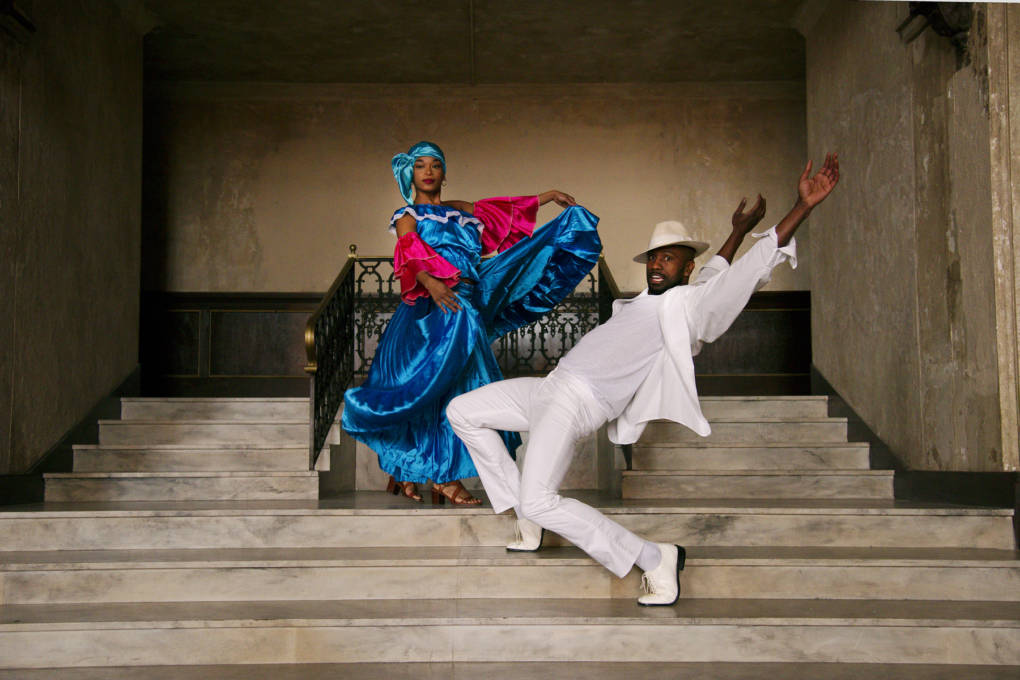
"caption": "Tahjanee Singleton of Alafia Dance Ensemble and Denmis Bain Savigne of Alayo Dance Company\nfor the 2018 CubaCaribe Festival (Photo: Andy Mogg)",
"description": null,
"title": "CubaCaribeFestival_Alayo&Alafia_AndyMogg",
"credit": null,
"status": "inherit",
"isLoading": false,
"fetchFailed": false
},
"arts_13847452": {
"type": "attachments",
"id": "arts_13847452",
"meta": {
"index": "attachments_1716263798",
"site": "arts",
"id": "13847452",
"found": true
},
"parent": 13833738,
"imgSizes": {
"twentyfourteen-full-width": {
"file": "https://ww2.kqed.org/app/uploads/sites/2/2018/05/ICCD_Oakland-1038x576.jpg",
"width": 1038,
"mimeType": "image/jpeg",
"height": 576
},
"thumbnail": {
"file": "https://ww2.kqed.org/app/uploads/sites/2/2018/05/ICCD_Oakland-160x90.jpg",
"width": 160,
"mimeType": "image/jpeg",
"height": 90
},
"post-thumbnail": {
"file": "https://ww2.kqed.org/app/uploads/sites/2/2018/05/ICCD_Oakland-672x372.jpg",
"width": 672,
"mimeType": "image/jpeg",
"height": 372
},
"kqedFullSize": {
"file": "https://ww2.kqed.org/app/uploads/sites/2/2018/05/ICCD_Oakland.jpg",
"width": 1920,
"height": 1079
},
"large": {
"file": "https://ww2.kqed.org/app/uploads/sites/2/2018/05/ICCD_Oakland-1020x573.jpg",
"width": 1020,
"mimeType": "image/jpeg",
"height": 573
},
"complete_open_graph": {
"file": "https://ww2.kqed.org/app/uploads/sites/2/2018/05/ICCD_Oakland-1200x674.jpg",
"width": 1200,
"mimeType": "image/jpeg",
"height": 674
},
"guest-author-50": {
"file": "https://ww2.kqed.org/app/uploads/sites/2/2018/05/ICCD_Oakland-50x50.jpg",
"width": 50,
"mimeType": "image/jpeg",
"height": 50
},
"guest-author-96": {
"file": "https://ww2.kqed.org/app/uploads/sites/2/2018/05/ICCD_Oakland-96x96.jpg",
"width": 96,
"mimeType": "image/jpeg",
"height": 96
},
"medium": {
"file": "https://ww2.kqed.org/app/uploads/sites/2/2018/05/ICCD_Oakland-800x450.jpg",
"width": 800,
"mimeType": "image/jpeg",
"height": 450
},
"guest-author-64": {
"file": "https://ww2.kqed.org/app/uploads/sites/2/2018/05/ICCD_Oakland-64x64.jpg",
"width": 64,
"mimeType": "image/jpeg",
"height": 64
},
"guest-author-32": {
"file": "https://ww2.kqed.org/app/uploads/sites/2/2018/05/ICCD_Oakland-32x32.jpg",
"width": 32,
"mimeType": "image/jpeg",
"height": 32
},
"full-width": {
"file": "https://ww2.kqed.org/app/uploads/sites/2/2018/05/ICCD_Oakland-1920x1079.jpg",
"width": 1920,
"mimeType": "image/jpeg",
"height": 1079
},
"detail": {
"file": "https://ww2.kqed.org/app/uploads/sites/2/2018/05/ICCD_Oakland-150x150.jpg",
"width": 150,
"mimeType": "image/jpeg",
"height": 150
},
"medium_large": {
"file": "https://ww2.kqed.org/app/uploads/sites/2/2018/05/ICCD_Oakland-768x432.jpg",
"width": 768,
"mimeType": "image/jpeg",
"height": 432
},
"guest-author-128": {
"file": "https://ww2.kqed.org/app/uploads/sites/2/2018/05/ICCD_Oakland-128x128.jpg",
"width": 128,
"mimeType": "image/jpeg",
"height": 128
}
},
"publishDate": 1545265247,
"modified": 1558569343,
"caption": "Dancer Frankie Lee Peterson III in Oakland, CA",
"description": "Dancer Frankie Lee Peterson III in Oakland, CA",
"title": "ICCD_Oakland",
"credit": null,
"status": "inherit",
"isLoading": false,
"fetchFailed": false
},
"arts_13847453": {
"type": "attachments",
"id": "arts_13847453",
"meta": {
"index": "attachments_1716263798",
"site": "arts",
"id": "13847453",
"found": true
},
"parent": 13833179,
"imgSizes": {
"twentyfourteen-full-width": {
"file": "https://ww2.kqed.org/app/uploads/sites/2/2018/05/ICCD_San_Jose-1038x576.jpg",
"width": 1038,
"mimeType": "image/jpeg",
"height": 576
},
"thumbnail": {
"file": "https://ww2.kqed.org/app/uploads/sites/2/2018/05/ICCD_San_Jose-160x90.jpg",
"width": 160,
"mimeType": "image/jpeg",
"height": 90
},
"post-thumbnail": {
"file": "https://ww2.kqed.org/app/uploads/sites/2/2018/05/ICCD_San_Jose-672x372.jpg",
"width": 672,
"mimeType": "image/jpeg",
"height": 372
},
"kqedFullSize": {
"file": "https://ww2.kqed.org/app/uploads/sites/2/2018/05/ICCD_San_Jose.jpg",
"width": 1920,
"height": 1079
},
"large": {
"file": "https://ww2.kqed.org/app/uploads/sites/2/2018/05/ICCD_San_Jose-1020x573.jpg",
"width": 1020,
"mimeType": "image/jpeg",
"height": 573
},
"complete_open_graph": {
"file": "https://ww2.kqed.org/app/uploads/sites/2/2018/05/ICCD_San_Jose-1200x674.jpg",
"width": 1200,
"mimeType": "image/jpeg",
"height": 674
},
"guest-author-50": {
"file": "https://ww2.kqed.org/app/uploads/sites/2/2018/05/ICCD_San_Jose-50x50.jpg",
"width": 50,
"mimeType": "image/jpeg",
"height": 50
},
"guest-author-96": {
"file": "https://ww2.kqed.org/app/uploads/sites/2/2018/05/ICCD_San_Jose-96x96.jpg",
"width": 96,
"mimeType": "image/jpeg",
"height": 96
},
"medium": {
"file": "https://ww2.kqed.org/app/uploads/sites/2/2018/05/ICCD_San_Jose-800x450.jpg",
"width": 800,
"mimeType": "image/jpeg",
"height": 450
},
"guest-author-64": {
"file": "https://ww2.kqed.org/app/uploads/sites/2/2018/05/ICCD_San_Jose-64x64.jpg",
"width": 64,
"mimeType": "image/jpeg",
"height": 64
},
"guest-author-32": {
"file": "https://ww2.kqed.org/app/uploads/sites/2/2018/05/ICCD_San_Jose-32x32.jpg",
"width": 32,
"mimeType": "image/jpeg",
"height": 32
},
"full-width": {
"file": "https://ww2.kqed.org/app/uploads/sites/2/2018/05/ICCD_San_Jose-1920x1079.jpg",
"width": 1920,
"mimeType": "image/jpeg",
"height": 1079
},
"detail": {
"file": "https://ww2.kqed.org/app/uploads/sites/2/2018/05/ICCD_San_Jose-150x150.jpg",
"width": 150,
"mimeType": "image/jpeg",
"height": 150
},
"medium_large": {
"file": "https://ww2.kqed.org/app/uploads/sites/2/2018/05/ICCD_San_Jose-768x432.jpg",
"width": 768,
"mimeType": "image/jpeg",
"height": 432
},
"guest-author-128": {
"file": "https://ww2.kqed.org/app/uploads/sites/2/2018/05/ICCD_San_Jose-128x128.jpg",
"width": 128,
"mimeType": "image/jpeg",
"height": 128
}
},
"publishDate": 1545265335,
"modified": 1558569278,
"caption": "Playboyz Inc. popping and strutting in San Jose, CA",
"description": "Playboyz Inc. popping and strutting in San Jose, CA",
"title": "ICCD_San_Jose",
"credit": null,
"status": "inherit",
"isLoading": false,
"fetchFailed": false
},
"arts_13847451": {
"type": "attachments",
"id": "arts_13847451",
"meta": {
"index": "attachments_1716263798",
"site": "arts",
"id": "13847451",
"found": true
},
"parent": 13832350,
"imgSizes": {
"small": {
"file": "https://ww2.kqed.org/app/uploads/sites/2/2018/05/ICCD_Baltimore-520x292.jpg",
"width": 520,
"mimeType": "image/jpeg",
"height": 292
},
"twentyfourteen-full-width": {
"file": "https://ww2.kqed.org/app/uploads/sites/2/2018/05/ICCD_Baltimore-1038x576.jpg",
"width": 1038,
"mimeType": "image/jpeg",
"height": 576
},
"thumbnail": {
"file": "https://ww2.kqed.org/app/uploads/sites/2/2018/05/ICCD_Baltimore-160x90.jpg",
"width": 160,
"mimeType": "image/jpeg",
"height": 90
},
"fd-sm": {
"file": "https://ww2.kqed.org/app/uploads/sites/2/2018/05/ICCD_Baltimore-960x540.jpg",
"width": 960,
"mimeType": "image/jpeg",
"height": 540
},
"post-thumbnail": {
"file": "https://ww2.kqed.org/app/uploads/sites/2/2018/05/ICCD_Baltimore-672x372.jpg",
"width": 672,
"mimeType": "image/jpeg",
"height": 372
},
"xsmall": {
"file": "https://ww2.kqed.org/app/uploads/sites/2/2018/05/ICCD_Baltimore-375x211.jpg",
"width": 375,
"mimeType": "image/jpeg",
"height": 211
},
"kqedFullSize": {
"file": "https://ww2.kqed.org/app/uploads/sites/2/2018/05/ICCD_Baltimore.jpg",
"width": 1920,
"height": 1079
},
"large": {
"file": "https://ww2.kqed.org/app/uploads/sites/2/2018/05/ICCD_Baltimore-1020x573.jpg",
"width": 1020,
"mimeType": "image/jpeg",
"height": 573
},
"xlarge": {
"file": "https://ww2.kqed.org/app/uploads/sites/2/2018/05/ICCD_Baltimore-1180x663.jpg",
"width": 1180,
"mimeType": "image/jpeg",
"height": 663
},
"complete_open_graph": {
"file": "https://ww2.kqed.org/app/uploads/sites/2/2018/05/ICCD_Baltimore-1200x674.jpg",
"width": 1200,
"mimeType": "image/jpeg",
"height": 674
},
"guest-author-50": {
"file": "https://ww2.kqed.org/app/uploads/sites/2/2018/05/ICCD_Baltimore-50x50.jpg",
"width": 50,
"mimeType": "image/jpeg",
"height": 50
},
"guest-author-96": {
"file": "https://ww2.kqed.org/app/uploads/sites/2/2018/05/ICCD_Baltimore-96x96.jpg",
"width": 96,
"mimeType": "image/jpeg",
"height": 96
},
"medium": {
"file": "https://ww2.kqed.org/app/uploads/sites/2/2018/05/ICCD_Baltimore-800x450.jpg",
"width": 800,
"mimeType": "image/jpeg",
"height": 450
},
"guest-author-64": {
"file": "https://ww2.kqed.org/app/uploads/sites/2/2018/05/ICCD_Baltimore-64x64.jpg",
"width": 64,
"mimeType": "image/jpeg",
"height": 64
},
"guest-author-32": {
"file": "https://ww2.kqed.org/app/uploads/sites/2/2018/05/ICCD_Baltimore-32x32.jpg",
"width": 32,
"mimeType": "image/jpeg",
"height": 32
},
"fd-lrg": {
"file": "https://ww2.kqed.org/app/uploads/sites/2/2018/05/ICCD_Baltimore-1920x1079.jpg",
"width": 1920,
"mimeType": "image/jpeg",
"height": 1079
},
"fd-med": {
"file": "https://ww2.kqed.org/app/uploads/sites/2/2018/05/ICCD_Baltimore-1180x663.jpg",
"width": 1180,
"mimeType": "image/jpeg",
"height": 663
},
"full-width": {
"file": "https://ww2.kqed.org/app/uploads/sites/2/2018/05/ICCD_Baltimore-1920x1079.jpg",
"width": 1920,
"mimeType": "image/jpeg",
"height": 1079
},
"detail": {
"file": "https://ww2.kqed.org/app/uploads/sites/2/2018/05/ICCD_Baltimore-150x150.jpg",
"width": 150,
"mimeType": "image/jpeg",
"height": 150
},
"medium_large": {
"file": "https://ww2.kqed.org/app/uploads/sites/2/2018/05/ICCD_Baltimore-768x432.jpg",
"width": 768,
"mimeType": "image/jpeg",
"height": 432
},
"guest-author-128": {
"file": "https://ww2.kqed.org/app/uploads/sites/2/2018/05/ICCD_Baltimore-128x128.jpg",
"width": 128,
"mimeType": "image/jpeg",
"height": 128
},
"xxsmall": {
"file": "https://ww2.kqed.org/app/uploads/sites/2/2018/05/ICCD_Baltimore-240x135.jpg",
"width": 240,
"mimeType": "image/jpeg",
"height": 135
}
},
"publishDate": 1545265133,
"modified": 1558568962,
"caption": "Terry Wedington (aka TSU Terry) in Baltimore",
"description": "Terry Wedington (aka TSU Terry) in Baltimore",
"title": "ICCD_Baltimore",
"credit": null,
"status": "inherit",
"isLoading": false,
"fetchFailed": false
}
},
"audioPlayerReducer": {
"postId": "stream_live",
"isPaused": true,
"isPlaying": false,
"pfsActive": false,
"pledgeModalIsOpen": true,
"playerDrawerIsOpen": false,
"liveAudioPlayStartedAt": 0,
"liveAudioPlayContext": ""
},
"authorsReducer": {
"byline_arts_13833738": {
"type": "authors",
"id": "byline_arts_13833738",
"meta": {
"override": true
},
"slug": "byline_arts_13833738",
"name": "Kelly Whalen, Claudia Escobar and Jessica Jones",
"isLoading": false
},
"byline_arts_13832350": {
"type": "authors",
"id": "byline_arts_13832350",
"meta": {
"override": true
},
"slug": "byline_arts_13832350",
"name": "Jessica Jones",
"isLoading": false
},
"gmeline": {
"type": "authors",
"id": "185",
"meta": {
"index": "authors_1716337520",
"id": "185",
"found": true
},
"name": "Gabe Meline",
"firstName": "Gabe",
"lastName": "Meline",
"slug": "gmeline",
"email": "gmeline@kqed.org",
"display_author_email": true,
"staff_mastheads": [
"arts"
],
"title": "Senior Editor, KQED Arts & Culture",
"bio": "Gabe Meline entered journalism at age 15 making photocopied zines, and has since earned awards from the Edward R. Murrow Awards, the Society for Professional Journalists, the Online Journalism Awards, the Association of Alternative Newsweeklies and the California Newspaper Publishers Association. Prior to KQED, he was the editor of the \u003cem>North Bay Bohemian\u003c/em> and a touring musician. He lives with his wife and daughter in his hometown of Santa Rosa, CA.",
"avatar": "https://secure.gravatar.com/avatar/5bebe57be0d8bc2dd318934feb47299e2d2d10cba28d09d8d7afb389a2ce2bdd?s=600&d=blank&r=g",
"twitter": null,
"bluesky": null,
"facebook": null,
"instagram": null,
"linkedin": null,
"sites": [
{
"site": "",
"roles": [
"editor"
]
},
{
"site": "arts",
"roles": [
"administrator"
]
},
{
"site": "artschool",
"roles": [
"editor"
]
},
{
"site": "news",
"roles": [
"author"
]
},
{
"site": "pop",
"roles": [
"editor"
]
},
{
"site": "bayareabites",
"roles": [
"editor"
]
},
{
"site": "food",
"roles": [
"editor"
]
},
{
"site": "forum",
"roles": [
"administrator"
]
},
{
"site": "liveblog",
"roles": [
"editor"
]
},
{
"site": "hiphop",
"roles": [
"editor"
]
}
],
"headData": {
"title": "Gabe Meline | KQED",
"description": "Senior Editor, KQED Arts & Culture",
"ogImgSrc": "https://secure.gravatar.com/avatar/5bebe57be0d8bc2dd318934feb47299e2d2d10cba28d09d8d7afb389a2ce2bdd?s=600&d=blank&r=g",
"twImgSrc": "https://secure.gravatar.com/avatar/5bebe57be0d8bc2dd318934feb47299e2d2d10cba28d09d8d7afb389a2ce2bdd?s=600&d=blank&r=g"
},
"isLoading": false,
"link": "/author/gmeline"
},
"rachael-myrow": {
"type": "authors",
"id": "251",
"meta": {
"index": "authors_1716337520",
"id": "251",
"found": true
},
"name": "Rachael Myrow",
"firstName": "Rachael",
"lastName": "Myrow",
"slug": "rachael-myrow",
"email": "rmyrow@kqed.org",
"display_author_email": true,
"staff_mastheads": [
"news"
],
"title": "Senior Editor of KQED's Silicon Valley News Desk",
"bio": "• I write and edit stories about how Silicon Valley power and policies shape everyday life in California. I’m also passionate about making Bay Area history and culture more accessible to a broad public. • I’ve been a journalist for most of my life, starting in high school with The Franklin Press in Los Angeles, where I grew up. While earning my first degree in English at UC Berkeley, I got my start in public radio at KALX-FM. After completing a second degree in journalism at Cal, I landed my first professional job at Marketplace, then moved on to KPCC (now LAist), and then KQED, where I hosted The California Report for more than seven years. • My reporting has appeared on NPR, The World, WBUR’s \u003ci>Here & Now\u003c/i>, and the BBC. I also guest host for KQED’s \u003ci>Forum\u003c/i>, as well as the Commonwealth Club in San Francisco. • I speak periodically on media, democracy and technology issues, and do voiceover work for documentaries and educational video projects. • Outside of the studio, you'll find me hiking Bay Area trails and whipping up Insta-ready meals in my kitchen. • I do not accept gifts, money, or favors from anyone connected to my reporting, I don't pay people for information, and I do not support or donate to political causes. • I strive to treat the people I report on with fairness, honesty, and respect. I also recognize there are often multiple sides to a story and work to verify information through multiple sources and documentation. If I get something wrong, I correct it.",
"avatar": "https://secure.gravatar.com/avatar/3ed8a3c5f26025e4a805ba634cda8cd764906b97438a6d9ce216b044e340da4e?s=600&d=blank&r=g",
"twitter": "rachaelmyrow",
"bluesky": null,
"facebook": null,
"instagram": null,
"linkedin": "https://www.linkedin.com/in/rachaelmyrow/",
"sites": [
{
"site": "arts",
"roles": [
"administrator"
]
},
{
"site": "news",
"roles": [
"edit_others_posts",
"editor"
]
},
{
"site": "futureofyou",
"roles": [
"editor"
]
},
{
"site": "bayareabites",
"roles": [
"editor"
]
},
{
"site": "stateofhealth",
"roles": [
"editor"
]
},
{
"site": "science",
"roles": [
"editor"
]
},
{
"site": "food",
"roles": [
"editor"
]
},
{
"site": "forum",
"roles": [
"editor"
]
},
{
"site": "liveblog",
"roles": [
"author"
]
}
],
"headData": {
"title": "Rachael Myrow | KQED",
"description": "Senior Editor of KQED's Silicon Valley News Desk",
"ogImgSrc": "https://secure.gravatar.com/avatar/3ed8a3c5f26025e4a805ba634cda8cd764906b97438a6d9ce216b044e340da4e?s=600&d=blank&r=g",
"twImgSrc": "https://secure.gravatar.com/avatar/3ed8a3c5f26025e4a805ba634cda8cd764906b97438a6d9ce216b044e340da4e?s=600&d=blank&r=g"
},
"isLoading": false,
"link": "/author/rachael-myrow"
},
"kwhalen": {
"type": "authors",
"id": "3248",
"meta": {
"index": "authors_1716337520",
"id": "3248",
"found": true
},
"name": "Kelly Whalen",
"firstName": "Kelly",
"lastName": "Whalen",
"slug": "kwhalen",
"email": "kwhalen@kqed.org",
"display_author_email": false,
"staff_mastheads": [],
"title": "Senior Video Producer",
"bio": "Kelly Whalen is a filmmaker and educator who directs and produces social justice documentaries and award-winning arts and culture web series. She is the creator of KQED Arts’ three-time Webby Award-winning YouTube series \u003cem>If Cities Could Dance\u003c/em>, featuring dancers across the country representing their cities’ signature moves, and the director of \u003cem>When the Waters Get Deep\u003c/em>, a documentary about Oakland-based artists SOL Development and their work toward healing their communities’ trauma from gun violence.",
"avatar": "https://secure.gravatar.com/avatar/1a2b57e8a13abdcfc3d4966d9c0e1512?s=600&d=blank&r=g",
"twitter": "kellyfilmmaker",
"facebook": null,
"instagram": null,
"linkedin": null,
"sites": [
{
"site": "arts",
"roles": [
"subscriber"
]
}
],
"headData": {
"title": "Kelly Whalen | KQED",
"description": "Senior Video Producer",
"ogImgSrc": "https://secure.gravatar.com/avatar/1a2b57e8a13abdcfc3d4966d9c0e1512?s=600&d=blank&r=g",
"twImgSrc": "https://secure.gravatar.com/avatar/1a2b57e8a13abdcfc3d4966d9c0e1512?s=600&d=blank&r=g"
},
"isLoading": false,
"link": "/author/kwhalen"
},
"slefebvre": {
"type": "authors",
"id": "11091",
"meta": {
"index": "authors_1716337520",
"id": "11091",
"found": true
},
"name": "Sam Lefebvre",
"firstName": "Sam",
"lastName": "Lefebvre",
"slug": "slefebvre",
"email": "sdlefebvre@gmail.com",
"display_author_email": false,
"staff_mastheads": [],
"title": "KQED Contributor",
"bio": "Sam Lefebvre is an award-winning reporter at KQED Arts. He has worked as an editor and columnist at the \u003cem>East Bay Express\u003c/em>, \u003cem>SF Weekly \u003c/em>and Impose Magazine, and his journalism and criticism has appeared in \u003cem>The New York Times\u003c/em>, the Guardian and Pitchfork.",
"avatar": "https://secure.gravatar.com/avatar/49d39b42930b77fb13784ddd9fa63fe780666b71bf289368509dba576b64e69b?s=600&d=blank&r=g",
"twitter": "Lefebvre_Sam",
"bluesky": null,
"facebook": null,
"instagram": null,
"linkedin": null,
"sites": [
{
"site": "arts",
"roles": [
"subscriber"
]
},
{
"site": "news",
"roles": [
"author"
]
}
],
"headData": {
"title": "Sam Lefebvre | KQED",
"description": "KQED Contributor",
"ogImgSrc": "https://secure.gravatar.com/avatar/49d39b42930b77fb13784ddd9fa63fe780666b71bf289368509dba576b64e69b?s=600&d=blank&r=g",
"twImgSrc": "https://secure.gravatar.com/avatar/49d39b42930b77fb13784ddd9fa63fe780666b71bf289368509dba576b64e69b?s=600&d=blank&r=g"
},
"isLoading": false,
"link": "/author/slefebvre"
},
"cescoda": {
"type": "authors",
"id": "11206",
"meta": {
"index": "authors_1716337520",
"id": "11206",
"found": true
},
"name": "Carla Escoda",
"firstName": "Carla",
"lastName": "Escoda",
"slug": "cescoda",
"email": "ballettothepeople@gmail.com",
"display_author_email": false,
"staff_mastheads": [],
"title": null,
"bio": "Carla can most often be found in theatres, airports and on airplanes, writing about dance and the arts for various websites whenever she can find wi-fi. Her blog Ballet to the People<\u003ca href=\"http://ballettothepeople.com/\" target=\"_blank\" rel=\"noreferrer\">http://\u003cwbr />ballettothepeople.com\u003c/a>> has become a street corner where dance-lovers enjoy loitering and plotting the revolution which will renew the populist roots of ballet.\r\n\u003cspan class=\"im\">\r\nIn her previous lives, Carla worked in scientific research, then in project finance in Asia. Prior to that, she trained as a ballet and modern dancer, and performed with the Yaledancers while getting her undergraduate degrees in Engineering and Applied Science and French Literature, and her graduate degree in Engineering.\u003c/span>",
"avatar": "https://secure.gravatar.com/avatar/3a012eb3749d4353e3e28aab414dd815?s=600&d=blank&r=g",
"twitter": null,
"facebook": null,
"instagram": null,
"linkedin": null,
"sites": [
{
"site": "arts",
"roles": [
"author"
]
}
],
"headData": {
"title": "Carla Escoda | KQED",
"description": null,
"ogImgSrc": "https://secure.gravatar.com/avatar/3a012eb3749d4353e3e28aab414dd815?s=600&d=blank&r=g",
"twImgSrc": "https://secure.gravatar.com/avatar/3a012eb3749d4353e3e28aab414dd815?s=600&d=blank&r=g"
},
"isLoading": false,
"link": "/author/cescoda"
},
"nvoynovskaya": {
"type": "authors",
"id": "11387",
"meta": {
"index": "authors_1716337520",
"id": "11387",
"found": true
},
"name": "Nastia Voynovskaya",
"firstName": "Nastia",
"lastName": "Voynovskaya",
"slug": "nvoynovskaya",
"email": "nvoynovskaya@kqed.org",
"display_author_email": false,
"staff_mastheads": [
"arts"
],
"title": "Editor and reporter",
"bio": "Nastia Voynovskaya is a reporter, editor and host at KQED Arts & Culture. She's been covering the arts in the Bay Area for over a decade, with a focus on music, queer culture, labor issues and grassroots organizing. She has edited KQED story series such as Trans Bay: A History of San Francisco's Gender-Diverse Community, and co-created KQED's Bay Area hip-hop history project, That's My Word. Nastia's work has been recognized by the Society of Professional Journalists and San Francisco Press Club. She regularly appears on podcasts and radio programs, including NPR's All Songs Considered, and hosts live events where music, culture and conversation meet.",
"avatar": "https://secure.gravatar.com/avatar/5025ee460e5a85d69ca20ea6c6f2f80d7e17795c828f61ea3aecfcd924e9042e?s=600&d=blank&r=g",
"twitter": null,
"bluesky": null,
"facebook": null,
"instagram": "https://www.instagram.com/nananastia/",
"linkedin": null,
"sites": [
{
"site": "",
"roles": [
"editor"
]
},
{
"site": "arts",
"roles": [
"administrator"
]
},
{
"site": "news",
"roles": [
"editor"
]
},
{
"site": "pop",
"roles": [
"administrator"
]
},
{
"site": "bayareabites",
"roles": [
"editor"
]
},
{
"site": "podcasts",
"roles": [
"editor"
]
},
{
"site": "hiphop",
"roles": [
"editor"
]
}
],
"headData": {
"title": "Nastia Voynovskaya | KQED",
"description": "Editor and reporter",
"ogImgSrc": "https://secure.gravatar.com/avatar/5025ee460e5a85d69ca20ea6c6f2f80d7e17795c828f61ea3aecfcd924e9042e?s=600&d=blank&r=g",
"twImgSrc": "https://secure.gravatar.com/avatar/5025ee460e5a85d69ca20ea6c6f2f80d7e17795c828f61ea3aecfcd924e9042e?s=600&d=blank&r=g"
},
"isLoading": false,
"link": "/author/nvoynovskaya"
},
"mreeves": {
"type": "authors",
"id": "11855",
"meta": {
"index": "authors_1716337520",
"id": "11855",
"found": true
},
"name": "Mosi Reeves",
"firstName": "Mosi",
"lastName": "Reeves",
"slug": "mreeves",
"email": "infamous30@gmail.com",
"display_author_email": false,
"staff_mastheads": [],
"title": "KQED Contributor",
"bio": "Mosi Reeves is a journalist and cultural critic based in Oakland, California. In addition to KQED, his work has appeared in \u003cem>Rolling Stone\u003c/em>, \u003cem>The Wire\u003c/em>, Pitchfork, \u003cem>Billboard\u003c/em>, and Grammy.com.",
"avatar": "https://secure.gravatar.com/avatar/6f376003ca1cf7a873edc107f5f331f1?s=600&d=blank&r=g",
"twitter": null,
"facebook": null,
"instagram": null,
"linkedin": null,
"sites": [
{
"site": "arts",
"roles": [
"contributor"
]
},
{
"site": "pop",
"roles": [
"contributor"
]
}
],
"headData": {
"title": "Mosi Reeves | KQED",
"description": "KQED Contributor",
"ogImgSrc": "https://secure.gravatar.com/avatar/6f376003ca1cf7a873edc107f5f331f1?s=600&d=blank&r=g",
"twImgSrc": "https://secure.gravatar.com/avatar/6f376003ca1cf7a873edc107f5f331f1?s=600&d=blank&r=g"
},
"isLoading": false,
"link": "/author/mreeves"
}
},
"pagesReducer": {
"arts_tag_dance": {
"type": "terms",
"id": "arts_879",
"meta": {
"index": "terms_1716263798",
"site": "arts",
"id": "879",
"score": 8.283273
},
"featImg": null,
"name": "dance",
"description": "Covering dance events in the Bay Area and more.",
"taxonomy": "tag",
"headData": {
"twImgId": null,
"twTitle": null,
"ogTitle": null,
"ogImgId": null,
"twDescription": null,
"description": "Covering dance events in the Bay Area and more.",
"title": "dance Archives | KQED Arts",
"ogDescription": null
},
"ttid": 897,
"slug": "dance",
"isLoading": false,
"title": "dance",
"pageMeta": {
"site": "arts",
"WpPageTemplate": "page-topic-editorial",
"currentPage": 11
},
"blocks": [
{
"blockName": "kqed/company-paragraph",
"content": "Covering dance events in the Bay Area and more."
},
{
"blockName": "kqed/post-list",
"attrs": {
"layout": "cardArticle2",
"query": "posts/arts?tag=dance",
"seeMore": false,
"paginated": true,
"page": 11
}
},
{
"blockName": "kqed/ad"
}
]
}
},
"pfsSessionReducer": {},
"postsReducer": {
"stream_live": {
"type": "live",
"id": "stream_live",
"audioUrl": "https://streams.kqed.org/kqedradio",
"title": "Live Stream",
"excerpt": "Live Stream information currently unavailable.",
"link": "/radio",
"featImg": "",
"label": {
"name": "KQED Live",
"link": "/"
}
},
"stream_kqedNewscast": {
"type": "posts",
"id": "stream_kqedNewscast",
"audioUrl": "https://www.kqed.org/.stream/anon/radio/RDnews/newscast.mp3?_=1",
"title": "KQED Newscast",
"featImg": "",
"label": {
"name": "88.5 FM",
"link": "/"
}
},
"arts_13843480": {
"type": "posts",
"id": "arts_13843480",
"meta": {
"index": "posts_1716263798",
"site": "arts",
"id": "13843480",
"score": null,
"sort": [
1540429016000
]
},
"parent": 0,
"labelTerm": {
"site": "arts",
"term": 140
},
"blocks": [],
"publishDate": 1540429016,
"format": "standard",
"title": "Five Bay Area Halloween Parties Where You Can Dance Until the Witching Hour",
"headTitle": "Five Bay Area Halloween Parties Where You Can Dance Until the Witching Hour | KQED",
"content": "\u003cp>I’m a firm believer that no one is too old to celebrate Halloween. I trick-or-treated until I was at least 14, and even now that I’m a tax-paying adult with a nine-to-five, I still insist on dressing up every year, visiting a haunted house or two and, of course, hitting up the many Halloween-themed dance parties the Bay Area has to offer.\u003c/p>\n\u003cp>For those who want to dress in their spooky best and dance until the witching hour, we’ve rounded up five Bay Area dance parties not to miss.\u003c/p>\n\u003cp>https://youtu.be/Fw5jn1xrfnY\u003c/p>\n\u003cp>\u003cstrong>\u003ca href=\"https://www.facebook.com/events/1962165860747599/\" target=\"_blank\" rel=\"noopener\">Bay Area Vogue Nights: The Afterlife\u003c/a>, Oct. 25\u003c/strong>\u003cbr>\n\u003cstrong>Public Works, San Francisco\u003c/strong>\u003c/p>\n\u003cp>Party crew Swagger Like Us throws some of the most fun LGBTQ dance parties in the Bay Area, and for Halloween, they’re taking it up a notch with a vogue ball that pays homage to deceased queer icons. For those who don’t know, vogue balls are part runway shows, part dance competitions, where contestants bust their best moves and strike their hottest poses while dressed in the fiercest finery. Each category in this year’s ball is open to all gender identities and expressions, and each pays homage to a different departed LGBTQ icon, including Marsha P. Johnson, Keith Haring, Alexander McQueen and Frida Kahlo. Sir JoQ, who starred in KQED Arts’ San Francisco episode of \u003cem>If Cities Could Dance\u003c/em>, is one of the featured dancers.\u003c/p>\n\u003cp>[ad fullwidth]\u003c/p>\n\u003cp>https://youtu.be/E5KjboBraOM\u003c/p>\n\u003cp>\u003cstrong>\u003ca href=\"http://www.uptownnightclub.com/\" target=\"_blank\" rel=\"noopener\">The Purple Ones Halloween Crystal Ball\u003c/a>, Oct. 26\u003cbr>\nThe Uptown, Oakland\u003c/strong>\u003c/p>\n\u003cp>Prince visits from the beyond at The Purple Ones’ Halloween Crystal Ball, starring the 11-piece Prince tribute band with a full horn section. Prince’s timeless music is by no means scary, but Halloween can be a time for reflecting on those who’ve passed, especially if you celebrate Día de los Muertos. Plus, he had so many iconic looks—use this event as an excuse to raid your closet for a Prince-inspired costume.\u003c/p>\n\u003cp>[soundcloud url=”https://api.soundcloud.com/tracks/151943908″ params=”color=#ff5500&auto_play=false&hide_related=false&show_comments=true&show_user=true&show_reposts=false&show_teaser=true” width=”100%” height=”166″ iframe=”true” /]\u003c/p>\n\u003cp>\u003cstrong>\u003ca href=\"https://www.eventbrite.com/e/bollywood-halloween-party-tickets-50840694887?aff=ebdssbdestsearch\" target=\"_blank\" rel=\"noopener\">Bollywood Halloween\u003c/a>, Oct. 26\u003cbr>\nBack Bar, San Jose\u003c/strong>\u003c/p>\n\u003cp>Desi party crew BollyTadka’s Halloween party is all about Bollywood, Top 40 and bhangra, the upbeat Indian dance genre that’s frequently remixed with Western pop, hip-hop and EDM. DJ Aalok spins all night, and costumes are encouraged.\u003c/p>\n\u003cp>[soundcloud url=”https://api.soundcloud.com/playlists/629804835″ params=”color=#ff5500&auto_play=false&hide_related=false&show_comments=true&show_user=true&show_reposts=false&show_teaser=true” width=”100%” height=”450″ iframe=”true” /]\u003c/p>\n\u003cp>\u003cstrong>\u003ca href=\"https://legionnairesaloon.com/calendar\" target=\"_blank\" rel=\"noopener\">Demboween 2050\u003c/a>, Oct. 27\u003cbr>\nThe Legionnaire Saloon, Oakland\u003c/strong>\u003c/p>\n\u003cp>Reggaeton is getting pretty popular in the U.S. thanks to Cardi B’s collaborations with Puerto Rican stars Ozuna and Bad Bunny, but stateside fans may be less familiar with the genre’s freakier cousin from the Dominican Republic: dembow. Think faster tempos, twerk-worthy beats and extremely animated Spanish rapping. Oakland’s Legionnaire Saloon hosts a special edition of the Latin dance party Muevelo Muevelo called Demboween 2050, featuring DJs Radical One, Rayreck and Namaste Shawty. It’s likely to get sweaty.\u003c/p>\n\u003cfigure id=\"attachment_11260344\" class=\"wp-caption aligncenter\" style=\"max-width: 800px\">\u003cimg loading=\"lazy\" decoding=\"async\" class=\"size-medium wp-image-11260344\" src=\"https://ww2.kqed.org/arts/wp-content/uploads/sites/2/2016/01/Spice-Girls-fast-lane-magazine-800x450.jpg\" alt=\"\" width=\"800\" height=\"450\" srcset=\"https://cdn.kqed.org/wp-content/uploads/sites/2/2016/01/Spice-Girls-fast-lane-magazine-800x450.jpg 800w, https://cdn.kqed.org/wp-content/uploads/sites/2/2016/01/Spice-Girls-fast-lane-magazine-400x225.jpg 400w, https://cdn.kqed.org/wp-content/uploads/sites/2/2016/01/Spice-Girls-fast-lane-magazine-768x432.jpg 768w, https://cdn.kqed.org/wp-content/uploads/sites/2/2016/01/Spice-Girls-fast-lane-magazine-1180x664.jpg 1180w, https://cdn.kqed.org/wp-content/uploads/sites/2/2016/01/Spice-Girls-fast-lane-magazine.jpg 1920w, https://cdn.kqed.org/wp-content/uploads/sites/2/2016/01/Spice-Girls-fast-lane-magazine-960x540.jpg 960w\" sizes=\"(max-width: 800px) 100vw, 800px\">\u003cfigcaption class=\"wp-caption-text\">The Spice Girls.\u003c/figcaption>\u003c/figure>\n\u003cp>\u003cstrong>Halloween Covers Show at the Phoenix, Oct. 27\u003cbr>\nPhoenix Theater, Petaluma\u003c/strong>\u003c/p>\n\u003cp>Much like dressing up as your favorite celebrity, cover bands are a timeworn Halloween tradition. Petaluma’s Phoenix Theater has a show to get your nostalgia juices flowing, featuring homages to Sublime, Third Eye Blind, The Spice Girls, Lana Del Rey, My Chemical Romance, Ace of Bass, The Cranberries, Talking Heads and even the fictional band Sex Bob-omb from the movie \u003cem>Scott Pilgrim\u003c/em>. The lineup should provide plenty of costume inspiration for those still looking.\u003c/p>\n\u003cp>https://youtu.be/QhyV-uZi-IY\u003c/p>\n\u003cp>\u003cstrong>\u003ca href=\"https://www.eventbrite.com/e/17th-annual-murder-ballads-bash-the-starry-plough-pub-tickets-50656959329\" target=\"_blank\" rel=\"noopener\">17th Annual Murder Ballads Bash\u003c/a>, Oct. 27\u003cbr>\nThe Starry Plough, Berkeley\u003c/strong>\u003c/p>\n\u003cp>\u003c/p>\n\u003cp>\u003ca href=\"https://www.rollingstone.com/music/music-country-lists/killer-songs-the-10-creepiest-country-murder-ballads-151986/dixie-chicks-goodbye-earl-88152/\" target=\"_blank\" rel=\"noopener\">Crimes of passion\u003c/a> have long been lyrical fodder for folk and country music. So fittingly, every Halloween weekend for the past 17 years, Berkeley folk music venue The Starry Plough has hosted their Murder Ballads Bash. The evening promises music about murder, misery, death and despair and features Loretta Lynch, The Happy Clams, Nellie Bly, Dizzy Twin, Geoff Pond Ensemble (with Connie Champagne), Buried at Sea, Skye Alexander, Luther Monday, 3 Drink Circus, Manson Family and Zack the Sound Guy. There will also be a costume contest.\u003c/p>\n\n",
"stats": {
"hasVideo": false,
"hasChartOrMap": false,
"hasAudio": false,
"hasPolis": false,
"wordCount": 780,
"hasGoogleForm": false,
"hasGallery": false,
"hasHearkenModule": false,
"iframeSrcs": [],
"paragraphCount": 18
},
"modified": 1705027097,
"excerpt": "A vogue ball, a Prince tribute show, a dembow dance party and more places to party this Halloween weekend. ",
"headData": {
"twImgId": "",
"twTitle": "",
"ogTitle": "",
"ogImgId": "",
"twDescription": "",
"description": "A vogue ball, a Prince tribute show, a dembow dance party and more places to party this Halloween weekend. ",
"title": "Five Bay Area Halloween Parties Where You Can Dance Until the Witching Hour | KQED",
"ogDescription": "",
"schema": {
"@context": "https://schema.org",
"@type": "Article",
"headline": "Five Bay Area Halloween Parties Where You Can Dance Until the Witching Hour",
"datePublished": "2018-10-24T17:56:56-07:00",
"dateModified": "2024-01-11T18:38:17-08:00",
"image": "https://cdn.kqed.org/wp-content/uploads/2020/02/KQED-OG-Image@1x.png"
}
},
"guestAuthors": [],
"slug": "five-bay-area-halloween-parties-where-you-can-dance-until-the-witching-hour",
"status": "publish",
"sticky": false,
"path": "/arts/13843480/five-bay-area-halloween-parties-where-you-can-dance-until-the-witching-hour",
"audioTrackLength": null,
"parsedContent": [
{
"type": "contentString",
"content": "\u003cdiv class=\"post-body\">\u003cp>\u003cp>I’m a firm believer that no one is too old to celebrate Halloween. I trick-or-treated until I was at least 14, and even now that I’m a tax-paying adult with a nine-to-five, I still insist on dressing up every year, visiting a haunted house or two and, of course, hitting up the many Halloween-themed dance parties the Bay Area has to offer.\u003c/p>\n\u003cp>For those who want to dress in their spooky best and dance until the witching hour, we’ve rounded up five Bay Area dance parties not to miss.\u003c/p>\u003c/p>\u003cp>\u003cspan class='utils-parseShortcode-shortcodes-__youtubeShortcode__embedYoutube'>\n \u003cspan class='utils-parseShortcode-shortcodes-__youtubeShortcode__embedYoutubeInside'>\n \u003ciframe\n loading='lazy'\n class='utils-parseShortcode-shortcodes-__youtubeShortcode__youtubePlayer'\n type='text/html'\n src='//www.youtube.com/embed/Fw5jn1xrfnY'\n title='//www.youtube.com/embed/Fw5jn1xrfnY'\n allowfullscreen='true'\n style='border:0;'>\u003c/iframe>\n \u003c/span>\n \u003c/span>\u003c/p>\u003cp>\u003cp>\u003cstrong>\u003ca href=\"https://www.facebook.com/events/1962165860747599/\" target=\"_blank\" rel=\"noopener\">Bay Area Vogue Nights: The Afterlife\u003c/a>, Oct. 25\u003c/strong>\u003cbr>\n\u003cstrong>Public Works, San Francisco\u003c/strong>\u003c/p>\n\u003cp>Party crew Swagger Like Us throws some of the most fun LGBTQ dance parties in the Bay Area, and for Halloween, they’re taking it up a notch with a vogue ball that pays homage to deceased queer icons. For those who don’t know, vogue balls are part runway shows, part dance competitions, where contestants bust their best moves and strike their hottest poses while dressed in the fiercest finery. Each category in this year’s ball is open to all gender identities and expressions, and each pays homage to a different departed LGBTQ icon, including Marsha P. Johnson, Keith Haring, Alexander McQueen and Frida Kahlo. Sir JoQ, who starred in KQED Arts’ San Francisco episode of \u003cem>If Cities Could Dance\u003c/em>, is one of the featured dancers.\u003c/p>\n\u003cp>\u003c/p>\u003c/div>",
"attributes": {
"named": {},
"numeric": []
}
},
{
"type": "component",
"content": "",
"name": "ad",
"attributes": {
"named": {
"label": "fullwidth"
},
"numeric": [
"fullwidth"
]
}
},
{
"type": "contentString",
"content": "\u003cdiv class=\"post-body\">\u003cp>\u003c/p>\u003c/p>\u003cp>\u003cspan class='utils-parseShortcode-shortcodes-__youtubeShortcode__embedYoutube'>\n \u003cspan class='utils-parseShortcode-shortcodes-__youtubeShortcode__embedYoutubeInside'>\n \u003ciframe\n loading='lazy'\n class='utils-parseShortcode-shortcodes-__youtubeShortcode__youtubePlayer'\n type='text/html'\n src='//www.youtube.com/embed/E5KjboBraOM'\n title='//www.youtube.com/embed/E5KjboBraOM'\n allowfullscreen='true'\n style='border:0;'>\u003c/iframe>\n \u003c/span>\n \u003c/span>\u003c/p>\u003cp>\u003cp>\u003cstrong>\u003ca href=\"http://www.uptownnightclub.com/\" target=\"_blank\" rel=\"noopener\">The Purple Ones Halloween Crystal Ball\u003c/a>, Oct. 26\u003cbr>\nThe Uptown, Oakland\u003c/strong>\u003c/p>\n\u003cp>Prince visits from the beyond at The Purple Ones’ Halloween Crystal Ball, starring the 11-piece Prince tribute band with a full horn section. Prince’s timeless music is by no means scary, but Halloween can be a time for reflecting on those who’ve passed, especially if you celebrate Día de los Muertos. Plus, he had so many iconic looks—use this event as an excuse to raid your closet for a Prince-inspired costume.\u003c/p>\n\u003cp>\u003c/p>\u003cp>\u003cdiv class='utils-parseShortcode-shortcodes-__shortcodes__shortcodeWrapper'>\n \u003ciframe width='”100%”' height='”166″'\n scrolling='no' frameborder='no'\n src='https://w.soundcloud.com/player/?url=”https://api.soundcloud.com/tracks/151943908″&visual=true&”color=#ff5500&auto_play=false&hide_related=false&show_comments=true&show_user=true&show_reposts=false&show_teaser=true”'\n title='”https://api.soundcloud.com/tracks/151943908″'>\n \u003c/iframe>\n \u003c/div>\u003c/p>\u003cp>\u003c/p>\n\u003cp>\u003cstrong>\u003ca href=\"https://www.eventbrite.com/e/bollywood-halloween-party-tickets-50840694887?aff=ebdssbdestsearch\" target=\"_blank\" rel=\"noopener\">Bollywood Halloween\u003c/a>, Oct. 26\u003cbr>\nBack Bar, San Jose\u003c/strong>\u003c/p>\n\u003cp>Desi party crew BollyTadka’s Halloween party is all about Bollywood, Top 40 and bhangra, the upbeat Indian dance genre that’s frequently remixed with Western pop, hip-hop and EDM. DJ Aalok spins all night, and costumes are encouraged.\u003c/p>\n\u003cp>\u003c/p>\u003cp>\u003cdiv class='utils-parseShortcode-shortcodes-__shortcodes__shortcodeWrapper'>\n \u003ciframe width='”100%”' height='”450″'\n scrolling='no' frameborder='no'\n src='https://w.soundcloud.com/player/?url=”https://api.soundcloud.com/playlists/629804835″&visual=true&”color=#ff5500&auto_play=false&hide_related=false&show_comments=true&show_user=true&show_reposts=false&show_teaser=true”'\n title='”https://api.soundcloud.com/playlists/629804835″'>\n \u003c/iframe>\n \u003c/div>\u003c/p>\u003cp>\u003c/p>\n\u003cp>\u003cstrong>\u003ca href=\"https://legionnairesaloon.com/calendar\" target=\"_blank\" rel=\"noopener\">Demboween 2050\u003c/a>, Oct. 27\u003cbr>\nThe Legionnaire Saloon, Oakland\u003c/strong>\u003c/p>\n\u003cp>Reggaeton is getting pretty popular in the U.S. thanks to Cardi B’s collaborations with Puerto Rican stars Ozuna and Bad Bunny, but stateside fans may be less familiar with the genre’s freakier cousin from the Dominican Republic: dembow. Think faster tempos, twerk-worthy beats and extremely animated Spanish rapping. Oakland’s Legionnaire Saloon hosts a special edition of the Latin dance party Muevelo Muevelo called Demboween 2050, featuring DJs Radical One, Rayreck and Namaste Shawty. It’s likely to get sweaty.\u003c/p>\n\u003cfigure id=\"attachment_11260344\" class=\"wp-caption aligncenter\" style=\"max-width: 800px\">\u003cimg loading=\"lazy\" decoding=\"async\" class=\"size-medium wp-image-11260344\" src=\"https://ww2.kqed.org/arts/wp-content/uploads/sites/2/2016/01/Spice-Girls-fast-lane-magazine-800x450.jpg\" alt=\"\" width=\"800\" height=\"450\" srcset=\"https://cdn.kqed.org/wp-content/uploads/sites/2/2016/01/Spice-Girls-fast-lane-magazine-800x450.jpg 800w, https://cdn.kqed.org/wp-content/uploads/sites/2/2016/01/Spice-Girls-fast-lane-magazine-400x225.jpg 400w, https://cdn.kqed.org/wp-content/uploads/sites/2/2016/01/Spice-Girls-fast-lane-magazine-768x432.jpg 768w, https://cdn.kqed.org/wp-content/uploads/sites/2/2016/01/Spice-Girls-fast-lane-magazine-1180x664.jpg 1180w, https://cdn.kqed.org/wp-content/uploads/sites/2/2016/01/Spice-Girls-fast-lane-magazine.jpg 1920w, https://cdn.kqed.org/wp-content/uploads/sites/2/2016/01/Spice-Girls-fast-lane-magazine-960x540.jpg 960w\" sizes=\"(max-width: 800px) 100vw, 800px\">\u003cfigcaption class=\"wp-caption-text\">The Spice Girls.\u003c/figcaption>\u003c/figure>\n\u003cp>\u003cstrong>Halloween Covers Show at the Phoenix, Oct. 27\u003cbr>\nPhoenix Theater, Petaluma\u003c/strong>\u003c/p>\n\u003cp>Much like dressing up as your favorite celebrity, cover bands are a timeworn Halloween tradition. Petaluma’s Phoenix Theater has a show to get your nostalgia juices flowing, featuring homages to Sublime, Third Eye Blind, The Spice Girls, Lana Del Rey, My Chemical Romance, Ace of Bass, The Cranberries, Talking Heads and even the fictional band Sex Bob-omb from the movie \u003cem>Scott Pilgrim\u003c/em>. The lineup should provide plenty of costume inspiration for those still looking.\u003c/p>\u003c/p>\u003cp>\u003cspan class='utils-parseShortcode-shortcodes-__youtubeShortcode__embedYoutube'>\n \u003cspan class='utils-parseShortcode-shortcodes-__youtubeShortcode__embedYoutubeInside'>\n \u003ciframe\n loading='lazy'\n class='utils-parseShortcode-shortcodes-__youtubeShortcode__youtubePlayer'\n type='text/html'\n src='//www.youtube.com/embed/QhyV-uZi-IY'\n title='//www.youtube.com/embed/QhyV-uZi-IY'\n allowfullscreen='true'\n style='border:0;'>\u003c/iframe>\n \u003c/span>\n \u003c/span>\u003c/p>\u003cp>\u003cp>\u003cstrong>\u003ca href=\"https://www.eventbrite.com/e/17th-annual-murder-ballads-bash-the-starry-plough-pub-tickets-50656959329\" target=\"_blank\" rel=\"noopener\">17th Annual Murder Ballads Bash\u003c/a>, Oct. 27\u003cbr>\nThe Starry Plough, Berkeley\u003c/strong>\u003c/p>\n\u003cp>\u003c/p>\n\u003cp>\u003ca href=\"https://www.rollingstone.com/music/music-country-lists/killer-songs-the-10-creepiest-country-murder-ballads-151986/dixie-chicks-goodbye-earl-88152/\" target=\"_blank\" rel=\"noopener\">Crimes of passion\u003c/a> have long been lyrical fodder for folk and country music. So fittingly, every Halloween weekend for the past 17 years, Berkeley folk music venue The Starry Plough has hosted their Murder Ballads Bash. The evening promises music about murder, misery, death and despair and features Loretta Lynch, The Happy Clams, Nellie Bly, Dizzy Twin, Geoff Pond Ensemble (with Connie Champagne), Buried at Sea, Skye Alexander, Luther Monday, 3 Drink Circus, Manson Family and Zack the Sound Guy. There will also be a costume contest.\u003c/p>\n\n\u003c/div>\u003c/p>",
"attributes": {
"named": {},
"numeric": []
}
}
],
"link": "/arts/13843480/five-bay-area-halloween-parties-where-you-can-dance-until-the-witching-hour",
"authors": [
"11387"
],
"programs": [
"arts_140"
],
"categories": [
"arts_69"
],
"tags": [
"arts_879",
"arts_1118",
"arts_977",
"arts_1206",
"arts_6387",
"arts_596"
],
"featImg": "arts_11184593",
"label": "arts_140"
},
"arts_13842320": {
"type": "posts",
"id": "arts_13842320",
"meta": {
"index": "posts_1716263798",
"site": "arts",
"id": "13842320",
"score": null,
"sort": [
1539131372000
]
},
"guestAuthors": [],
"slug": "sob-x-rbes-all-facts-is-disturbingly-casual-about-domestic-violence",
"title": "SOB x RBE's 'All Facts' is Disturbingly Casual About Domestic Violence",
"publishDate": 1539131372,
"format": "standard",
"headTitle": "SOB x RBE’s ‘All Facts’ is Disturbingly Casual About Domestic Violence | KQED",
"labelTerm": {
"site": "arts"
},
"content": "\u003cp>“Got no sympathy for hoes / I’ll slap a bitch!” rages Slimmy B of SOB x RBE on the song “All Facts Not 1 Opinion” from the Vallejo rap group’s new album, \u003cem>Gangin II\u003c/em>, miming a slapping motion as he says the words in the \u003ca href=\"https://www.youtube.com/watch?v=TnV3N4vBYuI\" target=\"_blank\" rel=\"noopener noreferrer\">music video\u003c/a>. [contextly_sidebar id=”jPle1J88AxGljmTqMfqKIqJ6BL1b7Yyi”]\u003c/p>\n\u003cp>SOB x RBE aren’t the only young, rising rap artists making light of violence against women in recent releases. Twenty-two-year-old breakout Atlanta star Playboi Carti also brags, “Got me mad as shit, so I slapped that bitch” on “\u003ca href=\"https://www.youtube.com/watch?v=GRoa6w-wnT4\" target=\"_blank\" rel=\"noopener noreferrer\">R.I.P.\u003c/a>” from his album \u003cem>Die Lit\u003c/em>, which peaked at No. 2 on Billboard’s rap albums chart in May.\u003c/p>\n\u003cp>The dialogue surrounding misogyny and abuse in rap culture—whether in lyrics or real life—has been a constant for decades. But it’s notably regressed since last fall, when the #MeToo movement reached a fever pitch. Yes, some of the main protagonists in that debate, namely 6ix9ine and XXXtentacion, continue to elicit a loud minority of detractors. But 6ix9ine has enjoyed chart success and a \u003ca href=\"https://www.thedailybeast.com/why-is-nicki-minaj-co-signing-convicted-sex-criminal-tekashi-6ix9ine\" target=\"_blank\" rel=\"noopener noreferrer\">high-profile collaboration with Nicki Minaj\u003c/a> despite his guilty plea to using a child in a sex tape. Meanwhile, many fans and artists have re-imagined the late XXXtentacion as a romantic fallen hero while glossing over the\u003ca href=\"https://www.miaminewtimes.com/music/the-real-story-of-rapper-xxxtentacion-10410980\" target=\"_blank\" rel=\"noopener noreferrer\"> allegations\u003c/a> of brutal domestic violence against him.\u003c/p>\n\u003cp>https://youtu.be/RZhcRrurulc\u003c/p>\n\u003cp>“I’ma be sympathetic to a kid who has clearly been through so much f-cked up shit that he inflicted this on someone else,” rapper J. Cole told \u003ca href=\"https://www.billboard.com/articles/columns/hip-hop/8476757/j-cole-interview-billboard-cover-story\" target=\"_blank\" rel=\"noopener noreferrer\">Billboard\u003c/a> in September. In the same interview, Cole expressed disappointment with his hero, Nas (Nas’ ex, Kelis, recently accused him of domestic violence). But even as some factions of the rap world grapple with talented artists who have appalling accusations against them, we seem to not have a problem with lyrics that reinforce the same behavior.\u003c/p>\n\u003cp>[ad fullwidth]\u003c/p>\n\u003cp>This isn’t to say that domestic violence shouldn’t be categorically exempt as thematic material in rap. There are plenty of songs where it’s treated with nuance, such as when Vic Mensa raps with remorse about choking his girlfriend on the 2016 track, “\u003ca href=\"https://www.youtube.com/watch?v=d4VflaXIJCQ\" target=\"_blank\" rel=\"noopener noreferrer\">There’s Alot Going On\u003c/a>“: “She came out the room swingin’, hit me in the jaw / I was really tryna fend her off / But I ended up in the closet with my hands around her neck / I was trippin’, dawg.” (Mensa recently stoked XXXtentacion fans’ ire with his unreleased freestyle from the BET Hip-Hop Awards, which air on Oct. 16. He says he was calling out a “trend in hip-hop of championing abusers.”)\u003c/p>\n\u003cp>https://twitter.com/PopCrave/status/1049476232633573376\u003c/p>\n\u003cp>Still, one of the challenges of critically discussing abusive artists is the increasing pushback against the concept of “cancel” culture. “We’re talking less about whether a work is good art but simply whether it’s good—good for us, good for the culture, good for the world,” writes Wesley Morris in a recent \u003ca href=\"https://www.nytimes.com/interactive/2018/10/03/magazine/morality-social-justice-art-entertainment.html\" target=\"_blank\" rel=\"noopener noreferrer\">essay\u003c/a> for \u003cem>The New York Times\u003c/em>. His concern is that morality and so‐called identity politics are overtaking aesthetics as the primary reasons for celebrating popular art. Besides, “cancel” culture doesn’t seem to work in popular music, which is more decentralized and less contained by corporations than the film and television industry.[contextly_sidebar id=”JE0pIQJoiIYdavnXCytg1sp7mSORod5d”]\u003c/p>\n\u003cp>It’s one thing to try and “cancel” artists’ careers over taboo lyrics and real‐life criminal allegations—and indeed, there are some corners of social media that try to do that—and another to insist that artists simply be held to account for their bodies of work. No one claims that ’80s and ’90s rap stars like Beatnuts (where Psycho Les called himself “the crazy rapist” on “\u003ca href=\"https://www.youtube.com/watch?v=SXeypq9dWAA\" target=\"_blank\" rel=\"noopener noreferrer\">Reign of the Tec\u003c/a>“) or Geto Boys (with their notorious rape-and-pillage horrorcore classic, “\u003ca href=\"https://www.youtube.com/watch?v=66Tuirx98Qk\" target=\"_blank\" rel=\"noopener noreferrer\">Assassins\u003c/a>“) should be wiped from history. However, rap audiences’ tastes have evolved considerably over the past 30 years.\u003c/p>\n\u003cp>As Rich Homie Quan and Rick Ross learned when they apologized for their lyrics on the songs “\u003ca href=\"http://theboombox.com/rich-homie-quan-apologizes-for-controversial-rape-lyrics-on-i-made-it/\" target=\"_blank\" rel=\"noopener noreferrer\">I Made It\u003c/a>” and “\u003ca href=\"https://www.spin.com/2013/05/rick-ross-rocko-rape-rap-controversy-uoeno-childish-major/\" target=\"_blank\" rel=\"noopener noreferrer\">UOENO\u003c/a>“—which both coyly described rape scenarios—that type of material is becoming less acceptable, especially in front of mass audiences. Hip-hop loves its outlaws, but outrageously noxious tropes about sexual assault and statutory rape have become taboo. If the culture is to continue to evolve, it’s worth asking why rap songs about beating women still fly under the radar.[contextly_sidebar id=”OKWCdWGTyEhe7zOsFNFPVAQ8MZvjAqZR”]\u003c/p>\n\u003cp>At its best, rap music reflects society as a whole, no matter how beautiful or ugly. But tracks where violence against women is treated like a joke—like Playboi Carti’s “R.I.P.” and SOB x RBE’s “All Facts Not 1 Opinion”—seem beyond the pale now.\u003c/p>\n\u003cp>\u003c/p>\n\u003cp>People of all genders deserve better from the art form.\u003c/p>\n\n",
"blocks": [],
"excerpt": "SOB x RBE aren't the only young, rising rap artists making light of violence against women in recent releases.",
"status": "publish",
"parent": 0,
"modified": 1782406615,
"stats": {
"hasAudio": false,
"hasVideo": false,
"hasChartOrMap": false,
"iframeSrcs": [],
"hasGoogleForm": false,
"hasGallery": false,
"hasHearkenModule": false,
"hasPolis": false,
"paragraphCount": 12,
"wordCount": 880
},
"headData": {
"title": "SOB x RBE's 'All Facts' is Disturbingly Casual About Domestic Violence | KQED",
"description": "SOB x RBE aren't the only young, rising rap artists making light of violence against women in recent releases.",
"ogTitle": "",
"ogDescription": "",
"ogImgId": "",
"twTitle": "",
"twDescription": "",
"twImgId": "",
"schema": {
"@context": "https://schema.org",
"@type": "Article",
"headline": "SOB x RBE's 'All Facts' is Disturbingly Casual About Domestic Violence",
"datePublished": "2018-10-09T17:29:32-07:00",
"dateModified": "2026-06-25T09:56:55-07:00",
"image": "https://cdn.kqed.org/wp-content/uploads/2020/02/KQED-OG-Image@1x.png"
}
},
"primaryCategory": {
"termId": 2303,
"slug": "commentary",
"name": "Commentary"
},
"sticky": false,
"templateType": "standard",
"featuredImageType": "standard",
"excludeFromSiteSearch": "Include",
"showOnAuthorArchivePages": "No",
"articleAge": "0",
"path": "/arts/13842320/sob-x-rbes-all-facts-is-disturbingly-casual-about-domestic-violence",
"audioTrackLength": null,
"parsedContent": [
{
"type": "contentString",
"content": "\u003cdiv class=\"post-body\">\u003cp>\u003cp>“Got no sympathy for hoes / I’ll slap a bitch!” rages Slimmy B of SOB x RBE on the song “All Facts Not 1 Opinion” from the Vallejo rap group’s new album, \u003cem>Gangin II\u003c/em>, miming a slapping motion as he says the words in the \u003ca href=\"https://www.youtube.com/watch?v=TnV3N4vBYuI\" target=\"_blank\" rel=\"noopener noreferrer\">music video\u003c/a>. \u003c/p>\u003cp>\u003c/p>\u003cp>\u003c/p>\n\u003cp>SOB x RBE aren’t the only young, rising rap artists making light of violence against women in recent releases. Twenty-two-year-old breakout Atlanta star Playboi Carti also brags, “Got me mad as shit, so I slapped that bitch” on “\u003ca href=\"https://www.youtube.com/watch?v=GRoa6w-wnT4\" target=\"_blank\" rel=\"noopener noreferrer\">R.I.P.\u003c/a>” from his album \u003cem>Die Lit\u003c/em>, which peaked at No. 2 on Billboard’s rap albums chart in May.\u003c/p>\n\u003cp>The dialogue surrounding misogyny and abuse in rap culture—whether in lyrics or real life—has been a constant for decades. But it’s notably regressed since last fall, when the #MeToo movement reached a fever pitch. Yes, some of the main protagonists in that debate, namely 6ix9ine and XXXtentacion, continue to elicit a loud minority of detractors. But 6ix9ine has enjoyed chart success and a \u003ca href=\"https://www.thedailybeast.com/why-is-nicki-minaj-co-signing-convicted-sex-criminal-tekashi-6ix9ine\" target=\"_blank\" rel=\"noopener noreferrer\">high-profile collaboration with Nicki Minaj\u003c/a> despite his guilty plea to using a child in a sex tape. Meanwhile, many fans and artists have re-imagined the late XXXtentacion as a romantic fallen hero while glossing over the\u003ca href=\"https://www.miaminewtimes.com/music/the-real-story-of-rapper-xxxtentacion-10410980\" target=\"_blank\" rel=\"noopener noreferrer\"> allegations\u003c/a> of brutal domestic violence against him.\u003c/p>\u003c/p>\u003cp>\u003cspan class='utils-parseShortcode-shortcodes-__youtubeShortcode__embedYoutube'>\n \u003cspan class='utils-parseShortcode-shortcodes-__youtubeShortcode__embedYoutubeInside'>\n \u003ciframe\n loading='lazy'\n class='utils-parseShortcode-shortcodes-__youtubeShortcode__youtubePlayer'\n type='text/html'\n src='//www.youtube.com/embed/RZhcRrurulc'\n title='//www.youtube.com/embed/RZhcRrurulc'\n allowfullscreen='true'\n style='border:0;'>\u003c/iframe>\n \u003c/span>\n \u003c/span>\u003c/p>\u003cp>\u003cp>“I’ma be sympathetic to a kid who has clearly been through so much f-cked up shit that he inflicted this on someone else,” rapper J. Cole told \u003ca href=\"https://www.billboard.com/articles/columns/hip-hop/8476757/j-cole-interview-billboard-cover-story\" target=\"_blank\" rel=\"noopener noreferrer\">Billboard\u003c/a> in September. In the same interview, Cole expressed disappointment with his hero, Nas (Nas’ ex, Kelis, recently accused him of domestic violence). But even as some factions of the rap world grapple with talented artists who have appalling accusations against them, we seem to not have a problem with lyrics that reinforce the same behavior.\u003c/p>\n\u003cp>\u003c/p>\u003c/div>",
"attributes": {
"named": {},
"numeric": []
}
},
{
"type": "component",
"content": "",
"name": "ad",
"attributes": {
"named": {
"label": "fullwidth"
},
"numeric": [
"fullwidth"
]
}
},
{
"type": "contentString",
"content": "\u003cdiv class=\"post-body\">\u003cp>\u003c/p>\n\u003cp>This isn’t to say that domestic violence shouldn’t be categorically exempt as thematic material in rap. There are plenty of songs where it’s treated with nuance, such as when Vic Mensa raps with remorse about choking his girlfriend on the 2016 track, “\u003ca href=\"https://www.youtube.com/watch?v=d4VflaXIJCQ\" target=\"_blank\" rel=\"noopener noreferrer\">There’s Alot Going On\u003c/a>“: “She came out the room swingin’, hit me in the jaw / I was really tryna fend her off / But I ended up in the closet with my hands around her neck / I was trippin’, dawg.” (Mensa recently stoked XXXtentacion fans’ ire with his unreleased freestyle from the BET Hip-Hop Awards, which air on Oct. 16. He says he was calling out a “trend in hip-hop of championing abusers.”)\u003c/p>\u003c/p>\u003c/div>",
"attributes": {
"named": {},
"numeric": []
}
},
{
"type": "component",
"content": "",
"name": "singleTwitterStatus",
"attributes": {
"named": {
"id": "1049476232633573376"
},
"numeric": []
}
},
{
"type": "contentString",
"content": "\u003cdiv class=\"post-body\">\u003cp>\n\u003cp>Still, one of the challenges of critically discussing abusive artists is the increasing pushback against the concept of “cancel” culture. “We’re talking less about whether a work is good art but simply whether it’s good—good for us, good for the culture, good for the world,” writes Wesley Morris in a recent \u003ca href=\"https://www.nytimes.com/interactive/2018/10/03/magazine/morality-social-justice-art-entertainment.html\" target=\"_blank\" rel=\"noopener noreferrer\">essay\u003c/a> for \u003cem>The New York Times\u003c/em>. His concern is that morality and so‐called identity politics are overtaking aesthetics as the primary reasons for celebrating popular art. Besides, “cancel” culture doesn’t seem to work in popular music, which is more decentralized and less contained by corporations than the film and television industry.\u003c/p>\u003cp>\u003c/p>\u003cp>\u003c/p>\n\u003cp>It’s one thing to try and “cancel” artists’ careers over taboo lyrics and real‐life criminal allegations—and indeed, there are some corners of social media that try to do that—and another to insist that artists simply be held to account for their bodies of work. No one claims that ’80s and ’90s rap stars like Beatnuts (where Psycho Les called himself “the crazy rapist” on “\u003ca href=\"https://www.youtube.com/watch?v=SXeypq9dWAA\" target=\"_blank\" rel=\"noopener noreferrer\">Reign of the Tec\u003c/a>“) or Geto Boys (with their notorious rape-and-pillage horrorcore classic, “\u003ca href=\"https://www.youtube.com/watch?v=66Tuirx98Qk\" target=\"_blank\" rel=\"noopener noreferrer\">Assassins\u003c/a>“) should be wiped from history. However, rap audiences’ tastes have evolved considerably over the past 30 years.\u003c/p>\n\u003cp>As Rich Homie Quan and Rick Ross learned when they apologized for their lyrics on the songs “\u003ca href=\"http://theboombox.com/rich-homie-quan-apologizes-for-controversial-rape-lyrics-on-i-made-it/\" target=\"_blank\" rel=\"noopener noreferrer\">I Made It\u003c/a>” and “\u003ca href=\"https://www.spin.com/2013/05/rick-ross-rocko-rape-rap-controversy-uoeno-childish-major/\" target=\"_blank\" rel=\"noopener noreferrer\">UOENO\u003c/a>“—which both coyly described rape scenarios—that type of material is becoming less acceptable, especially in front of mass audiences. Hip-hop loves its outlaws, but outrageously noxious tropes about sexual assault and statutory rape have become taboo. If the culture is to continue to evolve, it’s worth asking why rap songs about beating women still fly under the radar.\u003c/p>\u003cp>\u003c/p>\u003cp>\u003c/p>\n\u003cp>At its best, rap music reflects society as a whole, no matter how beautiful or ugly. But tracks where violence against women is treated like a joke—like Playboi Carti’s “R.I.P.” and SOB x RBE’s “All Facts Not 1 Opinion”—seem beyond the pale now.\u003c/p>\n\u003cp>\u003c/p>\n\u003cp>People of all genders deserve better from the art form.\u003c/p>\n\n\u003c/div>\u003c/p>",
"attributes": {
"named": {},
"numeric": []
}
}
],
"link": "/arts/13842320/sob-x-rbes-all-facts-is-disturbingly-casual-about-domestic-violence",
"authors": [
"11855"
],
"categories": [
"arts_2303",
"arts_69"
],
"tags": [
"arts_2798",
"arts_2767",
"arts_879",
"arts_2455",
"arts_1962",
"arts_831",
"arts_974",
"arts_2462",
"arts_2623",
"arts_2456"
],
"featImg": "arts_13842457",
"label": "arts"
},
"arts_13842165": {
"type": "posts",
"id": "arts_13842165",
"meta": {
"index": "posts_1716263798",
"site": "arts",
"id": "13842165",
"score": null,
"sort": [
1539097234000
]
},
"parent": 0,
"labelTerm": {
"site": "arts"
},
"blocks": [],
"publishDate": 1539097234,
"format": "image",
"title": "A Dance Tribute to Bayview-Hunters Point's History",
"headTitle": "A Dance Tribute to Bayview-Hunters Point’s History | KQED",
"content": "\u003cp>The renaissance of the Bayview-Hunters Point neighborhood has been a long time coming. And it may have just gotten longer, with the recent discovery of radioactive material missed in the \u003ca href=\"http://www.sfweekly.com/topstories/toxic-relationship-the-fraud-at-hunters-point/\" target=\"_blank\" rel=\"noopener\">controversial\u003c/a> 20-year, \u003ca href=\"https://archives.sfweekly.com/sanfrancisco/chairman-willie-willie-browns-not-so-secret-connection-to-the-hunters-point-project/Content?oid=2826740\" target=\"_blank\" rel=\"noopener\">$1 billion\u003c/a> EPA Superfund cleanup of the Hunters Point naval shipyard. The \u003ca href=\"https://www.sfchronicle.com/bayarea/article/Radioactive-object-found-near-homes-at-Hunters-13228476.php#photo-16163671\" target=\"_blank\" rel=\"noopener\">unearthing of a radium marker\u003c/a>—a remnant of the shipyard’s use as a decontamination site for nuclear warships and a secret military lab for testing biological and chemical weapons—prompted renewed calls from community activists to delay the area’s \u003ca href=\"https://www.sfchronicle.com/science/article/Housing-blooms-at-last-at-once-toxic-Hunters-6314858.php#photo-8118383\" target=\"_blank\" rel=\"noopener\">massive redevelopment plans\u003c/a>.\u003c/p>\n\u003cp>In this charged environment, choreographer Joanna Haigood unveils \u003ca href=\"http://zaccho.org/?picture_about\" target=\"_blank\" rel=\"noopener\">\u003cem>Picture Bayview Hunters Point\u003c/em>\u003c/a>, a work for \u003ca href=\"http://zaccho.org\" target=\"_blank\" rel=\"noopener\">Zaccho Dance Theatre\u003c/a> that unites aerial dance, video and music. Anchoring the piece are voices of local residents telling family histories of migration and individual dreams for their long-ravaged community.\u003c/p>\n\u003cp>\u003cem>Picture Bayview Hunters Point \u003c/em>takes place in and around the \u003ca href=\"http://bvoh.org\" target=\"_blank\" rel=\"noopener\">Bayview Opera House\u003c/a>, a historic \u003ca href=\"http://bvoh.org/wp-content/uploads/2017/07/HistoryOfRuthWilliamsMemorialTheatre.pdf\" target=\"_blank\" rel=\"noopener\">gathering place\u003c/a> for the community since the late 19th century. In 1966, the theater became ground zero for \u003ca href=\"https://modernluxury.com/san-francisco/story/the-fire-last-time\" target=\"_blank\" rel=\"noopener\">a social uprising\u003c/a> that prompted the largest mobilization of police and National Guard in San Francisco since World War II. Triggered by the police shooting of Matthew Johnson, Jr., a black teenager, the unrest evinced longstanding frustrations in the community that was—and still is—San Francisco’s largest African-American neighborhood. Over several days, the police responded with disproportionate force, at one point spraying machine-gun fire into the opera house while children were sheltered there. This tragic episode is one of several watershed moments in the neighborhood’s history evoked in \u003cem>Picture Bayview Hunters Point\u003c/em>.\u003c/p>\n\u003cfigure id=\"attachment_13842173\" class=\"wp-caption aligncenter\" style=\"max-width: 800px\">\u003cimg loading=\"lazy\" decoding=\"async\" src=\"https://ww2.kqed.org/arts/wp-content/uploads/sites/2/2018/10/Delvis-Fri%C3%B1on-in-Picture-Bayview-Hunters-Point-by-Zaccho-Dance-Theatre-KeganMarling_180917_5037-2-800x533.jpg\" alt=\"Delvis Friñon in 'Picture Bayview Hunters Point.' \" width=\"800\" height=\"533\" class=\"size-medium wp-image-13842173\" srcset=\"https://cdn.kqed.org/wp-content/uploads/sites/2/2018/10/Delvis-Friñon-in-Picture-Bayview-Hunters-Point-by-Zaccho-Dance-Theatre-KeganMarling_180917_5037-2-800x533.jpg 800w, https://cdn.kqed.org/wp-content/uploads/sites/2/2018/10/Delvis-Friñon-in-Picture-Bayview-Hunters-Point-by-Zaccho-Dance-Theatre-KeganMarling_180917_5037-2-160x107.jpg 160w, https://cdn.kqed.org/wp-content/uploads/sites/2/2018/10/Delvis-Friñon-in-Picture-Bayview-Hunters-Point-by-Zaccho-Dance-Theatre-KeganMarling_180917_5037-2-768x512.jpg 768w, https://cdn.kqed.org/wp-content/uploads/sites/2/2018/10/Delvis-Friñon-in-Picture-Bayview-Hunters-Point-by-Zaccho-Dance-Theatre-KeganMarling_180917_5037-2-1020x680.jpg 1020w, https://cdn.kqed.org/wp-content/uploads/sites/2/2018/10/Delvis-Friñon-in-Picture-Bayview-Hunters-Point-by-Zaccho-Dance-Theatre-KeganMarling_180917_5037-2-1200x800.jpg 1200w, https://cdn.kqed.org/wp-content/uploads/sites/2/2018/10/Delvis-Friñon-in-Picture-Bayview-Hunters-Point-by-Zaccho-Dance-Theatre-KeganMarling_180917_5037-2-1920x1280.jpg 1920w, https://cdn.kqed.org/wp-content/uploads/sites/2/2018/10/Delvis-Friñon-in-Picture-Bayview-Hunters-Point-by-Zaccho-Dance-Theatre-KeganMarling_180917_5037-2-1180x787.jpg 1180w, https://cdn.kqed.org/wp-content/uploads/sites/2/2018/10/Delvis-Friñon-in-Picture-Bayview-Hunters-Point-by-Zaccho-Dance-Theatre-KeganMarling_180917_5037-2-960x640.jpg 960w, https://cdn.kqed.org/wp-content/uploads/sites/2/2018/10/Delvis-Friñon-in-Picture-Bayview-Hunters-Point-by-Zaccho-Dance-Theatre-KeganMarling_180917_5037-2-240x160.jpg 240w, https://cdn.kqed.org/wp-content/uploads/sites/2/2018/10/Delvis-Friñon-in-Picture-Bayview-Hunters-Point-by-Zaccho-Dance-Theatre-KeganMarling_180917_5037-2-375x250.jpg 375w, https://cdn.kqed.org/wp-content/uploads/sites/2/2018/10/Delvis-Friñon-in-Picture-Bayview-Hunters-Point-by-Zaccho-Dance-Theatre-KeganMarling_180917_5037-2-520x347.jpg 520w, https://cdn.kqed.org/wp-content/uploads/sites/2/2018/10/Delvis-Friñon-in-Picture-Bayview-Hunters-Point-by-Zaccho-Dance-Theatre-KeganMarling_180917_5037-2.jpg 2048w\" sizes=\"(max-width: 800px) 100vw, 800px\">\u003cfigcaption class=\"wp-caption-text\">Delvis Friñon in ‘Picture Bayview Hunters Point.’ \u003ccite>(Kegan Marling)\u003c/cite>\u003c/figcaption>\u003c/figure>\n\u003cp>Despite claims that the police had been fired upon first, Haigood reminded me, nobody found guns in the opera house. Hundreds of arrests were made on charges of involvement in what was termed a “civil disturbance.”\u003c/p>\n\u003cp>“When you look at the impact [of the police shooting of teenager Matthew Johnson],” Haigood noted, “it’s very similar to what is happening all over the country, like Ferguson. We are trying to hold [these more recent shootings] with this one historic event… So, when you see and hear this story, it sounds very familiar. It sounds like it happened yesterday.”\u003c/p>\n\u003cp>[ad fullwidth]\u003c/p>\n\u003cp>I had come to Zaccho’s expansive studio in an industrial space in Bayview to watch Haigood take her cast of 13 through rehearsal of a scene in which the dancers maneuver immense blocks of wood with improbable grace and dexterity. They were, almost literally, building a house. The labor of the ensemble was peppered with brief solos performed atop the blocks—some of the solos seemingly fueled by wrath, others by a buoyant optimism.\u003c/p>\n\u003cp>The soundtrack for this section will be “a bit of a mash-up,” Haigood explained. Artist-composer Walter Kitundu is masterminding the score. “Some of the sampling is from the Bayview hip-hop group \u003ca href=\"https://www.passionweiss.com/2018/02/27/rbl-posse-untold-story/\" target=\"_blank\" rel=\"noopener\">RBL Posse\u003c/a>, their famous piece called ‘Don’t Give Me No Bammer Weed.’ The rest of the soundtrack is built on the voices [of community members], built on a lot of different material.”\u003c/p>\n\u003cfigure id=\"attachment_13842171\" class=\"wp-caption aligncenter\" style=\"max-width: 800px\">\u003cimg loading=\"lazy\" decoding=\"async\" src=\"https://ww2.kqed.org/arts/wp-content/uploads/sites/2/2018/10/l-to-r-Adonis-Martin-Delvis-Fri%C3%B1on-Jos%C3%A9-Abad-Antoine-Hunter-front-Jarrel-Phillips-in-Picture-Bayview-Hunters-Point-by-Zaccho-Dance-Theatre-KeganMarling_180917_4864-2-800x1200.jpg\" alt=\"(L–R) Adonis Martin, Delvis Friñon, José Abad, Antoine Hunter and (front) Jarrel Phillips in Joanna Haigood's 'Picture Bayview Hunters Point' for Zaccho Dance Theatre. \" width=\"800\" height=\"1200\" class=\"size-medium wp-image-13842171\" srcset=\"https://cdn.kqed.org/wp-content/uploads/sites/2/2018/10/l-to-r-Adonis-Martin-Delvis-Friñon-José-Abad-Antoine-Hunter-front-Jarrel-Phillips-in-Picture-Bayview-Hunters-Point-by-Zaccho-Dance-Theatre-KeganMarling_180917_4864-2-800x1200.jpg 800w, https://cdn.kqed.org/wp-content/uploads/sites/2/2018/10/l-to-r-Adonis-Martin-Delvis-Friñon-José-Abad-Antoine-Hunter-front-Jarrel-Phillips-in-Picture-Bayview-Hunters-Point-by-Zaccho-Dance-Theatre-KeganMarling_180917_4864-2-160x240.jpg 160w, https://cdn.kqed.org/wp-content/uploads/sites/2/2018/10/l-to-r-Adonis-Martin-Delvis-Friñon-José-Abad-Antoine-Hunter-front-Jarrel-Phillips-in-Picture-Bayview-Hunters-Point-by-Zaccho-Dance-Theatre-KeganMarling_180917_4864-2-768x1152.jpg 768w, https://cdn.kqed.org/wp-content/uploads/sites/2/2018/10/l-to-r-Adonis-Martin-Delvis-Friñon-José-Abad-Antoine-Hunter-front-Jarrel-Phillips-in-Picture-Bayview-Hunters-Point-by-Zaccho-Dance-Theatre-KeganMarling_180917_4864-2-1020x1530.jpg 1020w, https://cdn.kqed.org/wp-content/uploads/sites/2/2018/10/l-to-r-Adonis-Martin-Delvis-Friñon-José-Abad-Antoine-Hunter-front-Jarrel-Phillips-in-Picture-Bayview-Hunters-Point-by-Zaccho-Dance-Theatre-KeganMarling_180917_4864-2-1180x1770.jpg 1180w, https://cdn.kqed.org/wp-content/uploads/sites/2/2018/10/l-to-r-Adonis-Martin-Delvis-Friñon-José-Abad-Antoine-Hunter-front-Jarrel-Phillips-in-Picture-Bayview-Hunters-Point-by-Zaccho-Dance-Theatre-KeganMarling_180917_4864-2-960x1440.jpg 960w, https://cdn.kqed.org/wp-content/uploads/sites/2/2018/10/l-to-r-Adonis-Martin-Delvis-Friñon-José-Abad-Antoine-Hunter-front-Jarrel-Phillips-in-Picture-Bayview-Hunters-Point-by-Zaccho-Dance-Theatre-KeganMarling_180917_4864-2-240x360.jpg 240w, https://cdn.kqed.org/wp-content/uploads/sites/2/2018/10/l-to-r-Adonis-Martin-Delvis-Friñon-José-Abad-Antoine-Hunter-front-Jarrel-Phillips-in-Picture-Bayview-Hunters-Point-by-Zaccho-Dance-Theatre-KeganMarling_180917_4864-2-375x563.jpg 375w, https://cdn.kqed.org/wp-content/uploads/sites/2/2018/10/l-to-r-Adonis-Martin-Delvis-Friñon-José-Abad-Antoine-Hunter-front-Jarrel-Phillips-in-Picture-Bayview-Hunters-Point-by-Zaccho-Dance-Theatre-KeganMarling_180917_4864-2-520x780.jpg 520w, https://cdn.kqed.org/wp-content/uploads/sites/2/2018/10/l-to-r-Adonis-Martin-Delvis-Friñon-José-Abad-Antoine-Hunter-front-Jarrel-Phillips-in-Picture-Bayview-Hunters-Point-by-Zaccho-Dance-Theatre-KeganMarling_180917_4864-2.jpg 1365w\" sizes=\"(max-width: 800px) 100vw, 800px\">\u003cfigcaption class=\"wp-caption-text\">(L–R) Adonis Martin, Delvis Friñon, José Abad, Antoine Hunter and (front) Jarrel Phillips in Joanna Haigood’s ‘Picture Bayview Hunters Point’ for Zaccho Dance Theatre. \u003ccite>(Kegan Marling)\u003c/cite>\u003c/figcaption>\u003c/figure>\n\u003cp>\u003cem>Picture Bayview Hunters Point \u003c/em>starts by honoring the native Ohlone people who first inhabited the windswept point. It then takes us through the waves of African American migration from the South as the shipyard boomed in the early 1940s, then through the shipyard’s decline and eventual closure in the 1970s, and finally to the present dilemma over redevelopment.\u003c/p>\n\u003cp>In the piece, Haigood explains, she has attempted to show “the struggles—with unemployment, the influx of drugs, racism, all kinds of things that are impacting the community—and then all of the work that people are doing to try to shift those things, the activism in the community. So those two things are kind of balanced… to show the resilience of the community.”\u003c/p>\n\u003cp>\u003cem>Picture Bayview Hunters Point \u003c/em>is the last in a trilogy that has zig-zagged from Minneapolis in 2000 (\u003ca href=\"http://visualarts.walkerart.org/oracles/details.wac?id=1863&title=Lexicon\" target=\"_blank\" rel=\"noopener\">\u003cem>Picture Powderhorn\u003c/em>\u003c/a>), to Brooklyn in 2002 (\u003ca href=\"https://www.nytimes.com/2002/08/18/arts/dance-way-up-high-soaring-floating-diving-dancing.html\" target=\"_blank\" rel=\"noopener\">\u003cem>Picture Red Hook\u003c/em>\u003c/a>.)\u003c/p>\n\u003cp>https://vimeo.com/172886001\u003c/p>\n\u003cp>While all three are portraits of inner-city communities grappling with wrenching change, \u003cem>Picture Bayview Hunters Point \u003c/em>is additionally a salute to the community where Haigood and Zaccho Dance have made their home for 28 years.\u003c/p>\n\u003cp>As the audience accompanies the dancers on their journey through time, Haigood says her aim is “to try to humanize. What often happens in a city that is divided—this is the last black neighborhood in a city that isn’t as integrated as people think, and so the Bayview is ‘over there,’ and what happens over there is portrayed in the media in a particular way. But in fact, it’s much more nuanced.”\u003c/p>\n\u003cp>Local residents have told her they’d like to clear up “this misperception that we are not like other people. Because we are just like you—we bleed, our hearts beat, we have families, we love our children. So, the picture is not abstract: once you hear all these people talking, you have a sense of this deeper humanity. It’s real people doing things that we all do, who need things that we all need.”\u003c/p>\n\u003cfigure id=\"attachment_13842187\" class=\"wp-caption alignnone\" style=\"max-width: 800px\">\u003cimg loading=\"lazy\" decoding=\"async\" class=\"size-medium wp-image-13842187\" src=\"https://ww2.kqed.org/arts/wp-content/uploads/sites/2/2018/10/KeganMarling_180917_4674-800x1200.jpg\" alt=\"\" width=\"800\" height=\"1200\" srcset=\"https://cdn.kqed.org/wp-content/uploads/sites/2/2018/10/KeganMarling_180917_4674-800x1200.jpg 800w, https://cdn.kqed.org/wp-content/uploads/sites/2/2018/10/KeganMarling_180917_4674-160x240.jpg 160w, https://cdn.kqed.org/wp-content/uploads/sites/2/2018/10/KeganMarling_180917_4674-768x1152.jpg 768w, https://cdn.kqed.org/wp-content/uploads/sites/2/2018/10/KeganMarling_180917_4674-1020x1530.jpg 1020w, https://cdn.kqed.org/wp-content/uploads/sites/2/2018/10/KeganMarling_180917_4674-1920x2880.jpg 1920w, https://cdn.kqed.org/wp-content/uploads/sites/2/2018/10/KeganMarling_180917_4674-1180x1770.jpg 1180w, https://cdn.kqed.org/wp-content/uploads/sites/2/2018/10/KeganMarling_180917_4674-960x1440.jpg 960w, https://cdn.kqed.org/wp-content/uploads/sites/2/2018/10/KeganMarling_180917_4674-240x360.jpg 240w, https://cdn.kqed.org/wp-content/uploads/sites/2/2018/10/KeganMarling_180917_4674-375x563.jpg 375w, https://cdn.kqed.org/wp-content/uploads/sites/2/2018/10/KeganMarling_180917_4674-520x780.jpg 520w, https://cdn.kqed.org/wp-content/uploads/sites/2/2018/10/KeganMarling_180917_4674.jpg 1365w\" sizes=\"(max-width: 800px) 100vw, 800px\">\u003cfigcaption class=\"wp-caption-text\">Lydia Clinton and Delvis Friñon in ‘Picture Bayview Hunters Point.’ (Photo: Kegan Marling)\u003c/figcaption>\u003c/figure>\n\u003cp>That troubling radium marker dug up just a few weeks ago on the site of a spanking new condo development was one of a multitude of devices painted with radioactive radium-226, once used by the Navy to light up ship decks and other areas around the base at night. Today, artists like Haigood, with collaborators Kitundu and video artist Mary Ellen Strom, are illuminating the neighborhood with dance—and hopefully creating an uproar of an entirely different sort.\u003c/p>\n\u003cp>\u003cimg loading=\"lazy\" decoding=\"async\" src=\"https://ww2.kqed.org/arts/wp-content/uploads/sites/2/2016/09/Q.Logo_.Break_-800x78.jpg\" alt=\"\" width=\"800\" height=\"78\" class=\"aligncenter size-medium wp-image-12127869\" srcset=\"https://cdn.kqed.org/wp-content/uploads/sites/2/2016/09/Q.Logo_.Break_.jpg 800w, https://cdn.kqed.org/wp-content/uploads/sites/2/2016/09/Q.Logo_.Break_-400x39.jpg 400w, https://cdn.kqed.org/wp-content/uploads/sites/2/2016/09/Q.Logo_.Break_-768x75.jpg 768w\" sizes=\"(max-width: 800px) 100vw, 800px\">\u003c/p>\n\u003cp>\u003c/p>\n\u003cp>\u003cem>‘Picture Bayview Hunters Point’ runs Oct. 11–21 at the Bayview Opera House. Details and free tickets \u003ca href=\"http://zaccho.org/?picture_about\" target=\"_blank\" rel=\"noopener\">here\u003c/a>.\u003c/em>\u003c/p>\n\n",
"stats": {
"hasVideo": false,
"hasChartOrMap": false,
"hasAudio": false,
"hasPolis": false,
"wordCount": 1067,
"hasGoogleForm": false,
"hasGallery": false,
"hasHearkenModule": false,
"iframeSrcs": [],
"paragraphCount": 18
},
"modified": 1705027165,
"excerpt": "Joanna Haigood and Zaccho Dance Theatre honor neighborhood history with 'Picture Bayview Hunters Point.'",
"headData": {
"twImgId": "",
"twTitle": "",
"ogTitle": "",
"ogImgId": "",
"twDescription": "",
"description": "Joanna Haigood and Zaccho Dance Theatre honor neighborhood history with 'Picture Bayview Hunters Point.'",
"title": "A Dance Tribute to Bayview-Hunters Point's History | KQED",
"ogDescription": "",
"schema": {
"@context": "https://schema.org",
"@type": "Article",
"headline": "A Dance Tribute to Bayview-Hunters Point's History",
"datePublished": "2018-10-09T08:00:34-07:00",
"dateModified": "2024-01-11T18:39:25-08:00",
"image": "https://cdn.kqed.org/wp-content/uploads/2020/02/KQED-OG-Image@1x.png"
}
},
"guestAuthors": [],
"slug": "a-dance-tribute-to-bayview-hunters-points-history",
"status": "publish",
"sticky": false,
"path": "/arts/13842165/a-dance-tribute-to-bayview-hunters-points-history",
"audioTrackLength": null,
"parsedContent": [
{
"type": "contentString",
"content": "\u003cdiv class=\"post-body\">\u003cp>\u003cp>The renaissance of the Bayview-Hunters Point neighborhood has been a long time coming. And it may have just gotten longer, with the recent discovery of radioactive material missed in the \u003ca href=\"http://www.sfweekly.com/topstories/toxic-relationship-the-fraud-at-hunters-point/\" target=\"_blank\" rel=\"noopener\">controversial\u003c/a> 20-year, \u003ca href=\"https://archives.sfweekly.com/sanfrancisco/chairman-willie-willie-browns-not-so-secret-connection-to-the-hunters-point-project/Content?oid=2826740\" target=\"_blank\" rel=\"noopener\">$1 billion\u003c/a> EPA Superfund cleanup of the Hunters Point naval shipyard. The \u003ca href=\"https://www.sfchronicle.com/bayarea/article/Radioactive-object-found-near-homes-at-Hunters-13228476.php#photo-16163671\" target=\"_blank\" rel=\"noopener\">unearthing of a radium marker\u003c/a>—a remnant of the shipyard’s use as a decontamination site for nuclear warships and a secret military lab for testing biological and chemical weapons—prompted renewed calls from community activists to delay the area’s \u003ca href=\"https://www.sfchronicle.com/science/article/Housing-blooms-at-last-at-once-toxic-Hunters-6314858.php#photo-8118383\" target=\"_blank\" rel=\"noopener\">massive redevelopment plans\u003c/a>.\u003c/p>\n\u003cp>In this charged environment, choreographer Joanna Haigood unveils \u003ca href=\"http://zaccho.org/?picture_about\" target=\"_blank\" rel=\"noopener\">\u003cem>Picture Bayview Hunters Point\u003c/em>\u003c/a>, a work for \u003ca href=\"http://zaccho.org\" target=\"_blank\" rel=\"noopener\">Zaccho Dance Theatre\u003c/a> that unites aerial dance, video and music. Anchoring the piece are voices of local residents telling family histories of migration and individual dreams for their long-ravaged community.\u003c/p>\n\u003cp>\u003cem>Picture Bayview Hunters Point \u003c/em>takes place in and around the \u003ca href=\"http://bvoh.org\" target=\"_blank\" rel=\"noopener\">Bayview Opera House\u003c/a>, a historic \u003ca href=\"http://bvoh.org/wp-content/uploads/2017/07/HistoryOfRuthWilliamsMemorialTheatre.pdf\" target=\"_blank\" rel=\"noopener\">gathering place\u003c/a> for the community since the late 19th century. In 1966, the theater became ground zero for \u003ca href=\"https://modernluxury.com/san-francisco/story/the-fire-last-time\" target=\"_blank\" rel=\"noopener\">a social uprising\u003c/a> that prompted the largest mobilization of police and National Guard in San Francisco since World War II. Triggered by the police shooting of Matthew Johnson, Jr., a black teenager, the unrest evinced longstanding frustrations in the community that was—and still is—San Francisco’s largest African-American neighborhood. Over several days, the police responded with disproportionate force, at one point spraying machine-gun fire into the opera house while children were sheltered there. This tragic episode is one of several watershed moments in the neighborhood’s history evoked in \u003cem>Picture Bayview Hunters Point\u003c/em>.\u003c/p>\n\u003cfigure id=\"attachment_13842173\" class=\"wp-caption aligncenter\" style=\"max-width: 800px\">\u003cimg loading=\"lazy\" decoding=\"async\" src=\"https://ww2.kqed.org/arts/wp-content/uploads/sites/2/2018/10/Delvis-Fri%C3%B1on-in-Picture-Bayview-Hunters-Point-by-Zaccho-Dance-Theatre-KeganMarling_180917_5037-2-800x533.jpg\" alt=\"Delvis Friñon in 'Picture Bayview Hunters Point.' \" width=\"800\" height=\"533\" class=\"size-medium wp-image-13842173\" srcset=\"https://cdn.kqed.org/wp-content/uploads/sites/2/2018/10/Delvis-Friñon-in-Picture-Bayview-Hunters-Point-by-Zaccho-Dance-Theatre-KeganMarling_180917_5037-2-800x533.jpg 800w, https://cdn.kqed.org/wp-content/uploads/sites/2/2018/10/Delvis-Friñon-in-Picture-Bayview-Hunters-Point-by-Zaccho-Dance-Theatre-KeganMarling_180917_5037-2-160x107.jpg 160w, https://cdn.kqed.org/wp-content/uploads/sites/2/2018/10/Delvis-Friñon-in-Picture-Bayview-Hunters-Point-by-Zaccho-Dance-Theatre-KeganMarling_180917_5037-2-768x512.jpg 768w, https://cdn.kqed.org/wp-content/uploads/sites/2/2018/10/Delvis-Friñon-in-Picture-Bayview-Hunters-Point-by-Zaccho-Dance-Theatre-KeganMarling_180917_5037-2-1020x680.jpg 1020w, https://cdn.kqed.org/wp-content/uploads/sites/2/2018/10/Delvis-Friñon-in-Picture-Bayview-Hunters-Point-by-Zaccho-Dance-Theatre-KeganMarling_180917_5037-2-1200x800.jpg 1200w, https://cdn.kqed.org/wp-content/uploads/sites/2/2018/10/Delvis-Friñon-in-Picture-Bayview-Hunters-Point-by-Zaccho-Dance-Theatre-KeganMarling_180917_5037-2-1920x1280.jpg 1920w, https://cdn.kqed.org/wp-content/uploads/sites/2/2018/10/Delvis-Friñon-in-Picture-Bayview-Hunters-Point-by-Zaccho-Dance-Theatre-KeganMarling_180917_5037-2-1180x787.jpg 1180w, https://cdn.kqed.org/wp-content/uploads/sites/2/2018/10/Delvis-Friñon-in-Picture-Bayview-Hunters-Point-by-Zaccho-Dance-Theatre-KeganMarling_180917_5037-2-960x640.jpg 960w, https://cdn.kqed.org/wp-content/uploads/sites/2/2018/10/Delvis-Friñon-in-Picture-Bayview-Hunters-Point-by-Zaccho-Dance-Theatre-KeganMarling_180917_5037-2-240x160.jpg 240w, https://cdn.kqed.org/wp-content/uploads/sites/2/2018/10/Delvis-Friñon-in-Picture-Bayview-Hunters-Point-by-Zaccho-Dance-Theatre-KeganMarling_180917_5037-2-375x250.jpg 375w, https://cdn.kqed.org/wp-content/uploads/sites/2/2018/10/Delvis-Friñon-in-Picture-Bayview-Hunters-Point-by-Zaccho-Dance-Theatre-KeganMarling_180917_5037-2-520x347.jpg 520w, https://cdn.kqed.org/wp-content/uploads/sites/2/2018/10/Delvis-Friñon-in-Picture-Bayview-Hunters-Point-by-Zaccho-Dance-Theatre-KeganMarling_180917_5037-2.jpg 2048w\" sizes=\"(max-width: 800px) 100vw, 800px\">\u003cfigcaption class=\"wp-caption-text\">Delvis Friñon in ‘Picture Bayview Hunters Point.’ \u003ccite>(Kegan Marling)\u003c/cite>\u003c/figcaption>\u003c/figure>\n\u003cp>Despite claims that the police had been fired upon first, Haigood reminded me, nobody found guns in the opera house. Hundreds of arrests were made on charges of involvement in what was termed a “civil disturbance.”\u003c/p>\n\u003cp>“When you look at the impact [of the police shooting of teenager Matthew Johnson],” Haigood noted, “it’s very similar to what is happening all over the country, like Ferguson. We are trying to hold [these more recent shootings] with this one historic event… So, when you see and hear this story, it sounds very familiar. It sounds like it happened yesterday.”\u003c/p>\n\u003cp>\u003c/p>\u003c/div>",
"attributes": {
"named": {},
"numeric": []
}
},
{
"type": "component",
"content": "",
"name": "ad",
"attributes": {
"named": {
"label": "fullwidth"
},
"numeric": [
"fullwidth"
]
}
},
{
"type": "contentString",
"content": "\u003cdiv class=\"post-body\">\u003cp>\u003c/p>\n\u003cp>I had come to Zaccho’s expansive studio in an industrial space in Bayview to watch Haigood take her cast of 13 through rehearsal of a scene in which the dancers maneuver immense blocks of wood with improbable grace and dexterity. They were, almost literally, building a house. The labor of the ensemble was peppered with brief solos performed atop the blocks—some of the solos seemingly fueled by wrath, others by a buoyant optimism.\u003c/p>\n\u003cp>The soundtrack for this section will be “a bit of a mash-up,” Haigood explained. Artist-composer Walter Kitundu is masterminding the score. “Some of the sampling is from the Bayview hip-hop group \u003ca href=\"https://www.passionweiss.com/2018/02/27/rbl-posse-untold-story/\" target=\"_blank\" rel=\"noopener\">RBL Posse\u003c/a>, their famous piece called ‘Don’t Give Me No Bammer Weed.’ The rest of the soundtrack is built on the voices [of community members], built on a lot of different material.”\u003c/p>\n\u003cfigure id=\"attachment_13842171\" class=\"wp-caption aligncenter\" style=\"max-width: 800px\">\u003cimg loading=\"lazy\" decoding=\"async\" src=\"https://ww2.kqed.org/arts/wp-content/uploads/sites/2/2018/10/l-to-r-Adonis-Martin-Delvis-Fri%C3%B1on-Jos%C3%A9-Abad-Antoine-Hunter-front-Jarrel-Phillips-in-Picture-Bayview-Hunters-Point-by-Zaccho-Dance-Theatre-KeganMarling_180917_4864-2-800x1200.jpg\" alt=\"(L–R) Adonis Martin, Delvis Friñon, José Abad, Antoine Hunter and (front) Jarrel Phillips in Joanna Haigood's 'Picture Bayview Hunters Point' for Zaccho Dance Theatre. \" width=\"800\" height=\"1200\" class=\"size-medium wp-image-13842171\" srcset=\"https://cdn.kqed.org/wp-content/uploads/sites/2/2018/10/l-to-r-Adonis-Martin-Delvis-Friñon-José-Abad-Antoine-Hunter-front-Jarrel-Phillips-in-Picture-Bayview-Hunters-Point-by-Zaccho-Dance-Theatre-KeganMarling_180917_4864-2-800x1200.jpg 800w, https://cdn.kqed.org/wp-content/uploads/sites/2/2018/10/l-to-r-Adonis-Martin-Delvis-Friñon-José-Abad-Antoine-Hunter-front-Jarrel-Phillips-in-Picture-Bayview-Hunters-Point-by-Zaccho-Dance-Theatre-KeganMarling_180917_4864-2-160x240.jpg 160w, https://cdn.kqed.org/wp-content/uploads/sites/2/2018/10/l-to-r-Adonis-Martin-Delvis-Friñon-José-Abad-Antoine-Hunter-front-Jarrel-Phillips-in-Picture-Bayview-Hunters-Point-by-Zaccho-Dance-Theatre-KeganMarling_180917_4864-2-768x1152.jpg 768w, https://cdn.kqed.org/wp-content/uploads/sites/2/2018/10/l-to-r-Adonis-Martin-Delvis-Friñon-José-Abad-Antoine-Hunter-front-Jarrel-Phillips-in-Picture-Bayview-Hunters-Point-by-Zaccho-Dance-Theatre-KeganMarling_180917_4864-2-1020x1530.jpg 1020w, https://cdn.kqed.org/wp-content/uploads/sites/2/2018/10/l-to-r-Adonis-Martin-Delvis-Friñon-José-Abad-Antoine-Hunter-front-Jarrel-Phillips-in-Picture-Bayview-Hunters-Point-by-Zaccho-Dance-Theatre-KeganMarling_180917_4864-2-1180x1770.jpg 1180w, https://cdn.kqed.org/wp-content/uploads/sites/2/2018/10/l-to-r-Adonis-Martin-Delvis-Friñon-José-Abad-Antoine-Hunter-front-Jarrel-Phillips-in-Picture-Bayview-Hunters-Point-by-Zaccho-Dance-Theatre-KeganMarling_180917_4864-2-960x1440.jpg 960w, https://cdn.kqed.org/wp-content/uploads/sites/2/2018/10/l-to-r-Adonis-Martin-Delvis-Friñon-José-Abad-Antoine-Hunter-front-Jarrel-Phillips-in-Picture-Bayview-Hunters-Point-by-Zaccho-Dance-Theatre-KeganMarling_180917_4864-2-240x360.jpg 240w, https://cdn.kqed.org/wp-content/uploads/sites/2/2018/10/l-to-r-Adonis-Martin-Delvis-Friñon-José-Abad-Antoine-Hunter-front-Jarrel-Phillips-in-Picture-Bayview-Hunters-Point-by-Zaccho-Dance-Theatre-KeganMarling_180917_4864-2-375x563.jpg 375w, https://cdn.kqed.org/wp-content/uploads/sites/2/2018/10/l-to-r-Adonis-Martin-Delvis-Friñon-José-Abad-Antoine-Hunter-front-Jarrel-Phillips-in-Picture-Bayview-Hunters-Point-by-Zaccho-Dance-Theatre-KeganMarling_180917_4864-2-520x780.jpg 520w, https://cdn.kqed.org/wp-content/uploads/sites/2/2018/10/l-to-r-Adonis-Martin-Delvis-Friñon-José-Abad-Antoine-Hunter-front-Jarrel-Phillips-in-Picture-Bayview-Hunters-Point-by-Zaccho-Dance-Theatre-KeganMarling_180917_4864-2.jpg 1365w\" sizes=\"(max-width: 800px) 100vw, 800px\">\u003cfigcaption class=\"wp-caption-text\">(L–R) Adonis Martin, Delvis Friñon, José Abad, Antoine Hunter and (front) Jarrel Phillips in Joanna Haigood’s ‘Picture Bayview Hunters Point’ for Zaccho Dance Theatre. \u003ccite>(Kegan Marling)\u003c/cite>\u003c/figcaption>\u003c/figure>\n\u003cp>\u003cem>Picture Bayview Hunters Point \u003c/em>starts by honoring the native Ohlone people who first inhabited the windswept point. It then takes us through the waves of African American migration from the South as the shipyard boomed in the early 1940s, then through the shipyard’s decline and eventual closure in the 1970s, and finally to the present dilemma over redevelopment.\u003c/p>\n\u003cp>In the piece, Haigood explains, she has attempted to show “the struggles—with unemployment, the influx of drugs, racism, all kinds of things that are impacting the community—and then all of the work that people are doing to try to shift those things, the activism in the community. So those two things are kind of balanced… to show the resilience of the community.”\u003c/p>\n\u003cp>\u003cem>Picture Bayview Hunters Point \u003c/em>is the last in a trilogy that has zig-zagged from Minneapolis in 2000 (\u003ca href=\"http://visualarts.walkerart.org/oracles/details.wac?id=1863&title=Lexicon\" target=\"_blank\" rel=\"noopener\">\u003cem>Picture Powderhorn\u003c/em>\u003c/a>), to Brooklyn in 2002 (\u003ca href=\"https://www.nytimes.com/2002/08/18/arts/dance-way-up-high-soaring-floating-diving-dancing.html\" target=\"_blank\" rel=\"noopener\">\u003cem>Picture Red Hook\u003c/em>\u003c/a>.)\u003c/p>\u003c/p>\u003c/div>",
"attributes": {
"named": {},
"numeric": []
}
},
{
"type": "component",
"content": "",
"name": "vimeoLink",
"attributes": {
"named": {
"vimeoId": "172886001"
},
"numeric": []
}
},
{
"type": "contentString",
"content": "\u003cdiv class=\"post-body\">\u003cp>\u003cp>While all three are portraits of inner-city communities grappling with wrenching change, \u003cem>Picture Bayview Hunters Point \u003c/em>is additionally a salute to the community where Haigood and Zaccho Dance have made their home for 28 years.\u003c/p>\n\u003cp>As the audience accompanies the dancers on their journey through time, Haigood says her aim is “to try to humanize. What often happens in a city that is divided—this is the last black neighborhood in a city that isn’t as integrated as people think, and so the Bayview is ‘over there,’ and what happens over there is portrayed in the media in a particular way. But in fact, it’s much more nuanced.”\u003c/p>\n\u003cp>Local residents have told her they’d like to clear up “this misperception that we are not like other people. Because we are just like you—we bleed, our hearts beat, we have families, we love our children. So, the picture is not abstract: once you hear all these people talking, you have a sense of this deeper humanity. It’s real people doing things that we all do, who need things that we all need.”\u003c/p>\n\u003cfigure id=\"attachment_13842187\" class=\"wp-caption alignnone\" style=\"max-width: 800px\">\u003cimg loading=\"lazy\" decoding=\"async\" class=\"size-medium wp-image-13842187\" src=\"https://ww2.kqed.org/arts/wp-content/uploads/sites/2/2018/10/KeganMarling_180917_4674-800x1200.jpg\" alt=\"\" width=\"800\" height=\"1200\" srcset=\"https://cdn.kqed.org/wp-content/uploads/sites/2/2018/10/KeganMarling_180917_4674-800x1200.jpg 800w, https://cdn.kqed.org/wp-content/uploads/sites/2/2018/10/KeganMarling_180917_4674-160x240.jpg 160w, https://cdn.kqed.org/wp-content/uploads/sites/2/2018/10/KeganMarling_180917_4674-768x1152.jpg 768w, https://cdn.kqed.org/wp-content/uploads/sites/2/2018/10/KeganMarling_180917_4674-1020x1530.jpg 1020w, https://cdn.kqed.org/wp-content/uploads/sites/2/2018/10/KeganMarling_180917_4674-1920x2880.jpg 1920w, https://cdn.kqed.org/wp-content/uploads/sites/2/2018/10/KeganMarling_180917_4674-1180x1770.jpg 1180w, https://cdn.kqed.org/wp-content/uploads/sites/2/2018/10/KeganMarling_180917_4674-960x1440.jpg 960w, https://cdn.kqed.org/wp-content/uploads/sites/2/2018/10/KeganMarling_180917_4674-240x360.jpg 240w, https://cdn.kqed.org/wp-content/uploads/sites/2/2018/10/KeganMarling_180917_4674-375x563.jpg 375w, https://cdn.kqed.org/wp-content/uploads/sites/2/2018/10/KeganMarling_180917_4674-520x780.jpg 520w, https://cdn.kqed.org/wp-content/uploads/sites/2/2018/10/KeganMarling_180917_4674.jpg 1365w\" sizes=\"(max-width: 800px) 100vw, 800px\">\u003cfigcaption class=\"wp-caption-text\">Lydia Clinton and Delvis Friñon in ‘Picture Bayview Hunters Point.’ (Photo: Kegan Marling)\u003c/figcaption>\u003c/figure>\n\u003cp>That troubling radium marker dug up just a few weeks ago on the site of a spanking new condo development was one of a multitude of devices painted with radioactive radium-226, once used by the Navy to light up ship decks and other areas around the base at night. Today, artists like Haigood, with collaborators Kitundu and video artist Mary Ellen Strom, are illuminating the neighborhood with dance—and hopefully creating an uproar of an entirely different sort.\u003c/p>\n\u003cp>\u003cimg loading=\"lazy\" decoding=\"async\" src=\"https://ww2.kqed.org/arts/wp-content/uploads/sites/2/2016/09/Q.Logo_.Break_-800x78.jpg\" alt=\"\" width=\"800\" height=\"78\" class=\"aligncenter size-medium wp-image-12127869\" srcset=\"https://cdn.kqed.org/wp-content/uploads/sites/2/2016/09/Q.Logo_.Break_.jpg 800w, https://cdn.kqed.org/wp-content/uploads/sites/2/2016/09/Q.Logo_.Break_-400x39.jpg 400w, https://cdn.kqed.org/wp-content/uploads/sites/2/2016/09/Q.Logo_.Break_-768x75.jpg 768w\" sizes=\"(max-width: 800px) 100vw, 800px\">\u003c/p>\n\u003cp>\u003c/p>\n\u003cp>\u003cem>‘Picture Bayview Hunters Point’ runs Oct. 11–21 at the Bayview Opera House. Details and free tickets \u003ca href=\"http://zaccho.org/?picture_about\" target=\"_blank\" rel=\"noopener\">here\u003c/a>.\u003c/em>\u003c/p>\n\n\u003c/div>\u003c/p>",
"attributes": {
"named": {},
"numeric": []
}
}
],
"link": "/arts/13842165/a-dance-tribute-to-bayview-hunters-points-history",
"authors": [
"11206"
],
"categories": [
"arts_966"
],
"tags": [
"arts_4018",
"arts_879",
"arts_1118",
"arts_4017",
"arts_596"
],
"featImg": "arts_13842281",
"label": "arts"
},
"arts_13841139": {
"type": "posts",
"id": "arts_13841139",
"meta": {
"index": "posts_1716263798",
"site": "arts",
"id": "13841139",
"score": null,
"sort": [
1538492418000
]
},
"parent": 0,
"labelTerm": {
"site": "arts"
},
"blocks": [],
"publishDate": 1538492418,
"format": "standard",
"title": "Lenora Lee Explores a Watery Domain in 'Beneath the Surface'",
"headTitle": "Lenora Lee Explores a Watery Domain in ‘Beneath the Surface’ | KQED",
"content": "\u003cp>On a muggy evening in August, I hung out at the pristine pool at the Chinatown YMCA watching dancers SanSan Kwan, Yi-Ting (Gama) Hsu, Hien Huynh, and Johnny Nguyen make waves in rehearsal for Lenora Lee’s latest multimedia production, titled \u003ca href=\"http://www.lenoraleedance.com/2018/04/world-premiere-of-beneath-the-surface-10-6-10-14-18/\" target=\"_blank\" rel=\"noopener\">\u003cem>Beneath the Surface\u003c/em>\u003c/a>.\u003c/p>\n\u003cp>A voice on the soundtrack reported that it had been “24 years, one month, 16 days.” Then, dreamlike video sequences, projected against a tile wall, thrust us seemingly back in time for a series of flashbacks in a mysterious protagonist’s life. Meanwhile, ordinary time flashed by on an enormous red digital clock at one end of the pool while an imposing pace clock at the other end hinted at the inexorable daily grind.\u003c/p>\n\u003cp>I showed up deliberately knowing nothing about the impetus for the piece. But as it unfolded, I spun my own narrative from the fragments of spoken text and the poetic grappling of the dancers—on video, live on the pool deck, and underwater. Emotions were amplified by the haunting sounds of electric bass, taiko drums, gongs and other instruments, punctuated by the low drone of the pool filter and by the ripples and splashes made by the dancers—who would either glide silently from the pool deck into the water or hit the surface with thunderous crashes.\u003c/p>\n\u003cfigure id=\"attachment_13841979\" class=\"wp-caption aligncenter\" style=\"max-width: 800px\">\u003cimg loading=\"lazy\" decoding=\"async\" src=\"https://ww2.kqed.org/arts/wp-content/uploads/sites/2/2018/09/LenoraLee.MAIN_-800x450.jpg\" alt=\"SanSan Kwan & Hien Huynh of Lenora Lee Dance in the world premiere of Lenora Lee's 'Beneath the Surface.'\" width=\"800\" height=\"450\" class=\"size-medium wp-image-13841979\" srcset=\"https://cdn.kqed.org/wp-content/uploads/sites/2/2018/09/LenoraLee.MAIN_-800x450.jpg 800w, https://cdn.kqed.org/wp-content/uploads/sites/2/2018/09/LenoraLee.MAIN_-160x90.jpg 160w, https://cdn.kqed.org/wp-content/uploads/sites/2/2018/09/LenoraLee.MAIN_-768x432.jpg 768w, https://cdn.kqed.org/wp-content/uploads/sites/2/2018/09/LenoraLee.MAIN_-1020x574.jpg 1020w, https://cdn.kqed.org/wp-content/uploads/sites/2/2018/09/LenoraLee.MAIN_-1200x675.jpg 1200w, https://cdn.kqed.org/wp-content/uploads/sites/2/2018/09/LenoraLee.MAIN_.jpg 1920w, https://cdn.kqed.org/wp-content/uploads/sites/2/2018/09/LenoraLee.MAIN_-1180x664.jpg 1180w, https://cdn.kqed.org/wp-content/uploads/sites/2/2018/09/LenoraLee.MAIN_-960x540.jpg 960w, https://cdn.kqed.org/wp-content/uploads/sites/2/2018/09/LenoraLee.MAIN_-240x135.jpg 240w, https://cdn.kqed.org/wp-content/uploads/sites/2/2018/09/LenoraLee.MAIN_-375x211.jpg 375w, https://cdn.kqed.org/wp-content/uploads/sites/2/2018/09/LenoraLee.MAIN_-520x293.jpg 520w\" sizes=\"(max-width: 800px) 100vw, 800px\">\u003cfigcaption class=\"wp-caption-text\">SanSan Kwan & Hien Huynh of Lenora Lee Dance in the world premiere of Lenora Lee’s ‘Beneath the Surface.’ \u003ccite>(Robbie Sweeny)\u003c/cite>\u003c/figcaption>\u003c/figure>\n\u003cp>Although Lee has flirted with underwater video footage for other dance projects, this is her first piece created specifically for water.\u003c/p>\n\u003cp>Years ago, Lee had developed a back injury and, more recently, experimented with swimming as a form of rehab. Lessons at the Chinatown YMCA pool sparked a curiosity about water as a medium for her art, in which she has moored dance, music, spoken word and video to sites that have historic, architectural or civic meaning. Around that time, she was creating \u003ca href=\"http://www.ktvu.com/community/234120868-video\" target=\"_blank\" rel=\"noopener\">a piece about Chinese immigration\u003c/a>, set on Angel Island. One of the performers she brought into that piece was \u003ca href=\"http://www.goodradioshows.org/peaceTalksL98.htm\" target=\"_blank\" rel=\"noopener\">Carl Irons\u003c/a>, a writer, poet and political science graduate of San Francisco State University who runs a nonprofit and who advocates for term-to-life prisoners. Irons himself had \u003ca href=\"https://www.nytimes.com/2005/10/02/us/to-more-inmates-life-term-means-dying-behind-bars.html\" rel=\"noopener\" target=\"_blank\">served 24 years\u003c/a>, mostly at San Quentin, and after being paroled in 2009 made his way through City College of San Francisco and enrolled at SFSU.\u003c/p>\n\u003cp>[ad fullwidth]\u003c/p>\n\u003cp>As Lee’s resolve to make an underwater dance grew, so did her friendship with Irons. “It felt like the right time to ask him about his experiences,” she said. Irons, who had participated in a performance project while at San Quentin, told me that his roles in two of Lee’s works (he also had a brief turn as a dishonest cop in \u003ca href=\"https://www.kqed.org/arts/12124795/lenora-lee-tells-story-of-historic-cameron-house-through-dance\" target=\"_blank\" rel=\"noopener\">a piece set in Cameron House\u003c/a>) were “great fun.” But he was astonished to find out that his own story had provided creative fuel for Lee’s new work. Anchoring the soundtrack to lines from an interview that she taped with Irons, Lee gave the words to dancer Hien Huynh to record, roped in longtime collaborator Tatsu Aoki to craft a score, got the Chinatown YMCA to lend her their pool, and threw her dancers into the deep end.\u003c/p>\n\u003cp>“I did not select the theme in relation to water,” Lee explained, “but I felt that the two were coming together at the same time.”\u003c/p>\n\u003cfigure id=\"attachment_13841244\" class=\"wp-caption alignnone\" style=\"max-width: 800px\">\u003cimg loading=\"lazy\" decoding=\"async\" class=\"wp-image-13841244 size-medium\" src=\"https://ww2.kqed.org/arts/wp-content/uploads/sites/2/2018/09/DSC04494-800x963.jpg\" alt=\"\" width=\"800\" height=\"963\" srcset=\"https://cdn.kqed.org/wp-content/uploads/sites/2/2018/09/DSC04494-800x963.jpg 800w, https://cdn.kqed.org/wp-content/uploads/sites/2/2018/09/DSC04494-160x193.jpg 160w, https://cdn.kqed.org/wp-content/uploads/sites/2/2018/09/DSC04494-768x924.jpg 768w, https://cdn.kqed.org/wp-content/uploads/sites/2/2018/09/DSC04494-1020x1227.jpg 1020w, https://cdn.kqed.org/wp-content/uploads/sites/2/2018/09/DSC04494-997x1200.jpg 997w, https://cdn.kqed.org/wp-content/uploads/sites/2/2018/09/DSC04494-1920x2310.jpg 1920w, https://cdn.kqed.org/wp-content/uploads/sites/2/2018/09/DSC04494-1180x1420.jpg 1180w, https://cdn.kqed.org/wp-content/uploads/sites/2/2018/09/DSC04494-960x1155.jpg 960w, https://cdn.kqed.org/wp-content/uploads/sites/2/2018/09/DSC04494-240x289.jpg 240w, https://cdn.kqed.org/wp-content/uploads/sites/2/2018/09/DSC04494-375x451.jpg 375w, https://cdn.kqed.org/wp-content/uploads/sites/2/2018/09/DSC04494-520x626.jpg 520w, https://cdn.kqed.org/wp-content/uploads/sites/2/2018/09/DSC04494.jpg 1702w\" sizes=\"(max-width: 800px) 100vw, 800px\">\u003cfigcaption class=\"wp-caption-text\">Johnny Nguyen & Hien Huynh in Lenora Lee’s ‘Beneath the Surface.’ Photo: Robbie Sweeny.\u003c/figcaption>\u003c/figure>\n\u003cp>At one point in the recorded soundtrack, Huynh, the dancer who voices Irons’ words, says he felt “something akin to survivor’s guilt. Most of my closest friends were lifers and I was among the first of them to be released.” References in the soundtrack to Irons’ journey to prison and his subsequent release are revealing but scant. It seems inevitable that each observer will extract a different narrative from the multi-layered dreamscape, architected by Lee and a team that includes media designer Olivia Ting and accomplished swimmer and in-water consultant Edward Goo.\u003c/p>\n\u003cp>Lee has been making \u003ca href=\"https://www.pbs.org/newshour/arts/san-francisco-dance-troupe-bears-witness-to-history-of-human-trafficking\" target=\"_blank\" rel=\"noopener\">site-specific work\u003c/a>, often around themes of social justice, since her college days. In this latest collaboration, she said cast and crew “shared in the excitement of working in a new three-dimensional medium, and have treasured this opportunity to increase our capacity to be creative in the environment of water, the source of life, of healing, of that which we cannot control, and at times a source of destruction.”\u003c/p>\n\u003cfigure id=\"attachment_13841245\" class=\"wp-caption alignnone\" style=\"max-width: 800px\">\u003cimg loading=\"lazy\" decoding=\"async\" class=\"wp-image-13841245 size-medium\" src=\"https://ww2.kqed.org/arts/wp-content/uploads/sites/2/2018/09/DSC03666-800x533.jpg\" alt=\"\" width=\"800\" height=\"533\" srcset=\"https://cdn.kqed.org/wp-content/uploads/sites/2/2018/09/DSC03666-800x533.jpg 800w, https://cdn.kqed.org/wp-content/uploads/sites/2/2018/09/DSC03666-160x107.jpg 160w, https://cdn.kqed.org/wp-content/uploads/sites/2/2018/09/DSC03666-768x512.jpg 768w, https://cdn.kqed.org/wp-content/uploads/sites/2/2018/09/DSC03666-1020x680.jpg 1020w, https://cdn.kqed.org/wp-content/uploads/sites/2/2018/09/DSC03666-1200x800.jpg 1200w, https://cdn.kqed.org/wp-content/uploads/sites/2/2018/09/DSC03666-1920x1280.jpg 1920w, https://cdn.kqed.org/wp-content/uploads/sites/2/2018/09/DSC03666-1180x787.jpg 1180w, https://cdn.kqed.org/wp-content/uploads/sites/2/2018/09/DSC03666-960x640.jpg 960w, https://cdn.kqed.org/wp-content/uploads/sites/2/2018/09/DSC03666-240x160.jpg 240w, https://cdn.kqed.org/wp-content/uploads/sites/2/2018/09/DSC03666-375x250.jpg 375w, https://cdn.kqed.org/wp-content/uploads/sites/2/2018/09/DSC03666-520x347.jpg 520w, https://cdn.kqed.org/wp-content/uploads/sites/2/2018/09/DSC03666.jpg 2048w\" sizes=\"(max-width: 800px) 100vw, 800px\">\u003cfigcaption class=\"wp-caption-text\">Hien Huynh in Lenora Lee’s Beneath the Surface. Photo: Robbie Sweeny.\u003c/figcaption>\u003c/figure>\n\u003cp>Maximizing the space for an audience on the pool deck meant that, during rehearsal, we were inches from the dancers at times, water eddying at our feet—an experience that felt more freeing than watching dance stuffed into a proscenium theater. At one point my eye was caught by the rows of children’s life jackets neatly hung on the wall, and signs in English and Chinese with instructions for CPR. I glanced over at a young man in the YMCA staff’s signature red T-shirt that identified him as a lifeguard. He seemed relaxed and yet intent on the swimmers in the pool, for this was his job. And then it struck me that the rest of us—spectators at a dance—are lifeguards, too, in our own way, looking out for artists who often push themselves to physical and mental extremes to make these works of ineffable beauty and provocation.\u003c/p>\n\u003cfigure id=\"attachment_13841247\" class=\"wp-caption alignnone\" style=\"max-width: 800px\">\u003cimg loading=\"lazy\" decoding=\"async\" class=\"wp-image-13841247 size-medium\" src=\"https://ww2.kqed.org/arts/wp-content/uploads/sites/2/2018/09/DSC04942-800x814.jpg\" alt=\"\" width=\"800\" height=\"814\" srcset=\"https://cdn.kqed.org/wp-content/uploads/sites/2/2018/09/DSC04942-800x814.jpg 800w, https://cdn.kqed.org/wp-content/uploads/sites/2/2018/09/DSC04942-160x163.jpg 160w, https://cdn.kqed.org/wp-content/uploads/sites/2/2018/09/DSC04942-768x782.jpg 768w, https://cdn.kqed.org/wp-content/uploads/sites/2/2018/09/DSC04942-1020x1038.jpg 1020w, https://cdn.kqed.org/wp-content/uploads/sites/2/2018/09/DSC04942-1179x1200.jpg 1179w, https://cdn.kqed.org/wp-content/uploads/sites/2/2018/09/DSC04942-1920x1955.jpg 1920w, https://cdn.kqed.org/wp-content/uploads/sites/2/2018/09/DSC04942-1180x1201.jpg 1180w, https://cdn.kqed.org/wp-content/uploads/sites/2/2018/09/DSC04942-960x977.jpg 960w, https://cdn.kqed.org/wp-content/uploads/sites/2/2018/09/DSC04942-240x244.jpg 240w, https://cdn.kqed.org/wp-content/uploads/sites/2/2018/09/DSC04942-375x382.jpg 375w, https://cdn.kqed.org/wp-content/uploads/sites/2/2018/09/DSC04942-520x529.jpg 520w, https://cdn.kqed.org/wp-content/uploads/sites/2/2018/09/DSC04942-32x32.jpg 32w, https://cdn.kqed.org/wp-content/uploads/sites/2/2018/09/DSC04942-50x50.jpg 50w, https://cdn.kqed.org/wp-content/uploads/sites/2/2018/09/DSC04942-64x64.jpg 64w, https://cdn.kqed.org/wp-content/uploads/sites/2/2018/09/DSC04942.jpg 2012w\" sizes=\"(max-width: 800px) 100vw, 800px\">\u003cfigcaption class=\"wp-caption-text\">Hien Huynh & Johnny Nguyen in Lenora Lee’s ‘Beneath the Surface.’ Photo: Robbie Sweeny.\u003c/figcaption>\u003c/figure>\n\u003cp>\u003c/p>\n\u003cp>\u003cem>‘Beneath the Surface’ runs Oct 6-7 and Oct 13-14 at the YMCA of San Francisco Chinatown Branch. \u003ca href=\"https://www.eventbrite.com/e/beneath-the-surface-tickets-47879615218\" target=\"_blank\" rel=\"noopener\">Details here\u003c/a>.\u003c/em>\u003c/p>\n\n",
"stats": {
"hasVideo": false,
"hasChartOrMap": false,
"hasAudio": false,
"hasPolis": false,
"wordCount": 997,
"hasGoogleForm": false,
"hasGallery": false,
"hasHearkenModule": false,
"iframeSrcs": [],
"paragraphCount": 13
},
"modified": 1705027182,
"excerpt": "At the Chinatown YMCA pool in San Francisco, Lee's newest production weds underwater dance with evocations of prison life. ",
"headData": {
"twImgId": "",
"twTitle": "",
"ogTitle": "",
"ogImgId": "",
"twDescription": "",
"description": "At the Chinatown YMCA pool in San Francisco, Lee's newest production weds underwater dance with evocations of prison life. ",
"title": "Lenora Lee Explores a Watery Domain in 'Beneath the Surface' | KQED",
"ogDescription": "",
"schema": {
"@context": "https://schema.org",
"@type": "Article",
"headline": "Lenora Lee Explores a Watery Domain in 'Beneath the Surface'",
"datePublished": "2018-10-02T08:00:18-07:00",
"dateModified": "2024-01-11T18:39:42-08:00",
"image": "https://cdn.kqed.org/wp-content/uploads/2020/02/KQED-OG-Image@1x.png"
}
},
"guestAuthors": [],
"slug": "lenora-lee-explores-a-watery-domain-in-beneath-the-surface",
"status": "publish",
"sticky": false,
"path": "/arts/13841139/lenora-lee-explores-a-watery-domain-in-beneath-the-surface",
"audioTrackLength": null,
"parsedContent": [
{
"type": "contentString",
"content": "\u003cdiv class=\"post-body\">\u003cp>\u003cp>On a muggy evening in August, I hung out at the pristine pool at the Chinatown YMCA watching dancers SanSan Kwan, Yi-Ting (Gama) Hsu, Hien Huynh, and Johnny Nguyen make waves in rehearsal for Lenora Lee’s latest multimedia production, titled \u003ca href=\"http://www.lenoraleedance.com/2018/04/world-premiere-of-beneath-the-surface-10-6-10-14-18/\" target=\"_blank\" rel=\"noopener\">\u003cem>Beneath the Surface\u003c/em>\u003c/a>.\u003c/p>\n\u003cp>A voice on the soundtrack reported that it had been “24 years, one month, 16 days.” Then, dreamlike video sequences, projected against a tile wall, thrust us seemingly back in time for a series of flashbacks in a mysterious protagonist’s life. Meanwhile, ordinary time flashed by on an enormous red digital clock at one end of the pool while an imposing pace clock at the other end hinted at the inexorable daily grind.\u003c/p>\n\u003cp>I showed up deliberately knowing nothing about the impetus for the piece. But as it unfolded, I spun my own narrative from the fragments of spoken text and the poetic grappling of the dancers—on video, live on the pool deck, and underwater. Emotions were amplified by the haunting sounds of electric bass, taiko drums, gongs and other instruments, punctuated by the low drone of the pool filter and by the ripples and splashes made by the dancers—who would either glide silently from the pool deck into the water or hit the surface with thunderous crashes.\u003c/p>\n\u003cfigure id=\"attachment_13841979\" class=\"wp-caption aligncenter\" style=\"max-width: 800px\">\u003cimg loading=\"lazy\" decoding=\"async\" src=\"https://ww2.kqed.org/arts/wp-content/uploads/sites/2/2018/09/LenoraLee.MAIN_-800x450.jpg\" alt=\"SanSan Kwan & Hien Huynh of Lenora Lee Dance in the world premiere of Lenora Lee's 'Beneath the Surface.'\" width=\"800\" height=\"450\" class=\"size-medium wp-image-13841979\" srcset=\"https://cdn.kqed.org/wp-content/uploads/sites/2/2018/09/LenoraLee.MAIN_-800x450.jpg 800w, https://cdn.kqed.org/wp-content/uploads/sites/2/2018/09/LenoraLee.MAIN_-160x90.jpg 160w, https://cdn.kqed.org/wp-content/uploads/sites/2/2018/09/LenoraLee.MAIN_-768x432.jpg 768w, https://cdn.kqed.org/wp-content/uploads/sites/2/2018/09/LenoraLee.MAIN_-1020x574.jpg 1020w, https://cdn.kqed.org/wp-content/uploads/sites/2/2018/09/LenoraLee.MAIN_-1200x675.jpg 1200w, https://cdn.kqed.org/wp-content/uploads/sites/2/2018/09/LenoraLee.MAIN_.jpg 1920w, https://cdn.kqed.org/wp-content/uploads/sites/2/2018/09/LenoraLee.MAIN_-1180x664.jpg 1180w, https://cdn.kqed.org/wp-content/uploads/sites/2/2018/09/LenoraLee.MAIN_-960x540.jpg 960w, https://cdn.kqed.org/wp-content/uploads/sites/2/2018/09/LenoraLee.MAIN_-240x135.jpg 240w, https://cdn.kqed.org/wp-content/uploads/sites/2/2018/09/LenoraLee.MAIN_-375x211.jpg 375w, https://cdn.kqed.org/wp-content/uploads/sites/2/2018/09/LenoraLee.MAIN_-520x293.jpg 520w\" sizes=\"(max-width: 800px) 100vw, 800px\">\u003cfigcaption class=\"wp-caption-text\">SanSan Kwan & Hien Huynh of Lenora Lee Dance in the world premiere of Lenora Lee’s ‘Beneath the Surface.’ \u003ccite>(Robbie Sweeny)\u003c/cite>\u003c/figcaption>\u003c/figure>\n\u003cp>Although Lee has flirted with underwater video footage for other dance projects, this is her first piece created specifically for water.\u003c/p>\n\u003cp>Years ago, Lee had developed a back injury and, more recently, experimented with swimming as a form of rehab. Lessons at the Chinatown YMCA pool sparked a curiosity about water as a medium for her art, in which she has moored dance, music, spoken word and video to sites that have historic, architectural or civic meaning. Around that time, she was creating \u003ca href=\"http://www.ktvu.com/community/234120868-video\" target=\"_blank\" rel=\"noopener\">a piece about Chinese immigration\u003c/a>, set on Angel Island. One of the performers she brought into that piece was \u003ca href=\"http://www.goodradioshows.org/peaceTalksL98.htm\" target=\"_blank\" rel=\"noopener\">Carl Irons\u003c/a>, a writer, poet and political science graduate of San Francisco State University who runs a nonprofit and who advocates for term-to-life prisoners. Irons himself had \u003ca href=\"https://www.nytimes.com/2005/10/02/us/to-more-inmates-life-term-means-dying-behind-bars.html\" rel=\"noopener\" target=\"_blank\">served 24 years\u003c/a>, mostly at San Quentin, and after being paroled in 2009 made his way through City College of San Francisco and enrolled at SFSU.\u003c/p>\n\u003cp>\u003c/p>\u003c/div>",
"attributes": {
"named": {},
"numeric": []
}
},
{
"type": "component",
"content": "",
"name": "ad",
"attributes": {
"named": {
"label": "fullwidth"
},
"numeric": [
"fullwidth"
]
}
},
{
"type": "contentString",
"content": "\u003cdiv class=\"post-body\">\u003cp>\u003c/p>\n\u003cp>As Lee’s resolve to make an underwater dance grew, so did her friendship with Irons. “It felt like the right time to ask him about his experiences,” she said. Irons, who had participated in a performance project while at San Quentin, told me that his roles in two of Lee’s works (he also had a brief turn as a dishonest cop in \u003ca href=\"https://www.kqed.org/arts/12124795/lenora-lee-tells-story-of-historic-cameron-house-through-dance\" target=\"_blank\" rel=\"noopener\">a piece set in Cameron House\u003c/a>) were “great fun.” But he was astonished to find out that his own story had provided creative fuel for Lee’s new work. Anchoring the soundtrack to lines from an interview that she taped with Irons, Lee gave the words to dancer Hien Huynh to record, roped in longtime collaborator Tatsu Aoki to craft a score, got the Chinatown YMCA to lend her their pool, and threw her dancers into the deep end.\u003c/p>\n\u003cp>“I did not select the theme in relation to water,” Lee explained, “but I felt that the two were coming together at the same time.”\u003c/p>\n\u003cfigure id=\"attachment_13841244\" class=\"wp-caption alignnone\" style=\"max-width: 800px\">\u003cimg loading=\"lazy\" decoding=\"async\" class=\"wp-image-13841244 size-medium\" src=\"https://ww2.kqed.org/arts/wp-content/uploads/sites/2/2018/09/DSC04494-800x963.jpg\" alt=\"\" width=\"800\" height=\"963\" srcset=\"https://cdn.kqed.org/wp-content/uploads/sites/2/2018/09/DSC04494-800x963.jpg 800w, https://cdn.kqed.org/wp-content/uploads/sites/2/2018/09/DSC04494-160x193.jpg 160w, https://cdn.kqed.org/wp-content/uploads/sites/2/2018/09/DSC04494-768x924.jpg 768w, https://cdn.kqed.org/wp-content/uploads/sites/2/2018/09/DSC04494-1020x1227.jpg 1020w, https://cdn.kqed.org/wp-content/uploads/sites/2/2018/09/DSC04494-997x1200.jpg 997w, https://cdn.kqed.org/wp-content/uploads/sites/2/2018/09/DSC04494-1920x2310.jpg 1920w, https://cdn.kqed.org/wp-content/uploads/sites/2/2018/09/DSC04494-1180x1420.jpg 1180w, https://cdn.kqed.org/wp-content/uploads/sites/2/2018/09/DSC04494-960x1155.jpg 960w, https://cdn.kqed.org/wp-content/uploads/sites/2/2018/09/DSC04494-240x289.jpg 240w, https://cdn.kqed.org/wp-content/uploads/sites/2/2018/09/DSC04494-375x451.jpg 375w, https://cdn.kqed.org/wp-content/uploads/sites/2/2018/09/DSC04494-520x626.jpg 520w, https://cdn.kqed.org/wp-content/uploads/sites/2/2018/09/DSC04494.jpg 1702w\" sizes=\"(max-width: 800px) 100vw, 800px\">\u003cfigcaption class=\"wp-caption-text\">Johnny Nguyen & Hien Huynh in Lenora Lee’s ‘Beneath the Surface.’ Photo: Robbie Sweeny.\u003c/figcaption>\u003c/figure>\n\u003cp>At one point in the recorded soundtrack, Huynh, the dancer who voices Irons’ words, says he felt “something akin to survivor’s guilt. Most of my closest friends were lifers and I was among the first of them to be released.” References in the soundtrack to Irons’ journey to prison and his subsequent release are revealing but scant. It seems inevitable that each observer will extract a different narrative from the multi-layered dreamscape, architected by Lee and a team that includes media designer Olivia Ting and accomplished swimmer and in-water consultant Edward Goo.\u003c/p>\n\u003cp>Lee has been making \u003ca href=\"https://www.pbs.org/newshour/arts/san-francisco-dance-troupe-bears-witness-to-history-of-human-trafficking\" target=\"_blank\" rel=\"noopener\">site-specific work\u003c/a>, often around themes of social justice, since her college days. In this latest collaboration, she said cast and crew “shared in the excitement of working in a new three-dimensional medium, and have treasured this opportunity to increase our capacity to be creative in the environment of water, the source of life, of healing, of that which we cannot control, and at times a source of destruction.”\u003c/p>\n\u003cfigure id=\"attachment_13841245\" class=\"wp-caption alignnone\" style=\"max-width: 800px\">\u003cimg loading=\"lazy\" decoding=\"async\" class=\"wp-image-13841245 size-medium\" src=\"https://ww2.kqed.org/arts/wp-content/uploads/sites/2/2018/09/DSC03666-800x533.jpg\" alt=\"\" width=\"800\" height=\"533\" srcset=\"https://cdn.kqed.org/wp-content/uploads/sites/2/2018/09/DSC03666-800x533.jpg 800w, https://cdn.kqed.org/wp-content/uploads/sites/2/2018/09/DSC03666-160x107.jpg 160w, https://cdn.kqed.org/wp-content/uploads/sites/2/2018/09/DSC03666-768x512.jpg 768w, https://cdn.kqed.org/wp-content/uploads/sites/2/2018/09/DSC03666-1020x680.jpg 1020w, https://cdn.kqed.org/wp-content/uploads/sites/2/2018/09/DSC03666-1200x800.jpg 1200w, https://cdn.kqed.org/wp-content/uploads/sites/2/2018/09/DSC03666-1920x1280.jpg 1920w, https://cdn.kqed.org/wp-content/uploads/sites/2/2018/09/DSC03666-1180x787.jpg 1180w, https://cdn.kqed.org/wp-content/uploads/sites/2/2018/09/DSC03666-960x640.jpg 960w, https://cdn.kqed.org/wp-content/uploads/sites/2/2018/09/DSC03666-240x160.jpg 240w, https://cdn.kqed.org/wp-content/uploads/sites/2/2018/09/DSC03666-375x250.jpg 375w, https://cdn.kqed.org/wp-content/uploads/sites/2/2018/09/DSC03666-520x347.jpg 520w, https://cdn.kqed.org/wp-content/uploads/sites/2/2018/09/DSC03666.jpg 2048w\" sizes=\"(max-width: 800px) 100vw, 800px\">\u003cfigcaption class=\"wp-caption-text\">Hien Huynh in Lenora Lee’s Beneath the Surface. Photo: Robbie Sweeny.\u003c/figcaption>\u003c/figure>\n\u003cp>Maximizing the space for an audience on the pool deck meant that, during rehearsal, we were inches from the dancers at times, water eddying at our feet—an experience that felt more freeing than watching dance stuffed into a proscenium theater. At one point my eye was caught by the rows of children’s life jackets neatly hung on the wall, and signs in English and Chinese with instructions for CPR. I glanced over at a young man in the YMCA staff’s signature red T-shirt that identified him as a lifeguard. He seemed relaxed and yet intent on the swimmers in the pool, for this was his job. And then it struck me that the rest of us—spectators at a dance—are lifeguards, too, in our own way, looking out for artists who often push themselves to physical and mental extremes to make these works of ineffable beauty and provocation.\u003c/p>\n\u003cfigure id=\"attachment_13841247\" class=\"wp-caption alignnone\" style=\"max-width: 800px\">\u003cimg loading=\"lazy\" decoding=\"async\" class=\"wp-image-13841247 size-medium\" src=\"https://ww2.kqed.org/arts/wp-content/uploads/sites/2/2018/09/DSC04942-800x814.jpg\" alt=\"\" width=\"800\" height=\"814\" srcset=\"https://cdn.kqed.org/wp-content/uploads/sites/2/2018/09/DSC04942-800x814.jpg 800w, https://cdn.kqed.org/wp-content/uploads/sites/2/2018/09/DSC04942-160x163.jpg 160w, https://cdn.kqed.org/wp-content/uploads/sites/2/2018/09/DSC04942-768x782.jpg 768w, https://cdn.kqed.org/wp-content/uploads/sites/2/2018/09/DSC04942-1020x1038.jpg 1020w, https://cdn.kqed.org/wp-content/uploads/sites/2/2018/09/DSC04942-1179x1200.jpg 1179w, https://cdn.kqed.org/wp-content/uploads/sites/2/2018/09/DSC04942-1920x1955.jpg 1920w, https://cdn.kqed.org/wp-content/uploads/sites/2/2018/09/DSC04942-1180x1201.jpg 1180w, https://cdn.kqed.org/wp-content/uploads/sites/2/2018/09/DSC04942-960x977.jpg 960w, https://cdn.kqed.org/wp-content/uploads/sites/2/2018/09/DSC04942-240x244.jpg 240w, https://cdn.kqed.org/wp-content/uploads/sites/2/2018/09/DSC04942-375x382.jpg 375w, https://cdn.kqed.org/wp-content/uploads/sites/2/2018/09/DSC04942-520x529.jpg 520w, https://cdn.kqed.org/wp-content/uploads/sites/2/2018/09/DSC04942-32x32.jpg 32w, https://cdn.kqed.org/wp-content/uploads/sites/2/2018/09/DSC04942-50x50.jpg 50w, https://cdn.kqed.org/wp-content/uploads/sites/2/2018/09/DSC04942-64x64.jpg 64w, https://cdn.kqed.org/wp-content/uploads/sites/2/2018/09/DSC04942.jpg 2012w\" sizes=\"(max-width: 800px) 100vw, 800px\">\u003cfigcaption class=\"wp-caption-text\">Hien Huynh & Johnny Nguyen in Lenora Lee’s ‘Beneath the Surface.’ Photo: Robbie Sweeny.\u003c/figcaption>\u003c/figure>\n\u003cp>\u003c/p>\n\u003cp>\u003cem>‘Beneath the Surface’ runs Oct 6-7 and Oct 13-14 at the YMCA of San Francisco Chinatown Branch. \u003ca href=\"https://www.eventbrite.com/e/beneath-the-surface-tickets-47879615218\" target=\"_blank\" rel=\"noopener\">Details here\u003c/a>.\u003c/em>\u003c/p>\n\n\u003c/div>\u003c/p>",
"attributes": {
"named": {},
"numeric": []
}
}
],
"link": "/arts/13841139/lenora-lee-explores-a-watery-domain-in-beneath-the-surface",
"authors": [
"11206"
],
"categories": [
"arts_966"
],
"tags": [
"arts_879",
"arts_1118",
"arts_596",
"arts_769"
],
"featImg": "arts_13841246",
"label": "arts"
},
"arts_13840328": {
"type": "posts",
"id": "arts_13840328",
"meta": {
"index": "posts_1716263798",
"site": "arts",
"id": "13840328",
"score": null,
"sort": [
1536109228000
]
},
"guestAuthors": [],
"slug": "san-francisco-ballet-executive-director-glenn-mccoy-to-retire-after-31-years",
"title": "San Francisco Ballet Executive Director Glenn McCoy to Retire After 31 Years",
"publishDate": 1536109228,
"format": "aside",
"headTitle": "San Francisco Ballet Executive Director Glenn McCoy to Retire After 31 Years | KQED",
"labelTerm": {
"site": "arts"
},
"content": "\u003cfigure id=\"attachment_13840330\" class=\"wp-caption aligncenter\" style=\"max-width: 641px\">\u003cimg loading=\"lazy\" decoding=\"async\" src=\"https://ww2.kqed.org/arts/wp-content/uploads/sites/2/2018/09/San-Francisco-Ballet_McCOY-Glenn_-Color_Web-800.jpg\" alt=\"Glenn McCoy is retiring after 31 years with the San Francisco Ballet.\" width=\"641\" height=\"800\" class=\"size-full wp-image-13840330\" srcset=\"https://cdn.kqed.org/wp-content/uploads/sites/2/2018/09/San-Francisco-Ballet_McCOY-Glenn_-Color_Web-800.jpg 641w, https://cdn.kqed.org/wp-content/uploads/sites/2/2018/09/San-Francisco-Ballet_McCOY-Glenn_-Color_Web-800-160x200.jpg 160w, https://cdn.kqed.org/wp-content/uploads/sites/2/2018/09/San-Francisco-Ballet_McCOY-Glenn_-Color_Web-800-240x300.jpg 240w, https://cdn.kqed.org/wp-content/uploads/sites/2/2018/09/San-Francisco-Ballet_McCOY-Glenn_-Color_Web-800-375x468.jpg 375w, https://cdn.kqed.org/wp-content/uploads/sites/2/2018/09/San-Francisco-Ballet_McCOY-Glenn_-Color_Web-800-520x649.jpg 520w\" sizes=\"(max-width: 641px) 100vw, 641px\">\u003cfigcaption class=\"wp-caption-text\">Glenn McCoy is retiring after 31 years with the San Francisco Ballet. \u003ccite>(Chris Hardy)\u003c/cite>\u003c/figcaption>\u003c/figure>\n\u003cp>Glenn McCoy, executive director of the San Francisco Ballet, will retire following the 2019 season, the company announced Tuesday. \u003c/p>\n\u003cp>McCoy is \u003ca href=\"https://www.sfgate.com/entertainment/article/Glenn-McCoy-runs-the-business-of-San-Francisco-3297500.php\">credited\u003c/a> with guiding the company through the recession and into a new era of fiscal health. He’s been with the ballet for 31 years, the past 16 years as executive director. \u003c/p>\n\u003cp>In a statement, McCoy said simply of his departure, “The time has come for me to step aside.” He plans to move to Sonoma. \u003c/p>\n\u003cp>San Francisco Ballet Artistic Director Helgi Tomasson, who’s led the esteemed company creatively since 1985, said of McCoy in a statement, “His talent for financial and operational management has enabled me to focus on the company’s repertory and provided the freedom to implement my artistic vision for the Ballet.” \u003c/p>\n\u003cp>Carl Pascarella, chair of the ballet’s board of trustees, also commended McCoy’s leadership. “The company is organizationally stronger than ever and just finished its best year financially and artistically in its 85-year history,” he said in a statement.\u003c/p>\n\u003cp>[ad fullwidth]\u003c/p>\n\u003cp>\u003c/p>\n\u003cp>McCoy joined the San Francisco Ballet, known as the country’s oldest professional company, in 1987 and held posts including company manager, general manager, and managing director before becoming executive director in 2002. He will remain director through the 2019 season while the ballet seeks a replacement. \u003c/p>\n\n",
"blocks": [],
"excerpt": "“The time has come for me to step aside,” McCoy said in a statement.",
"status": "publish",
"parent": 0,
"modified": 1726704893,
"stats": {
"hasAudio": false,
"hasVideo": false,
"hasChartOrMap": false,
"iframeSrcs": [],
"hasGoogleForm": false,
"hasGallery": false,
"hasHearkenModule": false,
"hasPolis": false,
"paragraphCount": 8,
"wordCount": 244
},
"headData": {
"title": "San Francisco Ballet Executive Director Glenn McCoy to Retire After 31 Years | KQED",
"description": "“The time has come for me to step aside,” McCoy said in a statement.",
"ogTitle": "",
"ogDescription": "",
"ogImgId": "",
"twTitle": "",
"twDescription": "",
"twImgId": "",
"schema": {
"@context": "https://schema.org",
"@type": "Article",
"headline": "San Francisco Ballet Executive Director Glenn McCoy to Retire After 31 Years",
"datePublished": "2018-09-04T18:00:28-07:00",
"dateModified": "2024-09-18T17:14:53-07:00",
"image": "https://cdn.kqed.org/wp-content/uploads/2020/02/KQED-OG-Image@1x.png"
}
},
"sticky": false,
"path": "/arts/13840328/san-francisco-ballet-executive-director-glenn-mccoy-to-retire-after-31-years",
"audioTrackLength": null,
"parsedContent": [
{
"type": "contentString",
"content": "\u003cdiv class=\"post-body\">\u003cp>\u003cfigure id=\"attachment_13840330\" class=\"wp-caption aligncenter\" style=\"max-width: 641px\">\u003cimg loading=\"lazy\" decoding=\"async\" src=\"https://ww2.kqed.org/arts/wp-content/uploads/sites/2/2018/09/San-Francisco-Ballet_McCOY-Glenn_-Color_Web-800.jpg\" alt=\"Glenn McCoy is retiring after 31 years with the San Francisco Ballet.\" width=\"641\" height=\"800\" class=\"size-full wp-image-13840330\" srcset=\"https://cdn.kqed.org/wp-content/uploads/sites/2/2018/09/San-Francisco-Ballet_McCOY-Glenn_-Color_Web-800.jpg 641w, https://cdn.kqed.org/wp-content/uploads/sites/2/2018/09/San-Francisco-Ballet_McCOY-Glenn_-Color_Web-800-160x200.jpg 160w, https://cdn.kqed.org/wp-content/uploads/sites/2/2018/09/San-Francisco-Ballet_McCOY-Glenn_-Color_Web-800-240x300.jpg 240w, https://cdn.kqed.org/wp-content/uploads/sites/2/2018/09/San-Francisco-Ballet_McCOY-Glenn_-Color_Web-800-375x468.jpg 375w, https://cdn.kqed.org/wp-content/uploads/sites/2/2018/09/San-Francisco-Ballet_McCOY-Glenn_-Color_Web-800-520x649.jpg 520w\" sizes=\"(max-width: 641px) 100vw, 641px\">\u003cfigcaption class=\"wp-caption-text\">Glenn McCoy is retiring after 31 years with the San Francisco Ballet. \u003ccite>(Chris Hardy)\u003c/cite>\u003c/figcaption>\u003c/figure>\n\u003cp>Glenn McCoy, executive director of the San Francisco Ballet, will retire following the 2019 season, the company announced Tuesday. \u003c/p>\n\u003cp>McCoy is \u003ca href=\"https://www.sfgate.com/entertainment/article/Glenn-McCoy-runs-the-business-of-San-Francisco-3297500.php\">credited\u003c/a> with guiding the company through the recession and into a new era of fiscal health. He’s been with the ballet for 31 years, the past 16 years as executive director. \u003c/p>\n\u003cp>In a statement, McCoy said simply of his departure, “The time has come for me to step aside.” He plans to move to Sonoma. \u003c/p>\n\u003cp>San Francisco Ballet Artistic Director Helgi Tomasson, who’s led the esteemed company creatively since 1985, said of McCoy in a statement, “His talent for financial and operational management has enabled me to focus on the company’s repertory and provided the freedom to implement my artistic vision for the Ballet.” \u003c/p>\n\u003cp>Carl Pascarella, chair of the ballet’s board of trustees, also commended McCoy’s leadership. “The company is organizationally stronger than ever and just finished its best year financially and artistically in its 85-year history,” he said in a statement.\u003c/p>\n\u003cp>\u003c/p>\u003c/div>",
"attributes": {
"named": {},
"numeric": []
}
},
{
"type": "component",
"content": "",
"name": "ad",
"attributes": {
"named": {
"label": "fullwidth"
},
"numeric": [
"fullwidth"
]
}
},
{
"type": "contentString",
"content": "\u003cdiv class=\"post-body\">\u003cp>\u003c/p>\n\u003cp>\u003c/p>\n\u003cp>McCoy joined the San Francisco Ballet, known as the country’s oldest professional company, in 1987 and held posts including company manager, general manager, and managing director before becoming executive director in 2002. He will remain director through the 2019 season while the ballet seeks a replacement. \u003c/p>\n\n\u003c/div>\u003c/p>",
"attributes": {
"named": {},
"numeric": []
}
}
],
"link": "/arts/13840328/san-francisco-ballet-executive-director-glenn-mccoy-to-retire-after-31-years",
"authors": [
"11091"
],
"categories": [
"arts_966",
"arts_235"
],
"tags": [
"arts_879",
"arts_1118",
"arts_746",
"arts_596",
"arts_1643"
],
"featImg": "arts_13840335",
"label": "arts"
},
"arts_13839514": {
"type": "posts",
"id": "arts_13839514",
"meta": {
"index": "posts_1716263798",
"site": "arts",
"id": "13839514",
"score": null,
"sort": [
1535050853000
]
},
"guestAuthors": [],
"slug": "bay-brilliant-amara-tabor-smith",
"title": "Bay Brilliant: Amara Tabor-Smith",
"publishDate": 1535050853,
"format": "image",
"headTitle": "Bay Brilliant: Amara Tabor-Smith | KQED",
"labelTerm": {
"site": "arts"
},
"content": "\u003cp>\u003cem>Welcome to KQED Arts’ \u003ca href=\"https://www.kqed.org/arts/tag/bay-brilliant\">Bay Brilliant\u003c/a>, a series celebrating 10 local artists, creatives and makers who are pushing boundaries in 2018. Driven by passion for their own disciplines—music, dance, theater, visual art, performance, writing, illustration and more—these artists are true vanguards paving the way in their respective communities.\u003c/em>\u003c/p>\n\u003cp>One evening last March, dozens of black women sat in a circle in a downtown Oakland gallery to be blessed and encouraged to rest. Some wept, while others deeply exhaled. Onlookers hummed in unison. Then the women went to a private boarding house outfitted for further relaxation. \u003c/p>\n\u003cp>The scene was one part of “Black Women Dreaming: A Ritual Rest,” the 11th “episode” in multi-site performance series \u003cem>House/Full of BlackWomen\u003c/em>, which Ellen Sebastian Chang created with local dancer-choreographer Amara Tabor-Smith. The series, intended to address displacement, well-being, and sex trafficking of black women and girls in Oakland, exemplifies what Smith calls her politically pointed, spiritually infused “afro-futurist conjure art.” \u003c/p>\n\u003cp>Smith, 53, leads \u003ca href=\"http://www.deepwatersdance.com/\">Deep Waters Dance Theater\u003c/a>, a performance art ensemble centering ritual and folklore in its examination of issues facing people of color and the environment. In recent years, the Oakland artist and UC Berkeley lecturer’s work has increasingly foregrounded her spiritual practice as a Yoruba priest.\u003c/p>\n\u003cp>Read on as Tabor-Smith discusses collaboration as cultivation, preferring grocery stores to dance studios, and the enduring influence of her early mentor and teacher, the late dancer-choreographer Ed Mock. \u003c/p>\n\u003cfigure id=\"attachment_13839494\" class=\"wp-caption aligncenter\" style=\"max-width: 800px\">\u003cimg loading=\"lazy\" decoding=\"async\" src=\"https://ww2.kqed.org/arts/wp-content/uploads/sites/2/2018/08/ATSmith_horiz2-800x571.jpg\" alt=\"Amara Tabor Smith.\" width=\"800\" height=\"571\" class=\"size-medium wp-image-13839494\" srcset=\"https://cdn.kqed.org/wp-content/uploads/sites/2/2018/08/ATSmith_horiz2-800x571.jpg 800w, https://cdn.kqed.org/wp-content/uploads/sites/2/2018/08/ATSmith_horiz2-160x114.jpg 160w, https://cdn.kqed.org/wp-content/uploads/sites/2/2018/08/ATSmith_horiz2-768x549.jpg 768w, https://cdn.kqed.org/wp-content/uploads/sites/2/2018/08/ATSmith_horiz2-1020x729.jpg 1020w, https://cdn.kqed.org/wp-content/uploads/sites/2/2018/08/ATSmith_horiz2-1200x857.jpg 1200w, https://cdn.kqed.org/wp-content/uploads/sites/2/2018/08/ATSmith_horiz2-1180x843.jpg 1180w, https://cdn.kqed.org/wp-content/uploads/sites/2/2018/08/ATSmith_horiz2-960x686.jpg 960w, https://cdn.kqed.org/wp-content/uploads/sites/2/2018/08/ATSmith_horiz2-240x171.jpg 240w, https://cdn.kqed.org/wp-content/uploads/sites/2/2018/08/ATSmith_horiz2-375x268.jpg 375w, https://cdn.kqed.org/wp-content/uploads/sites/2/2018/08/ATSmith_horiz2-520x371.jpg 520w, https://cdn.kqed.org/wp-content/uploads/sites/2/2018/08/ATSmith_horiz2.jpg 1512w\" sizes=\"(max-width: 800px) 100vw, 800px\">\u003cfigcaption class=\"wp-caption-text\">The politically charged dancer-choreographer discusses her ‘afro-futurist conjecture art.’ \u003ccite>(Jean Melesaine)\u003c/cite>\u003c/figcaption>\u003c/figure>\n\u003cp>\u003cstrong>How was \u003cem>House/Full of BlackWomen\u003c/em> like or unlike any other project in your career?\u003c/strong>\u003c/p>\n\u003cp>[ad fullwidth]\u003c/p>\n\u003cp>First what I’ll say is that it isn’t behind me. It moved from being a two-year project to a five-year project. Whether due to grants, funding, or project goals, as artists we’re often dictated by the calendar, the clock. I really wanted to give myself and the women I would be collaborating with time to explore, discover, to be in process, and to cultivate larger community and trust. \u003c/p>\n\u003cp>The more that I got to know folks, and the issues, and delved deeper into the issues facing black women, not just myself and collaborators, but a larger community of black women, the more I realized, “Oh, this is gonna take time.” I say “cultivate” and not “build” because cultivation, like farming, like anything, needs attention, needs time, and needs seasons. My work is rooted in ritual, and something doesn’t become ritual without time, and without practice and dedication.\u003c/p>\n\u003cp>\u003cstrong>To a lot of artists, the prospect of a five- or even two-year project probably sounds luxurious. What advice do you have for artists attempting projects of that scope?\u003c/strong>\u003c/p>\n\u003cp>It’s about cultivating relationships, and that directly contradicts the ways we get socialized as artists, where we’re in competition with each other for resources, and therefore we’re alienated from each other. We’ll talk about wanting to make connection, but we’re also being really guarded because we’re under this idea of there’s only a few resources for a few people. But if we say, “No, it’s more important that I take time with this work,” and believe in it—it may not be easy, and the hustle is the hustle, but you help shift the culture that says five years is luxurious.\u003c/p>\n\u003cfigure id=\"attachment_13839498\" class=\"wp-caption alignnone\" style=\"max-width: 800px\">\u003cimg loading=\"lazy\" decoding=\"async\" src=\"https://ww2.kqed.org/arts/wp-content/uploads/sites/2/2018/08/ATSmith_vert3-800x1120.jpg\" alt=\"Amara Tabor Smith.\" width=\"800\" height=\"1120\" class=\"size-medium wp-image-13839498\" srcset=\"https://cdn.kqed.org/wp-content/uploads/sites/2/2018/08/ATSmith_vert3-800x1120.jpg 800w, https://cdn.kqed.org/wp-content/uploads/sites/2/2018/08/ATSmith_vert3-160x224.jpg 160w, https://cdn.kqed.org/wp-content/uploads/sites/2/2018/08/ATSmith_vert3-768x1075.jpg 768w, https://cdn.kqed.org/wp-content/uploads/sites/2/2018/08/ATSmith_vert3-1020x1428.jpg 1020w, https://cdn.kqed.org/wp-content/uploads/sites/2/2018/08/ATSmith_vert3-857x1200.jpg 857w, https://cdn.kqed.org/wp-content/uploads/sites/2/2018/08/ATSmith_vert3-960x1344.jpg 960w, https://cdn.kqed.org/wp-content/uploads/sites/2/2018/08/ATSmith_vert3-240x336.jpg 240w, https://cdn.kqed.org/wp-content/uploads/sites/2/2018/08/ATSmith_vert3-375x525.jpg 375w, https://cdn.kqed.org/wp-content/uploads/sites/2/2018/08/ATSmith_vert3-520x728.jpg 520w, https://cdn.kqed.org/wp-content/uploads/sites/2/2018/08/ATSmith_vert3.jpg 1080w\" sizes=\"(max-width: 800px) 100vw, 800px\">\u003cfigcaption class=\"wp-caption-text\">Amara Tabor Smith. \u003ccite>(Jean Melesaine)\u003c/cite>\u003c/figcaption>\u003c/figure>\n\u003cp>\u003cstrong>You grew up in San Francisco. Can you talk about your early life, and how you discovered dance and choreography?\u003c/strong>\u003c/p>\n\u003cp>I was born and raised in San Francisco. I started dancing as a teenager, a really young teenager. I studied with a very beloved dance figure whose name was Ed Mock. I’ve always credited him for why I became a dancer and dance maker. Ed was this phenomenal dancer, improviser, and really a Griot movement artist. I would say he raised me. I always say he was like my father in dance. \u003c/p>\n\u003cp>I remember walking into his studio, which was on 32 Page Street, and going into this room full of dancers all stretching on the floor—brick wall, wood floor—and I felt magic in the room. Then when he walked into the room to start class, I had this experience where, just being in his presence, I felt like I was seeing God. That’s how I felt, and I was never one to idolize anyone.\u003c/p>\n\u003cp>Then I started studying with him. I was in awe of him. I was afraid of him. I had such reverence and respect for him. The way that he would conjure the spirit of a character that he was dancing was much more the way of an improviser. Even though he choreographed movement on his dancers, he never choreographed movement for himself. Those two things really stuck with me.\u003c/p>\n\u003cp>\u003cstrong>Your \u003ca href=\"http://www.deepwatersdance.com/portfolio/hemovedswiftly/\">series conjuring Ed Mock\u003c/a> gave his legacy a lot more visibility, and it inspired Brontez Purnell to continue this project of honoring and remembering him. What would you say to other artists who’d like their work to similarly highlight secret histories of local culture?\u003c/strong> \u003c/p>\n\u003cp>That’s such an interesting question. I would say listen to the streets. If you’re not from the Bay, get to know people who’ve been here. Ask yourself why. So there’s a hidden history in San Francisco—what is it about that history that calls you? What is it about that energy that’s calling you? Listen to that, and be guided by it. Making that piece for Ed was the first time that I integrated my spiritual practice more profoundly into my artwork. It was really about listening. I prayed to Ed, and I said, “Tell me the piece you want me to make.” I just listened, and I trusted. \u003c/p>\n\u003cp>So I say that there are the obvious histories that will be in the forefront, that have to do with the people that had more visibility, for whatever reason. But I say for someone who really wants to look at the hidden history, listen. Go to the places. Go to the places and scratch the surface. And give yourself time that’s not just about the research where you go into the libraries and you go into the archives, but also when you go sit in the cafes where said histories took place, or where said people visited. If you go and sit in with the people and listen to the concrete, they’ll talk. \u003c/p>\n\u003cfigure id=\"attachment_13839493\" class=\"wp-caption aligncenter\" style=\"max-width: 800px\">\u003cimg loading=\"lazy\" decoding=\"async\" src=\"https://ww2.kqed.org/arts/wp-content/uploads/sites/2/2018/08/ATSmith_horiz-800x571.jpg\" alt=\"Amara Tabor Smith.\" width=\"800\" height=\"571\" class=\"size-medium wp-image-13839493\" srcset=\"https://cdn.kqed.org/wp-content/uploads/sites/2/2018/08/ATSmith_horiz-800x571.jpg 800w, https://cdn.kqed.org/wp-content/uploads/sites/2/2018/08/ATSmith_horiz-160x114.jpg 160w, https://cdn.kqed.org/wp-content/uploads/sites/2/2018/08/ATSmith_horiz-768x549.jpg 768w, https://cdn.kqed.org/wp-content/uploads/sites/2/2018/08/ATSmith_horiz-1020x729.jpg 1020w, https://cdn.kqed.org/wp-content/uploads/sites/2/2018/08/ATSmith_horiz-1200x857.jpg 1200w, https://cdn.kqed.org/wp-content/uploads/sites/2/2018/08/ATSmith_horiz-1180x843.jpg 1180w, https://cdn.kqed.org/wp-content/uploads/sites/2/2018/08/ATSmith_horiz-960x686.jpg 960w, https://cdn.kqed.org/wp-content/uploads/sites/2/2018/08/ATSmith_horiz-240x171.jpg 240w, https://cdn.kqed.org/wp-content/uploads/sites/2/2018/08/ATSmith_horiz-375x268.jpg 375w, https://cdn.kqed.org/wp-content/uploads/sites/2/2018/08/ATSmith_horiz-520x371.jpg 520w, https://cdn.kqed.org/wp-content/uploads/sites/2/2018/08/ATSmith_horiz.jpg 1512w\" sizes=\"(max-width: 800px) 100vw, 800px\">\u003cfigcaption class=\"wp-caption-text\">Amara Tabor Smith. \u003ccite>(Jean Melesaine)\u003c/cite>\u003c/figcaption>\u003c/figure>\n\u003cp>\u003cstrong>You mentioned your spiritual practice—how did you begin incorporating that into your work, particularly the Yoruba tradition? \u003c/strong>\u003c/p>\n\u003cp>I am a priest in the Yoruba tradition, and my spiritual practice has always been the underpinning of my work. Icons and figures have always presented themselves in my work, but more subversively, not necessarily on the surface. Partly that was because I felt like I didn’t want my spirituality to be seen as a dogma guiding my art. I wanted to keep that separate, and did so for a long time. But that felt disingenuous. There came a point where I felt like there was something missing. I didn’t know what it was, and then the opportunity came to make the piece for Ed. \u003c/p>\n\u003cp>I remember thinking, “You know, if I’m gonna do this, I really need to conjure him. And If I’m gonna conjure him, I’ve gotta use techniques that I use in my spiritual practice, which are about sitting with the dead.” You know, being in what you might call a séance. Kind of having rehearsals function as a kind of séance, and that requires that the performers participate. It was like I recognized through the making of the work that this was the piece that was missing in my work all these years, the need to incorporate spiritual ritual more prominently in my work. \u003c/p>\n\u003cp>\u003cstrong>It sounds like you’re saying there was sort of a stigma attached to spiritually centered art.\u003c/strong>\u003c/p>\n\u003cp>Totally. It’s only been recently that people who are actually engaging in ritual in their art-making practices have become more accepted. Before, people would be like, “What? What are you doing?” And there would be questions about this idea of, again, it coming from a sort of stereotypical Christian perspective of putting spirituality in your work, meaning that it’s religious.\u003c/p>\n\u003cfigure id=\"attachment_13839501\" class=\"wp-caption alignnone\" style=\"max-width: 800px\">\u003cimg loading=\"lazy\" decoding=\"async\" src=\"https://ww2.kqed.org/arts/wp-content/uploads/sites/2/2018/08/ATSmith_vert5-800x1205.jpg\" alt=\"Amara Tabor Smith.\" width=\"800\" height=\"1205\" class=\"size-medium wp-image-13839501\" srcset=\"https://cdn.kqed.org/wp-content/uploads/sites/2/2018/08/ATSmith_vert5-800x1205.jpg 800w, https://cdn.kqed.org/wp-content/uploads/sites/2/2018/08/ATSmith_vert5-160x241.jpg 160w, https://cdn.kqed.org/wp-content/uploads/sites/2/2018/08/ATSmith_vert5-768x1157.jpg 768w, https://cdn.kqed.org/wp-content/uploads/sites/2/2018/08/ATSmith_vert5-797x1200.jpg 797w, https://cdn.kqed.org/wp-content/uploads/sites/2/2018/08/ATSmith_vert5-960x1446.jpg 960w, https://cdn.kqed.org/wp-content/uploads/sites/2/2018/08/ATSmith_vert5-240x361.jpg 240w, https://cdn.kqed.org/wp-content/uploads/sites/2/2018/08/ATSmith_vert5-375x565.jpg 375w, https://cdn.kqed.org/wp-content/uploads/sites/2/2018/08/ATSmith_vert5-520x783.jpg 520w, https://cdn.kqed.org/wp-content/uploads/sites/2/2018/08/ATSmith_vert5.jpg 1004w\" sizes=\"(max-width: 800px) 100vw, 800px\">\u003cfigcaption class=\"wp-caption-text\">Amara Tabor-Smith. \u003ccite>(Jean Melesaine)\u003c/cite>\u003c/figcaption>\u003c/figure>\n\u003cp>\u003cstrong>A lot of your work is site-specific or outdoors. How and why did you get interested in moving dance away from the theater and the stage? \u003c/strong>\u003c/p>\n\u003cp>I feel more at home in environments outside of the theater. It’s not that I don’t make work in the theater at all, but I feel like the site work has given me more inspiration. Part of it is that my approach to site-based work is that your site is a character. Your site is a part of the story, is a character, an active environment. So I don’t use a street as if it’s a stage. It’s a collaborator.\u003c/p>\n\u003cp>I can go into a studio to make choreography and feel completely blank. Whereas I can be in the aisle of a supermarket and be more inspired to move my body because I’m stimulated by the energies, the people, the vegetables, the story that’s in that space. That’s just what feeds me.\u003c/p>\n\u003cp>\u003cstrong>To circle back to House/Full of BlackWomen, what’s next for that project? \u003c/strong>\u003c/p>\n\u003cp>Part of the reason that I wanted to continue this work is that we do ritual processions, and the procession work is rooted in sort of shifting the vibration of the topics that we are dealing with: displacement and the sex trafficking of black women and girls in Oakland. I’m less interested in educating people through the work, and more in shifting the vibration of the issues.\u003c/p>\n\u003cp>One of the ways we’ve done that is to do ritual processions down the streets of Oakland. Each time we’ve done one there’s been a shift. The hope is that the women who’ve been collaborating on the processions will continue them. To think of founding a society of black women who are dedicated to these processions to end trafficking and displacement, it becomes ritual, a neo-folk tradition. What might it look like for these processions to occur in Oakland for 30, 40, 100 years? \u003c/p>\n\u003cp>\u003cimg loading=\"lazy\" decoding=\"async\" src=\"https://ww2.kqed.org/arts/wp-content/uploads/sites/2/2016/09/Q.Logo_.Break_-800x78.jpg\" alt=\"\" width=\"800\" height=\"78\" class=\"aligncenter size-medium wp-image-12127869\" srcset=\"https://cdn.kqed.org/wp-content/uploads/sites/2/2016/09/Q.Logo_.Break_.jpg 800w, https://cdn.kqed.org/wp-content/uploads/sites/2/2016/09/Q.Logo_.Break_-400x39.jpg 400w, https://cdn.kqed.org/wp-content/uploads/sites/2/2016/09/Q.Logo_.Break_-768x75.jpg 768w\" sizes=\"(max-width: 800px) 100vw, 800px\">\u003c/p>\n\u003cp>[ad floatright]\u003c/p>\n\u003cp>\u003cem>Learn more about Amara Tabor-Smith \u003ca href=\"http://www.deepwatersdance.com/\" rel=\"noopener\" target=\"_blank\">here\u003c/a>.\u003c/em>\u003c/p>\n\n",
"blocks": [],
"excerpt": "A master of what she calls 'afro-futurist conjecture art,' Amara Tabor-Smith discusses her spiritual approach to dance-making and choreography.",
"status": "publish",
"parent": 0,
"modified": 1726770997,
"stats": {
"hasAudio": false,
"hasVideo": false,
"hasChartOrMap": false,
"iframeSrcs": [],
"hasGoogleForm": false,
"hasGallery": false,
"hasHearkenModule": false,
"hasPolis": false,
"paragraphCount": 32,
"wordCount": 1832
},
"headData": {
"title": "Bay Brilliant: Amara Tabor-Smith | KQED",
"description": "A master of what she calls 'afro-futurist conjecture art,' Amara Tabor-Smith discusses her spiritual approach to dance-making and choreography.",
"ogTitle": "",
"ogDescription": "",
"ogImgId": "",
"twTitle": "",
"twDescription": "",
"twImgId": "",
"schema": {
"@context": "https://schema.org",
"@type": "Article",
"headline": "Bay Brilliant: Amara Tabor-Smith",
"datePublished": "2018-08-23T12:00:53-07:00",
"dateModified": "2024-09-19T11:36:37-07:00",
"image": "https://cdn.kqed.org/wp-content/uploads/2020/02/KQED-OG-Image@1x.png"
}
},
"sticky": false,
"path": "/arts/13839514/bay-brilliant-amara-tabor-smith",
"audioTrackLength": null,
"parsedContent": [
{
"type": "contentString",
"content": "\u003cdiv class=\"post-body\">\u003cp>\u003cp>\u003cem>Welcome to KQED Arts’ \u003ca href=\"https://www.kqed.org/arts/tag/bay-brilliant\">Bay Brilliant\u003c/a>, a series celebrating 10 local artists, creatives and makers who are pushing boundaries in 2018. Driven by passion for their own disciplines—music, dance, theater, visual art, performance, writing, illustration and more—these artists are true vanguards paving the way in their respective communities.\u003c/em>\u003c/p>\n\u003cp>One evening last March, dozens of black women sat in a circle in a downtown Oakland gallery to be blessed and encouraged to rest. Some wept, while others deeply exhaled. Onlookers hummed in unison. Then the women went to a private boarding house outfitted for further relaxation. \u003c/p>\n\u003cp>The scene was one part of “Black Women Dreaming: A Ritual Rest,” the 11th “episode” in multi-site performance series \u003cem>House/Full of BlackWomen\u003c/em>, which Ellen Sebastian Chang created with local dancer-choreographer Amara Tabor-Smith. The series, intended to address displacement, well-being, and sex trafficking of black women and girls in Oakland, exemplifies what Smith calls her politically pointed, spiritually infused “afro-futurist conjure art.” \u003c/p>\n\u003cp>Smith, 53, leads \u003ca href=\"http://www.deepwatersdance.com/\">Deep Waters Dance Theater\u003c/a>, a performance art ensemble centering ritual and folklore in its examination of issues facing people of color and the environment. In recent years, the Oakland artist and UC Berkeley lecturer’s work has increasingly foregrounded her spiritual practice as a Yoruba priest.\u003c/p>\n\u003cp>Read on as Tabor-Smith discusses collaboration as cultivation, preferring grocery stores to dance studios, and the enduring influence of her early mentor and teacher, the late dancer-choreographer Ed Mock. \u003c/p>\n\u003cfigure id=\"attachment_13839494\" class=\"wp-caption aligncenter\" style=\"max-width: 800px\">\u003cimg loading=\"lazy\" decoding=\"async\" src=\"https://ww2.kqed.org/arts/wp-content/uploads/sites/2/2018/08/ATSmith_horiz2-800x571.jpg\" alt=\"Amara Tabor Smith.\" width=\"800\" height=\"571\" class=\"size-medium wp-image-13839494\" srcset=\"https://cdn.kqed.org/wp-content/uploads/sites/2/2018/08/ATSmith_horiz2-800x571.jpg 800w, https://cdn.kqed.org/wp-content/uploads/sites/2/2018/08/ATSmith_horiz2-160x114.jpg 160w, https://cdn.kqed.org/wp-content/uploads/sites/2/2018/08/ATSmith_horiz2-768x549.jpg 768w, https://cdn.kqed.org/wp-content/uploads/sites/2/2018/08/ATSmith_horiz2-1020x729.jpg 1020w, https://cdn.kqed.org/wp-content/uploads/sites/2/2018/08/ATSmith_horiz2-1200x857.jpg 1200w, https://cdn.kqed.org/wp-content/uploads/sites/2/2018/08/ATSmith_horiz2-1180x843.jpg 1180w, https://cdn.kqed.org/wp-content/uploads/sites/2/2018/08/ATSmith_horiz2-960x686.jpg 960w, https://cdn.kqed.org/wp-content/uploads/sites/2/2018/08/ATSmith_horiz2-240x171.jpg 240w, https://cdn.kqed.org/wp-content/uploads/sites/2/2018/08/ATSmith_horiz2-375x268.jpg 375w, https://cdn.kqed.org/wp-content/uploads/sites/2/2018/08/ATSmith_horiz2-520x371.jpg 520w, https://cdn.kqed.org/wp-content/uploads/sites/2/2018/08/ATSmith_horiz2.jpg 1512w\" sizes=\"(max-width: 800px) 100vw, 800px\">\u003cfigcaption class=\"wp-caption-text\">The politically charged dancer-choreographer discusses her ‘afro-futurist conjecture art.’ \u003ccite>(Jean Melesaine)\u003c/cite>\u003c/figcaption>\u003c/figure>\n\u003cp>\u003cstrong>How was \u003cem>House/Full of BlackWomen\u003c/em> like or unlike any other project in your career?\u003c/strong>\u003c/p>\n\u003cp>\u003c/p>\u003c/div>",
"attributes": {
"named": {},
"numeric": []
}
},
{
"type": "component",
"content": "",
"name": "ad",
"attributes": {
"named": {
"label": "fullwidth"
},
"numeric": [
"fullwidth"
]
}
},
{
"type": "contentString",
"content": "\u003cdiv class=\"post-body\">\u003cp>\u003c/p>\n\u003cp>First what I’ll say is that it isn’t behind me. It moved from being a two-year project to a five-year project. Whether due to grants, funding, or project goals, as artists we’re often dictated by the calendar, the clock. I really wanted to give myself and the women I would be collaborating with time to explore, discover, to be in process, and to cultivate larger community and trust. \u003c/p>\n\u003cp>The more that I got to know folks, and the issues, and delved deeper into the issues facing black women, not just myself and collaborators, but a larger community of black women, the more I realized, “Oh, this is gonna take time.” I say “cultivate” and not “build” because cultivation, like farming, like anything, needs attention, needs time, and needs seasons. My work is rooted in ritual, and something doesn’t become ritual without time, and without practice and dedication.\u003c/p>\n\u003cp>\u003cstrong>To a lot of artists, the prospect of a five- or even two-year project probably sounds luxurious. What advice do you have for artists attempting projects of that scope?\u003c/strong>\u003c/p>\n\u003cp>It’s about cultivating relationships, and that directly contradicts the ways we get socialized as artists, where we’re in competition with each other for resources, and therefore we’re alienated from each other. We’ll talk about wanting to make connection, but we’re also being really guarded because we’re under this idea of there’s only a few resources for a few people. But if we say, “No, it’s more important that I take time with this work,” and believe in it—it may not be easy, and the hustle is the hustle, but you help shift the culture that says five years is luxurious.\u003c/p>\n\u003cfigure id=\"attachment_13839498\" class=\"wp-caption alignnone\" style=\"max-width: 800px\">\u003cimg loading=\"lazy\" decoding=\"async\" src=\"https://ww2.kqed.org/arts/wp-content/uploads/sites/2/2018/08/ATSmith_vert3-800x1120.jpg\" alt=\"Amara Tabor Smith.\" width=\"800\" height=\"1120\" class=\"size-medium wp-image-13839498\" srcset=\"https://cdn.kqed.org/wp-content/uploads/sites/2/2018/08/ATSmith_vert3-800x1120.jpg 800w, https://cdn.kqed.org/wp-content/uploads/sites/2/2018/08/ATSmith_vert3-160x224.jpg 160w, https://cdn.kqed.org/wp-content/uploads/sites/2/2018/08/ATSmith_vert3-768x1075.jpg 768w, https://cdn.kqed.org/wp-content/uploads/sites/2/2018/08/ATSmith_vert3-1020x1428.jpg 1020w, https://cdn.kqed.org/wp-content/uploads/sites/2/2018/08/ATSmith_vert3-857x1200.jpg 857w, https://cdn.kqed.org/wp-content/uploads/sites/2/2018/08/ATSmith_vert3-960x1344.jpg 960w, https://cdn.kqed.org/wp-content/uploads/sites/2/2018/08/ATSmith_vert3-240x336.jpg 240w, https://cdn.kqed.org/wp-content/uploads/sites/2/2018/08/ATSmith_vert3-375x525.jpg 375w, https://cdn.kqed.org/wp-content/uploads/sites/2/2018/08/ATSmith_vert3-520x728.jpg 520w, https://cdn.kqed.org/wp-content/uploads/sites/2/2018/08/ATSmith_vert3.jpg 1080w\" sizes=\"(max-width: 800px) 100vw, 800px\">\u003cfigcaption class=\"wp-caption-text\">Amara Tabor Smith. \u003ccite>(Jean Melesaine)\u003c/cite>\u003c/figcaption>\u003c/figure>\n\u003cp>\u003cstrong>You grew up in San Francisco. Can you talk about your early life, and how you discovered dance and choreography?\u003c/strong>\u003c/p>\n\u003cp>I was born and raised in San Francisco. I started dancing as a teenager, a really young teenager. I studied with a very beloved dance figure whose name was Ed Mock. I’ve always credited him for why I became a dancer and dance maker. Ed was this phenomenal dancer, improviser, and really a Griot movement artist. I would say he raised me. I always say he was like my father in dance. \u003c/p>\n\u003cp>I remember walking into his studio, which was on 32 Page Street, and going into this room full of dancers all stretching on the floor—brick wall, wood floor—and I felt magic in the room. Then when he walked into the room to start class, I had this experience where, just being in his presence, I felt like I was seeing God. That’s how I felt, and I was never one to idolize anyone.\u003c/p>\n\u003cp>Then I started studying with him. I was in awe of him. I was afraid of him. I had such reverence and respect for him. The way that he would conjure the spirit of a character that he was dancing was much more the way of an improviser. Even though he choreographed movement on his dancers, he never choreographed movement for himself. Those two things really stuck with me.\u003c/p>\n\u003cp>\u003cstrong>Your \u003ca href=\"http://www.deepwatersdance.com/portfolio/hemovedswiftly/\">series conjuring Ed Mock\u003c/a> gave his legacy a lot more visibility, and it inspired Brontez Purnell to continue this project of honoring and remembering him. What would you say to other artists who’d like their work to similarly highlight secret histories of local culture?\u003c/strong> \u003c/p>\n\u003cp>That’s such an interesting question. I would say listen to the streets. If you’re not from the Bay, get to know people who’ve been here. Ask yourself why. So there’s a hidden history in San Francisco—what is it about that history that calls you? What is it about that energy that’s calling you? Listen to that, and be guided by it. Making that piece for Ed was the first time that I integrated my spiritual practice more profoundly into my artwork. It was really about listening. I prayed to Ed, and I said, “Tell me the piece you want me to make.” I just listened, and I trusted. \u003c/p>\n\u003cp>So I say that there are the obvious histories that will be in the forefront, that have to do with the people that had more visibility, for whatever reason. But I say for someone who really wants to look at the hidden history, listen. Go to the places. Go to the places and scratch the surface. And give yourself time that’s not just about the research where you go into the libraries and you go into the archives, but also when you go sit in the cafes where said histories took place, or where said people visited. If you go and sit in with the people and listen to the concrete, they’ll talk. \u003c/p>\n\u003cfigure id=\"attachment_13839493\" class=\"wp-caption aligncenter\" style=\"max-width: 800px\">\u003cimg loading=\"lazy\" decoding=\"async\" src=\"https://ww2.kqed.org/arts/wp-content/uploads/sites/2/2018/08/ATSmith_horiz-800x571.jpg\" alt=\"Amara Tabor Smith.\" width=\"800\" height=\"571\" class=\"size-medium wp-image-13839493\" srcset=\"https://cdn.kqed.org/wp-content/uploads/sites/2/2018/08/ATSmith_horiz-800x571.jpg 800w, https://cdn.kqed.org/wp-content/uploads/sites/2/2018/08/ATSmith_horiz-160x114.jpg 160w, https://cdn.kqed.org/wp-content/uploads/sites/2/2018/08/ATSmith_horiz-768x549.jpg 768w, https://cdn.kqed.org/wp-content/uploads/sites/2/2018/08/ATSmith_horiz-1020x729.jpg 1020w, https://cdn.kqed.org/wp-content/uploads/sites/2/2018/08/ATSmith_horiz-1200x857.jpg 1200w, https://cdn.kqed.org/wp-content/uploads/sites/2/2018/08/ATSmith_horiz-1180x843.jpg 1180w, https://cdn.kqed.org/wp-content/uploads/sites/2/2018/08/ATSmith_horiz-960x686.jpg 960w, https://cdn.kqed.org/wp-content/uploads/sites/2/2018/08/ATSmith_horiz-240x171.jpg 240w, https://cdn.kqed.org/wp-content/uploads/sites/2/2018/08/ATSmith_horiz-375x268.jpg 375w, https://cdn.kqed.org/wp-content/uploads/sites/2/2018/08/ATSmith_horiz-520x371.jpg 520w, https://cdn.kqed.org/wp-content/uploads/sites/2/2018/08/ATSmith_horiz.jpg 1512w\" sizes=\"(max-width: 800px) 100vw, 800px\">\u003cfigcaption class=\"wp-caption-text\">Amara Tabor Smith. \u003ccite>(Jean Melesaine)\u003c/cite>\u003c/figcaption>\u003c/figure>\n\u003cp>\u003cstrong>You mentioned your spiritual practice—how did you begin incorporating that into your work, particularly the Yoruba tradition? \u003c/strong>\u003c/p>\n\u003cp>I am a priest in the Yoruba tradition, and my spiritual practice has always been the underpinning of my work. Icons and figures have always presented themselves in my work, but more subversively, not necessarily on the surface. Partly that was because I felt like I didn’t want my spirituality to be seen as a dogma guiding my art. I wanted to keep that separate, and did so for a long time. But that felt disingenuous. There came a point where I felt like there was something missing. I didn’t know what it was, and then the opportunity came to make the piece for Ed. \u003c/p>\n\u003cp>I remember thinking, “You know, if I’m gonna do this, I really need to conjure him. And If I’m gonna conjure him, I’ve gotta use techniques that I use in my spiritual practice, which are about sitting with the dead.” You know, being in what you might call a séance. Kind of having rehearsals function as a kind of séance, and that requires that the performers participate. It was like I recognized through the making of the work that this was the piece that was missing in my work all these years, the need to incorporate spiritual ritual more prominently in my work. \u003c/p>\n\u003cp>\u003cstrong>It sounds like you’re saying there was sort of a stigma attached to spiritually centered art.\u003c/strong>\u003c/p>\n\u003cp>Totally. It’s only been recently that people who are actually engaging in ritual in their art-making practices have become more accepted. Before, people would be like, “What? What are you doing?” And there would be questions about this idea of, again, it coming from a sort of stereotypical Christian perspective of putting spirituality in your work, meaning that it’s religious.\u003c/p>\n\u003cfigure id=\"attachment_13839501\" class=\"wp-caption alignnone\" style=\"max-width: 800px\">\u003cimg loading=\"lazy\" decoding=\"async\" src=\"https://ww2.kqed.org/arts/wp-content/uploads/sites/2/2018/08/ATSmith_vert5-800x1205.jpg\" alt=\"Amara Tabor Smith.\" width=\"800\" height=\"1205\" class=\"size-medium wp-image-13839501\" srcset=\"https://cdn.kqed.org/wp-content/uploads/sites/2/2018/08/ATSmith_vert5-800x1205.jpg 800w, https://cdn.kqed.org/wp-content/uploads/sites/2/2018/08/ATSmith_vert5-160x241.jpg 160w, https://cdn.kqed.org/wp-content/uploads/sites/2/2018/08/ATSmith_vert5-768x1157.jpg 768w, https://cdn.kqed.org/wp-content/uploads/sites/2/2018/08/ATSmith_vert5-797x1200.jpg 797w, https://cdn.kqed.org/wp-content/uploads/sites/2/2018/08/ATSmith_vert5-960x1446.jpg 960w, https://cdn.kqed.org/wp-content/uploads/sites/2/2018/08/ATSmith_vert5-240x361.jpg 240w, https://cdn.kqed.org/wp-content/uploads/sites/2/2018/08/ATSmith_vert5-375x565.jpg 375w, https://cdn.kqed.org/wp-content/uploads/sites/2/2018/08/ATSmith_vert5-520x783.jpg 520w, https://cdn.kqed.org/wp-content/uploads/sites/2/2018/08/ATSmith_vert5.jpg 1004w\" sizes=\"(max-width: 800px) 100vw, 800px\">\u003cfigcaption class=\"wp-caption-text\">Amara Tabor-Smith. \u003ccite>(Jean Melesaine)\u003c/cite>\u003c/figcaption>\u003c/figure>\n\u003cp>\u003cstrong>A lot of your work is site-specific or outdoors. How and why did you get interested in moving dance away from the theater and the stage? \u003c/strong>\u003c/p>\n\u003cp>I feel more at home in environments outside of the theater. It’s not that I don’t make work in the theater at all, but I feel like the site work has given me more inspiration. Part of it is that my approach to site-based work is that your site is a character. Your site is a part of the story, is a character, an active environment. So I don’t use a street as if it’s a stage. It’s a collaborator.\u003c/p>\n\u003cp>I can go into a studio to make choreography and feel completely blank. Whereas I can be in the aisle of a supermarket and be more inspired to move my body because I’m stimulated by the energies, the people, the vegetables, the story that’s in that space. That’s just what feeds me.\u003c/p>\n\u003cp>\u003cstrong>To circle back to House/Full of BlackWomen, what’s next for that project? \u003c/strong>\u003c/p>\n\u003cp>Part of the reason that I wanted to continue this work is that we do ritual processions, and the procession work is rooted in sort of shifting the vibration of the topics that we are dealing with: displacement and the sex trafficking of black women and girls in Oakland. I’m less interested in educating people through the work, and more in shifting the vibration of the issues.\u003c/p>\n\u003cp>One of the ways we’ve done that is to do ritual processions down the streets of Oakland. Each time we’ve done one there’s been a shift. The hope is that the women who’ve been collaborating on the processions will continue them. To think of founding a society of black women who are dedicated to these processions to end trafficking and displacement, it becomes ritual, a neo-folk tradition. What might it look like for these processions to occur in Oakland for 30, 40, 100 years? \u003c/p>\n\u003cp>\u003cimg loading=\"lazy\" decoding=\"async\" src=\"https://ww2.kqed.org/arts/wp-content/uploads/sites/2/2016/09/Q.Logo_.Break_-800x78.jpg\" alt=\"\" width=\"800\" height=\"78\" class=\"aligncenter size-medium wp-image-12127869\" srcset=\"https://cdn.kqed.org/wp-content/uploads/sites/2/2016/09/Q.Logo_.Break_.jpg 800w, https://cdn.kqed.org/wp-content/uploads/sites/2/2016/09/Q.Logo_.Break_-400x39.jpg 400w, https://cdn.kqed.org/wp-content/uploads/sites/2/2016/09/Q.Logo_.Break_-768x75.jpg 768w\" sizes=\"(max-width: 800px) 100vw, 800px\">\u003c/p>\n\u003cp>\u003c/p>\u003c/div>",
"attributes": {
"named": {},
"numeric": []
}
},
{
"type": "component",
"content": "",
"name": "ad",
"attributes": {
"named": {
"label": "floatright"
},
"numeric": [
"floatright"
]
}
},
{
"type": "contentString",
"content": "\u003cdiv class=\"post-body\">\u003cp>\u003c/p>\n\u003cp>\u003cem>Learn more about Amara Tabor-Smith \u003ca href=\"http://www.deepwatersdance.com/\" rel=\"noopener\" target=\"_blank\">here\u003c/a>.\u003c/em>\u003c/p>\n\n\u003c/div>\u003c/p>",
"attributes": {
"named": {},
"numeric": []
}
}
],
"link": "/arts/13839514/bay-brilliant-amara-tabor-smith",
"authors": [
"11091"
],
"categories": [
"arts_966"
],
"tags": [
"arts_3713",
"arts_5449",
"arts_879",
"arts_1118",
"arts_596"
],
"featImg": "arts_13839492",
"label": "arts"
},
"arts_13837387": {
"type": "posts",
"id": "arts_13837387",
"meta": {
"index": "posts_1716263798",
"site": "arts",
"id": "13837387",
"score": null,
"sort": [
1532178019000
]
},
"guestAuthors": [],
"slug": "bridging-disparate-artistic-traditions-to-find-what-unites-people-in-the-bay-area",
"title": "Bridging Disparate Artistic Traditions to Find What Unites People in the Bay Area",
"publishDate": 1532178019,
"format": "audio",
"headTitle": "Bridging Disparate Artistic Traditions to Find What Unites People in the Bay Area | KQED",
"labelTerm": {
"term": 140,
"site": "arts"
},
"content": "\u003cp>Perhaps you’ve noticed this attending cultural events in the San Francisco Bay Area: a lack of diversity in the audience. You go to the opera, and you see mostly white people. You go a South Asian concert, and you see mostly South Asian people. And so on and so on.\u003c/p>\n\u003cp>For the last five years, \u003ca href=\"http://sangamarts.net\" target=\"_blank\" rel=\"noopener\">Sangam Arts\u003c/a> has brought artists together from wildly different artistic traditions to co-create. “America is not a melting pot but a mosaic,” says co-founder Usha Srinivasan.\u003c/p>\n\u003cp>“You know, as the Bay Area area gets more diverse, ironically, we are all less integrated because we all tend to live, eat, pray, you know, celebrate within communities that look just like us.” She wants to break down the silos that separate us. “\u003cb>\u003c/b>Peel back the superficial differences that we fixate on and we see that there’s a lot more that we have in common, even as, at the same time, we celebrate our differences,” Srinivasan says.\u003c/p>\n\u003cp>The results can be surprisingly delightful. Watch this performance of an Arabic song, \u003ci>The Flower Seller\u003c/i>, sung by by Hannah Doughri with Lee Dynes on the oud and accompanied by Bharatanatyam dancer Urmila Vudali.\u003c/p>\n\u003cp>[youtube https://www.youtube.com/watch?v=koLJAbv-mIs]\u003c/p>\n\u003cp>Srinivasan says she’s aware cultural fusions don’t always work well. “We don’t want this to be a cultural safari where it’s like international day at school and people are saying ‘Now we have India, and next up, China!'”\u003c/p>\n\u003cp>[ad fullwidth]\u003c/p>\n\u003cp>She explains, “We’re looking for artists who are also cultural ambassadors, who have a very deep understanding of their own traditions but are also liberal in their outlook towards other cultures.”\u003c/p>\n\u003cp>Co-founder Priya Das also hopes to foster meaningful artistic collaborations with careful curation. “So\u003cb>\u003c/b>\u003cem> \u003c/em>I begin with the question of what is it that is common [between cultures]. The David and Goliath story that you tell your child when she or he goes to bed has a twin in Asia, right? The guitar has its origins elsewhere. Why do people get together? To celebrate? A call for the divine?”\u003c/p>\n\u003cp>Take the upcoming dance concert later this month, focused on the “divine feminine.” Half of the show features the classical South Indian dance form known as Bharatanatyam, courtesy of choreographer and dance teacher \u003ca href=\"http://www.navianatarajan.com\" target=\"_blank\" rel=\"noopener\">Navia Natarajan\u003c/a>, who splits her time between Santa Clara and India.\u003c/p>\n\u003cp>\u003cimg loading=\"lazy\" decoding=\"async\" class=\"aligncenter size-full wp-image-13837411\" src=\"https://ww2.kqed.org/arts/wp-content/uploads/sites/2/2018/07/Shekinah_55.jpg\" alt=\"\" width=\"637\" height=\"825\" srcset=\"https://cdn.kqed.org/wp-content/uploads/sites/2/2018/07/Shekinah_55.jpg 637w, https://cdn.kqed.org/wp-content/uploads/sites/2/2018/07/Shekinah_55-160x207.jpg 160w, https://cdn.kqed.org/wp-content/uploads/sites/2/2018/07/Shekinah_55-240x311.jpg 240w, https://cdn.kqed.org/wp-content/uploads/sites/2/2018/07/Shekinah_55-375x486.jpg 375w, https://cdn.kqed.org/wp-content/uploads/sites/2/2018/07/Shekinah_55-520x673.jpg 520w\" sizes=\"(max-width: 637px) 100vw, 637px\">Bharatanatyam has traditionally expressed spiritual themes and it lends itself to modern explorations with ease. Natarajan says the dance \u003cem>Shakti\u003c/em> she’s developed for this event considers the way we externalize what we should consider internal energies, whether it’s the divine feminine or personal demons.\u003c/p>\n\u003cp>The other half of the show comes courtesy of the contemporary, San Mateo-based \u003ca href=\"https://www.artsunitymovement.com\" target=\"_blank\" rel=\"noopener\">Newground Theatre Dance\u003c/a>. Artistic director Coleen Lorenz created a 40-minute dance story called \u003cem>Shekinah\u003c/em> that considers the way “the system” can throw us off balance. “It can fragment us, and it can move us into episodic moments of rage and misunderstanding.” The main character in the dance moves through that experience to rediscover “the unifying force that’s within each of us.”\u003c/p>\n\u003cp>“Our world gets so compartmentalized and that divine feminine essence is really about seeing underneath that, and what brings us together,” Lorenz adds.\u003c/p>\n\u003cp>Natarajan adds, “What I’ve absorbed from Coleen’s work is that the body conveys so much. When you start working with other art forms, you get influenced by the way they perform it, the way they think.\u003ci>“\u003c/i>\u003c/p>\n\u003cp>\u003cb>\u003c/b>Srinivasan and Das hope that proves true for the audience, too.\u003c/p>\n\u003cp>\u003c/p>\n\u003cp>\u003cem>\u003cstrong>Divine Feminine Shakti Shekinah\u003c/strong> will be performed on July 29th at De Anza VPAC in Cupertino. For more information, click \u003ca href=\"http://sangamarts.net/event/divine-feminine-shakti-shekinah/\" target=\"_blank\" rel=\"noopener\">\u003cstrong>here\u003c/strong>\u003c/a>.\u003c/em>\u003c/p>\n\n",
"blocks": [],
"excerpt": "Sangam Arts creates platforms for artists to collaborate on works that encourage audiences to see \"our common humanity.\"\r\n",
"status": "publish",
"parent": 0,
"modified": 1726771026,
"stats": {
"hasAudio": false,
"hasVideo": true,
"hasChartOrMap": false,
"iframeSrcs": [],
"hasGoogleForm": false,
"hasGallery": false,
"hasHearkenModule": false,
"hasPolis": false,
"paragraphCount": 17,
"wordCount": 657
},
"headData": {
"title": "Bridging Disparate Artistic Traditions to Find What Unites People in the Bay Area | KQED",
"description": "Sangam Arts creates platforms for artists to collaborate on works that encourage audiences to see "our common humanity."\r\n",
"ogTitle": "",
"ogDescription": "",
"ogImgId": "",
"twTitle": "",
"twDescription": "",
"twImgId": "",
"schema": {
"@context": "https://schema.org",
"@type": "Article",
"headline": "Bridging Disparate Artistic Traditions to Find What Unites People in the Bay Area",
"datePublished": "2018-07-21T06:00:19-07:00",
"dateModified": "2024-09-19T11:37:06-07:00",
"image": "https://cdn.kqed.org/wp-content/uploads/2020/02/KQED-OG-Image@1x.png"
}
},
"audioUrl": "https://www.kqed.org/.stream/anon/radio/RDnews/2018/07/MyrowPerformancesMulti.mp3",
"sticky": false,
"path": "/arts/13837387/bridging-disparate-artistic-traditions-to-find-what-unites-people-in-the-bay-area",
"audioTrackLength": null,
"parsedContent": [
{
"type": "contentString",
"content": "\u003cdiv class=\"post-body\">\u003cp>\u003cp>Perhaps you’ve noticed this attending cultural events in the San Francisco Bay Area: a lack of diversity in the audience. You go to the opera, and you see mostly white people. You go a South Asian concert, and you see mostly South Asian people. And so on and so on.\u003c/p>\n\u003cp>For the last five years, \u003ca href=\"http://sangamarts.net\" target=\"_blank\" rel=\"noopener\">Sangam Arts\u003c/a> has brought artists together from wildly different artistic traditions to co-create. “America is not a melting pot but a mosaic,” says co-founder Usha Srinivasan.\u003c/p>\n\u003cp>“You know, as the Bay Area area gets more diverse, ironically, we are all less integrated because we all tend to live, eat, pray, you know, celebrate within communities that look just like us.” She wants to break down the silos that separate us. “\u003cb>\u003c/b>Peel back the superficial differences that we fixate on and we see that there’s a lot more that we have in common, even as, at the same time, we celebrate our differences,” Srinivasan says.\u003c/p>\n\u003cp>The results can be surprisingly delightful. Watch this performance of an Arabic song, \u003ci>The Flower Seller\u003c/i>, sung by by Hannah Doughri with Lee Dynes on the oud and accompanied by Bharatanatyam dancer Urmila Vudali.\u003c/p>\n\u003cp>\u003c/p>\u003cp>\u003cspan class='utils-parseShortcode-shortcodes-__youtubeShortcode__embedYoutube'>\n \u003cspan class='utils-parseShortcode-shortcodes-__youtubeShortcode__embedYoutubeInside'>\n \u003ciframe\n loading='lazy'\n class='utils-parseShortcode-shortcodes-__youtubeShortcode__youtubePlayer'\n type='text/html'\n src='//www.youtube.com/embed/koLJAbv-mIs'\n title='//www.youtube.com/embed/koLJAbv-mIs'\n allowfullscreen='true'\n style='border:0;'>\u003c/iframe>\n \u003c/span>\n \u003c/span>\u003c/p>\u003cp>\u003c/p>\n\u003cp>Srinivasan says she’s aware cultural fusions don’t always work well. “We don’t want this to be a cultural safari where it’s like international day at school and people are saying ‘Now we have India, and next up, China!'”\u003c/p>\n\u003cp>\u003c/p>\u003c/div>",
"attributes": {
"named": {},
"numeric": []
}
},
{
"type": "component",
"content": "",
"name": "ad",
"attributes": {
"named": {
"label": "fullwidth"
},
"numeric": [
"fullwidth"
]
}
},
{
"type": "contentString",
"content": "\u003cdiv class=\"post-body\">\u003cp>\u003c/p>\n\u003cp>She explains, “We’re looking for artists who are also cultural ambassadors, who have a very deep understanding of their own traditions but are also liberal in their outlook towards other cultures.”\u003c/p>\n\u003cp>Co-founder Priya Das also hopes to foster meaningful artistic collaborations with careful curation. “So\u003cb>\u003c/b>\u003cem> \u003c/em>I begin with the question of what is it that is common [between cultures]. The David and Goliath story that you tell your child when she or he goes to bed has a twin in Asia, right? The guitar has its origins elsewhere. Why do people get together? To celebrate? A call for the divine?”\u003c/p>\n\u003cp>Take the upcoming dance concert later this month, focused on the “divine feminine.” Half of the show features the classical South Indian dance form known as Bharatanatyam, courtesy of choreographer and dance teacher \u003ca href=\"http://www.navianatarajan.com\" target=\"_blank\" rel=\"noopener\">Navia Natarajan\u003c/a>, who splits her time between Santa Clara and India.\u003c/p>\n\u003cp>\u003cimg loading=\"lazy\" decoding=\"async\" class=\"aligncenter size-full wp-image-13837411\" src=\"https://ww2.kqed.org/arts/wp-content/uploads/sites/2/2018/07/Shekinah_55.jpg\" alt=\"\" width=\"637\" height=\"825\" srcset=\"https://cdn.kqed.org/wp-content/uploads/sites/2/2018/07/Shekinah_55.jpg 637w, https://cdn.kqed.org/wp-content/uploads/sites/2/2018/07/Shekinah_55-160x207.jpg 160w, https://cdn.kqed.org/wp-content/uploads/sites/2/2018/07/Shekinah_55-240x311.jpg 240w, https://cdn.kqed.org/wp-content/uploads/sites/2/2018/07/Shekinah_55-375x486.jpg 375w, https://cdn.kqed.org/wp-content/uploads/sites/2/2018/07/Shekinah_55-520x673.jpg 520w\" sizes=\"(max-width: 637px) 100vw, 637px\">Bharatanatyam has traditionally expressed spiritual themes and it lends itself to modern explorations with ease. Natarajan says the dance \u003cem>Shakti\u003c/em> she’s developed for this event considers the way we externalize what we should consider internal energies, whether it’s the divine feminine or personal demons.\u003c/p>\n\u003cp>The other half of the show comes courtesy of the contemporary, San Mateo-based \u003ca href=\"https://www.artsunitymovement.com\" target=\"_blank\" rel=\"noopener\">Newground Theatre Dance\u003c/a>. Artistic director Coleen Lorenz created a 40-minute dance story called \u003cem>Shekinah\u003c/em> that considers the way “the system” can throw us off balance. “It can fragment us, and it can move us into episodic moments of rage and misunderstanding.” The main character in the dance moves through that experience to rediscover “the unifying force that’s within each of us.”\u003c/p>\n\u003cp>“Our world gets so compartmentalized and that divine feminine essence is really about seeing underneath that, and what brings us together,” Lorenz adds.\u003c/p>\n\u003cp>Natarajan adds, “What I’ve absorbed from Coleen’s work is that the body conveys so much. When you start working with other art forms, you get influenced by the way they perform it, the way they think.\u003ci>“\u003c/i>\u003c/p>\n\u003cp>\u003cb>\u003c/b>Srinivasan and Das hope that proves true for the audience, too.\u003c/p>\n\u003cp>\u003c/p>\n\u003cp>\u003cem>\u003cstrong>Divine Feminine Shakti Shekinah\u003c/strong> will be performed on July 29th at De Anza VPAC in Cupertino. For more information, click \u003ca href=\"http://sangamarts.net/event/divine-feminine-shakti-shekinah/\" target=\"_blank\" rel=\"noopener\">\u003cstrong>here\u003c/strong>\u003c/a>.\u003c/em>\u003c/p>\n\n\u003c/div>\u003c/p>",
"attributes": {
"named": {},
"numeric": []
}
}
],
"link": "/arts/13837387/bridging-disparate-artistic-traditions-to-find-what-unites-people-in-the-bay-area",
"authors": [
"251"
],
"programs": [
"arts_140"
],
"categories": [
"arts_1",
"arts_966",
"arts_235"
],
"tags": [
"arts_879",
"arts_1118",
"arts_596",
"arts_4642",
"arts_3001",
"arts_5166",
"arts_5165",
"arts_5164"
],
"featImg": "arts_13837405",
"label": "arts_140"
},
"arts_13833843": {
"type": "posts",
"id": "arts_13833843",
"meta": {
"index": "posts_1716263798",
"site": "arts",
"id": "13833843",
"score": null,
"sort": [
1527732999000
]
},
"parent": 0,
"labelTerm": {
"site": "arts",
"term": 140
},
"blocks": [],
"publishDate": 1527732999,
"format": "standard",
"title": "A Dance for the Deaf at Oakland Ballet's 'Scene & Heard'",
"headTitle": "A Dance for the Deaf at Oakland Ballet’s ‘Scene & Heard’ | KQED",
"content": "\u003cp>This isn’t your typical \u003cem>Swan Lake\u003c/em> ballet: Miles Davis, Prince and Herbie Hancock are all part of the soundtrack to a new work premiering at the Oakland Ballet this weekend by Antoine Hunter. It’s a soundtrack that Hunter doesn’t hear, as a deaf dancer and choreographer.\u003c/p>\n\u003cp>In “Giggling Flame and Roaring Waves,” Hunter shows the journey that deaf people undertake in finding who they are and who they can be in the world. “This piece will reflect about deaf culture, reflecting about communication, that element of open mind,” Hunter told us. “Especially aiming to connect with each other. You know what I mean? I really, as a deaf person, I really really feel that it’s important to share this story with the world.”\u003c/p>\n\u003cp>https://www.youtube.com/watch?v=1PTjNqysmHk\u003c/p>\n\u003cp>Hunter’s piece is full of movements referencing American Sign Language, and he hopes it will turn around preconceptions about deafness. “A lot of people out there don’t know about deaf culture,” he says, “and feel that it’s a curse to be deaf, and so I’m like ‘No. It’s not a curse.’ You know, it doesn’t matter if you’re from a deaf culture or a disability culture, you know are human. You are beautiful no matter what.”\u003c/p>\n\u003cp>Oakland Ballet’s \u003cem>Scene & Heard\u003c/em> program also includes Bat Abbit’s interpretation of \u003cem>Ethan Fromme\u003c/em>, Ramona Kelly and Vincent Chavez’s piece inspired by the Mexican folktale “La Llorona,” and more. ‘Scene & Heard’ runs May 31–June 2 at the Odell Johnson Performing Arts Center at Laney College in Oakland. \u003ca href=\"http://oaklandballet.org/wp/springrepertory/\" rel=\"noopener\" target=\"_blank\">Details here\u003c/a>.\u003c/p>\n\u003cp>[ad fullwidth]\u003c/p>\u003cp>\u003c/p>\n",
"stats": {
"hasVideo": true,
"hasChartOrMap": false,
"hasAudio": false,
"hasPolis": false,
"wordCount": 305,
"hasGoogleForm": false,
"hasGallery": false,
"hasHearkenModule": false,
"iframeSrcs": [],
"paragraphCount": 6
},
"modified": 1705027738,
"excerpt": "This isn't your typical \u003cem>Swan Lake\u003c/em> ballet: Miles Davis, Prince and Herbie Hancock are all part of the soundtrack.",
"headData": {
"twImgId": "",
"twTitle": "",
"ogTitle": "",
"ogImgId": "",
"twDescription": "",
"description": "This isn't your typical Swan Lake ballet: Miles Davis, Prince and Herbie Hancock are all part of the soundtrack.",
"title": "A Dance for the Deaf at Oakland Ballet's 'Scene & Heard' | KQED",
"ogDescription": "",
"schema": {
"@context": "https://schema.org",
"@type": "Article",
"headline": "A Dance for the Deaf at Oakland Ballet's 'Scene & Heard'",
"datePublished": "2018-05-30T19:16:39-07:00",
"dateModified": "2024-01-11T18:48:58-08:00",
"image": "https://cdn.kqed.org/wp-content/uploads/2020/02/KQED-OG-Image@1x.png"
}
},
"guestAuthors": [],
"slug": "a-dance-for-the-deaf-at-oakland-ballets-scene-heard",
"status": "publish",
"sticky": false,
"path": "/arts/13833843/a-dance-for-the-deaf-at-oakland-ballets-scene-heard",
"audioTrackLength": null,
"parsedContent": [
{
"type": "contentString",
"content": "\u003cdiv class=\"post-body\">\u003cp>\u003cp>This isn’t your typical \u003cem>Swan Lake\u003c/em> ballet: Miles Davis, Prince and Herbie Hancock are all part of the soundtrack to a new work premiering at the Oakland Ballet this weekend by Antoine Hunter. It’s a soundtrack that Hunter doesn’t hear, as a deaf dancer and choreographer.\u003c/p>\n\u003cp>In “Giggling Flame and Roaring Waves,” Hunter shows the journey that deaf people undertake in finding who they are and who they can be in the world. “This piece will reflect about deaf culture, reflecting about communication, that element of open mind,” Hunter told us. “Especially aiming to connect with each other. You know what I mean? I really, as a deaf person, I really really feel that it’s important to share this story with the world.”\u003c/p>\u003c/p>\u003cp>\u003cspan class='utils-parseShortcode-shortcodes-__youtubeShortcode__embedYoutube'>\n \u003cspan class='utils-parseShortcode-shortcodes-__youtubeShortcode__embedYoutubeInside'>\n \u003ciframe\n loading='lazy'\n class='utils-parseShortcode-shortcodes-__youtubeShortcode__youtubePlayer'\n type='text/html'\n src='//www.youtube.com/embed/1PTjNqysmHk'\n title='//www.youtube.com/embed/1PTjNqysmHk'\n allowfullscreen='true'\n style='border:0;'>\u003c/iframe>\n \u003c/span>\n \u003c/span>\u003c/p>\u003cp>\u003cp>Hunter’s piece is full of movements referencing American Sign Language, and he hopes it will turn around preconceptions about deafness. “A lot of people out there don’t know about deaf culture,” he says, “and feel that it’s a curse to be deaf, and so I’m like ‘No. It’s not a curse.’ You know, it doesn’t matter if you’re from a deaf culture or a disability culture, you know are human. You are beautiful no matter what.”\u003c/p>\n\u003cp>Oakland Ballet’s \u003cem>Scene & Heard\u003c/em> program also includes Bat Abbit’s interpretation of \u003cem>Ethan Fromme\u003c/em>, Ramona Kelly and Vincent Chavez’s piece inspired by the Mexican folktale “La Llorona,” and more. ‘Scene & Heard’ runs May 31–June 2 at the Odell Johnson Performing Arts Center at Laney College in Oakland. \u003ca href=\"http://oaklandballet.org/wp/springrepertory/\" rel=\"noopener\" target=\"_blank\">Details here\u003c/a>.\u003c/p>\n\u003cp>\u003c/p>\u003c/div>",
"attributes": {
"named": {},
"numeric": []
}
},
{
"type": "component",
"content": "",
"name": "ad",
"attributes": {
"named": {
"label": "fullwidth"
},
"numeric": [
"fullwidth"
]
}
},
{
"type": "contentString",
"content": "\u003cdiv class=\"post-body\">\u003cp>\u003c/p>\u003cp>\u003c/p>\n\u003c/div>\u003c/p>",
"attributes": {
"named": {},
"numeric": []
}
}
],
"link": "/arts/13833843/a-dance-for-the-deaf-at-oakland-ballets-scene-heard",
"authors": [
"185"
],
"programs": [
"arts_140"
],
"categories": [
"arts_966"
],
"tags": [
"arts_879",
"arts_596",
"arts_918"
],
"featImg": "arts_13833848",
"label": "arts_140"
},
"arts_13833567": {
"type": "posts",
"id": "arts_13833567",
"meta": {
"index": "posts_1716263798",
"site": "arts",
"id": "13833567",
"score": null,
"sort": [
1527692440000
]
},
"guestAuthors": [],
"slug": "10-picks-for-bay-area-summer-dance-steeped-in-tradition-and-change",
"title": "10 Picks for Bay Area Summer Dance, Steeped in Tradition and Change",
"publishDate": 1527692440,
"format": "standard",
"headTitle": "10 Picks for Bay Area Summer Dance, Steeped in Tradition and Change | KQED",
"labelTerm": {
"site": "arts"
},
"content": "\u003cp>\u003ca href=\"https://www.kqed.org/arts/series/summer-guide-2018\">\u003cimg loading=\"lazy\" decoding=\"async\" src=\"https://ww2.kqed.org/arts/wp-content/uploads/sites/2/2018/05/HotSummer_300x300px.jpg\" alt=\"\" width=\"300\" height=\"300\" class=\"alignright size-medium wp-image-13832925\" srcset=\"https://cdn.kqed.org/wp-content/uploads/sites/2/2018/05/HotSummer_300x300px.jpg 300w, https://cdn.kqed.org/wp-content/uploads/sites/2/2018/05/HotSummer_300x300px-160x160.jpg 160w, https://cdn.kqed.org/wp-content/uploads/sites/2/2018/05/HotSummer_300x300px-240x240.jpg 240w, https://cdn.kqed.org/wp-content/uploads/sites/2/2018/05/HotSummer_300x300px-32x32.jpg 32w, https://cdn.kqed.org/wp-content/uploads/sites/2/2018/05/HotSummer_300x300px-50x50.jpg 50w, https://cdn.kqed.org/wp-content/uploads/sites/2/2018/05/HotSummer_300x300px-64x64.jpg 64w, https://cdn.kqed.org/wp-content/uploads/sites/2/2018/05/HotSummer_300x300px-96x96.jpg 96w, https://cdn.kqed.org/wp-content/uploads/sites/2/2018/05/HotSummer_300x300px-128x128.jpg 128w, https://cdn.kqed.org/wp-content/uploads/sites/2/2018/05/HotSummer_300x300px-150x150.jpg 150w\" sizes=\"(max-width: 300px) 100vw, 300px\">\u003c/a>\u003c/p>\n\u003cp>Considering the tsunami of \u003ca href=\"https://www.kqed.org/arts/13831659/san-francisco-ballet-unleashes-a-dozen-new-works-at-unbound-and-pop-wins\" target=\"_blank\" rel=\"noopener\">new dance\u003c/a> that engulfed San Francisco Ballet in May, you can’t blame us for thinking change is in the air. And yet we’re also grateful that some longstanding San Francisco traditions remain unwavering. This summer sees the return of beloved dance festivals with a bunch of new artists thrown into the mix, and a handful of world premieres from choreographers famous for the unexpected.\u003c/p>\n\u003cp>\u003c/p>\n\u003cdiv class=\"callout noborder\">\n\u003cfigure id=\"attachment_13833585\" class=\"wp-caption alignleft\" style=\"max-width: 800px\">\u003cimg loading=\"lazy\" decoding=\"async\" class=\"size-medium wp-image-13833585\" src=\"https://ww2.kqed.org/arts/wp-content/uploads/sites/2/2018/05/Embodiment-Projects-Amber-Julian-left-and-Terrence-Paschal.-Photo-courtesy-of-the-artists-800x714.jpg\" alt=\"\" width=\"800\" height=\"714\" srcset=\"https://cdn.kqed.org/wp-content/uploads/sites/2/2018/05/Embodiment-Projects-Amber-Julian-left-and-Terrence-Paschal.-Photo-courtesy-of-the-artists-800x714.jpg 800w, https://cdn.kqed.org/wp-content/uploads/sites/2/2018/05/Embodiment-Projects-Amber-Julian-left-and-Terrence-Paschal.-Photo-courtesy-of-the-artists-160x143.jpg 160w, https://cdn.kqed.org/wp-content/uploads/sites/2/2018/05/Embodiment-Projects-Amber-Julian-left-and-Terrence-Paschal.-Photo-courtesy-of-the-artists-768x686.jpg 768w, https://cdn.kqed.org/wp-content/uploads/sites/2/2018/05/Embodiment-Projects-Amber-Julian-left-and-Terrence-Paschal.-Photo-courtesy-of-the-artists-960x857.jpg 960w, https://cdn.kqed.org/wp-content/uploads/sites/2/2018/05/Embodiment-Projects-Amber-Julian-left-and-Terrence-Paschal.-Photo-courtesy-of-the-artists-240x214.jpg 240w, https://cdn.kqed.org/wp-content/uploads/sites/2/2018/05/Embodiment-Projects-Amber-Julian-left-and-Terrence-Paschal.-Photo-courtesy-of-the-artists-375x335.jpg 375w, https://cdn.kqed.org/wp-content/uploads/sites/2/2018/05/Embodiment-Projects-Amber-Julian-left-and-Terrence-Paschal.-Photo-courtesy-of-the-artists-520x464.jpg 520w, https://cdn.kqed.org/wp-content/uploads/sites/2/2018/05/Embodiment-Projects-Amber-Julian-left-and-Terrence-Paschal.-Photo-courtesy-of-the-artists.jpg 1000w\" sizes=\"(max-width: 800px) 100vw, 800px\">\u003cfigcaption class=\"wp-caption-text\">Embodiment Project’s Amber Julian, left, and Terrence Paschal in Nicole Klaymoon’s ‘Music of the Actualized Child.’ (Photo courtesy of the artists)\u003c/figcaption>\u003c/figure>\n\u003ch3>Nicole Klaymoon | Embodiment Project in ‘Music of the Actualized Child’\u003c/h3>\n\u003ch5>June 7–9\u003cbr>\nODC Theater\u003cbr>\n\u003ca href=\"http://odc.dance/Embodiment\" target=\"_blank\" rel=\"noopener\">Tickets and Information\u003c/a>\u003c/h5>\n\u003cp>Individual tales of childhood trauma narrated by the distinctive dancers of Embodiment Project are interwoven with the voices of racial equity activists and alchemized through music and dance into this soaring piece of documentary theater. Inspired by Shakti Butler’s new film \u003cem>Healing Justice\u003c/em>, about the systematic funneling of children of color into the prison system, \u003cem>Music of the Actualized Child \u003c/em>makes its world premiere after previewing last fall at YBCA. \u003ca href=\"https://www.kqed.org/arts/13767219/women-to-watch-nicole-klaymoon\" target=\"_blank\" rel=\"noopener\">Nicole Klaymoon\u003c/a> heads the multiracial, multidisciplinary cast.\n\u003c/p>\u003c/div>\n\u003cp>\u003c/p>\n\u003chr>\n\u003cp>\u003c/p>\n\u003cdiv class=\"callout noborder\">\n\u003cfigure id=\"attachment_13833574\" class=\"wp-caption alignleft\" style=\"max-width: 800px\">\u003cimg loading=\"lazy\" decoding=\"async\" class=\"size-medium wp-image-13833574\" src=\"https://ww2.kqed.org/arts/wp-content/uploads/sites/2/2018/05/2018FreshMeatFestival_AliceSheppardAndLaurelLawson_1_Photoby_Jay-800x533.jpg\" alt=\"\" width=\"800\" height=\"533\" srcset=\"https://cdn.kqed.org/wp-content/uploads/sites/2/2018/05/2018FreshMeatFestival_AliceSheppardAndLaurelLawson_1_Photoby_Jay-800x533.jpg 800w, https://cdn.kqed.org/wp-content/uploads/sites/2/2018/05/2018FreshMeatFestival_AliceSheppardAndLaurelLawson_1_Photoby_Jay-160x107.jpg 160w, https://cdn.kqed.org/wp-content/uploads/sites/2/2018/05/2018FreshMeatFestival_AliceSheppardAndLaurelLawson_1_Photoby_Jay-768x512.jpg 768w, https://cdn.kqed.org/wp-content/uploads/sites/2/2018/05/2018FreshMeatFestival_AliceSheppardAndLaurelLawson_1_Photoby_Jay-1020x680.jpg 1020w, https://cdn.kqed.org/wp-content/uploads/sites/2/2018/05/2018FreshMeatFestival_AliceSheppardAndLaurelLawson_1_Photoby_Jay-1200x800.jpg 1200w, https://cdn.kqed.org/wp-content/uploads/sites/2/2018/05/2018FreshMeatFestival_AliceSheppardAndLaurelLawson_1_Photoby_Jay-1920x1280.jpg 1920w, https://cdn.kqed.org/wp-content/uploads/sites/2/2018/05/2018FreshMeatFestival_AliceSheppardAndLaurelLawson_1_Photoby_Jay-1180x787.jpg 1180w, https://cdn.kqed.org/wp-content/uploads/sites/2/2018/05/2018FreshMeatFestival_AliceSheppardAndLaurelLawson_1_Photoby_Jay-960x640.jpg 960w, https://cdn.kqed.org/wp-content/uploads/sites/2/2018/05/2018FreshMeatFestival_AliceSheppardAndLaurelLawson_1_Photoby_Jay-240x160.jpg 240w, https://cdn.kqed.org/wp-content/uploads/sites/2/2018/05/2018FreshMeatFestival_AliceSheppardAndLaurelLawson_1_Photoby_Jay-375x250.jpg 375w, https://cdn.kqed.org/wp-content/uploads/sites/2/2018/05/2018FreshMeatFestival_AliceSheppardAndLaurelLawson_1_Photoby_Jay-520x347.jpg 520w, https://cdn.kqed.org/wp-content/uploads/sites/2/2018/05/2018FreshMeatFestival_AliceSheppardAndLaurelLawson_1_Photoby_Jay.jpg 2048w\" sizes=\"(max-width: 800px) 100vw, 800px\">\u003cfigcaption class=\"wp-caption-text\">Alice Sheppard and Laurel Lawson for the 2018 Fresh Meat Festival. (Photo: Jay)\u003c/figcaption>\u003c/figure>\n\u003ch3>Fresh Meat Festival\u003c/h3>\n\u003ch5>June 14–16\u003cbr>\nZ Space\u003cbr>\n\u003ca href=\"http://freshmeatproductions.org/fresh-meat-festival-2018/\" target=\"_blank\" rel=\"noopener\">Tickets and Information\u003c/a>\u003c/h5>\n\u003cp>While other parts of the country tie themselves in knots over \u003ca href=\"https://www.npr.org/sections/thetwo-way/2017/02/22/516664633/trump-administration-rescinds-obama-rule-on-transgender-students-bathroom-use\" target=\"_blank\" rel=\"noopener\">how to police their bathrooms\u003c/a>, San Francisco gleefully spotlights trans, queer, and gender-nonconforming artists in the 17th installment of the Fresh Meat Festival, curated by \u003ca href=\"https://www.kqed.org/arts/13829022/sean-dorsey-on-the-reinvention-of-masculinity-in-boys-in-trouble\" target=\"_blank\" rel=\"noopener\">Sean Dorsey\u003c/a>. Newcomers this year include legendary singer-songwriter Blackberri, comedian Charlotte Tate, and the queer disabled dance duo of Alice Sheppard and Laurel Lawson. Plus, a sneak preview of \u003cem>The Red\u003c/em>\u003cem> \u003c/em>\u003cem>Shades\u003c/em>—a rock opera about a teenage trans girl who escapes small-town life in the ’60s and joins a gang of trans superheroes in the Tenderloin.\n\u003c/p>\u003c/div>\n\u003cp>\u003c/p>\n\u003chr>\n\u003cp>\u003c/p>\n\u003cdiv class=\"callout noborder\">\n\u003cfigure id=\"attachment_13833589\" class=\"wp-caption alignleft\" style=\"max-width: 800px\">\u003cimg loading=\"lazy\" decoding=\"async\" class=\"size-medium wp-image-13833589\" src=\"https://ww2.kqed.org/arts/wp-content/uploads/sites/2/2018/05/Tim-Rubel-Human-Shakes-with-Elisabeth-Kindler-Abali-photo-Victor-Talledos-800x447.jpg\" alt=\"\" width=\"800\" height=\"447\" srcset=\"https://cdn.kqed.org/wp-content/uploads/sites/2/2018/05/Tim-Rubel-Human-Shakes-with-Elisabeth-Kindler-Abali-photo-Victor-Talledos-800x447.jpg 800w, https://cdn.kqed.org/wp-content/uploads/sites/2/2018/05/Tim-Rubel-Human-Shakes-with-Elisabeth-Kindler-Abali-photo-Victor-Talledos-160x89.jpg 160w, https://cdn.kqed.org/wp-content/uploads/sites/2/2018/05/Tim-Rubel-Human-Shakes-with-Elisabeth-Kindler-Abali-photo-Victor-Talledos-768x429.jpg 768w, https://cdn.kqed.org/wp-content/uploads/sites/2/2018/05/Tim-Rubel-Human-Shakes-with-Elisabeth-Kindler-Abali-photo-Victor-Talledos-1020x570.jpg 1020w, https://cdn.kqed.org/wp-content/uploads/sites/2/2018/05/Tim-Rubel-Human-Shakes-with-Elisabeth-Kindler-Abali-photo-Victor-Talledos-1200x670.jpg 1200w, https://cdn.kqed.org/wp-content/uploads/sites/2/2018/05/Tim-Rubel-Human-Shakes-with-Elisabeth-Kindler-Abali-photo-Victor-Talledos-1180x659.jpg 1180w, https://cdn.kqed.org/wp-content/uploads/sites/2/2018/05/Tim-Rubel-Human-Shakes-with-Elisabeth-Kindler-Abali-photo-Victor-Talledos-960x536.jpg 960w, https://cdn.kqed.org/wp-content/uploads/sites/2/2018/05/Tim-Rubel-Human-Shakes-with-Elisabeth-Kindler-Abali-photo-Victor-Talledos-240x134.jpg 240w, https://cdn.kqed.org/wp-content/uploads/sites/2/2018/05/Tim-Rubel-Human-Shakes-with-Elisabeth-Kindler-Abali-photo-Victor-Talledos-375x209.jpg 375w, https://cdn.kqed.org/wp-content/uploads/sites/2/2018/05/Tim-Rubel-Human-Shakes-with-Elisabeth-Kindler-Abali-photo-Victor-Talledos-520x290.jpg 520w, https://cdn.kqed.org/wp-content/uploads/sites/2/2018/05/Tim-Rubel-Human-Shakes-with-Elisabeth-Kindler-Abali-photo-Victor-Talledos.jpg 1280w\" sizes=\"(max-width: 800px) 100vw, 800px\">\u003cfigcaption class=\"wp-caption-text\">Dancers of Tim Rubel Human Shakes in Rubel and Elisabeth Kindler-Abali’s ‘ALIEN.’ (Photo: Victor Talledos)\u003c/figcaption>\u003c/figure>\n\u003ch3>Tim Rubel Human Shakes and Elisabeth Kindler-Abali | ALIEN\u003c/h3>\n\u003ch5>June 14–16\u003cbr>\nCounterPulse\u003cbr>\n\u003ca href=\"http://counterpulse.org/alien/\" target=\"_blank\" rel=\"noopener\">Tickets and Information\u003c/a>\u003c/h5>\n\u003cp>Spurred by increasing xenophobia in America and Germany, collaborators Tim Rubel (San Francisco) and Elisabeth Kindler-Abali (Berlin) researched stories of immigrants and refugees, many of whom come from Muslim communities. They also reflected on their own experiences, as well as those of their dancers, of being ‘othered.’ These observations inform a fantasy about members of a fictional human race who are forced to flee their homeland, and who become objects of fear and suspicion in a new land. Spoken text, song and video installations are woven into this choreographic statement that rejects the legitimizing of intolerance and examines the use of the word ‘alien’ as applied to a human being.\n\u003c/p>\u003c/div>\n\u003cp>\u003c/p>\n\u003chr>\n\u003cp>\u003c/p>\n\u003cdiv class=\"callout noborder\">\n\u003cfigure id=\"attachment_13833580\" class=\"wp-caption alignleft\" style=\"max-width: 800px\">\u003cimg loading=\"lazy\" decoding=\"async\" class=\"size-medium wp-image-13833580\" src=\"https://ww2.kqed.org/arts/wp-content/uploads/sites/2/2018/05/CubaCaribeFestival_AlafiaDanceEnsemble_AndyMogg-1-800x533.jpg\" alt=\"\" width=\"800\" height=\"533\" srcset=\"https://cdn.kqed.org/wp-content/uploads/sites/2/2018/05/CubaCaribeFestival_AlafiaDanceEnsemble_AndyMogg-1-800x533.jpg 800w, https://cdn.kqed.org/wp-content/uploads/sites/2/2018/05/CubaCaribeFestival_AlafiaDanceEnsemble_AndyMogg-1-160x107.jpg 160w, https://cdn.kqed.org/wp-content/uploads/sites/2/2018/05/CubaCaribeFestival_AlafiaDanceEnsemble_AndyMogg-1-768x512.jpg 768w, https://cdn.kqed.org/wp-content/uploads/sites/2/2018/05/CubaCaribeFestival_AlafiaDanceEnsemble_AndyMogg-1-1020x680.jpg 1020w, https://cdn.kqed.org/wp-content/uploads/sites/2/2018/05/CubaCaribeFestival_AlafiaDanceEnsemble_AndyMogg-1-1200x800.jpg 1200w, https://cdn.kqed.org/wp-content/uploads/sites/2/2018/05/CubaCaribeFestival_AlafiaDanceEnsemble_AndyMogg-1-1180x787.jpg 1180w, https://cdn.kqed.org/wp-content/uploads/sites/2/2018/05/CubaCaribeFestival_AlafiaDanceEnsemble_AndyMogg-1-960x640.jpg 960w, https://cdn.kqed.org/wp-content/uploads/sites/2/2018/05/CubaCaribeFestival_AlafiaDanceEnsemble_AndyMogg-1-240x160.jpg 240w, https://cdn.kqed.org/wp-content/uploads/sites/2/2018/05/CubaCaribeFestival_AlafiaDanceEnsemble_AndyMogg-1-375x250.jpg 375w, https://cdn.kqed.org/wp-content/uploads/sites/2/2018/05/CubaCaribeFestival_AlafiaDanceEnsemble_AndyMogg-1-520x347.jpg 520w, https://cdn.kqed.org/wp-content/uploads/sites/2/2018/05/CubaCaribeFestival_AlafiaDanceEnsemble_AndyMogg-1.jpg 1800w\" sizes=\"(max-width: 800px) 100vw, 800px\">\u003cfigcaption class=\"wp-caption-text\">Mariella Morales, Laure Fluerentin and Gabriella Brito of Alafia Dance Ensemble for CubaCaribe. (Photo: Andy Mogg)\u003c/figcaption>\u003c/figure>\n\u003ch3>CubaCaribe Festival\u003c/h3>\n\u003ch5>June 15–28\u003cbr>\nLaney College, Oakland\u003cbr>\nBrava Theater and Museum of the African Diaspora, San Francisco\u003cbr>\n\u003ca href=\"https://www.eventbrite.com/e/cubacaribe-festival-2018-tickets-44501666683\" target=\"_blank\" rel=\"noopener\">Tickets and Information\u003c/a>\u003c/h5>\n\u003cp>Two weekends of dance, music, film and spoken-word performance open with the world premiere of \u003cem>Calle\u003c/em>, which unites the Cuban contemporary Alayo Dance Company with Oakland street dancers famed for their turfing and breakdancing. Co-choreographers Ramón Ramos Alayo and Jamaica Itule—working with hip-hop dancers Zimmy, Phil of the Future, and The Intricate, as well as Cuban artists Denmis Savigne, Maikel Castellanos Perez, and guest choreographers Johnny Lopez, and José Francisco Barroso—seek to bridge the gap between concert dance and dance that happens in the street, or \u003cem>calle. \u003c/em>They note that hip-hop is both celebrated and devalued, as it is learned in the street rather than in a formal academy, and often dismissed as being ‘too urban’ or ‘too black’—much like Rumba, the national dance of Cuba, which originated among marginalized Afro-Cubans.\u003c/p>\n\u003cp>Other festival performers include Aguas Dance Company; The Cali Dance; El Wah Movement Dance Theater; Nicaragua Danza, Hijos de Maiz; Alafia Dance Ensemble; Dimensions Dance Theater; Yabás Dance Company; and playwright and performance artist Paul Flores.\n\u003c/p>\u003c/div>\n\u003cp>\u003c/p>\n\u003chr>\n\u003cp>\u003c/p>\n\u003cdiv class=\"callout noborder\">\n\u003cfigure id=\"attachment_13833586\" class=\"wp-caption alignleft\" style=\"max-width: 800px\">\u003cimg loading=\"lazy\" decoding=\"async\" class=\"size-medium wp-image-13833586\" src=\"https://ww2.kqed.org/arts/wp-content/uploads/sites/2/2018/05/tinypistols-Robyn-Gerbaz-and-Alex-Carrington.-Photo-by-Stephen-Texeira-800x533.jpg\" alt=\"\" width=\"800\" height=\"533\" srcset=\"https://cdn.kqed.org/wp-content/uploads/sites/2/2018/05/tinypistols-Robyn-Gerbaz-and-Alex-Carrington.-Photo-by-Stephen-Texeira-800x533.jpg 800w, https://cdn.kqed.org/wp-content/uploads/sites/2/2018/05/tinypistols-Robyn-Gerbaz-and-Alex-Carrington.-Photo-by-Stephen-Texeira-160x107.jpg 160w, https://cdn.kqed.org/wp-content/uploads/sites/2/2018/05/tinypistols-Robyn-Gerbaz-and-Alex-Carrington.-Photo-by-Stephen-Texeira-768x512.jpg 768w, https://cdn.kqed.org/wp-content/uploads/sites/2/2018/05/tinypistols-Robyn-Gerbaz-and-Alex-Carrington.-Photo-by-Stephen-Texeira-1020x680.jpg 1020w, https://cdn.kqed.org/wp-content/uploads/sites/2/2018/05/tinypistols-Robyn-Gerbaz-and-Alex-Carrington.-Photo-by-Stephen-Texeira-1200x800.jpg 1200w, https://cdn.kqed.org/wp-content/uploads/sites/2/2018/05/tinypistols-Robyn-Gerbaz-and-Alex-Carrington.-Photo-by-Stephen-Texeira-1920x1280.jpg 1920w, https://cdn.kqed.org/wp-content/uploads/sites/2/2018/05/tinypistols-Robyn-Gerbaz-and-Alex-Carrington.-Photo-by-Stephen-Texeira-1180x787.jpg 1180w, https://cdn.kqed.org/wp-content/uploads/sites/2/2018/05/tinypistols-Robyn-Gerbaz-and-Alex-Carrington.-Photo-by-Stephen-Texeira-960x640.jpg 960w, https://cdn.kqed.org/wp-content/uploads/sites/2/2018/05/tinypistols-Robyn-Gerbaz-and-Alex-Carrington.-Photo-by-Stephen-Texeira-240x160.jpg 240w, https://cdn.kqed.org/wp-content/uploads/sites/2/2018/05/tinypistols-Robyn-Gerbaz-and-Alex-Carrington.-Photo-by-Stephen-Texeira-375x250.jpg 375w, https://cdn.kqed.org/wp-content/uploads/sites/2/2018/05/tinypistols-Robyn-Gerbaz-and-Alex-Carrington.-Photo-by-Stephen-Texeira-520x347.jpg 520w, https://cdn.kqed.org/wp-content/uploads/sites/2/2018/05/tinypistols-Robyn-Gerbaz-and-Alex-Carrington.-Photo-by-Stephen-Texeira.jpg 2048w\" sizes=\"(max-width: 800px) 100vw, 800px\">\u003cfigcaption class=\"wp-caption-text\">tinypistol’s Robyn Gerbaz and Alex Carrington in Maurya Kerr’s ‘kosmos.’ (Photo: Stephen Texeira)\u003c/figcaption>\u003c/figure>\n\u003ch3>Maurya Kerr | Tinypistol in \u003cem>kosmos\u003c/em>\u003c/h3>\n\u003ch5>June 21–23\u003cbr>\nODC Theater\u003cbr>\n\u003ca href=\"http://odc.dance/kosmos\" target=\"_blank\" rel=\"noopener\">Tickets and Information\u003c/a>\u003c/h5>\n\u003cp>Though steeped in ballet as a performer, Maurya Kerr makes dances that take us to dark places where ballet rarely if ever penetrates. Her newest work belongs to no time or place—though we are told it springs from the realization that people of color have, as a rule, been written out of tales of wonderment. Kerr asks: How has this affected their ability to envision themselves “in connection to the vastness and mystery of the cosmos”? A score commissioned from Ben Juodvalkis and set design by Allen Willner are intended to convey this starlit vastness and “allow room for softness and hope.”\n\u003c/p>\u003c/div>\n\u003cp>\u003c/p>\n\u003chr>\n\u003cp>\u003c/p>\n\u003cdiv class=\"callout noborder\">\n\u003cfigure id=\"attachment_13833578\" class=\"wp-caption alignleft\" style=\"max-width: 800px\">\u003cimg loading=\"lazy\" decoding=\"async\" class=\"wp-image-13833578 size-medium\" src=\"https://ww2.kqed.org/arts/wp-content/uploads/sites/2/2018/05/Amy-powder37875done-800x672.jpg\" alt=\"\" width=\"800\" height=\"672\" srcset=\"https://cdn.kqed.org/wp-content/uploads/sites/2/2018/05/Amy-powder37875done-800x672.jpg 800w, https://cdn.kqed.org/wp-content/uploads/sites/2/2018/05/Amy-powder37875done-160x134.jpg 160w, https://cdn.kqed.org/wp-content/uploads/sites/2/2018/05/Amy-powder37875done-768x646.jpg 768w, https://cdn.kqed.org/wp-content/uploads/sites/2/2018/05/Amy-powder37875done-1020x857.jpg 1020w, https://cdn.kqed.org/wp-content/uploads/sites/2/2018/05/Amy-powder37875done-1200x1009.jpg 1200w, https://cdn.kqed.org/wp-content/uploads/sites/2/2018/05/Amy-powder37875done-1920x1614.jpg 1920w, https://cdn.kqed.org/wp-content/uploads/sites/2/2018/05/Amy-powder37875done-1180x992.jpg 1180w, https://cdn.kqed.org/wp-content/uploads/sites/2/2018/05/Amy-powder37875done-960x807.jpg 960w, https://cdn.kqed.org/wp-content/uploads/sites/2/2018/05/Amy-powder37875done-240x202.jpg 240w, https://cdn.kqed.org/wp-content/uploads/sites/2/2018/05/Amy-powder37875done-375x315.jpg 375w, https://cdn.kqed.org/wp-content/uploads/sites/2/2018/05/Amy-powder37875done-520x437.jpg 520w, https://cdn.kqed.org/wp-content/uploads/sites/2/2018/05/Amy-powder37875done.jpg 2048w\" sizes=\"(max-width: 800px) 100vw, 800px\">\u003cfigcaption class=\"wp-caption-text\">YueRu Ma and James Gilmer of Amy Seiwert’s Imagery in Seiwert’s world premiere for ‘SKETCH 8.’ (Photo credit: Patrick Stull)\u003c/figcaption>\u003c/figure>\n\u003ch3>Amy Seiwert’s Imagery in ‘SKETCH 8: Origin Stories’\u003c/h3>\n\u003ch5>June 28–30\u003cbr>\nODC Theater\u003cbr>\n\u003ca href=\"http://asimagery.org/\" target=\"_blank\" rel=\"noopener\">Tickets and Information\u003c/a>\u003c/h5>\n\u003cp>Female choreographers—a rarity in the ballet world—are a staple of the SKETCH series. This year, artistic director Amy Seiwert invited New York-based choreographers Jennifer Archibald and Gabrielle Lamb to make new work on her dancers alongside a world premiere of her own. Lamb explores the differences between European and indigenous beliefs about air, wind, breath, and atmosphere. Archibald takes as her starting point the belief in certain cultures that taking a picture can steal a person’s soul.\u003cstrong> \u003c/strong>Seiwert collaborates with violist-composer Christen Lien to revisit the Greek myth of Elpis, the spirit who remained trapped in Pandora’s box after all the other evils escaped into the world.\n\u003c/p>\u003c/div>\n\u003cp>\u003c/p>\n\u003chr>\n\u003cp>\u003c/p>\n\u003cdiv class=\"callout noborder\">\n\u003cfigure id=\"attachment_13833581\" class=\"wp-caption alignleft\" style=\"max-width: 800px\">\u003cimg loading=\"lazy\" decoding=\"async\" class=\"size-medium wp-image-13833581\" src=\"https://ww2.kqed.org/arts/wp-content/uploads/sites/2/2018/05/EDF18_Parangal.193.7x5-800x496.jpg\" alt=\"\" width=\"800\" height=\"496\" srcset=\"https://cdn.kqed.org/wp-content/uploads/sites/2/2018/05/EDF18_Parangal.193.7x5-800x496.jpg 800w, https://cdn.kqed.org/wp-content/uploads/sites/2/2018/05/EDF18_Parangal.193.7x5-160x99.jpg 160w, https://cdn.kqed.org/wp-content/uploads/sites/2/2018/05/EDF18_Parangal.193.7x5-768x477.jpg 768w, https://cdn.kqed.org/wp-content/uploads/sites/2/2018/05/EDF18_Parangal.193.7x5-1020x633.jpg 1020w, https://cdn.kqed.org/wp-content/uploads/sites/2/2018/05/EDF18_Parangal.193.7x5-1200x745.jpg 1200w, https://cdn.kqed.org/wp-content/uploads/sites/2/2018/05/EDF18_Parangal.193.7x5-1920x1191.jpg 1920w, https://cdn.kqed.org/wp-content/uploads/sites/2/2018/05/EDF18_Parangal.193.7x5-1180x732.jpg 1180w, https://cdn.kqed.org/wp-content/uploads/sites/2/2018/05/EDF18_Parangal.193.7x5-960x596.jpg 960w, https://cdn.kqed.org/wp-content/uploads/sites/2/2018/05/EDF18_Parangal.193.7x5-240x149.jpg 240w, https://cdn.kqed.org/wp-content/uploads/sites/2/2018/05/EDF18_Parangal.193.7x5-375x233.jpg 375w, https://cdn.kqed.org/wp-content/uploads/sites/2/2018/05/EDF18_Parangal.193.7x5-520x323.jpg 520w, https://cdn.kqed.org/wp-content/uploads/sites/2/2018/05/EDF18_Parangal.193.7x5.jpg 2048w\" sizes=\"(max-width: 800px) 100vw, 800px\">\u003cfigcaption class=\"wp-caption-text\">Parangal Dance Company. (Photo courtesy World Arts West)\u003c/figcaption>\u003c/figure>\n\u003ch3>San Francisco Ethnic Dance Festival\u003c/h3>\n\u003ch5>July 6–22\u003cbr>\nWar Memorial Opera House\u003cbr>\n\u003ca href=\"http://worldartswest.org/main/home.asp\" target=\"_blank\" rel=\"noopener\">Tickets and Information\u003c/a>\u003c/h5>\n\u003cp>All dance is ethnic, and in the current atmosphere of \u003ca href=\"https://www.theroot.com/trump-to-naval-academy-grads-our-ancestors-tamed-a-co-1826347353\" target=\"_blank\" rel=\"noopener\">xenophobia\u003c/a>, certain dance forms risk being wiped off the map. Yet a stout defense is provided by this mighty festival, now in its 40th year. Festival newcomers include Ananya Tirumala (South Indian Kuchipudi), Antara Asthaayi Dance (North Indian Kathak), Te Pura O Te Rahura’a (Tahitian ʽŌte’a and ʽAparima), and Ye Feng (Chinese contemporary).\u003c/p>\n\u003cp>With temperatures rising on the Korean peninsula, keep an eye out for the world premiere of Korean OngDance Company’s \u003cem>Salt Doll\u003c/em>. Inspired by the tale of a salt doll’s quest for identity which takes her into a heat that ultimately melts her, this modern-day interpretation fuses Chinese, Japanese and Korean elements. And as you sample the savage beauty of Parangal Dance Company’s \u003cem>Kiyaprawa a ko Arkat Lawanen (The Abduction of Princess Lawanen)\u003c/em>, from an ancient legend of the Meranaw people of Mindanao, contemplate the ongoing atrocities by the Philippine military on that island, perpetrated on the pretext of wiping out Muslim rebels.\n\u003c/p>\u003c/div>\n\u003cp>\u003c/p>\n\u003chr>\n\u003cp>\u003c/p>\n\u003cdiv class=\"callout noborder\">\n\u003cfigure id=\"attachment_13833584\" class=\"wp-caption alignleft\" style=\"max-width: 800px\">\u003cimg loading=\"lazy\" decoding=\"async\" class=\"size-medium wp-image-13833584\" src=\"https://ww2.kqed.org/arts/wp-content/uploads/sites/2/2018/05/C_Joe_Goode_180117_1071-3inarms-james-800x506.jpg\" alt=\"\" width=\"800\" height=\"506\" srcset=\"https://cdn.kqed.org/wp-content/uploads/sites/2/2018/05/C_Joe_Goode_180117_1071-3inarms-james-800x506.jpg 800w, https://cdn.kqed.org/wp-content/uploads/sites/2/2018/05/C_Joe_Goode_180117_1071-3inarms-james-160x101.jpg 160w, https://cdn.kqed.org/wp-content/uploads/sites/2/2018/05/C_Joe_Goode_180117_1071-3inarms-james-768x486.jpg 768w, https://cdn.kqed.org/wp-content/uploads/sites/2/2018/05/C_Joe_Goode_180117_1071-3inarms-james-1020x645.jpg 1020w, https://cdn.kqed.org/wp-content/uploads/sites/2/2018/05/C_Joe_Goode_180117_1071-3inarms-james-1200x759.jpg 1200w, https://cdn.kqed.org/wp-content/uploads/sites/2/2018/05/C_Joe_Goode_180117_1071-3inarms-james-1920x1214.jpg 1920w, https://cdn.kqed.org/wp-content/uploads/sites/2/2018/05/C_Joe_Goode_180117_1071-3inarms-james-1180x746.jpg 1180w, https://cdn.kqed.org/wp-content/uploads/sites/2/2018/05/C_Joe_Goode_180117_1071-3inarms-james-960x607.jpg 960w, https://cdn.kqed.org/wp-content/uploads/sites/2/2018/05/C_Joe_Goode_180117_1071-3inarms-james-240x152.jpg 240w, https://cdn.kqed.org/wp-content/uploads/sites/2/2018/05/C_Joe_Goode_180117_1071-3inarms-james-375x237.jpg 375w, https://cdn.kqed.org/wp-content/uploads/sites/2/2018/05/C_Joe_Goode_180117_1071-3inarms-james-520x329.jpg 520w, https://cdn.kqed.org/wp-content/uploads/sites/2/2018/05/C_Joe_Goode_180117_1071-3inarms-james.jpg 2048w\" sizes=\"(max-width: 800px) 100vw, 800px\">\u003cfigcaption class=\"wp-caption-text\">Marit Brook-Kothlow, James Graham, Damara Ganley in Joe Goode’s ‘Still Standing.’ (Photo: RJ Muna)\u003c/figcaption>\u003c/figure>\n\u003ch3>Joe Goode’s \u003cem>Still Standing\u003c/em>\u003c/h3>\n\u003ch5>July 12–Aug. 5\u003cbr>\nHaas-Lilienthal House, San Francisco\u003cbr>\n\u003ca href=\"http://joegoode.org/still-standing/\" target=\"_blank\" rel=\"noopener\">Tickets and Information\u003c/a>\u003c/h5>\n\u003cp>Roam the stately Haas-Lilienthal House along with dancers and musicians in Joe Goode’s latest piece of dance theatre, titled \u003cem>Still Standing\u003c/em>. Home to three generations of a prominent German-Jewish family, the house survived the 1906 earthquake and fire; today, restored to its Victorian-era splendor, it operates as a heritage museum. Paralleling the complex family history embedded in this singular piece of architecture, Goode embeds real and fictional stories drawn from the lives of his performers to comment on the resilience and the spirit of reinvention for which San Francisco is famous. One of his characters grapples with masculine and feminine influences over decades, redefining how they want to exist in the world. Another trio of dancers imagines the history of domestic life in the grand house, full of conflict and temptations. These tales are framed by an original score by Ben Juodvalkis and the music of Tassiana Willis, Lila Blue and Shawna Virago.\n\u003c/p>\u003c/div>\n\u003cp>\u003c/p>\n\u003chr>\n\u003cp>\u003c/p>\n\u003cdiv class=\"callout noborder\">\n\u003cfigure id=\"attachment_13833582\" class=\"wp-caption alignleft\" style=\"max-width: 800px\">\u003cimg loading=\"lazy\" decoding=\"async\" class=\"size-medium wp-image-13833582\" src=\"https://ww2.kqed.org/arts/wp-content/uploads/sites/2/2018/05/SF-Intl-Deaf-Dance-Festival-photo-by-Matt-Haber-800x533.jpg\" alt=\"\" width=\"800\" height=\"533\" srcset=\"https://cdn.kqed.org/wp-content/uploads/sites/2/2018/05/SF-Intl-Deaf-Dance-Festival-photo-by-Matt-Haber-800x533.jpg 800w, https://cdn.kqed.org/wp-content/uploads/sites/2/2018/05/SF-Intl-Deaf-Dance-Festival-photo-by-Matt-Haber-160x107.jpg 160w, https://cdn.kqed.org/wp-content/uploads/sites/2/2018/05/SF-Intl-Deaf-Dance-Festival-photo-by-Matt-Haber-768x512.jpg 768w, https://cdn.kqed.org/wp-content/uploads/sites/2/2018/05/SF-Intl-Deaf-Dance-Festival-photo-by-Matt-Haber-1020x680.jpg 1020w, https://cdn.kqed.org/wp-content/uploads/sites/2/2018/05/SF-Intl-Deaf-Dance-Festival-photo-by-Matt-Haber-1200x800.jpg 1200w, https://cdn.kqed.org/wp-content/uploads/sites/2/2018/05/SF-Intl-Deaf-Dance-Festival-photo-by-Matt-Haber-1920x1280.jpg 1920w, https://cdn.kqed.org/wp-content/uploads/sites/2/2018/05/SF-Intl-Deaf-Dance-Festival-photo-by-Matt-Haber-1180x787.jpg 1180w, https://cdn.kqed.org/wp-content/uploads/sites/2/2018/05/SF-Intl-Deaf-Dance-Festival-photo-by-Matt-Haber-960x640.jpg 960w, https://cdn.kqed.org/wp-content/uploads/sites/2/2018/05/SF-Intl-Deaf-Dance-Festival-photo-by-Matt-Haber-240x160.jpg 240w, https://cdn.kqed.org/wp-content/uploads/sites/2/2018/05/SF-Intl-Deaf-Dance-Festival-photo-by-Matt-Haber-375x250.jpg 375w, https://cdn.kqed.org/wp-content/uploads/sites/2/2018/05/SF-Intl-Deaf-Dance-Festival-photo-by-Matt-Haber-520x347.jpg 520w, https://cdn.kqed.org/wp-content/uploads/sites/2/2018/05/SF-Intl-Deaf-Dance-Festival-photo-by-Matt-Haber.jpg 2048w\" sizes=\"(max-width: 800px) 100vw, 800px\">\u003cfigcaption class=\"wp-caption-text\">San Francisco International Deaf Dance Festival. (Photo: Matt Haber)\u003c/figcaption>\u003c/figure>\n\u003ch3>Urban Jazz Dance Company | Bay Area International Deaf Dance Festival\u003c/h3>\n\u003ch5>Aug. 10-12\u003cbr>\nDance Mission Theater\u003c/h5>\n\u003cp>This year’s lineup includes the Bay Area’s Visceral Roots, Ian Sanborn, South Africa’s Unmute Dance Company and Nigeria’s Magic Fingers Entertainment Productions. Festival founder Antoine Hunter also premieres a new work on pointe, set on his Urban Jazz Dance Company. The festival proper is bookended by a presentation of \u003cem>Muffled Ovarian\u003c/em> by DeVinci Deaf Loud Dance Theatre (Urban Jazz Dance Company) and other Deaf Theatre artists who share their #metoo and survivor stories on Jul. 28 at Oakland’s Flight Deck, and by Urban Jazz Dance Company’s \u003cem>Deaf In Prison\u003c/em> at CounterPulse on Nov. 8-11.\u003c/p>\n\u003c/div>\n\u003cp>\u003c/p>\n\u003chr>\n\u003cp>\u003c/p>\n\u003cdiv class=\"callout noborder\">\n\u003cfigure id=\"attachment_13833588\" class=\"wp-caption alignleft\" style=\"max-width: 800px\">\u003cimg loading=\"lazy\" decoding=\"async\" class=\"size-medium wp-image-13833588\" src=\"https://ww2.kqed.org/arts/wp-content/uploads/sites/2/2018/05/dawsondancesfs-David-Calhoun.-Photo-by-Devi-Pride-Photography-2-800x1200.jpg\" alt=\"\" width=\"800\" height=\"1200\" srcset=\"https://cdn.kqed.org/wp-content/uploads/sites/2/2018/05/dawsondancesfs-David-Calhoun.-Photo-by-Devi-Pride-Photography-2-800x1200.jpg 800w, https://cdn.kqed.org/wp-content/uploads/sites/2/2018/05/dawsondancesfs-David-Calhoun.-Photo-by-Devi-Pride-Photography-2-160x240.jpg 160w, https://cdn.kqed.org/wp-content/uploads/sites/2/2018/05/dawsondancesfs-David-Calhoun.-Photo-by-Devi-Pride-Photography-2-768x1152.jpg 768w, https://cdn.kqed.org/wp-content/uploads/sites/2/2018/05/dawsondancesfs-David-Calhoun.-Photo-by-Devi-Pride-Photography-2-1020x1530.jpg 1020w, https://cdn.kqed.org/wp-content/uploads/sites/2/2018/05/dawsondancesfs-David-Calhoun.-Photo-by-Devi-Pride-Photography-2-1920x2880.jpg 1920w, https://cdn.kqed.org/wp-content/uploads/sites/2/2018/05/dawsondancesfs-David-Calhoun.-Photo-by-Devi-Pride-Photography-2-1180x1770.jpg 1180w, https://cdn.kqed.org/wp-content/uploads/sites/2/2018/05/dawsondancesfs-David-Calhoun.-Photo-by-Devi-Pride-Photography-2-960x1440.jpg 960w, https://cdn.kqed.org/wp-content/uploads/sites/2/2018/05/dawsondancesfs-David-Calhoun.-Photo-by-Devi-Pride-Photography-2-240x360.jpg 240w, https://cdn.kqed.org/wp-content/uploads/sites/2/2018/05/dawsondancesfs-David-Calhoun.-Photo-by-Devi-Pride-Photography-2-375x563.jpg 375w, https://cdn.kqed.org/wp-content/uploads/sites/2/2018/05/dawsondancesfs-David-Calhoun.-Photo-by-Devi-Pride-Photography-2-520x780.jpg 520w, https://cdn.kqed.org/wp-content/uploads/sites/2/2018/05/dawsondancesfs-David-Calhoun.-Photo-by-Devi-Pride-Photography-2.jpg 1365w\" sizes=\"(max-width: 800px) 100vw, 800px\">\u003cfigcaption class=\"wp-caption-text\">dawsondancesf’s David Calhoun. (Photo: Devi Pride Photography)\u003c/figcaption>\u003c/figure>\n\u003ch3>Gregory Dawson | dawsondancesf in \u003cem>Mangaku\u003c/em>\u003c/h3>\n\u003ch5>Aug. 24–25\u003cbr>\nYBCA\u003cbr>\n\u003ca href=\"http://dawsondancesf.org\" target=\"_blank\" rel=\"noopener\">Tickets and Information\u003c/a>\u003c/h5>\n\u003cp>Fast, sleek, darkly elegant and introspective describes what I’ve seen of Gregory Dawson’s work so far, in an edgy ballet technique reminiscent but not imitative of his mentor, Alonzo King. \u003cem>Mangaku\u003c/em>, a West African term for ‘coming of age,’ marks Dawson’s fifth collaboration with saxophonist-composer Richard Howell, whom KQED called the ‘\u003ca href=\"https://www.kqed.org/arts/11238443/richard-howell-saxophonist-educator-and-hidden-jedi-of-bay-area-jazz\" target=\"_blank\" rel=\"noopener\">hidden Jedi of Bay Area jazz\u003c/a>.’ The backbone of this latest work is Howell’s newly released album, \u003ca href=\"http://iyouwee.com/coming-of-age-mangaku/\" target=\"_blank\" rel=\"noopener\">\u003cem>Coming of Age – Mangaku\u003c/em>\u003c/a>. Both artists say they resonate with the message in the name: they both feel they’re coming of age right now. Howell will perform live with a quartet that includes his young percussionist son, Elé Salif Howell.\n\u003c/p>\u003c/div>\n\u003cp>[ad fullwidth]\u003c/p>\u003cp>[ad floatright]\u003c/p>\n",
"blocks": [],
"excerpt": "A mix of the old and new comprise our picks for the best Bay Area dance events for the summer. ",
"status": "publish",
"parent": 0,
"modified": 1726702770,
"stats": {
"hasAudio": false,
"hasVideo": false,
"hasChartOrMap": false,
"iframeSrcs": [],
"hasGoogleForm": false,
"hasGallery": false,
"hasHearkenModule": false,
"hasPolis": false,
"paragraphCount": 35,
"wordCount": 1703
},
"headData": {
"title": "10 Picks for Bay Area Summer Dance, Steeped in Tradition and Change | KQED",
"description": "A mix of the old and new comprise our picks for the best Bay Area dance events for the summer. ",
"ogTitle": "",
"ogDescription": "",
"ogImgId": "",
"twTitle": "",
"twDescription": "",
"twImgId": "",
"schema": {
"@context": "https://schema.org",
"@type": "Article",
"headline": "10 Picks for Bay Area Summer Dance, Steeped in Tradition and Change",
"datePublished": "2018-05-30T08:00:40-07:00",
"dateModified": "2024-09-18T16:39:30-07:00",
"image": "https://cdn.kqed.org/wp-content/uploads/2020/02/KQED-OG-Image@1x.png"
}
},
"sticky": false,
"path": "/arts/13833567/10-picks-for-bay-area-summer-dance-steeped-in-tradition-and-change",
"audioTrackLength": null,
"parsedContent": [
{
"type": "contentString",
"content": "\u003cdiv class=\"post-body\">\u003cp>\u003cp>\u003ca href=\"https://www.kqed.org/arts/series/summer-guide-2018\">\u003cimg loading=\"lazy\" decoding=\"async\" src=\"https://ww2.kqed.org/arts/wp-content/uploads/sites/2/2018/05/HotSummer_300x300px.jpg\" alt=\"\" width=\"300\" height=\"300\" class=\"alignright size-medium wp-image-13832925\" srcset=\"https://cdn.kqed.org/wp-content/uploads/sites/2/2018/05/HotSummer_300x300px.jpg 300w, https://cdn.kqed.org/wp-content/uploads/sites/2/2018/05/HotSummer_300x300px-160x160.jpg 160w, https://cdn.kqed.org/wp-content/uploads/sites/2/2018/05/HotSummer_300x300px-240x240.jpg 240w, https://cdn.kqed.org/wp-content/uploads/sites/2/2018/05/HotSummer_300x300px-32x32.jpg 32w, https://cdn.kqed.org/wp-content/uploads/sites/2/2018/05/HotSummer_300x300px-50x50.jpg 50w, https://cdn.kqed.org/wp-content/uploads/sites/2/2018/05/HotSummer_300x300px-64x64.jpg 64w, https://cdn.kqed.org/wp-content/uploads/sites/2/2018/05/HotSummer_300x300px-96x96.jpg 96w, https://cdn.kqed.org/wp-content/uploads/sites/2/2018/05/HotSummer_300x300px-128x128.jpg 128w, https://cdn.kqed.org/wp-content/uploads/sites/2/2018/05/HotSummer_300x300px-150x150.jpg 150w\" sizes=\"(max-width: 300px) 100vw, 300px\">\u003c/a>\u003c/p>\n\u003cp>Considering the tsunami of \u003ca href=\"https://www.kqed.org/arts/13831659/san-francisco-ballet-unleashes-a-dozen-new-works-at-unbound-and-pop-wins\" target=\"_blank\" rel=\"noopener\">new dance\u003c/a> that engulfed San Francisco Ballet in May, you can’t blame us for thinking change is in the air. And yet we’re also grateful that some longstanding San Francisco traditions remain unwavering. This summer sees the return of beloved dance festivals with a bunch of new artists thrown into the mix, and a handful of world premieres from choreographers famous for the unexpected.\u003c/p>\n\u003cp>\u003c/p>\n\u003cdiv class=\"callout noborder\">\n\u003cfigure id=\"attachment_13833585\" class=\"wp-caption alignleft\" style=\"max-width: 800px\">\u003cimg loading=\"lazy\" decoding=\"async\" class=\"size-medium wp-image-13833585\" src=\"https://ww2.kqed.org/arts/wp-content/uploads/sites/2/2018/05/Embodiment-Projects-Amber-Julian-left-and-Terrence-Paschal.-Photo-courtesy-of-the-artists-800x714.jpg\" alt=\"\" width=\"800\" height=\"714\" srcset=\"https://cdn.kqed.org/wp-content/uploads/sites/2/2018/05/Embodiment-Projects-Amber-Julian-left-and-Terrence-Paschal.-Photo-courtesy-of-the-artists-800x714.jpg 800w, https://cdn.kqed.org/wp-content/uploads/sites/2/2018/05/Embodiment-Projects-Amber-Julian-left-and-Terrence-Paschal.-Photo-courtesy-of-the-artists-160x143.jpg 160w, https://cdn.kqed.org/wp-content/uploads/sites/2/2018/05/Embodiment-Projects-Amber-Julian-left-and-Terrence-Paschal.-Photo-courtesy-of-the-artists-768x686.jpg 768w, https://cdn.kqed.org/wp-content/uploads/sites/2/2018/05/Embodiment-Projects-Amber-Julian-left-and-Terrence-Paschal.-Photo-courtesy-of-the-artists-960x857.jpg 960w, https://cdn.kqed.org/wp-content/uploads/sites/2/2018/05/Embodiment-Projects-Amber-Julian-left-and-Terrence-Paschal.-Photo-courtesy-of-the-artists-240x214.jpg 240w, https://cdn.kqed.org/wp-content/uploads/sites/2/2018/05/Embodiment-Projects-Amber-Julian-left-and-Terrence-Paschal.-Photo-courtesy-of-the-artists-375x335.jpg 375w, https://cdn.kqed.org/wp-content/uploads/sites/2/2018/05/Embodiment-Projects-Amber-Julian-left-and-Terrence-Paschal.-Photo-courtesy-of-the-artists-520x464.jpg 520w, https://cdn.kqed.org/wp-content/uploads/sites/2/2018/05/Embodiment-Projects-Amber-Julian-left-and-Terrence-Paschal.-Photo-courtesy-of-the-artists.jpg 1000w\" sizes=\"(max-width: 800px) 100vw, 800px\">\u003cfigcaption class=\"wp-caption-text\">Embodiment Project’s Amber Julian, left, and Terrence Paschal in Nicole Klaymoon’s ‘Music of the Actualized Child.’ (Photo courtesy of the artists)\u003c/figcaption>\u003c/figure>\n\u003ch3>Nicole Klaymoon | Embodiment Project in ‘Music of the Actualized Child’\u003c/h3>\n\u003ch5>June 7–9\u003cbr>\nODC Theater\u003cbr>\n\u003ca href=\"http://odc.dance/Embodiment\" target=\"_blank\" rel=\"noopener\">Tickets and Information\u003c/a>\u003c/h5>\n\u003cp>Individual tales of childhood trauma narrated by the distinctive dancers of Embodiment Project are interwoven with the voices of racial equity activists and alchemized through music and dance into this soaring piece of documentary theater. Inspired by Shakti Butler’s new film \u003cem>Healing Justice\u003c/em>, about the systematic funneling of children of color into the prison system, \u003cem>Music of the Actualized Child \u003c/em>makes its world premiere after previewing last fall at YBCA. \u003ca href=\"https://www.kqed.org/arts/13767219/women-to-watch-nicole-klaymoon\" target=\"_blank\" rel=\"noopener\">Nicole Klaymoon\u003c/a> heads the multiracial, multidisciplinary cast.\n\u003c/p>\u003c/div>\n\u003cp>\u003c/p>\n\u003chr>\n\u003cp>\u003c/p>\n\u003cdiv class=\"callout noborder\">\n\u003cfigure id=\"attachment_13833574\" class=\"wp-caption alignleft\" style=\"max-width: 800px\">\u003cimg loading=\"lazy\" decoding=\"async\" class=\"size-medium wp-image-13833574\" src=\"https://ww2.kqed.org/arts/wp-content/uploads/sites/2/2018/05/2018FreshMeatFestival_AliceSheppardAndLaurelLawson_1_Photoby_Jay-800x533.jpg\" alt=\"\" width=\"800\" height=\"533\" srcset=\"https://cdn.kqed.org/wp-content/uploads/sites/2/2018/05/2018FreshMeatFestival_AliceSheppardAndLaurelLawson_1_Photoby_Jay-800x533.jpg 800w, https://cdn.kqed.org/wp-content/uploads/sites/2/2018/05/2018FreshMeatFestival_AliceSheppardAndLaurelLawson_1_Photoby_Jay-160x107.jpg 160w, https://cdn.kqed.org/wp-content/uploads/sites/2/2018/05/2018FreshMeatFestival_AliceSheppardAndLaurelLawson_1_Photoby_Jay-768x512.jpg 768w, https://cdn.kqed.org/wp-content/uploads/sites/2/2018/05/2018FreshMeatFestival_AliceSheppardAndLaurelLawson_1_Photoby_Jay-1020x680.jpg 1020w, https://cdn.kqed.org/wp-content/uploads/sites/2/2018/05/2018FreshMeatFestival_AliceSheppardAndLaurelLawson_1_Photoby_Jay-1200x800.jpg 1200w, https://cdn.kqed.org/wp-content/uploads/sites/2/2018/05/2018FreshMeatFestival_AliceSheppardAndLaurelLawson_1_Photoby_Jay-1920x1280.jpg 1920w, https://cdn.kqed.org/wp-content/uploads/sites/2/2018/05/2018FreshMeatFestival_AliceSheppardAndLaurelLawson_1_Photoby_Jay-1180x787.jpg 1180w, https://cdn.kqed.org/wp-content/uploads/sites/2/2018/05/2018FreshMeatFestival_AliceSheppardAndLaurelLawson_1_Photoby_Jay-960x640.jpg 960w, https://cdn.kqed.org/wp-content/uploads/sites/2/2018/05/2018FreshMeatFestival_AliceSheppardAndLaurelLawson_1_Photoby_Jay-240x160.jpg 240w, https://cdn.kqed.org/wp-content/uploads/sites/2/2018/05/2018FreshMeatFestival_AliceSheppardAndLaurelLawson_1_Photoby_Jay-375x250.jpg 375w, https://cdn.kqed.org/wp-content/uploads/sites/2/2018/05/2018FreshMeatFestival_AliceSheppardAndLaurelLawson_1_Photoby_Jay-520x347.jpg 520w, https://cdn.kqed.org/wp-content/uploads/sites/2/2018/05/2018FreshMeatFestival_AliceSheppardAndLaurelLawson_1_Photoby_Jay.jpg 2048w\" sizes=\"(max-width: 800px) 100vw, 800px\">\u003cfigcaption class=\"wp-caption-text\">Alice Sheppard and Laurel Lawson for the 2018 Fresh Meat Festival. (Photo: Jay)\u003c/figcaption>\u003c/figure>\n\u003ch3>Fresh Meat Festival\u003c/h3>\n\u003ch5>June 14–16\u003cbr>\nZ Space\u003cbr>\n\u003ca href=\"http://freshmeatproductions.org/fresh-meat-festival-2018/\" target=\"_blank\" rel=\"noopener\">Tickets and Information\u003c/a>\u003c/h5>\n\u003cp>While other parts of the country tie themselves in knots over \u003ca href=\"https://www.npr.org/sections/thetwo-way/2017/02/22/516664633/trump-administration-rescinds-obama-rule-on-transgender-students-bathroom-use\" target=\"_blank\" rel=\"noopener\">how to police their bathrooms\u003c/a>, San Francisco gleefully spotlights trans, queer, and gender-nonconforming artists in the 17th installment of the Fresh Meat Festival, curated by \u003ca href=\"https://www.kqed.org/arts/13829022/sean-dorsey-on-the-reinvention-of-masculinity-in-boys-in-trouble\" target=\"_blank\" rel=\"noopener\">Sean Dorsey\u003c/a>. Newcomers this year include legendary singer-songwriter Blackberri, comedian Charlotte Tate, and the queer disabled dance duo of Alice Sheppard and Laurel Lawson. Plus, a sneak preview of \u003cem>The Red\u003c/em>\u003cem> \u003c/em>\u003cem>Shades\u003c/em>—a rock opera about a teenage trans girl who escapes small-town life in the ’60s and joins a gang of trans superheroes in the Tenderloin.\n\u003c/p>\u003c/div>\n\u003cp>\u003c/p>\n\u003chr>\n\u003cp>\u003c/p>\n\u003cdiv class=\"callout noborder\">\n\u003cfigure id=\"attachment_13833589\" class=\"wp-caption alignleft\" style=\"max-width: 800px\">\u003cimg loading=\"lazy\" decoding=\"async\" class=\"size-medium wp-image-13833589\" src=\"https://ww2.kqed.org/arts/wp-content/uploads/sites/2/2018/05/Tim-Rubel-Human-Shakes-with-Elisabeth-Kindler-Abali-photo-Victor-Talledos-800x447.jpg\" alt=\"\" width=\"800\" height=\"447\" srcset=\"https://cdn.kqed.org/wp-content/uploads/sites/2/2018/05/Tim-Rubel-Human-Shakes-with-Elisabeth-Kindler-Abali-photo-Victor-Talledos-800x447.jpg 800w, https://cdn.kqed.org/wp-content/uploads/sites/2/2018/05/Tim-Rubel-Human-Shakes-with-Elisabeth-Kindler-Abali-photo-Victor-Talledos-160x89.jpg 160w, https://cdn.kqed.org/wp-content/uploads/sites/2/2018/05/Tim-Rubel-Human-Shakes-with-Elisabeth-Kindler-Abali-photo-Victor-Talledos-768x429.jpg 768w, https://cdn.kqed.org/wp-content/uploads/sites/2/2018/05/Tim-Rubel-Human-Shakes-with-Elisabeth-Kindler-Abali-photo-Victor-Talledos-1020x570.jpg 1020w, https://cdn.kqed.org/wp-content/uploads/sites/2/2018/05/Tim-Rubel-Human-Shakes-with-Elisabeth-Kindler-Abali-photo-Victor-Talledos-1200x670.jpg 1200w, https://cdn.kqed.org/wp-content/uploads/sites/2/2018/05/Tim-Rubel-Human-Shakes-with-Elisabeth-Kindler-Abali-photo-Victor-Talledos-1180x659.jpg 1180w, https://cdn.kqed.org/wp-content/uploads/sites/2/2018/05/Tim-Rubel-Human-Shakes-with-Elisabeth-Kindler-Abali-photo-Victor-Talledos-960x536.jpg 960w, https://cdn.kqed.org/wp-content/uploads/sites/2/2018/05/Tim-Rubel-Human-Shakes-with-Elisabeth-Kindler-Abali-photo-Victor-Talledos-240x134.jpg 240w, https://cdn.kqed.org/wp-content/uploads/sites/2/2018/05/Tim-Rubel-Human-Shakes-with-Elisabeth-Kindler-Abali-photo-Victor-Talledos-375x209.jpg 375w, https://cdn.kqed.org/wp-content/uploads/sites/2/2018/05/Tim-Rubel-Human-Shakes-with-Elisabeth-Kindler-Abali-photo-Victor-Talledos-520x290.jpg 520w, https://cdn.kqed.org/wp-content/uploads/sites/2/2018/05/Tim-Rubel-Human-Shakes-with-Elisabeth-Kindler-Abali-photo-Victor-Talledos.jpg 1280w\" sizes=\"(max-width: 800px) 100vw, 800px\">\u003cfigcaption class=\"wp-caption-text\">Dancers of Tim Rubel Human Shakes in Rubel and Elisabeth Kindler-Abali’s ‘ALIEN.’ (Photo: Victor Talledos)\u003c/figcaption>\u003c/figure>\n\u003ch3>Tim Rubel Human Shakes and Elisabeth Kindler-Abali | ALIEN\u003c/h3>\n\u003ch5>June 14–16\u003cbr>\nCounterPulse\u003cbr>\n\u003ca href=\"http://counterpulse.org/alien/\" target=\"_blank\" rel=\"noopener\">Tickets and Information\u003c/a>\u003c/h5>\n\u003cp>Spurred by increasing xenophobia in America and Germany, collaborators Tim Rubel (San Francisco) and Elisabeth Kindler-Abali (Berlin) researched stories of immigrants and refugees, many of whom come from Muslim communities. They also reflected on their own experiences, as well as those of their dancers, of being ‘othered.’ These observations inform a fantasy about members of a fictional human race who are forced to flee their homeland, and who become objects of fear and suspicion in a new land. Spoken text, song and video installations are woven into this choreographic statement that rejects the legitimizing of intolerance and examines the use of the word ‘alien’ as applied to a human being.\n\u003c/p>\u003c/div>\n\u003cp>\u003c/p>\n\u003chr>\n\u003cp>\u003c/p>\n\u003cdiv class=\"callout noborder\">\n\u003cfigure id=\"attachment_13833580\" class=\"wp-caption alignleft\" style=\"max-width: 800px\">\u003cimg loading=\"lazy\" decoding=\"async\" class=\"size-medium wp-image-13833580\" src=\"https://ww2.kqed.org/arts/wp-content/uploads/sites/2/2018/05/CubaCaribeFestival_AlafiaDanceEnsemble_AndyMogg-1-800x533.jpg\" alt=\"\" width=\"800\" height=\"533\" srcset=\"https://cdn.kqed.org/wp-content/uploads/sites/2/2018/05/CubaCaribeFestival_AlafiaDanceEnsemble_AndyMogg-1-800x533.jpg 800w, https://cdn.kqed.org/wp-content/uploads/sites/2/2018/05/CubaCaribeFestival_AlafiaDanceEnsemble_AndyMogg-1-160x107.jpg 160w, https://cdn.kqed.org/wp-content/uploads/sites/2/2018/05/CubaCaribeFestival_AlafiaDanceEnsemble_AndyMogg-1-768x512.jpg 768w, https://cdn.kqed.org/wp-content/uploads/sites/2/2018/05/CubaCaribeFestival_AlafiaDanceEnsemble_AndyMogg-1-1020x680.jpg 1020w, https://cdn.kqed.org/wp-content/uploads/sites/2/2018/05/CubaCaribeFestival_AlafiaDanceEnsemble_AndyMogg-1-1200x800.jpg 1200w, https://cdn.kqed.org/wp-content/uploads/sites/2/2018/05/CubaCaribeFestival_AlafiaDanceEnsemble_AndyMogg-1-1180x787.jpg 1180w, https://cdn.kqed.org/wp-content/uploads/sites/2/2018/05/CubaCaribeFestival_AlafiaDanceEnsemble_AndyMogg-1-960x640.jpg 960w, https://cdn.kqed.org/wp-content/uploads/sites/2/2018/05/CubaCaribeFestival_AlafiaDanceEnsemble_AndyMogg-1-240x160.jpg 240w, https://cdn.kqed.org/wp-content/uploads/sites/2/2018/05/CubaCaribeFestival_AlafiaDanceEnsemble_AndyMogg-1-375x250.jpg 375w, https://cdn.kqed.org/wp-content/uploads/sites/2/2018/05/CubaCaribeFestival_AlafiaDanceEnsemble_AndyMogg-1-520x347.jpg 520w, https://cdn.kqed.org/wp-content/uploads/sites/2/2018/05/CubaCaribeFestival_AlafiaDanceEnsemble_AndyMogg-1.jpg 1800w\" sizes=\"(max-width: 800px) 100vw, 800px\">\u003cfigcaption class=\"wp-caption-text\">Mariella Morales, Laure Fluerentin and Gabriella Brito of Alafia Dance Ensemble for CubaCaribe. (Photo: Andy Mogg)\u003c/figcaption>\u003c/figure>\n\u003ch3>CubaCaribe Festival\u003c/h3>\n\u003ch5>June 15–28\u003cbr>\nLaney College, Oakland\u003cbr>\nBrava Theater and Museum of the African Diaspora, San Francisco\u003cbr>\n\u003ca href=\"https://www.eventbrite.com/e/cubacaribe-festival-2018-tickets-44501666683\" target=\"_blank\" rel=\"noopener\">Tickets and Information\u003c/a>\u003c/h5>\n\u003cp>Two weekends of dance, music, film and spoken-word performance open with the world premiere of \u003cem>Calle\u003c/em>, which unites the Cuban contemporary Alayo Dance Company with Oakland street dancers famed for their turfing and breakdancing. Co-choreographers Ramón Ramos Alayo and Jamaica Itule—working with hip-hop dancers Zimmy, Phil of the Future, and The Intricate, as well as Cuban artists Denmis Savigne, Maikel Castellanos Perez, and guest choreographers Johnny Lopez, and José Francisco Barroso—seek to bridge the gap between concert dance and dance that happens in the street, or \u003cem>calle. \u003c/em>They note that hip-hop is both celebrated and devalued, as it is learned in the street rather than in a formal academy, and often dismissed as being ‘too urban’ or ‘too black’—much like Rumba, the national dance of Cuba, which originated among marginalized Afro-Cubans.\u003c/p>\n\u003cp>Other festival performers include Aguas Dance Company; The Cali Dance; El Wah Movement Dance Theater; Nicaragua Danza, Hijos de Maiz; Alafia Dance Ensemble; Dimensions Dance Theater; Yabás Dance Company; and playwright and performance artist Paul Flores.\n\u003c/p>\u003c/div>\n\u003cp>\u003c/p>\n\u003chr>\n\u003cp>\u003c/p>\n\u003cdiv class=\"callout noborder\">\n\u003cfigure id=\"attachment_13833586\" class=\"wp-caption alignleft\" style=\"max-width: 800px\">\u003cimg loading=\"lazy\" decoding=\"async\" class=\"size-medium wp-image-13833586\" src=\"https://ww2.kqed.org/arts/wp-content/uploads/sites/2/2018/05/tinypistols-Robyn-Gerbaz-and-Alex-Carrington.-Photo-by-Stephen-Texeira-800x533.jpg\" alt=\"\" width=\"800\" height=\"533\" srcset=\"https://cdn.kqed.org/wp-content/uploads/sites/2/2018/05/tinypistols-Robyn-Gerbaz-and-Alex-Carrington.-Photo-by-Stephen-Texeira-800x533.jpg 800w, https://cdn.kqed.org/wp-content/uploads/sites/2/2018/05/tinypistols-Robyn-Gerbaz-and-Alex-Carrington.-Photo-by-Stephen-Texeira-160x107.jpg 160w, https://cdn.kqed.org/wp-content/uploads/sites/2/2018/05/tinypistols-Robyn-Gerbaz-and-Alex-Carrington.-Photo-by-Stephen-Texeira-768x512.jpg 768w, https://cdn.kqed.org/wp-content/uploads/sites/2/2018/05/tinypistols-Robyn-Gerbaz-and-Alex-Carrington.-Photo-by-Stephen-Texeira-1020x680.jpg 1020w, https://cdn.kqed.org/wp-content/uploads/sites/2/2018/05/tinypistols-Robyn-Gerbaz-and-Alex-Carrington.-Photo-by-Stephen-Texeira-1200x800.jpg 1200w, https://cdn.kqed.org/wp-content/uploads/sites/2/2018/05/tinypistols-Robyn-Gerbaz-and-Alex-Carrington.-Photo-by-Stephen-Texeira-1920x1280.jpg 1920w, https://cdn.kqed.org/wp-content/uploads/sites/2/2018/05/tinypistols-Robyn-Gerbaz-and-Alex-Carrington.-Photo-by-Stephen-Texeira-1180x787.jpg 1180w, https://cdn.kqed.org/wp-content/uploads/sites/2/2018/05/tinypistols-Robyn-Gerbaz-and-Alex-Carrington.-Photo-by-Stephen-Texeira-960x640.jpg 960w, https://cdn.kqed.org/wp-content/uploads/sites/2/2018/05/tinypistols-Robyn-Gerbaz-and-Alex-Carrington.-Photo-by-Stephen-Texeira-240x160.jpg 240w, https://cdn.kqed.org/wp-content/uploads/sites/2/2018/05/tinypistols-Robyn-Gerbaz-and-Alex-Carrington.-Photo-by-Stephen-Texeira-375x250.jpg 375w, https://cdn.kqed.org/wp-content/uploads/sites/2/2018/05/tinypistols-Robyn-Gerbaz-and-Alex-Carrington.-Photo-by-Stephen-Texeira-520x347.jpg 520w, https://cdn.kqed.org/wp-content/uploads/sites/2/2018/05/tinypistols-Robyn-Gerbaz-and-Alex-Carrington.-Photo-by-Stephen-Texeira.jpg 2048w\" sizes=\"(max-width: 800px) 100vw, 800px\">\u003cfigcaption class=\"wp-caption-text\">tinypistol’s Robyn Gerbaz and Alex Carrington in Maurya Kerr’s ‘kosmos.’ (Photo: Stephen Texeira)\u003c/figcaption>\u003c/figure>\n\u003ch3>Maurya Kerr | Tinypistol in \u003cem>kosmos\u003c/em>\u003c/h3>\n\u003ch5>June 21–23\u003cbr>\nODC Theater\u003cbr>\n\u003ca href=\"http://odc.dance/kosmos\" target=\"_blank\" rel=\"noopener\">Tickets and Information\u003c/a>\u003c/h5>\n\u003cp>Though steeped in ballet as a performer, Maurya Kerr makes dances that take us to dark places where ballet rarely if ever penetrates. Her newest work belongs to no time or place—though we are told it springs from the realization that people of color have, as a rule, been written out of tales of wonderment. Kerr asks: How has this affected their ability to envision themselves “in connection to the vastness and mystery of the cosmos”? A score commissioned from Ben Juodvalkis and set design by Allen Willner are intended to convey this starlit vastness and “allow room for softness and hope.”\n\u003c/p>\u003c/div>\n\u003cp>\u003c/p>\n\u003chr>\n\u003cp>\u003c/p>\n\u003cdiv class=\"callout noborder\">\n\u003cfigure id=\"attachment_13833578\" class=\"wp-caption alignleft\" style=\"max-width: 800px\">\u003cimg loading=\"lazy\" decoding=\"async\" class=\"wp-image-13833578 size-medium\" src=\"https://ww2.kqed.org/arts/wp-content/uploads/sites/2/2018/05/Amy-powder37875done-800x672.jpg\" alt=\"\" width=\"800\" height=\"672\" srcset=\"https://cdn.kqed.org/wp-content/uploads/sites/2/2018/05/Amy-powder37875done-800x672.jpg 800w, https://cdn.kqed.org/wp-content/uploads/sites/2/2018/05/Amy-powder37875done-160x134.jpg 160w, https://cdn.kqed.org/wp-content/uploads/sites/2/2018/05/Amy-powder37875done-768x646.jpg 768w, https://cdn.kqed.org/wp-content/uploads/sites/2/2018/05/Amy-powder37875done-1020x857.jpg 1020w, https://cdn.kqed.org/wp-content/uploads/sites/2/2018/05/Amy-powder37875done-1200x1009.jpg 1200w, https://cdn.kqed.org/wp-content/uploads/sites/2/2018/05/Amy-powder37875done-1920x1614.jpg 1920w, https://cdn.kqed.org/wp-content/uploads/sites/2/2018/05/Amy-powder37875done-1180x992.jpg 1180w, https://cdn.kqed.org/wp-content/uploads/sites/2/2018/05/Amy-powder37875done-960x807.jpg 960w, https://cdn.kqed.org/wp-content/uploads/sites/2/2018/05/Amy-powder37875done-240x202.jpg 240w, https://cdn.kqed.org/wp-content/uploads/sites/2/2018/05/Amy-powder37875done-375x315.jpg 375w, https://cdn.kqed.org/wp-content/uploads/sites/2/2018/05/Amy-powder37875done-520x437.jpg 520w, https://cdn.kqed.org/wp-content/uploads/sites/2/2018/05/Amy-powder37875done.jpg 2048w\" sizes=\"(max-width: 800px) 100vw, 800px\">\u003cfigcaption class=\"wp-caption-text\">YueRu Ma and James Gilmer of Amy Seiwert’s Imagery in Seiwert’s world premiere for ‘SKETCH 8.’ (Photo credit: Patrick Stull)\u003c/figcaption>\u003c/figure>\n\u003ch3>Amy Seiwert’s Imagery in ‘SKETCH 8: Origin Stories’\u003c/h3>\n\u003ch5>June 28–30\u003cbr>\nODC Theater\u003cbr>\n\u003ca href=\"http://asimagery.org/\" target=\"_blank\" rel=\"noopener\">Tickets and Information\u003c/a>\u003c/h5>\n\u003cp>Female choreographers—a rarity in the ballet world—are a staple of the SKETCH series. This year, artistic director Amy Seiwert invited New York-based choreographers Jennifer Archibald and Gabrielle Lamb to make new work on her dancers alongside a world premiere of her own. Lamb explores the differences between European and indigenous beliefs about air, wind, breath, and atmosphere. Archibald takes as her starting point the belief in certain cultures that taking a picture can steal a person’s soul.\u003cstrong> \u003c/strong>Seiwert collaborates with violist-composer Christen Lien to revisit the Greek myth of Elpis, the spirit who remained trapped in Pandora’s box after all the other evils escaped into the world.\n\u003c/p>\u003c/div>\n\u003cp>\u003c/p>\n\u003chr>\n\u003cp>\u003c/p>\n\u003cdiv class=\"callout noborder\">\n\u003cfigure id=\"attachment_13833581\" class=\"wp-caption alignleft\" style=\"max-width: 800px\">\u003cimg loading=\"lazy\" decoding=\"async\" class=\"size-medium wp-image-13833581\" src=\"https://ww2.kqed.org/arts/wp-content/uploads/sites/2/2018/05/EDF18_Parangal.193.7x5-800x496.jpg\" alt=\"\" width=\"800\" height=\"496\" srcset=\"https://cdn.kqed.org/wp-content/uploads/sites/2/2018/05/EDF18_Parangal.193.7x5-800x496.jpg 800w, https://cdn.kqed.org/wp-content/uploads/sites/2/2018/05/EDF18_Parangal.193.7x5-160x99.jpg 160w, https://cdn.kqed.org/wp-content/uploads/sites/2/2018/05/EDF18_Parangal.193.7x5-768x477.jpg 768w, https://cdn.kqed.org/wp-content/uploads/sites/2/2018/05/EDF18_Parangal.193.7x5-1020x633.jpg 1020w, https://cdn.kqed.org/wp-content/uploads/sites/2/2018/05/EDF18_Parangal.193.7x5-1200x745.jpg 1200w, https://cdn.kqed.org/wp-content/uploads/sites/2/2018/05/EDF18_Parangal.193.7x5-1920x1191.jpg 1920w, https://cdn.kqed.org/wp-content/uploads/sites/2/2018/05/EDF18_Parangal.193.7x5-1180x732.jpg 1180w, https://cdn.kqed.org/wp-content/uploads/sites/2/2018/05/EDF18_Parangal.193.7x5-960x596.jpg 960w, https://cdn.kqed.org/wp-content/uploads/sites/2/2018/05/EDF18_Parangal.193.7x5-240x149.jpg 240w, https://cdn.kqed.org/wp-content/uploads/sites/2/2018/05/EDF18_Parangal.193.7x5-375x233.jpg 375w, https://cdn.kqed.org/wp-content/uploads/sites/2/2018/05/EDF18_Parangal.193.7x5-520x323.jpg 520w, https://cdn.kqed.org/wp-content/uploads/sites/2/2018/05/EDF18_Parangal.193.7x5.jpg 2048w\" sizes=\"(max-width: 800px) 100vw, 800px\">\u003cfigcaption class=\"wp-caption-text\">Parangal Dance Company. (Photo courtesy World Arts West)\u003c/figcaption>\u003c/figure>\n\u003ch3>San Francisco Ethnic Dance Festival\u003c/h3>\n\u003ch5>July 6–22\u003cbr>\nWar Memorial Opera House\u003cbr>\n\u003ca href=\"http://worldartswest.org/main/home.asp\" target=\"_blank\" rel=\"noopener\">Tickets and Information\u003c/a>\u003c/h5>\n\u003cp>All dance is ethnic, and in the current atmosphere of \u003ca href=\"https://www.theroot.com/trump-to-naval-academy-grads-our-ancestors-tamed-a-co-1826347353\" target=\"_blank\" rel=\"noopener\">xenophobia\u003c/a>, certain dance forms risk being wiped off the map. Yet a stout defense is provided by this mighty festival, now in its 40th year. Festival newcomers include Ananya Tirumala (South Indian Kuchipudi), Antara Asthaayi Dance (North Indian Kathak), Te Pura O Te Rahura’a (Tahitian ʽŌte’a and ʽAparima), and Ye Feng (Chinese contemporary).\u003c/p>\n\u003cp>With temperatures rising on the Korean peninsula, keep an eye out for the world premiere of Korean OngDance Company’s \u003cem>Salt Doll\u003c/em>. Inspired by the tale of a salt doll’s quest for identity which takes her into a heat that ultimately melts her, this modern-day interpretation fuses Chinese, Japanese and Korean elements. And as you sample the savage beauty of Parangal Dance Company’s \u003cem>Kiyaprawa a ko Arkat Lawanen (The Abduction of Princess Lawanen)\u003c/em>, from an ancient legend of the Meranaw people of Mindanao, contemplate the ongoing atrocities by the Philippine military on that island, perpetrated on the pretext of wiping out Muslim rebels.\n\u003c/p>\u003c/div>\n\u003cp>\u003c/p>\n\u003chr>\n\u003cp>\u003c/p>\n\u003cdiv class=\"callout noborder\">\n\u003cfigure id=\"attachment_13833584\" class=\"wp-caption alignleft\" style=\"max-width: 800px\">\u003cimg loading=\"lazy\" decoding=\"async\" class=\"size-medium wp-image-13833584\" src=\"https://ww2.kqed.org/arts/wp-content/uploads/sites/2/2018/05/C_Joe_Goode_180117_1071-3inarms-james-800x506.jpg\" alt=\"\" width=\"800\" height=\"506\" srcset=\"https://cdn.kqed.org/wp-content/uploads/sites/2/2018/05/C_Joe_Goode_180117_1071-3inarms-james-800x506.jpg 800w, https://cdn.kqed.org/wp-content/uploads/sites/2/2018/05/C_Joe_Goode_180117_1071-3inarms-james-160x101.jpg 160w, https://cdn.kqed.org/wp-content/uploads/sites/2/2018/05/C_Joe_Goode_180117_1071-3inarms-james-768x486.jpg 768w, https://cdn.kqed.org/wp-content/uploads/sites/2/2018/05/C_Joe_Goode_180117_1071-3inarms-james-1020x645.jpg 1020w, https://cdn.kqed.org/wp-content/uploads/sites/2/2018/05/C_Joe_Goode_180117_1071-3inarms-james-1200x759.jpg 1200w, https://cdn.kqed.org/wp-content/uploads/sites/2/2018/05/C_Joe_Goode_180117_1071-3inarms-james-1920x1214.jpg 1920w, https://cdn.kqed.org/wp-content/uploads/sites/2/2018/05/C_Joe_Goode_180117_1071-3inarms-james-1180x746.jpg 1180w, https://cdn.kqed.org/wp-content/uploads/sites/2/2018/05/C_Joe_Goode_180117_1071-3inarms-james-960x607.jpg 960w, https://cdn.kqed.org/wp-content/uploads/sites/2/2018/05/C_Joe_Goode_180117_1071-3inarms-james-240x152.jpg 240w, https://cdn.kqed.org/wp-content/uploads/sites/2/2018/05/C_Joe_Goode_180117_1071-3inarms-james-375x237.jpg 375w, https://cdn.kqed.org/wp-content/uploads/sites/2/2018/05/C_Joe_Goode_180117_1071-3inarms-james-520x329.jpg 520w, https://cdn.kqed.org/wp-content/uploads/sites/2/2018/05/C_Joe_Goode_180117_1071-3inarms-james.jpg 2048w\" sizes=\"(max-width: 800px) 100vw, 800px\">\u003cfigcaption class=\"wp-caption-text\">Marit Brook-Kothlow, James Graham, Damara Ganley in Joe Goode’s ‘Still Standing.’ (Photo: RJ Muna)\u003c/figcaption>\u003c/figure>\n\u003ch3>Joe Goode’s \u003cem>Still Standing\u003c/em>\u003c/h3>\n\u003ch5>July 12–Aug. 5\u003cbr>\nHaas-Lilienthal House, San Francisco\u003cbr>\n\u003ca href=\"http://joegoode.org/still-standing/\" target=\"_blank\" rel=\"noopener\">Tickets and Information\u003c/a>\u003c/h5>\n\u003cp>Roam the stately Haas-Lilienthal House along with dancers and musicians in Joe Goode’s latest piece of dance theatre, titled \u003cem>Still Standing\u003c/em>. Home to three generations of a prominent German-Jewish family, the house survived the 1906 earthquake and fire; today, restored to its Victorian-era splendor, it operates as a heritage museum. Paralleling the complex family history embedded in this singular piece of architecture, Goode embeds real and fictional stories drawn from the lives of his performers to comment on the resilience and the spirit of reinvention for which San Francisco is famous. One of his characters grapples with masculine and feminine influences over decades, redefining how they want to exist in the world. Another trio of dancers imagines the history of domestic life in the grand house, full of conflict and temptations. These tales are framed by an original score by Ben Juodvalkis and the music of Tassiana Willis, Lila Blue and Shawna Virago.\n\u003c/p>\u003c/div>\n\u003cp>\u003c/p>\n\u003chr>\n\u003cp>\u003c/p>\n\u003cdiv class=\"callout noborder\">\n\u003cfigure id=\"attachment_13833582\" class=\"wp-caption alignleft\" style=\"max-width: 800px\">\u003cimg loading=\"lazy\" decoding=\"async\" class=\"size-medium wp-image-13833582\" src=\"https://ww2.kqed.org/arts/wp-content/uploads/sites/2/2018/05/SF-Intl-Deaf-Dance-Festival-photo-by-Matt-Haber-800x533.jpg\" alt=\"\" width=\"800\" height=\"533\" srcset=\"https://cdn.kqed.org/wp-content/uploads/sites/2/2018/05/SF-Intl-Deaf-Dance-Festival-photo-by-Matt-Haber-800x533.jpg 800w, https://cdn.kqed.org/wp-content/uploads/sites/2/2018/05/SF-Intl-Deaf-Dance-Festival-photo-by-Matt-Haber-160x107.jpg 160w, https://cdn.kqed.org/wp-content/uploads/sites/2/2018/05/SF-Intl-Deaf-Dance-Festival-photo-by-Matt-Haber-768x512.jpg 768w, https://cdn.kqed.org/wp-content/uploads/sites/2/2018/05/SF-Intl-Deaf-Dance-Festival-photo-by-Matt-Haber-1020x680.jpg 1020w, https://cdn.kqed.org/wp-content/uploads/sites/2/2018/05/SF-Intl-Deaf-Dance-Festival-photo-by-Matt-Haber-1200x800.jpg 1200w, https://cdn.kqed.org/wp-content/uploads/sites/2/2018/05/SF-Intl-Deaf-Dance-Festival-photo-by-Matt-Haber-1920x1280.jpg 1920w, https://cdn.kqed.org/wp-content/uploads/sites/2/2018/05/SF-Intl-Deaf-Dance-Festival-photo-by-Matt-Haber-1180x787.jpg 1180w, https://cdn.kqed.org/wp-content/uploads/sites/2/2018/05/SF-Intl-Deaf-Dance-Festival-photo-by-Matt-Haber-960x640.jpg 960w, https://cdn.kqed.org/wp-content/uploads/sites/2/2018/05/SF-Intl-Deaf-Dance-Festival-photo-by-Matt-Haber-240x160.jpg 240w, https://cdn.kqed.org/wp-content/uploads/sites/2/2018/05/SF-Intl-Deaf-Dance-Festival-photo-by-Matt-Haber-375x250.jpg 375w, https://cdn.kqed.org/wp-content/uploads/sites/2/2018/05/SF-Intl-Deaf-Dance-Festival-photo-by-Matt-Haber-520x347.jpg 520w, https://cdn.kqed.org/wp-content/uploads/sites/2/2018/05/SF-Intl-Deaf-Dance-Festival-photo-by-Matt-Haber.jpg 2048w\" sizes=\"(max-width: 800px) 100vw, 800px\">\u003cfigcaption class=\"wp-caption-text\">San Francisco International Deaf Dance Festival. (Photo: Matt Haber)\u003c/figcaption>\u003c/figure>\n\u003ch3>Urban Jazz Dance Company | Bay Area International Deaf Dance Festival\u003c/h3>\n\u003ch5>Aug. 10-12\u003cbr>\nDance Mission Theater\u003c/h5>\n\u003cp>This year’s lineup includes the Bay Area’s Visceral Roots, Ian Sanborn, South Africa’s Unmute Dance Company and Nigeria’s Magic Fingers Entertainment Productions. Festival founder Antoine Hunter also premieres a new work on pointe, set on his Urban Jazz Dance Company. The festival proper is bookended by a presentation of \u003cem>Muffled Ovarian\u003c/em> by DeVinci Deaf Loud Dance Theatre (Urban Jazz Dance Company) and other Deaf Theatre artists who share their #metoo and survivor stories on Jul. 28 at Oakland’s Flight Deck, and by Urban Jazz Dance Company’s \u003cem>Deaf In Prison\u003c/em> at CounterPulse on Nov. 8-11.\u003c/p>\n\u003c/div>\n\u003cp>\u003c/p>\n\u003chr>\n\u003cp>\u003c/p>\n\u003cdiv class=\"callout noborder\">\n\u003cfigure id=\"attachment_13833588\" class=\"wp-caption alignleft\" style=\"max-width: 800px\">\u003cimg loading=\"lazy\" decoding=\"async\" class=\"size-medium wp-image-13833588\" src=\"https://ww2.kqed.org/arts/wp-content/uploads/sites/2/2018/05/dawsondancesfs-David-Calhoun.-Photo-by-Devi-Pride-Photography-2-800x1200.jpg\" alt=\"\" width=\"800\" height=\"1200\" srcset=\"https://cdn.kqed.org/wp-content/uploads/sites/2/2018/05/dawsondancesfs-David-Calhoun.-Photo-by-Devi-Pride-Photography-2-800x1200.jpg 800w, https://cdn.kqed.org/wp-content/uploads/sites/2/2018/05/dawsondancesfs-David-Calhoun.-Photo-by-Devi-Pride-Photography-2-160x240.jpg 160w, https://cdn.kqed.org/wp-content/uploads/sites/2/2018/05/dawsondancesfs-David-Calhoun.-Photo-by-Devi-Pride-Photography-2-768x1152.jpg 768w, https://cdn.kqed.org/wp-content/uploads/sites/2/2018/05/dawsondancesfs-David-Calhoun.-Photo-by-Devi-Pride-Photography-2-1020x1530.jpg 1020w, https://cdn.kqed.org/wp-content/uploads/sites/2/2018/05/dawsondancesfs-David-Calhoun.-Photo-by-Devi-Pride-Photography-2-1920x2880.jpg 1920w, https://cdn.kqed.org/wp-content/uploads/sites/2/2018/05/dawsondancesfs-David-Calhoun.-Photo-by-Devi-Pride-Photography-2-1180x1770.jpg 1180w, https://cdn.kqed.org/wp-content/uploads/sites/2/2018/05/dawsondancesfs-David-Calhoun.-Photo-by-Devi-Pride-Photography-2-960x1440.jpg 960w, https://cdn.kqed.org/wp-content/uploads/sites/2/2018/05/dawsondancesfs-David-Calhoun.-Photo-by-Devi-Pride-Photography-2-240x360.jpg 240w, https://cdn.kqed.org/wp-content/uploads/sites/2/2018/05/dawsondancesfs-David-Calhoun.-Photo-by-Devi-Pride-Photography-2-375x563.jpg 375w, https://cdn.kqed.org/wp-content/uploads/sites/2/2018/05/dawsondancesfs-David-Calhoun.-Photo-by-Devi-Pride-Photography-2-520x780.jpg 520w, https://cdn.kqed.org/wp-content/uploads/sites/2/2018/05/dawsondancesfs-David-Calhoun.-Photo-by-Devi-Pride-Photography-2.jpg 1365w\" sizes=\"(max-width: 800px) 100vw, 800px\">\u003cfigcaption class=\"wp-caption-text\">dawsondancesf’s David Calhoun. (Photo: Devi Pride Photography)\u003c/figcaption>\u003c/figure>\n\u003ch3>Gregory Dawson | dawsondancesf in \u003cem>Mangaku\u003c/em>\u003c/h3>\n\u003ch5>Aug. 24–25\u003cbr>\nYBCA\u003cbr>\n\u003ca href=\"http://dawsondancesf.org\" target=\"_blank\" rel=\"noopener\">Tickets and Information\u003c/a>\u003c/h5>\n\u003cp>Fast, sleek, darkly elegant and introspective describes what I’ve seen of Gregory Dawson’s work so far, in an edgy ballet technique reminiscent but not imitative of his mentor, Alonzo King. \u003cem>Mangaku\u003c/em>, a West African term for ‘coming of age,’ marks Dawson’s fifth collaboration with saxophonist-composer Richard Howell, whom KQED called the ‘\u003ca href=\"https://www.kqed.org/arts/11238443/richard-howell-saxophonist-educator-and-hidden-jedi-of-bay-area-jazz\" target=\"_blank\" rel=\"noopener\">hidden Jedi of Bay Area jazz\u003c/a>.’ The backbone of this latest work is Howell’s newly released album, \u003ca href=\"http://iyouwee.com/coming-of-age-mangaku/\" target=\"_blank\" rel=\"noopener\">\u003cem>Coming of Age – Mangaku\u003c/em>\u003c/a>. Both artists say they resonate with the message in the name: they both feel they’re coming of age right now. Howell will perform live with a quartet that includes his young percussionist son, Elé Salif Howell.\n\u003c/p>\u003c/div>\n\u003cp>\u003c/p>\u003c/div>",
"attributes": {
"named": {},
"numeric": []
}
},
{
"type": "component",
"content": "",
"name": "ad",
"attributes": {
"named": {
"label": "fullwidth"
},
"numeric": [
"fullwidth"
]
}
},
{
"type": "contentString",
"content": "\u003cdiv class=\"post-body\">\u003cp>\u003c/p>\u003cp>\u003c/p>\u003c/div>",
"attributes": {
"named": {},
"numeric": []
}
},
{
"type": "component",
"content": "",
"name": "ad",
"attributes": {
"named": {
"label": "floatright"
},
"numeric": [
"floatright"
]
}
},
{
"type": "contentString",
"content": "\u003cdiv class=\"post-body\">\u003cp>\u003c/p>\n\u003c/div>\u003c/p>",
"attributes": {
"named": {},
"numeric": []
}
}
],
"link": "/arts/13833567/10-picks-for-bay-area-summer-dance-steeped-in-tradition-and-change",
"authors": [
"11206"
],
"categories": [
"arts_966"
],
"tags": [
"arts_879",
"arts_1118",
"arts_1006",
"arts_596"
],
"featImg": "arts_13833572",
"label": "arts"
},
"arts_13833738": {
"type": "posts",
"id": "arts_13833738",
"meta": {
"index": "posts_1716263798",
"site": "arts",
"id": "13833738",
"score": null,
"sort": [
1527634500000
]
},
"guestAuthors": [],
"slug": "frankie-lee-peterson-iii-offers-a-praise-dance-for-the-town",
"title": "Frankie Lee Peterson III Offers a Praise Dance for the Town",
"publishDate": 1527634500,
"format": "video",
"headTitle": "Frankie Lee Peterson III Offers a Praise Dance for the Town | KQED",
"labelTerm": {
"term": 4422,
"site": "arts"
},
"content": "\u003cp>Dance in Oakland might be synonymous with homegrown street styles like turfing, but the city’s creative spirit attracts people from all walks of life, and they, in turn, help shape its artistic culture.\u003c/p>\n\u003cp>Dancer Frankie Lee Peterson III moved to Oakland in 2014, inspired by the Town’s history of “a more artistic foundation for the African-American community, and all types of people fighting for each other.”\u003c/p>\n\u003cp>Since laying down his roots in the East Bay, Peterson says he has thrived professionally and personally. He’s taught at New Style Motherlode; performed with the Oakland Ballet and at the Black Choreographers Festival; and launched his personal brand .fLEE dance.\u003c/p>\n\u003cp>His distinctly poetic performances combine an array of contemporary and traditional influences, including house dance, African dance and liturgical dance, which is a form of praise dance done in church. “Oakland is totally different than any place that I’ve been,” says Peterson. “Love is just a big factor. Through my dance, I totally want to keep energizing this place.”\u003c/p>\n\u003cp>Spirituality plays a big role in Peterson’s relationship with dance, and his belief in God is the inspiration for his liberatory movements. In the video, he opens up about how dance helped him move through some personal traumas. “I want people to, when they see my dance, to be like, ‘Okay, he says he gave up on himself and now look at him,” he says.\u003c/p>\n\u003cp>[ad fullwidth]\u003c/p>\n\u003cp>\u003c/p>\n\u003cp>Watch as Peterson leaps, twirls and pirouettes in front of an \u003ca href=\"http://oaklandmuralproject.com\" target=\"_blank\" rel=\"noopener noreferrer\">Oakland Superheroes Mural, \u003c/a>outside the historic Fox Theater, and by \u003ca href=\"http://www.remember-them.org\" target=\"_blank\" rel=\"noopener noreferrer\">the Remember Them: Champions for Humanity Monument\u003c/a>, which pays homage to important figures like Maya Angelou, Frederick Douglass and Malcolm X. — \u003cem>Text by Nastia Voynovskaya \u003c/em>\u003c/p>\n\n",
"blocks": [],
"excerpt": "Inspired by a history of creative resistance, a dancer's spirit flourishes in Oakland.",
"status": "publish",
"parent": 0,
"modified": 1725920618,
"stats": {
"hasAudio": false,
"hasVideo": false,
"hasChartOrMap": false,
"iframeSrcs": [],
"hasGoogleForm": false,
"hasGallery": false,
"hasHearkenModule": false,
"hasPolis": false,
"paragraphCount": 8,
"wordCount": 304
},
"headData": {
"title": "Frankie Lee Peterson III Offers a Praise Dance for the Town | KQED",
"description": "Inspired by a history of creative resistance, a dancer's spirit flourishes in Oakland.",
"ogTitle": "",
"ogDescription": "",
"ogImgId": "",
"twTitle": "",
"twDescription": "",
"twImgId": "",
"schema": {
"@context": "https://schema.org",
"@type": "Article",
"headline": "Frankie Lee Peterson III Offers a Praise Dance for the Town",
"datePublished": "2018-05-29T15:55:00-07:00",
"dateModified": "2024-09-09T15:23:38-07:00",
"image": "https://cdn.kqed.org/wp-content/uploads/2020/02/KQED-OG-Image@1x.png"
}
},
"videoEmbed": "https://youtu.be/Uqwc0eK74W4",
"pbsMediaId": "3019558238",
"sticky": false,
"nprByline": "Kelly Whalen, Claudia Escobar and Jessica Jones",
"excludeFromSiteSearch": "Include",
"showOnAuthorArchivePages": "No",
"path": "/arts/13833738/frankie-lee-peterson-iii-offers-a-praise-dance-for-the-town",
"audioTrackLength": null,
"parsedContent": [
{
"type": "contentString",
"content": "\u003cdiv class=\"post-body\">\u003cp>\u003cp>Dance in Oakland might be synonymous with homegrown street styles like turfing, but the city’s creative spirit attracts people from all walks of life, and they, in turn, help shape its artistic culture.\u003c/p>\n\u003cp>Dancer Frankie Lee Peterson III moved to Oakland in 2014, inspired by the Town’s history of “a more artistic foundation for the African-American community, and all types of people fighting for each other.”\u003c/p>\n\u003cp>Since laying down his roots in the East Bay, Peterson says he has thrived professionally and personally. He’s taught at New Style Motherlode; performed with the Oakland Ballet and at the Black Choreographers Festival; and launched his personal brand .fLEE dance.\u003c/p>\n\u003cp>His distinctly poetic performances combine an array of contemporary and traditional influences, including house dance, African dance and liturgical dance, which is a form of praise dance done in church. “Oakland is totally different than any place that I’ve been,” says Peterson. “Love is just a big factor. Through my dance, I totally want to keep energizing this place.”\u003c/p>\n\u003cp>Spirituality plays a big role in Peterson’s relationship with dance, and his belief in God is the inspiration for his liberatory movements. In the video, he opens up about how dance helped him move through some personal traumas. “I want people to, when they see my dance, to be like, ‘Okay, he says he gave up on himself and now look at him,” he says.\u003c/p>\n\u003cp>\u003c/p>\u003c/div>",
"attributes": {
"named": {},
"numeric": []
}
},
{
"type": "component",
"content": "",
"name": "ad",
"attributes": {
"named": {
"label": "fullwidth"
},
"numeric": [
"fullwidth"
]
}
},
{
"type": "contentString",
"content": "\u003cdiv class=\"post-body\">\u003cp>\u003c/p>\n\u003cp>\u003c/p>\n\u003cp>Watch as Peterson leaps, twirls and pirouettes in front of an \u003ca href=\"http://oaklandmuralproject.com\" target=\"_blank\" rel=\"noopener noreferrer\">Oakland Superheroes Mural, \u003c/a>outside the historic Fox Theater, and by \u003ca href=\"http://www.remember-them.org\" target=\"_blank\" rel=\"noopener noreferrer\">the Remember Them: Champions for Humanity Monument\u003c/a>, which pays homage to important figures like Maya Angelou, Frederick Douglass and Malcolm X. — \u003cem>Text by Nastia Voynovskaya \u003c/em>\u003c/p>\n\n\u003c/div>\u003c/p>",
"attributes": {
"named": {},
"numeric": []
}
}
],
"link": "/arts/13833738/frankie-lee-peterson-iii-offers-a-praise-dance-for-the-town",
"authors": [
"byline_arts_13833738"
],
"series": [
"arts_4422"
],
"categories": [
"arts_966",
"arts_22189"
],
"tags": [
"arts_879",
"arts_1118",
"arts_596",
"arts_1143",
"arts_4204",
"arts_1007"
],
"featImg": "arts_13847452",
"label": "arts_4422"
},
"arts_13833179": {
"type": "posts",
"id": "arts_13833179",
"meta": {
"index": "posts_1716263798",
"site": "arts",
"id": "13833179",
"score": null,
"sort": [
1527032438000
]
},
"guestAuthors": [],
"slug": "playboyz-inc-dancers-keep-strutting-and-popping-alive-in-san-jose",
"title": "Playboyz Inc. Dancers Keep Strutting and Popping Alive in San Jose",
"publishDate": 1527032438,
"format": "video",
"headTitle": "Playboyz Inc. Dancers Keep Strutting and Popping Alive in San Jose | KQED",
"labelTerm": {
"term": 4422,
"site": "arts"
},
"content": "\u003cp>In San Jose, dancers create an illusion you can’t look away from. Arms move fluidly, then suddenly lock into place. Feet glide across the pavement. The motions echo across the group in perfect synchronization. They pop, they strut. They’re Playboyz Inc.\u003c/p>\n\u003cp>Their origin story goes all the way back to 1981, making Playboyz one of the oldest dance crews in the Bay Area. With electro funk blasting, kids gathered in garages, on the streets, in their local rec centers, developing their own variations of a style of street dance that spread up and down the West Coast.\u003c/p>\n\u003cp>In East San Jose, Playboyz founder Robert Sabala recruited 12-year-old Bryan Moreno (a.k.a. Money B) to join his new dance crew, their moves an extension of their Chicano culture. Friends and family moved in and out of the group over the years, dance moves and street cred traveling by word of mouth and VHS tapes.\u003c/p>\n\u003cp>“The whole signature San Jose style is super swagged out, smooth, very street,” says current Playboyz member Alex Flores (a.k.a. Prince Ali). “It just reminded me what it was like to grow up here.”\u003c/p>\n\u003cp>Today, Moreno, who credits dancing with keeping him out of gangs and saving his life, carries on the legacy of the Playboyz with a new group of dancers, some as young as 10.\u003c/p>\n\u003cp>[ad fullwidth]\u003c/p>\n\u003cp>“It makes me feel proud that I am from San Jose and that I am able to rep a crew that started in 1981,” says Jeremy Miramontes (a.k.a. Jermz). “I’m proud to keep that name going.”\u003c/p>\n\u003cp>\u003c/p>\n\u003cp>As a new landscape of glass facades rises in San Jose, the Playboyz capture the essence of a city that shapes their every move. Watch them pop, wave, strut and tut underneath the SJSU \u003ca href=\"http://www.judybaca.com/artist/portfolio/cesar-chavez-monument-2008/\" target=\"_blank\" rel=\"noopener noreferrer\">Arch of Dignity, Equality, and Justice\u003c/a>, through the intersection of Paseo de San Antonio and 4th to the steps of San Jose’s City Hall. \u003cem>–Sarah Hotchkiss\u003c/em>\u003c/p>\n\n",
"blocks": [],
"excerpt": "Playboyz Inc. have repped East San Jose's signature dance styles since 1981, and now they're passing the torch to the next generation.",
"status": "publish",
"parent": 0,
"modified": 1725920620,
"stats": {
"hasAudio": false,
"hasVideo": false,
"hasChartOrMap": false,
"iframeSrcs": [],
"hasGoogleForm": false,
"hasGallery": false,
"hasHearkenModule": false,
"hasPolis": false,
"paragraphCount": 9,
"wordCount": 342
},
"headData": {
"title": "Playboyz Inc. Dancers Keep Strutting and Popping Alive in San Jose | KQED",
"description": "Playboyz Inc. have repped East San Jose's signature dance styles since 1981, and now they're passing the torch to the next generation.",
"ogTitle": "",
"ogDescription": "",
"ogImgId": "",
"twTitle": "",
"twDescription": "",
"twImgId": "",
"schema": {
"@context": "https://schema.org",
"@type": "Article",
"headline": "Playboyz Inc. Dancers Keep Strutting and Popping Alive in San Jose",
"datePublished": "2018-05-22T16:40:38-07:00",
"dateModified": "2024-09-09T15:23:40-07:00",
"image": "https://cdn.kqed.org/wp-content/uploads/2020/02/KQED-OG-Image@1x.png"
}
},
"videoEmbed": "https://youtu.be/8N32yLUbCNQ",
"pbsMediaId": "3019557689",
"sticky": false,
"excludeFromSiteSearch": "Include",
"path": "/arts/13833179/playboyz-inc-dancers-keep-strutting-and-popping-alive-in-san-jose",
"audioTrackLength": null,
"parsedContent": [
{
"type": "contentString",
"content": "\u003cdiv class=\"post-body\">\u003cp>\u003cp>In San Jose, dancers create an illusion you can’t look away from. Arms move fluidly, then suddenly lock into place. Feet glide across the pavement. The motions echo across the group in perfect synchronization. They pop, they strut. They’re Playboyz Inc.\u003c/p>\n\u003cp>Their origin story goes all the way back to 1981, making Playboyz one of the oldest dance crews in the Bay Area. With electro funk blasting, kids gathered in garages, on the streets, in their local rec centers, developing their own variations of a style of street dance that spread up and down the West Coast.\u003c/p>\n\u003cp>In East San Jose, Playboyz founder Robert Sabala recruited 12-year-old Bryan Moreno (a.k.a. Money B) to join his new dance crew, their moves an extension of their Chicano culture. Friends and family moved in and out of the group over the years, dance moves and street cred traveling by word of mouth and VHS tapes.\u003c/p>\n\u003cp>“The whole signature San Jose style is super swagged out, smooth, very street,” says current Playboyz member Alex Flores (a.k.a. Prince Ali). “It just reminded me what it was like to grow up here.”\u003c/p>\n\u003cp>Today, Moreno, who credits dancing with keeping him out of gangs and saving his life, carries on the legacy of the Playboyz with a new group of dancers, some as young as 10.\u003c/p>\n\u003cp>\u003c/p>\u003c/div>",
"attributes": {
"named": {},
"numeric": []
}
},
{
"type": "component",
"content": "",
"name": "ad",
"attributes": {
"named": {
"label": "fullwidth"
},
"numeric": [
"fullwidth"
]
}
},
{
"type": "contentString",
"content": "\u003cdiv class=\"post-body\">\u003cp>\u003c/p>\n\u003cp>“It makes me feel proud that I am from San Jose and that I am able to rep a crew that started in 1981,” says Jeremy Miramontes (a.k.a. Jermz). “I’m proud to keep that name going.”\u003c/p>\n\u003cp>\u003c/p>\n\u003cp>As a new landscape of glass facades rises in San Jose, the Playboyz capture the essence of a city that shapes their every move. Watch them pop, wave, strut and tut underneath the SJSU \u003ca href=\"http://www.judybaca.com/artist/portfolio/cesar-chavez-monument-2008/\" target=\"_blank\" rel=\"noopener noreferrer\">Arch of Dignity, Equality, and Justice\u003c/a>, through the intersection of Paseo de San Antonio and 4th to the steps of San Jose’s City Hall. \u003cem>–Sarah Hotchkiss\u003c/em>\u003c/p>\n\n\u003c/div>\u003c/p>",
"attributes": {
"named": {},
"numeric": []
}
}
],
"link": "/arts/13833179/playboyz-inc-dancers-keep-strutting-and-popping-alive-in-san-jose",
"authors": [
"3248"
],
"series": [
"arts_4422"
],
"categories": [
"arts_966",
"arts_22189"
],
"tags": [
"arts_879",
"arts_1118",
"arts_4524",
"arts_7241",
"arts_4205",
"arts_596",
"arts_1084",
"arts_4204",
"arts_1007"
],
"featImg": "arts_13847453",
"label": "arts_4422"
},
"arts_13832350": {
"type": "posts",
"id": "arts_13832350",
"meta": {
"index": "posts_1716263798",
"site": "arts",
"id": "13832350",
"score": null,
"sort": [
1526424308000
]
},
"guestAuthors": [],
"slug": "baltimore-club-dancers-do-the-crazy-legs-all-over-town",
"title": "Baltimore Club Dancers Do the Crazy Legs All Over Town",
"publishDate": 1526424308,
"format": "video",
"headTitle": "Baltimore Club Dancers Do the Crazy Legs All Over Town | KQED",
"labelTerm": {
"term": 4422,
"site": "arts"
},
"content": "\u003cp>\u003cem>Editor’s note: \u003c/em>If Cities Could Dance\u003cem> captures dancers’ personal stories and their deep-rooted relationships to their communities. Watch a new episode every Tuesday through May 28, 2018.\u003c/em>\u003c/p>\n\u003cp>Baltimore Club dancing is high energy dancing. Knees jerk up, legs kick out, arms hinge and feet stomp in intricate patterns to music paced somewhere around 130 beats per minute. (That’s fast, really fast.)\u003c/p>\n\u003cp>“The unique thing about Baltimore Club is that the footwork is kinda complex. We have like six basic moves that we can turn into 30 moves when it’s time to perform,” says Terry Wedington (aka TSU Terry), who started dancing at age 14.\u003c/p>\n\u003cp>Wedington formed the dance crew \u003ca href=\"https://www.facebook.com/tsudancecrew/\" target=\"_blank\" rel=\"noopener noreferrer\">Team Squad Up\u003c/a> (TSU) in 2008, battling at parties and cementing his reputation as a leader in the Baltimore Club dance scene. Alongside popular DJs like K-Swift, the TSU crew established their style of dance as a fundamental part of the city’s culture.\u003c/p>\n\u003cp>Now, Baltimore Club is experiencing a resurgence. Wedington teaches his moves to the next generation, who see dancing as a way of connecting to their roots.\u003c/p>\n\u003cp>[ad fullwidth]\u003c/p>\n\u003cp>Fifteen-year-old Janiyah Johnson (aka Nirow) is one of Wedington’s protégées. She started dancing Baltimore Club just a year ago, and already won the 2017 Queen of Baltimore title in an annual city-wide dance competition.\u003c/p>\n\u003cp>“My grandfather was always about knowing your culture and knowing where you’re from,” Johnson says. “So when I was introduced to Baltimore Club, I felt like it was a sign from him, like, oh my gosh, this is something that’ll help you out.”\u003c/p>\n\u003cp>\u003c/p>\n\u003cp>Watch the TSU crew, including the only two-time King of Baltimore, Brandon Dawson (aka McLovin), as they dance through the streets of downtown Baltimore. Follow them from the famed (now closed) Paradox Club, where signature moves like “crazy legs” and the “spongebob” evolved, to Baltimore’s Sandtown neighborhood, where Freddie Gray grew up, and down to the city’s harbor edge, as they dance their way into Baltimore’s cultural history. \u003cem>— Sarah Hotchkiss\u003c/em>\u003c/p>\n\n",
"blocks": [],
"excerpt": "For the crew of Team Squad Up, Baltimore Club dancing is inextricable from the city itself.",
"status": "publish",
"parent": 0,
"modified": 1725920622,
"stats": {
"hasAudio": false,
"hasVideo": false,
"hasChartOrMap": false,
"iframeSrcs": [],
"hasGoogleForm": false,
"hasGallery": false,
"hasHearkenModule": false,
"hasPolis": false,
"paragraphCount": 10,
"wordCount": 369
},
"headData": {
"title": "Baltimore Club Dancers Do the Crazy Legs All Over Town | KQED",
"description": "For the crew of Team Squad Up, Baltimore Club dancing is inextricable from the city itself.",
"ogTitle": "",
"ogDescription": "",
"ogImgId": "",
"twTitle": "",
"twDescription": "",
"twImgId": "",
"schema": {
"@context": "https://schema.org",
"@type": "Article",
"headline": "Baltimore Club Dancers Do the Crazy Legs All Over Town",
"datePublished": "2018-05-15T15:45:08-07:00",
"dateModified": "2024-09-09T15:23:42-07:00",
"image": "https://cdn.kqed.org/wp-content/uploads/2020/02/KQED-OG-Image@1x.png"
}
},
"videoEmbed": "https://youtu.be/x9fnCZiwEh4",
"pbsMediaId": "3019557578",
"sticky": false,
"nprByline": "Jessica Jones",
"excludeFromSiteSearch": "Include",
"showOnAuthorArchivePages": "No",
"path": "/arts/13832350/baltimore-club-dancers-do-the-crazy-legs-all-over-town",
"audioTrackLength": null,
"parsedContent": [
{
"type": "contentString",
"content": "\u003cdiv class=\"post-body\">\u003cp>\u003cp>\u003cem>Editor’s note: \u003c/em>If Cities Could Dance\u003cem> captures dancers’ personal stories and their deep-rooted relationships to their communities. Watch a new episode every Tuesday through May 28, 2018.\u003c/em>\u003c/p>\n\u003cp>Baltimore Club dancing is high energy dancing. Knees jerk up, legs kick out, arms hinge and feet stomp in intricate patterns to music paced somewhere around 130 beats per minute. (That’s fast, really fast.)\u003c/p>\n\u003cp>“The unique thing about Baltimore Club is that the footwork is kinda complex. We have like six basic moves that we can turn into 30 moves when it’s time to perform,” says Terry Wedington (aka TSU Terry), who started dancing at age 14.\u003c/p>\n\u003cp>Wedington formed the dance crew \u003ca href=\"https://www.facebook.com/tsudancecrew/\" target=\"_blank\" rel=\"noopener noreferrer\">Team Squad Up\u003c/a> (TSU) in 2008, battling at parties and cementing his reputation as a leader in the Baltimore Club dance scene. Alongside popular DJs like K-Swift, the TSU crew established their style of dance as a fundamental part of the city’s culture.\u003c/p>\n\u003cp>Now, Baltimore Club is experiencing a resurgence. Wedington teaches his moves to the next generation, who see dancing as a way of connecting to their roots.\u003c/p>\n\u003cp>\u003c/p>\u003c/div>",
"attributes": {
"named": {},
"numeric": []
}
},
{
"type": "component",
"content": "",
"name": "ad",
"attributes": {
"named": {
"label": "fullwidth"
},
"numeric": [
"fullwidth"
]
}
},
{
"type": "contentString",
"content": "\u003cdiv class=\"post-body\">\u003cp>\u003c/p>\n\u003cp>Fifteen-year-old Janiyah Johnson (aka Nirow) is one of Wedington’s protégées. She started dancing Baltimore Club just a year ago, and already won the 2017 Queen of Baltimore title in an annual city-wide dance competition.\u003c/p>\n\u003cp>“My grandfather was always about knowing your culture and knowing where you’re from,” Johnson says. “So when I was introduced to Baltimore Club, I felt like it was a sign from him, like, oh my gosh, this is something that’ll help you out.”\u003c/p>\n\u003cp>\u003c/p>\n\u003cp>Watch the TSU crew, including the only two-time King of Baltimore, Brandon Dawson (aka McLovin), as they dance through the streets of downtown Baltimore. Follow them from the famed (now closed) Paradox Club, where signature moves like “crazy legs” and the “spongebob” evolved, to Baltimore’s Sandtown neighborhood, where Freddie Gray grew up, and down to the city’s harbor edge, as they dance their way into Baltimore’s cultural history. \u003cem>— Sarah Hotchkiss\u003c/em>\u003c/p>\n\n\u003c/div>\u003c/p>",
"attributes": {
"named": {},
"numeric": []
}
}
],
"link": "/arts/13832350/baltimore-club-dancers-do-the-crazy-legs-all-over-town",
"authors": [
"byline_arts_13832350"
],
"series": [
"arts_4422"
],
"categories": [
"arts_966",
"arts_22189"
],
"tags": [
"arts_879",
"arts_11238",
"arts_1118",
"arts_7241",
"arts_596",
"arts_1007"
],
"featImg": "arts_13847451",
"label": "arts_4422"
}
},
"podcastsReducer": {
"isFetching": false,
"fetchFailed": false,
"hasFetched": false,
"podcasts": {}
},
"radioProgramsReducer": {
"isFetching": false,
"fetchFailed": false,
"hasFetched": false,
"radioPrograms": {}
},
"radioSearchSegmentsReducer": {},
"programsReducer": {
"all-things-considered": {
"id": "all-things-considered",
"title": "All Things Considered",
"info": "Every weekday, \u003cem>All Things Considered\u003c/em> hosts Robert Siegel, Audie Cornish, Ari Shapiro, and Kelly McEvers present the program's trademark mix of news, interviews, commentaries, reviews, and offbeat features. Michel Martin hosts on the weekends.",
"airtime": "MON-FRI 1pm-2pm, 4:30pm-6:30pm\u003cbr />SAT-SUN 5pm-6pm",
"imageSrc": "https://cdn.kqed.org/wp-content/uploads/2024/04/All-Things-Considered-Podcast-Tile-360x360-1.jpg",
"officialWebsiteLink": "https://www.npr.org/programs/all-things-considered/",
"meta": {
"site": "news",
"source": "npr"
},
"link": "/radio/program/all-things-considered"
},
"american-suburb-podcast": {
"id": "american-suburb-podcast",
"title": "American Suburb: The Podcast",
"tagline": "The flip side of gentrification, told through one town",
"info": "Gentrification is changing cities across America, forcing people from neighborhoods they have long called home. Call them the displaced. Now those priced out of the Bay Area are looking for a better life in an unlikely place. American Suburb follows this migration to one California town along the Delta, 45 miles from San Francisco. But is this once sleepy suburb ready for them?",
"imageSrc": "https://cdn.kqed.org/wp-content/uploads/2024/04/American-Suburb-Podcast-Tile-703x703-1.jpg",
"officialWebsiteLink": "/news/series/american-suburb-podcast",
"meta": {
"site": "news",
"source": "kqed",
"order": 19
},
"link": "/news/series/american-suburb-podcast/",
"subscribe": {
"npr": "https://rpb3r.app.goo.gl/RBrW",
"apple": "https://itunes.apple.com/WebObjects/MZStore.woa/wa/viewPodcast?mt=2&id=1287748328",
"tuneIn": "https://tunein.com/radio/American-Suburb-p1086805/",
"rss": "https://ww2.kqed.org/news/series/american-suburb-podcast/feed/podcast",
"google": "https://podcasts.google.com/feed/aHR0cHM6Ly9mZWVkcy5tZWdhcGhvbmUuZm0vS1FJTkMzMDExODgxNjA5"
}
},
"baycurious": {
"id": "baycurious",
"title": "Bay Curious",
"tagline": "Exploring the Bay Area, one question at a time",
"info": "KQED’s new podcast, Bay Curious, gets to the bottom of the mysteries — both profound and peculiar — that give the Bay Area its unique identity. And we’ll do it with your help! You ask the questions. You decide what Bay Curious investigates. And you join us on the journey to find the answers.",
"imageSrc": "https://cdn.kqed.org/wp-content/uploads/2024/04/Bay-Curious-Podcast-Tile-703x703-1.jpg",
"imageAlt": "KQED Bay Curious",
"officialWebsiteLink": "/news/series/baycurious",
"meta": {
"site": "news",
"source": "kqed",
"order": 3
},
"link": "/podcasts/baycurious",
"subscribe": {
"apple": "https://podcasts.apple.com/us/podcast/bay-curious/id1172473406",
"npr": "https://www.npr.org/podcasts/500557090/bay-curious",
"rss": "https://ww2.kqed.org/news/category/bay-curious-podcast/feed/podcast",
"amazon": "https://music.amazon.com/podcasts/9a90d476-aa04-455d-9a4c-0871ed6216d4/bay-curious",
"stitcher": "https://www.stitcher.com/podcast/kqed/bay-curious",
"spotify": "https://open.spotify.com/show/6O76IdmhixfijmhTZLIJ8k"
}
},
"bbc-world-service": {
"id": "bbc-world-service",
"title": "BBC World Service",
"info": "The day's top stories from BBC News compiled twice daily in the week, once at weekends.",
"airtime": "MON-FRI 9pm-10pm, TUE-FRI 1am-2am",
"imageSrc": "https://cdn.kqed.org/wp-content/uploads/2024/04/BBC-World-Service-Podcast-Tile-360x360-1.jpg",
"officialWebsiteLink": "https://www.bbc.co.uk/sounds/play/live:bbc_world_service",
"meta": {
"site": "news",
"source": "BBC World Service"
},
"link": "/radio/program/bbc-world-service",
"subscribe": {
"apple": "https://itunes.apple.com/us/podcast/global-news-podcast/id135067274?mt=2",
"tuneIn": "https://tunein.com/radio/BBC-World-Service-p455581/",
"rss": "https://podcasts.files.bbci.co.uk/p02nq0gn.rss"
}
},
"californiareport": {
"id": "californiareport",
"title": "The California Report",
"tagline": "California, day by day",
"info": "KQED’s statewide radio news program providing daily coverage of issues, trends and public policy decisions.",
"imageSrc": "https://cdn.kqed.org/wp-content/uploads/2024/04/The-California-Report-Podcast-Tile-703x703-1.jpg",
"imageAlt": "KQED The California Report",
"officialWebsiteLink": "/californiareport",
"meta": {
"site": "news",
"source": "kqed",
"order": 8
},
"link": "/californiareport",
"subscribe": {
"apple": "https://podcasts.apple.com/us/podcast/kqeds-the-california-report/id79681292",
"amazon": "https://music.amazon.com/podcasts/26099305-72af-4542-9dde-ac1807fe36d5/kqed-s-the-california-report",
"npr": "https://www.npr.org/podcasts/432285393/the-california-report",
"stitcher": "https://www.stitcher.com/podcast/kqedfm-kqeds-the-california-report-podcast-8838",
"rss": "https://ww2.kqed.org/news/tag/tcram/feed/podcast"
}
},
"californiareportmagazine": {
"id": "californiareportmagazine",
"title": "The California Report Magazine",
"tagline": "Your state, your stories",
"info": "Every week, The California Report Magazine takes you on a road trip for the ears: to visit the places and meet the people who make California unique. The in-depth storytelling podcast from the California Report.",
"airtime": "FRI 4:30pm-5pm, 6:30pm-7pm, 11pm-11:30pm",
"imageSrc": "https://cdn.kqed.org/wp-content/uploads/2024/04/The-California-Report-Magazine-Podcast-Tile-703x703-1.jpg",
"imageAlt": "KQED The California Report Magazine",
"officialWebsiteLink": "/californiareportmagazine",
"meta": {
"site": "news",
"source": "kqed",
"order": 10
},
"link": "/californiareportmagazine",
"subscribe": {
"apple": "https://podcasts.apple.com/us/podcast/the-california-report-magazine/id1314750545",
"google": "https://podcasts.google.com/feed/aHR0cHM6Ly9mZWVkcy5tZWdhcGhvbmUuZm0vS1FJTkM3NjkwNjk1OTAz",
"npr": "https://www.npr.org/podcasts/564733126/the-california-report-magazine",
"stitcher": "https://www.stitcher.com/podcast/kqed/the-california-report-magazine",
"rss": "https://ww2.kqed.org/news/tag/tcrmag/feed/podcast"
}
},
"city-arts": {
"id": "city-arts",
"title": "City Arts & Lectures",
"info": "A one-hour radio program to hear celebrated writers, artists and thinkers address contemporary ideas and values, often discussing the creative process. Please note: tapes or transcripts are not available",
"imageSrc": "https://ww2.kqed.org/radio/wp-content/uploads/sites/50/2018/05/cityartsandlecture-300x300.jpg",
"officialWebsiteLink": "https://www.cityarts.net/",
"airtime": "SUN 1pm-2pm, TUE 10pm, WED 1am",
"meta": {
"site": "news",
"source": "City Arts & Lectures"
},
"link": "https://www.cityarts.net",
"subscribe": {
"tuneIn": "https://tunein.com/radio/City-Arts-and-Lectures-p692/",
"rss": "https://www.cityarts.net/feed/"
}
},
"closealltabs": {
"id": "closealltabs",
"title": "Close All Tabs",
"tagline": "Your irreverent guide to the trends redefining our world",
"info": "Close All Tabs breaks down how digital culture shapes our world through thoughtful insights and irreverent humor.",
"imageSrc": "https://cdn.kqed.org/wp-content/uploads/2025/02/CAT_2_Tile-scaled.jpg",
"imageAlt": "KQED Close All Tabs",
"officialWebsiteLink": "/podcasts/closealltabs",
"meta": {
"site": "news",
"source": "kqed",
"order": 1
},
"link": "/podcasts/closealltabs",
"subscribe": {
"apple": "https://podcasts.apple.com/us/podcast/close-all-tabs/id214663465",
"rss": "https://feeds.megaphone.fm/KQINC6993880386",
"amazon": "https://music.amazon.com/podcasts/92d9d4ac-67a3-4eed-b10a-fb45d45b1ef2/close-all-tabs",
"spotify": "https://open.spotify.com/show/6LAJFHnGK1pYXYzv6SIol6?si=deb0cae19813417c"
}
},
"code-switch-life-kit": {
"id": "code-switch-life-kit",
"title": "Code Switch / Life Kit",
"info": "\u003cem>Code Switch\u003c/em>, which listeners will hear in the first part of the hour, has fearless and much-needed conversations about race. Hosted by journalists of color, the show tackles the subject of race head-on, exploring how it impacts every part of society — from politics and pop culture to history, sports and more.\u003cbr />\u003cbr />\u003cem>Life Kit\u003c/em>, which will be in the second part of the hour, guides you through spaces and feelings no one prepares you for — from finances to mental health, from workplace microaggressions to imposter syndrome, from relationships to parenting. The show features experts with real world experience and shares their knowledge. Because everyone needs a little help being human.\u003cbr />\u003cbr />\u003ca href=\"https://www.npr.org/podcasts/510312/codeswitch\">\u003cem>Code Switch\u003c/em> offical site and podcast\u003c/a>\u003cbr />\u003ca href=\"https://www.npr.org/lifekit\">\u003cem>Life Kit\u003c/em> offical site and podcast\u003c/a>\u003cbr />",
"airtime": "SUN 9pm-10pm",
"imageSrc": "https://cdn.kqed.org/wp-content/uploads/2024/04/Code-Switch-Life-Kit-Podcast-Tile-360x360-1.jpg",
"meta": {
"site": "radio",
"source": "npr"
},
"link": "/radio/program/code-switch-life-kit",
"subscribe": {
"apple": "https://podcasts.apple.com/podcast/1112190608?mt=2&at=11l79Y&ct=nprdirectory",
"google": "https://podcasts.google.com/feed/aHR0cHM6Ly93d3cubnByLm9yZy9yc3MvcG9kY2FzdC5waHA_aWQ9NTEwMzEy",
"spotify": "https://open.spotify.com/show/3bExJ9JQpkwNhoHvaIIuyV",
"rss": "https://feeds.npr.org/510312/podcast.xml"
}
},
"commonwealth-club": {
"id": "commonwealth-club",
"title": "Commonwealth Club of California Podcast",
"info": "The Commonwealth Club of California is the nation's oldest and largest public affairs forum. As a non-partisan forum, The Club brings to the public airwaves diverse viewpoints on important topics. The Club's weekly radio broadcast - the oldest in the U.S., dating back to 1924 - is carried across the nation on public radio stations and is now podcasting. Our website archive features audio of our recent programs, as well as selected speeches from our long and distinguished history. This podcast feed is usually updated twice a week and is always un-edited.",
"airtime": "THU 10pm, FRI 1am",
"imageSrc": "https://cdn.kqed.org/wp-content/uploads/2024/04/Commonwealth-Club-Podcast-Tile-360x360-1.jpg",
"officialWebsiteLink": "https://www.commonwealthclub.org/podcasts",
"meta": {
"site": "news",
"source": "Commonwealth Club of California"
},
"link": "/radio/program/commonwealth-club",
"subscribe": {
"apple": "https://itunes.apple.com/us/podcast/commonwealth-club-of-california-podcast/id976334034?mt=2",
"google": "https://podcasts.google.com/feed/aHR0cDovL3d3dy5jb21tb253ZWFsdGhjbHViLm9yZy9hdWRpby9wb2RjYXN0L3dlZWtseS54bWw",
"tuneIn": "https://tunein.com/radio/Commonwealth-Club-of-California-p1060/"
}
},
"forum": {
"id": "forum",
"title": "Forum",
"tagline": "The conversation starts here",
"info": "KQED’s live call-in program discussing local, state, national and international issues, as well as in-depth interviews.",
"airtime": "MON-FRI 9am-11am, 10pm-11pm",
"imageSrc": "https://cdn.kqed.org/wp-content/uploads/2024/04/Forum-Podcast-Tile-703x703-1.jpg",
"imageAlt": "KQED Forum with Mina Kim and Alexis Madrigal",
"officialWebsiteLink": "/forum",
"meta": {
"site": "news",
"source": "kqed",
"order": 9
},
"link": "/forum",
"subscribe": {
"apple": "https://podcasts.apple.com/us/podcast/kqeds-forum/id73329719",
"google": "https://podcasts.google.com/feed/aHR0cHM6Ly9mZWVkcy5tZWdhcGhvbmUuZm0vS1FJTkM5NTU3MzgxNjMz",
"npr": "https://www.npr.org/podcasts/432307980/forum",
"stitcher": "https://www.stitcher.com/podcast/kqedfm-kqeds-forum-podcast",
"rss": "https://feeds.megaphone.fm/KQINC9557381633"
}
},
"freakonomics-radio": {
"id": "freakonomics-radio",
"title": "Freakonomics Radio",
"info": "Freakonomics Radio is a one-hour award-winning podcast and public-radio project hosted by Stephen Dubner, with co-author Steve Levitt as a regular guest. It is produced in partnership with WNYC.",
"imageSrc": "https://ww2.kqed.org/news/wp-content/uploads/sites/10/2018/05/freakonomicsRadio.png",
"officialWebsiteLink": "http://freakonomics.com/",
"airtime": "SUN 1am-2am, SAT 3pm-4pm",
"meta": {
"site": "radio",
"source": "WNYC"
},
"link": "/radio/program/freakonomics-radio",
"subscribe": {
"npr": "https://rpb3r.app.goo.gl/4s8b",
"apple": "https://itunes.apple.com/us/podcast/freakonomics-radio/id354668519",
"tuneIn": "https://tunein.com/podcasts/WNYC-Podcasts/Freakonomics-Radio-p272293/",
"rss": "https://feeds.feedburner.com/freakonomicsradio"
}
},
"fresh-air": {
"id": "fresh-air",
"title": "Fresh Air",
"info": "Hosted by Terry Gross, \u003cem>Fresh Air from WHYY\u003c/em> is the Peabody Award-winning weekday magazine of contemporary arts and issues. One of public radio's most popular programs, Fresh Air features intimate conversations with today's biggest luminaries.",
"airtime": "MON-FRI 7pm-8pm",
"imageSrc": "https://cdn.kqed.org/wp-content/uploads/2024/04/Fresh-Air-Podcast-Tile-360x360-1.jpg",
"officialWebsiteLink": "https://www.npr.org/programs/fresh-air/",
"meta": {
"site": "radio",
"source": "npr"
},
"link": "/radio/program/fresh-air",
"subscribe": {
"npr": "https://rpb3r.app.goo.gl/4s8b",
"apple": "https://itunes.apple.com/WebObjects/MZStore.woa/wa/viewPodcast?s=143441&mt=2&id=214089682&at=11l79Y&ct=nprdirectory",
"tuneIn": "https://tunein.com/radio/Fresh-Air-p17/",
"rss": "https://feeds.npr.org/381444908/podcast.xml"
}
},
"here-and-now": {
"id": "here-and-now",
"title": "Here & Now",
"info": "A live production of NPR and WBUR Boston, in collaboration with stations across the country, Here & Now reflects the fluid world of news as it's happening in the middle of the day, with timely, in-depth news, interviews and conversation. Hosted by Robin Young, Jeremy Hobson and Tonya Mosley.",
"airtime": "MON-THU 11am-12pm",
"imageSrc": "https://cdn.kqed.org/wp-content/uploads/2024/04/Here-And-Now-Podcast-Tile-360x360-1.jpg",
"officialWebsiteLink": "http://www.wbur.org/hereandnow",
"meta": {
"site": "news",
"source": "npr"
},
"link": "/radio/program/here-and-now",
"subsdcribe": {
"apple": "https://itunes.apple.com/WebObjects/MZStore.woa/wa/viewPodcast?mt=2&id=426698661",
"tuneIn": "https://tunein.com/radio/Here--Now-p211/",
"rss": "https://feeds.npr.org/510051/podcast.xml"
}
},
"hidden-brain": {
"id": "hidden-brain",
"title": "Hidden Brain",
"info": "Shankar Vedantam uses science and storytelling to reveal the unconscious patterns that drive human behavior, shape our choices and direct our relationships.",
"imageSrc": "https://ww2.kqed.org/radio/wp-content/uploads/sites/50/2018/05/hiddenbrain.jpg",
"officialWebsiteLink": "https://www.npr.org/series/423302056/hidden-brain",
"airtime": "SUN 7pm-8pm",
"meta": {
"site": "news",
"source": "NPR"
},
"link": "/radio/program/hidden-brain",
"subscribe": {
"apple": "https://itunes.apple.com/us/podcast/hidden-brain/id1028908750?mt=2",
"tuneIn": "https://tunein.com/podcasts/Science-Podcasts/Hidden-Brain-p787503/",
"rss": "https://feeds.npr.org/510308/podcast.xml"
}
},
"how-i-built-this": {
"id": "how-i-built-this",
"title": "How I Built This with Guy Raz",
"info": "Guy Raz dives into the stories behind some of the world's best known companies. How I Built This weaves a narrative journey about innovators, entrepreneurs and idealists—and the movements they built.",
"imageSrc": "https://ww2.kqed.org/news/wp-content/uploads/sites/10/2018/05/howIBuiltThis.png",
"officialWebsiteLink": "https://www.npr.org/podcasts/510313/how-i-built-this",
"airtime": "SUN 7:30pm-8pm",
"meta": {
"site": "news",
"source": "npr"
},
"link": "/radio/program/how-i-built-this",
"subscribe": {
"npr": "https://rpb3r.app.goo.gl/3zxy",
"apple": "https://itunes.apple.com/us/podcast/how-i-built-this-with-guy-raz/id1150510297?mt=2",
"tuneIn": "https://tunein.com/podcasts/Arts--Culture-Podcasts/How-I-Built-This-p910896/",
"rss": "https://feeds.npr.org/510313/podcast.xml"
}
},
"hyphenacion": {
"id": "hyphenacion",
"title": "Hyphenación",
"tagline": "Where conversation and cultura meet",
"info": "What kind of no sabo word is Hyphenación? For us, it’s about living within a hyphenation. Like being a third-gen Mexican-American from the Texas border now living that Bay Area Chicano life. Like Xorje! Each week we bring together a couple of hyphenated Latinos to talk all about personal life choices: family, careers, relationships, belonging … everything is on the table. ",
"imageSrc": "https://cdn.kqed.org/wp-content/uploads/2025/03/Hyphenacion_FinalAssets_PodcastTile.png",
"imageAlt": "KQED Hyphenación",
"officialWebsiteLink": "/podcasts/hyphenacion",
"meta": {
"site": "news",
"source": "kqed",
"order": 15
},
"link": "/podcasts/hyphenacion",
"subscribe": {
"apple": "https://podcasts.apple.com/us/podcast/hyphenaci%C3%B3n/id1191591838",
"spotify": "https://open.spotify.com/show/2p3Fifq96nw9BPcmFdIq0o?si=39209f7b25774f38",
"youtube": "https://www.youtube.com/c/kqedarts",
"amazon": "https://music.amazon.com/podcasts/6c3dd23c-93fb-4aab-97ba-1725fa6315f1/hyphenaci%C3%B3n",
"rss": "https://feeds.megaphone.fm/KQINC2275451163"
}
},
"jerrybrown": {
"id": "jerrybrown",
"title": "The Political Mind of Jerry Brown",
"tagline": "Lessons from a lifetime in politics",
"info": "The Political Mind of Jerry Brown brings listeners the wisdom of the former Governor, Mayor, and presidential candidate. Scott Shafer interviewed Brown for more than 40 hours, covering the former governor's life and half-century in the political game – and Brown has some lessons he'd like to share. ",
"imageSrc": "https://cdn.kqed.org/wp-content/uploads/2024/04/The-Political-Mind-of-Jerry-Brown-Podcast-Tile-703x703-1.jpg",
"imageAlt": "KQED The Political Mind of Jerry Brown",
"officialWebsiteLink": "/podcasts/jerrybrown",
"meta": {
"site": "news",
"source": "kqed",
"order": 18
},
"link": "/podcasts/jerrybrown",
"subscribe": {
"npr": "https://www.npr.org/podcasts/790253322/the-political-mind-of-jerry-brown",
"apple": "https://itunes.apple.com/us/podcast/id1492194549",
"rss": "https://ww2.kqed.org/news/series/jerrybrown/feed/podcast/",
"tuneIn": "http://tun.in/pjGcK",
"stitcher": "https://www.stitcher.com/podcast/kqed/the-political-mind-of-jerry-brown",
"spotify": "https://open.spotify.com/show/54C1dmuyFyKMFttY6X2j6r?si=K8SgRCoISNK6ZbjpXrX5-w",
"amazon": "https://music.amazon.com/podcasts/44420f75-3b0e-4301-ab3b-16da6b09e543/the-political-mind-of-jerry-brown"
}
},
"latino-usa": {
"id": "latino-usa",
"title": "Latino USA",
"airtime": "MON 1am-2am, SUN 6pm-7pm",
"info": "Latino USA, the radio journal of news and culture, is the only national, English-language radio program produced from a Latino perspective.",
"imageSrc": "https://ww2.kqed.org/radio/wp-content/uploads/sites/50/2018/04/latinoUsa.jpg",
"officialWebsiteLink": "http://latinousa.org/",
"meta": {
"site": "news",
"source": "npr"
},
"link": "/radio/program/latino-usa",
"subscribe": {
"npr": "https://rpb3r.app.goo.gl/xtTd",
"apple": "https://itunes.apple.com/WebObjects/MZStore.woa/wa/viewPodcast?s=143441&mt=2&id=79681317&at=11l79Y&ct=nprdirectory",
"tuneIn": "https://tunein.com/radio/Latino-USA-p621/",
"rss": "https://feeds.npr.org/510016/podcast.xml"
}
},
"marketplace": {
"id": "marketplace",
"title": "Marketplace",
"info": "Our flagship program, helmed by Kai Ryssdal, examines what the day in money delivered, through stories, conversations, newsworthy numbers and more. Updated Monday through Friday at about 3:30 p.m. PT.",
"airtime": "MON-FRI 4pm-4:30pm, MON-WED 6:30pm-7pm",
"imageSrc": "https://cdn.kqed.org/wp-content/uploads/2024/04/Marketplace-Podcast-Tile-360x360-1.jpg",
"officialWebsiteLink": "https://www.marketplace.org/",
"meta": {
"site": "news",
"source": "American Public Media"
},
"link": "/radio/program/marketplace",
"subscribe": {
"apple": "https://itunes.apple.com/WebObjects/MZStore.woa/wa/viewPodcast?s=143441&mt=2&id=201853034&at=11l79Y&ct=nprdirectory",
"tuneIn": "https://tunein.com/radio/APM-Marketplace-p88/",
"rss": "https://feeds.publicradio.org/public_feeds/marketplace-pm/rss/rss"
}
},
"masters-of-scale": {
"id": "masters-of-scale",
"title": "Masters of Scale",
"info": "Masters of Scale is an original podcast in which LinkedIn co-founder and Greylock Partner Reid Hoffman sets out to describe and prove theories that explain how great entrepreneurs take their companies from zero to a gazillion in ingenious fashion.",
"airtime": "Every other Wednesday June 12 through October 16 at 8pm (repeats Thursdays at 2am)",
"imageSrc": "https://cdn.kqed.org/wp-content/uploads/2024/04/Masters-of-Scale-Podcast-Tile-360x360-1.jpg",
"officialWebsiteLink": "https://mastersofscale.com/",
"meta": {
"site": "radio",
"source": "WaitWhat"
},
"link": "/radio/program/masters-of-scale",
"subscribe": {
"apple": "http://mastersofscale.app.link/",
"rss": "https://rss.art19.com/masters-of-scale"
}
},
"mindshift": {
"id": "mindshift",
"title": "MindShift",
"tagline": "A podcast about the future of learning and how we raise our kids",
"info": "The MindShift podcast explores the innovations in education that are shaping how kids learn. Hosts Ki Sung and Katrina Schwartz introduce listeners to educators, researchers, parents and students who are developing effective ways to improve how kids learn. We cover topics like how fed-up administrators are developing surprising tactics to deal with classroom disruptions; how listening to podcasts are helping kids develop reading skills; the consequences of overparenting; and why interdisciplinary learning can engage students on all ends of the traditional achievement spectrum. This podcast is part of the MindShift education site, a division of KQED News. KQED is an NPR/PBS member station based in San Francisco. You can also visit the MindShift website for episodes and supplemental blog posts or tweet us \u003ca href=\"https://twitter.com/MindShiftKQED\">@MindShiftKQED\u003c/a> or visit us at \u003ca href=\"/mindshift\">MindShift.KQED.org\u003c/a>",
"imageSrc": "https://cdn.kqed.org/wp-content/uploads/2024/04/Mindshift-Podcast-Tile-703x703-1.jpg",
"imageAlt": "KQED MindShift: How We Will Learn",
"officialWebsiteLink": "/mindshift/",
"meta": {
"site": "news",
"source": "kqed",
"order": 12
},
"link": "/podcasts/mindshift",
"subscribe": {
"apple": "https://podcasts.apple.com/us/podcast/mindshift-podcast/id1078765985",
"google": "https://podcasts.google.com/feed/aHR0cHM6Ly9mZWVkcy5tZWdhcGhvbmUuZm0vS1FJTkM1NzY0NjAwNDI5",
"npr": "https://www.npr.org/podcasts/464615685/mind-shift-podcast",
"stitcher": "https://www.stitcher.com/podcast/kqed/stories-teachers-share",
"spotify": "https://open.spotify.com/show/0MxSpNYZKNprFLCl7eEtyx"
}
},
"morning-edition": {
"id": "morning-edition",
"title": "Morning Edition",
"info": "\u003cem>Morning Edition\u003c/em> takes listeners around the country and the world with multi-faceted stories and commentaries every weekday. Hosts Steve Inskeep, David Greene and Rachel Martin bring you the latest breaking news and features to prepare you for the day.",
"airtime": "MON-FRI 3am-9am",
"imageSrc": "https://cdn.kqed.org/wp-content/uploads/2024/04/Morning-Edition-Podcast-Tile-360x360-1.jpg",
"officialWebsiteLink": "https://www.npr.org/programs/morning-edition/",
"meta": {
"site": "news",
"source": "npr"
},
"link": "/radio/program/morning-edition"
},
"onourwatch": {
"id": "onourwatch",
"title": "On Our Watch",
"tagline": "Deeply-reported investigative journalism",
"info": "For decades, the process for how police police themselves has been inconsistent – if not opaque. In some states, like California, these proceedings were completely hidden. After a new police transparency law unsealed scores of internal affairs files, our reporters set out to examine these cases and the shadow world of police discipline. On Our Watch brings listeners into the rooms where officers are questioned and witnesses are interrogated to find out who this system is really protecting. Is it the officers, or the public they've sworn to serve?",
"imageSrc": "https://cdn.kqed.org/wp-content/uploads/2024/04/On-Our-Watch-Podcast-Tile-703x703-1.jpg",
"imageAlt": "On Our Watch from NPR and KQED",
"officialWebsiteLink": "/podcasts/onourwatch",
"meta": {
"site": "news",
"source": "kqed",
"order": 11
},
"link": "/podcasts/onourwatch",
"subscribe": {
"apple": "https://podcasts.apple.com/podcast/id1567098962",
"google": "https://podcasts.google.com/feed/aHR0cHM6Ly9mZWVkcy5ucHIub3JnLzUxMDM2MC9wb2RjYXN0LnhtbD9zYz1nb29nbGVwb2RjYXN0cw",
"npr": "https://rpb3r.app.goo.gl/onourwatch",
"spotify": "https://open.spotify.com/show/0OLWoyizopu6tY1XiuX70x",
"tuneIn": "https://tunein.com/radio/On-Our-Watch-p1436229/",
"stitcher": "https://www.stitcher.com/show/on-our-watch",
"rss": "https://feeds.npr.org/510360/podcast.xml"
}
},
"on-the-media": {
"id": "on-the-media",
"title": "On The Media",
"info": "Our weekly podcast explores how the media 'sausage' is made, casts an incisive eye on fluctuations in the marketplace of ideas, and examines threats to the freedom of information and expression in America and abroad. For one hour a week, the show tries to lift the veil from the process of \"making media,\" especially news media, because it's through that lens that we see the world and the world sees us",
"airtime": "SUN 2pm-3pm, MON 12am-1am",
"imageSrc": "https://ww2.kqed.org/radio/wp-content/uploads/sites/50/2018/04/onTheMedia.png",
"officialWebsiteLink": "https://www.wnycstudios.org/shows/otm",
"meta": {
"site": "news",
"source": "wnyc"
},
"link": "/radio/program/on-the-media",
"subscribe": {
"apple": "https://itunes.apple.com/us/podcast/on-the-media/id73330715?mt=2",
"tuneIn": "https://tunein.com/radio/On-the-Media-p69/",
"rss": "http://feeds.wnyc.org/onthemedia"
}
},
"pbs-newshour": {
"id": "pbs-newshour",
"title": "PBS NewsHour",
"info": "Analysis, background reports and updates from the PBS NewsHour putting today's news in context.",
"airtime": "MON-FRI 3pm-4pm",
"imageSrc": "https://cdn.kqed.org/wp-content/uploads/2024/04/PBS-News-Hour-Podcast-Tile-360x360-1.jpg",
"officialWebsiteLink": "https://www.pbs.org/newshour/",
"meta": {
"site": "news",
"source": "pbs"
},
"link": "/radio/program/pbs-newshour",
"subscribe": {
"apple": "https://itunes.apple.com/us/podcast/pbs-newshour-full-show/id394432287?mt=2",
"tuneIn": "https://tunein.com/radio/PBS-NewsHour---Full-Show-p425698/",
"rss": "https://www.pbs.org/newshour/feeds/rss/podcasts/show"
}
},
"perspectives": {
"id": "perspectives",
"title": "Perspectives",
"tagline": "KQED's series of daily listener commentaries since 1991",
"info": "KQED's series of daily listener commentaries since 1991.",
"imageSrc": "https://cdn.kqed.org/wp-content/uploads/2025/01/Perspectives_Tile_Final.jpg",
"imageAlt": "KQED Perspectives",
"officialWebsiteLink": "/perspectives/",
"meta": {
"site": "radio",
"source": "kqed",
"order": 14
},
"link": "/perspectives",
"subscribe": {
"apple": "https://podcasts.apple.com/us/podcast/id73801135",
"npr": "https://www.npr.org/podcasts/432309616/perspectives",
"rss": "https://ww2.kqed.org/perspectives/category/perspectives/feed/",
"google": "https://podcasts.google.com/feed/aHR0cHM6Ly93dzIua3FlZC5vcmcvcGVyc3BlY3RpdmVzL2NhdGVnb3J5L3BlcnNwZWN0aXZlcy9mZWVkLw"
}
},
"planet-money": {
"id": "planet-money",
"title": "Planet Money",
"info": "The economy explained. Imagine you could call up a friend and say, Meet me at the bar and tell me what's going on with the economy. Now imagine that's actually a fun evening.",
"airtime": "SUN 3pm-4pm",
"imageSrc": "https://ww2.kqed.org/radio/wp-content/uploads/sites/50/2018/04/planetmoney.jpg",
"officialWebsiteLink": "https://www.npr.org/sections/money/",
"meta": {
"site": "news",
"source": "npr"
},
"link": "/radio/program/planet-money",
"subscribe": {
"npr": "https://rpb3r.app.goo.gl/M4f5",
"apple": "https://itunes.apple.com/us/podcast/planet-money/id290783428?mt=2",
"tuneIn": "https://tunein.com/podcasts/Business--Economics-Podcasts/Planet-Money-p164680/",
"rss": "https://feeds.npr.org/510289/podcast.xml"
}
},
"politicalbreakdown": {
"id": "politicalbreakdown",
"title": "Political Breakdown",
"tagline": "Politics from a personal perspective",
"info": "Political Breakdown is a new series that explores the political intersection of California and the nation. Each week hosts Scott Shafer and Marisa Lagos are joined with a new special guest to unpack politics -- with personality — and offer an insider’s glimpse at how politics happens.",
"airtime": "THU 6:30pm-7pm",
"imageSrc": "https://cdn.kqed.org/wp-content/uploads/2024/04/Political-Breakdown-2024-Podcast-Tile-703x703-1.jpg",
"imageAlt": "KQED Political Breakdown",
"officialWebsiteLink": "/podcasts/politicalbreakdown",
"meta": {
"site": "radio",
"source": "kqed",
"order": 5
},
"link": "/podcasts/politicalbreakdown",
"subscribe": {
"apple": "https://podcasts.apple.com/us/podcast/political-breakdown/id1327641087",
"amazon": "https://music.amazon.com/podcasts/e0c2d153-ad36-4c8d-901d-f1da6a724824/political-breakdown",
"npr": "https://www.npr.org/podcasts/572155894/political-breakdown",
"stitcher": "https://www.stitcher.com/podcast/kqed/political-breakdown",
"spotify": "https://open.spotify.com/show/07RVyIjIdk2WDuVehvBMoN",
"rss": "https://ww2.kqed.org/news/tag/political-breakdown/feed/podcast"
}
},
"possible": {
"id": "possible",
"title": "Possible",
"info": "Possible is hosted by entrepreneur Reid Hoffman and writer Aria Finger. Together in Possible, Hoffman and Finger lead enlightening discussions about building a brighter collective future. The show features interviews with visionary guests like Trevor Noah, Sam Altman and Janette Sadik-Khan. Possible paints an optimistic portrait of the world we can create through science, policy, business, art and our shared humanity. It asks: What if everything goes right for once? How can we get there? Each episode also includes a short fiction story generated by advanced AI GPT-4, serving as a thought-provoking springboard to speculate how humanity could leverage technology for good.",
"airtime": "SUN 2pm",
"imageSrc": "https://cdn.kqed.org/wp-content/uploads/2024/04/Possible-Podcast-Tile-360x360-1.jpg",
"officialWebsiteLink": "https://www.possible.fm/",
"meta": {
"site": "news",
"source": "Possible"
},
"link": "/radio/program/possible",
"subscribe": {
"apple": "https://podcasts.apple.com/us/podcast/possible/id1677184070",
"spotify": "https://open.spotify.com/show/730YpdUSNlMyPQwNnyjp4k"
}
},
"pri-the-world": {
"id": "pri-the-world",
"title": "PRI's The World: Latest Edition",
"info": "Each weekday, host Marco Werman and his team of producers bring you the world's most interesting stories in an hour of radio that reminds us just how small our planet really is.",
"airtime": "MON-FRI 2pm-3pm",
"imageSrc": "https://cdn.kqed.org/wp-content/uploads/2024/04/The-World-Podcast-Tile-360x360-1.jpg",
"officialWebsiteLink": "https://www.pri.org/programs/the-world",
"meta": {
"site": "news",
"source": "PRI"
},
"link": "/radio/program/pri-the-world",
"subscribe": {
"apple": "https://itunes.apple.com/us/podcast/pris-the-world-latest-edition/id278196007?mt=2",
"tuneIn": "https://tunein.com/podcasts/News--Politics-Podcasts/PRIs-The-World-p24/",
"rss": "http://feeds.feedburner.com/pri/theworld"
}
},
"radiolab": {
"id": "radiolab",
"title": "Radiolab",
"info": "A two-time Peabody Award-winner, Radiolab is an investigation told through sounds and stories, and centered around one big idea. In the Radiolab world, information sounds like music and science and culture collide. Hosted by Jad Abumrad and Robert Krulwich, the show is designed for listeners who demand skepticism, but appreciate wonder. WNYC Studios is the producer of other leading podcasts including Freakonomics Radio, Death, Sex & Money, On the Media and many more.",
"airtime": "SUN 12am-1am, SAT 2pm-3pm",
"imageSrc": "https://ww2.kqed.org/radio/wp-content/uploads/sites/50/2018/04/radiolab1400.png",
"officialWebsiteLink": "https://www.wnycstudios.org/shows/radiolab/",
"meta": {
"site": "science",
"source": "WNYC"
},
"link": "/radio/program/radiolab",
"subscribe": {
"apple": "https://itunes.apple.com/us/podcast/radiolab/id152249110?mt=2",
"tuneIn": "https://tunein.com/radio/RadioLab-p68032/",
"rss": "https://feeds.wnyc.org/radiolab"
}
},
"reveal": {
"id": "reveal",
"title": "Reveal",
"info": "Created by The Center for Investigative Reporting and PRX, Reveal is public radios first one-hour weekly radio show and podcast dedicated to investigative reporting. Credible, fact based and without a partisan agenda, Reveal combines the power and artistry of driveway moment storytelling with data-rich reporting on critically important issues. The result is stories that inform and inspire, arming our listeners with information to right injustices, hold the powerful accountable and improve lives.Reveal is hosted by Al Letson and showcases the award-winning work of CIR and newsrooms large and small across the nation. In a radio and podcast market crowded with choices, Reveal focuses on important and often surprising stories that illuminate the world for our listeners.",
"airtime": "SAT 4pm-5pm",
"imageSrc": "https://ww2.kqed.org/radio/wp-content/uploads/sites/50/2018/04/reveal300px.png",
"officialWebsiteLink": "https://www.revealnews.org/episodes/",
"meta": {
"site": "news",
"source": "npr"
},
"link": "/radio/program/reveal",
"subscribe": {
"apple": "https://itunes.apple.com/us/podcast/reveal/id886009669",
"tuneIn": "https://tunein.com/radio/Reveal-p679597/",
"rss": "http://feeds.revealradio.org/revealpodcast"
}
},
"rightnowish": {
"id": "rightnowish",
"title": "Rightnowish",
"tagline": "Art is where you find it",
"info": "Rightnowish digs into life in the Bay Area right now… ish. Journalist Pendarvis Harshaw takes us to galleries painted on the sides of liquor stores in West Oakland. We'll dance in warehouses in the Bayview, make smoothies with kids in South Berkeley, and listen to classical music in a 1984 Cutlass Supreme in Richmond. Every week, Pen talks to movers and shakers about how the Bay Area shapes what they create, and how they shape the place we call home.",
"imageSrc": "https://cdn.kqed.org/wp-content/uploads/2024/04/Rightnowish-Podcast-Tile-500x500-1.jpg",
"imageAlt": "KQED Rightnowish with Pendarvis Harshaw",
"officialWebsiteLink": "/podcasts/rightnowish",
"meta": {
"site": "arts",
"source": "kqed",
"order": 16
},
"link": "/podcasts/rightnowish",
"subscribe": {
"npr": "https://www.npr.org/podcasts/721590300/rightnowish",
"rss": "https://ww2.kqed.org/arts/programs/rightnowish/feed/podcast",
"apple": "https://podcasts.apple.com/us/podcast/rightnowish/id1482187648",
"stitcher": "https://www.stitcher.com/podcast/kqed/rightnowish",
"google": "https://podcasts.google.com/feed/aHR0cHM6Ly9mZWVkcy5tZWdhcGhvbmUuZm0vS1FJTkMxMjU5MTY3NDc4",
"spotify": "https://open.spotify.com/show/7kEJuafTzTVan7B78ttz1I"
}
},
"science-friday": {
"id": "science-friday",
"title": "Science Friday",
"info": "Science Friday is a weekly science talk show, broadcast live over public radio stations nationwide. Each week, the show focuses on science topics that are in the news and tries to bring an educated, balanced discussion to bear on the scientific issues at hand. Panels of expert guests join host Ira Flatow, a veteran science journalist, to discuss science and to take questions from listeners during the call-in portion of the program.",
"airtime": "FRI 11am-1pm",
"imageSrc": "https://cdn.kqed.org/wp-content/uploads/2024/04/Science-Friday-Podcast-Tile-360x360-1.jpg",
"officialWebsiteLink": "https://www.wnycstudios.org/shows/science-friday",
"meta": {
"site": "news",
"source": "npr"
},
"link": "/radio/program/science-friday",
"subscribe": {
"apple": "https://itunes.apple.com/WebObjects/MZStore.woa/wa/viewPodcast?s=143441&mt=2&id=73329284&at=11l79Y&ct=nprdirectory",
"tuneIn": "https://tunein.com/radio/Science-Friday-p394/",
"rss": "http://feeds.wnyc.org/science-friday"
}
},
"snap-judgment": {
"id": "snap-judgment",
"title": "Snap Judgment",
"tagline": "Real stories with killer beats",
"info": "The Snap Judgment radio show and podcast mixes real stories with killer beats to produce cinematic, dramatic radio. Snap's musical brand of storytelling dares listeners to see the world through the eyes of another. This is storytelling... with a BEAT!! Snap first aired on public radio stations nationwide in July 2010. Today, Snap Judgment airs on over 450 public radio stations and is brought to the airwaves by KQED & PRX.",
"airtime": "SAT 1pm-2pm, 9pm-10pm",
"imageSrc": "https://cdn.kqed.org/wp-content/uploads/2024/05/Snap-Judgment-Podcast-Tile-703x703-1.jpg",
"imageAlt": "KQED Snap Judgment",
"officialWebsiteLink": "https://snapjudgment.org",
"meta": {
"site": "arts",
"source": "kqed",
"order": 4
},
"link": "https://snapjudgment.org",
"subscribe": {
"apple": "https://podcasts.apple.com/us/podcast/snap-judgment/id283657561",
"npr": "https://www.npr.org/podcasts/449018144/snap-judgment",
"stitcher": "https://www.pandora.com/podcast/snap-judgment/PC:241?source=stitcher-sunset",
"spotify": "https://open.spotify.com/show/3Cct7ZWmxHNAtLgBTqjC5v",
"rss": "https://snap.feed.snapjudgment.org/"
}
},
"soldout": {
"id": "soldout",
"title": "SOLD OUT: Rethinking Housing in America",
"tagline": "A new future for housing",
"info": "Sold Out: Rethinking Housing in America",
"imageSrc": "https://cdn.kqed.org/wp-content/uploads/2024/04/Sold-Out-Podcast-Tile-703x703-1.jpg",
"imageAlt": "KQED Sold Out: Rethinking Housing in America",
"officialWebsiteLink": "/podcasts/soldout",
"meta": {
"site": "news",
"source": "kqed",
"order": 13
},
"link": "/podcasts/soldout",
"subscribe": {
"npr": "https://www.npr.org/podcasts/911586047/s-o-l-d-o-u-t-a-new-future-for-housing",
"apple": "https://podcasts.apple.com/us/podcast/introducing-sold-out-rethinking-housing-in-america/id1531354937",
"rss": "https://feeds.megaphone.fm/soldout",
"spotify": "https://open.spotify.com/show/38dTBSk2ISFoPiyYNoKn1X",
"stitcher": "https://www.stitcher.com/podcast/kqed/sold-out-rethinking-housing-in-america",
"tunein": "https://tunein.com/radio/SOLD-OUT-Rethinking-Housing-in-America-p1365871/"
}
},
"spooked": {
"id": "spooked",
"title": "Spooked",
"tagline": "True-life supernatural stories",
"info": "",
"imageSrc": "https://cdn.kqed.org/wp-content/uploads/2024/10/Spooked-Podcast-Tile-703x703-1.jpg",
"imageAlt": "KQED Spooked",
"officialWebsiteLink": "https://spookedpodcast.org/",
"meta": {
"site": "news",
"source": "kqed",
"order": 7
},
"link": "https://spookedpodcast.org/",
"subscribe": {
"apple": "https://podcasts.apple.com/us/podcast/spooked/id1279361017",
"npr": "https://www.npr.org/podcasts/549547848/snap-judgment-presents-spooked",
"spotify": "https://open.spotify.com/show/76571Rfl3m7PLJQZKQIGCT",
"rss": "https://feeds.simplecast.com/TBotaapn"
}
},
"tech-nation": {
"id": "tech-nation",
"title": "Tech Nation Radio Podcast",
"info": "Tech Nation is a weekly public radio program, hosted by Dr. Moira Gunn. Founded in 1993, it has grown from a simple interview show to a multi-faceted production, featuring conversations with noted technology and science leaders, and a weekly science and technology-related commentary.",
"airtime": "FRI 10pm",
"imageSrc": "https://cdn.kqed.org/wp-content/uploads/2024/04/Tech-Nation-Radio-Podcast-Tile-360x360-1.jpg",
"officialWebsiteLink": "http://technation.podomatic.com/",
"meta": {
"site": "science",
"source": "Tech Nation Media"
},
"link": "/radio/program/tech-nation",
"subscribe": {
"rss": "https://technation.podomatic.com/rss2.xml"
}
},
"ted-radio-hour": {
"id": "ted-radio-hour",
"title": "TED Radio Hour",
"info": "The TED Radio Hour is a journey through fascinating ideas, astonishing inventions, fresh approaches to old problems, and new ways to think and create.",
"airtime": "SUN 3pm-4pm, SAT 10pm-11pm",
"imageSrc": "https://ww2.kqed.org/radio/wp-content/uploads/sites/50/2018/04/tedRadioHour.jpg",
"officialWebsiteLink": "https://www.npr.org/programs/ted-radio-hour/?showDate=2018-06-22",
"meta": {
"site": "news",
"source": "npr"
},
"link": "/radio/program/ted-radio-hour",
"subscribe": {
"npr": "https://rpb3r.app.goo.gl/8vsS",
"apple": "https://itunes.apple.com/WebObjects/MZStore.woa/wa/viewPodcast?s=143441&mt=2&id=523121474&at=11l79Y&ct=nprdirectory",
"tuneIn": "https://tunein.com/radio/TED-Radio-Hour-p418021/",
"rss": "https://feeds.npr.org/510298/podcast.xml"
}
},
"thebay": {
"id": "thebay",
"title": "The Bay",
"tagline": "Local news to keep you rooted",
"info": "Host Devin Katayama walks you through the biggest story of the day with reporters and newsmakers.",
"imageSrc": "https://cdn.kqed.org/wp-content/uploads/2024/04/The-Bay-Podcast-Tile-703x703-1.jpg",
"imageAlt": "KQED The Bay",
"officialWebsiteLink": "/podcasts/thebay",
"meta": {
"site": "radio",
"source": "kqed",
"order": 2
},
"link": "/podcasts/thebay",
"subscribe": {
"apple": "https://podcasts.apple.com/us/podcast/the-bay/id1350043452",
"amazon": "https://music.amazon.com/podcasts/d800ea4c-7a2c-42f2-b861-edaf78a5db0b/the-bay",
"npr": "https://www.npr.org/podcasts/586725995/the-bay",
"stitcher": "https://www.stitcher.com/podcast/kqed/the-bay",
"spotify": "https://open.spotify.com/show/4BIKBKIujizLHlIlBNaAqQ",
"rss": "https://feeds.megaphone.fm/KQINC8259786327"
}
},
"thelatest": {
"id": "thelatest",
"title": "The Latest",
"tagline": "Trusted local news in real time",
"info": "",
"imageSrc": "https://cdn.kqed.org/wp-content/uploads/2025/05/The-Latest-2025-Podcast-Tile-703x703-1.jpg",
"imageAlt": "KQED The Latest",
"officialWebsiteLink": "/thelatest",
"meta": {
"site": "news",
"source": "kqed",
"order": 6
},
"link": "/thelatest",
"subscribe": {
"apple": "https://podcasts.apple.com/us/podcast/the-latest-from-kqed/id1197721799",
"npr": "https://www.npr.org/podcasts/1257949365/the-latest-from-k-q-e-d",
"spotify": "https://open.spotify.com/show/5KIIXMgM9GTi5AepwOYvIZ?si=bd3053fec7244dba",
"rss": "https://feeds.megaphone.fm/KQINC9137121918"
}
},
"theleap": {
"id": "theleap",
"title": "The Leap",
"tagline": "What if you closed your eyes, and jumped?",
"info": "Stories about people making dramatic, risky changes, told by award-winning public radio reporter Judy Campbell.",
"imageSrc": "https://cdn.kqed.org/wp-content/uploads/2024/04/The-Leap-Podcast-Tile-703x703-1.jpg",
"imageAlt": "KQED The Leap",
"officialWebsiteLink": "/podcasts/theleap",
"meta": {
"site": "news",
"source": "kqed",
"order": 17
},
"link": "/podcasts/theleap",
"subscribe": {
"apple": "https://podcasts.apple.com/us/podcast/the-leap/id1046668171",
"npr": "https://www.npr.org/podcasts/447248267/the-leap",
"stitcher": "https://www.stitcher.com/podcast/kqed/the-leap",
"spotify": "https://open.spotify.com/show/3sSlVHHzU0ytLwuGs1SD1U",
"rss": "https://ww2.kqed.org/news/programs/the-leap/feed/podcast"
}
},
"the-moth-radio-hour": {
"id": "the-moth-radio-hour",
"title": "The Moth Radio Hour",
"info": "Since its launch in 1997, The Moth has presented thousands of true stories, told live and without notes, to standing-room-only crowds worldwide. Moth storytellers stand alone, under a spotlight, with only a microphone and a roomful of strangers. The storyteller and the audience embark on a high-wire act of shared experience which is both terrifying and exhilarating. Since 2008, The Moth podcast has featured many of our favorite stories told live on Moth stages around the country. For information on all of our programs and live events, visit themoth.org.",
"airtime": "SAT 8pm-9pm and SUN 11am-12pm",
"imageSrc": "https://ww2.kqed.org/radio/wp-content/uploads/sites/50/2018/04/theMoth.jpg",
"officialWebsiteLink": "https://themoth.org/",
"meta": {
"site": "arts",
"source": "prx"
},
"link": "/radio/program/the-moth-radio-hour",
"subscribe": {
"apple": "https://itunes.apple.com/us/podcast/the-moth-podcast/id275699983?mt=2",
"tuneIn": "https://tunein.com/radio/The-Moth-p273888/",
"rss": "http://feeds.themoth.org/themothpodcast"
}
},
"the-new-yorker-radio-hour": {
"id": "the-new-yorker-radio-hour",
"title": "The New Yorker Radio Hour",
"info": "The New Yorker Radio Hour is a weekly program presented by the magazine's editor, David Remnick, and produced by WNYC Studios and The New Yorker. Each episode features a diverse mix of interviews, profiles, storytelling, and an occasional burst of humor inspired by the magazine, and shaped by its writers, artists, and editors. This isn't a radio version of a magazine, but something all its own, reflecting the rich possibilities of audio storytelling and conversation. Theme music for the show was composed and performed by Merrill Garbus of tUnE-YArDs.",
"airtime": "SAT 10am-11am",
"imageSrc": "https://cdn.kqed.org/wp-content/uploads/2024/04/The-New-Yorker-Podcast-Tile-360x360-1.jpg",
"officialWebsiteLink": "https://www.wnycstudios.org/shows/tnyradiohour",
"meta": {
"site": "arts",
"source": "WNYC"
},
"link": "/radio/program/the-new-yorker-radio-hour",
"subscribe": {
"apple": "https://itunes.apple.com/us/podcast/id1050430296",
"tuneIn": "https://tunein.com/podcasts/WNYC-Podcasts/New-Yorker-Radio-Hour-p803804/",
"rss": "https://feeds.feedburner.com/newyorkerradiohour"
}
},
"the-sam-sanders-show": {
"id": "the-sam-sanders-show",
"title": "The Sam Sanders Show",
"info": "One of public radio's most dynamic voices, Sam Sanders helped launch The NPR Politics Podcast and hosted NPR's hit show It's Been A Minute. Now, the award-winning host returns with something brand new, The Sam Sanders Show. Every week, Sam Sanders and friends dig into the culture that shapes our lives: what's driving the biggest trends, how artists really think, and even the memes you can't stop scrolling past. Sam is beloved for his way of unpacking the world and bringing you up close to fresh currents and engaging conversations. The Sam Sanders Show is smart, funny and always a good time.",
"airtime": "FRI 12-1pm AND SAT 11am-12pm",
"imageSrc": "https://cdn.kqed.org/wp-content/uploads/2025/11/The-Sam-Sanders-Show-Podcast-Tile-400x400-1.jpg",
"officialWebsiteLink": "https://www.kcrw.com/shows/the-sam-sanders-show/latest",
"meta": {
"site": "arts",
"source": "KCRW"
},
"link": "https://www.kcrw.com/shows/the-sam-sanders-show/latest",
"subscribe": {
"rss": "https://feed.cdnstream1.com/zjb/feed/download/ac/28/59/ac28594c-e1d0-4231-8728-61865cdc80e8.xml"
}
},
"the-splendid-table": {
"id": "the-splendid-table",
"title": "The Splendid Table",
"info": "\u003cem>The Splendid Table\u003c/em> hosts our nation's conversations about cooking, sustainability and food culture.",
"imageSrc": "https://cdn.kqed.org/wp-content/uploads/2024/04/The-Splendid-Table-Podcast-Tile-360x360-1.jpg",
"officialWebsiteLink": "https://www.splendidtable.org/",
"airtime": "SUN 10-11 pm",
"meta": {
"site": "radio",
"source": "npr"
},
"link": "/radio/program/the-splendid-table"
},
"this-american-life": {
"id": "this-american-life",
"title": "This American Life",
"info": "This American Life is a weekly public radio show, heard by 2.2 million people on more than 500 stations. Another 2.5 million people download the weekly podcast. It is hosted by Ira Glass, produced in collaboration with Chicago Public Media, delivered to stations by PRX The Public Radio Exchange, and has won all of the major broadcasting awards.",
"airtime": "SAT 12pm-1pm, 7pm-8pm",
"imageSrc": "https://ww2.kqed.org/radio/wp-content/uploads/sites/50/2018/04/thisAmericanLife.png",
"officialWebsiteLink": "https://www.thisamericanlife.org/",
"meta": {
"site": "news",
"source": "wbez"
},
"link": "/radio/program/this-american-life",
"subscribe": {
"apple": "https://itunes.apple.com/WebObjects/MZStore.woa/wa/viewPodcast?s=143441&mt=2&id=201671138&at=11l79Y&ct=nprdirectory",
"rss": "https://www.thisamericanlife.org/podcast/rss.xml"
}
},
"tinydeskradio": {
"id": "tinydeskradio",
"title": "Tiny Desk Radio",
"info": "We're bringing the best of Tiny Desk to the airwaves, only on public radio.",
"airtime": "SUN 8pm and SAT 9pm",
"imageSrc": "https://cdn.kqed.org/wp-content/uploads/2025/04/300x300-For-Member-Station-Logo-Tiny-Desk-Radio-@2x.png",
"officialWebsiteLink": "https://www.npr.org/series/g-s1-52030/tiny-desk-radio",
"meta": {
"site": "news",
"source": "npr"
},
"link": "/radio/program/tinydeskradio",
"subscribe": {
"rss": "https://feeds.npr.org/g-s1-52030/rss.xml"
}
},
"wait-wait-dont-tell-me": {
"id": "wait-wait-dont-tell-me",
"title": "Wait Wait... Don't Tell Me!",
"info": "Peter Sagal and Bill Kurtis host the weekly NPR News quiz show alongside some of the best and brightest news and entertainment personalities.",
"airtime": "SUN 10am-11am, SAT 11am-12pm, SAT 6pm-7pm",
"imageSrc": "https://cdn.kqed.org/wp-content/uploads/2024/04/Wait-Wait-Podcast-Tile-300x300-1.jpg",
"officialWebsiteLink": "https://www.npr.org/programs/wait-wait-dont-tell-me/",
"meta": {
"site": "news",
"source": "npr"
},
"link": "/radio/program/wait-wait-dont-tell-me",
"subscribe": {
"npr": "https://rpb3r.app.goo.gl/Xogv",
"apple": "https://itunes.apple.com/WebObjects/MZStore.woa/wa/viewPodcast?s=143441&mt=2&id=121493804&at=11l79Y&ct=nprdirectory",
"tuneIn": "https://tunein.com/radio/Wait-Wait-Dont-Tell-Me-p46/",
"rss": "https://feeds.npr.org/344098539/podcast.xml"
}
},
"weekend-edition-saturday": {
"id": "weekend-edition-saturday",
"title": "Weekend Edition Saturday",
"info": "Weekend Edition Saturday wraps up the week's news and offers a mix of analysis and features on a wide range of topics, including arts, sports, entertainment, and human interest stories. The two-hour program is hosted by NPR's Peabody Award-winning Scott Simon.",
"airtime": "SAT 5am-10am",
"imageSrc": "https://cdn.kqed.org/wp-content/uploads/2024/04/Weekend-Edition-Podcast-Tile-360x360-1.jpg",
"officialWebsiteLink": "https://www.npr.org/programs/weekend-edition-saturday/",
"meta": {
"site": "news",
"source": "npr"
},
"link": "/radio/program/weekend-edition-saturday"
},
"weekend-edition-sunday": {
"id": "weekend-edition-sunday",
"title": "Weekend Edition Sunday",
"info": "Weekend Edition Sunday features interviews with newsmakers, artists, scientists, politicians, musicians, writers, theologians and historians. The program has covered news events from Nelson Mandela's 1990 release from a South African prison to the capture of Saddam Hussein.",
"airtime": "SUN 5am-10am",
"imageSrc": "https://cdn.kqed.org/wp-content/uploads/2024/04/Weekend-Edition-Podcast-Tile-360x360-1.jpg",
"officialWebsiteLink": "https://www.npr.org/programs/weekend-edition-sunday/",
"meta": {
"site": "news",
"source": "npr"
},
"link": "/radio/program/weekend-edition-sunday"
}
},
"racesReducer": {},
"racesGenElectionReducer": {},
"racesGenElection2026Reducer": {},
"radioSchedulesReducer": {},
"listsReducer": {
"posts/arts?tag=dance": {
"isFetching": false,
"latestQuery": {
"from": 120,
"size": 12
},
"vitalsOnly": false,
"totalRequested": 12,
"isLoading": false,
"isLoadingMore": true,
"total": {
"value": 183,
"relation": "eq"
},
"items": [
"arts_13843480",
"arts_13842320",
"arts_13842165",
"arts_13841139",
"arts_13840328",
"arts_13839514",
"arts_13837387",
"arts_13833843",
"arts_13833567",
"arts_13833738",
"arts_13833179",
"arts_13832350"
],
"complete": true
}
},
"recallGuideReducer": {
"intros": {},
"policy": {},
"candidates": {}
},
"savedArticleReducer": {
"articles": [],
"status": {}
},
"newslettersReducer": {
"isFetching": false,
"fetchFailed": false,
"hasFetched": false,
"newsletters": {},
"isSubscribing": false,
"isUnsubscribing": false,
"subscribedNewsletters": {}
},
"termsReducer": {
"about": {
"name": "About",
"type": "terms",
"id": "about",
"slug": "about",
"link": "/about",
"taxonomy": "site"
},
"arts": {
"name": "Arts & Culture",
"grouping": [
"arts",
"pop",
"trulyca"
],
"description": "KQED Arts provides daily in-depth coverage of the Bay Area's music, art, film, performing arts, literature and arts news, as well as cultural commentary and criticism.",
"type": "terms",
"id": "arts",
"slug": "arts",
"link": "/arts",
"taxonomy": "site"
},
"artschool": {
"name": "Art School",
"parent": "arts",
"type": "terms",
"id": "artschool",
"slug": "artschool",
"link": "/artschool",
"taxonomy": "site"
},
"bayareabites": {
"name": "KQED food",
"grouping": [
"food",
"bayareabites",
"checkplease"
],
"parent": "food",
"type": "terms",
"id": "bayareabites",
"slug": "bayareabites",
"link": "/food",
"taxonomy": "site"
},
"bayareahiphop": {
"name": "Bay Area Hiphop",
"type": "terms",
"id": "bayareahiphop",
"slug": "bayareahiphop",
"link": "/bayareahiphop",
"taxonomy": "site"
},
"campaign21": {
"name": "Campaign 21",
"type": "terms",
"id": "campaign21",
"slug": "campaign21",
"link": "/campaign21",
"taxonomy": "site"
},
"careers": {
"name": "Careers",
"type": "terms",
"id": "careers",
"slug": "careers",
"link": "/careers",
"taxonomy": "site"
},
"checkplease": {
"name": "KQED food",
"grouping": [
"food",
"bayareabites",
"checkplease"
],
"parent": "food",
"type": "terms",
"id": "checkplease",
"slug": "checkplease",
"link": "/food",
"taxonomy": "site"
},
"education": {
"name": "Education",
"grouping": [
"education"
],
"type": "terms",
"id": "education",
"slug": "education",
"link": "/education",
"taxonomy": "site"
},
"elections": {
"name": "Elections",
"type": "terms",
"id": "elections",
"slug": "elections",
"link": "/elections",
"taxonomy": "site"
},
"events": {
"name": "Events",
"type": "terms",
"id": "events",
"slug": "events",
"link": "/events",
"taxonomy": "site"
},
"event": {
"name": "Event",
"alias": "events",
"type": "terms",
"id": "event",
"slug": "event",
"link": "/event",
"taxonomy": "site"
},
"filmschoolshorts": {
"name": "Film School Shorts",
"type": "terms",
"id": "filmschoolshorts",
"slug": "filmschoolshorts",
"link": "/filmschoolshorts",
"taxonomy": "site"
},
"food": {
"name": "KQED food",
"grouping": [
"food",
"bayareabites",
"checkplease"
],
"type": "terms",
"id": "food",
"slug": "food",
"link": "/food",
"taxonomy": "site"
},
"forum": {
"name": "Forum",
"relatedContentQuery": "posts/forum?",
"parent": "news",
"type": "terms",
"id": "forum",
"slug": "forum",
"link": "/forum",
"taxonomy": "site"
},
"futureofyou": {
"name": "Future of You",
"grouping": [
"science",
"futureofyou"
],
"parent": "science",
"type": "terms",
"id": "futureofyou",
"slug": "futureofyou",
"link": "/futureofyou",
"taxonomy": "site"
},
"jpepinheart": {
"name": "KQED food",
"relatedContentQuery": "posts/food,bayareabites,checkplease",
"parent": "food",
"type": "terms",
"id": "jpepinheart",
"slug": "jpepinheart",
"link": "/food",
"taxonomy": "site"
},
"liveblog": {
"name": "Live Blog",
"type": "terms",
"id": "liveblog",
"slug": "liveblog",
"link": "/liveblog",
"taxonomy": "site"
},
"livetv": {
"name": "Live TV",
"parent": "tv",
"type": "terms",
"id": "livetv",
"slug": "livetv",
"link": "/livetv",
"taxonomy": "site"
},
"lowdown": {
"name": "The Lowdown",
"relatedContentQuery": "posts/lowdown?",
"parent": "news",
"type": "terms",
"id": "lowdown",
"slug": "lowdown",
"link": "/lowdown",
"taxonomy": "site"
},
"mindshift": {
"name": "Mindshift",
"parent": "news",
"description": "MindShift explores the future of education by highlighting the innovative – and sometimes counterintuitive – ways educators and parents are helping all children succeed.",
"type": "terms",
"id": "mindshift",
"slug": "mindshift",
"link": "/mindshift",
"taxonomy": "site"
},
"news": {
"name": "News",
"grouping": [
"news",
"forum"
],
"type": "terms",
"id": "news",
"slug": "news",
"link": "/news",
"taxonomy": "site"
},
"newsletters": {
"name": "newsletters",
"type": "terms",
"id": "newsletters",
"slug": "newsletters",
"link": "/newsletters",
"taxonomy": "site"
},
"perspectives": {
"name": "Perspectives",
"parent": "radio",
"type": "terms",
"id": "perspectives",
"slug": "perspectives",
"link": "/perspectives",
"taxonomy": "site"
},
"podcasts": {
"name": "Podcasts",
"type": "terms",
"id": "podcasts",
"slug": "podcasts",
"link": "/podcasts",
"taxonomy": "site"
},
"pop": {
"name": "Pop",
"parent": "arts",
"type": "terms",
"id": "pop",
"slug": "pop",
"link": "/pop",
"taxonomy": "site"
},
"pressroom": {
"name": "Pressroom",
"type": "terms",
"id": "pressroom",
"slug": "pressroom",
"link": "/pressroom",
"taxonomy": "site"
},
"quest": {
"name": "Quest",
"parent": "science",
"type": "terms",
"id": "quest",
"slug": "quest",
"link": "/quest",
"taxonomy": "site"
},
"radio": {
"name": "Radio",
"grouping": [
"forum",
"perspectives"
],
"description": "Listen to KQED Public Radio – home of Forum and The California Report – on 88.5 FM in San Francisco, 89.3 FM in Sacramento, 88.3 FM in Santa Rosa and 88.1 FM in Martinez.",
"type": "terms",
"id": "radio",
"slug": "radio",
"link": "/radio",
"taxonomy": "site"
},
"root": {
"name": "KQED",
"image": "https://ww2.kqed.org/app/uploads/2020/02/KQED-OG-Image@1x.png",
"imageWidth": 1200,
"imageHeight": 630,
"headData": {
"title": "KQED | News, Radio, Podcasts, TV | Public Media for Northern California",
"description": "KQED provides public radio, television, and independent reporting on issues that matter to the Bay Area. We’re the NPR and PBS member station for Northern California."
},
"type": "terms",
"id": "root",
"slug": "root",
"link": "/root",
"taxonomy": "site"
},
"science": {
"name": "Science",
"grouping": [
"science",
"futureofyou"
],
"description": "KQED Science brings you award-winning science and environment coverage from the Bay Area and beyond.",
"type": "terms",
"id": "science",
"slug": "science",
"link": "/science",
"taxonomy": "site"
},
"stateofhealth": {
"name": "State of Health",
"parent": "science",
"type": "terms",
"id": "stateofhealth",
"slug": "stateofhealth",
"link": "/stateofhealth",
"taxonomy": "site"
},
"support": {
"name": "Support",
"type": "terms",
"id": "support",
"slug": "support",
"link": "/support",
"taxonomy": "site"
},
"thedolist": {
"name": "The Do List",
"parent": "arts",
"type": "terms",
"id": "thedolist",
"slug": "thedolist",
"link": "/thedolist",
"taxonomy": "site"
},
"trulyca": {
"name": "Truly CA",
"grouping": [
"arts",
"pop",
"trulyca"
],
"parent": "arts",
"type": "terms",
"id": "trulyca",
"slug": "trulyca",
"link": "/trulyca",
"taxonomy": "site"
},
"tv": {
"name": "TV",
"type": "terms",
"id": "tv",
"slug": "tv",
"link": "/tv",
"taxonomy": "site"
},
"voterguide": {
"name": "Voter Guide",
"parent": "elections",
"alias": "elections",
"type": "terms",
"id": "voterguide",
"slug": "voterguide",
"link": "/voterguide",
"taxonomy": "site"
},
"guiaelectoral": {
"name": "Guia Electoral",
"parent": "elections",
"alias": "elections",
"type": "terms",
"id": "guiaelectoral",
"slug": "guiaelectoral",
"link": "/guiaelectoral",
"taxonomy": "site"
},
"arts_tag_dance": {
"isLoading": true
},
"arts_879": {
"type": "terms",
"id": "arts_879",
"meta": {
"index": "terms_1716263798",
"site": "arts",
"id": "879",
"found": true
},
"relationships": {},
"featImg": null,
"name": "dance",
"description": "Covering dance events in the Bay Area and more.",
"taxonomy": "tag",
"headData": {
"twImgId": null,
"twTitle": null,
"ogTitle": null,
"ogImgId": null,
"twDescription": null,
"description": "Covering dance events in the Bay Area and more.",
"title": "dance Archives | KQED Arts",
"ogDescription": null
},
"ttid": 897,
"slug": "dance",
"isLoading": false,
"link": "/arts/tag/dance"
},
"arts_140": {
"type": "terms",
"id": "arts_140",
"meta": {
"index": "terms_1716263798",
"site": "arts",
"id": "140",
"found": true
},
"relationships": {},
"name": "The Do List",
"slug": "the-do-list",
"taxonomy": "program",
"description": null,
"featImg": "https://cdn.kqed.org/wp-content/uploads/sites/2/2015/11/The-Do-LIst-logo-2014-horizontal-015.png",
"headData": {
"title": "The Do List Archives | KQED Arts",
"description": null,
"ogTitle": null,
"ogDescription": null,
"ogImgId": null,
"twTitle": null,
"twDescription": null,
"twImgId": null
},
"ttid": 141,
"isLoading": false,
"link": "/arts/program/the-do-list"
},
"arts_69": {
"type": "terms",
"id": "arts_69",
"meta": {
"index": "terms_1716263798",
"site": "arts",
"id": "69",
"found": true
},
"relationships": {},
"featImg": null,
"name": "Music",
"description": null,
"taxonomy": "category",
"headData": {
"twImgId": null,
"twTitle": null,
"ogTitle": null,
"ogImgId": null,
"twDescription": null,
"description": null,
"title": "Music Archives | KQED Arts",
"ogDescription": null
},
"ttid": 70,
"slug": "music",
"isLoading": false,
"link": "/arts/category/music"
},
"arts_1118": {
"type": "terms",
"id": "arts_1118",
"meta": {
"index": "terms_1716263798",
"site": "arts",
"id": "1118",
"found": true
},
"relationships": {},
"featImg": null,
"name": "featured",
"description": null,
"taxonomy": "tag",
"headData": {
"twImgId": null,
"twTitle": null,
"ogTitle": null,
"ogImgId": null,
"twDescription": null,
"description": null,
"title": "featured Archives | KQED Arts",
"ogDescription": null
},
"ttid": 1135,
"slug": "featured",
"isLoading": false,
"link": "/arts/tag/featured"
},
"arts_977": {
"type": "terms",
"id": "arts_977",
"meta": {
"index": "terms_1716263798",
"site": "arts",
"id": "977",
"found": true
},
"relationships": {},
"name": "Film",
"slug": "film",
"taxonomy": "tag",
"description": null,
"featImg": null,
"headData": {
"title": "Film Archives | KQED Arts",
"description": null,
"ogTitle": null,
"ogDescription": null,
"ogImgId": null,
"twTitle": null,
"twDescription": null,
"twImgId": null
},
"ttid": 995,
"isLoading": false,
"link": "/arts/tag/film"
},
"arts_1206": {
"type": "terms",
"id": "arts_1206",
"meta": {
"index": "terms_1716263798",
"site": "arts",
"id": "1206",
"found": true
},
"relationships": {},
"featImg": null,
"name": "halloween",
"description": null,
"taxonomy": "tag",
"headData": {
"twImgId": null,
"twTitle": null,
"ogTitle": null,
"ogImgId": null,
"twDescription": null,
"description": null,
"title": "halloween Archives | KQED Arts",
"ogDescription": null
},
"ttid": 1218,
"slug": "halloween",
"isLoading": false,
"link": "/arts/tag/halloween"
},
"arts_6387": {
"type": "terms",
"id": "arts_6387",
"meta": {
"index": "terms_1716263798",
"site": "arts",
"id": "6387",
"found": true
},
"relationships": {},
"featImg": null,
"name": "music venues",
"description": null,
"taxonomy": "tag",
"headData": {
"twImgId": null,
"twTitle": null,
"ogTitle": null,
"ogImgId": null,
"twDescription": null,
"description": null,
"title": "music venues Archives | KQED Arts",
"ogDescription": null
},
"ttid": 6399,
"slug": "music-venues",
"isLoading": false,
"link": "/arts/tag/music-venues"
},
"arts_596": {
"type": "terms",
"id": "arts_596",
"meta": {
"index": "terms_1716263798",
"site": "arts",
"id": "596",
"found": true
},
"relationships": {},
"featImg": null,
"name": "ntv",
"description": null,
"taxonomy": "tag",
"headData": {
"twImgId": null,
"twTitle": null,
"ogTitle": null,
"ogImgId": null,
"twDescription": null,
"description": null,
"title": "ntv Archives | KQED Arts",
"ogDescription": null
},
"ttid": 602,
"slug": "ntv",
"isLoading": false,
"link": "/arts/tag/ntv"
},
"arts_2303": {
"type": "terms",
"id": "arts_2303",
"meta": {
"index": "terms_1716263798",
"site": "arts",
"id": "2303",
"found": true
},
"relationships": {},
"featImg": null,
"name": "Commentary",
"description": null,
"taxonomy": "category",
"headData": {
"twImgId": null,
"twTitle": null,
"ogTitle": null,
"ogImgId": null,
"twDescription": null,
"description": null,
"title": "Commentary Archives | KQED Arts",
"ogDescription": null
},
"ttid": 2315,
"slug": "commentary",
"isLoading": false,
"link": "/arts/category/commentary"
},
"arts_2798": {
"type": "terms",
"id": "arts_2798",
"meta": {
"index": "terms_1716263798",
"site": "arts",
"id": "2798",
"found": true
},
"relationships": {},
"name": "#MeToo",
"slug": "metoo",
"taxonomy": "tag",
"description": null,
"featImg": null,
"headData": {
"title": "#MeToo | KQED Arts",
"description": null,
"ogTitle": null,
"ogDescription": null,
"ogImgId": null,
"twTitle": null,
"twDescription": null,
"twImgId": null
},
"ttid": 2810,
"isLoading": false,
"link": "/arts/tag/metoo"
},
"arts_2767": {
"type": "terms",
"id": "arts_2767",
"meta": {
"index": "terms_1716263798",
"site": "arts",
"id": "2767",
"found": true
},
"relationships": {},
"featImg": null,
"name": "commentary",
"description": null,
"taxonomy": "tag",
"headData": {
"twImgId": null,
"twTitle": null,
"ogTitle": null,
"ogImgId": null,
"twDescription": null,
"description": null,
"title": "commentary Archives | KQED Arts",
"ogDescription": null
},
"ttid": 2779,
"slug": "commentary",
"isLoading": false,
"link": "/arts/tag/commentary"
},
"arts_2455": {
"type": "terms",
"id": "arts_2455",
"meta": {
"index": "terms_1716263798",
"site": "arts",
"id": "2455",
"found": true
},
"relationships": {},
"featImg": null,
"name": "domestic violence",
"description": null,
"taxonomy": "tag",
"headData": {
"twImgId": null,
"twTitle": null,
"ogTitle": null,
"ogImgId": null,
"twDescription": null,
"description": null,
"title": "domestic violence Archives | KQED Arts",
"ogDescription": null
},
"ttid": 2467,
"slug": "domestic-violence",
"isLoading": false,
"link": "/arts/tag/domestic-violence"
},
"arts_1962": {
"type": "terms",
"id": "arts_1962",
"meta": {
"index": "terms_1716263798",
"site": "arts",
"id": "1962",
"found": true
},
"relationships": {},
"featImg": null,
"name": "feminism",
"description": null,
"taxonomy": "tag",
"headData": {
"twImgId": null,
"twTitle": null,
"ogTitle": null,
"ogImgId": null,
"twDescription": null,
"description": null,
"title": "feminism Archives | KQED Arts",
"ogDescription": null
},
"ttid": 1974,
"slug": "feminism",
"isLoading": false,
"link": "/arts/tag/feminism"
},
"arts_831": {
"type": "terms",
"id": "arts_831",
"meta": {
"index": "terms_1716263798",
"site": "arts",
"id": "831",
"found": true
},
"relationships": {},
"featImg": null,
"name": "Hip Hop",
"description": null,
"taxonomy": "tag",
"headData": {
"twImgId": null,
"twTitle": null,
"socialTitle": "Fresh Off the Streets: Get Amped by the Bay's Hottest Hip-Hop Stories",
"ogTitle": null,
"ogImgId": null,
"twDescription": null,
"description": "Discover rising stars, hidden gems, and live events that'll keep your head nodding. Find your next favorite local hip hop artist right here.",
"metaRobotsNoIndex": "index",
"title": "Fresh Off the Streets: Get Amped by the Bay's Hottest Hip-Hop Stories",
"ogDescription": null
},
"ttid": 849,
"slug": "hip-hop",
"isLoading": false,
"link": "/arts/tag/hip-hop"
},
"arts_974": {
"type": "terms",
"id": "arts_974",
"meta": {
"index": "terms_1716263798",
"site": "arts",
"id": "974",
"found": true
},
"relationships": {},
"featImg": null,
"name": "rap",
"description": null,
"taxonomy": "tag",
"headData": {
"twImgId": null,
"twTitle": null,
"ogTitle": null,
"ogImgId": null,
"twDescription": null,
"description": null,
"title": "rap Archives | KQED Arts",
"ogDescription": null
},
"ttid": 992,
"slug": "rap",
"isLoading": false,
"link": "/arts/tag/rap"
},
"arts_2462": {
"type": "terms",
"id": "arts_2462",
"meta": {
"index": "terms_1716263798",
"site": "arts",
"id": "2462",
"found": true
},
"relationships": {},
"featImg": null,
"name": "sexual assault",
"description": null,
"taxonomy": "tag",
"headData": {
"twImgId": null,
"twTitle": null,
"ogTitle": null,
"ogImgId": null,
"twDescription": null,
"description": null,
"title": "sexual assault Archives | KQED Arts",
"ogDescription": null
},
"ttid": 2474,
"slug": "sexual-assault",
"isLoading": false,
"link": "/arts/tag/sexual-assault"
},
"arts_2623": {
"type": "terms",
"id": "arts_2623",
"meta": {
"index": "terms_1716263798",
"site": "arts",
"id": "2623",
"found": true
},
"relationships": {},
"featImg": null,
"name": "SOB x RBE",
"description": null,
"taxonomy": "tag",
"headData": {
"twImgId": null,
"twTitle": null,
"ogTitle": null,
"ogImgId": null,
"twDescription": null,
"description": null,
"title": "SOB x RBE Archives | KQED Arts",
"ogDescription": null
},
"ttid": 2635,
"slug": "sob-x-rbe",
"isLoading": false,
"link": "/arts/tag/sob-x-rbe"
},
"arts_2456": {
"type": "terms",
"id": "arts_2456",
"meta": {
"index": "terms_1716263798",
"site": "arts",
"id": "2456",
"found": true
},
"relationships": {},
"featImg": null,
"name": "XXXtentacion",
"description": null,
"taxonomy": "tag",
"headData": {
"twImgId": null,
"twTitle": null,
"ogTitle": null,
"ogImgId": null,
"twDescription": null,
"description": null,
"title": "XXXtentacion Archives | KQED Arts",
"ogDescription": null
},
"ttid": 2468,
"slug": "xxxtentacion",
"isLoading": false,
"link": "/arts/tag/xxxtentacion"
},
"arts_966": {
"type": "terms",
"id": "arts_966",
"meta": {
"index": "terms_1716263798",
"site": "arts",
"id": "966",
"found": true
},
"relationships": {},
"featImg": null,
"name": "Dance",
"description": null,
"taxonomy": "category",
"headData": {
"twImgId": null,
"twTitle": null,
"ogTitle": null,
"ogImgId": null,
"twDescription": null,
"description": null,
"title": "Dance Archives | KQED Arts",
"ogDescription": null
},
"ttid": 984,
"slug": "dance",
"isLoading": false,
"link": "/arts/category/dance"
},
"arts_4018": {
"type": "terms",
"id": "arts_4018",
"meta": {
"index": "terms_1716263798",
"site": "arts",
"id": "4018",
"found": true
},
"relationships": {},
"featImg": null,
"name": "bayview",
"description": null,
"taxonomy": "tag",
"headData": {
"twImgId": null,
"twTitle": null,
"ogTitle": null,
"ogImgId": null,
"twDescription": null,
"description": null,
"title": "bayview Archives | KQED Arts",
"ogDescription": null
},
"ttid": 4030,
"slug": "bayview",
"isLoading": false,
"link": "/arts/tag/bayview"
},
"arts_4017": {
"type": "terms",
"id": "arts_4017",
"meta": {
"index": "terms_1716263798",
"site": "arts",
"id": "4017",
"found": true
},
"relationships": {},
"featImg": null,
"name": "hunters point",
"description": null,
"taxonomy": "tag",
"headData": {
"twImgId": null,
"twTitle": null,
"ogTitle": null,
"ogImgId": null,
"twDescription": null,
"description": null,
"title": "hunters point Archives | KQED Arts",
"ogDescription": null
},
"ttid": 4029,
"slug": "hunters-point",
"isLoading": false,
"link": "/arts/tag/hunters-point"
},
"arts_769": {
"type": "terms",
"id": "arts_769",
"meta": {
"index": "terms_1716263798",
"site": "arts",
"id": "769",
"found": true
},
"relationships": {},
"featImg": null,
"name": "review",
"description": null,
"taxonomy": "tag",
"headData": {
"twImgId": null,
"twTitle": null,
"ogTitle": null,
"ogImgId": null,
"twDescription": null,
"description": null,
"title": "review Archives | KQED Arts",
"ogDescription": null
},
"ttid": 787,
"slug": "review",
"isLoading": false,
"link": "/arts/tag/review"
},
"arts_235": {
"type": "terms",
"id": "arts_235",
"meta": {
"index": "terms_1716263798",
"site": "arts",
"id": "235",
"found": true
},
"relationships": {},
"featImg": null,
"name": "News",
"description": null,
"taxonomy": "category",
"headData": {
"twImgId": null,
"twTitle": null,
"ogTitle": null,
"ogImgId": null,
"twDescription": null,
"description": null,
"title": "News Archives | KQED Arts",
"ogDescription": null
},
"ttid": 236,
"slug": "news",
"isLoading": false,
"link": "/arts/category/news"
},
"arts_746": {
"type": "terms",
"id": "arts_746",
"meta": {
"index": "terms_1716263798",
"site": "arts",
"id": "746",
"found": true
},
"relationships": {},
"featImg": null,
"name": "news",
"description": null,
"taxonomy": "tag",
"headData": {
"twImgId": null,
"twTitle": null,
"ogTitle": null,
"ogImgId": null,
"twDescription": null,
"description": null,
"title": "news Archives | KQED Arts",
"ogDescription": null
},
"ttid": 764,
"slug": "news-2",
"isLoading": false,
"link": "/arts/tag/news-2"
},
"arts_1643": {
"type": "terms",
"id": "arts_1643",
"meta": {
"index": "terms_1716263798",
"site": "arts",
"id": "1643",
"found": true
},
"relationships": {},
"featImg": null,
"name": "San Francisco Ballet",
"description": null,
"taxonomy": "tag",
"headData": {
"twImgId": null,
"twTitle": null,
"ogTitle": null,
"ogImgId": null,
"twDescription": null,
"description": null,
"title": "San Francisco Ballet Archives | KQED Arts",
"ogDescription": null
},
"ttid": 1655,
"slug": "san-francisco-ballet",
"isLoading": false,
"link": "/arts/tag/san-francisco-ballet"
},
"arts_3713": {
"type": "terms",
"id": "arts_3713",
"meta": {
"index": "terms_1716263798",
"site": "arts",
"id": "3713",
"found": true
},
"relationships": {},
"featImg": null,
"name": "Amara Tabor Smith",
"description": null,
"taxonomy": "tag",
"headData": {
"twImgId": null,
"twTitle": null,
"ogTitle": null,
"ogImgId": null,
"twDescription": null,
"description": null,
"title": "Amara Tabor Smith Archives | KQED Arts",
"ogDescription": null
},
"ttid": 3725,
"slug": "amara-tabor-smith",
"isLoading": false,
"link": "/arts/tag/amara-tabor-smith"
},
"arts_5449": {
"type": "terms",
"id": "arts_5449",
"meta": {
"index": "terms_1716263798",
"site": "arts",
"id": "5449",
"found": true
},
"relationships": {},
"featImg": null,
"name": "bay brilliant",
"description": null,
"taxonomy": "tag",
"headData": {
"twImgId": null,
"twTitle": null,
"ogTitle": null,
"ogImgId": null,
"twDescription": null,
"description": null,
"title": "bay brilliant Archives | KQED Arts",
"ogDescription": null
},
"ttid": 5461,
"slug": "bay-brilliant",
"isLoading": false,
"link": "/arts/tag/bay-brilliant"
},
"arts_1": {
"type": "terms",
"id": "arts_1",
"meta": {
"index": "terms_1716263798",
"site": "arts",
"id": "1",
"found": true
},
"relationships": {},
"featImg": null,
"name": "Arts",
"description": null,
"taxonomy": "category",
"headData": {
"twImgId": null,
"twTitle": null,
"ogTitle": null,
"ogImgId": null,
"twDescription": null,
"description": null,
"title": "Arts Archives | KQED Arts",
"ogDescription": null
},
"ttid": 1,
"slug": "arts",
"isLoading": false,
"link": "/arts/category/arts"
},
"arts_4642": {
"type": "terms",
"id": "arts_4642",
"meta": {
"index": "terms_1716263798",
"site": "arts",
"id": "4642",
"found": true
},
"relationships": {},
"featImg": null,
"name": "Rachael Myrow",
"description": null,
"taxonomy": "tag",
"headData": {
"twImgId": null,
"twTitle": null,
"ogTitle": null,
"ogImgId": null,
"twDescription": null,
"description": null,
"title": "Rachael Myrow Archives | KQED Arts",
"ogDescription": null
},
"ttid": 4654,
"slug": "rachael-myrow",
"isLoading": false,
"link": "/arts/tag/rachael-myrow"
},
"arts_3001": {
"type": "terms",
"id": "arts_3001",
"meta": {
"index": "terms_1716263798",
"site": "arts",
"id": "3001",
"found": true
},
"relationships": {},
"featImg": null,
"name": "silicon valley",
"description": null,
"taxonomy": "tag",
"headData": {
"twImgId": null,
"twTitle": null,
"ogTitle": null,
"ogImgId": null,
"twDescription": null,
"description": null,
"title": "silicon valley Archives | KQED Arts",
"ogDescription": null
},
"ttid": 3013,
"slug": "silicon-valley",
"isLoading": false,
"link": "/arts/tag/silicon-valley"
},
"arts_5166": {
"type": "terms",
"id": "arts_5166",
"meta": {
"index": "terms_1716263798",
"site": "arts",
"id": "5166",
"found": true
},
"relationships": {},
"featImg": null,
"name": "SiliconValley",
"description": null,
"taxonomy": "tag",
"headData": {
"twImgId": null,
"twTitle": null,
"ogTitle": null,
"ogImgId": null,
"twDescription": null,
"description": null,
"title": "SiliconValley Archives | KQED Arts",
"ogDescription": null
},
"ttid": 5178,
"slug": "siliconvalley",
"isLoading": false,
"link": "/arts/tag/siliconvalley"
},
"arts_5165": {
"type": "terms",
"id": "arts_5165",
"meta": {
"index": "terms_1716263798",
"site": "arts",
"id": "5165",
"found": true
},
"relationships": {},
"featImg": null,
"name": "SV Feature",
"description": null,
"taxonomy": "tag",
"headData": {
"twImgId": null,
"twTitle": null,
"ogTitle": null,
"ogImgId": null,
"twDescription": null,
"description": null,
"title": "SV Feature Archives | KQED Arts",
"ogDescription": null
},
"ttid": 5177,
"slug": "sv-feature",
"isLoading": false,
"link": "/arts/tag/sv-feature"
},
"arts_5164": {
"type": "terms",
"id": "arts_5164",
"meta": {
"index": "terms_1716263798",
"site": "arts",
"id": "5164",
"found": true
},
"relationships": {},
"featImg": null,
"name": "SVCulture",
"description": null,
"taxonomy": "tag",
"headData": {
"twImgId": null,
"twTitle": null,
"ogTitle": null,
"ogImgId": null,
"twDescription": null,
"description": null,
"title": "SVCulture Archives | KQED Arts",
"ogDescription": null
},
"ttid": 5176,
"slug": "svculture",
"isLoading": false,
"link": "/arts/tag/svculture"
},
"arts_918": {
"type": "terms",
"id": "arts_918",
"meta": {
"index": "terms_1716263798",
"site": "arts",
"id": "918",
"found": true
},
"relationships": {},
"featImg": null,
"name": "Oakland Ballet",
"description": null,
"taxonomy": "tag",
"headData": {
"twImgId": null,
"twTitle": null,
"ogTitle": null,
"ogImgId": null,
"twDescription": null,
"description": null,
"title": "Oakland Ballet Archives | KQED Arts",
"ogDescription": null
},
"ttid": 936,
"slug": "oakland-ballet",
"isLoading": false,
"link": "/arts/tag/oakland-ballet"
},
"arts_1006": {
"type": "terms",
"id": "arts_1006",
"meta": {
"index": "terms_1716263798",
"site": "arts",
"id": "1006",
"found": true
},
"relationships": {},
"featImg": null,
"name": "guide",
"description": null,
"taxonomy": "tag",
"headData": {
"twImgId": null,
"twTitle": null,
"ogTitle": null,
"ogImgId": null,
"twDescription": null,
"description": null,
"title": "guide Archives | KQED Arts",
"ogDescription": null
},
"ttid": 1023,
"slug": "guide",
"isLoading": false,
"link": "/arts/tag/guide"
},
"arts_4422": {
"type": "terms",
"id": "arts_4422",
"meta": {
"index": "terms_1716263798",
"site": "arts",
"id": "4422",
"found": true
},
"relationships": {},
"featImg": null,
"name": "If Cities Could Dance: A Video Series",
"description": null,
"taxonomy": "series",
"headData": {
"twImgId": null,
"twTitle": null,
"ogTitle": null,
"ogImgId": null,
"twDescription": null,
"description": null,
"title": "If Cities Could Dance: A Video Series Archives | KQED Arts",
"ogDescription": null
},
"ttid": 4434,
"slug": "ifcitiescoulddance",
"isLoading": false,
"link": "/arts/series/ifcitiescoulddance"
},
"arts_22189": {
"type": "terms",
"id": "arts_22189",
"meta": {
"index": "terms_1716263798",
"site": "arts",
"id": "22189",
"found": true
},
"relationships": {},
"name": "Video",
"slug": "video",
"taxonomy": "category",
"description": null,
"featImg": null,
"headData": {
"title": "Video Archives | KQED Arts",
"description": null,
"ogTitle": null,
"ogDescription": null,
"ogImgId": null,
"twTitle": null,
"twDescription": null,
"twImgId": null
},
"ttid": 22201,
"isLoading": false,
"link": "/arts/category/video"
},
"arts_1143": {
"type": "terms",
"id": "arts_1143",
"meta": {
"index": "terms_1716263798",
"site": "arts",
"id": "1143",
"found": true
},
"relationships": {},
"featImg": null,
"name": "Oakland",
"description": null,
"taxonomy": "tag",
"headData": {
"twImgId": null,
"twTitle": null,
"ogTitle": null,
"ogImgId": null,
"twDescription": null,
"description": null,
"title": "Oakland Archives | KQED Arts",
"ogDescription": null
},
"ttid": 692,
"slug": "oakland",
"isLoading": false,
"link": "/arts/tag/oakland"
},
"arts_4204": {
"type": "terms",
"id": "arts_4204",
"meta": {
"index": "terms_1716263798",
"site": "arts",
"id": "4204",
"found": true
},
"relationships": {},
"featImg": null,
"name": "top video",
"description": null,
"taxonomy": "tag",
"headData": {
"twImgId": null,
"twTitle": null,
"ogTitle": null,
"ogImgId": null,
"twDescription": null,
"description": null,
"title": "top video Archives | KQED Arts",
"ogDescription": null
},
"ttid": 4216,
"slug": "top-video",
"isLoading": false,
"link": "/arts/tag/top-video"
},
"arts_1007": {
"type": "terms",
"id": "arts_1007",
"meta": {
"index": "terms_1716263798",
"site": "arts",
"id": "1007",
"found": true
},
"relationships": {},
"featImg": null,
"name": "video",
"description": null,
"taxonomy": "tag",
"headData": {
"twImgId": null,
"twTitle": null,
"ogTitle": null,
"ogImgId": null,
"twDescription": null,
"description": null,
"title": "video Archives | KQED Arts",
"ogDescription": null
},
"ttid": 1024,
"slug": "video",
"isLoading": false,
"link": "/arts/tag/video"
},
"arts_4524": {
"type": "terms",
"id": "arts_4524",
"meta": {
"index": "terms_1716263798",
"site": "arts",
"id": "4524",
"found": true
},
"relationships": {},
"featImg": null,
"name": "if-cities-could-dance-featured",
"description": null,
"taxonomy": "tag",
"headData": {
"twImgId": null,
"twTitle": null,
"ogTitle": null,
"ogImgId": null,
"twDescription": null,
"description": null,
"title": "if-cities-could-dance-featured Archives | KQED Arts",
"ogDescription": null
},
"ttid": 4536,
"slug": "if-cities-could-dance-featured",
"isLoading": false,
"link": "/arts/tag/if-cities-could-dance-featured"
},
"arts_7241": {
"type": "terms",
"id": "arts_7241",
"meta": {
"index": "terms_1716263798",
"site": "arts",
"id": "7241",
"found": true
},
"relationships": {},
"featImg": null,
"name": "if-cities-could-dance1",
"description": null,
"taxonomy": "tag",
"headData": {
"twImgId": null,
"twTitle": null,
"ogTitle": null,
"ogImgId": null,
"twDescription": null,
"description": null,
"title": "if-cities-could-dance1 Archives | KQED Arts",
"ogDescription": null
},
"ttid": 7253,
"slug": "if-cities-could-dance1",
"isLoading": false,
"link": "/arts/tag/if-cities-could-dance1"
},
"arts_4205": {
"type": "terms",
"id": "arts_4205",
"meta": {
"index": "terms_1716263798",
"site": "arts",
"id": "4205",
"found": true
},
"relationships": {},
"featImg": null,
"name": "latest video",
"description": null,
"taxonomy": "tag",
"headData": {
"twImgId": null,
"twTitle": null,
"ogTitle": null,
"ogImgId": null,
"twDescription": null,
"description": null,
"title": "latest video Archives | KQED Arts",
"ogDescription": null
},
"ttid": 4217,
"slug": "latest-video",
"isLoading": false,
"link": "/arts/tag/latest-video"
},
"arts_1084": {
"type": "terms",
"id": "arts_1084",
"meta": {
"index": "terms_1716263798",
"site": "arts",
"id": "1084",
"found": true
},
"relationships": {},
"featImg": null,
"name": "San Jose",
"description": null,
"taxonomy": "tag",
"headData": {
"twImgId": null,
"twTitle": null,
"ogTitle": null,
"ogImgId": null,
"twDescription": null,
"description": null,
"title": "San Jose Archives | KQED Arts",
"ogDescription": null
},
"ttid": 1101,
"slug": "san-jose",
"isLoading": false,
"link": "/arts/tag/san-jose"
},
"arts_11238": {
"type": "terms",
"id": "arts_11238",
"meta": {
"index": "terms_1716263798",
"site": "arts",
"id": "11238",
"found": true
},
"relationships": {},
"featImg": null,
"name": "dance video",
"description": null,
"taxonomy": "tag",
"headData": {
"twImgId": null,
"twTitle": null,
"ogTitle": null,
"ogImgId": null,
"twDescription": null,
"description": null,
"title": "dance video Archives | KQED Arts",
"ogDescription": null
},
"ttid": 11250,
"slug": "dance-video",
"isLoading": false,
"link": "/arts/tag/dance-video"
}
},
"userPermissionsReducer": {
"wpLoggedIn": false
},
"eventsReducer": {},
"fssReducer": {},
"tvDailyScheduleReducer": {},
"tvWeeklyScheduleReducer": {},
"tvPrimetimeScheduleReducer": {},
"tvMonthlyScheduleReducer": {},
"userAccountReducer": {
"user": {
"email": null,
"emailStatus": "EMAIL_UNVALIDATED",
"loggedStatus": "LOGGED_OUT",
"loggingChecked": false,
"articles": [],
"firstName": null,
"lastName": null,
"phoneNumber": null,
"fetchingMembership": false,
"membershipError": false,
"memberships": [
{
"id": null,
"startDate": null,
"firstName": null,
"lastName": null,
"familyNumber": null,
"memberNumber": null,
"memberSince": null,
"expirationDate": null,
"pfsEligible": false,
"isSustaining": false,
"membershipLevel": "Prospect",
"membershipStatus": "Non Member",
"lastGiftDate": null,
"renewalDate": null,
"lastDonationAmount": null
}
]
},
"authModal": {
"isOpen": false,
"view": "LANDING_VIEW"
},
"error": null
},
"youthMediaReducer": {},
"checkPleaseReducer": {
"filterData": {
"region": {
"key": "Restaurant Region",
"filters": [
"Any Region"
]
},
"cuisine": {
"key": "Restaurant Cuisine",
"filters": [
"Any Cuisine"
]
}
},
"restaurantDataById": {},
"restaurantIdsSorted": [],
"error": null
},
"userAgentReducer": {
"userAgent": "Mozilla/5.0 AppleWebKit/537.36 (KHTML, like Gecko; compatible; ClaudeBot/1.0; +claudebot@anthropic.com)",
"isBot": true
},
"requestOutcomesReducer": {
"notFound": []
}
}