window.__IS_SSR__=true
window.__INITIAL_STATE__={
"attachmentsReducer": {
"audio_0": {
"type": "attachments",
"id": "audio_0",
"imgSizes": {
"kqedFullSize": {
"file": "https://ww2.kqed.org/news/wp-content/themes/KQED-unified/img/audio_bgs/background0.jpg"
}
}
},
"audio_1": {
"type": "attachments",
"id": "audio_1",
"imgSizes": {
"kqedFullSize": {
"file": "https://ww2.kqed.org/news/wp-content/themes/KQED-unified/img/audio_bgs/background1.jpg"
}
}
},
"audio_2": {
"type": "attachments",
"id": "audio_2",
"imgSizes": {
"kqedFullSize": {
"file": "https://ww2.kqed.org/news/wp-content/themes/KQED-unified/img/audio_bgs/background2.jpg"
}
}
},
"audio_3": {
"type": "attachments",
"id": "audio_3",
"imgSizes": {
"kqedFullSize": {
"file": "https://ww2.kqed.org/news/wp-content/themes/KQED-unified/img/audio_bgs/background3.jpg"
}
}
},
"audio_4": {
"type": "attachments",
"id": "audio_4",
"imgSizes": {
"kqedFullSize": {
"file": "https://ww2.kqed.org/news/wp-content/themes/KQED-unified/img/audio_bgs/background4.jpg"
}
}
},
"placeholder": {
"type": "attachments",
"id": "placeholder",
"imgSizes": {
"thumbnail": {
"file": "https://cdn.kqed.org/wp-content/uploads/2024/12/KQED-Default-Image-816638274-2000x1333-1-160x107.jpg",
"width": 160,
"height": 107,
"mimeType": "image/jpeg"
},
"medium": {
"file": "https://cdn.kqed.org/wp-content/uploads/2024/12/KQED-Default-Image-816638274-2000x1333-1-800x533.jpg",
"width": 800,
"height": 533,
"mimeType": "image/jpeg"
},
"medium_large": {
"file": "https://cdn.kqed.org/wp-content/uploads/2024/12/KQED-Default-Image-816638274-2000x1333-1-768x512.jpg",
"width": 768,
"height": 512,
"mimeType": "image/jpeg"
},
"large": {
"file": "https://cdn.kqed.org/wp-content/uploads/2024/12/KQED-Default-Image-816638274-2000x1333-1-1020x680.jpg",
"width": 1020,
"height": 680,
"mimeType": "image/jpeg"
},
"1536x1536": {
"file": "https://cdn.kqed.org/wp-content/uploads/2024/12/KQED-Default-Image-816638274-2000x1333-1-1536x1024.jpg",
"width": 1536,
"height": 1024,
"mimeType": "image/jpeg"
},
"fd-lrg": {
"file": "https://cdn.kqed.org/wp-content/uploads/2024/12/KQED-Default-Image-816638274-2000x1333-1-1536x1024.jpg",
"width": 1536,
"height": 1024,
"mimeType": "image/jpeg"
},
"fd-med": {
"file": "https://cdn.kqed.org/wp-content/uploads/2024/12/KQED-Default-Image-816638274-2000x1333-1-1020x680.jpg",
"width": 1020,
"height": 680,
"mimeType": "image/jpeg"
},
"fd-sm": {
"file": "https://cdn.kqed.org/wp-content/uploads/2024/12/KQED-Default-Image-816638274-2000x1333-1-800x533.jpg",
"width": 800,
"height": 533,
"mimeType": "image/jpeg"
},
"post-thumbnail": {
"file": "https://cdn.kqed.org/wp-content/uploads/2024/12/KQED-Default-Image-816638274-2000x1333-1-672x372.jpg",
"width": 672,
"height": 372,
"mimeType": "image/jpeg"
},
"twentyfourteen-full-width": {
"file": "https://cdn.kqed.org/wp-content/uploads/2024/12/KQED-Default-Image-816638274-2000x1333-1-1038x576.jpg",
"width": 1038,
"height": 576,
"mimeType": "image/jpeg"
},
"xxsmall": {
"file": "https://cdn.kqed.org/wp-content/uploads/2024/12/KQED-Default-Image-816638274-2000x1333-1-160x107.jpg",
"width": 160,
"height": 107,
"mimeType": "image/jpeg"
},
"xsmall": {
"file": "https://cdn.kqed.org/wp-content/uploads/2024/12/KQED-Default-Image-816638274-2000x1333-1-672x372.jpg",
"width": 672,
"height": 372,
"mimeType": "image/jpeg"
},
"small": {
"file": "https://cdn.kqed.org/wp-content/uploads/2024/12/KQED-Default-Image-816638274-2000x1333-1-672x372.jpg",
"width": 672,
"height": 372,
"mimeType": "image/jpeg"
},
"xlarge": {
"file": "https://cdn.kqed.org/wp-content/uploads/2024/12/KQED-Default-Image-816638274-2000x1333-1-1020x680.jpg",
"width": 1020,
"height": 680,
"mimeType": "image/jpeg"
},
"full-width": {
"file": "https://cdn.kqed.org/wp-content/uploads/2024/12/KQED-Default-Image-816638274-2000x1333-1-1920x1280.jpg",
"width": 1920,
"height": 1280,
"mimeType": "image/jpeg"
},
"guest-author-32": {
"file": "https://cdn.kqed.org/wp-content/uploads/2025/01/KQED-Default-Image-816638274-1333x1333-1-160x160.jpg",
"width": 32,
"height": 32,
"mimeType": "image/jpeg"
},
"guest-author-50": {
"file": "https://cdn.kqed.org/wp-content/uploads/2025/01/KQED-Default-Image-816638274-1333x1333-1-160x160.jpg",
"width": 50,
"height": 50,
"mimeType": "image/jpeg"
},
"guest-author-64": {
"file": "https://cdn.kqed.org/wp-content/uploads/2025/01/KQED-Default-Image-816638274-1333x1333-1-160x160.jpg",
"width": 64,
"height": 64,
"mimeType": "image/jpeg"
},
"guest-author-96": {
"file": "https://cdn.kqed.org/wp-content/uploads/2025/01/KQED-Default-Image-816638274-1333x1333-1-160x160.jpg",
"width": 96,
"height": 96,
"mimeType": "image/jpeg"
},
"guest-author-128": {
"file": "https://cdn.kqed.org/wp-content/uploads/2025/01/KQED-Default-Image-816638274-1333x1333-1-160x160.jpg",
"width": 128,
"height": 128,
"mimeType": "image/jpeg"
},
"detail": {
"file": "https://cdn.kqed.org/wp-content/uploads/2025/01/KQED-Default-Image-816638274-1333x1333-1-160x160.jpg",
"width": 160,
"height": 160,
"mimeType": "image/jpeg"
},
"kqedFullSize": {
"file": "https://cdn.kqed.org/wp-content/uploads/2024/12/KQED-Default-Image-816638274-2000x1333-1.jpg",
"width": 2000,
"height": 1333
}
}
},
"arts_13900268": {
"type": "attachments",
"id": "arts_13900268",
"meta": {
"index": "attachments_1716263798",
"site": "arts",
"id": "13900268",
"found": true
},
"parent": 13900267,
"imgSizes": {
"twentyfourteen-full-width": {
"file": "https://ww2.kqed.org/app/uploads/sites/2/2021/07/gettyimages-74289887_wide-213bce211ea7cb4e70777b96ef66fc5db71266c3-1038x576.jpg",
"width": 1038,
"mimeType": "image/jpeg",
"height": 576
},
"thumbnail": {
"file": "https://ww2.kqed.org/app/uploads/sites/2/2021/07/gettyimages-74289887_wide-213bce211ea7cb4e70777b96ef66fc5db71266c3-160x90.jpg",
"width": 160,
"mimeType": "image/jpeg",
"height": 90
},
"post-thumbnail": {
"file": "https://ww2.kqed.org/app/uploads/sites/2/2021/07/gettyimages-74289887_wide-213bce211ea7cb4e70777b96ef66fc5db71266c3-672x372.jpg",
"width": 672,
"mimeType": "image/jpeg",
"height": 372
},
"kqedFullSize": {
"file": "https://ww2.kqed.org/app/uploads/sites/2/2021/07/gettyimages-74289887_wide-213bce211ea7cb4e70777b96ef66fc5db71266c3-scaled.jpg",
"width": 2560,
"height": 1440
},
"2048x2048": {
"file": "https://ww2.kqed.org/app/uploads/sites/2/2021/07/gettyimages-74289887_wide-213bce211ea7cb4e70777b96ef66fc5db71266c3-2048x1152.jpg",
"width": 2048,
"mimeType": "image/jpeg",
"height": 1152
},
"large": {
"file": "https://ww2.kqed.org/app/uploads/sites/2/2021/07/gettyimages-74289887_wide-213bce211ea7cb4e70777b96ef66fc5db71266c3-1020x574.jpg",
"width": 1020,
"mimeType": "image/jpeg",
"height": 574
},
"1536x1536": {
"file": "https://ww2.kqed.org/app/uploads/sites/2/2021/07/gettyimages-74289887_wide-213bce211ea7cb4e70777b96ef66fc5db71266c3-1536x864.jpg",
"width": 1536,
"mimeType": "image/jpeg",
"height": 864
},
"full-width": {
"file": "https://ww2.kqed.org/app/uploads/sites/2/2021/07/gettyimages-74289887_wide-213bce211ea7cb4e70777b96ef66fc5db71266c3-1920x1080.jpg",
"width": 1920,
"mimeType": "image/jpeg",
"height": 1080
},
"medium": {
"file": "https://ww2.kqed.org/app/uploads/sites/2/2021/07/gettyimages-74289887_wide-213bce211ea7cb4e70777b96ef66fc5db71266c3-800x450.jpg",
"width": 800,
"mimeType": "image/jpeg",
"height": 450
},
"medium_large": {
"file": "https://ww2.kqed.org/app/uploads/sites/2/2021/07/gettyimages-74289887_wide-213bce211ea7cb4e70777b96ef66fc5db71266c3-768x432.jpg",
"width": 768,
"mimeType": "image/jpeg",
"height": 432
}
},
"publishDate": 1627070764,
"modified": 1627072662,
"caption": "Funkadelic is the result of George Clinton flirting with psychedelic music, a style he describes as \"loud R&B.\"",
"description": "LIVERPOOL, ENGLAND - MAY 1971: (L-R) Fuzzy Haskins, Tawl Ross, Bernie Worrell, Tiki Fulwood, Grady Thomas, George Clinton, Ray Davis, Calvin Simon and seated Eddie Hazel and Billy \"Bass\" Nelson of the funk band Parliament-Funkadelic pose for a portrait in May 1971 in Liverpool, England. (Photo by Michael Ochs Archives/Getty Images)",
"title": "Funkadelic is the result of George Clinton flirting with psychedelic music, a style he describes as \"loud R&B.\"",
"credit": "Michael Ochs Archives/Getty Images",
"status": "inherit",
"altTag": "LIVERPOOL, ENGLAND - MAY 1971: (L-R) Fuzzy Haskins, Tawl Ross, Bernie Worrell, Tiki Fulwood, Grady Thomas, George Clinton, Ray Davis, Calvin Simon and seated Eddie Hazel and Billy \"Bass\" Nelson of the funk band Parliament-Funkadelic pose for a portrait in May 1971 in Liverpool, England. (Photo by Michael Ochs Archives/Getty Images)",
"isLoading": false,
"fetchFailed": false
},
"arts_13882320": {
"type": "attachments",
"id": "arts_13882320",
"meta": {
"index": "attachments_1716263798",
"site": "arts",
"id": "13882320",
"found": true
},
"parent": 13882319,
"imgSizes": {
"twentyfourteen-full-width": {
"file": "https://ww2.kqed.org/app/uploads/sites/2/2020/06/democracy_custom-511887084c4f1303b7713cccbe3fee2c6f40d3fd-1038x576.jpg",
"width": 1038,
"mimeType": "image/jpeg",
"height": 576
},
"thumbnail": {
"file": "https://ww2.kqed.org/app/uploads/sites/2/2020/06/democracy_custom-511887084c4f1303b7713cccbe3fee2c6f40d3fd-160x244.jpg",
"width": 160,
"mimeType": "image/jpeg",
"height": 244
},
"post-thumbnail": {
"file": "https://ww2.kqed.org/app/uploads/sites/2/2020/06/democracy_custom-511887084c4f1303b7713cccbe3fee2c6f40d3fd-672x372.jpg",
"width": 672,
"mimeType": "image/jpeg",
"height": 372
},
"kqedFullSize": {
"file": "https://ww2.kqed.org/app/uploads/sites/2/2020/06/democracy_custom-511887084c4f1303b7713cccbe3fee2c6f40d3fd.jpg",
"width": 1584,
"height": 2416
},
"large": {
"file": "https://ww2.kqed.org/app/uploads/sites/2/2020/06/democracy_custom-511887084c4f1303b7713cccbe3fee2c6f40d3fd-1020x1556.jpg",
"width": 1020,
"mimeType": "image/jpeg",
"height": 1556
},
"medium": {
"file": "https://ww2.kqed.org/app/uploads/sites/2/2020/06/democracy_custom-511887084c4f1303b7713cccbe3fee2c6f40d3fd-800x1220.jpg",
"width": 800,
"mimeType": "image/jpeg",
"height": 1220
},
"medium_large": {
"file": "https://ww2.kqed.org/app/uploads/sites/2/2020/06/democracy_custom-511887084c4f1303b7713cccbe3fee2c6f40d3fd-768x1171.jpg",
"width": 768,
"mimeType": "image/jpeg",
"height": 1171
}
},
"publishDate": 1592850654,
"modified": 1592853340,
"caption": "'Democracy in One Book or Less: How It Works, Why It Doesn't, and Why Fixing It Is Easier Than You Think,' by David Litt.",
"description": "'Democracy in One Book or Less: How It Works, Why It Doesn't, and Why Fixing It Is Easier Than You Think,' by David Litt.",
"title": "'Democracy in One Book or Less: How It Works, Why It Doesn't, and Why Fixing It Is Easier Than You Think,' by David Litt.",
"credit": null,
"status": "inherit",
"isLoading": false,
"fetchFailed": false
},
"arts_13865044": {
"type": "attachments",
"id": "arts_13865044",
"meta": {
"index": "attachments_1716263798",
"site": "arts",
"id": "13865044",
"found": true
},
"parent": 13865042,
"imgSizes": {
"twentyfourteen-full-width": {
"file": "https://ww2.kqed.org/app/uploads/sites/2/2019/08/033E79DE-6DB0-405E-953D-0933EC7F1BD9-1038x576.jpg",
"width": 1038,
"mimeType": "image/jpeg",
"height": 576
},
"thumbnail": {
"file": "https://ww2.kqed.org/app/uploads/sites/2/2019/08/033E79DE-6DB0-405E-953D-0933EC7F1BD9-160x106.jpg",
"width": 160,
"mimeType": "image/jpeg",
"height": 106
},
"post-thumbnail": {
"file": "https://ww2.kqed.org/app/uploads/sites/2/2019/08/033E79DE-6DB0-405E-953D-0933EC7F1BD9-672x372.jpg",
"width": 672,
"mimeType": "image/jpeg",
"height": 372
},
"kqedFullSize": {
"file": "https://ww2.kqed.org/app/uploads/sites/2/2019/08/033E79DE-6DB0-405E-953D-0933EC7F1BD9.jpg",
"width": 1080,
"height": 718
},
"large": {
"file": "https://ww2.kqed.org/app/uploads/sites/2/2019/08/033E79DE-6DB0-405E-953D-0933EC7F1BD9-1020x678.jpg",
"width": 1020,
"mimeType": "image/jpeg",
"height": 678
},
"medium": {
"file": "https://ww2.kqed.org/app/uploads/sites/2/2019/08/033E79DE-6DB0-405E-953D-0933EC7F1BD9-800x532.jpg",
"width": 800,
"mimeType": "image/jpeg",
"height": 532
},
"medium_large": {
"file": "https://ww2.kqed.org/app/uploads/sites/2/2019/08/033E79DE-6DB0-405E-953D-0933EC7F1BD9-768x511.jpg",
"width": 768,
"mimeType": "image/jpeg",
"height": 511
}
},
"publishDate": 1566940751,
"modified": 1567117729,
"caption": "Tone Oliver performing on a BART train.",
"description": "Tone Oliver performing on a BART train.",
"title": "Tone Oliver performing on a BART train",
"credit": "Rashaan Carr",
"status": "inherit",
"isLoading": false,
"fetchFailed": false
},
"arts_13850247": {
"type": "attachments",
"id": "arts_13850247",
"meta": {
"index": "attachments_1716263798",
"site": "arts",
"id": "13850247",
"found": true
},
"parent": 13850246,
"imgSizes": {
"twentyfourteen-full-width": {
"file": "https://ww2.kqed.org/app/uploads/sites/2/2019/02/codeswitch-beautyideals-3_custom-c6e50dc1552e5ef2b23f86250f640f1650252214-1038x576.jpg",
"width": 1038,
"mimeType": "image/jpeg",
"height": 576
},
"thumbnail": {
"file": "https://ww2.kqed.org/app/uploads/sites/2/2019/02/codeswitch-beautyideals-3_custom-c6e50dc1552e5ef2b23f86250f640f1650252214-160x100.jpg",
"width": 160,
"mimeType": "image/jpeg",
"height": 100
},
"post-thumbnail": {
"file": "https://ww2.kqed.org/app/uploads/sites/2/2019/02/codeswitch-beautyideals-3_custom-c6e50dc1552e5ef2b23f86250f640f1650252214-672x372.jpg",
"width": 672,
"mimeType": "image/jpeg",
"height": 372
},
"kqedFullSize": {
"file": "https://ww2.kqed.org/app/uploads/sites/2/2019/02/codeswitch-beautyideals-3_custom-c6e50dc1552e5ef2b23f86250f640f1650252214-e1549482180149.jpg",
"width": 1920,
"height": 1198
},
"large": {
"file": "https://ww2.kqed.org/app/uploads/sites/2/2019/02/codeswitch-beautyideals-3_custom-c6e50dc1552e5ef2b23f86250f640f1650252214-1020x637.jpg",
"width": 1020,
"mimeType": "image/jpeg",
"height": 637
},
"complete_open_graph": {
"file": "https://ww2.kqed.org/app/uploads/sites/2/2019/02/codeswitch-beautyideals-3_custom-c6e50dc1552e5ef2b23f86250f640f1650252214-1200x749.jpg",
"width": 1200,
"mimeType": "image/jpeg",
"height": 749
},
"guest-author-50": {
"file": "https://ww2.kqed.org/app/uploads/sites/2/2019/02/codeswitch-beautyideals-3_custom-c6e50dc1552e5ef2b23f86250f640f1650252214-50x50.jpg",
"width": 50,
"mimeType": "image/jpeg",
"height": 50
},
"guest-author-96": {
"file": "https://ww2.kqed.org/app/uploads/sites/2/2019/02/codeswitch-beautyideals-3_custom-c6e50dc1552e5ef2b23f86250f640f1650252214-96x96.jpg",
"width": 96,
"mimeType": "image/jpeg",
"height": 96
},
"medium": {
"file": "https://ww2.kqed.org/app/uploads/sites/2/2019/02/codeswitch-beautyideals-3_custom-c6e50dc1552e5ef2b23f86250f640f1650252214-800x499.jpg",
"width": 800,
"mimeType": "image/jpeg",
"height": 499
},
"guest-author-64": {
"file": "https://ww2.kqed.org/app/uploads/sites/2/2019/02/codeswitch-beautyideals-3_custom-c6e50dc1552e5ef2b23f86250f640f1650252214-64x64.jpg",
"width": 64,
"mimeType": "image/jpeg",
"height": 64
},
"guest-author-32": {
"file": "https://ww2.kqed.org/app/uploads/sites/2/2019/02/codeswitch-beautyideals-3_custom-c6e50dc1552e5ef2b23f86250f640f1650252214-32x32.jpg",
"width": 32,
"mimeType": "image/jpeg",
"height": 32
},
"full-width": {
"file": "https://ww2.kqed.org/app/uploads/sites/2/2019/02/codeswitch-beautyideals-3_custom-c6e50dc1552e5ef2b23f86250f640f1650252214-1920x1198.jpg",
"width": 1920,
"mimeType": "image/jpeg",
"height": 1198
},
"detail": {
"file": "https://ww2.kqed.org/app/uploads/sites/2/2019/02/codeswitch-beautyideals-3_custom-c6e50dc1552e5ef2b23f86250f640f1650252214-150x150.jpg",
"width": 150,
"mimeType": "image/jpeg",
"height": 150
},
"medium_large": {
"file": "https://ww2.kqed.org/app/uploads/sites/2/2019/02/codeswitch-beautyideals-3_custom-c6e50dc1552e5ef2b23f86250f640f1650252214-768x479.jpg",
"width": 768,
"mimeType": "image/jpeg",
"height": 479
},
"guest-author-128": {
"file": "https://ww2.kqed.org/app/uploads/sites/2/2019/02/codeswitch-beautyideals-3_custom-c6e50dc1552e5ef2b23f86250f640f1650252214-128x128.jpg",
"width": 128,
"mimeType": "image/jpeg",
"height": 128
}
},
"publishDate": 1549479975,
"modified": 1549482203,
"caption": "It's not easy being beautiful. No matter what they say.",
"description": "It's not easy being beautiful. No matter what they say.",
"title": "It's not easy being beautiful. No matter what they say.",
"credit": "LA Johnson/NPR",
"status": "inherit",
"isLoading": false,
"fetchFailed": false
},
"arts_13848339": {
"type": "attachments",
"id": "arts_13848339",
"meta": {
"index": "attachments_1716263798",
"site": "arts",
"id": "13848339",
"found": true
},
"parent": 13848338,
"imgSizes": {
"twentyfourteen-full-width": {
"file": "https://ww2.kqed.org/app/uploads/sites/2/2019/01/gettyimages-84881616-03ab633d81b595ec59f2e87bea1953cd65cd2520-e1546969107384-1038x576.jpg",
"width": 1038,
"mimeType": "image/jpeg",
"height": 576
},
"thumbnail": {
"file": "https://ww2.kqed.org/app/uploads/sites/2/2019/01/gettyimages-84881616-03ab633d81b595ec59f2e87bea1953cd65cd2520-e1546969107384-160x120.jpg",
"width": 160,
"mimeType": "image/jpeg",
"height": 120
},
"post-thumbnail": {
"file": "https://ww2.kqed.org/app/uploads/sites/2/2019/01/gettyimages-84881616-03ab633d81b595ec59f2e87bea1953cd65cd2520-e1546969107384-672x372.jpg",
"width": 672,
"mimeType": "image/jpeg",
"height": 372
},
"kqedFullSize": {
"file": "https://ww2.kqed.org/app/uploads/sites/2/2019/01/gettyimages-84881616-03ab633d81b595ec59f2e87bea1953cd65cd2520-e1546969107384.jpg",
"width": 1920,
"height": 1440
},
"large": {
"file": "https://ww2.kqed.org/app/uploads/sites/2/2019/01/gettyimages-84881616-03ab633d81b595ec59f2e87bea1953cd65cd2520-e1546969107384-1020x765.jpg",
"width": 1020,
"mimeType": "image/jpeg",
"height": 765
},
"complete_open_graph": {
"file": "https://ww2.kqed.org/app/uploads/sites/2/2019/01/gettyimages-84881616-03ab633d81b595ec59f2e87bea1953cd65cd2520-e1546969107384-1200x900.jpg",
"width": 1200,
"mimeType": "image/jpeg",
"height": 900
},
"guest-author-50": {
"file": "https://ww2.kqed.org/app/uploads/sites/2/2019/01/gettyimages-84881616-03ab633d81b595ec59f2e87bea1953cd65cd2520-e1546969107384-50x50.jpg",
"width": 50,
"mimeType": "image/jpeg",
"height": 50
},
"guest-author-96": {
"file": "https://ww2.kqed.org/app/uploads/sites/2/2019/01/gettyimages-84881616-03ab633d81b595ec59f2e87bea1953cd65cd2520-e1546969107384-96x96.jpg",
"width": 96,
"mimeType": "image/jpeg",
"height": 96
},
"medium": {
"file": "https://ww2.kqed.org/app/uploads/sites/2/2019/01/gettyimages-84881616-03ab633d81b595ec59f2e87bea1953cd65cd2520-e1546969107384-800x600.jpg",
"width": 800,
"mimeType": "image/jpeg",
"height": 600
},
"guest-author-64": {
"file": "https://ww2.kqed.org/app/uploads/sites/2/2019/01/gettyimages-84881616-03ab633d81b595ec59f2e87bea1953cd65cd2520-e1546969107384-64x64.jpg",
"width": 64,
"mimeType": "image/jpeg",
"height": 64
},
"guest-author-32": {
"file": "https://ww2.kqed.org/app/uploads/sites/2/2019/01/gettyimages-84881616-03ab633d81b595ec59f2e87bea1953cd65cd2520-e1546969107384-32x32.jpg",
"width": 32,
"mimeType": "image/jpeg",
"height": 32
},
"full-width": {
"file": "https://ww2.kqed.org/app/uploads/sites/2/2019/01/gettyimages-84881616-03ab633d81b595ec59f2e87bea1953cd65cd2520-e1546969107384-1920x1440.jpg",
"width": 1920,
"mimeType": "image/jpeg",
"height": 1440
},
"detail": {
"file": "https://ww2.kqed.org/app/uploads/sites/2/2019/01/gettyimages-84881616-03ab633d81b595ec59f2e87bea1953cd65cd2520-e1546969107384-150x150.jpg",
"width": 150,
"mimeType": "image/jpeg",
"height": 150
},
"medium_large": {
"file": "https://ww2.kqed.org/app/uploads/sites/2/2019/01/gettyimages-84881616-03ab633d81b595ec59f2e87bea1953cd65cd2520-e1546969107384-768x576.jpg",
"width": 768,
"mimeType": "image/jpeg",
"height": 576
},
"guest-author-128": {
"file": "https://ww2.kqed.org/app/uploads/sites/2/2019/01/gettyimages-84881616-03ab633d81b595ec59f2e87bea1953cd65cd2520-e1546969107384-128x128.jpg",
"width": 128,
"mimeType": "image/jpeg",
"height": 128
}
},
"publishDate": 1546968415,
"modified": 1546968995,
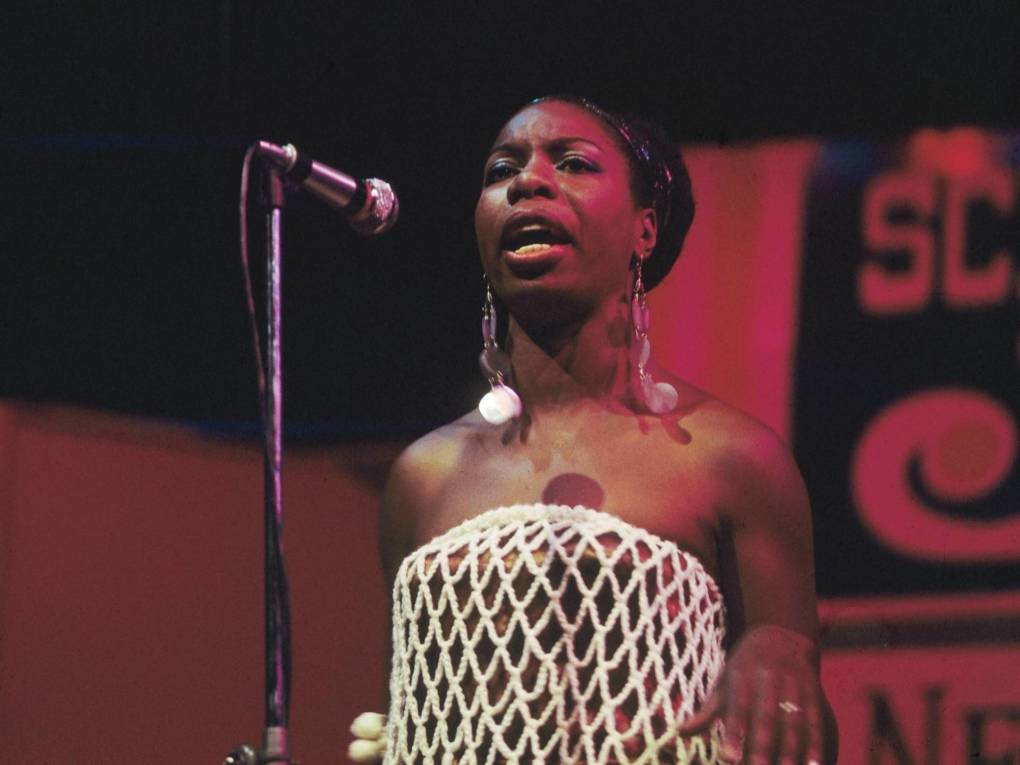
"caption": "Nina Simone onstage at the Newport Jazz Festival in 1968.",
"description": "Nina Simone onstage at the Newport Jazz Festival in 1968.",
"title": "Nina Simone onstage at the Newport Jazz Festival in 1968.",
"credit": "David Redfern/Redferns/Getty Images",
"status": "inherit",
"isLoading": false,
"fetchFailed": false
},
"arts_13848165": {
"type": "attachments",
"id": "arts_13848165",
"meta": {
"index": "attachments_1716263798",
"site": "arts",
"id": "13848165",
"found": true
},
"parent": 13848164,
"imgSizes": {
"twentyfourteen-full-width": {
"file": "https://ww2.kqed.org/app/uploads/sites/2/2019/01/gettyimages-3248947_custom-bc1b8a70c4e27234417834e4467d5de423b2a9da-1038x576.jpg",
"width": 1038,
"mimeType": "image/jpeg",
"height": 576
},
"thumbnail": {
"file": "https://ww2.kqed.org/app/uploads/sites/2/2019/01/gettyimages-3248947_custom-bc1b8a70c4e27234417834e4467d5de423b2a9da-160x115.jpg",
"width": 160,
"mimeType": "image/jpeg",
"height": 115
},
"post-thumbnail": {
"file": "https://ww2.kqed.org/app/uploads/sites/2/2019/01/gettyimages-3248947_custom-bc1b8a70c4e27234417834e4467d5de423b2a9da-672x372.jpg",
"width": 672,
"mimeType": "image/jpeg",
"height": 372
},
"kqedFullSize": {
"file": "https://ww2.kqed.org/app/uploads/sites/2/2019/01/gettyimages-3248947_custom-bc1b8a70c4e27234417834e4467d5de423b2a9da.jpg",
"width": 2048,
"height": 1472
},
"large": {
"file": "https://ww2.kqed.org/app/uploads/sites/2/2019/01/gettyimages-3248947_custom-bc1b8a70c4e27234417834e4467d5de423b2a9da-1020x733.jpg",
"width": 1020,
"mimeType": "image/jpeg",
"height": 733
},
"complete_open_graph": {
"file": "https://ww2.kqed.org/app/uploads/sites/2/2019/01/gettyimages-3248947_custom-bc1b8a70c4e27234417834e4467d5de423b2a9da-1200x863.jpg",
"width": 1200,
"mimeType": "image/jpeg",
"height": 863
},
"guest-author-50": {
"file": "https://ww2.kqed.org/app/uploads/sites/2/2019/01/gettyimages-3248947_custom-bc1b8a70c4e27234417834e4467d5de423b2a9da-50x50.jpg",
"width": 50,
"mimeType": "image/jpeg",
"height": 50
},
"guest-author-96": {
"file": "https://ww2.kqed.org/app/uploads/sites/2/2019/01/gettyimages-3248947_custom-bc1b8a70c4e27234417834e4467d5de423b2a9da-96x96.jpg",
"width": 96,
"mimeType": "image/jpeg",
"height": 96
},
"medium": {
"file": "https://ww2.kqed.org/app/uploads/sites/2/2019/01/gettyimages-3248947_custom-bc1b8a70c4e27234417834e4467d5de423b2a9da-800x575.jpg",
"width": 800,
"mimeType": "image/jpeg",
"height": 575
},
"guest-author-64": {
"file": "https://ww2.kqed.org/app/uploads/sites/2/2019/01/gettyimages-3248947_custom-bc1b8a70c4e27234417834e4467d5de423b2a9da-64x64.jpg",
"width": 64,
"mimeType": "image/jpeg",
"height": 64
},
"guest-author-32": {
"file": "https://ww2.kqed.org/app/uploads/sites/2/2019/01/gettyimages-3248947_custom-bc1b8a70c4e27234417834e4467d5de423b2a9da-32x32.jpg",
"width": 32,
"mimeType": "image/jpeg",
"height": 32
},
"full-width": {
"file": "https://ww2.kqed.org/app/uploads/sites/2/2019/01/gettyimages-3248947_custom-bc1b8a70c4e27234417834e4467d5de423b2a9da-1920x1380.jpg",
"width": 1920,
"mimeType": "image/jpeg",
"height": 1380
},
"detail": {
"file": "https://ww2.kqed.org/app/uploads/sites/2/2019/01/gettyimages-3248947_custom-bc1b8a70c4e27234417834e4467d5de423b2a9da-150x150.jpg",
"width": 150,
"mimeType": "image/jpeg",
"height": 150
},
"medium_large": {
"file": "https://ww2.kqed.org/app/uploads/sites/2/2019/01/gettyimages-3248947_custom-bc1b8a70c4e27234417834e4467d5de423b2a9da-768x552.jpg",
"width": 768,
"mimeType": "image/jpeg",
"height": 552
},
"guest-author-128": {
"file": "https://ww2.kqed.org/app/uploads/sites/2/2019/01/gettyimages-3248947_custom-bc1b8a70c4e27234417834e4467d5de423b2a9da-128x128.jpg",
"width": 128,
"mimeType": "image/jpeg",
"height": 128
}
},
"publishDate": 1546833755,
"modified": 1546834178,
"caption": "American civil rights activist Bayard Rustin, pictured in 1964, as spokesman for the Citywide Committee for Integration, at the organization's headquarters, Silcam Presbyterian Church in New York City.",
"description": "American civil rights activist Bayard Rustin, pictured in 1964, as spokesman for the Citywide Committee for Integration, at the organization's headquarters, Silcam Presbyterian Church in New York City.",
"title": "American civil rights activist Bayard Rustin, pictured in 1964, as spokesman for the Citywide Committee for Integration, at the organization's headquarters, Silcam Presbyterian Church in New York City.",
"credit": "Patrick A. Burns/New York Times Co./Getty Images",
"status": "inherit",
"isLoading": false,
"fetchFailed": false
},
"arts_13838365": {
"type": "attachments",
"id": "arts_13838365",
"meta": {
"index": "attachments_1716263798",
"site": "arts",
"id": "13838365",
"found": true
},
"parent": 13838364,
"imgSizes": {
"small": {
"file": "https://ww2.kqed.org/app/uploads/sites/2/2018/08/image-from-ios_custom-93361992d3f3aa009fe56800d16917e012ae4871-520x292.jpg",
"width": 520,
"mimeType": "image/jpeg",
"height": 292
},
"twentyfourteen-full-width": {
"file": "https://ww2.kqed.org/app/uploads/sites/2/2018/08/image-from-ios_custom-93361992d3f3aa009fe56800d16917e012ae4871-1038x576.jpg",
"width": 1038,
"mimeType": "image/jpeg",
"height": 576
},
"thumbnail": {
"file": "https://ww2.kqed.org/app/uploads/sites/2/2018/08/image-from-ios_custom-93361992d3f3aa009fe56800d16917e012ae4871-160x90.jpg",
"width": 160,
"mimeType": "image/jpeg",
"height": 90
},
"fd-sm": {
"file": "https://ww2.kqed.org/app/uploads/sites/2/2018/08/image-from-ios_custom-93361992d3f3aa009fe56800d16917e012ae4871-960x539.jpg",
"width": 960,
"mimeType": "image/jpeg",
"height": 539
},
"post-thumbnail": {
"file": "https://ww2.kqed.org/app/uploads/sites/2/2018/08/image-from-ios_custom-93361992d3f3aa009fe56800d16917e012ae4871-672x372.jpg",
"width": 672,
"mimeType": "image/jpeg",
"height": 372
},
"xsmall": {
"file": "https://ww2.kqed.org/app/uploads/sites/2/2018/08/image-from-ios_custom-93361992d3f3aa009fe56800d16917e012ae4871-375x211.jpg",
"width": 375,
"mimeType": "image/jpeg",
"height": 211
},
"kqedFullSize": {
"file": "https://ww2.kqed.org/app/uploads/sites/2/2018/08/image-from-ios_custom-93361992d3f3aa009fe56800d16917e012ae4871-e1533581019325.jpg",
"width": 1920,
"height": 1078
},
"large": {
"file": "https://ww2.kqed.org/app/uploads/sites/2/2018/08/image-from-ios_custom-93361992d3f3aa009fe56800d16917e012ae4871-1020x573.jpg",
"width": 1020,
"mimeType": "image/jpeg",
"height": 573
},
"xlarge": {
"file": "https://ww2.kqed.org/app/uploads/sites/2/2018/08/image-from-ios_custom-93361992d3f3aa009fe56800d16917e012ae4871-1180x663.jpg",
"width": 1180,
"mimeType": "image/jpeg",
"height": 663
},
"complete_open_graph": {
"file": "https://ww2.kqed.org/app/uploads/sites/2/2018/08/image-from-ios_custom-93361992d3f3aa009fe56800d16917e012ae4871-1200x674.jpg",
"width": 1200,
"mimeType": "image/jpeg",
"height": 674
},
"guest-author-50": {
"file": "https://ww2.kqed.org/app/uploads/sites/2/2018/08/image-from-ios_custom-93361992d3f3aa009fe56800d16917e012ae4871-50x50.jpg",
"width": 50,
"mimeType": "image/jpeg",
"height": 50
},
"guest-author-96": {
"file": "https://ww2.kqed.org/app/uploads/sites/2/2018/08/image-from-ios_custom-93361992d3f3aa009fe56800d16917e012ae4871-96x96.jpg",
"width": 96,
"mimeType": "image/jpeg",
"height": 96
},
"medium": {
"file": "https://ww2.kqed.org/app/uploads/sites/2/2018/08/image-from-ios_custom-93361992d3f3aa009fe56800d16917e012ae4871-800x449.jpg",
"width": 800,
"mimeType": "image/jpeg",
"height": 449
},
"guest-author-64": {
"file": "https://ww2.kqed.org/app/uploads/sites/2/2018/08/image-from-ios_custom-93361992d3f3aa009fe56800d16917e012ae4871-64x64.jpg",
"width": 64,
"mimeType": "image/jpeg",
"height": 64
},
"guest-author-32": {
"file": "https://ww2.kqed.org/app/uploads/sites/2/2018/08/image-from-ios_custom-93361992d3f3aa009fe56800d16917e012ae4871-32x32.jpg",
"width": 32,
"mimeType": "image/jpeg",
"height": 32
},
"fd-lrg": {
"file": "https://ww2.kqed.org/app/uploads/sites/2/2018/08/image-from-ios_custom-93361992d3f3aa009fe56800d16917e012ae4871-1920x1078.jpg",
"width": 1920,
"mimeType": "image/jpeg",
"height": 1078
},
"fd-med": {
"file": "https://ww2.kqed.org/app/uploads/sites/2/2018/08/image-from-ios_custom-93361992d3f3aa009fe56800d16917e012ae4871-1180x663.jpg",
"width": 1180,
"mimeType": "image/jpeg",
"height": 663
},
"full-width": {
"file": "https://ww2.kqed.org/app/uploads/sites/2/2018/08/image-from-ios_custom-93361992d3f3aa009fe56800d16917e012ae4871-1920x1078.jpg",
"width": 1920,
"mimeType": "image/jpeg",
"height": 1078
},
"detail": {
"file": "https://ww2.kqed.org/app/uploads/sites/2/2018/08/image-from-ios_custom-93361992d3f3aa009fe56800d16917e012ae4871-150x150.jpg",
"width": 150,
"mimeType": "image/jpeg",
"height": 150
},
"medium_large": {
"file": "https://ww2.kqed.org/app/uploads/sites/2/2018/08/image-from-ios_custom-93361992d3f3aa009fe56800d16917e012ae4871-768x431.jpg",
"width": 768,
"mimeType": "image/jpeg",
"height": 431
},
"guest-author-128": {
"file": "https://ww2.kqed.org/app/uploads/sites/2/2018/08/image-from-ios_custom-93361992d3f3aa009fe56800d16917e012ae4871-128x128.jpg",
"width": 128,
"mimeType": "image/jpeg",
"height": 128
},
"xxsmall": {
"file": "https://ww2.kqed.org/app/uploads/sites/2/2018/08/image-from-ios_custom-93361992d3f3aa009fe56800d16917e012ae4871-240x135.jpg",
"width": 240,
"mimeType": "image/jpeg",
"height": 135
}
},
"publishDate": 1533580896,
"modified": 1533581013,
"caption": "Born as a children's song, \"This Little Light of Mine\" was transformed by the civil rights movement into an anthem of singular power",
"description": "Born as a children's song, \"This Little Light of Mine\" was transformed by the civil rights movement into an anthem of singular power",
"title": "Born as a children's song, \"This Little Light of Mine\" was transformed by the civil rights movement into an anthem of singular power.",
"credit": "Angela Hsieh/NPR",
"status": "inherit",
"isLoading": false,
"fetchFailed": false
},
"arts_13830705": {
"type": "attachments",
"id": "arts_13830705",
"meta": {
"index": "attachments_1716263798",
"site": "arts",
"id": "13830705",
"found": true
},
"parent": 13830638,
"imgSizes": {
"small": {
"file": "https://ww2.kqed.org/app/uploads/sites/2/2018/04/King_Sculpture_1-520x460.jpg",
"width": 520,
"mimeType": "image/jpeg",
"height": 460
},
"twentyfourteen-full-width": {
"file": "https://ww2.kqed.org/app/uploads/sites/2/2018/04/King_Sculpture_1-1038x576.jpg",
"width": 1038,
"mimeType": "image/jpeg",
"height": 576
},
"thumbnail": {
"file": "https://ww2.kqed.org/app/uploads/sites/2/2018/04/King_Sculpture_1-160x142.jpg",
"width": 160,
"mimeType": "image/jpeg",
"height": 142
},
"fd-sm": {
"file": "https://ww2.kqed.org/app/uploads/sites/2/2018/04/King_Sculpture_1-960x849.jpg",
"width": 960,
"mimeType": "image/jpeg",
"height": 849
},
"post-thumbnail": {
"file": "https://ww2.kqed.org/app/uploads/sites/2/2018/04/King_Sculpture_1-672x372.jpg",
"width": 672,
"mimeType": "image/jpeg",
"height": 372
},
"xsmall": {
"file": "https://ww2.kqed.org/app/uploads/sites/2/2018/04/King_Sculpture_1-375x332.jpg",
"width": 375,
"mimeType": "image/jpeg",
"height": 332
},
"kqedFullSize": {
"file": "https://ww2.kqed.org/app/uploads/sites/2/2018/04/King_Sculpture_1.jpg",
"width": 1440,
"height": 1274
},
"large": {
"file": "https://ww2.kqed.org/app/uploads/sites/2/2018/04/King_Sculpture_1-1020x902.jpg",
"width": 1020,
"mimeType": "image/jpeg",
"height": 902
},
"xlarge": {
"file": "https://ww2.kqed.org/app/uploads/sites/2/2018/04/King_Sculpture_1-1180x1044.jpg",
"width": 1180,
"mimeType": "image/jpeg",
"height": 1044
},
"complete_open_graph": {
"file": "https://ww2.kqed.org/app/uploads/sites/2/2018/04/King_Sculpture_1-1200x1062.jpg",
"width": 1200,
"mimeType": "image/jpeg",
"height": 1062
},
"guest-author-50": {
"file": "https://ww2.kqed.org/app/uploads/sites/2/2018/04/King_Sculpture_1-50x50.jpg",
"width": 50,
"mimeType": "image/jpeg",
"height": 50
},
"guest-author-96": {
"file": "https://ww2.kqed.org/app/uploads/sites/2/2018/04/King_Sculpture_1-96x96.jpg",
"width": 96,
"mimeType": "image/jpeg",
"height": 96
},
"medium": {
"file": "https://ww2.kqed.org/app/uploads/sites/2/2018/04/King_Sculpture_1-800x708.jpg",
"width": 800,
"mimeType": "image/jpeg",
"height": 708
},
"guest-author-64": {
"file": "https://ww2.kqed.org/app/uploads/sites/2/2018/04/King_Sculpture_1-64x64.jpg",
"width": 64,
"mimeType": "image/jpeg",
"height": 64
},
"guest-author-32": {
"file": "https://ww2.kqed.org/app/uploads/sites/2/2018/04/King_Sculpture_1-32x32.jpg",
"width": 32,
"mimeType": "image/jpeg",
"height": 32
},
"fd-med": {
"file": "https://ww2.kqed.org/app/uploads/sites/2/2018/04/King_Sculpture_1-1180x1044.jpg",
"width": 1180,
"mimeType": "image/jpeg",
"height": 1044
},
"detail": {
"file": "https://ww2.kqed.org/app/uploads/sites/2/2018/04/King_Sculpture_1-150x150.jpg",
"width": 150,
"mimeType": "image/jpeg",
"height": 150
},
"medium_large": {
"file": "https://ww2.kqed.org/app/uploads/sites/2/2018/04/King_Sculpture_1-768x679.jpg",
"width": 768,
"mimeType": "image/jpeg",
"height": 679
},
"guest-author-128": {
"file": "https://ww2.kqed.org/app/uploads/sites/2/2018/04/King_Sculpture_1-128x128.jpg",
"width": 128,
"mimeType": "image/jpeg",
"height": 128
},
"xxsmall": {
"file": "https://ww2.kqed.org/app/uploads/sites/2/2018/04/King_Sculpture_1-240x212.jpg",
"width": 240,
"mimeType": "image/jpeg",
"height": 212
}
},
"publishDate": 1524952295,
"modified": 1524952338,
"caption": "Dana King's sculptures honoring the women of the Montgomery Bus Boycott ",
"description": "Dana King's sculptures honoring the women of the Montgomery Bus Boycott ",
"title": "King_Sculpture_1",
"credit": "Clay Williams",
"status": "inherit",
"isLoading": false,
"fetchFailed": false
},
"arts_13819437": {
"type": "attachments",
"id": "arts_13819437",
"meta": {
"index": "attachments_1716263798",
"site": "arts",
"id": "13819437",
"found": true
},
"parent": 13819256,
"imgSizes": {
"small": {
"file": "https://ww2.kqed.org/app/uploads/sites/2/2018/01/GettyImages-176910681-520x293.jpg",
"width": 520,
"mimeType": "image/jpeg",
"height": 293
},
"twentyfourteen-full-width": {
"file": "https://ww2.kqed.org/app/uploads/sites/2/2018/01/GettyImages-176910681-1038x576.jpg",
"width": 1038,
"mimeType": "image/jpeg",
"height": 576
},
"thumbnail": {
"file": "https://ww2.kqed.org/app/uploads/sites/2/2018/01/GettyImages-176910681-160x90.jpg",
"width": 160,
"mimeType": "image/jpeg",
"height": 90
},
"fd-sm": {
"file": "https://ww2.kqed.org/app/uploads/sites/2/2018/01/GettyImages-176910681-960x540.jpg",
"width": 960,
"mimeType": "image/jpeg",
"height": 540
},
"post-thumbnail": {
"file": "https://ww2.kqed.org/app/uploads/sites/2/2018/01/GettyImages-176910681-672x372.jpg",
"width": 672,
"mimeType": "image/jpeg",
"height": 372
},
"xsmall": {
"file": "https://ww2.kqed.org/app/uploads/sites/2/2018/01/GettyImages-176910681-375x211.jpg",
"width": 375,
"mimeType": "image/jpeg",
"height": 211
},
"kqedFullSize": {
"file": "https://ww2.kqed.org/app/uploads/sites/2/2018/01/GettyImages-176910681.jpg",
"width": 1920,
"height": 1080
},
"large": {
"file": "https://ww2.kqed.org/app/uploads/sites/2/2018/01/GettyImages-176910681-1020x574.jpg",
"width": 1020,
"mimeType": "image/jpeg",
"height": 574
},
"xlarge": {
"file": "https://ww2.kqed.org/app/uploads/sites/2/2018/01/GettyImages-176910681-1180x664.jpg",
"width": 1180,
"mimeType": "image/jpeg",
"height": 664
},
"guest-author-50": {
"file": "https://ww2.kqed.org/app/uploads/sites/2/2018/01/GettyImages-176910681-50x50.jpg",
"width": 50,
"mimeType": "image/jpeg",
"height": 50
},
"guest-author-96": {
"file": "https://ww2.kqed.org/app/uploads/sites/2/2018/01/GettyImages-176910681-96x96.jpg",
"width": 96,
"mimeType": "image/jpeg",
"height": 96
},
"medium": {
"file": "https://ww2.kqed.org/app/uploads/sites/2/2018/01/GettyImages-176910681-800x450.jpg",
"width": 800,
"mimeType": "image/jpeg",
"height": 450
},
"guest-author-64": {
"file": "https://ww2.kqed.org/app/uploads/sites/2/2018/01/GettyImages-176910681-64x64.jpg",
"width": 64,
"mimeType": "image/jpeg",
"height": 64
},
"guest-author-32": {
"file": "https://ww2.kqed.org/app/uploads/sites/2/2018/01/GettyImages-176910681-32x32.jpg",
"width": 32,
"mimeType": "image/jpeg",
"height": 32
},
"fd-lrg": {
"file": "https://ww2.kqed.org/app/uploads/sites/2/2018/01/GettyImages-176910681-1920x1080.jpg",
"width": 1920,
"mimeType": "image/jpeg",
"height": 1080
},
"fd-med": {
"file": "https://ww2.kqed.org/app/uploads/sites/2/2018/01/GettyImages-176910681-1180x664.jpg",
"width": 1180,
"mimeType": "image/jpeg",
"height": 664
},
"full-width": {
"file": "https://ww2.kqed.org/app/uploads/sites/2/2018/01/GettyImages-176910681-1920x1080.jpg",
"width": 1920,
"mimeType": "image/jpeg",
"height": 1080
},
"detail": {
"file": "https://ww2.kqed.org/app/uploads/sites/2/2018/01/GettyImages-176910681-150x150.jpg",
"width": 150,
"mimeType": "image/jpeg",
"height": 150
},
"medium_large": {
"file": "https://ww2.kqed.org/app/uploads/sites/2/2018/01/GettyImages-176910681-768x432.jpg",
"width": 768,
"mimeType": "image/jpeg",
"height": 432
},
"guest-author-128": {
"file": "https://ww2.kqed.org/app/uploads/sites/2/2018/01/GettyImages-176910681-128x128.jpg",
"width": 128,
"mimeType": "image/jpeg",
"height": 128
},
"xxsmall": {
"file": "https://ww2.kqed.org/app/uploads/sites/2/2018/01/GettyImages-176910681-240x135.jpg",
"width": 240,
"mimeType": "image/jpeg",
"height": 135
}
},
"publishDate": 1516236206,
"modified": 1516236301,
"caption": "The civil rights leader Martin Luther King waves to supporters on Aug. 28, 1963 at the March on Washington. ",
"description": "The civil rights leader Martin Luther King waves to supporters on Aug. 28, 1963 at the March on Washington. ",
"title": "BIO-MARTIN LUTHER KING-MARCH ON WASHINGTON",
"credit": "AFP/Getty Images",
"status": "inherit",
"isLoading": false,
"fetchFailed": false
},
"arts_13819149": {
"type": "attachments",
"id": "arts_13819149",
"meta": {
"index": "attachments_1716263798",
"site": "arts",
"id": "13819149",
"found": true
},
"parent": 13819139,
"imgSizes": {
"small": {
"file": "https://ww2.kqed.org/app/uploads/sites/2/2018/01/1963.Main_-520x293.jpg",
"width": 520,
"mimeType": "image/jpeg",
"height": 293
},
"twentyfourteen-full-width": {
"file": "https://ww2.kqed.org/app/uploads/sites/2/2018/01/1963.Main_-1038x576.jpg",
"width": 1038,
"mimeType": "image/jpeg",
"height": 576
},
"thumbnail": {
"file": "https://ww2.kqed.org/app/uploads/sites/2/2018/01/1963.Main_-160x90.jpg",
"width": 160,
"mimeType": "image/jpeg",
"height": 90
},
"fd-sm": {
"file": "https://ww2.kqed.org/app/uploads/sites/2/2018/01/1963.Main_-960x540.jpg",
"width": 960,
"mimeType": "image/jpeg",
"height": 540
},
"post-thumbnail": {
"file": "https://ww2.kqed.org/app/uploads/sites/2/2018/01/1963.Main_-672x372.jpg",
"width": 672,
"mimeType": "image/jpeg",
"height": 372
},
"xsmall": {
"file": "https://ww2.kqed.org/app/uploads/sites/2/2018/01/1963.Main_-375x211.jpg",
"width": 375,
"mimeType": "image/jpeg",
"height": 211
},
"kqedFullSize": {
"file": "https://ww2.kqed.org/app/uploads/sites/2/2018/01/1963.Main_.jpg",
"width": 1920,
"height": 1080
},
"large": {
"file": "https://ww2.kqed.org/app/uploads/sites/2/2018/01/1963.Main_-1020x574.jpg",
"width": 1020,
"mimeType": "image/jpeg",
"height": 574
},
"xlarge": {
"file": "https://ww2.kqed.org/app/uploads/sites/2/2018/01/1963.Main_-1180x664.jpg",
"width": 1180,
"mimeType": "image/jpeg",
"height": 664
},
"guest-author-50": {
"file": "https://ww2.kqed.org/app/uploads/sites/2/2018/01/1963.Main_-50x50.jpg",
"width": 50,
"mimeType": "image/jpeg",
"height": 50
},
"guest-author-96": {
"file": "https://ww2.kqed.org/app/uploads/sites/2/2018/01/1963.Main_-96x96.jpg",
"width": 96,
"mimeType": "image/jpeg",
"height": 96
},
"medium": {
"file": "https://ww2.kqed.org/app/uploads/sites/2/2018/01/1963.Main_-800x450.jpg",
"width": 800,
"mimeType": "image/jpeg",
"height": 450
},
"guest-author-64": {
"file": "https://ww2.kqed.org/app/uploads/sites/2/2018/01/1963.Main_-64x64.jpg",
"width": 64,
"mimeType": "image/jpeg",
"height": 64
},
"guest-author-32": {
"file": "https://ww2.kqed.org/app/uploads/sites/2/2018/01/1963.Main_-32x32.jpg",
"width": 32,
"mimeType": "image/jpeg",
"height": 32
},
"fd-lrg": {
"file": "https://ww2.kqed.org/app/uploads/sites/2/2018/01/1963.Main_-1920x1080.jpg",
"width": 1920,
"mimeType": "image/jpeg",
"height": 1080
},
"fd-med": {
"file": "https://ww2.kqed.org/app/uploads/sites/2/2018/01/1963.Main_-1180x664.jpg",
"width": 1180,
"mimeType": "image/jpeg",
"height": 664
},
"full-width": {
"file": "https://ww2.kqed.org/app/uploads/sites/2/2018/01/1963.Main_-1920x1080.jpg",
"width": 1920,
"mimeType": "image/jpeg",
"height": 1080
},
"detail": {
"file": "https://ww2.kqed.org/app/uploads/sites/2/2018/01/1963.Main_-150x150.jpg",
"width": 150,
"mimeType": "image/jpeg",
"height": 150
},
"medium_large": {
"file": "https://ww2.kqed.org/app/uploads/sites/2/2018/01/1963.Main_-768x432.jpg",
"width": 768,
"mimeType": "image/jpeg",
"height": 432
},
"guest-author-128": {
"file": "https://ww2.kqed.org/app/uploads/sites/2/2018/01/1963.Main_-128x128.jpg",
"width": 128,
"mimeType": "image/jpeg",
"height": 128
},
"xxsmall": {
"file": "https://ww2.kqed.org/app/uploads/sites/2/2018/01/1963.Main_-240x135.jpg",
"width": 240,
"mimeType": "image/jpeg",
"height": 135
}
},
"publishDate": 1516005821,
"modified": 1516005867,
"caption": "A cover detail from Diego Gómez's new comic book, '1963 is Not an End, But a Beginning.'",
"description": "A cover detail from Diego Gómez's new comic book, '1963 is Not an End, But a Beginning.'",
"title": "1963.Main",
"credit": "Diego Gómez",
"status": "inherit",
"isLoading": false,
"fetchFailed": false
},
"arts_13811175": {
"type": "attachments",
"id": "arts_13811175",
"meta": {
"index": "attachments_1716263798",
"site": "arts",
"id": "13811175",
"found": true
},
"parent": 13811088,
"imgSizes": {
"small": {
"file": "https://ww2.kqed.org/app/uploads/sites/2/2017/10/GayMensChorusCOVER-520x293.jpg",
"width": 520,
"mimeType": "image/jpeg",
"height": 293
},
"twentyfourteen-full-width": {
"file": "https://ww2.kqed.org/app/uploads/sites/2/2017/10/GayMensChorusCOVER-1038x576.jpg",
"width": 1038,
"mimeType": "image/jpeg",
"height": 576
},
"thumbnail": {
"file": "https://ww2.kqed.org/app/uploads/sites/2/2017/10/GayMensChorusCOVER-160x90.jpg",
"width": 160,
"mimeType": "image/jpeg",
"height": 90
},
"fd-sm": {
"file": "https://ww2.kqed.org/app/uploads/sites/2/2017/10/GayMensChorusCOVER-960x540.jpg",
"width": 960,
"mimeType": "image/jpeg",
"height": 540
},
"post-thumbnail": {
"file": "https://ww2.kqed.org/app/uploads/sites/2/2017/10/GayMensChorusCOVER-672x372.jpg",
"width": 672,
"mimeType": "image/jpeg",
"height": 372
},
"xsmall": {
"file": "https://ww2.kqed.org/app/uploads/sites/2/2017/10/GayMensChorusCOVER-375x211.jpg",
"width": 375,
"mimeType": "image/jpeg",
"height": 211
},
"kqedFullSize": {
"file": "https://ww2.kqed.org/app/uploads/sites/2/2017/10/GayMensChorusCOVER.jpg",
"width": 1920,
"height": 1080
},
"large": {
"file": "https://ww2.kqed.org/app/uploads/sites/2/2017/10/GayMensChorusCOVER-1020x574.jpg",
"width": 1020,
"mimeType": "image/jpeg",
"height": 574
},
"xlarge": {
"file": "https://ww2.kqed.org/app/uploads/sites/2/2017/10/GayMensChorusCOVER-1180x664.jpg",
"width": 1180,
"mimeType": "image/jpeg",
"height": 664
},
"guest-author-50": {
"file": "https://ww2.kqed.org/app/uploads/sites/2/2017/10/GayMensChorusCOVER-50x50.jpg",
"width": 50,
"mimeType": "image/jpeg",
"height": 50
},
"guest-author-96": {
"file": "https://ww2.kqed.org/app/uploads/sites/2/2017/10/GayMensChorusCOVER-96x96.jpg",
"width": 96,
"mimeType": "image/jpeg",
"height": 96
},
"medium": {
"file": "https://ww2.kqed.org/app/uploads/sites/2/2017/10/GayMensChorusCOVER-800x450.jpg",
"width": 800,
"mimeType": "image/jpeg",
"height": 450
},
"guest-author-64": {
"file": "https://ww2.kqed.org/app/uploads/sites/2/2017/10/GayMensChorusCOVER-64x64.jpg",
"width": 64,
"mimeType": "image/jpeg",
"height": 64
},
"guest-author-32": {
"file": "https://ww2.kqed.org/app/uploads/sites/2/2017/10/GayMensChorusCOVER-32x32.jpg",
"width": 32,
"mimeType": "image/jpeg",
"height": 32
},
"fd-lrg": {
"file": "https://ww2.kqed.org/app/uploads/sites/2/2017/10/GayMensChorusCOVER-1920x1080.jpg",
"width": 1920,
"mimeType": "image/jpeg",
"height": 1080
},
"fd-med": {
"file": "https://ww2.kqed.org/app/uploads/sites/2/2017/10/GayMensChorusCOVER-1180x664.jpg",
"width": 1180,
"mimeType": "image/jpeg",
"height": 664
},
"full-width": {
"file": "https://ww2.kqed.org/app/uploads/sites/2/2017/10/GayMensChorusCOVER-1920x1080.jpg",
"width": 1920,
"mimeType": "image/jpeg",
"height": 1080
},
"detail": {
"file": "https://ww2.kqed.org/app/uploads/sites/2/2017/10/GayMensChorusCOVER-150x150.jpg",
"width": 150,
"mimeType": "image/jpeg",
"height": 150
},
"medium_large": {
"file": "https://ww2.kqed.org/app/uploads/sites/2/2017/10/GayMensChorusCOVER-768x432.jpg",
"width": 768,
"mimeType": "image/jpeg",
"height": 432
},
"guest-author-128": {
"file": "https://ww2.kqed.org/app/uploads/sites/2/2017/10/GayMensChorusCOVER-128x128.jpg",
"width": 128,
"mimeType": "image/jpeg",
"height": 128
},
"xxsmall": {
"file": "https://ww2.kqed.org/app/uploads/sites/2/2017/10/GayMensChorusCOVER-240x135.jpg",
"width": 240,
"mimeType": "image/jpeg",
"height": 135
}
},
"publishDate": 1507742246,
"modified": 1507742325,
"caption": "Singers from the San Francisco Gay Men's Chorus and Oakland Interfaith Gospel Choir reflect on the experience of crossing the Edmund Pettus Bridge in Selma, Alabama, on the second day of their tour around five southern states.",
"description": "Singers from the San Francisco Gay Men's Chorus and Oakland Interfaith Gospel Choir reflect on the experience of crossing the Edmund Pettus Bridge in Selma, Alabama, on the second day of their tour around five southern states.",
"title": "GayMensChorusCOVER",
"credit": "Photo: Chloe Veltman/KQED",
"status": "inherit",
"isLoading": false,
"fetchFailed": false
}
},
"audioPlayerReducer": {
"postId": "stream_live",
"isPaused": true,
"isPlaying": false,
"pfsActive": false,
"pledgeModalIsOpen": true,
"playerDrawerIsOpen": false,
"liveAudioPlayStartedAt": 0,
"liveAudioPlayContext": ""
},
"authorsReducer": {
"byline_arts_13900267": {
"type": "authors",
"id": "byline_arts_13900267",
"meta": {
"override": true
},
"slug": "byline_arts_13900267",
"name": "Eric Deggans",
"isLoading": false
},
"byline_arts_13882319": {
"type": "authors",
"id": "byline_arts_13882319",
"meta": {
"override": true
},
"slug": "byline_arts_13882319",
"name": "Martha Anne Toll",
"isLoading": false
},
"byline_arts_13850246": {
"type": "authors",
"id": "byline_arts_13850246",
"meta": {
"override": true
},
"slug": "byline_arts_13850246",
"name": "Leah Donnella",
"isLoading": false
},
"byline_arts_13848338": {
"type": "authors",
"id": "byline_arts_13848338",
"meta": {
"override": true
},
"slug": "byline_arts_13848338",
"name": "Noel King, Walter Ray Watson",
"isLoading": false
},
"byline_arts_13848164": {
"type": "authors",
"id": "byline_arts_13848164",
"meta": {
"override": true
},
"slug": "byline_arts_13848164",
"name": "Emma Bowman",
"isLoading": false
},
"byline_arts_13838364": {
"type": "authors",
"id": "byline_arts_13838364",
"meta": {
"override": true
},
"slug": "byline_arts_13838364",
"name": "Eric Deggans",
"isLoading": false
},
"kjones": {
"type": "authors",
"id": "93",
"meta": {
"index": "authors_1716337520",
"id": "93",
"found": true
},
"name": "Kevin L. Jones",
"firstName": "Kevin",
"lastName": "Jones",
"slug": "kjones",
"email": "kjones@kqed.org",
"display_author_email": false,
"staff_mastheads": [],
"title": null,
"bio": null,
"avatar": "https://secure.gravatar.com/avatar/12c65b5633ed39d0a59bb7f497eff645?s=600&d=blank&r=g",
"twitter": null,
"facebook": null,
"instagram": null,
"linkedin": null,
"sites": [
{
"site": "arts",
"roles": [
"subscriber"
]
},
{
"site": "styleguide",
"roles": [
"contributor"
]
},
{
"site": "artschool",
"roles": [
"subscriber"
]
},
{
"site": "news",
"roles": [
"subscriber"
]
},
{
"site": "pop",
"roles": [
"subscriber"
]
}
],
"headData": {
"title": "Kevin L. Jones | KQED",
"description": null,
"ogImgSrc": "https://secure.gravatar.com/avatar/12c65b5633ed39d0a59bb7f497eff645?s=600&d=blank&r=g",
"twImgSrc": "https://secure.gravatar.com/avatar/12c65b5633ed39d0a59bb7f497eff645?s=600&d=blank&r=g"
},
"isLoading": false,
"link": "/author/kjones"
},
"cveltman": {
"type": "authors",
"id": "8608",
"meta": {
"index": "authors_1716337520",
"id": "8608",
"found": true
},
"name": "Chloe Veltman",
"firstName": "Chloe",
"lastName": "Veltman",
"slug": "cveltman",
"email": "cveltman@kqed.org",
"display_author_email": true,
"staff_mastheads": [],
"title": "Arts and Culture Reporter",
"bio": "Chloe Veltman is a former arts and culture reporter for KQED. Prior to joining the organization, she launched and led the arts bureau at Colorado Public Radio, served as the Bay Area's culture columnist for the New York Times, and was the founder, host and executive producer of VoiceBox, a national award-winning weekly podcast/radio show and live events series all about the human voice. Chloe is the recipient of numerous prizes, grants and fellowships including a Webby Award for her work on interactive storytelling, both the John S Knight Journalism Fellowship and Humanities Center Fellowship at Stanford University, the Sundance Arts Writing Fellowship and a Library of Congress Research Fellowship. She is the author of the book \"On Acting\" and has appeared as a guest lecturer at Yale University and the San Francisco Conservatory of Music among other institutions. She holds a BA in english literature from King's College, Cambridge, and a Masters in Dramaturgy from the Central School of Speech and Drama/Harvard Institute for Advanced Theater Training.\r\n\u003ca href=\"https://www.chloeveltman.com\">www.chloeveltman.com\u003c/a>",
"avatar": "https://secure.gravatar.com/avatar/55403394b00a1ddab683952c2eb2cf85?s=600&d=blank&r=g",
"twitter": "chloeveltman",
"facebook": null,
"instagram": null,
"linkedin": null,
"sites": [
{
"site": "arts",
"roles": []
},
{
"site": "news",
"roles": [
"author"
]
},
{
"site": "pop",
"roles": [
"editor"
]
},
{
"site": "science",
"roles": []
}
],
"headData": {
"title": "Chloe Veltman | KQED",
"description": "Arts and Culture Reporter",
"ogImgSrc": "https://secure.gravatar.com/avatar/55403394b00a1ddab683952c2eb2cf85?s=600&d=blank&r=g",
"twImgSrc": "https://secure.gravatar.com/avatar/55403394b00a1ddab683952c2eb2cf85?s=600&d=blank&r=g"
},
"isLoading": false,
"link": "/author/cveltman"
},
"jhesig": {
"type": "authors",
"id": "11333",
"meta": {
"index": "authors_1716337520",
"id": "11333",
"found": true
},
"name": "Janelle Hessig",
"firstName": "Janelle",
"lastName": "Hessig",
"slug": "jhesig",
"email": "jhessig@kqed.org",
"display_author_email": false,
"staff_mastheads": [],
"title": "KQED Contributor",
"bio": null,
"avatar": "https://secure.gravatar.com/avatar/27dd6e3cd88f82541593bd6d8f2aec4a?s=600&d=mm&r=g",
"twitter": null,
"facebook": null,
"instagram": null,
"linkedin": null,
"sites": [
{
"site": "arts",
"roles": []
},
{
"site": "food",
"roles": []
},
{
"site": "filmschoolshorts",
"roles": [
"editor"
]
}
],
"headData": {
"title": "Janelle Hessig | KQED",
"description": "KQED Contributor",
"ogImgSrc": "https://secure.gravatar.com/avatar/27dd6e3cd88f82541593bd6d8f2aec4a?s=600&d=mm&r=g",
"twImgSrc": "https://secure.gravatar.com/avatar/27dd6e3cd88f82541593bd6d8f2aec4a?s=600&d=mm&r=g"
},
"isLoading": false,
"link": "/author/jhesig"
},
"nvoynovskaya": {
"type": "authors",
"id": "11387",
"meta": {
"index": "authors_1716337520",
"id": "11387",
"found": true
},
"name": "Nastia Voynovskaya",
"firstName": "Nastia",
"lastName": "Voynovskaya",
"slug": "nvoynovskaya",
"email": "nvoynovskaya@kqed.org",
"display_author_email": false,
"staff_mastheads": [
"arts"
],
"title": "Editor and reporter",
"bio": "Nastia Voynovskaya is a reporter, editor and host at KQED Arts & Culture. She's been covering the arts in the Bay Area for over a decade, with a focus on music, queer culture, labor issues and grassroots organizing. She has edited KQED story series such as Trans Bay: A History of San Francisco's Gender-Diverse Community, and co-created KQED's Bay Area hip-hop history project, That's My Word. Nastia's work has been recognized by the Society of Professional Journalists and San Francisco Press Club. She regularly appears on podcasts and radio programs, including NPR's All Songs Considered, and hosts live events where music, culture and conversation meet.",
"avatar": "https://secure.gravatar.com/avatar/5025ee460e5a85d69ca20ea6c6f2f80d7e17795c828f61ea3aecfcd924e9042e?s=600&d=blank&r=g",
"twitter": null,
"bluesky": null,
"facebook": null,
"instagram": "https://www.instagram.com/nananastia/",
"linkedin": null,
"sites": [
{
"site": "",
"roles": [
"editor"
]
},
{
"site": "arts",
"roles": [
"administrator"
]
},
{
"site": "news",
"roles": [
"editor"
]
},
{
"site": "pop",
"roles": [
"administrator"
]
},
{
"site": "bayareabites",
"roles": [
"editor"
]
},
{
"site": "podcasts",
"roles": [
"editor"
]
},
{
"site": "hiphop",
"roles": [
"editor"
]
}
],
"headData": {
"title": "Nastia Voynovskaya | KQED",
"description": "Editor and reporter",
"ogImgSrc": "https://secure.gravatar.com/avatar/5025ee460e5a85d69ca20ea6c6f2f80d7e17795c828f61ea3aecfcd924e9042e?s=600&d=blank&r=g",
"twImgSrc": "https://secure.gravatar.com/avatar/5025ee460e5a85d69ca20ea6c6f2f80d7e17795c828f61ea3aecfcd924e9042e?s=600&d=blank&r=g"
},
"isLoading": false,
"link": "/author/nvoynovskaya"
},
"ogpenn": {
"type": "authors",
"id": "11491",
"meta": {
"index": "authors_1716337520",
"id": "11491",
"found": true
},
"name": "Pendarvis Harshaw",
"firstName": "Pendarvis",
"lastName": "Harshaw",
"slug": "ogpenn",
"email": "ogpenn@gmail.com",
"display_author_email": false,
"staff_mastheads": [
"arts"
],
"title": "Community Engagement Reporter",
"bio": "Pendarvis Harshaw is an educator, host and writer with KQED Arts.",
"avatar": "https://secure.gravatar.com/avatar/972b77ee8e3f346ae2b00622661187fbfabd059b5693bbdc1475ea7a722fd4cd?s=600&d=blank&r=g",
"twitter": null,
"bluesky": null,
"facebook": null,
"instagram": "ogpenn",
"linkedin": null,
"sites": [
{
"site": "arts",
"roles": [
"administrator"
]
},
{
"site": "news",
"roles": [
"editor"
]
},
{
"site": "bayareabites",
"roles": [
"author"
]
},
{
"site": "hiphop",
"roles": [
"editor"
]
}
],
"headData": {
"title": "Pendarvis Harshaw | KQED",
"description": "Community Engagement Reporter",
"ogImgSrc": "https://secure.gravatar.com/avatar/972b77ee8e3f346ae2b00622661187fbfabd059b5693bbdc1475ea7a722fd4cd?s=600&d=blank&r=g",
"twImgSrc": "https://secure.gravatar.com/avatar/972b77ee8e3f346ae2b00622661187fbfabd059b5693bbdc1475ea7a722fd4cd?s=600&d=blank&r=g"
},
"isLoading": false,
"link": "/author/ogpenn"
}
},
"pagesReducer": {
"arts_tag_civil-rights": {
"type": "terms",
"id": "arts_2733",
"meta": {
"index": "terms_1716263798",
"site": "arts",
"id": "2733",
"score": 8.669439
},
"featImg": null,
"name": "civil rights",
"description": null,
"taxonomy": "tag",
"headData": {
"twImgId": null,
"twTitle": null,
"ogTitle": null,
"ogImgId": null,
"twDescription": null,
"description": null,
"title": "civil rights Archives | KQED Arts",
"ogDescription": null
},
"ttid": 2745,
"slug": "civil-rights",
"isLoading": false,
"title": "civil rights",
"pageMeta": {
"site": "arts",
"WpPageTemplate": "page-topic-editorial",
"currentPage": 2
},
"blocks": [
{
"blockName": "kqed/post-list",
"attrs": {
"layout": "cardArticle2",
"query": "posts/arts?tag=civil-rights",
"seeMore": false,
"paginated": true,
"page": 2
}
},
{
"blockName": "kqed/ad"
}
]
}
},
"pfsSessionReducer": {},
"postsReducer": {
"stream_live": {
"type": "live",
"id": "stream_live",
"audioUrl": "https://streams.kqed.org/kqedradio",
"title": "Live Stream",
"excerpt": "Live Stream information currently unavailable.",
"link": "/radio",
"featImg": "",
"label": {
"name": "KQED Live",
"link": "/"
}
},
"stream_kqedNewscast": {
"type": "posts",
"id": "stream_kqedNewscast",
"audioUrl": "https://www.kqed.org/.stream/anon/radio/RDnews/newscast.mp3?_=1",
"title": "KQED Newscast",
"featImg": "",
"label": {
"name": "88.5 FM",
"link": "/"
}
},
"arts_13900267": {
"type": "posts",
"id": "arts_13900267",
"meta": {
"index": "posts_1716263798",
"site": "arts",
"id": "13900267",
"score": null,
"sort": [
1627072888000
]
},
"parent": 0,
"labelTerm": {
"site": "arts"
},
"blocks": [],
"publishDate": 1627072888,
"format": "standard",
"title": "Funkadelic's 'Maggot Brain' At 50: R&B, Psychedelic Rock And A Black Guitarist's Cry",
"headTitle": "Funkadelic’s ‘Maggot Brain’ At 50: R&B, Psychedelic Rock And A Black Guitarist’s Cry | KQED",
"content": "\u003cp>They may be two of the most influential notes in funk-rock history: the soaring, plaintive start to guitarist Eddie Hazel’s legendary solo in Funkadelic’s “Maggot Brain.”\u003c/p>\n\u003cp>The song, an audacious, emotive 10-minute-long bluesy ballad kicked off by a brief, eccentric poem from leader \u003ca href=\"https://www.npr.org/artists/15163941/george-clinton\">George Clinton\u003c/a>, is centered on Hazel’s expansive fretwork. Clinton pulls the bass guitar and drums mostly out of the mix, leaving the sonic field free for sparse backing chords on rhythm guitar and a fiery workout by Hazel fed through a boatload of echo effects.\u003c/p>\n\u003cp>https://www.youtube.com/watch?v=T1NW57lk5fY\u003c/p>\n\u003cp>Both the song and \u003ca href=\"https://georgeclinton.com/audio/funkadelic-maggot-brain/\">the album that shares its title\u003c/a> were released 50 years ago, in July 1971. Clinton celebrates his own 80th birthday today, July 22.\u003c/p>\n\u003cp>And while there are many music fans out there who might not recognize the song or Hazel’s name, artists ranging from the \u003ca href=\"https://metalheadzone.com/red-hot-chili-peppers-bassist-flea-plays-the-song-that-cause-pain-in-his-heart/\">Red Hot Chili Peppers\u003c/a> to \u003ca href=\"https://liveforlivemusic.com/news/widespread-panic-played-funkadelics-maggot-brain-last-night-and-jimmy-herring-crushed-it/\">Widespread Panic\u003c/a> and \u003ca href=\"https://www.thefader.com/2016/11/17/donald-glover-childish-gambino-funkadelic-interview-awaken-my-love\">Childish Gambino\u003c/a> have acknowledged how Funkadelic’s magnum opus inspired their own artistic work.\u003c/p>\n\u003cp>[ad fullwidth]\u003c/p>\n\u003cp>“It’s [an] indelible statement for the ages,” says Vernon Reid, lead guitarist for Grammy-winning rockers \u003ca href=\"http://livingcolour.com/\">Living Colour\u003c/a>. “It’s a piece of music to evoke the ghosts of the past. It evokes the suffering. It evokes the joy. It’s a masterwork.”\u003c/p>\n\u003cp>Cultural critic and author \u003ca href=\"https://www.burntsugarindex.com/artist/greg-tate/\">Greg Tate\u003c/a>, a founding member of the \u003ca href=\"http://blackrockcoalition.org/\">Black Rock Coalition\u003c/a>, compares “Maggot Brain” to iconic jazz saxophonist John Coltrane’s \u003ca href=\"https://www.npr.org/2021/02/02/961773250/saint-coltrane-the-church-built-on-a-love-supreme#:~:text=John%20Coltrane%20Church%20Built%20On%20A%20Love%20Supreme%20%3A%20NPR&text=John%20Coltrane%20Church%20Built%20On%20A%20Love%20Supreme%20Jazz%20Night,as%20their%20chief%20liturgical%20text.\">\u003cem>A Love Supreme\u003c/em>\u003c/a>: a towering artistic statement that had a significant impact on a generation of players.\u003c/p>\n\u003cp>“Eddie has this thing that just comes out of his own kinda anguish and sorrow that he translates,” Tate says. “There’s a cry in every note.”\u003c/p>\n\u003cp>Clinton, the great granddaddy of funk rock himself, says he told Hazel just before recording “Maggot Brain” to play as if someone had told him his mother died.\u003c/p>\n\u003cp>“All of it is feeling,” Clinton says. “Eddie is playing all the feeling in the world. He’s sensitive to no end… just a big ball of sensitivity. My mother used to call him ‘Ol’ Cryin’ Eddie.’ He could cry so good [on guitar], it was pretty.”\u003c/p>\n\u003cp>Clinton says the enduring nature of \u003cem>Maggot Brain\u003c/em> was all part of his plan; passing up pop singles to focus on creating a song and album that fans might return to decades later.\u003c/p>\n\u003cp>But how did a group that started as a Motown-style R&B outfit unleash one of the most important guitar anthems of the decade?\u003c/p>\n\u003cp>\u003cstrong>Moving Away From Motown’s Style\u003c/strong>\u003c/p>\n\u003cp>The journey towards \u003cem>Maggot Brain\u003c/em> reaches back to 1967, when a different group led by Clinton called The Parliaments had a hit with an uptempo dance number called \u003ca href=\"https://youtu.be/OJW643hIKMw\">“(I Wanna) Testify.”\u003c/a>\u003c/p>\n\u003cp>The Parliaments were a Temptations-style singing group; “Testify” was a typical midtempo groove about a man in love. But Clinton, who had enlisted a teenage Eddie Hazel to back the Parliaments on tour, was increasingly drawn to blending psychedelic rock sounds with funk grooves—especially when The Parliaments went on tour with hard rock bands.\u003c/p>\n\u003cp>“\u003ca href=\"https://youtu.be/vaiTEQc_y4o\">Vanilla Fudge\u003c/a> was one of the groups we went out with,” Clinton says. “But we didn’t have no instruments, so we borrowed the Vanilla Fudge’s instruments. That stuff was so loud. But we realized, right then, this is what it is that made them sound like that.”\u003c/p>\n\u003cp>Vernon Reid says Clinton once told him that the psychedelic era and Summer of Love were life-changing experiences.\u003c/p>\n\u003cp>“He spoke about how it’s the first time he met white people who were genuinely kind and genuinely nice,” Reid recalls. “He felt the people he met back then would literally give you the shirt off their backs.”\u003c/p>\n\u003cp>The Parliaments backing band evolved into a rock-edged group called Funkadelic. And they emerged at a pivotal time in music.\u003c/p>\n\u003cp>Virtuoso rock star Jimi Hendrix died in 1970, leaving legions of guitarists – especially Black musicians like guitar phenom Eddie Hazel – wondering how to take up and extend his legacy.\u003c/p>\n\u003cp>At the same time, R&B stars like Stevie Wonder, Marvin Gaye and the Temptations were looking to break the straitjacket of their traditional approaches and experiment with new sounds.\u003c/p>\n\u003cp>As Funkadelic made its early records, Clinton noticed white rock bands – and their audiences — were focused on blues artists his mother liked from years ago. He reasoned: If he could take an old blues groove and modernize it, maybe he could create something audiences would also come back to 15 years later.\u003c/p>\n\u003cp>“\u003cem>Maggot Brain\u003c/em> was the epitome of that era,” Clinton says. “Us flirting with psychedelic…I call it ‘loud R&B.’ So we called it Funkadelic.”\u003c/p>\n\u003cfigure id=\"attachment_13900269\" class=\"wp-caption aligncenter\" style=\"max-width: 800px\">\u003cimg loading=\"lazy\" decoding=\"async\" src=\"https://ww2.kqed.org/app/uploads/sites/2/2021/07/gettyimages-528446836_wide-0b3764dd35da816fd2d6afe0c601ff4b4ee252e7-800x450.jpg\" alt=\"\" width=\"800\" height=\"450\" class=\"size-medium wp-image-13900269\" srcset=\"https://cdn.kqed.org/wp-content/uploads/sites/2/2021/07/gettyimages-528446836_wide-0b3764dd35da816fd2d6afe0c601ff4b4ee252e7-800x450.jpg 800w, https://cdn.kqed.org/wp-content/uploads/sites/2/2021/07/gettyimages-528446836_wide-0b3764dd35da816fd2d6afe0c601ff4b4ee252e7-1020x574.jpg 1020w, https://cdn.kqed.org/wp-content/uploads/sites/2/2021/07/gettyimages-528446836_wide-0b3764dd35da816fd2d6afe0c601ff4b4ee252e7-160x90.jpg 160w, https://cdn.kqed.org/wp-content/uploads/sites/2/2021/07/gettyimages-528446836_wide-0b3764dd35da816fd2d6afe0c601ff4b4ee252e7-768x432.jpg 768w, https://cdn.kqed.org/wp-content/uploads/sites/2/2021/07/gettyimages-528446836_wide-0b3764dd35da816fd2d6afe0c601ff4b4ee252e7-1536x864.jpg 1536w, https://cdn.kqed.org/wp-content/uploads/sites/2/2021/07/gettyimages-528446836_wide-0b3764dd35da816fd2d6afe0c601ff4b4ee252e7-2048x1152.jpg 2048w, https://cdn.kqed.org/wp-content/uploads/sites/2/2021/07/gettyimages-528446836_wide-0b3764dd35da816fd2d6afe0c601ff4b4ee252e7-1920x1080.jpg 1920w\" sizes=\"(max-width: 800px) 100vw, 800px\">\u003cfigcaption class=\"wp-caption-text\">British-born Rock musician Vernon Reid (fore) plays guitar as he performs with his band, Living Colour, New York, 1980s. Also visible are American bandmates Muzz Skillings (center, rear), on bass guitar, and vocalist Corey Glover. \u003ccite>(Anthony Barboza/Getty Images)\u003c/cite>\u003c/figcaption>\u003c/figure>\n\u003cp>\u003cstrong>Building the Sound of “Maggot Brain”\u003c/strong>\u003c/p>\n\u003cp>Clinton came up with a 10-minute ballad where he unleashed Hazel, who had been listening to records he gave him by Hendrix, Sly Stone and Cream. The whole band played with Hazel in the studio, but Clinton pulled most of the bass and drums out of the sound mix, leaving room to layer even more echo effects on the guitar.\u003c/p>\n\u003cp>The result was an inspirational tour de force.\u003c/p>\n\u003cp>“It was a movement,” Greg Tate says. “Basically, what everyone learned from Sly and Jimi was that you didn’t have to have a lead singer. You just needed to have a great band.”\u003c/p>\n\u003cp>DeWayne “Blackbyrd” McKnight joined Clinton’s revolving door of P-Funk musicians and bands in 1978. He says when he heard “Maggot Brain” – well before he would wind up playing the song onstage with Eddie Hazel — it meant something to see a Black man stepping up as a rock guitar hero.\u003c/p>\n\u003cp>“It was inspiring…a different form of rock ‘n’ roll that I was identifying with,” McKnight adds. “It gave me an avenue to go ahead and explore things I was already playing.”\u003c/p>\n\u003cp>Hazel died in 1992. And although funk-rock fans may know the guitarist’s name, Reid says Black guitar heroes like Hazel and Ernie Isley from The Isley Brothers were often overlooked — left off the cover of music magazines by a white-dominated music establishment that didn’t quite accept them.\u003c/p>\n\u003cp>“They were denied their rightful place: no two ways about it,” says Reid, who has landed on some of those magazine covers himself. “I feel very grateful. I wouldn’t exist without these brothers that did their thing. But it was wild to me… that guitar was such a polarized area.”\u003c/p>\n\u003cp>Clinton, who later developed a more commercial sound with the funk-oriented band \u003ca href=\"https://www.npr.org/artists/15163944/parliament\">Parliament\u003c/a>, still plays “Maggot Brain”\u003cem> \u003c/em>in live shows, watching his theories about building an audience over generations play out in real time.\u003c/p>\n\u003cp>“We were too white for Black folks and too Black for white folks,” he adds. “But the people that really liked us, stayed with us forever. The Grateful Dead, Widespread Panic—all of us have the same kinds of fans. The grandparents would be there with their kids. It’s like going to the circus.”\u003c/p>\n\u003cp>[ad floatright]\u003c/p>\n\u003cp>Somewhere, you might imagine Eddie Hazel looking down and smiling at the revolution he helped inspire. \u003c/p>\n\u003cdiv class=\"fullattribution\">Copyright 2021 NPR. To see more, visit https://www.npr.org.\u003cimg decoding=\"async\" src=\"https://www.google-analytics.com/__utm.gif?utmac=UA-5828686-4&utmdt=Funkadelic%27s+%27Maggot+Brain%27+At+50%3A+R%26B%2C+Psychedelic+Rock+And+A+Black+Guitarist%27s+Cry&utme=8(APIKey)9(MDAxOTAwOTE4MDEyMTkxMDAzNjczZDljZA004)\">\u003c/div>\n\n",
"stats": {
"hasVideo": true,
"hasChartOrMap": false,
"hasAudio": false,
"hasPolis": false,
"wordCount": 1333,
"hasGoogleForm": false,
"hasGallery": false,
"hasHearkenModule": false,
"iframeSrcs": [],
"paragraphCount": 35
},
"modified": 1705008057,
"excerpt": "Aiming to make a record that fans would still listen to decades later, George Clinton and Funkadelic mixed R&B, psychedelic rock and a Black guitar hero's cry.",
"headData": {
"twImgId": "",
"twTitle": "",
"ogTitle": "",
"ogImgId": "",
"twDescription": "",
"description": "Aiming to make a record that fans would still listen to decades later, George Clinton and Funkadelic mixed R&B, psychedelic rock and a Black guitar hero's cry.",
"title": "Funkadelic's 'Maggot Brain' At 50: R&B, Psychedelic Rock And A Black Guitarist's Cry | KQED",
"ogDescription": "",
"schema": {
"@context": "https://schema.org",
"@type": "Article",
"headline": "Funkadelic's 'Maggot Brain' At 50: R&B, Psychedelic Rock And A Black Guitarist's Cry",
"datePublished": "2021-07-23T13:41:28-07:00",
"dateModified": "2024-01-11T13:20:57-08:00",
"image": "https://cdn.kqed.org/wp-content/uploads/2020/02/KQED-OG-Image@1x.png"
}
},
"guestAuthors": [],
"slug": "funkadelics-maggot-brain-at-50-rb-psychedelic-rock-and-a-black-guitarists-cry",
"status": "publish",
"nprApiLink": "http://api.npr.org/query?id=993084954&apiKey=MDAxOTAwOTE4MDEyMTkxMDAzNjczZDljZA004",
"templateType": "standard",
"nprStoryDate": "Thu, 22 Jul 2021 05:07:00 -0400",
"nprLastModifiedDate": "Thu, 22 Jul 2021 09:44:56 -0400",
"featuredImageType": "standard",
"nprHtmlLink": "https://www.npr.org/2021/07/22/993084954/making-funkadelic-maggot-brain?ft=nprml&f=993084954",
"nprAudio": "https://ondemand.npr.org/anon.npr-mp3/npr/me/2021/07/20210722_me_funkadelics_maggot_brain_at_50_rb_psychedelic_rock_and_a_black_guitarists_cry.mp3?orgId=1&topicId=613820055&aggIds=978593267&d=321&p=3&story=993084954&ft=nprml&f=993084954",
"nprImageAgency": "Getty Images",
"nprAudioM3u": "http://api.npr.org/m3u/11019130261-04bb68.m3u?orgId=1&topicId=613820055&aggIds=978593267&d=321&p=3&story=993084954&ft=nprml&f=993084954",
"nprStoryId": "993084954",
"nprByline": "Eric Deggans",
"sticky": false,
"nprImageCredit": "Michael Ochs Archives",
"nprRetrievedStory": "1",
"nprPubDate": "Thu, 22 Jul 2021 08:14:00 -0400",
"path": "/arts/13900267/funkadelics-maggot-brain-at-50-rb-psychedelic-rock-and-a-black-guitarists-cry",
"audioUrl": "https://ondemand.npr.org/anon.npr-mp3/npr/me/2021/07/20210722_me_funkadelics_maggot_brain_at_50_rb_psychedelic_rock_and_a_black_guitarists_cry.mp3?orgId=1&topicId=613820055&aggIds=978593267&d=321&p=3&story=993084954&ft=nprml&f=993084954",
"audioTrackLength": null,
"parsedContent": [
{
"type": "contentString",
"content": "\u003cdiv class=\"post-body\">\u003cp>\u003cp>They may be two of the most influential notes in funk-rock history: the soaring, plaintive start to guitarist Eddie Hazel’s legendary solo in Funkadelic’s “Maggot Brain.”\u003c/p>\n\u003cp>The song, an audacious, emotive 10-minute-long bluesy ballad kicked off by a brief, eccentric poem from leader \u003ca href=\"https://www.npr.org/artists/15163941/george-clinton\">George Clinton\u003c/a>, is centered on Hazel’s expansive fretwork. Clinton pulls the bass guitar and drums mostly out of the mix, leaving the sonic field free for sparse backing chords on rhythm guitar and a fiery workout by Hazel fed through a boatload of echo effects.\u003c/p>\u003c/p>\u003cp>\u003cspan class='utils-parseShortcode-shortcodes-__youtubeShortcode__embedYoutube'>\n \u003cspan class='utils-parseShortcode-shortcodes-__youtubeShortcode__embedYoutubeInside'>\n \u003ciframe\n loading='lazy'\n class='utils-parseShortcode-shortcodes-__youtubeShortcode__youtubePlayer'\n type='text/html'\n src='//www.youtube.com/embed/T1NW57lk5fY'\n title='//www.youtube.com/embed/T1NW57lk5fY'\n allowfullscreen='true'\n style='border:0;'>\u003c/iframe>\n \u003c/span>\n \u003c/span>\u003c/p>\u003cp>\u003cp>Both the song and \u003ca href=\"https://georgeclinton.com/audio/funkadelic-maggot-brain/\">the album that shares its title\u003c/a> were released 50 years ago, in July 1971. Clinton celebrates his own 80th birthday today, July 22.\u003c/p>\n\u003cp>And while there are many music fans out there who might not recognize the song or Hazel’s name, artists ranging from the \u003ca href=\"https://metalheadzone.com/red-hot-chili-peppers-bassist-flea-plays-the-song-that-cause-pain-in-his-heart/\">Red Hot Chili Peppers\u003c/a> to \u003ca href=\"https://liveforlivemusic.com/news/widespread-panic-played-funkadelics-maggot-brain-last-night-and-jimmy-herring-crushed-it/\">Widespread Panic\u003c/a> and \u003ca href=\"https://www.thefader.com/2016/11/17/donald-glover-childish-gambino-funkadelic-interview-awaken-my-love\">Childish Gambino\u003c/a> have acknowledged how Funkadelic’s magnum opus inspired their own artistic work.\u003c/p>\n\u003cp>\u003c/p>\u003c/div>",
"attributes": {
"named": {},
"numeric": []
}
},
{
"type": "component",
"content": "",
"name": "ad",
"attributes": {
"named": {
"label": "fullwidth"
},
"numeric": [
"fullwidth"
]
}
},
{
"type": "contentString",
"content": "\u003cdiv class=\"post-body\">\u003cp>\u003c/p>\n\u003cp>“It’s [an] indelible statement for the ages,” says Vernon Reid, lead guitarist for Grammy-winning rockers \u003ca href=\"http://livingcolour.com/\">Living Colour\u003c/a>. “It’s a piece of music to evoke the ghosts of the past. It evokes the suffering. It evokes the joy. It’s a masterwork.”\u003c/p>\n\u003cp>Cultural critic and author \u003ca href=\"https://www.burntsugarindex.com/artist/greg-tate/\">Greg Tate\u003c/a>, a founding member of the \u003ca href=\"http://blackrockcoalition.org/\">Black Rock Coalition\u003c/a>, compares “Maggot Brain” to iconic jazz saxophonist John Coltrane’s \u003ca href=\"https://www.npr.org/2021/02/02/961773250/saint-coltrane-the-church-built-on-a-love-supreme#:~:text=John%20Coltrane%20Church%20Built%20On%20A%20Love%20Supreme%20%3A%20NPR&text=John%20Coltrane%20Church%20Built%20On%20A%20Love%20Supreme%20Jazz%20Night,as%20their%20chief%20liturgical%20text.\">\u003cem>A Love Supreme\u003c/em>\u003c/a>: a towering artistic statement that had a significant impact on a generation of players.\u003c/p>\n\u003cp>“Eddie has this thing that just comes out of his own kinda anguish and sorrow that he translates,” Tate says. “There’s a cry in every note.”\u003c/p>\n\u003cp>Clinton, the great granddaddy of funk rock himself, says he told Hazel just before recording “Maggot Brain” to play as if someone had told him his mother died.\u003c/p>\n\u003cp>“All of it is feeling,” Clinton says. “Eddie is playing all the feeling in the world. He’s sensitive to no end… just a big ball of sensitivity. My mother used to call him ‘Ol’ Cryin’ Eddie.’ He could cry so good [on guitar], it was pretty.”\u003c/p>\n\u003cp>Clinton says the enduring nature of \u003cem>Maggot Brain\u003c/em> was all part of his plan; passing up pop singles to focus on creating a song and album that fans might return to decades later.\u003c/p>\n\u003cp>But how did a group that started as a Motown-style R&B outfit unleash one of the most important guitar anthems of the decade?\u003c/p>\n\u003cp>\u003cstrong>Moving Away From Motown’s Style\u003c/strong>\u003c/p>\n\u003cp>The journey towards \u003cem>Maggot Brain\u003c/em> reaches back to 1967, when a different group led by Clinton called The Parliaments had a hit with an uptempo dance number called \u003ca href=\"https://youtu.be/OJW643hIKMw\">“(I Wanna) Testify.”\u003c/a>\u003c/p>\n\u003cp>The Parliaments were a Temptations-style singing group; “Testify” was a typical midtempo groove about a man in love. But Clinton, who had enlisted a teenage Eddie Hazel to back the Parliaments on tour, was increasingly drawn to blending psychedelic rock sounds with funk grooves—especially when The Parliaments went on tour with hard rock bands.\u003c/p>\n\u003cp>“\u003ca href=\"https://youtu.be/vaiTEQc_y4o\">Vanilla Fudge\u003c/a> was one of the groups we went out with,” Clinton says. “But we didn’t have no instruments, so we borrowed the Vanilla Fudge’s instruments. That stuff was so loud. But we realized, right then, this is what it is that made them sound like that.”\u003c/p>\n\u003cp>Vernon Reid says Clinton once told him that the psychedelic era and Summer of Love were life-changing experiences.\u003c/p>\n\u003cp>“He spoke about how it’s the first time he met white people who were genuinely kind and genuinely nice,” Reid recalls. “He felt the people he met back then would literally give you the shirt off their backs.”\u003c/p>\n\u003cp>The Parliaments backing band evolved into a rock-edged group called Funkadelic. And they emerged at a pivotal time in music.\u003c/p>\n\u003cp>Virtuoso rock star Jimi Hendrix died in 1970, leaving legions of guitarists – especially Black musicians like guitar phenom Eddie Hazel – wondering how to take up and extend his legacy.\u003c/p>\n\u003cp>At the same time, R&B stars like Stevie Wonder, Marvin Gaye and the Temptations were looking to break the straitjacket of their traditional approaches and experiment with new sounds.\u003c/p>\n\u003cp>As Funkadelic made its early records, Clinton noticed white rock bands – and their audiences — were focused on blues artists his mother liked from years ago. He reasoned: If he could take an old blues groove and modernize it, maybe he could create something audiences would also come back to 15 years later.\u003c/p>\n\u003cp>“\u003cem>Maggot Brain\u003c/em> was the epitome of that era,” Clinton says. “Us flirting with psychedelic…I call it ‘loud R&B.’ So we called it Funkadelic.”\u003c/p>\n\u003cfigure id=\"attachment_13900269\" class=\"wp-caption aligncenter\" style=\"max-width: 800px\">\u003cimg loading=\"lazy\" decoding=\"async\" src=\"https://ww2.kqed.org/app/uploads/sites/2/2021/07/gettyimages-528446836_wide-0b3764dd35da816fd2d6afe0c601ff4b4ee252e7-800x450.jpg\" alt=\"\" width=\"800\" height=\"450\" class=\"size-medium wp-image-13900269\" srcset=\"https://cdn.kqed.org/wp-content/uploads/sites/2/2021/07/gettyimages-528446836_wide-0b3764dd35da816fd2d6afe0c601ff4b4ee252e7-800x450.jpg 800w, https://cdn.kqed.org/wp-content/uploads/sites/2/2021/07/gettyimages-528446836_wide-0b3764dd35da816fd2d6afe0c601ff4b4ee252e7-1020x574.jpg 1020w, https://cdn.kqed.org/wp-content/uploads/sites/2/2021/07/gettyimages-528446836_wide-0b3764dd35da816fd2d6afe0c601ff4b4ee252e7-160x90.jpg 160w, https://cdn.kqed.org/wp-content/uploads/sites/2/2021/07/gettyimages-528446836_wide-0b3764dd35da816fd2d6afe0c601ff4b4ee252e7-768x432.jpg 768w, https://cdn.kqed.org/wp-content/uploads/sites/2/2021/07/gettyimages-528446836_wide-0b3764dd35da816fd2d6afe0c601ff4b4ee252e7-1536x864.jpg 1536w, https://cdn.kqed.org/wp-content/uploads/sites/2/2021/07/gettyimages-528446836_wide-0b3764dd35da816fd2d6afe0c601ff4b4ee252e7-2048x1152.jpg 2048w, https://cdn.kqed.org/wp-content/uploads/sites/2/2021/07/gettyimages-528446836_wide-0b3764dd35da816fd2d6afe0c601ff4b4ee252e7-1920x1080.jpg 1920w\" sizes=\"(max-width: 800px) 100vw, 800px\">\u003cfigcaption class=\"wp-caption-text\">British-born Rock musician Vernon Reid (fore) plays guitar as he performs with his band, Living Colour, New York, 1980s. Also visible are American bandmates Muzz Skillings (center, rear), on bass guitar, and vocalist Corey Glover. \u003ccite>(Anthony Barboza/Getty Images)\u003c/cite>\u003c/figcaption>\u003c/figure>\n\u003cp>\u003cstrong>Building the Sound of “Maggot Brain”\u003c/strong>\u003c/p>\n\u003cp>Clinton came up with a 10-minute ballad where he unleashed Hazel, who had been listening to records he gave him by Hendrix, Sly Stone and Cream. The whole band played with Hazel in the studio, but Clinton pulled most of the bass and drums out of the sound mix, leaving room to layer even more echo effects on the guitar.\u003c/p>\n\u003cp>The result was an inspirational tour de force.\u003c/p>\n\u003cp>“It was a movement,” Greg Tate says. “Basically, what everyone learned from Sly and Jimi was that you didn’t have to have a lead singer. You just needed to have a great band.”\u003c/p>\n\u003cp>DeWayne “Blackbyrd” McKnight joined Clinton’s revolving door of P-Funk musicians and bands in 1978. He says when he heard “Maggot Brain” – well before he would wind up playing the song onstage with Eddie Hazel — it meant something to see a Black man stepping up as a rock guitar hero.\u003c/p>\n\u003cp>“It was inspiring…a different form of rock ‘n’ roll that I was identifying with,” McKnight adds. “It gave me an avenue to go ahead and explore things I was already playing.”\u003c/p>\n\u003cp>Hazel died in 1992. And although funk-rock fans may know the guitarist’s name, Reid says Black guitar heroes like Hazel and Ernie Isley from The Isley Brothers were often overlooked — left off the cover of music magazines by a white-dominated music establishment that didn’t quite accept them.\u003c/p>\n\u003cp>“They were denied their rightful place: no two ways about it,” says Reid, who has landed on some of those magazine covers himself. “I feel very grateful. I wouldn’t exist without these brothers that did their thing. But it was wild to me… that guitar was such a polarized area.”\u003c/p>\n\u003cp>Clinton, who later developed a more commercial sound with the funk-oriented band \u003ca href=\"https://www.npr.org/artists/15163944/parliament\">Parliament\u003c/a>, still plays “Maggot Brain”\u003cem> \u003c/em>in live shows, watching his theories about building an audience over generations play out in real time.\u003c/p>\n\u003cp>“We were too white for Black folks and too Black for white folks,” he adds. “But the people that really liked us, stayed with us forever. The Grateful Dead, Widespread Panic—all of us have the same kinds of fans. The grandparents would be there with their kids. It’s like going to the circus.”\u003c/p>\n\u003cp>\u003c/p>\u003c/div>",
"attributes": {
"named": {},
"numeric": []
}
},
{
"type": "component",
"content": "",
"name": "ad",
"attributes": {
"named": {
"label": "floatright"
},
"numeric": [
"floatright"
]
}
},
{
"type": "contentString",
"content": "\u003cdiv class=\"post-body\">\u003cp>\u003c/p>\n\u003cp>Somewhere, you might imagine Eddie Hazel looking down and smiling at the revolution he helped inspire. \u003c/p>\n\u003cdiv class=\"fullattribution\">Copyright 2021 NPR. To see more, visit https://www.npr.org.\u003cimg decoding=\"async\" src=\"https://www.google-analytics.com/__utm.gif?utmac=UA-5828686-4&utmdt=Funkadelic%27s+%27Maggot+Brain%27+At+50%3A+R%26B%2C+Psychedelic+Rock+And+A+Black+Guitarist%27s+Cry&utme=8(APIKey)9(MDAxOTAwOTE4MDEyMTkxMDAzNjczZDljZA004)\">\u003c/div>\n\n\u003c/div>\u003c/p>",
"attributes": {
"named": {},
"numeric": []
}
}
],
"link": "/arts/13900267/funkadelics-maggot-brain-at-50-rb-psychedelic-rock-and-a-black-guitarists-cry",
"authors": [
"byline_arts_13900267"
],
"categories": [
"arts_1",
"arts_69"
],
"tags": [
"arts_2733",
"arts_1923"
],
"featImg": "arts_13900268",
"label": "arts"
},
"arts_13882319": {
"type": "posts",
"id": "arts_13882319",
"meta": {
"index": "posts_1716263798",
"site": "arts",
"id": "13882319",
"score": null,
"sort": [
1592853688000
]
},
"parent": 0,
"labelTerm": {
"site": "arts",
"term": 137
},
"blocks": [],
"publishDate": 1592853688,
"format": "standard",
"title": "'Democracy in One Book or Less' Proposes Solutions to U.S. Government Ills",
"headTitle": "‘Democracy in One Book or Less’ Proposes Solutions to U.S. Government Ills | KQED",
"content": "\u003cp>Our twin pandemics in the forefront at the moment—racism and health—underscore a democracy in crisis.\u003c/p>\n\u003cp>David Litt, author of \u003cem>Thanks, Obama\u003c/em> and a speechwriter for the 44th president, has a prescription: \u003cem>Democracy In One Book Or Less: How It Works, Why It Doesn’t, and Why Fixing It Is Easier Than You Think.\u003c/em> Litt refreshingly debunks myths about our founders, pointing up false narratives and warped historical perceptions. He is explicit on the calamitous risks of a widening income gap that concentrates power in the one percent. The racism that erodes our democracy bears repeating as well, and loudly.\u003c/p>\n\u003cp>Writing in breezy, digestible prose, Litt opens with Senate Majority Leader Mitch McConnell. Until President Trump, “no politician … has so openly treated accumulating power as a sport,” Litt writes. McConnell’s political ideal: Constituents have nothing to do with it.\u003c/p>\n\u003cp>Litt presents statistics that prove our democracy is ill: Since 1980, the number of Americans legally barred from voting has more than doubled. Since the 1990s, the odds of living in a competitive congressional district have fallen by half. Since 2000, money spent on lobbying in Washington has risen by 100 percent.\u003c/p>\n\u003cp>\u003cem>Democracy In One Book Or Less\u003c/em> explores egregious injustices throughout our system and proposes solutions. Voting inequities serve as illustration. Contrary to common perceptions, nonvoters are not “couch potatoes,” abjuring their civic duties.\u003c/p>\n\u003cp>[ad fullwidth]\u003c/p>\n\u003cp>Litt discusses Rick Scott, a white man who ran a Florida hospital system that committed massive Medicare fraud. The Justice Department obtained a $1.7 billion settlement from the company but charged no executives. Litt then considers Ricky Scott, a black man charged with “grand theft” in Florida, which can be something as trivial as removing a fire extinguisher from a wall. The white man is the junior senator from Florida following two terms as governor; the black man was found guilty of a felony and barred from voting for life.\u003c/p>\n\u003cp>Before 2006, no state required an ID to vote. Today, Litt says, 17 states do. In Tennessee, a voter with a gun permit can vote, while a student using a University of Tennessee ID cannot. ID laws, however, aren’t the biggest problem. Voter “purges” result in glaring injustices.\u003c/p>\n\u003cp>A chapter outs the “godfather of the modern purge,” Hans von Spakovsky, former member of the Federal Election Commission and the Republican party’s standard bearer for shrinking the electorate. Litt spotlights Georgia Secretary of State Brian Kemp, the white gubernatorial candidate who happened to be the state official in charge of voting, as responsible for purging 1.5 million names from the rolls under a new “Use It or Lose It” rule he put into place.\u003c/p>\n\u003cp>Moreover, Litt recounts, on election day 2018, Fulton County, which includes much of metro Atlanta (read, African American), locked up a quarter of its voting machines. Abrams “lost” by 55,000. It is an ugly truth that in red and blue states alike, “The less white your neighborhood, the longer you wait,” Litt writes.\u003c/p>\n\u003cp>We don’t have to have million of adults legally barred from voting. Litt offers solutions, showing their success in other countries. He suggests we automatically register voters as soon as they turn 18; help disabled people get to the polls; vote by mail so people don’t miss work, or, in the age of pandemic, risk their health. He notes we can vote on weekends, when it’s easier for low-wage workers, and abolish voter ID laws because despite false claims by President Trump, voter fraud is virtually nonexistent.\u003c/p>\n\u003cp>The franchise can and has been expanded. Litt reports that 40 states have allowed non-citizen immigrants to vote at one time or another, but not since 1926. He believes there’s no reason why long-term undocumented people shouldn’t be allowed to vote, to say nothing of greencard holders.\u003c/p>\n\u003cp>Litt examines the flaws of the Electoral College, which can result in the winner of the popular vote losing the presidency, as happened with Presidents George W. Bush and Donald Trump. Although the Electoral College is constitutionally mandated, there are ways to fix it.\u003c/p>\n\u003cp>Using Las Vegas mogul Sheldon Adelson as an example, Litt probes the evils of money in politics. “Dark,” unreported money donated to candidates of both parties severs them from constituents, making them accountable only to their wealthiest donors. Although a majority of Americans care deeply care about a range of issues, including gun control and curbing global warming, politicians can not only ignore, but also escalate these problems with impunity.\u003c/p>\n\u003cp>Here’s Litt on the Trump administration, where there is no daylight between official government and special interests: A coal-mining lobbyist was appointed to run the Environmental Protection Agency, an oil-and-gas lobbyist the Interior Department, a banking lobbyist the Labor Department, and a steel industry lobbyist to serve as U.S. Trade Representative.\u003c/p>\n\u003cp>The book has a long section on the negative impacts of gerrymandering congressional districts and ends with the challenges of getting a bill through Congress, two phenomena that are not unrelated.\u003c/p>\n\u003cp>The good news is that there isn’t space to describe most of Litt’s proposed solutions. \u003cem>Democracy In One Book Or Less\u003c/em> is a no-nonsense guide for how we, the people, can fix ourselves. In the words of Abraham Lincoln, “Democracy is direct self-government over all the people, for all the people, by all the people.”\u003c/p>\n\u003cp>“I’d sure like to live in a country like that,” Litt concludes.\u003c/p>\n\u003cp>Me too.\u003c/p>\n\u003cp>\u003c/p>\n\u003cp>\u003cem>Martha Anne Toll’s writing is at \u003ca href=\"https://urldefense.com/v3/__http:/www.marthaannetoll.com/__;!!Iwwt!DXh2BZkEDFfk4_3Bc_6MxcNx_fXTM1J_aRI26iciHR8feUuB9mWeHKijbcpXig%24\" target=\"_blank\" rel=\"noopener noreferrer\">www.marthaannetoll.com\u003c/a>, and she tweets \u003ca href=\"https://urldefense.com/v3/__https:/twitter.com/marthaannetoll?lang=en__;!!Iwwt!DXh2BZkEDFfk4_3Bc_6MxcNx_fXTM1J_aRI26iciHR8feUuB9mWeHKiTsrfMmg%24\" target=\"_blank\" rel=\"noopener noreferrer\">@marthaannetoll\u003c/a>. She was the founding executive director of the \u003ca href=\"https://urldefense.com/v3/__http:/www.butlerfamilyfund.org/__;!!Iwwt!DXh2BZkEDFfk4_3Bc_6MxcNx_fXTM1J_aRI26iciHR8feUuB9mWeHKjQbl3oAQ%24\" target=\"_blank\" rel=\"noopener noreferrer\">Butler Family Fund.\u003c/a>\u003c/em>\u003c/p>\n\u003cdiv class=\"fullattribution\">\u003cem>Copyright 2020 NPR. To see more, visit \u003ca href=\"https://www.npr.org\" target=\"_blank\" rel=\"noopener noreferrer\">NPR\u003c/a>.\u003cimg decoding=\"async\" src=\"https://www.google-analytics.com/__utm.gif?utmac=UA-5828686-4&utmdt=%27Democracy+In+One+Book+Or+Less%27+Proposes+Solutions+To+U.S.+Government+Ills&utme=8(APIKey)9(MDAxOTAwOTE4MDEyMTkxMDAzNjczZDljZA004)\">\u003c/em>\u003c/div>\n\n",
"stats": {
"hasVideo": false,
"hasChartOrMap": false,
"hasAudio": false,
"hasPolis": false,
"wordCount": 988,
"hasGoogleForm": false,
"hasGallery": false,
"hasHearkenModule": false,
"iframeSrcs": [],
"paragraphCount": 21
},
"modified": 1705020540,
"excerpt": "David Litt debunks myths about our founders and examines the flaws of the Electoral College, the justice system and more. ",
"headData": {
"twImgId": "",
"twTitle": "",
"ogTitle": "",
"ogImgId": "",
"twDescription": "",
"description": "David Litt debunks myths about our founders and examines the flaws of the Electoral College, the justice system and more. ",
"title": "'Democracy in One Book or Less' Proposes Solutions to U.S. Government Ills | KQED",
"ogDescription": "",
"schema": {
"@context": "https://schema.org",
"@type": "Article",
"headline": "'Democracy in One Book or Less' Proposes Solutions to U.S. Government Ills",
"datePublished": "2020-06-22T12:21:28-07:00",
"dateModified": "2024-01-11T16:49:00-08:00",
"image": "https://cdn.kqed.org/wp-content/uploads/2020/02/KQED-OG-Image@1x.png"
}
},
"guestAuthors": [],
"slug": "democracy-in-one-book-or-less-proposes-solutions-to-u-s-government-ills",
"status": "publish",
"nprApiLink": "http://api.npr.org/query?id=879391070&apiKey=MDAxOTAwOTE4MDEyMTkxMDAzNjczZDljZA004",
"templateType": "standard",
"nprByline": "Martha Anne Toll",
"nprStoryDate": "Fri, 19 Jun 2020 16:25:00 -0400",
"nprLastModifiedDate": "Fri, 19 Jun 2020 16:25:44 -0400",
"featuredImageType": "standard",
"sticky": false,
"nprHtmlLink": "https://www.npr.org/2020/06/19/879391070/democracy-in-one-book-or-less-proposes-solutions-to-u-s-government-ills?ft=nprml&f=879391070",
"nprImageAgency": "Ecco",
"nprStoryId": "879391070",
"nprRetrievedStory": "1",
"nprPubDate": "Fri, 19 Jun 2020 16:25:00 -0400",
"path": "/arts/13882319/democracy-in-one-book-or-less-proposes-solutions-to-u-s-government-ills",
"audioTrackLength": null,
"parsedContent": [
{
"type": "contentString",
"content": "\u003cdiv class=\"post-body\">\u003cp>\u003cp>Our twin pandemics in the forefront at the moment—racism and health—underscore a democracy in crisis.\u003c/p>\n\u003cp>David Litt, author of \u003cem>Thanks, Obama\u003c/em> and a speechwriter for the 44th president, has a prescription: \u003cem>Democracy In One Book Or Less: How It Works, Why It Doesn’t, and Why Fixing It Is Easier Than You Think.\u003c/em> Litt refreshingly debunks myths about our founders, pointing up false narratives and warped historical perceptions. He is explicit on the calamitous risks of a widening income gap that concentrates power in the one percent. The racism that erodes our democracy bears repeating as well, and loudly.\u003c/p>\n\u003cp>Writing in breezy, digestible prose, Litt opens with Senate Majority Leader Mitch McConnell. Until President Trump, “no politician … has so openly treated accumulating power as a sport,” Litt writes. McConnell’s political ideal: Constituents have nothing to do with it.\u003c/p>\n\u003cp>Litt presents statistics that prove our democracy is ill: Since 1980, the number of Americans legally barred from voting has more than doubled. Since the 1990s, the odds of living in a competitive congressional district have fallen by half. Since 2000, money spent on lobbying in Washington has risen by 100 percent.\u003c/p>\n\u003cp>\u003cem>Democracy In One Book Or Less\u003c/em> explores egregious injustices throughout our system and proposes solutions. Voting inequities serve as illustration. Contrary to common perceptions, nonvoters are not “couch potatoes,” abjuring their civic duties.\u003c/p>\n\u003cp>\u003c/p>\u003c/div>",
"attributes": {
"named": {},
"numeric": []
}
},
{
"type": "component",
"content": "",
"name": "ad",
"attributes": {
"named": {
"label": "fullwidth"
},
"numeric": [
"fullwidth"
]
}
},
{
"type": "contentString",
"content": "\u003cdiv class=\"post-body\">\u003cp>\u003c/p>\n\u003cp>Litt discusses Rick Scott, a white man who ran a Florida hospital system that committed massive Medicare fraud. The Justice Department obtained a $1.7 billion settlement from the company but charged no executives. Litt then considers Ricky Scott, a black man charged with “grand theft” in Florida, which can be something as trivial as removing a fire extinguisher from a wall. The white man is the junior senator from Florida following two terms as governor; the black man was found guilty of a felony and barred from voting for life.\u003c/p>\n\u003cp>Before 2006, no state required an ID to vote. Today, Litt says, 17 states do. In Tennessee, a voter with a gun permit can vote, while a student using a University of Tennessee ID cannot. ID laws, however, aren’t the biggest problem. Voter “purges” result in glaring injustices.\u003c/p>\n\u003cp>A chapter outs the “godfather of the modern purge,” Hans von Spakovsky, former member of the Federal Election Commission and the Republican party’s standard bearer for shrinking the electorate. Litt spotlights Georgia Secretary of State Brian Kemp, the white gubernatorial candidate who happened to be the state official in charge of voting, as responsible for purging 1.5 million names from the rolls under a new “Use It or Lose It” rule he put into place.\u003c/p>\n\u003cp>Moreover, Litt recounts, on election day 2018, Fulton County, which includes much of metro Atlanta (read, African American), locked up a quarter of its voting machines. Abrams “lost” by 55,000. It is an ugly truth that in red and blue states alike, “The less white your neighborhood, the longer you wait,” Litt writes.\u003c/p>\n\u003cp>We don’t have to have million of adults legally barred from voting. Litt offers solutions, showing their success in other countries. He suggests we automatically register voters as soon as they turn 18; help disabled people get to the polls; vote by mail so people don’t miss work, or, in the age of pandemic, risk their health. He notes we can vote on weekends, when it’s easier for low-wage workers, and abolish voter ID laws because despite false claims by President Trump, voter fraud is virtually nonexistent.\u003c/p>\n\u003cp>The franchise can and has been expanded. Litt reports that 40 states have allowed non-citizen immigrants to vote at one time or another, but not since 1926. He believes there’s no reason why long-term undocumented people shouldn’t be allowed to vote, to say nothing of greencard holders.\u003c/p>\n\u003cp>Litt examines the flaws of the Electoral College, which can result in the winner of the popular vote losing the presidency, as happened with Presidents George W. Bush and Donald Trump. Although the Electoral College is constitutionally mandated, there are ways to fix it.\u003c/p>\n\u003cp>Using Las Vegas mogul Sheldon Adelson as an example, Litt probes the evils of money in politics. “Dark,” unreported money donated to candidates of both parties severs them from constituents, making them accountable only to their wealthiest donors. Although a majority of Americans care deeply care about a range of issues, including gun control and curbing global warming, politicians can not only ignore, but also escalate these problems with impunity.\u003c/p>\n\u003cp>Here’s Litt on the Trump administration, where there is no daylight between official government and special interests: A coal-mining lobbyist was appointed to run the Environmental Protection Agency, an oil-and-gas lobbyist the Interior Department, a banking lobbyist the Labor Department, and a steel industry lobbyist to serve as U.S. Trade Representative.\u003c/p>\n\u003cp>The book has a long section on the negative impacts of gerrymandering congressional districts and ends with the challenges of getting a bill through Congress, two phenomena that are not unrelated.\u003c/p>\n\u003cp>The good news is that there isn’t space to describe most of Litt’s proposed solutions. \u003cem>Democracy In One Book Or Less\u003c/em> is a no-nonsense guide for how we, the people, can fix ourselves. In the words of Abraham Lincoln, “Democracy is direct self-government over all the people, for all the people, by all the people.”\u003c/p>\n\u003cp>“I’d sure like to live in a country like that,” Litt concludes.\u003c/p>\n\u003cp>Me too.\u003c/p>\n\u003cp>\u003c/p>\n\u003cp>\u003cem>Martha Anne Toll’s writing is at \u003ca href=\"https://urldefense.com/v3/__http:/www.marthaannetoll.com/__;!!Iwwt!DXh2BZkEDFfk4_3Bc_6MxcNx_fXTM1J_aRI26iciHR8feUuB9mWeHKijbcpXig%24\" target=\"_blank\" rel=\"noopener noreferrer\">www.marthaannetoll.com\u003c/a>, and she tweets \u003ca href=\"https://urldefense.com/v3/__https:/twitter.com/marthaannetoll?lang=en__;!!Iwwt!DXh2BZkEDFfk4_3Bc_6MxcNx_fXTM1J_aRI26iciHR8feUuB9mWeHKiTsrfMmg%24\" target=\"_blank\" rel=\"noopener noreferrer\">@marthaannetoll\u003c/a>. She was the founding executive director of the \u003ca href=\"https://urldefense.com/v3/__http:/www.butlerfamilyfund.org/__;!!Iwwt!DXh2BZkEDFfk4_3Bc_6MxcNx_fXTM1J_aRI26iciHR8feUuB9mWeHKjQbl3oAQ%24\" target=\"_blank\" rel=\"noopener noreferrer\">Butler Family Fund.\u003c/a>\u003c/em>\u003c/p>\n\u003cdiv class=\"fullattribution\">\u003cem>Copyright 2020 NPR. To see more, visit \u003ca href=\"https://www.npr.org\" target=\"_blank\" rel=\"noopener noreferrer\">NPR\u003c/a>.\u003cimg decoding=\"async\" src=\"https://www.google-analytics.com/__utm.gif?utmac=UA-5828686-4&utmdt=%27Democracy+In+One+Book+Or+Less%27+Proposes+Solutions+To+U.S.+Government+Ills&utme=8(APIKey)9(MDAxOTAwOTE4MDEyMTkxMDAzNjczZDljZA004)\">\u003c/em>\u003c/div>\n\n\u003c/div>\u003c/p>",
"attributes": {
"named": {},
"numeric": []
}
}
],
"link": "/arts/13882319/democracy-in-one-book-or-less-proposes-solutions-to-u-s-government-ills",
"authors": [
"byline_arts_13882319"
],
"categories": [
"arts_1",
"arts_73"
],
"tags": [
"arts_2733",
"arts_5826"
],
"affiliates": [
"arts_137"
],
"featImg": "arts_13882320",
"label": "arts_137"
},
"arts_13865042": {
"type": "posts",
"id": "arts_13865042",
"meta": {
"index": "posts_1716263798",
"site": "arts",
"id": "13865042",
"score": null,
"sort": [
1567122865000
]
},
"guestAuthors": [],
"slug": "free-speech-tone-oliver-and-barts-proposed-ban-on-busking",
"title": "Free Speech, Tone Oliver, and BART’s Proposed Ban on Busking",
"publishDate": 1567122865,
"format": "standard",
"headTitle": "Free Speech, Tone Oliver, and BART’s Proposed Ban on Busking | KQED",
"labelTerm": {},
"content": "\u003cp>\u003ci>This post has been updated.\u003c/i>\u003c/p>\n\u003cp>\u003cspan style=\"font-size: 4.6875em;float: left;line-height: 0.733em;padding: 0.05em 0.1em 0 0;font-family: times, serif, georgia\">S\u003c/span>o let me get this straight: BART, which is a public transportation entity, and a government-owned and operated system, is looking to stop people from performing for spare change within the paid areas of its stations?\u003c/p>\n\u003cp>While BART board members pretty much control how all of this will play out in the coming weeks, with a vote on the matter scheduled for October, many of those who perform on BART aren’t sitting around quietly about it.\u003c/p>\n\u003cp>\u003cimg loading=\"lazy\" decoding=\"async\" class=\"alignright size-thumbnail wp-image-13833985\" src=\"https://ww2.kqed.org/arts/wp-content/uploads/sites/2/2019/07/Pen.Commentary.jpg\" alt=\"\" width=\"160\" height=\"184\">\u003c/p>\n\u003cp>On Friday, Aug. 30, at 5pm at the Fruitvale BART station in Oakland, MC Tone Oliver is set to host an event called “\u003ca href=\"https://www.instagram.com/p/B1o0tFEgeh6/\" target=\"_blank\" rel=\"noopener noreferrer\">I Ride With Buskers\u003c/a>,” protesting the proposed ordinance that would ban busking or panhandling in the paid areas of BART property.\u003c/p>\n\u003cp>Although the proposal, introduced by BART Board Director Debora Allen, is far from a vote, let alone implementation, the conversation around her suggestion has ruffled a few feathers.\u003c/p>\n\u003cp>Allen officially announced the proposal last week, not too long after an article published in the \u003ca href=\"https://www.sfchronicle.com/bayarea/article/Rapper-Tone-Oliver-makes-up-to-200-a-day-on-14340819.php\" target=\"_blank\" rel=\"noopener noreferrer\">\u003ci>San Francisco Chronicle\u003c/i>\u003c/a> spotlighted Tone Oliver and others who perform on BART. In response to Allen’s announcement, people took to social media to voice their concerns. One user, whose tweet Allen retweeted, created \u003ca href=\"https://twitter.com/luckypalindrome/status/1163957604269191168?s=20\" target=\"_blank\" rel=\"noopener noreferrer\">a survey\u003c/a> of BART riders’ concerns, which reportedly showed that \u003ca href=\"https://twitter.com/luckypalindrome/status/1164029318189572097?s=20\" target=\"_blank\" rel=\"noopener noreferrer\">less than three percent\u003c/a> of those surveyed listed panhandling as a top concern. Of the 100 people surveyed, the majority said cleanliness on BART was the most major concern.\u003c/p>\n\u003cp>That’s the court of public opinion. In the real courts, attorney Abre’ Conner of the ACLU \u003ca href=\"https://www.aclunc.org/docs/2019.08.21_Letter_to_BART_Board_of_Directors.pdf\" target=\"_blank\" rel=\"noopener noreferrer\">published a letter\u003c/a> stating that her organization would sue BART if the proposed ordinance were to pass, arguing it would violate people’s first amendment rights.\u003c/p>\n\u003cp>https://www.instagram.com/p/B1iOIoZgEc_/\u003c/p>\n\u003cp>\u003cspan style=\"font-size: 4.6875em;float: left;line-height: 0.733em;padding: 0.05em 0.1em 0 0;font-family: times, serif, georgia\">S\u003c/span>ee, here’s the thing: Tone Oliver \u003cem>really\u003c/em> uses his free speech. In the traditional form, he gets on his soapbox and expresses himself. He’s not the only one. Tone is a part of a nice-sized roster of BART performers, who time their acts accordingly in between stops, so that they give unsuspecting audiences a brief introduction and short show; enough razzle-dazzle to entice them to cough up a few coins. And then the performers hop off the train or move on to the next car; all of it lasting no more than five minutes.\u003c/p>\n\u003cp>I’ve seen a few performances, not just by Tone, but by plenty others on BART, and honestly I’m amazed.\u003c/p>\n\u003cp>I’m amazed by the dancers hitting flips on BART’s handrails, and impressed that the rappers can rhyme while subject to the submarine pressure pushing on their eardrums as the train dips under the Bay and through the tunnel.\u003c/p>\n\u003cp>I’m also taken aback that these artists are playing the game of “America” by the rules, and getting into trouble for it. They’re literally practicing their first amendment rights, on a government-owned and operated public transportation system. Why is this even an issue?\u003c/p>\n\u003cp>BART is already dealing with real problems of overcrowding, fare evasion, maintenance and safety, both in and around its stations. Why add this to the list?\u003c/p>\n\u003cp>If anything, BART should be encouraging the arts. It’s what makes the Bay the Bay.\u003c/p>\n\u003cp>I’ve \u003ca href=\"https://www.kqed.org/arts/13856748/bart-turf-dancers-oakland\" target=\"_blank\" rel=\"noopener noreferrer\">written before\u003c/a> about the culture on BART being a barometer of the Bay. Even as recently as this week, NBA star and East Oakland native Damian Lillard and talented East Oakland lyricist Brookfield Duece put out \u003ca href=\"https://www.youtube.com/watch?v=mP96O3iAQDM\" target=\"_blank\" rel=\"noopener noreferrer\">a video\u003c/a> spotlighting the culture of their neighborhood of Brookfield—including shots of people dancing on BART.\u003c/p>\n\u003cp>It’s a good thing.\u003c/p>\n\u003cp>Plus, it’s hard as hell to get up and speak, perform—hell, even exist—in front of other humans. Why condemn someone for defying the law of social gravity, and conjuring enough moxie to speak publicly?\u003c/p>\n\u003cp>[aside postID='arts_13923420']\u003cspan style=\"font-size: 4.6875em;float: left;line-height: 0.733em;padding: 0.05em 0.1em 0 0;font-family: times, serif, georgia\">I\u003c/span> like silence too, don’t get me wrong. I’m more of the type to be on BART and try to not make eye contact. Acting like the memes in my group chat are scientific studies demanding all of my attention. I see people on BART who I’ve interacted with on social media, and give them a head nod, and return to my phone, book or intense staring contest with the back of the seat in front of me.\u003c/p>\n\u003cp>In other words, I get it: Folks pay for a train ride home, not \u003cem>Showtime At The Apollo\u003c/em>. Sometimes it is a bit annoying to have unsolicited entertainment after a long day at your job. But you’ve got to understand: these performers are at their job too.\u003c/p>\n\u003cp>These are folks who’ve invested time into their craft. Folks who’ve gotten over their fear of public speaking. And folks who are asking for money, but more than that, they’re asking for an opportunity to be seen.\u003c/p>\n\u003cp>It’s unfortunate that all people looking for funds on BART cars and platforms get thrown into the same group. I mean, you’ve got to see the difference between the person playing Bach on a keyboard by the ticket machine and the person sloppy drunk and falling on you as they ask for spare change.\u003c/p>\n\u003cp>No knock against my intoxicated friend, but health-wise, I’ve got to ask if my contribution is going toward something that’s conducive to that individual’s health—let alone the impact it’ll have on the larger society. And yes, there are some people who get aggressive about asking for money. There should be something done so that people’s safety isn’t compromised in the midst of people’s public enterprise.\u003c/p>\n\u003cp>But if this is simply about being annoyed, how painful is it to have your podcast interrupted because you have to acknowledge economic disparity? You’ve paid for a train ride on public transportation. This is what’s going on “in the public.” The way I see it, this boils down to a simple question: in taking away other people’s freedom of speech, what are you gaining?\u003c/p>\n\u003cp>I called BART Director Allen, but as of press time did not get a response. When I called Tone Oliver, he said if the proposition passes, it would be “a huge step toward making the Bay Area more comfortable for people of certain demographics—you know: people with certain amounts of money.”\u003c/p>\n\u003cp>Over the phone, Oliver told me that the only reason the proposal exists is because of a handful of complaints. “But there are people who enjoy the shows, they just aren’t saying much,” he said. “So it’s important we get these other voices heard.”\u003c/p>\n\u003cp>With that in mind, on Friday, he plans to have performances by folks like rapper \u003ca href=\"https://www.instagram.com/younghumblebillionaire/\" target=\"_blank\" rel=\"noopener noreferrer\">Drew Money a.k.a. the Young Humble Billionaire\u003c/a>, a guitarist by the name of J Bird and a saxophonist, KJ Focus. And ahead of the event, Tone Oliver put out a new song, “\u003ca href=\"https://soundcloud.com/toneoliver/tone-oliver-alignment-prod-johnnyhyde/s-nmJA6\" target=\"_blank\" rel=\"noopener noreferrer\">Alignment\u003c/a>,” in which he shares a few bars about his recent profile in the \u003cem>Chronicle\u003c/em>.\u003c/p>\n\u003cp>Friday’s event will happen not too far from a mural dedicated to the life of Oscar Grant, unveiled earlier this year—a mural that BART’s \u003ca href=\"https://www.sfgate.com/bayarea/article/Social-media-post-by-BART-director-prompts-outcry-13448171.php\">Director Allen once questioned in a public Facebook post\u003c/a>.\u003c/p>\n\u003cp>[ad fullwidth]\u003c/p>\n\u003cp>\u003ci>Correction: This post has been updated to more accurately describe BART Director Debora Allen’s questioning of the Oscar Grant mural at Fruitvale Station. An earlier version stated Director Allen opposed the mural.\u003c/i>\u003c/p>\n\u003cp>[ad floatright]\u003c/p>\n",
"blocks": [],
"excerpt": "If anything, BART should be encouraging the arts. It’s what makes the Bay the Bay.",
"status": "publish",
"parent": 0,
"modified": 1726766287,
"stats": {
"hasAudio": false,
"hasVideo": false,
"hasChartOrMap": false,
"iframeSrcs": [],
"hasGoogleForm": false,
"hasGallery": false,
"hasHearkenModule": false,
"hasPolis": false,
"paragraphCount": 30,
"wordCount": 1308
},
"headData": {
"title": "Free Speech, Tone Oliver, and BART’s Proposed Ban on Busking | KQED",
"description": "If anything, BART should be encouraging the arts. It’s what makes the Bay the Bay.",
"ogTitle": "",
"ogDescription": "",
"ogImgId": "",
"twTitle": "",
"twDescription": "",
"twImgId": "",
"schema": {
"@context": "https://schema.org",
"@type": "Article",
"headline": "Free Speech, Tone Oliver, and BART’s Proposed Ban on Busking",
"datePublished": "2019-08-29T16:54:25-07:00",
"dateModified": "2024-09-19T10:18:07-07:00",
"image": "https://cdn.kqed.org/wp-content/uploads/2020/02/KQED-OG-Image@1x.png"
}
},
"source": "Commentary",
"sticky": false,
"templateType": "standard",
"featuredImageType": "standard",
"excludeFromSiteSearch": "Include",
"articleAge": "0",
"path": "/arts/13865042/free-speech-tone-oliver-and-barts-proposed-ban-on-busking",
"audioTrackLength": null,
"parsedContent": [
{
"type": "contentString",
"content": "\u003cdiv class=\"post-body\">\u003cp>\u003cp>\u003ci>This post has been updated.\u003c/i>\u003c/p>\n\u003cp>\u003cspan style=\"font-size: 4.6875em;float: left;line-height: 0.733em;padding: 0.05em 0.1em 0 0;font-family: times, serif, georgia\">S\u003c/span>o let me get this straight: BART, which is a public transportation entity, and a government-owned and operated system, is looking to stop people from performing for spare change within the paid areas of its stations?\u003c/p>\n\u003cp>While BART board members pretty much control how all of this will play out in the coming weeks, with a vote on the matter scheduled for October, many of those who perform on BART aren’t sitting around quietly about it.\u003c/p>\n\u003cp>\u003cimg loading=\"lazy\" decoding=\"async\" class=\"alignright size-thumbnail wp-image-13833985\" src=\"https://ww2.kqed.org/arts/wp-content/uploads/sites/2/2019/07/Pen.Commentary.jpg\" alt=\"\" width=\"160\" height=\"184\">\u003c/p>\n\u003cp>On Friday, Aug. 30, at 5pm at the Fruitvale BART station in Oakland, MC Tone Oliver is set to host an event called “\u003ca href=\"https://www.instagram.com/p/B1o0tFEgeh6/\" target=\"_blank\" rel=\"noopener noreferrer\">I Ride With Buskers\u003c/a>,” protesting the proposed ordinance that would ban busking or panhandling in the paid areas of BART property.\u003c/p>\n\u003cp>Although the proposal, introduced by BART Board Director Debora Allen, is far from a vote, let alone implementation, the conversation around her suggestion has ruffled a few feathers.\u003c/p>\n\u003cp>Allen officially announced the proposal last week, not too long after an article published in the \u003ca href=\"https://www.sfchronicle.com/bayarea/article/Rapper-Tone-Oliver-makes-up-to-200-a-day-on-14340819.php\" target=\"_blank\" rel=\"noopener noreferrer\">\u003ci>San Francisco Chronicle\u003c/i>\u003c/a> spotlighted Tone Oliver and others who perform on BART. In response to Allen’s announcement, people took to social media to voice their concerns. One user, whose tweet Allen retweeted, created \u003ca href=\"https://twitter.com/luckypalindrome/status/1163957604269191168?s=20\" target=\"_blank\" rel=\"noopener noreferrer\">a survey\u003c/a> of BART riders’ concerns, which reportedly showed that \u003ca href=\"https://twitter.com/luckypalindrome/status/1164029318189572097?s=20\" target=\"_blank\" rel=\"noopener noreferrer\">less than three percent\u003c/a> of those surveyed listed panhandling as a top concern. Of the 100 people surveyed, the majority said cleanliness on BART was the most major concern.\u003c/p>\n\u003cp>That’s the court of public opinion. In the real courts, attorney Abre’ Conner of the ACLU \u003ca href=\"https://www.aclunc.org/docs/2019.08.21_Letter_to_BART_Board_of_Directors.pdf\" target=\"_blank\" rel=\"noopener noreferrer\">published a letter\u003c/a> stating that her organization would sue BART if the proposed ordinance were to pass, arguing it would violate people’s first amendment rights.\u003c/p>\u003c/p>\u003c/div>",
"attributes": {
"named": {},
"numeric": []
}
},
{
"type": "component",
"content": "",
"name": "instagramLink",
"attributes": {
"named": {
"instagramUrl": "https://www.instagram.com/p/B1iOIoZgEc_/"
},
"numeric": []
}
},
{
"type": "contentString",
"content": "\u003cdiv class=\"post-body\">\u003cp>\u003cp>\u003cspan style=\"font-size: 4.6875em;float: left;line-height: 0.733em;padding: 0.05em 0.1em 0 0;font-family: times, serif, georgia\">S\u003c/span>ee, here’s the thing: Tone Oliver \u003cem>really\u003c/em> uses his free speech. In the traditional form, he gets on his soapbox and expresses himself. He’s not the only one. Tone is a part of a nice-sized roster of BART performers, who time their acts accordingly in between stops, so that they give unsuspecting audiences a brief introduction and short show; enough razzle-dazzle to entice them to cough up a few coins. And then the performers hop off the train or move on to the next car; all of it lasting no more than five minutes.\u003c/p>\n\u003cp>I’ve seen a few performances, not just by Tone, but by plenty others on BART, and honestly I’m amazed.\u003c/p>\n\u003cp>I’m amazed by the dancers hitting flips on BART’s handrails, and impressed that the rappers can rhyme while subject to the submarine pressure pushing on their eardrums as the train dips under the Bay and through the tunnel.\u003c/p>\n\u003cp>I’m also taken aback that these artists are playing the game of “America” by the rules, and getting into trouble for it. They’re literally practicing their first amendment rights, on a government-owned and operated public transportation system. Why is this even an issue?\u003c/p>\n\u003cp>BART is already dealing with real problems of overcrowding, fare evasion, maintenance and safety, both in and around its stations. Why add this to the list?\u003c/p>\n\u003cp>If anything, BART should be encouraging the arts. It’s what makes the Bay the Bay.\u003c/p>\n\u003cp>I’ve \u003ca href=\"https://www.kqed.org/arts/13856748/bart-turf-dancers-oakland\" target=\"_blank\" rel=\"noopener noreferrer\">written before\u003c/a> about the culture on BART being a barometer of the Bay. Even as recently as this week, NBA star and East Oakland native Damian Lillard and talented East Oakland lyricist Brookfield Duece put out \u003ca href=\"https://www.youtube.com/watch?v=mP96O3iAQDM\" target=\"_blank\" rel=\"noopener noreferrer\">a video\u003c/a> spotlighting the culture of their neighborhood of Brookfield—including shots of people dancing on BART.\u003c/p>\n\u003cp>It’s a good thing.\u003c/p>\n\u003cp>Plus, it’s hard as hell to get up and speak, perform—hell, even exist—in front of other humans. Why condemn someone for defying the law of social gravity, and conjuring enough moxie to speak publicly?\u003c/p>\n\u003cp>\u003c/p>\u003c/div>",
"attributes": {
"named": {},
"numeric": []
}
},
{
"type": "component",
"content": "",
"name": "aside",
"attributes": {
"named": {
"postid": "arts_13923420",
"label": ""
},
"numeric": []
}
},
{
"type": "contentString",
"content": "\u003cdiv class=\"post-body\">\u003cp>\u003cspan style=\"font-size: 4.6875em;float: left;line-height: 0.733em;padding: 0.05em 0.1em 0 0;font-family: times, serif, georgia\">I\u003c/span> like silence too, don’t get me wrong. I’m more of the type to be on BART and try to not make eye contact. Acting like the memes in my group chat are scientific studies demanding all of my attention. I see people on BART who I’ve interacted with on social media, and give them a head nod, and return to my phone, book or intense staring contest with the back of the seat in front of me.\u003c/p>\n\u003cp>In other words, I get it: Folks pay for a train ride home, not \u003cem>Showtime At The Apollo\u003c/em>. Sometimes it is a bit annoying to have unsolicited entertainment after a long day at your job. But you’ve got to understand: these performers are at their job too.\u003c/p>\n\u003cp>These are folks who’ve invested time into their craft. Folks who’ve gotten over their fear of public speaking. And folks who are asking for money, but more than that, they’re asking for an opportunity to be seen.\u003c/p>\n\u003cp>It’s unfortunate that all people looking for funds on BART cars and platforms get thrown into the same group. I mean, you’ve got to see the difference between the person playing Bach on a keyboard by the ticket machine and the person sloppy drunk and falling on you as they ask for spare change.\u003c/p>\n\u003cp>No knock against my intoxicated friend, but health-wise, I’ve got to ask if my contribution is going toward something that’s conducive to that individual’s health—let alone the impact it’ll have on the larger society. And yes, there are some people who get aggressive about asking for money. There should be something done so that people’s safety isn’t compromised in the midst of people’s public enterprise.\u003c/p>\n\u003cp>But if this is simply about being annoyed, how painful is it to have your podcast interrupted because you have to acknowledge economic disparity? You’ve paid for a train ride on public transportation. This is what’s going on “in the public.” The way I see it, this boils down to a simple question: in taking away other people’s freedom of speech, what are you gaining?\u003c/p>\n\u003cp>I called BART Director Allen, but as of press time did not get a response. When I called Tone Oliver, he said if the proposition passes, it would be “a huge step toward making the Bay Area more comfortable for people of certain demographics—you know: people with certain amounts of money.”\u003c/p>\n\u003cp>Over the phone, Oliver told me that the only reason the proposal exists is because of a handful of complaints. “But there are people who enjoy the shows, they just aren’t saying much,” he said. “So it’s important we get these other voices heard.”\u003c/p>\n\u003cp>With that in mind, on Friday, he plans to have performances by folks like rapper \u003ca href=\"https://www.instagram.com/younghumblebillionaire/\" target=\"_blank\" rel=\"noopener noreferrer\">Drew Money a.k.a. the Young Humble Billionaire\u003c/a>, a guitarist by the name of J Bird and a saxophonist, KJ Focus. And ahead of the event, Tone Oliver put out a new song, “\u003ca href=\"https://soundcloud.com/toneoliver/tone-oliver-alignment-prod-johnnyhyde/s-nmJA6\" target=\"_blank\" rel=\"noopener noreferrer\">Alignment\u003c/a>,” in which he shares a few bars about his recent profile in the \u003cem>Chronicle\u003c/em>.\u003c/p>\n\u003cp>Friday’s event will happen not too far from a mural dedicated to the life of Oscar Grant, unveiled earlier this year—a mural that BART’s \u003ca href=\"https://www.sfgate.com/bayarea/article/Social-media-post-by-BART-director-prompts-outcry-13448171.php\">Director Allen once questioned in a public Facebook post\u003c/a>.\u003c/p>\n\u003cp>\u003c/p>\u003c/div>",
"attributes": {
"named": {},
"numeric": []
}
},
{
"type": "component",
"content": "",
"name": "ad",
"attributes": {
"named": {
"label": "fullwidth"
},
"numeric": [
"fullwidth"
]
}
},
{
"type": "contentString",
"content": "\u003cdiv class=\"post-body\">\u003cp>\u003c/p>\n\u003cp>\u003ci>Correction: This post has been updated to more accurately describe BART Director Debora Allen’s questioning of the Oscar Grant mural at Fruitvale Station. An earlier version stated Director Allen opposed the mural.\u003c/i>\u003c/p>\n\u003cp>\u003c/p>\u003c/div>",
"attributes": {
"named": {},
"numeric": []
}
},
{
"type": "component",
"content": "",
"name": "ad",
"attributes": {
"named": {
"label": "floatright"
},
"numeric": [
"floatright"
]
}
},
{
"type": "contentString",
"content": "\u003cdiv class=\"post-body\">\u003cp>\u003c/p>\n\u003c/div>\u003c/p>",
"attributes": {
"named": {},
"numeric": []
}
}
],
"link": "/arts/13865042/free-speech-tone-oliver-and-barts-proposed-ban-on-busking",
"authors": [
"11491"
],
"categories": [
"arts_2303"
],
"tags": [
"arts_5814",
"arts_1331",
"arts_7573",
"arts_2733",
"arts_2767",
"arts_1118"
],
"featImg": "arts_13865044",
"label": "source_arts_13865042"
},
"arts_13850246": {
"type": "posts",
"id": "arts_13850246",
"meta": {
"index": "posts_1716263798",
"site": "arts",
"id": "13850246",
"score": null,
"sort": [
1549482638000
]
},
"guestAuthors": [],
"slug": "is-beauty-in-the-eyes-of-the-colonizer",
"title": "Is Beauty In The Eyes Of The Colonizer?",
"publishDate": 1549482638,
"format": "standard",
"headTitle": "Is Beauty In The Eyes Of The Colonizer? | KQED",
"labelTerm": {
"term": 137,
"site": "arts"
},
"content": "\u003cp>Quick — think of the most beautiful person you know. Is it your partner? Your mother? Rihanna? (Wait, you know Rihanna? That’s amazing!)\u003c/p>\n\u003cp>There are a million different reasons we find certain people beautiful. But there’s no denying that a lot of current beauty standards in the U.S. are based on a particular type of beauty — one that centers a type of white femininity that’s only accessible to a select few.\u003c/p>\n\u003cp>So this week on \u003ca href=\"https://www.npr.org/sections/codeswitch/547538916/ask-code-switch\">Ask Code Switch\u003c/a>, we’re answering a question from Cecilia Fernandez, of Ann Arbor, Mich. She \u003ca href=\"https://twitter.com/cecihen/status/1070748668557488129\">tweeted at us\u003c/a> to ask: “Besides the natural hair movement, what other ways have women of color gone to decolonize their beauty routine?”\u003c/p>\n\u003cp>\u003c!-- iframe plugin v.4.3 wordpress.org/plugins/iframe/ -->\u003cbr>\n\u003ciframe loading=\"lazy\" src=\"https://www.npr.org/player/embed/685506578/690883289\" width=\"100%\" height=\"290\" frameborder=\"0\" scrolling=\"no\" class=\"iframe-class\">\u003c/iframe>\u003c/p>\n\u003chr>\n\u003cp>Cecilia — this is a really great question. As someone who spent years flat-ironing my curls and suffering through orthodontia — I was also quite curious about this.\u003c/p>\n\u003cp>[ad fullwidth]\u003c/p>\n\u003cp>So to begin, let’s talk about what it means when we say our notions of beauty are “colonized.”\u003c/p>\n\u003cp>Think about \u003cem>why \u003c/em>that person is beautiful. Is it because of their perfectly white teeth? Their thick, shiny hair? The fact that their features conform perfectly to Western beauty norms?\u003c/p>\n\u003cp>[contextly_sidebar id=”ac4Kc47KTVkNZrKGcBQPkpmIG5qZxLZy”]\u003c/p>\n\u003cp>To begin with, a lot of current Western beauty standards celebrate whiteness — not some objective, biological, evolutionary thing, but literally just being a white person. In fact, if you go back and look at the work of some early racial theorists — people like Christoph Meiners and Johann Blumenbach — they defined the category of “white,” or “Caucasian,” as being the most beautiful of the races.\u003c/p>\n\u003cp>“It was important for [those racial theorists] to be superior in all areas,” says \u003ca href=\"http://www.nellpainter.com/history.html\">Nell Irvin Painter\u003c/a>, an artist and historian who wrote \u003cem>The History Of White People. \u003c/em>She says the group of academics who first created these racial categories were white supremacists, so, “they not only wanted the people they called ‘their women’ to be the most beautiful, and ‘their men’ to be the most virile. They wanted ‘their countries’ to have the best politics. So they wanted to have \u003cem>everything \u003c/em>better. And that included beauty.”\u003c/p>\n\u003cp>That association between beauty and whiteness has proven hard to shake. There’s a reason that so many people still think of an “all-American beauty” as a thin, blonde, blue-eyed white woman. It wasn’t until 1940 that the rules were changed to allow women of color to enter the Miss America pageant. Before that, the \u003ca href=\"https://www.smithsonianmag.com/history/fifty-years-ago-protestors-took-on-miss-america-pageant-electrified-feminist-movement-180967504/\">official rules stated\u003c/a> that contestants had to be “of good health and of the white race.”\u003c/p>\n\u003cp>Decisions about who society holds up as beautiful also have a lot to do with class. Nell Irvin Painter notes that a lot of the things we consider beautiful are actually just proxies for wealth. Think of how much it costs to get cosmetic surgery, or braces, or even a facial.\u003c/p>\n\u003cp>(It’s worth noting that there’s a fair amount of overlap between beauty routines and health or grooming routines. People brush their teeth to prevent cavities, sure, but so many toothpastes also have whitening products. And you could be blowdrying your hair to get it dry, or to make sure it’s shiny and voluminous. In this context, we’re thinking of the purely aesthetic parts of a routine — not ones that have to do with health, functionality or hygiene.)\u003c/p>\n\u003cp>[contextly_sidebar id=”WlTBAZs0tNJxlDHMF17iYuCiO6fS5UZ3″]\u003c/p>\n\u003cp>So, how do you push back against all that? A lot people talk about the importance of buying makeup or fashion designed by women of color. But throughout history, a lot of the most effective movements have been about expanding our ideas of what it means to be beautiful.\u003c/p>\n\u003cp>Let’s come back to the natural hair movement for a moment. That came out of the broader \u003ca href=\"https://www.npr.org/sections/codeswitch/2014/03/10/287320160/stokely-carmichael-a-philosopher-behind-the-black-power-movement\">Black is Beautiful movement\u003c/a> in the 1960s and 70s. That movement — which came in the midst of the broader Black Power and civil rights movements — was about affirming aspects of blackness that had been considered ugly by white, colonial standards. Organizers of the movement started to embrace the political power behind the idea that all aspects of blackness were beautiful.\u003c/p>\n\u003cp>Nell Painter says the movement had a huge effect on both her and her family. She says she didn’t start to think of herself as beautiful until she was in her thirties, around the time “black is beautiful” sprung up. A similar thing happened to her mother, who was born in 1917:\u003c/p>\n\u003cblockquote>\u003cp>“My mother was very beautiful. But my mother was dark-skinned, so she never thought of herself as beautiful. … For black people, the idea of black as beautiful, that was a real breakthrough. And so my mother emerged as a beautiful person, and people told her she was beautiful, and it took her a long time to accept that. I don’t know if she ever really did.”\u003c/p>\u003c/blockquote>\n\u003cp>There are other movements that have tried to address beauty as a political force. There was the \u003ca href=\"https://www.yachana.org/research/indigenismo.html\">indigenismo movement\u003c/a> in Mexico. One of its icons was the artist Frida Kahlo. In her self-portraits, she painted herself dressed in pre-Columbian clothes and hairstyles, with visible facial hair and hair between her eyebrows. Many have described those artistic choices as being a radical rejection of white, colonial beauty standards.\u003c/p>\n\u003cp>[contextly_sidebar id=”j2W8GAu0oa3UKsgcOR1XmP9gZYYo1OyR”]\u003c/p>\n\u003cp>And these days, a lot of women push back on the idea that they should remove facial and body hair in order to be considered beautiful or hygienic or professional. The activist and model Harnaam Kaur has spoken about how her life changed once she decided to \u003ca href=\"https://www.vice.com/en_us/article/mgyj4n/model-harnaam-kaur-on-how-her-beard-is-a-blessing\">stop shaving her beard\u003c/a>: “I feel a lot stronger and liberated to be who I am and accept who I am freely. … I’m here as a woman who’s wearing something that’s supposed to be — in quotations “supposed to be” — a man’s feature.”\u003c/p>\n\u003cp> \u003c/p>\n\u003cp>The \u003ca href=\"https://www.thebodypositive.org/\">body positivity movement\u003c/a> and the \u003ca href=\"http://thisisthinprivilege.tumblr.com/faq#beautiful\">fat-acceptance movements\u003c/a> have also consistently pushed back on the idea that thin, young, white, able-bodied women are the epitome of beauty — or that beauty should be a precondition for respect to begin with.\u003c/p>\n\u003cp>One thing to keep in mind is that beauty is a facet of power. Being considered beautiful can help you gain access to certain spaces, or increase your power in certain settings. By the same token, a perceived lack of beauty, or a refusal or inability to conform to certain beauty standards, also has really tangible consequences.\u003c/p>\n\u003cp>Noliwe Rooks is a professor at Cornell University who \u003ca href=\"https://africana.cornell.edu/noliwe-rooks\">teaches about the politics of race and beauty\u003c/a>. She says that women are placed in different categories depending on “how they appear in the world,” and that attempts to decolonize one’s beauty routine often lead to pushback from the outside world — especially for black and brown people. She cited Hampton University in Virginia, as an example. The historically black institution \u003ca href=\"https://www.nydailynews.com/news/national/virginia-black-college-business-school-dean-stands-decade-old-ban-cornrows-dreadlocks-article-1.1142986\">made news \u003c/a>in 2012 for a policy in the business school that said male students couldn’t have dreadlocks, because they were considered unprofessional.\u003c/p>\n\u003cp>Rooks says, “If you’re someone who feels like for body positivity and self affirmation, and adornment, this is what I’m going to do, ‘I want dreadlocks’ — yes you \u003cem>can \u003c/em>do that. You \u003cem>can \u003c/em>decolonize that look in the way that you feel is important to you. But you can’t go to that school like it. … Until recently you couldn’t serve in the military. … There’s all manner of corporate jobs that if you’re decolonizing your body you can’t have.”\u003c/p>\n\u003cp>Keep in mind, Rooks says, that fighting against beauty norms is probably going to be really hard. Obese\u003ca href=\"https://www.nytimes.com/2017/08/21/well/live/fat-bias-starts-early-and-takes-a-serious-toll.html\"> women\u003c/a>, old women, queer women, women of color and all the intersections get particularly scrutinized, even when they’re trying to conform to beauty norms — let alone when they push back against them. “We can live in a world where we try to do battle with those overarching narratives,” Rooks adds. “But the forces pushing back against it in many parts of the world — it’s quite a headwind.”\u003c/p>\n\u003cp>When we’re talking about personal beauty, having a beauty routine at all means that you are, consciously or unconsciously, accepting the idea that you need to \u003cem>change\u003c/em>. The way your hair falls or the shininess of your skin or the curl of your eyelashes — it will be more beautiful if you spend time and money to make it different.\u003c/p>\n\u003cp>So back to the question at hand: How do you decolonize the idea that your natural self isn’t adequate?\u003c/p>\n\u003cp>You could argue that a profound way to decolonize your beauty routine would be to have none, and simply say, “My body and face and are valuable and beautiful without modification.”\u003c/p>\n\u003cp>The other really radical thing could be to try reject personal beauty as a measure of worth. Many have argued that beauty should not be a prerequisite, as it so often is, for being treated with respect, kindness or personal autonomy.\u003c/p>\n\u003cp>Any way you go about it, the process of decolonizing your beauty routine is probably going to result in a lot of people being uncomfortable with your appearance. It’s also the only way beauty norms have a chance of changing. So you have to know your politics. What are you trying to say with your beauty routine? And what ugly truths are you willing to deal with?\u003c/p>\n\u003chr>\n\u003cp>[ad floatright]\u003c/p>\n\u003cp>Do you have thoughts/questions/feelings about race? Need some racial advice in your own life? We want to hear from you! Email us at \u003ca href=\"mailto:CodeSwitch@npr.org\">CodeSwitch@npr.org\u003c/a>, with the subject line “Ask Code Switch,” or fill out \u003ca href=\"https://docs.google.com/forms/d/e/1FAIpQLSeZeFoLpWq-HbUBxMpiYGczjsuZJtCbIv8uMiNOoRWTFGDzWg/viewform\">this form\u003c/a> and tell us the deets.\u003c/p>\n\u003cdiv class=\"fullattribution\">Copyright 2019 NPR. To see more, visit \u003ca href=\"https://www.npr.org\" target=\"_blank\" rel=\"noopener noreferrer\">NPR.org\u003c/a>.\u003cimg decoding=\"async\" src=\"https://www.google-analytics.com/__utm.gif?utmac=UA-5828686-4&utmdt=Is+Beauty+In+The+Eyes+Of+The+Colonizer%3F&utme=8(APIKey)9(MDAxOTAwOTE4MDEyMTkxMDAzNjczZDljZA004)\">\u003c/div>\n\n",
"blocks": [],
"excerpt": "This week on \"Ask Code Switch,\" we're talking about who gets to define beauty norms — and what it means to push back on them.",
"status": "publish",
"parent": 0,
"modified": 1726767376,
"stats": {
"hasAudio": false,
"hasVideo": false,
"hasChartOrMap": false,
"iframeSrcs": [],
"hasGoogleForm": false,
"hasGallery": false,
"hasHearkenModule": false,
"hasPolis": false,
"paragraphCount": 34,
"wordCount": 1716
},
"headData": {
"title": "Is Beauty In The Eyes Of The Colonizer? | KQED",
"description": "This week on "Ask Code Switch," we're talking about who gets to define beauty norms — and what it means to push back on them.",
"ogTitle": "",
"ogDescription": "",
"ogImgId": "",
"twTitle": "",
"twDescription": "",
"twImgId": "",
"schema": {
"@context": "https://schema.org",
"@type": "Article",
"headline": "Is Beauty In The Eyes Of The Colonizer?",
"datePublished": "2019-02-06T11:50:38-08:00",
"dateModified": "2024-09-19T10:36:16-07:00",
"image": "https://cdn.kqed.org/wp-content/uploads/2020/02/KQED-OG-Image@1x.png"
}
},
"sticky": false,
"nprImageCredit": "LA Johnson",
"nprByline": "Leah Donnella",
"nprImageAgency": "NPR",
"nprStoryId": "685506578",
"nprApiLink": "http://api.npr.org/query?id=685506578&apiKey=MDAxOTAwOTE4MDEyMTkxMDAzNjczZDljZA004",
"nprHtmlLink": "https://www.npr.org/sections/codeswitch/2019/02/06/685506578/is-beauty-in-the-eyes-of-the-colonizer?ft=nprml&f=685506578",
"nprRetrievedStory": "1",
"nprPubDate": "Wed, 06 Feb 2019 13:16:00 -0500",
"nprStoryDate": "Wed, 06 Feb 2019 06:02:00 -0500",
"nprLastModifiedDate": "Wed, 06 Feb 2019 13:16:42 -0500",
"nprAudio": "https://ondemand.npr.org/anon.npr-mp3/npr/codeswitch/2019/01/20190130_codeswitch_csbeautyfinal.mp3?orgId=1&topicId=1015&d=2852&story=685506578&ft=nprml&f=685506578",
"nprAudioM3u": "http://api.npr.org/m3u/1690883289-273ab0.m3u?orgId=1&topicId=1015&d=2852&story=685506578&ft=nprml&f=685506578",
"audioTrackLength": 2852,
"excludeFromSiteSearch": "Include",
"showOnAuthorArchivePages": "No",
"articleAge": "0",
"path": "/arts/13850246/is-beauty-in-the-eyes-of-the-colonizer",
"audioUrl": "https://ondemand.npr.org/anon.npr-mp3/npr/codeswitch/2019/01/20190130_codeswitch_csbeautyfinal.mp3?orgId=1&topicId=1015&d=2852&story=685506578&ft=nprml&f=685506578",
"parsedContent": [
{
"type": "contentString",
"content": "\u003cdiv class=\"post-body\">\u003cp>\u003cp>Quick — think of the most beautiful person you know. Is it your partner? Your mother? Rihanna? (Wait, you know Rihanna? That’s amazing!)\u003c/p>\n\u003cp>There are a million different reasons we find certain people beautiful. But there’s no denying that a lot of current beauty standards in the U.S. are based on a particular type of beauty — one that centers a type of white femininity that’s only accessible to a select few.\u003c/p>\n\u003cp>So this week on \u003ca href=\"https://www.npr.org/sections/codeswitch/547538916/ask-code-switch\">Ask Code Switch\u003c/a>, we’re answering a question from Cecilia Fernandez, of Ann Arbor, Mich. She \u003ca href=\"https://twitter.com/cecihen/status/1070748668557488129\">tweeted at us\u003c/a> to ask: “Besides the natural hair movement, what other ways have women of color gone to decolonize their beauty routine?”\u003c/p>\n\u003cp>\u003c!-- iframe plugin v.4.3 wordpress.org/plugins/iframe/ -->\u003cbr>\n\u003ciframe loading=\"lazy\" src=\"https://www.npr.org/player/embed/685506578/690883289\" width=\"100%\" height=\"290\" frameborder=\"0\" scrolling=\"no\" class=\"iframe-class\">\u003c/iframe>\u003c/p>\n\u003chr>\n\u003cp>Cecilia — this is a really great question. As someone who spent years flat-ironing my curls and suffering through orthodontia — I was also quite curious about this.\u003c/p>\n\u003cp>\u003c/p>\u003c/div>",
"attributes": {
"named": {},
"numeric": []
}
},
{
"type": "component",
"content": "",
"name": "ad",
"attributes": {
"named": {
"label": "fullwidth"
},
"numeric": [
"fullwidth"
]
}
},
{
"type": "contentString",
"content": "\u003cdiv class=\"post-body\">\u003cp>\u003c/p>\n\u003cp>So to begin, let’s talk about what it means when we say our notions of beauty are “colonized.”\u003c/p>\n\u003cp>Think about \u003cem>why \u003c/em>that person is beautiful. Is it because of their perfectly white teeth? Their thick, shiny hair? The fact that their features conform perfectly to Western beauty norms?\u003c/p>\n\u003cp>\u003c/p>\u003cp>\u003c/p>\u003cp>\u003c/p>\n\u003cp>To begin with, a lot of current Western beauty standards celebrate whiteness — not some objective, biological, evolutionary thing, but literally just being a white person. In fact, if you go back and look at the work of some early racial theorists — people like Christoph Meiners and Johann Blumenbach — they defined the category of “white,” or “Caucasian,” as being the most beautiful of the races.\u003c/p>\n\u003cp>“It was important for [those racial theorists] to be superior in all areas,” says \u003ca href=\"http://www.nellpainter.com/history.html\">Nell Irvin Painter\u003c/a>, an artist and historian who wrote \u003cem>The History Of White People. \u003c/em>She says the group of academics who first created these racial categories were white supremacists, so, “they not only wanted the people they called ‘their women’ to be the most beautiful, and ‘their men’ to be the most virile. They wanted ‘their countries’ to have the best politics. So they wanted to have \u003cem>everything \u003c/em>better. And that included beauty.”\u003c/p>\n\u003cp>That association between beauty and whiteness has proven hard to shake. There’s a reason that so many people still think of an “all-American beauty” as a thin, blonde, blue-eyed white woman. It wasn’t until 1940 that the rules were changed to allow women of color to enter the Miss America pageant. Before that, the \u003ca href=\"https://www.smithsonianmag.com/history/fifty-years-ago-protestors-took-on-miss-america-pageant-electrified-feminist-movement-180967504/\">official rules stated\u003c/a> that contestants had to be “of good health and of the white race.”\u003c/p>\n\u003cp>Decisions about who society holds up as beautiful also have a lot to do with class. Nell Irvin Painter notes that a lot of the things we consider beautiful are actually just proxies for wealth. Think of how much it costs to get cosmetic surgery, or braces, or even a facial.\u003c/p>\n\u003cp>(It’s worth noting that there’s a fair amount of overlap between beauty routines and health or grooming routines. People brush their teeth to prevent cavities, sure, but so many toothpastes also have whitening products. And you could be blowdrying your hair to get it dry, or to make sure it’s shiny and voluminous. In this context, we’re thinking of the purely aesthetic parts of a routine — not ones that have to do with health, functionality or hygiene.)\u003c/p>\n\u003cp>\u003c/p>\u003cp>\u003c/p>\u003cp>\u003c/p>\n\u003cp>So, how do you push back against all that? A lot people talk about the importance of buying makeup or fashion designed by women of color. But throughout history, a lot of the most effective movements have been about expanding our ideas of what it means to be beautiful.\u003c/p>\n\u003cp>Let’s come back to the natural hair movement for a moment. That came out of the broader \u003ca href=\"https://www.npr.org/sections/codeswitch/2014/03/10/287320160/stokely-carmichael-a-philosopher-behind-the-black-power-movement\">Black is Beautiful movement\u003c/a> in the 1960s and 70s. That movement — which came in the midst of the broader Black Power and civil rights movements — was about affirming aspects of blackness that had been considered ugly by white, colonial standards. Organizers of the movement started to embrace the political power behind the idea that all aspects of blackness were beautiful.\u003c/p>\n\u003cp>Nell Painter says the movement had a huge effect on both her and her family. She says she didn’t start to think of herself as beautiful until she was in her thirties, around the time “black is beautiful” sprung up. A similar thing happened to her mother, who was born in 1917:\u003c/p>\n\u003cblockquote>\u003cp>“My mother was very beautiful. But my mother was dark-skinned, so she never thought of herself as beautiful. … For black people, the idea of black as beautiful, that was a real breakthrough. And so my mother emerged as a beautiful person, and people told her she was beautiful, and it took her a long time to accept that. I don’t know if she ever really did.”\u003c/p>\u003c/blockquote>\n\u003cp>There are other movements that have tried to address beauty as a political force. There was the \u003ca href=\"https://www.yachana.org/research/indigenismo.html\">indigenismo movement\u003c/a> in Mexico. One of its icons was the artist Frida Kahlo. In her self-portraits, she painted herself dressed in pre-Columbian clothes and hairstyles, with visible facial hair and hair between her eyebrows. Many have described those artistic choices as being a radical rejection of white, colonial beauty standards.\u003c/p>\n\u003cp>\u003c/p>\u003cp>\u003c/p>\u003cp>\u003c/p>\n\u003cp>And these days, a lot of women push back on the idea that they should remove facial and body hair in order to be considered beautiful or hygienic or professional. The activist and model Harnaam Kaur has spoken about how her life changed once she decided to \u003ca href=\"https://www.vice.com/en_us/article/mgyj4n/model-harnaam-kaur-on-how-her-beard-is-a-blessing\">stop shaving her beard\u003c/a>: “I feel a lot stronger and liberated to be who I am and accept who I am freely. … I’m here as a woman who’s wearing something that’s supposed to be — in quotations “supposed to be” — a man’s feature.”\u003c/p>\n\u003cp> \u003c/p>\n\u003cp>The \u003ca href=\"https://www.thebodypositive.org/\">body positivity movement\u003c/a> and the \u003ca href=\"http://thisisthinprivilege.tumblr.com/faq#beautiful\">fat-acceptance movements\u003c/a> have also consistently pushed back on the idea that thin, young, white, able-bodied women are the epitome of beauty — or that beauty should be a precondition for respect to begin with.\u003c/p>\n\u003cp>One thing to keep in mind is that beauty is a facet of power. Being considered beautiful can help you gain access to certain spaces, or increase your power in certain settings. By the same token, a perceived lack of beauty, or a refusal or inability to conform to certain beauty standards, also has really tangible consequences.\u003c/p>\n\u003cp>Noliwe Rooks is a professor at Cornell University who \u003ca href=\"https://africana.cornell.edu/noliwe-rooks\">teaches about the politics of race and beauty\u003c/a>. She says that women are placed in different categories depending on “how they appear in the world,” and that attempts to decolonize one’s beauty routine often lead to pushback from the outside world — especially for black and brown people. She cited Hampton University in Virginia, as an example. The historically black institution \u003ca href=\"https://www.nydailynews.com/news/national/virginia-black-college-business-school-dean-stands-decade-old-ban-cornrows-dreadlocks-article-1.1142986\">made news \u003c/a>in 2012 for a policy in the business school that said male students couldn’t have dreadlocks, because they were considered unprofessional.\u003c/p>\n\u003cp>Rooks says, “If you’re someone who feels like for body positivity and self affirmation, and adornment, this is what I’m going to do, ‘I want dreadlocks’ — yes you \u003cem>can \u003c/em>do that. You \u003cem>can \u003c/em>decolonize that look in the way that you feel is important to you. But you can’t go to that school like it. … Until recently you couldn’t serve in the military. … There’s all manner of corporate jobs that if you’re decolonizing your body you can’t have.”\u003c/p>\n\u003cp>Keep in mind, Rooks says, that fighting against beauty norms is probably going to be really hard. Obese\u003ca href=\"https://www.nytimes.com/2017/08/21/well/live/fat-bias-starts-early-and-takes-a-serious-toll.html\"> women\u003c/a>, old women, queer women, women of color and all the intersections get particularly scrutinized, even when they’re trying to conform to beauty norms — let alone when they push back against them. “We can live in a world where we try to do battle with those overarching narratives,” Rooks adds. “But the forces pushing back against it in many parts of the world — it’s quite a headwind.”\u003c/p>\n\u003cp>When we’re talking about personal beauty, having a beauty routine at all means that you are, consciously or unconsciously, accepting the idea that you need to \u003cem>change\u003c/em>. The way your hair falls or the shininess of your skin or the curl of your eyelashes — it will be more beautiful if you spend time and money to make it different.\u003c/p>\n\u003cp>So back to the question at hand: How do you decolonize the idea that your natural self isn’t adequate?\u003c/p>\n\u003cp>You could argue that a profound way to decolonize your beauty routine would be to have none, and simply say, “My body and face and are valuable and beautiful without modification.”\u003c/p>\n\u003cp>The other really radical thing could be to try reject personal beauty as a measure of worth. Many have argued that beauty should not be a prerequisite, as it so often is, for being treated with respect, kindness or personal autonomy.\u003c/p>\n\u003cp>Any way you go about it, the process of decolonizing your beauty routine is probably going to result in a lot of people being uncomfortable with your appearance. It’s also the only way beauty norms have a chance of changing. So you have to know your politics. What are you trying to say with your beauty routine? And what ugly truths are you willing to deal with?\u003c/p>\n\u003chr>\n\u003cp>\u003c/p>\u003c/div>",
"attributes": {
"named": {},
"numeric": []
}
},
{
"type": "component",
"content": "",
"name": "ad",
"attributes": {
"named": {
"label": "floatright"
},
"numeric": [
"floatright"
]
}
},
{
"type": "contentString",
"content": "\u003cdiv class=\"post-body\">\u003cp>\u003c/p>\n\u003cp>Do you have thoughts/questions/feelings about race? Need some racial advice in your own life? We want to hear from you! Email us at \u003ca href=\"mailto:CodeSwitch@npr.org\">CodeSwitch@npr.org\u003c/a>, with the subject line “Ask Code Switch,” or fill out \u003ca href=\"https://docs.google.com/forms/d/e/1FAIpQLSeZeFoLpWq-HbUBxMpiYGczjsuZJtCbIv8uMiNOoRWTFGDzWg/viewform\">this form\u003c/a> and tell us the deets.\u003c/p>\n\u003cdiv class=\"fullattribution\">Copyright 2019 NPR. To see more, visit \u003ca href=\"https://www.npr.org\" target=\"_blank\" rel=\"noopener noreferrer\">NPR.org\u003c/a>.\u003cimg decoding=\"async\" src=\"https://www.google-analytics.com/__utm.gif?utmac=UA-5828686-4&utmdt=Is+Beauty+In+The+Eyes+Of+The+Colonizer%3F&utme=8(APIKey)9(MDAxOTAwOTE4MDEyMTkxMDAzNjczZDljZA004)\">\u003c/div>\n\n\u003c/div>\u003c/p>",
"attributes": {
"named": {},
"numeric": []
}
}
],
"link": "/arts/13850246/is-beauty-in-the-eyes-of-the-colonizer",
"authors": [
"byline_arts_13850246"
],
"categories": [
"arts_2303"
],
"tags": [
"arts_6475",
"arts_6612",
"arts_2733",
"arts_2767",
"arts_4083"
],
"affiliates": [
"arts_137"
],
"featImg": "arts_13850247",
"label": "arts_137"
},
"arts_13848338": {
"type": "posts",
"id": "arts_13848338",
"meta": {
"index": "posts_1716263798",
"site": "arts",
"id": "13848338",
"score": null,
"sort": [
1546969197000
]
},
"guestAuthors": [],
"slug": "nina-simones-lovely-precious-dream-for-black-children",
"title": "Nina Simone's 'Lovely, Precious Dream' For Black Children",
"publishDate": 1546969197,
"format": "image",
"headTitle": "Nina Simone’s ‘Lovely, Precious Dream’ For Black Children | KQED",
"labelTerm": {
"term": 137,
"site": "arts"
},
"content": "\u003cp>\u003cem>This story is part of American Anthem, a yearlong series on songs that rouse, unite, celebrate and call to action. Find more at \u003c/em>\u003ca href=\"https://www.npr.org/series/622671774/american-anthem\">\u003cem>NPR.org/Anthem\u003c/em>\u003c/a>\u003cem>.\u003c/em>\u003c/p>\n\u003cp>\u003c!-- iframe plugin v.4.3 wordpress.org/plugins/iframe/ -->\u003cbr>\n\u003ciframe loading=\"lazy\" src=\"https://www.npr.org/player/embed/683021559/683144212\" width=\"100%\" height=\"290\" frameborder=\"0\" scrolling=\"no\" class=\"iframe-class\">\u003c/iframe>\u003c/p>\n\u003chr>\n\u003cp>By the early 1960s, \u003ca href=\"https://www.npr.org/artists/15396720/nina-simone\">Nina Simone\u003c/a> was well-known to the world as a singer, songwriter and classically trained pianist. But around 1963, as race relations in America hit a boiling point, she made a sharp turn in her music — toward activism.\u003c/p>\n\u003cp>First, there was the murder of Medgar Evers that summer. The civil rights leader was killed by a Klansman, shot in the back in his own driveway in Mississippi. Three months later, in Birmingham, Ala., four black girls were killed in a church bombing. In response to the grief and outrage, Simone wrote a powerful song with unsparing lyrics and a provocative title: “\u003ca href=\"https://www.youtube.com/watch?v=X8X8RikEFnI\">Mississippi Goddam\u003c/a>.”\u003c/p>\n\u003cp>[contextly_sidebar id=”Ha5svAAi8Zslyjc3JqBqXfDabF8MFrw1″]\u003c/p>\n\u003cp>Then, in 1968, she identified a different side of the struggle. The Black Power movement was rising. Pride in being black and beautiful was expressed in big afros and raised fists. She aimed to capture that moment of joy in black identity — and though the song she wrote was addressed to children, it became an anthem for adults, too.\u003c/p>\n\u003cp>[ad fullwidth]\u003c/p>\n\u003cp>“\u003ca href=\"https://www.youtube.com/watch?v=RTGiKYqk0gY\">To Be Young, Gifted and Black\u003c/a>” was a dedication to Nina Simone’s friend, the playwright Lorraine Hansberry, who wrote \u003cem>A Raisin in the Sun\u003c/em>. Hansberry was the first black woman to have a play performed on Broadway; she and Simone bonded over civil rights and radical politics.\u003c/p>\n\u003cp>[contextly_sidebar id=”DMf1ODGcpbeCNWOWhrvuSN4UqRmuD85q”]\u003c/p>\n\u003cp>And then, in January 1965, Hansberry died of cancer at the age of 34. A few months before, she had told a group of student essay winners, “I wanted to be able to come here and speak with you on this occasion because you are young, gifted and black.”\u003c/p>\n\u003cp>\u003ciframe loading=\"lazy\" title=\"Nina Simone - To Be Young, Gifted and Black (Audio)\" width=\"640\" height=\"360\" src=\"https://www.youtube.com/embed/RTGiKYqk0gY?feature=oembed\" frameborder=\"0\" allow=\"accelerometer; autoplay; clipboard-write; encrypted-media; gyroscope; picture-in-picture; web-share\" referrerpolicy=\"strict-origin-when-cross-origin\" allowfullscreen>\u003c/iframe>\u003c/p>\n\u003cp>Those words stuck in Nina Simone’s head. \u003ca href=\"https://www.youtube.com/watch?v=_hdVFiANBTk\">In an interview\u003c/a> recorded at historically black Morehouse College in Atlanta, she said, “I remember getting a feeling in my body, and I said, ‘That’s it: to be young, gifted and black. That’s all.’ And sat down at the piano and made up a tune. It just flowed out of me.”\u003c/p>\n\u003cp>Simone wrote the music, while the words came from her bandleader, Weldon Irvine. He reportedly sat writing the lyrics in his car, tying up a busy New York City intersection for 15 minutes as he scribbled on napkins and a matchbook cover. Simone had told him to keep it simple — write something that “will make black children all over the world feel good about themselves, forever.”\u003c/p>\n\u003cblockquote>\u003cp>\u003cem> To be young, gifted and black\u003cbr>\nOh, what a lovely precious dream\u003cbr>\nTo be young, gifted and black\u003cbr>\nOpen your heart to what I mean\u003cbr>\nIn the whole world you know\u003cbr>\nThere are a million boys and girls\u003cbr>\nWho are young, gifted and black\u003cbr>\nAnd that’s a fact! \u003c/em>\u003c/p>\u003c/blockquote>\n\u003cp>“To Be Young, Gifted and Black” caught on, and other artists quickly recorded it. Soul singer \u003ca href=\"https://www.npr.org/artists/15203568/donny-hathaway\">Donny Hathaway\u003c/a> released a cover of the song in 1970. \u003ca href=\"https://www.npr.org/artists/15662553/aretha-franklin\">Aretha Franklin\u003c/a> made own version the title track of an album she released in 1972.\u003c/p>\n\u003cp>\u003ca href=\"https://www.npr.org/artists/17992281/meshell-nedgeocello\">Meshell Ndegeocello\u003c/a>, a 10-time Grammy nominee active since the early ’90s, released the album \u003cem>Pour une âme souveraine: A Dedication to Nina Simone\u003c/em> in 2012. She says when she was growing up, there really was a need for the song.\u003c/p>\n\u003cp>“It’s the first time I heard those words said about young black people,” she says. “You know, being of color, you did not feel that you were gifted — and especially if you’re black.”\u003c/p>\n\u003cp>She says she first heard the song while attending middle school in a suburb of Washington, D.C. Her teacher, a white woman, played it for a class of mostly black students.\u003c/p>\n\u003cp>“In D.C., music wasn’t so segregated. I mean, I love Burt Bacharach, and I grew up listening to The Carpenters. But, she also played me, like, Bob Marley, Salif Keita. It was the beginning of my awareness of Africa,” Ndegeocello says. “And it was somewhere in one of those classes, or Black History Month, where she was like, ‘We’re gonna try to perform this song in a choir setting.’ ”\u003c/p>\n\u003cp>Last year, Nina Simone’s profile was raised again as she was inducted into the Rock & Roll Hall of Fame, and her childhood home was declared a national treasure by the National Trust for Historic Preservation.\u003c/p>\n\u003cp>\u003ca href=\"https://www.npr.org/artists/122252881/somi\">Somi\u003c/a>, another contemporary artist, honored the legend in her own way: performing and curating an evening of music honoring Nina Simone and Miriam Makeba at Jazz at Lincoln Center. The event was called Singing Protest & Memory.\u003c/p>\n\u003cp>[contextly_sidebar id=”UJzjaVKBf7EWvsAG4JIywoh6RlrhfnBa”]\u003c/p>\n\u003cp>Somi was born in Illinois; her parents were immigrants from Rwanda and Uganda. She says her family encouraged her to take pride in her African heritage — she didn’t really need a song do that. Which prompts a question: Is the song still necessary?\u003c/p>\n\u003cp>“Necessary is a tricky word, right? Is a song ‘necessary’? I think the message is absolutely still necessary,” Somi says. “I think when, you look at the March [for] Our Lives that recently happened in Washington, and Naomi Wadler coming up there and feeling as though she had to speak, that speaks to the need for young black youth to be seen, to be heard.”\u003c/p>\n\u003cp>Eleven-year-old Naomi Wadler spoke to a Washington, D.C., crowd during the nationally televised demonstration, saying, “I am here to acknowledge and represent the African-American girls whose stories don’t make the front page of every national newspaper.” She was met by roaring applause.\u003c/p>\n\u003cp>Meshell Ndegeocello invited singer \u003ca href=\"https://www.npr.org/artists/90386077/cody-chesnutt\">Cody ChesnuTT\u003c/a> to sing on her version of “To Be Young, Gifted and Black” for \u003cem>Pour une âme souveraine\u003c/em>. The mother of two sons, she says she had a painful story from the news on her mind: “This was during the time of the whole Trayvon Martin incident.”\u003c/p>\n\u003cp>\u003ciframe loading=\"lazy\" title=\"To Be Young, Gifted and Black (feat. Cody Chesnutt)\" width=\"640\" height=\"480\" src=\"https://www.youtube.com/embed/wjNs6KOOwmM?feature=oembed\" frameborder=\"0\" allow=\"accelerometer; autoplay; clipboard-write; encrypted-media; gyroscope; picture-in-picture; web-share\" referrerpolicy=\"strict-origin-when-cross-origin\" allowfullscreen>\u003c/iframe>\u003c/p>\n\u003cp>Martin, an unarmed African-American teenager, was fatally shot on Feb. 26, 2012 by neighborhood watch volunteer George Zimmerman in Sanford, Fla. Zimmerman was tried and acquitted for second degree murder. “And I was affected as a mother. And so for some reason, I felt it should be voiced with a male presence, a strong male presence,” Ndegeocello says.\u003c/p>\n\u003cp>[contextly_sidebar id=”8bxwzliUPiq2MOthqTcnHy39VWFV2er5″]\u003c/p>\n\u003cp>“It’s an inner anthem, I think — you know, it’s existing on a subconscious level,” she adds. “I only hope it makes you ask the question [of] why it had to be written. That’s more important than anything else.”\u003c/p>\n\u003cp>[ad floatright]\u003c/p>\n\u003cp>Nina Simone said she wanted this song to inspire black children to feel good about themselves forever. Maybe that’s a lot to ask from one song. But that message is as important as it was 50 years ago, when “To Be Young, Gifted and Black” first became an American anthem.\u003c/p>\n\u003cdiv class=\"fullattribution\">Copyright 2019 NPR. To see more, visit https://www.npr.org.\u003cimg decoding=\"async\" src=\"https://www.google-analytics.com/__utm.gif?utmac=UA-5828686-4&utmdt=Nina+Simone%27s+%27Lovely%2C+Precious+Dream%27+For+Black+Children&utme=8(APIKey)9(MDAxOTAwOTE4MDEyMTkxMDAzNjczZDljZA004)\">\u003c/div>\n\n",
"blocks": [],
"excerpt": "With \"To Be Young, Gifted and Black,\" Simone aimed to capture joy in black identity amid bloody civil rights struggle. The song was addressed to children, but adults caught on, too.",
"status": "publish",
"parent": 0,
"modified": 1726770852,
"stats": {
"hasAudio": false,
"hasVideo": true,
"hasChartOrMap": false,
"iframeSrcs": [],
"hasGoogleForm": false,
"hasGallery": false,
"hasHearkenModule": false,
"hasPolis": false,
"paragraphCount": 32,
"wordCount": 1223
},
"headData": {
"title": "Nina Simone's 'Lovely, Precious Dream' For Black Children | KQED",
"description": "With "To Be Young, Gifted and Black," Simone aimed to capture joy in black identity amid bloody civil rights struggle. The song was addressed to children, but adults caught on, too.",
"ogTitle": "",
"ogDescription": "",
"ogImgId": "",
"twTitle": "",
"twDescription": "",
"twImgId": "",
"schema": {
"@context": "https://schema.org",
"@type": "Article",
"headline": "Nina Simone's 'Lovely, Precious Dream' For Black Children",
"datePublished": "2019-01-08T09:39:57-08:00",
"dateModified": "2024-09-19T11:34:12-07:00",
"image": "https://cdn.kqed.org/wp-content/uploads/2020/02/KQED-OG-Image@1x.png"
}
},
"sticky": false,
"nprImageCredit": "David Redfern",
"nprByline": "Noel King, Walter Ray Watson",
"nprImageAgency": "Redferns/Getty Images",
"nprStoryId": "683021559",
"nprApiLink": "http://api.npr.org/query?id=683021559&apiKey=MDAxOTAwOTE4MDEyMTkxMDAzNjczZDljZA004",
"nprHtmlLink": "https://www.npr.org/2019/01/08/683021559/nina-simone-to-be-young-gifted-and-black-american-anthem?ft=nprml&f=683021559",
"nprRetrievedStory": "1",
"nprPubDate": "Tue, 08 Jan 2019 08:22:00 -0500",
"nprStoryDate": "Tue, 08 Jan 2019 04:57:00 -0500",
"nprLastModifiedDate": "Tue, 08 Jan 2019 08:22:54 -0500",
"nprAudio": "https://ondemand.npr.org/anon.npr-mp3/npr/me/2019/01/20190108_me_nina_simones_lovely_precious_dream_for_black_children.mp3?orgId=1&topicId=613820055&aggIds=622671774&d=423&p=3&story=683021559&ft=nprml&f=683021559",
"nprAudioM3u": "http://api.npr.org/m3u/1683144212-a94baa.m3u?orgId=1&topicId=613820055&aggIds=622671774&d=423&p=3&story=683021559&ft=nprml&f=683021559",
"audioTrackLength": 424,
"path": "/arts/13848338/nina-simones-lovely-precious-dream-for-black-children",
"audioUrl": "https://ondemand.npr.org/anon.npr-mp3/npr/me/2019/01/20190108_me_nina_simones_lovely_precious_dream_for_black_children.mp3?orgId=1&topicId=613820055&aggIds=622671774&d=423&p=3&story=683021559&ft=nprml&f=683021559",
"parsedContent": [
{
"type": "contentString",
"content": "\u003cdiv class=\"post-body\">\u003cp>\u003cp>\u003cem>This story is part of American Anthem, a yearlong series on songs that rouse, unite, celebrate and call to action. Find more at \u003c/em>\u003ca href=\"https://www.npr.org/series/622671774/american-anthem\">\u003cem>NPR.org/Anthem\u003c/em>\u003c/a>\u003cem>.\u003c/em>\u003c/p>\n\u003cp>\u003c!-- iframe plugin v.4.3 wordpress.org/plugins/iframe/ -->\u003cbr>\n\u003ciframe loading=\"lazy\" src=\"https://www.npr.org/player/embed/683021559/683144212\" width=\"100%\" height=\"290\" frameborder=\"0\" scrolling=\"no\" class=\"iframe-class\">\u003c/iframe>\u003c/p>\n\u003chr>\n\u003cp>By the early 1960s, \u003ca href=\"https://www.npr.org/artists/15396720/nina-simone\">Nina Simone\u003c/a> was well-known to the world as a singer, songwriter and classically trained pianist. But around 1963, as race relations in America hit a boiling point, she made a sharp turn in her music — toward activism.\u003c/p>\n\u003cp>First, there was the murder of Medgar Evers that summer. The civil rights leader was killed by a Klansman, shot in the back in his own driveway in Mississippi. Three months later, in Birmingham, Ala., four black girls were killed in a church bombing. In response to the grief and outrage, Simone wrote a powerful song with unsparing lyrics and a provocative title: “\u003ca href=\"https://www.youtube.com/watch?v=X8X8RikEFnI\">Mississippi Goddam\u003c/a>.”\u003c/p>\n\u003cp>\u003c/p>\u003cp>\u003c/p>\u003cp>\u003c/p>\n\u003cp>Then, in 1968, she identified a different side of the struggle. The Black Power movement was rising. Pride in being black and beautiful was expressed in big afros and raised fists. She aimed to capture that moment of joy in black identity — and though the song she wrote was addressed to children, it became an anthem for adults, too.\u003c/p>\n\u003cp>\u003c/p>\u003c/div>",
"attributes": {
"named": {},
"numeric": []
}
},
{
"type": "component",
"content": "",
"name": "ad",
"attributes": {
"named": {
"label": "fullwidth"
},
"numeric": [
"fullwidth"
]
}
},
{
"type": "contentString",
"content": "\u003cdiv class=\"post-body\">\u003cp>\u003c/p>\n\u003cp>“\u003ca href=\"https://www.youtube.com/watch?v=RTGiKYqk0gY\">To Be Young, Gifted and Black\u003c/a>” was a dedication to Nina Simone’s friend, the playwright Lorraine Hansberry, who wrote \u003cem>A Raisin in the Sun\u003c/em>. Hansberry was the first black woman to have a play performed on Broadway; she and Simone bonded over civil rights and radical politics.\u003c/p>\n\u003cp>\u003c/p>\u003cp>\u003c/p>\u003cp>\u003c/p>\n\u003cp>And then, in January 1965, Hansberry died of cancer at the age of 34. A few months before, she had told a group of student essay winners, “I wanted to be able to come here and speak with you on this occasion because you are young, gifted and black.”\u003c/p>\n\u003cp>\u003ciframe loading=\"lazy\" title=\"Nina Simone - To Be Young, Gifted and Black (Audio)\" width=\"640\" height=\"360\" src=\"https://www.youtube.com/embed/RTGiKYqk0gY?feature=oembed\" frameborder=\"0\" allow=\"accelerometer; autoplay; clipboard-write; encrypted-media; gyroscope; picture-in-picture; web-share\" referrerpolicy=\"strict-origin-when-cross-origin\" allowfullscreen>\u003c/iframe>\u003c/p>\n\u003cp>Those words stuck in Nina Simone’s head. \u003ca href=\"https://www.youtube.com/watch?v=_hdVFiANBTk\">In an interview\u003c/a> recorded at historically black Morehouse College in Atlanta, she said, “I remember getting a feeling in my body, and I said, ‘That’s it: to be young, gifted and black. That’s all.’ And sat down at the piano and made up a tune. It just flowed out of me.”\u003c/p>\n\u003cp>Simone wrote the music, while the words came from her bandleader, Weldon Irvine. He reportedly sat writing the lyrics in his car, tying up a busy New York City intersection for 15 minutes as he scribbled on napkins and a matchbook cover. Simone had told him to keep it simple — write something that “will make black children all over the world feel good about themselves, forever.”\u003c/p>\n\u003cblockquote>\u003cp>\u003cem> To be young, gifted and black\u003cbr>\nOh, what a lovely precious dream\u003cbr>\nTo be young, gifted and black\u003cbr>\nOpen your heart to what I mean\u003cbr>\nIn the whole world you know\u003cbr>\nThere are a million boys and girls\u003cbr>\nWho are young, gifted and black\u003cbr>\nAnd that’s a fact! \u003c/em>\u003c/p>\u003c/blockquote>\n\u003cp>“To Be Young, Gifted and Black” caught on, and other artists quickly recorded it. Soul singer \u003ca href=\"https://www.npr.org/artists/15203568/donny-hathaway\">Donny Hathaway\u003c/a> released a cover of the song in 1970. \u003ca href=\"https://www.npr.org/artists/15662553/aretha-franklin\">Aretha Franklin\u003c/a> made own version the title track of an album she released in 1972.\u003c/p>\n\u003cp>\u003ca href=\"https://www.npr.org/artists/17992281/meshell-nedgeocello\">Meshell Ndegeocello\u003c/a>, a 10-time Grammy nominee active since the early ’90s, released the album \u003cem>Pour une âme souveraine: A Dedication to Nina Simone\u003c/em> in 2012. She says when she was growing up, there really was a need for the song.\u003c/p>\n\u003cp>“It’s the first time I heard those words said about young black people,” she says. “You know, being of color, you did not feel that you were gifted — and especially if you’re black.”\u003c/p>\n\u003cp>She says she first heard the song while attending middle school in a suburb of Washington, D.C. Her teacher, a white woman, played it for a class of mostly black students.\u003c/p>\n\u003cp>“In D.C., music wasn’t so segregated. I mean, I love Burt Bacharach, and I grew up listening to The Carpenters. But, she also played me, like, Bob Marley, Salif Keita. It was the beginning of my awareness of Africa,” Ndegeocello says. “And it was somewhere in one of those classes, or Black History Month, where she was like, ‘We’re gonna try to perform this song in a choir setting.’ ”\u003c/p>\n\u003cp>Last year, Nina Simone’s profile was raised again as she was inducted into the Rock & Roll Hall of Fame, and her childhood home was declared a national treasure by the National Trust for Historic Preservation.\u003c/p>\n\u003cp>\u003ca href=\"https://www.npr.org/artists/122252881/somi\">Somi\u003c/a>, another contemporary artist, honored the legend in her own way: performing and curating an evening of music honoring Nina Simone and Miriam Makeba at Jazz at Lincoln Center. The event was called Singing Protest & Memory.\u003c/p>\n\u003cp>\u003c/p>\u003cp>\u003c/p>\u003cp>\u003c/p>\n\u003cp>Somi was born in Illinois; her parents were immigrants from Rwanda and Uganda. She says her family encouraged her to take pride in her African heritage — she didn’t really need a song do that. Which prompts a question: Is the song still necessary?\u003c/p>\n\u003cp>“Necessary is a tricky word, right? Is a song ‘necessary’? I think the message is absolutely still necessary,” Somi says. “I think when, you look at the March [for] Our Lives that recently happened in Washington, and Naomi Wadler coming up there and feeling as though she had to speak, that speaks to the need for young black youth to be seen, to be heard.”\u003c/p>\n\u003cp>Eleven-year-old Naomi Wadler spoke to a Washington, D.C., crowd during the nationally televised demonstration, saying, “I am here to acknowledge and represent the African-American girls whose stories don’t make the front page of every national newspaper.” She was met by roaring applause.\u003c/p>\n\u003cp>Meshell Ndegeocello invited singer \u003ca href=\"https://www.npr.org/artists/90386077/cody-chesnutt\">Cody ChesnuTT\u003c/a> to sing on her version of “To Be Young, Gifted and Black” for \u003cem>Pour une âme souveraine\u003c/em>. The mother of two sons, she says she had a painful story from the news on her mind: “This was during the time of the whole Trayvon Martin incident.”\u003c/p>\n\u003cp>\u003ciframe loading=\"lazy\" title=\"To Be Young, Gifted and Black (feat. Cody Chesnutt)\" width=\"640\" height=\"480\" src=\"https://www.youtube.com/embed/wjNs6KOOwmM?feature=oembed\" frameborder=\"0\" allow=\"accelerometer; autoplay; clipboard-write; encrypted-media; gyroscope; picture-in-picture; web-share\" referrerpolicy=\"strict-origin-when-cross-origin\" allowfullscreen>\u003c/iframe>\u003c/p>\n\u003cp>Martin, an unarmed African-American teenager, was fatally shot on Feb. 26, 2012 by neighborhood watch volunteer George Zimmerman in Sanford, Fla. Zimmerman was tried and acquitted for second degree murder. “And I was affected as a mother. And so for some reason, I felt it should be voiced with a male presence, a strong male presence,” Ndegeocello says.\u003c/p>\n\u003cp>\u003c/p>\u003cp>\u003c/p>\u003cp>\u003c/p>\n\u003cp>“It’s an inner anthem, I think — you know, it’s existing on a subconscious level,” she adds. “I only hope it makes you ask the question [of] why it had to be written. That’s more important than anything else.”\u003c/p>\n\u003cp>\u003c/p>\u003c/div>",
"attributes": {
"named": {},
"numeric": []
}
},
{
"type": "component",
"content": "",
"name": "ad",
"attributes": {
"named": {
"label": "floatright"
},
"numeric": [
"floatright"
]
}
},
{
"type": "contentString",
"content": "\u003cdiv class=\"post-body\">\u003cp>\u003c/p>\n\u003cp>Nina Simone said she wanted this song to inspire black children to feel good about themselves forever. Maybe that’s a lot to ask from one song. But that message is as important as it was 50 years ago, when “To Be Young, Gifted and Black” first became an American anthem.\u003c/p>\n\u003cdiv class=\"fullattribution\">Copyright 2019 NPR. To see more, visit https://www.npr.org.\u003cimg decoding=\"async\" src=\"https://www.google-analytics.com/__utm.gif?utmac=UA-5828686-4&utmdt=Nina+Simone%27s+%27Lovely%2C+Precious+Dream%27+For+Black+Children&utme=8(APIKey)9(MDAxOTAwOTE4MDEyMTkxMDAzNjczZDljZA004)\">\u003c/div>\n\n\u003c/div>\u003c/p>",
"attributes": {
"named": {},
"numeric": []
}
}
],
"link": "/arts/13848338/nina-simones-lovely-precious-dream-for-black-children",
"authors": [
"byline_arts_13848338"
],
"categories": [
"arts_69",
"arts_235"
],
"tags": [
"arts_5426",
"arts_3156",
"arts_2733",
"arts_2154",
"arts_596",
"arts_1072"
],
"affiliates": [
"arts_137"
],
"featImg": "arts_13848339",
"label": "arts_137"
},
"arts_13848164": {
"type": "posts",
"id": "arts_13848164",
"meta": {
"index": "posts_1716263798",
"site": "arts",
"id": "13848164",
"score": null,
"sort": [
1546834134000
]
},
"guestAuthors": [],
"slug": "in-newly-found-audio-a-forgotten-civil-rights-leader-says-coming-out-was-an-absolute-necessity",
"title": "In Newly Found Audio, A Forgotten Civil Rights Leader Says Coming Out 'Was An Absolute Necessity'",
"publishDate": 1546834134,
"format": "standard",
"headTitle": "In Newly Found Audio, A Forgotten Civil Rights Leader Says Coming Out ‘Was An Absolute Necessity’ | KQED",
"labelTerm": {
"term": 137,
"site": "arts"
},
"content": "\u003cp>He was an adviser to Martin Luther King Jr. and the organizer behind the 1963 March on Washington.\u003c/p>\n\u003cp>Still, Bayard Rustin’s legacy as a leading figure in the civil rights movement is little known today, even among many history buffs and within the LGBTQ community. His homosexuality cost him that visibility and was considered by some as a hindrance to the movement’s success.\u003c/p>\n\u003cp>\u003c!-- iframe plugin v.4.3 wordpress.org/plugins/iframe/ -->\u003cbr>\n\u003ciframe loading=\"lazy\" src=\"https://www.npr.org/player/embed/682598649/682715013\" width=\"100%\" height=\"290\" frameborder=\"0\" scrolling=\"no\" class=\"iframe-class\">\u003c/iframe>\u003c/p>\n\u003cp>Rustin died in 1987, but his silenced voice was recently resurrected in \u003ca href=\"https://makinggayhistory.com/podcast/season-4-introduction/\">previously unaired audio\u003c/a> from an interview with the \u003cem>Washington\u003c/em> \u003cem>Blade \u003c/em>in the mid-1980s. The audio will air this week in an episode of the podcast \u003cem>Making Gay History. \u003c/em>It was discovered by Sara Burningham, the podcast’s executive producer.\u003c/p>\n\u003cp>Rustin was the target of homophobic attacks, and as he discusses in the interview, he was sidelined by other black leaders at key moments during a movement he helped steer.\u003c/p>\n\u003cp>[ad fullwidth]\u003c/p>\n\u003cp>“At a given point, there was so much pressure on Dr. King about my being gay and particularly because I would not deny it, that he set up a committee to explore whether it would be dangerous for me to continue working with him,” Rustin says to the \u003cem>Blade \u003c/em>in the interview.\u003c/p>\n\u003cp>[contextly_sidebar id=”hzLlHIbd09nh9IFBFaKCFJT2U6JpEtnn”]\u003c/p>\n\u003cp>He conceded, but as Eric Marcus, the host of \u003cem>Making Gay History,\u003c/em> tells NPR’s Michel Martin, Rustin kept working for the cause. In the face of constant setbacks and discrimination, Marcus says, Rustin’s commitment prevailed, a quality Marcus attributes to his Quaker upbringing.\u003c/p>\n\u003cp>The rare tape was provided by Rustin’s surviving partner, \u003ca href=\"https://www.npr.org/2015/06/28/418187875/long-before-same-sex-marriage-adopted-son-could-mean-life-partner\">Walter Naegle\u003c/a>, who preserved a library of backup recordings. Those recordings have helped foster a better understanding of the gay icon — one that Marcus concedes was absent from his civil rights education.\u003c/p>\n\u003cp>“I feel like I was robbed of my history as a gay person,” Marcus says. “Growing up, if I’d known known about someone like him, it would’ve been transformative.”\u003c/p>\n\u003cp>Marcus finds it inspiring that Rustin was open about his sexuality at a time when being gay was still considered dangerous. His arrest record included protesting and charges related to his homosexuality.\u003c/p>\n\u003cp>[contextly_sidebar id=”tKctfKFZvzQLhPuzb6Z3CZtS1amEO3kp”]\u003c/p>\n\u003cp>“Even though he had an arrest record because he was caught in the backseat of a car with two men in 1953 in California and then jailed for two months, he still managed to be a key figure in the black civil rights movement and organized the march on Washington,” Marcus says.\u003c/p>\n\u003cp>Despite the risks, Rustin felt it was his responsibility to be open about his sexuality. He traces that duty back to an experience he had as a black man in the 1940s Jim Crow South, when he took his place at the back of a segregated bus.\u003c/p>\n\u003cp>“As I was going by the second seat to go to the rear, a white child reached out for the ring necktie I was wearing and pulled it,” he recalled in the newly released audio. “Whereupon its mother said, ‘Don’t touch a n*****.’ ”\u003c/p>\n\u003cp>As Rustin tells it, here’s what ran through his mind in that moment after the white woman called him the slur: “If I go and sit quietly at the back of that bus now, that child, who was so innocent of race relations that it was going to play with me, will have seen so many blacks go in the back and sit down quietly that it’s going to end up saying, ‘They like it back there, I’ve never seen anybody protest against it.’ ”\u003c/p>\n\u003cp>[contextly_sidebar id=”qrKTc33LyLZ3qw1ZMkYV1TZzdVpi4afP”]\u003c/p>\n\u003cp>Instead, he saw this moment as an opportunity, and an obligation, to disrupt what he saw as the inheritance of a prejudiced education in practice.\u003c/p>\n\u003cp>“I owe it to that child,” he told himself, “that it should be educated to know that blacks do not want to sit in the back, and therefore I should get arrested, letting all these white people in the bus know that I do not accept that.”\u003c/p>\n\u003cp>\u003c/p>\n\u003cp>To Rustin, asserting his identity as an African-American went hand-in-hand with identifying as a gay man. “It occurred to me shortly after that that it was an absolute necessity for me to declare homosexuality, because if I didn’t I was a part of the prejudice,” he said. “I was aiding and abetting the prejudice that was a part of the effort to destroy me.”\u003c/p>\n\u003cdiv class=\"fullattribution\">Copyright 2019 NPR. To see more, visit https://www.npr.org.\u003cimg decoding=\"async\" src=\"https://www.google-analytics.com/__utm.gif?utmac=UA-5828686-4&utmdt=In+Newly+Found+Audio%2C+A+Forgotten+Civil+Rights+Leader+Says+Coming+Out+%27Was+An+Absolute+Necessity%27&utme=8(APIKey)9(MDAxOTAwOTE4MDEyMTkxMDAzNjczZDljZA004)\">\u003c/div>\n\n",
"blocks": [],
"excerpt": "Bayard Rustin was an adviser to Martin Luther King Jr. and the organizer behind the 1963 March on Washington. And though he was gay, his legacy remains little known among many in the LGBTQ community.",
"status": "publish",
"parent": 0,
"modified": 1726770858,
"stats": {
"hasAudio": false,
"hasVideo": false,
"hasChartOrMap": false,
"iframeSrcs": [],
"hasGoogleForm": false,
"hasGallery": false,
"hasHearkenModule": false,
"hasPolis": false,
"paragraphCount": 22,
"wordCount": 787
},
"headData": {
"title": "In Newly Found Audio, A Forgotten Civil Rights Leader Says Coming Out 'Was An Absolute Necessity' | KQED",
"description": "Bayard Rustin was an adviser to Martin Luther King Jr. and the organizer behind the 1963 March on Washington. And though he was gay, his legacy remains little known among many in the LGBTQ community.",
"ogTitle": "",
"ogDescription": "",
"ogImgId": "",
"twTitle": "",
"twDescription": "",
"twImgId": "",
"schema": {
"@context": "https://schema.org",
"@type": "Article",
"headline": "In Newly Found Audio, A Forgotten Civil Rights Leader Says Coming Out 'Was An Absolute Necessity'",
"datePublished": "2019-01-06T20:08:54-08:00",
"dateModified": "2024-09-19T11:34:18-07:00",
"image": "https://cdn.kqed.org/wp-content/uploads/2020/02/KQED-OG-Image@1x.png"
}
},
"sticky": false,
"nprImageCredit": "Patrick A. Burns/New York Times Co.",
"nprByline": "Emma Bowman",
"nprImageAgency": "Getty Images",
"nprStoryId": "682598649",
"nprApiLink": "http://api.npr.org/query?id=682598649&apiKey=MDAxOTAwOTE4MDEyMTkxMDAzNjczZDljZA004",
"nprHtmlLink": "https://www.npr.org/2019/01/06/682598649/in-newly-found-audio-a-forgotten-civil-rights-leader-says-coming-out-was-an-abso?ft=nprml&f=682598649",
"nprRetrievedStory": "1",
"nprPubDate": "Sun, 06 Jan 2019 18:03:00 -0500",
"nprStoryDate": "Sun, 06 Jan 2019 17:17:34 -0500",
"nprLastModifiedDate": "Sun, 06 Jan 2019 18:01:39 -0500",
"nprAudio": "https://ondemand.npr.org/anon.npr-mp3/npr/atc/2019/01/20190106_atc_in_newly_found_audio_a_forgotten_civil_rights_leader_says_coming_out_was_an_absolute_necessity.mp3?orgId=1&topicId=1136&d=541&p=2&story=682598649&ft=nprml&f=682598649",
"nprAudioM3u": "http://api.npr.org/m3u/1682715013-cb5347.m3u?orgId=1&topicId=1136&d=541&p=2&story=682598649&ft=nprml&f=682598649",
"audioTrackLength": 541,
"path": "/arts/13848164/in-newly-found-audio-a-forgotten-civil-rights-leader-says-coming-out-was-an-absolute-necessity",
"audioUrl": "https://ondemand.npr.org/anon.npr-mp3/npr/atc/2019/01/20190106_atc_in_newly_found_audio_a_forgotten_civil_rights_leader_says_coming_out_was_an_absolute_necessity.mp3?orgId=1&topicId=1136&d=541&p=2&story=682598649&ft=nprml&f=682598649",
"parsedContent": [
{
"type": "contentString",
"content": "\u003cdiv class=\"post-body\">\u003cp>\u003cp>He was an adviser to Martin Luther King Jr. and the organizer behind the 1963 March on Washington.\u003c/p>\n\u003cp>Still, Bayard Rustin’s legacy as a leading figure in the civil rights movement is little known today, even among many history buffs and within the LGBTQ community. His homosexuality cost him that visibility and was considered by some as a hindrance to the movement’s success.\u003c/p>\n\u003cp>\u003c!-- iframe plugin v.4.3 wordpress.org/plugins/iframe/ -->\u003cbr>\n\u003ciframe loading=\"lazy\" src=\"https://www.npr.org/player/embed/682598649/682715013\" width=\"100%\" height=\"290\" frameborder=\"0\" scrolling=\"no\" class=\"iframe-class\">\u003c/iframe>\u003c/p>\n\u003cp>Rustin died in 1987, but his silenced voice was recently resurrected in \u003ca href=\"https://makinggayhistory.com/podcast/season-4-introduction/\">previously unaired audio\u003c/a> from an interview with the \u003cem>Washington\u003c/em> \u003cem>Blade \u003c/em>in the mid-1980s. The audio will air this week in an episode of the podcast \u003cem>Making Gay History. \u003c/em>It was discovered by Sara Burningham, the podcast’s executive producer.\u003c/p>\n\u003cp>Rustin was the target of homophobic attacks, and as he discusses in the interview, he was sidelined by other black leaders at key moments during a movement he helped steer.\u003c/p>\n\u003cp>\u003c/p>\u003c/div>",
"attributes": {
"named": {},
"numeric": []
}
},
{
"type": "component",
"content": "",
"name": "ad",
"attributes": {
"named": {
"label": "fullwidth"
},
"numeric": [
"fullwidth"
]
}
},
{
"type": "contentString",
"content": "\u003cdiv class=\"post-body\">\u003cp>\u003c/p>\n\u003cp>“At a given point, there was so much pressure on Dr. King about my being gay and particularly because I would not deny it, that he set up a committee to explore whether it would be dangerous for me to continue working with him,” Rustin says to the \u003cem>Blade \u003c/em>in the interview.\u003c/p>\n\u003cp>\u003c/p>\u003cp>\u003c/p>\u003cp>\u003c/p>\n\u003cp>He conceded, but as Eric Marcus, the host of \u003cem>Making Gay History,\u003c/em> tells NPR’s Michel Martin, Rustin kept working for the cause. In the face of constant setbacks and discrimination, Marcus says, Rustin’s commitment prevailed, a quality Marcus attributes to his Quaker upbringing.\u003c/p>\n\u003cp>The rare tape was provided by Rustin’s surviving partner, \u003ca href=\"https://www.npr.org/2015/06/28/418187875/long-before-same-sex-marriage-adopted-son-could-mean-life-partner\">Walter Naegle\u003c/a>, who preserved a library of backup recordings. Those recordings have helped foster a better understanding of the gay icon — one that Marcus concedes was absent from his civil rights education.\u003c/p>\n\u003cp>“I feel like I was robbed of my history as a gay person,” Marcus says. “Growing up, if I’d known known about someone like him, it would’ve been transformative.”\u003c/p>\n\u003cp>Marcus finds it inspiring that Rustin was open about his sexuality at a time when being gay was still considered dangerous. His arrest record included protesting and charges related to his homosexuality.\u003c/p>\n\u003cp>\u003c/p>\u003cp>\u003c/p>\u003cp>\u003c/p>\n\u003cp>“Even though he had an arrest record because he was caught in the backseat of a car with two men in 1953 in California and then jailed for two months, he still managed to be a key figure in the black civil rights movement and organized the march on Washington,” Marcus says.\u003c/p>\n\u003cp>Despite the risks, Rustin felt it was his responsibility to be open about his sexuality. He traces that duty back to an experience he had as a black man in the 1940s Jim Crow South, when he took his place at the back of a segregated bus.\u003c/p>\n\u003cp>“As I was going by the second seat to go to the rear, a white child reached out for the ring necktie I was wearing and pulled it,” he recalled in the newly released audio. “Whereupon its mother said, ‘Don’t touch a n*****.’ ”\u003c/p>\n\u003cp>As Rustin tells it, here’s what ran through his mind in that moment after the white woman called him the slur: “If I go and sit quietly at the back of that bus now, that child, who was so innocent of race relations that it was going to play with me, will have seen so many blacks go in the back and sit down quietly that it’s going to end up saying, ‘They like it back there, I’ve never seen anybody protest against it.’ ”\u003c/p>\n\u003cp>\u003c/p>\u003cp>\u003c/p>\u003cp>\u003c/p>\n\u003cp>Instead, he saw this moment as an opportunity, and an obligation, to disrupt what he saw as the inheritance of a prejudiced education in practice.\u003c/p>\n\u003cp>“I owe it to that child,” he told himself, “that it should be educated to know that blacks do not want to sit in the back, and therefore I should get arrested, letting all these white people in the bus know that I do not accept that.”\u003c/p>\n\u003cp>\u003c/p>\n\u003cp>To Rustin, asserting his identity as an African-American went hand-in-hand with identifying as a gay man. “It occurred to me shortly after that that it was an absolute necessity for me to declare homosexuality, because if I didn’t I was a part of the prejudice,” he said. “I was aiding and abetting the prejudice that was a part of the effort to destroy me.”\u003c/p>\n\u003cdiv class=\"fullattribution\">Copyright 2019 NPR. To see more, visit https://www.npr.org.\u003cimg decoding=\"async\" src=\"https://www.google-analytics.com/__utm.gif?utmac=UA-5828686-4&utmdt=In+Newly+Found+Audio%2C+A+Forgotten+Civil+Rights+Leader+Says+Coming+Out+%27Was+An+Absolute+Necessity%27&utme=8(APIKey)9(MDAxOTAwOTE4MDEyMTkxMDAzNjczZDljZA004)\">\u003c/div>\n\n\u003c/div>\u003c/p>",
"attributes": {
"named": {},
"numeric": []
}
}
],
"link": "/arts/13848164/in-newly-found-audio-a-forgotten-civil-rights-leader-says-coming-out-was-an-absolute-necessity",
"authors": [
"byline_arts_13848164"
],
"categories": [
"arts_235"
],
"tags": [
"arts_5426",
"arts_2733",
"arts_6343"
],
"affiliates": [
"arts_137"
],
"featImg": "arts_13848165",
"label": "arts_137"
},
"arts_13838364": {
"type": "posts",
"id": "arts_13838364",
"meta": {
"index": "posts_1716263798",
"site": "arts",
"id": "13838364",
"score": null,
"sort": [
1533581105000
]
},
"guestAuthors": [],
"slug": "this-little-light-of-mine-shines-on-a-timeless-tool-of-resistance",
"title": "'This Little Light Of Mine' Shines On, A Timeless Tool Of Resistance",
"publishDate": 1533581105,
"format": "standard",
"headTitle": "‘This Little Light Of Mine’ Shines On, A Timeless Tool Of Resistance | KQED",
"labelTerm": {
"site": "arts"
},
"content": "\u003cp>Ask Freedom Singer Rutha Mae Harris, and she’ll tell you plainly: You can’t just \u003cem>sing \u003c/em>“This Little Light of Mine.” You gotta shout it:\u003c/p>\n\u003cp>“\u003cem>Everywhere I go, Lord, I’m gonna let it shine\u003cbr>\nLet it shine, let it shine, let it shine!”\u003c/em>\u003c/p>\n\u003cp>On a Monday morning, Harris’ powerful voice fills the small church right next to the Albany Civil Rights Institute in Georgia. She’s showing them how she and her fellow Freedom Singers — a renowned quartet that raised money for student activists during the civil rights movement — belted out songs to get through dangerous protests.\u003c/p>\n\u003cp>A muscular version of “This Little Light of Mine” is the emotional high point of Harris’ presentation: a unifying affirmation that gives the crowd a taste of that feeling from the 1960s. She says the song helped steady protestors’ nerves as abusive police officers threatened to beat them or worse.\u003c/p>\n\u003cp>“Music was an anchor. It kept us from being afraid,” Harris says. “You start singing a song, and somehow, those billy clubs would not hit you. It played a very important role in the movement.”\u003c/p>\n\u003cp>[ad fullwidth]\u003c/p>\n\u003cp>Fans know “This Little Light of Mine” as a beloved children’s tune, recognized around the world. But it’s also a spiritual, which was transformed by the nation’s civil rights movement into an anthem of singular power. And the song has the same impact in today’s times, where demonstrators still leverage its message to push back against injustice.\u003c/p>\n\u003cp>Last year, Reverend Osagyefo Sekou used “This Little Light of Mine” to curb passions during a counter-protest, before a crowd of white supremacists and alt-right supporters gathered for the Unite the Right rally in Charlottesville, Va.\u003c/p>\n\u003cp>\u003ciframe loading=\"lazy\" title=\"Reverend Sekou, Dr. Cornell West, Charlottesville & united clergies sing This little light of mine\" width=\"640\" height=\"480\" src=\"https://www.youtube.com/embed/HsK7gC4noJU?feature=oembed\" frameborder=\"0\" allow=\"accelerometer; autoplay; clipboard-write; encrypted-media; gyroscope; picture-in-picture; web-share\" referrerpolicy=\"strict-origin-when-cross-origin\" allowfullscreen>\u003c/iframe>\u003c/p>\n\u003cp>“We had originally said we were going to stand silently,” says Rev. Sekou, a recording artist, author, theologian and activist who helped train volunteers at the counter-protest. “But the Nazis were marching past us in these various battalions, cursing and yelling — mostly homophobic slurs — at us. And you could feel the energy of the people who weren’t with us, who we had not trained. [They] were getting amped up.”\u003c/p>\n\u003cp>Sekou says he knew, in that moment, he had to change the atmosphere. “I know song can do that. So I just broke into ‘This Little Light of Mine.’ ”\u003c/p>\n\u003cp>In a moment captured on video, the clergy and volunteers who sang — a group that included famed academic and activist Cornel West — are shown standing in a line, their voices rising over the chants of “You will not replace us” from the rally crowd. “The tensions went down … and it shook the Nazis,” Sekou says. “They didn’t know what to do with all that joy. We weren’t going to let the darkness have the last word.”\u003c/p>\n\u003cp>It makes sense that a song with this much power would also be one of the most versatile anthems around, inspiring all kinds of musical artists. Rev. Sekou brought a different version of the song to \u003ca href=\"https://www.youtube.com/watch?v=4Majbw74o1I\">NPR’s Tiny Desk Concert series\u003c/a> in July. Before that, Bruce Springsteen used it to take his audiences to church, \u003ca href=\"https://www.youtube.com/watch?v=7gYkh2fYjrQ\">playing a gospelized version\u003c/a> during his tour with The Seeger Sessions Band. The Disney Channel built a 2012 movie around the song, called \u003cem>Let It Shine\u003c/em>, that \u003ca href=\"https://www.youtube.com/watch?v=CyQX91rJpTg\">added rap\u003c/a>. The tune even brought a little soul music to the last \u003ca href=\"https://www.youtube.com/watch?v=dOHA_6oP32w\">royal wedding\u003c/a>, courtesy of British gospel artists Karen Gibson and the Kingdom Choir.\u003c/p>\n\u003cp>Sometimes, experts say, such folk songs become spirituals over the years, sung everywhere from churches to prison work camps. That might explain a version of the song sung by Doris McMurray, an inmate at a Texas prison, recorded by folklorists John and Ruby Lomax in 1939. McMurray’s tone is both plaintive and mournful as she sings without accompaniment, insisting that “\u003cem>In my neighbor’s home, I’m gonna let it shine / Let it shine let it shine, let it shine.\u003c/em>”\u003c/p>\n\u003cp>\u003ciframe loading=\"lazy\" title=\"American Folk Music (Southern): This Little Light o' Mine\" width=\"640\" height=\"360\" src=\"https://www.youtube.com/embed/Kmg34_dv9sw?feature=oembed\" frameborder=\"0\" allow=\"accelerometer; autoplay; clipboard-write; encrypted-media; gyroscope; picture-in-picture; web-share\" referrerpolicy=\"strict-origin-when-cross-origin\" allowfullscreen>\u003c/iframe>\u003c/p>\n\u003cp>So who created “This Little Light of Mine”? Some books credit Harry Dixon Loes, a teacher and composer born in 1892 who edited at least a dozen hymnals and songbooks and wrote more than 3,000 songs, according to his 1965 obituary.\u003c/p>\n\u003cp>That would be an interesting cross-pollination: a white composer creating a song popular in black churches. But researchers at Moody Bible Institute, where Loes taught for 21 years, say they found no evidence he wrote the song or claimed to write it. They note that he did create a popular arrangement of it in the 1940s: Singers like George Beverly Shea and Helen McAlerney Barth recorded versions of it.\u003c/p>\n\u003cp>But once the song was popular, it belonged to everyone. As the civil rights movement grew in the 1950s and ’60s, singers changed the lyrics to reference their struggles. These new versions were known as “freedom songs.”\u003c/p>\n\u003cp>“They are simple melodies that can be sung by a small group or a large group,” says Robert Darden, a gospel music historian and professor at Baylor University in Texas. “And the lyrics are composed in a way that the names of who they are protesting against can easily be inserted. They can be personalized and set to a place.”\u003c/p>\n\u003cp>Fannie Lou Hamer, Zilphia Horton and other legendary activists sang “freedom song” versions of “This Little Light of Mine” and passed them on for others to use. One place where a lot of this sharing occurred was the Highlander Folk School (now known as the Highlander Research and Education Center), a cultural center in Tennessee where activists including Rosa Parks, Pete Seeger and Martin Luther King Jr. gathered to trade ideas.\u003c/p>\n\u003cp>Candie Carawan — who worked with her late husband Guy, Highlander’s former music director — says songs like “This Little Light of Mine” could be nonviolent weapons. “It’s a way to speak to power in way that’s not going to get you shot,” Carawan says with a chuckle. “It’s a way to say, ‘This is what we think. This is what we feel.’ But, you know, you’re singing it.”\u003c/p>\n\u003cp>“Some of my favorite spirituals are the once that have an implied defiance to them,” Robert Darden adds.\u003c/p>\n\u003cp>It might seem odd to call such an innocent-sounding song defiant. But that’s exactly how blues singer Bettie Mae Fikes says she felt when creating her classic version of “This Little Light of Mine” in 1963. She improvised the lyrics after a protest in which several of her friends had been attacked.\u003c/p>\n\u003cp>“And I’m thinking, ‘How is the light [going to] shine, when they’re trying to put our lights out?'” Fikes says. “So everybody was taking verses — and in order to come in, I just went into the slave call.”\u003c/p>\n\u003cp>\u003ciframe loading=\"lazy\" title=\"This Little Light of Mine\" width=\"640\" height=\"480\" src=\"https://www.youtube.com/embed/5FgBb3u8p9U?feature=oembed\" frameborder=\"0\" allow=\"accelerometer; autoplay; clipboard-write; encrypted-media; gyroscope; picture-in-picture; web-share\" referrerpolicy=\"strict-origin-when-cross-origin\" allowfullscreen>\u003c/iframe>\u003c/p>\n\u003cp>The result was a long, melismatic vocal run that turned into verses where she named specific officials — such as the former sheriff of Selma, Ala.”I just started adding our oppressors in the song: ‘\u003cem>Tell Jim Clark, I’m gonna let it shine\u003c/em>,’ ” Fikes says. “And as I added my oppressors, other people in the audience began to shout out: ‘Tell the KKK!’ “Tell our president!’ It was like being free.”\u003c/p>\n\u003cp>Fast forward a half-century and the song is still unifying people. Consider the Christian electronic dance music band LZ7, which had a hit single in 2010 with an amped-up version of the song, inspired a bit by the Black Eyed Peas’ “Where Is the Love?” Frontman Lindz West says the track is an attempt to inspire youth who won’t necessarily respond to a traditional spiritual or hymn.\u003c/p>\n\u003cp>“I love the old hymns. I love ‘Amazing Grace.’ But how does that connect to a 12-year-old kid in inner-city London?” he says. “This is written for the kids that would never step into a church, but they’d step into a club with us and have a dance.”\u003c/p>\n\u003cp>West says the group has performed its version of “This Little Light of Mine” before thousands of fans across the world. For him, it’s an anthem because it sticks in people’s heads — including his own during recording, he notes with a laugh — but also because it inspires, something West sees when he visits schools in Britain.\u003c/p>\n\u003cp>“Anthems are uplifting and game-changing, and they set standards. Something like ‘This Little Light’ is just that,” he says. “What makes it anthemic is, you see lives transformed. You see kids saying, ‘I’m not giving up on life,’ or, ‘I’m not cutting anymore.'”\u003c/p>\n\u003cp>\u003ciframe loading=\"lazy\" title=\"LZ7 - This Little Light: FULL HD (NEW 2010 OFFICIAL)\" width=\"640\" height=\"360\" src=\"https://www.youtube.com/embed/_C4XwH7UitU?feature=oembed\" frameborder=\"0\" allow=\"accelerometer; autoplay; clipboard-write; encrypted-media; gyroscope; picture-in-picture; web-share\" referrerpolicy=\"strict-origin-when-cross-origin\" allowfullscreen>\u003c/iframe>\u003c/p>\n\u003cp>Still, a question persists: Why has “This Little Light of Mine” survived so long, in so many different settings? Robert Darden, who has written about the song in at least two books, has a theory.\u003c/p>\n\u003cp>“Ask some of the survivors of the civil rights movement, as I have — survivors who sang these songs for protection and for courage — why ‘This Little Light of Mine’ survives and is still sung in the #MeToo movement and women’s movement,” he says. “They look at me straight in the eye and they say, ‘It is because those songs are anointed.’ As an academic, I have no way to refute that. Nor do I want to.”\u003c/p>\n\u003cp>[ad floatright]\u003c/p>\n\u003cp>Whether or not you believe the song is blessed, it’s obvious this American anthem sparks a powerful feeling, which has made so many who sing it feel a little less alone and a little more free. That probably explains the enduring power of “This Little Light of Mine” better than any other reason.\u003c/p>\n\u003cdiv class=\"fullattribution\">Copyright 2018 NPR. To see more, visit http://www.npr.org/.\u003cimg decoding=\"async\" src=\"https://www.google-analytics.com/__utm.gif?utmac=UA-5828686-4&utmdt=%27This+Little+Light+Of+Mine%27+Shines+On%2C+A+Timeless+Tool+Of+Resistance&utme=8(APIKey)9(MDAxOTAwOTE4MDEyMTkxMDAzNjczZDljZA004)\">\u003c/div>\n\n",
"blocks": [],
"excerpt": "Born as a children's song, transformed by the civil rights movement into an anthem, \"This Little Light of Mine\" works by letting the singer control their own story.",
"status": "publish",
"parent": 0,
"modified": 1726771015,
"stats": {
"hasAudio": false,
"hasVideo": true,
"hasChartOrMap": false,
"iframeSrcs": [],
"hasGoogleForm": false,
"hasGallery": false,
"hasHearkenModule": false,
"hasPolis": false,
"paragraphCount": 35,
"wordCount": 1745
},
"headData": {
"title": "'This Little Light Of Mine' Shines On, A Timeless Tool Of Resistance | KQED",
"description": "Born as a children's song, transformed by the civil rights movement into an anthem, "This Little Light of Mine" works by letting the singer control their own story.",
"ogTitle": "",
"ogDescription": "",
"ogImgId": "",
"twTitle": "",
"twDescription": "",
"twImgId": "",
"schema": {
"@context": "https://schema.org",
"@type": "Article",
"headline": "'This Little Light Of Mine' Shines On, A Timeless Tool Of Resistance",
"datePublished": "2018-08-06T11:45:05-07:00",
"dateModified": "2024-09-19T11:36:55-07:00",
"image": "https://cdn.kqed.org/wp-content/uploads/2020/02/KQED-OG-Image@1x.png"
}
},
"sticky": false,
"nprByline": "Eric Deggans",
"nprImageAgency": "Angela Hsieh/NPR",
"nprStoryId": "630051651",
"nprApiLink": "http://api.npr.org/query?id=630051651&apiKey=MDAxOTAwOTE4MDEyMTkxMDAzNjczZDljZA004",
"nprHtmlLink": "https://www.npr.org/2018/08/06/630051651/american-anthem-this-little-light-of-mine-resistance?ft=nprml&f=630051651",
"nprRetrievedStory": "1",
"nprPubDate": "Mon, 06 Aug 2018 08:02:00 -0400",
"nprStoryDate": "Mon, 06 Aug 2018 08:02:47 -0400",
"nprLastModifiedDate": "Mon, 06 Aug 2018 08:02:47 -0400",
"path": "/arts/13838364/this-little-light-of-mine-shines-on-a-timeless-tool-of-resistance",
"audioTrackLength": null,
"parsedContent": [
{
"type": "contentString",
"content": "\u003cdiv class=\"post-body\">\u003cp>\u003cp>Ask Freedom Singer Rutha Mae Harris, and she’ll tell you plainly: You can’t just \u003cem>sing \u003c/em>“This Little Light of Mine.” You gotta shout it:\u003c/p>\n\u003cp>“\u003cem>Everywhere I go, Lord, I’m gonna let it shine\u003cbr>\nLet it shine, let it shine, let it shine!”\u003c/em>\u003c/p>\n\u003cp>On a Monday morning, Harris’ powerful voice fills the small church right next to the Albany Civil Rights Institute in Georgia. She’s showing them how she and her fellow Freedom Singers — a renowned quartet that raised money for student activists during the civil rights movement — belted out songs to get through dangerous protests.\u003c/p>\n\u003cp>A muscular version of “This Little Light of Mine” is the emotional high point of Harris’ presentation: a unifying affirmation that gives the crowd a taste of that feeling from the 1960s. She says the song helped steady protestors’ nerves as abusive police officers threatened to beat them or worse.\u003c/p>\n\u003cp>“Music was an anchor. It kept us from being afraid,” Harris says. “You start singing a song, and somehow, those billy clubs would not hit you. It played a very important role in the movement.”\u003c/p>\n\u003cp>\u003c/p>\u003c/div>",
"attributes": {
"named": {},
"numeric": []
}
},
{
"type": "component",
"content": "",
"name": "ad",
"attributes": {
"named": {
"label": "fullwidth"
},
"numeric": [
"fullwidth"
]
}
},
{
"type": "contentString",
"content": "\u003cdiv class=\"post-body\">\u003cp>\u003c/p>\n\u003cp>Fans know “This Little Light of Mine” as a beloved children’s tune, recognized around the world. But it’s also a spiritual, which was transformed by the nation’s civil rights movement into an anthem of singular power. And the song has the same impact in today’s times, where demonstrators still leverage its message to push back against injustice.\u003c/p>\n\u003cp>Last year, Reverend Osagyefo Sekou used “This Little Light of Mine” to curb passions during a counter-protest, before a crowd of white supremacists and alt-right supporters gathered for the Unite the Right rally in Charlottesville, Va.\u003c/p>\n\u003cp>\u003ciframe loading=\"lazy\" title=\"Reverend Sekou, Dr. Cornell West, Charlottesville & united clergies sing This little light of mine\" width=\"640\" height=\"480\" src=\"https://www.youtube.com/embed/HsK7gC4noJU?feature=oembed\" frameborder=\"0\" allow=\"accelerometer; autoplay; clipboard-write; encrypted-media; gyroscope; picture-in-picture; web-share\" referrerpolicy=\"strict-origin-when-cross-origin\" allowfullscreen>\u003c/iframe>\u003c/p>\n\u003cp>“We had originally said we were going to stand silently,” says Rev. Sekou, a recording artist, author, theologian and activist who helped train volunteers at the counter-protest. “But the Nazis were marching past us in these various battalions, cursing and yelling — mostly homophobic slurs — at us. And you could feel the energy of the people who weren’t with us, who we had not trained. [They] were getting amped up.”\u003c/p>\n\u003cp>Sekou says he knew, in that moment, he had to change the atmosphere. “I know song can do that. So I just broke into ‘This Little Light of Mine.’ ”\u003c/p>\n\u003cp>In a moment captured on video, the clergy and volunteers who sang — a group that included famed academic and activist Cornel West — are shown standing in a line, their voices rising over the chants of “You will not replace us” from the rally crowd. “The tensions went down … and it shook the Nazis,” Sekou says. “They didn’t know what to do with all that joy. We weren’t going to let the darkness have the last word.”\u003c/p>\n\u003cp>It makes sense that a song with this much power would also be one of the most versatile anthems around, inspiring all kinds of musical artists. Rev. Sekou brought a different version of the song to \u003ca href=\"https://www.youtube.com/watch?v=4Majbw74o1I\">NPR’s Tiny Desk Concert series\u003c/a> in July. Before that, Bruce Springsteen used it to take his audiences to church, \u003ca href=\"https://www.youtube.com/watch?v=7gYkh2fYjrQ\">playing a gospelized version\u003c/a> during his tour with The Seeger Sessions Band. The Disney Channel built a 2012 movie around the song, called \u003cem>Let It Shine\u003c/em>, that \u003ca href=\"https://www.youtube.com/watch?v=CyQX91rJpTg\">added rap\u003c/a>. The tune even brought a little soul music to the last \u003ca href=\"https://www.youtube.com/watch?v=dOHA_6oP32w\">royal wedding\u003c/a>, courtesy of British gospel artists Karen Gibson and the Kingdom Choir.\u003c/p>\n\u003cp>Sometimes, experts say, such folk songs become spirituals over the years, sung everywhere from churches to prison work camps. That might explain a version of the song sung by Doris McMurray, an inmate at a Texas prison, recorded by folklorists John and Ruby Lomax in 1939. McMurray’s tone is both plaintive and mournful as she sings without accompaniment, insisting that “\u003cem>In my neighbor’s home, I’m gonna let it shine / Let it shine let it shine, let it shine.\u003c/em>”\u003c/p>\n\u003cp>\u003ciframe loading=\"lazy\" title=\"American Folk Music (Southern): This Little Light o' Mine\" width=\"640\" height=\"360\" src=\"https://www.youtube.com/embed/Kmg34_dv9sw?feature=oembed\" frameborder=\"0\" allow=\"accelerometer; autoplay; clipboard-write; encrypted-media; gyroscope; picture-in-picture; web-share\" referrerpolicy=\"strict-origin-when-cross-origin\" allowfullscreen>\u003c/iframe>\u003c/p>\n\u003cp>So who created “This Little Light of Mine”? Some books credit Harry Dixon Loes, a teacher and composer born in 1892 who edited at least a dozen hymnals and songbooks and wrote more than 3,000 songs, according to his 1965 obituary.\u003c/p>\n\u003cp>That would be an interesting cross-pollination: a white composer creating a song popular in black churches. But researchers at Moody Bible Institute, where Loes taught for 21 years, say they found no evidence he wrote the song or claimed to write it. They note that he did create a popular arrangement of it in the 1940s: Singers like George Beverly Shea and Helen McAlerney Barth recorded versions of it.\u003c/p>\n\u003cp>But once the song was popular, it belonged to everyone. As the civil rights movement grew in the 1950s and ’60s, singers changed the lyrics to reference their struggles. These new versions were known as “freedom songs.”\u003c/p>\n\u003cp>“They are simple melodies that can be sung by a small group or a large group,” says Robert Darden, a gospel music historian and professor at Baylor University in Texas. “And the lyrics are composed in a way that the names of who they are protesting against can easily be inserted. They can be personalized and set to a place.”\u003c/p>\n\u003cp>Fannie Lou Hamer, Zilphia Horton and other legendary activists sang “freedom song” versions of “This Little Light of Mine” and passed them on for others to use. One place where a lot of this sharing occurred was the Highlander Folk School (now known as the Highlander Research and Education Center), a cultural center in Tennessee where activists including Rosa Parks, Pete Seeger and Martin Luther King Jr. gathered to trade ideas.\u003c/p>\n\u003cp>Candie Carawan — who worked with her late husband Guy, Highlander’s former music director — says songs like “This Little Light of Mine” could be nonviolent weapons. “It’s a way to speak to power in way that’s not going to get you shot,” Carawan says with a chuckle. “It’s a way to say, ‘This is what we think. This is what we feel.’ But, you know, you’re singing it.”\u003c/p>\n\u003cp>“Some of my favorite spirituals are the once that have an implied defiance to them,” Robert Darden adds.\u003c/p>\n\u003cp>It might seem odd to call such an innocent-sounding song defiant. But that’s exactly how blues singer Bettie Mae Fikes says she felt when creating her classic version of “This Little Light of Mine” in 1963. She improvised the lyrics after a protest in which several of her friends had been attacked.\u003c/p>\n\u003cp>“And I’m thinking, ‘How is the light [going to] shine, when they’re trying to put our lights out?'” Fikes says. “So everybody was taking verses — and in order to come in, I just went into the slave call.”\u003c/p>\n\u003cp>\u003ciframe loading=\"lazy\" title=\"This Little Light of Mine\" width=\"640\" height=\"480\" src=\"https://www.youtube.com/embed/5FgBb3u8p9U?feature=oembed\" frameborder=\"0\" allow=\"accelerometer; autoplay; clipboard-write; encrypted-media; gyroscope; picture-in-picture; web-share\" referrerpolicy=\"strict-origin-when-cross-origin\" allowfullscreen>\u003c/iframe>\u003c/p>\n\u003cp>The result was a long, melismatic vocal run that turned into verses where she named specific officials — such as the former sheriff of Selma, Ala.”I just started adding our oppressors in the song: ‘\u003cem>Tell Jim Clark, I’m gonna let it shine\u003c/em>,’ ” Fikes says. “And as I added my oppressors, other people in the audience began to shout out: ‘Tell the KKK!’ “Tell our president!’ It was like being free.”\u003c/p>\n\u003cp>Fast forward a half-century and the song is still unifying people. Consider the Christian electronic dance music band LZ7, which had a hit single in 2010 with an amped-up version of the song, inspired a bit by the Black Eyed Peas’ “Where Is the Love?” Frontman Lindz West says the track is an attempt to inspire youth who won’t necessarily respond to a traditional spiritual or hymn.\u003c/p>\n\u003cp>“I love the old hymns. I love ‘Amazing Grace.’ But how does that connect to a 12-year-old kid in inner-city London?” he says. “This is written for the kids that would never step into a church, but they’d step into a club with us and have a dance.”\u003c/p>\n\u003cp>West says the group has performed its version of “This Little Light of Mine” before thousands of fans across the world. For him, it’s an anthem because it sticks in people’s heads — including his own during recording, he notes with a laugh — but also because it inspires, something West sees when he visits schools in Britain.\u003c/p>\n\u003cp>“Anthems are uplifting and game-changing, and they set standards. Something like ‘This Little Light’ is just that,” he says. “What makes it anthemic is, you see lives transformed. You see kids saying, ‘I’m not giving up on life,’ or, ‘I’m not cutting anymore.'”\u003c/p>\n\u003cp>\u003ciframe loading=\"lazy\" title=\"LZ7 - This Little Light: FULL HD (NEW 2010 OFFICIAL)\" width=\"640\" height=\"360\" src=\"https://www.youtube.com/embed/_C4XwH7UitU?feature=oembed\" frameborder=\"0\" allow=\"accelerometer; autoplay; clipboard-write; encrypted-media; gyroscope; picture-in-picture; web-share\" referrerpolicy=\"strict-origin-when-cross-origin\" allowfullscreen>\u003c/iframe>\u003c/p>\n\u003cp>Still, a question persists: Why has “This Little Light of Mine” survived so long, in so many different settings? Robert Darden, who has written about the song in at least two books, has a theory.\u003c/p>\n\u003cp>“Ask some of the survivors of the civil rights movement, as I have — survivors who sang these songs for protection and for courage — why ‘This Little Light of Mine’ survives and is still sung in the #MeToo movement and women’s movement,” he says. “They look at me straight in the eye and they say, ‘It is because those songs are anointed.’ As an academic, I have no way to refute that. Nor do I want to.”\u003c/p>\n\u003cp>\u003c/p>\u003c/div>",
"attributes": {
"named": {},
"numeric": []
}
},
{
"type": "component",
"content": "",
"name": "ad",
"attributes": {
"named": {
"label": "floatright"
},
"numeric": [
"floatright"
]
}
},
{
"type": "contentString",
"content": "\u003cdiv class=\"post-body\">\u003cp>\u003c/p>\n\u003cp>Whether or not you believe the song is blessed, it’s obvious this American anthem sparks a powerful feeling, which has made so many who sing it feel a little less alone and a little more free. That probably explains the enduring power of “This Little Light of Mine” better than any other reason.\u003c/p>\n\u003cdiv class=\"fullattribution\">Copyright 2018 NPR. To see more, visit http://www.npr.org/.\u003cimg decoding=\"async\" src=\"https://www.google-analytics.com/__utm.gif?utmac=UA-5828686-4&utmdt=%27This+Little+Light+Of+Mine%27+Shines+On%2C+A+Timeless+Tool+Of+Resistance&utme=8(APIKey)9(MDAxOTAwOTE4MDEyMTkxMDAzNjczZDljZA004)\">\u003c/div>\n\n\u003c/div>\u003c/p>",
"attributes": {
"named": {},
"numeric": []
}
}
],
"link": "/arts/13838364/this-little-light-of-mine-shines-on-a-timeless-tool-of-resistance",
"authors": [
"byline_arts_13838364"
],
"categories": [
"arts_69"
],
"tags": [
"arts_2733",
"arts_5319",
"arts_596"
],
"featImg": "arts_13838365",
"label": "arts"
},
"arts_13830638": {
"type": "posts",
"id": "arts_13830638",
"meta": {
"index": "posts_1716263798",
"site": "arts",
"id": "13830638",
"score": null,
"sort": [
1525014002000
]
},
"guestAuthors": [],
"slug": "kpix-anchor-turned-sculptor-contributes-piece-to-lynching-memorial",
"title": "KPIX Anchor-Turned-Sculptor Contributes Piece to Lynching Memorial",
"publishDate": 1525014002,
"format": "standard",
"headTitle": "KPIX Anchor-Turned-Sculptor Contributes Piece to Lynching Memorial | KQED",
"labelTerm": {
"site": "arts"
},
"content": "\u003cp>Dana King says she’s visited the new National Memorial for Peace and Justice in Montgomery, Ala. five times in three days, and each time she’s seen it, she’s cried.\u003c/p>\n\u003cp>“It’s awe-inspiring, it’s humbling, it’s inspirational on a level I can’t even verbalize,” King said on the phone Friday.\u003c/p>\n\u003cfigure id=\"attachment_13830704\" class=\"wp-caption alignright\" style=\"max-width: 800px\">\u003cimg loading=\"lazy\" decoding=\"async\" src=\"https://ww2.kqed.org/arts/wp-content/uploads/sites/2/2018/04/King_Sculpture_2-800x771.jpg\" alt=\"King's sculptures at the Memorial for Peace and Justice\" width=\"800\" height=\"771\" class=\"size-medium wp-image-13830704\" srcset=\"https://cdn.kqed.org/wp-content/uploads/sites/2/2018/04/King_Sculpture_2-800x771.jpg 800w, https://cdn.kqed.org/wp-content/uploads/sites/2/2018/04/King_Sculpture_2-160x154.jpg 160w, https://cdn.kqed.org/wp-content/uploads/sites/2/2018/04/King_Sculpture_2-768x740.jpg 768w, https://cdn.kqed.org/wp-content/uploads/sites/2/2018/04/King_Sculpture_2-1020x982.jpg 1020w, https://cdn.kqed.org/wp-content/uploads/sites/2/2018/04/King_Sculpture_2-1200x1156.jpg 1200w, https://cdn.kqed.org/wp-content/uploads/sites/2/2018/04/King_Sculpture_2-1180x1137.jpg 1180w, https://cdn.kqed.org/wp-content/uploads/sites/2/2018/04/King_Sculpture_2-960x925.jpg 960w, https://cdn.kqed.org/wp-content/uploads/sites/2/2018/04/King_Sculpture_2-240x231.jpg 240w, https://cdn.kqed.org/wp-content/uploads/sites/2/2018/04/King_Sculpture_2-375x361.jpg 375w, https://cdn.kqed.org/wp-content/uploads/sites/2/2018/04/King_Sculpture_2-520x501.jpg 520w, https://cdn.kqed.org/wp-content/uploads/sites/2/2018/04/King_Sculpture_2-32x32.jpg 32w, https://cdn.kqed.org/wp-content/uploads/sites/2/2018/04/King_Sculpture_2.jpg 1440w\" sizes=\"(max-width: 800px) 100vw, 800px\">\u003cfigcaption class=\"wp-caption-text\">King’s sculptures at the Memorial for Peace and Justice \u003ccite>(Clay Williams)\u003c/cite>\u003c/figcaption>\u003c/figure>\n\u003cp>But King didn’t go to Montgomery as a mere visitor of the new memorial. At the behest of the Equal Justice Initiative, the organization behind the memorial, King built and contributed one of the sculptures on the memorial’s campus — a collection of three bronze statues dedicated to the women who participated in the Montgomery Bus Boycott of 1956. \u003c/p>\n\u003cp>“They’re the ones whose work days increased to 12-16 hours because they chose not to use public transit,” King said.\u003c/p>\n\u003cp>Having her work included in such an important monument is quite an achievement for an artist who started making art at the age of 50. Now a 58-year-old grandmother, King says sculpting is her third career and her true calling, which came after 25 years as a broadcast journalist. \u003c/p>\n\u003cp>[ad fullwidth]\u003c/p>\n\u003cp>“That’s when a whole new world opened up to me,” King said. “I did not see myself in this space, but I’m here and I’m grateful.”\u003c/p>\n\u003ch3>A New Form of Storytelling\u003c/h3>\n\u003cfigure id=\"attachment_13830665\" class=\"wp-caption alignright\" style=\"max-width: 633px\">\u003cimg loading=\"lazy\" decoding=\"async\" src=\"https://ww2.kqed.org/arts/wp-content/uploads/sites/2/2018/04/William-Byron-Rumford-King.jpg\" alt=\"Dana King and her sculpture of William Byron Rumford\" width=\"633\" height=\"640\" class=\"size-full wp-image-13830665\" srcset=\"https://cdn.kqed.org/wp-content/uploads/sites/2/2018/04/William-Byron-Rumford-King.jpg 633w, https://cdn.kqed.org/wp-content/uploads/sites/2/2018/04/William-Byron-Rumford-King-160x162.jpg 160w, https://cdn.kqed.org/wp-content/uploads/sites/2/2018/04/William-Byron-Rumford-King-240x243.jpg 240w, https://cdn.kqed.org/wp-content/uploads/sites/2/2018/04/William-Byron-Rumford-King-375x379.jpg 375w, https://cdn.kqed.org/wp-content/uploads/sites/2/2018/04/William-Byron-Rumford-King-520x526.jpg 520w, https://cdn.kqed.org/wp-content/uploads/sites/2/2018/04/William-Byron-Rumford-King-32x32.jpg 32w, https://cdn.kqed.org/wp-content/uploads/sites/2/2018/04/William-Byron-Rumford-King-50x50.jpg 50w, https://cdn.kqed.org/wp-content/uploads/sites/2/2018/04/William-Byron-Rumford-King-64x64.jpg 64w, https://cdn.kqed.org/wp-content/uploads/sites/2/2018/04/William-Byron-Rumford-King-96x96.jpg 96w, https://cdn.kqed.org/wp-content/uploads/sites/2/2018/04/William-Byron-Rumford-King-128x128.jpg 128w\" sizes=\"(max-width: 633px) 100vw, 633px\">\u003cfigcaption class=\"wp-caption-text\">Dana King and her sculpture of William Byron Rumford \u003ccite>(Courtesy of the artist)\u003c/cite>\u003c/figcaption>\u003c/figure>\n\u003cp>King started her art career while working as an \u003ca href=\"http://sanfrancisco.cbslocal.com/2012/12/05/dana-king-announces-departure-from-cbs-5/\" rel=\"noopener\" target=\"_blank\">anchor at KPIX (CBS 5).\u003c/a> She says she always knew she’d retire from broadcast journalism after she turned 50, because she didn’t want to have to “cut and paste” herself to keep up with “society’s standards for beauty.” When that time neared, she had an Emmy and two \u003ca href=\"https://www.mercurynews.com/2012/12/05/kpix-anchor-dana-king-will-leave-her-post-to-pursue-art-career/\" rel=\"noopener\" target=\"_blank\">Edward R. Murrow awards\u003c/a> under her belt. \u003c/p>\n\u003cp>A lover of art, King began pursuing an MFA from San Francisco’s Academy of Art University, where she discovered her love of sculpture. The medium worked well for her, she says; she found it to be another way to tell stories and inform the public. \u003c/p>\n\u003cp>“I’m still a journalist, but now my medium is clay,” King said.\u003c/p>\n\u003cp>A few years after dedicating herself to art, she met with Bryan Stevenson, the founder of the \u003ca href=\"https://eji.org/\" rel=\"noopener\" target=\"_blank\">Equal Justice Initiative\u003c/a>. By then, much of her work had a political bent to it, such as her \u003cem>20 Years To Life\u003c/em>, a comment on the \u003ca href=\"https://danakingart.com/#/schwane/\" rel=\"noopener\" target=\"_blank\">school-to-prison pipeline\u003c/a>. Some time later, he asked King to contribute a piece to the massive memorial he was putting together.\u003c/p>\n\u003cfigure id=\"attachment_13830654\" class=\"wp-caption aligncenter\" style=\"max-width: 800px\">\u003cimg loading=\"lazy\" decoding=\"async\" src=\"https://ww2.kqed.org/arts/wp-content/uploads/sites/2/2018/04/Lynching-Memorial2-800x450.jpg\" alt=\"Ed Sykes (center), 77, visits the National Memorial For Peace And Justice on April 26, 2018 in Montgomery, Alabama. Sykes, who has family in Mississippi, was distraught when he discovered his last name in the memorial, three months after finding it on separate memorial in Clay County, Mississippi. "This is the second time I've seen the name Sykes as a hanging victim. What can I say?" Sykes, who now lives in San Francisco, plans to investigate the lynching of a possible relative at the Equal Justice Initiative headquarters in Montgomery before returning to California. The memorial is dedicated to the legacy of enslaved black people and those terrorized by lynching and Jim Crow segregation in America. Conceived by the Equal Justice Initiative, the physical environment is intended to foster reflection on America's history of racial inequality.\" width=\"800\" height=\"450\" class=\"size-medium wp-image-13830654\" srcset=\"https://cdn.kqed.org/wp-content/uploads/sites/2/2018/04/Lynching-Memorial2-800x450.jpg 800w, https://cdn.kqed.org/wp-content/uploads/sites/2/2018/04/Lynching-Memorial2-160x90.jpg 160w, https://cdn.kqed.org/wp-content/uploads/sites/2/2018/04/Lynching-Memorial2-768x432.jpg 768w, https://cdn.kqed.org/wp-content/uploads/sites/2/2018/04/Lynching-Memorial2-1020x574.jpg 1020w, https://cdn.kqed.org/wp-content/uploads/sites/2/2018/04/Lynching-Memorial2-1200x675.jpg 1200w, https://cdn.kqed.org/wp-content/uploads/sites/2/2018/04/Lynching-Memorial2.jpg 1920w, https://cdn.kqed.org/wp-content/uploads/sites/2/2018/04/Lynching-Memorial2-1180x664.jpg 1180w, https://cdn.kqed.org/wp-content/uploads/sites/2/2018/04/Lynching-Memorial2-960x540.jpg 960w, https://cdn.kqed.org/wp-content/uploads/sites/2/2018/04/Lynching-Memorial2-240x135.jpg 240w, https://cdn.kqed.org/wp-content/uploads/sites/2/2018/04/Lynching-Memorial2-375x211.jpg 375w, https://cdn.kqed.org/wp-content/uploads/sites/2/2018/04/Lynching-Memorial2-520x293.jpg 520w\" sizes=\"(max-width: 800px) 100vw, 800px\">\u003cfigcaption class=\"wp-caption-text\">Ed Sykes (center), 77, visits the National Memorial For Peace And Justice on April 26, 2018 in Montgomery, Alabama. Sykes, who has family in Mississippi, was distraught when he discovered his last name in the memorial, three months after finding it on separate memorial in Clay County, Mississippi. “This is the second time I’ve seen the name Sykes as a hanging victim. What can I say?” Sykes, who now lives in San Francisco, plans to investigate the lynching of a possible relative at the Equal Justice Initiative headquarters in Montgomery before returning to California. The memorial is dedicated to the legacy of enslaved black people and those terrorized by lynching and Jim Crow segregation in America. Conceived by the Equal Justice Initiative, the physical environment is intended to foster reflection on America’s history of racial inequality. \u003ccite>(Bob Miller/Getty Images)\u003c/cite>\u003c/figcaption>\u003c/figure>\n\u003ch3>Montgomery Bus Boycott\u003c/h3>\n\u003cp>Stevenson requested a sculpture honoring the women of the Montgomery Bus Boycott, and King came up with the idea of three women — a teacher, a grandma and a pregnant woman — standing in a triangle, forming a strong, stable structure. King says it represents how women, through birthing, nurturing and teaching children, are, in a way, “quiet activists.” \u003c/p>\n\u003cp>Using her reporting experience, she made sure that they looked like women did in 1950s Alabama. But she also tapped into her own story for the work by modeling the grandmother after her own great-grandmother, and the teacher after her aunt, who was also a teacher in the south during the Civil Rights Movement.\u003c/p>\n\u003cp>The experience has demonstrated to King that art can not only be a powerful form of activism, but of storytelling as well. She says that when she reported for broadcast, if viewers didn’t see a story, they might’ve missed it compeltely. But when she tells a story through sculpture, it “lasts as long as the material lasts.” \u003c/p>\n\u003cp>\u003c/p>\n\u003cp>“The arc of justice is long. My dreams and aspirations for justice might not happen in my lifetime,” King said. “And I’m good with that.”\u003c/p>\n\n",
"blocks": [],
"excerpt": "Former KPIX anchor Dana King discusses her contribution to the new National Memorial for Peace and Justice in Alabama.",
"status": "publish",
"parent": 0,
"modified": 1726705185,
"stats": {
"hasAudio": false,
"hasVideo": false,
"hasChartOrMap": false,
"iframeSrcs": [],
"hasGoogleForm": false,
"hasGallery": false,
"hasHearkenModule": false,
"hasPolis": false,
"paragraphCount": 16,
"wordCount": 834
},
"headData": {
"title": "KPIX Anchor-Turned-Sculptor Contributes Piece to Lynching Memorial | KQED",
"description": "Former KPIX anchor Dana King discusses her contribution to the new National Memorial for Peace and Justice in Alabama.",
"ogTitle": "",
"ogDescription": "",
"ogImgId": "",
"twTitle": "",
"twDescription": "",
"twImgId": "",
"schema": {
"@context": "https://schema.org",
"@type": "Article",
"headline": "KPIX Anchor-Turned-Sculptor Contributes Piece to Lynching Memorial",
"datePublished": "2018-04-29T08:00:02-07:00",
"dateModified": "2024-09-18T17:19:45-07:00",
"image": "https://cdn.kqed.org/wp-content/uploads/2020/02/KQED-OG-Image@1x.png"
}
},
"sticky": false,
"path": "/arts/13830638/kpix-anchor-turned-sculptor-contributes-piece-to-lynching-memorial",
"audioTrackLength": null,
"parsedContent": [
{
"type": "contentString",
"content": "\u003cdiv class=\"post-body\">\u003cp>\u003cp>Dana King says she’s visited the new National Memorial for Peace and Justice in Montgomery, Ala. five times in three days, and each time she’s seen it, she’s cried.\u003c/p>\n\u003cp>“It’s awe-inspiring, it’s humbling, it’s inspirational on a level I can’t even verbalize,” King said on the phone Friday.\u003c/p>\n\u003cfigure id=\"attachment_13830704\" class=\"wp-caption alignright\" style=\"max-width: 800px\">\u003cimg loading=\"lazy\" decoding=\"async\" src=\"https://ww2.kqed.org/arts/wp-content/uploads/sites/2/2018/04/King_Sculpture_2-800x771.jpg\" alt=\"King's sculptures at the Memorial for Peace and Justice\" width=\"800\" height=\"771\" class=\"size-medium wp-image-13830704\" srcset=\"https://cdn.kqed.org/wp-content/uploads/sites/2/2018/04/King_Sculpture_2-800x771.jpg 800w, https://cdn.kqed.org/wp-content/uploads/sites/2/2018/04/King_Sculpture_2-160x154.jpg 160w, https://cdn.kqed.org/wp-content/uploads/sites/2/2018/04/King_Sculpture_2-768x740.jpg 768w, https://cdn.kqed.org/wp-content/uploads/sites/2/2018/04/King_Sculpture_2-1020x982.jpg 1020w, https://cdn.kqed.org/wp-content/uploads/sites/2/2018/04/King_Sculpture_2-1200x1156.jpg 1200w, https://cdn.kqed.org/wp-content/uploads/sites/2/2018/04/King_Sculpture_2-1180x1137.jpg 1180w, https://cdn.kqed.org/wp-content/uploads/sites/2/2018/04/King_Sculpture_2-960x925.jpg 960w, https://cdn.kqed.org/wp-content/uploads/sites/2/2018/04/King_Sculpture_2-240x231.jpg 240w, https://cdn.kqed.org/wp-content/uploads/sites/2/2018/04/King_Sculpture_2-375x361.jpg 375w, https://cdn.kqed.org/wp-content/uploads/sites/2/2018/04/King_Sculpture_2-520x501.jpg 520w, https://cdn.kqed.org/wp-content/uploads/sites/2/2018/04/King_Sculpture_2-32x32.jpg 32w, https://cdn.kqed.org/wp-content/uploads/sites/2/2018/04/King_Sculpture_2.jpg 1440w\" sizes=\"(max-width: 800px) 100vw, 800px\">\u003cfigcaption class=\"wp-caption-text\">King’s sculptures at the Memorial for Peace and Justice \u003ccite>(Clay Williams)\u003c/cite>\u003c/figcaption>\u003c/figure>\n\u003cp>But King didn’t go to Montgomery as a mere visitor of the new memorial. At the behest of the Equal Justice Initiative, the organization behind the memorial, King built and contributed one of the sculptures on the memorial’s campus — a collection of three bronze statues dedicated to the women who participated in the Montgomery Bus Boycott of 1956. \u003c/p>\n\u003cp>“They’re the ones whose work days increased to 12-16 hours because they chose not to use public transit,” King said.\u003c/p>\n\u003cp>Having her work included in such an important monument is quite an achievement for an artist who started making art at the age of 50. Now a 58-year-old grandmother, King says sculpting is her third career and her true calling, which came after 25 years as a broadcast journalist. \u003c/p>\n\u003cp>\u003c/p>\u003c/div>",
"attributes": {
"named": {},
"numeric": []
}
},
{
"type": "component",
"content": "",
"name": "ad",
"attributes": {
"named": {
"label": "fullwidth"
},
"numeric": [
"fullwidth"
]
}
},
{
"type": "contentString",
"content": "\u003cdiv class=\"post-body\">\u003cp>\u003c/p>\n\u003cp>“That’s when a whole new world opened up to me,” King said. “I did not see myself in this space, but I’m here and I’m grateful.”\u003c/p>\n\u003ch3>A New Form of Storytelling\u003c/h3>\n\u003cfigure id=\"attachment_13830665\" class=\"wp-caption alignright\" style=\"max-width: 633px\">\u003cimg loading=\"lazy\" decoding=\"async\" src=\"https://ww2.kqed.org/arts/wp-content/uploads/sites/2/2018/04/William-Byron-Rumford-King.jpg\" alt=\"Dana King and her sculpture of William Byron Rumford\" width=\"633\" height=\"640\" class=\"size-full wp-image-13830665\" srcset=\"https://cdn.kqed.org/wp-content/uploads/sites/2/2018/04/William-Byron-Rumford-King.jpg 633w, https://cdn.kqed.org/wp-content/uploads/sites/2/2018/04/William-Byron-Rumford-King-160x162.jpg 160w, https://cdn.kqed.org/wp-content/uploads/sites/2/2018/04/William-Byron-Rumford-King-240x243.jpg 240w, https://cdn.kqed.org/wp-content/uploads/sites/2/2018/04/William-Byron-Rumford-King-375x379.jpg 375w, https://cdn.kqed.org/wp-content/uploads/sites/2/2018/04/William-Byron-Rumford-King-520x526.jpg 520w, https://cdn.kqed.org/wp-content/uploads/sites/2/2018/04/William-Byron-Rumford-King-32x32.jpg 32w, https://cdn.kqed.org/wp-content/uploads/sites/2/2018/04/William-Byron-Rumford-King-50x50.jpg 50w, https://cdn.kqed.org/wp-content/uploads/sites/2/2018/04/William-Byron-Rumford-King-64x64.jpg 64w, https://cdn.kqed.org/wp-content/uploads/sites/2/2018/04/William-Byron-Rumford-King-96x96.jpg 96w, https://cdn.kqed.org/wp-content/uploads/sites/2/2018/04/William-Byron-Rumford-King-128x128.jpg 128w\" sizes=\"(max-width: 633px) 100vw, 633px\">\u003cfigcaption class=\"wp-caption-text\">Dana King and her sculpture of William Byron Rumford \u003ccite>(Courtesy of the artist)\u003c/cite>\u003c/figcaption>\u003c/figure>\n\u003cp>King started her art career while working as an \u003ca href=\"http://sanfrancisco.cbslocal.com/2012/12/05/dana-king-announces-departure-from-cbs-5/\" rel=\"noopener\" target=\"_blank\">anchor at KPIX (CBS 5).\u003c/a> She says she always knew she’d retire from broadcast journalism after she turned 50, because she didn’t want to have to “cut and paste” herself to keep up with “society’s standards for beauty.” When that time neared, she had an Emmy and two \u003ca href=\"https://www.mercurynews.com/2012/12/05/kpix-anchor-dana-king-will-leave-her-post-to-pursue-art-career/\" rel=\"noopener\" target=\"_blank\">Edward R. Murrow awards\u003c/a> under her belt. \u003c/p>\n\u003cp>A lover of art, King began pursuing an MFA from San Francisco’s Academy of Art University, where she discovered her love of sculpture. The medium worked well for her, she says; she found it to be another way to tell stories and inform the public. \u003c/p>\n\u003cp>“I’m still a journalist, but now my medium is clay,” King said.\u003c/p>\n\u003cp>A few years after dedicating herself to art, she met with Bryan Stevenson, the founder of the \u003ca href=\"https://eji.org/\" rel=\"noopener\" target=\"_blank\">Equal Justice Initiative\u003c/a>. By then, much of her work had a political bent to it, such as her \u003cem>20 Years To Life\u003c/em>, a comment on the \u003ca href=\"https://danakingart.com/#/schwane/\" rel=\"noopener\" target=\"_blank\">school-to-prison pipeline\u003c/a>. Some time later, he asked King to contribute a piece to the massive memorial he was putting together.\u003c/p>\n\u003cfigure id=\"attachment_13830654\" class=\"wp-caption aligncenter\" style=\"max-width: 800px\">\u003cimg loading=\"lazy\" decoding=\"async\" src=\"https://ww2.kqed.org/arts/wp-content/uploads/sites/2/2018/04/Lynching-Memorial2-800x450.jpg\" alt=\"Ed Sykes (center), 77, visits the National Memorial For Peace And Justice on April 26, 2018 in Montgomery, Alabama. Sykes, who has family in Mississippi, was distraught when he discovered his last name in the memorial, three months after finding it on separate memorial in Clay County, Mississippi. "This is the second time I've seen the name Sykes as a hanging victim. What can I say?" Sykes, who now lives in San Francisco, plans to investigate the lynching of a possible relative at the Equal Justice Initiative headquarters in Montgomery before returning to California. The memorial is dedicated to the legacy of enslaved black people and those terrorized by lynching and Jim Crow segregation in America. Conceived by the Equal Justice Initiative, the physical environment is intended to foster reflection on America's history of racial inequality.\" width=\"800\" height=\"450\" class=\"size-medium wp-image-13830654\" srcset=\"https://cdn.kqed.org/wp-content/uploads/sites/2/2018/04/Lynching-Memorial2-800x450.jpg 800w, https://cdn.kqed.org/wp-content/uploads/sites/2/2018/04/Lynching-Memorial2-160x90.jpg 160w, https://cdn.kqed.org/wp-content/uploads/sites/2/2018/04/Lynching-Memorial2-768x432.jpg 768w, https://cdn.kqed.org/wp-content/uploads/sites/2/2018/04/Lynching-Memorial2-1020x574.jpg 1020w, https://cdn.kqed.org/wp-content/uploads/sites/2/2018/04/Lynching-Memorial2-1200x675.jpg 1200w, https://cdn.kqed.org/wp-content/uploads/sites/2/2018/04/Lynching-Memorial2.jpg 1920w, https://cdn.kqed.org/wp-content/uploads/sites/2/2018/04/Lynching-Memorial2-1180x664.jpg 1180w, https://cdn.kqed.org/wp-content/uploads/sites/2/2018/04/Lynching-Memorial2-960x540.jpg 960w, https://cdn.kqed.org/wp-content/uploads/sites/2/2018/04/Lynching-Memorial2-240x135.jpg 240w, https://cdn.kqed.org/wp-content/uploads/sites/2/2018/04/Lynching-Memorial2-375x211.jpg 375w, https://cdn.kqed.org/wp-content/uploads/sites/2/2018/04/Lynching-Memorial2-520x293.jpg 520w\" sizes=\"(max-width: 800px) 100vw, 800px\">\u003cfigcaption class=\"wp-caption-text\">Ed Sykes (center), 77, visits the National Memorial For Peace And Justice on April 26, 2018 in Montgomery, Alabama. Sykes, who has family in Mississippi, was distraught when he discovered his last name in the memorial, three months after finding it on separate memorial in Clay County, Mississippi. “This is the second time I’ve seen the name Sykes as a hanging victim. What can I say?” Sykes, who now lives in San Francisco, plans to investigate the lynching of a possible relative at the Equal Justice Initiative headquarters in Montgomery before returning to California. The memorial is dedicated to the legacy of enslaved black people and those terrorized by lynching and Jim Crow segregation in America. Conceived by the Equal Justice Initiative, the physical environment is intended to foster reflection on America’s history of racial inequality. \u003ccite>(Bob Miller/Getty Images)\u003c/cite>\u003c/figcaption>\u003c/figure>\n\u003ch3>Montgomery Bus Boycott\u003c/h3>\n\u003cp>Stevenson requested a sculpture honoring the women of the Montgomery Bus Boycott, and King came up with the idea of three women — a teacher, a grandma and a pregnant woman — standing in a triangle, forming a strong, stable structure. King says it represents how women, through birthing, nurturing and teaching children, are, in a way, “quiet activists.” \u003c/p>\n\u003cp>Using her reporting experience, she made sure that they looked like women did in 1950s Alabama. But she also tapped into her own story for the work by modeling the grandmother after her own great-grandmother, and the teacher after her aunt, who was also a teacher in the south during the Civil Rights Movement.\u003c/p>\n\u003cp>The experience has demonstrated to King that art can not only be a powerful form of activism, but of storytelling as well. She says that when she reported for broadcast, if viewers didn’t see a story, they might’ve missed it compeltely. But when she tells a story through sculpture, it “lasts as long as the material lasts.” \u003c/p>\n\u003cp>\u003c/p>\n\u003cp>“The arc of justice is long. My dreams and aspirations for justice might not happen in my lifetime,” King said. “And I’m good with that.”\u003c/p>\n\n\u003c/div>\u003c/p>",
"attributes": {
"named": {},
"numeric": []
}
}
],
"link": "/arts/13830638/kpix-anchor-turned-sculptor-contributes-piece-to-lynching-memorial",
"authors": [
"93"
],
"categories": [
"arts_235",
"arts_70"
],
"tags": [
"arts_2733",
"arts_1118",
"arts_596",
"arts_901"
],
"featImg": "arts_13830705",
"label": "arts"
},
"arts_13819256": {
"type": "posts",
"id": "arts_13819256",
"meta": {
"index": "posts_1716263798",
"site": "arts",
"id": "13819256",
"score": null,
"sort": [
1516291206000
]
},
"guestAuthors": [],
"slug": "tell-em-about-the-dream-kronos-quartet-explores-moment-mlk-went-off-script",
"title": "'Tell 'Em About the Dream': Kronos Quartet Explores Moment MLK Went Off-Script",
"publishDate": 1516291206,
"format": "image",
"headTitle": "‘Tell ‘Em About the Dream’: Kronos Quartet Explores Moment MLK Went Off-Script | KQED",
"labelTerm": {
"site": "arts"
},
"content": "\u003cp>Martin Luther King may have never delivered his “\u003ca href=\"https://www.archives.gov/files/press/exhibits/dream-speech.pdf\" target=\"_blank\" rel=\"noopener noreferrer\">I Have a Dream\u003c/a>” speech if it weren’t for two musicians.\u003c/p>\n\u003cp>One of them is King’s personal lawyer and speechwriter, \u003ca href=\"https://www.npr.org/2013/08/27/214224111/clarence-b-jones-a-guiding-hand-behind-i-have-a-dream\" target=\"_blank\" rel=\"noopener noreferrer\">Clarence Jones\u003c/a>, a classically trained clarinetist. Upon meeting King, Jones agreed to join his mission in part because of the young minister’s oratory abilities, particularly the musical qualities of his booming voice. Eventually, Jones’ notes from his conversations with King — about segregation, discrimination, financial disenfranchisement, and voter suppression — made their way into the first several paragraphs of “I Have a Dream.”\u003c/p>\n\u003cp>But it was \u003ca href=\"https://en.wikipedia.org/wiki/Mahalia_Jackson\" target=\"_blank\" rel=\"noopener noreferrer\">Mahalia Jackson\u003c/a>, the New Orleans-born singer widely regarded as the Queen of Gospel, who prompted King to go off-script on Aug. 28, 1963 at the March on Washington. When King was two-thirds of the way into his pre-written delivery, as Jones has recalled in various interviews, she shouted out from behind the podium, “Tell ’em about the dream, Martin.” King moved aside his script and began to improvise the speech’s most iconic passage, and that dream became synonymous with the civil rights movement as we know it today.\u003c/p>\n\u003cp>https://youtu.be/KxlOlynG6FY\u003c/p>\n\u003cp>That seemingly minute yet crucial moment in our nation’s history captivated \u003ca href=\"http://kronosquartet.org\" target=\"_blank\" rel=\"noopener noreferrer\">Kronos Quartet\u003c/a> founder and violinist David Harrington, who reached out to Jones after learning about it on the 50th anniversary of the “I Have a Dream” speech in 2013.\u003c/p>\n\u003cp>[ad fullwidth]\u003c/p>\n\u003cp>“I’m really interested in these pivotal details that kind of shape things,” says Harrington, when I meet him at Kronos Quartet’s Sunset District headquarters. He’s just finished a rehearsal for \u003cem>Peace Be Till\u003c/em>, a new piece based on that historic moment in Washington, D.C., composed by the young, Oakland-based musician \u003ca href=\"http://zacharyjameswatkins.com/bio.html\" target=\"_blank\" rel=\"noopener noreferrer\">Zachary James Watkins\u003c/a>, to be debuted at \u003ca href=\"https://www.carnegiehall.org/\" target=\"_blank\" rel=\"noopener noreferrer\">Carnegie Hall\u003c/a> in New York.\u003c/p>\n\u003cfigure id=\"attachment_13819432\" class=\"wp-caption aligncenter\" style=\"max-width: 800px\">\u003cimg loading=\"lazy\" decoding=\"async\" class=\"size-medium wp-image-13819432\" src=\"https://ww2.kqed.org/arts/wp-content/uploads/sites/2/2018/01/ZJW-x-David-Harrington-800x450.jpg\" alt=\"Zachary James Watkins (left) and David Harrington at Kronos Quartet's rehearsal for 'Peace Be Till.'\" width=\"800\" height=\"450\" srcset=\"https://cdn.kqed.org/wp-content/uploads/sites/2/2018/01/ZJW-x-David-Harrington-800x450.jpg 800w, https://cdn.kqed.org/wp-content/uploads/sites/2/2018/01/ZJW-x-David-Harrington-160x90.jpg 160w, https://cdn.kqed.org/wp-content/uploads/sites/2/2018/01/ZJW-x-David-Harrington-768x432.jpg 768w, https://cdn.kqed.org/wp-content/uploads/sites/2/2018/01/ZJW-x-David-Harrington-1020x574.jpg 1020w, https://cdn.kqed.org/wp-content/uploads/sites/2/2018/01/ZJW-x-David-Harrington.jpg 1920w, https://cdn.kqed.org/wp-content/uploads/sites/2/2018/01/ZJW-x-David-Harrington-1180x664.jpg 1180w, https://cdn.kqed.org/wp-content/uploads/sites/2/2018/01/ZJW-x-David-Harrington-960x540.jpg 960w, https://cdn.kqed.org/wp-content/uploads/sites/2/2018/01/ZJW-x-David-Harrington-240x135.jpg 240w, https://cdn.kqed.org/wp-content/uploads/sites/2/2018/01/ZJW-x-David-Harrington-375x211.jpg 375w, https://cdn.kqed.org/wp-content/uploads/sites/2/2018/01/ZJW-x-David-Harrington-520x293.jpg 520w\" sizes=\"(max-width: 800px) 100vw, 800px\">\u003cfigcaption class=\"wp-caption-text\">Zachary James Watkins (left) and David Harrington at Kronos Quartet’s rehearsal for ‘Peace Be Till.’ \u003ccite>(Nastia Voynovskaya)\u003c/cite>\u003c/figcaption>\u003c/figure>\n\u003cp>After learning about Mahalia Jackson’s exhortation to King, Harrington looked up Jones, who is now 87 years old and lives in Palo Alto. (“I Have a Dream” wasn’t the only crucial role Jones has played in history: He was the first African-American partner at a Wall Street investment bank, and he coordinated legal counsel for King in a landmark Supreme Court case — \u003cem>Sullivan vs. the New York Times\u003c/em> — that came to define our current understanding of libel.) These days, Jones is a visiting professor at the University of San Francisco and a scholar-in-residence at Stanford.\u003c/p>\n\u003cp>“Very quickly, he and I were talking, and basically he told me the whole story,” says Harrington. “He mentioned that he’d grown up wanting to be a clarinetist, and he studied at Julliard. When you start adding things up, Martin Luther King surrounded himself with musicians.”\u003c/p>\n\u003cp>Fast forward to 2017, when Carnegie Hall invited Kronos Quartet to participate in a festival, \u003cem>The ’60s: The Years that Changed America\u003c/em>. Harrington had been thinking of a way to tell the story of Martin Luther King, Jr. and Mahalia Jackson through music. Watkins, best known for his experimental duo \u003ca href=\"https://ww2.kqed.org/arts/2016/07/27/the-time-traversing-sound-of-oaklands-black-spirituals/\" target=\"_blank\" rel=\"noopener noreferrer\">Black Spirituals\u003c/a>, turned out to be the perfect composer for the challenge. With his academic training and DIY approach, his work with Black Spirituals is \u003ca href=\"https://www.nytimes.com/2015/09/24/arts/music/review-black-spirituals-a-duo-that-defies-categories.html?_r=0\" target=\"_blank\" rel=\"noopener noreferrer\">acclaimed\u003c/a> for channeling African-American legacies of music-as-resistance through visceral, emotive improvisation.\u003c/p>\n\u003cp>https://youtu.be/84nQjR9rQho\u003c/p>\n\u003cp>After Harrington tapped him for the project, Watkins, too, became obsessed with that significant interaction between King and Mahalia Jackson. “What is it that Mahalia sensed at that moment? What kinds of skills or qualities does it take to have the instinct to know this timing?” Watkins says, snapping his fingers emphatically. “Timing is part of the art we do. And it’s bigger than performance in this case. It’s about the timing of our consciousness, so she’s a really heavy person in that moment. That’s the weight this piece is attempting to explore.”\u003c/p>\n\u003cp>https://youtu.be/-t99yQQUi4g\u003c/p>\n\u003cp>\u003cem>Peace Be Till\u003c/em> features Watkins’ original score for Kronos Quartet, electronic sound design elements, and audio from his two-hour sit down with Jones at Women’s Audio Mission, where he interviewed him about his first time meeting King and the moments leading up to “I Have a Dream.” Watkins juxtaposes these personal anecdotes with Jones reading from King’s seminal text “\u003ca href=\"https://www.africa.upenn.edu/Articles_Gen/Letter_Birmingham.html\" target=\"_blank\" rel=\"noopener noreferrer\">Letter from a Birmingham Jail\u003c/a>,” which doesn’t mince words in calling out systemic racism and white moderates’ complacency in injustice.\u003c/p>\n\u003cp>The musicality of speech and how it can move people on an emotional level is another important line of inquiry for Watkins in \u003cem>Peace Be Till\u003c/em>. “Never had I heard any human being on two legs with a voice — never, never, ever had I heard anyone speak like that! It was mesmerizing! It was spellbinding,” says Jones of his first impression of King in the interview snippet Watkins uses in the piece. The same could be said about Jones’ own style of speaking: Carefully measured, yet emphatic when it needs to be, with a vigorous delivery that resounds from the chest.\u003c/p>\n\u003cfigure id=\"attachment_13819461\" class=\"wp-caption alignright\" style=\"max-width: 800px\">\u003cimg loading=\"lazy\" decoding=\"async\" class=\"size-medium wp-image-13819461\" src=\"https://ww2.kqed.org/arts/wp-content/uploads/sites/2/2018/01/GettyImages-620166236-800x1136.jpg\" alt=\"Clarence B. Jones attends PTTOW! SESSIONS and WORLDZ Kickoff Party at Spring Place on November 1, 2016 in New York City. \" width=\"800\" height=\"1136\" srcset=\"https://cdn.kqed.org/wp-content/uploads/sites/2/2018/01/GettyImages-620166236.jpg 800w, https://cdn.kqed.org/wp-content/uploads/sites/2/2018/01/GettyImages-620166236-160x227.jpg 160w, https://cdn.kqed.org/wp-content/uploads/sites/2/2018/01/GettyImages-620166236-768x1091.jpg 768w, https://cdn.kqed.org/wp-content/uploads/sites/2/2018/01/GettyImages-620166236-240x341.jpg 240w, https://cdn.kqed.org/wp-content/uploads/sites/2/2018/01/GettyImages-620166236-375x533.jpg 375w, https://cdn.kqed.org/wp-content/uploads/sites/2/2018/01/GettyImages-620166236-520x738.jpg 520w\" sizes=\"(max-width: 800px) 100vw, 800px\">\u003cfigcaption class=\"wp-caption-text\">Clarence B. Jones attends PTTOW! SESSIONS and WORLDZ Kickoff Party at Spring Place on November 1, 2016 in New York City. \u003ccite>(Ilya S. Savenok/Getty Images for PTTOW!)\u003c/cite>\u003c/figcaption>\u003c/figure>\n\u003cp>“That was a big part of the early stage of the piece: Listening and trying to gather musical ideas from [Clarence’s] voice and the tempo of his speaking,” says Watkins.\u003c/p>\n\u003cp>In the section rehearsed from the piece, Watkins chops up Jones’ narration out of chronological order, splicing his memories with drone-like humming, celestial electronics, and booming echoes that create a dreamlike, subliminally emotional effect. Snippets of singing well up throughout like the beginnings of, well, a black spiritual.\u003c/p>\n\u003cp>“Basically he’s talking about how his training in music and his own musical sensibility — how that was a resource for working with Dr. King, especially as a speech writer,” the composer says. “I really appreciated that information because that’s actually very deep, what he’s saying there.”\u003c/p>\n\u003cp>He elaborates: “It’s almost mystical how we are moved by speaking and speakers. And there’s also something that we can understand about oration and congregating and preaching. The voice — pretty powerful.” (Jones poignantly describes King’s speeches as “a symphony of social justice” in \u003cem>Peace Be Till\u003c/em>.)\u003c/p>\n\u003cp>Field recordings Watkins took of chains clanging — evoking the passage of the enslaved from Africa — and the recent Berkeley alt-right protests and counter-protests tether \u003cem>Peace Be Till\u003c/em> to the present as well as America’s inescapable history of subjugation and oppression. But its emphasis is on a historical figure who, perhaps like no other in recent history, united the masses to mobilize for justice — something that’s achingly missing from our deeply divided political moment.\u003c/p>\n\u003cp>One remedy for that? Listening, says Watkins.\u003c/p>\n\u003cp>“I think that we could all listen better,” he says. “That type of hunger to hear and to experience through patience and attentive listening can actually affect your energy, your decision-making, and just your engagement with the world.”\u003c/p>\n\u003cp>\u003cimg loading=\"lazy\" decoding=\"async\" class=\"aligncenter size-medium wp-image-12127869\" src=\"https://ww2.kqed.org/arts/wp-content/uploads/sites/2/2016/09/Q.Logo_.Break_-800x78.jpg\" alt=\"\" width=\"800\" height=\"78\" srcset=\"https://cdn.kqed.org/wp-content/uploads/sites/2/2016/09/Q.Logo_.Break_.jpg 800w, https://cdn.kqed.org/wp-content/uploads/sites/2/2016/09/Q.Logo_.Break_-400x39.jpg 400w, https://cdn.kqed.org/wp-content/uploads/sites/2/2016/09/Q.Logo_.Break_-768x75.jpg 768w\" sizes=\"(max-width: 800px) 100vw, 800px\">\u003c/p>\n\u003cp>\u003cem>More on Kronos Quartet can be found \u003ca href=\"http://www.kronosquartet.org/\" target=\"_blank\" rel=\"noopener noreferrer\">here\u003c/a>.\u003c/em>\u003c/p>\n\u003cp>[ad floatright]\u003c/p>\n\u003cp>\u003cimg loading=\"lazy\" decoding=\"async\" class=\"size-medium wp-image-13819437\" src=\"https://ww2.kqed.org/arts/wp-content/uploads/sites/2/2018/01/GettyImages-176910681-800x450.jpg\" alt=\"The civil rights leader Martin Luther King waves to supporters on Aug. 28, 1963 at the March on Washington.\" width=\"0\" height=\"0\" srcset=\"https://cdn.kqed.org/wp-content/uploads/sites/2/2018/01/GettyImages-176910681-800x450.jpg 800w, https://cdn.kqed.org/wp-content/uploads/sites/2/2018/01/GettyImages-176910681-160x90.jpg 160w, https://cdn.kqed.org/wp-content/uploads/sites/2/2018/01/GettyImages-176910681-768x432.jpg 768w, https://cdn.kqed.org/wp-content/uploads/sites/2/2018/01/GettyImages-176910681-1020x574.jpg 1020w, https://cdn.kqed.org/wp-content/uploads/sites/2/2018/01/GettyImages-176910681.jpg 1920w, https://cdn.kqed.org/wp-content/uploads/sites/2/2018/01/GettyImages-176910681-1180x664.jpg 1180w, https://cdn.kqed.org/wp-content/uploads/sites/2/2018/01/GettyImages-176910681-960x540.jpg 960w, https://cdn.kqed.org/wp-content/uploads/sites/2/2018/01/GettyImages-176910681-240x135.jpg 240w, https://cdn.kqed.org/wp-content/uploads/sites/2/2018/01/GettyImages-176910681-375x211.jpg 375w, https://cdn.kqed.org/wp-content/uploads/sites/2/2018/01/GettyImages-176910681-520x293.jpg 520w\" sizes=\"(max-width: 800px) 100vw, 800px\">\u003c/p>\n\n",
"blocks": [],
"excerpt": "Kronos Quartet commissioned Oakland composer Zachary James Watkins for a piece that explores a minute yet crucial moment in civil rights history. ",
"status": "publish",
"parent": 0,
"modified": 1726781911,
"stats": {
"hasAudio": false,
"hasVideo": false,
"hasChartOrMap": false,
"iframeSrcs": [],
"hasGoogleForm": false,
"hasGallery": false,
"hasHearkenModule": false,
"hasPolis": false,
"paragraphCount": 23,
"wordCount": 1271
},
"headData": {
"title": "'Tell 'Em About the Dream': Kronos Quartet Explores Moment MLK Went Off-Script | KQED",
"description": "Kronos Quartet commissioned Oakland composer Zachary James Watkins for a piece that explores a minute yet crucial moment in civil rights history. ",
"ogTitle": "",
"ogDescription": "",
"ogImgId": "",
"twTitle": "",
"twDescription": "",
"twImgId": "",
"schema": {
"@context": "https://schema.org",
"@type": "Article",
"headline": "'Tell 'Em About the Dream': Kronos Quartet Explores Moment MLK Went Off-Script",
"datePublished": "2018-01-18T08:00:06-08:00",
"dateModified": "2024-09-19T14:38:31-07:00",
"image": "https://cdn.kqed.org/wp-content/uploads/2020/02/KQED-OG-Image@1x.png"
}
},
"sticky": false,
"templateType": "standard",
"featuredImageType": "standard",
"path": "/arts/13819256/tell-em-about-the-dream-kronos-quartet-explores-moment-mlk-went-off-script",
"audioTrackLength": null,
"parsedContent": [
{
"type": "contentString",
"content": "\u003cdiv class=\"post-body\">\u003cp>\u003cp>Martin Luther King may have never delivered his “\u003ca href=\"https://www.archives.gov/files/press/exhibits/dream-speech.pdf\" target=\"_blank\" rel=\"noopener noreferrer\">I Have a Dream\u003c/a>” speech if it weren’t for two musicians.\u003c/p>\n\u003cp>One of them is King’s personal lawyer and speechwriter, \u003ca href=\"https://www.npr.org/2013/08/27/214224111/clarence-b-jones-a-guiding-hand-behind-i-have-a-dream\" target=\"_blank\" rel=\"noopener noreferrer\">Clarence Jones\u003c/a>, a classically trained clarinetist. Upon meeting King, Jones agreed to join his mission in part because of the young minister’s oratory abilities, particularly the musical qualities of his booming voice. Eventually, Jones’ notes from his conversations with King — about segregation, discrimination, financial disenfranchisement, and voter suppression — made their way into the first several paragraphs of “I Have a Dream.”\u003c/p>\n\u003cp>But it was \u003ca href=\"https://en.wikipedia.org/wiki/Mahalia_Jackson\" target=\"_blank\" rel=\"noopener noreferrer\">Mahalia Jackson\u003c/a>, the New Orleans-born singer widely regarded as the Queen of Gospel, who prompted King to go off-script on Aug. 28, 1963 at the March on Washington. When King was two-thirds of the way into his pre-written delivery, as Jones has recalled in various interviews, she shouted out from behind the podium, “Tell ’em about the dream, Martin.” King moved aside his script and began to improvise the speech’s most iconic passage, and that dream became synonymous with the civil rights movement as we know it today.\u003c/p>\u003c/p>\u003cp>\u003cspan class='utils-parseShortcode-shortcodes-__youtubeShortcode__embedYoutube'>\n \u003cspan class='utils-parseShortcode-shortcodes-__youtubeShortcode__embedYoutubeInside'>\n \u003ciframe\n loading='lazy'\n class='utils-parseShortcode-shortcodes-__youtubeShortcode__youtubePlayer'\n type='text/html'\n src='//www.youtube.com/embed/KxlOlynG6FY'\n title='//www.youtube.com/embed/KxlOlynG6FY'\n allowfullscreen='true'\n style='border:0;'>\u003c/iframe>\n \u003c/span>\n \u003c/span>\u003c/p>\u003cp>\u003cp>That seemingly minute yet crucial moment in our nation’s history captivated \u003ca href=\"http://kronosquartet.org\" target=\"_blank\" rel=\"noopener noreferrer\">Kronos Quartet\u003c/a> founder and violinist David Harrington, who reached out to Jones after learning about it on the 50th anniversary of the “I Have a Dream” speech in 2013.\u003c/p>\n\u003cp>\u003c/p>\u003c/div>",
"attributes": {
"named": {},
"numeric": []
}
},
{
"type": "component",
"content": "",
"name": "ad",
"attributes": {
"named": {
"label": "fullwidth"
},
"numeric": [
"fullwidth"
]
}
},
{
"type": "contentString",
"content": "\u003cdiv class=\"post-body\">\u003cp>\u003c/p>\n\u003cp>“I’m really interested in these pivotal details that kind of shape things,” says Harrington, when I meet him at Kronos Quartet’s Sunset District headquarters. He’s just finished a rehearsal for \u003cem>Peace Be Till\u003c/em>, a new piece based on that historic moment in Washington, D.C., composed by the young, Oakland-based musician \u003ca href=\"http://zacharyjameswatkins.com/bio.html\" target=\"_blank\" rel=\"noopener noreferrer\">Zachary James Watkins\u003c/a>, to be debuted at \u003ca href=\"https://www.carnegiehall.org/\" target=\"_blank\" rel=\"noopener noreferrer\">Carnegie Hall\u003c/a> in New York.\u003c/p>\n\u003cfigure id=\"attachment_13819432\" class=\"wp-caption aligncenter\" style=\"max-width: 800px\">\u003cimg loading=\"lazy\" decoding=\"async\" class=\"size-medium wp-image-13819432\" src=\"https://ww2.kqed.org/arts/wp-content/uploads/sites/2/2018/01/ZJW-x-David-Harrington-800x450.jpg\" alt=\"Zachary James Watkins (left) and David Harrington at Kronos Quartet's rehearsal for 'Peace Be Till.'\" width=\"800\" height=\"450\" srcset=\"https://cdn.kqed.org/wp-content/uploads/sites/2/2018/01/ZJW-x-David-Harrington-800x450.jpg 800w, https://cdn.kqed.org/wp-content/uploads/sites/2/2018/01/ZJW-x-David-Harrington-160x90.jpg 160w, https://cdn.kqed.org/wp-content/uploads/sites/2/2018/01/ZJW-x-David-Harrington-768x432.jpg 768w, https://cdn.kqed.org/wp-content/uploads/sites/2/2018/01/ZJW-x-David-Harrington-1020x574.jpg 1020w, https://cdn.kqed.org/wp-content/uploads/sites/2/2018/01/ZJW-x-David-Harrington.jpg 1920w, https://cdn.kqed.org/wp-content/uploads/sites/2/2018/01/ZJW-x-David-Harrington-1180x664.jpg 1180w, https://cdn.kqed.org/wp-content/uploads/sites/2/2018/01/ZJW-x-David-Harrington-960x540.jpg 960w, https://cdn.kqed.org/wp-content/uploads/sites/2/2018/01/ZJW-x-David-Harrington-240x135.jpg 240w, https://cdn.kqed.org/wp-content/uploads/sites/2/2018/01/ZJW-x-David-Harrington-375x211.jpg 375w, https://cdn.kqed.org/wp-content/uploads/sites/2/2018/01/ZJW-x-David-Harrington-520x293.jpg 520w\" sizes=\"(max-width: 800px) 100vw, 800px\">\u003cfigcaption class=\"wp-caption-text\">Zachary James Watkins (left) and David Harrington at Kronos Quartet’s rehearsal for ‘Peace Be Till.’ \u003ccite>(Nastia Voynovskaya)\u003c/cite>\u003c/figcaption>\u003c/figure>\n\u003cp>After learning about Mahalia Jackson’s exhortation to King, Harrington looked up Jones, who is now 87 years old and lives in Palo Alto. (“I Have a Dream” wasn’t the only crucial role Jones has played in history: He was the first African-American partner at a Wall Street investment bank, and he coordinated legal counsel for King in a landmark Supreme Court case — \u003cem>Sullivan vs. the New York Times\u003c/em> — that came to define our current understanding of libel.) These days, Jones is a visiting professor at the University of San Francisco and a scholar-in-residence at Stanford.\u003c/p>\n\u003cp>“Very quickly, he and I were talking, and basically he told me the whole story,” says Harrington. “He mentioned that he’d grown up wanting to be a clarinetist, and he studied at Julliard. When you start adding things up, Martin Luther King surrounded himself with musicians.”\u003c/p>\n\u003cp>Fast forward to 2017, when Carnegie Hall invited Kronos Quartet to participate in a festival, \u003cem>The ’60s: The Years that Changed America\u003c/em>. Harrington had been thinking of a way to tell the story of Martin Luther King, Jr. and Mahalia Jackson through music. Watkins, best known for his experimental duo \u003ca href=\"https://ww2.kqed.org/arts/2016/07/27/the-time-traversing-sound-of-oaklands-black-spirituals/\" target=\"_blank\" rel=\"noopener noreferrer\">Black Spirituals\u003c/a>, turned out to be the perfect composer for the challenge. With his academic training and DIY approach, his work with Black Spirituals is \u003ca href=\"https://www.nytimes.com/2015/09/24/arts/music/review-black-spirituals-a-duo-that-defies-categories.html?_r=0\" target=\"_blank\" rel=\"noopener noreferrer\">acclaimed\u003c/a> for channeling African-American legacies of music-as-resistance through visceral, emotive improvisation.\u003c/p>\u003c/p>\u003cp>\u003cspan class='utils-parseShortcode-shortcodes-__youtubeShortcode__embedYoutube'>\n \u003cspan class='utils-parseShortcode-shortcodes-__youtubeShortcode__embedYoutubeInside'>\n \u003ciframe\n loading='lazy'\n class='utils-parseShortcode-shortcodes-__youtubeShortcode__youtubePlayer'\n type='text/html'\n src='//www.youtube.com/embed/84nQjR9rQho'\n title='//www.youtube.com/embed/84nQjR9rQho'\n allowfullscreen='true'\n style='border:0;'>\u003c/iframe>\n \u003c/span>\n \u003c/span>\u003c/p>\u003cp>\u003cp>After Harrington tapped him for the project, Watkins, too, became obsessed with that significant interaction between King and Mahalia Jackson. “What is it that Mahalia sensed at that moment? What kinds of skills or qualities does it take to have the instinct to know this timing?” Watkins says, snapping his fingers emphatically. “Timing is part of the art we do. And it’s bigger than performance in this case. It’s about the timing of our consciousness, so she’s a really heavy person in that moment. That’s the weight this piece is attempting to explore.”\u003c/p>\u003c/p>\u003cp>\u003cspan class='utils-parseShortcode-shortcodes-__youtubeShortcode__embedYoutube'>\n \u003cspan class='utils-parseShortcode-shortcodes-__youtubeShortcode__embedYoutubeInside'>\n \u003ciframe\n loading='lazy'\n class='utils-parseShortcode-shortcodes-__youtubeShortcode__youtubePlayer'\n type='text/html'\n src='//www.youtube.com/embed/-t99yQQUi4g'\n title='//www.youtube.com/embed/-t99yQQUi4g'\n allowfullscreen='true'\n style='border:0;'>\u003c/iframe>\n \u003c/span>\n \u003c/span>\u003c/p>\u003cp>\u003cp>\u003cem>Peace Be Till\u003c/em> features Watkins’ original score for Kronos Quartet, electronic sound design elements, and audio from his two-hour sit down with Jones at Women’s Audio Mission, where he interviewed him about his first time meeting King and the moments leading up to “I Have a Dream.” Watkins juxtaposes these personal anecdotes with Jones reading from King’s seminal text “\u003ca href=\"https://www.africa.upenn.edu/Articles_Gen/Letter_Birmingham.html\" target=\"_blank\" rel=\"noopener noreferrer\">Letter from a Birmingham Jail\u003c/a>,” which doesn’t mince words in calling out systemic racism and white moderates’ complacency in injustice.\u003c/p>\n\u003cp>The musicality of speech and how it can move people on an emotional level is another important line of inquiry for Watkins in \u003cem>Peace Be Till\u003c/em>. “Never had I heard any human being on two legs with a voice — never, never, ever had I heard anyone speak like that! It was mesmerizing! It was spellbinding,” says Jones of his first impression of King in the interview snippet Watkins uses in the piece. The same could be said about Jones’ own style of speaking: Carefully measured, yet emphatic when it needs to be, with a vigorous delivery that resounds from the chest.\u003c/p>\n\u003cfigure id=\"attachment_13819461\" class=\"wp-caption alignright\" style=\"max-width: 800px\">\u003cimg loading=\"lazy\" decoding=\"async\" class=\"size-medium wp-image-13819461\" src=\"https://ww2.kqed.org/arts/wp-content/uploads/sites/2/2018/01/GettyImages-620166236-800x1136.jpg\" alt=\"Clarence B. Jones attends PTTOW! SESSIONS and WORLDZ Kickoff Party at Spring Place on November 1, 2016 in New York City. \" width=\"800\" height=\"1136\" srcset=\"https://cdn.kqed.org/wp-content/uploads/sites/2/2018/01/GettyImages-620166236.jpg 800w, https://cdn.kqed.org/wp-content/uploads/sites/2/2018/01/GettyImages-620166236-160x227.jpg 160w, https://cdn.kqed.org/wp-content/uploads/sites/2/2018/01/GettyImages-620166236-768x1091.jpg 768w, https://cdn.kqed.org/wp-content/uploads/sites/2/2018/01/GettyImages-620166236-240x341.jpg 240w, https://cdn.kqed.org/wp-content/uploads/sites/2/2018/01/GettyImages-620166236-375x533.jpg 375w, https://cdn.kqed.org/wp-content/uploads/sites/2/2018/01/GettyImages-620166236-520x738.jpg 520w\" sizes=\"(max-width: 800px) 100vw, 800px\">\u003cfigcaption class=\"wp-caption-text\">Clarence B. Jones attends PTTOW! SESSIONS and WORLDZ Kickoff Party at Spring Place on November 1, 2016 in New York City. \u003ccite>(Ilya S. Savenok/Getty Images for PTTOW!)\u003c/cite>\u003c/figcaption>\u003c/figure>\n\u003cp>“That was a big part of the early stage of the piece: Listening and trying to gather musical ideas from [Clarence’s] voice and the tempo of his speaking,” says Watkins.\u003c/p>\n\u003cp>In the section rehearsed from the piece, Watkins chops up Jones’ narration out of chronological order, splicing his memories with drone-like humming, celestial electronics, and booming echoes that create a dreamlike, subliminally emotional effect. Snippets of singing well up throughout like the beginnings of, well, a black spiritual.\u003c/p>\n\u003cp>“Basically he’s talking about how his training in music and his own musical sensibility — how that was a resource for working with Dr. King, especially as a speech writer,” the composer says. “I really appreciated that information because that’s actually very deep, what he’s saying there.”\u003c/p>\n\u003cp>He elaborates: “It’s almost mystical how we are moved by speaking and speakers. And there’s also something that we can understand about oration and congregating and preaching. The voice — pretty powerful.” (Jones poignantly describes King’s speeches as “a symphony of social justice” in \u003cem>Peace Be Till\u003c/em>.)\u003c/p>\n\u003cp>Field recordings Watkins took of chains clanging — evoking the passage of the enslaved from Africa — and the recent Berkeley alt-right protests and counter-protests tether \u003cem>Peace Be Till\u003c/em> to the present as well as America’s inescapable history of subjugation and oppression. But its emphasis is on a historical figure who, perhaps like no other in recent history, united the masses to mobilize for justice — something that’s achingly missing from our deeply divided political moment.\u003c/p>\n\u003cp>One remedy for that? Listening, says Watkins.\u003c/p>\n\u003cp>“I think that we could all listen better,” he says. “That type of hunger to hear and to experience through patience and attentive listening can actually affect your energy, your decision-making, and just your engagement with the world.”\u003c/p>\n\u003cp>\u003cimg loading=\"lazy\" decoding=\"async\" class=\"aligncenter size-medium wp-image-12127869\" src=\"https://ww2.kqed.org/arts/wp-content/uploads/sites/2/2016/09/Q.Logo_.Break_-800x78.jpg\" alt=\"\" width=\"800\" height=\"78\" srcset=\"https://cdn.kqed.org/wp-content/uploads/sites/2/2016/09/Q.Logo_.Break_.jpg 800w, https://cdn.kqed.org/wp-content/uploads/sites/2/2016/09/Q.Logo_.Break_-400x39.jpg 400w, https://cdn.kqed.org/wp-content/uploads/sites/2/2016/09/Q.Logo_.Break_-768x75.jpg 768w\" sizes=\"(max-width: 800px) 100vw, 800px\">\u003c/p>\n\u003cp>\u003cem>More on Kronos Quartet can be found \u003ca href=\"http://www.kronosquartet.org/\" target=\"_blank\" rel=\"noopener noreferrer\">here\u003c/a>.\u003c/em>\u003c/p>\n\u003cp>\u003c/p>\u003c/div>",
"attributes": {
"named": {},
"numeric": []
}
},
{
"type": "component",
"content": "",
"name": "ad",
"attributes": {
"named": {
"label": "floatright"
},
"numeric": [
"floatright"
]
}
},
{
"type": "contentString",
"content": "\u003cdiv class=\"post-body\">\u003cp>\u003c/p>\n\u003cp>\u003cimg loading=\"lazy\" decoding=\"async\" class=\"size-medium wp-image-13819437\" src=\"https://ww2.kqed.org/arts/wp-content/uploads/sites/2/2018/01/GettyImages-176910681-800x450.jpg\" alt=\"The civil rights leader Martin Luther King waves to supporters on Aug. 28, 1963 at the March on Washington.\" width=\"0\" height=\"0\" srcset=\"https://cdn.kqed.org/wp-content/uploads/sites/2/2018/01/GettyImages-176910681-800x450.jpg 800w, https://cdn.kqed.org/wp-content/uploads/sites/2/2018/01/GettyImages-176910681-160x90.jpg 160w, https://cdn.kqed.org/wp-content/uploads/sites/2/2018/01/GettyImages-176910681-768x432.jpg 768w, https://cdn.kqed.org/wp-content/uploads/sites/2/2018/01/GettyImages-176910681-1020x574.jpg 1020w, https://cdn.kqed.org/wp-content/uploads/sites/2/2018/01/GettyImages-176910681.jpg 1920w, https://cdn.kqed.org/wp-content/uploads/sites/2/2018/01/GettyImages-176910681-1180x664.jpg 1180w, https://cdn.kqed.org/wp-content/uploads/sites/2/2018/01/GettyImages-176910681-960x540.jpg 960w, https://cdn.kqed.org/wp-content/uploads/sites/2/2018/01/GettyImages-176910681-240x135.jpg 240w, https://cdn.kqed.org/wp-content/uploads/sites/2/2018/01/GettyImages-176910681-375x211.jpg 375w, https://cdn.kqed.org/wp-content/uploads/sites/2/2018/01/GettyImages-176910681-520x293.jpg 520w\" sizes=\"(max-width: 800px) 100vw, 800px\">\u003c/p>\n\n\u003c/div>\u003c/p>",
"attributes": {
"named": {},
"numeric": []
}
}
],
"link": "/arts/13819256/tell-em-about-the-dream-kronos-quartet-explores-moment-mlk-went-off-script",
"authors": [
"11387"
],
"categories": [
"arts_1",
"arts_69"
],
"tags": [
"arts_5426",
"arts_2733",
"arts_1312",
"arts_1118",
"arts_2244",
"arts_2123",
"arts_596"
],
"featImg": "arts_13819437",
"label": "arts"
},
"arts_13819139": {
"type": "posts",
"id": "arts_13819139",
"meta": {
"index": "posts_1716263798",
"site": "arts",
"id": "13819139",
"score": null,
"sort": [
1516032021000
]
},
"guestAuthors": [],
"slug": "a-drag-artists-look-back-at-1963",
"title": "Journey into 1963 with Comic Artist Diego Gómez",
"publishDate": 1516032021,
"format": "image",
"headTitle": "Journey into 1963 with Comic Artist Diego Gómez | KQED",
"labelTerm": {
"site": "arts"
},
"content": "\u003cp>Whether crafting elaborate drag personas or drawing a provocatively \u003ca href=\"https://www.etsy.com/listing/569502077/skeletor-masters-of-the-universe-print?ref=shop_home_active_42\" rel=\"noopener\" target=\"_blank\">apple-bottomed rendition of He-Man nemesis Skeletor\u003c/a>, fantasy is clearly a specialty for San Francisco artist Diego Gómez. For those already familiar with Gomez’s penchant for amphibious femme makeovers and slutty superhero art, a decidedly earthbound subject like American history may initially seem a drab departure for a debut comic book. But Gómez’s \u003cem>1963 Is Not An End, But A Beginning\u003c/em> is not your standard Scholastic funny book.\u003c/p>\n\u003cp>From Larry Gonick’s old-school \u003cem>\u003ca href=\"https://en.wikipedia.org/wiki/The_Cartoon_History_of_the_Universe\" rel=\"noopener\" target=\"_blank\">A Cartoon History of the Universe\u003c/a>\u003c/em> to Kate Beaton’s hilarious \u003cem>\u003ca href=\"http://www.harkavagrant.com/\" rel=\"noopener\" target=\"_blank\">Hark! A Vagrant\u003c/a>\u003c/em>, historical comics aren’t new terrain. Comparisons to Nate Powell’s award-winning \u003cem>March\u003c/em>, a three-volume magnum opus covering the ’60s civil rights movement, may immediately spring to mind (side note: behold the photos of \u003cem>March\u003c/em> co-creator and Congressman John Lewis \u003ca href=\"https://www.washingtonpost.com/news/comic-riffs/wp/2015/07/13/the-real-origin-story-behind-how-rep-john-lewis-became-the-hit-of-comic-con/?utm_term=.b459922bc7c3\" rel=\"noopener\" target=\"_blank\">cosplaying as himself at Comic-Con 2015\u003c/a> and become reborn).\u003c/p>\n\u003cp>But whereas \u003cem>March\u003c/em> dives deep into a single chapter of the civil rights movement, Gómez, who evaluates the year 1963 as a \u003ca href=\"https://www.youtube.com/watch?v=Rwq27MOZhC0\" rel=\"noopener\" target=\"_blank\">current-day drag performer\u003c/a> and founding member of POC performance group Yum Yum Club!, paints this comic with broader strokes. In fact, most events included here from 1963 are given equal billing, regardless of their traditional importance. Presented in a classic timeline style, Martin Luther King, Jr.’s “Letter from Birmingham Jail” is given the same amount of panel space as lesser-known events like the birth of transgender artist & activist \u003ca href=\"https://www.justinvivianbond.com/\" rel=\"noopener\" target=\"_blank\">Mx Justin Vivien Bond\u003c/a> and the publication of \u003ca href=\"https://www.comics.org/issue/17506/\" rel=\"noopener\" target=\"_blank\">\u003cem>Wonder Woman\u003c/em> No. 136\u003c/a>.\u003c/p>\n\u003cfigure id=\"attachment_13819145\" class=\"wp-caption aligncenter\" style=\"max-width: 800px\">\u003cimg loading=\"lazy\" decoding=\"async\" src=\"https://ww2.kqed.org/arts/wp-content/uploads/sites/2/2018/01/DiegoGomez.Main_-800x450.jpg\" alt=\"A panel from Diego Gómez's new comic book, '1963 is Not an End, But a Beginning.'\" width=\"800\" height=\"450\" class=\"size-medium wp-image-13819145\" srcset=\"https://cdn.kqed.org/wp-content/uploads/sites/2/2018/01/DiegoGomez.Main_-800x450.jpg 800w, https://cdn.kqed.org/wp-content/uploads/sites/2/2018/01/DiegoGomez.Main_-160x90.jpg 160w, https://cdn.kqed.org/wp-content/uploads/sites/2/2018/01/DiegoGomez.Main_-768x432.jpg 768w, https://cdn.kqed.org/wp-content/uploads/sites/2/2018/01/DiegoGomez.Main_-1020x573.jpg 1020w, https://cdn.kqed.org/wp-content/uploads/sites/2/2018/01/DiegoGomez.Main_-1180x663.jpg 1180w, https://cdn.kqed.org/wp-content/uploads/sites/2/2018/01/DiegoGomez.Main_-960x540.jpg 960w, https://cdn.kqed.org/wp-content/uploads/sites/2/2018/01/DiegoGomez.Main_-240x135.jpg 240w, https://cdn.kqed.org/wp-content/uploads/sites/2/2018/01/DiegoGomez.Main_-375x211.jpg 375w, https://cdn.kqed.org/wp-content/uploads/sites/2/2018/01/DiegoGomez.Main_-520x292.jpg 520w, https://cdn.kqed.org/wp-content/uploads/sites/2/2018/01/DiegoGomez.Main_.jpg 1375w\" sizes=\"(max-width: 800px) 100vw, 800px\">\u003cfigcaption class=\"wp-caption-text\">A panel from Diego Gómez’s new comic book, ‘1963 is Not an End, But a Beginning.’ \u003ccite>(Diego Gómez)\u003c/cite>\u003c/figcaption>\u003c/figure>\n\u003cp>With \u003cem>1963 Is Not An End, But A Beginning\u003c/em>, you may have bought a ticket for the history lesson, but Gómez’s talent for illustration is the star attraction that keeps you in your seat. Nearly every panel could be framed and stand on its own. Gómez’s realistic style tethers an interest in the celestial and experimental to the organic, keeping the frequent shifts in subject engaging and relatable.\u003c/p>\n\u003cp>KQED Arts caught up with Gómez to learn what it is about 1963 that inspired a trip to the drawing table.\u003c/p>\n\u003cp>[ad fullwidth]\u003c/p>\n\u003cp> \u003c/p>\n\u003cp>\u003cstrong>Why 1963?\u003c/strong>\u003c/p>\n\u003cp>So many reasons! Originally, two major events brought me here. \u003cem>X-Men\u003c/em>, my lifelong obsession, was first published in September 1963, and Gloria Steinem was a Playboy bunny then, undercover! I love me some espionage. After that, I was like “Hmm… I wonder what else happened?” Turns out, the March on Washington! That was the point of no return for me. So many important events happened in ’63 and I never saw anyone talk about them as a whole, so I decided that I would.\u003c/p>\n\u003cp>A few months before I finished my book, I saw a documentary about 1964 which was great, and I thought, “Oh no — I picked the wrong year!” (laughs). But I think ’63 is still more interesting. It really informs ’64.\u003c/p>\n\u003cp>\u003cstrong>Can you talk a little about the multimedia aspects of the book?\u003c/strong>\u003c/p>\n\u003cp>I illustrated the book in 13 different styles. The main one is a nod to “the paper bag test” which is based on Colorism, and is a major theme in \u003cem>1963 is Not an End, But a Beginning\u003c/em>. The rest were dependent on the events or subject of their respective pages. For instance, the fashion page was illustrated using makeup. There’s a coloring book spread on one of the pages where a girl is drinking from a “colored only” water fountain. There’s a page illustrated in the style of Jean Cocteau where he’s featured and there’s a page you read with 3D glasses.\u003c/p>\n\u003cp>For a fully immersive experience, you can even listen to a \u003ca href=\"https://www.youtube.com/playlist?list=PL0uF6TvBJaKmx7wth-SFTgUyWNkM8flhf\" rel=\"noopener\" target=\"_blank\">playlist of the music of 1963\u003c/a> while you read.\u003c/p>\n\u003cfigure id=\"attachment_13819147\" class=\"wp-caption aligncenter\" style=\"max-width: 800px\">\u003cimg loading=\"lazy\" decoding=\"async\" src=\"https://ww2.kqed.org/arts/wp-content/uploads/sites/2/2018/01/KQED_1963_10-800x614.jpg\" alt=\"A portion of '1963' about Gloria Steinem's Playboy bunny stint.\" width=\"800\" height=\"614\" class=\"size-medium wp-image-13819147\" srcset=\"https://cdn.kqed.org/wp-content/uploads/sites/2/2018/01/KQED_1963_10-800x614.jpg 800w, https://cdn.kqed.org/wp-content/uploads/sites/2/2018/01/KQED_1963_10-160x123.jpg 160w, https://cdn.kqed.org/wp-content/uploads/sites/2/2018/01/KQED_1963_10-768x589.jpg 768w, https://cdn.kqed.org/wp-content/uploads/sites/2/2018/01/KQED_1963_10-1020x782.jpg 1020w, https://cdn.kqed.org/wp-content/uploads/sites/2/2018/01/KQED_1963_10-1180x905.jpg 1180w, https://cdn.kqed.org/wp-content/uploads/sites/2/2018/01/KQED_1963_10-960x736.jpg 960w, https://cdn.kqed.org/wp-content/uploads/sites/2/2018/01/KQED_1963_10-240x184.jpg 240w, https://cdn.kqed.org/wp-content/uploads/sites/2/2018/01/KQED_1963_10-375x288.jpg 375w, https://cdn.kqed.org/wp-content/uploads/sites/2/2018/01/KQED_1963_10-520x399.jpg 520w, https://cdn.kqed.org/wp-content/uploads/sites/2/2018/01/KQED_1963_10.jpg 1347w\" sizes=\"(max-width: 800px) 100vw, 800px\">\u003cfigcaption class=\"wp-caption-text\">A portion of ‘1963’ about Gloria Steinem’s Playboy bunny stint. \u003ccite>(Diego Gómez)\u003c/cite>\u003c/figcaption>\u003c/figure>\n\u003cp>\u003cstrong>Is this your first history comic? How does it differ from your other work?\u003c/strong>\u003c/p>\n\u003cp>It is. And it’s my first solo comic in general. I’ve lettered, colored & drawn comics for \u003ca href=\"http://tweaker.org/\" rel=\"noopener\" target=\"_blank\">Tweaker.org\u003c/a>, \u003ca href=\"http://www.pridecomics.com/\" rel=\"noopener\" target=\"_blank\">Pride High\u003c/a>, \u003ca href=\"https://comicbookrealm.com/publisher/5363/gravity-faggot-productions\" rel=\"noopener\" target=\"_blank\">Gravity Faggot\u003c/a>, Glamazonia, and \u003ca href=\"http://superstarhealtheducation.com/\" rel=\"noopener\" target=\"_blank\">Superstar Health Education\u003c/a>. Tweaker.org and Superstar Health Education are sites for harm reduction and sex ed. The others are fun LGBTQAI superhero comics. \u003cem>1963\u003c/em> is the first comic that I’ve written. I’ve always loved documentaries, musicals, and comic books. This is all of that rolled into one.\u003c/p>\n\u003cp>\u003cstrong>If there’s one theme that stands out in the book, it’s transformation. From Gloria Steinem’s undercover Bunny operation to the Casa Susanna cross-dressing sanctuary to superheroes. Was this intentional?\u003c/strong>\u003c/p>\n\u003cp>Yes, I’m glad you caught that. I always love when there’s a transformation scene in movies. I love secret identities and the suggestion that changing your clothes and attitude can be a disguise. Gloria Steinem is played by Kirstie Alley in her biopic “A Bunny’s Tale” and it has one of my favorite transformation scenes ever. The fictional character I created for \u003cem>1963\u003c/em>, Scarlet Sparrow, has the ability to morph. They’re the throughline of this book.\u003c/p>\n\u003cfigure id=\"attachment_13819148\" class=\"wp-caption alignright\" style=\"max-width: 640px\">\u003cimg loading=\"lazy\" decoding=\"async\" src=\"https://ww2.kqed.org/arts/wp-content/uploads/sites/2/2018/01/KQED_1963_7-1020x1558.jpg\" alt=\"The March on Washington in '1963.'\" width=\"640\" height=\"978\" class=\"size-large wp-image-13819148\" srcset=\"https://cdn.kqed.org/wp-content/uploads/sites/2/2018/01/KQED_1963_7-1020x1558.jpg 1020w, https://cdn.kqed.org/wp-content/uploads/sites/2/2018/01/KQED_1963_7-160x244.jpg 160w, https://cdn.kqed.org/wp-content/uploads/sites/2/2018/01/KQED_1963_7-800x1222.jpg 800w, https://cdn.kqed.org/wp-content/uploads/sites/2/2018/01/KQED_1963_7-768x1173.jpg 768w, https://cdn.kqed.org/wp-content/uploads/sites/2/2018/01/KQED_1963_7-1180x1802.jpg 1180w, https://cdn.kqed.org/wp-content/uploads/sites/2/2018/01/KQED_1963_7-960x1466.jpg 960w, https://cdn.kqed.org/wp-content/uploads/sites/2/2018/01/KQED_1963_7-240x367.jpg 240w, https://cdn.kqed.org/wp-content/uploads/sites/2/2018/01/KQED_1963_7-375x573.jpg 375w, https://cdn.kqed.org/wp-content/uploads/sites/2/2018/01/KQED_1963_7-520x794.jpg 520w, https://cdn.kqed.org/wp-content/uploads/sites/2/2018/01/KQED_1963_7.jpg 1341w\" sizes=\"(max-width: 640px) 100vw, 640px\">\u003cfigcaption class=\"wp-caption-text\">The March on Washington in ‘1963.’ \u003ccite>(Diego Gómez)\u003c/cite>\u003c/figcaption>\u003c/figure>\n\u003cp>\u003cstrong>Let’s talk about your choice of color. Is there any significance in the change in color scheme halfway through the book?\u003c/strong>\u003c/p>\n\u003cp>A few things happened in June of ’63 that were “game changers,” and I figured it would be cool to switch up the art style to reflect this: the first woman in space, a variation of the “I Have a Dream” speech, and \u003cem>Leave it to Beaver\u003c/em> getting canceled. I know this last one sounds small in comparison, but this cancelation has been called the “end of the ’50s” and I can see why. The Cleaver family was really the face of the media portrayal of the ’50s, and that didn’t fit into the ’60s. The illustration style of black-and-white paint on brown paper has a nostalgic sepia-toned photograph feel, whereas the following month’s stark black-and-white illustration takes the reader to a shocking image of Vietnam, which hadn’t been discussed since the first page.\u003c/p>\n\u003cp>\u003cstrong>When did you first start drawing comics?\u003c/strong>\u003c/p>\n\u003cp>I’ve drawn comic-book-style characters since I was a kid, but the first time I drew sequential art was with the \u003cem>Glamazonia\u003c/em> trade paperback, which came out seven years to the day before I sent \u003cem>1963\u003c/em> to print.\u003c/p>\n\u003cp>\u003cstrong>Which came first — drag or comics? Does one inform the other?\u003c/strong>\u003c/p>\n\u003cp>One TOTALLY informs the other. I’ve been performing in drag for eight years now and have been published in comics for seven. I’ve been reading comics since 1992 with the relaunch of \u003cem>X-Men\u003c/em> No. 1, and I had been secretly putting on my mom’s clothes since I don’t know when. Almost all my comic book characters look like drag queens, and my drag is predominately cosplay based off comics, movies, television, and books. In fact, my drag family and I are starting a cosplay drag party this month at the Stud bar called \u003ca href=\"https://www.studsf.com/new-events/https/wwwfacebookcom/events/141426746638244\" rel=\"noopener\" target=\"_blank\">BoobTube\u003c/a>.\u003c/p>\n\u003cp>RuPaul is always saying “drag doesn’t hide who you are, it reveals who you are.” Superman’s “disguise” is actually taking off his real disguise (of glasses and office-drag) and showing his true self of having superpowers and wearing his family’s crest on his chest. My drag is often political, sometimes sad, and really flamboyant, whereas day to day, I’m pretty mild-mannered.\u003c/p>\n\u003cfigure id=\"attachment_13819144\" class=\"wp-caption aligncenter\" style=\"max-width: 800px\">\u003cimg loading=\"lazy\" decoding=\"async\" src=\"https://ww2.kqed.org/arts/wp-content/uploads/sites/2/2018/01/DiegoGo%CC%81mez_TransformationTu-800x501.jpg\" alt=\"Diego Gómez both in and out of drag as Trangela Lansbury.\" width=\"800\" height=\"501\" class=\"size-medium wp-image-13819144\" srcset=\"https://cdn.kqed.org/wp-content/uploads/sites/2/2018/01/DiegoGómez_TransformationTu-800x501.jpg 800w, https://cdn.kqed.org/wp-content/uploads/sites/2/2018/01/DiegoGómez_TransformationTu-160x100.jpg 160w, https://cdn.kqed.org/wp-content/uploads/sites/2/2018/01/DiegoGómez_TransformationTu-768x481.jpg 768w, https://cdn.kqed.org/wp-content/uploads/sites/2/2018/01/DiegoGómez_TransformationTu-1020x639.jpg 1020w, https://cdn.kqed.org/wp-content/uploads/sites/2/2018/01/DiegoGómez_TransformationTu-1180x739.jpg 1180w, https://cdn.kqed.org/wp-content/uploads/sites/2/2018/01/DiegoGómez_TransformationTu-960x602.jpg 960w, https://cdn.kqed.org/wp-content/uploads/sites/2/2018/01/DiegoGómez_TransformationTu-240x150.jpg 240w, https://cdn.kqed.org/wp-content/uploads/sites/2/2018/01/DiegoGómez_TransformationTu-375x235.jpg 375w, https://cdn.kqed.org/wp-content/uploads/sites/2/2018/01/DiegoGómez_TransformationTu-520x326.jpg 520w, https://cdn.kqed.org/wp-content/uploads/sites/2/2018/01/DiegoGómez_TransformationTu.jpg 1275w\" sizes=\"(max-width: 800px) 100vw, 800px\">\u003cfigcaption class=\"wp-caption-text\">Diego Gómez both in and out of drag as Trangela Lansbury. \u003ccite>(Courtesy Diego Gómez)\u003c/cite>\u003c/figcaption>\u003c/figure>\n\u003cp>\u003cstrong>A recurring image in \u003cem>1963\u003c/em> is the Sugar Shack. What’s up with the Sugar Shack?\u003c/strong>\u003c/p>\n\u003cp>“Sugar Shack” is a \u003ca href=\"https://www.youtube.com/watch?v=iHzjfGF6MiU\" rel=\"noopener\" target=\"_blank\">really cute song\u003c/a> recorded in 1963 by Jimmy Gilmer & The Fireballs that’s very visual, so I wrote it into the story as a cafe where one of my characters works. \u003c/p>\n\u003cp>\u003cstrong>What do you hope readers will take away from your book?\u003c/strong>\u003c/p>\n\u003cp>I hope readers will be inspired by the civil rights leaders of ’63 and take to the streets to protest, resist and vote. My title, taken from a speech by Martin Luther King, Jr. at the March on Washington, says it all: “1963 is Not an End, But a Beginning.”\u003c/p>\n\u003cp>\u003cimg loading=\"lazy\" decoding=\"async\" src=\"https://ww2.kqed.org/arts/wp-content/uploads/sites/2/2016/09/Q.Logo_.Break_-800x78.jpg\" alt=\"\" width=\"800\" height=\"78\" class=\"aligncenter size-medium wp-image-12127869\" srcset=\"https://cdn.kqed.org/wp-content/uploads/sites/2/2016/09/Q.Logo_.Break_.jpg 800w, https://cdn.kqed.org/wp-content/uploads/sites/2/2016/09/Q.Logo_.Break_-400x39.jpg 400w, https://cdn.kqed.org/wp-content/uploads/sites/2/2016/09/Q.Logo_.Break_-768x75.jpg 768w\" sizes=\"(max-width: 800px) 100vw, 800px\">\u003c/p>\n\u003cp>[ad floatright]\u003c/p>\n\u003cp>\u003cem>‘1963 Is Not An End, But A Beginning’ is available locally at Mission Comics, Dog Eared Books, and Alley Cat Books, as well as Diego Gómez’s \u003ca href=\"https://www.etsy.com/shop/DesignNurd\" rel=\"noopener\" target=\"_blank\">online store\u003c/a>. See more of Diego Gómez’s work \u003ca href=\"https://www.instagram.com/DesignNurd/\" rel=\"noopener\" target=\"_blank\">on Instagram\u003c/a>.\u003c/em>\u003c/p>\n\n",
"blocks": [],
"excerpt": "The year of Martin Luther King, Jr.'s March on Washington, social upheaval loomed in ways both big and small — as captured in Diego Gómez's new comic book.",
"status": "publish",
"parent": 0,
"modified": 1726781918,
"stats": {
"hasAudio": false,
"hasVideo": false,
"hasChartOrMap": false,
"iframeSrcs": [],
"hasGoogleForm": false,
"hasGallery": false,
"hasHearkenModule": false,
"hasPolis": false,
"paragraphCount": 30,
"wordCount": 1535
},
"headData": {
"title": "Journey into 1963 with Comic Artist Diego Gómez | KQED",
"description": "The year of Martin Luther King, Jr.'s March on Washington, social upheaval loomed in ways both big and small — as captured in Diego Gómez's new comic book.",
"ogTitle": "",
"ogDescription": "",
"ogImgId": "",
"twTitle": "",
"twDescription": "",
"twImgId": "",
"schema": {
"@context": "https://schema.org",
"@type": "Article",
"headline": "Journey into 1963 with Comic Artist Diego Gómez",
"datePublished": "2018-01-15T08:00:21-08:00",
"dateModified": "2024-09-19T14:38:38-07:00",
"image": "https://cdn.kqed.org/wp-content/uploads/2020/02/KQED-OG-Image@1x.png"
}
},
"sticky": false,
"path": "/arts/13819139/a-drag-artists-look-back-at-1963",
"audioTrackLength": null,
"parsedContent": [
{
"type": "contentString",
"content": "\u003cdiv class=\"post-body\">\u003cp>\u003cp>Whether crafting elaborate drag personas or drawing a provocatively \u003ca href=\"https://www.etsy.com/listing/569502077/skeletor-masters-of-the-universe-print?ref=shop_home_active_42\" rel=\"noopener\" target=\"_blank\">apple-bottomed rendition of He-Man nemesis Skeletor\u003c/a>, fantasy is clearly a specialty for San Francisco artist Diego Gómez. For those already familiar with Gomez’s penchant for amphibious femme makeovers and slutty superhero art, a decidedly earthbound subject like American history may initially seem a drab departure for a debut comic book. But Gómez’s \u003cem>1963 Is Not An End, But A Beginning\u003c/em> is not your standard Scholastic funny book.\u003c/p>\n\u003cp>From Larry Gonick’s old-school \u003cem>\u003ca href=\"https://en.wikipedia.org/wiki/The_Cartoon_History_of_the_Universe\" rel=\"noopener\" target=\"_blank\">A Cartoon History of the Universe\u003c/a>\u003c/em> to Kate Beaton’s hilarious \u003cem>\u003ca href=\"http://www.harkavagrant.com/\" rel=\"noopener\" target=\"_blank\">Hark! A Vagrant\u003c/a>\u003c/em>, historical comics aren’t new terrain. Comparisons to Nate Powell’s award-winning \u003cem>March\u003c/em>, a three-volume magnum opus covering the ’60s civil rights movement, may immediately spring to mind (side note: behold the photos of \u003cem>March\u003c/em> co-creator and Congressman John Lewis \u003ca href=\"https://www.washingtonpost.com/news/comic-riffs/wp/2015/07/13/the-real-origin-story-behind-how-rep-john-lewis-became-the-hit-of-comic-con/?utm_term=.b459922bc7c3\" rel=\"noopener\" target=\"_blank\">cosplaying as himself at Comic-Con 2015\u003c/a> and become reborn).\u003c/p>\n\u003cp>But whereas \u003cem>March\u003c/em> dives deep into a single chapter of the civil rights movement, Gómez, who evaluates the year 1963 as a \u003ca href=\"https://www.youtube.com/watch?v=Rwq27MOZhC0\" rel=\"noopener\" target=\"_blank\">current-day drag performer\u003c/a> and founding member of POC performance group Yum Yum Club!, paints this comic with broader strokes. In fact, most events included here from 1963 are given equal billing, regardless of their traditional importance. Presented in a classic timeline style, Martin Luther King, Jr.’s “Letter from Birmingham Jail” is given the same amount of panel space as lesser-known events like the birth of transgender artist & activist \u003ca href=\"https://www.justinvivianbond.com/\" rel=\"noopener\" target=\"_blank\">Mx Justin Vivien Bond\u003c/a> and the publication of \u003ca href=\"https://www.comics.org/issue/17506/\" rel=\"noopener\" target=\"_blank\">\u003cem>Wonder Woman\u003c/em> No. 136\u003c/a>.\u003c/p>\n\u003cfigure id=\"attachment_13819145\" class=\"wp-caption aligncenter\" style=\"max-width: 800px\">\u003cimg loading=\"lazy\" decoding=\"async\" src=\"https://ww2.kqed.org/arts/wp-content/uploads/sites/2/2018/01/DiegoGomez.Main_-800x450.jpg\" alt=\"A panel from Diego Gómez's new comic book, '1963 is Not an End, But a Beginning.'\" width=\"800\" height=\"450\" class=\"size-medium wp-image-13819145\" srcset=\"https://cdn.kqed.org/wp-content/uploads/sites/2/2018/01/DiegoGomez.Main_-800x450.jpg 800w, https://cdn.kqed.org/wp-content/uploads/sites/2/2018/01/DiegoGomez.Main_-160x90.jpg 160w, https://cdn.kqed.org/wp-content/uploads/sites/2/2018/01/DiegoGomez.Main_-768x432.jpg 768w, https://cdn.kqed.org/wp-content/uploads/sites/2/2018/01/DiegoGomez.Main_-1020x573.jpg 1020w, https://cdn.kqed.org/wp-content/uploads/sites/2/2018/01/DiegoGomez.Main_-1180x663.jpg 1180w, https://cdn.kqed.org/wp-content/uploads/sites/2/2018/01/DiegoGomez.Main_-960x540.jpg 960w, https://cdn.kqed.org/wp-content/uploads/sites/2/2018/01/DiegoGomez.Main_-240x135.jpg 240w, https://cdn.kqed.org/wp-content/uploads/sites/2/2018/01/DiegoGomez.Main_-375x211.jpg 375w, https://cdn.kqed.org/wp-content/uploads/sites/2/2018/01/DiegoGomez.Main_-520x292.jpg 520w, https://cdn.kqed.org/wp-content/uploads/sites/2/2018/01/DiegoGomez.Main_.jpg 1375w\" sizes=\"(max-width: 800px) 100vw, 800px\">\u003cfigcaption class=\"wp-caption-text\">A panel from Diego Gómez’s new comic book, ‘1963 is Not an End, But a Beginning.’ \u003ccite>(Diego Gómez)\u003c/cite>\u003c/figcaption>\u003c/figure>\n\u003cp>With \u003cem>1963 Is Not An End, But A Beginning\u003c/em>, you may have bought a ticket for the history lesson, but Gómez’s talent for illustration is the star attraction that keeps you in your seat. Nearly every panel could be framed and stand on its own. Gómez’s realistic style tethers an interest in the celestial and experimental to the organic, keeping the frequent shifts in subject engaging and relatable.\u003c/p>\n\u003cp>KQED Arts caught up with Gómez to learn what it is about 1963 that inspired a trip to the drawing table.\u003c/p>\n\u003cp>\u003c/p>\u003c/div>",
"attributes": {
"named": {},
"numeric": []
}
},
{
"type": "component",
"content": "",
"name": "ad",
"attributes": {
"named": {
"label": "fullwidth"
},
"numeric": [
"fullwidth"
]
}
},
{
"type": "contentString",
"content": "\u003cdiv class=\"post-body\">\u003cp>\u003c/p>\n\u003cp> \u003c/p>\n\u003cp>\u003cstrong>Why 1963?\u003c/strong>\u003c/p>\n\u003cp>So many reasons! Originally, two major events brought me here. \u003cem>X-Men\u003c/em>, my lifelong obsession, was first published in September 1963, and Gloria Steinem was a Playboy bunny then, undercover! I love me some espionage. After that, I was like “Hmm… I wonder what else happened?” Turns out, the March on Washington! That was the point of no return for me. So many important events happened in ’63 and I never saw anyone talk about them as a whole, so I decided that I would.\u003c/p>\n\u003cp>A few months before I finished my book, I saw a documentary about 1964 which was great, and I thought, “Oh no — I picked the wrong year!” (laughs). But I think ’63 is still more interesting. It really informs ’64.\u003c/p>\n\u003cp>\u003cstrong>Can you talk a little about the multimedia aspects of the book?\u003c/strong>\u003c/p>\n\u003cp>I illustrated the book in 13 different styles. The main one is a nod to “the paper bag test” which is based on Colorism, and is a major theme in \u003cem>1963 is Not an End, But a Beginning\u003c/em>. The rest were dependent on the events or subject of their respective pages. For instance, the fashion page was illustrated using makeup. There’s a coloring book spread on one of the pages where a girl is drinking from a “colored only” water fountain. There’s a page illustrated in the style of Jean Cocteau where he’s featured and there’s a page you read with 3D glasses.\u003c/p>\n\u003cp>For a fully immersive experience, you can even listen to a \u003ca href=\"https://www.youtube.com/playlist?list=PL0uF6TvBJaKmx7wth-SFTgUyWNkM8flhf\" rel=\"noopener\" target=\"_blank\">playlist of the music of 1963\u003c/a> while you read.\u003c/p>\n\u003cfigure id=\"attachment_13819147\" class=\"wp-caption aligncenter\" style=\"max-width: 800px\">\u003cimg loading=\"lazy\" decoding=\"async\" src=\"https://ww2.kqed.org/arts/wp-content/uploads/sites/2/2018/01/KQED_1963_10-800x614.jpg\" alt=\"A portion of '1963' about Gloria Steinem's Playboy bunny stint.\" width=\"800\" height=\"614\" class=\"size-medium wp-image-13819147\" srcset=\"https://cdn.kqed.org/wp-content/uploads/sites/2/2018/01/KQED_1963_10-800x614.jpg 800w, https://cdn.kqed.org/wp-content/uploads/sites/2/2018/01/KQED_1963_10-160x123.jpg 160w, https://cdn.kqed.org/wp-content/uploads/sites/2/2018/01/KQED_1963_10-768x589.jpg 768w, https://cdn.kqed.org/wp-content/uploads/sites/2/2018/01/KQED_1963_10-1020x782.jpg 1020w, https://cdn.kqed.org/wp-content/uploads/sites/2/2018/01/KQED_1963_10-1180x905.jpg 1180w, https://cdn.kqed.org/wp-content/uploads/sites/2/2018/01/KQED_1963_10-960x736.jpg 960w, https://cdn.kqed.org/wp-content/uploads/sites/2/2018/01/KQED_1963_10-240x184.jpg 240w, https://cdn.kqed.org/wp-content/uploads/sites/2/2018/01/KQED_1963_10-375x288.jpg 375w, https://cdn.kqed.org/wp-content/uploads/sites/2/2018/01/KQED_1963_10-520x399.jpg 520w, https://cdn.kqed.org/wp-content/uploads/sites/2/2018/01/KQED_1963_10.jpg 1347w\" sizes=\"(max-width: 800px) 100vw, 800px\">\u003cfigcaption class=\"wp-caption-text\">A portion of ‘1963’ about Gloria Steinem’s Playboy bunny stint. \u003ccite>(Diego Gómez)\u003c/cite>\u003c/figcaption>\u003c/figure>\n\u003cp>\u003cstrong>Is this your first history comic? How does it differ from your other work?\u003c/strong>\u003c/p>\n\u003cp>It is. And it’s my first solo comic in general. I’ve lettered, colored & drawn comics for \u003ca href=\"http://tweaker.org/\" rel=\"noopener\" target=\"_blank\">Tweaker.org\u003c/a>, \u003ca href=\"http://www.pridecomics.com/\" rel=\"noopener\" target=\"_blank\">Pride High\u003c/a>, \u003ca href=\"https://comicbookrealm.com/publisher/5363/gravity-faggot-productions\" rel=\"noopener\" target=\"_blank\">Gravity Faggot\u003c/a>, Glamazonia, and \u003ca href=\"http://superstarhealtheducation.com/\" rel=\"noopener\" target=\"_blank\">Superstar Health Education\u003c/a>. Tweaker.org and Superstar Health Education are sites for harm reduction and sex ed. The others are fun LGBTQAI superhero comics. \u003cem>1963\u003c/em> is the first comic that I’ve written. I’ve always loved documentaries, musicals, and comic books. This is all of that rolled into one.\u003c/p>\n\u003cp>\u003cstrong>If there’s one theme that stands out in the book, it’s transformation. From Gloria Steinem’s undercover Bunny operation to the Casa Susanna cross-dressing sanctuary to superheroes. Was this intentional?\u003c/strong>\u003c/p>\n\u003cp>Yes, I’m glad you caught that. I always love when there’s a transformation scene in movies. I love secret identities and the suggestion that changing your clothes and attitude can be a disguise. Gloria Steinem is played by Kirstie Alley in her biopic “A Bunny’s Tale” and it has one of my favorite transformation scenes ever. The fictional character I created for \u003cem>1963\u003c/em>, Scarlet Sparrow, has the ability to morph. They’re the throughline of this book.\u003c/p>\n\u003cfigure id=\"attachment_13819148\" class=\"wp-caption alignright\" style=\"max-width: 640px\">\u003cimg loading=\"lazy\" decoding=\"async\" src=\"https://ww2.kqed.org/arts/wp-content/uploads/sites/2/2018/01/KQED_1963_7-1020x1558.jpg\" alt=\"The March on Washington in '1963.'\" width=\"640\" height=\"978\" class=\"size-large wp-image-13819148\" srcset=\"https://cdn.kqed.org/wp-content/uploads/sites/2/2018/01/KQED_1963_7-1020x1558.jpg 1020w, https://cdn.kqed.org/wp-content/uploads/sites/2/2018/01/KQED_1963_7-160x244.jpg 160w, https://cdn.kqed.org/wp-content/uploads/sites/2/2018/01/KQED_1963_7-800x1222.jpg 800w, https://cdn.kqed.org/wp-content/uploads/sites/2/2018/01/KQED_1963_7-768x1173.jpg 768w, https://cdn.kqed.org/wp-content/uploads/sites/2/2018/01/KQED_1963_7-1180x1802.jpg 1180w, https://cdn.kqed.org/wp-content/uploads/sites/2/2018/01/KQED_1963_7-960x1466.jpg 960w, https://cdn.kqed.org/wp-content/uploads/sites/2/2018/01/KQED_1963_7-240x367.jpg 240w, https://cdn.kqed.org/wp-content/uploads/sites/2/2018/01/KQED_1963_7-375x573.jpg 375w, https://cdn.kqed.org/wp-content/uploads/sites/2/2018/01/KQED_1963_7-520x794.jpg 520w, https://cdn.kqed.org/wp-content/uploads/sites/2/2018/01/KQED_1963_7.jpg 1341w\" sizes=\"(max-width: 640px) 100vw, 640px\">\u003cfigcaption class=\"wp-caption-text\">The March on Washington in ‘1963.’ \u003ccite>(Diego Gómez)\u003c/cite>\u003c/figcaption>\u003c/figure>\n\u003cp>\u003cstrong>Let’s talk about your choice of color. Is there any significance in the change in color scheme halfway through the book?\u003c/strong>\u003c/p>\n\u003cp>A few things happened in June of ’63 that were “game changers,” and I figured it would be cool to switch up the art style to reflect this: the first woman in space, a variation of the “I Have a Dream” speech, and \u003cem>Leave it to Beaver\u003c/em> getting canceled. I know this last one sounds small in comparison, but this cancelation has been called the “end of the ’50s” and I can see why. The Cleaver family was really the face of the media portrayal of the ’50s, and that didn’t fit into the ’60s. The illustration style of black-and-white paint on brown paper has a nostalgic sepia-toned photograph feel, whereas the following month’s stark black-and-white illustration takes the reader to a shocking image of Vietnam, which hadn’t been discussed since the first page.\u003c/p>\n\u003cp>\u003cstrong>When did you first start drawing comics?\u003c/strong>\u003c/p>\n\u003cp>I’ve drawn comic-book-style characters since I was a kid, but the first time I drew sequential art was with the \u003cem>Glamazonia\u003c/em> trade paperback, which came out seven years to the day before I sent \u003cem>1963\u003c/em> to print.\u003c/p>\n\u003cp>\u003cstrong>Which came first — drag or comics? Does one inform the other?\u003c/strong>\u003c/p>\n\u003cp>One TOTALLY informs the other. I’ve been performing in drag for eight years now and have been published in comics for seven. I’ve been reading comics since 1992 with the relaunch of \u003cem>X-Men\u003c/em> No. 1, and I had been secretly putting on my mom’s clothes since I don’t know when. Almost all my comic book characters look like drag queens, and my drag is predominately cosplay based off comics, movies, television, and books. In fact, my drag family and I are starting a cosplay drag party this month at the Stud bar called \u003ca href=\"https://www.studsf.com/new-events/https/wwwfacebookcom/events/141426746638244\" rel=\"noopener\" target=\"_blank\">BoobTube\u003c/a>.\u003c/p>\n\u003cp>RuPaul is always saying “drag doesn’t hide who you are, it reveals who you are.” Superman’s “disguise” is actually taking off his real disguise (of glasses and office-drag) and showing his true self of having superpowers and wearing his family’s crest on his chest. My drag is often political, sometimes sad, and really flamboyant, whereas day to day, I’m pretty mild-mannered.\u003c/p>\n\u003cfigure id=\"attachment_13819144\" class=\"wp-caption aligncenter\" style=\"max-width: 800px\">\u003cimg loading=\"lazy\" decoding=\"async\" src=\"https://ww2.kqed.org/arts/wp-content/uploads/sites/2/2018/01/DiegoGo%CC%81mez_TransformationTu-800x501.jpg\" alt=\"Diego Gómez both in and out of drag as Trangela Lansbury.\" width=\"800\" height=\"501\" class=\"size-medium wp-image-13819144\" srcset=\"https://cdn.kqed.org/wp-content/uploads/sites/2/2018/01/DiegoGómez_TransformationTu-800x501.jpg 800w, https://cdn.kqed.org/wp-content/uploads/sites/2/2018/01/DiegoGómez_TransformationTu-160x100.jpg 160w, https://cdn.kqed.org/wp-content/uploads/sites/2/2018/01/DiegoGómez_TransformationTu-768x481.jpg 768w, https://cdn.kqed.org/wp-content/uploads/sites/2/2018/01/DiegoGómez_TransformationTu-1020x639.jpg 1020w, https://cdn.kqed.org/wp-content/uploads/sites/2/2018/01/DiegoGómez_TransformationTu-1180x739.jpg 1180w, https://cdn.kqed.org/wp-content/uploads/sites/2/2018/01/DiegoGómez_TransformationTu-960x602.jpg 960w, https://cdn.kqed.org/wp-content/uploads/sites/2/2018/01/DiegoGómez_TransformationTu-240x150.jpg 240w, https://cdn.kqed.org/wp-content/uploads/sites/2/2018/01/DiegoGómez_TransformationTu-375x235.jpg 375w, https://cdn.kqed.org/wp-content/uploads/sites/2/2018/01/DiegoGómez_TransformationTu-520x326.jpg 520w, https://cdn.kqed.org/wp-content/uploads/sites/2/2018/01/DiegoGómez_TransformationTu.jpg 1275w\" sizes=\"(max-width: 800px) 100vw, 800px\">\u003cfigcaption class=\"wp-caption-text\">Diego Gómez both in and out of drag as Trangela Lansbury. \u003ccite>(Courtesy Diego Gómez)\u003c/cite>\u003c/figcaption>\u003c/figure>\n\u003cp>\u003cstrong>A recurring image in \u003cem>1963\u003c/em> is the Sugar Shack. What’s up with the Sugar Shack?\u003c/strong>\u003c/p>\n\u003cp>“Sugar Shack” is a \u003ca href=\"https://www.youtube.com/watch?v=iHzjfGF6MiU\" rel=\"noopener\" target=\"_blank\">really cute song\u003c/a> recorded in 1963 by Jimmy Gilmer & The Fireballs that’s very visual, so I wrote it into the story as a cafe where one of my characters works. \u003c/p>\n\u003cp>\u003cstrong>What do you hope readers will take away from your book?\u003c/strong>\u003c/p>\n\u003cp>I hope readers will be inspired by the civil rights leaders of ’63 and take to the streets to protest, resist and vote. My title, taken from a speech by Martin Luther King, Jr. at the March on Washington, says it all: “1963 is Not an End, But a Beginning.”\u003c/p>\n\u003cp>\u003cimg loading=\"lazy\" decoding=\"async\" src=\"https://ww2.kqed.org/arts/wp-content/uploads/sites/2/2016/09/Q.Logo_.Break_-800x78.jpg\" alt=\"\" width=\"800\" height=\"78\" class=\"aligncenter size-medium wp-image-12127869\" srcset=\"https://cdn.kqed.org/wp-content/uploads/sites/2/2016/09/Q.Logo_.Break_.jpg 800w, https://cdn.kqed.org/wp-content/uploads/sites/2/2016/09/Q.Logo_.Break_-400x39.jpg 400w, https://cdn.kqed.org/wp-content/uploads/sites/2/2016/09/Q.Logo_.Break_-768x75.jpg 768w\" sizes=\"(max-width: 800px) 100vw, 800px\">\u003c/p>\n\u003cp>\u003c/p>\u003c/div>",
"attributes": {
"named": {},
"numeric": []
}
},
{
"type": "component",
"content": "",
"name": "ad",
"attributes": {
"named": {
"label": "floatright"
},
"numeric": [
"floatright"
]
}
},
{
"type": "contentString",
"content": "\u003cdiv class=\"post-body\">\u003cp>\u003c/p>\n\u003cp>\u003cem>‘1963 Is Not An End, But A Beginning’ is available locally at Mission Comics, Dog Eared Books, and Alley Cat Books, as well as Diego Gómez’s \u003ca href=\"https://www.etsy.com/shop/DesignNurd\" rel=\"noopener\" target=\"_blank\">online store\u003c/a>. See more of Diego Gómez’s work \u003ca href=\"https://www.instagram.com/DesignNurd/\" rel=\"noopener\" target=\"_blank\">on Instagram\u003c/a>.\u003c/em>\u003c/p>\n\n\u003c/div>\u003c/p>",
"attributes": {
"named": {},
"numeric": []
}
}
],
"link": "/arts/13819139/a-drag-artists-look-back-at-1963",
"authors": [
"11333"
],
"categories": [
"arts_73",
"arts_70"
],
"tags": [
"arts_2733",
"arts_1942",
"arts_1556",
"arts_1118",
"arts_2123",
"arts_596"
],
"featImg": "arts_13819149",
"label": "arts"
},
"arts_13811088": {
"type": "posts",
"id": "arts_13811088",
"meta": {
"index": "posts_1716263798",
"site": "arts",
"id": "13811088",
"score": null,
"sort": [
1507748429000
]
},
"guestAuthors": [],
"slug": "sf-gay-mens-chorus-oakaland-interfaith-gospel-choir-selma-alabama-protest",
"title": "Choirs' Joyous Crowds Outnumber Anti-Gay Protesters in Alabama",
"publishDate": 1507748429,
"format": "image",
"headTitle": "Choirs’ Joyous Crowds Outnumber Anti-Gay Protesters in Alabama | KQED",
"labelTerm": {
"site": "arts"
},
"content": "\u003cp>The \u003ca href=\"http://www.sfgmc.org/\" target=\"_blank\" rel=\"noopener\">San Francisco Gay Men’s Chorus\u003c/a> and \u003ca href=\"http://www.oigc.org/\" target=\"_blank\" rel=\"noopener\">Oakland Interfaith Gospel Choir\u003c/a> received a police escort through the city of Selma, Alabama.\u003c/p>\n\u003cp>It was the second day of a week-long tour that took the singers through Mississippi, Alabama, Tennessee, South Carolina and North Carolina. The six blue buses bearing some 250 singers and around 50 family members, organizers, reporters, a documentary team, and various other hangers on, swept importantly into the quiet town on an overcast Monday afternoon. Cops stopped cars at a few intersections. The locals didn’t seem otherwise inconvenienced.\u003c/p>\n\u003cp>Except for two individuals.\u003c/p>\n\u003cp>I encountered R.J. and Ashley outside the Brown Chapel A.M.E. Church. The picturesque, brown-brick national landmark was the kick-off point for a series of civil rights marches from Selma to the state capital of Montgomery in 1965, which played a major role in bringing about the adoption of the the Voting Rights Act, a piece of federal legislation prohibiting racial discrimination in voting.\u003c/p>\n\u003cfigure id=\"attachment_13811138\" class=\"wp-caption aligncenter\" style=\"max-width: 800px\">\u003cimg loading=\"lazy\" decoding=\"async\" class=\"size-medium wp-image-13811138\" src=\"https://ww2.kqed.org/arts/wp-content/uploads/sites/2/2017/10/IMG_6952-e1507675138478-800x1067.jpg\" alt=\"R.J. and Ashley protest the San Francisco Gay Men's Chorus and Oakland Interfaith Gospel Choir in Selma, Alabama, October 9, 2017.\" width=\"800\" height=\"1067\" srcset=\"https://cdn.kqed.org/wp-content/uploads/sites/2/2017/10/IMG_6952-e1507675138478-800x1067.jpg 800w, https://cdn.kqed.org/wp-content/uploads/sites/2/2017/10/IMG_6952-e1507675138478-160x213.jpg 160w, https://cdn.kqed.org/wp-content/uploads/sites/2/2017/10/IMG_6952-e1507675138478-768x1024.jpg 768w, https://cdn.kqed.org/wp-content/uploads/sites/2/2017/10/IMG_6952-e1507675138478-1020x1360.jpg 1020w, https://cdn.kqed.org/wp-content/uploads/sites/2/2017/10/IMG_6952-e1507675138478-1920x2560.jpg 1920w, https://cdn.kqed.org/wp-content/uploads/sites/2/2017/10/IMG_6952-e1507675138478-1180x1573.jpg 1180w, https://cdn.kqed.org/wp-content/uploads/sites/2/2017/10/IMG_6952-e1507675138478-960x1280.jpg 960w, https://cdn.kqed.org/wp-content/uploads/sites/2/2017/10/IMG_6952-e1507675138478-240x320.jpg 240w, https://cdn.kqed.org/wp-content/uploads/sites/2/2017/10/IMG_6952-e1507675138478-375x500.jpg 375w, https://cdn.kqed.org/wp-content/uploads/sites/2/2017/10/IMG_6952-e1507675138478-520x693.jpg 520w\" sizes=\"(max-width: 800px) 100vw, 800px\">\u003cfigcaption class=\"wp-caption-text\">R.J. and Ashley protest the San Francisco Gay Men’s Chorus and Oakland Interfaith Gospel Choir in Selma, Alabama, Oct. 9, 2017. \u003ccite>(Photo: Chloe Veltman/KQED)\u003c/cite>\u003c/figcaption>\u003c/figure>\n\u003cp>The choruses had just spent a euphoric hour singing energetic gospel, torch and protest songs in the famous church. Attendees also got to hear rousing speeches from civil rights, civic and religious leaders, including the soft-spoken and sparkly activist Lawrence F. Huggins, who had participated in the marches and taken a police baton to the gut for his pains. (“It bounced right off,” he said to the delight of the assembly. “I had a six-pack back then.”)\u003c/p>\n\u003cp>[ad fullwidth]\u003c/p>\n\u003cp>[contextly_sidebar id=”vfhzxwvla2kd0Y1NzGKrTl0zzzVrNRzM”]\u003c/p>\n\u003cp>Many singers were in a state of high emotion as they exited the church. Some were crying. San Francisco Gay Men’s Chorus artistic director Tim Seelig called the experience a “mountain top moment.” As we hopped back onto the waiting buses, people paid little attention to the two African-American teens, standing under an umbrella in the rain.\u003c/p>\n\u003cp>[audio src=\"https://www.kqed.org/.stream/anon/radio/RDnews/2017/10/VeltmanGayMensChorus.mp3\" /]\u003c/p>\n\u003cp>They stood serenely, saying little, allowing the slogans on their billboards to do the talking: “The Bible clearly states that HOMOSEXUALITY IS A SIN.” “Warning someone of eternal circumstances is not hate, it’s LOVE.” “If it weren’t for heterosexuals you wouldn’t be here.” If it weren’t for the unfashionable zeal of their message, the photogenic pair might have been picked up by a modeling scout for a spread in Vogue.\u003c/p>\n\u003cp>“We just heard what was going on here and decided to come down,” said R.J., who lives in Montgomery. “We’re not here to hate, but to love, and the greatest way to show that love is to correct somebody. You know. Dr. King said homosexuality is a problem. He was a Christian. We’re here to tell people there’s a way out. We’re here to help.”\u003c/p>\n\u003cfigure id=\"attachment_13811145\" class=\"wp-caption aligncenter\" style=\"max-width: 800px\">\u003cimg loading=\"lazy\" decoding=\"async\" class=\"size-medium wp-image-13811145\" src=\"https://ww2.kqed.org/arts/wp-content/uploads/sites/2/2017/10/exterior-broan-chapel-e1507676747688-800x450.jpg\" alt=\"Choir members stream into historic Brown Chapel A.M.E. Church in Selma, Alabama.\" width=\"800\" height=\"450\" srcset=\"https://cdn.kqed.org/wp-content/uploads/sites/2/2017/10/exterior-broan-chapel-e1507676747688-800x450.jpg 800w, https://cdn.kqed.org/wp-content/uploads/sites/2/2017/10/exterior-broan-chapel-e1507676747688-160x90.jpg 160w, https://cdn.kqed.org/wp-content/uploads/sites/2/2017/10/exterior-broan-chapel-e1507676747688-768x432.jpg 768w, https://cdn.kqed.org/wp-content/uploads/sites/2/2017/10/exterior-broan-chapel-e1507676747688-1020x574.jpg 1020w, https://cdn.kqed.org/wp-content/uploads/sites/2/2017/10/exterior-broan-chapel-e1507676747688-1920x1081.jpg 1920w, https://cdn.kqed.org/wp-content/uploads/sites/2/2017/10/exterior-broan-chapel-e1507676747688-1180x664.jpg 1180w, https://cdn.kqed.org/wp-content/uploads/sites/2/2017/10/exterior-broan-chapel-e1507676747688-960x540.jpg 960w, https://cdn.kqed.org/wp-content/uploads/sites/2/2017/10/exterior-broan-chapel-e1507676747688-240x135.jpg 240w, https://cdn.kqed.org/wp-content/uploads/sites/2/2017/10/exterior-broan-chapel-e1507676747688-375x211.jpg 375w, https://cdn.kqed.org/wp-content/uploads/sites/2/2017/10/exterior-broan-chapel-e1507676747688-520x293.jpg 520w\" sizes=\"(max-width: 800px) 100vw, 800px\">\u003cfigcaption class=\"wp-caption-text\">Choir members stream into historic Brown Chapel A.M.E. Church in Selma, Alabama. \u003ccite>(Photo: Chloe Veltman/KQED)\u003c/cite>\u003c/figcaption>\u003c/figure>\n\u003cp>But it was Ashley who shared the most revelatory information of the day. When I tilted my microphone towards the pretty, bespectacled young woman, she barreled headlong into a story about herself with the loquacity of someone who wants to share, but isn’t often asked to. “I’ve gone through this before,” she said, eagerly. “This was a struggle for me for years. I had felt that I was gay. I’ve felt how horrible and demeaning it can be when someone comes up to you, they don’t even know you, and asks ‘are you gay?’”\u003c/p>\n\u003cp>Ashley shook her head and continued. “I’ve never actually been with a girl. But I’ve had these feelings, like I belong with a girl. I didn’t want to be that way because I know for a fact that it’s wrong in the Bible. So I did my best to stray away from that lifestyle. My religion says that’s wrong. So I wasn’t going to go against my religion for that.” Then Ashley turned to R.J. and put her hand gently on his shoulder. “Which is why I found the best person on Earth next to me!” She giggled. “It’s a blessing.”\u003c/p>\n\u003cp>I asked Ashley and R.J. which church they attended. R.J. said they didn’t go to church. “We are independent.” I asked them why they decided to go their own way. R.J said, “Most churches don’t preach the Bible like it’s supposed to be preached.”\u003c/p>\n\u003cfigure id=\"attachment_13811142\" class=\"wp-caption aligncenter\" style=\"max-width: 800px\">\u003cimg loading=\"lazy\" decoding=\"async\" class=\"size-medium wp-image-13811142\" src=\"https://ww2.kqed.org/arts/wp-content/uploads/sites/2/2017/10/brown-chapel-offering-e1507676084540-800x452.jpg\" alt=\"San Francisco Gay Mens Chorus, Oakland Interfaith Gospel Choir and Brown Chapel A.M.E. Church leaders pose for a photograph after singers from both choruses pooled $4000 in donations for the church. \" width=\"800\" height=\"452\" srcset=\"https://cdn.kqed.org/wp-content/uploads/sites/2/2017/10/brown-chapel-offering-e1507676084540-800x452.jpg 800w, https://cdn.kqed.org/wp-content/uploads/sites/2/2017/10/brown-chapel-offering-e1507676084540-160x90.jpg 160w, https://cdn.kqed.org/wp-content/uploads/sites/2/2017/10/brown-chapel-offering-e1507676084540-768x433.jpg 768w, https://cdn.kqed.org/wp-content/uploads/sites/2/2017/10/brown-chapel-offering-e1507676084540-1020x576.jpg 1020w, https://cdn.kqed.org/wp-content/uploads/sites/2/2017/10/brown-chapel-offering-e1507676084540-1920x1084.jpg 1920w, https://cdn.kqed.org/wp-content/uploads/sites/2/2017/10/brown-chapel-offering-e1507676084540-1180x666.jpg 1180w, https://cdn.kqed.org/wp-content/uploads/sites/2/2017/10/brown-chapel-offering-e1507676084540-960x542.jpg 960w, https://cdn.kqed.org/wp-content/uploads/sites/2/2017/10/brown-chapel-offering-e1507676084540-240x135.jpg 240w, https://cdn.kqed.org/wp-content/uploads/sites/2/2017/10/brown-chapel-offering-e1507676084540-375x212.jpg 375w, https://cdn.kqed.org/wp-content/uploads/sites/2/2017/10/brown-chapel-offering-e1507676084540-520x293.jpg 520w\" sizes=\"(max-width: 800px) 100vw, 800px\">\u003cfigcaption class=\"wp-caption-text\">San Francisco Gay Men’s Chorus, Oakland Interfaith Gospel Choir and Brown Chapel A.M.E. Church leaders pose for a photograph after singers from both choruses pooled $4000 in donations for the church. \u003ccite>(Photo: Chloe Veltman/KQED)\u003c/cite>\u003c/figcaption>\u003c/figure>\n\u003cp>R.J. said he might start his own church someday. When, that evening, I looked more closely at the photograph I had hastily snapped of the couple with my smartphone, I noticed for the first time the unhappy look on Ashley’s face. Perhaps she was showing her negative feelings towards gay people, journalists, or the muggy, wet weather. Or perhaps it was a look of resignation about a heterosexual future.\u003c/p>\n\u003cp>\u003cimg loading=\"lazy\" decoding=\"async\" class=\"aligncenter size-full wp-image-12904247\" src=\"https://ww2.kqed.org/arts/wp-content/uploads/sites/2/2017/03/Q.Logo_.Break_-400x39.jpg\" alt=\"\" width=\"400\" height=\"39\" srcset=\"https://cdn.kqed.org/wp-content/uploads/sites/2/2017/03/Q.Logo_.Break_-400x39.jpg 400w, https://cdn.kqed.org/wp-content/uploads/sites/2/2017/03/Q.Logo_.Break_-400x39-160x16.jpg 160w, https://cdn.kqed.org/wp-content/uploads/sites/2/2017/03/Q.Logo_.Break_-400x39-240x23.jpg 240w, https://cdn.kqed.org/wp-content/uploads/sites/2/2017/03/Q.Logo_.Break_-400x39-375x37.jpg 375w\" sizes=\"(max-width: 400px) 100vw, 400px\">\u003c/p>\n\u003cp>The San Francisco Gay Men’s Chorus decided to undertake its “\u003ca href=\"http://www.sfgmc.org/lavender-pen-tour\" target=\"_blank\" rel=\"noopener\">Lavender Pen Tour\u003c/a>” to five southern states just days after last November’s presidential elections. “We’re doing this because we’re aware the events of last Tuesday have left many in the LGBTQ community feeling either unsafe or wondering about what their future holds, and if their rights are at stake,” Chris Verdugo, the chorus’s executive director, said when the plan was announced. “We in San Francisco and other urban cities are fortunate to have the support of large LGBTQ organizations like GLAAD. These states in the South don’t have that kind of support. So it was obvious that we needed to take to our own backyard and bring a message of hope, equality and perseverance to our brothers and sisters.”\u003c/p>\n\u003cfigure id=\"attachment_13811143\" class=\"wp-caption aligncenter\" style=\"max-width: 593px\">\u003cimg loading=\"lazy\" decoding=\"async\" class=\"size-full wp-image-13811143\" src=\"https://ww2.kqed.org/arts/wp-content/uploads/sites/2/2017/10/bear-rainbow-flag-e1507676291490.jpg\" alt=\"Choir members carry a California flag across the Edmund Pettus Bridge in Selma, Alabama.\" width=\"593\" height=\"334\" srcset=\"https://cdn.kqed.org/wp-content/uploads/sites/2/2017/10/bear-rainbow-flag-e1507676291490.jpg 593w, https://cdn.kqed.org/wp-content/uploads/sites/2/2017/10/bear-rainbow-flag-e1507676291490-160x90.jpg 160w, https://cdn.kqed.org/wp-content/uploads/sites/2/2017/10/bear-rainbow-flag-e1507676291490-240x135.jpg 240w, https://cdn.kqed.org/wp-content/uploads/sites/2/2017/10/bear-rainbow-flag-e1507676291490-375x211.jpg 375w, https://cdn.kqed.org/wp-content/uploads/sites/2/2017/10/bear-rainbow-flag-e1507676291490-520x293.jpg 520w\" sizes=\"(max-width: 593px) 100vw, 593px\">\u003cfigcaption class=\"wp-caption-text\">Choir members carry a California flag across the Edmund Pettus Bridge in Selma, Alabama. \u003ccite>(Photo: Chloe Veltman/KQED)\u003c/cite>\u003c/figcaption>\u003c/figure>\n\u003cp>The Oakland Interfaith Gospel Choir saw a match between the Gay Men’s Chorus’ mission and its own, and decided to join the 200 male singers with around 50 of its own vocalists, male and female, on the road.\u003c/p>\n\u003cp>The vocal ensembles did a lot of ground work ahead of the journey. They met with local LGBTQ, civil rights and religious organizations. They chose partners in the various cities they planned to visit that would receive the proceeds from the box office and donations after each concert. They offered abundant free tickets to organizations and individuals too, including a cab driver who gave me a ride between venues one morning. One Mississippi healthcare nonprofit I spoke with brought around 200 of its patients, many of which, I was told, had never been to a concert before, let alone set foot in Jackson’s 2,000-plus-seat Thalia Mara hall.\u003c/p>\n\u003cp>So far, the Bay Area choruses have been greeted for their efforts with an outpouring of gratitude and love. The atmosphere at the packed concerts in Jackson and Birmingham I have witnessed so far has been an intoxicating mixture of religious revival rally and gay cabaret.\u003c/p>\n\u003cfigure id=\"attachment_13811144\" class=\"wp-caption aligncenter\" style=\"max-width: 800px\">\u003cimg loading=\"lazy\" decoding=\"async\" class=\"size-medium wp-image-13811144\" src=\"https://ww2.kqed.org/arts/wp-content/uploads/sites/2/2017/10/Thalia-Mara-e1507676637288-800x452.jpg\" alt=\"Audience members dance in the aisles at the Lavender Pen Tour concert in Jackson, Mississippi\" width=\"800\" height=\"452\" srcset=\"https://cdn.kqed.org/wp-content/uploads/sites/2/2017/10/Thalia-Mara-e1507676637288-800x452.jpg 800w, https://cdn.kqed.org/wp-content/uploads/sites/2/2017/10/Thalia-Mara-e1507676637288-160x90.jpg 160w, https://cdn.kqed.org/wp-content/uploads/sites/2/2017/10/Thalia-Mara-e1507676637288-768x434.jpg 768w, https://cdn.kqed.org/wp-content/uploads/sites/2/2017/10/Thalia-Mara-e1507676637288-1020x576.jpg 1020w, https://cdn.kqed.org/wp-content/uploads/sites/2/2017/10/Thalia-Mara-e1507676637288-1920x1084.jpg 1920w, https://cdn.kqed.org/wp-content/uploads/sites/2/2017/10/Thalia-Mara-e1507676637288-1180x666.jpg 1180w, https://cdn.kqed.org/wp-content/uploads/sites/2/2017/10/Thalia-Mara-e1507676637288-960x542.jpg 960w, https://cdn.kqed.org/wp-content/uploads/sites/2/2017/10/Thalia-Mara-e1507676637288-240x136.jpg 240w, https://cdn.kqed.org/wp-content/uploads/sites/2/2017/10/Thalia-Mara-e1507676637288-375x212.jpg 375w, https://cdn.kqed.org/wp-content/uploads/sites/2/2017/10/Thalia-Mara-e1507676637288-520x294.jpg 520w\" sizes=\"(max-width: 800px) 100vw, 800px\">\u003cfigcaption class=\"wp-caption-text\">Audience members dance in the aisles at the Lavender Pen Tour concert in Jackson, Mississippi \u003ccite>(Photo: Chloe Veltman/KQED)\u003c/cite>\u003c/figcaption>\u003c/figure>\n\u003cp>The singers are tight and talented. They know how to deliver the repertoire of gospel, showtunes, and unity-and-acceptance anthems with just the right balance of earnestness and humor. The diction, as highly-polished as a drag queen’s manicure, helps. As does an audience hungry for what the choirs have to offer. The performers got a standing ovation before they’d even sung a note in Jackson. The crowd later begged for an encore, even after listening for two and a half hours.\u003c/p>\n\u003cp>\u003cimg loading=\"lazy\" decoding=\"async\" class=\"aligncenter size-full wp-image-12904247\" src=\"https://ww2.kqed.org/arts/wp-content/uploads/sites/2/2017/03/Q.Logo_.Break_-400x39.jpg\" alt=\"\" width=\"400\" height=\"39\" srcset=\"https://cdn.kqed.org/wp-content/uploads/sites/2/2017/03/Q.Logo_.Break_-400x39.jpg 400w, https://cdn.kqed.org/wp-content/uploads/sites/2/2017/03/Q.Logo_.Break_-400x39-160x16.jpg 160w, https://cdn.kqed.org/wp-content/uploads/sites/2/2017/03/Q.Logo_.Break_-400x39-240x23.jpg 240w, https://cdn.kqed.org/wp-content/uploads/sites/2/2017/03/Q.Logo_.Break_-400x39-375x37.jpg 375w\" sizes=\"(max-width: 400px) 100vw, 400px\">\u003c/p>\n\u003cp>Clearly the choirs are tapping into a yearning for greater inclusivity here in the South. At this time, religious organizations I spoke with, like one Knoxville, Tennessee-based Presbyterian Church, are deeply divided between “those that believe homosexuality is incompatible with the teachings of Christ,” as one congregant told me, and those that want to be more inclusive. Several states, most prominently North Carolina, are grappling with stringent anti-transgender bathroom laws. And the LGBTQ community in Mississippi is bracing for controversial House Bill 1523 — the so-called “Religious Liberty Accommodations Act” — which permits business owners to discriminate against anyone they don’t want to do business with due to “religious views or preferences.” The legislation takes effect this week despite major opposition.\u003c/p>\n\u003cp>But nothing speaks of the current crisis of civil rights to me as much as the look on Ashley’s face. I wish I could have spent more time with her, away from her forthright beau. I would love to learn more about her life, the turns its taken so far from thinking she might be attracted to women, to shaking off that feeling, to apparently taking refuge in a form of Christian fundamentalism. I wonder even more what path she will take from here.\u003c/p>\n\u003cp>Even though their presence in the South sends out a strong message about the ongoing struggle for both racial and sexual rights, the San Francisco Gay Men’s Chorus and Oakland Interfaith Gospel Choir didn’t seem to reach Ashley.\u003c/p>\n\u003cfigure id=\"attachment_13811140\" class=\"wp-caption aligncenter\" style=\"max-width: 600px\">\u003cimg loading=\"lazy\" decoding=\"async\" class=\"size-full wp-image-13811140\" src=\"https://ww2.kqed.org/arts/wp-content/uploads/sites/2/2017/10/sf-gay-mens-choir-pettus-bridge-e1507675527235.jpg\" alt=\"Singers from the San Francisco Gay men's Chorus and Oakland Interfaith Gospel Choir pour onto Edmund Pettus Bridge in Selma, Alabama, on the second day of their tour around five southern states.\" width=\"600\" height=\"337\" srcset=\"https://cdn.kqed.org/wp-content/uploads/sites/2/2017/10/sf-gay-mens-choir-pettus-bridge-e1507675527235.jpg 600w, https://cdn.kqed.org/wp-content/uploads/sites/2/2017/10/sf-gay-mens-choir-pettus-bridge-e1507675527235-160x90.jpg 160w, https://cdn.kqed.org/wp-content/uploads/sites/2/2017/10/sf-gay-mens-choir-pettus-bridge-e1507675527235-240x135.jpg 240w, https://cdn.kqed.org/wp-content/uploads/sites/2/2017/10/sf-gay-mens-choir-pettus-bridge-e1507675527235-375x211.jpg 375w, https://cdn.kqed.org/wp-content/uploads/sites/2/2017/10/sf-gay-mens-choir-pettus-bridge-e1507675527235-520x292.jpg 520w\" sizes=\"(max-width: 600px) 100vw, 600px\">\u003cfigcaption class=\"wp-caption-text\">Choir members pour onto Edmund Pettus Bridge in Selma, Alabama. \u003ccite>(Photo: Chloe Veltman/KQED)\u003c/cite>\u003c/figcaption>\u003c/figure>\n\u003cp>Changing hearts and minds is largely, and probably sensibly, beyond the scope of the “Lavender Pen Tour.” The organizers know it takes a lot more than a symbolic, two-hour visit to a couple of civil rights landmarks to get Ashley and others like her to rethink their ideas. (Though one transgender singer told me he plans to wear a T-shirt with the slogan “You Can Pee Next to Me” in the men’s restroom in North Carolina to try to spark conversations about bathroom laws.)\u003c/p>\n\u003cp>Then again, who knows what impression 300 people of all skin colors, religious beliefs and sexual orientations wearing matching, purple “Love Can Build A Bridge” T-shirts and striding purposefully out of one of the country’s most iconic churches will ultimately leave on Ashley. After all, she’s someone who is willing to acknowledge her questions and doubts.\u003c/p>\n\u003cp>[ad floatright]\u003c/p>\n\u003cp>\u003cimg loading=\"lazy\" decoding=\"async\" class=\"aligncenter size-medium wp-image-12127869\" src=\"http://ww2.kqed.org/arts/wp-content/uploads/sites/2/2016/09/Q.Logo_.Break_-800x78.jpg\" alt=\"Q.Logo.Break\" width=\"800\" height=\"78\" srcset=\"https://cdn.kqed.org/wp-content/uploads/sites/2/2016/09/Q.Logo_.Break_.jpg 800w, https://cdn.kqed.org/wp-content/uploads/sites/2/2016/09/Q.Logo_.Break_-400x39.jpg 400w, https://cdn.kqed.org/wp-content/uploads/sites/2/2016/09/Q.Logo_.Break_-768x75.jpg 768w\" sizes=\"(max-width: 800px) 100vw, 800px\">\u003c/p>\n\n",
"blocks": [],
"excerpt": "A dispatch from Selma, Alabama, where the San Francisco Gay Men’s Chorus and Oakland Interfaith Gospel Choir stopped on their concert tour through five southern states.",
"status": "publish",
"parent": 0,
"modified": 1726782030,
"stats": {
"hasAudio": true,
"hasVideo": false,
"hasChartOrMap": false,
"iframeSrcs": [],
"hasGoogleForm": false,
"hasGallery": false,
"hasHearkenModule": false,
"hasPolis": false,
"paragraphCount": 28,
"wordCount": 1841
},
"headData": {
"title": "Choirs' Joyous Crowds Outnumber Anti-Gay Protesters in Alabama | KQED",
"description": "A dispatch from Selma, Alabama, where the San Francisco Gay Men’s Chorus and Oakland Interfaith Gospel Choir stopped on their concert tour through five southern states.",
"ogTitle": "",
"ogDescription": "",
"ogImgId": "",
"twTitle": "",
"twDescription": "",
"twImgId": "",
"schema": {
"@context": "https://schema.org",
"@type": "Article",
"headline": "Choirs' Joyous Crowds Outnumber Anti-Gay Protesters in Alabama",
"datePublished": "2017-10-11T12:00:29-07:00",
"dateModified": "2024-09-19T14:40:30-07:00",
"image": "https://cdn.kqed.org/wp-content/uploads/2020/02/KQED-OG-Image@1x.png"
}
},
"sticky": false,
"path": "/arts/13811088/sf-gay-mens-chorus-oakaland-interfaith-gospel-choir-selma-alabama-protest",
"audioUrl": "https://www.kqed.org/.stream/anon/radio/RDnews/2017/10/VeltmanGayMensChorus.mp3",
"audioDuration": null,
"audioTrackLength": null,
"parsedContent": [
{
"type": "contentString",
"content": "\u003cdiv class=\"post-body\">\u003cp>\u003cp>The \u003ca href=\"http://www.sfgmc.org/\" target=\"_blank\" rel=\"noopener\">San Francisco Gay Men’s Chorus\u003c/a> and \u003ca href=\"http://www.oigc.org/\" target=\"_blank\" rel=\"noopener\">Oakland Interfaith Gospel Choir\u003c/a> received a police escort through the city of Selma, Alabama.\u003c/p>\n\u003cp>It was the second day of a week-long tour that took the singers through Mississippi, Alabama, Tennessee, South Carolina and North Carolina. The six blue buses bearing some 250 singers and around 50 family members, organizers, reporters, a documentary team, and various other hangers on, swept importantly into the quiet town on an overcast Monday afternoon. Cops stopped cars at a few intersections. The locals didn’t seem otherwise inconvenienced.\u003c/p>\n\u003cp>Except for two individuals.\u003c/p>\n\u003cp>I encountered R.J. and Ashley outside the Brown Chapel A.M.E. Church. The picturesque, brown-brick national landmark was the kick-off point for a series of civil rights marches from Selma to the state capital of Montgomery in 1965, which played a major role in bringing about the adoption of the the Voting Rights Act, a piece of federal legislation prohibiting racial discrimination in voting.\u003c/p>\n\u003cfigure id=\"attachment_13811138\" class=\"wp-caption aligncenter\" style=\"max-width: 800px\">\u003cimg loading=\"lazy\" decoding=\"async\" class=\"size-medium wp-image-13811138\" src=\"https://ww2.kqed.org/arts/wp-content/uploads/sites/2/2017/10/IMG_6952-e1507675138478-800x1067.jpg\" alt=\"R.J. and Ashley protest the San Francisco Gay Men's Chorus and Oakland Interfaith Gospel Choir in Selma, Alabama, October 9, 2017.\" width=\"800\" height=\"1067\" srcset=\"https://cdn.kqed.org/wp-content/uploads/sites/2/2017/10/IMG_6952-e1507675138478-800x1067.jpg 800w, https://cdn.kqed.org/wp-content/uploads/sites/2/2017/10/IMG_6952-e1507675138478-160x213.jpg 160w, https://cdn.kqed.org/wp-content/uploads/sites/2/2017/10/IMG_6952-e1507675138478-768x1024.jpg 768w, https://cdn.kqed.org/wp-content/uploads/sites/2/2017/10/IMG_6952-e1507675138478-1020x1360.jpg 1020w, https://cdn.kqed.org/wp-content/uploads/sites/2/2017/10/IMG_6952-e1507675138478-1920x2560.jpg 1920w, https://cdn.kqed.org/wp-content/uploads/sites/2/2017/10/IMG_6952-e1507675138478-1180x1573.jpg 1180w, https://cdn.kqed.org/wp-content/uploads/sites/2/2017/10/IMG_6952-e1507675138478-960x1280.jpg 960w, https://cdn.kqed.org/wp-content/uploads/sites/2/2017/10/IMG_6952-e1507675138478-240x320.jpg 240w, https://cdn.kqed.org/wp-content/uploads/sites/2/2017/10/IMG_6952-e1507675138478-375x500.jpg 375w, https://cdn.kqed.org/wp-content/uploads/sites/2/2017/10/IMG_6952-e1507675138478-520x693.jpg 520w\" sizes=\"(max-width: 800px) 100vw, 800px\">\u003cfigcaption class=\"wp-caption-text\">R.J. and Ashley protest the San Francisco Gay Men’s Chorus and Oakland Interfaith Gospel Choir in Selma, Alabama, Oct. 9, 2017. \u003ccite>(Photo: Chloe Veltman/KQED)\u003c/cite>\u003c/figcaption>\u003c/figure>\n\u003cp>The choruses had just spent a euphoric hour singing energetic gospel, torch and protest songs in the famous church. Attendees also got to hear rousing speeches from civil rights, civic and religious leaders, including the soft-spoken and sparkly activist Lawrence F. Huggins, who had participated in the marches and taken a police baton to the gut for his pains. (“It bounced right off,” he said to the delight of the assembly. “I had a six-pack back then.”)\u003c/p>\n\u003cp>\u003c/p>\u003c/div>",
"attributes": {
"named": {},
"numeric": []
}
},
{
"type": "component",
"content": "",
"name": "ad",
"attributes": {
"named": {
"label": "fullwidth"
},
"numeric": [
"fullwidth"
]
}
},
{
"type": "contentString",
"content": "\u003cdiv class=\"post-body\">\u003cp>\u003c/p>\n\u003cp>\u003c/p>\u003cp>\u003c/p>\u003cp>\u003c/p>\n\u003cp>Many singers were in a state of high emotion as they exited the church. Some were crying. San Francisco Gay Men’s Chorus artistic director Tim Seelig called the experience a “mountain top moment.” As we hopped back onto the waiting buses, people paid little attention to the two African-American teens, standing under an umbrella in the rain.\u003c/p>\n\u003cp>\u003c/p>\u003c/div>",
"attributes": {
"named": {},
"numeric": []
}
},
{
"type": "component",
"content": "",
"name": "audio",
"attributes": {
"named": {
"src": "https://www.kqed.org/.stream/anon/radio/RDnews/2017/10/VeltmanGayMensChorus.mp3",
"label": ""
},
"numeric": []
}
},
{
"type": "contentString",
"content": "\u003cdiv class=\"post-body\">\u003cp>\u003c/p>\n\u003cp>They stood serenely, saying little, allowing the slogans on their billboards to do the talking: “The Bible clearly states that HOMOSEXUALITY IS A SIN.” “Warning someone of eternal circumstances is not hate, it’s LOVE.” “If it weren’t for heterosexuals you wouldn’t be here.” If it weren’t for the unfashionable zeal of their message, the photogenic pair might have been picked up by a modeling scout for a spread in Vogue.\u003c/p>\n\u003cp>“We just heard what was going on here and decided to come down,” said R.J., who lives in Montgomery. “We’re not here to hate, but to love, and the greatest way to show that love is to correct somebody. You know. Dr. King said homosexuality is a problem. He was a Christian. We’re here to tell people there’s a way out. We’re here to help.”\u003c/p>\n\u003cfigure id=\"attachment_13811145\" class=\"wp-caption aligncenter\" style=\"max-width: 800px\">\u003cimg loading=\"lazy\" decoding=\"async\" class=\"size-medium wp-image-13811145\" src=\"https://ww2.kqed.org/arts/wp-content/uploads/sites/2/2017/10/exterior-broan-chapel-e1507676747688-800x450.jpg\" alt=\"Choir members stream into historic Brown Chapel A.M.E. Church in Selma, Alabama.\" width=\"800\" height=\"450\" srcset=\"https://cdn.kqed.org/wp-content/uploads/sites/2/2017/10/exterior-broan-chapel-e1507676747688-800x450.jpg 800w, https://cdn.kqed.org/wp-content/uploads/sites/2/2017/10/exterior-broan-chapel-e1507676747688-160x90.jpg 160w, https://cdn.kqed.org/wp-content/uploads/sites/2/2017/10/exterior-broan-chapel-e1507676747688-768x432.jpg 768w, https://cdn.kqed.org/wp-content/uploads/sites/2/2017/10/exterior-broan-chapel-e1507676747688-1020x574.jpg 1020w, https://cdn.kqed.org/wp-content/uploads/sites/2/2017/10/exterior-broan-chapel-e1507676747688-1920x1081.jpg 1920w, https://cdn.kqed.org/wp-content/uploads/sites/2/2017/10/exterior-broan-chapel-e1507676747688-1180x664.jpg 1180w, https://cdn.kqed.org/wp-content/uploads/sites/2/2017/10/exterior-broan-chapel-e1507676747688-960x540.jpg 960w, https://cdn.kqed.org/wp-content/uploads/sites/2/2017/10/exterior-broan-chapel-e1507676747688-240x135.jpg 240w, https://cdn.kqed.org/wp-content/uploads/sites/2/2017/10/exterior-broan-chapel-e1507676747688-375x211.jpg 375w, https://cdn.kqed.org/wp-content/uploads/sites/2/2017/10/exterior-broan-chapel-e1507676747688-520x293.jpg 520w\" sizes=\"(max-width: 800px) 100vw, 800px\">\u003cfigcaption class=\"wp-caption-text\">Choir members stream into historic Brown Chapel A.M.E. Church in Selma, Alabama. \u003ccite>(Photo: Chloe Veltman/KQED)\u003c/cite>\u003c/figcaption>\u003c/figure>\n\u003cp>But it was Ashley who shared the most revelatory information of the day. When I tilted my microphone towards the pretty, bespectacled young woman, she barreled headlong into a story about herself with the loquacity of someone who wants to share, but isn’t often asked to. “I’ve gone through this before,” she said, eagerly. “This was a struggle for me for years. I had felt that I was gay. I’ve felt how horrible and demeaning it can be when someone comes up to you, they don’t even know you, and asks ‘are you gay?’”\u003c/p>\n\u003cp>Ashley shook her head and continued. “I’ve never actually been with a girl. But I’ve had these feelings, like I belong with a girl. I didn’t want to be that way because I know for a fact that it’s wrong in the Bible. So I did my best to stray away from that lifestyle. My religion says that’s wrong. So I wasn’t going to go against my religion for that.” Then Ashley turned to R.J. and put her hand gently on his shoulder. “Which is why I found the best person on Earth next to me!” She giggled. “It’s a blessing.”\u003c/p>\n\u003cp>I asked Ashley and R.J. which church they attended. R.J. said they didn’t go to church. “We are independent.” I asked them why they decided to go their own way. R.J said, “Most churches don’t preach the Bible like it’s supposed to be preached.”\u003c/p>\n\u003cfigure id=\"attachment_13811142\" class=\"wp-caption aligncenter\" style=\"max-width: 800px\">\u003cimg loading=\"lazy\" decoding=\"async\" class=\"size-medium wp-image-13811142\" src=\"https://ww2.kqed.org/arts/wp-content/uploads/sites/2/2017/10/brown-chapel-offering-e1507676084540-800x452.jpg\" alt=\"San Francisco Gay Mens Chorus, Oakland Interfaith Gospel Choir and Brown Chapel A.M.E. Church leaders pose for a photograph after singers from both choruses pooled $4000 in donations for the church. \" width=\"800\" height=\"452\" srcset=\"https://cdn.kqed.org/wp-content/uploads/sites/2/2017/10/brown-chapel-offering-e1507676084540-800x452.jpg 800w, https://cdn.kqed.org/wp-content/uploads/sites/2/2017/10/brown-chapel-offering-e1507676084540-160x90.jpg 160w, https://cdn.kqed.org/wp-content/uploads/sites/2/2017/10/brown-chapel-offering-e1507676084540-768x433.jpg 768w, https://cdn.kqed.org/wp-content/uploads/sites/2/2017/10/brown-chapel-offering-e1507676084540-1020x576.jpg 1020w, https://cdn.kqed.org/wp-content/uploads/sites/2/2017/10/brown-chapel-offering-e1507676084540-1920x1084.jpg 1920w, https://cdn.kqed.org/wp-content/uploads/sites/2/2017/10/brown-chapel-offering-e1507676084540-1180x666.jpg 1180w, https://cdn.kqed.org/wp-content/uploads/sites/2/2017/10/brown-chapel-offering-e1507676084540-960x542.jpg 960w, https://cdn.kqed.org/wp-content/uploads/sites/2/2017/10/brown-chapel-offering-e1507676084540-240x135.jpg 240w, https://cdn.kqed.org/wp-content/uploads/sites/2/2017/10/brown-chapel-offering-e1507676084540-375x212.jpg 375w, https://cdn.kqed.org/wp-content/uploads/sites/2/2017/10/brown-chapel-offering-e1507676084540-520x293.jpg 520w\" sizes=\"(max-width: 800px) 100vw, 800px\">\u003cfigcaption class=\"wp-caption-text\">San Francisco Gay Men’s Chorus, Oakland Interfaith Gospel Choir and Brown Chapel A.M.E. Church leaders pose for a photograph after singers from both choruses pooled $4000 in donations for the church. \u003ccite>(Photo: Chloe Veltman/KQED)\u003c/cite>\u003c/figcaption>\u003c/figure>\n\u003cp>R.J. said he might start his own church someday. When, that evening, I looked more closely at the photograph I had hastily snapped of the couple with my smartphone, I noticed for the first time the unhappy look on Ashley’s face. Perhaps she was showing her negative feelings towards gay people, journalists, or the muggy, wet weather. Or perhaps it was a look of resignation about a heterosexual future.\u003c/p>\n\u003cp>\u003cimg loading=\"lazy\" decoding=\"async\" class=\"aligncenter size-full wp-image-12904247\" src=\"https://ww2.kqed.org/arts/wp-content/uploads/sites/2/2017/03/Q.Logo_.Break_-400x39.jpg\" alt=\"\" width=\"400\" height=\"39\" srcset=\"https://cdn.kqed.org/wp-content/uploads/sites/2/2017/03/Q.Logo_.Break_-400x39.jpg 400w, https://cdn.kqed.org/wp-content/uploads/sites/2/2017/03/Q.Logo_.Break_-400x39-160x16.jpg 160w, https://cdn.kqed.org/wp-content/uploads/sites/2/2017/03/Q.Logo_.Break_-400x39-240x23.jpg 240w, https://cdn.kqed.org/wp-content/uploads/sites/2/2017/03/Q.Logo_.Break_-400x39-375x37.jpg 375w\" sizes=\"(max-width: 400px) 100vw, 400px\">\u003c/p>\n\u003cp>The San Francisco Gay Men’s Chorus decided to undertake its “\u003ca href=\"http://www.sfgmc.org/lavender-pen-tour\" target=\"_blank\" rel=\"noopener\">Lavender Pen Tour\u003c/a>” to five southern states just days after last November’s presidential elections. “We’re doing this because we’re aware the events of last Tuesday have left many in the LGBTQ community feeling either unsafe or wondering about what their future holds, and if their rights are at stake,” Chris Verdugo, the chorus’s executive director, said when the plan was announced. “We in San Francisco and other urban cities are fortunate to have the support of large LGBTQ organizations like GLAAD. These states in the South don’t have that kind of support. So it was obvious that we needed to take to our own backyard and bring a message of hope, equality and perseverance to our brothers and sisters.”\u003c/p>\n\u003cfigure id=\"attachment_13811143\" class=\"wp-caption aligncenter\" style=\"max-width: 593px\">\u003cimg loading=\"lazy\" decoding=\"async\" class=\"size-full wp-image-13811143\" src=\"https://ww2.kqed.org/arts/wp-content/uploads/sites/2/2017/10/bear-rainbow-flag-e1507676291490.jpg\" alt=\"Choir members carry a California flag across the Edmund Pettus Bridge in Selma, Alabama.\" width=\"593\" height=\"334\" srcset=\"https://cdn.kqed.org/wp-content/uploads/sites/2/2017/10/bear-rainbow-flag-e1507676291490.jpg 593w, https://cdn.kqed.org/wp-content/uploads/sites/2/2017/10/bear-rainbow-flag-e1507676291490-160x90.jpg 160w, https://cdn.kqed.org/wp-content/uploads/sites/2/2017/10/bear-rainbow-flag-e1507676291490-240x135.jpg 240w, https://cdn.kqed.org/wp-content/uploads/sites/2/2017/10/bear-rainbow-flag-e1507676291490-375x211.jpg 375w, https://cdn.kqed.org/wp-content/uploads/sites/2/2017/10/bear-rainbow-flag-e1507676291490-520x293.jpg 520w\" sizes=\"(max-width: 593px) 100vw, 593px\">\u003cfigcaption class=\"wp-caption-text\">Choir members carry a California flag across the Edmund Pettus Bridge in Selma, Alabama. \u003ccite>(Photo: Chloe Veltman/KQED)\u003c/cite>\u003c/figcaption>\u003c/figure>\n\u003cp>The Oakland Interfaith Gospel Choir saw a match between the Gay Men’s Chorus’ mission and its own, and decided to join the 200 male singers with around 50 of its own vocalists, male and female, on the road.\u003c/p>\n\u003cp>The vocal ensembles did a lot of ground work ahead of the journey. They met with local LGBTQ, civil rights and religious organizations. They chose partners in the various cities they planned to visit that would receive the proceeds from the box office and donations after each concert. They offered abundant free tickets to organizations and individuals too, including a cab driver who gave me a ride between venues one morning. One Mississippi healthcare nonprofit I spoke with brought around 200 of its patients, many of which, I was told, had never been to a concert before, let alone set foot in Jackson’s 2,000-plus-seat Thalia Mara hall.\u003c/p>\n\u003cp>So far, the Bay Area choruses have been greeted for their efforts with an outpouring of gratitude and love. The atmosphere at the packed concerts in Jackson and Birmingham I have witnessed so far has been an intoxicating mixture of religious revival rally and gay cabaret.\u003c/p>\n\u003cfigure id=\"attachment_13811144\" class=\"wp-caption aligncenter\" style=\"max-width: 800px\">\u003cimg loading=\"lazy\" decoding=\"async\" class=\"size-medium wp-image-13811144\" src=\"https://ww2.kqed.org/arts/wp-content/uploads/sites/2/2017/10/Thalia-Mara-e1507676637288-800x452.jpg\" alt=\"Audience members dance in the aisles at the Lavender Pen Tour concert in Jackson, Mississippi\" width=\"800\" height=\"452\" srcset=\"https://cdn.kqed.org/wp-content/uploads/sites/2/2017/10/Thalia-Mara-e1507676637288-800x452.jpg 800w, https://cdn.kqed.org/wp-content/uploads/sites/2/2017/10/Thalia-Mara-e1507676637288-160x90.jpg 160w, https://cdn.kqed.org/wp-content/uploads/sites/2/2017/10/Thalia-Mara-e1507676637288-768x434.jpg 768w, https://cdn.kqed.org/wp-content/uploads/sites/2/2017/10/Thalia-Mara-e1507676637288-1020x576.jpg 1020w, https://cdn.kqed.org/wp-content/uploads/sites/2/2017/10/Thalia-Mara-e1507676637288-1920x1084.jpg 1920w, https://cdn.kqed.org/wp-content/uploads/sites/2/2017/10/Thalia-Mara-e1507676637288-1180x666.jpg 1180w, https://cdn.kqed.org/wp-content/uploads/sites/2/2017/10/Thalia-Mara-e1507676637288-960x542.jpg 960w, https://cdn.kqed.org/wp-content/uploads/sites/2/2017/10/Thalia-Mara-e1507676637288-240x136.jpg 240w, https://cdn.kqed.org/wp-content/uploads/sites/2/2017/10/Thalia-Mara-e1507676637288-375x212.jpg 375w, https://cdn.kqed.org/wp-content/uploads/sites/2/2017/10/Thalia-Mara-e1507676637288-520x294.jpg 520w\" sizes=\"(max-width: 800px) 100vw, 800px\">\u003cfigcaption class=\"wp-caption-text\">Audience members dance in the aisles at the Lavender Pen Tour concert in Jackson, Mississippi \u003ccite>(Photo: Chloe Veltman/KQED)\u003c/cite>\u003c/figcaption>\u003c/figure>\n\u003cp>The singers are tight and talented. They know how to deliver the repertoire of gospel, showtunes, and unity-and-acceptance anthems with just the right balance of earnestness and humor. The diction, as highly-polished as a drag queen’s manicure, helps. As does an audience hungry for what the choirs have to offer. The performers got a standing ovation before they’d even sung a note in Jackson. The crowd later begged for an encore, even after listening for two and a half hours.\u003c/p>\n\u003cp>\u003cimg loading=\"lazy\" decoding=\"async\" class=\"aligncenter size-full wp-image-12904247\" src=\"https://ww2.kqed.org/arts/wp-content/uploads/sites/2/2017/03/Q.Logo_.Break_-400x39.jpg\" alt=\"\" width=\"400\" height=\"39\" srcset=\"https://cdn.kqed.org/wp-content/uploads/sites/2/2017/03/Q.Logo_.Break_-400x39.jpg 400w, https://cdn.kqed.org/wp-content/uploads/sites/2/2017/03/Q.Logo_.Break_-400x39-160x16.jpg 160w, https://cdn.kqed.org/wp-content/uploads/sites/2/2017/03/Q.Logo_.Break_-400x39-240x23.jpg 240w, https://cdn.kqed.org/wp-content/uploads/sites/2/2017/03/Q.Logo_.Break_-400x39-375x37.jpg 375w\" sizes=\"(max-width: 400px) 100vw, 400px\">\u003c/p>\n\u003cp>Clearly the choirs are tapping into a yearning for greater inclusivity here in the South. At this time, religious organizations I spoke with, like one Knoxville, Tennessee-based Presbyterian Church, are deeply divided between “those that believe homosexuality is incompatible with the teachings of Christ,” as one congregant told me, and those that want to be more inclusive. Several states, most prominently North Carolina, are grappling with stringent anti-transgender bathroom laws. And the LGBTQ community in Mississippi is bracing for controversial House Bill 1523 — the so-called “Religious Liberty Accommodations Act” — which permits business owners to discriminate against anyone they don’t want to do business with due to “religious views or preferences.” The legislation takes effect this week despite major opposition.\u003c/p>\n\u003cp>But nothing speaks of the current crisis of civil rights to me as much as the look on Ashley’s face. I wish I could have spent more time with her, away from her forthright beau. I would love to learn more about her life, the turns its taken so far from thinking she might be attracted to women, to shaking off that feeling, to apparently taking refuge in a form of Christian fundamentalism. I wonder even more what path she will take from here.\u003c/p>\n\u003cp>Even though their presence in the South sends out a strong message about the ongoing struggle for both racial and sexual rights, the San Francisco Gay Men’s Chorus and Oakland Interfaith Gospel Choir didn’t seem to reach Ashley.\u003c/p>\n\u003cfigure id=\"attachment_13811140\" class=\"wp-caption aligncenter\" style=\"max-width: 600px\">\u003cimg loading=\"lazy\" decoding=\"async\" class=\"size-full wp-image-13811140\" src=\"https://ww2.kqed.org/arts/wp-content/uploads/sites/2/2017/10/sf-gay-mens-choir-pettus-bridge-e1507675527235.jpg\" alt=\"Singers from the San Francisco Gay men's Chorus and Oakland Interfaith Gospel Choir pour onto Edmund Pettus Bridge in Selma, Alabama, on the second day of their tour around five southern states.\" width=\"600\" height=\"337\" srcset=\"https://cdn.kqed.org/wp-content/uploads/sites/2/2017/10/sf-gay-mens-choir-pettus-bridge-e1507675527235.jpg 600w, https://cdn.kqed.org/wp-content/uploads/sites/2/2017/10/sf-gay-mens-choir-pettus-bridge-e1507675527235-160x90.jpg 160w, https://cdn.kqed.org/wp-content/uploads/sites/2/2017/10/sf-gay-mens-choir-pettus-bridge-e1507675527235-240x135.jpg 240w, https://cdn.kqed.org/wp-content/uploads/sites/2/2017/10/sf-gay-mens-choir-pettus-bridge-e1507675527235-375x211.jpg 375w, https://cdn.kqed.org/wp-content/uploads/sites/2/2017/10/sf-gay-mens-choir-pettus-bridge-e1507675527235-520x292.jpg 520w\" sizes=\"(max-width: 600px) 100vw, 600px\">\u003cfigcaption class=\"wp-caption-text\">Choir members pour onto Edmund Pettus Bridge in Selma, Alabama. \u003ccite>(Photo: Chloe Veltman/KQED)\u003c/cite>\u003c/figcaption>\u003c/figure>\n\u003cp>Changing hearts and minds is largely, and probably sensibly, beyond the scope of the “Lavender Pen Tour.” The organizers know it takes a lot more than a symbolic, two-hour visit to a couple of civil rights landmarks to get Ashley and others like her to rethink their ideas. (Though one transgender singer told me he plans to wear a T-shirt with the slogan “You Can Pee Next to Me” in the men’s restroom in North Carolina to try to spark conversations about bathroom laws.)\u003c/p>\n\u003cp>Then again, who knows what impression 300 people of all skin colors, religious beliefs and sexual orientations wearing matching, purple “Love Can Build A Bridge” T-shirts and striding purposefully out of one of the country’s most iconic churches will ultimately leave on Ashley. After all, she’s someone who is willing to acknowledge her questions and doubts.\u003c/p>\n\u003cp>\u003c/p>\u003c/div>",
"attributes": {
"named": {},
"numeric": []
}
},
{
"type": "component",
"content": "",
"name": "ad",
"attributes": {
"named": {
"label": "floatright"
},
"numeric": [
"floatright"
]
}
},
{
"type": "contentString",
"content": "\u003cdiv class=\"post-body\">\u003cp>\u003c/p>\n\u003cp>\u003cimg loading=\"lazy\" decoding=\"async\" class=\"aligncenter size-medium wp-image-12127869\" src=\"http://ww2.kqed.org/arts/wp-content/uploads/sites/2/2016/09/Q.Logo_.Break_-800x78.jpg\" alt=\"Q.Logo.Break\" width=\"800\" height=\"78\" srcset=\"https://cdn.kqed.org/wp-content/uploads/sites/2/2016/09/Q.Logo_.Break_.jpg 800w, https://cdn.kqed.org/wp-content/uploads/sites/2/2016/09/Q.Logo_.Break_-400x39.jpg 400w, https://cdn.kqed.org/wp-content/uploads/sites/2/2016/09/Q.Logo_.Break_-768x75.jpg 768w\" sizes=\"(max-width: 800px) 100vw, 800px\">\u003c/p>\n\n\u003c/div>\u003c/p>",
"attributes": {
"named": {},
"numeric": []
}
}
],
"link": "/arts/13811088/sf-gay-mens-chorus-oakaland-interfaith-gospel-choir-selma-alabama-protest",
"authors": [
"8608"
],
"categories": [
"arts_69",
"arts_235"
],
"tags": [
"arts_2733",
"arts_1119",
"arts_1118",
"arts_2442",
"arts_2176"
],
"featImg": "arts_13811175",
"label": "arts"
}
},
"podcastsReducer": {
"isFetching": false,
"fetchFailed": false,
"hasFetched": false,
"podcasts": {}
},
"radioProgramsReducer": {
"isFetching": false,
"fetchFailed": false,
"hasFetched": false,
"radioPrograms": {}
},
"radioSearchSegmentsReducer": {},
"programsReducer": {
"all-things-considered": {
"id": "all-things-considered",
"title": "All Things Considered",
"info": "Every weekday, \u003cem>All Things Considered\u003c/em> hosts Robert Siegel, Audie Cornish, Ari Shapiro, and Kelly McEvers present the program's trademark mix of news, interviews, commentaries, reviews, and offbeat features. Michel Martin hosts on the weekends.",
"airtime": "MON-FRI 1pm-2pm, 4:30pm-6:30pm\u003cbr />SAT-SUN 5pm-6pm",
"imageSrc": "https://cdn.kqed.org/wp-content/uploads/2024/04/All-Things-Considered-Podcast-Tile-360x360-1.jpg",
"officialWebsiteLink": "https://www.npr.org/programs/all-things-considered/",
"meta": {
"site": "news",
"source": "npr"
},
"link": "/radio/program/all-things-considered"
},
"american-suburb-podcast": {
"id": "american-suburb-podcast",
"title": "American Suburb: The Podcast",
"tagline": "The flip side of gentrification, told through one town",
"info": "Gentrification is changing cities across America, forcing people from neighborhoods they have long called home. Call them the displaced. Now those priced out of the Bay Area are looking for a better life in an unlikely place. American Suburb follows this migration to one California town along the Delta, 45 miles from San Francisco. But is this once sleepy suburb ready for them?",
"imageSrc": "https://cdn.kqed.org/wp-content/uploads/2024/04/American-Suburb-Podcast-Tile-703x703-1.jpg",
"officialWebsiteLink": "/news/series/american-suburb-podcast",
"meta": {
"site": "news",
"source": "kqed",
"order": 19
},
"link": "/news/series/american-suburb-podcast/",
"subscribe": {
"npr": "https://rpb3r.app.goo.gl/RBrW",
"apple": "https://itunes.apple.com/WebObjects/MZStore.woa/wa/viewPodcast?mt=2&id=1287748328",
"tuneIn": "https://tunein.com/radio/American-Suburb-p1086805/",
"rss": "https://ww2.kqed.org/news/series/american-suburb-podcast/feed/podcast",
"google": "https://podcasts.google.com/feed/aHR0cHM6Ly9mZWVkcy5tZWdhcGhvbmUuZm0vS1FJTkMzMDExODgxNjA5"
}
},
"baycurious": {
"id": "baycurious",
"title": "Bay Curious",
"tagline": "Exploring the Bay Area, one question at a time",
"info": "KQED’s new podcast, Bay Curious, gets to the bottom of the mysteries — both profound and peculiar — that give the Bay Area its unique identity. And we’ll do it with your help! You ask the questions. You decide what Bay Curious investigates. And you join us on the journey to find the answers.",
"imageSrc": "https://cdn.kqed.org/wp-content/uploads/2024/04/Bay-Curious-Podcast-Tile-703x703-1.jpg",
"imageAlt": "KQED Bay Curious",
"officialWebsiteLink": "/news/series/baycurious",
"meta": {
"site": "news",
"source": "kqed",
"order": 3
},
"link": "/podcasts/baycurious",
"subscribe": {
"apple": "https://podcasts.apple.com/us/podcast/bay-curious/id1172473406",
"npr": "https://www.npr.org/podcasts/500557090/bay-curious",
"rss": "https://ww2.kqed.org/news/category/bay-curious-podcast/feed/podcast",
"amazon": "https://music.amazon.com/podcasts/9a90d476-aa04-455d-9a4c-0871ed6216d4/bay-curious",
"stitcher": "https://www.stitcher.com/podcast/kqed/bay-curious",
"spotify": "https://open.spotify.com/show/6O76IdmhixfijmhTZLIJ8k"
}
},
"bbc-world-service": {
"id": "bbc-world-service",
"title": "BBC World Service",
"info": "The day's top stories from BBC News compiled twice daily in the week, once at weekends.",
"airtime": "MON-FRI 9pm-10pm, TUE-FRI 1am-2am",
"imageSrc": "https://cdn.kqed.org/wp-content/uploads/2024/04/BBC-World-Service-Podcast-Tile-360x360-1.jpg",
"officialWebsiteLink": "https://www.bbc.co.uk/sounds/play/live:bbc_world_service",
"meta": {
"site": "news",
"source": "BBC World Service"
},
"link": "/radio/program/bbc-world-service",
"subscribe": {
"apple": "https://itunes.apple.com/us/podcast/global-news-podcast/id135067274?mt=2",
"tuneIn": "https://tunein.com/radio/BBC-World-Service-p455581/",
"rss": "https://podcasts.files.bbci.co.uk/p02nq0gn.rss"
}
},
"californiareport": {
"id": "californiareport",
"title": "The California Report",
"tagline": "California, day by day",
"info": "KQED’s statewide radio news program providing daily coverage of issues, trends and public policy decisions.",
"imageSrc": "https://cdn.kqed.org/wp-content/uploads/2024/04/The-California-Report-Podcast-Tile-703x703-1.jpg",
"imageAlt": "KQED The California Report",
"officialWebsiteLink": "/californiareport",
"meta": {
"site": "news",
"source": "kqed",
"order": 8
},
"link": "/californiareport",
"subscribe": {
"apple": "https://podcasts.apple.com/us/podcast/kqeds-the-california-report/id79681292",
"amazon": "https://music.amazon.com/podcasts/26099305-72af-4542-9dde-ac1807fe36d5/kqed-s-the-california-report",
"npr": "https://www.npr.org/podcasts/432285393/the-california-report",
"stitcher": "https://www.stitcher.com/podcast/kqedfm-kqeds-the-california-report-podcast-8838",
"rss": "https://ww2.kqed.org/news/tag/tcram/feed/podcast"
}
},
"californiareportmagazine": {
"id": "californiareportmagazine",
"title": "The California Report Magazine",
"tagline": "Your state, your stories",
"info": "Every week, The California Report Magazine takes you on a road trip for the ears: to visit the places and meet the people who make California unique. The in-depth storytelling podcast from the California Report.",
"airtime": "FRI 4:30pm-5pm, 6:30pm-7pm, 11pm-11:30pm",
"imageSrc": "https://cdn.kqed.org/wp-content/uploads/2024/04/The-California-Report-Magazine-Podcast-Tile-703x703-1.jpg",
"imageAlt": "KQED The California Report Magazine",
"officialWebsiteLink": "/californiareportmagazine",
"meta": {
"site": "news",
"source": "kqed",
"order": 10
},
"link": "/californiareportmagazine",
"subscribe": {
"apple": "https://podcasts.apple.com/us/podcast/the-california-report-magazine/id1314750545",
"google": "https://podcasts.google.com/feed/aHR0cHM6Ly9mZWVkcy5tZWdhcGhvbmUuZm0vS1FJTkM3NjkwNjk1OTAz",
"npr": "https://www.npr.org/podcasts/564733126/the-california-report-magazine",
"stitcher": "https://www.stitcher.com/podcast/kqed/the-california-report-magazine",
"rss": "https://ww2.kqed.org/news/tag/tcrmag/feed/podcast"
}
},
"city-arts": {
"id": "city-arts",
"title": "City Arts & Lectures",
"info": "A one-hour radio program to hear celebrated writers, artists and thinkers address contemporary ideas and values, often discussing the creative process. Please note: tapes or transcripts are not available",
"imageSrc": "https://ww2.kqed.org/radio/wp-content/uploads/sites/50/2018/05/cityartsandlecture-300x300.jpg",
"officialWebsiteLink": "https://www.cityarts.net/",
"airtime": "SUN 1pm-2pm, TUE 10pm, WED 1am",
"meta": {
"site": "news",
"source": "City Arts & Lectures"
},
"link": "https://www.cityarts.net",
"subscribe": {
"tuneIn": "https://tunein.com/radio/City-Arts-and-Lectures-p692/",
"rss": "https://www.cityarts.net/feed/"
}
},
"closealltabs": {
"id": "closealltabs",
"title": "Close All Tabs",
"tagline": "Your irreverent guide to the trends redefining our world",
"info": "Close All Tabs breaks down how digital culture shapes our world through thoughtful insights and irreverent humor.",
"imageSrc": "https://cdn.kqed.org/wp-content/uploads/2025/02/CAT_2_Tile-scaled.jpg",
"imageAlt": "KQED Close All Tabs",
"officialWebsiteLink": "/podcasts/closealltabs",
"meta": {
"site": "news",
"source": "kqed",
"order": 1
},
"link": "/podcasts/closealltabs",
"subscribe": {
"apple": "https://podcasts.apple.com/us/podcast/close-all-tabs/id214663465",
"rss": "https://feeds.megaphone.fm/KQINC6993880386",
"amazon": "https://music.amazon.com/podcasts/92d9d4ac-67a3-4eed-b10a-fb45d45b1ef2/close-all-tabs",
"spotify": "https://open.spotify.com/show/6LAJFHnGK1pYXYzv6SIol6?si=deb0cae19813417c"
}
},
"code-switch-life-kit": {
"id": "code-switch-life-kit",
"title": "Code Switch / Life Kit",
"info": "\u003cem>Code Switch\u003c/em>, which listeners will hear in the first part of the hour, has fearless and much-needed conversations about race. Hosted by journalists of color, the show tackles the subject of race head-on, exploring how it impacts every part of society — from politics and pop culture to history, sports and more.\u003cbr />\u003cbr />\u003cem>Life Kit\u003c/em>, which will be in the second part of the hour, guides you through spaces and feelings no one prepares you for — from finances to mental health, from workplace microaggressions to imposter syndrome, from relationships to parenting. The show features experts with real world experience and shares their knowledge. Because everyone needs a little help being human.\u003cbr />\u003cbr />\u003ca href=\"https://www.npr.org/podcasts/510312/codeswitch\">\u003cem>Code Switch\u003c/em> offical site and podcast\u003c/a>\u003cbr />\u003ca href=\"https://www.npr.org/lifekit\">\u003cem>Life Kit\u003c/em> offical site and podcast\u003c/a>\u003cbr />",
"airtime": "SUN 9pm-10pm",
"imageSrc": "https://cdn.kqed.org/wp-content/uploads/2024/04/Code-Switch-Life-Kit-Podcast-Tile-360x360-1.jpg",
"meta": {
"site": "radio",
"source": "npr"
},
"link": "/radio/program/code-switch-life-kit",
"subscribe": {
"apple": "https://podcasts.apple.com/podcast/1112190608?mt=2&at=11l79Y&ct=nprdirectory",
"google": "https://podcasts.google.com/feed/aHR0cHM6Ly93d3cubnByLm9yZy9yc3MvcG9kY2FzdC5waHA_aWQ9NTEwMzEy",
"spotify": "https://open.spotify.com/show/3bExJ9JQpkwNhoHvaIIuyV",
"rss": "https://feeds.npr.org/510312/podcast.xml"
}
},
"commonwealth-club": {
"id": "commonwealth-club",
"title": "Commonwealth Club of California Podcast",
"info": "The Commonwealth Club of California is the nation's oldest and largest public affairs forum. As a non-partisan forum, The Club brings to the public airwaves diverse viewpoints on important topics. The Club's weekly radio broadcast - the oldest in the U.S., dating back to 1924 - is carried across the nation on public radio stations and is now podcasting. Our website archive features audio of our recent programs, as well as selected speeches from our long and distinguished history. This podcast feed is usually updated twice a week and is always un-edited.",
"airtime": "THU 10pm, FRI 1am",
"imageSrc": "https://cdn.kqed.org/wp-content/uploads/2024/04/Commonwealth-Club-Podcast-Tile-360x360-1.jpg",
"officialWebsiteLink": "https://www.commonwealthclub.org/podcasts",
"meta": {
"site": "news",
"source": "Commonwealth Club of California"
},
"link": "/radio/program/commonwealth-club",
"subscribe": {
"apple": "https://itunes.apple.com/us/podcast/commonwealth-club-of-california-podcast/id976334034?mt=2",
"google": "https://podcasts.google.com/feed/aHR0cDovL3d3dy5jb21tb253ZWFsdGhjbHViLm9yZy9hdWRpby9wb2RjYXN0L3dlZWtseS54bWw",
"tuneIn": "https://tunein.com/radio/Commonwealth-Club-of-California-p1060/"
}
},
"forum": {
"id": "forum",
"title": "Forum",
"tagline": "The conversation starts here",
"info": "KQED’s live call-in program discussing local, state, national and international issues, as well as in-depth interviews.",
"airtime": "MON-FRI 9am-11am, 10pm-11pm",
"imageSrc": "https://cdn.kqed.org/wp-content/uploads/2024/04/Forum-Podcast-Tile-703x703-1.jpg",
"imageAlt": "KQED Forum with Mina Kim and Alexis Madrigal",
"officialWebsiteLink": "/forum",
"meta": {
"site": "news",
"source": "kqed",
"order": 9
},
"link": "/forum",
"subscribe": {
"apple": "https://podcasts.apple.com/us/podcast/kqeds-forum/id73329719",
"google": "https://podcasts.google.com/feed/aHR0cHM6Ly9mZWVkcy5tZWdhcGhvbmUuZm0vS1FJTkM5NTU3MzgxNjMz",
"npr": "https://www.npr.org/podcasts/432307980/forum",
"stitcher": "https://www.stitcher.com/podcast/kqedfm-kqeds-forum-podcast",
"rss": "https://feeds.megaphone.fm/KQINC9557381633"
}
},
"freakonomics-radio": {
"id": "freakonomics-radio",
"title": "Freakonomics Radio",
"info": "Freakonomics Radio is a one-hour award-winning podcast and public-radio project hosted by Stephen Dubner, with co-author Steve Levitt as a regular guest. It is produced in partnership with WNYC.",
"imageSrc": "https://ww2.kqed.org/news/wp-content/uploads/sites/10/2018/05/freakonomicsRadio.png",
"officialWebsiteLink": "http://freakonomics.com/",
"airtime": "SUN 1am-2am, SAT 3pm-4pm",
"meta": {
"site": "radio",
"source": "WNYC"
},
"link": "/radio/program/freakonomics-radio",
"subscribe": {
"npr": "https://rpb3r.app.goo.gl/4s8b",
"apple": "https://itunes.apple.com/us/podcast/freakonomics-radio/id354668519",
"tuneIn": "https://tunein.com/podcasts/WNYC-Podcasts/Freakonomics-Radio-p272293/",
"rss": "https://feeds.feedburner.com/freakonomicsradio"
}
},
"fresh-air": {
"id": "fresh-air",
"title": "Fresh Air",
"info": "Hosted by Terry Gross, \u003cem>Fresh Air from WHYY\u003c/em> is the Peabody Award-winning weekday magazine of contemporary arts and issues. One of public radio's most popular programs, Fresh Air features intimate conversations with today's biggest luminaries.",
"airtime": "MON-FRI 7pm-8pm",
"imageSrc": "https://cdn.kqed.org/wp-content/uploads/2024/04/Fresh-Air-Podcast-Tile-360x360-1.jpg",
"officialWebsiteLink": "https://www.npr.org/programs/fresh-air/",
"meta": {
"site": "radio",
"source": "npr"
},
"link": "/radio/program/fresh-air",
"subscribe": {
"npr": "https://rpb3r.app.goo.gl/4s8b",
"apple": "https://itunes.apple.com/WebObjects/MZStore.woa/wa/viewPodcast?s=143441&mt=2&id=214089682&at=11l79Y&ct=nprdirectory",
"tuneIn": "https://tunein.com/radio/Fresh-Air-p17/",
"rss": "https://feeds.npr.org/381444908/podcast.xml"
}
},
"here-and-now": {
"id": "here-and-now",
"title": "Here & Now",
"info": "A live production of NPR and WBUR Boston, in collaboration with stations across the country, Here & Now reflects the fluid world of news as it's happening in the middle of the day, with timely, in-depth news, interviews and conversation. Hosted by Robin Young, Jeremy Hobson and Tonya Mosley.",
"airtime": "MON-THU 11am-12pm",
"imageSrc": "https://cdn.kqed.org/wp-content/uploads/2024/04/Here-And-Now-Podcast-Tile-360x360-1.jpg",
"officialWebsiteLink": "http://www.wbur.org/hereandnow",
"meta": {
"site": "news",
"source": "npr"
},
"link": "/radio/program/here-and-now",
"subsdcribe": {
"apple": "https://itunes.apple.com/WebObjects/MZStore.woa/wa/viewPodcast?mt=2&id=426698661",
"tuneIn": "https://tunein.com/radio/Here--Now-p211/",
"rss": "https://feeds.npr.org/510051/podcast.xml"
}
},
"hidden-brain": {
"id": "hidden-brain",
"title": "Hidden Brain",
"info": "Shankar Vedantam uses science and storytelling to reveal the unconscious patterns that drive human behavior, shape our choices and direct our relationships.",
"imageSrc": "https://ww2.kqed.org/radio/wp-content/uploads/sites/50/2018/05/hiddenbrain.jpg",
"officialWebsiteLink": "https://www.npr.org/series/423302056/hidden-brain",
"airtime": "SUN 7pm-8pm",
"meta": {
"site": "news",
"source": "NPR"
},
"link": "/radio/program/hidden-brain",
"subscribe": {
"apple": "https://itunes.apple.com/us/podcast/hidden-brain/id1028908750?mt=2",
"tuneIn": "https://tunein.com/podcasts/Science-Podcasts/Hidden-Brain-p787503/",
"rss": "https://feeds.npr.org/510308/podcast.xml"
}
},
"how-i-built-this": {
"id": "how-i-built-this",
"title": "How I Built This with Guy Raz",
"info": "Guy Raz dives into the stories behind some of the world's best known companies. How I Built This weaves a narrative journey about innovators, entrepreneurs and idealists—and the movements they built.",
"imageSrc": "https://ww2.kqed.org/news/wp-content/uploads/sites/10/2018/05/howIBuiltThis.png",
"officialWebsiteLink": "https://www.npr.org/podcasts/510313/how-i-built-this",
"airtime": "SUN 7:30pm-8pm",
"meta": {
"site": "news",
"source": "npr"
},
"link": "/radio/program/how-i-built-this",
"subscribe": {
"npr": "https://rpb3r.app.goo.gl/3zxy",
"apple": "https://itunes.apple.com/us/podcast/how-i-built-this-with-guy-raz/id1150510297?mt=2",
"tuneIn": "https://tunein.com/podcasts/Arts--Culture-Podcasts/How-I-Built-This-p910896/",
"rss": "https://feeds.npr.org/510313/podcast.xml"
}
},
"hyphenacion": {
"id": "hyphenacion",
"title": "Hyphenación",
"tagline": "Where conversation and cultura meet",
"info": "What kind of no sabo word is Hyphenación? For us, it’s about living within a hyphenation. Like being a third-gen Mexican-American from the Texas border now living that Bay Area Chicano life. Like Xorje! Each week we bring together a couple of hyphenated Latinos to talk all about personal life choices: family, careers, relationships, belonging … everything is on the table. ",
"imageSrc": "https://cdn.kqed.org/wp-content/uploads/2025/03/Hyphenacion_FinalAssets_PodcastTile.png",
"imageAlt": "KQED Hyphenación",
"officialWebsiteLink": "/podcasts/hyphenacion",
"meta": {
"site": "news",
"source": "kqed",
"order": 15
},
"link": "/podcasts/hyphenacion",
"subscribe": {
"apple": "https://podcasts.apple.com/us/podcast/hyphenaci%C3%B3n/id1191591838",
"spotify": "https://open.spotify.com/show/2p3Fifq96nw9BPcmFdIq0o?si=39209f7b25774f38",
"youtube": "https://www.youtube.com/c/kqedarts",
"amazon": "https://music.amazon.com/podcasts/6c3dd23c-93fb-4aab-97ba-1725fa6315f1/hyphenaci%C3%B3n",
"rss": "https://feeds.megaphone.fm/KQINC2275451163"
}
},
"jerrybrown": {
"id": "jerrybrown",
"title": "The Political Mind of Jerry Brown",
"tagline": "Lessons from a lifetime in politics",
"info": "The Political Mind of Jerry Brown brings listeners the wisdom of the former Governor, Mayor, and presidential candidate. Scott Shafer interviewed Brown for more than 40 hours, covering the former governor's life and half-century in the political game – and Brown has some lessons he'd like to share. ",
"imageSrc": "https://cdn.kqed.org/wp-content/uploads/2024/04/The-Political-Mind-of-Jerry-Brown-Podcast-Tile-703x703-1.jpg",
"imageAlt": "KQED The Political Mind of Jerry Brown",
"officialWebsiteLink": "/podcasts/jerrybrown",
"meta": {
"site": "news",
"source": "kqed",
"order": 18
},
"link": "/podcasts/jerrybrown",
"subscribe": {
"npr": "https://www.npr.org/podcasts/790253322/the-political-mind-of-jerry-brown",
"apple": "https://itunes.apple.com/us/podcast/id1492194549",
"rss": "https://ww2.kqed.org/news/series/jerrybrown/feed/podcast/",
"tuneIn": "http://tun.in/pjGcK",
"stitcher": "https://www.stitcher.com/podcast/kqed/the-political-mind-of-jerry-brown",
"spotify": "https://open.spotify.com/show/54C1dmuyFyKMFttY6X2j6r?si=K8SgRCoISNK6ZbjpXrX5-w",
"amazon": "https://music.amazon.com/podcasts/44420f75-3b0e-4301-ab3b-16da6b09e543/the-political-mind-of-jerry-brown"
}
},
"latino-usa": {
"id": "latino-usa",
"title": "Latino USA",
"airtime": "MON 1am-2am, SUN 6pm-7pm",
"info": "Latino USA, the radio journal of news and culture, is the only national, English-language radio program produced from a Latino perspective.",
"imageSrc": "https://ww2.kqed.org/radio/wp-content/uploads/sites/50/2018/04/latinoUsa.jpg",
"officialWebsiteLink": "http://latinousa.org/",
"meta": {
"site": "news",
"source": "npr"
},
"link": "/radio/program/latino-usa",
"subscribe": {
"npr": "https://rpb3r.app.goo.gl/xtTd",
"apple": "https://itunes.apple.com/WebObjects/MZStore.woa/wa/viewPodcast?s=143441&mt=2&id=79681317&at=11l79Y&ct=nprdirectory",
"tuneIn": "https://tunein.com/radio/Latino-USA-p621/",
"rss": "https://feeds.npr.org/510016/podcast.xml"
}
},
"marketplace": {
"id": "marketplace",
"title": "Marketplace",
"info": "Our flagship program, helmed by Kai Ryssdal, examines what the day in money delivered, through stories, conversations, newsworthy numbers and more. Updated Monday through Friday at about 3:30 p.m. PT.",
"airtime": "MON-FRI 4pm-4:30pm, MON-WED 6:30pm-7pm",
"imageSrc": "https://cdn.kqed.org/wp-content/uploads/2024/04/Marketplace-Podcast-Tile-360x360-1.jpg",
"officialWebsiteLink": "https://www.marketplace.org/",
"meta": {
"site": "news",
"source": "American Public Media"
},
"link": "/radio/program/marketplace",
"subscribe": {
"apple": "https://itunes.apple.com/WebObjects/MZStore.woa/wa/viewPodcast?s=143441&mt=2&id=201853034&at=11l79Y&ct=nprdirectory",
"tuneIn": "https://tunein.com/radio/APM-Marketplace-p88/",
"rss": "https://feeds.publicradio.org/public_feeds/marketplace-pm/rss/rss"
}
},
"masters-of-scale": {
"id": "masters-of-scale",
"title": "Masters of Scale",
"info": "Masters of Scale is an original podcast in which LinkedIn co-founder and Greylock Partner Reid Hoffman sets out to describe and prove theories that explain how great entrepreneurs take their companies from zero to a gazillion in ingenious fashion.",
"airtime": "Every other Wednesday June 12 through October 16 at 8pm (repeats Thursdays at 2am)",
"imageSrc": "https://cdn.kqed.org/wp-content/uploads/2024/04/Masters-of-Scale-Podcast-Tile-360x360-1.jpg",
"officialWebsiteLink": "https://mastersofscale.com/",
"meta": {
"site": "radio",
"source": "WaitWhat"
},
"link": "/radio/program/masters-of-scale",
"subscribe": {
"apple": "http://mastersofscale.app.link/",
"rss": "https://rss.art19.com/masters-of-scale"
}
},
"mindshift": {
"id": "mindshift",
"title": "MindShift",
"tagline": "A podcast about the future of learning and how we raise our kids",
"info": "The MindShift podcast explores the innovations in education that are shaping how kids learn. Hosts Ki Sung and Katrina Schwartz introduce listeners to educators, researchers, parents and students who are developing effective ways to improve how kids learn. We cover topics like how fed-up administrators are developing surprising tactics to deal with classroom disruptions; how listening to podcasts are helping kids develop reading skills; the consequences of overparenting; and why interdisciplinary learning can engage students on all ends of the traditional achievement spectrum. This podcast is part of the MindShift education site, a division of KQED News. KQED is an NPR/PBS member station based in San Francisco. You can also visit the MindShift website for episodes and supplemental blog posts or tweet us \u003ca href=\"https://twitter.com/MindShiftKQED\">@MindShiftKQED\u003c/a> or visit us at \u003ca href=\"/mindshift\">MindShift.KQED.org\u003c/a>",
"imageSrc": "https://cdn.kqed.org/wp-content/uploads/2024/04/Mindshift-Podcast-Tile-703x703-1.jpg",
"imageAlt": "KQED MindShift: How We Will Learn",
"officialWebsiteLink": "/mindshift/",
"meta": {
"site": "news",
"source": "kqed",
"order": 12
},
"link": "/podcasts/mindshift",
"subscribe": {
"apple": "https://podcasts.apple.com/us/podcast/mindshift-podcast/id1078765985",
"google": "https://podcasts.google.com/feed/aHR0cHM6Ly9mZWVkcy5tZWdhcGhvbmUuZm0vS1FJTkM1NzY0NjAwNDI5",
"npr": "https://www.npr.org/podcasts/464615685/mind-shift-podcast",
"stitcher": "https://www.stitcher.com/podcast/kqed/stories-teachers-share",
"spotify": "https://open.spotify.com/show/0MxSpNYZKNprFLCl7eEtyx"
}
},
"morning-edition": {
"id": "morning-edition",
"title": "Morning Edition",
"info": "\u003cem>Morning Edition\u003c/em> takes listeners around the country and the world with multi-faceted stories and commentaries every weekday. Hosts Steve Inskeep, David Greene and Rachel Martin bring you the latest breaking news and features to prepare you for the day.",
"airtime": "MON-FRI 3am-9am",
"imageSrc": "https://cdn.kqed.org/wp-content/uploads/2024/04/Morning-Edition-Podcast-Tile-360x360-1.jpg",
"officialWebsiteLink": "https://www.npr.org/programs/morning-edition/",
"meta": {
"site": "news",
"source": "npr"
},
"link": "/radio/program/morning-edition"
},
"onourwatch": {
"id": "onourwatch",
"title": "On Our Watch",
"tagline": "Deeply-reported investigative journalism",
"info": "For decades, the process for how police police themselves has been inconsistent – if not opaque. In some states, like California, these proceedings were completely hidden. After a new police transparency law unsealed scores of internal affairs files, our reporters set out to examine these cases and the shadow world of police discipline. On Our Watch brings listeners into the rooms where officers are questioned and witnesses are interrogated to find out who this system is really protecting. Is it the officers, or the public they've sworn to serve?",
"imageSrc": "https://cdn.kqed.org/wp-content/uploads/2024/04/On-Our-Watch-Podcast-Tile-703x703-1.jpg",
"imageAlt": "On Our Watch from NPR and KQED",
"officialWebsiteLink": "/podcasts/onourwatch",
"meta": {
"site": "news",
"source": "kqed",
"order": 11
},
"link": "/podcasts/onourwatch",
"subscribe": {
"apple": "https://podcasts.apple.com/podcast/id1567098962",
"google": "https://podcasts.google.com/feed/aHR0cHM6Ly9mZWVkcy5ucHIub3JnLzUxMDM2MC9wb2RjYXN0LnhtbD9zYz1nb29nbGVwb2RjYXN0cw",
"npr": "https://rpb3r.app.goo.gl/onourwatch",
"spotify": "https://open.spotify.com/show/0OLWoyizopu6tY1XiuX70x",
"tuneIn": "https://tunein.com/radio/On-Our-Watch-p1436229/",
"stitcher": "https://www.stitcher.com/show/on-our-watch",
"rss": "https://feeds.npr.org/510360/podcast.xml"
}
},
"on-the-media": {
"id": "on-the-media",
"title": "On The Media",
"info": "Our weekly podcast explores how the media 'sausage' is made, casts an incisive eye on fluctuations in the marketplace of ideas, and examines threats to the freedom of information and expression in America and abroad. For one hour a week, the show tries to lift the veil from the process of \"making media,\" especially news media, because it's through that lens that we see the world and the world sees us",
"airtime": "SUN 2pm-3pm, MON 12am-1am",
"imageSrc": "https://ww2.kqed.org/radio/wp-content/uploads/sites/50/2018/04/onTheMedia.png",
"officialWebsiteLink": "https://www.wnycstudios.org/shows/otm",
"meta": {
"site": "news",
"source": "wnyc"
},
"link": "/radio/program/on-the-media",
"subscribe": {
"apple": "https://itunes.apple.com/us/podcast/on-the-media/id73330715?mt=2",
"tuneIn": "https://tunein.com/radio/On-the-Media-p69/",
"rss": "http://feeds.wnyc.org/onthemedia"
}
},
"pbs-newshour": {
"id": "pbs-newshour",
"title": "PBS NewsHour",
"info": "Analysis, background reports and updates from the PBS NewsHour putting today's news in context.",
"airtime": "MON-FRI 3pm-4pm",
"imageSrc": "https://cdn.kqed.org/wp-content/uploads/2024/04/PBS-News-Hour-Podcast-Tile-360x360-1.jpg",
"officialWebsiteLink": "https://www.pbs.org/newshour/",
"meta": {
"site": "news",
"source": "pbs"
},
"link": "/radio/program/pbs-newshour",
"subscribe": {
"apple": "https://itunes.apple.com/us/podcast/pbs-newshour-full-show/id394432287?mt=2",
"tuneIn": "https://tunein.com/radio/PBS-NewsHour---Full-Show-p425698/",
"rss": "https://www.pbs.org/newshour/feeds/rss/podcasts/show"
}
},
"perspectives": {
"id": "perspectives",
"title": "Perspectives",
"tagline": "KQED's series of daily listener commentaries since 1991",
"info": "KQED's series of daily listener commentaries since 1991.",
"imageSrc": "https://cdn.kqed.org/wp-content/uploads/2025/01/Perspectives_Tile_Final.jpg",
"imageAlt": "KQED Perspectives",
"officialWebsiteLink": "/perspectives/",
"meta": {
"site": "radio",
"source": "kqed",
"order": 14
},
"link": "/perspectives",
"subscribe": {
"apple": "https://podcasts.apple.com/us/podcast/id73801135",
"npr": "https://www.npr.org/podcasts/432309616/perspectives",
"rss": "https://ww2.kqed.org/perspectives/category/perspectives/feed/",
"google": "https://podcasts.google.com/feed/aHR0cHM6Ly93dzIua3FlZC5vcmcvcGVyc3BlY3RpdmVzL2NhdGVnb3J5L3BlcnNwZWN0aXZlcy9mZWVkLw"
}
},
"planet-money": {
"id": "planet-money",
"title": "Planet Money",
"info": "The economy explained. Imagine you could call up a friend and say, Meet me at the bar and tell me what's going on with the economy. Now imagine that's actually a fun evening.",
"airtime": "SUN 3pm-4pm",
"imageSrc": "https://ww2.kqed.org/radio/wp-content/uploads/sites/50/2018/04/planetmoney.jpg",
"officialWebsiteLink": "https://www.npr.org/sections/money/",
"meta": {
"site": "news",
"source": "npr"
},
"link": "/radio/program/planet-money",
"subscribe": {
"npr": "https://rpb3r.app.goo.gl/M4f5",
"apple": "https://itunes.apple.com/us/podcast/planet-money/id290783428?mt=2",
"tuneIn": "https://tunein.com/podcasts/Business--Economics-Podcasts/Planet-Money-p164680/",
"rss": "https://feeds.npr.org/510289/podcast.xml"
}
},
"politicalbreakdown": {
"id": "politicalbreakdown",
"title": "Political Breakdown",
"tagline": "Politics from a personal perspective",
"info": "Political Breakdown is a new series that explores the political intersection of California and the nation. Each week hosts Scott Shafer and Marisa Lagos are joined with a new special guest to unpack politics -- with personality — and offer an insider’s glimpse at how politics happens.",
"airtime": "THU 6:30pm-7pm",
"imageSrc": "https://cdn.kqed.org/wp-content/uploads/2024/04/Political-Breakdown-2024-Podcast-Tile-703x703-1.jpg",
"imageAlt": "KQED Political Breakdown",
"officialWebsiteLink": "/podcasts/politicalbreakdown",
"meta": {
"site": "radio",
"source": "kqed",
"order": 5
},
"link": "/podcasts/politicalbreakdown",
"subscribe": {
"apple": "https://podcasts.apple.com/us/podcast/political-breakdown/id1327641087",
"amazon": "https://music.amazon.com/podcasts/e0c2d153-ad36-4c8d-901d-f1da6a724824/political-breakdown",
"npr": "https://www.npr.org/podcasts/572155894/political-breakdown",
"stitcher": "https://www.stitcher.com/podcast/kqed/political-breakdown",
"spotify": "https://open.spotify.com/show/07RVyIjIdk2WDuVehvBMoN",
"rss": "https://ww2.kqed.org/news/tag/political-breakdown/feed/podcast"
}
},
"possible": {
"id": "possible",
"title": "Possible",
"info": "Possible is hosted by entrepreneur Reid Hoffman and writer Aria Finger. Together in Possible, Hoffman and Finger lead enlightening discussions about building a brighter collective future. The show features interviews with visionary guests like Trevor Noah, Sam Altman and Janette Sadik-Khan. Possible paints an optimistic portrait of the world we can create through science, policy, business, art and our shared humanity. It asks: What if everything goes right for once? How can we get there? Each episode also includes a short fiction story generated by advanced AI GPT-4, serving as a thought-provoking springboard to speculate how humanity could leverage technology for good.",
"airtime": "SUN 2pm",
"imageSrc": "https://cdn.kqed.org/wp-content/uploads/2024/04/Possible-Podcast-Tile-360x360-1.jpg",
"officialWebsiteLink": "https://www.possible.fm/",
"meta": {
"site": "news",
"source": "Possible"
},
"link": "/radio/program/possible",
"subscribe": {
"apple": "https://podcasts.apple.com/us/podcast/possible/id1677184070",
"spotify": "https://open.spotify.com/show/730YpdUSNlMyPQwNnyjp4k"
}
},
"pri-the-world": {
"id": "pri-the-world",
"title": "PRI's The World: Latest Edition",
"info": "Each weekday, host Marco Werman and his team of producers bring you the world's most interesting stories in an hour of radio that reminds us just how small our planet really is.",
"airtime": "MON-FRI 2pm-3pm",
"imageSrc": "https://cdn.kqed.org/wp-content/uploads/2024/04/The-World-Podcast-Tile-360x360-1.jpg",
"officialWebsiteLink": "https://www.pri.org/programs/the-world",
"meta": {
"site": "news",
"source": "PRI"
},
"link": "/radio/program/pri-the-world",
"subscribe": {
"apple": "https://itunes.apple.com/us/podcast/pris-the-world-latest-edition/id278196007?mt=2",
"tuneIn": "https://tunein.com/podcasts/News--Politics-Podcasts/PRIs-The-World-p24/",
"rss": "http://feeds.feedburner.com/pri/theworld"
}
},
"radiolab": {
"id": "radiolab",
"title": "Radiolab",
"info": "A two-time Peabody Award-winner, Radiolab is an investigation told through sounds and stories, and centered around one big idea. In the Radiolab world, information sounds like music and science and culture collide. Hosted by Jad Abumrad and Robert Krulwich, the show is designed for listeners who demand skepticism, but appreciate wonder. WNYC Studios is the producer of other leading podcasts including Freakonomics Radio, Death, Sex & Money, On the Media and many more.",
"airtime": "SUN 12am-1am, SAT 2pm-3pm",
"imageSrc": "https://ww2.kqed.org/radio/wp-content/uploads/sites/50/2018/04/radiolab1400.png",
"officialWebsiteLink": "https://www.wnycstudios.org/shows/radiolab/",
"meta": {
"site": "science",
"source": "WNYC"
},
"link": "/radio/program/radiolab",
"subscribe": {
"apple": "https://itunes.apple.com/us/podcast/radiolab/id152249110?mt=2",
"tuneIn": "https://tunein.com/radio/RadioLab-p68032/",
"rss": "https://feeds.wnyc.org/radiolab"
}
},
"reveal": {
"id": "reveal",
"title": "Reveal",
"info": "Created by The Center for Investigative Reporting and PRX, Reveal is public radios first one-hour weekly radio show and podcast dedicated to investigative reporting. Credible, fact based and without a partisan agenda, Reveal combines the power and artistry of driveway moment storytelling with data-rich reporting on critically important issues. The result is stories that inform and inspire, arming our listeners with information to right injustices, hold the powerful accountable and improve lives.Reveal is hosted by Al Letson and showcases the award-winning work of CIR and newsrooms large and small across the nation. In a radio and podcast market crowded with choices, Reveal focuses on important and often surprising stories that illuminate the world for our listeners.",
"airtime": "SAT 4pm-5pm",
"imageSrc": "https://ww2.kqed.org/radio/wp-content/uploads/sites/50/2018/04/reveal300px.png",
"officialWebsiteLink": "https://www.revealnews.org/episodes/",
"meta": {
"site": "news",
"source": "npr"
},
"link": "/radio/program/reveal",
"subscribe": {
"apple": "https://itunes.apple.com/us/podcast/reveal/id886009669",
"tuneIn": "https://tunein.com/radio/Reveal-p679597/",
"rss": "http://feeds.revealradio.org/revealpodcast"
}
},
"rightnowish": {
"id": "rightnowish",
"title": "Rightnowish",
"tagline": "Art is where you find it",
"info": "Rightnowish digs into life in the Bay Area right now… ish. Journalist Pendarvis Harshaw takes us to galleries painted on the sides of liquor stores in West Oakland. We'll dance in warehouses in the Bayview, make smoothies with kids in South Berkeley, and listen to classical music in a 1984 Cutlass Supreme in Richmond. Every week, Pen talks to movers and shakers about how the Bay Area shapes what they create, and how they shape the place we call home.",
"imageSrc": "https://cdn.kqed.org/wp-content/uploads/2024/04/Rightnowish-Podcast-Tile-500x500-1.jpg",
"imageAlt": "KQED Rightnowish with Pendarvis Harshaw",
"officialWebsiteLink": "/podcasts/rightnowish",
"meta": {
"site": "arts",
"source": "kqed",
"order": 16
},
"link": "/podcasts/rightnowish",
"subscribe": {
"npr": "https://www.npr.org/podcasts/721590300/rightnowish",
"rss": "https://ww2.kqed.org/arts/programs/rightnowish/feed/podcast",
"apple": "https://podcasts.apple.com/us/podcast/rightnowish/id1482187648",
"stitcher": "https://www.stitcher.com/podcast/kqed/rightnowish",
"google": "https://podcasts.google.com/feed/aHR0cHM6Ly9mZWVkcy5tZWdhcGhvbmUuZm0vS1FJTkMxMjU5MTY3NDc4",
"spotify": "https://open.spotify.com/show/7kEJuafTzTVan7B78ttz1I"
}
},
"science-friday": {
"id": "science-friday",
"title": "Science Friday",
"info": "Science Friday is a weekly science talk show, broadcast live over public radio stations nationwide. Each week, the show focuses on science topics that are in the news and tries to bring an educated, balanced discussion to bear on the scientific issues at hand. Panels of expert guests join host Ira Flatow, a veteran science journalist, to discuss science and to take questions from listeners during the call-in portion of the program.",
"airtime": "FRI 11am-1pm",
"imageSrc": "https://cdn.kqed.org/wp-content/uploads/2024/04/Science-Friday-Podcast-Tile-360x360-1.jpg",
"officialWebsiteLink": "https://www.wnycstudios.org/shows/science-friday",
"meta": {
"site": "news",
"source": "npr"
},
"link": "/radio/program/science-friday",
"subscribe": {
"apple": "https://itunes.apple.com/WebObjects/MZStore.woa/wa/viewPodcast?s=143441&mt=2&id=73329284&at=11l79Y&ct=nprdirectory",
"tuneIn": "https://tunein.com/radio/Science-Friday-p394/",
"rss": "http://feeds.wnyc.org/science-friday"
}
},
"snap-judgment": {
"id": "snap-judgment",
"title": "Snap Judgment",
"tagline": "Real stories with killer beats",
"info": "The Snap Judgment radio show and podcast mixes real stories with killer beats to produce cinematic, dramatic radio. Snap's musical brand of storytelling dares listeners to see the world through the eyes of another. This is storytelling... with a BEAT!! Snap first aired on public radio stations nationwide in July 2010. Today, Snap Judgment airs on over 450 public radio stations and is brought to the airwaves by KQED & PRX.",
"airtime": "SAT 1pm-2pm, 9pm-10pm",
"imageSrc": "https://cdn.kqed.org/wp-content/uploads/2024/05/Snap-Judgment-Podcast-Tile-703x703-1.jpg",
"imageAlt": "KQED Snap Judgment",
"officialWebsiteLink": "https://snapjudgment.org",
"meta": {
"site": "arts",
"source": "kqed",
"order": 4
},
"link": "https://snapjudgment.org",
"subscribe": {
"apple": "https://podcasts.apple.com/us/podcast/snap-judgment/id283657561",
"npr": "https://www.npr.org/podcasts/449018144/snap-judgment",
"stitcher": "https://www.pandora.com/podcast/snap-judgment/PC:241?source=stitcher-sunset",
"spotify": "https://open.spotify.com/show/3Cct7ZWmxHNAtLgBTqjC5v",
"rss": "https://snap.feed.snapjudgment.org/"
}
},
"soldout": {
"id": "soldout",
"title": "SOLD OUT: Rethinking Housing in America",
"tagline": "A new future for housing",
"info": "Sold Out: Rethinking Housing in America",
"imageSrc": "https://cdn.kqed.org/wp-content/uploads/2024/04/Sold-Out-Podcast-Tile-703x703-1.jpg",
"imageAlt": "KQED Sold Out: Rethinking Housing in America",
"officialWebsiteLink": "/podcasts/soldout",
"meta": {
"site": "news",
"source": "kqed",
"order": 13
},
"link": "/podcasts/soldout",
"subscribe": {
"npr": "https://www.npr.org/podcasts/911586047/s-o-l-d-o-u-t-a-new-future-for-housing",
"apple": "https://podcasts.apple.com/us/podcast/introducing-sold-out-rethinking-housing-in-america/id1531354937",
"rss": "https://feeds.megaphone.fm/soldout",
"spotify": "https://open.spotify.com/show/38dTBSk2ISFoPiyYNoKn1X",
"stitcher": "https://www.stitcher.com/podcast/kqed/sold-out-rethinking-housing-in-america",
"tunein": "https://tunein.com/radio/SOLD-OUT-Rethinking-Housing-in-America-p1365871/"
}
},
"spooked": {
"id": "spooked",
"title": "Spooked",
"tagline": "True-life supernatural stories",
"info": "",
"imageSrc": "https://cdn.kqed.org/wp-content/uploads/2024/10/Spooked-Podcast-Tile-703x703-1.jpg",
"imageAlt": "KQED Spooked",
"officialWebsiteLink": "https://spookedpodcast.org/",
"meta": {
"site": "news",
"source": "kqed",
"order": 7
},
"link": "https://spookedpodcast.org/",
"subscribe": {
"apple": "https://podcasts.apple.com/us/podcast/spooked/id1279361017",
"npr": "https://www.npr.org/podcasts/549547848/snap-judgment-presents-spooked",
"spotify": "https://open.spotify.com/show/76571Rfl3m7PLJQZKQIGCT",
"rss": "https://feeds.simplecast.com/TBotaapn"
}
},
"tech-nation": {
"id": "tech-nation",
"title": "Tech Nation Radio Podcast",
"info": "Tech Nation is a weekly public radio program, hosted by Dr. Moira Gunn. Founded in 1993, it has grown from a simple interview show to a multi-faceted production, featuring conversations with noted technology and science leaders, and a weekly science and technology-related commentary.",
"airtime": "FRI 10pm",
"imageSrc": "https://cdn.kqed.org/wp-content/uploads/2024/04/Tech-Nation-Radio-Podcast-Tile-360x360-1.jpg",
"officialWebsiteLink": "http://technation.podomatic.com/",
"meta": {
"site": "science",
"source": "Tech Nation Media"
},
"link": "/radio/program/tech-nation",
"subscribe": {
"rss": "https://technation.podomatic.com/rss2.xml"
}
},
"ted-radio-hour": {
"id": "ted-radio-hour",
"title": "TED Radio Hour",
"info": "The TED Radio Hour is a journey through fascinating ideas, astonishing inventions, fresh approaches to old problems, and new ways to think and create.",
"airtime": "SUN 3pm-4pm, SAT 10pm-11pm",
"imageSrc": "https://ww2.kqed.org/radio/wp-content/uploads/sites/50/2018/04/tedRadioHour.jpg",
"officialWebsiteLink": "https://www.npr.org/programs/ted-radio-hour/?showDate=2018-06-22",
"meta": {
"site": "news",
"source": "npr"
},
"link": "/radio/program/ted-radio-hour",
"subscribe": {
"npr": "https://rpb3r.app.goo.gl/8vsS",
"apple": "https://itunes.apple.com/WebObjects/MZStore.woa/wa/viewPodcast?s=143441&mt=2&id=523121474&at=11l79Y&ct=nprdirectory",
"tuneIn": "https://tunein.com/radio/TED-Radio-Hour-p418021/",
"rss": "https://feeds.npr.org/510298/podcast.xml"
}
},
"thebay": {
"id": "thebay",
"title": "The Bay",
"tagline": "Local news to keep you rooted",
"info": "Host Devin Katayama walks you through the biggest story of the day with reporters and newsmakers.",
"imageSrc": "https://cdn.kqed.org/wp-content/uploads/2024/04/The-Bay-Podcast-Tile-703x703-1.jpg",
"imageAlt": "KQED The Bay",
"officialWebsiteLink": "/podcasts/thebay",
"meta": {
"site": "radio",
"source": "kqed",
"order": 2
},
"link": "/podcasts/thebay",
"subscribe": {
"apple": "https://podcasts.apple.com/us/podcast/the-bay/id1350043452",
"amazon": "https://music.amazon.com/podcasts/d800ea4c-7a2c-42f2-b861-edaf78a5db0b/the-bay",
"npr": "https://www.npr.org/podcasts/586725995/the-bay",
"stitcher": "https://www.stitcher.com/podcast/kqed/the-bay",
"spotify": "https://open.spotify.com/show/4BIKBKIujizLHlIlBNaAqQ",
"rss": "https://feeds.megaphone.fm/KQINC8259786327"
}
},
"thelatest": {
"id": "thelatest",
"title": "The Latest",
"tagline": "Trusted local news in real time",
"info": "",
"imageSrc": "https://cdn.kqed.org/wp-content/uploads/2025/05/The-Latest-2025-Podcast-Tile-703x703-1.jpg",
"imageAlt": "KQED The Latest",
"officialWebsiteLink": "/thelatest",
"meta": {
"site": "news",
"source": "kqed",
"order": 6
},
"link": "/thelatest",
"subscribe": {
"apple": "https://podcasts.apple.com/us/podcast/the-latest-from-kqed/id1197721799",
"npr": "https://www.npr.org/podcasts/1257949365/the-latest-from-k-q-e-d",
"spotify": "https://open.spotify.com/show/5KIIXMgM9GTi5AepwOYvIZ?si=bd3053fec7244dba",
"rss": "https://feeds.megaphone.fm/KQINC9137121918"
}
},
"theleap": {
"id": "theleap",
"title": "The Leap",
"tagline": "What if you closed your eyes, and jumped?",
"info": "Stories about people making dramatic, risky changes, told by award-winning public radio reporter Judy Campbell.",
"imageSrc": "https://cdn.kqed.org/wp-content/uploads/2024/04/The-Leap-Podcast-Tile-703x703-1.jpg",
"imageAlt": "KQED The Leap",
"officialWebsiteLink": "/podcasts/theleap",
"meta": {
"site": "news",
"source": "kqed",
"order": 17
},
"link": "/podcasts/theleap",
"subscribe": {
"apple": "https://podcasts.apple.com/us/podcast/the-leap/id1046668171",
"npr": "https://www.npr.org/podcasts/447248267/the-leap",
"stitcher": "https://www.stitcher.com/podcast/kqed/the-leap",
"spotify": "https://open.spotify.com/show/3sSlVHHzU0ytLwuGs1SD1U",
"rss": "https://ww2.kqed.org/news/programs/the-leap/feed/podcast"
}
},
"the-moth-radio-hour": {
"id": "the-moth-radio-hour",
"title": "The Moth Radio Hour",
"info": "Since its launch in 1997, The Moth has presented thousands of true stories, told live and without notes, to standing-room-only crowds worldwide. Moth storytellers stand alone, under a spotlight, with only a microphone and a roomful of strangers. The storyteller and the audience embark on a high-wire act of shared experience which is both terrifying and exhilarating. Since 2008, The Moth podcast has featured many of our favorite stories told live on Moth stages around the country. For information on all of our programs and live events, visit themoth.org.",
"airtime": "SAT 8pm-9pm and SUN 11am-12pm",
"imageSrc": "https://ww2.kqed.org/radio/wp-content/uploads/sites/50/2018/04/theMoth.jpg",
"officialWebsiteLink": "https://themoth.org/",
"meta": {
"site": "arts",
"source": "prx"
},
"link": "/radio/program/the-moth-radio-hour",
"subscribe": {
"apple": "https://itunes.apple.com/us/podcast/the-moth-podcast/id275699983?mt=2",
"tuneIn": "https://tunein.com/radio/The-Moth-p273888/",
"rss": "http://feeds.themoth.org/themothpodcast"
}
},
"the-new-yorker-radio-hour": {
"id": "the-new-yorker-radio-hour",
"title": "The New Yorker Radio Hour",
"info": "The New Yorker Radio Hour is a weekly program presented by the magazine's editor, David Remnick, and produced by WNYC Studios and The New Yorker. Each episode features a diverse mix of interviews, profiles, storytelling, and an occasional burst of humor inspired by the magazine, and shaped by its writers, artists, and editors. This isn't a radio version of a magazine, but something all its own, reflecting the rich possibilities of audio storytelling and conversation. Theme music for the show was composed and performed by Merrill Garbus of tUnE-YArDs.",
"airtime": "SAT 10am-11am",
"imageSrc": "https://cdn.kqed.org/wp-content/uploads/2024/04/The-New-Yorker-Podcast-Tile-360x360-1.jpg",
"officialWebsiteLink": "https://www.wnycstudios.org/shows/tnyradiohour",
"meta": {
"site": "arts",
"source": "WNYC"
},
"link": "/radio/program/the-new-yorker-radio-hour",
"subscribe": {
"apple": "https://itunes.apple.com/us/podcast/id1050430296",
"tuneIn": "https://tunein.com/podcasts/WNYC-Podcasts/New-Yorker-Radio-Hour-p803804/",
"rss": "https://feeds.feedburner.com/newyorkerradiohour"
}
},
"the-sam-sanders-show": {
"id": "the-sam-sanders-show",
"title": "The Sam Sanders Show",
"info": "One of public radio's most dynamic voices, Sam Sanders helped launch The NPR Politics Podcast and hosted NPR's hit show It's Been A Minute. Now, the award-winning host returns with something brand new, The Sam Sanders Show. Every week, Sam Sanders and friends dig into the culture that shapes our lives: what's driving the biggest trends, how artists really think, and even the memes you can't stop scrolling past. Sam is beloved for his way of unpacking the world and bringing you up close to fresh currents and engaging conversations. The Sam Sanders Show is smart, funny and always a good time.",
"airtime": "FRI 12-1pm AND SAT 11am-12pm",
"imageSrc": "https://cdn.kqed.org/wp-content/uploads/2025/11/The-Sam-Sanders-Show-Podcast-Tile-400x400-1.jpg",
"officialWebsiteLink": "https://www.kcrw.com/shows/the-sam-sanders-show/latest",
"meta": {
"site": "arts",
"source": "KCRW"
},
"link": "https://www.kcrw.com/shows/the-sam-sanders-show/latest",
"subscribe": {
"rss": "https://feed.cdnstream1.com/zjb/feed/download/ac/28/59/ac28594c-e1d0-4231-8728-61865cdc80e8.xml"
}
},
"the-splendid-table": {
"id": "the-splendid-table",
"title": "The Splendid Table",
"info": "\u003cem>The Splendid Table\u003c/em> hosts our nation's conversations about cooking, sustainability and food culture.",
"imageSrc": "https://cdn.kqed.org/wp-content/uploads/2024/04/The-Splendid-Table-Podcast-Tile-360x360-1.jpg",
"officialWebsiteLink": "https://www.splendidtable.org/",
"airtime": "SUN 10-11 pm",
"meta": {
"site": "radio",
"source": "npr"
},
"link": "/radio/program/the-splendid-table"
},
"this-american-life": {
"id": "this-american-life",
"title": "This American Life",
"info": "This American Life is a weekly public radio show, heard by 2.2 million people on more than 500 stations. Another 2.5 million people download the weekly podcast. It is hosted by Ira Glass, produced in collaboration with Chicago Public Media, delivered to stations by PRX The Public Radio Exchange, and has won all of the major broadcasting awards.",
"airtime": "SAT 12pm-1pm, 7pm-8pm",
"imageSrc": "https://ww2.kqed.org/radio/wp-content/uploads/sites/50/2018/04/thisAmericanLife.png",
"officialWebsiteLink": "https://www.thisamericanlife.org/",
"meta": {
"site": "news",
"source": "wbez"
},
"link": "/radio/program/this-american-life",
"subscribe": {
"apple": "https://itunes.apple.com/WebObjects/MZStore.woa/wa/viewPodcast?s=143441&mt=2&id=201671138&at=11l79Y&ct=nprdirectory",
"rss": "https://www.thisamericanlife.org/podcast/rss.xml"
}
},
"tinydeskradio": {
"id": "tinydeskradio",
"title": "Tiny Desk Radio",
"info": "We're bringing the best of Tiny Desk to the airwaves, only on public radio.",
"airtime": "SUN 8pm and SAT 9pm",
"imageSrc": "https://cdn.kqed.org/wp-content/uploads/2025/04/300x300-For-Member-Station-Logo-Tiny-Desk-Radio-@2x.png",
"officialWebsiteLink": "https://www.npr.org/series/g-s1-52030/tiny-desk-radio",
"meta": {
"site": "news",
"source": "npr"
},
"link": "/radio/program/tinydeskradio",
"subscribe": {
"rss": "https://feeds.npr.org/g-s1-52030/rss.xml"
}
},
"wait-wait-dont-tell-me": {
"id": "wait-wait-dont-tell-me",
"title": "Wait Wait... Don't Tell Me!",
"info": "Peter Sagal and Bill Kurtis host the weekly NPR News quiz show alongside some of the best and brightest news and entertainment personalities.",
"airtime": "SUN 10am-11am, SAT 11am-12pm, SAT 6pm-7pm",
"imageSrc": "https://cdn.kqed.org/wp-content/uploads/2024/04/Wait-Wait-Podcast-Tile-300x300-1.jpg",
"officialWebsiteLink": "https://www.npr.org/programs/wait-wait-dont-tell-me/",
"meta": {
"site": "news",
"source": "npr"
},
"link": "/radio/program/wait-wait-dont-tell-me",
"subscribe": {
"npr": "https://rpb3r.app.goo.gl/Xogv",
"apple": "https://itunes.apple.com/WebObjects/MZStore.woa/wa/viewPodcast?s=143441&mt=2&id=121493804&at=11l79Y&ct=nprdirectory",
"tuneIn": "https://tunein.com/radio/Wait-Wait-Dont-Tell-Me-p46/",
"rss": "https://feeds.npr.org/344098539/podcast.xml"
}
},
"weekend-edition-saturday": {
"id": "weekend-edition-saturday",
"title": "Weekend Edition Saturday",
"info": "Weekend Edition Saturday wraps up the week's news and offers a mix of analysis and features on a wide range of topics, including arts, sports, entertainment, and human interest stories. The two-hour program is hosted by NPR's Peabody Award-winning Scott Simon.",
"airtime": "SAT 5am-10am",
"imageSrc": "https://cdn.kqed.org/wp-content/uploads/2024/04/Weekend-Edition-Podcast-Tile-360x360-1.jpg",
"officialWebsiteLink": "https://www.npr.org/programs/weekend-edition-saturday/",
"meta": {
"site": "news",
"source": "npr"
},
"link": "/radio/program/weekend-edition-saturday"
},
"weekend-edition-sunday": {
"id": "weekend-edition-sunday",
"title": "Weekend Edition Sunday",
"info": "Weekend Edition Sunday features interviews with newsmakers, artists, scientists, politicians, musicians, writers, theologians and historians. The program has covered news events from Nelson Mandela's 1990 release from a South African prison to the capture of Saddam Hussein.",
"airtime": "SUN 5am-10am",
"imageSrc": "https://cdn.kqed.org/wp-content/uploads/2024/04/Weekend-Edition-Podcast-Tile-360x360-1.jpg",
"officialWebsiteLink": "https://www.npr.org/programs/weekend-edition-sunday/",
"meta": {
"site": "news",
"source": "npr"
},
"link": "/radio/program/weekend-edition-sunday"
}
},
"racesReducer": {},
"racesGenElectionReducer": {},
"racesGenElection2026Reducer": {},
"radioSchedulesReducer": {},
"listsReducer": {
"posts/arts?tag=civil-rights": {
"isFetching": false,
"latestQuery": {
"from": 12,
"size": 12
},
"vitalsOnly": false,
"totalRequested": 11,
"isLoading": false,
"isLoadingMore": true,
"total": {
"value": 23,
"relation": "eq"
},
"items": [
"arts_13900267",
"arts_13882319",
"arts_13865042",
"arts_13850246",
"arts_13848338",
"arts_13848164",
"arts_13838364",
"arts_13830638",
"arts_13819256",
"arts_13819139",
"arts_13811088"
],
"complete": true
}
},
"recallGuideReducer": {
"intros": {},
"policy": {},
"candidates": {}
},
"savedArticleReducer": {
"articles": [],
"status": {}
},
"newslettersReducer": {
"isFetching": false,
"fetchFailed": false,
"hasFetched": false,
"newsletters": {},
"isSubscribing": false,
"isUnsubscribing": false,
"subscribedNewsletters": {}
},
"termsReducer": {
"about": {
"name": "About",
"type": "terms",
"id": "about",
"slug": "about",
"link": "/about",
"taxonomy": "site"
},
"arts": {
"name": "Arts & Culture",
"grouping": [
"arts",
"pop",
"trulyca"
],
"description": "KQED Arts provides daily in-depth coverage of the Bay Area's music, art, film, performing arts, literature and arts news, as well as cultural commentary and criticism.",
"type": "terms",
"id": "arts",
"slug": "arts",
"link": "/arts",
"taxonomy": "site"
},
"artschool": {
"name": "Art School",
"parent": "arts",
"type": "terms",
"id": "artschool",
"slug": "artschool",
"link": "/artschool",
"taxonomy": "site"
},
"bayareabites": {
"name": "KQED food",
"grouping": [
"food",
"bayareabites",
"checkplease"
],
"parent": "food",
"type": "terms",
"id": "bayareabites",
"slug": "bayareabites",
"link": "/food",
"taxonomy": "site"
},
"bayareahiphop": {
"name": "Bay Area Hiphop",
"type": "terms",
"id": "bayareahiphop",
"slug": "bayareahiphop",
"link": "/bayareahiphop",
"taxonomy": "site"
},
"campaign21": {
"name": "Campaign 21",
"type": "terms",
"id": "campaign21",
"slug": "campaign21",
"link": "/campaign21",
"taxonomy": "site"
},
"careers": {
"name": "Careers",
"type": "terms",
"id": "careers",
"slug": "careers",
"link": "/careers",
"taxonomy": "site"
},
"checkplease": {
"name": "KQED food",
"grouping": [
"food",
"bayareabites",
"checkplease"
],
"parent": "food",
"type": "terms",
"id": "checkplease",
"slug": "checkplease",
"link": "/food",
"taxonomy": "site"
},
"education": {
"name": "Education",
"grouping": [
"education"
],
"type": "terms",
"id": "education",
"slug": "education",
"link": "/education",
"taxonomy": "site"
},
"elections": {
"name": "Elections",
"type": "terms",
"id": "elections",
"slug": "elections",
"link": "/elections",
"taxonomy": "site"
},
"events": {
"name": "Events",
"type": "terms",
"id": "events",
"slug": "events",
"link": "/events",
"taxonomy": "site"
},
"event": {
"name": "Event",
"alias": "events",
"type": "terms",
"id": "event",
"slug": "event",
"link": "/event",
"taxonomy": "site"
},
"filmschoolshorts": {
"name": "Film School Shorts",
"type": "terms",
"id": "filmschoolshorts",
"slug": "filmschoolshorts",
"link": "/filmschoolshorts",
"taxonomy": "site"
},
"food": {
"name": "KQED food",
"grouping": [
"food",
"bayareabites",
"checkplease"
],
"type": "terms",
"id": "food",
"slug": "food",
"link": "/food",
"taxonomy": "site"
},
"forum": {
"name": "Forum",
"relatedContentQuery": "posts/forum?",
"parent": "news",
"type": "terms",
"id": "forum",
"slug": "forum",
"link": "/forum",
"taxonomy": "site"
},
"futureofyou": {
"name": "Future of You",
"grouping": [
"science",
"futureofyou"
],
"parent": "science",
"type": "terms",
"id": "futureofyou",
"slug": "futureofyou",
"link": "/futureofyou",
"taxonomy": "site"
},
"jpepinheart": {
"name": "KQED food",
"relatedContentQuery": "posts/food,bayareabites,checkplease",
"parent": "food",
"type": "terms",
"id": "jpepinheart",
"slug": "jpepinheart",
"link": "/food",
"taxonomy": "site"
},
"liveblog": {
"name": "Live Blog",
"type": "terms",
"id": "liveblog",
"slug": "liveblog",
"link": "/liveblog",
"taxonomy": "site"
},
"livetv": {
"name": "Live TV",
"parent": "tv",
"type": "terms",
"id": "livetv",
"slug": "livetv",
"link": "/livetv",
"taxonomy": "site"
},
"lowdown": {
"name": "The Lowdown",
"relatedContentQuery": "posts/lowdown?",
"parent": "news",
"type": "terms",
"id": "lowdown",
"slug": "lowdown",
"link": "/lowdown",
"taxonomy": "site"
},
"mindshift": {
"name": "Mindshift",
"parent": "news",
"description": "MindShift explores the future of education by highlighting the innovative – and sometimes counterintuitive – ways educators and parents are helping all children succeed.",
"type": "terms",
"id": "mindshift",
"slug": "mindshift",
"link": "/mindshift",
"taxonomy": "site"
},
"news": {
"name": "News",
"grouping": [
"news",
"forum"
],
"type": "terms",
"id": "news",
"slug": "news",
"link": "/news",
"taxonomy": "site"
},
"newsletters": {
"name": "newsletters",
"type": "terms",
"id": "newsletters",
"slug": "newsletters",
"link": "/newsletters",
"taxonomy": "site"
},
"perspectives": {
"name": "Perspectives",
"parent": "radio",
"type": "terms",
"id": "perspectives",
"slug": "perspectives",
"link": "/perspectives",
"taxonomy": "site"
},
"podcasts": {
"name": "Podcasts",
"type": "terms",
"id": "podcasts",
"slug": "podcasts",
"link": "/podcasts",
"taxonomy": "site"
},
"pop": {
"name": "Pop",
"parent": "arts",
"type": "terms",
"id": "pop",
"slug": "pop",
"link": "/pop",
"taxonomy": "site"
},
"pressroom": {
"name": "Pressroom",
"type": "terms",
"id": "pressroom",
"slug": "pressroom",
"link": "/pressroom",
"taxonomy": "site"
},
"quest": {
"name": "Quest",
"parent": "science",
"type": "terms",
"id": "quest",
"slug": "quest",
"link": "/quest",
"taxonomy": "site"
},
"radio": {
"name": "Radio",
"grouping": [
"forum",
"perspectives"
],
"description": "Listen to KQED Public Radio – home of Forum and The California Report – on 88.5 FM in San Francisco, 89.3 FM in Sacramento, 88.3 FM in Santa Rosa and 88.1 FM in Martinez.",
"type": "terms",
"id": "radio",
"slug": "radio",
"link": "/radio",
"taxonomy": "site"
},
"root": {
"name": "KQED",
"image": "https://ww2.kqed.org/app/uploads/2020/02/KQED-OG-Image@1x.png",
"imageWidth": 1200,
"imageHeight": 630,
"headData": {
"title": "KQED | News, Radio, Podcasts, TV | Public Media for Northern California",
"description": "KQED provides public radio, television, and independent reporting on issues that matter to the Bay Area. We’re the NPR and PBS member station for Northern California."
},
"type": "terms",
"id": "root",
"slug": "root",
"link": "/root",
"taxonomy": "site"
},
"science": {
"name": "Science",
"grouping": [
"science",
"futureofyou"
],
"description": "KQED Science brings you award-winning science and environment coverage from the Bay Area and beyond.",
"type": "terms",
"id": "science",
"slug": "science",
"link": "/science",
"taxonomy": "site"
},
"stateofhealth": {
"name": "State of Health",
"parent": "science",
"type": "terms",
"id": "stateofhealth",
"slug": "stateofhealth",
"link": "/stateofhealth",
"taxonomy": "site"
},
"support": {
"name": "Support",
"type": "terms",
"id": "support",
"slug": "support",
"link": "/support",
"taxonomy": "site"
},
"thedolist": {
"name": "The Do List",
"parent": "arts",
"type": "terms",
"id": "thedolist",
"slug": "thedolist",
"link": "/thedolist",
"taxonomy": "site"
},
"trulyca": {
"name": "Truly CA",
"grouping": [
"arts",
"pop",
"trulyca"
],
"parent": "arts",
"type": "terms",
"id": "trulyca",
"slug": "trulyca",
"link": "/trulyca",
"taxonomy": "site"
},
"tv": {
"name": "TV",
"type": "terms",
"id": "tv",
"slug": "tv",
"link": "/tv",
"taxonomy": "site"
},
"voterguide": {
"name": "Voter Guide",
"parent": "elections",
"alias": "elections",
"type": "terms",
"id": "voterguide",
"slug": "voterguide",
"link": "/voterguide",
"taxonomy": "site"
},
"guiaelectoral": {
"name": "Guia Electoral",
"parent": "elections",
"alias": "elections",
"type": "terms",
"id": "guiaelectoral",
"slug": "guiaelectoral",
"link": "/guiaelectoral",
"taxonomy": "site"
},
"arts_tag_civil-rights": {
"isLoading": true
},
"arts_2733": {
"type": "terms",
"id": "arts_2733",
"meta": {
"index": "terms_1716263798",
"site": "arts",
"id": "2733",
"found": true
},
"relationships": {},
"featImg": null,
"name": "civil rights",
"description": null,
"taxonomy": "tag",
"headData": {
"twImgId": null,
"twTitle": null,
"ogTitle": null,
"ogImgId": null,
"twDescription": null,
"description": null,
"title": "civil rights Archives | KQED Arts",
"ogDescription": null
},
"ttid": 2745,
"slug": "civil-rights",
"isLoading": false,
"link": "/arts/tag/civil-rights"
},
"source_arts_13865042": {
"type": "terms",
"id": "source_arts_13865042",
"meta": {
"override": true
},
"name": "Commentary",
"isLoading": false
},
"arts_1": {
"type": "terms",
"id": "arts_1",
"meta": {
"index": "terms_1716263798",
"site": "arts",
"id": "1",
"found": true
},
"relationships": {},
"featImg": null,
"name": "Arts",
"description": null,
"taxonomy": "category",
"headData": {
"twImgId": null,
"twTitle": null,
"ogTitle": null,
"ogImgId": null,
"twDescription": null,
"description": null,
"title": "Arts Archives | KQED Arts",
"ogDescription": null
},
"ttid": 1,
"slug": "arts",
"isLoading": false,
"link": "/arts/category/arts"
},
"arts_69": {
"type": "terms",
"id": "arts_69",
"meta": {
"index": "terms_1716263798",
"site": "arts",
"id": "69",
"found": true
},
"relationships": {},
"featImg": null,
"name": "Music",
"description": null,
"taxonomy": "category",
"headData": {
"twImgId": null,
"twTitle": null,
"ogTitle": null,
"ogImgId": null,
"twDescription": null,
"description": null,
"title": "Music Archives | KQED Arts",
"ogDescription": null
},
"ttid": 70,
"slug": "music",
"isLoading": false,
"link": "/arts/category/music"
},
"arts_1923": {
"type": "terms",
"id": "arts_1923",
"meta": {
"index": "terms_1716263798",
"site": "arts",
"id": "1923",
"found": true
},
"relationships": {},
"featImg": null,
"name": "Funk",
"description": null,
"taxonomy": "tag",
"headData": {
"twImgId": null,
"twTitle": null,
"ogTitle": null,
"ogImgId": null,
"twDescription": null,
"description": null,
"title": "Funk Archives | KQED Arts",
"ogDescription": null
},
"ttid": 1935,
"slug": "funk",
"isLoading": false,
"link": "/arts/tag/funk"
},
"arts_73": {
"type": "terms",
"id": "arts_73",
"meta": {
"index": "terms_1716263798",
"site": "arts",
"id": "73",
"found": true
},
"relationships": {},
"featImg": null,
"name": "Books",
"description": null,
"taxonomy": "category",
"headData": {
"twImgId": null,
"twTitle": null,
"ogTitle": null,
"ogImgId": null,
"twDescription": null,
"description": null,
"title": "Books Archives | KQED Arts",
"ogDescription": null
},
"ttid": 74,
"slug": "literature",
"isLoading": false,
"link": "/arts/category/literature"
},
"arts_5826": {
"type": "terms",
"id": "arts_5826",
"meta": {
"index": "terms_1716263798",
"site": "arts",
"id": "5826",
"found": true
},
"relationships": {},
"featImg": null,
"name": "politics",
"description": null,
"taxonomy": "tag",
"headData": {
"twImgId": null,
"twTitle": null,
"ogTitle": null,
"ogImgId": null,
"twDescription": null,
"description": null,
"title": "politics Archives | KQED Arts",
"ogDescription": null
},
"ttid": 5838,
"slug": "politics",
"isLoading": false,
"link": "/arts/tag/politics"
},
"arts_137": {
"type": "terms",
"id": "arts_137",
"meta": {
"index": "terms_1716263798",
"site": "arts",
"id": "137",
"found": true
},
"relationships": {},
"featImg": "https://ww2.kqed.org/app/uploads/sites/2/2014/04/logo-npr-lg1.png",
"name": "NPR",
"description": null,
"taxonomy": "affiliate",
"headData": {
"twImgId": null,
"twTitle": null,
"ogTitle": null,
"ogImgId": null,
"twDescription": null,
"description": null,
"title": "NPR Archives | KQED Arts",
"ogDescription": null
},
"ttid": 138,
"slug": "npr",
"isLoading": false,
"link": "/arts/affiliate/npr"
},
"arts_2303": {
"type": "terms",
"id": "arts_2303",
"meta": {
"index": "terms_1716263798",
"site": "arts",
"id": "2303",
"found": true
},
"relationships": {},
"featImg": null,
"name": "Commentary",
"description": null,
"taxonomy": "category",
"headData": {
"twImgId": null,
"twTitle": null,
"ogTitle": null,
"ogImgId": null,
"twDescription": null,
"description": null,
"title": "Commentary Archives | KQED Arts",
"ogDescription": null
},
"ttid": 2315,
"slug": "commentary",
"isLoading": false,
"link": "/arts/category/commentary"
},
"arts_5814": {
"type": "terms",
"id": "arts_5814",
"meta": {
"index": "terms_1716263798",
"site": "arts",
"id": "5814",
"found": true
},
"relationships": {},
"featImg": null,
"name": "BART",
"description": null,
"taxonomy": "tag",
"headData": {
"twImgId": null,
"twTitle": null,
"ogTitle": null,
"ogImgId": null,
"twDescription": null,
"description": null,
"title": "BART Archives | KQED Arts",
"ogDescription": null
},
"ttid": 5826,
"slug": "bart",
"isLoading": false,
"link": "/arts/tag/bart"
},
"arts_1331": {
"type": "terms",
"id": "arts_1331",
"meta": {
"index": "terms_1716263798",
"site": "arts",
"id": "1331",
"found": true
},
"relationships": {},
"featImg": null,
"name": "bay area",
"description": null,
"taxonomy": "tag",
"headData": {
"twImgId": null,
"twTitle": null,
"ogTitle": null,
"ogImgId": null,
"twDescription": null,
"description": null,
"title": "bay area Archives | KQED Arts",
"ogDescription": null
},
"ttid": 1343,
"slug": "bay-area",
"isLoading": false,
"link": "/arts/tag/bay-area"
},
"arts_7573": {
"type": "terms",
"id": "arts_7573",
"meta": {
"index": "terms_1716263798",
"site": "arts",
"id": "7573",
"found": true
},
"relationships": {},
"featImg": null,
"name": "censorship",
"description": null,
"taxonomy": "tag",
"headData": {
"twImgId": null,
"twTitle": null,
"ogTitle": null,
"ogImgId": null,
"twDescription": null,
"description": null,
"title": "censorship Archives | KQED Arts",
"ogDescription": null
},
"ttid": 7585,
"slug": "censorship",
"isLoading": false,
"link": "/arts/tag/censorship"
},
"arts_2767": {
"type": "terms",
"id": "arts_2767",
"meta": {
"index": "terms_1716263798",
"site": "arts",
"id": "2767",
"found": true
},
"relationships": {},
"featImg": null,
"name": "commentary",
"description": null,
"taxonomy": "tag",
"headData": {
"twImgId": null,
"twTitle": null,
"ogTitle": null,
"ogImgId": null,
"twDescription": null,
"description": null,
"title": "commentary Archives | KQED Arts",
"ogDescription": null
},
"ttid": 2779,
"slug": "commentary",
"isLoading": false,
"link": "/arts/tag/commentary"
},
"arts_1118": {
"type": "terms",
"id": "arts_1118",
"meta": {
"index": "terms_1716263798",
"site": "arts",
"id": "1118",
"found": true
},
"relationships": {},
"featImg": null,
"name": "featured",
"description": null,
"taxonomy": "tag",
"headData": {
"twImgId": null,
"twTitle": null,
"ogTitle": null,
"ogImgId": null,
"twDescription": null,
"description": null,
"title": "featured Archives | KQED Arts",
"ogDescription": null
},
"ttid": 1135,
"slug": "featured",
"isLoading": false,
"link": "/arts/tag/featured"
},
"arts_6475": {
"type": "terms",
"id": "arts_6475",
"meta": {
"index": "terms_1716263798",
"site": "arts",
"id": "6475",
"found": true
},
"relationships": {},
"featImg": null,
"name": "artspop",
"description": null,
"taxonomy": "tag",
"headData": {
"twImgId": null,
"twTitle": null,
"ogTitle": null,
"ogImgId": null,
"twDescription": null,
"description": null,
"title": "artspop Archives | KQED Arts",
"ogDescription": null
},
"ttid": 6487,
"slug": "artspop",
"isLoading": false,
"link": "/arts/tag/artspop"
},
"arts_6612": {
"type": "terms",
"id": "arts_6612",
"meta": {
"index": "terms_1716263798",
"site": "arts",
"id": "6612",
"found": true
},
"relationships": {},
"featImg": null,
"name": "beauty",
"description": null,
"taxonomy": "tag",
"headData": {
"twImgId": null,
"twTitle": null,
"ogTitle": null,
"ogImgId": null,
"twDescription": null,
"description": null,
"title": "beauty Archives | KQED Arts",
"ogDescription": null
},
"ttid": 6624,
"slug": "beauty",
"isLoading": false,
"link": "/arts/tag/beauty"
},
"arts_4083": {
"type": "terms",
"id": "arts_4083",
"meta": {
"index": "terms_1716263798",
"site": "arts",
"id": "4083",
"found": true
},
"relationships": {},
"featImg": null,
"name": "Frida Kahlo",
"description": null,
"taxonomy": "tag",
"headData": {
"twImgId": null,
"twTitle": null,
"ogTitle": null,
"ogImgId": null,
"twDescription": null,
"description": null,
"title": "Frida Kahlo Archives | KQED Arts",
"ogDescription": null
},
"ttid": 4095,
"slug": "frida-kahlo",
"isLoading": false,
"link": "/arts/tag/frida-kahlo"
},
"arts_235": {
"type": "terms",
"id": "arts_235",
"meta": {
"index": "terms_1716263798",
"site": "arts",
"id": "235",
"found": true
},
"relationships": {},
"featImg": null,
"name": "News",
"description": null,
"taxonomy": "category",
"headData": {
"twImgId": null,
"twTitle": null,
"ogTitle": null,
"ogImgId": null,
"twDescription": null,
"description": null,
"title": "News Archives | KQED Arts",
"ogDescription": null
},
"ttid": 236,
"slug": "news",
"isLoading": false,
"link": "/arts/category/news"
},
"arts_5426": {
"type": "terms",
"id": "arts_5426",
"meta": {
"index": "terms_1716263798",
"site": "arts",
"id": "5426",
"found": true
},
"relationships": {},
"name": "1960s",
"slug": "1960s",
"taxonomy": "tag",
"description": null,
"featImg": null,
"headData": {
"title": "1960s | KQED Arts",
"description": null,
"ogTitle": null,
"ogDescription": null,
"ogImgId": null,
"twTitle": null,
"twDescription": null,
"twImgId": null
},
"ttid": 5438,
"isLoading": false,
"link": "/arts/tag/1960s"
},
"arts_3156": {
"type": "terms",
"id": "arts_3156",
"meta": {
"index": "terms_1716263798",
"site": "arts",
"id": "3156",
"found": true
},
"relationships": {},
"featImg": null,
"name": "Black Lives Matter",
"description": null,
"taxonomy": "tag",
"headData": {
"twImgId": null,
"twTitle": null,
"ogTitle": null,
"ogImgId": null,
"twDescription": null,
"description": null,
"title": "Black Lives Matter Archives | KQED Arts",
"ogDescription": null
},
"ttid": 3168,
"slug": "black-lives-matter",
"isLoading": false,
"link": "/arts/tag/black-lives-matter"
},
"arts_2154": {
"type": "terms",
"id": "arts_2154",
"meta": {
"index": "terms_1716263798",
"site": "arts",
"id": "2154",
"found": true
},
"relationships": {},
"featImg": null,
"name": "Nina Simone",
"description": null,
"taxonomy": "tag",
"headData": {
"twImgId": null,
"twTitle": null,
"ogTitle": null,
"ogImgId": null,
"twDescription": null,
"description": null,
"title": "Nina Simone Archives | KQED Arts",
"ogDescription": null
},
"ttid": 2166,
"slug": "nina-simone",
"isLoading": false,
"link": "/arts/tag/nina-simone"
},
"arts_596": {
"type": "terms",
"id": "arts_596",
"meta": {
"index": "terms_1716263798",
"site": "arts",
"id": "596",
"found": true
},
"relationships": {},
"featImg": null,
"name": "ntv",
"description": null,
"taxonomy": "tag",
"headData": {
"twImgId": null,
"twTitle": null,
"ogTitle": null,
"ogImgId": null,
"twDescription": null,
"description": null,
"title": "ntv Archives | KQED Arts",
"ogDescription": null
},
"ttid": 602,
"slug": "ntv",
"isLoading": false,
"link": "/arts/tag/ntv"
},
"arts_1072": {
"type": "terms",
"id": "arts_1072",
"meta": {
"index": "terms_1716263798",
"site": "arts",
"id": "1072",
"found": true
},
"relationships": {},
"featImg": null,
"name": "theater",
"description": null,
"taxonomy": "tag",
"headData": {
"twImgId": null,
"twTitle": null,
"ogTitle": null,
"ogImgId": null,
"twDescription": null,
"description": null,
"title": "theater Archives | KQED Arts",
"ogDescription": null
},
"ttid": 1089,
"slug": "theater",
"isLoading": false,
"link": "/arts/tag/theater"
},
"arts_6343": {
"type": "terms",
"id": "arts_6343",
"meta": {
"index": "terms_1716263798",
"site": "arts",
"id": "6343",
"found": true
},
"relationships": {},
"featImg": null,
"name": "stonewall",
"description": null,
"taxonomy": "tag",
"headData": {
"twImgId": null,
"twTitle": null,
"ogTitle": null,
"ogImgId": null,
"twDescription": null,
"description": null,
"title": "stonewall Archives | KQED Arts",
"ogDescription": null
},
"ttid": 6355,
"slug": "stonewall",
"isLoading": false,
"link": "/arts/tag/stonewall"
},
"arts_5319": {
"type": "terms",
"id": "arts_5319",
"meta": {
"index": "terms_1716263798",
"site": "arts",
"id": "5319",
"found": true
},
"relationships": {},
"featImg": null,
"name": "national anthem",
"description": null,
"taxonomy": "tag",
"headData": {
"twImgId": null,
"twTitle": null,
"ogTitle": null,
"ogImgId": null,
"twDescription": null,
"description": null,
"title": "national anthem Archives | KQED Arts",
"ogDescription": null
},
"ttid": 5331,
"slug": "national-anthem",
"isLoading": false,
"link": "/arts/tag/national-anthem"
},
"arts_70": {
"type": "terms",
"id": "arts_70",
"meta": {
"index": "terms_1716263798",
"site": "arts",
"id": "70",
"found": true
},
"relationships": {},
"featImg": null,
"name": "Visual Arts",
"description": null,
"taxonomy": "category",
"headData": {
"twImgId": null,
"twTitle": null,
"ogTitle": null,
"ogImgId": null,
"twDescription": null,
"description": null,
"title": "Visual Arts Archives | KQED Arts",
"ogDescription": null
},
"ttid": 71,
"slug": "visualarts",
"isLoading": false,
"link": "/arts/category/visualarts"
},
"arts_901": {
"type": "terms",
"id": "arts_901",
"meta": {
"index": "terms_1716263798",
"site": "arts",
"id": "901",
"found": true
},
"relationships": {},
"featImg": null,
"name": "visual art",
"description": null,
"taxonomy": "tag",
"headData": {
"twImgId": null,
"twTitle": null,
"ogTitle": null,
"ogImgId": null,
"twDescription": null,
"description": null,
"title": "visual art Archives | KQED Arts",
"ogDescription": null
},
"ttid": 919,
"slug": "visual-art",
"isLoading": false,
"link": "/arts/tag/visual-art"
},
"arts_1312": {
"type": "terms",
"id": "arts_1312",
"meta": {
"index": "terms_1716263798",
"site": "arts",
"id": "1312",
"found": true
},
"relationships": {},
"featImg": null,
"name": "classical music",
"description": null,
"taxonomy": "tag",
"headData": {
"twImgId": null,
"twTitle": null,
"socialTitle": "From Symphony Hall to Hidden Gems: Bay Area's Classical Music Stories",
"ogTitle": null,
"ogImgId": null,
"twDescription": null,
"description": "Immerse yourself in the Bay Area's rich classical music world! KQED brings you news, educational resources, and event listings.",
"metaRobotsNoIndex": "index",
"title": "From Symphony Hall to Hidden Gems: Bay Area's Classical Music Stories",
"ogDescription": null
},
"ttid": 1324,
"slug": "classical-music",
"isLoading": false,
"link": "/arts/tag/classical-music"
},
"arts_2244": {
"type": "terms",
"id": "arts_2244",
"meta": {
"index": "terms_1716263798",
"site": "arts",
"id": "2244",
"found": true
},
"relationships": {},
"featImg": null,
"name": "Kronos Quartet",
"description": null,
"taxonomy": "tag",
"headData": {
"twImgId": null,
"twTitle": null,
"ogTitle": null,
"ogImgId": null,
"twDescription": null,
"description": null,
"title": "Kronos Quartet Archives | KQED Arts",
"ogDescription": null
},
"ttid": 2256,
"slug": "kronos-quartet",
"isLoading": false,
"link": "/arts/tag/kronos-quartet"
},
"arts_2123": {
"type": "terms",
"id": "arts_2123",
"meta": {
"index": "terms_1716263798",
"site": "arts",
"id": "2123",
"found": true
},
"relationships": {},
"featImg": null,
"name": "martin luther king jr",
"description": null,
"taxonomy": "tag",
"headData": {
"twImgId": null,
"twTitle": null,
"ogTitle": null,
"ogImgId": null,
"twDescription": null,
"description": null,
"title": "martin luther king jr Archives | KQED Arts",
"ogDescription": null
},
"ttid": 2135,
"slug": "martin-luther-king-jr",
"isLoading": false,
"link": "/arts/tag/martin-luther-king-jr"
},
"arts_1942": {
"type": "terms",
"id": "arts_1942",
"meta": {
"index": "terms_1716263798",
"site": "arts",
"id": "1942",
"found": true
},
"relationships": {},
"featImg": null,
"name": "comics",
"description": null,
"taxonomy": "tag",
"headData": {
"twImgId": null,
"twTitle": null,
"ogTitle": null,
"ogImgId": null,
"twDescription": null,
"description": null,
"title": "comics Archives | KQED Arts",
"ogDescription": null
},
"ttid": 1954,
"slug": "comics",
"isLoading": false,
"link": "/arts/tag/comics"
},
"arts_1556": {
"type": "terms",
"id": "arts_1556",
"meta": {
"index": "terms_1716263798",
"site": "arts",
"id": "1556",
"found": true
},
"relationships": {},
"featImg": null,
"name": "drag",
"description": null,
"taxonomy": "tag",
"headData": {
"twImgId": null,
"twTitle": null,
"ogTitle": null,
"ogImgId": null,
"twDescription": null,
"description": null,
"title": "drag Archives | KQED Arts",
"ogDescription": null
},
"ttid": 1568,
"slug": "drag",
"isLoading": false,
"link": "/arts/tag/drag"
},
"arts_1119": {
"type": "terms",
"id": "arts_1119",
"meta": {
"index": "terms_1716263798",
"site": "arts",
"id": "1119",
"found": true
},
"relationships": {},
"featImg": null,
"name": "feature",
"description": null,
"taxonomy": "tag",
"headData": {
"twImgId": null,
"twTitle": null,
"ogTitle": null,
"ogImgId": null,
"twDescription": null,
"description": null,
"title": "feature Archives | KQED Arts",
"ogDescription": null
},
"ttid": 1136,
"slug": "feature",
"isLoading": false,
"link": "/arts/tag/feature"
},
"arts_2442": {
"type": "terms",
"id": "arts_2442",
"meta": {
"index": "terms_1716263798",
"site": "arts",
"id": "2442",
"found": true
},
"relationships": {},
"featImg": null,
"name": "oakland interfaith gospel choir",
"description": null,
"taxonomy": "tag",
"headData": {
"twImgId": null,
"twTitle": null,
"ogTitle": null,
"ogImgId": null,
"twDescription": null,
"description": null,
"title": "oakland interfaith gospel choir Archives | KQED Arts",
"ogDescription": null
},
"ttid": 2454,
"slug": "oakland-interfaith-gospel-choir",
"isLoading": false,
"link": "/arts/tag/oakland-interfaith-gospel-choir"
},
"arts_2176": {
"type": "terms",
"id": "arts_2176",
"meta": {
"index": "terms_1716263798",
"site": "arts",
"id": "2176",
"found": true
},
"relationships": {},
"featImg": null,
"name": "san francisco gay men's chorus",
"description": null,
"taxonomy": "tag",
"headData": {
"twImgId": null,
"twTitle": null,
"ogTitle": null,
"ogImgId": null,
"twDescription": null,
"description": null,
"title": "san francisco gay men's chorus Archives | KQED Arts",
"ogDescription": null
},
"ttid": 2188,
"slug": "san-francisco-gay-mens-chorus",
"isLoading": false,
"link": "/arts/tag/san-francisco-gay-mens-chorus"
}
},
"userPermissionsReducer": {
"wpLoggedIn": false
},
"eventsReducer": {},
"fssReducer": {},
"tvDailyScheduleReducer": {},
"tvWeeklyScheduleReducer": {},
"tvPrimetimeScheduleReducer": {},
"tvMonthlyScheduleReducer": {},
"userAccountReducer": {
"user": {
"email": null,
"emailStatus": "EMAIL_UNVALIDATED",
"loggedStatus": "LOGGED_OUT",
"loggingChecked": false,
"articles": [],
"firstName": null,
"lastName": null,
"phoneNumber": null,
"fetchingMembership": false,
"membershipError": false,
"memberships": [
{
"id": null,
"startDate": null,
"firstName": null,
"lastName": null,
"familyNumber": null,
"memberNumber": null,
"memberSince": null,
"expirationDate": null,
"pfsEligible": false,
"isSustaining": false,
"membershipLevel": "Prospect",
"membershipStatus": "Non Member",
"lastGiftDate": null,
"renewalDate": null,
"lastDonationAmount": null
}
]
},
"authModal": {
"isOpen": false,
"view": "LANDING_VIEW"
},
"error": null
},
"youthMediaReducer": {},
"checkPleaseReducer": {
"filterData": {
"region": {
"key": "Restaurant Region",
"filters": [
"Any Region"
]
},
"cuisine": {
"key": "Restaurant Cuisine",
"filters": [
"Any Cuisine"
]
}
},
"restaurantDataById": {},
"restaurantIdsSorted": [],
"error": null
},
"userAgentReducer": {
"userAgent": "Mozilla/5.0 AppleWebKit/537.36 (KHTML, like Gecko; compatible; ClaudeBot/1.0; +claudebot@anthropic.com)",
"isBot": true
},
"requestOutcomesReducer": {
"notFound": []
}
}