window.__IS_SSR__=true
window.__INITIAL_STATE__={
"attachmentsReducer": {
"audio_0": {
"type": "attachments",
"id": "audio_0",
"imgSizes": {
"kqedFullSize": {
"file": "https://ww2.kqed.org/news/wp-content/themes/KQED-unified/img/audio_bgs/background0.jpg"
}
}
},
"audio_1": {
"type": "attachments",
"id": "audio_1",
"imgSizes": {
"kqedFullSize": {
"file": "https://ww2.kqed.org/news/wp-content/themes/KQED-unified/img/audio_bgs/background1.jpg"
}
}
},
"audio_2": {
"type": "attachments",
"id": "audio_2",
"imgSizes": {
"kqedFullSize": {
"file": "https://ww2.kqed.org/news/wp-content/themes/KQED-unified/img/audio_bgs/background2.jpg"
}
}
},
"audio_3": {
"type": "attachments",
"id": "audio_3",
"imgSizes": {
"kqedFullSize": {
"file": "https://ww2.kqed.org/news/wp-content/themes/KQED-unified/img/audio_bgs/background3.jpg"
}
}
},
"audio_4": {
"type": "attachments",
"id": "audio_4",
"imgSizes": {
"kqedFullSize": {
"file": "https://ww2.kqed.org/news/wp-content/themes/KQED-unified/img/audio_bgs/background4.jpg"
}
}
},
"placeholder": {
"type": "attachments",
"id": "placeholder",
"imgSizes": {
"thumbnail": {
"file": "https://cdn.kqed.org/wp-content/uploads/2024/12/KQED-Default-Image-816638274-2000x1333-1-160x107.jpg",
"width": 160,
"height": 107,
"mimeType": "image/jpeg"
},
"medium": {
"file": "https://cdn.kqed.org/wp-content/uploads/2024/12/KQED-Default-Image-816638274-2000x1333-1-800x533.jpg",
"width": 800,
"height": 533,
"mimeType": "image/jpeg"
},
"medium_large": {
"file": "https://cdn.kqed.org/wp-content/uploads/2024/12/KQED-Default-Image-816638274-2000x1333-1-768x512.jpg",
"width": 768,
"height": 512,
"mimeType": "image/jpeg"
},
"large": {
"file": "https://cdn.kqed.org/wp-content/uploads/2024/12/KQED-Default-Image-816638274-2000x1333-1-1020x680.jpg",
"width": 1020,
"height": 680,
"mimeType": "image/jpeg"
},
"1536x1536": {
"file": "https://cdn.kqed.org/wp-content/uploads/2024/12/KQED-Default-Image-816638274-2000x1333-1-1536x1024.jpg",
"width": 1536,
"height": 1024,
"mimeType": "image/jpeg"
},
"fd-lrg": {
"file": "https://cdn.kqed.org/wp-content/uploads/2024/12/KQED-Default-Image-816638274-2000x1333-1-1536x1024.jpg",
"width": 1536,
"height": 1024,
"mimeType": "image/jpeg"
},
"fd-med": {
"file": "https://cdn.kqed.org/wp-content/uploads/2024/12/KQED-Default-Image-816638274-2000x1333-1-1020x680.jpg",
"width": 1020,
"height": 680,
"mimeType": "image/jpeg"
},
"fd-sm": {
"file": "https://cdn.kqed.org/wp-content/uploads/2024/12/KQED-Default-Image-816638274-2000x1333-1-800x533.jpg",
"width": 800,
"height": 533,
"mimeType": "image/jpeg"
},
"post-thumbnail": {
"file": "https://cdn.kqed.org/wp-content/uploads/2024/12/KQED-Default-Image-816638274-2000x1333-1-672x372.jpg",
"width": 672,
"height": 372,
"mimeType": "image/jpeg"
},
"twentyfourteen-full-width": {
"file": "https://cdn.kqed.org/wp-content/uploads/2024/12/KQED-Default-Image-816638274-2000x1333-1-1038x576.jpg",
"width": 1038,
"height": 576,
"mimeType": "image/jpeg"
},
"xxsmall": {
"file": "https://cdn.kqed.org/wp-content/uploads/2024/12/KQED-Default-Image-816638274-2000x1333-1-160x107.jpg",
"width": 160,
"height": 107,
"mimeType": "image/jpeg"
},
"xsmall": {
"file": "https://cdn.kqed.org/wp-content/uploads/2024/12/KQED-Default-Image-816638274-2000x1333-1-672x372.jpg",
"width": 672,
"height": 372,
"mimeType": "image/jpeg"
},
"small": {
"file": "https://cdn.kqed.org/wp-content/uploads/2024/12/KQED-Default-Image-816638274-2000x1333-1-672x372.jpg",
"width": 672,
"height": 372,
"mimeType": "image/jpeg"
},
"xlarge": {
"file": "https://cdn.kqed.org/wp-content/uploads/2024/12/KQED-Default-Image-816638274-2000x1333-1-1020x680.jpg",
"width": 1020,
"height": 680,
"mimeType": "image/jpeg"
},
"full-width": {
"file": "https://cdn.kqed.org/wp-content/uploads/2024/12/KQED-Default-Image-816638274-2000x1333-1-1920x1280.jpg",
"width": 1920,
"height": 1280,
"mimeType": "image/jpeg"
},
"guest-author-32": {
"file": "https://cdn.kqed.org/wp-content/uploads/2025/01/KQED-Default-Image-816638274-1333x1333-1-160x160.jpg",
"width": 32,
"height": 32,
"mimeType": "image/jpeg"
},
"guest-author-50": {
"file": "https://cdn.kqed.org/wp-content/uploads/2025/01/KQED-Default-Image-816638274-1333x1333-1-160x160.jpg",
"width": 50,
"height": 50,
"mimeType": "image/jpeg"
},
"guest-author-64": {
"file": "https://cdn.kqed.org/wp-content/uploads/2025/01/KQED-Default-Image-816638274-1333x1333-1-160x160.jpg",
"width": 64,
"height": 64,
"mimeType": "image/jpeg"
},
"guest-author-96": {
"file": "https://cdn.kqed.org/wp-content/uploads/2025/01/KQED-Default-Image-816638274-1333x1333-1-160x160.jpg",
"width": 96,
"height": 96,
"mimeType": "image/jpeg"
},
"guest-author-128": {
"file": "https://cdn.kqed.org/wp-content/uploads/2025/01/KQED-Default-Image-816638274-1333x1333-1-160x160.jpg",
"width": 128,
"height": 128,
"mimeType": "image/jpeg"
},
"detail": {
"file": "https://cdn.kqed.org/wp-content/uploads/2025/01/KQED-Default-Image-816638274-1333x1333-1-160x160.jpg",
"width": 160,
"height": 160,
"mimeType": "image/jpeg"
},
"kqedFullSize": {
"file": "https://cdn.kqed.org/wp-content/uploads/2024/12/KQED-Default-Image-816638274-2000x1333-1.jpg",
"width": 2000,
"height": 1333
}
}
},
"arts_13969012": {
"type": "attachments",
"id": "arts_13969012",
"meta": {
"index": "attachments_1716263798",
"site": "arts",
"id": "13969012",
"found": true
},
"title": "Black_install_001_2000",
"publishDate": 1733343826,
"status": "inherit",
"parent": 0,
"modified": 1733346023,
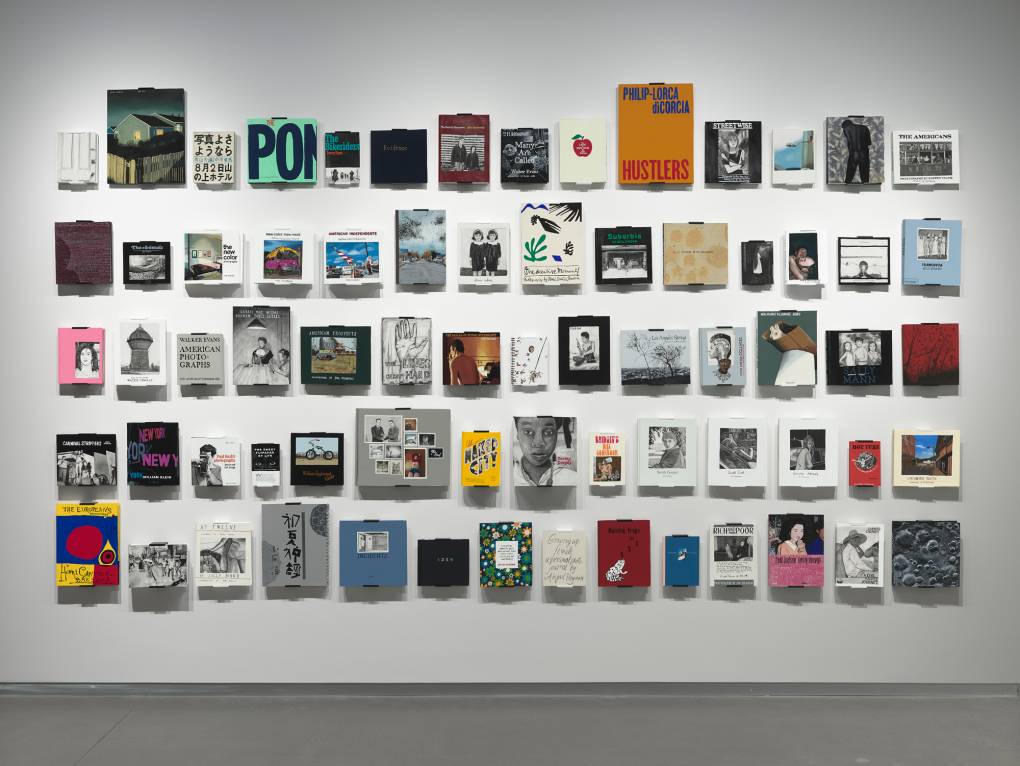
"caption": "Installation view of Libby Black's 'Photographers Looking at Photobooks,' 2017–24 at Pier 24.",
"credit": "Josef Jacques",
"altTag": "painted replicas of books mounted to wall in large grid",
"description": null,
"imgSizes": {
"medium": {
"file": "https://cdn.kqed.org/wp-content/uploads/sites/2/2024/12/Black_install_001_2000-800x600.jpg",
"width": 800,
"height": 600,
"mimeType": "image/jpeg"
},
"large": {
"file": "https://cdn.kqed.org/wp-content/uploads/sites/2/2024/12/Black_install_001_2000-1020x766.jpg",
"width": 1020,
"height": 766,
"mimeType": "image/jpeg"
},
"thumbnail": {
"file": "https://cdn.kqed.org/wp-content/uploads/sites/2/2024/12/Black_install_001_2000-160x120.jpg",
"width": 160,
"height": 120,
"mimeType": "image/jpeg"
},
"medium_large": {
"file": "https://cdn.kqed.org/wp-content/uploads/sites/2/2024/12/Black_install_001_2000-768x576.jpg",
"width": 768,
"height": 576,
"mimeType": "image/jpeg"
},
"1536x1536": {
"file": "https://cdn.kqed.org/wp-content/uploads/sites/2/2024/12/Black_install_001_2000-1536x1153.jpg",
"width": 1536,
"height": 1153,
"mimeType": "image/jpeg"
},
"post-thumbnail": {
"file": "https://cdn.kqed.org/wp-content/uploads/sites/2/2024/12/Black_install_001_2000-672x372.jpg",
"width": 672,
"height": 372,
"mimeType": "image/jpeg"
},
"twentyfourteen-full-width": {
"file": "https://cdn.kqed.org/wp-content/uploads/sites/2/2024/12/Black_install_001_2000-1038x576.jpg",
"width": 1038,
"height": 576,
"mimeType": "image/jpeg"
},
"full-width": {
"file": "https://cdn.kqed.org/wp-content/uploads/sites/2/2024/12/Black_install_001_2000-1920x1441.jpg",
"width": 1920,
"height": 1441,
"mimeType": "image/jpeg"
},
"kqedFullSize": {
"file": "https://cdn.kqed.org/wp-content/uploads/sites/2/2024/12/Black_install_001_2000.jpg",
"width": 2000,
"height": 1501
}
},
"isLoading": false,
"fetchFailed": false
},
"arts_13969022": {
"type": "attachments",
"id": "arts_13969022",
"meta": {
"index": "attachments_1716263798",
"site": "arts",
"id": "13969022",
"found": true
},
"title": "nickel boys",
"publishDate": 1733346768,
"status": "inherit",
"parent": 13969006,
"modified": 1733346833,
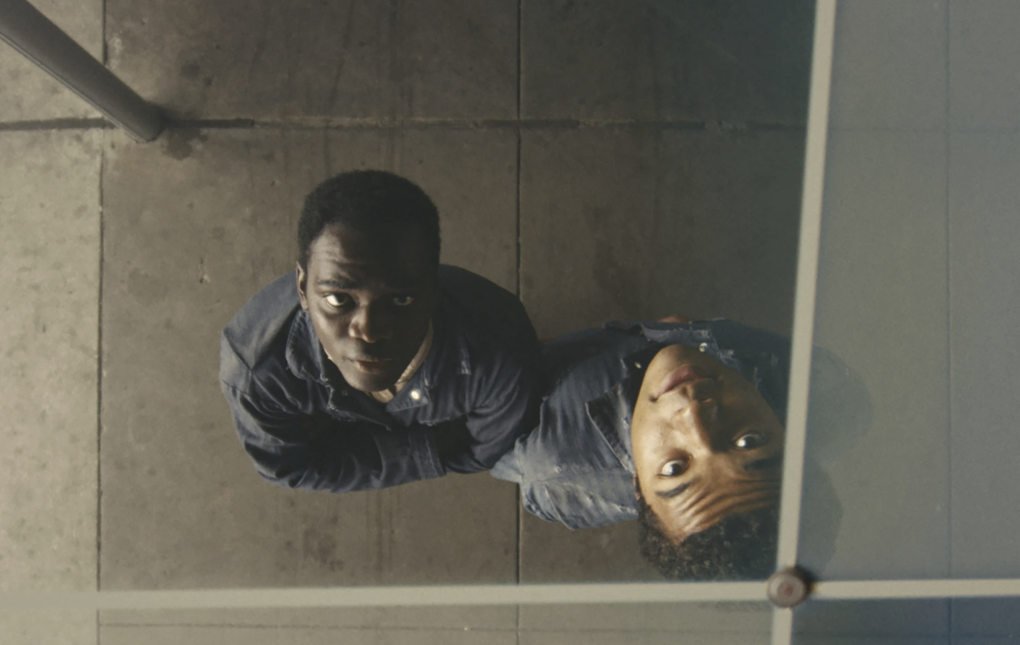
"caption": "Ethan Herisse (L) and Brandon Wilson star in ‘Nickel Boys.’",
"credit": "Orion Pictures/Amazon/MGM via AP.",
"altTag": "Two young Black men's faces are reflected in a mirror on a ceiling that they are standing beneath.",
"description": null,
"imgSizes": {
"medium": {
"file": "https://cdn.kqed.org/wp-content/uploads/sites/2/2024/12/nickel-boys-800x506.png",
"width": 800,
"height": 506,
"mimeType": "image/png"
},
"large": {
"file": "https://cdn.kqed.org/wp-content/uploads/sites/2/2024/12/nickel-boys-1020x645.png",
"width": 1020,
"height": 645,
"mimeType": "image/png"
},
"thumbnail": {
"file": "https://cdn.kqed.org/wp-content/uploads/sites/2/2024/12/nickel-boys-160x101.png",
"width": 160,
"height": 101,
"mimeType": "image/png"
},
"medium_large": {
"file": "https://cdn.kqed.org/wp-content/uploads/sites/2/2024/12/nickel-boys-768x486.png",
"width": 768,
"height": 486,
"mimeType": "image/png"
},
"1536x1536": {
"file": "https://cdn.kqed.org/wp-content/uploads/sites/2/2024/12/nickel-boys-1536x972.png",
"width": 1536,
"height": 972,
"mimeType": "image/png"
},
"post-thumbnail": {
"file": "https://cdn.kqed.org/wp-content/uploads/sites/2/2024/12/nickel-boys-672x372.png",
"width": 672,
"height": 372,
"mimeType": "image/png"
},
"twentyfourteen-full-width": {
"file": "https://cdn.kqed.org/wp-content/uploads/sites/2/2024/12/nickel-boys-1038x576.png",
"width": 1038,
"height": 576,
"mimeType": "image/png"
},
"full-width": {
"file": "https://cdn.kqed.org/wp-content/uploads/sites/2/2024/12/nickel-boys-1920x1214.png",
"width": 1920,
"height": 1214,
"mimeType": "image/png"
},
"kqedFullSize": {
"file": "https://cdn.kqed.org/wp-content/uploads/sites/2/2024/12/nickel-boys.png",
"width": 2000,
"height": 1265
}
},
"isLoading": false,
"fetchFailed": false
},
"arts_13962177": {
"type": "attachments",
"id": "arts_13962177",
"meta": {
"index": "attachments_1716263798",
"site": "arts",
"id": "13962177",
"found": true
},
"title": "20240804_KQED_FIKSCUE_ML_0223-KQED_1",
"publishDate": 1722981312,
"status": "inherit",
"parent": 13962220,
"modified": 1723059680,
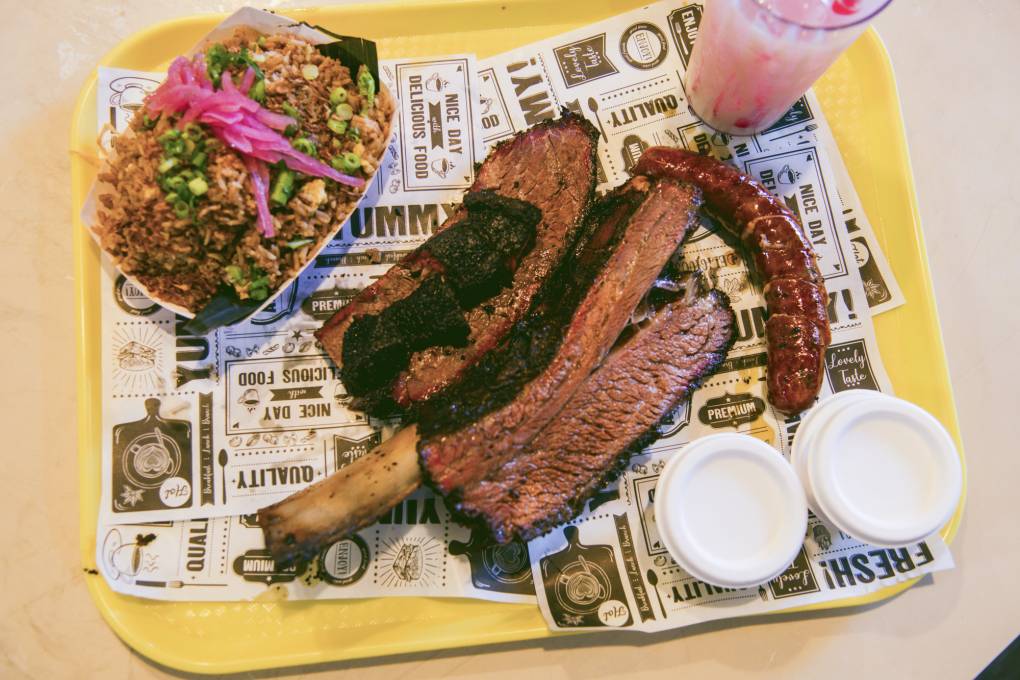
"caption": "A tray with fried rice, smoked brisket, a dino beef rib bone and jalapeño-cheese beef sausage is seen at Fikscue Craft BBQ in Alameda on August 4, 2024. Husband-and-wife team Fik and Reka Saleh opened Fikscue as a pop-up in 2020 before they began serving Texas-style barbecue and Indonesian dishes from their current brick-and-mortar restaurant in Alameda last November. ",
"credit": "Marissa Leshnov for KQED",
"altTag": "A tray of barbecue includes a dino beef rib, a slice of brisket, a sausage, and a cardboard try of fried rice.",
"description": null,
"imgSizes": {
"medium": {
"file": "https://cdn.kqed.org/wp-content/uploads/sites/2/2024/08/20240804_KQED_FIKSCUE_ML_0223-KQED_1-800x533.jpg",
"width": 800,
"height": 533,
"mimeType": "image/jpeg"
},
"large": {
"file": "https://cdn.kqed.org/wp-content/uploads/sites/2/2024/08/20240804_KQED_FIKSCUE_ML_0223-KQED_1-1020x680.jpg",
"width": 1020,
"height": 680,
"mimeType": "image/jpeg"
},
"thumbnail": {
"file": "https://cdn.kqed.org/wp-content/uploads/sites/2/2024/08/20240804_KQED_FIKSCUE_ML_0223-KQED_1-160x107.jpg",
"width": 160,
"height": 107,
"mimeType": "image/jpeg"
},
"medium_large": {
"file": "https://cdn.kqed.org/wp-content/uploads/sites/2/2024/08/20240804_KQED_FIKSCUE_ML_0223-KQED_1-768x512.jpg",
"width": 768,
"height": 512,
"mimeType": "image/jpeg"
},
"1536x1536": {
"file": "https://cdn.kqed.org/wp-content/uploads/sites/2/2024/08/20240804_KQED_FIKSCUE_ML_0223-KQED_1-1536x1024.jpg",
"width": 1536,
"height": 1024,
"mimeType": "image/jpeg"
},
"post-thumbnail": {
"file": "https://cdn.kqed.org/wp-content/uploads/sites/2/2024/08/20240804_KQED_FIKSCUE_ML_0223-KQED_1-672x372.jpg",
"width": 672,
"height": 372,
"mimeType": "image/jpeg"
},
"twentyfourteen-full-width": {
"file": "https://cdn.kqed.org/wp-content/uploads/sites/2/2024/08/20240804_KQED_FIKSCUE_ML_0223-KQED_1-1038x576.jpg",
"width": 1038,
"height": 576,
"mimeType": "image/jpeg"
},
"full-width": {
"file": "https://cdn.kqed.org/wp-content/uploads/sites/2/2024/08/20240804_KQED_FIKSCUE_ML_0223-KQED_1-1920x1280.jpg",
"width": 1920,
"height": 1280,
"mimeType": "image/jpeg"
},
"kqedFullSize": {
"file": "https://cdn.kqed.org/wp-content/uploads/sites/2/2024/08/20240804_KQED_FIKSCUE_ML_0223-KQED_1.jpg",
"width": 2000,
"height": 1333
}
},
"isLoading": false,
"fetchFailed": false
},
"arts_13968929": {
"type": "attachments",
"id": "arts_13968929",
"meta": {
"index": "attachments_1716263798",
"site": "arts",
"id": "13968929",
"found": true
},
"title": "best albums 2024",
"publishDate": 1733250104,
"status": "inherit",
"parent": 13968679,
"modified": 1733250266,
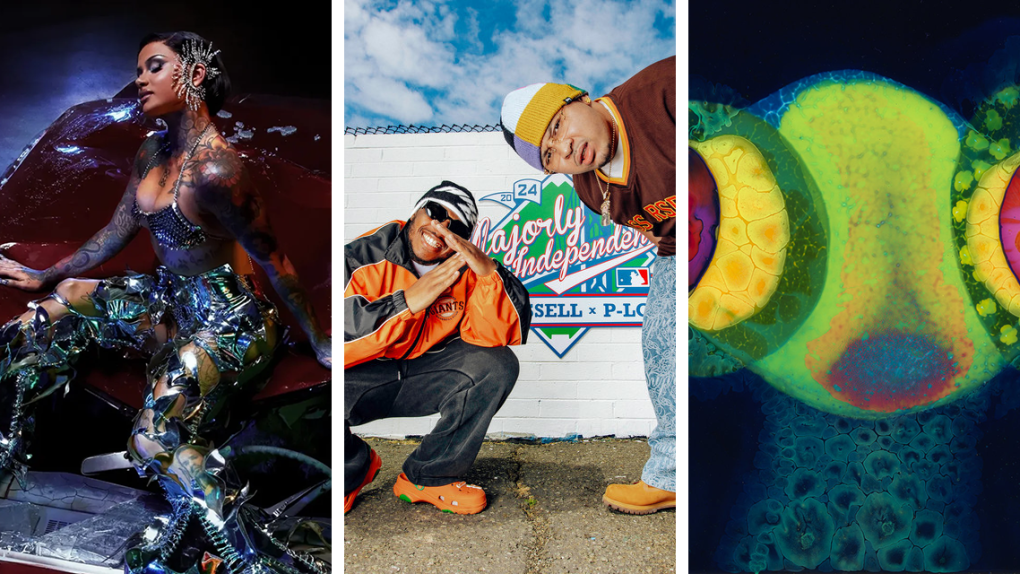
"caption": "Kehlani’s ‘Crash,’ LaRussell and P-Lo’s ‘Majorly Independent’ and Osees’ ’Sorcs 80’ are three of KQED Arts & Culture’s favorite albums of 2024. ",
"credit": "Atlantic/Good Compenny/Castle Face",
"altTag": null,
"description": null,
"imgSizes": {
"medium": {
"file": "https://cdn.kqed.org/wp-content/uploads/sites/2/2024/12/best-albums-2024-800x450.png",
"width": 800,
"height": 450,
"mimeType": "image/png"
},
"large": {
"file": "https://cdn.kqed.org/wp-content/uploads/sites/2/2024/12/best-albums-2024-1020x574.png",
"width": 1020,
"height": 574,
"mimeType": "image/png"
},
"thumbnail": {
"file": "https://cdn.kqed.org/wp-content/uploads/sites/2/2024/12/best-albums-2024-160x90.png",
"width": 160,
"height": 90,
"mimeType": "image/png"
},
"medium_large": {
"file": "https://cdn.kqed.org/wp-content/uploads/sites/2/2024/12/best-albums-2024-768x432.png",
"width": 768,
"height": 432,
"mimeType": "image/png"
},
"post-thumbnail": {
"file": "https://cdn.kqed.org/wp-content/uploads/sites/2/2024/12/best-albums-2024-672x372.png",
"width": 672,
"height": 372,
"mimeType": "image/png"
},
"twentyfourteen-full-width": {
"file": "https://cdn.kqed.org/wp-content/uploads/sites/2/2024/12/best-albums-2024-1038x576.png",
"width": 1038,
"height": 576,
"mimeType": "image/png"
},
"kqedFullSize": {
"file": "https://cdn.kqed.org/wp-content/uploads/sites/2/2024/12/best-albums-2024.png",
"width": 1138,
"height": 640
}
},
"isLoading": false,
"fetchFailed": false
},
"arts_13952877": {
"type": "attachments",
"id": "arts_13952877",
"meta": {
"index": "attachments_1716263798",
"site": "arts",
"id": "13952877",
"found": true
},
"title": "BDA_084",
"publishDate": 1708649147,
"status": "inherit",
"parent": 13952873,
"modified": 1733173067,
"caption": "(L–R) BD Wong (M), Michael Phillis (Timmy), and Gabriel Brown (Sam) in the world premiere of\nKate Attwell’s\n'Big Data' at\nACT.",
"credit": "Kevin Berne",
"altTag": null,
"description": null,
"imgSizes": {
"medium": {
"file": "https://cdn.kqed.org/wp-content/uploads/sites/2/2024/02/BDA_084-800x533.jpg",
"width": 800,
"height": 533,
"mimeType": "image/jpeg"
},
"large": {
"file": "https://cdn.kqed.org/wp-content/uploads/sites/2/2024/02/BDA_084-1020x679.jpg",
"width": 1020,
"height": 679,
"mimeType": "image/jpeg"
},
"thumbnail": {
"file": "https://cdn.kqed.org/wp-content/uploads/sites/2/2024/02/BDA_084-160x107.jpg",
"width": 160,
"height": 107,
"mimeType": "image/jpeg"
},
"medium_large": {
"file": "https://cdn.kqed.org/wp-content/uploads/sites/2/2024/02/BDA_084-768x511.jpg",
"width": 768,
"height": 511,
"mimeType": "image/jpeg"
},
"1536x1536": {
"file": "https://cdn.kqed.org/wp-content/uploads/sites/2/2024/02/BDA_084-1536x1022.jpg",
"width": 1536,
"height": 1022,
"mimeType": "image/jpeg"
},
"post-thumbnail": {
"file": "https://cdn.kqed.org/wp-content/uploads/sites/2/2024/02/BDA_084-672x372.jpg",
"width": 672,
"height": 372,
"mimeType": "image/jpeg"
},
"twentyfourteen-full-width": {
"file": "https://cdn.kqed.org/wp-content/uploads/sites/2/2024/02/BDA_084-1038x576.jpg",
"width": 1038,
"height": 576,
"mimeType": "image/jpeg"
},
"kqedFullSize": {
"file": "https://cdn.kqed.org/wp-content/uploads/sites/2/2024/02/BDA_084.jpg",
"width": 1920,
"height": 1278
}
},
"isLoading": false,
"fetchFailed": false
}
},
"audioPlayerReducer": {
"postId": "stream_live",
"isPaused": true,
"isPlaying": false,
"pfsActive": false,
"pledgeModalIsOpen": true,
"playerDrawerIsOpen": false,
"liveAudioPlayStartedAt": 0,
"liveAudioPlayContext": ""
},
"authorsReducer": {
"byline_arts_13969006": {
"type": "authors",
"id": "byline_arts_13969006",
"meta": {
"override": true
},
"slug": "byline_arts_13969006",
"name": "Jake Coyle and Lindsey Bahr, Associated Press",
"isLoading": false
},
"byline_arts_13968679": {
"type": "authors",
"id": "byline_arts_13968679",
"meta": {
"override": true
},
"slug": "byline_arts_13968679",
"name": "KQED Arts & Culture",
"isLoading": false
},
"shotchkiss": {
"type": "authors",
"id": "61",
"meta": {
"index": "authors_1716337520",
"id": "61",
"found": true
},
"name": "Sarah Hotchkiss",
"firstName": "Sarah",
"lastName": "Hotchkiss",
"slug": "shotchkiss",
"email": "shotchkiss@kqed.org",
"display_author_email": true,
"staff_mastheads": [
"arts"
],
"title": "Senior Editor",
"bio": "Sarah Hotchkiss is a San Francisco \u003ca href=\"http://www.sarahhotchkiss.com\">artist\u003c/a> and arts writer. In 2019, she received the Dorothea & Leo Rabkin Foundation grant for visual art journalism and in 2020 she received a Society of Professional Journalists, Northern California award for excellence in arts and culture reporting.",
"avatar": "https://secure.gravatar.com/avatar/bc662df144b3d27fd8b1b6f1c2a420d34e91e53154d411bb7ad353cc8b6cea8d?s=600&d=blank&r=g",
"twitter": null,
"bluesky": null,
"facebook": null,
"instagram": null,
"linkedin": null,
"sites": [
{
"site": "",
"roles": [
"editor"
]
},
{
"site": "arts",
"roles": [
"Contributor",
"administrator"
]
},
{
"site": "artschool",
"roles": [
"administrator"
]
},
{
"site": "news",
"roles": [
"editor"
]
},
{
"site": "pop",
"roles": [
"administrator"
]
},
{
"site": "bayareabites",
"roles": [
"editor"
]
},
{
"site": "spark",
"roles": [
"editor"
]
},
{
"site": "checkplease",
"roles": [
"editor"
]
}
],
"headData": {
"title": "Sarah Hotchkiss | KQED",
"description": "Senior Editor",
"ogImgSrc": "https://secure.gravatar.com/avatar/bc662df144b3d27fd8b1b6f1c2a420d34e91e53154d411bb7ad353cc8b6cea8d?s=600&d=blank&r=g",
"twImgSrc": "https://secure.gravatar.com/avatar/bc662df144b3d27fd8b1b6f1c2a420d34e91e53154d411bb7ad353cc8b6cea8d?s=600&d=blank&r=g"
},
"isLoading": false,
"link": "/author/shotchkiss"
},
"ngluckstern": {
"type": "authors",
"id": "11497",
"meta": {
"index": "authors_1716337520",
"id": "11497",
"found": true
},
"name": "Nicole Gluckstern",
"firstName": "Nicole",
"lastName": "Gluckstern",
"slug": "ngluckstern",
"email": "gluckstern.nicole@gmail.com",
"display_author_email": false,
"staff_mastheads": [],
"title": "KQED Contributor",
"bio": null,
"avatar": "https://secure.gravatar.com/avatar/2c3d593194017bfe811a998ad03140909de330b22abebf4889e1a564ce5b3495?s=600&d=blank&r=g",
"twitter": null,
"bluesky": null,
"facebook": null,
"instagram": null,
"linkedin": null,
"sites": [
{
"site": "arts",
"roles": [
"contributor"
]
}
],
"headData": {
"title": "Nicole Gluckstern | KQED",
"description": "KQED Contributor",
"ogImgSrc": "https://secure.gravatar.com/avatar/2c3d593194017bfe811a998ad03140909de330b22abebf4889e1a564ce5b3495?s=600&d=blank&r=g",
"twImgSrc": "https://secure.gravatar.com/avatar/2c3d593194017bfe811a998ad03140909de330b22abebf4889e1a564ce5b3495?s=600&d=blank&r=g"
},
"isLoading": false,
"link": "/author/ngluckstern"
},
"ltsai": {
"type": "authors",
"id": "11743",
"meta": {
"index": "authors_1716337520",
"id": "11743",
"found": true
},
"name": "Luke Tsai",
"firstName": "Luke",
"lastName": "Tsai",
"slug": "ltsai",
"email": "ltsai@kqed.org",
"display_author_email": true,
"staff_mastheads": [
"arts"
],
"title": "Food Editor",
"bio": "Luke Tsai is KQED's food editor and resident stinky tofu connoisseur. Prior to KQED, he was an editor at Eater SF, \u003cem>San Francisco \u003c/em>magazine, and the \u003cem>East Bay Express\u003c/em>, and his work has also appeared in TASTE, the \u003cem>San Francisco Chronicle\u003c/em>, and the \u003cem>Best Food Writing\u003c/em> anthology. When he isn't writing or editing, you'll find him eating most everything he can get his hands on.",
"avatar": "https://secure.gravatar.com/avatar/1e59b45bf191526e7339d6ba46e33a57b2030d25c27660ecc64ea3cb863e34f7?s=600&d=blank&r=g",
"twitter": "theluketsai",
"bluesky": null,
"facebook": null,
"instagram": null,
"linkedin": null,
"sites": [
{
"site": "",
"roles": [
"editor"
]
},
{
"site": "arts",
"roles": [
"administrator"
]
},
{
"site": "news",
"roles": [
"editor",
"contributor"
]
},
{
"site": "bayareabites",
"roles": [
"editor"
]
},
{
"site": "food",
"roles": [
"editor"
]
}
],
"headData": {
"title": "Luke Tsai | KQED",
"description": "Food Editor",
"ogImgSrc": "https://secure.gravatar.com/avatar/1e59b45bf191526e7339d6ba46e33a57b2030d25c27660ecc64ea3cb863e34f7?s=600&d=blank&r=g",
"twImgSrc": "https://secure.gravatar.com/avatar/1e59b45bf191526e7339d6ba46e33a57b2030d25c27660ecc64ea3cb863e34f7?s=600&d=blank&r=g"
},
"isLoading": false,
"link": "/author/ltsai"
},
"djchavez": {
"type": "authors",
"id": "11905",
"meta": {
"index": "authors_1716337520",
"id": "11905",
"found": true
},
"name": "David John Chávez",
"firstName": "David John",
"lastName": "Chávez",
"slug": "djchavez",
"email": "theatrechavez@gmail.com",
"display_author_email": false,
"staff_mastheads": [],
"title": "KQED Contributor",
"bio": "Based in San José, David is a theater critic and reporter who who served as Executive Chair of the American Theatre Critics/Journalists Association (’22-’25), as well as a regular theater contributor to The Mercury News, San Francisco Chronicle, American Theatre Magazine and KQED, among other publications. He is a two-time juror for the Pulitzer Prize for Drama (’22-’23) and a 2020 fellow of the Eugene O'Neill National Critics Institute.",
"avatar": "https://secure.gravatar.com/avatar/5eaa3ce994228213820907c390795c28f7b97165c2b575f46d15fc9273a132b7?s=600&d=blank&r=g",
"twitter": null,
"bluesky": null,
"facebook": "https://www.facebook.com/bydavidjchavez",
"instagram": "https://www.instagram.com/davidjchavez/",
"linkedin": null,
"sites": [
{
"site": "arts",
"roles": [
"contributor"
]
}
],
"headData": {
"title": "David John Chávez | KQED",
"description": "KQED Contributor",
"ogImgSrc": "https://secure.gravatar.com/avatar/5eaa3ce994228213820907c390795c28f7b97165c2b575f46d15fc9273a132b7?s=600&d=blank&r=g",
"twImgSrc": "https://secure.gravatar.com/avatar/5eaa3ce994228213820907c390795c28f7b97165c2b575f46d15fc9273a132b7?s=600&d=blank&r=g"
},
"isLoading": false,
"link": "/author/djchavez"
}
},
"pagesReducer": {
"arts_tag_best-of-2024": {
"type": "terms",
"id": "arts_22376",
"meta": {
"index": "terms_1716263798",
"site": "arts",
"id": "22376",
"score": 9.893213
},
"name": "best of 2024",
"slug": "best-of-2024",
"taxonomy": "tag",
"description": null,
"featImg": null,
"headData": {
"title": "best of 2024 | KQED Arts",
"description": null,
"ogTitle": null,
"ogDescription": null,
"ogImgId": null,
"twTitle": null,
"twDescription": null,
"twImgId": null
},
"ttid": 22388,
"isLoading": false,
"title": "best of 2024",
"pageMeta": {
"site": "arts",
"WpPageTemplate": "page-topic-editorial",
"currentPage": 2
},
"blocks": [
{
"blockName": "kqed/post-list",
"attrs": {
"layout": "cardArticle2",
"query": "posts/arts?tag=best-of-2024",
"seeMore": false,
"paginated": true,
"page": 2
}
},
{
"blockName": "kqed/ad"
}
]
}
},
"pfsSessionReducer": {},
"postsReducer": {
"stream_live": {
"type": "live",
"id": "stream_live",
"audioUrl": "https://streams.kqed.org/kqedradio",
"title": "Live Stream",
"excerpt": "Live Stream information currently unavailable.",
"link": "/radio",
"featImg": "",
"label": {
"name": "KQED Live",
"link": "/"
}
},
"stream_kqedNewscast": {
"type": "posts",
"id": "stream_kqedNewscast",
"audioUrl": "https://www.kqed.org/.stream/anon/radio/RDnews/newscast.mp3?_=1",
"title": "KQED Newscast",
"featImg": "",
"label": {
"name": "88.5 FM",
"link": "/"
}
},
"arts_13969008": {
"type": "posts",
"id": "arts_13969008",
"meta": {
"index": "posts_1716263798",
"site": "arts",
"id": "13969008",
"score": null,
"sort": [
1733352452000
]
},
"guestAuthors": [],
"slug": "the-best-art-i-didnt-write-about-in-2024",
"title": "The Best Art I Didn’t Write About in 2024",
"publishDate": 1733352452,
"format": "aside",
"headTitle": "The Best Art I Didn’t Write About in 2024 | KQED",
"labelTerm": {
"site": "arts"
},
"content": "\u003cp>There’s simply too much art to see in the Bay Area, let alone write about. And so at the end of every year, I compile a list of visual art shows and happenings I saw, deeply enjoyed and didn’t get a chance to cover. As usual, it’s highly personal and in vaguely chronological order. All in all, another great year for Bay Area art.\u003c/p>\n\u003cfigure id=\"attachment_13969019\" class=\"wp-caption aligncenter\" style=\"max-width: 2000px\">\u003cimg loading=\"lazy\" decoding=\"async\" src=\"https://cdn.kqed.org/wp-content/uploads/sites/2/2024/12/53511645146_c9ee8d2dd9_k_2000.jpg\" alt=\"sculpture of inflated trees, fake trees and other plastic; decorative painting in red and black\" width=\"2000\" height=\"949\" class=\"size-full wp-image-13969019\" srcset=\"https://cdn.kqed.org/wp-content/uploads/sites/2/2024/12/53511645146_c9ee8d2dd9_k_2000.jpg 2000w, https://cdn.kqed.org/wp-content/uploads/sites/2/2024/12/53511645146_c9ee8d2dd9_k_2000-800x380.jpg 800w, https://cdn.kqed.org/wp-content/uploads/sites/2/2024/12/53511645146_c9ee8d2dd9_k_2000-1020x484.jpg 1020w, https://cdn.kqed.org/wp-content/uploads/sites/2/2024/12/53511645146_c9ee8d2dd9_k_2000-160x76.jpg 160w, https://cdn.kqed.org/wp-content/uploads/sites/2/2024/12/53511645146_c9ee8d2dd9_k_2000-768x364.jpg 768w, https://cdn.kqed.org/wp-content/uploads/sites/2/2024/12/53511645146_c9ee8d2dd9_k_2000-1536x729.jpg 1536w, https://cdn.kqed.org/wp-content/uploads/sites/2/2024/12/53511645146_c9ee8d2dd9_k_2000-1920x911.jpg 1920w\" sizes=\"auto, (max-width: 2000px) 100vw, 2000px\">\u003cfigcaption class=\"wp-caption-text\">L: A reflected view of Torreya Cummings’ ‘Et In Arcadia Ego,’ 2024. R: Craig Calderwood, ‘Pile Elemental,’ 2024. \u003ccite>(Minoosh Zomorodinia)\u003c/cite>\u003c/figcaption>\u003c/figure>\n\u003ch2>The best shows up for the shortest time\u003c/h2>\n\u003cp>\u003ci>\u003cb>Torreya Cummings, ‘\u003ca href=\"https://www.recology.com/recology_news/recology-artist-in-residence-exhibitions-work-by-craig-calderwood-torreya-cummings-and-cca-student-qadir-parris/\">Paradise Lost & Found\u003c/a>’\u003cbr>\nCraig Calderwood, ‘\u003ca href=\"https://www.recology.com/recology_news/recology-artist-in-residence-exhibitions-work-by-craig-calderwood-torreya-cummings-and-cca-student-qadir-parris/\">The Trash Oracle Sings\u003c/a>’\u003c/b>\u003cbr>\nRecology, San Francisco\u003cbr>\nJan. 19, 20, 23, 2024\u003c/i>\u003c/p>\n\u003cp>Blink and you’ll miss Recology’s shows. In theory, I understand this. Studios need to be turned over to the next batch of artists in residence. And yet, the quality of work that comes out of the residencies, proven by Cummings and Calderwood’s shows earlier this year, calls for more eyes and longer viewing hours. Cummings’ installation, dominated by a mirrored platform and an upside-down assemblage of inflated palm trees, fake plants, lamps and a plastic skeleton, included an eerie soundscape cut together from discarded records and cassettes. Next door, Calderwood’s large-scale paintings depicted zany beings adorned with detritus the artist pulled from the real-life dump. Sketches, notes and found scraps of paper showed how Calderwood builds their dense, pattern-heavy worlds, full of symbols, codes and, in \u003ci>Pile Elemental\u003c/i>, even a hidden character behind a draped piece of canvas.\u003c/p>\n\u003cfigure id=\"attachment_13969015\" class=\"wp-caption aligncenter\" style=\"max-width: 2000px\">\u003cimg loading=\"lazy\" decoding=\"async\" src=\"https://cdn.kqed.org/wp-content/uploads/sites/2/2024/12/2024_03_07_ASG3597_2000.jpg\" alt=\"gallery view of framed abstract woven work\" width=\"2000\" height=\"1500\" class=\"size-full wp-image-13969015\" srcset=\"https://cdn.kqed.org/wp-content/uploads/sites/2/2024/12/2024_03_07_ASG3597_2000.jpg 2000w, https://cdn.kqed.org/wp-content/uploads/sites/2/2024/12/2024_03_07_ASG3597_2000-800x600.jpg 800w, https://cdn.kqed.org/wp-content/uploads/sites/2/2024/12/2024_03_07_ASG3597_2000-1020x765.jpg 1020w, https://cdn.kqed.org/wp-content/uploads/sites/2/2024/12/2024_03_07_ASG3597_2000-160x120.jpg 160w, https://cdn.kqed.org/wp-content/uploads/sites/2/2024/12/2024_03_07_ASG3597_2000-768x576.jpg 768w, https://cdn.kqed.org/wp-content/uploads/sites/2/2024/12/2024_03_07_ASG3597_2000-1536x1152.jpg 1536w, https://cdn.kqed.org/wp-content/uploads/sites/2/2024/12/2024_03_07_ASG3597_2000-1920x1440.jpg 1920w\" sizes=\"auto, (max-width: 2000px) 100vw, 2000px\">\u003cfigcaption class=\"wp-caption-text\">Installation view of Ruth Laskey’s ‘Loops & Circles’ at Altman Siegel. \u003ccite>(Courtesy of the artist and Altman Siegel, San Francisco)\u003c/cite>\u003c/figcaption>\u003c/figure>\n\u003ch2>The art that most helped me catch my breath\u003c/h2>\n\u003cp>\u003ci>\u003cb>Ruth Laskey, ‘\u003ca href=\"https://altmansiegel.com/exhibitions/ruth-laskey-loops-circles/\">Loops & Circles\u003c/a>’\u003c/b>\u003cbr>\nAltman Siegel, San Francisco\u003cbr>\nMarch 7–April 20, 2024\u003c/i>\u003c/p>\n\u003cp>I’ve long been a fan of Ruth Laskey’s work: carefully composed, delicate textile pieces made with hand-dyed and hand-woven linen. In her debut show with Altman Siegel (she was previously represented by Ratio 3), Laskey’s spare, beautifully framed pieces got the space and airiness they deserve. Elegant, angular loops sat against lightly hued polyhedrons; denser arrangements of three colored circles were bound within solid building-block shapes. Every now and then I spied a slight wobble in the otherwise tautly stretched twill, a reminder of Laskey’s slow and satisfying artistic process.\u003c/p>\n\u003cfigure id=\"attachment_13969016\" class=\"wp-caption aligncenter\" style=\"max-width: 2000px\">\u003cimg loading=\"lazy\" decoding=\"async\" src=\"https://cdn.kqed.org/wp-content/uploads/sites/2/2024/12/2024-04-09-14.24.11_2000.jpg\" alt=\"gallery view of framed graphite work on wall; dark green painting of two swans\" width=\"2000\" height=\"853\" class=\"size-full wp-image-13969016\" srcset=\"https://cdn.kqed.org/wp-content/uploads/sites/2/2024/12/2024-04-09-14.24.11_2000.jpg 2000w, https://cdn.kqed.org/wp-content/uploads/sites/2/2024/12/2024-04-09-14.24.11_2000-800x341.jpg 800w, https://cdn.kqed.org/wp-content/uploads/sites/2/2024/12/2024-04-09-14.24.11_2000-1020x435.jpg 1020w, https://cdn.kqed.org/wp-content/uploads/sites/2/2024/12/2024-04-09-14.24.11_2000-160x68.jpg 160w, https://cdn.kqed.org/wp-content/uploads/sites/2/2024/12/2024-04-09-14.24.11_2000-768x328.jpg 768w, https://cdn.kqed.org/wp-content/uploads/sites/2/2024/12/2024-04-09-14.24.11_2000-1536x655.jpg 1536w, https://cdn.kqed.org/wp-content/uploads/sites/2/2024/12/2024-04-09-14.24.11_2000-1920x819.jpg 1920w\" sizes=\"auto, (max-width: 2000px) 100vw, 2000px\">\u003cfigcaption class=\"wp-caption-text\">L: Installation view of Bec Imrich, ‘Tin Cry.’ R: Morgan Corbitt, ‘Waters of March,’ 2024. \u003ccite>(Courtesy the artists and Bass & Reiner)\u003c/cite>\u003c/figcaption>\u003c/figure>\n\u003ch2>Most convincing reasons to always stop by Bass & Reiner\u003c/h2>\n\u003cp>\u003ci>\u003cb>Bec Imrich, ‘\u003ca href=\"https://www.bassandreiner.com/tin-cry\">Tin Cry\u003c/a>’\u003c/b>\u003cbr>\nApril 6–May 25, 2024\u003cbr>\n\u003cb>Morgan Corbitt, ‘\u003ca href=\"https://www.bassandreiner.com/morgancorbitt\">Waters of March\u003c/a>’\u003c/b>\u003cbr>\nSept. 7–Nov. 9, 2024\u003cbr>\nBass & Reiner, San Francisco\u003c/i>\u003c/p>\n\u003cp>[ad fullwidth]\u003c/p>\n\u003cp>Trippy, exacting realism really knocked my socks off this year. And two of my favorite shows in that vein took place at Minnesota Street Project’s smallest gallery, Bass & Reiner. In April, Imrich’s graphite on paper work (and one optical illusion–inspired sculpture) was a precise, silvery presentation of textures and patterns punctuated by cast tin shapes — a strange combination of materials I haven’t seen before or since. Five months later, Corbitt’s \u003ci>Waters of March\u003c/i> opened in the same space, a very different show (large oil paintings of reflective estate sale objects, metal grates and hunks of deli meat), but with the same boggling attention to detail — and ability to render familiar objects in off-kilter, world-altering ways.\u003c/p>\n\u003cfigure id=\"attachment_13969012\" class=\"wp-caption aligncenter\" style=\"max-width: 2000px\">\u003cimg loading=\"lazy\" decoding=\"async\" src=\"https://cdn.kqed.org/wp-content/uploads/sites/2/2024/12/Black_install_001_2000.jpg\" alt=\"painted replicas of books mounted to wall in large grid\" width=\"2000\" height=\"1501\" class=\"size-full wp-image-13969012\" srcset=\"https://cdn.kqed.org/wp-content/uploads/sites/2/2024/12/Black_install_001_2000.jpg 2000w, https://cdn.kqed.org/wp-content/uploads/sites/2/2024/12/Black_install_001_2000-800x600.jpg 800w, https://cdn.kqed.org/wp-content/uploads/sites/2/2024/12/Black_install_001_2000-1020x766.jpg 1020w, https://cdn.kqed.org/wp-content/uploads/sites/2/2024/12/Black_install_001_2000-160x120.jpg 160w, https://cdn.kqed.org/wp-content/uploads/sites/2/2024/12/Black_install_001_2000-768x576.jpg 768w, https://cdn.kqed.org/wp-content/uploads/sites/2/2024/12/Black_install_001_2000-1536x1153.jpg 1536w, https://cdn.kqed.org/wp-content/uploads/sites/2/2024/12/Black_install_001_2000-1920x1441.jpg 1920w\" sizes=\"auto, (max-width: 2000px) 100vw, 2000px\">\u003cfigcaption class=\"wp-caption-text\">Installation view of Libby Black’s ‘Photographers Looking at Photobooks,’ 2017–24 at Pier 24. \u003ccite>(Josef Jacques)\u003c/cite>\u003c/figcaption>\u003c/figure>\n\u003ch2>The best non-photos in a photo show\u003c/h2>\n\u003cp>\u003ci>\u003cb>Libby Black in ‘\u003ca href=\"https://pier24.org/exhibitions/\">Turning the Page\u003c/a>’\u003c/b>\u003cbr>\nPier 24, San Francisco\u003cbr>\nApril 15, 2024–Jan. 31, 2025\u003c/i>\u003c/p>\n\u003cp>After a generous 15-year run, Pier 24, the presentation arm of the Pilara Family Foundation’s incredible photography collection, will close its doors for good at the end of January 2025. The final show, \u003ci>Turning the Page\u003c/i>, turns its focus to photo books (and beyond the Pilara holdings), placing artists’ monographs at the centers of its galleries and exploding images out from the pages. Included are installations of Jim Goldberg’s \u003ci>Raised by Wolves\u003c/i>, Cindy Sherman’s \u003ci>Untitled Film Stills\u003c/i> and Masahisa Fukase’s \u003ci>Karasu\u003c/i>. But the show opens with Pier 24’s first true display of sculpture, a stunning grid of Black’s painted paper replicas of photo books. (A new publication, \u003ci>\u003ca href=\"https://pier24.org/publication/photo-book-photo-list/\">Photo Book Photo List\u003c/a>\u003c/i> includes even more of her pieces, one for each list provided by a photographer of cherished photo books in their own personal libraries.)\u003c/p>\n\u003cfigure id=\"attachment_13969020\" class=\"wp-caption aligncenter\" style=\"max-width: 2000px\">\u003cimg loading=\"lazy\" decoding=\"async\" src=\"https://cdn.kqed.org/wp-content/uploads/sites/2/2024/12/Gay-Outlaw_installation-view-4_2000.jpg\" alt=\"three sculptures and five prints in white gallery space\" width=\"2000\" height=\"1500\" class=\"size-full wp-image-13969020\" srcset=\"https://cdn.kqed.org/wp-content/uploads/sites/2/2024/12/Gay-Outlaw_installation-view-4_2000.jpg 2000w, https://cdn.kqed.org/wp-content/uploads/sites/2/2024/12/Gay-Outlaw_installation-view-4_2000-800x600.jpg 800w, https://cdn.kqed.org/wp-content/uploads/sites/2/2024/12/Gay-Outlaw_installation-view-4_2000-1020x765.jpg 1020w, https://cdn.kqed.org/wp-content/uploads/sites/2/2024/12/Gay-Outlaw_installation-view-4_2000-160x120.jpg 160w, https://cdn.kqed.org/wp-content/uploads/sites/2/2024/12/Gay-Outlaw_installation-view-4_2000-768x576.jpg 768w, https://cdn.kqed.org/wp-content/uploads/sites/2/2024/12/Gay-Outlaw_installation-view-4_2000-1536x1152.jpg 1536w, https://cdn.kqed.org/wp-content/uploads/sites/2/2024/12/Gay-Outlaw_installation-view-4_2000-1920x1440.jpg 1920w\" sizes=\"auto, (max-width: 2000px) 100vw, 2000px\">\u003cfigcaption class=\"wp-caption-text\">Installation view of Gay Outlaw, ‘Inner Sousaphone’ at Et al. \u003ccite>(Courtesy of the artist and Et al.)\u003c/cite>\u003c/figcaption>\u003c/figure>\n\u003ch2>The best interpretation of an interpretation of a waffle\u003c/h2>\n\u003cp>\u003ci>\u003cb>Gay Outlaw, ‘\u003ca href=\"https://etaletc.com/gay-outlaw\">Inner Sousaphone\u003c/a>’\u003c/b>\u003cbr>\nEt al., San Francisco\u003cbr>\nApril 19 – June 1, 2024\u003c/i>\u003c/p>\n\u003cp>In two galleries at Et al., Theadora Walsh (who has contributed to KQED Arts & Culture) organized a solo show of painting, prints and sculptures by the impossible-to-pin-down San Francisco artist Gay Outlaw. While Outlaw’s materials vary from piece to piece (a rough wedge of wood, smoothly fused glass, hand-printed linocuts), all her work is united by a pristine attention to craft. For this show, even the pedestals supporting the art were impeccably crisp. Touring \u003ci>Inner Sousaphone\u003c/i> felt like being in good hands, with objects arranged just so: \u003ci>Untitled (Saw Box)\u003c/i>, a glass and wood sculpture that seemed to project out its own shadows, was perfectly graced by a skylight on one of my visits.\u003c/p>\n\u003cfigure id=\"attachment_13969013\" class=\"wp-caption aligncenter\" style=\"max-width: 2000px\">\u003cimg loading=\"lazy\" decoding=\"async\" src=\"https://cdn.kqed.org/wp-content/uploads/sites/2/2024/12/Walking-in-Your-Footsteps_2023_WEB_2000.jpg\" alt=\"paper sculpture of swiss cheese slice and wax birthday candles; large horizontal painting with realist and abstract elements\" width=\"2000\" height=\"781\" class=\"size-full wp-image-13969013\" srcset=\"https://cdn.kqed.org/wp-content/uploads/sites/2/2024/12/Walking-in-Your-Footsteps_2023_WEB_2000.jpg 2000w, https://cdn.kqed.org/wp-content/uploads/sites/2/2024/12/Walking-in-Your-Footsteps_2023_WEB_2000-800x312.jpg 800w, https://cdn.kqed.org/wp-content/uploads/sites/2/2024/12/Walking-in-Your-Footsteps_2023_WEB_2000-1020x398.jpg 1020w, https://cdn.kqed.org/wp-content/uploads/sites/2/2024/12/Walking-in-Your-Footsteps_2023_WEB_2000-160x62.jpg 160w, https://cdn.kqed.org/wp-content/uploads/sites/2/2024/12/Walking-in-Your-Footsteps_2023_WEB_2000-768x300.jpg 768w, https://cdn.kqed.org/wp-content/uploads/sites/2/2024/12/Walking-in-Your-Footsteps_2023_WEB_2000-1536x600.jpg 1536w, https://cdn.kqed.org/wp-content/uploads/sites/2/2024/12/Walking-in-Your-Footsteps_2023_WEB_2000-1920x750.jpg 1920w\" sizes=\"auto, (max-width: 2000px) 100vw, 2000px\">\u003cfigcaption class=\"wp-caption-text\">L: Imin Yeh, ‘Swiss cheese and three birthday candles,’ 2024. R: Michael Hall, ‘Walking in Your Footsteps,’ 2023. \u003ccite>(Courtesy of the artists and Catharine Clark Gallery)\u003c/cite>\u003c/figcaption>\u003c/figure>\n\u003ch2>The most enjoyable trompe l’oleil\u003c/h2>\n\u003cp>\u003ci>\u003cb>Imin Yeh, ‘\u003ca href=\"https://cclarkgallery.com/exhibitions/10-for-real-life-michael-hall/overview/\">A Salty Rainbow\u003c/a>’ and Michael Hall, ‘\u003ca href=\"https://cclarkgallery.com/exhibitions/11-a-salty-rainbow-imin-yeh/overview/\">For Real Life\u003c/a>’\u003c/b>\u003cbr>\nCatharine Clark Gallery, San Francisco\u003cbr>\nMay 11–July 3, 2024\u003c/i>\u003c/p>\n\u003cp>In Catharine Clark’s newly expanded space, these two solo exhibitions were partners in crime: two eye-popping presentations of artists skillfully rendering everything things in their chosen materials. Yeh’s expansive show included delicate paper sculptures of objects in odd, delightful combinations — studio snacks and rubber bands, a slice of Swiss cheese and birthday candles — all hanging from paper screws. Hall’s \u003ci>For Real Life\u003c/i> was a collection of stunning trompe l’oleil paintings of books, albums and everyday objects, interspersed with ecstatic, abstract washes of color, googly eyes and a Holbein-esque distorted cat.\u003c/p>\n\u003cfigure id=\"attachment_13968006\" class=\"wp-caption aligncenter\" style=\"max-width: 2000px\">\u003cimg loading=\"lazy\" decoding=\"async\" src=\"https://cdn.kqed.org/wp-content/uploads/sites/2/2024/11/4_GlenCheriton_LeahRosenberg.jpg\" alt=\"colorful chairs and benches in an angular space with colored light cast against walls\" width=\"2000\" height=\"1333\" class=\"size-full wp-image-13968006\" srcset=\"https://cdn.kqed.org/wp-content/uploads/sites/2/2024/11/4_GlenCheriton_LeahRosenberg.jpg 2000w, https://cdn.kqed.org/wp-content/uploads/sites/2/2024/11/4_GlenCheriton_LeahRosenberg-800x533.jpg 800w, https://cdn.kqed.org/wp-content/uploads/sites/2/2024/11/4_GlenCheriton_LeahRosenberg-1020x680.jpg 1020w, https://cdn.kqed.org/wp-content/uploads/sites/2/2024/11/4_GlenCheriton_LeahRosenberg-160x107.jpg 160w, https://cdn.kqed.org/wp-content/uploads/sites/2/2024/11/4_GlenCheriton_LeahRosenberg-768x512.jpg 768w, https://cdn.kqed.org/wp-content/uploads/sites/2/2024/11/4_GlenCheriton_LeahRosenberg-1536x1024.jpg 1536w, https://cdn.kqed.org/wp-content/uploads/sites/2/2024/11/4_GlenCheriton_LeahRosenberg-1920x1280.jpg 1920w\" sizes=\"auto, (max-width: 2000px) 100vw, 2000px\">\u003cfigcaption class=\"wp-caption-text\">An installation view of Leah Rosenberg’s ‘When One Sees a Rainbow’ at the Contemporary Jewish Museum. \u003ccite>(Glen Cheriton)\u003c/cite>\u003c/figcaption>\u003c/figure>\n\u003ch2>A very good reason to visit the CJM before Dec. 15\u003c/h2>\n\u003cp>\u003ci>\u003cb>Leah Rosenberg, ‘\u003ca href=\"https://thecjm.org/exhibitions/235\">When One Sees a Rainbow\u003c/a>’\u003c/b>\u003cbr>\nContemporary Jewish Museum, San Francisco\u003cbr>\nJune 6, 2024–Dec. 15, 2024\u003c/i>\u003c/p>\n\u003cp>Leah Rosenberg’s installation at the CJM is the first artwork conceived specifically for the museum’s tricky Yud Gallery. The Daniel Libeskind-designed space, with its high ceilings and angled walls, also has 36 rhomboid-shaped windows — a perpetual challenge to curators. Color is Rosenberg’s primary medium, and she has dunked the vaulted space in it. The windows now channel in pink, yellow and green light. Brightly painted chairs and benches are scattered throughout the room, and a wall of rainbow-hued stripes invites visitors to write personal reflections on the 36 hues. The installation was originally meant to be on view well into 2027, but the museum announced \u003ca href=\"https://www.kqed.org/arts/13968003/contemporary-jewish-museum-closing-galleries-layoffs\">it will close for at least one year\u003c/a> starting Dec. 15. Catch this monumental site-specific artwork while you can — we don’t know when, or if, the CJM will reopen in its current building.\u003c/p>\n\u003cfigure id=\"attachment_13969018\" class=\"wp-caption aligncenter\" style=\"max-width: 2000px\">\u003cimg loading=\"lazy\" decoding=\"async\" src=\"https://cdn.kqed.org/wp-content/uploads/sites/2/2024/12/54016563590_4514ccc53b_k_2000.jpg\" alt=\"large bronze with image of Maya Angelou and group of people standing by\" width=\"2000\" height=\"1334\" class=\"size-full wp-image-13969018\" srcset=\"https://cdn.kqed.org/wp-content/uploads/sites/2/2024/12/54016563590_4514ccc53b_k_2000.jpg 2000w, https://cdn.kqed.org/wp-content/uploads/sites/2/2024/12/54016563590_4514ccc53b_k_2000-800x534.jpg 800w, https://cdn.kqed.org/wp-content/uploads/sites/2/2024/12/54016563590_4514ccc53b_k_2000-1020x680.jpg 1020w, https://cdn.kqed.org/wp-content/uploads/sites/2/2024/12/54016563590_4514ccc53b_k_2000-160x107.jpg 160w, https://cdn.kqed.org/wp-content/uploads/sites/2/2024/12/54016563590_4514ccc53b_k_2000-768x512.jpg 768w, https://cdn.kqed.org/wp-content/uploads/sites/2/2024/12/54016563590_4514ccc53b_k_2000-1536x1025.jpg 1536w, https://cdn.kqed.org/wp-content/uploads/sites/2/2024/12/54016563590_4514ccc53b_k_2000-1920x1281.jpg 1920w\" sizes=\"auto, (max-width: 2000px) 100vw, 2000px\">\u003cfigcaption class=\"wp-caption-text\">Lava Thomas, at left, and speakers at the unveiling of ‘Portrait of a Phenomenal Woman’ at the SFPL Main Branch. \u003ccite>(Courtesy of the San Francisco Arts Commission; Fred Rowe Foto)\u003c/cite>\u003c/figcaption>\u003c/figure>\n\u003ch2>The shiniest conclusion to a public art mess\u003c/h2>\n\u003cp>\u003ci>\u003cb>Lava Thomas, ‘\u003ca href=\"https://www.sfartscommission.org/content/dr-maya-angelou-monument\">Portrait of a Phenomenal Woman\u003c/a>’\u003c/b>\u003cbr>\nSan Francisco Public Library\u003cbr>\nUnveiled Sept. 19, 2024\u003c/i>\u003c/p>\n\u003cp>The triumphant unveiling of the city’s first monument to a Black woman, made by local artist Lava Thomas, does not erase the fact that this was one of the most bungled public art commissions in recent memory. But the few hours that singers, actors, poets, politicians and artists gathered to celebrate Thomas’ book-shaped ode to Dr. Maya Angelou were exquisite ones, punctuated by roaring cheers from the assembled crowd. And now, we have a permanent marker of Thomas’ artistry and perseverance — and Angelou’s connection to San Francisco history — to greet us outside the library’s Larkin Street doors.\u003c/p>\n\u003cfigure id=\"attachment_13969038\" class=\"wp-caption aligncenter\" style=\"max-width: 2000px\">\u003cimg loading=\"lazy\" decoding=\"async\" src=\"https://cdn.kqed.org/wp-content/uploads/sites/2/2024/12/IMG_6255_2000.jpg\" alt=\"red, yellow and blue diagonal grid drawn on graph paper\" width=\"2000\" height=\"1333\" class=\"size-full wp-image-13969038\" srcset=\"https://cdn.kqed.org/wp-content/uploads/sites/2/2024/12/IMG_6255_2000.jpg 2000w, https://cdn.kqed.org/wp-content/uploads/sites/2/2024/12/IMG_6255_2000-800x533.jpg 800w, https://cdn.kqed.org/wp-content/uploads/sites/2/2024/12/IMG_6255_2000-1020x680.jpg 1020w, https://cdn.kqed.org/wp-content/uploads/sites/2/2024/12/IMG_6255_2000-160x107.jpg 160w, https://cdn.kqed.org/wp-content/uploads/sites/2/2024/12/IMG_6255_2000-768x512.jpg 768w, https://cdn.kqed.org/wp-content/uploads/sites/2/2024/12/IMG_6255_2000-1536x1024.jpg 1536w, https://cdn.kqed.org/wp-content/uploads/sites/2/2024/12/IMG_6255_2000-1920x1280.jpg 1920w\" sizes=\"auto, (max-width: 2000px) 100vw, 2000px\">\u003cfigcaption class=\"wp-caption-text\">Artwork by Jim Isermann in ‘Supporting Roles’ at Escolar. \u003ccite>(Courtesy of the artist and Escolar)\u003c/cite>\u003c/figcaption>\u003c/figure>\n\u003ch2>The best show in a shipping container\u003c/h2>\n\u003cp>\u003ci>\u003cb>Jim Isermann & T.S. Leonard, ‘\u003ca href=\"https://escolar.center/2024/09/28/Isermann.html\">Supporting Roles\u003c/a>’\u003c/b>\u003cbr>\nEscolar, Santa Rosa\u003cbr>\nSept. 28–Oct. 21, 2024\u003c/i>\u003c/p>\n\u003cp>It’s hard to compete with a shipping container, an object of such iconic shape, size and corrugated surfaces that it is pretty much the opposite of a white cube. But Jim Isermann’s colored pencil drawings fit perfectly into the narrow corridor that is Escolar — an artist-run project space in a Santa Rosa back yard. \u003ci>Supporting Roles\u003c/i> included a poem written for a scrolling LED screen by Isermann’s partner T.S. Leonard, and showcased the artist’s densely colorful drawings of structures designed by gay, queer and otherwise marginalized architects. Various “supports” were visible throughout: the geometric shapes that combined into patterns; the notes and sketches informing future paintings; and the clear plastic frames that held the graph paper up for viewing. Even the container was a reminder of the raw materials it might once have held — and perhaps went on to support the very structures Isermann now distills into bold geometric patterns.\u003c/p>\n\u003cfigure id=\"attachment_13969014\" class=\"wp-caption aligncenter\" style=\"max-width: 2000px\">\u003cimg loading=\"lazy\" decoding=\"async\" src=\"https://cdn.kqed.org/wp-content/uploads/sites/2/2024/12/CorridorOfHorror24-7207_2000.jpg\" alt=\"blue and red-lit room of stuff; person opens door while smiling\" width=\"2000\" height=\"909\" class=\"size-full wp-image-13969014\" srcset=\"https://cdn.kqed.org/wp-content/uploads/sites/2/2024/12/CorridorOfHorror24-7207_2000.jpg 2000w, https://cdn.kqed.org/wp-content/uploads/sites/2/2024/12/CorridorOfHorror24-7207_2000-800x364.jpg 800w, https://cdn.kqed.org/wp-content/uploads/sites/2/2024/12/CorridorOfHorror24-7207_2000-1020x464.jpg 1020w, https://cdn.kqed.org/wp-content/uploads/sites/2/2024/12/CorridorOfHorror24-7207_2000-160x73.jpg 160w, https://cdn.kqed.org/wp-content/uploads/sites/2/2024/12/CorridorOfHorror24-7207_2000-768x349.jpg 768w, https://cdn.kqed.org/wp-content/uploads/sites/2/2024/12/CorridorOfHorror24-7207_2000-1536x698.jpg 1536w, https://cdn.kqed.org/wp-content/uploads/sites/2/2024/12/CorridorOfHorror24-7207_2000-1920x873.jpg 1920w\" sizes=\"auto, (max-width: 2000px) 100vw, 2000px\">\u003cfigcaption class=\"wp-caption-text\">L: Inside the Corridor of Horror. R: The author emerges from the darkness. \u003ccite>(Auston Marek)\u003c/cite>\u003c/figcaption>\u003c/figure>\n\u003ch2>My favorite art experience of the year, hands down\u003c/h2>\n\u003cp>\u003ci>\u003ca href=\"https://www.instagram.com/unusualplantscorp/\">\u003cb>The Corridor of Horror\u003c/b>\u003c/a>\u003cbr>\nMission District, San Francisco\u003cbr>\nOct. 29–31, 2024\u003c/i>\u003c/p>\n\u003cp>[ad floatright]\u003c/p>\n\u003cp>“You are your own keeper through the darkness,” read the “gentle guidelines” handed to me before I stepped into the most thrilling, scream-filled minutes of my 2024. The Corridor of Horror was a homemade haunted house, a windy pathway of jump scares and creative visual delights that went down the service entrance of a four-unit apartment building and through its garages. Though it’s hard to say where I was at any given moment, so thoroughly was time and space warped by ever-narrowing cardboard passageways, costumed performers and numerous references to both horror film creatures and fine artists working in more gothic strains. Built over six weeks by friends and volunteers, the haunt was advertised by hand-distributed flyers (“$5. It’s very small”). Impresario Aaron Wojak promises this was a test run for a larger, more sustained project: “I hope to plan another for 2025, hopefully not at my house.”\u003c/p>\n\n",
"blocks": [],
"excerpt": "Ten memorable art experiences that didn’t get the coverage they deserved.",
"status": "publish",
"parent": 0,
"modified": 1787252611,
"stats": {
"hasAudio": false,
"hasVideo": false,
"hasChartOrMap": false,
"iframeSrcs": [],
"hasGoogleForm": false,
"hasGallery": false,
"hasHearkenModule": false,
"hasPolis": false,
"paragraphCount": 23,
"wordCount": 1934
},
"headData": {
"title": "The Best Art I Didn’t Write About in 2024 | KQED",
"description": "Ten memorable art experiences that didn’t get the coverage they deserved.",
"ogTitle": "",
"ogDescription": "",
"ogImgId": "",
"twTitle": "",
"twDescription": "",
"twImgId": "",
"schema": {
"@context": "https://schema.org",
"@type": "Article",
"headline": "The Best Art I Didn’t Write About in 2024",
"datePublished": "2024-12-04T14:47:32-08:00",
"dateModified": "2026-08-20T12:03:31-07:00",
"image": "https://cdn.kqed.org/wp-content/uploads/2020/02/KQED-OG-Image@1x.png"
}
},
"primaryCategory": {
"termId": 1,
"slug": "arts",
"name": "Arts"
},
"sticky": false,
"nprStoryId": "kqed-13969008",
"templateType": "standard",
"featuredImageType": "standard",
"excludeFromSiteSearch": "Include",
"articleAge": "0",
"path": "/arts/13969008/the-best-art-i-didnt-write-about-in-2024",
"audioTrackLength": null,
"parsedContent": [
{
"type": "contentString",
"content": "\u003cdiv class=\"post-body\">\u003cp>\u003cp>There’s simply too much art to see in the Bay Area, let alone write about. And so at the end of every year, I compile a list of visual art shows and happenings I saw, deeply enjoyed and didn’t get a chance to cover. As usual, it’s highly personal and in vaguely chronological order. All in all, another great year for Bay Area art.\u003c/p>\n\u003cfigure id=\"attachment_13969019\" class=\"wp-caption aligncenter\" style=\"max-width: 2000px\">\u003cimg loading=\"lazy\" decoding=\"async\" src=\"https://cdn.kqed.org/wp-content/uploads/sites/2/2024/12/53511645146_c9ee8d2dd9_k_2000.jpg\" alt=\"sculpture of inflated trees, fake trees and other plastic; decorative painting in red and black\" width=\"2000\" height=\"949\" class=\"size-full wp-image-13969019\" srcset=\"https://cdn.kqed.org/wp-content/uploads/sites/2/2024/12/53511645146_c9ee8d2dd9_k_2000.jpg 2000w, https://cdn.kqed.org/wp-content/uploads/sites/2/2024/12/53511645146_c9ee8d2dd9_k_2000-800x380.jpg 800w, https://cdn.kqed.org/wp-content/uploads/sites/2/2024/12/53511645146_c9ee8d2dd9_k_2000-1020x484.jpg 1020w, https://cdn.kqed.org/wp-content/uploads/sites/2/2024/12/53511645146_c9ee8d2dd9_k_2000-160x76.jpg 160w, https://cdn.kqed.org/wp-content/uploads/sites/2/2024/12/53511645146_c9ee8d2dd9_k_2000-768x364.jpg 768w, https://cdn.kqed.org/wp-content/uploads/sites/2/2024/12/53511645146_c9ee8d2dd9_k_2000-1536x729.jpg 1536w, https://cdn.kqed.org/wp-content/uploads/sites/2/2024/12/53511645146_c9ee8d2dd9_k_2000-1920x911.jpg 1920w\" sizes=\"auto, (max-width: 2000px) 100vw, 2000px\">\u003cfigcaption class=\"wp-caption-text\">L: A reflected view of Torreya Cummings’ ‘Et In Arcadia Ego,’ 2024. R: Craig Calderwood, ‘Pile Elemental,’ 2024. \u003ccite>(Minoosh Zomorodinia)\u003c/cite>\u003c/figcaption>\u003c/figure>\n\u003ch2>The best shows up for the shortest time\u003c/h2>\n\u003cp>\u003ci>\u003cb>Torreya Cummings, ‘\u003ca href=\"https://www.recology.com/recology_news/recology-artist-in-residence-exhibitions-work-by-craig-calderwood-torreya-cummings-and-cca-student-qadir-parris/\">Paradise Lost & Found\u003c/a>’\u003cbr>\nCraig Calderwood, ‘\u003ca href=\"https://www.recology.com/recology_news/recology-artist-in-residence-exhibitions-work-by-craig-calderwood-torreya-cummings-and-cca-student-qadir-parris/\">The Trash Oracle Sings\u003c/a>’\u003c/b>\u003cbr>\nRecology, San Francisco\u003cbr>\nJan. 19, 20, 23, 2024\u003c/i>\u003c/p>\n\u003cp>Blink and you’ll miss Recology’s shows. In theory, I understand this. Studios need to be turned over to the next batch of artists in residence. And yet, the quality of work that comes out of the residencies, proven by Cummings and Calderwood’s shows earlier this year, calls for more eyes and longer viewing hours. Cummings’ installation, dominated by a mirrored platform and an upside-down assemblage of inflated palm trees, fake plants, lamps and a plastic skeleton, included an eerie soundscape cut together from discarded records and cassettes. Next door, Calderwood’s large-scale paintings depicted zany beings adorned with detritus the artist pulled from the real-life dump. Sketches, notes and found scraps of paper showed how Calderwood builds their dense, pattern-heavy worlds, full of symbols, codes and, in \u003ci>Pile Elemental\u003c/i>, even a hidden character behind a draped piece of canvas.\u003c/p>\n\u003cfigure id=\"attachment_13969015\" class=\"wp-caption aligncenter\" style=\"max-width: 2000px\">\u003cimg loading=\"lazy\" decoding=\"async\" src=\"https://cdn.kqed.org/wp-content/uploads/sites/2/2024/12/2024_03_07_ASG3597_2000.jpg\" alt=\"gallery view of framed abstract woven work\" width=\"2000\" height=\"1500\" class=\"size-full wp-image-13969015\" srcset=\"https://cdn.kqed.org/wp-content/uploads/sites/2/2024/12/2024_03_07_ASG3597_2000.jpg 2000w, https://cdn.kqed.org/wp-content/uploads/sites/2/2024/12/2024_03_07_ASG3597_2000-800x600.jpg 800w, https://cdn.kqed.org/wp-content/uploads/sites/2/2024/12/2024_03_07_ASG3597_2000-1020x765.jpg 1020w, https://cdn.kqed.org/wp-content/uploads/sites/2/2024/12/2024_03_07_ASG3597_2000-160x120.jpg 160w, https://cdn.kqed.org/wp-content/uploads/sites/2/2024/12/2024_03_07_ASG3597_2000-768x576.jpg 768w, https://cdn.kqed.org/wp-content/uploads/sites/2/2024/12/2024_03_07_ASG3597_2000-1536x1152.jpg 1536w, https://cdn.kqed.org/wp-content/uploads/sites/2/2024/12/2024_03_07_ASG3597_2000-1920x1440.jpg 1920w\" sizes=\"auto, (max-width: 2000px) 100vw, 2000px\">\u003cfigcaption class=\"wp-caption-text\">Installation view of Ruth Laskey’s ‘Loops & Circles’ at Altman Siegel. \u003ccite>(Courtesy of the artist and Altman Siegel, San Francisco)\u003c/cite>\u003c/figcaption>\u003c/figure>\n\u003ch2>The art that most helped me catch my breath\u003c/h2>\n\u003cp>\u003ci>\u003cb>Ruth Laskey, ‘\u003ca href=\"https://altmansiegel.com/exhibitions/ruth-laskey-loops-circles/\">Loops & Circles\u003c/a>’\u003c/b>\u003cbr>\nAltman Siegel, San Francisco\u003cbr>\nMarch 7–April 20, 2024\u003c/i>\u003c/p>\n\u003cp>I’ve long been a fan of Ruth Laskey’s work: carefully composed, delicate textile pieces made with hand-dyed and hand-woven linen. In her debut show with Altman Siegel (she was previously represented by Ratio 3), Laskey’s spare, beautifully framed pieces got the space and airiness they deserve. Elegant, angular loops sat against lightly hued polyhedrons; denser arrangements of three colored circles were bound within solid building-block shapes. Every now and then I spied a slight wobble in the otherwise tautly stretched twill, a reminder of Laskey’s slow and satisfying artistic process.\u003c/p>\n\u003cfigure id=\"attachment_13969016\" class=\"wp-caption aligncenter\" style=\"max-width: 2000px\">\u003cimg loading=\"lazy\" decoding=\"async\" src=\"https://cdn.kqed.org/wp-content/uploads/sites/2/2024/12/2024-04-09-14.24.11_2000.jpg\" alt=\"gallery view of framed graphite work on wall; dark green painting of two swans\" width=\"2000\" height=\"853\" class=\"size-full wp-image-13969016\" srcset=\"https://cdn.kqed.org/wp-content/uploads/sites/2/2024/12/2024-04-09-14.24.11_2000.jpg 2000w, https://cdn.kqed.org/wp-content/uploads/sites/2/2024/12/2024-04-09-14.24.11_2000-800x341.jpg 800w, https://cdn.kqed.org/wp-content/uploads/sites/2/2024/12/2024-04-09-14.24.11_2000-1020x435.jpg 1020w, https://cdn.kqed.org/wp-content/uploads/sites/2/2024/12/2024-04-09-14.24.11_2000-160x68.jpg 160w, https://cdn.kqed.org/wp-content/uploads/sites/2/2024/12/2024-04-09-14.24.11_2000-768x328.jpg 768w, https://cdn.kqed.org/wp-content/uploads/sites/2/2024/12/2024-04-09-14.24.11_2000-1536x655.jpg 1536w, https://cdn.kqed.org/wp-content/uploads/sites/2/2024/12/2024-04-09-14.24.11_2000-1920x819.jpg 1920w\" sizes=\"auto, (max-width: 2000px) 100vw, 2000px\">\u003cfigcaption class=\"wp-caption-text\">L: Installation view of Bec Imrich, ‘Tin Cry.’ R: Morgan Corbitt, ‘Waters of March,’ 2024. \u003ccite>(Courtesy the artists and Bass & Reiner)\u003c/cite>\u003c/figcaption>\u003c/figure>\n\u003ch2>Most convincing reasons to always stop by Bass & Reiner\u003c/h2>\n\u003cp>\u003ci>\u003cb>Bec Imrich, ‘\u003ca href=\"https://www.bassandreiner.com/tin-cry\">Tin Cry\u003c/a>’\u003c/b>\u003cbr>\nApril 6–May 25, 2024\u003cbr>\n\u003cb>Morgan Corbitt, ‘\u003ca href=\"https://www.bassandreiner.com/morgancorbitt\">Waters of March\u003c/a>’\u003c/b>\u003cbr>\nSept. 7–Nov. 9, 2024\u003cbr>\nBass & Reiner, San Francisco\u003c/i>\u003c/p>\n\u003cp>\u003c/p>\u003c/div>",
"attributes": {
"named": {},
"numeric": []
}
},
{
"type": "component",
"content": "",
"name": "ad",
"attributes": {
"named": {
"label": "fullwidth"
},
"numeric": [
"fullwidth"
]
}
},
{
"type": "contentString",
"content": "\u003cdiv class=\"post-body\">\u003cp>\u003c/p>\n\u003cp>Trippy, exacting realism really knocked my socks off this year. And two of my favorite shows in that vein took place at Minnesota Street Project’s smallest gallery, Bass & Reiner. In April, Imrich’s graphite on paper work (and one optical illusion–inspired sculpture) was a precise, silvery presentation of textures and patterns punctuated by cast tin shapes — a strange combination of materials I haven’t seen before or since. Five months later, Corbitt’s \u003ci>Waters of March\u003c/i> opened in the same space, a very different show (large oil paintings of reflective estate sale objects, metal grates and hunks of deli meat), but with the same boggling attention to detail — and ability to render familiar objects in off-kilter, world-altering ways.\u003c/p>\n\u003cfigure id=\"attachment_13969012\" class=\"wp-caption aligncenter\" style=\"max-width: 2000px\">\u003cimg loading=\"lazy\" decoding=\"async\" src=\"https://cdn.kqed.org/wp-content/uploads/sites/2/2024/12/Black_install_001_2000.jpg\" alt=\"painted replicas of books mounted to wall in large grid\" width=\"2000\" height=\"1501\" class=\"size-full wp-image-13969012\" srcset=\"https://cdn.kqed.org/wp-content/uploads/sites/2/2024/12/Black_install_001_2000.jpg 2000w, https://cdn.kqed.org/wp-content/uploads/sites/2/2024/12/Black_install_001_2000-800x600.jpg 800w, https://cdn.kqed.org/wp-content/uploads/sites/2/2024/12/Black_install_001_2000-1020x766.jpg 1020w, https://cdn.kqed.org/wp-content/uploads/sites/2/2024/12/Black_install_001_2000-160x120.jpg 160w, https://cdn.kqed.org/wp-content/uploads/sites/2/2024/12/Black_install_001_2000-768x576.jpg 768w, https://cdn.kqed.org/wp-content/uploads/sites/2/2024/12/Black_install_001_2000-1536x1153.jpg 1536w, https://cdn.kqed.org/wp-content/uploads/sites/2/2024/12/Black_install_001_2000-1920x1441.jpg 1920w\" sizes=\"auto, (max-width: 2000px) 100vw, 2000px\">\u003cfigcaption class=\"wp-caption-text\">Installation view of Libby Black’s ‘Photographers Looking at Photobooks,’ 2017–24 at Pier 24. \u003ccite>(Josef Jacques)\u003c/cite>\u003c/figcaption>\u003c/figure>\n\u003ch2>The best non-photos in a photo show\u003c/h2>\n\u003cp>\u003ci>\u003cb>Libby Black in ‘\u003ca href=\"https://pier24.org/exhibitions/\">Turning the Page\u003c/a>’\u003c/b>\u003cbr>\nPier 24, San Francisco\u003cbr>\nApril 15, 2024–Jan. 31, 2025\u003c/i>\u003c/p>\n\u003cp>After a generous 15-year run, Pier 24, the presentation arm of the Pilara Family Foundation’s incredible photography collection, will close its doors for good at the end of January 2025. The final show, \u003ci>Turning the Page\u003c/i>, turns its focus to photo books (and beyond the Pilara holdings), placing artists’ monographs at the centers of its galleries and exploding images out from the pages. Included are installations of Jim Goldberg’s \u003ci>Raised by Wolves\u003c/i>, Cindy Sherman’s \u003ci>Untitled Film Stills\u003c/i> and Masahisa Fukase’s \u003ci>Karasu\u003c/i>. But the show opens with Pier 24’s first true display of sculpture, a stunning grid of Black’s painted paper replicas of photo books. (A new publication, \u003ci>\u003ca href=\"https://pier24.org/publication/photo-book-photo-list/\">Photo Book Photo List\u003c/a>\u003c/i> includes even more of her pieces, one for each list provided by a photographer of cherished photo books in their own personal libraries.)\u003c/p>\n\u003cfigure id=\"attachment_13969020\" class=\"wp-caption aligncenter\" style=\"max-width: 2000px\">\u003cimg loading=\"lazy\" decoding=\"async\" src=\"https://cdn.kqed.org/wp-content/uploads/sites/2/2024/12/Gay-Outlaw_installation-view-4_2000.jpg\" alt=\"three sculptures and five prints in white gallery space\" width=\"2000\" height=\"1500\" class=\"size-full wp-image-13969020\" srcset=\"https://cdn.kqed.org/wp-content/uploads/sites/2/2024/12/Gay-Outlaw_installation-view-4_2000.jpg 2000w, https://cdn.kqed.org/wp-content/uploads/sites/2/2024/12/Gay-Outlaw_installation-view-4_2000-800x600.jpg 800w, https://cdn.kqed.org/wp-content/uploads/sites/2/2024/12/Gay-Outlaw_installation-view-4_2000-1020x765.jpg 1020w, https://cdn.kqed.org/wp-content/uploads/sites/2/2024/12/Gay-Outlaw_installation-view-4_2000-160x120.jpg 160w, https://cdn.kqed.org/wp-content/uploads/sites/2/2024/12/Gay-Outlaw_installation-view-4_2000-768x576.jpg 768w, https://cdn.kqed.org/wp-content/uploads/sites/2/2024/12/Gay-Outlaw_installation-view-4_2000-1536x1152.jpg 1536w, https://cdn.kqed.org/wp-content/uploads/sites/2/2024/12/Gay-Outlaw_installation-view-4_2000-1920x1440.jpg 1920w\" sizes=\"auto, (max-width: 2000px) 100vw, 2000px\">\u003cfigcaption class=\"wp-caption-text\">Installation view of Gay Outlaw, ‘Inner Sousaphone’ at Et al. \u003ccite>(Courtesy of the artist and Et al.)\u003c/cite>\u003c/figcaption>\u003c/figure>\n\u003ch2>The best interpretation of an interpretation of a waffle\u003c/h2>\n\u003cp>\u003ci>\u003cb>Gay Outlaw, ‘\u003ca href=\"https://etaletc.com/gay-outlaw\">Inner Sousaphone\u003c/a>’\u003c/b>\u003cbr>\nEt al., San Francisco\u003cbr>\nApril 19 – June 1, 2024\u003c/i>\u003c/p>\n\u003cp>In two galleries at Et al., Theadora Walsh (who has contributed to KQED Arts & Culture) organized a solo show of painting, prints and sculptures by the impossible-to-pin-down San Francisco artist Gay Outlaw. While Outlaw’s materials vary from piece to piece (a rough wedge of wood, smoothly fused glass, hand-printed linocuts), all her work is united by a pristine attention to craft. For this show, even the pedestals supporting the art were impeccably crisp. Touring \u003ci>Inner Sousaphone\u003c/i> felt like being in good hands, with objects arranged just so: \u003ci>Untitled (Saw Box)\u003c/i>, a glass and wood sculpture that seemed to project out its own shadows, was perfectly graced by a skylight on one of my visits.\u003c/p>\n\u003cfigure id=\"attachment_13969013\" class=\"wp-caption aligncenter\" style=\"max-width: 2000px\">\u003cimg loading=\"lazy\" decoding=\"async\" src=\"https://cdn.kqed.org/wp-content/uploads/sites/2/2024/12/Walking-in-Your-Footsteps_2023_WEB_2000.jpg\" alt=\"paper sculpture of swiss cheese slice and wax birthday candles; large horizontal painting with realist and abstract elements\" width=\"2000\" height=\"781\" class=\"size-full wp-image-13969013\" srcset=\"https://cdn.kqed.org/wp-content/uploads/sites/2/2024/12/Walking-in-Your-Footsteps_2023_WEB_2000.jpg 2000w, https://cdn.kqed.org/wp-content/uploads/sites/2/2024/12/Walking-in-Your-Footsteps_2023_WEB_2000-800x312.jpg 800w, https://cdn.kqed.org/wp-content/uploads/sites/2/2024/12/Walking-in-Your-Footsteps_2023_WEB_2000-1020x398.jpg 1020w, https://cdn.kqed.org/wp-content/uploads/sites/2/2024/12/Walking-in-Your-Footsteps_2023_WEB_2000-160x62.jpg 160w, https://cdn.kqed.org/wp-content/uploads/sites/2/2024/12/Walking-in-Your-Footsteps_2023_WEB_2000-768x300.jpg 768w, https://cdn.kqed.org/wp-content/uploads/sites/2/2024/12/Walking-in-Your-Footsteps_2023_WEB_2000-1536x600.jpg 1536w, https://cdn.kqed.org/wp-content/uploads/sites/2/2024/12/Walking-in-Your-Footsteps_2023_WEB_2000-1920x750.jpg 1920w\" sizes=\"auto, (max-width: 2000px) 100vw, 2000px\">\u003cfigcaption class=\"wp-caption-text\">L: Imin Yeh, ‘Swiss cheese and three birthday candles,’ 2024. R: Michael Hall, ‘Walking in Your Footsteps,’ 2023. \u003ccite>(Courtesy of the artists and Catharine Clark Gallery)\u003c/cite>\u003c/figcaption>\u003c/figure>\n\u003ch2>The most enjoyable trompe l’oleil\u003c/h2>\n\u003cp>\u003ci>\u003cb>Imin Yeh, ‘\u003ca href=\"https://cclarkgallery.com/exhibitions/10-for-real-life-michael-hall/overview/\">A Salty Rainbow\u003c/a>’ and Michael Hall, ‘\u003ca href=\"https://cclarkgallery.com/exhibitions/11-a-salty-rainbow-imin-yeh/overview/\">For Real Life\u003c/a>’\u003c/b>\u003cbr>\nCatharine Clark Gallery, San Francisco\u003cbr>\nMay 11–July 3, 2024\u003c/i>\u003c/p>\n\u003cp>In Catharine Clark’s newly expanded space, these two solo exhibitions were partners in crime: two eye-popping presentations of artists skillfully rendering everything things in their chosen materials. Yeh’s expansive show included delicate paper sculptures of objects in odd, delightful combinations — studio snacks and rubber bands, a slice of Swiss cheese and birthday candles — all hanging from paper screws. Hall’s \u003ci>For Real Life\u003c/i> was a collection of stunning trompe l’oleil paintings of books, albums and everyday objects, interspersed with ecstatic, abstract washes of color, googly eyes and a Holbein-esque distorted cat.\u003c/p>\n\u003cfigure id=\"attachment_13968006\" class=\"wp-caption aligncenter\" style=\"max-width: 2000px\">\u003cimg loading=\"lazy\" decoding=\"async\" src=\"https://cdn.kqed.org/wp-content/uploads/sites/2/2024/11/4_GlenCheriton_LeahRosenberg.jpg\" alt=\"colorful chairs and benches in an angular space with colored light cast against walls\" width=\"2000\" height=\"1333\" class=\"size-full wp-image-13968006\" srcset=\"https://cdn.kqed.org/wp-content/uploads/sites/2/2024/11/4_GlenCheriton_LeahRosenberg.jpg 2000w, https://cdn.kqed.org/wp-content/uploads/sites/2/2024/11/4_GlenCheriton_LeahRosenberg-800x533.jpg 800w, https://cdn.kqed.org/wp-content/uploads/sites/2/2024/11/4_GlenCheriton_LeahRosenberg-1020x680.jpg 1020w, https://cdn.kqed.org/wp-content/uploads/sites/2/2024/11/4_GlenCheriton_LeahRosenberg-160x107.jpg 160w, https://cdn.kqed.org/wp-content/uploads/sites/2/2024/11/4_GlenCheriton_LeahRosenberg-768x512.jpg 768w, https://cdn.kqed.org/wp-content/uploads/sites/2/2024/11/4_GlenCheriton_LeahRosenberg-1536x1024.jpg 1536w, https://cdn.kqed.org/wp-content/uploads/sites/2/2024/11/4_GlenCheriton_LeahRosenberg-1920x1280.jpg 1920w\" sizes=\"auto, (max-width: 2000px) 100vw, 2000px\">\u003cfigcaption class=\"wp-caption-text\">An installation view of Leah Rosenberg’s ‘When One Sees a Rainbow’ at the Contemporary Jewish Museum. \u003ccite>(Glen Cheriton)\u003c/cite>\u003c/figcaption>\u003c/figure>\n\u003ch2>A very good reason to visit the CJM before Dec. 15\u003c/h2>\n\u003cp>\u003ci>\u003cb>Leah Rosenberg, ‘\u003ca href=\"https://thecjm.org/exhibitions/235\">When One Sees a Rainbow\u003c/a>’\u003c/b>\u003cbr>\nContemporary Jewish Museum, San Francisco\u003cbr>\nJune 6, 2024–Dec. 15, 2024\u003c/i>\u003c/p>\n\u003cp>Leah Rosenberg’s installation at the CJM is the first artwork conceived specifically for the museum’s tricky Yud Gallery. The Daniel Libeskind-designed space, with its high ceilings and angled walls, also has 36 rhomboid-shaped windows — a perpetual challenge to curators. Color is Rosenberg’s primary medium, and she has dunked the vaulted space in it. The windows now channel in pink, yellow and green light. Brightly painted chairs and benches are scattered throughout the room, and a wall of rainbow-hued stripes invites visitors to write personal reflections on the 36 hues. The installation was originally meant to be on view well into 2027, but the museum announced \u003ca href=\"https://www.kqed.org/arts/13968003/contemporary-jewish-museum-closing-galleries-layoffs\">it will close for at least one year\u003c/a> starting Dec. 15. Catch this monumental site-specific artwork while you can — we don’t know when, or if, the CJM will reopen in its current building.\u003c/p>\n\u003cfigure id=\"attachment_13969018\" class=\"wp-caption aligncenter\" style=\"max-width: 2000px\">\u003cimg loading=\"lazy\" decoding=\"async\" src=\"https://cdn.kqed.org/wp-content/uploads/sites/2/2024/12/54016563590_4514ccc53b_k_2000.jpg\" alt=\"large bronze with image of Maya Angelou and group of people standing by\" width=\"2000\" height=\"1334\" class=\"size-full wp-image-13969018\" srcset=\"https://cdn.kqed.org/wp-content/uploads/sites/2/2024/12/54016563590_4514ccc53b_k_2000.jpg 2000w, https://cdn.kqed.org/wp-content/uploads/sites/2/2024/12/54016563590_4514ccc53b_k_2000-800x534.jpg 800w, https://cdn.kqed.org/wp-content/uploads/sites/2/2024/12/54016563590_4514ccc53b_k_2000-1020x680.jpg 1020w, https://cdn.kqed.org/wp-content/uploads/sites/2/2024/12/54016563590_4514ccc53b_k_2000-160x107.jpg 160w, https://cdn.kqed.org/wp-content/uploads/sites/2/2024/12/54016563590_4514ccc53b_k_2000-768x512.jpg 768w, https://cdn.kqed.org/wp-content/uploads/sites/2/2024/12/54016563590_4514ccc53b_k_2000-1536x1025.jpg 1536w, https://cdn.kqed.org/wp-content/uploads/sites/2/2024/12/54016563590_4514ccc53b_k_2000-1920x1281.jpg 1920w\" sizes=\"auto, (max-width: 2000px) 100vw, 2000px\">\u003cfigcaption class=\"wp-caption-text\">Lava Thomas, at left, and speakers at the unveiling of ‘Portrait of a Phenomenal Woman’ at the SFPL Main Branch. \u003ccite>(Courtesy of the San Francisco Arts Commission; Fred Rowe Foto)\u003c/cite>\u003c/figcaption>\u003c/figure>\n\u003ch2>The shiniest conclusion to a public art mess\u003c/h2>\n\u003cp>\u003ci>\u003cb>Lava Thomas, ‘\u003ca href=\"https://www.sfartscommission.org/content/dr-maya-angelou-monument\">Portrait of a Phenomenal Woman\u003c/a>’\u003c/b>\u003cbr>\nSan Francisco Public Library\u003cbr>\nUnveiled Sept. 19, 2024\u003c/i>\u003c/p>\n\u003cp>The triumphant unveiling of the city’s first monument to a Black woman, made by local artist Lava Thomas, does not erase the fact that this was one of the most bungled public art commissions in recent memory. But the few hours that singers, actors, poets, politicians and artists gathered to celebrate Thomas’ book-shaped ode to Dr. Maya Angelou were exquisite ones, punctuated by roaring cheers from the assembled crowd. And now, we have a permanent marker of Thomas’ artistry and perseverance — and Angelou’s connection to San Francisco history — to greet us outside the library’s Larkin Street doors.\u003c/p>\n\u003cfigure id=\"attachment_13969038\" class=\"wp-caption aligncenter\" style=\"max-width: 2000px\">\u003cimg loading=\"lazy\" decoding=\"async\" src=\"https://cdn.kqed.org/wp-content/uploads/sites/2/2024/12/IMG_6255_2000.jpg\" alt=\"red, yellow and blue diagonal grid drawn on graph paper\" width=\"2000\" height=\"1333\" class=\"size-full wp-image-13969038\" srcset=\"https://cdn.kqed.org/wp-content/uploads/sites/2/2024/12/IMG_6255_2000.jpg 2000w, https://cdn.kqed.org/wp-content/uploads/sites/2/2024/12/IMG_6255_2000-800x533.jpg 800w, https://cdn.kqed.org/wp-content/uploads/sites/2/2024/12/IMG_6255_2000-1020x680.jpg 1020w, https://cdn.kqed.org/wp-content/uploads/sites/2/2024/12/IMG_6255_2000-160x107.jpg 160w, https://cdn.kqed.org/wp-content/uploads/sites/2/2024/12/IMG_6255_2000-768x512.jpg 768w, https://cdn.kqed.org/wp-content/uploads/sites/2/2024/12/IMG_6255_2000-1536x1024.jpg 1536w, https://cdn.kqed.org/wp-content/uploads/sites/2/2024/12/IMG_6255_2000-1920x1280.jpg 1920w\" sizes=\"auto, (max-width: 2000px) 100vw, 2000px\">\u003cfigcaption class=\"wp-caption-text\">Artwork by Jim Isermann in ‘Supporting Roles’ at Escolar. \u003ccite>(Courtesy of the artist and Escolar)\u003c/cite>\u003c/figcaption>\u003c/figure>\n\u003ch2>The best show in a shipping container\u003c/h2>\n\u003cp>\u003ci>\u003cb>Jim Isermann & T.S. Leonard, ‘\u003ca href=\"https://escolar.center/2024/09/28/Isermann.html\">Supporting Roles\u003c/a>’\u003c/b>\u003cbr>\nEscolar, Santa Rosa\u003cbr>\nSept. 28–Oct. 21, 2024\u003c/i>\u003c/p>\n\u003cp>It’s hard to compete with a shipping container, an object of such iconic shape, size and corrugated surfaces that it is pretty much the opposite of a white cube. But Jim Isermann’s colored pencil drawings fit perfectly into the narrow corridor that is Escolar — an artist-run project space in a Santa Rosa back yard. \u003ci>Supporting Roles\u003c/i> included a poem written for a scrolling LED screen by Isermann’s partner T.S. Leonard, and showcased the artist’s densely colorful drawings of structures designed by gay, queer and otherwise marginalized architects. Various “supports” were visible throughout: the geometric shapes that combined into patterns; the notes and sketches informing future paintings; and the clear plastic frames that held the graph paper up for viewing. Even the container was a reminder of the raw materials it might once have held — and perhaps went on to support the very structures Isermann now distills into bold geometric patterns.\u003c/p>\n\u003cfigure id=\"attachment_13969014\" class=\"wp-caption aligncenter\" style=\"max-width: 2000px\">\u003cimg loading=\"lazy\" decoding=\"async\" src=\"https://cdn.kqed.org/wp-content/uploads/sites/2/2024/12/CorridorOfHorror24-7207_2000.jpg\" alt=\"blue and red-lit room of stuff; person opens door while smiling\" width=\"2000\" height=\"909\" class=\"size-full wp-image-13969014\" srcset=\"https://cdn.kqed.org/wp-content/uploads/sites/2/2024/12/CorridorOfHorror24-7207_2000.jpg 2000w, https://cdn.kqed.org/wp-content/uploads/sites/2/2024/12/CorridorOfHorror24-7207_2000-800x364.jpg 800w, https://cdn.kqed.org/wp-content/uploads/sites/2/2024/12/CorridorOfHorror24-7207_2000-1020x464.jpg 1020w, https://cdn.kqed.org/wp-content/uploads/sites/2/2024/12/CorridorOfHorror24-7207_2000-160x73.jpg 160w, https://cdn.kqed.org/wp-content/uploads/sites/2/2024/12/CorridorOfHorror24-7207_2000-768x349.jpg 768w, https://cdn.kqed.org/wp-content/uploads/sites/2/2024/12/CorridorOfHorror24-7207_2000-1536x698.jpg 1536w, https://cdn.kqed.org/wp-content/uploads/sites/2/2024/12/CorridorOfHorror24-7207_2000-1920x873.jpg 1920w\" sizes=\"auto, (max-width: 2000px) 100vw, 2000px\">\u003cfigcaption class=\"wp-caption-text\">L: Inside the Corridor of Horror. R: The author emerges from the darkness. \u003ccite>(Auston Marek)\u003c/cite>\u003c/figcaption>\u003c/figure>\n\u003ch2>My favorite art experience of the year, hands down\u003c/h2>\n\u003cp>\u003ci>\u003ca href=\"https://www.instagram.com/unusualplantscorp/\">\u003cb>The Corridor of Horror\u003c/b>\u003c/a>\u003cbr>\nMission District, San Francisco\u003cbr>\nOct. 29–31, 2024\u003c/i>\u003c/p>\n\u003cp>\u003c/p>\u003c/div>",
"attributes": {
"named": {},
"numeric": []
}
},
{
"type": "component",
"content": "",
"name": "ad",
"attributes": {
"named": {
"label": "floatright"
},
"numeric": [
"floatright"
]
}
},
{
"type": "contentString",
"content": "\u003cdiv class=\"post-body\">\u003cp>\u003c/p>\n\u003cp>“You are your own keeper through the darkness,” read the “gentle guidelines” handed to me before I stepped into the most thrilling, scream-filled minutes of my 2024. The Corridor of Horror was a homemade haunted house, a windy pathway of jump scares and creative visual delights that went down the service entrance of a four-unit apartment building and through its garages. Though it’s hard to say where I was at any given moment, so thoroughly was time and space warped by ever-narrowing cardboard passageways, costumed performers and numerous references to both horror film creatures and fine artists working in more gothic strains. Built over six weeks by friends and volunteers, the haunt was advertised by hand-distributed flyers (“$5. It’s very small”). Impresario Aaron Wojak promises this was a test run for a larger, more sustained project: “I hope to plan another for 2025, hopefully not at my house.”\u003c/p>\n\n\u003c/div>\u003c/p>",
"attributes": {
"named": {},
"numeric": []
}
}
],
"link": "/arts/13969008/the-best-art-i-didnt-write-about-in-2024",
"authors": [
"61"
],
"categories": [
"arts_1"
],
"tags": [
"arts_22377",
"arts_10278"
],
"featImg": "arts_13969012",
"label": "arts"
},
"arts_13969006": {
"type": "posts",
"id": "arts_13969006",
"meta": {
"index": "posts_1716263798",
"site": "arts",
"id": "13969006",
"score": null,
"sort": [
1733347652000
]
},
"guestAuthors": [],
"slug": "best-movies-of-2024-ranked-by-associated-press-film-writers",
"title": "The Best Movies of 2024 as Ranked by Associated Press Film Writers",
"publishDate": 1733347652,
"format": "standard",
"headTitle": "The Best Movies of 2024 as Ranked by Associated Press Film Writers | KQED",
"labelTerm": {
"site": "arts"
},
"content": "\u003cp>As much as theaters are humming right now, with \u003ca href=\"https://www.kqed.org/arts/13968348/wicked-defies-gravity-if-not-time\">\u003cem>Wicked\u003c/em>\u003c/a> and \u003cem>Moana 2\u003c/em> bringing moviegoers by the droves, it’s been a fairly bruising movie year.\u003c/p>\n\u003cp>In between the blockbusters, though, the challenge of not just capturing the attention of audiences but of simply getting to the screen feels more perilous than ever. The year was marked by filmmakers who wagered everything from a $120 million pile (Francis Ford Coppola’s \u003ca href=\"https://www.kqed.org/arts/13965555/megalopolis-francis-ford-coppola-review\">\u003cem>Megalopolis\u003c/em>\u003c/a>) to their life (the dissident Iranian filmmaker Mohammad Rasoulof’s \u003cem>The Seed of the Sacred Fig\u003c/em>).\u003c/p>\n\u003cp>[aside postid='arts_13968679']Considering the paths of the \u003cem>The Apprentice\u003c/em> (about Donald Trump’s rise in New York) or the Israeli occupation documentary \u003cem>No Other Land\u003c/em> (which still lacks a distributor), the question of what gets released was a common and chilling refrain.\u003c/p>\n\u003cp>That also made the movies that managed their way through — the ones that told urgent stories or dazzled with originality at a time of sequel stranglehold — all the more worth celebrating.\u003c/p>\n\u003cp>Here are The Associated Press’ Film Writers Jake Coyle and Lindsey Bahr’s picks for the best movies of 2024:\u003c/p>\n\u003ch2>Jake Coyle’s top movies of 2024\u003c/h2>\n\u003ch2>1. ‘\u003ca href=\"https://www.kqed.org/arts/13968437/all-we-imagine-as-light-movie-review-india-mumbai\">All We Imagine As Light\u003c/a>’\u003c/h2>\n\u003cp>https://www.youtube.com/watch?v=2mgQcpmYr_A\u003c/p>\n\u003cp>[ad fullwidth]\u003c/p>\n\u003cp>Was this a great year for movies? The consensus seems to be no, and that may be true. But it did produce some stone-cold masterpieces, none more so than Payal Kapadia’s sublime tale of three women in modern Mumbai. It’s a grittily real movie graced, in equally parts, by keen-eyed documentary and dreamy poetry. Beguilingly, \u003cem>All We Imagine As Light\u003c/em> grows more profound as it cleaves further from reality. In theaters.\u003c/p>\n\u003ch2>2. ‘Nickel Boys’\u003c/h2>\n\u003cp>https://www.youtube.com/watch?v=-2qZ429rUZw\u003c/p>\n\u003cp>Like Kapadia, RaMell Ross started out in documentary before bringing a singular eye to narrative film. His adaptation of Colson Whitehead’s Pulitzer Prize–winning novel, about two Black teenagers at an abusive reform school in the Jim Crow South, is shot mostly from the two boys’ first-person perspective. The result is one of the most visually inventive American films of the decade and, just as certainly, one of the richest in empathy. Opens in theaters Dec. 13.\u003c/p>\n\u003ch2>3. ‘\u003ca href=\"https://www.kqed.org/arts/13967226/anora-movie-review-sean-baker-mikey-madison\">Anora\u003c/a>’\u003c/h2>\n\u003cp>https://www.youtube.com/watch?v=08sR1MY2wpU\u003c/p>\n\u003cp>So many of the reasons to go to the movies — to laugh at a clattering comic set piece, to witness the breakthrough of a young performer, to be devastated by something tragic — are contained within the thrillingly kitchen-sink \u003cem>Anora\u003c/em>. It’s a concoction that only Sean Baker could conceive, let alone execute. (And, by the way, if you liked Yura Borisov’s performance alongside Mikey Madison, seek out 2021’s \u003cem>Compartment No. 6\u003c/em>.) In theaters.\u003c/p>\n\u003ch2>4. ‘\u003ca href=\"https://www.kqed.org/arts/13957217/bold-audacious-i-saw-the-tv-glow-explores-fandom-identity-and-the-way-we-remember\">I Saw the TV Glow\u003c/a>’\u003c/h2>\n\u003cp>https://www.youtube.com/watch?v=kymDzCgPwj0&t=41s\u003c/p>\n\u003cp>Jane Schoenbrun’s sophomore feature — a dramatic leap forward for filmmaker and a transfixing trans parable — is a chilling 1990s coming of age in which a \u003cem>Buffy the Vampire Slayer\u003c/em>-like series called \u003cem>The Pink Opaque\u003c/em> offers a possible portal out of drab suburban life and other suffocations. It feels chillingly, beautifully ripped out of Schoenbrun’s soul — and it’s got a killer soundtrack. Streaming on Max, available for digital rental.\u003c/p>\n\u003ch2>5. ‘Green Border’\u003c/h2>\n\u003cp>https://www.youtube.com/watch?v=4Q2cNooTO0w\u003c/p>\n\u003cp>The fury of Agnieszka Holland’s searing migrant drama is suitably calibrated to the crisis. Along the Poland-Belarus border, a small band of migrants from Syria and Afghanistan are sent back and forth across a wooded borderland — sometimes they’re even literally tossed — in a grim game of “not in my backyard.” It’s not an easy movie to watch, nor should it be. To keep up with the times, more uncomfortable movies like this may be needed. Streaming on Kino Film Collection, available for digital rental.\u003c/p>\n\u003ch2>6. ‘\u003ca href=\"https://www.kqed.org/arts/13956892/the-fall-guy-remake-movie-review-ryan-gosling-emily-blunt\">The Fall Guy\u003c/a>’\u003c/h2>\n\u003cp>https://www.youtube.com/watch?v=j7jPnwVGdZ8&t=105s\u003c/p>\n\u003cp>We also need more big, fun movies with Ryan Gosling. David Leitch’s affectionate ode to stunt performers manages to celebrate behind-the-scenes crew members while simultaneously being completely carried by two of our most winning movie stars in Gosling and Emily Blunt. The societal value of watching Gosling cry to Taylor Swift’s “All Too Well” should not be underestimated. Streaming on Peacock, available for digital rental.\u003c/p>\n\u003ch2>7. ‘The Seed of the Sacred Fig’\u003c/h2>\n\u003cp>https://www.youtube.com/watch?v=TV3Sk2zwqK4\u003c/p>\n\u003cp>The way the Iranian filmmaker Mohammad Rasoulof, who was forced into exile while editing this, condenses real-life social upheaval into a family drama makes this a uniquely disquieting film. Like Kurosawa’s \u003cem>Stray Dog\u003c/em>, Rasoulof’s movie centers around a lost handgun. The subsequent search reveals just how deeply the Iranian government’s policies have seeped into the most intimate relationships. In theaters.\u003c/p>\n\u003ch2>8. ‘Ghostlight’ and ‘\u003ca href=\"https://www.kqed.org/arts/13961106/sing-sing-movie-review-colman-domingo-prison-theater-program\">Sing Sing\u003c/a>’\u003c/h2>\n\u003cp>https://www.youtube.com/watch?v=R1TycuGX4Mw\u003c/p>\n\u003cp>We had not one but two movies this year that captured the therapeutic properties of theater. Each, almost unbelievably, deftly eludes tipping into cliche thanks to abiding compassion and authenticity in the performances. Alex Thompson and Kelly O’Sullivan’s \u003cem>Ghostlight\u003c/em> is about a grieving father, a construction worker (an exceptional Keith Kupferer), who reluctantly joins a local production of \u003cem>Romeo and Juliet\u003c/em>. \u003cem>Sing Sing\u003c/em> dramatizes a real rehabilitation prison program. Its screening at Sing Sing Correctional, where many of its performers were once incarcerated, was easily the most moving moviegoing experience of the year for me. \u003cem>Ghostlight\u003c/em> is available for digital rental. \u003cem>Sing Sing\u003c/em> returns to theaters Jan. 17.\u003c/p>\n\u003ch2>9. ‘\u003ca href=\"https://www.kqed.org/arts/13964403/a-dying-father-brings-his-three-daughters-together-in-a-sharply-written-film\">His Three Daughters\u003c/a>’\u003c/h2>\n\u003cp>https://www.youtube.com/watch?v=K0jwAP2fS1E\u003c/p>\n\u003cp>In Azazel Jacobs’ funny, tender and raw family drama, a flawless cast of Carrie Coon, Elizabeth Olsen and Natasha Lyonne play three sisters caring for their dying father. In close quarters and with death looming, it all comes out. Streaming on Netflix.\u003c/p>\n\u003ch2>10. ‘Made in England: The Films of Powell and Pressburger’\u003c/h2>\n\u003cp>https://www.youtube.com/watch?v=BcXCsE3KB7k\u003c/p>\n\u003cp>In between large, lengthy epics, Martin Scorsese has made some of his most interesting and personal films. In this, Scorsese narrates for director David Hinton his lifetime journey with the films of Powell and Pressburger, the great filmmakers of \u003cem>The Red Shoes\u003c/em>, \u003cem>I Know Where I’m Going!\u003c/em> and \u003cem>Black Narcissus\u003c/em>. As an expression of movie love — of the power of film to transfix you, to change your life, to live alongside you as you grow older — \u003cem>Made in England\u003c/em> could hardly be more effusive. Such insightful, passionate testimonies are an increasingly necessary lifeblood in a film culture where algorithms are typically blind to the treasures of cinema’s past. Streaming on WatchTCM and available for digital rental.\u003c/p>\n\u003cp>Also: \u003cem>Grand Tour, Ernest Cole: Lost and Found, No Other Land, Rebel Ridge, The Brutalist, Between the Temples, Evil Does Not Exist, Universal Language, Daughters\u003c/em>\u003c/p>\n\u003ch2>Lindsey Bahr’s top movies of 2024\u003c/h2>\n\u003ch2>1. ‘\u003ca href=\"https://www.kqed.org/arts/13967528/steve-mcqueen-wwii-drama-blitz-movie-review-appletv-saoirse-ronan-elliott-heffernan\">Blitz\u003c/a>’\u003c/h2>\n\u003cp>https://www.youtube.com/watch?v=iZwykQK9aZo\u003c/p>\n\u003cp>Steve McQueen tells a different kind of World War II story in \u003cem>Blitz\u003c/em>, a powerful and clear-eyed odyssey through London during the German bombing raid. Structured around a 9-year-old boy (Elliott Heffernan) trying to make his way back to his mother (Saoirse Ronan), it is a sneakily revolutionary glimpse into and poignant elegy for worlds unexplored and stories untold. Streaming on Apple TV+.\u003c/p>\n\u003ch2>2. ‘\u003ca href=\"https://www.kqed.org/arts/13968437/all-we-imagine-as-light-movie-review-india-mumbai\">All We Imagine as Light\u003c/a>’\u003c/h2>\n\u003cp>Poetic and transportive, Kapadia’s Mumbai-set film explores the vibrations of a thrilling but brutally impersonal metropolis, the lives of three women in different stages and predicaments (forbidden love, loneliness, eviction) and delicacy of female friendships.\u003c/p>\n\u003ch2>3. ‘\u003ca href=\"https://www.kqed.org/arts/13960032/thelma-movie-review-june-squibb-delightful-revenge-comedy\">Thelma\u003c/a>’\u003c/h2>\n\u003cp>https://www.youtube.com/watch?v=t3iETKRp24c\u003c/p>\n\u003cp>Josh Margolin’s debut feature about a 90-something (played by the incomparable June Squibb) on a mission to get $10,000 back from a scammer is so modest in scope and effortlessly enjoyable that it’s easy to undervalue. This independent film feels as sharp and put-together as a yesteryear studio comedy. It’s pure joy and one of those movies you could recommend to anyone. Streaming on Hulu.\u003c/p>\n\u003ch2>4. ‘\u003ca href=\"https://www.kqed.org/arts/13967226/anora-movie-review-sean-baker-mikey-madison\">Anora\u003c/a>’\u003c/h2>\n\u003cp>It takes a special kind of movie to transcend the echo chamber of arthouse cinephelia and become a cultural moment, but Baker’s \u003cem>Anora\u003c/em> did it. A classic in waiting, Baker and his star Mikey Madison, who lifts the streetwise stripper trope, take audiences on an unforgettable ride in this fairy tale that falls apart in spectacular fashion.\u003c/p>\n\u003ch2>5. ‘Nickel Boys’\u003c/h2>\n\u003cp>Ross transforms Whitehead’s Pulitzer-winning novel about the abuses and generational trauma of a reform school in the Jim Crow South for the screen by employing first-person point-of-view. It’s a bold choice that pays off, transporting you into the heartbreaking reality of Elwood and Turner, two characters you won’t soon forget.\u003c/p>\n\u003ch2>6. ‘\u003ca href=\"https://www.kqed.org/arts/13952684/dune-part-two-sustains-the-dystopian-dream-of-part-one\">Dune: Part Two\u003c/a>’\u003c/h2>\n\u003cp>https://www.youtube.com/watch?v=Way9Dexny3w\u003c/p>\n\u003cp>Decades of dreaming about a film does not always seem to benefit said film, but Denis Villeneuve was able to translate his passion for Frank Herbert’s opus into pure cinematic spectacle, and doom, about the rise of a leader. It’s a grand and thrilling adventure that could make sci-fi nerds out of us all. Streaming on MAX.\u003c/p>\n\u003ch2>7. ‘\u003ca href=\"https://www.kqed.org/arts/13967522/kieran-culkin-shines-in-jesse-eisenbergs-deft-accomplished-a-real-pain\">A Real Pain\u003c/a>’\u003c/h2>\n\u003cp>https://www.youtube.com/watch?v=b2et8Vpu7Ls&t=3s\u003c/p>\n\u003cp>Jesse Eisenberg grapples with modern and historical trauma in the disarmingly entertaining road trip film \u003cem>A Real Pain\u003c/em>, which he wrote, directed and stars in alongside Kieran Culkin as cousins on a Holocaust tour in Poland. In theaters.\u003c/p>\n\u003ch2>8. ‘\u003ca href=\"https://www.kqed.org/arts/13965970/the-outrun-movie-review-saoirse-ronan-amy-liptrot-memoir\">The Outrun\u003c/a>’\u003c/h2>\n\u003cp>https://www.youtube.com/watch?v=pFv-v_wFsK8\u003c/p>\n\u003cp>Saoirse Ronan delivered one of the year’s absolute best performances as an alcoholic who goes further and further into seclusion in the Orkney Islands in an attempt to start life anew. Films about addiction are hardly novel, and yet Nora Fingscheidt captures the wild highs, lows and in-betweens of the human condition with unapologetic honesty. Available for digital rental.\u003c/p>\n\u003ch2>9. ‘\u003ca href=\"https://www.kqed.org/arts/13957223/evil-does-not-exist-movie-review-ryusuke-hamaguchi-nature-film\">Evil Does Not Exist\u003c/a>’\u003c/h2>\n\u003cp>https://www.youtube.com/watch?v=zVY4lWfrbME\u003c/p>\n\u003cp>Ryûsuke Hamaguchi’s follow-up to \u003ca href=\"https://www.kqed.org/arts/13906968/drive-my-car-may-be-the-most-absorbing-ride-you-take-all-year\">\u003cem>Drive My Car\u003c/em>\u003c/a> takes us to a small mountain village in Japan, where residents are hesitant to welcome a big city company with plans to set up a glamping site. It’s a slow-burn kind of experience, with community debates about mountain streams and septic tanks that might not sound terribly exciting and yet it’s one of the year’s most haunting and effective. Streaming on Criterion Channel, available for digital rental.\u003c/p>\n\u003ch2>10. ‘\u003ca href=\"https://www.kqed.org/arts/13962259/delicate-and-powerful-good-one-is-one-of-the-years-indie-breakouts\">Good One\u003c/a>’\u003c/h2>\n\u003cp>https://www.youtube.com/watch?v=RGZNT7qgeG4\u003c/p>\n\u003cp>It was a great year for first-time directors, including India Donaldson whose quietly brilliant character study of a teenage girl on a camping trip with her dad and his friend resonates even a year later. Streaming on Apple TV+.\u003c/p>\n\u003cp>[ad floatright]\u003c/p>\n\u003cp>Also: \u003cem>The Taste of Things, Green Border, Challengers, Beetlejuice Beetlejuice, La Cocina, Will & Harper, Conclave, Maria, Young Woman and the Sea, Tuesday, Lee\u003c/em>.\u003c/p>\n\n",
"blocks": [],
"excerpt": "Urgent stories that dazzled with originality won out in a year suffering from sequel stranglehold.",
"status": "publish",
"parent": 0,
"modified": 1733347652,
"stats": {
"hasAudio": false,
"hasVideo": true,
"hasChartOrMap": false,
"iframeSrcs": [],
"hasGoogleForm": false,
"hasGallery": false,
"hasHearkenModule": false,
"hasPolis": false,
"paragraphCount": 29,
"wordCount": 1929
},
"headData": {
"title": "2024’s Best Movies, According to AP Critics | KQED",
"description": "Urgent stories that dazzled with originality won out in a year suffering from sequel stranglehold.",
"ogTitle": "The Best Movies of 2024 as Ranked by Associated Press Film Writers",
"ogDescription": "",
"ogImgId": "",
"twTitle": "The Best Movies of 2024 as Ranked by Associated Press Film Writers",
"twDescription": "",
"twImgId": "",
"socialTitle": "2024’s Best Movies, According to AP Critics%%page%% %%sep%% KQED",
"schema": {
"@context": "https://schema.org",
"@type": "Article",
"headline": "The Best Movies of 2024 as Ranked by Associated Press Film Writers",
"datePublished": "2024-12-04T13:27:32-08:00",
"dateModified": "2024-12-04T13:27:32-08:00",
"image": "https://cdn.kqed.org/wp-content/uploads/2020/02/KQED-OG-Image@1x.png"
}
},
"sticky": false,
"nprByline": "Jake Coyle and Lindsey Bahr, Associated Press",
"nprStoryId": "kqed-13969006",
"templateType": "standard",
"featuredImageType": "standard",
"excludeFromSiteSearch": "Include",
"showOnAuthorArchivePages": "No",
"articleAge": "0",
"path": "/arts/13969006/best-movies-of-2024-ranked-by-associated-press-film-writers",
"audioTrackLength": null,
"parsedContent": [
{
"type": "contentString",
"content": "\u003cdiv class=\"post-body\">\u003cp>\u003cp>As much as theaters are humming right now, with \u003ca href=\"https://www.kqed.org/arts/13968348/wicked-defies-gravity-if-not-time\">\u003cem>Wicked\u003c/em>\u003c/a> and \u003cem>Moana 2\u003c/em> bringing moviegoers by the droves, it’s been a fairly bruising movie year.\u003c/p>\n\u003cp>In between the blockbusters, though, the challenge of not just capturing the attention of audiences but of simply getting to the screen feels more perilous than ever. The year was marked by filmmakers who wagered everything from a $120 million pile (Francis Ford Coppola’s \u003ca href=\"https://www.kqed.org/arts/13965555/megalopolis-francis-ford-coppola-review\">\u003cem>Megalopolis\u003c/em>\u003c/a>) to their life (the dissident Iranian filmmaker Mohammad Rasoulof’s \u003cem>The Seed of the Sacred Fig\u003c/em>).\u003c/p>\n\u003cp>\u003c/p>\u003c/div>",
"attributes": {
"named": {},
"numeric": []
}
},
{
"type": "component",
"content": "",
"name": "aside",
"attributes": {
"named": {
"postid": "arts_13968679",
"label": ""
},
"numeric": []
}
},
{
"type": "contentString",
"content": "\u003cdiv class=\"post-body\">\u003cp>Considering the paths of the \u003cem>The Apprentice\u003c/em> (about Donald Trump’s rise in New York) or the Israeli occupation documentary \u003cem>No Other Land\u003c/em> (which still lacks a distributor), the question of what gets released was a common and chilling refrain.\u003c/p>\n\u003cp>That also made the movies that managed their way through — the ones that told urgent stories or dazzled with originality at a time of sequel stranglehold — all the more worth celebrating.\u003c/p>\n\u003cp>Here are The Associated Press’ Film Writers Jake Coyle and Lindsey Bahr’s picks for the best movies of 2024:\u003c/p>\n\u003ch2>Jake Coyle’s top movies of 2024\u003c/h2>\n\u003ch2>1. ‘\u003ca href=\"https://www.kqed.org/arts/13968437/all-we-imagine-as-light-movie-review-india-mumbai\">All We Imagine As Light\u003c/a>’\u003c/h2>\u003c/p>\u003cp>\u003cspan class='utils-parseShortcode-shortcodes-__youtubeShortcode__embedYoutube'>\n \u003cspan class='utils-parseShortcode-shortcodes-__youtubeShortcode__embedYoutubeInside'>\n \u003ciframe\n loading='lazy'\n class='utils-parseShortcode-shortcodes-__youtubeShortcode__youtubePlayer'\n type='text/html'\n src='//www.youtube.com/embed/2mgQcpmYr_A'\n title='//www.youtube.com/embed/2mgQcpmYr_A'\n allowfullscreen='true'\n style='border:0;'>\u003c/iframe>\n \u003c/span>\n \u003c/span>\u003c/p>\u003cp>\u003cp>\u003c/p>\u003c/div>",
"attributes": {
"named": {},
"numeric": []
}
},
{
"type": "component",
"content": "",
"name": "ad",
"attributes": {
"named": {
"label": "fullwidth"
},
"numeric": [
"fullwidth"
]
}
},
{
"type": "contentString",
"content": "\u003cdiv class=\"post-body\">\u003cp>\u003c/p>\n\u003cp>Was this a great year for movies? The consensus seems to be no, and that may be true. But it did produce some stone-cold masterpieces, none more so than Payal Kapadia’s sublime tale of three women in modern Mumbai. It’s a grittily real movie graced, in equally parts, by keen-eyed documentary and dreamy poetry. Beguilingly, \u003cem>All We Imagine As Light\u003c/em> grows more profound as it cleaves further from reality. In theaters.\u003c/p>\n\u003ch2>2. ‘Nickel Boys’\u003c/h2>\u003c/p>\u003cp>\u003cspan class='utils-parseShortcode-shortcodes-__youtubeShortcode__embedYoutube'>\n \u003cspan class='utils-parseShortcode-shortcodes-__youtubeShortcode__embedYoutubeInside'>\n \u003ciframe\n loading='lazy'\n class='utils-parseShortcode-shortcodes-__youtubeShortcode__youtubePlayer'\n type='text/html'\n src='//www.youtube.com/embed/-2qZ429rUZw'\n title='//www.youtube.com/embed/-2qZ429rUZw'\n allowfullscreen='true'\n style='border:0;'>\u003c/iframe>\n \u003c/span>\n \u003c/span>\u003c/p>\u003cp>\u003cp>Like Kapadia, RaMell Ross started out in documentary before bringing a singular eye to narrative film. His adaptation of Colson Whitehead’s Pulitzer Prize–winning novel, about two Black teenagers at an abusive reform school in the Jim Crow South, is shot mostly from the two boys’ first-person perspective. The result is one of the most visually inventive American films of the decade and, just as certainly, one of the richest in empathy. Opens in theaters Dec. 13.\u003c/p>\n\u003ch2>3. ‘\u003ca href=\"https://www.kqed.org/arts/13967226/anora-movie-review-sean-baker-mikey-madison\">Anora\u003c/a>’\u003c/h2>\u003c/p>\u003cp>\u003cspan class='utils-parseShortcode-shortcodes-__youtubeShortcode__embedYoutube'>\n \u003cspan class='utils-parseShortcode-shortcodes-__youtubeShortcode__embedYoutubeInside'>\n \u003ciframe\n loading='lazy'\n class='utils-parseShortcode-shortcodes-__youtubeShortcode__youtubePlayer'\n type='text/html'\n src='//www.youtube.com/embed/08sR1MY2wpU'\n title='//www.youtube.com/embed/08sR1MY2wpU'\n allowfullscreen='true'\n style='border:0;'>\u003c/iframe>\n \u003c/span>\n \u003c/span>\u003c/p>\u003cp>\u003cp>So many of the reasons to go to the movies — to laugh at a clattering comic set piece, to witness the breakthrough of a young performer, to be devastated by something tragic — are contained within the thrillingly kitchen-sink \u003cem>Anora\u003c/em>. It’s a concoction that only Sean Baker could conceive, let alone execute. (And, by the way, if you liked Yura Borisov’s performance alongside Mikey Madison, seek out 2021’s \u003cem>Compartment No. 6\u003c/em>.) In theaters.\u003c/p>\n\u003ch2>4. ‘\u003ca href=\"https://www.kqed.org/arts/13957217/bold-audacious-i-saw-the-tv-glow-explores-fandom-identity-and-the-way-we-remember\">I Saw the TV Glow\u003c/a>’\u003c/h2>\u003c/p>\u003cp>\u003cspan class='utils-parseShortcode-shortcodes-__youtubeShortcode__embedYoutube'>\n \u003cspan class='utils-parseShortcode-shortcodes-__youtubeShortcode__embedYoutubeInside'>\n \u003ciframe\n loading='lazy'\n class='utils-parseShortcode-shortcodes-__youtubeShortcode__youtubePlayer'\n type='text/html'\n src='//www.youtube.com/embed/kymDzCgPwj0'\n title='//www.youtube.com/embed/kymDzCgPwj0'\n allowfullscreen='true'\n style='border:0;'>\u003c/iframe>\n \u003c/span>\n \u003c/span>\u003c/p>\u003cp>\u003cp>Jane Schoenbrun’s sophomore feature — a dramatic leap forward for filmmaker and a transfixing trans parable — is a chilling 1990s coming of age in which a \u003cem>Buffy the Vampire Slayer\u003c/em>-like series called \u003cem>The Pink Opaque\u003c/em> offers a possible portal out of drab suburban life and other suffocations. It feels chillingly, beautifully ripped out of Schoenbrun’s soul — and it’s got a killer soundtrack. Streaming on Max, available for digital rental.\u003c/p>\n\u003ch2>5. ‘Green Border’\u003c/h2>\u003c/p>\u003cp>\u003cspan class='utils-parseShortcode-shortcodes-__youtubeShortcode__embedYoutube'>\n \u003cspan class='utils-parseShortcode-shortcodes-__youtubeShortcode__embedYoutubeInside'>\n \u003ciframe\n loading='lazy'\n class='utils-parseShortcode-shortcodes-__youtubeShortcode__youtubePlayer'\n type='text/html'\n src='//www.youtube.com/embed/4Q2cNooTO0w'\n title='//www.youtube.com/embed/4Q2cNooTO0w'\n allowfullscreen='true'\n style='border:0;'>\u003c/iframe>\n \u003c/span>\n \u003c/span>\u003c/p>\u003cp>\u003cp>The fury of Agnieszka Holland’s searing migrant drama is suitably calibrated to the crisis. Along the Poland-Belarus border, a small band of migrants from Syria and Afghanistan are sent back and forth across a wooded borderland — sometimes they’re even literally tossed — in a grim game of “not in my backyard.” It’s not an easy movie to watch, nor should it be. To keep up with the times, more uncomfortable movies like this may be needed. Streaming on Kino Film Collection, available for digital rental.\u003c/p>\n\u003ch2>6. ‘\u003ca href=\"https://www.kqed.org/arts/13956892/the-fall-guy-remake-movie-review-ryan-gosling-emily-blunt\">The Fall Guy\u003c/a>’\u003c/h2>\u003c/p>\u003cp>\u003cspan class='utils-parseShortcode-shortcodes-__youtubeShortcode__embedYoutube'>\n \u003cspan class='utils-parseShortcode-shortcodes-__youtubeShortcode__embedYoutubeInside'>\n \u003ciframe\n loading='lazy'\n class='utils-parseShortcode-shortcodes-__youtubeShortcode__youtubePlayer'\n type='text/html'\n src='//www.youtube.com/embed/j7jPnwVGdZ8'\n title='//www.youtube.com/embed/j7jPnwVGdZ8'\n allowfullscreen='true'\n style='border:0;'>\u003c/iframe>\n \u003c/span>\n \u003c/span>\u003c/p>\u003cp>\u003cp>We also need more big, fun movies with Ryan Gosling. David Leitch’s affectionate ode to stunt performers manages to celebrate behind-the-scenes crew members while simultaneously being completely carried by two of our most winning movie stars in Gosling and Emily Blunt. The societal value of watching Gosling cry to Taylor Swift’s “All Too Well” should not be underestimated. Streaming on Peacock, available for digital rental.\u003c/p>\n\u003ch2>7. ‘The Seed of the Sacred Fig’\u003c/h2>\u003c/p>\u003cp>\u003cspan class='utils-parseShortcode-shortcodes-__youtubeShortcode__embedYoutube'>\n \u003cspan class='utils-parseShortcode-shortcodes-__youtubeShortcode__embedYoutubeInside'>\n \u003ciframe\n loading='lazy'\n class='utils-parseShortcode-shortcodes-__youtubeShortcode__youtubePlayer'\n type='text/html'\n src='//www.youtube.com/embed/TV3Sk2zwqK4'\n title='//www.youtube.com/embed/TV3Sk2zwqK4'\n allowfullscreen='true'\n style='border:0;'>\u003c/iframe>\n \u003c/span>\n \u003c/span>\u003c/p>\u003cp>\u003cp>The way the Iranian filmmaker Mohammad Rasoulof, who was forced into exile while editing this, condenses real-life social upheaval into a family drama makes this a uniquely disquieting film. Like Kurosawa’s \u003cem>Stray Dog\u003c/em>, Rasoulof’s movie centers around a lost handgun. The subsequent search reveals just how deeply the Iranian government’s policies have seeped into the most intimate relationships. In theaters.\u003c/p>\n\u003ch2>8. ‘Ghostlight’ and ‘\u003ca href=\"https://www.kqed.org/arts/13961106/sing-sing-movie-review-colman-domingo-prison-theater-program\">Sing Sing\u003c/a>’\u003c/h2>\u003c/p>\u003cp>\u003cspan class='utils-parseShortcode-shortcodes-__youtubeShortcode__embedYoutube'>\n \u003cspan class='utils-parseShortcode-shortcodes-__youtubeShortcode__embedYoutubeInside'>\n \u003ciframe\n loading='lazy'\n class='utils-parseShortcode-shortcodes-__youtubeShortcode__youtubePlayer'\n type='text/html'\n src='//www.youtube.com/embed/R1TycuGX4Mw'\n title='//www.youtube.com/embed/R1TycuGX4Mw'\n allowfullscreen='true'\n style='border:0;'>\u003c/iframe>\n \u003c/span>\n \u003c/span>\u003c/p>\u003cp>\u003cp>We had not one but two movies this year that captured the therapeutic properties of theater. Each, almost unbelievably, deftly eludes tipping into cliche thanks to abiding compassion and authenticity in the performances. Alex Thompson and Kelly O’Sullivan’s \u003cem>Ghostlight\u003c/em> is about a grieving father, a construction worker (an exceptional Keith Kupferer), who reluctantly joins a local production of \u003cem>Romeo and Juliet\u003c/em>. \u003cem>Sing Sing\u003c/em> dramatizes a real rehabilitation prison program. Its screening at Sing Sing Correctional, where many of its performers were once incarcerated, was easily the most moving moviegoing experience of the year for me. \u003cem>Ghostlight\u003c/em> is available for digital rental. \u003cem>Sing Sing\u003c/em> returns to theaters Jan. 17.\u003c/p>\n\u003ch2>9. ‘\u003ca href=\"https://www.kqed.org/arts/13964403/a-dying-father-brings-his-three-daughters-together-in-a-sharply-written-film\">His Three Daughters\u003c/a>’\u003c/h2>\u003c/p>\u003cp>\u003cspan class='utils-parseShortcode-shortcodes-__youtubeShortcode__embedYoutube'>\n \u003cspan class='utils-parseShortcode-shortcodes-__youtubeShortcode__embedYoutubeInside'>\n \u003ciframe\n loading='lazy'\n class='utils-parseShortcode-shortcodes-__youtubeShortcode__youtubePlayer'\n type='text/html'\n src='//www.youtube.com/embed/K0jwAP2fS1E'\n title='//www.youtube.com/embed/K0jwAP2fS1E'\n allowfullscreen='true'\n style='border:0;'>\u003c/iframe>\n \u003c/span>\n \u003c/span>\u003c/p>\u003cp>\u003cp>In Azazel Jacobs’ funny, tender and raw family drama, a flawless cast of Carrie Coon, Elizabeth Olsen and Natasha Lyonne play three sisters caring for their dying father. In close quarters and with death looming, it all comes out. Streaming on Netflix.\u003c/p>\n\u003ch2>10. ‘Made in England: The Films of Powell and Pressburger’\u003c/h2>\u003c/p>\u003cp>\u003cspan class='utils-parseShortcode-shortcodes-__youtubeShortcode__embedYoutube'>\n \u003cspan class='utils-parseShortcode-shortcodes-__youtubeShortcode__embedYoutubeInside'>\n \u003ciframe\n loading='lazy'\n class='utils-parseShortcode-shortcodes-__youtubeShortcode__youtubePlayer'\n type='text/html'\n src='//www.youtube.com/embed/BcXCsE3KB7k'\n title='//www.youtube.com/embed/BcXCsE3KB7k'\n allowfullscreen='true'\n style='border:0;'>\u003c/iframe>\n \u003c/span>\n \u003c/span>\u003c/p>\u003cp>\u003cp>In between large, lengthy epics, Martin Scorsese has made some of his most interesting and personal films. In this, Scorsese narrates for director David Hinton his lifetime journey with the films of Powell and Pressburger, the great filmmakers of \u003cem>The Red Shoes\u003c/em>, \u003cem>I Know Where I’m Going!\u003c/em> and \u003cem>Black Narcissus\u003c/em>. As an expression of movie love — of the power of film to transfix you, to change your life, to live alongside you as you grow older — \u003cem>Made in England\u003c/em> could hardly be more effusive. Such insightful, passionate testimonies are an increasingly necessary lifeblood in a film culture where algorithms are typically blind to the treasures of cinema’s past. Streaming on WatchTCM and available for digital rental.\u003c/p>\n\u003cp>Also: \u003cem>Grand Tour, Ernest Cole: Lost and Found, No Other Land, Rebel Ridge, The Brutalist, Between the Temples, Evil Does Not Exist, Universal Language, Daughters\u003c/em>\u003c/p>\n\u003ch2>Lindsey Bahr’s top movies of 2024\u003c/h2>\n\u003ch2>1. ‘\u003ca href=\"https://www.kqed.org/arts/13967528/steve-mcqueen-wwii-drama-blitz-movie-review-appletv-saoirse-ronan-elliott-heffernan\">Blitz\u003c/a>’\u003c/h2>\u003c/p>\u003cp>\u003cspan class='utils-parseShortcode-shortcodes-__youtubeShortcode__embedYoutube'>\n \u003cspan class='utils-parseShortcode-shortcodes-__youtubeShortcode__embedYoutubeInside'>\n \u003ciframe\n loading='lazy'\n class='utils-parseShortcode-shortcodes-__youtubeShortcode__youtubePlayer'\n type='text/html'\n src='//www.youtube.com/embed/iZwykQK9aZo'\n title='//www.youtube.com/embed/iZwykQK9aZo'\n allowfullscreen='true'\n style='border:0;'>\u003c/iframe>\n \u003c/span>\n \u003c/span>\u003c/p>\u003cp>\u003cp>Steve McQueen tells a different kind of World War II story in \u003cem>Blitz\u003c/em>, a powerful and clear-eyed odyssey through London during the German bombing raid. Structured around a 9-year-old boy (Elliott Heffernan) trying to make his way back to his mother (Saoirse Ronan), it is a sneakily revolutionary glimpse into and poignant elegy for worlds unexplored and stories untold. Streaming on Apple TV+.\u003c/p>\n\u003ch2>2. ‘\u003ca href=\"https://www.kqed.org/arts/13968437/all-we-imagine-as-light-movie-review-india-mumbai\">All We Imagine as Light\u003c/a>’\u003c/h2>\n\u003cp>Poetic and transportive, Kapadia’s Mumbai-set film explores the vibrations of a thrilling but brutally impersonal metropolis, the lives of three women in different stages and predicaments (forbidden love, loneliness, eviction) and delicacy of female friendships.\u003c/p>\n\u003ch2>3. ‘\u003ca href=\"https://www.kqed.org/arts/13960032/thelma-movie-review-june-squibb-delightful-revenge-comedy\">Thelma\u003c/a>’\u003c/h2>\u003c/p>\u003cp>\u003cspan class='utils-parseShortcode-shortcodes-__youtubeShortcode__embedYoutube'>\n \u003cspan class='utils-parseShortcode-shortcodes-__youtubeShortcode__embedYoutubeInside'>\n \u003ciframe\n loading='lazy'\n class='utils-parseShortcode-shortcodes-__youtubeShortcode__youtubePlayer'\n type='text/html'\n src='//www.youtube.com/embed/t3iETKRp24c'\n title='//www.youtube.com/embed/t3iETKRp24c'\n allowfullscreen='true'\n style='border:0;'>\u003c/iframe>\n \u003c/span>\n \u003c/span>\u003c/p>\u003cp>\u003cp>Josh Margolin’s debut feature about a 90-something (played by the incomparable June Squibb) on a mission to get $10,000 back from a scammer is so modest in scope and effortlessly enjoyable that it’s easy to undervalue. This independent film feels as sharp and put-together as a yesteryear studio comedy. It’s pure joy and one of those movies you could recommend to anyone. Streaming on Hulu.\u003c/p>\n\u003ch2>4. ‘\u003ca href=\"https://www.kqed.org/arts/13967226/anora-movie-review-sean-baker-mikey-madison\">Anora\u003c/a>’\u003c/h2>\n\u003cp>It takes a special kind of movie to transcend the echo chamber of arthouse cinephelia and become a cultural moment, but Baker’s \u003cem>Anora\u003c/em> did it. A classic in waiting, Baker and his star Mikey Madison, who lifts the streetwise stripper trope, take audiences on an unforgettable ride in this fairy tale that falls apart in spectacular fashion.\u003c/p>\n\u003ch2>5. ‘Nickel Boys’\u003c/h2>\n\u003cp>Ross transforms Whitehead’s Pulitzer-winning novel about the abuses and generational trauma of a reform school in the Jim Crow South for the screen by employing first-person point-of-view. It’s a bold choice that pays off, transporting you into the heartbreaking reality of Elwood and Turner, two characters you won’t soon forget.\u003c/p>\n\u003ch2>6. ‘\u003ca href=\"https://www.kqed.org/arts/13952684/dune-part-two-sustains-the-dystopian-dream-of-part-one\">Dune: Part Two\u003c/a>’\u003c/h2>\u003c/p>\u003cp>\u003cspan class='utils-parseShortcode-shortcodes-__youtubeShortcode__embedYoutube'>\n \u003cspan class='utils-parseShortcode-shortcodes-__youtubeShortcode__embedYoutubeInside'>\n \u003ciframe\n loading='lazy'\n class='utils-parseShortcode-shortcodes-__youtubeShortcode__youtubePlayer'\n type='text/html'\n src='//www.youtube.com/embed/Way9Dexny3w'\n title='//www.youtube.com/embed/Way9Dexny3w'\n allowfullscreen='true'\n style='border:0;'>\u003c/iframe>\n \u003c/span>\n \u003c/span>\u003c/p>\u003cp>\u003cp>Decades of dreaming about a film does not always seem to benefit said film, but Denis Villeneuve was able to translate his passion for Frank Herbert’s opus into pure cinematic spectacle, and doom, about the rise of a leader. It’s a grand and thrilling adventure that could make sci-fi nerds out of us all. Streaming on MAX.\u003c/p>\n\u003ch2>7. ‘\u003ca href=\"https://www.kqed.org/arts/13967522/kieran-culkin-shines-in-jesse-eisenbergs-deft-accomplished-a-real-pain\">A Real Pain\u003c/a>’\u003c/h2>\u003c/p>\u003cp>\u003cspan class='utils-parseShortcode-shortcodes-__youtubeShortcode__embedYoutube'>\n \u003cspan class='utils-parseShortcode-shortcodes-__youtubeShortcode__embedYoutubeInside'>\n \u003ciframe\n loading='lazy'\n class='utils-parseShortcode-shortcodes-__youtubeShortcode__youtubePlayer'\n type='text/html'\n src='//www.youtube.com/embed/b2et8Vpu7Ls'\n title='//www.youtube.com/embed/b2et8Vpu7Ls'\n allowfullscreen='true'\n style='border:0;'>\u003c/iframe>\n \u003c/span>\n \u003c/span>\u003c/p>\u003cp>\u003cp>Jesse Eisenberg grapples with modern and historical trauma in the disarmingly entertaining road trip film \u003cem>A Real Pain\u003c/em>, which he wrote, directed and stars in alongside Kieran Culkin as cousins on a Holocaust tour in Poland. In theaters.\u003c/p>\n\u003ch2>8. ‘\u003ca href=\"https://www.kqed.org/arts/13965970/the-outrun-movie-review-saoirse-ronan-amy-liptrot-memoir\">The Outrun\u003c/a>’\u003c/h2>\u003c/p>\u003cp>\u003cspan class='utils-parseShortcode-shortcodes-__youtubeShortcode__embedYoutube'>\n \u003cspan class='utils-parseShortcode-shortcodes-__youtubeShortcode__embedYoutubeInside'>\n \u003ciframe\n loading='lazy'\n class='utils-parseShortcode-shortcodes-__youtubeShortcode__youtubePlayer'\n type='text/html'\n src='//www.youtube.com/embed/pFv-v_wFsK8'\n title='//www.youtube.com/embed/pFv-v_wFsK8'\n allowfullscreen='true'\n style='border:0;'>\u003c/iframe>\n \u003c/span>\n \u003c/span>\u003c/p>\u003cp>\u003cp>Saoirse Ronan delivered one of the year’s absolute best performances as an alcoholic who goes further and further into seclusion in the Orkney Islands in an attempt to start life anew. Films about addiction are hardly novel, and yet Nora Fingscheidt captures the wild highs, lows and in-betweens of the human condition with unapologetic honesty. Available for digital rental.\u003c/p>\n\u003ch2>9. ‘\u003ca href=\"https://www.kqed.org/arts/13957223/evil-does-not-exist-movie-review-ryusuke-hamaguchi-nature-film\">Evil Does Not Exist\u003c/a>’\u003c/h2>\u003c/p>\u003cp>\u003cspan class='utils-parseShortcode-shortcodes-__youtubeShortcode__embedYoutube'>\n \u003cspan class='utils-parseShortcode-shortcodes-__youtubeShortcode__embedYoutubeInside'>\n \u003ciframe\n loading='lazy'\n class='utils-parseShortcode-shortcodes-__youtubeShortcode__youtubePlayer'\n type='text/html'\n src='//www.youtube.com/embed/zVY4lWfrbME'\n title='//www.youtube.com/embed/zVY4lWfrbME'\n allowfullscreen='true'\n style='border:0;'>\u003c/iframe>\n \u003c/span>\n \u003c/span>\u003c/p>\u003cp>\u003cp>Ryûsuke Hamaguchi’s follow-up to \u003ca href=\"https://www.kqed.org/arts/13906968/drive-my-car-may-be-the-most-absorbing-ride-you-take-all-year\">\u003cem>Drive My Car\u003c/em>\u003c/a> takes us to a small mountain village in Japan, where residents are hesitant to welcome a big city company with plans to set up a glamping site. It’s a slow-burn kind of experience, with community debates about mountain streams and septic tanks that might not sound terribly exciting and yet it’s one of the year’s most haunting and effective. Streaming on Criterion Channel, available for digital rental.\u003c/p>\n\u003ch2>10. ‘\u003ca href=\"https://www.kqed.org/arts/13962259/delicate-and-powerful-good-one-is-one-of-the-years-indie-breakouts\">Good One\u003c/a>’\u003c/h2>\u003c/p>\u003cp>\u003cspan class='utils-parseShortcode-shortcodes-__youtubeShortcode__embedYoutube'>\n \u003cspan class='utils-parseShortcode-shortcodes-__youtubeShortcode__embedYoutubeInside'>\n \u003ciframe\n loading='lazy'\n class='utils-parseShortcode-shortcodes-__youtubeShortcode__youtubePlayer'\n type='text/html'\n src='//www.youtube.com/embed/RGZNT7qgeG4'\n title='//www.youtube.com/embed/RGZNT7qgeG4'\n allowfullscreen='true'\n style='border:0;'>\u003c/iframe>\n \u003c/span>\n \u003c/span>\u003c/p>\u003cp>\u003cp>It was a great year for first-time directors, including India Donaldson whose quietly brilliant character study of a teenage girl on a camping trip with her dad and his friend resonates even a year later. Streaming on Apple TV+.\u003c/p>\n\u003cp>\u003c/p>\u003c/div>",
"attributes": {
"named": {},
"numeric": []
}
},
{
"type": "component",
"content": "",
"name": "ad",
"attributes": {
"named": {
"label": "floatright"
},
"numeric": [
"floatright"
]
}
},
{
"type": "contentString",
"content": "\u003cdiv class=\"post-body\">\u003cp>\u003c/p>\n\u003cp>Also: \u003cem>The Taste of Things, Green Border, Challengers, Beetlejuice Beetlejuice, La Cocina, Will & Harper, Conclave, Maria, Young Woman and the Sea, Tuesday, Lee\u003c/em>.\u003c/p>\n\n\u003c/div>\u003c/p>",
"attributes": {
"named": {},
"numeric": []
}
}
],
"link": "/arts/13969006/best-movies-of-2024-ranked-by-associated-press-film-writers",
"authors": [
"byline_arts_13969006"
],
"categories": [
"arts_1",
"arts_74",
"arts_75"
],
"tags": [
"arts_21823",
"arts_22377"
],
"featImg": "arts_13969022",
"label": "arts"
},
"arts_13968986": {
"type": "posts",
"id": "arts_13968986",
"meta": {
"index": "posts_1716263798",
"site": "arts",
"id": "13968986",
"score": null,
"sort": [
1733337701000
]
},
"guestAuthors": [],
"slug": "best-dishes-bay-area-2024",
"title": "The Best Dishes I Ate in 2024",
"publishDate": 1733337701,
"format": "standard",
"headTitle": "The Best Dishes I Ate in 2024 | KQED",
"labelTerm": {},
"content": "\u003cp>For me, the first four years (!) of this decade in Bay Area food were largely defined by \u003ca href=\"https://www.kqed.org/arts/13907197/best-dishes-bay-area-2021\">pandemic-era\u003c/a> \u003ca href=\"https://www.kqed.org/arts/13921917/best-dishes-bay-area-2022\">takeout\u003c/a> and \u003ca href=\"https://www.kqed.org/arts/13939138/best-dishes-sf-bay-area-2023\">cozy meals eaten close to home\u003c/a>. In many ways, I felt as though my whole world had contracted, as more and more interactions were filtered through Zoom meetings, QR codes and delivery apps. So, this year I really wanted to get back to exploring the entirety of the Bay Area food scene in a more robust and deliberate way — its creative pop-ups; its distant, outer-suburban enclaves; and, especially, its underappreciated \u003ca href=\"https://www.kqed.org/arts/tag/the-midnight-diners\">late-night haunts\u003c/a>.\u003c/p>\n\u003cp>The good news? The scene is just as delicious and joyous as ever. Here, then, are 10 of my favorite dishes from 2024, presented in roughly the chronological order in which I ate them:\u003c/p>\n\u003cfigure id=\"attachment_13968991\" class=\"wp-caption alignnone\" style=\"max-width: 2000px\">\u003cimg loading=\"lazy\" decoding=\"async\" class=\"size-full wp-image-13968991\" src=\"https://cdn.kqed.org/wp-content/uploads/sites/2/2024/12/egglicious-gotala.jpg\" alt=\"A large platter topped with grated hard-boiled eggs in green sauce, a fried egg, and two rolls.\" width=\"2000\" height=\"1500\" srcset=\"https://cdn.kqed.org/wp-content/uploads/sites/2/2024/12/egglicious-gotala.jpg 2000w, https://cdn.kqed.org/wp-content/uploads/sites/2/2024/12/egglicious-gotala-800x600.jpg 800w, https://cdn.kqed.org/wp-content/uploads/sites/2/2024/12/egglicious-gotala-1020x765.jpg 1020w, https://cdn.kqed.org/wp-content/uploads/sites/2/2024/12/egglicious-gotala-160x120.jpg 160w, https://cdn.kqed.org/wp-content/uploads/sites/2/2024/12/egglicious-gotala-768x576.jpg 768w, https://cdn.kqed.org/wp-content/uploads/sites/2/2024/12/egglicious-gotala-1536x1152.jpg 1536w, https://cdn.kqed.org/wp-content/uploads/sites/2/2024/12/egglicious-gotala-1920x1440.jpg 1920w\" sizes=\"auto, (max-width: 2000px) 100vw, 2000px\">\u003cfigcaption class=\"wp-caption-text\">The egg gotala is a star of Egglicious’s egg-centric menu. \u003ccite>(Luke Tsai/KQED)\u003c/cite>\u003c/figcaption>\u003c/figure>\n\u003ch2>1. Surti egg gotala at Egglicious India\u003c/h2>\n\u003cp>\u003cem>4996 Stevens Creek Blvd., San Jose\u003c/em>\u003c/p>\n\u003cp>I’ve always been a big egg person, but no restaurant exploded my view of how many different ways you might cook a chicken egg than Egglicious, San Jose’s fully “eggetarian” Indian restaurant, where a single dish might include three or four different imaginative egg preparations. I was especially amazed by the Surti egg gotala, a kind of thick curry topped with both a runny-yolked fried egg and a couple of hard-boiled eggs grated into coarse white shavings that resembled shredded mozzarella cheese. Scooped up with fluffy pav rolls, it was the most flavorful three-egg plate I’d eaten in years.\u003c/p>\n\u003cfigure id=\"attachment_13968993\" class=\"wp-caption alignnone\" style=\"max-width: 2000px\">\u003cimg loading=\"lazy\" decoding=\"async\" class=\"size-full wp-image-13968993\" src=\"https://cdn.kqed.org/wp-content/uploads/sites/2/2024/12/a-one-crab.jpg\" alt=\"A whole Dungeness crab served on a plate over a bed of French fries.\" width=\"2000\" height=\"1500\" srcset=\"https://cdn.kqed.org/wp-content/uploads/sites/2/2024/12/a-one-crab.jpg 2000w, https://cdn.kqed.org/wp-content/uploads/sites/2/2024/12/a-one-crab-800x600.jpg 800w, https://cdn.kqed.org/wp-content/uploads/sites/2/2024/12/a-one-crab-1020x765.jpg 1020w, https://cdn.kqed.org/wp-content/uploads/sites/2/2024/12/a-one-crab-160x120.jpg 160w, https://cdn.kqed.org/wp-content/uploads/sites/2/2024/12/a-one-crab-768x576.jpg 768w, https://cdn.kqed.org/wp-content/uploads/sites/2/2024/12/a-one-crab-1536x1152.jpg 1536w, https://cdn.kqed.org/wp-content/uploads/sites/2/2024/12/a-one-crab-1920x1440.jpg 1920w\" sizes=\"auto, (max-width: 2000px) 100vw, 2000px\">\u003cfigcaption class=\"wp-caption-text\">A-One Kitchen serves one of the best garlic butter Dungeness crabs in the Bay. \u003ccite>(Luke Tsai/KQED)\u003c/cite>\u003c/figcaption>\u003c/figure>\n\u003ch2>2. Garlic butter crab at A-One Kitchen\u003c/h2>\n\u003cp>\u003cem>677 San Mateo Ave., San Bruno\u003c/em>\u003c/p>\n\u003cp>[ad fullwidth]\u003c/p>\n\u003cp>Because of my ongoing \u003ca href=\"https://www.kqed.org/arts/tag/the-midnight-diners\">Midnight Diners\u003c/a> series, this has largely been a year of exploring the Bay Area’s much-disparaged late-night food scene, which, to be totally transparent, I only had modest hopes for at the start of the project. But I remember exactly when my expectations flipped on their head: dinner at \u003ca href=\"https://www.kqed.org/arts/13951914/dungeness-crab-garlic-noodles-san-bruno-late-night\">A-One Kitchen\u003c/a>, a festive Thai-Chinese spot across the street from the Artichoke Joe’s casino that stays open until 1 a.m. We feasted on garlicky, butter-soaked roast Dungeness crab and heaping plates of garlic noodles, and everything was so delicious, it made me realize that in some cases the Bay Area’s late-night food is also its best food — straight up. No caveats necessary.\u003c/p>\n\u003cfigure id=\"attachment_13968994\" class=\"wp-caption alignnone\" style=\"max-width: 2000px\">\u003cimg loading=\"lazy\" decoding=\"async\" class=\"size-full wp-image-13968994\" src=\"https://cdn.kqed.org/wp-content/uploads/sites/2/2024/12/e-lade-suya.jpg\" alt=\"A fried meat pie, plated elegantly next to a sprig of green herbs.\" width=\"2000\" height=\"1500\" srcset=\"https://cdn.kqed.org/wp-content/uploads/sites/2/2024/12/e-lade-suya.jpg 2000w, https://cdn.kqed.org/wp-content/uploads/sites/2/2024/12/e-lade-suya-800x600.jpg 800w, https://cdn.kqed.org/wp-content/uploads/sites/2/2024/12/e-lade-suya-1020x765.jpg 1020w, https://cdn.kqed.org/wp-content/uploads/sites/2/2024/12/e-lade-suya-160x120.jpg 160w, https://cdn.kqed.org/wp-content/uploads/sites/2/2024/12/e-lade-suya-768x576.jpg 768w, https://cdn.kqed.org/wp-content/uploads/sites/2/2024/12/e-lade-suya-1536x1152.jpg 1536w, https://cdn.kqed.org/wp-content/uploads/sites/2/2024/12/e-lade-suya-1920x1440.jpg 1920w\" sizes=\"auto, (max-width: 2000px) 100vw, 2000px\">\u003cfigcaption class=\"wp-caption-text\">The suya meat pie at E Le Aɖe’s Ghanaian-Ethiopian pop-up. \u003ccite>(Luke Tsai/KQED)\u003c/cite>\u003c/figcaption>\u003c/figure>\n\u003ch2>3. Meat pie at E Le Aɖe Test Kitchen Pop-Up at Cafe Colucci\u003c/h2>\n\u003cp>\u003cem>5849 San Pablo Ave., Oakland\u003c/em>\u003c/p>\n\u003cp>My favorite fine dining meal of the year was a Ghanaian-Ethiopian fusion pop-up by Chef Selasie Dotse, hosted on the back patio at Cafe Colucci. As a person who sometimes finds tasting menu food a little bit samey-samey, this was the cannon blast of bold diasporic flavors I was looking for: a yam pave spiked with fiery chile-and-tomato hot sauce that knocked me upside the head, rockfish “kitfo” and injera reimagined as a kind of fish taco, and on and on. My favorite was the chef’s take on suya — the spice rub applied, in this case, to braised oxtail that was stuffed inside a gorgeous, flaky pastry, with a side of zippy peanut romesco sauce for dipping. Delicious. (Unfortunately, Dotse’s \u003ca href=\"https://www.kqed.org/arts/13938506/cafe-colucci-pop-up-oakland-ethiopian-ghanaian-selasie-dotse\">E Le Aɖe pop-up series\u003c/a> ended shortly after the dinner I attended, and the chef is \u003ca href=\"https://www.instagram.com/p/DDEGI77xeXd/?img_index=1\">moving to the East Coast\u003c/a>. But \u003ca href=\"https://www.instagram.com/cafecolucci/?hl=en\">Cafe Colucci’s\u003c/a> patio is worth keeping an eye on as it’s become a regular landing spot for similarly audacious pop-ups.)\u003c/p>\n\u003cfigure id=\"attachment_13968995\" class=\"wp-caption alignnone\" style=\"max-width: 2000px\">\u003cimg loading=\"lazy\" decoding=\"async\" class=\"size-full wp-image-13968995\" src=\"https://cdn.kqed.org/wp-content/uploads/sites/2/2024/12/cajun-bistro-7-crawfish.jpg\" alt=\"Crawfish boil in a plastic bag.\" width=\"2000\" height=\"1500\" srcset=\"https://cdn.kqed.org/wp-content/uploads/sites/2/2024/12/cajun-bistro-7-crawfish.jpg 2000w, https://cdn.kqed.org/wp-content/uploads/sites/2/2024/12/cajun-bistro-7-crawfish-800x600.jpg 800w, https://cdn.kqed.org/wp-content/uploads/sites/2/2024/12/cajun-bistro-7-crawfish-1020x765.jpg 1020w, https://cdn.kqed.org/wp-content/uploads/sites/2/2024/12/cajun-bistro-7-crawfish-160x120.jpg 160w, https://cdn.kqed.org/wp-content/uploads/sites/2/2024/12/cajun-bistro-7-crawfish-768x576.jpg 768w, https://cdn.kqed.org/wp-content/uploads/sites/2/2024/12/cajun-bistro-7-crawfish-1536x1152.jpg 1536w, https://cdn.kqed.org/wp-content/uploads/sites/2/2024/12/cajun-bistro-7-crawfish-1920x1440.jpg 1920w\" sizes=\"auto, (max-width: 2000px) 100vw, 2000px\">\u003cfigcaption class=\"wp-caption-text\">A bag of goodness at Cajun Bistro 7. \u003ccite>(Luke Tsai/KQED)\u003c/cite>\u003c/figcaption>\u003c/figure>\n\u003ch2>4. Crawfish boil at Cajun Bistro 7\u003c/h2>\n\u003cp>\u003cem>3005 Silver Creek Rd. Ste. 116, San Jose\u003c/em>\u003c/p>\n\u003cp>Maybe the best crawfish I’ve ever eaten in my life can be found at this little San Jose strip mall spot that serves \u003ca href=\"https://www.kqed.org/arts/13954983/viet-cajun-seafood-crawfish-boil-san-jose-late-night\">Viet-Cajun seafood boils until 4 a.m. every night\u003c/a> (because each day’s shipment of live crawfish comes in from Louisiana — or the Sacramento delta during the off season — at 5). Cajun Bistro 7’s creamy, garlicky seafood-boil sauces are extremely addicting, but it was the freshness of the little crustaceans themselves that blew my mind — so plump, toothsome and naturally sweet.\u003c/p>\n\u003cfigure id=\"attachment_13968996\" class=\"wp-caption alignnone\" style=\"max-width: 2000px\">\u003cimg loading=\"lazy\" decoding=\"async\" class=\"size-full wp-image-13968996\" src=\"https://cdn.kqed.org/wp-content/uploads/sites/2/2024/12/ping-yang-bing-soo.jpg\" alt=\"Watermelon balls and shave ice served inside the watermelon rind.\" width=\"2000\" height=\"1500\" srcset=\"https://cdn.kqed.org/wp-content/uploads/sites/2/2024/12/ping-yang-bing-soo.jpg 2000w, https://cdn.kqed.org/wp-content/uploads/sites/2/2024/12/ping-yang-bing-soo-800x600.jpg 800w, https://cdn.kqed.org/wp-content/uploads/sites/2/2024/12/ping-yang-bing-soo-1020x765.jpg 1020w, https://cdn.kqed.org/wp-content/uploads/sites/2/2024/12/ping-yang-bing-soo-160x120.jpg 160w, https://cdn.kqed.org/wp-content/uploads/sites/2/2024/12/ping-yang-bing-soo-768x576.jpg 768w, https://cdn.kqed.org/wp-content/uploads/sites/2/2024/12/ping-yang-bing-soo-1536x1152.jpg 1536w, https://cdn.kqed.org/wp-content/uploads/sites/2/2024/12/ping-yang-bing-soo-1920x1440.jpg 1920w\" sizes=\"auto, (max-width: 2000px) 100vw, 2000px\">\u003cfigcaption class=\"wp-caption-text\">The watermelon bing soo at Ping Yang is a showstopper. \u003ccite>(Luke Tsai/KQED)\u003c/cite>\u003c/figcaption>\u003c/figure>\n\u003ch2>5. Watermelon bing soo at Ping Yang\u003c/h2>\n\u003cp>\u003cem>955 Larkin St., San Francisco\u003c/em>\u003c/p>\n\u003cp>It would be hard to orchestrate a more perfect meal of homey comfort food than \u003ca href=\"https://www.kqed.org/arts/13957599/late-night-thai-food-dessert-sf-ping-yang\">the dinner I had at this cozy Thai cafe\u003c/a> this spring: pad see ew topped with wok-seared pork jowl and a simple Thai omelette over jasmine rice. Dessert, on the other hand, was a straight-up showstopper: a giant bing soo (Korean shaved ice) served inside a hollowed-out watermelon rind and piled high with melon balls that looked like gleaming bright red jewels. But while the presentation may have been flashy, the pleasures of this bing soo were just as plain and comforting as the rest of the meal — ripe, juicy fruit and sweet, condensed milk–infused ice shaved so finely it was like digging my spoon into the fluffiest freshly fallen powder snow.\u003c/p>\n\u003cfigure id=\"attachment_13968997\" class=\"wp-caption alignnone\" style=\"max-width: 2000px\">\u003cimg loading=\"lazy\" decoding=\"async\" class=\"size-full wp-image-13968997\" src=\"https://cdn.kqed.org/wp-content/uploads/sites/2/2024/12/piglet-douhua.jpg\" alt=\"Whipped tofu pudding topped with crushed sesame brittle.\" width=\"2000\" height=\"1500\" srcset=\"https://cdn.kqed.org/wp-content/uploads/sites/2/2024/12/piglet-douhua.jpg 2000w, https://cdn.kqed.org/wp-content/uploads/sites/2/2024/12/piglet-douhua-800x600.jpg 800w, https://cdn.kqed.org/wp-content/uploads/sites/2/2024/12/piglet-douhua-1020x765.jpg 1020w, https://cdn.kqed.org/wp-content/uploads/sites/2/2024/12/piglet-douhua-160x120.jpg 160w, https://cdn.kqed.org/wp-content/uploads/sites/2/2024/12/piglet-douhua-768x576.jpg 768w, https://cdn.kqed.org/wp-content/uploads/sites/2/2024/12/piglet-douhua-1536x1152.jpg 1536w, https://cdn.kqed.org/wp-content/uploads/sites/2/2024/12/piglet-douhua-1920x1440.jpg 1920w\" sizes=\"auto, (max-width: 2000px) 100vw, 2000px\">\u003cfigcaption class=\"wp-caption-text\">Piglet & Co.’s take on dou hua, or tofu pudding, made for an ingenious dessert. \u003ccite>(Luke Tsai/KQED)\u003c/cite>\u003c/figcaption>\u003c/figure>\n\u003ch2>6. Strawberry and dou hua at Piglet & Co.\u003c/h2>\n\u003cp>\u003cem>2170 Mission St., San Francisco\u003c/em>\u003c/p>\n\u003cp>Speaking of dessert, the most memorable dish of my first meal at Piglet & Co. — a stylish, Taiwanese-inspired fusion spot in the Mission — was the chefs’ take on douhua, or tofu pudding, a ginger-syrup-soaked treat I’d enjoyed, hot or cold, during trips to Taipei ever since I was a kid. In Piglet & Co.’s ingenious version, the tofu was blended and whipped, so that it took on the texture of an airy mousse. On top, there was a layer of crushed sesame brittle and a few sprigs of fresh mint; fresh strawberries were hidden underneath. The overall effect was magical: like a nostalgic bowl of Lunar New Year’s tangyuan zhuzhed up with a dash of Bay Area summer.\u003c/p>\n\u003cfigure id=\"attachment_13962178\" class=\"wp-caption alignnone\" style=\"max-width: 2000px\">\u003cimg loading=\"lazy\" decoding=\"async\" class=\"size-full wp-image-13962178\" src=\"https://cdn.kqed.org/wp-content/uploads/sites/2/2024/08/20240804_KQED_FIKSCUE_ML_0219-KQED-2.jpg\" alt='A huge smoked \"dinosaur\" beef rib on a paper-lined tray.' width=\"2000\" height=\"1333\" srcset=\"https://cdn.kqed.org/wp-content/uploads/sites/2/2024/08/20240804_KQED_FIKSCUE_ML_0219-KQED-2.jpg 2000w, https://cdn.kqed.org/wp-content/uploads/sites/2/2024/08/20240804_KQED_FIKSCUE_ML_0219-KQED-2-800x533.jpg 800w, https://cdn.kqed.org/wp-content/uploads/sites/2/2024/08/20240804_KQED_FIKSCUE_ML_0219-KQED-2-1020x680.jpg 1020w, https://cdn.kqed.org/wp-content/uploads/sites/2/2024/08/20240804_KQED_FIKSCUE_ML_0219-KQED-2-160x107.jpg 160w, https://cdn.kqed.org/wp-content/uploads/sites/2/2024/08/20240804_KQED_FIKSCUE_ML_0219-KQED-2-768x512.jpg 768w, https://cdn.kqed.org/wp-content/uploads/sites/2/2024/08/20240804_KQED_FIKSCUE_ML_0219-KQED-2-1536x1024.jpg 1536w, https://cdn.kqed.org/wp-content/uploads/sites/2/2024/08/20240804_KQED_FIKSCUE_ML_0219-KQED-2-1920x1280.jpg 1920w\" sizes=\"auto, (max-width: 2000px) 100vw, 2000px\">\u003cfigcaption class=\"wp-caption-text\">A dino beef rib at Fikscue in Alameda. \u003ccite>(Marissa Leshnov for KQED)\u003c/cite>\u003c/figcaption>\u003c/figure>\n\u003ch2>7. Dino beef rib at Fikscue\u003c/h2>\n\u003cp>\u003cem>1708 Park St., Alameda\u003c/em>\u003c/p>\n\u003cp>In the months since I \u003ca href=\"https://www.kqed.org/arts/13962220/fikscue-best-indonesian-texas-barbecue-smoked-brisket-alameda\">first wrote about it\u003c/a>, this scrappy, self-styled “Indo-Tex” barbecue spot in Alameda has blown up even more, getting named one of the best new restaurants in the entire country by national outlets like \u003ca href=\"https://www.eater.com/24282771/best-new-restaurants-america-2024\">Eater\u003c/a> and \u003ca href=\"https://www.nytimes.com/interactive/2024/dining/best-restaurants-america.html#fikscue\">\u003ci>The New York Times\u003c/i>\u003c/a>, and gearing up to open a flashy \u003ca href=\"https://chasecenter.com/news/thrive-city-announces-addition-of-fikscue-craft-barbecue-20240816/\">new location at the Chase Center\u003c/a>. The thing about Fikscue is that Chef Fik Saleh’s Texas-style ’cue is good enough to make this list all on its own — I still daydream about the gigantic dino beef rib, which was so tender and fatty that it wobbled obscenely each time I nudged the meat with my fork. But the genius of Fikscue is how well the barbecue goes with all of the Indonesian side dishes — the peanut slaw, creamy kale curry and smoke-kissed nasi goreng fried rice.\u003c/p>\n\u003cfigure id=\"attachment_13968998\" class=\"wp-caption alignnone\" style=\"max-width: 2000px\">\u003cimg loading=\"lazy\" decoding=\"async\" class=\"size-full wp-image-13968998\" src=\"https://cdn.kqed.org/wp-content/uploads/sites/2/2024/12/go-duck-yourself-duck.jpg\" alt=\"A plate of Cantonese roast duck.\" width=\"2000\" height=\"1500\" srcset=\"https://cdn.kqed.org/wp-content/uploads/sites/2/2024/12/go-duck-yourself-duck.jpg 2000w, https://cdn.kqed.org/wp-content/uploads/sites/2/2024/12/go-duck-yourself-duck-800x600.jpg 800w, https://cdn.kqed.org/wp-content/uploads/sites/2/2024/12/go-duck-yourself-duck-1020x765.jpg 1020w, https://cdn.kqed.org/wp-content/uploads/sites/2/2024/12/go-duck-yourself-duck-160x120.jpg 160w, https://cdn.kqed.org/wp-content/uploads/sites/2/2024/12/go-duck-yourself-duck-768x576.jpg 768w, https://cdn.kqed.org/wp-content/uploads/sites/2/2024/12/go-duck-yourself-duck-1536x1152.jpg 1536w, https://cdn.kqed.org/wp-content/uploads/sites/2/2024/12/go-duck-yourself-duck-1920x1440.jpg 1920w\" sizes=\"auto, (max-width: 2000px) 100vw, 2000px\">\u003cfigcaption class=\"wp-caption-text\">Go Duck Yourself’s signature Cantonese roast duck. \u003ccite>(Luke Tsai/KQED)\u003c/cite>\u003c/figcaption>\u003c/figure>\n\u003ch2>8. Cantonese barbecue at Go Duck Yourself\u003c/h2>\n\u003cp>\u003cem>439 Cortland Ave., San Francisco\u003c/em>\u003c/p>\n\u003cp>Late in the pandemic, my favorite old-school SF Chinatown butcher shop, \u003ca href=\"https://www.kqed.org/arts/13913478/bird-flu-duck-shortage-san-francisco-chinatown-hing-lung\">Hing Lung Company\u003c/a>, relocated to Bernal Heights, built out a handsome new dining room, adopted a jokey new moniker — and somehow the food got even better?? Maybe it’s because I finally got to taste the \u003ca href=\"https://www.sfchronicle.com/food/article/Brothers-reinvent-their-father-s-meat-shop-in-12375005.php\">Cheung brothers’\u003c/a> Cantonese barbecue the way God intended it to be eaten: hot and fresh without having sat for 20 minutes in a takeout box. What I still can’t decide for the life of me, though, is which I love more: the roast pork belly, with its immaculately crunchy skin, or the absurdly juicy (and conveniently deboned) duck, which was especially delicious drizzled with soy sauce and rendered fat over hot white rice. Luckily, you don’t have to choose.\u003c/p>\n\u003cfigure id=\"attachment_13968999\" class=\"wp-caption alignnone\" style=\"max-width: 2000px\">\u003cimg loading=\"lazy\" decoding=\"async\" class=\"size-full wp-image-13968999\" src=\"https://cdn.kqed.org/wp-content/uploads/sites/2/2024/12/het-say-stall.jpg\" alt='A night market stall with a hand-written sign that reads, \"Het Say.\"' width=\"2000\" height=\"1500\" srcset=\"https://cdn.kqed.org/wp-content/uploads/sites/2/2024/12/het-say-stall.jpg 2000w, https://cdn.kqed.org/wp-content/uploads/sites/2/2024/12/het-say-stall-800x600.jpg 800w, https://cdn.kqed.org/wp-content/uploads/sites/2/2024/12/het-say-stall-1020x765.jpg 1020w, https://cdn.kqed.org/wp-content/uploads/sites/2/2024/12/het-say-stall-160x120.jpg 160w, https://cdn.kqed.org/wp-content/uploads/sites/2/2024/12/het-say-stall-768x576.jpg 768w, https://cdn.kqed.org/wp-content/uploads/sites/2/2024/12/het-say-stall-1536x1152.jpg 1536w, https://cdn.kqed.org/wp-content/uploads/sites/2/2024/12/het-say-stall-1920x1440.jpg 1920w\" sizes=\"auto, (max-width: 2000px) 100vw, 2000px\">\u003cfigcaption class=\"wp-caption-text\">Hết Sẩy’s stall at the Story Road Night Market in October 2024. \u003ccite>(Luke Tsai/KQED)\u003c/cite>\u003c/figcaption>\u003c/figure>\n\u003ch2>9. Charcoal-grilled ribs at Hết Sẩy\u003c/h2>\n\u003cp>\u003cem>Various locations, San Jose\u003c/em>\u003c/p>\n\u003cp>After years of reading rave reviews of this \u003ca href=\"https://www.kqed.org/news/11963136/flavor-profile-beyond-banh-mi-san-jose-pop-up-plays-with-classics-of-vietnamese-cuisine\">homegrown Vietnamese pop-up\u003c/a>, I had my first Hết Sẩy experience at San Jose’s new \u003ca href=\"https://www.kqed.org/arts/13961537/san-jose-night-market-vietnamese-grand-century-mall\">Story Road Night Market\u003c/a> — easily the \u003ca href=\"https://www.kqed.org/arts/13961537/san-jose-night-market-vietnamese-grand-century-mall\">most night market-y night market\u003c/a> I’ve been to in the Bay. And Hết Sẩy’s offerings were the best dishes we ate all night: the flaky little curry-chicken hand pie, fragrant with lemongrass, and most delicious of all, the pork ribs, grilled over a charcoal fire that one of Hết Sẩy’s chefs tended to lovingly with a bamboo fan so that the entire mall parking lot was suffused with the seductive smell of charred meat. Old-school cooking! The ribs were impossibly succulent and savory, topped with a bright and funky fish sauce and calamansi dressing that lingered on my fingers deliciously for the rest of the night.\u003c/p>\n\u003cfigure id=\"attachment_13969000\" class=\"wp-caption alignnone\" style=\"max-width: 2000px\">\u003cimg loading=\"lazy\" decoding=\"async\" class=\"size-full wp-image-13969000\" src=\"https://cdn.kqed.org/wp-content/uploads/sites/2/2024/12/taishan-eel-claypot-rice.jpg\" alt=\"Cooked rice in a claypot.\" width=\"2000\" height=\"1500\" srcset=\"https://cdn.kqed.org/wp-content/uploads/sites/2/2024/12/taishan-eel-claypot-rice.jpg 2000w, https://cdn.kqed.org/wp-content/uploads/sites/2/2024/12/taishan-eel-claypot-rice-800x600.jpg 800w, https://cdn.kqed.org/wp-content/uploads/sites/2/2024/12/taishan-eel-claypot-rice-1020x765.jpg 1020w, https://cdn.kqed.org/wp-content/uploads/sites/2/2024/12/taishan-eel-claypot-rice-160x120.jpg 160w, https://cdn.kqed.org/wp-content/uploads/sites/2/2024/12/taishan-eel-claypot-rice-768x576.jpg 768w, https://cdn.kqed.org/wp-content/uploads/sites/2/2024/12/taishan-eel-claypot-rice-1536x1152.jpg 1536w, https://cdn.kqed.org/wp-content/uploads/sites/2/2024/12/taishan-eel-claypot-rice-1920x1440.jpg 1920w\" sizes=\"auto, (max-width: 2000px) 100vw, 2000px\">\u003cfigcaption class=\"wp-caption-text\">The yellow eel claypot rice is one of Taishan Cuisine’s signature dishes. \u003ccite>(Luke Tsai/KQED)\u003c/cite>\u003c/figcaption>\u003c/figure>\n\u003ch2>10. Yellow eel claypot rice at Taishan Cuisine\u003c/h2>\n\u003cp>\u003cem>781 Broadway, San Francisco\u003c/em>\u003c/p>\n\u003cp>[ad floatright]\u003c/p>\n\u003cp>Another \u003ca href=\"https://www.kqed.org/arts/13967564/taishan-cuisine-san-francisco-chinatown-late-night-food\">Midnight Diners fave\u003c/a>, Taishan Cuisine is a repository of homey, comforting Toisan dishes — the cuisine of San Francisco’s earliest Chinese immigrants. Of particular note: the yellow eel claypot rice (or any of the other claypot rice dishes, really), which glistens with the uber-aromatic sheen of rendered fish fat. I loved breaking off shards of the crispy, toasty rice crust at the bottom of the pot to eat over the course of the meal. To be able to enjoy such a dish at 3 a.m. on any night of the week? What a dream.\u003c/p>\n\n",
"blocks": [],
"excerpt": "A year of crispy claypot rice, Indo-Tex barbecue and late-night crawfish boils.",
"status": "publish",
"parent": 0,
"modified": 1733337701,
"stats": {
"hasAudio": false,
"hasVideo": false,
"hasChartOrMap": false,
"iframeSrcs": [],
"hasGoogleForm": false,
"hasGallery": false,
"hasHearkenModule": false,
"hasPolis": false,
"paragraphCount": 24,
"wordCount": 1749
},
"headData": {
"title": "The Best Dishes I Ate in 2024 | KQED",
"description": "A year of crispy claypot rice, Indo-Tex barbecue and late-night crawfish boils.",
"ogTitle": "",
"ogDescription": "",
"ogImgId": "",
"twTitle": "",
"twDescription": "",
"twImgId": "",
"schema": {
"@context": "https://schema.org",
"@type": "Article",
"headline": "The Best Dishes I Ate in 2024",
"datePublished": "2024-12-04T10:41:41-08:00",
"dateModified": "2024-12-04T10:41:41-08:00",
"image": "https://cdn.kqed.org/wp-content/uploads/2020/02/KQED-OG-Image@1x.png"
}
},
"primaryCategory": {
"termId": 12276,
"slug": "food",
"name": "Food"
},
"source": "Food",
"sourceUrl": "https://www.kqed.org/food",
"sticky": false,
"nprStoryId": "kqed-13968986",
"excludeFromSiteSearch": "Include",
"articleAge": "0",
"path": "/arts/13968986/best-dishes-bay-area-2024",
"audioTrackLength": null,
"parsedContent": [
{
"type": "contentString",
"content": "\u003cdiv class=\"post-body\">\u003cp>\u003cp>For me, the first four years (!) of this decade in Bay Area food were largely defined by \u003ca href=\"https://www.kqed.org/arts/13907197/best-dishes-bay-area-2021\">pandemic-era\u003c/a> \u003ca href=\"https://www.kqed.org/arts/13921917/best-dishes-bay-area-2022\">takeout\u003c/a> and \u003ca href=\"https://www.kqed.org/arts/13939138/best-dishes-sf-bay-area-2023\">cozy meals eaten close to home\u003c/a>. In many ways, I felt as though my whole world had contracted, as more and more interactions were filtered through Zoom meetings, QR codes and delivery apps. So, this year I really wanted to get back to exploring the entirety of the Bay Area food scene in a more robust and deliberate way — its creative pop-ups; its distant, outer-suburban enclaves; and, especially, its underappreciated \u003ca href=\"https://www.kqed.org/arts/tag/the-midnight-diners\">late-night haunts\u003c/a>.\u003c/p>\n\u003cp>The good news? The scene is just as delicious and joyous as ever. Here, then, are 10 of my favorite dishes from 2024, presented in roughly the chronological order in which I ate them:\u003c/p>\n\u003cfigure id=\"attachment_13968991\" class=\"wp-caption alignnone\" style=\"max-width: 2000px\">\u003cimg loading=\"lazy\" decoding=\"async\" class=\"size-full wp-image-13968991\" src=\"https://cdn.kqed.org/wp-content/uploads/sites/2/2024/12/egglicious-gotala.jpg\" alt=\"A large platter topped with grated hard-boiled eggs in green sauce, a fried egg, and two rolls.\" width=\"2000\" height=\"1500\" srcset=\"https://cdn.kqed.org/wp-content/uploads/sites/2/2024/12/egglicious-gotala.jpg 2000w, https://cdn.kqed.org/wp-content/uploads/sites/2/2024/12/egglicious-gotala-800x600.jpg 800w, https://cdn.kqed.org/wp-content/uploads/sites/2/2024/12/egglicious-gotala-1020x765.jpg 1020w, https://cdn.kqed.org/wp-content/uploads/sites/2/2024/12/egglicious-gotala-160x120.jpg 160w, https://cdn.kqed.org/wp-content/uploads/sites/2/2024/12/egglicious-gotala-768x576.jpg 768w, https://cdn.kqed.org/wp-content/uploads/sites/2/2024/12/egglicious-gotala-1536x1152.jpg 1536w, https://cdn.kqed.org/wp-content/uploads/sites/2/2024/12/egglicious-gotala-1920x1440.jpg 1920w\" sizes=\"auto, (max-width: 2000px) 100vw, 2000px\">\u003cfigcaption class=\"wp-caption-text\">The egg gotala is a star of Egglicious’s egg-centric menu. \u003ccite>(Luke Tsai/KQED)\u003c/cite>\u003c/figcaption>\u003c/figure>\n\u003ch2>1. Surti egg gotala at Egglicious India\u003c/h2>\n\u003cp>\u003cem>4996 Stevens Creek Blvd., San Jose\u003c/em>\u003c/p>\n\u003cp>I’ve always been a big egg person, but no restaurant exploded my view of how many different ways you might cook a chicken egg than Egglicious, San Jose’s fully “eggetarian” Indian restaurant, where a single dish might include three or four different imaginative egg preparations. I was especially amazed by the Surti egg gotala, a kind of thick curry topped with both a runny-yolked fried egg and a couple of hard-boiled eggs grated into coarse white shavings that resembled shredded mozzarella cheese. Scooped up with fluffy pav rolls, it was the most flavorful three-egg plate I’d eaten in years.\u003c/p>\n\u003cfigure id=\"attachment_13968993\" class=\"wp-caption alignnone\" style=\"max-width: 2000px\">\u003cimg loading=\"lazy\" decoding=\"async\" class=\"size-full wp-image-13968993\" src=\"https://cdn.kqed.org/wp-content/uploads/sites/2/2024/12/a-one-crab.jpg\" alt=\"A whole Dungeness crab served on a plate over a bed of French fries.\" width=\"2000\" height=\"1500\" srcset=\"https://cdn.kqed.org/wp-content/uploads/sites/2/2024/12/a-one-crab.jpg 2000w, https://cdn.kqed.org/wp-content/uploads/sites/2/2024/12/a-one-crab-800x600.jpg 800w, https://cdn.kqed.org/wp-content/uploads/sites/2/2024/12/a-one-crab-1020x765.jpg 1020w, https://cdn.kqed.org/wp-content/uploads/sites/2/2024/12/a-one-crab-160x120.jpg 160w, https://cdn.kqed.org/wp-content/uploads/sites/2/2024/12/a-one-crab-768x576.jpg 768w, https://cdn.kqed.org/wp-content/uploads/sites/2/2024/12/a-one-crab-1536x1152.jpg 1536w, https://cdn.kqed.org/wp-content/uploads/sites/2/2024/12/a-one-crab-1920x1440.jpg 1920w\" sizes=\"auto, (max-width: 2000px) 100vw, 2000px\">\u003cfigcaption class=\"wp-caption-text\">A-One Kitchen serves one of the best garlic butter Dungeness crabs in the Bay. \u003ccite>(Luke Tsai/KQED)\u003c/cite>\u003c/figcaption>\u003c/figure>\n\u003ch2>2. Garlic butter crab at A-One Kitchen\u003c/h2>\n\u003cp>\u003cem>677 San Mateo Ave., San Bruno\u003c/em>\u003c/p>\n\u003cp>\u003c/p>\u003c/div>",
"attributes": {
"named": {},
"numeric": []
}
},
{
"type": "component",
"content": "",
"name": "ad",
"attributes": {
"named": {
"label": "fullwidth"
},
"numeric": [
"fullwidth"
]
}
},
{
"type": "contentString",
"content": "\u003cdiv class=\"post-body\">\u003cp>\u003c/p>\n\u003cp>Because of my ongoing \u003ca href=\"https://www.kqed.org/arts/tag/the-midnight-diners\">Midnight Diners\u003c/a> series, this has largely been a year of exploring the Bay Area’s much-disparaged late-night food scene, which, to be totally transparent, I only had modest hopes for at the start of the project. But I remember exactly when my expectations flipped on their head: dinner at \u003ca href=\"https://www.kqed.org/arts/13951914/dungeness-crab-garlic-noodles-san-bruno-late-night\">A-One Kitchen\u003c/a>, a festive Thai-Chinese spot across the street from the Artichoke Joe’s casino that stays open until 1 a.m. We feasted on garlicky, butter-soaked roast Dungeness crab and heaping plates of garlic noodles, and everything was so delicious, it made me realize that in some cases the Bay Area’s late-night food is also its best food — straight up. No caveats necessary.\u003c/p>\n\u003cfigure id=\"attachment_13968994\" class=\"wp-caption alignnone\" style=\"max-width: 2000px\">\u003cimg loading=\"lazy\" decoding=\"async\" class=\"size-full wp-image-13968994\" src=\"https://cdn.kqed.org/wp-content/uploads/sites/2/2024/12/e-lade-suya.jpg\" alt=\"A fried meat pie, plated elegantly next to a sprig of green herbs.\" width=\"2000\" height=\"1500\" srcset=\"https://cdn.kqed.org/wp-content/uploads/sites/2/2024/12/e-lade-suya.jpg 2000w, https://cdn.kqed.org/wp-content/uploads/sites/2/2024/12/e-lade-suya-800x600.jpg 800w, https://cdn.kqed.org/wp-content/uploads/sites/2/2024/12/e-lade-suya-1020x765.jpg 1020w, https://cdn.kqed.org/wp-content/uploads/sites/2/2024/12/e-lade-suya-160x120.jpg 160w, https://cdn.kqed.org/wp-content/uploads/sites/2/2024/12/e-lade-suya-768x576.jpg 768w, https://cdn.kqed.org/wp-content/uploads/sites/2/2024/12/e-lade-suya-1536x1152.jpg 1536w, https://cdn.kqed.org/wp-content/uploads/sites/2/2024/12/e-lade-suya-1920x1440.jpg 1920w\" sizes=\"auto, (max-width: 2000px) 100vw, 2000px\">\u003cfigcaption class=\"wp-caption-text\">The suya meat pie at E Le Aɖe’s Ghanaian-Ethiopian pop-up. \u003ccite>(Luke Tsai/KQED)\u003c/cite>\u003c/figcaption>\u003c/figure>\n\u003ch2>3. Meat pie at E Le Aɖe Test Kitchen Pop-Up at Cafe Colucci\u003c/h2>\n\u003cp>\u003cem>5849 San Pablo Ave., Oakland\u003c/em>\u003c/p>\n\u003cp>My favorite fine dining meal of the year was a Ghanaian-Ethiopian fusion pop-up by Chef Selasie Dotse, hosted on the back patio at Cafe Colucci. As a person who sometimes finds tasting menu food a little bit samey-samey, this was the cannon blast of bold diasporic flavors I was looking for: a yam pave spiked with fiery chile-and-tomato hot sauce that knocked me upside the head, rockfish “kitfo” and injera reimagined as a kind of fish taco, and on and on. My favorite was the chef’s take on suya — the spice rub applied, in this case, to braised oxtail that was stuffed inside a gorgeous, flaky pastry, with a side of zippy peanut romesco sauce for dipping. Delicious. (Unfortunately, Dotse’s \u003ca href=\"https://www.kqed.org/arts/13938506/cafe-colucci-pop-up-oakland-ethiopian-ghanaian-selasie-dotse\">E Le Aɖe pop-up series\u003c/a> ended shortly after the dinner I attended, and the chef is \u003ca href=\"https://www.instagram.com/p/DDEGI77xeXd/?img_index=1\">moving to the East Coast\u003c/a>. But \u003ca href=\"https://www.instagram.com/cafecolucci/?hl=en\">Cafe Colucci’s\u003c/a> patio is worth keeping an eye on as it’s become a regular landing spot for similarly audacious pop-ups.)\u003c/p>\n\u003cfigure id=\"attachment_13968995\" class=\"wp-caption alignnone\" style=\"max-width: 2000px\">\u003cimg loading=\"lazy\" decoding=\"async\" class=\"size-full wp-image-13968995\" src=\"https://cdn.kqed.org/wp-content/uploads/sites/2/2024/12/cajun-bistro-7-crawfish.jpg\" alt=\"Crawfish boil in a plastic bag.\" width=\"2000\" height=\"1500\" srcset=\"https://cdn.kqed.org/wp-content/uploads/sites/2/2024/12/cajun-bistro-7-crawfish.jpg 2000w, https://cdn.kqed.org/wp-content/uploads/sites/2/2024/12/cajun-bistro-7-crawfish-800x600.jpg 800w, https://cdn.kqed.org/wp-content/uploads/sites/2/2024/12/cajun-bistro-7-crawfish-1020x765.jpg 1020w, https://cdn.kqed.org/wp-content/uploads/sites/2/2024/12/cajun-bistro-7-crawfish-160x120.jpg 160w, https://cdn.kqed.org/wp-content/uploads/sites/2/2024/12/cajun-bistro-7-crawfish-768x576.jpg 768w, https://cdn.kqed.org/wp-content/uploads/sites/2/2024/12/cajun-bistro-7-crawfish-1536x1152.jpg 1536w, https://cdn.kqed.org/wp-content/uploads/sites/2/2024/12/cajun-bistro-7-crawfish-1920x1440.jpg 1920w\" sizes=\"auto, (max-width: 2000px) 100vw, 2000px\">\u003cfigcaption class=\"wp-caption-text\">A bag of goodness at Cajun Bistro 7. \u003ccite>(Luke Tsai/KQED)\u003c/cite>\u003c/figcaption>\u003c/figure>\n\u003ch2>4. Crawfish boil at Cajun Bistro 7\u003c/h2>\n\u003cp>\u003cem>3005 Silver Creek Rd. Ste. 116, San Jose\u003c/em>\u003c/p>\n\u003cp>Maybe the best crawfish I’ve ever eaten in my life can be found at this little San Jose strip mall spot that serves \u003ca href=\"https://www.kqed.org/arts/13954983/viet-cajun-seafood-crawfish-boil-san-jose-late-night\">Viet-Cajun seafood boils until 4 a.m. every night\u003c/a> (because each day’s shipment of live crawfish comes in from Louisiana — or the Sacramento delta during the off season — at 5). Cajun Bistro 7’s creamy, garlicky seafood-boil sauces are extremely addicting, but it was the freshness of the little crustaceans themselves that blew my mind — so plump, toothsome and naturally sweet.\u003c/p>\n\u003cfigure id=\"attachment_13968996\" class=\"wp-caption alignnone\" style=\"max-width: 2000px\">\u003cimg loading=\"lazy\" decoding=\"async\" class=\"size-full wp-image-13968996\" src=\"https://cdn.kqed.org/wp-content/uploads/sites/2/2024/12/ping-yang-bing-soo.jpg\" alt=\"Watermelon balls and shave ice served inside the watermelon rind.\" width=\"2000\" height=\"1500\" srcset=\"https://cdn.kqed.org/wp-content/uploads/sites/2/2024/12/ping-yang-bing-soo.jpg 2000w, https://cdn.kqed.org/wp-content/uploads/sites/2/2024/12/ping-yang-bing-soo-800x600.jpg 800w, https://cdn.kqed.org/wp-content/uploads/sites/2/2024/12/ping-yang-bing-soo-1020x765.jpg 1020w, https://cdn.kqed.org/wp-content/uploads/sites/2/2024/12/ping-yang-bing-soo-160x120.jpg 160w, https://cdn.kqed.org/wp-content/uploads/sites/2/2024/12/ping-yang-bing-soo-768x576.jpg 768w, https://cdn.kqed.org/wp-content/uploads/sites/2/2024/12/ping-yang-bing-soo-1536x1152.jpg 1536w, https://cdn.kqed.org/wp-content/uploads/sites/2/2024/12/ping-yang-bing-soo-1920x1440.jpg 1920w\" sizes=\"auto, (max-width: 2000px) 100vw, 2000px\">\u003cfigcaption class=\"wp-caption-text\">The watermelon bing soo at Ping Yang is a showstopper. \u003ccite>(Luke Tsai/KQED)\u003c/cite>\u003c/figcaption>\u003c/figure>\n\u003ch2>5. Watermelon bing soo at Ping Yang\u003c/h2>\n\u003cp>\u003cem>955 Larkin St., San Francisco\u003c/em>\u003c/p>\n\u003cp>It would be hard to orchestrate a more perfect meal of homey comfort food than \u003ca href=\"https://www.kqed.org/arts/13957599/late-night-thai-food-dessert-sf-ping-yang\">the dinner I had at this cozy Thai cafe\u003c/a> this spring: pad see ew topped with wok-seared pork jowl and a simple Thai omelette over jasmine rice. Dessert, on the other hand, was a straight-up showstopper: a giant bing soo (Korean shaved ice) served inside a hollowed-out watermelon rind and piled high with melon balls that looked like gleaming bright red jewels. But while the presentation may have been flashy, the pleasures of this bing soo were just as plain and comforting as the rest of the meal — ripe, juicy fruit and sweet, condensed milk–infused ice shaved so finely it was like digging my spoon into the fluffiest freshly fallen powder snow.\u003c/p>\n\u003cfigure id=\"attachment_13968997\" class=\"wp-caption alignnone\" style=\"max-width: 2000px\">\u003cimg loading=\"lazy\" decoding=\"async\" class=\"size-full wp-image-13968997\" src=\"https://cdn.kqed.org/wp-content/uploads/sites/2/2024/12/piglet-douhua.jpg\" alt=\"Whipped tofu pudding topped with crushed sesame brittle.\" width=\"2000\" height=\"1500\" srcset=\"https://cdn.kqed.org/wp-content/uploads/sites/2/2024/12/piglet-douhua.jpg 2000w, https://cdn.kqed.org/wp-content/uploads/sites/2/2024/12/piglet-douhua-800x600.jpg 800w, https://cdn.kqed.org/wp-content/uploads/sites/2/2024/12/piglet-douhua-1020x765.jpg 1020w, https://cdn.kqed.org/wp-content/uploads/sites/2/2024/12/piglet-douhua-160x120.jpg 160w, https://cdn.kqed.org/wp-content/uploads/sites/2/2024/12/piglet-douhua-768x576.jpg 768w, https://cdn.kqed.org/wp-content/uploads/sites/2/2024/12/piglet-douhua-1536x1152.jpg 1536w, https://cdn.kqed.org/wp-content/uploads/sites/2/2024/12/piglet-douhua-1920x1440.jpg 1920w\" sizes=\"auto, (max-width: 2000px) 100vw, 2000px\">\u003cfigcaption class=\"wp-caption-text\">Piglet & Co.’s take on dou hua, or tofu pudding, made for an ingenious dessert. \u003ccite>(Luke Tsai/KQED)\u003c/cite>\u003c/figcaption>\u003c/figure>\n\u003ch2>6. Strawberry and dou hua at Piglet & Co.\u003c/h2>\n\u003cp>\u003cem>2170 Mission St., San Francisco\u003c/em>\u003c/p>\n\u003cp>Speaking of dessert, the most memorable dish of my first meal at Piglet & Co. — a stylish, Taiwanese-inspired fusion spot in the Mission — was the chefs’ take on douhua, or tofu pudding, a ginger-syrup-soaked treat I’d enjoyed, hot or cold, during trips to Taipei ever since I was a kid. In Piglet & Co.’s ingenious version, the tofu was blended and whipped, so that it took on the texture of an airy mousse. On top, there was a layer of crushed sesame brittle and a few sprigs of fresh mint; fresh strawberries were hidden underneath. The overall effect was magical: like a nostalgic bowl of Lunar New Year’s tangyuan zhuzhed up with a dash of Bay Area summer.\u003c/p>\n\u003cfigure id=\"attachment_13962178\" class=\"wp-caption alignnone\" style=\"max-width: 2000px\">\u003cimg loading=\"lazy\" decoding=\"async\" class=\"size-full wp-image-13962178\" src=\"https://cdn.kqed.org/wp-content/uploads/sites/2/2024/08/20240804_KQED_FIKSCUE_ML_0219-KQED-2.jpg\" alt='A huge smoked \"dinosaur\" beef rib on a paper-lined tray.' width=\"2000\" height=\"1333\" srcset=\"https://cdn.kqed.org/wp-content/uploads/sites/2/2024/08/20240804_KQED_FIKSCUE_ML_0219-KQED-2.jpg 2000w, https://cdn.kqed.org/wp-content/uploads/sites/2/2024/08/20240804_KQED_FIKSCUE_ML_0219-KQED-2-800x533.jpg 800w, https://cdn.kqed.org/wp-content/uploads/sites/2/2024/08/20240804_KQED_FIKSCUE_ML_0219-KQED-2-1020x680.jpg 1020w, https://cdn.kqed.org/wp-content/uploads/sites/2/2024/08/20240804_KQED_FIKSCUE_ML_0219-KQED-2-160x107.jpg 160w, https://cdn.kqed.org/wp-content/uploads/sites/2/2024/08/20240804_KQED_FIKSCUE_ML_0219-KQED-2-768x512.jpg 768w, https://cdn.kqed.org/wp-content/uploads/sites/2/2024/08/20240804_KQED_FIKSCUE_ML_0219-KQED-2-1536x1024.jpg 1536w, https://cdn.kqed.org/wp-content/uploads/sites/2/2024/08/20240804_KQED_FIKSCUE_ML_0219-KQED-2-1920x1280.jpg 1920w\" sizes=\"auto, (max-width: 2000px) 100vw, 2000px\">\u003cfigcaption class=\"wp-caption-text\">A dino beef rib at Fikscue in Alameda. \u003ccite>(Marissa Leshnov for KQED)\u003c/cite>\u003c/figcaption>\u003c/figure>\n\u003ch2>7. Dino beef rib at Fikscue\u003c/h2>\n\u003cp>\u003cem>1708 Park St., Alameda\u003c/em>\u003c/p>\n\u003cp>In the months since I \u003ca href=\"https://www.kqed.org/arts/13962220/fikscue-best-indonesian-texas-barbecue-smoked-brisket-alameda\">first wrote about it\u003c/a>, this scrappy, self-styled “Indo-Tex” barbecue spot in Alameda has blown up even more, getting named one of the best new restaurants in the entire country by national outlets like \u003ca href=\"https://www.eater.com/24282771/best-new-restaurants-america-2024\">Eater\u003c/a> and \u003ca href=\"https://www.nytimes.com/interactive/2024/dining/best-restaurants-america.html#fikscue\">\u003ci>The New York Times\u003c/i>\u003c/a>, and gearing up to open a flashy \u003ca href=\"https://chasecenter.com/news/thrive-city-announces-addition-of-fikscue-craft-barbecue-20240816/\">new location at the Chase Center\u003c/a>. The thing about Fikscue is that Chef Fik Saleh’s Texas-style ’cue is good enough to make this list all on its own — I still daydream about the gigantic dino beef rib, which was so tender and fatty that it wobbled obscenely each time I nudged the meat with my fork. But the genius of Fikscue is how well the barbecue goes with all of the Indonesian side dishes — the peanut slaw, creamy kale curry and smoke-kissed nasi goreng fried rice.\u003c/p>\n\u003cfigure id=\"attachment_13968998\" class=\"wp-caption alignnone\" style=\"max-width: 2000px\">\u003cimg loading=\"lazy\" decoding=\"async\" class=\"size-full wp-image-13968998\" src=\"https://cdn.kqed.org/wp-content/uploads/sites/2/2024/12/go-duck-yourself-duck.jpg\" alt=\"A plate of Cantonese roast duck.\" width=\"2000\" height=\"1500\" srcset=\"https://cdn.kqed.org/wp-content/uploads/sites/2/2024/12/go-duck-yourself-duck.jpg 2000w, https://cdn.kqed.org/wp-content/uploads/sites/2/2024/12/go-duck-yourself-duck-800x600.jpg 800w, https://cdn.kqed.org/wp-content/uploads/sites/2/2024/12/go-duck-yourself-duck-1020x765.jpg 1020w, https://cdn.kqed.org/wp-content/uploads/sites/2/2024/12/go-duck-yourself-duck-160x120.jpg 160w, https://cdn.kqed.org/wp-content/uploads/sites/2/2024/12/go-duck-yourself-duck-768x576.jpg 768w, https://cdn.kqed.org/wp-content/uploads/sites/2/2024/12/go-duck-yourself-duck-1536x1152.jpg 1536w, https://cdn.kqed.org/wp-content/uploads/sites/2/2024/12/go-duck-yourself-duck-1920x1440.jpg 1920w\" sizes=\"auto, (max-width: 2000px) 100vw, 2000px\">\u003cfigcaption class=\"wp-caption-text\">Go Duck Yourself’s signature Cantonese roast duck. \u003ccite>(Luke Tsai/KQED)\u003c/cite>\u003c/figcaption>\u003c/figure>\n\u003ch2>8. Cantonese barbecue at Go Duck Yourself\u003c/h2>\n\u003cp>\u003cem>439 Cortland Ave., San Francisco\u003c/em>\u003c/p>\n\u003cp>Late in the pandemic, my favorite old-school SF Chinatown butcher shop, \u003ca href=\"https://www.kqed.org/arts/13913478/bird-flu-duck-shortage-san-francisco-chinatown-hing-lung\">Hing Lung Company\u003c/a>, relocated to Bernal Heights, built out a handsome new dining room, adopted a jokey new moniker — and somehow the food got even better?? Maybe it’s because I finally got to taste the \u003ca href=\"https://www.sfchronicle.com/food/article/Brothers-reinvent-their-father-s-meat-shop-in-12375005.php\">Cheung brothers’\u003c/a> Cantonese barbecue the way God intended it to be eaten: hot and fresh without having sat for 20 minutes in a takeout box. What I still can’t decide for the life of me, though, is which I love more: the roast pork belly, with its immaculately crunchy skin, or the absurdly juicy (and conveniently deboned) duck, which was especially delicious drizzled with soy sauce and rendered fat over hot white rice. Luckily, you don’t have to choose.\u003c/p>\n\u003cfigure id=\"attachment_13968999\" class=\"wp-caption alignnone\" style=\"max-width: 2000px\">\u003cimg loading=\"lazy\" decoding=\"async\" class=\"size-full wp-image-13968999\" src=\"https://cdn.kqed.org/wp-content/uploads/sites/2/2024/12/het-say-stall.jpg\" alt='A night market stall with a hand-written sign that reads, \"Het Say.\"' width=\"2000\" height=\"1500\" srcset=\"https://cdn.kqed.org/wp-content/uploads/sites/2/2024/12/het-say-stall.jpg 2000w, https://cdn.kqed.org/wp-content/uploads/sites/2/2024/12/het-say-stall-800x600.jpg 800w, https://cdn.kqed.org/wp-content/uploads/sites/2/2024/12/het-say-stall-1020x765.jpg 1020w, https://cdn.kqed.org/wp-content/uploads/sites/2/2024/12/het-say-stall-160x120.jpg 160w, https://cdn.kqed.org/wp-content/uploads/sites/2/2024/12/het-say-stall-768x576.jpg 768w, https://cdn.kqed.org/wp-content/uploads/sites/2/2024/12/het-say-stall-1536x1152.jpg 1536w, https://cdn.kqed.org/wp-content/uploads/sites/2/2024/12/het-say-stall-1920x1440.jpg 1920w\" sizes=\"auto, (max-width: 2000px) 100vw, 2000px\">\u003cfigcaption class=\"wp-caption-text\">Hết Sẩy’s stall at the Story Road Night Market in October 2024. \u003ccite>(Luke Tsai/KQED)\u003c/cite>\u003c/figcaption>\u003c/figure>\n\u003ch2>9. Charcoal-grilled ribs at Hết Sẩy\u003c/h2>\n\u003cp>\u003cem>Various locations, San Jose\u003c/em>\u003c/p>\n\u003cp>After years of reading rave reviews of this \u003ca href=\"https://www.kqed.org/news/11963136/flavor-profile-beyond-banh-mi-san-jose-pop-up-plays-with-classics-of-vietnamese-cuisine\">homegrown Vietnamese pop-up\u003c/a>, I had my first Hết Sẩy experience at San Jose’s new \u003ca href=\"https://www.kqed.org/arts/13961537/san-jose-night-market-vietnamese-grand-century-mall\">Story Road Night Market\u003c/a> — easily the \u003ca href=\"https://www.kqed.org/arts/13961537/san-jose-night-market-vietnamese-grand-century-mall\">most night market-y night market\u003c/a> I’ve been to in the Bay. And Hết Sẩy’s offerings were the best dishes we ate all night: the flaky little curry-chicken hand pie, fragrant with lemongrass, and most delicious of all, the pork ribs, grilled over a charcoal fire that one of Hết Sẩy’s chefs tended to lovingly with a bamboo fan so that the entire mall parking lot was suffused with the seductive smell of charred meat. Old-school cooking! The ribs were impossibly succulent and savory, topped with a bright and funky fish sauce and calamansi dressing that lingered on my fingers deliciously for the rest of the night.\u003c/p>\n\u003cfigure id=\"attachment_13969000\" class=\"wp-caption alignnone\" style=\"max-width: 2000px\">\u003cimg loading=\"lazy\" decoding=\"async\" class=\"size-full wp-image-13969000\" src=\"https://cdn.kqed.org/wp-content/uploads/sites/2/2024/12/taishan-eel-claypot-rice.jpg\" alt=\"Cooked rice in a claypot.\" width=\"2000\" height=\"1500\" srcset=\"https://cdn.kqed.org/wp-content/uploads/sites/2/2024/12/taishan-eel-claypot-rice.jpg 2000w, https://cdn.kqed.org/wp-content/uploads/sites/2/2024/12/taishan-eel-claypot-rice-800x600.jpg 800w, https://cdn.kqed.org/wp-content/uploads/sites/2/2024/12/taishan-eel-claypot-rice-1020x765.jpg 1020w, https://cdn.kqed.org/wp-content/uploads/sites/2/2024/12/taishan-eel-claypot-rice-160x120.jpg 160w, https://cdn.kqed.org/wp-content/uploads/sites/2/2024/12/taishan-eel-claypot-rice-768x576.jpg 768w, https://cdn.kqed.org/wp-content/uploads/sites/2/2024/12/taishan-eel-claypot-rice-1536x1152.jpg 1536w, https://cdn.kqed.org/wp-content/uploads/sites/2/2024/12/taishan-eel-claypot-rice-1920x1440.jpg 1920w\" sizes=\"auto, (max-width: 2000px) 100vw, 2000px\">\u003cfigcaption class=\"wp-caption-text\">The yellow eel claypot rice is one of Taishan Cuisine’s signature dishes. \u003ccite>(Luke Tsai/KQED)\u003c/cite>\u003c/figcaption>\u003c/figure>\n\u003ch2>10. Yellow eel claypot rice at Taishan Cuisine\u003c/h2>\n\u003cp>\u003cem>781 Broadway, San Francisco\u003c/em>\u003c/p>\n\u003cp>\u003c/p>\u003c/div>",
"attributes": {
"named": {},
"numeric": []
}
},
{
"type": "component",
"content": "",
"name": "ad",
"attributes": {
"named": {
"label": "floatright"
},
"numeric": [
"floatright"
]
}
},
{
"type": "contentString",
"content": "\u003cdiv class=\"post-body\">\u003cp>\u003c/p>\n\u003cp>Another \u003ca href=\"https://www.kqed.org/arts/13967564/taishan-cuisine-san-francisco-chinatown-late-night-food\">Midnight Diners fave\u003c/a>, Taishan Cuisine is a repository of homey, comforting Toisan dishes — the cuisine of San Francisco’s earliest Chinese immigrants. Of particular note: the yellow eel claypot rice (or any of the other claypot rice dishes, really), which glistens with the uber-aromatic sheen of rendered fish fat. I loved breaking off shards of the crispy, toasty rice crust at the bottom of the pot to eat over the course of the meal. To be able to enjoy such a dish at 3 a.m. on any night of the week? What a dream.\u003c/p>\n\n\u003c/div>\u003c/p>",
"attributes": {
"named": {},
"numeric": []
}
}
],
"link": "/arts/13968986/best-dishes-bay-area-2024",
"authors": [
"11743"
],
"categories": [
"arts_1",
"arts_12276"
],
"tags": [
"arts_14987",
"arts_16293",
"arts_22377",
"arts_10278",
"arts_1297",
"arts_1143",
"arts_21929",
"arts_1146",
"arts_1084",
"arts_2475"
],
"featImg": "arts_13962177",
"label": "source_arts_13968986"
},
"arts_13968679": {
"type": "posts",
"id": "arts_13968679",
"meta": {
"index": "posts_1716263798",
"site": "arts",
"id": "13968679",
"score": null,
"sort": [
1733257056000
]
},
"guestAuthors": [],
"slug": "the-best-bay-area-music-of-2024",
"title": "The Best Bay Area Music of 2024",
"publishDate": 1733257056,
"format": "standard",
"headTitle": "The Best Bay Area Music of 2024 | KQED",
"labelTerm": {
"site": "arts"
},
"content": "\u003cp>As the year winds down, we at KQED Arts & Culture have been combing through our playlists, looking back at the local releases that impressed, surprised and inspired us — that made us dance and made us feel. Below, in no particular order, you’ll find 20 of our staff and contributors’ favorite albums and EPs of the year.\u003c/p>\n\u003cp>Just like the eclectic Bay Area scene, this list traverses genres as wide-ranging as hyphy, jazz, dance punk, cumbia and more. We hope you get to the end of it with something you’ve never heard before. Listen to our selections in full below, or check out our \u003ca href=\"https://open.spotify.com/playlist/6LakXNEvGqCJFpv9059e3m\">Spotify playlist\u003c/a>.\u003cem>—Nastia Voynovskaya\u003c/em>\u003c/p>\n\u003cp>\u003c!-- iframe plugin v.4.3 wordpress.org/plugins/iframe/ -->\u003cbr>\n\u003ciframe style=\"border-radius:12px\" src=\"https://open.spotify.com/embed/album/6GF5uzX2s0GsS4eGlM4h3m?utm_source=generator\" width=\"100%\" height=\"352\" frameborder=\"0\" allowfullscreen allow=\"autoplay; clipboard-write; encrypted-media; fullscreen; picture-in-picture\" loading=\"lazy\" scrolling=\"yes\" class=\"iframe-class\">\u003c/iframe>\u003c/p>\n\u003ch2>Kehlani, \u003cem>Crash\u003c/em> (Atlantic Records)\u003c/h2>\n\u003cp>Kehlani’s sexy banger “After Hours” revived a classic dancehall riddim that propelled 2000s hits by Nina Sky and Pitbull, but her album \u003ci>Crash\u003c/i> has range that goes far beyond the club. On ballads like “Chapel” and the title track (where she belts, “You kiss me like you wanna make love / to all my fuckin’ demons”), Kehlani yearns to be swallowed whole by an all-consuming love. On “Lose My Wife,” there’s a devil on her shoulder as she confesses to messy after-dark behavior. Yet the true jewel of the album is the unexpected collaboration “Sucia,” which pairs Kehlani with R&B veteran Jill Scott and queer reggaetonera Young Miko for poetic seduction with enchanting intensity.\u003cem>—Nastia Voynovskaya\u003c/em>\u003c/p>\n\u003cp>\u003c!-- iframe plugin v.4.3 wordpress.org/plugins/iframe/ -->\u003cbr>\n\u003ciframe style=\"border-radius:12px\" src=\"https://open.spotify.com/embed/album/39wP7bJBE7c61XHR4Sgp1N?utm_source=generator\" width=\"100%\" height=\"352\" frameborder=\"0\" allowfullscreen allow=\"autoplay; clipboard-write; encrypted-media; fullscreen; picture-in-picture\" loading=\"lazy\" scrolling=\"yes\" class=\"iframe-class\">\u003c/iframe>\u003c/p>\n\u003ch2>Ovrkast., \u003cem>Kast Got Wings\u003c/em> (IIIXL Studio)\u003c/h2>\n\u003cp>Over the past year Ovrkast. has produced tracks for Canadian superstar Drake, toured with rising DMV artist Mavi and rocked shows in his hometown of Oakland. On \u003cem>Kast Got Wings\u003c/em>, he joins forces with longtime hip-hop producer Cardo Got Wings for a fifteen-minute tape full of head nodding bars and murky beats. “PAYMEAGRIP” and “Up” are two of the more notable tracks, but nothing holds a candle to the song “Cut Up.” Its dark, cutty sample of a rolling piano is an Ovrkast. staple. Combined with drums that echo the funky, mobby, hyphy energy that emanates from the Bay, and served at the perfect tempo, it makes for a winning combination. On the track Ovrkast. says, “Niggas wanted something to go dumb to, so I gave it.” Meaning: if you like Bay Area hip-hop, this is for you.\u003cem>—Pendarvis Harshaw\u003c/em>\u003c/p>\n\u003cp>[ad fullwidth]\u003c/p>\n\u003cp>\u003c!-- iframe plugin v.4.3 wordpress.org/plugins/iframe/ -->\u003cbr>\n\u003ciframe style=\"border-radius:12px\" src=\"https://open.spotify.com/embed/album/5iXgFaNRHYGLj7GFVdN033?utm_source=generator\" width=\"100%\" height=\"352\" frameborder=\"0\" allowfullscreen allow=\"autoplay; clipboard-write; encrypted-media; fullscreen; picture-in-picture\" loading=\"lazy\" scrolling=\"yes\" class=\"iframe-class\">\u003c/iframe>\u003c/p>\n\u003ch2>Sammy Shiblaq, \u003cem>The Project of Liberation\u003c/em> (Empire)\u003c/h2>\n\u003cp>On \u003ci>The Project of Liberation\u003c/i>, Sammy Shiblaq offers 16 soul-stirring tracks about the Palestinian struggle — and they all slap. The Detroit-raised, San José-based rapper puts listeners into the minds of everyday Palestinian people yearning for a normal life, who’ve had their homes bombed or stolen, and whose families and communities have been destroyed by Israel’s bombardment. Trunk-shaking anthems like “Gaza Strip 2 Detroit” and “48 Mile” hit the gas, with taut verses full of pride, indigence and defiance. Meanwhile, with their mournful melodies, “LLTR” and “Peace Without Freedom” make space for grief and heartbreak. Yet even as he takes in the horrors of Gaza’s humanitarian crisis, which human rights groups world-over have called a genocide, Shiblaq doesn’t leave listeners paralyzed with despair, but rather full of determination to work towards a more just world.\u003cem>—Nastia Voynovskaya\u003c/em>\u003c/p>\n\u003cp>\u003c!-- iframe plugin v.4.3 wordpress.org/plugins/iframe/ -->\u003cbr>\n\u003ciframe style=\"border-radius:12px\" src=\"https://open.spotify.com/embed/album/02UIYqY314ZBQyRq6YRsgS?utm_source=generator\" width=\"100%\" height=\"352\" frameborder=\"0\" allowfullscreen allow=\"autoplay; clipboard-write; encrypted-media; fullscreen; picture-in-picture\" loading=\"lazy\" scrolling=\"yes\" class=\"iframe-class\">\u003c/iframe>\u003c/p>\n\u003ch2>Shannon & The Clams, \u003cem>The Moon Is In the Wrong Place\u003c/em> (Easy Eye Sound)\u003c/h2>\n\u003cp>This is a gorgeous, gut-wrenching, love-soaked dream of an album born from a waking nightmare. When her fiancé died suddenly in a tragic 2022 accident, the world would have forgiven Shannon Shaw for taking some time away from the stage to heal and recalibrate. Instead, she and her band grieved the loss of Joe Haener by creating 14 gorgeous, multilayered tracks that successfully capture the beauty and wonder of true love, as well as all of the discombobulating darkness that lies in the depths of grief.\u003c/p>\n\u003cp>\u003cem>The Moon Is in the Wrong Place\u003c/em> catapulted Shannon & The Clams into space, adding a layer of otherworldliness to the classic retro rock ‘n’ roll sparkle that the band was already beloved for. Not only is the album the perfect tribute to Haener and his relationship with Shaw, it now stands as a source of comfort for anyone who’s ever lost the love of their life.\u003cem>—Rae Alexandra\u003c/em>\u003c/p>\n\u003cp>\u003c!-- iframe plugin v.4.3 wordpress.org/plugins/iframe/ -->\u003cbr>\n\u003ciframe style=\"border-radius:12px\" src=\"https://open.spotify.com/embed/album/5u1hWyjcalS7ItSE8CVorn?utm_source=generator\" width=\"100%\" height=\"352\" frameborder=\"0\" allowfullscreen allow=\"autoplay; clipboard-write; encrypted-media; fullscreen; picture-in-picture\" loading=\"lazy\" scrolling=\"yes\" class=\"iframe-class\">\u003c/iframe>\u003c/p>\n\u003ch2>Siaira Shawn, \u003cem>Ephemera\u003c/em> (Over Everything)\u003c/h2>\n\u003cp>The latest album from this San Francisco-raised, Southern California-based R&B artist is a kaleidoscope of sultry soul and new funk. Shawn’s ability to combine pithy, poetic lyrics with heavenly vocal melodies is forefront in this project. On the song “Racing Home,” Shawn’s storytelling shines as she sings “Where’s the fire?” while passionately rushing home to a lover. Shawn floats on the standout track “Jujitsu,” singing about the dance that one does when they’re learning to properly love. And on the album’s first single, “What’s Better,” produced by Grammy-nominated Bay Area musician Mars Today, Shawn pauses time by speaking to the heart of anyone who has been so caught up in the throes of love that they’ve given jewelry to their partner in an effort to symbolize the depth of the connection. “My initials around your neck / But you don’t belong to me / But you belong to me,” sings Shawn. And in that, there’s a plea to the possessive lover in all of us.\u003cem>—Pendarvis Harshaw\u003c/em>\u003c/p>\n\u003cp>\u003c!-- iframe plugin v.4.3 wordpress.org/plugins/iframe/ -->\u003cbr>\n\u003ciframe style=\"border-radius:12px\" src=\"https://open.spotify.com/embed/album/7b8f4dCFRTPXc0YL0zjuEn?utm_source=generator\" width=\"100%\" height=\"352\" frameborder=\"0\" allowfullscreen allow=\"autoplay; clipboard-write; encrypted-media; fullscreen; picture-in-picture\" loading=\"lazy\" scrolling=\"yes\" class=\"iframe-class\">\u003c/iframe>\u003c/p>\n\u003ch2>Paris Nights, \u003cem>Full Package: Act 2\u003c/em> (PlayTooMuch Entertainment)\u003c/h2>\n\u003cp>Unless you’ve been hibernating 24/7 in Siberia, you’ve likely seen “How’s It Goin’ Down,” an instantly hypnotic short video of East Oakland rapper Paris Nights flipping DMX’s classic track. Or you might have even seen her throwbacks to D’Angelo or Lauryn Hill. These viral hits helped her sell out Yoshi’s last month, but it was Paris Nights’ own music that sold me on her star quality. \u003cem>Full Package: Act 2\u003c/em> proves the East Oakland rapper’s skill and finesse on tracks like the fiancé-that-got-away ode “Love of My Life” and the flirtatious “My Way,” in which she raps circles around Kamaiyah. Meanwhile, Paris Nights’ heart is front and center in “From, Your Daughter,” an honest address to her mother reminiscent of Kehlani’s “The Letter.” EP closer “Proud” gives an emotional shoutout to everyone in her close circle. As long as she doesn’t lose that heart on her inevitable path upward, she’ll get the staying power her talent deserves.\u003cem>—Gabe Meline\u003c/em>\u003c/p>\n\u003cp>\u003c!-- iframe plugin v.4.3 wordpress.org/plugins/iframe/ -->\u003cbr>\n\u003ciframe style=\"border-radius:12px\" src=\"https://open.spotify.com/embed/album/3xeBFfWmIJR0mfR1cGCfUd?utm_source=generator\" width=\"100%\" height=\"352\" frameborder=\"0\" allowfullscreen allow=\"autoplay; clipboard-write; encrypted-media; fullscreen; picture-in-picture\" loading=\"lazy\" scrolling=\"yes\" class=\"iframe-class\">\u003c/iframe>\u003c/p>\n\u003ch2>Fake Fruit, \u003cem>Mucho Mistrust\u003c/em> (Carpark Records)\u003c/h2>\n\u003cp>I first encountered Fake Fruit opening for the iconic South Bronx sister act ESG. Tasked with hyping a mostly past-middle-age crew of old punks and hip-hop aficionados, Hannah D’Amato, Alex Post and Miles MacDiarmid more than delivered, bringing high-energy, propulsive rock and no small amount of fun to the stage.\u003c/p>\n\u003cp>\u003ci>Mucho Mistrust\u003c/i>, their sophomore album, maintains that intensity, with choruses meant to be screamed back from a sweaty, ecstatically dancing crowd. D’Amato deploys sweetness and raw acidity in equal measure, chronicling what sounds like a rough year. “I hope you had a good time on your sympathy tour,” she deadpans on “Más O Menos,” ramping up the repeated lines to a shriek.\u003c/p>\n\u003cp>The album settles into mellow introspection, exchanging shreds for gentle, dreamy guitar and some well-deployed sax. By the final track, we’ve reached a shaky resolution: Progress isn’t always linear, go easy on yourself.\u003cem>—Sarah Hotchkiss\u003c/em>\u003c/p>\n\u003cp>\u003c!-- iframe plugin v.4.3 wordpress.org/plugins/iframe/ -->\u003cbr>\n\u003ciframe loading=\"lazy\" style=\"border: 0; width: 100%; height: 120px;\" src=\"https://bandcamp.com/EmbeddedPlayer/album=3719145396/size=large/bgcol=ffffff/linkcol=0687f5/tracklist=false/artwork=small/transparent=true/\" width=\"100%\" height=\"500\" scrolling=\"yes\" class=\"iframe-class\" frameborder=\"0\">\u003c/iframe>\u003c/p>\n\u003ch2>Esotérica Tropical, \u003cem>Esotérica Tropical\u003c/em> (Self-released)\u003c/h2>\n\u003cp>A shaman and healer from Puerto Rico who found her musical identity in the East Bay, Maria Jose Montijo is known as Majo to friends and Esotérica Tropical on the bandstand. Her eponymous debut album is a wondrous collection of 10 songs and bomba-powered incantations, laced with love, longing and obeisance to ancestral ties, celebrating the natural world and her homeland. Part of what makes the album so enthralling is her fusion of folkloric instruments (harp and drums) with contemporary production via Luis Maurette, Heidi Lewandowski and Adam Partridge. Montijo’s voice is often set amidst an entrancing welter of Afro-Puerto Rican percussion from Julia Cepeda and Denise Solis. Tune-Yards’ Merrill Garbus contributes on “Realismo Mágico,” a song that combines metallic Tom Waits-ian clanks with soaring vocals. She’s not the first to ply these avant-folkloric waters, but Esotérica Tropical flows with a clarity and quenching succor all its own.\u003cem>—Andrew Gilbert\u003c/em>\u003c/p>\n\u003cp>\u003c!-- iframe plugin v.4.3 wordpress.org/plugins/iframe/ -->\u003cbr>\n\u003ciframe style=\"border-radius:12px\" src=\"https://open.spotify.com/embed/album/2dKS8Oj7T9u7U3UzAtVbJk?utm_source=generator\" width=\"100%\" height=\"352\" frameborder=\"0\" allowfullscreen allow=\"autoplay; clipboard-write; encrypted-media; fullscreen; picture-in-picture\" loading=\"lazy\" scrolling=\"yes\" class=\"iframe-class\">\u003c/iframe>\u003c/p>\n\u003ch2>Seiji Oda, \u003cem>a gentle gigg…\u003c/em> (UKNOWME!)\u003c/h2>\n\u003cp>Seiji Oda’s \u003ci>a gentle gigg…\u003c/i> sounds like doing tai chi in a park while an old-school Chevy drives by slapping “Tell Me When To Go.” With fat 808s, gentle xylophone and a whispered cadence, the Oakland rapper taps into a very Bay Area cultural intersection of going dumb at the club Saturday night and waking up to do a mindfulness practice on Sunday. I mean, if you think about it, there’s a strong overlap between the dances of the hyphy movement and age-old somatic healing techniques, or as Oda sagely puts it on the title track, “When I gig all my problems leave through my limbs.”\u003c/p>\n\u003cp>That intuitive Baydrestrian wisdom captivated listeners all over the world. But the three EPs Oda released this year — \u003ci>a gentle gigg…\u003c/i>, \u003ca href=\"https://open.spotify.com/album/1226jmllv5To2StZyFzqK1?si=4qS4ys0WTyS9yPu_R7a2Tw\">\u003ci>Last Summer\u003c/i>\u003c/a> and \u003ca href=\"https://open.spotify.com/album/219hcVDmTTwKVs2FAEy1xZ?si=_ptPYLNjSN6DZ62TuIZMUw\">\u003ci>peace + chaos\u003c/i>\u003c/a> — show he’s not just a viral gimmick, but a talented musician with range who skillfully weaves hyphy, jazz, indie rock and Japanese city pop into a signature sound.\u003cem>—Nastia Voynovskaya\u003c/em>\u003c/p>\n\u003cp>\u003c!-- iframe plugin v.4.3 wordpress.org/plugins/iframe/ -->\u003cbr>\n\u003ciframe loading=\"lazy\" style=\"border: 0; width: 100%; height: 120px;\" src=\"https://bandcamp.com/EmbeddedPlayer/album=1637895938/size=large/bgcol=ffffff/linkcol=0687f5/license_id=3759/tracklist=false/artwork=small/transparent=true/\" width=\"100%\" height=\"500\" scrolling=\"yes\" class=\"iframe-class\" frameborder=\"0\">\u003c/iframe>\u003c/p>\n\u003ch2>Sour Widows, \u003cem>Revival of a Friend\u003c/em> (Exploding In Sound Records)\u003c/h2>\n\u003cp>A functional, touring indie rock band out of the Bay Area is rare these days. Simply being able to headline a bicoastal tour behind a new album places you in an elite class. So you really gotta hand it to Oakland’s Sour Widows, who’ve never wavered from making music they love and releasing and touring it exactly how they envisioned it. I remember how they fawned over Boston’s Pile as one of their favorite bands in 2019. Before long, they were on tour with Pile and then eventually, became labelmates on Exploding In Sound Records.\u003c/p>\n\u003cp>Fast forward to 2024, where Maia Sinaiko and Susanna Thomson have dealt with far more loss and tragedy than anyone oughta have to, and along with drummer Max Edelman, have beautifully distilled it into an album about the magic of friendship and the little things in life that get us through the most painful moments. All throughout \u003ci>Revival of a Friend\u003c/i>, they’ve harnessed their desire to write lasting songs, while also wanting to zone out and shred for a minute or two. You feel their catharsis when they see-saw vocally on “Witness” and on “I-90,” which might just be the best song they’ve ever written — filled with idealism, hope and unbridled love for what you desperately wish you could hold onto again.\u003ci>—Adrian Spinelli\u003c/i>\u003c/p>\n\u003cp>\u003c!-- iframe plugin v.4.3 wordpress.org/plugins/iframe/ -->\u003cbr>\n\u003ciframe style=\"border-radius:12px\" src=\"https://open.spotify.com/embed/album/4IczTorllzYqLnPNooQeUM?utm_source=generator\" width=\"100%\" height=\"352\" frameborder=\"0\" allowfullscreen allow=\"autoplay; clipboard-write; encrypted-media; fullscreen; picture-in-picture\" loading=\"lazy\" scrolling=\"yes\" class=\"iframe-class\">\u003c/iframe>\u003c/p>\n\u003ch2>La Doña, \u003cem>Los Altos de la Soledad\u003c/em> (Self-released)\u003c/h2>\n\u003cp>La Doña embraced her boldest ideas on \u003cem>Los Altos de la Soledad\u003c/em>. The ambitious album sees the singer and multi-instrumentalist ascend as a producer, bandleader and storyteller, creating a mosaic of Latin American styles and traditions in her ode to working class, immigrant San Francisco. For the sumptuous bolero “El Regreso,” a cinematic string section and jazz flute by Elena Pinderhughes underscore a sense of longing as La Doña sings the real-life story of her music student who migrated to the U.S. from Guatemala alone. That sensibility of music as oral history continues on protest anthem “Corrido Palestina,” where La Doña affirms the irrepressible determination of anti-war artists and activists. And just as she and her homegirls might go from the protest to the club, she rounds out the album with the reggaeton-meets-cumbia dance floor track “Mejor Que Matarte” and off-kilter party anthem “Cumbia Bellaka.”\u003cem>—Nastia Voynovskaya\u003c/em>\u003c/p>\n\u003cp>\u003c!-- iframe plugin v.4.3 wordpress.org/plugins/iframe/ -->\u003cbr>\n\u003ciframe style=\"border-radius:12px\" src=\"https://open.spotify.com/embed/album/73tUZvr1SKfltx3RgZxXVf?utm_source=generator\" width=\"100%\" height=\"352\" frameborder=\"0\" allowfullscreen allow=\"autoplay; clipboard-write; encrypted-media; fullscreen; picture-in-picture\" loading=\"lazy\" scrolling=\"yes\" class=\"iframe-class\">\u003c/iframe>\u003c/p>\n\u003ch2>Ramirez, \u003ci>The Warlock and the Gorilla\u003c/i> (G59 Records)\u003c/h2>\n\u003cp>Ramirez’s \u003cem>The Warlock and the Gorilla\u003c/em> sounds like a smooth ride through a thunderstorm in hell. The San Francisco MC, whose rap style descends from Memphis’ Three 6 Mafia, has an affinity for the dark side. On his latest project, he does two things really well: He pays tribute to rap classics and adds his own twisted lyrical flavor to the mix. The album contains a refreshingly grimy new interpolation of Silkk the Shocker’s “It Ain’t My Fault,” as well as songs that sample Too Short’s “Freaky Tales,” and King Chip’s “Interior Crocodile Alligator.” The aggressive, uptempo title track could be the soundtrack to a nightmare, and much of his album has demonic tones and references to violence. Yet Ramirez finds time to slip in a message about overcoming oppressive forces on “Casket Dreams,” featuring Pouya. He ends his second verse with the line “Always keep your head up when shit’s feeling too painful,” a reminder that even on a smooth ride through the underworld there’s room for some benevolence to emerge.\u003ci>—Pendarvis Harshaw\u003c/i>\u003c/p>\n\u003cp>\u003c!-- iframe plugin v.4.3 wordpress.org/plugins/iframe/ -->\u003cbr>\n\u003ciframe loading=\"lazy\" style=\"border: 0; width: 100%; height: 120px;\" src=\"https://bandcamp.com/EmbeddedPlayer/album=3500570471/size=large/bgcol=ffffff/linkcol=0687f5/tracklist=false/artwork=small/transparent=true/\" width=\"100%\" height=\"500\" scrolling=\"yes\" class=\"iframe-class\" frameborder=\"0\">\u003c/iframe>\u003c/p>\n\u003ch2>Sam Reider and the Human Hands, \u003cem>The Golem and Other Tales\u003c/em> (Human Hands Music)\u003c/h2>\n\u003cp>A precociously gifted jazz pianist from San Francisco, Sam Reider fell in love with folk music and the accordion as an undergrad in New York City. Today, the Oakland-based artist is one of the most consistently interesting composers working in the unplugged realm where jazz, chamber music and various American folk idioms converge. His most ambitious project yet for his all-star Human Hands, \u003cem>The Golem and Other Tales\u003c/em>, centers on a narrative suite inspired by the Jewish legend of a supernatural creature that a rabbi conjures to life to protect the endangered Jews of Prague. Assigning each instrument to a different character, à la Prokofiev’s \u003cem>Peter and the Wolf\u003c/em>, Reider makes brilliant use of a stellar cast of players, including violinist Alex Hargreaves, alto saxophonist Eddie Barbash and Rising Appalachia fiddler and cellist Duncan Wickel, while artfully deploying an array of influences, from Duke Ellington and Astor Piazzolla to Bernard Herrmann and Raymond Scott.\u003cem>—Andrew Gilbert\u003c/em>\u003c/p>\n\u003cp>\u003c!-- iframe plugin v.4.3 wordpress.org/plugins/iframe/ -->\u003cbr>\n\u003ciframe style=\"border-radius:12px\" src=\"https://open.spotify.com/embed/album/6ACmRG5RiVmB0S9Pwqpi1b?utm_source=generator\" width=\"100%\" height=\"352\" frameborder=\"0\" allowfullscreen allow=\"autoplay; clipboard-write; encrypted-media; fullscreen; picture-in-picture\" loading=\"lazy\" scrolling=\"yes\" class=\"iframe-class\">\u003c/iframe>\u003c/p>\n\u003ch2>LaRussell and P-Lo, \u003cem>Majorly Independent\u003c/em> (Good Compenny)\u003c/h2>\n\u003cp>Who knew that a jazz-rap flip of D-Lo’s “No Hoe” was what the Bay Area needed in 2024? Just as I streamed the original track every day on MySpace in 2009, I’ve had LaRussell’s “Yankin’” on repeat in my headphones as I walk out the door to face the day. Delicate keys prance over pounding 808s as LaRussell, young up-and-comer Malachi and hyphy vet D-Lo trade bars that are cocky, comedic and just out-there enough to keep you hanging on every word. That playful spirit is evident in the rest of the project, produced by P-Lo, as LaRussell pays homage to the lineage of Bay Area rap. Richie Rich slides through with an ice-old verse on “What We Doin’.” (His answer? “Smokin’ on herb that’s superb.”) “Lil Lad” is another standout, where LaRussell raps about Bay Area hip-hop as the soundtrack to memories with his dad. \u003ci>Majorly Independent\u003c/i> asserts his place in that legacy.\u003cem>—Nastia Voynovskaya\u003c/em>\u003c/p>\n\u003cp>\u003c!-- iframe plugin v.4.3 wordpress.org/plugins/iframe/ -->\u003cbr>\n\u003ciframe loading=\"lazy\" style=\"border: 0; width: 100%; height: 120px;\" src=\"https://bandcamp.com/EmbeddedPlayer/album=2436567542/size=large/bgcol=ffffff/linkcol=0687f5/tracklist=false/artwork=small/transparent=true/\" width=\"100%\" height=\"500\" scrolling=\"yes\" class=\"iframe-class\" frameborder=\"0\">\u003c/iframe>\u003c/p>\n\u003ch2>Tall Tee, \u003cem>Talk To Me\u003c/em> (Self-released)\u003c/h2>\n\u003cp>If you’ve ever found yourself cutting a rug to funk and boogie records from Egyptian Lover to Sandra de Sá at the cultish monthly Sweater Funk parties at the Knockout in the Mission, then \u003cem>Talk To Me\u003c/em> is for you. Dammit, if you just want to listen to music that’s fun as hell, then Tall Tee’s debut album is for you, too. The duo of Joog (from Vallejo) and Flex (from Frisco) have put down a record ripe for all sorts of celebrations. At times they come across like a Fil-Am Chromeo, funkifying their way through the back-and-forth vocals on “Gimme That” and two-step harmonizing on “Distant Lover.” “So Fly” comes with disco panache and yacht rock synths, before delivering a lyrical boogie-breakdown in the shape of “Rapper’s Delight.” There’s a lot to rally behind on \u003cem>Talk To Me\u003c/em>, an apt companion for feeling great.\u003cem>—Adrian Spinelli\u003c/em>\u003c/p>\n\u003cp>\u003c!-- iframe plugin v.4.3 wordpress.org/plugins/iframe/ -->\u003cbr>\n\u003ciframe loading=\"lazy\" style=\"border: 0; width: 100%; height: 120px;\" src=\"https://bandcamp.com/EmbeddedPlayer/album=2471383117/size=large/bgcol=ffffff/linkcol=0687f5/tracklist=false/artwork=small/transparent=true/\" width=\"100%\" height=\"500\" scrolling=\"yes\" class=\"iframe-class\" frameborder=\"0\">\u003c/iframe>\u003c/p>\n\u003ch2>Naked Roommate, \u003cem>Pass the Loofah\u003c/em> (Self-released)\u003c/h2>\n\u003cp>In their second studio album \u003cem>Pass the Loofah\u003c/em>, Naked Roommate return with a distinct blend of sounds that blur the line between dance punk and ’80s electro pop. Every instrumental choice in the album feels intentional yet haphazard, like the rich tenor sax in “Fight Flight” and the grainy, wavy static at the start of “Ducky & Viv.” Nostalgia bleeds through each song in some way or another, and if you listen closely, you can hear how every song is connected as the album progresses. There’s something inherently Bay Area, too, about songs like “Bus.” Beyond the fact that the song is a four-minute, grooving ode to public transportation, its lyrics echo a communal call to journey together, wherever life takes us: “Will you stay still as the world passes by? / Passes by / Passes on by / We take the bus.”\u003cem>—Shannon Faulise\u003c/em>\u003c/p>\n\u003cp>\u003c!-- iframe plugin v.4.3 wordpress.org/plugins/iframe/ -->\u003cbr>\n\u003ciframe style=\"border-radius:12px\" src=\"https://open.spotify.com/embed/album/0uyOPmxwf90ZetNWcyE1Gd?utm_source=generator\" width=\"100%\" height=\"352\" frameborder=\"0\" allowfullscreen allow=\"autoplay; clipboard-write; encrypted-media; fullscreen; picture-in-picture\" loading=\"lazy\" scrolling=\"yes\" class=\"iframe-class\">\u003c/iframe>\u003c/p>\n\u003ch2>John Mackk, \u003cem>Signing Day\u003c/em> (10K Projects)\u003c/h2>\n\u003cp>After it dropped in January, John Mackk’s \u003cem>Signing Day\u003c/em> sent ripple effects through the streets and across social media platforms. The high-octane Oakland rapper’s “Slow It Down,” which features a Bobby Valentino sample, has been one of the most popular songs out of the region over the past calendar year, and has been remixed multiple times with verses from the likes of Mozzy, Mike Sherm, 310babii and more. Produced by Denero “N3ro” Johnson, its combination of quaking bass and heavenly strings creates a catchy dynamic, especially when paired with Mackk’s lyrics. The song’s popularity might only be overshadowed by Mackk’s other 2024 single, “Pose For Me,” (which isn’t on his latest album).\u003cem>—Pendarvis Harshaw\u003c/em>\u003c/p>\n\u003cp>\u003c!-- iframe plugin v.4.3 wordpress.org/plugins/iframe/ -->\u003cbr>\n\u003ciframe loading=\"lazy\" style=\"border: 0; width: 100%; height: 120px;\" src=\"https://bandcamp.com/EmbeddedPlayer/album=1423688760/size=large/bgcol=ffffff/linkcol=0687f5/tracklist=false/artwork=small/transparent=true/\" width=\"100%\" height=\"500\" scrolling=\"yes\" class=\"iframe-class\" frameborder=\"0\">\u003c/iframe>\u003c/p>\n\u003ch2>Osees, \u003cem>Sorcs 80\u003c/em> (Castle Face)\u003c/h2>\n\u003cp>Osees have put out so many albums and changed their name so many times (you might know them for their imperial San Francisco-based run as Thee Oh Sees), you’d imagine fans and critics would’ve gotten fatigue many times over. Yet John Dwyer’s ever-shifting garage-rock project seems to attract a new generation of fans with every new incarnation. Though they’ve been based in L.A. for a decade, you don’t have to look far in the Bay Area music scene to see bands barely of drinking age imitating Dwyer’s jerky presence and jarring whoops. It’s a testament to Osees’ malleability that \u003cem>Sorcs 80\u003c/em> lacks a single guitar and still feels essential. Hearing Dwyer and crew coax such brain-zapping sounds out of their synths is enough to give you faith in the future of rock as a fertile breeding ground for out-there ideas — especially if enough young punks rip off this record.\u003cem>—Daniel Bromfield\u003c/em>\u003c/p>\n\u003cp>\u003c!-- iframe plugin v.4.3 wordpress.org/plugins/iframe/ -->\u003cbr>\n\u003ciframe loading=\"lazy\" style=\"border: 0; width: 100%; height: 120px;\" src=\"https://bandcamp.com/EmbeddedPlayer/album=2418799346/size=large/bgcol=ffffff/linkcol=0687f5/tracklist=false/artwork=small/transparent=true/\" width=\"100%\" height=\"500\" scrolling=\"yes\" class=\"iframe-class\" frameborder=\"0\">\u003c/iframe>\u003c/p>\n\u003ch2>Quinn DeVeaux, \u003cem>Leisure\u003c/em> (Self-released)\u003c/h2>\n\u003cp>Quinn DeVeaux, a longtime singer and guitarist from Oakland, has always rooted his repertoire in blues, R&B, soul and gospel traditions. July’s \u003cem>Leisure\u003c/em> found him once again harnessing those distinctly American genres: A grab bag of styles like soul, rock and country, \u003cem>Leisure\u003c/em> is a rollicking good time that almost jumps out of your speakers. There’s so much energy packed into it, you almost feel like you’re seeing it live.\u003c/p>\n\u003cp>When it was first released, \u003cem>Leisure\u003c/em> felt like a crowd-pleasing record for barbecues and house parties. Recently, however, it has taken on new meaning for me. The way it pays respect to the very best of American music stirs up a strange patriotism: Though many of us may be losing faith in American institutions, \u003cem>Leisure\u003c/em> is a pointed reminder of one of our greatest cultural contributions to the world. Our artistic heritage is something we can’t afford to abandon, and something no one can truly take away — not so long as people like Quinn DeVeaux are keeping it alive.\u003cem>—Jody Amable\u003c/em>\u003c/p>\n\u003cp>\u003c!-- iframe plugin v.4.3 wordpress.org/plugins/iframe/ -->\u003cbr>\n\u003ciframe loading=\"lazy\" style=\"border: 0; width: 100%; height: 120px;\" src=\"https://bandcamp.com/EmbeddedPlayer/album=1552304739/size=large/bgcol=ffffff/linkcol=0687f5/tracklist=false/artwork=small/transparent=true/\" width=\"100%\" height=\"500\" scrolling=\"yes\" class=\"iframe-class\" frameborder=\"0\">\u003c/iframe>\u003c/p>\n\u003ch2>Ian Carey & Wood Metal Plastic, \u003cem>Strange Arts\u003c/em> (Kabocha)\u003c/h2>\n\u003cp>[ad floatright]\u003c/p>\n\u003cp>\u003cem>Strange Arts\u003c/em>, the new album by El Cerrito trumpeter Ian Carey, is less a soundtrack for the visual feast left by his father than a fruitful preliminary dialogue. A maestro of assemblage and collage, Philip Carey created strange and captivating works out of everyday materials. While sorting and archiving the estate after his father’s death in 2022, Ian came to evoke the art’s insistent patterns in the music he wrote for Wood Metal Plastic. Featuring alto saxophonist Kasey Knudsen, bassist Lisa Mezzacappa, drummer Jon Arkin, cellist Jessica Ivry and violinists Alisa Rose and Mia Bella d’Augelli, the seven-piece combo works as a unified ensemble rather than jazz quartet plus strings. Flowing from lush, thickly orchestrated harmonies and quicksilver counterpoint to dissonant undercurrents and skittering cross-section voicings, Carey’s writing unfolds in a bright, liminal dominion where post-bop, free improv and chamber music cavort in playful sympathy.\u003cem>—Andrew Gilbert\u003c/em>\u003c/p>\n\n",
"blocks": [],
"excerpt": "KQED Arts staff and contributors share our 20 favorite albums and EPs of the year. ",
"status": "publish",
"parent": 0,
"modified": 1733435871,
"stats": {
"hasAudio": false,
"hasVideo": false,
"hasChartOrMap": true,
"iframeSrcs": [
"https://bandcamp.com/EmbeddedPlayer/album=3719145396/size=large/bgcol=ffffff/linkcol=0687f5/tracklist=false/artwork=small/transparent=true/",
"https://bandcamp.com/EmbeddedPlayer/album=1637895938/size=large/bgcol=ffffff/linkcol=0687f5/license_id=3759/tracklist=false/artwork=small/transparent=true/",
"https://bandcamp.com/EmbeddedPlayer/album=3500570471/size=large/bgcol=ffffff/linkcol=0687f5/tracklist=false/artwork=small/transparent=true/",
"https://bandcamp.com/EmbeddedPlayer/album=2436567542/size=large/bgcol=ffffff/linkcol=0687f5/tracklist=false/artwork=small/transparent=true/",
"https://bandcamp.com/EmbeddedPlayer/album=2471383117/size=large/bgcol=ffffff/linkcol=0687f5/tracklist=false/artwork=small/transparent=true/",
"https://bandcamp.com/EmbeddedPlayer/album=1423688760/size=large/bgcol=ffffff/linkcol=0687f5/tracklist=false/artwork=small/transparent=true/",
"https://bandcamp.com/EmbeddedPlayer/album=2418799346/size=large/bgcol=ffffff/linkcol=0687f5/tracklist=false/artwork=small/transparent=true/",
"https://bandcamp.com/EmbeddedPlayer/album=1552304739/size=large/bgcol=ffffff/linkcol=0687f5/tracklist=false/artwork=small/transparent=true/"
],
"hasGoogleForm": false,
"hasGallery": false,
"hasHearkenModule": false,
"hasPolis": false,
"paragraphCount": 50,
"wordCount": 3733
},
"headData": {
"title": "The Best Bay Area Music of 2024 | KQED",
"description": "KQED Arts staff and contributors share our 20 favorite albums and EPs of the year. ",
"ogTitle": "",
"ogDescription": "",
"ogImgId": "",
"twTitle": "",
"twDescription": "",
"twImgId": "",
"schema": {
"@context": "https://schema.org",
"@type": "Article",
"headline": "The Best Bay Area Music of 2024",
"datePublished": "2024-12-03T12:17:36-08:00",
"dateModified": "2024-12-05T13:57:51-08:00",
"image": "https://cdn.kqed.org/wp-content/uploads/2020/02/KQED-OG-Image@1x.png"
}
},
"sticky": false,
"nprByline": "KQED Arts & Culture",
"nprStoryId": "kqed-13968679",
"templateType": "standard",
"featuredImageType": "standard",
"excludeFromSiteSearch": "Include",
"showOnAuthorArchivePages": "Yes",
"articleAge": "0",
"path": "/arts/13968679/the-best-bay-area-music-of-2024",
"audioTrackLength": null,
"parsedContent": [
{
"type": "contentString",
"content": "\u003cdiv class=\"post-body\">\u003cp>\u003cp>As the year winds down, we at KQED Arts & Culture have been combing through our playlists, looking back at the local releases that impressed, surprised and inspired us — that made us dance and made us feel. Below, in no particular order, you’ll find 20 of our staff and contributors’ favorite albums and EPs of the year.\u003c/p>\n\u003cp>Just like the eclectic Bay Area scene, this list traverses genres as wide-ranging as hyphy, jazz, dance punk, cumbia and more. We hope you get to the end of it with something you’ve never heard before. Listen to our selections in full below, or check out our \u003ca href=\"https://open.spotify.com/playlist/6LakXNEvGqCJFpv9059e3m\">Spotify playlist\u003c/a>.\u003cem>—Nastia Voynovskaya\u003c/em>\u003c/p>\n\u003cp>\u003c!-- iframe plugin v.4.3 wordpress.org/plugins/iframe/ -->\u003cbr>\n\u003ciframe style=\"border-radius:12px\" src=\"https://open.spotify.com/embed/album/6GF5uzX2s0GsS4eGlM4h3m?utm_source=generator\" width=\"100%\" height=\"352\" frameborder=\"0\" allowfullscreen allow=\"autoplay; clipboard-write; encrypted-media; fullscreen; picture-in-picture\" loading=\"lazy\" scrolling=\"yes\" class=\"iframe-class\">\u003c/iframe>\u003c/p>\n\u003ch2>Kehlani, \u003cem>Crash\u003c/em> (Atlantic Records)\u003c/h2>\n\u003cp>Kehlani’s sexy banger “After Hours” revived a classic dancehall riddim that propelled 2000s hits by Nina Sky and Pitbull, but her album \u003ci>Crash\u003c/i> has range that goes far beyond the club. On ballads like “Chapel” and the title track (where she belts, “You kiss me like you wanna make love / to all my fuckin’ demons”), Kehlani yearns to be swallowed whole by an all-consuming love. On “Lose My Wife,” there’s a devil on her shoulder as she confesses to messy after-dark behavior. Yet the true jewel of the album is the unexpected collaboration “Sucia,” which pairs Kehlani with R&B veteran Jill Scott and queer reggaetonera Young Miko for poetic seduction with enchanting intensity.\u003cem>—Nastia Voynovskaya\u003c/em>\u003c/p>\n\u003cp>\u003c!-- iframe plugin v.4.3 wordpress.org/plugins/iframe/ -->\u003cbr>\n\u003ciframe style=\"border-radius:12px\" src=\"https://open.spotify.com/embed/album/39wP7bJBE7c61XHR4Sgp1N?utm_source=generator\" width=\"100%\" height=\"352\" frameborder=\"0\" allowfullscreen allow=\"autoplay; clipboard-write; encrypted-media; fullscreen; picture-in-picture\" loading=\"lazy\" scrolling=\"yes\" class=\"iframe-class\">\u003c/iframe>\u003c/p>\n\u003ch2>Ovrkast., \u003cem>Kast Got Wings\u003c/em> (IIIXL Studio)\u003c/h2>\n\u003cp>Over the past year Ovrkast. has produced tracks for Canadian superstar Drake, toured with rising DMV artist Mavi and rocked shows in his hometown of Oakland. On \u003cem>Kast Got Wings\u003c/em>, he joins forces with longtime hip-hop producer Cardo Got Wings for a fifteen-minute tape full of head nodding bars and murky beats. “PAYMEAGRIP” and “Up” are two of the more notable tracks, but nothing holds a candle to the song “Cut Up.” Its dark, cutty sample of a rolling piano is an Ovrkast. staple. Combined with drums that echo the funky, mobby, hyphy energy that emanates from the Bay, and served at the perfect tempo, it makes for a winning combination. On the track Ovrkast. says, “Niggas wanted something to go dumb to, so I gave it.” Meaning: if you like Bay Area hip-hop, this is for you.\u003cem>—Pendarvis Harshaw\u003c/em>\u003c/p>\n\u003cp>\u003c/p>\u003c/div>",
"attributes": {
"named": {},
"numeric": []
}
},
{
"type": "component",
"content": "",
"name": "ad",
"attributes": {
"named": {
"label": "fullwidth"
},
"numeric": [
"fullwidth"
]
}
},
{
"type": "contentString",
"content": "\u003cdiv class=\"post-body\">\u003cp>\u003c/p>\n\u003cp>\u003c!-- iframe plugin v.4.3 wordpress.org/plugins/iframe/ -->\u003cbr>\n\u003ciframe style=\"border-radius:12px\" src=\"https://open.spotify.com/embed/album/5iXgFaNRHYGLj7GFVdN033?utm_source=generator\" width=\"100%\" height=\"352\" frameborder=\"0\" allowfullscreen allow=\"autoplay; clipboard-write; encrypted-media; fullscreen; picture-in-picture\" loading=\"lazy\" scrolling=\"yes\" class=\"iframe-class\">\u003c/iframe>\u003c/p>\n\u003ch2>Sammy Shiblaq, \u003cem>The Project of Liberation\u003c/em> (Empire)\u003c/h2>\n\u003cp>On \u003ci>The Project of Liberation\u003c/i>, Sammy Shiblaq offers 16 soul-stirring tracks about the Palestinian struggle — and they all slap. The Detroit-raised, San José-based rapper puts listeners into the minds of everyday Palestinian people yearning for a normal life, who’ve had their homes bombed or stolen, and whose families and communities have been destroyed by Israel’s bombardment. Trunk-shaking anthems like “Gaza Strip 2 Detroit” and “48 Mile” hit the gas, with taut verses full of pride, indigence and defiance. Meanwhile, with their mournful melodies, “LLTR” and “Peace Without Freedom” make space for grief and heartbreak. Yet even as he takes in the horrors of Gaza’s humanitarian crisis, which human rights groups world-over have called a genocide, Shiblaq doesn’t leave listeners paralyzed with despair, but rather full of determination to work towards a more just world.\u003cem>—Nastia Voynovskaya\u003c/em>\u003c/p>\n\u003cp>\u003c!-- iframe plugin v.4.3 wordpress.org/plugins/iframe/ -->\u003cbr>\n\u003ciframe style=\"border-radius:12px\" src=\"https://open.spotify.com/embed/album/02UIYqY314ZBQyRq6YRsgS?utm_source=generator\" width=\"100%\" height=\"352\" frameborder=\"0\" allowfullscreen allow=\"autoplay; clipboard-write; encrypted-media; fullscreen; picture-in-picture\" loading=\"lazy\" scrolling=\"yes\" class=\"iframe-class\">\u003c/iframe>\u003c/p>\n\u003ch2>Shannon & The Clams, \u003cem>The Moon Is In the Wrong Place\u003c/em> (Easy Eye Sound)\u003c/h2>\n\u003cp>This is a gorgeous, gut-wrenching, love-soaked dream of an album born from a waking nightmare. When her fiancé died suddenly in a tragic 2022 accident, the world would have forgiven Shannon Shaw for taking some time away from the stage to heal and recalibrate. Instead, she and her band grieved the loss of Joe Haener by creating 14 gorgeous, multilayered tracks that successfully capture the beauty and wonder of true love, as well as all of the discombobulating darkness that lies in the depths of grief.\u003c/p>\n\u003cp>\u003cem>The Moon Is in the Wrong Place\u003c/em> catapulted Shannon & The Clams into space, adding a layer of otherworldliness to the classic retro rock ‘n’ roll sparkle that the band was already beloved for. Not only is the album the perfect tribute to Haener and his relationship with Shaw, it now stands as a source of comfort for anyone who’s ever lost the love of their life.\u003cem>—Rae Alexandra\u003c/em>\u003c/p>\n\u003cp>\u003c!-- iframe plugin v.4.3 wordpress.org/plugins/iframe/ -->\u003cbr>\n\u003ciframe style=\"border-radius:12px\" src=\"https://open.spotify.com/embed/album/5u1hWyjcalS7ItSE8CVorn?utm_source=generator\" width=\"100%\" height=\"352\" frameborder=\"0\" allowfullscreen allow=\"autoplay; clipboard-write; encrypted-media; fullscreen; picture-in-picture\" loading=\"lazy\" scrolling=\"yes\" class=\"iframe-class\">\u003c/iframe>\u003c/p>\n\u003ch2>Siaira Shawn, \u003cem>Ephemera\u003c/em> (Over Everything)\u003c/h2>\n\u003cp>The latest album from this San Francisco-raised, Southern California-based R&B artist is a kaleidoscope of sultry soul and new funk. Shawn’s ability to combine pithy, poetic lyrics with heavenly vocal melodies is forefront in this project. On the song “Racing Home,” Shawn’s storytelling shines as she sings “Where’s the fire?” while passionately rushing home to a lover. Shawn floats on the standout track “Jujitsu,” singing about the dance that one does when they’re learning to properly love. And on the album’s first single, “What’s Better,” produced by Grammy-nominated Bay Area musician Mars Today, Shawn pauses time by speaking to the heart of anyone who has been so caught up in the throes of love that they’ve given jewelry to their partner in an effort to symbolize the depth of the connection. “My initials around your neck / But you don’t belong to me / But you belong to me,” sings Shawn. And in that, there’s a plea to the possessive lover in all of us.\u003cem>—Pendarvis Harshaw\u003c/em>\u003c/p>\n\u003cp>\u003c!-- iframe plugin v.4.3 wordpress.org/plugins/iframe/ -->\u003cbr>\n\u003ciframe style=\"border-radius:12px\" src=\"https://open.spotify.com/embed/album/7b8f4dCFRTPXc0YL0zjuEn?utm_source=generator\" width=\"100%\" height=\"352\" frameborder=\"0\" allowfullscreen allow=\"autoplay; clipboard-write; encrypted-media; fullscreen; picture-in-picture\" loading=\"lazy\" scrolling=\"yes\" class=\"iframe-class\">\u003c/iframe>\u003c/p>\n\u003ch2>Paris Nights, \u003cem>Full Package: Act 2\u003c/em> (PlayTooMuch Entertainment)\u003c/h2>\n\u003cp>Unless you’ve been hibernating 24/7 in Siberia, you’ve likely seen “How’s It Goin’ Down,” an instantly hypnotic short video of East Oakland rapper Paris Nights flipping DMX’s classic track. Or you might have even seen her throwbacks to D’Angelo or Lauryn Hill. These viral hits helped her sell out Yoshi’s last month, but it was Paris Nights’ own music that sold me on her star quality. \u003cem>Full Package: Act 2\u003c/em> proves the East Oakland rapper’s skill and finesse on tracks like the fiancé-that-got-away ode “Love of My Life” and the flirtatious “My Way,” in which she raps circles around Kamaiyah. Meanwhile, Paris Nights’ heart is front and center in “From, Your Daughter,” an honest address to her mother reminiscent of Kehlani’s “The Letter.” EP closer “Proud” gives an emotional shoutout to everyone in her close circle. As long as she doesn’t lose that heart on her inevitable path upward, she’ll get the staying power her talent deserves.\u003cem>—Gabe Meline\u003c/em>\u003c/p>\n\u003cp>\u003c!-- iframe plugin v.4.3 wordpress.org/plugins/iframe/ -->\u003cbr>\n\u003ciframe style=\"border-radius:12px\" src=\"https://open.spotify.com/embed/album/3xeBFfWmIJR0mfR1cGCfUd?utm_source=generator\" width=\"100%\" height=\"352\" frameborder=\"0\" allowfullscreen allow=\"autoplay; clipboard-write; encrypted-media; fullscreen; picture-in-picture\" loading=\"lazy\" scrolling=\"yes\" class=\"iframe-class\">\u003c/iframe>\u003c/p>\n\u003ch2>Fake Fruit, \u003cem>Mucho Mistrust\u003c/em> (Carpark Records)\u003c/h2>\n\u003cp>I first encountered Fake Fruit opening for the iconic South Bronx sister act ESG. Tasked with hyping a mostly past-middle-age crew of old punks and hip-hop aficionados, Hannah D’Amato, Alex Post and Miles MacDiarmid more than delivered, bringing high-energy, propulsive rock and no small amount of fun to the stage.\u003c/p>\n\u003cp>\u003ci>Mucho Mistrust\u003c/i>, their sophomore album, maintains that intensity, with choruses meant to be screamed back from a sweaty, ecstatically dancing crowd. D’Amato deploys sweetness and raw acidity in equal measure, chronicling what sounds like a rough year. “I hope you had a good time on your sympathy tour,” she deadpans on “Más O Menos,” ramping up the repeated lines to a shriek.\u003c/p>\n\u003cp>The album settles into mellow introspection, exchanging shreds for gentle, dreamy guitar and some well-deployed sax. By the final track, we’ve reached a shaky resolution: Progress isn’t always linear, go easy on yourself.\u003cem>—Sarah Hotchkiss\u003c/em>\u003c/p>\n\u003cp>\u003c!-- iframe plugin v.4.3 wordpress.org/plugins/iframe/ -->\u003cbr>\n\u003ciframe loading=\"lazy\" style=\"border: 0; width: 100%; height: 120px;\" src=\"https://bandcamp.com/EmbeddedPlayer/album=3719145396/size=large/bgcol=ffffff/linkcol=0687f5/tracklist=false/artwork=small/transparent=true/\" width=\"100%\" height=\"500\" scrolling=\"yes\" class=\"iframe-class\" frameborder=\"0\">\u003c/iframe>\u003c/p>\n\u003ch2>Esotérica Tropical, \u003cem>Esotérica Tropical\u003c/em> (Self-released)\u003c/h2>\n\u003cp>A shaman and healer from Puerto Rico who found her musical identity in the East Bay, Maria Jose Montijo is known as Majo to friends and Esotérica Tropical on the bandstand. Her eponymous debut album is a wondrous collection of 10 songs and bomba-powered incantations, laced with love, longing and obeisance to ancestral ties, celebrating the natural world and her homeland. Part of what makes the album so enthralling is her fusion of folkloric instruments (harp and drums) with contemporary production via Luis Maurette, Heidi Lewandowski and Adam Partridge. Montijo’s voice is often set amidst an entrancing welter of Afro-Puerto Rican percussion from Julia Cepeda and Denise Solis. Tune-Yards’ Merrill Garbus contributes on “Realismo Mágico,” a song that combines metallic Tom Waits-ian clanks with soaring vocals. She’s not the first to ply these avant-folkloric waters, but Esotérica Tropical flows with a clarity and quenching succor all its own.\u003cem>—Andrew Gilbert\u003c/em>\u003c/p>\n\u003cp>\u003c!-- iframe plugin v.4.3 wordpress.org/plugins/iframe/ -->\u003cbr>\n\u003ciframe style=\"border-radius:12px\" src=\"https://open.spotify.com/embed/album/2dKS8Oj7T9u7U3UzAtVbJk?utm_source=generator\" width=\"100%\" height=\"352\" frameborder=\"0\" allowfullscreen allow=\"autoplay; clipboard-write; encrypted-media; fullscreen; picture-in-picture\" loading=\"lazy\" scrolling=\"yes\" class=\"iframe-class\">\u003c/iframe>\u003c/p>\n\u003ch2>Seiji Oda, \u003cem>a gentle gigg…\u003c/em> (UKNOWME!)\u003c/h2>\n\u003cp>Seiji Oda’s \u003ci>a gentle gigg…\u003c/i> sounds like doing tai chi in a park while an old-school Chevy drives by slapping “Tell Me When To Go.” With fat 808s, gentle xylophone and a whispered cadence, the Oakland rapper taps into a very Bay Area cultural intersection of going dumb at the club Saturday night and waking up to do a mindfulness practice on Sunday. I mean, if you think about it, there’s a strong overlap between the dances of the hyphy movement and age-old somatic healing techniques, or as Oda sagely puts it on the title track, “When I gig all my problems leave through my limbs.”\u003c/p>\n\u003cp>That intuitive Baydrestrian wisdom captivated listeners all over the world. But the three EPs Oda released this year — \u003ci>a gentle gigg…\u003c/i>, \u003ca href=\"https://open.spotify.com/album/1226jmllv5To2StZyFzqK1?si=4qS4ys0WTyS9yPu_R7a2Tw\">\u003ci>Last Summer\u003c/i>\u003c/a> and \u003ca href=\"https://open.spotify.com/album/219hcVDmTTwKVs2FAEy1xZ?si=_ptPYLNjSN6DZ62TuIZMUw\">\u003ci>peace + chaos\u003c/i>\u003c/a> — show he’s not just a viral gimmick, but a talented musician with range who skillfully weaves hyphy, jazz, indie rock and Japanese city pop into a signature sound.\u003cem>—Nastia Voynovskaya\u003c/em>\u003c/p>\n\u003cp>\u003c!-- iframe plugin v.4.3 wordpress.org/plugins/iframe/ -->\u003cbr>\n\u003ciframe loading=\"lazy\" style=\"border: 0; width: 100%; height: 120px;\" src=\"https://bandcamp.com/EmbeddedPlayer/album=1637895938/size=large/bgcol=ffffff/linkcol=0687f5/license_id=3759/tracklist=false/artwork=small/transparent=true/\" width=\"100%\" height=\"500\" scrolling=\"yes\" class=\"iframe-class\" frameborder=\"0\">\u003c/iframe>\u003c/p>\n\u003ch2>Sour Widows, \u003cem>Revival of a Friend\u003c/em> (Exploding In Sound Records)\u003c/h2>\n\u003cp>A functional, touring indie rock band out of the Bay Area is rare these days. Simply being able to headline a bicoastal tour behind a new album places you in an elite class. So you really gotta hand it to Oakland’s Sour Widows, who’ve never wavered from making music they love and releasing and touring it exactly how they envisioned it. I remember how they fawned over Boston’s Pile as one of their favorite bands in 2019. Before long, they were on tour with Pile and then eventually, became labelmates on Exploding In Sound Records.\u003c/p>\n\u003cp>Fast forward to 2024, where Maia Sinaiko and Susanna Thomson have dealt with far more loss and tragedy than anyone oughta have to, and along with drummer Max Edelman, have beautifully distilled it into an album about the magic of friendship and the little things in life that get us through the most painful moments. All throughout \u003ci>Revival of a Friend\u003c/i>, they’ve harnessed their desire to write lasting songs, while also wanting to zone out and shred for a minute or two. You feel their catharsis when they see-saw vocally on “Witness” and on “I-90,” which might just be the best song they’ve ever written — filled with idealism, hope and unbridled love for what you desperately wish you could hold onto again.\u003ci>—Adrian Spinelli\u003c/i>\u003c/p>\n\u003cp>\u003c!-- iframe plugin v.4.3 wordpress.org/plugins/iframe/ -->\u003cbr>\n\u003ciframe style=\"border-radius:12px\" src=\"https://open.spotify.com/embed/album/4IczTorllzYqLnPNooQeUM?utm_source=generator\" width=\"100%\" height=\"352\" frameborder=\"0\" allowfullscreen allow=\"autoplay; clipboard-write; encrypted-media; fullscreen; picture-in-picture\" loading=\"lazy\" scrolling=\"yes\" class=\"iframe-class\">\u003c/iframe>\u003c/p>\n\u003ch2>La Doña, \u003cem>Los Altos de la Soledad\u003c/em> (Self-released)\u003c/h2>\n\u003cp>La Doña embraced her boldest ideas on \u003cem>Los Altos de la Soledad\u003c/em>. The ambitious album sees the singer and multi-instrumentalist ascend as a producer, bandleader and storyteller, creating a mosaic of Latin American styles and traditions in her ode to working class, immigrant San Francisco. For the sumptuous bolero “El Regreso,” a cinematic string section and jazz flute by Elena Pinderhughes underscore a sense of longing as La Doña sings the real-life story of her music student who migrated to the U.S. from Guatemala alone. That sensibility of music as oral history continues on protest anthem “Corrido Palestina,” where La Doña affirms the irrepressible determination of anti-war artists and activists. And just as she and her homegirls might go from the protest to the club, she rounds out the album with the reggaeton-meets-cumbia dance floor track “Mejor Que Matarte” and off-kilter party anthem “Cumbia Bellaka.”\u003cem>—Nastia Voynovskaya\u003c/em>\u003c/p>\n\u003cp>\u003c!-- iframe plugin v.4.3 wordpress.org/plugins/iframe/ -->\u003cbr>\n\u003ciframe style=\"border-radius:12px\" src=\"https://open.spotify.com/embed/album/73tUZvr1SKfltx3RgZxXVf?utm_source=generator\" width=\"100%\" height=\"352\" frameborder=\"0\" allowfullscreen allow=\"autoplay; clipboard-write; encrypted-media; fullscreen; picture-in-picture\" loading=\"lazy\" scrolling=\"yes\" class=\"iframe-class\">\u003c/iframe>\u003c/p>\n\u003ch2>Ramirez, \u003ci>The Warlock and the Gorilla\u003c/i> (G59 Records)\u003c/h2>\n\u003cp>Ramirez’s \u003cem>The Warlock and the Gorilla\u003c/em> sounds like a smooth ride through a thunderstorm in hell. The San Francisco MC, whose rap style descends from Memphis’ Three 6 Mafia, has an affinity for the dark side. On his latest project, he does two things really well: He pays tribute to rap classics and adds his own twisted lyrical flavor to the mix. The album contains a refreshingly grimy new interpolation of Silkk the Shocker’s “It Ain’t My Fault,” as well as songs that sample Too Short’s “Freaky Tales,” and King Chip’s “Interior Crocodile Alligator.” The aggressive, uptempo title track could be the soundtrack to a nightmare, and much of his album has demonic tones and references to violence. Yet Ramirez finds time to slip in a message about overcoming oppressive forces on “Casket Dreams,” featuring Pouya. He ends his second verse with the line “Always keep your head up when shit’s feeling too painful,” a reminder that even on a smooth ride through the underworld there’s room for some benevolence to emerge.\u003ci>—Pendarvis Harshaw\u003c/i>\u003c/p>\n\u003cp>\u003c!-- iframe plugin v.4.3 wordpress.org/plugins/iframe/ -->\u003cbr>\n\u003ciframe loading=\"lazy\" style=\"border: 0; width: 100%; height: 120px;\" src=\"https://bandcamp.com/EmbeddedPlayer/album=3500570471/size=large/bgcol=ffffff/linkcol=0687f5/tracklist=false/artwork=small/transparent=true/\" width=\"100%\" height=\"500\" scrolling=\"yes\" class=\"iframe-class\" frameborder=\"0\">\u003c/iframe>\u003c/p>\n\u003ch2>Sam Reider and the Human Hands, \u003cem>The Golem and Other Tales\u003c/em> (Human Hands Music)\u003c/h2>\n\u003cp>A precociously gifted jazz pianist from San Francisco, Sam Reider fell in love with folk music and the accordion as an undergrad in New York City. Today, the Oakland-based artist is one of the most consistently interesting composers working in the unplugged realm where jazz, chamber music and various American folk idioms converge. His most ambitious project yet for his all-star Human Hands, \u003cem>The Golem and Other Tales\u003c/em>, centers on a narrative suite inspired by the Jewish legend of a supernatural creature that a rabbi conjures to life to protect the endangered Jews of Prague. Assigning each instrument to a different character, à la Prokofiev’s \u003cem>Peter and the Wolf\u003c/em>, Reider makes brilliant use of a stellar cast of players, including violinist Alex Hargreaves, alto saxophonist Eddie Barbash and Rising Appalachia fiddler and cellist Duncan Wickel, while artfully deploying an array of influences, from Duke Ellington and Astor Piazzolla to Bernard Herrmann and Raymond Scott.\u003cem>—Andrew Gilbert\u003c/em>\u003c/p>\n\u003cp>\u003c!-- iframe plugin v.4.3 wordpress.org/plugins/iframe/ -->\u003cbr>\n\u003ciframe style=\"border-radius:12px\" src=\"https://open.spotify.com/embed/album/6ACmRG5RiVmB0S9Pwqpi1b?utm_source=generator\" width=\"100%\" height=\"352\" frameborder=\"0\" allowfullscreen allow=\"autoplay; clipboard-write; encrypted-media; fullscreen; picture-in-picture\" loading=\"lazy\" scrolling=\"yes\" class=\"iframe-class\">\u003c/iframe>\u003c/p>\n\u003ch2>LaRussell and P-Lo, \u003cem>Majorly Independent\u003c/em> (Good Compenny)\u003c/h2>\n\u003cp>Who knew that a jazz-rap flip of D-Lo’s “No Hoe” was what the Bay Area needed in 2024? Just as I streamed the original track every day on MySpace in 2009, I’ve had LaRussell’s “Yankin’” on repeat in my headphones as I walk out the door to face the day. Delicate keys prance over pounding 808s as LaRussell, young up-and-comer Malachi and hyphy vet D-Lo trade bars that are cocky, comedic and just out-there enough to keep you hanging on every word. That playful spirit is evident in the rest of the project, produced by P-Lo, as LaRussell pays homage to the lineage of Bay Area rap. Richie Rich slides through with an ice-old verse on “What We Doin’.” (His answer? “Smokin’ on herb that’s superb.”) “Lil Lad” is another standout, where LaRussell raps about Bay Area hip-hop as the soundtrack to memories with his dad. \u003ci>Majorly Independent\u003c/i> asserts his place in that legacy.\u003cem>—Nastia Voynovskaya\u003c/em>\u003c/p>\n\u003cp>\u003c!-- iframe plugin v.4.3 wordpress.org/plugins/iframe/ -->\u003cbr>\n\u003ciframe loading=\"lazy\" style=\"border: 0; width: 100%; height: 120px;\" src=\"https://bandcamp.com/EmbeddedPlayer/album=2436567542/size=large/bgcol=ffffff/linkcol=0687f5/tracklist=false/artwork=small/transparent=true/\" width=\"100%\" height=\"500\" scrolling=\"yes\" class=\"iframe-class\" frameborder=\"0\">\u003c/iframe>\u003c/p>\n\u003ch2>Tall Tee, \u003cem>Talk To Me\u003c/em> (Self-released)\u003c/h2>\n\u003cp>If you’ve ever found yourself cutting a rug to funk and boogie records from Egyptian Lover to Sandra de Sá at the cultish monthly Sweater Funk parties at the Knockout in the Mission, then \u003cem>Talk To Me\u003c/em> is for you. Dammit, if you just want to listen to music that’s fun as hell, then Tall Tee’s debut album is for you, too. The duo of Joog (from Vallejo) and Flex (from Frisco) have put down a record ripe for all sorts of celebrations. At times they come across like a Fil-Am Chromeo, funkifying their way through the back-and-forth vocals on “Gimme That” and two-step harmonizing on “Distant Lover.” “So Fly” comes with disco panache and yacht rock synths, before delivering a lyrical boogie-breakdown in the shape of “Rapper’s Delight.” There’s a lot to rally behind on \u003cem>Talk To Me\u003c/em>, an apt companion for feeling great.\u003cem>—Adrian Spinelli\u003c/em>\u003c/p>\n\u003cp>\u003c!-- iframe plugin v.4.3 wordpress.org/plugins/iframe/ -->\u003cbr>\n\u003ciframe loading=\"lazy\" style=\"border: 0; width: 100%; height: 120px;\" src=\"https://bandcamp.com/EmbeddedPlayer/album=2471383117/size=large/bgcol=ffffff/linkcol=0687f5/tracklist=false/artwork=small/transparent=true/\" width=\"100%\" height=\"500\" scrolling=\"yes\" class=\"iframe-class\" frameborder=\"0\">\u003c/iframe>\u003c/p>\n\u003ch2>Naked Roommate, \u003cem>Pass the Loofah\u003c/em> (Self-released)\u003c/h2>\n\u003cp>In their second studio album \u003cem>Pass the Loofah\u003c/em>, Naked Roommate return with a distinct blend of sounds that blur the line between dance punk and ’80s electro pop. Every instrumental choice in the album feels intentional yet haphazard, like the rich tenor sax in “Fight Flight” and the grainy, wavy static at the start of “Ducky & Viv.” Nostalgia bleeds through each song in some way or another, and if you listen closely, you can hear how every song is connected as the album progresses. There’s something inherently Bay Area, too, about songs like “Bus.” Beyond the fact that the song is a four-minute, grooving ode to public transportation, its lyrics echo a communal call to journey together, wherever life takes us: “Will you stay still as the world passes by? / Passes by / Passes on by / We take the bus.”\u003cem>—Shannon Faulise\u003c/em>\u003c/p>\n\u003cp>\u003c!-- iframe plugin v.4.3 wordpress.org/plugins/iframe/ -->\u003cbr>\n\u003ciframe style=\"border-radius:12px\" src=\"https://open.spotify.com/embed/album/0uyOPmxwf90ZetNWcyE1Gd?utm_source=generator\" width=\"100%\" height=\"352\" frameborder=\"0\" allowfullscreen allow=\"autoplay; clipboard-write; encrypted-media; fullscreen; picture-in-picture\" loading=\"lazy\" scrolling=\"yes\" class=\"iframe-class\">\u003c/iframe>\u003c/p>\n\u003ch2>John Mackk, \u003cem>Signing Day\u003c/em> (10K Projects)\u003c/h2>\n\u003cp>After it dropped in January, John Mackk’s \u003cem>Signing Day\u003c/em> sent ripple effects through the streets and across social media platforms. The high-octane Oakland rapper’s “Slow It Down,” which features a Bobby Valentino sample, has been one of the most popular songs out of the region over the past calendar year, and has been remixed multiple times with verses from the likes of Mozzy, Mike Sherm, 310babii and more. Produced by Denero “N3ro” Johnson, its combination of quaking bass and heavenly strings creates a catchy dynamic, especially when paired with Mackk’s lyrics. The song’s popularity might only be overshadowed by Mackk’s other 2024 single, “Pose For Me,” (which isn’t on his latest album).\u003cem>—Pendarvis Harshaw\u003c/em>\u003c/p>\n\u003cp>\u003c!-- iframe plugin v.4.3 wordpress.org/plugins/iframe/ -->\u003cbr>\n\u003ciframe loading=\"lazy\" style=\"border: 0; width: 100%; height: 120px;\" src=\"https://bandcamp.com/EmbeddedPlayer/album=1423688760/size=large/bgcol=ffffff/linkcol=0687f5/tracklist=false/artwork=small/transparent=true/\" width=\"100%\" height=\"500\" scrolling=\"yes\" class=\"iframe-class\" frameborder=\"0\">\u003c/iframe>\u003c/p>\n\u003ch2>Osees, \u003cem>Sorcs 80\u003c/em> (Castle Face)\u003c/h2>\n\u003cp>Osees have put out so many albums and changed their name so many times (you might know them for their imperial San Francisco-based run as Thee Oh Sees), you’d imagine fans and critics would’ve gotten fatigue many times over. Yet John Dwyer’s ever-shifting garage-rock project seems to attract a new generation of fans with every new incarnation. Though they’ve been based in L.A. for a decade, you don’t have to look far in the Bay Area music scene to see bands barely of drinking age imitating Dwyer’s jerky presence and jarring whoops. It’s a testament to Osees’ malleability that \u003cem>Sorcs 80\u003c/em> lacks a single guitar and still feels essential. Hearing Dwyer and crew coax such brain-zapping sounds out of their synths is enough to give you faith in the future of rock as a fertile breeding ground for out-there ideas — especially if enough young punks rip off this record.\u003cem>—Daniel Bromfield\u003c/em>\u003c/p>\n\u003cp>\u003c!-- iframe plugin v.4.3 wordpress.org/plugins/iframe/ -->\u003cbr>\n\u003ciframe loading=\"lazy\" style=\"border: 0; width: 100%; height: 120px;\" src=\"https://bandcamp.com/EmbeddedPlayer/album=2418799346/size=large/bgcol=ffffff/linkcol=0687f5/tracklist=false/artwork=small/transparent=true/\" width=\"100%\" height=\"500\" scrolling=\"yes\" class=\"iframe-class\" frameborder=\"0\">\u003c/iframe>\u003c/p>\n\u003ch2>Quinn DeVeaux, \u003cem>Leisure\u003c/em> (Self-released)\u003c/h2>\n\u003cp>Quinn DeVeaux, a longtime singer and guitarist from Oakland, has always rooted his repertoire in blues, R&B, soul and gospel traditions. July’s \u003cem>Leisure\u003c/em> found him once again harnessing those distinctly American genres: A grab bag of styles like soul, rock and country, \u003cem>Leisure\u003c/em> is a rollicking good time that almost jumps out of your speakers. There’s so much energy packed into it, you almost feel like you’re seeing it live.\u003c/p>\n\u003cp>When it was first released, \u003cem>Leisure\u003c/em> felt like a crowd-pleasing record for barbecues and house parties. Recently, however, it has taken on new meaning for me. The way it pays respect to the very best of American music stirs up a strange patriotism: Though many of us may be losing faith in American institutions, \u003cem>Leisure\u003c/em> is a pointed reminder of one of our greatest cultural contributions to the world. Our artistic heritage is something we can’t afford to abandon, and something no one can truly take away — not so long as people like Quinn DeVeaux are keeping it alive.\u003cem>—Jody Amable\u003c/em>\u003c/p>\n\u003cp>\u003c!-- iframe plugin v.4.3 wordpress.org/plugins/iframe/ -->\u003cbr>\n\u003ciframe loading=\"lazy\" style=\"border: 0; width: 100%; height: 120px;\" src=\"https://bandcamp.com/EmbeddedPlayer/album=1552304739/size=large/bgcol=ffffff/linkcol=0687f5/tracklist=false/artwork=small/transparent=true/\" width=\"100%\" height=\"500\" scrolling=\"yes\" class=\"iframe-class\" frameborder=\"0\">\u003c/iframe>\u003c/p>\n\u003ch2>Ian Carey & Wood Metal Plastic, \u003cem>Strange Arts\u003c/em> (Kabocha)\u003c/h2>\n\u003cp>\u003c/p>\u003c/div>",
"attributes": {
"named": {},
"numeric": []
}
},
{
"type": "component",
"content": "",
"name": "ad",
"attributes": {
"named": {
"label": "floatright"
},
"numeric": [
"floatright"
]
}
},
{
"type": "contentString",
"content": "\u003cdiv class=\"post-body\">\u003cp>\u003c/p>\n\u003cp>\u003cem>Strange Arts\u003c/em>, the new album by El Cerrito trumpeter Ian Carey, is less a soundtrack for the visual feast left by his father than a fruitful preliminary dialogue. A maestro of assemblage and collage, Philip Carey created strange and captivating works out of everyday materials. While sorting and archiving the estate after his father’s death in 2022, Ian came to evoke the art’s insistent patterns in the music he wrote for Wood Metal Plastic. Featuring alto saxophonist Kasey Knudsen, bassist Lisa Mezzacappa, drummer Jon Arkin, cellist Jessica Ivry and violinists Alisa Rose and Mia Bella d’Augelli, the seven-piece combo works as a unified ensemble rather than jazz quartet plus strings. Flowing from lush, thickly orchestrated harmonies and quicksilver counterpoint to dissonant undercurrents and skittering cross-section voicings, Carey’s writing unfolds in a bright, liminal dominion where post-bop, free improv and chamber music cavort in playful sympathy.\u003cem>—Andrew Gilbert\u003c/em>\u003c/p>\n\n\u003c/div>\u003c/p>",
"attributes": {
"named": {},
"numeric": []
}
}
],
"link": "/arts/13968679/the-best-bay-area-music-of-2024",
"authors": [
"byline_arts_13968679"
],
"categories": [
"arts_1",
"arts_69"
],
"tags": [
"arts_8505",
"arts_22377",
"arts_10342"
],
"featImg": "arts_13968929",
"label": "arts"
},
"arts_13968828": {
"type": "posts",
"id": "arts_13968828",
"meta": {
"index": "posts_1716263798",
"site": "arts",
"id": "13968828",
"score": null,
"sort": [
1733173345000
]
},
"guestAuthors": [],
"slug": "best-bay-area-theater-2024",
"title": "The Best Bay Area Theater We Saw in 2024",
"publishDate": 1733173345,
"format": "standard",
"headTitle": "The Best Bay Area Theater We Saw in 2024 | KQED",
"labelTerm": {
"site": "arts"
},
"content": "\u003cp>There’s no denying that theater continued to face massive obstacles in 2024. With audiences still choosing to stay home in large numbers, fundraising campaigns were often as common as season announcements, while consequential closures of legacy institutions stung the ecosystem as a whole.\u003c/p>\n\u003cp>Still, companies large and small continued to crank out successful, fantastic productions in the face of brutal headwinds — with some of the nation’s biggest touring productions adding cherries to our already massive regional theatrical sundae. \u003c/p>\n\u003cp>Below, theater critics and regular KQED contributors Nicole Gluckstern and David John Chávez share their most significant Bay Area theater happenings of 2024.\u003c/p>\n\u003cfigure id=\"attachment_13968854\" class=\"wp-caption aligncenter\" style=\"max-width: 2000px\">\u003cimg loading=\"lazy\" decoding=\"async\" src=\"https://cdn.kqed.org/wp-content/uploads/sites/2/2024/12/unnamed.jpg\" alt=\"\" width=\"2000\" height=\"1248\" class=\"size-full wp-image-13968854\" srcset=\"https://cdn.kqed.org/wp-content/uploads/sites/2/2024/12/unnamed.jpg 2000w, https://cdn.kqed.org/wp-content/uploads/sites/2/2024/12/unnamed-800x499.jpg 800w, https://cdn.kqed.org/wp-content/uploads/sites/2/2024/12/unnamed-1020x636.jpg 1020w, https://cdn.kqed.org/wp-content/uploads/sites/2/2024/12/unnamed-160x100.jpg 160w, https://cdn.kqed.org/wp-content/uploads/sites/2/2024/12/unnamed-768x479.jpg 768w, https://cdn.kqed.org/wp-content/uploads/sites/2/2024/12/unnamed-1536x958.jpg 1536w, https://cdn.kqed.org/wp-content/uploads/sites/2/2024/12/unnamed-1920x1198.jpg 1920w\" sizes=\"(max-width: 2000px) 100vw, 2000px\">\u003cfigcaption class=\"wp-caption-text\">Jim (William Thomas Hodgson), Amanda (Susi Damilano), Laura (Nicole Javier) and Tom (Jomar Tagatac) in ‘The Glass Menagerie’ at San Francisco Playhouse. \u003ccite>(Jessica Palopoli)\u003c/cite>\u003c/figcaption>\u003c/figure>\n\u003ch2>The Truth of Illusion in ‘Glass Menagerie’ at SF Playhouse\u003c/h2>\n\u003cp>At \u003ca href=\"https://www.kqed.org/arts/tag/san-francisco-playhouse\">San Francisco Playhouse\u003c/a> in May, \u003cem>The Glass Menagerie\u003c/em>, one of Tennessee Williams’ most produced and haunting plays, served a master class in how to modernize a classic. First, find themes of relevance in our modern world through the fraught existence of the Wingfield family and its illusory protagonist Tom. Second, collect a bang-up cast of terrific performers. Third, let them cook.\u003c/p>\n\u003cp>This production wrangled such explosiveness out of the piercing text, extracting lessons of race, class and sexuality in flaring new ways. Jeffrey Lo’s direction of his diverse cast bubbled to a firmly unifying crescendo, easily making this one of the year’s most thrilling locally produced pieces of theater. The show blew me away at every turn.\u003cem>—David John Chávez\u003c/em>\u003c/p>\n\u003cfigure id=\"attachment_13968851\" class=\"wp-caption aligncenter\" style=\"max-width: 2000px\">\u003cimg loading=\"lazy\" decoding=\"async\" src=\"https://cdn.kqed.org/wp-content/uploads/sites/2/2024/12/unnamed-1.jpg\" alt=\"\" width=\"2000\" height=\"1265\" class=\"size-full wp-image-13968851\" srcset=\"https://cdn.kqed.org/wp-content/uploads/sites/2/2024/12/unnamed-1.jpg 2000w, https://cdn.kqed.org/wp-content/uploads/sites/2/2024/12/unnamed-1-800x506.jpg 800w, https://cdn.kqed.org/wp-content/uploads/sites/2/2024/12/unnamed-1-1020x645.jpg 1020w, https://cdn.kqed.org/wp-content/uploads/sites/2/2024/12/unnamed-1-160x101.jpg 160w, https://cdn.kqed.org/wp-content/uploads/sites/2/2024/12/unnamed-1-768x486.jpg 768w, https://cdn.kqed.org/wp-content/uploads/sites/2/2024/12/unnamed-1-1536x972.jpg 1536w, https://cdn.kqed.org/wp-content/uploads/sites/2/2024/12/unnamed-1-1920x1214.jpg 1920w\" sizes=\"(max-width: 2000px) 100vw, 2000px\">\u003cfigcaption class=\"wp-caption-text\">Lisa Ramirez and the cast of ‘Angels in America.’\u003cbr> \u003ccite>(Ben Krantz Studio)\u003c/cite>\u003c/figcaption>\u003c/figure>\n\u003ch2>A Soaring ‘Angels in America’\u003c/h2>\n\u003cp>\u003ca href=\"https://www.kqed.org/arts/tag/oakland-theater-project\">Oakland Theater Project\u003c/a>’s exquisitely distilled \u003cem>Angels in America\u003c/em> stomped, glided and soared across the stage at Marin Shakespeare Company’s new digs in San Rafael. Remounts of this heaving contemporary epic with deep Bay Area roots are always highly anticipated events around these parts, and OTP’s version was a welcome addition to the firmament. From the inspired casting (including company stalwarts J Jha as Prior, and Lisa Ramirez as the Angel) to the bare-bones but carefully curated design choices and the full-throated demand for \u003cem>more life\u003c/em>, this production felt utterly of this time. That’s despite ostensibly being set in an earlier, similarly fraught era, when public health, personal faith and political machination collided in generationally shifting ways. Kudos to director Michael Moran for taking a big swing, and hitting a theatrical home run.\u003cem>—Nicole Gluckstern\u003c/em>\u003c/p>\n\u003cfigure id=\"attachment_13968847\" class=\"wp-caption aligncenter\" style=\"max-width: 2000px\">\u003cimg loading=\"lazy\" decoding=\"async\" src=\"https://cdn.kqed.org/wp-content/uploads/sites/2/2024/12/Mexodus_Production_2024_1581.jpg\" alt=\"\" width=\"2000\" height=\"1331\" class=\"size-full wp-image-13968847\" srcset=\"https://cdn.kqed.org/wp-content/uploads/sites/2/2024/12/Mexodus_Production_2024_1581.jpg 2000w, https://cdn.kqed.org/wp-content/uploads/sites/2/2024/12/Mexodus_Production_2024_1581-800x532.jpg 800w, https://cdn.kqed.org/wp-content/uploads/sites/2/2024/12/Mexodus_Production_2024_1581-1020x679.jpg 1020w, https://cdn.kqed.org/wp-content/uploads/sites/2/2024/12/Mexodus_Production_2024_1581-160x106.jpg 160w, https://cdn.kqed.org/wp-content/uploads/sites/2/2024/12/Mexodus_Production_2024_1581-768x511.jpg 768w, https://cdn.kqed.org/wp-content/uploads/sites/2/2024/12/Mexodus_Production_2024_1581-1536x1022.jpg 1536w, https://cdn.kqed.org/wp-content/uploads/sites/2/2024/12/Mexodus_Production_2024_1581-1920x1278.jpg 1920w\" sizes=\"(max-width: 2000px) 100vw, 2000px\">\u003cfigcaption class=\"wp-caption-text\">Brian Quijada and Nygel D. Robinson in ‘Mexodus.’\u003cbr> \u003ccite>(Ben Krantz Studio)\u003c/cite>\u003c/figcaption>\u003c/figure>\n\u003ch2>Solidarity Shined in Berkeley Rep’s ‘Mexodus’\u003c/h2>\n\u003cp>If one of theater’s goals is to break new ground while bringing in a younger and more diverse patron base, then \u003ca href=\"https://www.kqed.org/arts/tag/berkeley-rep\">Berkeley Rep\u003c/a>’s production of \u003cem>Mexodus\u003c/em> was wildly successful. Channeling the art form of live looping in this two-hander, Brian Quijada and Nygel D. Robinson fluttered and flew all over the stage while dropping sick beats everywhere. Their musical magic traversed multiple genres: hip-hop, reggaeton, bachata and classic Mexican bolero. In our fraught times, the message of unity between a Black slave and brown soldier through the Underground Railroad’s little known pathway into Mexico may be the show’s most hopeful lesson.\u003cem>—David John Chávez\u003c/em> \u003c/p>\n\u003cfigure id=\"attachment_13968855\" class=\"wp-caption aligncenter\" style=\"max-width: 2000px\">\u003cimg loading=\"lazy\" decoding=\"async\" src=\"https://cdn.kqed.org/wp-content/uploads/sites/2/2024/12/01-Flyaway-Productions-Ode-to-Jane-Ai-Yin-Adelski-Laura-Elaine-Ellis-Jhia-Jackson-Photo-by-Brechin-Flournoy.jpg\" alt=\"\" width=\"2000\" height=\"1500\" class=\"size-full wp-image-13968855\" srcset=\"https://cdn.kqed.org/wp-content/uploads/sites/2/2024/12/01-Flyaway-Productions-Ode-to-Jane-Ai-Yin-Adelski-Laura-Elaine-Ellis-Jhia-Jackson-Photo-by-Brechin-Flournoy.jpg 2000w, https://cdn.kqed.org/wp-content/uploads/sites/2/2024/12/01-Flyaway-Productions-Ode-to-Jane-Ai-Yin-Adelski-Laura-Elaine-Ellis-Jhia-Jackson-Photo-by-Brechin-Flournoy-800x600.jpg 800w, https://cdn.kqed.org/wp-content/uploads/sites/2/2024/12/01-Flyaway-Productions-Ode-to-Jane-Ai-Yin-Adelski-Laura-Elaine-Ellis-Jhia-Jackson-Photo-by-Brechin-Flournoy-1020x765.jpg 1020w, https://cdn.kqed.org/wp-content/uploads/sites/2/2024/12/01-Flyaway-Productions-Ode-to-Jane-Ai-Yin-Adelski-Laura-Elaine-Ellis-Jhia-Jackson-Photo-by-Brechin-Flournoy-160x120.jpg 160w, https://cdn.kqed.org/wp-content/uploads/sites/2/2024/12/01-Flyaway-Productions-Ode-to-Jane-Ai-Yin-Adelski-Laura-Elaine-Ellis-Jhia-Jackson-Photo-by-Brechin-Flournoy-768x576.jpg 768w, https://cdn.kqed.org/wp-content/uploads/sites/2/2024/12/01-Flyaway-Productions-Ode-to-Jane-Ai-Yin-Adelski-Laura-Elaine-Ellis-Jhia-Jackson-Photo-by-Brechin-Flournoy-1536x1152.jpg 1536w, https://cdn.kqed.org/wp-content/uploads/sites/2/2024/12/01-Flyaway-Productions-Ode-to-Jane-Ai-Yin-Adelski-Laura-Elaine-Ellis-Jhia-Jackson-Photo-by-Brechin-Flournoy-1920x1440.jpg 1920w\" sizes=\"(max-width: 2000px) 100vw, 2000px\">\u003cfigcaption class=\"wp-caption-text\">Ai Yin Adelski, Laura Elaine Ellis and Jhia Jackson in Flyaway Productions’ ‘Ode to Jane.’ \u003ccite>(Brechin Flournoy)\u003c/cite>\u003c/figcaption>\u003c/figure>\n\u003ch2>Dance Dance Revolution\u003c/h2>\n\u003cp>Election years seem to generate desire for two very different kinds of works: the resolutely political, and the resolutely \u003cem>not\u003c/em>. For the former, I found solace and solidarity emanating from the dance community. Standouts included Flyaway Productions’ \u003cem>\u003ca href=\"https://www.tenderloinmuseum.org/public-programs-2024-2/10/4-12/ode-to-jane\">Ode to Jane\u003c/a>\u003c/em>, in which a fierce cohort of aerial performers scaled the walls of the Tenderloin’s Cadillac Hotel and soared over the streets to audio of abortion rights activists, community activators and a stirring score by Xoa Asa.\u003c/p>\n\u003cp>[ad fullwidth]\u003c/p>\n\u003cp>Meanwhile, the return of Dance Mission Theater’s \u003ca href=\"https://dancemissiontheater.org/2024/07/15/oct-13-nov-15-d-i-r-t-festival-2024/\">D.I.R.T. (Dance in Revolt-ing Times) Festival\u003c/a> included free outdoor activations in the form of embodied invocations led by Dance Brigade and guest artists, followed by pay-what-you-could indoor performances by powerhouse radicals such as the Embodiment Project, amara tabor-smith and Sara Shelton Mann. And over at Z Space, the barrier-breaking \u003ca href=\"https://seandorseydance.com/\">Sean Dorsey Dance\u003c/a> celebrated 20 years of cultivating trans and queer resistance via life-affirming, liberatory dance with a retrospective of early works.\u003cem>—Nicole Gluckstern\u003c/em>\u003c/p>\n\u003cfigure id=\"attachment_13968852\" class=\"wp-caption aligncenter\" style=\"max-width: 2000px\">\u003cimg loading=\"lazy\" decoding=\"async\" src=\"https://cdn.kqed.org/wp-content/uploads/sites/2/2024/12/unnamed-3.jpg\" alt=\"\" width=\"2000\" height=\"1548\" class=\"size-full wp-image-13968852\" srcset=\"https://cdn.kqed.org/wp-content/uploads/sites/2/2024/12/unnamed-3.jpg 2000w, https://cdn.kqed.org/wp-content/uploads/sites/2/2024/12/unnamed-3-800x619.jpg 800w, https://cdn.kqed.org/wp-content/uploads/sites/2/2024/12/unnamed-3-1020x789.jpg 1020w, https://cdn.kqed.org/wp-content/uploads/sites/2/2024/12/unnamed-3-160x124.jpg 160w, https://cdn.kqed.org/wp-content/uploads/sites/2/2024/12/unnamed-3-768x594.jpg 768w, https://cdn.kqed.org/wp-content/uploads/sites/2/2024/12/unnamed-3-1536x1189.jpg 1536w, https://cdn.kqed.org/wp-content/uploads/sites/2/2024/12/unnamed-3-1920x1486.jpg 1920w\" sizes=\"(max-width: 2000px) 100vw, 2000px\">\u003cfigcaption class=\"wp-caption-text\">(L–R) Wiley Naman Strasser and Sam Jackson in ‘As You Like It’ at Cal Shakes — the final production in the company’s history. \u003ccite>(Craig Isaacs/BlueGoo photography)\u003c/cite>\u003c/figcaption>\u003c/figure>\n\u003ch2>The Continued Rise (With One Tough Fall) of Outdoor Theater\u003c/h2>\n\u003cp>The Bay Area’s temperate summer climate makes us the envy of those who sweat, swelter and shrink elsewhere in the country. Sure, it’s a little chilly at night, but the cool fog rolling in is the stuff from which legendary songs are made. This year, summertime shows like \u003cem>Jersey Boys\u003c/em> at Oakland’s picturesque Woodminster Summer Musicals or the San Francisco Chinatown-inspired production of \u003cem>The Comedy of Errors\u003c/em> at Silicon Valley Shakespeare were dazzling in both spectacle and scenery. \u003c/p>\n\u003cp>Sadly, one of the Bay’s most perfect outdoor venues has officially \u003ca href=\"https://www.kqed.org/arts/13966472/cal-shakes-to-close-down-citing-insurmountable-financial-impasse\">shut down for good\u003c/a>, and it’s impossible to overstate the impact on the Bay Area’s theater ecosystem. Many efforts were made to save \u003ca href=\"https://www.kqed.org/arts/tag/cal-shakes\">California Shakespeare Theater\u003c/a>, including a $350,000 fundraiser to bankroll its final production. Even a softening of the budget and a \u003ca href=\"https://www.kqed.org/arts/13952927/zendaya-cal-shakes-north-star-fund-donation\">$100,000 gift from superstar (and Cal Shakes alum) Zendaya\u003c/a> could not stave off the inevitable. It’s depressing to think that Bruns Memorial Amphitheatre in Orinda, whose last production was \u003cem>As You Like It\u003c/em>, will now move forward only as a beautiful forest, “sans teeth, sans eyes, sans taste, sans everything.”\u003cem>—David John Chávez\u003c/em>\u003c/p>\n\u003cfigure id=\"attachment_13968849\" class=\"wp-caption aligncenter\" style=\"max-width: 2000px\">\u003cimg loading=\"lazy\" decoding=\"async\" src=\"https://cdn.kqed.org/wp-content/uploads/sites/2/2024/12/Mimetroupe.jpg\" alt=\"\" width=\"2000\" height=\"1333\" class=\"size-full wp-image-13968849\" srcset=\"https://cdn.kqed.org/wp-content/uploads/sites/2/2024/12/Mimetroupe.jpg 2000w, https://cdn.kqed.org/wp-content/uploads/sites/2/2024/12/Mimetroupe-800x533.jpg 800w, https://cdn.kqed.org/wp-content/uploads/sites/2/2024/12/Mimetroupe-1020x680.jpg 1020w, https://cdn.kqed.org/wp-content/uploads/sites/2/2024/12/Mimetroupe-160x107.jpg 160w, https://cdn.kqed.org/wp-content/uploads/sites/2/2024/12/Mimetroupe-768x512.jpg 768w, https://cdn.kqed.org/wp-content/uploads/sites/2/2024/12/Mimetroupe-1536x1024.jpg 1536w, https://cdn.kqed.org/wp-content/uploads/sites/2/2024/12/Mimetroupe-1920x1280.jpg 1920w\" sizes=\"(max-width: 2000px) 100vw, 2000px\">\u003cfigcaption class=\"wp-caption-text\">(L-R) Andre Amarotico, Michael Gene Sullivan, Mikki Johnson in the San Francisco Mime Troupe’s production of ‘American Dreams.’ \u003ccite>(Mike Melnyk)\u003c/cite>\u003c/figcaption>\u003c/figure>\n\u003ch2>Go Out(side) and Play\u003c/h2>\n\u003cp>Speaking of the great outdoors, it’s been a particularly good year to take in a performance al fresco. From the joys of witnessing a mesmerizing Edris Cooper-Anifowoshe wreak magical havoc in SF Shakes’ \u003cem>\u003ca href=\"https://sfshakes.org/performance/free-shakes/tempest/\">The Tempest\u003c/a>\u003c/em>, to the solace of SF Mime Troupe’s election-year production \u003cem>\u003ca href=\"https://www.sfmt.org/show-archive/american-dreams\">American Dreams\u003c/a>\u003c/em>, to a chance encounter with an afterlife-themed play — \u003cem>\u003ca href=\"https://www.dayofthedeadsf.org/skateboarding-through-bardos\">Skateboarding Through Bardos\u003c/a>\u003c/em> — during the Día de Los Muertos celebrations at Potrero del Sol Park, there were more than enough opportunities to scratch the theatre-going itch outside.\u003c/p>\n\u003cp>A couple of way-outside-the-black-box concepts that I hope make a comeback next year are San Francisco’s mid-Market block parties, \u003cem>\u003ca href=\"https://www.marketstreetarts.org/unstaged\">Unstaged\u003c/a>\u003c/em>, which included a rollicking “jazz club” aboard the F-Market train, and the delightful, kid-oriented \u003ca href=\"https://www.pineconesandportals.com/aiw2024\">Pinecones and Portals\u003c/a> “Hiking Theater Company” which holds its performances in East Bay parks. Audiences follow the action literally along woodland trails, or huddle together around campfires for music, stories, and s’mores. How cool is that?\u003cem>—Nicole Gluckstern\u003c/em>\u003c/p>\n\u003cfigure id=\"attachment_13968856\" class=\"wp-caption aligncenter\" style=\"max-width: 2000px\">\u003cimg loading=\"lazy\" decoding=\"async\" src=\"https://cdn.kqed.org/wp-content/uploads/sites/2/2024/12/Paradise_LaLengua_ManuelOrbegozo-150.jpg\" alt=\"\" width=\"2000\" height=\"1459\" class=\"size-full wp-image-13968856\" srcset=\"https://cdn.kqed.org/wp-content/uploads/sites/2/2024/12/Paradise_LaLengua_ManuelOrbegozo-150.jpg 2000w, https://cdn.kqed.org/wp-content/uploads/sites/2/2024/12/Paradise_LaLengua_ManuelOrbegozo-150-800x584.jpg 800w, https://cdn.kqed.org/wp-content/uploads/sites/2/2024/12/Paradise_LaLengua_ManuelOrbegozo-150-1020x744.jpg 1020w, https://cdn.kqed.org/wp-content/uploads/sites/2/2024/12/Paradise_LaLengua_ManuelOrbegozo-150-160x117.jpg 160w, https://cdn.kqed.org/wp-content/uploads/sites/2/2024/12/Paradise_LaLengua_ManuelOrbegozo-150-768x560.jpg 768w, https://cdn.kqed.org/wp-content/uploads/sites/2/2024/12/Paradise_LaLengua_ManuelOrbegozo-150-1536x1121.jpg 1536w, https://cdn.kqed.org/wp-content/uploads/sites/2/2024/12/Paradise_LaLengua_ManuelOrbegozo-150-1920x1401.jpg 1920w\" sizes=\"(max-width: 2000px) 100vw, 2000px\">\u003cfigcaption class=\"wp-caption-text\">Dyana Diaz and Iris Diaz in ‘Paradise’ at La Lengua Teatro en Español in September.\u003cbr> \u003ccite>(Manuel Orbegozo)\u003c/cite>\u003c/figcaption>\u003c/figure>\n\u003ch2>Cinco Años de la Lengua\u003c/h2>\n\u003cp>Producing theater in San Francisco can be viciously difficult and cost-restrictive, often quickly turning grand openings in grand closings. Fortunately, Virginia M. Blanco didn’t get that message. Blanco’s company, La Lengua Teatro en Español, continues to find new ways forward, with a September run of their critically-acclaimed, world premiere production \u003cem>Paradise\u003c/em> by Tere Martínez playing to sold out houses at the Mission’s Brava Theater Center studio space.\u003c/p>\n\u003cp>Blanco, a native Argentinian and the executive artistic director and founder of the company, has poured heart and soul into the venture, surrounding herself with a terrific team of like-minded, passionate creatives who’ve tapped into the Bay’s massive Spanish-speaking citizenry. The company is celebrating their fifth year of existence, and are now in a \u003ca href=\"https://givebutter.com/lalengua5years/davidmolina\">critical campaign\u003c/a> to secure funding for 2025. Despite the company being around since 2019, it certainly feels like they’re just getting started.\u003cem>—David John Chávez\u003c/em>\u003c/p>\n\u003cfigure id=\"attachment_13968850\" class=\"wp-caption aligncenter\" style=\"max-width: 2000px\">\u003cimg loading=\"lazy\" decoding=\"async\" src=\"https://cdn.kqed.org/wp-content/uploads/sites/2/2024/12/SFP_MyHomeOnTheMoon_JessicaPalopoli_2.jpg\" alt=\"\" width=\"2000\" height=\"1331\" class=\"size-full wp-image-13968850\" srcset=\"https://cdn.kqed.org/wp-content/uploads/sites/2/2024/12/SFP_MyHomeOnTheMoon_JessicaPalopoli_2.jpg 2000w, https://cdn.kqed.org/wp-content/uploads/sites/2/2024/12/SFP_MyHomeOnTheMoon_JessicaPalopoli_2-800x532.jpg 800w, https://cdn.kqed.org/wp-content/uploads/sites/2/2024/12/SFP_MyHomeOnTheMoon_JessicaPalopoli_2-1020x679.jpg 1020w, https://cdn.kqed.org/wp-content/uploads/sites/2/2024/12/SFP_MyHomeOnTheMoon_JessicaPalopoli_2-160x106.jpg 160w, https://cdn.kqed.org/wp-content/uploads/sites/2/2024/12/SFP_MyHomeOnTheMoon_JessicaPalopoli_2-768x511.jpg 768w, https://cdn.kqed.org/wp-content/uploads/sites/2/2024/12/SFP_MyHomeOnTheMoon_JessicaPalopoli_2-1536x1022.jpg 1536w, https://cdn.kqed.org/wp-content/uploads/sites/2/2024/12/SFP_MyHomeOnTheMoon_JessicaPalopoli_2-1920x1278.jpg 1920w\" sizes=\"(max-width: 2000px) 100vw, 2000px\">\u003cfigcaption class=\"wp-caption-text\">(L-R) Lan (Sharon Omi) and Mai (Jenny Nguyen Nelson) are taken aback by consultant Vera (Rinabeth Apostol) in San Francisco Playhouse’s ‘My Home on the Moon.’ \u003ccite>(Jessica Palopoli)\u003c/cite>\u003c/figcaption>\u003c/figure>\n\u003ch2>The Future (Really) is Now\u003c/h2>\n\u003cp>It was a good year for staged speculative fictions, with \u003ca href=\"https://www.kqed.org/arts/tag/san-francisco-playhouse\">SF Playhouse\u003c/a>’s production of \u003cem>My Home on the Moon\u003c/em>, by Minna Lee, and \u003ca href=\"https://www.kqed.org/arts/tag/act\">ACT\u003c/a>’s \u003cem>Big Data\u003c/em>, by Kate Atwell (both world premieres). The former was set in a simulverse inside a woman-owned, struggling Phở shop, where a community development “grant” from a corporate benefactor comes with a suspiciously helpful “consultant” named Vera (played impeccably by Rinabeth Apostol). With seemingly unflagging optimism for novelty and aphorism, Vera is eventually revealed to be AI, and when the newly decorated walls of the restaurant begin to crack and eventually transform, reality itself is revealed to be a fragmenting hall of mirrors.\u003c/p>\n\u003cp>Meanwhile, in Atwell’s \u003cem>Big Data\u003c/em>, the suspiciously helpful character “M” (a magnetic BD Wong) was the embodiment of “the” algorithm that dominates so much of what we consciously and unconsciously consume. Casually embedded in the everyday routines of a cast of interrelated characters, M had an uncanny ability to simultaneously attack and affirm, flirt and fight, and the startling results of his capricious, relentless campaign flipped the script, quite literally, by the play’s end. That both productions had incredible sets designed by Tanya Orellana was a welcome detail.\u003cem>—Nicole Gluckstern\u003c/em>\u003c/p>\n\u003cfigure id=\"attachment_13968853\" class=\"wp-caption aligncenter\" style=\"max-width: 2000px\">\u003cimg loading=\"lazy\" decoding=\"async\" src=\"https://cdn.kqed.org/wp-content/uploads/sites/2/2024/12/unnamed-4.jpg\" alt=\"\" width=\"2000\" height=\"1333\" class=\"size-full wp-image-13968853\" srcset=\"https://cdn.kqed.org/wp-content/uploads/sites/2/2024/12/unnamed-4.jpg 2000w, https://cdn.kqed.org/wp-content/uploads/sites/2/2024/12/unnamed-4-800x533.jpg 800w, https://cdn.kqed.org/wp-content/uploads/sites/2/2024/12/unnamed-4-1020x680.jpg 1020w, https://cdn.kqed.org/wp-content/uploads/sites/2/2024/12/unnamed-4-160x107.jpg 160w, https://cdn.kqed.org/wp-content/uploads/sites/2/2024/12/unnamed-4-768x512.jpg 768w, https://cdn.kqed.org/wp-content/uploads/sites/2/2024/12/unnamed-4-1536x1024.jpg 1536w, https://cdn.kqed.org/wp-content/uploads/sites/2/2024/12/unnamed-4-1920x1280.jpg 1920w\" sizes=\"(max-width: 2000px) 100vw, 2000px\">\u003cfigcaption class=\"wp-caption-text\">The world premiere of SFBATCO’s ‘Sign My Name to Freedom’ told the story of Bay Area icon Betty Reid Soskin, portrayed in four different phases of her life by (L–R) Cathleen Riddley, Aidaa Peerzada, Lucca Troutman and Tierra Allen.\u003cbr> \u003ccite>(Alexa 'LexMex' Treviño)\u003c/cite>\u003c/figcaption>\u003c/figure>\n\u003ch2>SFBATCO Celebrates a Decade\u003c/h2>\n\u003cp>I first interviewed Rodney Earl Jackson, Jr. in 2014, when he was on tour in Motown: The Musical playing David Ruffin, which came with lead vocals on “My Girl.” That conversation with the native San Franciscan came around the same time his new theater venture, the San Francisco Bay Area Theatre Company (SFBATCO), was kicking off. Jackson and co-founder Marcelo Javier’s company has made huge strides in the past 10 years, and is now considered one of the most critical developers of new work in the Bay.\u003c/p>\n\u003cp>[ad floatright]\u003c/p>\n\u003cp>In 2021, their New Roots Theatre Festival launched with a focus on developing new works from BIPOC and LGBTQIA+ voices. And one of the company’s highlights in 2024 was their scintillating world premiere musical \u003cem>\u003ca href=\"https://www.kqed.org/arts/13955108/betty-reid-soskin-stage-play-z-space-sign-my-name-to-freedom-review\">Sign My Name to Freedom\u003c/a>\u003c/em>, telling the story of 103-year-old Betty Reid Soskin and her rich history in the Bay Area, including her retirement as a national park ranger at the age of 100.\u003cem>—David John Chávez\u003c/em>\u003c/p>\n\n",
"blocks": [],
"excerpt": "It was a thrilling year for Bay Area stages. David John Chavéz and Nicole Gluckstern pick their favorite shows of 2024.",
"status": "publish",
"parent": 0,
"modified": 1733173572,
"stats": {
"hasAudio": false,
"hasVideo": false,
"hasChartOrMap": false,
"iframeSrcs": [],
"hasGoogleForm": false,
"hasGallery": false,
"hasHearkenModule": false,
"hasPolis": false,
"paragraphCount": 21,
"wordCount": 1919
},
"headData": {
"title": "The Best Bay Area Theater We Saw in 2024 | KQED",
"description": "It was a thrilling year for Bay Area stages. David John Chavéz and Nicole Gluckstern pick their favorite shows of 2024.",
"ogTitle": "",
"ogDescription": "",
"ogImgId": "",
"twTitle": "",
"twDescription": "",
"twImgId": "",
"schema": {
"@context": "https://schema.org",
"@type": "Article",
"headline": "The Best Bay Area Theater We Saw in 2024",
"datePublished": "2024-12-02T13:02:25-08:00",
"dateModified": "2024-12-02T13:06:12-08:00",
"image": "https://cdn.kqed.org/wp-content/uploads/2020/02/KQED-OG-Image@1x.png"
}
},
"sticky": false,
"nprStoryId": "kqed-13968828",
"templateType": "standard",
"featuredImageType": "standard",
"excludeFromSiteSearch": "Include",
"articleAge": "0",
"path": "/arts/13968828/best-bay-area-theater-2024",
"audioTrackLength": null,
"parsedContent": [
{
"type": "contentString",
"content": "\u003cdiv class=\"post-body\">\u003cp>\u003cp>There’s no denying that theater continued to face massive obstacles in 2024. With audiences still choosing to stay home in large numbers, fundraising campaigns were often as common as season announcements, while consequential closures of legacy institutions stung the ecosystem as a whole.\u003c/p>\n\u003cp>Still, companies large and small continued to crank out successful, fantastic productions in the face of brutal headwinds — with some of the nation’s biggest touring productions adding cherries to our already massive regional theatrical sundae. \u003c/p>\n\u003cp>Below, theater critics and regular KQED contributors Nicole Gluckstern and David John Chávez share their most significant Bay Area theater happenings of 2024.\u003c/p>\n\u003cfigure id=\"attachment_13968854\" class=\"wp-caption aligncenter\" style=\"max-width: 2000px\">\u003cimg loading=\"lazy\" decoding=\"async\" src=\"https://cdn.kqed.org/wp-content/uploads/sites/2/2024/12/unnamed.jpg\" alt=\"\" width=\"2000\" height=\"1248\" class=\"size-full wp-image-13968854\" srcset=\"https://cdn.kqed.org/wp-content/uploads/sites/2/2024/12/unnamed.jpg 2000w, https://cdn.kqed.org/wp-content/uploads/sites/2/2024/12/unnamed-800x499.jpg 800w, https://cdn.kqed.org/wp-content/uploads/sites/2/2024/12/unnamed-1020x636.jpg 1020w, https://cdn.kqed.org/wp-content/uploads/sites/2/2024/12/unnamed-160x100.jpg 160w, https://cdn.kqed.org/wp-content/uploads/sites/2/2024/12/unnamed-768x479.jpg 768w, https://cdn.kqed.org/wp-content/uploads/sites/2/2024/12/unnamed-1536x958.jpg 1536w, https://cdn.kqed.org/wp-content/uploads/sites/2/2024/12/unnamed-1920x1198.jpg 1920w\" sizes=\"(max-width: 2000px) 100vw, 2000px\">\u003cfigcaption class=\"wp-caption-text\">Jim (William Thomas Hodgson), Amanda (Susi Damilano), Laura (Nicole Javier) and Tom (Jomar Tagatac) in ‘The Glass Menagerie’ at San Francisco Playhouse. \u003ccite>(Jessica Palopoli)\u003c/cite>\u003c/figcaption>\u003c/figure>\n\u003ch2>The Truth of Illusion in ‘Glass Menagerie’ at SF Playhouse\u003c/h2>\n\u003cp>At \u003ca href=\"https://www.kqed.org/arts/tag/san-francisco-playhouse\">San Francisco Playhouse\u003c/a> in May, \u003cem>The Glass Menagerie\u003c/em>, one of Tennessee Williams’ most produced and haunting plays, served a master class in how to modernize a classic. First, find themes of relevance in our modern world through the fraught existence of the Wingfield family and its illusory protagonist Tom. Second, collect a bang-up cast of terrific performers. Third, let them cook.\u003c/p>\n\u003cp>This production wrangled such explosiveness out of the piercing text, extracting lessons of race, class and sexuality in flaring new ways. Jeffrey Lo’s direction of his diverse cast bubbled to a firmly unifying crescendo, easily making this one of the year’s most thrilling locally produced pieces of theater. The show blew me away at every turn.\u003cem>—David John Chávez\u003c/em>\u003c/p>\n\u003cfigure id=\"attachment_13968851\" class=\"wp-caption aligncenter\" style=\"max-width: 2000px\">\u003cimg loading=\"lazy\" decoding=\"async\" src=\"https://cdn.kqed.org/wp-content/uploads/sites/2/2024/12/unnamed-1.jpg\" alt=\"\" width=\"2000\" height=\"1265\" class=\"size-full wp-image-13968851\" srcset=\"https://cdn.kqed.org/wp-content/uploads/sites/2/2024/12/unnamed-1.jpg 2000w, https://cdn.kqed.org/wp-content/uploads/sites/2/2024/12/unnamed-1-800x506.jpg 800w, https://cdn.kqed.org/wp-content/uploads/sites/2/2024/12/unnamed-1-1020x645.jpg 1020w, https://cdn.kqed.org/wp-content/uploads/sites/2/2024/12/unnamed-1-160x101.jpg 160w, https://cdn.kqed.org/wp-content/uploads/sites/2/2024/12/unnamed-1-768x486.jpg 768w, https://cdn.kqed.org/wp-content/uploads/sites/2/2024/12/unnamed-1-1536x972.jpg 1536w, https://cdn.kqed.org/wp-content/uploads/sites/2/2024/12/unnamed-1-1920x1214.jpg 1920w\" sizes=\"(max-width: 2000px) 100vw, 2000px\">\u003cfigcaption class=\"wp-caption-text\">Lisa Ramirez and the cast of ‘Angels in America.’\u003cbr> \u003ccite>(Ben Krantz Studio)\u003c/cite>\u003c/figcaption>\u003c/figure>\n\u003ch2>A Soaring ‘Angels in America’\u003c/h2>\n\u003cp>\u003ca href=\"https://www.kqed.org/arts/tag/oakland-theater-project\">Oakland Theater Project\u003c/a>’s exquisitely distilled \u003cem>Angels in America\u003c/em> stomped, glided and soared across the stage at Marin Shakespeare Company’s new digs in San Rafael. Remounts of this heaving contemporary epic with deep Bay Area roots are always highly anticipated events around these parts, and OTP’s version was a welcome addition to the firmament. From the inspired casting (including company stalwarts J Jha as Prior, and Lisa Ramirez as the Angel) to the bare-bones but carefully curated design choices and the full-throated demand for \u003cem>more life\u003c/em>, this production felt utterly of this time. That’s despite ostensibly being set in an earlier, similarly fraught era, when public health, personal faith and political machination collided in generationally shifting ways. Kudos to director Michael Moran for taking a big swing, and hitting a theatrical home run.\u003cem>—Nicole Gluckstern\u003c/em>\u003c/p>\n\u003cfigure id=\"attachment_13968847\" class=\"wp-caption aligncenter\" style=\"max-width: 2000px\">\u003cimg loading=\"lazy\" decoding=\"async\" src=\"https://cdn.kqed.org/wp-content/uploads/sites/2/2024/12/Mexodus_Production_2024_1581.jpg\" alt=\"\" width=\"2000\" height=\"1331\" class=\"size-full wp-image-13968847\" srcset=\"https://cdn.kqed.org/wp-content/uploads/sites/2/2024/12/Mexodus_Production_2024_1581.jpg 2000w, https://cdn.kqed.org/wp-content/uploads/sites/2/2024/12/Mexodus_Production_2024_1581-800x532.jpg 800w, https://cdn.kqed.org/wp-content/uploads/sites/2/2024/12/Mexodus_Production_2024_1581-1020x679.jpg 1020w, https://cdn.kqed.org/wp-content/uploads/sites/2/2024/12/Mexodus_Production_2024_1581-160x106.jpg 160w, https://cdn.kqed.org/wp-content/uploads/sites/2/2024/12/Mexodus_Production_2024_1581-768x511.jpg 768w, https://cdn.kqed.org/wp-content/uploads/sites/2/2024/12/Mexodus_Production_2024_1581-1536x1022.jpg 1536w, https://cdn.kqed.org/wp-content/uploads/sites/2/2024/12/Mexodus_Production_2024_1581-1920x1278.jpg 1920w\" sizes=\"(max-width: 2000px) 100vw, 2000px\">\u003cfigcaption class=\"wp-caption-text\">Brian Quijada and Nygel D. Robinson in ‘Mexodus.’\u003cbr> \u003ccite>(Ben Krantz Studio)\u003c/cite>\u003c/figcaption>\u003c/figure>\n\u003ch2>Solidarity Shined in Berkeley Rep’s ‘Mexodus’\u003c/h2>\n\u003cp>If one of theater’s goals is to break new ground while bringing in a younger and more diverse patron base, then \u003ca href=\"https://www.kqed.org/arts/tag/berkeley-rep\">Berkeley Rep\u003c/a>’s production of \u003cem>Mexodus\u003c/em> was wildly successful. Channeling the art form of live looping in this two-hander, Brian Quijada and Nygel D. Robinson fluttered and flew all over the stage while dropping sick beats everywhere. Their musical magic traversed multiple genres: hip-hop, reggaeton, bachata and classic Mexican bolero. In our fraught times, the message of unity between a Black slave and brown soldier through the Underground Railroad’s little known pathway into Mexico may be the show’s most hopeful lesson.\u003cem>—David John Chávez\u003c/em> \u003c/p>\n\u003cfigure id=\"attachment_13968855\" class=\"wp-caption aligncenter\" style=\"max-width: 2000px\">\u003cimg loading=\"lazy\" decoding=\"async\" src=\"https://cdn.kqed.org/wp-content/uploads/sites/2/2024/12/01-Flyaway-Productions-Ode-to-Jane-Ai-Yin-Adelski-Laura-Elaine-Ellis-Jhia-Jackson-Photo-by-Brechin-Flournoy.jpg\" alt=\"\" width=\"2000\" height=\"1500\" class=\"size-full wp-image-13968855\" srcset=\"https://cdn.kqed.org/wp-content/uploads/sites/2/2024/12/01-Flyaway-Productions-Ode-to-Jane-Ai-Yin-Adelski-Laura-Elaine-Ellis-Jhia-Jackson-Photo-by-Brechin-Flournoy.jpg 2000w, https://cdn.kqed.org/wp-content/uploads/sites/2/2024/12/01-Flyaway-Productions-Ode-to-Jane-Ai-Yin-Adelski-Laura-Elaine-Ellis-Jhia-Jackson-Photo-by-Brechin-Flournoy-800x600.jpg 800w, https://cdn.kqed.org/wp-content/uploads/sites/2/2024/12/01-Flyaway-Productions-Ode-to-Jane-Ai-Yin-Adelski-Laura-Elaine-Ellis-Jhia-Jackson-Photo-by-Brechin-Flournoy-1020x765.jpg 1020w, https://cdn.kqed.org/wp-content/uploads/sites/2/2024/12/01-Flyaway-Productions-Ode-to-Jane-Ai-Yin-Adelski-Laura-Elaine-Ellis-Jhia-Jackson-Photo-by-Brechin-Flournoy-160x120.jpg 160w, https://cdn.kqed.org/wp-content/uploads/sites/2/2024/12/01-Flyaway-Productions-Ode-to-Jane-Ai-Yin-Adelski-Laura-Elaine-Ellis-Jhia-Jackson-Photo-by-Brechin-Flournoy-768x576.jpg 768w, https://cdn.kqed.org/wp-content/uploads/sites/2/2024/12/01-Flyaway-Productions-Ode-to-Jane-Ai-Yin-Adelski-Laura-Elaine-Ellis-Jhia-Jackson-Photo-by-Brechin-Flournoy-1536x1152.jpg 1536w, https://cdn.kqed.org/wp-content/uploads/sites/2/2024/12/01-Flyaway-Productions-Ode-to-Jane-Ai-Yin-Adelski-Laura-Elaine-Ellis-Jhia-Jackson-Photo-by-Brechin-Flournoy-1920x1440.jpg 1920w\" sizes=\"(max-width: 2000px) 100vw, 2000px\">\u003cfigcaption class=\"wp-caption-text\">Ai Yin Adelski, Laura Elaine Ellis and Jhia Jackson in Flyaway Productions’ ‘Ode to Jane.’ \u003ccite>(Brechin Flournoy)\u003c/cite>\u003c/figcaption>\u003c/figure>\n\u003ch2>Dance Dance Revolution\u003c/h2>\n\u003cp>Election years seem to generate desire for two very different kinds of works: the resolutely political, and the resolutely \u003cem>not\u003c/em>. For the former, I found solace and solidarity emanating from the dance community. Standouts included Flyaway Productions’ \u003cem>\u003ca href=\"https://www.tenderloinmuseum.org/public-programs-2024-2/10/4-12/ode-to-jane\">Ode to Jane\u003c/a>\u003c/em>, in which a fierce cohort of aerial performers scaled the walls of the Tenderloin’s Cadillac Hotel and soared over the streets to audio of abortion rights activists, community activators and a stirring score by Xoa Asa.\u003c/p>\n\u003cp>\u003c/p>\u003c/div>",
"attributes": {
"named": {},
"numeric": []
}
},
{
"type": "component",
"content": "",
"name": "ad",
"attributes": {
"named": {
"label": "fullwidth"
},
"numeric": [
"fullwidth"
]
}
},
{
"type": "contentString",
"content": "\u003cdiv class=\"post-body\">\u003cp>\u003c/p>\n\u003cp>Meanwhile, the return of Dance Mission Theater’s \u003ca href=\"https://dancemissiontheater.org/2024/07/15/oct-13-nov-15-d-i-r-t-festival-2024/\">D.I.R.T. (Dance in Revolt-ing Times) Festival\u003c/a> included free outdoor activations in the form of embodied invocations led by Dance Brigade and guest artists, followed by pay-what-you-could indoor performances by powerhouse radicals such as the Embodiment Project, amara tabor-smith and Sara Shelton Mann. And over at Z Space, the barrier-breaking \u003ca href=\"https://seandorseydance.com/\">Sean Dorsey Dance\u003c/a> celebrated 20 years of cultivating trans and queer resistance via life-affirming, liberatory dance with a retrospective of early works.\u003cem>—Nicole Gluckstern\u003c/em>\u003c/p>\n\u003cfigure id=\"attachment_13968852\" class=\"wp-caption aligncenter\" style=\"max-width: 2000px\">\u003cimg loading=\"lazy\" decoding=\"async\" src=\"https://cdn.kqed.org/wp-content/uploads/sites/2/2024/12/unnamed-3.jpg\" alt=\"\" width=\"2000\" height=\"1548\" class=\"size-full wp-image-13968852\" srcset=\"https://cdn.kqed.org/wp-content/uploads/sites/2/2024/12/unnamed-3.jpg 2000w, https://cdn.kqed.org/wp-content/uploads/sites/2/2024/12/unnamed-3-800x619.jpg 800w, https://cdn.kqed.org/wp-content/uploads/sites/2/2024/12/unnamed-3-1020x789.jpg 1020w, https://cdn.kqed.org/wp-content/uploads/sites/2/2024/12/unnamed-3-160x124.jpg 160w, https://cdn.kqed.org/wp-content/uploads/sites/2/2024/12/unnamed-3-768x594.jpg 768w, https://cdn.kqed.org/wp-content/uploads/sites/2/2024/12/unnamed-3-1536x1189.jpg 1536w, https://cdn.kqed.org/wp-content/uploads/sites/2/2024/12/unnamed-3-1920x1486.jpg 1920w\" sizes=\"(max-width: 2000px) 100vw, 2000px\">\u003cfigcaption class=\"wp-caption-text\">(L–R) Wiley Naman Strasser and Sam Jackson in ‘As You Like It’ at Cal Shakes — the final production in the company’s history. \u003ccite>(Craig Isaacs/BlueGoo photography)\u003c/cite>\u003c/figcaption>\u003c/figure>\n\u003ch2>The Continued Rise (With One Tough Fall) of Outdoor Theater\u003c/h2>\n\u003cp>The Bay Area’s temperate summer climate makes us the envy of those who sweat, swelter and shrink elsewhere in the country. Sure, it’s a little chilly at night, but the cool fog rolling in is the stuff from which legendary songs are made. This year, summertime shows like \u003cem>Jersey Boys\u003c/em> at Oakland’s picturesque Woodminster Summer Musicals or the San Francisco Chinatown-inspired production of \u003cem>The Comedy of Errors\u003c/em> at Silicon Valley Shakespeare were dazzling in both spectacle and scenery. \u003c/p>\n\u003cp>Sadly, one of the Bay’s most perfect outdoor venues has officially \u003ca href=\"https://www.kqed.org/arts/13966472/cal-shakes-to-close-down-citing-insurmountable-financial-impasse\">shut down for good\u003c/a>, and it’s impossible to overstate the impact on the Bay Area’s theater ecosystem. Many efforts were made to save \u003ca href=\"https://www.kqed.org/arts/tag/cal-shakes\">California Shakespeare Theater\u003c/a>, including a $350,000 fundraiser to bankroll its final production. Even a softening of the budget and a \u003ca href=\"https://www.kqed.org/arts/13952927/zendaya-cal-shakes-north-star-fund-donation\">$100,000 gift from superstar (and Cal Shakes alum) Zendaya\u003c/a> could not stave off the inevitable. It’s depressing to think that Bruns Memorial Amphitheatre in Orinda, whose last production was \u003cem>As You Like It\u003c/em>, will now move forward only as a beautiful forest, “sans teeth, sans eyes, sans taste, sans everything.”\u003cem>—David John Chávez\u003c/em>\u003c/p>\n\u003cfigure id=\"attachment_13968849\" class=\"wp-caption aligncenter\" style=\"max-width: 2000px\">\u003cimg loading=\"lazy\" decoding=\"async\" src=\"https://cdn.kqed.org/wp-content/uploads/sites/2/2024/12/Mimetroupe.jpg\" alt=\"\" width=\"2000\" height=\"1333\" class=\"size-full wp-image-13968849\" srcset=\"https://cdn.kqed.org/wp-content/uploads/sites/2/2024/12/Mimetroupe.jpg 2000w, https://cdn.kqed.org/wp-content/uploads/sites/2/2024/12/Mimetroupe-800x533.jpg 800w, https://cdn.kqed.org/wp-content/uploads/sites/2/2024/12/Mimetroupe-1020x680.jpg 1020w, https://cdn.kqed.org/wp-content/uploads/sites/2/2024/12/Mimetroupe-160x107.jpg 160w, https://cdn.kqed.org/wp-content/uploads/sites/2/2024/12/Mimetroupe-768x512.jpg 768w, https://cdn.kqed.org/wp-content/uploads/sites/2/2024/12/Mimetroupe-1536x1024.jpg 1536w, https://cdn.kqed.org/wp-content/uploads/sites/2/2024/12/Mimetroupe-1920x1280.jpg 1920w\" sizes=\"(max-width: 2000px) 100vw, 2000px\">\u003cfigcaption class=\"wp-caption-text\">(L-R) Andre Amarotico, Michael Gene Sullivan, Mikki Johnson in the San Francisco Mime Troupe’s production of ‘American Dreams.’ \u003ccite>(Mike Melnyk)\u003c/cite>\u003c/figcaption>\u003c/figure>\n\u003ch2>Go Out(side) and Play\u003c/h2>\n\u003cp>Speaking of the great outdoors, it’s been a particularly good year to take in a performance al fresco. From the joys of witnessing a mesmerizing Edris Cooper-Anifowoshe wreak magical havoc in SF Shakes’ \u003cem>\u003ca href=\"https://sfshakes.org/performance/free-shakes/tempest/\">The Tempest\u003c/a>\u003c/em>, to the solace of SF Mime Troupe’s election-year production \u003cem>\u003ca href=\"https://www.sfmt.org/show-archive/american-dreams\">American Dreams\u003c/a>\u003c/em>, to a chance encounter with an afterlife-themed play — \u003cem>\u003ca href=\"https://www.dayofthedeadsf.org/skateboarding-through-bardos\">Skateboarding Through Bardos\u003c/a>\u003c/em> — during the Día de Los Muertos celebrations at Potrero del Sol Park, there were more than enough opportunities to scratch the theatre-going itch outside.\u003c/p>\n\u003cp>A couple of way-outside-the-black-box concepts that I hope make a comeback next year are San Francisco’s mid-Market block parties, \u003cem>\u003ca href=\"https://www.marketstreetarts.org/unstaged\">Unstaged\u003c/a>\u003c/em>, which included a rollicking “jazz club” aboard the F-Market train, and the delightful, kid-oriented \u003ca href=\"https://www.pineconesandportals.com/aiw2024\">Pinecones and Portals\u003c/a> “Hiking Theater Company” which holds its performances in East Bay parks. Audiences follow the action literally along woodland trails, or huddle together around campfires for music, stories, and s’mores. How cool is that?\u003cem>—Nicole Gluckstern\u003c/em>\u003c/p>\n\u003cfigure id=\"attachment_13968856\" class=\"wp-caption aligncenter\" style=\"max-width: 2000px\">\u003cimg loading=\"lazy\" decoding=\"async\" src=\"https://cdn.kqed.org/wp-content/uploads/sites/2/2024/12/Paradise_LaLengua_ManuelOrbegozo-150.jpg\" alt=\"\" width=\"2000\" height=\"1459\" class=\"size-full wp-image-13968856\" srcset=\"https://cdn.kqed.org/wp-content/uploads/sites/2/2024/12/Paradise_LaLengua_ManuelOrbegozo-150.jpg 2000w, https://cdn.kqed.org/wp-content/uploads/sites/2/2024/12/Paradise_LaLengua_ManuelOrbegozo-150-800x584.jpg 800w, https://cdn.kqed.org/wp-content/uploads/sites/2/2024/12/Paradise_LaLengua_ManuelOrbegozo-150-1020x744.jpg 1020w, https://cdn.kqed.org/wp-content/uploads/sites/2/2024/12/Paradise_LaLengua_ManuelOrbegozo-150-160x117.jpg 160w, https://cdn.kqed.org/wp-content/uploads/sites/2/2024/12/Paradise_LaLengua_ManuelOrbegozo-150-768x560.jpg 768w, https://cdn.kqed.org/wp-content/uploads/sites/2/2024/12/Paradise_LaLengua_ManuelOrbegozo-150-1536x1121.jpg 1536w, https://cdn.kqed.org/wp-content/uploads/sites/2/2024/12/Paradise_LaLengua_ManuelOrbegozo-150-1920x1401.jpg 1920w\" sizes=\"(max-width: 2000px) 100vw, 2000px\">\u003cfigcaption class=\"wp-caption-text\">Dyana Diaz and Iris Diaz in ‘Paradise’ at La Lengua Teatro en Español in September.\u003cbr> \u003ccite>(Manuel Orbegozo)\u003c/cite>\u003c/figcaption>\u003c/figure>\n\u003ch2>Cinco Años de la Lengua\u003c/h2>\n\u003cp>Producing theater in San Francisco can be viciously difficult and cost-restrictive, often quickly turning grand openings in grand closings. Fortunately, Virginia M. Blanco didn’t get that message. Blanco’s company, La Lengua Teatro en Español, continues to find new ways forward, with a September run of their critically-acclaimed, world premiere production \u003cem>Paradise\u003c/em> by Tere Martínez playing to sold out houses at the Mission’s Brava Theater Center studio space.\u003c/p>\n\u003cp>Blanco, a native Argentinian and the executive artistic director and founder of the company, has poured heart and soul into the venture, surrounding herself with a terrific team of like-minded, passionate creatives who’ve tapped into the Bay’s massive Spanish-speaking citizenry. The company is celebrating their fifth year of existence, and are now in a \u003ca href=\"https://givebutter.com/lalengua5years/davidmolina\">critical campaign\u003c/a> to secure funding for 2025. Despite the company being around since 2019, it certainly feels like they’re just getting started.\u003cem>—David John Chávez\u003c/em>\u003c/p>\n\u003cfigure id=\"attachment_13968850\" class=\"wp-caption aligncenter\" style=\"max-width: 2000px\">\u003cimg loading=\"lazy\" decoding=\"async\" src=\"https://cdn.kqed.org/wp-content/uploads/sites/2/2024/12/SFP_MyHomeOnTheMoon_JessicaPalopoli_2.jpg\" alt=\"\" width=\"2000\" height=\"1331\" class=\"size-full wp-image-13968850\" srcset=\"https://cdn.kqed.org/wp-content/uploads/sites/2/2024/12/SFP_MyHomeOnTheMoon_JessicaPalopoli_2.jpg 2000w, https://cdn.kqed.org/wp-content/uploads/sites/2/2024/12/SFP_MyHomeOnTheMoon_JessicaPalopoli_2-800x532.jpg 800w, https://cdn.kqed.org/wp-content/uploads/sites/2/2024/12/SFP_MyHomeOnTheMoon_JessicaPalopoli_2-1020x679.jpg 1020w, https://cdn.kqed.org/wp-content/uploads/sites/2/2024/12/SFP_MyHomeOnTheMoon_JessicaPalopoli_2-160x106.jpg 160w, https://cdn.kqed.org/wp-content/uploads/sites/2/2024/12/SFP_MyHomeOnTheMoon_JessicaPalopoli_2-768x511.jpg 768w, https://cdn.kqed.org/wp-content/uploads/sites/2/2024/12/SFP_MyHomeOnTheMoon_JessicaPalopoli_2-1536x1022.jpg 1536w, https://cdn.kqed.org/wp-content/uploads/sites/2/2024/12/SFP_MyHomeOnTheMoon_JessicaPalopoli_2-1920x1278.jpg 1920w\" sizes=\"(max-width: 2000px) 100vw, 2000px\">\u003cfigcaption class=\"wp-caption-text\">(L-R) Lan (Sharon Omi) and Mai (Jenny Nguyen Nelson) are taken aback by consultant Vera (Rinabeth Apostol) in San Francisco Playhouse’s ‘My Home on the Moon.’ \u003ccite>(Jessica Palopoli)\u003c/cite>\u003c/figcaption>\u003c/figure>\n\u003ch2>The Future (Really) is Now\u003c/h2>\n\u003cp>It was a good year for staged speculative fictions, with \u003ca href=\"https://www.kqed.org/arts/tag/san-francisco-playhouse\">SF Playhouse\u003c/a>’s production of \u003cem>My Home on the Moon\u003c/em>, by Minna Lee, and \u003ca href=\"https://www.kqed.org/arts/tag/act\">ACT\u003c/a>’s \u003cem>Big Data\u003c/em>, by Kate Atwell (both world premieres). The former was set in a simulverse inside a woman-owned, struggling Phở shop, where a community development “grant” from a corporate benefactor comes with a suspiciously helpful “consultant” named Vera (played impeccably by Rinabeth Apostol). With seemingly unflagging optimism for novelty and aphorism, Vera is eventually revealed to be AI, and when the newly decorated walls of the restaurant begin to crack and eventually transform, reality itself is revealed to be a fragmenting hall of mirrors.\u003c/p>\n\u003cp>Meanwhile, in Atwell’s \u003cem>Big Data\u003c/em>, the suspiciously helpful character “M” (a magnetic BD Wong) was the embodiment of “the” algorithm that dominates so much of what we consciously and unconsciously consume. Casually embedded in the everyday routines of a cast of interrelated characters, M had an uncanny ability to simultaneously attack and affirm, flirt and fight, and the startling results of his capricious, relentless campaign flipped the script, quite literally, by the play’s end. That both productions had incredible sets designed by Tanya Orellana was a welcome detail.\u003cem>—Nicole Gluckstern\u003c/em>\u003c/p>\n\u003cfigure id=\"attachment_13968853\" class=\"wp-caption aligncenter\" style=\"max-width: 2000px\">\u003cimg loading=\"lazy\" decoding=\"async\" src=\"https://cdn.kqed.org/wp-content/uploads/sites/2/2024/12/unnamed-4.jpg\" alt=\"\" width=\"2000\" height=\"1333\" class=\"size-full wp-image-13968853\" srcset=\"https://cdn.kqed.org/wp-content/uploads/sites/2/2024/12/unnamed-4.jpg 2000w, https://cdn.kqed.org/wp-content/uploads/sites/2/2024/12/unnamed-4-800x533.jpg 800w, https://cdn.kqed.org/wp-content/uploads/sites/2/2024/12/unnamed-4-1020x680.jpg 1020w, https://cdn.kqed.org/wp-content/uploads/sites/2/2024/12/unnamed-4-160x107.jpg 160w, https://cdn.kqed.org/wp-content/uploads/sites/2/2024/12/unnamed-4-768x512.jpg 768w, https://cdn.kqed.org/wp-content/uploads/sites/2/2024/12/unnamed-4-1536x1024.jpg 1536w, https://cdn.kqed.org/wp-content/uploads/sites/2/2024/12/unnamed-4-1920x1280.jpg 1920w\" sizes=\"(max-width: 2000px) 100vw, 2000px\">\u003cfigcaption class=\"wp-caption-text\">The world premiere of SFBATCO’s ‘Sign My Name to Freedom’ told the story of Bay Area icon Betty Reid Soskin, portrayed in four different phases of her life by (L–R) Cathleen Riddley, Aidaa Peerzada, Lucca Troutman and Tierra Allen.\u003cbr> \u003ccite>(Alexa 'LexMex' Treviño)\u003c/cite>\u003c/figcaption>\u003c/figure>\n\u003ch2>SFBATCO Celebrates a Decade\u003c/h2>\n\u003cp>I first interviewed Rodney Earl Jackson, Jr. in 2014, when he was on tour in Motown: The Musical playing David Ruffin, which came with lead vocals on “My Girl.” That conversation with the native San Franciscan came around the same time his new theater venture, the San Francisco Bay Area Theatre Company (SFBATCO), was kicking off. Jackson and co-founder Marcelo Javier’s company has made huge strides in the past 10 years, and is now considered one of the most critical developers of new work in the Bay.\u003c/p>\n\u003cp>\u003c/p>\u003c/div>",
"attributes": {
"named": {},
"numeric": []
}
},
{
"type": "component",
"content": "",
"name": "ad",
"attributes": {
"named": {
"label": "floatright"
},
"numeric": [
"floatright"
]
}
},
{
"type": "contentString",
"content": "\u003cdiv class=\"post-body\">\u003cp>\u003c/p>\n\u003cp>In 2021, their New Roots Theatre Festival launched with a focus on developing new works from BIPOC and LGBTQIA+ voices. And one of the company’s highlights in 2024 was their scintillating world premiere musical \u003cem>\u003ca href=\"https://www.kqed.org/arts/13955108/betty-reid-soskin-stage-play-z-space-sign-my-name-to-freedom-review\">Sign My Name to Freedom\u003c/a>\u003c/em>, telling the story of 103-year-old Betty Reid Soskin and her rich history in the Bay Area, including her retirement as a national park ranger at the age of 100.\u003cem>—David John Chávez\u003c/em>\u003c/p>\n\n\u003c/div>\u003c/p>",
"attributes": {
"named": {},
"numeric": []
}
}
],
"link": "/arts/13968828/best-bay-area-theater-2024",
"authors": [
"11905",
"11497"
],
"categories": [
"arts_1",
"arts_967"
],
"tags": [
"arts_1238",
"arts_1237",
"arts_22377",
"arts_10278",
"arts_21781",
"arts_1321",
"arts_22052"
],
"featImg": "arts_13952877",
"label": "arts"
}
},
"podcastsReducer": {
"isFetching": false,
"fetchFailed": false,
"hasFetched": false,
"podcasts": {}
},
"radioProgramsReducer": {
"isFetching": false,
"fetchFailed": false,
"hasFetched": false,
"radioPrograms": {}
},
"radioSearchSegmentsReducer": {},
"programsReducer": {
"all-things-considered": {
"id": "all-things-considered",
"title": "All Things Considered",
"info": "Every weekday, \u003cem>All Things Considered\u003c/em> hosts Robert Siegel, Audie Cornish, Ari Shapiro, and Kelly McEvers present the program's trademark mix of news, interviews, commentaries, reviews, and offbeat features. Michel Martin hosts on the weekends.",
"airtime": "MON-FRI 1pm-2pm, 4:30pm-6:30pm\u003cbr />SAT-SUN 5pm-6pm",
"imageSrc": "https://cdn.kqed.org/wp-content/uploads/2024/04/All-Things-Considered-Podcast-Tile-360x360-1.jpg",
"officialWebsiteLink": "https://www.npr.org/programs/all-things-considered/",
"meta": {
"site": "news",
"source": "npr"
},
"link": "/radio/program/all-things-considered"
},
"american-suburb-podcast": {
"id": "american-suburb-podcast",
"title": "American Suburb: The Podcast",
"tagline": "The flip side of gentrification, told through one town",
"info": "Gentrification is changing cities across America, forcing people from neighborhoods they have long called home. Call them the displaced. Now those priced out of the Bay Area are looking for a better life in an unlikely place. American Suburb follows this migration to one California town along the Delta, 45 miles from San Francisco. But is this once sleepy suburb ready for them?",
"imageSrc": "https://cdn.kqed.org/wp-content/uploads/2024/04/American-Suburb-Podcast-Tile-703x703-1.jpg",
"officialWebsiteLink": "/news/series/american-suburb-podcast",
"meta": {
"site": "news",
"source": "kqed",
"order": 19
},
"link": "/news/series/american-suburb-podcast/",
"subscribe": {
"npr": "https://rpb3r.app.goo.gl/RBrW",
"apple": "https://itunes.apple.com/WebObjects/MZStore.woa/wa/viewPodcast?mt=2&id=1287748328",
"tuneIn": "https://tunein.com/radio/American-Suburb-p1086805/",
"rss": "https://ww2.kqed.org/news/series/american-suburb-podcast/feed/podcast",
"google": "https://podcasts.google.com/feed/aHR0cHM6Ly9mZWVkcy5tZWdhcGhvbmUuZm0vS1FJTkMzMDExODgxNjA5"
}
},
"baycurious": {
"id": "baycurious",
"title": "Bay Curious",
"tagline": "Exploring the Bay Area, one question at a time",
"info": "KQED’s new podcast, Bay Curious, gets to the bottom of the mysteries — both profound and peculiar — that give the Bay Area its unique identity. And we’ll do it with your help! You ask the questions. You decide what Bay Curious investigates. And you join us on the journey to find the answers.",
"imageSrc": "https://cdn.kqed.org/wp-content/uploads/2024/04/Bay-Curious-Podcast-Tile-703x703-1.jpg",
"imageAlt": "KQED Bay Curious",
"officialWebsiteLink": "/news/series/baycurious",
"meta": {
"site": "news",
"source": "kqed",
"order": 3
},
"link": "/podcasts/baycurious",
"subscribe": {
"apple": "https://podcasts.apple.com/us/podcast/bay-curious/id1172473406",
"npr": "https://www.npr.org/podcasts/500557090/bay-curious",
"rss": "https://ww2.kqed.org/news/category/bay-curious-podcast/feed/podcast",
"amazon": "https://music.amazon.com/podcasts/9a90d476-aa04-455d-9a4c-0871ed6216d4/bay-curious",
"stitcher": "https://www.stitcher.com/podcast/kqed/bay-curious",
"spotify": "https://open.spotify.com/show/6O76IdmhixfijmhTZLIJ8k"
}
},
"bbc-world-service": {
"id": "bbc-world-service",
"title": "BBC World Service",
"info": "The day's top stories from BBC News compiled twice daily in the week, once at weekends.",
"airtime": "MON-FRI 9pm-10pm, TUE-FRI 1am-2am",
"imageSrc": "https://cdn.kqed.org/wp-content/uploads/2024/04/BBC-World-Service-Podcast-Tile-360x360-1.jpg",
"officialWebsiteLink": "https://www.bbc.co.uk/sounds/play/live:bbc_world_service",
"meta": {
"site": "news",
"source": "BBC World Service"
},
"link": "/radio/program/bbc-world-service",
"subscribe": {
"apple": "https://itunes.apple.com/us/podcast/global-news-podcast/id135067274?mt=2",
"tuneIn": "https://tunein.com/radio/BBC-World-Service-p455581/",
"rss": "https://podcasts.files.bbci.co.uk/p02nq0gn.rss"
}
},
"californiareport": {
"id": "californiareport",
"title": "The California Report",
"tagline": "California, day by day",
"info": "KQED’s statewide radio news program providing daily coverage of issues, trends and public policy decisions.",
"imageSrc": "https://cdn.kqed.org/wp-content/uploads/2024/04/The-California-Report-Podcast-Tile-703x703-1.jpg",
"imageAlt": "KQED The California Report",
"officialWebsiteLink": "/californiareport",
"meta": {
"site": "news",
"source": "kqed",
"order": 8
},
"link": "/californiareport",
"subscribe": {
"apple": "https://podcasts.apple.com/us/podcast/kqeds-the-california-report/id79681292",
"amazon": "https://music.amazon.com/podcasts/26099305-72af-4542-9dde-ac1807fe36d5/kqed-s-the-california-report",
"npr": "https://www.npr.org/podcasts/432285393/the-california-report",
"stitcher": "https://www.stitcher.com/podcast/kqedfm-kqeds-the-california-report-podcast-8838",
"rss": "https://ww2.kqed.org/news/tag/tcram/feed/podcast"
}
},
"californiareportmagazine": {
"id": "californiareportmagazine",
"title": "The California Report Magazine",
"tagline": "Your state, your stories",
"info": "Every week, The California Report Magazine takes you on a road trip for the ears: to visit the places and meet the people who make California unique. The in-depth storytelling podcast from the California Report.",
"airtime": "FRI 4:30pm-5pm, 6:30pm-7pm, 11pm-11:30pm",
"imageSrc": "https://cdn.kqed.org/wp-content/uploads/2024/04/The-California-Report-Magazine-Podcast-Tile-703x703-1.jpg",
"imageAlt": "KQED The California Report Magazine",
"officialWebsiteLink": "/californiareportmagazine",
"meta": {
"site": "news",
"source": "kqed",
"order": 10
},
"link": "/californiareportmagazine",
"subscribe": {
"apple": "https://podcasts.apple.com/us/podcast/the-california-report-magazine/id1314750545",
"google": "https://podcasts.google.com/feed/aHR0cHM6Ly9mZWVkcy5tZWdhcGhvbmUuZm0vS1FJTkM3NjkwNjk1OTAz",
"npr": "https://www.npr.org/podcasts/564733126/the-california-report-magazine",
"stitcher": "https://www.stitcher.com/podcast/kqed/the-california-report-magazine",
"rss": "https://ww2.kqed.org/news/tag/tcrmag/feed/podcast"
}
},
"city-arts": {
"id": "city-arts",
"title": "City Arts & Lectures",
"info": "A one-hour radio program to hear celebrated writers, artists and thinkers address contemporary ideas and values, often discussing the creative process. Please note: tapes or transcripts are not available",
"imageSrc": "https://ww2.kqed.org/radio/wp-content/uploads/sites/50/2018/05/cityartsandlecture-300x300.jpg",
"officialWebsiteLink": "https://www.cityarts.net/",
"airtime": "SUN 1pm-2pm, TUE 10pm, WED 1am",
"meta": {
"site": "news",
"source": "City Arts & Lectures"
},
"link": "https://www.cityarts.net",
"subscribe": {
"tuneIn": "https://tunein.com/radio/City-Arts-and-Lectures-p692/",
"rss": "https://www.cityarts.net/feed/"
}
},
"closealltabs": {
"id": "closealltabs",
"title": "Close All Tabs",
"tagline": "Your irreverent guide to the trends redefining our world",
"info": "Close All Tabs breaks down how digital culture shapes our world through thoughtful insights and irreverent humor.",
"imageSrc": "https://cdn.kqed.org/wp-content/uploads/2025/02/CAT_2_Tile-scaled.jpg",
"imageAlt": "KQED Close All Tabs",
"officialWebsiteLink": "/podcasts/closealltabs",
"meta": {
"site": "news",
"source": "kqed",
"order": 1
},
"link": "/podcasts/closealltabs",
"subscribe": {
"apple": "https://podcasts.apple.com/us/podcast/close-all-tabs/id214663465",
"rss": "https://feeds.megaphone.fm/KQINC6993880386",
"amazon": "https://music.amazon.com/podcasts/92d9d4ac-67a3-4eed-b10a-fb45d45b1ef2/close-all-tabs",
"spotify": "https://open.spotify.com/show/6LAJFHnGK1pYXYzv6SIol6?si=deb0cae19813417c"
}
},
"code-switch-life-kit": {
"id": "code-switch-life-kit",
"title": "Code Switch / Life Kit",
"info": "\u003cem>Code Switch\u003c/em>, which listeners will hear in the first part of the hour, has fearless and much-needed conversations about race. Hosted by journalists of color, the show tackles the subject of race head-on, exploring how it impacts every part of society — from politics and pop culture to history, sports and more.\u003cbr />\u003cbr />\u003cem>Life Kit\u003c/em>, which will be in the second part of the hour, guides you through spaces and feelings no one prepares you for — from finances to mental health, from workplace microaggressions to imposter syndrome, from relationships to parenting. The show features experts with real world experience and shares their knowledge. Because everyone needs a little help being human.\u003cbr />\u003cbr />\u003ca href=\"https://www.npr.org/podcasts/510312/codeswitch\">\u003cem>Code Switch\u003c/em> offical site and podcast\u003c/a>\u003cbr />\u003ca href=\"https://www.npr.org/lifekit\">\u003cem>Life Kit\u003c/em> offical site and podcast\u003c/a>\u003cbr />",
"airtime": "SUN 9pm-10pm",
"imageSrc": "https://cdn.kqed.org/wp-content/uploads/2024/04/Code-Switch-Life-Kit-Podcast-Tile-360x360-1.jpg",
"meta": {
"site": "radio",
"source": "npr"
},
"link": "/radio/program/code-switch-life-kit",
"subscribe": {
"apple": "https://podcasts.apple.com/podcast/1112190608?mt=2&at=11l79Y&ct=nprdirectory",
"google": "https://podcasts.google.com/feed/aHR0cHM6Ly93d3cubnByLm9yZy9yc3MvcG9kY2FzdC5waHA_aWQ9NTEwMzEy",
"spotify": "https://open.spotify.com/show/3bExJ9JQpkwNhoHvaIIuyV",
"rss": "https://feeds.npr.org/510312/podcast.xml"
}
},
"commonwealth-club": {
"id": "commonwealth-club",
"title": "Commonwealth Club of California Podcast",
"info": "The Commonwealth Club of California is the nation's oldest and largest public affairs forum. As a non-partisan forum, The Club brings to the public airwaves diverse viewpoints on important topics. The Club's weekly radio broadcast - the oldest in the U.S., dating back to 1924 - is carried across the nation on public radio stations and is now podcasting. Our website archive features audio of our recent programs, as well as selected speeches from our long and distinguished history. This podcast feed is usually updated twice a week and is always un-edited.",
"airtime": "THU 10pm, FRI 1am",
"imageSrc": "https://cdn.kqed.org/wp-content/uploads/2024/04/Commonwealth-Club-Podcast-Tile-360x360-1.jpg",
"officialWebsiteLink": "https://www.commonwealthclub.org/podcasts",
"meta": {
"site": "news",
"source": "Commonwealth Club of California"
},
"link": "/radio/program/commonwealth-club",
"subscribe": {
"apple": "https://itunes.apple.com/us/podcast/commonwealth-club-of-california-podcast/id976334034?mt=2",
"google": "https://podcasts.google.com/feed/aHR0cDovL3d3dy5jb21tb253ZWFsdGhjbHViLm9yZy9hdWRpby9wb2RjYXN0L3dlZWtseS54bWw",
"tuneIn": "https://tunein.com/radio/Commonwealth-Club-of-California-p1060/"
}
},
"forum": {
"id": "forum",
"title": "Forum",
"tagline": "The conversation starts here",
"info": "KQED’s live call-in program discussing local, state, national and international issues, as well as in-depth interviews.",
"airtime": "MON-FRI 9am-11am, 10pm-11pm",
"imageSrc": "https://cdn.kqed.org/wp-content/uploads/2024/04/Forum-Podcast-Tile-703x703-1.jpg",
"imageAlt": "KQED Forum with Mina Kim and Alexis Madrigal",
"officialWebsiteLink": "/forum",
"meta": {
"site": "news",
"source": "kqed",
"order": 9
},
"link": "/forum",
"subscribe": {
"apple": "https://podcasts.apple.com/us/podcast/kqeds-forum/id73329719",
"google": "https://podcasts.google.com/feed/aHR0cHM6Ly9mZWVkcy5tZWdhcGhvbmUuZm0vS1FJTkM5NTU3MzgxNjMz",
"npr": "https://www.npr.org/podcasts/432307980/forum",
"stitcher": "https://www.stitcher.com/podcast/kqedfm-kqeds-forum-podcast",
"rss": "https://feeds.megaphone.fm/KQINC9557381633"
}
},
"freakonomics-radio": {
"id": "freakonomics-radio",
"title": "Freakonomics Radio",
"info": "Freakonomics Radio is a one-hour award-winning podcast and public-radio project hosted by Stephen Dubner, with co-author Steve Levitt as a regular guest. It is produced in partnership with WNYC.",
"imageSrc": "https://ww2.kqed.org/news/wp-content/uploads/sites/10/2018/05/freakonomicsRadio.png",
"officialWebsiteLink": "http://freakonomics.com/",
"airtime": "SUN 1am-2am, SAT 3pm-4pm",
"meta": {
"site": "radio",
"source": "WNYC"
},
"link": "/radio/program/freakonomics-radio",
"subscribe": {
"npr": "https://rpb3r.app.goo.gl/4s8b",
"apple": "https://itunes.apple.com/us/podcast/freakonomics-radio/id354668519",
"tuneIn": "https://tunein.com/podcasts/WNYC-Podcasts/Freakonomics-Radio-p272293/",
"rss": "https://feeds.feedburner.com/freakonomicsradio"
}
},
"fresh-air": {
"id": "fresh-air",
"title": "Fresh Air",
"info": "Hosted by Terry Gross, \u003cem>Fresh Air from WHYY\u003c/em> is the Peabody Award-winning weekday magazine of contemporary arts and issues. One of public radio's most popular programs, Fresh Air features intimate conversations with today's biggest luminaries.",
"airtime": "MON-FRI 7pm-8pm",
"imageSrc": "https://cdn.kqed.org/wp-content/uploads/2024/04/Fresh-Air-Podcast-Tile-360x360-1.jpg",
"officialWebsiteLink": "https://www.npr.org/programs/fresh-air/",
"meta": {
"site": "radio",
"source": "npr"
},
"link": "/radio/program/fresh-air",
"subscribe": {
"npr": "https://rpb3r.app.goo.gl/4s8b",
"apple": "https://itunes.apple.com/WebObjects/MZStore.woa/wa/viewPodcast?s=143441&mt=2&id=214089682&at=11l79Y&ct=nprdirectory",
"tuneIn": "https://tunein.com/radio/Fresh-Air-p17/",
"rss": "https://feeds.npr.org/381444908/podcast.xml"
}
},
"here-and-now": {
"id": "here-and-now",
"title": "Here & Now",
"info": "A live production of NPR and WBUR Boston, in collaboration with stations across the country, Here & Now reflects the fluid world of news as it's happening in the middle of the day, with timely, in-depth news, interviews and conversation. Hosted by Robin Young, Jeremy Hobson and Tonya Mosley.",
"airtime": "MON-THU 11am-12pm",
"imageSrc": "https://cdn.kqed.org/wp-content/uploads/2024/04/Here-And-Now-Podcast-Tile-360x360-1.jpg",
"officialWebsiteLink": "http://www.wbur.org/hereandnow",
"meta": {
"site": "news",
"source": "npr"
},
"link": "/radio/program/here-and-now",
"subsdcribe": {
"apple": "https://itunes.apple.com/WebObjects/MZStore.woa/wa/viewPodcast?mt=2&id=426698661",
"tuneIn": "https://tunein.com/radio/Here--Now-p211/",
"rss": "https://feeds.npr.org/510051/podcast.xml"
}
},
"hidden-brain": {
"id": "hidden-brain",
"title": "Hidden Brain",
"info": "Shankar Vedantam uses science and storytelling to reveal the unconscious patterns that drive human behavior, shape our choices and direct our relationships.",
"imageSrc": "https://ww2.kqed.org/radio/wp-content/uploads/sites/50/2018/05/hiddenbrain.jpg",
"officialWebsiteLink": "https://www.npr.org/series/423302056/hidden-brain",
"airtime": "SUN 7pm-8pm",
"meta": {
"site": "news",
"source": "NPR"
},
"link": "/radio/program/hidden-brain",
"subscribe": {
"apple": "https://itunes.apple.com/us/podcast/hidden-brain/id1028908750?mt=2",
"tuneIn": "https://tunein.com/podcasts/Science-Podcasts/Hidden-Brain-p787503/",
"rss": "https://feeds.npr.org/510308/podcast.xml"
}
},
"how-i-built-this": {
"id": "how-i-built-this",
"title": "How I Built This with Guy Raz",
"info": "Guy Raz dives into the stories behind some of the world's best known companies. How I Built This weaves a narrative journey about innovators, entrepreneurs and idealists—and the movements they built.",
"imageSrc": "https://ww2.kqed.org/news/wp-content/uploads/sites/10/2018/05/howIBuiltThis.png",
"officialWebsiteLink": "https://www.npr.org/podcasts/510313/how-i-built-this",
"airtime": "SUN 7:30pm-8pm",
"meta": {
"site": "news",
"source": "npr"
},
"link": "/radio/program/how-i-built-this",
"subscribe": {
"npr": "https://rpb3r.app.goo.gl/3zxy",
"apple": "https://itunes.apple.com/us/podcast/how-i-built-this-with-guy-raz/id1150510297?mt=2",
"tuneIn": "https://tunein.com/podcasts/Arts--Culture-Podcasts/How-I-Built-This-p910896/",
"rss": "https://feeds.npr.org/510313/podcast.xml"
}
},
"hyphenacion": {
"id": "hyphenacion",
"title": "Hyphenación",
"tagline": "Where conversation and cultura meet",
"info": "What kind of no sabo word is Hyphenación? For us, it’s about living within a hyphenation. Like being a third-gen Mexican-American from the Texas border now living that Bay Area Chicano life. Like Xorje! Each week we bring together a couple of hyphenated Latinos to talk all about personal life choices: family, careers, relationships, belonging … everything is on the table. ",
"imageSrc": "https://cdn.kqed.org/wp-content/uploads/2025/03/Hyphenacion_FinalAssets_PodcastTile.png",
"imageAlt": "KQED Hyphenación",
"officialWebsiteLink": "/podcasts/hyphenacion",
"meta": {
"site": "news",
"source": "kqed",
"order": 15
},
"link": "/podcasts/hyphenacion",
"subscribe": {
"apple": "https://podcasts.apple.com/us/podcast/hyphenaci%C3%B3n/id1191591838",
"spotify": "https://open.spotify.com/show/2p3Fifq96nw9BPcmFdIq0o?si=39209f7b25774f38",
"youtube": "https://www.youtube.com/c/kqedarts",
"amazon": "https://music.amazon.com/podcasts/6c3dd23c-93fb-4aab-97ba-1725fa6315f1/hyphenaci%C3%B3n",
"rss": "https://feeds.megaphone.fm/KQINC2275451163"
}
},
"jerrybrown": {
"id": "jerrybrown",
"title": "The Political Mind of Jerry Brown",
"tagline": "Lessons from a lifetime in politics",
"info": "The Political Mind of Jerry Brown brings listeners the wisdom of the former Governor, Mayor, and presidential candidate. Scott Shafer interviewed Brown for more than 40 hours, covering the former governor's life and half-century in the political game – and Brown has some lessons he'd like to share. ",
"imageSrc": "https://cdn.kqed.org/wp-content/uploads/2024/04/The-Political-Mind-of-Jerry-Brown-Podcast-Tile-703x703-1.jpg",
"imageAlt": "KQED The Political Mind of Jerry Brown",
"officialWebsiteLink": "/podcasts/jerrybrown",
"meta": {
"site": "news",
"source": "kqed",
"order": 18
},
"link": "/podcasts/jerrybrown",
"subscribe": {
"npr": "https://www.npr.org/podcasts/790253322/the-political-mind-of-jerry-brown",
"apple": "https://itunes.apple.com/us/podcast/id1492194549",
"rss": "https://ww2.kqed.org/news/series/jerrybrown/feed/podcast/",
"tuneIn": "http://tun.in/pjGcK",
"stitcher": "https://www.stitcher.com/podcast/kqed/the-political-mind-of-jerry-brown",
"spotify": "https://open.spotify.com/show/54C1dmuyFyKMFttY6X2j6r?si=K8SgRCoISNK6ZbjpXrX5-w",
"amazon": "https://music.amazon.com/podcasts/44420f75-3b0e-4301-ab3b-16da6b09e543/the-political-mind-of-jerry-brown"
}
},
"latino-usa": {
"id": "latino-usa",
"title": "Latino USA",
"airtime": "MON 1am-2am, SUN 6pm-7pm",
"info": "Latino USA, the radio journal of news and culture, is the only national, English-language radio program produced from a Latino perspective.",
"imageSrc": "https://ww2.kqed.org/radio/wp-content/uploads/sites/50/2018/04/latinoUsa.jpg",
"officialWebsiteLink": "http://latinousa.org/",
"meta": {
"site": "news",
"source": "npr"
},
"link": "/radio/program/latino-usa",
"subscribe": {
"npr": "https://rpb3r.app.goo.gl/xtTd",
"apple": "https://itunes.apple.com/WebObjects/MZStore.woa/wa/viewPodcast?s=143441&mt=2&id=79681317&at=11l79Y&ct=nprdirectory",
"tuneIn": "https://tunein.com/radio/Latino-USA-p621/",
"rss": "https://feeds.npr.org/510016/podcast.xml"
}
},
"marketplace": {
"id": "marketplace",
"title": "Marketplace",
"info": "Our flagship program, helmed by Kai Ryssdal, examines what the day in money delivered, through stories, conversations, newsworthy numbers and more. Updated Monday through Friday at about 3:30 p.m. PT.",
"airtime": "MON-FRI 4pm-4:30pm, MON-WED 6:30pm-7pm",
"imageSrc": "https://cdn.kqed.org/wp-content/uploads/2024/04/Marketplace-Podcast-Tile-360x360-1.jpg",
"officialWebsiteLink": "https://www.marketplace.org/",
"meta": {
"site": "news",
"source": "American Public Media"
},
"link": "/radio/program/marketplace",
"subscribe": {
"apple": "https://itunes.apple.com/WebObjects/MZStore.woa/wa/viewPodcast?s=143441&mt=2&id=201853034&at=11l79Y&ct=nprdirectory",
"tuneIn": "https://tunein.com/radio/APM-Marketplace-p88/",
"rss": "https://feeds.publicradio.org/public_feeds/marketplace-pm/rss/rss"
}
},
"masters-of-scale": {
"id": "masters-of-scale",
"title": "Masters of Scale",
"info": "Masters of Scale is an original podcast in which LinkedIn co-founder and Greylock Partner Reid Hoffman sets out to describe and prove theories that explain how great entrepreneurs take their companies from zero to a gazillion in ingenious fashion.",
"airtime": "Every other Wednesday June 12 through October 16 at 8pm (repeats Thursdays at 2am)",
"imageSrc": "https://cdn.kqed.org/wp-content/uploads/2024/04/Masters-of-Scale-Podcast-Tile-360x360-1.jpg",
"officialWebsiteLink": "https://mastersofscale.com/",
"meta": {
"site": "radio",
"source": "WaitWhat"
},
"link": "/radio/program/masters-of-scale",
"subscribe": {
"apple": "http://mastersofscale.app.link/",
"rss": "https://rss.art19.com/masters-of-scale"
}
},
"mindshift": {
"id": "mindshift",
"title": "MindShift",
"tagline": "A podcast about the future of learning and how we raise our kids",
"info": "The MindShift podcast explores the innovations in education that are shaping how kids learn. Hosts Ki Sung and Katrina Schwartz introduce listeners to educators, researchers, parents and students who are developing effective ways to improve how kids learn. We cover topics like how fed-up administrators are developing surprising tactics to deal with classroom disruptions; how listening to podcasts are helping kids develop reading skills; the consequences of overparenting; and why interdisciplinary learning can engage students on all ends of the traditional achievement spectrum. This podcast is part of the MindShift education site, a division of KQED News. KQED is an NPR/PBS member station based in San Francisco. You can also visit the MindShift website for episodes and supplemental blog posts or tweet us \u003ca href=\"https://twitter.com/MindShiftKQED\">@MindShiftKQED\u003c/a> or visit us at \u003ca href=\"/mindshift\">MindShift.KQED.org\u003c/a>",
"imageSrc": "https://cdn.kqed.org/wp-content/uploads/2024/04/Mindshift-Podcast-Tile-703x703-1.jpg",
"imageAlt": "KQED MindShift: How We Will Learn",
"officialWebsiteLink": "/mindshift/",
"meta": {
"site": "news",
"source": "kqed",
"order": 12
},
"link": "/podcasts/mindshift",
"subscribe": {
"apple": "https://podcasts.apple.com/us/podcast/mindshift-podcast/id1078765985",
"google": "https://podcasts.google.com/feed/aHR0cHM6Ly9mZWVkcy5tZWdhcGhvbmUuZm0vS1FJTkM1NzY0NjAwNDI5",
"npr": "https://www.npr.org/podcasts/464615685/mind-shift-podcast",
"stitcher": "https://www.stitcher.com/podcast/kqed/stories-teachers-share",
"spotify": "https://open.spotify.com/show/0MxSpNYZKNprFLCl7eEtyx"
}
},
"morning-edition": {
"id": "morning-edition",
"title": "Morning Edition",
"info": "\u003cem>Morning Edition\u003c/em> takes listeners around the country and the world with multi-faceted stories and commentaries every weekday. Hosts Steve Inskeep, David Greene and Rachel Martin bring you the latest breaking news and features to prepare you for the day.",
"airtime": "MON-FRI 3am-9am",
"imageSrc": "https://cdn.kqed.org/wp-content/uploads/2024/04/Morning-Edition-Podcast-Tile-360x360-1.jpg",
"officialWebsiteLink": "https://www.npr.org/programs/morning-edition/",
"meta": {
"site": "news",
"source": "npr"
},
"link": "/radio/program/morning-edition"
},
"onourwatch": {
"id": "onourwatch",
"title": "On Our Watch",
"tagline": "Deeply-reported investigative journalism",
"info": "For decades, the process for how police police themselves has been inconsistent – if not opaque. In some states, like California, these proceedings were completely hidden. After a new police transparency law unsealed scores of internal affairs files, our reporters set out to examine these cases and the shadow world of police discipline. On Our Watch brings listeners into the rooms where officers are questioned and witnesses are interrogated to find out who this system is really protecting. Is it the officers, or the public they've sworn to serve?",
"imageSrc": "https://cdn.kqed.org/wp-content/uploads/2024/04/On-Our-Watch-Podcast-Tile-703x703-1.jpg",
"imageAlt": "On Our Watch from NPR and KQED",
"officialWebsiteLink": "/podcasts/onourwatch",
"meta": {
"site": "news",
"source": "kqed",
"order": 11
},
"link": "/podcasts/onourwatch",
"subscribe": {
"apple": "https://podcasts.apple.com/podcast/id1567098962",
"google": "https://podcasts.google.com/feed/aHR0cHM6Ly9mZWVkcy5ucHIub3JnLzUxMDM2MC9wb2RjYXN0LnhtbD9zYz1nb29nbGVwb2RjYXN0cw",
"npr": "https://rpb3r.app.goo.gl/onourwatch",
"spotify": "https://open.spotify.com/show/0OLWoyizopu6tY1XiuX70x",
"tuneIn": "https://tunein.com/radio/On-Our-Watch-p1436229/",
"stitcher": "https://www.stitcher.com/show/on-our-watch",
"rss": "https://feeds.npr.org/510360/podcast.xml"
}
},
"on-the-media": {
"id": "on-the-media",
"title": "On The Media",
"info": "Our weekly podcast explores how the media 'sausage' is made, casts an incisive eye on fluctuations in the marketplace of ideas, and examines threats to the freedom of information and expression in America and abroad. For one hour a week, the show tries to lift the veil from the process of \"making media,\" especially news media, because it's through that lens that we see the world and the world sees us",
"airtime": "SUN 2pm-3pm, MON 12am-1am",
"imageSrc": "https://ww2.kqed.org/radio/wp-content/uploads/sites/50/2018/04/onTheMedia.png",
"officialWebsiteLink": "https://www.wnycstudios.org/shows/otm",
"meta": {
"site": "news",
"source": "wnyc"
},
"link": "/radio/program/on-the-media",
"subscribe": {
"apple": "https://itunes.apple.com/us/podcast/on-the-media/id73330715?mt=2",
"tuneIn": "https://tunein.com/radio/On-the-Media-p69/",
"rss": "http://feeds.wnyc.org/onthemedia"
}
},
"pbs-newshour": {
"id": "pbs-newshour",
"title": "PBS NewsHour",
"info": "Analysis, background reports and updates from the PBS NewsHour putting today's news in context.",
"airtime": "MON-FRI 3pm-4pm",
"imageSrc": "https://cdn.kqed.org/wp-content/uploads/2024/04/PBS-News-Hour-Podcast-Tile-360x360-1.jpg",
"officialWebsiteLink": "https://www.pbs.org/newshour/",
"meta": {
"site": "news",
"source": "pbs"
},
"link": "/radio/program/pbs-newshour",
"subscribe": {
"apple": "https://itunes.apple.com/us/podcast/pbs-newshour-full-show/id394432287?mt=2",
"tuneIn": "https://tunein.com/radio/PBS-NewsHour---Full-Show-p425698/",
"rss": "https://www.pbs.org/newshour/feeds/rss/podcasts/show"
}
},
"perspectives": {
"id": "perspectives",
"title": "Perspectives",
"tagline": "KQED's series of daily listener commentaries since 1991",
"info": "KQED's series of daily listener commentaries since 1991.",
"imageSrc": "https://cdn.kqed.org/wp-content/uploads/2025/01/Perspectives_Tile_Final.jpg",
"imageAlt": "KQED Perspectives",
"officialWebsiteLink": "/perspectives/",
"meta": {
"site": "radio",
"source": "kqed",
"order": 14
},
"link": "/perspectives",
"subscribe": {
"apple": "https://podcasts.apple.com/us/podcast/id73801135",
"npr": "https://www.npr.org/podcasts/432309616/perspectives",
"rss": "https://ww2.kqed.org/perspectives/category/perspectives/feed/",
"google": "https://podcasts.google.com/feed/aHR0cHM6Ly93dzIua3FlZC5vcmcvcGVyc3BlY3RpdmVzL2NhdGVnb3J5L3BlcnNwZWN0aXZlcy9mZWVkLw"
}
},
"planet-money": {
"id": "planet-money",
"title": "Planet Money",
"info": "The economy explained. Imagine you could call up a friend and say, Meet me at the bar and tell me what's going on with the economy. Now imagine that's actually a fun evening.",
"airtime": "SUN 3pm-4pm",
"imageSrc": "https://ww2.kqed.org/radio/wp-content/uploads/sites/50/2018/04/planetmoney.jpg",
"officialWebsiteLink": "https://www.npr.org/sections/money/",
"meta": {
"site": "news",
"source": "npr"
},
"link": "/radio/program/planet-money",
"subscribe": {
"npr": "https://rpb3r.app.goo.gl/M4f5",
"apple": "https://itunes.apple.com/us/podcast/planet-money/id290783428?mt=2",
"tuneIn": "https://tunein.com/podcasts/Business--Economics-Podcasts/Planet-Money-p164680/",
"rss": "https://feeds.npr.org/510289/podcast.xml"
}
},
"politicalbreakdown": {
"id": "politicalbreakdown",
"title": "Political Breakdown",
"tagline": "Politics from a personal perspective",
"info": "Political Breakdown is a new series that explores the political intersection of California and the nation. Each week hosts Scott Shafer and Marisa Lagos are joined with a new special guest to unpack politics -- with personality — and offer an insider’s glimpse at how politics happens.",
"airtime": "THU 6:30pm-7pm",
"imageSrc": "https://cdn.kqed.org/wp-content/uploads/2024/04/Political-Breakdown-2024-Podcast-Tile-703x703-1.jpg",
"imageAlt": "KQED Political Breakdown",
"officialWebsiteLink": "/podcasts/politicalbreakdown",
"meta": {
"site": "radio",
"source": "kqed",
"order": 5
},
"link": "/podcasts/politicalbreakdown",
"subscribe": {
"apple": "https://podcasts.apple.com/us/podcast/political-breakdown/id1327641087",
"amazon": "https://music.amazon.com/podcasts/e0c2d153-ad36-4c8d-901d-f1da6a724824/political-breakdown",
"npr": "https://www.npr.org/podcasts/572155894/political-breakdown",
"stitcher": "https://www.stitcher.com/podcast/kqed/political-breakdown",
"spotify": "https://open.spotify.com/show/07RVyIjIdk2WDuVehvBMoN",
"rss": "https://ww2.kqed.org/news/tag/political-breakdown/feed/podcast"
}
},
"possible": {
"id": "possible",
"title": "Possible",
"info": "Possible is hosted by entrepreneur Reid Hoffman and writer Aria Finger. Together in Possible, Hoffman and Finger lead enlightening discussions about building a brighter collective future. The show features interviews with visionary guests like Trevor Noah, Sam Altman and Janette Sadik-Khan. Possible paints an optimistic portrait of the world we can create through science, policy, business, art and our shared humanity. It asks: What if everything goes right for once? How can we get there? Each episode also includes a short fiction story generated by advanced AI GPT-4, serving as a thought-provoking springboard to speculate how humanity could leverage technology for good.",
"airtime": "SUN 2pm",
"imageSrc": "https://cdn.kqed.org/wp-content/uploads/2024/04/Possible-Podcast-Tile-360x360-1.jpg",
"officialWebsiteLink": "https://www.possible.fm/",
"meta": {
"site": "news",
"source": "Possible"
},
"link": "/radio/program/possible",
"subscribe": {
"apple": "https://podcasts.apple.com/us/podcast/possible/id1677184070",
"spotify": "https://open.spotify.com/show/730YpdUSNlMyPQwNnyjp4k"
}
},
"pri-the-world": {
"id": "pri-the-world",
"title": "PRI's The World: Latest Edition",
"info": "Each weekday, host Marco Werman and his team of producers bring you the world's most interesting stories in an hour of radio that reminds us just how small our planet really is.",
"airtime": "MON-FRI 2pm-3pm",
"imageSrc": "https://cdn.kqed.org/wp-content/uploads/2024/04/The-World-Podcast-Tile-360x360-1.jpg",
"officialWebsiteLink": "https://www.pri.org/programs/the-world",
"meta": {
"site": "news",
"source": "PRI"
},
"link": "/radio/program/pri-the-world",
"subscribe": {
"apple": "https://itunes.apple.com/us/podcast/pris-the-world-latest-edition/id278196007?mt=2",
"tuneIn": "https://tunein.com/podcasts/News--Politics-Podcasts/PRIs-The-World-p24/",
"rss": "http://feeds.feedburner.com/pri/theworld"
}
},
"radiolab": {
"id": "radiolab",
"title": "Radiolab",
"info": "A two-time Peabody Award-winner, Radiolab is an investigation told through sounds and stories, and centered around one big idea. In the Radiolab world, information sounds like music and science and culture collide. Hosted by Jad Abumrad and Robert Krulwich, the show is designed for listeners who demand skepticism, but appreciate wonder. WNYC Studios is the producer of other leading podcasts including Freakonomics Radio, Death, Sex & Money, On the Media and many more.",
"airtime": "SUN 12am-1am, SAT 2pm-3pm",
"imageSrc": "https://ww2.kqed.org/radio/wp-content/uploads/sites/50/2018/04/radiolab1400.png",
"officialWebsiteLink": "https://www.wnycstudios.org/shows/radiolab/",
"meta": {
"site": "science",
"source": "WNYC"
},
"link": "/radio/program/radiolab",
"subscribe": {
"apple": "https://itunes.apple.com/us/podcast/radiolab/id152249110?mt=2",
"tuneIn": "https://tunein.com/radio/RadioLab-p68032/",
"rss": "https://feeds.wnyc.org/radiolab"
}
},
"reveal": {
"id": "reveal",
"title": "Reveal",
"info": "Created by The Center for Investigative Reporting and PRX, Reveal is public radios first one-hour weekly radio show and podcast dedicated to investigative reporting. Credible, fact based and without a partisan agenda, Reveal combines the power and artistry of driveway moment storytelling with data-rich reporting on critically important issues. The result is stories that inform and inspire, arming our listeners with information to right injustices, hold the powerful accountable and improve lives.Reveal is hosted by Al Letson and showcases the award-winning work of CIR and newsrooms large and small across the nation. In a radio and podcast market crowded with choices, Reveal focuses on important and often surprising stories that illuminate the world for our listeners.",
"airtime": "SAT 4pm-5pm",
"imageSrc": "https://ww2.kqed.org/radio/wp-content/uploads/sites/50/2018/04/reveal300px.png",
"officialWebsiteLink": "https://www.revealnews.org/episodes/",
"meta": {
"site": "news",
"source": "npr"
},
"link": "/radio/program/reveal",
"subscribe": {
"apple": "https://itunes.apple.com/us/podcast/reveal/id886009669",
"tuneIn": "https://tunein.com/radio/Reveal-p679597/",
"rss": "http://feeds.revealradio.org/revealpodcast"
}
},
"rightnowish": {
"id": "rightnowish",
"title": "Rightnowish",
"tagline": "Art is where you find it",
"info": "Rightnowish digs into life in the Bay Area right now… ish. Journalist Pendarvis Harshaw takes us to galleries painted on the sides of liquor stores in West Oakland. We'll dance in warehouses in the Bayview, make smoothies with kids in South Berkeley, and listen to classical music in a 1984 Cutlass Supreme in Richmond. Every week, Pen talks to movers and shakers about how the Bay Area shapes what they create, and how they shape the place we call home.",
"imageSrc": "https://cdn.kqed.org/wp-content/uploads/2024/04/Rightnowish-Podcast-Tile-500x500-1.jpg",
"imageAlt": "KQED Rightnowish with Pendarvis Harshaw",
"officialWebsiteLink": "/podcasts/rightnowish",
"meta": {
"site": "arts",
"source": "kqed",
"order": 16
},
"link": "/podcasts/rightnowish",
"subscribe": {
"npr": "https://www.npr.org/podcasts/721590300/rightnowish",
"rss": "https://ww2.kqed.org/arts/programs/rightnowish/feed/podcast",
"apple": "https://podcasts.apple.com/us/podcast/rightnowish/id1482187648",
"stitcher": "https://www.stitcher.com/podcast/kqed/rightnowish",
"google": "https://podcasts.google.com/feed/aHR0cHM6Ly9mZWVkcy5tZWdhcGhvbmUuZm0vS1FJTkMxMjU5MTY3NDc4",
"spotify": "https://open.spotify.com/show/7kEJuafTzTVan7B78ttz1I"
}
},
"science-friday": {
"id": "science-friday",
"title": "Science Friday",
"info": "Science Friday is a weekly science talk show, broadcast live over public radio stations nationwide. Each week, the show focuses on science topics that are in the news and tries to bring an educated, balanced discussion to bear on the scientific issues at hand. Panels of expert guests join host Ira Flatow, a veteran science journalist, to discuss science and to take questions from listeners during the call-in portion of the program.",
"airtime": "FRI 11am-1pm",
"imageSrc": "https://cdn.kqed.org/wp-content/uploads/2024/04/Science-Friday-Podcast-Tile-360x360-1.jpg",
"officialWebsiteLink": "https://www.wnycstudios.org/shows/science-friday",
"meta": {
"site": "news",
"source": "npr"
},
"link": "/radio/program/science-friday",
"subscribe": {
"apple": "https://itunes.apple.com/WebObjects/MZStore.woa/wa/viewPodcast?s=143441&mt=2&id=73329284&at=11l79Y&ct=nprdirectory",
"tuneIn": "https://tunein.com/radio/Science-Friday-p394/",
"rss": "http://feeds.wnyc.org/science-friday"
}
},
"snap-judgment": {
"id": "snap-judgment",
"title": "Snap Judgment",
"tagline": "Real stories with killer beats",
"info": "The Snap Judgment radio show and podcast mixes real stories with killer beats to produce cinematic, dramatic radio. Snap's musical brand of storytelling dares listeners to see the world through the eyes of another. This is storytelling... with a BEAT!! Snap first aired on public radio stations nationwide in July 2010. Today, Snap Judgment airs on over 450 public radio stations and is brought to the airwaves by KQED & PRX.",
"airtime": "SAT 1pm-2pm, 9pm-10pm",
"imageSrc": "https://cdn.kqed.org/wp-content/uploads/2024/05/Snap-Judgment-Podcast-Tile-703x703-1.jpg",
"imageAlt": "KQED Snap Judgment",
"officialWebsiteLink": "https://snapjudgment.org",
"meta": {
"site": "arts",
"source": "kqed",
"order": 4
},
"link": "https://snapjudgment.org",
"subscribe": {
"apple": "https://podcasts.apple.com/us/podcast/snap-judgment/id283657561",
"npr": "https://www.npr.org/podcasts/449018144/snap-judgment",
"stitcher": "https://www.pandora.com/podcast/snap-judgment/PC:241?source=stitcher-sunset",
"spotify": "https://open.spotify.com/show/3Cct7ZWmxHNAtLgBTqjC5v",
"rss": "https://snap.feed.snapjudgment.org/"
}
},
"soldout": {
"id": "soldout",
"title": "SOLD OUT: Rethinking Housing in America",
"tagline": "A new future for housing",
"info": "Sold Out: Rethinking Housing in America",
"imageSrc": "https://cdn.kqed.org/wp-content/uploads/2024/04/Sold-Out-Podcast-Tile-703x703-1.jpg",
"imageAlt": "KQED Sold Out: Rethinking Housing in America",
"officialWebsiteLink": "/podcasts/soldout",
"meta": {
"site": "news",
"source": "kqed",
"order": 13
},
"link": "/podcasts/soldout",
"subscribe": {
"npr": "https://www.npr.org/podcasts/911586047/s-o-l-d-o-u-t-a-new-future-for-housing",
"apple": "https://podcasts.apple.com/us/podcast/introducing-sold-out-rethinking-housing-in-america/id1531354937",
"rss": "https://feeds.megaphone.fm/soldout",
"spotify": "https://open.spotify.com/show/38dTBSk2ISFoPiyYNoKn1X",
"stitcher": "https://www.stitcher.com/podcast/kqed/sold-out-rethinking-housing-in-america",
"tunein": "https://tunein.com/radio/SOLD-OUT-Rethinking-Housing-in-America-p1365871/"
}
},
"spooked": {
"id": "spooked",
"title": "Spooked",
"tagline": "True-life supernatural stories",
"info": "",
"imageSrc": "https://cdn.kqed.org/wp-content/uploads/2024/10/Spooked-Podcast-Tile-703x703-1.jpg",
"imageAlt": "KQED Spooked",
"officialWebsiteLink": "https://spookedpodcast.org/",
"meta": {
"site": "news",
"source": "kqed",
"order": 7
},
"link": "https://spookedpodcast.org/",
"subscribe": {
"apple": "https://podcasts.apple.com/us/podcast/spooked/id1279361017",
"npr": "https://www.npr.org/podcasts/549547848/snap-judgment-presents-spooked",
"spotify": "https://open.spotify.com/show/76571Rfl3m7PLJQZKQIGCT",
"rss": "https://feeds.simplecast.com/TBotaapn"
}
},
"tech-nation": {
"id": "tech-nation",
"title": "Tech Nation Radio Podcast",
"info": "Tech Nation is a weekly public radio program, hosted by Dr. Moira Gunn. Founded in 1993, it has grown from a simple interview show to a multi-faceted production, featuring conversations with noted technology and science leaders, and a weekly science and technology-related commentary.",
"airtime": "FRI 10pm",
"imageSrc": "https://cdn.kqed.org/wp-content/uploads/2024/04/Tech-Nation-Radio-Podcast-Tile-360x360-1.jpg",
"officialWebsiteLink": "http://technation.podomatic.com/",
"meta": {
"site": "science",
"source": "Tech Nation Media"
},
"link": "/radio/program/tech-nation",
"subscribe": {
"rss": "https://technation.podomatic.com/rss2.xml"
}
},
"ted-radio-hour": {
"id": "ted-radio-hour",
"title": "TED Radio Hour",
"info": "The TED Radio Hour is a journey through fascinating ideas, astonishing inventions, fresh approaches to old problems, and new ways to think and create.",
"airtime": "SUN 3pm-4pm, SAT 10pm-11pm",
"imageSrc": "https://ww2.kqed.org/radio/wp-content/uploads/sites/50/2018/04/tedRadioHour.jpg",
"officialWebsiteLink": "https://www.npr.org/programs/ted-radio-hour/?showDate=2018-06-22",
"meta": {
"site": "news",
"source": "npr"
},
"link": "/radio/program/ted-radio-hour",
"subscribe": {
"npr": "https://rpb3r.app.goo.gl/8vsS",
"apple": "https://itunes.apple.com/WebObjects/MZStore.woa/wa/viewPodcast?s=143441&mt=2&id=523121474&at=11l79Y&ct=nprdirectory",
"tuneIn": "https://tunein.com/radio/TED-Radio-Hour-p418021/",
"rss": "https://feeds.npr.org/510298/podcast.xml"
}
},
"thebay": {
"id": "thebay",
"title": "The Bay",
"tagline": "Local news to keep you rooted",
"info": "Host Devin Katayama walks you through the biggest story of the day with reporters and newsmakers.",
"imageSrc": "https://cdn.kqed.org/wp-content/uploads/2024/04/The-Bay-Podcast-Tile-703x703-1.jpg",
"imageAlt": "KQED The Bay",
"officialWebsiteLink": "/podcasts/thebay",
"meta": {
"site": "radio",
"source": "kqed",
"order": 2
},
"link": "/podcasts/thebay",
"subscribe": {
"apple": "https://podcasts.apple.com/us/podcast/the-bay/id1350043452",
"amazon": "https://music.amazon.com/podcasts/d800ea4c-7a2c-42f2-b861-edaf78a5db0b/the-bay",
"npr": "https://www.npr.org/podcasts/586725995/the-bay",
"stitcher": "https://www.stitcher.com/podcast/kqed/the-bay",
"spotify": "https://open.spotify.com/show/4BIKBKIujizLHlIlBNaAqQ",
"rss": "https://feeds.megaphone.fm/KQINC8259786327"
}
},
"thelatest": {
"id": "thelatest",
"title": "The Latest",
"tagline": "Trusted local news in real time",
"info": "",
"imageSrc": "https://cdn.kqed.org/wp-content/uploads/2025/05/The-Latest-2025-Podcast-Tile-703x703-1.jpg",
"imageAlt": "KQED The Latest",
"officialWebsiteLink": "/thelatest",
"meta": {
"site": "news",
"source": "kqed",
"order": 6
},
"link": "/thelatest",
"subscribe": {
"apple": "https://podcasts.apple.com/us/podcast/the-latest-from-kqed/id1197721799",
"npr": "https://www.npr.org/podcasts/1257949365/the-latest-from-k-q-e-d",
"spotify": "https://open.spotify.com/show/5KIIXMgM9GTi5AepwOYvIZ?si=bd3053fec7244dba",
"rss": "https://feeds.megaphone.fm/KQINC9137121918"
}
},
"theleap": {
"id": "theleap",
"title": "The Leap",
"tagline": "What if you closed your eyes, and jumped?",
"info": "Stories about people making dramatic, risky changes, told by award-winning public radio reporter Judy Campbell.",
"imageSrc": "https://cdn.kqed.org/wp-content/uploads/2024/04/The-Leap-Podcast-Tile-703x703-1.jpg",
"imageAlt": "KQED The Leap",
"officialWebsiteLink": "/podcasts/theleap",
"meta": {
"site": "news",
"source": "kqed",
"order": 17
},
"link": "/podcasts/theleap",
"subscribe": {
"apple": "https://podcasts.apple.com/us/podcast/the-leap/id1046668171",
"npr": "https://www.npr.org/podcasts/447248267/the-leap",
"stitcher": "https://www.stitcher.com/podcast/kqed/the-leap",
"spotify": "https://open.spotify.com/show/3sSlVHHzU0ytLwuGs1SD1U",
"rss": "https://ww2.kqed.org/news/programs/the-leap/feed/podcast"
}
},
"the-moth-radio-hour": {
"id": "the-moth-radio-hour",
"title": "The Moth Radio Hour",
"info": "Since its launch in 1997, The Moth has presented thousands of true stories, told live and without notes, to standing-room-only crowds worldwide. Moth storytellers stand alone, under a spotlight, with only a microphone and a roomful of strangers. The storyteller and the audience embark on a high-wire act of shared experience which is both terrifying and exhilarating. Since 2008, The Moth podcast has featured many of our favorite stories told live on Moth stages around the country. For information on all of our programs and live events, visit themoth.org.",
"airtime": "SAT 8pm-9pm and SUN 11am-12pm",
"imageSrc": "https://ww2.kqed.org/radio/wp-content/uploads/sites/50/2018/04/theMoth.jpg",
"officialWebsiteLink": "https://themoth.org/",
"meta": {
"site": "arts",
"source": "prx"
},
"link": "/radio/program/the-moth-radio-hour",
"subscribe": {
"apple": "https://itunes.apple.com/us/podcast/the-moth-podcast/id275699983?mt=2",
"tuneIn": "https://tunein.com/radio/The-Moth-p273888/",
"rss": "http://feeds.themoth.org/themothpodcast"
}
},
"the-new-yorker-radio-hour": {
"id": "the-new-yorker-radio-hour",
"title": "The New Yorker Radio Hour",
"info": "The New Yorker Radio Hour is a weekly program presented by the magazine's editor, David Remnick, and produced by WNYC Studios and The New Yorker. Each episode features a diverse mix of interviews, profiles, storytelling, and an occasional burst of humor inspired by the magazine, and shaped by its writers, artists, and editors. This isn't a radio version of a magazine, but something all its own, reflecting the rich possibilities of audio storytelling and conversation. Theme music for the show was composed and performed by Merrill Garbus of tUnE-YArDs.",
"airtime": "SAT 10am-11am",
"imageSrc": "https://cdn.kqed.org/wp-content/uploads/2024/04/The-New-Yorker-Podcast-Tile-360x360-1.jpg",
"officialWebsiteLink": "https://www.wnycstudios.org/shows/tnyradiohour",
"meta": {
"site": "arts",
"source": "WNYC"
},
"link": "/radio/program/the-new-yorker-radio-hour",
"subscribe": {
"apple": "https://itunes.apple.com/us/podcast/id1050430296",
"tuneIn": "https://tunein.com/podcasts/WNYC-Podcasts/New-Yorker-Radio-Hour-p803804/",
"rss": "https://feeds.feedburner.com/newyorkerradiohour"
}
},
"the-sam-sanders-show": {
"id": "the-sam-sanders-show",
"title": "The Sam Sanders Show",
"info": "One of public radio's most dynamic voices, Sam Sanders helped launch The NPR Politics Podcast and hosted NPR's hit show It's Been A Minute. Now, the award-winning host returns with something brand new, The Sam Sanders Show. Every week, Sam Sanders and friends dig into the culture that shapes our lives: what's driving the biggest trends, how artists really think, and even the memes you can't stop scrolling past. Sam is beloved for his way of unpacking the world and bringing you up close to fresh currents and engaging conversations. The Sam Sanders Show is smart, funny and always a good time.",
"airtime": "FRI 12-1pm AND SAT 11am-12pm",
"imageSrc": "https://cdn.kqed.org/wp-content/uploads/2025/11/The-Sam-Sanders-Show-Podcast-Tile-400x400-1.jpg",
"officialWebsiteLink": "https://www.kcrw.com/shows/the-sam-sanders-show/latest",
"meta": {
"site": "arts",
"source": "KCRW"
},
"link": "https://www.kcrw.com/shows/the-sam-sanders-show/latest",
"subscribe": {
"rss": "https://feed.cdnstream1.com/zjb/feed/download/ac/28/59/ac28594c-e1d0-4231-8728-61865cdc80e8.xml"
}
},
"the-splendid-table": {
"id": "the-splendid-table",
"title": "The Splendid Table",
"info": "\u003cem>The Splendid Table\u003c/em> hosts our nation's conversations about cooking, sustainability and food culture.",
"imageSrc": "https://cdn.kqed.org/wp-content/uploads/2024/04/The-Splendid-Table-Podcast-Tile-360x360-1.jpg",
"officialWebsiteLink": "https://www.splendidtable.org/",
"airtime": "SUN 10-11 pm",
"meta": {
"site": "radio",
"source": "npr"
},
"link": "/radio/program/the-splendid-table"
},
"this-american-life": {
"id": "this-american-life",
"title": "This American Life",
"info": "This American Life is a weekly public radio show, heard by 2.2 million people on more than 500 stations. Another 2.5 million people download the weekly podcast. It is hosted by Ira Glass, produced in collaboration with Chicago Public Media, delivered to stations by PRX The Public Radio Exchange, and has won all of the major broadcasting awards.",
"airtime": "SAT 12pm-1pm, 7pm-8pm",
"imageSrc": "https://ww2.kqed.org/radio/wp-content/uploads/sites/50/2018/04/thisAmericanLife.png",
"officialWebsiteLink": "https://www.thisamericanlife.org/",
"meta": {
"site": "news",
"source": "wbez"
},
"link": "/radio/program/this-american-life",
"subscribe": {
"apple": "https://itunes.apple.com/WebObjects/MZStore.woa/wa/viewPodcast?s=143441&mt=2&id=201671138&at=11l79Y&ct=nprdirectory",
"rss": "https://www.thisamericanlife.org/podcast/rss.xml"
}
},
"tinydeskradio": {
"id": "tinydeskradio",
"title": "Tiny Desk Radio",
"info": "We're bringing the best of Tiny Desk to the airwaves, only on public radio.",
"airtime": "SUN 8pm and SAT 9pm",
"imageSrc": "https://cdn.kqed.org/wp-content/uploads/2025/04/300x300-For-Member-Station-Logo-Tiny-Desk-Radio-@2x.png",
"officialWebsiteLink": "https://www.npr.org/series/g-s1-52030/tiny-desk-radio",
"meta": {
"site": "news",
"source": "npr"
},
"link": "/radio/program/tinydeskradio",
"subscribe": {
"rss": "https://feeds.npr.org/g-s1-52030/rss.xml"
}
},
"wait-wait-dont-tell-me": {
"id": "wait-wait-dont-tell-me",
"title": "Wait Wait... Don't Tell Me!",
"info": "Peter Sagal and Bill Kurtis host the weekly NPR News quiz show alongside some of the best and brightest news and entertainment personalities.",
"airtime": "SUN 10am-11am, SAT 11am-12pm, SAT 6pm-7pm",
"imageSrc": "https://cdn.kqed.org/wp-content/uploads/2024/04/Wait-Wait-Podcast-Tile-300x300-1.jpg",
"officialWebsiteLink": "https://www.npr.org/programs/wait-wait-dont-tell-me/",
"meta": {
"site": "news",
"source": "npr"
},
"link": "/radio/program/wait-wait-dont-tell-me",
"subscribe": {
"npr": "https://rpb3r.app.goo.gl/Xogv",
"apple": "https://itunes.apple.com/WebObjects/MZStore.woa/wa/viewPodcast?s=143441&mt=2&id=121493804&at=11l79Y&ct=nprdirectory",
"tuneIn": "https://tunein.com/radio/Wait-Wait-Dont-Tell-Me-p46/",
"rss": "https://feeds.npr.org/344098539/podcast.xml"
}
},
"weekend-edition-saturday": {
"id": "weekend-edition-saturday",
"title": "Weekend Edition Saturday",
"info": "Weekend Edition Saturday wraps up the week's news and offers a mix of analysis and features on a wide range of topics, including arts, sports, entertainment, and human interest stories. The two-hour program is hosted by NPR's Peabody Award-winning Scott Simon.",
"airtime": "SAT 5am-10am",
"imageSrc": "https://cdn.kqed.org/wp-content/uploads/2024/04/Weekend-Edition-Podcast-Tile-360x360-1.jpg",
"officialWebsiteLink": "https://www.npr.org/programs/weekend-edition-saturday/",
"meta": {
"site": "news",
"source": "npr"
},
"link": "/radio/program/weekend-edition-saturday"
},
"weekend-edition-sunday": {
"id": "weekend-edition-sunday",
"title": "Weekend Edition Sunday",
"info": "Weekend Edition Sunday features interviews with newsmakers, artists, scientists, politicians, musicians, writers, theologians and historians. The program has covered news events from Nelson Mandela's 1990 release from a South African prison to the capture of Saddam Hussein.",
"airtime": "SUN 5am-10am",
"imageSrc": "https://cdn.kqed.org/wp-content/uploads/2024/04/Weekend-Edition-Podcast-Tile-360x360-1.jpg",
"officialWebsiteLink": "https://www.npr.org/programs/weekend-edition-sunday/",
"meta": {
"site": "news",
"source": "npr"
},
"link": "/radio/program/weekend-edition-sunday"
}
},
"racesReducer": {},
"racesGenElectionReducer": {},
"racesGenElection2026Reducer": {},
"radioSchedulesReducer": {},
"listsReducer": {
"posts/arts?tag=best-of-2024": {
"isFetching": false,
"latestQuery": {
"from": 12,
"size": 12
},
"vitalsOnly": false,
"totalRequested": 5,
"isLoading": false,
"isLoadingMore": true,
"total": {
"value": 17,
"relation": "eq"
},
"items": [
"arts_13969008",
"arts_13969006",
"arts_13968986",
"arts_13968679",
"arts_13968828"
],
"complete": true
}
},
"recallGuideReducer": {
"intros": {},
"policy": {},
"candidates": {}
},
"savedArticleReducer": {
"articles": [],
"status": {}
},
"newslettersReducer": {
"isFetching": false,
"fetchFailed": false,
"hasFetched": false,
"newsletters": {},
"isSubscribing": false,
"isUnsubscribing": false,
"subscribedNewsletters": {}
},
"termsReducer": {
"about": {
"name": "About",
"type": "terms",
"id": "about",
"slug": "about",
"link": "/about",
"taxonomy": "site"
},
"arts": {
"name": "Arts & Culture",
"grouping": [
"arts",
"pop",
"trulyca"
],
"description": "KQED Arts provides daily in-depth coverage of the Bay Area's music, art, film, performing arts, literature and arts news, as well as cultural commentary and criticism.",
"type": "terms",
"id": "arts",
"slug": "arts",
"link": "/arts",
"taxonomy": "site"
},
"artschool": {
"name": "Art School",
"parent": "arts",
"type": "terms",
"id": "artschool",
"slug": "artschool",
"link": "/artschool",
"taxonomy": "site"
},
"bayareabites": {
"name": "KQED food",
"grouping": [
"food",
"bayareabites",
"checkplease"
],
"parent": "food",
"type": "terms",
"id": "bayareabites",
"slug": "bayareabites",
"link": "/food",
"taxonomy": "site"
},
"bayareahiphop": {
"name": "Bay Area Hiphop",
"type": "terms",
"id": "bayareahiphop",
"slug": "bayareahiphop",
"link": "/bayareahiphop",
"taxonomy": "site"
},
"campaign21": {
"name": "Campaign 21",
"type": "terms",
"id": "campaign21",
"slug": "campaign21",
"link": "/campaign21",
"taxonomy": "site"
},
"careers": {
"name": "Careers",
"type": "terms",
"id": "careers",
"slug": "careers",
"link": "/careers",
"taxonomy": "site"
},
"checkplease": {
"name": "KQED food",
"grouping": [
"food",
"bayareabites",
"checkplease"
],
"parent": "food",
"type": "terms",
"id": "checkplease",
"slug": "checkplease",
"link": "/food",
"taxonomy": "site"
},
"education": {
"name": "Education",
"grouping": [
"education"
],
"type": "terms",
"id": "education",
"slug": "education",
"link": "/education",
"taxonomy": "site"
},
"elections": {
"name": "Elections",
"type": "terms",
"id": "elections",
"slug": "elections",
"link": "/elections",
"taxonomy": "site"
},
"events": {
"name": "Events",
"type": "terms",
"id": "events",
"slug": "events",
"link": "/events",
"taxonomy": "site"
},
"event": {
"name": "Event",
"alias": "events",
"type": "terms",
"id": "event",
"slug": "event",
"link": "/event",
"taxonomy": "site"
},
"filmschoolshorts": {
"name": "Film School Shorts",
"type": "terms",
"id": "filmschoolshorts",
"slug": "filmschoolshorts",
"link": "/filmschoolshorts",
"taxonomy": "site"
},
"food": {
"name": "KQED food",
"grouping": [
"food",
"bayareabites",
"checkplease"
],
"type": "terms",
"id": "food",
"slug": "food",
"link": "/food",
"taxonomy": "site"
},
"forum": {
"name": "Forum",
"relatedContentQuery": "posts/forum?",
"parent": "news",
"type": "terms",
"id": "forum",
"slug": "forum",
"link": "/forum",
"taxonomy": "site"
},
"futureofyou": {
"name": "Future of You",
"grouping": [
"science",
"futureofyou"
],
"parent": "science",
"type": "terms",
"id": "futureofyou",
"slug": "futureofyou",
"link": "/futureofyou",
"taxonomy": "site"
},
"jpepinheart": {
"name": "KQED food",
"relatedContentQuery": "posts/food,bayareabites,checkplease",
"parent": "food",
"type": "terms",
"id": "jpepinheart",
"slug": "jpepinheart",
"link": "/food",
"taxonomy": "site"
},
"liveblog": {
"name": "Live Blog",
"type": "terms",
"id": "liveblog",
"slug": "liveblog",
"link": "/liveblog",
"taxonomy": "site"
},
"livetv": {
"name": "Live TV",
"parent": "tv",
"type": "terms",
"id": "livetv",
"slug": "livetv",
"link": "/livetv",
"taxonomy": "site"
},
"lowdown": {
"name": "The Lowdown",
"relatedContentQuery": "posts/lowdown?",
"parent": "news",
"type": "terms",
"id": "lowdown",
"slug": "lowdown",
"link": "/lowdown",
"taxonomy": "site"
},
"mindshift": {
"name": "Mindshift",
"parent": "news",
"description": "MindShift explores the future of education by highlighting the innovative – and sometimes counterintuitive – ways educators and parents are helping all children succeed.",
"type": "terms",
"id": "mindshift",
"slug": "mindshift",
"link": "/mindshift",
"taxonomy": "site"
},
"news": {
"name": "News",
"grouping": [
"news",
"forum"
],
"type": "terms",
"id": "news",
"slug": "news",
"link": "/news",
"taxonomy": "site"
},
"newsletters": {
"name": "newsletters",
"type": "terms",
"id": "newsletters",
"slug": "newsletters",
"link": "/newsletters",
"taxonomy": "site"
},
"perspectives": {
"name": "Perspectives",
"parent": "radio",
"type": "terms",
"id": "perspectives",
"slug": "perspectives",
"link": "/perspectives",
"taxonomy": "site"
},
"podcasts": {
"name": "Podcasts",
"type": "terms",
"id": "podcasts",
"slug": "podcasts",
"link": "/podcasts",
"taxonomy": "site"
},
"pop": {
"name": "Pop",
"parent": "arts",
"type": "terms",
"id": "pop",
"slug": "pop",
"link": "/pop",
"taxonomy": "site"
},
"pressroom": {
"name": "Pressroom",
"type": "terms",
"id": "pressroom",
"slug": "pressroom",
"link": "/pressroom",
"taxonomy": "site"
},
"quest": {
"name": "Quest",
"parent": "science",
"type": "terms",
"id": "quest",
"slug": "quest",
"link": "/quest",
"taxonomy": "site"
},
"radio": {
"name": "Radio",
"grouping": [
"forum",
"perspectives"
],
"description": "Listen to KQED Public Radio – home of Forum and The California Report – on 88.5 FM in San Francisco, 89.3 FM in Sacramento, 88.3 FM in Santa Rosa and 88.1 FM in Martinez.",
"type": "terms",
"id": "radio",
"slug": "radio",
"link": "/radio",
"taxonomy": "site"
},
"root": {
"name": "KQED",
"image": "https://ww2.kqed.org/app/uploads/2020/02/KQED-OG-Image@1x.png",
"imageWidth": 1200,
"imageHeight": 630,
"headData": {
"title": "KQED | News, Radio, Podcasts, TV | Public Media for Northern California",
"description": "KQED provides public radio, television, and independent reporting on issues that matter to the Bay Area. We’re the NPR and PBS member station for Northern California."
},
"type": "terms",
"id": "root",
"slug": "root",
"link": "/root",
"taxonomy": "site"
},
"science": {
"name": "Science",
"grouping": [
"science",
"futureofyou"
],
"description": "KQED Science brings you award-winning science and environment coverage from the Bay Area and beyond.",
"type": "terms",
"id": "science",
"slug": "science",
"link": "/science",
"taxonomy": "site"
},
"stateofhealth": {
"name": "State of Health",
"parent": "science",
"type": "terms",
"id": "stateofhealth",
"slug": "stateofhealth",
"link": "/stateofhealth",
"taxonomy": "site"
},
"support": {
"name": "Support",
"type": "terms",
"id": "support",
"slug": "support",
"link": "/support",
"taxonomy": "site"
},
"thedolist": {
"name": "The Do List",
"parent": "arts",
"type": "terms",
"id": "thedolist",
"slug": "thedolist",
"link": "/thedolist",
"taxonomy": "site"
},
"trulyca": {
"name": "Truly CA",
"grouping": [
"arts",
"pop",
"trulyca"
],
"parent": "arts",
"type": "terms",
"id": "trulyca",
"slug": "trulyca",
"link": "/trulyca",
"taxonomy": "site"
},
"tv": {
"name": "TV",
"type": "terms",
"id": "tv",
"slug": "tv",
"link": "/tv",
"taxonomy": "site"
},
"voterguide": {
"name": "Voter Guide",
"parent": "elections",
"alias": "elections",
"type": "terms",
"id": "voterguide",
"slug": "voterguide",
"link": "/voterguide",
"taxonomy": "site"
},
"guiaelectoral": {
"name": "Guia Electoral",
"parent": "elections",
"alias": "elections",
"type": "terms",
"id": "guiaelectoral",
"slug": "guiaelectoral",
"link": "/guiaelectoral",
"taxonomy": "site"
},
"arts_tag_best-of-2024": {
"isLoading": true
},
"arts_22376": {
"type": "terms",
"id": "arts_22376",
"meta": "[Circular]",
"relationships": {},
"name": "best of 2024",
"slug": "best-of-2024",
"taxonomy": "tag",
"description": null,
"featImg": null,
"headData": {
"title": "best of 2024 | KQED Arts",
"description": null,
"ogTitle": null,
"ogDescription": null,
"ogImgId": null,
"twTitle": null,
"twDescription": null,
"twImgId": null
},
"ttid": 22388,
"isLoading": false,
"link": "/arts/tag/best-of-2024"
},
"source_arts_13968986": {
"type": "terms",
"id": "source_arts_13968986",
"meta": {
"override": true
},
"name": "Food",
"link": "https://www.kqed.org/food",
"isLoading": false
},
"arts_1": {
"type": "terms",
"id": "arts_1",
"meta": {
"index": "terms_1716263798",
"site": "arts",
"id": "1",
"found": true
},
"relationships": {},
"featImg": null,
"name": "Arts",
"description": null,
"taxonomy": "category",
"headData": {
"twImgId": null,
"twTitle": null,
"ogTitle": null,
"ogImgId": null,
"twDescription": null,
"description": null,
"title": "Arts Archives | KQED Arts",
"ogDescription": null
},
"ttid": 1,
"slug": "arts",
"isLoading": false,
"link": "/arts/category/arts"
},
"arts_22377": {
"type": "terms",
"id": "arts_22377",
"meta": {
"index": "terms_1716263798",
"site": "arts",
"id": "22377",
"found": true
},
"relationships": {},
"name": "Best of 2024",
"slug": "best-of-2024",
"taxonomy": "tag",
"description": null,
"featImg": null,
"headData": {
"title": "Best of 2024 | KQED Arts",
"description": null,
"ogTitle": null,
"ogDescription": null,
"ogImgId": null,
"twTitle": null,
"twDescription": null,
"twImgId": null
},
"ttid": 22389,
"isLoading": false,
"link": "/arts/tag/best-of-2024"
},
"arts_10278": {
"type": "terms",
"id": "arts_10278",
"meta": {
"index": "terms_1716263798",
"site": "arts",
"id": "10278",
"found": true
},
"relationships": {},
"featImg": null,
"name": "featured-arts",
"description": null,
"taxonomy": "tag",
"headData": {
"twImgId": null,
"twTitle": null,
"ogTitle": null,
"ogImgId": null,
"twDescription": null,
"description": null,
"title": "featured-arts Archives | KQED Arts",
"ogDescription": null
},
"ttid": 10290,
"slug": "featured-arts",
"isLoading": false,
"link": "/arts/tag/featured-arts"
},
"arts_21866": {
"type": "terms",
"id": "arts_21866",
"meta": {
"index": "terms_1716263798",
"site": "arts",
"id": "21866",
"found": true
},
"relationships": {},
"featImg": null,
"name": "Arts and Culture",
"description": null,
"taxonomy": "interest",
"headData": {
"twImgId": null,
"twTitle": null,
"ogTitle": null,
"ogImgId": null,
"twDescription": null,
"description": null,
"title": "Arts and Culture Archives | KQED Arts",
"ogDescription": null
},
"ttid": 21878,
"slug": "arts-and-culture",
"isLoading": false,
"link": "/arts/interest/arts-and-culture"
},
"arts_21879": {
"type": "terms",
"id": "arts_21879",
"meta": {
"index": "terms_1716263798",
"site": "arts",
"id": "21879",
"found": true
},
"relationships": {},
"featImg": null,
"name": "Entertainment",
"description": null,
"taxonomy": "interest",
"headData": {
"twImgId": null,
"twTitle": null,
"ogTitle": null,
"ogImgId": null,
"twDescription": null,
"description": null,
"title": "Entertainment Archives | KQED Arts",
"ogDescription": null
},
"ttid": 21891,
"slug": "entertainment",
"isLoading": false,
"link": "/arts/interest/entertainment"
},
"arts_21873": {
"type": "terms",
"id": "arts_21873",
"meta": {
"index": "terms_1716263798",
"site": "arts",
"id": "21873",
"found": true
},
"relationships": {},
"featImg": null,
"name": "North Bay",
"description": null,
"taxonomy": "interest",
"headData": {
"twImgId": null,
"twTitle": null,
"ogTitle": null,
"ogImgId": null,
"twDescription": null,
"description": null,
"title": "North Bay Archives | KQED Arts",
"ogDescription": null
},
"ttid": 21885,
"slug": "north-bay",
"isLoading": false,
"link": "/arts/interest/north-bay"
},
"arts_21859": {
"type": "terms",
"id": "arts_21859",
"meta": {
"index": "terms_1716263798",
"site": "arts",
"id": "21859",
"found": true
},
"relationships": {},
"featImg": null,
"name": "San Francisco",
"description": null,
"taxonomy": "interest",
"headData": {
"twImgId": null,
"twTitle": null,
"ogTitle": null,
"ogImgId": null,
"twDescription": null,
"description": null,
"title": "San Francisco Archives | KQED Arts",
"ogDescription": null
},
"ttid": 21871,
"slug": "san-francisco",
"isLoading": false,
"link": "/arts/interest/san-francisco"
},
"arts_74": {
"type": "terms",
"id": "arts_74",
"meta": {
"index": "terms_1716263798",
"site": "arts",
"id": "74",
"found": true
},
"relationships": {},
"featImg": null,
"name": "Movies",
"description": null,
"taxonomy": "category",
"headData": {
"twImgId": null,
"twTitle": null,
"ogTitle": null,
"ogImgId": null,
"twDescription": null,
"description": null,
"title": "Movies Archives | KQED Arts",
"ogDescription": null
},
"ttid": 75,
"slug": "movies",
"isLoading": false,
"link": "/arts/category/movies"
},
"arts_75": {
"type": "terms",
"id": "arts_75",
"meta": {
"index": "terms_1716263798",
"site": "arts",
"id": "75",
"found": true
},
"relationships": {},
"featImg": null,
"name": "Pop Culture",
"description": null,
"taxonomy": "category",
"headData": {
"twImgId": null,
"twTitle": null,
"ogTitle": null,
"ogImgId": null,
"twDescription": null,
"description": null,
"title": "Pop Culture Archives | KQED Arts",
"ogDescription": null
},
"ttid": 76,
"slug": "popculture",
"isLoading": false,
"link": "/arts/category/popculture"
},
"arts_21823": {
"type": "terms",
"id": "arts_21823",
"meta": {
"index": "terms_1716263798",
"site": "arts",
"id": "21823",
"found": true
},
"relationships": {},
"featImg": null,
"name": "2024",
"description": null,
"taxonomy": "tag",
"headData": {
"twImgId": null,
"twTitle": null,
"ogTitle": null,
"ogImgId": null,
"twDescription": null,
"description": null,
"title": "2024 Archives | KQED Arts",
"ogDescription": null
},
"ttid": 21835,
"slug": "2024",
"isLoading": false,
"link": "/arts/tag/2024"
},
"arts_12276": {
"type": "terms",
"id": "arts_12276",
"meta": {
"index": "terms_1716263798",
"site": "arts",
"id": "12276",
"found": true
},
"relationships": {},
"featImg": null,
"name": "Food",
"description": null,
"taxonomy": "category",
"headData": {
"twImgId": null,
"twTitle": null,
"ogTitle": null,
"ogImgId": null,
"twDescription": null,
"description": "Explore the Bay Area culinary scene through KQED's food stories, recipes, dining experiences, and stories from the diverse tastemakers that define the Bay's cuisines.",
"title": "Bay Area Food Archives, Articles, News, and Reviews | KQED",
"ogDescription": null
},
"ttid": 12288,
"slug": "food",
"isLoading": false,
"link": "/arts/category/food"
},
"arts_14987": {
"type": "terms",
"id": "arts_14987",
"meta": {
"index": "terms_1716263798",
"site": "arts",
"id": "14987",
"found": true
},
"relationships": {},
"featImg": null,
"name": "Alameda",
"description": null,
"taxonomy": "tag",
"headData": {
"twImgId": null,
"twTitle": null,
"ogTitle": null,
"ogImgId": null,
"twDescription": null,
"description": null,
"title": "Alameda Archives | KQED Arts",
"ogDescription": null
},
"ttid": 14999,
"slug": "alameda",
"isLoading": false,
"link": "/arts/tag/alameda"
},
"arts_16293": {
"type": "terms",
"id": "arts_16293",
"meta": {
"index": "terms_1716263798",
"site": "arts",
"id": "16293",
"found": true
},
"relationships": {},
"featImg": null,
"name": "best dishes",
"description": null,
"taxonomy": "tag",
"headData": {
"twImgId": null,
"twTitle": null,
"ogTitle": null,
"ogImgId": null,
"twDescription": null,
"description": null,
"title": "best dishes Archives | KQED Arts",
"ogDescription": null
},
"ttid": 16305,
"slug": "best-dishes",
"isLoading": false,
"link": "/arts/tag/best-dishes"
},
"arts_1297": {
"type": "terms",
"id": "arts_1297",
"meta": {
"index": "terms_1716263798",
"site": "arts",
"id": "1297",
"found": true
},
"relationships": {},
"featImg": null,
"name": "food",
"description": null,
"taxonomy": "tag",
"headData": {
"twImgId": null,
"twTitle": null,
"ogTitle": null,
"ogImgId": null,
"twDescription": null,
"description": null,
"title": "food Archives | KQED Arts",
"ogDescription": null
},
"ttid": 1309,
"slug": "food",
"isLoading": false,
"link": "/arts/tag/food"
},
"arts_1143": {
"type": "terms",
"id": "arts_1143",
"meta": {
"index": "terms_1716263798",
"site": "arts",
"id": "1143",
"found": true
},
"relationships": {},
"featImg": null,
"name": "Oakland",
"description": null,
"taxonomy": "tag",
"headData": {
"twImgId": null,
"twTitle": null,
"ogTitle": null,
"ogImgId": null,
"twDescription": null,
"description": null,
"title": "Oakland Archives | KQED Arts",
"ogDescription": null
},
"ttid": 692,
"slug": "oakland",
"isLoading": false,
"link": "/arts/tag/oakland"
},
"arts_21929": {
"type": "terms",
"id": "arts_21929",
"meta": {
"index": "terms_1716263798",
"site": "arts",
"id": "21929",
"found": true
},
"relationships": {},
"featImg": null,
"name": "San Bruno",
"description": null,
"taxonomy": "tag",
"headData": {
"twImgId": null,
"twTitle": null,
"ogTitle": null,
"ogImgId": null,
"twDescription": null,
"description": null,
"title": "San Bruno Archives | KQED Arts",
"ogDescription": null
},
"ttid": 21941,
"slug": "san-bruno",
"isLoading": false,
"link": "/arts/tag/san-bruno"
},
"arts_1146": {
"type": "terms",
"id": "arts_1146",
"meta": {
"index": "terms_1716263798",
"site": "arts",
"id": "1146",
"found": true
},
"relationships": {},
"featImg": null,
"name": "San Francisco",
"description": null,
"taxonomy": "tag",
"headData": {
"twImgId": null,
"twTitle": null,
"ogTitle": null,
"ogImgId": null,
"twDescription": null,
"description": null,
"title": "San Francisco Archives | KQED Arts",
"ogDescription": null
},
"ttid": 701,
"slug": "san-francisco",
"isLoading": false,
"link": "/arts/tag/san-francisco"
},
"arts_1084": {
"type": "terms",
"id": "arts_1084",
"meta": {
"index": "terms_1716263798",
"site": "arts",
"id": "1084",
"found": true
},
"relationships": {},
"featImg": null,
"name": "San Jose",
"description": null,
"taxonomy": "tag",
"headData": {
"twImgId": null,
"twTitle": null,
"ogTitle": null,
"ogImgId": null,
"twDescription": null,
"description": null,
"title": "San Jose Archives | KQED Arts",
"ogDescription": null
},
"ttid": 1101,
"slug": "san-jose",
"isLoading": false,
"link": "/arts/tag/san-jose"
},
"arts_2475": {
"type": "terms",
"id": "arts_2475",
"meta": {
"index": "terms_1716263798",
"site": "arts",
"id": "2475",
"found": true
},
"relationships": {},
"featImg": null,
"name": "South Bay",
"description": null,
"taxonomy": "tag",
"headData": {
"twImgId": null,
"twTitle": null,
"ogTitle": null,
"ogImgId": null,
"twDescription": null,
"description": null,
"title": "South Bay Archives | KQED Arts",
"ogDescription": null
},
"ttid": 2487,
"slug": "south-bay",
"isLoading": false,
"link": "/arts/tag/south-bay"
},
"arts_21868": {
"type": "terms",
"id": "arts_21868",
"meta": {
"index": "terms_1716263798",
"site": "arts",
"id": "21868",
"found": true
},
"relationships": {},
"featImg": null,
"name": "California",
"description": null,
"taxonomy": "interest",
"headData": {
"twImgId": null,
"twTitle": null,
"ogTitle": null,
"ogImgId": null,
"twDescription": null,
"description": null,
"title": "California Archives | KQED Arts",
"ogDescription": null
},
"ttid": 21880,
"slug": "california",
"isLoading": false,
"link": "/arts/interest/california"
},
"arts_21871": {
"type": "terms",
"id": "arts_21871",
"meta": {
"index": "terms_1716263798",
"site": "arts",
"id": "21871",
"found": true
},
"relationships": {},
"featImg": null,
"name": "East Bay",
"description": null,
"taxonomy": "interest",
"headData": {
"twImgId": null,
"twTitle": null,
"ogTitle": null,
"ogImgId": null,
"twDescription": null,
"description": null,
"title": "East Bay Archives | KQED Arts",
"ogDescription": null
},
"ttid": 21883,
"slug": "east-bay",
"isLoading": false,
"link": "/arts/interest/east-bay"
},
"arts_21865": {
"type": "terms",
"id": "arts_21865",
"meta": {
"index": "terms_1716263798",
"site": "arts",
"id": "21865",
"found": true
},
"relationships": {},
"featImg": null,
"name": "Food and Drink",
"description": null,
"taxonomy": "interest",
"headData": {
"twImgId": null,
"twTitle": null,
"ogTitle": null,
"ogImgId": null,
"twDescription": null,
"description": null,
"title": "Food and Drink Archives | KQED Arts",
"ogDescription": null
},
"ttid": 21877,
"slug": "food-and-drink",
"isLoading": false,
"link": "/arts/interest/food-and-drink"
},
"arts_21860": {
"type": "terms",
"id": "arts_21860",
"meta": {
"index": "terms_1716263798",
"site": "arts",
"id": "21860",
"found": true
},
"relationships": {},
"featImg": null,
"name": "Oakland",
"description": null,
"taxonomy": "interest",
"headData": {
"twImgId": null,
"twTitle": null,
"ogTitle": null,
"ogImgId": null,
"twDescription": null,
"description": null,
"title": "Oakland Archives | KQED Arts",
"ogDescription": null
},
"ttid": 21872,
"slug": "oakland",
"isLoading": false,
"link": "/arts/interest/oakland"
},
"arts_21874": {
"type": "terms",
"id": "arts_21874",
"meta": {
"index": "terms_1716263798",
"site": "arts",
"id": "21874",
"found": true
},
"relationships": {},
"featImg": null,
"name": "Peninsula",
"description": null,
"taxonomy": "interest",
"headData": {
"twImgId": null,
"twTitle": null,
"ogTitle": null,
"ogImgId": null,
"twDescription": null,
"description": null,
"title": "Peninsula Archives | KQED Arts",
"ogDescription": null
},
"ttid": 21886,
"slug": "peninsula",
"isLoading": false,
"link": "/arts/interest/peninsula"
},
"arts_21861": {
"type": "terms",
"id": "arts_21861",
"meta": {
"index": "terms_1716263798",
"site": "arts",
"id": "21861",
"found": true
},
"relationships": {},
"featImg": null,
"name": "South Bay",
"description": null,
"taxonomy": "interest",
"headData": {
"twImgId": null,
"twTitle": null,
"ogTitle": null,
"ogImgId": null,
"twDescription": null,
"description": null,
"title": "South Bay Archives | KQED Arts",
"ogDescription": null
},
"ttid": 21873,
"slug": "south-bay",
"isLoading": false,
"link": "/arts/interest/south-bay"
},
"arts_69": {
"type": "terms",
"id": "arts_69",
"meta": {
"index": "terms_1716263798",
"site": "arts",
"id": "69",
"found": true
},
"relationships": {},
"featImg": null,
"name": "Music",
"description": null,
"taxonomy": "category",
"headData": {
"twImgId": null,
"twTitle": null,
"ogTitle": null,
"ogImgId": null,
"twDescription": null,
"description": null,
"title": "Music Archives | KQED Arts",
"ogDescription": null
},
"ttid": 70,
"slug": "music",
"isLoading": false,
"link": "/arts/category/music"
},
"arts_8505": {
"type": "terms",
"id": "arts_8505",
"meta": {
"index": "terms_1716263798",
"site": "arts",
"id": "8505",
"found": true
},
"relationships": {},
"featImg": null,
"name": "bay area hip-hop",
"description": null,
"taxonomy": "tag",
"headData": {
"twImgId": null,
"twTitle": null,
"ogTitle": null,
"ogImgId": null,
"twDescription": null,
"description": null,
"title": "bay area hip-hop Archives | KQED Arts",
"ogDescription": null
},
"ttid": 8517,
"slug": "bay-area-hip-hop",
"isLoading": false,
"link": "/arts/tag/bay-area-hip-hop"
},
"arts_10342": {
"type": "terms",
"id": "arts_10342",
"meta": {
"index": "terms_1716263798",
"site": "arts",
"id": "10342",
"found": true
},
"relationships": {},
"featImg": null,
"name": "editorspick",
"description": null,
"taxonomy": "tag",
"headData": {
"twImgId": null,
"twTitle": null,
"ogTitle": null,
"ogImgId": null,
"twDescription": null,
"description": null,
"title": "editorspick Archives | KQED Arts",
"ogDescription": null
},
"ttid": 10354,
"slug": "editorspick",
"isLoading": false,
"link": "/arts/tag/editorspick"
},
"arts_967": {
"type": "terms",
"id": "arts_967",
"meta": {
"index": "terms_1716263798",
"site": "arts",
"id": "967",
"found": true
},
"relationships": {},
"featImg": null,
"name": "Theater",
"description": null,
"taxonomy": "category",
"headData": {
"twImgId": null,
"twTitle": null,
"ogTitle": null,
"ogImgId": null,
"twDescription": null,
"description": null,
"title": "Theater Archives | KQED Arts",
"ogDescription": null
},
"ttid": 985,
"slug": "theater",
"isLoading": false,
"link": "/arts/category/theater"
},
"arts_1238": {
"type": "terms",
"id": "arts_1238",
"meta": {
"index": "terms_1716263798",
"site": "arts",
"id": "1238",
"found": true
},
"relationships": {},
"featImg": null,
"name": "ACT",
"description": null,
"taxonomy": "tag",
"headData": {
"twImgId": null,
"twTitle": null,
"ogTitle": null,
"ogImgId": null,
"twDescription": null,
"description": null,
"title": "ACT Archives | KQED Arts",
"ogDescription": null
},
"ttid": 1250,
"slug": "act",
"isLoading": false,
"link": "/arts/tag/act"
},
"arts_1237": {
"type": "terms",
"id": "arts_1237",
"meta": {
"index": "terms_1716263798",
"site": "arts",
"id": "1237",
"found": true
},
"relationships": {},
"featImg": null,
"name": "Berkeley Rep",
"description": null,
"taxonomy": "tag",
"headData": {
"twImgId": null,
"twTitle": null,
"ogTitle": null,
"ogImgId": null,
"twDescription": null,
"description": null,
"title": "Berkeley Rep Archives | KQED Arts",
"ogDescription": null
},
"ttid": 1249,
"slug": "berkeley-rep",
"isLoading": false,
"link": "/arts/tag/berkeley-rep"
},
"arts_21781": {
"type": "terms",
"id": "arts_21781",
"meta": {
"index": "terms_1716263798",
"site": "arts",
"id": "21781",
"found": true
},
"relationships": {},
"featImg": null,
"name": "oakland theater project",
"description": null,
"taxonomy": "tag",
"headData": {
"twImgId": null,
"twTitle": null,
"ogTitle": null,
"ogImgId": null,
"twDescription": null,
"description": null,
"title": "oakland theater project Archives | KQED Arts",
"ogDescription": null
},
"ttid": 21793,
"slug": "oakland-theater-project",
"isLoading": false,
"link": "/arts/tag/oakland-theater-project"
},
"arts_1321": {
"type": "terms",
"id": "arts_1321",
"meta": {
"index": "terms_1716263798",
"site": "arts",
"id": "1321",
"found": true
},
"relationships": {},
"featImg": null,
"name": "San Francisco Playhouse",
"description": null,
"taxonomy": "tag",
"headData": {
"twImgId": null,
"twTitle": null,
"ogTitle": null,
"ogImgId": null,
"twDescription": null,
"description": null,
"title": "San Francisco Playhouse Archives | KQED Arts",
"ogDescription": null
},
"ttid": 1333,
"slug": "san-francisco-playhouse",
"isLoading": false,
"link": "/arts/tag/san-francisco-playhouse"
},
"arts_22052": {
"type": "terms",
"id": "arts_22052",
"meta": {
"index": "terms_1716263798",
"site": "arts",
"id": "22052",
"found": true
},
"relationships": {},
"featImg": null,
"name": "sfbatco",
"description": null,
"taxonomy": "tag",
"headData": {
"twImgId": null,
"twTitle": null,
"ogTitle": null,
"ogImgId": null,
"twDescription": null,
"description": null,
"title": "sfbatco Archives | KQED Arts",
"ogDescription": null
},
"ttid": 22064,
"slug": "sfbatco",
"isLoading": false,
"link": "/arts/tag/sfbatco"
}
},
"userPermissionsReducer": {
"wpLoggedIn": false
},
"eventsReducer": {},
"fssReducer": {},
"tvDailyScheduleReducer": {},
"tvWeeklyScheduleReducer": {},
"tvPrimetimeScheduleReducer": {},
"tvMonthlyScheduleReducer": {},
"userAccountReducer": {
"user": {
"email": null,
"emailStatus": "EMAIL_UNVALIDATED",
"loggedStatus": "LOGGED_OUT",
"loggingChecked": false,
"articles": [],
"firstName": null,
"lastName": null,
"phoneNumber": null,
"fetchingMembership": false,
"membershipError": false,
"memberships": [
{
"id": null,
"startDate": null,
"firstName": null,
"lastName": null,
"familyNumber": null,
"memberNumber": null,
"memberSince": null,
"expirationDate": null,
"pfsEligible": false,
"isSustaining": false,
"membershipLevel": "Prospect",
"membershipStatus": "Non Member",
"lastGiftDate": null,
"renewalDate": null,
"lastDonationAmount": null
}
]
},
"authModal": {
"isOpen": false,
"view": "LANDING_VIEW"
},
"error": null
},
"youthMediaReducer": {},
"checkPleaseReducer": {
"filterData": {
"region": {
"key": "Restaurant Region",
"filters": [
"Any Region"
]
},
"cuisine": {
"key": "Restaurant Cuisine",
"filters": [
"Any Cuisine"
]
}
},
"restaurantDataById": {},
"restaurantIdsSorted": [],
"error": null
},
"userAgentReducer": {
"userAgent": "Mozilla/5.0 AppleWebKit/537.36 (KHTML, like Gecko; compatible; ClaudeBot/1.0; +claudebot@anthropic.com)",
"isBot": true
},
"requestOutcomesReducer": {
"notFound": []
}
}