window.__IS_SSR__=true
window.__INITIAL_STATE__={
"attachmentsReducer": {
"audio_0": {
"type": "attachments",
"id": "audio_0",
"imgSizes": {
"kqedFullSize": {
"file": "https://ww2.kqed.org/news/wp-content/themes/KQED-unified/img/audio_bgs/background0.jpg"
}
}
},
"audio_1": {
"type": "attachments",
"id": "audio_1",
"imgSizes": {
"kqedFullSize": {
"file": "https://ww2.kqed.org/news/wp-content/themes/KQED-unified/img/audio_bgs/background1.jpg"
}
}
},
"audio_2": {
"type": "attachments",
"id": "audio_2",
"imgSizes": {
"kqedFullSize": {
"file": "https://ww2.kqed.org/news/wp-content/themes/KQED-unified/img/audio_bgs/background2.jpg"
}
}
},
"audio_3": {
"type": "attachments",
"id": "audio_3",
"imgSizes": {
"kqedFullSize": {
"file": "https://ww2.kqed.org/news/wp-content/themes/KQED-unified/img/audio_bgs/background3.jpg"
}
}
},
"audio_4": {
"type": "attachments",
"id": "audio_4",
"imgSizes": {
"kqedFullSize": {
"file": "https://ww2.kqed.org/news/wp-content/themes/KQED-unified/img/audio_bgs/background4.jpg"
}
}
},
"placeholder": {
"type": "attachments",
"id": "placeholder",
"imgSizes": {
"thumbnail": {
"file": "https://cdn.kqed.org/wp-content/uploads/2024/12/KQED-Default-Image-816638274-2000x1333-1-160x107.jpg",
"width": 160,
"height": 107,
"mimeType": "image/jpeg"
},
"medium": {
"file": "https://cdn.kqed.org/wp-content/uploads/2024/12/KQED-Default-Image-816638274-2000x1333-1-800x533.jpg",
"width": 800,
"height": 533,
"mimeType": "image/jpeg"
},
"medium_large": {
"file": "https://cdn.kqed.org/wp-content/uploads/2024/12/KQED-Default-Image-816638274-2000x1333-1-768x512.jpg",
"width": 768,
"height": 512,
"mimeType": "image/jpeg"
},
"large": {
"file": "https://cdn.kqed.org/wp-content/uploads/2024/12/KQED-Default-Image-816638274-2000x1333-1-1020x680.jpg",
"width": 1020,
"height": 680,
"mimeType": "image/jpeg"
},
"1536x1536": {
"file": "https://cdn.kqed.org/wp-content/uploads/2024/12/KQED-Default-Image-816638274-2000x1333-1-1536x1024.jpg",
"width": 1536,
"height": 1024,
"mimeType": "image/jpeg"
},
"fd-lrg": {
"file": "https://cdn.kqed.org/wp-content/uploads/2024/12/KQED-Default-Image-816638274-2000x1333-1-1536x1024.jpg",
"width": 1536,
"height": 1024,
"mimeType": "image/jpeg"
},
"fd-med": {
"file": "https://cdn.kqed.org/wp-content/uploads/2024/12/KQED-Default-Image-816638274-2000x1333-1-1020x680.jpg",
"width": 1020,
"height": 680,
"mimeType": "image/jpeg"
},
"fd-sm": {
"file": "https://cdn.kqed.org/wp-content/uploads/2024/12/KQED-Default-Image-816638274-2000x1333-1-800x533.jpg",
"width": 800,
"height": 533,
"mimeType": "image/jpeg"
},
"post-thumbnail": {
"file": "https://cdn.kqed.org/wp-content/uploads/2024/12/KQED-Default-Image-816638274-2000x1333-1-672x372.jpg",
"width": 672,
"height": 372,
"mimeType": "image/jpeg"
},
"twentyfourteen-full-width": {
"file": "https://cdn.kqed.org/wp-content/uploads/2024/12/KQED-Default-Image-816638274-2000x1333-1-1038x576.jpg",
"width": 1038,
"height": 576,
"mimeType": "image/jpeg"
},
"xxsmall": {
"file": "https://cdn.kqed.org/wp-content/uploads/2024/12/KQED-Default-Image-816638274-2000x1333-1-160x107.jpg",
"width": 160,
"height": 107,
"mimeType": "image/jpeg"
},
"xsmall": {
"file": "https://cdn.kqed.org/wp-content/uploads/2024/12/KQED-Default-Image-816638274-2000x1333-1-672x372.jpg",
"width": 672,
"height": 372,
"mimeType": "image/jpeg"
},
"small": {
"file": "https://cdn.kqed.org/wp-content/uploads/2024/12/KQED-Default-Image-816638274-2000x1333-1-672x372.jpg",
"width": 672,
"height": 372,
"mimeType": "image/jpeg"
},
"xlarge": {
"file": "https://cdn.kqed.org/wp-content/uploads/2024/12/KQED-Default-Image-816638274-2000x1333-1-1020x680.jpg",
"width": 1020,
"height": 680,
"mimeType": "image/jpeg"
},
"full-width": {
"file": "https://cdn.kqed.org/wp-content/uploads/2024/12/KQED-Default-Image-816638274-2000x1333-1-1920x1280.jpg",
"width": 1920,
"height": 1280,
"mimeType": "image/jpeg"
},
"guest-author-32": {
"file": "https://cdn.kqed.org/wp-content/uploads/2025/01/KQED-Default-Image-816638274-1333x1333-1-160x160.jpg",
"width": 32,
"height": 32,
"mimeType": "image/jpeg"
},
"guest-author-50": {
"file": "https://cdn.kqed.org/wp-content/uploads/2025/01/KQED-Default-Image-816638274-1333x1333-1-160x160.jpg",
"width": 50,
"height": 50,
"mimeType": "image/jpeg"
},
"guest-author-64": {
"file": "https://cdn.kqed.org/wp-content/uploads/2025/01/KQED-Default-Image-816638274-1333x1333-1-160x160.jpg",
"width": 64,
"height": 64,
"mimeType": "image/jpeg"
},
"guest-author-96": {
"file": "https://cdn.kqed.org/wp-content/uploads/2025/01/KQED-Default-Image-816638274-1333x1333-1-160x160.jpg",
"width": 96,
"height": 96,
"mimeType": "image/jpeg"
},
"guest-author-128": {
"file": "https://cdn.kqed.org/wp-content/uploads/2025/01/KQED-Default-Image-816638274-1333x1333-1-160x160.jpg",
"width": 128,
"height": 128,
"mimeType": "image/jpeg"
},
"detail": {
"file": "https://cdn.kqed.org/wp-content/uploads/2025/01/KQED-Default-Image-816638274-1333x1333-1-160x160.jpg",
"width": 160,
"height": 160,
"mimeType": "image/jpeg"
},
"kqedFullSize": {
"file": "https://cdn.kqed.org/wp-content/uploads/2024/12/KQED-Default-Image-816638274-2000x1333-1.jpg",
"width": 2000,
"height": 1333
}
}
},
"news_10992681": {
"type": "attachments",
"id": "news_10992681",
"meta": {
"index": "attachments_1716263798",
"site": "news",
"id": "10992681",
"found": true
},
"parent": 10991301,
"imgSizes": {
"twentyfourteen-full-width": {
"file": "https://ww2.kqed.org/app/uploads/sites/10/2016/06/Jimi-fire-crop-1038x576.jpg",
"width": 1038,
"mimeType": "image/jpeg",
"height": 576
},
"thumbnail": {
"file": "https://ww2.kqed.org/app/uploads/sites/10/2016/06/Jimi-fire-crop-400x536.jpg",
"width": 400,
"mimeType": "image/jpeg",
"height": 536
},
"fd-sm": {
"file": "https://ww2.kqed.org/app/uploads/sites/10/2016/06/Jimi-fire-crop-960x1286.jpg",
"width": 960,
"mimeType": "image/jpeg",
"height": 1286
},
"post-thumbnail": {
"file": "https://ww2.kqed.org/app/uploads/sites/10/2016/06/Jimi-fire-crop-672x372.jpg",
"width": 672,
"mimeType": "image/jpeg",
"height": 372
},
"kqedFullSize": {
"file": "https://ww2.kqed.org/app/uploads/sites/10/2016/06/Jimi-fire-crop.jpg",
"width": 1457,
"height": 1952
},
"guest-author-50": {
"file": "https://ww2.kqed.org/app/uploads/sites/10/2016/06/Jimi-fire-crop-50x50.jpg",
"width": 50,
"mimeType": "image/jpeg",
"height": 50
},
"guest-author-96": {
"file": "https://ww2.kqed.org/app/uploads/sites/10/2016/06/Jimi-fire-crop-96x96.jpg",
"width": 96,
"mimeType": "image/jpeg",
"height": 96
},
"medium": {
"file": "https://ww2.kqed.org/app/uploads/sites/10/2016/06/Jimi-fire-crop-800x1072.jpg",
"width": 800,
"mimeType": "image/jpeg",
"height": 1072
},
"guest-author-64": {
"file": "https://ww2.kqed.org/app/uploads/sites/10/2016/06/Jimi-fire-crop-64x64.jpg",
"width": 64,
"mimeType": "image/jpeg",
"height": 64
},
"guest-author-32": {
"file": "https://ww2.kqed.org/app/uploads/sites/10/2016/06/Jimi-fire-crop-32x32.jpg",
"width": 32,
"mimeType": "image/jpeg",
"height": 32
},
"jmtc-small-thumb": {
"file": "https://ww2.kqed.org/app/uploads/sites/10/2016/06/Jimi-fire-crop-280x150.jpg",
"width": 280,
"mimeType": "image/jpeg",
"height": 150
},
"fd-med": {
"file": "https://ww2.kqed.org/app/uploads/sites/10/2016/06/Jimi-fire-crop-1180x1581.jpg",
"width": 1180,
"mimeType": "image/jpeg",
"height": 1581
},
"detail": {
"file": "https://ww2.kqed.org/app/uploads/sites/10/2016/06/Jimi-fire-crop-150x150.jpg",
"width": 150,
"mimeType": "image/jpeg",
"height": 150
},
"guest-author-128": {
"file": "https://ww2.kqed.org/app/uploads/sites/10/2016/06/Jimi-fire-crop-128x128.jpg",
"width": 128,
"mimeType": "image/jpeg",
"height": 128
}
},
"publishDate": 1466202553,
"modified": 1466202585,
"caption": "Ed Caraeff's photo of Jimi Hendrix burning his guitar at the Monterey International Pop Festival on June 18, 1967. Taken with a camera borrowed from his family optometrist when Caraeff was a high school junior, the photo made the cover of Rolling Stone, twice, in the decades since the festival.",
"description": "Ed Caraeff's photo of Jimi Hendrix burning his guitar at the Monterey International Pop Festival on June 18, 1967. Taken with a camera borrowed from his family optometrist when Caraeff was a high school junior, the photo made the cover of Rolling Stone, twice, in the decades since the festival.",
"title": "Jimi-fire-crop",
"credit": "Photo courtesy of Ed Caraeff",
"status": "inherit",
"isLoading": false,
"fetchFailed": false
},
"arts_11701176": {
"type": "attachments",
"id": "arts_11701176",
"meta": {
"index": "attachments_1716263798",
"site": "arts",
"id": "11701176",
"found": true
},
"parent": 11695901,
"imgSizes": {
"thumbnail": {
"file": "https://ww2.kqed.org/app/uploads/sites/2/2016/06/Connie-Wolf-by-Linda-A.-Cicero-400x264.jpg",
"width": 400,
"mimeType": "image/jpeg",
"height": 264
},
"post-thumbnail": {
"file": "https://ww2.kqed.org/app/uploads/sites/2/2016/06/Connie-Wolf-by-Linda-A.-Cicero-672x372.jpg",
"width": 672,
"mimeType": "image/jpeg",
"height": 372
},
"kqedFullSize": {
"file": "https://ww2.kqed.org/app/uploads/sites/2/2016/06/Connie-Wolf-by-Linda-A.-Cicero.jpg",
"width": 800,
"height": 528
},
"guest-author-50": {
"file": "https://ww2.kqed.org/app/uploads/sites/2/2016/06/Connie-Wolf-by-Linda-A.-Cicero-50x50.jpg",
"width": 50,
"mimeType": "image/jpeg",
"height": 50
},
"guest-author-96": {
"file": "https://ww2.kqed.org/app/uploads/sites/2/2016/06/Connie-Wolf-by-Linda-A.-Cicero-96x96.jpg",
"width": 96,
"mimeType": "image/jpeg",
"height": 96
},
"medium": {
"file": "https://ww2.kqed.org/app/uploads/sites/2/2016/06/Connie-Wolf-by-Linda-A.-Cicero-800x528.jpg",
"width": 800,
"mimeType": "image/jpeg",
"height": 528
},
"guest-author-64": {
"file": "https://ww2.kqed.org/app/uploads/sites/2/2016/06/Connie-Wolf-by-Linda-A.-Cicero-64x64.jpg",
"width": 64,
"mimeType": "image/jpeg",
"height": 64
},
"detail": {
"file": "https://ww2.kqed.org/app/uploads/sites/2/2016/06/Connie-Wolf-by-Linda-A.-Cicero-150x150.jpg",
"width": 150,
"mimeType": "image/jpeg",
"height": 150
},
"guest-author-32": {
"file": "https://ww2.kqed.org/app/uploads/sites/2/2016/06/Connie-Wolf-by-Linda-A.-Cicero-32x32.jpg",
"width": 32,
"mimeType": "image/jpeg",
"height": 32
},
"medium_large": {
"file": "https://ww2.kqed.org/app/uploads/sites/2/2016/06/Connie-Wolf-by-Linda-A.-Cicero-768x507.jpg",
"width": 768,
"mimeType": "image/jpeg",
"height": 507
},
"guest-author-128": {
"file": "https://ww2.kqed.org/app/uploads/sites/2/2016/06/Connie-Wolf-by-Linda-A.-Cicero-128x128.jpg",
"width": 128,
"mimeType": "image/jpeg",
"height": 128
}
},
"publishDate": 1466195055,
"modified": 1466195133,
"caption": "Connie Wolf",
"description": "Connie Wolf",
"title": "Connie Wolf by Linda A. Cicero",
"credit": "Photo: Courtesy of Linda A. Cicero / Stanford News",
"status": "inherit",
"isLoading": false,
"fetchFailed": false
},
"arts_11691468": {
"type": "attachments",
"id": "arts_11691468",
"meta": {
"index": "attachments_1716263798",
"site": "arts",
"id": "11691468",
"found": true
},
"parent": 11691465,
"imgSizes": {
"twentyfourteen-full-width": {
"file": "https://ww2.kqed.org/app/uploads/sites/2/2016/06/ClarionAlleyMuralProject_4COVER-1038x576.jpg",
"width": 1038,
"mimeType": "image/jpeg",
"height": 576
},
"thumbnail": {
"file": "https://ww2.kqed.org/app/uploads/sites/2/2016/06/ClarionAlleyMuralProject_4COVER-400x225.jpg",
"width": 400,
"mimeType": "image/jpeg",
"height": 225
},
"fd-sm": {
"file": "https://ww2.kqed.org/app/uploads/sites/2/2016/06/ClarionAlleyMuralProject_4COVER-960x540.jpg",
"width": 960,
"mimeType": "image/jpeg",
"height": 540
},
"post-thumbnail": {
"file": "https://ww2.kqed.org/app/uploads/sites/2/2016/06/ClarionAlleyMuralProject_4COVER-672x372.jpg",
"width": 672,
"mimeType": "image/jpeg",
"height": 372
},
"kqedFullSize": {
"file": "https://ww2.kqed.org/app/uploads/sites/2/2016/06/ClarionAlleyMuralProject_4COVER.jpg",
"width": 1920,
"height": 1080
},
"large": {
"file": "https://ww2.kqed.org/app/uploads/sites/2/2016/06/ClarionAlleyMuralProject_4COVER-1180x664.jpg",
"width": 1180,
"mimeType": "image/jpeg",
"height": 664
},
"guest-author-50": {
"file": "https://ww2.kqed.org/app/uploads/sites/2/2016/06/ClarionAlleyMuralProject_4COVER-50x50.jpg",
"width": 50,
"mimeType": "image/jpeg",
"height": 50
},
"guest-author-96": {
"file": "https://ww2.kqed.org/app/uploads/sites/2/2016/06/ClarionAlleyMuralProject_4COVER-96x96.jpg",
"width": 96,
"mimeType": "image/jpeg",
"height": 96
},
"medium": {
"file": "https://ww2.kqed.org/app/uploads/sites/2/2016/06/ClarionAlleyMuralProject_4COVER-800x450.jpg",
"width": 800,
"mimeType": "image/jpeg",
"height": 450
},
"guest-author-64": {
"file": "https://ww2.kqed.org/app/uploads/sites/2/2016/06/ClarionAlleyMuralProject_4COVER-64x64.jpg",
"width": 64,
"mimeType": "image/jpeg",
"height": 64
},
"guest-author-32": {
"file": "https://ww2.kqed.org/app/uploads/sites/2/2016/06/ClarionAlleyMuralProject_4COVER-32x32.jpg",
"width": 32,
"mimeType": "image/jpeg",
"height": 32
},
"fd-lrg": {
"file": "https://ww2.kqed.org/app/uploads/sites/2/2016/06/ClarionAlleyMuralProject_4COVER-1920x1080.jpg",
"width": 1920,
"mimeType": "image/jpeg",
"height": 1080
},
"fd-med": {
"file": "https://ww2.kqed.org/app/uploads/sites/2/2016/06/ClarionAlleyMuralProject_4COVER-1180x664.jpg",
"width": 1180,
"mimeType": "image/jpeg",
"height": 664
},
"detail": {
"file": "https://ww2.kqed.org/app/uploads/sites/2/2016/06/ClarionAlleyMuralProject_4COVER-150x150.jpg",
"width": 150,
"mimeType": "image/jpeg",
"height": 150
},
"medium_large": {
"file": "https://ww2.kqed.org/app/uploads/sites/2/2016/06/ClarionAlleyMuralProject_4COVER-768x432.jpg",
"width": 768,
"mimeType": "image/jpeg",
"height": 432
},
"guest-author-128": {
"file": "https://ww2.kqed.org/app/uploads/sites/2/2016/06/ClarionAlleyMuralProject_4COVER-128x128.jpg",
"width": 128,
"mimeType": "image/jpeg",
"height": 128
}
},
"publishDate": 1466021882,
"modified": 1466022012,
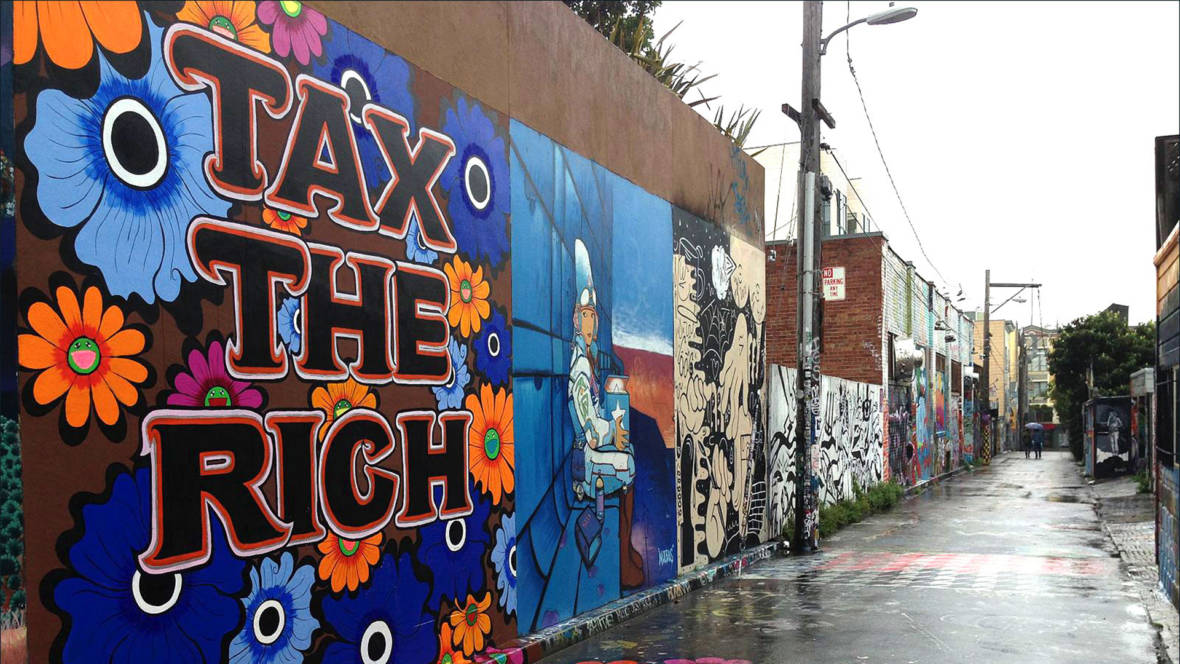
"caption": "Megan Wilson's mural 'Tax the Rich' in Clarion Alley.",
"description": null,
"title": "ClarionAlleyMuralProject_4COVER",
"credit": "Courtesy of Clarion Alley Mural Project",
"status": "inherit",
"isLoading": false,
"fetchFailed": false
},
"arts_11679600": {
"type": "attachments",
"id": "arts_11679600",
"meta": {
"index": "attachments_1716263798",
"site": "arts",
"id": "11679600",
"found": true
},
"parent": 11679429,
"imgSizes": {
"twentyfourteen-full-width": {
"file": "https://ww2.kqed.org/app/uploads/sites/2/2016/06/RS19811_IMG_1900-qut-1038x576.jpg",
"width": 1038,
"mimeType": "image/jpeg",
"height": 576
},
"thumbnail": {
"file": "https://ww2.kqed.org/app/uploads/sites/2/2016/06/RS19811_IMG_1900-qut-400x300.jpg",
"width": 400,
"mimeType": "image/jpeg",
"height": 300
},
"fd-sm": {
"file": "https://ww2.kqed.org/app/uploads/sites/2/2016/06/RS19811_IMG_1900-qut-960x720.jpg",
"width": 960,
"mimeType": "image/jpeg",
"height": 720
},
"post-thumbnail": {
"file": "https://ww2.kqed.org/app/uploads/sites/2/2016/06/RS19811_IMG_1900-qut-672x372.jpg",
"width": 672,
"mimeType": "image/jpeg",
"height": 372
},
"kqedFullSize": {
"file": "https://ww2.kqed.org/app/uploads/sites/2/2016/06/RS19811_IMG_1900-qut.jpg",
"width": 1920,
"height": 1440
},
"large": {
"file": "https://ww2.kqed.org/app/uploads/sites/2/2016/06/RS19811_IMG_1900-qut-1180x885.jpg",
"width": 1180,
"mimeType": "image/jpeg",
"height": 885
},
"guest-author-50": {
"file": "https://ww2.kqed.org/app/uploads/sites/2/2016/06/RS19811_IMG_1900-qut-50x50.jpg",
"width": 50,
"mimeType": "image/jpeg",
"height": 50
},
"guest-author-96": {
"file": "https://ww2.kqed.org/app/uploads/sites/2/2016/06/RS19811_IMG_1900-qut-96x96.jpg",
"width": 96,
"mimeType": "image/jpeg",
"height": 96
},
"medium": {
"file": "https://ww2.kqed.org/app/uploads/sites/2/2016/06/RS19811_IMG_1900-qut-800x600.jpg",
"width": 800,
"mimeType": "image/jpeg",
"height": 600
},
"guest-author-64": {
"file": "https://ww2.kqed.org/app/uploads/sites/2/2016/06/RS19811_IMG_1900-qut-64x64.jpg",
"width": 64,
"mimeType": "image/jpeg",
"height": 64
},
"guest-author-32": {
"file": "https://ww2.kqed.org/app/uploads/sites/2/2016/06/RS19811_IMG_1900-qut-32x32.jpg",
"width": 32,
"mimeType": "image/jpeg",
"height": 32
},
"fd-lrg": {
"file": "https://ww2.kqed.org/app/uploads/sites/2/2016/06/RS19811_IMG_1900-qut-1920x1440.jpg",
"width": 1920,
"mimeType": "image/jpeg",
"height": 1440
},
"fd-med": {
"file": "https://ww2.kqed.org/app/uploads/sites/2/2016/06/RS19811_IMG_1900-qut-1180x885.jpg",
"width": 1180,
"mimeType": "image/jpeg",
"height": 885
},
"detail": {
"file": "https://ww2.kqed.org/app/uploads/sites/2/2016/06/RS19811_IMG_1900-qut-150x150.jpg",
"width": 150,
"mimeType": "image/jpeg",
"height": 150
},
"medium_large": {
"file": "https://ww2.kqed.org/app/uploads/sites/2/2016/06/RS19811_IMG_1900-qut-768x576.jpg",
"width": 768,
"mimeType": "image/jpeg",
"height": 576
},
"guest-author-128": {
"file": "https://ww2.kqed.org/app/uploads/sites/2/2016/06/RS19811_IMG_1900-qut-128x128.jpg",
"width": 128,
"mimeType": "image/jpeg",
"height": 128
}
},
"publishDate": 1465787420,
"modified": 1465787453,
"caption": "\"We really wanted to challenge what you expect to find in a museum,\" says Curator Wes Modes of Art Works at the Santa Cruz Museum of Art & History. The show brings the artists in residency to the gallery where the public can engage with them.",
"description": "\"We really wanted to challenge what you expect to find in a museum,\" says Curator Wes Modes of Art Works at the Santa Cruz Museum of Art & History. The show brings the artists in residency to the gallery where the public can engage with them.",
"title": "RS19811_IMG_1900-qut",
"credit": "Photo: Rachael Myrow/KQED",
"status": "inherit",
"isLoading": false,
"fetchFailed": false
},
"arts_11620698": {
"type": "attachments",
"id": "arts_11620698",
"meta": {
"index": "attachments_1716263798",
"site": "arts",
"id": "11620698",
"found": true
},
"parent": 11619887,
"imgSizes": {
"twentyfourteen-full-width": {
"file": "https://ww2.kqed.org/app/uploads/sites/2/2016/05/FullSizeRender-1-e1465937642786-1038x576.jpg",
"width": 1038,
"mimeType": "image/jpeg",
"height": 576
},
"thumbnail": {
"file": "https://ww2.kqed.org/app/uploads/sites/2/2016/05/FullSizeRender-1-e1465937642786-400x225.jpg",
"width": 400,
"mimeType": "image/jpeg",
"height": 225
},
"fd-sm": {
"file": "https://ww2.kqed.org/app/uploads/sites/2/2016/05/FullSizeRender-1-e1465937642786-960x540.jpg",
"width": 960,
"mimeType": "image/jpeg",
"height": 540
},
"post-thumbnail": {
"file": "https://ww2.kqed.org/app/uploads/sites/2/2016/05/FullSizeRender-1-e1465937642786-672x372.jpg",
"width": 672,
"mimeType": "image/jpeg",
"height": 372
},
"kqedFullSize": {
"file": "https://ww2.kqed.org/app/uploads/sites/2/2016/05/FullSizeRender-1-e1465937642786.jpg",
"width": 3264,
"height": 1836
},
"large": {
"file": "https://ww2.kqed.org/app/uploads/sites/2/2016/05/FullSizeRender-1-e1465937642786-1180x664.jpg",
"width": 1180,
"mimeType": "image/jpeg",
"height": 664
},
"guest-author-50": {
"file": "https://ww2.kqed.org/app/uploads/sites/2/2016/05/FullSizeRender-1-e1465937642786-50x50.jpg",
"width": 50,
"mimeType": "image/jpeg",
"height": 50
},
"guest-author-96": {
"file": "https://ww2.kqed.org/app/uploads/sites/2/2016/05/FullSizeRender-1-e1465937642786-96x96.jpg",
"width": 96,
"mimeType": "image/jpeg",
"height": 96
},
"medium": {
"file": "https://ww2.kqed.org/app/uploads/sites/2/2016/05/FullSizeRender-1-e1465937642786-800x450.jpg",
"width": 800,
"mimeType": "image/jpeg",
"height": 450
},
"guest-author-64": {
"file": "https://ww2.kqed.org/app/uploads/sites/2/2016/05/FullSizeRender-1-e1465937642786-64x64.jpg",
"width": 64,
"mimeType": "image/jpeg",
"height": 64
},
"guest-author-32": {
"file": "https://ww2.kqed.org/app/uploads/sites/2/2016/05/FullSizeRender-1-e1465937642786-32x32.jpg",
"width": 32,
"mimeType": "image/jpeg",
"height": 32
},
"fd-lrg": {
"file": "https://ww2.kqed.org/app/uploads/sites/2/2016/05/FullSizeRender-1-e1465937642786-1920x1080.jpg",
"width": 1920,
"mimeType": "image/jpeg",
"height": 1080
},
"fd-med": {
"file": "https://ww2.kqed.org/app/uploads/sites/2/2016/05/FullSizeRender-1-e1465937642786-1180x664.jpg",
"width": 1180,
"mimeType": "image/jpeg",
"height": 664
},
"detail": {
"file": "https://ww2.kqed.org/app/uploads/sites/2/2016/05/FullSizeRender-1-e1465937642786-150x150.jpg",
"width": 150,
"mimeType": "image/jpeg",
"height": 150
},
"medium_large": {
"file": "https://ww2.kqed.org/app/uploads/sites/2/2016/05/FullSizeRender-1-e1465937642786-768x432.jpg",
"width": 768,
"mimeType": "image/jpeg",
"height": 432
},
"guest-author-128": {
"file": "https://ww2.kqed.org/app/uploads/sites/2/2016/05/FullSizeRender-1-e1465937642786-128x128.jpg",
"width": 128,
"mimeType": "image/jpeg",
"height": 128
}
},
"publishDate": 1464318784,
"modified": 1465937881,
"caption": "Lake Sonoma",
"description": "Lake Sonoma",
"title": "Lake Sonoma",
"credit": "Photo: Ron Poznansky",
"status": "inherit",
"isLoading": false,
"fetchFailed": false
},
"arts_11666715": {
"type": "attachments",
"id": "arts_11666715",
"meta": {
"index": "attachments_1716263798",
"site": "arts",
"id": "11666715",
"found": true
},
"parent": 11666425,
"imgSizes": {
"twentyfourteen-full-width": {
"file": "https://ww2.kqed.org/app/uploads/sites/2/2016/06/MismarCover-1038x576.jpg",
"width": 1038,
"mimeType": "image/jpeg",
"height": 576
},
"thumbnail": {
"file": "https://ww2.kqed.org/app/uploads/sites/2/2016/06/MismarCover-400x225.jpg",
"width": 400,
"mimeType": "image/jpeg",
"height": 225
},
"fd-sm": {
"file": "https://ww2.kqed.org/app/uploads/sites/2/2016/06/MismarCover-960x540.jpg",
"width": 960,
"mimeType": "image/jpeg",
"height": 540
},
"post-thumbnail": {
"file": "https://ww2.kqed.org/app/uploads/sites/2/2016/06/MismarCover-672x372.jpg",
"width": 672,
"mimeType": "image/jpeg",
"height": 372
},
"kqedFullSize": {
"file": "https://ww2.kqed.org/app/uploads/sites/2/2016/06/MismarCover.jpg",
"width": 1920,
"height": 1080
},
"large": {
"file": "https://ww2.kqed.org/app/uploads/sites/2/2016/06/MismarCover-1180x664.jpg",
"width": 1180,
"mimeType": "image/jpeg",
"height": 664
},
"guest-author-50": {
"file": "https://ww2.kqed.org/app/uploads/sites/2/2016/06/MismarCover-50x50.jpg",
"width": 50,
"mimeType": "image/jpeg",
"height": 50
},
"guest-author-96": {
"file": "https://ww2.kqed.org/app/uploads/sites/2/2016/06/MismarCover-96x96.jpg",
"width": 96,
"mimeType": "image/jpeg",
"height": 96
},
"medium": {
"file": "https://ww2.kqed.org/app/uploads/sites/2/2016/06/MismarCover-800x450.jpg",
"width": 800,
"mimeType": "image/jpeg",
"height": 450
},
"guest-author-64": {
"file": "https://ww2.kqed.org/app/uploads/sites/2/2016/06/MismarCover-64x64.jpg",
"width": 64,
"mimeType": "image/jpeg",
"height": 64
},
"guest-author-32": {
"file": "https://ww2.kqed.org/app/uploads/sites/2/2016/06/MismarCover-32x32.jpg",
"width": 32,
"mimeType": "image/jpeg",
"height": 32
},
"fd-lrg": {
"file": "https://ww2.kqed.org/app/uploads/sites/2/2016/06/MismarCover-1920x1080.jpg",
"width": 1920,
"mimeType": "image/jpeg",
"height": 1080
},
"fd-med": {
"file": "https://ww2.kqed.org/app/uploads/sites/2/2016/06/MismarCover-1180x664.jpg",
"width": 1180,
"mimeType": "image/jpeg",
"height": 664
},
"detail": {
"file": "https://ww2.kqed.org/app/uploads/sites/2/2016/06/MismarCover-150x150.jpg",
"width": 150,
"mimeType": "image/jpeg",
"height": 150
},
"medium_large": {
"file": "https://ww2.kqed.org/app/uploads/sites/2/2016/06/MismarCover-768x432.jpg",
"width": 768,
"mimeType": "image/jpeg",
"height": 432
},
"guest-author-128": {
"file": "https://ww2.kqed.org/app/uploads/sites/2/2016/06/MismarCover-128x128.jpg",
"width": 128,
"mimeType": "image/jpeg",
"height": 128
}
},
"publishDate": 1465517144,
"modified": 1465517387,
"caption": "Omar Mismar, 'I will not find this image beautiful\u003cbr />I will not find this image beautiful\u003cbr />I will not find this image beautiful\u003cbr />(An unfinished monument),' 2015.",
"description": null,
"title": "MismarCover",
"credit": "Courtesy of the artist",
"status": "inherit",
"isLoading": false,
"fetchFailed": false
},
"arts_11671206": {
"type": "attachments",
"id": "arts_11671206",
"meta": {
"index": "attachments_1716263798",
"site": "arts",
"id": "11671206",
"found": true
},
"parent": 11671203,
"imgSizes": {
"twentyfourteen-full-width": {
"file": "https://ww2.kqed.org/app/uploads/sites/2/2016/06/Venus2-Crop-1038x576.jpg",
"width": 1038,
"mimeType": "image/jpeg",
"height": 576
},
"thumbnail": {
"file": "https://ww2.kqed.org/app/uploads/sites/2/2016/06/Venus2-Crop-400x225.jpg",
"width": 400,
"mimeType": "image/jpeg",
"height": 225
},
"fd-sm": {
"file": "https://ww2.kqed.org/app/uploads/sites/2/2016/06/Venus2-Crop-960x540.jpg",
"width": 960,
"mimeType": "image/jpeg",
"height": 540
},
"post-thumbnail": {
"file": "https://ww2.kqed.org/app/uploads/sites/2/2016/06/Venus2-Crop-672x372.jpg",
"width": 672,
"mimeType": "image/jpeg",
"height": 372
},
"kqedFullSize": {
"file": "https://ww2.kqed.org/app/uploads/sites/2/2016/06/Venus2-Crop.jpg",
"width": 1920,
"height": 1080
},
"large": {
"file": "https://ww2.kqed.org/app/uploads/sites/2/2016/06/Venus2-Crop-1180x664.jpg",
"width": 1180,
"mimeType": "image/jpeg",
"height": 664
},
"guest-author-50": {
"file": "https://ww2.kqed.org/app/uploads/sites/2/2016/06/Venus2-Crop-50x50.jpg",
"width": 50,
"mimeType": "image/jpeg",
"height": 50
},
"guest-author-96": {
"file": "https://ww2.kqed.org/app/uploads/sites/2/2016/06/Venus2-Crop-96x96.jpg",
"width": 96,
"mimeType": "image/jpeg",
"height": 96
},
"medium": {
"file": "https://ww2.kqed.org/app/uploads/sites/2/2016/06/Venus2-Crop-800x450.jpg",
"width": 800,
"mimeType": "image/jpeg",
"height": 450
},
"guest-author-64": {
"file": "https://ww2.kqed.org/app/uploads/sites/2/2016/06/Venus2-Crop-64x64.jpg",
"width": 64,
"mimeType": "image/jpeg",
"height": 64
},
"guest-author-32": {
"file": "https://ww2.kqed.org/app/uploads/sites/2/2016/06/Venus2-Crop-32x32.jpg",
"width": 32,
"mimeType": "image/jpeg",
"height": 32
},
"fd-lrg": {
"file": "https://ww2.kqed.org/app/uploads/sites/2/2016/06/Venus2-Crop-1920x1080.jpg",
"width": 1920,
"mimeType": "image/jpeg",
"height": 1080
},
"fd-med": {
"file": "https://ww2.kqed.org/app/uploads/sites/2/2016/06/Venus2-Crop-1180x664.jpg",
"width": 1180,
"mimeType": "image/jpeg",
"height": 664
},
"detail": {
"file": "https://ww2.kqed.org/app/uploads/sites/2/2016/06/Venus2-Crop-150x150.jpg",
"width": 150,
"mimeType": "image/jpeg",
"height": 150
},
"medium_large": {
"file": "https://ww2.kqed.org/app/uploads/sites/2/2016/06/Venus2-Crop-768x432.jpg",
"width": 768,
"mimeType": "image/jpeg",
"height": 432
},
"guest-author-128": {
"file": "https://ww2.kqed.org/app/uploads/sites/2/2016/06/Venus2-Crop-128x128.jpg",
"width": 128,
"mimeType": "image/jpeg",
"height": 128
}
},
"publishDate": 1465606927,
"modified": 1465608120,
"caption": "\"Venus\" by Lawrence Argent",
"description": "\"Venus\" by Lawrence Argent",
"title": "Venus2 Crop",
"credit": "Photo: Kevin L. Jones/KQED",
"status": "inherit",
"isLoading": false,
"fetchFailed": false
},
"arts_11670201": {
"type": "attachments",
"id": "arts_11670201",
"meta": {
"index": "attachments_1716263798",
"site": "arts",
"id": "11670201",
"found": true
},
"parent": 11670030,
"imgSizes": {
"twentyfourteen-full-width": {
"file": "https://ww2.kqed.org/app/uploads/sites/2/2016/06/Sharks-VS-Penguins-1038x576.jpg",
"width": 1038,
"mimeType": "image/jpeg",
"height": 576
},
"thumbnail": {
"file": "https://ww2.kqed.org/app/uploads/sites/2/2016/06/Sharks-VS-Penguins-400x250.jpg",
"width": 400,
"mimeType": "image/jpeg",
"height": 250
},
"fd-sm": {
"file": "https://ww2.kqed.org/app/uploads/sites/2/2016/06/Sharks-VS-Penguins-960x601.jpg",
"width": 960,
"mimeType": "image/jpeg",
"height": 601
},
"post-thumbnail": {
"file": "https://ww2.kqed.org/app/uploads/sites/2/2016/06/Sharks-VS-Penguins-672x372.jpg",
"width": 672,
"mimeType": "image/jpeg",
"height": 372
},
"kqedFullSize": {
"file": "https://ww2.kqed.org/app/uploads/sites/2/2016/06/Sharks-VS-Penguins.jpg",
"width": 1920,
"height": 1202
},
"large": {
"file": "https://ww2.kqed.org/app/uploads/sites/2/2016/06/Sharks-VS-Penguins-1180x739.jpg",
"width": 1180,
"mimeType": "image/jpeg",
"height": 739
},
"guest-author-50": {
"file": "https://ww2.kqed.org/app/uploads/sites/2/2016/06/Sharks-VS-Penguins-50x50.jpg",
"width": 50,
"mimeType": "image/jpeg",
"height": 50
},
"guest-author-96": {
"file": "https://ww2.kqed.org/app/uploads/sites/2/2016/06/Sharks-VS-Penguins-96x96.jpg",
"width": 96,
"mimeType": "image/jpeg",
"height": 96
},
"medium": {
"file": "https://ww2.kqed.org/app/uploads/sites/2/2016/06/Sharks-VS-Penguins-800x501.jpg",
"width": 800,
"mimeType": "image/jpeg",
"height": 501
},
"guest-author-64": {
"file": "https://ww2.kqed.org/app/uploads/sites/2/2016/06/Sharks-VS-Penguins-64x64.jpg",
"width": 64,
"mimeType": "image/jpeg",
"height": 64
},
"guest-author-32": {
"file": "https://ww2.kqed.org/app/uploads/sites/2/2016/06/Sharks-VS-Penguins-32x32.jpg",
"width": 32,
"mimeType": "image/jpeg",
"height": 32
},
"fd-lrg": {
"file": "https://ww2.kqed.org/app/uploads/sites/2/2016/06/Sharks-VS-Penguins-1920x1202.jpg",
"width": 1920,
"mimeType": "image/jpeg",
"height": 1202
},
"fd-med": {
"file": "https://ww2.kqed.org/app/uploads/sites/2/2016/06/Sharks-VS-Penguins-1180x739.jpg",
"width": 1180,
"mimeType": "image/jpeg",
"height": 739
},
"detail": {
"file": "https://ww2.kqed.org/app/uploads/sites/2/2016/06/Sharks-VS-Penguins-150x150.jpg",
"width": 150,
"mimeType": "image/jpeg",
"height": 150
},
"medium_large": {
"file": "https://ww2.kqed.org/app/uploads/sites/2/2016/06/Sharks-VS-Penguins-768x481.jpg",
"width": 768,
"mimeType": "image/jpeg",
"height": 481
},
"guest-author-128": {
"file": "https://ww2.kqed.org/app/uploads/sites/2/2016/06/Sharks-VS-Penguins-128x128.jpg",
"width": 128,
"mimeType": "image/jpeg",
"height": 128
}
},
"publishDate": 1465586755,
"modified": 1465586797,
"caption": " Joe Thornton #19 of the San Jose Sharks in action against Ian Cole #28 of the Pittsburgh Penguins in Game One of the 2016 NHL Stanley Cup Final ",
"description": " Joe Thornton #19 of the San Jose Sharks in action against Ian Cole #28 of the Pittsburgh Penguins in Game One of the 2016 NHL Stanley Cup Final ",
"title": "2016 NHL Stanley Cup Final - Game One",
"credit": "Photo: Justin K. Aller/Getty Images",
"status": "inherit",
"isLoading": false,
"fetchFailed": false
},
"pop_26359": {
"type": "attachments",
"id": "pop_26359",
"meta": {
"index": "attachments_1716263798",
"site": "pop",
"id": "26359",
"found": true
},
"parent": 26267,
"imgSizes": {
"twentyfourteen-full-width": {
"file": "https://ww2.kqed.org/app/uploads/sites/12/2016/06/o-AXL-ROSE-facebook-1038x576.jpg",
"width": 1038,
"mimeType": "image/jpeg",
"height": 576
},
"thumbnail": {
"file": "https://ww2.kqed.org/app/uploads/sites/12/2016/06/o-AXL-ROSE-facebook-400x200.jpg",
"width": 400,
"mimeType": "image/jpeg",
"height": 200
},
"fd-sm": {
"file": "https://ww2.kqed.org/app/uploads/sites/12/2016/06/o-AXL-ROSE-facebook-960x480.jpg",
"width": 960,
"mimeType": "image/jpeg",
"height": 480
},
"post-thumbnail": {
"file": "https://ww2.kqed.org/app/uploads/sites/12/2016/06/o-AXL-ROSE-facebook-672x372.jpg",
"width": 672,
"mimeType": "image/jpeg",
"height": 372
},
"kqedFullSize": {
"file": "https://ww2.kqed.org/app/uploads/sites/12/2016/06/o-AXL-ROSE-facebook.jpg",
"width": 2000,
"height": 1000
},
"large": {
"file": "https://ww2.kqed.org/app/uploads/sites/12/2016/06/o-AXL-ROSE-facebook-1440x720.jpg",
"width": 1440,
"mimeType": "image/jpeg",
"height": 720
},
"guest-author-50": {
"file": "https://ww2.kqed.org/app/uploads/sites/12/2016/06/o-AXL-ROSE-facebook-50x50.jpg",
"width": 50,
"mimeType": "image/jpeg",
"height": 50
},
"guest-author-96": {
"file": "https://ww2.kqed.org/app/uploads/sites/12/2016/06/o-AXL-ROSE-facebook-96x96.jpg",
"width": 96,
"mimeType": "image/jpeg",
"height": 96
},
"medium": {
"file": "https://ww2.kqed.org/app/uploads/sites/12/2016/06/o-AXL-ROSE-facebook-800x400.jpg",
"width": 800,
"mimeType": "image/jpeg",
"height": 400
},
"guest-author-64": {
"file": "https://ww2.kqed.org/app/uploads/sites/12/2016/06/o-AXL-ROSE-facebook-64x64.jpg",
"width": 64,
"mimeType": "image/jpeg",
"height": 64
},
"guest-author-32": {
"file": "https://ww2.kqed.org/app/uploads/sites/12/2016/06/o-AXL-ROSE-facebook-32x32.jpg",
"width": 32,
"mimeType": "image/jpeg",
"height": 32
},
"fd-lrg": {
"file": "https://ww2.kqed.org/app/uploads/sites/12/2016/06/o-AXL-ROSE-facebook-1920x960.jpg",
"width": 1920,
"mimeType": "image/jpeg",
"height": 960
},
"fd-med": {
"file": "https://ww2.kqed.org/app/uploads/sites/12/2016/06/o-AXL-ROSE-facebook-1180x590.jpg",
"width": 1180,
"mimeType": "image/jpeg",
"height": 590
},
"detail": {
"file": "https://ww2.kqed.org/app/uploads/sites/12/2016/06/o-AXL-ROSE-facebook-150x150.jpg",
"width": 150,
"mimeType": "image/jpeg",
"height": 150
},
"medium_large": {
"file": "https://ww2.kqed.org/app/uploads/sites/12/2016/06/o-AXL-ROSE-facebook-768x384.jpg",
"width": 768,
"mimeType": "image/jpeg",
"height": 384
},
"guest-author-128": {
"file": "https://ww2.kqed.org/app/uploads/sites/12/2016/06/o-AXL-ROSE-facebook-128x128.jpg",
"width": 128,
"mimeType": "image/jpeg",
"height": 128
}
},
"publishDate": 1465541731,
"modified": 1465541766,
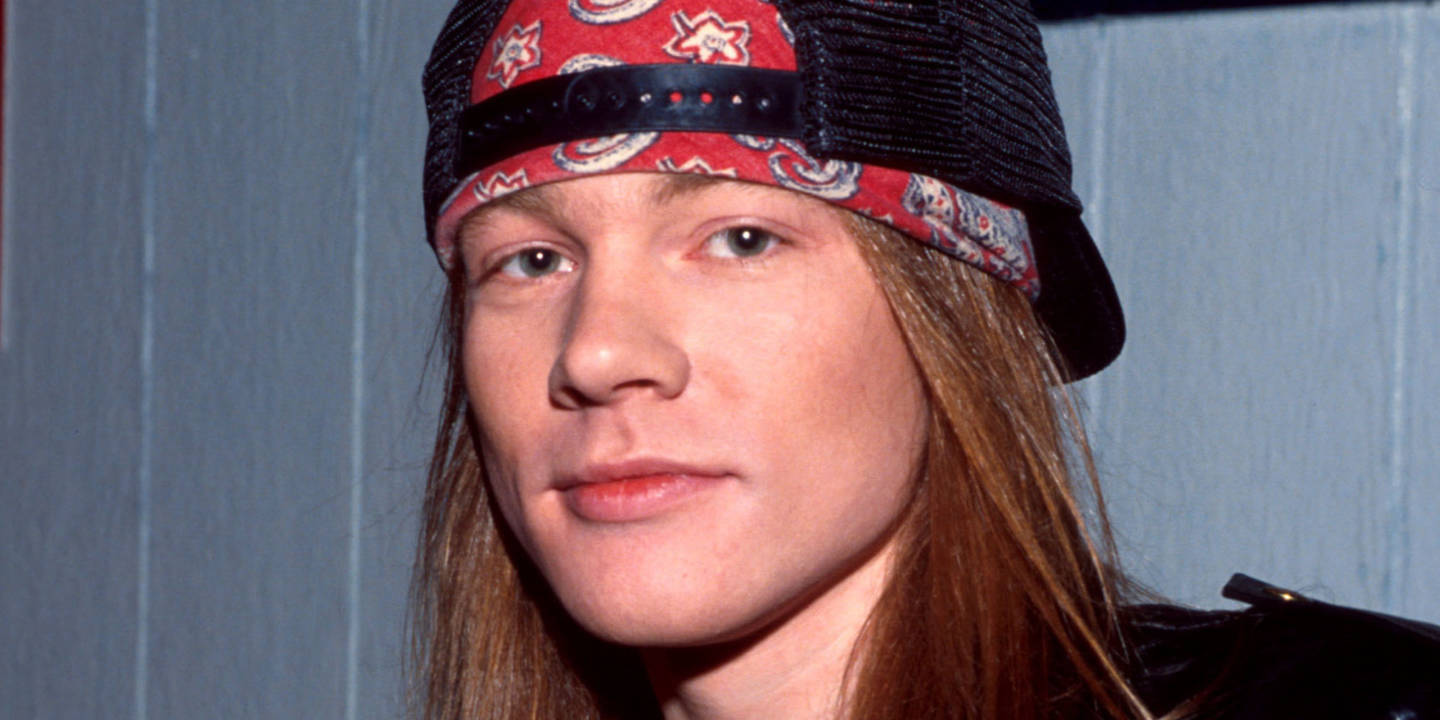
"caption": "Axl Rose, as he'd surely like us to remember him.. ",
"description": null,
"title": "Axl Rose - File Photo's",
"credit": "Photo by Kevin Mazur/WireImage",
"status": "inherit",
"isLoading": false,
"fetchFailed": false
},
"arts_11664660": {
"type": "attachments",
"id": "arts_11664660",
"meta": {
"index": "attachments_1716263798",
"site": "arts",
"id": "11664660",
"found": true
},
"parent": 11664658,
"imgSizes": {
"twentyfourteen-full-width": {
"file": "https://ww2.kqed.org/app/uploads/sites/2/2016/06/Huichica-960x576.jpg",
"width": 960,
"mimeType": "image/jpeg",
"height": 576
},
"thumbnail": {
"file": "https://ww2.kqed.org/app/uploads/sites/2/2016/06/Huichica-e1465502883150-400x225.jpg",
"width": 400,
"mimeType": "image/jpeg",
"height": 225
},
"fd-sm": {
"file": "https://ww2.kqed.org/app/uploads/sites/2/2016/06/Huichica-e1465502883150-960x540.jpg",
"width": 960,
"mimeType": "image/jpeg",
"height": 540
},
"post-thumbnail": {
"file": "https://ww2.kqed.org/app/uploads/sites/2/2016/06/Huichica-e1465502883150-672x372.jpg",
"width": 672,
"mimeType": "image/jpeg",
"height": 372
},
"kqedFullSize": {
"file": "https://ww2.kqed.org/app/uploads/sites/2/2016/06/Huichica-e1465502883150.jpg",
"width": 960,
"height": 540
},
"guest-author-50": {
"file": "https://ww2.kqed.org/app/uploads/sites/2/2016/06/Huichica-e1465502883150-50x50.jpg",
"width": 50,
"mimeType": "image/jpeg",
"height": 50
},
"guest-author-96": {
"file": "https://ww2.kqed.org/app/uploads/sites/2/2016/06/Huichica-e1465502883150-96x96.jpg",
"width": 96,
"mimeType": "image/jpeg",
"height": 96
},
"medium": {
"file": "https://ww2.kqed.org/app/uploads/sites/2/2016/06/Huichica-e1465502883150-800x450.jpg",
"width": 800,
"mimeType": "image/jpeg",
"height": 450
},
"guest-author-64": {
"file": "https://ww2.kqed.org/app/uploads/sites/2/2016/06/Huichica-e1465502883150-64x64.jpg",
"width": 64,
"mimeType": "image/jpeg",
"height": 64
},
"guest-author-32": {
"file": "https://ww2.kqed.org/app/uploads/sites/2/2016/06/Huichica-e1465502883150-32x32.jpg",
"width": 32,
"mimeType": "image/jpeg",
"height": 32
},
"detail": {
"file": "https://ww2.kqed.org/app/uploads/sites/2/2016/06/Huichica-e1465502883150-150x150.jpg",
"width": 150,
"mimeType": "image/jpeg",
"height": 150
},
"medium_large": {
"file": "https://ww2.kqed.org/app/uploads/sites/2/2016/06/Huichica-e1465502883150-768x432.jpg",
"width": 768,
"mimeType": "image/jpeg",
"height": 432
},
"guest-author-128": {
"file": "https://ww2.kqed.org/app/uploads/sites/2/2016/06/Huichica-e1465502883150-128x128.jpg",
"width": 128,
"mimeType": "image/jpeg",
"height": 128
}
},
"publishDate": 1465481195,
"modified": 1465481341,
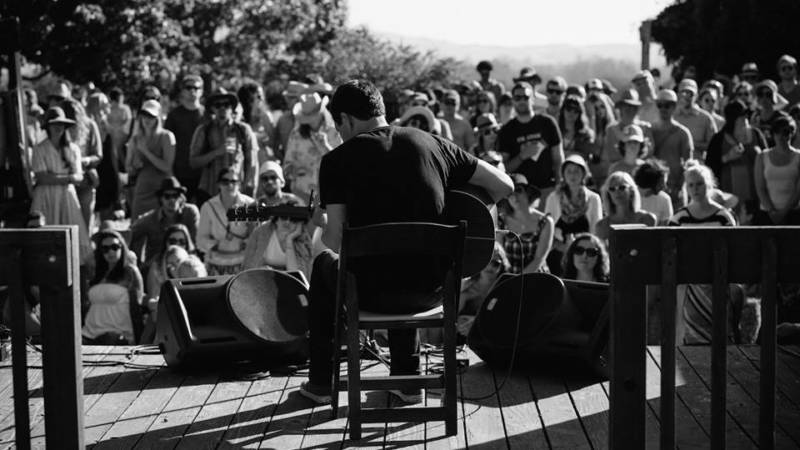
"caption": "The Huichica Music Festival in Sonoma",
"description": "The Huichica Music Festival in Sonoma",
"title": "Huichica Music Festival in Sonoma",
"credit": "Photo: Courtesy Huichica Music Festival",
"status": "inherit",
"isLoading": false,
"fetchFailed": false
},
"arts_11662080": {
"type": "attachments",
"id": "arts_11662080",
"meta": {
"index": "attachments_1716263798",
"site": "arts",
"id": "11662080",
"found": true
},
"parent": 11657229,
"imgSizes": {
"twentyfourteen-full-width": {
"file": "https://ww2.kqed.org/app/uploads/sites/2/2016/06/1COVER-1038x576.jpg",
"width": 1038,
"mimeType": "image/jpeg",
"height": 576
},
"thumbnail": {
"file": "https://ww2.kqed.org/app/uploads/sites/2/2016/06/1COVER-400x225.jpg",
"width": 400,
"mimeType": "image/jpeg",
"height": 225
},
"fd-sm": {
"file": "https://ww2.kqed.org/app/uploads/sites/2/2016/06/1COVER-960x540.jpg",
"width": 960,
"mimeType": "image/jpeg",
"height": 540
},
"post-thumbnail": {
"file": "https://ww2.kqed.org/app/uploads/sites/2/2016/06/1COVER-672x372.jpg",
"width": 672,
"mimeType": "image/jpeg",
"height": 372
},
"kqedFullSize": {
"file": "https://ww2.kqed.org/app/uploads/sites/2/2016/06/1COVER.jpg",
"width": 1920,
"height": 1080
},
"large": {
"file": "https://ww2.kqed.org/app/uploads/sites/2/2016/06/1COVER-1180x664.jpg",
"width": 1180,
"mimeType": "image/jpeg",
"height": 664
},
"guest-author-50": {
"file": "https://ww2.kqed.org/app/uploads/sites/2/2016/06/1COVER-50x50.jpg",
"width": 50,
"mimeType": "image/jpeg",
"height": 50
},
"guest-author-96": {
"file": "https://ww2.kqed.org/app/uploads/sites/2/2016/06/1COVER-96x96.jpg",
"width": 96,
"mimeType": "image/jpeg",
"height": 96
},
"medium": {
"file": "https://ww2.kqed.org/app/uploads/sites/2/2016/06/1COVER-800x450.jpg",
"width": 800,
"mimeType": "image/jpeg",
"height": 450
},
"guest-author-64": {
"file": "https://ww2.kqed.org/app/uploads/sites/2/2016/06/1COVER-64x64.jpg",
"width": 64,
"mimeType": "image/jpeg",
"height": 64
},
"guest-author-32": {
"file": "https://ww2.kqed.org/app/uploads/sites/2/2016/06/1COVER-32x32.jpg",
"width": 32,
"mimeType": "image/jpeg",
"height": 32
},
"fd-lrg": {
"file": "https://ww2.kqed.org/app/uploads/sites/2/2016/06/1COVER-1920x1080.jpg",
"width": 1920,
"mimeType": "image/jpeg",
"height": 1080
},
"fd-med": {
"file": "https://ww2.kqed.org/app/uploads/sites/2/2016/06/1COVER-1180x664.jpg",
"width": 1180,
"mimeType": "image/jpeg",
"height": 664
},
"detail": {
"file": "https://ww2.kqed.org/app/uploads/sites/2/2016/06/1COVER-150x150.jpg",
"width": 150,
"mimeType": "image/jpeg",
"height": 150
},
"medium_large": {
"file": "https://ww2.kqed.org/app/uploads/sites/2/2016/06/1COVER-768x432.jpg",
"width": 768,
"mimeType": "image/jpeg",
"height": 432
},
"guest-author-128": {
"file": "https://ww2.kqed.org/app/uploads/sites/2/2016/06/1COVER-128x128.jpg",
"width": 128,
"mimeType": "image/jpeg",
"height": 128
}
},
"publishDate": 1465418652,
"modified": 1465418791,
"caption": "Arteh Odjidja, Detail from 'Stranger in Moscow – Red Square,' 2012.",
"description": null,
"title": "1COVER",
"credit": "Courtesy of the artist",
"status": "inherit",
"isLoading": false,
"fetchFailed": false
},
"arts_11665484": {
"type": "attachments",
"id": "arts_11665484",
"meta": {
"index": "attachments_1716263798",
"site": "arts",
"id": "11665484",
"found": true
},
"parent": 11665156,
"imgSizes": {
"twentyfourteen-full-width": {
"file": "https://ww2.kqed.org/app/uploads/sites/2/2016/06/Asawa.MAIN_-1038x576.jpg",
"width": 1038,
"mimeType": "image/jpeg",
"height": 576
},
"thumbnail": {
"file": "https://ww2.kqed.org/app/uploads/sites/2/2016/06/Asawa.MAIN_-400x225.jpg",
"width": 400,
"mimeType": "image/jpeg",
"height": 225
},
"fd-sm": {
"file": "https://ww2.kqed.org/app/uploads/sites/2/2016/06/Asawa.MAIN_-960x540.jpg",
"width": 960,
"mimeType": "image/jpeg",
"height": 540
},
"post-thumbnail": {
"file": "https://ww2.kqed.org/app/uploads/sites/2/2016/06/Asawa.MAIN_-672x372.jpg",
"width": 672,
"mimeType": "image/jpeg",
"height": 372
},
"kqedFullSize": {
"file": "https://ww2.kqed.org/app/uploads/sites/2/2016/06/Asawa.MAIN_.jpg",
"width": 1920,
"height": 1080
},
"large": {
"file": "https://ww2.kqed.org/app/uploads/sites/2/2016/06/Asawa.MAIN_-1180x664.jpg",
"width": 1180,
"mimeType": "image/jpeg",
"height": 664
},
"guest-author-50": {
"file": "https://ww2.kqed.org/app/uploads/sites/2/2016/06/Asawa.MAIN_-50x50.jpg",
"width": 50,
"mimeType": "image/jpeg",
"height": 50
},
"guest-author-96": {
"file": "https://ww2.kqed.org/app/uploads/sites/2/2016/06/Asawa.MAIN_-96x96.jpg",
"width": 96,
"mimeType": "image/jpeg",
"height": 96
},
"medium": {
"file": "https://ww2.kqed.org/app/uploads/sites/2/2016/06/Asawa.MAIN_-800x450.jpg",
"width": 800,
"mimeType": "image/jpeg",
"height": 450
},
"guest-author-64": {
"file": "https://ww2.kqed.org/app/uploads/sites/2/2016/06/Asawa.MAIN_-64x64.jpg",
"width": 64,
"mimeType": "image/jpeg",
"height": 64
},
"guest-author-32": {
"file": "https://ww2.kqed.org/app/uploads/sites/2/2016/06/Asawa.MAIN_-32x32.jpg",
"width": 32,
"mimeType": "image/jpeg",
"height": 32
},
"fd-lrg": {
"file": "https://ww2.kqed.org/app/uploads/sites/2/2016/06/Asawa.MAIN_-1920x1080.jpg",
"width": 1920,
"mimeType": "image/jpeg",
"height": 1080
},
"fd-med": {
"file": "https://ww2.kqed.org/app/uploads/sites/2/2016/06/Asawa.MAIN_-1180x664.jpg",
"width": 1180,
"mimeType": "image/jpeg",
"height": 664
},
"detail": {
"file": "https://ww2.kqed.org/app/uploads/sites/2/2016/06/Asawa.MAIN_-150x150.jpg",
"width": 150,
"mimeType": "image/jpeg",
"height": 150
},
"medium_large": {
"file": "https://ww2.kqed.org/app/uploads/sites/2/2016/06/Asawa.MAIN_-768x432.jpg",
"width": 768,
"mimeType": "image/jpeg",
"height": 432
},
"guest-author-128": {
"file": "https://ww2.kqed.org/app/uploads/sites/2/2016/06/Asawa.MAIN_-128x128.jpg",
"width": 128,
"mimeType": "image/jpeg",
"height": 128
}
},
"publishDate": 1465498426,
"modified": 1465498464,
"caption": "Panels by Ruth Asawa are removed in Santa Rosa's Courthouse Square.",
"description": "Panels by Ruth Asawa are removed in Santa Rosa's Courthouse Square.",
"title": "Asawa.MAIN",
"credit": "Photo: Gabe Meline",
"status": "inherit",
"isLoading": false,
"fetchFailed": false
}
},
"audioPlayerReducer": {
"postId": "stream_live",
"isPaused": true,
"isPlaying": false,
"pfsActive": false,
"pledgeModalIsOpen": true,
"playerDrawerIsOpen": false,
"liveAudioPlayStartedAt": 0,
"liveAudioPlayContext": ""
},
"authorsReducer": {
"byline_news_10991301": {
"type": "authors",
"id": "byline_news_10991301",
"meta": {
"override": true
},
"slug": "byline_news_10991301",
"name": "Valerie Hamilton",
"isLoading": false
},
"byline_arts_11670030": {
"type": "authors",
"id": "byline_arts_11670030",
"meta": {
"override": true
},
"slug": "byline_arts_11670030",
"name": "Gabe Rosenberg",
"isLoading": false
},
"byline_arts_11657229": {
"type": "authors",
"id": "byline_arts_11657229",
"meta": {
"override": true
},
"slug": "byline_arts_11657229",
"name": "Niema Jordan",
"isLoading": false
},
"cmusiker": {
"type": "authors",
"id": "32",
"meta": {
"index": "authors_1716337520",
"id": "32",
"found": true
},
"name": "Cy Musiker",
"firstName": "Cy",
"lastName": "Musiker",
"slug": "cmusiker",
"email": "cmusiker@kqed.org",
"display_author_email": false,
"staff_mastheads": [],
"title": "KQED Contributor",
"bio": "Cy Musiker is a former co-host of The Do List and a former reporter covering the arts for KQED News and The California Report. He loves live performance, especially great theater, jazz, roots music, anything by Mahler. Cy has an MJ from UC Berkeley's School of Journalism, and got his BA from Hampshire College. His work has been recognized by the Society for Professional Journalists with their Sigma Delta Chi Award for Public Service in Journalism. When he can, Cy likes to swim in Tomales Bay, run with his dog in the East Bay Hills, and hike the Sierra.",
"avatar": "https://secure.gravatar.com/avatar/05eaba5c5696ce8f062e4ea2df428a43?s=600&d=blank&r=g",
"twitter": null,
"facebook": null,
"instagram": null,
"linkedin": null,
"sites": [
{
"site": "arts",
"roles": [
"Contributor",
"subscriber"
]
},
{
"site": "news",
"roles": [
"author"
]
},
{
"site": "bayareabites",
"roles": [
"contributor"
]
}
],
"headData": {
"title": "Cy Musiker | KQED",
"description": "KQED Contributor",
"ogImgSrc": "https://secure.gravatar.com/avatar/05eaba5c5696ce8f062e4ea2df428a43?s=600&d=blank&r=g",
"twImgSrc": "https://secure.gravatar.com/avatar/05eaba5c5696ce8f062e4ea2df428a43?s=600&d=blank&r=g"
},
"isLoading": false,
"link": "/author/cmusiker"
},
"shotchkiss": {
"type": "authors",
"id": "61",
"meta": {
"index": "authors_1716337520",
"id": "61",
"found": true
},
"name": "Sarah Hotchkiss",
"firstName": "Sarah",
"lastName": "Hotchkiss",
"slug": "shotchkiss",
"email": "shotchkiss@kqed.org",
"display_author_email": true,
"staff_mastheads": [
"arts"
],
"title": "Senior Editor",
"bio": "Sarah Hotchkiss is a San Francisco \u003ca href=\"http://www.sarahhotchkiss.com\">artist\u003c/a> and arts writer. In 2019, she received the Dorothea & Leo Rabkin Foundation grant for visual art journalism and in 2020 she received a Society of Professional Journalists, Northern California award for excellence in arts and culture reporting.",
"avatar": "https://secure.gravatar.com/avatar/bc662df144b3d27fd8b1b6f1c2a420d34e91e53154d411bb7ad353cc8b6cea8d?s=600&d=blank&r=g",
"twitter": null,
"bluesky": null,
"facebook": null,
"instagram": null,
"linkedin": null,
"sites": [
{
"site": "",
"roles": [
"editor"
]
},
{
"site": "arts",
"roles": [
"Contributor",
"administrator"
]
},
{
"site": "artschool",
"roles": [
"administrator"
]
},
{
"site": "news",
"roles": [
"editor"
]
},
{
"site": "pop",
"roles": [
"administrator"
]
},
{
"site": "bayareabites",
"roles": [
"editor"
]
},
{
"site": "spark",
"roles": [
"editor"
]
},
{
"site": "checkplease",
"roles": [
"editor"
]
}
],
"headData": {
"title": "Sarah Hotchkiss | KQED",
"description": "Senior Editor",
"ogImgSrc": "https://secure.gravatar.com/avatar/bc662df144b3d27fd8b1b6f1c2a420d34e91e53154d411bb7ad353cc8b6cea8d?s=600&d=blank&r=g",
"twImgSrc": "https://secure.gravatar.com/avatar/bc662df144b3d27fd8b1b6f1c2a420d34e91e53154d411bb7ad353cc8b6cea8d?s=600&d=blank&r=g"
},
"isLoading": false,
"link": "/author/shotchkiss"
},
"kjones": {
"type": "authors",
"id": "93",
"meta": {
"index": "authors_1716337520",
"id": "93",
"found": true
},
"name": "Kevin L. Jones",
"firstName": "Kevin",
"lastName": "Jones",
"slug": "kjones",
"email": "kjones@kqed.org",
"display_author_email": false,
"staff_mastheads": [],
"title": null,
"bio": null,
"avatar": "https://secure.gravatar.com/avatar/12c65b5633ed39d0a59bb7f497eff645?s=600&d=blank&r=g",
"twitter": null,
"facebook": null,
"instagram": null,
"linkedin": null,
"sites": [
{
"site": "arts",
"roles": [
"subscriber"
]
},
{
"site": "styleguide",
"roles": [
"contributor"
]
},
{
"site": "artschool",
"roles": [
"subscriber"
]
},
{
"site": "news",
"roles": [
"subscriber"
]
},
{
"site": "pop",
"roles": [
"subscriber"
]
}
],
"headData": {
"title": "Kevin L. Jones | KQED",
"description": null,
"ogImgSrc": "https://secure.gravatar.com/avatar/12c65b5633ed39d0a59bb7f497eff645?s=600&d=blank&r=g",
"twImgSrc": "https://secure.gravatar.com/avatar/12c65b5633ed39d0a59bb7f497eff645?s=600&d=blank&r=g"
},
"isLoading": false,
"link": "/author/kjones"
},
"gmeline": {
"type": "authors",
"id": "185",
"meta": {
"index": "authors_1716337520",
"id": "185",
"found": true
},
"name": "Gabe Meline",
"firstName": "Gabe",
"lastName": "Meline",
"slug": "gmeline",
"email": "gmeline@kqed.org",
"display_author_email": true,
"staff_mastheads": [
"arts"
],
"title": "Senior Editor, KQED Arts & Culture",
"bio": "Gabe Meline entered journalism at age 15 making photocopied zines, and has since earned awards from the Edward R. Murrow Awards, the Society for Professional Journalists, the Online Journalism Awards, the Association of Alternative Newsweeklies and the California Newspaper Publishers Association. Prior to KQED, he was the editor of the \u003cem>North Bay Bohemian\u003c/em> and a touring musician. He lives with his wife and daughter in his hometown of Santa Rosa, CA.",
"avatar": "https://secure.gravatar.com/avatar/5bebe57be0d8bc2dd318934feb47299e2d2d10cba28d09d8d7afb389a2ce2bdd?s=600&d=blank&r=g",
"twitter": null,
"bluesky": null,
"facebook": null,
"instagram": null,
"linkedin": null,
"sites": [
{
"site": "",
"roles": [
"editor"
]
},
{
"site": "arts",
"roles": [
"administrator"
]
},
{
"site": "artschool",
"roles": [
"editor"
]
},
{
"site": "news",
"roles": [
"author"
]
},
{
"site": "pop",
"roles": [
"editor"
]
},
{
"site": "bayareabites",
"roles": [
"editor"
]
},
{
"site": "food",
"roles": [
"editor"
]
},
{
"site": "forum",
"roles": [
"administrator"
]
},
{
"site": "liveblog",
"roles": [
"editor"
]
},
{
"site": "hiphop",
"roles": [
"editor"
]
}
],
"headData": {
"title": "Gabe Meline | KQED",
"description": "Senior Editor, KQED Arts & Culture",
"ogImgSrc": "https://secure.gravatar.com/avatar/5bebe57be0d8bc2dd318934feb47299e2d2d10cba28d09d8d7afb389a2ce2bdd?s=600&d=blank&r=g",
"twImgSrc": "https://secure.gravatar.com/avatar/5bebe57be0d8bc2dd318934feb47299e2d2d10cba28d09d8d7afb389a2ce2bdd?s=600&d=blank&r=g"
},
"isLoading": false,
"link": "/author/gmeline"
},
"rachael-myrow": {
"type": "authors",
"id": "251",
"meta": {
"index": "authors_1716337520",
"id": "251",
"found": true
},
"name": "Rachael Myrow",
"firstName": "Rachael",
"lastName": "Myrow",
"slug": "rachael-myrow",
"email": "rmyrow@kqed.org",
"display_author_email": true,
"staff_mastheads": [
"news"
],
"title": "Senior Editor of KQED's Silicon Valley News Desk",
"bio": "• I write and edit stories about how Silicon Valley power and policies shape everyday life in California. I’m also passionate about making Bay Area history and culture more accessible to a broad public. • I’ve been a journalist for most of my life, starting in high school with The Franklin Press in Los Angeles, where I grew up. While earning my first degree in English at UC Berkeley, I got my start in public radio at KALX-FM. After completing a second degree in journalism at Cal, I landed my first professional job at Marketplace, then moved on to KPCC (now LAist), and then KQED, where I hosted The California Report for more than seven years. • My reporting has appeared on NPR, The World, WBUR’s \u003ci>Here & Now\u003c/i>, and the BBC. I also guest host for KQED’s \u003ci>Forum\u003c/i>, as well as the Commonwealth Club in San Francisco. • I speak periodically on media, democracy and technology issues, and do voiceover work for documentaries and educational video projects. • Outside of the studio, you'll find me hiking Bay Area trails and whipping up Insta-ready meals in my kitchen. • I do not accept gifts, money, or favors from anyone connected to my reporting, I don't pay people for information, and I do not support or donate to political causes. • I strive to treat the people I report on with fairness, honesty, and respect. I also recognize there are often multiple sides to a story and work to verify information through multiple sources and documentation. If I get something wrong, I correct it.",
"avatar": "https://secure.gravatar.com/avatar/3ed8a3c5f26025e4a805ba634cda8cd764906b97438a6d9ce216b044e340da4e?s=600&d=blank&r=g",
"twitter": "rachaelmyrow",
"bluesky": null,
"facebook": null,
"instagram": null,
"linkedin": "https://www.linkedin.com/in/rachaelmyrow/",
"sites": [
{
"site": "arts",
"roles": [
"administrator"
]
},
{
"site": "news",
"roles": [
"edit_others_posts",
"editor"
]
},
{
"site": "futureofyou",
"roles": [
"editor"
]
},
{
"site": "bayareabites",
"roles": [
"editor"
]
},
{
"site": "stateofhealth",
"roles": [
"editor"
]
},
{
"site": "science",
"roles": [
"editor"
]
},
{
"site": "food",
"roles": [
"editor"
]
},
{
"site": "forum",
"roles": [
"editor"
]
},
{
"site": "liveblog",
"roles": [
"author"
]
}
],
"headData": {
"title": "Rachael Myrow | KQED",
"description": "Senior Editor of KQED's Silicon Valley News Desk",
"ogImgSrc": "https://secure.gravatar.com/avatar/3ed8a3c5f26025e4a805ba634cda8cd764906b97438a6d9ce216b044e340da4e?s=600&d=blank&r=g",
"twImgSrc": "https://secure.gravatar.com/avatar/3ed8a3c5f26025e4a805ba634cda8cd764906b97438a6d9ce216b044e340da4e?s=600&d=blank&r=g"
},
"isLoading": false,
"link": "/author/rachael-myrow"
},
"kpawlowska": {
"type": "authors",
"id": "3212",
"meta": {
"index": "authors_1716337520",
"id": "3212",
"found": true
},
"name": "Kasia Pawlowska",
"firstName": "Kasia",
"lastName": "Pawlowska",
"slug": "kpawlowska",
"email": "ohhkasia@gmail.com",
"display_author_email": false,
"staff_mastheads": [],
"title": null,
"bio": "Kasia is a San Francisco based writer. You can follow her on Twitter \u003ca title=\"kasia twitter\" href=\"https://twitter.com/ohhkasia\" target=\"_blank\">@ohhkasia\u003c/a>.",
"avatar": "https://secure.gravatar.com/avatar/b6bb6987474c7c311f305b672d81dc87?s=600&d=blank&r=g",
"twitter": null,
"facebook": null,
"instagram": null,
"linkedin": null,
"sites": [
{
"site": "arts",
"roles": [
"contributor"
]
}
],
"headData": {
"title": "Kasia Pawlowska | KQED",
"description": null,
"ogImgSrc": "https://secure.gravatar.com/avatar/b6bb6987474c7c311f305b672d81dc87?s=600&d=blank&r=g",
"twImgSrc": "https://secure.gravatar.com/avatar/b6bb6987474c7c311f305b672d81dc87?s=600&d=blank&r=g"
},
"isLoading": false,
"link": "/author/kpawlowska"
},
"ralexandra": {
"type": "authors",
"id": "11242",
"meta": {
"index": "authors_1716337520",
"id": "11242",
"found": true
},
"name": "Rae Alexandra",
"firstName": "Rae",
"lastName": "Alexandra",
"slug": "ralexandra",
"email": "ralexandra@kqed.org",
"display_author_email": true,
"staff_mastheads": [],
"title": "Reporter/Producer",
"bio": "Rae Alexandra is a Reporter/Producer for KQED Arts & Culture, and the creator/author of the \u003ca href=\"https://www.kqed.org/arts/program/rebel-girls-from-bay-area-history\">Rebel Girls From Bay Area History\u003c/a> and \u003ca href=\"https://www.kqed.org/bizarrebayarea\">Bizarre Bay Area\u003c/a> series. Her debut book, \u003ca href=\"https://citylights.com/politics-current-events-history/unsung-heroines35-women-who-changed/\">Unsung Heroines: 35 Women Who Changed the Bay Area\u003c/a> was published by City Lights in March 2026. In 2023, Rae was awarded an SPJ Excellence in Journalism Award for Arts & Culture. Rae was born and raised in Wales and subsequently — even after two decades in Northern California — still uses phrases that regularly baffle her coworkers.",
"avatar": "https://secure.gravatar.com/avatar/edfee8176c80cc0a382b051190f5341997df378a934a5774dcb0977732dfd401?s=600&d=blank&r=g",
"twitter": null,
"bluesky": null,
"facebook": null,
"instagram": null,
"linkedin": null,
"sites": [
{
"site": "arts",
"roles": [
"subscriber"
]
},
{
"site": "news",
"roles": [
"subscriber"
]
},
{
"site": "pop",
"roles": [
"subscriber"
]
},
{
"site": "bayareabites",
"roles": [
"subscriber"
]
},
{
"site": "science",
"roles": [
"subscriber"
]
}
],
"headData": {
"title": "Rae Alexandra | KQED",
"description": "Reporter/Producer",
"ogImgSrc": "https://secure.gravatar.com/avatar/edfee8176c80cc0a382b051190f5341997df378a934a5774dcb0977732dfd401?s=600&d=blank&r=g",
"twImgSrc": "https://secure.gravatar.com/avatar/edfee8176c80cc0a382b051190f5341997df378a934a5774dcb0977732dfd401?s=600&d=blank&r=g"
},
"isLoading": false,
"link": "/author/ralexandra"
}
},
"pagesReducer": {
"arts_category_visualarts": {
"type": "terms",
"id": "arts_70",
"meta": {
"index": "terms_1716263798",
"site": "arts",
"id": "70",
"score": 14.4072075
},
"featImg": null,
"name": "Visual Arts",
"description": null,
"taxonomy": "category",
"headData": {
"twImgId": null,
"twTitle": null,
"ogTitle": null,
"ogImgId": null,
"twDescription": null,
"description": null,
"title": "Visual Arts Archives | KQED Arts",
"ogDescription": null
},
"ttid": 71,
"slug": "visualarts",
"isLoading": false,
"title": "Visual Arts",
"pageMeta": {
"site": "arts",
"WpPageTemplate": "page-topic-editorial",
"currentPage": 127
},
"blocks": [
{
"blockName": "kqed/post-list",
"attrs": {
"layout": "cardArticle2",
"query": "posts/arts?category=visualarts",
"seeMore": false,
"paginated": true,
"page": 127
}
},
{
"blockName": "kqed/ad"
}
]
}
},
"pfsSessionReducer": {},
"postsReducer": {
"stream_live": {
"type": "live",
"id": "stream_live",
"audioUrl": "https://streams.kqed.org/kqedradio",
"title": "Live Stream",
"excerpt": "Live Stream information currently unavailable.",
"link": "/radio",
"featImg": "",
"label": {
"name": "KQED Live",
"link": "/"
}
},
"stream_kqedNewscast": {
"type": "posts",
"id": "stream_kqedNewscast",
"audioUrl": "https://www.kqed.org/.stream/anon/radio/RDnews/newscast.mp3?_=1",
"title": "KQED Newscast",
"featImg": "",
"label": {
"name": "88.5 FM",
"link": "/"
}
},
"news_10991301": {
"type": "posts",
"id": "news_10991301",
"meta": {
"index": "posts_1716263798",
"site": "news",
"id": "10991301",
"score": null,
"sort": [
1466348455000
]
},
"parent": 0,
"labelTerm": {
"site": "news",
"term": 72
},
"blocks": [],
"publishDate": 1466348455,
"format": "aside",
"disqusTitle": "L.A. Teen Brings Home Souvenir of a Lifetime From the Summer of Love",
"title": "L.A. Teen Brings Home Souvenir of a Lifetime From the Summer of Love",
"headTitle": "The California Report | KQED News",
"content": "\u003cp>Today, rock festivals are just part of the summer landscape. But in 1967, they were totally new.\u003c/p>\n\u003cp>Forty-nine years ago this weekend, the Monterey International Pop Festival introduced audiences to rock 'n' roll, camping, all-day shows and a little-known guitarist named Jimi Hendrix.\u003c/p>\n\u003cfigure id=\"attachment_10992681\" class=\"wp-caption alignright\" style=\"max-width: 1457px\">\u003cimg src=\"http://ww2.kqed.org/news/wp-content/uploads/sites/10/2016/06/Jimi-fire-crop.jpg\" alt=\"Ed Caraeff's photo of Jimi Hendrix burning his guitar at the Monterey International Pop Festival on June 18, 1967. Taken with a camera borrowed from his family optometrist when Caraeff was a high school junior, the photo made the cover of Rolling Stone, twice, in the decades since the festival.\" width=\"1457\" height=\"1952\" class=\"size-full wp-image-10992681\" srcset=\"https://ww2.kqed.org/app/uploads/sites/10/2016/06/Jimi-fire-crop.jpg 1457w, https://ww2.kqed.org/app/uploads/sites/10/2016/06/Jimi-fire-crop-400x536.jpg 400w, https://ww2.kqed.org/app/uploads/sites/10/2016/06/Jimi-fire-crop-800x1072.jpg 800w, https://ww2.kqed.org/app/uploads/sites/10/2016/06/Jimi-fire-crop-1180x1581.jpg 1180w, https://ww2.kqed.org/app/uploads/sites/10/2016/06/Jimi-fire-crop-960x1286.jpg 960w\" sizes=\"(max-width: 1457px) 100vw, 1457px\">\u003cfigcaption class=\"wp-caption-text\">Ed Caraeff's photo of Jimi Hendrix burning his guitar at the Monterey International Pop Festival on June 18, 1967. Taken with a camera borrowed from his family optometrist when Caraeff was a high school junior, the photo made the cover of Rolling Stone, twice, in the decades since the festival. \u003ccite>(Photo courtesy of Ed Caraeff)\u003c/cite>\u003c/figcaption>\u003c/figure>\n\u003cp>When a bunch of friends decided to take a road trip to the Monterey Pop Festival, Eddie Caraeff wasn’t thinking music. He was thinking pictures.\u003c/p>\n\u003cp>“I wasn’t a music lover that was there to enjoy the music and take a few snapshots,\" Caraeff said. \"I was there to photograph it -- and I did.\"\u003c/p>\n\u003cp>Caraeff was a junior at Westchester High School in Los Angeles. He loved music, but he was crazy about photography. These were the '60s, when the California rock scene was going wild and the radio was going psychedelic. One school night while listening in bed to a local KBLA-AM radio show, \"Dave Diamond and the Diamond Mine,\" Caraeff heard that a band he liked, the Seeds, was coming into LAX the next day.\u003c/p>\n\u003cp>[ad fullwidth]\u003c/p>\n\u003cp>“LAX was five minutes from Westchester High School,” he recalled. So he drove over on his school lunch hour, hoping to get some pictures.\u003c/p>\n\u003cp>[soundcloud url=\"https://api.soundcloud.com/tracks/269687949\" params=\"color=ff5500&auto_play=false&hide_related=false&show_comments=true&show_user=true&show_reposts=false\" width=\"100%\" height=\"166\" iframe=\"true\" /]\u003c/p>\n\u003cp>That lunch break turned out to be his big break -- when an executive from the band's record company noticed him taking photos and asked to see them. The next day, he cut out from school and brought her a cardboard box of prints he'd made up in the school darkroom. She liked them and invited him to shoot the Seeds at the Hullabaloo Club in Hollywood that weekend. There, 16-year-old Caraeff came face to face with rock 'n' roll.\u003c/p>\n\u003cp>“It was a crazy scene,” Caraeff said. “There were girls on the stage, there were no guards ... the emergency exit door was chained shut. I should have photographed that!”\u003c/p>\n\u003cfigure id=\"attachment_10992682\" class=\"wp-caption alignleft\" style=\"max-width: 692px\">\u003cimg src=\"http://ww2.kqed.org/news/wp-content/uploads/sites/10/2016/06/zappa.jpg\" alt=\"Caraeff's portrait of the Los Angeles rock iconoclast Frank Zappa.\" width=\"692\" height=\"1024\" class=\"size-full wp-image-10992682\" srcset=\"https://ww2.kqed.org/app/uploads/sites/10/2016/06/zappa.jpg 692w, https://ww2.kqed.org/app/uploads/sites/10/2016/06/zappa-400x592.jpg 400w\" sizes=\"(max-width: 692px) 100vw, 692px\">\u003cfigcaption class=\"wp-caption-text\">Caraeff's portrait of the Los Angeles rock iconoclast Frank Zappa. \u003ccite>(Photo courtesy of Ed Caraeff)\u003c/cite>\u003c/figcaption>\u003c/figure>\n\u003cp>The band's manager, an English DJ who went by the nickname Lord Tim, saw him taking pictures.\u003c/p>\n\u003cp>“He grabbed me by my jacket and he said, those better f*ing come out!” Caraeff recalled, laughing. “And you know, they did. And I bought my first Nikon camera with that money.”\u003c/p>\n\u003cp>So he did it again. And again. And at the end of his junior year, when he heard about the Monterey Pop Festival, it sounded like another good place to get some shots and make some cash. He had no idea -- no one did -- what Monterey would turn out to be.\u003c/p>\n\u003cp>Held June 16-18, 1967, Monterey was one of the first rock festivals in the United States -- just a week after the very first, --the Magic Mountain Music Festival held on Mt. Tamalpais in Marin County. Organized by the Los Angeles band the Mamas and the Papas, the Monterey International Pop Festival was modeled on Monterey's popular Jazz Festivals. But that weekend, it broke the mold.\u003c/p>\n\u003cp>“The Monterey Pop Festival was a watershed event in the entire history of rock music,” said Joel Selvin, a former San Francisco Chronicle rock critic who wrote a book about the festival, \"Monterey Pop.\"\u003c/p>\n\u003cp>“This was the end of top 40 acts and the beginning of underground rock in one weekend,” he said.\u003c/p>\n\u003cfigure id=\"attachment_10992687\" class=\"wp-caption alignright\" style=\"max-width: 400px\">\u003cimg src=\"http://ww2.kqed.org/news/wp-content/uploads/sites/10/2016/06/diamond-400x394.jpg\" alt=\"The cover of Neil Diamond's 1972 "Hot August Night" live double album is one of more than 200 album covers from the '60s, '70s and '80s credited to Caraeff.\" width=\"400\" height=\"394\" class=\"size-thumbnail wp-image-10992687\" srcset=\"https://ww2.kqed.org/app/uploads/sites/10/2016/06/diamond-400x394.jpg 400w, https://ww2.kqed.org/app/uploads/sites/10/2016/06/diamond-32x32.jpg 32w, https://ww2.kqed.org/app/uploads/sites/10/2016/06/diamond-50x50.jpg 50w, https://ww2.kqed.org/app/uploads/sites/10/2016/06/diamond-64x64.jpg 64w, https://ww2.kqed.org/app/uploads/sites/10/2016/06/diamond-96x96.jpg 96w, https://ww2.kqed.org/app/uploads/sites/10/2016/06/diamond.jpg 704w\" sizes=\"(max-width: 400px) 100vw, 400px\">\u003cfigcaption class=\"wp-caption-text\">The cover of Neil Diamond's 1972 \"Hot August Night\" live double album is one of more than 200 album covers from the '60s, '70s and '80s credited to Caraeff.\u003c/figcaption>\u003c/figure>\n\u003cp>The three-day, five-show bill featured acts including San Francisco's Jefferson Airplane, the Grateful Dead, and Big Brother and the Holding Company featuring Janis Joplin, and Los Angeles' The Byrds and Buffalo Springfield, as well as The Who.\u003c/p>\n\u003cp>The Monterey County Fairgrounds sold only 8,500 tickets, Selvin said, but another 20,000 kids showed up “to sort of hang out in the park nearby.” And so the modern rock festival was born.\u003c/p>\n\u003cp>Caraeff was there, with a photo press pass he scored through the KBLA underground rock newspaper and a Voigtlander camera he borrowed from his family optometrist. He staked out a chair in the photo pit at the edge of the stage, and watched rock history unfold before his eyes.\u003c/p>\n\u003cp>“Janis Joplin, I mean right there from my chair-eye view,\" he recalled. \"Otis Redding, that just blew me away. Simon and Garfunkel, that was so great to see that right up close like that, the two of them.\"\u003c/p>\n\u003cp>There were a few bands there almost no one had heard of. But a German photographer gave him a tip.\u003c/p>\n\u003cp>“I remember this vividly,” Caraeff said. “He said, 'save some film for this Jimi Hendrix cat.'”\u003c/p>\n\u003cp>Monterey was The Jimi Hendrix Experience's U.S. debut, and Hendrix was trying to make an impression. On stage, he was all over the place in a feather boa, ruffled orange shirt and tight red pants, doing backward somersaults and humping the amps. At the end of his set, he capped a cover of \"Wild Thing\" by lighting his guitar on fire -- right in front of Caraeff.\u003c/p>\n\u003cp>Hendrix was kneeling over the guitar, coaxing flames from the strings like a snake charmer.\u003c/p>\n\u003cfigure id=\"attachment_10992693\" class=\"wp-caption alignleft\" style=\"max-width: 937px\">\u003cimg src=\"http://ww2.kqed.org/news/wp-content/uploads/sites/10/2016/06/The-Seeds-1.jpg\" alt=\"Psychedelic garage rockers The Seeds onstage at the Hullabaloo Club in Hollywood in 1966. The photo was 16-year-old Caraeff's first rock photography sale.\" width=\"937\" height=\"768\" class=\"size-full wp-image-10992693\" srcset=\"https://ww2.kqed.org/app/uploads/sites/10/2016/06/The-Seeds-1.jpg 937w, https://ww2.kqed.org/app/uploads/sites/10/2016/06/The-Seeds-1-400x328.jpg 400w, https://ww2.kqed.org/app/uploads/sites/10/2016/06/The-Seeds-1-800x656.jpg 800w\" sizes=\"(max-width: 937px) 100vw, 937px\">\u003cfigcaption class=\"wp-caption-text\">Psychedelic garage rockers The Seeds onstage at the Hullabaloo Club in Hollywood in 1966. The photo was 16-year-old Caraeff's first rock photography sale. \u003ccite>(Photo courtesy of Ed Caraeff)\u003c/cite>\u003c/figcaption>\u003c/figure>\n\u003cp>“The thing's burning right in front of my face,” Caraeff recalled. He held the camera in front of him to shield his face from the heat and pulled the lever to advance the film. It stuck -- he was at the end of the roll. He had one more shot.\u003c/p>\n\u003cp>He took it, and with it, took his own piece of rock 'n' roll history.\u003c/p>\n\u003cp>Caraeff's final shot that night has lasted a lifetime. Rolling Stone chose it for the cover of its Monterey Pop 20\u003csup>th\u003c/sup> anniversary issue in 1987, and it made the cover again for a special edition in 2012. It traveled around the world with the photo exhibit \"Who Shot Rock 'n' Roll\" from 2009-2013. Caraeff said it is his most famous photo -- and that's saying something.\u003c/p>\n\u003cp>Nearly 50 years after that night in Monterey, Caraeff is flipping through his archive, showing me photos from a long career that started on his high school lunch break and took him around the world as a professional rock photographer and record album art director.\u003c/p>\n\u003cp>He photographed and designed more than 200 record album covers in the '60s, '70s and '80s. His archive holds 300,000 photos of artists including Bob Dylan, Carly Simon, Tom Waits, Frank Zappa, Jim Morrison, Elton John and '70s rockers Three Dog Night, with whom he toured as official photographer. He has so many photos of Hendrix he's planning a whole book of them, due out next year. The story of Monterey was one of his first, but far from his last.\u003c/p>\n\u003cp>Now, he's started on a new adventure. After a long career as a photographer and an even longer one in the restaurant business, last year Caraeff got what he calls a “health wake-up call” and decided to make a change. He sold his house in Santa Monica and all his stuff, and he hit the road for what he calls his “bucket list trip,” living and traveling full time in his Volkswagen camper, \"Moonbeam.\"\u003c/p>\n\u003cp>It's tight quarters, but with all the comforts of home. Moonbeam is tricked out with a rug from Nepal, solar lights and a kitchen rack with 21 different spice jars. Caraeff even has a satellite phone. There are no rock 'n' roll photos on the walls. “Photos of my grandkids,” he offered with a smile.\u003c/p>\n\u003cp>But the musicians he photographed are always with him, in the music he plays on the road. “It's like the soundtrack to my life.”\u003c/p>\n\u003cp>[ad floatright]\u003c/p>\n\u003cp>And when he turns on the radio, it’s 1967 all over again: The Hombres' \"Let it All Hang Out\" comes over the speakers, and Caraeff starts singing along. He's heading up the coast on another summer road trip. He said he plans to drive right past Monterey -- and keep on going.\u003c/p>\n\n",
"disqusIdentifier": "10991301 http://ww2.kqed.org/news/?p=10991301",
"disqusUrl": "https://ww2.kqed.org/news/2016/06/19/l-a-teen-brings-home-souvenir-of-a-lifetime-from-the-summer-of-love/",
"stats": {
"hasVideo": false,
"hasChartOrMap": false,
"hasAudio": false,
"hasPolis": false,
"wordCount": 1490,
"hasGoogleForm": false,
"hasGallery": false,
"hasHearkenModule": false,
"iframeSrcs": [],
"paragraphCount": 34
},
"modified": 1466466102,
"excerpt": "Forty-nine years ago, Monterey Pop introduced audiences to a little-known guitarist named Jimi Hendrix.",
"headData": {
"twImgId": "",
"twTitle": "",
"ogTitle": "",
"ogImgId": "",
"twDescription": "",
"description": "Forty-nine years ago, Monterey Pop introduced audiences to a little-known guitarist named Jimi Hendrix.",
"title": "L.A. Teen Brings Home Souvenir of a Lifetime From the Summer of Love | KQED",
"ogDescription": "",
"schema": {
"@context": "https://schema.org",
"@type": "NewsArticle",
"headline": "L.A. Teen Brings Home Souvenir of a Lifetime From the Summer of Love",
"datePublished": "2016-06-19T08:00:55-07:00",
"dateModified": "2016-06-20T16:41:42-07:00",
"image": "https://cdn.kqed.org/wp-content/uploads/2020/02/KQED-OG-Image@1x.png",
"isAccessibleForFree": "True",
"publisher": {
"@type": "NewsMediaOrganization",
"@id": "https://www.kqed.org/#organization",
"name": "KQED",
"logo": "https://cdn.kqed.org/wp-content/uploads/2020/02/KQED-OG-Image@1x.png",
"url": "https://www.kqed.org",
"sameAs": [
"https://www.facebook.com/KQED",
"https://twitter.com/KQED",
"https://www.instagram.com/kqed/",
"https://www.tiktok.com/@kqedofficial",
"https://www.linkedin.com/company/kqed",
"https://www.youtube.com/channel/UCeC0IOo7i1P_61zVUWbJ4nw"
]
}
}
},
"guestAuthors": [],
"slug": "l-a-teen-brings-home-souvenir-of-a-lifetime-from-the-summer-of-love",
"status": "publish",
"nprByline": "Valerie Hamilton",
"path": "/news/10991301/l-a-teen-brings-home-souvenir-of-a-lifetime-from-the-summer-of-love",
"audioTrackLength": null,
"parsedContent": [
{
"type": "contentString",
"content": "\u003cdiv class=\"post-body\">\u003cp>\u003cp>Today, rock festivals are just part of the summer landscape. But in 1967, they were totally new.\u003c/p>\n\u003cp>Forty-nine years ago this weekend, the Monterey International Pop Festival introduced audiences to rock 'n' roll, camping, all-day shows and a little-known guitarist named Jimi Hendrix.\u003c/p>\n\u003cfigure id=\"attachment_10992681\" class=\"wp-caption alignright\" style=\"max-width: 1457px\">\u003cimg src=\"http://ww2.kqed.org/news/wp-content/uploads/sites/10/2016/06/Jimi-fire-crop.jpg\" alt=\"Ed Caraeff's photo of Jimi Hendrix burning his guitar at the Monterey International Pop Festival on June 18, 1967. Taken with a camera borrowed from his family optometrist when Caraeff was a high school junior, the photo made the cover of Rolling Stone, twice, in the decades since the festival.\" width=\"1457\" height=\"1952\" class=\"size-full wp-image-10992681\" srcset=\"https://ww2.kqed.org/app/uploads/sites/10/2016/06/Jimi-fire-crop.jpg 1457w, https://ww2.kqed.org/app/uploads/sites/10/2016/06/Jimi-fire-crop-400x536.jpg 400w, https://ww2.kqed.org/app/uploads/sites/10/2016/06/Jimi-fire-crop-800x1072.jpg 800w, https://ww2.kqed.org/app/uploads/sites/10/2016/06/Jimi-fire-crop-1180x1581.jpg 1180w, https://ww2.kqed.org/app/uploads/sites/10/2016/06/Jimi-fire-crop-960x1286.jpg 960w\" sizes=\"(max-width: 1457px) 100vw, 1457px\">\u003cfigcaption class=\"wp-caption-text\">Ed Caraeff's photo of Jimi Hendrix burning his guitar at the Monterey International Pop Festival on June 18, 1967. Taken with a camera borrowed from his family optometrist when Caraeff was a high school junior, the photo made the cover of Rolling Stone, twice, in the decades since the festival. \u003ccite>(Photo courtesy of Ed Caraeff)\u003c/cite>\u003c/figcaption>\u003c/figure>\n\u003cp>When a bunch of friends decided to take a road trip to the Monterey Pop Festival, Eddie Caraeff wasn’t thinking music. He was thinking pictures.\u003c/p>\n\u003cp>“I wasn’t a music lover that was there to enjoy the music and take a few snapshots,\" Caraeff said. \"I was there to photograph it -- and I did.\"\u003c/p>\n\u003cp>Caraeff was a junior at Westchester High School in Los Angeles. He loved music, but he was crazy about photography. These were the '60s, when the California rock scene was going wild and the radio was going psychedelic. One school night while listening in bed to a local KBLA-AM radio show, \"Dave Diamond and the Diamond Mine,\" Caraeff heard that a band he liked, the Seeds, was coming into LAX the next day.\u003c/p>\n\u003cp>\u003c/p>\u003c/div>",
"attributes": {
"named": {},
"numeric": []
}
},
{
"type": "component",
"content": "",
"name": "ad",
"attributes": {
"named": {
"label": "fullwidth"
},
"numeric": [
"fullwidth"
]
}
},
{
"type": "contentString",
"content": "\u003cdiv class=\"post-body\">\u003cp>\u003c/p>\n\u003cp>“LAX was five minutes from Westchester High School,” he recalled. So he drove over on his school lunch hour, hoping to get some pictures.\u003c/p>\n\u003cp>\u003c/p>\u003cp>\u003cdiv class='utils-parseShortcode-shortcodes-__shortcodes__shortcodeWrapper'>\n \u003ciframe width='100%' height='166'\n scrolling='no' frameborder='no'\n src='https://w.soundcloud.com/player/?url=https://api.soundcloud.com/tracks/269687949&visual=true&color=ff5500&auto_play=false&hide_related=false&show_comments=true&show_user=true&show_reposts=false'\n title='https://api.soundcloud.com/tracks/269687949'>\n \u003c/iframe>\n \u003c/div>\u003c/p>\u003cp>\u003c/p>\n\u003cp>That lunch break turned out to be his big break -- when an executive from the band's record company noticed him taking photos and asked to see them. The next day, he cut out from school and brought her a cardboard box of prints he'd made up in the school darkroom. She liked them and invited him to shoot the Seeds at the Hullabaloo Club in Hollywood that weekend. There, 16-year-old Caraeff came face to face with rock 'n' roll.\u003c/p>\n\u003cp>“It was a crazy scene,” Caraeff said. “There were girls on the stage, there were no guards ... the emergency exit door was chained shut. I should have photographed that!”\u003c/p>\n\u003cfigure id=\"attachment_10992682\" class=\"wp-caption alignleft\" style=\"max-width: 692px\">\u003cimg src=\"http://ww2.kqed.org/news/wp-content/uploads/sites/10/2016/06/zappa.jpg\" alt=\"Caraeff's portrait of the Los Angeles rock iconoclast Frank Zappa.\" width=\"692\" height=\"1024\" class=\"size-full wp-image-10992682\" srcset=\"https://ww2.kqed.org/app/uploads/sites/10/2016/06/zappa.jpg 692w, https://ww2.kqed.org/app/uploads/sites/10/2016/06/zappa-400x592.jpg 400w\" sizes=\"(max-width: 692px) 100vw, 692px\">\u003cfigcaption class=\"wp-caption-text\">Caraeff's portrait of the Los Angeles rock iconoclast Frank Zappa. \u003ccite>(Photo courtesy of Ed Caraeff)\u003c/cite>\u003c/figcaption>\u003c/figure>\n\u003cp>The band's manager, an English DJ who went by the nickname Lord Tim, saw him taking pictures.\u003c/p>\n\u003cp>“He grabbed me by my jacket and he said, those better f*ing come out!” Caraeff recalled, laughing. “And you know, they did. And I bought my first Nikon camera with that money.”\u003c/p>\n\u003cp>So he did it again. And again. And at the end of his junior year, when he heard about the Monterey Pop Festival, it sounded like another good place to get some shots and make some cash. He had no idea -- no one did -- what Monterey would turn out to be.\u003c/p>\n\u003cp>Held June 16-18, 1967, Monterey was one of the first rock festivals in the United States -- just a week after the very first, --the Magic Mountain Music Festival held on Mt. Tamalpais in Marin County. Organized by the Los Angeles band the Mamas and the Papas, the Monterey International Pop Festival was modeled on Monterey's popular Jazz Festivals. But that weekend, it broke the mold.\u003c/p>\n\u003cp>“The Monterey Pop Festival was a watershed event in the entire history of rock music,” said Joel Selvin, a former San Francisco Chronicle rock critic who wrote a book about the festival, \"Monterey Pop.\"\u003c/p>\n\u003cp>“This was the end of top 40 acts and the beginning of underground rock in one weekend,” he said.\u003c/p>\n\u003cfigure id=\"attachment_10992687\" class=\"wp-caption alignright\" style=\"max-width: 400px\">\u003cimg src=\"http://ww2.kqed.org/news/wp-content/uploads/sites/10/2016/06/diamond-400x394.jpg\" alt=\"The cover of Neil Diamond's 1972 "Hot August Night" live double album is one of more than 200 album covers from the '60s, '70s and '80s credited to Caraeff.\" width=\"400\" height=\"394\" class=\"size-thumbnail wp-image-10992687\" srcset=\"https://ww2.kqed.org/app/uploads/sites/10/2016/06/diamond-400x394.jpg 400w, https://ww2.kqed.org/app/uploads/sites/10/2016/06/diamond-32x32.jpg 32w, https://ww2.kqed.org/app/uploads/sites/10/2016/06/diamond-50x50.jpg 50w, https://ww2.kqed.org/app/uploads/sites/10/2016/06/diamond-64x64.jpg 64w, https://ww2.kqed.org/app/uploads/sites/10/2016/06/diamond-96x96.jpg 96w, https://ww2.kqed.org/app/uploads/sites/10/2016/06/diamond.jpg 704w\" sizes=\"(max-width: 400px) 100vw, 400px\">\u003cfigcaption class=\"wp-caption-text\">The cover of Neil Diamond's 1972 \"Hot August Night\" live double album is one of more than 200 album covers from the '60s, '70s and '80s credited to Caraeff.\u003c/figcaption>\u003c/figure>\n\u003cp>The three-day, five-show bill featured acts including San Francisco's Jefferson Airplane, the Grateful Dead, and Big Brother and the Holding Company featuring Janis Joplin, and Los Angeles' The Byrds and Buffalo Springfield, as well as The Who.\u003c/p>\n\u003cp>The Monterey County Fairgrounds sold only 8,500 tickets, Selvin said, but another 20,000 kids showed up “to sort of hang out in the park nearby.” And so the modern rock festival was born.\u003c/p>\n\u003cp>Caraeff was there, with a photo press pass he scored through the KBLA underground rock newspaper and a Voigtlander camera he borrowed from his family optometrist. He staked out a chair in the photo pit at the edge of the stage, and watched rock history unfold before his eyes.\u003c/p>\n\u003cp>“Janis Joplin, I mean right there from my chair-eye view,\" he recalled. \"Otis Redding, that just blew me away. Simon and Garfunkel, that was so great to see that right up close like that, the two of them.\"\u003c/p>\n\u003cp>There were a few bands there almost no one had heard of. But a German photographer gave him a tip.\u003c/p>\n\u003cp>“I remember this vividly,” Caraeff said. “He said, 'save some film for this Jimi Hendrix cat.'”\u003c/p>\n\u003cp>Monterey was The Jimi Hendrix Experience's U.S. debut, and Hendrix was trying to make an impression. On stage, he was all over the place in a feather boa, ruffled orange shirt and tight red pants, doing backward somersaults and humping the amps. At the end of his set, he capped a cover of \"Wild Thing\" by lighting his guitar on fire -- right in front of Caraeff.\u003c/p>\n\u003cp>Hendrix was kneeling over the guitar, coaxing flames from the strings like a snake charmer.\u003c/p>\n\u003cfigure id=\"attachment_10992693\" class=\"wp-caption alignleft\" style=\"max-width: 937px\">\u003cimg src=\"http://ww2.kqed.org/news/wp-content/uploads/sites/10/2016/06/The-Seeds-1.jpg\" alt=\"Psychedelic garage rockers The Seeds onstage at the Hullabaloo Club in Hollywood in 1966. The photo was 16-year-old Caraeff's first rock photography sale.\" width=\"937\" height=\"768\" class=\"size-full wp-image-10992693\" srcset=\"https://ww2.kqed.org/app/uploads/sites/10/2016/06/The-Seeds-1.jpg 937w, https://ww2.kqed.org/app/uploads/sites/10/2016/06/The-Seeds-1-400x328.jpg 400w, https://ww2.kqed.org/app/uploads/sites/10/2016/06/The-Seeds-1-800x656.jpg 800w\" sizes=\"(max-width: 937px) 100vw, 937px\">\u003cfigcaption class=\"wp-caption-text\">Psychedelic garage rockers The Seeds onstage at the Hullabaloo Club in Hollywood in 1966. The photo was 16-year-old Caraeff's first rock photography sale. \u003ccite>(Photo courtesy of Ed Caraeff)\u003c/cite>\u003c/figcaption>\u003c/figure>\n\u003cp>“The thing's burning right in front of my face,” Caraeff recalled. He held the camera in front of him to shield his face from the heat and pulled the lever to advance the film. It stuck -- he was at the end of the roll. He had one more shot.\u003c/p>\n\u003cp>He took it, and with it, took his own piece of rock 'n' roll history.\u003c/p>\n\u003cp>Caraeff's final shot that night has lasted a lifetime. Rolling Stone chose it for the cover of its Monterey Pop 20\u003csup>th\u003c/sup> anniversary issue in 1987, and it made the cover again for a special edition in 2012. It traveled around the world with the photo exhibit \"Who Shot Rock 'n' Roll\" from 2009-2013. Caraeff said it is his most famous photo -- and that's saying something.\u003c/p>\n\u003cp>Nearly 50 years after that night in Monterey, Caraeff is flipping through his archive, showing me photos from a long career that started on his high school lunch break and took him around the world as a professional rock photographer and record album art director.\u003c/p>\n\u003cp>He photographed and designed more than 200 record album covers in the '60s, '70s and '80s. His archive holds 300,000 photos of artists including Bob Dylan, Carly Simon, Tom Waits, Frank Zappa, Jim Morrison, Elton John and '70s rockers Three Dog Night, with whom he toured as official photographer. He has so many photos of Hendrix he's planning a whole book of them, due out next year. The story of Monterey was one of his first, but far from his last.\u003c/p>\n\u003cp>Now, he's started on a new adventure. After a long career as a photographer and an even longer one in the restaurant business, last year Caraeff got what he calls a “health wake-up call” and decided to make a change. He sold his house in Santa Monica and all his stuff, and he hit the road for what he calls his “bucket list trip,” living and traveling full time in his Volkswagen camper, \"Moonbeam.\"\u003c/p>\n\u003cp>It's tight quarters, but with all the comforts of home. Moonbeam is tricked out with a rug from Nepal, solar lights and a kitchen rack with 21 different spice jars. Caraeff even has a satellite phone. There are no rock 'n' roll photos on the walls. “Photos of my grandkids,” he offered with a smile.\u003c/p>\n\u003cp>But the musicians he photographed are always with him, in the music he plays on the road. “It's like the soundtrack to my life.”\u003c/p>\n\u003cp>\u003c/p>\u003c/div>",
"attributes": {
"named": {},
"numeric": []
}
},
{
"type": "component",
"content": "",
"name": "ad",
"attributes": {
"named": {
"label": "floatright"
},
"numeric": [
"floatright"
]
}
},
{
"type": "contentString",
"content": "\u003cdiv class=\"post-body\">\u003cp>\u003c/p>\n\u003cp>And when he turns on the radio, it’s 1967 all over again: The Hombres' \"Let it All Hang Out\" comes over the speakers, and Caraeff starts singing along. He's heading up the coast on another summer road trip. He said he plans to drive right past Monterey -- and keep on going.\u003c/p>\n\n\u003c/div>\u003c/p>",
"attributes": {
"named": {},
"numeric": []
}
}
],
"link": "/news/10991301/l-a-teen-brings-home-souvenir-of-a-lifetime-from-the-summer-of-love",
"authors": [
"byline_news_10991301"
],
"programs": [
"news_72"
],
"categories": [
"news_223",
"news_8"
],
"tags": [
"news_2672",
"news_17286"
],
"featImg": "news_10992681",
"label": "news_72"
},
"arts_11695901": {
"type": "posts",
"id": "arts_11695901",
"meta": {
"index": "posts_1716263798",
"site": "arts",
"id": "11695901",
"score": null,
"sort": [
1466108384000
]
},
"guestAuthors": [],
"slug": "connie-wolf-abruptly-leaves-director-position-at-stanfords-cantor-arts-center",
"title": "Connie Wolf Abruptly Resigns as Director of Stanford's Cantor Arts Center",
"publishDate": 1466108384,
"format": "standard",
"headTitle": "Connie Wolf Abruptly Resigns as Director of Stanford’s Cantor Arts Center | KQED",
"labelTerm": {
"site": "arts"
},
"content": "\u003cp>Connie Wolf, director of the \u003ca href=\"https://museum.stanford.edu/\" target=\"_blank\" rel=\"noopener\">Cantor Arts Center\u003c/a> for nearly five years, announced Wednesday that she’s leaving her post, according to a statement released to the center’s staff and friends.\u003c/p>\n\u003cp>Talking to the \u003ca href=\"http://www.sfgate.com/art/article/Wolf-quits-post-as-head-of-Stanford-s-Cantor-8213955.php\" target=\"_blank\" rel=\"noopener\">San Francisco Chronicle\u003c/a>, Wolf said she’d simply accomplished what she set out to do at Stanford. It’s not clear why she decided to leave and leave now, but it’s widely accepted Wolf took the museum from a campus treat to a regional powerhouse.\u003c/p>\n\u003cp>Stanford’s Dean of Humanities and Sciences, Richard Saller, has only high praise for Wolf. “I’ve appreciated her energy, intelligence, discernment,” Saller told KQED. “In many ways, she’s leaving Cantor a stronger museum than she found it.” He adds one of her main mandates was to more tightly integrate the museum with the campus, and Saller says she succeeded, noting “There are many more students in the museum doing internships and taking classes.”\u003c/p>\n\u003cp>Wolf is credited with increasing the free museum’s annual attendance by 60 percent, and improving both the \u003ca href=\"http://www.sfgate.com/art/article/Wolf-quits-post-as-head-of-Stanford-s-Cantor-8213955.php\" target=\"_blank\" rel=\"noopener\">museum’s collection and standing in the art world\u003c/a>. Under her leadership, the Cantor acquired works from artists such as Edward Hopper, Andy Warhol and Richard Diebenkorn, and exhibited big name photographers like Lee Friedlander and Robert Frank.\u003c/p>\n\u003cp>Before coming to Stanford in 2012, Wolf was the director and CEO of San Francisco’s \u003ca href=\"http://www.thecjm.org/\" target=\"_blank\" rel=\"noopener\">Contemporary Jewish Museum\u003c/a> (CJM). After taking the position in 1999, Wolf would go on to raise $110 million for the CJM, which was used to build a 63,000-square foot-facility in the city’s downtown — before then, the CJM was located in a 2,500-sq. ft building — and create a $25 million endowment.\u003c/p>\n\u003cp>[ad fullwidth]\u003c/p>\n\u003cp>Wiley Hausam, who last year left his position as Stanford’s head of performing arts, wrote “She is obviously brilliant at her job, and this is evidenced by the succession of major exhibitions she brought to campus. I know Stanford will miss her, and I look forward to hearing what is next for her.”\u003c/p>\n\u003cp>Stanford officials will not appoint an interim director while a committee searches for Wolf’s replacement.\u003c/p>\n\u003cp>[soundcloud url=”https://api.soundcloud.com/tracks/269639663″ params=”color=ff5500&auto_play=false&hide_related=false&show_comments=true&show_user=true&show_reposts=false” width=”100%” height=”166″ iframe=”true” /]\u003c/p>\n\u003cp>\u003c/p>\n\u003cp>\u003ci>Below is the statement released to the Cantor Arts Center staff and friends on Wednesday:\u003c/i>\u003c/p>\n\u003cblockquote>\u003cp>Dear Members and Friends,\u003c/p>\n\u003cp>The Iris & B. Gerald Cantor Center for Visual Arts at Stanford University announces that Connie Wolf, the John and Jill Freidenrich Director, is on sabbatical this summer and has elected not to return in the fall. She departs leaving the museum a vibrant and thriving resource for the community with a senior management team at the Cantor who will manage daily operations until a new director is on board, and all exhibitions, programs, and projects will continue to move forward.\u003c/p>\n\u003cp>Connie Wolf joined Stanford in January 2012 and her achievements while at the helm of the Cantor are numerous. Attendance is up nearly 60% from five years ago. The permanent collection has been enriched and strengthened, particularly in the area of twentieth century art with major acquisitions of works by Richard Diebenkorn, Edward Hopper, Jacob Lawrence, and Andy Warhol. Nearly all of the permanent collection is accessible online after a comprehensive inventory and digitization project and museum hours increased from five days a week to six. Family Sundays tours and art-making activities have become a community favorite.\u003c/p>\n\u003cp>Connie oversaw the construction of an art-viewing classroom, the Wilsey Family Classroom, and significant expansion of Stanford course visits to engage with the collection. She also secured two grants from the Andrew W. Mellon Foundation to support the training of art history PhD candidates through seminars, publications, and exhibitions focused on the permanent collection.\u003c/p>\n\u003cp>We are grateful for your support and engagement and we hope you will have a chance to visit soon!\u003c/p>\n\u003cp>Sincerely,\u003cbr>\nMatthew Tiews\u003cbr>\nAssociate Dean for the Advancement of the Arts\u003cbr>\nStanford University\u003c/p>\u003c/blockquote>\n\n",
"blocks": [],
"excerpt": "After increasing the center's annual attendance by 60 percent, Wolf says she's taking her first break in 17 years ",
"status": "publish",
"parent": 0,
"modified": 1726787592,
"stats": {
"hasAudio": false,
"hasVideo": false,
"hasChartOrMap": false,
"iframeSrcs": [],
"hasGoogleForm": false,
"hasGallery": false,
"hasHearkenModule": false,
"hasPolis": false,
"paragraphCount": 17,
"wordCount": 711
},
"headData": {
"title": "Connie Wolf Abruptly Resigns as Director of Stanford's Cantor Arts Center | KQED",
"description": "After increasing the center's annual attendance by 60 percent, Wolf says she's taking her first break in 17 years ",
"ogTitle": "",
"ogDescription": "",
"ogImgId": "",
"twTitle": "",
"twDescription": "",
"twImgId": "",
"schema": {
"@context": "https://schema.org",
"@type": "Article",
"headline": "Connie Wolf Abruptly Resigns as Director of Stanford's Cantor Arts Center",
"datePublished": "2016-06-16T13:19:44-07:00",
"dateModified": "2024-09-19T16:13:12-07:00",
"image": "https://cdn.kqed.org/wp-content/uploads/2020/02/KQED-OG-Image@1x.png"
}
},
"sticky": false,
"path": "/arts/11695901/connie-wolf-abruptly-leaves-director-position-at-stanfords-cantor-arts-center",
"audioTrackLength": null,
"parsedContent": [
{
"type": "contentString",
"content": "\u003cdiv class=\"post-body\">\u003cp>\u003cp>Connie Wolf, director of the \u003ca href=\"https://museum.stanford.edu/\" target=\"_blank\" rel=\"noopener\">Cantor Arts Center\u003c/a> for nearly five years, announced Wednesday that she’s leaving her post, according to a statement released to the center’s staff and friends.\u003c/p>\n\u003cp>Talking to the \u003ca href=\"http://www.sfgate.com/art/article/Wolf-quits-post-as-head-of-Stanford-s-Cantor-8213955.php\" target=\"_blank\" rel=\"noopener\">San Francisco Chronicle\u003c/a>, Wolf said she’d simply accomplished what she set out to do at Stanford. It’s not clear why she decided to leave and leave now, but it’s widely accepted Wolf took the museum from a campus treat to a regional powerhouse.\u003c/p>\n\u003cp>Stanford’s Dean of Humanities and Sciences, Richard Saller, has only high praise for Wolf. “I’ve appreciated her energy, intelligence, discernment,” Saller told KQED. “In many ways, she’s leaving Cantor a stronger museum than she found it.” He adds one of her main mandates was to more tightly integrate the museum with the campus, and Saller says she succeeded, noting “There are many more students in the museum doing internships and taking classes.”\u003c/p>\n\u003cp>Wolf is credited with increasing the free museum’s annual attendance by 60 percent, and improving both the \u003ca href=\"http://www.sfgate.com/art/article/Wolf-quits-post-as-head-of-Stanford-s-Cantor-8213955.php\" target=\"_blank\" rel=\"noopener\">museum’s collection and standing in the art world\u003c/a>. Under her leadership, the Cantor acquired works from artists such as Edward Hopper, Andy Warhol and Richard Diebenkorn, and exhibited big name photographers like Lee Friedlander and Robert Frank.\u003c/p>\n\u003cp>Before coming to Stanford in 2012, Wolf was the director and CEO of San Francisco’s \u003ca href=\"http://www.thecjm.org/\" target=\"_blank\" rel=\"noopener\">Contemporary Jewish Museum\u003c/a> (CJM). After taking the position in 1999, Wolf would go on to raise $110 million for the CJM, which was used to build a 63,000-square foot-facility in the city’s downtown — before then, the CJM was located in a 2,500-sq. ft building — and create a $25 million endowment.\u003c/p>\n\u003cp>\u003c/p>\u003c/div>",
"attributes": {
"named": {},
"numeric": []
}
},
{
"type": "component",
"content": "",
"name": "ad",
"attributes": {
"named": {
"label": "fullwidth"
},
"numeric": [
"fullwidth"
]
}
},
{
"type": "contentString",
"content": "\u003cdiv class=\"post-body\">\u003cp>\u003c/p>\n\u003cp>Wiley Hausam, who last year left his position as Stanford’s head of performing arts, wrote “She is obviously brilliant at her job, and this is evidenced by the succession of major exhibitions she brought to campus. I know Stanford will miss her, and I look forward to hearing what is next for her.”\u003c/p>\n\u003cp>Stanford officials will not appoint an interim director while a committee searches for Wolf’s replacement.\u003c/p>\n\u003cp>\u003c/p>\u003cp>\u003cdiv class='utils-parseShortcode-shortcodes-__shortcodes__shortcodeWrapper'>\n \u003ciframe width='”100%”' height='”166″'\n scrolling='no' frameborder='no'\n src='https://w.soundcloud.com/player/?url=”https://api.soundcloud.com/tracks/269639663″&visual=true&”color=ff5500&auto_play=false&hide_related=false&show_comments=true&show_user=true&show_reposts=false”'\n title='”https://api.soundcloud.com/tracks/269639663″'>\n \u003c/iframe>\n \u003c/div>\u003c/p>\u003cp>\u003c/p>\n\u003cp>\u003c/p>\n\u003cp>\u003ci>Below is the statement released to the Cantor Arts Center staff and friends on Wednesday:\u003c/i>\u003c/p>\n\u003cblockquote>\u003cp>Dear Members and Friends,\u003c/p>\n\u003cp>The Iris & B. Gerald Cantor Center for Visual Arts at Stanford University announces that Connie Wolf, the John and Jill Freidenrich Director, is on sabbatical this summer and has elected not to return in the fall. She departs leaving the museum a vibrant and thriving resource for the community with a senior management team at the Cantor who will manage daily operations until a new director is on board, and all exhibitions, programs, and projects will continue to move forward.\u003c/p>\n\u003cp>Connie Wolf joined Stanford in January 2012 and her achievements while at the helm of the Cantor are numerous. Attendance is up nearly 60% from five years ago. The permanent collection has been enriched and strengthened, particularly in the area of twentieth century art with major acquisitions of works by Richard Diebenkorn, Edward Hopper, Jacob Lawrence, and Andy Warhol. Nearly all of the permanent collection is accessible online after a comprehensive inventory and digitization project and museum hours increased from five days a week to six. Family Sundays tours and art-making activities have become a community favorite.\u003c/p>\n\u003cp>Connie oversaw the construction of an art-viewing classroom, the Wilsey Family Classroom, and significant expansion of Stanford course visits to engage with the collection. She also secured two grants from the Andrew W. Mellon Foundation to support the training of art history PhD candidates through seminars, publications, and exhibitions focused on the permanent collection.\u003c/p>\n\u003cp>We are grateful for your support and engagement and we hope you will have a chance to visit soon!\u003c/p>\n\u003cp>Sincerely,\u003cbr>\nMatthew Tiews\u003cbr>\nAssociate Dean for the Advancement of the Arts\u003cbr>\nStanford University\u003c/p>\u003c/blockquote>\n\n\u003c/div>\u003c/p>",
"attributes": {
"named": {},
"numeric": []
}
}
],
"link": "/arts/11695901/connie-wolf-abruptly-leaves-director-position-at-stanfords-cantor-arts-center",
"authors": [
"93",
"251"
],
"categories": [
"arts_235",
"arts_70"
],
"tags": [
"arts_596",
"arts_1427"
],
"featImg": "arts_11701176",
"label": "arts"
},
"arts_11691465": {
"type": "posts",
"id": "arts_11691465",
"meta": {
"index": "posts_1716263798",
"site": "arts",
"id": "11691465",
"score": null,
"sort": [
1466026093000
]
},
"guestAuthors": [],
"slug": "clarion-alley-mural-projects-decades-of-dissident-artwork-now-online",
"title": "Clarion Alley Mural Project's Decades of Dissident Artwork Now Online",
"publishDate": 1466026093,
"format": "standard",
"headTitle": "Clarion Alley Mural Project’s Decades of Dissident Artwork Now Online | KQED",
"labelTerm": {
"site": "arts"
},
"content": "\u003cp>Twenty-four years after its founding, the Mission’s Clarion Alley Mural Project (CAMP), a community-based arts space occupying the walls along a 560-foot-long alley between 17th and 18th Streets and Mission and Valencia Streets in San Francisco’s Mission district, \u003ca href=\"http://clarionalleymuralproject.org/\" target=\"_blank\" rel=\"noopener\">unveiled its first website\u003c/a> on Wednesday.\u003c/p>\n\u003cp>The launch of the comprehensive online archive comes with the news of CAMP’s decision to become a nonprofit organization to better support artists’ intellectual property rights and disseminate the social and political messages of the alley’s murals.\u003c/p>\n\u003cfigure id=\"attachment_11691470\" class=\"wp-caption aligncenter\" style=\"max-width: 1200px\">\u003cimg loading=\"lazy\" decoding=\"async\" class=\"size-full wp-image-11691470\" src=\"http://ww2.kqed.org/arts/wp-content/uploads/sites/2/2016/06/ClarionAlleyMuralProject_5_1200.jpg\" alt=\"Muralists at work in Clarion Alley.\" width=\"1200\" height=\"896\" srcset=\"https://cdn.kqed.org/wp-content/uploads/sites/2/2016/06/ClarionAlleyMuralProject_5_1200.jpg 1200w, https://cdn.kqed.org/wp-content/uploads/sites/2/2016/06/ClarionAlleyMuralProject_5_1200-400x299.jpg 400w, https://cdn.kqed.org/wp-content/uploads/sites/2/2016/06/ClarionAlleyMuralProject_5_1200-800x597.jpg 800w, https://cdn.kqed.org/wp-content/uploads/sites/2/2016/06/ClarionAlleyMuralProject_5_1200-768x573.jpg 768w, https://cdn.kqed.org/wp-content/uploads/sites/2/2016/06/ClarionAlleyMuralProject_5_1200-1180x881.jpg 1180w, https://cdn.kqed.org/wp-content/uploads/sites/2/2016/06/ClarionAlleyMuralProject_5_1200-960x717.jpg 960w\" sizes=\"(max-width: 1200px) 100vw, 1200px\">\u003cfigcaption class=\"wp-caption-text\">Muralists at work in Clarion Alley. \u003ccite>(Courtesy of Clarion Alley Mural Project)\u003c/cite>\u003c/figcaption>\u003c/figure>\n\u003cp>Since 1992, Clarion Alley has been the site of more than 700 murals, many created by Bay Area and international artists known for their street art and activism. Now, thanks to CAMP’s thorough documentation efforts, viewers can visit the alley remotely, traveling through time to see, among other eye-catching works, Alicia McCarthy’s 1998 mural \u003ci>\u003ca href=\"http://clarionalleymuralproject.org/mural/where-the-rainbow-meets-the-better-end/\" target=\"_blank\" rel=\"noopener\">Where the Bitter End Meets the Rainbow\u003c/a>\u003c/i>, Aaron Noble and Rigo 23’s 2000 mural \u003ci>\u003ca href=\"http://clarionalleymuralproject.org/mural/superhero-warehouse/\" target=\"_blank\" rel=\"noopener\">Superhero Warehouse\u003c/a>\u003c/i> and Mel C. Waters’ more recent \u003ca href=\"http://clarionalleymuralproject.org/mural/rest-in-purple/\" target=\"_blank\" rel=\"noopener\">homage to Prince\u003c/a>.\u003c/p>\n\u003cp>The documentation also captures CAMP’s overarching themes of education, resistance and community celebration. The Dope Project’s 2013 mural \u003ci>Narcania VS Death\u003c/i> offers a comic book-style narrative of drug overdose prevention. In a 2014 response to the \u003ca href=\"https://www.youtube.com/watch?v=awPVY1DcupE\" target=\"_blank\" rel=\"noopener\">Mission Playground soccer field confrontation\u003c/a>, Ivy Jeanne McClelland painted the powerful \u003ci>\u003ca href=\"http://clarionalleymuralproject.org/mural/this-city-is-not-for-sale/\" target=\"_blank\" rel=\"noopener\">This City is Not For Sale\u003c/a>\u003c/i>. Installed this year, D8’s stark \u003ci>\u003ca href=\"http://clarionalleymuralproject.org/mural/white-men-cant-police-imagination/\" target=\"_blank\" rel=\"noopener\">Because White Men Can’t Police Their Imagination\u003c/a>\u003c/i> and José V. Guerra Awe’s \u003ci>\u003ca href=\"http://clarionalleymuralproject.org/mural/rise-in-power/\" target=\"_blank\" rel=\"noopener\">Rise in Power\u003c/a>\u003c/i> condemn the nationwide epidemic of POC deaths in “officer involved” shootings.\u003c/p>\n\u003cfigure id=\"attachment_11691469\" class=\"wp-caption aligncenter\" style=\"max-width: 1200px\">\u003cimg loading=\"lazy\" decoding=\"async\" class=\"size-full wp-image-11691469\" src=\"http://ww2.kqed.org/arts/wp-content/uploads/sites/2/2016/06/ClarionAlleyMuralProject_3_1200.jpg\" alt=\"Celebrating CAMP's 22nd anniversary in 2014.\" width=\"1200\" height=\"798\" srcset=\"https://cdn.kqed.org/wp-content/uploads/sites/2/2016/06/ClarionAlleyMuralProject_3_1200.jpg 1200w, https://cdn.kqed.org/wp-content/uploads/sites/2/2016/06/ClarionAlleyMuralProject_3_1200-400x266.jpg 400w, https://cdn.kqed.org/wp-content/uploads/sites/2/2016/06/ClarionAlleyMuralProject_3_1200-800x532.jpg 800w, https://cdn.kqed.org/wp-content/uploads/sites/2/2016/06/ClarionAlleyMuralProject_3_1200-768x511.jpg 768w, https://cdn.kqed.org/wp-content/uploads/sites/2/2016/06/ClarionAlleyMuralProject_3_1200-1180x785.jpg 1180w, https://cdn.kqed.org/wp-content/uploads/sites/2/2016/06/ClarionAlleyMuralProject_3_1200-960x638.jpg 960w\" sizes=\"(max-width: 1200px) 100vw, 1200px\">\u003cfigcaption class=\"wp-caption-text\">Celebrating CAMP’s 22nd anniversary in 2014. \u003ccite>(Courtesy of Clarion Alley Mural Project)\u003c/cite>\u003c/figcaption>\u003c/figure>\n\u003cp>Clarion Alley has long been a stopping point on walking tours of the Mission and a frequent draw for locals and tourists alike. CAMP estimates over 200,000 people visit the corridor each year.\u003c/p>\n\u003cp>[ad fullwidth]\u003c/p>\n\u003cp>Part of CAMP’s efforts — furthered by the new website — include educating the public and those who would seek to use the alley’s murals as backdrops for commercial gain, about the often hard-to-grasp fact that the murals are not “free for the taking” simply because they exist on the street. CAMP oversees the reproduction of its artists’ murals in films, books, on clothing and in commercial photographs through \u003ca href=\"http://clarionalleymuralproject.org/about/mural-faq-licensing-film-video-photography/\" target=\"_blank\" rel=\"noopener\">licensing agreements\u003c/a>, the fees going to both CAMP and the artists.\u003c/p>\n\u003cp>\u003c/p>\n\u003cp>While CAMP’s new website demonstrates a long and colorful history, the project is nowhere near complete. A \u003ca href=\"http://clarionalleymuralproject.org/mural/new-mural-rigo-23/\" target=\"_blank\" rel=\"noopener\">Rigo 23 mural from 2012\u003c/a> captures the spirit of the project succinctly: “Building a better future is a full-life job.”\u003c/p>\n\n",
"blocks": [],
"excerpt": "The Mission District project known for its corridor of colorful community-minded murals launches its first website with 24 years of documentation and moves towards becoming a non-profit",
"status": "publish",
"parent": 0,
"modified": 1726709549,
"stats": {
"hasAudio": false,
"hasVideo": false,
"hasChartOrMap": false,
"iframeSrcs": [],
"hasGoogleForm": false,
"hasGallery": false,
"hasHearkenModule": false,
"hasPolis": false,
"paragraphCount": 9,
"wordCount": 478
},
"headData": {
"title": "Clarion Alley Mural Project's Decades of Dissident Artwork Now Online | KQED",
"description": "The Mission District project known for its corridor of colorful community-minded murals launches its first website with 24 years of documentation and moves towards becoming a non-profit",
"ogTitle": "",
"ogDescription": "",
"ogImgId": "",
"twTitle": "",
"twDescription": "",
"twImgId": "",
"schema": {
"@context": "https://schema.org",
"@type": "Article",
"headline": "Clarion Alley Mural Project's Decades of Dissident Artwork Now Online",
"datePublished": "2016-06-15T14:28:13-07:00",
"dateModified": "2024-09-18T18:32:29-07:00",
"image": "https://cdn.kqed.org/wp-content/uploads/2020/02/KQED-OG-Image@1x.png"
}
},
"sticky": false,
"path": "/arts/11691465/clarion-alley-mural-projects-decades-of-dissident-artwork-now-online",
"audioTrackLength": null,
"parsedContent": [
{
"type": "contentString",
"content": "\u003cdiv class=\"post-body\">\u003cp>\u003cp>Twenty-four years after its founding, the Mission’s Clarion Alley Mural Project (CAMP), a community-based arts space occupying the walls along a 560-foot-long alley between 17th and 18th Streets and Mission and Valencia Streets in San Francisco’s Mission district, \u003ca href=\"http://clarionalleymuralproject.org/\" target=\"_blank\" rel=\"noopener\">unveiled its first website\u003c/a> on Wednesday.\u003c/p>\n\u003cp>The launch of the comprehensive online archive comes with the news of CAMP’s decision to become a nonprofit organization to better support artists’ intellectual property rights and disseminate the social and political messages of the alley’s murals.\u003c/p>\n\u003cfigure id=\"attachment_11691470\" class=\"wp-caption aligncenter\" style=\"max-width: 1200px\">\u003cimg loading=\"lazy\" decoding=\"async\" class=\"size-full wp-image-11691470\" src=\"http://ww2.kqed.org/arts/wp-content/uploads/sites/2/2016/06/ClarionAlleyMuralProject_5_1200.jpg\" alt=\"Muralists at work in Clarion Alley.\" width=\"1200\" height=\"896\" srcset=\"https://cdn.kqed.org/wp-content/uploads/sites/2/2016/06/ClarionAlleyMuralProject_5_1200.jpg 1200w, https://cdn.kqed.org/wp-content/uploads/sites/2/2016/06/ClarionAlleyMuralProject_5_1200-400x299.jpg 400w, https://cdn.kqed.org/wp-content/uploads/sites/2/2016/06/ClarionAlleyMuralProject_5_1200-800x597.jpg 800w, https://cdn.kqed.org/wp-content/uploads/sites/2/2016/06/ClarionAlleyMuralProject_5_1200-768x573.jpg 768w, https://cdn.kqed.org/wp-content/uploads/sites/2/2016/06/ClarionAlleyMuralProject_5_1200-1180x881.jpg 1180w, https://cdn.kqed.org/wp-content/uploads/sites/2/2016/06/ClarionAlleyMuralProject_5_1200-960x717.jpg 960w\" sizes=\"(max-width: 1200px) 100vw, 1200px\">\u003cfigcaption class=\"wp-caption-text\">Muralists at work in Clarion Alley. \u003ccite>(Courtesy of Clarion Alley Mural Project)\u003c/cite>\u003c/figcaption>\u003c/figure>\n\u003cp>Since 1992, Clarion Alley has been the site of more than 700 murals, many created by Bay Area and international artists known for their street art and activism. Now, thanks to CAMP’s thorough documentation efforts, viewers can visit the alley remotely, traveling through time to see, among other eye-catching works, Alicia McCarthy’s 1998 mural \u003ci>\u003ca href=\"http://clarionalleymuralproject.org/mural/where-the-rainbow-meets-the-better-end/\" target=\"_blank\" rel=\"noopener\">Where the Bitter End Meets the Rainbow\u003c/a>\u003c/i>, Aaron Noble and Rigo 23’s 2000 mural \u003ci>\u003ca href=\"http://clarionalleymuralproject.org/mural/superhero-warehouse/\" target=\"_blank\" rel=\"noopener\">Superhero Warehouse\u003c/a>\u003c/i> and Mel C. Waters’ more recent \u003ca href=\"http://clarionalleymuralproject.org/mural/rest-in-purple/\" target=\"_blank\" rel=\"noopener\">homage to Prince\u003c/a>.\u003c/p>\n\u003cp>The documentation also captures CAMP’s overarching themes of education, resistance and community celebration. The Dope Project’s 2013 mural \u003ci>Narcania VS Death\u003c/i> offers a comic book-style narrative of drug overdose prevention. In a 2014 response to the \u003ca href=\"https://www.youtube.com/watch?v=awPVY1DcupE\" target=\"_blank\" rel=\"noopener\">Mission Playground soccer field confrontation\u003c/a>, Ivy Jeanne McClelland painted the powerful \u003ci>\u003ca href=\"http://clarionalleymuralproject.org/mural/this-city-is-not-for-sale/\" target=\"_blank\" rel=\"noopener\">This City is Not For Sale\u003c/a>\u003c/i>. Installed this year, D8’s stark \u003ci>\u003ca href=\"http://clarionalleymuralproject.org/mural/white-men-cant-police-imagination/\" target=\"_blank\" rel=\"noopener\">Because White Men Can’t Police Their Imagination\u003c/a>\u003c/i> and José V. Guerra Awe’s \u003ci>\u003ca href=\"http://clarionalleymuralproject.org/mural/rise-in-power/\" target=\"_blank\" rel=\"noopener\">Rise in Power\u003c/a>\u003c/i> condemn the nationwide epidemic of POC deaths in “officer involved” shootings.\u003c/p>\n\u003cfigure id=\"attachment_11691469\" class=\"wp-caption aligncenter\" style=\"max-width: 1200px\">\u003cimg loading=\"lazy\" decoding=\"async\" class=\"size-full wp-image-11691469\" src=\"http://ww2.kqed.org/arts/wp-content/uploads/sites/2/2016/06/ClarionAlleyMuralProject_3_1200.jpg\" alt=\"Celebrating CAMP's 22nd anniversary in 2014.\" width=\"1200\" height=\"798\" srcset=\"https://cdn.kqed.org/wp-content/uploads/sites/2/2016/06/ClarionAlleyMuralProject_3_1200.jpg 1200w, https://cdn.kqed.org/wp-content/uploads/sites/2/2016/06/ClarionAlleyMuralProject_3_1200-400x266.jpg 400w, https://cdn.kqed.org/wp-content/uploads/sites/2/2016/06/ClarionAlleyMuralProject_3_1200-800x532.jpg 800w, https://cdn.kqed.org/wp-content/uploads/sites/2/2016/06/ClarionAlleyMuralProject_3_1200-768x511.jpg 768w, https://cdn.kqed.org/wp-content/uploads/sites/2/2016/06/ClarionAlleyMuralProject_3_1200-1180x785.jpg 1180w, https://cdn.kqed.org/wp-content/uploads/sites/2/2016/06/ClarionAlleyMuralProject_3_1200-960x638.jpg 960w\" sizes=\"(max-width: 1200px) 100vw, 1200px\">\u003cfigcaption class=\"wp-caption-text\">Celebrating CAMP’s 22nd anniversary in 2014. \u003ccite>(Courtesy of Clarion Alley Mural Project)\u003c/cite>\u003c/figcaption>\u003c/figure>\n\u003cp>Clarion Alley has long been a stopping point on walking tours of the Mission and a frequent draw for locals and tourists alike. CAMP estimates over 200,000 people visit the corridor each year.\u003c/p>\n\u003cp>\u003c/p>\u003c/div>",
"attributes": {
"named": {},
"numeric": []
}
},
{
"type": "component",
"content": "",
"name": "ad",
"attributes": {
"named": {
"label": "fullwidth"
},
"numeric": [
"fullwidth"
]
}
},
{
"type": "contentString",
"content": "\u003cdiv class=\"post-body\">\u003cp>\u003c/p>\n\u003cp>Part of CAMP’s efforts — furthered by the new website — include educating the public and those who would seek to use the alley’s murals as backdrops for commercial gain, about the often hard-to-grasp fact that the murals are not “free for the taking” simply because they exist on the street. CAMP oversees the reproduction of its artists’ murals in films, books, on clothing and in commercial photographs through \u003ca href=\"http://clarionalleymuralproject.org/about/mural-faq-licensing-film-video-photography/\" target=\"_blank\" rel=\"noopener\">licensing agreements\u003c/a>, the fees going to both CAMP and the artists.\u003c/p>\n\u003cp>\u003c/p>\n\u003cp>While CAMP’s new website demonstrates a long and colorful history, the project is nowhere near complete. A \u003ca href=\"http://clarionalleymuralproject.org/mural/new-mural-rigo-23/\" target=\"_blank\" rel=\"noopener\">Rigo 23 mural from 2012\u003c/a> captures the spirit of the project succinctly: “Building a better future is a full-life job.”\u003c/p>\n\n\u003c/div>\u003c/p>",
"attributes": {
"named": {},
"numeric": []
}
}
],
"link": "/arts/11691465/clarion-alley-mural-projects-decades-of-dissident-artwork-now-online",
"authors": [
"61"
],
"categories": [
"arts_235",
"arts_70"
],
"tags": [
"arts_1310",
"arts_596",
"arts_1427"
],
"featImg": "arts_11691468",
"label": "arts"
},
"arts_11679429": {
"type": "posts",
"id": "arts_11679429",
"meta": {
"index": "posts_1716263798",
"site": "arts",
"id": "11679429",
"score": null,
"sort": [
1465948808000
]
},
"guestAuthors": [],
"slug": "santa-cruz-art-show-redefines-open-studios-by-putting-artists-on-display",
"title": "Santa Cruz Art Show Redefines \"Open Studios\" by Putting Artists on Display",
"publishDate": 1465948808,
"format": "standard",
"headTitle": "Santa Cruz Art Show Redefines “Open Studios” by Putting Artists on Display | KQED",
"labelTerm": {
"site": "arts"
},
"content": "\u003cp>\u003ca href=\"http://ww2.kqed.org/arts/series/participate/\" target=\"_blank\" rel=\"attachment wp-att-11316580 noopener\">\u003cimg loading=\"lazy\" decoding=\"async\" class=\"alignright size-full wp-image-11316580\" src=\"http://ww2.kqed.org/arts/wp-content/uploads/sites/2/2016/02/pARTicipate-button-400x400.jpg\" alt=\"pARTicipate-button-400x400\" width=\"300\" height=\"300\" srcset=\"https://cdn.kqed.org/wp-content/uploads/sites/2/2016/02/pARTicipate-button-400x400.jpg 400w, https://cdn.kqed.org/wp-content/uploads/sites/2/2016/02/pARTicipate-button-400x400-32x32.jpg 32w, https://cdn.kqed.org/wp-content/uploads/sites/2/2016/02/pARTicipate-button-400x400-64x64.jpg 64w, https://cdn.kqed.org/wp-content/uploads/sites/2/2016/02/pARTicipate-button-400x400-96x96.jpg 96w, https://cdn.kqed.org/wp-content/uploads/sites/2/2016/02/pARTicipate-button-400x400-128x128.jpg 128w, https://cdn.kqed.org/wp-content/uploads/sites/2/2016/02/pARTicipate-button-400x400-75x75.jpg 75w\" sizes=\"(max-width: 300px) 100vw, 300px\">\u003c/a>This summer, the \u003ca href=\"https://santacruzmah.org/\" target=\"_blank\" rel=\"noopener\">Santa Cruz Museum of Art & History\u003c/a> ventures into new territory — by putting the artists themselves on display. In so doing, the show \u003ca href=\"https://santacruzmah.org/2016/art-works/\" target=\"_blank\" rel=\"noopener\">Art Works\u003c/a> gives a whole new meaning to the concept of “open studios.”\u003c/p>\n\u003cp>The first thing that strikes you when you walk into the museum’s Solari Gallery is an open, wood-framed artist studio within the gallery, where \u003ca href=\"https://www.facebook.com/huamengy\" target=\"_blank\" rel=\"noopener\">Hua Meng Yu\u003c/a>, who prefers to go by her artist moniker “Miss Tanq,” is giving Bob Russo of Soquel a Yi Jing reading.\u003c/p>\n\u003cp>“Bob, I’d like you to think of an area of your life that you would like some more clarity on,” Miss Tanq says to Russo. Russo “asks the cards” to provide him with some sense of direction for his personal goals and focus. He has an eight-year-old daughter, he says, and Miss Tanq understands that to mean his home life is especially important to him right now.\u003c/p>\n\u003cp>Based on this interaction, the artist picks out one of her handmade masks, puts it on Russo, and snaps a photograph of him. Called “Grandmother,” it’s the face of an old Chinese woman ringed with faux white fur. The mask suits Russo perfectly.\u003c/p>\n\u003cfigure id=\"attachment_11679678\" class=\"wp-caption aligncenter\" style=\"max-width: 800px\">\u003cimg loading=\"lazy\" decoding=\"async\" class=\"size-medium wp-image-11679678\" src=\"http://ww2.kqed.org/arts/wp-content/uploads/sites/2/2016/06/RS19810_IMG_1887-qut-800x600.jpg\" alt='Bob Russo of Soquel wears the \"Grandmother\" mask after his Yi Jing reading about the importance of family in his life.' width=\"800\" height=\"600\" srcset=\"https://cdn.kqed.org/wp-content/uploads/sites/2/2016/06/RS19810_IMG_1887-qut-800x600.jpg 800w, https://cdn.kqed.org/wp-content/uploads/sites/2/2016/06/RS19810_IMG_1887-qut-400x300.jpg 400w, https://cdn.kqed.org/wp-content/uploads/sites/2/2016/06/RS19810_IMG_1887-qut-768x576.jpg 768w, https://cdn.kqed.org/wp-content/uploads/sites/2/2016/06/RS19810_IMG_1887-qut-1180x885.jpg 1180w, https://cdn.kqed.org/wp-content/uploads/sites/2/2016/06/RS19810_IMG_1887-qut.jpg 1920w, https://cdn.kqed.org/wp-content/uploads/sites/2/2016/06/RS19810_IMG_1887-qut-960x720.jpg 960w\" sizes=\"(max-width: 800px) 100vw, 800px\">\u003cfigcaption class=\"wp-caption-text\">Bob Russo of Soquel wears the “Grandmother” mask after his Yi Jing reading revealed the importance of family in his life. \u003ccite>(Photo: Rachael Myrow/KQED)\u003c/cite>\u003c/figcaption>\u003c/figure>\n\u003cp>“The mask comes to life only when somebody puts it on,” Miss Tanq says. “It is actually made to be embodied.”\u003c/p>\n\u003cp>[ad fullwidth]\u003c/p>\n\u003cp>This entire encounter is not the kind of thing you expect to find at an art museum. And that’s the idea.\u003c/p>\n\u003cp>“I think people expect to find an institution dedicated to art objects,” says curator Wes Modes. “I think they expect to find things on the wall. We want to pull the walls off of that experience. So that you can look inside, see the artist behind that to see the art process that happens. And then step into that process and take part in making art.”\u003c/p>\n\u003cp>[soundcloud url=”https://api.soundcloud.com/tracks/269065290″ params=”color=ff5500&auto_play=false&hide_related=false&show_comments=true&show_user=true&show_reposts=false” width=”100%” height=”166″ iframe=”true” /]\u003c/p>\n\u003cp>All of the artists in this exhibition have come up with different ways to provide audience members with deep insights into their process, using everything from Yi Jing to music.\u003c/p>\n\u003cp>\u003ca href=\"http://nanciamaka.squarespace.com/\" target=\"_blank\" rel=\"noopener\">Nanci Amaka\u003c/a> is a conceptual artist born and raised in Nigeria, who makes print and textile sculptures in response to conversations about trauma and memory. There are several stations in Amaka’s open studio at the exhibition. For those people comfortable with the idea, the artist creates bright orange prints of their scars while they tell her the story behind the scars.\u003c/p>\n\u003cfigure id=\"attachment_11679601\" class=\"wp-caption aligncenter\" style=\"max-width: 800px\">\u003cimg loading=\"lazy\" decoding=\"async\" class=\"size-medium wp-image-11679601\" src=\"http://ww2.kqed.org/arts/wp-content/uploads/sites/2/2016/06/RS19809_IMG_1872-qut-800x600.jpg\" alt=\"Nanci Amaka paints over Whitney Campbell's scar involving an ill advised sip from a glass milk bottle when he was two. She presses a piece of paper over it, and voilà- a print. \" width=\"800\" height=\"600\" srcset=\"https://cdn.kqed.org/wp-content/uploads/sites/2/2016/06/RS19809_IMG_1872-qut-800x600.jpg 800w, https://cdn.kqed.org/wp-content/uploads/sites/2/2016/06/RS19809_IMG_1872-qut-400x300.jpg 400w, https://cdn.kqed.org/wp-content/uploads/sites/2/2016/06/RS19809_IMG_1872-qut-768x576.jpg 768w, https://cdn.kqed.org/wp-content/uploads/sites/2/2016/06/RS19809_IMG_1872-qut-1180x885.jpg 1180w, https://cdn.kqed.org/wp-content/uploads/sites/2/2016/06/RS19809_IMG_1872-qut.jpg 1920w, https://cdn.kqed.org/wp-content/uploads/sites/2/2016/06/RS19809_IMG_1872-qut-960x720.jpg 960w\" sizes=\"(max-width: 800px) 100vw, 800px\">\u003cfigcaption class=\"wp-caption-text\">Nanci Amaka paints over Whitney Campbell’s scar involving an accident with a glass milk bottle when he was two. She presses a piece of paper over it, and voilà — a print. \u003ccite>(Photo: Rachael Myrow/KQED)\u003c/cite>\u003c/figcaption>\u003c/figure>\n\u003cp>Meanwhile, other visitors to Amaka’s studio might prefer to sit in solitary fashion at a desk and write down stories about their scars. Then the artist tucks the texts into soft, fabric sculptures that she hangs up in the gallery.\u003c/p>\n\u003cp>Amaka explains she intends to change the way people think about the experiences that created the scars. “These things are about moments in our lives that were traumatic and owning them,” Amaka says.\u003c/p>\n\u003cfigure id=\"attachment_11679602\" class=\"wp-caption aligncenter\" style=\"max-width: 450px\">\u003cimg loading=\"lazy\" decoding=\"async\" class=\"size-medium wp-image-11679602\" src=\"http://ww2.kqed.org/arts/wp-content/uploads/sites/2/2016/06/RS19808_IMG_1870-qut-450x600.jpg\" alt='\"These things are about moments in our lives that were traumatic,\" says Nanci Amaka. By retelling the story, she says, people can reclaim the narrative. Instead of feeling like victims of their experience, they can \"own\" the scar.' width=\"450\" height=\"600\" srcset=\"https://cdn.kqed.org/wp-content/uploads/sites/2/2016/06/RS19808_IMG_1870-qut-450x600.jpg 450w, https://cdn.kqed.org/wp-content/uploads/sites/2/2016/06/RS19808_IMG_1870-qut-400x533.jpg 400w, https://cdn.kqed.org/wp-content/uploads/sites/2/2016/06/RS19808_IMG_1870-qut-768x1024.jpg 768w, https://cdn.kqed.org/wp-content/uploads/sites/2/2016/06/RS19808_IMG_1870-qut-885x1180.jpg 885w, https://cdn.kqed.org/wp-content/uploads/sites/2/2016/06/RS19808_IMG_1870-qut.jpg 1920w, https://cdn.kqed.org/wp-content/uploads/sites/2/2016/06/RS19808_IMG_1870-qut-1180x1573.jpg 1180w, https://cdn.kqed.org/wp-content/uploads/sites/2/2016/06/RS19808_IMG_1870-qut-960x1280.jpg 960w\" sizes=\"(max-width: 450px) 100vw, 450px\">\u003cfigcaption class=\"wp-caption-text\">“These things are about moments in our lives that were traumatic,” says artist Nanci Amaka. By retelling the story, she says, people can reclaim the narrative. Instead of feeling like victims of their experience, they can “own” the scar. \u003ccite>(Photo: Rachael Myrow/KQED)\u003c/cite>\u003c/figcaption>\u003c/figure>\n\u003cp>You might think scars are yucky. But Amaka says many people feel\u003cbr>\nproud of them. “They love them!” the artist says. 63-year-old Lucy Kemnitzer of Santa Cruz cetrainly feels that way about her scars. She’s gone to the hospital many times over the years, and sees each surgery scar as evidence of a victory over everything from childbirth to breast cancer.\u003c/p>\n\u003cp>“From the cesarean scar that saved me and my son up to the most recent one, which is a lumpectomy scar, all of the scars I got either saved my life or they’re enhancing my life,” Kemnitzer says, pointing to a map she drew of her body.\u003c/p>\n\u003cp>The exhibition is also constantly changing, as none of the artists in Art Works are there the whole time. You never know what you’ll be asked to do when you walk in. The only certain thing: it’s not enough to observe from a distance.\u003c/p>\n\u003cp>\u003c/p>\n\u003cp>\u003cem>Art Works continues through Sunday, Sep. 25. More information \u003cstrong>\u003ca href=\"https://santacruzmah.org/2016/art-works/\" target=\"_blank\" rel=\"noopener\">here\u003c/a>\u003c/strong>.\u003c/em>\u003c/p>\n\n",
"blocks": [],
"excerpt": "You never know what you’ll be asked to do when you walk into 'Art Works' at the Santa Cruz Museum of Art & History. The only certain thing: it’s not enough to observe from a distance",
"status": "publish",
"parent": 0,
"modified": 1726701214,
"stats": {
"hasAudio": false,
"hasVideo": false,
"hasChartOrMap": false,
"iframeSrcs": [],
"hasGoogleForm": false,
"hasGallery": false,
"hasHearkenModule": false,
"hasPolis": false,
"paragraphCount": 18,
"wordCount": 865
},
"headData": {
"title": "Santa Cruz Art Show Redefines \"Open Studios\" by Putting Artists on Display | KQED",
"description": "You never know what you’ll be asked to do when you walk into 'Art Works' at the Santa Cruz Museum of Art & History. The only certain thing: it’s not enough to observe from a distance",
"ogTitle": "",
"ogDescription": "",
"ogImgId": "",
"twTitle": "",
"twDescription": "",
"twImgId": "",
"schema": {
"@context": "https://schema.org",
"@type": "Article",
"headline": "Santa Cruz Art Show Redefines \"Open Studios\" by Putting Artists on Display",
"datePublished": "2016-06-14T17:00:08-07:00",
"dateModified": "2024-09-18T16:13:34-07:00",
"image": "https://cdn.kqed.org/wp-content/uploads/2020/02/KQED-OG-Image@1x.png"
}
},
"sticky": false,
"path": "/arts/11679429/santa-cruz-art-show-redefines-open-studios-by-putting-artists-on-display",
"audioTrackLength": null,
"parsedContent": [
{
"type": "contentString",
"content": "\u003cdiv class=\"post-body\">\u003cp>\u003cp>\u003ca href=\"http://ww2.kqed.org/arts/series/participate/\" target=\"_blank\" rel=\"attachment wp-att-11316580 noopener\">\u003cimg loading=\"lazy\" decoding=\"async\" class=\"alignright size-full wp-image-11316580\" src=\"http://ww2.kqed.org/arts/wp-content/uploads/sites/2/2016/02/pARTicipate-button-400x400.jpg\" alt=\"pARTicipate-button-400x400\" width=\"300\" height=\"300\" srcset=\"https://cdn.kqed.org/wp-content/uploads/sites/2/2016/02/pARTicipate-button-400x400.jpg 400w, https://cdn.kqed.org/wp-content/uploads/sites/2/2016/02/pARTicipate-button-400x400-32x32.jpg 32w, https://cdn.kqed.org/wp-content/uploads/sites/2/2016/02/pARTicipate-button-400x400-64x64.jpg 64w, https://cdn.kqed.org/wp-content/uploads/sites/2/2016/02/pARTicipate-button-400x400-96x96.jpg 96w, https://cdn.kqed.org/wp-content/uploads/sites/2/2016/02/pARTicipate-button-400x400-128x128.jpg 128w, https://cdn.kqed.org/wp-content/uploads/sites/2/2016/02/pARTicipate-button-400x400-75x75.jpg 75w\" sizes=\"(max-width: 300px) 100vw, 300px\">\u003c/a>This summer, the \u003ca href=\"https://santacruzmah.org/\" target=\"_blank\" rel=\"noopener\">Santa Cruz Museum of Art & History\u003c/a> ventures into new territory — by putting the artists themselves on display. In so doing, the show \u003ca href=\"https://santacruzmah.org/2016/art-works/\" target=\"_blank\" rel=\"noopener\">Art Works\u003c/a> gives a whole new meaning to the concept of “open studios.”\u003c/p>\n\u003cp>The first thing that strikes you when you walk into the museum’s Solari Gallery is an open, wood-framed artist studio within the gallery, where \u003ca href=\"https://www.facebook.com/huamengy\" target=\"_blank\" rel=\"noopener\">Hua Meng Yu\u003c/a>, who prefers to go by her artist moniker “Miss Tanq,” is giving Bob Russo of Soquel a Yi Jing reading.\u003c/p>\n\u003cp>“Bob, I’d like you to think of an area of your life that you would like some more clarity on,” Miss Tanq says to Russo. Russo “asks the cards” to provide him with some sense of direction for his personal goals and focus. He has an eight-year-old daughter, he says, and Miss Tanq understands that to mean his home life is especially important to him right now.\u003c/p>\n\u003cp>Based on this interaction, the artist picks out one of her handmade masks, puts it on Russo, and snaps a photograph of him. Called “Grandmother,” it’s the face of an old Chinese woman ringed with faux white fur. The mask suits Russo perfectly.\u003c/p>\n\u003cfigure id=\"attachment_11679678\" class=\"wp-caption aligncenter\" style=\"max-width: 800px\">\u003cimg loading=\"lazy\" decoding=\"async\" class=\"size-medium wp-image-11679678\" src=\"http://ww2.kqed.org/arts/wp-content/uploads/sites/2/2016/06/RS19810_IMG_1887-qut-800x600.jpg\" alt='Bob Russo of Soquel wears the \"Grandmother\" mask after his Yi Jing reading about the importance of family in his life.' width=\"800\" height=\"600\" srcset=\"https://cdn.kqed.org/wp-content/uploads/sites/2/2016/06/RS19810_IMG_1887-qut-800x600.jpg 800w, https://cdn.kqed.org/wp-content/uploads/sites/2/2016/06/RS19810_IMG_1887-qut-400x300.jpg 400w, https://cdn.kqed.org/wp-content/uploads/sites/2/2016/06/RS19810_IMG_1887-qut-768x576.jpg 768w, https://cdn.kqed.org/wp-content/uploads/sites/2/2016/06/RS19810_IMG_1887-qut-1180x885.jpg 1180w, https://cdn.kqed.org/wp-content/uploads/sites/2/2016/06/RS19810_IMG_1887-qut.jpg 1920w, https://cdn.kqed.org/wp-content/uploads/sites/2/2016/06/RS19810_IMG_1887-qut-960x720.jpg 960w\" sizes=\"(max-width: 800px) 100vw, 800px\">\u003cfigcaption class=\"wp-caption-text\">Bob Russo of Soquel wears the “Grandmother” mask after his Yi Jing reading revealed the importance of family in his life. \u003ccite>(Photo: Rachael Myrow/KQED)\u003c/cite>\u003c/figcaption>\u003c/figure>\n\u003cp>“The mask comes to life only when somebody puts it on,” Miss Tanq says. “It is actually made to be embodied.”\u003c/p>\n\u003cp>\u003c/p>\u003c/div>",
"attributes": {
"named": {},
"numeric": []
}
},
{
"type": "component",
"content": "",
"name": "ad",
"attributes": {
"named": {
"label": "fullwidth"
},
"numeric": [
"fullwidth"
]
}
},
{
"type": "contentString",
"content": "\u003cdiv class=\"post-body\">\u003cp>\u003c/p>\n\u003cp>This entire encounter is not the kind of thing you expect to find at an art museum. And that’s the idea.\u003c/p>\n\u003cp>“I think people expect to find an institution dedicated to art objects,” says curator Wes Modes. “I think they expect to find things on the wall. We want to pull the walls off of that experience. So that you can look inside, see the artist behind that to see the art process that happens. And then step into that process and take part in making art.”\u003c/p>\n\u003cp>\u003c/p>\u003cp>\u003cdiv class='utils-parseShortcode-shortcodes-__shortcodes__shortcodeWrapper'>\n \u003ciframe width='”100%”' height='”166″'\n scrolling='no' frameborder='no'\n src='https://w.soundcloud.com/player/?url=”https://api.soundcloud.com/tracks/269065290″&visual=true&”color=ff5500&auto_play=false&hide_related=false&show_comments=true&show_user=true&show_reposts=false”'\n title='”https://api.soundcloud.com/tracks/269065290″'>\n \u003c/iframe>\n \u003c/div>\u003c/p>\u003cp>\u003c/p>\n\u003cp>All of the artists in this exhibition have come up with different ways to provide audience members with deep insights into their process, using everything from Yi Jing to music.\u003c/p>\n\u003cp>\u003ca href=\"http://nanciamaka.squarespace.com/\" target=\"_blank\" rel=\"noopener\">Nanci Amaka\u003c/a> is a conceptual artist born and raised in Nigeria, who makes print and textile sculptures in response to conversations about trauma and memory. There are several stations in Amaka’s open studio at the exhibition. For those people comfortable with the idea, the artist creates bright orange prints of their scars while they tell her the story behind the scars.\u003c/p>\n\u003cfigure id=\"attachment_11679601\" class=\"wp-caption aligncenter\" style=\"max-width: 800px\">\u003cimg loading=\"lazy\" decoding=\"async\" class=\"size-medium wp-image-11679601\" src=\"http://ww2.kqed.org/arts/wp-content/uploads/sites/2/2016/06/RS19809_IMG_1872-qut-800x600.jpg\" alt=\"Nanci Amaka paints over Whitney Campbell's scar involving an ill advised sip from a glass milk bottle when he was two. She presses a piece of paper over it, and voilà- a print. \" width=\"800\" height=\"600\" srcset=\"https://cdn.kqed.org/wp-content/uploads/sites/2/2016/06/RS19809_IMG_1872-qut-800x600.jpg 800w, https://cdn.kqed.org/wp-content/uploads/sites/2/2016/06/RS19809_IMG_1872-qut-400x300.jpg 400w, https://cdn.kqed.org/wp-content/uploads/sites/2/2016/06/RS19809_IMG_1872-qut-768x576.jpg 768w, https://cdn.kqed.org/wp-content/uploads/sites/2/2016/06/RS19809_IMG_1872-qut-1180x885.jpg 1180w, https://cdn.kqed.org/wp-content/uploads/sites/2/2016/06/RS19809_IMG_1872-qut.jpg 1920w, https://cdn.kqed.org/wp-content/uploads/sites/2/2016/06/RS19809_IMG_1872-qut-960x720.jpg 960w\" sizes=\"(max-width: 800px) 100vw, 800px\">\u003cfigcaption class=\"wp-caption-text\">Nanci Amaka paints over Whitney Campbell’s scar involving an accident with a glass milk bottle when he was two. She presses a piece of paper over it, and voilà — a print. \u003ccite>(Photo: Rachael Myrow/KQED)\u003c/cite>\u003c/figcaption>\u003c/figure>\n\u003cp>Meanwhile, other visitors to Amaka’s studio might prefer to sit in solitary fashion at a desk and write down stories about their scars. Then the artist tucks the texts into soft, fabric sculptures that she hangs up in the gallery.\u003c/p>\n\u003cp>Amaka explains she intends to change the way people think about the experiences that created the scars. “These things are about moments in our lives that were traumatic and owning them,” Amaka says.\u003c/p>\n\u003cfigure id=\"attachment_11679602\" class=\"wp-caption aligncenter\" style=\"max-width: 450px\">\u003cimg loading=\"lazy\" decoding=\"async\" class=\"size-medium wp-image-11679602\" src=\"http://ww2.kqed.org/arts/wp-content/uploads/sites/2/2016/06/RS19808_IMG_1870-qut-450x600.jpg\" alt='\"These things are about moments in our lives that were traumatic,\" says Nanci Amaka. By retelling the story, she says, people can reclaim the narrative. Instead of feeling like victims of their experience, they can \"own\" the scar.' width=\"450\" height=\"600\" srcset=\"https://cdn.kqed.org/wp-content/uploads/sites/2/2016/06/RS19808_IMG_1870-qut-450x600.jpg 450w, https://cdn.kqed.org/wp-content/uploads/sites/2/2016/06/RS19808_IMG_1870-qut-400x533.jpg 400w, https://cdn.kqed.org/wp-content/uploads/sites/2/2016/06/RS19808_IMG_1870-qut-768x1024.jpg 768w, https://cdn.kqed.org/wp-content/uploads/sites/2/2016/06/RS19808_IMG_1870-qut-885x1180.jpg 885w, https://cdn.kqed.org/wp-content/uploads/sites/2/2016/06/RS19808_IMG_1870-qut.jpg 1920w, https://cdn.kqed.org/wp-content/uploads/sites/2/2016/06/RS19808_IMG_1870-qut-1180x1573.jpg 1180w, https://cdn.kqed.org/wp-content/uploads/sites/2/2016/06/RS19808_IMG_1870-qut-960x1280.jpg 960w\" sizes=\"(max-width: 450px) 100vw, 450px\">\u003cfigcaption class=\"wp-caption-text\">“These things are about moments in our lives that were traumatic,” says artist Nanci Amaka. By retelling the story, she says, people can reclaim the narrative. Instead of feeling like victims of their experience, they can “own” the scar. \u003ccite>(Photo: Rachael Myrow/KQED)\u003c/cite>\u003c/figcaption>\u003c/figure>\n\u003cp>You might think scars are yucky. But Amaka says many people feel\u003cbr>\nproud of them. “They love them!” the artist says. 63-year-old Lucy Kemnitzer of Santa Cruz cetrainly feels that way about her scars. She’s gone to the hospital many times over the years, and sees each surgery scar as evidence of a victory over everything from childbirth to breast cancer.\u003c/p>\n\u003cp>“From the cesarean scar that saved me and my son up to the most recent one, which is a lumpectomy scar, all of the scars I got either saved my life or they’re enhancing my life,” Kemnitzer says, pointing to a map she drew of her body.\u003c/p>\n\u003cp>The exhibition is also constantly changing, as none of the artists in Art Works are there the whole time. You never know what you’ll be asked to do when you walk in. The only certain thing: it’s not enough to observe from a distance.\u003c/p>\n\u003cp>\u003c/p>\n\u003cp>\u003cem>Art Works continues through Sunday, Sep. 25. More information \u003cstrong>\u003ca href=\"https://santacruzmah.org/2016/art-works/\" target=\"_blank\" rel=\"noopener\">here\u003c/a>\u003c/strong>.\u003c/em>\u003c/p>\n\n\u003c/div>\u003c/p>",
"attributes": {
"named": {},
"numeric": []
}
}
],
"link": "/arts/11679429/santa-cruz-art-show-redefines-open-studios-by-putting-artists-on-display",
"authors": [
"251"
],
"categories": [
"arts_235",
"arts_70"
],
"tags": [
"arts_1037",
"arts_1119",
"arts_1118",
"arts_596"
],
"featImg": "arts_11679600",
"label": "arts"
},
"arts_11619887": {
"type": "posts",
"id": "arts_11619887",
"meta": {
"index": "posts_1716263798",
"site": "arts",
"id": "11619887",
"score": null,
"sort": [
1465941851000
]
},
"guestAuthors": [],
"slug": "no-reservations-no-problem-walk-in-campsites-around-the-bay-area",
"title": "No Reservations? No Problem: Walk-In Campsites Around the Bay Area",
"publishDate": 1465941851,
"format": "standard",
"headTitle": "No Reservations? No Problem: Walk-In Campsites Around the Bay Area | KQED",
"labelTerm": {
"site": "arts"
},
"content": "\u003cp>\u003ca href=\"http://ww2.kqed.org/arts/series/summer-guide-2018/\">\u003cimg loading=\"lazy\" decoding=\"async\" src=\"http://ww2.kqed.org/arts/wp-content/uploads/sites/2/2016/06/SummerArtsGuide-2016-300x300.jpg\" alt=\"SummerArtsGuide-2016-300x300\" width=\"300\" height=\"300\" class=\"alignright size-full wp-image-11638282\" srcset=\"https://cdn.kqed.org/wp-content/uploads/sites/2/2016/06/SummerArtsGuide-2016-300x300.jpg 300w, https://cdn.kqed.org/wp-content/uploads/sites/2/2016/06/SummerArtsGuide-2016-300x300-32x32.jpg 32w, https://cdn.kqed.org/wp-content/uploads/sites/2/2016/06/SummerArtsGuide-2016-300x300-50x50.jpg 50w, https://cdn.kqed.org/wp-content/uploads/sites/2/2016/06/SummerArtsGuide-2016-300x300-64x64.jpg 64w, https://cdn.kqed.org/wp-content/uploads/sites/2/2016/06/SummerArtsGuide-2016-300x300-96x96.jpg 96w, https://cdn.kqed.org/wp-content/uploads/sites/2/2016/06/SummerArtsGuide-2016-300x300-128x128.jpg 128w, https://cdn.kqed.org/wp-content/uploads/sites/2/2016/06/SummerArtsGuide-2016-300x300-150x150.jpg 150w\" sizes=\"(max-width: 300px) 100vw, 300px\">\u003c/a> Camping is growing in popularity. According to National Park Service data, every kind of camping (tent, backcountry, RV, campsites operated by concessionaires) got a boost in the past few years with overnight stays hitting 11.1 million in 2017, up almost \u003ca href=\"https://irma.nps.gov/Stats/SSRSReports/National%20Reports/Fiscal%20Year%20Visitation%20Report%20(1979%20-%20Last%20Calendar%20Year)\" rel=\"noopener\" target=\"_blank\">10 percent from the year before\u003c/a>. \u003c/p>\n\u003cp>Of course, seasoned campers — aware of the \u003ca href=\"http://www.parks.ca.gov/?page_id=1051\" target=\"_blank\" rel=\"noopener\">key dates\u003c/a> to reserve sites — had their Labor Day weekend booked in March, but for those not totally in-the-know who still want to enjoy the outdoors this summer, there is hope. Here are some first-come first-served sites around the Bay, meaning all you have to do is show up. Just remember when you do: please \u003ca href=\"http://www.latimes.com/local/lanow/la-me-ln-oregon-frat-trashes-lake-shasta-20160525-snap-story.html\" target=\"_blank\" rel=\"noopener\">respect the land\u003c/a>. (\u003ci>\u003cb>Editor’s Note:\u003c/b> This article has been updated to be accurate in 2018.\u003c/i>)\u003c/p>\n\u003chr>\n\u003cp>\u003c/p>\n\u003cdiv class=\"callout noborder\">\n\u003cfigure id=\"attachment_11620825\" class=\"wp-caption alignleft\" style=\"max-width: 400px\">\u003cimg loading=\"lazy\" decoding=\"async\" class=\"size-thumbnail wp-image-11620825\" src=\"http://ww2.kqed.org/arts/wp-content/uploads/sites/2/2016/05/IMG_5893-400x300.jpg\" alt=\"Lake Sonoma\" width=\"400\" height=\"300\" srcset=\"https://cdn.kqed.org/wp-content/uploads/sites/2/2016/05/IMG_5893-400x300.jpg 400w, https://cdn.kqed.org/wp-content/uploads/sites/2/2016/05/IMG_5893-800x600.jpg 800w, https://cdn.kqed.org/wp-content/uploads/sites/2/2016/05/IMG_5893-768x576.jpg 768w, https://cdn.kqed.org/wp-content/uploads/sites/2/2016/05/IMG_5893-1180x885.jpg 1180w, https://cdn.kqed.org/wp-content/uploads/sites/2/2016/05/IMG_5893-1920x1440.jpg 1920w, https://cdn.kqed.org/wp-content/uploads/sites/2/2016/05/IMG_5893-960x720.jpg 960w\" sizes=\"(max-width: 400px) 100vw, 400px\">\u003cfigcaption class=\"wp-caption-text\">Lake Sonoma \u003ccite>(Ron Poznansky)\u003c/cite>\u003c/figcaption>\u003c/figure>\n\u003ch3>Lake Sonoma\u003c/h3>\n\u003ch5>\u003ca href=\"http://www.spn.usace.army.mil/Missions/Recreation/LakeSonoma/CampingatLakeSonoma.aspx\" target=\"_blank\" rel=\"noopener\">More Information\u003c/a>\u003c/h5>\n\u003cp>If you want to camp at this reservoir, which boasts 50 miles of shoreline with countless inlets to explore, there are several options. The Army Corps of Engineers has 15 different campgrounds with 115 sites that are accessible by trail or boat — most of them need to be \u003ca href=\"http://www.recreation.gov/camping/boatin-sites-lake-sonoma/r/campgroundDetails.do?contractCode=NRSO&parkId=73091\" target=\"_blank\" rel=\"noopener\">reserved\u003c/a>, but one campsite per campground is always left open for walk-ins. Family sites cost $20 and group sites (which can accommodate up to 50 people) cost $80 per evening. Even if these are booked, however, the rangers want to work with you. If nearby \u003ca href=\"http://www.recreation.gov/camping/liberty-glen-lake-sonoma/r/campgroundDetails.do?contractCode=NRSO&parkId=73251\" target=\"_blank\" rel=\"noopener\">Liberty Glen\u003c/a> has open spots, something can generally be arranged at the campground kiosk. The sites cost $25 per evening. An independently-operating campground at the \u003ca href=\"http://www.lakesonoma.com/m_17.asp\" target=\"_blank\" rel=\"noopener\">Lake Sonoma Marina\u003c/a> also offers 16 sites and accepts walk-ins. Sites at the Marina cost $20 per evening plus $10 per car for two nights. Activities at Lake Sonoma include hiking, fishing, water skiing, boating and \u003ca href=\"http://www.spn.usace.army.mil/Missions/Recreation/LakeSonoma/Hunting.aspx\" target=\"_blank\" rel=\"noopener\">pig hunting\u003c/a>.\n\u003c/p>\u003c/div>\n\u003chr>\n\u003cp>\u003c/p>\n\u003cdiv class=\"callout noborder\">\n\u003cfigure id=\"attachment_11619892\" class=\"wp-caption alignleft\" style=\"max-width: 400px\">\u003cimg loading=\"lazy\" decoding=\"async\" class=\"size-thumbnail wp-image-11619892\" src=\"http://ww2.kqed.org/arts/wp-content/uploads/sites/2/2016/05/willowcreekcamping-400x267.jpg\" alt=\"Willow Creek Environmental Campground\" width=\"400\" height=\"267\" srcset=\"https://cdn.kqed.org/wp-content/uploads/sites/2/2016/05/willowcreekcamping-400x267.jpg 400w, https://cdn.kqed.org/wp-content/uploads/sites/2/2016/05/willowcreekcamping-800x534.jpg 800w, https://cdn.kqed.org/wp-content/uploads/sites/2/2016/05/willowcreekcamping-768x512.jpg 768w, https://cdn.kqed.org/wp-content/uploads/sites/2/2016/05/willowcreekcamping-960x640.jpg 960w, https://cdn.kqed.org/wp-content/uploads/sites/2/2016/05/willowcreekcamping.jpg 1024w\" sizes=\"(max-width: 400px) 100vw, 400px\">\u003cfigcaption class=\"wp-caption-text\">Willow Creek Environmental Campground\u003c/figcaption>\u003c/figure>\n\u003ch3>Willow Creek Environmental Campground\u003c/h3>\n\u003ch5>\u003ca href=\"http://www.parks.ca.gov/?page_id=451\" target=\"_blank\" rel=\"noopener\">More Information\u003c/a>\u003c/h5>\n\u003cp>Hate having to drive back home after a day out on the Russian River? Thankfully there is a solution: since two years ago, Willow Creek Environmental Campground has had 11 first-come, first-served primitive campsites available to make your river adventure include a weekend stay in the beautiful outdoors. Located in the Sonoma Coast State Park near Jenner, these sites have picnic tables, fire rings and pit toilets. While most of the sites are located off a gravel road, three are more secluded and have a path to the river. There is no running water, but trash and recycling cans are on site, meaning you won’t have to pack your waste. In addition to swimming, fishing and hiking, a drive to the beach and lots of opportunities for wine tasting are close by. No dogs are allowed and fees are $35 a night.\n\u003c/p>\u003c/div>\n\u003chr>\n\u003cp>\u003c/p>\n\u003cdiv class=\"callout noborder\">\n\u003cfigure id=\"attachment_11620694\" class=\"wp-caption alignleft\" style=\"max-width: 400px\">\u003cimg loading=\"lazy\" decoding=\"async\" class=\"size-thumbnail wp-image-11620694\" src=\"http://ww2.kqed.org/arts/wp-content/uploads/sites/2/2016/05/Pantoll-Campground-Justin-Wilson-400x266.jpg\" alt=\"Pantoll Campground\" width=\"400\" height=\"266\" srcset=\"https://cdn.kqed.org/wp-content/uploads/sites/2/2016/05/Pantoll-Campground-Justin-Wilson-400x266.jpg 400w, https://cdn.kqed.org/wp-content/uploads/sites/2/2016/05/Pantoll-Campground-Justin-Wilson-800x531.jpg 800w, https://cdn.kqed.org/wp-content/uploads/sites/2/2016/05/Pantoll-Campground-Justin-Wilson-768x510.jpg 768w, https://cdn.kqed.org/wp-content/uploads/sites/2/2016/05/Pantoll-Campground-Justin-Wilson-960x638.jpg 960w, https://cdn.kqed.org/wp-content/uploads/sites/2/2016/05/Pantoll-Campground-Justin-Wilson.jpg 1024w\" sizes=\"(max-width: 400px) 100vw, 400px\">\u003cfigcaption class=\"wp-caption-text\">Pantoll Campground \u003ccite>(Justin Wilson)\u003c/cite>\u003c/figcaption>\u003c/figure>\n\u003ch3>Mount Tamalpais State Park\u003c/h3>\n\u003ch5>\u003ca href=\"http://www.parks.ca.gov/?page_id=471\" target=\"_blank\" rel=\"noopener\">More Information\u003c/a>\u003c/h5>\n\u003cp>There are two different walk-in campgrounds available on Mount Tamalpais: Pantoll, which has 16 sites, and Bootjack, that has 15. The sites are close to each other, but it you’re using them as intended — meaning, for crashing after a long day out — then they have everything you need. Amenities include running water, toilets, fire rings and picnic tables. Those who’ve ventured up the mountain know there’s no shortage of activities to take part in (geocaching, biking) and trails to wander (Matt Davis, Old Mine). To find out more about guided hikes, call the ranger station or pick up a copy of Barry Spitz’ \u003ca href=\"http://store.parksconservancy.org/product-p/b-72.htm\" target=\"_blank\" rel=\"noopener\">\u003cem>Mount Tamalpais Trails\u003c/em>\u003c/a> and have at it on your own. Of course, Mount Tam features way more than just outdoor activities. Guests have plenty of \u003ca href=\"http://www.friendsofmttam.org/railroad/gravity-car-barn\" target=\"_blank\" rel=\"noopener\">curiosities\u003c/a> to explore or may want to align their trip with a \u003ca href=\"https://mountainplay.org/\" target=\"_blank\" rel=\"noopener\">Mountain Play\u003c/a> to experience theater with an unforgettable view.\n\u003c/p>\u003c/div>\n\u003chr>\n\u003cp>\u003c/p>\n\u003cdiv class=\"callout noborder\">\n\u003cfigure id=\"attachment_11620696\" class=\"wp-caption alignleft\" style=\"max-width: 400px\">\u003cimg loading=\"lazy\" decoding=\"async\" class=\"size-thumbnail wp-image-11620696\" src=\"http://ww2.kqed.org/arts/wp-content/uploads/sites/2/2016/05/Andrew-Molera-California-Parks-400x266.jpg\" alt=\"Andrew Molera State Park\" width=\"400\" height=\"266\" srcset=\"https://cdn.kqed.org/wp-content/uploads/sites/2/2016/05/Andrew-Molera-California-Parks-400x266.jpg 400w, https://cdn.kqed.org/wp-content/uploads/sites/2/2016/05/Andrew-Molera-California-Parks.jpg 800w, https://cdn.kqed.org/wp-content/uploads/sites/2/2016/05/Andrew-Molera-California-Parks-768x510.jpg 768w\" sizes=\"(max-width: 400px) 100vw, 400px\">\u003cfigcaption class=\"wp-caption-text\">Andrew Molera State Park\u003c/figcaption>\u003c/figure>\n\u003ch3>Andrew Molera State Park\u003c/h3>\n\u003ch5>\u003ca href=\"http://www.parks.ca.gov/?page_id=582\" target=\"_blank\" rel=\"noopener\">More Information\u003c/a>\u003c/h5>\n\u003cp>\u003cb>UPDATE:\u003c/b> \u003ci>Due to flooding, this camp is closed \u003ca href=\"http://www.parks.ca.gov/?page_id=29852\" rel=\"noopener\" target=\"_blank\">until further notice.\u003c/a>\u003c/i> River camping? Beach camping? Or camping in the forest? At Andrew Molera State Park, you can have it all and it’s all within walking distance. Conveniently located where the Big Sur River meets the Pacific Ocean, 24 walk-in sites are available here with activities that include boating, hiking, kayaking, horseback riding and surfing. Every campsite comes equipped with a fire pit, half-grill and picnic table, and to make a picnic truly complete, you can find the \u003ca href=\"http://www.bigsurbakery.com/\" target=\"_blank\" rel=\"noopener\">Big Sur Bakery\u003c/a> five miles away. There is also running water and bathrooms, but no showers. Considering the features and amenities, sites fill up quickly so if you can cut out of work Friday and get there early in the morning, the better your chances of nabbing a spot. Sites cost $25 a night and accommodate up to four people.\n\u003c/p>\u003c/div>\n\u003cp>For those looking for ways to reserve campsites ahead of time, there’s \u003ca href=\"http://www.recreation.gov\" target=\"_blank\" rel=\"noopener\">Recreation.gov\u003c/a> and \u003ca href=\"http://www.reserveamerica.com\" target=\"_blank\" rel=\"noopener\">Reserve America\u003c/a>, as well as a ton of private campsites to choose from that still have availability. Founded by Corte Madera-native Alyssa Ravasio, \u003ca href=\"http://www.hipcamp.com\" target=\"_blank\" rel=\"noopener\">Hipcamp\u003c/a> offers campsites at all National, State, Regional and Army Corps of Engineer sites and also grants users access to private land, nature preserves and more. Some of the spots near the Bay Area that you can book this summer include \u003ca href=\"https://www.hipcamp.com/california/wildtender-ranch\" target=\"_blank\" rel=\"noopener\">WildTender Ranch\u003c/a> near Pescadero, or the \u003ca href=\"https://www.hipcamp.com/california/soul-food-farm\" target=\"_blank\" rel=\"noopener\">Soul Food Farm\u003c/a> in Vacaville. \u003c/p>\n\u003cp>[ad fullwidth]\u003c/p>\u003cp>\u003c/p>\n",
"blocks": [],
"excerpt": "Love camping but not planning? Here are four beautiful, scenic spots just a car ride away that you don't need to reserve in advance.",
"status": "publish",
"parent": 0,
"modified": 1726702866,
"stats": {
"hasAudio": false,
"hasVideo": false,
"hasChartOrMap": false,
"iframeSrcs": [],
"hasGoogleForm": false,
"hasGallery": false,
"hasHearkenModule": false,
"hasPolis": false,
"paragraphCount": 13,
"wordCount": 893
},
"headData": {
"title": "No Reservations? No Problem: Walk-In Campsites Around the Bay Area | KQED",
"description": "Love camping but not planning? Here are four beautiful, scenic spots just a car ride away that you don't need to reserve in advance.",
"ogTitle": "",
"ogDescription": "",
"ogImgId": "",
"twTitle": "",
"twDescription": "",
"twImgId": "",
"schema": {
"@context": "https://schema.org",
"@type": "Article",
"headline": "No Reservations? No Problem: Walk-In Campsites Around the Bay Area",
"datePublished": "2016-06-14T15:04:11-07:00",
"dateModified": "2024-09-18T16:41:06-07:00",
"image": "https://cdn.kqed.org/wp-content/uploads/2020/02/KQED-OG-Image@1x.png"
}
},
"sticky": false,
"path": "/arts/11619887/no-reservations-no-problem-walk-in-campsites-around-the-bay-area",
"audioTrackLength": null,
"parsedContent": [
{
"type": "contentString",
"content": "\u003cdiv class=\"post-body\">\u003cp>\u003cp>\u003ca href=\"http://ww2.kqed.org/arts/series/summer-guide-2018/\">\u003cimg loading=\"lazy\" decoding=\"async\" src=\"http://ww2.kqed.org/arts/wp-content/uploads/sites/2/2016/06/SummerArtsGuide-2016-300x300.jpg\" alt=\"SummerArtsGuide-2016-300x300\" width=\"300\" height=\"300\" class=\"alignright size-full wp-image-11638282\" srcset=\"https://cdn.kqed.org/wp-content/uploads/sites/2/2016/06/SummerArtsGuide-2016-300x300.jpg 300w, https://cdn.kqed.org/wp-content/uploads/sites/2/2016/06/SummerArtsGuide-2016-300x300-32x32.jpg 32w, https://cdn.kqed.org/wp-content/uploads/sites/2/2016/06/SummerArtsGuide-2016-300x300-50x50.jpg 50w, https://cdn.kqed.org/wp-content/uploads/sites/2/2016/06/SummerArtsGuide-2016-300x300-64x64.jpg 64w, https://cdn.kqed.org/wp-content/uploads/sites/2/2016/06/SummerArtsGuide-2016-300x300-96x96.jpg 96w, https://cdn.kqed.org/wp-content/uploads/sites/2/2016/06/SummerArtsGuide-2016-300x300-128x128.jpg 128w, https://cdn.kqed.org/wp-content/uploads/sites/2/2016/06/SummerArtsGuide-2016-300x300-150x150.jpg 150w\" sizes=\"(max-width: 300px) 100vw, 300px\">\u003c/a> Camping is growing in popularity. According to National Park Service data, every kind of camping (tent, backcountry, RV, campsites operated by concessionaires) got a boost in the past few years with overnight stays hitting 11.1 million in 2017, up almost \u003ca href=\"https://irma.nps.gov/Stats/SSRSReports/National%20Reports/Fiscal%20Year%20Visitation%20Report%20(1979%20-%20Last%20Calendar%20Year)\" rel=\"noopener\" target=\"_blank\">10 percent from the year before\u003c/a>. \u003c/p>\n\u003cp>Of course, seasoned campers — aware of the \u003ca href=\"http://www.parks.ca.gov/?page_id=1051\" target=\"_blank\" rel=\"noopener\">key dates\u003c/a> to reserve sites — had their Labor Day weekend booked in March, but for those not totally in-the-know who still want to enjoy the outdoors this summer, there is hope. Here are some first-come first-served sites around the Bay, meaning all you have to do is show up. Just remember when you do: please \u003ca href=\"http://www.latimes.com/local/lanow/la-me-ln-oregon-frat-trashes-lake-shasta-20160525-snap-story.html\" target=\"_blank\" rel=\"noopener\">respect the land\u003c/a>. (\u003ci>\u003cb>Editor’s Note:\u003c/b> This article has been updated to be accurate in 2018.\u003c/i>)\u003c/p>\n\u003chr>\n\u003cp>\u003c/p>\n\u003cdiv class=\"callout noborder\">\n\u003cfigure id=\"attachment_11620825\" class=\"wp-caption alignleft\" style=\"max-width: 400px\">\u003cimg loading=\"lazy\" decoding=\"async\" class=\"size-thumbnail wp-image-11620825\" src=\"http://ww2.kqed.org/arts/wp-content/uploads/sites/2/2016/05/IMG_5893-400x300.jpg\" alt=\"Lake Sonoma\" width=\"400\" height=\"300\" srcset=\"https://cdn.kqed.org/wp-content/uploads/sites/2/2016/05/IMG_5893-400x300.jpg 400w, https://cdn.kqed.org/wp-content/uploads/sites/2/2016/05/IMG_5893-800x600.jpg 800w, https://cdn.kqed.org/wp-content/uploads/sites/2/2016/05/IMG_5893-768x576.jpg 768w, https://cdn.kqed.org/wp-content/uploads/sites/2/2016/05/IMG_5893-1180x885.jpg 1180w, https://cdn.kqed.org/wp-content/uploads/sites/2/2016/05/IMG_5893-1920x1440.jpg 1920w, https://cdn.kqed.org/wp-content/uploads/sites/2/2016/05/IMG_5893-960x720.jpg 960w\" sizes=\"(max-width: 400px) 100vw, 400px\">\u003cfigcaption class=\"wp-caption-text\">Lake Sonoma \u003ccite>(Ron Poznansky)\u003c/cite>\u003c/figcaption>\u003c/figure>\n\u003ch3>Lake Sonoma\u003c/h3>\n\u003ch5>\u003ca href=\"http://www.spn.usace.army.mil/Missions/Recreation/LakeSonoma/CampingatLakeSonoma.aspx\" target=\"_blank\" rel=\"noopener\">More Information\u003c/a>\u003c/h5>\n\u003cp>If you want to camp at this reservoir, which boasts 50 miles of shoreline with countless inlets to explore, there are several options. The Army Corps of Engineers has 15 different campgrounds with 115 sites that are accessible by trail or boat — most of them need to be \u003ca href=\"http://www.recreation.gov/camping/boatin-sites-lake-sonoma/r/campgroundDetails.do?contractCode=NRSO&parkId=73091\" target=\"_blank\" rel=\"noopener\">reserved\u003c/a>, but one campsite per campground is always left open for walk-ins. Family sites cost $20 and group sites (which can accommodate up to 50 people) cost $80 per evening. Even if these are booked, however, the rangers want to work with you. If nearby \u003ca href=\"http://www.recreation.gov/camping/liberty-glen-lake-sonoma/r/campgroundDetails.do?contractCode=NRSO&parkId=73251\" target=\"_blank\" rel=\"noopener\">Liberty Glen\u003c/a> has open spots, something can generally be arranged at the campground kiosk. The sites cost $25 per evening. An independently-operating campground at the \u003ca href=\"http://www.lakesonoma.com/m_17.asp\" target=\"_blank\" rel=\"noopener\">Lake Sonoma Marina\u003c/a> also offers 16 sites and accepts walk-ins. Sites at the Marina cost $20 per evening plus $10 per car for two nights. Activities at Lake Sonoma include hiking, fishing, water skiing, boating and \u003ca href=\"http://www.spn.usace.army.mil/Missions/Recreation/LakeSonoma/Hunting.aspx\" target=\"_blank\" rel=\"noopener\">pig hunting\u003c/a>.\n\u003c/p>\u003c/div>\n\u003chr>\n\u003cp>\u003c/p>\n\u003cdiv class=\"callout noborder\">\n\u003cfigure id=\"attachment_11619892\" class=\"wp-caption alignleft\" style=\"max-width: 400px\">\u003cimg loading=\"lazy\" decoding=\"async\" class=\"size-thumbnail wp-image-11619892\" src=\"http://ww2.kqed.org/arts/wp-content/uploads/sites/2/2016/05/willowcreekcamping-400x267.jpg\" alt=\"Willow Creek Environmental Campground\" width=\"400\" height=\"267\" srcset=\"https://cdn.kqed.org/wp-content/uploads/sites/2/2016/05/willowcreekcamping-400x267.jpg 400w, https://cdn.kqed.org/wp-content/uploads/sites/2/2016/05/willowcreekcamping-800x534.jpg 800w, https://cdn.kqed.org/wp-content/uploads/sites/2/2016/05/willowcreekcamping-768x512.jpg 768w, https://cdn.kqed.org/wp-content/uploads/sites/2/2016/05/willowcreekcamping-960x640.jpg 960w, https://cdn.kqed.org/wp-content/uploads/sites/2/2016/05/willowcreekcamping.jpg 1024w\" sizes=\"(max-width: 400px) 100vw, 400px\">\u003cfigcaption class=\"wp-caption-text\">Willow Creek Environmental Campground\u003c/figcaption>\u003c/figure>\n\u003ch3>Willow Creek Environmental Campground\u003c/h3>\n\u003ch5>\u003ca href=\"http://www.parks.ca.gov/?page_id=451\" target=\"_blank\" rel=\"noopener\">More Information\u003c/a>\u003c/h5>\n\u003cp>Hate having to drive back home after a day out on the Russian River? Thankfully there is a solution: since two years ago, Willow Creek Environmental Campground has had 11 first-come, first-served primitive campsites available to make your river adventure include a weekend stay in the beautiful outdoors. Located in the Sonoma Coast State Park near Jenner, these sites have picnic tables, fire rings and pit toilets. While most of the sites are located off a gravel road, three are more secluded and have a path to the river. There is no running water, but trash and recycling cans are on site, meaning you won’t have to pack your waste. In addition to swimming, fishing and hiking, a drive to the beach and lots of opportunities for wine tasting are close by. No dogs are allowed and fees are $35 a night.\n\u003c/p>\u003c/div>\n\u003chr>\n\u003cp>\u003c/p>\n\u003cdiv class=\"callout noborder\">\n\u003cfigure id=\"attachment_11620694\" class=\"wp-caption alignleft\" style=\"max-width: 400px\">\u003cimg loading=\"lazy\" decoding=\"async\" class=\"size-thumbnail wp-image-11620694\" src=\"http://ww2.kqed.org/arts/wp-content/uploads/sites/2/2016/05/Pantoll-Campground-Justin-Wilson-400x266.jpg\" alt=\"Pantoll Campground\" width=\"400\" height=\"266\" srcset=\"https://cdn.kqed.org/wp-content/uploads/sites/2/2016/05/Pantoll-Campground-Justin-Wilson-400x266.jpg 400w, https://cdn.kqed.org/wp-content/uploads/sites/2/2016/05/Pantoll-Campground-Justin-Wilson-800x531.jpg 800w, https://cdn.kqed.org/wp-content/uploads/sites/2/2016/05/Pantoll-Campground-Justin-Wilson-768x510.jpg 768w, https://cdn.kqed.org/wp-content/uploads/sites/2/2016/05/Pantoll-Campground-Justin-Wilson-960x638.jpg 960w, https://cdn.kqed.org/wp-content/uploads/sites/2/2016/05/Pantoll-Campground-Justin-Wilson.jpg 1024w\" sizes=\"(max-width: 400px) 100vw, 400px\">\u003cfigcaption class=\"wp-caption-text\">Pantoll Campground \u003ccite>(Justin Wilson)\u003c/cite>\u003c/figcaption>\u003c/figure>\n\u003ch3>Mount Tamalpais State Park\u003c/h3>\n\u003ch5>\u003ca href=\"http://www.parks.ca.gov/?page_id=471\" target=\"_blank\" rel=\"noopener\">More Information\u003c/a>\u003c/h5>\n\u003cp>There are two different walk-in campgrounds available on Mount Tamalpais: Pantoll, which has 16 sites, and Bootjack, that has 15. The sites are close to each other, but it you’re using them as intended — meaning, for crashing after a long day out — then they have everything you need. Amenities include running water, toilets, fire rings and picnic tables. Those who’ve ventured up the mountain know there’s no shortage of activities to take part in (geocaching, biking) and trails to wander (Matt Davis, Old Mine). To find out more about guided hikes, call the ranger station or pick up a copy of Barry Spitz’ \u003ca href=\"http://store.parksconservancy.org/product-p/b-72.htm\" target=\"_blank\" rel=\"noopener\">\u003cem>Mount Tamalpais Trails\u003c/em>\u003c/a> and have at it on your own. Of course, Mount Tam features way more than just outdoor activities. Guests have plenty of \u003ca href=\"http://www.friendsofmttam.org/railroad/gravity-car-barn\" target=\"_blank\" rel=\"noopener\">curiosities\u003c/a> to explore or may want to align their trip with a \u003ca href=\"https://mountainplay.org/\" target=\"_blank\" rel=\"noopener\">Mountain Play\u003c/a> to experience theater with an unforgettable view.\n\u003c/p>\u003c/div>\n\u003chr>\n\u003cp>\u003c/p>\n\u003cdiv class=\"callout noborder\">\n\u003cfigure id=\"attachment_11620696\" class=\"wp-caption alignleft\" style=\"max-width: 400px\">\u003cimg loading=\"lazy\" decoding=\"async\" class=\"size-thumbnail wp-image-11620696\" src=\"http://ww2.kqed.org/arts/wp-content/uploads/sites/2/2016/05/Andrew-Molera-California-Parks-400x266.jpg\" alt=\"Andrew Molera State Park\" width=\"400\" height=\"266\" srcset=\"https://cdn.kqed.org/wp-content/uploads/sites/2/2016/05/Andrew-Molera-California-Parks-400x266.jpg 400w, https://cdn.kqed.org/wp-content/uploads/sites/2/2016/05/Andrew-Molera-California-Parks.jpg 800w, https://cdn.kqed.org/wp-content/uploads/sites/2/2016/05/Andrew-Molera-California-Parks-768x510.jpg 768w\" sizes=\"(max-width: 400px) 100vw, 400px\">\u003cfigcaption class=\"wp-caption-text\">Andrew Molera State Park\u003c/figcaption>\u003c/figure>\n\u003ch3>Andrew Molera State Park\u003c/h3>\n\u003ch5>\u003ca href=\"http://www.parks.ca.gov/?page_id=582\" target=\"_blank\" rel=\"noopener\">More Information\u003c/a>\u003c/h5>\n\u003cp>\u003cb>UPDATE:\u003c/b> \u003ci>Due to flooding, this camp is closed \u003ca href=\"http://www.parks.ca.gov/?page_id=29852\" rel=\"noopener\" target=\"_blank\">until further notice.\u003c/a>\u003c/i> River camping? Beach camping? Or camping in the forest? At Andrew Molera State Park, you can have it all and it’s all within walking distance. Conveniently located where the Big Sur River meets the Pacific Ocean, 24 walk-in sites are available here with activities that include boating, hiking, kayaking, horseback riding and surfing. Every campsite comes equipped with a fire pit, half-grill and picnic table, and to make a picnic truly complete, you can find the \u003ca href=\"http://www.bigsurbakery.com/\" target=\"_blank\" rel=\"noopener\">Big Sur Bakery\u003c/a> five miles away. There is also running water and bathrooms, but no showers. Considering the features and amenities, sites fill up quickly so if you can cut out of work Friday and get there early in the morning, the better your chances of nabbing a spot. Sites cost $25 a night and accommodate up to four people.\n\u003c/p>\u003c/div>\n\u003cp>For those looking for ways to reserve campsites ahead of time, there’s \u003ca href=\"http://www.recreation.gov\" target=\"_blank\" rel=\"noopener\">Recreation.gov\u003c/a> and \u003ca href=\"http://www.reserveamerica.com\" target=\"_blank\" rel=\"noopener\">Reserve America\u003c/a>, as well as a ton of private campsites to choose from that still have availability. Founded by Corte Madera-native Alyssa Ravasio, \u003ca href=\"http://www.hipcamp.com\" target=\"_blank\" rel=\"noopener\">Hipcamp\u003c/a> offers campsites at all National, State, Regional and Army Corps of Engineer sites and also grants users access to private land, nature preserves and more. Some of the spots near the Bay Area that you can book this summer include \u003ca href=\"https://www.hipcamp.com/california/wildtender-ranch\" target=\"_blank\" rel=\"noopener\">WildTender Ranch\u003c/a> near Pescadero, or the \u003ca href=\"https://www.hipcamp.com/california/soul-food-farm\" target=\"_blank\" rel=\"noopener\">Soul Food Farm\u003c/a> in Vacaville. \u003c/p>\n\u003cp>\u003c/p>\u003c/div>",
"attributes": {
"named": {},
"numeric": []
}
},
{
"type": "component",
"content": "",
"name": "ad",
"attributes": {
"named": {
"label": "fullwidth"
},
"numeric": [
"fullwidth"
]
}
},
{
"type": "contentString",
"content": "\u003cdiv class=\"post-body\">\u003cp>\u003c/p>\u003cp>\u003c/p>\n\u003c/div>\u003c/p>",
"attributes": {
"named": {},
"numeric": []
}
}
],
"link": "/arts/11619887/no-reservations-no-problem-walk-in-campsites-around-the-bay-area",
"authors": [
"3212"
],
"categories": [
"arts_1",
"arts_70"
],
"tags": [
"arts_1118",
"arts_1006",
"arts_596"
],
"featImg": "arts_11620698",
"label": "arts"
},
"arts_11666425": {
"type": "posts",
"id": "arts_11666425",
"meta": {
"index": "posts_1716263798",
"site": "arts",
"id": "11666425",
"score": null,
"sort": [
1465830010000
]
},
"parent": 0,
"labelTerm": {
"site": "arts"
},
"blocks": [],
"publishDate": 1465830010,
"format": "standard",
"title": "‘Chain Reaction’ Proves There’s at Least 21 Artists Left in San Francisco",
"headTitle": "‘Chain Reaction’ Proves There’s at Least 21 Artists Left in San Francisco | KQED",
"content": "\u003cp>The second exhibition at the San Francisco Arts Commission’s newly reopened main gallery space, housed inside the War Memorial Veterans Building, expands on \u003ca href=\"http://ww2.kqed.org/arts/2016/01/21/asunder-no-more-sfac-gallery-expands-and-reopens-in-civic-center/\" target=\"_blank\" rel=\"noopener\">its inaugural showing\u003c/a> of just 10 Bay Area artists with \u003ci>Chain Reaction 12\u003c/i>, a group show of 21 photographers, sculptors, video artists, painters and uncategorizable makers.\u003c/p>\n\u003cp>If that sounds like a lot of artists, it is. But in the airy new gallery, objects’ proximity to each other fosters a sense of camaraderie rather than crowding. The conceit of the \u003ci>Chain Reaction\u003c/i> series is a chain letter of sorts. Seven initial entities, ranging from arts professionals to nonprofit galleries, selected one artist each. Those artists then each selected another fellow artist, and those fellows selected a final set of seven.\u003c/p>\n\u003cfigure id=\"attachment_11666719\" class=\"wp-caption alignright\" style=\"max-width: 457px\">\u003cimg loading=\"lazy\" decoding=\"async\" src=\"http://ww2.kqed.org/arts/wp-content/uploads/sites/2/2016/06/27369998106_928f8c3613_z.jpg\" alt=\"Craig Calderwood, 'Nicki with Gherkins,' 2016.\" width=\"457\" height=\"640\" class=\"size-full wp-image-11666719\" srcset=\"https://cdn.kqed.org/wp-content/uploads/sites/2/2016/06/27369998106_928f8c3613_z.jpg 457w, https://cdn.kqed.org/wp-content/uploads/sites/2/2016/06/27369998106_928f8c3613_z-400x560.jpg 400w, https://cdn.kqed.org/wp-content/uploads/sites/2/2016/06/27369998106_928f8c3613_z-428x600.jpg 428w\" sizes=\"(max-width: 457px) 100vw, 457px\">\u003cfigcaption class=\"wp-caption-text\">Craig Calderwood, ‘Nicki with Gherkins,’ 2016. \u003ccite>(Courtesy of Black and White Projects)\u003c/cite>\u003c/figcaption>\u003c/figure>\n\u003cp>The seven “chains” create intriguing visual connections across generational and material lines, plotting a network of friends, inspirations and mentorships throughout San Francisco’s many art scenes. The arrangement of the exhibition, organized by SFAC associate curator Jackie Im and independent curator Alice Wu, positions particular chains next to or near one another for certain connections to become more apparent. \u003c/p>\n\u003cp>Transgressing gender binaries and celebrating decorative opulence, the exhibition begins with \u003ca href=\"https://craigcalderwood.com/\" target=\"_blank\" rel=\"noopener\">Craig Calderwood\u003c/a>’s bedazzled puffy paint portrait of artist \u003ca href=\"http://www.nickigreen.org/\" target=\"_blank\" rel=\"noopener\">Nicki Green\u003c/a>. (Get up close, you won’t regret it.) Then, Green’s own glazed urns, adorned with wreaths of chanterelle mushrooms and delicate illustrations, stand in front. The third member of their chain, \u003ca href=\"https://julzhalemary.com/\" target=\"_blank\" rel=\"noopener\">Julz Hale Mary\u003c/a>, smiles out of a photograph around the corner, wearing a wedding dress covered with the repeated phrase “he promised he would change,” hands clasped around calla lilies. \u003c/p>\n\u003cfigure id=\"attachment_11666962\" class=\"wp-caption alignright\" style=\"max-width: 463px\">\u003cimg loading=\"lazy\" decoding=\"async\" src=\"http://ww2.kqed.org/arts/wp-content/uploads/sites/2/2016/06/Smith640.jpg\" alt=\"Wayne Smith, 'Nascent,' 2013.\" width=\"463\" height=\"640\" class=\"size-full wp-image-11666962\" srcset=\"https://cdn.kqed.org/wp-content/uploads/sites/2/2016/06/Smith640.jpg 463w, https://cdn.kqed.org/wp-content/uploads/sites/2/2016/06/Smith640-400x553.jpg 400w, https://cdn.kqed.org/wp-content/uploads/sites/2/2016/06/Smith640-434x600.jpg 434w\" sizes=\"(max-width: 463px) 100vw, 463px\">\u003cfigcaption class=\"wp-caption-text\">Wayne Smith, ‘Nascent,’ 2013. \u003ccite>(Courtesy of Gallery 16)\u003c/cite>\u003c/figcaption>\u003c/figure>\n\u003cp>The chain started by \u003ca href=\"http://projects2ndfloor.blogspot.com/\" target=\"_blank\" rel=\"noopener\">2nd floor projects\u003c/a>’ Margaret Tedesco yields the most cohesive visual grouping, with two cut fabric collages from Anne McGuire, a painting by \u003ca href=\"http://brunofazzolari.com/\" target=\"_blank\" rel=\"noopener\">Bruno Fazzolari\u003c/a> that bursts colorfully from the center of the linen canvas, and \u003ca href=\"http://www.gallery16.com/wayne-smith\" target=\"_blank\" rel=\"noopener\">Wayne Smith\u003c/a>’s \u003ci>Nascent\u003c/i>, a saturated print resembling a striped sunset reflected over water. \u003c/p>\n\u003cp>[ad fullwidth]\u003c/p>\n\u003cp>Despite the fact that the 21 artists of \u003ci>Chain Reaction 12\u003c/i> share only addresses within San Francisco city limits (the show’s one prerequisite), certain visual elements emerge across groupings, including the curious domed shape seen in Smith’s print, \u003ca href=\"http://wetmybangs.tumblr.com/\" target=\"_blank\" rel=\"noopener\">Justine Rivas\u003c/a>’ painting \u003ci>Sure no Problem. Take Care of Yourself\u003c/i>, and \u003ca href=\"http://www.neverendingstruggle.com/\" target=\"_blank\" rel=\"noopener\">Francesco Igory Deiana\u003c/a>’s graphite on cardstock work \u003ci>Untitled (Haptic 06)\u003c/i>.\u003c/p>\n\u003cp>The range of subject matter, tone and media within the exhibition is sometimes disorienting, but these are juxtapositions one likely wouldn’t encounter in a more traditionally curated show. On opposite ends of the humor spectrum, \u003ca href=\"http://jonnherschend.com/\" target=\"_blank\" rel=\"noopener\">Jonn Herschend\u003c/a>’s music video for a Danish train station’s “official song” is gleefully silly, while Omar Mismar’s 11-hour video (subtitled \u003ci>An unfinished monument\u003c/i>) is an abstract and somber memorial to civilians killed by Israeli bombing in Gaza.\u003c/p>\n\u003cfigure id=\"attachment_11666717\" class=\"wp-caption alignright\" style=\"max-width: 553px\">\u003cimg loading=\"lazy\" decoding=\"async\" src=\"http://ww2.kqed.org/arts/wp-content/uploads/sites/2/2016/06/27125207210_2abd536986_z.jpg\" alt=\"Bruno Fazzolari, 'DAT ROSA (BFP 2018),' 2015.\" width=\"553\" height=\"640\" class=\"size-full wp-image-11666717\" srcset=\"https://cdn.kqed.org/wp-content/uploads/sites/2/2016/06/27125207210_2abd536986_z.jpg 553w, https://cdn.kqed.org/wp-content/uploads/sites/2/2016/06/27125207210_2abd536986_z-400x463.jpg 400w, https://cdn.kqed.org/wp-content/uploads/sites/2/2016/06/27125207210_2abd536986_z-518x600.jpg 518w\" sizes=\"(max-width: 553px) 100vw, 553px\">\u003cfigcaption class=\"wp-caption-text\">Bruno Fazzolari, ‘DAT ROSA (BFP 2018),’ 2015. \u003ccite>(Courtesy of Anglim Gilbert Gallery)\u003c/cite>\u003c/figcaption>\u003c/figure>\n\u003cp>If any summations can be drawn out of \u003ci>Chain Reaction 12\u003c/i>, one is that art still exists in San Francisco, a city increasingly in danger of containing no artists at all. While there’s something affirming in this, there’s also an awful lot of 2D work in the show (Nicki Green, \u003ca href=\"http://www.maycwilson.com/\" target=\"_blank\" rel=\"noopener\">May Wilson\u003c/a>, \u003ca href=\"http://bintaayofemi.com/\" target=\"_blank\" rel=\"noopener\">Binta Ayofemi\u003c/a> and \u003ca href=\"http://www.taranehhemami.com/\" target=\"_blank\" rel=\"noopener\">Taraneh Hemami\u003c/a> provide the only sculptures), possibly symptomatic of the city’s space crunch. \u003c/p>\n\u003cp>At the same time, just a block away at 155 Grove Street, the SFAC’s Window Gallery contains an homage to artists who have left San Francisco, an installation by \u003ca href=\"http://ww2.kqed.org/arts/2015/06/18/chinese-born-artist-ma-li-makes-treasure-from-trash/\" target=\"_blank\" rel=\"noopener\">Ma Li\u003c/a>. In \u003ci>\u003ca href=\"http://www.sfartscommission.org/gallery/2016/wish-you-could-have-seen-this-by-ma-li/\" target=\"_blank\" rel=\"noopener\">Wish You Could Have Seen This\u003c/a>\u003c/i>, people who once contributed to San Francisco’s culture broadcast their messages back to Civic Center via Morse code. At night, images of the work they’re making elsewhere is projected in the window gallery. \u003c/p>\n\u003cp>While both \u003ci>Chain Reaction 12\u003c/i> and \u003ci>Wish You Could Have Seen This\u003c/i> make tangible the networks that artists create to support and inspire one another, only one of them is optimistic about the future of visual culture in this city. Choose your viewing order wisely. \u003c/p>\n\u003cp> \u003c/p>\n\u003cp>\u003c/p>\n\u003cp>\u003ci>\u003cb>Chain Reaction 12\u003c/b> is on view at the San Francisco Arts Commisison Gallery through Oct. 15 and \u003ci>Wish You Could Have Seen This\u003c/i> is on view at 155 Grove Street through Sept. 2. For more information visit \u003ca href=\"http://www.sfartscommission.org/\" target=\"_blank\" rel=\"noopener\">sfartscommission.org\u003c/a>.\u003c/i>\u003c/p>\n\n",
"stats": {
"hasVideo": false,
"hasChartOrMap": false,
"hasAudio": false,
"hasPolis": false,
"wordCount": 757,
"hasGoogleForm": false,
"hasGallery": false,
"hasHearkenModule": false,
"iframeSrcs": [],
"paragraphCount": 13
},
"modified": 1705033930,
"excerpt": "A group show at the San Francisco Arts Commission Gallery uses participants' own networks to represent a wide range of the city's visual artists. ",
"headData": {
"twImgId": "",
"twTitle": "",
"ogTitle": "",
"ogImgId": "",
"twDescription": "",
"description": "A group show at the San Francisco Arts Commission Gallery uses participants' own networks to represent a wide range of the city's visual artists. ",
"title": "‘Chain Reaction’ Proves There’s at Least 21 Artists Left in San Francisco | KQED",
"ogDescription": "",
"schema": {
"@context": "https://schema.org",
"@type": "Article",
"headline": "‘Chain Reaction’ Proves There’s at Least 21 Artists Left in San Francisco",
"datePublished": "2016-06-13T08:00:10-07:00",
"dateModified": "2024-01-11T20:32:10-08:00",
"image": "https://cdn.kqed.org/wp-content/uploads/2020/02/KQED-OG-Image@1x.png"
}
},
"guestAuthors": [],
"slug": "chain-reaction-proves-theres-at-least-21-artists-left-in-san-francisco",
"status": "publish",
"sticky": false,
"path": "/arts/11666425/chain-reaction-proves-theres-at-least-21-artists-left-in-san-francisco",
"audioTrackLength": null,
"parsedContent": [
{
"type": "contentString",
"content": "\u003cdiv class=\"post-body\">\u003cp>\u003cp>The second exhibition at the San Francisco Arts Commission’s newly reopened main gallery space, housed inside the War Memorial Veterans Building, expands on \u003ca href=\"http://ww2.kqed.org/arts/2016/01/21/asunder-no-more-sfac-gallery-expands-and-reopens-in-civic-center/\" target=\"_blank\" rel=\"noopener\">its inaugural showing\u003c/a> of just 10 Bay Area artists with \u003ci>Chain Reaction 12\u003c/i>, a group show of 21 photographers, sculptors, video artists, painters and uncategorizable makers.\u003c/p>\n\u003cp>If that sounds like a lot of artists, it is. But in the airy new gallery, objects’ proximity to each other fosters a sense of camaraderie rather than crowding. The conceit of the \u003ci>Chain Reaction\u003c/i> series is a chain letter of sorts. Seven initial entities, ranging from arts professionals to nonprofit galleries, selected one artist each. Those artists then each selected another fellow artist, and those fellows selected a final set of seven.\u003c/p>\n\u003cfigure id=\"attachment_11666719\" class=\"wp-caption alignright\" style=\"max-width: 457px\">\u003cimg loading=\"lazy\" decoding=\"async\" src=\"http://ww2.kqed.org/arts/wp-content/uploads/sites/2/2016/06/27369998106_928f8c3613_z.jpg\" alt=\"Craig Calderwood, 'Nicki with Gherkins,' 2016.\" width=\"457\" height=\"640\" class=\"size-full wp-image-11666719\" srcset=\"https://cdn.kqed.org/wp-content/uploads/sites/2/2016/06/27369998106_928f8c3613_z.jpg 457w, https://cdn.kqed.org/wp-content/uploads/sites/2/2016/06/27369998106_928f8c3613_z-400x560.jpg 400w, https://cdn.kqed.org/wp-content/uploads/sites/2/2016/06/27369998106_928f8c3613_z-428x600.jpg 428w\" sizes=\"(max-width: 457px) 100vw, 457px\">\u003cfigcaption class=\"wp-caption-text\">Craig Calderwood, ‘Nicki with Gherkins,’ 2016. \u003ccite>(Courtesy of Black and White Projects)\u003c/cite>\u003c/figcaption>\u003c/figure>\n\u003cp>The seven “chains” create intriguing visual connections across generational and material lines, plotting a network of friends, inspirations and mentorships throughout San Francisco’s many art scenes. The arrangement of the exhibition, organized by SFAC associate curator Jackie Im and independent curator Alice Wu, positions particular chains next to or near one another for certain connections to become more apparent. \u003c/p>\n\u003cp>Transgressing gender binaries and celebrating decorative opulence, the exhibition begins with \u003ca href=\"https://craigcalderwood.com/\" target=\"_blank\" rel=\"noopener\">Craig Calderwood\u003c/a>’s bedazzled puffy paint portrait of artist \u003ca href=\"http://www.nickigreen.org/\" target=\"_blank\" rel=\"noopener\">Nicki Green\u003c/a>. (Get up close, you won’t regret it.) Then, Green’s own glazed urns, adorned with wreaths of chanterelle mushrooms and delicate illustrations, stand in front. The third member of their chain, \u003ca href=\"https://julzhalemary.com/\" target=\"_blank\" rel=\"noopener\">Julz Hale Mary\u003c/a>, smiles out of a photograph around the corner, wearing a wedding dress covered with the repeated phrase “he promised he would change,” hands clasped around calla lilies. \u003c/p>\n\u003cfigure id=\"attachment_11666962\" class=\"wp-caption alignright\" style=\"max-width: 463px\">\u003cimg loading=\"lazy\" decoding=\"async\" src=\"http://ww2.kqed.org/arts/wp-content/uploads/sites/2/2016/06/Smith640.jpg\" alt=\"Wayne Smith, 'Nascent,' 2013.\" width=\"463\" height=\"640\" class=\"size-full wp-image-11666962\" srcset=\"https://cdn.kqed.org/wp-content/uploads/sites/2/2016/06/Smith640.jpg 463w, https://cdn.kqed.org/wp-content/uploads/sites/2/2016/06/Smith640-400x553.jpg 400w, https://cdn.kqed.org/wp-content/uploads/sites/2/2016/06/Smith640-434x600.jpg 434w\" sizes=\"(max-width: 463px) 100vw, 463px\">\u003cfigcaption class=\"wp-caption-text\">Wayne Smith, ‘Nascent,’ 2013. \u003ccite>(Courtesy of Gallery 16)\u003c/cite>\u003c/figcaption>\u003c/figure>\n\u003cp>The chain started by \u003ca href=\"http://projects2ndfloor.blogspot.com/\" target=\"_blank\" rel=\"noopener\">2nd floor projects\u003c/a>’ Margaret Tedesco yields the most cohesive visual grouping, with two cut fabric collages from Anne McGuire, a painting by \u003ca href=\"http://brunofazzolari.com/\" target=\"_blank\" rel=\"noopener\">Bruno Fazzolari\u003c/a> that bursts colorfully from the center of the linen canvas, and \u003ca href=\"http://www.gallery16.com/wayne-smith\" target=\"_blank\" rel=\"noopener\">Wayne Smith\u003c/a>’s \u003ci>Nascent\u003c/i>, a saturated print resembling a striped sunset reflected over water. \u003c/p>\n\u003cp>\u003c/p>\u003c/div>",
"attributes": {
"named": {},
"numeric": []
}
},
{
"type": "component",
"content": "",
"name": "ad",
"attributes": {
"named": {
"label": "fullwidth"
},
"numeric": [
"fullwidth"
]
}
},
{
"type": "contentString",
"content": "\u003cdiv class=\"post-body\">\u003cp>\u003c/p>\n\u003cp>Despite the fact that the 21 artists of \u003ci>Chain Reaction 12\u003c/i> share only addresses within San Francisco city limits (the show’s one prerequisite), certain visual elements emerge across groupings, including the curious domed shape seen in Smith’s print, \u003ca href=\"http://wetmybangs.tumblr.com/\" target=\"_blank\" rel=\"noopener\">Justine Rivas\u003c/a>’ painting \u003ci>Sure no Problem. Take Care of Yourself\u003c/i>, and \u003ca href=\"http://www.neverendingstruggle.com/\" target=\"_blank\" rel=\"noopener\">Francesco Igory Deiana\u003c/a>’s graphite on cardstock work \u003ci>Untitled (Haptic 06)\u003c/i>.\u003c/p>\n\u003cp>The range of subject matter, tone and media within the exhibition is sometimes disorienting, but these are juxtapositions one likely wouldn’t encounter in a more traditionally curated show. On opposite ends of the humor spectrum, \u003ca href=\"http://jonnherschend.com/\" target=\"_blank\" rel=\"noopener\">Jonn Herschend\u003c/a>’s music video for a Danish train station’s “official song” is gleefully silly, while Omar Mismar’s 11-hour video (subtitled \u003ci>An unfinished monument\u003c/i>) is an abstract and somber memorial to civilians killed by Israeli bombing in Gaza.\u003c/p>\n\u003cfigure id=\"attachment_11666717\" class=\"wp-caption alignright\" style=\"max-width: 553px\">\u003cimg loading=\"lazy\" decoding=\"async\" src=\"http://ww2.kqed.org/arts/wp-content/uploads/sites/2/2016/06/27125207210_2abd536986_z.jpg\" alt=\"Bruno Fazzolari, 'DAT ROSA (BFP 2018),' 2015.\" width=\"553\" height=\"640\" class=\"size-full wp-image-11666717\" srcset=\"https://cdn.kqed.org/wp-content/uploads/sites/2/2016/06/27125207210_2abd536986_z.jpg 553w, https://cdn.kqed.org/wp-content/uploads/sites/2/2016/06/27125207210_2abd536986_z-400x463.jpg 400w, https://cdn.kqed.org/wp-content/uploads/sites/2/2016/06/27125207210_2abd536986_z-518x600.jpg 518w\" sizes=\"(max-width: 553px) 100vw, 553px\">\u003cfigcaption class=\"wp-caption-text\">Bruno Fazzolari, ‘DAT ROSA (BFP 2018),’ 2015. \u003ccite>(Courtesy of Anglim Gilbert Gallery)\u003c/cite>\u003c/figcaption>\u003c/figure>\n\u003cp>If any summations can be drawn out of \u003ci>Chain Reaction 12\u003c/i>, one is that art still exists in San Francisco, a city increasingly in danger of containing no artists at all. While there’s something affirming in this, there’s also an awful lot of 2D work in the show (Nicki Green, \u003ca href=\"http://www.maycwilson.com/\" target=\"_blank\" rel=\"noopener\">May Wilson\u003c/a>, \u003ca href=\"http://bintaayofemi.com/\" target=\"_blank\" rel=\"noopener\">Binta Ayofemi\u003c/a> and \u003ca href=\"http://www.taranehhemami.com/\" target=\"_blank\" rel=\"noopener\">Taraneh Hemami\u003c/a> provide the only sculptures), possibly symptomatic of the city’s space crunch. \u003c/p>\n\u003cp>At the same time, just a block away at 155 Grove Street, the SFAC’s Window Gallery contains an homage to artists who have left San Francisco, an installation by \u003ca href=\"http://ww2.kqed.org/arts/2015/06/18/chinese-born-artist-ma-li-makes-treasure-from-trash/\" target=\"_blank\" rel=\"noopener\">Ma Li\u003c/a>. In \u003ci>\u003ca href=\"http://www.sfartscommission.org/gallery/2016/wish-you-could-have-seen-this-by-ma-li/\" target=\"_blank\" rel=\"noopener\">Wish You Could Have Seen This\u003c/a>\u003c/i>, people who once contributed to San Francisco’s culture broadcast their messages back to Civic Center via Morse code. At night, images of the work they’re making elsewhere is projected in the window gallery. \u003c/p>\n\u003cp>While both \u003ci>Chain Reaction 12\u003c/i> and \u003ci>Wish You Could Have Seen This\u003c/i> make tangible the networks that artists create to support and inspire one another, only one of them is optimistic about the future of visual culture in this city. Choose your viewing order wisely. \u003c/p>\n\u003cp> \u003c/p>\n\u003cp>\u003c/p>\n\u003cp>\u003ci>\u003cb>Chain Reaction 12\u003c/b> is on view at the San Francisco Arts Commisison Gallery through Oct. 15 and \u003ci>Wish You Could Have Seen This\u003c/i> is on view at 155 Grove Street through Sept. 2. For more information visit \u003ca href=\"http://www.sfartscommission.org/\" target=\"_blank\" rel=\"noopener\">sfartscommission.org\u003c/a>.\u003c/i>\u003c/p>\n\n\u003c/div>\u003c/p>",
"attributes": {
"named": {},
"numeric": []
}
}
],
"link": "/arts/11666425/chain-reaction-proves-theres-at-least-21-artists-left-in-san-francisco",
"authors": [
"61"
],
"categories": [
"arts_70"
],
"tags": [
"arts_1118",
"arts_596",
"arts_769"
],
"featImg": "arts_11666715",
"label": "arts"
},
"arts_11671203": {
"type": "posts",
"id": "arts_11671203",
"meta": {
"index": "posts_1716263798",
"site": "arts",
"id": "11671203",
"score": null,
"sort": [
1465615793000
]
},
"guestAuthors": [],
"slug": "new-92-foot-statue-tallest-in-the-city-unveiled-in-downtown-san-francisco",
"title": "New 92-Foot Statue, Tallest in the City, Unveiled in Downtown San Francisco",
"publishDate": 1465615793,
"format": "standard",
"headTitle": "New 92-Foot Statue, Tallest in the City, Unveiled in Downtown San Francisco | KQED",
"labelTerm": {
"site": "arts"
},
"content": "\u003cp>San Francisco has a new landmark — a statue almost 100-feet-tall — and the public won’t be seeing it until next year.\u003c/p>\n\u003cp>The 92-foot-tall “Venus” was unveiled to the media Friday behind construction site fences. Now the tallest sculpture in the city, “Venus” is the centerpiece of a large public art collection that will live in the piazza of Trinity Place, a massive 1,900-unit apartment complex being built on 8th Street, between Market and Mission. It’s expected to be completed by March of 2017. \u003c/p>\n\u003cfigure id=\"attachment_11671539\" class=\"wp-caption alignright\" style=\"max-width: 450px\">\u003cimg loading=\"lazy\" decoding=\"async\" src=\"http://ww2.kqed.org/arts/wp-content/uploads/sites/2/2016/06/Venus-artist-shrank-450x600.jpg\" alt='\"Venus\" and artist Lawrence Argent ' width=\"450\" height=\"600\" class=\"size-medium wp-image-11671539\" srcset=\"https://cdn.kqed.org/wp-content/uploads/sites/2/2016/06/Venus-artist-shrank-450x600.jpg 450w, https://cdn.kqed.org/wp-content/uploads/sites/2/2016/06/Venus-artist-shrank-400x533.jpg 400w, https://cdn.kqed.org/wp-content/uploads/sites/2/2016/06/Venus-artist-shrank-768x1024.jpg 768w, https://cdn.kqed.org/wp-content/uploads/sites/2/2016/06/Venus-artist-shrank.jpg 810w\" sizes=\"(max-width: 450px) 100vw, 450px\">\u003cfigcaption class=\"wp-caption-text\">“Venus” and artist Lawrence Argent \u003ccite>(Photo: Kevin L. Jones/KQED)\u003c/cite>\u003c/figcaption>\u003c/figure>\n\u003cp>The statue is to be the centerpiece of “C’era Una Volta” (“Once Upon a Time” in Italian), a one-acre public art park described as Trinity Properties founder — and once San Francisco’s biggest landlord — Angelo Sangiacomo’s “lasting gift to his beloved city.” Sangiacomo, who died \u003ca href=\"http://www.sfgate.com/bayarea/article/Angelo-Sangiacomo-one-of-S-F-s-biggest-6684910.php\" target=\"_blank\" rel=\"noopener\">last December at the age of 91\u003c/a>, envisioned a collection of large pieces that reference the aesthetics of canonical works, according to Venus’s creator, \u003ca href=\"http://lawrenceargent.com/\" target=\"_blank\" rel=\"noopener\">artist Lawrence Argent\u003c/a>. For example, “Venus” is Argent’s take on the famous ancient Greek statue commonly referred to as “Venus de Milo.” \u003c/p>\n\u003cp>“Angelo had an innate understanding of materials and the complexities of art,” Argent said. \u003c/p>\n\u003cp>The statue was unveiled on June 10, Sangiacomo’s birthday.\u003c/p>\n\u003cp>[ad fullwidth]\u003c/p>\n\u003cp>The sculpture is comprised of several hand-molded stainless steel panels that were brought here in 16 shipping containers from China. It took almost a month to put together the swirling steel statue, which Argent says he intended to look like it was coming out of the ground, “like a genie from a bottle.”\u003c/p>\n\u003cp>Argent, an Australian artist, has designed several \u003ca href=\"http://lawrenceargent.com/bio/\" target=\"_blank\" rel=\"noopener\">public art installations\u003c/a>, including a 56-foot-long steel piece called “Leap” that is hanging in Terminal B of the Sacramento International Airport.\u003c/p>\n\u003cp>\u003c/p>\n\u003cp>\u003ci>\u003cb>Correction:\u003c/b> This story, \u003ca href=\"https://twitter.com/artattrinitysf\" target=\"_blank\" rel=\"noopener\">like many others\u003c/a>, reported that the statue was almost as tall as the Statue of Liberty. The Statue of Liberty is 151 feet tall from its feet to the top of the torch, but it \u003ca href=\"http://www.libertyellisfoundation.org/statue-facts\" target=\"_blank\" rel=\"noopener\">is only 111 feet tall from its feet to the top of its head\u003c/a>. Still, it is not accurate to say the statue is almost as tall as the Statue of Liberty and we apologize.\u003c/i>\u003c/p>\n\u003cfigure id=\"attachment_11671710\" class=\"wp-caption aligncenter\" style=\"max-width: 800px\">\u003cimg loading=\"lazy\" decoding=\"async\" src=\"http://ww2.kqed.org/arts/wp-content/uploads/sites/2/2016/06/IMG_1950-800x600.jpg\" alt='Another view of \"Venus\"' width=\"800\" height=\"600\" class=\"size-medium wp-image-11671710\" srcset=\"https://cdn.kqed.org/wp-content/uploads/sites/2/2016/06/IMG_1950-800x600.jpg 800w, https://cdn.kqed.org/wp-content/uploads/sites/2/2016/06/IMG_1950-400x300.jpg 400w, https://cdn.kqed.org/wp-content/uploads/sites/2/2016/06/IMG_1950-768x576.jpg 768w, https://cdn.kqed.org/wp-content/uploads/sites/2/2016/06/IMG_1950-1180x885.jpg 1180w, https://cdn.kqed.org/wp-content/uploads/sites/2/2016/06/IMG_1950-1920x1440.jpg 1920w, https://cdn.kqed.org/wp-content/uploads/sites/2/2016/06/IMG_1950-960x720.jpg 960w\" sizes=\"(max-width: 800px) 100vw, 800px\">\u003cfigcaption class=\"wp-caption-text\">Another view of “Venus” \u003ccite>(Photo: Kevin L. Jones/KQED)\u003c/cite>\u003c/figcaption>\u003c/figure>\n\n",
"blocks": [],
"excerpt": "The 92-foot-tall \"Venus\" is currently encased in a construction site in the mid-Market area of San Francisco,",
"status": "publish",
"parent": 0,
"modified": 1726709578,
"stats": {
"hasAudio": false,
"hasVideo": false,
"hasChartOrMap": false,
"iframeSrcs": [],
"hasGoogleForm": false,
"hasGallery": false,
"hasHearkenModule": false,
"hasPolis": false,
"paragraphCount": 10,
"wordCount": 424
},
"headData": {
"title": "New 92-Foot Statue, Tallest in the City, Unveiled in Downtown San Francisco | KQED",
"description": "The 92-foot-tall "Venus" is currently encased in a construction site in the mid-Market area of San Francisco,",
"ogTitle": "",
"ogDescription": "",
"ogImgId": "",
"twTitle": "",
"twDescription": "",
"twImgId": "",
"schema": {
"@context": "https://schema.org",
"@type": "Article",
"headline": "New 92-Foot Statue, Tallest in the City, Unveiled in Downtown San Francisco",
"datePublished": "2016-06-10T20:29:53-07:00",
"dateModified": "2024-09-18T18:32:58-07:00",
"image": "https://cdn.kqed.org/wp-content/uploads/2020/02/KQED-OG-Image@1x.png"
}
},
"sticky": false,
"path": "/arts/11671203/new-92-foot-statue-tallest-in-the-city-unveiled-in-downtown-san-francisco",
"audioTrackLength": null,
"parsedContent": [
{
"type": "contentString",
"content": "\u003cdiv class=\"post-body\">\u003cp>\u003cp>San Francisco has a new landmark — a statue almost 100-feet-tall — and the public won’t be seeing it until next year.\u003c/p>\n\u003cp>The 92-foot-tall “Venus” was unveiled to the media Friday behind construction site fences. Now the tallest sculpture in the city, “Venus” is the centerpiece of a large public art collection that will live in the piazza of Trinity Place, a massive 1,900-unit apartment complex being built on 8th Street, between Market and Mission. It’s expected to be completed by March of 2017. \u003c/p>\n\u003cfigure id=\"attachment_11671539\" class=\"wp-caption alignright\" style=\"max-width: 450px\">\u003cimg loading=\"lazy\" decoding=\"async\" src=\"http://ww2.kqed.org/arts/wp-content/uploads/sites/2/2016/06/Venus-artist-shrank-450x600.jpg\" alt='\"Venus\" and artist Lawrence Argent ' width=\"450\" height=\"600\" class=\"size-medium wp-image-11671539\" srcset=\"https://cdn.kqed.org/wp-content/uploads/sites/2/2016/06/Venus-artist-shrank-450x600.jpg 450w, https://cdn.kqed.org/wp-content/uploads/sites/2/2016/06/Venus-artist-shrank-400x533.jpg 400w, https://cdn.kqed.org/wp-content/uploads/sites/2/2016/06/Venus-artist-shrank-768x1024.jpg 768w, https://cdn.kqed.org/wp-content/uploads/sites/2/2016/06/Venus-artist-shrank.jpg 810w\" sizes=\"(max-width: 450px) 100vw, 450px\">\u003cfigcaption class=\"wp-caption-text\">“Venus” and artist Lawrence Argent \u003ccite>(Photo: Kevin L. Jones/KQED)\u003c/cite>\u003c/figcaption>\u003c/figure>\n\u003cp>The statue is to be the centerpiece of “C’era Una Volta” (“Once Upon a Time” in Italian), a one-acre public art park described as Trinity Properties founder — and once San Francisco’s biggest landlord — Angelo Sangiacomo’s “lasting gift to his beloved city.” Sangiacomo, who died \u003ca href=\"http://www.sfgate.com/bayarea/article/Angelo-Sangiacomo-one-of-S-F-s-biggest-6684910.php\" target=\"_blank\" rel=\"noopener\">last December at the age of 91\u003c/a>, envisioned a collection of large pieces that reference the aesthetics of canonical works, according to Venus’s creator, \u003ca href=\"http://lawrenceargent.com/\" target=\"_blank\" rel=\"noopener\">artist Lawrence Argent\u003c/a>. For example, “Venus” is Argent’s take on the famous ancient Greek statue commonly referred to as “Venus de Milo.” \u003c/p>\n\u003cp>“Angelo had an innate understanding of materials and the complexities of art,” Argent said. \u003c/p>\n\u003cp>The statue was unveiled on June 10, Sangiacomo’s birthday.\u003c/p>\n\u003cp>\u003c/p>\u003c/div>",
"attributes": {
"named": {},
"numeric": []
}
},
{
"type": "component",
"content": "",
"name": "ad",
"attributes": {
"named": {
"label": "fullwidth"
},
"numeric": [
"fullwidth"
]
}
},
{
"type": "contentString",
"content": "\u003cdiv class=\"post-body\">\u003cp>\u003c/p>\n\u003cp>The sculpture is comprised of several hand-molded stainless steel panels that were brought here in 16 shipping containers from China. It took almost a month to put together the swirling steel statue, which Argent says he intended to look like it was coming out of the ground, “like a genie from a bottle.”\u003c/p>\n\u003cp>Argent, an Australian artist, has designed several \u003ca href=\"http://lawrenceargent.com/bio/\" target=\"_blank\" rel=\"noopener\">public art installations\u003c/a>, including a 56-foot-long steel piece called “Leap” that is hanging in Terminal B of the Sacramento International Airport.\u003c/p>\n\u003cp>\u003c/p>\n\u003cp>\u003ci>\u003cb>Correction:\u003c/b> This story, \u003ca href=\"https://twitter.com/artattrinitysf\" target=\"_blank\" rel=\"noopener\">like many others\u003c/a>, reported that the statue was almost as tall as the Statue of Liberty. The Statue of Liberty is 151 feet tall from its feet to the top of the torch, but it \u003ca href=\"http://www.libertyellisfoundation.org/statue-facts\" target=\"_blank\" rel=\"noopener\">is only 111 feet tall from its feet to the top of its head\u003c/a>. Still, it is not accurate to say the statue is almost as tall as the Statue of Liberty and we apologize.\u003c/i>\u003c/p>\n\u003cfigure id=\"attachment_11671710\" class=\"wp-caption aligncenter\" style=\"max-width: 800px\">\u003cimg loading=\"lazy\" decoding=\"async\" src=\"http://ww2.kqed.org/arts/wp-content/uploads/sites/2/2016/06/IMG_1950-800x600.jpg\" alt='Another view of \"Venus\"' width=\"800\" height=\"600\" class=\"size-medium wp-image-11671710\" srcset=\"https://cdn.kqed.org/wp-content/uploads/sites/2/2016/06/IMG_1950-800x600.jpg 800w, https://cdn.kqed.org/wp-content/uploads/sites/2/2016/06/IMG_1950-400x300.jpg 400w, https://cdn.kqed.org/wp-content/uploads/sites/2/2016/06/IMG_1950-768x576.jpg 768w, https://cdn.kqed.org/wp-content/uploads/sites/2/2016/06/IMG_1950-1180x885.jpg 1180w, https://cdn.kqed.org/wp-content/uploads/sites/2/2016/06/IMG_1950-1920x1440.jpg 1920w, https://cdn.kqed.org/wp-content/uploads/sites/2/2016/06/IMG_1950-960x720.jpg 960w\" sizes=\"(max-width: 800px) 100vw, 800px\">\u003cfigcaption class=\"wp-caption-text\">Another view of “Venus” \u003ccite>(Photo: Kevin L. Jones/KQED)\u003c/cite>\u003c/figcaption>\u003c/figure>\n\n\u003c/div>\u003c/p>",
"attributes": {
"named": {},
"numeric": []
}
}
],
"link": "/arts/11671203/new-92-foot-statue-tallest-in-the-city-unveiled-in-downtown-san-francisco",
"authors": [
"93"
],
"categories": [
"arts_235",
"arts_70"
],
"tags": [
"arts_596",
"arts_1427"
],
"featImg": "arts_11671206",
"label": "arts"
},
"arts_11670030": {
"type": "posts",
"id": "arts_11670030",
"meta": {
"index": "posts_1716263798",
"site": "arts",
"id": "11670030",
"score": null,
"sort": [
1465586803000
]
},
"guestAuthors": [],
"slug": "stanley-cup-inspires-artwork-bet-highbrow-trash-talk-between-2-museums",
"title": "Stanley Cup Inspires Artwork Bet, Highbrow Trash Talk Between 2 Museums",
"publishDate": 1465586803,
"format": "standard",
"headTitle": "Stanley Cup Inspires Artwork Bet, Highbrow Trash Talk Between 2 Museums | KQED",
"labelTerm": {
"term": 137,
"site": "arts"
},
"content": "\u003cp>Maybe art’s fair in love and war.\u003c/p>\n\u003cp>While the San Jose Sharks and the Pittsburgh Penguins compete in the Stanley Cup Finals this week, museums from each city are wagering pieces from their collection that their hockey team will come out on top.\u003c/p>\n\u003cp>It all started on May 27, when the Carnegie Museum of Art in Pittsburgh challenged the San Jose Museum of Art to a friendly bet on Twitter.\u003c/p>\n\u003cp>https://twitter.com/cmoa/status/736170673500889088\u003c/p>\n\u003cp>\u003ca href=\"http://www.sfchronicle.com/art/article/San-Jose-Pittsburgh-art-museums-face-off-in-7960587.php?t=801d8223337d4f3860&cmpid=twitter-premium#photo-10179912\" target=\"_blank\" rel=\"noopener\">If the Sharks win\u003c/a>, the CMOA will loan \u003ca href=\"http://www.cmoa.org/CollectionDetail.aspx?item=1003309&retPrompt=Back+to+Results&retUrl=CollectionSearch.aspx%3Fsrch%3DMel%2BBochner\">“Measurement: Plant (Palm),”\u003c/a> a 1969 conceptual work by Pittsburgh-born artist Mel Bochner. If the Penguins win, SJMA will have to relinquish \u003ca href=\"http://collection.sjmusart.org/Obj871?sid=3276&x=351127\" target=\"_blank\" rel=\"noopener\">“Mom Posing by Green Wall and Dad Watching T.V.,”\u003c/a> a 1984 photograph from the “Pictures from Home” series by California artist Larry Sultan.\u003c/p>\n\u003cp>[ad fullwidth]\u003c/p>\n\u003cp>https://twitter.com/cmoa/status/739516147125485569\u003c/p>\n\u003cp>It’s a bit of an uneven playing field: not only does the CMOA’s collection of 30,000 pieces far exceed the SJMA’s 2,500, but the Penguins are currently leading the Sharks 3-1 in the series.\u003c/p>\n\u003cp>This is just the latest artistic fun around a sports event. The Seattle Seahawks and the New England Patriots inspired a similar bet during the 2015 Super Bowl, wagering a pair of seascape paintings. When the Patriots took home the Vince Lombardi Trophy, the Clark Art Institute in Williamstown, Mass., took home the 1870 Albert Bierstadt painting “Puget Sound on the Pacific Coast,” which it won for three months from the Seattle Art Museum.\u003c/p>\n\u003cp>And more than just photographs — and, yes, the Stanley Cup — are at stake. Sen. Bob Casey, D-Pa., put up a bottle of Pittsburgh’s own Wigle Whiskey against a bottle of California chardonnay from Sen. Dianne Feinstein, D-Calif., and \u003ca href=\"http://www.boston.com/news/local-news/2014/05/02/the-long-dumb-history-of-mayors-making-sports-bets\" target=\"_blank\" rel=\"noopener\">per tradition\u003c/a>, Mayors Bill Peduto of Pittsburgh and Sam Liccardo of San Jose wagered on their cities as well.\u003c/p>\n\u003cp>https://twitter.com/SenBobCasey/status/736232316851396609\u003c/p>\n\u003cp>In addition to a gift basket of city-appropriate goods (a Primanti Bros. sandwich vs. La Victoria Taqueria orange sauce), the losing mayor will make a donation to the winning mayor’s charity of choice.\u003c/p>\n\u003cp>And while the losing mayor will donate a captain’s jersey to charity as well, he’ll need to take a photograph in it first — to prove his concession. At least neither will have to shovel snow, like the former mayor of Pittsburgh, Luke Ravenstahl, had to do for a Greenfield, Pa., church after the Steelers lost to the Green Bay Packers in the \u003ca href=\"http://multimedia.post-gazette.com/?ClipId=5592984&topVideoCatNo=default&autoStart=true\" target=\"_blank\" rel=\"noopener\">2011 Super Bowl\u003c/a>.\u003c/p>\n\u003cp>The Stanley Cup Finals continue Thursday night at Consol Energy Arena in Pittsburgh. Smack talk, however, has already begun, delivered in the way museums know best: artfully.\u003c/p>\n\u003cp>https://twitter.com/sjmusart/status/739971518642323456\u003c/p>\n\u003cp>https://twitter.com/cmoa/status/739976246491250688\u003c/p>\n\u003cp>\u003c/p>\n\u003cp>\u003cem>Gabe Rosenberg is a digital news intern.\u003c/em> \u003c/p>\n\u003cdiv class=\"fullattribution\">Copyright 2016 NPR. To see more, visit http://www.npr.org/.\u003cimg decoding=\"async\" src=\"http://www.google-analytics.com/__utm.gif?utmac=UA-5828686-4&utmdt=Stanley+Cup+Inspires+Artwork+Bet%2C+Highbrow+Trash+Talk+Between+2+Museums&utme=8(APIKey)9(MDAxOTAwOTE4MDEyMTkxMDAzNjczZDljZA004)\">\u003c/div>\n\n",
"blocks": [],
"excerpt": "The Pittsburgh Penguins and the San Jose Sharks are going head-to-head in the Stanley Cup finals. To up the ante, art museums from the two cities decided to get in on the action.",
"status": "publish",
"parent": 0,
"modified": 1726787603,
"stats": {
"hasAudio": false,
"hasVideo": false,
"hasChartOrMap": false,
"iframeSrcs": [],
"hasGoogleForm": false,
"hasGallery": false,
"hasHearkenModule": false,
"hasPolis": false,
"paragraphCount": 13,
"wordCount": 497
},
"headData": {
"title": "Stanley Cup Inspires Artwork Bet, Highbrow Trash Talk Between 2 Museums | KQED",
"description": "The Pittsburgh Penguins and the San Jose Sharks are going head-to-head in the Stanley Cup finals. To up the ante, art museums from the two cities decided to get in on the action.",
"ogTitle": "",
"ogDescription": "",
"ogImgId": "",
"twTitle": "",
"twDescription": "",
"twImgId": "",
"schema": {
"@context": "https://schema.org",
"@type": "Article",
"headline": "Stanley Cup Inspires Artwork Bet, Highbrow Trash Talk Between 2 Museums",
"datePublished": "2016-06-10T12:26:43-07:00",
"dateModified": "2024-09-19T16:13:23-07:00",
"image": "https://cdn.kqed.org/wp-content/uploads/2020/02/KQED-OG-Image@1x.png"
}
},
"sticky": false,
"nprImageCredit": "Eric Risberg",
"nprByline": "Gabe Rosenberg",
"nprImageAgency": "AP",
"nprStoryId": "481295921",
"nprApiLink": "http://api.npr.org/query?id=481295921&apiKey=MDAxOTAwOTE4MDEyMTkxMDAzNjczZDljZA004",
"nprHtmlLink": "http://www.npr.org/2016/06/09/481295921/stanley-cup-inspires-artwork-bet-highbrow-trash-talk-between-2-museums?ft=nprml&f=481295921",
"nprRetrievedStory": "1",
"nprPubDate": "Thu, 09 Jun 2016 14:48:00 -0400",
"nprStoryDate": "Thu, 09 Jun 2016 10:08:00 -0400",
"nprLastModifiedDate": "Thu, 09 Jun 2016 14:48:01 -0400",
"path": "/arts/11670030/stanley-cup-inspires-artwork-bet-highbrow-trash-talk-between-2-museums",
"audioTrackLength": null,
"parsedContent": [
{
"type": "contentString",
"content": "\u003cdiv class=\"post-body\">\u003cp>\u003cp>Maybe art’s fair in love and war.\u003c/p>\n\u003cp>While the San Jose Sharks and the Pittsburgh Penguins compete in the Stanley Cup Finals this week, museums from each city are wagering pieces from their collection that their hockey team will come out on top.\u003c/p>\n\u003cp>It all started on May 27, when the Carnegie Museum of Art in Pittsburgh challenged the San Jose Museum of Art to a friendly bet on Twitter.\u003c/p>\u003c/p>\u003c/div>",
"attributes": {
"named": {},
"numeric": []
}
},
{
"type": "component",
"content": "",
"name": "singleTwitterStatus",
"attributes": {
"named": {
"id": "736170673500889088"
},
"numeric": []
}
},
{
"type": "contentString",
"content": "\u003cdiv class=\"post-body\">\u003cp>\n\u003cp>\u003ca href=\"http://www.sfchronicle.com/art/article/San-Jose-Pittsburgh-art-museums-face-off-in-7960587.php?t=801d8223337d4f3860&cmpid=twitter-premium#photo-10179912\" target=\"_blank\" rel=\"noopener\">If the Sharks win\u003c/a>, the CMOA will loan \u003ca href=\"http://www.cmoa.org/CollectionDetail.aspx?item=1003309&retPrompt=Back+to+Results&retUrl=CollectionSearch.aspx%3Fsrch%3DMel%2BBochner\">“Measurement: Plant (Palm),”\u003c/a> a 1969 conceptual work by Pittsburgh-born artist Mel Bochner. If the Penguins win, SJMA will have to relinquish \u003ca href=\"http://collection.sjmusart.org/Obj871?sid=3276&x=351127\" target=\"_blank\" rel=\"noopener\">“Mom Posing by Green Wall and Dad Watching T.V.,”\u003c/a> a 1984 photograph from the “Pictures from Home” series by California artist Larry Sultan.\u003c/p>\n\u003cp>\u003c/p>\u003c/div>",
"attributes": {
"named": {},
"numeric": []
}
},
{
"type": "component",
"content": "",
"name": "ad",
"attributes": {
"named": {
"label": "fullwidth"
},
"numeric": [
"fullwidth"
]
}
},
{
"type": "contentString",
"content": "\u003cdiv class=\"post-body\">\u003cp>\u003c/p>\u003c/p>\u003c/div>",
"attributes": {
"named": {},
"numeric": []
}
},
{
"type": "component",
"content": "",
"name": "singleTwitterStatus",
"attributes": {
"named": {
"id": "739516147125485569"
},
"numeric": []
}
},
{
"type": "contentString",
"content": "\u003cdiv class=\"post-body\">\u003cp>\n\u003cp>It’s a bit of an uneven playing field: not only does the CMOA’s collection of 30,000 pieces far exceed the SJMA’s 2,500, but the Penguins are currently leading the Sharks 3-1 in the series.\u003c/p>\n\u003cp>This is just the latest artistic fun around a sports event. The Seattle Seahawks and the New England Patriots inspired a similar bet during the 2015 Super Bowl, wagering a pair of seascape paintings. When the Patriots took home the Vince Lombardi Trophy, the Clark Art Institute in Williamstown, Mass., took home the 1870 Albert Bierstadt painting “Puget Sound on the Pacific Coast,” which it won for three months from the Seattle Art Museum.\u003c/p>\n\u003cp>And more than just photographs — and, yes, the Stanley Cup — are at stake. Sen. Bob Casey, D-Pa., put up a bottle of Pittsburgh’s own Wigle Whiskey against a bottle of California chardonnay from Sen. Dianne Feinstein, D-Calif., and \u003ca href=\"http://www.boston.com/news/local-news/2014/05/02/the-long-dumb-history-of-mayors-making-sports-bets\" target=\"_blank\" rel=\"noopener\">per tradition\u003c/a>, Mayors Bill Peduto of Pittsburgh and Sam Liccardo of San Jose wagered on their cities as well.\u003c/p>\u003c/p>\u003c/div>",
"attributes": {
"named": {},
"numeric": []
}
},
{
"type": "component",
"content": "",
"name": "singleTwitterStatus",
"attributes": {
"named": {
"id": "736232316851396609"
},
"numeric": []
}
},
{
"type": "contentString",
"content": "\u003cdiv class=\"post-body\">\u003cp>\n\u003cp>In addition to a gift basket of city-appropriate goods (a Primanti Bros. sandwich vs. La Victoria Taqueria orange sauce), the losing mayor will make a donation to the winning mayor’s charity of choice.\u003c/p>\n\u003cp>And while the losing mayor will donate a captain’s jersey to charity as well, he’ll need to take a photograph in it first — to prove his concession. At least neither will have to shovel snow, like the former mayor of Pittsburgh, Luke Ravenstahl, had to do for a Greenfield, Pa., church after the Steelers lost to the Green Bay Packers in the \u003ca href=\"http://multimedia.post-gazette.com/?ClipId=5592984&topVideoCatNo=default&autoStart=true\" target=\"_blank\" rel=\"noopener\">2011 Super Bowl\u003c/a>.\u003c/p>\n\u003cp>The Stanley Cup Finals continue Thursday night at Consol Energy Arena in Pittsburgh. Smack talk, however, has already begun, delivered in the way museums know best: artfully.\u003c/p>\u003c/p>\u003c/div>",
"attributes": {
"named": {},
"numeric": []
}
},
{
"type": "component",
"content": "",
"name": "singleTwitterStatus",
"attributes": {
"named": {
"id": "739971518642323456"
},
"numeric": []
}
},
{
"type": "contentString",
"content": "\u003cdiv class=\"post-body\">\u003cp>\u003c/p>\u003c/div>",
"attributes": {
"named": {},
"numeric": []
}
},
{
"type": "component",
"content": "",
"name": "singleTwitterStatus",
"attributes": {
"named": {
"id": "739976246491250688"
},
"numeric": []
}
},
{
"type": "contentString",
"content": "\u003cdiv class=\"post-body\">\u003cp>\n\u003cp>\u003c/p>\n\u003cp>\u003cem>Gabe Rosenberg is a digital news intern.\u003c/em> \u003c/p>\n\u003cdiv class=\"fullattribution\">Copyright 2016 NPR. To see more, visit http://www.npr.org/.\u003cimg decoding=\"async\" src=\"http://www.google-analytics.com/__utm.gif?utmac=UA-5828686-4&utmdt=Stanley+Cup+Inspires+Artwork+Bet%2C+Highbrow+Trash+Talk+Between+2+Museums&utme=8(APIKey)9(MDAxOTAwOTE4MDEyMTkxMDAzNjczZDljZA004)\">\u003c/div>\n\n\u003c/div>\u003c/p>",
"attributes": {
"named": {},
"numeric": []
}
}
],
"link": "/arts/11670030/stanley-cup-inspires-artwork-bet-highbrow-trash-talk-between-2-museums",
"authors": [
"byline_arts_11670030"
],
"categories": [
"arts_75",
"arts_70"
],
"tags": [
"arts_1254",
"arts_596",
"arts_1427"
],
"affiliates": [
"arts_137"
],
"featImg": "arts_11670201",
"label": "arts_137"
},
"pop_26267": {
"type": "posts",
"id": "pop_26267",
"meta": {
"index": "posts_1716263798",
"site": "pop",
"id": "26267",
"score": null,
"sort": [
1465583871000
]
},
"parent": 0,
"labelTerm": {
"site": "pop"
},
"blocks": [],
"publishDate": 1465583871,
"format": "standard",
"disqusTitle": "\"Fat Axl,\" Image Control and the Damage Done",
"title": "\"Fat Axl,\" Image Control and the Damage Done",
"headTitle": "KQED Pop | KQED Arts",
"content": "\u003cp>Earlier this week, \u003ca href=\"http://www.rollingstone.com/music/news/axl-rose-issues-takedown-notice-over-fat-axl-photo-20160606\">it emerged\u003c/a> that Axl Rose had issued Google with several DMCA (Digital Millennium Copyright Act) takedown notices over a particularly unflattering image of himself wearing a big red bandana, billowing white shirt and a facial expression that can only be described as constipated. The photo, originally taken at a Canadian concert, has since been the object of amusement for an abundance of meme-makers, and Axl -- to say the least -- is not terribly pleased about it. If you don’t know what we’re talking about, just pop “Fat Axl meme” into a Google Image search and wait for the food puns to start rolling in.\u003c/p>\n\u003cp>Are the memes mean? Of course they are. Are they fatist? You betcha. Are they another example of internet bullying? That one is debatable. There are a multitude of people who believe that, if one chooses to be in the spotlight and readily accepts all of the benefits that come from fame, one must take the bad with the good.\u003c/p>\n\u003cp>According to a 2013 report from \u003ca href=\"http://www.celebritynetworth.com/articles/entertainment-articles/richest-rock-lead-singers-world/\">CelebrityNetWorth.com\u003c/a>, Axl Rose, that year, was worth $150 million. With the key players from the original Guns N’ Roses line up back together and starting a tour later this month, that sum is set to increase even further. Which makes it all the more difficult to feel sorry for Monsieur Rose, especially given his historically well-documented penchant for tantrums and bad behavior.\u003c/p>\n\u003cp>In addition, the great irony of all this legal action is that people who’d never even seen the “Fat Axl” memes are now having their attention pointedly drawn to them, and people who had forgotten about them are now returning to have another giggle at the expense of a very rich, very famous, rather easily annoyed person. A legal action to get some unfortunate pictures taken down from the internet is, in 2016 terms, the ultimate in self-indulgence and ego-mania. If half the world didn’t already think Axl Rose was a bit of a whiny baby, it certainly does now.\u003c/p>\n\u003cp>Of course, Axl Rose isn’t the first star to attempt to destroy photos of himself he doesn’t like, and he won’t be the last. Actor and 30 Seconds to Mars frontman Jared Leto, went to \u003ca href=\"http://www.thrashhits.com/2013/10/jared-letos-wrongs-010-erasing-the-memory-of-jordan-catalano-in-favour-of-selfies/#more-41635\">extraordinary lengths\u003c/a> to wipe some old photos of himself from our consciousness back in 2013. One of the pictures he was upset about featured him posing shirtless, shaggy chin-length ‘90s hair tousled around his face, with arms embracing a bunch of lilies as if they were a newborn infant. We’d direct you to that image, but, astoundingly, Leto succeeded in wiping it off the face of the earth. (Which, if you ever did see that photo, is rather devastating, because of how incredibly hilarious it was.) Rest assured, if you have a copy of that picture and you try to put it online, Jared Leto will come after you for copyright infringement.\u003c/p>\n\u003cp>[ad fullwidth]\u003c/p>\n\u003cp>In the pre-internet age of course, none of this was an issue for The Famous People. Humans didn’t sit at home, chopping up magazines, writing funny things on them and pasting the altered images up around town. We, the general public, mostly saw what the stars and their publicists wanted us to see. Occasionally, something uncomplimentary would show up in a tabloid or gossip magazine, but we had to go to a newsstand every Wednesday and pay money to see it.\u003c/p>\n\u003cp>I'm sure Axl and Jared -- as dudes that were already famous before the internet was a thing -- look back on those days fondly. Sure, they had a much easier time of it in the ‘80s and ‘90s -- but those days are as over as \u003ca href=\"https://www.youtube.com/watch?v=qCIKg3YREHY\">Jordan Catalano’s Ramones covers band\u003c/a>.\u003c/p>\n\u003cp>In the internet age, it is virtually impossible to view any musician trying to keep control of their image as anything other than petty and self-involved. Three years ago, when Beyonce’s publicist reached out to \u003ca href=\"https://www.buzzfeed.com/buzzfeedceleb/the-unflattering-photos-beyonces-publicist-doesnt-want-you-t?utm_term=.ewO6Nkzl7#.ptjOkl3WA\">Buzzfeed\u003c/a> about some “unflattering” Superbowl photos, “respectfully” asking for the images to be taken down, Buzzfeed not only didn’t comply, it posted an excerpt from the publicist’s email and re-posted the photos, this time with the headline: “The ‘Unflattering’ Photos Beyoncé’s Publicist Doesn’t Want You To See.” And, in a real reflection of how little anyone appreciates image management these days, not even the always-protective Beyhive got upset.\u003c/p>\n\u003cp>The truth is, with 24 hour news cycles, endless gossip websites to choose from and a plethora of paparazzi photos entering our eyeline on a daily basis, access to the lives of musicians on an entirely new level has become standard practice within the realms of media consumption. Thanks to Google, everyone can see their musical heroes, from any angle, whenever the hell they want and feel almost zero guilt about how any online criticisms and mockery might make that famous person feel.\u003c/p>\n\u003cp>Whether it’s morally right or wrong, when celebrities (musical or otherwise) go to great legal lengths to try and prevent this (relatively new) online process, it outright fails to make the meme-makers feel bad and only serves to make the star look ridiculous.\u003c/p>\n\u003cp>\u003c/p>\n\u003cp>Axl Rose should be more concerned about how this legal action makes him look in the eyes of his fans than about whether one photo could possibly sully his (already not immaculate) image. In this new age of mass, mass media, one picture can’t and won’t destroy the public's view of you -- but looking like you care too much about it might.\u003c/p>\n\n",
"disqusIdentifier": "26267 http://ww2.kqed.org/pop/?p=26267",
"disqusUrl": "https://ww2.kqed.org/pop/2016/06/10/fat-axl-image-control-and-the-damage-done/",
"stats": {
"hasVideo": false,
"hasChartOrMap": false,
"hasAudio": false,
"hasPolis": false,
"wordCount": 977,
"hasGoogleForm": false,
"hasGallery": false,
"hasHearkenModule": false,
"iframeSrcs": [],
"paragraphCount": 13
},
"modified": 1465583899,
"excerpt": "No photo could be as unflattering as caring way too much about unflattering photos. ",
"headData": {
"twImgId": "",
"twTitle": "",
"ogTitle": "",
"ogImgId": "",
"twDescription": "",
"description": "No photo could be as unflattering as caring way too much about unflattering photos. ",
"title": "\"Fat Axl,\" Image Control and the Damage Done | KQED",
"ogDescription": "",
"schema": {
"@context": "https://schema.org",
"@type": "Article",
"headline": "\"Fat Axl,\" Image Control and the Damage Done",
"datePublished": "2016-06-10T11:37:51-07:00",
"dateModified": "2016-06-10T11:38:19-07:00",
"image": "https://cdn.kqed.org/wp-content/uploads/2020/02/KQED-OG-Image@1x.png"
}
},
"guestAuthors": [],
"slug": "fat-axl-image-control-and-the-damage-done",
"status": "publish",
"path": "/pop/26267/fat-axl-image-control-and-the-damage-done",
"audioTrackLength": null,
"parsedContent": [
{
"type": "contentString",
"content": "\u003cdiv class=\"post-body\">\u003cp>\u003cp>Earlier this week, \u003ca href=\"http://www.rollingstone.com/music/news/axl-rose-issues-takedown-notice-over-fat-axl-photo-20160606\">it emerged\u003c/a> that Axl Rose had issued Google with several DMCA (Digital Millennium Copyright Act) takedown notices over a particularly unflattering image of himself wearing a big red bandana, billowing white shirt and a facial expression that can only be described as constipated. The photo, originally taken at a Canadian concert, has since been the object of amusement for an abundance of meme-makers, and Axl -- to say the least -- is not terribly pleased about it. If you don’t know what we’re talking about, just pop “Fat Axl meme” into a Google Image search and wait for the food puns to start rolling in.\u003c/p>\n\u003cp>Are the memes mean? Of course they are. Are they fatist? You betcha. Are they another example of internet bullying? That one is debatable. There are a multitude of people who believe that, if one chooses to be in the spotlight and readily accepts all of the benefits that come from fame, one must take the bad with the good.\u003c/p>\n\u003cp>According to a 2013 report from \u003ca href=\"http://www.celebritynetworth.com/articles/entertainment-articles/richest-rock-lead-singers-world/\">CelebrityNetWorth.com\u003c/a>, Axl Rose, that year, was worth $150 million. With the key players from the original Guns N’ Roses line up back together and starting a tour later this month, that sum is set to increase even further. Which makes it all the more difficult to feel sorry for Monsieur Rose, especially given his historically well-documented penchant for tantrums and bad behavior.\u003c/p>\n\u003cp>In addition, the great irony of all this legal action is that people who’d never even seen the “Fat Axl” memes are now having their attention pointedly drawn to them, and people who had forgotten about them are now returning to have another giggle at the expense of a very rich, very famous, rather easily annoyed person. A legal action to get some unfortunate pictures taken down from the internet is, in 2016 terms, the ultimate in self-indulgence and ego-mania. If half the world didn’t already think Axl Rose was a bit of a whiny baby, it certainly does now.\u003c/p>\n\u003cp>Of course, Axl Rose isn’t the first star to attempt to destroy photos of himself he doesn’t like, and he won’t be the last. Actor and 30 Seconds to Mars frontman Jared Leto, went to \u003ca href=\"http://www.thrashhits.com/2013/10/jared-letos-wrongs-010-erasing-the-memory-of-jordan-catalano-in-favour-of-selfies/#more-41635\">extraordinary lengths\u003c/a> to wipe some old photos of himself from our consciousness back in 2013. One of the pictures he was upset about featured him posing shirtless, shaggy chin-length ‘90s hair tousled around his face, with arms embracing a bunch of lilies as if they were a newborn infant. We’d direct you to that image, but, astoundingly, Leto succeeded in wiping it off the face of the earth. (Which, if you ever did see that photo, is rather devastating, because of how incredibly hilarious it was.) Rest assured, if you have a copy of that picture and you try to put it online, Jared Leto will come after you for copyright infringement.\u003c/p>\n\u003cp>\u003c/p>\u003c/div>",
"attributes": {
"named": {},
"numeric": []
}
},
{
"type": "component",
"content": "",
"name": "ad",
"attributes": {
"named": {
"label": "fullwidth"
},
"numeric": [
"fullwidth"
]
}
},
{
"type": "contentString",
"content": "\u003cdiv class=\"post-body\">\u003cp>\u003c/p>\n\u003cp>In the pre-internet age of course, none of this was an issue for The Famous People. Humans didn’t sit at home, chopping up magazines, writing funny things on them and pasting the altered images up around town. We, the general public, mostly saw what the stars and their publicists wanted us to see. Occasionally, something uncomplimentary would show up in a tabloid or gossip magazine, but we had to go to a newsstand every Wednesday and pay money to see it.\u003c/p>\n\u003cp>I'm sure Axl and Jared -- as dudes that were already famous before the internet was a thing -- look back on those days fondly. Sure, they had a much easier time of it in the ‘80s and ‘90s -- but those days are as over as \u003ca href=\"https://www.youtube.com/watch?v=qCIKg3YREHY\">Jordan Catalano’s Ramones covers band\u003c/a>.\u003c/p>\n\u003cp>In the internet age, it is virtually impossible to view any musician trying to keep control of their image as anything other than petty and self-involved. Three years ago, when Beyonce’s publicist reached out to \u003ca href=\"https://www.buzzfeed.com/buzzfeedceleb/the-unflattering-photos-beyonces-publicist-doesnt-want-you-t?utm_term=.ewO6Nkzl7#.ptjOkl3WA\">Buzzfeed\u003c/a> about some “unflattering” Superbowl photos, “respectfully” asking for the images to be taken down, Buzzfeed not only didn’t comply, it posted an excerpt from the publicist’s email and re-posted the photos, this time with the headline: “The ‘Unflattering’ Photos Beyoncé’s Publicist Doesn’t Want You To See.” And, in a real reflection of how little anyone appreciates image management these days, not even the always-protective Beyhive got upset.\u003c/p>\n\u003cp>The truth is, with 24 hour news cycles, endless gossip websites to choose from and a plethora of paparazzi photos entering our eyeline on a daily basis, access to the lives of musicians on an entirely new level has become standard practice within the realms of media consumption. Thanks to Google, everyone can see their musical heroes, from any angle, whenever the hell they want and feel almost zero guilt about how any online criticisms and mockery might make that famous person feel.\u003c/p>\n\u003cp>Whether it’s morally right or wrong, when celebrities (musical or otherwise) go to great legal lengths to try and prevent this (relatively new) online process, it outright fails to make the meme-makers feel bad and only serves to make the star look ridiculous.\u003c/p>\n\u003cp>\u003c/p>\n\u003cp>Axl Rose should be more concerned about how this legal action makes him look in the eyes of his fans than about whether one photo could possibly sully his (already not immaculate) image. In this new age of mass, mass media, one picture can’t and won’t destroy the public's view of you -- but looking like you care too much about it might.\u003c/p>\n\n\u003c/div>\u003c/p>",
"attributes": {
"named": {},
"numeric": []
}
}
],
"link": "/pop/26267/fat-axl-image-control-and-the-damage-done",
"authors": [
"11242"
],
"categories": [
"pop_7"
],
"tags": [
"pop_2849"
],
"featImg": "pop_26359",
"label": "pop"
},
"arts_11664658": {
"type": "posts",
"id": "arts_11664658",
"meta": {
"index": "posts_1716263798",
"site": "arts",
"id": "11664658",
"score": null,
"sort": [
1465516819000
]
},
"guestAuthors": [],
"slug": "cy-and-davids-picks-horror-on-duck-lake-frameline-at-40-and-news-from-the-paperboy",
"title": "Cy and David's Picks: Horror on Duck Lake, Frameline at 40, and News From the Paperboy",
"publishDate": 1465516819,
"format": "standard",
"headTitle": "Cy and David’s Picks: Horror on Duck Lake, Frameline at 40, and News From the Paperboy | KQED",
"labelTerm": {
"term": 140,
"site": "arts"
},
"content": "\u003caside class=\"aligncenter\">\n\u003ch4>KQED’s Cy Musiker and David Wiegand share their picks for great events around the Bay Area this week.\u003c/h4>\n\u003cp>http://www.kqed.org/.stream/anon/radio//2016/06/TDL20160610.mp3\u003c/p>\n\u003c/aside>\n\u003cp>https://www.youtube.com/watch?v=8bMHr6eGR3c\u003c/p>\n\u003cp>\u003cstrong>June 10:\u003c/strong>\u003ca href=\"http://www.elipaperboyreed.com/\" target=\"_blank\" rel=\"noopener\"> Eli “Paperboy” Reed\u003c/a> is from Brookline, Massachusetts, but his music was shaped more by his time in Chicago, playing organ at a South Side Church for \u003ca href=\"https://www.youtube.com/watch?v=HPcKJSw92a0\" target=\"_blank\" rel=\"noopener\">Chess Records hit-maker Mitty Collier\u003c/a>. He’s one of the most talented among a group of young performers helping to keep old-fashioned soul (with a hint of Roy Orbison) and the swinging, brass-heavy bands of that genre alive. Details on his DNA Lounge show are \u003ca href=\"https://www.dnalounge.com/calendar/2016/06-10d.html\" target=\"_blank\" rel=\"noopener\">here.\u003c/a>\u003c/p>\n\u003cp>https://www.youtube.com/watch?v=yGOvqJ3G8gA\u003c/p>\n\u003cp>Frameline is the self-declared “king of queer film festivals,” and it’s earned that title as it celebrates its 40th anniversary. It’s not so rare now to find LGBTQ characters featured on film and TV, but Frameline is still breaking new ground, with LGBTQ filmmakers behind the camera, and characters who aren’t just the sidekick. Frameline opens with \u003ca href=\"https://www.facebook.com/kikithefilm/\" target=\"_blank\" rel=\"noopener\">\u003cem>Kiki\u003c/em>,\u003c/a> from directors Sara Jordeno and Twiggy Pucci Garçon, about dance and politics among LGBTQ youth of color in New York; and the festival closes with a film wrapping up the plot lines from the HBO series \u003cem>Looking, \u003c/em>set in San Francisco.\u003cem> \u003c/em>Gay marriage is a theme, but don’t look here for spoilers. Co-writer and co-creator Michael Lannan wouldn’t spill in our talk with him. Details for Frameline’s run at theaters in San Francisco, Berkeley, and Oakland are \u003ca href=\"https://ticketing.frameline.org/festival/index.aspx\" target=\"_blank\" rel=\"noopener\">here.\u003c/a>\u003c/p>\n\u003cp>https://www.youtube.com/watch?v=ZB8Va0tDgIQ\u003c/p>\n\u003cp>[ad fullwidth]\u003c/p>\n\u003cp>\u003cstrong>June 12\u003c/strong>: The singers of the \u003ca href=\"http://sfgirlschorus.org/\" target=\"_blank\" rel=\"noopener\">San Francisco Girls Chorus \u003c/a>have more active careers than many adults. Credit for that goes to the adventurous music programmed by Artistic Director Lisa Bielawa and the fine conducting from music director Valérie Sainte-Agathe. The chorus is wrapping up its season with \u003cem>Luminous Premieres\u003c/em>, a concert featuring new work by Aaron Jay Kernis, Gabriel Kahane, Theo Bleckmann, and Bielawa‘s “My Outstretched Hand.” Details\u003ca href=\"http://sfgirlschorus.org/events/luminous-premieres/\" target=\"_blank\" rel=\"noopener\"> here\u003c/a>.\u003c/p>\n\u003cp>https://www.youtube.com/watch?v=lYd6-3pqs68\u003c/p>\n\u003cp>\u003cstrong>June 10-18\u003c/strong>: \u003ca href=\"https://www.facebook.com/missionctrlcomedy/\" target=\"_blank\" rel=\"noopener\">Mission CTRL \u003c/a>is a very funny “startup” sketch comedy troupe, that specializes in mocking life in the Bay Area and Silicon Valley. They’re staging their most ambitious production yet with \u003cem>Duck Lake\u003c/em>, billed as “the world’s first ballet-horror-comedy” (think \u003cem>Black Swan \u003c/em>meets Hitchcock’s\u003cem> The Birds \u003c/em>meets \u003cem>Wet Hot American Summer). \u003c/em>Details for their shows at \u003ca href=\"http://www.pianofight.com/\" target=\"_blank\" rel=\"noopener\">PianoFight\u003c/a> in SF’s Tenderloin are \u003ca href=\"https://www.facebook.com/missionctrlcomedy/posts/996187767143486\" target=\"_blank\" rel=\"noopener\">here\u003c/a>\u003cem>.\u003c/em>\u003c/p>\n\u003cfigure id=\"attachment_11638675\" class=\"wp-caption aligncenter\" style=\"max-width: 800px\">\u003cimg loading=\"lazy\" decoding=\"async\" class=\"size-medium wp-image-11638675\" src=\"http://ww2.kqed.org/arts/wp-content/uploads/sites/2/2016/06/RS19640_NextNewPaper-Jann-Nunn-qut-800x532.jpg\" alt=\"New Punctuation (2013) by Jann Nunn. Hand-cut archival microprint paper, nylon, cast plastic, dimensions variable.\" width=\"800\" height=\"532\" srcset=\"https://cdn.kqed.org/wp-content/uploads/sites/2/2016/06/RS19640_NextNewPaper-Jann-Nunn-qut-800x532.jpg 800w, https://cdn.kqed.org/wp-content/uploads/sites/2/2016/06/RS19640_NextNewPaper-Jann-Nunn-qut-400x266.jpg 400w, https://cdn.kqed.org/wp-content/uploads/sites/2/2016/06/RS19640_NextNewPaper-Jann-Nunn-qut-768x511.jpg 768w, https://cdn.kqed.org/wp-content/uploads/sites/2/2016/06/RS19640_NextNewPaper-Jann-Nunn-qut-1180x785.jpg 1180w, https://cdn.kqed.org/wp-content/uploads/sites/2/2016/06/RS19640_NextNewPaper-Jann-Nunn-qut.jpg 1920w, https://cdn.kqed.org/wp-content/uploads/sites/2/2016/06/RS19640_NextNewPaper-Jann-Nunn-qut-960x639.jpg 960w\" sizes=\"(max-width: 800px) 100vw, 800px\">\u003cfigcaption class=\"wp-caption-text\">New Punctuation (2013) by Jann Nunn. Hand-cut archival microprint paper, nylon, cast plastic, dimensions variable. \u003ccite>(Photo: Courtesy of Jann Nunn)\u003c/cite>\u003c/figcaption>\u003c/figure>\n\u003cp>\u003cstrong>Through Sept. 18\u003c/strong>: The \u003ca href=\"http://sjica.org/\" target=\"_blank\" rel=\"noopener\">San Jose Institute for Contemporary Art\u003c/a> always has something amazing going on. This tiny gallery run by Executive Director Cathy Kimball is opening three new shows featuring works on, with and about paper. They’re full of surprises. And did mention admission is free, so it’s a Do List \u003cstrong>Cheap Thrill.\u003c/strong> Our colleague Rachael Myrow has a nice preview \u003ca href=\"http://ww2.kqed.org/arts/2016/06/02/paper-stars-at-san-joses-institute-of-contemporary-art/\" target=\"_blank\" rel=\"noopener\">here.\u003c/a> And more details for the shows are\u003ca href=\"http://sjica.org/exhibitions_and_programs.html\" target=\"_blank\" rel=\"noopener\"> here. \u003c/a>\u003c/p>\n\u003cp>https://www.youtube.com/watch?v=_MwbDLXSAjg\u003c/p>\n\u003cp>\u003c/p>\n\u003cp>\u003cstrong>June 11 – 12\u003c/strong>: Huichica is like the Goldilocks and the Three Bears of Bay Area music festivals, not too big, not too small, just the right size. Since 2010 it’s perfected its indie band mix, with Bay Area greats like Kelly Stoltz and Sun Hop Fat (Ethiopian funk and jazz), plus national stars like Fruit Bats (above), Dengue Fever, Vetiver, Radio Fliers and more. Plus expect lots of food and wine from Gundlach Bundschu; that’s the winery that co-sponsors the event and a summer concert series. Details of the weekend fest just outside the town of Sonoma are \u003ca href=\"http://huichica.com/\" target=\"_blank\" rel=\"noopener\">here.\u003c/a>\u003c/p>\n\n",
"blocks": [],
"excerpt": "Cy Musiker and David Wiegand's guide to the best arts and entertainment this week in Northern California.",
"status": "publish",
"parent": 0,
"modified": 1726787605,
"stats": {
"hasAudio": true,
"hasVideo": true,
"hasChartOrMap": false,
"iframeSrcs": [],
"hasGoogleForm": false,
"hasGallery": false,
"hasHearkenModule": false,
"hasPolis": false,
"paragraphCount": 8,
"wordCount": 678
},
"headData": {
"title": "Cy and David's Picks: Horror on Duck Lake, Frameline at 40, and News From the Paperboy | KQED",
"description": "Cy Musiker and David Wiegand's guide to the best arts and entertainment this week in Northern California.",
"ogTitle": "",
"ogDescription": "",
"ogImgId": "",
"twTitle": "",
"twDescription": "",
"twImgId": "",
"schema": {
"@context": "https://schema.org",
"@type": "Article",
"headline": "Cy and David's Picks: Horror on Duck Lake, Frameline at 40, and News From the Paperboy",
"datePublished": "2016-06-09T17:00:19-07:00",
"dateModified": "2024-09-19T16:13:25-07:00",
"image": "https://cdn.kqed.org/wp-content/uploads/2020/02/KQED-OG-Image@1x.png"
}
},
"sticky": false,
"path": "/arts/11664658/cy-and-davids-picks-horror-on-duck-lake-frameline-at-40-and-news-from-the-paperboy",
"audioUrl": "http://www.kqed.org/.stream/anon/radio//2016/06/TDL20160610.mp3",
"audioDuration": null,
"audioTrackLength": null,
"parsedContent": [
{
"type": "contentString",
"content": "\u003cdiv class=\"post-body\">\u003cp>\u003caside class=\"aligncenter\">\n\u003ch4>KQED’s Cy Musiker and David Wiegand share their picks for great events around the Bay Area this week.\u003c/h4>\u003c/p>\u003c/div>",
"attributes": {
"named": {},
"numeric": []
}
},
{
"type": "component",
"content": "",
"name": "audioLink",
"attributes": {
"named": {
"src": "http://www.kqed.org/.stream/anon/radio//2016/06/TDL20160610.mp3"
},
"numeric": []
}
},
{
"type": "contentString",
"content": "\u003cdiv class=\"post-body\">\u003cp>\u003c/aside>\u003c/p>\u003cp>\u003cspan class='utils-parseShortcode-shortcodes-__youtubeShortcode__embedYoutube'>\n \u003cspan class='utils-parseShortcode-shortcodes-__youtubeShortcode__embedYoutubeInside'>\n \u003ciframe\n loading='lazy'\n class='utils-parseShortcode-shortcodes-__youtubeShortcode__youtubePlayer'\n type='text/html'\n src='//www.youtube.com/embed/8bMHr6eGR3c'\n title='//www.youtube.com/embed/8bMHr6eGR3c'\n allowfullscreen='true'\n style='border:0;'>\u003c/iframe>\n \u003c/span>\n \u003c/span>\u003c/p>\u003cp>\u003cp>\u003cstrong>June 10:\u003c/strong>\u003ca href=\"http://www.elipaperboyreed.com/\" target=\"_blank\" rel=\"noopener\"> Eli “Paperboy” Reed\u003c/a> is from Brookline, Massachusetts, but his music was shaped more by his time in Chicago, playing organ at a South Side Church for \u003ca href=\"https://www.youtube.com/watch?v=HPcKJSw92a0\" target=\"_blank\" rel=\"noopener\">Chess Records hit-maker Mitty Collier\u003c/a>. He’s one of the most talented among a group of young performers helping to keep old-fashioned soul (with a hint of Roy Orbison) and the swinging, brass-heavy bands of that genre alive. Details on his DNA Lounge show are \u003ca href=\"https://www.dnalounge.com/calendar/2016/06-10d.html\" target=\"_blank\" rel=\"noopener\">here.\u003c/a>\u003c/p>\u003c/p>\u003cp>\u003cspan class='utils-parseShortcode-shortcodes-__youtubeShortcode__embedYoutube'>\n \u003cspan class='utils-parseShortcode-shortcodes-__youtubeShortcode__embedYoutubeInside'>\n \u003ciframe\n loading='lazy'\n class='utils-parseShortcode-shortcodes-__youtubeShortcode__youtubePlayer'\n type='text/html'\n src='//www.youtube.com/embed/yGOvqJ3G8gA'\n title='//www.youtube.com/embed/yGOvqJ3G8gA'\n allowfullscreen='true'\n style='border:0;'>\u003c/iframe>\n \u003c/span>\n \u003c/span>\u003c/p>\u003cp>\u003cp>Frameline is the self-declared “king of queer film festivals,” and it’s earned that title as it celebrates its 40th anniversary. It’s not so rare now to find LGBTQ characters featured on film and TV, but Frameline is still breaking new ground, with LGBTQ filmmakers behind the camera, and characters who aren’t just the sidekick. Frameline opens with \u003ca href=\"https://www.facebook.com/kikithefilm/\" target=\"_blank\" rel=\"noopener\">\u003cem>Kiki\u003c/em>,\u003c/a> from directors Sara Jordeno and Twiggy Pucci Garçon, about dance and politics among LGBTQ youth of color in New York; and the festival closes with a film wrapping up the plot lines from the HBO series \u003cem>Looking, \u003c/em>set in San Francisco.\u003cem> \u003c/em>Gay marriage is a theme, but don’t look here for spoilers. Co-writer and co-creator Michael Lannan wouldn’t spill in our talk with him. Details for Frameline’s run at theaters in San Francisco, Berkeley, and Oakland are \u003ca href=\"https://ticketing.frameline.org/festival/index.aspx\" target=\"_blank\" rel=\"noopener\">here.\u003c/a>\u003c/p>\u003c/p>\u003cp>\u003cspan class='utils-parseShortcode-shortcodes-__youtubeShortcode__embedYoutube'>\n \u003cspan class='utils-parseShortcode-shortcodes-__youtubeShortcode__embedYoutubeInside'>\n \u003ciframe\n loading='lazy'\n class='utils-parseShortcode-shortcodes-__youtubeShortcode__youtubePlayer'\n type='text/html'\n src='//www.youtube.com/embed/ZB8Va0tDgIQ'\n title='//www.youtube.com/embed/ZB8Va0tDgIQ'\n allowfullscreen='true'\n style='border:0;'>\u003c/iframe>\n \u003c/span>\n \u003c/span>\u003c/p>\u003cp>\u003cp>\u003c/p>\u003c/div>",
"attributes": {
"named": {},
"numeric": []
}
},
{
"type": "component",
"content": "",
"name": "ad",
"attributes": {
"named": {
"label": "fullwidth"
},
"numeric": [
"fullwidth"
]
}
},
{
"type": "contentString",
"content": "\u003cdiv class=\"post-body\">\u003cp>\u003c/p>\n\u003cp>\u003cstrong>June 12\u003c/strong>: The singers of the \u003ca href=\"http://sfgirlschorus.org/\" target=\"_blank\" rel=\"noopener\">San Francisco Girls Chorus \u003c/a>have more active careers than many adults. Credit for that goes to the adventurous music programmed by Artistic Director Lisa Bielawa and the fine conducting from music director Valérie Sainte-Agathe. The chorus is wrapping up its season with \u003cem>Luminous Premieres\u003c/em>, a concert featuring new work by Aaron Jay Kernis, Gabriel Kahane, Theo Bleckmann, and Bielawa‘s “My Outstretched Hand.” Details\u003ca href=\"http://sfgirlschorus.org/events/luminous-premieres/\" target=\"_blank\" rel=\"noopener\"> here\u003c/a>.\u003c/p>\u003c/p>\u003cp>\u003cspan class='utils-parseShortcode-shortcodes-__youtubeShortcode__embedYoutube'>\n \u003cspan class='utils-parseShortcode-shortcodes-__youtubeShortcode__embedYoutubeInside'>\n \u003ciframe\n loading='lazy'\n class='utils-parseShortcode-shortcodes-__youtubeShortcode__youtubePlayer'\n type='text/html'\n src='//www.youtube.com/embed/lYd6-3pqs68'\n title='//www.youtube.com/embed/lYd6-3pqs68'\n allowfullscreen='true'\n style='border:0;'>\u003c/iframe>\n \u003c/span>\n \u003c/span>\u003c/p>\u003cp>\u003cp>\u003cstrong>June 10-18\u003c/strong>: \u003ca href=\"https://www.facebook.com/missionctrlcomedy/\" target=\"_blank\" rel=\"noopener\">Mission CTRL \u003c/a>is a very funny “startup” sketch comedy troupe, that specializes in mocking life in the Bay Area and Silicon Valley. They’re staging their most ambitious production yet with \u003cem>Duck Lake\u003c/em>, billed as “the world’s first ballet-horror-comedy” (think \u003cem>Black Swan \u003c/em>meets Hitchcock’s\u003cem> The Birds \u003c/em>meets \u003cem>Wet Hot American Summer). \u003c/em>Details for their shows at \u003ca href=\"http://www.pianofight.com/\" target=\"_blank\" rel=\"noopener\">PianoFight\u003c/a> in SF’s Tenderloin are \u003ca href=\"https://www.facebook.com/missionctrlcomedy/posts/996187767143486\" target=\"_blank\" rel=\"noopener\">here\u003c/a>\u003cem>.\u003c/em>\u003c/p>\n\u003cfigure id=\"attachment_11638675\" class=\"wp-caption aligncenter\" style=\"max-width: 800px\">\u003cimg loading=\"lazy\" decoding=\"async\" class=\"size-medium wp-image-11638675\" src=\"http://ww2.kqed.org/arts/wp-content/uploads/sites/2/2016/06/RS19640_NextNewPaper-Jann-Nunn-qut-800x532.jpg\" alt=\"New Punctuation (2013) by Jann Nunn. Hand-cut archival microprint paper, nylon, cast plastic, dimensions variable.\" width=\"800\" height=\"532\" srcset=\"https://cdn.kqed.org/wp-content/uploads/sites/2/2016/06/RS19640_NextNewPaper-Jann-Nunn-qut-800x532.jpg 800w, https://cdn.kqed.org/wp-content/uploads/sites/2/2016/06/RS19640_NextNewPaper-Jann-Nunn-qut-400x266.jpg 400w, https://cdn.kqed.org/wp-content/uploads/sites/2/2016/06/RS19640_NextNewPaper-Jann-Nunn-qut-768x511.jpg 768w, https://cdn.kqed.org/wp-content/uploads/sites/2/2016/06/RS19640_NextNewPaper-Jann-Nunn-qut-1180x785.jpg 1180w, https://cdn.kqed.org/wp-content/uploads/sites/2/2016/06/RS19640_NextNewPaper-Jann-Nunn-qut.jpg 1920w, https://cdn.kqed.org/wp-content/uploads/sites/2/2016/06/RS19640_NextNewPaper-Jann-Nunn-qut-960x639.jpg 960w\" sizes=\"(max-width: 800px) 100vw, 800px\">\u003cfigcaption class=\"wp-caption-text\">New Punctuation (2013) by Jann Nunn. Hand-cut archival microprint paper, nylon, cast plastic, dimensions variable. \u003ccite>(Photo: Courtesy of Jann Nunn)\u003c/cite>\u003c/figcaption>\u003c/figure>\n\u003cp>\u003cstrong>Through Sept. 18\u003c/strong>: The \u003ca href=\"http://sjica.org/\" target=\"_blank\" rel=\"noopener\">San Jose Institute for Contemporary Art\u003c/a> always has something amazing going on. This tiny gallery run by Executive Director Cathy Kimball is opening three new shows featuring works on, with and about paper. They’re full of surprises. And did mention admission is free, so it’s a Do List \u003cstrong>Cheap Thrill.\u003c/strong> Our colleague Rachael Myrow has a nice preview \u003ca href=\"http://ww2.kqed.org/arts/2016/06/02/paper-stars-at-san-joses-institute-of-contemporary-art/\" target=\"_blank\" rel=\"noopener\">here.\u003c/a> And more details for the shows are\u003ca href=\"http://sjica.org/exhibitions_and_programs.html\" target=\"_blank\" rel=\"noopener\"> here. \u003c/a>\u003c/p>\u003c/p>\u003cp>\u003cspan class='utils-parseShortcode-shortcodes-__youtubeShortcode__embedYoutube'>\n \u003cspan class='utils-parseShortcode-shortcodes-__youtubeShortcode__embedYoutubeInside'>\n \u003ciframe\n loading='lazy'\n class='utils-parseShortcode-shortcodes-__youtubeShortcode__youtubePlayer'\n type='text/html'\n src='//www.youtube.com/embed/_MwbDLXSAjg'\n title='//www.youtube.com/embed/_MwbDLXSAjg'\n allowfullscreen='true'\n style='border:0;'>\u003c/iframe>\n \u003c/span>\n \u003c/span>\u003c/p>\u003cp>\u003cp>\u003c/p>\n\u003cp>\u003cstrong>June 11 – 12\u003c/strong>: Huichica is like the Goldilocks and the Three Bears of Bay Area music festivals, not too big, not too small, just the right size. Since 2010 it’s perfected its indie band mix, with Bay Area greats like Kelly Stoltz and Sun Hop Fat (Ethiopian funk and jazz), plus national stars like Fruit Bats (above), Dengue Fever, Vetiver, Radio Fliers and more. Plus expect lots of food and wine from Gundlach Bundschu; that’s the winery that co-sponsors the event and a summer concert series. Details of the weekend fest just outside the town of Sonoma are \u003ca href=\"http://huichica.com/\" target=\"_blank\" rel=\"noopener\">here.\u003c/a>\u003c/p>\n\n\u003c/div>\u003c/p>",
"attributes": {
"named": {},
"numeric": []
}
}
],
"link": "/arts/11664658/cy-and-davids-picks-horror-on-duck-lake-frameline-at-40-and-news-from-the-paperboy",
"authors": [
"32"
],
"programs": [
"arts_140"
],
"categories": [
"arts_1",
"arts_966",
"arts_74",
"arts_69",
"arts_70"
],
"tags": [
"arts_1118",
"arts_596",
"arts_626"
],
"featImg": "arts_11664660",
"label": "arts_140"
},
"arts_11657229": {
"type": "posts",
"id": "arts_11657229",
"meta": {
"index": "posts_1716263798",
"site": "arts",
"id": "11657229",
"score": null,
"sort": [
1465509627000
]
},
"guestAuthors": [],
"slug": "black-men-in-suits-counter-popular-media-narratives-in-moads-dandy-lion",
"title": "Black Men in Suits Counter Popular Media Narratives in MoAD’s ‘Dandy Lion’",
"publishDate": 1465509627,
"format": "standard",
"headTitle": "Black Men in Suits Counter Popular Media Narratives in MoAD’s ‘Dandy Lion’ | KQED",
"labelTerm": {
"site": "arts"
},
"content": "\u003cp>The second floor of San Francisco’s \u003ca href=\"http://www.moadsf.org/\" target=\"_blank\" rel=\"noopener\">Museum of the African Diaspora\u003c/a> (MoAD) is lined with beautiful photos of Black men in suits. The men look like they’ve contemplated every detail of their well-fitting ensembles. The colors, accents and textures are all intentional. Urban landscapes from New York to Moscow serve as their backdrop. The crisp tailoring invokes the dapperness of the Harlem Renaissance.\u003c/p>\n\u003cfigure id=\"attachment_11662086\" class=\"wp-caption aligncenter\" style=\"max-width: 1200px\">\u003cimg loading=\"lazy\" decoding=\"async\" class=\"size-full wp-image-11662086\" src=\"http://ww2.kqed.org/arts/wp-content/uploads/sites/2/2016/06/7_1200.jpg\" alt=\"Kia Chenelle, 'The Waiting Man I,' 2013.\" width=\"1200\" height=\"809\" srcset=\"https://cdn.kqed.org/wp-content/uploads/sites/2/2016/06/7_1200.jpg 1200w, https://cdn.kqed.org/wp-content/uploads/sites/2/2016/06/7_1200-400x270.jpg 400w, https://cdn.kqed.org/wp-content/uploads/sites/2/2016/06/7_1200-800x539.jpg 800w, https://cdn.kqed.org/wp-content/uploads/sites/2/2016/06/7_1200-768x518.jpg 768w, https://cdn.kqed.org/wp-content/uploads/sites/2/2016/06/7_1200-1180x796.jpg 1180w, https://cdn.kqed.org/wp-content/uploads/sites/2/2016/06/7_1200-960x647.jpg 960w\" sizes=\"(max-width: 1200px) 100vw, 1200px\">\u003cfigcaption class=\"wp-caption-text\">Kia Chenelle, ‘The Waiting Man I,’ 2013. \u003ccite>(Courtesy of the artist)\u003c/cite>\u003c/figcaption>\u003c/figure>\n\u003cp>“There’s a state of urgency, not just here in the U.S., but also around the world,” says Shantrelle P. Lewis, curator of \u003cem>\u003ca href=\"http://www.moadsf.org/exhibition/dandy-lion-rearticulating-black-masculine-identity/\" target=\"_blank\" rel=\"noopener\">Dandy Lion: (Re) Articulating Black Masculinity\u003c/a>\u003c/em>, on view at MoAD through September.\u003c/p>\n\u003cp>“There’s a necessity to express a multitude of stories that explain and also express our true selves, our culture, our aesthetics, our spirituality, and our cosmology,” says Lewis. “I feel like \u003cem>Dandy Lion\u003c/em> is a juxtaposition of a very narrow, pathological story about Black people and specifically about Black men.”\u003c/p>\n\u003cfigure id=\"attachment_11662083\" class=\"wp-caption alignright\" style=\"max-width: 427px\">\u003cimg loading=\"lazy\" decoding=\"async\" class=\"size-full wp-image-11662083\" src=\"http://ww2.kqed.org/arts/wp-content/uploads/sites/2/2016/06/4_640.jpg\" alt=\"Sara Shamsavari, 'Terrence Lathan, London,' 2013.\" width=\"427\" height=\"640\" srcset=\"https://cdn.kqed.org/wp-content/uploads/sites/2/2016/06/4_640.jpg 427w, https://cdn.kqed.org/wp-content/uploads/sites/2/2016/06/4_640-400x600.jpg 400w\" sizes=\"(max-width: 427px) 100vw, 427px\">\u003cfigcaption class=\"wp-caption-text\">Sara Shamsavari, ‘Terrence Lathan, London,’ 2013. \u003ccite>(Courtesy of the artist)\u003c/cite>\u003c/figcaption>\u003c/figure>\n\u003cp>The traveling exhibition is in its sixth year of showing across the country and internationally. The current iteration includes photos taken in South Africa by \u003ca href=\"https://www.instagram.com/harnesshamese/?hl=en\" target=\"_blank\" rel=\"noopener\">Harness Hamese\u003c/a>, a short film by \u003ca href=\"http://terencenance.com/\" target=\"_blank\" rel=\"noopener\">Terrance Nance\u003c/a>, and interviews filmed during London’s African Street Style Festival in which participants talk about redefining what it means to be Black men in urban environments.\u003c/p>\n\u003cp>While \u003cem>Dandy Lion\u003c/em> is often talked about as countering stereotypes by showing Black men in something other than baggy pants, Lewis is clear that this exhibit is not about respectability politics.\u003c/p>\n\u003cp>[ad fullwidth]\u003c/p>\n\u003cp>“Respectability is about doing something for the approval of white society, or dressing up for white society so we can be seen as equals to white people or we can be respected,” says Lewis, “but when you look at the aesthetics of people of African decent, dressing up has always been part of our culture and who we were. The spirit of dandyism as it relates to Black men at least, is something that is very spiritual and something that comes from a long tradition of pride within the Black community, like cultural pride, spiritual elevation.”\u003c/p>\n\u003cfigure id=\"attachment_11662084\" class=\"wp-caption alignright\" style=\"max-width: 427px\">\u003cimg loading=\"lazy\" decoding=\"async\" class=\"size-full wp-image-11662084\" src=\"http://ww2.kqed.org/arts/wp-content/uploads/sites/2/2016/06/5_640.jpg\" alt=\"Sara Shamsavari, 'Cal "Caligraphist" Librea, London,' 2014.\" width=\"427\" height=\"640\" srcset=\"https://cdn.kqed.org/wp-content/uploads/sites/2/2016/06/5_640.jpg 427w, https://cdn.kqed.org/wp-content/uploads/sites/2/2016/06/5_640-400x600.jpg 400w\" sizes=\"(max-width: 427px) 100vw, 427px\">\u003cfigcaption class=\"wp-caption-text\">Sara Shamsavari, ‘Cal “Caligraphist” Librea, London,’ 2014. \u003ccite>(Courtesy of the artist)\u003c/cite>\u003c/figcaption>\u003c/figure>\n\u003cp>Lewis also tackles misconceptions about masculinity, sexuality and style. At the beginning of the project she focused on cis-gendered straight men but eventually included cis-gendered Black men with a variety of sexual identities.\u003c/p>\n\u003cp>“When people come to the exhibit they do not know who is gay or straight. And it doesn’t really matter. And that’s the point,” says Lewis.\u003c/p>\n\u003cp>When the exhibition opened in San Francisco, \u003ca href=\"http://www.moadsf.org/connect/vanguard/\" target=\"_blank\" rel=\"noopener\">MoAD Vanguard\u003c/a> (the museum’s young professionals membership group) hosted a conversation that examined the evolution of Black male identity and style.\u003c/p>\n\u003cp>“The panel really resonated with me, being a personal stylist, being Black, and not being a gay man in an industry that people assume is for gay men or women,” says Dario Smith, wardrobe consultant and co-founder of \u003ca href=\"http://thebellwetherproject.com/\" target=\"_blank\" rel=\"noopener\">The Bellwether Project\u003c/a>. “We discussed what it means to be well dressed, and not be looked at as feminine or like you have taken away your manhood because you thought about your outfit that day.”\u003c/p>\n\u003cfigure id=\"attachment_11662082\" class=\"wp-caption aligncenter\" style=\"max-width: 1200px\">\u003cimg loading=\"lazy\" decoding=\"async\" class=\"size-full wp-image-11662082\" src=\"http://ww2.kqed.org/arts/wp-content/uploads/sites/2/2016/06/3_1200.jpg\" alt=\"Hanif Abdur-Rahim, 'Ubiquitous SWAG,' 2010.\" width=\"1200\" height=\"1200\" srcset=\"https://cdn.kqed.org/wp-content/uploads/sites/2/2016/06/3_1200.jpg 1200w, https://cdn.kqed.org/wp-content/uploads/sites/2/2016/06/3_1200-400x400.jpg 400w, https://cdn.kqed.org/wp-content/uploads/sites/2/2016/06/3_1200-600x600.jpg 600w, https://cdn.kqed.org/wp-content/uploads/sites/2/2016/06/3_1200-768x768.jpg 768w, https://cdn.kqed.org/wp-content/uploads/sites/2/2016/06/3_1200-1180x1180.jpg 1180w, https://cdn.kqed.org/wp-content/uploads/sites/2/2016/06/3_1200-960x960.jpg 960w, https://cdn.kqed.org/wp-content/uploads/sites/2/2016/06/3_1200-32x32.jpg 32w, https://cdn.kqed.org/wp-content/uploads/sites/2/2016/06/3_1200-50x50.jpg 50w, https://cdn.kqed.org/wp-content/uploads/sites/2/2016/06/3_1200-64x64.jpg 64w, https://cdn.kqed.org/wp-content/uploads/sites/2/2016/06/3_1200-96x96.jpg 96w, https://cdn.kqed.org/wp-content/uploads/sites/2/2016/06/3_1200-128x128.jpg 128w, https://cdn.kqed.org/wp-content/uploads/sites/2/2016/06/3_1200-150x150.jpg 150w\" sizes=\"(max-width: 1200px) 100vw, 1200px\">\u003cfigcaption class=\"wp-caption-text\">Hanif Abdur-Rahim, ‘Ubiquitous SWAG,’ 2010. \u003ccite>(Courtesy of the artist)\u003c/cite>\u003c/figcaption>\u003c/figure>\n\u003cp>Lewis is currently working on a \u003cem>Dandy Lion\u003c/em> book that will include photography from the current exhibition at MoAD.\u003c/p>\n\u003cp>“I want to look at vintage Black dandies like the men of our families. There are so many pictures of the men in my family being dressed up. They would never leave the house without a hat. It was part of their uniform, essentially,” says Lewis. “That’s the same stories for my friends from literally around the diaspora. There are so many examples of these men in our families that I want to pay tribute to them.”\u003c/p>\n\u003cp> \u003c/p>\n\u003cp>\u003c/p>\n\u003cp>\u003cem>\u003cstrong>Dandy Lion: (Re)Articulating Black Masculine Identity\u003c/strong> is on view at MoAD in San Francisco through Sep. 18. For tickets and more information visit \u003ca href=\"http://Dandy%20Lion:%20(Re)Articulating%20Black%20Masculine%20Identity\" target=\"_blank\" rel=\"noopener\">moadsf.org\u003c/a>.\u003c/em>\u003c/p>\n\n",
"blocks": [],
"excerpt": "A traveling exhibition of photographs taken around the world links finely-dressed Black men to a long tradition of pride within the Black diaspora.",
"status": "publish",
"parent": 0,
"modified": 1726704780,
"stats": {
"hasAudio": false,
"hasVideo": false,
"hasChartOrMap": false,
"iframeSrcs": [],
"hasGoogleForm": false,
"hasGallery": false,
"hasHearkenModule": false,
"hasPolis": false,
"paragraphCount": 15,
"wordCount": 714
},
"headData": {
"title": "Black Men in Suits Counter Popular Media Narratives in MoAD’s ‘Dandy Lion’ | KQED",
"description": "A traveling exhibition of photographs taken around the world links finely-dressed Black men to a long tradition of pride within the Black diaspora.",
"ogTitle": "",
"ogDescription": "",
"ogImgId": "",
"twTitle": "",
"twDescription": "",
"twImgId": "",
"schema": {
"@context": "https://schema.org",
"@type": "Article",
"headline": "Black Men in Suits Counter Popular Media Narratives in MoAD’s ‘Dandy Lion’",
"datePublished": "2016-06-09T15:00:27-07:00",
"dateModified": "2024-09-18T17:13:00-07:00",
"image": "https://cdn.kqed.org/wp-content/uploads/2020/02/KQED-OG-Image@1x.png"
}
},
"sticky": false,
"nprByline": "Niema Jordan",
"path": "/arts/11657229/black-men-in-suits-counter-popular-media-narratives-in-moads-dandy-lion",
"audioTrackLength": null,
"parsedContent": [
{
"type": "contentString",
"content": "\u003cdiv class=\"post-body\">\u003cp>\u003cp>The second floor of San Francisco’s \u003ca href=\"http://www.moadsf.org/\" target=\"_blank\" rel=\"noopener\">Museum of the African Diaspora\u003c/a> (MoAD) is lined with beautiful photos of Black men in suits. The men look like they’ve contemplated every detail of their well-fitting ensembles. The colors, accents and textures are all intentional. Urban landscapes from New York to Moscow serve as their backdrop. The crisp tailoring invokes the dapperness of the Harlem Renaissance.\u003c/p>\n\u003cfigure id=\"attachment_11662086\" class=\"wp-caption aligncenter\" style=\"max-width: 1200px\">\u003cimg loading=\"lazy\" decoding=\"async\" class=\"size-full wp-image-11662086\" src=\"http://ww2.kqed.org/arts/wp-content/uploads/sites/2/2016/06/7_1200.jpg\" alt=\"Kia Chenelle, 'The Waiting Man I,' 2013.\" width=\"1200\" height=\"809\" srcset=\"https://cdn.kqed.org/wp-content/uploads/sites/2/2016/06/7_1200.jpg 1200w, https://cdn.kqed.org/wp-content/uploads/sites/2/2016/06/7_1200-400x270.jpg 400w, https://cdn.kqed.org/wp-content/uploads/sites/2/2016/06/7_1200-800x539.jpg 800w, https://cdn.kqed.org/wp-content/uploads/sites/2/2016/06/7_1200-768x518.jpg 768w, https://cdn.kqed.org/wp-content/uploads/sites/2/2016/06/7_1200-1180x796.jpg 1180w, https://cdn.kqed.org/wp-content/uploads/sites/2/2016/06/7_1200-960x647.jpg 960w\" sizes=\"(max-width: 1200px) 100vw, 1200px\">\u003cfigcaption class=\"wp-caption-text\">Kia Chenelle, ‘The Waiting Man I,’ 2013. \u003ccite>(Courtesy of the artist)\u003c/cite>\u003c/figcaption>\u003c/figure>\n\u003cp>“There’s a state of urgency, not just here in the U.S., but also around the world,” says Shantrelle P. Lewis, curator of \u003cem>\u003ca href=\"http://www.moadsf.org/exhibition/dandy-lion-rearticulating-black-masculine-identity/\" target=\"_blank\" rel=\"noopener\">Dandy Lion: (Re) Articulating Black Masculinity\u003c/a>\u003c/em>, on view at MoAD through September.\u003c/p>\n\u003cp>“There’s a necessity to express a multitude of stories that explain and also express our true selves, our culture, our aesthetics, our spirituality, and our cosmology,” says Lewis. “I feel like \u003cem>Dandy Lion\u003c/em> is a juxtaposition of a very narrow, pathological story about Black people and specifically about Black men.”\u003c/p>\n\u003cfigure id=\"attachment_11662083\" class=\"wp-caption alignright\" style=\"max-width: 427px\">\u003cimg loading=\"lazy\" decoding=\"async\" class=\"size-full wp-image-11662083\" src=\"http://ww2.kqed.org/arts/wp-content/uploads/sites/2/2016/06/4_640.jpg\" alt=\"Sara Shamsavari, 'Terrence Lathan, London,' 2013.\" width=\"427\" height=\"640\" srcset=\"https://cdn.kqed.org/wp-content/uploads/sites/2/2016/06/4_640.jpg 427w, https://cdn.kqed.org/wp-content/uploads/sites/2/2016/06/4_640-400x600.jpg 400w\" sizes=\"(max-width: 427px) 100vw, 427px\">\u003cfigcaption class=\"wp-caption-text\">Sara Shamsavari, ‘Terrence Lathan, London,’ 2013. \u003ccite>(Courtesy of the artist)\u003c/cite>\u003c/figcaption>\u003c/figure>\n\u003cp>The traveling exhibition is in its sixth year of showing across the country and internationally. The current iteration includes photos taken in South Africa by \u003ca href=\"https://www.instagram.com/harnesshamese/?hl=en\" target=\"_blank\" rel=\"noopener\">Harness Hamese\u003c/a>, a short film by \u003ca href=\"http://terencenance.com/\" target=\"_blank\" rel=\"noopener\">Terrance Nance\u003c/a>, and interviews filmed during London’s African Street Style Festival in which participants talk about redefining what it means to be Black men in urban environments.\u003c/p>\n\u003cp>While \u003cem>Dandy Lion\u003c/em> is often talked about as countering stereotypes by showing Black men in something other than baggy pants, Lewis is clear that this exhibit is not about respectability politics.\u003c/p>\n\u003cp>\u003c/p>\u003c/div>",
"attributes": {
"named": {},
"numeric": []
}
},
{
"type": "component",
"content": "",
"name": "ad",
"attributes": {
"named": {
"label": "fullwidth"
},
"numeric": [
"fullwidth"
]
}
},
{
"type": "contentString",
"content": "\u003cdiv class=\"post-body\">\u003cp>\u003c/p>\n\u003cp>“Respectability is about doing something for the approval of white society, or dressing up for white society so we can be seen as equals to white people or we can be respected,” says Lewis, “but when you look at the aesthetics of people of African decent, dressing up has always been part of our culture and who we were. The spirit of dandyism as it relates to Black men at least, is something that is very spiritual and something that comes from a long tradition of pride within the Black community, like cultural pride, spiritual elevation.”\u003c/p>\n\u003cfigure id=\"attachment_11662084\" class=\"wp-caption alignright\" style=\"max-width: 427px\">\u003cimg loading=\"lazy\" decoding=\"async\" class=\"size-full wp-image-11662084\" src=\"http://ww2.kqed.org/arts/wp-content/uploads/sites/2/2016/06/5_640.jpg\" alt=\"Sara Shamsavari, 'Cal "Caligraphist" Librea, London,' 2014.\" width=\"427\" height=\"640\" srcset=\"https://cdn.kqed.org/wp-content/uploads/sites/2/2016/06/5_640.jpg 427w, https://cdn.kqed.org/wp-content/uploads/sites/2/2016/06/5_640-400x600.jpg 400w\" sizes=\"(max-width: 427px) 100vw, 427px\">\u003cfigcaption class=\"wp-caption-text\">Sara Shamsavari, ‘Cal “Caligraphist” Librea, London,’ 2014. \u003ccite>(Courtesy of the artist)\u003c/cite>\u003c/figcaption>\u003c/figure>\n\u003cp>Lewis also tackles misconceptions about masculinity, sexuality and style. At the beginning of the project she focused on cis-gendered straight men but eventually included cis-gendered Black men with a variety of sexual identities.\u003c/p>\n\u003cp>“When people come to the exhibit they do not know who is gay or straight. And it doesn’t really matter. And that’s the point,” says Lewis.\u003c/p>\n\u003cp>When the exhibition opened in San Francisco, \u003ca href=\"http://www.moadsf.org/connect/vanguard/\" target=\"_blank\" rel=\"noopener\">MoAD Vanguard\u003c/a> (the museum’s young professionals membership group) hosted a conversation that examined the evolution of Black male identity and style.\u003c/p>\n\u003cp>“The panel really resonated with me, being a personal stylist, being Black, and not being a gay man in an industry that people assume is for gay men or women,” says Dario Smith, wardrobe consultant and co-founder of \u003ca href=\"http://thebellwetherproject.com/\" target=\"_blank\" rel=\"noopener\">The Bellwether Project\u003c/a>. “We discussed what it means to be well dressed, and not be looked at as feminine or like you have taken away your manhood because you thought about your outfit that day.”\u003c/p>\n\u003cfigure id=\"attachment_11662082\" class=\"wp-caption aligncenter\" style=\"max-width: 1200px\">\u003cimg loading=\"lazy\" decoding=\"async\" class=\"size-full wp-image-11662082\" src=\"http://ww2.kqed.org/arts/wp-content/uploads/sites/2/2016/06/3_1200.jpg\" alt=\"Hanif Abdur-Rahim, 'Ubiquitous SWAG,' 2010.\" width=\"1200\" height=\"1200\" srcset=\"https://cdn.kqed.org/wp-content/uploads/sites/2/2016/06/3_1200.jpg 1200w, https://cdn.kqed.org/wp-content/uploads/sites/2/2016/06/3_1200-400x400.jpg 400w, https://cdn.kqed.org/wp-content/uploads/sites/2/2016/06/3_1200-600x600.jpg 600w, https://cdn.kqed.org/wp-content/uploads/sites/2/2016/06/3_1200-768x768.jpg 768w, https://cdn.kqed.org/wp-content/uploads/sites/2/2016/06/3_1200-1180x1180.jpg 1180w, https://cdn.kqed.org/wp-content/uploads/sites/2/2016/06/3_1200-960x960.jpg 960w, https://cdn.kqed.org/wp-content/uploads/sites/2/2016/06/3_1200-32x32.jpg 32w, https://cdn.kqed.org/wp-content/uploads/sites/2/2016/06/3_1200-50x50.jpg 50w, https://cdn.kqed.org/wp-content/uploads/sites/2/2016/06/3_1200-64x64.jpg 64w, https://cdn.kqed.org/wp-content/uploads/sites/2/2016/06/3_1200-96x96.jpg 96w, https://cdn.kqed.org/wp-content/uploads/sites/2/2016/06/3_1200-128x128.jpg 128w, https://cdn.kqed.org/wp-content/uploads/sites/2/2016/06/3_1200-150x150.jpg 150w\" sizes=\"(max-width: 1200px) 100vw, 1200px\">\u003cfigcaption class=\"wp-caption-text\">Hanif Abdur-Rahim, ‘Ubiquitous SWAG,’ 2010. \u003ccite>(Courtesy of the artist)\u003c/cite>\u003c/figcaption>\u003c/figure>\n\u003cp>Lewis is currently working on a \u003cem>Dandy Lion\u003c/em> book that will include photography from the current exhibition at MoAD.\u003c/p>\n\u003cp>“I want to look at vintage Black dandies like the men of our families. There are so many pictures of the men in my family being dressed up. They would never leave the house without a hat. It was part of their uniform, essentially,” says Lewis. “That’s the same stories for my friends from literally around the diaspora. There are so many examples of these men in our families that I want to pay tribute to them.”\u003c/p>\n\u003cp> \u003c/p>\n\u003cp>\u003c/p>\n\u003cp>\u003cem>\u003cstrong>Dandy Lion: (Re)Articulating Black Masculine Identity\u003c/strong> is on view at MoAD in San Francisco through Sep. 18. For tickets and more information visit \u003ca href=\"http://Dandy%20Lion:%20(Re)Articulating%20Black%20Masculine%20Identity\" target=\"_blank\" rel=\"noopener\">moadsf.org\u003c/a>.\u003c/em>\u003c/p>\n\n\u003c/div>\u003c/p>",
"attributes": {
"named": {},
"numeric": []
}
}
],
"link": "/arts/11657229/black-men-in-suits-counter-popular-media-narratives-in-moads-dandy-lion",
"authors": [
"byline_arts_11657229"
],
"categories": [
"arts_70"
],
"tags": [
"arts_1118",
"arts_596",
"arts_769"
],
"featImg": "arts_11662080",
"label": "arts"
},
"arts_11665156": {
"type": "posts",
"id": "arts_11665156",
"meta": {
"index": "posts_1716263798",
"site": "arts",
"id": "11665156",
"score": null,
"sort": [
1465498820000
]
},
"parent": 0,
"labelTerm": {
"site": "arts"
},
"blocks": [],
"publishDate": 1465498820,
"format": "image",
"title": "Historic Ruth Asawa Fountain Removed, Preserved in Santa Rosa",
"headTitle": "Historic Ruth Asawa Fountain Removed, Preserved in Santa Rosa | KQED",
"content": "\u003cp>To the cars passing by, it looks like just another fountain, one they’ve driven past hundreds of times before. \u003c/p>\n\u003cp>But here in Santa Rosa’s Courthouse Square, today filled with loud tractors and backhoes to begin a complete overhaul and reunification of the city’s center, a team of six men and women are on hand to ensure the fountain’s panels stay safe. The fountain is, after all, one of the living legacies of famed sculptor Ruth Asawa.\u003c/p>\n\u003cp>“This was a really beloved project,” says conservator Katharine Untch, watching as a crew carefully hammers away grout and sealant. “It was one of those projects where you get the whole community involved, so it was pretty significant, and the installation was closer to the end of her career and life, so it’s special.” \u003c/p>\n\u003cfigure id=\"attachment_11665486\" class=\"wp-caption aligncenter\" style=\"max-width: 800px\">\u003cimg loading=\"lazy\" decoding=\"async\" src=\"http://ww2.kqed.org/arts/wp-content/uploads/sites/2/2016/06/IMG_4973-800x533.jpg\" alt=\"A worker helps remove a panel by artist Ruth Asawa from a fountain in Courthouse Square in Santa Rosa.\" width=\"800\" height=\"533\" class=\"size-medium wp-image-11665486\" srcset=\"https://cdn.kqed.org/wp-content/uploads/sites/2/2016/06/IMG_4973-800x533.jpg 800w, https://cdn.kqed.org/wp-content/uploads/sites/2/2016/06/IMG_4973-400x267.jpg 400w, https://cdn.kqed.org/wp-content/uploads/sites/2/2016/06/IMG_4973-768x512.jpg 768w, https://cdn.kqed.org/wp-content/uploads/sites/2/2016/06/IMG_4973-1180x787.jpg 1180w, https://cdn.kqed.org/wp-content/uploads/sites/2/2016/06/IMG_4973.jpg 1920w, https://cdn.kqed.org/wp-content/uploads/sites/2/2016/06/IMG_4973-960x640.jpg 960w\" sizes=\"(max-width: 800px) 100vw, 800px\">\u003cfigcaption class=\"wp-caption-text\">A worker helps remove a panel by artist Ruth Asawa from a fountain in Courthouse Square in Santa Rosa. \u003ccite>(Gabe Meline)\u003c/cite>\u003c/figcaption>\u003c/figure>\n\u003cp>The fountain panels were \u003ca href=\"http://www.pressdemocrat.com/news/2215536-181/lebaron-remembering-ruth-asawas-gift?ref=related\" target=\"_blank\" rel=\"noopener\">installed in 1987\u003c/a> as a joint project between Asawa and \u003ca href=\"http://www.pressdemocrat.com/news/2215536-181/lebaron-remembering-ruth-asawas-gift?ref=related\" target=\"_blank\" rel=\"noopener\">young students of nearby Luther Burbank Elementary School\u003c/a>. In various dough relief vignettes, the wrap-around frieze depicts the history of Sonoma County: Santa Rosa’s train station makes an appearance, as do Mexican settlers, logging trucks, characters from the ‘Peanuts’ comic strip, the Fountaingrove Round Barn, local Grange Halls and more. In what was surely a suggestion from one of the young students in the late 1980s, there’s even a skateboarder wearing a T-shirt that says “RAD.”\u003c/p>\n\u003cp>Santa Rosa’s arts coordinator Tara Thompson says the panels were a priority for the city from the beginning of the Courthouse Square reunification project, and that they’ll be kept in a storage facility in Oakland to be evaluated and preserved until the new square is complete. “The goal is that when the square is finished,” she says, referencing an estimated completion date of November, “there’ll be a new fountain structure that these will be reattached to in a very similar way.”\u003c/p>\n\u003cfigure id=\"attachment_11665488\" class=\"wp-caption aligncenter\" style=\"max-width: 800px\">\u003cimg loading=\"lazy\" decoding=\"async\" src=\"http://ww2.kqed.org/arts/wp-content/uploads/sites/2/2016/06/IMG_4951-800x533.jpg\" alt=\"A panel by artist Ruth Asawa is removed from a fountain in Courthouse Square in Santa Rosa.\" width=\"800\" height=\"533\" class=\"size-medium wp-image-11665488\" srcset=\"https://cdn.kqed.org/wp-content/uploads/sites/2/2016/06/IMG_4951-800x533.jpg 800w, https://cdn.kqed.org/wp-content/uploads/sites/2/2016/06/IMG_4951-400x267.jpg 400w, https://cdn.kqed.org/wp-content/uploads/sites/2/2016/06/IMG_4951-768x512.jpg 768w, https://cdn.kqed.org/wp-content/uploads/sites/2/2016/06/IMG_4951-1180x787.jpg 1180w, https://cdn.kqed.org/wp-content/uploads/sites/2/2016/06/IMG_4951.jpg 1920w, https://cdn.kqed.org/wp-content/uploads/sites/2/2016/06/IMG_4951-960x640.jpg 960w\" sizes=\"(max-width: 800px) 100vw, 800px\">\u003cfigcaption class=\"wp-caption-text\">A panel by artist Ruth Asawa is removed from a fountain in Courthouse Square in Santa Rosa. \u003ccite>(Gabe Meline)\u003c/cite>\u003c/figcaption>\u003c/figure>\n\u003cp>Those who know Asawa only from her wire sculpture are often surprised to learn that she was known in San Francisco as “The Fountain Lady,” designing fountains in Union Square, Japantown, Bayside Plaza, Ghirardelli Square and many other public spaces. Santa Rosa’s fountain is perhaps most similar to \u003ca href=\"http://www.artandarchitecture-sf.com/redding-school-self-portrait.html\" target=\"_blank\" rel=\"noopener\">the Asawa fountain in Boeddeker Park\u003c/a>, in the Tenderloin, which was also designed in collaboration with young schoolchildren. Asawa died in 2013. \u003c/p>\n\u003cp>[ad fullwidth]\u003c/p>\n\u003cp>One of the biggest challenges in removing the panels safely was not knowing how they were attached. Untch went through files and folders in the \u003ca href=\"http://www.oac.cdlib.org/findaid/ark:/13030/c8s185rz/dsc/#ref626\" target=\"_blank\" rel=\"noopener\">Ruth Asawa collection at Stanford\u003c/a> to find historical photos of the original installation, which aided the planning immensely. “What made it interesting was that nobody really knew if it was put on with mortar, or adhesive, or what,” Untch says. “The archives were very helpful.” (As it turns out, the frieze was attached with simple bolts.)\u003c/p>\n\u003cfigure id=\"attachment_11665489\" class=\"wp-caption aligncenter\" style=\"max-width: 800px\">\u003cimg loading=\"lazy\" decoding=\"async\" src=\"http://ww2.kqed.org/arts/wp-content/uploads/sites/2/2016/06/IMG_4969-800x533.jpg\" alt=\"A panel by artist Ruth Asawa is removed from a fountain in Courthouse Square in Santa Rosa.\" width=\"800\" height=\"533\" class=\"size-medium wp-image-11665489\" srcset=\"https://cdn.kqed.org/wp-content/uploads/sites/2/2016/06/IMG_4969-800x533.jpg 800w, https://cdn.kqed.org/wp-content/uploads/sites/2/2016/06/IMG_4969-400x267.jpg 400w, https://cdn.kqed.org/wp-content/uploads/sites/2/2016/06/IMG_4969-768x512.jpg 768w, https://cdn.kqed.org/wp-content/uploads/sites/2/2016/06/IMG_4969-1180x787.jpg 1180w, https://cdn.kqed.org/wp-content/uploads/sites/2/2016/06/IMG_4969.jpg 1920w, https://cdn.kqed.org/wp-content/uploads/sites/2/2016/06/IMG_4969-960x640.jpg 960w\" sizes=\"(max-width: 800px) 100vw, 800px\">\u003cfigcaption class=\"wp-caption-text\">A panel by artist Ruth Asawa is removed from a fountain in Courthouse Square in Santa Rosa. \u003ccite>(Gabe Meline)\u003c/cite>\u003c/figcaption>\u003c/figure>\n\u003cp>Made of glass fiber reinforced concrete, the panels have survived nearly 30 years of weathering and earthquakes, but they’re still fragile. Bryan Cain, foreman for the removal by Atthowe Fine Art Services, points to a panel and explains the challenges.\u003c/p>\n\u003cp>“It’s heavy, first,” Cain says. “It has a concrete lip over the top, so you can’t get over it. You can’t get under it. You have to pull it out, but it’s also fragile. It wants to break, so you have to gently pry it out. You can’t just grab a side and yank on it.”\u003c/p>\n\u003cp>While jackhammers and tractors tear up concrete and brickwork in the square on either side of Cain, he stares at the detail in the fountain panels, testifying to the delicate beauty. “I love Ruth Asawa’s work,” he says, dressed in grubby jeans, an orange vest and a hard hat. “Of all the art around, I’d actually love to own hers. It’s so beautiful.”\u003c/p>\n\u003cp> \u003c/p>\n\u003cp>\u003cstrong>\u003cem>See a slideshow of some of the fountain’s detail:\u003c/em>\u003c/strong>\u003c/p>\n\u003cp>\u003c/p>\n\u003cp>[gallery type=\"slideshow\" size=\"full\" ids=\"11669351,11669350,11669349,11669348,11669345,11669418,11669346,11669347\"]\u003c/p>\n\n",
"stats": {
"hasVideo": false,
"hasChartOrMap": false,
"hasAudio": false,
"hasPolis": false,
"wordCount": 766,
"hasGoogleForm": false,
"hasGallery": true,
"hasHearkenModule": false,
"iframeSrcs": [],
"paragraphCount": 14
},
"modified": 1705033957,
"excerpt": "As part of Santa Rosa's Courthouse Square reunification project, fountain panels by famed sculptor Ruth Asawa are preserved for future installation.",
"headData": {
"twImgId": "",
"twTitle": "",
"ogTitle": "",
"ogImgId": "",
"twDescription": "",
"description": "As part of Santa Rosa's Courthouse Square reunification project, fountain panels by famed sculptor Ruth Asawa are preserved for future installation.",
"title": "Historic Ruth Asawa Fountain Removed, Preserved in Santa Rosa | KQED",
"ogDescription": "",
"schema": {
"@context": "https://schema.org",
"@type": "Article",
"headline": "Historic Ruth Asawa Fountain Removed, Preserved in Santa Rosa",
"datePublished": "2016-06-09T12:00:20-07:00",
"dateModified": "2024-01-11T20:32:37-08:00",
"image": "https://cdn.kqed.org/wp-content/uploads/2020/02/KQED-OG-Image@1x.png"
}
},
"guestAuthors": [],
"slug": "ruth-asawa-fountain-delicately-removed-preserved-in-santa-rosa",
"status": "publish",
"sticky": false,
"path": "/arts/11665156/ruth-asawa-fountain-delicately-removed-preserved-in-santa-rosa",
"audioTrackLength": null,
"parsedContent": [
{
"type": "contentString",
"content": "\u003cdiv class=\"post-body\">\u003cp>\u003cp>To the cars passing by, it looks like just another fountain, one they’ve driven past hundreds of times before. \u003c/p>\n\u003cp>But here in Santa Rosa’s Courthouse Square, today filled with loud tractors and backhoes to begin a complete overhaul and reunification of the city’s center, a team of six men and women are on hand to ensure the fountain’s panels stay safe. The fountain is, after all, one of the living legacies of famed sculptor Ruth Asawa.\u003c/p>\n\u003cp>“This was a really beloved project,” says conservator Katharine Untch, watching as a crew carefully hammers away grout and sealant. “It was one of those projects where you get the whole community involved, so it was pretty significant, and the installation was closer to the end of her career and life, so it’s special.” \u003c/p>\n\u003cfigure id=\"attachment_11665486\" class=\"wp-caption aligncenter\" style=\"max-width: 800px\">\u003cimg loading=\"lazy\" decoding=\"async\" src=\"http://ww2.kqed.org/arts/wp-content/uploads/sites/2/2016/06/IMG_4973-800x533.jpg\" alt=\"A worker helps remove a panel by artist Ruth Asawa from a fountain in Courthouse Square in Santa Rosa.\" width=\"800\" height=\"533\" class=\"size-medium wp-image-11665486\" srcset=\"https://cdn.kqed.org/wp-content/uploads/sites/2/2016/06/IMG_4973-800x533.jpg 800w, https://cdn.kqed.org/wp-content/uploads/sites/2/2016/06/IMG_4973-400x267.jpg 400w, https://cdn.kqed.org/wp-content/uploads/sites/2/2016/06/IMG_4973-768x512.jpg 768w, https://cdn.kqed.org/wp-content/uploads/sites/2/2016/06/IMG_4973-1180x787.jpg 1180w, https://cdn.kqed.org/wp-content/uploads/sites/2/2016/06/IMG_4973.jpg 1920w, https://cdn.kqed.org/wp-content/uploads/sites/2/2016/06/IMG_4973-960x640.jpg 960w\" sizes=\"(max-width: 800px) 100vw, 800px\">\u003cfigcaption class=\"wp-caption-text\">A worker helps remove a panel by artist Ruth Asawa from a fountain in Courthouse Square in Santa Rosa. \u003ccite>(Gabe Meline)\u003c/cite>\u003c/figcaption>\u003c/figure>\n\u003cp>The fountain panels were \u003ca href=\"http://www.pressdemocrat.com/news/2215536-181/lebaron-remembering-ruth-asawas-gift?ref=related\" target=\"_blank\" rel=\"noopener\">installed in 1987\u003c/a> as a joint project between Asawa and \u003ca href=\"http://www.pressdemocrat.com/news/2215536-181/lebaron-remembering-ruth-asawas-gift?ref=related\" target=\"_blank\" rel=\"noopener\">young students of nearby Luther Burbank Elementary School\u003c/a>. In various dough relief vignettes, the wrap-around frieze depicts the history of Sonoma County: Santa Rosa’s train station makes an appearance, as do Mexican settlers, logging trucks, characters from the ‘Peanuts’ comic strip, the Fountaingrove Round Barn, local Grange Halls and more. In what was surely a suggestion from one of the young students in the late 1980s, there’s even a skateboarder wearing a T-shirt that says “RAD.”\u003c/p>\n\u003cp>Santa Rosa’s arts coordinator Tara Thompson says the panels were a priority for the city from the beginning of the Courthouse Square reunification project, and that they’ll be kept in a storage facility in Oakland to be evaluated and preserved until the new square is complete. “The goal is that when the square is finished,” she says, referencing an estimated completion date of November, “there’ll be a new fountain structure that these will be reattached to in a very similar way.”\u003c/p>\n\u003cfigure id=\"attachment_11665488\" class=\"wp-caption aligncenter\" style=\"max-width: 800px\">\u003cimg loading=\"lazy\" decoding=\"async\" src=\"http://ww2.kqed.org/arts/wp-content/uploads/sites/2/2016/06/IMG_4951-800x533.jpg\" alt=\"A panel by artist Ruth Asawa is removed from a fountain in Courthouse Square in Santa Rosa.\" width=\"800\" height=\"533\" class=\"size-medium wp-image-11665488\" srcset=\"https://cdn.kqed.org/wp-content/uploads/sites/2/2016/06/IMG_4951-800x533.jpg 800w, https://cdn.kqed.org/wp-content/uploads/sites/2/2016/06/IMG_4951-400x267.jpg 400w, https://cdn.kqed.org/wp-content/uploads/sites/2/2016/06/IMG_4951-768x512.jpg 768w, https://cdn.kqed.org/wp-content/uploads/sites/2/2016/06/IMG_4951-1180x787.jpg 1180w, https://cdn.kqed.org/wp-content/uploads/sites/2/2016/06/IMG_4951.jpg 1920w, https://cdn.kqed.org/wp-content/uploads/sites/2/2016/06/IMG_4951-960x640.jpg 960w\" sizes=\"(max-width: 800px) 100vw, 800px\">\u003cfigcaption class=\"wp-caption-text\">A panel by artist Ruth Asawa is removed from a fountain in Courthouse Square in Santa Rosa. \u003ccite>(Gabe Meline)\u003c/cite>\u003c/figcaption>\u003c/figure>\n\u003cp>Those who know Asawa only from her wire sculpture are often surprised to learn that she was known in San Francisco as “The Fountain Lady,” designing fountains in Union Square, Japantown, Bayside Plaza, Ghirardelli Square and many other public spaces. Santa Rosa’s fountain is perhaps most similar to \u003ca href=\"http://www.artandarchitecture-sf.com/redding-school-self-portrait.html\" target=\"_blank\" rel=\"noopener\">the Asawa fountain in Boeddeker Park\u003c/a>, in the Tenderloin, which was also designed in collaboration with young schoolchildren. Asawa died in 2013. \u003c/p>\n\u003cp>\u003c/p>\u003c/div>",
"attributes": {
"named": {},
"numeric": []
}
},
{
"type": "component",
"content": "",
"name": "ad",
"attributes": {
"named": {
"label": "fullwidth"
},
"numeric": [
"fullwidth"
]
}
},
{
"type": "contentString",
"content": "\u003cdiv class=\"post-body\">\u003cp>\u003c/p>\n\u003cp>One of the biggest challenges in removing the panels safely was not knowing how they were attached. Untch went through files and folders in the \u003ca href=\"http://www.oac.cdlib.org/findaid/ark:/13030/c8s185rz/dsc/#ref626\" target=\"_blank\" rel=\"noopener\">Ruth Asawa collection at Stanford\u003c/a> to find historical photos of the original installation, which aided the planning immensely. “What made it interesting was that nobody really knew if it was put on with mortar, or adhesive, or what,” Untch says. “The archives were very helpful.” (As it turns out, the frieze was attached with simple bolts.)\u003c/p>\n\u003cfigure id=\"attachment_11665489\" class=\"wp-caption aligncenter\" style=\"max-width: 800px\">\u003cimg loading=\"lazy\" decoding=\"async\" src=\"http://ww2.kqed.org/arts/wp-content/uploads/sites/2/2016/06/IMG_4969-800x533.jpg\" alt=\"A panel by artist Ruth Asawa is removed from a fountain in Courthouse Square in Santa Rosa.\" width=\"800\" height=\"533\" class=\"size-medium wp-image-11665489\" srcset=\"https://cdn.kqed.org/wp-content/uploads/sites/2/2016/06/IMG_4969-800x533.jpg 800w, https://cdn.kqed.org/wp-content/uploads/sites/2/2016/06/IMG_4969-400x267.jpg 400w, https://cdn.kqed.org/wp-content/uploads/sites/2/2016/06/IMG_4969-768x512.jpg 768w, https://cdn.kqed.org/wp-content/uploads/sites/2/2016/06/IMG_4969-1180x787.jpg 1180w, https://cdn.kqed.org/wp-content/uploads/sites/2/2016/06/IMG_4969.jpg 1920w, https://cdn.kqed.org/wp-content/uploads/sites/2/2016/06/IMG_4969-960x640.jpg 960w\" sizes=\"(max-width: 800px) 100vw, 800px\">\u003cfigcaption class=\"wp-caption-text\">A panel by artist Ruth Asawa is removed from a fountain in Courthouse Square in Santa Rosa. \u003ccite>(Gabe Meline)\u003c/cite>\u003c/figcaption>\u003c/figure>\n\u003cp>Made of glass fiber reinforced concrete, the panels have survived nearly 30 years of weathering and earthquakes, but they’re still fragile. Bryan Cain, foreman for the removal by Atthowe Fine Art Services, points to a panel and explains the challenges.\u003c/p>\n\u003cp>“It’s heavy, first,” Cain says. “It has a concrete lip over the top, so you can’t get over it. You can’t get under it. You have to pull it out, but it’s also fragile. It wants to break, so you have to gently pry it out. You can’t just grab a side and yank on it.”\u003c/p>\n\u003cp>While jackhammers and tractors tear up concrete and brickwork in the square on either side of Cain, he stares at the detail in the fountain panels, testifying to the delicate beauty. “I love Ruth Asawa’s work,” he says, dressed in grubby jeans, an orange vest and a hard hat. “Of all the art around, I’d actually love to own hers. It’s so beautiful.”\u003c/p>\n\u003cp> \u003c/p>\n\u003cp>\u003cstrong>\u003cem>See a slideshow of some of the fountain’s detail:\u003c/em>\u003c/strong>\u003c/p>\n\u003cp>\u003c/p>\n\u003cp>\u003c/p>\u003c/div>",
"attributes": {
"named": {},
"numeric": []
}
},
{
"type": "component",
"content": "",
"name": "gallery",
"attributes": {
"named": {
"type": "slideshow",
"size": "full",
"ids": "11669351,11669350,11669349,11669348,11669345,11669418,11669346,11669347",
"label": ""
},
"numeric": []
}
},
{
"type": "contentString",
"content": "\u003cdiv class=\"post-body\">\u003cp>\u003c/p>\n\n\u003c/div>\u003c/p>",
"attributes": {
"named": {},
"numeric": []
}
}
],
"link": "/arts/11665156/ruth-asawa-fountain-delicately-removed-preserved-in-santa-rosa",
"authors": [
"185"
],
"categories": [
"arts_235",
"arts_70"
],
"tags": [
"arts_1310",
"arts_1119",
"arts_596"
],
"featImg": "arts_11665484",
"label": "arts"
}
},
"podcastsReducer": {
"isFetching": false,
"fetchFailed": false,
"hasFetched": false,
"podcasts": {}
},
"radioProgramsReducer": {
"isFetching": false,
"fetchFailed": false,
"hasFetched": false,
"radioPrograms": {}
},
"radioSearchSegmentsReducer": {},
"programsReducer": {
"all-things-considered": {
"id": "all-things-considered",
"title": "All Things Considered",
"info": "Every weekday, \u003cem>All Things Considered\u003c/em> hosts Robert Siegel, Audie Cornish, Ari Shapiro, and Kelly McEvers present the program's trademark mix of news, interviews, commentaries, reviews, and offbeat features. Michel Martin hosts on the weekends.",
"airtime": "MON-FRI 1pm-2pm, 4:30pm-6:30pm\u003cbr />SAT-SUN 5pm-6pm",
"imageSrc": "https://cdn.kqed.org/wp-content/uploads/2024/04/All-Things-Considered-Podcast-Tile-360x360-1.jpg",
"officialWebsiteLink": "https://www.npr.org/programs/all-things-considered/",
"meta": {
"site": "news",
"source": "npr"
},
"link": "/radio/program/all-things-considered"
},
"american-suburb-podcast": {
"id": "american-suburb-podcast",
"title": "American Suburb: The Podcast",
"tagline": "The flip side of gentrification, told through one town",
"info": "Gentrification is changing cities across America, forcing people from neighborhoods they have long called home. Call them the displaced. Now those priced out of the Bay Area are looking for a better life in an unlikely place. American Suburb follows this migration to one California town along the Delta, 45 miles from San Francisco. But is this once sleepy suburb ready for them?",
"imageSrc": "https://cdn.kqed.org/wp-content/uploads/2024/04/American-Suburb-Podcast-Tile-703x703-1.jpg",
"officialWebsiteLink": "/news/series/american-suburb-podcast",
"meta": {
"site": "news",
"source": "kqed",
"order": 19
},
"link": "/news/series/american-suburb-podcast/",
"subscribe": {
"npr": "https://rpb3r.app.goo.gl/RBrW",
"apple": "https://itunes.apple.com/WebObjects/MZStore.woa/wa/viewPodcast?mt=2&id=1287748328",
"tuneIn": "https://tunein.com/radio/American-Suburb-p1086805/",
"rss": "https://ww2.kqed.org/news/series/american-suburb-podcast/feed/podcast",
"google": "https://podcasts.google.com/feed/aHR0cHM6Ly9mZWVkcy5tZWdhcGhvbmUuZm0vS1FJTkMzMDExODgxNjA5"
}
},
"baycurious": {
"id": "baycurious",
"title": "Bay Curious",
"tagline": "Exploring the Bay Area, one question at a time",
"info": "KQED’s new podcast, Bay Curious, gets to the bottom of the mysteries — both profound and peculiar — that give the Bay Area its unique identity. And we’ll do it with your help! You ask the questions. You decide what Bay Curious investigates. And you join us on the journey to find the answers.",
"imageSrc": "https://cdn.kqed.org/wp-content/uploads/2024/04/Bay-Curious-Podcast-Tile-703x703-1.jpg",
"imageAlt": "KQED Bay Curious",
"officialWebsiteLink": "/news/series/baycurious",
"meta": {
"site": "news",
"source": "kqed",
"order": 3
},
"link": "/podcasts/baycurious",
"subscribe": {
"apple": "https://podcasts.apple.com/us/podcast/bay-curious/id1172473406",
"npr": "https://www.npr.org/podcasts/500557090/bay-curious",
"rss": "https://ww2.kqed.org/news/category/bay-curious-podcast/feed/podcast",
"amazon": "https://music.amazon.com/podcasts/9a90d476-aa04-455d-9a4c-0871ed6216d4/bay-curious",
"stitcher": "https://www.stitcher.com/podcast/kqed/bay-curious",
"spotify": "https://open.spotify.com/show/6O76IdmhixfijmhTZLIJ8k"
}
},
"bbc-world-service": {
"id": "bbc-world-service",
"title": "BBC World Service",
"info": "The day's top stories from BBC News compiled twice daily in the week, once at weekends.",
"airtime": "MON-FRI 9pm-10pm, TUE-FRI 1am-2am",
"imageSrc": "https://cdn.kqed.org/wp-content/uploads/2024/04/BBC-World-Service-Podcast-Tile-360x360-1.jpg",
"officialWebsiteLink": "https://www.bbc.co.uk/sounds/play/live:bbc_world_service",
"meta": {
"site": "news",
"source": "BBC World Service"
},
"link": "/radio/program/bbc-world-service",
"subscribe": {
"apple": "https://itunes.apple.com/us/podcast/global-news-podcast/id135067274?mt=2",
"tuneIn": "https://tunein.com/radio/BBC-World-Service-p455581/",
"rss": "https://podcasts.files.bbci.co.uk/p02nq0gn.rss"
}
},
"californiareport": {
"id": "californiareport",
"title": "The California Report",
"tagline": "California, day by day",
"info": "KQED’s statewide radio news program providing daily coverage of issues, trends and public policy decisions.",
"imageSrc": "https://cdn.kqed.org/wp-content/uploads/2024/04/The-California-Report-Podcast-Tile-703x703-1.jpg",
"imageAlt": "KQED The California Report",
"officialWebsiteLink": "/californiareport",
"meta": {
"site": "news",
"source": "kqed",
"order": 8
},
"link": "/californiareport",
"subscribe": {
"apple": "https://podcasts.apple.com/us/podcast/kqeds-the-california-report/id79681292",
"amazon": "https://music.amazon.com/podcasts/26099305-72af-4542-9dde-ac1807fe36d5/kqed-s-the-california-report",
"npr": "https://www.npr.org/podcasts/432285393/the-california-report",
"stitcher": "https://www.stitcher.com/podcast/kqedfm-kqeds-the-california-report-podcast-8838",
"rss": "https://ww2.kqed.org/news/tag/tcram/feed/podcast"
}
},
"californiareportmagazine": {
"id": "californiareportmagazine",
"title": "The California Report Magazine",
"tagline": "Your state, your stories",
"info": "Every week, The California Report Magazine takes you on a road trip for the ears: to visit the places and meet the people who make California unique. The in-depth storytelling podcast from the California Report.",
"airtime": "FRI 4:30pm-5pm, 6:30pm-7pm, 11pm-11:30pm",
"imageSrc": "https://cdn.kqed.org/wp-content/uploads/2024/04/The-California-Report-Magazine-Podcast-Tile-703x703-1.jpg",
"imageAlt": "KQED The California Report Magazine",
"officialWebsiteLink": "/californiareportmagazine",
"meta": {
"site": "news",
"source": "kqed",
"order": 10
},
"link": "/californiareportmagazine",
"subscribe": {
"apple": "https://podcasts.apple.com/us/podcast/the-california-report-magazine/id1314750545",
"google": "https://podcasts.google.com/feed/aHR0cHM6Ly9mZWVkcy5tZWdhcGhvbmUuZm0vS1FJTkM3NjkwNjk1OTAz",
"npr": "https://www.npr.org/podcasts/564733126/the-california-report-magazine",
"stitcher": "https://www.stitcher.com/podcast/kqed/the-california-report-magazine",
"rss": "https://ww2.kqed.org/news/tag/tcrmag/feed/podcast"
}
},
"city-arts": {
"id": "city-arts",
"title": "City Arts & Lectures",
"info": "A one-hour radio program to hear celebrated writers, artists and thinkers address contemporary ideas and values, often discussing the creative process. Please note: tapes or transcripts are not available",
"imageSrc": "https://ww2.kqed.org/radio/wp-content/uploads/sites/50/2018/05/cityartsandlecture-300x300.jpg",
"officialWebsiteLink": "https://www.cityarts.net/",
"airtime": "SUN 1pm-2pm, TUE 10pm, WED 1am",
"meta": {
"site": "news",
"source": "City Arts & Lectures"
},
"link": "https://www.cityarts.net",
"subscribe": {
"tuneIn": "https://tunein.com/radio/City-Arts-and-Lectures-p692/",
"rss": "https://www.cityarts.net/feed/"
}
},
"closealltabs": {
"id": "closealltabs",
"title": "Close All Tabs",
"tagline": "Your irreverent guide to the trends redefining our world",
"info": "Close All Tabs breaks down how digital culture shapes our world through thoughtful insights and irreverent humor.",
"imageSrc": "https://cdn.kqed.org/wp-content/uploads/2025/02/CAT_2_Tile-scaled.jpg",
"imageAlt": "KQED Close All Tabs",
"officialWebsiteLink": "/podcasts/closealltabs",
"meta": {
"site": "news",
"source": "kqed",
"order": 1
},
"link": "/podcasts/closealltabs",
"subscribe": {
"apple": "https://podcasts.apple.com/us/podcast/close-all-tabs/id214663465",
"rss": "https://feeds.megaphone.fm/KQINC6993880386",
"amazon": "https://music.amazon.com/podcasts/92d9d4ac-67a3-4eed-b10a-fb45d45b1ef2/close-all-tabs",
"spotify": "https://open.spotify.com/show/6LAJFHnGK1pYXYzv6SIol6?si=deb0cae19813417c"
}
},
"code-switch-life-kit": {
"id": "code-switch-life-kit",
"title": "Code Switch / Life Kit",
"info": "\u003cem>Code Switch\u003c/em>, which listeners will hear in the first part of the hour, has fearless and much-needed conversations about race. Hosted by journalists of color, the show tackles the subject of race head-on, exploring how it impacts every part of society — from politics and pop culture to history, sports and more.\u003cbr />\u003cbr />\u003cem>Life Kit\u003c/em>, which will be in the second part of the hour, guides you through spaces and feelings no one prepares you for — from finances to mental health, from workplace microaggressions to imposter syndrome, from relationships to parenting. The show features experts with real world experience and shares their knowledge. Because everyone needs a little help being human.\u003cbr />\u003cbr />\u003ca href=\"https://www.npr.org/podcasts/510312/codeswitch\">\u003cem>Code Switch\u003c/em> offical site and podcast\u003c/a>\u003cbr />\u003ca href=\"https://www.npr.org/lifekit\">\u003cem>Life Kit\u003c/em> offical site and podcast\u003c/a>\u003cbr />",
"airtime": "SUN 9pm-10pm",
"imageSrc": "https://cdn.kqed.org/wp-content/uploads/2024/04/Code-Switch-Life-Kit-Podcast-Tile-360x360-1.jpg",
"meta": {
"site": "radio",
"source": "npr"
},
"link": "/radio/program/code-switch-life-kit",
"subscribe": {
"apple": "https://podcasts.apple.com/podcast/1112190608?mt=2&at=11l79Y&ct=nprdirectory",
"google": "https://podcasts.google.com/feed/aHR0cHM6Ly93d3cubnByLm9yZy9yc3MvcG9kY2FzdC5waHA_aWQ9NTEwMzEy",
"spotify": "https://open.spotify.com/show/3bExJ9JQpkwNhoHvaIIuyV",
"rss": "https://feeds.npr.org/510312/podcast.xml"
}
},
"commonwealth-club": {
"id": "commonwealth-club",
"title": "Commonwealth Club of California Podcast",
"info": "The Commonwealth Club of California is the nation's oldest and largest public affairs forum. As a non-partisan forum, The Club brings to the public airwaves diverse viewpoints on important topics. The Club's weekly radio broadcast - the oldest in the U.S., dating back to 1924 - is carried across the nation on public radio stations and is now podcasting. Our website archive features audio of our recent programs, as well as selected speeches from our long and distinguished history. This podcast feed is usually updated twice a week and is always un-edited.",
"airtime": "THU 10pm, FRI 1am",
"imageSrc": "https://cdn.kqed.org/wp-content/uploads/2024/04/Commonwealth-Club-Podcast-Tile-360x360-1.jpg",
"officialWebsiteLink": "https://www.commonwealthclub.org/podcasts",
"meta": {
"site": "news",
"source": "Commonwealth Club of California"
},
"link": "/radio/program/commonwealth-club",
"subscribe": {
"apple": "https://itunes.apple.com/us/podcast/commonwealth-club-of-california-podcast/id976334034?mt=2",
"google": "https://podcasts.google.com/feed/aHR0cDovL3d3dy5jb21tb253ZWFsdGhjbHViLm9yZy9hdWRpby9wb2RjYXN0L3dlZWtseS54bWw",
"tuneIn": "https://tunein.com/radio/Commonwealth-Club-of-California-p1060/"
}
},
"forum": {
"id": "forum",
"title": "Forum",
"tagline": "The conversation starts here",
"info": "KQED’s live call-in program discussing local, state, national and international issues, as well as in-depth interviews.",
"airtime": "MON-FRI 9am-11am, 10pm-11pm",
"imageSrc": "https://cdn.kqed.org/wp-content/uploads/2024/04/Forum-Podcast-Tile-703x703-1.jpg",
"imageAlt": "KQED Forum with Mina Kim and Alexis Madrigal",
"officialWebsiteLink": "/forum",
"meta": {
"site": "news",
"source": "kqed",
"order": 9
},
"link": "/forum",
"subscribe": {
"apple": "https://podcasts.apple.com/us/podcast/kqeds-forum/id73329719",
"google": "https://podcasts.google.com/feed/aHR0cHM6Ly9mZWVkcy5tZWdhcGhvbmUuZm0vS1FJTkM5NTU3MzgxNjMz",
"npr": "https://www.npr.org/podcasts/432307980/forum",
"stitcher": "https://www.stitcher.com/podcast/kqedfm-kqeds-forum-podcast",
"rss": "https://feeds.megaphone.fm/KQINC9557381633"
}
},
"freakonomics-radio": {
"id": "freakonomics-radio",
"title": "Freakonomics Radio",
"info": "Freakonomics Radio is a one-hour award-winning podcast and public-radio project hosted by Stephen Dubner, with co-author Steve Levitt as a regular guest. It is produced in partnership with WNYC.",
"imageSrc": "https://ww2.kqed.org/news/wp-content/uploads/sites/10/2018/05/freakonomicsRadio.png",
"officialWebsiteLink": "http://freakonomics.com/",
"airtime": "SUN 1am-2am, SAT 3pm-4pm",
"meta": {
"site": "radio",
"source": "WNYC"
},
"link": "/radio/program/freakonomics-radio",
"subscribe": {
"npr": "https://rpb3r.app.goo.gl/4s8b",
"apple": "https://itunes.apple.com/us/podcast/freakonomics-radio/id354668519",
"tuneIn": "https://tunein.com/podcasts/WNYC-Podcasts/Freakonomics-Radio-p272293/",
"rss": "https://feeds.feedburner.com/freakonomicsradio"
}
},
"fresh-air": {
"id": "fresh-air",
"title": "Fresh Air",
"info": "Hosted by Terry Gross, \u003cem>Fresh Air from WHYY\u003c/em> is the Peabody Award-winning weekday magazine of contemporary arts and issues. One of public radio's most popular programs, Fresh Air features intimate conversations with today's biggest luminaries.",
"airtime": "MON-FRI 7pm-8pm",
"imageSrc": "https://cdn.kqed.org/wp-content/uploads/2024/04/Fresh-Air-Podcast-Tile-360x360-1.jpg",
"officialWebsiteLink": "https://www.npr.org/programs/fresh-air/",
"meta": {
"site": "radio",
"source": "npr"
},
"link": "/radio/program/fresh-air",
"subscribe": {
"npr": "https://rpb3r.app.goo.gl/4s8b",
"apple": "https://itunes.apple.com/WebObjects/MZStore.woa/wa/viewPodcast?s=143441&mt=2&id=214089682&at=11l79Y&ct=nprdirectory",
"tuneIn": "https://tunein.com/radio/Fresh-Air-p17/",
"rss": "https://feeds.npr.org/381444908/podcast.xml"
}
},
"here-and-now": {
"id": "here-and-now",
"title": "Here & Now",
"info": "A live production of NPR and WBUR Boston, in collaboration with stations across the country, Here & Now reflects the fluid world of news as it's happening in the middle of the day, with timely, in-depth news, interviews and conversation. Hosted by Robin Young, Jeremy Hobson and Tonya Mosley.",
"airtime": "MON-THU 11am-12pm",
"imageSrc": "https://cdn.kqed.org/wp-content/uploads/2024/04/Here-And-Now-Podcast-Tile-360x360-1.jpg",
"officialWebsiteLink": "http://www.wbur.org/hereandnow",
"meta": {
"site": "news",
"source": "npr"
},
"link": "/radio/program/here-and-now",
"subsdcribe": {
"apple": "https://itunes.apple.com/WebObjects/MZStore.woa/wa/viewPodcast?mt=2&id=426698661",
"tuneIn": "https://tunein.com/radio/Here--Now-p211/",
"rss": "https://feeds.npr.org/510051/podcast.xml"
}
},
"hidden-brain": {
"id": "hidden-brain",
"title": "Hidden Brain",
"info": "Shankar Vedantam uses science and storytelling to reveal the unconscious patterns that drive human behavior, shape our choices and direct our relationships.",
"imageSrc": "https://ww2.kqed.org/radio/wp-content/uploads/sites/50/2018/05/hiddenbrain.jpg",
"officialWebsiteLink": "https://www.npr.org/series/423302056/hidden-brain",
"airtime": "SUN 7pm-8pm",
"meta": {
"site": "news",
"source": "NPR"
},
"link": "/radio/program/hidden-brain",
"subscribe": {
"apple": "https://itunes.apple.com/us/podcast/hidden-brain/id1028908750?mt=2",
"tuneIn": "https://tunein.com/podcasts/Science-Podcasts/Hidden-Brain-p787503/",
"rss": "https://feeds.npr.org/510308/podcast.xml"
}
},
"how-i-built-this": {
"id": "how-i-built-this",
"title": "How I Built This with Guy Raz",
"info": "Guy Raz dives into the stories behind some of the world's best known companies. How I Built This weaves a narrative journey about innovators, entrepreneurs and idealists—and the movements they built.",
"imageSrc": "https://ww2.kqed.org/news/wp-content/uploads/sites/10/2018/05/howIBuiltThis.png",
"officialWebsiteLink": "https://www.npr.org/podcasts/510313/how-i-built-this",
"airtime": "SUN 7:30pm-8pm",
"meta": {
"site": "news",
"source": "npr"
},
"link": "/radio/program/how-i-built-this",
"subscribe": {
"npr": "https://rpb3r.app.goo.gl/3zxy",
"apple": "https://itunes.apple.com/us/podcast/how-i-built-this-with-guy-raz/id1150510297?mt=2",
"tuneIn": "https://tunein.com/podcasts/Arts--Culture-Podcasts/How-I-Built-This-p910896/",
"rss": "https://feeds.npr.org/510313/podcast.xml"
}
},
"hyphenacion": {
"id": "hyphenacion",
"title": "Hyphenación",
"tagline": "Where conversation and cultura meet",
"info": "What kind of no sabo word is Hyphenación? For us, it’s about living within a hyphenation. Like being a third-gen Mexican-American from the Texas border now living that Bay Area Chicano life. Like Xorje! Each week we bring together a couple of hyphenated Latinos to talk all about personal life choices: family, careers, relationships, belonging … everything is on the table. ",
"imageSrc": "https://cdn.kqed.org/wp-content/uploads/2025/03/Hyphenacion_FinalAssets_PodcastTile.png",
"imageAlt": "KQED Hyphenación",
"officialWebsiteLink": "/podcasts/hyphenacion",
"meta": {
"site": "news",
"source": "kqed",
"order": 15
},
"link": "/podcasts/hyphenacion",
"subscribe": {
"apple": "https://podcasts.apple.com/us/podcast/hyphenaci%C3%B3n/id1191591838",
"spotify": "https://open.spotify.com/show/2p3Fifq96nw9BPcmFdIq0o?si=39209f7b25774f38",
"youtube": "https://www.youtube.com/c/kqedarts",
"amazon": "https://music.amazon.com/podcasts/6c3dd23c-93fb-4aab-97ba-1725fa6315f1/hyphenaci%C3%B3n",
"rss": "https://feeds.megaphone.fm/KQINC2275451163"
}
},
"jerrybrown": {
"id": "jerrybrown",
"title": "The Political Mind of Jerry Brown",
"tagline": "Lessons from a lifetime in politics",
"info": "The Political Mind of Jerry Brown brings listeners the wisdom of the former Governor, Mayor, and presidential candidate. Scott Shafer interviewed Brown for more than 40 hours, covering the former governor's life and half-century in the political game – and Brown has some lessons he'd like to share. ",
"imageSrc": "https://cdn.kqed.org/wp-content/uploads/2024/04/The-Political-Mind-of-Jerry-Brown-Podcast-Tile-703x703-1.jpg",
"imageAlt": "KQED The Political Mind of Jerry Brown",
"officialWebsiteLink": "/podcasts/jerrybrown",
"meta": {
"site": "news",
"source": "kqed",
"order": 18
},
"link": "/podcasts/jerrybrown",
"subscribe": {
"npr": "https://www.npr.org/podcasts/790253322/the-political-mind-of-jerry-brown",
"apple": "https://itunes.apple.com/us/podcast/id1492194549",
"rss": "https://ww2.kqed.org/news/series/jerrybrown/feed/podcast/",
"tuneIn": "http://tun.in/pjGcK",
"stitcher": "https://www.stitcher.com/podcast/kqed/the-political-mind-of-jerry-brown",
"spotify": "https://open.spotify.com/show/54C1dmuyFyKMFttY6X2j6r?si=K8SgRCoISNK6ZbjpXrX5-w",
"amazon": "https://music.amazon.com/podcasts/44420f75-3b0e-4301-ab3b-16da6b09e543/the-political-mind-of-jerry-brown"
}
},
"latino-usa": {
"id": "latino-usa",
"title": "Latino USA",
"airtime": "MON 1am-2am, SUN 6pm-7pm",
"info": "Latino USA, the radio journal of news and culture, is the only national, English-language radio program produced from a Latino perspective.",
"imageSrc": "https://ww2.kqed.org/radio/wp-content/uploads/sites/50/2018/04/latinoUsa.jpg",
"officialWebsiteLink": "http://latinousa.org/",
"meta": {
"site": "news",
"source": "npr"
},
"link": "/radio/program/latino-usa",
"subscribe": {
"npr": "https://rpb3r.app.goo.gl/xtTd",
"apple": "https://itunes.apple.com/WebObjects/MZStore.woa/wa/viewPodcast?s=143441&mt=2&id=79681317&at=11l79Y&ct=nprdirectory",
"tuneIn": "https://tunein.com/radio/Latino-USA-p621/",
"rss": "https://feeds.npr.org/510016/podcast.xml"
}
},
"marketplace": {
"id": "marketplace",
"title": "Marketplace",
"info": "Our flagship program, helmed by Kai Ryssdal, examines what the day in money delivered, through stories, conversations, newsworthy numbers and more. Updated Monday through Friday at about 3:30 p.m. PT.",
"airtime": "MON-FRI 4pm-4:30pm, MON-WED 6:30pm-7pm",
"imageSrc": "https://cdn.kqed.org/wp-content/uploads/2024/04/Marketplace-Podcast-Tile-360x360-1.jpg",
"officialWebsiteLink": "https://www.marketplace.org/",
"meta": {
"site": "news",
"source": "American Public Media"
},
"link": "/radio/program/marketplace",
"subscribe": {
"apple": "https://itunes.apple.com/WebObjects/MZStore.woa/wa/viewPodcast?s=143441&mt=2&id=201853034&at=11l79Y&ct=nprdirectory",
"tuneIn": "https://tunein.com/radio/APM-Marketplace-p88/",
"rss": "https://feeds.publicradio.org/public_feeds/marketplace-pm/rss/rss"
}
},
"masters-of-scale": {
"id": "masters-of-scale",
"title": "Masters of Scale",
"info": "Masters of Scale is an original podcast in which LinkedIn co-founder and Greylock Partner Reid Hoffman sets out to describe and prove theories that explain how great entrepreneurs take their companies from zero to a gazillion in ingenious fashion.",
"airtime": "Every other Wednesday June 12 through October 16 at 8pm (repeats Thursdays at 2am)",
"imageSrc": "https://cdn.kqed.org/wp-content/uploads/2024/04/Masters-of-Scale-Podcast-Tile-360x360-1.jpg",
"officialWebsiteLink": "https://mastersofscale.com/",
"meta": {
"site": "radio",
"source": "WaitWhat"
},
"link": "/radio/program/masters-of-scale",
"subscribe": {
"apple": "http://mastersofscale.app.link/",
"rss": "https://rss.art19.com/masters-of-scale"
}
},
"mindshift": {
"id": "mindshift",
"title": "MindShift",
"tagline": "A podcast about the future of learning and how we raise our kids",
"info": "The MindShift podcast explores the innovations in education that are shaping how kids learn. Hosts Ki Sung and Katrina Schwartz introduce listeners to educators, researchers, parents and students who are developing effective ways to improve how kids learn. We cover topics like how fed-up administrators are developing surprising tactics to deal with classroom disruptions; how listening to podcasts are helping kids develop reading skills; the consequences of overparenting; and why interdisciplinary learning can engage students on all ends of the traditional achievement spectrum. This podcast is part of the MindShift education site, a division of KQED News. KQED is an NPR/PBS member station based in San Francisco. You can also visit the MindShift website for episodes and supplemental blog posts or tweet us \u003ca href=\"https://twitter.com/MindShiftKQED\">@MindShiftKQED\u003c/a> or visit us at \u003ca href=\"/mindshift\">MindShift.KQED.org\u003c/a>",
"imageSrc": "https://cdn.kqed.org/wp-content/uploads/2024/04/Mindshift-Podcast-Tile-703x703-1.jpg",
"imageAlt": "KQED MindShift: How We Will Learn",
"officialWebsiteLink": "/mindshift/",
"meta": {
"site": "news",
"source": "kqed",
"order": 12
},
"link": "/podcasts/mindshift",
"subscribe": {
"apple": "https://podcasts.apple.com/us/podcast/mindshift-podcast/id1078765985",
"google": "https://podcasts.google.com/feed/aHR0cHM6Ly9mZWVkcy5tZWdhcGhvbmUuZm0vS1FJTkM1NzY0NjAwNDI5",
"npr": "https://www.npr.org/podcasts/464615685/mind-shift-podcast",
"stitcher": "https://www.stitcher.com/podcast/kqed/stories-teachers-share",
"spotify": "https://open.spotify.com/show/0MxSpNYZKNprFLCl7eEtyx"
}
},
"morning-edition": {
"id": "morning-edition",
"title": "Morning Edition",
"info": "\u003cem>Morning Edition\u003c/em> takes listeners around the country and the world with multi-faceted stories and commentaries every weekday. Hosts Steve Inskeep, David Greene and Rachel Martin bring you the latest breaking news and features to prepare you for the day.",
"airtime": "MON-FRI 3am-9am",
"imageSrc": "https://cdn.kqed.org/wp-content/uploads/2024/04/Morning-Edition-Podcast-Tile-360x360-1.jpg",
"officialWebsiteLink": "https://www.npr.org/programs/morning-edition/",
"meta": {
"site": "news",
"source": "npr"
},
"link": "/radio/program/morning-edition"
},
"onourwatch": {
"id": "onourwatch",
"title": "On Our Watch",
"tagline": "Deeply-reported investigative journalism",
"info": "For decades, the process for how police police themselves has been inconsistent – if not opaque. In some states, like California, these proceedings were completely hidden. After a new police transparency law unsealed scores of internal affairs files, our reporters set out to examine these cases and the shadow world of police discipline. On Our Watch brings listeners into the rooms where officers are questioned and witnesses are interrogated to find out who this system is really protecting. Is it the officers, or the public they've sworn to serve?",
"imageSrc": "https://cdn.kqed.org/wp-content/uploads/2024/04/On-Our-Watch-Podcast-Tile-703x703-1.jpg",
"imageAlt": "On Our Watch from NPR and KQED",
"officialWebsiteLink": "/podcasts/onourwatch",
"meta": {
"site": "news",
"source": "kqed",
"order": 11
},
"link": "/podcasts/onourwatch",
"subscribe": {
"apple": "https://podcasts.apple.com/podcast/id1567098962",
"google": "https://podcasts.google.com/feed/aHR0cHM6Ly9mZWVkcy5ucHIub3JnLzUxMDM2MC9wb2RjYXN0LnhtbD9zYz1nb29nbGVwb2RjYXN0cw",
"npr": "https://rpb3r.app.goo.gl/onourwatch",
"spotify": "https://open.spotify.com/show/0OLWoyizopu6tY1XiuX70x",
"tuneIn": "https://tunein.com/radio/On-Our-Watch-p1436229/",
"stitcher": "https://www.stitcher.com/show/on-our-watch",
"rss": "https://feeds.npr.org/510360/podcast.xml"
}
},
"on-the-media": {
"id": "on-the-media",
"title": "On The Media",
"info": "Our weekly podcast explores how the media 'sausage' is made, casts an incisive eye on fluctuations in the marketplace of ideas, and examines threats to the freedom of information and expression in America and abroad. For one hour a week, the show tries to lift the veil from the process of \"making media,\" especially news media, because it's through that lens that we see the world and the world sees us",
"airtime": "SUN 2pm-3pm, MON 12am-1am",
"imageSrc": "https://ww2.kqed.org/radio/wp-content/uploads/sites/50/2018/04/onTheMedia.png",
"officialWebsiteLink": "https://www.wnycstudios.org/shows/otm",
"meta": {
"site": "news",
"source": "wnyc"
},
"link": "/radio/program/on-the-media",
"subscribe": {
"apple": "https://itunes.apple.com/us/podcast/on-the-media/id73330715?mt=2",
"tuneIn": "https://tunein.com/radio/On-the-Media-p69/",
"rss": "http://feeds.wnyc.org/onthemedia"
}
},
"pbs-newshour": {
"id": "pbs-newshour",
"title": "PBS NewsHour",
"info": "Analysis, background reports and updates from the PBS NewsHour putting today's news in context.",
"airtime": "MON-FRI 3pm-4pm",
"imageSrc": "https://cdn.kqed.org/wp-content/uploads/2024/04/PBS-News-Hour-Podcast-Tile-360x360-1.jpg",
"officialWebsiteLink": "https://www.pbs.org/newshour/",
"meta": {
"site": "news",
"source": "pbs"
},
"link": "/radio/program/pbs-newshour",
"subscribe": {
"apple": "https://itunes.apple.com/us/podcast/pbs-newshour-full-show/id394432287?mt=2",
"tuneIn": "https://tunein.com/radio/PBS-NewsHour---Full-Show-p425698/",
"rss": "https://www.pbs.org/newshour/feeds/rss/podcasts/show"
}
},
"perspectives": {
"id": "perspectives",
"title": "Perspectives",
"tagline": "KQED's series of daily listener commentaries since 1991",
"info": "KQED's series of daily listener commentaries since 1991.",
"imageSrc": "https://cdn.kqed.org/wp-content/uploads/2025/01/Perspectives_Tile_Final.jpg",
"imageAlt": "KQED Perspectives",
"officialWebsiteLink": "/perspectives/",
"meta": {
"site": "radio",
"source": "kqed",
"order": 14
},
"link": "/perspectives",
"subscribe": {
"apple": "https://podcasts.apple.com/us/podcast/id73801135",
"npr": "https://www.npr.org/podcasts/432309616/perspectives",
"rss": "https://ww2.kqed.org/perspectives/category/perspectives/feed/",
"google": "https://podcasts.google.com/feed/aHR0cHM6Ly93dzIua3FlZC5vcmcvcGVyc3BlY3RpdmVzL2NhdGVnb3J5L3BlcnNwZWN0aXZlcy9mZWVkLw"
}
},
"planet-money": {
"id": "planet-money",
"title": "Planet Money",
"info": "The economy explained. Imagine you could call up a friend and say, Meet me at the bar and tell me what's going on with the economy. Now imagine that's actually a fun evening.",
"airtime": "SUN 3pm-4pm",
"imageSrc": "https://ww2.kqed.org/radio/wp-content/uploads/sites/50/2018/04/planetmoney.jpg",
"officialWebsiteLink": "https://www.npr.org/sections/money/",
"meta": {
"site": "news",
"source": "npr"
},
"link": "/radio/program/planet-money",
"subscribe": {
"npr": "https://rpb3r.app.goo.gl/M4f5",
"apple": "https://itunes.apple.com/us/podcast/planet-money/id290783428?mt=2",
"tuneIn": "https://tunein.com/podcasts/Business--Economics-Podcasts/Planet-Money-p164680/",
"rss": "https://feeds.npr.org/510289/podcast.xml"
}
},
"politicalbreakdown": {
"id": "politicalbreakdown",
"title": "Political Breakdown",
"tagline": "Politics from a personal perspective",
"info": "Political Breakdown is a new series that explores the political intersection of California and the nation. Each week hosts Scott Shafer and Marisa Lagos are joined with a new special guest to unpack politics -- with personality — and offer an insider’s glimpse at how politics happens.",
"airtime": "THU 6:30pm-7pm",
"imageSrc": "https://cdn.kqed.org/wp-content/uploads/2024/04/Political-Breakdown-2024-Podcast-Tile-703x703-1.jpg",
"imageAlt": "KQED Political Breakdown",
"officialWebsiteLink": "/podcasts/politicalbreakdown",
"meta": {
"site": "radio",
"source": "kqed",
"order": 5
},
"link": "/podcasts/politicalbreakdown",
"subscribe": {
"apple": "https://podcasts.apple.com/us/podcast/political-breakdown/id1327641087",
"amazon": "https://music.amazon.com/podcasts/e0c2d153-ad36-4c8d-901d-f1da6a724824/political-breakdown",
"npr": "https://www.npr.org/podcasts/572155894/political-breakdown",
"stitcher": "https://www.stitcher.com/podcast/kqed/political-breakdown",
"spotify": "https://open.spotify.com/show/07RVyIjIdk2WDuVehvBMoN",
"rss": "https://ww2.kqed.org/news/tag/political-breakdown/feed/podcast"
}
},
"possible": {
"id": "possible",
"title": "Possible",
"info": "Possible is hosted by entrepreneur Reid Hoffman and writer Aria Finger. Together in Possible, Hoffman and Finger lead enlightening discussions about building a brighter collective future. The show features interviews with visionary guests like Trevor Noah, Sam Altman and Janette Sadik-Khan. Possible paints an optimistic portrait of the world we can create through science, policy, business, art and our shared humanity. It asks: What if everything goes right for once? How can we get there? Each episode also includes a short fiction story generated by advanced AI GPT-4, serving as a thought-provoking springboard to speculate how humanity could leverage technology for good.",
"airtime": "SUN 2pm",
"imageSrc": "https://cdn.kqed.org/wp-content/uploads/2024/04/Possible-Podcast-Tile-360x360-1.jpg",
"officialWebsiteLink": "https://www.possible.fm/",
"meta": {
"site": "news",
"source": "Possible"
},
"link": "/radio/program/possible",
"subscribe": {
"apple": "https://podcasts.apple.com/us/podcast/possible/id1677184070",
"spotify": "https://open.spotify.com/show/730YpdUSNlMyPQwNnyjp4k"
}
},
"pri-the-world": {
"id": "pri-the-world",
"title": "PRI's The World: Latest Edition",
"info": "Each weekday, host Marco Werman and his team of producers bring you the world's most interesting stories in an hour of radio that reminds us just how small our planet really is.",
"airtime": "MON-FRI 2pm-3pm",
"imageSrc": "https://cdn.kqed.org/wp-content/uploads/2024/04/The-World-Podcast-Tile-360x360-1.jpg",
"officialWebsiteLink": "https://www.pri.org/programs/the-world",
"meta": {
"site": "news",
"source": "PRI"
},
"link": "/radio/program/pri-the-world",
"subscribe": {
"apple": "https://itunes.apple.com/us/podcast/pris-the-world-latest-edition/id278196007?mt=2",
"tuneIn": "https://tunein.com/podcasts/News--Politics-Podcasts/PRIs-The-World-p24/",
"rss": "http://feeds.feedburner.com/pri/theworld"
}
},
"radiolab": {
"id": "radiolab",
"title": "Radiolab",
"info": "A two-time Peabody Award-winner, Radiolab is an investigation told through sounds and stories, and centered around one big idea. In the Radiolab world, information sounds like music and science and culture collide. Hosted by Jad Abumrad and Robert Krulwich, the show is designed for listeners who demand skepticism, but appreciate wonder. WNYC Studios is the producer of other leading podcasts including Freakonomics Radio, Death, Sex & Money, On the Media and many more.",
"airtime": "SUN 12am-1am, SAT 2pm-3pm",
"imageSrc": "https://ww2.kqed.org/radio/wp-content/uploads/sites/50/2018/04/radiolab1400.png",
"officialWebsiteLink": "https://www.wnycstudios.org/shows/radiolab/",
"meta": {
"site": "science",
"source": "WNYC"
},
"link": "/radio/program/radiolab",
"subscribe": {
"apple": "https://itunes.apple.com/us/podcast/radiolab/id152249110?mt=2",
"tuneIn": "https://tunein.com/radio/RadioLab-p68032/",
"rss": "https://feeds.wnyc.org/radiolab"
}
},
"reveal": {
"id": "reveal",
"title": "Reveal",
"info": "Created by The Center for Investigative Reporting and PRX, Reveal is public radios first one-hour weekly radio show and podcast dedicated to investigative reporting. Credible, fact based and without a partisan agenda, Reveal combines the power and artistry of driveway moment storytelling with data-rich reporting on critically important issues. The result is stories that inform and inspire, arming our listeners with information to right injustices, hold the powerful accountable and improve lives.Reveal is hosted by Al Letson and showcases the award-winning work of CIR and newsrooms large and small across the nation. In a radio and podcast market crowded with choices, Reveal focuses on important and often surprising stories that illuminate the world for our listeners.",
"airtime": "SAT 4pm-5pm",
"imageSrc": "https://ww2.kqed.org/radio/wp-content/uploads/sites/50/2018/04/reveal300px.png",
"officialWebsiteLink": "https://www.revealnews.org/episodes/",
"meta": {
"site": "news",
"source": "npr"
},
"link": "/radio/program/reveal",
"subscribe": {
"apple": "https://itunes.apple.com/us/podcast/reveal/id886009669",
"tuneIn": "https://tunein.com/radio/Reveal-p679597/",
"rss": "http://feeds.revealradio.org/revealpodcast"
}
},
"rightnowish": {
"id": "rightnowish",
"title": "Rightnowish",
"tagline": "Art is where you find it",
"info": "Rightnowish digs into life in the Bay Area right now… ish. Journalist Pendarvis Harshaw takes us to galleries painted on the sides of liquor stores in West Oakland. We'll dance in warehouses in the Bayview, make smoothies with kids in South Berkeley, and listen to classical music in a 1984 Cutlass Supreme in Richmond. Every week, Pen talks to movers and shakers about how the Bay Area shapes what they create, and how they shape the place we call home.",
"imageSrc": "https://cdn.kqed.org/wp-content/uploads/2024/04/Rightnowish-Podcast-Tile-500x500-1.jpg",
"imageAlt": "KQED Rightnowish with Pendarvis Harshaw",
"officialWebsiteLink": "/podcasts/rightnowish",
"meta": {
"site": "arts",
"source": "kqed",
"order": 16
},
"link": "/podcasts/rightnowish",
"subscribe": {
"npr": "https://www.npr.org/podcasts/721590300/rightnowish",
"rss": "https://ww2.kqed.org/arts/programs/rightnowish/feed/podcast",
"apple": "https://podcasts.apple.com/us/podcast/rightnowish/id1482187648",
"stitcher": "https://www.stitcher.com/podcast/kqed/rightnowish",
"google": "https://podcasts.google.com/feed/aHR0cHM6Ly9mZWVkcy5tZWdhcGhvbmUuZm0vS1FJTkMxMjU5MTY3NDc4",
"spotify": "https://open.spotify.com/show/7kEJuafTzTVan7B78ttz1I"
}
},
"science-friday": {
"id": "science-friday",
"title": "Science Friday",
"info": "Science Friday is a weekly science talk show, broadcast live over public radio stations nationwide. Each week, the show focuses on science topics that are in the news and tries to bring an educated, balanced discussion to bear on the scientific issues at hand. Panels of expert guests join host Ira Flatow, a veteran science journalist, to discuss science and to take questions from listeners during the call-in portion of the program.",
"airtime": "FRI 11am-1pm",
"imageSrc": "https://cdn.kqed.org/wp-content/uploads/2024/04/Science-Friday-Podcast-Tile-360x360-1.jpg",
"officialWebsiteLink": "https://www.wnycstudios.org/shows/science-friday",
"meta": {
"site": "news",
"source": "npr"
},
"link": "/radio/program/science-friday",
"subscribe": {
"apple": "https://itunes.apple.com/WebObjects/MZStore.woa/wa/viewPodcast?s=143441&mt=2&id=73329284&at=11l79Y&ct=nprdirectory",
"tuneIn": "https://tunein.com/radio/Science-Friday-p394/",
"rss": "http://feeds.wnyc.org/science-friday"
}
},
"snap-judgment": {
"id": "snap-judgment",
"title": "Snap Judgment",
"tagline": "Real stories with killer beats",
"info": "The Snap Judgment radio show and podcast mixes real stories with killer beats to produce cinematic, dramatic radio. Snap's musical brand of storytelling dares listeners to see the world through the eyes of another. This is storytelling... with a BEAT!! Snap first aired on public radio stations nationwide in July 2010. Today, Snap Judgment airs on over 450 public radio stations and is brought to the airwaves by KQED & PRX.",
"airtime": "SAT 1pm-2pm, 9pm-10pm",
"imageSrc": "https://cdn.kqed.org/wp-content/uploads/2024/05/Snap-Judgment-Podcast-Tile-703x703-1.jpg",
"imageAlt": "KQED Snap Judgment",
"officialWebsiteLink": "https://snapjudgment.org",
"meta": {
"site": "arts",
"source": "kqed",
"order": 4
},
"link": "https://snapjudgment.org",
"subscribe": {
"apple": "https://podcasts.apple.com/us/podcast/snap-judgment/id283657561",
"npr": "https://www.npr.org/podcasts/449018144/snap-judgment",
"stitcher": "https://www.pandora.com/podcast/snap-judgment/PC:241?source=stitcher-sunset",
"spotify": "https://open.spotify.com/show/3Cct7ZWmxHNAtLgBTqjC5v",
"rss": "https://snap.feed.snapjudgment.org/"
}
},
"soldout": {
"id": "soldout",
"title": "SOLD OUT: Rethinking Housing in America",
"tagline": "A new future for housing",
"info": "Sold Out: Rethinking Housing in America",
"imageSrc": "https://cdn.kqed.org/wp-content/uploads/2024/04/Sold-Out-Podcast-Tile-703x703-1.jpg",
"imageAlt": "KQED Sold Out: Rethinking Housing in America",
"officialWebsiteLink": "/podcasts/soldout",
"meta": {
"site": "news",
"source": "kqed",
"order": 13
},
"link": "/podcasts/soldout",
"subscribe": {
"npr": "https://www.npr.org/podcasts/911586047/s-o-l-d-o-u-t-a-new-future-for-housing",
"apple": "https://podcasts.apple.com/us/podcast/introducing-sold-out-rethinking-housing-in-america/id1531354937",
"rss": "https://feeds.megaphone.fm/soldout",
"spotify": "https://open.spotify.com/show/38dTBSk2ISFoPiyYNoKn1X",
"stitcher": "https://www.stitcher.com/podcast/kqed/sold-out-rethinking-housing-in-america",
"tunein": "https://tunein.com/radio/SOLD-OUT-Rethinking-Housing-in-America-p1365871/"
}
},
"spooked": {
"id": "spooked",
"title": "Spooked",
"tagline": "True-life supernatural stories",
"info": "",
"imageSrc": "https://cdn.kqed.org/wp-content/uploads/2024/10/Spooked-Podcast-Tile-703x703-1.jpg",
"imageAlt": "KQED Spooked",
"officialWebsiteLink": "https://spookedpodcast.org/",
"meta": {
"site": "news",
"source": "kqed",
"order": 7
},
"link": "https://spookedpodcast.org/",
"subscribe": {
"apple": "https://podcasts.apple.com/us/podcast/spooked/id1279361017",
"npr": "https://www.npr.org/podcasts/549547848/snap-judgment-presents-spooked",
"spotify": "https://open.spotify.com/show/76571Rfl3m7PLJQZKQIGCT",
"rss": "https://feeds.simplecast.com/TBotaapn"
}
},
"tech-nation": {
"id": "tech-nation",
"title": "Tech Nation Radio Podcast",
"info": "Tech Nation is a weekly public radio program, hosted by Dr. Moira Gunn. Founded in 1993, it has grown from a simple interview show to a multi-faceted production, featuring conversations with noted technology and science leaders, and a weekly science and technology-related commentary.",
"airtime": "FRI 10pm",
"imageSrc": "https://cdn.kqed.org/wp-content/uploads/2024/04/Tech-Nation-Radio-Podcast-Tile-360x360-1.jpg",
"officialWebsiteLink": "http://technation.podomatic.com/",
"meta": {
"site": "science",
"source": "Tech Nation Media"
},
"link": "/radio/program/tech-nation",
"subscribe": {
"rss": "https://technation.podomatic.com/rss2.xml"
}
},
"ted-radio-hour": {
"id": "ted-radio-hour",
"title": "TED Radio Hour",
"info": "The TED Radio Hour is a journey through fascinating ideas, astonishing inventions, fresh approaches to old problems, and new ways to think and create.",
"airtime": "SUN 3pm-4pm, SAT 10pm-11pm",
"imageSrc": "https://ww2.kqed.org/radio/wp-content/uploads/sites/50/2018/04/tedRadioHour.jpg",
"officialWebsiteLink": "https://www.npr.org/programs/ted-radio-hour/?showDate=2018-06-22",
"meta": {
"site": "news",
"source": "npr"
},
"link": "/radio/program/ted-radio-hour",
"subscribe": {
"npr": "https://rpb3r.app.goo.gl/8vsS",
"apple": "https://itunes.apple.com/WebObjects/MZStore.woa/wa/viewPodcast?s=143441&mt=2&id=523121474&at=11l79Y&ct=nprdirectory",
"tuneIn": "https://tunein.com/radio/TED-Radio-Hour-p418021/",
"rss": "https://feeds.npr.org/510298/podcast.xml"
}
},
"thebay": {
"id": "thebay",
"title": "The Bay",
"tagline": "Local news to keep you rooted",
"info": "Host Devin Katayama walks you through the biggest story of the day with reporters and newsmakers.",
"imageSrc": "https://cdn.kqed.org/wp-content/uploads/2024/04/The-Bay-Podcast-Tile-703x703-1.jpg",
"imageAlt": "KQED The Bay",
"officialWebsiteLink": "/podcasts/thebay",
"meta": {
"site": "radio",
"source": "kqed",
"order": 2
},
"link": "/podcasts/thebay",
"subscribe": {
"apple": "https://podcasts.apple.com/us/podcast/the-bay/id1350043452",
"amazon": "https://music.amazon.com/podcasts/d800ea4c-7a2c-42f2-b861-edaf78a5db0b/the-bay",
"npr": "https://www.npr.org/podcasts/586725995/the-bay",
"stitcher": "https://www.stitcher.com/podcast/kqed/the-bay",
"spotify": "https://open.spotify.com/show/4BIKBKIujizLHlIlBNaAqQ",
"rss": "https://feeds.megaphone.fm/KQINC8259786327"
}
},
"thelatest": {
"id": "thelatest",
"title": "The Latest",
"tagline": "Trusted local news in real time",
"info": "",
"imageSrc": "https://cdn.kqed.org/wp-content/uploads/2025/05/The-Latest-2025-Podcast-Tile-703x703-1.jpg",
"imageAlt": "KQED The Latest",
"officialWebsiteLink": "/thelatest",
"meta": {
"site": "news",
"source": "kqed",
"order": 6
},
"link": "/thelatest",
"subscribe": {
"apple": "https://podcasts.apple.com/us/podcast/the-latest-from-kqed/id1197721799",
"npr": "https://www.npr.org/podcasts/1257949365/the-latest-from-k-q-e-d",
"spotify": "https://open.spotify.com/show/5KIIXMgM9GTi5AepwOYvIZ?si=bd3053fec7244dba",
"rss": "https://feeds.megaphone.fm/KQINC9137121918"
}
},
"theleap": {
"id": "theleap",
"title": "The Leap",
"tagline": "What if you closed your eyes, and jumped?",
"info": "Stories about people making dramatic, risky changes, told by award-winning public radio reporter Judy Campbell.",
"imageSrc": "https://cdn.kqed.org/wp-content/uploads/2024/04/The-Leap-Podcast-Tile-703x703-1.jpg",
"imageAlt": "KQED The Leap",
"officialWebsiteLink": "/podcasts/theleap",
"meta": {
"site": "news",
"source": "kqed",
"order": 17
},
"link": "/podcasts/theleap",
"subscribe": {
"apple": "https://podcasts.apple.com/us/podcast/the-leap/id1046668171",
"npr": "https://www.npr.org/podcasts/447248267/the-leap",
"stitcher": "https://www.stitcher.com/podcast/kqed/the-leap",
"spotify": "https://open.spotify.com/show/3sSlVHHzU0ytLwuGs1SD1U",
"rss": "https://ww2.kqed.org/news/programs/the-leap/feed/podcast"
}
},
"the-moth-radio-hour": {
"id": "the-moth-radio-hour",
"title": "The Moth Radio Hour",
"info": "Since its launch in 1997, The Moth has presented thousands of true stories, told live and without notes, to standing-room-only crowds worldwide. Moth storytellers stand alone, under a spotlight, with only a microphone and a roomful of strangers. The storyteller and the audience embark on a high-wire act of shared experience which is both terrifying and exhilarating. Since 2008, The Moth podcast has featured many of our favorite stories told live on Moth stages around the country. For information on all of our programs and live events, visit themoth.org.",
"airtime": "SAT 8pm-9pm and SUN 11am-12pm",
"imageSrc": "https://ww2.kqed.org/radio/wp-content/uploads/sites/50/2018/04/theMoth.jpg",
"officialWebsiteLink": "https://themoth.org/",
"meta": {
"site": "arts",
"source": "prx"
},
"link": "/radio/program/the-moth-radio-hour",
"subscribe": {
"apple": "https://itunes.apple.com/us/podcast/the-moth-podcast/id275699983?mt=2",
"tuneIn": "https://tunein.com/radio/The-Moth-p273888/",
"rss": "http://feeds.themoth.org/themothpodcast"
}
},
"the-new-yorker-radio-hour": {
"id": "the-new-yorker-radio-hour",
"title": "The New Yorker Radio Hour",
"info": "The New Yorker Radio Hour is a weekly program presented by the magazine's editor, David Remnick, and produced by WNYC Studios and The New Yorker. Each episode features a diverse mix of interviews, profiles, storytelling, and an occasional burst of humor inspired by the magazine, and shaped by its writers, artists, and editors. This isn't a radio version of a magazine, but something all its own, reflecting the rich possibilities of audio storytelling and conversation. Theme music for the show was composed and performed by Merrill Garbus of tUnE-YArDs.",
"airtime": "SAT 10am-11am",
"imageSrc": "https://cdn.kqed.org/wp-content/uploads/2024/04/The-New-Yorker-Podcast-Tile-360x360-1.jpg",
"officialWebsiteLink": "https://www.wnycstudios.org/shows/tnyradiohour",
"meta": {
"site": "arts",
"source": "WNYC"
},
"link": "/radio/program/the-new-yorker-radio-hour",
"subscribe": {
"apple": "https://itunes.apple.com/us/podcast/id1050430296",
"tuneIn": "https://tunein.com/podcasts/WNYC-Podcasts/New-Yorker-Radio-Hour-p803804/",
"rss": "https://feeds.feedburner.com/newyorkerradiohour"
}
},
"the-sam-sanders-show": {
"id": "the-sam-sanders-show",
"title": "The Sam Sanders Show",
"info": "One of public radio's most dynamic voices, Sam Sanders helped launch The NPR Politics Podcast and hosted NPR's hit show It's Been A Minute. Now, the award-winning host returns with something brand new, The Sam Sanders Show. Every week, Sam Sanders and friends dig into the culture that shapes our lives: what's driving the biggest trends, how artists really think, and even the memes you can't stop scrolling past. Sam is beloved for his way of unpacking the world and bringing you up close to fresh currents and engaging conversations. The Sam Sanders Show is smart, funny and always a good time.",
"airtime": "FRI 12-1pm AND SAT 11am-12pm",
"imageSrc": "https://cdn.kqed.org/wp-content/uploads/2025/11/The-Sam-Sanders-Show-Podcast-Tile-400x400-1.jpg",
"officialWebsiteLink": "https://www.kcrw.com/shows/the-sam-sanders-show/latest",
"meta": {
"site": "arts",
"source": "KCRW"
},
"link": "https://www.kcrw.com/shows/the-sam-sanders-show/latest",
"subscribe": {
"rss": "https://feed.cdnstream1.com/zjb/feed/download/ac/28/59/ac28594c-e1d0-4231-8728-61865cdc80e8.xml"
}
},
"the-splendid-table": {
"id": "the-splendid-table",
"title": "The Splendid Table",
"info": "\u003cem>The Splendid Table\u003c/em> hosts our nation's conversations about cooking, sustainability and food culture.",
"imageSrc": "https://cdn.kqed.org/wp-content/uploads/2024/04/The-Splendid-Table-Podcast-Tile-360x360-1.jpg",
"officialWebsiteLink": "https://www.splendidtable.org/",
"airtime": "SUN 10-11 pm",
"meta": {
"site": "radio",
"source": "npr"
},
"link": "/radio/program/the-splendid-table"
},
"this-american-life": {
"id": "this-american-life",
"title": "This American Life",
"info": "This American Life is a weekly public radio show, heard by 2.2 million people on more than 500 stations. Another 2.5 million people download the weekly podcast. It is hosted by Ira Glass, produced in collaboration with Chicago Public Media, delivered to stations by PRX The Public Radio Exchange, and has won all of the major broadcasting awards.",
"airtime": "SAT 12pm-1pm, 7pm-8pm",
"imageSrc": "https://ww2.kqed.org/radio/wp-content/uploads/sites/50/2018/04/thisAmericanLife.png",
"officialWebsiteLink": "https://www.thisamericanlife.org/",
"meta": {
"site": "news",
"source": "wbez"
},
"link": "/radio/program/this-american-life",
"subscribe": {
"apple": "https://itunes.apple.com/WebObjects/MZStore.woa/wa/viewPodcast?s=143441&mt=2&id=201671138&at=11l79Y&ct=nprdirectory",
"rss": "https://www.thisamericanlife.org/podcast/rss.xml"
}
},
"tinydeskradio": {
"id": "tinydeskradio",
"title": "Tiny Desk Radio",
"info": "We're bringing the best of Tiny Desk to the airwaves, only on public radio.",
"airtime": "SUN 8pm and SAT 9pm",
"imageSrc": "https://cdn.kqed.org/wp-content/uploads/2025/04/300x300-For-Member-Station-Logo-Tiny-Desk-Radio-@2x.png",
"officialWebsiteLink": "https://www.npr.org/series/g-s1-52030/tiny-desk-radio",
"meta": {
"site": "news",
"source": "npr"
},
"link": "/radio/program/tinydeskradio",
"subscribe": {
"rss": "https://feeds.npr.org/g-s1-52030/rss.xml"
}
},
"wait-wait-dont-tell-me": {
"id": "wait-wait-dont-tell-me",
"title": "Wait Wait... Don't Tell Me!",
"info": "Peter Sagal and Bill Kurtis host the weekly NPR News quiz show alongside some of the best and brightest news and entertainment personalities.",
"airtime": "SUN 10am-11am, SAT 11am-12pm, SAT 6pm-7pm",
"imageSrc": "https://cdn.kqed.org/wp-content/uploads/2024/04/Wait-Wait-Podcast-Tile-300x300-1.jpg",
"officialWebsiteLink": "https://www.npr.org/programs/wait-wait-dont-tell-me/",
"meta": {
"site": "news",
"source": "npr"
},
"link": "/radio/program/wait-wait-dont-tell-me",
"subscribe": {
"npr": "https://rpb3r.app.goo.gl/Xogv",
"apple": "https://itunes.apple.com/WebObjects/MZStore.woa/wa/viewPodcast?s=143441&mt=2&id=121493804&at=11l79Y&ct=nprdirectory",
"tuneIn": "https://tunein.com/radio/Wait-Wait-Dont-Tell-Me-p46/",
"rss": "https://feeds.npr.org/344098539/podcast.xml"
}
},
"weekend-edition-saturday": {
"id": "weekend-edition-saturday",
"title": "Weekend Edition Saturday",
"info": "Weekend Edition Saturday wraps up the week's news and offers a mix of analysis and features on a wide range of topics, including arts, sports, entertainment, and human interest stories. The two-hour program is hosted by NPR's Peabody Award-winning Scott Simon.",
"airtime": "SAT 5am-10am",
"imageSrc": "https://cdn.kqed.org/wp-content/uploads/2024/04/Weekend-Edition-Podcast-Tile-360x360-1.jpg",
"officialWebsiteLink": "https://www.npr.org/programs/weekend-edition-saturday/",
"meta": {
"site": "news",
"source": "npr"
},
"link": "/radio/program/weekend-edition-saturday"
},
"weekend-edition-sunday": {
"id": "weekend-edition-sunday",
"title": "Weekend Edition Sunday",
"info": "Weekend Edition Sunday features interviews with newsmakers, artists, scientists, politicians, musicians, writers, theologians and historians. The program has covered news events from Nelson Mandela's 1990 release from a South African prison to the capture of Saddam Hussein.",
"airtime": "SUN 5am-10am",
"imageSrc": "https://cdn.kqed.org/wp-content/uploads/2024/04/Weekend-Edition-Podcast-Tile-360x360-1.jpg",
"officialWebsiteLink": "https://www.npr.org/programs/weekend-edition-sunday/",
"meta": {
"site": "news",
"source": "npr"
},
"link": "/radio/program/weekend-edition-sunday"
}
},
"racesReducer": {},
"racesGenElectionReducer": {},
"racesGenElection2026Reducer": {},
"racesGenElection2026PresidentialReducer": {},
"radioSchedulesReducer": {},
"listsReducer": {
"posts/arts?category=visualarts": {
"isFetching": false,
"latestQuery": {
"from": 1512,
"size": 12
},
"vitalsOnly": false,
"totalRequested": 12,
"isLoading": false,
"isLoadingMore": true,
"total": {
"value": 2494,
"relation": "eq"
},
"items": [
"news_10991301",
"arts_11695901",
"arts_11691465",
"arts_11679429",
"arts_11619887",
"arts_11666425",
"arts_11671203",
"arts_11670030",
"pop_26267",
"arts_11664658",
"arts_11657229",
"arts_11665156"
],
"complete": true
}
},
"recallGuideReducer": {
"intros": {},
"policy": {},
"candidates": {}
},
"savedArticleReducer": {
"articles": [],
"status": {}
},
"newslettersReducer": {
"isFetching": false,
"fetchFailed": false,
"hasFetched": false,
"newsletters": {},
"isSubscribing": false,
"isUnsubscribing": false,
"subscribedNewsletters": {}
},
"termsReducer": {
"about": {
"name": "About",
"type": "terms",
"id": "about",
"slug": "about",
"link": "/about",
"taxonomy": "site"
},
"arts": {
"name": "Arts & Culture",
"grouping": [
"arts",
"pop",
"trulyca"
],
"description": "KQED Arts provides daily in-depth coverage of the Bay Area's music, art, film, performing arts, literature and arts news, as well as cultural commentary and criticism.",
"type": "terms",
"id": "arts",
"slug": "arts",
"link": "/arts",
"taxonomy": "site"
},
"artschool": {
"name": "Art School",
"parent": "arts",
"type": "terms",
"id": "artschool",
"slug": "artschool",
"link": "/artschool",
"taxonomy": "site"
},
"bayareabites": {
"name": "KQED food",
"grouping": [
"food",
"bayareabites",
"checkplease"
],
"parent": "food",
"type": "terms",
"id": "bayareabites",
"slug": "bayareabites",
"link": "/food",
"taxonomy": "site"
},
"bayareahiphop": {
"name": "Bay Area Hiphop",
"type": "terms",
"id": "bayareahiphop",
"slug": "bayareahiphop",
"link": "/bayareahiphop",
"taxonomy": "site"
},
"campaign21": {
"name": "Campaign 21",
"type": "terms",
"id": "campaign21",
"slug": "campaign21",
"link": "/campaign21",
"taxonomy": "site"
},
"careers": {
"name": "Careers",
"type": "terms",
"id": "careers",
"slug": "careers",
"link": "/careers",
"taxonomy": "site"
},
"checkplease": {
"name": "KQED food",
"grouping": [
"food",
"bayareabites",
"checkplease"
],
"parent": "food",
"type": "terms",
"id": "checkplease",
"slug": "checkplease",
"link": "/food",
"taxonomy": "site"
},
"education": {
"name": "Education",
"grouping": [
"education"
],
"type": "terms",
"id": "education",
"slug": "education",
"link": "/education",
"taxonomy": "site"
},
"elections": {
"name": "Elections",
"type": "terms",
"id": "elections",
"slug": "elections",
"link": "/elections",
"taxonomy": "site"
},
"events": {
"name": "Events",
"type": "terms",
"id": "events",
"slug": "events",
"link": "/events",
"taxonomy": "site"
},
"event": {
"name": "Event",
"alias": "events",
"type": "terms",
"id": "event",
"slug": "event",
"link": "/event",
"taxonomy": "site"
},
"filmschoolshorts": {
"name": "Film School Shorts",
"type": "terms",
"id": "filmschoolshorts",
"slug": "filmschoolshorts",
"link": "/filmschoolshorts",
"taxonomy": "site"
},
"food": {
"name": "KQED food",
"grouping": [
"food",
"bayareabites",
"checkplease"
],
"type": "terms",
"id": "food",
"slug": "food",
"link": "/food",
"taxonomy": "site"
},
"forum": {
"name": "Forum",
"relatedContentQuery": "posts/forum?",
"parent": "news",
"type": "terms",
"id": "forum",
"slug": "forum",
"link": "/forum",
"taxonomy": "site"
},
"futureofyou": {
"name": "Future of You",
"grouping": [
"science",
"futureofyou"
],
"parent": "science",
"type": "terms",
"id": "futureofyou",
"slug": "futureofyou",
"link": "/futureofyou",
"taxonomy": "site"
},
"jpepinheart": {
"name": "KQED food",
"relatedContentQuery": "posts/food,bayareabites,checkplease",
"parent": "food",
"type": "terms",
"id": "jpepinheart",
"slug": "jpepinheart",
"link": "/food",
"taxonomy": "site"
},
"liveblog": {
"name": "Live Blog",
"type": "terms",
"id": "liveblog",
"slug": "liveblog",
"link": "/liveblog",
"taxonomy": "site"
},
"livetv": {
"name": "Live TV",
"parent": "tv",
"type": "terms",
"id": "livetv",
"slug": "livetv",
"link": "/livetv",
"taxonomy": "site"
},
"lowdown": {
"name": "The Lowdown",
"relatedContentQuery": "posts/lowdown?",
"parent": "news",
"type": "terms",
"id": "lowdown",
"slug": "lowdown",
"link": "/lowdown",
"taxonomy": "site"
},
"mindshift": {
"name": "Mindshift",
"parent": "news",
"description": "MindShift explores the future of education by highlighting the innovative – and sometimes counterintuitive – ways educators and parents are helping all children succeed.",
"type": "terms",
"id": "mindshift",
"slug": "mindshift",
"link": "/mindshift",
"taxonomy": "site"
},
"news": {
"name": "News",
"grouping": [
"news",
"forum"
],
"type": "terms",
"id": "news",
"slug": "news",
"link": "/news",
"taxonomy": "site"
},
"newsletters": {
"name": "newsletters",
"type": "terms",
"id": "newsletters",
"slug": "newsletters",
"link": "/newsletters",
"taxonomy": "site"
},
"perspectives": {
"name": "Perspectives",
"parent": "radio",
"type": "terms",
"id": "perspectives",
"slug": "perspectives",
"link": "/perspectives",
"taxonomy": "site"
},
"podcasts": {
"name": "Podcasts",
"type": "terms",
"id": "podcasts",
"slug": "podcasts",
"link": "/podcasts",
"taxonomy": "site"
},
"pop": {
"name": "Pop",
"parent": "arts",
"type": "terms",
"id": "pop",
"slug": "pop",
"link": "/pop",
"taxonomy": "site"
},
"pressroom": {
"name": "Pressroom",
"type": "terms",
"id": "pressroom",
"slug": "pressroom",
"link": "/pressroom",
"taxonomy": "site"
},
"quest": {
"name": "Quest",
"parent": "science",
"type": "terms",
"id": "quest",
"slug": "quest",
"link": "/quest",
"taxonomy": "site"
},
"radio": {
"name": "Radio",
"grouping": [
"forum",
"perspectives"
],
"description": "Listen to KQED Public Radio – home of Forum and The California Report – on 88.5 FM in San Francisco, 89.3 FM in Sacramento, 88.3 FM in Santa Rosa and 88.1 FM in Martinez.",
"type": "terms",
"id": "radio",
"slug": "radio",
"link": "/radio",
"taxonomy": "site"
},
"root": {
"name": "KQED",
"image": "https://ww2.kqed.org/app/uploads/2020/02/KQED-OG-Image@1x.png",
"imageWidth": 1200,
"imageHeight": 630,
"headData": {
"title": "KQED | News, Radio, Podcasts, TV | Public Media for Northern California",
"description": "KQED provides public radio, television, and independent reporting on issues that matter to the Bay Area. We’re the NPR and PBS member station for Northern California."
},
"type": "terms",
"id": "root",
"slug": "root",
"link": "/root",
"taxonomy": "site"
},
"science": {
"name": "Science",
"grouping": [
"science",
"futureofyou"
],
"description": "KQED Science brings you award-winning science and environment coverage from the Bay Area and beyond.",
"type": "terms",
"id": "science",
"slug": "science",
"link": "/science",
"taxonomy": "site"
},
"stateofhealth": {
"name": "State of Health",
"parent": "science",
"type": "terms",
"id": "stateofhealth",
"slug": "stateofhealth",
"link": "/stateofhealth",
"taxonomy": "site"
},
"support": {
"name": "Support",
"type": "terms",
"id": "support",
"slug": "support",
"link": "/support",
"taxonomy": "site"
},
"thedolist": {
"name": "The Do List",
"parent": "arts",
"type": "terms",
"id": "thedolist",
"slug": "thedolist",
"link": "/thedolist",
"taxonomy": "site"
},
"trulyca": {
"name": "Truly CA",
"grouping": [
"arts",
"pop",
"trulyca"
],
"parent": "arts",
"type": "terms",
"id": "trulyca",
"slug": "trulyca",
"link": "/trulyca",
"taxonomy": "site"
},
"tv": {
"name": "TV",
"type": "terms",
"id": "tv",
"slug": "tv",
"link": "/tv",
"taxonomy": "site"
},
"voterguide": {
"name": "Voter Guide",
"parent": "elections",
"alias": "elections",
"type": "terms",
"id": "voterguide",
"slug": "voterguide",
"link": "/voterguide",
"taxonomy": "site"
},
"guiaelectoral": {
"name": "Guia Electoral",
"parent": "elections",
"alias": "elections",
"type": "terms",
"id": "guiaelectoral",
"slug": "guiaelectoral",
"link": "/guiaelectoral",
"taxonomy": "site"
},
"arts_category_visualarts": {
"isLoading": true
},
"arts_70": {
"type": "terms",
"id": "arts_70",
"meta": {
"index": "terms_1716263798",
"site": "arts",
"id": "70",
"found": true
},
"relationships": {},
"featImg": null,
"name": "Visual Arts",
"description": null,
"taxonomy": "category",
"headData": {
"twImgId": null,
"twTitle": null,
"ogTitle": null,
"ogImgId": null,
"twDescription": null,
"description": null,
"title": "Visual Arts Archives | KQED Arts",
"ogDescription": null
},
"ttid": 71,
"slug": "visualarts",
"isLoading": false,
"link": "/arts/category/visualarts"
},
"news_72": {
"type": "terms",
"id": "news_72",
"meta": {
"index": "terms_1716263798",
"site": "news",
"id": "72",
"found": true
},
"relationships": {},
"featImg": "https://ww2.kqed.org/app/uploads/sites/10/2014/10/TCR-2-Logo-Web-Banners-03.png",
"name": "The California Report",
"description": null,
"taxonomy": "program",
"headData": {
"twImgId": null,
"twTitle": null,
"ogTitle": null,
"ogImgId": null,
"twDescription": null,
"description": null,
"title": "The California Report Archives | KQED News",
"ogDescription": null
},
"ttid": 6969,
"slug": "the-california-report",
"isLoading": false,
"link": "/news/program/the-california-report"
},
"news_223": {
"type": "terms",
"id": "news_223",
"meta": {
"index": "terms_1716263798",
"site": "news",
"id": "223",
"found": true
},
"relationships": {},
"featImg": null,
"name": "Arts and Culture",
"description": null,
"taxonomy": "category",
"headData": {
"twImgId": null,
"twTitle": null,
"ogTitle": null,
"ogImgId": null,
"twDescription": null,
"description": null,
"title": "Arts and Culture Archives | KQED News",
"ogDescription": null
},
"ttid": 231,
"slug": "arts-and-culture",
"isLoading": false,
"link": "/news/category/arts-and-culture"
},
"news_8": {
"type": "terms",
"id": "news_8",
"meta": {
"index": "terms_1716263798",
"site": "news",
"id": "8",
"found": true
},
"relationships": {},
"featImg": null,
"name": "News",
"description": null,
"taxonomy": "category",
"headData": {
"twImgId": null,
"twTitle": null,
"ogTitle": null,
"ogImgId": null,
"twDescription": null,
"description": null,
"title": "News Archives | KQED News",
"ogDescription": null
},
"ttid": 8,
"slug": "news",
"isLoading": false,
"link": "/news/category/news"
},
"news_2672": {
"type": "terms",
"id": "news_2672",
"meta": {
"index": "terms_1716263798",
"site": "news",
"id": "2672",
"found": true
},
"relationships": {},
"featImg": null,
"name": "Photography",
"description": "Witness the Bay Area through captivating images and compelling narratives. Explore the latest visually-driven storytelling by KQED and immerse yourself in the heart of our community.",
"taxonomy": "tag",
"headData": {
"twImgId": null,
"twTitle": null,
"ogTitle": null,
"ogImgId": null,
"twDescription": null,
"description": "Witness the Bay Area through captivating images and compelling narratives. Explore the latest visually-driven storytelling by KQED and immerse yourself in the heart of our community.",
"title": "Photography Archives | KQED News",
"ogDescription": null
},
"ttid": 2689,
"slug": "photography",
"isLoading": false,
"link": "/news/tag/photography"
},
"news_17286": {
"type": "terms",
"id": "news_17286",
"meta": {
"index": "terms_1716263798",
"site": "news",
"id": "17286",
"found": true
},
"relationships": {},
"featImg": null,
"name": "tcr",
"description": null,
"taxonomy": "tag",
"headData": {
"twImgId": null,
"twTitle": null,
"ogTitle": null,
"ogImgId": null,
"twDescription": null,
"description": null,
"title": "tcr Archives | KQED News",
"ogDescription": null
},
"ttid": 17318,
"slug": "tcr",
"isLoading": false,
"link": "/news/tag/tcr"
},
"arts_235": {
"type": "terms",
"id": "arts_235",
"meta": {
"index": "terms_1716263798",
"site": "arts",
"id": "235",
"found": true
},
"relationships": {},
"featImg": null,
"name": "News",
"description": null,
"taxonomy": "category",
"headData": {
"twImgId": null,
"twTitle": null,
"ogTitle": null,
"ogImgId": null,
"twDescription": null,
"description": null,
"title": "News Archives | KQED Arts",
"ogDescription": null
},
"ttid": 236,
"slug": "news",
"isLoading": false,
"link": "/arts/category/news"
},
"arts_596": {
"type": "terms",
"id": "arts_596",
"meta": {
"index": "terms_1716263798",
"site": "arts",
"id": "596",
"found": true
},
"relationships": {},
"featImg": null,
"name": "ntv",
"description": null,
"taxonomy": "tag",
"headData": {
"twImgId": null,
"twTitle": null,
"ogTitle": null,
"ogImgId": null,
"twDescription": null,
"description": null,
"title": "ntv Archives | KQED Arts",
"ogDescription": null
},
"ttid": 602,
"slug": "ntv",
"isLoading": false,
"link": "/arts/tag/ntv"
},
"arts_1427": {
"type": "terms",
"id": "arts_1427",
"meta": {
"index": "terms_1716263798",
"site": "arts",
"id": "1427",
"found": true
},
"relationships": {},
"featImg": null,
"name": "wire",
"description": null,
"taxonomy": "tag",
"headData": {
"twImgId": null,
"twTitle": null,
"ogTitle": null,
"ogImgId": null,
"twDescription": null,
"description": null,
"title": "wire Archives | KQED Arts",
"ogDescription": null
},
"ttid": 1439,
"slug": "wire",
"isLoading": false,
"link": "/arts/tag/wire"
},
"arts_1310": {
"type": "terms",
"id": "arts_1310",
"meta": {
"index": "terms_1716263798",
"site": "arts",
"id": "1310",
"found": true
},
"relationships": {},
"featImg": null,
"name": "Art in the Open",
"description": null,
"taxonomy": "tag",
"headData": {
"twImgId": null,
"twTitle": null,
"ogTitle": null,
"ogImgId": null,
"twDescription": null,
"description": null,
"title": "Art in the Open Archives | KQED Arts",
"ogDescription": null
},
"ttid": 1322,
"slug": "art-in-the-open",
"isLoading": false,
"link": "/arts/tag/art-in-the-open"
},
"arts_1037": {
"type": "terms",
"id": "arts_1037",
"meta": {
"index": "terms_1716263798",
"site": "arts",
"id": "1037",
"found": true
},
"relationships": {},
"featImg": null,
"name": "audio",
"description": null,
"taxonomy": "tag",
"headData": {
"twImgId": null,
"twTitle": null,
"ogTitle": null,
"ogImgId": null,
"twDescription": null,
"description": null,
"title": "audio Archives | KQED Arts",
"ogDescription": null
},
"ttid": 1054,
"slug": "audio",
"isLoading": false,
"link": "/arts/tag/audio"
},
"arts_1119": {
"type": "terms",
"id": "arts_1119",
"meta": {
"index": "terms_1716263798",
"site": "arts",
"id": "1119",
"found": true
},
"relationships": {},
"featImg": null,
"name": "feature",
"description": null,
"taxonomy": "tag",
"headData": {
"twImgId": null,
"twTitle": null,
"ogTitle": null,
"ogImgId": null,
"twDescription": null,
"description": null,
"title": "feature Archives | KQED Arts",
"ogDescription": null
},
"ttid": 1136,
"slug": "feature",
"isLoading": false,
"link": "/arts/tag/feature"
},
"arts_1118": {
"type": "terms",
"id": "arts_1118",
"meta": {
"index": "terms_1716263798",
"site": "arts",
"id": "1118",
"found": true
},
"relationships": {},
"featImg": null,
"name": "featured",
"description": null,
"taxonomy": "tag",
"headData": {
"twImgId": null,
"twTitle": null,
"ogTitle": null,
"ogImgId": null,
"twDescription": null,
"description": null,
"title": "featured Archives | KQED Arts",
"ogDescription": null
},
"ttid": 1135,
"slug": "featured",
"isLoading": false,
"link": "/arts/tag/featured"
},
"arts_1": {
"type": "terms",
"id": "arts_1",
"meta": {
"index": "terms_1716263798",
"site": "arts",
"id": "1",
"found": true
},
"relationships": {},
"featImg": null,
"name": "Arts",
"description": null,
"taxonomy": "category",
"headData": {
"twImgId": null,
"twTitle": null,
"ogTitle": null,
"ogImgId": null,
"twDescription": null,
"description": null,
"title": "Arts Archives | KQED Arts",
"ogDescription": null
},
"ttid": 1,
"slug": "arts",
"isLoading": false,
"link": "/arts/category/arts"
},
"arts_1006": {
"type": "terms",
"id": "arts_1006",
"meta": {
"index": "terms_1716263798",
"site": "arts",
"id": "1006",
"found": true
},
"relationships": {},
"featImg": null,
"name": "guide",
"description": null,
"taxonomy": "tag",
"headData": {
"twImgId": null,
"twTitle": null,
"ogTitle": null,
"ogImgId": null,
"twDescription": null,
"description": null,
"title": "guide Archives | KQED Arts",
"ogDescription": null
},
"ttid": 1023,
"slug": "guide",
"isLoading": false,
"link": "/arts/tag/guide"
},
"arts_769": {
"type": "terms",
"id": "arts_769",
"meta": {
"index": "terms_1716263798",
"site": "arts",
"id": "769",
"found": true
},
"relationships": {},
"featImg": null,
"name": "review",
"description": null,
"taxonomy": "tag",
"headData": {
"twImgId": null,
"twTitle": null,
"ogTitle": null,
"ogImgId": null,
"twDescription": null,
"description": null,
"title": "review Archives | KQED Arts",
"ogDescription": null
},
"ttid": 787,
"slug": "review",
"isLoading": false,
"link": "/arts/tag/review"
},
"arts_75": {
"type": "terms",
"id": "arts_75",
"meta": {
"index": "terms_1716263798",
"site": "arts",
"id": "75",
"found": true
},
"relationships": {},
"featImg": null,
"name": "Pop Culture",
"description": null,
"taxonomy": "category",
"headData": {
"twImgId": null,
"twTitle": null,
"ogTitle": null,
"ogImgId": null,
"twDescription": null,
"description": null,
"title": "Pop Culture Archives | KQED Arts",
"ogDescription": null
},
"ttid": 76,
"slug": "popculture",
"isLoading": false,
"link": "/arts/category/popculture"
},
"arts_1254": {
"type": "terms",
"id": "arts_1254",
"meta": {
"index": "terms_1716263798",
"site": "arts",
"id": "1254",
"found": true
},
"relationships": {},
"featImg": null,
"name": "exclude",
"description": null,
"taxonomy": "tag",
"headData": {
"twImgId": null,
"twTitle": null,
"ogTitle": null,
"ogImgId": null,
"twDescription": null,
"description": null,
"title": "exclude Archives | KQED Arts",
"ogDescription": null
},
"ttid": 1266,
"slug": "exclude",
"isLoading": false,
"link": "/arts/tag/exclude"
},
"arts_137": {
"type": "terms",
"id": "arts_137",
"meta": {
"index": "terms_1716263798",
"site": "arts",
"id": "137",
"found": true
},
"relationships": {},
"featImg": "https://ww2.kqed.org/app/uploads/sites/2/2014/04/logo-npr-lg1.png",
"name": "NPR",
"description": null,
"taxonomy": "affiliate",
"headData": {
"twImgId": null,
"twTitle": null,
"ogTitle": null,
"ogImgId": null,
"twDescription": null,
"description": null,
"title": "NPR Archives | KQED Arts",
"ogDescription": null
},
"ttid": 138,
"slug": "npr",
"isLoading": false,
"link": "/arts/affiliate/npr"
},
"pop_7": {
"type": "terms",
"id": "pop_7",
"meta": {
"index": "terms_1716263798",
"site": "pop",
"id": "7",
"found": true
},
"relationships": {},
"featImg": null,
"name": "Celebrity",
"description": null,
"taxonomy": "category",
"headData": {
"twImgId": null,
"twTitle": null,
"ogTitle": null,
"ogImgId": null,
"twDescription": null,
"description": null,
"title": "Celebrity Archives | KQED Arts",
"ogDescription": null
},
"ttid": 7,
"slug": "celebrity",
"isLoading": false,
"link": "/pop/category/celebrity"
},
"pop_2849": {
"type": "terms",
"id": "pop_2849",
"meta": {
"index": "terms_1716263798",
"site": "pop",
"id": "2849",
"found": true
},
"relationships": {},
"featImg": null,
"name": "ntv",
"description": null,
"taxonomy": "tag",
"headData": {
"twImgId": null,
"twTitle": null,
"ogTitle": null,
"ogImgId": null,
"twDescription": null,
"description": null,
"title": "ntv Archives | KQED Arts",
"ogDescription": null
},
"ttid": 2849,
"slug": "ntv",
"isLoading": false,
"link": "/pop/tag/ntv"
},
"arts_140": {
"type": "terms",
"id": "arts_140",
"meta": {
"index": "terms_1716263798",
"site": "arts",
"id": "140",
"found": true
},
"relationships": {},
"name": "The Do List",
"slug": "the-do-list",
"taxonomy": "program",
"description": null,
"featImg": "https://cdn.kqed.org/wp-content/uploads/sites/2/2015/11/The-Do-LIst-logo-2014-horizontal-015.png",
"headData": {
"title": "The Do List Archives | KQED Arts",
"description": null,
"ogTitle": null,
"ogDescription": null,
"ogImgId": null,
"twTitle": null,
"twDescription": null,
"twImgId": null
},
"ttid": 141,
"isLoading": false,
"link": "/arts/program/the-do-list"
},
"arts_966": {
"type": "terms",
"id": "arts_966",
"meta": {
"index": "terms_1716263798",
"site": "arts",
"id": "966",
"found": true
},
"relationships": {},
"featImg": null,
"name": "Dance",
"description": null,
"taxonomy": "category",
"headData": {
"twImgId": null,
"twTitle": null,
"ogTitle": null,
"ogImgId": null,
"twDescription": null,
"description": null,
"title": "Dance Archives | KQED Arts",
"ogDescription": null
},
"ttid": 984,
"slug": "dance",
"isLoading": false,
"link": "/arts/category/dance"
},
"arts_74": {
"type": "terms",
"id": "arts_74",
"meta": {
"index": "terms_1716263798",
"site": "arts",
"id": "74",
"found": true
},
"relationships": {},
"featImg": null,
"name": "Movies",
"description": null,
"taxonomy": "category",
"headData": {
"twImgId": null,
"twTitle": null,
"ogTitle": null,
"ogImgId": null,
"twDescription": null,
"description": null,
"title": "Movies Archives | KQED Arts",
"ogDescription": null
},
"ttid": 75,
"slug": "movies",
"isLoading": false,
"link": "/arts/category/movies"
},
"arts_69": {
"type": "terms",
"id": "arts_69",
"meta": {
"index": "terms_1716263798",
"site": "arts",
"id": "69",
"found": true
},
"relationships": {},
"featImg": null,
"name": "Music",
"description": null,
"taxonomy": "category",
"headData": {
"twImgId": null,
"twTitle": null,
"ogTitle": null,
"ogImgId": null,
"twDescription": null,
"description": null,
"title": "Music Archives | KQED Arts",
"ogDescription": null
},
"ttid": 70,
"slug": "music",
"isLoading": false,
"link": "/arts/category/music"
},
"arts_626": {
"type": "terms",
"id": "arts_626",
"meta": {
"index": "terms_1716263798",
"site": "arts",
"id": "626",
"found": true
},
"relationships": {},
"featImg": null,
"name": "the-do-list-featured",
"description": null,
"taxonomy": "tag",
"headData": {
"twImgId": null,
"twTitle": null,
"ogTitle": null,
"ogImgId": null,
"twDescription": null,
"description": null,
"title": "the-do-list-featured Archives | KQED Arts",
"ogDescription": null
},
"ttid": 634,
"slug": "the-do-list-featured",
"isLoading": false,
"link": "/arts/tag/the-do-list-featured"
}
},
"userPermissionsReducer": {
"wpLoggedIn": false
},
"eventsReducer": {},
"fssReducer": {},
"tvDailyScheduleReducer": {},
"tvWeeklyScheduleReducer": {},
"tvPrimetimeScheduleReducer": {},
"tvMonthlyScheduleReducer": {},
"userAccountReducer": {
"user": {
"email": null,
"emailStatus": "EMAIL_UNVALIDATED",
"loggedStatus": "LOGGED_OUT",
"loggingChecked": false,
"articles": [],
"firstName": null,
"lastName": null,
"phoneNumber": null,
"fetchingMembership": false,
"membershipError": false,
"memberships": [
{
"id": null,
"startDate": null,
"firstName": null,
"lastName": null,
"familyNumber": null,
"memberNumber": null,
"memberSince": null,
"expirationDate": null,
"pfsEligible": false,
"isSustaining": false,
"membershipLevel": "Prospect",
"membershipStatus": "Non Member",
"lastGiftDate": null,
"renewalDate": null,
"lastDonationAmount": null
}
]
},
"authModal": {
"isOpen": false,
"view": "LANDING_VIEW"
},
"error": null
},
"youthMediaReducer": {},
"checkPleaseReducer": {
"filterData": {
"region": {
"key": "Restaurant Region",
"filters": [
"Any Region"
]
},
"cuisine": {
"key": "Restaurant Cuisine",
"filters": [
"Any Cuisine"
]
}
},
"restaurantDataById": {},
"restaurantIdsSorted": [],
"error": null
},
"userAgentReducer": {
"userAgent": "Mozilla/5.0 AppleWebKit/537.36 (KHTML, like Gecko; compatible; ClaudeBot/1.0; +claudebot@anthropic.com)",
"isBot": true
},
"requestOutcomesReducer": {
"notFound": []
}
}