window.__IS_SSR__=true
window.__INITIAL_STATE__={
"attachmentsReducer": {
"audio_0": {
"type": "attachments",
"id": "audio_0",
"imgSizes": {
"kqedFullSize": {
"file": "https://ww2.kqed.org/news/wp-content/themes/KQED-unified/img/audio_bgs/background0.jpg"
}
}
},
"audio_1": {
"type": "attachments",
"id": "audio_1",
"imgSizes": {
"kqedFullSize": {
"file": "https://ww2.kqed.org/news/wp-content/themes/KQED-unified/img/audio_bgs/background1.jpg"
}
}
},
"audio_2": {
"type": "attachments",
"id": "audio_2",
"imgSizes": {
"kqedFullSize": {
"file": "https://ww2.kqed.org/news/wp-content/themes/KQED-unified/img/audio_bgs/background2.jpg"
}
}
},
"audio_3": {
"type": "attachments",
"id": "audio_3",
"imgSizes": {
"kqedFullSize": {
"file": "https://ww2.kqed.org/news/wp-content/themes/KQED-unified/img/audio_bgs/background3.jpg"
}
}
},
"audio_4": {
"type": "attachments",
"id": "audio_4",
"imgSizes": {
"kqedFullSize": {
"file": "https://ww2.kqed.org/news/wp-content/themes/KQED-unified/img/audio_bgs/background4.jpg"
}
}
},
"placeholder": {
"type": "attachments",
"id": "placeholder",
"imgSizes": {
"thumbnail": {
"file": "https://cdn.kqed.org/wp-content/uploads/2024/12/KQED-Default-Image-816638274-2000x1333-1-160x107.jpg",
"width": 160,
"height": 107,
"mimeType": "image/jpeg"
},
"medium": {
"file": "https://cdn.kqed.org/wp-content/uploads/2024/12/KQED-Default-Image-816638274-2000x1333-1-800x533.jpg",
"width": 800,
"height": 533,
"mimeType": "image/jpeg"
},
"medium_large": {
"file": "https://cdn.kqed.org/wp-content/uploads/2024/12/KQED-Default-Image-816638274-2000x1333-1-768x512.jpg",
"width": 768,
"height": 512,
"mimeType": "image/jpeg"
},
"large": {
"file": "https://cdn.kqed.org/wp-content/uploads/2024/12/KQED-Default-Image-816638274-2000x1333-1-1020x680.jpg",
"width": 1020,
"height": 680,
"mimeType": "image/jpeg"
},
"1536x1536": {
"file": "https://cdn.kqed.org/wp-content/uploads/2024/12/KQED-Default-Image-816638274-2000x1333-1-1536x1024.jpg",
"width": 1536,
"height": 1024,
"mimeType": "image/jpeg"
},
"fd-lrg": {
"file": "https://cdn.kqed.org/wp-content/uploads/2024/12/KQED-Default-Image-816638274-2000x1333-1-1536x1024.jpg",
"width": 1536,
"height": 1024,
"mimeType": "image/jpeg"
},
"fd-med": {
"file": "https://cdn.kqed.org/wp-content/uploads/2024/12/KQED-Default-Image-816638274-2000x1333-1-1020x680.jpg",
"width": 1020,
"height": 680,
"mimeType": "image/jpeg"
},
"fd-sm": {
"file": "https://cdn.kqed.org/wp-content/uploads/2024/12/KQED-Default-Image-816638274-2000x1333-1-800x533.jpg",
"width": 800,
"height": 533,
"mimeType": "image/jpeg"
},
"post-thumbnail": {
"file": "https://cdn.kqed.org/wp-content/uploads/2024/12/KQED-Default-Image-816638274-2000x1333-1-672x372.jpg",
"width": 672,
"height": 372,
"mimeType": "image/jpeg"
},
"twentyfourteen-full-width": {
"file": "https://cdn.kqed.org/wp-content/uploads/2024/12/KQED-Default-Image-816638274-2000x1333-1-1038x576.jpg",
"width": 1038,
"height": 576,
"mimeType": "image/jpeg"
},
"xxsmall": {
"file": "https://cdn.kqed.org/wp-content/uploads/2024/12/KQED-Default-Image-816638274-2000x1333-1-160x107.jpg",
"width": 160,
"height": 107,
"mimeType": "image/jpeg"
},
"xsmall": {
"file": "https://cdn.kqed.org/wp-content/uploads/2024/12/KQED-Default-Image-816638274-2000x1333-1-672x372.jpg",
"width": 672,
"height": 372,
"mimeType": "image/jpeg"
},
"small": {
"file": "https://cdn.kqed.org/wp-content/uploads/2024/12/KQED-Default-Image-816638274-2000x1333-1-672x372.jpg",
"width": 672,
"height": 372,
"mimeType": "image/jpeg"
},
"xlarge": {
"file": "https://cdn.kqed.org/wp-content/uploads/2024/12/KQED-Default-Image-816638274-2000x1333-1-1020x680.jpg",
"width": 1020,
"height": 680,
"mimeType": "image/jpeg"
},
"full-width": {
"file": "https://cdn.kqed.org/wp-content/uploads/2024/12/KQED-Default-Image-816638274-2000x1333-1-1920x1280.jpg",
"width": 1920,
"height": 1280,
"mimeType": "image/jpeg"
},
"guest-author-32": {
"file": "https://cdn.kqed.org/wp-content/uploads/2025/01/KQED-Default-Image-816638274-1333x1333-1-160x160.jpg",
"width": 32,
"height": 32,
"mimeType": "image/jpeg"
},
"guest-author-50": {
"file": "https://cdn.kqed.org/wp-content/uploads/2025/01/KQED-Default-Image-816638274-1333x1333-1-160x160.jpg",
"width": 50,
"height": 50,
"mimeType": "image/jpeg"
},
"guest-author-64": {
"file": "https://cdn.kqed.org/wp-content/uploads/2025/01/KQED-Default-Image-816638274-1333x1333-1-160x160.jpg",
"width": 64,
"height": 64,
"mimeType": "image/jpeg"
},
"guest-author-96": {
"file": "https://cdn.kqed.org/wp-content/uploads/2025/01/KQED-Default-Image-816638274-1333x1333-1-160x160.jpg",
"width": 96,
"height": 96,
"mimeType": "image/jpeg"
},
"guest-author-128": {
"file": "https://cdn.kqed.org/wp-content/uploads/2025/01/KQED-Default-Image-816638274-1333x1333-1-160x160.jpg",
"width": 128,
"height": 128,
"mimeType": "image/jpeg"
},
"detail": {
"file": "https://cdn.kqed.org/wp-content/uploads/2025/01/KQED-Default-Image-816638274-1333x1333-1-160x160.jpg",
"width": 160,
"height": 160,
"mimeType": "image/jpeg"
},
"kqedFullSize": {
"file": "https://cdn.kqed.org/wp-content/uploads/2024/12/KQED-Default-Image-816638274-2000x1333-1.jpg",
"width": 2000,
"height": 1333
}
}
},
"arts_12359545": {
"type": "attachments",
"id": "arts_12359545",
"meta": {
"index": "attachments_1716263798",
"site": "arts",
"id": "12359545",
"found": true
},
"parent": 12358960,
"imgSizes": {
"small": {
"file": "https://ww2.kqed.org/app/uploads/sites/2/2016/11/W4W-COLOR-Aunt-Hagar-No.-1-Low-Res-2.4M_1390506-e1479423064279-520x285.jpg",
"width": 520,
"mimeType": "image/jpeg",
"height": 285
},
"twentyfourteen-full-width": {
"file": "https://ww2.kqed.org/app/uploads/sites/2/2016/11/W4W-COLOR-Aunt-Hagar-No.-1-Low-Res-2.4M_1390506-e1479423064279-1038x576.jpg",
"width": 1038,
"mimeType": "image/jpeg",
"height": 576
},
"thumbnail": {
"file": "https://ww2.kqed.org/app/uploads/sites/2/2016/11/W4W-COLOR-Aunt-Hagar-No.-1-Low-Res-2.4M_1390506-e1479423064279-160x88.jpg",
"width": 160,
"mimeType": "image/jpeg",
"height": 88
},
"fd-sm": {
"file": "https://ww2.kqed.org/app/uploads/sites/2/2016/11/W4W-COLOR-Aunt-Hagar-No.-1-Low-Res-2.4M_1390506-e1479423064279-960x525.jpg",
"width": 960,
"mimeType": "image/jpeg",
"height": 525
},
"post-thumbnail": {
"file": "https://ww2.kqed.org/app/uploads/sites/2/2016/11/W4W-COLOR-Aunt-Hagar-No.-1-Low-Res-2.4M_1390506-e1479423064279-672x372.jpg",
"width": 672,
"mimeType": "image/jpeg",
"height": 372
},
"xsmall": {
"file": "https://ww2.kqed.org/app/uploads/sites/2/2016/11/W4W-COLOR-Aunt-Hagar-No.-1-Low-Res-2.4M_1390506-e1479423064279-375x205.jpg",
"width": 375,
"mimeType": "image/jpeg",
"height": 205
},
"kqedFullSize": {
"file": "https://ww2.kqed.org/app/uploads/sites/2/2016/11/W4W-COLOR-Aunt-Hagar-No.-1-Low-Res-2.4M_1390506-e1479423064279.jpg",
"width": 2448,
"height": 1340
},
"large": {
"file": "https://ww2.kqed.org/app/uploads/sites/2/2016/11/W4W-COLOR-Aunt-Hagar-No.-1-Low-Res-2.4M_1390506-e1479423064279-1020x558.jpg",
"width": 1020,
"mimeType": "image/jpeg",
"height": 558
},
"xlarge": {
"file": "https://ww2.kqed.org/app/uploads/sites/2/2016/11/W4W-COLOR-Aunt-Hagar-No.-1-Low-Res-2.4M_1390506-e1479423064279-1180x646.jpg",
"width": 1180,
"mimeType": "image/jpeg",
"height": 646
},
"guest-author-50": {
"file": "https://ww2.kqed.org/app/uploads/sites/2/2016/11/W4W-COLOR-Aunt-Hagar-No.-1-Low-Res-2.4M_1390506-e1479423064279-50x50.jpg",
"width": 50,
"mimeType": "image/jpeg",
"height": 50
},
"guest-author-96": {
"file": "https://ww2.kqed.org/app/uploads/sites/2/2016/11/W4W-COLOR-Aunt-Hagar-No.-1-Low-Res-2.4M_1390506-e1479423064279-96x96.jpg",
"width": 96,
"mimeType": "image/jpeg",
"height": 96
},
"medium": {
"file": "https://ww2.kqed.org/app/uploads/sites/2/2016/11/W4W-COLOR-Aunt-Hagar-No.-1-Low-Res-2.4M_1390506-e1479423064279-800x438.jpg",
"width": 800,
"mimeType": "image/jpeg",
"height": 438
},
"guest-author-64": {
"file": "https://ww2.kqed.org/app/uploads/sites/2/2016/11/W4W-COLOR-Aunt-Hagar-No.-1-Low-Res-2.4M_1390506-e1479423064279-64x64.jpg",
"width": 64,
"mimeType": "image/jpeg",
"height": 64
},
"guest-author-32": {
"file": "https://ww2.kqed.org/app/uploads/sites/2/2016/11/W4W-COLOR-Aunt-Hagar-No.-1-Low-Res-2.4M_1390506-e1479423064279-32x32.jpg",
"width": 32,
"mimeType": "image/jpeg",
"height": 32
},
"fd-lrg": {
"file": "https://ww2.kqed.org/app/uploads/sites/2/2016/11/W4W-COLOR-Aunt-Hagar-No.-1-Low-Res-2.4M_1390506-e1479423064279-1920x1051.jpg",
"width": 1920,
"mimeType": "image/jpeg",
"height": 1051
},
"fd-med": {
"file": "https://ww2.kqed.org/app/uploads/sites/2/2016/11/W4W-COLOR-Aunt-Hagar-No.-1-Low-Res-2.4M_1390506-e1479423064279-1180x646.jpg",
"width": 1180,
"mimeType": "image/jpeg",
"height": 646
},
"full-width": {
"file": "https://ww2.kqed.org/app/uploads/sites/2/2016/11/W4W-COLOR-Aunt-Hagar-No.-1-Low-Res-2.4M_1390506-e1479423064279-1920x1051.jpg",
"width": 1920,
"mimeType": "image/jpeg",
"height": 1051
},
"detail": {
"file": "https://ww2.kqed.org/app/uploads/sites/2/2016/11/W4W-COLOR-Aunt-Hagar-No.-1-Low-Res-2.4M_1390506-e1479423064279-150x150.jpg",
"width": 150,
"mimeType": "image/jpeg",
"height": 150
},
"medium_large": {
"file": "https://ww2.kqed.org/app/uploads/sites/2/2016/11/W4W-COLOR-Aunt-Hagar-No.-1-Low-Res-2.4M_1390506-e1479423064279-768x420.jpg",
"width": 768,
"mimeType": "image/jpeg",
"height": 420
},
"guest-author-128": {
"file": "https://ww2.kqed.org/app/uploads/sites/2/2016/11/W4W-COLOR-Aunt-Hagar-No.-1-Low-Res-2.4M_1390506-e1479423064279-128x128.jpg",
"width": 128,
"mimeType": "image/jpeg",
"height": 128
},
"xxsmall": {
"file": "https://ww2.kqed.org/app/uploads/sites/2/2016/11/W4W-COLOR-Aunt-Hagar-No.-1-Low-Res-2.4M_1390506-e1479423064279-240x131.jpg",
"width": 240,
"mimeType": "image/jpeg",
"height": 131
}
},
"publishDate": 1479422760,
"modified": 1479423018,
"caption": "Jia Taylor and Kehinde Koyejo appear as Mary and Blondelle in Word for Word's production of 'All Aunt Hagar's Children' at Z Space ",
"description": "Jia Taylor and Kehinde Koyejo appear as Mary and Blondelle in Word for Word's production of 'All Aunt Hagar's Children' at Z Space ",
"title": "Jia Taylor and Kehinde Koyejo appear as Mary and Blondelle in Word for Word's production of 'All Aunt Hagar's Children' at Z Space",
"credit": "Photo: Mel Solomon/Word for Word",
"status": "inherit",
"isLoading": false,
"fetchFailed": false
},
"arts_12350868": {
"type": "attachments",
"id": "arts_12350868",
"meta": {
"index": "attachments_1716263798",
"site": "arts",
"id": "12350868",
"found": true
},
"parent": 12350246,
"imgSizes": {
"small": {
"file": "https://ww2.kqed.org/app/uploads/sites/2/2016/11/herchurchfront-520x293.jpg",
"width": 520,
"mimeType": "image/jpeg",
"height": 293
},
"twentyfourteen-full-width": {
"file": "https://ww2.kqed.org/app/uploads/sites/2/2016/11/herchurchfront-1024x576.jpg",
"width": 1024,
"mimeType": "image/jpeg",
"height": 576
},
"thumbnail": {
"file": "https://ww2.kqed.org/app/uploads/sites/2/2016/11/herchurchfront-160x90.jpg",
"width": 160,
"mimeType": "image/jpeg",
"height": 90
},
"fd-sm": {
"file": "https://ww2.kqed.org/app/uploads/sites/2/2016/11/herchurchfront-960x540.jpg",
"width": 960,
"mimeType": "image/jpeg",
"height": 540
},
"post-thumbnail": {
"file": "https://ww2.kqed.org/app/uploads/sites/2/2016/11/herchurchfront-672x372.jpg",
"width": 672,
"mimeType": "image/jpeg",
"height": 372
},
"xsmall": {
"file": "https://ww2.kqed.org/app/uploads/sites/2/2016/11/herchurchfront-375x211.jpg",
"width": 375,
"mimeType": "image/jpeg",
"height": 211
},
"kqedFullSize": {
"file": "https://ww2.kqed.org/app/uploads/sites/2/2016/11/herchurchfront.jpg",
"width": 1024,
"height": 576
},
"large": {
"file": "https://ww2.kqed.org/app/uploads/sites/2/2016/11/herchurchfront-1020x574.jpg",
"width": 1020,
"mimeType": "image/jpeg",
"height": 574
},
"guest-author-50": {
"file": "https://ww2.kqed.org/app/uploads/sites/2/2016/11/herchurchfront-50x50.jpg",
"width": 50,
"mimeType": "image/jpeg",
"height": 50
},
"guest-author-96": {
"file": "https://ww2.kqed.org/app/uploads/sites/2/2016/11/herchurchfront-96x96.jpg",
"width": 96,
"mimeType": "image/jpeg",
"height": 96
},
"medium": {
"file": "https://ww2.kqed.org/app/uploads/sites/2/2016/11/herchurchfront-800x450.jpg",
"width": 800,
"mimeType": "image/jpeg",
"height": 450
},
"guest-author-64": {
"file": "https://ww2.kqed.org/app/uploads/sites/2/2016/11/herchurchfront-64x64.jpg",
"width": 64,
"mimeType": "image/jpeg",
"height": 64
},
"guest-author-32": {
"file": "https://ww2.kqed.org/app/uploads/sites/2/2016/11/herchurchfront-32x32.jpg",
"width": 32,
"mimeType": "image/jpeg",
"height": 32
},
"detail": {
"file": "https://ww2.kqed.org/app/uploads/sites/2/2016/11/herchurchfront-150x150.jpg",
"width": 150,
"mimeType": "image/jpeg",
"height": 150
},
"medium_large": {
"file": "https://ww2.kqed.org/app/uploads/sites/2/2016/11/herchurchfront-768x432.jpg",
"width": 768,
"mimeType": "image/jpeg",
"height": 432
},
"guest-author-128": {
"file": "https://ww2.kqed.org/app/uploads/sites/2/2016/11/herchurchfront-128x128.jpg",
"width": 128,
"mimeType": "image/jpeg",
"height": 128
},
"xxsmall": {
"file": "https://ww2.kqed.org/app/uploads/sites/2/2016/11/herchurchfront-240x135.jpg",
"width": 240,
"mimeType": "image/jpeg",
"height": 135
}
},
"publishDate": 1479260041,
"modified": 1479260151,
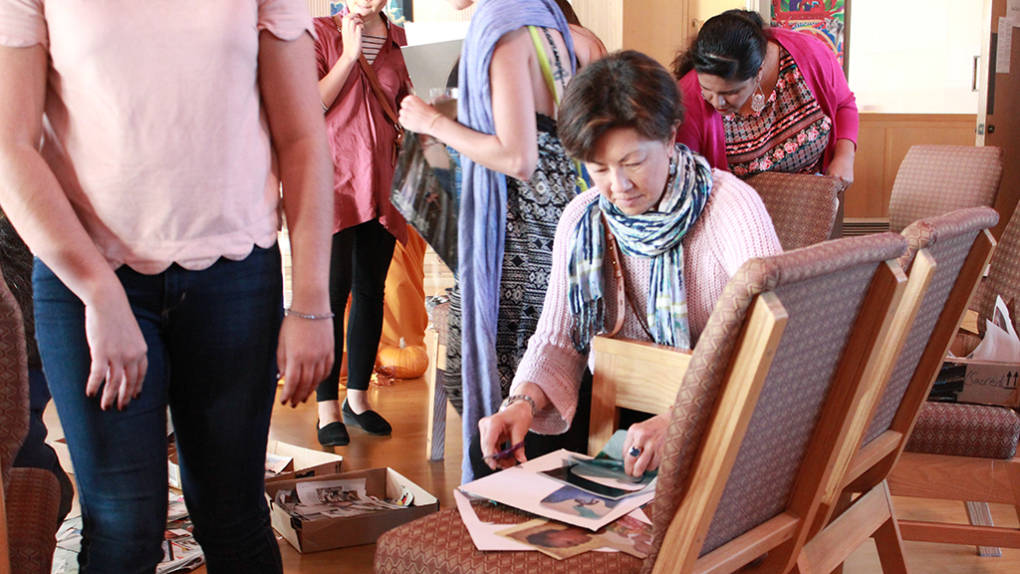
"caption": "A Harvest Festival attendee cuts up magazine pages for her Guadalupe collage. ",
"description": "A Harvest Festival attendee cuts up magazine pages for her Guadalupe collage. ",
"title": "A Harvest Festival attendee cuts up magazine pages for her Guadalupe collage.",
"credit": "Photo: Creo Noveno/KQED",
"status": "inherit",
"isLoading": false,
"fetchFailed": false
},
"arts_12350882": {
"type": "attachments",
"id": "arts_12350882",
"meta": {
"index": "attachments_1716263798",
"site": "arts",
"id": "12350882",
"found": true
},
"parent": 12344685,
"imgSizes": {
"small": {
"file": "https://ww2.kqed.org/app/uploads/sites/2/2016/11/Kyne_Crack_6COVER-520x293.jpg",
"width": 520,
"mimeType": "image/jpeg",
"height": 293
},
"twentyfourteen-full-width": {
"file": "https://ww2.kqed.org/app/uploads/sites/2/2016/11/Kyne_Crack_6COVER-1038x576.jpg",
"width": 1038,
"mimeType": "image/jpeg",
"height": 576
},
"thumbnail": {
"file": "https://ww2.kqed.org/app/uploads/sites/2/2016/11/Kyne_Crack_6COVER-160x90.jpg",
"width": 160,
"mimeType": "image/jpeg",
"height": 90
},
"fd-sm": {
"file": "https://ww2.kqed.org/app/uploads/sites/2/2016/11/Kyne_Crack_6COVER-960x540.jpg",
"width": 960,
"mimeType": "image/jpeg",
"height": 540
},
"post-thumbnail": {
"file": "https://ww2.kqed.org/app/uploads/sites/2/2016/11/Kyne_Crack_6COVER-672x372.jpg",
"width": 672,
"mimeType": "image/jpeg",
"height": 372
},
"xsmall": {
"file": "https://ww2.kqed.org/app/uploads/sites/2/2016/11/Kyne_Crack_6COVER-375x211.jpg",
"width": 375,
"mimeType": "image/jpeg",
"height": 211
},
"kqedFullSize": {
"file": "https://ww2.kqed.org/app/uploads/sites/2/2016/11/Kyne_Crack_6COVER.jpg",
"width": 1920,
"height": 1080
},
"large": {
"file": "https://ww2.kqed.org/app/uploads/sites/2/2016/11/Kyne_Crack_6COVER-1020x574.jpg",
"width": 1020,
"mimeType": "image/jpeg",
"height": 574
},
"xlarge": {
"file": "https://ww2.kqed.org/app/uploads/sites/2/2016/11/Kyne_Crack_6COVER-1180x664.jpg",
"width": 1180,
"mimeType": "image/jpeg",
"height": 664
},
"guest-author-50": {
"file": "https://ww2.kqed.org/app/uploads/sites/2/2016/11/Kyne_Crack_6COVER-50x50.jpg",
"width": 50,
"mimeType": "image/jpeg",
"height": 50
},
"guest-author-96": {
"file": "https://ww2.kqed.org/app/uploads/sites/2/2016/11/Kyne_Crack_6COVER-96x96.jpg",
"width": 96,
"mimeType": "image/jpeg",
"height": 96
},
"medium": {
"file": "https://ww2.kqed.org/app/uploads/sites/2/2016/11/Kyne_Crack_6COVER-800x450.jpg",
"width": 800,
"mimeType": "image/jpeg",
"height": 450
},
"guest-author-64": {
"file": "https://ww2.kqed.org/app/uploads/sites/2/2016/11/Kyne_Crack_6COVER-64x64.jpg",
"width": 64,
"mimeType": "image/jpeg",
"height": 64
},
"guest-author-32": {
"file": "https://ww2.kqed.org/app/uploads/sites/2/2016/11/Kyne_Crack_6COVER-32x32.jpg",
"width": 32,
"mimeType": "image/jpeg",
"height": 32
},
"fd-lrg": {
"file": "https://ww2.kqed.org/app/uploads/sites/2/2016/11/Kyne_Crack_6COVER-1920x1080.jpg",
"width": 1920,
"mimeType": "image/jpeg",
"height": 1080
},
"fd-med": {
"file": "https://ww2.kqed.org/app/uploads/sites/2/2016/11/Kyne_Crack_6COVER-1180x664.jpg",
"width": 1180,
"mimeType": "image/jpeg",
"height": 664
},
"full-width": {
"file": "https://ww2.kqed.org/app/uploads/sites/2/2016/11/Kyne_Crack_6COVER-1920x1080.jpg",
"width": 1920,
"mimeType": "image/jpeg",
"height": 1080
},
"detail": {
"file": "https://ww2.kqed.org/app/uploads/sites/2/2016/11/Kyne_Crack_6COVER-150x150.jpg",
"width": 150,
"mimeType": "image/jpeg",
"height": 150
},
"medium_large": {
"file": "https://ww2.kqed.org/app/uploads/sites/2/2016/11/Kyne_Crack_6COVER-768x432.jpg",
"width": 768,
"mimeType": "image/jpeg",
"height": 432
},
"guest-author-128": {
"file": "https://ww2.kqed.org/app/uploads/sites/2/2016/11/Kyne_Crack_6COVER-128x128.jpg",
"width": 128,
"mimeType": "image/jpeg",
"height": 128
},
"xxsmall": {
"file": "https://ww2.kqed.org/app/uploads/sites/2/2016/11/Kyne_Crack_6COVER-240x135.jpg",
"width": 240,
"mimeType": "image/jpeg",
"height": 135
}
},
"publishDate": 1479262336,
"modified": 1479262375,
"caption": "Barbara Kyne, 'A Crack in the World #6,' 2015. ",
"description": "Barbara Kyne, 'A Crack in the World #6,' 2015. ",
"title": "kyne_crack_6cover",
"credit": "Courtesy of Krowswork Gallery",
"status": "inherit",
"isLoading": false,
"fetchFailed": false
},
"arts_12064142": {
"type": "attachments",
"id": "arts_12064142",
"meta": {
"index": "attachments_1716263798",
"site": "arts",
"id": "12064142",
"found": true
},
"parent": 12063773,
"imgSizes": {
"twentyfourteen-full-width": {
"file": "https://ww2.kqed.org/app/uploads/sites/2/2016/09/RS21122_IMG_2075-qut-1038x576.jpg",
"width": 1038,
"mimeType": "image/jpeg",
"height": 576
},
"thumbnail": {
"file": "https://ww2.kqed.org/app/uploads/sites/2/2016/09/RS21122_IMG_2075-qut-400x225.jpg",
"width": 400,
"mimeType": "image/jpeg",
"height": 225
},
"fd-sm": {
"file": "https://ww2.kqed.org/app/uploads/sites/2/2016/09/RS21122_IMG_2075-qut-960x541.jpg",
"width": 960,
"mimeType": "image/jpeg",
"height": 541
},
"post-thumbnail": {
"file": "https://ww2.kqed.org/app/uploads/sites/2/2016/09/RS21122_IMG_2075-qut-672x372.jpg",
"width": 672,
"mimeType": "image/jpeg",
"height": 372
},
"kqedFullSize": {
"file": "https://ww2.kqed.org/app/uploads/sites/2/2016/09/RS21122_IMG_2075-qut.jpg",
"width": 1920,
"height": 1082
},
"large": {
"file": "https://ww2.kqed.org/app/uploads/sites/2/2016/09/RS21122_IMG_2075-qut-1180x665.jpg",
"width": 1180,
"mimeType": "image/jpeg",
"height": 665
},
"guest-author-50": {
"file": "https://ww2.kqed.org/app/uploads/sites/2/2016/09/RS21122_IMG_2075-qut-50x50.jpg",
"width": 50,
"mimeType": "image/jpeg",
"height": 50
},
"guest-author-96": {
"file": "https://ww2.kqed.org/app/uploads/sites/2/2016/09/RS21122_IMG_2075-qut-96x96.jpg",
"width": 96,
"mimeType": "image/jpeg",
"height": 96
},
"medium": {
"file": "https://ww2.kqed.org/app/uploads/sites/2/2016/09/RS21122_IMG_2075-qut-800x451.jpg",
"width": 800,
"mimeType": "image/jpeg",
"height": 451
},
"guest-author-64": {
"file": "https://ww2.kqed.org/app/uploads/sites/2/2016/09/RS21122_IMG_2075-qut-64x64.jpg",
"width": 64,
"mimeType": "image/jpeg",
"height": 64
},
"guest-author-32": {
"file": "https://ww2.kqed.org/app/uploads/sites/2/2016/09/RS21122_IMG_2075-qut-32x32.jpg",
"width": 32,
"mimeType": "image/jpeg",
"height": 32
},
"fd-lrg": {
"file": "https://ww2.kqed.org/app/uploads/sites/2/2016/09/RS21122_IMG_2075-qut-1920x1082.jpg",
"width": 1920,
"mimeType": "image/jpeg",
"height": 1082
},
"fd-med": {
"file": "https://ww2.kqed.org/app/uploads/sites/2/2016/09/RS21122_IMG_2075-qut-1180x665.jpg",
"width": 1180,
"mimeType": "image/jpeg",
"height": 665
},
"detail": {
"file": "https://ww2.kqed.org/app/uploads/sites/2/2016/09/RS21122_IMG_2075-qut-150x150.jpg",
"width": 150,
"mimeType": "image/jpeg",
"height": 150
},
"medium_large": {
"file": "https://ww2.kqed.org/app/uploads/sites/2/2016/09/RS21122_IMG_2075-qut-768x433.jpg",
"width": 768,
"mimeType": "image/jpeg",
"height": 433
},
"guest-author-128": {
"file": "https://ww2.kqed.org/app/uploads/sites/2/2016/09/RS21122_IMG_2075-qut-128x128.jpg",
"width": 128,
"mimeType": "image/jpeg",
"height": 128
}
},
"publishDate": 1473794879,
"modified": 1473799387,
"caption": "BAGI Board Chair Steven Aldrich (l) and Executive Director Damon Gustafson (r) say they're thrilled to have found a permanent home at History San José. Another $90,000, and they'll be able to move out of shipping containers and into a warehouse next door.",
"description": "BAGI Board Chair Steven Aldrich (l) and Executive Director Damon Gustafson (r) say they're thrilled to have found a permanent home at History San José. Another $90,000, and they'll be able to move out of shipping containers and into a warehouse next door.",
"title": "RS21122_IMG_2075-qut",
"credit": "Photo: Rachael Myrow/KQED",
"status": "inherit",
"isLoading": false,
"fetchFailed": false
},
"arts_12350247": {
"type": "attachments",
"id": "arts_12350247",
"meta": {
"index": "attachments_1716263798",
"site": "arts",
"id": "12350247",
"found": true
},
"parent": 12317696,
"imgSizes": {
"small": {
"file": "https://ww2.kqed.org/app/uploads/sites/2/2016/11/MoADCOVER-520x293.jpg",
"width": 520,
"mimeType": "image/jpeg",
"height": 293
},
"twentyfourteen-full-width": {
"file": "https://ww2.kqed.org/app/uploads/sites/2/2016/11/MoADCOVER-1038x576.jpg",
"width": 1038,
"mimeType": "image/jpeg",
"height": 576
},
"thumbnail": {
"file": "https://ww2.kqed.org/app/uploads/sites/2/2016/11/MoADCOVER-160x90.jpg",
"width": 160,
"mimeType": "image/jpeg",
"height": 90
},
"fd-sm": {
"file": "https://ww2.kqed.org/app/uploads/sites/2/2016/11/MoADCOVER-960x540.jpg",
"width": 960,
"mimeType": "image/jpeg",
"height": 540
},
"post-thumbnail": {
"file": "https://ww2.kqed.org/app/uploads/sites/2/2016/11/MoADCOVER-672x372.jpg",
"width": 672,
"mimeType": "image/jpeg",
"height": 372
},
"xsmall": {
"file": "https://ww2.kqed.org/app/uploads/sites/2/2016/11/MoADCOVER-375x211.jpg",
"width": 375,
"mimeType": "image/jpeg",
"height": 211
},
"kqedFullSize": {
"file": "https://ww2.kqed.org/app/uploads/sites/2/2016/11/MoADCOVER.jpg",
"width": 1920,
"height": 1080
},
"large": {
"file": "https://ww2.kqed.org/app/uploads/sites/2/2016/11/MoADCOVER-1020x574.jpg",
"width": 1020,
"mimeType": "image/jpeg",
"height": 574
},
"xlarge": {
"file": "https://ww2.kqed.org/app/uploads/sites/2/2016/11/MoADCOVER-1180x664.jpg",
"width": 1180,
"mimeType": "image/jpeg",
"height": 664
},
"guest-author-50": {
"file": "https://ww2.kqed.org/app/uploads/sites/2/2016/11/MoADCOVER-50x50.jpg",
"width": 50,
"mimeType": "image/jpeg",
"height": 50
},
"guest-author-96": {
"file": "https://ww2.kqed.org/app/uploads/sites/2/2016/11/MoADCOVER-96x96.jpg",
"width": 96,
"mimeType": "image/jpeg",
"height": 96
},
"medium": {
"file": "https://ww2.kqed.org/app/uploads/sites/2/2016/11/MoADCOVER-800x450.jpg",
"width": 800,
"mimeType": "image/jpeg",
"height": 450
},
"guest-author-64": {
"file": "https://ww2.kqed.org/app/uploads/sites/2/2016/11/MoADCOVER-64x64.jpg",
"width": 64,
"mimeType": "image/jpeg",
"height": 64
},
"guest-author-32": {
"file": "https://ww2.kqed.org/app/uploads/sites/2/2016/11/MoADCOVER-32x32.jpg",
"width": 32,
"mimeType": "image/jpeg",
"height": 32
},
"fd-lrg": {
"file": "https://ww2.kqed.org/app/uploads/sites/2/2016/11/MoADCOVER-1920x1080.jpg",
"width": 1920,
"mimeType": "image/jpeg",
"height": 1080
},
"fd-med": {
"file": "https://ww2.kqed.org/app/uploads/sites/2/2016/11/MoADCOVER-1180x664.jpg",
"width": 1180,
"mimeType": "image/jpeg",
"height": 664
},
"full-width": {
"file": "https://ww2.kqed.org/app/uploads/sites/2/2016/11/MoADCOVER-1920x1080.jpg",
"width": 1920,
"mimeType": "image/jpeg",
"height": 1080
},
"detail": {
"file": "https://ww2.kqed.org/app/uploads/sites/2/2016/11/MoADCOVER-150x150.jpg",
"width": 150,
"mimeType": "image/jpeg",
"height": 150
},
"medium_large": {
"file": "https://ww2.kqed.org/app/uploads/sites/2/2016/11/MoADCOVER-768x432.jpg",
"width": 768,
"mimeType": "image/jpeg",
"height": 432
},
"guest-author-128": {
"file": "https://ww2.kqed.org/app/uploads/sites/2/2016/11/MoADCOVER-128x128.jpg",
"width": 128,
"mimeType": "image/jpeg",
"height": 128
},
"xxsmall": {
"file": "https://ww2.kqed.org/app/uploads/sites/2/2016/11/MoADCOVER-240x135.jpg",
"width": 240,
"mimeType": "image/jpeg",
"height": 135
}
},
"publishDate": 1479251136,
"modified": 1479251169,
"caption": "Toyin Ojih Odutola, 'Afternoon Tea' and 'A Grand Inheritance,' 2016.",
"description": "Toyin Ojih Odutola, 'Afternoon Tea' and 'A Grand Inheritance,' 2016.",
"title": "moadcover",
"credit": "Courtesy the artist and Jack Shainman Gallery, New York",
"status": "inherit",
"isLoading": false,
"fetchFailed": false
},
"arts_12346923": {
"type": "attachments",
"id": "arts_12346923",
"meta": {
"index": "attachments_1716263798",
"site": "arts",
"id": "12346923",
"found": true
},
"parent": 12345939,
"imgSizes": {
"small": {
"file": "https://ww2.kqed.org/app/uploads/sites/2/2016/11/osf9-520x292.png",
"width": 520,
"mimeType": "image/png",
"height": 292
},
"twentyfourteen-full-width": {
"file": "https://ww2.kqed.org/app/uploads/sites/2/2016/11/osf9-1038x576.png",
"width": 1038,
"mimeType": "image/png",
"height": 576
},
"thumbnail": {
"file": "https://ww2.kqed.org/app/uploads/sites/2/2016/11/osf9-160x90.png",
"width": 160,
"mimeType": "image/png",
"height": 90
},
"fd-sm": {
"file": "https://ww2.kqed.org/app/uploads/sites/2/2016/11/osf9-960x539.png",
"width": 960,
"mimeType": "image/png",
"height": 539
},
"post-thumbnail": {
"file": "https://ww2.kqed.org/app/uploads/sites/2/2016/11/osf9-672x372.png",
"width": 672,
"mimeType": "image/png",
"height": 372
},
"xsmall": {
"file": "https://ww2.kqed.org/app/uploads/sites/2/2016/11/osf9-375x211.png",
"width": 375,
"mimeType": "image/png",
"height": 211
},
"kqedFullSize": {
"file": "https://ww2.kqed.org/app/uploads/sites/2/2016/11/osf9.png",
"width": 1441,
"height": 809
},
"large": {
"file": "https://ww2.kqed.org/app/uploads/sites/2/2016/11/osf9-1020x573.png",
"width": 1020,
"mimeType": "image/png",
"height": 573
},
"xlarge": {
"file": "https://ww2.kqed.org/app/uploads/sites/2/2016/11/osf9-1180x662.png",
"width": 1180,
"mimeType": "image/png",
"height": 662
},
"guest-author-50": {
"file": "https://ww2.kqed.org/app/uploads/sites/2/2016/11/osf9-50x50.png",
"width": 50,
"mimeType": "image/png",
"height": 50
},
"guest-author-96": {
"file": "https://ww2.kqed.org/app/uploads/sites/2/2016/11/osf9-96x96.png",
"width": 96,
"mimeType": "image/png",
"height": 96
},
"medium": {
"file": "https://ww2.kqed.org/app/uploads/sites/2/2016/11/osf9-800x449.png",
"width": 800,
"mimeType": "image/png",
"height": 449
},
"guest-author-64": {
"file": "https://ww2.kqed.org/app/uploads/sites/2/2016/11/osf9-64x64.png",
"width": 64,
"mimeType": "image/png",
"height": 64
},
"guest-author-32": {
"file": "https://ww2.kqed.org/app/uploads/sites/2/2016/11/osf9-32x32.png",
"width": 32,
"mimeType": "image/png",
"height": 32
},
"fd-med": {
"file": "https://ww2.kqed.org/app/uploads/sites/2/2016/11/osf9-1180x662.png",
"width": 1180,
"mimeType": "image/png",
"height": 662
},
"detail": {
"file": "https://ww2.kqed.org/app/uploads/sites/2/2016/11/osf9-150x150.png",
"width": 150,
"mimeType": "image/png",
"height": 150
},
"medium_large": {
"file": "https://ww2.kqed.org/app/uploads/sites/2/2016/11/osf9-768x431.png",
"width": 768,
"mimeType": "image/png",
"height": 431
},
"guest-author-128": {
"file": "https://ww2.kqed.org/app/uploads/sites/2/2016/11/osf9-128x128.png",
"width": 128,
"mimeType": "image/png",
"height": 128
},
"xxsmall": {
"file": "https://ww2.kqed.org/app/uploads/sites/2/2016/11/osf9-240x135.png",
"width": 240,
"mimeType": "image/png",
"height": 135
}
},
"publishDate": 1479189864,
"modified": 1479190062,
"caption": "Anxious to Make, 'Open Ambiguity,' single channel video, 2016.",
"description": "Anxious to Make, 'Open Ambiguity,' single channel video, 2016.",
"title": "osf9",
"credit": "Courtesy of the artists",
"status": "inherit",
"isLoading": false,
"fetchFailed": false
},
"arts_12318270": {
"type": "attachments",
"id": "arts_12318270",
"meta": {
"index": "attachments_1716263798",
"site": "arts",
"id": "12318270",
"found": true
},
"parent": 12317891,
"imgSizes": {
"small": {
"file": "https://ww2.kqed.org/app/uploads/sites/2/2016/11/ZippyCrop-520x293.jpg",
"width": 520,
"mimeType": "image/jpeg",
"height": 293
},
"twentyfourteen-full-width": {
"file": "https://ww2.kqed.org/app/uploads/sites/2/2016/11/ZippyCrop-1038x576.jpg",
"width": 1038,
"mimeType": "image/jpeg",
"height": 576
},
"thumbnail": {
"file": "https://ww2.kqed.org/app/uploads/sites/2/2016/11/ZippyCrop-160x90.jpg",
"width": 160,
"mimeType": "image/jpeg",
"height": 90
},
"fd-sm": {
"file": "https://ww2.kqed.org/app/uploads/sites/2/2016/11/ZippyCrop-960x540.jpg",
"width": 960,
"mimeType": "image/jpeg",
"height": 540
},
"post-thumbnail": {
"file": "https://ww2.kqed.org/app/uploads/sites/2/2016/11/ZippyCrop-672x372.jpg",
"width": 672,
"mimeType": "image/jpeg",
"height": 372
},
"xsmall": {
"file": "https://ww2.kqed.org/app/uploads/sites/2/2016/11/ZippyCrop-375x211.jpg",
"width": 375,
"mimeType": "image/jpeg",
"height": 211
},
"kqedFullSize": {
"file": "https://ww2.kqed.org/app/uploads/sites/2/2016/11/ZippyCrop.jpg",
"width": 1920,
"height": 1080
},
"large": {
"file": "https://ww2.kqed.org/app/uploads/sites/2/2016/11/ZippyCrop-1020x574.jpg",
"width": 1020,
"mimeType": "image/jpeg",
"height": 574
},
"xlarge": {
"file": "https://ww2.kqed.org/app/uploads/sites/2/2016/11/ZippyCrop-1180x664.jpg",
"width": 1180,
"mimeType": "image/jpeg",
"height": 664
},
"guest-author-50": {
"file": "https://ww2.kqed.org/app/uploads/sites/2/2016/11/ZippyCrop-50x50.jpg",
"width": 50,
"mimeType": "image/jpeg",
"height": 50
},
"guest-author-96": {
"file": "https://ww2.kqed.org/app/uploads/sites/2/2016/11/ZippyCrop-96x96.jpg",
"width": 96,
"mimeType": "image/jpeg",
"height": 96
},
"medium": {
"file": "https://ww2.kqed.org/app/uploads/sites/2/2016/11/ZippyCrop-800x450.jpg",
"width": 800,
"mimeType": "image/jpeg",
"height": 450
},
"guest-author-64": {
"file": "https://ww2.kqed.org/app/uploads/sites/2/2016/11/ZippyCrop-64x64.jpg",
"width": 64,
"mimeType": "image/jpeg",
"height": 64
},
"guest-author-32": {
"file": "https://ww2.kqed.org/app/uploads/sites/2/2016/11/ZippyCrop-32x32.jpg",
"width": 32,
"mimeType": "image/jpeg",
"height": 32
},
"fd-lrg": {
"file": "https://ww2.kqed.org/app/uploads/sites/2/2016/11/ZippyCrop-1920x1080.jpg",
"width": 1920,
"mimeType": "image/jpeg",
"height": 1080
},
"fd-med": {
"file": "https://ww2.kqed.org/app/uploads/sites/2/2016/11/ZippyCrop-1180x664.jpg",
"width": 1180,
"mimeType": "image/jpeg",
"height": 664
},
"full-width": {
"file": "https://ww2.kqed.org/app/uploads/sites/2/2016/11/ZippyCrop-1920x1080.jpg",
"width": 1920,
"mimeType": "image/jpeg",
"height": 1080
},
"detail": {
"file": "https://ww2.kqed.org/app/uploads/sites/2/2016/11/ZippyCrop-150x150.jpg",
"width": 150,
"mimeType": "image/jpeg",
"height": 150
},
"medium_large": {
"file": "https://ww2.kqed.org/app/uploads/sites/2/2016/11/ZippyCrop-768x432.jpg",
"width": 768,
"mimeType": "image/jpeg",
"height": 432
},
"guest-author-128": {
"file": "https://ww2.kqed.org/app/uploads/sites/2/2016/11/ZippyCrop-128x128.jpg",
"width": 128,
"mimeType": "image/jpeg",
"height": 128
},
"xxsmall": {
"file": "https://ww2.kqed.org/app/uploads/sites/2/2016/11/ZippyCrop-240x135.jpg",
"width": 240,
"mimeType": "image/jpeg",
"height": 135
}
},
"publishDate": 1478647599,
"modified": 1478647599,
"caption": null,
"description": null,
"title": "zippycrop",
"credit": null,
"status": "inherit",
"isLoading": false,
"fetchFailed": false
},
"arts_12327433": {
"type": "attachments",
"id": "arts_12327433",
"meta": {
"index": "attachments_1716263798",
"site": "arts",
"id": "12327433",
"found": true
},
"parent": 12327432,
"imgSizes": {
"small": {
"file": "https://ww2.kqed.org/app/uploads/sites/2/2016/11/toys-group-shot_custom-6db055737eeacb5a5aa60ebe31243c29e62bbf38-520x233.jpg",
"width": 520,
"mimeType": "image/jpeg",
"height": 233
},
"twentyfourteen-full-width": {
"file": "https://ww2.kqed.org/app/uploads/sites/2/2016/11/toys-group-shot_custom-6db055737eeacb5a5aa60ebe31243c29e62bbf38-1038x576.jpg",
"width": 1038,
"mimeType": "image/jpeg",
"height": 576
},
"thumbnail": {
"file": "https://ww2.kqed.org/app/uploads/sites/2/2016/11/toys-group-shot_custom-6db055737eeacb5a5aa60ebe31243c29e62bbf38-160x72.jpg",
"width": 160,
"mimeType": "image/jpeg",
"height": 72
},
"fd-sm": {
"file": "https://ww2.kqed.org/app/uploads/sites/2/2016/11/toys-group-shot_custom-6db055737eeacb5a5aa60ebe31243c29e62bbf38-960x430.jpg",
"width": 960,
"mimeType": "image/jpeg",
"height": 430
},
"post-thumbnail": {
"file": "https://ww2.kqed.org/app/uploads/sites/2/2016/11/toys-group-shot_custom-6db055737eeacb5a5aa60ebe31243c29e62bbf38-672x372.jpg",
"width": 672,
"mimeType": "image/jpeg",
"height": 372
},
"xsmall": {
"file": "https://ww2.kqed.org/app/uploads/sites/2/2016/11/toys-group-shot_custom-6db055737eeacb5a5aa60ebe31243c29e62bbf38-375x168.jpg",
"width": 375,
"mimeType": "image/jpeg",
"height": 168
},
"kqedFullSize": {
"file": "https://ww2.kqed.org/app/uploads/sites/2/2016/11/toys-group-shot_custom-6db055737eeacb5a5aa60ebe31243c29e62bbf38.jpg",
"width": 2400,
"height": 1076
},
"large": {
"file": "https://ww2.kqed.org/app/uploads/sites/2/2016/11/toys-group-shot_custom-6db055737eeacb5a5aa60ebe31243c29e62bbf38-1020x457.jpg",
"width": 1020,
"mimeType": "image/jpeg",
"height": 457
},
"xlarge": {
"file": "https://ww2.kqed.org/app/uploads/sites/2/2016/11/toys-group-shot_custom-6db055737eeacb5a5aa60ebe31243c29e62bbf38-1180x529.jpg",
"width": 1180,
"mimeType": "image/jpeg",
"height": 529
},
"guest-author-50": {
"file": "https://ww2.kqed.org/app/uploads/sites/2/2016/11/toys-group-shot_custom-6db055737eeacb5a5aa60ebe31243c29e62bbf38-50x50.jpg",
"width": 50,
"mimeType": "image/jpeg",
"height": 50
},
"guest-author-96": {
"file": "https://ww2.kqed.org/app/uploads/sites/2/2016/11/toys-group-shot_custom-6db055737eeacb5a5aa60ebe31243c29e62bbf38-96x96.jpg",
"width": 96,
"mimeType": "image/jpeg",
"height": 96
},
"medium": {
"file": "https://ww2.kqed.org/app/uploads/sites/2/2016/11/toys-group-shot_custom-6db055737eeacb5a5aa60ebe31243c29e62bbf38-800x359.jpg",
"width": 800,
"mimeType": "image/jpeg",
"height": 359
},
"guest-author-64": {
"file": "https://ww2.kqed.org/app/uploads/sites/2/2016/11/toys-group-shot_custom-6db055737eeacb5a5aa60ebe31243c29e62bbf38-64x64.jpg",
"width": 64,
"mimeType": "image/jpeg",
"height": 64
},
"guest-author-32": {
"file": "https://ww2.kqed.org/app/uploads/sites/2/2016/11/toys-group-shot_custom-6db055737eeacb5a5aa60ebe31243c29e62bbf38-32x32.jpg",
"width": 32,
"mimeType": "image/jpeg",
"height": 32
},
"fd-lrg": {
"file": "https://ww2.kqed.org/app/uploads/sites/2/2016/11/toys-group-shot_custom-6db055737eeacb5a5aa60ebe31243c29e62bbf38-1920x861.jpg",
"width": 1920,
"mimeType": "image/jpeg",
"height": 861
},
"fd-med": {
"file": "https://ww2.kqed.org/app/uploads/sites/2/2016/11/toys-group-shot_custom-6db055737eeacb5a5aa60ebe31243c29e62bbf38-1180x529.jpg",
"width": 1180,
"mimeType": "image/jpeg",
"height": 529
},
"full-width": {
"file": "https://ww2.kqed.org/app/uploads/sites/2/2016/11/toys-group-shot_custom-6db055737eeacb5a5aa60ebe31243c29e62bbf38-1920x861.jpg",
"width": 1920,
"mimeType": "image/jpeg",
"height": 861
},
"detail": {
"file": "https://ww2.kqed.org/app/uploads/sites/2/2016/11/toys-group-shot_custom-6db055737eeacb5a5aa60ebe31243c29e62bbf38-150x150.jpg",
"width": 150,
"mimeType": "image/jpeg",
"height": 150
},
"medium_large": {
"file": "https://ww2.kqed.org/app/uploads/sites/2/2016/11/toys-group-shot_custom-6db055737eeacb5a5aa60ebe31243c29e62bbf38-768x344.jpg",
"width": 768,
"mimeType": "image/jpeg",
"height": 344
},
"guest-author-128": {
"file": "https://ww2.kqed.org/app/uploads/sites/2/2016/11/toys-group-shot_custom-6db055737eeacb5a5aa60ebe31243c29e62bbf38-128x128.jpg",
"width": 128,
"mimeType": "image/jpeg",
"height": 128
},
"xxsmall": {
"file": "https://ww2.kqed.org/app/uploads/sites/2/2016/11/toys-group-shot_custom-6db055737eeacb5a5aa60ebe31243c29e62bbf38-240x108.jpg",
"width": 240,
"mimeType": "image/jpeg",
"height": 108
}
},
"publishDate": 1478822115,
"modified": 1478822115,
"caption": null,
"description": "Fisher-Price Little People, the role-playing game Dungeons",
"title": "Fisher-Price Little People, the role-playing game Dungeons & Dragons and the simple swing are now in the National Toy Hall of Fame.",
"credit": null,
"status": "inherit",
"isLoading": false,
"fetchFailed": false
},
"arts_12322856": {
"type": "attachments",
"id": "arts_12322856",
"meta": {
"index": "attachments_1716263798",
"site": "arts",
"id": "12322856",
"found": true
},
"parent": 12322274,
"imgSizes": {
"small": {
"file": "https://ww2.kqed.org/app/uploads/sites/2/2016/11/10.4_Diorama_ChineseExclActCOVER-520x293.jpg",
"width": 520,
"mimeType": "image/jpeg",
"height": 293
},
"twentyfourteen-full-width": {
"file": "https://ww2.kqed.org/app/uploads/sites/2/2016/11/10.4_Diorama_ChineseExclActCOVER-1038x576.jpg",
"width": 1038,
"mimeType": "image/jpeg",
"height": 576
},
"thumbnail": {
"file": "https://ww2.kqed.org/app/uploads/sites/2/2016/11/10.4_Diorama_ChineseExclActCOVER-160x90.jpg",
"width": 160,
"mimeType": "image/jpeg",
"height": 90
},
"fd-sm": {
"file": "https://ww2.kqed.org/app/uploads/sites/2/2016/11/10.4_Diorama_ChineseExclActCOVER-960x540.jpg",
"width": 960,
"mimeType": "image/jpeg",
"height": 540
},
"post-thumbnail": {
"file": "https://ww2.kqed.org/app/uploads/sites/2/2016/11/10.4_Diorama_ChineseExclActCOVER-672x372.jpg",
"width": 672,
"mimeType": "image/jpeg",
"height": 372
},
"xsmall": {
"file": "https://ww2.kqed.org/app/uploads/sites/2/2016/11/10.4_Diorama_ChineseExclActCOVER-375x211.jpg",
"width": 375,
"mimeType": "image/jpeg",
"height": 211
},
"kqedFullSize": {
"file": "https://ww2.kqed.org/app/uploads/sites/2/2016/11/10.4_Diorama_ChineseExclActCOVER.jpg",
"width": 1500,
"height": 844
},
"large": {
"file": "https://ww2.kqed.org/app/uploads/sites/2/2016/11/10.4_Diorama_ChineseExclActCOVER-1020x574.jpg",
"width": 1020,
"mimeType": "image/jpeg",
"height": 574
},
"xlarge": {
"file": "https://ww2.kqed.org/app/uploads/sites/2/2016/11/10.4_Diorama_ChineseExclActCOVER-1180x664.jpg",
"width": 1180,
"mimeType": "image/jpeg",
"height": 664
},
"guest-author-50": {
"file": "https://ww2.kqed.org/app/uploads/sites/2/2016/11/10.4_Diorama_ChineseExclActCOVER-50x50.jpg",
"width": 50,
"mimeType": "image/jpeg",
"height": 50
},
"guest-author-96": {
"file": "https://ww2.kqed.org/app/uploads/sites/2/2016/11/10.4_Diorama_ChineseExclActCOVER-96x96.jpg",
"width": 96,
"mimeType": "image/jpeg",
"height": 96
},
"medium": {
"file": "https://ww2.kqed.org/app/uploads/sites/2/2016/11/10.4_Diorama_ChineseExclActCOVER-800x450.jpg",
"width": 800,
"mimeType": "image/jpeg",
"height": 450
},
"guest-author-64": {
"file": "https://ww2.kqed.org/app/uploads/sites/2/2016/11/10.4_Diorama_ChineseExclActCOVER-64x64.jpg",
"width": 64,
"mimeType": "image/jpeg",
"height": 64
},
"guest-author-32": {
"file": "https://ww2.kqed.org/app/uploads/sites/2/2016/11/10.4_Diorama_ChineseExclActCOVER-32x32.jpg",
"width": 32,
"mimeType": "image/jpeg",
"height": 32
},
"fd-med": {
"file": "https://ww2.kqed.org/app/uploads/sites/2/2016/11/10.4_Diorama_ChineseExclActCOVER-1180x664.jpg",
"width": 1180,
"mimeType": "image/jpeg",
"height": 664
},
"detail": {
"file": "https://ww2.kqed.org/app/uploads/sites/2/2016/11/10.4_Diorama_ChineseExclActCOVER-150x150.jpg",
"width": 150,
"mimeType": "image/jpeg",
"height": 150
},
"medium_large": {
"file": "https://ww2.kqed.org/app/uploads/sites/2/2016/11/10.4_Diorama_ChineseExclActCOVER-768x432.jpg",
"width": 768,
"mimeType": "image/jpeg",
"height": 432
},
"guest-author-128": {
"file": "https://ww2.kqed.org/app/uploads/sites/2/2016/11/10.4_Diorama_ChineseExclActCOVER-128x128.jpg",
"width": 128,
"mimeType": "image/jpeg",
"height": 128
},
"xxsmall": {
"file": "https://ww2.kqed.org/app/uploads/sites/2/2016/11/10.4_Diorama_ChineseExclActCOVER-240x135.jpg",
"width": 240,
"mimeType": "image/jpeg",
"height": 135
}
},
"publishDate": 1478734755,
"modified": 1478734958,
"caption": "Diorama of the passing of the Chinese Exclusion Act of 1882.",
"description": "Diorama of the passing of the Chinese Exclusion Act of 1882.",
"title": "10-4_diorama_chineseexclactcover",
"credit": "Courtesy of the Chinese Historical Society of America",
"status": "inherit",
"isLoading": false,
"fetchFailed": false
},
"pop_46905": {
"type": "attachments",
"id": "pop_46905",
"meta": {
"index": "attachments_1716263798",
"site": "pop",
"id": "46905",
"found": true
},
"parent": 46889,
"imgSizes": {
"small": {
"file": "https://ww2.kqed.org/app/uploads/sites/12/2016/11/9919973133_57fa1facbe_b-520x344.jpg",
"width": 520,
"mimeType": "image/jpeg",
"height": 344
},
"twentyfourteen-full-width": {
"file": "https://ww2.kqed.org/app/uploads/sites/12/2016/11/9919973133_57fa1facbe_b-900x576.jpg",
"width": 900,
"mimeType": "image/jpeg",
"height": 576
},
"thumbnail": {
"file": "https://ww2.kqed.org/app/uploads/sites/12/2016/11/9919973133_57fa1facbe_b-160x106.jpg",
"width": 160,
"mimeType": "image/jpeg",
"height": 106
},
"post-thumbnail": {
"file": "https://ww2.kqed.org/app/uploads/sites/12/2016/11/9919973133_57fa1facbe_b-672x372.jpg",
"width": 672,
"mimeType": "image/jpeg",
"height": 372
},
"xsmall": {
"file": "https://ww2.kqed.org/app/uploads/sites/12/2016/11/9919973133_57fa1facbe_b-375x248.jpg",
"width": 375,
"mimeType": "image/jpeg",
"height": 248
},
"kqedFullSize": {
"file": "https://ww2.kqed.org/app/uploads/sites/12/2016/11/9919973133_57fa1facbe_b.jpg",
"width": 900,
"height": 595
},
"guest-author-50": {
"file": "https://ww2.kqed.org/app/uploads/sites/12/2016/11/9919973133_57fa1facbe_b-50x50.jpg",
"width": 50,
"mimeType": "image/jpeg",
"height": 50
},
"guest-author-96": {
"file": "https://ww2.kqed.org/app/uploads/sites/12/2016/11/9919973133_57fa1facbe_b-96x96.jpg",
"width": 96,
"mimeType": "image/jpeg",
"height": 96
},
"medium": {
"file": "https://ww2.kqed.org/app/uploads/sites/12/2016/11/9919973133_57fa1facbe_b-800x529.jpg",
"width": 800,
"mimeType": "image/jpeg",
"height": 529
},
"guest-author-64": {
"file": "https://ww2.kqed.org/app/uploads/sites/12/2016/11/9919973133_57fa1facbe_b-64x64.jpg",
"width": 64,
"mimeType": "image/jpeg",
"height": 64
},
"guest-author-32": {
"file": "https://ww2.kqed.org/app/uploads/sites/12/2016/11/9919973133_57fa1facbe_b-32x32.jpg",
"width": 32,
"mimeType": "image/jpeg",
"height": 32
},
"detail": {
"file": "https://ww2.kqed.org/app/uploads/sites/12/2016/11/9919973133_57fa1facbe_b-150x150.jpg",
"width": 150,
"mimeType": "image/jpeg",
"height": 150
},
"medium_large": {
"file": "https://ww2.kqed.org/app/uploads/sites/12/2016/11/9919973133_57fa1facbe_b-768x508.jpg",
"width": 768,
"mimeType": "image/jpeg",
"height": 508
},
"guest-author-128": {
"file": "https://ww2.kqed.org/app/uploads/sites/12/2016/11/9919973133_57fa1facbe_b-128x128.jpg",
"width": 128,
"mimeType": "image/jpeg",
"height": 128
},
"xxsmall": {
"file": "https://ww2.kqed.org/app/uploads/sites/12/2016/11/9919973133_57fa1facbe_b-240x159.jpg",
"width": 240,
"mimeType": "image/jpeg",
"height": 159
}
},
"publishDate": 1478813158,
"modified": 1478813199,
"caption": null,
"description": null,
"title": "yosemite",
"credit": "Photo: \u003ca href=\"https://www.flickr.com/photos/daves-f-stop/9919973133\">Dave Morrow / Flickr\u003c/a>",
"status": "inherit",
"isLoading": false,
"fetchFailed": false
},
"arts_12317318": {
"type": "attachments",
"id": "arts_12317318",
"meta": {
"index": "attachments_1716263798",
"site": "arts",
"id": "12317318",
"found": true
},
"parent": 12317310,
"imgSizes": {
"small": {
"file": "https://ww2.kqed.org/app/uploads/sites/2/2016/11/ShremCOVERB-520x293.jpg",
"width": 520,
"mimeType": "image/jpeg",
"height": 293
},
"twentyfourteen-full-width": {
"file": "https://ww2.kqed.org/app/uploads/sites/2/2016/11/ShremCOVERB-1038x576.jpg",
"width": 1038,
"mimeType": "image/jpeg",
"height": 576
},
"thumbnail": {
"file": "https://ww2.kqed.org/app/uploads/sites/2/2016/11/ShremCOVERB-160x90.jpg",
"width": 160,
"mimeType": "image/jpeg",
"height": 90
},
"fd-sm": {
"file": "https://ww2.kqed.org/app/uploads/sites/2/2016/11/ShremCOVERB-960x540.jpg",
"width": 960,
"mimeType": "image/jpeg",
"height": 540
},
"post-thumbnail": {
"file": "https://ww2.kqed.org/app/uploads/sites/2/2016/11/ShremCOVERB-672x372.jpg",
"width": 672,
"mimeType": "image/jpeg",
"height": 372
},
"xsmall": {
"file": "https://ww2.kqed.org/app/uploads/sites/2/2016/11/ShremCOVERB-375x211.jpg",
"width": 375,
"mimeType": "image/jpeg",
"height": 211
},
"kqedFullSize": {
"file": "https://ww2.kqed.org/app/uploads/sites/2/2016/11/ShremCOVERB.jpg",
"width": 1920,
"height": 1080
},
"large": {
"file": "https://ww2.kqed.org/app/uploads/sites/2/2016/11/ShremCOVERB-1020x574.jpg",
"width": 1020,
"mimeType": "image/jpeg",
"height": 574
},
"xlarge": {
"file": "https://ww2.kqed.org/app/uploads/sites/2/2016/11/ShremCOVERB-1180x664.jpg",
"width": 1180,
"mimeType": "image/jpeg",
"height": 664
},
"guest-author-50": {
"file": "https://ww2.kqed.org/app/uploads/sites/2/2016/11/ShremCOVERB-50x50.jpg",
"width": 50,
"mimeType": "image/jpeg",
"height": 50
},
"guest-author-96": {
"file": "https://ww2.kqed.org/app/uploads/sites/2/2016/11/ShremCOVERB-96x96.jpg",
"width": 96,
"mimeType": "image/jpeg",
"height": 96
},
"medium": {
"file": "https://ww2.kqed.org/app/uploads/sites/2/2016/11/ShremCOVERB-800x450.jpg",
"width": 800,
"mimeType": "image/jpeg",
"height": 450
},
"guest-author-64": {
"file": "https://ww2.kqed.org/app/uploads/sites/2/2016/11/ShremCOVERB-64x64.jpg",
"width": 64,
"mimeType": "image/jpeg",
"height": 64
},
"guest-author-32": {
"file": "https://ww2.kqed.org/app/uploads/sites/2/2016/11/ShremCOVERB-32x32.jpg",
"width": 32,
"mimeType": "image/jpeg",
"height": 32
},
"fd-lrg": {
"file": "https://ww2.kqed.org/app/uploads/sites/2/2016/11/ShremCOVERB-1920x1080.jpg",
"width": 1920,
"mimeType": "image/jpeg",
"height": 1080
},
"fd-med": {
"file": "https://ww2.kqed.org/app/uploads/sites/2/2016/11/ShremCOVERB-1180x664.jpg",
"width": 1180,
"mimeType": "image/jpeg",
"height": 664
},
"full-width": {
"file": "https://ww2.kqed.org/app/uploads/sites/2/2016/11/ShremCOVERB-1920x1080.jpg",
"width": 1920,
"mimeType": "image/jpeg",
"height": 1080
},
"detail": {
"file": "https://ww2.kqed.org/app/uploads/sites/2/2016/11/ShremCOVERB-150x150.jpg",
"width": 150,
"mimeType": "image/jpeg",
"height": 150
},
"medium_large": {
"file": "https://ww2.kqed.org/app/uploads/sites/2/2016/11/ShremCOVERB-768x432.jpg",
"width": 768,
"mimeType": "image/jpeg",
"height": 432
},
"guest-author-128": {
"file": "https://ww2.kqed.org/app/uploads/sites/2/2016/11/ShremCOVERB-128x128.jpg",
"width": 128,
"mimeType": "image/jpeg",
"height": 128
},
"xxsmall": {
"file": "https://ww2.kqed.org/app/uploads/sites/2/2016/11/ShremCOVERB-240x135.jpg",
"width": 240,
"mimeType": "image/jpeg",
"height": 135
}
},
"publishDate": 1478630671,
"modified": 1478630701,
"caption": "The new Jan Shrem and Maria Manetti Shrem Museum of Art at UC Davis.",
"description": "The new Jan Shrem and Maria Manetti Shrem Museum of Art at UC Davis.",
"title": "shremcoverb",
"credit": "Photo by Iwaan Baan",
"status": "inherit",
"isLoading": false,
"fetchFailed": false
},
"arts_12313345": {
"type": "attachments",
"id": "arts_12313345",
"meta": {
"index": "attachments_1716263798",
"site": "arts",
"id": "12313345",
"found": true
},
"parent": 12312763,
"imgSizes": {
"small": {
"file": "https://ww2.kqed.org/app/uploads/sites/2/2016/11/dadasceanceCOVER-520x293.jpg",
"width": 520,
"mimeType": "image/jpeg",
"height": 293
},
"twentyfourteen-full-width": {
"file": "https://ww2.kqed.org/app/uploads/sites/2/2016/11/dadasceanceCOVER-1038x576.jpg",
"width": 1038,
"mimeType": "image/jpeg",
"height": 576
},
"thumbnail": {
"file": "https://ww2.kqed.org/app/uploads/sites/2/2016/11/dadasceanceCOVER-160x90.jpg",
"width": 160,
"mimeType": "image/jpeg",
"height": 90
},
"fd-sm": {
"file": "https://ww2.kqed.org/app/uploads/sites/2/2016/11/dadasceanceCOVER-960x540.jpg",
"width": 960,
"mimeType": "image/jpeg",
"height": 540
},
"post-thumbnail": {
"file": "https://ww2.kqed.org/app/uploads/sites/2/2016/11/dadasceanceCOVER-672x372.jpg",
"width": 672,
"mimeType": "image/jpeg",
"height": 372
},
"xsmall": {
"file": "https://ww2.kqed.org/app/uploads/sites/2/2016/11/dadasceanceCOVER-375x211.jpg",
"width": 375,
"mimeType": "image/jpeg",
"height": 211
},
"kqedFullSize": {
"file": "https://ww2.kqed.org/app/uploads/sites/2/2016/11/dadasceanceCOVER.jpg",
"width": 1920,
"height": 1080
},
"large": {
"file": "https://ww2.kqed.org/app/uploads/sites/2/2016/11/dadasceanceCOVER-1020x574.jpg",
"width": 1020,
"mimeType": "image/jpeg",
"height": 574
},
"xlarge": {
"file": "https://ww2.kqed.org/app/uploads/sites/2/2016/11/dadasceanceCOVER-1180x664.jpg",
"width": 1180,
"mimeType": "image/jpeg",
"height": 664
},
"guest-author-50": {
"file": "https://ww2.kqed.org/app/uploads/sites/2/2016/11/dadasceanceCOVER-50x50.jpg",
"width": 50,
"mimeType": "image/jpeg",
"height": 50
},
"guest-author-96": {
"file": "https://ww2.kqed.org/app/uploads/sites/2/2016/11/dadasceanceCOVER-96x96.jpg",
"width": 96,
"mimeType": "image/jpeg",
"height": 96
},
"medium": {
"file": "https://ww2.kqed.org/app/uploads/sites/2/2016/11/dadasceanceCOVER-800x450.jpg",
"width": 800,
"mimeType": "image/jpeg",
"height": 450
},
"guest-author-64": {
"file": "https://ww2.kqed.org/app/uploads/sites/2/2016/11/dadasceanceCOVER-64x64.jpg",
"width": 64,
"mimeType": "image/jpeg",
"height": 64
},
"guest-author-32": {
"file": "https://ww2.kqed.org/app/uploads/sites/2/2016/11/dadasceanceCOVER-32x32.jpg",
"width": 32,
"mimeType": "image/jpeg",
"height": 32
},
"fd-lrg": {
"file": "https://ww2.kqed.org/app/uploads/sites/2/2016/11/dadasceanceCOVER-1920x1080.jpg",
"width": 1920,
"mimeType": "image/jpeg",
"height": 1080
},
"fd-med": {
"file": "https://ww2.kqed.org/app/uploads/sites/2/2016/11/dadasceanceCOVER-1180x664.jpg",
"width": 1180,
"mimeType": "image/jpeg",
"height": 664
},
"full-width": {
"file": "https://ww2.kqed.org/app/uploads/sites/2/2016/11/dadasceanceCOVER-1920x1080.jpg",
"width": 1920,
"mimeType": "image/jpeg",
"height": 1080
},
"detail": {
"file": "https://ww2.kqed.org/app/uploads/sites/2/2016/11/dadasceanceCOVER-150x150.jpg",
"width": 150,
"mimeType": "image/jpeg",
"height": 150
},
"medium_large": {
"file": "https://ww2.kqed.org/app/uploads/sites/2/2016/11/dadasceanceCOVER-768x432.jpg",
"width": 768,
"mimeType": "image/jpeg",
"height": 432
},
"guest-author-128": {
"file": "https://ww2.kqed.org/app/uploads/sites/2/2016/11/dadasceanceCOVER-128x128.jpg",
"width": 128,
"mimeType": "image/jpeg",
"height": 128
},
"xxsmall": {
"file": "https://ww2.kqed.org/app/uploads/sites/2/2016/11/dadasceanceCOVER-240x135.jpg",
"width": 240,
"mimeType": "image/jpeg",
"height": 135
}
},
"publishDate": 1478556637,
"modified": 1478558556,
"caption": "Dada seance collage.",
"description": "Dada seance collage.",
"title": "dadasceancecover",
"credit": "Design by Poly Morphous",
"status": "inherit",
"isLoading": false,
"fetchFailed": false
}
},
"audioPlayerReducer": {
"postId": "stream_live",
"isPaused": true,
"isPlaying": false,
"pfsActive": false,
"pledgeModalIsOpen": true,
"playerDrawerIsOpen": false,
"liveAudioPlayStartedAt": 0,
"liveAudioPlayContext": ""
},
"authorsReducer": {
"byline_arts_12327432": {
"type": "authors",
"id": "byline_arts_12327432",
"meta": {
"override": true
},
"slug": "byline_arts_12327432",
"name": "Bill Chappell",
"isLoading": false
},
"byline_arts_12322274": {
"type": "authors",
"id": "byline_arts_12322274",
"meta": {
"override": true
},
"slug": "byline_arts_12322274",
"name": "Brandon Yu",
"isLoading": false
},
"ehapsis": {
"type": "authors",
"id": "27",
"meta": {
"index": "authors_1716337520",
"id": "27",
"found": true
},
"name": "Emmanuel Hapsis",
"firstName": "Emmanuel",
"lastName": "Hapsis",
"slug": "ehapsis",
"email": "ehapsis@kqed.org",
"display_author_email": false,
"staff_mastheads": [],
"title": "KQED Contributor",
"bio": "Emmanuel Hapsis is the creator and editor of KQED Pop and also the host of \u003cem>\u003ca href=\"https://itunes.apple.com/us/podcast/the-cooler/id1041117499?mt=2\">The Cooler\u003c/a>\u003c/em>. He studied creative writing at University of Maryland and went on to receive his MFA in the field from California College of the Arts. In his free time, he sings his heart out at karaoke.",
"avatar": "https://secure.gravatar.com/avatar/6302b6f7ef8b2dcd3acd9e2c6bc570b7?s=600&d=blank&r=g",
"twitter": "xcusemybeauty",
"facebook": null,
"instagram": null,
"linkedin": null,
"sites": [
{
"site": "arts",
"roles": [
"Contributor",
"subscriber"
]
},
{
"site": "pop",
"roles": [
"contributor"
]
}
],
"headData": {
"title": "Emmanuel Hapsis | KQED",
"description": "KQED Contributor",
"ogImgSrc": "https://secure.gravatar.com/avatar/6302b6f7ef8b2dcd3acd9e2c6bc570b7?s=600&d=blank&r=g",
"twImgSrc": "https://secure.gravatar.com/avatar/6302b6f7ef8b2dcd3acd9e2c6bc570b7?s=600&d=blank&r=g"
},
"isLoading": false,
"link": "/author/ehapsis"
},
"cmusiker": {
"type": "authors",
"id": "32",
"meta": {
"index": "authors_1716337520",
"id": "32",
"found": true
},
"name": "Cy Musiker",
"firstName": "Cy",
"lastName": "Musiker",
"slug": "cmusiker",
"email": "cmusiker@kqed.org",
"display_author_email": false,
"staff_mastheads": [],
"title": "KQED Contributor",
"bio": "Cy Musiker is a former co-host of The Do List and a former reporter covering the arts for KQED News and The California Report. He loves live performance, especially great theater, jazz, roots music, anything by Mahler. Cy has an MJ from UC Berkeley's School of Journalism, and got his BA from Hampshire College. His work has been recognized by the Society for Professional Journalists with their Sigma Delta Chi Award for Public Service in Journalism. When he can, Cy likes to swim in Tomales Bay, run with his dog in the East Bay Hills, and hike the Sierra.",
"avatar": "https://secure.gravatar.com/avatar/05eaba5c5696ce8f062e4ea2df428a43?s=600&d=blank&r=g",
"twitter": null,
"facebook": null,
"instagram": null,
"linkedin": null,
"sites": [
{
"site": "arts",
"roles": [
"Contributor",
"subscriber"
]
},
{
"site": "news",
"roles": [
"author"
]
},
{
"site": "bayareabites",
"roles": [
"contributor"
]
}
],
"headData": {
"title": "Cy Musiker | KQED",
"description": "KQED Contributor",
"ogImgSrc": "https://secure.gravatar.com/avatar/05eaba5c5696ce8f062e4ea2df428a43?s=600&d=blank&r=g",
"twImgSrc": "https://secure.gravatar.com/avatar/05eaba5c5696ce8f062e4ea2df428a43?s=600&d=blank&r=g"
},
"isLoading": false,
"link": "/author/cmusiker"
},
"shotchkiss": {
"type": "authors",
"id": "61",
"meta": {
"index": "authors_1716337520",
"id": "61",
"found": true
},
"name": "Sarah Hotchkiss",
"firstName": "Sarah",
"lastName": "Hotchkiss",
"slug": "shotchkiss",
"email": "shotchkiss@kqed.org",
"display_author_email": true,
"staff_mastheads": [
"arts"
],
"title": "Senior Editor",
"bio": "Sarah Hotchkiss is a San Francisco \u003ca href=\"http://www.sarahhotchkiss.com\">artist\u003c/a> and arts writer. In 2019, she received the Dorothea & Leo Rabkin Foundation grant for visual art journalism and in 2020 she received a Society of Professional Journalists, Northern California award for excellence in arts and culture reporting.",
"avatar": "https://secure.gravatar.com/avatar/bc662df144b3d27fd8b1b6f1c2a420d34e91e53154d411bb7ad353cc8b6cea8d?s=600&d=blank&r=g",
"twitter": null,
"bluesky": null,
"facebook": null,
"instagram": null,
"linkedin": null,
"sites": [
{
"site": "",
"roles": [
"editor"
]
},
{
"site": "arts",
"roles": [
"Contributor",
"administrator"
]
},
{
"site": "artschool",
"roles": [
"administrator"
]
},
{
"site": "news",
"roles": [
"editor"
]
},
{
"site": "pop",
"roles": [
"administrator"
]
},
{
"site": "bayareabites",
"roles": [
"editor"
]
},
{
"site": "spark",
"roles": [
"editor"
]
},
{
"site": "checkplease",
"roles": [
"editor"
]
}
],
"headData": {
"title": "Sarah Hotchkiss | KQED",
"description": "Senior Editor",
"ogImgSrc": "https://secure.gravatar.com/avatar/bc662df144b3d27fd8b1b6f1c2a420d34e91e53154d411bb7ad353cc8b6cea8d?s=600&d=blank&r=g",
"twImgSrc": "https://secure.gravatar.com/avatar/bc662df144b3d27fd8b1b6f1c2a420d34e91e53154d411bb7ad353cc8b6cea8d?s=600&d=blank&r=g"
},
"isLoading": false,
"link": "/author/shotchkiss"
},
"irojascontreras": {
"type": "authors",
"id": "78",
"meta": {
"index": "authors_1716337520",
"id": "78",
"found": true
},
"name": "Ingrid Rojas Contreras",
"firstName": "Ingrid",
"lastName": "Rojas Contreras",
"slug": "irojascontreras",
"email": "ingrid.rojas.c@gmail.com",
"display_author_email": false,
"staff_mastheads": [],
"title": null,
"bio": "Ingrid Rojas Contreras lives in San Francisco with her books. Her debut novel\u003cem> Fruit of the Drunken Tree \u003c/em>is forthcoming from Doubleday (Summer 2018). Find more at \u003ca href=\"http://www.ingridrojascontreras.com\">www.ingridrojascontreras.com\u003c/a>.",
"avatar": "https://secure.gravatar.com/avatar/908d94de9342e71b9d5ceaa8152a16a0?s=600&d=blank&r=g",
"twitter": null,
"facebook": null,
"instagram": null,
"linkedin": null,
"sites": [
{
"site": "arts",
"roles": [
"Contributor",
"contributor"
]
}
],
"headData": {
"title": "Ingrid Rojas Contreras | KQED",
"description": null,
"ogImgSrc": "https://secure.gravatar.com/avatar/908d94de9342e71b9d5ceaa8152a16a0?s=600&d=blank&r=g",
"twImgSrc": "https://secure.gravatar.com/avatar/908d94de9342e71b9d5ceaa8152a16a0?s=600&d=blank&r=g"
},
"isLoading": false,
"link": "/author/irojascontreras"
},
"kjones": {
"type": "authors",
"id": "93",
"meta": {
"index": "authors_1716337520",
"id": "93",
"found": true
},
"name": "Kevin L. Jones",
"firstName": "Kevin",
"lastName": "Jones",
"slug": "kjones",
"email": "kjones@kqed.org",
"display_author_email": false,
"staff_mastheads": [],
"title": null,
"bio": null,
"avatar": "https://secure.gravatar.com/avatar/12c65b5633ed39d0a59bb7f497eff645?s=600&d=blank&r=g",
"twitter": null,
"facebook": null,
"instagram": null,
"linkedin": null,
"sites": [
{
"site": "arts",
"roles": [
"subscriber"
]
},
{
"site": "styleguide",
"roles": [
"contributor"
]
},
{
"site": "artschool",
"roles": [
"subscriber"
]
},
{
"site": "news",
"roles": [
"subscriber"
]
},
{
"site": "pop",
"roles": [
"subscriber"
]
}
],
"headData": {
"title": "Kevin L. Jones | KQED",
"description": null,
"ogImgSrc": "https://secure.gravatar.com/avatar/12c65b5633ed39d0a59bb7f497eff645?s=600&d=blank&r=g",
"twImgSrc": "https://secure.gravatar.com/avatar/12c65b5633ed39d0a59bb7f497eff645?s=600&d=blank&r=g"
},
"isLoading": false,
"link": "/author/kjones"
},
"mtedford": {
"type": "authors",
"id": "187",
"meta": {
"index": "authors_1716337520",
"id": "187",
"found": true
},
"name": "Matthew Harrison Tedford",
"firstName": "Matthew Harrison",
"lastName": "Tedford",
"slug": "mtedford",
"email": "mhtedford@gmail.com",
"display_author_email": false,
"staff_mastheads": [],
"title": null,
"bio": "\u003ca href=\"http://www.mhtedford.com\">Matthew Harrison Tedford\u003c/a> is a writer whose work focuses on contemporary art, film, and California history. His writing has appeared in \u003cem id=\"yui_3_17_2_1_1403197832753_7692\">Art Practical\u003c/em>, \u003cem>Daily Serving\u003c/em>, \u003cem>Glance\u003c/em> (California College of the Arts), the \u003cem>Huffington Post\u003c/em>, \u003cem>Oakland Standard\u003c/em> (Oakland Museum of California), \u003cem>Open Space\u003c/em> (SFMOMA), \u003cem>Poor Taste Magazine\u003c/em>, \u003cem>SF Weekly\u003c/em>, and \u003cem>Wilder Quarterly\u003c/em>.",
"avatar": "https://secure.gravatar.com/avatar/f6ae15e4c10b73a2ee9215e669ca0328?s=600&d=blank&r=g",
"twitter": null,
"facebook": null,
"instagram": null,
"linkedin": null,
"sites": [
{
"site": "arts",
"roles": [
"contributor"
]
}
],
"headData": {
"title": "Matthew Harrison Tedford | KQED",
"description": null,
"ogImgSrc": "https://secure.gravatar.com/avatar/f6ae15e4c10b73a2ee9215e669ca0328?s=600&d=blank&r=g",
"twImgSrc": "https://secure.gravatar.com/avatar/f6ae15e4c10b73a2ee9215e669ca0328?s=600&d=blank&r=g"
},
"isLoading": false,
"link": "/author/mtedford"
},
"rachael-myrow": {
"type": "authors",
"id": "251",
"meta": {
"index": "authors_1716337520",
"id": "251",
"found": true
},
"name": "Rachael Myrow",
"firstName": "Rachael",
"lastName": "Myrow",
"slug": "rachael-myrow",
"email": "rmyrow@kqed.org",
"display_author_email": true,
"staff_mastheads": [
"news"
],
"title": "Senior Editor of KQED's Silicon Valley News Desk",
"bio": "• I write and edit stories about how Silicon Valley power and policies shape everyday life in California. I’m also passionate about making Bay Area history and culture more accessible to a broad public. • I’ve been a journalist for most of my life, starting in high school with The Franklin Press in Los Angeles, where I grew up. While earning my first degree in English at UC Berkeley, I got my start in public radio at KALX-FM. After completing a second degree in journalism at Cal, I landed my first professional job at Marketplace, then moved on to KPCC (now LAist), and then KQED, where I hosted The California Report for more than seven years. • My reporting has appeared on NPR, The World, WBUR’s \u003ci>Here & Now\u003c/i>, and the BBC. I also guest host for KQED’s \u003ci>Forum\u003c/i>, as well as the Commonwealth Club in San Francisco. • I speak periodically on media, democracy and technology issues, and do voiceover work for documentaries and educational video projects. • Outside of the studio, you'll find me hiking Bay Area trails and whipping up Insta-ready meals in my kitchen. • I do not accept gifts, money, or favors from anyone connected to my reporting, I don't pay people for information, and I do not support or donate to political causes. • I strive to treat the people I report on with fairness, honesty, and respect. I also recognize there are often multiple sides to a story and work to verify information through multiple sources and documentation. If I get something wrong, I correct it.",
"avatar": "https://secure.gravatar.com/avatar/3ed8a3c5f26025e4a805ba634cda8cd764906b97438a6d9ce216b044e340da4e?s=600&d=blank&r=g",
"twitter": "rachaelmyrow",
"bluesky": null,
"facebook": null,
"instagram": null,
"linkedin": "https://www.linkedin.com/in/rachaelmyrow/",
"sites": [
{
"site": "arts",
"roles": [
"administrator"
]
},
{
"site": "news",
"roles": [
"edit_others_posts",
"editor"
]
},
{
"site": "futureofyou",
"roles": [
"editor"
]
},
{
"site": "bayareabites",
"roles": [
"editor"
]
},
{
"site": "stateofhealth",
"roles": [
"editor"
]
},
{
"site": "science",
"roles": [
"editor"
]
},
{
"site": "food",
"roles": [
"editor"
]
},
{
"site": "forum",
"roles": [
"editor"
]
},
{
"site": "liveblog",
"roles": [
"author"
]
}
],
"headData": {
"title": "Rachael Myrow | KQED",
"description": "Senior Editor of KQED's Silicon Valley News Desk",
"ogImgSrc": "https://secure.gravatar.com/avatar/3ed8a3c5f26025e4a805ba634cda8cd764906b97438a6d9ce216b044e340da4e?s=600&d=blank&r=g",
"twImgSrc": "https://secure.gravatar.com/avatar/3ed8a3c5f26025e4a805ba634cda8cd764906b97438a6d9ce216b044e340da4e?s=600&d=blank&r=g"
},
"isLoading": false,
"link": "/author/rachael-myrow"
},
"eholmes": {
"type": "authors",
"id": "8623",
"meta": {
"index": "authors_1716337520",
"id": "8623",
"found": true
},
"name": "Emily Holmes",
"firstName": "Emily",
"lastName": "Holmes",
"slug": "eholmes",
"email": "emily@artpractical.com",
"display_author_email": false,
"staff_mastheads": [],
"title": null,
"bio": "\u003ca href=\"http://www.emilykholmes.com/\" target=\"_blank\" rel=\"noopener\">Emily Holmes \u003c/a>is a Sacramento-based writer and editor.",
"avatar": "https://secure.gravatar.com/avatar/3415140cdd1ccd2cb8e99eb21568553a?s=600&d=blank&r=g",
"twitter": null,
"facebook": null,
"instagram": null,
"linkedin": null,
"sites": [
{
"site": "arts",
"roles": [
"contributor"
]
}
],
"headData": {
"title": "Emily Holmes | KQED",
"description": null,
"ogImgSrc": "https://secure.gravatar.com/avatar/3415140cdd1ccd2cb8e99eb21568553a?s=600&d=blank&r=g",
"twImgSrc": "https://secure.gravatar.com/avatar/3415140cdd1ccd2cb8e99eb21568553a?s=600&d=blank&r=g"
},
"isLoading": false,
"link": "/author/eholmes"
},
"crnoveno": {
"type": "authors",
"id": "11208",
"meta": {
"index": "authors_1716337520",
"id": "11208",
"found": true
},
"name": "Creo Noveno",
"firstName": "Creo",
"lastName": "Noveno",
"slug": "crnoveno",
"email": "creonoveno@gmail.com",
"display_author_email": false,
"staff_mastheads": [],
"title": "KQED Contributor",
"bio": null,
"avatar": "https://secure.gravatar.com/avatar/0df6606b8e36036309fd287052246d01?s=600&d=blank&r=g",
"twitter": null,
"facebook": null,
"instagram": null,
"linkedin": null,
"sites": [
{
"site": "arts",
"roles": [
"subscriber"
]
},
{
"site": "pop",
"roles": [
"contributor"
]
}
],
"headData": {
"title": "Creo Noveno | KQED",
"description": "KQED Contributor",
"ogImgSrc": "https://secure.gravatar.com/avatar/0df6606b8e36036309fd287052246d01?s=600&d=blank&r=g",
"twImgSrc": "https://secure.gravatar.com/avatar/0df6606b8e36036309fd287052246d01?s=600&d=blank&r=g"
},
"isLoading": false,
"link": "/author/crnoveno"
}
},
"pagesReducer": {
"arts_category_visualarts": {
"type": "terms",
"id": "arts_70",
"meta": {
"index": "terms_1716263798",
"site": "arts",
"id": "70",
"score": 14.407251
},
"featImg": null,
"name": "Visual Arts",
"description": null,
"taxonomy": "category",
"headData": {
"twImgId": null,
"twTitle": null,
"ogTitle": null,
"ogImgId": null,
"twDescription": null,
"description": null,
"title": "Visual Arts Archives | KQED Arts",
"ogDescription": null
},
"ttid": 71,
"slug": "visualarts",
"isLoading": false,
"title": "Visual Arts",
"pageMeta": {
"site": "arts",
"WpPageTemplate": "page-topic-editorial",
"currentPage": 115
},
"blocks": [
{
"blockName": "kqed/post-list",
"attrs": {
"layout": "cardArticle2",
"query": "posts/arts?category=visualarts",
"seeMore": false,
"paginated": true,
"page": 115
}
},
{
"blockName": "kqed/ad"
}
]
}
},
"pfsSessionReducer": {},
"postsReducer": {
"stream_live": {
"type": "live",
"id": "stream_live",
"audioUrl": "https://streams.kqed.org/kqedradio",
"title": "Live Stream",
"excerpt": "Live Stream information currently unavailable.",
"link": "/radio",
"featImg": "",
"label": {
"name": "KQED Live",
"link": "/"
}
},
"stream_kqedNewscast": {
"type": "posts",
"id": "stream_kqedNewscast",
"audioUrl": "https://www.kqed.org/.stream/anon/radio/RDnews/newscast.mp3?_=1",
"title": "KQED Newscast",
"featImg": "",
"label": {
"name": "88.5 FM",
"link": "/"
}
},
"arts_12358960": {
"type": "posts",
"id": "arts_12358960",
"meta": {
"index": "posts_1716263798",
"site": "arts",
"id": "12358960",
"score": null,
"sort": [
1479430836000
]
},
"guestAuthors": [],
"slug": "cy-and-davids-picks-a-well-stuffed-show-with-a-communal-orchestra-dream-pop-and-the-politics-of-soccer",
"title": "Cy and David's Picks: A Well-Stuffed Show With A Communal Orchestra, Dream Pop, and the Politics of Soccer",
"publishDate": 1479430836,
"format": "standard",
"headTitle": "Cy and David’s Picks: A Well-Stuffed Show With A Communal Orchestra, Dream Pop, and the Politics of Soccer | KQED",
"labelTerm": {
"term": 140,
"site": "arts"
},
"content": "\u003ch4>KQED’s Cy Musiker and David Wiegand share their picks for great events around the Bay Area this week.\u003c/h4>\n\u003cp>[soundcloud url=”https://api.soundcloud.com/tracks/293554649″ params=”color=ff5500&auto_play=false&hide_related=false&show_comments=true&show_user=true&show_reposts=false” width=”100%” height=”166″ iframe=”true” /]\u003c/p>\n\u003cp>We’re always left with a few great items that don’t make the main list. Jazz pianist Larry Vuckovich is celebrating his 80th birthday, fingers still flying on the keyboards, on Sunday, Nov. 20, at the \u003ca href=\"http://www.bachddsoc.org/calendar.html#Larry-Vuckovich\" target=\"_blank\" rel=\"noopener\">Bach Dancing and Dynamite Society\u003c/a> in Half Moon Bay and Sunday, Dec. 4, at \u003ca href=\"http://piedmontpiano.com/concerts/161204larryvuckovich80bday.html\" target=\"_blank\" rel=\"noopener\">Piedmont Piano\u003c/a> in Oakland. Opera Parallele presents \u003cem>Xochitl and the Flowers\u003c/em>, a kid’s opera with children performers, for free \u003ca href=\"https://operaparallele.org/\" target=\"_blank\" rel=\"noopener\">on Sunday, Nov. 20\u003c/a>. And Classical Revolution, the San Francisco group that pioneered classical music in bars and clubs around the country, celebrates its 10th anniversary with a \u003ca href=\"http://classicalrevolution.org\" target=\"_blank\" rel=\"noopener\">free performance of Beethoven’s Ninth Symphony\u003c/a> at Grace Cathedral. Now the best of the rest.\u003c/p>\n\u003cp>https://www.youtube.com/watch?v=_IkLUOsNHAA\u003c/p>\n\u003cp>\u003cstrong>Nov. 22 and 23\u003c/strong>: The \u003ca href=\"https://www.berliner-philharmoniker.de/en/\" target=\"_blank\" rel=\"noopener\">Berlin Philharmonic\u003c/a> is one of the world’s great orchestras, and unique in that the musicians pick their own conductor. And this is a goodbye tour for their current choice, the great Simon Rattle, who is stepping down at the end of 2017. They’re bringing a challenging program: Webern, Boulez, Berg and Schoenberg, sweetened with Brahms and Mahler. But trust them, this tightly knit orchestra can make sense out of music that baffles lesser musicians. Details for their Davies Hall concerts Nov. 22nd are \u003ca href=\"http://www.sfsymphony.org/Buy-Tickets/2016-2017/Berliner-Philharmoniker-Simon-Rattle-Nov-22.aspx\" target=\"_blank\" rel=\"noopener\">here\u003c/a>, and on Nov. 23rd are \u003ca href=\"http://www.sfsymphony.org/Buy-Tickets/2016-2017/Berliner-Philharmoniker-Simon-Rattle-Nov-23.aspx\" target=\"_blank\" rel=\"noopener\">here\u003c/a>.\u003c/p>\n\u003cfigure id=\"attachment_12359544\" class=\"wp-caption aligncenter\" style=\"max-width: 800px\">\u003cimg loading=\"lazy\" decoding=\"async\" class=\"size-medium wp-image-12359544\" src=\"http://ww2.kqed.org/arts/wp-content/uploads/sites/2/2016/11/W4W-COLOR-Aunt-Hagar-No.-5-Low-Res-2.2M_1400668-e1479423544783-800x504.jpg\" alt=\"Khary Moye and Margo Hall. star in Word for Word's production of All 'Aunt Hagar's Children' at Z Space\" width=\"800\" height=\"504\" srcset=\"https://cdn.kqed.org/wp-content/uploads/sites/2/2016/11/W4W-COLOR-Aunt-Hagar-No.-5-Low-Res-2.2M_1400668-e1479423544783-800x504.jpg 800w, https://cdn.kqed.org/wp-content/uploads/sites/2/2016/11/W4W-COLOR-Aunt-Hagar-No.-5-Low-Res-2.2M_1400668-e1479423544783-160x101.jpg 160w, https://cdn.kqed.org/wp-content/uploads/sites/2/2016/11/W4W-COLOR-Aunt-Hagar-No.-5-Low-Res-2.2M_1400668-e1479423544783-768x484.jpg 768w, https://cdn.kqed.org/wp-content/uploads/sites/2/2016/11/W4W-COLOR-Aunt-Hagar-No.-5-Low-Res-2.2M_1400668-e1479423544783-1020x643.jpg 1020w, https://cdn.kqed.org/wp-content/uploads/sites/2/2016/11/W4W-COLOR-Aunt-Hagar-No.-5-Low-Res-2.2M_1400668-e1479423544783-1920x1210.jpg 1920w, https://cdn.kqed.org/wp-content/uploads/sites/2/2016/11/W4W-COLOR-Aunt-Hagar-No.-5-Low-Res-2.2M_1400668-e1479423544783-1180x744.jpg 1180w, https://cdn.kqed.org/wp-content/uploads/sites/2/2016/11/W4W-COLOR-Aunt-Hagar-No.-5-Low-Res-2.2M_1400668-e1479423544783-960x605.jpg 960w, https://cdn.kqed.org/wp-content/uploads/sites/2/2016/11/W4W-COLOR-Aunt-Hagar-No.-5-Low-Res-2.2M_1400668-e1479423544783-240x151.jpg 240w, https://cdn.kqed.org/wp-content/uploads/sites/2/2016/11/W4W-COLOR-Aunt-Hagar-No.-5-Low-Res-2.2M_1400668-e1479423544783-375x236.jpg 375w, https://cdn.kqed.org/wp-content/uploads/sites/2/2016/11/W4W-COLOR-Aunt-Hagar-No.-5-Low-Res-2.2M_1400668-e1479423544783-520x328.jpg 520w, https://cdn.kqed.org/wp-content/uploads/sites/2/2016/11/W4W-COLOR-Aunt-Hagar-No.-5-Low-Res-2.2M_1400668-e1479423544783.jpg 2039w\" sizes=\"(max-width: 800px) 100vw, 800px\">\u003cfigcaption class=\"wp-caption-text\">Khary Moye and Margo Hall. star in Word for Word’s production of ‘All Aunt Hagar’s Children’ at Z Space \u003ccite>(Photo: Mel Solomon/Word for Word)\u003c/cite>\u003c/figcaption>\u003c/figure>\n\u003cp>\u003cstrong>Nov. 17–Dec. 11\u003c/strong>: Edward P. Jones’ “All Aunt Hagar’s Children” is a terrific noir short story (first published \u003ca href=\"http://www.newyorker.com/magazine/2003/12/22/all-aunt-hagars-children\" target=\"_blank\" rel=\"noopener\">in the \u003cem>New Yorker\u003c/em>\u003c/a> in 2003) about a Korean War veteran, an African American, who tries to solve the murder of a cousin and finds out more than he wanted to about his family. Now, \u003ca href=\"https://ww2.kqed.org/spark/word-for-word/\" target=\"_blank\" rel=\"noopener\">Word for Word\u003c/a> — the San Francisco company where the actors transform short stories into great drama — performs Jones’ story, in which the nameless hero also deals with class and race issues. You know you’re in good hands with Margo Hall (co-directing), Velina Brown, and Edris Cooper-Anifowoshe in the cast. And there’s a \u003ca href=\"http://www.zspace.org/gala2016\" target=\"_blank\" rel=\"noopener\">special performance\u003c/a> with Edward P. Jones in conversation with journalist Belva Davis on Dec. 1. Details for the Word for Word production at Z Space are\u003ca href=\"http://www.zspace.org/\" target=\"_blank\" rel=\"noopener\"> here.\u003c/a>\u003c/p>\n\u003cp>[ad fullwidth]\u003c/p>\n\u003cp>https://www.youtube.com/watch?v=iaIUysAS7hs\u003c/p>\n\u003cp>\u003cstrong>Nov. 20 and Dec 4:\u003c/strong> Klezmer music always makes me think of weddings and good parties. This relic of shtetl culture was in danger of dying out in the 20th century, along with \u003ca href=\"http://www.yiddishbookcenter.org/\" target=\"_blank\" rel=\"noopener\">Yiddish\u003c/a>, but groups like \u003ca href=\"http://www.klezcalifornia.org/home\" target=\"_blank\" rel=\"noopener\">KlezCalifornia\u003c/a>, both an organization and an annual festival, have helped revive the music and the language. The festival is a pair of concerts and workshops, featuring comedy, Yiddish songs, storytelling, and yes, you’ll probably have to dance in a big circle at some point. It’s also a chance to see my favorite Jewish lesbian comedian juggler Sara Felder — a true shayna punim. Details for the concerts on Sunday, Nov. 20, at the Osher Marin JCC in San Rafael, and Sunday, Dec. 4, at the JCC East Bay in Berkeley are \u003ca href=\"http://www.klezcalifornia.org/\" target=\"_blank\" rel=\"noopener\">here\u003c/a>.\u003c/p>\n\u003cp>https://www.youtube.com/watch?v=F1jiulKLsJY\u003c/p>\n\u003cp>\u003cstrong>Ongoing\u003c/strong>: We’re celebrating a new museum on the outskirts of the Bay Area — UC Davis’ new Minetti Shrem Museum. For the opening, they’ve tapped a great legacy of work by UC Davis faculty, including some revolutionary figures who taught there in the Art Department’s early years like Wayne Thiebaud, Robert Arneson, William T. Wiley, Manuel Neri, Ruth Horsting, and Jane Garritson. The show \u003cem>Out Our Way \u003c/em>featuring their work is on view through March 26. I’m also fascinated by \u003cem>Hoof and Foot\u003c/em>, a giant video piece by Bay Area artist Chris Sollars, about the comparisons in how animals and students learn. (UC Davis also has a top veterinary school.) Details for exhibits at the Minetti Shrem Museum, which is always free, are\u003ca href=\"http://manettishremmuseum.ucdavis.edu/visit/exhibitions.html\" target=\"_blank\" rel=\"noopener\"> here\u003c/a>.\u003c/p>\n\u003cp>https://vimeo.com/189379134\u003c/p>\n\u003cp>\u003cstrong>Nov 18–20\u003c/strong>: \u003ca href=\"http://www.bamuthi.com/#!slide-5\" target=\"_blank\" rel=\"noopener\">Marc Bamuthi Joseph\u003c/a> is a Bay Area treasure — \u003ca href=\"https://www.ybca.org/staff/marc-bamuthi-joseph\" target=\"_blank\" rel=\"noopener\">Chief of Program and Pedagogy\u003c/a> at the Yerba Buena Center for the Arts, and a terrific choreographer, dancer and poet. He’s got a new piece called \u003cem>\u003ca href=\"https://www.ybca.org/whats-on/peh-lo-tah\" target=\"_blank\" rel=\"noopener\">/peh-LO-tah/ — a futbol framed freedom suite\u003c/a>\u003c/em>, about soccer as a sport of joy for kids, but also the place where the Third World meets the First World in a haze of corruption. “Soccer is an extended metaphor,” Bamuthi told me before starting a day of rehearsals. “Moving without the ball is an immigrant story. Being focused on your goal, without being in possession, that’s an immigrant story. So the piece is deeply emotional, but also deeply political in its scope and ambition.” If that sounds too analytical, go anyway. Bamuthi’s dance/plays are always as moving as they are thoughtful. Details for /peh-LO-tah/ at the Yerba Buena Center for the Arts are \u003ca href=\"https://www.ybca.org/whats-on/peh-lo-tah\" target=\"_blank\" rel=\"noopener\">here.\u003c/a>\u003c/p>\n\u003cp>https://www.youtube.com/watch?v=bSOl7yp5QwA\u003c/p>\n\u003cp>\u003c/p>\n\u003cp>\u003cstrong>Nov. 18\u003c/strong>: Jay Som is the stage name for the multi-talented dream-pop singer and songwriter Melinda Duterte. She grew up in Brentwood and recently moved to San Francisco, so it’s heartening to find we haven’t gentrified everyone out of town yet. Duterte \u003ca href=\"https://ww2.kqed.org/arts/2016/07/25/jay-som-and-the-transformation-of-turn-into/\" target=\"_blank\" rel=\"noopener\">just reissued\u003c/a> her Bandcamp debut \u003cem>Turn Into\u003c/em>, plus she’s got her first music video out (see above). This is handcrafted music, mostly recorded at her home, and wonderfully spooky in the way it mixes memory and heartache. One review called her songs “gorgeous tearjerkers,” and I couldn’t agree more. Details for her show at the Brick & Mortar Music Hall are \u003ca href=\"http://www.ticketweb.com/t3/sale/SaleEventDetail?dispatch=loadSelectionData&eventId=6937935&pl=brickmortar&REFID=brickmortar\" target=\"_blank\" rel=\"noopener\">here\u003c/a>.\u003c/p>\n\n",
"blocks": [],
"excerpt": "Cy Musiker and David Wiegand share their picks for great events around the Bay Area this week, including Marc Bamuthi Joseph's new play, the Berlin Philharmonic, the new Manetti Shrem museum and more.",
"status": "publish",
"parent": 0,
"modified": 1726787319,
"stats": {
"hasAudio": false,
"hasVideo": true,
"hasChartOrMap": false,
"iframeSrcs": [],
"hasGoogleForm": false,
"hasGallery": false,
"hasHearkenModule": false,
"hasPolis": false,
"paragraphCount": 10,
"wordCount": 1052
},
"headData": {
"title": "Cy and David's Picks: A Well-Stuffed Show With A Communal Orchestra, Dream Pop, and the Politics of Soccer | KQED",
"description": "Cy Musiker and David Wiegand share their picks for great events around the Bay Area this week, including Marc Bamuthi Joseph's new play, the Berlin Philharmonic, the new Manetti Shrem museum and more.",
"ogTitle": "",
"ogDescription": "",
"ogImgId": "",
"twTitle": "",
"twDescription": "",
"twImgId": "",
"schema": {
"@context": "https://schema.org",
"@type": "Article",
"headline": "Cy and David's Picks: A Well-Stuffed Show With A Communal Orchestra, Dream Pop, and the Politics of Soccer",
"datePublished": "2016-11-17T17:00:36-08:00",
"dateModified": "2024-09-19T16:08:39-07:00",
"image": "https://cdn.kqed.org/wp-content/uploads/2020/02/KQED-OG-Image@1x.png"
}
},
"sticky": false,
"path": "/arts/12358960/cy-and-davids-picks-a-well-stuffed-show-with-a-communal-orchestra-dream-pop-and-the-politics-of-soccer",
"audioTrackLength": null,
"parsedContent": [
{
"type": "contentString",
"content": "\u003cdiv class=\"post-body\">\u003cp>\u003ch4>KQED’s Cy Musiker and David Wiegand share their picks for great events around the Bay Area this week.\u003c/h4>\n\u003cp>\u003c/p>\u003cp>\u003cdiv class='utils-parseShortcode-shortcodes-__shortcodes__shortcodeWrapper'>\n \u003ciframe width='”100%”' height='”166″'\n scrolling='no' frameborder='no'\n src='https://w.soundcloud.com/player/?url=”https://api.soundcloud.com/tracks/293554649″&visual=true&”color=ff5500&auto_play=false&hide_related=false&show_comments=true&show_user=true&show_reposts=false”'\n title='”https://api.soundcloud.com/tracks/293554649″'>\n \u003c/iframe>\n \u003c/div>\u003c/p>\u003cp>\u003c/p>\n\u003cp>We’re always left with a few great items that don’t make the main list. Jazz pianist Larry Vuckovich is celebrating his 80th birthday, fingers still flying on the keyboards, on Sunday, Nov. 20, at the \u003ca href=\"http://www.bachddsoc.org/calendar.html#Larry-Vuckovich\" target=\"_blank\" rel=\"noopener\">Bach Dancing and Dynamite Society\u003c/a> in Half Moon Bay and Sunday, Dec. 4, at \u003ca href=\"http://piedmontpiano.com/concerts/161204larryvuckovich80bday.html\" target=\"_blank\" rel=\"noopener\">Piedmont Piano\u003c/a> in Oakland. Opera Parallele presents \u003cem>Xochitl and the Flowers\u003c/em>, a kid’s opera with children performers, for free \u003ca href=\"https://operaparallele.org/\" target=\"_blank\" rel=\"noopener\">on Sunday, Nov. 20\u003c/a>. And Classical Revolution, the San Francisco group that pioneered classical music in bars and clubs around the country, celebrates its 10th anniversary with a \u003ca href=\"http://classicalrevolution.org\" target=\"_blank\" rel=\"noopener\">free performance of Beethoven’s Ninth Symphony\u003c/a> at Grace Cathedral. Now the best of the rest.\u003c/p>\u003c/p>\u003cp>\u003cspan class='utils-parseShortcode-shortcodes-__youtubeShortcode__embedYoutube'>\n \u003cspan class='utils-parseShortcode-shortcodes-__youtubeShortcode__embedYoutubeInside'>\n \u003ciframe\n loading='lazy'\n class='utils-parseShortcode-shortcodes-__youtubeShortcode__youtubePlayer'\n type='text/html'\n src='//www.youtube.com/embed/_IkLUOsNHAA'\n title='//www.youtube.com/embed/_IkLUOsNHAA'\n allowfullscreen='true'\n style='border:0;'>\u003c/iframe>\n \u003c/span>\n \u003c/span>\u003c/p>\u003cp>\u003cp>\u003cstrong>Nov. 22 and 23\u003c/strong>: The \u003ca href=\"https://www.berliner-philharmoniker.de/en/\" target=\"_blank\" rel=\"noopener\">Berlin Philharmonic\u003c/a> is one of the world’s great orchestras, and unique in that the musicians pick their own conductor. And this is a goodbye tour for their current choice, the great Simon Rattle, who is stepping down at the end of 2017. They’re bringing a challenging program: Webern, Boulez, Berg and Schoenberg, sweetened with Brahms and Mahler. But trust them, this tightly knit orchestra can make sense out of music that baffles lesser musicians. Details for their Davies Hall concerts Nov. 22nd are \u003ca href=\"http://www.sfsymphony.org/Buy-Tickets/2016-2017/Berliner-Philharmoniker-Simon-Rattle-Nov-22.aspx\" target=\"_blank\" rel=\"noopener\">here\u003c/a>, and on Nov. 23rd are \u003ca href=\"http://www.sfsymphony.org/Buy-Tickets/2016-2017/Berliner-Philharmoniker-Simon-Rattle-Nov-23.aspx\" target=\"_blank\" rel=\"noopener\">here\u003c/a>.\u003c/p>\n\u003cfigure id=\"attachment_12359544\" class=\"wp-caption aligncenter\" style=\"max-width: 800px\">\u003cimg loading=\"lazy\" decoding=\"async\" class=\"size-medium wp-image-12359544\" src=\"http://ww2.kqed.org/arts/wp-content/uploads/sites/2/2016/11/W4W-COLOR-Aunt-Hagar-No.-5-Low-Res-2.2M_1400668-e1479423544783-800x504.jpg\" alt=\"Khary Moye and Margo Hall. star in Word for Word's production of All 'Aunt Hagar's Children' at Z Space\" width=\"800\" height=\"504\" srcset=\"https://cdn.kqed.org/wp-content/uploads/sites/2/2016/11/W4W-COLOR-Aunt-Hagar-No.-5-Low-Res-2.2M_1400668-e1479423544783-800x504.jpg 800w, https://cdn.kqed.org/wp-content/uploads/sites/2/2016/11/W4W-COLOR-Aunt-Hagar-No.-5-Low-Res-2.2M_1400668-e1479423544783-160x101.jpg 160w, https://cdn.kqed.org/wp-content/uploads/sites/2/2016/11/W4W-COLOR-Aunt-Hagar-No.-5-Low-Res-2.2M_1400668-e1479423544783-768x484.jpg 768w, https://cdn.kqed.org/wp-content/uploads/sites/2/2016/11/W4W-COLOR-Aunt-Hagar-No.-5-Low-Res-2.2M_1400668-e1479423544783-1020x643.jpg 1020w, https://cdn.kqed.org/wp-content/uploads/sites/2/2016/11/W4W-COLOR-Aunt-Hagar-No.-5-Low-Res-2.2M_1400668-e1479423544783-1920x1210.jpg 1920w, https://cdn.kqed.org/wp-content/uploads/sites/2/2016/11/W4W-COLOR-Aunt-Hagar-No.-5-Low-Res-2.2M_1400668-e1479423544783-1180x744.jpg 1180w, https://cdn.kqed.org/wp-content/uploads/sites/2/2016/11/W4W-COLOR-Aunt-Hagar-No.-5-Low-Res-2.2M_1400668-e1479423544783-960x605.jpg 960w, https://cdn.kqed.org/wp-content/uploads/sites/2/2016/11/W4W-COLOR-Aunt-Hagar-No.-5-Low-Res-2.2M_1400668-e1479423544783-240x151.jpg 240w, https://cdn.kqed.org/wp-content/uploads/sites/2/2016/11/W4W-COLOR-Aunt-Hagar-No.-5-Low-Res-2.2M_1400668-e1479423544783-375x236.jpg 375w, https://cdn.kqed.org/wp-content/uploads/sites/2/2016/11/W4W-COLOR-Aunt-Hagar-No.-5-Low-Res-2.2M_1400668-e1479423544783-520x328.jpg 520w, https://cdn.kqed.org/wp-content/uploads/sites/2/2016/11/W4W-COLOR-Aunt-Hagar-No.-5-Low-Res-2.2M_1400668-e1479423544783.jpg 2039w\" sizes=\"(max-width: 800px) 100vw, 800px\">\u003cfigcaption class=\"wp-caption-text\">Khary Moye and Margo Hall. star in Word for Word’s production of ‘All Aunt Hagar’s Children’ at Z Space \u003ccite>(Photo: Mel Solomon/Word for Word)\u003c/cite>\u003c/figcaption>\u003c/figure>\n\u003cp>\u003cstrong>Nov. 17–Dec. 11\u003c/strong>: Edward P. Jones’ “All Aunt Hagar’s Children” is a terrific noir short story (first published \u003ca href=\"http://www.newyorker.com/magazine/2003/12/22/all-aunt-hagars-children\" target=\"_blank\" rel=\"noopener\">in the \u003cem>New Yorker\u003c/em>\u003c/a> in 2003) about a Korean War veteran, an African American, who tries to solve the murder of a cousin and finds out more than he wanted to about his family. Now, \u003ca href=\"https://ww2.kqed.org/spark/word-for-word/\" target=\"_blank\" rel=\"noopener\">Word for Word\u003c/a> — the San Francisco company where the actors transform short stories into great drama — performs Jones’ story, in which the nameless hero also deals with class and race issues. You know you’re in good hands with Margo Hall (co-directing), Velina Brown, and Edris Cooper-Anifowoshe in the cast. And there’s a \u003ca href=\"http://www.zspace.org/gala2016\" target=\"_blank\" rel=\"noopener\">special performance\u003c/a> with Edward P. Jones in conversation with journalist Belva Davis on Dec. 1. Details for the Word for Word production at Z Space are\u003ca href=\"http://www.zspace.org/\" target=\"_blank\" rel=\"noopener\"> here.\u003c/a>\u003c/p>\n\u003cp>\u003c/p>\u003c/div>",
"attributes": {
"named": {},
"numeric": []
}
},
{
"type": "component",
"content": "",
"name": "ad",
"attributes": {
"named": {
"label": "fullwidth"
},
"numeric": [
"fullwidth"
]
}
},
{
"type": "contentString",
"content": "\u003cdiv class=\"post-body\">\u003cp>\u003c/p>\u003c/p>\u003cp>\u003cspan class='utils-parseShortcode-shortcodes-__youtubeShortcode__embedYoutube'>\n \u003cspan class='utils-parseShortcode-shortcodes-__youtubeShortcode__embedYoutubeInside'>\n \u003ciframe\n loading='lazy'\n class='utils-parseShortcode-shortcodes-__youtubeShortcode__youtubePlayer'\n type='text/html'\n src='//www.youtube.com/embed/iaIUysAS7hs'\n title='//www.youtube.com/embed/iaIUysAS7hs'\n allowfullscreen='true'\n style='border:0;'>\u003c/iframe>\n \u003c/span>\n \u003c/span>\u003c/p>\u003cp>\u003cp>\u003cstrong>Nov. 20 and Dec 4:\u003c/strong> Klezmer music always makes me think of weddings and good parties. This relic of shtetl culture was in danger of dying out in the 20th century, along with \u003ca href=\"http://www.yiddishbookcenter.org/\" target=\"_blank\" rel=\"noopener\">Yiddish\u003c/a>, but groups like \u003ca href=\"http://www.klezcalifornia.org/home\" target=\"_blank\" rel=\"noopener\">KlezCalifornia\u003c/a>, both an organization and an annual festival, have helped revive the music and the language. The festival is a pair of concerts and workshops, featuring comedy, Yiddish songs, storytelling, and yes, you’ll probably have to dance in a big circle at some point. It’s also a chance to see my favorite Jewish lesbian comedian juggler Sara Felder — a true shayna punim. Details for the concerts on Sunday, Nov. 20, at the Osher Marin JCC in San Rafael, and Sunday, Dec. 4, at the JCC East Bay in Berkeley are \u003ca href=\"http://www.klezcalifornia.org/\" target=\"_blank\" rel=\"noopener\">here\u003c/a>.\u003c/p>\u003c/p>\u003cp>\u003cspan class='utils-parseShortcode-shortcodes-__youtubeShortcode__embedYoutube'>\n \u003cspan class='utils-parseShortcode-shortcodes-__youtubeShortcode__embedYoutubeInside'>\n \u003ciframe\n loading='lazy'\n class='utils-parseShortcode-shortcodes-__youtubeShortcode__youtubePlayer'\n type='text/html'\n src='//www.youtube.com/embed/F1jiulKLsJY'\n title='//www.youtube.com/embed/F1jiulKLsJY'\n allowfullscreen='true'\n style='border:0;'>\u003c/iframe>\n \u003c/span>\n \u003c/span>\u003c/p>\u003cp>\u003cp>\u003cstrong>Ongoing\u003c/strong>: We’re celebrating a new museum on the outskirts of the Bay Area — UC Davis’ new Minetti Shrem Museum. For the opening, they’ve tapped a great legacy of work by UC Davis faculty, including some revolutionary figures who taught there in the Art Department’s early years like Wayne Thiebaud, Robert Arneson, William T. Wiley, Manuel Neri, Ruth Horsting, and Jane Garritson. The show \u003cem>Out Our Way \u003c/em>featuring their work is on view through March 26. I’m also fascinated by \u003cem>Hoof and Foot\u003c/em>, a giant video piece by Bay Area artist Chris Sollars, about the comparisons in how animals and students learn. (UC Davis also has a top veterinary school.) Details for exhibits at the Minetti Shrem Museum, which is always free, are\u003ca href=\"http://manettishremmuseum.ucdavis.edu/visit/exhibitions.html\" target=\"_blank\" rel=\"noopener\"> here\u003c/a>.\u003c/p>\u003c/p>\u003c/div>",
"attributes": {
"named": {},
"numeric": []
}
},
{
"type": "component",
"content": "",
"name": "vimeoLink",
"attributes": {
"named": {
"vimeoId": "189379134"
},
"numeric": []
}
},
{
"type": "contentString",
"content": "\u003cdiv class=\"post-body\">\u003cp>\u003cp>\u003cstrong>Nov 18–20\u003c/strong>: \u003ca href=\"http://www.bamuthi.com/#!slide-5\" target=\"_blank\" rel=\"noopener\">Marc Bamuthi Joseph\u003c/a> is a Bay Area treasure — \u003ca href=\"https://www.ybca.org/staff/marc-bamuthi-joseph\" target=\"_blank\" rel=\"noopener\">Chief of Program and Pedagogy\u003c/a> at the Yerba Buena Center for the Arts, and a terrific choreographer, dancer and poet. He’s got a new piece called \u003cem>\u003ca href=\"https://www.ybca.org/whats-on/peh-lo-tah\" target=\"_blank\" rel=\"noopener\">/peh-LO-tah/ — a futbol framed freedom suite\u003c/a>\u003c/em>, about soccer as a sport of joy for kids, but also the place where the Third World meets the First World in a haze of corruption. “Soccer is an extended metaphor,” Bamuthi told me before starting a day of rehearsals. “Moving without the ball is an immigrant story. Being focused on your goal, without being in possession, that’s an immigrant story. So the piece is deeply emotional, but also deeply political in its scope and ambition.” If that sounds too analytical, go anyway. Bamuthi’s dance/plays are always as moving as they are thoughtful. Details for /peh-LO-tah/ at the Yerba Buena Center for the Arts are \u003ca href=\"https://www.ybca.org/whats-on/peh-lo-tah\" target=\"_blank\" rel=\"noopener\">here.\u003c/a>\u003c/p>\u003c/p>\u003cp>\u003cspan class='utils-parseShortcode-shortcodes-__youtubeShortcode__embedYoutube'>\n \u003cspan class='utils-parseShortcode-shortcodes-__youtubeShortcode__embedYoutubeInside'>\n \u003ciframe\n loading='lazy'\n class='utils-parseShortcode-shortcodes-__youtubeShortcode__youtubePlayer'\n type='text/html'\n src='//www.youtube.com/embed/bSOl7yp5QwA'\n title='//www.youtube.com/embed/bSOl7yp5QwA'\n allowfullscreen='true'\n style='border:0;'>\u003c/iframe>\n \u003c/span>\n \u003c/span>\u003c/p>\u003cp>\u003cp>\u003c/p>\n\u003cp>\u003cstrong>Nov. 18\u003c/strong>: Jay Som is the stage name for the multi-talented dream-pop singer and songwriter Melinda Duterte. She grew up in Brentwood and recently moved to San Francisco, so it’s heartening to find we haven’t gentrified everyone out of town yet. Duterte \u003ca href=\"https://ww2.kqed.org/arts/2016/07/25/jay-som-and-the-transformation-of-turn-into/\" target=\"_blank\" rel=\"noopener\">just reissued\u003c/a> her Bandcamp debut \u003cem>Turn Into\u003c/em>, plus she’s got her first music video out (see above). This is handcrafted music, mostly recorded at her home, and wonderfully spooky in the way it mixes memory and heartache. One review called her songs “gorgeous tearjerkers,” and I couldn’t agree more. Details for her show at the Brick & Mortar Music Hall are \u003ca href=\"http://www.ticketweb.com/t3/sale/SaleEventDetail?dispatch=loadSelectionData&eventId=6937935&pl=brickmortar&REFID=brickmortar\" target=\"_blank\" rel=\"noopener\">here\u003c/a>.\u003c/p>\n\n\u003c/div>\u003c/p>",
"attributes": {
"named": {},
"numeric": []
}
}
],
"link": "/arts/12358960/cy-and-davids-picks-a-well-stuffed-show-with-a-communal-orchestra-dream-pop-and-the-politics-of-soccer",
"authors": [
"32"
],
"programs": [
"arts_140"
],
"categories": [
"arts_1",
"arts_966",
"arts_69",
"arts_235",
"arts_75",
"arts_967",
"arts_70"
],
"tags": [
"arts_1118",
"arts_1006",
"arts_596",
"arts_626"
],
"featImg": "arts_12359545",
"label": "arts_140"
},
"arts_12350246": {
"type": "posts",
"id": "arts_12350246",
"meta": {
"index": "posts_1716263798",
"site": "arts",
"id": "12350246",
"score": null,
"sort": [
1479337226000
]
},
"guestAuthors": [],
"slug": "virgin-of-guadalupe-collage-making-provides-healing-in-challenging-times",
"title": "Virgin of Guadalupe Collage-Making Provides Healing in Challenging Times",
"publishDate": 1479337226,
"format": "standard",
"headTitle": "Virgin of Guadalupe Collage-Making Provides Healing in Challenging Times | KQED",
"labelTerm": {
"site": "arts"
},
"content": "\u003cp>\u003cspan style=\"font-weight: 400\">Faith and art are interminably bound at \u003c/span>\u003ca href=\"http://66.147.244.109/~herchurc/\">\u003cspan style=\"font-weight: 400\">herchurch Lutheran Church\u003c/span>\u003c/a>\u003cspan style=\"font-weight: 400\">. Worship in the tall, purple chapel located in San Francisco’s Twin Peaks neighborhood consists of art in every form: drum circles, poetry, interpretive dance, collage — whichever medium allows members to best connect with their spirituality and celebrate the “divine feminine.”\u003c/span>\u003c/p>\n\u003cp>\u003cspan style=\"font-weight: 400\">Visitors and church members alike find solace in a safe, affirming place — something that feels all the more necessary after last week’s presidential election results. \u003cspan style=\"font-weight: 400\">“This has always been a\u003c/span> \u003cspan style=\"font-weight: 400\">space for healing,” Jennifer Mantle, a herchurch minister, says. “But you could feel the air shift.” \u003c/span>\u003c/span>\u003c/p>\n\u003cfigure id=\"attachment_12350873\" class=\"wp-caption aligncenter\" style=\"max-width: 1024px\">\u003cimg loading=\"lazy\" decoding=\"async\" class=\"size-full wp-image-12350873\" src=\"http://ww2.kqed.org/arts/wp-content/uploads/sites/2/2016/11/herchurchrainbow.jpg\" alt=\"A rainbow reflects into the herchurch building after Yolanda Lopez's talk.\" width=\"1024\" height=\"683\" srcset=\"https://cdn.kqed.org/wp-content/uploads/sites/2/2016/11/herchurchrainbow.jpg 1024w, https://cdn.kqed.org/wp-content/uploads/sites/2/2016/11/herchurchrainbow-160x107.jpg 160w, https://cdn.kqed.org/wp-content/uploads/sites/2/2016/11/herchurchrainbow-800x534.jpg 800w, https://cdn.kqed.org/wp-content/uploads/sites/2/2016/11/herchurchrainbow-768x512.jpg 768w, https://cdn.kqed.org/wp-content/uploads/sites/2/2016/11/herchurchrainbow-1020x680.jpg 1020w, https://cdn.kqed.org/wp-content/uploads/sites/2/2016/11/herchurchrainbow-960x640.jpg 960w, https://cdn.kqed.org/wp-content/uploads/sites/2/2016/11/herchurchrainbow-240x160.jpg 240w, https://cdn.kqed.org/wp-content/uploads/sites/2/2016/11/herchurchrainbow-375x250.jpg 375w, https://cdn.kqed.org/wp-content/uploads/sites/2/2016/11/herchurchrainbow-520x347.jpg 520w\" sizes=\"(max-width: 1024px) 100vw, 1024px\">\u003cfigcaption class=\"wp-caption-text\">A rainbow reflects into the herchurch building after Yolanda Lopez’s talk. \u003ccite>(Photo: Creo Noveno/KQED)\u003c/cite>\u003c/figcaption>\u003c/figure>\n\u003cp>\u003cspan style=\"font-weight: 400\">The congregation’s annual \u003c/span>\u003ca href=\"http://66.147.244.109/~herchurc/goddess-harvest-festival/\">\u003cspan style=\"font-weight: 400\">Harvest Goddess Festival\u003c/span>\u003c/a>\u003cspan style=\"font-weight: 400\">, a three-day event celebrating Bay Area feminist artists and the Goddess Spirit, best demonstrates the relationship of art and spirituality within herchurch and how it can serve to unite people in trying times. \u003c/span>\u003c/p>\n\u003cp>The church’s most recent festival was held just a few days after Trump was pronounced President-Elect. “Past festivals had a very celebratory mood,” Mantle says. “Now people walk in and we’re exchanging glances and telling each other ‘We’ve gotta keep going,’ like it’s some kind of code.”\u003c/p>\n\u003cp>The participation of guest artist \u003ca href=\"http://almalopez.com/projects/ChicanasLatinas/lopezyolanda3.html\" target=\"_blank\" rel=\"noopener\">Yolanda Lopez\u003c/a>, whose brightly-colored and arresting paintings of the Virgin of Guadalupe icon directly address marginalized communities and their struggles, greatly helped to console and energize festival attendees.\u003c/p>\n\u003cfigure id=\"attachment_12355720\" class=\"wp-caption aligncenter\" style=\"max-width: 489px\">\u003cimg loading=\"lazy\" decoding=\"async\" class=\"size-full wp-image-12355720\" src=\"http://ww2.kqed.org/arts/wp-content/uploads/sites/2/2016/11/guadalupe-composite.jpg\" alt='The original Lady of Guadalupe next to \"Portrait of the Artist as the Virgin of Guadalupe\" (1978) by Yolanda Lopez.' width=\"489\" height=\"299\" srcset=\"https://cdn.kqed.org/wp-content/uploads/sites/2/2016/11/guadalupe-composite.jpg 489w, https://cdn.kqed.org/wp-content/uploads/sites/2/2016/11/guadalupe-composite-160x98.jpg 160w, https://cdn.kqed.org/wp-content/uploads/sites/2/2016/11/guadalupe-composite-240x147.jpg 240w, https://cdn.kqed.org/wp-content/uploads/sites/2/2016/11/guadalupe-composite-375x229.jpg 375w\" sizes=\"(max-width: 489px) 100vw, 489px\">\u003cfigcaption class=\"wp-caption-text\">The original Lady of Guadalupe next to “Portrait of the Artist as the Virgin of Guadalupe” (1978) by Yolanda Lopez.\u003c/figcaption>\u003c/figure>\n\u003cp>Lopez’s \u003ca href=\"http://almalopez.com/projects/ChicanasLatinas/lopezyolanda3.html\">Lady of Guadalupe triptych\u003c/a> reimagines the Guadalupe in the image of Lopez, her mother and her grandmother, whom the artist believes are just as deserving of the respect and love that the religious figure receives.\u003c/p>\n\u003cp>[ad fullwidth]\u003c/p>\n\u003cp>“It’s a critique of theology as well as a loving portrait of working-class women,” Lopez says. “It’s an alternative way for women to think about themselves in the church.”\u003c/p>\n\u003cp>The series transforms the symbols present in traditional Guadalupe iconography — the Virgin Mary’s mantle of stars, the crescent moon, the angel — and repurposes them on Lopez’s own terms. In the portraits, Lopez’s mother sews her own mantle of stars, her grandmother pins a moon brooch on her dress, and Lopez herself leaps over the angel that traditionally weighs the Guadalupe down in artistic renderings.\u003c/p>\n\u003cfigure id=\"attachment_12350874\" class=\"wp-caption aligncenter\" style=\"max-width: 961px\">\u003cimg loading=\"lazy\" decoding=\"async\" class=\"size-full wp-image-12350874\" src=\"http://ww2.kqed.org/arts/wp-content/uploads/sites/2/2016/11/herchurchyolanda.jpg\" alt=\"Muralist Yolanda Lopez speaks to festival attendees after her talk.\" width=\"961\" height=\"540\" srcset=\"https://cdn.kqed.org/wp-content/uploads/sites/2/2016/11/herchurchyolanda.jpg 961w, https://cdn.kqed.org/wp-content/uploads/sites/2/2016/11/herchurchyolanda-160x90.jpg 160w, https://cdn.kqed.org/wp-content/uploads/sites/2/2016/11/herchurchyolanda-800x450.jpg 800w, https://cdn.kqed.org/wp-content/uploads/sites/2/2016/11/herchurchyolanda-768x432.jpg 768w, https://cdn.kqed.org/wp-content/uploads/sites/2/2016/11/herchurchyolanda-960x539.jpg 960w, https://cdn.kqed.org/wp-content/uploads/sites/2/2016/11/herchurchyolanda-240x135.jpg 240w, https://cdn.kqed.org/wp-content/uploads/sites/2/2016/11/herchurchyolanda-375x211.jpg 375w, https://cdn.kqed.org/wp-content/uploads/sites/2/2016/11/herchurchyolanda-520x292.jpg 520w\" sizes=\"(max-width: 961px) 100vw, 961px\">\u003cfigcaption class=\"wp-caption-text\">Muralist Yolanda Lopez speaks to festival attendees after her talk. \u003ccite>(Photo: Creo Noveno/KQED)\u003c/cite>\u003c/figcaption>\u003c/figure>\n\u003cp>It was this act of redefinition that Maggie Olman Shannon, resident minister of Unity Spiritual Center of San Francisco and festival attendee, found herself drawn to as Lopez encouraged the crowd to create a collage of their own Guadalupes at the festival. “I loved the idea of deconstructing something in order to construct your own meaning,” Shannon says.\u003c/p>\n\u003cp>Former preschool teacher Andra Young says her collage made of jumping lambs, an orchid, and leopard print aims to channel joy and strength, especially as she continues to reel from the election results.\u003c/p>\n\u003cp>“After that night, I felt frightened and lost and needed a space where I could grieve and feel safe to be myself,” Young says of how she felt directly following the announcement of Trump’s win on Tuesday, Nov. 8. She found herself in the welcoming arms of herchurch, and she’s been returning to the chapel since attending the organization’s post-election mourning prayer meeting.\u003c/p>\n\u003cfigure id=\"attachment_12350870\" class=\"wp-caption aligncenter\" style=\"max-width: 1024px\">\u003cimg loading=\"lazy\" decoding=\"async\" class=\"size-full wp-image-12350870\" src=\"http://ww2.kqed.org/arts/wp-content/uploads/sites/2/2016/11/herchurchgroup2.jpg\" alt=\"Guests work on their collages after Yolanda Lopez's talk.\" width=\"1024\" height=\"683\" srcset=\"https://cdn.kqed.org/wp-content/uploads/sites/2/2016/11/herchurchgroup2.jpg 1024w, https://cdn.kqed.org/wp-content/uploads/sites/2/2016/11/herchurchgroup2-160x107.jpg 160w, https://cdn.kqed.org/wp-content/uploads/sites/2/2016/11/herchurchgroup2-800x534.jpg 800w, https://cdn.kqed.org/wp-content/uploads/sites/2/2016/11/herchurchgroup2-768x512.jpg 768w, https://cdn.kqed.org/wp-content/uploads/sites/2/2016/11/herchurchgroup2-1020x680.jpg 1020w, https://cdn.kqed.org/wp-content/uploads/sites/2/2016/11/herchurchgroup2-960x640.jpg 960w, https://cdn.kqed.org/wp-content/uploads/sites/2/2016/11/herchurchgroup2-240x160.jpg 240w, https://cdn.kqed.org/wp-content/uploads/sites/2/2016/11/herchurchgroup2-375x250.jpg 375w, https://cdn.kqed.org/wp-content/uploads/sites/2/2016/11/herchurchgroup2-520x347.jpg 520w\" sizes=\"(max-width: 1024px) 100vw, 1024px\">\u003cfigcaption class=\"wp-caption-text\">Guests work on their collages after Yolanda Lopez’s talk. \u003ccite>(Photo: Creo Noveno/KQED)\u003c/cite>\u003c/figcaption>\u003c/figure>\n\u003cp>In addition to consoling participants, Lopez’s collage-making workshop also helped to provide them with the strength to carry on in the face of their feelings of uncertainty and grief.\u003c/p>\n\u003cp>\u003c/p>\n\u003cp>Lopez reaffirms the power that each individual possesses, even in a figure so often rooted in suffering like the Lady of Guadalupe. “The Guadalupe is not a passive figure,” Lopez says. “Love is always active. I want to see your own active sacredness.”\u003c/p>\n\u003cfigure id=\"attachment_12350864\" class=\"wp-caption aligncenter\" style=\"max-width: 685px\">\u003cimg loading=\"lazy\" decoding=\"async\" class=\"size-full wp-image-12350864\" src=\"http://ww2.kqed.org/arts/wp-content/uploads/sites/2/2016/11/herchurchandra.jpg\" alt=\"Andra Young cuts up pieces for her collage.\" width=\"685\" height=\"683\" srcset=\"https://cdn.kqed.org/wp-content/uploads/sites/2/2016/11/herchurchandra.jpg 685w, https://cdn.kqed.org/wp-content/uploads/sites/2/2016/11/herchurchandra-160x160.jpg 160w, https://cdn.kqed.org/wp-content/uploads/sites/2/2016/11/herchurchandra-240x239.jpg 240w, https://cdn.kqed.org/wp-content/uploads/sites/2/2016/11/herchurchandra-375x374.jpg 375w, https://cdn.kqed.org/wp-content/uploads/sites/2/2016/11/herchurchandra-520x518.jpg 520w, https://cdn.kqed.org/wp-content/uploads/sites/2/2016/11/herchurchandra-32x32.jpg 32w, https://cdn.kqed.org/wp-content/uploads/sites/2/2016/11/herchurchandra-50x50.jpg 50w, https://cdn.kqed.org/wp-content/uploads/sites/2/2016/11/herchurchandra-64x64.jpg 64w, https://cdn.kqed.org/wp-content/uploads/sites/2/2016/11/herchurchandra-96x96.jpg 96w, https://cdn.kqed.org/wp-content/uploads/sites/2/2016/11/herchurchandra-128x128.jpg 128w, https://cdn.kqed.org/wp-content/uploads/sites/2/2016/11/herchurchandra-150x150.jpg 150w\" sizes=\"(max-width: 685px) 100vw, 685px\">\u003cfigcaption class=\"wp-caption-text\">Andra Young cuts up pieces for her collage. \u003ccite>(Photo: Creo Noveno/KQED)\u003c/cite>\u003c/figcaption>\u003c/figure>\n\n",
"blocks": [],
"excerpt": "Visual artist Yolanda Lopez encourages attendees at herchurch's annual Harvest Festival to create playful collages of the Catholic icon as a way to cope with post-election trauma. ",
"status": "publish",
"parent": 0,
"modified": 1726702384,
"stats": {
"hasAudio": false,
"hasVideo": false,
"hasChartOrMap": false,
"iframeSrcs": [],
"hasGoogleForm": false,
"hasGallery": false,
"hasHearkenModule": false,
"hasPolis": false,
"paragraphCount": 15,
"wordCount": 737
},
"headData": {
"title": "Virgin of Guadalupe Collage-Making Provides Healing in Challenging Times | KQED",
"description": "Visual artist Yolanda Lopez encourages attendees at herchurch's annual Harvest Festival to create playful collages of the Catholic icon as a way to cope with post-election trauma. ",
"ogTitle": "",
"ogDescription": "",
"ogImgId": "",
"twTitle": "",
"twDescription": "",
"twImgId": "",
"schema": {
"@context": "https://schema.org",
"@type": "Article",
"headline": "Virgin of Guadalupe Collage-Making Provides Healing in Challenging Times",
"datePublished": "2016-11-16T15:00:26-08:00",
"dateModified": "2024-09-18T16:33:04-07:00",
"image": "https://cdn.kqed.org/wp-content/uploads/2020/02/KQED-OG-Image@1x.png"
}
},
"sticky": false,
"path": "/arts/12350246/virgin-of-guadalupe-collage-making-provides-healing-in-challenging-times",
"audioTrackLength": null,
"parsedContent": [
{
"type": "contentString",
"content": "\u003cdiv class=\"post-body\">\u003cp>\u003cp>\u003cspan style=\"font-weight: 400\">Faith and art are interminably bound at \u003c/span>\u003ca href=\"http://66.147.244.109/~herchurc/\">\u003cspan style=\"font-weight: 400\">herchurch Lutheran Church\u003c/span>\u003c/a>\u003cspan style=\"font-weight: 400\">. Worship in the tall, purple chapel located in San Francisco’s Twin Peaks neighborhood consists of art in every form: drum circles, poetry, interpretive dance, collage — whichever medium allows members to best connect with their spirituality and celebrate the “divine feminine.”\u003c/span>\u003c/p>\n\u003cp>\u003cspan style=\"font-weight: 400\">Visitors and church members alike find solace in a safe, affirming place — something that feels all the more necessary after last week’s presidential election results. \u003cspan style=\"font-weight: 400\">“This has always been a\u003c/span> \u003cspan style=\"font-weight: 400\">space for healing,” Jennifer Mantle, a herchurch minister, says. “But you could feel the air shift.” \u003c/span>\u003c/span>\u003c/p>\n\u003cfigure id=\"attachment_12350873\" class=\"wp-caption aligncenter\" style=\"max-width: 1024px\">\u003cimg loading=\"lazy\" decoding=\"async\" class=\"size-full wp-image-12350873\" src=\"http://ww2.kqed.org/arts/wp-content/uploads/sites/2/2016/11/herchurchrainbow.jpg\" alt=\"A rainbow reflects into the herchurch building after Yolanda Lopez's talk.\" width=\"1024\" height=\"683\" srcset=\"https://cdn.kqed.org/wp-content/uploads/sites/2/2016/11/herchurchrainbow.jpg 1024w, https://cdn.kqed.org/wp-content/uploads/sites/2/2016/11/herchurchrainbow-160x107.jpg 160w, https://cdn.kqed.org/wp-content/uploads/sites/2/2016/11/herchurchrainbow-800x534.jpg 800w, https://cdn.kqed.org/wp-content/uploads/sites/2/2016/11/herchurchrainbow-768x512.jpg 768w, https://cdn.kqed.org/wp-content/uploads/sites/2/2016/11/herchurchrainbow-1020x680.jpg 1020w, https://cdn.kqed.org/wp-content/uploads/sites/2/2016/11/herchurchrainbow-960x640.jpg 960w, https://cdn.kqed.org/wp-content/uploads/sites/2/2016/11/herchurchrainbow-240x160.jpg 240w, https://cdn.kqed.org/wp-content/uploads/sites/2/2016/11/herchurchrainbow-375x250.jpg 375w, https://cdn.kqed.org/wp-content/uploads/sites/2/2016/11/herchurchrainbow-520x347.jpg 520w\" sizes=\"(max-width: 1024px) 100vw, 1024px\">\u003cfigcaption class=\"wp-caption-text\">A rainbow reflects into the herchurch building after Yolanda Lopez’s talk. \u003ccite>(Photo: Creo Noveno/KQED)\u003c/cite>\u003c/figcaption>\u003c/figure>\n\u003cp>\u003cspan style=\"font-weight: 400\">The congregation’s annual \u003c/span>\u003ca href=\"http://66.147.244.109/~herchurc/goddess-harvest-festival/\">\u003cspan style=\"font-weight: 400\">Harvest Goddess Festival\u003c/span>\u003c/a>\u003cspan style=\"font-weight: 400\">, a three-day event celebrating Bay Area feminist artists and the Goddess Spirit, best demonstrates the relationship of art and spirituality within herchurch and how it can serve to unite people in trying times. \u003c/span>\u003c/p>\n\u003cp>The church’s most recent festival was held just a few days after Trump was pronounced President-Elect. “Past festivals had a very celebratory mood,” Mantle says. “Now people walk in and we’re exchanging glances and telling each other ‘We’ve gotta keep going,’ like it’s some kind of code.”\u003c/p>\n\u003cp>The participation of guest artist \u003ca href=\"http://almalopez.com/projects/ChicanasLatinas/lopezyolanda3.html\" target=\"_blank\" rel=\"noopener\">Yolanda Lopez\u003c/a>, whose brightly-colored and arresting paintings of the Virgin of Guadalupe icon directly address marginalized communities and their struggles, greatly helped to console and energize festival attendees.\u003c/p>\n\u003cfigure id=\"attachment_12355720\" class=\"wp-caption aligncenter\" style=\"max-width: 489px\">\u003cimg loading=\"lazy\" decoding=\"async\" class=\"size-full wp-image-12355720\" src=\"http://ww2.kqed.org/arts/wp-content/uploads/sites/2/2016/11/guadalupe-composite.jpg\" alt='The original Lady of Guadalupe next to \"Portrait of the Artist as the Virgin of Guadalupe\" (1978) by Yolanda Lopez.' width=\"489\" height=\"299\" srcset=\"https://cdn.kqed.org/wp-content/uploads/sites/2/2016/11/guadalupe-composite.jpg 489w, https://cdn.kqed.org/wp-content/uploads/sites/2/2016/11/guadalupe-composite-160x98.jpg 160w, https://cdn.kqed.org/wp-content/uploads/sites/2/2016/11/guadalupe-composite-240x147.jpg 240w, https://cdn.kqed.org/wp-content/uploads/sites/2/2016/11/guadalupe-composite-375x229.jpg 375w\" sizes=\"(max-width: 489px) 100vw, 489px\">\u003cfigcaption class=\"wp-caption-text\">The original Lady of Guadalupe next to “Portrait of the Artist as the Virgin of Guadalupe” (1978) by Yolanda Lopez.\u003c/figcaption>\u003c/figure>\n\u003cp>Lopez’s \u003ca href=\"http://almalopez.com/projects/ChicanasLatinas/lopezyolanda3.html\">Lady of Guadalupe triptych\u003c/a> reimagines the Guadalupe in the image of Lopez, her mother and her grandmother, whom the artist believes are just as deserving of the respect and love that the religious figure receives.\u003c/p>\n\u003cp>\u003c/p>\u003c/div>",
"attributes": {
"named": {},
"numeric": []
}
},
{
"type": "component",
"content": "",
"name": "ad",
"attributes": {
"named": {
"label": "fullwidth"
},
"numeric": [
"fullwidth"
]
}
},
{
"type": "contentString",
"content": "\u003cdiv class=\"post-body\">\u003cp>\u003c/p>\n\u003cp>“It’s a critique of theology as well as a loving portrait of working-class women,” Lopez says. “It’s an alternative way for women to think about themselves in the church.”\u003c/p>\n\u003cp>The series transforms the symbols present in traditional Guadalupe iconography — the Virgin Mary’s mantle of stars, the crescent moon, the angel — and repurposes them on Lopez’s own terms. In the portraits, Lopez’s mother sews her own mantle of stars, her grandmother pins a moon brooch on her dress, and Lopez herself leaps over the angel that traditionally weighs the Guadalupe down in artistic renderings.\u003c/p>\n\u003cfigure id=\"attachment_12350874\" class=\"wp-caption aligncenter\" style=\"max-width: 961px\">\u003cimg loading=\"lazy\" decoding=\"async\" class=\"size-full wp-image-12350874\" src=\"http://ww2.kqed.org/arts/wp-content/uploads/sites/2/2016/11/herchurchyolanda.jpg\" alt=\"Muralist Yolanda Lopez speaks to festival attendees after her talk.\" width=\"961\" height=\"540\" srcset=\"https://cdn.kqed.org/wp-content/uploads/sites/2/2016/11/herchurchyolanda.jpg 961w, https://cdn.kqed.org/wp-content/uploads/sites/2/2016/11/herchurchyolanda-160x90.jpg 160w, https://cdn.kqed.org/wp-content/uploads/sites/2/2016/11/herchurchyolanda-800x450.jpg 800w, https://cdn.kqed.org/wp-content/uploads/sites/2/2016/11/herchurchyolanda-768x432.jpg 768w, https://cdn.kqed.org/wp-content/uploads/sites/2/2016/11/herchurchyolanda-960x539.jpg 960w, https://cdn.kqed.org/wp-content/uploads/sites/2/2016/11/herchurchyolanda-240x135.jpg 240w, https://cdn.kqed.org/wp-content/uploads/sites/2/2016/11/herchurchyolanda-375x211.jpg 375w, https://cdn.kqed.org/wp-content/uploads/sites/2/2016/11/herchurchyolanda-520x292.jpg 520w\" sizes=\"(max-width: 961px) 100vw, 961px\">\u003cfigcaption class=\"wp-caption-text\">Muralist Yolanda Lopez speaks to festival attendees after her talk. \u003ccite>(Photo: Creo Noveno/KQED)\u003c/cite>\u003c/figcaption>\u003c/figure>\n\u003cp>It was this act of redefinition that Maggie Olman Shannon, resident minister of Unity Spiritual Center of San Francisco and festival attendee, found herself drawn to as Lopez encouraged the crowd to create a collage of their own Guadalupes at the festival. “I loved the idea of deconstructing something in order to construct your own meaning,” Shannon says.\u003c/p>\n\u003cp>Former preschool teacher Andra Young says her collage made of jumping lambs, an orchid, and leopard print aims to channel joy and strength, especially as she continues to reel from the election results.\u003c/p>\n\u003cp>“After that night, I felt frightened and lost and needed a space where I could grieve and feel safe to be myself,” Young says of how she felt directly following the announcement of Trump’s win on Tuesday, Nov. 8. She found herself in the welcoming arms of herchurch, and she’s been returning to the chapel since attending the organization’s post-election mourning prayer meeting.\u003c/p>\n\u003cfigure id=\"attachment_12350870\" class=\"wp-caption aligncenter\" style=\"max-width: 1024px\">\u003cimg loading=\"lazy\" decoding=\"async\" class=\"size-full wp-image-12350870\" src=\"http://ww2.kqed.org/arts/wp-content/uploads/sites/2/2016/11/herchurchgroup2.jpg\" alt=\"Guests work on their collages after Yolanda Lopez's talk.\" width=\"1024\" height=\"683\" srcset=\"https://cdn.kqed.org/wp-content/uploads/sites/2/2016/11/herchurchgroup2.jpg 1024w, https://cdn.kqed.org/wp-content/uploads/sites/2/2016/11/herchurchgroup2-160x107.jpg 160w, https://cdn.kqed.org/wp-content/uploads/sites/2/2016/11/herchurchgroup2-800x534.jpg 800w, https://cdn.kqed.org/wp-content/uploads/sites/2/2016/11/herchurchgroup2-768x512.jpg 768w, https://cdn.kqed.org/wp-content/uploads/sites/2/2016/11/herchurchgroup2-1020x680.jpg 1020w, https://cdn.kqed.org/wp-content/uploads/sites/2/2016/11/herchurchgroup2-960x640.jpg 960w, https://cdn.kqed.org/wp-content/uploads/sites/2/2016/11/herchurchgroup2-240x160.jpg 240w, https://cdn.kqed.org/wp-content/uploads/sites/2/2016/11/herchurchgroup2-375x250.jpg 375w, https://cdn.kqed.org/wp-content/uploads/sites/2/2016/11/herchurchgroup2-520x347.jpg 520w\" sizes=\"(max-width: 1024px) 100vw, 1024px\">\u003cfigcaption class=\"wp-caption-text\">Guests work on their collages after Yolanda Lopez’s talk. \u003ccite>(Photo: Creo Noveno/KQED)\u003c/cite>\u003c/figcaption>\u003c/figure>\n\u003cp>In addition to consoling participants, Lopez’s collage-making workshop also helped to provide them with the strength to carry on in the face of their feelings of uncertainty and grief.\u003c/p>\n\u003cp>\u003c/p>\n\u003cp>Lopez reaffirms the power that each individual possesses, even in a figure so often rooted in suffering like the Lady of Guadalupe. “The Guadalupe is not a passive figure,” Lopez says. “Love is always active. I want to see your own active sacredness.”\u003c/p>\n\u003cfigure id=\"attachment_12350864\" class=\"wp-caption aligncenter\" style=\"max-width: 685px\">\u003cimg loading=\"lazy\" decoding=\"async\" class=\"size-full wp-image-12350864\" src=\"http://ww2.kqed.org/arts/wp-content/uploads/sites/2/2016/11/herchurchandra.jpg\" alt=\"Andra Young cuts up pieces for her collage.\" width=\"685\" height=\"683\" srcset=\"https://cdn.kqed.org/wp-content/uploads/sites/2/2016/11/herchurchandra.jpg 685w, https://cdn.kqed.org/wp-content/uploads/sites/2/2016/11/herchurchandra-160x160.jpg 160w, https://cdn.kqed.org/wp-content/uploads/sites/2/2016/11/herchurchandra-240x239.jpg 240w, https://cdn.kqed.org/wp-content/uploads/sites/2/2016/11/herchurchandra-375x374.jpg 375w, https://cdn.kqed.org/wp-content/uploads/sites/2/2016/11/herchurchandra-520x518.jpg 520w, https://cdn.kqed.org/wp-content/uploads/sites/2/2016/11/herchurchandra-32x32.jpg 32w, https://cdn.kqed.org/wp-content/uploads/sites/2/2016/11/herchurchandra-50x50.jpg 50w, https://cdn.kqed.org/wp-content/uploads/sites/2/2016/11/herchurchandra-64x64.jpg 64w, https://cdn.kqed.org/wp-content/uploads/sites/2/2016/11/herchurchandra-96x96.jpg 96w, https://cdn.kqed.org/wp-content/uploads/sites/2/2016/11/herchurchandra-128x128.jpg 128w, https://cdn.kqed.org/wp-content/uploads/sites/2/2016/11/herchurchandra-150x150.jpg 150w\" sizes=\"(max-width: 685px) 100vw, 685px\">\u003cfigcaption class=\"wp-caption-text\">Andra Young cuts up pieces for her collage. \u003ccite>(Photo: Creo Noveno/KQED)\u003c/cite>\u003c/figcaption>\u003c/figure>\n\n\u003c/div>\u003c/p>",
"attributes": {
"named": {},
"numeric": []
}
}
],
"link": "/arts/12350246/virgin-of-guadalupe-collage-making-provides-healing-in-challenging-times",
"authors": [
"11208"
],
"categories": [
"arts_70"
],
"tags": [
"arts_1119",
"arts_1118",
"arts_596"
],
"featImg": "arts_12350868",
"label": "arts"
},
"arts_12344685": {
"type": "posts",
"id": "arts_12344685",
"meta": {
"index": "posts_1716263798",
"site": "arts",
"id": "12344685",
"score": null,
"sort": [
1479326415000
]
},
"parent": 0,
"labelTerm": {
"site": "arts"
},
"blocks": [],
"publishDate": 1479326415,
"format": "standard",
"title": "A Plant's-Eye View of the World",
"headTitle": "A Plant’s-Eye View of the World | KQED",
"content": "\u003cp>\u003ca href=\"http://www.barbarakyne.com/\" target=\"_blank\" rel=\"noopener\">Barbara Kyne\u003c/a>’s exhibition at Oakland’s \u003ca href=\"http://www.krowswork.com/\">Krowswork Gallery\u003c/a>, \u003ci>A Crack in the World\u003c/i>, peeks into a world that most people would assume is impossible: the lived experience of plants. At least, it’s a glimpse at the possibility of a plant’s lived experience, visualized by Kyne through photographs that play with this unexpected notion to a startling, gorgeous effect.\u003c/p>\n\u003cp>The artist wonders “what the consciousness of plants might be,” and uses digital photography (though not digital alterations) to explore that question, according to \u003ca href=\"http://www.krowswork.com/barbarakyne.html\" target=\"_blank\" rel=\"noopener\">exhibition materials\u003c/a>. Though this query might seem wildly abstract or even too unimaginable to attempt (after all, plants don’t have eyes), the photo series manipulates lens-based vision to create multiple, slightly distorted vantage points that feel non-human. It’s oddly convincing.\u003c/p>\n\u003cfigure id=\"attachment_12346339\" class=\"wp-caption aligncenter\" style=\"max-width: 2000px\">\u003cimg loading=\"lazy\" decoding=\"async\" src=\"http://ww2.kqed.org/arts/wp-content/uploads/sites/2/2016/11/Kyne_Crack_11.jpg\" alt=\"Barbara Kyne, 'A Crack in the World #11,' 2013.\" width=\"2000\" height=\"1333\" class=\"size-full wp-image-12346339\" srcset=\"https://cdn.kqed.org/wp-content/uploads/sites/2/2016/11/Kyne_Crack_11.jpg 2000w, https://cdn.kqed.org/wp-content/uploads/sites/2/2016/11/Kyne_Crack_11-160x107.jpg 160w, https://cdn.kqed.org/wp-content/uploads/sites/2/2016/11/Kyne_Crack_11-800x533.jpg 800w, https://cdn.kqed.org/wp-content/uploads/sites/2/2016/11/Kyne_Crack_11-768x512.jpg 768w, https://cdn.kqed.org/wp-content/uploads/sites/2/2016/11/Kyne_Crack_11-1020x680.jpg 1020w, https://cdn.kqed.org/wp-content/uploads/sites/2/2016/11/Kyne_Crack_11-1920x1280.jpg 1920w, https://cdn.kqed.org/wp-content/uploads/sites/2/2016/11/Kyne_Crack_11-1180x786.jpg 1180w, https://cdn.kqed.org/wp-content/uploads/sites/2/2016/11/Kyne_Crack_11-960x640.jpg 960w, https://cdn.kqed.org/wp-content/uploads/sites/2/2016/11/Kyne_Crack_11-240x160.jpg 240w, https://cdn.kqed.org/wp-content/uploads/sites/2/2016/11/Kyne_Crack_11-375x250.jpg 375w, https://cdn.kqed.org/wp-content/uploads/sites/2/2016/11/Kyne_Crack_11-520x347.jpg 520w\" sizes=\"(max-width: 2000px) 100vw, 2000px\">\u003cfigcaption class=\"wp-caption-text\">Barbara Kyne, ‘A Crack in the World #11,’ 2013. \u003ccite>(Courtesy of Krowswork Gallery)\u003c/cite>\u003c/figcaption>\u003c/figure>\n\u003cp>Through playful exploration of depth of field, the photographs in \u003ci>A Crack in the World\u003c/i> shift human vision into an extraordinary terrain, one where Kyne and her camera revel. Kyne perceives her relationship with the camera as one that interlocks, forming a “camera-being” — a hybrid experience to which many photographers can likely relate. But it’s not only Kyne’s connection to her camera that comes through the work: it’s a connection to plants as other living things. By putting my gaze (her own gaze) into a plant’s shoes — or rather, roots — Kyne’s work transported me into a deeper visual empathy for the greenery underfoot.\u003c/p>\n\u003cp>If trees had eyes, the leaves in \u003cem>A Crack in the World #28\u003c/em> are like hair falling across one’s face, and the branches appear the same way a human might ignore the limbs of her own body while concentrating elsewhere: appendages that are visible, yet not in focus.\u003c/p>\n\u003cfigure id=\"attachment_12346340\" class=\"wp-caption aligncenter\" style=\"max-width: 3000px\">\u003cimg loading=\"lazy\" decoding=\"async\" src=\"http://ww2.kqed.org/arts/wp-content/uploads/sites/2/2016/11/Kyne_Crack_28.jpg\" alt=\"Barbara Kyne, 'A Crack in the World #28,' 2015.\" width=\"3000\" height=\"2000\" class=\"size-full wp-image-12346340\" srcset=\"https://cdn.kqed.org/wp-content/uploads/sites/2/2016/11/Kyne_Crack_28.jpg 3000w, https://cdn.kqed.org/wp-content/uploads/sites/2/2016/11/Kyne_Crack_28-160x107.jpg 160w, https://cdn.kqed.org/wp-content/uploads/sites/2/2016/11/Kyne_Crack_28-800x533.jpg 800w, https://cdn.kqed.org/wp-content/uploads/sites/2/2016/11/Kyne_Crack_28-768x512.jpg 768w, https://cdn.kqed.org/wp-content/uploads/sites/2/2016/11/Kyne_Crack_28-1020x680.jpg 1020w, https://cdn.kqed.org/wp-content/uploads/sites/2/2016/11/Kyne_Crack_28-1920x1280.jpg 1920w, https://cdn.kqed.org/wp-content/uploads/sites/2/2016/11/Kyne_Crack_28-1180x787.jpg 1180w, https://cdn.kqed.org/wp-content/uploads/sites/2/2016/11/Kyne_Crack_28-960x640.jpg 960w, https://cdn.kqed.org/wp-content/uploads/sites/2/2016/11/Kyne_Crack_28-240x160.jpg 240w, https://cdn.kqed.org/wp-content/uploads/sites/2/2016/11/Kyne_Crack_28-375x250.jpg 375w, https://cdn.kqed.org/wp-content/uploads/sites/2/2016/11/Kyne_Crack_28-520x347.jpg 520w\" sizes=\"(max-width: 3000px) 100vw, 3000px\">\u003cfigcaption class=\"wp-caption-text\">Barbara Kyne, ‘A Crack in the World #28,’ 2015. \u003ccite>(Courtesy of Krowswork Gallery)\u003c/cite>\u003c/figcaption>\u003c/figure>\n\u003cp>An image that clearly resulted from the photographer laying in a field gives the impression that, instead, the view point is from one of the flowers gazing upwards and around at its compatriots. Again, a play on depth of field differentiates between subject and surroundings. In this case, a flower’s community simply cohabitates nearby, like a loved one on the couch next to you while you’re both mentally engaged elsewhere.\u003c/p>\n\u003cp>[ad fullwidth]\u003c/p>\n\u003cp>Kyne’s role reversal of perspective into flora is unexpected. We are used to gazing at plants. We are used to analyzing, dissecting and labeling plants — getting to know them through science. We are used to nature photography and landscapes, but I hesitate to include Kyne’s work in either genre. My visceral pleasure in looking fell on the uncanny side. Something else is happening here.\u003c/p>\n\u003cfigure id=\"attachment_12346342\" class=\"wp-caption aligncenter\" style=\"max-width: 2000px\">\u003cimg loading=\"lazy\" decoding=\"async\" src=\"http://ww2.kqed.org/arts/wp-content/uploads/sites/2/2016/11/Kyne_Crack_120.jpg\" alt=\"Barbara Kyne, 'A Crack in the World #120,' 2014.\" width=\"2000\" height=\"1333\" class=\"size-full wp-image-12346342\" srcset=\"https://cdn.kqed.org/wp-content/uploads/sites/2/2016/11/Kyne_Crack_120.jpg 2000w, https://cdn.kqed.org/wp-content/uploads/sites/2/2016/11/Kyne_Crack_120-160x107.jpg 160w, https://cdn.kqed.org/wp-content/uploads/sites/2/2016/11/Kyne_Crack_120-800x533.jpg 800w, https://cdn.kqed.org/wp-content/uploads/sites/2/2016/11/Kyne_Crack_120-768x512.jpg 768w, https://cdn.kqed.org/wp-content/uploads/sites/2/2016/11/Kyne_Crack_120-1020x680.jpg 1020w, https://cdn.kqed.org/wp-content/uploads/sites/2/2016/11/Kyne_Crack_120-1920x1280.jpg 1920w, https://cdn.kqed.org/wp-content/uploads/sites/2/2016/11/Kyne_Crack_120-1180x786.jpg 1180w, https://cdn.kqed.org/wp-content/uploads/sites/2/2016/11/Kyne_Crack_120-960x640.jpg 960w, https://cdn.kqed.org/wp-content/uploads/sites/2/2016/11/Kyne_Crack_120-240x160.jpg 240w, https://cdn.kqed.org/wp-content/uploads/sites/2/2016/11/Kyne_Crack_120-375x250.jpg 375w, https://cdn.kqed.org/wp-content/uploads/sites/2/2016/11/Kyne_Crack_120-520x347.jpg 520w\" sizes=\"(max-width: 2000px) 100vw, 2000px\">\u003cfigcaption class=\"wp-caption-text\">Barbara Kyne, ‘A Crack in the World #120,’ 2014. \u003ccite>(Courtesy of Krowswork Gallery)\u003c/cite>\u003c/figcaption>\u003c/figure>\n\u003cp>For the theory buffs out there, Kyne’s photographs effectively engage recent academic trends, such as UC Berkeley theorist \u003ca href=\"http://cssc.berkeley.edu/people/mel-chen-director/\" target=\"_blank\" rel=\"noopener\">Mel Chen\u003c/a>’s study of \u003ca href=\"https://www.dukeupress.edu/Animacies/\" target=\"_blank\" rel=\"noopener\">animacy\u003c/a> and the language that regularly differentiates between the sentient and the inanimate. Kyne’s work even conjures up the heavy-hitting late-twentieth-century French philosophers, \u003ca href=\"https://en.wikipedia.org/wiki/Deleuze_and_Guattari\" target=\"_blank\" rel=\"noopener\">Deleuze and Guattari\u003c/a>, who used plants’ root structures — the networked, tangled \u003ca href=\"https://lucian.uchicago.edu/blogs/mediatheory/keywords/rhizome/\" target=\"_blank\" rel=\"noopener\">rhizomes\u003c/a> — as a way to emphasize social multiplicities (rather than promote individualism). But Kyne’s art doesn’t need (nor, I’d say, expect) to be contextualized within theory: the work just \u003ci>does\u003c/i> it.\u003c/p>\n\u003cp>And if there’s a political message here, it’s just as easily philosophical, even spiritual.\u003c/p>\n\u003cp>Kyne’s work proves something extremely important, though easily missed: Plants’ names do not matter. Perhaps some viewers might readily identify such-and-such plant and find meaning in this act; however, I would argue that Kyne’s photographs — like the plants themselves — do not care about language.\u003c/p>\n\u003cfigure id=\"attachment_12346343\" class=\"wp-caption aligncenter\" style=\"max-width: 2000px\">\u003cimg loading=\"lazy\" decoding=\"async\" src=\"http://ww2.kqed.org/arts/wp-content/uploads/sites/2/2016/11/Kyne_Crack_155.jpg\" alt=\"Barbara Kyne, 'A Crack in the World #155,' 2015.\" width=\"2000\" height=\"1333\" class=\"size-full wp-image-12346343\" srcset=\"https://cdn.kqed.org/wp-content/uploads/sites/2/2016/11/Kyne_Crack_155.jpg 2000w, https://cdn.kqed.org/wp-content/uploads/sites/2/2016/11/Kyne_Crack_155-160x107.jpg 160w, https://cdn.kqed.org/wp-content/uploads/sites/2/2016/11/Kyne_Crack_155-800x533.jpg 800w, https://cdn.kqed.org/wp-content/uploads/sites/2/2016/11/Kyne_Crack_155-768x512.jpg 768w, https://cdn.kqed.org/wp-content/uploads/sites/2/2016/11/Kyne_Crack_155-1020x680.jpg 1020w, https://cdn.kqed.org/wp-content/uploads/sites/2/2016/11/Kyne_Crack_155-1920x1280.jpg 1920w, https://cdn.kqed.org/wp-content/uploads/sites/2/2016/11/Kyne_Crack_155-1180x786.jpg 1180w, https://cdn.kqed.org/wp-content/uploads/sites/2/2016/11/Kyne_Crack_155-960x640.jpg 960w, https://cdn.kqed.org/wp-content/uploads/sites/2/2016/11/Kyne_Crack_155-240x160.jpg 240w, https://cdn.kqed.org/wp-content/uploads/sites/2/2016/11/Kyne_Crack_155-375x250.jpg 375w, https://cdn.kqed.org/wp-content/uploads/sites/2/2016/11/Kyne_Crack_155-520x347.jpg 520w\" sizes=\"(max-width: 2000px) 100vw, 2000px\">\u003cfigcaption class=\"wp-caption-text\">Barbara Kyne, ‘A Crack in the World #155,’ 2015. \u003ccite>(Courtesy of Krowswork Gallery)\u003c/cite>\u003c/figcaption>\u003c/figure>\n\u003cp>To paraphrase Walt Whitman, whose 1855 poem \u003ca href=\"http://whitmanarchive.org/published/LG/1891/poems/27\" target=\"_blank\" rel=\"noopener\">“Song of Myself”\u003c/a> rang clear in my mind as I studied Kyne’s works, the plants exist as they are, and that is enough.\u003c/p>\n\u003cp>Kyne’s photographs remind us that systems of language keep us, at times, from realizing our commonality in coexistence with others. Rather than promoting empathy, words have a way of dividing us. Instead, we might focus more intently on the undeniable fact that we are each different from one another and yet we remain connected. We could all use more reminders like that right now.\u003c/p>\n\u003cp>\u003cimg loading=\"lazy\" decoding=\"async\" src=\"http://ww2.kqed.org/arts/wp-content/uploads/sites/2/2016/09/Q.Logo_.Break_.jpg\" alt=\"Q.Logo.Break\" width=\"800\" height=\"78\" class=\"aligncenter size-full wp-image-12127869\" srcset=\"https://cdn.kqed.org/wp-content/uploads/sites/2/2016/09/Q.Logo_.Break_.jpg 800w, https://cdn.kqed.org/wp-content/uploads/sites/2/2016/09/Q.Logo_.Break_-400x39.jpg 400w, https://cdn.kqed.org/wp-content/uploads/sites/2/2016/09/Q.Logo_.Break_-768x75.jpg 768w\" sizes=\"(max-width: 800px) 100vw, 800px\">\u003c/p>\n\u003cp>\u003c/p>\n\u003cp>\u003ci>\u003cb>A Crack in the World\u003c/b> is on view at Krowswork in Oakland through Dec. 3. For more information visit \u003ca href=\"http://www.krowswork.com/barbarakyne.html\" target=\"_blank\" rel=\"noopener\">krowswork.com\u003c/a>.\u003c/i>\u003c/p>\n\n",
"stats": {
"hasVideo": false,
"hasChartOrMap": false,
"hasAudio": false,
"hasPolis": false,
"wordCount": 809,
"hasGoogleForm": false,
"hasGallery": false,
"hasHearkenModule": false,
"iframeSrcs": [],
"paragraphCount": 15
},
"modified": 1705032471,
"excerpt": "Photographer Barbara Kyne transports viewers into plants' shoes -- or roots -- with playful camera work and gorgeous images at Krowswork Gallery in Oakland.",
"headData": {
"twImgId": "",
"twTitle": "",
"ogTitle": "",
"ogImgId": "",
"twDescription": "",
"description": "Photographer Barbara Kyne transports viewers into plants' shoes -- or roots -- with playful camera work and gorgeous images at Krowswork Gallery in Oakland.",
"title": "A Plant's-Eye View of the World | KQED",
"ogDescription": "",
"schema": {
"@context": "https://schema.org",
"@type": "Article",
"headline": "A Plant's-Eye View of the World",
"datePublished": "2016-11-16T12:00:15-08:00",
"dateModified": "2024-01-11T20:07:51-08:00",
"image": "https://cdn.kqed.org/wp-content/uploads/2020/02/KQED-OG-Image@1x.png"
}
},
"guestAuthors": [],
"slug": "a-plants-eye-view-of-the-world",
"status": "publish",
"sticky": false,
"path": "/arts/12344685/a-plants-eye-view-of-the-world",
"audioTrackLength": null,
"parsedContent": [
{
"type": "contentString",
"content": "\u003cdiv class=\"post-body\">\u003cp>\u003cp>\u003ca href=\"http://www.barbarakyne.com/\" target=\"_blank\" rel=\"noopener\">Barbara Kyne\u003c/a>’s exhibition at Oakland’s \u003ca href=\"http://www.krowswork.com/\">Krowswork Gallery\u003c/a>, \u003ci>A Crack in the World\u003c/i>, peeks into a world that most people would assume is impossible: the lived experience of plants. At least, it’s a glimpse at the possibility of a plant’s lived experience, visualized by Kyne through photographs that play with this unexpected notion to a startling, gorgeous effect.\u003c/p>\n\u003cp>The artist wonders “what the consciousness of plants might be,” and uses digital photography (though not digital alterations) to explore that question, according to \u003ca href=\"http://www.krowswork.com/barbarakyne.html\" target=\"_blank\" rel=\"noopener\">exhibition materials\u003c/a>. Though this query might seem wildly abstract or even too unimaginable to attempt (after all, plants don’t have eyes), the photo series manipulates lens-based vision to create multiple, slightly distorted vantage points that feel non-human. It’s oddly convincing.\u003c/p>\n\u003cfigure id=\"attachment_12346339\" class=\"wp-caption aligncenter\" style=\"max-width: 2000px\">\u003cimg loading=\"lazy\" decoding=\"async\" src=\"http://ww2.kqed.org/arts/wp-content/uploads/sites/2/2016/11/Kyne_Crack_11.jpg\" alt=\"Barbara Kyne, 'A Crack in the World #11,' 2013.\" width=\"2000\" height=\"1333\" class=\"size-full wp-image-12346339\" srcset=\"https://cdn.kqed.org/wp-content/uploads/sites/2/2016/11/Kyne_Crack_11.jpg 2000w, https://cdn.kqed.org/wp-content/uploads/sites/2/2016/11/Kyne_Crack_11-160x107.jpg 160w, https://cdn.kqed.org/wp-content/uploads/sites/2/2016/11/Kyne_Crack_11-800x533.jpg 800w, https://cdn.kqed.org/wp-content/uploads/sites/2/2016/11/Kyne_Crack_11-768x512.jpg 768w, https://cdn.kqed.org/wp-content/uploads/sites/2/2016/11/Kyne_Crack_11-1020x680.jpg 1020w, https://cdn.kqed.org/wp-content/uploads/sites/2/2016/11/Kyne_Crack_11-1920x1280.jpg 1920w, https://cdn.kqed.org/wp-content/uploads/sites/2/2016/11/Kyne_Crack_11-1180x786.jpg 1180w, https://cdn.kqed.org/wp-content/uploads/sites/2/2016/11/Kyne_Crack_11-960x640.jpg 960w, https://cdn.kqed.org/wp-content/uploads/sites/2/2016/11/Kyne_Crack_11-240x160.jpg 240w, https://cdn.kqed.org/wp-content/uploads/sites/2/2016/11/Kyne_Crack_11-375x250.jpg 375w, https://cdn.kqed.org/wp-content/uploads/sites/2/2016/11/Kyne_Crack_11-520x347.jpg 520w\" sizes=\"(max-width: 2000px) 100vw, 2000px\">\u003cfigcaption class=\"wp-caption-text\">Barbara Kyne, ‘A Crack in the World #11,’ 2013. \u003ccite>(Courtesy of Krowswork Gallery)\u003c/cite>\u003c/figcaption>\u003c/figure>\n\u003cp>Through playful exploration of depth of field, the photographs in \u003ci>A Crack in the World\u003c/i> shift human vision into an extraordinary terrain, one where Kyne and her camera revel. Kyne perceives her relationship with the camera as one that interlocks, forming a “camera-being” — a hybrid experience to which many photographers can likely relate. But it’s not only Kyne’s connection to her camera that comes through the work: it’s a connection to plants as other living things. By putting my gaze (her own gaze) into a plant’s shoes — or rather, roots — Kyne’s work transported me into a deeper visual empathy for the greenery underfoot.\u003c/p>\n\u003cp>If trees had eyes, the leaves in \u003cem>A Crack in the World #28\u003c/em> are like hair falling across one’s face, and the branches appear the same way a human might ignore the limbs of her own body while concentrating elsewhere: appendages that are visible, yet not in focus.\u003c/p>\n\u003cfigure id=\"attachment_12346340\" class=\"wp-caption aligncenter\" style=\"max-width: 3000px\">\u003cimg loading=\"lazy\" decoding=\"async\" src=\"http://ww2.kqed.org/arts/wp-content/uploads/sites/2/2016/11/Kyne_Crack_28.jpg\" alt=\"Barbara Kyne, 'A Crack in the World #28,' 2015.\" width=\"3000\" height=\"2000\" class=\"size-full wp-image-12346340\" srcset=\"https://cdn.kqed.org/wp-content/uploads/sites/2/2016/11/Kyne_Crack_28.jpg 3000w, https://cdn.kqed.org/wp-content/uploads/sites/2/2016/11/Kyne_Crack_28-160x107.jpg 160w, https://cdn.kqed.org/wp-content/uploads/sites/2/2016/11/Kyne_Crack_28-800x533.jpg 800w, https://cdn.kqed.org/wp-content/uploads/sites/2/2016/11/Kyne_Crack_28-768x512.jpg 768w, https://cdn.kqed.org/wp-content/uploads/sites/2/2016/11/Kyne_Crack_28-1020x680.jpg 1020w, https://cdn.kqed.org/wp-content/uploads/sites/2/2016/11/Kyne_Crack_28-1920x1280.jpg 1920w, https://cdn.kqed.org/wp-content/uploads/sites/2/2016/11/Kyne_Crack_28-1180x787.jpg 1180w, https://cdn.kqed.org/wp-content/uploads/sites/2/2016/11/Kyne_Crack_28-960x640.jpg 960w, https://cdn.kqed.org/wp-content/uploads/sites/2/2016/11/Kyne_Crack_28-240x160.jpg 240w, https://cdn.kqed.org/wp-content/uploads/sites/2/2016/11/Kyne_Crack_28-375x250.jpg 375w, https://cdn.kqed.org/wp-content/uploads/sites/2/2016/11/Kyne_Crack_28-520x347.jpg 520w\" sizes=\"(max-width: 3000px) 100vw, 3000px\">\u003cfigcaption class=\"wp-caption-text\">Barbara Kyne, ‘A Crack in the World #28,’ 2015. \u003ccite>(Courtesy of Krowswork Gallery)\u003c/cite>\u003c/figcaption>\u003c/figure>\n\u003cp>An image that clearly resulted from the photographer laying in a field gives the impression that, instead, the view point is from one of the flowers gazing upwards and around at its compatriots. Again, a play on depth of field differentiates between subject and surroundings. In this case, a flower’s community simply cohabitates nearby, like a loved one on the couch next to you while you’re both mentally engaged elsewhere.\u003c/p>\n\u003cp>\u003c/p>\u003c/div>",
"attributes": {
"named": {},
"numeric": []
}
},
{
"type": "component",
"content": "",
"name": "ad",
"attributes": {
"named": {
"label": "fullwidth"
},
"numeric": [
"fullwidth"
]
}
},
{
"type": "contentString",
"content": "\u003cdiv class=\"post-body\">\u003cp>\u003c/p>\n\u003cp>Kyne’s role reversal of perspective into flora is unexpected. We are used to gazing at plants. We are used to analyzing, dissecting and labeling plants — getting to know them through science. We are used to nature photography and landscapes, but I hesitate to include Kyne’s work in either genre. My visceral pleasure in looking fell on the uncanny side. Something else is happening here.\u003c/p>\n\u003cfigure id=\"attachment_12346342\" class=\"wp-caption aligncenter\" style=\"max-width: 2000px\">\u003cimg loading=\"lazy\" decoding=\"async\" src=\"http://ww2.kqed.org/arts/wp-content/uploads/sites/2/2016/11/Kyne_Crack_120.jpg\" alt=\"Barbara Kyne, 'A Crack in the World #120,' 2014.\" width=\"2000\" height=\"1333\" class=\"size-full wp-image-12346342\" srcset=\"https://cdn.kqed.org/wp-content/uploads/sites/2/2016/11/Kyne_Crack_120.jpg 2000w, https://cdn.kqed.org/wp-content/uploads/sites/2/2016/11/Kyne_Crack_120-160x107.jpg 160w, https://cdn.kqed.org/wp-content/uploads/sites/2/2016/11/Kyne_Crack_120-800x533.jpg 800w, https://cdn.kqed.org/wp-content/uploads/sites/2/2016/11/Kyne_Crack_120-768x512.jpg 768w, https://cdn.kqed.org/wp-content/uploads/sites/2/2016/11/Kyne_Crack_120-1020x680.jpg 1020w, https://cdn.kqed.org/wp-content/uploads/sites/2/2016/11/Kyne_Crack_120-1920x1280.jpg 1920w, https://cdn.kqed.org/wp-content/uploads/sites/2/2016/11/Kyne_Crack_120-1180x786.jpg 1180w, https://cdn.kqed.org/wp-content/uploads/sites/2/2016/11/Kyne_Crack_120-960x640.jpg 960w, https://cdn.kqed.org/wp-content/uploads/sites/2/2016/11/Kyne_Crack_120-240x160.jpg 240w, https://cdn.kqed.org/wp-content/uploads/sites/2/2016/11/Kyne_Crack_120-375x250.jpg 375w, https://cdn.kqed.org/wp-content/uploads/sites/2/2016/11/Kyne_Crack_120-520x347.jpg 520w\" sizes=\"(max-width: 2000px) 100vw, 2000px\">\u003cfigcaption class=\"wp-caption-text\">Barbara Kyne, ‘A Crack in the World #120,’ 2014. \u003ccite>(Courtesy of Krowswork Gallery)\u003c/cite>\u003c/figcaption>\u003c/figure>\n\u003cp>For the theory buffs out there, Kyne’s photographs effectively engage recent academic trends, such as UC Berkeley theorist \u003ca href=\"http://cssc.berkeley.edu/people/mel-chen-director/\" target=\"_blank\" rel=\"noopener\">Mel Chen\u003c/a>’s study of \u003ca href=\"https://www.dukeupress.edu/Animacies/\" target=\"_blank\" rel=\"noopener\">animacy\u003c/a> and the language that regularly differentiates between the sentient and the inanimate. Kyne’s work even conjures up the heavy-hitting late-twentieth-century French philosophers, \u003ca href=\"https://en.wikipedia.org/wiki/Deleuze_and_Guattari\" target=\"_blank\" rel=\"noopener\">Deleuze and Guattari\u003c/a>, who used plants’ root structures — the networked, tangled \u003ca href=\"https://lucian.uchicago.edu/blogs/mediatheory/keywords/rhizome/\" target=\"_blank\" rel=\"noopener\">rhizomes\u003c/a> — as a way to emphasize social multiplicities (rather than promote individualism). But Kyne’s art doesn’t need (nor, I’d say, expect) to be contextualized within theory: the work just \u003ci>does\u003c/i> it.\u003c/p>\n\u003cp>And if there’s a political message here, it’s just as easily philosophical, even spiritual.\u003c/p>\n\u003cp>Kyne’s work proves something extremely important, though easily missed: Plants’ names do not matter. Perhaps some viewers might readily identify such-and-such plant and find meaning in this act; however, I would argue that Kyne’s photographs — like the plants themselves — do not care about language.\u003c/p>\n\u003cfigure id=\"attachment_12346343\" class=\"wp-caption aligncenter\" style=\"max-width: 2000px\">\u003cimg loading=\"lazy\" decoding=\"async\" src=\"http://ww2.kqed.org/arts/wp-content/uploads/sites/2/2016/11/Kyne_Crack_155.jpg\" alt=\"Barbara Kyne, 'A Crack in the World #155,' 2015.\" width=\"2000\" height=\"1333\" class=\"size-full wp-image-12346343\" srcset=\"https://cdn.kqed.org/wp-content/uploads/sites/2/2016/11/Kyne_Crack_155.jpg 2000w, https://cdn.kqed.org/wp-content/uploads/sites/2/2016/11/Kyne_Crack_155-160x107.jpg 160w, https://cdn.kqed.org/wp-content/uploads/sites/2/2016/11/Kyne_Crack_155-800x533.jpg 800w, https://cdn.kqed.org/wp-content/uploads/sites/2/2016/11/Kyne_Crack_155-768x512.jpg 768w, https://cdn.kqed.org/wp-content/uploads/sites/2/2016/11/Kyne_Crack_155-1020x680.jpg 1020w, https://cdn.kqed.org/wp-content/uploads/sites/2/2016/11/Kyne_Crack_155-1920x1280.jpg 1920w, https://cdn.kqed.org/wp-content/uploads/sites/2/2016/11/Kyne_Crack_155-1180x786.jpg 1180w, https://cdn.kqed.org/wp-content/uploads/sites/2/2016/11/Kyne_Crack_155-960x640.jpg 960w, https://cdn.kqed.org/wp-content/uploads/sites/2/2016/11/Kyne_Crack_155-240x160.jpg 240w, https://cdn.kqed.org/wp-content/uploads/sites/2/2016/11/Kyne_Crack_155-375x250.jpg 375w, https://cdn.kqed.org/wp-content/uploads/sites/2/2016/11/Kyne_Crack_155-520x347.jpg 520w\" sizes=\"(max-width: 2000px) 100vw, 2000px\">\u003cfigcaption class=\"wp-caption-text\">Barbara Kyne, ‘A Crack in the World #155,’ 2015. \u003ccite>(Courtesy of Krowswork Gallery)\u003c/cite>\u003c/figcaption>\u003c/figure>\n\u003cp>To paraphrase Walt Whitman, whose 1855 poem \u003ca href=\"http://whitmanarchive.org/published/LG/1891/poems/27\" target=\"_blank\" rel=\"noopener\">“Song of Myself”\u003c/a> rang clear in my mind as I studied Kyne’s works, the plants exist as they are, and that is enough.\u003c/p>\n\u003cp>Kyne’s photographs remind us that systems of language keep us, at times, from realizing our commonality in coexistence with others. Rather than promoting empathy, words have a way of dividing us. Instead, we might focus more intently on the undeniable fact that we are each different from one another and yet we remain connected. We could all use more reminders like that right now.\u003c/p>\n\u003cp>\u003cimg loading=\"lazy\" decoding=\"async\" src=\"http://ww2.kqed.org/arts/wp-content/uploads/sites/2/2016/09/Q.Logo_.Break_.jpg\" alt=\"Q.Logo.Break\" width=\"800\" height=\"78\" class=\"aligncenter size-full wp-image-12127869\" srcset=\"https://cdn.kqed.org/wp-content/uploads/sites/2/2016/09/Q.Logo_.Break_.jpg 800w, https://cdn.kqed.org/wp-content/uploads/sites/2/2016/09/Q.Logo_.Break_-400x39.jpg 400w, https://cdn.kqed.org/wp-content/uploads/sites/2/2016/09/Q.Logo_.Break_-768x75.jpg 768w\" sizes=\"(max-width: 800px) 100vw, 800px\">\u003c/p>\n\u003cp>\u003c/p>\n\u003cp>\u003ci>\u003cb>A Crack in the World\u003c/b> is on view at Krowswork in Oakland through Dec. 3. For more information visit \u003ca href=\"http://www.krowswork.com/barbarakyne.html\" target=\"_blank\" rel=\"noopener\">krowswork.com\u003c/a>.\u003c/i>\u003c/p>\n\n\u003c/div>\u003c/p>",
"attributes": {
"named": {},
"numeric": []
}
}
],
"link": "/arts/12344685/a-plants-eye-view-of-the-world",
"authors": [
"8623"
],
"categories": [
"arts_70"
],
"tags": [
"arts_1118",
"arts_596",
"arts_769"
],
"featImg": "arts_12350882",
"label": "arts"
},
"arts_12063773": {
"type": "posts",
"id": "arts_12063773",
"meta": {
"index": "posts_1716263798",
"site": "arts",
"id": "12063773",
"score": null,
"sort": [
1479304853000
]
},
"guestAuthors": [],
"slug": "when-a-shipping-container-becomes-a-mecca-for-glass-blowing",
"title": "When a Shipping Container Becomes a Mecca for Glass Blowing",
"publishDate": 1479304853,
"format": "standard",
"headTitle": "When a Shipping Container Becomes a Mecca for Glass Blowing | KQED",
"labelTerm": {
"site": "arts"
},
"content": "\u003cp>Imagine the distress you would feel hearing that a friend of yours had been priced out of the rental market and taken to living in a temporary shelter in some park nearby.\u003c/p>\n\u003cp>The\u003ca href=\"http://www.bagi.org/\" target=\"_blank\" rel=\"noopener\"> Bay Area Glass Institute\u003c/a> (or BAGI to locals) wants you to know things are not quite as dire as that might sound, although the nonprofit arts organization is making do right now in a clutch of shipping containers.\u003c/p>\n\u003cp>One container holds the office; another, the gift shop. A third houses the studio, where senior instructor Treg Silkwood demonstrates his craft. He makes glass-blowing look effortless.\u003c/p>\n\u003cp>[youtube https://www.youtube.com/watch?v=8dJ12jdjLkI]\u003c/p>\n\u003cp>“We melt glass here,” Silkwood says. “It comes out of the furnace in excess of 2,000 degrees. At that temperature, it’s like honey or molasses. It’s a thick, gooey liquid.”\u003c/p>\n\u003ch3>An unorthodox arrangement\u003c/h3>\n\u003cp>This kind of art is usually practiced in permanent buildings with fireproofing and air conditioning — not in a shipping container with three walls, open to the elements.\u003c/p>\n\u003cp>[ad fullwidth]\u003c/p>\n\u003cp>This is an unorthodox arrangement, to say the least. But Damon Gustafson, BAGI’s executive director, says the organization is thrilled to be here. “We looked at just about every space inside the city limits — where we needed to stay, because we’re partially funded by the city,” Gustafson says. “It quickly became very challenging to find a space that was going to suit our needs.”\u003c/p>\n\u003cfigure id=\"attachment_12064350\" class=\"wp-caption aligncenter\" style=\"max-width: 800px\">\u003cimg loading=\"lazy\" decoding=\"async\" class=\"wp-image-12064350 size-medium\" src=\"http://ww2.kqed.org/arts/wp-content/uploads/sites/2/2016/09/IMG_2121-800x449.jpg\" alt=\"Seriously: if you didn’t know BAGI was in Kelley Park, on land owned by the city run History San José, you wouldn’t stumble onto this scene. \" width=\"800\" height=\"449\" srcset=\"https://cdn.kqed.org/wp-content/uploads/sites/2/2016/09/IMG_2121-800x449.jpg 800w, https://cdn.kqed.org/wp-content/uploads/sites/2/2016/09/IMG_2121-400x225.jpg 400w, https://cdn.kqed.org/wp-content/uploads/sites/2/2016/09/IMG_2121-768x431.jpg 768w, https://cdn.kqed.org/wp-content/uploads/sites/2/2016/09/IMG_2121-1180x662.jpg 1180w, https://cdn.kqed.org/wp-content/uploads/sites/2/2016/09/IMG_2121-1920x1078.jpg 1920w, https://cdn.kqed.org/wp-content/uploads/sites/2/2016/09/IMG_2121-960x539.jpg 960w\" sizes=\"(max-width: 800px) 100vw, 800px\">\u003cfigcaption class=\"wp-caption-text\">Seriously: if you didn’t know BAGI was in Kelley Park, on land owned by the city-run History San José, you wouldn’t stumble onto this scene. \u003ccite>(Photo: Rachael Myrow/KQED)\u003c/cite>\u003c/figcaption>\u003c/figure>\n\u003cp>All this is happening on land owned by the city-run \u003ca href=\"http://historysanjose.org/wp/\" target=\"_blank\" rel=\"noopener\">History San José\u003c/a>, a museum hub in Kelley Park. The city is not going to turn BAGI out, the way its former landlord in Japantown did after 15 years. (The glass institute had 18 months to find a new home after the space they used to rent was sold to a condo developer.)\u003c/p>\n\u003cp>BAGI Board chair Steven Aldrich says a nonprofit simply isn’t a competitive applicant in today’s real estate market. “The options for developers to take a space and turn it into housing or into office space is much more appealing than what we could afford to pay as a nonprofit arts organization,” Aldrich says.\u003c/p>\n\u003cp>BAGI’s annual budget is about $750,000. It has always been lean and self-sufficient, subsisting largely on student fees for glass classes. That, plus the fact that the organization’s glass pumpkins are very popular at art fairs. Unless you’re a student studying glass art at \u003ca href=\"http://ad.sjsu.edu/glass/\" target=\"_blank\" rel=\"noopener\">San Jose State\u003c/a>, there’s little else like the Bay Area Glass Institute in the South Bay.\u003c/p>\n\u003cp>[soundcloud url=”https://api.soundcloud.com/tracks/293344468″ params=”color=ff5500&auto_play=false&hide_related=false&show_comments=true&show_user=true&show_reposts=false” width=”100%” height=”166″ iframe=”true” /]\u003c/p>\n\u003cp>Even in its modest new digs, the institute remains a hot spot for lovers of glass blowers. For Dianne Weiss, a tech executive at Intuit, BAGI is not so much a hobby as it is a family where she feels kinship with kindred spirits. “Once a week, I meet my friends here and we blow glass,” Weiss says. “It takes us outside of emails and business planning, and lets us do something physical and creative. And you work in a team, so it’s a deep community. I think of it as my church or temple.”\u003c/p>\n\u003cfigure id=\"attachment_12064144\" class=\"wp-caption aligncenter\" style=\"max-width: 800px\">\u003cimg loading=\"lazy\" decoding=\"async\" class=\"size-medium wp-image-12064144\" src=\"http://ww2.kqed.org/arts/wp-content/uploads/sites/2/2016/09/RS21124_IMG_2067-qut-800x450.jpg\" alt=\"BAGI makes most of its money running glass working classes for kids and local companies looking for a fun team-building exercise. \" width=\"800\" height=\"450\" srcset=\"https://cdn.kqed.org/wp-content/uploads/sites/2/2016/09/RS21124_IMG_2067-qut-800x450.jpg 800w, https://cdn.kqed.org/wp-content/uploads/sites/2/2016/09/RS21124_IMG_2067-qut-400x225.jpg 400w, https://cdn.kqed.org/wp-content/uploads/sites/2/2016/09/RS21124_IMG_2067-qut-768x432.jpg 768w, https://cdn.kqed.org/wp-content/uploads/sites/2/2016/09/RS21124_IMG_2067-qut-1180x664.jpg 1180w, https://cdn.kqed.org/wp-content/uploads/sites/2/2016/09/RS21124_IMG_2067-qut.jpg 1920w, https://cdn.kqed.org/wp-content/uploads/sites/2/2016/09/RS21124_IMG_2067-qut-960x540.jpg 960w\" sizes=\"(max-width: 800px) 100vw, 800px\">\u003cfigcaption class=\"wp-caption-text\">BAGI makes most of its money running glass working classes for kids and local companies looking for a fun team-building exercise. \u003ccite>(Photo: Rachael Myrow/KQED)\u003c/cite>\u003c/figcaption>\u003c/figure>\n\u003ch3>An existential issue\u003c/h3>\n\u003cp>When BAGI was founded 20 years ago, real estate was expensive, but nobody imagined it would become an existential issue. Renters are vulnerable to eviction and price hikes. Buying is close to impossible without outside help. In San Jose, that help is more likely than not to come from the city, even after its redevelopment agency — like every other one in the state — was disbanded a few years ago.\u003c/p>\n\u003cp>“If we had not been able to buy our building three years ago, we would be at the mercy of the market,” says Anjee Helstrup-Alvarez, CEO of the Latino cultural organization \u003ca href=\"http://maclaarte.org/\" target=\"_blank\" rel=\"noopener\">Movimiento de Arte y Cultura Latino Americana\u003c/a> (MACLA), one of several San Jose nonprofits that moved from renting to owning with a strong assist from the city. “The great thing about owning is we control our destiny.”\u003c/p>\n\u003cp>So could San Jose help BAGI into home ownership? Not for a while. But BAGI’s board doesn’t intend to remain in those shipping containers forever. Right next door, there’s a giant warehouse that used to be filled with a motley collection of historical artifacts from San Jose’s past, stored on dusty shelves. The forgotten space is reminiscent of the \u003ca href=\"https://www.youtube.com/watch?v=Fdjf4lMmiiI\" target=\"_blank\" rel=\"noopener\">final scene\u003c/a> in \u003cem>Raiders of the Lost Ark\u003c/em>.\u003c/p>\n\u003cfigure id=\"attachment_12064143\" class=\"wp-caption aligncenter\" style=\"max-width: 800px\">\u003cimg loading=\"lazy\" decoding=\"async\" class=\"wp-image-12064143 size-medium\" src=\"http://ww2.kqed.org/arts/wp-content/uploads/sites/2/2016/09/RS21123_IMG_2059-qut-800x449.jpg\" alt=\"The warehouse may need a lot of work to turn into a glass studio, but the improvements will count against the rent. \" width=\"800\" height=\"449\" srcset=\"https://cdn.kqed.org/wp-content/uploads/sites/2/2016/09/RS21123_IMG_2059-qut-800x449.jpg 800w, https://cdn.kqed.org/wp-content/uploads/sites/2/2016/09/RS21123_IMG_2059-qut-400x225.jpg 400w, https://cdn.kqed.org/wp-content/uploads/sites/2/2016/09/RS21123_IMG_2059-qut-768x431.jpg 768w, https://cdn.kqed.org/wp-content/uploads/sites/2/2016/09/RS21123_IMG_2059-qut-1180x663.jpg 1180w, https://cdn.kqed.org/wp-content/uploads/sites/2/2016/09/RS21123_IMG_2059-qut.jpg 1920w, https://cdn.kqed.org/wp-content/uploads/sites/2/2016/09/RS21123_IMG_2059-qut-960x539.jpg 960w\" sizes=\"(max-width: 800px) 100vw, 800px\">\u003cfigcaption class=\"wp-caption-text\">The warehouse may need a lot of work to turn into a glass studio, but the improvements will count against the rent. \u003ccite>(Photo: Rachael Myrow/KQED)\u003c/cite>\u003c/figcaption>\u003c/figure>\n\u003cp>\u003c/p>\n\u003cp>Damon Gustafson and his buddies on the glass institute board need to raise another $90,000 or so for the retrofit. Marissa Mayer, the CEO of Yahoo!, is reportedly a \u003ca href=\"http://www.theprudentcollector.com/blog/marissa-mayer-chihuly-glass-ceiling/\" target=\"_blank\" rel=\"noopener\">big fan of glass art\u003c/a>. Maybe BAGI should send her a glass pumpkin to kickstart a conversation.\u003c/p>\n\n",
"blocks": [],
"excerpt": "Priced out of its previous digs by developers, the Bay Area Glass Institute is currently making do in a clutch of shipping containers in San Jose while sizing up a nearby warehouse as a future home.",
"status": "publish",
"parent": 0,
"modified": 1726700673,
"stats": {
"hasAudio": false,
"hasVideo": true,
"hasChartOrMap": false,
"iframeSrcs": [],
"hasGoogleForm": false,
"hasGallery": false,
"hasHearkenModule": false,
"hasPolis": false,
"paragraphCount": 18,
"wordCount": 961
},
"headData": {
"title": "When a Shipping Container Becomes a Mecca for Glass Blowing | KQED",
"description": "Priced out of its previous digs by developers, the Bay Area Glass Institute is currently making do in a clutch of shipping containers in San Jose while sizing up a nearby warehouse as a future home.",
"ogTitle": "",
"ogDescription": "",
"ogImgId": "",
"twTitle": "",
"twDescription": "",
"twImgId": "",
"schema": {
"@context": "https://schema.org",
"@type": "Article",
"headline": "When a Shipping Container Becomes a Mecca for Glass Blowing",
"datePublished": "2016-11-16T06:00:53-08:00",
"dateModified": "2024-09-18T16:04:33-07:00",
"image": "https://cdn.kqed.org/wp-content/uploads/2020/02/KQED-OG-Image@1x.png"
}
},
"guestFields": "0",
"sticky": false,
"path": "/arts/12063773/when-a-shipping-container-becomes-a-mecca-for-glass-blowing",
"audioTrackLength": null,
"parsedContent": [
{
"type": "contentString",
"content": "\u003cdiv class=\"post-body\">\u003cp>\u003cp>Imagine the distress you would feel hearing that a friend of yours had been priced out of the rental market and taken to living in a temporary shelter in some park nearby.\u003c/p>\n\u003cp>The\u003ca href=\"http://www.bagi.org/\" target=\"_blank\" rel=\"noopener\"> Bay Area Glass Institute\u003c/a> (or BAGI to locals) wants you to know things are not quite as dire as that might sound, although the nonprofit arts organization is making do right now in a clutch of shipping containers.\u003c/p>\n\u003cp>One container holds the office; another, the gift shop. A third houses the studio, where senior instructor Treg Silkwood demonstrates his craft. He makes glass-blowing look effortless.\u003c/p>\n\u003cp>\u003c/p>\u003cp>\u003cspan class='utils-parseShortcode-shortcodes-__youtubeShortcode__embedYoutube'>\n \u003cspan class='utils-parseShortcode-shortcodes-__youtubeShortcode__embedYoutubeInside'>\n \u003ciframe\n loading='lazy'\n class='utils-parseShortcode-shortcodes-__youtubeShortcode__youtubePlayer'\n type='text/html'\n src='//www.youtube.com/embed/8dJ12jdjLkI'\n title='//www.youtube.com/embed/8dJ12jdjLkI'\n allowfullscreen='true'\n style='border:0;'>\u003c/iframe>\n \u003c/span>\n \u003c/span>\u003c/p>\u003cp>\u003c/p>\n\u003cp>“We melt glass here,” Silkwood says. “It comes out of the furnace in excess of 2,000 degrees. At that temperature, it’s like honey or molasses. It’s a thick, gooey liquid.”\u003c/p>\n\u003ch3>An unorthodox arrangement\u003c/h3>\n\u003cp>This kind of art is usually practiced in permanent buildings with fireproofing and air conditioning — not in a shipping container with three walls, open to the elements.\u003c/p>\n\u003cp>\u003c/p>\u003c/div>",
"attributes": {
"named": {},
"numeric": []
}
},
{
"type": "component",
"content": "",
"name": "ad",
"attributes": {
"named": {
"label": "fullwidth"
},
"numeric": [
"fullwidth"
]
}
},
{
"type": "contentString",
"content": "\u003cdiv class=\"post-body\">\u003cp>\u003c/p>\n\u003cp>This is an unorthodox arrangement, to say the least. But Damon Gustafson, BAGI’s executive director, says the organization is thrilled to be here. “We looked at just about every space inside the city limits — where we needed to stay, because we’re partially funded by the city,” Gustafson says. “It quickly became very challenging to find a space that was going to suit our needs.”\u003c/p>\n\u003cfigure id=\"attachment_12064350\" class=\"wp-caption aligncenter\" style=\"max-width: 800px\">\u003cimg loading=\"lazy\" decoding=\"async\" class=\"wp-image-12064350 size-medium\" src=\"http://ww2.kqed.org/arts/wp-content/uploads/sites/2/2016/09/IMG_2121-800x449.jpg\" alt=\"Seriously: if you didn’t know BAGI was in Kelley Park, on land owned by the city run History San José, you wouldn’t stumble onto this scene. \" width=\"800\" height=\"449\" srcset=\"https://cdn.kqed.org/wp-content/uploads/sites/2/2016/09/IMG_2121-800x449.jpg 800w, https://cdn.kqed.org/wp-content/uploads/sites/2/2016/09/IMG_2121-400x225.jpg 400w, https://cdn.kqed.org/wp-content/uploads/sites/2/2016/09/IMG_2121-768x431.jpg 768w, https://cdn.kqed.org/wp-content/uploads/sites/2/2016/09/IMG_2121-1180x662.jpg 1180w, https://cdn.kqed.org/wp-content/uploads/sites/2/2016/09/IMG_2121-1920x1078.jpg 1920w, https://cdn.kqed.org/wp-content/uploads/sites/2/2016/09/IMG_2121-960x539.jpg 960w\" sizes=\"(max-width: 800px) 100vw, 800px\">\u003cfigcaption class=\"wp-caption-text\">Seriously: if you didn’t know BAGI was in Kelley Park, on land owned by the city-run History San José, you wouldn’t stumble onto this scene. \u003ccite>(Photo: Rachael Myrow/KQED)\u003c/cite>\u003c/figcaption>\u003c/figure>\n\u003cp>All this is happening on land owned by the city-run \u003ca href=\"http://historysanjose.org/wp/\" target=\"_blank\" rel=\"noopener\">History San José\u003c/a>, a museum hub in Kelley Park. The city is not going to turn BAGI out, the way its former landlord in Japantown did after 15 years. (The glass institute had 18 months to find a new home after the space they used to rent was sold to a condo developer.)\u003c/p>\n\u003cp>BAGI Board chair Steven Aldrich says a nonprofit simply isn’t a competitive applicant in today’s real estate market. “The options for developers to take a space and turn it into housing or into office space is much more appealing than what we could afford to pay as a nonprofit arts organization,” Aldrich says.\u003c/p>\n\u003cp>BAGI’s annual budget is about $750,000. It has always been lean and self-sufficient, subsisting largely on student fees for glass classes. That, plus the fact that the organization’s glass pumpkins are very popular at art fairs. Unless you’re a student studying glass art at \u003ca href=\"http://ad.sjsu.edu/glass/\" target=\"_blank\" rel=\"noopener\">San Jose State\u003c/a>, there’s little else like the Bay Area Glass Institute in the South Bay.\u003c/p>\n\u003cp>\u003c/p>\u003cp>\u003cdiv class='utils-parseShortcode-shortcodes-__shortcodes__shortcodeWrapper'>\n \u003ciframe width='”100%”' height='”166″'\n scrolling='no' frameborder='no'\n src='https://w.soundcloud.com/player/?url=”https://api.soundcloud.com/tracks/293344468″&visual=true&”color=ff5500&auto_play=false&hide_related=false&show_comments=true&show_user=true&show_reposts=false”'\n title='”https://api.soundcloud.com/tracks/293344468″'>\n \u003c/iframe>\n \u003c/div>\u003c/p>\u003cp>\u003c/p>\n\u003cp>Even in its modest new digs, the institute remains a hot spot for lovers of glass blowers. For Dianne Weiss, a tech executive at Intuit, BAGI is not so much a hobby as it is a family where she feels kinship with kindred spirits. “Once a week, I meet my friends here and we blow glass,” Weiss says. “It takes us outside of emails and business planning, and lets us do something physical and creative. And you work in a team, so it’s a deep community. I think of it as my church or temple.”\u003c/p>\n\u003cfigure id=\"attachment_12064144\" class=\"wp-caption aligncenter\" style=\"max-width: 800px\">\u003cimg loading=\"lazy\" decoding=\"async\" class=\"size-medium wp-image-12064144\" src=\"http://ww2.kqed.org/arts/wp-content/uploads/sites/2/2016/09/RS21124_IMG_2067-qut-800x450.jpg\" alt=\"BAGI makes most of its money running glass working classes for kids and local companies looking for a fun team-building exercise. \" width=\"800\" height=\"450\" srcset=\"https://cdn.kqed.org/wp-content/uploads/sites/2/2016/09/RS21124_IMG_2067-qut-800x450.jpg 800w, https://cdn.kqed.org/wp-content/uploads/sites/2/2016/09/RS21124_IMG_2067-qut-400x225.jpg 400w, https://cdn.kqed.org/wp-content/uploads/sites/2/2016/09/RS21124_IMG_2067-qut-768x432.jpg 768w, https://cdn.kqed.org/wp-content/uploads/sites/2/2016/09/RS21124_IMG_2067-qut-1180x664.jpg 1180w, https://cdn.kqed.org/wp-content/uploads/sites/2/2016/09/RS21124_IMG_2067-qut.jpg 1920w, https://cdn.kqed.org/wp-content/uploads/sites/2/2016/09/RS21124_IMG_2067-qut-960x540.jpg 960w\" sizes=\"(max-width: 800px) 100vw, 800px\">\u003cfigcaption class=\"wp-caption-text\">BAGI makes most of its money running glass working classes for kids and local companies looking for a fun team-building exercise. \u003ccite>(Photo: Rachael Myrow/KQED)\u003c/cite>\u003c/figcaption>\u003c/figure>\n\u003ch3>An existential issue\u003c/h3>\n\u003cp>When BAGI was founded 20 years ago, real estate was expensive, but nobody imagined it would become an existential issue. Renters are vulnerable to eviction and price hikes. Buying is close to impossible without outside help. In San Jose, that help is more likely than not to come from the city, even after its redevelopment agency — like every other one in the state — was disbanded a few years ago.\u003c/p>\n\u003cp>“If we had not been able to buy our building three years ago, we would be at the mercy of the market,” says Anjee Helstrup-Alvarez, CEO of the Latino cultural organization \u003ca href=\"http://maclaarte.org/\" target=\"_blank\" rel=\"noopener\">Movimiento de Arte y Cultura Latino Americana\u003c/a> (MACLA), one of several San Jose nonprofits that moved from renting to owning with a strong assist from the city. “The great thing about owning is we control our destiny.”\u003c/p>\n\u003cp>So could San Jose help BAGI into home ownership? Not for a while. But BAGI’s board doesn’t intend to remain in those shipping containers forever. Right next door, there’s a giant warehouse that used to be filled with a motley collection of historical artifacts from San Jose’s past, stored on dusty shelves. The forgotten space is reminiscent of the \u003ca href=\"https://www.youtube.com/watch?v=Fdjf4lMmiiI\" target=\"_blank\" rel=\"noopener\">final scene\u003c/a> in \u003cem>Raiders of the Lost Ark\u003c/em>.\u003c/p>\n\u003cfigure id=\"attachment_12064143\" class=\"wp-caption aligncenter\" style=\"max-width: 800px\">\u003cimg loading=\"lazy\" decoding=\"async\" class=\"wp-image-12064143 size-medium\" src=\"http://ww2.kqed.org/arts/wp-content/uploads/sites/2/2016/09/RS21123_IMG_2059-qut-800x449.jpg\" alt=\"The warehouse may need a lot of work to turn into a glass studio, but the improvements will count against the rent. \" width=\"800\" height=\"449\" srcset=\"https://cdn.kqed.org/wp-content/uploads/sites/2/2016/09/RS21123_IMG_2059-qut-800x449.jpg 800w, https://cdn.kqed.org/wp-content/uploads/sites/2/2016/09/RS21123_IMG_2059-qut-400x225.jpg 400w, https://cdn.kqed.org/wp-content/uploads/sites/2/2016/09/RS21123_IMG_2059-qut-768x431.jpg 768w, https://cdn.kqed.org/wp-content/uploads/sites/2/2016/09/RS21123_IMG_2059-qut-1180x663.jpg 1180w, https://cdn.kqed.org/wp-content/uploads/sites/2/2016/09/RS21123_IMG_2059-qut.jpg 1920w, https://cdn.kqed.org/wp-content/uploads/sites/2/2016/09/RS21123_IMG_2059-qut-960x539.jpg 960w\" sizes=\"(max-width: 800px) 100vw, 800px\">\u003cfigcaption class=\"wp-caption-text\">The warehouse may need a lot of work to turn into a glass studio, but the improvements will count against the rent. \u003ccite>(Photo: Rachael Myrow/KQED)\u003c/cite>\u003c/figcaption>\u003c/figure>\n\u003cp>\u003c/p>\n\u003cp>Damon Gustafson and his buddies on the glass institute board need to raise another $90,000 or so for the retrofit. Marissa Mayer, the CEO of Yahoo!, is reportedly a \u003ca href=\"http://www.theprudentcollector.com/blog/marissa-mayer-chihuly-glass-ceiling/\" target=\"_blank\" rel=\"noopener\">big fan of glass art\u003c/a>. Maybe BAGI should send her a glass pumpkin to kickstart a conversation.\u003c/p>\n\n\u003c/div>\u003c/p>",
"attributes": {
"named": {},
"numeric": []
}
}
],
"link": "/arts/12063773/when-a-shipping-container-becomes-a-mecca-for-glass-blowing",
"authors": [
"251"
],
"categories": [
"arts_235",
"arts_70"
],
"tags": [
"arts_1119",
"arts_1118",
"arts_596"
],
"featImg": "arts_12064142",
"label": "arts"
},
"arts_12317696": {
"type": "posts",
"id": "arts_12317696",
"meta": {
"index": "posts_1716263798",
"site": "arts",
"id": "12317696",
"score": null,
"sort": [
1479258001000
]
},
"parent": 0,
"labelTerm": {
"site": "arts"
},
"blocks": [],
"publishDate": 1479258001,
"format": "standard",
"title": "MoAD’s ‘A Matter of Fact’ Luxuriates in the Trappings of Imaginary Wealth",
"headTitle": "MoAD’s ‘A Matter of Fact’ Luxuriates in the Trappings of Imaginary Wealth | KQED",
"content": "\u003cp>At San Francisco’s Museum of the African Diaspora, the exhibition \u003ci>\u003ca href=\"https://www.moadsf.org/exhibition/a-matter-of-fact-toyin-ojih-odutola/\" target=\"_blank\" rel=\"noopener\">A Matter of Fact\u003c/a>\u003c/i> presents itself as a survey of the aristocratic Nigerian UmuEze Amara family’s centuries-old art collection. The 18 large-scale drawings on display depict lives of leisure, fashion and abundance. But the exhibition title is playful. No such family exists and all the works are by a single artist: New York-based \u003ca href=\"http://toyinojihodutola.com/\" target=\"_blank\" rel=\"noopener\">Toyin Ojih Odutola\u003c/a>. \u003ci>A Matter of Fact\u003c/i> is an exhibition of invention.\u003c/p>\n\u003cp>Odutola may be best known for her mostly black-and-white pen and ink drawings of nude figures set against blank backgrounds. The subjects in these portraits are rendered with a muscular texture, as if their skin was painlessly removed. The work in \u003ci>A Matter of Fact\u003c/i> both draws on and departs from this stripped-down aesthetic. In the new charcoal, pastel and pencil drawings on view at MoAD, Odutola places her subjects, draped in fine, fashionable clothes, in colorful and ornate settings. There is something democratic about the early drawings in the way individuals are reduced to a shared anatomy, but in \u003ci>A Matter of Fact\u003c/i>, the trappings of wealth make difference palpable.\u003c/p>\n\u003cp>Odutola pulls viewers into her drawings through careful attention to detail, encouraging us to scan for symbols of privilege. The fact that the artist consciously crafted these signifiers only makes them more visible; no one element of a drawing can be taken for granted. \u003ci>A Matter of Fact\u003c/i> becomes a meditation on wealth, luxury and their sometimes arbitrary markers.\u003c/p>\n\u003cfigure id=\"attachment_12317698\" class=\"wp-caption aligncenter\" style=\"max-width: 800px\">\u003cimg loading=\"lazy\" decoding=\"async\" class=\"size-medium wp-image-12317698\" src=\"http://ww2.kqed.org/arts/wp-content/uploads/sites/2/2016/11/MoAD_AMatterOfFact_10-2016-12-800x679.jpg\" alt=\"Toyin Ojih Odutola, 'Hunting Season (Mother and Daughter),' 2016. (Courtesy the artist and Jack Shainman Gallery, New York)\" width=\"800\" height=\"679\" srcset=\"https://cdn.kqed.org/wp-content/uploads/sites/2/2016/11/MoAD_AMatterOfFact_10-2016-12-800x679.jpg 800w, https://cdn.kqed.org/wp-content/uploads/sites/2/2016/11/MoAD_AMatterOfFact_10-2016-12-160x136.jpg 160w, https://cdn.kqed.org/wp-content/uploads/sites/2/2016/11/MoAD_AMatterOfFact_10-2016-12-768x652.jpg 768w, https://cdn.kqed.org/wp-content/uploads/sites/2/2016/11/MoAD_AMatterOfFact_10-2016-12-1020x866.jpg 1020w, https://cdn.kqed.org/wp-content/uploads/sites/2/2016/11/MoAD_AMatterOfFact_10-2016-12-1920x1630.jpg 1920w, https://cdn.kqed.org/wp-content/uploads/sites/2/2016/11/MoAD_AMatterOfFact_10-2016-12-1180x1002.jpg 1180w, https://cdn.kqed.org/wp-content/uploads/sites/2/2016/11/MoAD_AMatterOfFact_10-2016-12-960x815.jpg 960w, https://cdn.kqed.org/wp-content/uploads/sites/2/2016/11/MoAD_AMatterOfFact_10-2016-12-240x204.jpg 240w, https://cdn.kqed.org/wp-content/uploads/sites/2/2016/11/MoAD_AMatterOfFact_10-2016-12-375x318.jpg 375w, https://cdn.kqed.org/wp-content/uploads/sites/2/2016/11/MoAD_AMatterOfFact_10-2016-12-520x442.jpg 520w, https://cdn.kqed.org/wp-content/uploads/sites/2/2016/11/MoAD_AMatterOfFact_10-2016-12.jpg 1923w\" sizes=\"(max-width: 800px) 100vw, 800px\">\u003cfigcaption class=\"wp-caption-text\">Toyin Ojih Odutola, ‘Hunting Season (Mother and Daughter),’ 2016. \u003ci>(Courtesy the artist and Jack Shainman Gallery, New York)\u003c/i>\u003c/figcaption>\u003c/figure>\n\u003cp>In \u003ci>Afternoon Tea\u003c/i>, a woman reclines in a cushioned chair, staring out toward the viewer with a look somewhere between aloofness and contentment. She betrays no emotions. A royal blue curtain with gold embroidery brushes against her right arm. A leopard-print bag sits partly in the frame. The subject’s demeanor, her surroundings, the gold bracelets encircling both wrists — each of these suggests a certain level of privilege — but it is the woman’s leisurely approach to drinking tea that speaks loudest to her elevated social status. \u003c/p>\n\u003cp>Odutola’s subjects frequently recline. In \u003ci>A Grand Inheritance\u003c/i>, a young man lounges idly on a carved armchair with deep red upholstery. His spreads his legs, draping one over the chair’s arm. The chair sits atop an animal skin rug in a room decorated with ferns and an Odutola-esque painting of a woman relaxing on a floor. Where less well-off contemporaries might sit stiffly, the upscale setting affords this aristocratic youth the luxury of striking a casual pose.\u003c/p>\n\u003cfigure id=\"attachment_12317699\" class=\"wp-caption aligncenter\" style=\"max-width: 800px\">\u003cimg loading=\"lazy\" decoding=\"async\" class=\"size-medium wp-image-12317699\" src=\"http://ww2.kqed.org/arts/wp-content/uploads/sites/2/2016/11/MoAD_AMatterOfFact_10-2016-15-800x1085.jpg\" alt=\"Toyin Ojih Odutola, 'A Misunderstanding with the Mistress,' 2016. (Courtesy the artist and Jack Shainman Gallery, New York)\" width=\"800\" height=\"1085\" srcset=\"https://cdn.kqed.org/wp-content/uploads/sites/2/2016/11/MoAD_AMatterOfFact_10-2016-15-800x1085.jpg 800w, https://cdn.kqed.org/wp-content/uploads/sites/2/2016/11/MoAD_AMatterOfFact_10-2016-15-160x217.jpg 160w, https://cdn.kqed.org/wp-content/uploads/sites/2/2016/11/MoAD_AMatterOfFact_10-2016-15-768x1041.jpg 768w, https://cdn.kqed.org/wp-content/uploads/sites/2/2016/11/MoAD_AMatterOfFact_10-2016-15-1020x1383.jpg 1020w, https://cdn.kqed.org/wp-content/uploads/sites/2/2016/11/MoAD_AMatterOfFact_10-2016-15-1180x1600.jpg 1180w, https://cdn.kqed.org/wp-content/uploads/sites/2/2016/11/MoAD_AMatterOfFact_10-2016-15-960x1302.jpg 960w, https://cdn.kqed.org/wp-content/uploads/sites/2/2016/11/MoAD_AMatterOfFact_10-2016-15-240x325.jpg 240w, https://cdn.kqed.org/wp-content/uploads/sites/2/2016/11/MoAD_AMatterOfFact_10-2016-15-375x508.jpg 375w, https://cdn.kqed.org/wp-content/uploads/sites/2/2016/11/MoAD_AMatterOfFact_10-2016-15-520x705.jpg 520w, https://cdn.kqed.org/wp-content/uploads/sites/2/2016/11/MoAD_AMatterOfFact_10-2016-15.jpg 1475w\" sizes=\"(max-width: 800px) 100vw, 800px\">\u003cfigcaption class=\"wp-caption-text\">Toyin Ojih Odutola, ‘A Misunderstanding with the Mistress,’ 2016. \u003ci>(Courtesy the artist and Jack Shainman Gallery, New York)\u003c/i>\u003c/figcaption>\u003c/figure>\n\u003cp>With some of the drawings, it is the smallest of details that demonstrates the subjects’ social class. \u003ci>Winter Dispatch\u003c/i> is an intimate image of two hands writing a letter with a golden fountain pen. The letter is written on stationery engraved or embossed with an insignia, possibly belonging to the UmuEze Amara family. The edge of the emblem is seen repeated on loose sheets of paper below the letter; it also appears on the front of a letter sorter on the writer’s desk. It is not just the act of writing that denotes wealth, it is the manner in which the writing is conducted and with which tools.\u003c/p>\n\u003cp>[ad fullwidth]\u003c/p>\n\u003cp>Wealth is not just a social construct; it has tangible manifestations – heirlooms, property, opportunities and connections — that are often passed down within a family for generations. But wealth is communicated — sometimes even faked or obscured — through social cues. \u003c/p>\n\u003cp>Odutola’s work calls attention to these markers and performances, prompting questions about the universal indicators of abundance. Does all wealth look the same? Or are the signifiers in \u003ci>A Matter of Fact\u003c/i> vestiges of British colonialism? Viewers know or will quickly deduce that the UmuEze Amara family is fictional, which propels their self-presentation to the forefront, ultimately laying bare the construction and promotion of social class.\u003c/p>\n\u003cp>\u003cimg loading=\"lazy\" decoding=\"async\" src=\"http://ww2.kqed.org/arts/wp-content/uploads/sites/2/2016/09/Q.Logo_.Break_.jpg\" alt=\"Q.Logo.Break\" width=\"800\" height=\"78\" class=\"aligncenter size-full wp-image-12127869\" srcset=\"https://cdn.kqed.org/wp-content/uploads/sites/2/2016/09/Q.Logo_.Break_.jpg 800w, https://cdn.kqed.org/wp-content/uploads/sites/2/2016/09/Q.Logo_.Break_-400x39.jpg 400w, https://cdn.kqed.org/wp-content/uploads/sites/2/2016/09/Q.Logo_.Break_-768x75.jpg 768w\" sizes=\"(max-width: 800px) 100vw, 800px\">\u003c/p>\n\u003cp>\u003c/p>\n\u003cp>\u003cem>\u003cstrong>A Matter of Fact\u003c/strong> is on view at the Museum of the African Diaspora in San Francisco, through April 2. For more information, visit \u003ca href=\"http://www.moadsf.org/\">moadsf.org\u003c/a>.\u003c/em>\u003c/p>\n\n",
"stats": {
"hasVideo": false,
"hasChartOrMap": false,
"hasAudio": false,
"hasPolis": false,
"wordCount": 720,
"hasGoogleForm": false,
"hasGallery": false,
"hasHearkenModule": false,
"iframeSrcs": [],
"paragraphCount": 12
},
"modified": 1705032480,
"excerpt": "A fictional Nigerian family's art collection makes visible the markers of wealth and abundance.",
"headData": {
"twImgId": "",
"twTitle": "",
"ogTitle": "",
"ogImgId": "",
"twDescription": "",
"description": "A fictional Nigerian family's art collection makes visible the markers of wealth and abundance.",
"title": "MoAD’s ‘A Matter of Fact’ Luxuriates in the Trappings of Imaginary Wealth | KQED",
"ogDescription": "",
"schema": {
"@context": "https://schema.org",
"@type": "Article",
"headline": "MoAD’s ‘A Matter of Fact’ Luxuriates in the Trappings of Imaginary Wealth",
"datePublished": "2016-11-15T17:00:01-08:00",
"dateModified": "2024-01-11T20:08:00-08:00",
"image": "https://cdn.kqed.org/wp-content/uploads/2020/02/KQED-OG-Image@1x.png"
}
},
"guestAuthors": [],
"slug": "toyin-ojih-odutola-matter-of-fact",
"status": "publish",
"sticky": false,
"path": "/arts/12317696/toyin-ojih-odutola-matter-of-fact",
"audioTrackLength": null,
"parsedContent": [
{
"type": "contentString",
"content": "\u003cdiv class=\"post-body\">\u003cp>\u003cp>At San Francisco’s Museum of the African Diaspora, the exhibition \u003ci>\u003ca href=\"https://www.moadsf.org/exhibition/a-matter-of-fact-toyin-ojih-odutola/\" target=\"_blank\" rel=\"noopener\">A Matter of Fact\u003c/a>\u003c/i> presents itself as a survey of the aristocratic Nigerian UmuEze Amara family’s centuries-old art collection. The 18 large-scale drawings on display depict lives of leisure, fashion and abundance. But the exhibition title is playful. No such family exists and all the works are by a single artist: New York-based \u003ca href=\"http://toyinojihodutola.com/\" target=\"_blank\" rel=\"noopener\">Toyin Ojih Odutola\u003c/a>. \u003ci>A Matter of Fact\u003c/i> is an exhibition of invention.\u003c/p>\n\u003cp>Odutola may be best known for her mostly black-and-white pen and ink drawings of nude figures set against blank backgrounds. The subjects in these portraits are rendered with a muscular texture, as if their skin was painlessly removed. The work in \u003ci>A Matter of Fact\u003c/i> both draws on and departs from this stripped-down aesthetic. In the new charcoal, pastel and pencil drawings on view at MoAD, Odutola places her subjects, draped in fine, fashionable clothes, in colorful and ornate settings. There is something democratic about the early drawings in the way individuals are reduced to a shared anatomy, but in \u003ci>A Matter of Fact\u003c/i>, the trappings of wealth make difference palpable.\u003c/p>\n\u003cp>Odutola pulls viewers into her drawings through careful attention to detail, encouraging us to scan for symbols of privilege. The fact that the artist consciously crafted these signifiers only makes them more visible; no one element of a drawing can be taken for granted. \u003ci>A Matter of Fact\u003c/i> becomes a meditation on wealth, luxury and their sometimes arbitrary markers.\u003c/p>\n\u003cfigure id=\"attachment_12317698\" class=\"wp-caption aligncenter\" style=\"max-width: 800px\">\u003cimg loading=\"lazy\" decoding=\"async\" class=\"size-medium wp-image-12317698\" src=\"http://ww2.kqed.org/arts/wp-content/uploads/sites/2/2016/11/MoAD_AMatterOfFact_10-2016-12-800x679.jpg\" alt=\"Toyin Ojih Odutola, 'Hunting Season (Mother and Daughter),' 2016. (Courtesy the artist and Jack Shainman Gallery, New York)\" width=\"800\" height=\"679\" srcset=\"https://cdn.kqed.org/wp-content/uploads/sites/2/2016/11/MoAD_AMatterOfFact_10-2016-12-800x679.jpg 800w, https://cdn.kqed.org/wp-content/uploads/sites/2/2016/11/MoAD_AMatterOfFact_10-2016-12-160x136.jpg 160w, https://cdn.kqed.org/wp-content/uploads/sites/2/2016/11/MoAD_AMatterOfFact_10-2016-12-768x652.jpg 768w, https://cdn.kqed.org/wp-content/uploads/sites/2/2016/11/MoAD_AMatterOfFact_10-2016-12-1020x866.jpg 1020w, https://cdn.kqed.org/wp-content/uploads/sites/2/2016/11/MoAD_AMatterOfFact_10-2016-12-1920x1630.jpg 1920w, https://cdn.kqed.org/wp-content/uploads/sites/2/2016/11/MoAD_AMatterOfFact_10-2016-12-1180x1002.jpg 1180w, https://cdn.kqed.org/wp-content/uploads/sites/2/2016/11/MoAD_AMatterOfFact_10-2016-12-960x815.jpg 960w, https://cdn.kqed.org/wp-content/uploads/sites/2/2016/11/MoAD_AMatterOfFact_10-2016-12-240x204.jpg 240w, https://cdn.kqed.org/wp-content/uploads/sites/2/2016/11/MoAD_AMatterOfFact_10-2016-12-375x318.jpg 375w, https://cdn.kqed.org/wp-content/uploads/sites/2/2016/11/MoAD_AMatterOfFact_10-2016-12-520x442.jpg 520w, https://cdn.kqed.org/wp-content/uploads/sites/2/2016/11/MoAD_AMatterOfFact_10-2016-12.jpg 1923w\" sizes=\"(max-width: 800px) 100vw, 800px\">\u003cfigcaption class=\"wp-caption-text\">Toyin Ojih Odutola, ‘Hunting Season (Mother and Daughter),’ 2016. \u003ci>(Courtesy the artist and Jack Shainman Gallery, New York)\u003c/i>\u003c/figcaption>\u003c/figure>\n\u003cp>In \u003ci>Afternoon Tea\u003c/i>, a woman reclines in a cushioned chair, staring out toward the viewer with a look somewhere between aloofness and contentment. She betrays no emotions. A royal blue curtain with gold embroidery brushes against her right arm. A leopard-print bag sits partly in the frame. The subject’s demeanor, her surroundings, the gold bracelets encircling both wrists — each of these suggests a certain level of privilege — but it is the woman’s leisurely approach to drinking tea that speaks loudest to her elevated social status. \u003c/p>\n\u003cp>Odutola’s subjects frequently recline. In \u003ci>A Grand Inheritance\u003c/i>, a young man lounges idly on a carved armchair with deep red upholstery. His spreads his legs, draping one over the chair’s arm. The chair sits atop an animal skin rug in a room decorated with ferns and an Odutola-esque painting of a woman relaxing on a floor. Where less well-off contemporaries might sit stiffly, the upscale setting affords this aristocratic youth the luxury of striking a casual pose.\u003c/p>\n\u003cfigure id=\"attachment_12317699\" class=\"wp-caption aligncenter\" style=\"max-width: 800px\">\u003cimg loading=\"lazy\" decoding=\"async\" class=\"size-medium wp-image-12317699\" src=\"http://ww2.kqed.org/arts/wp-content/uploads/sites/2/2016/11/MoAD_AMatterOfFact_10-2016-15-800x1085.jpg\" alt=\"Toyin Ojih Odutola, 'A Misunderstanding with the Mistress,' 2016. (Courtesy the artist and Jack Shainman Gallery, New York)\" width=\"800\" height=\"1085\" srcset=\"https://cdn.kqed.org/wp-content/uploads/sites/2/2016/11/MoAD_AMatterOfFact_10-2016-15-800x1085.jpg 800w, https://cdn.kqed.org/wp-content/uploads/sites/2/2016/11/MoAD_AMatterOfFact_10-2016-15-160x217.jpg 160w, https://cdn.kqed.org/wp-content/uploads/sites/2/2016/11/MoAD_AMatterOfFact_10-2016-15-768x1041.jpg 768w, https://cdn.kqed.org/wp-content/uploads/sites/2/2016/11/MoAD_AMatterOfFact_10-2016-15-1020x1383.jpg 1020w, https://cdn.kqed.org/wp-content/uploads/sites/2/2016/11/MoAD_AMatterOfFact_10-2016-15-1180x1600.jpg 1180w, https://cdn.kqed.org/wp-content/uploads/sites/2/2016/11/MoAD_AMatterOfFact_10-2016-15-960x1302.jpg 960w, https://cdn.kqed.org/wp-content/uploads/sites/2/2016/11/MoAD_AMatterOfFact_10-2016-15-240x325.jpg 240w, https://cdn.kqed.org/wp-content/uploads/sites/2/2016/11/MoAD_AMatterOfFact_10-2016-15-375x508.jpg 375w, https://cdn.kqed.org/wp-content/uploads/sites/2/2016/11/MoAD_AMatterOfFact_10-2016-15-520x705.jpg 520w, https://cdn.kqed.org/wp-content/uploads/sites/2/2016/11/MoAD_AMatterOfFact_10-2016-15.jpg 1475w\" sizes=\"(max-width: 800px) 100vw, 800px\">\u003cfigcaption class=\"wp-caption-text\">Toyin Ojih Odutola, ‘A Misunderstanding with the Mistress,’ 2016. \u003ci>(Courtesy the artist and Jack Shainman Gallery, New York)\u003c/i>\u003c/figcaption>\u003c/figure>\n\u003cp>With some of the drawings, it is the smallest of details that demonstrates the subjects’ social class. \u003ci>Winter Dispatch\u003c/i> is an intimate image of two hands writing a letter with a golden fountain pen. The letter is written on stationery engraved or embossed with an insignia, possibly belonging to the UmuEze Amara family. The edge of the emblem is seen repeated on loose sheets of paper below the letter; it also appears on the front of a letter sorter on the writer’s desk. It is not just the act of writing that denotes wealth, it is the manner in which the writing is conducted and with which tools.\u003c/p>\n\u003cp>\u003c/p>\u003c/div>",
"attributes": {
"named": {},
"numeric": []
}
},
{
"type": "component",
"content": "",
"name": "ad",
"attributes": {
"named": {
"label": "fullwidth"
},
"numeric": [
"fullwidth"
]
}
},
{
"type": "contentString",
"content": "\u003cdiv class=\"post-body\">\u003cp>\u003c/p>\n\u003cp>Wealth is not just a social construct; it has tangible manifestations – heirlooms, property, opportunities and connections — that are often passed down within a family for generations. But wealth is communicated — sometimes even faked or obscured — through social cues. \u003c/p>\n\u003cp>Odutola’s work calls attention to these markers and performances, prompting questions about the universal indicators of abundance. Does all wealth look the same? Or are the signifiers in \u003ci>A Matter of Fact\u003c/i> vestiges of British colonialism? Viewers know or will quickly deduce that the UmuEze Amara family is fictional, which propels their self-presentation to the forefront, ultimately laying bare the construction and promotion of social class.\u003c/p>\n\u003cp>\u003cimg loading=\"lazy\" decoding=\"async\" src=\"http://ww2.kqed.org/arts/wp-content/uploads/sites/2/2016/09/Q.Logo_.Break_.jpg\" alt=\"Q.Logo.Break\" width=\"800\" height=\"78\" class=\"aligncenter size-full wp-image-12127869\" srcset=\"https://cdn.kqed.org/wp-content/uploads/sites/2/2016/09/Q.Logo_.Break_.jpg 800w, https://cdn.kqed.org/wp-content/uploads/sites/2/2016/09/Q.Logo_.Break_-400x39.jpg 400w, https://cdn.kqed.org/wp-content/uploads/sites/2/2016/09/Q.Logo_.Break_-768x75.jpg 768w\" sizes=\"(max-width: 800px) 100vw, 800px\">\u003c/p>\n\u003cp>\u003c/p>\n\u003cp>\u003cem>\u003cstrong>A Matter of Fact\u003c/strong> is on view at the Museum of the African Diaspora in San Francisco, through April 2. For more information, visit \u003ca href=\"http://www.moadsf.org/\">moadsf.org\u003c/a>.\u003c/em>\u003c/p>\n\n\u003c/div>\u003c/p>",
"attributes": {
"named": {},
"numeric": []
}
}
],
"link": "/arts/12317696/toyin-ojih-odutola-matter-of-fact",
"authors": [
"187"
],
"categories": [
"arts_1",
"arts_70"
],
"featImg": "arts_12350247",
"label": "arts"
},
"arts_12345939": {
"type": "posts",
"id": "arts_12345939",
"meta": {
"index": "posts_1716263798",
"site": "arts",
"id": "12345939",
"score": null,
"sort": [
1479240010000
]
},
"guestAuthors": [],
"slug": "art-for-the-new-economy-where-everyones-got-a-side-gig",
"title": "Art for the New Economy, Where Everyone's Got a 'Side Gig'",
"publishDate": 1479240010,
"format": "standard",
"headTitle": "Art for the New Economy, Where Everyone’s Got a ‘Side Gig’ | KQED",
"labelTerm": {
"term": 140,
"site": "arts"
},
"content": "\u003cp>As Bay Area residents, we dwell in the epicenter of the so-called sharing economy. By outsourcing the more meddlesome aspects of our daily lives, these companies claim, we can reach high levels of productivity, enjoy more personal growth, suffer less stress about making ends meet. But at what cost?\u003c/p>\n\u003cp>With the ability to do less, we actually pressure ourselves to make more, says the artist collaborative \u003ca href=\"http://anxioustomake.ga/\" target=\"_blank\" rel=\"noopener\">Anxious to Make\u003c/a> (Oakland-based Liat Berdugo and Los Angeles-based Emily Martinez), who focus on the contemporary drive to make “more money, more clicks, more friends, more love, more tweets, more shows, more papers, more projects, more ideas, more originality, more experiences.” \u003c/p>\n\u003cfigure id=\"attachment_12346924\" class=\"wp-caption aligncenter\" style=\"max-width: 1200px\">\u003cimg loading=\"lazy\" decoding=\"async\" src=\"http://ww2.kqed.org/arts/wp-content/uploads/sites/2/2016/11/wwwork-2_1200.png\" alt=\"Anxious to Make, 'WWWORK,' single channel video, 2016.\" width=\"1200\" height=\"675\" class=\"size-full wp-image-12346924\" srcset=\"https://cdn.kqed.org/wp-content/uploads/sites/2/2016/11/wwwork-2_1200.png 1200w, https://cdn.kqed.org/wp-content/uploads/sites/2/2016/11/wwwork-2_1200-160x90.png 160w, https://cdn.kqed.org/wp-content/uploads/sites/2/2016/11/wwwork-2_1200-800x450.png 800w, https://cdn.kqed.org/wp-content/uploads/sites/2/2016/11/wwwork-2_1200-768x432.png 768w, https://cdn.kqed.org/wp-content/uploads/sites/2/2016/11/wwwork-2_1200-1020x574.png 1020w, https://cdn.kqed.org/wp-content/uploads/sites/2/2016/11/wwwork-2_1200-1180x664.png 1180w, https://cdn.kqed.org/wp-content/uploads/sites/2/2016/11/wwwork-2_1200-960x540.png 960w, https://cdn.kqed.org/wp-content/uploads/sites/2/2016/11/wwwork-2_1200-240x135.png 240w, https://cdn.kqed.org/wp-content/uploads/sites/2/2016/11/wwwork-2_1200-375x211.png 375w, https://cdn.kqed.org/wp-content/uploads/sites/2/2016/11/wwwork-2_1200-520x293.png 520w\" sizes=\"(max-width: 1200px) 100vw, 1200px\">\u003cfigcaption class=\"wp-caption-text\">Anxious to Make, ‘WWWORK,’ single channel video, 2016. \u003ccite>(Courtesy of the artists)\u003c/cite>\u003c/figcaption>\u003c/figure>\n\u003cp>Utilizing the resources of the sharing economy to highlight its underlying structures, Anxious to Make renders this often-invisible layer of the economy tangible in their exhibition \u003ci>Side Gig\u003c/i>, opening Saturday, Nov. 19, 7-11pm at Oakland’s \u003ca href=\"http://www.b4bel4b.com/\" target=\"_blank\" rel=\"noopener\">B4BEL4B gallery\u003c/a>.\u003c/p>\n\u003cp>Works include video pieces made using for-hire actors from \u003ca href=\"https://www.fiverr.com/\" target=\"_blank\" rel=\"noopener\">Fiverr.com\u003c/a>, a hypnosis audio track made by a “cloud-working hypnotist” and a “nap room” for sharing economy workers, complete with comfy pillows and cushions. Most intriguingly, a portion of the show (on view through Dec. 15) will only be visible to gig-workers hired as proxies for the “true” viewers. That means, to see the entirety of \u003ci>Side Gig\u003c/i>, you’ll have to hire someone to look at it for you — or get hired out by someone else. Because if you can outsource your laundry, why not outsource your aesthetic experiences? Welcome to the new world order, folks.\u003c/p>\n\u003cp>[ad fullwidth]\u003c/p>\u003cp>\u003c/p>\n",
"blocks": [],
"excerpt": "Anxious to Make uses the sharing economy to lay bare its internal workings at Oakland's B4BEL4B.",
"status": "publish",
"parent": 0,
"modified": 1726771016,
"stats": {
"hasAudio": false,
"hasVideo": false,
"hasChartOrMap": false,
"iframeSrcs": [],
"hasGoogleForm": false,
"hasGallery": false,
"hasHearkenModule": false,
"hasPolis": false,
"paragraphCount": 6,
"wordCount": 287
},
"headData": {
"title": "Art for the New Economy, Where Everyone's Got a 'Side Gig' | KQED",
"description": "Anxious to Make uses the sharing economy to lay bare its internal workings at Oakland's B4BEL4B.",
"ogTitle": "",
"ogDescription": "",
"ogImgId": "",
"twTitle": "",
"twDescription": "",
"twImgId": "",
"schema": {
"@context": "https://schema.org",
"@type": "Article",
"headline": "Art for the New Economy, Where Everyone's Got a 'Side Gig'",
"datePublished": "2016-11-15T12:00:10-08:00",
"dateModified": "2024-09-19T11:36:56-07:00",
"image": "https://cdn.kqed.org/wp-content/uploads/2020/02/KQED-OG-Image@1x.png"
}
},
"sticky": false,
"path": "/arts/12345939/art-for-the-new-economy-where-everyones-got-a-side-gig",
"audioTrackLength": null,
"parsedContent": [
{
"type": "contentString",
"content": "\u003cdiv class=\"post-body\">\u003cp>\u003cp>As Bay Area residents, we dwell in the epicenter of the so-called sharing economy. By outsourcing the more meddlesome aspects of our daily lives, these companies claim, we can reach high levels of productivity, enjoy more personal growth, suffer less stress about making ends meet. But at what cost?\u003c/p>\n\u003cp>With the ability to do less, we actually pressure ourselves to make more, says the artist collaborative \u003ca href=\"http://anxioustomake.ga/\" target=\"_blank\" rel=\"noopener\">Anxious to Make\u003c/a> (Oakland-based Liat Berdugo and Los Angeles-based Emily Martinez), who focus on the contemporary drive to make “more money, more clicks, more friends, more love, more tweets, more shows, more papers, more projects, more ideas, more originality, more experiences.” \u003c/p>\n\u003cfigure id=\"attachment_12346924\" class=\"wp-caption aligncenter\" style=\"max-width: 1200px\">\u003cimg loading=\"lazy\" decoding=\"async\" src=\"http://ww2.kqed.org/arts/wp-content/uploads/sites/2/2016/11/wwwork-2_1200.png\" alt=\"Anxious to Make, 'WWWORK,' single channel video, 2016.\" width=\"1200\" height=\"675\" class=\"size-full wp-image-12346924\" srcset=\"https://cdn.kqed.org/wp-content/uploads/sites/2/2016/11/wwwork-2_1200.png 1200w, https://cdn.kqed.org/wp-content/uploads/sites/2/2016/11/wwwork-2_1200-160x90.png 160w, https://cdn.kqed.org/wp-content/uploads/sites/2/2016/11/wwwork-2_1200-800x450.png 800w, https://cdn.kqed.org/wp-content/uploads/sites/2/2016/11/wwwork-2_1200-768x432.png 768w, https://cdn.kqed.org/wp-content/uploads/sites/2/2016/11/wwwork-2_1200-1020x574.png 1020w, https://cdn.kqed.org/wp-content/uploads/sites/2/2016/11/wwwork-2_1200-1180x664.png 1180w, https://cdn.kqed.org/wp-content/uploads/sites/2/2016/11/wwwork-2_1200-960x540.png 960w, https://cdn.kqed.org/wp-content/uploads/sites/2/2016/11/wwwork-2_1200-240x135.png 240w, https://cdn.kqed.org/wp-content/uploads/sites/2/2016/11/wwwork-2_1200-375x211.png 375w, https://cdn.kqed.org/wp-content/uploads/sites/2/2016/11/wwwork-2_1200-520x293.png 520w\" sizes=\"(max-width: 1200px) 100vw, 1200px\">\u003cfigcaption class=\"wp-caption-text\">Anxious to Make, ‘WWWORK,’ single channel video, 2016. \u003ccite>(Courtesy of the artists)\u003c/cite>\u003c/figcaption>\u003c/figure>\n\u003cp>Utilizing the resources of the sharing economy to highlight its underlying structures, Anxious to Make renders this often-invisible layer of the economy tangible in their exhibition \u003ci>Side Gig\u003c/i>, opening Saturday, Nov. 19, 7-11pm at Oakland’s \u003ca href=\"http://www.b4bel4b.com/\" target=\"_blank\" rel=\"noopener\">B4BEL4B gallery\u003c/a>.\u003c/p>\n\u003cp>Works include video pieces made using for-hire actors from \u003ca href=\"https://www.fiverr.com/\" target=\"_blank\" rel=\"noopener\">Fiverr.com\u003c/a>, a hypnosis audio track made by a “cloud-working hypnotist” and a “nap room” for sharing economy workers, complete with comfy pillows and cushions. Most intriguingly, a portion of the show (on view through Dec. 15) will only be visible to gig-workers hired as proxies for the “true” viewers. That means, to see the entirety of \u003ci>Side Gig\u003c/i>, you’ll have to hire someone to look at it for you — or get hired out by someone else. Because if you can outsource your laundry, why not outsource your aesthetic experiences? Welcome to the new world order, folks.\u003c/p>\n\u003cp>\u003c/p>\u003c/div>",
"attributes": {
"named": {},
"numeric": []
}
},
{
"type": "component",
"content": "",
"name": "ad",
"attributes": {
"named": {
"label": "fullwidth"
},
"numeric": [
"fullwidth"
]
}
},
{
"type": "contentString",
"content": "\u003cdiv class=\"post-body\">\u003cp>\u003c/p>\u003cp>\u003c/p>\n\u003c/div>\u003c/p>",
"attributes": {
"named": {},
"numeric": []
}
}
],
"link": "/arts/12345939/art-for-the-new-economy-where-everyones-got-a-side-gig",
"authors": [
"61"
],
"programs": [
"arts_140"
],
"categories": [
"arts_70"
],
"tags": [
"arts_1118",
"arts_1006",
"arts_596",
"arts_1334"
],
"featImg": "arts_12346923",
"label": "arts_140"
},
"arts_12317891": {
"type": "posts",
"id": "arts_12317891",
"meta": {
"index": "posts_1716263798",
"site": "arts",
"id": "12317891",
"score": null,
"sort": [
1479236097000
]
},
"guestAuthors": [],
"slug": "massive-art-collection-full-of-sf-underground-comix-up-for-auction",
"title": "Massive Art Collection Full of SF Underground Comix Up for Auction",
"publishDate": 1479236097,
"format": "image",
"headTitle": "Massive Art Collection Full of SF Underground Comix Up for Auction | KQED",
"labelTerm": {
"site": "arts"
},
"content": "\u003cp>A Philadelphia-based comic collector who spent almost 40 years building his museum-worthy collection of underground comic art — much of it purchased directly from the artists themselves — is putting it up for auction this week.\u003c/p>\n\u003cp>Eric Sack, author of \u003cem>The Life and Times of R. Crumb: Comments From Contemporaries,\u003c/em> will see the majority of his collection of ’60s and ’70s comic art auctioned off on Nov. 17 and 18 at \u003ca href=\"https://www.ha.com/c/search-results.zx?N=0+793+794+791+792+1893+1577+2088&Ntk=SI_Titles-Desc&Nty=1&Ntt=Eric+Sack&limitTo=all&ic=homepage-search-A-K-071316\" target=\"_blank\" rel=\"noopener\">Heritage Auctions\u003c/a>. Sack began collecting in 1978, and over the decades amassed over 1,300 pages of original works from artists such as Robert Crumb, S. Clay Wilson and Spain Rodriguez. The collection achieved such prominence that it was loaned to \u003ca href=\"http://undergroundcomixart.com/exhibitions/\" target=\"_blank\" rel=\"noopener\">various exhibitions\u003c/a> later in his collecting career.\u003c/p>\n\u003cp>Speaking on the phone last week, Sack, 62, says he put his collection up for auction because he felt he couldn’t collect any more artwork. He had bought everything that he wanted, and could afford.\u003c/p>\n\u003cfigure id=\"attachment_12318494\" class=\"wp-caption alignright\" style=\"max-width: 800px\">\u003cimg loading=\"lazy\" decoding=\"async\" src=\"http://ww2.kqed.org/arts/wp-content/uploads/sites/2/2016/11/Erick-Sack-collection-800x1011.jpg\" alt=\"Drawing of comic collector Eric Sack by artist Jim Lyons\" width=\"800\" height=\"1011\" class=\"size-medium wp-image-12318494\" srcset=\"https://cdn.kqed.org/wp-content/uploads/sites/2/2016/11/Erick-Sack-collection-800x1011.jpg 800w, https://cdn.kqed.org/wp-content/uploads/sites/2/2016/11/Erick-Sack-collection-160x202.jpg 160w, https://cdn.kqed.org/wp-content/uploads/sites/2/2016/11/Erick-Sack-collection-768x970.jpg 768w, https://cdn.kqed.org/wp-content/uploads/sites/2/2016/11/Erick-Sack-collection-240x303.jpg 240w, https://cdn.kqed.org/wp-content/uploads/sites/2/2016/11/Erick-Sack-collection-375x474.jpg 375w, https://cdn.kqed.org/wp-content/uploads/sites/2/2016/11/Erick-Sack-collection-520x657.jpg 520w, https://cdn.kqed.org/wp-content/uploads/sites/2/2016/11/Erick-Sack-collection.jpg 950w\" sizes=\"(max-width: 800px) 100vw, 800px\">\u003cfigcaption class=\"wp-caption-text\">Drawing of comic collector Eric Sack by artist Jay Lynch \u003ccite>(Photo: Courtesy of Eric Sack)\u003c/cite>\u003c/figcaption>\u003c/figure>\n\u003cp>“There was nowhere to go with my collection but down,” Sack says. “There wasn’t much else for me to buy, which is a little weird to say. But short of going into collections where I had to offer stupid money that I couldn’t really afford to do, I did a pretty good job.”\u003c/p>\n\u003cp>Except for about 50 pieces he’ll keep from his 1,300 pages of comic art, he’s selling it all.\u003c/p>\n\u003cp>[ad fullwidth]\u003c/p>\n\u003cp>The most valuable pieces in Sack’s collection come from R. Crumb, who Sack cited as his favorite artist, and one of the first artists whose works he bought. Some of the pieces from Crumb in Sack’s collection are estimated to be worth tens of thousands, including a two-page original story artwork titled “Freak Out Funnies,” which was estimated to be worth $40,000, \u003ca href=\"http://www.artlyst.com/articles/original-underground-comix-art-including-r-crumb-to-be-sold-at-auction\" target=\"_blank\" rel=\"noopener\">according to Artlyst\u003c/a>. \u003c/p>\n\u003cp>This is a great time for Sack to sell, as the market for underground comic art has grown in recent years, says \u003ca href=\"http://www.patrickrosenkranz.com/Welcome.html\" target=\"_blank\" rel=\"noopener\">Patrick Rosenkranz\u003c/a>, author of \u003ci>Rebel Visions: The Underground Comix Revolution\u003c/i>. The global popularity of Crumb and \u003ci>Juxtapoz\u003c/i> founder Robert Williams — and the success of museum exhibits featuring works from collections like Sack’s — have pushed prices for underground comix to fine art prices. For example, Rosenkranz says copies of \u003cem>Zap Comix\u003c/em> #1, which were drawn completely by Crumb and sold by his wife in the Haight-Ashbury back in 1968, can fetch as much as $10,000 if they are first editions with “Printed by Charles Plymell” on the back cover.\u003c/p>\n\u003cp>Rosenkranz feels other collectors will start selling their collections as well, as the market appears to peak. \u003c/p>\n\u003cfigure id=\"attachment_12349428\" class=\"wp-caption aligncenter\" style=\"max-width: 800px\">\u003cimg loading=\"lazy\" decoding=\"async\" src=\"http://ww2.kqed.org/arts/wp-content/uploads/sites/2/2016/11/Zap-logo-800x348.jpg\" alt=\"Zap Logo\" width=\"800\" height=\"348\" class=\"size-medium wp-image-12349428\" srcset=\"https://cdn.kqed.org/wp-content/uploads/sites/2/2016/11/Zap-logo-800x348.jpg 800w, https://cdn.kqed.org/wp-content/uploads/sites/2/2016/11/Zap-logo-160x70.jpg 160w, https://cdn.kqed.org/wp-content/uploads/sites/2/2016/11/Zap-logo-768x334.jpg 768w, https://cdn.kqed.org/wp-content/uploads/sites/2/2016/11/Zap-logo-1020x444.jpg 1020w, https://cdn.kqed.org/wp-content/uploads/sites/2/2016/11/Zap-logo.jpg 1920w, https://cdn.kqed.org/wp-content/uploads/sites/2/2016/11/Zap-logo-1180x513.jpg 1180w, https://cdn.kqed.org/wp-content/uploads/sites/2/2016/11/Zap-logo-960x418.jpg 960w, https://cdn.kqed.org/wp-content/uploads/sites/2/2016/11/Zap-logo-240x104.jpg 240w, https://cdn.kqed.org/wp-content/uploads/sites/2/2016/11/Zap-logo-375x163.jpg 375w, https://cdn.kqed.org/wp-content/uploads/sites/2/2016/11/Zap-logo-520x226.jpg 520w\" sizes=\"(max-width: 800px) 100vw, 800px\">\u003cfigcaption class=\"wp-caption-text\">Zap Logo \u003ccite>(Courtesy of Eric Sack)\u003c/cite>\u003c/figcaption>\u003c/figure>\n\u003cp>“Any collectible goes out of style after the people who experienced it in their own lives die out,” Rosenkranz says. “Who cares about Hopalong Cassidy anymore? But 20 years ago a Hopalong Cassidy collection could fetch a decent price.”\u003c/p>\n\u003cp>Still, the Sack auction marks the end of an era in the Underground Comix world. Well-known in the scene for collecting pieces in the ’80s, when the artists were practically forgotten, Sack picked up a lot coveted works for cheap. He also took his pursuit of original works much more seriously than your average collector; for example, he says he spent 20 years pushing Wilson to sell one of his earliest pieces.\u003c/p>\n\u003cp>“I don’t know if he told you any stories about ‘figurative’ briefcases full of cash,” Rosenkranz says, “but he’d go up to someone’s studio or store, show the cash, say, ‘I want this, this and this’ and walk out with all of it.”\u003c/p>\n\u003cfigure id=\"attachment_12349429\" class=\"wp-caption alignright\" style=\"max-width: 640px\">\u003cimg loading=\"lazy\" decoding=\"async\" src=\"http://ww2.kqed.org/arts/wp-content/uploads/sites/2/2016/11/R-Crumb-1020x1519.jpg\" alt=\"'R.Crumb' by R. Crumb\" width=\"640\" height=\"953\" class=\"size-large wp-image-12349429\" srcset=\"https://cdn.kqed.org/wp-content/uploads/sites/2/2016/11/R-Crumb-1020x1519.jpg 1020w, https://cdn.kqed.org/wp-content/uploads/sites/2/2016/11/R-Crumb-160x238.jpg 160w, https://cdn.kqed.org/wp-content/uploads/sites/2/2016/11/R-Crumb-800x1192.jpg 800w, https://cdn.kqed.org/wp-content/uploads/sites/2/2016/11/R-Crumb-768x1144.jpg 768w, https://cdn.kqed.org/wp-content/uploads/sites/2/2016/11/R-Crumb.jpg 1920w, https://cdn.kqed.org/wp-content/uploads/sites/2/2016/11/R-Crumb-1180x1758.jpg 1180w, https://cdn.kqed.org/wp-content/uploads/sites/2/2016/11/R-Crumb-960x1430.jpg 960w, https://cdn.kqed.org/wp-content/uploads/sites/2/2016/11/R-Crumb-240x358.jpg 240w, https://cdn.kqed.org/wp-content/uploads/sites/2/2016/11/R-Crumb-375x559.jpg 375w, https://cdn.kqed.org/wp-content/uploads/sites/2/2016/11/R-Crumb-520x775.jpg 520w\" sizes=\"(max-width: 640px) 100vw, 640px\">\u003cfigcaption class=\"wp-caption-text\">‘R.Crumb’ by R. Crumb \u003ccite>(Courtesy of Eric Sack)\u003c/cite>\u003c/figcaption>\u003c/figure>\n\u003cp>Sack says he’ll miss his ritual of poring over his new purchases, examining each drawing for signs of the artist’s creative process, such as streaks of white out and doodles on the back. But his passion never rubbed off on his children, which Rosenkranz says is a common reason for Underground Comix collectors to sell.\u003c/p>\n\u003cp>“A lot of collectors are getting old and their kids don’t want the stuff — either they’re not interested, or they’re embarrassed by it, or they think it’s too dirty,” Rosenkranz says.\u003c/p>\n\u003cp>In Sack’s case, loaning out his collection to various museums led to family trips to Europe, yet his kids never showed interest — that is, until after Sack set up the auction.\u003c/p>\n\u003cp>“My youngest, who is in her 20s, recently posted the Artlyst article on her Facebook page,” Sack says. “In the heading she put, ‘Oh my God, my dad’s weird hobby is now the Eric Sack Collection.'” \u003c/p>\n\u003cp>\u003ci>Watch a video of Sack discussing his collection:\u003c/i>\u003c/p>\n\u003cp>\u003c/p>\n\u003cp>https://www.youtube.com/watch?v=O89JuAd7wDQ\u003c/p>\n\n",
"blocks": [],
"excerpt": "A one-of-a-kind collection of underground comic art that was used for museum exhibitions goes up for auction this week.",
"status": "publish",
"parent": 0,
"modified": 1726708821,
"stats": {
"hasAudio": false,
"hasVideo": true,
"hasChartOrMap": false,
"iframeSrcs": [],
"hasGoogleForm": false,
"hasGallery": false,
"hasHearkenModule": false,
"hasPolis": false,
"paragraphCount": 18,
"wordCount": 853
},
"headData": {
"title": "Massive Art Collection Full of SF Underground Comix Up for Auction | KQED",
"description": "A one-of-a-kind collection of underground comic art that was used for museum exhibitions goes up for auction this week.",
"ogTitle": "",
"ogDescription": "",
"ogImgId": "",
"twTitle": "",
"twDescription": "",
"twImgId": "",
"schema": {
"@context": "https://schema.org",
"@type": "Article",
"headline": "Massive Art Collection Full of SF Underground Comix Up for Auction",
"datePublished": "2016-11-15T10:54:57-08:00",
"dateModified": "2024-09-18T18:20:21-07:00",
"image": "https://cdn.kqed.org/wp-content/uploads/2020/02/KQED-OG-Image@1x.png"
}
},
"sticky": false,
"path": "/arts/12317891/massive-art-collection-full-of-sf-underground-comix-up-for-auction",
"audioTrackLength": null,
"parsedContent": [
{
"type": "contentString",
"content": "\u003cdiv class=\"post-body\">\u003cp>\u003cp>A Philadelphia-based comic collector who spent almost 40 years building his museum-worthy collection of underground comic art — much of it purchased directly from the artists themselves — is putting it up for auction this week.\u003c/p>\n\u003cp>Eric Sack, author of \u003cem>The Life and Times of R. Crumb: Comments From Contemporaries,\u003c/em> will see the majority of his collection of ’60s and ’70s comic art auctioned off on Nov. 17 and 18 at \u003ca href=\"https://www.ha.com/c/search-results.zx?N=0+793+794+791+792+1893+1577+2088&Ntk=SI_Titles-Desc&Nty=1&Ntt=Eric+Sack&limitTo=all&ic=homepage-search-A-K-071316\" target=\"_blank\" rel=\"noopener\">Heritage Auctions\u003c/a>. Sack began collecting in 1978, and over the decades amassed over 1,300 pages of original works from artists such as Robert Crumb, S. Clay Wilson and Spain Rodriguez. The collection achieved such prominence that it was loaned to \u003ca href=\"http://undergroundcomixart.com/exhibitions/\" target=\"_blank\" rel=\"noopener\">various exhibitions\u003c/a> later in his collecting career.\u003c/p>\n\u003cp>Speaking on the phone last week, Sack, 62, says he put his collection up for auction because he felt he couldn’t collect any more artwork. He had bought everything that he wanted, and could afford.\u003c/p>\n\u003cfigure id=\"attachment_12318494\" class=\"wp-caption alignright\" style=\"max-width: 800px\">\u003cimg loading=\"lazy\" decoding=\"async\" src=\"http://ww2.kqed.org/arts/wp-content/uploads/sites/2/2016/11/Erick-Sack-collection-800x1011.jpg\" alt=\"Drawing of comic collector Eric Sack by artist Jim Lyons\" width=\"800\" height=\"1011\" class=\"size-medium wp-image-12318494\" srcset=\"https://cdn.kqed.org/wp-content/uploads/sites/2/2016/11/Erick-Sack-collection-800x1011.jpg 800w, https://cdn.kqed.org/wp-content/uploads/sites/2/2016/11/Erick-Sack-collection-160x202.jpg 160w, https://cdn.kqed.org/wp-content/uploads/sites/2/2016/11/Erick-Sack-collection-768x970.jpg 768w, https://cdn.kqed.org/wp-content/uploads/sites/2/2016/11/Erick-Sack-collection-240x303.jpg 240w, https://cdn.kqed.org/wp-content/uploads/sites/2/2016/11/Erick-Sack-collection-375x474.jpg 375w, https://cdn.kqed.org/wp-content/uploads/sites/2/2016/11/Erick-Sack-collection-520x657.jpg 520w, https://cdn.kqed.org/wp-content/uploads/sites/2/2016/11/Erick-Sack-collection.jpg 950w\" sizes=\"(max-width: 800px) 100vw, 800px\">\u003cfigcaption class=\"wp-caption-text\">Drawing of comic collector Eric Sack by artist Jay Lynch \u003ccite>(Photo: Courtesy of Eric Sack)\u003c/cite>\u003c/figcaption>\u003c/figure>\n\u003cp>“There was nowhere to go with my collection but down,” Sack says. “There wasn’t much else for me to buy, which is a little weird to say. But short of going into collections where I had to offer stupid money that I couldn’t really afford to do, I did a pretty good job.”\u003c/p>\n\u003cp>Except for about 50 pieces he’ll keep from his 1,300 pages of comic art, he’s selling it all.\u003c/p>\n\u003cp>\u003c/p>\u003c/div>",
"attributes": {
"named": {},
"numeric": []
}
},
{
"type": "component",
"content": "",
"name": "ad",
"attributes": {
"named": {
"label": "fullwidth"
},
"numeric": [
"fullwidth"
]
}
},
{
"type": "contentString",
"content": "\u003cdiv class=\"post-body\">\u003cp>\u003c/p>\n\u003cp>The most valuable pieces in Sack’s collection come from R. Crumb, who Sack cited as his favorite artist, and one of the first artists whose works he bought. Some of the pieces from Crumb in Sack’s collection are estimated to be worth tens of thousands, including a two-page original story artwork titled “Freak Out Funnies,” which was estimated to be worth $40,000, \u003ca href=\"http://www.artlyst.com/articles/original-underground-comix-art-including-r-crumb-to-be-sold-at-auction\" target=\"_blank\" rel=\"noopener\">according to Artlyst\u003c/a>. \u003c/p>\n\u003cp>This is a great time for Sack to sell, as the market for underground comic art has grown in recent years, says \u003ca href=\"http://www.patrickrosenkranz.com/Welcome.html\" target=\"_blank\" rel=\"noopener\">Patrick Rosenkranz\u003c/a>, author of \u003ci>Rebel Visions: The Underground Comix Revolution\u003c/i>. The global popularity of Crumb and \u003ci>Juxtapoz\u003c/i> founder Robert Williams — and the success of museum exhibits featuring works from collections like Sack’s — have pushed prices for underground comix to fine art prices. For example, Rosenkranz says copies of \u003cem>Zap Comix\u003c/em> #1, which were drawn completely by Crumb and sold by his wife in the Haight-Ashbury back in 1968, can fetch as much as $10,000 if they are first editions with “Printed by Charles Plymell” on the back cover.\u003c/p>\n\u003cp>Rosenkranz feels other collectors will start selling their collections as well, as the market appears to peak. \u003c/p>\n\u003cfigure id=\"attachment_12349428\" class=\"wp-caption aligncenter\" style=\"max-width: 800px\">\u003cimg loading=\"lazy\" decoding=\"async\" src=\"http://ww2.kqed.org/arts/wp-content/uploads/sites/2/2016/11/Zap-logo-800x348.jpg\" alt=\"Zap Logo\" width=\"800\" height=\"348\" class=\"size-medium wp-image-12349428\" srcset=\"https://cdn.kqed.org/wp-content/uploads/sites/2/2016/11/Zap-logo-800x348.jpg 800w, https://cdn.kqed.org/wp-content/uploads/sites/2/2016/11/Zap-logo-160x70.jpg 160w, https://cdn.kqed.org/wp-content/uploads/sites/2/2016/11/Zap-logo-768x334.jpg 768w, https://cdn.kqed.org/wp-content/uploads/sites/2/2016/11/Zap-logo-1020x444.jpg 1020w, https://cdn.kqed.org/wp-content/uploads/sites/2/2016/11/Zap-logo.jpg 1920w, https://cdn.kqed.org/wp-content/uploads/sites/2/2016/11/Zap-logo-1180x513.jpg 1180w, https://cdn.kqed.org/wp-content/uploads/sites/2/2016/11/Zap-logo-960x418.jpg 960w, https://cdn.kqed.org/wp-content/uploads/sites/2/2016/11/Zap-logo-240x104.jpg 240w, https://cdn.kqed.org/wp-content/uploads/sites/2/2016/11/Zap-logo-375x163.jpg 375w, https://cdn.kqed.org/wp-content/uploads/sites/2/2016/11/Zap-logo-520x226.jpg 520w\" sizes=\"(max-width: 800px) 100vw, 800px\">\u003cfigcaption class=\"wp-caption-text\">Zap Logo \u003ccite>(Courtesy of Eric Sack)\u003c/cite>\u003c/figcaption>\u003c/figure>\n\u003cp>“Any collectible goes out of style after the people who experienced it in their own lives die out,” Rosenkranz says. “Who cares about Hopalong Cassidy anymore? But 20 years ago a Hopalong Cassidy collection could fetch a decent price.”\u003c/p>\n\u003cp>Still, the Sack auction marks the end of an era in the Underground Comix world. Well-known in the scene for collecting pieces in the ’80s, when the artists were practically forgotten, Sack picked up a lot coveted works for cheap. He also took his pursuit of original works much more seriously than your average collector; for example, he says he spent 20 years pushing Wilson to sell one of his earliest pieces.\u003c/p>\n\u003cp>“I don’t know if he told you any stories about ‘figurative’ briefcases full of cash,” Rosenkranz says, “but he’d go up to someone’s studio or store, show the cash, say, ‘I want this, this and this’ and walk out with all of it.”\u003c/p>\n\u003cfigure id=\"attachment_12349429\" class=\"wp-caption alignright\" style=\"max-width: 640px\">\u003cimg loading=\"lazy\" decoding=\"async\" src=\"http://ww2.kqed.org/arts/wp-content/uploads/sites/2/2016/11/R-Crumb-1020x1519.jpg\" alt=\"'R.Crumb' by R. Crumb\" width=\"640\" height=\"953\" class=\"size-large wp-image-12349429\" srcset=\"https://cdn.kqed.org/wp-content/uploads/sites/2/2016/11/R-Crumb-1020x1519.jpg 1020w, https://cdn.kqed.org/wp-content/uploads/sites/2/2016/11/R-Crumb-160x238.jpg 160w, https://cdn.kqed.org/wp-content/uploads/sites/2/2016/11/R-Crumb-800x1192.jpg 800w, https://cdn.kqed.org/wp-content/uploads/sites/2/2016/11/R-Crumb-768x1144.jpg 768w, https://cdn.kqed.org/wp-content/uploads/sites/2/2016/11/R-Crumb.jpg 1920w, https://cdn.kqed.org/wp-content/uploads/sites/2/2016/11/R-Crumb-1180x1758.jpg 1180w, https://cdn.kqed.org/wp-content/uploads/sites/2/2016/11/R-Crumb-960x1430.jpg 960w, https://cdn.kqed.org/wp-content/uploads/sites/2/2016/11/R-Crumb-240x358.jpg 240w, https://cdn.kqed.org/wp-content/uploads/sites/2/2016/11/R-Crumb-375x559.jpg 375w, https://cdn.kqed.org/wp-content/uploads/sites/2/2016/11/R-Crumb-520x775.jpg 520w\" sizes=\"(max-width: 640px) 100vw, 640px\">\u003cfigcaption class=\"wp-caption-text\">‘R.Crumb’ by R. Crumb \u003ccite>(Courtesy of Eric Sack)\u003c/cite>\u003c/figcaption>\u003c/figure>\n\u003cp>Sack says he’ll miss his ritual of poring over his new purchases, examining each drawing for signs of the artist’s creative process, such as streaks of white out and doodles on the back. But his passion never rubbed off on his children, which Rosenkranz says is a common reason for Underground Comix collectors to sell.\u003c/p>\n\u003cp>“A lot of collectors are getting old and their kids don’t want the stuff — either they’re not interested, or they’re embarrassed by it, or they think it’s too dirty,” Rosenkranz says.\u003c/p>\n\u003cp>In Sack’s case, loaning out his collection to various museums led to family trips to Europe, yet his kids never showed interest — that is, until after Sack set up the auction.\u003c/p>\n\u003cp>“My youngest, who is in her 20s, recently posted the Artlyst article on her Facebook page,” Sack says. “In the heading she put, ‘Oh my God, my dad’s weird hobby is now the Eric Sack Collection.'” \u003c/p>\n\u003cp>\u003ci>Watch a video of Sack discussing his collection:\u003c/i>\u003c/p>\n\u003cp>\u003c/p>\u003c/p>\u003cp>\u003cspan class='utils-parseShortcode-shortcodes-__youtubeShortcode__embedYoutube'>\n \u003cspan class='utils-parseShortcode-shortcodes-__youtubeShortcode__embedYoutubeInside'>\n \u003ciframe\n loading='lazy'\n class='utils-parseShortcode-shortcodes-__youtubeShortcode__youtubePlayer'\n type='text/html'\n src='//www.youtube.com/embed/O89JuAd7wDQ'\n title='//www.youtube.com/embed/O89JuAd7wDQ'\n allowfullscreen='true'\n style='border:0;'>\u003c/iframe>\n \u003c/span>\n \u003c/span>\u003c/p>\u003cp>\n\u003c/div>\u003c/p>",
"attributes": {
"named": {},
"numeric": []
}
}
],
"link": "/arts/12317891/massive-art-collection-full-of-sf-underground-comix-up-for-auction",
"authors": [
"93"
],
"categories": [
"arts_73",
"arts_235",
"arts_70"
],
"tags": [
"arts_1448",
"arts_596"
],
"featImg": "arts_12318270",
"label": "arts"
},
"arts_12327432": {
"type": "posts",
"id": "arts_12327432",
"meta": {
"index": "posts_1716263798",
"site": "arts",
"id": "12327432",
"score": null,
"sort": [
1478823020000
]
},
"parent": 0,
"labelTerm": {
"site": "arts",
"term": 137
},
"blocks": [],
"publishDate": 1478823020,
"format": "standard",
"title": "Toy Hall of Fame: Dungeons & Dragons, Little People Honored; So are Swings",
"headTitle": "Toy Hall of Fame: Dungeons & Dragons, Little People Honored; So are Swings | KQED",
"content": "\u003cp>Care Bears didn’t make the cut; neither did Transformers or Uno. But it’s a good day for Little People — first produced by Fisher-Price in 1959 — as the Toy Hall of Fame announces its 2016 class of inductees.\u003c/p>\n\u003cp>Also getting the nod: Dungeons & Dragons, which was praised for creating a system of imaginative play that has entranced both kids and adults; and the humble swing, which in the past 100 years has grown from its ancient roots to become a playground favorite.\u003c/p>\n\u003cp>The nomination process for the Toy Hall of Fame is open to the public — but to get in, a toy has to be approved by “historians, educators, and other individuals who exemplify learning, creativity, and discovery through their lives and careers,” according to its host, \u003ca href=\"http://www.museumofplay.org/press/releases/2016/11/3002-2016-national-toy-hall-fame-inductees-announced\" target=\"_blank\" rel=\"noopener\">The Strong National Museum of Play\u003c/a> in Rochester, N.Y.\u003c/p>\n\u003cp>The list of 12 finalists for this year’s honors had included bubble wrap, Care Bears, Clue, the coloring book, Nerf ball, pinball, Rock ‘Em Sock ‘Em Robots, Transformers and Uno.\u003c/p>\n\u003cp>In previous years, the Hall of Fame’s inductees have ranged from \u003ca href=\"http://www.npr.org/2015/11/08/455206559/toy-hall-fame\" target=\"_blank\" rel=\"noopener\">Twister and the puppet\u003c/a> (2015) to \u003ca href=\"http://www.npr.org/sections/thetwo-way/2014/11/06/362132399/rubik-s-cube-bubbles-and-green-army-men-join-toy-hall-of-fame\" target=\"_blank\" rel=\"noopener\">green army men, the Rubik’s Cube, and bubbles\u003c/a> (2014).\u003c/p>\n\u003cp>[ad fullwidth]\u003c/p>\n\u003cp>When it emerged in 1974, Dungeons & Dragons was groundbreaking, says curator Nic Ricketts of The Strong. In addition to its own merits, the game created by Gary Gygax and Dave Arneson established a pattern for how similar role-playing games might work — both on table-tops and, eventually, on computers and other devices.\u003c/p>\n\u003cp>As Ricketts says, the game’s mechanics “lent themselves to computer applications, and it had a direct impact on hugely successful electronic games like World of Warcraft.”\u003c/p>\n\u003cp>The swing, which has been seen in artifacts from ancient Greece and other historic sources, was chosen for the combination of joy and physical learning that it embodies.\u003c/p>\n\u003cp>“Though the equipment has evolved with the centuries, the pleasure children and adults find in swinging has hardly changed at all,” curator Patricia Hogan says. “Swinging requires physical exertion, muscle coordination, and a rudimentary instinct for, if not understanding of, kinetic energy, inertia, and gravity. It’s the perfect vehicle for outdoor play.”\u003c/p>\n\u003cp>Of Little People, Chris Bensch, The Strong’s vice president for collections, says:\u003c/p>\n\u003cp>\u003c/p>\n\u003cp>“Little People have been a fixture—albeit a small one—in many American playrooms for more than 50 years. More than two billion Little People have been sold since 1959, and they have helped generations of small children imagine big adventures in play sets representing farms, schools, airports, and other fascinating places in their worlds.” \u003c/p>\n\u003cdiv class=\"fullattribution\">Copyright 2016 NPR. To see more, visit http://www.npr.org/.\u003cimg decoding=\"async\" src=\"http://www.google-analytics.com/__utm.gif?utmac=UA-5828686-4&utmdt=Toy+Hall+Of+Fame%3A+Dungeons+%26+Dragons%2C+Little+People+Honored%3B+So+Are+Swings&utme=8(APIKey)9(MDAxOTAwOTE4MDEyMTkxMDAzNjczZDljZA004)\">\u003c/div>\n\n",
"stats": {
"hasVideo": false,
"hasChartOrMap": false,
"hasAudio": false,
"hasPolis": false,
"wordCount": 468,
"hasGoogleForm": false,
"hasGallery": false,
"hasHearkenModule": false,
"iframeSrcs": [],
"paragraphCount": 13
},
"modified": 1705032528,
"excerpt": "Care Bears didn't make the cut; neither did Transformers or Uno. But it's a good day for Little People, first produced by Fisher-Price in 1959.",
"headData": {
"twImgId": "",
"twTitle": "",
"ogTitle": "",
"ogImgId": "",
"twDescription": "",
"description": "Care Bears didn't make the cut; neither did Transformers or Uno. But it's a good day for Little People, first produced by Fisher-Price in 1959.",
"title": "Toy Hall of Fame: Dungeons & Dragons, Little People Honored; So are Swings | KQED",
"ogDescription": "",
"schema": {
"@context": "https://schema.org",
"@type": "Article",
"headline": "Toy Hall of Fame: Dungeons & Dragons, Little People Honored; So are Swings",
"datePublished": "2016-11-10T16:10:20-08:00",
"dateModified": "2024-01-11T20:08:48-08:00",
"image": "https://cdn.kqed.org/wp-content/uploads/2020/02/KQED-OG-Image@1x.png"
}
},
"guestAuthors": [],
"slug": "toy-hall-of-fame-dungeons-so-are-swings",
"status": "publish",
"nprApiLink": "http://api.npr.org/query?id=501576187&apiKey=MDAxOTAwOTE4MDEyMTkxMDAzNjczZDljZA004",
"nprByline": "Bill Chappell",
"nprStoryDate": "Thu, 10 Nov 2016 12:04:00 -0500",
"nprLastModifiedDate": "Thu, 10 Nov 2016 14:34:22 -0500",
"sticky": false,
"nprHtmlLink": "http://www.npr.org/sections/thetwo-way/2016/11/10/501576187/toy-hall-of-fame-dungeons-dragons-little-people-honored-so-are-swings?ft=nprml&f=501576187",
"nprImageAgency": "The Strong, Rochester, N.Y.",
"nprStoryId": "501576187",
"nprRetrievedStory": "1",
"nprPubDate": "Thu, 10 Nov 2016 14:34:00 -0500",
"path": "/arts/12327432/toy-hall-of-fame-dungeons-so-are-swings",
"audioTrackLength": null,
"parsedContent": [
{
"type": "contentString",
"content": "\u003cdiv class=\"post-body\">\u003cp>\u003cp>Care Bears didn’t make the cut; neither did Transformers or Uno. But it’s a good day for Little People — first produced by Fisher-Price in 1959 — as the Toy Hall of Fame announces its 2016 class of inductees.\u003c/p>\n\u003cp>Also getting the nod: Dungeons & Dragons, which was praised for creating a system of imaginative play that has entranced both kids and adults; and the humble swing, which in the past 100 years has grown from its ancient roots to become a playground favorite.\u003c/p>\n\u003cp>The nomination process for the Toy Hall of Fame is open to the public — but to get in, a toy has to be approved by “historians, educators, and other individuals who exemplify learning, creativity, and discovery through their lives and careers,” according to its host, \u003ca href=\"http://www.museumofplay.org/press/releases/2016/11/3002-2016-national-toy-hall-fame-inductees-announced\" target=\"_blank\" rel=\"noopener\">The Strong National Museum of Play\u003c/a> in Rochester, N.Y.\u003c/p>\n\u003cp>The list of 12 finalists for this year’s honors had included bubble wrap, Care Bears, Clue, the coloring book, Nerf ball, pinball, Rock ‘Em Sock ‘Em Robots, Transformers and Uno.\u003c/p>\n\u003cp>In previous years, the Hall of Fame’s inductees have ranged from \u003ca href=\"http://www.npr.org/2015/11/08/455206559/toy-hall-fame\" target=\"_blank\" rel=\"noopener\">Twister and the puppet\u003c/a> (2015) to \u003ca href=\"http://www.npr.org/sections/thetwo-way/2014/11/06/362132399/rubik-s-cube-bubbles-and-green-army-men-join-toy-hall-of-fame\" target=\"_blank\" rel=\"noopener\">green army men, the Rubik’s Cube, and bubbles\u003c/a> (2014).\u003c/p>\n\u003cp>\u003c/p>\u003c/div>",
"attributes": {
"named": {},
"numeric": []
}
},
{
"type": "component",
"content": "",
"name": "ad",
"attributes": {
"named": {
"label": "fullwidth"
},
"numeric": [
"fullwidth"
]
}
},
{
"type": "contentString",
"content": "\u003cdiv class=\"post-body\">\u003cp>\u003c/p>\n\u003cp>When it emerged in 1974, Dungeons & Dragons was groundbreaking, says curator Nic Ricketts of The Strong. In addition to its own merits, the game created by Gary Gygax and Dave Arneson established a pattern for how similar role-playing games might work — both on table-tops and, eventually, on computers and other devices.\u003c/p>\n\u003cp>As Ricketts says, the game’s mechanics “lent themselves to computer applications, and it had a direct impact on hugely successful electronic games like World of Warcraft.”\u003c/p>\n\u003cp>The swing, which has been seen in artifacts from ancient Greece and other historic sources, was chosen for the combination of joy and physical learning that it embodies.\u003c/p>\n\u003cp>“Though the equipment has evolved with the centuries, the pleasure children and adults find in swinging has hardly changed at all,” curator Patricia Hogan says. “Swinging requires physical exertion, muscle coordination, and a rudimentary instinct for, if not understanding of, kinetic energy, inertia, and gravity. It’s the perfect vehicle for outdoor play.”\u003c/p>\n\u003cp>Of Little People, Chris Bensch, The Strong’s vice president for collections, says:\u003c/p>\n\u003cp>\u003c/p>\n\u003cp>“Little People have been a fixture—albeit a small one—in many American playrooms for more than 50 years. More than two billion Little People have been sold since 1959, and they have helped generations of small children imagine big adventures in play sets representing farms, schools, airports, and other fascinating places in their worlds.” \u003c/p>\n\u003cdiv class=\"fullattribution\">Copyright 2016 NPR. To see more, visit http://www.npr.org/.\u003cimg decoding=\"async\" src=\"http://www.google-analytics.com/__utm.gif?utmac=UA-5828686-4&utmdt=Toy+Hall+Of+Fame%3A+Dungeons+%26+Dragons%2C+Little+People+Honored%3B+So+Are+Swings&utme=8(APIKey)9(MDAxOTAwOTE4MDEyMTkxMDAzNjczZDljZA004)\">\u003c/div>\n\n\u003c/div>\u003c/p>",
"attributes": {
"named": {},
"numeric": []
}
}
],
"link": "/arts/12327432/toy-hall-of-fame-dungeons-so-are-swings",
"authors": [
"byline_arts_12327432"
],
"categories": [
"arts_75",
"arts_70"
],
"tags": [
"arts_596",
"arts_1427"
],
"affiliates": [
"arts_137"
],
"featImg": "arts_12327433",
"label": "arts_137"
},
"arts_12322274": {
"type": "posts",
"id": "arts_12322274",
"meta": {
"index": "posts_1716263798",
"site": "arts",
"id": "12322274",
"score": null,
"sort": [
1478818848000
]
},
"guestAuthors": [],
"slug": "landmark-exhibit-tells-the-essential-story-of-chinese-america",
"title": "Landmark Exhibit Tells the Essential Story of Chinese America",
"publishDate": 1478818848,
"format": "standard",
"headTitle": "Landmark Exhibit Tells the Essential Story of Chinese America | KQED",
"labelTerm": {
"site": "arts"
},
"content": "\u003cp>On Sept. 2, 1885 in Rock Springs, Wyoming, a mob of 150 white miners rioted against Chinese immigrants, who they perceived as taking away their work. Armed and violent, they demanded the Chinese leave town. By the end of what became known as the Rock Springs Massacre, 28 Chinese lives were taken, hundreds fled to the hills, and every Chinese home and business fell to fire.\u003c/p>\n\u003cp>This is one of myriad forgotten or overlooked stories of the Chinese American experience — from the tragic and unjust to the resilient and remarkable — brought to light with the opening of the new exhibit, \u003ci>\u003ca href=\"http://chsa.org/support/chineseamerican/about-caei/\" target=\"_blank\" rel=\"noopener\">Chinese American: Exclusion/Inclusion\u003c/a>\u003c/i> at San Francisco’s Chinese Historical Society of America (CHSA).\u003c/p>\n\u003cfigure id=\"attachment_12322857\" class=\"wp-caption aligncenter\" style=\"max-width: 1200px\">\u003cimg loading=\"lazy\" decoding=\"async\" src=\"http://ww2.kqed.org/arts/wp-content/uploads/sites/2/2016/11/10.6_Diorama_RockSprings_1200.jpg\" alt=\"Diorama of the Rock Springs Massacre in 1885.\" width=\"1200\" height=\"806\" class=\"size-full wp-image-12322857\" srcset=\"https://cdn.kqed.org/wp-content/uploads/sites/2/2016/11/10.6_Diorama_RockSprings_1200.jpg 1200w, https://cdn.kqed.org/wp-content/uploads/sites/2/2016/11/10.6_Diorama_RockSprings_1200-160x107.jpg 160w, https://cdn.kqed.org/wp-content/uploads/sites/2/2016/11/10.6_Diorama_RockSprings_1200-800x537.jpg 800w, https://cdn.kqed.org/wp-content/uploads/sites/2/2016/11/10.6_Diorama_RockSprings_1200-768x516.jpg 768w, https://cdn.kqed.org/wp-content/uploads/sites/2/2016/11/10.6_Diorama_RockSprings_1200-1020x685.jpg 1020w, https://cdn.kqed.org/wp-content/uploads/sites/2/2016/11/10.6_Diorama_RockSprings_1200-1180x793.jpg 1180w, https://cdn.kqed.org/wp-content/uploads/sites/2/2016/11/10.6_Diorama_RockSprings_1200-960x645.jpg 960w, https://cdn.kqed.org/wp-content/uploads/sites/2/2016/11/10.6_Diorama_RockSprings_1200-240x161.jpg 240w, https://cdn.kqed.org/wp-content/uploads/sites/2/2016/11/10.6_Diorama_RockSprings_1200-375x252.jpg 375w, https://cdn.kqed.org/wp-content/uploads/sites/2/2016/11/10.6_Diorama_RockSprings_1200-520x349.jpg 520w\" sizes=\"(max-width: 1200px) 100vw, 1200px\">\u003cfigcaption class=\"wp-caption-text\">Diorama of the Rock Springs Massacre in 1885. \u003ccite>(Courtesy of the Chinese Historical Society of America)\u003c/cite>\u003c/figcaption>\u003c/figure>\n\u003cp>The presentation, on view indefinitely, is a gleaming collection of art, set pieces, films and interactive storytelling chronicling the history of Chinese in America, which is in many ways a history of the nation itself.\u003c/p>\n\u003cp>“We want everyone to know that Chinese have been part of U.S. society as long as the country has been established,” says the historical society’s deputy director, Pam Wong. “We want people to know that Chinese people should not be seen as foreigners or those that do not belong, but we are very much a part of American society.” \u003c/p>\n\u003cfigure id=\"attachment_12322853\" class=\"wp-caption aligncenter\" style=\"max-width: 1200px\">\u003cimg loading=\"lazy\" decoding=\"async\" src=\"http://ww2.kqed.org/arts/wp-content/uploads/sites/2/2016/11/14_BarracksWomen_Quote_1200.jpg\" alt=\"Installation view of 'Exclusion/Inclusion.'\" width=\"1200\" height=\"1481\" class=\"size-full wp-image-12322853\" srcset=\"https://cdn.kqed.org/wp-content/uploads/sites/2/2016/11/14_BarracksWomen_Quote_1200.jpg 1200w, https://cdn.kqed.org/wp-content/uploads/sites/2/2016/11/14_BarracksWomen_Quote_1200-160x197.jpg 160w, https://cdn.kqed.org/wp-content/uploads/sites/2/2016/11/14_BarracksWomen_Quote_1200-800x987.jpg 800w, https://cdn.kqed.org/wp-content/uploads/sites/2/2016/11/14_BarracksWomen_Quote_1200-768x948.jpg 768w, https://cdn.kqed.org/wp-content/uploads/sites/2/2016/11/14_BarracksWomen_Quote_1200-1020x1259.jpg 1020w, https://cdn.kqed.org/wp-content/uploads/sites/2/2016/11/14_BarracksWomen_Quote_1200-1180x1456.jpg 1180w, https://cdn.kqed.org/wp-content/uploads/sites/2/2016/11/14_BarracksWomen_Quote_1200-960x1185.jpg 960w, https://cdn.kqed.org/wp-content/uploads/sites/2/2016/11/14_BarracksWomen_Quote_1200-240x296.jpg 240w, https://cdn.kqed.org/wp-content/uploads/sites/2/2016/11/14_BarracksWomen_Quote_1200-375x463.jpg 375w, https://cdn.kqed.org/wp-content/uploads/sites/2/2016/11/14_BarracksWomen_Quote_1200-520x642.jpg 520w\" sizes=\"(max-width: 1200px) 100vw, 1200px\">\u003cfigcaption class=\"wp-caption-text\">Installation view of ‘Exclusion/Inclusion.’ \u003ccite>(Courtesy of the Chinese Historical Society of America)\u003c/cite>\u003c/figcaption>\u003c/figure>\n\u003cp>First installed at the New York Historical Society in 2014 with curatorial help from Wong and the CHSA, the exhibit toured to Portland, Oregon. The New York Historical Society then gifted the show to San Francisco, where it is welcome representation of one of the city’s most enduring communities and cultural presences. \u003c/p>\n\u003cp>[ad fullwidth]\u003c/p>\n\u003cp>The exhibition itself is not vast, but the stories encompassed make the show a comprehensive and imaginative education of what makes Chinese Americans, well, American — a fact that Wong says still needs to be reinforced.\u003c/p>\n\u003cp>“Our visitors could be from the Midwest or the South where the [Chinese] population isn’t as big,” Wong says. “They’re surprised when they come and talk to me, and they say, ‘Oh, you speak very good English.’” American-born, Wong is never sure how to handle these awkward exchanges, but she’s certain a lot of work needs to be done to dispel such assumptions, and that \u003ci>Exclusion/Inclusion\u003c/i> is a vital push in the right direction.\u003c/p>\n\u003cp>The exhibition weaves through a timeline of the birth and growth of Chinese America — from trade relations in the early 19th century to a tide of simmering prejudice: racist propaganda, violence and lynchings, and the Chinese Exclusion Act of 1882.\u003c/p>\n\u003cfigure id=\"attachment_12322852\" class=\"wp-caption aligncenter\" style=\"max-width: 1200px\">\u003cimg loading=\"lazy\" decoding=\"async\" src=\"http://ww2.kqed.org/arts/wp-content/uploads/sites/2/2016/11/9_GastMedia_DetailA_1200.jpg\" alt=\"One element of 'Exclusion/Inclusion.'\" width=\"1200\" height=\"673\" class=\"size-full wp-image-12322852\" srcset=\"https://cdn.kqed.org/wp-content/uploads/sites/2/2016/11/9_GastMedia_DetailA_1200.jpg 1200w, https://cdn.kqed.org/wp-content/uploads/sites/2/2016/11/9_GastMedia_DetailA_1200-160x90.jpg 160w, https://cdn.kqed.org/wp-content/uploads/sites/2/2016/11/9_GastMedia_DetailA_1200-800x449.jpg 800w, https://cdn.kqed.org/wp-content/uploads/sites/2/2016/11/9_GastMedia_DetailA_1200-768x431.jpg 768w, https://cdn.kqed.org/wp-content/uploads/sites/2/2016/11/9_GastMedia_DetailA_1200-1020x572.jpg 1020w, https://cdn.kqed.org/wp-content/uploads/sites/2/2016/11/9_GastMedia_DetailA_1200-1180x662.jpg 1180w, https://cdn.kqed.org/wp-content/uploads/sites/2/2016/11/9_GastMedia_DetailA_1200-960x538.jpg 960w, https://cdn.kqed.org/wp-content/uploads/sites/2/2016/11/9_GastMedia_DetailA_1200-240x135.jpg 240w, https://cdn.kqed.org/wp-content/uploads/sites/2/2016/11/9_GastMedia_DetailA_1200-375x210.jpg 375w, https://cdn.kqed.org/wp-content/uploads/sites/2/2016/11/9_GastMedia_DetailA_1200-520x292.jpg 520w\" sizes=\"(max-width: 1200px) 100vw, 1200px\">\u003cfigcaption class=\"wp-caption-text\">One element of ‘Exclusion/Inclusion.’ \u003ccite>(Courtesy of the Chinese Historical Society of America)\u003c/cite>\u003c/figcaption>\u003c/figure>\n\u003cp>In a constructed set of men’s barracks, Chinese characters are inscribed into wooden planks; detained immigrants etched their sorrows along isolated walls. A long row of placards hover overhead, representing the identification cards that Chinese Americans had to carry to prove their legal belonging. \u003c/p>\n\u003cp>But the landmark exhibit, like the very fabric of the immigrant experience, is not simply a record of discrimination, but of vitality and community in spite of hardship. Chinese immigrants became journalists, civil rights activists, and soldiers in service. The exhibition includes a rare collection of watercolors by 20th-century painter Jake Lee, a California native who devoted much of his practice to capturing scenes of daily Chinese American life — from shoemakers in Massachusetts to vineyard workers in Sonoma County.\u003c/p>\n\u003cfigure id=\"attachment_12322854\" class=\"wp-caption aligncenter\" style=\"max-width: 1200px\">\u003cimg loading=\"lazy\" decoding=\"async\" src=\"http://ww2.kqed.org/arts/wp-content/uploads/sites/2/2016/11/JakeLee1200.jpg\" alt=\"Jake Lee paintings in 'Exclusion/Inclusion.'\" width=\"1200\" height=\"1008\" class=\"size-full wp-image-12322854\" srcset=\"https://cdn.kqed.org/wp-content/uploads/sites/2/2016/11/JakeLee1200.jpg 1200w, https://cdn.kqed.org/wp-content/uploads/sites/2/2016/11/JakeLee1200-160x134.jpg 160w, https://cdn.kqed.org/wp-content/uploads/sites/2/2016/11/JakeLee1200-800x672.jpg 800w, https://cdn.kqed.org/wp-content/uploads/sites/2/2016/11/JakeLee1200-768x645.jpg 768w, https://cdn.kqed.org/wp-content/uploads/sites/2/2016/11/JakeLee1200-1020x857.jpg 1020w, https://cdn.kqed.org/wp-content/uploads/sites/2/2016/11/JakeLee1200-1180x991.jpg 1180w, https://cdn.kqed.org/wp-content/uploads/sites/2/2016/11/JakeLee1200-960x806.jpg 960w, https://cdn.kqed.org/wp-content/uploads/sites/2/2016/11/JakeLee1200-240x202.jpg 240w, https://cdn.kqed.org/wp-content/uploads/sites/2/2016/11/JakeLee1200-375x315.jpg 375w, https://cdn.kqed.org/wp-content/uploads/sites/2/2016/11/JakeLee1200-520x437.jpg 520w\" sizes=\"(max-width: 1200px) 100vw, 1200px\">\u003cfigcaption class=\"wp-caption-text\">Jake Lee paintings in ‘Exclusion/Inclusion.’ \u003ccite>(Courtesy of the Chinese Historical Society of America)\u003c/cite>\u003c/figcaption>\u003c/figure>\n\u003cp>Wong acknowledges that not every modern Chinese American will necessarily relate. “But for them to understand that pioneers have paved the way for society now, that is important in itself,” Wong says.\u003c/p>\n\u003cp>As for everyone else, the exhibit will hopefully expand awareness of America’s multifaceted history. “There’s not one face to being an American,” Wong says. “It could be someone whose family has been here for five generations or it could be someone who just arrived. But regardless of their story, America is known to be the land of the immigrants — to be inclusive rather than exclusive.”\u003c/p>\n\u003cp>\u003cimg loading=\"lazy\" decoding=\"async\" src=\"http://ww2.kqed.org/arts/wp-content/uploads/sites/2/2016/09/Q.Logo_.Break_.jpg\" alt=\"Q.Logo.Break\" width=\"800\" height=\"78\" class=\"aligncenter size-full wp-image-12127869\" srcset=\"https://cdn.kqed.org/wp-content/uploads/sites/2/2016/09/Q.Logo_.Break_.jpg 800w, https://cdn.kqed.org/wp-content/uploads/sites/2/2016/09/Q.Logo_.Break_-400x39.jpg 400w, https://cdn.kqed.org/wp-content/uploads/sites/2/2016/09/Q.Logo_.Break_-768x75.jpg 768w\" sizes=\"(max-width: 800px) 100vw, 800px\">\u003c/p>\n\u003cp>\u003c/p>\n\u003cp>\u003ci>Chinese American: Exclusion/Inclusion is on view at the Chinese American Historical Society in San Francisco. Visit \u003ca href=\"http://chsa.org/support/chineseamerican/about-caei/\" target=\"_blank\" rel=\"noopener\">chsa.org\u003c/a> for more information.\u003c/i> \u003c/p>\n\n",
"blocks": [],
"excerpt": "'Chinese American: Exclusion/Inclusion' finds a permanent home at San Francisco's Chinese Historical Society of America, hopes to reinforce view of America as a land of immigrants. ",
"status": "publish",
"parent": 0,
"modified": 1726787329,
"stats": {
"hasAudio": false,
"hasVideo": false,
"hasChartOrMap": false,
"iframeSrcs": [],
"hasGoogleForm": false,
"hasGallery": false,
"hasHearkenModule": false,
"hasPolis": false,
"paragraphCount": 16,
"wordCount": 758
},
"headData": {
"title": "Landmark Exhibit Tells the Essential Story of Chinese America | KQED",
"description": "'Chinese American: Exclusion/Inclusion' finds a permanent home at San Francisco's Chinese Historical Society of America, hopes to reinforce view of America as a land of immigrants. ",
"ogTitle": "",
"ogDescription": "",
"ogImgId": "",
"twTitle": "",
"twDescription": "",
"twImgId": "",
"schema": {
"@context": "https://schema.org",
"@type": "Article",
"headline": "Landmark Exhibit Tells the Essential Story of Chinese America",
"datePublished": "2016-11-10T15:00:48-08:00",
"dateModified": "2024-09-19T16:08:49-07:00",
"image": "https://cdn.kqed.org/wp-content/uploads/2020/02/KQED-OG-Image@1x.png"
}
},
"sticky": false,
"nprByline": "Brandon Yu",
"path": "/arts/12322274/landmark-exhibit-tells-the-essential-story-of-chinese-america",
"audioTrackLength": null,
"parsedContent": [
{
"type": "contentString",
"content": "\u003cdiv class=\"post-body\">\u003cp>\u003cp>On Sept. 2, 1885 in Rock Springs, Wyoming, a mob of 150 white miners rioted against Chinese immigrants, who they perceived as taking away their work. Armed and violent, they demanded the Chinese leave town. By the end of what became known as the Rock Springs Massacre, 28 Chinese lives were taken, hundreds fled to the hills, and every Chinese home and business fell to fire.\u003c/p>\n\u003cp>This is one of myriad forgotten or overlooked stories of the Chinese American experience — from the tragic and unjust to the resilient and remarkable — brought to light with the opening of the new exhibit, \u003ci>\u003ca href=\"http://chsa.org/support/chineseamerican/about-caei/\" target=\"_blank\" rel=\"noopener\">Chinese American: Exclusion/Inclusion\u003c/a>\u003c/i> at San Francisco’s Chinese Historical Society of America (CHSA).\u003c/p>\n\u003cfigure id=\"attachment_12322857\" class=\"wp-caption aligncenter\" style=\"max-width: 1200px\">\u003cimg loading=\"lazy\" decoding=\"async\" src=\"http://ww2.kqed.org/arts/wp-content/uploads/sites/2/2016/11/10.6_Diorama_RockSprings_1200.jpg\" alt=\"Diorama of the Rock Springs Massacre in 1885.\" width=\"1200\" height=\"806\" class=\"size-full wp-image-12322857\" srcset=\"https://cdn.kqed.org/wp-content/uploads/sites/2/2016/11/10.6_Diorama_RockSprings_1200.jpg 1200w, https://cdn.kqed.org/wp-content/uploads/sites/2/2016/11/10.6_Diorama_RockSprings_1200-160x107.jpg 160w, https://cdn.kqed.org/wp-content/uploads/sites/2/2016/11/10.6_Diorama_RockSprings_1200-800x537.jpg 800w, https://cdn.kqed.org/wp-content/uploads/sites/2/2016/11/10.6_Diorama_RockSprings_1200-768x516.jpg 768w, https://cdn.kqed.org/wp-content/uploads/sites/2/2016/11/10.6_Diorama_RockSprings_1200-1020x685.jpg 1020w, https://cdn.kqed.org/wp-content/uploads/sites/2/2016/11/10.6_Diorama_RockSprings_1200-1180x793.jpg 1180w, https://cdn.kqed.org/wp-content/uploads/sites/2/2016/11/10.6_Diorama_RockSprings_1200-960x645.jpg 960w, https://cdn.kqed.org/wp-content/uploads/sites/2/2016/11/10.6_Diorama_RockSprings_1200-240x161.jpg 240w, https://cdn.kqed.org/wp-content/uploads/sites/2/2016/11/10.6_Diorama_RockSprings_1200-375x252.jpg 375w, https://cdn.kqed.org/wp-content/uploads/sites/2/2016/11/10.6_Diorama_RockSprings_1200-520x349.jpg 520w\" sizes=\"(max-width: 1200px) 100vw, 1200px\">\u003cfigcaption class=\"wp-caption-text\">Diorama of the Rock Springs Massacre in 1885. \u003ccite>(Courtesy of the Chinese Historical Society of America)\u003c/cite>\u003c/figcaption>\u003c/figure>\n\u003cp>The presentation, on view indefinitely, is a gleaming collection of art, set pieces, films and interactive storytelling chronicling the history of Chinese in America, which is in many ways a history of the nation itself.\u003c/p>\n\u003cp>“We want everyone to know that Chinese have been part of U.S. society as long as the country has been established,” says the historical society’s deputy director, Pam Wong. “We want people to know that Chinese people should not be seen as foreigners or those that do not belong, but we are very much a part of American society.” \u003c/p>\n\u003cfigure id=\"attachment_12322853\" class=\"wp-caption aligncenter\" style=\"max-width: 1200px\">\u003cimg loading=\"lazy\" decoding=\"async\" src=\"http://ww2.kqed.org/arts/wp-content/uploads/sites/2/2016/11/14_BarracksWomen_Quote_1200.jpg\" alt=\"Installation view of 'Exclusion/Inclusion.'\" width=\"1200\" height=\"1481\" class=\"size-full wp-image-12322853\" srcset=\"https://cdn.kqed.org/wp-content/uploads/sites/2/2016/11/14_BarracksWomen_Quote_1200.jpg 1200w, https://cdn.kqed.org/wp-content/uploads/sites/2/2016/11/14_BarracksWomen_Quote_1200-160x197.jpg 160w, https://cdn.kqed.org/wp-content/uploads/sites/2/2016/11/14_BarracksWomen_Quote_1200-800x987.jpg 800w, https://cdn.kqed.org/wp-content/uploads/sites/2/2016/11/14_BarracksWomen_Quote_1200-768x948.jpg 768w, https://cdn.kqed.org/wp-content/uploads/sites/2/2016/11/14_BarracksWomen_Quote_1200-1020x1259.jpg 1020w, https://cdn.kqed.org/wp-content/uploads/sites/2/2016/11/14_BarracksWomen_Quote_1200-1180x1456.jpg 1180w, https://cdn.kqed.org/wp-content/uploads/sites/2/2016/11/14_BarracksWomen_Quote_1200-960x1185.jpg 960w, https://cdn.kqed.org/wp-content/uploads/sites/2/2016/11/14_BarracksWomen_Quote_1200-240x296.jpg 240w, https://cdn.kqed.org/wp-content/uploads/sites/2/2016/11/14_BarracksWomen_Quote_1200-375x463.jpg 375w, https://cdn.kqed.org/wp-content/uploads/sites/2/2016/11/14_BarracksWomen_Quote_1200-520x642.jpg 520w\" sizes=\"(max-width: 1200px) 100vw, 1200px\">\u003cfigcaption class=\"wp-caption-text\">Installation view of ‘Exclusion/Inclusion.’ \u003ccite>(Courtesy of the Chinese Historical Society of America)\u003c/cite>\u003c/figcaption>\u003c/figure>\n\u003cp>First installed at the New York Historical Society in 2014 with curatorial help from Wong and the CHSA, the exhibit toured to Portland, Oregon. The New York Historical Society then gifted the show to San Francisco, where it is welcome representation of one of the city’s most enduring communities and cultural presences. \u003c/p>\n\u003cp>\u003c/p>\u003c/div>",
"attributes": {
"named": {},
"numeric": []
}
},
{
"type": "component",
"content": "",
"name": "ad",
"attributes": {
"named": {
"label": "fullwidth"
},
"numeric": [
"fullwidth"
]
}
},
{
"type": "contentString",
"content": "\u003cdiv class=\"post-body\">\u003cp>\u003c/p>\n\u003cp>The exhibition itself is not vast, but the stories encompassed make the show a comprehensive and imaginative education of what makes Chinese Americans, well, American — a fact that Wong says still needs to be reinforced.\u003c/p>\n\u003cp>“Our visitors could be from the Midwest or the South where the [Chinese] population isn’t as big,” Wong says. “They’re surprised when they come and talk to me, and they say, ‘Oh, you speak very good English.’” American-born, Wong is never sure how to handle these awkward exchanges, but she’s certain a lot of work needs to be done to dispel such assumptions, and that \u003ci>Exclusion/Inclusion\u003c/i> is a vital push in the right direction.\u003c/p>\n\u003cp>The exhibition weaves through a timeline of the birth and growth of Chinese America — from trade relations in the early 19th century to a tide of simmering prejudice: racist propaganda, violence and lynchings, and the Chinese Exclusion Act of 1882.\u003c/p>\n\u003cfigure id=\"attachment_12322852\" class=\"wp-caption aligncenter\" style=\"max-width: 1200px\">\u003cimg loading=\"lazy\" decoding=\"async\" src=\"http://ww2.kqed.org/arts/wp-content/uploads/sites/2/2016/11/9_GastMedia_DetailA_1200.jpg\" alt=\"One element of 'Exclusion/Inclusion.'\" width=\"1200\" height=\"673\" class=\"size-full wp-image-12322852\" srcset=\"https://cdn.kqed.org/wp-content/uploads/sites/2/2016/11/9_GastMedia_DetailA_1200.jpg 1200w, https://cdn.kqed.org/wp-content/uploads/sites/2/2016/11/9_GastMedia_DetailA_1200-160x90.jpg 160w, https://cdn.kqed.org/wp-content/uploads/sites/2/2016/11/9_GastMedia_DetailA_1200-800x449.jpg 800w, https://cdn.kqed.org/wp-content/uploads/sites/2/2016/11/9_GastMedia_DetailA_1200-768x431.jpg 768w, https://cdn.kqed.org/wp-content/uploads/sites/2/2016/11/9_GastMedia_DetailA_1200-1020x572.jpg 1020w, https://cdn.kqed.org/wp-content/uploads/sites/2/2016/11/9_GastMedia_DetailA_1200-1180x662.jpg 1180w, https://cdn.kqed.org/wp-content/uploads/sites/2/2016/11/9_GastMedia_DetailA_1200-960x538.jpg 960w, https://cdn.kqed.org/wp-content/uploads/sites/2/2016/11/9_GastMedia_DetailA_1200-240x135.jpg 240w, https://cdn.kqed.org/wp-content/uploads/sites/2/2016/11/9_GastMedia_DetailA_1200-375x210.jpg 375w, https://cdn.kqed.org/wp-content/uploads/sites/2/2016/11/9_GastMedia_DetailA_1200-520x292.jpg 520w\" sizes=\"(max-width: 1200px) 100vw, 1200px\">\u003cfigcaption class=\"wp-caption-text\">One element of ‘Exclusion/Inclusion.’ \u003ccite>(Courtesy of the Chinese Historical Society of America)\u003c/cite>\u003c/figcaption>\u003c/figure>\n\u003cp>In a constructed set of men’s barracks, Chinese characters are inscribed into wooden planks; detained immigrants etched their sorrows along isolated walls. A long row of placards hover overhead, representing the identification cards that Chinese Americans had to carry to prove their legal belonging. \u003c/p>\n\u003cp>But the landmark exhibit, like the very fabric of the immigrant experience, is not simply a record of discrimination, but of vitality and community in spite of hardship. Chinese immigrants became journalists, civil rights activists, and soldiers in service. The exhibition includes a rare collection of watercolors by 20th-century painter Jake Lee, a California native who devoted much of his practice to capturing scenes of daily Chinese American life — from shoemakers in Massachusetts to vineyard workers in Sonoma County.\u003c/p>\n\u003cfigure id=\"attachment_12322854\" class=\"wp-caption aligncenter\" style=\"max-width: 1200px\">\u003cimg loading=\"lazy\" decoding=\"async\" src=\"http://ww2.kqed.org/arts/wp-content/uploads/sites/2/2016/11/JakeLee1200.jpg\" alt=\"Jake Lee paintings in 'Exclusion/Inclusion.'\" width=\"1200\" height=\"1008\" class=\"size-full wp-image-12322854\" srcset=\"https://cdn.kqed.org/wp-content/uploads/sites/2/2016/11/JakeLee1200.jpg 1200w, https://cdn.kqed.org/wp-content/uploads/sites/2/2016/11/JakeLee1200-160x134.jpg 160w, https://cdn.kqed.org/wp-content/uploads/sites/2/2016/11/JakeLee1200-800x672.jpg 800w, https://cdn.kqed.org/wp-content/uploads/sites/2/2016/11/JakeLee1200-768x645.jpg 768w, https://cdn.kqed.org/wp-content/uploads/sites/2/2016/11/JakeLee1200-1020x857.jpg 1020w, https://cdn.kqed.org/wp-content/uploads/sites/2/2016/11/JakeLee1200-1180x991.jpg 1180w, https://cdn.kqed.org/wp-content/uploads/sites/2/2016/11/JakeLee1200-960x806.jpg 960w, https://cdn.kqed.org/wp-content/uploads/sites/2/2016/11/JakeLee1200-240x202.jpg 240w, https://cdn.kqed.org/wp-content/uploads/sites/2/2016/11/JakeLee1200-375x315.jpg 375w, https://cdn.kqed.org/wp-content/uploads/sites/2/2016/11/JakeLee1200-520x437.jpg 520w\" sizes=\"(max-width: 1200px) 100vw, 1200px\">\u003cfigcaption class=\"wp-caption-text\">Jake Lee paintings in ‘Exclusion/Inclusion.’ \u003ccite>(Courtesy of the Chinese Historical Society of America)\u003c/cite>\u003c/figcaption>\u003c/figure>\n\u003cp>Wong acknowledges that not every modern Chinese American will necessarily relate. “But for them to understand that pioneers have paved the way for society now, that is important in itself,” Wong says.\u003c/p>\n\u003cp>As for everyone else, the exhibit will hopefully expand awareness of America’s multifaceted history. “There’s not one face to being an American,” Wong says. “It could be someone whose family has been here for five generations or it could be someone who just arrived. But regardless of their story, America is known to be the land of the immigrants — to be inclusive rather than exclusive.”\u003c/p>\n\u003cp>\u003cimg loading=\"lazy\" decoding=\"async\" src=\"http://ww2.kqed.org/arts/wp-content/uploads/sites/2/2016/09/Q.Logo_.Break_.jpg\" alt=\"Q.Logo.Break\" width=\"800\" height=\"78\" class=\"aligncenter size-full wp-image-12127869\" srcset=\"https://cdn.kqed.org/wp-content/uploads/sites/2/2016/09/Q.Logo_.Break_.jpg 800w, https://cdn.kqed.org/wp-content/uploads/sites/2/2016/09/Q.Logo_.Break_-400x39.jpg 400w, https://cdn.kqed.org/wp-content/uploads/sites/2/2016/09/Q.Logo_.Break_-768x75.jpg 768w\" sizes=\"(max-width: 800px) 100vw, 800px\">\u003c/p>\n\u003cp>\u003c/p>\n\u003cp>\u003ci>Chinese American: Exclusion/Inclusion is on view at the Chinese American Historical Society in San Francisco. Visit \u003ca href=\"http://chsa.org/support/chineseamerican/about-caei/\" target=\"_blank\" rel=\"noopener\">chsa.org\u003c/a> for more information.\u003c/i> \u003c/p>\n\n\u003c/div>\u003c/p>",
"attributes": {
"named": {},
"numeric": []
}
}
],
"link": "/arts/12322274/landmark-exhibit-tells-the-essential-story-of-chinese-america",
"authors": [
"byline_arts_12322274"
],
"categories": [
"arts_70"
],
"tags": [
"arts_1118",
"arts_596",
"arts_769"
],
"featImg": "arts_12322856",
"label": "arts"
},
"pop_46889": {
"type": "posts",
"id": "pop_46889",
"meta": {
"index": "posts_1716263798",
"site": "pop",
"id": "46889",
"score": null,
"sort": [
1478814410000
]
},
"parent": 0,
"labelTerm": {
"site": "pop"
},
"blocks": [],
"publishDate": 1478814410,
"format": "standard",
"disqusTitle": "All National Parks Are Free Tomorrow. What Better Time to Visit One?",
"title": "All National Parks Are Free Tomorrow. What Better Time to Visit One?",
"headTitle": "KQED Pop | KQED Arts",
"content": "\u003cp>[contextly_sidebar id=\"P4zh2qJnfZ4CBLnd7QAqbX0ysDeDWS6a\"]This week has been a long one. Many of us are hurting and turning to self-care habits, like \u003ca href=\"https://ww2.kqed.org/pop/2016/11/09/todays-self-care-tip-looking-at-animated-gifs-of-unlikely-animal-friends/\">staring at a bunch of unlikely animal friend gifs\u003c/a>.\u003c/p>\n\u003cp>Another way to feel better is to get out and commune with nature, and the National Park Service is making it easier to do just that. In celebration of their 100th birthday, all National Park Service sites will offer free admission on November 11, 2016. Whether it's walking through the redwoods at \u003ca href=\"https://www.nps.gov/muwo/index.htm\" target=\"_blank\">Muir Woods\u003c/a> or refreshing oneself at \u003ca href=\"https://www.nps.gov/yose/index.htm\" target=\"_blank\">Yosemite\u003c/a>, there's no better time to trade in social media for blue sky and fresh air.\u003c/p>\n\u003cp>Check out the\u003ca href=\"https://www.nps.gov/planyourvisit/fee-free-parks-state.htm\"> list of participating parks here.\u003c/a>\u003c/p>\n\u003cp>[ad fullwidth]\u003c/p>\u003cp>\u003c/p>\n",
"disqusIdentifier": "46889 http://ww2.kqed.org/pop/?p=46889",
"disqusUrl": "https://ww2.kqed.org/pop/2016/11/10/all-national-parks-are-free-tomorrow-what-better-time-to-visit-one/",
"stats": {
"hasVideo": false,
"hasChartOrMap": false,
"hasAudio": false,
"hasPolis": false,
"wordCount": 119,
"hasGoogleForm": false,
"hasGallery": false,
"hasHearkenModule": false,
"iframeSrcs": [],
"paragraphCount": 5
},
"modified": 1478814635,
"excerpt": "It's been a long week. Treat yourself to a free day at a National Park.",
"headData": {
"twImgId": "",
"twTitle": "",
"ogTitle": "",
"ogImgId": "",
"twDescription": "",
"description": "It's been a long week. Treat yourself to a free day at a National Park.",
"title": "All National Parks Are Free Tomorrow. What Better Time to Visit One? | KQED",
"ogDescription": "",
"schema": {
"@context": "https://schema.org",
"@type": "Article",
"headline": "All National Parks Are Free Tomorrow. What Better Time to Visit One?",
"datePublished": "2016-11-10T13:46:50-08:00",
"dateModified": "2016-11-10T13:50:35-08:00",
"image": "https://cdn.kqed.org/wp-content/uploads/2020/02/KQED-OG-Image@1x.png"
}
},
"guestAuthors": [],
"slug": "all-national-parks-are-free-tomorrow-what-better-time-to-visit-one",
"status": "publish",
"path": "/pop/46889/all-national-parks-are-free-tomorrow-what-better-time-to-visit-one",
"audioTrackLength": null,
"parsedContent": [
{
"type": "contentString",
"content": "\u003cdiv class=\"post-body\">\u003cp>\u003cp>\u003c/p>\u003cp>\u003c/p>\u003cp>This week has been a long one. Many of us are hurting and turning to self-care habits, like \u003ca href=\"https://ww2.kqed.org/pop/2016/11/09/todays-self-care-tip-looking-at-animated-gifs-of-unlikely-animal-friends/\">staring at a bunch of unlikely animal friend gifs\u003c/a>.\u003c/p>\n\u003cp>Another way to feel better is to get out and commune with nature, and the National Park Service is making it easier to do just that. In celebration of their 100th birthday, all National Park Service sites will offer free admission on November 11, 2016. Whether it's walking through the redwoods at \u003ca href=\"https://www.nps.gov/muwo/index.htm\" target=\"_blank\">Muir Woods\u003c/a> or refreshing oneself at \u003ca href=\"https://www.nps.gov/yose/index.htm\" target=\"_blank\">Yosemite\u003c/a>, there's no better time to trade in social media for blue sky and fresh air.\u003c/p>\n\u003cp>Check out the\u003ca href=\"https://www.nps.gov/planyourvisit/fee-free-parks-state.htm\"> list of participating parks here.\u003c/a>\u003c/p>\n\u003cp>\u003c/p>\u003c/div>",
"attributes": {
"named": {},
"numeric": []
}
},
{
"type": "component",
"content": "",
"name": "ad",
"attributes": {
"named": {
"label": "fullwidth"
},
"numeric": [
"fullwidth"
]
}
},
{
"type": "contentString",
"content": "\u003cdiv class=\"post-body\">\u003cp>\u003c/p>\u003cp>\u003c/p>\n\u003c/div>\u003c/p>",
"attributes": {
"named": {},
"numeric": []
}
}
],
"link": "/pop/46889/all-national-parks-are-free-tomorrow-what-better-time-to-visit-one",
"authors": [
"27"
],
"categories": [
"pop_131",
"pop_1041"
],
"tags": [
"pop_317"
],
"featImg": "pop_46905",
"label": "pop"
},
"arts_12317310": {
"type": "posts",
"id": "arts_12317310",
"meta": {
"index": "posts_1716263798",
"site": "arts",
"id": "12317310",
"score": null,
"sort": [
1478635516000
]
},
"parent": 0,
"labelTerm": {
"site": "arts",
"term": 140
},
"blocks": [],
"publishDate": 1478635516,
"format": "standard",
"title": "Get Optimistic with Grand Opening of the Manetti Shrem Museum",
"headTitle": "Get Optimistic with Grand Opening of the Manetti Shrem Museum | KQED",
"content": "\u003cp>Does today find you nervous? Uncertain about the future? In addition to these \u003ca href=\"https://ww2.kqed.org/pop/2016/11/08/15-ways-to-distract-yourself-and-avoid-stress-on-election-day/\" target=\"_blank\" rel=\"noopener\">15 ways to avoid stress on election day\u003c/a>, you can focus on a sure thing that is also a good thing: the grand opening of UC Davis’ brand new \u003ca href=\"http://manettishremmuseum.ucdavis.edu/\" target=\"_blank\" rel=\"noopener\">Jan Shrem and Maria Manetti Shrem Museum of Art\u003c/a>. \u003c/p>\n\u003cp>On Nov. 13, the opening of this massive institution, with a 50,000 square-foot “canopy” of perforated aluminum visible from I-80, cements the university’s long reputation as an artistic hub. The inaugural exhibition honors that history with \u003ci>\u003ca href=\"http://manettishremmuseum.ucdavis.edu/visit/oow.html\" target=\"_blank\" rel=\"noopener\">Out Our Way\u003c/a>\u003c/i>, a group show of 12 artists hired by Richard L. Nelson during his tenure as founding chair of the UC Davis art department (1952-70). The names are a bit of a Northern California art scene dream team, including Wayne Thiebaud, Robert Arneson, William T. Wiley, Roy De Forest, Manuel Neri, Ruth Horsting and Jane Garritson.\u003c/p>\n\u003cfigure id=\"attachment_12317315\" class=\"wp-caption aligncenter\" style=\"max-width: 792px\">\u003cimg loading=\"lazy\" decoding=\"async\" src=\"http://ww2.kqed.org/arts/wp-content/uploads/sites/2/2016/11/OOW-Intro.jpg\" alt=\"Exhibition announcement for 'Out Our Way.'\" width=\"792\" height=\"612\" class=\"size-full wp-image-12317315\" srcset=\"https://cdn.kqed.org/wp-content/uploads/sites/2/2016/11/OOW-Intro.jpg 792w, https://cdn.kqed.org/wp-content/uploads/sites/2/2016/11/OOW-Intro-160x124.jpg 160w, https://cdn.kqed.org/wp-content/uploads/sites/2/2016/11/OOW-Intro-768x593.jpg 768w, https://cdn.kqed.org/wp-content/uploads/sites/2/2016/11/OOW-Intro-240x185.jpg 240w, https://cdn.kqed.org/wp-content/uploads/sites/2/2016/11/OOW-Intro-375x290.jpg 375w, https://cdn.kqed.org/wp-content/uploads/sites/2/2016/11/OOW-Intro-520x402.jpg 520w\" sizes=\"(max-width: 792px) 100vw, 792px\">\u003cfigcaption class=\"wp-caption-text\">Exhibition announcement for ‘Out Our Way.’ \u003ccite>(Courtesy of the Jan Shrem and Maria Manetti Shrem Museum of Art)\u003c/cite>\u003c/figcaption>\u003c/figure>\n\u003cp>On the contemporary side, San Francisco-based artist \u003ca href=\"http://www.667shotwell.com/ChrisSollars.html\" target=\"_blank\" rel=\"noopener\">Chris Sollars\u003c/a> contributes a video installation to the new museum, titled \u003ci>\u003ca href=\"http://manettishremmuseum.ucdavis.edu/visit/hoof-foot.html\" target=\"_blank\" rel=\"noopener\">Hoof & Foot: A Field Study\u003c/a>\u003c/i>, in honor of the university’s hoofed residents (subjects of the agricultural and veterinary programs) — and the humans who study them. Mexico City-based artist Pia Camil’s \u003ci>\u003ca href=\"http://manettishremmuseum.ucdavis.edu/visit/pot-latch.html\" target=\"_blank\" rel=\"noopener\">A Pot for a Latch\u003c/a>\u003c/i> invites members of the public to bring their own objects to the museum to exchange for items in her wire grid installation. \u003c/p>\n\u003cfigure id=\"attachment_12317314\" class=\"wp-caption aligncenter\" style=\"max-width: 1000px\">\u003cimg loading=\"lazy\" decoding=\"async\" src=\"http://ww2.kqed.org/arts/wp-content/uploads/sites/2/2016/11/IMG_0237_1000.jpg\" alt=\"Foam links for Lisa Rybovich Crallé's 'Chain Reaction,' 2016.\" width=\"1000\" height=\"750\" class=\"size-full wp-image-12317314\" srcset=\"https://cdn.kqed.org/wp-content/uploads/sites/2/2016/11/IMG_0237_1000.jpg 1000w, https://cdn.kqed.org/wp-content/uploads/sites/2/2016/11/IMG_0237_1000-160x120.jpg 160w, https://cdn.kqed.org/wp-content/uploads/sites/2/2016/11/IMG_0237_1000-800x600.jpg 800w, https://cdn.kqed.org/wp-content/uploads/sites/2/2016/11/IMG_0237_1000-768x576.jpg 768w, https://cdn.kqed.org/wp-content/uploads/sites/2/2016/11/IMG_0237_1000-960x720.jpg 960w, https://cdn.kqed.org/wp-content/uploads/sites/2/2016/11/IMG_0237_1000-240x180.jpg 240w, https://cdn.kqed.org/wp-content/uploads/sites/2/2016/11/IMG_0237_1000-375x281.jpg 375w, https://cdn.kqed.org/wp-content/uploads/sites/2/2016/11/IMG_0237_1000-520x390.jpg 520w\" sizes=\"(max-width: 1000px) 100vw, 1000px\">\u003cfigcaption class=\"wp-caption-text\">Foam links for Lisa Rybovich Crallé’s ‘Chain Reaction,’ 2016. \u003ccite>(Courtesy of the artist)\u003c/cite>\u003c/figcaption>\u003c/figure>\n\u003cp>Don’t let these exhibitions’ long runs lull you into the delaying your visit to the Manetti Shrem (each is on view well into 2017). The Nov. 13 grand opening includes a street fair with live music, food trucks and entertainment organized in partnership with Sacramento’s \u003ca href=\"http://www.vergeart.com/\" target=\"_blank\" rel=\"noopener\">Verge Center for the Arts\u003c/a>. Especially not to miss: the museum’s “ribbon-cutting” ceremony at noon. UC Davis community members will ceremoniously untie a 1,500-foot-long chain of foam links made by local artist (and UC Davis alum) \u003ca href=\"http://lisarcralle.com/\" target=\"_blank\" rel=\"noopener\">Lisa Rybovich Crallé\u003c/a>. Each vibrant, squishy link was hand-painted by the artist and volunteers during public workshops over the past months — a true visual representation of the community behind this museum’s conception and realization. \u003c/p>\n\u003cp>It’s been a big year for institutional (re)openings, but that doesn’t make them any less exciting.\u003c/p>\n\u003cp>[ad fullwidth]\u003c/p>\u003cp>\u003c/p>\n",
"stats": {
"hasVideo": false,
"hasChartOrMap": false,
"hasAudio": false,
"hasPolis": false,
"wordCount": 431,
"hasGoogleForm": false,
"hasGallery": false,
"hasHearkenModule": false,
"iframeSrcs": [],
"paragraphCount": 7
},
"modified": 1705032551,
"excerpt": "Allay your fears for the future by focusing on something you can actually look forward to: UC Davis' brand new art museum. ",
"headData": {
"twImgId": "",
"twTitle": "",
"ogTitle": "",
"ogImgId": "",
"twDescription": "",
"description": "Allay your fears for the future by focusing on something you can actually look forward to: UC Davis' brand new art museum. ",
"title": "Get Optimistic with Grand Opening of the Manetti Shrem Museum | KQED",
"ogDescription": "",
"schema": {
"@context": "https://schema.org",
"@type": "Article",
"headline": "Get Optimistic with Grand Opening of the Manetti Shrem Museum",
"datePublished": "2016-11-08T12:05:16-08:00",
"dateModified": "2024-01-11T20:09:11-08:00",
"image": "https://cdn.kqed.org/wp-content/uploads/2020/02/KQED-OG-Image@1x.png"
}
},
"guestAuthors": [],
"slug": "get-optimistic-with-grand-opening-of-the-manetti-shrem-museum",
"status": "publish",
"sticky": false,
"path": "/arts/12317310/get-optimistic-with-grand-opening-of-the-manetti-shrem-museum",
"audioTrackLength": null,
"parsedContent": [
{
"type": "contentString",
"content": "\u003cdiv class=\"post-body\">\u003cp>\u003cp>Does today find you nervous? Uncertain about the future? In addition to these \u003ca href=\"https://ww2.kqed.org/pop/2016/11/08/15-ways-to-distract-yourself-and-avoid-stress-on-election-day/\" target=\"_blank\" rel=\"noopener\">15 ways to avoid stress on election day\u003c/a>, you can focus on a sure thing that is also a good thing: the grand opening of UC Davis’ brand new \u003ca href=\"http://manettishremmuseum.ucdavis.edu/\" target=\"_blank\" rel=\"noopener\">Jan Shrem and Maria Manetti Shrem Museum of Art\u003c/a>. \u003c/p>\n\u003cp>On Nov. 13, the opening of this massive institution, with a 50,000 square-foot “canopy” of perforated aluminum visible from I-80, cements the university’s long reputation as an artistic hub. The inaugural exhibition honors that history with \u003ci>\u003ca href=\"http://manettishremmuseum.ucdavis.edu/visit/oow.html\" target=\"_blank\" rel=\"noopener\">Out Our Way\u003c/a>\u003c/i>, a group show of 12 artists hired by Richard L. Nelson during his tenure as founding chair of the UC Davis art department (1952-70). The names are a bit of a Northern California art scene dream team, including Wayne Thiebaud, Robert Arneson, William T. Wiley, Roy De Forest, Manuel Neri, Ruth Horsting and Jane Garritson.\u003c/p>\n\u003cfigure id=\"attachment_12317315\" class=\"wp-caption aligncenter\" style=\"max-width: 792px\">\u003cimg loading=\"lazy\" decoding=\"async\" src=\"http://ww2.kqed.org/arts/wp-content/uploads/sites/2/2016/11/OOW-Intro.jpg\" alt=\"Exhibition announcement for 'Out Our Way.'\" width=\"792\" height=\"612\" class=\"size-full wp-image-12317315\" srcset=\"https://cdn.kqed.org/wp-content/uploads/sites/2/2016/11/OOW-Intro.jpg 792w, https://cdn.kqed.org/wp-content/uploads/sites/2/2016/11/OOW-Intro-160x124.jpg 160w, https://cdn.kqed.org/wp-content/uploads/sites/2/2016/11/OOW-Intro-768x593.jpg 768w, https://cdn.kqed.org/wp-content/uploads/sites/2/2016/11/OOW-Intro-240x185.jpg 240w, https://cdn.kqed.org/wp-content/uploads/sites/2/2016/11/OOW-Intro-375x290.jpg 375w, https://cdn.kqed.org/wp-content/uploads/sites/2/2016/11/OOW-Intro-520x402.jpg 520w\" sizes=\"(max-width: 792px) 100vw, 792px\">\u003cfigcaption class=\"wp-caption-text\">Exhibition announcement for ‘Out Our Way.’ \u003ccite>(Courtesy of the Jan Shrem and Maria Manetti Shrem Museum of Art)\u003c/cite>\u003c/figcaption>\u003c/figure>\n\u003cp>On the contemporary side, San Francisco-based artist \u003ca href=\"http://www.667shotwell.com/ChrisSollars.html\" target=\"_blank\" rel=\"noopener\">Chris Sollars\u003c/a> contributes a video installation to the new museum, titled \u003ci>\u003ca href=\"http://manettishremmuseum.ucdavis.edu/visit/hoof-foot.html\" target=\"_blank\" rel=\"noopener\">Hoof & Foot: A Field Study\u003c/a>\u003c/i>, in honor of the university’s hoofed residents (subjects of the agricultural and veterinary programs) — and the humans who study them. Mexico City-based artist Pia Camil’s \u003ci>\u003ca href=\"http://manettishremmuseum.ucdavis.edu/visit/pot-latch.html\" target=\"_blank\" rel=\"noopener\">A Pot for a Latch\u003c/a>\u003c/i> invites members of the public to bring their own objects to the museum to exchange for items in her wire grid installation. \u003c/p>\n\u003cfigure id=\"attachment_12317314\" class=\"wp-caption aligncenter\" style=\"max-width: 1000px\">\u003cimg loading=\"lazy\" decoding=\"async\" src=\"http://ww2.kqed.org/arts/wp-content/uploads/sites/2/2016/11/IMG_0237_1000.jpg\" alt=\"Foam links for Lisa Rybovich Crallé's 'Chain Reaction,' 2016.\" width=\"1000\" height=\"750\" class=\"size-full wp-image-12317314\" srcset=\"https://cdn.kqed.org/wp-content/uploads/sites/2/2016/11/IMG_0237_1000.jpg 1000w, https://cdn.kqed.org/wp-content/uploads/sites/2/2016/11/IMG_0237_1000-160x120.jpg 160w, https://cdn.kqed.org/wp-content/uploads/sites/2/2016/11/IMG_0237_1000-800x600.jpg 800w, https://cdn.kqed.org/wp-content/uploads/sites/2/2016/11/IMG_0237_1000-768x576.jpg 768w, https://cdn.kqed.org/wp-content/uploads/sites/2/2016/11/IMG_0237_1000-960x720.jpg 960w, https://cdn.kqed.org/wp-content/uploads/sites/2/2016/11/IMG_0237_1000-240x180.jpg 240w, https://cdn.kqed.org/wp-content/uploads/sites/2/2016/11/IMG_0237_1000-375x281.jpg 375w, https://cdn.kqed.org/wp-content/uploads/sites/2/2016/11/IMG_0237_1000-520x390.jpg 520w\" sizes=\"(max-width: 1000px) 100vw, 1000px\">\u003cfigcaption class=\"wp-caption-text\">Foam links for Lisa Rybovich Crallé’s ‘Chain Reaction,’ 2016. \u003ccite>(Courtesy of the artist)\u003c/cite>\u003c/figcaption>\u003c/figure>\n\u003cp>Don’t let these exhibitions’ long runs lull you into the delaying your visit to the Manetti Shrem (each is on view well into 2017). The Nov. 13 grand opening includes a street fair with live music, food trucks and entertainment organized in partnership with Sacramento’s \u003ca href=\"http://www.vergeart.com/\" target=\"_blank\" rel=\"noopener\">Verge Center for the Arts\u003c/a>. Especially not to miss: the museum’s “ribbon-cutting” ceremony at noon. UC Davis community members will ceremoniously untie a 1,500-foot-long chain of foam links made by local artist (and UC Davis alum) \u003ca href=\"http://lisarcralle.com/\" target=\"_blank\" rel=\"noopener\">Lisa Rybovich Crallé\u003c/a>. Each vibrant, squishy link was hand-painted by the artist and volunteers during public workshops over the past months — a true visual representation of the community behind this museum’s conception and realization. \u003c/p>\n\u003cp>It’s been a big year for institutional (re)openings, but that doesn’t make them any less exciting.\u003c/p>\n\u003cp>\u003c/p>\u003c/div>",
"attributes": {
"named": {},
"numeric": []
}
},
{
"type": "component",
"content": "",
"name": "ad",
"attributes": {
"named": {
"label": "fullwidth"
},
"numeric": [
"fullwidth"
]
}
},
{
"type": "contentString",
"content": "\u003cdiv class=\"post-body\">\u003cp>\u003c/p>\u003cp>\u003c/p>\n\u003c/div>\u003c/p>",
"attributes": {
"named": {},
"numeric": []
}
}
],
"link": "/arts/12317310/get-optimistic-with-grand-opening-of-the-manetti-shrem-museum",
"authors": [
"61"
],
"programs": [
"arts_140"
],
"categories": [
"arts_70"
],
"tags": [
"arts_1118",
"arts_596",
"arts_1334"
],
"featImg": "arts_12317318",
"label": "arts_140"
},
"arts_12312763": {
"type": "posts",
"id": "arts_12312763",
"meta": {
"index": "posts_1716263798",
"site": "arts",
"id": "12312763",
"score": null,
"sort": [
1478560228000
]
},
"guestAuthors": [],
"slug": "reveling-in-exuberant-absurdity-at-the-san-francisco-dada-world-fair",
"title": "Reveling in Exuberant Absurdity at the San Francisco Dada World Fair",
"publishDate": 1478560228,
"format": "standard",
"headTitle": "Reveling in Exuberant Absurdity at the San Francisco Dada World Fair | KQED",
"labelTerm": {
"term": 140,
"site": "arts"
},
"content": "\u003cp>It’s the 100th anniversary of Dada, an art practice that finds meaning in meaninglessness — and though it is an old movement, it’s bizarrely relevant with each passing day of national news. \u003c/p>\n\u003cp>San Francisco is four days into the San Francisco Dada World Fair, a \u003ca href=\"http://www.dadaworldfair.net/#cover-page\" target=\"_blank\" rel=\"noopener\">two-week celebration of Dada\u003c/a> with poetry, performance art, music, scholarly talks, and gatherings. If the first four days are any barometer, it is a real-life celebration of expecting the unexpected.\u003c/p>\n\u003cp>The inaugural night on Nov. 1 presented new and old interpretations of Dada at City Lights Bookstore. A mirror was broken, and to the beat of a drum performance, artist Guillermo Gomez Peña performed glitch poetry while the artist Balitrónica, in a black spandex sentai suit and mariachi hat, towered in an arched doorway holding a sign that read “AGAINST DEPORTATION AND EVICTION.” \u003c/p>\n\u003cp>New satirist favorite, writer Jon Longhi, informed us the internet — with its love of willful disinformation and e-mail spam (“made to outwit artificial machines”) — is the epitome of Dada. Old favorite Andrei Codrescu silenced the room by asking why San Francisco is still victim of compulsive optimism. Andrew Joron elicited random numbers from the audience, dialed them, and put the caller on speakerphone, asking who will win the election, to which the random caller said, “Death.” Poet Daphne Gottlieb asked us: “Are you ready for the wrench?”\u003c/p>\n\u003cfigure id=\"attachment_12313343\" class=\"wp-caption aligncenter\" style=\"max-width: 900px\">\u003cimg loading=\"lazy\" decoding=\"async\" src=\"http://ww2.kqed.org/arts/wp-content/uploads/sites/2/2016/11/dadaatsea1200.jpg\" alt=\"'Dada@Sea.'\" width=\"900\" height=\"1200\" class=\"size-full wp-image-12313343\" srcset=\"https://cdn.kqed.org/wp-content/uploads/sites/2/2016/11/dadaatsea1200.jpg 900w, https://cdn.kqed.org/wp-content/uploads/sites/2/2016/11/dadaatsea1200-160x213.jpg 160w, https://cdn.kqed.org/wp-content/uploads/sites/2/2016/11/dadaatsea1200-800x1067.jpg 800w, https://cdn.kqed.org/wp-content/uploads/sites/2/2016/11/dadaatsea1200-768x1024.jpg 768w, https://cdn.kqed.org/wp-content/uploads/sites/2/2016/11/dadaatsea1200-240x320.jpg 240w, https://cdn.kqed.org/wp-content/uploads/sites/2/2016/11/dadaatsea1200-375x500.jpg 375w, https://cdn.kqed.org/wp-content/uploads/sites/2/2016/11/dadaatsea1200-520x693.jpg 520w\" sizes=\"(max-width: 900px) 100vw, 900px\">\u003cfigcaption class=\"wp-caption-text\">‘Dada@Sea.’ \u003ccite>(Courtesy of Frederick Young and Linus Lancaster)\u003c/cite>\u003c/figcaption>\u003c/figure>\n\u003cp>Earlier, by the water at Maritime Park, artist duo Frederick Young and Linus Lancaster, officiators of \u003ca href=\"https://dadaatsea.wordpress.com/\" target=\"_blank\" rel=\"noopener\">\u003ci>Dada@Sea\u003c/i>\u003c/a>, offered gifts to Poseidon, pointing small horse sculptures covered in beef at the water and firing away. \u003c/p>\n\u003cp>[ad fullwidth]\u003c/p>\n\u003cp>City Lights event director Peter Maravelis is the head organizer of the Dada World Fair. “Dada is a disruption of consensus reality, of capitalist reality, which basically says things are a certain way, and to be a good consumer,” he explained to me. “Whereas Dada really brings up the specter of citizenry.”\u003c/p>\n\u003cp>Dada was born of politics. Dadaists were immigrants and refugees running from fascism in World War I. It was the first war of the industrialized age, and as such the first modern shock of its kind. Along the trenches, ghostly green clouds of chlorine were creeping in, invading the foxholes, swelling and blocking soldiers’ lungs, causing suffocation. The returning soldiers wore new, fully practical prosthetic limbs, giving Dadaists the impression of the rise of half-mechanical men. So in Berlin, Paris, New York and Zurich, propaganda evenings took place in cabarets aiming to captivate youth in a movement of exuberant absurdity. \u003c/p>\n\u003cp>Maravelis thinks Dada is relevant to us now not only because of this year’s lion-share of absurdity, but because of the state of San Francisco as a lost (though potentially salvageable) place of counterculture. He is troubled by San Francisco’s descent towards “an insect colony built around creating widgets.” The Dada World Fair developed organically through Maravelis’ friendship with Codrescu (author of \u003cem>\u003ca href=\"http://press.princeton.edu/titles/8846.html\" target=\"_blank\" rel=\"noopener\">The Posthuman Dada Guide\u003c/a>\u003c/em>) to include political and artistic events on land and sea. \u003c/p>\n\u003cfigure id=\"attachment_12313342\" class=\"wp-caption aligncenter\" style=\"max-width: 640px\">\u003cimg loading=\"lazy\" decoding=\"async\" src=\"http://ww2.kqed.org/arts/wp-content/uploads/sites/2/2016/11/divers.jpg\" alt=\"'Dada@Sea.'\" width=\"640\" height=\"424\" class=\"size-full wp-image-12313342\" srcset=\"https://cdn.kqed.org/wp-content/uploads/sites/2/2016/11/divers.jpg 640w, https://cdn.kqed.org/wp-content/uploads/sites/2/2016/11/divers-160x106.jpg 160w, https://cdn.kqed.org/wp-content/uploads/sites/2/2016/11/divers-240x159.jpg 240w, https://cdn.kqed.org/wp-content/uploads/sites/2/2016/11/divers-375x248.jpg 375w, https://cdn.kqed.org/wp-content/uploads/sites/2/2016/11/divers-520x345.jpg 520w\" sizes=\"(max-width: 640px) 100vw, 640px\">\u003cfigcaption class=\"wp-caption-text\">‘Dada@Sea.’ \u003ccite>(Courtesy of Frederick Young and Linus Lancaster)\u003c/cite>\u003c/figcaption>\u003c/figure>\n\u003cp>\u003ci>Dada@Sea\u003c/i> artists Frederick Young and Linus Lancaster take politics head on, ditto the mass eviction of artists and working class people from the city, and in circuitous whimsy they have christened the predicament “Vichy San Francisco.” They’ve applied to the Swiss Consulate for artistic asylum (Martin Schwartz at the Swiss Consulate said, “Artistic asylum is not a legal concept, to my knowledge”). They have acquired a barge — that was swamped, lost in a storm, towed by the city, and finally reborn — around which \u003ci>Dada@Sea\u003c/i> takes place (tours available by dory).\u003c/p>\n\u003cp>At the Sea Scout base by the Maritime Museum, Lancaster, a navy vet, says the two met as activists; they’re interested in the way performance art can mobilize where activism can grow stale. Invoking the rise of the political right, Young says, “The political and social shifts to the right are as dire as any point in history. The critique of the moment is very important.” \u003c/p>\n\u003cp>At noon on election day, Nov. 8, the duo plans to declare a state of emergency, and standing on Swiss soil from a jar donated by the Swiss consulate, they will hold a kind of civic artistic theater of disobedience. I won’t say any more; you will be remiss not to be there. \u003c/p>\n\u003cfigure id=\"attachment_12313340\" class=\"wp-caption aligncenter\" style=\"max-width: 500px\">\u003cimg loading=\"lazy\" decoding=\"async\" src=\"http://ww2.kqed.org/arts/wp-content/uploads/sites/2/2016/11/FrederickYoungLinusLancaster.png\" alt=\"Digital collage by 'Dada@Sea.'\" width=\"500\" height=\"434\" class=\"size-full wp-image-12313340\" srcset=\"https://cdn.kqed.org/wp-content/uploads/sites/2/2016/11/FrederickYoungLinusLancaster.png 500w, https://cdn.kqed.org/wp-content/uploads/sites/2/2016/11/FrederickYoungLinusLancaster-160x139.png 160w, https://cdn.kqed.org/wp-content/uploads/sites/2/2016/11/FrederickYoungLinusLancaster-240x208.png 240w, https://cdn.kqed.org/wp-content/uploads/sites/2/2016/11/FrederickYoungLinusLancaster-375x326.png 375w\" sizes=\"(max-width: 500px) 100vw, 500px\">\u003cfigcaption class=\"wp-caption-text\">Digital collage by ‘Dada@Sea.’ \u003ccite>(Courtesy of Frederick young and Linus Lancaster)\u003c/cite>\u003c/figcaption>\u003c/figure>\n\u003cp>What else can you expect at a Dada World Fair? If you make your way to a panel, be warned that there are several interventions planned. Maravelis says, “The interventions should also be intervened upon when the time comes so even those interventions will be intervened. And so it may be that nobody will be able to speak at any of these lectures. I have no idea what’s going to happen.”\u003c/p>\n\u003cp>On night three of the fair, I visited a \u003ca href=\"https://en.wikipedia.org/wiki/%27Pataphysics\" target=\"_blank\" rel=\"noopener\">pataphysics\u003c/a> event at Canessa gallery. Upon arrival, a pataphysicist in a lilac coat told me there was absinthe inside. They were serving absinthe because they discovered that Alfred Jarry, founder of pataphysics, used to ride a bicycle in San Francisco whilst drinking it. I’m learning not to believe anything a Dadaist tells me, so instead I asked what, exactly, is pataphysics. “Pataphysics is to metaphysics as metaphysics is to physics.” I stared, thinking, for a long time, then headed inside for a drink. A woman wore a hat of felted eyeballs. There were capricious sculptures and mass spontaneous eruptions of fake laughter: Ha! Ha! Ha! Another pataphysicist told me pataphysics is the science of imaginary solutions. \u003c/p>\n\u003cp>In the most touchingly beautiful act of the evening, the youngest pataphysicist, a girl of fourteen, blew on a didgeridoo, while another pataphysicist wore a large fish mask. The fish head with huge pearlescent eyes turned this way and that, playing, we were told, an invisible bell from a bicycle built for two. \u003c/p>\n\u003cp>These events required some alcohol to make sense, so I headed to Vesuvio, where Andrei Codrescu sat alone at a small table with a drink and a book. Later I saw him at a reading at City Lights, where Jack Foley performed Jerome Rothenberg’s “That Dada Strain,” accompanied by a bassist. It was nonsensical, humorous, and hypnotic. I caught the stanza, “the arctic bones strung out on Saint Germain.” I caught, “a message from the grim computer ‘ye are hamburgers.’”\u003c/p>\n\u003cp>I floated out of the bookstore to the bus stop, and nearby on a sidewalk table I spotted art historian Adrian Sudhalter, who gave a talk on day two, having a drink. Somehow I felt better about being in this nascent world before the election where none know what will happen. \u003c/p>\n\u003cp>If you’re looking for a splash of absurdity, some relief, or some voices of unreasonable reason, I recommend you make your way to this celebration. Here are some events worth looking forward to: \u003c/p>\n\u003ch3>Tuesday, Nov. 8\u003c/h3>\n\u003cp>On Election Day at noon, make your way to the \u003ci>Dada@Sea\u003c/i> special Election Day presentation. (Sea Scout Base, Maritime Park, San Francisco; Free.) At 8pm, make sure not to miss Dada Haus: a DeElection Night Soiree, where I am told there will be a walking, talking, breathing voting booth. (Location disclosed by invitation, available at the front counter of City Lights. $15-50 sliding scale.)\u003c/p>\n\u003ch3>Thursday, Nov. 10\u003c/h3>\n\u003cp>Meet at City Lights at 8pm for a Dada Séance through the streets of North Beach. Featuring a Dada toy instrument marching band. Costumes encouraged. (City Lights Bookstore, 261 Columbus Avenue; Free.)\u003c/p>\n\u003ch3>Saturday, Nov. 12\u003c/h3>\n\u003cp>Attend Dada Bordello, a “kind of mini-Dada Ball following in the footsteps of Cabaret Voltaire” with performances starting at 8pm by Conspiracy of Beards, Poetics of Narrative, Luciano Chessa, and Jack Foley, among others. (Odd Fellows Hall, 26 7th Street, San Francisco; Free, but tickets required and available at City Lights.) \u003c/p>\n\u003ch3>Sunday, Nov. 13\u003c/h3>\n\u003cp>At noon, \u003ci>Dada@Sea\u003c/i> will bid farewell to the Bay and embark toward the Golden Gate in what’s sure to be a luminous conclusion. (Sea Scout Base, Maritime Park, San Francisco; Free.) At 7:30pm, make sure not to miss the closing event of the Dada World Fair: Dada Divas is a musical and theatrical performance that “re-imagines the stories and creative works of important female artists and performers who were among the originators of the Dada movement.” (Swissnex, Pier 17, San Francisco; $10-$15; Tickets at Swissnex.)\u003c/p>\n\u003cp>\u003cimg loading=\"lazy\" decoding=\"async\" src=\"http://ww2.kqed.org/arts/wp-content/uploads/sites/2/2016/09/Q.Logo_.Break_.jpg\" alt=\"Q.Logo.Break\" width=\"800\" height=\"78\" class=\"aligncenter size-full wp-image-12127869\" srcset=\"https://cdn.kqed.org/wp-content/uploads/sites/2/2016/09/Q.Logo_.Break_.jpg 800w, https://cdn.kqed.org/wp-content/uploads/sites/2/2016/09/Q.Logo_.Break_-400x39.jpg 400w, https://cdn.kqed.org/wp-content/uploads/sites/2/2016/09/Q.Logo_.Break_-768x75.jpg 768w\" sizes=\"(max-width: 800px) 100vw, 800px\">\u003c/p>\n\u003cp>[ad floatright]\u003c/p>\n\u003cp>\u003ci>The Dada World Fair runs through Nov. 13 with events happening daily at various locations around San Francisco. For a full schedule visit \u003ca href=\"http://www.dadaworldfair.net/devil-in-the-details/\" target=\"_blank\" rel=\"noopener\">dadaworldfair.net\u003c/a>.\u003c/i>\u003c/p>\n\n",
"blocks": [],
"excerpt": "Looking for a splash of relief, some meaning in meaninglessness, or some voices of unreasonable reason? Make your way to this celebration of Dada's 100th anniversary.",
"status": "publish",
"parent": 0,
"modified": 1726770888,
"stats": {
"hasAudio": false,
"hasVideo": false,
"hasChartOrMap": false,
"iframeSrcs": [],
"hasGoogleForm": false,
"hasGallery": false,
"hasHearkenModule": false,
"hasPolis": false,
"paragraphCount": 25,
"wordCount": 1505
},
"headData": {
"title": "Reveling in Exuberant Absurdity at the San Francisco Dada World Fair | KQED",
"description": "Looking for a splash of relief, some meaning in meaninglessness, or some voices of unreasonable reason? Make your way to this celebration of Dada's 100th anniversary.",
"ogTitle": "",
"ogDescription": "",
"ogImgId": "",
"twTitle": "",
"twDescription": "",
"twImgId": "",
"schema": {
"@context": "https://schema.org",
"@type": "Article",
"headline": "Reveling in Exuberant Absurdity at the San Francisco Dada World Fair",
"datePublished": "2016-11-07T15:10:28-08:00",
"dateModified": "2024-09-19T11:34:48-07:00",
"image": "https://cdn.kqed.org/wp-content/uploads/2020/02/KQED-OG-Image@1x.png"
}
},
"sticky": false,
"path": "/arts/12312763/reveling-in-exuberant-absurdity-at-the-san-francisco-dada-world-fair",
"audioTrackLength": null,
"parsedContent": [
{
"type": "contentString",
"content": "\u003cdiv class=\"post-body\">\u003cp>\u003cp>It’s the 100th anniversary of Dada, an art practice that finds meaning in meaninglessness — and though it is an old movement, it’s bizarrely relevant with each passing day of national news. \u003c/p>\n\u003cp>San Francisco is four days into the San Francisco Dada World Fair, a \u003ca href=\"http://www.dadaworldfair.net/#cover-page\" target=\"_blank\" rel=\"noopener\">two-week celebration of Dada\u003c/a> with poetry, performance art, music, scholarly talks, and gatherings. If the first four days are any barometer, it is a real-life celebration of expecting the unexpected.\u003c/p>\n\u003cp>The inaugural night on Nov. 1 presented new and old interpretations of Dada at City Lights Bookstore. A mirror was broken, and to the beat of a drum performance, artist Guillermo Gomez Peña performed glitch poetry while the artist Balitrónica, in a black spandex sentai suit and mariachi hat, towered in an arched doorway holding a sign that read “AGAINST DEPORTATION AND EVICTION.” \u003c/p>\n\u003cp>New satirist favorite, writer Jon Longhi, informed us the internet — with its love of willful disinformation and e-mail spam (“made to outwit artificial machines”) — is the epitome of Dada. Old favorite Andrei Codrescu silenced the room by asking why San Francisco is still victim of compulsive optimism. Andrew Joron elicited random numbers from the audience, dialed them, and put the caller on speakerphone, asking who will win the election, to which the random caller said, “Death.” Poet Daphne Gottlieb asked us: “Are you ready for the wrench?”\u003c/p>\n\u003cfigure id=\"attachment_12313343\" class=\"wp-caption aligncenter\" style=\"max-width: 900px\">\u003cimg loading=\"lazy\" decoding=\"async\" src=\"http://ww2.kqed.org/arts/wp-content/uploads/sites/2/2016/11/dadaatsea1200.jpg\" alt=\"'Dada@Sea.'\" width=\"900\" height=\"1200\" class=\"size-full wp-image-12313343\" srcset=\"https://cdn.kqed.org/wp-content/uploads/sites/2/2016/11/dadaatsea1200.jpg 900w, https://cdn.kqed.org/wp-content/uploads/sites/2/2016/11/dadaatsea1200-160x213.jpg 160w, https://cdn.kqed.org/wp-content/uploads/sites/2/2016/11/dadaatsea1200-800x1067.jpg 800w, https://cdn.kqed.org/wp-content/uploads/sites/2/2016/11/dadaatsea1200-768x1024.jpg 768w, https://cdn.kqed.org/wp-content/uploads/sites/2/2016/11/dadaatsea1200-240x320.jpg 240w, https://cdn.kqed.org/wp-content/uploads/sites/2/2016/11/dadaatsea1200-375x500.jpg 375w, https://cdn.kqed.org/wp-content/uploads/sites/2/2016/11/dadaatsea1200-520x693.jpg 520w\" sizes=\"(max-width: 900px) 100vw, 900px\">\u003cfigcaption class=\"wp-caption-text\">‘Dada@Sea.’ \u003ccite>(Courtesy of Frederick Young and Linus Lancaster)\u003c/cite>\u003c/figcaption>\u003c/figure>\n\u003cp>Earlier, by the water at Maritime Park, artist duo Frederick Young and Linus Lancaster, officiators of \u003ca href=\"https://dadaatsea.wordpress.com/\" target=\"_blank\" rel=\"noopener\">\u003ci>Dada@Sea\u003c/i>\u003c/a>, offered gifts to Poseidon, pointing small horse sculptures covered in beef at the water and firing away. \u003c/p>\n\u003cp>\u003c/p>\u003c/div>",
"attributes": {
"named": {},
"numeric": []
}
},
{
"type": "component",
"content": "",
"name": "ad",
"attributes": {
"named": {
"label": "fullwidth"
},
"numeric": [
"fullwidth"
]
}
},
{
"type": "contentString",
"content": "\u003cdiv class=\"post-body\">\u003cp>\u003c/p>\n\u003cp>City Lights event director Peter Maravelis is the head organizer of the Dada World Fair. “Dada is a disruption of consensus reality, of capitalist reality, which basically says things are a certain way, and to be a good consumer,” he explained to me. “Whereas Dada really brings up the specter of citizenry.”\u003c/p>\n\u003cp>Dada was born of politics. Dadaists were immigrants and refugees running from fascism in World War I. It was the first war of the industrialized age, and as such the first modern shock of its kind. Along the trenches, ghostly green clouds of chlorine were creeping in, invading the foxholes, swelling and blocking soldiers’ lungs, causing suffocation. The returning soldiers wore new, fully practical prosthetic limbs, giving Dadaists the impression of the rise of half-mechanical men. So in Berlin, Paris, New York and Zurich, propaganda evenings took place in cabarets aiming to captivate youth in a movement of exuberant absurdity. \u003c/p>\n\u003cp>Maravelis thinks Dada is relevant to us now not only because of this year’s lion-share of absurdity, but because of the state of San Francisco as a lost (though potentially salvageable) place of counterculture. He is troubled by San Francisco’s descent towards “an insect colony built around creating widgets.” The Dada World Fair developed organically through Maravelis’ friendship with Codrescu (author of \u003cem>\u003ca href=\"http://press.princeton.edu/titles/8846.html\" target=\"_blank\" rel=\"noopener\">The Posthuman Dada Guide\u003c/a>\u003c/em>) to include political and artistic events on land and sea. \u003c/p>\n\u003cfigure id=\"attachment_12313342\" class=\"wp-caption aligncenter\" style=\"max-width: 640px\">\u003cimg loading=\"lazy\" decoding=\"async\" src=\"http://ww2.kqed.org/arts/wp-content/uploads/sites/2/2016/11/divers.jpg\" alt=\"'Dada@Sea.'\" width=\"640\" height=\"424\" class=\"size-full wp-image-12313342\" srcset=\"https://cdn.kqed.org/wp-content/uploads/sites/2/2016/11/divers.jpg 640w, https://cdn.kqed.org/wp-content/uploads/sites/2/2016/11/divers-160x106.jpg 160w, https://cdn.kqed.org/wp-content/uploads/sites/2/2016/11/divers-240x159.jpg 240w, https://cdn.kqed.org/wp-content/uploads/sites/2/2016/11/divers-375x248.jpg 375w, https://cdn.kqed.org/wp-content/uploads/sites/2/2016/11/divers-520x345.jpg 520w\" sizes=\"(max-width: 640px) 100vw, 640px\">\u003cfigcaption class=\"wp-caption-text\">‘Dada@Sea.’ \u003ccite>(Courtesy of Frederick Young and Linus Lancaster)\u003c/cite>\u003c/figcaption>\u003c/figure>\n\u003cp>\u003ci>Dada@Sea\u003c/i> artists Frederick Young and Linus Lancaster take politics head on, ditto the mass eviction of artists and working class people from the city, and in circuitous whimsy they have christened the predicament “Vichy San Francisco.” They’ve applied to the Swiss Consulate for artistic asylum (Martin Schwartz at the Swiss Consulate said, “Artistic asylum is not a legal concept, to my knowledge”). They have acquired a barge — that was swamped, lost in a storm, towed by the city, and finally reborn — around which \u003ci>Dada@Sea\u003c/i> takes place (tours available by dory).\u003c/p>\n\u003cp>At the Sea Scout base by the Maritime Museum, Lancaster, a navy vet, says the two met as activists; they’re interested in the way performance art can mobilize where activism can grow stale. Invoking the rise of the political right, Young says, “The political and social shifts to the right are as dire as any point in history. The critique of the moment is very important.” \u003c/p>\n\u003cp>At noon on election day, Nov. 8, the duo plans to declare a state of emergency, and standing on Swiss soil from a jar donated by the Swiss consulate, they will hold a kind of civic artistic theater of disobedience. I won’t say any more; you will be remiss not to be there. \u003c/p>\n\u003cfigure id=\"attachment_12313340\" class=\"wp-caption aligncenter\" style=\"max-width: 500px\">\u003cimg loading=\"lazy\" decoding=\"async\" src=\"http://ww2.kqed.org/arts/wp-content/uploads/sites/2/2016/11/FrederickYoungLinusLancaster.png\" alt=\"Digital collage by 'Dada@Sea.'\" width=\"500\" height=\"434\" class=\"size-full wp-image-12313340\" srcset=\"https://cdn.kqed.org/wp-content/uploads/sites/2/2016/11/FrederickYoungLinusLancaster.png 500w, https://cdn.kqed.org/wp-content/uploads/sites/2/2016/11/FrederickYoungLinusLancaster-160x139.png 160w, https://cdn.kqed.org/wp-content/uploads/sites/2/2016/11/FrederickYoungLinusLancaster-240x208.png 240w, https://cdn.kqed.org/wp-content/uploads/sites/2/2016/11/FrederickYoungLinusLancaster-375x326.png 375w\" sizes=\"(max-width: 500px) 100vw, 500px\">\u003cfigcaption class=\"wp-caption-text\">Digital collage by ‘Dada@Sea.’ \u003ccite>(Courtesy of Frederick young and Linus Lancaster)\u003c/cite>\u003c/figcaption>\u003c/figure>\n\u003cp>What else can you expect at a Dada World Fair? If you make your way to a panel, be warned that there are several interventions planned. Maravelis says, “The interventions should also be intervened upon when the time comes so even those interventions will be intervened. And so it may be that nobody will be able to speak at any of these lectures. I have no idea what’s going to happen.”\u003c/p>\n\u003cp>On night three of the fair, I visited a \u003ca href=\"https://en.wikipedia.org/wiki/%27Pataphysics\" target=\"_blank\" rel=\"noopener\">pataphysics\u003c/a> event at Canessa gallery. Upon arrival, a pataphysicist in a lilac coat told me there was absinthe inside. They were serving absinthe because they discovered that Alfred Jarry, founder of pataphysics, used to ride a bicycle in San Francisco whilst drinking it. I’m learning not to believe anything a Dadaist tells me, so instead I asked what, exactly, is pataphysics. “Pataphysics is to metaphysics as metaphysics is to physics.” I stared, thinking, for a long time, then headed inside for a drink. A woman wore a hat of felted eyeballs. There were capricious sculptures and mass spontaneous eruptions of fake laughter: Ha! Ha! Ha! Another pataphysicist told me pataphysics is the science of imaginary solutions. \u003c/p>\n\u003cp>In the most touchingly beautiful act of the evening, the youngest pataphysicist, a girl of fourteen, blew on a didgeridoo, while another pataphysicist wore a large fish mask. The fish head with huge pearlescent eyes turned this way and that, playing, we were told, an invisible bell from a bicycle built for two. \u003c/p>\n\u003cp>These events required some alcohol to make sense, so I headed to Vesuvio, where Andrei Codrescu sat alone at a small table with a drink and a book. Later I saw him at a reading at City Lights, where Jack Foley performed Jerome Rothenberg’s “That Dada Strain,” accompanied by a bassist. It was nonsensical, humorous, and hypnotic. I caught the stanza, “the arctic bones strung out on Saint Germain.” I caught, “a message from the grim computer ‘ye are hamburgers.’”\u003c/p>\n\u003cp>I floated out of the bookstore to the bus stop, and nearby on a sidewalk table I spotted art historian Adrian Sudhalter, who gave a talk on day two, having a drink. Somehow I felt better about being in this nascent world before the election where none know what will happen. \u003c/p>\n\u003cp>If you’re looking for a splash of absurdity, some relief, or some voices of unreasonable reason, I recommend you make your way to this celebration. Here are some events worth looking forward to: \u003c/p>\n\u003ch3>Tuesday, Nov. 8\u003c/h3>\n\u003cp>On Election Day at noon, make your way to the \u003ci>Dada@Sea\u003c/i> special Election Day presentation. (Sea Scout Base, Maritime Park, San Francisco; Free.) At 8pm, make sure not to miss Dada Haus: a DeElection Night Soiree, where I am told there will be a walking, talking, breathing voting booth. (Location disclosed by invitation, available at the front counter of City Lights. $15-50 sliding scale.)\u003c/p>\n\u003ch3>Thursday, Nov. 10\u003c/h3>\n\u003cp>Meet at City Lights at 8pm for a Dada Séance through the streets of North Beach. Featuring a Dada toy instrument marching band. Costumes encouraged. (City Lights Bookstore, 261 Columbus Avenue; Free.)\u003c/p>\n\u003ch3>Saturday, Nov. 12\u003c/h3>\n\u003cp>Attend Dada Bordello, a “kind of mini-Dada Ball following in the footsteps of Cabaret Voltaire” with performances starting at 8pm by Conspiracy of Beards, Poetics of Narrative, Luciano Chessa, and Jack Foley, among others. (Odd Fellows Hall, 26 7th Street, San Francisco; Free, but tickets required and available at City Lights.) \u003c/p>\n\u003ch3>Sunday, Nov. 13\u003c/h3>\n\u003cp>At noon, \u003ci>Dada@Sea\u003c/i> will bid farewell to the Bay and embark toward the Golden Gate in what’s sure to be a luminous conclusion. (Sea Scout Base, Maritime Park, San Francisco; Free.) At 7:30pm, make sure not to miss the closing event of the Dada World Fair: Dada Divas is a musical and theatrical performance that “re-imagines the stories and creative works of important female artists and performers who were among the originators of the Dada movement.” (Swissnex, Pier 17, San Francisco; $10-$15; Tickets at Swissnex.)\u003c/p>\n\u003cp>\u003cimg loading=\"lazy\" decoding=\"async\" src=\"http://ww2.kqed.org/arts/wp-content/uploads/sites/2/2016/09/Q.Logo_.Break_.jpg\" alt=\"Q.Logo.Break\" width=\"800\" height=\"78\" class=\"aligncenter size-full wp-image-12127869\" srcset=\"https://cdn.kqed.org/wp-content/uploads/sites/2/2016/09/Q.Logo_.Break_.jpg 800w, https://cdn.kqed.org/wp-content/uploads/sites/2/2016/09/Q.Logo_.Break_-400x39.jpg 400w, https://cdn.kqed.org/wp-content/uploads/sites/2/2016/09/Q.Logo_.Break_-768x75.jpg 768w\" sizes=\"(max-width: 800px) 100vw, 800px\">\u003c/p>\n\u003cp>\u003c/p>\u003c/div>",
"attributes": {
"named": {},
"numeric": []
}
},
{
"type": "component",
"content": "",
"name": "ad",
"attributes": {
"named": {
"label": "floatright"
},
"numeric": [
"floatright"
]
}
},
{
"type": "contentString",
"content": "\u003cdiv class=\"post-body\">\u003cp>\u003c/p>\n\u003cp>\u003ci>The Dada World Fair runs through Nov. 13 with events happening daily at various locations around San Francisco. For a full schedule visit \u003ca href=\"http://www.dadaworldfair.net/devil-in-the-details/\" target=\"_blank\" rel=\"noopener\">dadaworldfair.net\u003c/a>.\u003c/i>\u003c/p>\n\n\u003c/div>\u003c/p>",
"attributes": {
"named": {},
"numeric": []
}
}
],
"link": "/arts/12312763/reveling-in-exuberant-absurdity-at-the-san-francisco-dada-world-fair",
"authors": [
"78"
],
"programs": [
"arts_140"
],
"categories": [
"arts_73",
"arts_70"
],
"tags": [
"arts_1118",
"arts_1006",
"arts_596"
],
"featImg": "arts_12313345",
"label": "arts_140"
}
},
"podcastsReducer": {
"isFetching": false,
"fetchFailed": false,
"hasFetched": false,
"podcasts": {}
},
"radioProgramsReducer": {
"isFetching": false,
"fetchFailed": false,
"hasFetched": false,
"radioPrograms": {}
},
"radioSearchSegmentsReducer": {},
"programsReducer": {
"all-things-considered": {
"id": "all-things-considered",
"title": "All Things Considered",
"info": "Every weekday, \u003cem>All Things Considered\u003c/em> hosts Robert Siegel, Audie Cornish, Ari Shapiro, and Kelly McEvers present the program's trademark mix of news, interviews, commentaries, reviews, and offbeat features. Michel Martin hosts on the weekends.",
"airtime": "MON-FRI 1pm-2pm, 4:30pm-6:30pm\u003cbr />SAT-SUN 5pm-6pm",
"imageSrc": "https://cdn.kqed.org/wp-content/uploads/2024/04/All-Things-Considered-Podcast-Tile-360x360-1.jpg",
"officialWebsiteLink": "https://www.npr.org/programs/all-things-considered/",
"meta": {
"site": "news",
"source": "npr"
},
"link": "/radio/program/all-things-considered"
},
"american-suburb-podcast": {
"id": "american-suburb-podcast",
"title": "American Suburb: The Podcast",
"tagline": "The flip side of gentrification, told through one town",
"info": "Gentrification is changing cities across America, forcing people from neighborhoods they have long called home. Call them the displaced. Now those priced out of the Bay Area are looking for a better life in an unlikely place. American Suburb follows this migration to one California town along the Delta, 45 miles from San Francisco. But is this once sleepy suburb ready for them?",
"imageSrc": "https://cdn.kqed.org/wp-content/uploads/2024/04/American-Suburb-Podcast-Tile-703x703-1.jpg",
"officialWebsiteLink": "/news/series/american-suburb-podcast",
"meta": {
"site": "news",
"source": "kqed",
"order": 19
},
"link": "/news/series/american-suburb-podcast/",
"subscribe": {
"npr": "https://rpb3r.app.goo.gl/RBrW",
"apple": "https://itunes.apple.com/WebObjects/MZStore.woa/wa/viewPodcast?mt=2&id=1287748328",
"tuneIn": "https://tunein.com/radio/American-Suburb-p1086805/",
"rss": "https://ww2.kqed.org/news/series/american-suburb-podcast/feed/podcast",
"google": "https://podcasts.google.com/feed/aHR0cHM6Ly9mZWVkcy5tZWdhcGhvbmUuZm0vS1FJTkMzMDExODgxNjA5"
}
},
"baycurious": {
"id": "baycurious",
"title": "Bay Curious",
"tagline": "Exploring the Bay Area, one question at a time",
"info": "KQED’s new podcast, Bay Curious, gets to the bottom of the mysteries — both profound and peculiar — that give the Bay Area its unique identity. And we’ll do it with your help! You ask the questions. You decide what Bay Curious investigates. And you join us on the journey to find the answers.",
"imageSrc": "https://cdn.kqed.org/wp-content/uploads/2024/04/Bay-Curious-Podcast-Tile-703x703-1.jpg",
"imageAlt": "KQED Bay Curious",
"officialWebsiteLink": "/news/series/baycurious",
"meta": {
"site": "news",
"source": "kqed",
"order": 3
},
"link": "/podcasts/baycurious",
"subscribe": {
"apple": "https://podcasts.apple.com/us/podcast/bay-curious/id1172473406",
"npr": "https://www.npr.org/podcasts/500557090/bay-curious",
"rss": "https://ww2.kqed.org/news/category/bay-curious-podcast/feed/podcast",
"amazon": "https://music.amazon.com/podcasts/9a90d476-aa04-455d-9a4c-0871ed6216d4/bay-curious",
"stitcher": "https://www.stitcher.com/podcast/kqed/bay-curious",
"spotify": "https://open.spotify.com/show/6O76IdmhixfijmhTZLIJ8k"
}
},
"bbc-world-service": {
"id": "bbc-world-service",
"title": "BBC World Service",
"info": "The day's top stories from BBC News compiled twice daily in the week, once at weekends.",
"airtime": "MON-FRI 9pm-10pm, TUE-FRI 1am-2am",
"imageSrc": "https://cdn.kqed.org/wp-content/uploads/2024/04/BBC-World-Service-Podcast-Tile-360x360-1.jpg",
"officialWebsiteLink": "https://www.bbc.co.uk/sounds/play/live:bbc_world_service",
"meta": {
"site": "news",
"source": "BBC World Service"
},
"link": "/radio/program/bbc-world-service",
"subscribe": {
"apple": "https://itunes.apple.com/us/podcast/global-news-podcast/id135067274?mt=2",
"tuneIn": "https://tunein.com/radio/BBC-World-Service-p455581/",
"rss": "https://podcasts.files.bbci.co.uk/p02nq0gn.rss"
}
},
"californiareport": {
"id": "californiareport",
"title": "The California Report",
"tagline": "California, day by day",
"info": "KQED’s statewide radio news program providing daily coverage of issues, trends and public policy decisions.",
"imageSrc": "https://cdn.kqed.org/wp-content/uploads/2024/04/The-California-Report-Podcast-Tile-703x703-1.jpg",
"imageAlt": "KQED The California Report",
"officialWebsiteLink": "/californiareport",
"meta": {
"site": "news",
"source": "kqed",
"order": 8
},
"link": "/californiareport",
"subscribe": {
"apple": "https://podcasts.apple.com/us/podcast/kqeds-the-california-report/id79681292",
"amazon": "https://music.amazon.com/podcasts/26099305-72af-4542-9dde-ac1807fe36d5/kqed-s-the-california-report",
"npr": "https://www.npr.org/podcasts/432285393/the-california-report",
"stitcher": "https://www.stitcher.com/podcast/kqedfm-kqeds-the-california-report-podcast-8838",
"rss": "https://ww2.kqed.org/news/tag/tcram/feed/podcast"
}
},
"californiareportmagazine": {
"id": "californiareportmagazine",
"title": "The California Report Magazine",
"tagline": "Your state, your stories",
"info": "Every week, The California Report Magazine takes you on a road trip for the ears: to visit the places and meet the people who make California unique. The in-depth storytelling podcast from the California Report.",
"airtime": "FRI 4:30pm-5pm, 6:30pm-7pm, 11pm-11:30pm",
"imageSrc": "https://cdn.kqed.org/wp-content/uploads/2024/04/The-California-Report-Magazine-Podcast-Tile-703x703-1.jpg",
"imageAlt": "KQED The California Report Magazine",
"officialWebsiteLink": "/californiareportmagazine",
"meta": {
"site": "news",
"source": "kqed",
"order": 10
},
"link": "/californiareportmagazine",
"subscribe": {
"apple": "https://podcasts.apple.com/us/podcast/the-california-report-magazine/id1314750545",
"google": "https://podcasts.google.com/feed/aHR0cHM6Ly9mZWVkcy5tZWdhcGhvbmUuZm0vS1FJTkM3NjkwNjk1OTAz",
"npr": "https://www.npr.org/podcasts/564733126/the-california-report-magazine",
"stitcher": "https://www.stitcher.com/podcast/kqed/the-california-report-magazine",
"rss": "https://ww2.kqed.org/news/tag/tcrmag/feed/podcast"
}
},
"city-arts": {
"id": "city-arts",
"title": "City Arts & Lectures",
"info": "A one-hour radio program to hear celebrated writers, artists and thinkers address contemporary ideas and values, often discussing the creative process. Please note: tapes or transcripts are not available",
"imageSrc": "https://ww2.kqed.org/radio/wp-content/uploads/sites/50/2018/05/cityartsandlecture-300x300.jpg",
"officialWebsiteLink": "https://www.cityarts.net/",
"airtime": "SUN 1pm-2pm, TUE 10pm, WED 1am",
"meta": {
"site": "news",
"source": "City Arts & Lectures"
},
"link": "https://www.cityarts.net",
"subscribe": {
"tuneIn": "https://tunein.com/radio/City-Arts-and-Lectures-p692/",
"rss": "https://www.cityarts.net/feed/"
}
},
"closealltabs": {
"id": "closealltabs",
"title": "Close All Tabs",
"tagline": "Your irreverent guide to the trends redefining our world",
"info": "Close All Tabs breaks down how digital culture shapes our world through thoughtful insights and irreverent humor.",
"imageSrc": "https://cdn.kqed.org/wp-content/uploads/2025/02/CAT_2_Tile-scaled.jpg",
"imageAlt": "KQED Close All Tabs",
"officialWebsiteLink": "/podcasts/closealltabs",
"meta": {
"site": "news",
"source": "kqed",
"order": 1
},
"link": "/podcasts/closealltabs",
"subscribe": {
"apple": "https://podcasts.apple.com/us/podcast/close-all-tabs/id214663465",
"rss": "https://feeds.megaphone.fm/KQINC6993880386",
"amazon": "https://music.amazon.com/podcasts/92d9d4ac-67a3-4eed-b10a-fb45d45b1ef2/close-all-tabs",
"spotify": "https://open.spotify.com/show/6LAJFHnGK1pYXYzv6SIol6?si=deb0cae19813417c"
}
},
"code-switch-life-kit": {
"id": "code-switch-life-kit",
"title": "Code Switch / Life Kit",
"info": "\u003cem>Code Switch\u003c/em>, which listeners will hear in the first part of the hour, has fearless and much-needed conversations about race. Hosted by journalists of color, the show tackles the subject of race head-on, exploring how it impacts every part of society — from politics and pop culture to history, sports and more.\u003cbr />\u003cbr />\u003cem>Life Kit\u003c/em>, which will be in the second part of the hour, guides you through spaces and feelings no one prepares you for — from finances to mental health, from workplace microaggressions to imposter syndrome, from relationships to parenting. The show features experts with real world experience and shares their knowledge. Because everyone needs a little help being human.\u003cbr />\u003cbr />\u003ca href=\"https://www.npr.org/podcasts/510312/codeswitch\">\u003cem>Code Switch\u003c/em> offical site and podcast\u003c/a>\u003cbr />\u003ca href=\"https://www.npr.org/lifekit\">\u003cem>Life Kit\u003c/em> offical site and podcast\u003c/a>\u003cbr />",
"airtime": "SUN 9pm-10pm",
"imageSrc": "https://cdn.kqed.org/wp-content/uploads/2024/04/Code-Switch-Life-Kit-Podcast-Tile-360x360-1.jpg",
"meta": {
"site": "radio",
"source": "npr"
},
"link": "/radio/program/code-switch-life-kit",
"subscribe": {
"apple": "https://podcasts.apple.com/podcast/1112190608?mt=2&at=11l79Y&ct=nprdirectory",
"google": "https://podcasts.google.com/feed/aHR0cHM6Ly93d3cubnByLm9yZy9yc3MvcG9kY2FzdC5waHA_aWQ9NTEwMzEy",
"spotify": "https://open.spotify.com/show/3bExJ9JQpkwNhoHvaIIuyV",
"rss": "https://feeds.npr.org/510312/podcast.xml"
}
},
"commonwealth-club": {
"id": "commonwealth-club",
"title": "Commonwealth Club of California Podcast",
"info": "The Commonwealth Club of California is the nation's oldest and largest public affairs forum. As a non-partisan forum, The Club brings to the public airwaves diverse viewpoints on important topics. The Club's weekly radio broadcast - the oldest in the U.S., dating back to 1924 - is carried across the nation on public radio stations and is now podcasting. Our website archive features audio of our recent programs, as well as selected speeches from our long and distinguished history. This podcast feed is usually updated twice a week and is always un-edited.",
"airtime": "THU 10pm, FRI 1am",
"imageSrc": "https://cdn.kqed.org/wp-content/uploads/2024/04/Commonwealth-Club-Podcast-Tile-360x360-1.jpg",
"officialWebsiteLink": "https://www.commonwealthclub.org/podcasts",
"meta": {
"site": "news",
"source": "Commonwealth Club of California"
},
"link": "/radio/program/commonwealth-club",
"subscribe": {
"apple": "https://itunes.apple.com/us/podcast/commonwealth-club-of-california-podcast/id976334034?mt=2",
"google": "https://podcasts.google.com/feed/aHR0cDovL3d3dy5jb21tb253ZWFsdGhjbHViLm9yZy9hdWRpby9wb2RjYXN0L3dlZWtseS54bWw",
"tuneIn": "https://tunein.com/radio/Commonwealth-Club-of-California-p1060/"
}
},
"forum": {
"id": "forum",
"title": "Forum",
"tagline": "The conversation starts here",
"info": "KQED’s live call-in program discussing local, state, national and international issues, as well as in-depth interviews.",
"airtime": "MON-FRI 9am-11am, 10pm-11pm",
"imageSrc": "https://cdn.kqed.org/wp-content/uploads/2024/04/Forum-Podcast-Tile-703x703-1.jpg",
"imageAlt": "KQED Forum with Mina Kim and Alexis Madrigal",
"officialWebsiteLink": "/forum",
"meta": {
"site": "news",
"source": "kqed",
"order": 9
},
"link": "/forum",
"subscribe": {
"apple": "https://podcasts.apple.com/us/podcast/kqeds-forum/id73329719",
"google": "https://podcasts.google.com/feed/aHR0cHM6Ly9mZWVkcy5tZWdhcGhvbmUuZm0vS1FJTkM5NTU3MzgxNjMz",
"npr": "https://www.npr.org/podcasts/432307980/forum",
"stitcher": "https://www.stitcher.com/podcast/kqedfm-kqeds-forum-podcast",
"rss": "https://feeds.megaphone.fm/KQINC9557381633"
}
},
"freakonomics-radio": {
"id": "freakonomics-radio",
"title": "Freakonomics Radio",
"info": "Freakonomics Radio is a one-hour award-winning podcast and public-radio project hosted by Stephen Dubner, with co-author Steve Levitt as a regular guest. It is produced in partnership with WNYC.",
"imageSrc": "https://ww2.kqed.org/news/wp-content/uploads/sites/10/2018/05/freakonomicsRadio.png",
"officialWebsiteLink": "http://freakonomics.com/",
"airtime": "SUN 1am-2am, SAT 3pm-4pm",
"meta": {
"site": "radio",
"source": "WNYC"
},
"link": "/radio/program/freakonomics-radio",
"subscribe": {
"npr": "https://rpb3r.app.goo.gl/4s8b",
"apple": "https://itunes.apple.com/us/podcast/freakonomics-radio/id354668519",
"tuneIn": "https://tunein.com/podcasts/WNYC-Podcasts/Freakonomics-Radio-p272293/",
"rss": "https://feeds.feedburner.com/freakonomicsradio"
}
},
"fresh-air": {
"id": "fresh-air",
"title": "Fresh Air",
"info": "Hosted by Terry Gross, \u003cem>Fresh Air from WHYY\u003c/em> is the Peabody Award-winning weekday magazine of contemporary arts and issues. One of public radio's most popular programs, Fresh Air features intimate conversations with today's biggest luminaries.",
"airtime": "MON-FRI 7pm-8pm",
"imageSrc": "https://cdn.kqed.org/wp-content/uploads/2024/04/Fresh-Air-Podcast-Tile-360x360-1.jpg",
"officialWebsiteLink": "https://www.npr.org/programs/fresh-air/",
"meta": {
"site": "radio",
"source": "npr"
},
"link": "/radio/program/fresh-air",
"subscribe": {
"npr": "https://rpb3r.app.goo.gl/4s8b",
"apple": "https://itunes.apple.com/WebObjects/MZStore.woa/wa/viewPodcast?s=143441&mt=2&id=214089682&at=11l79Y&ct=nprdirectory",
"tuneIn": "https://tunein.com/radio/Fresh-Air-p17/",
"rss": "https://feeds.npr.org/381444908/podcast.xml"
}
},
"here-and-now": {
"id": "here-and-now",
"title": "Here & Now",
"info": "A live production of NPR and WBUR Boston, in collaboration with stations across the country, Here & Now reflects the fluid world of news as it's happening in the middle of the day, with timely, in-depth news, interviews and conversation. Hosted by Robin Young, Jeremy Hobson and Tonya Mosley.",
"airtime": "MON-THU 11am-12pm",
"imageSrc": "https://cdn.kqed.org/wp-content/uploads/2024/04/Here-And-Now-Podcast-Tile-360x360-1.jpg",
"officialWebsiteLink": "http://www.wbur.org/hereandnow",
"meta": {
"site": "news",
"source": "npr"
},
"link": "/radio/program/here-and-now",
"subsdcribe": {
"apple": "https://itunes.apple.com/WebObjects/MZStore.woa/wa/viewPodcast?mt=2&id=426698661",
"tuneIn": "https://tunein.com/radio/Here--Now-p211/",
"rss": "https://feeds.npr.org/510051/podcast.xml"
}
},
"hidden-brain": {
"id": "hidden-brain",
"title": "Hidden Brain",
"info": "Shankar Vedantam uses science and storytelling to reveal the unconscious patterns that drive human behavior, shape our choices and direct our relationships.",
"imageSrc": "https://ww2.kqed.org/radio/wp-content/uploads/sites/50/2018/05/hiddenbrain.jpg",
"officialWebsiteLink": "https://www.npr.org/series/423302056/hidden-brain",
"airtime": "SUN 7pm-8pm",
"meta": {
"site": "news",
"source": "NPR"
},
"link": "/radio/program/hidden-brain",
"subscribe": {
"apple": "https://itunes.apple.com/us/podcast/hidden-brain/id1028908750?mt=2",
"tuneIn": "https://tunein.com/podcasts/Science-Podcasts/Hidden-Brain-p787503/",
"rss": "https://feeds.npr.org/510308/podcast.xml"
}
},
"how-i-built-this": {
"id": "how-i-built-this",
"title": "How I Built This with Guy Raz",
"info": "Guy Raz dives into the stories behind some of the world's best known companies. How I Built This weaves a narrative journey about innovators, entrepreneurs and idealists—and the movements they built.",
"imageSrc": "https://ww2.kqed.org/news/wp-content/uploads/sites/10/2018/05/howIBuiltThis.png",
"officialWebsiteLink": "https://www.npr.org/podcasts/510313/how-i-built-this",
"airtime": "SUN 7:30pm-8pm",
"meta": {
"site": "news",
"source": "npr"
},
"link": "/radio/program/how-i-built-this",
"subscribe": {
"npr": "https://rpb3r.app.goo.gl/3zxy",
"apple": "https://itunes.apple.com/us/podcast/how-i-built-this-with-guy-raz/id1150510297?mt=2",
"tuneIn": "https://tunein.com/podcasts/Arts--Culture-Podcasts/How-I-Built-This-p910896/",
"rss": "https://feeds.npr.org/510313/podcast.xml"
}
},
"hyphenacion": {
"id": "hyphenacion",
"title": "Hyphenación",
"tagline": "Where conversation and cultura meet",
"info": "What kind of no sabo word is Hyphenación? For us, it’s about living within a hyphenation. Like being a third-gen Mexican-American from the Texas border now living that Bay Area Chicano life. Like Xorje! Each week we bring together a couple of hyphenated Latinos to talk all about personal life choices: family, careers, relationships, belonging … everything is on the table. ",
"imageSrc": "https://cdn.kqed.org/wp-content/uploads/2025/03/Hyphenacion_FinalAssets_PodcastTile.png",
"imageAlt": "KQED Hyphenación",
"officialWebsiteLink": "/podcasts/hyphenacion",
"meta": {
"site": "news",
"source": "kqed",
"order": 15
},
"link": "/podcasts/hyphenacion",
"subscribe": {
"apple": "https://podcasts.apple.com/us/podcast/hyphenaci%C3%B3n/id1191591838",
"spotify": "https://open.spotify.com/show/2p3Fifq96nw9BPcmFdIq0o?si=39209f7b25774f38",
"youtube": "https://www.youtube.com/c/kqedarts",
"amazon": "https://music.amazon.com/podcasts/6c3dd23c-93fb-4aab-97ba-1725fa6315f1/hyphenaci%C3%B3n",
"rss": "https://feeds.megaphone.fm/KQINC2275451163"
}
},
"jerrybrown": {
"id": "jerrybrown",
"title": "The Political Mind of Jerry Brown",
"tagline": "Lessons from a lifetime in politics",
"info": "The Political Mind of Jerry Brown brings listeners the wisdom of the former Governor, Mayor, and presidential candidate. Scott Shafer interviewed Brown for more than 40 hours, covering the former governor's life and half-century in the political game – and Brown has some lessons he'd like to share. ",
"imageSrc": "https://cdn.kqed.org/wp-content/uploads/2024/04/The-Political-Mind-of-Jerry-Brown-Podcast-Tile-703x703-1.jpg",
"imageAlt": "KQED The Political Mind of Jerry Brown",
"officialWebsiteLink": "/podcasts/jerrybrown",
"meta": {
"site": "news",
"source": "kqed",
"order": 18
},
"link": "/podcasts/jerrybrown",
"subscribe": {
"npr": "https://www.npr.org/podcasts/790253322/the-political-mind-of-jerry-brown",
"apple": "https://itunes.apple.com/us/podcast/id1492194549",
"rss": "https://ww2.kqed.org/news/series/jerrybrown/feed/podcast/",
"tuneIn": "http://tun.in/pjGcK",
"stitcher": "https://www.stitcher.com/podcast/kqed/the-political-mind-of-jerry-brown",
"spotify": "https://open.spotify.com/show/54C1dmuyFyKMFttY6X2j6r?si=K8SgRCoISNK6ZbjpXrX5-w",
"amazon": "https://music.amazon.com/podcasts/44420f75-3b0e-4301-ab3b-16da6b09e543/the-political-mind-of-jerry-brown"
}
},
"latino-usa": {
"id": "latino-usa",
"title": "Latino USA",
"airtime": "MON 1am-2am, SUN 6pm-7pm",
"info": "Latino USA, the radio journal of news and culture, is the only national, English-language radio program produced from a Latino perspective.",
"imageSrc": "https://ww2.kqed.org/radio/wp-content/uploads/sites/50/2018/04/latinoUsa.jpg",
"officialWebsiteLink": "http://latinousa.org/",
"meta": {
"site": "news",
"source": "npr"
},
"link": "/radio/program/latino-usa",
"subscribe": {
"npr": "https://rpb3r.app.goo.gl/xtTd",
"apple": "https://itunes.apple.com/WebObjects/MZStore.woa/wa/viewPodcast?s=143441&mt=2&id=79681317&at=11l79Y&ct=nprdirectory",
"tuneIn": "https://tunein.com/radio/Latino-USA-p621/",
"rss": "https://feeds.npr.org/510016/podcast.xml"
}
},
"marketplace": {
"id": "marketplace",
"title": "Marketplace",
"info": "Our flagship program, helmed by Kai Ryssdal, examines what the day in money delivered, through stories, conversations, newsworthy numbers and more. Updated Monday through Friday at about 3:30 p.m. PT.",
"airtime": "MON-FRI 4pm-4:30pm, MON-WED 6:30pm-7pm",
"imageSrc": "https://cdn.kqed.org/wp-content/uploads/2024/04/Marketplace-Podcast-Tile-360x360-1.jpg",
"officialWebsiteLink": "https://www.marketplace.org/",
"meta": {
"site": "news",
"source": "American Public Media"
},
"link": "/radio/program/marketplace",
"subscribe": {
"apple": "https://itunes.apple.com/WebObjects/MZStore.woa/wa/viewPodcast?s=143441&mt=2&id=201853034&at=11l79Y&ct=nprdirectory",
"tuneIn": "https://tunein.com/radio/APM-Marketplace-p88/",
"rss": "https://feeds.publicradio.org/public_feeds/marketplace-pm/rss/rss"
}
},
"masters-of-scale": {
"id": "masters-of-scale",
"title": "Masters of Scale",
"info": "Masters of Scale is an original podcast in which LinkedIn co-founder and Greylock Partner Reid Hoffman sets out to describe and prove theories that explain how great entrepreneurs take their companies from zero to a gazillion in ingenious fashion.",
"airtime": "Every other Wednesday June 12 through October 16 at 8pm (repeats Thursdays at 2am)",
"imageSrc": "https://cdn.kqed.org/wp-content/uploads/2024/04/Masters-of-Scale-Podcast-Tile-360x360-1.jpg",
"officialWebsiteLink": "https://mastersofscale.com/",
"meta": {
"site": "radio",
"source": "WaitWhat"
},
"link": "/radio/program/masters-of-scale",
"subscribe": {
"apple": "http://mastersofscale.app.link/",
"rss": "https://rss.art19.com/masters-of-scale"
}
},
"mindshift": {
"id": "mindshift",
"title": "MindShift",
"tagline": "A podcast about the future of learning and how we raise our kids",
"info": "The MindShift podcast explores the innovations in education that are shaping how kids learn. Hosts Ki Sung and Katrina Schwartz introduce listeners to educators, researchers, parents and students who are developing effective ways to improve how kids learn. We cover topics like how fed-up administrators are developing surprising tactics to deal with classroom disruptions; how listening to podcasts are helping kids develop reading skills; the consequences of overparenting; and why interdisciplinary learning can engage students on all ends of the traditional achievement spectrum. This podcast is part of the MindShift education site, a division of KQED News. KQED is an NPR/PBS member station based in San Francisco. You can also visit the MindShift website for episodes and supplemental blog posts or tweet us \u003ca href=\"https://twitter.com/MindShiftKQED\">@MindShiftKQED\u003c/a> or visit us at \u003ca href=\"/mindshift\">MindShift.KQED.org\u003c/a>",
"imageSrc": "https://cdn.kqed.org/wp-content/uploads/2024/04/Mindshift-Podcast-Tile-703x703-1.jpg",
"imageAlt": "KQED MindShift: How We Will Learn",
"officialWebsiteLink": "/mindshift/",
"meta": {
"site": "news",
"source": "kqed",
"order": 12
},
"link": "/podcasts/mindshift",
"subscribe": {
"apple": "https://podcasts.apple.com/us/podcast/mindshift-podcast/id1078765985",
"google": "https://podcasts.google.com/feed/aHR0cHM6Ly9mZWVkcy5tZWdhcGhvbmUuZm0vS1FJTkM1NzY0NjAwNDI5",
"npr": "https://www.npr.org/podcasts/464615685/mind-shift-podcast",
"stitcher": "https://www.stitcher.com/podcast/kqed/stories-teachers-share",
"spotify": "https://open.spotify.com/show/0MxSpNYZKNprFLCl7eEtyx"
}
},
"morning-edition": {
"id": "morning-edition",
"title": "Morning Edition",
"info": "\u003cem>Morning Edition\u003c/em> takes listeners around the country and the world with multi-faceted stories and commentaries every weekday. Hosts Steve Inskeep, David Greene and Rachel Martin bring you the latest breaking news and features to prepare you for the day.",
"airtime": "MON-FRI 3am-9am",
"imageSrc": "https://cdn.kqed.org/wp-content/uploads/2024/04/Morning-Edition-Podcast-Tile-360x360-1.jpg",
"officialWebsiteLink": "https://www.npr.org/programs/morning-edition/",
"meta": {
"site": "news",
"source": "npr"
},
"link": "/radio/program/morning-edition"
},
"onourwatch": {
"id": "onourwatch",
"title": "On Our Watch",
"tagline": "Deeply-reported investigative journalism",
"info": "For decades, the process for how police police themselves has been inconsistent – if not opaque. In some states, like California, these proceedings were completely hidden. After a new police transparency law unsealed scores of internal affairs files, our reporters set out to examine these cases and the shadow world of police discipline. On Our Watch brings listeners into the rooms where officers are questioned and witnesses are interrogated to find out who this system is really protecting. Is it the officers, or the public they've sworn to serve?",
"imageSrc": "https://cdn.kqed.org/wp-content/uploads/2024/04/On-Our-Watch-Podcast-Tile-703x703-1.jpg",
"imageAlt": "On Our Watch from NPR and KQED",
"officialWebsiteLink": "/podcasts/onourwatch",
"meta": {
"site": "news",
"source": "kqed",
"order": 11
},
"link": "/podcasts/onourwatch",
"subscribe": {
"apple": "https://podcasts.apple.com/podcast/id1567098962",
"google": "https://podcasts.google.com/feed/aHR0cHM6Ly9mZWVkcy5ucHIub3JnLzUxMDM2MC9wb2RjYXN0LnhtbD9zYz1nb29nbGVwb2RjYXN0cw",
"npr": "https://rpb3r.app.goo.gl/onourwatch",
"spotify": "https://open.spotify.com/show/0OLWoyizopu6tY1XiuX70x",
"tuneIn": "https://tunein.com/radio/On-Our-Watch-p1436229/",
"stitcher": "https://www.stitcher.com/show/on-our-watch",
"rss": "https://feeds.npr.org/510360/podcast.xml"
}
},
"on-the-media": {
"id": "on-the-media",
"title": "On The Media",
"info": "Our weekly podcast explores how the media 'sausage' is made, casts an incisive eye on fluctuations in the marketplace of ideas, and examines threats to the freedom of information and expression in America and abroad. For one hour a week, the show tries to lift the veil from the process of \"making media,\" especially news media, because it's through that lens that we see the world and the world sees us",
"airtime": "SUN 2pm-3pm, MON 12am-1am",
"imageSrc": "https://ww2.kqed.org/radio/wp-content/uploads/sites/50/2018/04/onTheMedia.png",
"officialWebsiteLink": "https://www.wnycstudios.org/shows/otm",
"meta": {
"site": "news",
"source": "wnyc"
},
"link": "/radio/program/on-the-media",
"subscribe": {
"apple": "https://itunes.apple.com/us/podcast/on-the-media/id73330715?mt=2",
"tuneIn": "https://tunein.com/radio/On-the-Media-p69/",
"rss": "http://feeds.wnyc.org/onthemedia"
}
},
"pbs-newshour": {
"id": "pbs-newshour",
"title": "PBS NewsHour",
"info": "Analysis, background reports and updates from the PBS NewsHour putting today's news in context.",
"airtime": "MON-FRI 3pm-4pm",
"imageSrc": "https://cdn.kqed.org/wp-content/uploads/2024/04/PBS-News-Hour-Podcast-Tile-360x360-1.jpg",
"officialWebsiteLink": "https://www.pbs.org/newshour/",
"meta": {
"site": "news",
"source": "pbs"
},
"link": "/radio/program/pbs-newshour",
"subscribe": {
"apple": "https://itunes.apple.com/us/podcast/pbs-newshour-full-show/id394432287?mt=2",
"tuneIn": "https://tunein.com/radio/PBS-NewsHour---Full-Show-p425698/",
"rss": "https://www.pbs.org/newshour/feeds/rss/podcasts/show"
}
},
"perspectives": {
"id": "perspectives",
"title": "Perspectives",
"tagline": "KQED's series of daily listener commentaries since 1991",
"info": "KQED's series of daily listener commentaries since 1991.",
"imageSrc": "https://cdn.kqed.org/wp-content/uploads/2025/01/Perspectives_Tile_Final.jpg",
"imageAlt": "KQED Perspectives",
"officialWebsiteLink": "/perspectives/",
"meta": {
"site": "radio",
"source": "kqed",
"order": 14
},
"link": "/perspectives",
"subscribe": {
"apple": "https://podcasts.apple.com/us/podcast/id73801135",
"npr": "https://www.npr.org/podcasts/432309616/perspectives",
"rss": "https://ww2.kqed.org/perspectives/category/perspectives/feed/",
"google": "https://podcasts.google.com/feed/aHR0cHM6Ly93dzIua3FlZC5vcmcvcGVyc3BlY3RpdmVzL2NhdGVnb3J5L3BlcnNwZWN0aXZlcy9mZWVkLw"
}
},
"planet-money": {
"id": "planet-money",
"title": "Planet Money",
"info": "The economy explained. Imagine you could call up a friend and say, Meet me at the bar and tell me what's going on with the economy. Now imagine that's actually a fun evening.",
"airtime": "SUN 3pm-4pm",
"imageSrc": "https://ww2.kqed.org/radio/wp-content/uploads/sites/50/2018/04/planetmoney.jpg",
"officialWebsiteLink": "https://www.npr.org/sections/money/",
"meta": {
"site": "news",
"source": "npr"
},
"link": "/radio/program/planet-money",
"subscribe": {
"npr": "https://rpb3r.app.goo.gl/M4f5",
"apple": "https://itunes.apple.com/us/podcast/planet-money/id290783428?mt=2",
"tuneIn": "https://tunein.com/podcasts/Business--Economics-Podcasts/Planet-Money-p164680/",
"rss": "https://feeds.npr.org/510289/podcast.xml"
}
},
"politicalbreakdown": {
"id": "politicalbreakdown",
"title": "Political Breakdown",
"tagline": "Politics from a personal perspective",
"info": "Political Breakdown is a new series that explores the political intersection of California and the nation. Each week hosts Scott Shafer and Marisa Lagos are joined with a new special guest to unpack politics -- with personality — and offer an insider’s glimpse at how politics happens.",
"airtime": "THU 6:30pm-7pm",
"imageSrc": "https://cdn.kqed.org/wp-content/uploads/2024/04/Political-Breakdown-2024-Podcast-Tile-703x703-1.jpg",
"imageAlt": "KQED Political Breakdown",
"officialWebsiteLink": "/podcasts/politicalbreakdown",
"meta": {
"site": "radio",
"source": "kqed",
"order": 5
},
"link": "/podcasts/politicalbreakdown",
"subscribe": {
"apple": "https://podcasts.apple.com/us/podcast/political-breakdown/id1327641087",
"amazon": "https://music.amazon.com/podcasts/e0c2d153-ad36-4c8d-901d-f1da6a724824/political-breakdown",
"npr": "https://www.npr.org/podcasts/572155894/political-breakdown",
"stitcher": "https://www.stitcher.com/podcast/kqed/political-breakdown",
"spotify": "https://open.spotify.com/show/07RVyIjIdk2WDuVehvBMoN",
"rss": "https://ww2.kqed.org/news/tag/political-breakdown/feed/podcast"
}
},
"possible": {
"id": "possible",
"title": "Possible",
"info": "Possible is hosted by entrepreneur Reid Hoffman and writer Aria Finger. Together in Possible, Hoffman and Finger lead enlightening discussions about building a brighter collective future. The show features interviews with visionary guests like Trevor Noah, Sam Altman and Janette Sadik-Khan. Possible paints an optimistic portrait of the world we can create through science, policy, business, art and our shared humanity. It asks: What if everything goes right for once? How can we get there? Each episode also includes a short fiction story generated by advanced AI GPT-4, serving as a thought-provoking springboard to speculate how humanity could leverage technology for good.",
"airtime": "SUN 2pm",
"imageSrc": "https://cdn.kqed.org/wp-content/uploads/2024/04/Possible-Podcast-Tile-360x360-1.jpg",
"officialWebsiteLink": "https://www.possible.fm/",
"meta": {
"site": "news",
"source": "Possible"
},
"link": "/radio/program/possible",
"subscribe": {
"apple": "https://podcasts.apple.com/us/podcast/possible/id1677184070",
"spotify": "https://open.spotify.com/show/730YpdUSNlMyPQwNnyjp4k"
}
},
"pri-the-world": {
"id": "pri-the-world",
"title": "PRI's The World: Latest Edition",
"info": "Each weekday, host Marco Werman and his team of producers bring you the world's most interesting stories in an hour of radio that reminds us just how small our planet really is.",
"airtime": "MON-FRI 2pm-3pm",
"imageSrc": "https://cdn.kqed.org/wp-content/uploads/2024/04/The-World-Podcast-Tile-360x360-1.jpg",
"officialWebsiteLink": "https://www.pri.org/programs/the-world",
"meta": {
"site": "news",
"source": "PRI"
},
"link": "/radio/program/pri-the-world",
"subscribe": {
"apple": "https://itunes.apple.com/us/podcast/pris-the-world-latest-edition/id278196007?mt=2",
"tuneIn": "https://tunein.com/podcasts/News--Politics-Podcasts/PRIs-The-World-p24/",
"rss": "http://feeds.feedburner.com/pri/theworld"
}
},
"radiolab": {
"id": "radiolab",
"title": "Radiolab",
"info": "A two-time Peabody Award-winner, Radiolab is an investigation told through sounds and stories, and centered around one big idea. In the Radiolab world, information sounds like music and science and culture collide. Hosted by Jad Abumrad and Robert Krulwich, the show is designed for listeners who demand skepticism, but appreciate wonder. WNYC Studios is the producer of other leading podcasts including Freakonomics Radio, Death, Sex & Money, On the Media and many more.",
"airtime": "SUN 12am-1am, SAT 2pm-3pm",
"imageSrc": "https://ww2.kqed.org/radio/wp-content/uploads/sites/50/2018/04/radiolab1400.png",
"officialWebsiteLink": "https://www.wnycstudios.org/shows/radiolab/",
"meta": {
"site": "science",
"source": "WNYC"
},
"link": "/radio/program/radiolab",
"subscribe": {
"apple": "https://itunes.apple.com/us/podcast/radiolab/id152249110?mt=2",
"tuneIn": "https://tunein.com/radio/RadioLab-p68032/",
"rss": "https://feeds.wnyc.org/radiolab"
}
},
"reveal": {
"id": "reveal",
"title": "Reveal",
"info": "Created by The Center for Investigative Reporting and PRX, Reveal is public radios first one-hour weekly radio show and podcast dedicated to investigative reporting. Credible, fact based and without a partisan agenda, Reveal combines the power and artistry of driveway moment storytelling with data-rich reporting on critically important issues. The result is stories that inform and inspire, arming our listeners with information to right injustices, hold the powerful accountable and improve lives.Reveal is hosted by Al Letson and showcases the award-winning work of CIR and newsrooms large and small across the nation. In a radio and podcast market crowded with choices, Reveal focuses on important and often surprising stories that illuminate the world for our listeners.",
"airtime": "SAT 4pm-5pm",
"imageSrc": "https://ww2.kqed.org/radio/wp-content/uploads/sites/50/2018/04/reveal300px.png",
"officialWebsiteLink": "https://www.revealnews.org/episodes/",
"meta": {
"site": "news",
"source": "npr"
},
"link": "/radio/program/reveal",
"subscribe": {
"apple": "https://itunes.apple.com/us/podcast/reveal/id886009669",
"tuneIn": "https://tunein.com/radio/Reveal-p679597/",
"rss": "http://feeds.revealradio.org/revealpodcast"
}
},
"rightnowish": {
"id": "rightnowish",
"title": "Rightnowish",
"tagline": "Art is where you find it",
"info": "Rightnowish digs into life in the Bay Area right now… ish. Journalist Pendarvis Harshaw takes us to galleries painted on the sides of liquor stores in West Oakland. We'll dance in warehouses in the Bayview, make smoothies with kids in South Berkeley, and listen to classical music in a 1984 Cutlass Supreme in Richmond. Every week, Pen talks to movers and shakers about how the Bay Area shapes what they create, and how they shape the place we call home.",
"imageSrc": "https://cdn.kqed.org/wp-content/uploads/2024/04/Rightnowish-Podcast-Tile-500x500-1.jpg",
"imageAlt": "KQED Rightnowish with Pendarvis Harshaw",
"officialWebsiteLink": "/podcasts/rightnowish",
"meta": {
"site": "arts",
"source": "kqed",
"order": 16
},
"link": "/podcasts/rightnowish",
"subscribe": {
"npr": "https://www.npr.org/podcasts/721590300/rightnowish",
"rss": "https://ww2.kqed.org/arts/programs/rightnowish/feed/podcast",
"apple": "https://podcasts.apple.com/us/podcast/rightnowish/id1482187648",
"stitcher": "https://www.stitcher.com/podcast/kqed/rightnowish",
"google": "https://podcasts.google.com/feed/aHR0cHM6Ly9mZWVkcy5tZWdhcGhvbmUuZm0vS1FJTkMxMjU5MTY3NDc4",
"spotify": "https://open.spotify.com/show/7kEJuafTzTVan7B78ttz1I"
}
},
"science-friday": {
"id": "science-friday",
"title": "Science Friday",
"info": "Science Friday is a weekly science talk show, broadcast live over public radio stations nationwide. Each week, the show focuses on science topics that are in the news and tries to bring an educated, balanced discussion to bear on the scientific issues at hand. Panels of expert guests join host Ira Flatow, a veteran science journalist, to discuss science and to take questions from listeners during the call-in portion of the program.",
"airtime": "FRI 11am-1pm",
"imageSrc": "https://cdn.kqed.org/wp-content/uploads/2024/04/Science-Friday-Podcast-Tile-360x360-1.jpg",
"officialWebsiteLink": "https://www.wnycstudios.org/shows/science-friday",
"meta": {
"site": "news",
"source": "npr"
},
"link": "/radio/program/science-friday",
"subscribe": {
"apple": "https://itunes.apple.com/WebObjects/MZStore.woa/wa/viewPodcast?s=143441&mt=2&id=73329284&at=11l79Y&ct=nprdirectory",
"tuneIn": "https://tunein.com/radio/Science-Friday-p394/",
"rss": "http://feeds.wnyc.org/science-friday"
}
},
"snap-judgment": {
"id": "snap-judgment",
"title": "Snap Judgment",
"tagline": "Real stories with killer beats",
"info": "The Snap Judgment radio show and podcast mixes real stories with killer beats to produce cinematic, dramatic radio. Snap's musical brand of storytelling dares listeners to see the world through the eyes of another. This is storytelling... with a BEAT!! Snap first aired on public radio stations nationwide in July 2010. Today, Snap Judgment airs on over 450 public radio stations and is brought to the airwaves by KQED & PRX.",
"airtime": "SAT 1pm-2pm, 9pm-10pm",
"imageSrc": "https://cdn.kqed.org/wp-content/uploads/2024/05/Snap-Judgment-Podcast-Tile-703x703-1.jpg",
"imageAlt": "KQED Snap Judgment",
"officialWebsiteLink": "https://snapjudgment.org",
"meta": {
"site": "arts",
"source": "kqed",
"order": 4
},
"link": "https://snapjudgment.org",
"subscribe": {
"apple": "https://podcasts.apple.com/us/podcast/snap-judgment/id283657561",
"npr": "https://www.npr.org/podcasts/449018144/snap-judgment",
"stitcher": "https://www.pandora.com/podcast/snap-judgment/PC:241?source=stitcher-sunset",
"spotify": "https://open.spotify.com/show/3Cct7ZWmxHNAtLgBTqjC5v",
"rss": "https://snap.feed.snapjudgment.org/"
}
},
"soldout": {
"id": "soldout",
"title": "SOLD OUT: Rethinking Housing in America",
"tagline": "A new future for housing",
"info": "Sold Out: Rethinking Housing in America",
"imageSrc": "https://cdn.kqed.org/wp-content/uploads/2024/04/Sold-Out-Podcast-Tile-703x703-1.jpg",
"imageAlt": "KQED Sold Out: Rethinking Housing in America",
"officialWebsiteLink": "/podcasts/soldout",
"meta": {
"site": "news",
"source": "kqed",
"order": 13
},
"link": "/podcasts/soldout",
"subscribe": {
"npr": "https://www.npr.org/podcasts/911586047/s-o-l-d-o-u-t-a-new-future-for-housing",
"apple": "https://podcasts.apple.com/us/podcast/introducing-sold-out-rethinking-housing-in-america/id1531354937",
"rss": "https://feeds.megaphone.fm/soldout",
"spotify": "https://open.spotify.com/show/38dTBSk2ISFoPiyYNoKn1X",
"stitcher": "https://www.stitcher.com/podcast/kqed/sold-out-rethinking-housing-in-america",
"tunein": "https://tunein.com/radio/SOLD-OUT-Rethinking-Housing-in-America-p1365871/"
}
},
"spooked": {
"id": "spooked",
"title": "Spooked",
"tagline": "True-life supernatural stories",
"info": "",
"imageSrc": "https://cdn.kqed.org/wp-content/uploads/2024/10/Spooked-Podcast-Tile-703x703-1.jpg",
"imageAlt": "KQED Spooked",
"officialWebsiteLink": "https://spookedpodcast.org/",
"meta": {
"site": "news",
"source": "kqed",
"order": 7
},
"link": "https://spookedpodcast.org/",
"subscribe": {
"apple": "https://podcasts.apple.com/us/podcast/spooked/id1279361017",
"npr": "https://www.npr.org/podcasts/549547848/snap-judgment-presents-spooked",
"spotify": "https://open.spotify.com/show/76571Rfl3m7PLJQZKQIGCT",
"rss": "https://feeds.simplecast.com/TBotaapn"
}
},
"tech-nation": {
"id": "tech-nation",
"title": "Tech Nation Radio Podcast",
"info": "Tech Nation is a weekly public radio program, hosted by Dr. Moira Gunn. Founded in 1993, it has grown from a simple interview show to a multi-faceted production, featuring conversations with noted technology and science leaders, and a weekly science and technology-related commentary.",
"airtime": "FRI 10pm",
"imageSrc": "https://cdn.kqed.org/wp-content/uploads/2024/04/Tech-Nation-Radio-Podcast-Tile-360x360-1.jpg",
"officialWebsiteLink": "http://technation.podomatic.com/",
"meta": {
"site": "science",
"source": "Tech Nation Media"
},
"link": "/radio/program/tech-nation",
"subscribe": {
"rss": "https://technation.podomatic.com/rss2.xml"
}
},
"ted-radio-hour": {
"id": "ted-radio-hour",
"title": "TED Radio Hour",
"info": "The TED Radio Hour is a journey through fascinating ideas, astonishing inventions, fresh approaches to old problems, and new ways to think and create.",
"airtime": "SUN 3pm-4pm, SAT 10pm-11pm",
"imageSrc": "https://ww2.kqed.org/radio/wp-content/uploads/sites/50/2018/04/tedRadioHour.jpg",
"officialWebsiteLink": "https://www.npr.org/programs/ted-radio-hour/?showDate=2018-06-22",
"meta": {
"site": "news",
"source": "npr"
},
"link": "/radio/program/ted-radio-hour",
"subscribe": {
"npr": "https://rpb3r.app.goo.gl/8vsS",
"apple": "https://itunes.apple.com/WebObjects/MZStore.woa/wa/viewPodcast?s=143441&mt=2&id=523121474&at=11l79Y&ct=nprdirectory",
"tuneIn": "https://tunein.com/radio/TED-Radio-Hour-p418021/",
"rss": "https://feeds.npr.org/510298/podcast.xml"
}
},
"thebay": {
"id": "thebay",
"title": "The Bay",
"tagline": "Local news to keep you rooted",
"info": "Host Devin Katayama walks you through the biggest story of the day with reporters and newsmakers.",
"imageSrc": "https://cdn.kqed.org/wp-content/uploads/2024/04/The-Bay-Podcast-Tile-703x703-1.jpg",
"imageAlt": "KQED The Bay",
"officialWebsiteLink": "/podcasts/thebay",
"meta": {
"site": "radio",
"source": "kqed",
"order": 2
},
"link": "/podcasts/thebay",
"subscribe": {
"apple": "https://podcasts.apple.com/us/podcast/the-bay/id1350043452",
"amazon": "https://music.amazon.com/podcasts/d800ea4c-7a2c-42f2-b861-edaf78a5db0b/the-bay",
"npr": "https://www.npr.org/podcasts/586725995/the-bay",
"stitcher": "https://www.stitcher.com/podcast/kqed/the-bay",
"spotify": "https://open.spotify.com/show/4BIKBKIujizLHlIlBNaAqQ",
"rss": "https://feeds.megaphone.fm/KQINC8259786327"
}
},
"thelatest": {
"id": "thelatest",
"title": "The Latest",
"tagline": "Trusted local news in real time",
"info": "",
"imageSrc": "https://cdn.kqed.org/wp-content/uploads/2025/05/The-Latest-2025-Podcast-Tile-703x703-1.jpg",
"imageAlt": "KQED The Latest",
"officialWebsiteLink": "/thelatest",
"meta": {
"site": "news",
"source": "kqed",
"order": 6
},
"link": "/thelatest",
"subscribe": {
"apple": "https://podcasts.apple.com/us/podcast/the-latest-from-kqed/id1197721799",
"npr": "https://www.npr.org/podcasts/1257949365/the-latest-from-k-q-e-d",
"spotify": "https://open.spotify.com/show/5KIIXMgM9GTi5AepwOYvIZ?si=bd3053fec7244dba",
"rss": "https://feeds.megaphone.fm/KQINC9137121918"
}
},
"theleap": {
"id": "theleap",
"title": "The Leap",
"tagline": "What if you closed your eyes, and jumped?",
"info": "Stories about people making dramatic, risky changes, told by award-winning public radio reporter Judy Campbell.",
"imageSrc": "https://cdn.kqed.org/wp-content/uploads/2024/04/The-Leap-Podcast-Tile-703x703-1.jpg",
"imageAlt": "KQED The Leap",
"officialWebsiteLink": "/podcasts/theleap",
"meta": {
"site": "news",
"source": "kqed",
"order": 17
},
"link": "/podcasts/theleap",
"subscribe": {
"apple": "https://podcasts.apple.com/us/podcast/the-leap/id1046668171",
"npr": "https://www.npr.org/podcasts/447248267/the-leap",
"stitcher": "https://www.stitcher.com/podcast/kqed/the-leap",
"spotify": "https://open.spotify.com/show/3sSlVHHzU0ytLwuGs1SD1U",
"rss": "https://ww2.kqed.org/news/programs/the-leap/feed/podcast"
}
},
"the-moth-radio-hour": {
"id": "the-moth-radio-hour",
"title": "The Moth Radio Hour",
"info": "Since its launch in 1997, The Moth has presented thousands of true stories, told live and without notes, to standing-room-only crowds worldwide. Moth storytellers stand alone, under a spotlight, with only a microphone and a roomful of strangers. The storyteller and the audience embark on a high-wire act of shared experience which is both terrifying and exhilarating. Since 2008, The Moth podcast has featured many of our favorite stories told live on Moth stages around the country. For information on all of our programs and live events, visit themoth.org.",
"airtime": "SAT 8pm-9pm and SUN 11am-12pm",
"imageSrc": "https://ww2.kqed.org/radio/wp-content/uploads/sites/50/2018/04/theMoth.jpg",
"officialWebsiteLink": "https://themoth.org/",
"meta": {
"site": "arts",
"source": "prx"
},
"link": "/radio/program/the-moth-radio-hour",
"subscribe": {
"apple": "https://itunes.apple.com/us/podcast/the-moth-podcast/id275699983?mt=2",
"tuneIn": "https://tunein.com/radio/The-Moth-p273888/",
"rss": "http://feeds.themoth.org/themothpodcast"
}
},
"the-new-yorker-radio-hour": {
"id": "the-new-yorker-radio-hour",
"title": "The New Yorker Radio Hour",
"info": "The New Yorker Radio Hour is a weekly program presented by the magazine's editor, David Remnick, and produced by WNYC Studios and The New Yorker. Each episode features a diverse mix of interviews, profiles, storytelling, and an occasional burst of humor inspired by the magazine, and shaped by its writers, artists, and editors. This isn't a radio version of a magazine, but something all its own, reflecting the rich possibilities of audio storytelling and conversation. Theme music for the show was composed and performed by Merrill Garbus of tUnE-YArDs.",
"airtime": "SAT 10am-11am",
"imageSrc": "https://cdn.kqed.org/wp-content/uploads/2024/04/The-New-Yorker-Podcast-Tile-360x360-1.jpg",
"officialWebsiteLink": "https://www.wnycstudios.org/shows/tnyradiohour",
"meta": {
"site": "arts",
"source": "WNYC"
},
"link": "/radio/program/the-new-yorker-radio-hour",
"subscribe": {
"apple": "https://itunes.apple.com/us/podcast/id1050430296",
"tuneIn": "https://tunein.com/podcasts/WNYC-Podcasts/New-Yorker-Radio-Hour-p803804/",
"rss": "https://feeds.feedburner.com/newyorkerradiohour"
}
},
"the-sam-sanders-show": {
"id": "the-sam-sanders-show",
"title": "The Sam Sanders Show",
"info": "One of public radio's most dynamic voices, Sam Sanders helped launch The NPR Politics Podcast and hosted NPR's hit show It's Been A Minute. Now, the award-winning host returns with something brand new, The Sam Sanders Show. Every week, Sam Sanders and friends dig into the culture that shapes our lives: what's driving the biggest trends, how artists really think, and even the memes you can't stop scrolling past. Sam is beloved for his way of unpacking the world and bringing you up close to fresh currents and engaging conversations. The Sam Sanders Show is smart, funny and always a good time.",
"airtime": "FRI 12-1pm AND SAT 11am-12pm",
"imageSrc": "https://cdn.kqed.org/wp-content/uploads/2025/11/The-Sam-Sanders-Show-Podcast-Tile-400x400-1.jpg",
"officialWebsiteLink": "https://www.kcrw.com/shows/the-sam-sanders-show/latest",
"meta": {
"site": "arts",
"source": "KCRW"
},
"link": "https://www.kcrw.com/shows/the-sam-sanders-show/latest",
"subscribe": {
"rss": "https://feed.cdnstream1.com/zjb/feed/download/ac/28/59/ac28594c-e1d0-4231-8728-61865cdc80e8.xml"
}
},
"the-splendid-table": {
"id": "the-splendid-table",
"title": "The Splendid Table",
"info": "\u003cem>The Splendid Table\u003c/em> hosts our nation's conversations about cooking, sustainability and food culture.",
"imageSrc": "https://cdn.kqed.org/wp-content/uploads/2024/04/The-Splendid-Table-Podcast-Tile-360x360-1.jpg",
"officialWebsiteLink": "https://www.splendidtable.org/",
"airtime": "SUN 10-11 pm",
"meta": {
"site": "radio",
"source": "npr"
},
"link": "/radio/program/the-splendid-table"
},
"this-american-life": {
"id": "this-american-life",
"title": "This American Life",
"info": "This American Life is a weekly public radio show, heard by 2.2 million people on more than 500 stations. Another 2.5 million people download the weekly podcast. It is hosted by Ira Glass, produced in collaboration with Chicago Public Media, delivered to stations by PRX The Public Radio Exchange, and has won all of the major broadcasting awards.",
"airtime": "SAT 12pm-1pm, 7pm-8pm",
"imageSrc": "https://ww2.kqed.org/radio/wp-content/uploads/sites/50/2018/04/thisAmericanLife.png",
"officialWebsiteLink": "https://www.thisamericanlife.org/",
"meta": {
"site": "news",
"source": "wbez"
},
"link": "/radio/program/this-american-life",
"subscribe": {
"apple": "https://itunes.apple.com/WebObjects/MZStore.woa/wa/viewPodcast?s=143441&mt=2&id=201671138&at=11l79Y&ct=nprdirectory",
"rss": "https://www.thisamericanlife.org/podcast/rss.xml"
}
},
"tinydeskradio": {
"id": "tinydeskradio",
"title": "Tiny Desk Radio",
"info": "We're bringing the best of Tiny Desk to the airwaves, only on public radio.",
"airtime": "SUN 8pm and SAT 9pm",
"imageSrc": "https://cdn.kqed.org/wp-content/uploads/2025/04/300x300-For-Member-Station-Logo-Tiny-Desk-Radio-@2x.png",
"officialWebsiteLink": "https://www.npr.org/series/g-s1-52030/tiny-desk-radio",
"meta": {
"site": "news",
"source": "npr"
},
"link": "/radio/program/tinydeskradio",
"subscribe": {
"rss": "https://feeds.npr.org/g-s1-52030/rss.xml"
}
},
"wait-wait-dont-tell-me": {
"id": "wait-wait-dont-tell-me",
"title": "Wait Wait... Don't Tell Me!",
"info": "Peter Sagal and Bill Kurtis host the weekly NPR News quiz show alongside some of the best and brightest news and entertainment personalities.",
"airtime": "SUN 10am-11am, SAT 11am-12pm, SAT 6pm-7pm",
"imageSrc": "https://cdn.kqed.org/wp-content/uploads/2024/04/Wait-Wait-Podcast-Tile-300x300-1.jpg",
"officialWebsiteLink": "https://www.npr.org/programs/wait-wait-dont-tell-me/",
"meta": {
"site": "news",
"source": "npr"
},
"link": "/radio/program/wait-wait-dont-tell-me",
"subscribe": {
"npr": "https://rpb3r.app.goo.gl/Xogv",
"apple": "https://itunes.apple.com/WebObjects/MZStore.woa/wa/viewPodcast?s=143441&mt=2&id=121493804&at=11l79Y&ct=nprdirectory",
"tuneIn": "https://tunein.com/radio/Wait-Wait-Dont-Tell-Me-p46/",
"rss": "https://feeds.npr.org/344098539/podcast.xml"
}
},
"weekend-edition-saturday": {
"id": "weekend-edition-saturday",
"title": "Weekend Edition Saturday",
"info": "Weekend Edition Saturday wraps up the week's news and offers a mix of analysis and features on a wide range of topics, including arts, sports, entertainment, and human interest stories. The two-hour program is hosted by NPR's Peabody Award-winning Scott Simon.",
"airtime": "SAT 5am-10am",
"imageSrc": "https://cdn.kqed.org/wp-content/uploads/2024/04/Weekend-Edition-Podcast-Tile-360x360-1.jpg",
"officialWebsiteLink": "https://www.npr.org/programs/weekend-edition-saturday/",
"meta": {
"site": "news",
"source": "npr"
},
"link": "/radio/program/weekend-edition-saturday"
},
"weekend-edition-sunday": {
"id": "weekend-edition-sunday",
"title": "Weekend Edition Sunday",
"info": "Weekend Edition Sunday features interviews with newsmakers, artists, scientists, politicians, musicians, writers, theologians and historians. The program has covered news events from Nelson Mandela's 1990 release from a South African prison to the capture of Saddam Hussein.",
"airtime": "SUN 5am-10am",
"imageSrc": "https://cdn.kqed.org/wp-content/uploads/2024/04/Weekend-Edition-Podcast-Tile-360x360-1.jpg",
"officialWebsiteLink": "https://www.npr.org/programs/weekend-edition-sunday/",
"meta": {
"site": "news",
"source": "npr"
},
"link": "/radio/program/weekend-edition-sunday"
}
},
"racesReducer": {},
"racesGenElectionReducer": {},
"racesGenElection2026Reducer": {},
"racesGenElection2026PresidentialReducer": {},
"radioSchedulesReducer": {},
"listsReducer": {
"posts/arts?category=visualarts": {
"isFetching": false,
"latestQuery": {
"from": 1368,
"size": 12
},
"vitalsOnly": false,
"totalRequested": 12,
"isLoading": false,
"isLoadingMore": true,
"total": {
"value": 2494,
"relation": "eq"
},
"items": [
"arts_12358960",
"arts_12350246",
"arts_12344685",
"arts_12063773",
"arts_12317696",
"arts_12345939",
"arts_12317891",
"arts_12327432",
"arts_12322274",
"pop_46889",
"arts_12317310",
"arts_12312763"
],
"complete": true
}
},
"recallGuideReducer": {
"intros": {},
"policy": {},
"candidates": {}
},
"savedArticleReducer": {
"articles": [],
"status": {}
},
"newslettersReducer": {
"isFetching": false,
"fetchFailed": false,
"hasFetched": false,
"newsletters": {},
"isSubscribing": false,
"isUnsubscribing": false,
"subscribedNewsletters": {}
},
"termsReducer": {
"about": {
"name": "About",
"type": "terms",
"id": "about",
"slug": "about",
"link": "/about",
"taxonomy": "site"
},
"arts": {
"name": "Arts & Culture",
"grouping": [
"arts",
"pop",
"trulyca"
],
"description": "KQED Arts provides daily in-depth coverage of the Bay Area's music, art, film, performing arts, literature and arts news, as well as cultural commentary and criticism.",
"type": "terms",
"id": "arts",
"slug": "arts",
"link": "/arts",
"taxonomy": "site"
},
"artschool": {
"name": "Art School",
"parent": "arts",
"type": "terms",
"id": "artschool",
"slug": "artschool",
"link": "/artschool",
"taxonomy": "site"
},
"bayareabites": {
"name": "KQED food",
"grouping": [
"food",
"bayareabites",
"checkplease"
],
"parent": "food",
"type": "terms",
"id": "bayareabites",
"slug": "bayareabites",
"link": "/food",
"taxonomy": "site"
},
"bayareahiphop": {
"name": "Bay Area Hiphop",
"type": "terms",
"id": "bayareahiphop",
"slug": "bayareahiphop",
"link": "/bayareahiphop",
"taxonomy": "site"
},
"campaign21": {
"name": "Campaign 21",
"type": "terms",
"id": "campaign21",
"slug": "campaign21",
"link": "/campaign21",
"taxonomy": "site"
},
"careers": {
"name": "Careers",
"type": "terms",
"id": "careers",
"slug": "careers",
"link": "/careers",
"taxonomy": "site"
},
"checkplease": {
"name": "KQED food",
"grouping": [
"food",
"bayareabites",
"checkplease"
],
"parent": "food",
"type": "terms",
"id": "checkplease",
"slug": "checkplease",
"link": "/food",
"taxonomy": "site"
},
"education": {
"name": "Education",
"grouping": [
"education"
],
"type": "terms",
"id": "education",
"slug": "education",
"link": "/education",
"taxonomy": "site"
},
"elections": {
"name": "Elections",
"type": "terms",
"id": "elections",
"slug": "elections",
"link": "/elections",
"taxonomy": "site"
},
"events": {
"name": "Events",
"type": "terms",
"id": "events",
"slug": "events",
"link": "/events",
"taxonomy": "site"
},
"event": {
"name": "Event",
"alias": "events",
"type": "terms",
"id": "event",
"slug": "event",
"link": "/event",
"taxonomy": "site"
},
"filmschoolshorts": {
"name": "Film School Shorts",
"type": "terms",
"id": "filmschoolshorts",
"slug": "filmschoolshorts",
"link": "/filmschoolshorts",
"taxonomy": "site"
},
"food": {
"name": "KQED food",
"grouping": [
"food",
"bayareabites",
"checkplease"
],
"type": "terms",
"id": "food",
"slug": "food",
"link": "/food",
"taxonomy": "site"
},
"forum": {
"name": "Forum",
"relatedContentQuery": "posts/forum?",
"parent": "news",
"type": "terms",
"id": "forum",
"slug": "forum",
"link": "/forum",
"taxonomy": "site"
},
"futureofyou": {
"name": "Future of You",
"grouping": [
"science",
"futureofyou"
],
"parent": "science",
"type": "terms",
"id": "futureofyou",
"slug": "futureofyou",
"link": "/futureofyou",
"taxonomy": "site"
},
"jpepinheart": {
"name": "KQED food",
"relatedContentQuery": "posts/food,bayareabites,checkplease",
"parent": "food",
"type": "terms",
"id": "jpepinheart",
"slug": "jpepinheart",
"link": "/food",
"taxonomy": "site"
},
"liveblog": {
"name": "Live Blog",
"type": "terms",
"id": "liveblog",
"slug": "liveblog",
"link": "/liveblog",
"taxonomy": "site"
},
"livetv": {
"name": "Live TV",
"parent": "tv",
"type": "terms",
"id": "livetv",
"slug": "livetv",
"link": "/livetv",
"taxonomy": "site"
},
"lowdown": {
"name": "The Lowdown",
"relatedContentQuery": "posts/lowdown?",
"parent": "news",
"type": "terms",
"id": "lowdown",
"slug": "lowdown",
"link": "/lowdown",
"taxonomy": "site"
},
"mindshift": {
"name": "Mindshift",
"parent": "news",
"description": "MindShift explores the future of education by highlighting the innovative – and sometimes counterintuitive – ways educators and parents are helping all children succeed.",
"type": "terms",
"id": "mindshift",
"slug": "mindshift",
"link": "/mindshift",
"taxonomy": "site"
},
"news": {
"name": "News",
"grouping": [
"news",
"forum"
],
"type": "terms",
"id": "news",
"slug": "news",
"link": "/news",
"taxonomy": "site"
},
"newsletters": {
"name": "newsletters",
"type": "terms",
"id": "newsletters",
"slug": "newsletters",
"link": "/newsletters",
"taxonomy": "site"
},
"perspectives": {
"name": "Perspectives",
"parent": "radio",
"type": "terms",
"id": "perspectives",
"slug": "perspectives",
"link": "/perspectives",
"taxonomy": "site"
},
"podcasts": {
"name": "Podcasts",
"type": "terms",
"id": "podcasts",
"slug": "podcasts",
"link": "/podcasts",
"taxonomy": "site"
},
"pop": {
"name": "Pop",
"parent": "arts",
"type": "terms",
"id": "pop",
"slug": "pop",
"link": "/pop",
"taxonomy": "site"
},
"pressroom": {
"name": "Pressroom",
"type": "terms",
"id": "pressroom",
"slug": "pressroom",
"link": "/pressroom",
"taxonomy": "site"
},
"quest": {
"name": "Quest",
"parent": "science",
"type": "terms",
"id": "quest",
"slug": "quest",
"link": "/quest",
"taxonomy": "site"
},
"radio": {
"name": "Radio",
"grouping": [
"forum",
"perspectives"
],
"description": "Listen to KQED Public Radio – home of Forum and The California Report – on 88.5 FM in San Francisco, 89.3 FM in Sacramento, 88.3 FM in Santa Rosa and 88.1 FM in Martinez.",
"type": "terms",
"id": "radio",
"slug": "radio",
"link": "/radio",
"taxonomy": "site"
},
"root": {
"name": "KQED",
"image": "https://ww2.kqed.org/app/uploads/2020/02/KQED-OG-Image@1x.png",
"imageWidth": 1200,
"imageHeight": 630,
"headData": {
"title": "KQED | News, Radio, Podcasts, TV | Public Media for Northern California",
"description": "KQED provides public radio, television, and independent reporting on issues that matter to the Bay Area. We’re the NPR and PBS member station for Northern California."
},
"type": "terms",
"id": "root",
"slug": "root",
"link": "/root",
"taxonomy": "site"
},
"science": {
"name": "Science",
"grouping": [
"science",
"futureofyou"
],
"description": "KQED Science brings you award-winning science and environment coverage from the Bay Area and beyond.",
"type": "terms",
"id": "science",
"slug": "science",
"link": "/science",
"taxonomy": "site"
},
"stateofhealth": {
"name": "State of Health",
"parent": "science",
"type": "terms",
"id": "stateofhealth",
"slug": "stateofhealth",
"link": "/stateofhealth",
"taxonomy": "site"
},
"support": {
"name": "Support",
"type": "terms",
"id": "support",
"slug": "support",
"link": "/support",
"taxonomy": "site"
},
"thedolist": {
"name": "The Do List",
"parent": "arts",
"type": "terms",
"id": "thedolist",
"slug": "thedolist",
"link": "/thedolist",
"taxonomy": "site"
},
"trulyca": {
"name": "Truly CA",
"grouping": [
"arts",
"pop",
"trulyca"
],
"parent": "arts",
"type": "terms",
"id": "trulyca",
"slug": "trulyca",
"link": "/trulyca",
"taxonomy": "site"
},
"tv": {
"name": "TV",
"type": "terms",
"id": "tv",
"slug": "tv",
"link": "/tv",
"taxonomy": "site"
},
"voterguide": {
"name": "Voter Guide",
"parent": "elections",
"alias": "elections",
"type": "terms",
"id": "voterguide",
"slug": "voterguide",
"link": "/voterguide",
"taxonomy": "site"
},
"guiaelectoral": {
"name": "Guia Electoral",
"parent": "elections",
"alias": "elections",
"type": "terms",
"id": "guiaelectoral",
"slug": "guiaelectoral",
"link": "/guiaelectoral",
"taxonomy": "site"
},
"arts_category_visualarts": {
"isLoading": true
},
"arts_70": {
"type": "terms",
"id": "arts_70",
"meta": {
"index": "terms_1716263798",
"site": "arts",
"id": "70",
"found": true
},
"relationships": {},
"featImg": null,
"name": "Visual Arts",
"description": null,
"taxonomy": "category",
"headData": {
"twImgId": null,
"twTitle": null,
"ogTitle": null,
"ogImgId": null,
"twDescription": null,
"description": null,
"title": "Visual Arts Archives | KQED Arts",
"ogDescription": null
},
"ttid": 71,
"slug": "visualarts",
"isLoading": false,
"link": "/arts/category/visualarts"
},
"arts_140": {
"type": "terms",
"id": "arts_140",
"meta": {
"index": "terms_1716263798",
"site": "arts",
"id": "140",
"found": true
},
"relationships": {},
"name": "The Do List",
"slug": "the-do-list",
"taxonomy": "program",
"description": null,
"featImg": "https://cdn.kqed.org/wp-content/uploads/sites/2/2015/11/The-Do-LIst-logo-2014-horizontal-015.png",
"headData": {
"title": "The Do List Archives | KQED Arts",
"description": null,
"ogTitle": null,
"ogDescription": null,
"ogImgId": null,
"twTitle": null,
"twDescription": null,
"twImgId": null
},
"ttid": 141,
"isLoading": false,
"link": "/arts/program/the-do-list"
},
"arts_1": {
"type": "terms",
"id": "arts_1",
"meta": {
"index": "terms_1716263798",
"site": "arts",
"id": "1",
"found": true
},
"relationships": {},
"featImg": null,
"name": "Arts",
"description": null,
"taxonomy": "category",
"headData": {
"twImgId": null,
"twTitle": null,
"ogTitle": null,
"ogImgId": null,
"twDescription": null,
"description": null,
"title": "Arts Archives | KQED Arts",
"ogDescription": null
},
"ttid": 1,
"slug": "arts",
"isLoading": false,
"link": "/arts/category/arts"
},
"arts_966": {
"type": "terms",
"id": "arts_966",
"meta": {
"index": "terms_1716263798",
"site": "arts",
"id": "966",
"found": true
},
"relationships": {},
"featImg": null,
"name": "Dance",
"description": null,
"taxonomy": "category",
"headData": {
"twImgId": null,
"twTitle": null,
"ogTitle": null,
"ogImgId": null,
"twDescription": null,
"description": null,
"title": "Dance Archives | KQED Arts",
"ogDescription": null
},
"ttid": 984,
"slug": "dance",
"isLoading": false,
"link": "/arts/category/dance"
},
"arts_69": {
"type": "terms",
"id": "arts_69",
"meta": {
"index": "terms_1716263798",
"site": "arts",
"id": "69",
"found": true
},
"relationships": {},
"featImg": null,
"name": "Music",
"description": null,
"taxonomy": "category",
"headData": {
"twImgId": null,
"twTitle": null,
"ogTitle": null,
"ogImgId": null,
"twDescription": null,
"description": null,
"title": "Music Archives | KQED Arts",
"ogDescription": null
},
"ttid": 70,
"slug": "music",
"isLoading": false,
"link": "/arts/category/music"
},
"arts_235": {
"type": "terms",
"id": "arts_235",
"meta": {
"index": "terms_1716263798",
"site": "arts",
"id": "235",
"found": true
},
"relationships": {},
"featImg": null,
"name": "News",
"description": null,
"taxonomy": "category",
"headData": {
"twImgId": null,
"twTitle": null,
"ogTitle": null,
"ogImgId": null,
"twDescription": null,
"description": null,
"title": "News Archives | KQED Arts",
"ogDescription": null
},
"ttid": 236,
"slug": "news",
"isLoading": false,
"link": "/arts/category/news"
},
"arts_75": {
"type": "terms",
"id": "arts_75",
"meta": {
"index": "terms_1716263798",
"site": "arts",
"id": "75",
"found": true
},
"relationships": {},
"featImg": null,
"name": "Pop Culture",
"description": null,
"taxonomy": "category",
"headData": {
"twImgId": null,
"twTitle": null,
"ogTitle": null,
"ogImgId": null,
"twDescription": null,
"description": null,
"title": "Pop Culture Archives | KQED Arts",
"ogDescription": null
},
"ttid": 76,
"slug": "popculture",
"isLoading": false,
"link": "/arts/category/popculture"
},
"arts_967": {
"type": "terms",
"id": "arts_967",
"meta": {
"index": "terms_1716263798",
"site": "arts",
"id": "967",
"found": true
},
"relationships": {},
"featImg": null,
"name": "Theater",
"description": null,
"taxonomy": "category",
"headData": {
"twImgId": null,
"twTitle": null,
"ogTitle": null,
"ogImgId": null,
"twDescription": null,
"description": null,
"title": "Theater Archives | KQED Arts",
"ogDescription": null
},
"ttid": 985,
"slug": "theater",
"isLoading": false,
"link": "/arts/category/theater"
},
"arts_1118": {
"type": "terms",
"id": "arts_1118",
"meta": {
"index": "terms_1716263798",
"site": "arts",
"id": "1118",
"found": true
},
"relationships": {},
"featImg": null,
"name": "featured",
"description": null,
"taxonomy": "tag",
"headData": {
"twImgId": null,
"twTitle": null,
"ogTitle": null,
"ogImgId": null,
"twDescription": null,
"description": null,
"title": "featured Archives | KQED Arts",
"ogDescription": null
},
"ttid": 1135,
"slug": "featured",
"isLoading": false,
"link": "/arts/tag/featured"
},
"arts_1006": {
"type": "terms",
"id": "arts_1006",
"meta": {
"index": "terms_1716263798",
"site": "arts",
"id": "1006",
"found": true
},
"relationships": {},
"featImg": null,
"name": "guide",
"description": null,
"taxonomy": "tag",
"headData": {
"twImgId": null,
"twTitle": null,
"ogTitle": null,
"ogImgId": null,
"twDescription": null,
"description": null,
"title": "guide Archives | KQED Arts",
"ogDescription": null
},
"ttid": 1023,
"slug": "guide",
"isLoading": false,
"link": "/arts/tag/guide"
},
"arts_596": {
"type": "terms",
"id": "arts_596",
"meta": {
"index": "terms_1716263798",
"site": "arts",
"id": "596",
"found": true
},
"relationships": {},
"featImg": null,
"name": "ntv",
"description": null,
"taxonomy": "tag",
"headData": {
"twImgId": null,
"twTitle": null,
"ogTitle": null,
"ogImgId": null,
"twDescription": null,
"description": null,
"title": "ntv Archives | KQED Arts",
"ogDescription": null
},
"ttid": 602,
"slug": "ntv",
"isLoading": false,
"link": "/arts/tag/ntv"
},
"arts_626": {
"type": "terms",
"id": "arts_626",
"meta": {
"index": "terms_1716263798",
"site": "arts",
"id": "626",
"found": true
},
"relationships": {},
"featImg": null,
"name": "the-do-list-featured",
"description": null,
"taxonomy": "tag",
"headData": {
"twImgId": null,
"twTitle": null,
"ogTitle": null,
"ogImgId": null,
"twDescription": null,
"description": null,
"title": "the-do-list-featured Archives | KQED Arts",
"ogDescription": null
},
"ttid": 634,
"slug": "the-do-list-featured",
"isLoading": false,
"link": "/arts/tag/the-do-list-featured"
},
"arts_1119": {
"type": "terms",
"id": "arts_1119",
"meta": {
"index": "terms_1716263798",
"site": "arts",
"id": "1119",
"found": true
},
"relationships": {},
"featImg": null,
"name": "feature",
"description": null,
"taxonomy": "tag",
"headData": {
"twImgId": null,
"twTitle": null,
"ogTitle": null,
"ogImgId": null,
"twDescription": null,
"description": null,
"title": "feature Archives | KQED Arts",
"ogDescription": null
},
"ttid": 1136,
"slug": "feature",
"isLoading": false,
"link": "/arts/tag/feature"
},
"arts_769": {
"type": "terms",
"id": "arts_769",
"meta": {
"index": "terms_1716263798",
"site": "arts",
"id": "769",
"found": true
},
"relationships": {},
"featImg": null,
"name": "review",
"description": null,
"taxonomy": "tag",
"headData": {
"twImgId": null,
"twTitle": null,
"ogTitle": null,
"ogImgId": null,
"twDescription": null,
"description": null,
"title": "review Archives | KQED Arts",
"ogDescription": null
},
"ttid": 787,
"slug": "review",
"isLoading": false,
"link": "/arts/tag/review"
},
"arts_1334": {
"type": "terms",
"id": "arts_1334",
"meta": {
"index": "terms_1716263798",
"site": "arts",
"id": "1334",
"found": true
},
"relationships": {},
"featImg": null,
"name": "the do list",
"description": null,
"taxonomy": "tag",
"headData": {
"twImgId": null,
"twTitle": null,
"ogTitle": null,
"ogImgId": null,
"twDescription": null,
"description": null,
"title": "the do list Archives | KQED Arts",
"ogDescription": null
},
"ttid": 1346,
"slug": "the-do-list",
"isLoading": false,
"link": "/arts/tag/the-do-list"
},
"arts_73": {
"type": "terms",
"id": "arts_73",
"meta": {
"index": "terms_1716263798",
"site": "arts",
"id": "73",
"found": true
},
"relationships": {},
"featImg": null,
"name": "Books",
"description": null,
"taxonomy": "category",
"headData": {
"twImgId": null,
"twTitle": null,
"ogTitle": null,
"ogImgId": null,
"twDescription": null,
"description": null,
"title": "Books Archives | KQED Arts",
"ogDescription": null
},
"ttid": 74,
"slug": "literature",
"isLoading": false,
"link": "/arts/category/literature"
},
"arts_1448": {
"type": "terms",
"id": "arts_1448",
"meta": {
"index": "terms_1716263798",
"site": "arts",
"id": "1448",
"found": true
},
"relationships": {},
"featImg": null,
"name": "art wire",
"description": null,
"taxonomy": "tag",
"headData": {
"twImgId": null,
"twTitle": null,
"ogTitle": null,
"ogImgId": null,
"twDescription": null,
"description": null,
"title": "art wire Archives | KQED Arts",
"ogDescription": null
},
"ttid": 1460,
"slug": "art-wire",
"isLoading": false,
"link": "/arts/tag/art-wire"
},
"arts_1427": {
"type": "terms",
"id": "arts_1427",
"meta": {
"index": "terms_1716263798",
"site": "arts",
"id": "1427",
"found": true
},
"relationships": {},
"featImg": null,
"name": "wire",
"description": null,
"taxonomy": "tag",
"headData": {
"twImgId": null,
"twTitle": null,
"ogTitle": null,
"ogImgId": null,
"twDescription": null,
"description": null,
"title": "wire Archives | KQED Arts",
"ogDescription": null
},
"ttid": 1439,
"slug": "wire",
"isLoading": false,
"link": "/arts/tag/wire"
},
"arts_137": {
"type": "terms",
"id": "arts_137",
"meta": {
"index": "terms_1716263798",
"site": "arts",
"id": "137",
"found": true
},
"relationships": {},
"featImg": "https://ww2.kqed.org/app/uploads/sites/2/2014/04/logo-npr-lg1.png",
"name": "NPR",
"description": null,
"taxonomy": "affiliate",
"headData": {
"twImgId": null,
"twTitle": null,
"ogTitle": null,
"ogImgId": null,
"twDescription": null,
"description": null,
"title": "NPR Archives | KQED Arts",
"ogDescription": null
},
"ttid": 138,
"slug": "npr",
"isLoading": false,
"link": "/arts/affiliate/npr"
},
"pop_131": {
"type": "terms",
"id": "pop_131",
"meta": {
"index": "terms_1716263798",
"site": "pop",
"id": "131",
"found": true
},
"relationships": {},
"featImg": null,
"name": "Bay Area",
"description": null,
"taxonomy": "category",
"headData": {
"twImgId": null,
"twTitle": null,
"ogTitle": null,
"ogImgId": null,
"twDescription": null,
"description": null,
"title": "Bay Area Archives | KQED Arts",
"ogDescription": null
},
"ttid": 2698,
"slug": "bay-area",
"isLoading": false,
"link": "/pop/category/bay-area"
},
"pop_1041": {
"type": "terms",
"id": "pop_1041",
"meta": {
"index": "terms_1716263798",
"site": "pop",
"id": "1041",
"found": true
},
"relationships": {},
"featImg": null,
"name": "Zeitgeist",
"description": null,
"taxonomy": "category",
"headData": {
"twImgId": null,
"twTitle": null,
"ogTitle": null,
"ogImgId": null,
"twDescription": null,
"description": null,
"title": "Zeitgeist Archives | KQED Arts",
"ogDescription": null
},
"ttid": 1042,
"slug": "zeitgeist",
"isLoading": false,
"link": "/pop/category/zeitgeist"
},
"pop_317": {
"type": "terms",
"id": "pop_317",
"meta": {
"index": "terms_1716263798",
"site": "pop",
"id": "317",
"found": true
},
"relationships": {},
"featImg": null,
"name": "things to do",
"description": null,
"taxonomy": "tag",
"headData": {
"twImgId": null,
"twTitle": null,
"ogTitle": null,
"ogImgId": null,
"twDescription": null,
"description": null,
"title": "things to do Archives | KQED Arts",
"ogDescription": null
},
"ttid": 317,
"slug": "things-to-do",
"isLoading": false,
"link": "/pop/tag/things-to-do"
}
},
"userPermissionsReducer": {
"wpLoggedIn": false
},
"eventsReducer": {},
"fssReducer": {},
"tvDailyScheduleReducer": {},
"tvWeeklyScheduleReducer": {},
"tvPrimetimeScheduleReducer": {},
"tvMonthlyScheduleReducer": {},
"userAccountReducer": {
"user": {
"email": null,
"emailStatus": "EMAIL_UNVALIDATED",
"loggedStatus": "LOGGED_OUT",
"loggingChecked": false,
"articles": [],
"firstName": null,
"lastName": null,
"phoneNumber": null,
"fetchingMembership": false,
"membershipError": false,
"memberships": [
{
"id": null,
"startDate": null,
"firstName": null,
"lastName": null,
"familyNumber": null,
"memberNumber": null,
"memberSince": null,
"expirationDate": null,
"pfsEligible": false,
"isSustaining": false,
"membershipLevel": "Prospect",
"membershipStatus": "Non Member",
"lastGiftDate": null,
"renewalDate": null,
"lastDonationAmount": null
}
]
},
"authModal": {
"isOpen": false,
"view": "LANDING_VIEW"
},
"error": null
},
"youthMediaReducer": {},
"checkPleaseReducer": {
"filterData": {
"region": {
"key": "Restaurant Region",
"filters": [
"Any Region"
]
},
"cuisine": {
"key": "Restaurant Cuisine",
"filters": [
"Any Cuisine"
]
}
},
"restaurantDataById": {},
"restaurantIdsSorted": [],
"error": null
},
"userAgentReducer": {
"userAgent": "Mozilla/5.0 AppleWebKit/537.36 (KHTML, like Gecko; compatible; ClaudeBot/1.0; +claudebot@anthropic.com)",
"isBot": true
},
"requestOutcomesReducer": {
"notFound": []
}
}