window.__IS_SSR__=true
window.__INITIAL_STATE__={
"attachmentsReducer": {
"audio_0": {
"type": "attachments",
"id": "audio_0",
"imgSizes": {
"kqedFullSize": {
"file": "https://ww2.kqed.org/news/wp-content/themes/KQED-unified/img/audio_bgs/background0.jpg"
}
}
},
"audio_1": {
"type": "attachments",
"id": "audio_1",
"imgSizes": {
"kqedFullSize": {
"file": "https://ww2.kqed.org/news/wp-content/themes/KQED-unified/img/audio_bgs/background1.jpg"
}
}
},
"audio_2": {
"type": "attachments",
"id": "audio_2",
"imgSizes": {
"kqedFullSize": {
"file": "https://ww2.kqed.org/news/wp-content/themes/KQED-unified/img/audio_bgs/background2.jpg"
}
}
},
"audio_3": {
"type": "attachments",
"id": "audio_3",
"imgSizes": {
"kqedFullSize": {
"file": "https://ww2.kqed.org/news/wp-content/themes/KQED-unified/img/audio_bgs/background3.jpg"
}
}
},
"audio_4": {
"type": "attachments",
"id": "audio_4",
"imgSizes": {
"kqedFullSize": {
"file": "https://ww2.kqed.org/news/wp-content/themes/KQED-unified/img/audio_bgs/background4.jpg"
}
}
},
"placeholder": {
"type": "attachments",
"id": "placeholder",
"imgSizes": {
"thumbnail": {
"file": "https://cdn.kqed.org/wp-content/uploads/2024/12/KQED-Default-Image-816638274-2000x1333-1-160x107.jpg",
"width": 160,
"height": 107,
"mimeType": "image/jpeg"
},
"medium": {
"file": "https://cdn.kqed.org/wp-content/uploads/2024/12/KQED-Default-Image-816638274-2000x1333-1-800x533.jpg",
"width": 800,
"height": 533,
"mimeType": "image/jpeg"
},
"medium_large": {
"file": "https://cdn.kqed.org/wp-content/uploads/2024/12/KQED-Default-Image-816638274-2000x1333-1-768x512.jpg",
"width": 768,
"height": 512,
"mimeType": "image/jpeg"
},
"large": {
"file": "https://cdn.kqed.org/wp-content/uploads/2024/12/KQED-Default-Image-816638274-2000x1333-1-1020x680.jpg",
"width": 1020,
"height": 680,
"mimeType": "image/jpeg"
},
"1536x1536": {
"file": "https://cdn.kqed.org/wp-content/uploads/2024/12/KQED-Default-Image-816638274-2000x1333-1-1536x1024.jpg",
"width": 1536,
"height": 1024,
"mimeType": "image/jpeg"
},
"fd-lrg": {
"file": "https://cdn.kqed.org/wp-content/uploads/2024/12/KQED-Default-Image-816638274-2000x1333-1-1536x1024.jpg",
"width": 1536,
"height": 1024,
"mimeType": "image/jpeg"
},
"fd-med": {
"file": "https://cdn.kqed.org/wp-content/uploads/2024/12/KQED-Default-Image-816638274-2000x1333-1-1020x680.jpg",
"width": 1020,
"height": 680,
"mimeType": "image/jpeg"
},
"fd-sm": {
"file": "https://cdn.kqed.org/wp-content/uploads/2024/12/KQED-Default-Image-816638274-2000x1333-1-800x533.jpg",
"width": 800,
"height": 533,
"mimeType": "image/jpeg"
},
"post-thumbnail": {
"file": "https://cdn.kqed.org/wp-content/uploads/2024/12/KQED-Default-Image-816638274-2000x1333-1-672x372.jpg",
"width": 672,
"height": 372,
"mimeType": "image/jpeg"
},
"twentyfourteen-full-width": {
"file": "https://cdn.kqed.org/wp-content/uploads/2024/12/KQED-Default-Image-816638274-2000x1333-1-1038x576.jpg",
"width": 1038,
"height": 576,
"mimeType": "image/jpeg"
},
"xxsmall": {
"file": "https://cdn.kqed.org/wp-content/uploads/2024/12/KQED-Default-Image-816638274-2000x1333-1-160x107.jpg",
"width": 160,
"height": 107,
"mimeType": "image/jpeg"
},
"xsmall": {
"file": "https://cdn.kqed.org/wp-content/uploads/2024/12/KQED-Default-Image-816638274-2000x1333-1-672x372.jpg",
"width": 672,
"height": 372,
"mimeType": "image/jpeg"
},
"small": {
"file": "https://cdn.kqed.org/wp-content/uploads/2024/12/KQED-Default-Image-816638274-2000x1333-1-672x372.jpg",
"width": 672,
"height": 372,
"mimeType": "image/jpeg"
},
"xlarge": {
"file": "https://cdn.kqed.org/wp-content/uploads/2024/12/KQED-Default-Image-816638274-2000x1333-1-1020x680.jpg",
"width": 1020,
"height": 680,
"mimeType": "image/jpeg"
},
"full-width": {
"file": "https://cdn.kqed.org/wp-content/uploads/2024/12/KQED-Default-Image-816638274-2000x1333-1-1920x1280.jpg",
"width": 1920,
"height": 1280,
"mimeType": "image/jpeg"
},
"guest-author-32": {
"file": "https://cdn.kqed.org/wp-content/uploads/2025/01/KQED-Default-Image-816638274-1333x1333-1-160x160.jpg",
"width": 32,
"height": 32,
"mimeType": "image/jpeg"
},
"guest-author-50": {
"file": "https://cdn.kqed.org/wp-content/uploads/2025/01/KQED-Default-Image-816638274-1333x1333-1-160x160.jpg",
"width": 50,
"height": 50,
"mimeType": "image/jpeg"
},
"guest-author-64": {
"file": "https://cdn.kqed.org/wp-content/uploads/2025/01/KQED-Default-Image-816638274-1333x1333-1-160x160.jpg",
"width": 64,
"height": 64,
"mimeType": "image/jpeg"
},
"guest-author-96": {
"file": "https://cdn.kqed.org/wp-content/uploads/2025/01/KQED-Default-Image-816638274-1333x1333-1-160x160.jpg",
"width": 96,
"height": 96,
"mimeType": "image/jpeg"
},
"guest-author-128": {
"file": "https://cdn.kqed.org/wp-content/uploads/2025/01/KQED-Default-Image-816638274-1333x1333-1-160x160.jpg",
"width": 128,
"height": 128,
"mimeType": "image/jpeg"
},
"detail": {
"file": "https://cdn.kqed.org/wp-content/uploads/2025/01/KQED-Default-Image-816638274-1333x1333-1-160x160.jpg",
"width": 160,
"height": 160,
"mimeType": "image/jpeg"
},
"kqedFullSize": {
"file": "https://cdn.kqed.org/wp-content/uploads/2024/12/KQED-Default-Image-816638274-2000x1333-1.jpg",
"width": 2000,
"height": 1333
}
}
},
"arts_12709112": {
"type": "attachments",
"id": "arts_12709112",
"meta": {
"index": "attachments_1716263798",
"site": "arts",
"id": "12709112",
"found": true
},
"parent": 12708718,
"imgSizes": {
"small": {
"file": "https://ww2.kqed.org/app/uploads/sites/2/2017/02/RS23971_Den-of-Iniquity-001-qut-520x293.jpg",
"width": 520,
"mimeType": "image/jpeg",
"height": 293
},
"twentyfourteen-full-width": {
"file": "https://ww2.kqed.org/app/uploads/sites/2/2017/02/RS23971_Den-of-Iniquity-001-qut-1038x576.jpg",
"width": 1038,
"mimeType": "image/jpeg",
"height": 576
},
"thumbnail": {
"file": "https://ww2.kqed.org/app/uploads/sites/2/2017/02/RS23971_Den-of-Iniquity-001-qut-160x90.jpg",
"width": 160,
"mimeType": "image/jpeg",
"height": 90
},
"fd-sm": {
"file": "https://ww2.kqed.org/app/uploads/sites/2/2017/02/RS23971_Den-of-Iniquity-001-qut-960x540.jpg",
"width": 960,
"mimeType": "image/jpeg",
"height": 540
},
"post-thumbnail": {
"file": "https://ww2.kqed.org/app/uploads/sites/2/2017/02/RS23971_Den-of-Iniquity-001-qut-672x372.jpg",
"width": 672,
"mimeType": "image/jpeg",
"height": 372
},
"xsmall": {
"file": "https://ww2.kqed.org/app/uploads/sites/2/2017/02/RS23971_Den-of-Iniquity-001-qut-375x211.jpg",
"width": 375,
"mimeType": "image/jpeg",
"height": 211
},
"kqedFullSize": {
"file": "https://ww2.kqed.org/app/uploads/sites/2/2017/02/RS23971_Den-of-Iniquity-001-qut.jpg",
"width": 1920,
"height": 1080
},
"large": {
"file": "https://ww2.kqed.org/app/uploads/sites/2/2017/02/RS23971_Den-of-Iniquity-001-qut-1020x574.jpg",
"width": 1020,
"mimeType": "image/jpeg",
"height": 574
},
"xlarge": {
"file": "https://ww2.kqed.org/app/uploads/sites/2/2017/02/RS23971_Den-of-Iniquity-001-qut-1180x664.jpg",
"width": 1180,
"mimeType": "image/jpeg",
"height": 664
},
"guest-author-50": {
"file": "https://ww2.kqed.org/app/uploads/sites/2/2017/02/RS23971_Den-of-Iniquity-001-qut-50x50.jpg",
"width": 50,
"mimeType": "image/jpeg",
"height": 50
},
"guest-author-96": {
"file": "https://ww2.kqed.org/app/uploads/sites/2/2017/02/RS23971_Den-of-Iniquity-001-qut-96x96.jpg",
"width": 96,
"mimeType": "image/jpeg",
"height": 96
},
"medium": {
"file": "https://ww2.kqed.org/app/uploads/sites/2/2017/02/RS23971_Den-of-Iniquity-001-qut-800x450.jpg",
"width": 800,
"mimeType": "image/jpeg",
"height": 450
},
"guest-author-64": {
"file": "https://ww2.kqed.org/app/uploads/sites/2/2017/02/RS23971_Den-of-Iniquity-001-qut-64x64.jpg",
"width": 64,
"mimeType": "image/jpeg",
"height": 64
},
"guest-author-32": {
"file": "https://ww2.kqed.org/app/uploads/sites/2/2017/02/RS23971_Den-of-Iniquity-001-qut-32x32.jpg",
"width": 32,
"mimeType": "image/jpeg",
"height": 32
},
"fd-lrg": {
"file": "https://ww2.kqed.org/app/uploads/sites/2/2017/02/RS23971_Den-of-Iniquity-001-qut-1920x1080.jpg",
"width": 1920,
"mimeType": "image/jpeg",
"height": 1080
},
"fd-med": {
"file": "https://ww2.kqed.org/app/uploads/sites/2/2017/02/RS23971_Den-of-Iniquity-001-qut-1180x664.jpg",
"width": 1180,
"mimeType": "image/jpeg",
"height": 664
},
"full-width": {
"file": "https://ww2.kqed.org/app/uploads/sites/2/2017/02/RS23971_Den-of-Iniquity-001-qut-1920x1080.jpg",
"width": 1920,
"mimeType": "image/jpeg",
"height": 1080
},
"detail": {
"file": "https://ww2.kqed.org/app/uploads/sites/2/2017/02/RS23971_Den-of-Iniquity-001-qut-150x150.jpg",
"width": 150,
"mimeType": "image/jpeg",
"height": 150
},
"medium_large": {
"file": "https://ww2.kqed.org/app/uploads/sites/2/2017/02/RS23971_Den-of-Iniquity-001-qut-768x432.jpg",
"width": 768,
"mimeType": "image/jpeg",
"height": 432
},
"guest-author-128": {
"file": "https://ww2.kqed.org/app/uploads/sites/2/2017/02/RS23971_Den-of-Iniquity-001-qut-128x128.jpg",
"width": 128,
"mimeType": "image/jpeg",
"height": 128
},
"xxsmall": {
"file": "https://ww2.kqed.org/app/uploads/sites/2/2017/02/RS23971_Den-of-Iniquity-001-qut-240x135.jpg",
"width": 240,
"mimeType": "image/jpeg",
"height": 135
}
},
"publishDate": 1485988136,
"modified": 1485988157,
"caption": "Detail of \"Den of Iniquity\" by San Francisco visual artist Mark Harris. \"Whenever you tell a cultural group that they can't tell their own story, that's how things get whitewashed,\" Harris says.",
"description": "Detail of \"Den of Iniquity\" by San Francisco visual artist Mark Harris. \"Whenever you tell a cultural group that they can't tell their own story, that's how things get whitewashed,\" Harris says.",
"title": "RS23971_Den of Iniquity-001-qut",
"credit": "Photo: Courtesy of Mark Harris",
"status": "inherit",
"isLoading": false,
"fetchFailed": false
},
"arts_12740796": {
"type": "attachments",
"id": "arts_12740796",
"meta": {
"index": "attachments_1716263798",
"site": "arts",
"id": "12740796",
"found": true
},
"parent": 12740605,
"imgSizes": {
"small": {
"file": "https://ww2.kqed.org/app/uploads/sites/2/2017/02/Mixed-Messages-COVER-520x293.jpg",
"width": 520,
"mimeType": "image/jpeg",
"height": 293
},
"thumbnail": {
"file": "https://ww2.kqed.org/app/uploads/sites/2/2017/02/Mixed-Messages-COVER-160x90.jpg",
"width": 160,
"mimeType": "image/jpeg",
"height": 90
},
"fd-sm": {
"file": "https://ww2.kqed.org/app/uploads/sites/2/2017/02/Mixed-Messages-COVER-960x540.jpg",
"width": 960,
"mimeType": "image/jpeg",
"height": 540
},
"post-thumbnail": {
"file": "https://ww2.kqed.org/app/uploads/sites/2/2017/02/Mixed-Messages-COVER-672x372.jpg",
"width": 672,
"mimeType": "image/jpeg",
"height": 372
},
"xsmall": {
"file": "https://ww2.kqed.org/app/uploads/sites/2/2017/02/Mixed-Messages-COVER-375x211.jpg",
"width": 375,
"mimeType": "image/jpeg",
"height": 211
},
"kqedFullSize": {
"file": "https://ww2.kqed.org/app/uploads/sites/2/2017/02/Mixed-Messages-COVER.jpg",
"width": 1000,
"height": 563
},
"guest-author-50": {
"file": "https://ww2.kqed.org/app/uploads/sites/2/2017/02/Mixed-Messages-COVER-50x50.jpg",
"width": 50,
"mimeType": "image/jpeg",
"height": 50
},
"guest-author-96": {
"file": "https://ww2.kqed.org/app/uploads/sites/2/2017/02/Mixed-Messages-COVER-96x96.jpg",
"width": 96,
"mimeType": "image/jpeg",
"height": 96
},
"medium": {
"file": "https://ww2.kqed.org/app/uploads/sites/2/2017/02/Mixed-Messages-COVER-800x450.jpg",
"width": 800,
"mimeType": "image/jpeg",
"height": 450
},
"guest-author-64": {
"file": "https://ww2.kqed.org/app/uploads/sites/2/2017/02/Mixed-Messages-COVER-64x64.jpg",
"width": 64,
"mimeType": "image/jpeg",
"height": 64
},
"guest-author-32": {
"file": "https://ww2.kqed.org/app/uploads/sites/2/2017/02/Mixed-Messages-COVER-32x32.jpg",
"width": 32,
"mimeType": "image/jpeg",
"height": 32
},
"detail": {
"file": "https://ww2.kqed.org/app/uploads/sites/2/2017/02/Mixed-Messages-COVER-150x150.jpg",
"width": 150,
"mimeType": "image/jpeg",
"height": 150
},
"medium_large": {
"file": "https://ww2.kqed.org/app/uploads/sites/2/2017/02/Mixed-Messages-COVER-768x432.jpg",
"width": 768,
"mimeType": "image/jpeg",
"height": 432
},
"guest-author-128": {
"file": "https://ww2.kqed.org/app/uploads/sites/2/2017/02/Mixed-Messages-COVER-128x128.jpg",
"width": 128,
"mimeType": "image/jpeg",
"height": 128
},
"xxsmall": {
"file": "https://ww2.kqed.org/app/uploads/sites/2/2017/02/Mixed-Messages-COVER-240x135.jpg",
"width": 240,
"mimeType": "image/jpeg",
"height": 135
}
},
"publishDate": 1486600240,
"modified": 1486600289,
"caption": "Chris Eckert and John Green, 'Mixed Messages,' 2016.",
"description": "Chris Eckert and John Green, 'Mixed Messages,' 2016.",
"title": "Mixed-Messages COVER",
"credit": "Courtesy of the artist",
"status": "inherit",
"isLoading": false,
"fetchFailed": false
},
"arts_12735608": {
"type": "attachments",
"id": "arts_12735608",
"meta": {
"index": "attachments_1716263798",
"site": "arts",
"id": "12735608",
"found": true
},
"parent": 12731471,
"imgSizes": {
"small": {
"file": "https://ww2.kqed.org/app/uploads/sites/2/2017/02/Candorville-2008-Voter-Suppression-520x237.jpg",
"width": 520,
"mimeType": "image/jpeg",
"height": 237
},
"thumbnail": {
"file": "https://ww2.kqed.org/app/uploads/sites/2/2017/02/Candorville-2008-Voter-Suppression-160x73.jpg",
"width": 160,
"mimeType": "image/jpeg",
"height": 73
},
"post-thumbnail": {
"file": "https://ww2.kqed.org/app/uploads/sites/2/2017/02/Candorville-2008-Voter-Suppression-672x372.jpg",
"width": 672,
"mimeType": "image/jpeg",
"height": 372
},
"xsmall": {
"file": "https://ww2.kqed.org/app/uploads/sites/2/2017/02/Candorville-2008-Voter-Suppression-375x171.jpg",
"width": 375,
"mimeType": "image/jpeg",
"height": 171
},
"kqedFullSize": {
"file": "https://ww2.kqed.org/app/uploads/sites/2/2017/02/Candorville-2008-Voter-Suppression.jpg",
"width": 950,
"height": 433
},
"guest-author-50": {
"file": "https://ww2.kqed.org/app/uploads/sites/2/2017/02/Candorville-2008-Voter-Suppression-50x50.jpg",
"width": 50,
"mimeType": "image/jpeg",
"height": 50
},
"guest-author-96": {
"file": "https://ww2.kqed.org/app/uploads/sites/2/2017/02/Candorville-2008-Voter-Suppression-96x96.jpg",
"width": 96,
"mimeType": "image/jpeg",
"height": 96
},
"medium": {
"file": "https://ww2.kqed.org/app/uploads/sites/2/2017/02/Candorville-2008-Voter-Suppression-800x365.jpg",
"width": 800,
"mimeType": "image/jpeg",
"height": 365
},
"guest-author-64": {
"file": "https://ww2.kqed.org/app/uploads/sites/2/2017/02/Candorville-2008-Voter-Suppression-64x64.jpg",
"width": 64,
"mimeType": "image/jpeg",
"height": 64
},
"guest-author-32": {
"file": "https://ww2.kqed.org/app/uploads/sites/2/2017/02/Candorville-2008-Voter-Suppression-32x32.jpg",
"width": 32,
"mimeType": "image/jpeg",
"height": 32
},
"detail": {
"file": "https://ww2.kqed.org/app/uploads/sites/2/2017/02/Candorville-2008-Voter-Suppression-150x150.jpg",
"width": 150,
"mimeType": "image/jpeg",
"height": 150
},
"medium_large": {
"file": "https://ww2.kqed.org/app/uploads/sites/2/2017/02/Candorville-2008-Voter-Suppression-768x350.jpg",
"width": 768,
"mimeType": "image/jpeg",
"height": 350
},
"guest-author-128": {
"file": "https://ww2.kqed.org/app/uploads/sites/2/2017/02/Candorville-2008-Voter-Suppression-128x128.jpg",
"width": 128,
"mimeType": "image/jpeg",
"height": 128
},
"xxsmall": {
"file": "https://ww2.kqed.org/app/uploads/sites/2/2017/02/Candorville-2008-Voter-Suppression-240x109.jpg",
"width": 240,
"mimeType": "image/jpeg",
"height": 109
}
},
"publishDate": 1486504342,
"modified": 1486533866,
"caption": "Darrin Bells Candorville tackled the issue of voter suppression in 2008.",
"description": "Darrin Bells Candorville tackled the issue of voter suppression in 2008",
"title": "Darrin Bells Candorville tackled the issue of voter suppression in 2008",
"credit": "Photo: Courtesy of Darrin Bell",
"status": "inherit",
"isLoading": false,
"fetchFailed": false
},
"arts_12737929": {
"type": "attachments",
"id": "arts_12737929",
"meta": {
"index": "attachments_1716263798",
"site": "arts",
"id": "12737929",
"found": true
},
"parent": 12736227,
"imgSizes": {
"small": {
"file": "https://ww2.kqed.org/app/uploads/sites/2/2017/02/immigrantshow_posterframeoption2-520x293.jpg",
"width": 520,
"mimeType": "image/jpeg",
"height": 293
},
"twentyfourteen-full-width": {
"file": "https://ww2.kqed.org/app/uploads/sites/2/2017/02/immigrantshow_posterframeoption2-1038x576.jpg",
"width": 1038,
"mimeType": "image/jpeg",
"height": 576
},
"thumbnail": {
"file": "https://ww2.kqed.org/app/uploads/sites/2/2017/02/immigrantshow_posterframeoption2-160x90.jpg",
"width": 160,
"mimeType": "image/jpeg",
"height": 90
},
"fd-sm": {
"file": "https://ww2.kqed.org/app/uploads/sites/2/2017/02/immigrantshow_posterframeoption2-960x540.jpg",
"width": 960,
"mimeType": "image/jpeg",
"height": 540
},
"post-thumbnail": {
"file": "https://ww2.kqed.org/app/uploads/sites/2/2017/02/immigrantshow_posterframeoption2-672x372.jpg",
"width": 672,
"mimeType": "image/jpeg",
"height": 372
},
"xsmall": {
"file": "https://ww2.kqed.org/app/uploads/sites/2/2017/02/immigrantshow_posterframeoption2-375x211.jpg",
"width": 375,
"mimeType": "image/jpeg",
"height": 211
},
"kqedFullSize": {
"file": "https://ww2.kqed.org/app/uploads/sites/2/2017/02/immigrantshow_posterframeoption2.jpg",
"width": 1920,
"height": 1080
},
"large": {
"file": "https://ww2.kqed.org/app/uploads/sites/2/2017/02/immigrantshow_posterframeoption2-1020x574.jpg",
"width": 1020,
"mimeType": "image/jpeg",
"height": 574
},
"xlarge": {
"file": "https://ww2.kqed.org/app/uploads/sites/2/2017/02/immigrantshow_posterframeoption2-1180x664.jpg",
"width": 1180,
"mimeType": "image/jpeg",
"height": 664
},
"guest-author-50": {
"file": "https://ww2.kqed.org/app/uploads/sites/2/2017/02/immigrantshow_posterframeoption2-50x50.jpg",
"width": 50,
"mimeType": "image/jpeg",
"height": 50
},
"guest-author-96": {
"file": "https://ww2.kqed.org/app/uploads/sites/2/2017/02/immigrantshow_posterframeoption2-96x96.jpg",
"width": 96,
"mimeType": "image/jpeg",
"height": 96
},
"medium": {
"file": "https://ww2.kqed.org/app/uploads/sites/2/2017/02/immigrantshow_posterframeoption2-800x450.jpg",
"width": 800,
"mimeType": "image/jpeg",
"height": 450
},
"guest-author-64": {
"file": "https://ww2.kqed.org/app/uploads/sites/2/2017/02/immigrantshow_posterframeoption2-64x64.jpg",
"width": 64,
"mimeType": "image/jpeg",
"height": 64
},
"guest-author-32": {
"file": "https://ww2.kqed.org/app/uploads/sites/2/2017/02/immigrantshow_posterframeoption2-32x32.jpg",
"width": 32,
"mimeType": "image/jpeg",
"height": 32
},
"fd-lrg": {
"file": "https://ww2.kqed.org/app/uploads/sites/2/2017/02/immigrantshow_posterframeoption2-1920x1080.jpg",
"width": 1920,
"mimeType": "image/jpeg",
"height": 1080
},
"fd-med": {
"file": "https://ww2.kqed.org/app/uploads/sites/2/2017/02/immigrantshow_posterframeoption2-1180x664.jpg",
"width": 1180,
"mimeType": "image/jpeg",
"height": 664
},
"full-width": {
"file": "https://ww2.kqed.org/app/uploads/sites/2/2017/02/immigrantshow_posterframeoption2-1920x1080.jpg",
"width": 1920,
"mimeType": "image/jpeg",
"height": 1080
},
"detail": {
"file": "https://ww2.kqed.org/app/uploads/sites/2/2017/02/immigrantshow_posterframeoption2-150x150.jpg",
"width": 150,
"mimeType": "image/jpeg",
"height": 150
},
"medium_large": {
"file": "https://ww2.kqed.org/app/uploads/sites/2/2017/02/immigrantshow_posterframeoption2-768x432.jpg",
"width": 768,
"mimeType": "image/jpeg",
"height": 432
},
"guest-author-128": {
"file": "https://ww2.kqed.org/app/uploads/sites/2/2017/02/immigrantshow_posterframeoption2-128x128.jpg",
"width": 128,
"mimeType": "image/jpeg",
"height": 128
},
"xxsmall": {
"file": "https://ww2.kqed.org/app/uploads/sites/2/2017/02/immigrantshow_posterframeoption2-240x135.jpg",
"width": 240,
"mimeType": "image/jpeg",
"height": 135
}
},
"publishDate": 1486548800,
"modified": 1486548837,
"caption": "'With Liberty and Justice for Some\" art show at Walter Maciel Gallery",
"description": "'With Liberty and Justice for Some\" art show at Walter Maciel Gallery",
"title": "immigrantshow_posterframeoption2",
"credit": null,
"status": "inherit",
"isLoading": false,
"fetchFailed": false
},
"arts_12731084": {
"type": "attachments",
"id": "arts_12731084",
"meta": {
"index": "attachments_1716263798",
"site": "arts",
"id": "12731084",
"found": true
},
"parent": 12731080,
"imgSizes": {
"small": {
"file": "https://ww2.kqed.org/app/uploads/sites/2/2017/02/CopyofPremiumEmporium-26COVER-520x293.jpg",
"width": 520,
"mimeType": "image/jpeg",
"height": 293
},
"thumbnail": {
"file": "https://ww2.kqed.org/app/uploads/sites/2/2017/02/CopyofPremiumEmporium-26COVER-160x90.jpg",
"width": 160,
"mimeType": "image/jpeg",
"height": 90
},
"fd-sm": {
"file": "https://ww2.kqed.org/app/uploads/sites/2/2017/02/CopyofPremiumEmporium-26COVER-960x540.jpg",
"width": 960,
"mimeType": "image/jpeg",
"height": 540
},
"post-thumbnail": {
"file": "https://ww2.kqed.org/app/uploads/sites/2/2017/02/CopyofPremiumEmporium-26COVER-672x372.jpg",
"width": 672,
"mimeType": "image/jpeg",
"height": 372
},
"xsmall": {
"file": "https://ww2.kqed.org/app/uploads/sites/2/2017/02/CopyofPremiumEmporium-26COVER-375x211.jpg",
"width": 375,
"mimeType": "image/jpeg",
"height": 211
},
"kqedFullSize": {
"file": "https://ww2.kqed.org/app/uploads/sites/2/2017/02/CopyofPremiumEmporium-26COVER.jpg",
"width": 1000,
"height": 563
},
"guest-author-50": {
"file": "https://ww2.kqed.org/app/uploads/sites/2/2017/02/CopyofPremiumEmporium-26COVER-50x50.jpg",
"width": 50,
"mimeType": "image/jpeg",
"height": 50
},
"guest-author-96": {
"file": "https://ww2.kqed.org/app/uploads/sites/2/2017/02/CopyofPremiumEmporium-26COVER-96x96.jpg",
"width": 96,
"mimeType": "image/jpeg",
"height": 96
},
"medium": {
"file": "https://ww2.kqed.org/app/uploads/sites/2/2017/02/CopyofPremiumEmporium-26COVER-800x450.jpg",
"width": 800,
"mimeType": "image/jpeg",
"height": 450
},
"guest-author-64": {
"file": "https://ww2.kqed.org/app/uploads/sites/2/2017/02/CopyofPremiumEmporium-26COVER-64x64.jpg",
"width": 64,
"mimeType": "image/jpeg",
"height": 64
},
"guest-author-32": {
"file": "https://ww2.kqed.org/app/uploads/sites/2/2017/02/CopyofPremiumEmporium-26COVER-32x32.jpg",
"width": 32,
"mimeType": "image/jpeg",
"height": 32
},
"detail": {
"file": "https://ww2.kqed.org/app/uploads/sites/2/2017/02/CopyofPremiumEmporium-26COVER-150x150.jpg",
"width": 150,
"mimeType": "image/jpeg",
"height": 150
},
"medium_large": {
"file": "https://ww2.kqed.org/app/uploads/sites/2/2017/02/CopyofPremiumEmporium-26COVER-768x432.jpg",
"width": 768,
"mimeType": "image/jpeg",
"height": 432
},
"guest-author-128": {
"file": "https://ww2.kqed.org/app/uploads/sites/2/2017/02/CopyofPremiumEmporium-26COVER-128x128.jpg",
"width": 128,
"mimeType": "image/jpeg",
"height": 128
},
"xxsmall": {
"file": "https://ww2.kqed.org/app/uploads/sites/2/2017/02/CopyofPremiumEmporium-26COVER-240x135.jpg",
"width": 240,
"mimeType": "image/jpeg",
"height": 135
}
},
"publishDate": 1486419477,
"modified": 1486419686,
"caption": "Installation view of Hadar Kleiman's 'Premium Emporium,' with terrazzo diamonds, 'Pyramid' and 'If The Tooth Fits,' from left to right. ",
"description": "Installation view of Hadar Kleiman's 'Premium Emporium,' with terrazzo diamonds, 'Pyramid' and 'If The Tooth Fits,' from left to right. ",
"title": "Copy+of+PremiumEmporium-26COVER",
"credit": "Courtesy of R/SF projects",
"status": "inherit",
"isLoading": false,
"fetchFailed": false
},
"arts_12726810": {
"type": "attachments",
"id": "arts_12726810",
"meta": {
"index": "attachments_1716263798",
"site": "arts",
"id": "12726810",
"found": true
},
"parent": 12726807,
"imgSizes": {
"small": {
"file": "https://ww2.kqed.org/app/uploads/sites/2/2017/02/ArtResistance.MAIN_-520x293.jpg",
"width": 520,
"mimeType": "image/jpeg",
"height": 293
},
"twentyfourteen-full-width": {
"file": "https://ww2.kqed.org/app/uploads/sites/2/2017/02/ArtResistance.MAIN_-1038x576.jpg",
"width": 1038,
"mimeType": "image/jpeg",
"height": 576
},
"thumbnail": {
"file": "https://ww2.kqed.org/app/uploads/sites/2/2017/02/ArtResistance.MAIN_-160x90.jpg",
"width": 160,
"mimeType": "image/jpeg",
"height": 90
},
"fd-sm": {
"file": "https://ww2.kqed.org/app/uploads/sites/2/2017/02/ArtResistance.MAIN_-960x540.jpg",
"width": 960,
"mimeType": "image/jpeg",
"height": 540
},
"post-thumbnail": {
"file": "https://ww2.kqed.org/app/uploads/sites/2/2017/02/ArtResistance.MAIN_-672x372.jpg",
"width": 672,
"mimeType": "image/jpeg",
"height": 372
},
"xsmall": {
"file": "https://ww2.kqed.org/app/uploads/sites/2/2017/02/ArtResistance.MAIN_-375x211.jpg",
"width": 375,
"mimeType": "image/jpeg",
"height": 211
},
"kqedFullSize": {
"file": "https://ww2.kqed.org/app/uploads/sites/2/2017/02/ArtResistance.MAIN_.jpg",
"width": 1920,
"height": 1080
},
"large": {
"file": "https://ww2.kqed.org/app/uploads/sites/2/2017/02/ArtResistance.MAIN_-1020x574.jpg",
"width": 1020,
"mimeType": "image/jpeg",
"height": 574
},
"xlarge": {
"file": "https://ww2.kqed.org/app/uploads/sites/2/2017/02/ArtResistance.MAIN_-1180x664.jpg",
"width": 1180,
"mimeType": "image/jpeg",
"height": 664
},
"guest-author-50": {
"file": "https://ww2.kqed.org/app/uploads/sites/2/2017/02/ArtResistance.MAIN_-50x50.jpg",
"width": 50,
"mimeType": "image/jpeg",
"height": 50
},
"guest-author-96": {
"file": "https://ww2.kqed.org/app/uploads/sites/2/2017/02/ArtResistance.MAIN_-96x96.jpg",
"width": 96,
"mimeType": "image/jpeg",
"height": 96
},
"medium": {
"file": "https://ww2.kqed.org/app/uploads/sites/2/2017/02/ArtResistance.MAIN_-800x450.jpg",
"width": 800,
"mimeType": "image/jpeg",
"height": 450
},
"guest-author-64": {
"file": "https://ww2.kqed.org/app/uploads/sites/2/2017/02/ArtResistance.MAIN_-64x64.jpg",
"width": 64,
"mimeType": "image/jpeg",
"height": 64
},
"guest-author-32": {
"file": "https://ww2.kqed.org/app/uploads/sites/2/2017/02/ArtResistance.MAIN_-32x32.jpg",
"width": 32,
"mimeType": "image/jpeg",
"height": 32
},
"fd-lrg": {
"file": "https://ww2.kqed.org/app/uploads/sites/2/2017/02/ArtResistance.MAIN_-1920x1080.jpg",
"width": 1920,
"mimeType": "image/jpeg",
"height": 1080
},
"fd-med": {
"file": "https://ww2.kqed.org/app/uploads/sites/2/2017/02/ArtResistance.MAIN_-1180x664.jpg",
"width": 1180,
"mimeType": "image/jpeg",
"height": 664
},
"full-width": {
"file": "https://ww2.kqed.org/app/uploads/sites/2/2017/02/ArtResistance.MAIN_-1920x1080.jpg",
"width": 1920,
"mimeType": "image/jpeg",
"height": 1080
},
"detail": {
"file": "https://ww2.kqed.org/app/uploads/sites/2/2017/02/ArtResistance.MAIN_-150x150.jpg",
"width": 150,
"mimeType": "image/jpeg",
"height": 150
},
"medium_large": {
"file": "https://ww2.kqed.org/app/uploads/sites/2/2017/02/ArtResistance.MAIN_-768x432.jpg",
"width": 768,
"mimeType": "image/jpeg",
"height": 432
},
"guest-author-128": {
"file": "https://ww2.kqed.org/app/uploads/sites/2/2017/02/ArtResistance.MAIN_-128x128.jpg",
"width": 128,
"mimeType": "image/jpeg",
"height": 128
},
"xxsmall": {
"file": "https://ww2.kqed.org/app/uploads/sites/2/2017/02/ArtResistance.MAIN_-240x135.jpg",
"width": 240,
"mimeType": "image/jpeg",
"height": 135
}
},
"publishDate": 1486336838,
"modified": 1486336887,
"caption": "'Der Kuckuckholdich,' studio view. Kristen Throop, 2017.",
"description": "'Der Kuckuckholdich,' studio view. Kristen Throop, 2017.",
"title": "ArtResistance.MAIN",
"credit": "Photo by Gabe Meline",
"status": "inherit",
"isLoading": false,
"fetchFailed": false
},
"arts_12585212": {
"type": "attachments",
"id": "arts_12585212",
"meta": {
"index": "attachments_1716263798",
"site": "arts",
"id": "12585212",
"found": true
},
"parent": 12584610,
"imgSizes": {
"small": {
"file": "https://ww2.kqed.org/app/uploads/sites/2/2017/01/Pig-pic-520x293.jpg",
"width": 520,
"mimeType": "image/jpeg",
"height": 293
},
"twentyfourteen-full-width": {
"file": "https://ww2.kqed.org/app/uploads/sites/2/2017/01/Pig-pic-1038x576.jpg",
"width": 1038,
"mimeType": "image/jpeg",
"height": 576
},
"thumbnail": {
"file": "https://ww2.kqed.org/app/uploads/sites/2/2017/01/Pig-pic-160x90.jpg",
"width": 160,
"mimeType": "image/jpeg",
"height": 90
},
"fd-sm": {
"file": "https://ww2.kqed.org/app/uploads/sites/2/2017/01/Pig-pic-960x540.jpg",
"width": 960,
"mimeType": "image/jpeg",
"height": 540
},
"post-thumbnail": {
"file": "https://ww2.kqed.org/app/uploads/sites/2/2017/01/Pig-pic-672x372.jpg",
"width": 672,
"mimeType": "image/jpeg",
"height": 372
},
"xsmall": {
"file": "https://ww2.kqed.org/app/uploads/sites/2/2017/01/Pig-pic-375x211.jpg",
"width": 375,
"mimeType": "image/jpeg",
"height": 211
},
"kqedFullSize": {
"file": "https://ww2.kqed.org/app/uploads/sites/2/2017/01/Pig-pic.jpg",
"width": 1920,
"height": 1080
},
"large": {
"file": "https://ww2.kqed.org/app/uploads/sites/2/2017/01/Pig-pic-1020x574.jpg",
"width": 1020,
"mimeType": "image/jpeg",
"height": 574
},
"xlarge": {
"file": "https://ww2.kqed.org/app/uploads/sites/2/2017/01/Pig-pic-1180x664.jpg",
"width": 1180,
"mimeType": "image/jpeg",
"height": 664
},
"guest-author-50": {
"file": "https://ww2.kqed.org/app/uploads/sites/2/2017/01/Pig-pic-50x50.jpg",
"width": 50,
"mimeType": "image/jpeg",
"height": 50
},
"guest-author-96": {
"file": "https://ww2.kqed.org/app/uploads/sites/2/2017/01/Pig-pic-96x96.jpg",
"width": 96,
"mimeType": "image/jpeg",
"height": 96
},
"medium": {
"file": "https://ww2.kqed.org/app/uploads/sites/2/2017/01/Pig-pic-800x450.jpg",
"width": 800,
"mimeType": "image/jpeg",
"height": 450
},
"guest-author-64": {
"file": "https://ww2.kqed.org/app/uploads/sites/2/2017/01/Pig-pic-64x64.jpg",
"width": 64,
"mimeType": "image/jpeg",
"height": 64
},
"guest-author-32": {
"file": "https://ww2.kqed.org/app/uploads/sites/2/2017/01/Pig-pic-32x32.jpg",
"width": 32,
"mimeType": "image/jpeg",
"height": 32
},
"fd-lrg": {
"file": "https://ww2.kqed.org/app/uploads/sites/2/2017/01/Pig-pic-1920x1080.jpg",
"width": 1920,
"mimeType": "image/jpeg",
"height": 1080
},
"fd-med": {
"file": "https://ww2.kqed.org/app/uploads/sites/2/2017/01/Pig-pic-1180x664.jpg",
"width": 1180,
"mimeType": "image/jpeg",
"height": 664
},
"full-width": {
"file": "https://ww2.kqed.org/app/uploads/sites/2/2017/01/Pig-pic-1920x1080.jpg",
"width": 1920,
"mimeType": "image/jpeg",
"height": 1080
},
"detail": {
"file": "https://ww2.kqed.org/app/uploads/sites/2/2017/01/Pig-pic-150x150.jpg",
"width": 150,
"mimeType": "image/jpeg",
"height": 150
},
"medium_large": {
"file": "https://ww2.kqed.org/app/uploads/sites/2/2017/01/Pig-pic-768x432.jpg",
"width": 768,
"mimeType": "image/jpeg",
"height": 432
},
"guest-author-128": {
"file": "https://ww2.kqed.org/app/uploads/sites/2/2017/01/Pig-pic-128x128.jpg",
"width": 128,
"mimeType": "image/jpeg",
"height": 128
},
"xxsmall": {
"file": "https://ww2.kqed.org/app/uploads/sites/2/2017/01/Pig-pic-240x135.jpg",
"width": 240,
"mimeType": "image/jpeg",
"height": 135
}
},
"publishDate": 1483655022,
"modified": 1483659225,
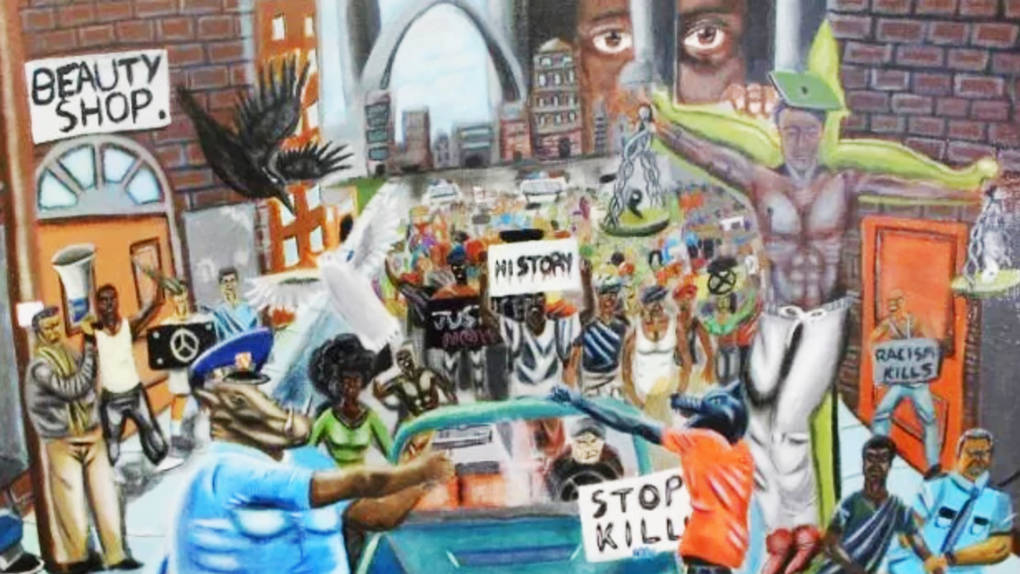
"caption": "Bay Area police unions joined law enforcement groups around the country Thursday calling on House Speaker Paul Ryan to remove this painting, \"Untitled #1,\" by high school student David Pulphus, from the U.S. Capitol complex.",
"description": "Bay Area police unions joined law enforcement groups around the country Thursday calling on House Speaker Paul Ryan to remove this painting, \"Untitled #1 by high school student David Pulphus from the U.S. Capitol complex.",
"title": "pig-pic",
"credit": "Photo: Courtesy of David Pulphus",
"status": "inherit",
"isLoading": false,
"fetchFailed": false
},
"arts_12713991": {
"type": "attachments",
"id": "arts_12713991",
"meta": {
"index": "attachments_1716263798",
"site": "arts",
"id": "12713991",
"found": true
},
"parent": 12713803,
"imgSizes": {
"small": {
"file": "https://ww2.kqed.org/app/uploads/sites/2/2017/02/Joe-Minter_CamelCROp-520x319.jpg",
"width": 520,
"mimeType": "image/jpeg",
"height": 319
},
"twentyfourteen-full-width": {
"file": "https://ww2.kqed.org/app/uploads/sites/2/2017/02/Joe-Minter_CamelCROp-1038x576.jpg",
"width": 1038,
"mimeType": "image/jpeg",
"height": 576
},
"thumbnail": {
"file": "https://ww2.kqed.org/app/uploads/sites/2/2017/02/Joe-Minter_CamelCROp-160x98.jpg",
"width": 160,
"mimeType": "image/jpeg",
"height": 98
},
"fd-sm": {
"file": "https://ww2.kqed.org/app/uploads/sites/2/2017/02/Joe-Minter_CamelCROp-960x588.jpg",
"width": 960,
"mimeType": "image/jpeg",
"height": 588
},
"post-thumbnail": {
"file": "https://ww2.kqed.org/app/uploads/sites/2/2017/02/Joe-Minter_CamelCROp-672x372.jpg",
"width": 672,
"mimeType": "image/jpeg",
"height": 372
},
"xsmall": {
"file": "https://ww2.kqed.org/app/uploads/sites/2/2017/02/Joe-Minter_CamelCROp-375x230.jpg",
"width": 375,
"mimeType": "image/jpeg",
"height": 230
},
"kqedFullSize": {
"file": "https://ww2.kqed.org/app/uploads/sites/2/2017/02/Joe-Minter_CamelCROp.jpg",
"width": 1914,
"height": 1173
},
"large": {
"file": "https://ww2.kqed.org/app/uploads/sites/2/2017/02/Joe-Minter_CamelCROp-1020x625.jpg",
"width": 1020,
"mimeType": "image/jpeg",
"height": 625
},
"xlarge": {
"file": "https://ww2.kqed.org/app/uploads/sites/2/2017/02/Joe-Minter_CamelCROp-1180x723.jpg",
"width": 1180,
"mimeType": "image/jpeg",
"height": 723
},
"guest-author-50": {
"file": "https://ww2.kqed.org/app/uploads/sites/2/2017/02/Joe-Minter_CamelCROp-50x50.jpg",
"width": 50,
"mimeType": "image/jpeg",
"height": 50
},
"guest-author-96": {
"file": "https://ww2.kqed.org/app/uploads/sites/2/2017/02/Joe-Minter_CamelCROp-96x96.jpg",
"width": 96,
"mimeType": "image/jpeg",
"height": 96
},
"medium": {
"file": "https://ww2.kqed.org/app/uploads/sites/2/2017/02/Joe-Minter_CamelCROp-800x490.jpg",
"width": 800,
"mimeType": "image/jpeg",
"height": 490
},
"guest-author-64": {
"file": "https://ww2.kqed.org/app/uploads/sites/2/2017/02/Joe-Minter_CamelCROp-64x64.jpg",
"width": 64,
"mimeType": "image/jpeg",
"height": 64
},
"guest-author-32": {
"file": "https://ww2.kqed.org/app/uploads/sites/2/2017/02/Joe-Minter_CamelCROp-32x32.jpg",
"width": 32,
"mimeType": "image/jpeg",
"height": 32
},
"fd-med": {
"file": "https://ww2.kqed.org/app/uploads/sites/2/2017/02/Joe-Minter_CamelCROp-1180x723.jpg",
"width": 1180,
"mimeType": "image/jpeg",
"height": 723
},
"detail": {
"file": "https://ww2.kqed.org/app/uploads/sites/2/2017/02/Joe-Minter_CamelCROp-150x150.jpg",
"width": 150,
"mimeType": "image/jpeg",
"height": 150
},
"medium_large": {
"file": "https://ww2.kqed.org/app/uploads/sites/2/2017/02/Joe-Minter_CamelCROp-768x471.jpg",
"width": 768,
"mimeType": "image/jpeg",
"height": 471
},
"guest-author-128": {
"file": "https://ww2.kqed.org/app/uploads/sites/2/2017/02/Joe-Minter_CamelCROp-128x128.jpg",
"width": 128,
"mimeType": "image/jpeg",
"height": 128
},
"xxsmall": {
"file": "https://ww2.kqed.org/app/uploads/sites/2/2017/02/Joe-Minter_CamelCROp-240x147.jpg",
"width": 240,
"mimeType": "image/jpeg",
"height": 147
}
},
"publishDate": 1486081978,
"modified": 1486089717,
"caption": "Joe Minter, 'Camel at the Watering Hole' (1995).",
"description": "\"Camel\" by Joe Minter",
"title": "Joe Minter_CamelCROp",
"credit": "Courtesy of Fine Arts Museums of San Francisco",
"status": "inherit",
"isLoading": false,
"fetchFailed": false
},
"arts_12713407": {
"type": "attachments",
"id": "arts_12713407",
"meta": {
"index": "attachments_1716263798",
"site": "arts",
"id": "12713407",
"found": true
},
"parent": 12713026,
"imgSizes": {
"small": {
"file": "https://ww2.kqed.org/app/uploads/sites/2/2017/02/Beyonce-pregnant-e1486070974814-520x293.jpg",
"width": 520,
"mimeType": "image/jpeg",
"height": 293
},
"twentyfourteen-full-width": {
"file": "https://ww2.kqed.org/app/uploads/sites/2/2017/02/Beyonce-pregnant-e1486070974814-1038x576.jpg",
"width": 1038,
"mimeType": "image/jpeg",
"height": 576
},
"thumbnail": {
"file": "https://ww2.kqed.org/app/uploads/sites/2/2017/02/Beyonce-pregnant-e1486070974814-160x90.jpg",
"width": 160,
"mimeType": "image/jpeg",
"height": 90
},
"fd-sm": {
"file": "https://ww2.kqed.org/app/uploads/sites/2/2017/02/Beyonce-pregnant-e1486070974814-960x540.jpg",
"width": 960,
"mimeType": "image/jpeg",
"height": 540
},
"post-thumbnail": {
"file": "https://ww2.kqed.org/app/uploads/sites/2/2017/02/Beyonce-pregnant-e1486070974814-672x372.jpg",
"width": 672,
"mimeType": "image/jpeg",
"height": 372
},
"xsmall": {
"file": "https://ww2.kqed.org/app/uploads/sites/2/2017/02/Beyonce-pregnant-e1486070974814-375x211.jpg",
"width": 375,
"mimeType": "image/jpeg",
"height": 211
},
"kqedFullSize": {
"file": "https://ww2.kqed.org/app/uploads/sites/2/2017/02/Beyonce-pregnant-e1486070974814.jpg",
"width": 1080,
"height": 608
},
"large": {
"file": "https://ww2.kqed.org/app/uploads/sites/2/2017/02/Beyonce-pregnant-e1486070974814-1020x574.jpg",
"width": 1020,
"mimeType": "image/jpeg",
"height": 574
},
"guest-author-50": {
"file": "https://ww2.kqed.org/app/uploads/sites/2/2017/02/Beyonce-pregnant-e1486070974814-50x50.jpg",
"width": 50,
"mimeType": "image/jpeg",
"height": 50
},
"guest-author-96": {
"file": "https://ww2.kqed.org/app/uploads/sites/2/2017/02/Beyonce-pregnant-e1486070974814-96x96.jpg",
"width": 96,
"mimeType": "image/jpeg",
"height": 96
},
"medium": {
"file": "https://ww2.kqed.org/app/uploads/sites/2/2017/02/Beyonce-pregnant-e1486070974814-800x450.jpg",
"width": 800,
"mimeType": "image/jpeg",
"height": 450
},
"guest-author-64": {
"file": "https://ww2.kqed.org/app/uploads/sites/2/2017/02/Beyonce-pregnant-e1486070974814-64x64.jpg",
"width": 64,
"mimeType": "image/jpeg",
"height": 64
},
"guest-author-32": {
"file": "https://ww2.kqed.org/app/uploads/sites/2/2017/02/Beyonce-pregnant-e1486070974814-32x32.jpg",
"width": 32,
"mimeType": "image/jpeg",
"height": 32
},
"detail": {
"file": "https://ww2.kqed.org/app/uploads/sites/2/2017/02/Beyonce-pregnant-e1486070974814-150x150.jpg",
"width": 150,
"mimeType": "image/jpeg",
"height": 150
},
"medium_large": {
"file": "https://ww2.kqed.org/app/uploads/sites/2/2017/02/Beyonce-pregnant-e1486070974814-768x432.jpg",
"width": 768,
"mimeType": "image/jpeg",
"height": 432
},
"guest-author-128": {
"file": "https://ww2.kqed.org/app/uploads/sites/2/2017/02/Beyonce-pregnant-e1486070974814-128x128.jpg",
"width": 128,
"mimeType": "image/jpeg",
"height": 128
},
"xxsmall": {
"file": "https://ww2.kqed.org/app/uploads/sites/2/2017/02/Beyonce-pregnant-e1486070974814-240x135.jpg",
"width": 240,
"mimeType": "image/jpeg",
"height": 135
}
},
"publishDate": 1486070846,
"modified": 1486070950,
"caption": "Beyoncé pregnancy announcement on Instagram ",
"description": "Beyoncé pregnancy announcement on Instagram ",
"title": "Beyonce pregnant",
"credit": "Courtesy of the artist",
"status": "inherit",
"isLoading": false,
"fetchFailed": false
},
"arts_12709732": {
"type": "attachments",
"id": "arts_12709732",
"meta": {
"index": "attachments_1716263798",
"site": "arts",
"id": "12709732",
"found": true
},
"parent": 12708273,
"imgSizes": {
"small": {
"file": "https://ww2.kqed.org/app/uploads/sites/2/2017/02/TaravatFreshness-520x292.jpg",
"width": 520,
"mimeType": "image/jpeg",
"height": 292
},
"twentyfourteen-full-width": {
"file": "https://ww2.kqed.org/app/uploads/sites/2/2017/02/TaravatFreshness-1038x576.jpg",
"width": 1038,
"mimeType": "image/jpeg",
"height": 576
},
"thumbnail": {
"file": "https://ww2.kqed.org/app/uploads/sites/2/2017/02/TaravatFreshness-160x90.jpg",
"width": 160,
"mimeType": "image/jpeg",
"height": 90
},
"fd-sm": {
"file": "https://ww2.kqed.org/app/uploads/sites/2/2017/02/TaravatFreshness-960x540.jpg",
"width": 960,
"mimeType": "image/jpeg",
"height": 540
},
"post-thumbnail": {
"file": "https://ww2.kqed.org/app/uploads/sites/2/2017/02/TaravatFreshness-672x372.jpg",
"width": 672,
"mimeType": "image/jpeg",
"height": 372
},
"xsmall": {
"file": "https://ww2.kqed.org/app/uploads/sites/2/2017/02/TaravatFreshness-375x211.jpg",
"width": 375,
"mimeType": "image/jpeg",
"height": 211
},
"kqedFullSize": {
"file": "https://ww2.kqed.org/app/uploads/sites/2/2017/02/TaravatFreshness.jpg",
"width": 1300,
"height": 731
},
"large": {
"file": "https://ww2.kqed.org/app/uploads/sites/2/2017/02/TaravatFreshness-1020x574.jpg",
"width": 1020,
"mimeType": "image/jpeg",
"height": 574
},
"xlarge": {
"file": "https://ww2.kqed.org/app/uploads/sites/2/2017/02/TaravatFreshness-1180x664.jpg",
"width": 1180,
"mimeType": "image/jpeg",
"height": 664
},
"guest-author-50": {
"file": "https://ww2.kqed.org/app/uploads/sites/2/2017/02/TaravatFreshness-50x50.jpg",
"width": 50,
"mimeType": "image/jpeg",
"height": 50
},
"guest-author-96": {
"file": "https://ww2.kqed.org/app/uploads/sites/2/2017/02/TaravatFreshness-96x96.jpg",
"width": 96,
"mimeType": "image/jpeg",
"height": 96
},
"medium": {
"file": "https://ww2.kqed.org/app/uploads/sites/2/2017/02/TaravatFreshness-800x450.jpg",
"width": 800,
"mimeType": "image/jpeg",
"height": 450
},
"guest-author-64": {
"file": "https://ww2.kqed.org/app/uploads/sites/2/2017/02/TaravatFreshness-64x64.jpg",
"width": 64,
"mimeType": "image/jpeg",
"height": 64
},
"guest-author-32": {
"file": "https://ww2.kqed.org/app/uploads/sites/2/2017/02/TaravatFreshness-32x32.jpg",
"width": 32,
"mimeType": "image/jpeg",
"height": 32
},
"fd-med": {
"file": "https://ww2.kqed.org/app/uploads/sites/2/2017/02/TaravatFreshness-1180x664.jpg",
"width": 1180,
"mimeType": "image/jpeg",
"height": 664
},
"detail": {
"file": "https://ww2.kqed.org/app/uploads/sites/2/2017/02/TaravatFreshness-150x150.jpg",
"width": 150,
"mimeType": "image/jpeg",
"height": 150
},
"medium_large": {
"file": "https://ww2.kqed.org/app/uploads/sites/2/2017/02/TaravatFreshness-768x432.jpg",
"width": 768,
"mimeType": "image/jpeg",
"height": 432
},
"guest-author-128": {
"file": "https://ww2.kqed.org/app/uploads/sites/2/2017/02/TaravatFreshness-128x128.jpg",
"width": 128,
"mimeType": "image/jpeg",
"height": 128
},
"xxsmall": {
"file": "https://ww2.kqed.org/app/uploads/sites/2/2017/02/TaravatFreshness-240x135.jpg",
"width": 240,
"mimeType": "image/jpeg",
"height": 135
}
},
"publishDate": 1486002023,
"modified": 1486002667,
"caption": "'طراوت (Taravat/Freshness),' 2017, emerald neon, 32 x 12 x 2 inches.",
"description": "'طراوت (Taravat/Freshness),' 2017, emerald neon, 32 x 12 x 2 inches.",
"title": "Taravat+(Freshness)",
"credit": " Taravat Talepasand",
"status": "inherit",
"isLoading": false,
"fetchFailed": false
},
"arts_12709311": {
"type": "attachments",
"id": "arts_12709311",
"meta": {
"index": "attachments_1716263798",
"site": "arts",
"id": "12709311",
"found": true
},
"parent": 12709122,
"imgSizes": {
"small": {
"file": "https://ww2.kqed.org/app/uploads/sites/2/2017/02/RS23973_02_john_trudell_speaking-001-qut-520x293.jpg",
"width": 520,
"mimeType": "image/jpeg",
"height": 293
},
"thumbnail": {
"file": "https://ww2.kqed.org/app/uploads/sites/2/2017/02/RS23973_02_john_trudell_speaking-001-qut-160x90.jpg",
"width": 160,
"mimeType": "image/jpeg",
"height": 90
},
"xsmall": {
"file": "https://ww2.kqed.org/app/uploads/sites/2/2017/02/RS23973_02_john_trudell_speaking-001-qut-375x211.jpg",
"width": 375,
"mimeType": "image/jpeg",
"height": 211
},
"kqedFullSize": {
"file": "https://ww2.kqed.org/app/uploads/sites/2/2017/02/RS23973_02_john_trudell_speaking-001-qut.jpg",
"width": 640,
"height": 360
},
"guest-author-50": {
"file": "https://ww2.kqed.org/app/uploads/sites/2/2017/02/RS23973_02_john_trudell_speaking-001-qut-50x50.jpg",
"width": 50,
"mimeType": "image/jpeg",
"height": 50
},
"guest-author-96": {
"file": "https://ww2.kqed.org/app/uploads/sites/2/2017/02/RS23973_02_john_trudell_speaking-001-qut-96x96.jpg",
"width": 96,
"mimeType": "image/jpeg",
"height": 96
},
"guest-author-64": {
"file": "https://ww2.kqed.org/app/uploads/sites/2/2017/02/RS23973_02_john_trudell_speaking-001-qut-64x64.jpg",
"width": 64,
"mimeType": "image/jpeg",
"height": 64
},
"detail": {
"file": "https://ww2.kqed.org/app/uploads/sites/2/2017/02/RS23973_02_john_trudell_speaking-001-qut-150x150.jpg",
"width": 150,
"mimeType": "image/jpeg",
"height": 150
},
"guest-author-32": {
"file": "https://ww2.kqed.org/app/uploads/sites/2/2017/02/RS23973_02_john_trudell_speaking-001-qut-32x32.jpg",
"width": 32,
"mimeType": "image/jpeg",
"height": 32
},
"guest-author-128": {
"file": "https://ww2.kqed.org/app/uploads/sites/2/2017/02/RS23973_02_john_trudell_speaking-001-qut-128x128.jpg",
"width": 128,
"mimeType": "image/jpeg",
"height": 128
},
"xxsmall": {
"file": "https://ww2.kqed.org/app/uploads/sites/2/2017/02/RS23973_02_john_trudell_speaking-001-qut-240x135.jpg",
"width": 240,
"mimeType": "image/jpeg",
"height": 135
}
},
"publishDate": 1485993096,
"modified": 1485993113,
"caption": "John Trudell, speaking at a press conference at Alcatraz during the occupation of 1969-1971. This photograph and others by Ilka Hartmann are on display as part of Cement Prairie, an exhibition about Native Americans in the South Bay.",
"description": "John Trudell, speaking at a press conference at Alcatraz during the occupation of 1969-1971. This photograph and others by Ilka Hartmann are on display as part of Cement Prairie, an exhibition about Native Americans in the South Bay.",
"title": "RS23973_02_john_trudell_speaking-001-qut",
"credit": "Photo: Courtesy of Ilka Hartmann",
"status": "inherit",
"isLoading": false,
"fetchFailed": false
},
"arts_12709505": {
"type": "attachments",
"id": "arts_12709505",
"meta": {
"index": "attachments_1716263798",
"site": "arts",
"id": "12709505",
"found": true
},
"parent": 12709312,
"imgSizes": {
"small": {
"file": "https://ww2.kqed.org/app/uploads/sites/2/2017/02/Measured_-4-Part-Horizon_COVER-520x293.jpg",
"width": 520,
"mimeType": "image/jpeg",
"height": 293
},
"twentyfourteen-full-width": {
"file": "https://ww2.kqed.org/app/uploads/sites/2/2017/02/Measured_-4-Part-Horizon_COVER-1038x576.jpg",
"width": 1038,
"mimeType": "image/jpeg",
"height": 576
},
"thumbnail": {
"file": "https://ww2.kqed.org/app/uploads/sites/2/2017/02/Measured_-4-Part-Horizon_COVER-160x90.jpg",
"width": 160,
"mimeType": "image/jpeg",
"height": 90
},
"fd-sm": {
"file": "https://ww2.kqed.org/app/uploads/sites/2/2017/02/Measured_-4-Part-Horizon_COVER-960x540.jpg",
"width": 960,
"mimeType": "image/jpeg",
"height": 540
},
"post-thumbnail": {
"file": "https://ww2.kqed.org/app/uploads/sites/2/2017/02/Measured_-4-Part-Horizon_COVER-672x372.jpg",
"width": 672,
"mimeType": "image/jpeg",
"height": 372
},
"xsmall": {
"file": "https://ww2.kqed.org/app/uploads/sites/2/2017/02/Measured_-4-Part-Horizon_COVER-375x211.jpg",
"width": 375,
"mimeType": "image/jpeg",
"height": 211
},
"kqedFullSize": {
"file": "https://ww2.kqed.org/app/uploads/sites/2/2017/02/Measured_-4-Part-Horizon_COVER.jpg",
"width": 1200,
"height": 675
},
"large": {
"file": "https://ww2.kqed.org/app/uploads/sites/2/2017/02/Measured_-4-Part-Horizon_COVER-1020x574.jpg",
"width": 1020,
"mimeType": "image/jpeg",
"height": 574
},
"xlarge": {
"file": "https://ww2.kqed.org/app/uploads/sites/2/2017/02/Measured_-4-Part-Horizon_COVER-1180x664.jpg",
"width": 1180,
"mimeType": "image/jpeg",
"height": 664
},
"guest-author-50": {
"file": "https://ww2.kqed.org/app/uploads/sites/2/2017/02/Measured_-4-Part-Horizon_COVER-50x50.jpg",
"width": 50,
"mimeType": "image/jpeg",
"height": 50
},
"guest-author-96": {
"file": "https://ww2.kqed.org/app/uploads/sites/2/2017/02/Measured_-4-Part-Horizon_COVER-96x96.jpg",
"width": 96,
"mimeType": "image/jpeg",
"height": 96
},
"medium": {
"file": "https://ww2.kqed.org/app/uploads/sites/2/2017/02/Measured_-4-Part-Horizon_COVER-800x450.jpg",
"width": 800,
"mimeType": "image/jpeg",
"height": 450
},
"guest-author-64": {
"file": "https://ww2.kqed.org/app/uploads/sites/2/2017/02/Measured_-4-Part-Horizon_COVER-64x64.jpg",
"width": 64,
"mimeType": "image/jpeg",
"height": 64
},
"guest-author-32": {
"file": "https://ww2.kqed.org/app/uploads/sites/2/2017/02/Measured_-4-Part-Horizon_COVER-32x32.jpg",
"width": 32,
"mimeType": "image/jpeg",
"height": 32
},
"fd-med": {
"file": "https://ww2.kqed.org/app/uploads/sites/2/2017/02/Measured_-4-Part-Horizon_COVER-1180x664.jpg",
"width": 1180,
"mimeType": "image/jpeg",
"height": 664
},
"detail": {
"file": "https://ww2.kqed.org/app/uploads/sites/2/2017/02/Measured_-4-Part-Horizon_COVER-150x150.jpg",
"width": 150,
"mimeType": "image/jpeg",
"height": 150
},
"medium_large": {
"file": "https://ww2.kqed.org/app/uploads/sites/2/2017/02/Measured_-4-Part-Horizon_COVER-768x432.jpg",
"width": 768,
"mimeType": "image/jpeg",
"height": 432
},
"guest-author-128": {
"file": "https://ww2.kqed.org/app/uploads/sites/2/2017/02/Measured_-4-Part-Horizon_COVER-128x128.jpg",
"width": 128,
"mimeType": "image/jpeg",
"height": 128
},
"xxsmall": {
"file": "https://ww2.kqed.org/app/uploads/sites/2/2017/02/Measured_-4-Part-Horizon_COVER-240x135.jpg",
"width": 240,
"mimeType": "image/jpeg",
"height": 135
}
},
"publishDate": 1485995689,
"modified": 1485997706,
"caption": "John Fraser, '(Measured) Four-Part Horizon,' 2016.",
"description": "John Fraser, '(Measured) Four-Part Horizon,' 2016.",
"title": "_Measured_ 4 Part Horizon_COVER",
"credit": "Courtesy of Traywick Contemporary",
"status": "inherit",
"isLoading": false,
"fetchFailed": false
}
},
"audioPlayerReducer": {
"postId": "stream_live",
"isPaused": true,
"isPlaying": false,
"pfsActive": false,
"pledgeModalIsOpen": true,
"playerDrawerIsOpen": false,
"liveAudioPlayStartedAt": 0,
"liveAudioPlayContext": ""
},
"authorsReducer": {
"byline_arts_12713026": {
"type": "authors",
"id": "byline_arts_12713026",
"meta": {
"override": true
},
"slug": "byline_arts_12713026",
"name": "Associated Press",
"isLoading": false
},
"cmusiker": {
"type": "authors",
"id": "32",
"meta": {
"index": "authors_1716337520",
"id": "32",
"found": true
},
"name": "Cy Musiker",
"firstName": "Cy",
"lastName": "Musiker",
"slug": "cmusiker",
"email": "cmusiker@kqed.org",
"display_author_email": false,
"staff_mastheads": [],
"title": "KQED Contributor",
"bio": "Cy Musiker is a former co-host of The Do List and a former reporter covering the arts for KQED News and The California Report. He loves live performance, especially great theater, jazz, roots music, anything by Mahler. Cy has an MJ from UC Berkeley's School of Journalism, and got his BA from Hampshire College. His work has been recognized by the Society for Professional Journalists with their Sigma Delta Chi Award for Public Service in Journalism. When he can, Cy likes to swim in Tomales Bay, run with his dog in the East Bay Hills, and hike the Sierra.",
"avatar": "https://secure.gravatar.com/avatar/05eaba5c5696ce8f062e4ea2df428a43?s=600&d=blank&r=g",
"twitter": null,
"facebook": null,
"instagram": null,
"linkedin": null,
"sites": [
{
"site": "arts",
"roles": [
"Contributor",
"subscriber"
]
},
{
"site": "news",
"roles": [
"author"
]
},
{
"site": "bayareabites",
"roles": [
"contributor"
]
}
],
"headData": {
"title": "Cy Musiker | KQED",
"description": "KQED Contributor",
"ogImgSrc": "https://secure.gravatar.com/avatar/05eaba5c5696ce8f062e4ea2df428a43?s=600&d=blank&r=g",
"twImgSrc": "https://secure.gravatar.com/avatar/05eaba5c5696ce8f062e4ea2df428a43?s=600&d=blank&r=g"
},
"isLoading": false,
"link": "/author/cmusiker"
},
"shotchkiss": {
"type": "authors",
"id": "61",
"meta": {
"index": "authors_1716337520",
"id": "61",
"found": true
},
"name": "Sarah Hotchkiss",
"firstName": "Sarah",
"lastName": "Hotchkiss",
"slug": "shotchkiss",
"email": "shotchkiss@kqed.org",
"display_author_email": true,
"staff_mastheads": [
"arts"
],
"title": "Senior Editor",
"bio": "Sarah Hotchkiss is a San Francisco \u003ca href=\"http://www.sarahhotchkiss.com\">artist\u003c/a> and arts writer. In 2019, she received the Dorothea & Leo Rabkin Foundation grant for visual art journalism and in 2020 she received a Society of Professional Journalists, Northern California award for excellence in arts and culture reporting.",
"avatar": "https://secure.gravatar.com/avatar/bc662df144b3d27fd8b1b6f1c2a420d34e91e53154d411bb7ad353cc8b6cea8d?s=600&d=blank&r=g",
"twitter": null,
"bluesky": null,
"facebook": null,
"instagram": null,
"linkedin": null,
"sites": [
{
"site": "",
"roles": [
"editor"
]
},
{
"site": "arts",
"roles": [
"Contributor",
"administrator"
]
},
{
"site": "artschool",
"roles": [
"administrator"
]
},
{
"site": "news",
"roles": [
"editor"
]
},
{
"site": "pop",
"roles": [
"administrator"
]
},
{
"site": "bayareabites",
"roles": [
"editor"
]
},
{
"site": "spark",
"roles": [
"editor"
]
},
{
"site": "checkplease",
"roles": [
"editor"
]
}
],
"headData": {
"title": "Sarah Hotchkiss | KQED",
"description": "Senior Editor",
"ogImgSrc": "https://secure.gravatar.com/avatar/bc662df144b3d27fd8b1b6f1c2a420d34e91e53154d411bb7ad353cc8b6cea8d?s=600&d=blank&r=g",
"twImgSrc": "https://secure.gravatar.com/avatar/bc662df144b3d27fd8b1b6f1c2a420d34e91e53154d411bb7ad353cc8b6cea8d?s=600&d=blank&r=g"
},
"isLoading": false,
"link": "/author/shotchkiss"
},
"kjones": {
"type": "authors",
"id": "93",
"meta": {
"index": "authors_1716337520",
"id": "93",
"found": true
},
"name": "Kevin L. Jones",
"firstName": "Kevin",
"lastName": "Jones",
"slug": "kjones",
"email": "kjones@kqed.org",
"display_author_email": false,
"staff_mastheads": [],
"title": null,
"bio": null,
"avatar": "https://secure.gravatar.com/avatar/12c65b5633ed39d0a59bb7f497eff645?s=600&d=blank&r=g",
"twitter": null,
"facebook": null,
"instagram": null,
"linkedin": null,
"sites": [
{
"site": "arts",
"roles": [
"subscriber"
]
},
{
"site": "styleguide",
"roles": [
"contributor"
]
},
{
"site": "artschool",
"roles": [
"subscriber"
]
},
{
"site": "news",
"roles": [
"subscriber"
]
},
{
"site": "pop",
"roles": [
"subscriber"
]
}
],
"headData": {
"title": "Kevin L. Jones | KQED",
"description": null,
"ogImgSrc": "https://secure.gravatar.com/avatar/12c65b5633ed39d0a59bb7f497eff645?s=600&d=blank&r=g",
"twImgSrc": "https://secure.gravatar.com/avatar/12c65b5633ed39d0a59bb7f497eff645?s=600&d=blank&r=g"
},
"isLoading": false,
"link": "/author/kjones"
},
"gmeline": {
"type": "authors",
"id": "185",
"meta": {
"index": "authors_1716337520",
"id": "185",
"found": true
},
"name": "Gabe Meline",
"firstName": "Gabe",
"lastName": "Meline",
"slug": "gmeline",
"email": "gmeline@kqed.org",
"display_author_email": true,
"staff_mastheads": [
"arts"
],
"title": "Senior Editor, KQED Arts & Culture",
"bio": "Gabe Meline entered journalism at age 15 making photocopied zines, and has since earned awards from the Edward R. Murrow Awards, the Society for Professional Journalists, the Online Journalism Awards, the Association of Alternative Newsweeklies and the California Newspaper Publishers Association. Prior to KQED, he was the editor of the \u003cem>North Bay Bohemian\u003c/em> and a touring musician. He lives with his wife and daughter in his hometown of Santa Rosa, CA.",
"avatar": "https://secure.gravatar.com/avatar/5bebe57be0d8bc2dd318934feb47299e2d2d10cba28d09d8d7afb389a2ce2bdd?s=600&d=blank&r=g",
"twitter": null,
"bluesky": null,
"facebook": null,
"instagram": null,
"linkedin": null,
"sites": [
{
"site": "",
"roles": [
"editor"
]
},
{
"site": "arts",
"roles": [
"administrator"
]
},
{
"site": "artschool",
"roles": [
"editor"
]
},
{
"site": "news",
"roles": [
"author"
]
},
{
"site": "pop",
"roles": [
"editor"
]
},
{
"site": "bayareabites",
"roles": [
"editor"
]
},
{
"site": "food",
"roles": [
"editor"
]
},
{
"site": "forum",
"roles": [
"administrator"
]
},
{
"site": "liveblog",
"roles": [
"editor"
]
},
{
"site": "hiphop",
"roles": [
"editor"
]
}
],
"headData": {
"title": "Gabe Meline | KQED",
"description": "Senior Editor, KQED Arts & Culture",
"ogImgSrc": "https://secure.gravatar.com/avatar/5bebe57be0d8bc2dd318934feb47299e2d2d10cba28d09d8d7afb389a2ce2bdd?s=600&d=blank&r=g",
"twImgSrc": "https://secure.gravatar.com/avatar/5bebe57be0d8bc2dd318934feb47299e2d2d10cba28d09d8d7afb389a2ce2bdd?s=600&d=blank&r=g"
},
"isLoading": false,
"link": "/author/gmeline"
},
"rachael-myrow": {
"type": "authors",
"id": "251",
"meta": {
"index": "authors_1716337520",
"id": "251",
"found": true
},
"name": "Rachael Myrow",
"firstName": "Rachael",
"lastName": "Myrow",
"slug": "rachael-myrow",
"email": "rmyrow@kqed.org",
"display_author_email": true,
"staff_mastheads": [
"news"
],
"title": "Senior Editor of KQED's Silicon Valley News Desk",
"bio": "• I write and edit stories about how Silicon Valley power and policies shape everyday life in California. I’m also passionate about making Bay Area history and culture more accessible to a broad public. • I’ve been a journalist for most of my life, starting in high school with The Franklin Press in Los Angeles, where I grew up. While earning my first degree in English at UC Berkeley, I got my start in public radio at KALX-FM. After completing a second degree in journalism at Cal, I landed my first professional job at Marketplace, then moved on to KPCC (now LAist), and then KQED, where I hosted The California Report for more than seven years. • My reporting has appeared on NPR, The World, WBUR’s \u003ci>Here & Now\u003c/i>, and the BBC. I also guest host for KQED’s \u003ci>Forum\u003c/i>, as well as the Commonwealth Club in San Francisco. • I speak periodically on media, democracy and technology issues, and do voiceover work for documentaries and educational video projects. • Outside of the studio, you'll find me hiking Bay Area trails and whipping up Insta-ready meals in my kitchen. • I do not accept gifts, money, or favors from anyone connected to my reporting, I don't pay people for information, and I do not support or donate to political causes. • I strive to treat the people I report on with fairness, honesty, and respect. I also recognize there are often multiple sides to a story and work to verify information through multiple sources and documentation. If I get something wrong, I correct it.",
"avatar": "https://secure.gravatar.com/avatar/3ed8a3c5f26025e4a805ba634cda8cd764906b97438a6d9ce216b044e340da4e?s=600&d=blank&r=g",
"twitter": "rachaelmyrow",
"bluesky": null,
"facebook": null,
"instagram": null,
"linkedin": "https://www.linkedin.com/in/rachaelmyrow/",
"sites": [
{
"site": "arts",
"roles": [
"administrator"
]
},
{
"site": "news",
"roles": [
"edit_others_posts",
"editor"
]
},
{
"site": "futureofyou",
"roles": [
"editor"
]
},
{
"site": "bayareabites",
"roles": [
"editor"
]
},
{
"site": "stateofhealth",
"roles": [
"editor"
]
},
{
"site": "science",
"roles": [
"editor"
]
},
{
"site": "food",
"roles": [
"editor"
]
},
{
"site": "forum",
"roles": [
"editor"
]
},
{
"site": "liveblog",
"roles": [
"author"
]
}
],
"headData": {
"title": "Rachael Myrow | KQED",
"description": "Senior Editor of KQED's Silicon Valley News Desk",
"ogImgSrc": "https://secure.gravatar.com/avatar/3ed8a3c5f26025e4a805ba634cda8cd764906b97438a6d9ce216b044e340da4e?s=600&d=blank&r=g",
"twImgSrc": "https://secure.gravatar.com/avatar/3ed8a3c5f26025e4a805ba634cda8cd764906b97438a6d9ce216b044e340da4e?s=600&d=blank&r=g"
},
"isLoading": false,
"link": "/author/rachael-myrow"
},
"kwhalen": {
"type": "authors",
"id": "3248",
"meta": {
"index": "authors_1716337520",
"id": "3248",
"found": true
},
"name": "Kelly Whalen",
"firstName": "Kelly",
"lastName": "Whalen",
"slug": "kwhalen",
"email": "kwhalen@kqed.org",
"display_author_email": false,
"staff_mastheads": [],
"title": "Senior Video Producer",
"bio": "Kelly Whalen is a filmmaker and educator who directs and produces social justice documentaries and award-winning arts and culture web series. She is the creator of KQED Arts’ three-time Webby Award-winning YouTube series \u003cem>If Cities Could Dance\u003c/em>, featuring dancers across the country representing their cities’ signature moves, and the director of \u003cem>When the Waters Get Deep\u003c/em>, a documentary about Oakland-based artists SOL Development and their work toward healing their communities’ trauma from gun violence.",
"avatar": "https://secure.gravatar.com/avatar/1a2b57e8a13abdcfc3d4966d9c0e1512?s=600&d=blank&r=g",
"twitter": "kellyfilmmaker",
"facebook": null,
"instagram": null,
"linkedin": null,
"sites": [
{
"site": "arts",
"roles": [
"subscriber"
]
}
],
"headData": {
"title": "Kelly Whalen | KQED",
"description": "Senior Video Producer",
"ogImgSrc": "https://secure.gravatar.com/avatar/1a2b57e8a13abdcfc3d4966d9c0e1512?s=600&d=blank&r=g",
"twImgSrc": "https://secure.gravatar.com/avatar/1a2b57e8a13abdcfc3d4966d9c0e1512?s=600&d=blank&r=g"
},
"isLoading": false,
"link": "/author/kwhalen"
},
"crnoveno": {
"type": "authors",
"id": "11208",
"meta": {
"index": "authors_1716337520",
"id": "11208",
"found": true
},
"name": "Creo Noveno",
"firstName": "Creo",
"lastName": "Noveno",
"slug": "crnoveno",
"email": "creonoveno@gmail.com",
"display_author_email": false,
"staff_mastheads": [],
"title": "KQED Contributor",
"bio": null,
"avatar": "https://secure.gravatar.com/avatar/0df6606b8e36036309fd287052246d01?s=600&d=blank&r=g",
"twitter": null,
"facebook": null,
"instagram": null,
"linkedin": null,
"sites": [
{
"site": "arts",
"roles": [
"subscriber"
]
},
{
"site": "pop",
"roles": [
"contributor"
]
}
],
"headData": {
"title": "Creo Noveno | KQED",
"description": "KQED Contributor",
"ogImgSrc": "https://secure.gravatar.com/avatar/0df6606b8e36036309fd287052246d01?s=600&d=blank&r=g",
"twImgSrc": "https://secure.gravatar.com/avatar/0df6606b8e36036309fd287052246d01?s=600&d=blank&r=g"
},
"isLoading": false,
"link": "/author/crnoveno"
}
},
"pagesReducer": {
"arts_category_visualarts": {
"type": "terms",
"id": "arts_70",
"meta": {
"index": "terms_1716263798",
"site": "arts",
"id": "70",
"score": 14.407251
},
"featImg": null,
"name": "Visual Arts",
"description": null,
"taxonomy": "category",
"headData": {
"twImgId": null,
"twTitle": null,
"ogTitle": null,
"ogImgId": null,
"twDescription": null,
"description": null,
"title": "Visual Arts Archives | KQED Arts",
"ogDescription": null
},
"ttid": 71,
"slug": "visualarts",
"isLoading": false,
"title": "Visual Arts",
"pageMeta": {
"site": "arts",
"WpPageTemplate": "page-topic-editorial",
"currentPage": 109
},
"blocks": [
{
"blockName": "kqed/post-list",
"attrs": {
"layout": "cardArticle2",
"query": "posts/arts?category=visualarts",
"seeMore": false,
"paginated": true,
"page": 109
}
},
{
"blockName": "kqed/ad"
}
]
}
},
"pfsSessionReducer": {},
"postsReducer": {
"stream_live": {
"type": "live",
"id": "stream_live",
"audioUrl": "https://streams.kqed.org/kqedradio",
"title": "Live Stream",
"excerpt": "Live Stream information currently unavailable.",
"link": "/radio",
"featImg": "",
"label": {
"name": "KQED Live",
"link": "/"
}
},
"stream_kqedNewscast": {
"type": "posts",
"id": "stream_kqedNewscast",
"audioUrl": "https://www.kqed.org/.stream/anon/radio/RDnews/newscast.mp3?_=1",
"title": "KQED Newscast",
"featImg": "",
"label": {
"name": "88.5 FM",
"link": "/"
}
},
"arts_12749365": {
"type": "posts",
"id": "arts_12749365",
"meta": {
"index": "posts_1716263798",
"site": "arts",
"id": "12749365",
"score": null,
"sort": [
1486766217000
]
},
"guestAuthors": [],
"slug": "norcal-aclu-urges-san-jose-school-district-to-rehang-controversial-art",
"title": "NorCal ACLU Urges San Jose School District to Rehang Controversial Art",
"publishDate": 1486766217,
"format": "standard",
"headTitle": "NorCal ACLU Urges San Jose School District to Rehang Controversial Art | KQED",
"labelTerm": {
"site": "arts"
},
"content": "\u003cp>The debate over the removal of controversial art from a San Jose school district office has reached the next level: lawyers. \u003c/p>\n\u003cp>[contextly_sidebar id=”jOg5mwMtH6yKPGD1zKCwfWFtS8IZOE3i”]\u003c/p>\n\u003cp>The American Civil Liberties Union (ACLU) of Northern California sent a letter Friday to the East Side Union High School District that urges its superintendent to rehang a series of 11 paintings by San Francisco artist Mark Harris. The pieces, which depict scenes of racial injustice and hung in celebration of Black History Month, were taken down after parents complained, \u003ca href=\"https://ww2.kqed.org/arts/2017/02/01/black-history-month-art-removed-after-parents-complain/\" target=\"_blank\" rel=\"noopener\">according to district administrators.\u003c/a> \u003c/p>\n\u003cp>“We’re demanding this art depicting racial injustice be returned to the walls,” \u003ca href=\"https://twitter.com/ACLU_NorCal/status/830125065295368192\" target=\"_blank\" rel=\"noopener\">the ACLU tweeted\u003c/a>. \u003c/p>\n\u003cp>In a post on its website, the ACLU of Northern California wrote that for the past three years, the school district has celebrated Black History Month by displaying art that does the same. This year, Reverend Jeff Moore, president of the San Jose/Silicon Valley Branch of the NAACP, chose Harris to provide some of his work for the exhibit, which he did. \u003c/p>\n\u003cp>[ad fullwidth]\u003c/p>\n\u003cp>“But the art was apparently intolerable for Superintendent Chris Funk. Despite lacking any school policy or constitutional basis for removal, he had 11 paintings removed just hours after they were displayed,” \u003ca href=\"https://www.aclunc.org/article/black-history-month-artwork-banned-san-jose-superintendent\" target=\"_blank\" rel=\"noopener\">the post read\u003c/a>.\u003c/p>\n\u003cfigure id=\"attachment_12709109\" class=\"wp-caption aligncenter\" style=\"max-width: 800px\">\u003cimg loading=\"lazy\" decoding=\"async\" src=\"https://ww2.kqed.org/arts/wp-content/uploads/sites/2/2017/02/RS23970_Proverbs-22-v6-001-qut-800x450.jpg\" alt='Detail of \"Proverbs 22 v6\" by San Francisco visual artist Mark Harris. This is one 11 paintings initially up in the administrative offices of the East Side Union High School District for African American History Month.' width=\"800\" height=\"450\" class=\"size-medium wp-image-12709109\" srcset=\"https://cdn.kqed.org/wp-content/uploads/sites/2/2017/02/RS23970_Proverbs-22-v6-001-qut-800x450.jpg 800w, https://cdn.kqed.org/wp-content/uploads/sites/2/2017/02/RS23970_Proverbs-22-v6-001-qut-160x90.jpg 160w, https://cdn.kqed.org/wp-content/uploads/sites/2/2017/02/RS23970_Proverbs-22-v6-001-qut-768x432.jpg 768w, https://cdn.kqed.org/wp-content/uploads/sites/2/2017/02/RS23970_Proverbs-22-v6-001-qut-1020x574.jpg 1020w, https://cdn.kqed.org/wp-content/uploads/sites/2/2017/02/RS23970_Proverbs-22-v6-001-qut.jpg 1920w, https://cdn.kqed.org/wp-content/uploads/sites/2/2017/02/RS23970_Proverbs-22-v6-001-qut-1180x664.jpg 1180w, https://cdn.kqed.org/wp-content/uploads/sites/2/2017/02/RS23970_Proverbs-22-v6-001-qut-960x541.jpg 960w, https://cdn.kqed.org/wp-content/uploads/sites/2/2017/02/RS23970_Proverbs-22-v6-001-qut-240x135.jpg 240w, https://cdn.kqed.org/wp-content/uploads/sites/2/2017/02/RS23970_Proverbs-22-v6-001-qut-375x211.jpg 375w, https://cdn.kqed.org/wp-content/uploads/sites/2/2017/02/RS23970_Proverbs-22-v6-001-qut-520x293.jpg 520w\" sizes=\"(max-width: 800px) 100vw, 800px\">\u003cfigcaption class=\"wp-caption-text\">Detail of “Proverbs 22 v6” by San Francisco visual artist Mark Harris. This is one of 11 paintings initially up in the administrative offices of the East Side Union High School District for African American History Month. \u003ccite>(Photo: Courtesy of Mark Harris)\u003c/cite>\u003c/figcaption>\u003c/figure>\n\u003cp>At the time, Funk’s reasoning was that the district shouldn’t take a political stance, which Harris called “ridiculous.” Harris described the work as “agitprop” and intended the display to be thought-provoking.\u003c/p>\n\u003cp>“It’s not something you’re going to walk by and not have a second thought about,” Harris said.\u003c/p>\n\u003cp>In response, Funk said he was sorry that Harris was “caught up in a situation where Mr. Moore was not upfront” and that Harris was a talented artist.\u003c/p>\n\u003cp>“I didn’t have a chance to review the art beforehand. It was just — smack, hit you in the face — when you walked in. That’s why I took it down,” Funk said.\u003c/p>\n\u003cp>The ACLU’s letter said that the organization appreciates the district’s celebration of Black History Month, but Funk determining which views of African American life are “acceptable” is censorship. \u003c/p>\n\u003cp>“Given the richness of that history and the diversity of perspectives that experience has engendered, however, there is no one ‘acceptable’ way to represent this truth,” the ACLU’s letter read. “Additionally, it is unacceptable to refuse to permit speech or expression because it might offend some.”\u003c/p>\n\u003cp>Beyond sending the letter to the school district, the \u003ca href=\"https://twitter.com/ACLU_NorCal/status/830147228350046208\" target=\"_blank\" rel=\"noopener\">ACLU has called\u003c/a> on the public to phone Funk and tell him “that he doesn’t get to decide what the black experience looks like.”\u003c/p>\n\u003cp>\u003c/p>\n\u003cp>\u003ca href=\"https://ww2.kqed.org/arts/wp-content/uploads/sites/2/2017/02/20170210-ncac_aclu_letter_to_superintendent_funk.pdf\">Read the ACLU’s letter to the East Side Union High School District.\u003c/a>\u003c/p>\n\n",
"blocks": [],
"excerpt": "The ACLU stepped in to help settle a dispute over art in a school district office that depicts racial injustice.",
"status": "publish",
"parent": 0,
"modified": 1726707893,
"stats": {
"hasAudio": false,
"hasVideo": false,
"hasChartOrMap": false,
"iframeSrcs": [],
"hasGoogleForm": false,
"hasGallery": false,
"hasHearkenModule": false,
"hasPolis": false,
"paragraphCount": 16,
"wordCount": 525
},
"headData": {
"title": "NorCal ACLU Urges San Jose School District to Rehang Controversial Art | KQED",
"description": "The ACLU stepped in to help settle a dispute over art in a school district office that depicts racial injustice.",
"ogTitle": "",
"ogDescription": "",
"ogImgId": "",
"twTitle": "",
"twDescription": "",
"twImgId": "",
"schema": {
"@context": "https://schema.org",
"@type": "Article",
"headline": "NorCal ACLU Urges San Jose School District to Rehang Controversial Art",
"datePublished": "2017-02-10T14:36:57-08:00",
"dateModified": "2024-09-18T18:04:53-07:00",
"image": "https://cdn.kqed.org/wp-content/uploads/2020/02/KQED-OG-Image@1x.png"
}
},
"sticky": false,
"path": "/arts/12749365/norcal-aclu-urges-san-jose-school-district-to-rehang-controversial-art",
"audioTrackLength": null,
"parsedContent": [
{
"type": "contentString",
"content": "\u003cdiv class=\"post-body\">\u003cp>\u003cp>The debate over the removal of controversial art from a San Jose school district office has reached the next level: lawyers. \u003c/p>\n\u003cp>\u003c/p>\u003cp>\u003c/p>\u003cp>\u003c/p>\n\u003cp>The American Civil Liberties Union (ACLU) of Northern California sent a letter Friday to the East Side Union High School District that urges its superintendent to rehang a series of 11 paintings by San Francisco artist Mark Harris. The pieces, which depict scenes of racial injustice and hung in celebration of Black History Month, were taken down after parents complained, \u003ca href=\"https://ww2.kqed.org/arts/2017/02/01/black-history-month-art-removed-after-parents-complain/\" target=\"_blank\" rel=\"noopener\">according to district administrators.\u003c/a> \u003c/p>\n\u003cp>“We’re demanding this art depicting racial injustice be returned to the walls,” \u003ca href=\"https://twitter.com/ACLU_NorCal/status/830125065295368192\" target=\"_blank\" rel=\"noopener\">the ACLU tweeted\u003c/a>. \u003c/p>\n\u003cp>In a post on its website, the ACLU of Northern California wrote that for the past three years, the school district has celebrated Black History Month by displaying art that does the same. This year, Reverend Jeff Moore, president of the San Jose/Silicon Valley Branch of the NAACP, chose Harris to provide some of his work for the exhibit, which he did. \u003c/p>\n\u003cp>\u003c/p>\u003c/div>",
"attributes": {
"named": {},
"numeric": []
}
},
{
"type": "component",
"content": "",
"name": "ad",
"attributes": {
"named": {
"label": "fullwidth"
},
"numeric": [
"fullwidth"
]
}
},
{
"type": "contentString",
"content": "\u003cdiv class=\"post-body\">\u003cp>\u003c/p>\n\u003cp>“But the art was apparently intolerable for Superintendent Chris Funk. Despite lacking any school policy or constitutional basis for removal, he had 11 paintings removed just hours after they were displayed,” \u003ca href=\"https://www.aclunc.org/article/black-history-month-artwork-banned-san-jose-superintendent\" target=\"_blank\" rel=\"noopener\">the post read\u003c/a>.\u003c/p>\n\u003cfigure id=\"attachment_12709109\" class=\"wp-caption aligncenter\" style=\"max-width: 800px\">\u003cimg loading=\"lazy\" decoding=\"async\" src=\"https://ww2.kqed.org/arts/wp-content/uploads/sites/2/2017/02/RS23970_Proverbs-22-v6-001-qut-800x450.jpg\" alt='Detail of \"Proverbs 22 v6\" by San Francisco visual artist Mark Harris. This is one 11 paintings initially up in the administrative offices of the East Side Union High School District for African American History Month.' width=\"800\" height=\"450\" class=\"size-medium wp-image-12709109\" srcset=\"https://cdn.kqed.org/wp-content/uploads/sites/2/2017/02/RS23970_Proverbs-22-v6-001-qut-800x450.jpg 800w, https://cdn.kqed.org/wp-content/uploads/sites/2/2017/02/RS23970_Proverbs-22-v6-001-qut-160x90.jpg 160w, https://cdn.kqed.org/wp-content/uploads/sites/2/2017/02/RS23970_Proverbs-22-v6-001-qut-768x432.jpg 768w, https://cdn.kqed.org/wp-content/uploads/sites/2/2017/02/RS23970_Proverbs-22-v6-001-qut-1020x574.jpg 1020w, https://cdn.kqed.org/wp-content/uploads/sites/2/2017/02/RS23970_Proverbs-22-v6-001-qut.jpg 1920w, https://cdn.kqed.org/wp-content/uploads/sites/2/2017/02/RS23970_Proverbs-22-v6-001-qut-1180x664.jpg 1180w, https://cdn.kqed.org/wp-content/uploads/sites/2/2017/02/RS23970_Proverbs-22-v6-001-qut-960x541.jpg 960w, https://cdn.kqed.org/wp-content/uploads/sites/2/2017/02/RS23970_Proverbs-22-v6-001-qut-240x135.jpg 240w, https://cdn.kqed.org/wp-content/uploads/sites/2/2017/02/RS23970_Proverbs-22-v6-001-qut-375x211.jpg 375w, https://cdn.kqed.org/wp-content/uploads/sites/2/2017/02/RS23970_Proverbs-22-v6-001-qut-520x293.jpg 520w\" sizes=\"(max-width: 800px) 100vw, 800px\">\u003cfigcaption class=\"wp-caption-text\">Detail of “Proverbs 22 v6” by San Francisco visual artist Mark Harris. This is one of 11 paintings initially up in the administrative offices of the East Side Union High School District for African American History Month. \u003ccite>(Photo: Courtesy of Mark Harris)\u003c/cite>\u003c/figcaption>\u003c/figure>\n\u003cp>At the time, Funk’s reasoning was that the district shouldn’t take a political stance, which Harris called “ridiculous.” Harris described the work as “agitprop” and intended the display to be thought-provoking.\u003c/p>\n\u003cp>“It’s not something you’re going to walk by and not have a second thought about,” Harris said.\u003c/p>\n\u003cp>In response, Funk said he was sorry that Harris was “caught up in a situation where Mr. Moore was not upfront” and that Harris was a talented artist.\u003c/p>\n\u003cp>“I didn’t have a chance to review the art beforehand. It was just — smack, hit you in the face — when you walked in. That’s why I took it down,” Funk said.\u003c/p>\n\u003cp>The ACLU’s letter said that the organization appreciates the district’s celebration of Black History Month, but Funk determining which views of African American life are “acceptable” is censorship. \u003c/p>\n\u003cp>“Given the richness of that history and the diversity of perspectives that experience has engendered, however, there is no one ‘acceptable’ way to represent this truth,” the ACLU’s letter read. “Additionally, it is unacceptable to refuse to permit speech or expression because it might offend some.”\u003c/p>\n\u003cp>Beyond sending the letter to the school district, the \u003ca href=\"https://twitter.com/ACLU_NorCal/status/830147228350046208\" target=\"_blank\" rel=\"noopener\">ACLU has called\u003c/a> on the public to phone Funk and tell him “that he doesn’t get to decide what the black experience looks like.”\u003c/p>\n\u003cp>\u003c/p>\n\u003cp>\u003ca href=\"https://ww2.kqed.org/arts/wp-content/uploads/sites/2/2017/02/20170210-ncac_aclu_letter_to_superintendent_funk.pdf\">Read the ACLU’s letter to the East Side Union High School District.\u003c/a>\u003c/p>\n\n\u003c/div>\u003c/p>",
"attributes": {
"named": {},
"numeric": []
}
}
],
"link": "/arts/12749365/norcal-aclu-urges-san-jose-school-district-to-rehang-controversial-art",
"authors": [
"93"
],
"categories": [
"arts_235",
"arts_70"
],
"tags": [
"arts_1448",
"arts_596"
],
"featImg": "arts_12709112",
"label": "arts"
},
"arts_12740605": {
"type": "posts",
"id": "arts_12740605",
"meta": {
"index": "posts_1716263798",
"site": "arts",
"id": "12740605",
"score": null,
"sort": [
1486756822000
]
},
"parent": 0,
"labelTerm": {
"site": "arts"
},
"blocks": [],
"publishDate": 1486756822,
"format": "standard",
"title": "Chris Eckert's 'Mixed Messages' Transforms News into Morse Code",
"headTitle": "Chris Eckert’s ‘Mixed Messages’ Transforms News into Morse Code | KQED",
"content": "\u003cp>Many artists can identify with \u003ca href=\"http://chriseckert.com/\" target=\"_blank\" rel=\"noopener\">Chris Eckert\u003c/a>, whose long hours in the studio making work and listening to public radio left him feeling overwhelmed and frustrated. “The topics are complex and nuanced without simple answers,” Eckert says. “I don’t pretend to have solutions for any of these issues, but I feel their weight.”\u003c/p>\n\u003cp>So Eckert decided to turn that sensory overload into artistic fodder. The kinetic sculptor’s piece \u003ci>Mixed Messages\u003c/i>, made in collaboration with John Green and currently on view at \u003ca href=\"http://sfmcd.org/\" target=\"_blank\" rel=\"noopener\">San Francisco’s Museum of Craft and and Design\u003c/a>, reduces the signal of news to almost pure noise.\u003c/p>\n\u003cp>At a bank of 24 artist-made telegraph machines labelled with the Twitter handles of different news organizations, tweets become Morse code in real time, tapping out (unintelligible to most) updates with machined precision.\u003c/p>\n\u003cp>https://youtu.be/r_Iw47JFCzQ\u003c/p>\n\u003cp>Western Union sent its last telegram \u003ca href=\"http://www.nytimes.com/2006/02/06/technology/telegram-falls-silent-stop-era-ends-stop.html\" target=\"_blank\" rel=\"noopener\">over a decade ago\u003c/a>, long after its 1929 peak when more than 200 million telegrams zipped around the globe. Like Twitter, telegrams, paid for by the word, fostered a specialized syntax of cost-effective short phrases and abbreviations.\u003c/p>\n\u003cp>[ad fullwidth]\u003c/p>\n\u003cp>\u003ca href=\"http://ww2.kqed.org/arts/2017/01/18/first-100-days-art-in-the-age-of-trump/\">\u003cimg loading=\"lazy\" decoding=\"async\" src=\"https://ww2.kqed.org/arts/wp-content/uploads/sites/2/2017/01/100Days_300x300z-1.jpg\" alt=\"100Days_300x300z\" width=\"300\" height=\"300\" class=\"alignright size-full wp-image-12667846\" srcset=\"https://cdn.kqed.org/wp-content/uploads/sites/2/2017/01/100Days_300x300z-1.jpg 300w, https://cdn.kqed.org/wp-content/uploads/sites/2/2017/01/100Days_300x300z-1-160x160.jpg 160w, https://cdn.kqed.org/wp-content/uploads/sites/2/2017/01/100Days_300x300z-1-240x240.jpg 240w, https://cdn.kqed.org/wp-content/uploads/sites/2/2017/01/100Days_300x300z-1-32x32.jpg 32w, https://cdn.kqed.org/wp-content/uploads/sites/2/2017/01/100Days_300x300z-1-50x50.jpg 50w, https://cdn.kqed.org/wp-content/uploads/sites/2/2017/01/100Days_300x300z-1-64x64.jpg 64w, https://cdn.kqed.org/wp-content/uploads/sites/2/2017/01/100Days_300x300z-1-96x96.jpg 96w, https://cdn.kqed.org/wp-content/uploads/sites/2/2017/01/100Days_300x300z-1-128x128.jpg 128w, https://cdn.kqed.org/wp-content/uploads/sites/2/2017/01/100Days_300x300z-1-150x150.jpg 150w\" sizes=\"(max-width: 300px) 100vw, 300px\">\u003c/a>\u003c/p>\n\u003cp>In the contemporary news cycle, the intermediary — the Morse code operators, and later, the Telex machine — disappears. News flows almost unfiltered from various outlets into our eyes, ears and brains. Eckert’s piece skillfully captures this sensation with \u003ci>Mixed Messages\u003c/i>’ insistent tapping, but spares us from the likely unhappy content we’d otherwise read via Tweets.\u003c/p>\n\u003cp>At a time when various news outlets seem to be reporting from a sci-fi multiverse, in which alternate facts and realities seemingly coexist, \u003ci>Mixed Messages\u003c/i> temporarily makes those purveyors of overlapping and contradictory information speak the same language.\u003c/p>\n\u003cp>\u003cimg loading=\"lazy\" decoding=\"async\" class=\"aligncenter size-full wp-image-12127869\" src=\"https://ww2.kqed.org/arts/wp-content/uploads/sites/2/2016/09/Q.Logo_.Break_.jpg\" alt=\"Q.Logo.Break\" width=\"800\" height=\"78\" srcset=\"https://cdn.kqed.org/wp-content/uploads/sites/2/2016/09/Q.Logo_.Break_.jpg 800w, https://cdn.kqed.org/wp-content/uploads/sites/2/2016/09/Q.Logo_.Break_-400x39.jpg 400w, https://cdn.kqed.org/wp-content/uploads/sites/2/2016/09/Q.Logo_.Break_-768x75.jpg 768w\" sizes=\"(max-width: 800px) 100vw, 800px\">\u003c/p>\n\u003cp>\u003c/p>\n\u003cp>\u003ci>\u003cb>Mixed Messages\u003c/b> is on view at the Museum of Craft and Design in San Francisco through Friday, Nov. 17, 2017. For more information visit \u003ca href=\"http://sfmcd.org/mixed-messages/\" target=\"_blank\" rel=\"noopener\">sfmcd.org\u003c/a>.\u003c/i>\u003c/p>\n\n",
"stats": {
"hasVideo": false,
"hasChartOrMap": false,
"hasAudio": false,
"hasPolis": false,
"wordCount": 322,
"hasGoogleForm": false,
"hasGallery": false,
"hasHearkenModule": false,
"iframeSrcs": [],
"paragraphCount": 11
},
"modified": 1705031604,
"excerpt": "Eckert's telegraph machines at San Francisco’s Museum of Craft and Design suggest reporting from a sci-fi multiverse, in which alternate facts and realities coexist in dots and dashes.",
"headData": {
"twImgId": "",
"twTitle": "",
"ogTitle": "",
"ogImgId": "",
"twDescription": "",
"description": "Eckert's telegraph machines at San Francisco’s Museum of Craft and Design suggest reporting from a sci-fi multiverse, in which alternate facts and realities coexist in dots and dashes.",
"title": "Chris Eckert's 'Mixed Messages' Transforms News into Morse Code | KQED",
"ogDescription": "",
"schema": {
"@context": "https://schema.org",
"@type": "Article",
"headline": "Chris Eckert's 'Mixed Messages' Transforms News into Morse Code",
"datePublished": "2017-02-10T12:00:22-08:00",
"dateModified": "2024-01-11T19:53:24-08:00",
"image": "https://cdn.kqed.org/wp-content/uploads/2020/02/KQED-OG-Image@1x.png"
}
},
"guestAuthors": [],
"slug": "chris-eckerts-mixed-messages-transforms-news-into-morse-code",
"status": "publish",
"sticky": false,
"path": "/arts/12740605/chris-eckerts-mixed-messages-transforms-news-into-morse-code",
"audioTrackLength": null,
"parsedContent": [
{
"type": "contentString",
"content": "\u003cdiv class=\"post-body\">\u003cp>\u003cp>Many artists can identify with \u003ca href=\"http://chriseckert.com/\" target=\"_blank\" rel=\"noopener\">Chris Eckert\u003c/a>, whose long hours in the studio making work and listening to public radio left him feeling overwhelmed and frustrated. “The topics are complex and nuanced without simple answers,” Eckert says. “I don’t pretend to have solutions for any of these issues, but I feel their weight.”\u003c/p>\n\u003cp>So Eckert decided to turn that sensory overload into artistic fodder. The kinetic sculptor’s piece \u003ci>Mixed Messages\u003c/i>, made in collaboration with John Green and currently on view at \u003ca href=\"http://sfmcd.org/\" target=\"_blank\" rel=\"noopener\">San Francisco’s Museum of Craft and and Design\u003c/a>, reduces the signal of news to almost pure noise.\u003c/p>\n\u003cp>At a bank of 24 artist-made telegraph machines labelled with the Twitter handles of different news organizations, tweets become Morse code in real time, tapping out (unintelligible to most) updates with machined precision.\u003c/p>\u003c/p>\u003cp>\u003cspan class='utils-parseShortcode-shortcodes-__youtubeShortcode__embedYoutube'>\n \u003cspan class='utils-parseShortcode-shortcodes-__youtubeShortcode__embedYoutubeInside'>\n \u003ciframe\n loading='lazy'\n class='utils-parseShortcode-shortcodes-__youtubeShortcode__youtubePlayer'\n type='text/html'\n src='//www.youtube.com/embed/r_Iw47JFCzQ'\n title='//www.youtube.com/embed/r_Iw47JFCzQ'\n allowfullscreen='true'\n style='border:0;'>\u003c/iframe>\n \u003c/span>\n \u003c/span>\u003c/p>\u003cp>\u003cp>Western Union sent its last telegram \u003ca href=\"http://www.nytimes.com/2006/02/06/technology/telegram-falls-silent-stop-era-ends-stop.html\" target=\"_blank\" rel=\"noopener\">over a decade ago\u003c/a>, long after its 1929 peak when more than 200 million telegrams zipped around the globe. Like Twitter, telegrams, paid for by the word, fostered a specialized syntax of cost-effective short phrases and abbreviations.\u003c/p>\n\u003cp>\u003c/p>\u003c/div>",
"attributes": {
"named": {},
"numeric": []
}
},
{
"type": "component",
"content": "",
"name": "ad",
"attributes": {
"named": {
"label": "fullwidth"
},
"numeric": [
"fullwidth"
]
}
},
{
"type": "contentString",
"content": "\u003cdiv class=\"post-body\">\u003cp>\u003c/p>\n\u003cp>\u003ca href=\"http://ww2.kqed.org/arts/2017/01/18/first-100-days-art-in-the-age-of-trump/\">\u003cimg loading=\"lazy\" decoding=\"async\" src=\"https://ww2.kqed.org/arts/wp-content/uploads/sites/2/2017/01/100Days_300x300z-1.jpg\" alt=\"100Days_300x300z\" width=\"300\" height=\"300\" class=\"alignright size-full wp-image-12667846\" srcset=\"https://cdn.kqed.org/wp-content/uploads/sites/2/2017/01/100Days_300x300z-1.jpg 300w, https://cdn.kqed.org/wp-content/uploads/sites/2/2017/01/100Days_300x300z-1-160x160.jpg 160w, https://cdn.kqed.org/wp-content/uploads/sites/2/2017/01/100Days_300x300z-1-240x240.jpg 240w, https://cdn.kqed.org/wp-content/uploads/sites/2/2017/01/100Days_300x300z-1-32x32.jpg 32w, https://cdn.kqed.org/wp-content/uploads/sites/2/2017/01/100Days_300x300z-1-50x50.jpg 50w, https://cdn.kqed.org/wp-content/uploads/sites/2/2017/01/100Days_300x300z-1-64x64.jpg 64w, https://cdn.kqed.org/wp-content/uploads/sites/2/2017/01/100Days_300x300z-1-96x96.jpg 96w, https://cdn.kqed.org/wp-content/uploads/sites/2/2017/01/100Days_300x300z-1-128x128.jpg 128w, https://cdn.kqed.org/wp-content/uploads/sites/2/2017/01/100Days_300x300z-1-150x150.jpg 150w\" sizes=\"(max-width: 300px) 100vw, 300px\">\u003c/a>\u003c/p>\n\u003cp>In the contemporary news cycle, the intermediary — the Morse code operators, and later, the Telex machine — disappears. News flows almost unfiltered from various outlets into our eyes, ears and brains. Eckert’s piece skillfully captures this sensation with \u003ci>Mixed Messages\u003c/i>’ insistent tapping, but spares us from the likely unhappy content we’d otherwise read via Tweets.\u003c/p>\n\u003cp>At a time when various news outlets seem to be reporting from a sci-fi multiverse, in which alternate facts and realities seemingly coexist, \u003ci>Mixed Messages\u003c/i> temporarily makes those purveyors of overlapping and contradictory information speak the same language.\u003c/p>\n\u003cp>\u003cimg loading=\"lazy\" decoding=\"async\" class=\"aligncenter size-full wp-image-12127869\" src=\"https://ww2.kqed.org/arts/wp-content/uploads/sites/2/2016/09/Q.Logo_.Break_.jpg\" alt=\"Q.Logo.Break\" width=\"800\" height=\"78\" srcset=\"https://cdn.kqed.org/wp-content/uploads/sites/2/2016/09/Q.Logo_.Break_.jpg 800w, https://cdn.kqed.org/wp-content/uploads/sites/2/2016/09/Q.Logo_.Break_-400x39.jpg 400w, https://cdn.kqed.org/wp-content/uploads/sites/2/2016/09/Q.Logo_.Break_-768x75.jpg 768w\" sizes=\"(max-width: 800px) 100vw, 800px\">\u003c/p>\n\u003cp>\u003c/p>\n\u003cp>\u003ci>\u003cb>Mixed Messages\u003c/b> is on view at the Museum of Craft and Design in San Francisco through Friday, Nov. 17, 2017. For more information visit \u003ca href=\"http://sfmcd.org/mixed-messages/\" target=\"_blank\" rel=\"noopener\">sfmcd.org\u003c/a>.\u003c/i>\u003c/p>\n\n\u003c/div>\u003c/p>",
"attributes": {
"named": {},
"numeric": []
}
}
],
"link": "/arts/12740605/chris-eckerts-mixed-messages-transforms-news-into-morse-code",
"authors": [
"61"
],
"categories": [
"arts_70"
],
"tags": [
"arts_1642",
"arts_1119",
"arts_1118",
"arts_596"
],
"featImg": "arts_12740796",
"label": "arts"
},
"arts_12731471": {
"type": "posts",
"id": "arts_12731471",
"meta": {
"index": "posts_1716263798",
"site": "arts",
"id": "12731471",
"score": null,
"sort": [
1486584016000
]
},
"parent": 0,
"labelTerm": {
"site": "arts"
},
"blocks": [],
"publishDate": 1486584016,
"format": "standard",
"title": "Darrin Bell’s ‘Candorville’ a Comics-Page Commentary on Trump Policies",
"headTitle": "Darrin Bell’s ‘Candorville’ a Comics-Page Commentary on Trump Policies | KQED",
"content": "\u003cp>President Trump \u003ca href=\"https://www.nytimes.com/2017/01/21/us/politics/trump-white-house-briefing-inauguration-crowd-size.html\" target=\"_blank\" rel=\"noopener\">says\u003c/a> he has a “running war with the media,” and that might as well include the funny pages. Comic strip artists have authored some of the sharpest political commentary directed against the President and his policies.\u003c/p>\n\u003cfigure id=\"attachment_12735591\" class=\"wp-caption aligncenter\" style=\"max-width: 725px\">\u003cimg loading=\"lazy\" decoding=\"async\" class=\"size-full wp-image-12735591\" src=\"https://ww2.kqed.org/arts/wp-content/uploads/sites/2/2017/02/Candorville-Trump.jpg\" alt=\"Darrin Bell's 'Candorville' is one of the fiercest and funniest comic-page critics of President Donald Trump. \" width=\"725\" height=\"244\" srcset=\"https://cdn.kqed.org/wp-content/uploads/sites/2/2017/02/Candorville-Trump.jpg 725w, https://cdn.kqed.org/wp-content/uploads/sites/2/2017/02/Candorville-Trump-160x54.jpg 160w, https://cdn.kqed.org/wp-content/uploads/sites/2/2017/02/Candorville-Trump-240x81.jpg 240w, https://cdn.kqed.org/wp-content/uploads/sites/2/2017/02/Candorville-Trump-375x126.jpg 375w, https://cdn.kqed.org/wp-content/uploads/sites/2/2017/02/Candorville-Trump-520x175.jpg 520w\" sizes=\"(max-width: 725px) 100vw, 725px\">\u003cfigcaption class=\"wp-caption-text\">Darrin Bell’s ‘Candorville’ is one of the fiercest and funniest comic-page critics of President Donald Trump. \u003ccite>(Photo: Courtesy of Darrin Bell)\u003c/cite>\u003c/figcaption>\u003c/figure>\n\u003cp>“Never normalize him,” says cartoonist Darrin Bell, the creator of \u003cem>\u003ca href=\"http://candorville.com/\" target=\"_blank\" rel=\"noopener\">Candorville\u003c/a>\u003c/em>, a daily strip that has frequently mocked the President as well as his predecessors, and often explores race and gender issues. “I gave him the benefit of the doubt, until he launched his campaign by calling Mexican illegal immigrants ‘rapists’ and ‘murderers,’ and it only got worse from there.”\u003c/p>\n\u003cp>Bell launched \u003cem>Candorville\u003c/em> in 2003, and it now appears in more than 100 newspapers around the country, including the \u003cem>San Francisco Chronicle\u003c/em> and the \u003cem>San Jose Mercury News\u003c/em>. The Los Angeles resident and University of California Berkeley grad recently won the\u003ca href=\"http://nationalpress.org/awards/clifford-k-james-t-berryman-award-for-editorial-cartoons/\" target=\"_blank\" rel=\"noopener\"> 2016 Clifford K. and James T. Berryman Award\u003c/a> for the editorial cartoons he also draws for the \u003cem>Washington Post\u003c/em>.\u003c/p>\n\u003cp>https://www.youtube.com/watch?v=PmpqJqLTyQU\u003c/p>\n\u003cp>Bell is both African American and Jewish, an identity that he says makes him one of the first people in the room to recognize Trump’s bigotry. “Or maybe it’s more accurate to say I’m the last one in the room who has the luxury of ignoring it,” Bell says. “And Donald Trump’s actions have been screaming bigotry long before he insisted the first black president produce not only his birth certificate, but his college transcripts and his college application. Trump’s actions have been screaming bigotry ever since his company denied housing to minorities in the 1970s.”\u003c/p>\n\u003cp>[ad fullwidth]\u003c/p>\n\u003cp>\u003cstrong>Multi-racial cast of characters\u003c/strong>\u003c/p>\n\u003cp>\u003cem>Candorville\u003c/em> features a multi-racial cast, headed by Bell’s alter-ego, Lemont Brown, an African American single dad and deeply committed Trekkie and science nerd. Brown is also a freelance reporter, giving Bell the chance to comment on Trump’s antipathy for journalists.\u003c/p>\n\u003cfigure id=\"attachment_12735589\" class=\"wp-caption aligncenter\" style=\"max-width: 725px\">\u003cimg loading=\"lazy\" decoding=\"async\" class=\"size-full wp-image-12735589\" src=\"https://ww2.kqed.org/arts/wp-content/uploads/sites/2/2017/02/Candorville-Trump-2.jpg\" alt=\"Candorville's Lemont Brown is a freelance reporter who spends a lot of time with his friends Susan Garcia and Clyde, the street hustler\" width=\"725\" height=\"244\" srcset=\"https://cdn.kqed.org/wp-content/uploads/sites/2/2017/02/Candorville-Trump-2.jpg 725w, https://cdn.kqed.org/wp-content/uploads/sites/2/2017/02/Candorville-Trump-2-160x54.jpg 160w, https://cdn.kqed.org/wp-content/uploads/sites/2/2017/02/Candorville-Trump-2-240x81.jpg 240w, https://cdn.kqed.org/wp-content/uploads/sites/2/2017/02/Candorville-Trump-2-375x126.jpg 375w, https://cdn.kqed.org/wp-content/uploads/sites/2/2017/02/Candorville-Trump-2-520x175.jpg 520w\" sizes=\"(max-width: 725px) 100vw, 725px\">\u003cfigcaption class=\"wp-caption-text\">Candorville’s Lemont Brown is a freelance reporter who spends a lot of time with his friends Susan and Clyde, an ad executive and a street hustler. \u003ccite>(Photo: Courtesy of Darrin Bell)\u003c/cite>\u003c/figcaption>\u003c/figure>\n\u003cp>“Lemont felt that being insulted by Trump was a rite of passage,” Bell says. “He wasn’t actually a real journalist until he made it happen. But after he was forcibly ejected by his underwear from a press conference, Trump hasn’t so much as called him a ‘loser’ once.”\u003c/p>\n\u003cp>Brown spends a lot of time hanging out with his friends from childhood, Susan Garcia, an ad executive, and Clyde, a street hustler. In one of the most memorable strips, Clyde talks about getting back at a Trump supporter who calls him the “N” word.\u003c/p>\n\u003cfigure id=\"attachment_12735599\" class=\"wp-caption aligncenter\" style=\"max-width: 800px\">\u003cimg loading=\"lazy\" decoding=\"async\" class=\"size-medium wp-image-12735599\" src=\"https://ww2.kqed.org/arts/wp-content/uploads/sites/2/2017/02/Candorville-Clyde-iPhone-strip-800x388.jpg\" alt=\"Clyde the street hustler shows a remarkable sophistication about street politics\" width=\"800\" height=\"388\" srcset=\"https://cdn.kqed.org/wp-content/uploads/sites/2/2017/02/Candorville-Clyde-iPhone-strip-800x388.jpg 800w, https://cdn.kqed.org/wp-content/uploads/sites/2/2017/02/Candorville-Clyde-iPhone-strip-160x78.jpg 160w, https://cdn.kqed.org/wp-content/uploads/sites/2/2017/02/Candorville-Clyde-iPhone-strip-768x373.jpg 768w, https://cdn.kqed.org/wp-content/uploads/sites/2/2017/02/Candorville-Clyde-iPhone-strip-240x117.jpg 240w, https://cdn.kqed.org/wp-content/uploads/sites/2/2017/02/Candorville-Clyde-iPhone-strip-375x182.jpg 375w, https://cdn.kqed.org/wp-content/uploads/sites/2/2017/02/Candorville-Clyde-iPhone-strip-520x252.jpg 520w, https://cdn.kqed.org/wp-content/uploads/sites/2/2017/02/Candorville-Clyde-iPhone-strip.jpg 900w\" sizes=\"(max-width: 800px) 100vw, 800px\">\u003cfigcaption class=\"wp-caption-text\">Clyde the street hustler shows a remarkable sophistication about street politics. \u003ccite>(Photo: Courtesy of Darrin Bell)\u003c/cite>\u003c/figcaption>\u003c/figure>\n\u003cp>“I had my most cynical character live out exactly how I thought I would deal with that kind of harassment if it were to happen to me,” Bell says. “And as I often do with Clyde, I used it as an opportunity to challenge readers’ preconceptions about people who look like Clyde.”\u003c/p>\n\u003cp>\u003cstrong>Comics not always a place for politics\u003c/strong>\u003c/p>\n\u003cp>The comics pages were once off-limits for political commentary. But in the 1950s, Walt Kelly’s \u003cem>Pogo\u003c/em> took on red-baiting Senator Joseph McCarthy and then-Congressman Richard Nixon. (Kelly later caricatured Nixon, by then president, as a spider, spinning webs of deceit, and \u003ca href=\"http://viceprezofmurrica.tumblr.com/post/142523432088/the-spiro-of-76-spiro-agnew-as-a-hyena-in-pogo\" target=\"_blank\" rel=\"noopener\">Vice President Spiro Agnew as a hyena\u003c/a>).\u003c/p>\n\u003cp>\u003ca href=\"http://ww2.kqed.org/arts/2017/01/18/first-100-days-art-in-the-age-of-trump/\">\u003cimg loading=\"lazy\" decoding=\"async\" src=\"https://ww2.kqed.org/arts/wp-content/uploads/sites/2/2017/01/100Days_300x300z-1.jpg\" alt=\"100Days_300x300z\" width=\"300\" height=\"300\" class=\"alignright size-full wp-image-12667846\" srcset=\"https://cdn.kqed.org/wp-content/uploads/sites/2/2017/01/100Days_300x300z-1.jpg 300w, https://cdn.kqed.org/wp-content/uploads/sites/2/2017/01/100Days_300x300z-1-160x160.jpg 160w, https://cdn.kqed.org/wp-content/uploads/sites/2/2017/01/100Days_300x300z-1-240x240.jpg 240w, https://cdn.kqed.org/wp-content/uploads/sites/2/2017/01/100Days_300x300z-1-32x32.jpg 32w, https://cdn.kqed.org/wp-content/uploads/sites/2/2017/01/100Days_300x300z-1-50x50.jpg 50w, https://cdn.kqed.org/wp-content/uploads/sites/2/2017/01/100Days_300x300z-1-64x64.jpg 64w, https://cdn.kqed.org/wp-content/uploads/sites/2/2017/01/100Days_300x300z-1-96x96.jpg 96w, https://cdn.kqed.org/wp-content/uploads/sites/2/2017/01/100Days_300x300z-1-128x128.jpg 128w, https://cdn.kqed.org/wp-content/uploads/sites/2/2017/01/100Days_300x300z-1-150x150.jpg 150w\" sizes=\"(max-width: 300px) 100vw, 300px\">\u003c/a>\u003c/p>\n\u003cp>Charles Schulz’s \u003cem>Peanuts\u003c/em> \u003ca href=\"http://time.com/3453647/peanuts-commentary/\" target=\"_blank\" rel=\"noopener\">tackled race\u003c/a> in its characteristically gentle way; and Gary Trudeau has been lampooning political figures (starting with Nixon) in \u003ca href=\"http://doonesbury.washingtonpost.com/\" target=\"_blank\" rel=\"noopener\">\u003cem>Doonesbury\u003c/em>\u003c/a> since it was first syndicated in 1970, often earning the strip banishment to the editorial pages. Bell’s contemporary Keith Knight, another African American cartoonist, also writes about politics in his daily strip \u003cem>\u003ca href=\"http://www.gocomics.com/theknightlife\" target=\"_blank\" rel=\"noopener\">The Knight Life.\u003c/a> \u003c/em>\u003c/p>\n\u003cfigure id=\"attachment_12735602\" class=\"wp-caption aligncenter\" style=\"max-width: 504px\">\u003cimg loading=\"lazy\" decoding=\"async\" class=\"size-full wp-image-12735602\" src=\"https://ww2.kqed.org/arts/wp-content/uploads/sites/2/2017/02/Doonesbury.gif\" alt=\"Doonesbury was a harsh critic of Richard Nixon during the Watergate hearings\" width=\"504\" height=\"170\">\u003cfigcaption class=\"wp-caption-text\">Doonesbury was a harsh critic of Richard Nixon during the Watergate hearings. \u003ccite>(Photo: Courtesy of Gary Trudeau)\u003c/cite>\u003c/figcaption>\u003c/figure>\n\u003cp>But Bell says he doesn’t owe a debt to these pioneers only. He cites as inspiration the neglected work of Jay Jackson, who created the strip \u003ca href=\"http://strippersguide.blogspot.com/2017/01/a-sampling-of-bungleton-green.html\" target=\"_blank\" rel=\"noopener\">\u003cem>Bungleton Green\u003c/em>\u003c/a> for the \u003cem>Chicago Defender, \u003c/em>America’s top black newspaper in the 1930s, as well as artists outside the world of cartooning.\u003c/p>\n\u003cp>“I feel like we all owe a debt to Honoré Daumier, to Mark Twain, to the court jester, to Aristophanes,” Bell says. “We actually all owe a debt to the very first hairy person who drew a funny picture on a cave wall about a mammoth-hunt gone wrong.”\u003c/p>\n\u003cfigure id=\"attachment_12735604\" class=\"wp-caption aligncenter\" style=\"max-width: 725px\">\u003cimg loading=\"lazy\" decoding=\"async\" class=\"size-full wp-image-12735604\" src=\"https://ww2.kqed.org/arts/wp-content/uploads/sites/2/2017/02/Candorville-comments-on-the-history-of-politics-in-comic-strips.jpg\" alt=\"Candorville comments on the history of politics in comic strips\" width=\"725\" height=\"347\" srcset=\"https://cdn.kqed.org/wp-content/uploads/sites/2/2017/02/Candorville-comments-on-the-history-of-politics-in-comic-strips.jpg 725w, https://cdn.kqed.org/wp-content/uploads/sites/2/2017/02/Candorville-comments-on-the-history-of-politics-in-comic-strips-160x77.jpg 160w, https://cdn.kqed.org/wp-content/uploads/sites/2/2017/02/Candorville-comments-on-the-history-of-politics-in-comic-strips-240x115.jpg 240w, https://cdn.kqed.org/wp-content/uploads/sites/2/2017/02/Candorville-comments-on-the-history-of-politics-in-comic-strips-375x179.jpg 375w, https://cdn.kqed.org/wp-content/uploads/sites/2/2017/02/Candorville-comments-on-the-history-of-politics-in-comic-strips-520x249.jpg 520w\" sizes=\"(max-width: 725px) 100vw, 725px\">\u003cfigcaption class=\"wp-caption-text\">Candorville comments on the history of politics in comic strips \u003ccite>(Photo: Courtesy of Darrin Bell)\u003c/cite>\u003c/figcaption>\u003c/figure>\n\u003cp>\u003c/p>\n\u003cp>As well as seeing cartooning as one of the oldest art forms, he also considers it to have a long future. “32,000 years from now, long after all of us are completely forgotten, political satire will still be there,” Bell says. “Because humanity will always, always produce smart-asses.”\u003c/p>\n\n",
"stats": {
"hasVideo": true,
"hasChartOrMap": false,
"hasAudio": false,
"hasPolis": false,
"wordCount": 903,
"hasGoogleForm": false,
"hasGallery": false,
"hasHearkenModule": false,
"iframeSrcs": [],
"paragraphCount": 18
},
"modified": 1705031630,
"excerpt": "The award-winning cartoonist and UC Berkeley grad is part of a long line of artists who've authored sharp political commentary directed against presidents and their policies.",
"headData": {
"twImgId": "",
"twTitle": "",
"ogTitle": "",
"ogImgId": "",
"twDescription": "",
"description": "The award-winning cartoonist and UC Berkeley grad is part of a long line of artists who've authored sharp political commentary directed against presidents and their policies.",
"title": "Darrin Bell’s ‘Candorville’ a Comics-Page Commentary on Trump Policies | KQED",
"ogDescription": "",
"schema": {
"@context": "https://schema.org",
"@type": "Article",
"headline": "Darrin Bell’s ‘Candorville’ a Comics-Page Commentary on Trump Policies",
"datePublished": "2017-02-08T12:00:16-08:00",
"dateModified": "2024-01-11T19:53:50-08:00",
"image": "https://cdn.kqed.org/wp-content/uploads/2020/02/KQED-OG-Image@1x.png"
}
},
"guestAuthors": [],
"slug": "darrin-bells-candorville-a-funny-pages-feud-against-trump-policies",
"status": "publish",
"sticky": false,
"path": "/arts/12731471/darrin-bells-candorville-a-funny-pages-feud-against-trump-policies",
"audioTrackLength": null,
"parsedContent": [
{
"type": "contentString",
"content": "\u003cdiv class=\"post-body\">\u003cp>\u003cp>President Trump \u003ca href=\"https://www.nytimes.com/2017/01/21/us/politics/trump-white-house-briefing-inauguration-crowd-size.html\" target=\"_blank\" rel=\"noopener\">says\u003c/a> he has a “running war with the media,” and that might as well include the funny pages. Comic strip artists have authored some of the sharpest political commentary directed against the President and his policies.\u003c/p>\n\u003cfigure id=\"attachment_12735591\" class=\"wp-caption aligncenter\" style=\"max-width: 725px\">\u003cimg loading=\"lazy\" decoding=\"async\" class=\"size-full wp-image-12735591\" src=\"https://ww2.kqed.org/arts/wp-content/uploads/sites/2/2017/02/Candorville-Trump.jpg\" alt=\"Darrin Bell's 'Candorville' is one of the fiercest and funniest comic-page critics of President Donald Trump. \" width=\"725\" height=\"244\" srcset=\"https://cdn.kqed.org/wp-content/uploads/sites/2/2017/02/Candorville-Trump.jpg 725w, https://cdn.kqed.org/wp-content/uploads/sites/2/2017/02/Candorville-Trump-160x54.jpg 160w, https://cdn.kqed.org/wp-content/uploads/sites/2/2017/02/Candorville-Trump-240x81.jpg 240w, https://cdn.kqed.org/wp-content/uploads/sites/2/2017/02/Candorville-Trump-375x126.jpg 375w, https://cdn.kqed.org/wp-content/uploads/sites/2/2017/02/Candorville-Trump-520x175.jpg 520w\" sizes=\"(max-width: 725px) 100vw, 725px\">\u003cfigcaption class=\"wp-caption-text\">Darrin Bell’s ‘Candorville’ is one of the fiercest and funniest comic-page critics of President Donald Trump. \u003ccite>(Photo: Courtesy of Darrin Bell)\u003c/cite>\u003c/figcaption>\u003c/figure>\n\u003cp>“Never normalize him,” says cartoonist Darrin Bell, the creator of \u003cem>\u003ca href=\"http://candorville.com/\" target=\"_blank\" rel=\"noopener\">Candorville\u003c/a>\u003c/em>, a daily strip that has frequently mocked the President as well as his predecessors, and often explores race and gender issues. “I gave him the benefit of the doubt, until he launched his campaign by calling Mexican illegal immigrants ‘rapists’ and ‘murderers,’ and it only got worse from there.”\u003c/p>\n\u003cp>Bell launched \u003cem>Candorville\u003c/em> in 2003, and it now appears in more than 100 newspapers around the country, including the \u003cem>San Francisco Chronicle\u003c/em> and the \u003cem>San Jose Mercury News\u003c/em>. The Los Angeles resident and University of California Berkeley grad recently won the\u003ca href=\"http://nationalpress.org/awards/clifford-k-james-t-berryman-award-for-editorial-cartoons/\" target=\"_blank\" rel=\"noopener\"> 2016 Clifford K. and James T. Berryman Award\u003c/a> for the editorial cartoons he also draws for the \u003cem>Washington Post\u003c/em>.\u003c/p>\u003c/p>\u003cp>\u003cspan class='utils-parseShortcode-shortcodes-__youtubeShortcode__embedYoutube'>\n \u003cspan class='utils-parseShortcode-shortcodes-__youtubeShortcode__embedYoutubeInside'>\n \u003ciframe\n loading='lazy'\n class='utils-parseShortcode-shortcodes-__youtubeShortcode__youtubePlayer'\n type='text/html'\n src='//www.youtube.com/embed/PmpqJqLTyQU'\n title='//www.youtube.com/embed/PmpqJqLTyQU'\n allowfullscreen='true'\n style='border:0;'>\u003c/iframe>\n \u003c/span>\n \u003c/span>\u003c/p>\u003cp>\u003cp>Bell is both African American and Jewish, an identity that he says makes him one of the first people in the room to recognize Trump’s bigotry. “Or maybe it’s more accurate to say I’m the last one in the room who has the luxury of ignoring it,” Bell says. “And Donald Trump’s actions have been screaming bigotry long before he insisted the first black president produce not only his birth certificate, but his college transcripts and his college application. Trump’s actions have been screaming bigotry ever since his company denied housing to minorities in the 1970s.”\u003c/p>\n\u003cp>\u003c/p>\u003c/div>",
"attributes": {
"named": {},
"numeric": []
}
},
{
"type": "component",
"content": "",
"name": "ad",
"attributes": {
"named": {
"label": "fullwidth"
},
"numeric": [
"fullwidth"
]
}
},
{
"type": "contentString",
"content": "\u003cdiv class=\"post-body\">\u003cp>\u003c/p>\n\u003cp>\u003cstrong>Multi-racial cast of characters\u003c/strong>\u003c/p>\n\u003cp>\u003cem>Candorville\u003c/em> features a multi-racial cast, headed by Bell’s alter-ego, Lemont Brown, an African American single dad and deeply committed Trekkie and science nerd. Brown is also a freelance reporter, giving Bell the chance to comment on Trump’s antipathy for journalists.\u003c/p>\n\u003cfigure id=\"attachment_12735589\" class=\"wp-caption aligncenter\" style=\"max-width: 725px\">\u003cimg loading=\"lazy\" decoding=\"async\" class=\"size-full wp-image-12735589\" src=\"https://ww2.kqed.org/arts/wp-content/uploads/sites/2/2017/02/Candorville-Trump-2.jpg\" alt=\"Candorville's Lemont Brown is a freelance reporter who spends a lot of time with his friends Susan Garcia and Clyde, the street hustler\" width=\"725\" height=\"244\" srcset=\"https://cdn.kqed.org/wp-content/uploads/sites/2/2017/02/Candorville-Trump-2.jpg 725w, https://cdn.kqed.org/wp-content/uploads/sites/2/2017/02/Candorville-Trump-2-160x54.jpg 160w, https://cdn.kqed.org/wp-content/uploads/sites/2/2017/02/Candorville-Trump-2-240x81.jpg 240w, https://cdn.kqed.org/wp-content/uploads/sites/2/2017/02/Candorville-Trump-2-375x126.jpg 375w, https://cdn.kqed.org/wp-content/uploads/sites/2/2017/02/Candorville-Trump-2-520x175.jpg 520w\" sizes=\"(max-width: 725px) 100vw, 725px\">\u003cfigcaption class=\"wp-caption-text\">Candorville’s Lemont Brown is a freelance reporter who spends a lot of time with his friends Susan and Clyde, an ad executive and a street hustler. \u003ccite>(Photo: Courtesy of Darrin Bell)\u003c/cite>\u003c/figcaption>\u003c/figure>\n\u003cp>“Lemont felt that being insulted by Trump was a rite of passage,” Bell says. “He wasn’t actually a real journalist until he made it happen. But after he was forcibly ejected by his underwear from a press conference, Trump hasn’t so much as called him a ‘loser’ once.”\u003c/p>\n\u003cp>Brown spends a lot of time hanging out with his friends from childhood, Susan Garcia, an ad executive, and Clyde, a street hustler. In one of the most memorable strips, Clyde talks about getting back at a Trump supporter who calls him the “N” word.\u003c/p>\n\u003cfigure id=\"attachment_12735599\" class=\"wp-caption aligncenter\" style=\"max-width: 800px\">\u003cimg loading=\"lazy\" decoding=\"async\" class=\"size-medium wp-image-12735599\" src=\"https://ww2.kqed.org/arts/wp-content/uploads/sites/2/2017/02/Candorville-Clyde-iPhone-strip-800x388.jpg\" alt=\"Clyde the street hustler shows a remarkable sophistication about street politics\" width=\"800\" height=\"388\" srcset=\"https://cdn.kqed.org/wp-content/uploads/sites/2/2017/02/Candorville-Clyde-iPhone-strip-800x388.jpg 800w, https://cdn.kqed.org/wp-content/uploads/sites/2/2017/02/Candorville-Clyde-iPhone-strip-160x78.jpg 160w, https://cdn.kqed.org/wp-content/uploads/sites/2/2017/02/Candorville-Clyde-iPhone-strip-768x373.jpg 768w, https://cdn.kqed.org/wp-content/uploads/sites/2/2017/02/Candorville-Clyde-iPhone-strip-240x117.jpg 240w, https://cdn.kqed.org/wp-content/uploads/sites/2/2017/02/Candorville-Clyde-iPhone-strip-375x182.jpg 375w, https://cdn.kqed.org/wp-content/uploads/sites/2/2017/02/Candorville-Clyde-iPhone-strip-520x252.jpg 520w, https://cdn.kqed.org/wp-content/uploads/sites/2/2017/02/Candorville-Clyde-iPhone-strip.jpg 900w\" sizes=\"(max-width: 800px) 100vw, 800px\">\u003cfigcaption class=\"wp-caption-text\">Clyde the street hustler shows a remarkable sophistication about street politics. \u003ccite>(Photo: Courtesy of Darrin Bell)\u003c/cite>\u003c/figcaption>\u003c/figure>\n\u003cp>“I had my most cynical character live out exactly how I thought I would deal with that kind of harassment if it were to happen to me,” Bell says. “And as I often do with Clyde, I used it as an opportunity to challenge readers’ preconceptions about people who look like Clyde.”\u003c/p>\n\u003cp>\u003cstrong>Comics not always a place for politics\u003c/strong>\u003c/p>\n\u003cp>The comics pages were once off-limits for political commentary. But in the 1950s, Walt Kelly’s \u003cem>Pogo\u003c/em> took on red-baiting Senator Joseph McCarthy and then-Congressman Richard Nixon. (Kelly later caricatured Nixon, by then president, as a spider, spinning webs of deceit, and \u003ca href=\"http://viceprezofmurrica.tumblr.com/post/142523432088/the-spiro-of-76-spiro-agnew-as-a-hyena-in-pogo\" target=\"_blank\" rel=\"noopener\">Vice President Spiro Agnew as a hyena\u003c/a>).\u003c/p>\n\u003cp>\u003ca href=\"http://ww2.kqed.org/arts/2017/01/18/first-100-days-art-in-the-age-of-trump/\">\u003cimg loading=\"lazy\" decoding=\"async\" src=\"https://ww2.kqed.org/arts/wp-content/uploads/sites/2/2017/01/100Days_300x300z-1.jpg\" alt=\"100Days_300x300z\" width=\"300\" height=\"300\" class=\"alignright size-full wp-image-12667846\" srcset=\"https://cdn.kqed.org/wp-content/uploads/sites/2/2017/01/100Days_300x300z-1.jpg 300w, https://cdn.kqed.org/wp-content/uploads/sites/2/2017/01/100Days_300x300z-1-160x160.jpg 160w, https://cdn.kqed.org/wp-content/uploads/sites/2/2017/01/100Days_300x300z-1-240x240.jpg 240w, https://cdn.kqed.org/wp-content/uploads/sites/2/2017/01/100Days_300x300z-1-32x32.jpg 32w, https://cdn.kqed.org/wp-content/uploads/sites/2/2017/01/100Days_300x300z-1-50x50.jpg 50w, https://cdn.kqed.org/wp-content/uploads/sites/2/2017/01/100Days_300x300z-1-64x64.jpg 64w, https://cdn.kqed.org/wp-content/uploads/sites/2/2017/01/100Days_300x300z-1-96x96.jpg 96w, https://cdn.kqed.org/wp-content/uploads/sites/2/2017/01/100Days_300x300z-1-128x128.jpg 128w, https://cdn.kqed.org/wp-content/uploads/sites/2/2017/01/100Days_300x300z-1-150x150.jpg 150w\" sizes=\"(max-width: 300px) 100vw, 300px\">\u003c/a>\u003c/p>\n\u003cp>Charles Schulz’s \u003cem>Peanuts\u003c/em> \u003ca href=\"http://time.com/3453647/peanuts-commentary/\" target=\"_blank\" rel=\"noopener\">tackled race\u003c/a> in its characteristically gentle way; and Gary Trudeau has been lampooning political figures (starting with Nixon) in \u003ca href=\"http://doonesbury.washingtonpost.com/\" target=\"_blank\" rel=\"noopener\">\u003cem>Doonesbury\u003c/em>\u003c/a> since it was first syndicated in 1970, often earning the strip banishment to the editorial pages. Bell’s contemporary Keith Knight, another African American cartoonist, also writes about politics in his daily strip \u003cem>\u003ca href=\"http://www.gocomics.com/theknightlife\" target=\"_blank\" rel=\"noopener\">The Knight Life.\u003c/a> \u003c/em>\u003c/p>\n\u003cfigure id=\"attachment_12735602\" class=\"wp-caption aligncenter\" style=\"max-width: 504px\">\u003cimg loading=\"lazy\" decoding=\"async\" class=\"size-full wp-image-12735602\" src=\"https://ww2.kqed.org/arts/wp-content/uploads/sites/2/2017/02/Doonesbury.gif\" alt=\"Doonesbury was a harsh critic of Richard Nixon during the Watergate hearings\" width=\"504\" height=\"170\">\u003cfigcaption class=\"wp-caption-text\">Doonesbury was a harsh critic of Richard Nixon during the Watergate hearings. \u003ccite>(Photo: Courtesy of Gary Trudeau)\u003c/cite>\u003c/figcaption>\u003c/figure>\n\u003cp>But Bell says he doesn’t owe a debt to these pioneers only. He cites as inspiration the neglected work of Jay Jackson, who created the strip \u003ca href=\"http://strippersguide.blogspot.com/2017/01/a-sampling-of-bungleton-green.html\" target=\"_blank\" rel=\"noopener\">\u003cem>Bungleton Green\u003c/em>\u003c/a> for the \u003cem>Chicago Defender, \u003c/em>America’s top black newspaper in the 1930s, as well as artists outside the world of cartooning.\u003c/p>\n\u003cp>“I feel like we all owe a debt to Honoré Daumier, to Mark Twain, to the court jester, to Aristophanes,” Bell says. “We actually all owe a debt to the very first hairy person who drew a funny picture on a cave wall about a mammoth-hunt gone wrong.”\u003c/p>\n\u003cfigure id=\"attachment_12735604\" class=\"wp-caption aligncenter\" style=\"max-width: 725px\">\u003cimg loading=\"lazy\" decoding=\"async\" class=\"size-full wp-image-12735604\" src=\"https://ww2.kqed.org/arts/wp-content/uploads/sites/2/2017/02/Candorville-comments-on-the-history-of-politics-in-comic-strips.jpg\" alt=\"Candorville comments on the history of politics in comic strips\" width=\"725\" height=\"347\" srcset=\"https://cdn.kqed.org/wp-content/uploads/sites/2/2017/02/Candorville-comments-on-the-history-of-politics-in-comic-strips.jpg 725w, https://cdn.kqed.org/wp-content/uploads/sites/2/2017/02/Candorville-comments-on-the-history-of-politics-in-comic-strips-160x77.jpg 160w, https://cdn.kqed.org/wp-content/uploads/sites/2/2017/02/Candorville-comments-on-the-history-of-politics-in-comic-strips-240x115.jpg 240w, https://cdn.kqed.org/wp-content/uploads/sites/2/2017/02/Candorville-comments-on-the-history-of-politics-in-comic-strips-375x179.jpg 375w, https://cdn.kqed.org/wp-content/uploads/sites/2/2017/02/Candorville-comments-on-the-history-of-politics-in-comic-strips-520x249.jpg 520w\" sizes=\"(max-width: 725px) 100vw, 725px\">\u003cfigcaption class=\"wp-caption-text\">Candorville comments on the history of politics in comic strips \u003ccite>(Photo: Courtesy of Darrin Bell)\u003c/cite>\u003c/figcaption>\u003c/figure>\n\u003cp>\u003c/p>\n\u003cp>As well as seeing cartooning as one of the oldest art forms, he also considers it to have a long future. “32,000 years from now, long after all of us are completely forgotten, political satire will still be there,” Bell says. “Because humanity will always, always produce smart-asses.”\u003c/p>\n\n\u003c/div>\u003c/p>",
"attributes": {
"named": {},
"numeric": []
}
}
],
"link": "/arts/12731471/darrin-bells-candorville-a-funny-pages-feud-against-trump-policies",
"authors": [
"32"
],
"categories": [
"arts_235",
"arts_75",
"arts_70"
],
"tags": [
"arts_1642",
"arts_1119",
"arts_1118",
"arts_596"
],
"featImg": "arts_12735608",
"label": "arts"
},
"arts_12736227": {
"type": "posts",
"id": "arts_12736227",
"meta": {
"index": "posts_1716263798",
"site": "arts",
"id": "12736227",
"score": null,
"sort": [
1486564200000
]
},
"guestAuthors": [],
"slug": "portraits-of-an-immigrant-filled-nation-at-walter-maciel-gallery",
"title": "Portraits of an Immigrant-Filled Nation at Walter Maciel Gallery",
"publishDate": 1486564200,
"format": "video",
"headTitle": "Portraits of an Immigrant-Filled Nation at Walter Maciel Gallery | KQED",
"labelTerm": {
"site": "arts"
},
"content": "\u003cp>When Bay Area artist Monica Lundy and Los Angeles gallery-owner Walter Maciel organized the massive group exhibition \u003ci>With Liberty and Justice for Some\u003c/i>, they had no idea how prescient it was. The show of 113 artists, which opened on Jan. 7 with the highest attendance Maciel has seen in his 11 years of operation, centers around a group of 82 8-by-8-inch portraits of immigrants, arranged to resemble an American flag. The symbolism is unavoidable.\u003c/p>\n\u003cp>\u003ca href=\"http://ww2.kqed.org/arts/2017/01/18/first-100-days-art-in-the-age-of-trump/\">\u003cimg loading=\"lazy\" decoding=\"async\" class=\"alignright size-full wp-image-12667846\" src=\"https://ww2.kqed.org/arts/wp-content/uploads/sites/2/2017/01/100Days_300x300z-1.jpg\" alt=\"100Days_300x300z\" width=\"300\" height=\"300\" srcset=\"https://cdn.kqed.org/wp-content/uploads/sites/2/2017/01/100Days_300x300z-1.jpg 300w, https://cdn.kqed.org/wp-content/uploads/sites/2/2017/01/100Days_300x300z-1-160x160.jpg 160w, https://cdn.kqed.org/wp-content/uploads/sites/2/2017/01/100Days_300x300z-1-240x240.jpg 240w, https://cdn.kqed.org/wp-content/uploads/sites/2/2017/01/100Days_300x300z-1-32x32.jpg 32w, https://cdn.kqed.org/wp-content/uploads/sites/2/2017/01/100Days_300x300z-1-50x50.jpg 50w, https://cdn.kqed.org/wp-content/uploads/sites/2/2017/01/100Days_300x300z-1-64x64.jpg 64w, https://cdn.kqed.org/wp-content/uploads/sites/2/2017/01/100Days_300x300z-1-96x96.jpg 96w, https://cdn.kqed.org/wp-content/uploads/sites/2/2017/01/100Days_300x300z-1-128x128.jpg 128w, https://cdn.kqed.org/wp-content/uploads/sites/2/2017/01/100Days_300x300z-1-150x150.jpg 150w\" sizes=\"(max-width: 300px) 100vw, 300px\">\u003c/a>\u003c/p>\n\u003cp>Back when Donald Trump was still the President-elect, long before his Jan. 27 executive order became a flashpoint for pro-immigrant rallies at airports across the nation, Lundy, like many in her artistic community, felt both helpless and determined to do something, anything, in response to Trump’s presidency.\u003c/p>\n\u003cp>“We wanted the project to be supportive of some of the communities under attack by this incoming administration,” Lundy told KQED Arts. “That Mexicans are being threatened with deportation, and Muslims, of being shut out, it reminds me of the history of bigotry in this country.”\u003c/p>\n\u003cp>She found a willing partner for the project in Maciel, and the call for portraits of immigrants took shape quickly. Bay Area artists involved in the show include longtime Mills College professor and Chinese-born painter Hung Liu, Phillip Hua, Yulia Pinkusevich, Rodney Ewing, Dave Kim and Soad Kader. Each chose to represent either a close friend or family member, or in the case of Ewing, personal hero and pan-Africanist Marcus Garvey.\u003c/p>\n\u003cp>[ad fullwidth]\u003c/p>\n\u003cp>Immigrants represented in the 158 portraits on view at \u003ca href=\"http://www.waltermacielgallery.com\" target=\"_blank\" rel=\"noopener\">Walter Maciel Gallery\u003c/a> include well-known figures more regularly defined by their contributions to American society than their foreign birthplaces: former Secretary of State Madeline Albright, Albert Einstein, Stokely Carmichael, Bela Lugosi, and naturalist John Muir.\u003c/p>\n\u003cp>Alongside the easily recognized faces are the immigrants known only to those who lovingly rendered their portraits: artists’ parents, neighbors, teachers and loved ones. Immigrants are ubiquitous, the portraits emphasize; to delegitimize their presence in the United States would rip apart the very fabric of our democracy.\u003c/p>\n\u003cp>Putting, as Maciel says, their money where their mouths are, the gallery is donating 30 percent of all artwork sales to the ACLU, The Trevor Project, the Center for Reproductive Rights, Planned Parenthood, the Los Angeles LGBT Center and the San Francisco LGBT Center. Twenty portraits have already sold. “We are using our strength and capabilities to make a statement, but also directly supporting those organizations on the front line of taking on this administration,” says Maciel.\u003c/p>\n\u003cp>\u003ci>Video by Kelly Whalen, Text by Sarah Hotchkiss\u003c/i>\u003c/p>\n\u003cp>\u003cimg loading=\"lazy\" decoding=\"async\" class=\"aligncenter size-full wp-image-12127869\" src=\"https://ww2.kqed.org/arts/wp-content/uploads/sites/2/2016/09/Q.Logo_.Break_.jpg\" alt=\"Q.Logo.Break\" width=\"800\" height=\"78\" srcset=\"https://cdn.kqed.org/wp-content/uploads/sites/2/2016/09/Q.Logo_.Break_.jpg 800w, https://cdn.kqed.org/wp-content/uploads/sites/2/2016/09/Q.Logo_.Break_-400x39.jpg 400w, https://cdn.kqed.org/wp-content/uploads/sites/2/2016/09/Q.Logo_.Break_-768x75.jpg 768w\" sizes=\"(max-width: 800px) 100vw, 800px\">\u003c/p>\n\u003cp>\u003c/p>\n\u003cp>\u003ci>\u003cb>With Liberty and Justice for Some\u003c/b> is on view at Walter Maciel Gallery in Los Angeles through March 4, 2017. For more information visit waltermacielgallery.com.\u003c/i>\u003c/p>\n\n",
"blocks": [],
"excerpt": "Portraits of immigrants bring humanity back into the political conversation at the Los Angeles exhibition 'With Liberty and Justice for Some.'",
"status": "publish",
"parent": 0,
"modified": 1729112044,
"stats": {
"hasAudio": false,
"hasVideo": false,
"hasChartOrMap": false,
"iframeSrcs": [],
"hasGoogleForm": false,
"hasGallery": false,
"hasHearkenModule": false,
"hasPolis": false,
"paragraphCount": 13,
"wordCount": 460
},
"headData": {
"title": "Portraits of an Immigrant-Filled Nation at Walter Maciel Gallery | KQED",
"description": "Portraits of immigrants bring humanity back into the political conversation at the Los Angeles exhibition 'With Liberty and Justice for Some.'",
"ogTitle": "",
"ogDescription": "",
"ogImgId": "",
"twTitle": "",
"twDescription": "",
"twImgId": "",
"schema": {
"@context": "https://schema.org",
"@type": "Article",
"headline": "Portraits of an Immigrant-Filled Nation at Walter Maciel Gallery",
"datePublished": "2017-02-08T06:30:00-08:00",
"dateModified": "2024-10-16T13:54:04-07:00",
"image": "https://cdn.kqed.org/wp-content/uploads/2020/02/KQED-OG-Image@1x.png"
}
},
"videoEmbed": "https://www.youtube.com/watch?v=aiOuyy7zrO4",
"sticky": false,
"path": "/arts/12736227/portraits-of-an-immigrant-filled-nation-at-walter-maciel-gallery",
"audioTrackLength": null,
"parsedContent": [
{
"type": "contentString",
"content": "\u003cdiv class=\"post-body\">\u003cp>\u003cp>When Bay Area artist Monica Lundy and Los Angeles gallery-owner Walter Maciel organized the massive group exhibition \u003ci>With Liberty and Justice for Some\u003c/i>, they had no idea how prescient it was. The show of 113 artists, which opened on Jan. 7 with the highest attendance Maciel has seen in his 11 years of operation, centers around a group of 82 8-by-8-inch portraits of immigrants, arranged to resemble an American flag. The symbolism is unavoidable.\u003c/p>\n\u003cp>\u003ca href=\"http://ww2.kqed.org/arts/2017/01/18/first-100-days-art-in-the-age-of-trump/\">\u003cimg loading=\"lazy\" decoding=\"async\" class=\"alignright size-full wp-image-12667846\" src=\"https://ww2.kqed.org/arts/wp-content/uploads/sites/2/2017/01/100Days_300x300z-1.jpg\" alt=\"100Days_300x300z\" width=\"300\" height=\"300\" srcset=\"https://cdn.kqed.org/wp-content/uploads/sites/2/2017/01/100Days_300x300z-1.jpg 300w, https://cdn.kqed.org/wp-content/uploads/sites/2/2017/01/100Days_300x300z-1-160x160.jpg 160w, https://cdn.kqed.org/wp-content/uploads/sites/2/2017/01/100Days_300x300z-1-240x240.jpg 240w, https://cdn.kqed.org/wp-content/uploads/sites/2/2017/01/100Days_300x300z-1-32x32.jpg 32w, https://cdn.kqed.org/wp-content/uploads/sites/2/2017/01/100Days_300x300z-1-50x50.jpg 50w, https://cdn.kqed.org/wp-content/uploads/sites/2/2017/01/100Days_300x300z-1-64x64.jpg 64w, https://cdn.kqed.org/wp-content/uploads/sites/2/2017/01/100Days_300x300z-1-96x96.jpg 96w, https://cdn.kqed.org/wp-content/uploads/sites/2/2017/01/100Days_300x300z-1-128x128.jpg 128w, https://cdn.kqed.org/wp-content/uploads/sites/2/2017/01/100Days_300x300z-1-150x150.jpg 150w\" sizes=\"(max-width: 300px) 100vw, 300px\">\u003c/a>\u003c/p>\n\u003cp>Back when Donald Trump was still the President-elect, long before his Jan. 27 executive order became a flashpoint for pro-immigrant rallies at airports across the nation, Lundy, like many in her artistic community, felt both helpless and determined to do something, anything, in response to Trump’s presidency.\u003c/p>\n\u003cp>“We wanted the project to be supportive of some of the communities under attack by this incoming administration,” Lundy told KQED Arts. “That Mexicans are being threatened with deportation, and Muslims, of being shut out, it reminds me of the history of bigotry in this country.”\u003c/p>\n\u003cp>She found a willing partner for the project in Maciel, and the call for portraits of immigrants took shape quickly. Bay Area artists involved in the show include longtime Mills College professor and Chinese-born painter Hung Liu, Phillip Hua, Yulia Pinkusevich, Rodney Ewing, Dave Kim and Soad Kader. Each chose to represent either a close friend or family member, or in the case of Ewing, personal hero and pan-Africanist Marcus Garvey.\u003c/p>\n\u003cp>\u003c/p>\u003c/div>",
"attributes": {
"named": {},
"numeric": []
}
},
{
"type": "component",
"content": "",
"name": "ad",
"attributes": {
"named": {
"label": "fullwidth"
},
"numeric": [
"fullwidth"
]
}
},
{
"type": "contentString",
"content": "\u003cdiv class=\"post-body\">\u003cp>\u003c/p>\n\u003cp>Immigrants represented in the 158 portraits on view at \u003ca href=\"http://www.waltermacielgallery.com\" target=\"_blank\" rel=\"noopener\">Walter Maciel Gallery\u003c/a> include well-known figures more regularly defined by their contributions to American society than their foreign birthplaces: former Secretary of State Madeline Albright, Albert Einstein, Stokely Carmichael, Bela Lugosi, and naturalist John Muir.\u003c/p>\n\u003cp>Alongside the easily recognized faces are the immigrants known only to those who lovingly rendered their portraits: artists’ parents, neighbors, teachers and loved ones. Immigrants are ubiquitous, the portraits emphasize; to delegitimize their presence in the United States would rip apart the very fabric of our democracy.\u003c/p>\n\u003cp>Putting, as Maciel says, their money where their mouths are, the gallery is donating 30 percent of all artwork sales to the ACLU, The Trevor Project, the Center for Reproductive Rights, Planned Parenthood, the Los Angeles LGBT Center and the San Francisco LGBT Center. Twenty portraits have already sold. “We are using our strength and capabilities to make a statement, but also directly supporting those organizations on the front line of taking on this administration,” says Maciel.\u003c/p>\n\u003cp>\u003ci>Video by Kelly Whalen, Text by Sarah Hotchkiss\u003c/i>\u003c/p>\n\u003cp>\u003cimg loading=\"lazy\" decoding=\"async\" class=\"aligncenter size-full wp-image-12127869\" src=\"https://ww2.kqed.org/arts/wp-content/uploads/sites/2/2016/09/Q.Logo_.Break_.jpg\" alt=\"Q.Logo.Break\" width=\"800\" height=\"78\" srcset=\"https://cdn.kqed.org/wp-content/uploads/sites/2/2016/09/Q.Logo_.Break_.jpg 800w, https://cdn.kqed.org/wp-content/uploads/sites/2/2016/09/Q.Logo_.Break_-400x39.jpg 400w, https://cdn.kqed.org/wp-content/uploads/sites/2/2016/09/Q.Logo_.Break_-768x75.jpg 768w\" sizes=\"(max-width: 800px) 100vw, 800px\">\u003c/p>\n\u003cp>\u003c/p>\n\u003cp>\u003ci>\u003cb>With Liberty and Justice for Some\u003c/b> is on view at Walter Maciel Gallery in Los Angeles through March 4, 2017. For more information visit waltermacielgallery.com.\u003c/i>\u003c/p>\n\n\u003c/div>\u003c/p>",
"attributes": {
"named": {},
"numeric": []
}
}
],
"link": "/arts/12736227/portraits-of-an-immigrant-filled-nation-at-walter-maciel-gallery",
"authors": [
"61",
"3248"
],
"categories": [
"arts_22352",
"arts_70"
],
"tags": [
"arts_1642",
"arts_1118",
"arts_3181",
"arts_1773",
"arts_596",
"arts_5826",
"arts_3126",
"arts_1007"
],
"featImg": "arts_12737929",
"label": "arts"
},
"arts_12731080": {
"type": "posts",
"id": "arts_12731080",
"meta": {
"index": "posts_1716263798",
"site": "arts",
"id": "12731080",
"score": null,
"sort": [
1486497640000
]
},
"parent": 0,
"labelTerm": {
"site": "arts",
"term": 140
},
"blocks": [],
"publishDate": 1486497640,
"format": "standard",
"title": "R/SF Projects Displays a 'Premium Emporium' of Fabulous Faux Decadence",
"headTitle": "R/SF Projects Displays a ‘Premium Emporium’ of Fabulous Faux Decadence | KQED",
"content": "\u003cp>If you manage to escape the gravitational pull of hot butter smell emanating from Mr. Holmes bakeshop next door to \u003ca href=\"http://rsfprojects.com/\" target=\"_blank\" rel=\"noopener\">R/SF projects\u003c/a>, you’ll find yourself inside one of San Francisco’s newest artist-run galleries, a two-story storefront focused on “contemporary work, alternative projects and offbeat programming from the Bay Area’s emerging talent.”\u003c/p>\n\u003cp>The current exhibition, a solo show from San Francisco-based artist \u003ca href=\"http://hadar-kleiman.com/\" target=\"_blank\" rel=\"noopener\">Hadar Kleiman\u003c/a>, is a study in the display methods of luxury goods, appropriately titled \u003ci>Premium Emporium\u003c/i>. The show’s centerpiece is \u003ci>Mall Wall\u003c/i>, a viewing station, complete with a small bench, for an inset display of cast and found objects bounded by a faux-gold frame. Positioned diagonally in the gallery’s ground-floor space, \u003ci>Mall Wall\u003c/i> makes its construction — and artifice — fully visible, with raw wood supports, clamps and lighting fully on view behind the laminated wall.\u003c/p>\n\u003cfigure id=\"attachment_12731086\" class=\"wp-caption aligncenter\" style=\"max-width: 1200px\">\u003cimg loading=\"lazy\" decoding=\"async\" src=\"https://ww2.kqed.org/arts/wp-content/uploads/sites/2/2017/02/MallWall.jpg\" alt=\"Hadar Kleiman, Front and back of 'Mall Wall,' 2016.\" width=\"1200\" height=\"895\" class=\"size-full wp-image-12731086\" srcset=\"https://cdn.kqed.org/wp-content/uploads/sites/2/2017/02/MallWall.jpg 1200w, https://cdn.kqed.org/wp-content/uploads/sites/2/2017/02/MallWall-160x119.jpg 160w, https://cdn.kqed.org/wp-content/uploads/sites/2/2017/02/MallWall-800x597.jpg 800w, https://cdn.kqed.org/wp-content/uploads/sites/2/2017/02/MallWall-768x573.jpg 768w, https://cdn.kqed.org/wp-content/uploads/sites/2/2017/02/MallWall-1020x761.jpg 1020w, https://cdn.kqed.org/wp-content/uploads/sites/2/2017/02/MallWall-1180x880.jpg 1180w, https://cdn.kqed.org/wp-content/uploads/sites/2/2017/02/MallWall-960x716.jpg 960w, https://cdn.kqed.org/wp-content/uploads/sites/2/2017/02/MallWall-240x179.jpg 240w, https://cdn.kqed.org/wp-content/uploads/sites/2/2017/02/MallWall-375x280.jpg 375w, https://cdn.kqed.org/wp-content/uploads/sites/2/2017/02/MallWall-520x388.jpg 520w\" sizes=\"(max-width: 1200px) 100vw, 1200px\">\u003cfigcaption class=\"wp-caption-text\">Hadar Kleiman, Front and back of ‘Mall Wall,’ 2016. \u003ccite>(Courtesy of R/SF projects)\u003c/cite>\u003c/figcaption>\u003c/figure>\n\u003cp>\u003ci>Premium Emporium\u003c/i> is rife with clever thematic and material connections. In the mezzanine space overlooking the ground-floor gallery, a trio of wall-mounted terrazzo diamonds, made by the artist with skills gleaned from YouTube demos, connect back to the downstairs sculpture \u003ci>Lingam\u003c/i>, a phallic ceramic piece supported by a pedestal wrapped in terrazzo-patterned adhesive film. \u003c/p>\n\u003cp>An outlier in the exhibition is \u003ci>If The Tooth Fits\u003c/i>, a sculpture of strange aesthetic decisions. Like \u003ci>Mall Wall\u003c/i>, it has two views. From the front, oversized yellow teeth set in lurid pink gums support a purple plywood roof. Viewed from behind, the roof contains a mirror and leaf-filled diorama, at the center of which sits a small cobra figurine. The entire sculpture rests atop a table that would fit neatly into the interior decorating scheme of a Mel’s Diner.\u003c/p>\n\u003cfigure id=\"attachment_12731085\" class=\"wp-caption aligncenter\" style=\"max-width: 1000px\">\u003cimg loading=\"lazy\" decoding=\"async\" src=\"https://ww2.kqed.org/arts/wp-content/uploads/sites/2/2017/02/CopyofPremiumEmporium-68.jpg\" alt=\"Hadar Kleiman, Detail of 'Mall Wall,' 2016.\" width=\"1000\" height=\"668\" class=\"size-full wp-image-12731085\" srcset=\"https://cdn.kqed.org/wp-content/uploads/sites/2/2017/02/CopyofPremiumEmporium-68.jpg 1000w, https://cdn.kqed.org/wp-content/uploads/sites/2/2017/02/CopyofPremiumEmporium-68-160x107.jpg 160w, https://cdn.kqed.org/wp-content/uploads/sites/2/2017/02/CopyofPremiumEmporium-68-800x534.jpg 800w, https://cdn.kqed.org/wp-content/uploads/sites/2/2017/02/CopyofPremiumEmporium-68-768x513.jpg 768w, https://cdn.kqed.org/wp-content/uploads/sites/2/2017/02/CopyofPremiumEmporium-68-960x641.jpg 960w, https://cdn.kqed.org/wp-content/uploads/sites/2/2017/02/CopyofPremiumEmporium-68-240x160.jpg 240w, https://cdn.kqed.org/wp-content/uploads/sites/2/2017/02/CopyofPremiumEmporium-68-375x251.jpg 375w, https://cdn.kqed.org/wp-content/uploads/sites/2/2017/02/CopyofPremiumEmporium-68-520x347.jpg 520w\" sizes=\"(max-width: 1000px) 100vw, 1000px\">\u003cfigcaption class=\"wp-caption-text\">Hadar Kleiman, Detail of ‘Mall Wall,’ 2016. \u003ccite>(Courtesy of R/SF projects)\u003c/cite>\u003c/figcaption>\u003c/figure>\n\u003cp>Though fake foliage and images of pyramids and snakes appear elsewhere in the show, \u003ci>If The Tooth Fits\u003c/i> stands out as a singularly weird piece, a rare occurrence in the highly curated world of white cube spaces.\u003c/p>\n\u003cp>[ad fullwidth]\u003c/p>\n\u003cp>Amid the many textures, colors and material choices in \u003ci>Premium Emporium\u003c/i>, Kleiman demonstrates an impressive facility with her chosen supplies, easily incorporating synthetic fur, gold leaf glass tiles and a Corkcomfort floating floor into her examination of visual decadence and its many approximations. \u003c/p>\n\u003cp>Bonus points: After a visit to R/SF, follow your nose to gustatory decadence and sample \u003ca href=\"http://mrholmesbakehouse.com/locations/SF\" target=\"_blank\" rel=\"noopener\">Mr. Holmes\u003c/a>’ signature “cruffin,” a hybrid pastry covered in sugar and stuffed with a flavor-changing-daily creme.\u003c/p>\n\u003cp>\u003cimg loading=\"lazy\" decoding=\"async\" src=\"https://ww2.kqed.org/arts/wp-content/uploads/sites/2/2016/09/Q.Logo_.Break_.jpg\" alt=\"Q.Logo.Break\" width=\"800\" height=\"78\" class=\"aligncenter size-full wp-image-12127869\" srcset=\"https://cdn.kqed.org/wp-content/uploads/sites/2/2016/09/Q.Logo_.Break_.jpg 800w, https://cdn.kqed.org/wp-content/uploads/sites/2/2016/09/Q.Logo_.Break_-400x39.jpg 400w, https://cdn.kqed.org/wp-content/uploads/sites/2/2016/09/Q.Logo_.Break_-768x75.jpg 768w\" sizes=\"(max-width: 800px) 100vw, 800px\">\u003c/p>\n\u003cp>\u003c/p>\n\u003cp>\u003ci>\u003cb>Premium Emporium\u003c/b> is on view at R/SF projects in San Francisco through Feb. 26, 2017. For more information visit \u003ca href=\"http://rsfprojects.com/\" target=\"_blank\" rel=\"noopener\">rsfprojects.com\u003c/a>.\u003c/i>\u003c/p>\n\n",
"stats": {
"hasVideo": false,
"hasChartOrMap": false,
"hasAudio": false,
"hasPolis": false,
"wordCount": 466,
"hasGoogleForm": false,
"hasGallery": false,
"hasHearkenModule": false,
"iframeSrcs": [],
"paragraphCount": 11
},
"modified": 1705031646,
"excerpt": "Hadar Kleiman's solo show is a study in the display methods of luxury goods, with the fictions of set dressing turned into sculptural objects. ",
"headData": {
"twImgId": "",
"twTitle": "",
"ogTitle": "",
"ogImgId": "",
"twDescription": "",
"description": "Hadar Kleiman's solo show is a study in the display methods of luxury goods, with the fictions of set dressing turned into sculptural objects. ",
"title": "R/SF Projects Displays a 'Premium Emporium' of Fabulous Faux Decadence | KQED",
"ogDescription": "",
"schema": {
"@context": "https://schema.org",
"@type": "Article",
"headline": "R/SF Projects Displays a 'Premium Emporium' of Fabulous Faux Decadence",
"datePublished": "2017-02-07T12:00:40-08:00",
"dateModified": "2024-01-11T19:54:06-08:00",
"image": "https://cdn.kqed.org/wp-content/uploads/2020/02/KQED-OG-Image@1x.png"
}
},
"guestAuthors": [],
"slug": "rsf-projects-displays-a-premium-emporium-of-fabulous-faux-decadence",
"status": "publish",
"sticky": false,
"path": "/arts/12731080/rsf-projects-displays-a-premium-emporium-of-fabulous-faux-decadence",
"audioTrackLength": null,
"parsedContent": [
{
"type": "contentString",
"content": "\u003cdiv class=\"post-body\">\u003cp>\u003cp>If you manage to escape the gravitational pull of hot butter smell emanating from Mr. Holmes bakeshop next door to \u003ca href=\"http://rsfprojects.com/\" target=\"_blank\" rel=\"noopener\">R/SF projects\u003c/a>, you’ll find yourself inside one of San Francisco’s newest artist-run galleries, a two-story storefront focused on “contemporary work, alternative projects and offbeat programming from the Bay Area’s emerging talent.”\u003c/p>\n\u003cp>The current exhibition, a solo show from San Francisco-based artist \u003ca href=\"http://hadar-kleiman.com/\" target=\"_blank\" rel=\"noopener\">Hadar Kleiman\u003c/a>, is a study in the display methods of luxury goods, appropriately titled \u003ci>Premium Emporium\u003c/i>. The show’s centerpiece is \u003ci>Mall Wall\u003c/i>, a viewing station, complete with a small bench, for an inset display of cast and found objects bounded by a faux-gold frame. Positioned diagonally in the gallery’s ground-floor space, \u003ci>Mall Wall\u003c/i> makes its construction — and artifice — fully visible, with raw wood supports, clamps and lighting fully on view behind the laminated wall.\u003c/p>\n\u003cfigure id=\"attachment_12731086\" class=\"wp-caption aligncenter\" style=\"max-width: 1200px\">\u003cimg loading=\"lazy\" decoding=\"async\" src=\"https://ww2.kqed.org/arts/wp-content/uploads/sites/2/2017/02/MallWall.jpg\" alt=\"Hadar Kleiman, Front and back of 'Mall Wall,' 2016.\" width=\"1200\" height=\"895\" class=\"size-full wp-image-12731086\" srcset=\"https://cdn.kqed.org/wp-content/uploads/sites/2/2017/02/MallWall.jpg 1200w, https://cdn.kqed.org/wp-content/uploads/sites/2/2017/02/MallWall-160x119.jpg 160w, https://cdn.kqed.org/wp-content/uploads/sites/2/2017/02/MallWall-800x597.jpg 800w, https://cdn.kqed.org/wp-content/uploads/sites/2/2017/02/MallWall-768x573.jpg 768w, https://cdn.kqed.org/wp-content/uploads/sites/2/2017/02/MallWall-1020x761.jpg 1020w, https://cdn.kqed.org/wp-content/uploads/sites/2/2017/02/MallWall-1180x880.jpg 1180w, https://cdn.kqed.org/wp-content/uploads/sites/2/2017/02/MallWall-960x716.jpg 960w, https://cdn.kqed.org/wp-content/uploads/sites/2/2017/02/MallWall-240x179.jpg 240w, https://cdn.kqed.org/wp-content/uploads/sites/2/2017/02/MallWall-375x280.jpg 375w, https://cdn.kqed.org/wp-content/uploads/sites/2/2017/02/MallWall-520x388.jpg 520w\" sizes=\"(max-width: 1200px) 100vw, 1200px\">\u003cfigcaption class=\"wp-caption-text\">Hadar Kleiman, Front and back of ‘Mall Wall,’ 2016. \u003ccite>(Courtesy of R/SF projects)\u003c/cite>\u003c/figcaption>\u003c/figure>\n\u003cp>\u003ci>Premium Emporium\u003c/i> is rife with clever thematic and material connections. In the mezzanine space overlooking the ground-floor gallery, a trio of wall-mounted terrazzo diamonds, made by the artist with skills gleaned from YouTube demos, connect back to the downstairs sculpture \u003ci>Lingam\u003c/i>, a phallic ceramic piece supported by a pedestal wrapped in terrazzo-patterned adhesive film. \u003c/p>\n\u003cp>An outlier in the exhibition is \u003ci>If The Tooth Fits\u003c/i>, a sculpture of strange aesthetic decisions. Like \u003ci>Mall Wall\u003c/i>, it has two views. From the front, oversized yellow teeth set in lurid pink gums support a purple plywood roof. Viewed from behind, the roof contains a mirror and leaf-filled diorama, at the center of which sits a small cobra figurine. The entire sculpture rests atop a table that would fit neatly into the interior decorating scheme of a Mel’s Diner.\u003c/p>\n\u003cfigure id=\"attachment_12731085\" class=\"wp-caption aligncenter\" style=\"max-width: 1000px\">\u003cimg loading=\"lazy\" decoding=\"async\" src=\"https://ww2.kqed.org/arts/wp-content/uploads/sites/2/2017/02/CopyofPremiumEmporium-68.jpg\" alt=\"Hadar Kleiman, Detail of 'Mall Wall,' 2016.\" width=\"1000\" height=\"668\" class=\"size-full wp-image-12731085\" srcset=\"https://cdn.kqed.org/wp-content/uploads/sites/2/2017/02/CopyofPremiumEmporium-68.jpg 1000w, https://cdn.kqed.org/wp-content/uploads/sites/2/2017/02/CopyofPremiumEmporium-68-160x107.jpg 160w, https://cdn.kqed.org/wp-content/uploads/sites/2/2017/02/CopyofPremiumEmporium-68-800x534.jpg 800w, https://cdn.kqed.org/wp-content/uploads/sites/2/2017/02/CopyofPremiumEmporium-68-768x513.jpg 768w, https://cdn.kqed.org/wp-content/uploads/sites/2/2017/02/CopyofPremiumEmporium-68-960x641.jpg 960w, https://cdn.kqed.org/wp-content/uploads/sites/2/2017/02/CopyofPremiumEmporium-68-240x160.jpg 240w, https://cdn.kqed.org/wp-content/uploads/sites/2/2017/02/CopyofPremiumEmporium-68-375x251.jpg 375w, https://cdn.kqed.org/wp-content/uploads/sites/2/2017/02/CopyofPremiumEmporium-68-520x347.jpg 520w\" sizes=\"(max-width: 1000px) 100vw, 1000px\">\u003cfigcaption class=\"wp-caption-text\">Hadar Kleiman, Detail of ‘Mall Wall,’ 2016. \u003ccite>(Courtesy of R/SF projects)\u003c/cite>\u003c/figcaption>\u003c/figure>\n\u003cp>Though fake foliage and images of pyramids and snakes appear elsewhere in the show, \u003ci>If The Tooth Fits\u003c/i> stands out as a singularly weird piece, a rare occurrence in the highly curated world of white cube spaces.\u003c/p>\n\u003cp>\u003c/p>\u003c/div>",
"attributes": {
"named": {},
"numeric": []
}
},
{
"type": "component",
"content": "",
"name": "ad",
"attributes": {
"named": {
"label": "fullwidth"
},
"numeric": [
"fullwidth"
]
}
},
{
"type": "contentString",
"content": "\u003cdiv class=\"post-body\">\u003cp>\u003c/p>\n\u003cp>Amid the many textures, colors and material choices in \u003ci>Premium Emporium\u003c/i>, Kleiman demonstrates an impressive facility with her chosen supplies, easily incorporating synthetic fur, gold leaf glass tiles and a Corkcomfort floating floor into her examination of visual decadence and its many approximations. \u003c/p>\n\u003cp>Bonus points: After a visit to R/SF, follow your nose to gustatory decadence and sample \u003ca href=\"http://mrholmesbakehouse.com/locations/SF\" target=\"_blank\" rel=\"noopener\">Mr. Holmes\u003c/a>’ signature “cruffin,” a hybrid pastry covered in sugar and stuffed with a flavor-changing-daily creme.\u003c/p>\n\u003cp>\u003cimg loading=\"lazy\" decoding=\"async\" src=\"https://ww2.kqed.org/arts/wp-content/uploads/sites/2/2016/09/Q.Logo_.Break_.jpg\" alt=\"Q.Logo.Break\" width=\"800\" height=\"78\" class=\"aligncenter size-full wp-image-12127869\" srcset=\"https://cdn.kqed.org/wp-content/uploads/sites/2/2016/09/Q.Logo_.Break_.jpg 800w, https://cdn.kqed.org/wp-content/uploads/sites/2/2016/09/Q.Logo_.Break_-400x39.jpg 400w, https://cdn.kqed.org/wp-content/uploads/sites/2/2016/09/Q.Logo_.Break_-768x75.jpg 768w\" sizes=\"(max-width: 800px) 100vw, 800px\">\u003c/p>\n\u003cp>\u003c/p>\n\u003cp>\u003ci>\u003cb>Premium Emporium\u003c/b> is on view at R/SF projects in San Francisco through Feb. 26, 2017. For more information visit \u003ca href=\"http://rsfprojects.com/\" target=\"_blank\" rel=\"noopener\">rsfprojects.com\u003c/a>.\u003c/i>\u003c/p>\n\n\u003c/div>\u003c/p>",
"attributes": {
"named": {},
"numeric": []
}
}
],
"link": "/arts/12731080/rsf-projects-displays-a-premium-emporium-of-fabulous-faux-decadence",
"authors": [
"61"
],
"programs": [
"arts_140"
],
"categories": [
"arts_70"
],
"tags": [
"arts_1118",
"arts_596",
"arts_769",
"arts_1334"
],
"featImg": "arts_12731084",
"label": "arts_140"
},
"arts_12726807": {
"type": "posts",
"id": "arts_12726807",
"meta": {
"index": "posts_1716263798",
"site": "arts",
"id": "12726807",
"score": null,
"sort": [
1486338007000
]
},
"parent": 0,
"labelTerm": {
"site": "arts"
},
"blocks": [],
"publishDate": 1486338007,
"format": "image",
"title": "A Town-Hall Feel at 'The Art of Resistance' in Santa Rosa",
"headTitle": "A Town-Hall Feel at ‘The Art of Resistance’ in Santa Rosa | KQED",
"content": "\u003cp>Any art exhibit positioning itself the definitive single response to Trump’s election is — pardon the reference — an alternative fact. As the country undergoes a staggering shift, the scale of which becomes more evident each day, trying to count valid responses would be an exercise mirroring census-taking, each one different.\u003c/p>\n\u003cp>\u003ca href=\"http://ww2.kqed.org/arts/2017/01/18/first-100-days-art-in-the-age-of-trump/\">\u003cimg loading=\"lazy\" decoding=\"async\" src=\"https://ww2.kqed.org/arts/wp-content/uploads/sites/2/2017/01/100Days_300x300z-1.jpg\" alt=\"100Days_300x300z\" width=\"300\" height=\"300\" class=\"alignright size-full wp-image-12667846\" srcset=\"https://cdn.kqed.org/wp-content/uploads/sites/2/2017/01/100Days_300x300z-1.jpg 300w, https://cdn.kqed.org/wp-content/uploads/sites/2/2017/01/100Days_300x300z-1-160x160.jpg 160w, https://cdn.kqed.org/wp-content/uploads/sites/2/2017/01/100Days_300x300z-1-240x240.jpg 240w, https://cdn.kqed.org/wp-content/uploads/sites/2/2017/01/100Days_300x300z-1-32x32.jpg 32w, https://cdn.kqed.org/wp-content/uploads/sites/2/2017/01/100Days_300x300z-1-50x50.jpg 50w, https://cdn.kqed.org/wp-content/uploads/sites/2/2017/01/100Days_300x300z-1-64x64.jpg 64w, https://cdn.kqed.org/wp-content/uploads/sites/2/2017/01/100Days_300x300z-1-96x96.jpg 96w, https://cdn.kqed.org/wp-content/uploads/sites/2/2017/01/100Days_300x300z-1-128x128.jpg 128w, https://cdn.kqed.org/wp-content/uploads/sites/2/2017/01/100Days_300x300z-1-150x150.jpg 150w\" sizes=\"(max-width: 300px) 100vw, 300px\">\u003c/a>\u003c/p>\n\u003cp>A new exhibit in Santa Rosa knows this. With the work of 30 artists in the narrow confines of Backstreet Gallery, \u003cem>The Art of Resistance\u003c/em> feels like a town hall meeting of different voices, trying to make logical and emotional sense of this confusing national moment. The show, organized but not juried by artist Suzanne Edminster, came with only one rule: all art must have been created after Nov. 8, 2016.\u003c/p>\n\u003cp>At the opening reception, rain didn’t stop shoulder-to-shoulder attendance. “There’s been a cultural climate change now,” Edminster told attendees at one point, “and artists have to fight against that.”\u003c/p>\n\u003cfigure id=\"attachment_12726994\" class=\"wp-caption aligncenter\" style=\"max-width: 960px\">\u003cimg loading=\"lazy\" decoding=\"async\" src=\"https://ww2.kqed.org/arts/wp-content/uploads/sites/2/2017/02/KateEBlack.jpg\" alt=\"'Heart Broken,' Kate E. Black, 2017.\" width=\"960\" height=\"766\" class=\"size-full wp-image-12726994\" srcset=\"https://cdn.kqed.org/wp-content/uploads/sites/2/2017/02/KateEBlack.jpg 960w, https://cdn.kqed.org/wp-content/uploads/sites/2/2017/02/KateEBlack-160x128.jpg 160w, https://cdn.kqed.org/wp-content/uploads/sites/2/2017/02/KateEBlack-800x638.jpg 800w, https://cdn.kqed.org/wp-content/uploads/sites/2/2017/02/KateEBlack-768x613.jpg 768w, https://cdn.kqed.org/wp-content/uploads/sites/2/2017/02/KateEBlack-240x192.jpg 240w, https://cdn.kqed.org/wp-content/uploads/sites/2/2017/02/KateEBlack-375x299.jpg 375w, https://cdn.kqed.org/wp-content/uploads/sites/2/2017/02/KateEBlack-520x415.jpg 520w\" sizes=\"(max-width: 960px) 100vw, 960px\">\u003cfigcaption class=\"wp-caption-text\">‘Heart Broken,’ Kate E. Black, 2017.\u003c/figcaption>\u003c/figure>\n\u003cp>At the door, I was handed a postcard to send to elected representatives; inside the narrow gallery, packed with people, a table offered Cheetos dipped in “shredded democra-cheese.” Yet little of the art was activist-oriented, like the postcard, or overtly humorous, like the Cheetos. Most of it simply captured an emotional reaction, and not necessarily to Trump himself but to a broken national discourse. \u003c/p>\n\u003cp>[ad fullwidth]\u003c/p>\n\u003cp>Take Kristen Throop’s readymade cuckoo clocks, for example. At the beginning of last year, the Santa Rosa artist found herself fascinated with cuckoo clocks, buying them in various states of disrepair with the intention of fixing them herself. Over time, she accepted that their many moving parts were too complicated, or proprietary. Then the election happened. She realized that, like her dormant clocks, democracy had become overnight a fragile, beloved thing that she didn’t have the means to fix. \u003c/p>\n\u003cp>\u003cimg loading=\"lazy\" decoding=\"async\" src=\"https://ww2.kqed.org/arts/wp-content/uploads/sites/2/2017/02/CuckooClocks-800x532.jpg\" alt=\"CuckooClocks\" width=\"800\" height=\"532\" class=\"aligncenter size-medium wp-image-12726995\" srcset=\"https://cdn.kqed.org/wp-content/uploads/sites/2/2017/02/CuckooClocks-800x532.jpg 800w, https://cdn.kqed.org/wp-content/uploads/sites/2/2017/02/CuckooClocks-160x106.jpg 160w, https://cdn.kqed.org/wp-content/uploads/sites/2/2017/02/CuckooClocks-768x510.jpg 768w, https://cdn.kqed.org/wp-content/uploads/sites/2/2017/02/CuckooClocks-1020x678.jpg 1020w, https://cdn.kqed.org/wp-content/uploads/sites/2/2017/02/CuckooClocks-960x638.jpg 960w, https://cdn.kqed.org/wp-content/uploads/sites/2/2017/02/CuckooClocks-240x159.jpg 240w, https://cdn.kqed.org/wp-content/uploads/sites/2/2017/02/CuckooClocks-375x249.jpg 375w, https://cdn.kqed.org/wp-content/uploads/sites/2/2017/02/CuckooClocks-520x346.jpg 520w, https://cdn.kqed.org/wp-content/uploads/sites/2/2017/02/CuckooClocks.jpg 1100w\" sizes=\"(max-width: 800px) 100vw, 800px\">\u003c/p>\n\u003cp>In cards, each of Throop’s broken clocks is titled with notes: \u003cem>Equal Justice\u003c/em>, reads one, “Needs to have weight.” \u003cem>Gun Control (clock from Newton CT)\u003c/em> reads another, “Bellows need to be reinstalled to be heard.” One titled \u003cem>Intelligent Political Discourse\u003c/em> is “A musical clock, x-tra hard to fix.” With each purchase of a clock comes a bag of needed repair parts, along with a copy of the Constitution. (Until they’re fixed, there’s no telling how often they’ll tweet.)\u003c/p>\n\u003cp>Among the more humorous pieces is Tony Spiers’ \u003cem>I.D.K.\u003c/em>, showing \u003cem>My Little Pony\u003c/em>’s Rainbow Dash in a classic ¯\\_(ツ)_/¯ pose. And weren’t we just talking about tweeting? There’s a bird in the piece, too, and a young bobbysoxer from the 1930s. Spiers painted it immediately after the election: “This is me asking ‘now what?’ and realizing I don’t know,” he writes. “But initial shock and confusion has rapidly morphed into resolve and resistance.”\u003c/p>\n\u003cfigure id=\"attachment_12726996\" class=\"wp-caption aligncenter\" style=\"max-width: 800px\">\u003cimg loading=\"lazy\" decoding=\"async\" src=\"https://ww2.kqed.org/arts/wp-content/uploads/sites/2/2017/02/TonySpeirs.IDK_-800x797.jpg\" alt=\"Tony Speirs, 'I.D.K.,' 2017.\" width=\"800\" height=\"797\" class=\"size-medium wp-image-12726996\" srcset=\"https://cdn.kqed.org/wp-content/uploads/sites/2/2017/02/TonySpeirs.IDK_-800x797.jpg 800w, https://cdn.kqed.org/wp-content/uploads/sites/2/2017/02/TonySpeirs.IDK_-160x159.jpg 160w, https://cdn.kqed.org/wp-content/uploads/sites/2/2017/02/TonySpeirs.IDK_-768x765.jpg 768w, https://cdn.kqed.org/wp-content/uploads/sites/2/2017/02/TonySpeirs.IDK_.jpg 960w, https://cdn.kqed.org/wp-content/uploads/sites/2/2017/02/TonySpeirs.IDK_-240x239.jpg 240w, https://cdn.kqed.org/wp-content/uploads/sites/2/2017/02/TonySpeirs.IDK_-375x373.jpg 375w, https://cdn.kqed.org/wp-content/uploads/sites/2/2017/02/TonySpeirs.IDK_-520x518.jpg 520w, https://cdn.kqed.org/wp-content/uploads/sites/2/2017/02/TonySpeirs.IDK_-32x32.jpg 32w, https://cdn.kqed.org/wp-content/uploads/sites/2/2017/02/TonySpeirs.IDK_-50x50.jpg 50w, https://cdn.kqed.org/wp-content/uploads/sites/2/2017/02/TonySpeirs.IDK_-64x64.jpg 64w, https://cdn.kqed.org/wp-content/uploads/sites/2/2017/02/TonySpeirs.IDK_-96x96.jpg 96w, https://cdn.kqed.org/wp-content/uploads/sites/2/2017/02/TonySpeirs.IDK_-128x128.jpg 128w, https://cdn.kqed.org/wp-content/uploads/sites/2/2017/02/TonySpeirs.IDK_-150x150.jpg 150w\" sizes=\"(max-width: 800px) 100vw, 800px\">\u003cfigcaption class=\"wp-caption-text\">Tony Speirs, ‘I.D.K.,’ 2017.\u003c/figcaption>\u003c/figure>\n\u003cp>Indeed, much of the show captures the moment of doubt and confusion. Max Dubois’ painting \u003cem>Desultory Agenda U S A\u003c/em> calls to mind a circuit board whose capacitors and resistors have yet to forge solid connections. Kate E. Black’s \u003cem>Heart Broken\u003c/em> is a painting peppered with words like “liberty” and “freedom,” all appended with question marks, which change the meaning of the entire piece. \u003c/p>\n\u003cp>Far too easy to overlook amidst all the work is \u003cem>Complacency is a Deadly Sin\u003c/em>, a necklace from Michelle Hoting. Created with red-and-white star-spangled beads from 1945 occupied Japan, and three Hear No Evil / See No Evil / Speak No Evil rabbits carved of bone from circa-1940 China, the piece is a beautiful but weighty reminder of what can happen in the world when power goes unchecked.\u003c/p>\n\u003cfigure id=\"attachment_12726997\" class=\"wp-caption aligncenter\" style=\"max-width: 800px\">\u003cimg loading=\"lazy\" decoding=\"async\" src=\"https://ww2.kqed.org/arts/wp-content/uploads/sites/2/2017/02/MichelleHoting.ComplecencyIsaDeadlySin-800x800.jpg\" alt=\"Michelle Hoting, 'Complacency is a Deadly Sin,' 2017.\" width=\"800\" height=\"800\" class=\"size-medium wp-image-12726997\" srcset=\"https://cdn.kqed.org/wp-content/uploads/sites/2/2017/02/MichelleHoting.ComplecencyIsaDeadlySin-800x800.jpg 800w, https://cdn.kqed.org/wp-content/uploads/sites/2/2017/02/MichelleHoting.ComplecencyIsaDeadlySin-160x160.jpg 160w, https://cdn.kqed.org/wp-content/uploads/sites/2/2017/02/MichelleHoting.ComplecencyIsaDeadlySin-768x768.jpg 768w, https://cdn.kqed.org/wp-content/uploads/sites/2/2017/02/MichelleHoting.ComplecencyIsaDeadlySin-240x240.jpg 240w, https://cdn.kqed.org/wp-content/uploads/sites/2/2017/02/MichelleHoting.ComplecencyIsaDeadlySin-375x375.jpg 375w, https://cdn.kqed.org/wp-content/uploads/sites/2/2017/02/MichelleHoting.ComplecencyIsaDeadlySin-520x520.jpg 520w, https://cdn.kqed.org/wp-content/uploads/sites/2/2017/02/MichelleHoting.ComplecencyIsaDeadlySin-32x32.jpg 32w, https://cdn.kqed.org/wp-content/uploads/sites/2/2017/02/MichelleHoting.ComplecencyIsaDeadlySin-50x50.jpg 50w, https://cdn.kqed.org/wp-content/uploads/sites/2/2017/02/MichelleHoting.ComplecencyIsaDeadlySin-64x64.jpg 64w, https://cdn.kqed.org/wp-content/uploads/sites/2/2017/02/MichelleHoting.ComplecencyIsaDeadlySin-96x96.jpg 96w, https://cdn.kqed.org/wp-content/uploads/sites/2/2017/02/MichelleHoting.ComplecencyIsaDeadlySin-128x128.jpg 128w, https://cdn.kqed.org/wp-content/uploads/sites/2/2017/02/MichelleHoting.ComplecencyIsaDeadlySin-150x150.jpg 150w, https://cdn.kqed.org/wp-content/uploads/sites/2/2017/02/MichelleHoting.ComplecencyIsaDeadlySin.jpg 900w\" sizes=\"(max-width: 800px) 100vw, 800px\">\u003cfigcaption class=\"wp-caption-text\">Michelle Hoting, ‘Complacency is a Deadly Sin,’ 2017.\u003c/figcaption>\u003c/figure>\n\u003cp>Is \u003cem>The Art of Resistance\u003c/em> an effective check of power? In its way, yes, it is, but the question is all wrong. More to the moment, one might ask: does it symbolize the unifying role of art at a much-divided time? Certainly — even with its varying subjects and methods. Any lack of coherence on the part of the show is forgiven, welcome, even. Is there anything coherent about this time in our country?\u003c/p>\n\u003cp>\u003cimg loading=\"lazy\" decoding=\"async\" src=\"https://ww2.kqed.org/arts/wp-content/uploads/sites/2/2016/09/Q.Logo_.Break_-800x78.jpg\" alt=\"Q.Logo.Break\" width=\"800\" height=\"78\" class=\"aligncenter size-medium wp-image-12127869\" srcset=\"https://cdn.kqed.org/wp-content/uploads/sites/2/2016/09/Q.Logo_.Break_.jpg 800w, https://cdn.kqed.org/wp-content/uploads/sites/2/2016/09/Q.Logo_.Break_-400x39.jpg 400w, https://cdn.kqed.org/wp-content/uploads/sites/2/2016/09/Q.Logo_.Break_-768x75.jpg 768w\" sizes=\"(max-width: 800px) 100vw, 800px\">\u003c/p>\n\u003cp>\u003c/p>\n\u003cp>\u003cem>‘The Art of Resistance’ is open Saturdays through February, noon-5pm, with a closing reception on Friday, March 3, from 5pm-8pm. Details and more information can be found \u003ca href=\"https://www.facebook.com/events/368030146900328/?active_tab=about\" target=\"_blank\" rel=\"noopener\">here\u003c/a>.\u003c/em>\u003c/p>\n\n",
"stats": {
"hasVideo": false,
"hasChartOrMap": false,
"hasAudio": false,
"hasPolis": false,
"wordCount": 778,
"hasGoogleForm": false,
"hasGallery": false,
"hasHearkenModule": false,
"iframeSrcs": [],
"paragraphCount": 16
},
"modified": 1705031658,
"excerpt": "By reacting quickly, 'The Art of Resistance' at Backstreet Gallery captures a cultural moment through 30 artists' work — all created after Nov. 8, 2016.",
"headData": {
"twImgId": "",
"twTitle": "",
"ogTitle": "",
"ogImgId": "",
"twDescription": "",
"description": "By reacting quickly, 'The Art of Resistance' at Backstreet Gallery captures a cultural moment through 30 artists' work — all created after Nov. 8, 2016.",
"title": "A Town-Hall Feel at 'The Art of Resistance' in Santa Rosa | KQED",
"ogDescription": "",
"schema": {
"@context": "https://schema.org",
"@type": "Article",
"headline": "A Town-Hall Feel at 'The Art of Resistance' in Santa Rosa",
"datePublished": "2017-02-05T15:40:07-08:00",
"dateModified": "2024-01-11T19:54:18-08:00",
"image": "https://cdn.kqed.org/wp-content/uploads/2020/02/KQED-OG-Image@1x.png"
}
},
"guestAuthors": [],
"slug": "a-town-hall-feel-at-the-art-of-resistance-in-santa-rosa",
"status": "publish",
"sticky": false,
"path": "/arts/12726807/a-town-hall-feel-at-the-art-of-resistance-in-santa-rosa",
"audioTrackLength": null,
"parsedContent": [
{
"type": "contentString",
"content": "\u003cdiv class=\"post-body\">\u003cp>\u003cp>Any art exhibit positioning itself the definitive single response to Trump’s election is — pardon the reference — an alternative fact. As the country undergoes a staggering shift, the scale of which becomes more evident each day, trying to count valid responses would be an exercise mirroring census-taking, each one different.\u003c/p>\n\u003cp>\u003ca href=\"http://ww2.kqed.org/arts/2017/01/18/first-100-days-art-in-the-age-of-trump/\">\u003cimg loading=\"lazy\" decoding=\"async\" src=\"https://ww2.kqed.org/arts/wp-content/uploads/sites/2/2017/01/100Days_300x300z-1.jpg\" alt=\"100Days_300x300z\" width=\"300\" height=\"300\" class=\"alignright size-full wp-image-12667846\" srcset=\"https://cdn.kqed.org/wp-content/uploads/sites/2/2017/01/100Days_300x300z-1.jpg 300w, https://cdn.kqed.org/wp-content/uploads/sites/2/2017/01/100Days_300x300z-1-160x160.jpg 160w, https://cdn.kqed.org/wp-content/uploads/sites/2/2017/01/100Days_300x300z-1-240x240.jpg 240w, https://cdn.kqed.org/wp-content/uploads/sites/2/2017/01/100Days_300x300z-1-32x32.jpg 32w, https://cdn.kqed.org/wp-content/uploads/sites/2/2017/01/100Days_300x300z-1-50x50.jpg 50w, https://cdn.kqed.org/wp-content/uploads/sites/2/2017/01/100Days_300x300z-1-64x64.jpg 64w, https://cdn.kqed.org/wp-content/uploads/sites/2/2017/01/100Days_300x300z-1-96x96.jpg 96w, https://cdn.kqed.org/wp-content/uploads/sites/2/2017/01/100Days_300x300z-1-128x128.jpg 128w, https://cdn.kqed.org/wp-content/uploads/sites/2/2017/01/100Days_300x300z-1-150x150.jpg 150w\" sizes=\"(max-width: 300px) 100vw, 300px\">\u003c/a>\u003c/p>\n\u003cp>A new exhibit in Santa Rosa knows this. With the work of 30 artists in the narrow confines of Backstreet Gallery, \u003cem>The Art of Resistance\u003c/em> feels like a town hall meeting of different voices, trying to make logical and emotional sense of this confusing national moment. The show, organized but not juried by artist Suzanne Edminster, came with only one rule: all art must have been created after Nov. 8, 2016.\u003c/p>\n\u003cp>At the opening reception, rain didn’t stop shoulder-to-shoulder attendance. “There’s been a cultural climate change now,” Edminster told attendees at one point, “and artists have to fight against that.”\u003c/p>\n\u003cfigure id=\"attachment_12726994\" class=\"wp-caption aligncenter\" style=\"max-width: 960px\">\u003cimg loading=\"lazy\" decoding=\"async\" src=\"https://ww2.kqed.org/arts/wp-content/uploads/sites/2/2017/02/KateEBlack.jpg\" alt=\"'Heart Broken,' Kate E. Black, 2017.\" width=\"960\" height=\"766\" class=\"size-full wp-image-12726994\" srcset=\"https://cdn.kqed.org/wp-content/uploads/sites/2/2017/02/KateEBlack.jpg 960w, https://cdn.kqed.org/wp-content/uploads/sites/2/2017/02/KateEBlack-160x128.jpg 160w, https://cdn.kqed.org/wp-content/uploads/sites/2/2017/02/KateEBlack-800x638.jpg 800w, https://cdn.kqed.org/wp-content/uploads/sites/2/2017/02/KateEBlack-768x613.jpg 768w, https://cdn.kqed.org/wp-content/uploads/sites/2/2017/02/KateEBlack-240x192.jpg 240w, https://cdn.kqed.org/wp-content/uploads/sites/2/2017/02/KateEBlack-375x299.jpg 375w, https://cdn.kqed.org/wp-content/uploads/sites/2/2017/02/KateEBlack-520x415.jpg 520w\" sizes=\"(max-width: 960px) 100vw, 960px\">\u003cfigcaption class=\"wp-caption-text\">‘Heart Broken,’ Kate E. Black, 2017.\u003c/figcaption>\u003c/figure>\n\u003cp>At the door, I was handed a postcard to send to elected representatives; inside the narrow gallery, packed with people, a table offered Cheetos dipped in “shredded democra-cheese.” Yet little of the art was activist-oriented, like the postcard, or overtly humorous, like the Cheetos. Most of it simply captured an emotional reaction, and not necessarily to Trump himself but to a broken national discourse. \u003c/p>\n\u003cp>\u003c/p>\u003c/div>",
"attributes": {
"named": {},
"numeric": []
}
},
{
"type": "component",
"content": "",
"name": "ad",
"attributes": {
"named": {
"label": "fullwidth"
},
"numeric": [
"fullwidth"
]
}
},
{
"type": "contentString",
"content": "\u003cdiv class=\"post-body\">\u003cp>\u003c/p>\n\u003cp>Take Kristen Throop’s readymade cuckoo clocks, for example. At the beginning of last year, the Santa Rosa artist found herself fascinated with cuckoo clocks, buying them in various states of disrepair with the intention of fixing them herself. Over time, she accepted that their many moving parts were too complicated, or proprietary. Then the election happened. She realized that, like her dormant clocks, democracy had become overnight a fragile, beloved thing that she didn’t have the means to fix. \u003c/p>\n\u003cp>\u003cimg loading=\"lazy\" decoding=\"async\" src=\"https://ww2.kqed.org/arts/wp-content/uploads/sites/2/2017/02/CuckooClocks-800x532.jpg\" alt=\"CuckooClocks\" width=\"800\" height=\"532\" class=\"aligncenter size-medium wp-image-12726995\" srcset=\"https://cdn.kqed.org/wp-content/uploads/sites/2/2017/02/CuckooClocks-800x532.jpg 800w, https://cdn.kqed.org/wp-content/uploads/sites/2/2017/02/CuckooClocks-160x106.jpg 160w, https://cdn.kqed.org/wp-content/uploads/sites/2/2017/02/CuckooClocks-768x510.jpg 768w, https://cdn.kqed.org/wp-content/uploads/sites/2/2017/02/CuckooClocks-1020x678.jpg 1020w, https://cdn.kqed.org/wp-content/uploads/sites/2/2017/02/CuckooClocks-960x638.jpg 960w, https://cdn.kqed.org/wp-content/uploads/sites/2/2017/02/CuckooClocks-240x159.jpg 240w, https://cdn.kqed.org/wp-content/uploads/sites/2/2017/02/CuckooClocks-375x249.jpg 375w, https://cdn.kqed.org/wp-content/uploads/sites/2/2017/02/CuckooClocks-520x346.jpg 520w, https://cdn.kqed.org/wp-content/uploads/sites/2/2017/02/CuckooClocks.jpg 1100w\" sizes=\"(max-width: 800px) 100vw, 800px\">\u003c/p>\n\u003cp>In cards, each of Throop’s broken clocks is titled with notes: \u003cem>Equal Justice\u003c/em>, reads one, “Needs to have weight.” \u003cem>Gun Control (clock from Newton CT)\u003c/em> reads another, “Bellows need to be reinstalled to be heard.” One titled \u003cem>Intelligent Political Discourse\u003c/em> is “A musical clock, x-tra hard to fix.” With each purchase of a clock comes a bag of needed repair parts, along with a copy of the Constitution. (Until they’re fixed, there’s no telling how often they’ll tweet.)\u003c/p>\n\u003cp>Among the more humorous pieces is Tony Spiers’ \u003cem>I.D.K.\u003c/em>, showing \u003cem>My Little Pony\u003c/em>’s Rainbow Dash in a classic ¯\\_(ツ)_/¯ pose. And weren’t we just talking about tweeting? There’s a bird in the piece, too, and a young bobbysoxer from the 1930s. Spiers painted it immediately after the election: “This is me asking ‘now what?’ and realizing I don’t know,” he writes. “But initial shock and confusion has rapidly morphed into resolve and resistance.”\u003c/p>\n\u003cfigure id=\"attachment_12726996\" class=\"wp-caption aligncenter\" style=\"max-width: 800px\">\u003cimg loading=\"lazy\" decoding=\"async\" src=\"https://ww2.kqed.org/arts/wp-content/uploads/sites/2/2017/02/TonySpeirs.IDK_-800x797.jpg\" alt=\"Tony Speirs, 'I.D.K.,' 2017.\" width=\"800\" height=\"797\" class=\"size-medium wp-image-12726996\" srcset=\"https://cdn.kqed.org/wp-content/uploads/sites/2/2017/02/TonySpeirs.IDK_-800x797.jpg 800w, https://cdn.kqed.org/wp-content/uploads/sites/2/2017/02/TonySpeirs.IDK_-160x159.jpg 160w, https://cdn.kqed.org/wp-content/uploads/sites/2/2017/02/TonySpeirs.IDK_-768x765.jpg 768w, https://cdn.kqed.org/wp-content/uploads/sites/2/2017/02/TonySpeirs.IDK_.jpg 960w, https://cdn.kqed.org/wp-content/uploads/sites/2/2017/02/TonySpeirs.IDK_-240x239.jpg 240w, https://cdn.kqed.org/wp-content/uploads/sites/2/2017/02/TonySpeirs.IDK_-375x373.jpg 375w, https://cdn.kqed.org/wp-content/uploads/sites/2/2017/02/TonySpeirs.IDK_-520x518.jpg 520w, https://cdn.kqed.org/wp-content/uploads/sites/2/2017/02/TonySpeirs.IDK_-32x32.jpg 32w, https://cdn.kqed.org/wp-content/uploads/sites/2/2017/02/TonySpeirs.IDK_-50x50.jpg 50w, https://cdn.kqed.org/wp-content/uploads/sites/2/2017/02/TonySpeirs.IDK_-64x64.jpg 64w, https://cdn.kqed.org/wp-content/uploads/sites/2/2017/02/TonySpeirs.IDK_-96x96.jpg 96w, https://cdn.kqed.org/wp-content/uploads/sites/2/2017/02/TonySpeirs.IDK_-128x128.jpg 128w, https://cdn.kqed.org/wp-content/uploads/sites/2/2017/02/TonySpeirs.IDK_-150x150.jpg 150w\" sizes=\"(max-width: 800px) 100vw, 800px\">\u003cfigcaption class=\"wp-caption-text\">Tony Speirs, ‘I.D.K.,’ 2017.\u003c/figcaption>\u003c/figure>\n\u003cp>Indeed, much of the show captures the moment of doubt and confusion. Max Dubois’ painting \u003cem>Desultory Agenda U S A\u003c/em> calls to mind a circuit board whose capacitors and resistors have yet to forge solid connections. Kate E. Black’s \u003cem>Heart Broken\u003c/em> is a painting peppered with words like “liberty” and “freedom,” all appended with question marks, which change the meaning of the entire piece. \u003c/p>\n\u003cp>Far too easy to overlook amidst all the work is \u003cem>Complacency is a Deadly Sin\u003c/em>, a necklace from Michelle Hoting. Created with red-and-white star-spangled beads from 1945 occupied Japan, and three Hear No Evil / See No Evil / Speak No Evil rabbits carved of bone from circa-1940 China, the piece is a beautiful but weighty reminder of what can happen in the world when power goes unchecked.\u003c/p>\n\u003cfigure id=\"attachment_12726997\" class=\"wp-caption aligncenter\" style=\"max-width: 800px\">\u003cimg loading=\"lazy\" decoding=\"async\" src=\"https://ww2.kqed.org/arts/wp-content/uploads/sites/2/2017/02/MichelleHoting.ComplecencyIsaDeadlySin-800x800.jpg\" alt=\"Michelle Hoting, 'Complacency is a Deadly Sin,' 2017.\" width=\"800\" height=\"800\" class=\"size-medium wp-image-12726997\" srcset=\"https://cdn.kqed.org/wp-content/uploads/sites/2/2017/02/MichelleHoting.ComplecencyIsaDeadlySin-800x800.jpg 800w, https://cdn.kqed.org/wp-content/uploads/sites/2/2017/02/MichelleHoting.ComplecencyIsaDeadlySin-160x160.jpg 160w, https://cdn.kqed.org/wp-content/uploads/sites/2/2017/02/MichelleHoting.ComplecencyIsaDeadlySin-768x768.jpg 768w, https://cdn.kqed.org/wp-content/uploads/sites/2/2017/02/MichelleHoting.ComplecencyIsaDeadlySin-240x240.jpg 240w, https://cdn.kqed.org/wp-content/uploads/sites/2/2017/02/MichelleHoting.ComplecencyIsaDeadlySin-375x375.jpg 375w, https://cdn.kqed.org/wp-content/uploads/sites/2/2017/02/MichelleHoting.ComplecencyIsaDeadlySin-520x520.jpg 520w, https://cdn.kqed.org/wp-content/uploads/sites/2/2017/02/MichelleHoting.ComplecencyIsaDeadlySin-32x32.jpg 32w, https://cdn.kqed.org/wp-content/uploads/sites/2/2017/02/MichelleHoting.ComplecencyIsaDeadlySin-50x50.jpg 50w, https://cdn.kqed.org/wp-content/uploads/sites/2/2017/02/MichelleHoting.ComplecencyIsaDeadlySin-64x64.jpg 64w, https://cdn.kqed.org/wp-content/uploads/sites/2/2017/02/MichelleHoting.ComplecencyIsaDeadlySin-96x96.jpg 96w, https://cdn.kqed.org/wp-content/uploads/sites/2/2017/02/MichelleHoting.ComplecencyIsaDeadlySin-128x128.jpg 128w, https://cdn.kqed.org/wp-content/uploads/sites/2/2017/02/MichelleHoting.ComplecencyIsaDeadlySin-150x150.jpg 150w, https://cdn.kqed.org/wp-content/uploads/sites/2/2017/02/MichelleHoting.ComplecencyIsaDeadlySin.jpg 900w\" sizes=\"(max-width: 800px) 100vw, 800px\">\u003cfigcaption class=\"wp-caption-text\">Michelle Hoting, ‘Complacency is a Deadly Sin,’ 2017.\u003c/figcaption>\u003c/figure>\n\u003cp>Is \u003cem>The Art of Resistance\u003c/em> an effective check of power? In its way, yes, it is, but the question is all wrong. More to the moment, one might ask: does it symbolize the unifying role of art at a much-divided time? Certainly — even with its varying subjects and methods. Any lack of coherence on the part of the show is forgiven, welcome, even. Is there anything coherent about this time in our country?\u003c/p>\n\u003cp>\u003cimg loading=\"lazy\" decoding=\"async\" src=\"https://ww2.kqed.org/arts/wp-content/uploads/sites/2/2016/09/Q.Logo_.Break_-800x78.jpg\" alt=\"Q.Logo.Break\" width=\"800\" height=\"78\" class=\"aligncenter size-medium wp-image-12127869\" srcset=\"https://cdn.kqed.org/wp-content/uploads/sites/2/2016/09/Q.Logo_.Break_.jpg 800w, https://cdn.kqed.org/wp-content/uploads/sites/2/2016/09/Q.Logo_.Break_-400x39.jpg 400w, https://cdn.kqed.org/wp-content/uploads/sites/2/2016/09/Q.Logo_.Break_-768x75.jpg 768w\" sizes=\"(max-width: 800px) 100vw, 800px\">\u003c/p>\n\u003cp>\u003c/p>\n\u003cp>\u003cem>‘The Art of Resistance’ is open Saturdays through February, noon-5pm, with a closing reception on Friday, March 3, from 5pm-8pm. Details and more information can be found \u003ca href=\"https://www.facebook.com/events/368030146900328/?active_tab=about\" target=\"_blank\" rel=\"noopener\">here\u003c/a>.\u003c/em>\u003c/p>\n\n\u003c/div>\u003c/p>",
"attributes": {
"named": {},
"numeric": []
}
}
],
"link": "/arts/12726807/a-town-hall-feel-at-the-art-of-resistance-in-santa-rosa",
"authors": [
"185"
],
"categories": [
"arts_70"
],
"tags": [
"arts_1642",
"arts_1118",
"arts_596",
"arts_769"
],
"featImg": "arts_12726810",
"label": "arts"
},
"arts_12718429": {
"type": "posts",
"id": "arts_12718429",
"meta": {
"index": "posts_1716263798",
"site": "arts",
"id": "12718429",
"score": null,
"sort": [
1486173640000
]
},
"guestAuthors": [],
"slug": "pelosis-appeal-to-rehang-black-students-painting-in-capitol-denied",
"title": "Pelosi's Appeal to Rehang Black Student's Painting in Capitol Denied",
"publishDate": 1486173640,
"format": "standard",
"headTitle": "Pelosi’s Appeal to Rehang Black Student’s Painting in Capitol Denied | KQED",
"labelTerm": {
"site": "arts"
},
"content": "\u003cp>Rep. Nancy Pelosi (D-Calif.), the House minority leader, appealed but could not overturn a decision by the Architect of the Capitol to take down a high school student’s painting that depicted police officers as warthogs. \u003c/p>\n\u003cp>[contextly_sidebar id=”t3NJZV8Ch1HsniNruVjErDjd4Tgjk74w”]\u003c/p>\n\u003cp>The Architect decided to take down the painting last month after police unions and Republican congressmen protested the art work, which was hung in an underground tunnel linking the Capitol and office buildings used by the House. \u003c/p>\n\u003cp>Pelosi called for a meeting of the House Office Building Commission to appeal the decision not long after the painting was removed but the Republicans on the panel denied her Friday, according to \u003ca href=\"http://thehill.com/homenews/house/317857-pelosi-loses-bid-to-restore-cops-painting-in-capitol-complex\" target=\"_blank\" rel=\"noopener\">The Hill\u003c/a>.\u003c/p>\n\u003cfigure id=\"attachment_12585005\" class=\"wp-caption aligncenter\" style=\"max-width: 800px\">\u003cimg loading=\"lazy\" decoding=\"async\" src=\"https://ww2.kqed.org/arts/wp-content/uploads/sites/2/2017/01/RS23465_15877663_10210631416056032_1479861317_o-qut-800x653.jpg\" alt=\"Bay Area police unions joined law enforcement groups around the country calling on House Speaker Paul Ryan to remove this painting from the US Capitol complex. The artist's father Jonathan Pulphus says his son is taking the controversy in stride. "He understands that freedom of speech applies to everyone. They are entitled to their own opinion as well."\" width=\"800\" height=\"653\" class=\"size-medium wp-image-12585005\" srcset=\"https://cdn.kqed.org/wp-content/uploads/sites/2/2017/01/RS23465_15877663_10210631416056032_1479861317_o-qut-800x653.jpg 800w, https://cdn.kqed.org/wp-content/uploads/sites/2/2017/01/RS23465_15877663_10210631416056032_1479861317_o-qut-160x131.jpg 160w, https://cdn.kqed.org/wp-content/uploads/sites/2/2017/01/RS23465_15877663_10210631416056032_1479861317_o-qut-768x627.jpg 768w, https://cdn.kqed.org/wp-content/uploads/sites/2/2017/01/RS23465_15877663_10210631416056032_1479861317_o-qut-1020x833.jpg 1020w, https://cdn.kqed.org/wp-content/uploads/sites/2/2017/01/RS23465_15877663_10210631416056032_1479861317_o-qut-960x784.jpg 960w, https://cdn.kqed.org/wp-content/uploads/sites/2/2017/01/RS23465_15877663_10210631416056032_1479861317_o-qut-240x196.jpg 240w, https://cdn.kqed.org/wp-content/uploads/sites/2/2017/01/RS23465_15877663_10210631416056032_1479861317_o-qut-375x306.jpg 375w, https://cdn.kqed.org/wp-content/uploads/sites/2/2017/01/RS23465_15877663_10210631416056032_1479861317_o-qut-520x425.jpg 520w, https://cdn.kqed.org/wp-content/uploads/sites/2/2017/01/RS23465_15877663_10210631416056032_1479861317_o-qut.jpg 1111w\" sizes=\"(max-width: 800px) 100vw, 800px\">\u003cfigcaption class=\"wp-caption-text\">Bay Area police unions joined law enforcement groups around the country calling on House Speaker Paul Ryan to remove this painting from the US Capitol complex. The artist’s father Jonathan Pulphus says his son is taking the controversy in stride. “He understands that freedom of speech applies to everyone. They are entitled to their own opinion as well.” \u003ccite>(Photo: Courtesy of David Pulphus)\u003c/cite>\u003c/figcaption>\u003c/figure>\n\u003cp>The acrylic painting, “Untitled #1,” is by David Pulphus, who was a high school student in St. Louis, Missouri during the 2014 riots in nearby Ferguson, which occurred after the controversial fatal shooting of teenager Michael Brown by a local police officer. The work depicts law enforcement as boars, who are pointing guns at unarmed citizens that are protesting, some being animals themselves.\u003c/p>\n\u003cp>[ad fullwidth]\u003c/p>\n\u003cp>It was submitted into an annual student art competition between congressional offices Rep. William Lacy Clay (D-Mo.), who represents Pulphus’s district.\u003c/p>\n\u003cp>A letter was signed by law enforcement organizations from around the country and sent to congress after word spread of the painting reached conservative media. The letter states:\u003c/p>\n\u003cblockquote>\u003cp>“Our law enforcement organizations, representing over 27,000 law enforcement professionals, strongly urge you to exercise the extraordinary power you possess as Speaker of the House of Representatives to immediately remove the reprehensible and repugnant ‘art’ on display in our nation’s Capitol that depicts police officers as Pigs intent on gunning down innocent people.”\u003c/p>\u003c/blockquote>\n\u003cp>The painting is the first entry to be taken down since the contest began in 1982.\u003c/p>\n\u003cp>Pelosi sent a letter to Clay Friday that criticized the panel’s decision, writing “Thank you for your leadership in protecting the expression of artists. Please convey to your constituent David Pulphus my deepest regrets of the circumstances that led to his painting to be removed. The removal dishonors our traditions and violates the First Amendment. \u003c/p>\n\u003cp>(\u003ca href=\"https://ww2.kqed.org/arts/wp-content/uploads/sites/2/2017/02/338346121-Pelosi-Letter.pdf\">Read the letter here.\u003c/a>)\u003c/p>\n\u003cp>\u003c/p>\n\u003cp>Clay reportedly stated that he will hang the painting in his office. \u003c/p>\n\n",
"blocks": [],
"excerpt": "The Architect decided to take down the painting last month after police unions and Republican congressmen protested",
"status": "publish",
"parent": 0,
"modified": 1726707911,
"stats": {
"hasAudio": false,
"hasVideo": false,
"hasChartOrMap": false,
"iframeSrcs": [],
"hasGoogleForm": false,
"hasGallery": false,
"hasHearkenModule": false,
"hasPolis": false,
"paragraphCount": 14,
"wordCount": 451
},
"headData": {
"title": "Pelosi's Appeal to Rehang Black Student's Painting in Capitol Denied | KQED",
"description": "The Architect decided to take down the painting last month after police unions and Republican congressmen protested",
"ogTitle": "",
"ogDescription": "",
"ogImgId": "",
"twTitle": "",
"twDescription": "",
"twImgId": "",
"schema": {
"@context": "https://schema.org",
"@type": "Article",
"headline": "Pelosi's Appeal to Rehang Black Student's Painting in Capitol Denied",
"datePublished": "2017-02-03T18:00:40-08:00",
"dateModified": "2024-09-18T18:05:11-07:00",
"image": "https://cdn.kqed.org/wp-content/uploads/2020/02/KQED-OG-Image@1x.png"
}
},
"sticky": false,
"path": "/arts/12718429/pelosis-appeal-to-rehang-black-students-painting-in-capitol-denied",
"audioTrackLength": null,
"parsedContent": [
{
"type": "contentString",
"content": "\u003cdiv class=\"post-body\">\u003cp>\u003cp>Rep. Nancy Pelosi (D-Calif.), the House minority leader, appealed but could not overturn a decision by the Architect of the Capitol to take down a high school student’s painting that depicted police officers as warthogs. \u003c/p>\n\u003cp>\u003c/p>\u003cp>\u003c/p>\u003cp>\u003c/p>\n\u003cp>The Architect decided to take down the painting last month after police unions and Republican congressmen protested the art work, which was hung in an underground tunnel linking the Capitol and office buildings used by the House. \u003c/p>\n\u003cp>Pelosi called for a meeting of the House Office Building Commission to appeal the decision not long after the painting was removed but the Republicans on the panel denied her Friday, according to \u003ca href=\"http://thehill.com/homenews/house/317857-pelosi-loses-bid-to-restore-cops-painting-in-capitol-complex\" target=\"_blank\" rel=\"noopener\">The Hill\u003c/a>.\u003c/p>\n\u003cfigure id=\"attachment_12585005\" class=\"wp-caption aligncenter\" style=\"max-width: 800px\">\u003cimg loading=\"lazy\" decoding=\"async\" src=\"https://ww2.kqed.org/arts/wp-content/uploads/sites/2/2017/01/RS23465_15877663_10210631416056032_1479861317_o-qut-800x653.jpg\" alt=\"Bay Area police unions joined law enforcement groups around the country calling on House Speaker Paul Ryan to remove this painting from the US Capitol complex. The artist's father Jonathan Pulphus says his son is taking the controversy in stride. "He understands that freedom of speech applies to everyone. They are entitled to their own opinion as well."\" width=\"800\" height=\"653\" class=\"size-medium wp-image-12585005\" srcset=\"https://cdn.kqed.org/wp-content/uploads/sites/2/2017/01/RS23465_15877663_10210631416056032_1479861317_o-qut-800x653.jpg 800w, https://cdn.kqed.org/wp-content/uploads/sites/2/2017/01/RS23465_15877663_10210631416056032_1479861317_o-qut-160x131.jpg 160w, https://cdn.kqed.org/wp-content/uploads/sites/2/2017/01/RS23465_15877663_10210631416056032_1479861317_o-qut-768x627.jpg 768w, https://cdn.kqed.org/wp-content/uploads/sites/2/2017/01/RS23465_15877663_10210631416056032_1479861317_o-qut-1020x833.jpg 1020w, https://cdn.kqed.org/wp-content/uploads/sites/2/2017/01/RS23465_15877663_10210631416056032_1479861317_o-qut-960x784.jpg 960w, https://cdn.kqed.org/wp-content/uploads/sites/2/2017/01/RS23465_15877663_10210631416056032_1479861317_o-qut-240x196.jpg 240w, https://cdn.kqed.org/wp-content/uploads/sites/2/2017/01/RS23465_15877663_10210631416056032_1479861317_o-qut-375x306.jpg 375w, https://cdn.kqed.org/wp-content/uploads/sites/2/2017/01/RS23465_15877663_10210631416056032_1479861317_o-qut-520x425.jpg 520w, https://cdn.kqed.org/wp-content/uploads/sites/2/2017/01/RS23465_15877663_10210631416056032_1479861317_o-qut.jpg 1111w\" sizes=\"(max-width: 800px) 100vw, 800px\">\u003cfigcaption class=\"wp-caption-text\">Bay Area police unions joined law enforcement groups around the country calling on House Speaker Paul Ryan to remove this painting from the US Capitol complex. The artist’s father Jonathan Pulphus says his son is taking the controversy in stride. “He understands that freedom of speech applies to everyone. They are entitled to their own opinion as well.” \u003ccite>(Photo: Courtesy of David Pulphus)\u003c/cite>\u003c/figcaption>\u003c/figure>\n\u003cp>The acrylic painting, “Untitled #1,” is by David Pulphus, who was a high school student in St. Louis, Missouri during the 2014 riots in nearby Ferguson, which occurred after the controversial fatal shooting of teenager Michael Brown by a local police officer. The work depicts law enforcement as boars, who are pointing guns at unarmed citizens that are protesting, some being animals themselves.\u003c/p>\n\u003cp>\u003c/p>\u003c/div>",
"attributes": {
"named": {},
"numeric": []
}
},
{
"type": "component",
"content": "",
"name": "ad",
"attributes": {
"named": {
"label": "fullwidth"
},
"numeric": [
"fullwidth"
]
}
},
{
"type": "contentString",
"content": "\u003cdiv class=\"post-body\">\u003cp>\u003c/p>\n\u003cp>It was submitted into an annual student art competition between congressional offices Rep. William Lacy Clay (D-Mo.), who represents Pulphus’s district.\u003c/p>\n\u003cp>A letter was signed by law enforcement organizations from around the country and sent to congress after word spread of the painting reached conservative media. The letter states:\u003c/p>\n\u003cblockquote>\u003cp>“Our law enforcement organizations, representing over 27,000 law enforcement professionals, strongly urge you to exercise the extraordinary power you possess as Speaker of the House of Representatives to immediately remove the reprehensible and repugnant ‘art’ on display in our nation’s Capitol that depicts police officers as Pigs intent on gunning down innocent people.”\u003c/p>\u003c/blockquote>\n\u003cp>The painting is the first entry to be taken down since the contest began in 1982.\u003c/p>\n\u003cp>Pelosi sent a letter to Clay Friday that criticized the panel’s decision, writing “Thank you for your leadership in protecting the expression of artists. Please convey to your constituent David Pulphus my deepest regrets of the circumstances that led to his painting to be removed. The removal dishonors our traditions and violates the First Amendment. \u003c/p>\n\u003cp>(\u003ca href=\"https://ww2.kqed.org/arts/wp-content/uploads/sites/2/2017/02/338346121-Pelosi-Letter.pdf\">Read the letter here.\u003c/a>)\u003c/p>\n\u003cp>\u003c/p>\n\u003cp>Clay reportedly stated that he will hang the painting in his office. \u003c/p>\n\n\u003c/div>\u003c/p>",
"attributes": {
"named": {},
"numeric": []
}
}
],
"link": "/arts/12718429/pelosis-appeal-to-rehang-black-students-painting-in-capitol-denied",
"authors": [
"93"
],
"categories": [
"arts_235",
"arts_70"
],
"tags": [
"arts_1448",
"arts_596"
],
"featImg": "arts_12585212",
"label": "arts"
},
"arts_12713803": {
"type": "posts",
"id": "arts_12713803",
"meta": {
"index": "posts_1716263798",
"site": "arts",
"id": "12713803",
"score": null,
"sort": [
1486087952000
]
},
"guestAuthors": [],
"slug": "fine-arts-museums-of-san-francisco-acquire-major-works-from-african-american-artists",
"title": "Fine Arts Museums of San Francisco Acquire Major Works from African American Artists",
"publishDate": 1486087952,
"format": "standard",
"headTitle": "Fine Arts Museums of San Francisco Acquire Major Works from African American Artists | KQED",
"labelTerm": {
"site": "arts"
},
"content": "\u003cp>The \u003ca href=\"http://www.famsf.org/\" target=\"_blank\" rel=\"noopener\">Fine Arts Museums of San Francisco\u003c/a>, the largest public arts institution in San Francisco, announced Thursday an acquisition of 62 major works from African American artists in the south.\u003c/p>\n\u003cp>The organization, which operates the de Young and the Legion of Honor, acquired a mix of paintings, sculptures, drawings, and quilts by 22 celebrated artists, including Thornton Dial, Lonnie Holley and Ralph Griffin. The works came from the Atlanta-based \u003ca href=\"http://www.soulsgrowndeep.org/\" target=\"_blank\" rel=\"noopener\">Souls Grown Deep Foundation\u003c/a>, a nonprofit dedicated to preserving, exhibiting and promoting the work of black artists from the American south.\u003c/p>\n\u003cp>The de Young plans to debut the acquired works in an exhibition, \u003ci>Revelations: Art from the African American South,\u003c/i> which opens on June 3 of this year.\u003c/p>\n\u003cfigure id=\"attachment_12714186\" class=\"wp-caption aligncenter\" style=\"max-width: 800px\">\u003cimg loading=\"lazy\" decoding=\"async\" src=\"https://ww2.kqed.org/arts/wp-content/uploads/sites/2/2017/02/MT_Rainy-Sunshine-800x745.jpg\" alt='Mose Tolliver (1919-2006), \"Rainy Sunshine, Cats and Dog, Drum Beater,\" 1967.' width=\"800\" height=\"745\" class=\"size-medium wp-image-12714186\" srcset=\"https://cdn.kqed.org/wp-content/uploads/sites/2/2017/02/MT_Rainy-Sunshine-800x745.jpg 800w, https://cdn.kqed.org/wp-content/uploads/sites/2/2017/02/MT_Rainy-Sunshine-160x149.jpg 160w, https://cdn.kqed.org/wp-content/uploads/sites/2/2017/02/MT_Rainy-Sunshine-768x716.jpg 768w, https://cdn.kqed.org/wp-content/uploads/sites/2/2017/02/MT_Rainy-Sunshine-1020x950.jpg 1020w, https://cdn.kqed.org/wp-content/uploads/sites/2/2017/02/MT_Rainy-Sunshine.jpg 1920w, https://cdn.kqed.org/wp-content/uploads/sites/2/2017/02/MT_Rainy-Sunshine-1180x1099.jpg 1180w, https://cdn.kqed.org/wp-content/uploads/sites/2/2017/02/MT_Rainy-Sunshine-960x895.jpg 960w, https://cdn.kqed.org/wp-content/uploads/sites/2/2017/02/MT_Rainy-Sunshine-240x224.jpg 240w, https://cdn.kqed.org/wp-content/uploads/sites/2/2017/02/MT_Rainy-Sunshine-375x349.jpg 375w, https://cdn.kqed.org/wp-content/uploads/sites/2/2017/02/MT_Rainy-Sunshine-520x485.jpg 520w\" sizes=\"(max-width: 800px) 100vw, 800px\">\u003cfigcaption class=\"wp-caption-text\">Mose Tolliver (1919-2006), “Rainy Sunshine, Cats and Dog, Drum Beater,” 1967. \u003ccite>(Photo: Stephen Pitkin)\u003c/cite>\u003c/figcaption>\u003c/figure>\n\u003cp>“While all these compelling objects embody universal human values, they are also powerful testaments to African American cultural resilience and survival,” notes Timothy Anglin Burgard, the curator-in-charge of American Art for the Fine Arts Museums of San Francisco. “Originally created as expressions of personal identity and communal solidarity in the South during the modern Civil Rights era, they will now serve as catalysts to transform global art history.” \u003c/p>\n\u003cp>Fine Arts Museums of San Francisco says its relationship with Souls Grown Deep spans back to 2006, when it hosted \u003ci>The Quilts of Gee’s Bend\u003c/i> exhibit.\u003c/p>\n\u003cp>[ad fullwidth]\u003c/p>\u003cp>\u003c/p>\n",
"blocks": [],
"excerpt": "The Fine Arts Museums of San Francisco acquired 62 works from African American artists from the south.",
"status": "publish",
"parent": 0,
"modified": 1726707920,
"stats": {
"hasAudio": false,
"hasVideo": false,
"hasChartOrMap": false,
"iframeSrcs": [],
"hasGoogleForm": false,
"hasGallery": false,
"hasHearkenModule": false,
"hasPolis": false,
"paragraphCount": 7,
"wordCount": 239
},
"headData": {
"title": "Fine Arts Museums of San Francisco Acquire Major Works from African American Artists | KQED",
"description": "The Fine Arts Museums of San Francisco acquired 62 works from African American artists from the south.",
"ogTitle": "",
"ogDescription": "",
"ogImgId": "",
"twTitle": "",
"twDescription": "",
"twImgId": "",
"schema": {
"@context": "https://schema.org",
"@type": "Article",
"headline": "Fine Arts Museums of San Francisco Acquire Major Works from African American Artists",
"datePublished": "2017-02-02T18:12:32-08:00",
"dateModified": "2024-09-18T18:05:20-07:00",
"image": "https://cdn.kqed.org/wp-content/uploads/2020/02/KQED-OG-Image@1x.png"
}
},
"sticky": false,
"path": "/arts/12713803/fine-arts-museums-of-san-francisco-acquire-major-works-from-african-american-artists",
"audioTrackLength": null,
"parsedContent": [
{
"type": "contentString",
"content": "\u003cdiv class=\"post-body\">\u003cp>\u003cp>The \u003ca href=\"http://www.famsf.org/\" target=\"_blank\" rel=\"noopener\">Fine Arts Museums of San Francisco\u003c/a>, the largest public arts institution in San Francisco, announced Thursday an acquisition of 62 major works from African American artists in the south.\u003c/p>\n\u003cp>The organization, which operates the de Young and the Legion of Honor, acquired a mix of paintings, sculptures, drawings, and quilts by 22 celebrated artists, including Thornton Dial, Lonnie Holley and Ralph Griffin. The works came from the Atlanta-based \u003ca href=\"http://www.soulsgrowndeep.org/\" target=\"_blank\" rel=\"noopener\">Souls Grown Deep Foundation\u003c/a>, a nonprofit dedicated to preserving, exhibiting and promoting the work of black artists from the American south.\u003c/p>\n\u003cp>The de Young plans to debut the acquired works in an exhibition, \u003ci>Revelations: Art from the African American South,\u003c/i> which opens on June 3 of this year.\u003c/p>\n\u003cfigure id=\"attachment_12714186\" class=\"wp-caption aligncenter\" style=\"max-width: 800px\">\u003cimg loading=\"lazy\" decoding=\"async\" src=\"https://ww2.kqed.org/arts/wp-content/uploads/sites/2/2017/02/MT_Rainy-Sunshine-800x745.jpg\" alt='Mose Tolliver (1919-2006), \"Rainy Sunshine, Cats and Dog, Drum Beater,\" 1967.' width=\"800\" height=\"745\" class=\"size-medium wp-image-12714186\" srcset=\"https://cdn.kqed.org/wp-content/uploads/sites/2/2017/02/MT_Rainy-Sunshine-800x745.jpg 800w, https://cdn.kqed.org/wp-content/uploads/sites/2/2017/02/MT_Rainy-Sunshine-160x149.jpg 160w, https://cdn.kqed.org/wp-content/uploads/sites/2/2017/02/MT_Rainy-Sunshine-768x716.jpg 768w, https://cdn.kqed.org/wp-content/uploads/sites/2/2017/02/MT_Rainy-Sunshine-1020x950.jpg 1020w, https://cdn.kqed.org/wp-content/uploads/sites/2/2017/02/MT_Rainy-Sunshine.jpg 1920w, https://cdn.kqed.org/wp-content/uploads/sites/2/2017/02/MT_Rainy-Sunshine-1180x1099.jpg 1180w, https://cdn.kqed.org/wp-content/uploads/sites/2/2017/02/MT_Rainy-Sunshine-960x895.jpg 960w, https://cdn.kqed.org/wp-content/uploads/sites/2/2017/02/MT_Rainy-Sunshine-240x224.jpg 240w, https://cdn.kqed.org/wp-content/uploads/sites/2/2017/02/MT_Rainy-Sunshine-375x349.jpg 375w, https://cdn.kqed.org/wp-content/uploads/sites/2/2017/02/MT_Rainy-Sunshine-520x485.jpg 520w\" sizes=\"(max-width: 800px) 100vw, 800px\">\u003cfigcaption class=\"wp-caption-text\">Mose Tolliver (1919-2006), “Rainy Sunshine, Cats and Dog, Drum Beater,” 1967. \u003ccite>(Photo: Stephen Pitkin)\u003c/cite>\u003c/figcaption>\u003c/figure>\n\u003cp>“While all these compelling objects embody universal human values, they are also powerful testaments to African American cultural resilience and survival,” notes Timothy Anglin Burgard, the curator-in-charge of American Art for the Fine Arts Museums of San Francisco. “Originally created as expressions of personal identity and communal solidarity in the South during the modern Civil Rights era, they will now serve as catalysts to transform global art history.” \u003c/p>\n\u003cp>Fine Arts Museums of San Francisco says its relationship with Souls Grown Deep spans back to 2006, when it hosted \u003ci>The Quilts of Gee’s Bend\u003c/i> exhibit.\u003c/p>\n\u003cp>\u003c/p>\u003c/div>",
"attributes": {
"named": {},
"numeric": []
}
},
{
"type": "component",
"content": "",
"name": "ad",
"attributes": {
"named": {
"label": "fullwidth"
},
"numeric": [
"fullwidth"
]
}
},
{
"type": "contentString",
"content": "\u003cdiv class=\"post-body\">\u003cp>\u003c/p>\u003cp>\u003c/p>\n\u003c/div>\u003c/p>",
"attributes": {
"named": {},
"numeric": []
}
}
],
"link": "/arts/12713803/fine-arts-museums-of-san-francisco-acquire-major-works-from-african-american-artists",
"authors": [
"93"
],
"categories": [
"arts_235",
"arts_70"
],
"tags": [
"arts_1448",
"arts_596"
],
"featImg": "arts_12713991",
"label": "arts"
},
"arts_12713026": {
"type": "posts",
"id": "arts_12713026",
"meta": {
"index": "posts_1716263798",
"site": "arts",
"id": "12713026",
"score": null,
"sort": [
1486071144000
]
},
"guestAuthors": [],
"slug": "beyonce-breaks-record-on-instagram-with-baby-bump-picture",
"title": "Beyoncé Breaks Record on Instagram with Baby Bump Picture",
"publishDate": 1486071144,
"format": "standard",
"headTitle": "Beyoncé Breaks Record on Instagram with Baby Bump Picture | KQED",
"labelTerm": {
"site": "arts"
},
"content": "\u003cp>Beyoncé has broken the record for the most-liked Instagram post ever.\u003c/p>\n\u003cp>Beyoncé announced on Instagram Wednesday that she is expecting twins with husband Jay Z.\u003c/p>\n\u003cp>[contextly_sidebar id=”dtAeu2UbJYPV0QALRZl0utkdXmZDstX2″]\u003c/p>\n\u003cp>Surrounded by flowers and clad in a sweeping green veil, Queen Bey shows off her baby bump in the Madonna-inspired photo.\u003c/p>\n\u003cblockquote class=\"instagram-media\" data-instgrm-captioned data-instgrm-version=\"7\" style=\"background:#FFF;border:0;border-radius:3px;margin: 1px;max-width:658px;padding:0;width:99.375%;width:-webkit-calc(100% - 2px);width:calc(100% - 2px)\">\n\u003cdiv style=\"padding:8px\">\n\u003cdiv style=\"background:#F8F8F8;line-height:0;margin-top:40px;padding:61.94444444444444% 0;text-align:center;width:100%\">\n\u003cdiv style=\"base64,iVBORw0KGgoAAAANSUhEUgAAACwAAAAsCAMAAAApWqozAAAABGdBTUEAALGPC/xhBQAAAAFzUkdCAK7OHOkAAAAMUExURczMzPf399fX1+bm5mzY9AMAAADiSURBVDjLvZXbEsMgCES5/P8/t9FuRVCRmU73JWlzosgSIIZURCjo/ad+EQJJB4Hv8BFt+IDpQoCx1wjOSBFhh2XssxEIYn3ulI/6MNReE07UIWJEv8UEOWDS88LY97kqyTliJKKtuYBbruAyVh5wOHiXmpi5we58Ek028czwyuQdLKPG1Bkb4NnM+VeAnfHqn1k4+GPT6uGQcvu2h2OVuIf/gWUFyy8OWEpdyZSa3aVCqpVoVvzZZ2VTnn2wU8qzVjDDetO90GSy9mVLqtgYSy231MxrY6I2gGqjrTY0L8fxCxfCBbhWrsYYAAAAAElFTkSuQmCC);height:44px;margin:0 auto -44px;position:relative;top:-22px;width:44px\">\u003c/div>\n\u003c/div>\n\u003cp style=\"margin:8px 0 0 0;padding:0 4px\"> \u003ca href=\"https://www.instagram.com/p/BP-rXUGBPJa/\" style=\"color:#000;font-family:Arial,sans-serif;font-size:14px;font-style:normal;font-weight:normal;line-height:17px;text-decoration:none\" target=\"_blank\" rel=\"noopener\">We would like to share our love and happiness. We have been blessed two times over. We are incredibly grateful that our family will be growing by two, and we thank you for your well wishes. – The Carters\u003c/a>\u003c/p>\n\u003cp style=\"color:#c9c8cd;font-family:Arial,sans-serif;font-size:14px;line-height:17px;margin-bottom:0;margin-top:8px;overflow:hidden;padding:8px 0 7px;text-align:center\">A photo posted by Beyoncé (@beyonce) on Feb 1, 2017 at 10:39am PST\u003c/p>\n\u003c/div>\n\u003c/blockquote>\n\u003cp>The photo won her the record for most-liked post ever, with more than 8 million likes and counting.\u003c/p>\n\u003cp>[ad fullwidth]\u003c/p>\n\u003cp>She got more than 4 million likes in just the first two hours after posting.\u003c/p>\n\u003cp>And it took just seven hours to surpass one by fellow pop star Selena Gomez that has racked up 6.3 million likes with a picture of her with a Coke bottle and her song lyrics “You’re the spark” since last summer.\u003c/p>\n\u003cp>\u003c/p>\n\u003cp>Additional photos of the pregnant superstar are posted on her website, including one of her 5-year-old daughter, Blue Ivy kissing her tummy.\u003c/p>\n\n",
"blocks": [],
"excerpt": "Beyoncé has broken the record for the most-liked Instagram post ever",
"status": "publish",
"parent": 0,
"modified": 1726707926,
"stats": {
"hasAudio": false,
"hasVideo": false,
"hasChartOrMap": false,
"iframeSrcs": [],
"hasGoogleForm": false,
"hasGallery": false,
"hasHearkenModule": false,
"hasPolis": false,
"paragraphCount": 10,
"wordCount": 215
},
"headData": {
"title": "Beyoncé Breaks Record on Instagram with Baby Bump Picture | KQED",
"description": "Beyoncé has broken the record for the most-liked Instagram post ever",
"ogTitle": "",
"ogDescription": "",
"ogImgId": "",
"twTitle": "",
"twDescription": "",
"twImgId": "",
"schema": {
"@context": "https://schema.org",
"@type": "Article",
"headline": "Beyoncé Breaks Record on Instagram with Baby Bump Picture",
"datePublished": "2017-02-02T13:32:24-08:00",
"dateModified": "2024-09-18T18:05:26-07:00",
"image": "https://cdn.kqed.org/wp-content/uploads/2020/02/KQED-OG-Image@1x.png"
}
},
"sticky": false,
"nprByline": "Associated Press",
"path": "/arts/12713026/beyonce-breaks-record-on-instagram-with-baby-bump-picture",
"audioTrackLength": null,
"parsedContent": [
{
"type": "contentString",
"content": "\u003cdiv class=\"post-body\">\u003cp>\u003cp>Beyoncé has broken the record for the most-liked Instagram post ever.\u003c/p>\n\u003cp>Beyoncé announced on Instagram Wednesday that she is expecting twins with husband Jay Z.\u003c/p>\n\u003cp>\u003c/p>\u003cp>\u003c/p>\u003cp>\u003c/p>\n\u003cp>Surrounded by flowers and clad in a sweeping green veil, Queen Bey shows off her baby bump in the Madonna-inspired photo.\u003c/p>\n\u003cblockquote class=\"instagram-media\" data-instgrm-captioned data-instgrm-version=\"7\" style=\"background:#FFF;border:0;border-radius:3px;margin: 1px;max-width:658px;padding:0;width:99.375%;width:-webkit-calc(100% - 2px);width:calc(100% - 2px)\">\n\u003cdiv style=\"padding:8px\">\n\u003cdiv style=\"background:#F8F8F8;line-height:0;margin-top:40px;padding:61.94444444444444% 0;text-align:center;width:100%\">\n\u003cdiv style=\"base64,iVBORw0KGgoAAAANSUhEUgAAACwAAAAsCAMAAAApWqozAAAABGdBTUEAALGPC/xhBQAAAAFzUkdCAK7OHOkAAAAMUExURczMzPf399fX1+bm5mzY9AMAAADiSURBVDjLvZXbEsMgCES5/P8/t9FuRVCRmU73JWlzosgSIIZURCjo/ad+EQJJB4Hv8BFt+IDpQoCx1wjOSBFhh2XssxEIYn3ulI/6MNReE07UIWJEv8UEOWDS88LY97kqyTliJKKtuYBbruAyVh5wOHiXmpi5we58Ek028czwyuQdLKPG1Bkb4NnM+VeAnfHqn1k4+GPT6uGQcvu2h2OVuIf/gWUFyy8OWEpdyZSa3aVCqpVoVvzZZ2VTnn2wU8qzVjDDetO90GSy9mVLqtgYSy231MxrY6I2gGqjrTY0L8fxCxfCBbhWrsYYAAAAAElFTkSuQmCC);height:44px;margin:0 auto -44px;position:relative;top:-22px;width:44px\">\u003c/div>\n\u003c/div>\n\u003cp style=\"margin:8px 0 0 0;padding:0 4px\"> \u003ca href=\"https://www.instagram.com/p/BP-rXUGBPJa/\" style=\"color:#000;font-family:Arial,sans-serif;font-size:14px;font-style:normal;font-weight:normal;line-height:17px;text-decoration:none\" target=\"_blank\" rel=\"noopener\">We would like to share our love and happiness. We have been blessed two times over. We are incredibly grateful that our family will be growing by two, and we thank you for your well wishes. – The Carters\u003c/a>\u003c/p>\n\u003cp style=\"color:#c9c8cd;font-family:Arial,sans-serif;font-size:14px;line-height:17px;margin-bottom:0;margin-top:8px;overflow:hidden;padding:8px 0 7px;text-align:center\">A photo posted by Beyoncé (@beyonce) on Feb 1, 2017 at 10:39am PST\u003c/p>\n\u003c/div>\n\u003c/blockquote>\n\u003cp>The photo won her the record for most-liked post ever, with more than 8 million likes and counting.\u003c/p>\n\u003cp>\u003c/p>\u003c/div>",
"attributes": {
"named": {},
"numeric": []
}
},
{
"type": "component",
"content": "",
"name": "ad",
"attributes": {
"named": {
"label": "fullwidth"
},
"numeric": [
"fullwidth"
]
}
},
{
"type": "contentString",
"content": "\u003cdiv class=\"post-body\">\u003cp>\u003c/p>\n\u003cp>She got more than 4 million likes in just the first two hours after posting.\u003c/p>\n\u003cp>And it took just seven hours to surpass one by fellow pop star Selena Gomez that has racked up 6.3 million likes with a picture of her with a Coke bottle and her song lyrics “You’re the spark” since last summer.\u003c/p>\n\u003cp>\u003c/p>\n\u003cp>Additional photos of the pregnant superstar are posted on her website, including one of her 5-year-old daughter, Blue Ivy kissing her tummy.\u003c/p>\n\n\u003c/div>\u003c/p>",
"attributes": {
"named": {},
"numeric": []
}
}
],
"link": "/arts/12713026/beyonce-breaks-record-on-instagram-with-baby-bump-picture",
"authors": [
"byline_arts_12713026"
],
"categories": [
"arts_69",
"arts_235",
"arts_70"
],
"tags": [
"arts_596",
"arts_1427"
],
"featImg": "arts_12713407",
"label": "arts"
},
"arts_12708273": {
"type": "posts",
"id": "arts_12708273",
"meta": {
"index": "posts_1716263798",
"site": "arts",
"id": "12708273",
"score": null,
"sort": [
1486065650000
]
},
"parent": 0,
"labelTerm": {
"site": "arts"
},
"blocks": [],
"publishDate": 1486065650,
"format": "standard",
"title": "Amid Immigration Ban, 'Westoxicated' Reclaims a Shared Humanity",
"headTitle": "Amid Immigration Ban, ‘Westoxicated’ Reclaims a Shared Humanity | KQED",
"content": "\u003cp>In the midst of researching differences and similarities between Iranian and American culture for her new project, Bay Area artist \u003ca href=\"http://www.taravattalepasand.com/\" target=\"_blank\" rel=\"noopener\">Taravat Talepasand\u003c/a> found her readings inundated with a certain word: “westoxicated.”\u003c/p>\n\u003cp>\u003ca href=\"https://ww2.kqed.org/arts/2017/01/18/first-100-days-art-in-the-age-of-trump/\">\u003cimg loading=\"lazy\" decoding=\"async\" src=\"https://ww2.kqed.org/arts/wp-content/uploads/sites/2/2017/01/100Days_300x300z-1.jpg\" alt=\"100Days_300x300z\" width=\"300\" height=\"300\" class=\"alignright size-full wp-image-12667846\" srcset=\"https://cdn.kqed.org/wp-content/uploads/sites/2/2017/01/100Days_300x300z-1.jpg 300w, https://cdn.kqed.org/wp-content/uploads/sites/2/2017/01/100Days_300x300z-1-160x160.jpg 160w, https://cdn.kqed.org/wp-content/uploads/sites/2/2017/01/100Days_300x300z-1-240x240.jpg 240w, https://cdn.kqed.org/wp-content/uploads/sites/2/2017/01/100Days_300x300z-1-32x32.jpg 32w, https://cdn.kqed.org/wp-content/uploads/sites/2/2017/01/100Days_300x300z-1-50x50.jpg 50w, https://cdn.kqed.org/wp-content/uploads/sites/2/2017/01/100Days_300x300z-1-64x64.jpg 64w, https://cdn.kqed.org/wp-content/uploads/sites/2/2017/01/100Days_300x300z-1-96x96.jpg 96w, https://cdn.kqed.org/wp-content/uploads/sites/2/2017/01/100Days_300x300z-1-128x128.jpg 128w, https://cdn.kqed.org/wp-content/uploads/sites/2/2017/01/100Days_300x300z-1-150x150.jpg 150w\" sizes=\"(max-width: 300px) 100vw, 300px\">\u003c/a>\u003c/p>\n\u003cp>Religious Iranian historians and political writers espoused the anti-Western term to criticize and denounce anything with a strong Western influence. Talepasand, on the other hand, saw purpose in the term past divisive rhetoric.\u003c/p>\n\u003cp>“I thought it defined that psychological feeling that both Iranians outside and inside the country felt — what it means to be influenced by the West while under Islamic rule,” Talepasand says.\u003c/p>\n\u003cfigure id=\"attachment_12709916\" class=\"wp-caption aligncenter\" style=\"max-width: 500px\">\u003cimg loading=\"lazy\" decoding=\"async\" src=\"https://ww2.kqed.org/arts/wp-content/uploads/sites/2/2017/02/BanishedFortunes.TT_.jpg\" alt=\"'Banished Fortunes,' 2016, egg tempera and oil on linen.\" width=\"500\" height=\"644\" class=\"size-full wp-image-12709916\" srcset=\"https://cdn.kqed.org/wp-content/uploads/sites/2/2017/02/BanishedFortunes.TT_.jpg 500w, https://cdn.kqed.org/wp-content/uploads/sites/2/2017/02/BanishedFortunes.TT_-160x206.jpg 160w, https://cdn.kqed.org/wp-content/uploads/sites/2/2017/02/BanishedFortunes.TT_-240x309.jpg 240w, https://cdn.kqed.org/wp-content/uploads/sites/2/2017/02/BanishedFortunes.TT_-375x483.jpg 375w\" sizes=\"(max-width: 500px) 100vw, 500px\">\u003cfigcaption class=\"wp-caption-text\">‘Banished Fortunes,’ 2016, egg tempera and oil on linen. \u003ccite>(Taravat Talepasand)\u003c/cite>\u003c/figcaption>\u003c/figure>\n\u003cp>Talepasand’s years of research come to fruition in her show \u003ca href=\"http://www.zevitasmarcus.com/exhibitions-all/to-be-announced-1\" target=\"_blank\" rel=\"noopener\">\u003cem>Westoxicated\u003c/em>,\u003c/a> which sheds light on the ways Iranian women actively resist conservative ideals to ensure their democratic rights — efforts not far removed from our own \u003ca href=\"https://ww2.kqed.org/arts/2017/01/24/building-a-stronger-more-representative-womens-march/\" target=\"_blank\" rel=\"noopener\">current situation\u003c/a>.\u003c/p>\n\u003cp>[ad fullwidth]\u003c/p>\n\u003cp>Defiant cultural taboos make up the bulk of this mixed-media show, at times both irreverent and humorous. \u003cem>Westoxicated\u003c/em> features nude portraits of female Iranian professors and writers, women making rude and suggestive gestures while decked in long, black chadors, and Kim Kardashian’s notorious crying face transferred onto a silk tapestry.\u003c/p>\n\u003cp>The show also tackles the darker and lesser-known outcome of such conservative rule: large glass pipes represent the epidemic in Iran of methamphetamine, a drug touted as a weight-loss tool for middle-class women struggling to exist under an oppressive regime.\u003c/p>\n\u003cfigure id=\"attachment_12708721\" class=\"wp-caption aligncenter\" style=\"max-width: 800px\">\u003cimg loading=\"lazy\" decoding=\"async\" class=\"size-medium wp-image-12708721\" src=\"https://ww2.kqed.org/arts/wp-content/uploads/sites/2/2017/02/Sheesheh-800x453.jpg\" alt=\"Sheesheh I, II, III, 2015. Hand blown glass meth pipes.\" width=\"800\" height=\"453\" srcset=\"https://cdn.kqed.org/wp-content/uploads/sites/2/2017/02/Sheesheh-800x453.jpg 800w, https://cdn.kqed.org/wp-content/uploads/sites/2/2017/02/Sheesheh-160x91.jpg 160w, https://cdn.kqed.org/wp-content/uploads/sites/2/2017/02/Sheesheh-768x435.jpg 768w, https://cdn.kqed.org/wp-content/uploads/sites/2/2017/02/Sheesheh-1020x577.jpg 1020w, https://cdn.kqed.org/wp-content/uploads/sites/2/2017/02/Sheesheh-1180x668.jpg 1180w, https://cdn.kqed.org/wp-content/uploads/sites/2/2017/02/Sheesheh-960x543.jpg 960w, https://cdn.kqed.org/wp-content/uploads/sites/2/2017/02/Sheesheh-240x136.jpg 240w, https://cdn.kqed.org/wp-content/uploads/sites/2/2017/02/Sheesheh-375x212.jpg 375w, https://cdn.kqed.org/wp-content/uploads/sites/2/2017/02/Sheesheh-520x294.jpg 520w, https://cdn.kqed.org/wp-content/uploads/sites/2/2017/02/Sheesheh.jpg 1500w\" sizes=\"(max-width: 800px) 100vw, 800px\">\u003cfigcaption class=\"wp-caption-text\">Sheesheh I, II, III, 2015. Hand blown glass meth pipes. \u003ccite>(Courtesy of Taravat Talepasand)\u003c/cite>\u003c/figcaption>\u003c/figure>\n\u003cp>“There are a lot of similarities in our current contemporary culture, especially in the darker rooted problems between the U.S. and Iran,” Talepasand says. “I wanted to blur the lines that have been drawn by political and religious leaders.”\u003c/p>\n\u003cp>This reminder of our shared humanity and our shared vices is particularly important today, especially in light of President Trump’s recent \u003ca href=\"https://ww2.kqed.org/news/2017/01/29/trump-travel-ban-continues-to-spread-confusion-protests/\" target=\"_blank\" rel=\"noopener\">Muslim ban\u003c/a>.\u003c/p>\n\u003cp>Talepasand herself comes from a family of Iranian immigrants — an aunt is currently staying with her parents in Portland with a green card, trying to earn money to support her family back in Iran.\u003c/p>\n\u003cp>“I was first in total shock and tears at the ban,” Talepasand says. “She’s either stuck here, or she has to go back and can never return.”\u003c/p>\n\u003cfigure id=\"attachment_12708843\" class=\"wp-caption aligncenter\" style=\"max-width: 750px\">\u003cimg loading=\"lazy\" decoding=\"async\" class=\"size-full wp-image-12708843\" src=\"https://ww2.kqed.org/arts/wp-content/uploads/sites/2/2017/02/HiraethHiRes.jpg\" alt=\"Hireath, 2015. Egg tempera on linen.\" width=\"750\" height=\"930\" srcset=\"https://cdn.kqed.org/wp-content/uploads/sites/2/2017/02/HiraethHiRes.jpg 750w, https://cdn.kqed.org/wp-content/uploads/sites/2/2017/02/HiraethHiRes-160x198.jpg 160w, https://cdn.kqed.org/wp-content/uploads/sites/2/2017/02/HiraethHiRes-240x298.jpg 240w, https://cdn.kqed.org/wp-content/uploads/sites/2/2017/02/HiraethHiRes-375x465.jpg 375w, https://cdn.kqed.org/wp-content/uploads/sites/2/2017/02/HiraethHiRes-520x645.jpg 520w\" sizes=\"(max-width: 750px) 100vw, 750px\">\u003cfigcaption class=\"wp-caption-text\">Hireath, 2015. Egg tempera on linen. \u003ccite>(Courtesy of Taravat Talepasand)\u003c/cite>\u003c/figcaption>\u003c/figure>\n\u003cp>Despite the administration’s devastating immigration order, Talepasand believes it only fuels her to create more work that pushes back against the ideas set by Islamic and American politics of Iran as a country draped in black. She sees the recent community protests and marches as an example of power in numbers, which she hopes to extend to her own work.\u003c/p>\n\u003cp>“I want to create and bring together other artists from the Middle East – to coexist together and exhibit together and explain the diversity and strict adjustments in our own countries,” she says.\u003c/p>\n\u003cp>\u003cimg loading=\"lazy\" decoding=\"async\" src=\"https://ww2.kqed.org/arts/wp-content/uploads/sites/2/2016/09/Q.Logo_.Break_.jpg\" alt=\"Q.Logo.Break\" width=\"800\" height=\"78\" class=\"aligncenter size-full wp-image-12127869\" srcset=\"https://cdn.kqed.org/wp-content/uploads/sites/2/2016/09/Q.Logo_.Break_.jpg 800w, https://cdn.kqed.org/wp-content/uploads/sites/2/2016/09/Q.Logo_.Break_-400x39.jpg 400w, https://cdn.kqed.org/wp-content/uploads/sites/2/2016/09/Q.Logo_.Break_-768x75.jpg 768w\" sizes=\"(max-width: 800px) 100vw, 800px\">\u003c/p>\n\u003cp>\u003c/p>\n\u003cp>\u003cem>‘Westoxication’ is on view at Zevitas Marcus in Los Angeles through March 18. \u003ca href=\"http://www.zevitasmarcus.com/exhibitions-all/to-be-announced-1\" target=\"_blank\">Click here\u003c/a> for more information.\u003c/em>\u003c/p>\n\n",
"stats": {
"hasVideo": false,
"hasChartOrMap": false,
"hasAudio": false,
"hasPolis": false,
"wordCount": 530,
"hasGoogleForm": false,
"hasGallery": false,
"hasHearkenModule": false,
"iframeSrcs": [],
"paragraphCount": 17
},
"modified": 1705031684,
"excerpt": "In a new show coinciding with Trump's immigration ban, Bay Area artist Taravat Talepasand explores ways that Iranian women actively resist conservative ideals to ensure their democratic rights.",
"headData": {
"twImgId": "",
"twTitle": "",
"ogTitle": "",
"ogImgId": "",
"twDescription": "",
"description": "In a new show coinciding with Trump's immigration ban, Bay Area artist Taravat Talepasand explores ways that Iranian women actively resist conservative ideals to ensure their democratic rights.",
"title": "Amid Immigration Ban, 'Westoxicated' Reclaims a Shared Humanity | KQED",
"ogDescription": "",
"schema": {
"@context": "https://schema.org",
"@type": "Article",
"headline": "Amid Immigration Ban, 'Westoxicated' Reclaims a Shared Humanity",
"datePublished": "2017-02-02T12:00:50-08:00",
"dateModified": "2024-01-11T19:54:44-08:00",
"image": "https://cdn.kqed.org/wp-content/uploads/2020/02/KQED-OG-Image@1x.png"
}
},
"guestAuthors": [],
"slug": "westoxicated-reminds-us-of-our-shared-humanity-and-resistance",
"status": "publish",
"sticky": false,
"path": "/arts/12708273/westoxicated-reminds-us-of-our-shared-humanity-and-resistance",
"audioTrackLength": null,
"parsedContent": [
{
"type": "contentString",
"content": "\u003cdiv class=\"post-body\">\u003cp>\u003cp>In the midst of researching differences and similarities between Iranian and American culture for her new project, Bay Area artist \u003ca href=\"http://www.taravattalepasand.com/\" target=\"_blank\" rel=\"noopener\">Taravat Talepasand\u003c/a> found her readings inundated with a certain word: “westoxicated.”\u003c/p>\n\u003cp>\u003ca href=\"https://ww2.kqed.org/arts/2017/01/18/first-100-days-art-in-the-age-of-trump/\">\u003cimg loading=\"lazy\" decoding=\"async\" src=\"https://ww2.kqed.org/arts/wp-content/uploads/sites/2/2017/01/100Days_300x300z-1.jpg\" alt=\"100Days_300x300z\" width=\"300\" height=\"300\" class=\"alignright size-full wp-image-12667846\" srcset=\"https://cdn.kqed.org/wp-content/uploads/sites/2/2017/01/100Days_300x300z-1.jpg 300w, https://cdn.kqed.org/wp-content/uploads/sites/2/2017/01/100Days_300x300z-1-160x160.jpg 160w, https://cdn.kqed.org/wp-content/uploads/sites/2/2017/01/100Days_300x300z-1-240x240.jpg 240w, https://cdn.kqed.org/wp-content/uploads/sites/2/2017/01/100Days_300x300z-1-32x32.jpg 32w, https://cdn.kqed.org/wp-content/uploads/sites/2/2017/01/100Days_300x300z-1-50x50.jpg 50w, https://cdn.kqed.org/wp-content/uploads/sites/2/2017/01/100Days_300x300z-1-64x64.jpg 64w, https://cdn.kqed.org/wp-content/uploads/sites/2/2017/01/100Days_300x300z-1-96x96.jpg 96w, https://cdn.kqed.org/wp-content/uploads/sites/2/2017/01/100Days_300x300z-1-128x128.jpg 128w, https://cdn.kqed.org/wp-content/uploads/sites/2/2017/01/100Days_300x300z-1-150x150.jpg 150w\" sizes=\"(max-width: 300px) 100vw, 300px\">\u003c/a>\u003c/p>\n\u003cp>Religious Iranian historians and political writers espoused the anti-Western term to criticize and denounce anything with a strong Western influence. Talepasand, on the other hand, saw purpose in the term past divisive rhetoric.\u003c/p>\n\u003cp>“I thought it defined that psychological feeling that both Iranians outside and inside the country felt — what it means to be influenced by the West while under Islamic rule,” Talepasand says.\u003c/p>\n\u003cfigure id=\"attachment_12709916\" class=\"wp-caption aligncenter\" style=\"max-width: 500px\">\u003cimg loading=\"lazy\" decoding=\"async\" src=\"https://ww2.kqed.org/arts/wp-content/uploads/sites/2/2017/02/BanishedFortunes.TT_.jpg\" alt=\"'Banished Fortunes,' 2016, egg tempera and oil on linen.\" width=\"500\" height=\"644\" class=\"size-full wp-image-12709916\" srcset=\"https://cdn.kqed.org/wp-content/uploads/sites/2/2017/02/BanishedFortunes.TT_.jpg 500w, https://cdn.kqed.org/wp-content/uploads/sites/2/2017/02/BanishedFortunes.TT_-160x206.jpg 160w, https://cdn.kqed.org/wp-content/uploads/sites/2/2017/02/BanishedFortunes.TT_-240x309.jpg 240w, https://cdn.kqed.org/wp-content/uploads/sites/2/2017/02/BanishedFortunes.TT_-375x483.jpg 375w\" sizes=\"(max-width: 500px) 100vw, 500px\">\u003cfigcaption class=\"wp-caption-text\">‘Banished Fortunes,’ 2016, egg tempera and oil on linen. \u003ccite>(Taravat Talepasand)\u003c/cite>\u003c/figcaption>\u003c/figure>\n\u003cp>Talepasand’s years of research come to fruition in her show \u003ca href=\"http://www.zevitasmarcus.com/exhibitions-all/to-be-announced-1\" target=\"_blank\" rel=\"noopener\">\u003cem>Westoxicated\u003c/em>,\u003c/a> which sheds light on the ways Iranian women actively resist conservative ideals to ensure their democratic rights — efforts not far removed from our own \u003ca href=\"https://ww2.kqed.org/arts/2017/01/24/building-a-stronger-more-representative-womens-march/\" target=\"_blank\" rel=\"noopener\">current situation\u003c/a>.\u003c/p>\n\u003cp>\u003c/p>\u003c/div>",
"attributes": {
"named": {},
"numeric": []
}
},
{
"type": "component",
"content": "",
"name": "ad",
"attributes": {
"named": {
"label": "fullwidth"
},
"numeric": [
"fullwidth"
]
}
},
{
"type": "contentString",
"content": "\u003cdiv class=\"post-body\">\u003cp>\u003c/p>\n\u003cp>Defiant cultural taboos make up the bulk of this mixed-media show, at times both irreverent and humorous. \u003cem>Westoxicated\u003c/em> features nude portraits of female Iranian professors and writers, women making rude and suggestive gestures while decked in long, black chadors, and Kim Kardashian’s notorious crying face transferred onto a silk tapestry.\u003c/p>\n\u003cp>The show also tackles the darker and lesser-known outcome of such conservative rule: large glass pipes represent the epidemic in Iran of methamphetamine, a drug touted as a weight-loss tool for middle-class women struggling to exist under an oppressive regime.\u003c/p>\n\u003cfigure id=\"attachment_12708721\" class=\"wp-caption aligncenter\" style=\"max-width: 800px\">\u003cimg loading=\"lazy\" decoding=\"async\" class=\"size-medium wp-image-12708721\" src=\"https://ww2.kqed.org/arts/wp-content/uploads/sites/2/2017/02/Sheesheh-800x453.jpg\" alt=\"Sheesheh I, II, III, 2015. Hand blown glass meth pipes.\" width=\"800\" height=\"453\" srcset=\"https://cdn.kqed.org/wp-content/uploads/sites/2/2017/02/Sheesheh-800x453.jpg 800w, https://cdn.kqed.org/wp-content/uploads/sites/2/2017/02/Sheesheh-160x91.jpg 160w, https://cdn.kqed.org/wp-content/uploads/sites/2/2017/02/Sheesheh-768x435.jpg 768w, https://cdn.kqed.org/wp-content/uploads/sites/2/2017/02/Sheesheh-1020x577.jpg 1020w, https://cdn.kqed.org/wp-content/uploads/sites/2/2017/02/Sheesheh-1180x668.jpg 1180w, https://cdn.kqed.org/wp-content/uploads/sites/2/2017/02/Sheesheh-960x543.jpg 960w, https://cdn.kqed.org/wp-content/uploads/sites/2/2017/02/Sheesheh-240x136.jpg 240w, https://cdn.kqed.org/wp-content/uploads/sites/2/2017/02/Sheesheh-375x212.jpg 375w, https://cdn.kqed.org/wp-content/uploads/sites/2/2017/02/Sheesheh-520x294.jpg 520w, https://cdn.kqed.org/wp-content/uploads/sites/2/2017/02/Sheesheh.jpg 1500w\" sizes=\"(max-width: 800px) 100vw, 800px\">\u003cfigcaption class=\"wp-caption-text\">Sheesheh I, II, III, 2015. Hand blown glass meth pipes. \u003ccite>(Courtesy of Taravat Talepasand)\u003c/cite>\u003c/figcaption>\u003c/figure>\n\u003cp>“There are a lot of similarities in our current contemporary culture, especially in the darker rooted problems between the U.S. and Iran,” Talepasand says. “I wanted to blur the lines that have been drawn by political and religious leaders.”\u003c/p>\n\u003cp>This reminder of our shared humanity and our shared vices is particularly important today, especially in light of President Trump’s recent \u003ca href=\"https://ww2.kqed.org/news/2017/01/29/trump-travel-ban-continues-to-spread-confusion-protests/\" target=\"_blank\" rel=\"noopener\">Muslim ban\u003c/a>.\u003c/p>\n\u003cp>Talepasand herself comes from a family of Iranian immigrants — an aunt is currently staying with her parents in Portland with a green card, trying to earn money to support her family back in Iran.\u003c/p>\n\u003cp>“I was first in total shock and tears at the ban,” Talepasand says. “She’s either stuck here, or she has to go back and can never return.”\u003c/p>\n\u003cfigure id=\"attachment_12708843\" class=\"wp-caption aligncenter\" style=\"max-width: 750px\">\u003cimg loading=\"lazy\" decoding=\"async\" class=\"size-full wp-image-12708843\" src=\"https://ww2.kqed.org/arts/wp-content/uploads/sites/2/2017/02/HiraethHiRes.jpg\" alt=\"Hireath, 2015. Egg tempera on linen.\" width=\"750\" height=\"930\" srcset=\"https://cdn.kqed.org/wp-content/uploads/sites/2/2017/02/HiraethHiRes.jpg 750w, https://cdn.kqed.org/wp-content/uploads/sites/2/2017/02/HiraethHiRes-160x198.jpg 160w, https://cdn.kqed.org/wp-content/uploads/sites/2/2017/02/HiraethHiRes-240x298.jpg 240w, https://cdn.kqed.org/wp-content/uploads/sites/2/2017/02/HiraethHiRes-375x465.jpg 375w, https://cdn.kqed.org/wp-content/uploads/sites/2/2017/02/HiraethHiRes-520x645.jpg 520w\" sizes=\"(max-width: 750px) 100vw, 750px\">\u003cfigcaption class=\"wp-caption-text\">Hireath, 2015. Egg tempera on linen. \u003ccite>(Courtesy of Taravat Talepasand)\u003c/cite>\u003c/figcaption>\u003c/figure>\n\u003cp>Despite the administration’s devastating immigration order, Talepasand believes it only fuels her to create more work that pushes back against the ideas set by Islamic and American politics of Iran as a country draped in black. She sees the recent community protests and marches as an example of power in numbers, which she hopes to extend to her own work.\u003c/p>\n\u003cp>“I want to create and bring together other artists from the Middle East – to coexist together and exhibit together and explain the diversity and strict adjustments in our own countries,” she says.\u003c/p>\n\u003cp>\u003cimg loading=\"lazy\" decoding=\"async\" src=\"https://ww2.kqed.org/arts/wp-content/uploads/sites/2/2016/09/Q.Logo_.Break_.jpg\" alt=\"Q.Logo.Break\" width=\"800\" height=\"78\" class=\"aligncenter size-full wp-image-12127869\" srcset=\"https://cdn.kqed.org/wp-content/uploads/sites/2/2016/09/Q.Logo_.Break_.jpg 800w, https://cdn.kqed.org/wp-content/uploads/sites/2/2016/09/Q.Logo_.Break_-400x39.jpg 400w, https://cdn.kqed.org/wp-content/uploads/sites/2/2016/09/Q.Logo_.Break_-768x75.jpg 768w\" sizes=\"(max-width: 800px) 100vw, 800px\">\u003c/p>\n\u003cp>\u003c/p>\n\u003cp>\u003cem>‘Westoxication’ is on view at Zevitas Marcus in Los Angeles through March 18. \u003ca href=\"http://www.zevitasmarcus.com/exhibitions-all/to-be-announced-1\" target=\"_blank\">Click here\u003c/a> for more information.\u003c/em>\u003c/p>\n\n\u003c/div>\u003c/p>",
"attributes": {
"named": {},
"numeric": []
}
}
],
"link": "/arts/12708273/westoxicated-reminds-us-of-our-shared-humanity-and-resistance",
"authors": [
"11208"
],
"categories": [
"arts_70"
],
"tags": [
"arts_1642",
"arts_1118",
"arts_596"
],
"featImg": "arts_12709732",
"label": "arts"
},
"arts_12709122": {
"type": "posts",
"id": "arts_12709122",
"meta": {
"index": "posts_1716263798",
"site": "arts",
"id": "12709122",
"score": null,
"sort": [
1486065628000
]
},
"guestAuthors": [],
"slug": "what-standing-rock-protesters-can-learn-from-los-gatos-exhibition",
"title": "What Standing Rock Protesters Can Learn from Los Gatos Exhibition",
"publishDate": 1486065628,
"format": "standard",
"headTitle": "What Standing Rock Protesters Can Learn from Los Gatos Exhibition | KQED",
"labelTerm": {
"term": 140,
"site": "arts"
},
"content": "\u003cp>Now that President Trump has given the go-ahead for construction of the \u003ca href=\"http://www.npr.org/2017/01/24/511402501/trump-to-give-green-light-to-keystone-dakota-access-pipelines\" target=\"_blank\" rel=\"noopener\">Dakota Access Pipeline\u003c/a>, protest organizers are calling on their supporters from around the country to \u003ca href=\"https://www.revealnews.org/blog/standing-rock-protesters-to-the-world-gather-like-a-windstorm/\" target=\"_blank\" rel=\"noopener\">return to the camps\u003c/a> in North Dakota.\u003c/p>\n\u003cp>The protests at Standing Rock show the power of pan-tribal political organizing. But it’s not the first time members of different tribes have banded together to pursue a political win on the national stage.\u003c/p>\n\u003cp>\u003ca href=\"http://ww2.kqed.org/arts/2017/01/18/first-100-days-art-in-the-age-of-trump/\">\u003cimg loading=\"lazy\" decoding=\"async\" class=\"alignright size-full wp-image-12667846\" src=\"https://ww2.kqed.org/arts/wp-content/uploads/sites/2/2017/01/100Days_300x300z-1.jpg\" alt=\"100Days_300x300z\" width=\"300\" height=\"300\" srcset=\"https://cdn.kqed.org/wp-content/uploads/sites/2/2017/01/100Days_300x300z-1.jpg 300w, https://cdn.kqed.org/wp-content/uploads/sites/2/2017/01/100Days_300x300z-1-160x160.jpg 160w, https://cdn.kqed.org/wp-content/uploads/sites/2/2017/01/100Days_300x300z-1-240x240.jpg 240w, https://cdn.kqed.org/wp-content/uploads/sites/2/2017/01/100Days_300x300z-1-32x32.jpg 32w, https://cdn.kqed.org/wp-content/uploads/sites/2/2017/01/100Days_300x300z-1-50x50.jpg 50w, https://cdn.kqed.org/wp-content/uploads/sites/2/2017/01/100Days_300x300z-1-64x64.jpg 64w, https://cdn.kqed.org/wp-content/uploads/sites/2/2017/01/100Days_300x300z-1-96x96.jpg 96w, https://cdn.kqed.org/wp-content/uploads/sites/2/2017/01/100Days_300x300z-1-128x128.jpg 128w, https://cdn.kqed.org/wp-content/uploads/sites/2/2017/01/100Days_300x300z-1-150x150.jpg 150w\" sizes=\"(max-width: 300px) 100vw, 300px\">\u003c/a>\u003c/p>\n\u003cp>You’ll find the first hint on the Facebook page of the \u003ca href=\"https://www.facebook.com/Standing-Rock-Sioux-Tribe-402298239798452/\" target=\"_blank\" rel=\"noopener\">Standing Rock Sioux Tribe\u003c/a> with inspirational photos of John Trudell, a nationally known Native American activist who first came to prominence as the spokesperson for the United Indians of All Tribes’ occupation of Alcatraz, here in the San Francisco Bay Area.\u003c/p>\n\u003cp>The story of how Trudell and tens of thousands of others got to California, and went on to develop a modern political consciousness, is covered in the exhibition\u003ca href=\"http://www.numulosgatos.org/exhibitions-2/2016/11/4/cement-prairie-the-history-and-legacy-of-the-american-indian-urban-relocation-program-of-1956\" target=\"_blank\" rel=\"noopener\"> \u003c/a>\u003cem>\u003ca href=\"http://www.numulosgatos.org/exhibitions-2/2016/11/4/cement-prairie-the-history-and-legacy-of-the-american-indian-urban-relocation-program-of-1956\" target=\"_blank\" rel=\"noopener\">Cement Prairie: The History and Legacy of the 1952 American Indian Urban Relocation Program\u003c/a>. \u003c/em>The show is currently on display at New Museum Los Gatos (NUMU).\u003c/p>\n\u003cfigure id=\"attachment_12709511\" class=\"wp-caption aligncenter\" style=\"max-width: 640px\">\u003cimg loading=\"lazy\" decoding=\"async\" class=\"size-full wp-image-12709511\" src=\"https://ww2.kqed.org/arts/wp-content/uploads/sites/2/2017/02/RS23975_08_alcatraz_bay_bridge_and_seagulls-001-qut.jpg\" alt=\"Alcatraz during the occupation of 1969-1971. This photograph and others by Ilka Hartmann are on display as part of Cement Prairie, an exhibition about Native Americans in the South Bay.\" width=\"640\" height=\"360\" srcset=\"https://cdn.kqed.org/wp-content/uploads/sites/2/2017/02/RS23975_08_alcatraz_bay_bridge_and_seagulls-001-qut.jpg 640w, https://cdn.kqed.org/wp-content/uploads/sites/2/2017/02/RS23975_08_alcatraz_bay_bridge_and_seagulls-001-qut-160x90.jpg 160w, https://cdn.kqed.org/wp-content/uploads/sites/2/2017/02/RS23975_08_alcatraz_bay_bridge_and_seagulls-001-qut-240x135.jpg 240w, https://cdn.kqed.org/wp-content/uploads/sites/2/2017/02/RS23975_08_alcatraz_bay_bridge_and_seagulls-001-qut-375x211.jpg 375w, https://cdn.kqed.org/wp-content/uploads/sites/2/2017/02/RS23975_08_alcatraz_bay_bridge_and_seagulls-001-qut-520x293.jpg 520w\" sizes=\"(max-width: 640px) 100vw, 640px\">\u003cfigcaption class=\"wp-caption-text\">Alcatraz during the occupation of 1969-1971. This photograph and others by Ilka Hartmann are on display as part of Cement Prairie, an exhibition about Native Americans in the South Bay. \u003ccite>(Photo: Courtesy of Ilka Hartmann)\u003c/cite>\u003c/figcaption>\u003c/figure>\n\u003cp>\u003cem>Cement Prairie\u003c/em> details how 750,000 Native Americans left their reservations for big cities between 1950 and 1980, the result of a federal policy known as “Urban Relocation.”\u003c/p>\n\u003cp>[ad fullwidth]\u003c/p>\n\u003cp>While the government helped transplants find schooling and jobs in urban centers, \u003cem>Cement Prairie\u003c/em>‘s curator, Amy Long, says the promise of self-improvement came with a presumption. “The government was hoping with relocation that Indians would come here by bus or car and assimilate into the mainstream and the cities,” Long says. “And then they would just kind of disappear with the rest of us.”\u003c/p>\n\u003cp>[soundcloud url=”https://api.soundcloud.com/tracks/305781751″ params=”color=ff5500&auto_play=false&hide_related=false&show_comments=true&show_user=true&show_reposts=false” width=”100%” height=”166″ iframe=”true” /]\u003c/p>\n\u003cp>The rooms at NUMU are filled with family photos, quilts, drums, and other artifacts that tell of a mass migration to California in the last century. The exhibition’s title, \u003cem>Cement Prairie\u003c/em>, derives from the way cities like San Jose stood in concrete contrast to the wide, grassy plains of home. Arriving in California, many Native Americans felt dislocated, alienated and lonely.\u003c/p>\n\u003ch3>The personal is political\u003c/h3>\n\u003cp>Take the story of Al Cross, who left his tribal lands in North Dakota for San Jose in 1960. “A lot of the young people that left came out here, to the West Coast,” Cross says. “They knew where it was good! Los Angeles, San Francisco, Oakland, San Jose.\u003c/p>\n\u003cfigure id=\"attachment_12709512\" class=\"wp-caption alignright\" style=\"max-width: 160px\">\u003cimg loading=\"lazy\" decoding=\"async\" class=\"wp-image-12709512 size-thumbnail\" src=\"https://ww2.kqed.org/arts/wp-content/uploads/sites/2/2017/02/RS23976_Photo-Dec-08-1-29-35-PM-qut-160x285.jpg\" alt=\"In the 1940s, Al Cross’s dad lobbied to stop a project that would flood large parts of his reservation in North Dakota. Old Lily Wolf made him a beaded blue neck tie ahead of the trip to DC for good luck, but it wasn’t enough to stop the dam.\" width=\"160\" height=\"285\" srcset=\"https://cdn.kqed.org/wp-content/uploads/sites/2/2017/02/RS23976_Photo-Dec-08-1-29-35-PM-qut-160x285.jpg 160w, https://cdn.kqed.org/wp-content/uploads/sites/2/2017/02/RS23976_Photo-Dec-08-1-29-35-PM-qut-800x1426.jpg 800w, https://cdn.kqed.org/wp-content/uploads/sites/2/2017/02/RS23976_Photo-Dec-08-1-29-35-PM-qut-768x1369.jpg 768w, https://cdn.kqed.org/wp-content/uploads/sites/2/2017/02/RS23976_Photo-Dec-08-1-29-35-PM-qut-1020x1818.jpg 1020w, https://cdn.kqed.org/wp-content/uploads/sites/2/2017/02/RS23976_Photo-Dec-08-1-29-35-PM-qut-1180x2103.jpg 1180w, https://cdn.kqed.org/wp-content/uploads/sites/2/2017/02/RS23976_Photo-Dec-08-1-29-35-PM-qut-960x1711.jpg 960w, https://cdn.kqed.org/wp-content/uploads/sites/2/2017/02/RS23976_Photo-Dec-08-1-29-35-PM-qut-240x428.jpg 240w, https://cdn.kqed.org/wp-content/uploads/sites/2/2017/02/RS23976_Photo-Dec-08-1-29-35-PM-qut-375x668.jpg 375w, https://cdn.kqed.org/wp-content/uploads/sites/2/2017/02/RS23976_Photo-Dec-08-1-29-35-PM-qut-520x927.jpg 520w, https://cdn.kqed.org/wp-content/uploads/sites/2/2017/02/RS23976_Photo-Dec-08-1-29-35-PM-qut.jpg 1149w\" sizes=\"(max-width: 160px) 100vw, 160px\">\u003cfigcaption class=\"wp-caption-text\">In the 1940s, Al Cross’s dad lobbied to stop a project that would flood large parts of his reservation in North Dakota. Old Lily Wolf made him a beaded blue neck tie ahead of the trip to DC for good luck, but it wasn’t enough to stop the dam. \u003ccite>(Photo: Rachael Myrow/KQED)\u003c/cite>\u003c/figcaption>\u003c/figure>\n\u003cp>“What saved me, I think, was meeting with other Indian people,” Cross says. At first, he worked in a soap factory. Eventually, he started going to night school and got a degree at the University of California Berkeley in social welfare. This launched his career as a social worker, working mostly with Native Americans.\u003c/p>\n\u003cp>At 82 years of age, Cross is one of several transplants, now elderly, featured in the exhibition’s oral testimony video, a collaboration between NUMU and San Jose State’s anthropology department.\u003c/p>\n\u003cp>Eventually, Native Americans living in California’s urban center found each other. Santa Clara Native American community member Arvine Pilcher says Native Americans gradually developed a sense of cross-tribal unity because of their shared experience out west. “We’ve all become one nation, living in California,” Pilcher says. “We’re not Navajos, Eskimos, Sioux, you know, Nez Perce. I really feel like we’re all one nation.”\u003c/p>\n\u003cp>Health centers, amateur basketball leagues, regional potlucks and pow wows — these were the building blocks of a new community. But during the political foment of the 1960s, talk turned to how best to protest federal policies and demand reparation.\u003c/p>\n\u003cp>\u003ca href=\"http://youtube%20https://www.youtube.com/watch?v=b9CYF4c41No\">http://youtube%20https://www.youtube.com/watch?v=b9CYF4c41No\u003c/a>\u003c/p>\n\u003cp>There were several attempts to occupy Alcatraz, culminating in a 19-month effort led largely by a group of local college students called United Indians of All Tribes. Trudell was the group’s spokesman. “If we’re free, we want the right to make our own decisions,” he says \u003ca href=\"https://diva.sfsu.edu/collections/sfbatv/bundles/187785\" target=\"_blank\" rel=\"noopener\">in video footage\u003c/a> from one of the many press conferences held on the island at that time. “We don’t want the ‘Great White Father’ making the decision for us.”\u003c/p>\n\u003cp>In the end, the occupiers didn’t win Alcatraz. But organizer Adam Fortunate Eagle, in the 2001 documentary \u003ca href=\"https://zinnedproject.org/materials/alcatraz-is-not-an-island-dvd/\" target=\"_blank\" rel=\"noopener\">\u003cem>Alcatraz Is Not an Island\u003c/em>\u003c/a>, says the protest had positive consequences. “We awoke Indian people individually. We awoke tribes. We awoke the media. We awoke the United States Government,” he says.\u003c/p>\n\u003cp>The Nixon Administration passed a series of reforms, and, among other things, returned large chunks of reservation lands across the country.\u003c/p>\n\u003cfigure id=\"attachment_12709530\" class=\"wp-caption aligncenter\" style=\"max-width: 800px\">\u003cimg loading=\"lazy\" decoding=\"async\" class=\"wp-image-12709530 size-medium\" src=\"https://ww2.kqed.org/arts/wp-content/uploads/sites/2/2017/02/RS23974_14547809_726165557533262_7189089634989637632_n-001-qut-800x450.jpg\" alt=\"A Native American alter built by Pablo Viramontes of Los Gatos, who also teaches native arts to at-risk youth and people in recovery. This alter draws from multiple tribal traditions, representing the modern unity of Native Americans in the US.\" width=\"800\" height=\"450\" srcset=\"https://cdn.kqed.org/wp-content/uploads/sites/2/2017/02/RS23974_14547809_726165557533262_7189089634989637632_n-001-qut-800x450.jpg 800w, https://cdn.kqed.org/wp-content/uploads/sites/2/2017/02/RS23974_14547809_726165557533262_7189089634989637632_n-001-qut-160x90.jpg 160w, https://cdn.kqed.org/wp-content/uploads/sites/2/2017/02/RS23974_14547809_726165557533262_7189089634989637632_n-001-qut-768x432.jpg 768w, https://cdn.kqed.org/wp-content/uploads/sites/2/2017/02/RS23974_14547809_726165557533262_7189089634989637632_n-001-qut-1020x574.jpg 1020w, https://cdn.kqed.org/wp-content/uploads/sites/2/2017/02/RS23974_14547809_726165557533262_7189089634989637632_n-001-qut-960x540.jpg 960w, https://cdn.kqed.org/wp-content/uploads/sites/2/2017/02/RS23974_14547809_726165557533262_7189089634989637632_n-001-qut-240x135.jpg 240w, https://cdn.kqed.org/wp-content/uploads/sites/2/2017/02/RS23974_14547809_726165557533262_7189089634989637632_n-001-qut-375x211.jpg 375w, https://cdn.kqed.org/wp-content/uploads/sites/2/2017/02/RS23974_14547809_726165557533262_7189089634989637632_n-001-qut-520x293.jpg 520w, https://cdn.kqed.org/wp-content/uploads/sites/2/2017/02/RS23974_14547809_726165557533262_7189089634989637632_n-001-qut.jpg 1080w\" sizes=\"(max-width: 800px) 100vw, 800px\">\u003cfigcaption class=\"wp-caption-text\">A Native American alter built by Pablo Viramontes of Los Gatos, who also teaches native arts to at-risk youth and people in recovery. This alter draws from multiple tribal traditions, representing the modern unity of Native Americans in the US. \u003ccite>(Photo: Rachael Myrow/KQED)\u003c/cite>\u003c/figcaption>\u003c/figure>\n\u003cp>Long says Urban Relocation left a lasting legacy for Native Americans, one aspect of which is showing a united front when standing up for human and civil rights. “They wound up finding each other, and rediscovering their Indianness,” Long says. “Creating what we see today, like what we see at pow wows, and in the cities, and Standing Rock.”\u003c/p>\n\u003cp>\u003cimg loading=\"lazy\" decoding=\"async\" class=\"aligncenter size-full wp-image-12127869\" src=\"https://ww2.kqed.org/arts/wp-content/uploads/sites/2/2016/09/Q.Logo_.Break_.jpg\" alt=\"Q.Logo.Break\" width=\"800\" height=\"78\" srcset=\"https://cdn.kqed.org/wp-content/uploads/sites/2/2016/09/Q.Logo_.Break_.jpg 800w, https://cdn.kqed.org/wp-content/uploads/sites/2/2016/09/Q.Logo_.Break_-400x39.jpg 400w, https://cdn.kqed.org/wp-content/uploads/sites/2/2016/09/Q.Logo_.Break_-768x75.jpg 768w\" sizes=\"(max-width: 800px) 100vw, 800px\">\u003c/p>\n\u003cp>\u003c/p>\n\u003cp>\u003cem>‘Cement Prairie: The History and Legacy of the 1952 American Indian Urban Relocation Program’ is on view at New Museum Los Gatos (NUMU) through Sunday, Jun. 25. Details and information \u003ca href=\"http://www.numulosgatos.org/exhibitions-2/2016/11/4/cement-prairie-the-history-and-legacy-of-the-american-indian-urban-relocation-program-of-1956\" target=\"_blank\" rel=\"noopener\">here\u003c/a>.\u003c/em>\u003c/p>\n\n",
"blocks": [],
"excerpt": "The exhibit 'Cement Prairie: The History and Legacy of the 1952 American Indian Urban Relocation Program,' currently on display at New Museum Los Gatos (NUMU), explores the tradition of Native American protest.",
"status": "publish",
"parent": 0,
"modified": 1726785745,
"stats": {
"hasAudio": false,
"hasVideo": false,
"hasChartOrMap": false,
"iframeSrcs": [],
"hasGoogleForm": false,
"hasGallery": false,
"hasHearkenModule": false,
"hasPolis": false,
"paragraphCount": 22,
"wordCount": 1070
},
"headData": {
"title": "What Standing Rock Protesters Can Learn from Los Gatos Exhibition | KQED",
"description": "The exhibit 'Cement Prairie: The History and Legacy of the 1952 American Indian Urban Relocation Program,' currently on display at New Museum Los Gatos (NUMU), explores the tradition of Native American protest.",
"ogTitle": "",
"ogDescription": "",
"ogImgId": "",
"twTitle": "",
"twDescription": "",
"twImgId": "",
"schema": {
"@context": "https://schema.org",
"@type": "Article",
"headline": "What Standing Rock Protesters Can Learn from Los Gatos Exhibition",
"datePublished": "2017-02-02T12:00:28-08:00",
"dateModified": "2024-09-19T15:42:25-07:00",
"image": "https://cdn.kqed.org/wp-content/uploads/2020/02/KQED-OG-Image@1x.png"
}
},
"guestFields": "0",
"sticky": false,
"path": "/arts/12709122/what-standing-rock-protesters-can-learn-from-los-gatos-exhibition",
"audioTrackLength": null,
"parsedContent": [
{
"type": "contentString",
"content": "\u003cdiv class=\"post-body\">\u003cp>\u003cp>Now that President Trump has given the go-ahead for construction of the \u003ca href=\"http://www.npr.org/2017/01/24/511402501/trump-to-give-green-light-to-keystone-dakota-access-pipelines\" target=\"_blank\" rel=\"noopener\">Dakota Access Pipeline\u003c/a>, protest organizers are calling on their supporters from around the country to \u003ca href=\"https://www.revealnews.org/blog/standing-rock-protesters-to-the-world-gather-like-a-windstorm/\" target=\"_blank\" rel=\"noopener\">return to the camps\u003c/a> in North Dakota.\u003c/p>\n\u003cp>The protests at Standing Rock show the power of pan-tribal political organizing. But it’s not the first time members of different tribes have banded together to pursue a political win on the national stage.\u003c/p>\n\u003cp>\u003ca href=\"http://ww2.kqed.org/arts/2017/01/18/first-100-days-art-in-the-age-of-trump/\">\u003cimg loading=\"lazy\" decoding=\"async\" class=\"alignright size-full wp-image-12667846\" src=\"https://ww2.kqed.org/arts/wp-content/uploads/sites/2/2017/01/100Days_300x300z-1.jpg\" alt=\"100Days_300x300z\" width=\"300\" height=\"300\" srcset=\"https://cdn.kqed.org/wp-content/uploads/sites/2/2017/01/100Days_300x300z-1.jpg 300w, https://cdn.kqed.org/wp-content/uploads/sites/2/2017/01/100Days_300x300z-1-160x160.jpg 160w, https://cdn.kqed.org/wp-content/uploads/sites/2/2017/01/100Days_300x300z-1-240x240.jpg 240w, https://cdn.kqed.org/wp-content/uploads/sites/2/2017/01/100Days_300x300z-1-32x32.jpg 32w, https://cdn.kqed.org/wp-content/uploads/sites/2/2017/01/100Days_300x300z-1-50x50.jpg 50w, https://cdn.kqed.org/wp-content/uploads/sites/2/2017/01/100Days_300x300z-1-64x64.jpg 64w, https://cdn.kqed.org/wp-content/uploads/sites/2/2017/01/100Days_300x300z-1-96x96.jpg 96w, https://cdn.kqed.org/wp-content/uploads/sites/2/2017/01/100Days_300x300z-1-128x128.jpg 128w, https://cdn.kqed.org/wp-content/uploads/sites/2/2017/01/100Days_300x300z-1-150x150.jpg 150w\" sizes=\"(max-width: 300px) 100vw, 300px\">\u003c/a>\u003c/p>\n\u003cp>You’ll find the first hint on the Facebook page of the \u003ca href=\"https://www.facebook.com/Standing-Rock-Sioux-Tribe-402298239798452/\" target=\"_blank\" rel=\"noopener\">Standing Rock Sioux Tribe\u003c/a> with inspirational photos of John Trudell, a nationally known Native American activist who first came to prominence as the spokesperson for the United Indians of All Tribes’ occupation of Alcatraz, here in the San Francisco Bay Area.\u003c/p>\n\u003cp>The story of how Trudell and tens of thousands of others got to California, and went on to develop a modern political consciousness, is covered in the exhibition\u003ca href=\"http://www.numulosgatos.org/exhibitions-2/2016/11/4/cement-prairie-the-history-and-legacy-of-the-american-indian-urban-relocation-program-of-1956\" target=\"_blank\" rel=\"noopener\"> \u003c/a>\u003cem>\u003ca href=\"http://www.numulosgatos.org/exhibitions-2/2016/11/4/cement-prairie-the-history-and-legacy-of-the-american-indian-urban-relocation-program-of-1956\" target=\"_blank\" rel=\"noopener\">Cement Prairie: The History and Legacy of the 1952 American Indian Urban Relocation Program\u003c/a>. \u003c/em>The show is currently on display at New Museum Los Gatos (NUMU).\u003c/p>\n\u003cfigure id=\"attachment_12709511\" class=\"wp-caption aligncenter\" style=\"max-width: 640px\">\u003cimg loading=\"lazy\" decoding=\"async\" class=\"size-full wp-image-12709511\" src=\"https://ww2.kqed.org/arts/wp-content/uploads/sites/2/2017/02/RS23975_08_alcatraz_bay_bridge_and_seagulls-001-qut.jpg\" alt=\"Alcatraz during the occupation of 1969-1971. This photograph and others by Ilka Hartmann are on display as part of Cement Prairie, an exhibition about Native Americans in the South Bay.\" width=\"640\" height=\"360\" srcset=\"https://cdn.kqed.org/wp-content/uploads/sites/2/2017/02/RS23975_08_alcatraz_bay_bridge_and_seagulls-001-qut.jpg 640w, https://cdn.kqed.org/wp-content/uploads/sites/2/2017/02/RS23975_08_alcatraz_bay_bridge_and_seagulls-001-qut-160x90.jpg 160w, https://cdn.kqed.org/wp-content/uploads/sites/2/2017/02/RS23975_08_alcatraz_bay_bridge_and_seagulls-001-qut-240x135.jpg 240w, https://cdn.kqed.org/wp-content/uploads/sites/2/2017/02/RS23975_08_alcatraz_bay_bridge_and_seagulls-001-qut-375x211.jpg 375w, https://cdn.kqed.org/wp-content/uploads/sites/2/2017/02/RS23975_08_alcatraz_bay_bridge_and_seagulls-001-qut-520x293.jpg 520w\" sizes=\"(max-width: 640px) 100vw, 640px\">\u003cfigcaption class=\"wp-caption-text\">Alcatraz during the occupation of 1969-1971. This photograph and others by Ilka Hartmann are on display as part of Cement Prairie, an exhibition about Native Americans in the South Bay. \u003ccite>(Photo: Courtesy of Ilka Hartmann)\u003c/cite>\u003c/figcaption>\u003c/figure>\n\u003cp>\u003cem>Cement Prairie\u003c/em> details how 750,000 Native Americans left their reservations for big cities between 1950 and 1980, the result of a federal policy known as “Urban Relocation.”\u003c/p>\n\u003cp>\u003c/p>\u003c/div>",
"attributes": {
"named": {},
"numeric": []
}
},
{
"type": "component",
"content": "",
"name": "ad",
"attributes": {
"named": {
"label": "fullwidth"
},
"numeric": [
"fullwidth"
]
}
},
{
"type": "contentString",
"content": "\u003cdiv class=\"post-body\">\u003cp>\u003c/p>\n\u003cp>While the government helped transplants find schooling and jobs in urban centers, \u003cem>Cement Prairie\u003c/em>‘s curator, Amy Long, says the promise of self-improvement came with a presumption. “The government was hoping with relocation that Indians would come here by bus or car and assimilate into the mainstream and the cities,” Long says. “And then they would just kind of disappear with the rest of us.”\u003c/p>\n\u003cp>\u003c/p>\u003cp>\u003cdiv class='utils-parseShortcode-shortcodes-__shortcodes__shortcodeWrapper'>\n \u003ciframe width='”100%”' height='”166″'\n scrolling='no' frameborder='no'\n src='https://w.soundcloud.com/player/?url=”https://api.soundcloud.com/tracks/305781751″&visual=true&”color=ff5500&auto_play=false&hide_related=false&show_comments=true&show_user=true&show_reposts=false”'\n title='”https://api.soundcloud.com/tracks/305781751″'>\n \u003c/iframe>\n \u003c/div>\u003c/p>\u003cp>\u003c/p>\n\u003cp>The rooms at NUMU are filled with family photos, quilts, drums, and other artifacts that tell of a mass migration to California in the last century. The exhibition’s title, \u003cem>Cement Prairie\u003c/em>, derives from the way cities like San Jose stood in concrete contrast to the wide, grassy plains of home. Arriving in California, many Native Americans felt dislocated, alienated and lonely.\u003c/p>\n\u003ch3>The personal is political\u003c/h3>\n\u003cp>Take the story of Al Cross, who left his tribal lands in North Dakota for San Jose in 1960. “A lot of the young people that left came out here, to the West Coast,” Cross says. “They knew where it was good! Los Angeles, San Francisco, Oakland, San Jose.\u003c/p>\n\u003cfigure id=\"attachment_12709512\" class=\"wp-caption alignright\" style=\"max-width: 160px\">\u003cimg loading=\"lazy\" decoding=\"async\" class=\"wp-image-12709512 size-thumbnail\" src=\"https://ww2.kqed.org/arts/wp-content/uploads/sites/2/2017/02/RS23976_Photo-Dec-08-1-29-35-PM-qut-160x285.jpg\" alt=\"In the 1940s, Al Cross’s dad lobbied to stop a project that would flood large parts of his reservation in North Dakota. Old Lily Wolf made him a beaded blue neck tie ahead of the trip to DC for good luck, but it wasn’t enough to stop the dam.\" width=\"160\" height=\"285\" srcset=\"https://cdn.kqed.org/wp-content/uploads/sites/2/2017/02/RS23976_Photo-Dec-08-1-29-35-PM-qut-160x285.jpg 160w, https://cdn.kqed.org/wp-content/uploads/sites/2/2017/02/RS23976_Photo-Dec-08-1-29-35-PM-qut-800x1426.jpg 800w, https://cdn.kqed.org/wp-content/uploads/sites/2/2017/02/RS23976_Photo-Dec-08-1-29-35-PM-qut-768x1369.jpg 768w, https://cdn.kqed.org/wp-content/uploads/sites/2/2017/02/RS23976_Photo-Dec-08-1-29-35-PM-qut-1020x1818.jpg 1020w, https://cdn.kqed.org/wp-content/uploads/sites/2/2017/02/RS23976_Photo-Dec-08-1-29-35-PM-qut-1180x2103.jpg 1180w, https://cdn.kqed.org/wp-content/uploads/sites/2/2017/02/RS23976_Photo-Dec-08-1-29-35-PM-qut-960x1711.jpg 960w, https://cdn.kqed.org/wp-content/uploads/sites/2/2017/02/RS23976_Photo-Dec-08-1-29-35-PM-qut-240x428.jpg 240w, https://cdn.kqed.org/wp-content/uploads/sites/2/2017/02/RS23976_Photo-Dec-08-1-29-35-PM-qut-375x668.jpg 375w, https://cdn.kqed.org/wp-content/uploads/sites/2/2017/02/RS23976_Photo-Dec-08-1-29-35-PM-qut-520x927.jpg 520w, https://cdn.kqed.org/wp-content/uploads/sites/2/2017/02/RS23976_Photo-Dec-08-1-29-35-PM-qut.jpg 1149w\" sizes=\"(max-width: 160px) 100vw, 160px\">\u003cfigcaption class=\"wp-caption-text\">In the 1940s, Al Cross’s dad lobbied to stop a project that would flood large parts of his reservation in North Dakota. Old Lily Wolf made him a beaded blue neck tie ahead of the trip to DC for good luck, but it wasn’t enough to stop the dam. \u003ccite>(Photo: Rachael Myrow/KQED)\u003c/cite>\u003c/figcaption>\u003c/figure>\n\u003cp>“What saved me, I think, was meeting with other Indian people,” Cross says. At first, he worked in a soap factory. Eventually, he started going to night school and got a degree at the University of California Berkeley in social welfare. This launched his career as a social worker, working mostly with Native Americans.\u003c/p>\n\u003cp>At 82 years of age, Cross is one of several transplants, now elderly, featured in the exhibition’s oral testimony video, a collaboration between NUMU and San Jose State’s anthropology department.\u003c/p>\n\u003cp>Eventually, Native Americans living in California’s urban center found each other. Santa Clara Native American community member Arvine Pilcher says Native Americans gradually developed a sense of cross-tribal unity because of their shared experience out west. “We’ve all become one nation, living in California,” Pilcher says. “We’re not Navajos, Eskimos, Sioux, you know, Nez Perce. I really feel like we’re all one nation.”\u003c/p>\n\u003cp>Health centers, amateur basketball leagues, regional potlucks and pow wows — these were the building blocks of a new community. But during the political foment of the 1960s, talk turned to how best to protest federal policies and demand reparation.\u003c/p>\n\u003cp>\u003ca href=\"http://youtube%20https://www.youtube.com/watch?v=b9CYF4c41No\">http://youtube%20https://www.youtube.com/watch?v=b9CYF4c41No\u003c/a>\u003c/p>\n\u003cp>There were several attempts to occupy Alcatraz, culminating in a 19-month effort led largely by a group of local college students called United Indians of All Tribes. Trudell was the group’s spokesman. “If we’re free, we want the right to make our own decisions,” he says \u003ca href=\"https://diva.sfsu.edu/collections/sfbatv/bundles/187785\" target=\"_blank\" rel=\"noopener\">in video footage\u003c/a> from one of the many press conferences held on the island at that time. “We don’t want the ‘Great White Father’ making the decision for us.”\u003c/p>\n\u003cp>In the end, the occupiers didn’t win Alcatraz. But organizer Adam Fortunate Eagle, in the 2001 documentary \u003ca href=\"https://zinnedproject.org/materials/alcatraz-is-not-an-island-dvd/\" target=\"_blank\" rel=\"noopener\">\u003cem>Alcatraz Is Not an Island\u003c/em>\u003c/a>, says the protest had positive consequences. “We awoke Indian people individually. We awoke tribes. We awoke the media. We awoke the United States Government,” he says.\u003c/p>\n\u003cp>The Nixon Administration passed a series of reforms, and, among other things, returned large chunks of reservation lands across the country.\u003c/p>\n\u003cfigure id=\"attachment_12709530\" class=\"wp-caption aligncenter\" style=\"max-width: 800px\">\u003cimg loading=\"lazy\" decoding=\"async\" class=\"wp-image-12709530 size-medium\" src=\"https://ww2.kqed.org/arts/wp-content/uploads/sites/2/2017/02/RS23974_14547809_726165557533262_7189089634989637632_n-001-qut-800x450.jpg\" alt=\"A Native American alter built by Pablo Viramontes of Los Gatos, who also teaches native arts to at-risk youth and people in recovery. This alter draws from multiple tribal traditions, representing the modern unity of Native Americans in the US.\" width=\"800\" height=\"450\" srcset=\"https://cdn.kqed.org/wp-content/uploads/sites/2/2017/02/RS23974_14547809_726165557533262_7189089634989637632_n-001-qut-800x450.jpg 800w, https://cdn.kqed.org/wp-content/uploads/sites/2/2017/02/RS23974_14547809_726165557533262_7189089634989637632_n-001-qut-160x90.jpg 160w, https://cdn.kqed.org/wp-content/uploads/sites/2/2017/02/RS23974_14547809_726165557533262_7189089634989637632_n-001-qut-768x432.jpg 768w, https://cdn.kqed.org/wp-content/uploads/sites/2/2017/02/RS23974_14547809_726165557533262_7189089634989637632_n-001-qut-1020x574.jpg 1020w, https://cdn.kqed.org/wp-content/uploads/sites/2/2017/02/RS23974_14547809_726165557533262_7189089634989637632_n-001-qut-960x540.jpg 960w, https://cdn.kqed.org/wp-content/uploads/sites/2/2017/02/RS23974_14547809_726165557533262_7189089634989637632_n-001-qut-240x135.jpg 240w, https://cdn.kqed.org/wp-content/uploads/sites/2/2017/02/RS23974_14547809_726165557533262_7189089634989637632_n-001-qut-375x211.jpg 375w, https://cdn.kqed.org/wp-content/uploads/sites/2/2017/02/RS23974_14547809_726165557533262_7189089634989637632_n-001-qut-520x293.jpg 520w, https://cdn.kqed.org/wp-content/uploads/sites/2/2017/02/RS23974_14547809_726165557533262_7189089634989637632_n-001-qut.jpg 1080w\" sizes=\"(max-width: 800px) 100vw, 800px\">\u003cfigcaption class=\"wp-caption-text\">A Native American alter built by Pablo Viramontes of Los Gatos, who also teaches native arts to at-risk youth and people in recovery. This alter draws from multiple tribal traditions, representing the modern unity of Native Americans in the US. \u003ccite>(Photo: Rachael Myrow/KQED)\u003c/cite>\u003c/figcaption>\u003c/figure>\n\u003cp>Long says Urban Relocation left a lasting legacy for Native Americans, one aspect of which is showing a united front when standing up for human and civil rights. “They wound up finding each other, and rediscovering their Indianness,” Long says. “Creating what we see today, like what we see at pow wows, and in the cities, and Standing Rock.”\u003c/p>\n\u003cp>\u003cimg loading=\"lazy\" decoding=\"async\" class=\"aligncenter size-full wp-image-12127869\" src=\"https://ww2.kqed.org/arts/wp-content/uploads/sites/2/2016/09/Q.Logo_.Break_.jpg\" alt=\"Q.Logo.Break\" width=\"800\" height=\"78\" srcset=\"https://cdn.kqed.org/wp-content/uploads/sites/2/2016/09/Q.Logo_.Break_.jpg 800w, https://cdn.kqed.org/wp-content/uploads/sites/2/2016/09/Q.Logo_.Break_-400x39.jpg 400w, https://cdn.kqed.org/wp-content/uploads/sites/2/2016/09/Q.Logo_.Break_-768x75.jpg 768w\" sizes=\"(max-width: 800px) 100vw, 800px\">\u003c/p>\n\u003cp>\u003c/p>\n\u003cp>\u003cem>‘Cement Prairie: The History and Legacy of the 1952 American Indian Urban Relocation Program’ is on view at New Museum Los Gatos (NUMU) through Sunday, Jun. 25. Details and information \u003ca href=\"http://www.numulosgatos.org/exhibitions-2/2016/11/4/cement-prairie-the-history-and-legacy-of-the-american-indian-urban-relocation-program-of-1956\" target=\"_blank\" rel=\"noopener\">here\u003c/a>.\u003c/em>\u003c/p>\n\n\u003c/div>\u003c/p>",
"attributes": {
"named": {},
"numeric": []
}
}
],
"link": "/arts/12709122/what-standing-rock-protesters-can-learn-from-los-gatos-exhibition",
"authors": [
"251"
],
"programs": [
"arts_140"
],
"categories": [
"arts_235",
"arts_70"
],
"tags": [
"arts_1642",
"arts_1037",
"arts_1119",
"arts_1118",
"arts_596"
],
"featImg": "arts_12709311",
"label": "arts_140"
},
"arts_12709312": {
"type": "posts",
"id": "arts_12709312",
"meta": {
"index": "posts_1716263798",
"site": "arts",
"id": "12709312",
"score": null,
"sort": [
1486051227000
]
},
"parent": 0,
"labelTerm": {
"site": "arts",
"term": 140
},
"blocks": [],
"publishDate": 1486051227,
"format": "standard",
"title": "Two Solos at Traywick Contemporary Bound by More than Just Quiet Grace",
"headTitle": "Two Solos at Traywick Contemporary Bound by More than Just Quiet Grace | KQED",
"content": "\u003cp>Inside a former Masonic temple in the Thousand Oaks neighborhood of Berkeley, \u003ca href=\"http://www.traywick.com/\" target=\"_blank\" rel=\"noopener\">Traywick Contemporary\u003c/a> is technically an “apartment gallery.” That is, if you had a massive white-walled space in your home reserved solely for the exhibition of art. Despite its high ceilings and the impossibly uncluttered public living spaces, Traywick provides a setting for a more casual art-viewing experience. It’s a welcoming environment honed over 20 years of operation. \u003c/p>\n\u003cp>In celebration of their two decades in the gallery business, Traywick’s 2017 programming is meant for “old friends and new audiences,” a possible hint at an inter-generational approach. It is fitting, then, that the initial solo shows from Steuart Pittman and John Fraser link both aesthetically and in the artists’ personal histories.\u003c/p>\n\u003cfigure id=\"attachment_12709508\" class=\"wp-caption aligncenter\" style=\"max-width: 1200px\">\u003cimg loading=\"lazy\" decoding=\"async\" src=\"https://ww2.kqed.org/arts/wp-content/uploads/sites/2/2017/02/SportsBro_72.jpeg\" alt=\"Steuart Pittman, 'Sports Bro,' 2016.\" width=\"1200\" height=\"899\" class=\"size-full wp-image-12709508\" srcset=\"https://cdn.kqed.org/wp-content/uploads/sites/2/2017/02/SportsBro_72.jpeg 1200w, https://cdn.kqed.org/wp-content/uploads/sites/2/2017/02/SportsBro_72-160x120.jpeg 160w, https://cdn.kqed.org/wp-content/uploads/sites/2/2017/02/SportsBro_72-800x599.jpeg 800w, https://cdn.kqed.org/wp-content/uploads/sites/2/2017/02/SportsBro_72-768x575.jpeg 768w, https://cdn.kqed.org/wp-content/uploads/sites/2/2017/02/SportsBro_72-1020x764.jpeg 1020w, https://cdn.kqed.org/wp-content/uploads/sites/2/2017/02/SportsBro_72-1180x884.jpeg 1180w, https://cdn.kqed.org/wp-content/uploads/sites/2/2017/02/SportsBro_72-960x719.jpeg 960w, https://cdn.kqed.org/wp-content/uploads/sites/2/2017/02/SportsBro_72-240x180.jpeg 240w, https://cdn.kqed.org/wp-content/uploads/sites/2/2017/02/SportsBro_72-375x281.jpeg 375w, https://cdn.kqed.org/wp-content/uploads/sites/2/2017/02/SportsBro_72-520x390.jpeg 520w\" sizes=\"(max-width: 1200px) 100vw, 1200px\">\u003cfigcaption class=\"wp-caption-text\">Steuart Pittman, ‘Sports Bro,’ 2016. \u003ccite>(Courtesy of Traywick Contemporary)\u003c/cite>\u003c/figcaption>\u003c/figure>\n\u003cp>Oakland-based Pittman presents \u003ci>\u003ca href=\"http://www.traywick.com/2017/steuart-pittman/\" target=\"_blank\" rel=\"noopener\">The Twist\u003c/a>\u003c/i>, a group of meticulous abstract paintings, their simple silhouettes belying the artist’s careful consideration of surface, color and framing. Pittman’s shapes have straight, curved and ragged sides (like the tear of a magazine page or the terrain of a mountain range). All edges are hard, clearly delineating shape from ground. Many of the compositions have a jaunty quality, helped in no small part by Pittman’s titles: \u003ci>Earth Angel\u003c/i>, \u003ci>Sports Bro\u003c/i>, \u003ci>Lounge Act\u003c/i>.\u003c/p>\n\u003cp>In contrast, the titles of works in Fraser’s \u003ci>\u003ca href=\"http://www.traywick.com/2017/john-fraser/\" target=\"_blank\" rel=\"noopener\">Ecru\u003c/a>\u003c/i>, all made over the past six years, often reference their own structures. \u003ci>(Measured) Four-Part Horizon\u003c/i> contains a repurposed ruler and four separate panels of varying heights. Fraser also has a penchant for Roman numerals, a testament to the artist’s iterative practice. \u003c/p>\n\u003cfigure id=\"attachment_12709506\" class=\"wp-caption aligncenter\" style=\"max-width: 1180px\">\u003cimg loading=\"lazy\" decoding=\"async\" src=\"https://ww2.kqed.org/arts/wp-content/uploads/sites/2/2017/02/Cul-de-Sac_72_001.jpeg\" alt=\"John Fraser, 'Cul De Sac (Blue Vertical),' 2010.\" width=\"1180\" height=\"1200\" class=\"size-full wp-image-12709506\" srcset=\"https://cdn.kqed.org/wp-content/uploads/sites/2/2017/02/Cul-de-Sac_72_001.jpeg 1180w, https://cdn.kqed.org/wp-content/uploads/sites/2/2017/02/Cul-de-Sac_72_001-160x163.jpeg 160w, https://cdn.kqed.org/wp-content/uploads/sites/2/2017/02/Cul-de-Sac_72_001-800x814.jpeg 800w, https://cdn.kqed.org/wp-content/uploads/sites/2/2017/02/Cul-de-Sac_72_001-768x781.jpeg 768w, https://cdn.kqed.org/wp-content/uploads/sites/2/2017/02/Cul-de-Sac_72_001-1020x1037.jpeg 1020w, https://cdn.kqed.org/wp-content/uploads/sites/2/2017/02/Cul-de-Sac_72_001-960x976.jpeg 960w, https://cdn.kqed.org/wp-content/uploads/sites/2/2017/02/Cul-de-Sac_72_001-240x244.jpeg 240w, https://cdn.kqed.org/wp-content/uploads/sites/2/2017/02/Cul-de-Sac_72_001-375x381.jpeg 375w, https://cdn.kqed.org/wp-content/uploads/sites/2/2017/02/Cul-de-Sac_72_001-520x529.jpeg 520w, https://cdn.kqed.org/wp-content/uploads/sites/2/2017/02/Cul-de-Sac_72_001-32x32.jpeg 32w, https://cdn.kqed.org/wp-content/uploads/sites/2/2017/02/Cul-de-Sac_72_001-50x50.jpeg 50w, https://cdn.kqed.org/wp-content/uploads/sites/2/2017/02/Cul-de-Sac_72_001-64x64.jpeg 64w\" sizes=\"(max-width: 1180px) 100vw, 1180px\">\u003cfigcaption class=\"wp-caption-text\">John Fraser, ‘Cul De Sac (Blue Vertical),’ 2010. \u003ccite>(Courtesy of Traywick Contemporary)\u003c/cite>\u003c/figcaption>\u003c/figure>\n\u003cp>Using found books stripped of their pages and spread-eagle, his works become meditations on units of measurement, the rectilinear shapes of bookbinding shifting and multiplying across collaged surfaces. \u003ci>Cul De Sac (Blue Vertical)\u003c/i> is, to use the artist’s own term, the most “baroque” of his pieces, with a rectangle of blue punctuating the mellow grays, creams and browns of the construction on panel.\u003c/p>\n\u003cp>[ad fullwidth]\u003c/p>\n\u003cp>The satisfying reveal of the artists’ pairing is the fact that they know each other well. Pittman, who grew up outside of Chicago, was Fraser’s studio assistant for several years. He even titles one of his works \u003ci>Quadruple Quarter-Round (For Fraser)\u003c/i>. Yet the power dynamics of that past relationship dissolve completely in mix of the exhibitions, where the parallels between two artists relentlessly pursuing their own visual vocabularies unfold with quiet grace. \u003c/p>\n\u003cp>\u003cimg loading=\"lazy\" decoding=\"async\" src=\"https://ww2.kqed.org/arts/wp-content/uploads/sites/2/2016/09/Q.Logo_.Break_.jpg\" alt=\"Q.Logo.Break\" width=\"800\" height=\"78\" class=\"aligncenter size-full wp-image-12127869\" srcset=\"https://cdn.kqed.org/wp-content/uploads/sites/2/2016/09/Q.Logo_.Break_.jpg 800w, https://cdn.kqed.org/wp-content/uploads/sites/2/2016/09/Q.Logo_.Break_-400x39.jpg 400w, https://cdn.kqed.org/wp-content/uploads/sites/2/2016/09/Q.Logo_.Break_-768x75.jpg 768w\" sizes=\"(max-width: 800px) 100vw, 800px\">\u003c/p>\n\u003cp>\u003c/p>\n\u003cp>\u003cem>‘Ecru’ and ‘The Twist’ are on view at Traywick Contemporary in Berkeley through March 25, 2017. For more information, see \u003ca href=\"http://www.traywick.com/\" target=\"_blank\" rel=\"noopener\">here\u003c/a>.\u003c/em>\u003c/p>\n\n",
"stats": {
"hasVideo": false,
"hasChartOrMap": false,
"hasAudio": false,
"hasPolis": false,
"wordCount": 468,
"hasGoogleForm": false,
"hasGallery": false,
"hasHearkenModule": false,
"iframeSrcs": [],
"paragraphCount": 10
},
"modified": 1705031688,
"excerpt": "Solo shows by Steuart Pittman and John Fraser at Traywick Contemporary link aesthetically and through the artists' personal histories.",
"headData": {
"twImgId": "",
"twTitle": "",
"ogTitle": "",
"ogImgId": "",
"twDescription": "",
"description": "Solo shows by Steuart Pittman and John Fraser at Traywick Contemporary link aesthetically and through the artists' personal histories.",
"title": "Two Solos at Traywick Contemporary Bound by More than Just Quiet Grace | KQED",
"ogDescription": "",
"schema": {
"@context": "https://schema.org",
"@type": "Article",
"headline": "Two Solos at Traywick Contemporary Bound by More than Just Quiet Grace",
"datePublished": "2017-02-02T08:00:27-08:00",
"dateModified": "2024-01-11T19:54:48-08:00",
"image": "https://cdn.kqed.org/wp-content/uploads/2020/02/KQED-OG-Image@1x.png"
}
},
"guestAuthors": [],
"slug": "two-solos-at-traywick-contemporary-bound-by-more-than-just-quiet-grace",
"status": "publish",
"sticky": false,
"path": "/arts/12709312/two-solos-at-traywick-contemporary-bound-by-more-than-just-quiet-grace",
"audioTrackLength": null,
"parsedContent": [
{
"type": "contentString",
"content": "\u003cdiv class=\"post-body\">\u003cp>\u003cp>Inside a former Masonic temple in the Thousand Oaks neighborhood of Berkeley, \u003ca href=\"http://www.traywick.com/\" target=\"_blank\" rel=\"noopener\">Traywick Contemporary\u003c/a> is technically an “apartment gallery.” That is, if you had a massive white-walled space in your home reserved solely for the exhibition of art. Despite its high ceilings and the impossibly uncluttered public living spaces, Traywick provides a setting for a more casual art-viewing experience. It’s a welcoming environment honed over 20 years of operation. \u003c/p>\n\u003cp>In celebration of their two decades in the gallery business, Traywick’s 2017 programming is meant for “old friends and new audiences,” a possible hint at an inter-generational approach. It is fitting, then, that the initial solo shows from Steuart Pittman and John Fraser link both aesthetically and in the artists’ personal histories.\u003c/p>\n\u003cfigure id=\"attachment_12709508\" class=\"wp-caption aligncenter\" style=\"max-width: 1200px\">\u003cimg loading=\"lazy\" decoding=\"async\" src=\"https://ww2.kqed.org/arts/wp-content/uploads/sites/2/2017/02/SportsBro_72.jpeg\" alt=\"Steuart Pittman, 'Sports Bro,' 2016.\" width=\"1200\" height=\"899\" class=\"size-full wp-image-12709508\" srcset=\"https://cdn.kqed.org/wp-content/uploads/sites/2/2017/02/SportsBro_72.jpeg 1200w, https://cdn.kqed.org/wp-content/uploads/sites/2/2017/02/SportsBro_72-160x120.jpeg 160w, https://cdn.kqed.org/wp-content/uploads/sites/2/2017/02/SportsBro_72-800x599.jpeg 800w, https://cdn.kqed.org/wp-content/uploads/sites/2/2017/02/SportsBro_72-768x575.jpeg 768w, https://cdn.kqed.org/wp-content/uploads/sites/2/2017/02/SportsBro_72-1020x764.jpeg 1020w, https://cdn.kqed.org/wp-content/uploads/sites/2/2017/02/SportsBro_72-1180x884.jpeg 1180w, https://cdn.kqed.org/wp-content/uploads/sites/2/2017/02/SportsBro_72-960x719.jpeg 960w, https://cdn.kqed.org/wp-content/uploads/sites/2/2017/02/SportsBro_72-240x180.jpeg 240w, https://cdn.kqed.org/wp-content/uploads/sites/2/2017/02/SportsBro_72-375x281.jpeg 375w, https://cdn.kqed.org/wp-content/uploads/sites/2/2017/02/SportsBro_72-520x390.jpeg 520w\" sizes=\"(max-width: 1200px) 100vw, 1200px\">\u003cfigcaption class=\"wp-caption-text\">Steuart Pittman, ‘Sports Bro,’ 2016. \u003ccite>(Courtesy of Traywick Contemporary)\u003c/cite>\u003c/figcaption>\u003c/figure>\n\u003cp>Oakland-based Pittman presents \u003ci>\u003ca href=\"http://www.traywick.com/2017/steuart-pittman/\" target=\"_blank\" rel=\"noopener\">The Twist\u003c/a>\u003c/i>, a group of meticulous abstract paintings, their simple silhouettes belying the artist’s careful consideration of surface, color and framing. Pittman’s shapes have straight, curved and ragged sides (like the tear of a magazine page or the terrain of a mountain range). All edges are hard, clearly delineating shape from ground. Many of the compositions have a jaunty quality, helped in no small part by Pittman’s titles: \u003ci>Earth Angel\u003c/i>, \u003ci>Sports Bro\u003c/i>, \u003ci>Lounge Act\u003c/i>.\u003c/p>\n\u003cp>In contrast, the titles of works in Fraser’s \u003ci>\u003ca href=\"http://www.traywick.com/2017/john-fraser/\" target=\"_blank\" rel=\"noopener\">Ecru\u003c/a>\u003c/i>, all made over the past six years, often reference their own structures. \u003ci>(Measured) Four-Part Horizon\u003c/i> contains a repurposed ruler and four separate panels of varying heights. Fraser also has a penchant for Roman numerals, a testament to the artist’s iterative practice. \u003c/p>\n\u003cfigure id=\"attachment_12709506\" class=\"wp-caption aligncenter\" style=\"max-width: 1180px\">\u003cimg loading=\"lazy\" decoding=\"async\" src=\"https://ww2.kqed.org/arts/wp-content/uploads/sites/2/2017/02/Cul-de-Sac_72_001.jpeg\" alt=\"John Fraser, 'Cul De Sac (Blue Vertical),' 2010.\" width=\"1180\" height=\"1200\" class=\"size-full wp-image-12709506\" srcset=\"https://cdn.kqed.org/wp-content/uploads/sites/2/2017/02/Cul-de-Sac_72_001.jpeg 1180w, https://cdn.kqed.org/wp-content/uploads/sites/2/2017/02/Cul-de-Sac_72_001-160x163.jpeg 160w, https://cdn.kqed.org/wp-content/uploads/sites/2/2017/02/Cul-de-Sac_72_001-800x814.jpeg 800w, https://cdn.kqed.org/wp-content/uploads/sites/2/2017/02/Cul-de-Sac_72_001-768x781.jpeg 768w, https://cdn.kqed.org/wp-content/uploads/sites/2/2017/02/Cul-de-Sac_72_001-1020x1037.jpeg 1020w, https://cdn.kqed.org/wp-content/uploads/sites/2/2017/02/Cul-de-Sac_72_001-960x976.jpeg 960w, https://cdn.kqed.org/wp-content/uploads/sites/2/2017/02/Cul-de-Sac_72_001-240x244.jpeg 240w, https://cdn.kqed.org/wp-content/uploads/sites/2/2017/02/Cul-de-Sac_72_001-375x381.jpeg 375w, https://cdn.kqed.org/wp-content/uploads/sites/2/2017/02/Cul-de-Sac_72_001-520x529.jpeg 520w, https://cdn.kqed.org/wp-content/uploads/sites/2/2017/02/Cul-de-Sac_72_001-32x32.jpeg 32w, https://cdn.kqed.org/wp-content/uploads/sites/2/2017/02/Cul-de-Sac_72_001-50x50.jpeg 50w, https://cdn.kqed.org/wp-content/uploads/sites/2/2017/02/Cul-de-Sac_72_001-64x64.jpeg 64w\" sizes=\"(max-width: 1180px) 100vw, 1180px\">\u003cfigcaption class=\"wp-caption-text\">John Fraser, ‘Cul De Sac (Blue Vertical),’ 2010. \u003ccite>(Courtesy of Traywick Contemporary)\u003c/cite>\u003c/figcaption>\u003c/figure>\n\u003cp>Using found books stripped of their pages and spread-eagle, his works become meditations on units of measurement, the rectilinear shapes of bookbinding shifting and multiplying across collaged surfaces. \u003ci>Cul De Sac (Blue Vertical)\u003c/i> is, to use the artist’s own term, the most “baroque” of his pieces, with a rectangle of blue punctuating the mellow grays, creams and browns of the construction on panel.\u003c/p>\n\u003cp>\u003c/p>\u003c/div>",
"attributes": {
"named": {},
"numeric": []
}
},
{
"type": "component",
"content": "",
"name": "ad",
"attributes": {
"named": {
"label": "fullwidth"
},
"numeric": [
"fullwidth"
]
}
},
{
"type": "contentString",
"content": "\u003cdiv class=\"post-body\">\u003cp>\u003c/p>\n\u003cp>The satisfying reveal of the artists’ pairing is the fact that they know each other well. Pittman, who grew up outside of Chicago, was Fraser’s studio assistant for several years. He even titles one of his works \u003ci>Quadruple Quarter-Round (For Fraser)\u003c/i>. Yet the power dynamics of that past relationship dissolve completely in mix of the exhibitions, where the parallels between two artists relentlessly pursuing their own visual vocabularies unfold with quiet grace. \u003c/p>\n\u003cp>\u003cimg loading=\"lazy\" decoding=\"async\" src=\"https://ww2.kqed.org/arts/wp-content/uploads/sites/2/2016/09/Q.Logo_.Break_.jpg\" alt=\"Q.Logo.Break\" width=\"800\" height=\"78\" class=\"aligncenter size-full wp-image-12127869\" srcset=\"https://cdn.kqed.org/wp-content/uploads/sites/2/2016/09/Q.Logo_.Break_.jpg 800w, https://cdn.kqed.org/wp-content/uploads/sites/2/2016/09/Q.Logo_.Break_-400x39.jpg 400w, https://cdn.kqed.org/wp-content/uploads/sites/2/2016/09/Q.Logo_.Break_-768x75.jpg 768w\" sizes=\"(max-width: 800px) 100vw, 800px\">\u003c/p>\n\u003cp>\u003c/p>\n\u003cp>\u003cem>‘Ecru’ and ‘The Twist’ are on view at Traywick Contemporary in Berkeley through March 25, 2017. For more information, see \u003ca href=\"http://www.traywick.com/\" target=\"_blank\" rel=\"noopener\">here\u003c/a>.\u003c/em>\u003c/p>\n\n\u003c/div>\u003c/p>",
"attributes": {
"named": {},
"numeric": []
}
}
],
"link": "/arts/12709312/two-solos-at-traywick-contemporary-bound-by-more-than-just-quiet-grace",
"authors": [
"61"
],
"programs": [
"arts_140"
],
"categories": [
"arts_70"
],
"tags": [
"arts_1118",
"arts_596",
"arts_769",
"arts_752"
],
"featImg": "arts_12709505",
"label": "arts_140"
}
},
"podcastsReducer": {
"isFetching": false,
"fetchFailed": false,
"hasFetched": false,
"podcasts": {}
},
"radioProgramsReducer": {
"isFetching": false,
"fetchFailed": false,
"hasFetched": false,
"radioPrograms": {}
},
"radioSearchSegmentsReducer": {},
"programsReducer": {
"all-things-considered": {
"id": "all-things-considered",
"title": "All Things Considered",
"info": "Every weekday, \u003cem>All Things Considered\u003c/em> hosts Robert Siegel, Audie Cornish, Ari Shapiro, and Kelly McEvers present the program's trademark mix of news, interviews, commentaries, reviews, and offbeat features. Michel Martin hosts on the weekends.",
"airtime": "MON-FRI 1pm-2pm, 4:30pm-6:30pm\u003cbr />SAT-SUN 5pm-6pm",
"imageSrc": "https://cdn.kqed.org/wp-content/uploads/2024/04/All-Things-Considered-Podcast-Tile-360x360-1.jpg",
"officialWebsiteLink": "https://www.npr.org/programs/all-things-considered/",
"meta": {
"site": "news",
"source": "npr"
},
"link": "/radio/program/all-things-considered"
},
"american-suburb-podcast": {
"id": "american-suburb-podcast",
"title": "American Suburb: The Podcast",
"tagline": "The flip side of gentrification, told through one town",
"info": "Gentrification is changing cities across America, forcing people from neighborhoods they have long called home. Call them the displaced. Now those priced out of the Bay Area are looking for a better life in an unlikely place. American Suburb follows this migration to one California town along the Delta, 45 miles from San Francisco. But is this once sleepy suburb ready for them?",
"imageSrc": "https://cdn.kqed.org/wp-content/uploads/2024/04/American-Suburb-Podcast-Tile-703x703-1.jpg",
"officialWebsiteLink": "/news/series/american-suburb-podcast",
"meta": {
"site": "news",
"source": "kqed",
"order": 19
},
"link": "/news/series/american-suburb-podcast/",
"subscribe": {
"npr": "https://rpb3r.app.goo.gl/RBrW",
"apple": "https://itunes.apple.com/WebObjects/MZStore.woa/wa/viewPodcast?mt=2&id=1287748328",
"tuneIn": "https://tunein.com/radio/American-Suburb-p1086805/",
"rss": "https://ww2.kqed.org/news/series/american-suburb-podcast/feed/podcast",
"google": "https://podcasts.google.com/feed/aHR0cHM6Ly9mZWVkcy5tZWdhcGhvbmUuZm0vS1FJTkMzMDExODgxNjA5"
}
},
"baycurious": {
"id": "baycurious",
"title": "Bay Curious",
"tagline": "Exploring the Bay Area, one question at a time",
"info": "KQED’s new podcast, Bay Curious, gets to the bottom of the mysteries — both profound and peculiar — that give the Bay Area its unique identity. And we’ll do it with your help! You ask the questions. You decide what Bay Curious investigates. And you join us on the journey to find the answers.",
"imageSrc": "https://cdn.kqed.org/wp-content/uploads/2024/04/Bay-Curious-Podcast-Tile-703x703-1.jpg",
"imageAlt": "KQED Bay Curious",
"officialWebsiteLink": "/news/series/baycurious",
"meta": {
"site": "news",
"source": "kqed",
"order": 3
},
"link": "/podcasts/baycurious",
"subscribe": {
"apple": "https://podcasts.apple.com/us/podcast/bay-curious/id1172473406",
"npr": "https://www.npr.org/podcasts/500557090/bay-curious",
"rss": "https://ww2.kqed.org/news/category/bay-curious-podcast/feed/podcast",
"amazon": "https://music.amazon.com/podcasts/9a90d476-aa04-455d-9a4c-0871ed6216d4/bay-curious",
"stitcher": "https://www.stitcher.com/podcast/kqed/bay-curious",
"spotify": "https://open.spotify.com/show/6O76IdmhixfijmhTZLIJ8k"
}
},
"bbc-world-service": {
"id": "bbc-world-service",
"title": "BBC World Service",
"info": "The day's top stories from BBC News compiled twice daily in the week, once at weekends.",
"airtime": "MON-FRI 9pm-10pm, TUE-FRI 1am-2am",
"imageSrc": "https://cdn.kqed.org/wp-content/uploads/2024/04/BBC-World-Service-Podcast-Tile-360x360-1.jpg",
"officialWebsiteLink": "https://www.bbc.co.uk/sounds/play/live:bbc_world_service",
"meta": {
"site": "news",
"source": "BBC World Service"
},
"link": "/radio/program/bbc-world-service",
"subscribe": {
"apple": "https://itunes.apple.com/us/podcast/global-news-podcast/id135067274?mt=2",
"tuneIn": "https://tunein.com/radio/BBC-World-Service-p455581/",
"rss": "https://podcasts.files.bbci.co.uk/p02nq0gn.rss"
}
},
"californiareport": {
"id": "californiareport",
"title": "The California Report",
"tagline": "California, day by day",
"info": "KQED’s statewide radio news program providing daily coverage of issues, trends and public policy decisions.",
"imageSrc": "https://cdn.kqed.org/wp-content/uploads/2024/04/The-California-Report-Podcast-Tile-703x703-1.jpg",
"imageAlt": "KQED The California Report",
"officialWebsiteLink": "/californiareport",
"meta": {
"site": "news",
"source": "kqed",
"order": 8
},
"link": "/californiareport",
"subscribe": {
"apple": "https://podcasts.apple.com/us/podcast/kqeds-the-california-report/id79681292",
"amazon": "https://music.amazon.com/podcasts/26099305-72af-4542-9dde-ac1807fe36d5/kqed-s-the-california-report",
"npr": "https://www.npr.org/podcasts/432285393/the-california-report",
"stitcher": "https://www.stitcher.com/podcast/kqedfm-kqeds-the-california-report-podcast-8838",
"rss": "https://ww2.kqed.org/news/tag/tcram/feed/podcast"
}
},
"californiareportmagazine": {
"id": "californiareportmagazine",
"title": "The California Report Magazine",
"tagline": "Your state, your stories",
"info": "Every week, The California Report Magazine takes you on a road trip for the ears: to visit the places and meet the people who make California unique. The in-depth storytelling podcast from the California Report.",
"airtime": "FRI 4:30pm-5pm, 6:30pm-7pm, 11pm-11:30pm",
"imageSrc": "https://cdn.kqed.org/wp-content/uploads/2024/04/The-California-Report-Magazine-Podcast-Tile-703x703-1.jpg",
"imageAlt": "KQED The California Report Magazine",
"officialWebsiteLink": "/californiareportmagazine",
"meta": {
"site": "news",
"source": "kqed",
"order": 10
},
"link": "/californiareportmagazine",
"subscribe": {
"apple": "https://podcasts.apple.com/us/podcast/the-california-report-magazine/id1314750545",
"google": "https://podcasts.google.com/feed/aHR0cHM6Ly9mZWVkcy5tZWdhcGhvbmUuZm0vS1FJTkM3NjkwNjk1OTAz",
"npr": "https://www.npr.org/podcasts/564733126/the-california-report-magazine",
"stitcher": "https://www.stitcher.com/podcast/kqed/the-california-report-magazine",
"rss": "https://ww2.kqed.org/news/tag/tcrmag/feed/podcast"
}
},
"city-arts": {
"id": "city-arts",
"title": "City Arts & Lectures",
"info": "A one-hour radio program to hear celebrated writers, artists and thinkers address contemporary ideas and values, often discussing the creative process. Please note: tapes or transcripts are not available",
"imageSrc": "https://ww2.kqed.org/radio/wp-content/uploads/sites/50/2018/05/cityartsandlecture-300x300.jpg",
"officialWebsiteLink": "https://www.cityarts.net/",
"airtime": "SUN 1pm-2pm, TUE 10pm, WED 1am",
"meta": {
"site": "news",
"source": "City Arts & Lectures"
},
"link": "https://www.cityarts.net",
"subscribe": {
"tuneIn": "https://tunein.com/radio/City-Arts-and-Lectures-p692/",
"rss": "https://www.cityarts.net/feed/"
}
},
"closealltabs": {
"id": "closealltabs",
"title": "Close All Tabs",
"tagline": "Your irreverent guide to the trends redefining our world",
"info": "Close All Tabs breaks down how digital culture shapes our world through thoughtful insights and irreverent humor.",
"imageSrc": "https://cdn.kqed.org/wp-content/uploads/2025/02/CAT_2_Tile-scaled.jpg",
"imageAlt": "KQED Close All Tabs",
"officialWebsiteLink": "/podcasts/closealltabs",
"meta": {
"site": "news",
"source": "kqed",
"order": 1
},
"link": "/podcasts/closealltabs",
"subscribe": {
"apple": "https://podcasts.apple.com/us/podcast/close-all-tabs/id214663465",
"rss": "https://feeds.megaphone.fm/KQINC6993880386",
"amazon": "https://music.amazon.com/podcasts/92d9d4ac-67a3-4eed-b10a-fb45d45b1ef2/close-all-tabs",
"spotify": "https://open.spotify.com/show/6LAJFHnGK1pYXYzv6SIol6?si=deb0cae19813417c"
}
},
"code-switch-life-kit": {
"id": "code-switch-life-kit",
"title": "Code Switch / Life Kit",
"info": "\u003cem>Code Switch\u003c/em>, which listeners will hear in the first part of the hour, has fearless and much-needed conversations about race. Hosted by journalists of color, the show tackles the subject of race head-on, exploring how it impacts every part of society — from politics and pop culture to history, sports and more.\u003cbr />\u003cbr />\u003cem>Life Kit\u003c/em>, which will be in the second part of the hour, guides you through spaces and feelings no one prepares you for — from finances to mental health, from workplace microaggressions to imposter syndrome, from relationships to parenting. The show features experts with real world experience and shares their knowledge. Because everyone needs a little help being human.\u003cbr />\u003cbr />\u003ca href=\"https://www.npr.org/podcasts/510312/codeswitch\">\u003cem>Code Switch\u003c/em> offical site and podcast\u003c/a>\u003cbr />\u003ca href=\"https://www.npr.org/lifekit\">\u003cem>Life Kit\u003c/em> offical site and podcast\u003c/a>\u003cbr />",
"airtime": "SUN 9pm-10pm",
"imageSrc": "https://cdn.kqed.org/wp-content/uploads/2024/04/Code-Switch-Life-Kit-Podcast-Tile-360x360-1.jpg",
"meta": {
"site": "radio",
"source": "npr"
},
"link": "/radio/program/code-switch-life-kit",
"subscribe": {
"apple": "https://podcasts.apple.com/podcast/1112190608?mt=2&at=11l79Y&ct=nprdirectory",
"google": "https://podcasts.google.com/feed/aHR0cHM6Ly93d3cubnByLm9yZy9yc3MvcG9kY2FzdC5waHA_aWQ9NTEwMzEy",
"spotify": "https://open.spotify.com/show/3bExJ9JQpkwNhoHvaIIuyV",
"rss": "https://feeds.npr.org/510312/podcast.xml"
}
},
"commonwealth-club": {
"id": "commonwealth-club",
"title": "Commonwealth Club of California Podcast",
"info": "The Commonwealth Club of California is the nation's oldest and largest public affairs forum. As a non-partisan forum, The Club brings to the public airwaves diverse viewpoints on important topics. The Club's weekly radio broadcast - the oldest in the U.S., dating back to 1924 - is carried across the nation on public radio stations and is now podcasting. Our website archive features audio of our recent programs, as well as selected speeches from our long and distinguished history. This podcast feed is usually updated twice a week and is always un-edited.",
"airtime": "THU 10pm, FRI 1am",
"imageSrc": "https://cdn.kqed.org/wp-content/uploads/2024/04/Commonwealth-Club-Podcast-Tile-360x360-1.jpg",
"officialWebsiteLink": "https://www.commonwealthclub.org/podcasts",
"meta": {
"site": "news",
"source": "Commonwealth Club of California"
},
"link": "/radio/program/commonwealth-club",
"subscribe": {
"apple": "https://itunes.apple.com/us/podcast/commonwealth-club-of-california-podcast/id976334034?mt=2",
"google": "https://podcasts.google.com/feed/aHR0cDovL3d3dy5jb21tb253ZWFsdGhjbHViLm9yZy9hdWRpby9wb2RjYXN0L3dlZWtseS54bWw",
"tuneIn": "https://tunein.com/radio/Commonwealth-Club-of-California-p1060/"
}
},
"forum": {
"id": "forum",
"title": "Forum",
"tagline": "The conversation starts here",
"info": "KQED’s live call-in program discussing local, state, national and international issues, as well as in-depth interviews.",
"airtime": "MON-FRI 9am-11am, 10pm-11pm",
"imageSrc": "https://cdn.kqed.org/wp-content/uploads/2024/04/Forum-Podcast-Tile-703x703-1.jpg",
"imageAlt": "KQED Forum with Mina Kim and Alexis Madrigal",
"officialWebsiteLink": "/forum",
"meta": {
"site": "news",
"source": "kqed",
"order": 9
},
"link": "/forum",
"subscribe": {
"apple": "https://podcasts.apple.com/us/podcast/kqeds-forum/id73329719",
"google": "https://podcasts.google.com/feed/aHR0cHM6Ly9mZWVkcy5tZWdhcGhvbmUuZm0vS1FJTkM5NTU3MzgxNjMz",
"npr": "https://www.npr.org/podcasts/432307980/forum",
"stitcher": "https://www.stitcher.com/podcast/kqedfm-kqeds-forum-podcast",
"rss": "https://feeds.megaphone.fm/KQINC9557381633"
}
},
"freakonomics-radio": {
"id": "freakonomics-radio",
"title": "Freakonomics Radio",
"info": "Freakonomics Radio is a one-hour award-winning podcast and public-radio project hosted by Stephen Dubner, with co-author Steve Levitt as a regular guest. It is produced in partnership with WNYC.",
"imageSrc": "https://ww2.kqed.org/news/wp-content/uploads/sites/10/2018/05/freakonomicsRadio.png",
"officialWebsiteLink": "http://freakonomics.com/",
"airtime": "SUN 1am-2am, SAT 3pm-4pm",
"meta": {
"site": "radio",
"source": "WNYC"
},
"link": "/radio/program/freakonomics-radio",
"subscribe": {
"npr": "https://rpb3r.app.goo.gl/4s8b",
"apple": "https://itunes.apple.com/us/podcast/freakonomics-radio/id354668519",
"tuneIn": "https://tunein.com/podcasts/WNYC-Podcasts/Freakonomics-Radio-p272293/",
"rss": "https://feeds.feedburner.com/freakonomicsradio"
}
},
"fresh-air": {
"id": "fresh-air",
"title": "Fresh Air",
"info": "Hosted by Terry Gross, \u003cem>Fresh Air from WHYY\u003c/em> is the Peabody Award-winning weekday magazine of contemporary arts and issues. One of public radio's most popular programs, Fresh Air features intimate conversations with today's biggest luminaries.",
"airtime": "MON-FRI 7pm-8pm",
"imageSrc": "https://cdn.kqed.org/wp-content/uploads/2024/04/Fresh-Air-Podcast-Tile-360x360-1.jpg",
"officialWebsiteLink": "https://www.npr.org/programs/fresh-air/",
"meta": {
"site": "radio",
"source": "npr"
},
"link": "/radio/program/fresh-air",
"subscribe": {
"npr": "https://rpb3r.app.goo.gl/4s8b",
"apple": "https://itunes.apple.com/WebObjects/MZStore.woa/wa/viewPodcast?s=143441&mt=2&id=214089682&at=11l79Y&ct=nprdirectory",
"tuneIn": "https://tunein.com/radio/Fresh-Air-p17/",
"rss": "https://feeds.npr.org/381444908/podcast.xml"
}
},
"here-and-now": {
"id": "here-and-now",
"title": "Here & Now",
"info": "A live production of NPR and WBUR Boston, in collaboration with stations across the country, Here & Now reflects the fluid world of news as it's happening in the middle of the day, with timely, in-depth news, interviews and conversation. Hosted by Robin Young, Jeremy Hobson and Tonya Mosley.",
"airtime": "MON-THU 11am-12pm",
"imageSrc": "https://cdn.kqed.org/wp-content/uploads/2024/04/Here-And-Now-Podcast-Tile-360x360-1.jpg",
"officialWebsiteLink": "http://www.wbur.org/hereandnow",
"meta": {
"site": "news",
"source": "npr"
},
"link": "/radio/program/here-and-now",
"subsdcribe": {
"apple": "https://itunes.apple.com/WebObjects/MZStore.woa/wa/viewPodcast?mt=2&id=426698661",
"tuneIn": "https://tunein.com/radio/Here--Now-p211/",
"rss": "https://feeds.npr.org/510051/podcast.xml"
}
},
"hidden-brain": {
"id": "hidden-brain",
"title": "Hidden Brain",
"info": "Shankar Vedantam uses science and storytelling to reveal the unconscious patterns that drive human behavior, shape our choices and direct our relationships.",
"imageSrc": "https://ww2.kqed.org/radio/wp-content/uploads/sites/50/2018/05/hiddenbrain.jpg",
"officialWebsiteLink": "https://www.npr.org/series/423302056/hidden-brain",
"airtime": "SUN 7pm-8pm",
"meta": {
"site": "news",
"source": "NPR"
},
"link": "/radio/program/hidden-brain",
"subscribe": {
"apple": "https://itunes.apple.com/us/podcast/hidden-brain/id1028908750?mt=2",
"tuneIn": "https://tunein.com/podcasts/Science-Podcasts/Hidden-Brain-p787503/",
"rss": "https://feeds.npr.org/510308/podcast.xml"
}
},
"how-i-built-this": {
"id": "how-i-built-this",
"title": "How I Built This with Guy Raz",
"info": "Guy Raz dives into the stories behind some of the world's best known companies. How I Built This weaves a narrative journey about innovators, entrepreneurs and idealists—and the movements they built.",
"imageSrc": "https://ww2.kqed.org/news/wp-content/uploads/sites/10/2018/05/howIBuiltThis.png",
"officialWebsiteLink": "https://www.npr.org/podcasts/510313/how-i-built-this",
"airtime": "SUN 7:30pm-8pm",
"meta": {
"site": "news",
"source": "npr"
},
"link": "/radio/program/how-i-built-this",
"subscribe": {
"npr": "https://rpb3r.app.goo.gl/3zxy",
"apple": "https://itunes.apple.com/us/podcast/how-i-built-this-with-guy-raz/id1150510297?mt=2",
"tuneIn": "https://tunein.com/podcasts/Arts--Culture-Podcasts/How-I-Built-This-p910896/",
"rss": "https://feeds.npr.org/510313/podcast.xml"
}
},
"hyphenacion": {
"id": "hyphenacion",
"title": "Hyphenación",
"tagline": "Where conversation and cultura meet",
"info": "What kind of no sabo word is Hyphenación? For us, it’s about living within a hyphenation. Like being a third-gen Mexican-American from the Texas border now living that Bay Area Chicano life. Like Xorje! Each week we bring together a couple of hyphenated Latinos to talk all about personal life choices: family, careers, relationships, belonging … everything is on the table. ",
"imageSrc": "https://cdn.kqed.org/wp-content/uploads/2025/03/Hyphenacion_FinalAssets_PodcastTile.png",
"imageAlt": "KQED Hyphenación",
"officialWebsiteLink": "/podcasts/hyphenacion",
"meta": {
"site": "news",
"source": "kqed",
"order": 15
},
"link": "/podcasts/hyphenacion",
"subscribe": {
"apple": "https://podcasts.apple.com/us/podcast/hyphenaci%C3%B3n/id1191591838",
"spotify": "https://open.spotify.com/show/2p3Fifq96nw9BPcmFdIq0o?si=39209f7b25774f38",
"youtube": "https://www.youtube.com/c/kqedarts",
"amazon": "https://music.amazon.com/podcasts/6c3dd23c-93fb-4aab-97ba-1725fa6315f1/hyphenaci%C3%B3n",
"rss": "https://feeds.megaphone.fm/KQINC2275451163"
}
},
"jerrybrown": {
"id": "jerrybrown",
"title": "The Political Mind of Jerry Brown",
"tagline": "Lessons from a lifetime in politics",
"info": "The Political Mind of Jerry Brown brings listeners the wisdom of the former Governor, Mayor, and presidential candidate. Scott Shafer interviewed Brown for more than 40 hours, covering the former governor's life and half-century in the political game – and Brown has some lessons he'd like to share. ",
"imageSrc": "https://cdn.kqed.org/wp-content/uploads/2024/04/The-Political-Mind-of-Jerry-Brown-Podcast-Tile-703x703-1.jpg",
"imageAlt": "KQED The Political Mind of Jerry Brown",
"officialWebsiteLink": "/podcasts/jerrybrown",
"meta": {
"site": "news",
"source": "kqed",
"order": 18
},
"link": "/podcasts/jerrybrown",
"subscribe": {
"npr": "https://www.npr.org/podcasts/790253322/the-political-mind-of-jerry-brown",
"apple": "https://itunes.apple.com/us/podcast/id1492194549",
"rss": "https://ww2.kqed.org/news/series/jerrybrown/feed/podcast/",
"tuneIn": "http://tun.in/pjGcK",
"stitcher": "https://www.stitcher.com/podcast/kqed/the-political-mind-of-jerry-brown",
"spotify": "https://open.spotify.com/show/54C1dmuyFyKMFttY6X2j6r?si=K8SgRCoISNK6ZbjpXrX5-w",
"amazon": "https://music.amazon.com/podcasts/44420f75-3b0e-4301-ab3b-16da6b09e543/the-political-mind-of-jerry-brown"
}
},
"latino-usa": {
"id": "latino-usa",
"title": "Latino USA",
"airtime": "MON 1am-2am, SUN 6pm-7pm",
"info": "Latino USA, the radio journal of news and culture, is the only national, English-language radio program produced from a Latino perspective.",
"imageSrc": "https://ww2.kqed.org/radio/wp-content/uploads/sites/50/2018/04/latinoUsa.jpg",
"officialWebsiteLink": "http://latinousa.org/",
"meta": {
"site": "news",
"source": "npr"
},
"link": "/radio/program/latino-usa",
"subscribe": {
"npr": "https://rpb3r.app.goo.gl/xtTd",
"apple": "https://itunes.apple.com/WebObjects/MZStore.woa/wa/viewPodcast?s=143441&mt=2&id=79681317&at=11l79Y&ct=nprdirectory",
"tuneIn": "https://tunein.com/radio/Latino-USA-p621/",
"rss": "https://feeds.npr.org/510016/podcast.xml"
}
},
"marketplace": {
"id": "marketplace",
"title": "Marketplace",
"info": "Our flagship program, helmed by Kai Ryssdal, examines what the day in money delivered, through stories, conversations, newsworthy numbers and more. Updated Monday through Friday at about 3:30 p.m. PT.",
"airtime": "MON-FRI 4pm-4:30pm, MON-WED 6:30pm-7pm",
"imageSrc": "https://cdn.kqed.org/wp-content/uploads/2024/04/Marketplace-Podcast-Tile-360x360-1.jpg",
"officialWebsiteLink": "https://www.marketplace.org/",
"meta": {
"site": "news",
"source": "American Public Media"
},
"link": "/radio/program/marketplace",
"subscribe": {
"apple": "https://itunes.apple.com/WebObjects/MZStore.woa/wa/viewPodcast?s=143441&mt=2&id=201853034&at=11l79Y&ct=nprdirectory",
"tuneIn": "https://tunein.com/radio/APM-Marketplace-p88/",
"rss": "https://feeds.publicradio.org/public_feeds/marketplace-pm/rss/rss"
}
},
"masters-of-scale": {
"id": "masters-of-scale",
"title": "Masters of Scale",
"info": "Masters of Scale is an original podcast in which LinkedIn co-founder and Greylock Partner Reid Hoffman sets out to describe and prove theories that explain how great entrepreneurs take their companies from zero to a gazillion in ingenious fashion.",
"airtime": "Every other Wednesday June 12 through October 16 at 8pm (repeats Thursdays at 2am)",
"imageSrc": "https://cdn.kqed.org/wp-content/uploads/2024/04/Masters-of-Scale-Podcast-Tile-360x360-1.jpg",
"officialWebsiteLink": "https://mastersofscale.com/",
"meta": {
"site": "radio",
"source": "WaitWhat"
},
"link": "/radio/program/masters-of-scale",
"subscribe": {
"apple": "http://mastersofscale.app.link/",
"rss": "https://rss.art19.com/masters-of-scale"
}
},
"mindshift": {
"id": "mindshift",
"title": "MindShift",
"tagline": "A podcast about the future of learning and how we raise our kids",
"info": "The MindShift podcast explores the innovations in education that are shaping how kids learn. Hosts Ki Sung and Katrina Schwartz introduce listeners to educators, researchers, parents and students who are developing effective ways to improve how kids learn. We cover topics like how fed-up administrators are developing surprising tactics to deal with classroom disruptions; how listening to podcasts are helping kids develop reading skills; the consequences of overparenting; and why interdisciplinary learning can engage students on all ends of the traditional achievement spectrum. This podcast is part of the MindShift education site, a division of KQED News. KQED is an NPR/PBS member station based in San Francisco. You can also visit the MindShift website for episodes and supplemental blog posts or tweet us \u003ca href=\"https://twitter.com/MindShiftKQED\">@MindShiftKQED\u003c/a> or visit us at \u003ca href=\"/mindshift\">MindShift.KQED.org\u003c/a>",
"imageSrc": "https://cdn.kqed.org/wp-content/uploads/2024/04/Mindshift-Podcast-Tile-703x703-1.jpg",
"imageAlt": "KQED MindShift: How We Will Learn",
"officialWebsiteLink": "/mindshift/",
"meta": {
"site": "news",
"source": "kqed",
"order": 12
},
"link": "/podcasts/mindshift",
"subscribe": {
"apple": "https://podcasts.apple.com/us/podcast/mindshift-podcast/id1078765985",
"google": "https://podcasts.google.com/feed/aHR0cHM6Ly9mZWVkcy5tZWdhcGhvbmUuZm0vS1FJTkM1NzY0NjAwNDI5",
"npr": "https://www.npr.org/podcasts/464615685/mind-shift-podcast",
"stitcher": "https://www.stitcher.com/podcast/kqed/stories-teachers-share",
"spotify": "https://open.spotify.com/show/0MxSpNYZKNprFLCl7eEtyx"
}
},
"morning-edition": {
"id": "morning-edition",
"title": "Morning Edition",
"info": "\u003cem>Morning Edition\u003c/em> takes listeners around the country and the world with multi-faceted stories and commentaries every weekday. Hosts Steve Inskeep, David Greene and Rachel Martin bring you the latest breaking news and features to prepare you for the day.",
"airtime": "MON-FRI 3am-9am",
"imageSrc": "https://cdn.kqed.org/wp-content/uploads/2024/04/Morning-Edition-Podcast-Tile-360x360-1.jpg",
"officialWebsiteLink": "https://www.npr.org/programs/morning-edition/",
"meta": {
"site": "news",
"source": "npr"
},
"link": "/radio/program/morning-edition"
},
"onourwatch": {
"id": "onourwatch",
"title": "On Our Watch",
"tagline": "Deeply-reported investigative journalism",
"info": "For decades, the process for how police police themselves has been inconsistent – if not opaque. In some states, like California, these proceedings were completely hidden. After a new police transparency law unsealed scores of internal affairs files, our reporters set out to examine these cases and the shadow world of police discipline. On Our Watch brings listeners into the rooms where officers are questioned and witnesses are interrogated to find out who this system is really protecting. Is it the officers, or the public they've sworn to serve?",
"imageSrc": "https://cdn.kqed.org/wp-content/uploads/2024/04/On-Our-Watch-Podcast-Tile-703x703-1.jpg",
"imageAlt": "On Our Watch from NPR and KQED",
"officialWebsiteLink": "/podcasts/onourwatch",
"meta": {
"site": "news",
"source": "kqed",
"order": 11
},
"link": "/podcasts/onourwatch",
"subscribe": {
"apple": "https://podcasts.apple.com/podcast/id1567098962",
"google": "https://podcasts.google.com/feed/aHR0cHM6Ly9mZWVkcy5ucHIub3JnLzUxMDM2MC9wb2RjYXN0LnhtbD9zYz1nb29nbGVwb2RjYXN0cw",
"npr": "https://rpb3r.app.goo.gl/onourwatch",
"spotify": "https://open.spotify.com/show/0OLWoyizopu6tY1XiuX70x",
"tuneIn": "https://tunein.com/radio/On-Our-Watch-p1436229/",
"stitcher": "https://www.stitcher.com/show/on-our-watch",
"rss": "https://feeds.npr.org/510360/podcast.xml"
}
},
"on-the-media": {
"id": "on-the-media",
"title": "On The Media",
"info": "Our weekly podcast explores how the media 'sausage' is made, casts an incisive eye on fluctuations in the marketplace of ideas, and examines threats to the freedom of information and expression in America and abroad. For one hour a week, the show tries to lift the veil from the process of \"making media,\" especially news media, because it's through that lens that we see the world and the world sees us",
"airtime": "SUN 2pm-3pm, MON 12am-1am",
"imageSrc": "https://ww2.kqed.org/radio/wp-content/uploads/sites/50/2018/04/onTheMedia.png",
"officialWebsiteLink": "https://www.wnycstudios.org/shows/otm",
"meta": {
"site": "news",
"source": "wnyc"
},
"link": "/radio/program/on-the-media",
"subscribe": {
"apple": "https://itunes.apple.com/us/podcast/on-the-media/id73330715?mt=2",
"tuneIn": "https://tunein.com/radio/On-the-Media-p69/",
"rss": "http://feeds.wnyc.org/onthemedia"
}
},
"pbs-newshour": {
"id": "pbs-newshour",
"title": "PBS NewsHour",
"info": "Analysis, background reports and updates from the PBS NewsHour putting today's news in context.",
"airtime": "MON-FRI 3pm-4pm",
"imageSrc": "https://cdn.kqed.org/wp-content/uploads/2024/04/PBS-News-Hour-Podcast-Tile-360x360-1.jpg",
"officialWebsiteLink": "https://www.pbs.org/newshour/",
"meta": {
"site": "news",
"source": "pbs"
},
"link": "/radio/program/pbs-newshour",
"subscribe": {
"apple": "https://itunes.apple.com/us/podcast/pbs-newshour-full-show/id394432287?mt=2",
"tuneIn": "https://tunein.com/radio/PBS-NewsHour---Full-Show-p425698/",
"rss": "https://www.pbs.org/newshour/feeds/rss/podcasts/show"
}
},
"perspectives": {
"id": "perspectives",
"title": "Perspectives",
"tagline": "KQED's series of daily listener commentaries since 1991",
"info": "KQED's series of daily listener commentaries since 1991.",
"imageSrc": "https://cdn.kqed.org/wp-content/uploads/2025/01/Perspectives_Tile_Final.jpg",
"imageAlt": "KQED Perspectives",
"officialWebsiteLink": "/perspectives/",
"meta": {
"site": "radio",
"source": "kqed",
"order": 14
},
"link": "/perspectives",
"subscribe": {
"apple": "https://podcasts.apple.com/us/podcast/id73801135",
"npr": "https://www.npr.org/podcasts/432309616/perspectives",
"rss": "https://ww2.kqed.org/perspectives/category/perspectives/feed/",
"google": "https://podcasts.google.com/feed/aHR0cHM6Ly93dzIua3FlZC5vcmcvcGVyc3BlY3RpdmVzL2NhdGVnb3J5L3BlcnNwZWN0aXZlcy9mZWVkLw"
}
},
"planet-money": {
"id": "planet-money",
"title": "Planet Money",
"info": "The economy explained. Imagine you could call up a friend and say, Meet me at the bar and tell me what's going on with the economy. Now imagine that's actually a fun evening.",
"airtime": "SUN 3pm-4pm",
"imageSrc": "https://ww2.kqed.org/radio/wp-content/uploads/sites/50/2018/04/planetmoney.jpg",
"officialWebsiteLink": "https://www.npr.org/sections/money/",
"meta": {
"site": "news",
"source": "npr"
},
"link": "/radio/program/planet-money",
"subscribe": {
"npr": "https://rpb3r.app.goo.gl/M4f5",
"apple": "https://itunes.apple.com/us/podcast/planet-money/id290783428?mt=2",
"tuneIn": "https://tunein.com/podcasts/Business--Economics-Podcasts/Planet-Money-p164680/",
"rss": "https://feeds.npr.org/510289/podcast.xml"
}
},
"politicalbreakdown": {
"id": "politicalbreakdown",
"title": "Political Breakdown",
"tagline": "Politics from a personal perspective",
"info": "Political Breakdown is a new series that explores the political intersection of California and the nation. Each week hosts Scott Shafer and Marisa Lagos are joined with a new special guest to unpack politics -- with personality — and offer an insider’s glimpse at how politics happens.",
"airtime": "THU 6:30pm-7pm",
"imageSrc": "https://cdn.kqed.org/wp-content/uploads/2024/04/Political-Breakdown-2024-Podcast-Tile-703x703-1.jpg",
"imageAlt": "KQED Political Breakdown",
"officialWebsiteLink": "/podcasts/politicalbreakdown",
"meta": {
"site": "radio",
"source": "kqed",
"order": 5
},
"link": "/podcasts/politicalbreakdown",
"subscribe": {
"apple": "https://podcasts.apple.com/us/podcast/political-breakdown/id1327641087",
"amazon": "https://music.amazon.com/podcasts/e0c2d153-ad36-4c8d-901d-f1da6a724824/political-breakdown",
"npr": "https://www.npr.org/podcasts/572155894/political-breakdown",
"stitcher": "https://www.stitcher.com/podcast/kqed/political-breakdown",
"spotify": "https://open.spotify.com/show/07RVyIjIdk2WDuVehvBMoN",
"rss": "https://ww2.kqed.org/news/tag/political-breakdown/feed/podcast"
}
},
"possible": {
"id": "possible",
"title": "Possible",
"info": "Possible is hosted by entrepreneur Reid Hoffman and writer Aria Finger. Together in Possible, Hoffman and Finger lead enlightening discussions about building a brighter collective future. The show features interviews with visionary guests like Trevor Noah, Sam Altman and Janette Sadik-Khan. Possible paints an optimistic portrait of the world we can create through science, policy, business, art and our shared humanity. It asks: What if everything goes right for once? How can we get there? Each episode also includes a short fiction story generated by advanced AI GPT-4, serving as a thought-provoking springboard to speculate how humanity could leverage technology for good.",
"airtime": "SUN 2pm",
"imageSrc": "https://cdn.kqed.org/wp-content/uploads/2024/04/Possible-Podcast-Tile-360x360-1.jpg",
"officialWebsiteLink": "https://www.possible.fm/",
"meta": {
"site": "news",
"source": "Possible"
},
"link": "/radio/program/possible",
"subscribe": {
"apple": "https://podcasts.apple.com/us/podcast/possible/id1677184070",
"spotify": "https://open.spotify.com/show/730YpdUSNlMyPQwNnyjp4k"
}
},
"pri-the-world": {
"id": "pri-the-world",
"title": "PRI's The World: Latest Edition",
"info": "Each weekday, host Marco Werman and his team of producers bring you the world's most interesting stories in an hour of radio that reminds us just how small our planet really is.",
"airtime": "MON-FRI 2pm-3pm",
"imageSrc": "https://cdn.kqed.org/wp-content/uploads/2024/04/The-World-Podcast-Tile-360x360-1.jpg",
"officialWebsiteLink": "https://www.pri.org/programs/the-world",
"meta": {
"site": "news",
"source": "PRI"
},
"link": "/radio/program/pri-the-world",
"subscribe": {
"apple": "https://itunes.apple.com/us/podcast/pris-the-world-latest-edition/id278196007?mt=2",
"tuneIn": "https://tunein.com/podcasts/News--Politics-Podcasts/PRIs-The-World-p24/",
"rss": "http://feeds.feedburner.com/pri/theworld"
}
},
"radiolab": {
"id": "radiolab",
"title": "Radiolab",
"info": "A two-time Peabody Award-winner, Radiolab is an investigation told through sounds and stories, and centered around one big idea. In the Radiolab world, information sounds like music and science and culture collide. Hosted by Jad Abumrad and Robert Krulwich, the show is designed for listeners who demand skepticism, but appreciate wonder. WNYC Studios is the producer of other leading podcasts including Freakonomics Radio, Death, Sex & Money, On the Media and many more.",
"airtime": "SUN 12am-1am, SAT 2pm-3pm",
"imageSrc": "https://ww2.kqed.org/radio/wp-content/uploads/sites/50/2018/04/radiolab1400.png",
"officialWebsiteLink": "https://www.wnycstudios.org/shows/radiolab/",
"meta": {
"site": "science",
"source": "WNYC"
},
"link": "/radio/program/radiolab",
"subscribe": {
"apple": "https://itunes.apple.com/us/podcast/radiolab/id152249110?mt=2",
"tuneIn": "https://tunein.com/radio/RadioLab-p68032/",
"rss": "https://feeds.wnyc.org/radiolab"
}
},
"reveal": {
"id": "reveal",
"title": "Reveal",
"info": "Created by The Center for Investigative Reporting and PRX, Reveal is public radios first one-hour weekly radio show and podcast dedicated to investigative reporting. Credible, fact based and without a partisan agenda, Reveal combines the power and artistry of driveway moment storytelling with data-rich reporting on critically important issues. The result is stories that inform and inspire, arming our listeners with information to right injustices, hold the powerful accountable and improve lives.Reveal is hosted by Al Letson and showcases the award-winning work of CIR and newsrooms large and small across the nation. In a radio and podcast market crowded with choices, Reveal focuses on important and often surprising stories that illuminate the world for our listeners.",
"airtime": "SAT 4pm-5pm",
"imageSrc": "https://ww2.kqed.org/radio/wp-content/uploads/sites/50/2018/04/reveal300px.png",
"officialWebsiteLink": "https://www.revealnews.org/episodes/",
"meta": {
"site": "news",
"source": "npr"
},
"link": "/radio/program/reveal",
"subscribe": {
"apple": "https://itunes.apple.com/us/podcast/reveal/id886009669",
"tuneIn": "https://tunein.com/radio/Reveal-p679597/",
"rss": "http://feeds.revealradio.org/revealpodcast"
}
},
"rightnowish": {
"id": "rightnowish",
"title": "Rightnowish",
"tagline": "Art is where you find it",
"info": "Rightnowish digs into life in the Bay Area right now… ish. Journalist Pendarvis Harshaw takes us to galleries painted on the sides of liquor stores in West Oakland. We'll dance in warehouses in the Bayview, make smoothies with kids in South Berkeley, and listen to classical music in a 1984 Cutlass Supreme in Richmond. Every week, Pen talks to movers and shakers about how the Bay Area shapes what they create, and how they shape the place we call home.",
"imageSrc": "https://cdn.kqed.org/wp-content/uploads/2024/04/Rightnowish-Podcast-Tile-500x500-1.jpg",
"imageAlt": "KQED Rightnowish with Pendarvis Harshaw",
"officialWebsiteLink": "/podcasts/rightnowish",
"meta": {
"site": "arts",
"source": "kqed",
"order": 16
},
"link": "/podcasts/rightnowish",
"subscribe": {
"npr": "https://www.npr.org/podcasts/721590300/rightnowish",
"rss": "https://ww2.kqed.org/arts/programs/rightnowish/feed/podcast",
"apple": "https://podcasts.apple.com/us/podcast/rightnowish/id1482187648",
"stitcher": "https://www.stitcher.com/podcast/kqed/rightnowish",
"google": "https://podcasts.google.com/feed/aHR0cHM6Ly9mZWVkcy5tZWdhcGhvbmUuZm0vS1FJTkMxMjU5MTY3NDc4",
"spotify": "https://open.spotify.com/show/7kEJuafTzTVan7B78ttz1I"
}
},
"science-friday": {
"id": "science-friday",
"title": "Science Friday",
"info": "Science Friday is a weekly science talk show, broadcast live over public radio stations nationwide. Each week, the show focuses on science topics that are in the news and tries to bring an educated, balanced discussion to bear on the scientific issues at hand. Panels of expert guests join host Ira Flatow, a veteran science journalist, to discuss science and to take questions from listeners during the call-in portion of the program.",
"airtime": "FRI 11am-1pm",
"imageSrc": "https://cdn.kqed.org/wp-content/uploads/2024/04/Science-Friday-Podcast-Tile-360x360-1.jpg",
"officialWebsiteLink": "https://www.wnycstudios.org/shows/science-friday",
"meta": {
"site": "news",
"source": "npr"
},
"link": "/radio/program/science-friday",
"subscribe": {
"apple": "https://itunes.apple.com/WebObjects/MZStore.woa/wa/viewPodcast?s=143441&mt=2&id=73329284&at=11l79Y&ct=nprdirectory",
"tuneIn": "https://tunein.com/radio/Science-Friday-p394/",
"rss": "http://feeds.wnyc.org/science-friday"
}
},
"snap-judgment": {
"id": "snap-judgment",
"title": "Snap Judgment",
"tagline": "Real stories with killer beats",
"info": "The Snap Judgment radio show and podcast mixes real stories with killer beats to produce cinematic, dramatic radio. Snap's musical brand of storytelling dares listeners to see the world through the eyes of another. This is storytelling... with a BEAT!! Snap first aired on public radio stations nationwide in July 2010. Today, Snap Judgment airs on over 450 public radio stations and is brought to the airwaves by KQED & PRX.",
"airtime": "SAT 1pm-2pm, 9pm-10pm",
"imageSrc": "https://cdn.kqed.org/wp-content/uploads/2024/05/Snap-Judgment-Podcast-Tile-703x703-1.jpg",
"imageAlt": "KQED Snap Judgment",
"officialWebsiteLink": "https://snapjudgment.org",
"meta": {
"site": "arts",
"source": "kqed",
"order": 4
},
"link": "https://snapjudgment.org",
"subscribe": {
"apple": "https://podcasts.apple.com/us/podcast/snap-judgment/id283657561",
"npr": "https://www.npr.org/podcasts/449018144/snap-judgment",
"stitcher": "https://www.pandora.com/podcast/snap-judgment/PC:241?source=stitcher-sunset",
"spotify": "https://open.spotify.com/show/3Cct7ZWmxHNAtLgBTqjC5v",
"rss": "https://snap.feed.snapjudgment.org/"
}
},
"soldout": {
"id": "soldout",
"title": "SOLD OUT: Rethinking Housing in America",
"tagline": "A new future for housing",
"info": "Sold Out: Rethinking Housing in America",
"imageSrc": "https://cdn.kqed.org/wp-content/uploads/2024/04/Sold-Out-Podcast-Tile-703x703-1.jpg",
"imageAlt": "KQED Sold Out: Rethinking Housing in America",
"officialWebsiteLink": "/podcasts/soldout",
"meta": {
"site": "news",
"source": "kqed",
"order": 13
},
"link": "/podcasts/soldout",
"subscribe": {
"npr": "https://www.npr.org/podcasts/911586047/s-o-l-d-o-u-t-a-new-future-for-housing",
"apple": "https://podcasts.apple.com/us/podcast/introducing-sold-out-rethinking-housing-in-america/id1531354937",
"rss": "https://feeds.megaphone.fm/soldout",
"spotify": "https://open.spotify.com/show/38dTBSk2ISFoPiyYNoKn1X",
"stitcher": "https://www.stitcher.com/podcast/kqed/sold-out-rethinking-housing-in-america",
"tunein": "https://tunein.com/radio/SOLD-OUT-Rethinking-Housing-in-America-p1365871/"
}
},
"spooked": {
"id": "spooked",
"title": "Spooked",
"tagline": "True-life supernatural stories",
"info": "",
"imageSrc": "https://cdn.kqed.org/wp-content/uploads/2024/10/Spooked-Podcast-Tile-703x703-1.jpg",
"imageAlt": "KQED Spooked",
"officialWebsiteLink": "https://spookedpodcast.org/",
"meta": {
"site": "news",
"source": "kqed",
"order": 7
},
"link": "https://spookedpodcast.org/",
"subscribe": {
"apple": "https://podcasts.apple.com/us/podcast/spooked/id1279361017",
"npr": "https://www.npr.org/podcasts/549547848/snap-judgment-presents-spooked",
"spotify": "https://open.spotify.com/show/76571Rfl3m7PLJQZKQIGCT",
"rss": "https://feeds.simplecast.com/TBotaapn"
}
},
"tech-nation": {
"id": "tech-nation",
"title": "Tech Nation Radio Podcast",
"info": "Tech Nation is a weekly public radio program, hosted by Dr. Moira Gunn. Founded in 1993, it has grown from a simple interview show to a multi-faceted production, featuring conversations with noted technology and science leaders, and a weekly science and technology-related commentary.",
"airtime": "FRI 10pm",
"imageSrc": "https://cdn.kqed.org/wp-content/uploads/2024/04/Tech-Nation-Radio-Podcast-Tile-360x360-1.jpg",
"officialWebsiteLink": "http://technation.podomatic.com/",
"meta": {
"site": "science",
"source": "Tech Nation Media"
},
"link": "/radio/program/tech-nation",
"subscribe": {
"rss": "https://technation.podomatic.com/rss2.xml"
}
},
"ted-radio-hour": {
"id": "ted-radio-hour",
"title": "TED Radio Hour",
"info": "The TED Radio Hour is a journey through fascinating ideas, astonishing inventions, fresh approaches to old problems, and new ways to think and create.",
"airtime": "SUN 3pm-4pm, SAT 10pm-11pm",
"imageSrc": "https://ww2.kqed.org/radio/wp-content/uploads/sites/50/2018/04/tedRadioHour.jpg",
"officialWebsiteLink": "https://www.npr.org/programs/ted-radio-hour/?showDate=2018-06-22",
"meta": {
"site": "news",
"source": "npr"
},
"link": "/radio/program/ted-radio-hour",
"subscribe": {
"npr": "https://rpb3r.app.goo.gl/8vsS",
"apple": "https://itunes.apple.com/WebObjects/MZStore.woa/wa/viewPodcast?s=143441&mt=2&id=523121474&at=11l79Y&ct=nprdirectory",
"tuneIn": "https://tunein.com/radio/TED-Radio-Hour-p418021/",
"rss": "https://feeds.npr.org/510298/podcast.xml"
}
},
"thebay": {
"id": "thebay",
"title": "The Bay",
"tagline": "Local news to keep you rooted",
"info": "Host Devin Katayama walks you through the biggest story of the day with reporters and newsmakers.",
"imageSrc": "https://cdn.kqed.org/wp-content/uploads/2024/04/The-Bay-Podcast-Tile-703x703-1.jpg",
"imageAlt": "KQED The Bay",
"officialWebsiteLink": "/podcasts/thebay",
"meta": {
"site": "radio",
"source": "kqed",
"order": 2
},
"link": "/podcasts/thebay",
"subscribe": {
"apple": "https://podcasts.apple.com/us/podcast/the-bay/id1350043452",
"amazon": "https://music.amazon.com/podcasts/d800ea4c-7a2c-42f2-b861-edaf78a5db0b/the-bay",
"npr": "https://www.npr.org/podcasts/586725995/the-bay",
"stitcher": "https://www.stitcher.com/podcast/kqed/the-bay",
"spotify": "https://open.spotify.com/show/4BIKBKIujizLHlIlBNaAqQ",
"rss": "https://feeds.megaphone.fm/KQINC8259786327"
}
},
"thelatest": {
"id": "thelatest",
"title": "The Latest",
"tagline": "Trusted local news in real time",
"info": "",
"imageSrc": "https://cdn.kqed.org/wp-content/uploads/2025/05/The-Latest-2025-Podcast-Tile-703x703-1.jpg",
"imageAlt": "KQED The Latest",
"officialWebsiteLink": "/thelatest",
"meta": {
"site": "news",
"source": "kqed",
"order": 6
},
"link": "/thelatest",
"subscribe": {
"apple": "https://podcasts.apple.com/us/podcast/the-latest-from-kqed/id1197721799",
"npr": "https://www.npr.org/podcasts/1257949365/the-latest-from-k-q-e-d",
"spotify": "https://open.spotify.com/show/5KIIXMgM9GTi5AepwOYvIZ?si=bd3053fec7244dba",
"rss": "https://feeds.megaphone.fm/KQINC9137121918"
}
},
"theleap": {
"id": "theleap",
"title": "The Leap",
"tagline": "What if you closed your eyes, and jumped?",
"info": "Stories about people making dramatic, risky changes, told by award-winning public radio reporter Judy Campbell.",
"imageSrc": "https://cdn.kqed.org/wp-content/uploads/2024/04/The-Leap-Podcast-Tile-703x703-1.jpg",
"imageAlt": "KQED The Leap",
"officialWebsiteLink": "/podcasts/theleap",
"meta": {
"site": "news",
"source": "kqed",
"order": 17
},
"link": "/podcasts/theleap",
"subscribe": {
"apple": "https://podcasts.apple.com/us/podcast/the-leap/id1046668171",
"npr": "https://www.npr.org/podcasts/447248267/the-leap",
"stitcher": "https://www.stitcher.com/podcast/kqed/the-leap",
"spotify": "https://open.spotify.com/show/3sSlVHHzU0ytLwuGs1SD1U",
"rss": "https://ww2.kqed.org/news/programs/the-leap/feed/podcast"
}
},
"the-moth-radio-hour": {
"id": "the-moth-radio-hour",
"title": "The Moth Radio Hour",
"info": "Since its launch in 1997, The Moth has presented thousands of true stories, told live and without notes, to standing-room-only crowds worldwide. Moth storytellers stand alone, under a spotlight, with only a microphone and a roomful of strangers. The storyteller and the audience embark on a high-wire act of shared experience which is both terrifying and exhilarating. Since 2008, The Moth podcast has featured many of our favorite stories told live on Moth stages around the country. For information on all of our programs and live events, visit themoth.org.",
"airtime": "SAT 8pm-9pm and SUN 11am-12pm",
"imageSrc": "https://ww2.kqed.org/radio/wp-content/uploads/sites/50/2018/04/theMoth.jpg",
"officialWebsiteLink": "https://themoth.org/",
"meta": {
"site": "arts",
"source": "prx"
},
"link": "/radio/program/the-moth-radio-hour",
"subscribe": {
"apple": "https://itunes.apple.com/us/podcast/the-moth-podcast/id275699983?mt=2",
"tuneIn": "https://tunein.com/radio/The-Moth-p273888/",
"rss": "http://feeds.themoth.org/themothpodcast"
}
},
"the-new-yorker-radio-hour": {
"id": "the-new-yorker-radio-hour",
"title": "The New Yorker Radio Hour",
"info": "The New Yorker Radio Hour is a weekly program presented by the magazine's editor, David Remnick, and produced by WNYC Studios and The New Yorker. Each episode features a diverse mix of interviews, profiles, storytelling, and an occasional burst of humor inspired by the magazine, and shaped by its writers, artists, and editors. This isn't a radio version of a magazine, but something all its own, reflecting the rich possibilities of audio storytelling and conversation. Theme music for the show was composed and performed by Merrill Garbus of tUnE-YArDs.",
"airtime": "SAT 10am-11am",
"imageSrc": "https://cdn.kqed.org/wp-content/uploads/2024/04/The-New-Yorker-Podcast-Tile-360x360-1.jpg",
"officialWebsiteLink": "https://www.wnycstudios.org/shows/tnyradiohour",
"meta": {
"site": "arts",
"source": "WNYC"
},
"link": "/radio/program/the-new-yorker-radio-hour",
"subscribe": {
"apple": "https://itunes.apple.com/us/podcast/id1050430296",
"tuneIn": "https://tunein.com/podcasts/WNYC-Podcasts/New-Yorker-Radio-Hour-p803804/",
"rss": "https://feeds.feedburner.com/newyorkerradiohour"
}
},
"the-sam-sanders-show": {
"id": "the-sam-sanders-show",
"title": "The Sam Sanders Show",
"info": "One of public radio's most dynamic voices, Sam Sanders helped launch The NPR Politics Podcast and hosted NPR's hit show It's Been A Minute. Now, the award-winning host returns with something brand new, The Sam Sanders Show. Every week, Sam Sanders and friends dig into the culture that shapes our lives: what's driving the biggest trends, how artists really think, and even the memes you can't stop scrolling past. Sam is beloved for his way of unpacking the world and bringing you up close to fresh currents and engaging conversations. The Sam Sanders Show is smart, funny and always a good time.",
"airtime": "FRI 12-1pm AND SAT 11am-12pm",
"imageSrc": "https://cdn.kqed.org/wp-content/uploads/2025/11/The-Sam-Sanders-Show-Podcast-Tile-400x400-1.jpg",
"officialWebsiteLink": "https://www.kcrw.com/shows/the-sam-sanders-show/latest",
"meta": {
"site": "arts",
"source": "KCRW"
},
"link": "https://www.kcrw.com/shows/the-sam-sanders-show/latest",
"subscribe": {
"rss": "https://feed.cdnstream1.com/zjb/feed/download/ac/28/59/ac28594c-e1d0-4231-8728-61865cdc80e8.xml"
}
},
"the-splendid-table": {
"id": "the-splendid-table",
"title": "The Splendid Table",
"info": "\u003cem>The Splendid Table\u003c/em> hosts our nation's conversations about cooking, sustainability and food culture.",
"imageSrc": "https://cdn.kqed.org/wp-content/uploads/2024/04/The-Splendid-Table-Podcast-Tile-360x360-1.jpg",
"officialWebsiteLink": "https://www.splendidtable.org/",
"airtime": "SUN 10-11 pm",
"meta": {
"site": "radio",
"source": "npr"
},
"link": "/radio/program/the-splendid-table"
},
"this-american-life": {
"id": "this-american-life",
"title": "This American Life",
"info": "This American Life is a weekly public radio show, heard by 2.2 million people on more than 500 stations. Another 2.5 million people download the weekly podcast. It is hosted by Ira Glass, produced in collaboration with Chicago Public Media, delivered to stations by PRX The Public Radio Exchange, and has won all of the major broadcasting awards.",
"airtime": "SAT 12pm-1pm, 7pm-8pm",
"imageSrc": "https://ww2.kqed.org/radio/wp-content/uploads/sites/50/2018/04/thisAmericanLife.png",
"officialWebsiteLink": "https://www.thisamericanlife.org/",
"meta": {
"site": "news",
"source": "wbez"
},
"link": "/radio/program/this-american-life",
"subscribe": {
"apple": "https://itunes.apple.com/WebObjects/MZStore.woa/wa/viewPodcast?s=143441&mt=2&id=201671138&at=11l79Y&ct=nprdirectory",
"rss": "https://www.thisamericanlife.org/podcast/rss.xml"
}
},
"tinydeskradio": {
"id": "tinydeskradio",
"title": "Tiny Desk Radio",
"info": "We're bringing the best of Tiny Desk to the airwaves, only on public radio.",
"airtime": "SUN 8pm and SAT 9pm",
"imageSrc": "https://cdn.kqed.org/wp-content/uploads/2025/04/300x300-For-Member-Station-Logo-Tiny-Desk-Radio-@2x.png",
"officialWebsiteLink": "https://www.npr.org/series/g-s1-52030/tiny-desk-radio",
"meta": {
"site": "news",
"source": "npr"
},
"link": "/radio/program/tinydeskradio",
"subscribe": {
"rss": "https://feeds.npr.org/g-s1-52030/rss.xml"
}
},
"wait-wait-dont-tell-me": {
"id": "wait-wait-dont-tell-me",
"title": "Wait Wait... Don't Tell Me!",
"info": "Peter Sagal and Bill Kurtis host the weekly NPR News quiz show alongside some of the best and brightest news and entertainment personalities.",
"airtime": "SUN 10am-11am, SAT 11am-12pm, SAT 6pm-7pm",
"imageSrc": "https://cdn.kqed.org/wp-content/uploads/2024/04/Wait-Wait-Podcast-Tile-300x300-1.jpg",
"officialWebsiteLink": "https://www.npr.org/programs/wait-wait-dont-tell-me/",
"meta": {
"site": "news",
"source": "npr"
},
"link": "/radio/program/wait-wait-dont-tell-me",
"subscribe": {
"npr": "https://rpb3r.app.goo.gl/Xogv",
"apple": "https://itunes.apple.com/WebObjects/MZStore.woa/wa/viewPodcast?s=143441&mt=2&id=121493804&at=11l79Y&ct=nprdirectory",
"tuneIn": "https://tunein.com/radio/Wait-Wait-Dont-Tell-Me-p46/",
"rss": "https://feeds.npr.org/344098539/podcast.xml"
}
},
"weekend-edition-saturday": {
"id": "weekend-edition-saturday",
"title": "Weekend Edition Saturday",
"info": "Weekend Edition Saturday wraps up the week's news and offers a mix of analysis and features on a wide range of topics, including arts, sports, entertainment, and human interest stories. The two-hour program is hosted by NPR's Peabody Award-winning Scott Simon.",
"airtime": "SAT 5am-10am",
"imageSrc": "https://cdn.kqed.org/wp-content/uploads/2024/04/Weekend-Edition-Podcast-Tile-360x360-1.jpg",
"officialWebsiteLink": "https://www.npr.org/programs/weekend-edition-saturday/",
"meta": {
"site": "news",
"source": "npr"
},
"link": "/radio/program/weekend-edition-saturday"
},
"weekend-edition-sunday": {
"id": "weekend-edition-sunday",
"title": "Weekend Edition Sunday",
"info": "Weekend Edition Sunday features interviews with newsmakers, artists, scientists, politicians, musicians, writers, theologians and historians. The program has covered news events from Nelson Mandela's 1990 release from a South African prison to the capture of Saddam Hussein.",
"airtime": "SUN 5am-10am",
"imageSrc": "https://cdn.kqed.org/wp-content/uploads/2024/04/Weekend-Edition-Podcast-Tile-360x360-1.jpg",
"officialWebsiteLink": "https://www.npr.org/programs/weekend-edition-sunday/",
"meta": {
"site": "news",
"source": "npr"
},
"link": "/radio/program/weekend-edition-sunday"
}
},
"racesReducer": {},
"racesGenElectionReducer": {},
"racesGenElection2026Reducer": {},
"racesGenElection2026PresidentialReducer": {},
"radioSchedulesReducer": {},
"listsReducer": {
"posts/arts?category=visualarts": {
"isFetching": false,
"latestQuery": {
"from": 1296,
"size": 12
},
"vitalsOnly": false,
"totalRequested": 12,
"isLoading": false,
"isLoadingMore": true,
"total": {
"value": 2494,
"relation": "eq"
},
"items": [
"arts_12749365",
"arts_12740605",
"arts_12731471",
"arts_12736227",
"arts_12731080",
"arts_12726807",
"arts_12718429",
"arts_12713803",
"arts_12713026",
"arts_12708273",
"arts_12709122",
"arts_12709312"
],
"complete": true
}
},
"recallGuideReducer": {
"intros": {},
"policy": {},
"candidates": {}
},
"savedArticleReducer": {
"articles": [],
"status": {}
},
"newslettersReducer": {
"isFetching": false,
"fetchFailed": false,
"hasFetched": false,
"newsletters": {},
"isSubscribing": false,
"isUnsubscribing": false,
"subscribedNewsletters": {}
},
"termsReducer": {
"about": {
"name": "About",
"type": "terms",
"id": "about",
"slug": "about",
"link": "/about",
"taxonomy": "site"
},
"arts": {
"name": "Arts & Culture",
"grouping": [
"arts",
"pop",
"trulyca"
],
"description": "KQED Arts provides daily in-depth coverage of the Bay Area's music, art, film, performing arts, literature and arts news, as well as cultural commentary and criticism.",
"type": "terms",
"id": "arts",
"slug": "arts",
"link": "/arts",
"taxonomy": "site"
},
"artschool": {
"name": "Art School",
"parent": "arts",
"type": "terms",
"id": "artschool",
"slug": "artschool",
"link": "/artschool",
"taxonomy": "site"
},
"bayareabites": {
"name": "KQED food",
"grouping": [
"food",
"bayareabites",
"checkplease"
],
"parent": "food",
"type": "terms",
"id": "bayareabites",
"slug": "bayareabites",
"link": "/food",
"taxonomy": "site"
},
"bayareahiphop": {
"name": "Bay Area Hiphop",
"type": "terms",
"id": "bayareahiphop",
"slug": "bayareahiphop",
"link": "/bayareahiphop",
"taxonomy": "site"
},
"campaign21": {
"name": "Campaign 21",
"type": "terms",
"id": "campaign21",
"slug": "campaign21",
"link": "/campaign21",
"taxonomy": "site"
},
"careers": {
"name": "Careers",
"type": "terms",
"id": "careers",
"slug": "careers",
"link": "/careers",
"taxonomy": "site"
},
"checkplease": {
"name": "KQED food",
"grouping": [
"food",
"bayareabites",
"checkplease"
],
"parent": "food",
"type": "terms",
"id": "checkplease",
"slug": "checkplease",
"link": "/food",
"taxonomy": "site"
},
"education": {
"name": "Education",
"grouping": [
"education"
],
"type": "terms",
"id": "education",
"slug": "education",
"link": "/education",
"taxonomy": "site"
},
"elections": {
"name": "Elections",
"type": "terms",
"id": "elections",
"slug": "elections",
"link": "/elections",
"taxonomy": "site"
},
"events": {
"name": "Events",
"type": "terms",
"id": "events",
"slug": "events",
"link": "/events",
"taxonomy": "site"
},
"event": {
"name": "Event",
"alias": "events",
"type": "terms",
"id": "event",
"slug": "event",
"link": "/event",
"taxonomy": "site"
},
"filmschoolshorts": {
"name": "Film School Shorts",
"type": "terms",
"id": "filmschoolshorts",
"slug": "filmschoolshorts",
"link": "/filmschoolshorts",
"taxonomy": "site"
},
"food": {
"name": "KQED food",
"grouping": [
"food",
"bayareabites",
"checkplease"
],
"type": "terms",
"id": "food",
"slug": "food",
"link": "/food",
"taxonomy": "site"
},
"forum": {
"name": "Forum",
"relatedContentQuery": "posts/forum?",
"parent": "news",
"type": "terms",
"id": "forum",
"slug": "forum",
"link": "/forum",
"taxonomy": "site"
},
"futureofyou": {
"name": "Future of You",
"grouping": [
"science",
"futureofyou"
],
"parent": "science",
"type": "terms",
"id": "futureofyou",
"slug": "futureofyou",
"link": "/futureofyou",
"taxonomy": "site"
},
"jpepinheart": {
"name": "KQED food",
"relatedContentQuery": "posts/food,bayareabites,checkplease",
"parent": "food",
"type": "terms",
"id": "jpepinheart",
"slug": "jpepinheart",
"link": "/food",
"taxonomy": "site"
},
"liveblog": {
"name": "Live Blog",
"type": "terms",
"id": "liveblog",
"slug": "liveblog",
"link": "/liveblog",
"taxonomy": "site"
},
"livetv": {
"name": "Live TV",
"parent": "tv",
"type": "terms",
"id": "livetv",
"slug": "livetv",
"link": "/livetv",
"taxonomy": "site"
},
"lowdown": {
"name": "The Lowdown",
"relatedContentQuery": "posts/lowdown?",
"parent": "news",
"type": "terms",
"id": "lowdown",
"slug": "lowdown",
"link": "/lowdown",
"taxonomy": "site"
},
"mindshift": {
"name": "Mindshift",
"parent": "news",
"description": "MindShift explores the future of education by highlighting the innovative – and sometimes counterintuitive – ways educators and parents are helping all children succeed.",
"type": "terms",
"id": "mindshift",
"slug": "mindshift",
"link": "/mindshift",
"taxonomy": "site"
},
"news": {
"name": "News",
"grouping": [
"news",
"forum"
],
"type": "terms",
"id": "news",
"slug": "news",
"link": "/news",
"taxonomy": "site"
},
"newsletters": {
"name": "newsletters",
"type": "terms",
"id": "newsletters",
"slug": "newsletters",
"link": "/newsletters",
"taxonomy": "site"
},
"perspectives": {
"name": "Perspectives",
"parent": "radio",
"type": "terms",
"id": "perspectives",
"slug": "perspectives",
"link": "/perspectives",
"taxonomy": "site"
},
"podcasts": {
"name": "Podcasts",
"type": "terms",
"id": "podcasts",
"slug": "podcasts",
"link": "/podcasts",
"taxonomy": "site"
},
"pop": {
"name": "Pop",
"parent": "arts",
"type": "terms",
"id": "pop",
"slug": "pop",
"link": "/pop",
"taxonomy": "site"
},
"pressroom": {
"name": "Pressroom",
"type": "terms",
"id": "pressroom",
"slug": "pressroom",
"link": "/pressroom",
"taxonomy": "site"
},
"quest": {
"name": "Quest",
"parent": "science",
"type": "terms",
"id": "quest",
"slug": "quest",
"link": "/quest",
"taxonomy": "site"
},
"radio": {
"name": "Radio",
"grouping": [
"forum",
"perspectives"
],
"description": "Listen to KQED Public Radio – home of Forum and The California Report – on 88.5 FM in San Francisco, 89.3 FM in Sacramento, 88.3 FM in Santa Rosa and 88.1 FM in Martinez.",
"type": "terms",
"id": "radio",
"slug": "radio",
"link": "/radio",
"taxonomy": "site"
},
"root": {
"name": "KQED",
"image": "https://ww2.kqed.org/app/uploads/2020/02/KQED-OG-Image@1x.png",
"imageWidth": 1200,
"imageHeight": 630,
"headData": {
"title": "KQED | News, Radio, Podcasts, TV | Public Media for Northern California",
"description": "KQED provides public radio, television, and independent reporting on issues that matter to the Bay Area. We’re the NPR and PBS member station for Northern California."
},
"type": "terms",
"id": "root",
"slug": "root",
"link": "/root",
"taxonomy": "site"
},
"science": {
"name": "Science",
"grouping": [
"science",
"futureofyou"
],
"description": "KQED Science brings you award-winning science and environment coverage from the Bay Area and beyond.",
"type": "terms",
"id": "science",
"slug": "science",
"link": "/science",
"taxonomy": "site"
},
"stateofhealth": {
"name": "State of Health",
"parent": "science",
"type": "terms",
"id": "stateofhealth",
"slug": "stateofhealth",
"link": "/stateofhealth",
"taxonomy": "site"
},
"support": {
"name": "Support",
"type": "terms",
"id": "support",
"slug": "support",
"link": "/support",
"taxonomy": "site"
},
"thedolist": {
"name": "The Do List",
"parent": "arts",
"type": "terms",
"id": "thedolist",
"slug": "thedolist",
"link": "/thedolist",
"taxonomy": "site"
},
"trulyca": {
"name": "Truly CA",
"grouping": [
"arts",
"pop",
"trulyca"
],
"parent": "arts",
"type": "terms",
"id": "trulyca",
"slug": "trulyca",
"link": "/trulyca",
"taxonomy": "site"
},
"tv": {
"name": "TV",
"type": "terms",
"id": "tv",
"slug": "tv",
"link": "/tv",
"taxonomy": "site"
},
"voterguide": {
"name": "Voter Guide",
"parent": "elections",
"alias": "elections",
"type": "terms",
"id": "voterguide",
"slug": "voterguide",
"link": "/voterguide",
"taxonomy": "site"
},
"guiaelectoral": {
"name": "Guia Electoral",
"parent": "elections",
"alias": "elections",
"type": "terms",
"id": "guiaelectoral",
"slug": "guiaelectoral",
"link": "/guiaelectoral",
"taxonomy": "site"
},
"arts_category_visualarts": {
"isLoading": true
},
"arts_70": {
"type": "terms",
"id": "arts_70",
"meta": {
"index": "terms_1716263798",
"site": "arts",
"id": "70",
"found": true
},
"relationships": {},
"featImg": null,
"name": "Visual Arts",
"description": null,
"taxonomy": "category",
"headData": {
"twImgId": null,
"twTitle": null,
"ogTitle": null,
"ogImgId": null,
"twDescription": null,
"description": null,
"title": "Visual Arts Archives | KQED Arts",
"ogDescription": null
},
"ttid": 71,
"slug": "visualarts",
"isLoading": false,
"link": "/arts/category/visualarts"
},
"arts_235": {
"type": "terms",
"id": "arts_235",
"meta": {
"index": "terms_1716263798",
"site": "arts",
"id": "235",
"found": true
},
"relationships": {},
"featImg": null,
"name": "News",
"description": null,
"taxonomy": "category",
"headData": {
"twImgId": null,
"twTitle": null,
"ogTitle": null,
"ogImgId": null,
"twDescription": null,
"description": null,
"title": "News Archives | KQED Arts",
"ogDescription": null
},
"ttid": 236,
"slug": "news",
"isLoading": false,
"link": "/arts/category/news"
},
"arts_1448": {
"type": "terms",
"id": "arts_1448",
"meta": {
"index": "terms_1716263798",
"site": "arts",
"id": "1448",
"found": true
},
"relationships": {},
"featImg": null,
"name": "art wire",
"description": null,
"taxonomy": "tag",
"headData": {
"twImgId": null,
"twTitle": null,
"ogTitle": null,
"ogImgId": null,
"twDescription": null,
"description": null,
"title": "art wire Archives | KQED Arts",
"ogDescription": null
},
"ttid": 1460,
"slug": "art-wire",
"isLoading": false,
"link": "/arts/tag/art-wire"
},
"arts_596": {
"type": "terms",
"id": "arts_596",
"meta": {
"index": "terms_1716263798",
"site": "arts",
"id": "596",
"found": true
},
"relationships": {},
"featImg": null,
"name": "ntv",
"description": null,
"taxonomy": "tag",
"headData": {
"twImgId": null,
"twTitle": null,
"ogTitle": null,
"ogImgId": null,
"twDescription": null,
"description": null,
"title": "ntv Archives | KQED Arts",
"ogDescription": null
},
"ttid": 602,
"slug": "ntv",
"isLoading": false,
"link": "/arts/tag/ntv"
},
"arts_1642": {
"type": "terms",
"id": "arts_1642",
"meta": {
"index": "terms_1716263798",
"site": "arts",
"id": "1642",
"found": true
},
"relationships": {},
"featImg": null,
"name": "#100daysart",
"description": null,
"taxonomy": "tag",
"headData": {
"twImgId": null,
"twTitle": null,
"ogTitle": null,
"ogImgId": null,
"twDescription": null,
"description": null,
"title": "#100daysart Archives | KQED Arts",
"ogDescription": null
},
"ttid": 1654,
"slug": "100daysart",
"isLoading": false,
"link": "/arts/tag/100daysart"
},
"arts_1119": {
"type": "terms",
"id": "arts_1119",
"meta": {
"index": "terms_1716263798",
"site": "arts",
"id": "1119",
"found": true
},
"relationships": {},
"featImg": null,
"name": "feature",
"description": null,
"taxonomy": "tag",
"headData": {
"twImgId": null,
"twTitle": null,
"ogTitle": null,
"ogImgId": null,
"twDescription": null,
"description": null,
"title": "feature Archives | KQED Arts",
"ogDescription": null
},
"ttid": 1136,
"slug": "feature",
"isLoading": false,
"link": "/arts/tag/feature"
},
"arts_1118": {
"type": "terms",
"id": "arts_1118",
"meta": {
"index": "terms_1716263798",
"site": "arts",
"id": "1118",
"found": true
},
"relationships": {},
"featImg": null,
"name": "featured",
"description": null,
"taxonomy": "tag",
"headData": {
"twImgId": null,
"twTitle": null,
"ogTitle": null,
"ogImgId": null,
"twDescription": null,
"description": null,
"title": "featured Archives | KQED Arts",
"ogDescription": null
},
"ttid": 1135,
"slug": "featured",
"isLoading": false,
"link": "/arts/tag/featured"
},
"arts_75": {
"type": "terms",
"id": "arts_75",
"meta": {
"index": "terms_1716263798",
"site": "arts",
"id": "75",
"found": true
},
"relationships": {},
"featImg": null,
"name": "Pop Culture",
"description": null,
"taxonomy": "category",
"headData": {
"twImgId": null,
"twTitle": null,
"ogTitle": null,
"ogImgId": null,
"twDescription": null,
"description": null,
"title": "Pop Culture Archives | KQED Arts",
"ogDescription": null
},
"ttid": 76,
"slug": "popculture",
"isLoading": false,
"link": "/arts/category/popculture"
},
"arts_22352": {
"type": "terms",
"id": "arts_22352",
"meta": {
"index": "terms_1716263798",
"site": "arts",
"id": "22352",
"found": true
},
"relationships": {},
"name": "Immigration",
"slug": "immigration",
"taxonomy": "category",
"description": null,
"featImg": null,
"headData": {
"title": "Immigration | KQED Arts",
"description": null,
"ogTitle": null,
"ogDescription": null,
"ogImgId": null,
"twTitle": null,
"twDescription": null,
"twImgId": null
},
"ttid": 22364,
"isLoading": false,
"link": "/arts/category/immigration"
},
"arts_3181": {
"type": "terms",
"id": "arts_3181",
"meta": {
"index": "terms_1716263798",
"site": "arts",
"id": "3181",
"found": true
},
"relationships": {},
"featImg": null,
"name": "Hung Liu",
"description": null,
"taxonomy": "tag",
"headData": {
"twImgId": null,
"twTitle": null,
"ogTitle": null,
"ogImgId": null,
"twDescription": null,
"description": null,
"title": "Hung Liu Archives | KQED Arts",
"ogDescription": null
},
"ttid": 3193,
"slug": "hung-liu",
"isLoading": false,
"link": "/arts/tag/hung-liu"
},
"arts_1773": {
"type": "terms",
"id": "arts_1773",
"meta": {
"index": "terms_1716263798",
"site": "arts",
"id": "1773",
"found": true
},
"relationships": {},
"featImg": null,
"name": "immigration",
"description": null,
"taxonomy": "tag",
"headData": {
"twImgId": null,
"twTitle": null,
"ogTitle": null,
"ogImgId": null,
"twDescription": null,
"description": null,
"title": "immigration Archives | KQED Arts",
"ogDescription": null
},
"ttid": 1785,
"slug": "immigration",
"isLoading": false,
"link": "/arts/tag/immigration"
},
"arts_5826": {
"type": "terms",
"id": "arts_5826",
"meta": {
"index": "terms_1716263798",
"site": "arts",
"id": "5826",
"found": true
},
"relationships": {},
"featImg": null,
"name": "politics",
"description": null,
"taxonomy": "tag",
"headData": {
"twImgId": null,
"twTitle": null,
"ogTitle": null,
"ogImgId": null,
"twDescription": null,
"description": null,
"title": "politics Archives | KQED Arts",
"ogDescription": null
},
"ttid": 5838,
"slug": "politics",
"isLoading": false,
"link": "/arts/tag/politics"
},
"arts_3126": {
"type": "terms",
"id": "arts_3126",
"meta": {
"index": "terms_1716263798",
"site": "arts",
"id": "3126",
"found": true
},
"relationships": {},
"featImg": null,
"name": "represent",
"description": null,
"taxonomy": "tag",
"headData": {
"twImgId": null,
"twTitle": null,
"ogTitle": null,
"ogImgId": null,
"twDescription": null,
"description": null,
"title": "represent Archives | KQED Arts",
"ogDescription": null
},
"ttid": 3138,
"slug": "represent",
"isLoading": false,
"link": "/arts/tag/represent"
},
"arts_1007": {
"type": "terms",
"id": "arts_1007",
"meta": {
"index": "terms_1716263798",
"site": "arts",
"id": "1007",
"found": true
},
"relationships": {},
"featImg": null,
"name": "video",
"description": null,
"taxonomy": "tag",
"headData": {
"twImgId": null,
"twTitle": null,
"ogTitle": null,
"ogImgId": null,
"twDescription": null,
"description": null,
"title": "video Archives | KQED Arts",
"ogDescription": null
},
"ttid": 1024,
"slug": "video",
"isLoading": false,
"link": "/arts/tag/video"
},
"arts_140": {
"type": "terms",
"id": "arts_140",
"meta": {
"index": "terms_1716263798",
"site": "arts",
"id": "140",
"found": true
},
"relationships": {},
"name": "The Do List",
"slug": "the-do-list",
"taxonomy": "program",
"description": null,
"featImg": "https://cdn.kqed.org/wp-content/uploads/sites/2/2015/11/The-Do-LIst-logo-2014-horizontal-015.png",
"headData": {
"title": "The Do List Archives | KQED Arts",
"description": null,
"ogTitle": null,
"ogDescription": null,
"ogImgId": null,
"twTitle": null,
"twDescription": null,
"twImgId": null
},
"ttid": 141,
"isLoading": false,
"link": "/arts/program/the-do-list"
},
"arts_769": {
"type": "terms",
"id": "arts_769",
"meta": {
"index": "terms_1716263798",
"site": "arts",
"id": "769",
"found": true
},
"relationships": {},
"featImg": null,
"name": "review",
"description": null,
"taxonomy": "tag",
"headData": {
"twImgId": null,
"twTitle": null,
"ogTitle": null,
"ogImgId": null,
"twDescription": null,
"description": null,
"title": "review Archives | KQED Arts",
"ogDescription": null
},
"ttid": 787,
"slug": "review",
"isLoading": false,
"link": "/arts/tag/review"
},
"arts_1334": {
"type": "terms",
"id": "arts_1334",
"meta": {
"index": "terms_1716263798",
"site": "arts",
"id": "1334",
"found": true
},
"relationships": {},
"featImg": null,
"name": "the do list",
"description": null,
"taxonomy": "tag",
"headData": {
"twImgId": null,
"twTitle": null,
"ogTitle": null,
"ogImgId": null,
"twDescription": null,
"description": null,
"title": "the do list Archives | KQED Arts",
"ogDescription": null
},
"ttid": 1346,
"slug": "the-do-list",
"isLoading": false,
"link": "/arts/tag/the-do-list"
},
"arts_69": {
"type": "terms",
"id": "arts_69",
"meta": {
"index": "terms_1716263798",
"site": "arts",
"id": "69",
"found": true
},
"relationships": {},
"featImg": null,
"name": "Music",
"description": null,
"taxonomy": "category",
"headData": {
"twImgId": null,
"twTitle": null,
"ogTitle": null,
"ogImgId": null,
"twDescription": null,
"description": null,
"title": "Music Archives | KQED Arts",
"ogDescription": null
},
"ttid": 70,
"slug": "music",
"isLoading": false,
"link": "/arts/category/music"
},
"arts_1427": {
"type": "terms",
"id": "arts_1427",
"meta": {
"index": "terms_1716263798",
"site": "arts",
"id": "1427",
"found": true
},
"relationships": {},
"featImg": null,
"name": "wire",
"description": null,
"taxonomy": "tag",
"headData": {
"twImgId": null,
"twTitle": null,
"ogTitle": null,
"ogImgId": null,
"twDescription": null,
"description": null,
"title": "wire Archives | KQED Arts",
"ogDescription": null
},
"ttid": 1439,
"slug": "wire",
"isLoading": false,
"link": "/arts/tag/wire"
},
"arts_1037": {
"type": "terms",
"id": "arts_1037",
"meta": {
"index": "terms_1716263798",
"site": "arts",
"id": "1037",
"found": true
},
"relationships": {},
"featImg": null,
"name": "audio",
"description": null,
"taxonomy": "tag",
"headData": {
"twImgId": null,
"twTitle": null,
"ogTitle": null,
"ogImgId": null,
"twDescription": null,
"description": null,
"title": "audio Archives | KQED Arts",
"ogDescription": null
},
"ttid": 1054,
"slug": "audio",
"isLoading": false,
"link": "/arts/tag/audio"
},
"arts_752": {
"type": "terms",
"id": "arts_752",
"meta": {
"index": "terms_1716263798",
"site": "arts",
"id": "752",
"found": true
},
"relationships": {},
"featImg": null,
"name": "the-do-list",
"description": null,
"taxonomy": "tag",
"headData": {
"twImgId": null,
"twTitle": null,
"ogTitle": null,
"ogImgId": null,
"twDescription": null,
"description": null,
"title": "the-do-list Archives | KQED Arts",
"ogDescription": null
},
"ttid": 770,
"slug": "the-do-list-2",
"isLoading": false,
"link": "/arts/tag/the-do-list-2"
}
},
"userPermissionsReducer": {
"wpLoggedIn": false
},
"eventsReducer": {},
"fssReducer": {},
"tvDailyScheduleReducer": {},
"tvWeeklyScheduleReducer": {},
"tvPrimetimeScheduleReducer": {},
"tvMonthlyScheduleReducer": {},
"userAccountReducer": {
"user": {
"email": null,
"emailStatus": "EMAIL_UNVALIDATED",
"loggedStatus": "LOGGED_OUT",
"loggingChecked": false,
"articles": [],
"firstName": null,
"lastName": null,
"phoneNumber": null,
"fetchingMembership": false,
"membershipError": false,
"memberships": [
{
"id": null,
"startDate": null,
"firstName": null,
"lastName": null,
"familyNumber": null,
"memberNumber": null,
"memberSince": null,
"expirationDate": null,
"pfsEligible": false,
"isSustaining": false,
"membershipLevel": "Prospect",
"membershipStatus": "Non Member",
"lastGiftDate": null,
"renewalDate": null,
"lastDonationAmount": null
}
]
},
"authModal": {
"isOpen": false,
"view": "LANDING_VIEW"
},
"error": null
},
"youthMediaReducer": {},
"checkPleaseReducer": {
"filterData": {
"region": {
"key": "Restaurant Region",
"filters": [
"Any Region"
]
},
"cuisine": {
"key": "Restaurant Cuisine",
"filters": [
"Any Cuisine"
]
}
},
"restaurantDataById": {},
"restaurantIdsSorted": [],
"error": null
},
"userAgentReducer": {
"userAgent": "Mozilla/5.0 AppleWebKit/537.36 (KHTML, like Gecko; compatible; ClaudeBot/1.0; +claudebot@anthropic.com)",
"isBot": true
},
"requestOutcomesReducer": {
"notFound": []
}
}