window.__IS_SSR__=true
window.__INITIAL_STATE__={
"attachmentsReducer": {
"audio_0": {
"type": "attachments",
"id": "audio_0",
"imgSizes": {
"kqedFullSize": {
"file": "https://ww2.kqed.org/news/wp-content/themes/KQED-unified/img/audio_bgs/background0.jpg"
}
}
},
"audio_1": {
"type": "attachments",
"id": "audio_1",
"imgSizes": {
"kqedFullSize": {
"file": "https://ww2.kqed.org/news/wp-content/themes/KQED-unified/img/audio_bgs/background1.jpg"
}
}
},
"audio_2": {
"type": "attachments",
"id": "audio_2",
"imgSizes": {
"kqedFullSize": {
"file": "https://ww2.kqed.org/news/wp-content/themes/KQED-unified/img/audio_bgs/background2.jpg"
}
}
},
"audio_3": {
"type": "attachments",
"id": "audio_3",
"imgSizes": {
"kqedFullSize": {
"file": "https://ww2.kqed.org/news/wp-content/themes/KQED-unified/img/audio_bgs/background3.jpg"
}
}
},
"audio_4": {
"type": "attachments",
"id": "audio_4",
"imgSizes": {
"kqedFullSize": {
"file": "https://ww2.kqed.org/news/wp-content/themes/KQED-unified/img/audio_bgs/background4.jpg"
}
}
},
"placeholder": {
"type": "attachments",
"id": "placeholder",
"imgSizes": {
"thumbnail": {
"file": "https://cdn.kqed.org/wp-content/uploads/2024/12/KQED-Default-Image-816638274-2000x1333-1-160x107.jpg",
"width": 160,
"height": 107,
"mimeType": "image/jpeg"
},
"medium": {
"file": "https://cdn.kqed.org/wp-content/uploads/2024/12/KQED-Default-Image-816638274-2000x1333-1-800x533.jpg",
"width": 800,
"height": 533,
"mimeType": "image/jpeg"
},
"medium_large": {
"file": "https://cdn.kqed.org/wp-content/uploads/2024/12/KQED-Default-Image-816638274-2000x1333-1-768x512.jpg",
"width": 768,
"height": 512,
"mimeType": "image/jpeg"
},
"large": {
"file": "https://cdn.kqed.org/wp-content/uploads/2024/12/KQED-Default-Image-816638274-2000x1333-1-1020x680.jpg",
"width": 1020,
"height": 680,
"mimeType": "image/jpeg"
},
"1536x1536": {
"file": "https://cdn.kqed.org/wp-content/uploads/2024/12/KQED-Default-Image-816638274-2000x1333-1-1536x1024.jpg",
"width": 1536,
"height": 1024,
"mimeType": "image/jpeg"
},
"fd-lrg": {
"file": "https://cdn.kqed.org/wp-content/uploads/2024/12/KQED-Default-Image-816638274-2000x1333-1-1536x1024.jpg",
"width": 1536,
"height": 1024,
"mimeType": "image/jpeg"
},
"fd-med": {
"file": "https://cdn.kqed.org/wp-content/uploads/2024/12/KQED-Default-Image-816638274-2000x1333-1-1020x680.jpg",
"width": 1020,
"height": 680,
"mimeType": "image/jpeg"
},
"fd-sm": {
"file": "https://cdn.kqed.org/wp-content/uploads/2024/12/KQED-Default-Image-816638274-2000x1333-1-800x533.jpg",
"width": 800,
"height": 533,
"mimeType": "image/jpeg"
},
"post-thumbnail": {
"file": "https://cdn.kqed.org/wp-content/uploads/2024/12/KQED-Default-Image-816638274-2000x1333-1-672x372.jpg",
"width": 672,
"height": 372,
"mimeType": "image/jpeg"
},
"twentyfourteen-full-width": {
"file": "https://cdn.kqed.org/wp-content/uploads/2024/12/KQED-Default-Image-816638274-2000x1333-1-1038x576.jpg",
"width": 1038,
"height": 576,
"mimeType": "image/jpeg"
},
"xxsmall": {
"file": "https://cdn.kqed.org/wp-content/uploads/2024/12/KQED-Default-Image-816638274-2000x1333-1-160x107.jpg",
"width": 160,
"height": 107,
"mimeType": "image/jpeg"
},
"xsmall": {
"file": "https://cdn.kqed.org/wp-content/uploads/2024/12/KQED-Default-Image-816638274-2000x1333-1-672x372.jpg",
"width": 672,
"height": 372,
"mimeType": "image/jpeg"
},
"small": {
"file": "https://cdn.kqed.org/wp-content/uploads/2024/12/KQED-Default-Image-816638274-2000x1333-1-672x372.jpg",
"width": 672,
"height": 372,
"mimeType": "image/jpeg"
},
"xlarge": {
"file": "https://cdn.kqed.org/wp-content/uploads/2024/12/KQED-Default-Image-816638274-2000x1333-1-1020x680.jpg",
"width": 1020,
"height": 680,
"mimeType": "image/jpeg"
},
"full-width": {
"file": "https://cdn.kqed.org/wp-content/uploads/2024/12/KQED-Default-Image-816638274-2000x1333-1-1920x1280.jpg",
"width": 1920,
"height": 1280,
"mimeType": "image/jpeg"
},
"guest-author-32": {
"file": "https://cdn.kqed.org/wp-content/uploads/2025/01/KQED-Default-Image-816638274-1333x1333-1-160x160.jpg",
"width": 32,
"height": 32,
"mimeType": "image/jpeg"
},
"guest-author-50": {
"file": "https://cdn.kqed.org/wp-content/uploads/2025/01/KQED-Default-Image-816638274-1333x1333-1-160x160.jpg",
"width": 50,
"height": 50,
"mimeType": "image/jpeg"
},
"guest-author-64": {
"file": "https://cdn.kqed.org/wp-content/uploads/2025/01/KQED-Default-Image-816638274-1333x1333-1-160x160.jpg",
"width": 64,
"height": 64,
"mimeType": "image/jpeg"
},
"guest-author-96": {
"file": "https://cdn.kqed.org/wp-content/uploads/2025/01/KQED-Default-Image-816638274-1333x1333-1-160x160.jpg",
"width": 96,
"height": 96,
"mimeType": "image/jpeg"
},
"guest-author-128": {
"file": "https://cdn.kqed.org/wp-content/uploads/2025/01/KQED-Default-Image-816638274-1333x1333-1-160x160.jpg",
"width": 128,
"height": 128,
"mimeType": "image/jpeg"
},
"detail": {
"file": "https://cdn.kqed.org/wp-content/uploads/2025/01/KQED-Default-Image-816638274-1333x1333-1-160x160.jpg",
"width": 160,
"height": 160,
"mimeType": "image/jpeg"
},
"kqedFullSize": {
"file": "https://cdn.kqed.org/wp-content/uploads/2024/12/KQED-Default-Image-816638274-2000x1333-1.jpg",
"width": 2000,
"height": 1333
}
}
},
"arts_13959461": {
"type": "attachments",
"id": "arts_13959461",
"meta": {
"index": "attachments_1716263798",
"site": "arts",
"id": "13959461",
"found": true
},
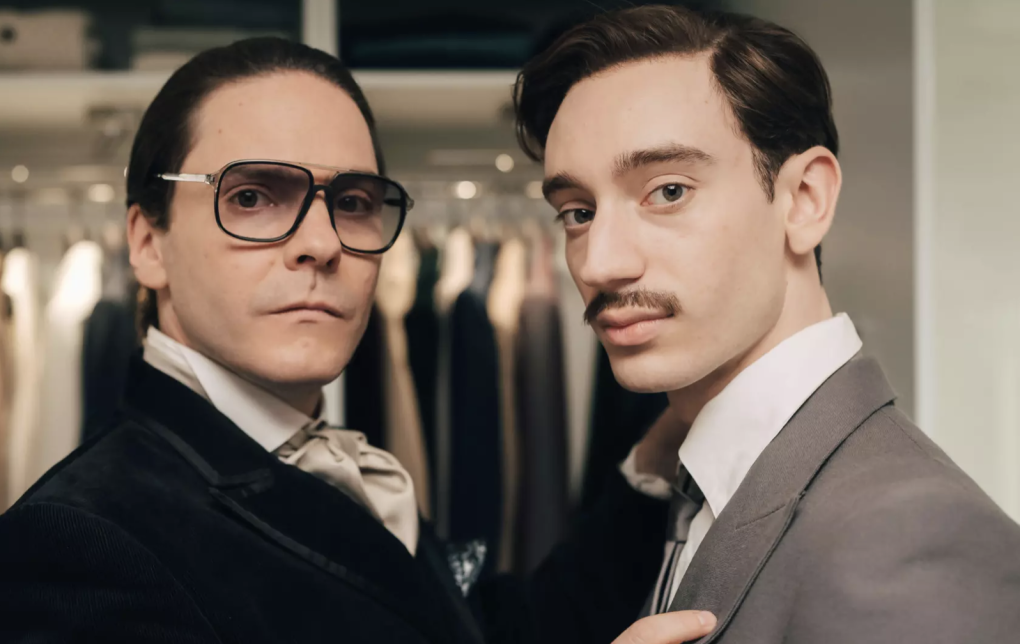
"title": "Fashion designer Karl Lagerfeld (Daniel Brühl), left, meets and falls in love with Jacques de Bascher (Théodore Pellerin) in ‘Becoming Karl Lagerfeld.’",
"publishDate": 1717781607,
"status": "inherit",
"parent": 13959459,
"modified": 1717781720,
"caption": "Fashion designer Karl Lagerfeld (Daniel Brühl), left, meets and falls in love with Jacques de Bascher (Théodore Pellerin) in ‘Becoming Karl Lagerfeld.’",
"credit": "Caroline Dubois, Jour Premier/Disney",
"altTag": "Two men stand with their bodies close together in front of a clothes rack. They are both looking towards the camera.",
"description": null,
"imgSizes": {
"medium": {
"file": "https://cdn.kqed.org/wp-content/uploads/sites/2/2024/06/Screen-Shot-2024-06-07-at-10.33.08-AM-800x505.png",
"width": 800,
"height": 505,
"mimeType": "image/png"
},
"large": {
"file": "https://cdn.kqed.org/wp-content/uploads/sites/2/2024/06/Screen-Shot-2024-06-07-at-10.33.08-AM-1020x644.png",
"width": 1020,
"height": 644,
"mimeType": "image/png"
},
"thumbnail": {
"file": "https://cdn.kqed.org/wp-content/uploads/sites/2/2024/06/Screen-Shot-2024-06-07-at-10.33.08-AM-160x101.png",
"width": 160,
"height": 101,
"mimeType": "image/png"
},
"medium_large": {
"file": "https://cdn.kqed.org/wp-content/uploads/sites/2/2024/06/Screen-Shot-2024-06-07-at-10.33.08-AM-768x485.png",
"width": 768,
"height": 485,
"mimeType": "image/png"
},
"1536x1536": {
"file": "https://cdn.kqed.org/wp-content/uploads/sites/2/2024/06/Screen-Shot-2024-06-07-at-10.33.08-AM-1536x970.png",
"width": 1536,
"height": 970,
"mimeType": "image/png"
},
"post-thumbnail": {
"file": "https://cdn.kqed.org/wp-content/uploads/sites/2/2024/06/Screen-Shot-2024-06-07-at-10.33.08-AM-672x372.png",
"width": 672,
"height": 372,
"mimeType": "image/png"
},
"twentyfourteen-full-width": {
"file": "https://cdn.kqed.org/wp-content/uploads/sites/2/2024/06/Screen-Shot-2024-06-07-at-10.33.08-AM-1038x576.png",
"width": 1038,
"height": 576,
"mimeType": "image/png"
},
"kqedFullSize": {
"file": "https://cdn.kqed.org/wp-content/uploads/sites/2/2024/06/Screen-Shot-2024-06-07-at-10.33.08-AM.png",
"width": 1596,
"height": 1008
}
},
"isLoading": false,
"fetchFailed": false
},
"arts_13959387": {
"type": "attachments",
"id": "arts_13959387",
"meta": {
"index": "attachments_1716263798",
"site": "arts",
"id": "13959387",
"found": true
},
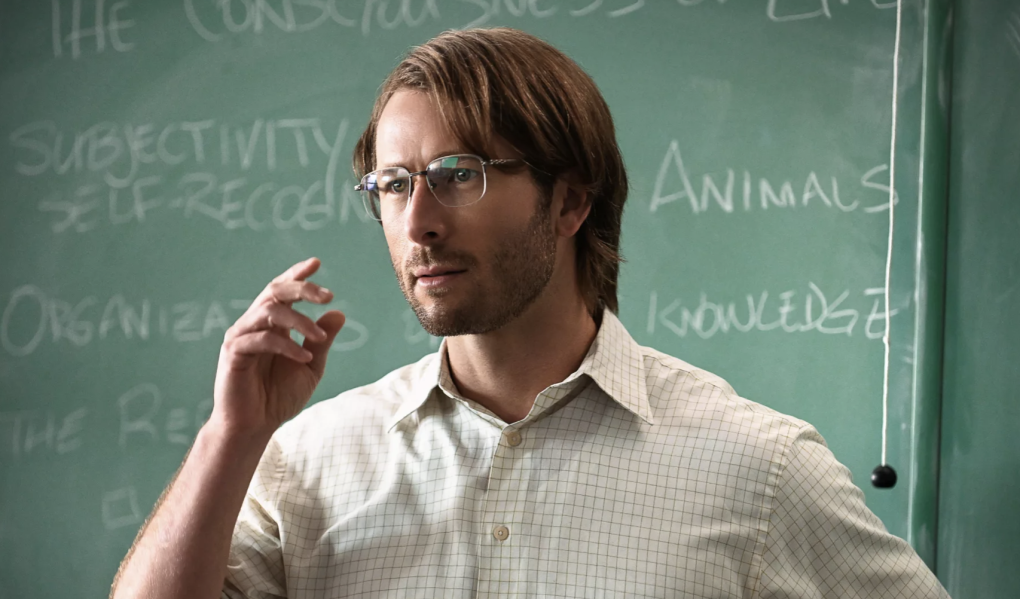
"title": "Glen Powell finds a star-making turn as Gary ‘Ron’ Johnson in ‘Hit Man.’",
"publishDate": 1717700456,
"status": "inherit",
"parent": 13959385,
"modified": 1717700545,
"caption": "Glen Powell finds a star-making turn as Gary ‘Ron’ Johnson in ‘Hit Man.’",
"credit": "Matt Lankes/Netflix",
"altTag": "A 30-something-year-old man stands in front of a chalk board gesturing.",
"description": null,
"imgSizes": {
"medium": {
"file": "https://cdn.kqed.org/wp-content/uploads/sites/2/2024/06/Screen-Shot-2024-06-06-at-12.00.29-PM-800x470.png",
"width": 800,
"height": 470,
"mimeType": "image/png"
},
"large": {
"file": "https://cdn.kqed.org/wp-content/uploads/sites/2/2024/06/Screen-Shot-2024-06-06-at-12.00.29-PM-1020x599.png",
"width": 1020,
"height": 599,
"mimeType": "image/png"
},
"thumbnail": {
"file": "https://cdn.kqed.org/wp-content/uploads/sites/2/2024/06/Screen-Shot-2024-06-06-at-12.00.29-PM-160x94.png",
"width": 160,
"height": 94,
"mimeType": "image/png"
},
"medium_large": {
"file": "https://cdn.kqed.org/wp-content/uploads/sites/2/2024/06/Screen-Shot-2024-06-06-at-12.00.29-PM-768x451.png",
"width": 768,
"height": 451,
"mimeType": "image/png"
},
"1536x1536": {
"file": "https://cdn.kqed.org/wp-content/uploads/sites/2/2024/06/Screen-Shot-2024-06-06-at-12.00.29-PM-1536x902.png",
"width": 1536,
"height": 902,
"mimeType": "image/png"
},
"post-thumbnail": {
"file": "https://cdn.kqed.org/wp-content/uploads/sites/2/2024/06/Screen-Shot-2024-06-06-at-12.00.29-PM-672x372.png",
"width": 672,
"height": 372,
"mimeType": "image/png"
},
"twentyfourteen-full-width": {
"file": "https://cdn.kqed.org/wp-content/uploads/sites/2/2024/06/Screen-Shot-2024-06-06-at-12.00.29-PM-1038x576.png",
"width": 1038,
"height": 576,
"mimeType": "image/png"
},
"kqedFullSize": {
"file": "https://cdn.kqed.org/wp-content/uploads/sites/2/2024/06/Screen-Shot-2024-06-06-at-12.00.29-PM.png",
"width": 1706,
"height": 1002
}
},
"isLoading": false,
"fetchFailed": false
},
"arts_13959207": {
"type": "attachments",
"id": "arts_13959207",
"meta": {
"index": "attachments_1716263798",
"site": "arts",
"id": "13959207",
"found": true
},
"title": "Clockwise from top left: ‘Industry,’ ‘My Lady Jane,’ ‘The Bear,’ ‘The Umbrella Academy,’ ‘Clipped’ and ‘House of the Dragon.’",
"publishDate": 1717522685,
"status": "inherit",
"parent": 13959205,
"modified": 1717522783,
"caption": "Clockwise from top left: ‘Industry,’ ‘My Lady Jane,’ ‘The Bear,’ ‘The Umbrella Academy,’ ‘Clipped’ and ‘House of the Dragon.’",
"credit": "Nick Strasburg/ HBO, Jonathan Prime/ Prime Video, Chuck Hodes/ FX, Christos Kalohoridis/ Netflix, Kelsey McNeal/ FX, Ollie Upton/ HBO",
"altTag": null,
"description": null,
"imgSizes": {
"medium": {
"file": "https://cdn.kqed.org/wp-content/uploads/sites/2/2024/06/Screen-Shot-2024-06-04-at-10.32.08-AM-800x479.png",
"width": 800,
"height": 479,
"mimeType": "image/png"
},
"large": {
"file": "https://cdn.kqed.org/wp-content/uploads/sites/2/2024/06/Screen-Shot-2024-06-04-at-10.32.08-AM-1020x611.png",
"width": 1020,
"height": 611,
"mimeType": "image/png"
},
"thumbnail": {
"file": "https://cdn.kqed.org/wp-content/uploads/sites/2/2024/06/Screen-Shot-2024-06-04-at-10.32.08-AM-160x96.png",
"width": 160,
"height": 96,
"mimeType": "image/png"
},
"medium_large": {
"file": "https://cdn.kqed.org/wp-content/uploads/sites/2/2024/06/Screen-Shot-2024-06-04-at-10.32.08-AM-768x460.png",
"width": 768,
"height": 460,
"mimeType": "image/png"
},
"1536x1536": {
"file": "https://cdn.kqed.org/wp-content/uploads/sites/2/2024/06/Screen-Shot-2024-06-04-at-10.32.08-AM-1536x921.png",
"width": 1536,
"height": 921,
"mimeType": "image/png"
},
"post-thumbnail": {
"file": "https://cdn.kqed.org/wp-content/uploads/sites/2/2024/06/Screen-Shot-2024-06-04-at-10.32.08-AM-672x372.png",
"width": 672,
"height": 372,
"mimeType": "image/png"
},
"twentyfourteen-full-width": {
"file": "https://cdn.kqed.org/wp-content/uploads/sites/2/2024/06/Screen-Shot-2024-06-04-at-10.32.08-AM-1038x576.png",
"width": 1038,
"height": 576,
"mimeType": "image/png"
},
"kqedFullSize": {
"file": "https://cdn.kqed.org/wp-content/uploads/sites/2/2024/06/Screen-Shot-2024-06-04-at-10.32.08-AM.png",
"width": 1782,
"height": 1068
}
},
"isLoading": false,
"fetchFailed": false
},
"arts_13959075": {
"type": "attachments",
"id": "arts_13959075",
"meta": {
"index": "attachments_1716263798",
"site": "arts",
"id": "13959075",
"found": true
},
"title": "A new book says that major themes and images of vivid dreams are worth paying attention to.",
"publishDate": 1717430900,
"status": "inherit",
"parent": 13959073,
"modified": 1717431016,
"caption": "A new book says that major themes and images of vivid dreams are worth paying attention to.",
"credit": "Eoneren/ Getty Images | E+",
"altTag": "An abstract 3D cloud model hanging over a bed inside a sparse bedroom.",
"description": null,
"imgSizes": {
"medium": {
"file": "https://cdn.kqed.org/wp-content/uploads/sites/2/2024/06/Screen-Shot-2024-06-03-at-9.07.58-AM-800x493.png",
"width": 800,
"height": 493,
"mimeType": "image/png"
},
"large": {
"file": "https://cdn.kqed.org/wp-content/uploads/sites/2/2024/06/Screen-Shot-2024-06-03-at-9.07.58-AM-1020x628.png",
"width": 1020,
"height": 628,
"mimeType": "image/png"
},
"thumbnail": {
"file": "https://cdn.kqed.org/wp-content/uploads/sites/2/2024/06/Screen-Shot-2024-06-03-at-9.07.58-AM-160x99.png",
"width": 160,
"height": 99,
"mimeType": "image/png"
},
"medium_large": {
"file": "https://cdn.kqed.org/wp-content/uploads/sites/2/2024/06/Screen-Shot-2024-06-03-at-9.07.58-AM-768x473.png",
"width": 768,
"height": 473,
"mimeType": "image/png"
},
"post-thumbnail": {
"file": "https://cdn.kqed.org/wp-content/uploads/sites/2/2024/06/Screen-Shot-2024-06-03-at-9.07.58-AM-672x372.png",
"width": 672,
"height": 372,
"mimeType": "image/png"
},
"twentyfourteen-full-width": {
"file": "https://cdn.kqed.org/wp-content/uploads/sites/2/2024/06/Screen-Shot-2024-06-03-at-9.07.58-AM-1038x576.png",
"width": 1038,
"height": 576,
"mimeType": "image/png"
},
"kqedFullSize": {
"file": "https://cdn.kqed.org/wp-content/uploads/sites/2/2024/06/Screen-Shot-2024-06-03-at-9.07.58-AM.png",
"width": 1292,
"height": 796
}
},
"isLoading": false,
"fetchFailed": false
},
"arts_13959027": {
"type": "attachments",
"id": "arts_13959027",
"meta": {
"index": "attachments_1716263798",
"site": "arts",
"id": "13959027",
"found": true
},
"title": "The chemistry between Janine (Quinta Brunson) and Gregory (Tyler James Williams) has simmered for three long seasons on ‘Abbott Elementary.’",
"publishDate": 1717427015,
"status": "inherit",
"parent": 13959024,
"modified": 1717427074,
"caption": "The chemistry between Janine (Quinta Brunson) and Gregory (Tyler James Williams) has simmered for three long seasons on ‘Abbott Elementary.’",
"credit": "Gilles Mingasson/ Disney",
"altTag": "A Black woman and Black man sit together at the front of a school bus.",
"description": null,
"imgSizes": {
"medium": {
"file": "https://cdn.kqed.org/wp-content/uploads/sites/2/2024/06/Screen-Shot-2024-06-03-at-8.03.10-AM-800x520.png",
"width": 800,
"height": 520,
"mimeType": "image/png"
},
"large": {
"file": "https://cdn.kqed.org/wp-content/uploads/sites/2/2024/06/Screen-Shot-2024-06-03-at-8.03.10-AM-1020x663.png",
"width": 1020,
"height": 663,
"mimeType": "image/png"
},
"thumbnail": {
"file": "https://cdn.kqed.org/wp-content/uploads/sites/2/2024/06/Screen-Shot-2024-06-03-at-8.03.10-AM-160x104.png",
"width": 160,
"height": 104,
"mimeType": "image/png"
},
"medium_large": {
"file": "https://cdn.kqed.org/wp-content/uploads/sites/2/2024/06/Screen-Shot-2024-06-03-at-8.03.10-AM-768x499.png",
"width": 768,
"height": 499,
"mimeType": "image/png"
},
"1536x1536": {
"file": "https://cdn.kqed.org/wp-content/uploads/sites/2/2024/06/Screen-Shot-2024-06-03-at-8.03.10-AM-1536x998.png",
"width": 1536,
"height": 998,
"mimeType": "image/png"
},
"post-thumbnail": {
"file": "https://cdn.kqed.org/wp-content/uploads/sites/2/2024/06/Screen-Shot-2024-06-03-at-8.03.10-AM-672x372.png",
"width": 672,
"height": 372,
"mimeType": "image/png"
},
"twentyfourteen-full-width": {
"file": "https://cdn.kqed.org/wp-content/uploads/sites/2/2024/06/Screen-Shot-2024-06-03-at-8.03.10-AM-1038x576.png",
"width": 1038,
"height": 576,
"mimeType": "image/png"
},
"kqedFullSize": {
"file": "https://cdn.kqed.org/wp-content/uploads/sites/2/2024/06/Screen-Shot-2024-06-03-at-8.03.10-AM.png",
"width": 1690,
"height": 1098
}
},
"isLoading": false,
"fetchFailed": false
},
"arts_13958961": {
"type": "attachments",
"id": "arts_13958961",
"meta": {
"index": "attachments_1716263798",
"site": "arts",
"id": "13958961",
"found": true
},
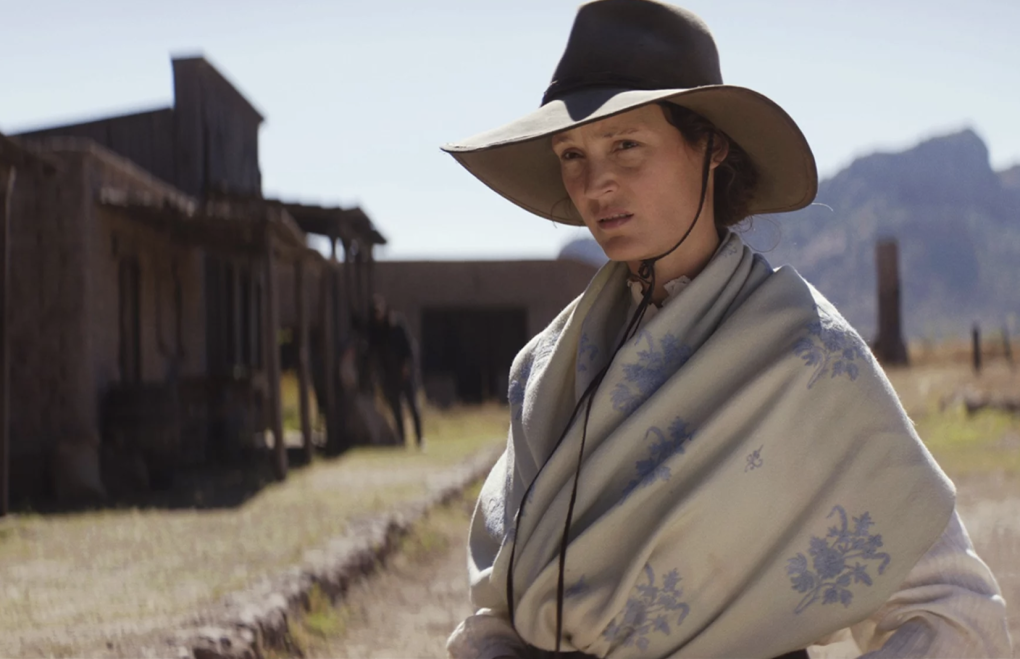
"title": "Vicky Krieps plays a French Canadian florist in ’The Dead Don't Hurt.‘",
"publishDate": 1717188169,
"status": "inherit",
"parent": 13958959,
"modified": 1717188784,
"caption": "Vicky Krieps plays a French Canadian florist in ’The Dead Don't Hurt.‘",
"credit": "Marcel Zyskind/ Shout! Studios",
"altTag": "A woman stands in front of old west style wooden buildings. She is wearing a broad rimmed hat and a belted blanket over her clothes.",
"description": null,
"imgSizes": {
"medium": {
"file": "https://cdn.kqed.org/wp-content/uploads/sites/2/2024/05/Screen-Shot-2024-05-31-at-1.42.06-PM-800x517.png",
"width": 800,
"height": 517,
"mimeType": "image/png"
},
"large": {
"file": "https://cdn.kqed.org/wp-content/uploads/sites/2/2024/05/Screen-Shot-2024-05-31-at-1.42.06-PM-1020x659.png",
"width": 1020,
"height": 659,
"mimeType": "image/png"
},
"thumbnail": {
"file": "https://cdn.kqed.org/wp-content/uploads/sites/2/2024/05/Screen-Shot-2024-05-31-at-1.42.06-PM-160x103.png",
"width": 160,
"height": 103,
"mimeType": "image/png"
},
"medium_large": {
"file": "https://cdn.kqed.org/wp-content/uploads/sites/2/2024/05/Screen-Shot-2024-05-31-at-1.42.06-PM-768x497.png",
"width": 768,
"height": 497,
"mimeType": "image/png"
},
"1536x1536": {
"file": "https://cdn.kqed.org/wp-content/uploads/sites/2/2024/05/Screen-Shot-2024-05-31-at-1.42.06-PM-1536x993.png",
"width": 1536,
"height": 993,
"mimeType": "image/png"
},
"post-thumbnail": {
"file": "https://cdn.kqed.org/wp-content/uploads/sites/2/2024/05/Screen-Shot-2024-05-31-at-1.42.06-PM-672x372.png",
"width": 672,
"height": 372,
"mimeType": "image/png"
},
"twentyfourteen-full-width": {
"file": "https://cdn.kqed.org/wp-content/uploads/sites/2/2024/05/Screen-Shot-2024-05-31-at-1.42.06-PM-1038x576.png",
"width": 1038,
"height": 576,
"mimeType": "image/png"
},
"kqedFullSize": {
"file": "https://cdn.kqed.org/wp-content/uploads/sites/2/2024/05/Screen-Shot-2024-05-31-at-1.42.06-PM.png",
"width": 1652,
"height": 1068
}
},
"isLoading": false,
"fetchFailed": false
},
"arts_13958692": {
"type": "attachments",
"id": "arts_13958692",
"meta": {
"index": "attachments_1716263798",
"site": "arts",
"id": "13958692",
"found": true
},
"title": "The timesinks, they are a changin’.",
"publishDate": 1716915354,
"status": "inherit",
"parent": 13958691,
"modified": 1716915425,
"caption": "The timesinks, they are a changin’.",
"credit": "Eric Harlow/ Hulton Archive/ Getty Images",
"altTag": "A woman checks alarm clocks in a London clock factory in 1946.",
"description": null,
"imgSizes": {
"medium": {
"file": "https://cdn.kqed.org/wp-content/uploads/sites/2/2024/05/Screen-Shot-2024-05-28-at-9.51.17-AM-800x474.png",
"width": 800,
"height": 474,
"mimeType": "image/png"
},
"large": {
"file": "https://cdn.kqed.org/wp-content/uploads/sites/2/2024/05/Screen-Shot-2024-05-28-at-9.51.17-AM-1020x605.png",
"width": 1020,
"height": 605,
"mimeType": "image/png"
},
"thumbnail": {
"file": "https://cdn.kqed.org/wp-content/uploads/sites/2/2024/05/Screen-Shot-2024-05-28-at-9.51.17-AM-160x95.png",
"width": 160,
"height": 95,
"mimeType": "image/png"
},
"medium_large": {
"file": "https://cdn.kqed.org/wp-content/uploads/sites/2/2024/05/Screen-Shot-2024-05-28-at-9.51.17-AM-768x455.png",
"width": 768,
"height": 455,
"mimeType": "image/png"
},
"1536x1536": {
"file": "https://cdn.kqed.org/wp-content/uploads/sites/2/2024/05/Screen-Shot-2024-05-28-at-9.51.17-AM-1536x910.png",
"width": 1536,
"height": 910,
"mimeType": "image/png"
},
"post-thumbnail": {
"file": "https://cdn.kqed.org/wp-content/uploads/sites/2/2024/05/Screen-Shot-2024-05-28-at-9.51.17-AM-672x372.png",
"width": 672,
"height": 372,
"mimeType": "image/png"
},
"twentyfourteen-full-width": {
"file": "https://cdn.kqed.org/wp-content/uploads/sites/2/2024/05/Screen-Shot-2024-05-28-at-9.51.17-AM-1038x576.png",
"width": 1038,
"height": 576,
"mimeType": "image/png"
},
"kqedFullSize": {
"file": "https://cdn.kqed.org/wp-content/uploads/sites/2/2024/05/Screen-Shot-2024-05-28-at-9.51.17-AM.png",
"width": 1704,
"height": 1010
}
},
"isLoading": false,
"fetchFailed": false
},
"arts_13958516": {
"type": "attachments",
"id": "arts_13958516",
"meta": {
"index": "attachments_1716263798",
"site": "arts",
"id": "13958516",
"found": true
},
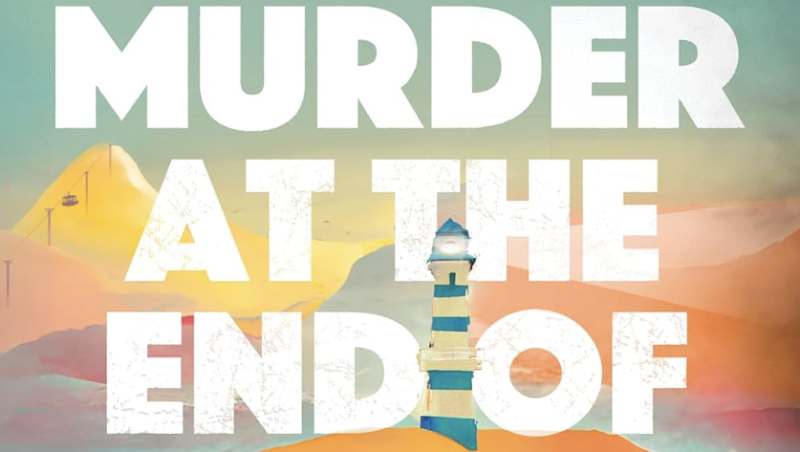
"title": "‘The Last Murder at the End of the World’ by Stuart Turton.",
"publishDate": 1716577822,
"status": "inherit",
"parent": 13958512,
"modified": 1716577852,
"caption": "‘The Last Murder at the End of the World’ by Stuart Turton.",
"credit": "Sourcebooks",
"altTag": "A book cover featuring an illustration of a lighthouse at dawn.",
"description": null,
"imgSizes": {
"medium": {
"file": "https://cdn.kqed.org/wp-content/uploads/sites/2/2024/05/Screen-Shot-2024-05-24-at-12.07.16-PM-1-800x452.png",
"width": 800,
"height": 452,
"mimeType": "image/png"
},
"thumbnail": {
"file": "https://cdn.kqed.org/wp-content/uploads/sites/2/2024/05/Screen-Shot-2024-05-24-at-12.07.16-PM-1-160x90.png",
"width": 160,
"height": 90,
"mimeType": "image/png"
},
"medium_large": {
"file": "https://cdn.kqed.org/wp-content/uploads/sites/2/2024/05/Screen-Shot-2024-05-24-at-12.07.16-PM-1-768x434.png",
"width": 768,
"height": 434,
"mimeType": "image/png"
},
"post-thumbnail": {
"file": "https://cdn.kqed.org/wp-content/uploads/sites/2/2024/05/Screen-Shot-2024-05-24-at-12.07.16-PM-1-672x372.png",
"width": 672,
"height": 372,
"mimeType": "image/png"
},
"kqedFullSize": {
"file": "https://cdn.kqed.org/wp-content/uploads/sites/2/2024/05/Screen-Shot-2024-05-24-at-12.07.16-PM-1.png",
"width": 837,
"height": 473
}
},
"isLoading": false,
"fetchFailed": false
},
"arts_13958312": {
"type": "attachments",
"id": "arts_13958312",
"meta": {
"index": "attachments_1716263798",
"site": "arts",
"id": "13958312",
"found": true
},
"title": "Illustration by Alicia Zheng / NPR.",
"publishDate": 1716396382,
"status": "inherit",
"parent": 13958311,
"modified": 1716396382,
"caption": null,
"credit": null,
"altTag": null,
"description": null,
"imgSizes": {
"medium": {
"file": "https://cdn.kqed.org/wp-content/uploads/sites/2/2024/05/illustration_booklist_24_02-copy_wide-1472beb5294d7208d71a81a0b35eec6107dd2a8f-800x450.jpg",
"width": 800,
"height": 450,
"mimeType": "image/jpeg"
},
"large": {
"file": "https://cdn.kqed.org/wp-content/uploads/sites/2/2024/05/illustration_booklist_24_02-copy_wide-1472beb5294d7208d71a81a0b35eec6107dd2a8f-1020x574.jpg",
"width": 1020,
"height": 574,
"mimeType": "image/jpeg"
},
"thumbnail": {
"file": "https://cdn.kqed.org/wp-content/uploads/sites/2/2024/05/illustration_booklist_24_02-copy_wide-1472beb5294d7208d71a81a0b35eec6107dd2a8f-160x90.jpg",
"width": 160,
"height": 90,
"mimeType": "image/jpeg"
},
"medium_large": {
"file": "https://cdn.kqed.org/wp-content/uploads/sites/2/2024/05/illustration_booklist_24_02-copy_wide-1472beb5294d7208d71a81a0b35eec6107dd2a8f-768x432.jpg",
"width": 768,
"height": 432,
"mimeType": "image/jpeg"
},
"1536x1536": {
"file": "https://cdn.kqed.org/wp-content/uploads/sites/2/2024/05/illustration_booklist_24_02-copy_wide-1472beb5294d7208d71a81a0b35eec6107dd2a8f-1536x864.jpg",
"width": 1536,
"height": 864,
"mimeType": "image/jpeg"
},
"2048x2048": {
"file": "https://cdn.kqed.org/wp-content/uploads/sites/2/2024/05/illustration_booklist_24_02-copy_wide-1472beb5294d7208d71a81a0b35eec6107dd2a8f-2048x1152.jpg",
"width": 2048,
"height": 1152,
"mimeType": "image/jpeg"
},
"post-thumbnail": {
"file": "https://cdn.kqed.org/wp-content/uploads/sites/2/2024/05/illustration_booklist_24_02-copy_wide-1472beb5294d7208d71a81a0b35eec6107dd2a8f-672x372.jpg",
"width": 672,
"height": 372,
"mimeType": "image/jpeg"
},
"twentyfourteen-full-width": {
"file": "https://cdn.kqed.org/wp-content/uploads/sites/2/2024/05/illustration_booklist_24_02-copy_wide-1472beb5294d7208d71a81a0b35eec6107dd2a8f-1038x576.jpg",
"width": 1038,
"height": 576,
"mimeType": "image/jpeg"
},
"full-width": {
"file": "https://cdn.kqed.org/wp-content/uploads/sites/2/2024/05/illustration_booklist_24_02-copy_wide-1472beb5294d7208d71a81a0b35eec6107dd2a8f-1920x1080.jpg",
"width": 1920,
"height": 1080,
"mimeType": "image/jpeg"
},
"kqedFullSize": {
"file": "https://cdn.kqed.org/wp-content/uploads/sites/2/2024/05/illustration_booklist_24_02-copy_wide-1472beb5294d7208d71a81a0b35eec6107dd2a8f-scaled.jpg",
"width": 2560,
"height": 1440
}
},
"isLoading": false,
"fetchFailed": false
},
"arts_13958134": {
"type": "attachments",
"id": "arts_13958134",
"meta": {
"index": "attachments_1716263798",
"site": "arts",
"id": "13958134",
"found": true
},
"parent": 13958131,
"imgSizes": {
"twentyfourteen-full-width": {
"file": "https://cdn.kqed.org/wp-content/uploads/sites/2/2024/05/Screen-Shot-2024-05-20-at-10.35.57-AM-1038x576.png",
"width": 1038,
"mimeType": "image/png",
"height": 576
},
"thumbnail": {
"file": "https://cdn.kqed.org/wp-content/uploads/sites/2/2024/05/Screen-Shot-2024-05-20-at-10.35.57-AM-160x97.png",
"width": 160,
"mimeType": "image/png",
"height": 97
},
"post-thumbnail": {
"file": "https://cdn.kqed.org/wp-content/uploads/sites/2/2024/05/Screen-Shot-2024-05-20-at-10.35.57-AM-672x372.png",
"width": 672,
"mimeType": "image/png",
"height": 372
},
"kqedFullSize": {
"file": "https://cdn.kqed.org/wp-content/uploads/sites/2/2024/05/Screen-Shot-2024-05-20-at-10.35.57-AM.png",
"width": 1292,
"height": 782
},
"large": {
"file": "https://cdn.kqed.org/wp-content/uploads/sites/2/2024/05/Screen-Shot-2024-05-20-at-10.35.57-AM-1020x617.png",
"width": 1020,
"mimeType": "image/png",
"height": 617
},
"medium": {
"file": "https://cdn.kqed.org/wp-content/uploads/sites/2/2024/05/Screen-Shot-2024-05-20-at-10.35.57-AM-800x484.png",
"width": 800,
"mimeType": "image/png",
"height": 484
},
"medium_large": {
"file": "https://cdn.kqed.org/wp-content/uploads/sites/2/2024/05/Screen-Shot-2024-05-20-at-10.35.57-AM-768x465.png",
"width": 768,
"mimeType": "image/png",
"height": 465
}
},
"publishDate": 1716226579,
"modified": 1716226632,
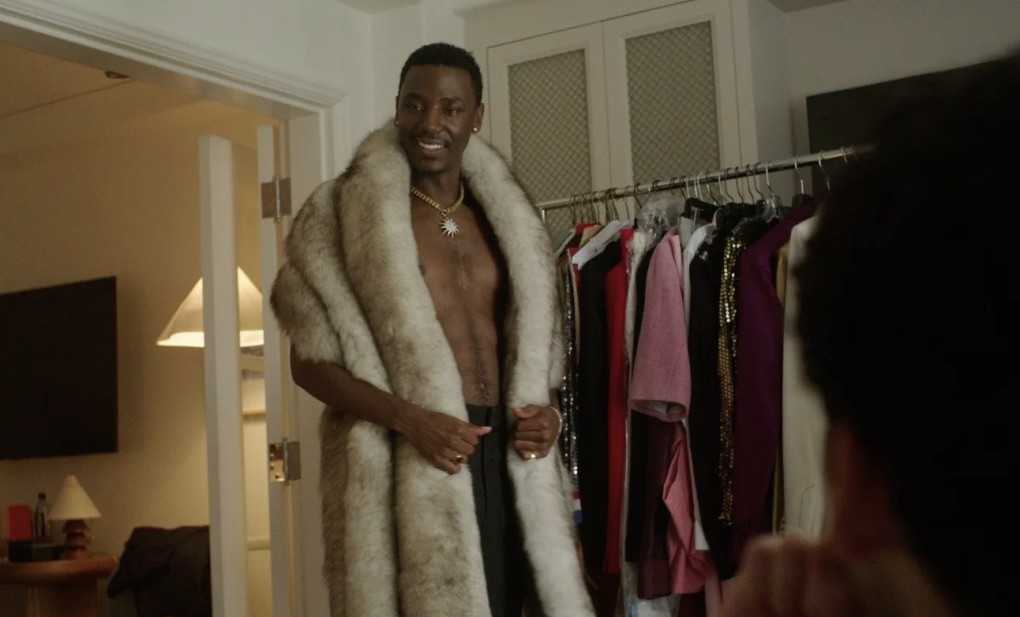
"caption": "Jerrod Carmichael in ‘Jerrod Carmichael Reality Show.’",
"description": null,
"title": "Jerrod Carmichael in ‘Jerrod Carmichael Reality Show.’",
"credit": "HBO",
"status": "inherit",
"altTag": "A young Black man stands next to a clothes rack, shirtless and wrapped in a fur stole.",
"isLoading": false,
"fetchFailed": false
},
"arts_13958093": {
"type": "attachments",
"id": "arts_13958093",
"meta": {
"index": "attachments_1716263798",
"site": "arts",
"id": "13958093",
"found": true
},
"parent": 13958092,
"imgSizes": {
"twentyfourteen-full-width": {
"file": "https://cdn.kqed.org/wp-content/uploads/sites/2/2024/05/untitled-design-66-e1ce1e28ad2e5f555f95cea69bd301a73e5f0304-1038x576.jpg",
"width": 1038,
"mimeType": "image/jpeg",
"height": 576
},
"thumbnail": {
"file": "https://cdn.kqed.org/wp-content/uploads/sites/2/2024/05/untitled-design-66-e1ce1e28ad2e5f555f95cea69bd301a73e5f0304-160x120.jpg",
"width": 160,
"mimeType": "image/jpeg",
"height": 120
},
"post-thumbnail": {
"file": "https://cdn.kqed.org/wp-content/uploads/sites/2/2024/05/untitled-design-66-e1ce1e28ad2e5f555f95cea69bd301a73e5f0304-672x372.jpg",
"width": 672,
"mimeType": "image/jpeg",
"height": 372
},
"kqedFullSize": {
"file": "https://cdn.kqed.org/wp-content/uploads/sites/2/2024/05/untitled-design-66-e1ce1e28ad2e5f555f95cea69bd301a73e5f0304.jpg",
"width": 1438,
"height": 1078
},
"large": {
"file": "https://cdn.kqed.org/wp-content/uploads/sites/2/2024/05/untitled-design-66-e1ce1e28ad2e5f555f95cea69bd301a73e5f0304-1020x765.jpg",
"width": 1020,
"mimeType": "image/jpeg",
"height": 765
},
"medium": {
"file": "https://cdn.kqed.org/wp-content/uploads/sites/2/2024/05/untitled-design-66-e1ce1e28ad2e5f555f95cea69bd301a73e5f0304-800x600.jpg",
"width": 800,
"mimeType": "image/jpeg",
"height": 600
},
"medium_large": {
"file": "https://cdn.kqed.org/wp-content/uploads/sites/2/2024/05/untitled-design-66-e1ce1e28ad2e5f555f95cea69bd301a73e5f0304-768x576.jpg",
"width": 768,
"mimeType": "image/jpeg",
"height": 576
}
},
"publishDate": 1715969863,
"modified": 1715970610,
"caption": "Two New Novels Investigate What Makes Magic, What Is Real and Imagined",
"description": null,
"title": "‘Pages of Mourning’ and ‘The Cemetery of Untold Stories.’",
"credit": "NPR",
"status": "inherit",
"altTag": "Two book covers lay side by side. The one on the left features the face of a statue facing up from the ground in a garden. The one on the right shows an old photograph of a woman with long hair sitting in a car driver's seat.",
"isLoading": false,
"fetchFailed": false
},
"arts_13957970": {
"type": "attachments",
"id": "arts_13957970",
"meta": {
"index": "attachments_1716263798",
"site": "arts",
"id": "13957970",
"found": true
},
"parent": 13957969,
"imgSizes": {
"twentyfourteen-full-width": {
"file": "https://cdn.kqed.org/wp-content/uploads/sites/2/2024/05/philharmonik2-1-a78fefd9b6120ab7ba5487b2fba1c4dde7f81296-1038x576.jpg",
"width": 1038,
"mimeType": "image/jpeg",
"height": 576
},
"thumbnail": {
"file": "https://cdn.kqed.org/wp-content/uploads/sites/2/2024/05/philharmonik2-1-a78fefd9b6120ab7ba5487b2fba1c4dde7f81296-160x120.jpg",
"width": 160,
"mimeType": "image/jpeg",
"height": 120
},
"post-thumbnail": {
"file": "https://cdn.kqed.org/wp-content/uploads/sites/2/2024/05/philharmonik2-1-a78fefd9b6120ab7ba5487b2fba1c4dde7f81296-672x372.jpg",
"width": 672,
"mimeType": "image/jpeg",
"height": 372
},
"kqedFullSize": {
"file": "https://cdn.kqed.org/wp-content/uploads/sites/2/2024/05/philharmonik2-1-a78fefd9b6120ab7ba5487b2fba1c4dde7f81296-scaled.jpg",
"width": 2560,
"height": 1920
},
"2048x2048": {
"file": "https://cdn.kqed.org/wp-content/uploads/sites/2/2024/05/philharmonik2-1-a78fefd9b6120ab7ba5487b2fba1c4dde7f81296-2048x1536.jpg",
"width": 2048,
"mimeType": "image/jpeg",
"height": 1536
},
"large": {
"file": "https://cdn.kqed.org/wp-content/uploads/sites/2/2024/05/philharmonik2-1-a78fefd9b6120ab7ba5487b2fba1c4dde7f81296-1020x765.jpg",
"width": 1020,
"mimeType": "image/jpeg",
"height": 765
},
"1536x1536": {
"file": "https://cdn.kqed.org/wp-content/uploads/sites/2/2024/05/philharmonik2-1-a78fefd9b6120ab7ba5487b2fba1c4dde7f81296-1536x1152.jpg",
"width": 1536,
"mimeType": "image/jpeg",
"height": 1152
},
"full-width": {
"file": "https://cdn.kqed.org/wp-content/uploads/sites/2/2024/05/philharmonik2-1-a78fefd9b6120ab7ba5487b2fba1c4dde7f81296-1920x1440.jpg",
"width": 1920,
"mimeType": "image/jpeg",
"height": 1440
},
"medium": {
"file": "https://cdn.kqed.org/wp-content/uploads/sites/2/2024/05/philharmonik2-1-a78fefd9b6120ab7ba5487b2fba1c4dde7f81296-800x600.jpg",
"width": 800,
"mimeType": "image/jpeg",
"height": 600
},
"medium_large": {
"file": "https://cdn.kqed.org/wp-content/uploads/sites/2/2024/05/philharmonik2-1-a78fefd9b6120ab7ba5487b2fba1c4dde7f81296-768x576.jpg",
"width": 768,
"mimeType": "image/jpeg",
"height": 576
}
},
"publishDate": 1715876726,
"modified": 1715876726,
"caption": null,
"description": null,
"title": "The Philharmonik",
"credit": null,
"status": "inherit",
"altTag": null,
"isLoading": false,
"fetchFailed": false
}
},
"audioPlayerReducer": {
"postId": "stream_live",
"isPaused": true,
"isPlaying": false,
"pfsActive": false,
"pledgeModalIsOpen": true,
"playerDrawerIsOpen": false,
"liveAudioPlayStartedAt": 0,
"liveAudioPlayContext": ""
},
"authorsReducer": {
"byline_arts_13959459": {
"type": "authors",
"id": "byline_arts_13959459",
"meta": {
"override": true
},
"slug": "byline_arts_13959459",
"name": "John Powers",
"isLoading": false
},
"byline_arts_13959385": {
"type": "authors",
"id": "byline_arts_13959385",
"meta": {
"override": true
},
"slug": "byline_arts_13959385",
"name": "Aisha Harris",
"isLoading": false
},
"byline_arts_13959205": {
"type": "authors",
"id": "byline_arts_13959205",
"meta": {
"override": true
},
"slug": "byline_arts_13959205",
"name": "Eric Deggans, Aisha Harris, Linda Holmes, Glen Weldon, NPR",
"isLoading": false
},
"byline_arts_13959073": {
"type": "authors",
"id": "byline_arts_13959073",
"meta": {
"override": true
},
"slug": "byline_arts_13959073",
"name": "Andrea Muraskin",
"isLoading": false
},
"byline_arts_13959024": {
"type": "authors",
"id": "byline_arts_13959024",
"meta": {
"override": true
},
"slug": "byline_arts_13959024",
"name": "Aisha Harris",
"isLoading": false
},
"byline_arts_13958959": {
"type": "authors",
"id": "byline_arts_13958959",
"meta": {
"override": true
},
"slug": "byline_arts_13958959",
"name": "Justin Chang, NPR",
"isLoading": false
},
"byline_arts_13958691": {
"type": "authors",
"id": "byline_arts_13958691",
"meta": {
"override": true
},
"slug": "byline_arts_13958691",
"name": "Glen Weldon, NPR",
"isLoading": false
},
"byline_arts_13958512": {
"type": "authors",
"id": "byline_arts_13958512",
"meta": {
"override": true
},
"slug": "byline_arts_13958512",
"name": "Gabino Iglesias, NPR",
"isLoading": false
},
"byline_arts_13958311": {
"type": "authors",
"id": "byline_arts_13958311",
"meta": {
"override": true
},
"slug": "byline_arts_13958311",
"name": "Meghan Collins Sullivan, NPR",
"isLoading": false
},
"byline_arts_13958131": {
"type": "authors",
"id": "byline_arts_13958131",
"meta": {
"override": true
},
"slug": "byline_arts_13958131",
"name": "Aisha Harris, NPR",
"isLoading": false
},
"byline_arts_13958092": {
"type": "authors",
"id": "byline_arts_13958092",
"meta": {
"override": true
},
"slug": "byline_arts_13958092",
"name": "Marcela Davison Avilés, NPR",
"isLoading": false
},
"byline_arts_13957969": {
"type": "authors",
"id": "byline_arts_13957969",
"meta": {
"override": true
},
"slug": "byline_arts_13957969",
"name": "All Things Considered",
"isLoading": false
}
},
"pagesReducer": {
"arts_affiliate_npr": {
"type": "terms",
"id": "arts_137",
"meta": {
"index": "terms_1716263798",
"site": "arts",
"id": "137",
"score": 14.257248
},
"featImg": "https://ww2.kqed.org/app/uploads/sites/2/2014/04/logo-npr-lg1.png",
"name": "NPR",
"description": null,
"taxonomy": "affiliate",
"headData": {
"twImgId": null,
"twTitle": null,
"ogTitle": null,
"ogImgId": null,
"twDescription": null,
"description": null,
"title": "NPR Archives | KQED Arts",
"ogDescription": null
},
"ttid": 138,
"slug": "npr",
"isLoading": false,
"title": "NPR",
"pageMeta": {
"site": "arts",
"WpPageTemplate": "page-topic-editorial",
"currentPage": 27
},
"blocks": [
{
"blockName": "kqed/post-list",
"attrs": {
"layout": "cardArticle2",
"query": "posts/arts?affiliate=npr",
"seeMore": false,
"paginated": true,
"page": 27
}
},
{
"blockName": "kqed/ad"
}
]
}
},
"pfsSessionReducer": {},
"postsReducer": {
"stream_live": {
"type": "live",
"id": "stream_live",
"audioUrl": "https://streams.kqed.org/kqedradio",
"title": "Live Stream",
"excerpt": "Live Stream information currently unavailable.",
"link": "/radio",
"featImg": "",
"label": {
"name": "KQED Live",
"link": "/"
}
},
"stream_kqedNewscast": {
"type": "posts",
"id": "stream_kqedNewscast",
"audioUrl": "https://www.kqed.org/.stream/anon/radio/RDnews/newscast.mp3?_=1",
"title": "KQED Newscast",
"featImg": "",
"label": {
"name": "88.5 FM",
"link": "/"
}
},
"arts_13959459": {
"type": "posts",
"id": "arts_13959459",
"meta": {
"index": "posts_1716263798",
"site": "arts",
"id": "13959459",
"score": null,
"sort": [
1717783251000
]
},
"guestAuthors": [],
"slug": "becoming-karl-lagerfeld-review-hulu-french-tv-series-fashion-designer",
"title": "‘Becoming Karl Lagerfeld’ Is the Smart Backstory of a Complicated Style Icon",
"publishDate": 1717783251,
"format": "standard",
"headTitle": "‘Becoming Karl Lagerfeld’ Is the Smart Backstory of a Complicated Style Icon | KQED",
"labelTerm": {
"term": 140,
"site": "arts"
},
"content": "\u003cp>We live in an age obsessed with self-creation. Our social media-fueled culture is less about changing the world than about shaping how the world sees us.\u003c/p>\n\u003cp>Nobody did it any better than \u003ca href=\"https://www.npr.org/tags/695894666/karl-lagerfeld\" target=\"695894666\" rel=\"noopener\">Karl Lagerfeld\u003c/a>, who died in 2019 after four decades as a lion king in the fashion world. Beginning as a somewhat ridiculous outsider from Germany, Lagerfeld used his genius for self-invention to wind up designing for \u003ca href=\"https://www.npr.org/tags/533752330/fendi\" target=\"533752330\" rel=\"noopener\">Fendi\u003c/a>, resurrecting the moribund house of Chanel and creating a personal look so distinctive — white hair, dark sunglasses, fingerless gloves and crisp detachable collars — that it could serve as the emoji for Fashion Designer.\u003c/p>\n\u003cp>[aside postid='arts_13928464']His hard-won rise in ‘70s Paris is the theme of \u003cem>Becoming Karl Lagerfeld\u003c/em>, a smart, dishy, hugely entertaining new French series on Hulu. The show doesn’t pretend to offer the definitive take on an enormously complicated man. Instead, its brisk six episodes offer emblematic incidents — or perhaps pressure points — that take us surprisingly deep inside a figure who moved constantly forward, spurred on by ambition, loneliness and a keen sense of self-protection.\u003c/p>\n\u003cp>We first meet Karl in Paris through the eyes of Jacques de Bascher, a self-destructive young aristocrat played with scene-stealing charisma by the French Canadian actor Théodore Pellerin. Always looking for distractions, Jacques fixates on the uncharismatic Karl — that’s the superb German actor Daniel Brühl — who at this point is something of a brainy schlub who lives with his acerbic mother and stuffs his face with sweets when he’s angry. You know you’re watching a French series, not an American one, when, in this show’s equivalent of a meet cute, Jacques and Karl discover their affinity by quoting the daunting Austrian novelist Robert Musil.\u003c/p>\n\u003cp>Jacques dreams of being a great writer, but he fritters away his gifts in drink and drugs and sex; he yearns for love. Although Karl cares for him, he’s too relentless a work-machine to provide such consolations. Karl never stops hustling and scheming. He’s chasing a stardom to equal his one-time-friend, now-nemesis Yves Saint Laurent — that’s a terrific Arnaud Valois — who’s celebrated as a haute-couture genius with his own label while Karl toils away on ready-to-wear for the house of Chloe.\u003c/p>\n\u003cp>[ad fullwidth]\u003c/p>\n\u003cp>https://www.youtube.com/watch?v=dWs94_ZaDLw\u003c/p>\n\u003cp>Jacques and Karl share a long, tortuous, asexual sort of love. Their relationship becomes the through-line of Karl’s story, which includes his battles with fashion power broker Pierre Bergé, Jacques’ disastrous affair with Saint Laurent, and Karl’s struggles designing a dress for \u003ca href=\"https://www.npr.org/2017/06/19/533090309/gallery-gives-movie-star-marlene-dietrich-the-big-picture-treatment\" target=\"533090309\" rel=\"noopener\">Marlene Dietrich\u003c/a> who pointedly asks, “Do you have a style?” This was always the big question about Lagerfeld, who, like that other self-inventor, \u003ca href=\"https://www.npr.org/artists/15289962/david-bowie\" target=\"15289962\" rel=\"noopener\">David Bowie\u003c/a>, tried on many styles and used whichever one would help him get ahead at that moment.\u003c/p>\n\u003cp>In this year’s other fashion series, The New Look, Christian Dior and \u003ca href=\"https://www.npr.org/2005/05/05/4630900/the-timeless-appeal-of-coco-chanel\" target=\"4630900\" rel=\"noopener\">Coco Chanel\u003c/a> felt like animatronic creatures in a diorama. By contrast, \u003cem>Becoming Karl Lagerfeld\u003c/em> feels urgent and alive — like a present day story that happens to be set in the past. Whether it’s Jacques’ desperation, Karl’s impacted passion or shocking betrayals, the show pulses with feeling, even wringing genuine poignancy from the pop song “Take on Me.”\u003c/p>\n\u003cp>[aside postid='arts_13958404']Without flaunting its seriousness, the show gets you thinking about the characters — for instance, how the controlled Karl and out-of-control Jacques are complementary halves of a complete human being. And it explores the isolation, even lunacy lurking inside the quest for fame.\u003c/p>\n\u003cp>Focusing on a brief period of time, \u003cem>Becoming Karl Lagerfeld\u003c/em> never overtly tries to explain its often-contradictory hero. Instead, it lets Brühl reveal the powerful emotions that flit across Karl’s face even as he attempts to bottle them up. By the end, I felt I understood him surprisingly well and grasped how he could become a fashion legend.\u003c/p>\n\u003cp>Now is the show completely true? Did Dietrich really castigate Karl for a dress he made her? Did Karl really flee when Jacques tried to sleep with him? Who cares! The opening crawl acknowledges that much of the action is fictionalized. Besides, \u003cem>Becoming Karl Lagerfeld\u003c/em> isn’t about the Kennedy assassination or World War II. It’s about a fashion designer, one who cultivated his personal mythology and became notorious for his delight in saying reprehensible things.\u003c/p>\n\u003cp>“I have no human feelings,” Lagerfeld famously told an interviewer. What he’d like least about this show, I suspect, is that it shows he did.\u003c/p>\n\u003chr>\n\u003cp>\u003c/p>\n\u003cp>\u003cem>‘Becoming Karl Lagerfeld’ begins streaming on Hulu on June 7, 2024.\u003c/em>\u003c/p>\n\n",
"blocks": [],
"excerpt": "A new Hulu show takes us surprisingly deep inside a controversial figure who moved constantly forward, spurred on by ambition.",
"status": "publish",
"parent": 0,
"modified": 1717783251,
"stats": {
"hasAudio": false,
"hasVideo": true,
"hasChartOrMap": false,
"iframeSrcs": [],
"hasGoogleForm": false,
"hasGallery": false,
"hasHearkenModule": false,
"hasPolis": false,
"paragraphCount": 14,
"wordCount": 820
},
"headData": {
"title": "‘Becoming Karl Lagerfeld’ Review: New Hulu Show Dives Deep | KQED",
"description": "A new Hulu show takes us surprisingly deep inside a controversial figure who moved constantly forward, spurred on by ambition.",
"ogTitle": "'Becoming Karl Lagerfeld' Is the Smart Backstory of a Complicated Style Icon",
"ogDescription": "",
"ogImgId": "",
"twTitle": "'Becoming Karl Lagerfeld' Is the Smart Backstory of a Complicated Style Icon",
"twDescription": "",
"twImgId": "",
"socialTitle": "‘Becoming Karl Lagerfeld’ Review: New Hulu Show Dives Deep%%page%% %%sep%% KQED",
"schema": {
"@context": "https://schema.org",
"@type": "Article",
"headline": "‘Becoming Karl Lagerfeld’ Is the Smart Backstory of a Complicated Style Icon",
"datePublished": "2024-06-07T11:00:51-07:00",
"dateModified": "2024-06-07T11:00:51-07:00",
"image": "https://cdn.kqed.org/wp-content/uploads/2020/02/KQED-OG-Image@1x.png"
}
},
"sticky": false,
"nprByline": "John Powers",
"nprStoryId": "nx-s1-4992367",
"nprHtmlLink": "https://www.npr.org/2024/06/04/nx-s1-4992367/becoming-karl-lagerfeld-review",
"nprRetrievedStory": "1",
"nprPubDate": "2024-06-07T11:51:50.657-04:00",
"nprStoryDate": "2024-06-07T11:51:50.657-04:00",
"nprLastModifiedDate": "2024-06-07T11:52:06.816-04:00",
"templateType": "standard",
"featuredImageType": "standard",
"excludeFromSiteSearch": "Include",
"showOnAuthorArchivePages": "No",
"articleAge": "0",
"path": "/arts/13959459/becoming-karl-lagerfeld-review-hulu-french-tv-series-fashion-designer",
"audioTrackLength": null,
"parsedContent": [
{
"type": "contentString",
"content": "\u003cdiv class=\"post-body\">\u003cp>\u003cp>We live in an age obsessed with self-creation. Our social media-fueled culture is less about changing the world than about shaping how the world sees us.\u003c/p>\n\u003cp>Nobody did it any better than \u003ca href=\"https://www.npr.org/tags/695894666/karl-lagerfeld\" target=\"695894666\" rel=\"noopener\">Karl Lagerfeld\u003c/a>, who died in 2019 after four decades as a lion king in the fashion world. Beginning as a somewhat ridiculous outsider from Germany, Lagerfeld used his genius for self-invention to wind up designing for \u003ca href=\"https://www.npr.org/tags/533752330/fendi\" target=\"533752330\" rel=\"noopener\">Fendi\u003c/a>, resurrecting the moribund house of Chanel and creating a personal look so distinctive — white hair, dark sunglasses, fingerless gloves and crisp detachable collars — that it could serve as the emoji for Fashion Designer.\u003c/p>\n\u003cp>\u003c/p>\u003c/div>",
"attributes": {
"named": {},
"numeric": []
}
},
{
"type": "component",
"content": "",
"name": "aside",
"attributes": {
"named": {
"postid": "arts_13928464",
"label": ""
},
"numeric": []
}
},
{
"type": "contentString",
"content": "\u003cdiv class=\"post-body\">\u003cp>His hard-won rise in ‘70s Paris is the theme of \u003cem>Becoming Karl Lagerfeld\u003c/em>, a smart, dishy, hugely entertaining new French series on Hulu. The show doesn’t pretend to offer the definitive take on an enormously complicated man. Instead, its brisk six episodes offer emblematic incidents — or perhaps pressure points — that take us surprisingly deep inside a figure who moved constantly forward, spurred on by ambition, loneliness and a keen sense of self-protection.\u003c/p>\n\u003cp>We first meet Karl in Paris through the eyes of Jacques de Bascher, a self-destructive young aristocrat played with scene-stealing charisma by the French Canadian actor Théodore Pellerin. Always looking for distractions, Jacques fixates on the uncharismatic Karl — that’s the superb German actor Daniel Brühl — who at this point is something of a brainy schlub who lives with his acerbic mother and stuffs his face with sweets when he’s angry. You know you’re watching a French series, not an American one, when, in this show’s equivalent of a meet cute, Jacques and Karl discover their affinity by quoting the daunting Austrian novelist Robert Musil.\u003c/p>\n\u003cp>Jacques dreams of being a great writer, but he fritters away his gifts in drink and drugs and sex; he yearns for love. Although Karl cares for him, he’s too relentless a work-machine to provide such consolations. Karl never stops hustling and scheming. He’s chasing a stardom to equal his one-time-friend, now-nemesis Yves Saint Laurent — that’s a terrific Arnaud Valois — who’s celebrated as a haute-couture genius with his own label while Karl toils away on ready-to-wear for the house of Chloe.\u003c/p>\n\u003cp>\u003c/p>\u003c/div>",
"attributes": {
"named": {},
"numeric": []
}
},
{
"type": "component",
"content": "",
"name": "ad",
"attributes": {
"named": {
"label": "fullwidth"
},
"numeric": [
"fullwidth"
]
}
},
{
"type": "contentString",
"content": "\u003cdiv class=\"post-body\">\u003cp>\u003c/p>\u003c/p>\u003cp>\u003cspan class='utils-parseShortcode-shortcodes-__youtubeShortcode__embedYoutube'>\n \u003cspan class='utils-parseShortcode-shortcodes-__youtubeShortcode__embedYoutubeInside'>\n \u003ciframe\n loading='lazy'\n class='utils-parseShortcode-shortcodes-__youtubeShortcode__youtubePlayer'\n type='text/html'\n src='//www.youtube.com/embed/dWs94_ZaDLw'\n title='//www.youtube.com/embed/dWs94_ZaDLw'\n allowfullscreen='true'\n style='border:0;'>\u003c/iframe>\n \u003c/span>\n \u003c/span>\u003c/p>\u003cp>\u003cp>Jacques and Karl share a long, tortuous, asexual sort of love. Their relationship becomes the through-line of Karl’s story, which includes his battles with fashion power broker Pierre Bergé, Jacques’ disastrous affair with Saint Laurent, and Karl’s struggles designing a dress for \u003ca href=\"https://www.npr.org/2017/06/19/533090309/gallery-gives-movie-star-marlene-dietrich-the-big-picture-treatment\" target=\"533090309\" rel=\"noopener\">Marlene Dietrich\u003c/a> who pointedly asks, “Do you have a style?” This was always the big question about Lagerfeld, who, like that other self-inventor, \u003ca href=\"https://www.npr.org/artists/15289962/david-bowie\" target=\"15289962\" rel=\"noopener\">David Bowie\u003c/a>, tried on many styles and used whichever one would help him get ahead at that moment.\u003c/p>\n\u003cp>In this year’s other fashion series, The New Look, Christian Dior and \u003ca href=\"https://www.npr.org/2005/05/05/4630900/the-timeless-appeal-of-coco-chanel\" target=\"4630900\" rel=\"noopener\">Coco Chanel\u003c/a> felt like animatronic creatures in a diorama. By contrast, \u003cem>Becoming Karl Lagerfeld\u003c/em> feels urgent and alive — like a present day story that happens to be set in the past. Whether it’s Jacques’ desperation, Karl’s impacted passion or shocking betrayals, the show pulses with feeling, even wringing genuine poignancy from the pop song “Take on Me.”\u003c/p>\n\u003cp>\u003c/p>\u003c/div>",
"attributes": {
"named": {},
"numeric": []
}
},
{
"type": "component",
"content": "",
"name": "aside",
"attributes": {
"named": {
"postid": "arts_13958404",
"label": ""
},
"numeric": []
}
},
{
"type": "contentString",
"content": "\u003cdiv class=\"post-body\">\u003cp>Without flaunting its seriousness, the show gets you thinking about the characters — for instance, how the controlled Karl and out-of-control Jacques are complementary halves of a complete human being. And it explores the isolation, even lunacy lurking inside the quest for fame.\u003c/p>\n\u003cp>Focusing on a brief period of time, \u003cem>Becoming Karl Lagerfeld\u003c/em> never overtly tries to explain its often-contradictory hero. Instead, it lets Brühl reveal the powerful emotions that flit across Karl’s face even as he attempts to bottle them up. By the end, I felt I understood him surprisingly well and grasped how he could become a fashion legend.\u003c/p>\n\u003cp>Now is the show completely true? Did Dietrich really castigate Karl for a dress he made her? Did Karl really flee when Jacques tried to sleep with him? Who cares! The opening crawl acknowledges that much of the action is fictionalized. Besides, \u003cem>Becoming Karl Lagerfeld\u003c/em> isn’t about the Kennedy assassination or World War II. It’s about a fashion designer, one who cultivated his personal mythology and became notorious for his delight in saying reprehensible things.\u003c/p>\n\u003cp>“I have no human feelings,” Lagerfeld famously told an interviewer. What he’d like least about this show, I suspect, is that it shows he did.\u003c/p>\n\u003chr>\n\u003cp>\u003c/p>\n\u003cp>\u003cem>‘Becoming Karl Lagerfeld’ begins streaming on Hulu on June 7, 2024.\u003c/em>\u003c/p>\n\n\u003c/div>\u003c/p>",
"attributes": {
"named": {},
"numeric": []
}
}
],
"link": "/arts/13959459/becoming-karl-lagerfeld-review-hulu-french-tv-series-fashion-designer",
"authors": [
"byline_arts_13959459"
],
"programs": [
"arts_140"
],
"categories": [
"arts_1",
"arts_76",
"arts_75",
"arts_990"
],
"tags": [
"arts_22004",
"arts_769",
"arts_585"
],
"affiliates": [
"arts_137"
],
"featImg": "arts_13959461",
"label": "arts_140"
},
"arts_13959385": {
"type": "posts",
"id": "arts_13959385",
"meta": {
"index": "posts_1716263798",
"site": "arts",
"id": "13959385",
"score": null,
"sort": [
1717701747000
]
},
"guestAuthors": [],
"slug": "as-a-fake-hit-man-glen-powell-shows-off-his-real-star-power",
"title": "As a Fake ‘Hit Man,’ Glen Powell Shows Off His Real Star Power",
"publishDate": 1717701747,
"format": "standard",
"headTitle": "As a Fake ‘Hit Man,’ Glen Powell Shows Off His Real Star Power | KQED",
"labelTerm": {
"term": 140,
"site": "arts"
},
"content": "\u003cp>It seems the film industry’s reputation is in a perpetual state of lament. \u003cem>They don’t make them like they used to\u003c/em> can be and often is applied to movie stars, special effects, non-franchise screenplays, erotic thrillers, rom-coms.\u003c/p>\n\u003cp>There’s validity to these concerns, though every now and then, a new movie comes along with a strong whiff of throwback energy — deliberate yet breezy pacing, crackling banter that’s at once contemporary and timeless, and a performance that convinces you a star’s been born right here in this moment on screen. And with it comes the warm reminder that they still \u003cem>can \u003c/em>make them like they used to, and sometimes still do. Richard Linklater’s sexy, nihilistic comedy \u003cem>Hit Man\u003c/em> is one of those movies.\u003c/p>\n\u003cp>[aside postid='arts_13958891']Glen Powell is Gary Johnson, a conventionally attractive yet aggressively plain psych and philosophy professor at the University of New Orleans. He’s the type of unassuming jean shorts-wearing guy who blends easily into the background and is perfectly content being boring; he lives alone in the suburbs with two cats named Ego and Id, drives a Honda Civic, and appears to have no social life to speak of.\u003c/p>\n\u003cp>His sole quirk, if we’re going to call it that, is that he moonlights with the New Orleans Police Department, and as the movie begins, that part-time gig suddenly kicks into overdrive. When dirtbag undercover detective Jasper (Austin Amelio) is suspended for a police brutality case, Gary replaces him as the department’s go-to fake hit man, meeting with — and arresting — all varieties of disgruntled recruiters as “Ron.” It turns out Gary relishes convincing unsuspecting strangers he’s a cold-blooded assassin. He researches his would-be “clients” to tailor his persona to their hit man fantasies, using an array of elaborate costumes, wigs, and fake makeup. For one suspect, he eerily resembles Patrick Bateman.\u003c/p>\n\u003cp>https://www.youtube.com/watch?v=DXwa8DKIK7g\u003c/p>\n\u003cp>[ad fullwidth]\u003c/p>\n\u003cp>\u003cem>Hit Man \u003c/em>sounds wacky in premise, but it’s loosely based on a \u003ca href=\"https://www.texasmonthly.com/true-crime/hit-man-2/\">\u003cem>Texas Monthly\u003c/em> profile\u003c/a> of a real Gary Johnson, who worked on-call for the Houston Police Department and was dubbed the “Laurence Olivier” of undercover murder-for-hire investigations. Linklater and Powell, who co-wrote the screenplay, take the bones of Johnson’s story and embellish it for cinematic effect, slipping from a slick, lightly comical procedural in the first act to an erotic cat-and-mouse game by the film’s climax.\u003c/p>\n\u003cp>Like the private detective archetype in film noir, Gary is eventually hired by a gorgeous young woman, except in this case, she’s looking to off her controlling husband. Maddy (Adria Arjona) is, of course, pouty and flirty and femme fatale-y, and gets him entangled in quite a compromising pickle.\u003c/p>\n\u003cfigure id=\"attachment_13959389\" class=\"wp-caption aligncenter\" style=\"max-width: 1466px\">\u003cimg loading=\"lazy\" decoding=\"async\" class=\"size-full wp-image-13959389\" src=\"https://cdn.kqed.org/wp-content/uploads/sites/2/2024/06/Screen-Shot-2024-06-06-at-12.11.33-PM.png\" alt=\"A woman leans back, eyes closed against a man in a lover's embrace.\" width=\"1466\" height=\"906\" srcset=\"https://cdn.kqed.org/wp-content/uploads/sites/2/2024/06/Screen-Shot-2024-06-06-at-12.11.33-PM.png 1466w, https://cdn.kqed.org/wp-content/uploads/sites/2/2024/06/Screen-Shot-2024-06-06-at-12.11.33-PM-800x494.png 800w, https://cdn.kqed.org/wp-content/uploads/sites/2/2024/06/Screen-Shot-2024-06-06-at-12.11.33-PM-1020x630.png 1020w, https://cdn.kqed.org/wp-content/uploads/sites/2/2024/06/Screen-Shot-2024-06-06-at-12.11.33-PM-160x99.png 160w, https://cdn.kqed.org/wp-content/uploads/sites/2/2024/06/Screen-Shot-2024-06-06-at-12.11.33-PM-768x475.png 768w\" sizes=\"(max-width: 1466px) 100vw, 1466px\">\u003cfigcaption class=\"wp-caption-text\">Adria Arjona as Madison and Glen Powell as Gary Johnson in ’Hit Man.‘ \u003ccite>(Brian Roedel/Netflix)\u003c/cite>\u003c/figcaption>\u003c/figure>\n\u003cp>The story stays grounded by avoiding a few present-day pop culture clichés — thankfully there are no obvious needle-drops here — and the clear, electric chemistry between Powell and Arjona, whose dynamic evokes Jack and Karen’s frenetic dalliance in \u003cem>Out of Sight\u003c/em>.\u003c/p>\n\u003cp>But above all, this is Powell’s movie. It’s almost too easy to draw direct parallels between him and Gary, but sometimes the most obvious thing is also the most correct. The actor’s been kicking around Hollywood for some time now, more recently playing an antagonist in \u003cem>Top Gun: Maverick\u003c/em> and \u003ca href=\"https://www.nytimes.com/2024/04/23/movies/anyone-but-you-sydney-sweeney-glen-powell.html\">whipping gossip blogs into a frenzy\u003c/a> with his \u003cem>Anyone But You \u003c/em>co-star Sydney Sweeney. Yet like Gary the professor, he’s been more of a side salad than an entrée, inoffensive and fine, not exactly memorable.\u003c/p>\n\u003cp>[aside postid='arts_13959268']Ron the fake-contract-killer affords Gary the chance to tap into a part of himself that’s far more fascinating, and Powell plays this uber-confident side to the hilt. When Ron utters a corny catchphrase about pie with a straight face or goes off on a smooth tangent in great detail about how he’ll “dispose” of a body, Glen Powell, capital-M Movie Star suddenly makes sense as a concept.\u003c/p>\n\u003cp>\u003cem>Hit Man\u003c/em>’s final act is the kind you either go with or get frustrated by. It’s a big swing that tests the limits of suspending disbelief. But the movie’s driving theme reflects curiosity about the human capacity for change and self-creation, a struggle to decipher where the “real” essence of you begins and/or ends. In Gary, Linklater and Powell find a character who cleverly demonstrates how anyone, especially a movie actor, can mold the persona they wish to have — with the right tools.\u003c/p>\n\u003chr>\n\u003cp>\u003c/p>\n\u003cp>\u003cem>‘Hit Man’ begins streaming on Netflix on June 7, 2024.\u003c/em>\u003c/p>\n\n",
"blocks": [],
"excerpt": "Powell co-wrote Netflix's ‘Hit Man’ alongside Richard Linklater. The story is based on the life of a real undercover cop.",
"status": "publish",
"parent": 0,
"modified": 1717701747,
"stats": {
"hasAudio": false,
"hasVideo": true,
"hasChartOrMap": false,
"iframeSrcs": [],
"hasGoogleForm": false,
"hasGallery": false,
"hasHearkenModule": false,
"hasPolis": false,
"paragraphCount": 13,
"wordCount": 838
},
"headData": {
"title": "‘Hit Man’ Review: Linklater's Latest Lets Glen Powell Shine | KQED",
"description": "Powell co-wrote Netflix's ‘Hit Man’ alongside Richard Linklater. The story is based on the life of a real undercover cop.",
"ogTitle": "As a Fake 'Hit Man,' Glen Powell Shows Off His Real Star Power",
"ogDescription": "",
"ogImgId": "",
"twTitle": "As a Fake 'Hit Man,' Glen Powell Shows Off His Real Star Power",
"twDescription": "",
"twImgId": "",
"socialTitle": "‘Hit Man’ Review: Linklater's Latest Lets Glen Powell Shine %%page%% %%sep%% KQED",
"schema": {
"@context": "https://schema.org",
"@type": "Article",
"headline": "As a Fake ‘Hit Man,’ Glen Powell Shows Off His Real Star Power",
"datePublished": "2024-06-06T12:22:27-07:00",
"dateModified": "2024-06-06T12:22:27-07:00",
"image": "https://cdn.kqed.org/wp-content/uploads/2020/02/KQED-OG-Image@1x.png"
}
},
"sticky": false,
"nprByline": "Aisha Harris",
"nprStoryId": "nx-s1-4975565",
"nprHtmlLink": "https://www.npr.org/2024/06/06/nx-s1-4975565/hit-man-review-glen-powell-netflix",
"nprRetrievedStory": "1",
"nprPubDate": "2024-06-06T07:00:00-04:00",
"nprStoryDate": "2024-06-06T07:00:00-04:00",
"nprLastModifiedDate": "2024-06-06T07:01:16.65-04:00",
"templateType": "standard",
"featuredImageType": "standard",
"excludeFromSiteSearch": "Include",
"showOnAuthorArchivePages": "No",
"articleAge": "0",
"path": "/arts/13959385/as-a-fake-hit-man-glen-powell-shows-off-his-real-star-power",
"audioTrackLength": null,
"parsedContent": [
{
"type": "contentString",
"content": "\u003cdiv class=\"post-body\">\u003cp>\u003cp>It seems the film industry’s reputation is in a perpetual state of lament. \u003cem>They don’t make them like they used to\u003c/em> can be and often is applied to movie stars, special effects, non-franchise screenplays, erotic thrillers, rom-coms.\u003c/p>\n\u003cp>There’s validity to these concerns, though every now and then, a new movie comes along with a strong whiff of throwback energy — deliberate yet breezy pacing, crackling banter that’s at once contemporary and timeless, and a performance that convinces you a star’s been born right here in this moment on screen. And with it comes the warm reminder that they still \u003cem>can \u003c/em>make them like they used to, and sometimes still do. Richard Linklater’s sexy, nihilistic comedy \u003cem>Hit Man\u003c/em> is one of those movies.\u003c/p>\n\u003cp>\u003c/p>\u003c/div>",
"attributes": {
"named": {},
"numeric": []
}
},
{
"type": "component",
"content": "",
"name": "aside",
"attributes": {
"named": {
"postid": "arts_13958891",
"label": ""
},
"numeric": []
}
},
{
"type": "contentString",
"content": "\u003cdiv class=\"post-body\">\u003cp>Glen Powell is Gary Johnson, a conventionally attractive yet aggressively plain psych and philosophy professor at the University of New Orleans. He’s the type of unassuming jean shorts-wearing guy who blends easily into the background and is perfectly content being boring; he lives alone in the suburbs with two cats named Ego and Id, drives a Honda Civic, and appears to have no social life to speak of.\u003c/p>\n\u003cp>His sole quirk, if we’re going to call it that, is that he moonlights with the New Orleans Police Department, and as the movie begins, that part-time gig suddenly kicks into overdrive. When dirtbag undercover detective Jasper (Austin Amelio) is suspended for a police brutality case, Gary replaces him as the department’s go-to fake hit man, meeting with — and arresting — all varieties of disgruntled recruiters as “Ron.” It turns out Gary relishes convincing unsuspecting strangers he’s a cold-blooded assassin. He researches his would-be “clients” to tailor his persona to their hit man fantasies, using an array of elaborate costumes, wigs, and fake makeup. For one suspect, he eerily resembles Patrick Bateman.\u003c/p>\u003c/p>\u003cp>\u003cspan class='utils-parseShortcode-shortcodes-__youtubeShortcode__embedYoutube'>\n \u003cspan class='utils-parseShortcode-shortcodes-__youtubeShortcode__embedYoutubeInside'>\n \u003ciframe\n loading='lazy'\n class='utils-parseShortcode-shortcodes-__youtubeShortcode__youtubePlayer'\n type='text/html'\n src='//www.youtube.com/embed/DXwa8DKIK7g'\n title='//www.youtube.com/embed/DXwa8DKIK7g'\n allowfullscreen='true'\n style='border:0;'>\u003c/iframe>\n \u003c/span>\n \u003c/span>\u003c/p>\u003cp>\u003cp>\u003c/p>\u003c/div>",
"attributes": {
"named": {},
"numeric": []
}
},
{
"type": "component",
"content": "",
"name": "ad",
"attributes": {
"named": {
"label": "fullwidth"
},
"numeric": [
"fullwidth"
]
}
},
{
"type": "contentString",
"content": "\u003cdiv class=\"post-body\">\u003cp>\u003c/p>\n\u003cp>\u003cem>Hit Man \u003c/em>sounds wacky in premise, but it’s loosely based on a \u003ca href=\"https://www.texasmonthly.com/true-crime/hit-man-2/\">\u003cem>Texas Monthly\u003c/em> profile\u003c/a> of a real Gary Johnson, who worked on-call for the Houston Police Department and was dubbed the “Laurence Olivier” of undercover murder-for-hire investigations. Linklater and Powell, who co-wrote the screenplay, take the bones of Johnson’s story and embellish it for cinematic effect, slipping from a slick, lightly comical procedural in the first act to an erotic cat-and-mouse game by the film’s climax.\u003c/p>\n\u003cp>Like the private detective archetype in film noir, Gary is eventually hired by a gorgeous young woman, except in this case, she’s looking to off her controlling husband. Maddy (Adria Arjona) is, of course, pouty and flirty and femme fatale-y, and gets him entangled in quite a compromising pickle.\u003c/p>\n\u003cfigure id=\"attachment_13959389\" class=\"wp-caption aligncenter\" style=\"max-width: 1466px\">\u003cimg loading=\"lazy\" decoding=\"async\" class=\"size-full wp-image-13959389\" src=\"https://cdn.kqed.org/wp-content/uploads/sites/2/2024/06/Screen-Shot-2024-06-06-at-12.11.33-PM.png\" alt=\"A woman leans back, eyes closed against a man in a lover's embrace.\" width=\"1466\" height=\"906\" srcset=\"https://cdn.kqed.org/wp-content/uploads/sites/2/2024/06/Screen-Shot-2024-06-06-at-12.11.33-PM.png 1466w, https://cdn.kqed.org/wp-content/uploads/sites/2/2024/06/Screen-Shot-2024-06-06-at-12.11.33-PM-800x494.png 800w, https://cdn.kqed.org/wp-content/uploads/sites/2/2024/06/Screen-Shot-2024-06-06-at-12.11.33-PM-1020x630.png 1020w, https://cdn.kqed.org/wp-content/uploads/sites/2/2024/06/Screen-Shot-2024-06-06-at-12.11.33-PM-160x99.png 160w, https://cdn.kqed.org/wp-content/uploads/sites/2/2024/06/Screen-Shot-2024-06-06-at-12.11.33-PM-768x475.png 768w\" sizes=\"(max-width: 1466px) 100vw, 1466px\">\u003cfigcaption class=\"wp-caption-text\">Adria Arjona as Madison and Glen Powell as Gary Johnson in ’Hit Man.‘ \u003ccite>(Brian Roedel/Netflix)\u003c/cite>\u003c/figcaption>\u003c/figure>\n\u003cp>The story stays grounded by avoiding a few present-day pop culture clichés — thankfully there are no obvious needle-drops here — and the clear, electric chemistry between Powell and Arjona, whose dynamic evokes Jack and Karen’s frenetic dalliance in \u003cem>Out of Sight\u003c/em>.\u003c/p>\n\u003cp>But above all, this is Powell’s movie. It’s almost too easy to draw direct parallels between him and Gary, but sometimes the most obvious thing is also the most correct. The actor’s been kicking around Hollywood for some time now, more recently playing an antagonist in \u003cem>Top Gun: Maverick\u003c/em> and \u003ca href=\"https://www.nytimes.com/2024/04/23/movies/anyone-but-you-sydney-sweeney-glen-powell.html\">whipping gossip blogs into a frenzy\u003c/a> with his \u003cem>Anyone But You \u003c/em>co-star Sydney Sweeney. Yet like Gary the professor, he’s been more of a side salad than an entrée, inoffensive and fine, not exactly memorable.\u003c/p>\n\u003cp>\u003c/p>\u003c/div>",
"attributes": {
"named": {},
"numeric": []
}
},
{
"type": "component",
"content": "",
"name": "aside",
"attributes": {
"named": {
"postid": "arts_13959268",
"label": ""
},
"numeric": []
}
},
{
"type": "contentString",
"content": "\u003cdiv class=\"post-body\">\u003cp>Ron the fake-contract-killer affords Gary the chance to tap into a part of himself that’s far more fascinating, and Powell plays this uber-confident side to the hilt. When Ron utters a corny catchphrase about pie with a straight face or goes off on a smooth tangent in great detail about how he’ll “dispose” of a body, Glen Powell, capital-M Movie Star suddenly makes sense as a concept.\u003c/p>\n\u003cp>\u003cem>Hit Man\u003c/em>’s final act is the kind you either go with or get frustrated by. It’s a big swing that tests the limits of suspending disbelief. But the movie’s driving theme reflects curiosity about the human capacity for change and self-creation, a struggle to decipher where the “real” essence of you begins and/or ends. In Gary, Linklater and Powell find a character who cleverly demonstrates how anyone, especially a movie actor, can mold the persona they wish to have — with the right tools.\u003c/p>\n\u003chr>\n\u003cp>\u003c/p>\n\u003cp>\u003cem>‘Hit Man’ begins streaming on Netflix on June 7, 2024.\u003c/em>\u003c/p>\n\n\u003c/div>\u003c/p>",
"attributes": {
"named": {},
"numeric": []
}
}
],
"link": "/arts/13959385/as-a-fake-hit-man-glen-powell-shows-off-his-real-star-power",
"authors": [
"byline_arts_13959385"
],
"programs": [
"arts_140"
],
"categories": [
"arts_1",
"arts_74",
"arts_75"
],
"tags": [
"arts_3324",
"arts_769",
"arts_585"
],
"affiliates": [
"arts_137"
],
"featImg": "arts_13959387",
"label": "arts_140"
},
"arts_13959205": {
"type": "posts",
"id": "arts_13959205",
"meta": {
"index": "posts_1716263798",
"site": "arts",
"id": "13959205",
"score": null,
"sort": [
1717526310000
]
},
"guestAuthors": [],
"slug": "best-tv-to-watch-stream-this-summer-2024-hulu-apple-fx-netflix",
"title": "What to Watch This Summer: 18 TV Shows to Look Forward To",
"publishDate": 1717526310,
"format": "standard",
"headTitle": "What to Watch This Summer: 18 TV Shows to Look Forward To | KQED",
"labelTerm": {
"term": 140,
"site": "arts"
},
"content": "\u003cp>It looks like we are in for a \u003ca href=\"https://www.npr.org/2024/05/27/1198912427/summer-2024-forecast-extreme-heat-hurricanes-wildfire\">very hot summer\u003c/a>. If you find yourself stuck inside looking for your next show, our critics can help — they’ve scanned the broadcast and streaming horizons to find the shows you should check out in June, July and August. Take a look:\u003c/p>\n\u003ch2>June\u003c/h2>\n\u003cp>https://www.youtube.com/watch?v=WPIcQNMQchQ\u003c/p>\n\u003cp>\u003cstrong>\u003cem>Clipped\u003c/em>, June 4, FX on Hulu\u003c/strong>\u003c/p>\n\u003cp>It sounds like a dated \u003cem>Saturday Night Live\u003c/em> parody: a drama on the explosive impact of racist statements by then–Los Angeles Clippers owner Donald Sterling, leaked to the public in 2014. But the elevated cast — Laurence Fishburne as Clippers coach Doc Rivers, Ed O’Neill as Sterling and LeVar Burton as himself — hints at more. Ultimately, \u003ca href=\"https://www.npr.org/2024/05/24/nx-s1-4979750/clipped-review-donald-sterling-scandal-la-clippers-fx-hulu\">the show explores class, race, sports and modern striving\u003c/a> with surprising quality, including a meditation on how Black stars handle rage, which should get its own Emmy Award. \u003cem>— Eric Deggans\u003c/em>\u003c/p>\n\u003cp>https://www.youtube.com/watch?v=0Hy1q_YIAL4\u003c/p>\n\u003cp>[ad fullwidth]\u003c/p>\n\u003cp>\u003cstrong>\u003cem>Fantasmas\u003c/em>, June 7, Max\u003c/strong>\u003c/p>\n\u003cp>Created, written, starring and directed by Julio Torres (\u003ca href=\"https://www.kqed.org/arts/13952668/problemista-review-julio-torres-tilda-swinton-hasbro\">\u003cem>Problemista\u003c/em>\u003c/a>, \u003cem>Los Espookys\u003c/em>), this six-episode comedy series offers a queer (in every sense of the word) perspective on life in NYC. The plot: Torres loses an earring and goes looking for it. The execution: high weirdness, exquisitely wrought, as the loose narrative wanders through the lives of random New Yorkers whom Torres stumbles across on his quest. Smart, funny and scathing when it wants to be, \u003cem>Fantasmas \u003c/em>is bracingly and idiosyncratically itself. \u003cem>— Glen Weldon\u003c/em>\u003c/p>\n\u003cp>https://www.youtube.com/watch?v=_yUW-bQ3buY\u003c/p>\n\u003cp>\u003cstrong>\u003cem>Queenie\u003c/em>, June 7, Hulu\u003c/strong>\u003c/p>\n\u003cp>There is something magnetic in watching a powerfully awkward protagonist stumble through life — especially Queenie, a 20-something Jamaican British woman caught between life as the daughter of immigrants and a painful breakup with a white boyfriend coddling vaguely racist relatives. Based on a bestselling novel, Hulu’s series offers a deeply revealing urban comedy centered on a strong Black woman in London struggling to process her past so she can build a better future. Like most of us. \u003cem>— Eric Deggans\u003c/em>\u003c/p>\n\u003cp>https://www.youtube.com/watch?v=ZNSY3lMioHs\u003c/p>\n\u003cp>\u003cstrong>\u003cem>Presumed Innocent\u003c/em>, June 12, Apple TV+\u003c/strong>\u003c/p>\n\u003cp>\u003cem>Presumed Innocent\u003c/em>, a bestselling legal thriller by Scott Turow, became a Harrison Ford movie in 1990. Now, more than 30 years later, \u003ca href=\"https://www.kqed.org/arts/13954333/jake-gyllenhaals-road-house-remake-is-surprisingly-good\">Jake Gyllenhaal\u003c/a> steps in to lead a new TV adaptation for Apple. Gyllenhaal plays Rusty Sabich, a lawyer whose obsessive affair with a woman in his office becomes an existential threat to him after she turns up murdered. His mortified wife, played here by Ruth Negga, is forced to face the possibility that he murdered his lover and the fact that he had one. \u003cem>— Linda Holmes\u003c/em>\u003c/p>\n\u003cp>https://www.youtube.com/watch?v=EzFXDvC-EwM\u003c/p>\n\u003cp>\u003cstrong>\u003cem>The Boys\u003c/em>, Season 4,\u003c/strong> \u003cstrong>June 13, Prime Video\u003c/strong>\u003c/p>\n\u003cp>This cartoonishly violent and sexualized series — starring corporate-designed superheroes who are secretly psychopaths — evolved over three seasons from jabbing at the Marvel/DC comic industrial complex to satirizing media and MAGA-style conservatism. The new episodes amp up the dynamic, with a new hero who comes off like Lauren Boebert in a cape, supported by a propaganda-filled TV channel and a twisted Superman-like team leader whose detachment from humanity may be the world’s biggest threat. \u003cem>— Eric Deggans\u003c/em>\u003c/p>\n\u003cp>https://www.youtube.com/watch?v=YN2H_sKcmGw\u003c/p>\n\u003cp>\u003cstrong>\u003cem>House of the Dragon\u003c/em>, Season 2, June 16, HBO, Max\u003c/strong>\u003c/p>\n\u003cp>Yeah, that first season was very uneven. But it did what it had to do, introducing us to the individual chess pieces and carefully arranging them on the sides they’re playing for: Team Black (Rhaenyra and her sweet-natured, albeit illegitimate sons) vs. Team Green (Alicent and her brood of monstrous sociopaths). But with the arrival of Season 2, the war known as the Dance of the Dragons is finally underway, and the whole dang chessboard is about to get engulfed in gouts of fiery breath. \u003cem>— Glen Weldon\u003c/em>\u003c/p>\n\u003cp>https://www.youtube.com/watch?v=P-1V_dRubUg\u003c/p>\n\u003cp>\u003cstrong>The 77th Tony Awards, June 16, CBS, Paramount+\u003c/strong>\u003c/p>\n\u003cp>Always. Watch. The Tonys. Haven’t taken in any Broadway this year? Doesn’t matter. Where other award shows devolve into pompous self-congratulation, the Tonys broadcast is aimed squarely at us, as we sit on our couches at home. It’s a collective siren song sent out by thousands of professional, desperate, try-hard theater people with one objective: to get us to haul our butts to see a show. As such, it’s painstakingly engineered to entertain and enrapture. Always. Watch. The Tonys. \u003cem>— Glen Weldon\u003c/em>\u003c/p>\n\u003cp>https://www.youtube.com/watch?v=-QqOkpu9_tg\u003c/p>\n\u003cp>\u003cstrong>\u003cem>Orphan Black: Echoes\u003c/em>, June 23, AMC, AMC+, BBC America\u003c/strong>\u003c/p>\n\u003cp>\u003cem>Jessica Jones\u003c/em> star Krysten Ritter leads another Comic-Con-friendly franchise, a spinoff of Canadian science fiction series \u003cem>Orphan Black\u003c/em>. Ritter is one of several women with missing memories who fear they are the product of a mysterious process wielded by a secretive organization. But don’t worry — it’s set nearly 40 years after the first show’s conclusion, and most viewers won’t need to know much about the mothership series to keep up with this tale of sisterhood, science and runaway progress. \u003cem>— Eric Deggans\u003c/em>\u003c/p>\n\u003cp>https://www.youtube.com/watch?v=PwFty8yi1cU\u003c/p>\n\u003cp>\u003cstrong>\u003cem>My Lady Jane\u003c/em>, June 27, Prime Video\u003c/strong>\u003c/p>\n\u003cp>A breezy, girlboss alt-history take on Lady Jane Grey, who, in our world, ruled England for nine days before being imprisoned and beheaded as a traitor. In the world of the series — as in the novels it is based on — Jane lives to fight, and frolic, another day. Are there schemes and plots and twists? You betcha. It’s the sort of quippy, performatively quirky show (this version of England is teeming with magical shape-changers) that goes down like an ice-cold Pimm’s cup on a hot summer afternoon. \u003cem>— Glen Weldon\u003c/em>\u003c/p>\n\u003cp>https://www.youtube.com/watch?v=rUlP-BkJUFs\u003c/p>\n\u003cp>\u003cstrong>\u003cem>The Bear\u003c/em>, Season 3, June 27, FX on Hulu\u003c/strong>\u003c/p>\n\u003cp>\u003cem>The Bear \u003c/em>has already put out two exceptional seasons and is so strong now that even when Jeremy Allen White is on the sidelines, the rest of the cast hits home run after home run. As the show returns, Carmy (White) and Sydney (Ayo Edebiri) are opening their new restaurant, and Richie (Ebon Moss-Bachrach) is fresh off some tremendous training in service. It’s not easy to keep churning out season after season that’s absolutely top quality, but if anybody can, it’s this team. \u003cem>— Linda Holmes\u003c/em>\u003c/p>\n\u003ch2>July\u003c/h2>\n\u003cfigure id=\"attachment_13959209\" class=\"wp-caption aligncenter\" style=\"max-width: 1266px\">\u003cimg loading=\"lazy\" decoding=\"async\" class=\"size-full wp-image-13959209\" src=\"https://cdn.kqed.org/wp-content/uploads/sites/2/2024/06/Screen-Shot-2024-06-04-at-10.48.52-AM.png\" alt=\"An unhappy-looking woman sits in a large room. People around her sit at scattered tables.\" width=\"1266\" height=\"858\" srcset=\"https://cdn.kqed.org/wp-content/uploads/sites/2/2024/06/Screen-Shot-2024-06-04-at-10.48.52-AM.png 1266w, https://cdn.kqed.org/wp-content/uploads/sites/2/2024/06/Screen-Shot-2024-06-04-at-10.48.52-AM-800x542.png 800w, https://cdn.kqed.org/wp-content/uploads/sites/2/2024/06/Screen-Shot-2024-06-04-at-10.48.52-AM-1020x691.png 1020w, https://cdn.kqed.org/wp-content/uploads/sites/2/2024/06/Screen-Shot-2024-06-04-at-10.48.52-AM-160x108.png 160w, https://cdn.kqed.org/wp-content/uploads/sites/2/2024/06/Screen-Shot-2024-06-04-at-10.48.52-AM-768x520.png 768w\" sizes=\"(max-width: 1266px) 100vw, 1266px\">\u003cfigcaption class=\"wp-caption-text\">Rashida Jones in ’Sunny.‘ \u003ccite>(Apple TV+)\u003c/cite>\u003c/figcaption>\u003c/figure>\n\u003cp>\u003cstrong>\u003cem>Sunny\u003c/em>, July 10, Apple TV+\u003c/strong>\u003c/p>\n\u003cp>Rashida Jones stars as Suzie, an American expat living in Kyoto, Japan, when her husband and son go missing following a plane crash. She’s gifted a domestic robot named Sunny (Joanna Sotomura), and the two form a bond as Suzie processes her loss. The series is based on Colin O’Sullivan’s novel \u003cem>The Dark Manual\u003c/em> and looks like it has the potential to grapple with complicated questions around tech and human connection in our current era of AI paranoia. \u003cem>— Aisha Harris\u003c/em>\u003c/p>\n\u003cp>https://www.youtube.com/watch?v=OgEkSnH0g2g\u003c/p>\n\u003cp>\u003cstrong>\u003cem>Tulsa King\u003c/em>, Season 2, July 14, Paramount+\u003c/strong>\u003c/p>\n\u003cp>This show’s first-season success always seemed like a happy accident — an implausible dramedy about an exiled New York mobster rebuilding his life in Oklahoma, buoyed by star Sylvester Stallone’s watchable charm and unlikely comedic skill. The new season adds another watchable actor — \u003cem>Justified \u003c/em>alum Neal McDonough — but also sees former showrunner Terence Winter (\u003cem>Boardwalk Empire\u003c/em>, \u003cem>The Sopranos\u003c/em>) step down. Let’s hope all that change adds up to more coherent stories the second time around. \u003cem>— Eric Deggans\u003c/em>\u003c/p>\n\u003cfigure id=\"attachment_13959210\" class=\"wp-caption aligncenter\" style=\"max-width: 1134px\">\u003cimg loading=\"lazy\" decoding=\"async\" class=\"size-full wp-image-13959210\" src=\"https://cdn.kqed.org/wp-content/uploads/sites/2/2024/06/Screen-Shot-2024-06-04-at-10.52.18-AM.png\" alt=\"A grey-haired man sits behind a news desk gesturing with one hand.\" width=\"1134\" height=\"718\" srcset=\"https://cdn.kqed.org/wp-content/uploads/sites/2/2024/06/Screen-Shot-2024-06-04-at-10.52.18-AM.png 1134w, https://cdn.kqed.org/wp-content/uploads/sites/2/2024/06/Screen-Shot-2024-06-04-at-10.52.18-AM-800x507.png 800w, https://cdn.kqed.org/wp-content/uploads/sites/2/2024/06/Screen-Shot-2024-06-04-at-10.52.18-AM-1020x646.png 1020w, https://cdn.kqed.org/wp-content/uploads/sites/2/2024/06/Screen-Shot-2024-06-04-at-10.52.18-AM-160x101.png 160w, https://cdn.kqed.org/wp-content/uploads/sites/2/2024/06/Screen-Shot-2024-06-04-at-10.52.18-AM-768x486.png 768w\" sizes=\"(max-width: 1134px) 100vw, 1134px\">\u003cfigcaption class=\"wp-caption-text\">Jon Stewart is back as one of the hosts of ‘The Daily Show,’ which will be on the road at the Republican National Convention in Milwaukee in July and the Democratic National Convention in Chicago in August. \u003ccite>(Comedy Central)\u003c/cite>\u003c/figcaption>\u003c/figure>\n\u003cp>\u003cstrong>\u003cem>The Daily Show \u003c/em>and \u003cem>The Late Show \u003c/em>at the RNC and DNC, week of July 15 (RNC) and week of Aug. 19 (DNC), CBS, Paramount+, Comedy Central\u003c/strong>\u003c/p>\n\u003cp>Two of TV’s biggest political comedy shows gate-crash the electoral process. Comedy Central’s \u003cem>The Daily Show\u003c/em>, reportedly with part-time host Jon Stewart, heads to Milwaukee for the Republican National Convention and to Chicago for the Democratic National Convention. Stephen Colbert’s \u003cem>The Late Show\u003c/em> goes live from New York for the RNC but broadcasts on the road for Democrats in Chi-Town. Pray to the comedy gods for a Colbert-Stewart tag-team ambush interview of Donald Trump and/or Joe Biden. \u003cem>— Eric Deggans\u003c/em>\u003c/p>\n\u003cp>https://www.youtube.com/watch?v=6xouFXMOvaU\u003c/p>\n\u003cp>\u003cstrong>\u003cem>Those About to Die\u003c/em>, July 18, Peacock\u003c/strong>\u003c/p>\n\u003cp>It’s tough to know why the streaming service known for \u003cem>Poker Face\u003c/em> and \u003cem>Bel-Air\u003c/em> greenlit an epic, $140 million limited series about corruption and violence in ancient Rome’s gladiator contests. But it has Anthony Hopkins as a Roman emperor, \u003cem>Independence Day\u003c/em> director Roland Emmerich as a co-director and lots of allusions to entertaining the public with bloody combat. So let the games begin. \u003cem>— Eric Deggans\u003c/em>\u003c/p>\n\u003cfigure id=\"attachment_13959211\" class=\"wp-caption aligncenter\" style=\"max-width: 936px\">\u003cimg loading=\"lazy\" decoding=\"async\" class=\"size-full wp-image-13959211\" src=\"https://cdn.kqed.org/wp-content/uploads/sites/2/2024/06/Screen-Shot-2024-06-04-at-10.58.11-AM.png\" alt=\"A worried looking white woman stands before a department store window, glancing to the side. A Black woman is standing the window.\" width=\"936\" height=\"536\" srcset=\"https://cdn.kqed.org/wp-content/uploads/sites/2/2024/06/Screen-Shot-2024-06-04-at-10.58.11-AM.png 936w, https://cdn.kqed.org/wp-content/uploads/sites/2/2024/06/Screen-Shot-2024-06-04-at-10.58.11-AM-800x458.png 800w, https://cdn.kqed.org/wp-content/uploads/sites/2/2024/06/Screen-Shot-2024-06-04-at-10.58.11-AM-160x92.png 160w, https://cdn.kqed.org/wp-content/uploads/sites/2/2024/06/Screen-Shot-2024-06-04-at-10.58.11-AM-768x440.png 768w\" sizes=\"(max-width: 936px) 100vw, 936px\">\u003cfigcaption class=\"wp-caption-text\">Natalie Portman and Moses Ingram in ‘Lady in the Lake.’ \u003ccite>(Apple TV+)\u003c/cite>\u003c/figcaption>\u003c/figure>\n\u003cp>\u003cstrong>\u003cem>Lady in the Lake\u003c/em>, July 19, Apple TV+\u003c/strong>\u003c/p>\n\u003cp>Not to be confused with the Raymond Chandler story of a similar name, this miniseries is based on a novel by Laura Lippman about a homemaker turned investigative reporter who becomes preoccupied with the separate murders of a white girl and a Black woman in 1960s Baltimore. The subject matter alone is intriguing, but a cast led by Natalie Portman and Moses Ingram (\u003cem>The Queen’s Gambit\u003c/em>) seals the deal. \u003cem>— Aisha Harris\u003c/em>\u003c/p>\n\u003cp>https://www.youtube.com/watch?v=IKxQEIOu_Yg\u003c/p>\n\u003cp>\u003cstrong>\u003cem>Olympic Highlights with Kevin Hart and Kenan Thompson\u003c/em>, July 26, NBC, Peacock\u003c/strong>\u003c/p>\n\u003cp>For those only marginally interested in the Olympics, Kevin Hart and Snoop Dogg made must-see TV out of side-splitting Games commentary in 2021. NBCUniversal is amping up that strategy this year, pairing Hart with \u003cem>SNL\u003c/em>‘s Kenan Thompson over an eight-episode Peacock series, while featuring \u003cem>SNL\u003c/em> alum and superfan Leslie Jones in their coverage of the Paris events. I can’t wait to see some of comedy’s sharpest talents take on the biggest — and most rigid — sports establishment of them all. \u003cem>— Eric Deggans\u003c/em>\u003c/p>\n\u003ch2>August\u003c/h2>\n\u003cp>https://www.youtube.com/watch?v=s0LVj0yo308\u003c/p>\n\u003cp>\u003cstrong>\u003cem>The Umbrella Academy\u003c/em>, Season 4, Aug. 8, Netflix\u003c/strong>\u003c/p>\n\u003cp>All six episodes of this deeply, profoundly, ecstatically weird series’ fourth and final season drop on the same day. I’ll be there with a bowl of popcorn — and a phone open to the show’s wiki to help me reorient myself. Look, any series that features fractious superpowered siblings, branching timelines, a masked assassin played by Mary J. Blige and a kugelblitz (look it up) would be a lot to deal with, but \u003cem>The Umbrella Academy\u003c/em>’s consistently wry, absurdist tone keeps it all grounded(ish). I’ll miss it. \u003cem>— Glen Weldon\u003c/em>\u003c/p>\n\u003cfigure id=\"attachment_13959213\" class=\"wp-caption aligncenter\" style=\"max-width: 1118px\">\u003cimg loading=\"lazy\" decoding=\"async\" class=\"size-full wp-image-13959213\" src=\"https://cdn.kqed.org/wp-content/uploads/sites/2/2024/06/Screen-Shot-2024-06-04-at-11.02.10-AM.png\" alt=\"A Black woman with very short hair stands on a bridge, holding a cell phone to her ear.\" width=\"1118\" height=\"730\" srcset=\"https://cdn.kqed.org/wp-content/uploads/sites/2/2024/06/Screen-Shot-2024-06-04-at-11.02.10-AM.png 1118w, https://cdn.kqed.org/wp-content/uploads/sites/2/2024/06/Screen-Shot-2024-06-04-at-11.02.10-AM-800x522.png 800w, https://cdn.kqed.org/wp-content/uploads/sites/2/2024/06/Screen-Shot-2024-06-04-at-11.02.10-AM-1020x666.png 1020w, https://cdn.kqed.org/wp-content/uploads/sites/2/2024/06/Screen-Shot-2024-06-04-at-11.02.10-AM-160x104.png 160w, https://cdn.kqed.org/wp-content/uploads/sites/2/2024/06/Screen-Shot-2024-06-04-at-11.02.10-AM-768x501.png 768w\" sizes=\"(max-width: 1118px) 100vw, 1118px\">\u003cfigcaption class=\"wp-caption-text\">Myha’la Herrold as Harper Stern in ‘Industry.’ \u003ccite>(Nick Strasburg/ HBO)\u003c/cite>\u003c/figcaption>\u003c/figure>\n\u003cp>\u003cstrong>\u003cem>Industry\u003c/em>, Season 3, Aug. 11, HBO, Max\u003c/strong>\u003c/p>\n\u003cp>A show with this much dry and confusing finance jargon shouldn’t be this gripping; it stands as a testament to the great cast (especially Myha’la Herrold and Ken Leung) and well-paced drama that it is. When the series last left off, some primary players were in shambles because of exposed secrets, and power structures were realigned yet again. \u003cem>Succession \u003c/em>may be long over, but at least we’ve still got the chaotic ecosystem of London’s cutthroat Pierpoint investment bank. \u003cem>— Aisha Harris\u003c/em>\u003c/p>\n\u003cp>[ad floatright]\u003c/p>\n\u003cp>\u003cem>Amazon supports NPR and pays to distribute some of our content.\u003c/em>\u003c/p>\n\n",
"blocks": [],
"excerpt": "Shows you should check out in June, July and August — including the return of ‘The Bear’ and ‘House of the Dragon.’",
"status": "publish",
"parent": 0,
"modified": 1717526987,
"stats": {
"hasAudio": false,
"hasVideo": true,
"hasChartOrMap": false,
"iframeSrcs": [],
"hasGoogleForm": false,
"hasGallery": false,
"hasHearkenModule": false,
"hasPolis": false,
"paragraphCount": 40,
"wordCount": 1998
},
"headData": {
"title": "Best TV Shows to Stream, Summer 2024 | KQED",
"description": "Shows you should check out in June, July and August — including the return of ‘The Bear’ and ‘House of the Dragon.’",
"ogTitle": "What to Watch This Summer: 18 TV Shows to Look Forward to",
"ogDescription": "",
"ogImgId": "",
"twTitle": "What to Watch This Summer: 18 TV Shows to Look Forward to",
"twDescription": "",
"twImgId": "",
"socialTitle": "Best TV Shows to Stream, Summer 2024 %%page%% %%sep%% KQED",
"schema": {
"@context": "https://schema.org",
"@type": "Article",
"headline": "What to Watch This Summer: 18 TV Shows to Look Forward To",
"datePublished": "2024-06-04T11:38:30-07:00",
"dateModified": "2024-06-04T11:49:47-07:00",
"image": "https://cdn.kqed.org/wp-content/uploads/2020/02/KQED-OG-Image@1x.png"
}
},
"sticky": false,
"nprByline": "Eric Deggans, Aisha Harris, Linda Holmes, Glen Weldon, NPR",
"nprStoryId": "nx-s1-4957795",
"nprHtmlLink": "https://www.npr.org/2024/06/04/nx-s1-4957795/what-to-watch-netflix-hbo-max-hulu-apple-tv",
"nprRetrievedStory": "1",
"nprPubDate": "2024-06-04T07:00:00-04:00",
"nprStoryDate": "2024-06-04T07:00:00-04:00",
"nprLastModifiedDate": "2024-06-04T07:01:02.808-04:00",
"templateType": "standard",
"featuredImageType": "standard",
"excludeFromSiteSearch": "Include",
"showOnAuthorArchivePages": "No",
"articleAge": "0",
"path": "/arts/13959205/best-tv-to-watch-stream-this-summer-2024-hulu-apple-fx-netflix",
"audioTrackLength": null,
"parsedContent": [
{
"type": "contentString",
"content": "\u003cdiv class=\"post-body\">\u003cp>\u003cp>It looks like we are in for a \u003ca href=\"https://www.npr.org/2024/05/27/1198912427/summer-2024-forecast-extreme-heat-hurricanes-wildfire\">very hot summer\u003c/a>. If you find yourself stuck inside looking for your next show, our critics can help — they’ve scanned the broadcast and streaming horizons to find the shows you should check out in June, July and August. Take a look:\u003c/p>\n\u003ch2>June\u003c/h2>\u003c/p>\u003cp>\u003cspan class='utils-parseShortcode-shortcodes-__youtubeShortcode__embedYoutube'>\n \u003cspan class='utils-parseShortcode-shortcodes-__youtubeShortcode__embedYoutubeInside'>\n \u003ciframe\n loading='lazy'\n class='utils-parseShortcode-shortcodes-__youtubeShortcode__youtubePlayer'\n type='text/html'\n src='//www.youtube.com/embed/WPIcQNMQchQ'\n title='//www.youtube.com/embed/WPIcQNMQchQ'\n allowfullscreen='true'\n style='border:0;'>\u003c/iframe>\n \u003c/span>\n \u003c/span>\u003c/p>\u003cp>\u003cp>\u003cstrong>\u003cem>Clipped\u003c/em>, June 4, FX on Hulu\u003c/strong>\u003c/p>\n\u003cp>It sounds like a dated \u003cem>Saturday Night Live\u003c/em> parody: a drama on the explosive impact of racist statements by then–Los Angeles Clippers owner Donald Sterling, leaked to the public in 2014. But the elevated cast — Laurence Fishburne as Clippers coach Doc Rivers, Ed O’Neill as Sterling and LeVar Burton as himself — hints at more. Ultimately, \u003ca href=\"https://www.npr.org/2024/05/24/nx-s1-4979750/clipped-review-donald-sterling-scandal-la-clippers-fx-hulu\">the show explores class, race, sports and modern striving\u003c/a> with surprising quality, including a meditation on how Black stars handle rage, which should get its own Emmy Award. \u003cem>— Eric Deggans\u003c/em>\u003c/p>\u003c/p>\u003cp>\u003cspan class='utils-parseShortcode-shortcodes-__youtubeShortcode__embedYoutube'>\n \u003cspan class='utils-parseShortcode-shortcodes-__youtubeShortcode__embedYoutubeInside'>\n \u003ciframe\n loading='lazy'\n class='utils-parseShortcode-shortcodes-__youtubeShortcode__youtubePlayer'\n type='text/html'\n src='//www.youtube.com/embed/0Hy1q_YIAL4'\n title='//www.youtube.com/embed/0Hy1q_YIAL4'\n allowfullscreen='true'\n style='border:0;'>\u003c/iframe>\n \u003c/span>\n \u003c/span>\u003c/p>\u003cp>\u003cp>\u003c/p>\u003c/div>",
"attributes": {
"named": {},
"numeric": []
}
},
{
"type": "component",
"content": "",
"name": "ad",
"attributes": {
"named": {
"label": "fullwidth"
},
"numeric": [
"fullwidth"
]
}
},
{
"type": "contentString",
"content": "\u003cdiv class=\"post-body\">\u003cp>\u003c/p>\n\u003cp>\u003cstrong>\u003cem>Fantasmas\u003c/em>, June 7, Max\u003c/strong>\u003c/p>\n\u003cp>Created, written, starring and directed by Julio Torres (\u003ca href=\"https://www.kqed.org/arts/13952668/problemista-review-julio-torres-tilda-swinton-hasbro\">\u003cem>Problemista\u003c/em>\u003c/a>, \u003cem>Los Espookys\u003c/em>), this six-episode comedy series offers a queer (in every sense of the word) perspective on life in NYC. The plot: Torres loses an earring and goes looking for it. The execution: high weirdness, exquisitely wrought, as the loose narrative wanders through the lives of random New Yorkers whom Torres stumbles across on his quest. Smart, funny and scathing when it wants to be, \u003cem>Fantasmas \u003c/em>is bracingly and idiosyncratically itself. \u003cem>— Glen Weldon\u003c/em>\u003c/p>\u003c/p>\u003cp>\u003cspan class='utils-parseShortcode-shortcodes-__youtubeShortcode__embedYoutube'>\n \u003cspan class='utils-parseShortcode-shortcodes-__youtubeShortcode__embedYoutubeInside'>\n \u003ciframe\n loading='lazy'\n class='utils-parseShortcode-shortcodes-__youtubeShortcode__youtubePlayer'\n type='text/html'\n src='//www.youtube.com/embed/_yUW-bQ3buY'\n title='//www.youtube.com/embed/_yUW-bQ3buY'\n allowfullscreen='true'\n style='border:0;'>\u003c/iframe>\n \u003c/span>\n \u003c/span>\u003c/p>\u003cp>\u003cp>\u003cstrong>\u003cem>Queenie\u003c/em>, June 7, Hulu\u003c/strong>\u003c/p>\n\u003cp>There is something magnetic in watching a powerfully awkward protagonist stumble through life — especially Queenie, a 20-something Jamaican British woman caught between life as the daughter of immigrants and a painful breakup with a white boyfriend coddling vaguely racist relatives. Based on a bestselling novel, Hulu’s series offers a deeply revealing urban comedy centered on a strong Black woman in London struggling to process her past so she can build a better future. Like most of us. \u003cem>— Eric Deggans\u003c/em>\u003c/p>\u003c/p>\u003cp>\u003cspan class='utils-parseShortcode-shortcodes-__youtubeShortcode__embedYoutube'>\n \u003cspan class='utils-parseShortcode-shortcodes-__youtubeShortcode__embedYoutubeInside'>\n \u003ciframe\n loading='lazy'\n class='utils-parseShortcode-shortcodes-__youtubeShortcode__youtubePlayer'\n type='text/html'\n src='//www.youtube.com/embed/ZNSY3lMioHs'\n title='//www.youtube.com/embed/ZNSY3lMioHs'\n allowfullscreen='true'\n style='border:0;'>\u003c/iframe>\n \u003c/span>\n \u003c/span>\u003c/p>\u003cp>\u003cp>\u003cstrong>\u003cem>Presumed Innocent\u003c/em>, June 12, Apple TV+\u003c/strong>\u003c/p>\n\u003cp>\u003cem>Presumed Innocent\u003c/em>, a bestselling legal thriller by Scott Turow, became a Harrison Ford movie in 1990. Now, more than 30 years later, \u003ca href=\"https://www.kqed.org/arts/13954333/jake-gyllenhaals-road-house-remake-is-surprisingly-good\">Jake Gyllenhaal\u003c/a> steps in to lead a new TV adaptation for Apple. Gyllenhaal plays Rusty Sabich, a lawyer whose obsessive affair with a woman in his office becomes an existential threat to him after she turns up murdered. His mortified wife, played here by Ruth Negga, is forced to face the possibility that he murdered his lover and the fact that he had one. \u003cem>— Linda Holmes\u003c/em>\u003c/p>\u003c/p>\u003cp>\u003cspan class='utils-parseShortcode-shortcodes-__youtubeShortcode__embedYoutube'>\n \u003cspan class='utils-parseShortcode-shortcodes-__youtubeShortcode__embedYoutubeInside'>\n \u003ciframe\n loading='lazy'\n class='utils-parseShortcode-shortcodes-__youtubeShortcode__youtubePlayer'\n type='text/html'\n src='//www.youtube.com/embed/EzFXDvC-EwM'\n title='//www.youtube.com/embed/EzFXDvC-EwM'\n allowfullscreen='true'\n style='border:0;'>\u003c/iframe>\n \u003c/span>\n \u003c/span>\u003c/p>\u003cp>\u003cp>\u003cstrong>\u003cem>The Boys\u003c/em>, Season 4,\u003c/strong> \u003cstrong>June 13, Prime Video\u003c/strong>\u003c/p>\n\u003cp>This cartoonishly violent and sexualized series — starring corporate-designed superheroes who are secretly psychopaths — evolved over three seasons from jabbing at the Marvel/DC comic industrial complex to satirizing media and MAGA-style conservatism. The new episodes amp up the dynamic, with a new hero who comes off like Lauren Boebert in a cape, supported by a propaganda-filled TV channel and a twisted Superman-like team leader whose detachment from humanity may be the world’s biggest threat. \u003cem>— Eric Deggans\u003c/em>\u003c/p>\u003c/p>\u003cp>\u003cspan class='utils-parseShortcode-shortcodes-__youtubeShortcode__embedYoutube'>\n \u003cspan class='utils-parseShortcode-shortcodes-__youtubeShortcode__embedYoutubeInside'>\n \u003ciframe\n loading='lazy'\n class='utils-parseShortcode-shortcodes-__youtubeShortcode__youtubePlayer'\n type='text/html'\n src='//www.youtube.com/embed/YN2H_sKcmGw'\n title='//www.youtube.com/embed/YN2H_sKcmGw'\n allowfullscreen='true'\n style='border:0;'>\u003c/iframe>\n \u003c/span>\n \u003c/span>\u003c/p>\u003cp>\u003cp>\u003cstrong>\u003cem>House of the Dragon\u003c/em>, Season 2, June 16, HBO, Max\u003c/strong>\u003c/p>\n\u003cp>Yeah, that first season was very uneven. But it did what it had to do, introducing us to the individual chess pieces and carefully arranging them on the sides they’re playing for: Team Black (Rhaenyra and her sweet-natured, albeit illegitimate sons) vs. Team Green (Alicent and her brood of monstrous sociopaths). But with the arrival of Season 2, the war known as the Dance of the Dragons is finally underway, and the whole dang chessboard is about to get engulfed in gouts of fiery breath. \u003cem>— Glen Weldon\u003c/em>\u003c/p>\u003c/p>\u003cp>\u003cspan class='utils-parseShortcode-shortcodes-__youtubeShortcode__embedYoutube'>\n \u003cspan class='utils-parseShortcode-shortcodes-__youtubeShortcode__embedYoutubeInside'>\n \u003ciframe\n loading='lazy'\n class='utils-parseShortcode-shortcodes-__youtubeShortcode__youtubePlayer'\n type='text/html'\n src='//www.youtube.com/embed/P-1V_dRubUg'\n title='//www.youtube.com/embed/P-1V_dRubUg'\n allowfullscreen='true'\n style='border:0;'>\u003c/iframe>\n \u003c/span>\n \u003c/span>\u003c/p>\u003cp>\u003cp>\u003cstrong>The 77th Tony Awards, June 16, CBS, Paramount+\u003c/strong>\u003c/p>\n\u003cp>Always. Watch. The Tonys. Haven’t taken in any Broadway this year? Doesn’t matter. Where other award shows devolve into pompous self-congratulation, the Tonys broadcast is aimed squarely at us, as we sit on our couches at home. It’s a collective siren song sent out by thousands of professional, desperate, try-hard theater people with one objective: to get us to haul our butts to see a show. As such, it’s painstakingly engineered to entertain and enrapture. Always. Watch. The Tonys. \u003cem>— Glen Weldon\u003c/em>\u003c/p>\u003c/p>\u003cp>\u003cspan class='utils-parseShortcode-shortcodes-__youtubeShortcode__embedYoutube'>\n \u003cspan class='utils-parseShortcode-shortcodes-__youtubeShortcode__embedYoutubeInside'>\n \u003ciframe\n loading='lazy'\n class='utils-parseShortcode-shortcodes-__youtubeShortcode__youtubePlayer'\n type='text/html'\n src='//www.youtube.com/embed/-QqOkpu9_tg'\n title='//www.youtube.com/embed/-QqOkpu9_tg'\n allowfullscreen='true'\n style='border:0;'>\u003c/iframe>\n \u003c/span>\n \u003c/span>\u003c/p>\u003cp>\u003cp>\u003cstrong>\u003cem>Orphan Black: Echoes\u003c/em>, June 23, AMC, AMC+, BBC America\u003c/strong>\u003c/p>\n\u003cp>\u003cem>Jessica Jones\u003c/em> star Krysten Ritter leads another Comic-Con-friendly franchise, a spinoff of Canadian science fiction series \u003cem>Orphan Black\u003c/em>. Ritter is one of several women with missing memories who fear they are the product of a mysterious process wielded by a secretive organization. But don’t worry — it’s set nearly 40 years after the first show’s conclusion, and most viewers won’t need to know much about the mothership series to keep up with this tale of sisterhood, science and runaway progress. \u003cem>— Eric Deggans\u003c/em>\u003c/p>\u003c/p>\u003cp>\u003cspan class='utils-parseShortcode-shortcodes-__youtubeShortcode__embedYoutube'>\n \u003cspan class='utils-parseShortcode-shortcodes-__youtubeShortcode__embedYoutubeInside'>\n \u003ciframe\n loading='lazy'\n class='utils-parseShortcode-shortcodes-__youtubeShortcode__youtubePlayer'\n type='text/html'\n src='//www.youtube.com/embed/PwFty8yi1cU'\n title='//www.youtube.com/embed/PwFty8yi1cU'\n allowfullscreen='true'\n style='border:0;'>\u003c/iframe>\n \u003c/span>\n \u003c/span>\u003c/p>\u003cp>\u003cp>\u003cstrong>\u003cem>My Lady Jane\u003c/em>, June 27, Prime Video\u003c/strong>\u003c/p>\n\u003cp>A breezy, girlboss alt-history take on Lady Jane Grey, who, in our world, ruled England for nine days before being imprisoned and beheaded as a traitor. In the world of the series — as in the novels it is based on — Jane lives to fight, and frolic, another day. Are there schemes and plots and twists? You betcha. It’s the sort of quippy, performatively quirky show (this version of England is teeming with magical shape-changers) that goes down like an ice-cold Pimm’s cup on a hot summer afternoon. \u003cem>— Glen Weldon\u003c/em>\u003c/p>\u003c/p>\u003cp>\u003cspan class='utils-parseShortcode-shortcodes-__youtubeShortcode__embedYoutube'>\n \u003cspan class='utils-parseShortcode-shortcodes-__youtubeShortcode__embedYoutubeInside'>\n \u003ciframe\n loading='lazy'\n class='utils-parseShortcode-shortcodes-__youtubeShortcode__youtubePlayer'\n type='text/html'\n src='//www.youtube.com/embed/rUlP-BkJUFs'\n title='//www.youtube.com/embed/rUlP-BkJUFs'\n allowfullscreen='true'\n style='border:0;'>\u003c/iframe>\n \u003c/span>\n \u003c/span>\u003c/p>\u003cp>\u003cp>\u003cstrong>\u003cem>The Bear\u003c/em>, Season 3, June 27, FX on Hulu\u003c/strong>\u003c/p>\n\u003cp>\u003cem>The Bear \u003c/em>has already put out two exceptional seasons and is so strong now that even when Jeremy Allen White is on the sidelines, the rest of the cast hits home run after home run. As the show returns, Carmy (White) and Sydney (Ayo Edebiri) are opening their new restaurant, and Richie (Ebon Moss-Bachrach) is fresh off some tremendous training in service. It’s not easy to keep churning out season after season that’s absolutely top quality, but if anybody can, it’s this team. \u003cem>— Linda Holmes\u003c/em>\u003c/p>\n\u003ch2>July\u003c/h2>\n\u003cfigure id=\"attachment_13959209\" class=\"wp-caption aligncenter\" style=\"max-width: 1266px\">\u003cimg loading=\"lazy\" decoding=\"async\" class=\"size-full wp-image-13959209\" src=\"https://cdn.kqed.org/wp-content/uploads/sites/2/2024/06/Screen-Shot-2024-06-04-at-10.48.52-AM.png\" alt=\"An unhappy-looking woman sits in a large room. People around her sit at scattered tables.\" width=\"1266\" height=\"858\" srcset=\"https://cdn.kqed.org/wp-content/uploads/sites/2/2024/06/Screen-Shot-2024-06-04-at-10.48.52-AM.png 1266w, https://cdn.kqed.org/wp-content/uploads/sites/2/2024/06/Screen-Shot-2024-06-04-at-10.48.52-AM-800x542.png 800w, https://cdn.kqed.org/wp-content/uploads/sites/2/2024/06/Screen-Shot-2024-06-04-at-10.48.52-AM-1020x691.png 1020w, https://cdn.kqed.org/wp-content/uploads/sites/2/2024/06/Screen-Shot-2024-06-04-at-10.48.52-AM-160x108.png 160w, https://cdn.kqed.org/wp-content/uploads/sites/2/2024/06/Screen-Shot-2024-06-04-at-10.48.52-AM-768x520.png 768w\" sizes=\"(max-width: 1266px) 100vw, 1266px\">\u003cfigcaption class=\"wp-caption-text\">Rashida Jones in ’Sunny.‘ \u003ccite>(Apple TV+)\u003c/cite>\u003c/figcaption>\u003c/figure>\n\u003cp>\u003cstrong>\u003cem>Sunny\u003c/em>, July 10, Apple TV+\u003c/strong>\u003c/p>\n\u003cp>Rashida Jones stars as Suzie, an American expat living in Kyoto, Japan, when her husband and son go missing following a plane crash. She’s gifted a domestic robot named Sunny (Joanna Sotomura), and the two form a bond as Suzie processes her loss. The series is based on Colin O’Sullivan’s novel \u003cem>The Dark Manual\u003c/em> and looks like it has the potential to grapple with complicated questions around tech and human connection in our current era of AI paranoia. \u003cem>— Aisha Harris\u003c/em>\u003c/p>\u003c/p>\u003cp>\u003cspan class='utils-parseShortcode-shortcodes-__youtubeShortcode__embedYoutube'>\n \u003cspan class='utils-parseShortcode-shortcodes-__youtubeShortcode__embedYoutubeInside'>\n \u003ciframe\n loading='lazy'\n class='utils-parseShortcode-shortcodes-__youtubeShortcode__youtubePlayer'\n type='text/html'\n src='//www.youtube.com/embed/OgEkSnH0g2g'\n title='//www.youtube.com/embed/OgEkSnH0g2g'\n allowfullscreen='true'\n style='border:0;'>\u003c/iframe>\n \u003c/span>\n \u003c/span>\u003c/p>\u003cp>\u003cp>\u003cstrong>\u003cem>Tulsa King\u003c/em>, Season 2, July 14, Paramount+\u003c/strong>\u003c/p>\n\u003cp>This show’s first-season success always seemed like a happy accident — an implausible dramedy about an exiled New York mobster rebuilding his life in Oklahoma, buoyed by star Sylvester Stallone’s watchable charm and unlikely comedic skill. The new season adds another watchable actor — \u003cem>Justified \u003c/em>alum Neal McDonough — but also sees former showrunner Terence Winter (\u003cem>Boardwalk Empire\u003c/em>, \u003cem>The Sopranos\u003c/em>) step down. Let’s hope all that change adds up to more coherent stories the second time around. \u003cem>— Eric Deggans\u003c/em>\u003c/p>\n\u003cfigure id=\"attachment_13959210\" class=\"wp-caption aligncenter\" style=\"max-width: 1134px\">\u003cimg loading=\"lazy\" decoding=\"async\" class=\"size-full wp-image-13959210\" src=\"https://cdn.kqed.org/wp-content/uploads/sites/2/2024/06/Screen-Shot-2024-06-04-at-10.52.18-AM.png\" alt=\"A grey-haired man sits behind a news desk gesturing with one hand.\" width=\"1134\" height=\"718\" srcset=\"https://cdn.kqed.org/wp-content/uploads/sites/2/2024/06/Screen-Shot-2024-06-04-at-10.52.18-AM.png 1134w, https://cdn.kqed.org/wp-content/uploads/sites/2/2024/06/Screen-Shot-2024-06-04-at-10.52.18-AM-800x507.png 800w, https://cdn.kqed.org/wp-content/uploads/sites/2/2024/06/Screen-Shot-2024-06-04-at-10.52.18-AM-1020x646.png 1020w, https://cdn.kqed.org/wp-content/uploads/sites/2/2024/06/Screen-Shot-2024-06-04-at-10.52.18-AM-160x101.png 160w, https://cdn.kqed.org/wp-content/uploads/sites/2/2024/06/Screen-Shot-2024-06-04-at-10.52.18-AM-768x486.png 768w\" sizes=\"(max-width: 1134px) 100vw, 1134px\">\u003cfigcaption class=\"wp-caption-text\">Jon Stewart is back as one of the hosts of ‘The Daily Show,’ which will be on the road at the Republican National Convention in Milwaukee in July and the Democratic National Convention in Chicago in August. \u003ccite>(Comedy Central)\u003c/cite>\u003c/figcaption>\u003c/figure>\n\u003cp>\u003cstrong>\u003cem>The Daily Show \u003c/em>and \u003cem>The Late Show \u003c/em>at the RNC and DNC, week of July 15 (RNC) and week of Aug. 19 (DNC), CBS, Paramount+, Comedy Central\u003c/strong>\u003c/p>\n\u003cp>Two of TV’s biggest political comedy shows gate-crash the electoral process. Comedy Central’s \u003cem>The Daily Show\u003c/em>, reportedly with part-time host Jon Stewart, heads to Milwaukee for the Republican National Convention and to Chicago for the Democratic National Convention. Stephen Colbert’s \u003cem>The Late Show\u003c/em> goes live from New York for the RNC but broadcasts on the road for Democrats in Chi-Town. Pray to the comedy gods for a Colbert-Stewart tag-team ambush interview of Donald Trump and/or Joe Biden. \u003cem>— Eric Deggans\u003c/em>\u003c/p>\u003c/p>\u003cp>\u003cspan class='utils-parseShortcode-shortcodes-__youtubeShortcode__embedYoutube'>\n \u003cspan class='utils-parseShortcode-shortcodes-__youtubeShortcode__embedYoutubeInside'>\n \u003ciframe\n loading='lazy'\n class='utils-parseShortcode-shortcodes-__youtubeShortcode__youtubePlayer'\n type='text/html'\n src='//www.youtube.com/embed/6xouFXMOvaU'\n title='//www.youtube.com/embed/6xouFXMOvaU'\n allowfullscreen='true'\n style='border:0;'>\u003c/iframe>\n \u003c/span>\n \u003c/span>\u003c/p>\u003cp>\u003cp>\u003cstrong>\u003cem>Those About to Die\u003c/em>, July 18, Peacock\u003c/strong>\u003c/p>\n\u003cp>It’s tough to know why the streaming service known for \u003cem>Poker Face\u003c/em> and \u003cem>Bel-Air\u003c/em> greenlit an epic, $140 million limited series about corruption and violence in ancient Rome’s gladiator contests. But it has Anthony Hopkins as a Roman emperor, \u003cem>Independence Day\u003c/em> director Roland Emmerich as a co-director and lots of allusions to entertaining the public with bloody combat. So let the games begin. \u003cem>— Eric Deggans\u003c/em>\u003c/p>\n\u003cfigure id=\"attachment_13959211\" class=\"wp-caption aligncenter\" style=\"max-width: 936px\">\u003cimg loading=\"lazy\" decoding=\"async\" class=\"size-full wp-image-13959211\" src=\"https://cdn.kqed.org/wp-content/uploads/sites/2/2024/06/Screen-Shot-2024-06-04-at-10.58.11-AM.png\" alt=\"A worried looking white woman stands before a department store window, glancing to the side. A Black woman is standing the window.\" width=\"936\" height=\"536\" srcset=\"https://cdn.kqed.org/wp-content/uploads/sites/2/2024/06/Screen-Shot-2024-06-04-at-10.58.11-AM.png 936w, https://cdn.kqed.org/wp-content/uploads/sites/2/2024/06/Screen-Shot-2024-06-04-at-10.58.11-AM-800x458.png 800w, https://cdn.kqed.org/wp-content/uploads/sites/2/2024/06/Screen-Shot-2024-06-04-at-10.58.11-AM-160x92.png 160w, https://cdn.kqed.org/wp-content/uploads/sites/2/2024/06/Screen-Shot-2024-06-04-at-10.58.11-AM-768x440.png 768w\" sizes=\"(max-width: 936px) 100vw, 936px\">\u003cfigcaption class=\"wp-caption-text\">Natalie Portman and Moses Ingram in ‘Lady in the Lake.’ \u003ccite>(Apple TV+)\u003c/cite>\u003c/figcaption>\u003c/figure>\n\u003cp>\u003cstrong>\u003cem>Lady in the Lake\u003c/em>, July 19, Apple TV+\u003c/strong>\u003c/p>\n\u003cp>Not to be confused with the Raymond Chandler story of a similar name, this miniseries is based on a novel by Laura Lippman about a homemaker turned investigative reporter who becomes preoccupied with the separate murders of a white girl and a Black woman in 1960s Baltimore. The subject matter alone is intriguing, but a cast led by Natalie Portman and Moses Ingram (\u003cem>The Queen’s Gambit\u003c/em>) seals the deal. \u003cem>— Aisha Harris\u003c/em>\u003c/p>\u003c/p>\u003cp>\u003cspan class='utils-parseShortcode-shortcodes-__youtubeShortcode__embedYoutube'>\n \u003cspan class='utils-parseShortcode-shortcodes-__youtubeShortcode__embedYoutubeInside'>\n \u003ciframe\n loading='lazy'\n class='utils-parseShortcode-shortcodes-__youtubeShortcode__youtubePlayer'\n type='text/html'\n src='//www.youtube.com/embed/IKxQEIOu_Yg'\n title='//www.youtube.com/embed/IKxQEIOu_Yg'\n allowfullscreen='true'\n style='border:0;'>\u003c/iframe>\n \u003c/span>\n \u003c/span>\u003c/p>\u003cp>\u003cp>\u003cstrong>\u003cem>Olympic Highlights with Kevin Hart and Kenan Thompson\u003c/em>, July 26, NBC, Peacock\u003c/strong>\u003c/p>\n\u003cp>For those only marginally interested in the Olympics, Kevin Hart and Snoop Dogg made must-see TV out of side-splitting Games commentary in 2021. NBCUniversal is amping up that strategy this year, pairing Hart with \u003cem>SNL\u003c/em>‘s Kenan Thompson over an eight-episode Peacock series, while featuring \u003cem>SNL\u003c/em> alum and superfan Leslie Jones in their coverage of the Paris events. I can’t wait to see some of comedy’s sharpest talents take on the biggest — and most rigid — sports establishment of them all. \u003cem>— Eric Deggans\u003c/em>\u003c/p>\n\u003ch2>August\u003c/h2>\u003c/p>\u003cp>\u003cspan class='utils-parseShortcode-shortcodes-__youtubeShortcode__embedYoutube'>\n \u003cspan class='utils-parseShortcode-shortcodes-__youtubeShortcode__embedYoutubeInside'>\n \u003ciframe\n loading='lazy'\n class='utils-parseShortcode-shortcodes-__youtubeShortcode__youtubePlayer'\n type='text/html'\n src='//www.youtube.com/embed/s0LVj0yo308'\n title='//www.youtube.com/embed/s0LVj0yo308'\n allowfullscreen='true'\n style='border:0;'>\u003c/iframe>\n \u003c/span>\n \u003c/span>\u003c/p>\u003cp>\u003cp>\u003cstrong>\u003cem>The Umbrella Academy\u003c/em>, Season 4, Aug. 8, Netflix\u003c/strong>\u003c/p>\n\u003cp>All six episodes of this deeply, profoundly, ecstatically weird series’ fourth and final season drop on the same day. I’ll be there with a bowl of popcorn — and a phone open to the show’s wiki to help me reorient myself. Look, any series that features fractious superpowered siblings, branching timelines, a masked assassin played by Mary J. Blige and a kugelblitz (look it up) would be a lot to deal with, but \u003cem>The Umbrella Academy\u003c/em>’s consistently wry, absurdist tone keeps it all grounded(ish). I’ll miss it. \u003cem>— Glen Weldon\u003c/em>\u003c/p>\n\u003cfigure id=\"attachment_13959213\" class=\"wp-caption aligncenter\" style=\"max-width: 1118px\">\u003cimg loading=\"lazy\" decoding=\"async\" class=\"size-full wp-image-13959213\" src=\"https://cdn.kqed.org/wp-content/uploads/sites/2/2024/06/Screen-Shot-2024-06-04-at-11.02.10-AM.png\" alt=\"A Black woman with very short hair stands on a bridge, holding a cell phone to her ear.\" width=\"1118\" height=\"730\" srcset=\"https://cdn.kqed.org/wp-content/uploads/sites/2/2024/06/Screen-Shot-2024-06-04-at-11.02.10-AM.png 1118w, https://cdn.kqed.org/wp-content/uploads/sites/2/2024/06/Screen-Shot-2024-06-04-at-11.02.10-AM-800x522.png 800w, https://cdn.kqed.org/wp-content/uploads/sites/2/2024/06/Screen-Shot-2024-06-04-at-11.02.10-AM-1020x666.png 1020w, https://cdn.kqed.org/wp-content/uploads/sites/2/2024/06/Screen-Shot-2024-06-04-at-11.02.10-AM-160x104.png 160w, https://cdn.kqed.org/wp-content/uploads/sites/2/2024/06/Screen-Shot-2024-06-04-at-11.02.10-AM-768x501.png 768w\" sizes=\"(max-width: 1118px) 100vw, 1118px\">\u003cfigcaption class=\"wp-caption-text\">Myha’la Herrold as Harper Stern in ‘Industry.’ \u003ccite>(Nick Strasburg/ HBO)\u003c/cite>\u003c/figcaption>\u003c/figure>\n\u003cp>\u003cstrong>\u003cem>Industry\u003c/em>, Season 3, Aug. 11, HBO, Max\u003c/strong>\u003c/p>\n\u003cp>A show with this much dry and confusing finance jargon shouldn’t be this gripping; it stands as a testament to the great cast (especially Myha’la Herrold and Ken Leung) and well-paced drama that it is. When the series last left off, some primary players were in shambles because of exposed secrets, and power structures were realigned yet again. \u003cem>Succession \u003c/em>may be long over, but at least we’ve still got the chaotic ecosystem of London’s cutthroat Pierpoint investment bank. \u003cem>— Aisha Harris\u003c/em>\u003c/p>\n\u003cp>\u003c/p>\u003c/div>",
"attributes": {
"named": {},
"numeric": []
}
},
{
"type": "component",
"content": "",
"name": "ad",
"attributes": {
"named": {
"label": "floatright"
},
"numeric": [
"floatright"
]
}
},
{
"type": "contentString",
"content": "\u003cdiv class=\"post-body\">\u003cp>\u003c/p>\n\u003cp>\u003cem>Amazon supports NPR and pays to distribute some of our content.\u003c/em>\u003c/p>\n\n\u003c/div>\u003c/p>",
"attributes": {
"named": {},
"numeric": []
}
}
],
"link": "/arts/13959205/best-tv-to-watch-stream-this-summer-2024-hulu-apple-fx-netflix",
"authors": [
"byline_arts_13959205"
],
"programs": [
"arts_140"
],
"categories": [
"arts_1",
"arts_75",
"arts_990"
],
"tags": [
"arts_21977",
"arts_9222",
"arts_8237",
"arts_8350",
"arts_5234",
"arts_20624",
"arts_3324",
"arts_21825",
"arts_21794",
"arts_10521",
"arts_22150",
"arts_585"
],
"affiliates": [
"arts_137"
],
"featImg": "arts_13959207",
"label": "arts_140"
},
"arts_13959073": {
"type": "posts",
"id": "arts_13959073",
"meta": {
"index": "posts_1716263798",
"site": "arts",
"id": "13959073",
"score": null,
"sort": [
1717440749000
]
},
"guestAuthors": [],
"slug": "this-is-why-you-dream-meanings-rahul-jandial-new-book",
"title": "7 Surprising Facts About Dreams — Why We Have Them and What They Mean",
"publishDate": 1717440749,
"format": "standard",
"headTitle": "7 Surprising Facts About Dreams — Why We Have Them and What They Mean | KQED",
"labelTerm": {
"term": 140,
"site": "arts"
},
"content": "\u003cp>I had a nightmare last night.\u003c/p>\n\u003cp>It began like many of my dreams do — I was on vacation with my extended family. This time, we were in Australia, visiting family friends in a big house. Things took a turn when — in some way that I can’t quite explain — I got mixed up in this Australian family’s jewelry theft and smuggling operation. And I lied about it in front of my relatives, to protect myself and my co-conspirators. Before I woke up, I was terrified I’d be sent to prison.\u003c/p>\n\u003cp>[aside postid='arts_13958707']The dream seems bizarre, but when I pick the narrative apart, there are clear connections to my waking life. For instance, I recently listened to a podcast where a pair of fancy \u003ca href=\"https://pod.link/1597761181/episode/437f349b7890953941305bfb92d58e04\">hairpins suspiciously go missing\u003c/a> during a family gathering. Moreover, I’m moving tomorrow and still have packing to do. When the movers arrive in the morning, if I haven’t finished packing, I’ll face the consequences of my lack of preparedness — a crime, at least to my subconscious.\u003c/p>\n\u003cp>Dr. Rahul Jandial, neurosurgeon, neuroscientist and author of \u003cem>\u003ca href=\"https://www.penguinrandomhouse.com/books/735627/this-is-why-you-dream-by-rahul-jandial-md-phd/\">This is Why You Dream: What Your Sleeping Brain Reveals About Your Waking Life\u003c/a>\u003c/em>, says the major themes and images of vivid dreams like these are worth paying attention to, and trying to derive meaning from. (For me, I decided that the next time I have to move, I’m taking the day before off!)\u003c/p>\n\u003cfigure class=\"wp-block-image size-large\">\n\u003cfigure class=\"wp-caption aligncenter\" style=\"max-width: 1200px\">\u003cimg loading=\"lazy\" decoding=\"async\" src=\"https://npr.brightspotcdn.com/dims3/default/strip/false/crop/2556x2557+0+0/resize/1200/quality/75/format/jpeg/?url=http%3A%2F%2Fnpr-brightspot.s3.amazonaws.com%2F97%2Fab%2Ffd03e4f34c7ebcb8fb72af1a8859%2Frahul-jandial-author-photo-003.jpg\" alt=\"Close up of an attractive middle aged man.\" width=\"1200\" height=\"1200\">\u003cfigcaption class=\"wp-caption-text\">Dr. Rahul Jandial (Sam Lim/Penguin Random House)\u003c/figcaption>\u003c/figure>\n\u003c/figure>\n\u003cp>I spoke with Dr. Jandial about what else we can learn from our dreams, including some of modern science’s most remarkable findings, and theories, about the dreaming brain.\u003c/p>\n\u003ch3>1. Dreams are not random\u003c/h3>\n\u003cp>From dream diaries recorded in ancient Egypt and China to reports from anthropologists in the Amazon, to surveys of modern Americans, evidence shows our dreams have a lot in common. For example, being chased and falling are pretty consistent.\u003c/p>\n\u003cp>[ad fullwidth]\u003c/p>\n\u003cp>“Reports of nightmares and erotic dreams are nearly universal,” Jandial says, while people rarely report dreaming about math. Jandial says the lack of math makes sense because the part of your brain primarily responsible for logic — the prefrontal cortex — is typically not involved in dreaming.\u003c/p>\n\u003ch3>2. Our brains are super active when we dream\u003c/h3>\n\u003cp>Jandial learned something fundamental about dreams in the midst of performing brain surgery.\u003c/p>\n\u003cp>It was awake surgery — he’d numbed the scalp and partially opened the skull. (The brain does not feel pain). Jandial was operating on the left temporal lobe, where language is typically located. Working carefully to avoid damage, he went millimeter by millimeter, stimulating the neurons, and asking the patient to count to ten at each spot.\u003c/p>\n\u003cp>[aside postid='arts_13958728']But after one such zap of electricity, Jandial’s patient experienced a nightmare that had recurred for him since childhood.\u003c/p>\n\u003cp>Research has since confirmed that nightmares, and all dreams, arise from brain activity. “Now we know from different measurements of electricity and metabolic usage, the sleeping-dreaming brain is burning hot. It’s sparking with electricity. We might be asleep, but the brain is on fire,” Jandial says.\u003c/p>\n\u003ch3>3. When you first wake up, or while you’re drifting off, is fertile time for creativity\u003c/h3>\n\u003cp>Salvador Dali had a method for capturing his thoughts just as he was falling asleep, which Jandial recounts in \u003cem>This is Why You Dream\u003c/em>. The artist would sit in a chair holding a large key above a plate on the floor. When he nodded off, the key would drop on the plate and wake him up. Then he’d sketch what he remembered from the last few moments of sleep — an inspiration for his surrealist paintings. Brain imaging studies support the potential of sleep-entry as a moment of insight, says Jandial.\u003c/p>\n\u003cp>Fortunately for those of us who prefer to fall asleep and stay there, thank you very much, you can also get inspiration from your dreams when you first wake up. “I get all my ideas when I wake slowly,” Jandial says. He writes down what he remembers in the first few minutes after waking, before checking the news or Instagram. It’s not all great stuff, “But when there are good ideas, it’s from that time. It’s not from two o’clock with my espresso,” he says.\u003c/p>\n\u003ch3>4. Nightmares? Write a new script\u003c/h3>\n\u003cp>Jandial says nightmares around occasional stressful events, like my dream about the jewelry heist — are usually not cause for concern. But if you’re stuck in a loop of recurring fearful dreams, there is something you can try: Imagery Rehearsal Therapy.\u003c/p>\n\u003cp>This is something you can do with a therapist. “If [a patient has] a recurrent nightmare of an explosion or an airplane crashing, they’ll go to the therapist to draw out the map of the dream, the dreamscape, if you will, and then they’ll rehearse that the airplane landed safely,” or that they arrived home from a drive instead of crashing, Jandial explains. After time, he says many patients see their nightmares change.\u003c/p>\n\u003ch3>5. Dreams about cheating are normal. They don’t mean there’s something wrong with your relationship\u003c/h3>\n\u003cp>In surveys, a majority of people report erotic dreams. And for people in relationships, these dreams contain “high rates of infidelity, whether people report being in healthy relationships or unhealthy relationships,” Jandial says.\u003c/p>\n\u003cp>[aside postid='arts_13957998']But sexy dreams have rules too. “When you look at the pattern of erotic dreams, the acts seem to be wild, but the characters are surprisingly narrow. Celebrities, even family members, repellent bosses; it’s a small collection of people as a pattern.” Jandial and others theorize that having sexual dreams about people familiar to us may be a feature our brains evolved to keep us open to procreation and increase the likelihood of the species’ survival.\u003c/p>\n\u003ch3>6. Near the end of life, dreams can provide comfort\u003c/h3>\n\u003cp>Treating patients at City of Hope cancer center in Los Angeles, Jandial observes a phenomenon he calls “dreams to the rescue.” For some patients near the end of their lives, “even though the day is filled with struggle, the dreams are of reconciliation, of hope, of positive emotions. I was surprised to find that end-of-life dreams are a common thing, and they lean positive.”\u003c/p>\n\u003cp>Jandial says there’s evidence that death may come with one final dream. “Once the heart stops, with the last gush of blood up the carotid [artery] to the brain, the brain’s electricity explodes in the minute or two after cardiac death…Those patterns look like expansive electrical brainwave patterns of dreaming and memory recall,” Jandial says.\u003c/p>\n\u003ch3>7. Dreams can be ‘a portal to your inner self’ — and mental health\u003c/h3>\n\u003cp>Everyone has anxiety dreams from time to time. Some are literal, like dreaming you’re on a podium naked when you actually have to give a speech the next day, says Jandial. But others can be more symbolic, and these are worth tuning in to.\u003c/p>\n\u003cp>Jandial remembers one he had during the pandemic. In waking life, he’d just learned to sail. In the dream he was sailing a boat and, “there was a massive waterfall,” he recounts. “And I was sailing horizontally and I had to constantly keep the helm, or the wheel, up-river just to go straight and not fall off.”\u003c/p>\n\u003cp>He interprets it as his brain’s way of helping him process a difficult time. He was raising teenagers and working as a cancer surgeon amid COVID fears. “There were wars on many fronts for me at that time. And what I walked away with is just by avoiding going all over the waterfall, you’re doing it.”\u003c/p>\n\u003cp>[aside postid='arts_13958699']He says if you have a powerful dream, it’s worth thinking about why. “Dreams with a strong emotion and a powerful central image, those are ones\u003cem> not \u003c/em>to ignore,” he says. “The dreaming brain is serving a function, and if it gives you a nugget of an emotional and visual dream, reflect on that. That’s a portal to yourself that no therapist can even get to.”\u003c/p>\n\u003cp>And repeated anxiety dreams, he says “I think that’s something to pay attention to. That might be a vital sign for your mental health.”\u003c/p>\n\u003cp>[ad floatright]\u003c/p>\n\u003cp>\u003cem>This story also appears in the June 2 issue of the NPR Health newsletter. \u003ca href=\"https://www.npr.org/newsletter/health\">Click here to subscribe.\u003c/a>\u003c/em>\u003c/p>\n\n",
"blocks": [],
"excerpt": "In a new book, a neuroscientist argues that dreaming is one of the most vital — and revealing — functions of the human brain.",
"status": "publish",
"parent": 0,
"modified": 1717440749,
"stats": {
"hasAudio": false,
"hasVideo": false,
"hasChartOrMap": false,
"iframeSrcs": [],
"hasGoogleForm": false,
"hasGallery": false,
"hasHearkenModule": false,
"hasPolis": false,
"paragraphCount": 27,
"wordCount": 1471
},
"headData": {
"title": "Why Do We Dream? A New Book Explains All | KQED",
"description": "In a new book, a neuroscientist argues that dreaming is one of the most vital — and revealing — functions of the human brain.",
"ogTitle": "7 Surprising Facts About Dreams — Why We Have Them and What They Mean",
"ogDescription": "",
"ogImgId": "",
"twTitle": "7 Surprising Facts About Dreams — Why We Have Them and What They Mean",
"twDescription": "",
"twImgId": "",
"socialTitle": "Why Do We Dream? A New Book Explains All %%page%% %%sep%% KQED",
"schema": {
"@context": "https://schema.org",
"@type": "Article",
"headline": "7 Surprising Facts About Dreams — Why We Have Them and What They Mean",
"datePublished": "2024-06-03T11:52:29-07:00",
"dateModified": "2024-06-03T11:52:29-07:00",
"image": "https://cdn.kqed.org/wp-content/uploads/2020/02/KQED-OG-Image@1x.png"
}
},
"sticky": false,
"nprByline": "Andrea Muraskin",
"nprStoryId": "nx-s1-4987258",
"nprHtmlLink": "https://www.npr.org/2024/06/02/nx-s1-4987258/dreams-dreaming-interpretation-meaning-anxiety",
"nprRetrievedStory": "1",
"nprPubDate": "2024-06-02T06:00:00-04:00",
"nprStoryDate": "2024-06-02T06:00:00-04:00",
"nprLastModifiedDate": "2024-06-02T06:00:25.117-04:00",
"templateType": "standard",
"featuredImageType": "standard",
"excludeFromSiteSearch": "Include",
"showOnAuthorArchivePages": "No",
"articleAge": "0",
"path": "/arts/13959073/this-is-why-you-dream-meanings-rahul-jandial-new-book",
"audioTrackLength": null,
"parsedContent": [
{
"type": "contentString",
"content": "\u003cdiv class=\"post-body\">\u003cp>\u003cp>I had a nightmare last night.\u003c/p>\n\u003cp>It began like many of my dreams do — I was on vacation with my extended family. This time, we were in Australia, visiting family friends in a big house. Things took a turn when — in some way that I can’t quite explain — I got mixed up in this Australian family’s jewelry theft and smuggling operation. And I lied about it in front of my relatives, to protect myself and my co-conspirators. Before I woke up, I was terrified I’d be sent to prison.\u003c/p>\n\u003cp>\u003c/p>\u003c/div>",
"attributes": {
"named": {},
"numeric": []
}
},
{
"type": "component",
"content": "",
"name": "aside",
"attributes": {
"named": {
"postid": "arts_13958707",
"label": ""
},
"numeric": []
}
},
{
"type": "contentString",
"content": "\u003cdiv class=\"post-body\">\u003cp>The dream seems bizarre, but when I pick the narrative apart, there are clear connections to my waking life. For instance, I recently listened to a podcast where a pair of fancy \u003ca href=\"https://pod.link/1597761181/episode/437f349b7890953941305bfb92d58e04\">hairpins suspiciously go missing\u003c/a> during a family gathering. Moreover, I’m moving tomorrow and still have packing to do. When the movers arrive in the morning, if I haven’t finished packing, I’ll face the consequences of my lack of preparedness — a crime, at least to my subconscious.\u003c/p>\n\u003cp>Dr. Rahul Jandial, neurosurgeon, neuroscientist and author of \u003cem>\u003ca href=\"https://www.penguinrandomhouse.com/books/735627/this-is-why-you-dream-by-rahul-jandial-md-phd/\">This is Why You Dream: What Your Sleeping Brain Reveals About Your Waking Life\u003c/a>\u003c/em>, says the major themes and images of vivid dreams like these are worth paying attention to, and trying to derive meaning from. (For me, I decided that the next time I have to move, I’m taking the day before off!)\u003c/p>\n\u003cfigure class=\"wp-block-image size-large\">\n\u003cfigure class=\"wp-caption aligncenter\" style=\"max-width: 1200px\">\u003cimg loading=\"lazy\" decoding=\"async\" src=\"https://npr.brightspotcdn.com/dims3/default/strip/false/crop/2556x2557+0+0/resize/1200/quality/75/format/jpeg/?url=http%3A%2F%2Fnpr-brightspot.s3.amazonaws.com%2F97%2Fab%2Ffd03e4f34c7ebcb8fb72af1a8859%2Frahul-jandial-author-photo-003.jpg\" alt=\"Close up of an attractive middle aged man.\" width=\"1200\" height=\"1200\">\u003cfigcaption class=\"wp-caption-text\">Dr. Rahul Jandial (Sam Lim/Penguin Random House)\u003c/figcaption>\u003c/figure>\n\u003c/figure>\n\u003cp>I spoke with Dr. Jandial about what else we can learn from our dreams, including some of modern science’s most remarkable findings, and theories, about the dreaming brain.\u003c/p>\n\u003ch3>1. Dreams are not random\u003c/h3>\n\u003cp>From dream diaries recorded in ancient Egypt and China to reports from anthropologists in the Amazon, to surveys of modern Americans, evidence shows our dreams have a lot in common. For example, being chased and falling are pretty consistent.\u003c/p>\n\u003cp>\u003c/p>\u003c/div>",
"attributes": {
"named": {},
"numeric": []
}
},
{
"type": "component",
"content": "",
"name": "ad",
"attributes": {
"named": {
"label": "fullwidth"
},
"numeric": [
"fullwidth"
]
}
},
{
"type": "contentString",
"content": "\u003cdiv class=\"post-body\">\u003cp>\u003c/p>\n\u003cp>“Reports of nightmares and erotic dreams are nearly universal,” Jandial says, while people rarely report dreaming about math. Jandial says the lack of math makes sense because the part of your brain primarily responsible for logic — the prefrontal cortex — is typically not involved in dreaming.\u003c/p>\n\u003ch3>2. Our brains are super active when we dream\u003c/h3>\n\u003cp>Jandial learned something fundamental about dreams in the midst of performing brain surgery.\u003c/p>\n\u003cp>It was awake surgery — he’d numbed the scalp and partially opened the skull. (The brain does not feel pain). Jandial was operating on the left temporal lobe, where language is typically located. Working carefully to avoid damage, he went millimeter by millimeter, stimulating the neurons, and asking the patient to count to ten at each spot.\u003c/p>\n\u003cp>\u003c/p>\u003c/div>",
"attributes": {
"named": {},
"numeric": []
}
},
{
"type": "component",
"content": "",
"name": "aside",
"attributes": {
"named": {
"postid": "arts_13958728",
"label": ""
},
"numeric": []
}
},
{
"type": "contentString",
"content": "\u003cdiv class=\"post-body\">\u003cp>But after one such zap of electricity, Jandial’s patient experienced a nightmare that had recurred for him since childhood.\u003c/p>\n\u003cp>Research has since confirmed that nightmares, and all dreams, arise from brain activity. “Now we know from different measurements of electricity and metabolic usage, the sleeping-dreaming brain is burning hot. It’s sparking with electricity. We might be asleep, but the brain is on fire,” Jandial says.\u003c/p>\n\u003ch3>3. When you first wake up, or while you’re drifting off, is fertile time for creativity\u003c/h3>\n\u003cp>Salvador Dali had a method for capturing his thoughts just as he was falling asleep, which Jandial recounts in \u003cem>This is Why You Dream\u003c/em>. The artist would sit in a chair holding a large key above a plate on the floor. When he nodded off, the key would drop on the plate and wake him up. Then he’d sketch what he remembered from the last few moments of sleep — an inspiration for his surrealist paintings. Brain imaging studies support the potential of sleep-entry as a moment of insight, says Jandial.\u003c/p>\n\u003cp>Fortunately for those of us who prefer to fall asleep and stay there, thank you very much, you can also get inspiration from your dreams when you first wake up. “I get all my ideas when I wake slowly,” Jandial says. He writes down what he remembers in the first few minutes after waking, before checking the news or Instagram. It’s not all great stuff, “But when there are good ideas, it’s from that time. It’s not from two o’clock with my espresso,” he says.\u003c/p>\n\u003ch3>4. Nightmares? Write a new script\u003c/h3>\n\u003cp>Jandial says nightmares around occasional stressful events, like my dream about the jewelry heist — are usually not cause for concern. But if you’re stuck in a loop of recurring fearful dreams, there is something you can try: Imagery Rehearsal Therapy.\u003c/p>\n\u003cp>This is something you can do with a therapist. “If [a patient has] a recurrent nightmare of an explosion or an airplane crashing, they’ll go to the therapist to draw out the map of the dream, the dreamscape, if you will, and then they’ll rehearse that the airplane landed safely,” or that they arrived home from a drive instead of crashing, Jandial explains. After time, he says many patients see their nightmares change.\u003c/p>\n\u003ch3>5. Dreams about cheating are normal. They don’t mean there’s something wrong with your relationship\u003c/h3>\n\u003cp>In surveys, a majority of people report erotic dreams. And for people in relationships, these dreams contain “high rates of infidelity, whether people report being in healthy relationships or unhealthy relationships,” Jandial says.\u003c/p>\n\u003cp>\u003c/p>\u003c/div>",
"attributes": {
"named": {},
"numeric": []
}
},
{
"type": "component",
"content": "",
"name": "aside",
"attributes": {
"named": {
"postid": "arts_13957998",
"label": ""
},
"numeric": []
}
},
{
"type": "contentString",
"content": "\u003cdiv class=\"post-body\">\u003cp>But sexy dreams have rules too. “When you look at the pattern of erotic dreams, the acts seem to be wild, but the characters are surprisingly narrow. Celebrities, even family members, repellent bosses; it’s a small collection of people as a pattern.” Jandial and others theorize that having sexual dreams about people familiar to us may be a feature our brains evolved to keep us open to procreation and increase the likelihood of the species’ survival.\u003c/p>\n\u003ch3>6. Near the end of life, dreams can provide comfort\u003c/h3>\n\u003cp>Treating patients at City of Hope cancer center in Los Angeles, Jandial observes a phenomenon he calls “dreams to the rescue.” For some patients near the end of their lives, “even though the day is filled with struggle, the dreams are of reconciliation, of hope, of positive emotions. I was surprised to find that end-of-life dreams are a common thing, and they lean positive.”\u003c/p>\n\u003cp>Jandial says there’s evidence that death may come with one final dream. “Once the heart stops, with the last gush of blood up the carotid [artery] to the brain, the brain’s electricity explodes in the minute or two after cardiac death…Those patterns look like expansive electrical brainwave patterns of dreaming and memory recall,” Jandial says.\u003c/p>\n\u003ch3>7. Dreams can be ‘a portal to your inner self’ — and mental health\u003c/h3>\n\u003cp>Everyone has anxiety dreams from time to time. Some are literal, like dreaming you’re on a podium naked when you actually have to give a speech the next day, says Jandial. But others can be more symbolic, and these are worth tuning in to.\u003c/p>\n\u003cp>Jandial remembers one he had during the pandemic. In waking life, he’d just learned to sail. In the dream he was sailing a boat and, “there was a massive waterfall,” he recounts. “And I was sailing horizontally and I had to constantly keep the helm, or the wheel, up-river just to go straight and not fall off.”\u003c/p>\n\u003cp>He interprets it as his brain’s way of helping him process a difficult time. He was raising teenagers and working as a cancer surgeon amid COVID fears. “There were wars on many fronts for me at that time. And what I walked away with is just by avoiding going all over the waterfall, you’re doing it.”\u003c/p>\n\u003cp>\u003c/p>\u003c/div>",
"attributes": {
"named": {},
"numeric": []
}
},
{
"type": "component",
"content": "",
"name": "aside",
"attributes": {
"named": {
"postid": "arts_13958699",
"label": ""
},
"numeric": []
}
},
{
"type": "contentString",
"content": "\u003cdiv class=\"post-body\">\u003cp>He says if you have a powerful dream, it’s worth thinking about why. “Dreams with a strong emotion and a powerful central image, those are ones\u003cem> not \u003c/em>to ignore,” he says. “The dreaming brain is serving a function, and if it gives you a nugget of an emotional and visual dream, reflect on that. That’s a portal to yourself that no therapist can even get to.”\u003c/p>\n\u003cp>And repeated anxiety dreams, he says “I think that’s something to pay attention to. That might be a vital sign for your mental health.”\u003c/p>\n\u003cp>\u003c/p>\u003c/div>",
"attributes": {
"named": {},
"numeric": []
}
},
{
"type": "component",
"content": "",
"name": "ad",
"attributes": {
"named": {
"label": "floatright"
},
"numeric": [
"floatright"
]
}
},
{
"type": "contentString",
"content": "\u003cdiv class=\"post-body\">\u003cp>\u003c/p>\n\u003cp>\u003cem>This story also appears in the June 2 issue of the NPR Health newsletter. \u003ca href=\"https://www.npr.org/newsletter/health\">Click here to subscribe.\u003c/a>\u003c/em>\u003c/p>\n\n\u003c/div>\u003c/p>",
"attributes": {
"named": {},
"numeric": []
}
}
],
"link": "/arts/13959073/this-is-why-you-dream-meanings-rahul-jandial-new-book",
"authors": [
"byline_arts_13959073"
],
"programs": [
"arts_140"
],
"categories": [
"arts_1",
"arts_73",
"arts_75"
],
"tags": [
"arts_1050",
"arts_4773",
"arts_585"
],
"affiliates": [
"arts_137"
],
"featImg": "arts_13959075",
"label": "arts_140"
},
"arts_13959024": {
"type": "posts",
"id": "arts_13959024",
"meta": {
"index": "posts_1716263798",
"site": "arts",
"id": "13959024",
"score": null,
"sort": [
1717427643000
]
},
"guestAuthors": [],
"slug": "will-they-wont-they-storylines-on-tv",
"title": "Will They? Won’t They? And ... Why Do We Care?",
"publishDate": 1717427643,
"format": "standard",
"headTitle": "Will They? Won’t They? And … Why Do We Care? | KQED",
"labelTerm": {
"term": 137,
"site": "arts"
},
"content": "\u003cp>Last week Season 3 of \u003cem>Abbott Elementary \u003c/em>came to an end, and the one thing every single viewer had predicted would happen since the premiere of the pilot episode finally did happen: Nerdy, awkward school teachers Janine (Quinta Brunson) and Gregory (Tyler James Williams) got together. For real, for real. To get there, it only took an untold number of gawky flirtations resulting in direct-to-camera looks of embarrassment, a drunken one-off kiss (in Season 2, during a work conference), and several spectacularly failed attempts at dating other people while denying or downplaying their romantic interests in one another.\u003c/p>\n\u003cp>Surely plenty of fans have found joy in the resolution of this long-delayed one true pairing; if so, I’m genuinely happy for you. But call me the “will they-won’t they?” grinch — I’m mostly just relieved the convoluted storyline can finally (hopefully!) be put to rest. The writers’ insistence on making them the \u003ca href=\"https://theoffice.fandom.com/wiki/Jim-Pam_Relationship\">Jim-and-Pam\u003c/a> of \u003cem>Abbott \u003c/em>has long been the least interesting element of this smart and consistently funny series, and as utterly charming as Brunson and Williams are, even they couldn’t keep the perpetually unresolved sexual tension between their characters from grating by Season 3. (The episode where Jacob and Gregory attempt to go on a double date and Gregory gets distracted by seeing Janine out with school district rep Manny might’ve been less tedious had it not been such a similar iteration of several earlier plotlines.)\u003c/p>\n\u003cp>[aside postid='arts_13958131']Of course, this is TV Writing 101, one of the oldest tropes in the playbook. Some shows have found clever ways to mess around with it, as with the deeply intimate but platonic work relationship between \u003cem>30 Rock\u003c/em>’s Liz Lemon and Jack Donaghy — anyone actively rooting for them to be A Thing plucked that desire from thin air, because there was \u003cem>zero\u003c/em> amorous chemistry popping off between those two. (The writers poked fun at this expectation all the time, as when the pair mistakenly married in Season 5.) Before being unceremoniously canceled, \u003cem>Happy Endings \u003c/em>began with Alex and Dave’s broken engagement, which provided plenty of “will-they-won’t-they-get-back-together” fodder a la those classic Hollywood remarriage comedies like \u003cem>The Awful Truth.\u003c/em>\u003c/p>\n\u003cp>\u003cem>Living Single \u003c/em>actually managed to juggle two different versions of this trope in satisfying ways: the flirtatiously antagonistic Beatrice-and-Benedick vibes shared between corporate climbers Maxine and Kyle, and the goofy puppy love of TV’s original Awkward Black Couple, handyman Overton and office manager Synclaire. In both cases, the show confronted the simmering tensions early; Max and Kyle sleep together in Season 2, making their ongoing love-hate dynamic that much funnier throughout the rest of the series, and Overton and Synclaire make it official in Season 1, allowing them to explore other silly hurdles and milestones throughout their courtship.\u003c/p>\n\u003cp>It’s easy enough to imagine a version of \u003cem>Abbott \u003c/em>that took a page out of \u003cem>30 Rock\u003c/em>, and gave us a fruitful platonic friendship with Janine and Gregory. But watching a lot of TV primes us “will-they” grinches for disappointment, because it seems we’re vastly outnumbered, or at least not as vocal in our annoyance as the champions are about their excitement. \u003cem>Law & Order: SVU \u003c/em>fans have been rooting for Benson and Stabler to get together for 25 years, and recently \u003ca href=\"https://ew.com/mariska-hargitay-reveals-benson-stabler-svu-kiss-changed-last-minute-8641981\">almost got their wish\u003c/a>. And I’m already exhausted by the corner of social media that insists on ’shipping not only Carmy and Sydney on \u003cem>The Bear\u003c/em>, but also \u003ca href=\"https://www.nytimes.com/2024/05/22/style/ayo-edebiri-jeremy-allen-white-dating.html\">Jeremy Allen White and Ayo Edebiri\u003c/a>, the real-life actors who portray them.\u003c/p>\n\u003cfigure id=\"attachment_13959028\" class=\"wp-caption aligncenter\" style=\"max-width: 1858px\">\u003cimg loading=\"lazy\" decoding=\"async\" class=\"size-full wp-image-13959028\" src=\"https://cdn.kqed.org/wp-content/uploads/sites/2/2024/06/Screen-Shot-2024-06-03-at-8.05.26-AM.png\" alt=\"A white man and Black woman work side-by-side in a home kitchen.\" width=\"1858\" height=\"1162\" srcset=\"https://cdn.kqed.org/wp-content/uploads/sites/2/2024/06/Screen-Shot-2024-06-03-at-8.05.26-AM.png 1858w, https://cdn.kqed.org/wp-content/uploads/sites/2/2024/06/Screen-Shot-2024-06-03-at-8.05.26-AM-800x500.png 800w, https://cdn.kqed.org/wp-content/uploads/sites/2/2024/06/Screen-Shot-2024-06-03-at-8.05.26-AM-1020x638.png 1020w, https://cdn.kqed.org/wp-content/uploads/sites/2/2024/06/Screen-Shot-2024-06-03-at-8.05.26-AM-160x100.png 160w, https://cdn.kqed.org/wp-content/uploads/sites/2/2024/06/Screen-Shot-2024-06-03-at-8.05.26-AM-768x480.png 768w, https://cdn.kqed.org/wp-content/uploads/sites/2/2024/06/Screen-Shot-2024-06-03-at-8.05.26-AM-1536x961.png 1536w\" sizes=\"(max-width: 1858px) 100vw, 1858px\">\u003cfigcaption class=\"wp-caption-text\">What’s cooking between Sydney (Ayo Ebebiri) and Carmy (Jeremy Allen White) in ‘The Bear?’ Dinner. \u003ccite>(Chuck Hodes/ FX)\u003c/cite>\u003c/figcaption>\u003c/figure>\n\u003cp>But if Janine and Gregory \u003cem>must \u003c/em>be more than just friends, \u003cem>Abbott \u003c/em>has the opportunity to inject the next season with some inspiring coupledom obstacles. They’re both richly drawn characters with distinct personalities and flaws, finding their way within the challenging and chaotic public-school ecosystem. It’s been delightful watching her learn how to more efficiently channel her do-gooder energy and him loosen up and accept that a job as principal is not in the cards just yet. Now that they’re both a little more confident in themselves, here’s hoping they follow in the footsteps of their Awkward Black Couple predecessors Overton and Synclaire, and the show opens them up to less hackneyed storylines together.\u003c/p>\n\u003cp>[ad fullwidth]\u003c/p>\n\u003cp>\u003cem>This piece also appeared in NPR’s Pop Culture Happy Hour newsletter. \u003c/em>\u003ca href=\"https://www.npr.org/newsletter/pop-culture\">Sign up for the newsletter\u003c/a>\u003cem> so you don’t miss the next one, plus get weekly recommendations about what’s making us happy.\u003c/em>\u003c/p>\n\u003cp>\u003c/p>\n\u003cp>\u003cem>Listen to Pop Culture Happy Hour on \u003c/em>\u003ca href=\"http://n.pr/3xNgYt9\">Apple Podcasts\u003c/a>\u003cem> and \u003c/em>\u003ca href=\"http://n.pr/3ELR3n6\">Spotify\u003c/a>\u003cem>.\u003c/em>\u003c/p>\n\n",
"blocks": [],
"excerpt": "Janine and Gregory. Jim and Pam. Sydney and Carmy? Critic Aisha Harris explores our obsession with simmering sexual tension.",
"status": "publish",
"parent": 0,
"modified": 1717427643,
"stats": {
"hasAudio": false,
"hasVideo": false,
"hasChartOrMap": false,
"iframeSrcs": [],
"hasGoogleForm": false,
"hasGallery": false,
"hasHearkenModule": false,
"hasPolis": false,
"paragraphCount": 10,
"wordCount": 830
},
"headData": {
"title": "‘Will They, Won't They?’ Storylines and Why We Love Them | KQED",
"description": "Janine and Gregory. Jim and Pam. Sydney and Carmy? Critic Aisha Harris explores our obsession with simmering sexual tension.",
"ogTitle": "Will They? Won’t They? And ... Why Do We Care?",
"ogDescription": "",
"ogImgId": "",
"twTitle": "Will They? Won’t They? And ... Why Do We Care?",
"twDescription": "",
"twImgId": "",
"socialTitle": "‘Will They, Won't They?’ Storylines and Why We Love Them%%page%% %%sep%% KQED",
"schema": {
"@context": "https://schema.org",
"@type": "Article",
"headline": "Will They? Won’t They? And ... Why Do We Care?",
"datePublished": "2024-06-03T08:14:03-07:00",
"dateModified": "2024-06-03T08:14:03-07:00",
"image": "https://cdn.kqed.org/wp-content/uploads/2020/02/KQED-OG-Image@1x.png"
}
},
"sticky": false,
"nprByline": "Aisha Harris",
"nprStoryId": "nx-s1-4987586",
"nprHtmlLink": "https://www.npr.org/2024/06/01/nx-s1-4987586/abbott-elementary-the-bear-sexual-tension",
"nprRetrievedStory": "1",
"nprPubDate": "2024-06-01T07:00:00-04:00",
"nprStoryDate": "2024-06-01T07:00:00-04:00",
"nprLastModifiedDate": "2024-06-01T07:01:19.39-04:00",
"templateType": "standard",
"featuredImageType": "standard",
"excludeFromSiteSearch": "Include",
"showOnAuthorArchivePages": "No",
"articleAge": "0",
"path": "/arts/13959024/will-they-wont-they-storylines-on-tv",
"audioTrackLength": null,
"parsedContent": [
{
"type": "contentString",
"content": "\u003cdiv class=\"post-body\">\u003cp>\u003cp>Last week Season 3 of \u003cem>Abbott Elementary \u003c/em>came to an end, and the one thing every single viewer had predicted would happen since the premiere of the pilot episode finally did happen: Nerdy, awkward school teachers Janine (Quinta Brunson) and Gregory (Tyler James Williams) got together. For real, for real. To get there, it only took an untold number of gawky flirtations resulting in direct-to-camera looks of embarrassment, a drunken one-off kiss (in Season 2, during a work conference), and several spectacularly failed attempts at dating other people while denying or downplaying their romantic interests in one another.\u003c/p>\n\u003cp>Surely plenty of fans have found joy in the resolution of this long-delayed one true pairing; if so, I’m genuinely happy for you. But call me the “will they-won’t they?” grinch — I’m mostly just relieved the convoluted storyline can finally (hopefully!) be put to rest. The writers’ insistence on making them the \u003ca href=\"https://theoffice.fandom.com/wiki/Jim-Pam_Relationship\">Jim-and-Pam\u003c/a> of \u003cem>Abbott \u003c/em>has long been the least interesting element of this smart and consistently funny series, and as utterly charming as Brunson and Williams are, even they couldn’t keep the perpetually unresolved sexual tension between their characters from grating by Season 3. (The episode where Jacob and Gregory attempt to go on a double date and Gregory gets distracted by seeing Janine out with school district rep Manny might’ve been less tedious had it not been such a similar iteration of several earlier plotlines.)\u003c/p>\n\u003cp>\u003c/p>\u003c/div>",
"attributes": {
"named": {},
"numeric": []
}
},
{
"type": "component",
"content": "",
"name": "aside",
"attributes": {
"named": {
"postid": "arts_13958131",
"label": ""
},
"numeric": []
}
},
{
"type": "contentString",
"content": "\u003cdiv class=\"post-body\">\u003cp>Of course, this is TV Writing 101, one of the oldest tropes in the playbook. Some shows have found clever ways to mess around with it, as with the deeply intimate but platonic work relationship between \u003cem>30 Rock\u003c/em>’s Liz Lemon and Jack Donaghy — anyone actively rooting for them to be A Thing plucked that desire from thin air, because there was \u003cem>zero\u003c/em> amorous chemistry popping off between those two. (The writers poked fun at this expectation all the time, as when the pair mistakenly married in Season 5.) Before being unceremoniously canceled, \u003cem>Happy Endings \u003c/em>began with Alex and Dave’s broken engagement, which provided plenty of “will-they-won’t-they-get-back-together” fodder a la those classic Hollywood remarriage comedies like \u003cem>The Awful Truth.\u003c/em>\u003c/p>\n\u003cp>\u003cem>Living Single \u003c/em>actually managed to juggle two different versions of this trope in satisfying ways: the flirtatiously antagonistic Beatrice-and-Benedick vibes shared between corporate climbers Maxine and Kyle, and the goofy puppy love of TV’s original Awkward Black Couple, handyman Overton and office manager Synclaire. In both cases, the show confronted the simmering tensions early; Max and Kyle sleep together in Season 2, making their ongoing love-hate dynamic that much funnier throughout the rest of the series, and Overton and Synclaire make it official in Season 1, allowing them to explore other silly hurdles and milestones throughout their courtship.\u003c/p>\n\u003cp>It’s easy enough to imagine a version of \u003cem>Abbott \u003c/em>that took a page out of \u003cem>30 Rock\u003c/em>, and gave us a fruitful platonic friendship with Janine and Gregory. But watching a lot of TV primes us “will-they” grinches for disappointment, because it seems we’re vastly outnumbered, or at least not as vocal in our annoyance as the champions are about their excitement. \u003cem>Law & Order: SVU \u003c/em>fans have been rooting for Benson and Stabler to get together for 25 years, and recently \u003ca href=\"https://ew.com/mariska-hargitay-reveals-benson-stabler-svu-kiss-changed-last-minute-8641981\">almost got their wish\u003c/a>. And I’m already exhausted by the corner of social media that insists on ’shipping not only Carmy and Sydney on \u003cem>The Bear\u003c/em>, but also \u003ca href=\"https://www.nytimes.com/2024/05/22/style/ayo-edebiri-jeremy-allen-white-dating.html\">Jeremy Allen White and Ayo Edebiri\u003c/a>, the real-life actors who portray them.\u003c/p>\n\u003cfigure id=\"attachment_13959028\" class=\"wp-caption aligncenter\" style=\"max-width: 1858px\">\u003cimg loading=\"lazy\" decoding=\"async\" class=\"size-full wp-image-13959028\" src=\"https://cdn.kqed.org/wp-content/uploads/sites/2/2024/06/Screen-Shot-2024-06-03-at-8.05.26-AM.png\" alt=\"A white man and Black woman work side-by-side in a home kitchen.\" width=\"1858\" height=\"1162\" srcset=\"https://cdn.kqed.org/wp-content/uploads/sites/2/2024/06/Screen-Shot-2024-06-03-at-8.05.26-AM.png 1858w, https://cdn.kqed.org/wp-content/uploads/sites/2/2024/06/Screen-Shot-2024-06-03-at-8.05.26-AM-800x500.png 800w, https://cdn.kqed.org/wp-content/uploads/sites/2/2024/06/Screen-Shot-2024-06-03-at-8.05.26-AM-1020x638.png 1020w, https://cdn.kqed.org/wp-content/uploads/sites/2/2024/06/Screen-Shot-2024-06-03-at-8.05.26-AM-160x100.png 160w, https://cdn.kqed.org/wp-content/uploads/sites/2/2024/06/Screen-Shot-2024-06-03-at-8.05.26-AM-768x480.png 768w, https://cdn.kqed.org/wp-content/uploads/sites/2/2024/06/Screen-Shot-2024-06-03-at-8.05.26-AM-1536x961.png 1536w\" sizes=\"(max-width: 1858px) 100vw, 1858px\">\u003cfigcaption class=\"wp-caption-text\">What’s cooking between Sydney (Ayo Ebebiri) and Carmy (Jeremy Allen White) in ‘The Bear?’ Dinner. \u003ccite>(Chuck Hodes/ FX)\u003c/cite>\u003c/figcaption>\u003c/figure>\n\u003cp>But if Janine and Gregory \u003cem>must \u003c/em>be more than just friends, \u003cem>Abbott \u003c/em>has the opportunity to inject the next season with some inspiring coupledom obstacles. They’re both richly drawn characters with distinct personalities and flaws, finding their way within the challenging and chaotic public-school ecosystem. It’s been delightful watching her learn how to more efficiently channel her do-gooder energy and him loosen up and accept that a job as principal is not in the cards just yet. Now that they’re both a little more confident in themselves, here’s hoping they follow in the footsteps of their Awkward Black Couple predecessors Overton and Synclaire, and the show opens them up to less hackneyed storylines together.\u003c/p>\n\u003cp>\u003c/p>\u003c/div>",
"attributes": {
"named": {},
"numeric": []
}
},
{
"type": "component",
"content": "",
"name": "ad",
"attributes": {
"named": {
"label": "fullwidth"
},
"numeric": [
"fullwidth"
]
}
},
{
"type": "contentString",
"content": "\u003cdiv class=\"post-body\">\u003cp>\u003c/p>\n\u003cp>\u003cem>This piece also appeared in NPR’s Pop Culture Happy Hour newsletter. \u003c/em>\u003ca href=\"https://www.npr.org/newsletter/pop-culture\">Sign up for the newsletter\u003c/a>\u003cem> so you don’t miss the next one, plus get weekly recommendations about what’s making us happy.\u003c/em>\u003c/p>\n\u003cp>\u003c/p>\n\u003cp>\u003cem>Listen to Pop Culture Happy Hour on \u003c/em>\u003ca href=\"http://n.pr/3xNgYt9\">Apple Podcasts\u003c/a>\u003cem> and \u003c/em>\u003ca href=\"http://n.pr/3ELR3n6\">Spotify\u003c/a>\u003cem>.\u003c/em>\u003c/p>\n\n\u003c/div>\u003c/p>",
"attributes": {
"named": {},
"numeric": []
}
}
],
"link": "/arts/13959024/will-they-wont-they-storylines-on-tv",
"authors": [
"byline_arts_13959024"
],
"categories": [
"arts_1",
"arts_75",
"arts_990"
],
"tags": [
"arts_3930"
],
"affiliates": [
"arts_137"
],
"featImg": "arts_13959027",
"label": "arts_137"
},
"arts_13958959": {
"type": "posts",
"id": "arts_13958959",
"meta": {
"index": "posts_1716263798",
"site": "arts",
"id": "13958959",
"score": null,
"sort": [
1717188970000
]
},
"guestAuthors": [],
"slug": "the-dead-dont-hurt-review-viggo-mortensen-western-vicky-krieps",
"title": "‘The Dead Don’t Hurt’ Is a Tender Love Story and a Subversive Western",
"publishDate": 1717188970,
"format": "standard",
"headTitle": "‘The Dead Don’t Hurt’ Is a Tender Love Story and a Subversive Western | KQED",
"labelTerm": {
"term": 140,
"site": "arts"
},
"content": "\u003cp>One of the many charms of \u003cem>The Dead Don’t Hurt\u003c/em> is that you can’t immediately tell whether it’s trying to be an old-fashioned Western or a revisionist one. It has a lot of familiar genre signposts: men riding horses across rugged landscapes, a bloody shootout in a saloon, and two actors, \u003ca href=\"https://www.npr.org/2007/09/13/14384937/cronenberg-mortensen-making-eastern-promises\">Viggo Mortensen\u003c/a> and \u003ca href=\"https://www.npr.org/2022/12/25/1145471861/vicky-krieps-plays-the-rebellious-empress-elisabeth-in-new-period-film-corsage\">Vicky Krieps\u003c/a>, who bring traditional movie-star charisma to a tender love story.\u003c/p>\n\u003cp>[aside postid='arts_13958735']But at times the film feels casually subversive. The first of those horsemen we see is not a cowboy but a knight in shining armor — a figure out of a child’s fantastical dream. And then there’s the way the movie plays with time: That shootout, which technically happens at the end of the story, is instead shown at the very beginning.\u003c/p>\n\u003cp>Mortensen, who wrote and directed the movie, trusts us to know the Western well enough by now that he can play around with the form without losing our attention. He isn’t attempting a radical reinvention of the genre, but he is using its conventions to tell a different and politically resonant kind of story.\u003c/p>\n\u003cfigure id=\"attachment_13958962\" class=\"wp-caption aligncenter\" style=\"max-width: 1444px\">\u003cimg loading=\"lazy\" decoding=\"async\" class=\"size-full wp-image-13958962\" src=\"https://cdn.kqed.org/wp-content/uploads/sites/2/2024/05/Screen-Shot-2024-05-31-at-1.45.11-PM.png\" alt=\"An old west cowboy sits next to his horse on a bench, reading a book.\" width=\"1444\" height=\"946\" srcset=\"https://cdn.kqed.org/wp-content/uploads/sites/2/2024/05/Screen-Shot-2024-05-31-at-1.45.11-PM.png 1444w, https://cdn.kqed.org/wp-content/uploads/sites/2/2024/05/Screen-Shot-2024-05-31-at-1.45.11-PM-800x524.png 800w, https://cdn.kqed.org/wp-content/uploads/sites/2/2024/05/Screen-Shot-2024-05-31-at-1.45.11-PM-1020x668.png 1020w, https://cdn.kqed.org/wp-content/uploads/sites/2/2024/05/Screen-Shot-2024-05-31-at-1.45.11-PM-160x105.png 160w, https://cdn.kqed.org/wp-content/uploads/sites/2/2024/05/Screen-Shot-2024-05-31-at-1.45.11-PM-768x503.png 768w\" sizes=\"(max-width: 1444px) 100vw, 1444px\">\u003cfigcaption class=\"wp-caption-text\">Viggo Mortensen plays Holger Olsen in ‘The Dead Don’t Hurt.’ \u003ccite>(Marcel-Zyskind/ Shout! Studios)\u003c/cite>\u003c/figcaption>\u003c/figure>\n\u003cp>It’s especially significant that the two lead characters are both immigrants. Mortensen stars as Holger Olsen, a wandering Danish-born carpenter who finds himself in San Francisco in the 1860s. That’s where he meets Vivienne, a French Canadian florist, played by Krieps, who’s every bit as independent-minded as he is.\u003c/p>\n\u003cp>The two fall in love, and Vivienne moves with Olsen to a dusty Nevada town called Elk Flats. Because the story is told out of sequence, we already know some bad things are headed their way, but for now, the mood is light and even comical as Vivienne grouchily sets about tidying their wooden shack of a home.\u003c/p>\n\u003cp>[ad fullwidth]\u003c/p>\n\u003cp>Vivienne isn’t one for domestic confinement, and she soon gets a job bartending at the saloon, where she catches the eye of one of the nastiest customers in town: Weston Jeffries, played by Solly McLeod, the brutish son of a wealthy rancher. Meanwhile, with the Civil War under way, Olsen decides to join the Union Army, to Vivienne’s fury.\u003c/p>\n\u003cp>https://www.youtube.com/watch?v=Xgv25Ni_jv0\u003c/p>\n\u003cp>One of the best things about \u003cem>The Dead Don’t Hurt\u003c/em> is that it honors Vivienne’s grit and capability while also acknowledging how alone and vulnerable she is in this hostile, male-dominated environment. Several months after Olsen leaves, Vivienne gives birth to a baby boy under circumstances that are shrouded in some mystery. Years later, Olsen returns to Vivienne and the child, but it isn’t an entirely happy reunion, and they face a grim reckoning with the town and some of its most corrupt individuals.\u003c/p>\n\u003cp>[aside postid='arts_13958855']Mortensen made his feature directing debut with the 2020 drama \u003cem>Falling\u003c/em>, in which he played a gay man trying to take care of his ailing, bigoted father. With \u003cem>The Dead Don’t Hurt\u003c/em>, he uses a story set in the past to comment on issues that are still with us in the present, from male violence against women to the complexity of immigrant relationships with their adopted country. Even as Vivienne embraces her life as an American settler, she proudly clings to her French Canadian roots, sometimes dreamily recalling the stories her mother told her about Joan of Arc — an obvious hero for a woman trying to forge her own unorthodox path through life.\u003c/p>\n\u003cp>As a director, Mortensen handles the material with quiet assurance; even when he cuts back and forth through time, he never loses the narrative thread. He also gives a gently grounded performance as Olsen, a decent man who sometimes makes impulsive, reckless decisions.\u003c/p>\n\u003cp>But this is ultimately Krieps’ movie. She’s often played women chafing against their proscribed stations in life, in dramas like \u003cem>Phantom Thread\u003c/em> and \u003cem>Corsage\u003c/em>. Here, she captures the indomitable spirit of a woman who’s making her way in a strange land and is determined to find and nurture beauty in even the harshest circumstances.\u003c/p>\n\u003chr>\n\u003cp>\u003c/p>\n\u003cp>\u003cem>‘The Dead Don’t Hurt’ is released nationwide on May 31, 2024.\u003c/em>\u003c/p>\n\n",
"blocks": [],
"excerpt": "Vicky Krieps stars alongside Viggo Mortensen — who also wrote and directed — in this unusual Western.",
"status": "publish",
"parent": 0,
"modified": 1726701355,
"stats": {
"hasAudio": false,
"hasVideo": true,
"hasChartOrMap": false,
"iframeSrcs": [],
"hasGoogleForm": false,
"hasGallery": false,
"hasHearkenModule": false,
"hasPolis": false,
"paragraphCount": 13,
"wordCount": 731
},
"headData": {
"title": "‘The Dead Don’t Hurt’ Review: A Thrilling, Subversive Western | KQED",
"description": "Vicky Krieps stars alongside Viggo Mortensen — who also wrote and directed — in this unusual Western.",
"ogTitle": "‘The Dead Don’t Hurt’ Is a Tender Love Story and a Subversive Western",
"ogDescription": "",
"ogImgId": "",
"twTitle": "‘The Dead Don’t Hurt’ Is a Tender Love Story and a Subversive Western",
"twDescription": "",
"twImgId": "",
"socialTitle": "‘The Dead Don’t Hurt’ Review: A Thrilling, Subversive Western %%page%% %%sep%% KQED",
"schema": {
"@context": "https://schema.org",
"@type": "Article",
"headline": "‘The Dead Don’t Hurt’ Is a Tender Love Story and a Subversive Western",
"datePublished": "2024-05-31T13:56:10-07:00",
"dateModified": "2024-09-18T16:15:55-07:00",
"image": "https://cdn.kqed.org/wp-content/uploads/2020/02/KQED-OG-Image@1x.png"
}
},
"sticky": false,
"nprByline": "Justin Chang, NPR",
"nprStoryId": "nx-s1-4985949",
"nprHtmlLink": "https://www.npr.org/2024/05/30/nx-s1-4985949/the-dead-dont-hurt-review-viggo-mortensen",
"nprRetrievedStory": "1",
"nprPubDate": "2024-05-31T10:41:25.097-04:00",
"nprStoryDate": "2024-05-31T10:41:25.097-04:00",
"nprLastModifiedDate": "2024-05-31T13:30:08.515-04:00",
"nprAudio": "https://ondemand.npr.org/anon.npr-mp3/npr/fa/2024/05/20240530_fa_02.mp3?d=364000&e=nx-s1-4985949",
"templateType": "standard",
"featuredImageType": "standard",
"excludeFromSiteSearch": "Include",
"showOnAuthorArchivePages": "No",
"articleAge": "0",
"path": "/arts/13958959/the-dead-dont-hurt-review-viggo-mortensen-western-vicky-krieps",
"audioUrl": "https://ondemand.npr.org/anon.npr-mp3/npr/fa/2024/05/20240530_fa_02.mp3?d=364000&e=nx-s1-4985949",
"audioTrackLength": null,
"parsedContent": [
{
"type": "contentString",
"content": "\u003cdiv class=\"post-body\">\u003cp>\u003cp>One of the many charms of \u003cem>The Dead Don’t Hurt\u003c/em> is that you can’t immediately tell whether it’s trying to be an old-fashioned Western or a revisionist one. It has a lot of familiar genre signposts: men riding horses across rugged landscapes, a bloody shootout in a saloon, and two actors, \u003ca href=\"https://www.npr.org/2007/09/13/14384937/cronenberg-mortensen-making-eastern-promises\">Viggo Mortensen\u003c/a> and \u003ca href=\"https://www.npr.org/2022/12/25/1145471861/vicky-krieps-plays-the-rebellious-empress-elisabeth-in-new-period-film-corsage\">Vicky Krieps\u003c/a>, who bring traditional movie-star charisma to a tender love story.\u003c/p>\n\u003cp>\u003c/p>\u003c/div>",
"attributes": {
"named": {},
"numeric": []
}
},
{
"type": "component",
"content": "",
"name": "aside",
"attributes": {
"named": {
"postid": "arts_13958735",
"label": ""
},
"numeric": []
}
},
{
"type": "contentString",
"content": "\u003cdiv class=\"post-body\">\u003cp>But at times the film feels casually subversive. The first of those horsemen we see is not a cowboy but a knight in shining armor — a figure out of a child’s fantastical dream. And then there’s the way the movie plays with time: That shootout, which technically happens at the end of the story, is instead shown at the very beginning.\u003c/p>\n\u003cp>Mortensen, who wrote and directed the movie, trusts us to know the Western well enough by now that he can play around with the form without losing our attention. He isn’t attempting a radical reinvention of the genre, but he is using its conventions to tell a different and politically resonant kind of story.\u003c/p>\n\u003cfigure id=\"attachment_13958962\" class=\"wp-caption aligncenter\" style=\"max-width: 1444px\">\u003cimg loading=\"lazy\" decoding=\"async\" class=\"size-full wp-image-13958962\" src=\"https://cdn.kqed.org/wp-content/uploads/sites/2/2024/05/Screen-Shot-2024-05-31-at-1.45.11-PM.png\" alt=\"An old west cowboy sits next to his horse on a bench, reading a book.\" width=\"1444\" height=\"946\" srcset=\"https://cdn.kqed.org/wp-content/uploads/sites/2/2024/05/Screen-Shot-2024-05-31-at-1.45.11-PM.png 1444w, https://cdn.kqed.org/wp-content/uploads/sites/2/2024/05/Screen-Shot-2024-05-31-at-1.45.11-PM-800x524.png 800w, https://cdn.kqed.org/wp-content/uploads/sites/2/2024/05/Screen-Shot-2024-05-31-at-1.45.11-PM-1020x668.png 1020w, https://cdn.kqed.org/wp-content/uploads/sites/2/2024/05/Screen-Shot-2024-05-31-at-1.45.11-PM-160x105.png 160w, https://cdn.kqed.org/wp-content/uploads/sites/2/2024/05/Screen-Shot-2024-05-31-at-1.45.11-PM-768x503.png 768w\" sizes=\"(max-width: 1444px) 100vw, 1444px\">\u003cfigcaption class=\"wp-caption-text\">Viggo Mortensen plays Holger Olsen in ‘The Dead Don’t Hurt.’ \u003ccite>(Marcel-Zyskind/ Shout! Studios)\u003c/cite>\u003c/figcaption>\u003c/figure>\n\u003cp>It’s especially significant that the two lead characters are both immigrants. Mortensen stars as Holger Olsen, a wandering Danish-born carpenter who finds himself in San Francisco in the 1860s. That’s where he meets Vivienne, a French Canadian florist, played by Krieps, who’s every bit as independent-minded as he is.\u003c/p>\n\u003cp>The two fall in love, and Vivienne moves with Olsen to a dusty Nevada town called Elk Flats. Because the story is told out of sequence, we already know some bad things are headed their way, but for now, the mood is light and even comical as Vivienne grouchily sets about tidying their wooden shack of a home.\u003c/p>\n\u003cp>\u003c/p>\u003c/div>",
"attributes": {
"named": {},
"numeric": []
}
},
{
"type": "component",
"content": "",
"name": "ad",
"attributes": {
"named": {
"label": "fullwidth"
},
"numeric": [
"fullwidth"
]
}
},
{
"type": "contentString",
"content": "\u003cdiv class=\"post-body\">\u003cp>\u003c/p>\n\u003cp>Vivienne isn’t one for domestic confinement, and she soon gets a job bartending at the saloon, where she catches the eye of one of the nastiest customers in town: Weston Jeffries, played by Solly McLeod, the brutish son of a wealthy rancher. Meanwhile, with the Civil War under way, Olsen decides to join the Union Army, to Vivienne’s fury.\u003c/p>\u003c/p>\u003cp>\u003cspan class='utils-parseShortcode-shortcodes-__youtubeShortcode__embedYoutube'>\n \u003cspan class='utils-parseShortcode-shortcodes-__youtubeShortcode__embedYoutubeInside'>\n \u003ciframe\n loading='lazy'\n class='utils-parseShortcode-shortcodes-__youtubeShortcode__youtubePlayer'\n type='text/html'\n src='//www.youtube.com/embed/Xgv25Ni_jv0'\n title='//www.youtube.com/embed/Xgv25Ni_jv0'\n allowfullscreen='true'\n style='border:0;'>\u003c/iframe>\n \u003c/span>\n \u003c/span>\u003c/p>\u003cp>\u003cp>One of the best things about \u003cem>The Dead Don’t Hurt\u003c/em> is that it honors Vivienne’s grit and capability while also acknowledging how alone and vulnerable she is in this hostile, male-dominated environment. Several months after Olsen leaves, Vivienne gives birth to a baby boy under circumstances that are shrouded in some mystery. Years later, Olsen returns to Vivienne and the child, but it isn’t an entirely happy reunion, and they face a grim reckoning with the town and some of its most corrupt individuals.\u003c/p>\n\u003cp>\u003c/p>\u003c/div>",
"attributes": {
"named": {},
"numeric": []
}
},
{
"type": "component",
"content": "",
"name": "aside",
"attributes": {
"named": {
"postid": "arts_13958855",
"label": ""
},
"numeric": []
}
},
{
"type": "contentString",
"content": "\u003cdiv class=\"post-body\">\u003cp>Mortensen made his feature directing debut with the 2020 drama \u003cem>Falling\u003c/em>, in which he played a gay man trying to take care of his ailing, bigoted father. With \u003cem>The Dead Don’t Hurt\u003c/em>, he uses a story set in the past to comment on issues that are still with us in the present, from male violence against women to the complexity of immigrant relationships with their adopted country. Even as Vivienne embraces her life as an American settler, she proudly clings to her French Canadian roots, sometimes dreamily recalling the stories her mother told her about Joan of Arc — an obvious hero for a woman trying to forge her own unorthodox path through life.\u003c/p>\n\u003cp>As a director, Mortensen handles the material with quiet assurance; even when he cuts back and forth through time, he never loses the narrative thread. He also gives a gently grounded performance as Olsen, a decent man who sometimes makes impulsive, reckless decisions.\u003c/p>\n\u003cp>But this is ultimately Krieps’ movie. She’s often played women chafing against their proscribed stations in life, in dramas like \u003cem>Phantom Thread\u003c/em> and \u003cem>Corsage\u003c/em>. Here, she captures the indomitable spirit of a woman who’s making her way in a strange land and is determined to find and nurture beauty in even the harshest circumstances.\u003c/p>\n\u003chr>\n\u003cp>\u003c/p>\n\u003cp>\u003cem>‘The Dead Don’t Hurt’ is released nationwide on May 31, 2024.\u003c/em>\u003c/p>\n\n\u003c/div>\u003c/p>",
"attributes": {
"named": {},
"numeric": []
}
}
],
"link": "/arts/13958959/the-dead-dont-hurt-review-viggo-mortensen-western-vicky-krieps",
"authors": [
"byline_arts_13958959"
],
"programs": [
"arts_140"
],
"categories": [
"arts_1",
"arts_74"
],
"tags": [
"arts_16493",
"arts_769",
"arts_585"
],
"affiliates": [
"arts_137"
],
"featImg": "arts_13958961",
"label": "arts_140"
},
"arts_13958691": {
"type": "posts",
"id": "arts_13958691",
"meta": {
"index": "posts_1716263798",
"site": "arts",
"id": "13958691",
"score": null,
"sort": [
1716915911000
]
},
"guestAuthors": [],
"slug": "who-has-time-to-watch-a-4-hour-youtube-video-millions-of-us-it-turns-out",
"title": "Who Has Time to Watch a 4-Hour YouTube Video? Millions of Us, it Turns Out",
"publishDate": 1716915911,
"format": "standard",
"headTitle": "Who Has Time to Watch a 4-Hour YouTube Video? Millions of Us, it Turns Out | KQED",
"labelTerm": {
"term": 137,
"site": "arts"
},
"content": "\u003cp>Last week, as YouTuber Jenny Nicholson’s review/eulogy for the shuttered Disney Star Wars hotel started making the rounds, I was curious. I’d of course heard about the “immersive experience” officially called Star Wars: Galactic Starcruiser, and here was someone who’d actually experienced the, um, experience. But then I saw the video’s running time — four hours and five minutes! — and I closed the tab faster than I do whenever the algorithm wants to show me some dumbass trying to pick up a cobra.\u003c/p>\n\u003cp>[aside postid='arts_13958493']Who has the kind of time, I wondered, to sit around and watch YouTube for half the damn workday? In this, the era of TikTok? And Reels? And in what is, we have all been repeatedly assured, a time of shrinking attention spans?\u003c/p>\n\u003cp>In the case of Nicholson’s Starcruiser video, millions and millions of people have the time, it turns out. And she’s not alone: Over the past few years, you may have noticed YouTube suggesting videos to you so long they make \u003cem>Lawrence of Arabia\u003c/em> seem downright punchy.\u003c/p>\n\u003cp>https://www.youtube.com/watch?v=T0CpOYZZZW4&t=1s\u003c/p>\n\u003cp>In my feed, most of these take the form of disquietingly deep — and often critical — dives into various aspects of nerdy pop culture. “That internet D&D show we all used to love sucks now, and here’s three hours worth of proof!” “That new movie that everyone loves sucks, and here’s 63 reasons why!” “Here’s a recap of that series no one but you and me is watching, and the 43 glaring errors in continuity it overlooked!”\u003c/p>\n\u003cp>[ad fullwidth]\u003c/p>\n\u003cp>It’s not hard to understand why this is happening. Nerds gonna nerd, after all. We love what we love, and we’re prepared to corner you at a party, maybe over by the onion dip, and talk to you (OK: at you) about our every concern with it. At considerable length. (Why, yes, we do notice you gazing imploringly over our shoulders for someone, anyone, to rescue you; we just don’t care, because the really interesting thing about \u003cem>Buffy\u003c/em> Season 4 that most people overlook is… ) And of course the YouTube monetization model prizes every precious minute it gets to spend with those delicious eyeballs of yours. Passion + Profit-Seeking is a powerful motivator; these videos will keep coming.\u003c/p>\n\u003cp>Or, if you truly believe in the marketplace of ideas, maybe they won’t. After all, most of these long-haul grievance videos aren’t worth anywhere near the time commitment they demand, and spending so many hours watching such sustained negativity leaves you feeling coated in a kind of psychic grime, a residue of greasy cynicism. I should note that Nicholson’s Starcruiser video is a glaring exception — she’s passionate, yes, but admirably clear-eyed about that passion. She makes her points (her many, many, many points) with equanimity and humor, and she’s got the literal receipts. She’s also quick to praise those aspects of the experience worth praising, and smartly drills down on the question of value-for-money.\u003c/p>\n\u003cp>[aside postid='arts_13958101']But there’s no denying that a shift is happening. TikTok itself — that online smithy wherein memes get forged and hammered — is launching longer videos, and Mr. Beast, arguably the quintessential YouTuber, recently started pumping out longer videos based, he says, on viewer demand.\u003c/p>\n\u003cp>Now, me? I’m so old I remember thinking a 13-minute music video was downright audacious. And I’ll admit, I didn’t actually watch the Starcruiser video, I listened to it while driving to and from the city for a movie screening. But I do watch several actual-play D&D YouTube shows, which sometimes stretch past the four-hour mark. And back in the early aughts I’d happily sink endless hours into reading smart, well-written TV recaps that might as well have been novellas. Is there any substantive difference?\u003c/p>\n\u003cp>But I choose to be heartened by the rise of long-form video. Or more specifically: By the willingness of people to watch a single video for hours on end. It suggests that quality of work continues to matter — you do, after all, still have to earn all those extra minutes of our attention. And in a culture so quick to blame a raft of societal ills on shrinking attention spans, it offers a surprising and intriguing counter-narrative to the experts who cite audience data to dictate precisely how long a YouTube video, or a web article, or a podcast episode “should” be.\u003c/p>\n\u003cp>Turns out the answer isn’t quantitative, but qualitative — not precise length, but personal value.\u003c/p>\n\u003chr>\n\u003cp>\u003c/p>\n\u003cp>\u003cem>This piece also appeared in NPR’s ‘Pop Culture Happy Hour’ newsletter. Listen to ‘Pop Culture Happy Hour’ on Apple Podcasts and Spotify.\u003c/em>\u003c/p>\n\n",
"blocks": [],
"excerpt": "You may have noticed YouTube suggesting videos with ‘Lawrence of Arabia’-length runtimes. Why? Because nerds are gonna nerd.",
"status": "publish",
"parent": 0,
"modified": 1716915911,
"stats": {
"hasAudio": false,
"hasVideo": true,
"hasChartOrMap": false,
"iframeSrcs": [],
"hasGoogleForm": false,
"hasGallery": false,
"hasHearkenModule": false,
"hasPolis": false,
"paragraphCount": 13,
"wordCount": 852
},
"headData": {
"title": "Who’s Watching Those 4-Hour YouTube Videos, Anyway? | KQED",
"description": "You may have noticed YouTube suggesting videos with ‘Lawrence of Arabia’-length runtimes. Why? Because nerds are gonna nerd.",
"ogTitle": "Who Has Time to Watch a 4-Hour YouTube Video? Millions of Us, it Turns Out",
"ogDescription": "",
"ogImgId": "",
"twTitle": "Who Has Time to Watch a 4-Hour YouTube Video? Millions of Us, it Turns Out",
"twDescription": "",
"twImgId": "",
"socialTitle": "Who’s Watching Those 4-Hour YouTube Videos, Anyway? %%page%% %%sep%% KQED",
"schema": {
"@context": "https://schema.org",
"@type": "Article",
"headline": "Who Has Time to Watch a 4-Hour YouTube Video? Millions of Us, it Turns Out",
"datePublished": "2024-05-28T10:05:11-07:00",
"dateModified": "2024-05-28T10:05:11-07:00",
"image": "https://cdn.kqed.org/wp-content/uploads/2020/02/KQED-OG-Image@1x.png"
}
},
"sticky": false,
"nprByline": "Glen Weldon, NPR",
"nprStoryId": "kqed-13958691",
"templateType": "standard",
"featuredImageType": "standard",
"excludeFromSiteSearch": "Include",
"showOnAuthorArchivePages": "No",
"articleAge": "0",
"path": "/arts/13958691/who-has-time-to-watch-a-4-hour-youtube-video-millions-of-us-it-turns-out",
"audioTrackLength": null,
"parsedContent": [
{
"type": "contentString",
"content": "\u003cdiv class=\"post-body\">\u003cp>\u003cp>Last week, as YouTuber Jenny Nicholson’s review/eulogy for the shuttered Disney Star Wars hotel started making the rounds, I was curious. I’d of course heard about the “immersive experience” officially called Star Wars: Galactic Starcruiser, and here was someone who’d actually experienced the, um, experience. But then I saw the video’s running time — four hours and five minutes! — and I closed the tab faster than I do whenever the algorithm wants to show me some dumbass trying to pick up a cobra.\u003c/p>\n\u003cp>\u003c/p>\u003c/div>",
"attributes": {
"named": {},
"numeric": []
}
},
{
"type": "component",
"content": "",
"name": "aside",
"attributes": {
"named": {
"postid": "arts_13958493",
"label": ""
},
"numeric": []
}
},
{
"type": "contentString",
"content": "\u003cdiv class=\"post-body\">\u003cp>Who has the kind of time, I wondered, to sit around and watch YouTube for half the damn workday? In this, the era of TikTok? And Reels? And in what is, we have all been repeatedly assured, a time of shrinking attention spans?\u003c/p>\n\u003cp>In the case of Nicholson’s Starcruiser video, millions and millions of people have the time, it turns out. And she’s not alone: Over the past few years, you may have noticed YouTube suggesting videos to you so long they make \u003cem>Lawrence of Arabia\u003c/em> seem downright punchy.\u003c/p>\u003c/p>\u003cp>\u003cspan class='utils-parseShortcode-shortcodes-__youtubeShortcode__embedYoutube'>\n \u003cspan class='utils-parseShortcode-shortcodes-__youtubeShortcode__embedYoutubeInside'>\n \u003ciframe\n loading='lazy'\n class='utils-parseShortcode-shortcodes-__youtubeShortcode__youtubePlayer'\n type='text/html'\n src='//www.youtube.com/embed/T0CpOYZZZW4'\n title='//www.youtube.com/embed/T0CpOYZZZW4'\n allowfullscreen='true'\n style='border:0;'>\u003c/iframe>\n \u003c/span>\n \u003c/span>\u003c/p>\u003cp>\u003cp>In my feed, most of these take the form of disquietingly deep — and often critical — dives into various aspects of nerdy pop culture. “That internet D&D show we all used to love sucks now, and here’s three hours worth of proof!” “That new movie that everyone loves sucks, and here’s 63 reasons why!” “Here’s a recap of that series no one but you and me is watching, and the 43 glaring errors in continuity it overlooked!”\u003c/p>\n\u003cp>\u003c/p>\u003c/div>",
"attributes": {
"named": {},
"numeric": []
}
},
{
"type": "component",
"content": "",
"name": "ad",
"attributes": {
"named": {
"label": "fullwidth"
},
"numeric": [
"fullwidth"
]
}
},
{
"type": "contentString",
"content": "\u003cdiv class=\"post-body\">\u003cp>\u003c/p>\n\u003cp>It’s not hard to understand why this is happening. Nerds gonna nerd, after all. We love what we love, and we’re prepared to corner you at a party, maybe over by the onion dip, and talk to you (OK: at you) about our every concern with it. At considerable length. (Why, yes, we do notice you gazing imploringly over our shoulders for someone, anyone, to rescue you; we just don’t care, because the really interesting thing about \u003cem>Buffy\u003c/em> Season 4 that most people overlook is… ) And of course the YouTube monetization model prizes every precious minute it gets to spend with those delicious eyeballs of yours. Passion + Profit-Seeking is a powerful motivator; these videos will keep coming.\u003c/p>\n\u003cp>Or, if you truly believe in the marketplace of ideas, maybe they won’t. After all, most of these long-haul grievance videos aren’t worth anywhere near the time commitment they demand, and spending so many hours watching such sustained negativity leaves you feeling coated in a kind of psychic grime, a residue of greasy cynicism. I should note that Nicholson’s Starcruiser video is a glaring exception — she’s passionate, yes, but admirably clear-eyed about that passion. She makes her points (her many, many, many points) with equanimity and humor, and she’s got the literal receipts. She’s also quick to praise those aspects of the experience worth praising, and smartly drills down on the question of value-for-money.\u003c/p>\n\u003cp>\u003c/p>\u003c/div>",
"attributes": {
"named": {},
"numeric": []
}
},
{
"type": "component",
"content": "",
"name": "aside",
"attributes": {
"named": {
"postid": "arts_13958101",
"label": ""
},
"numeric": []
}
},
{
"type": "contentString",
"content": "\u003cdiv class=\"post-body\">\u003cp>But there’s no denying that a shift is happening. TikTok itself — that online smithy wherein memes get forged and hammered — is launching longer videos, and Mr. Beast, arguably the quintessential YouTuber, recently started pumping out longer videos based, he says, on viewer demand.\u003c/p>\n\u003cp>Now, me? I’m so old I remember thinking a 13-minute music video was downright audacious. And I’ll admit, I didn’t actually watch the Starcruiser video, I listened to it while driving to and from the city for a movie screening. But I do watch several actual-play D&D YouTube shows, which sometimes stretch past the four-hour mark. And back in the early aughts I’d happily sink endless hours into reading smart, well-written TV recaps that might as well have been novellas. Is there any substantive difference?\u003c/p>\n\u003cp>But I choose to be heartened by the rise of long-form video. Or more specifically: By the willingness of people to watch a single video for hours on end. It suggests that quality of work continues to matter — you do, after all, still have to earn all those extra minutes of our attention. And in a culture so quick to blame a raft of societal ills on shrinking attention spans, it offers a surprising and intriguing counter-narrative to the experts who cite audience data to dictate precisely how long a YouTube video, or a web article, or a podcast episode “should” be.\u003c/p>\n\u003cp>Turns out the answer isn’t quantitative, but qualitative — not precise length, but personal value.\u003c/p>\n\u003chr>\n\u003cp>\u003c/p>\n\u003cp>\u003cem>This piece also appeared in NPR’s ‘Pop Culture Happy Hour’ newsletter. Listen to ‘Pop Culture Happy Hour’ on Apple Podcasts and Spotify.\u003c/em>\u003c/p>\n\n\u003c/div>\u003c/p>",
"attributes": {
"named": {},
"numeric": []
}
}
],
"link": "/arts/13958691/who-has-time-to-watch-a-4-hour-youtube-video-millions-of-us-it-turns-out",
"authors": [
"byline_arts_13958691"
],
"categories": [
"arts_1",
"arts_2303",
"arts_75"
],
"tags": [
"arts_2137",
"arts_4554"
],
"affiliates": [
"arts_137"
],
"featImg": "arts_13958692",
"label": "arts_137"
},
"arts_13958512": {
"type": "posts",
"id": "arts_13958512",
"meta": {
"index": "posts_1716263798",
"site": "arts",
"id": "13958512",
"score": null,
"sort": [
1716578990000
]
},
"guestAuthors": [],
"slug": "the-last-murder-at-the-end-of-the-world-is-a-story-of-survival-and-memory",
"title": "‘The Last Murder at the End of the World’ Is a Story of Survival and Memory",
"publishDate": 1716578990,
"format": "aside",
"headTitle": "‘The Last Murder at the End of the World’ Is a Story of Survival and Memory | KQED",
"labelTerm": {
"term": 140,
"site": "arts"
},
"content": "\u003cfigure id=\"attachment_13958515\" class=\"wp-caption aligncenter\" style=\"max-width: 844px\">\u003cimg loading=\"lazy\" decoding=\"async\" class=\"size-full wp-image-13958515\" src=\"https://cdn.kqed.org/wp-content/uploads/sites/2/2024/05/Screen-Shot-2024-05-24-at-12.07.16-PM.png\" alt=\"A book cover featuring an illustration of a lighthouse at dawn.\" width=\"844\" height=\"1214\" srcset=\"https://cdn.kqed.org/wp-content/uploads/sites/2/2024/05/Screen-Shot-2024-05-24-at-12.07.16-PM.png 844w, https://cdn.kqed.org/wp-content/uploads/sites/2/2024/05/Screen-Shot-2024-05-24-at-12.07.16-PM-800x1151.png 800w, https://cdn.kqed.org/wp-content/uploads/sites/2/2024/05/Screen-Shot-2024-05-24-at-12.07.16-PM-160x230.png 160w, https://cdn.kqed.org/wp-content/uploads/sites/2/2024/05/Screen-Shot-2024-05-24-at-12.07.16-PM-768x1105.png 768w\" sizes=\"(max-width: 844px) 100vw, 844px\">\u003cfigcaption class=\"wp-caption-text\">‘The Last Murder at the End of the World’ by Stuart Turton. \u003ccite>(Sourcebooks)\u003c/cite>\u003c/figcaption>\u003c/figure>\n\u003cp>Stuart Turton’s \u003cem>The Last Murder at the End of the World\u003c/em> is a wild amalgamation of genre elements that pulls readers into a unique postapocalyptic world in which another end is imminent. Told with surprising speed, given its depth and scope, this bizarre whodunit also works as a science fiction allegory full of mystery that contemplates the end of the world and what it means to be human.\u003c/p>\n\u003cp>After a deadly fog destroyed the world and killed most of humanity 90 years ago, the few remaining survivors established themselves on a small Greek island and began salvaging whatever they could. Now, 122 villagers and three scientists share life on the island, working the land, taking care of each other, and respecting a strange set of rules and a curfew that makes them all go to bed and wake up at the same time. They also share an AI voice that lives inside their head and operates like their conscience.\u003c/p>\n\u003cp>[aside postid='arts_13958337']Outside the island, the same deadly fog that ended the world still exists, and it sometimes comes on land, which makes it a constant threat. When one of the scientists is murdered, the islanders lose the only protection they had against the fog. If they don’t solve the murder soon, the fog will cover the island and kill everyone. Unfortunately, the same security system failure that could allow the fog to take over the island has also erased everyone’s memories of what happened during the night before. This means that no one remembers seeing anything — and that maybe even the person who committed the murder might not remember they did it.\u003c/p>\n\u003cp>\u003cem>The Last Murder at the End of the World\u003c/em> works well, and it does so on two different levels. Right at the surface, this is a wonderful hybrid that blends postapocalyptic science fiction with a murder mystery. The elements of those genres never overpower each other. In fact, they complement each other and help Turton redefine the whodunit. The science fiction elements — the end of the world, the AI inside everyone’s head, the gems that can contain a person’s memories, the way people can buy memories to experience things — are interesting and make the narrative more engaging, while also placing the novel comfortably in the terrain of smart speculative fiction. Meanwhile, the murder mystery occupies center stage in a story where new revelations are always around the corner and where nothing is exactly at it seems.\u003c/p>\n\u003cp>While genre elements are right at the surface here, \u003cem>The Last Murder at the End of the World\u003c/em> is also a deep novel about big ideas. Turton delves deep into the way humans tend to fight each other, for example. He also addresses the end of the world obliquely, with only short descriptions of how it happened and a few details about how some of the characters who were part of the original group of survivors fared after the fog killed almost everyone. Also, the narrative deals a lot with control — who possesses it and why and how it often comes accompanied by some kind of dishonesty. The plethora of ideas Turton plays with makes this a wonderfully layered story that’s about much more than a mysterious murder no one can remember.\u003c/p>\n\u003cp>[ad fullwidth]\u003c/p>\n\u003cp>Trekking into uncharted territory is always tricky, and that means narratives that do so might have slight flaws from their perilous journeys. In the case of \u003cem>The Last Murder at the End of the World\u003c/em>, there are only two small blemishes, which isn’t much when considering everything Turton accomplishes with the novel. The first one is that the large cast of characters prevented Turton from giving them all the same level of character development. The second is that despite short chapters and dialogue that carries the action well, the pacing isn’t constant and the telling feels a tad mechanical in some passages, probably because of everything that’s going on in the story, and the need to push things forward at all times while also engaging with big ideas.\u003c/p>\n\u003cp>[aside postid='arts_13958207']\u003cem>The Last Murder at the End of the World\u003c/em> is a gripping tale that reads like a Sherlock Holmes novel set in a broken future. This is a novel that explores what makes us human but that does so with characters that aren’t all human and with a narrator that is an artificial intelligence that may or may not know more about the future than everyone else. Turton is an exciting writer with a knack for strange tales that push the envelope, and this strange story of murder, survival, and the importance of memory might be his best work yet.\u003c/p>\n\u003cp>\u003cem>Gabino Iglesias is an author, book reviewer and professor living in Austin, Texas. Find him on X, formerly Twitter, at @Gabino_Iglesias.\u003c/em>\u003c/p>\n\u003chr>\n\u003cp>\u003c/p>\n\u003cp>\u003cem>‘The Last Murder at the End of the World’ by Stuart Turton is out now via Sourcebooks.\u003c/em>\u003c/p>\n\n",
"blocks": [],
"excerpt": "Stuart Turton’s blending of whodunit, sci-fi and dystopia makes for his most exciting book yet.",
"status": "publish",
"parent": 0,
"modified": 1726701407,
"stats": {
"hasAudio": false,
"hasVideo": false,
"hasChartOrMap": false,
"iframeSrcs": [],
"hasGoogleForm": false,
"hasGallery": false,
"hasHearkenModule": false,
"hasPolis": false,
"paragraphCount": 11,
"wordCount": 853
},
"headData": {
"title": "Book Review: ‘The Last Murder at the End of the World,’ Turton | KQED",
"description": "Stuart Turton’s blending of whodunit, sci-fi and dystopia makes for his most exciting book yet.",
"ogTitle": "'The Last Murder at the End of the World' Is a Story of Survival and Memory",
"ogDescription": "",
"ogImgId": "",
"twTitle": "'The Last Murder at the End of the World' Is a Story of Survival and Memory",
"twDescription": "",
"twImgId": "",
"socialTitle": "Book Review: ‘The Last Murder at the End of the World,’ Turton %%page%% %%sep%% KQED",
"schema": {
"@context": "https://schema.org",
"@type": "Article",
"headline": "‘The Last Murder at the End of the World’ Is a Story of Survival and Memory",
"datePublished": "2024-05-24T12:29:50-07:00",
"dateModified": "2024-09-18T16:16:47-07:00",
"image": "https://cdn.kqed.org/wp-content/uploads/2020/02/KQED-OG-Image@1x.png"
}
},
"sticky": false,
"nprByline": "Gabino Iglesias, NPR",
"nprStoryId": "kqed-13958512",
"templateType": "standard",
"featuredImageType": "standard",
"excludeFromSiteSearch": "Include",
"showOnAuthorArchivePages": "No",
"articleAge": "0",
"path": "/arts/13958512/the-last-murder-at-the-end-of-the-world-is-a-story-of-survival-and-memory",
"audioTrackLength": null,
"parsedContent": [
{
"type": "contentString",
"content": "\u003cdiv class=\"post-body\">\u003cp>\u003cfigure id=\"attachment_13958515\" class=\"wp-caption aligncenter\" style=\"max-width: 844px\">\u003cimg loading=\"lazy\" decoding=\"async\" class=\"size-full wp-image-13958515\" src=\"https://cdn.kqed.org/wp-content/uploads/sites/2/2024/05/Screen-Shot-2024-05-24-at-12.07.16-PM.png\" alt=\"A book cover featuring an illustration of a lighthouse at dawn.\" width=\"844\" height=\"1214\" srcset=\"https://cdn.kqed.org/wp-content/uploads/sites/2/2024/05/Screen-Shot-2024-05-24-at-12.07.16-PM.png 844w, https://cdn.kqed.org/wp-content/uploads/sites/2/2024/05/Screen-Shot-2024-05-24-at-12.07.16-PM-800x1151.png 800w, https://cdn.kqed.org/wp-content/uploads/sites/2/2024/05/Screen-Shot-2024-05-24-at-12.07.16-PM-160x230.png 160w, https://cdn.kqed.org/wp-content/uploads/sites/2/2024/05/Screen-Shot-2024-05-24-at-12.07.16-PM-768x1105.png 768w\" sizes=\"(max-width: 844px) 100vw, 844px\">\u003cfigcaption class=\"wp-caption-text\">‘The Last Murder at the End of the World’ by Stuart Turton. \u003ccite>(Sourcebooks)\u003c/cite>\u003c/figcaption>\u003c/figure>\n\u003cp>Stuart Turton’s \u003cem>The Last Murder at the End of the World\u003c/em> is a wild amalgamation of genre elements that pulls readers into a unique postapocalyptic world in which another end is imminent. Told with surprising speed, given its depth and scope, this bizarre whodunit also works as a science fiction allegory full of mystery that contemplates the end of the world and what it means to be human.\u003c/p>\n\u003cp>After a deadly fog destroyed the world and killed most of humanity 90 years ago, the few remaining survivors established themselves on a small Greek island and began salvaging whatever they could. Now, 122 villagers and three scientists share life on the island, working the land, taking care of each other, and respecting a strange set of rules and a curfew that makes them all go to bed and wake up at the same time. They also share an AI voice that lives inside their head and operates like their conscience.\u003c/p>\n\u003cp>\u003c/p>\u003c/div>",
"attributes": {
"named": {},
"numeric": []
}
},
{
"type": "component",
"content": "",
"name": "aside",
"attributes": {
"named": {
"postid": "arts_13958337",
"label": ""
},
"numeric": []
}
},
{
"type": "contentString",
"content": "\u003cdiv class=\"post-body\">\u003cp>Outside the island, the same deadly fog that ended the world still exists, and it sometimes comes on land, which makes it a constant threat. When one of the scientists is murdered, the islanders lose the only protection they had against the fog. If they don’t solve the murder soon, the fog will cover the island and kill everyone. Unfortunately, the same security system failure that could allow the fog to take over the island has also erased everyone’s memories of what happened during the night before. This means that no one remembers seeing anything — and that maybe even the person who committed the murder might not remember they did it.\u003c/p>\n\u003cp>\u003cem>The Last Murder at the End of the World\u003c/em> works well, and it does so on two different levels. Right at the surface, this is a wonderful hybrid that blends postapocalyptic science fiction with a murder mystery. The elements of those genres never overpower each other. In fact, they complement each other and help Turton redefine the whodunit. The science fiction elements — the end of the world, the AI inside everyone’s head, the gems that can contain a person’s memories, the way people can buy memories to experience things — are interesting and make the narrative more engaging, while also placing the novel comfortably in the terrain of smart speculative fiction. Meanwhile, the murder mystery occupies center stage in a story where new revelations are always around the corner and where nothing is exactly at it seems.\u003c/p>\n\u003cp>While genre elements are right at the surface here, \u003cem>The Last Murder at the End of the World\u003c/em> is also a deep novel about big ideas. Turton delves deep into the way humans tend to fight each other, for example. He also addresses the end of the world obliquely, with only short descriptions of how it happened and a few details about how some of the characters who were part of the original group of survivors fared after the fog killed almost everyone. Also, the narrative deals a lot with control — who possesses it and why and how it often comes accompanied by some kind of dishonesty. The plethora of ideas Turton plays with makes this a wonderfully layered story that’s about much more than a mysterious murder no one can remember.\u003c/p>\n\u003cp>\u003c/p>\u003c/div>",
"attributes": {
"named": {},
"numeric": []
}
},
{
"type": "component",
"content": "",
"name": "ad",
"attributes": {
"named": {
"label": "fullwidth"
},
"numeric": [
"fullwidth"
]
}
},
{
"type": "contentString",
"content": "\u003cdiv class=\"post-body\">\u003cp>\u003c/p>\n\u003cp>Trekking into uncharted territory is always tricky, and that means narratives that do so might have slight flaws from their perilous journeys. In the case of \u003cem>The Last Murder at the End of the World\u003c/em>, there are only two small blemishes, which isn’t much when considering everything Turton accomplishes with the novel. The first one is that the large cast of characters prevented Turton from giving them all the same level of character development. The second is that despite short chapters and dialogue that carries the action well, the pacing isn’t constant and the telling feels a tad mechanical in some passages, probably because of everything that’s going on in the story, and the need to push things forward at all times while also engaging with big ideas.\u003c/p>\n\u003cp>\u003c/p>\u003c/div>",
"attributes": {
"named": {},
"numeric": []
}
},
{
"type": "component",
"content": "",
"name": "aside",
"attributes": {
"named": {
"postid": "arts_13958207",
"label": ""
},
"numeric": []
}
},
{
"type": "contentString",
"content": "\u003cdiv class=\"post-body\">\u003cp>\u003cem>The Last Murder at the End of the World\u003c/em> is a gripping tale that reads like a Sherlock Holmes novel set in a broken future. This is a novel that explores what makes us human but that does so with characters that aren’t all human and with a narrator that is an artificial intelligence that may or may not know more about the future than everyone else. Turton is an exciting writer with a knack for strange tales that push the envelope, and this strange story of murder, survival, and the importance of memory might be his best work yet.\u003c/p>\n\u003cp>\u003cem>Gabino Iglesias is an author, book reviewer and professor living in Austin, Texas. Find him on X, formerly Twitter, at @Gabino_Iglesias.\u003c/em>\u003c/p>\n\u003chr>\n\u003cp>\u003c/p>\n\u003cp>\u003cem>‘The Last Murder at the End of the World’ by Stuart Turton is out now via Sourcebooks.\u003c/em>\u003c/p>\n\n\u003c/div>\u003c/p>",
"attributes": {
"named": {},
"numeric": []
}
}
],
"link": "/arts/13958512/the-last-murder-at-the-end-of-the-world-is-a-story-of-survival-and-memory",
"authors": [
"byline_arts_13958512"
],
"programs": [
"arts_140"
],
"categories": [
"arts_1",
"arts_73"
],
"tags": [
"arts_21817",
"arts_5221",
"arts_769",
"arts_3797",
"arts_585"
],
"affiliates": [
"arts_137"
],
"featImg": "arts_13958516",
"label": "arts_140"
},
"arts_13958311": {
"type": "posts",
"id": "arts_13958311",
"meta": {
"index": "posts_1716263798",
"site": "arts",
"id": "13958311",
"score": null,
"sort": [
1716400569000
]
},
"guestAuthors": [],
"slug": "best-new-books-summer-2024-npr-critics-picks",
"title": "20 New Books Hitting Shelves This Summer That NPR Critics Can’t Wait to Read",
"publishDate": 1716400569,
"format": "standard",
"headTitle": "20 New Books Hitting Shelves This Summer That NPR Critics Can’t Wait to Read | KQED",
"labelTerm": {
"term": 140,
"site": "arts"
},
"content": "\u003cp>[aside postid='arts_13957998']June is around the corner, meaning summer is almost here! As we look forward to travel and staycations, plane rides and trips to the beach, we’ve asked our book critics for some advice: What upcoming fiction and nonfiction are they most looking forward to reading?\u003c/p>\n\u003cp>Their picks range from memoirs to sci-fi and fantasy to translations, love stories and everything in between. Here’s a look:\u003c/p>\n\u003chr>\n\u003ch3>June\u003c/h3>\n\u003cfigure class=\"wp-block-image size-large\">\u003cimg decoding=\"async\" class=\"aligncenter\" src=\"https://media.npr.org/assets/img/2024/05/13/daughter_custom-b786e59ae645b23b705710ab415dc3a27f150a5f.jpg?s=1200&c=75&f=jpeg\">\u003cfigcaption>\u003ccite> (Redhook)\u003c/cite>\u003c/figcaption>\u003c/figure>\n\u003cp>\u003cstrong>‘Daughter of the Merciful Deep’ by Leslye Penelope\u003c/strong>\u003c/p>\n\u003cp>I was hooked when I first saw the gorgeous cover for \u003cem>Daughter of the Merciful Deep\u003c/em> by Leslye Penelope. But the novel’s premise put it at the top of my summer reading list. Penelope is known for unforgettable characters, world-building, beautiful writing and robust storytelling. Her latest work, inspired by actual events — the drowned Black towns of the American South — promises a magical, mythical and powerful tale of a young woman’s quest to save her town. A historical fantasy must-read. (June 4) — \u003cem>Denny Bryce\u003c/em>\u003c/p>\n\u003cfigure class=\"wp-block-image size-large\">\u003cimg decoding=\"async\" class=\"aligncenter\" src=\"https://media.npr.org/assets/img/2024/05/13/futurewascolor_custom-8cf072dcb45a69feb8bf38d30adb3a03422fce58.jpg?s=1200&c=75&f=jpeg\">\u003cfigcaption>\u003ccite> (Counterpoint LLC)\u003c/cite>\u003c/figcaption>\u003c/figure>\n\u003cp>\u003cstrong>‘The Future Was Color’ by Patrick Nathan\u003c/strong>\u003c/p>\n\u003cp>[ad fullwidth]\u003c/p>\n\u003cp>\u003cem>The Future Was Color\u003c/em> by Patrick Nathan has everything I look for in a book: a unique and startling voice, a queer protagonist and a deep understanding of a particular time and place. George — once György — is a gay Hungarian immigrant working as a screenwriter in McCarthy-era Hollywood, occasionally fantasizing about his officemate, Jack. When a once-famous actress named Madeline invites George to stay and write at her spacious Malibu house, she won’t take no for an answer — and so George finds himself in a hedonistic milieu where pleasure, politics and strong personalities intermingle. (June 4) — \u003cem>Ilana Masad\u003c/em>\u003c/p>\n\u003cfigure class=\"wp-block-image size-large\">\u003cimg decoding=\"async\" class=\"aligncenter\" src=\"https://media.npr.org/assets/img/2024/05/13/mirrored_custom-278fb8c0571ce760702cf2f0b0e763480f39862b.jpg?s=1200&c=75&f=jpeg\">\u003cfigcaption>\u003ccite> (S&S/Saga Press)\u003c/cite>\u003c/figcaption>\u003c/figure>\n\u003cp>\u003cstrong>‘Mirrored Heavens: Between Earth & Sky, Book 3’ by Rebecca Roanhorse\u003c/strong>\u003c/p>\n\u003cp>Rebecca Roanhorse is one of my auto-read authors — and one major reason is because of her fire \u003cem>Between Earth and Sky\u003c/em> series. That trilogy comes to a stunning, fevered conclusion with \u003cem>Mirrored Heavens\u003c/em>. All of the characters you love, hate and love to hate will converge on the city of Tova. Get ready for an epic battle between ancient gods, their human avatars and the mortals caught in between. (June 4) \u003cem>— Alex Brown\u003c/em>\u003c/p>\n\u003cfigure class=\"wp-block-image size-large\">\u003cimg decoding=\"async\" class=\"aligncenter\" src=\"https://media.npr.org/assets/img/2024/05/13/singlikefish_custom-08ec44af144d163477bad03e23664864c096488f.jpg?s=1200&c=75&f=jpeg\">\u003cfigcaption>\u003ccite> (Crown)\u003c/cite>\u003c/figcaption>\u003c/figure>\n\u003cp>\u003cstrong>‘Sing Like Fish: How Sound Rules Life Under Water’ by Amorina Kingdon\u003c/strong>\u003c/p>\n\u003cp>You may know about \u003ca href=\"https://www.theguardian.com/environment/2021/jul/13/loneliest-whale-in-the-world-search\">52 Blue\u003c/a>, whose vocalizations likely go unheard by some other whales; it captured worldwide sympathy and became a pop-culture metaphor. But did you know \u003cem>all\u003c/em> \u003ca href=\"https://www.bbc.com/news/science-environment-68358414\">whale song is critically disrupted by ships\u003c/a>? If that gets you wondering, keep an eye out for \u003cem>Sing Like Fish\u003c/em>, which promises to illuminate the fragile symphony of the deep. (June 4) —\u003cem> Genevieve Valentine\u003c/em>\u003c/p>\n\u003cfigure class=\"wp-block-image size-large\">\u003cimg decoding=\"async\" class=\"aligncenter\" src=\"https://media.npr.org/assets/img/2024/05/13/consent_custom-08d1ad496975300988db3f69077a2990ae9a4073.jpg?s=1200&c=75&f=jpeg\">\u003cfigcaption>\u003ccite> (Pantheon)\u003c/cite>\u003c/figcaption>\u003c/figure>\n\u003cp>\u003cstrong>‘Consent: A Memoir’ by Jill Ciment\u003c/strong>\u003c/p>\n\u003cp>I look forward to reading Jill Ciment’s \u003cem>Consent \u003c/em>and to the discussions it’s sure to provoke. In this follow-up memoir to \u003cem>Half a Life,\u003c/em> Ciment reconsiders what she wrote 25 years ago about her teenage affair and marriage to her art teacher, 30 years her senior. \u003cem>Half a Life \u003c/em>was written before the #MeToo movement, and before her husband died at the age of 93 after 45 years of marriage. \u003cem>Consent \u003c/em>promises a fuller picture. (June 11) — \u003cem>Heller McAlpin\u003c/em>\u003c/p>\n\u003cfigure class=\"wp-block-image size-large\">\u003cimg decoding=\"async\" class=\"aligncenter\" src=\"https://media.npr.org/assets/img/2024/05/13/godmother_custom-ff8270a1d4a20fda0c303d080ef095532b512f9d.jpg?s=1200&c=75&f=jpeg\">\u003cfigcaption>\u003ccite> (Publisher Union Square & Co.)\u003c/cite>\u003c/figcaption>\u003c/figure>\n\u003cp>\u003cstrong>‘Do What Godmother Says’ by L.S. Stratton\u003c/strong>\u003c/p>\n\u003cp>As we continue to experience the frenzy of Harlem Renaissance celebrations, commemorations and historical resonance, \u003cem>Do What Godmother Says\u003c/em> by L.S. Stratton is the perfect addition to the litany of works set in this artistic period this year. It examines the intense and frequently degenerating relationship between patrons and artists during this intellectual and cultural movement. In this dual-timeline gothic thriller, a modern writer discovers a family heirloom painting by a Harlem Renaissance artist, which connects her family to a mysterious past. This historical novel is one I’m eager to read because it deftly exposes the layers of creative ownership, especially when race and wealth are involved. (June 11) — \u003cem>Keishel Williams\u003c/em>\u003c/p>\n\u003cfigure class=\"wp-block-image size-large\">\u003cimg decoding=\"async\" class=\"aligncenter\" src=\"https://media.npr.org/assets/img/2024/05/13/horrormovie_custom-585da57f9b35c75005e2591f96db69eb8900038d.jpg?s=1200&c=75&f=jpeg\">\u003cfigcaption>\u003ccite> (William Morrow)\u003c/cite>\u003c/figcaption>\u003c/figure>\n\u003cp>\u003cstrong>‘Horror Movie: A Novel’ by Paul Tremblay\u003c/strong>\u003c/p>\n\u003cp>Paul Tremblay is one of the most entertaining and innovative voices in contemporary fiction regardless of genre. \u003cem>Horror Movie\u003c/em>, a story about a cursed movie that never came out and is about to get a remake, is a love letter to horror novels and horror movies, as well as a tense narrative that will redefine the cursed film subgenre. Tremblay is one of the modern masters of horror, and this new novel promises to be packed with the author’s distinctive voice, knack for ambiguity and intrigue, and superb atmosphere. (June 11) —\u003cem> Gabino Iglesias\u003c/em>\u003c/p>\n\u003cfigure class=\"wp-block-image size-large\">\u003cimg decoding=\"async\" class=\"aligncenter\" src=\"https://media.npr.org/assets/img/2024/05/13/cuethesun_custom-d017b905e1f57c346bd155e2b1e00b7e8a5018b3.jpg?s=1200&c=75&f=jpeg\">\u003cfigcaption>\u003ccite> (Random House)\u003c/cite>\u003c/figcaption>\u003c/figure>\n\u003cp>\u003cstrong>‘Cue The Sun! The Invention of Reality TV’ by Emily Nussbaum\u003c/strong>\u003c/p>\n\u003cp>Every so often there’s a nonfiction title I covet like it’s the next installment in my favorite mystery series. This summer it’s \u003cem>Cue the Sun! \u003c/em>Based on in-depth interviews with more than 300 sources from every aspect of the production process, this book is a cultural history of the genre that ate American entertainment, from \u003cem>New Yorker\u003c/em> critic Emily Nussbaum. It combines the appeal of a page-turning thriller and the heft of serious scholarship. Juicy and thoughtful, it’s a must-read for anyone interested in television or popular culture. (June 25) — \u003cem>Carole V. Bell\u003c/em>\u003c/p>\n\u003chr>\n\u003ch3>July\u003c/h3>\n\u003cfigure class=\"wp-block-image size-large\">\u003cimg decoding=\"async\" class=\"aligncenter\" src=\"https://media.npr.org/assets/img/2024/05/13/undermining_custom-0ab0ee15894c33905bc361a0c1dd2073df28cf79.jpg?s=1200&c=75&f=jpeg\">\u003cfigcaption>\u003ccite> (Orbit)\u003c/cite>\u003c/figcaption>\u003c/figure>\n\u003cp>\u003cstrong>‘The Undermining of Twyla and Frank’ by Megan Bannen\u003c/strong>\u003c/p>\n\u003cp>In this return to the delightfully wacky world established in one of my personal top-five romance novels of all time, \u003cem>The\u003c/em> \u003cem>Undertaking of Hart and Mercy\u003c/em>, Megan Bannen takes on the friends to lovers trope with a combination of madcap \u003cem>joie de vivre\u003c/em> and the exhausted practicality of a mom who’s had enough. Also, there are dragons! (July 2) \u003cem>— Caitlyn Paxson\u003c/em>\u003c/p>\n\u003cfigure class=\"wp-block-image size-large\">\u003cimg decoding=\"async\" class=\"aligncenter\" src=\"https://media.npr.org/assets/img/2024/05/13/anthropologists_custom-fafa91131dbe50c4d7e17dad7a6d5e8262282d1f.jpg?s=1200&c=75&f=jpeg\">\u003cfigcaption>\u003ccite> (Bloomsbury Publishing)\u003c/cite>\u003c/figcaption>\u003c/figure>\n\u003cp>\u003cstrong>‘The Anthropologists’ by Ayşegül Savaş\u003c/strong>\u003c/p>\n\u003cp>I am eagerly awaiting Ayşegül Savaş’ \u003cem>The Anthropologists\u003c/em>. Born in Istanbul, Savaş has lived in England, Denmark and the U.S. also and now resides in France; in this novel she takes up themes of cultural migration through focus on a young couple seeking an apartment in a foreign city. I’m intrigued to discover how Savaş gifts her characters with an anthropological lens of exploration. (July 9) — \u003cem>Barbara J. King \u003c/em>\u003c/p>\n\u003cfigure class=\"wp-block-image size-large\">\u003cimg decoding=\"async\" class=\"aligncenter\" src=\"https://media.npr.org/assets/img/2024/05/13/elevator_custom-dcdd9705bb7ed0ee4d0cd6c1044b7affb5f454c9.jpg?s=1200&c=75&f=jpeg\">\u003cfigcaption>\u003ccite> (New Directions)\u003c/cite>\u003c/figcaption>\u003c/figure>\n\u003cp>\u003cstrong>‘Elevator in Saigon by Thuân’ translated by Nguyen An Lý\u003c/strong>\u003c/p>\n\u003cp>\u003cem>Elevator in Saigon\u003c/em> is a literal and structural \u003cem>exquisite corpse\u003c/em>, capturing Vietnam’s eventful period from 1954 to 2004. Mimicking an elevator’s movement, the novel heightens our yearning for romance and mystery, while unflinchingly exposing such narrative shaft. Channeling Marguerite Duras and Patrick Modiano, the book also offers a dead-on tour of a society cunningly leaping from one ideological mode to the next. As if challenging Rick’s parting words to Ilsa in \u003cem>Casablanca\u003c/em>, Thuận’s sophomore novel in English implies that geopolitical debacles might have been mitigated if personal relations were held in more elevated regard than “a hill of beans.” (July 9) —\u003cem> Thúy Đinh\u003c/em>\u003c/p>\n\u003cfigure class=\"wp-block-image size-large\">\u003cimg decoding=\"async\" class=\"aligncenter\" src=\"https://media.npr.org/assets/img/2024/05/13/goodnighttokyo_custom-5e0f418add83234a499f5adf8225cb5a1671c022.jpg?s=1200&c=75&f=jpeg\">\u003cfigcaption>\u003ccite> (Europa Editions)\u003c/cite>\u003c/figcaption>\u003c/figure>\n\u003cp>\u003cstrong>‘Goodnight Tokyo’ by Atsuhiro Yoshida, translated by Haydn Trowell\u003c/strong>\u003c/p>\n\u003cp>Atsuhiro Yoshida’s \u003cem>Goodnight Tokyo\u003c/em> begins with a film company procurer who’s tasked with finding fresh kumquats for a production. From there, interlinked tales of Tokyo residents unspool in unpredictable directions. Characters range from a cabdriver to a star of a detective TV series who might be an actual detective. Readers will be reminded of Jim Jarmusch’s 1991 movie \u003cem>Night on Earth\u003c/em>, which also takes place in the wee hours of the morning and threads together the stories of strangers. (July 9) — \u003cem>Leland Cheuk \u003c/em>\u003c/p>\n\u003cfigure class=\"wp-block-image size-large\">\u003cimg decoding=\"async\" class=\"aligncenter\" src=\"https://media.npr.org/assets/img/2024/05/13/navola_custom-9ffec1a70800c395d9dfba994a9592218ea4b9ca.jpg?s=1200&c=75&f=jpeg\">\u003cfigcaption>\u003ccite> (Knopf)\u003c/cite>\u003c/figcaption>\u003c/figure>\n\u003cp>\u003cstrong>‘Navola: A Novel’ by Paolo Bacigalupi\u003c/strong>\u003c/p>\n\u003cp>I love when a beloved author — especially one known mostly for a certain type of book — throws us a daring curveball. \u003cem>Navola\u003c/em> is exactly such a pitch. Paolo Bacigalupi, who has won pretty much every major award in the science-fiction field with his climate-conscious dystopianism, is veering hard left with his new novel. It doesn’t take place in the future, and it isn’t a cautionary tale. Instead, it’s a hefty tome of high fantasy set in a dreamed-up world akin to Renaissance Florence. Only with, you guessed it, dragons. But also high finance, political intrigue, and de’ Medici-esque opulence. Bacigalupi is one of today’s most gripping spinners of speculative fiction, and I can’t wait to dive into this surprising magical foray. (July 9) \u003cem>— Jason Heller \u003c/em>\u003c/p>\n\u003cfigure class=\"wp-block-image size-large\">\u003cimg decoding=\"async\" class=\"aligncenter\" src=\"https://media.npr.org/assets/img/2024/05/13/luckyones_custom-d83a34ee0f3f90aaf4c10d5cf111eea0a9af1313.jpg?s=1200&c=75&f=jpeg\">\u003cfigcaption>\u003ccite> (Crown)\u003c/cite>\u003c/figcaption>\u003c/figure>\n\u003cp>\u003cstrong>‘The Lucky Ones: A Memoir’ by Zara Chowdhary\u003c/strong>\u003c/p>\n\u003cp>In 2002, two train carriages were set on fire in Gujarat, India. Within three weeks, more than 2,000 Muslims were murdered in response by Hindu mobs. By the end of the year, more than 50,000 Muslims became refugees in their own country. \u003cem>The Lucky Ones \u003c/em>is a unique memoir in English of this largest-ever \u003ca href=\"http://www.cnn.com/2011/WORLD/asiapcf/03/01/india.arson.case/index.html\">massacre in independent India\u003c/a>. It is also about a communal crisis bringing a fractured family together. A must-read in our warring world today. (July 16) — \u003cem>Jenny Bhatt\u003c/em>\u003c/p>\n\u003cfigure class=\"wp-block-image size-large\">\u003cimg decoding=\"async\" class=\"aligncenter\" src=\"https://media.npr.org/assets/img/2024/05/16/sharks_custom-b9e1d9ca19799e9b94e3376fd8cb3928daa3b31d.jpg?s=1200&c=75&f=jpeg\">\u003cfigcaption>\u003ccite> (Pantheon)\u003c/cite>\u003c/figcaption>\u003c/figure>\n\u003cp>\u003cstrong>‘Sharks Don’t Sink: Adventures of a Rogue Shark Scientist’ by Jasmin Graham\u003c/strong>\u003c/p>\n\u003cp>Author Jasmin Graham is a marine biologist specializing in smalltooth sawfish and hammerhead sharks. Who are the real sharks in this story? Graham had to face the sharp-teethed truths of academia, while creating a world of curiosity and discovery around the complex lives of sharks. To combat the racism she encountered in academia, Graham created an “ocean of her own” to become an independent scientist and a champion of social justice, a journey she unspools in this new memoir. (July 16) —\u003cem> Martha Ann Toll\u003c/em>\u003c/p>\n\u003cfigure class=\"wp-block-image size-large\">\u003cimg decoding=\"async\" class=\"aligncenter\" src=\"https://media.npr.org/assets/img/2024/05/13/liars1_custom-61788f1e8cc522d62ed49db9f9f6f48b020cd8bd.jpg?s=1200&c=75&f=jpeg\">\u003cfigcaption>\u003ccite> (Hogarth)\u003c/cite>\u003c/figcaption>\u003c/figure>\n\u003cp>\u003cstrong>‘Liars’ by Sarah Manguso\u003c/strong>\u003c/p>\n\u003cp>I have long been a fan of Sarah Manguso’s crystalline prose, from her fragmented illness memoir\u003cem> The Two Kinds of Decay \u003c/em>to her tightly constrained 2022 novel \u003cem>Very Cold People\u003c/em>. Her second novel\u003cem>,\u003c/em> \u003cem>Liars\u003c/em>, marries restraint with rage — in it, Manguso traces the full arc of a 15-year relationship between Jane, a successful writer, and John, a dilettante artist-cum-techie, in aphoristic vignettes. The result is a furious, propulsive meditation on wifehood, motherhood and artistic ambition. (July 23) —\u003cem> Kristen Martin \u003c/em>\u003c/p>\n\u003cfigure class=\"wp-block-image size-large\">\u003cimg decoding=\"async\" class=\"aligncenter\" src=\"https://media.npr.org/assets/img/2024/05/13/horse_custom-03be9b1d7e9c48e6deeff68af65f228511ae27be.jpg?s=1200&c=75&f=jpeg\">\u003cfigcaption>\u003ccite> (Harper)\u003c/cite>\u003c/figcaption>\u003c/figure>\n\u003cp>\u003cstrong>‘The Horse: A Novel’ by Willy Vlautin\u003c/strong>\u003c/p>\n\u003cp>Musician and \u003cem>Lean on Pete\u003c/em> author Willy Vlautin captures the American West like few other writers. His prose is always excellent, his characters always beautifully drawn, and that promises to be the case with his next novel, about an isolated Nevada man in his 60s who is visited by a blind horse that refuses to leave. (July 30) — \u003cem>Michael Schaub\u003c/em>\u003c/p>\n\u003chr>\n\u003ch3>August\u003c/h3>\n\u003cfigure class=\"wp-block-image size-large\">\u003cimg decoding=\"async\" class=\"aligncenter\" src=\"https://media.npr.org/assets/img/2024/05/13/einstein_custom-e50a08faa4e05056ec6279194d5b40d0db8a1b74.jpg?s=1200&c=75&f=jpeg\">\u003cfigcaption>\u003ccite> (Bloomsbury Publishing)\u003c/cite>\u003c/figcaption>\u003c/figure>\n\u003cp>\u003cstrong>‘Einstein in Kafkaland: How Albert Fell Down the Rabbit Hole and Came Up With the Universe’ by Ken Krimstein\u003c/strong>\u003c/p>\n\u003cp>Art and science collide in Ken Krimstein’s new graphic biography\u003cem>.\u003c/em> In this book, the author of the brilliant and whimsical \u003cem>The Three Escapes of Hannah Arendt \u003c/em>similarly translates careful research into scenic, emotive comics — in this case tracking the potential effects of an adventitious meeting in Prague between two geniuses on the cusp of world-changing discoveries. (Aug. 20) —\u003cem> Tahneer Oksman \u003c/em>\u003c/p>\n\u003cfigure class=\"wp-block-image size-large\">\u003cimg decoding=\"async\" class=\"aligncenter\" src=\"https://media.npr.org/assets/img/2024/05/13/survivalisapromise_custom-256957d8e07e0104d0900cb0fc8b729fbf4ae29f.jpg?s=1200&c=75&f=jpeg\">\u003cfigcaption>\u003ccite> (Farrar, Straus and Giroux)\u003c/cite>\u003c/figcaption>\u003c/figure>\n\u003cp>\u003cstrong>‘Survival Is a Promise: The Eternal Life of Audre Lorde’ by Alexis Pauline Gumbs\u003c/strong>\u003c/p>\n\u003cp>I’d probably be interested in a new biography of Audre Lorde if it focused on the eating habits of the brilliant thinker, poet, feminist and activist. But biographer Alexis Pauline Gumbs promises to more than exceed that bar. An award-winning poet, writer, feminist and activist in her own right, Gumbs is among the first researchers to delve into Lorde’s manuscript archives. The resulting book highlights the late author’s commitment to interrogating what it means to survive on this planet — and how Lorde’s radical understanding of ecology can guide us today. (Aug. 20)\u003cem> — Ericka Taylor \u003c/em>\u003c/p>\n\u003cfigure class=\"wp-block-image size-large\">\u003cimg decoding=\"async\" class=\"aligncenter\" src=\"https://media.npr.org/assets/img/2024/05/13/etcetera_custom-bea1fc18ec2ef90d7c5e32a84f79290c07f0168e.jpg?s=1200&c=75&f=jpeg\">\u003cfigcaption>\u003ccite> (Andrews McMeel Publishing)\u003c/cite>\u003c/figcaption>\u003c/figure>\n\u003cp>\u003cstrong>‘Et Cetera: An Illustrated Guide to Latin Phrases’ by Maia Lee-Chin, illustrated by Marta Bertello\u003c/strong>\u003c/p>\n\u003cp>[ad floatright]\u003c/p>\n\u003cp>To those claiming Latin is dead, I say \u003cem>res ipsa loquitur — \u003c/em>the thing speaks for itself — in \u003ca href=\"https://urldefense.com/v3/__https:/www.youtube.com/watch?v=Ey_LPYFFvl0__;!!Iwwt!S7fnrtv-9xP8yJIcvz_iIknkh59ohTNRYWNdqCxOk8CoFzscVIHtud8YlvSylNTgXvfFeFbNxVUQUDkPow%24\">children’s cartoons\u003c/a>, \u003ca href=\"https://urldefense.com/v3/__https:/www.youtube.com/watch?v=Y4Q_DCgbEz0__;!!Iwwt!S7fnrtv-9xP8yJIcvz_iIknkh59ohTNRYWNdqCxOk8CoFzscVIHtud8YlvSylNTgXvfFeFbNxVV4VxiN2Q%24\">Hollywood cartoons\u003c/a> and \u003ca href=\"https://urldefense.com/v3/__https:/classics.mit.edu/Virgil/aeneid.html__;!!Iwwt!S7fnrtv-9xP8yJIcvz_iIknkh59ohTNRYWNdqCxOk8CoFzscVIHtud8YlvSylNTgXvfFeFbNxVV5MbcrQA%24\">enduring epics\u003c/a>. As a fan of both Mr. Peabody and the Muses, the idea of combining Maia Lee-Chin’s thoughtful scholarship and Marta Bertello’s dynamic artistry is captivating. Their new book reimagines the world of Latin’s invention and tops my summer reading list. (Aug. 27) — \u003cem>Marcela Davison Avilés\u003c/em>\u003c/p>\n\n",
"blocks": [],
"excerpt": "NPR asked book critics what titles they’re most coveting this summer. Their picks cover a plethora of topics and tastes.",
"status": "publish",
"parent": 0,
"modified": 1741715549,
"stats": {
"hasAudio": false,
"hasVideo": false,
"hasChartOrMap": false,
"iframeSrcs": [],
"hasGoogleForm": false,
"hasGallery": false,
"hasHearkenModule": false,
"hasPolis": false,
"paragraphCount": 44,
"wordCount": 2176
},
"headData": {
"title": "Best Reads for Summer 2024, as Chosen By NPR Critics | KQED",
"description": "NPR asked book critics what titles they’re most coveting this summer. Their picks cover a plethora of topics and tastes.",
"ogTitle": "20 New Books Hitting Shelves This Summer That NPR Critics Can’t Wait to Read",
"ogDescription": "",
"ogImgId": "",
"twTitle": "20 New Books Hitting Shelves This Summer That NPR Critics Can’t Wait to Read",
"twDescription": "",
"twImgId": "",
"socialTitle": "Best Reads for Summer 2024, as Chosen By NPR Critics %%page%% %%sep%% KQED",
"schema": {
"@context": "https://schema.org",
"@type": "Article",
"headline": "20 New Books Hitting Shelves This Summer That NPR Critics Can’t Wait to Read",
"datePublished": "2024-05-22T10:56:09-07:00",
"dateModified": "2025-03-11T10:52:29-07:00",
"image": "https://cdn.kqed.org/wp-content/uploads/2020/02/KQED-OG-Image@1x.png"
}
},
"sticky": false,
"nprByline": "Meghan Collins Sullivan, NPR",
"nprStoryId": "1251024211",
"nprHtmlLink": "https://www.npr.org/2024/05/21/1251024211/best-books-2024-what-to-read",
"nprRetrievedStory": "1",
"nprPubDate": "2024-05-21T08:17:39-04:00",
"nprStoryDate": "2024-05-21T08:17:39-04:00",
"nprLastModifiedDate": "2024-05-21T10:12:29-04:00",
"templateType": "standard",
"featuredImageType": "standard",
"excludeFromSiteSearch": "Include",
"showOnAuthorArchivePages": "No",
"articleAge": "0",
"path": "/arts/13958311/best-new-books-summer-2024-npr-critics-picks",
"audioTrackLength": null,
"parsedContent": [
{
"type": "contentString",
"content": "\u003cdiv class=\"post-body\">\u003cp>\u003cp>\u003c/p>\u003c/div>",
"attributes": {
"named": {},
"numeric": []
}
},
{
"type": "component",
"content": "",
"name": "aside",
"attributes": {
"named": {
"postid": "arts_13957998",
"label": ""
},
"numeric": []
}
},
{
"type": "contentString",
"content": "\u003cdiv class=\"post-body\">\u003cp>June is around the corner, meaning summer is almost here! As we look forward to travel and staycations, plane rides and trips to the beach, we’ve asked our book critics for some advice: What upcoming fiction and nonfiction are they most looking forward to reading?\u003c/p>\n\u003cp>Their picks range from memoirs to sci-fi and fantasy to translations, love stories and everything in between. Here’s a look:\u003c/p>\n\u003chr>\n\u003ch3>June\u003c/h3>\n\u003cfigure class=\"wp-block-image size-large\">\u003cimg decoding=\"async\" class=\"aligncenter\" src=\"https://media.npr.org/assets/img/2024/05/13/daughter_custom-b786e59ae645b23b705710ab415dc3a27f150a5f.jpg?s=1200&c=75&f=jpeg\">\u003cfigcaption>\u003ccite> (Redhook)\u003c/cite>\u003c/figcaption>\u003c/figure>\n\u003cp>\u003cstrong>‘Daughter of the Merciful Deep’ by Leslye Penelope\u003c/strong>\u003c/p>\n\u003cp>I was hooked when I first saw the gorgeous cover for \u003cem>Daughter of the Merciful Deep\u003c/em> by Leslye Penelope. But the novel’s premise put it at the top of my summer reading list. Penelope is known for unforgettable characters, world-building, beautiful writing and robust storytelling. Her latest work, inspired by actual events — the drowned Black towns of the American South — promises a magical, mythical and powerful tale of a young woman’s quest to save her town. A historical fantasy must-read. (June 4) — \u003cem>Denny Bryce\u003c/em>\u003c/p>\n\u003cfigure class=\"wp-block-image size-large\">\u003cimg decoding=\"async\" class=\"aligncenter\" src=\"https://media.npr.org/assets/img/2024/05/13/futurewascolor_custom-8cf072dcb45a69feb8bf38d30adb3a03422fce58.jpg?s=1200&c=75&f=jpeg\">\u003cfigcaption>\u003ccite> (Counterpoint LLC)\u003c/cite>\u003c/figcaption>\u003c/figure>\n\u003cp>\u003cstrong>‘The Future Was Color’ by Patrick Nathan\u003c/strong>\u003c/p>\n\u003cp>\u003c/p>\u003c/div>",
"attributes": {
"named": {},
"numeric": []
}
},
{
"type": "component",
"content": "",
"name": "ad",
"attributes": {
"named": {
"label": "fullwidth"
},
"numeric": [
"fullwidth"
]
}
},
{
"type": "contentString",
"content": "\u003cdiv class=\"post-body\">\u003cp>\u003c/p>\n\u003cp>\u003cem>The Future Was Color\u003c/em> by Patrick Nathan has everything I look for in a book: a unique and startling voice, a queer protagonist and a deep understanding of a particular time and place. George — once György — is a gay Hungarian immigrant working as a screenwriter in McCarthy-era Hollywood, occasionally fantasizing about his officemate, Jack. When a once-famous actress named Madeline invites George to stay and write at her spacious Malibu house, she won’t take no for an answer — and so George finds himself in a hedonistic milieu where pleasure, politics and strong personalities intermingle. (June 4) — \u003cem>Ilana Masad\u003c/em>\u003c/p>\n\u003cfigure class=\"wp-block-image size-large\">\u003cimg decoding=\"async\" class=\"aligncenter\" src=\"https://media.npr.org/assets/img/2024/05/13/mirrored_custom-278fb8c0571ce760702cf2f0b0e763480f39862b.jpg?s=1200&c=75&f=jpeg\">\u003cfigcaption>\u003ccite> (S&S/Saga Press)\u003c/cite>\u003c/figcaption>\u003c/figure>\n\u003cp>\u003cstrong>‘Mirrored Heavens: Between Earth & Sky, Book 3’ by Rebecca Roanhorse\u003c/strong>\u003c/p>\n\u003cp>Rebecca Roanhorse is one of my auto-read authors — and one major reason is because of her fire \u003cem>Between Earth and Sky\u003c/em> series. That trilogy comes to a stunning, fevered conclusion with \u003cem>Mirrored Heavens\u003c/em>. All of the characters you love, hate and love to hate will converge on the city of Tova. Get ready for an epic battle between ancient gods, their human avatars and the mortals caught in between. (June 4) \u003cem>— Alex Brown\u003c/em>\u003c/p>\n\u003cfigure class=\"wp-block-image size-large\">\u003cimg decoding=\"async\" class=\"aligncenter\" src=\"https://media.npr.org/assets/img/2024/05/13/singlikefish_custom-08ec44af144d163477bad03e23664864c096488f.jpg?s=1200&c=75&f=jpeg\">\u003cfigcaption>\u003ccite> (Crown)\u003c/cite>\u003c/figcaption>\u003c/figure>\n\u003cp>\u003cstrong>‘Sing Like Fish: How Sound Rules Life Under Water’ by Amorina Kingdon\u003c/strong>\u003c/p>\n\u003cp>You may know about \u003ca href=\"https://www.theguardian.com/environment/2021/jul/13/loneliest-whale-in-the-world-search\">52 Blue\u003c/a>, whose vocalizations likely go unheard by some other whales; it captured worldwide sympathy and became a pop-culture metaphor. But did you know \u003cem>all\u003c/em> \u003ca href=\"https://www.bbc.com/news/science-environment-68358414\">whale song is critically disrupted by ships\u003c/a>? If that gets you wondering, keep an eye out for \u003cem>Sing Like Fish\u003c/em>, which promises to illuminate the fragile symphony of the deep. (June 4) —\u003cem> Genevieve Valentine\u003c/em>\u003c/p>\n\u003cfigure class=\"wp-block-image size-large\">\u003cimg decoding=\"async\" class=\"aligncenter\" src=\"https://media.npr.org/assets/img/2024/05/13/consent_custom-08d1ad496975300988db3f69077a2990ae9a4073.jpg?s=1200&c=75&f=jpeg\">\u003cfigcaption>\u003ccite> (Pantheon)\u003c/cite>\u003c/figcaption>\u003c/figure>\n\u003cp>\u003cstrong>‘Consent: A Memoir’ by Jill Ciment\u003c/strong>\u003c/p>\n\u003cp>I look forward to reading Jill Ciment’s \u003cem>Consent \u003c/em>and to the discussions it’s sure to provoke. In this follow-up memoir to \u003cem>Half a Life,\u003c/em> Ciment reconsiders what she wrote 25 years ago about her teenage affair and marriage to her art teacher, 30 years her senior. \u003cem>Half a Life \u003c/em>was written before the #MeToo movement, and before her husband died at the age of 93 after 45 years of marriage. \u003cem>Consent \u003c/em>promises a fuller picture. (June 11) — \u003cem>Heller McAlpin\u003c/em>\u003c/p>\n\u003cfigure class=\"wp-block-image size-large\">\u003cimg decoding=\"async\" class=\"aligncenter\" src=\"https://media.npr.org/assets/img/2024/05/13/godmother_custom-ff8270a1d4a20fda0c303d080ef095532b512f9d.jpg?s=1200&c=75&f=jpeg\">\u003cfigcaption>\u003ccite> (Publisher Union Square & Co.)\u003c/cite>\u003c/figcaption>\u003c/figure>\n\u003cp>\u003cstrong>‘Do What Godmother Says’ by L.S. Stratton\u003c/strong>\u003c/p>\n\u003cp>As we continue to experience the frenzy of Harlem Renaissance celebrations, commemorations and historical resonance, \u003cem>Do What Godmother Says\u003c/em> by L.S. Stratton is the perfect addition to the litany of works set in this artistic period this year. It examines the intense and frequently degenerating relationship between patrons and artists during this intellectual and cultural movement. In this dual-timeline gothic thriller, a modern writer discovers a family heirloom painting by a Harlem Renaissance artist, which connects her family to a mysterious past. This historical novel is one I’m eager to read because it deftly exposes the layers of creative ownership, especially when race and wealth are involved. (June 11) — \u003cem>Keishel Williams\u003c/em>\u003c/p>\n\u003cfigure class=\"wp-block-image size-large\">\u003cimg decoding=\"async\" class=\"aligncenter\" src=\"https://media.npr.org/assets/img/2024/05/13/horrormovie_custom-585da57f9b35c75005e2591f96db69eb8900038d.jpg?s=1200&c=75&f=jpeg\">\u003cfigcaption>\u003ccite> (William Morrow)\u003c/cite>\u003c/figcaption>\u003c/figure>\n\u003cp>\u003cstrong>‘Horror Movie: A Novel’ by Paul Tremblay\u003c/strong>\u003c/p>\n\u003cp>Paul Tremblay is one of the most entertaining and innovative voices in contemporary fiction regardless of genre. \u003cem>Horror Movie\u003c/em>, a story about a cursed movie that never came out and is about to get a remake, is a love letter to horror novels and horror movies, as well as a tense narrative that will redefine the cursed film subgenre. Tremblay is one of the modern masters of horror, and this new novel promises to be packed with the author’s distinctive voice, knack for ambiguity and intrigue, and superb atmosphere. (June 11) —\u003cem> Gabino Iglesias\u003c/em>\u003c/p>\n\u003cfigure class=\"wp-block-image size-large\">\u003cimg decoding=\"async\" class=\"aligncenter\" src=\"https://media.npr.org/assets/img/2024/05/13/cuethesun_custom-d017b905e1f57c346bd155e2b1e00b7e8a5018b3.jpg?s=1200&c=75&f=jpeg\">\u003cfigcaption>\u003ccite> (Random House)\u003c/cite>\u003c/figcaption>\u003c/figure>\n\u003cp>\u003cstrong>‘Cue The Sun! The Invention of Reality TV’ by Emily Nussbaum\u003c/strong>\u003c/p>\n\u003cp>Every so often there’s a nonfiction title I covet like it’s the next installment in my favorite mystery series. This summer it’s \u003cem>Cue the Sun! \u003c/em>Based on in-depth interviews with more than 300 sources from every aspect of the production process, this book is a cultural history of the genre that ate American entertainment, from \u003cem>New Yorker\u003c/em> critic Emily Nussbaum. It combines the appeal of a page-turning thriller and the heft of serious scholarship. Juicy and thoughtful, it’s a must-read for anyone interested in television or popular culture. (June 25) — \u003cem>Carole V. Bell\u003c/em>\u003c/p>\n\u003chr>\n\u003ch3>July\u003c/h3>\n\u003cfigure class=\"wp-block-image size-large\">\u003cimg decoding=\"async\" class=\"aligncenter\" src=\"https://media.npr.org/assets/img/2024/05/13/undermining_custom-0ab0ee15894c33905bc361a0c1dd2073df28cf79.jpg?s=1200&c=75&f=jpeg\">\u003cfigcaption>\u003ccite> (Orbit)\u003c/cite>\u003c/figcaption>\u003c/figure>\n\u003cp>\u003cstrong>‘The Undermining of Twyla and Frank’ by Megan Bannen\u003c/strong>\u003c/p>\n\u003cp>In this return to the delightfully wacky world established in one of my personal top-five romance novels of all time, \u003cem>The\u003c/em> \u003cem>Undertaking of Hart and Mercy\u003c/em>, Megan Bannen takes on the friends to lovers trope with a combination of madcap \u003cem>joie de vivre\u003c/em> and the exhausted practicality of a mom who’s had enough. Also, there are dragons! (July 2) \u003cem>— Caitlyn Paxson\u003c/em>\u003c/p>\n\u003cfigure class=\"wp-block-image size-large\">\u003cimg decoding=\"async\" class=\"aligncenter\" src=\"https://media.npr.org/assets/img/2024/05/13/anthropologists_custom-fafa91131dbe50c4d7e17dad7a6d5e8262282d1f.jpg?s=1200&c=75&f=jpeg\">\u003cfigcaption>\u003ccite> (Bloomsbury Publishing)\u003c/cite>\u003c/figcaption>\u003c/figure>\n\u003cp>\u003cstrong>‘The Anthropologists’ by Ayşegül Savaş\u003c/strong>\u003c/p>\n\u003cp>I am eagerly awaiting Ayşegül Savaş’ \u003cem>The Anthropologists\u003c/em>. Born in Istanbul, Savaş has lived in England, Denmark and the U.S. also and now resides in France; in this novel she takes up themes of cultural migration through focus on a young couple seeking an apartment in a foreign city. I’m intrigued to discover how Savaş gifts her characters with an anthropological lens of exploration. (July 9) — \u003cem>Barbara J. King \u003c/em>\u003c/p>\n\u003cfigure class=\"wp-block-image size-large\">\u003cimg decoding=\"async\" class=\"aligncenter\" src=\"https://media.npr.org/assets/img/2024/05/13/elevator_custom-dcdd9705bb7ed0ee4d0cd6c1044b7affb5f454c9.jpg?s=1200&c=75&f=jpeg\">\u003cfigcaption>\u003ccite> (New Directions)\u003c/cite>\u003c/figcaption>\u003c/figure>\n\u003cp>\u003cstrong>‘Elevator in Saigon by Thuân’ translated by Nguyen An Lý\u003c/strong>\u003c/p>\n\u003cp>\u003cem>Elevator in Saigon\u003c/em> is a literal and structural \u003cem>exquisite corpse\u003c/em>, capturing Vietnam’s eventful period from 1954 to 2004. Mimicking an elevator’s movement, the novel heightens our yearning for romance and mystery, while unflinchingly exposing such narrative shaft. Channeling Marguerite Duras and Patrick Modiano, the book also offers a dead-on tour of a society cunningly leaping from one ideological mode to the next. As if challenging Rick’s parting words to Ilsa in \u003cem>Casablanca\u003c/em>, Thuận’s sophomore novel in English implies that geopolitical debacles might have been mitigated if personal relations were held in more elevated regard than “a hill of beans.” (July 9) —\u003cem> Thúy Đinh\u003c/em>\u003c/p>\n\u003cfigure class=\"wp-block-image size-large\">\u003cimg decoding=\"async\" class=\"aligncenter\" src=\"https://media.npr.org/assets/img/2024/05/13/goodnighttokyo_custom-5e0f418add83234a499f5adf8225cb5a1671c022.jpg?s=1200&c=75&f=jpeg\">\u003cfigcaption>\u003ccite> (Europa Editions)\u003c/cite>\u003c/figcaption>\u003c/figure>\n\u003cp>\u003cstrong>‘Goodnight Tokyo’ by Atsuhiro Yoshida, translated by Haydn Trowell\u003c/strong>\u003c/p>\n\u003cp>Atsuhiro Yoshida’s \u003cem>Goodnight Tokyo\u003c/em> begins with a film company procurer who’s tasked with finding fresh kumquats for a production. From there, interlinked tales of Tokyo residents unspool in unpredictable directions. Characters range from a cabdriver to a star of a detective TV series who might be an actual detective. Readers will be reminded of Jim Jarmusch’s 1991 movie \u003cem>Night on Earth\u003c/em>, which also takes place in the wee hours of the morning and threads together the stories of strangers. (July 9) — \u003cem>Leland Cheuk \u003c/em>\u003c/p>\n\u003cfigure class=\"wp-block-image size-large\">\u003cimg decoding=\"async\" class=\"aligncenter\" src=\"https://media.npr.org/assets/img/2024/05/13/navola_custom-9ffec1a70800c395d9dfba994a9592218ea4b9ca.jpg?s=1200&c=75&f=jpeg\">\u003cfigcaption>\u003ccite> (Knopf)\u003c/cite>\u003c/figcaption>\u003c/figure>\n\u003cp>\u003cstrong>‘Navola: A Novel’ by Paolo Bacigalupi\u003c/strong>\u003c/p>\n\u003cp>I love when a beloved author — especially one known mostly for a certain type of book — throws us a daring curveball. \u003cem>Navola\u003c/em> is exactly such a pitch. Paolo Bacigalupi, who has won pretty much every major award in the science-fiction field with his climate-conscious dystopianism, is veering hard left with his new novel. It doesn’t take place in the future, and it isn’t a cautionary tale. Instead, it’s a hefty tome of high fantasy set in a dreamed-up world akin to Renaissance Florence. Only with, you guessed it, dragons. But also high finance, political intrigue, and de’ Medici-esque opulence. Bacigalupi is one of today’s most gripping spinners of speculative fiction, and I can’t wait to dive into this surprising magical foray. (July 9) \u003cem>— Jason Heller \u003c/em>\u003c/p>\n\u003cfigure class=\"wp-block-image size-large\">\u003cimg decoding=\"async\" class=\"aligncenter\" src=\"https://media.npr.org/assets/img/2024/05/13/luckyones_custom-d83a34ee0f3f90aaf4c10d5cf111eea0a9af1313.jpg?s=1200&c=75&f=jpeg\">\u003cfigcaption>\u003ccite> (Crown)\u003c/cite>\u003c/figcaption>\u003c/figure>\n\u003cp>\u003cstrong>‘The Lucky Ones: A Memoir’ by Zara Chowdhary\u003c/strong>\u003c/p>\n\u003cp>In 2002, two train carriages were set on fire in Gujarat, India. Within three weeks, more than 2,000 Muslims were murdered in response by Hindu mobs. By the end of the year, more than 50,000 Muslims became refugees in their own country. \u003cem>The Lucky Ones \u003c/em>is a unique memoir in English of this largest-ever \u003ca href=\"http://www.cnn.com/2011/WORLD/asiapcf/03/01/india.arson.case/index.html\">massacre in independent India\u003c/a>. It is also about a communal crisis bringing a fractured family together. A must-read in our warring world today. (July 16) — \u003cem>Jenny Bhatt\u003c/em>\u003c/p>\n\u003cfigure class=\"wp-block-image size-large\">\u003cimg decoding=\"async\" class=\"aligncenter\" src=\"https://media.npr.org/assets/img/2024/05/16/sharks_custom-b9e1d9ca19799e9b94e3376fd8cb3928daa3b31d.jpg?s=1200&c=75&f=jpeg\">\u003cfigcaption>\u003ccite> (Pantheon)\u003c/cite>\u003c/figcaption>\u003c/figure>\n\u003cp>\u003cstrong>‘Sharks Don’t Sink: Adventures of a Rogue Shark Scientist’ by Jasmin Graham\u003c/strong>\u003c/p>\n\u003cp>Author Jasmin Graham is a marine biologist specializing in smalltooth sawfish and hammerhead sharks. Who are the real sharks in this story? Graham had to face the sharp-teethed truths of academia, while creating a world of curiosity and discovery around the complex lives of sharks. To combat the racism she encountered in academia, Graham created an “ocean of her own” to become an independent scientist and a champion of social justice, a journey she unspools in this new memoir. (July 16) —\u003cem> Martha Ann Toll\u003c/em>\u003c/p>\n\u003cfigure class=\"wp-block-image size-large\">\u003cimg decoding=\"async\" class=\"aligncenter\" src=\"https://media.npr.org/assets/img/2024/05/13/liars1_custom-61788f1e8cc522d62ed49db9f9f6f48b020cd8bd.jpg?s=1200&c=75&f=jpeg\">\u003cfigcaption>\u003ccite> (Hogarth)\u003c/cite>\u003c/figcaption>\u003c/figure>\n\u003cp>\u003cstrong>‘Liars’ by Sarah Manguso\u003c/strong>\u003c/p>\n\u003cp>I have long been a fan of Sarah Manguso’s crystalline prose, from her fragmented illness memoir\u003cem> The Two Kinds of Decay \u003c/em>to her tightly constrained 2022 novel \u003cem>Very Cold People\u003c/em>. Her second novel\u003cem>,\u003c/em> \u003cem>Liars\u003c/em>, marries restraint with rage — in it, Manguso traces the full arc of a 15-year relationship between Jane, a successful writer, and John, a dilettante artist-cum-techie, in aphoristic vignettes. The result is a furious, propulsive meditation on wifehood, motherhood and artistic ambition. (July 23) —\u003cem> Kristen Martin \u003c/em>\u003c/p>\n\u003cfigure class=\"wp-block-image size-large\">\u003cimg decoding=\"async\" class=\"aligncenter\" src=\"https://media.npr.org/assets/img/2024/05/13/horse_custom-03be9b1d7e9c48e6deeff68af65f228511ae27be.jpg?s=1200&c=75&f=jpeg\">\u003cfigcaption>\u003ccite> (Harper)\u003c/cite>\u003c/figcaption>\u003c/figure>\n\u003cp>\u003cstrong>‘The Horse: A Novel’ by Willy Vlautin\u003c/strong>\u003c/p>\n\u003cp>Musician and \u003cem>Lean on Pete\u003c/em> author Willy Vlautin captures the American West like few other writers. His prose is always excellent, his characters always beautifully drawn, and that promises to be the case with his next novel, about an isolated Nevada man in his 60s who is visited by a blind horse that refuses to leave. (July 30) — \u003cem>Michael Schaub\u003c/em>\u003c/p>\n\u003chr>\n\u003ch3>August\u003c/h3>\n\u003cfigure class=\"wp-block-image size-large\">\u003cimg decoding=\"async\" class=\"aligncenter\" src=\"https://media.npr.org/assets/img/2024/05/13/einstein_custom-e50a08faa4e05056ec6279194d5b40d0db8a1b74.jpg?s=1200&c=75&f=jpeg\">\u003cfigcaption>\u003ccite> (Bloomsbury Publishing)\u003c/cite>\u003c/figcaption>\u003c/figure>\n\u003cp>\u003cstrong>‘Einstein in Kafkaland: How Albert Fell Down the Rabbit Hole and Came Up With the Universe’ by Ken Krimstein\u003c/strong>\u003c/p>\n\u003cp>Art and science collide in Ken Krimstein’s new graphic biography\u003cem>.\u003c/em> In this book, the author of the brilliant and whimsical \u003cem>The Three Escapes of Hannah Arendt \u003c/em>similarly translates careful research into scenic, emotive comics — in this case tracking the potential effects of an adventitious meeting in Prague between two geniuses on the cusp of world-changing discoveries. (Aug. 20) —\u003cem> Tahneer Oksman \u003c/em>\u003c/p>\n\u003cfigure class=\"wp-block-image size-large\">\u003cimg decoding=\"async\" class=\"aligncenter\" src=\"https://media.npr.org/assets/img/2024/05/13/survivalisapromise_custom-256957d8e07e0104d0900cb0fc8b729fbf4ae29f.jpg?s=1200&c=75&f=jpeg\">\u003cfigcaption>\u003ccite> (Farrar, Straus and Giroux)\u003c/cite>\u003c/figcaption>\u003c/figure>\n\u003cp>\u003cstrong>‘Survival Is a Promise: The Eternal Life of Audre Lorde’ by Alexis Pauline Gumbs\u003c/strong>\u003c/p>\n\u003cp>I’d probably be interested in a new biography of Audre Lorde if it focused on the eating habits of the brilliant thinker, poet, feminist and activist. But biographer Alexis Pauline Gumbs promises to more than exceed that bar. An award-winning poet, writer, feminist and activist in her own right, Gumbs is among the first researchers to delve into Lorde’s manuscript archives. The resulting book highlights the late author’s commitment to interrogating what it means to survive on this planet — and how Lorde’s radical understanding of ecology can guide us today. (Aug. 20)\u003cem> — Ericka Taylor \u003c/em>\u003c/p>\n\u003cfigure class=\"wp-block-image size-large\">\u003cimg decoding=\"async\" class=\"aligncenter\" src=\"https://media.npr.org/assets/img/2024/05/13/etcetera_custom-bea1fc18ec2ef90d7c5e32a84f79290c07f0168e.jpg?s=1200&c=75&f=jpeg\">\u003cfigcaption>\u003ccite> (Andrews McMeel Publishing)\u003c/cite>\u003c/figcaption>\u003c/figure>\n\u003cp>\u003cstrong>‘Et Cetera: An Illustrated Guide to Latin Phrases’ by Maia Lee-Chin, illustrated by Marta Bertello\u003c/strong>\u003c/p>\n\u003cp>\u003c/p>\u003c/div>",
"attributes": {
"named": {},
"numeric": []
}
},
{
"type": "component",
"content": "",
"name": "ad",
"attributes": {
"named": {
"label": "floatright"
},
"numeric": [
"floatright"
]
}
},
{
"type": "contentString",
"content": "\u003cdiv class=\"post-body\">\u003cp>\u003c/p>\n\u003cp>To those claiming Latin is dead, I say \u003cem>res ipsa loquitur — \u003c/em>the thing speaks for itself — in \u003ca href=\"https://urldefense.com/v3/__https:/www.youtube.com/watch?v=Ey_LPYFFvl0__;!!Iwwt!S7fnrtv-9xP8yJIcvz_iIknkh59ohTNRYWNdqCxOk8CoFzscVIHtud8YlvSylNTgXvfFeFbNxVUQUDkPow%24\">children’s cartoons\u003c/a>, \u003ca href=\"https://urldefense.com/v3/__https:/www.youtube.com/watch?v=Y4Q_DCgbEz0__;!!Iwwt!S7fnrtv-9xP8yJIcvz_iIknkh59ohTNRYWNdqCxOk8CoFzscVIHtud8YlvSylNTgXvfFeFbNxVV4VxiN2Q%24\">Hollywood cartoons\u003c/a> and \u003ca href=\"https://urldefense.com/v3/__https:/classics.mit.edu/Virgil/aeneid.html__;!!Iwwt!S7fnrtv-9xP8yJIcvz_iIknkh59ohTNRYWNdqCxOk8CoFzscVIHtud8YlvSylNTgXvfFeFbNxVV5MbcrQA%24\">enduring epics\u003c/a>. As a fan of both Mr. Peabody and the Muses, the idea of combining Maia Lee-Chin’s thoughtful scholarship and Marta Bertello’s dynamic artistry is captivating. Their new book reimagines the world of Latin’s invention and tops my summer reading list. (Aug. 27) — \u003cem>Marcela Davison Avilés\u003c/em>\u003c/p>\n\n\u003c/div>\u003c/p>",
"attributes": {
"named": {},
"numeric": []
}
}
],
"link": "/arts/13958311/best-new-books-summer-2024-npr-critics-picks",
"authors": [
"byline_arts_13958311"
],
"programs": [
"arts_140"
],
"categories": [
"arts_1",
"arts_73",
"arts_75"
],
"tags": [
"arts_5221",
"arts_22296",
"arts_769",
"arts_22140",
"arts_585"
],
"affiliates": [
"arts_137"
],
"featImg": "arts_13958312",
"label": "arts_140"
},
"arts_13958131": {
"type": "posts",
"id": "arts_13958131",
"meta": {
"index": "posts_1716263798",
"site": "arts",
"id": "13958131",
"score": null,
"sort": [
1716228338000
]
},
"parent": 0,
"labelTerm": {
"site": "arts",
"term": 140
},
"blocks": [],
"publishDate": 1716228338,
"format": "standard",
"title": "In Pursuit of Radical Honesty, ‘Jerrod Carmichael Reality Show’ Delivers Ambiguity",
"headTitle": "In Pursuit of Radical Honesty, ‘Jerrod Carmichael Reality Show’ Delivers Ambiguity | KQED",
"content": "\u003cp>Peruse any online thread discussing \u003cem>Jerrod Carmichael Reality Show\u003c/em>, the disquieting HBO series created by and starring the titular comedian and filmmaker, and colorful descriptors like “pretentious,” “mega narcissist,” and “self-righteous piece of [\u003cem>redacted\u003c/em>]” are bound to appear.\u003c/p>\n\u003cp>“This show seems kinda invasive,” one observer noted\u003ca href=\"https://www.reddit.com/r/JerrodCarmichael/comments/1brcpr5/jerrod_carmichael_reality_show_kinda_weird_to/\"> on Reddit\u003c/a>. “… I’m not sure what the obsession is with public humiliation … About a year ago, I was very much a fan of his honesty and what seemed to be [a] down to earth personality but it looks like it’s morphed into the narcissistic cry for help.”\u003c/p>\n\u003cp>Carmichael earned a lot of good will from his 2022 breakout standup special\u003cem>\u003ca href=\"https://www.npr.org/2022/04/11/1091748272/jerrod-carmichael-rothaniel-standup-special-hbo-comes-out\"> Rothaniel\u003c/a>\u003c/em>, in which he — among other things — came out publicly as gay and processed his mom Cynthia’s devout homophobia. It launched him into the “mainstream”; that is, a stratosphere where one wins prestigious awards, guest hosts \u003cem>Saturday Night Live\u003c/em>, and makes headlines for\u003ca href=\"https://variety.com/2024/film/news/jerrod-carmichael-regrets-dave-chappelle-criticism-trans-jokes-1235974314/\"> easily agitating\u003c/a> the ever-crotchety elder statesman Dave Chappelle.\u003c/p>\n\u003cp>[aside postid='arts_13957959']He was easy to root for because he treated the performance like a therapist’s couch, a safe space where he could break through the silence that encourages shame and deceit. It was different from, but in the lineage of,\u003ca href=\"https://www.youtube.com/watch?v=HUUCnt0Jexg\"> Richard Pryor’s recounting of his own drug addiction\u003c/a> in \u003cem>Live on the Sunset Strip\u003c/em> — confessional, blunt, and refreshingly relatable to those who’ve shared a similar experience, delivered in the way only a gifted and self-aware comedian can.\u003c/p>\n\u003cp>But \u003cem>Reality Show \u003c/em>practices an entirely different mode of candor. On camera, Carmichael cheats on his boyfriend Mike and later lies about it during their couples therapy session. He misses a friend’s wedding because he makes a pit stop to get a hot dog along the way. (He was supposed to be the best man.) He goads his parents Joe and Cynthia into having raw, painful discussions about their once-private lives and tightly held beliefs.\u003c/p>\n\u003cp>[ad fullwidth]\u003c/p>\n\u003cp>All of this is done in service of what he sees as a greater good: radical honesty, which he in turn hopes will lead to stronger bonds with his loved ones. Yet for some, the show has morphed the perception of him from that of an artist valiantly speaking the truth to an exhaustingly selfish crusader for a very specific truth — his own. And whether or not he succeeds at repairing his fractured relationships is only partially answered by \u003cem>Reality Show\u003c/em>‘s finale, which aired Friday.\u003c/p>\n\u003cp>https://www.youtube.com/watch?v=r5Jly91mvGA\u003c/p>\n\u003ch3>\u003cem>\u003cstrong>Reality Show\u003c/strong>\u003c/em>\u003cstrong> stands apart\u003c/strong>\u003c/h3>\n\u003cp>If \u003cem>Rothaniel \u003c/em>was presented as catharsis, \u003cem>Reality Show \u003c/em>arguably functions as exploitation. It’s one thing to process grief, pain, and pathos through your art; it’s utterly baffling to directly involve the sources of that pathos in your artistic process, particularly when they seem formidably resistant to even acknowledging themselves as the source.\u003c/p>\n\u003cp>This isn’t the first time. In 2019, Carmichael released two HBO documentary specials that also featured him in conversation with his family, \u003cem>Home Videos \u003c/em>and \u003cem>Sermon on the Mount. Home Videos \u003c/em>is where he first tested the waters to see how his mom would react to him coming out to her. On camera, he offhandedly dropped in an admission that he’s hooked up with men but stopped short at identifying as gay. Cynthia barely acknowledged the unexpected disclosure.\u003c/p>\n\u003cp>As Carmichael told Dave Holmes for\u003ca href=\"https://www.esquire.com/entertainment/tv/a60341676/jerrod-carmichael-reality-show-profile-2024/\"> \u003cem>Esquire\u003c/em>\u003c/a>, the silence from his parents after coming out is what pushed him to create \u003cem>Reality Show \u003c/em>in the first place: “The lack of acknowledgment is what made me go, ‘Okay, I’ll turn the volume up.’ How do I make it as extreme as possible? It’s testing the limits of their cognitive dissonance.”\u003c/p>\n\u003cp>The extremities make up a strange gumbo: One-part old-school docu-style reality TV (in a different era, this could’ve been \u003cem>True Life\u003c/em>: “My Mom’s a Homophobe”); a dash of trashy celeb-reality (think \u003cem>Being Bobby Brown\u003c/em> or \u003cem>Britney & Kevin: Chaotic\u003c/em>); and another part self-referential prestige experiment (Sarah Polley’s \u003cem>Stories We Tell\u003c/em> or \u003cem>How To with John Wilson\u003c/em>).\u003c/p>\n\u003cp>[aside postid='arts_13957624']For all its cross-cultural parallels, though, \u003cem>Reality Show \u003c/em>stands apart. To his credit, while he has near-total creative control as the creator, co-executive producer, and star, he’s willing to show himself being challenged by his own cognitive dissonance. Within the first few minutes of \u003cem>Reality Show\u003c/em>, he makes his MO plain: “Cameras make me feel more comfortable, I like this — it seems permanent, and it feels really dumb to lie.” And yet, we later watch him lie on camera about being monogamous during a couples therapy session with Mike, proving he struggles to adhere to his own ethos, at least at first. (As the season carries on, he and Mike try out non-monogamy together, and seem to find that it works for them.)\u003c/p>\n\u003cp>The reality TV genre feeds heartily upon the judgmental instincts of its viewers. It needs audiences to engage with it as gossip fodder and opinion-generator, encouraging those who tune in for the “real”-ish drama to scoff at the foolish personalities, cheer on the likable heroes, and boo the flamboyant antagonists. Carmichael clearly understands the format — unscripted in theory, though manipulated and edited to make the “real” fit more neatly into a dramatic arc — and bends it to his will. And while the crudest entries in the reality genre tend to bring up social issues and prejudices either unintentionally or superficially, with \u003cem>Reality Show\u003c/em>, Carmichael chooses to purposefully expose the issues in the name of raw, unfiltered honesty.\u003c/p>\n\u003ch3>\u003cstrong>“I think this will be good for you”\u003c/strong>\u003c/h3>\n\u003cp>In the mid-2010s, he co-created and starred in the loosely autobiographical network sitcom \u003cem>The Carmichael Show\u003c/em>. Far more subversive than its multi-camera, live studio audience format let on, it positioned him as a nihilistic provocateur who revels in frank, multi-generational conversations on an assortment of hot-button issues with his fictional family: abortion, assisted suicide, mass shootings, depression. (It’s frequently, and aptly, been referred to as a modern-day \u003cem>All in the Family\u003c/em>.)\u003c/p>\n\u003cp>A Season 2 episode focuses on Jerrod’s dad Joe (David Alan Grier) as he prepares to deliver a eulogy for his own father, who was abusive and abandoned the family long ago. Jerrod doesn’t understand why Joe would want to honor him — “Am I the only one who remembers what a deadbeat that man was?” — but Joe feels bound by the tradition of never speaking ill of the dead. Jerrod counters that if Joe is going to give the eulogy, he should at least tell the truth about who the man was: “I think it will be good for you.”\u003c/p>\n\u003cp>https://www.youtube.com/watch?v=oAM0GQW-Q04&t=3s\u003c/p>\n\u003cfigure class=\"wp-block-embed is-type-video\">\u003c/figure>\n\u003cp>That line could’ve been the tagline for \u003cem>Reality Show\u003c/em>, which finds Carmichael butting up against the people in his life — many of them older — who bristle at his desire to revisit painful memories from the past. In the fourth episode, Jerrod attempts to have a straightforward conversation with his real dad Joe, and pelts him with a rapid-fire series of questions about the double life Joe led for years, which included having a secret second family with another woman.\u003c/p>\n\u003cp>“Would you say you loved [the other woman]? Or was it just like, sexual, or was it — ’cause it was a long time, what – like, 40 years of a relationship? Was it hard every time? Did you feel like a bad person?”\u003c/p>\n\u003cp>[aside postid='arts_13956944']Joe, clearly uncomfortable, begins to shut down and insist that the past is the past, but Jerrod keeps pressing him. Joe snaps back: “Why are you digging into this so deep, son?”\u003c/p>\n\u003cp>\u003cem>I think it will be good for you\u003c/em>.\u003c/p>\n\u003cp>“Is this gonna be on your special?” Joe wearily asks. “This is hard for me to discuss on cameras.”\u003c/p>\n\u003cp>Doing this in front of cameras is the only way Carmichael, a late-30s millennial who came of age in the early years of oversharing — \u003cem>The Real World\u003c/em>, blogging, Facebook — knows how to have (or force, really) these conversations. It’s telling that, spliced throughout some of the episodes, \u003cem>Reality Show \u003c/em>includes footage from the Carmichael family’s home videos going back decades, some of which Jerrod himself shot as a kid with a camcorder. The grainy images root the present-day points of conflict firmly in an “authentic” past, suggesting that this project was predestined, something this artist has unintentionally been working toward for decades.\u003c/p>\n\u003cp>“Your option is \u003cem>no\u003c/em> option,” Jerrod snaps back at Joe around that campfire, “so don’t criticize the way I do it. If the cameras help me, then they f—— help. But your way is nothing\u003cstrong>, \u003c/strong>your way is silence\u003cstrong>, \u003c/strong>your way is death.”\u003c/p>\n\u003cp>Eventually, Joe is tapped out. “You’ve expressed yourself … can I go home?”\u003c/p>\n\u003cp>The camera gives Jerrod courage, a security blanket to wear while attempting to address the distance between him and Joe, yet it’s not yielding the results he’s looking for. It’s hard not to wonder if the cameras are actually hindering him in the long run, keeping him stuck on the false hope that others around him — who have thus far only proven rigid in their stances — might open up to him the way he wants them to.\u003c/p>\n\u003cfigure id=\"attachment_13958132\" class=\"wp-caption aligncenter\" style=\"max-width: 1789px\">\u003cimg loading=\"lazy\" decoding=\"async\" class=\"size-full wp-image-13958132\" src=\"https://cdn.kqed.org/wp-content/uploads/sites/2/2024/05/jerrod-carmichael_custom-67d8224a2611e29d2511ebe6abc728591a1f07f7.jpg\" alt=\"Close up on a young Black man's face and shoulders. He is glancing downwards and smiling.\" width=\"1789\" height=\"1078\" srcset=\"https://cdn.kqed.org/wp-content/uploads/sites/2/2024/05/jerrod-carmichael_custom-67d8224a2611e29d2511ebe6abc728591a1f07f7.jpg 1789w, https://cdn.kqed.org/wp-content/uploads/sites/2/2024/05/jerrod-carmichael_custom-67d8224a2611e29d2511ebe6abc728591a1f07f7-800x482.jpg 800w, https://cdn.kqed.org/wp-content/uploads/sites/2/2024/05/jerrod-carmichael_custom-67d8224a2611e29d2511ebe6abc728591a1f07f7-1020x615.jpg 1020w, https://cdn.kqed.org/wp-content/uploads/sites/2/2024/05/jerrod-carmichael_custom-67d8224a2611e29d2511ebe6abc728591a1f07f7-160x96.jpg 160w, https://cdn.kqed.org/wp-content/uploads/sites/2/2024/05/jerrod-carmichael_custom-67d8224a2611e29d2511ebe6abc728591a1f07f7-768x463.jpg 768w, https://cdn.kqed.org/wp-content/uploads/sites/2/2024/05/jerrod-carmichael_custom-67d8224a2611e29d2511ebe6abc728591a1f07f7-1536x926.jpg 1536w\" sizes=\"(max-width: 1789px) 100vw, 1789px\">\u003cfigcaption class=\"wp-caption-text\">Jerrod Carmichael in ‘Jerrod Carmichael Reality Show.’ \u003ccite>(HBO)\u003c/cite>\u003c/figcaption>\u003c/figure>\n\u003ch3>\u003cstrong>Bending his truth for his mom\u003c/strong>\u003c/h3>\n\u003cp>At the core of \u003cem>Reality Show,\u003c/em> nestled beneath the layer of a mission for radical truth, is Carmichael’s determination to radically alter worldviews. “Could my mom \u003cem>change\u003c/em>?” he ponders at one point. He surmises, “It’s reason to keep fighting.”\u003c/p>\n\u003cp>“I’m not going to sit here and lie to you,” his uber-Christian mom Cynthia insists in the finale, while repeating yet again that she’d “prefer” that he isn’t gay. (In an earlier episode, she likened homosexuality to being a murderer.) Cynthia might be the most authentic of all the figures in \u003cem>Reality Show\u003c/em>, unapologetically herself. His impasse with her has less to do with avoiding the truth than it does the fact that \u003cem>her\u003c/em> truth stands in direct opposition to \u003cem>his\u003c/em>.\u003c/p>\n\u003cp>[aside postid='arts_13957776']She visits Jerrod and Mike in New York City for Mother’s Day weekend, and he takes her to a queer-friendly Harlem church, where the pastor pushes back against her insistence that the Bible condemns homosexuality. Later they meet with a queer therapist for joint counseling. Neither of these experiences sees her budging from her stance: “I’d like for him not to be gay,” she tells the therapist during one-on-one time, adding matter-of-factly, “I can go further [with my acceptance], I just choose right now not to … I don’t want to.”\u003c/p>\n\u003cp>Later, when she reiterates her desire for him to find a woman to settle down with, he tries meeting her on her terms: He consents to letting her attempt to pray away the gay in front of him. She’s truly giddy; it might be the happiest she appears in the entire show. “I love you. That blessed my heart,” she says, satisfied. She’s completely unaware (or unbothered?) by how her son’s body seems to recoil out of deep discomfort.\u003c/p>\n\u003cp>In an effective bit of dramatic editing, the prayer immediately cuts to Carmichael remarking on the moment during a standup performance. “She was so happy that I let her do it. I immediately regretted it.”\u003c/p>\n\u003cfigure id=\"attachment_13958135\" class=\"wp-caption aligncenter\" style=\"max-width: 1290px\">\u003cimg loading=\"lazy\" decoding=\"async\" class=\"size-full wp-image-13958135\" src=\"https://cdn.kqed.org/wp-content/uploads/sites/2/2024/05/Screen-Shot-2024-05-20-at-10.44.03-AM.png\" alt=\"A Black man wearing a red shirt leans forward and smiles towards a microphone. He has one arm raised next to him.\" width=\"1290\" height=\"722\" srcset=\"https://cdn.kqed.org/wp-content/uploads/sites/2/2024/05/Screen-Shot-2024-05-20-at-10.44.03-AM.png 1290w, https://cdn.kqed.org/wp-content/uploads/sites/2/2024/05/Screen-Shot-2024-05-20-at-10.44.03-AM-800x448.png 800w, https://cdn.kqed.org/wp-content/uploads/sites/2/2024/05/Screen-Shot-2024-05-20-at-10.44.03-AM-1020x571.png 1020w, https://cdn.kqed.org/wp-content/uploads/sites/2/2024/05/Screen-Shot-2024-05-20-at-10.44.03-AM-160x90.png 160w, https://cdn.kqed.org/wp-content/uploads/sites/2/2024/05/Screen-Shot-2024-05-20-at-10.44.03-AM-768x430.png 768w\" sizes=\"(max-width: 1290px) 100vw, 1290px\">\u003cfigcaption class=\"wp-caption-text\">Carmichael in ‘Rothaniel,’ his 2022 special. \u003ccite>(HBO)\u003c/cite>\u003c/figcaption>\u003c/figure>\n\u003cp>Throughout \u003cem>Reality Show\u003c/em>, Carmichael imagines standup snippets as if they were a more elevated version of a confessional booth, that reality TV convention where the cast members get to narrate their perspective of the story unfolding. It’s devastating watching him concede to her, to allow her this delusion. But there’s life as-it-happens and life as reflected upon later. And it’s important to note this doesn’t come out of nowhere; this has been years in the making, with long periods of absence and occasional heated exchanges, some of which were captured on camera. Through his extravagant attempts at familial reconciliation, Jerrod’s ultimately realized he has to bend his truth a little to maintain some sort of relationship with Cynthia.\u003c/p>\n\u003cp>\u003cem>I think it will be good for you.\u003c/em>\u003c/p>\n\u003cp>“You know what I realized I need is a reason to believe everything will be OK,” he adds. “I’m always looking for that. When I was young, I found it in my mother. And now, I’m finding a lot of that in [Mike].” As he says this, a montage of images flurry by: Cynthia packing her bags in her hotel room to go back home to North Carolina; a younger Cynthia smiling for the camera in a home video; Mike teaching Jerrod how to swim in a pool.\u003c/p>\n\u003ch3>A revelatory viewing experience\u003c/h3>\n\u003cp>And yet the finale also suggests a small but perceptible shift in Jerrod’s relationship with Cynthia, and proves the show is more than a masochistic, navel-gazey affair (though it’s certainly that, too). This is soap opera verité in its most anarchic state — almost certainly a terrible idea for everyone involved, but quite possibly a learning experience for those observing from the outside looking in.\u003c/p>\n\u003cp>The post-credits sequence is jarringly optimistic. The final image is of Mike and Cynthia laughing together in her kitchen in North Carolina a few months later; she even places her hand affectionately on his back for a quick moment. We have no idea if Cynthia still believes Jerrod and Mike are on equally sinful footing with murderers, though the scene implies something within her has softened.\u003c/p>\n\u003cp>[aside postid='arts_13957264']It’s unclear what we’re supposed to make of this — that maybe Jerrod’s persistence has actually helped him reconnect with his family? If so, it’s worth considering \u003cem>Reality Show \u003c/em>a success for what he’s said he wanted out of this project, even if there’s reason to be disappointed in the concessions he may have had to make to get there.\u003c/p>\n\u003cp>The impulse to question why any of this needed to happen in such a public manner doesn’t completely recede with this conclusion, though maybe it makes the show’s existence easier to digest. In any case, the ending is hardly pat — real life plays out on its own terms away from the cameras — and \u003cem>Reality Show\u003c/em>‘s frank depiction of a Black queer man attempting to push back against his family’s culture of silence moves the needle even further than \u003cem>Rothaniel \u003c/em>did. He’s provided viewers with an imperfect guide for how to have difficult but necessary conversations with the people they care about (preferably without dropping a camera crew in the mix).\u003c/p>\n\u003cp>Oddly enough, \u003cem>Reality Show \u003c/em>shares a bit in common with the most recent season of the absurdist Netflix dating series \u003cem>Love Is Blind\u003c/em>, which featured Clay, a young Black man who also dealt with unresolved trauma stemming from his own dad’s infidelities in a very public manner. The show’s silly “social experiment” — above all designed for maximum gawking and entertainment — inadvertently stumbled into a candid and relatively honest discussion about Black masculinity and generational trauma.\u003c/p>\n\u003cfigure class=\"wp-block-image size-large\">\n\u003cfigure class=\"wp-caption aligncenter\" style=\"max-width: 1200px\">\u003cimg loading=\"lazy\" decoding=\"async\" src=\"https://media.npr.org/assets/img/2024/05/17/love_is_blind_n_s6_e12_00_39_17_08rc.jpg-love_is_blind_n_s6_e12_00_39_17_08rc_custom-77d3eee5e4f32c0f5926a2d07484a391247d72ea.jpg?s=1200&c=75&f=jpeg\" alt=\"A young Black man in a smart suit walks arm-in-arm with an older Black woman who is wearing a green formal dress and yellow shoulder wrap.\" width=\"1200\" height=\"707\">\u003cfigcaption class=\"wp-caption-text\">Clay and his mom Margarita on ‘Love is Blind.’\u003c/figcaption>\u003c/figure>\n\u003c/figure>\n\u003cp>At Clay’s doomed wedding ceremony to AD, his mom Margarita, no longer married to his dad Trevor, gave the series its truest moment thus far, when she explained to Trevor how his actions were affecting their son all these years later. “Your past and things that you witness, it’s part of your DNA. It’s part of your inside. And if you don’t get freakin’ help, you bring that s— into the next thing.”\u003c/p>\n\u003cp>Clay brought his baggage into \u003cem>Love Is Blind \u003c/em>and Jerrod brought his into \u003cem>Reality Show. \u003c/em>Disarray ensued and feelings were hurt. There’s a silver lining though: In making highly questionable decisions for all the world to see, they forced conversations that need to be had but often aren’t, and perhaps some viewers may come away feeling inspired to confront similar issues in their own lives. Even amid all the mess, some honesty managed to break through the silence.\u003c/p>\n\u003chr>\n\u003cp>[ad floatright]\u003c/p>\n\u003cp>\u003cem>Season 1 of ‘Jerrod Carmichael Reality Show’ is streaming now on Max.\u003c/em>\u003c/p>\n\n",
"stats": {
"hasVideo": true,
"hasChartOrMap": false,
"hasAudio": false,
"hasPolis": false,
"wordCount": 2902,
"hasGoogleForm": false,
"hasGallery": false,
"hasHearkenModule": false,
"iframeSrcs": [],
"paragraphCount": 41
},
"modified": 1716229685,
"excerpt": "The comedian’s Max series has been called invasive and narcissistic — but it's also a natural progression for Carmichael.",
"headData": {
"twImgId": "",
"twTitle": "In Pursuit of Radical Honesty, ‘Jerrod Carmichael Reality Show’ Delivers Ambiguity",
"socialTitle": "The Uncomfortable Truths of ‘Jerrod Carmichael Reality Show’ %%page%% %%sep%% KQED",
"ogTitle": "In Pursuit of Radical Honesty, ‘Jerrod Carmichael Reality Show’ Delivers Ambiguity",
"ogImgId": "",
"twDescription": "",
"description": "The comedian’s Max series has been called invasive and narcissistic — but it's also a natural progression for Carmichael.",
"title": "The Uncomfortable Truths of ‘Jerrod Carmichael Reality Show’ | KQED",
"ogDescription": "",
"schema": {
"@context": "https://schema.org",
"@type": "Article",
"headline": "In Pursuit of Radical Honesty, ‘Jerrod Carmichael Reality Show’ Delivers Ambiguity",
"datePublished": "2024-05-20T11:05:38-07:00",
"dateModified": "2024-05-20T11:28:05-07:00",
"image": "https://cdn.kqed.org/wp-content/uploads/2020/02/KQED-OG-Image@1x.png"
}
},
"guestAuthors": [],
"slug": "jerrod-carmichael-reality-show-hbo-max-series-analysis-cynthia",
"status": "publish",
"templateType": "standard",
"nprStoryDate": "2024-05-18T07:01:09-04:00",
"excludeFromSiteSearch": "Include",
"nprLastModifiedDate": "2024-05-18T07:01:09-04:00",
"featuredImageType": "standard",
"nprHtmlLink": "https://www.npr.org/2024/05/18/1252140689/jerrod-carmichael-reality-show-hbo-max",
"nprStoryId": "1252140689",
"nprByline": "Aisha Harris, NPR",
"sticky": false,
"showOnAuthorArchivePages": "No",
"articleAge": "0",
"nprRetrievedStory": "1",
"nprPubDate": "2024-05-18T07:01:09-04:00",
"path": "/arts/13958131/jerrod-carmichael-reality-show-hbo-max-series-analysis-cynthia",
"audioTrackLength": null,
"parsedContent": [
{
"type": "contentString",
"content": "\u003cdiv class=\"post-body\">\u003cp>\u003cp>Peruse any online thread discussing \u003cem>Jerrod Carmichael Reality Show\u003c/em>, the disquieting HBO series created by and starring the titular comedian and filmmaker, and colorful descriptors like “pretentious,” “mega narcissist,” and “self-righteous piece of [\u003cem>redacted\u003c/em>]” are bound to appear.\u003c/p>\n\u003cp>“This show seems kinda invasive,” one observer noted\u003ca href=\"https://www.reddit.com/r/JerrodCarmichael/comments/1brcpr5/jerrod_carmichael_reality_show_kinda_weird_to/\"> on Reddit\u003c/a>. “… I’m not sure what the obsession is with public humiliation … About a year ago, I was very much a fan of his honesty and what seemed to be [a] down to earth personality but it looks like it’s morphed into the narcissistic cry for help.”\u003c/p>\n\u003cp>Carmichael earned a lot of good will from his 2022 breakout standup special\u003cem>\u003ca href=\"https://www.npr.org/2022/04/11/1091748272/jerrod-carmichael-rothaniel-standup-special-hbo-comes-out\"> Rothaniel\u003c/a>\u003c/em>, in which he — among other things — came out publicly as gay and processed his mom Cynthia’s devout homophobia. It launched him into the “mainstream”; that is, a stratosphere where one wins prestigious awards, guest hosts \u003cem>Saturday Night Live\u003c/em>, and makes headlines for\u003ca href=\"https://variety.com/2024/film/news/jerrod-carmichael-regrets-dave-chappelle-criticism-trans-jokes-1235974314/\"> easily agitating\u003c/a> the ever-crotchety elder statesman Dave Chappelle.\u003c/p>\n\u003cp>\u003c/p>\u003c/div>",
"attributes": {
"named": {},
"numeric": []
}
},
{
"type": "component",
"content": "",
"name": "aside",
"attributes": {
"named": {
"postid": "arts_13957959",
"label": ""
},
"numeric": []
}
},
{
"type": "contentString",
"content": "\u003cdiv class=\"post-body\">\u003cp>He was easy to root for because he treated the performance like a therapist’s couch, a safe space where he could break through the silence that encourages shame and deceit. It was different from, but in the lineage of,\u003ca href=\"https://www.youtube.com/watch?v=HUUCnt0Jexg\"> Richard Pryor’s recounting of his own drug addiction\u003c/a> in \u003cem>Live on the Sunset Strip\u003c/em> — confessional, blunt, and refreshingly relatable to those who’ve shared a similar experience, delivered in the way only a gifted and self-aware comedian can.\u003c/p>\n\u003cp>But \u003cem>Reality Show \u003c/em>practices an entirely different mode of candor. On camera, Carmichael cheats on his boyfriend Mike and later lies about it during their couples therapy session. He misses a friend’s wedding because he makes a pit stop to get a hot dog along the way. (He was supposed to be the best man.) He goads his parents Joe and Cynthia into having raw, painful discussions about their once-private lives and tightly held beliefs.\u003c/p>\n\u003cp>\u003c/p>\u003c/div>",
"attributes": {
"named": {},
"numeric": []
}
},
{
"type": "component",
"content": "",
"name": "ad",
"attributes": {
"named": {
"label": "fullwidth"
},
"numeric": [
"fullwidth"
]
}
},
{
"type": "contentString",
"content": "\u003cdiv class=\"post-body\">\u003cp>\u003c/p>\n\u003cp>All of this is done in service of what he sees as a greater good: radical honesty, which he in turn hopes will lead to stronger bonds with his loved ones. Yet for some, the show has morphed the perception of him from that of an artist valiantly speaking the truth to an exhaustingly selfish crusader for a very specific truth — his own. And whether or not he succeeds at repairing his fractured relationships is only partially answered by \u003cem>Reality Show\u003c/em>‘s finale, which aired Friday.\u003c/p>\u003c/p>\u003cp>\u003cspan class='utils-parseShortcode-shortcodes-__youtubeShortcode__embedYoutube'>\n \u003cspan class='utils-parseShortcode-shortcodes-__youtubeShortcode__embedYoutubeInside'>\n \u003ciframe\n loading='lazy'\n class='utils-parseShortcode-shortcodes-__youtubeShortcode__youtubePlayer'\n type='text/html'\n src='//www.youtube.com/embed/r5Jly91mvGA'\n title='//www.youtube.com/embed/r5Jly91mvGA'\n allowfullscreen='true'\n style='border:0;'>\u003c/iframe>\n \u003c/span>\n \u003c/span>\u003c/p>\u003cp>\u003ch3>\u003cem>\u003cstrong>Reality Show\u003c/strong>\u003c/em>\u003cstrong> stands apart\u003c/strong>\u003c/h3>\n\u003cp>If \u003cem>Rothaniel \u003c/em>was presented as catharsis, \u003cem>Reality Show \u003c/em>arguably functions as exploitation. It’s one thing to process grief, pain, and pathos through your art; it’s utterly baffling to directly involve the sources of that pathos in your artistic process, particularly when they seem formidably resistant to even acknowledging themselves as the source.\u003c/p>\n\u003cp>This isn’t the first time. In 2019, Carmichael released two HBO documentary specials that also featured him in conversation with his family, \u003cem>Home Videos \u003c/em>and \u003cem>Sermon on the Mount. Home Videos \u003c/em>is where he first tested the waters to see how his mom would react to him coming out to her. On camera, he offhandedly dropped in an admission that he’s hooked up with men but stopped short at identifying as gay. Cynthia barely acknowledged the unexpected disclosure.\u003c/p>\n\u003cp>As Carmichael told Dave Holmes for\u003ca href=\"https://www.esquire.com/entertainment/tv/a60341676/jerrod-carmichael-reality-show-profile-2024/\"> \u003cem>Esquire\u003c/em>\u003c/a>, the silence from his parents after coming out is what pushed him to create \u003cem>Reality Show \u003c/em>in the first place: “The lack of acknowledgment is what made me go, ‘Okay, I’ll turn the volume up.’ How do I make it as extreme as possible? It’s testing the limits of their cognitive dissonance.”\u003c/p>\n\u003cp>The extremities make up a strange gumbo: One-part old-school docu-style reality TV (in a different era, this could’ve been \u003cem>True Life\u003c/em>: “My Mom’s a Homophobe”); a dash of trashy celeb-reality (think \u003cem>Being Bobby Brown\u003c/em> or \u003cem>Britney & Kevin: Chaotic\u003c/em>); and another part self-referential prestige experiment (Sarah Polley’s \u003cem>Stories We Tell\u003c/em> or \u003cem>How To with John Wilson\u003c/em>).\u003c/p>\n\u003cp>\u003c/p>\u003c/div>",
"attributes": {
"named": {},
"numeric": []
}
},
{
"type": "component",
"content": "",
"name": "aside",
"attributes": {
"named": {
"postid": "arts_13957624",
"label": ""
},
"numeric": []
}
},
{
"type": "contentString",
"content": "\u003cdiv class=\"post-body\">\u003cp>For all its cross-cultural parallels, though, \u003cem>Reality Show \u003c/em>stands apart. To his credit, while he has near-total creative control as the creator, co-executive producer, and star, he’s willing to show himself being challenged by his own cognitive dissonance. Within the first few minutes of \u003cem>Reality Show\u003c/em>, he makes his MO plain: “Cameras make me feel more comfortable, I like this — it seems permanent, and it feels really dumb to lie.” And yet, we later watch him lie on camera about being monogamous during a couples therapy session with Mike, proving he struggles to adhere to his own ethos, at least at first. (As the season carries on, he and Mike try out non-monogamy together, and seem to find that it works for them.)\u003c/p>\n\u003cp>The reality TV genre feeds heartily upon the judgmental instincts of its viewers. It needs audiences to engage with it as gossip fodder and opinion-generator, encouraging those who tune in for the “real”-ish drama to scoff at the foolish personalities, cheer on the likable heroes, and boo the flamboyant antagonists. Carmichael clearly understands the format — unscripted in theory, though manipulated and edited to make the “real” fit more neatly into a dramatic arc — and bends it to his will. And while the crudest entries in the reality genre tend to bring up social issues and prejudices either unintentionally or superficially, with \u003cem>Reality Show\u003c/em>, Carmichael chooses to purposefully expose the issues in the name of raw, unfiltered honesty.\u003c/p>\n\u003ch3>\u003cstrong>“I think this will be good for you”\u003c/strong>\u003c/h3>\n\u003cp>In the mid-2010s, he co-created and starred in the loosely autobiographical network sitcom \u003cem>The Carmichael Show\u003c/em>. Far more subversive than its multi-camera, live studio audience format let on, it positioned him as a nihilistic provocateur who revels in frank, multi-generational conversations on an assortment of hot-button issues with his fictional family: abortion, assisted suicide, mass shootings, depression. (It’s frequently, and aptly, been referred to as a modern-day \u003cem>All in the Family\u003c/em>.)\u003c/p>\n\u003cp>A Season 2 episode focuses on Jerrod’s dad Joe (David Alan Grier) as he prepares to deliver a eulogy for his own father, who was abusive and abandoned the family long ago. Jerrod doesn’t understand why Joe would want to honor him — “Am I the only one who remembers what a deadbeat that man was?” — but Joe feels bound by the tradition of never speaking ill of the dead. Jerrod counters that if Joe is going to give the eulogy, he should at least tell the truth about who the man was: “I think it will be good for you.”\u003c/p>\u003c/p>\u003cp>\u003cspan class='utils-parseShortcode-shortcodes-__youtubeShortcode__embedYoutube'>\n \u003cspan class='utils-parseShortcode-shortcodes-__youtubeShortcode__embedYoutubeInside'>\n \u003ciframe\n loading='lazy'\n class='utils-parseShortcode-shortcodes-__youtubeShortcode__youtubePlayer'\n type='text/html'\n src='//www.youtube.com/embed/oAM0GQW-Q04'\n title='//www.youtube.com/embed/oAM0GQW-Q04'\n allowfullscreen='true'\n style='border:0;'>\u003c/iframe>\n \u003c/span>\n \u003c/span>\u003c/p>\u003cp>\u003cfigure class=\"wp-block-embed is-type-video\">\u003c/figure>\n\u003cp>That line could’ve been the tagline for \u003cem>Reality Show\u003c/em>, which finds Carmichael butting up against the people in his life — many of them older — who bristle at his desire to revisit painful memories from the past. In the fourth episode, Jerrod attempts to have a straightforward conversation with his real dad Joe, and pelts him with a rapid-fire series of questions about the double life Joe led for years, which included having a secret second family with another woman.\u003c/p>\n\u003cp>“Would you say you loved [the other woman]? Or was it just like, sexual, or was it — ’cause it was a long time, what – like, 40 years of a relationship? Was it hard every time? Did you feel like a bad person?”\u003c/p>\n\u003cp>\u003c/p>\u003c/div>",
"attributes": {
"named": {},
"numeric": []
}
},
{
"type": "component",
"content": "",
"name": "aside",
"attributes": {
"named": {
"postid": "arts_13956944",
"label": ""
},
"numeric": []
}
},
{
"type": "contentString",
"content": "\u003cdiv class=\"post-body\">\u003cp>Joe, clearly uncomfortable, begins to shut down and insist that the past is the past, but Jerrod keeps pressing him. Joe snaps back: “Why are you digging into this so deep, son?”\u003c/p>\n\u003cp>\u003cem>I think it will be good for you\u003c/em>.\u003c/p>\n\u003cp>“Is this gonna be on your special?” Joe wearily asks. “This is hard for me to discuss on cameras.”\u003c/p>\n\u003cp>Doing this in front of cameras is the only way Carmichael, a late-30s millennial who came of age in the early years of oversharing — \u003cem>The Real World\u003c/em>, blogging, Facebook — knows how to have (or force, really) these conversations. It’s telling that, spliced throughout some of the episodes, \u003cem>Reality Show \u003c/em>includes footage from the Carmichael family’s home videos going back decades, some of which Jerrod himself shot as a kid with a camcorder. The grainy images root the present-day points of conflict firmly in an “authentic” past, suggesting that this project was predestined, something this artist has unintentionally been working toward for decades.\u003c/p>\n\u003cp>“Your option is \u003cem>no\u003c/em> option,” Jerrod snaps back at Joe around that campfire, “so don’t criticize the way I do it. If the cameras help me, then they f—— help. But your way is nothing\u003cstrong>, \u003c/strong>your way is silence\u003cstrong>, \u003c/strong>your way is death.”\u003c/p>\n\u003cp>Eventually, Joe is tapped out. “You’ve expressed yourself … can I go home?”\u003c/p>\n\u003cp>The camera gives Jerrod courage, a security blanket to wear while attempting to address the distance between him and Joe, yet it’s not yielding the results he’s looking for. It’s hard not to wonder if the cameras are actually hindering him in the long run, keeping him stuck on the false hope that others around him — who have thus far only proven rigid in their stances — might open up to him the way he wants them to.\u003c/p>\n\u003cfigure id=\"attachment_13958132\" class=\"wp-caption aligncenter\" style=\"max-width: 1789px\">\u003cimg loading=\"lazy\" decoding=\"async\" class=\"size-full wp-image-13958132\" src=\"https://cdn.kqed.org/wp-content/uploads/sites/2/2024/05/jerrod-carmichael_custom-67d8224a2611e29d2511ebe6abc728591a1f07f7.jpg\" alt=\"Close up on a young Black man's face and shoulders. He is glancing downwards and smiling.\" width=\"1789\" height=\"1078\" srcset=\"https://cdn.kqed.org/wp-content/uploads/sites/2/2024/05/jerrod-carmichael_custom-67d8224a2611e29d2511ebe6abc728591a1f07f7.jpg 1789w, https://cdn.kqed.org/wp-content/uploads/sites/2/2024/05/jerrod-carmichael_custom-67d8224a2611e29d2511ebe6abc728591a1f07f7-800x482.jpg 800w, https://cdn.kqed.org/wp-content/uploads/sites/2/2024/05/jerrod-carmichael_custom-67d8224a2611e29d2511ebe6abc728591a1f07f7-1020x615.jpg 1020w, https://cdn.kqed.org/wp-content/uploads/sites/2/2024/05/jerrod-carmichael_custom-67d8224a2611e29d2511ebe6abc728591a1f07f7-160x96.jpg 160w, https://cdn.kqed.org/wp-content/uploads/sites/2/2024/05/jerrod-carmichael_custom-67d8224a2611e29d2511ebe6abc728591a1f07f7-768x463.jpg 768w, https://cdn.kqed.org/wp-content/uploads/sites/2/2024/05/jerrod-carmichael_custom-67d8224a2611e29d2511ebe6abc728591a1f07f7-1536x926.jpg 1536w\" sizes=\"(max-width: 1789px) 100vw, 1789px\">\u003cfigcaption class=\"wp-caption-text\">Jerrod Carmichael in ‘Jerrod Carmichael Reality Show.’ \u003ccite>(HBO)\u003c/cite>\u003c/figcaption>\u003c/figure>\n\u003ch3>\u003cstrong>Bending his truth for his mom\u003c/strong>\u003c/h3>\n\u003cp>At the core of \u003cem>Reality Show,\u003c/em> nestled beneath the layer of a mission for radical truth, is Carmichael’s determination to radically alter worldviews. “Could my mom \u003cem>change\u003c/em>?” he ponders at one point. He surmises, “It’s reason to keep fighting.”\u003c/p>\n\u003cp>“I’m not going to sit here and lie to you,” his uber-Christian mom Cynthia insists in the finale, while repeating yet again that she’d “prefer” that he isn’t gay. (In an earlier episode, she likened homosexuality to being a murderer.) Cynthia might be the most authentic of all the figures in \u003cem>Reality Show\u003c/em>, unapologetically herself. His impasse with her has less to do with avoiding the truth than it does the fact that \u003cem>her\u003c/em> truth stands in direct opposition to \u003cem>his\u003c/em>.\u003c/p>\n\u003cp>\u003c/p>\u003c/div>",
"attributes": {
"named": {},
"numeric": []
}
},
{
"type": "component",
"content": "",
"name": "aside",
"attributes": {
"named": {
"postid": "arts_13957776",
"label": ""
},
"numeric": []
}
},
{
"type": "contentString",
"content": "\u003cdiv class=\"post-body\">\u003cp>She visits Jerrod and Mike in New York City for Mother’s Day weekend, and he takes her to a queer-friendly Harlem church, where the pastor pushes back against her insistence that the Bible condemns homosexuality. Later they meet with a queer therapist for joint counseling. Neither of these experiences sees her budging from her stance: “I’d like for him not to be gay,” she tells the therapist during one-on-one time, adding matter-of-factly, “I can go further [with my acceptance], I just choose right now not to … I don’t want to.”\u003c/p>\n\u003cp>Later, when she reiterates her desire for him to find a woman to settle down with, he tries meeting her on her terms: He consents to letting her attempt to pray away the gay in front of him. She’s truly giddy; it might be the happiest she appears in the entire show. “I love you. That blessed my heart,” she says, satisfied. She’s completely unaware (or unbothered?) by how her son’s body seems to recoil out of deep discomfort.\u003c/p>\n\u003cp>In an effective bit of dramatic editing, the prayer immediately cuts to Carmichael remarking on the moment during a standup performance. “She was so happy that I let her do it. I immediately regretted it.”\u003c/p>\n\u003cfigure id=\"attachment_13958135\" class=\"wp-caption aligncenter\" style=\"max-width: 1290px\">\u003cimg loading=\"lazy\" decoding=\"async\" class=\"size-full wp-image-13958135\" src=\"https://cdn.kqed.org/wp-content/uploads/sites/2/2024/05/Screen-Shot-2024-05-20-at-10.44.03-AM.png\" alt=\"A Black man wearing a red shirt leans forward and smiles towards a microphone. He has one arm raised next to him.\" width=\"1290\" height=\"722\" srcset=\"https://cdn.kqed.org/wp-content/uploads/sites/2/2024/05/Screen-Shot-2024-05-20-at-10.44.03-AM.png 1290w, https://cdn.kqed.org/wp-content/uploads/sites/2/2024/05/Screen-Shot-2024-05-20-at-10.44.03-AM-800x448.png 800w, https://cdn.kqed.org/wp-content/uploads/sites/2/2024/05/Screen-Shot-2024-05-20-at-10.44.03-AM-1020x571.png 1020w, https://cdn.kqed.org/wp-content/uploads/sites/2/2024/05/Screen-Shot-2024-05-20-at-10.44.03-AM-160x90.png 160w, https://cdn.kqed.org/wp-content/uploads/sites/2/2024/05/Screen-Shot-2024-05-20-at-10.44.03-AM-768x430.png 768w\" sizes=\"(max-width: 1290px) 100vw, 1290px\">\u003cfigcaption class=\"wp-caption-text\">Carmichael in ‘Rothaniel,’ his 2022 special. \u003ccite>(HBO)\u003c/cite>\u003c/figcaption>\u003c/figure>\n\u003cp>Throughout \u003cem>Reality Show\u003c/em>, Carmichael imagines standup snippets as if they were a more elevated version of a confessional booth, that reality TV convention where the cast members get to narrate their perspective of the story unfolding. It’s devastating watching him concede to her, to allow her this delusion. But there’s life as-it-happens and life as reflected upon later. And it’s important to note this doesn’t come out of nowhere; this has been years in the making, with long periods of absence and occasional heated exchanges, some of which were captured on camera. Through his extravagant attempts at familial reconciliation, Jerrod’s ultimately realized he has to bend his truth a little to maintain some sort of relationship with Cynthia.\u003c/p>\n\u003cp>\u003cem>I think it will be good for you.\u003c/em>\u003c/p>\n\u003cp>“You know what I realized I need is a reason to believe everything will be OK,” he adds. “I’m always looking for that. When I was young, I found it in my mother. And now, I’m finding a lot of that in [Mike].” As he says this, a montage of images flurry by: Cynthia packing her bags in her hotel room to go back home to North Carolina; a younger Cynthia smiling for the camera in a home video; Mike teaching Jerrod how to swim in a pool.\u003c/p>\n\u003ch3>A revelatory viewing experience\u003c/h3>\n\u003cp>And yet the finale also suggests a small but perceptible shift in Jerrod’s relationship with Cynthia, and proves the show is more than a masochistic, navel-gazey affair (though it’s certainly that, too). This is soap opera verité in its most anarchic state — almost certainly a terrible idea for everyone involved, but quite possibly a learning experience for those observing from the outside looking in.\u003c/p>\n\u003cp>The post-credits sequence is jarringly optimistic. The final image is of Mike and Cynthia laughing together in her kitchen in North Carolina a few months later; she even places her hand affectionately on his back for a quick moment. We have no idea if Cynthia still believes Jerrod and Mike are on equally sinful footing with murderers, though the scene implies something within her has softened.\u003c/p>\n\u003cp>\u003c/p>\u003c/div>",
"attributes": {
"named": {},
"numeric": []
}
},
{
"type": "component",
"content": "",
"name": "aside",
"attributes": {
"named": {
"postid": "arts_13957264",
"label": ""
},
"numeric": []
}
},
{
"type": "contentString",
"content": "\u003cdiv class=\"post-body\">\u003cp>It’s unclear what we’re supposed to make of this — that maybe Jerrod’s persistence has actually helped him reconnect with his family? If so, it’s worth considering \u003cem>Reality Show \u003c/em>a success for what he’s said he wanted out of this project, even if there’s reason to be disappointed in the concessions he may have had to make to get there.\u003c/p>\n\u003cp>The impulse to question why any of this needed to happen in such a public manner doesn’t completely recede with this conclusion, though maybe it makes the show’s existence easier to digest. In any case, the ending is hardly pat — real life plays out on its own terms away from the cameras — and \u003cem>Reality Show\u003c/em>‘s frank depiction of a Black queer man attempting to push back against his family’s culture of silence moves the needle even further than \u003cem>Rothaniel \u003c/em>did. He’s provided viewers with an imperfect guide for how to have difficult but necessary conversations with the people they care about (preferably without dropping a camera crew in the mix).\u003c/p>\n\u003cp>Oddly enough, \u003cem>Reality Show \u003c/em>shares a bit in common with the most recent season of the absurdist Netflix dating series \u003cem>Love Is Blind\u003c/em>, which featured Clay, a young Black man who also dealt with unresolved trauma stemming from his own dad’s infidelities in a very public manner. The show’s silly “social experiment” — above all designed for maximum gawking and entertainment — inadvertently stumbled into a candid and relatively honest discussion about Black masculinity and generational trauma.\u003c/p>\n\u003cfigure class=\"wp-block-image size-large\">\n\u003cfigure class=\"wp-caption aligncenter\" style=\"max-width: 1200px\">\u003cimg loading=\"lazy\" decoding=\"async\" src=\"https://media.npr.org/assets/img/2024/05/17/love_is_blind_n_s6_e12_00_39_17_08rc.jpg-love_is_blind_n_s6_e12_00_39_17_08rc_custom-77d3eee5e4f32c0f5926a2d07484a391247d72ea.jpg?s=1200&c=75&f=jpeg\" alt=\"A young Black man in a smart suit walks arm-in-arm with an older Black woman who is wearing a green formal dress and yellow shoulder wrap.\" width=\"1200\" height=\"707\">\u003cfigcaption class=\"wp-caption-text\">Clay and his mom Margarita on ‘Love is Blind.’\u003c/figcaption>\u003c/figure>\n\u003c/figure>\n\u003cp>At Clay’s doomed wedding ceremony to AD, his mom Margarita, no longer married to his dad Trevor, gave the series its truest moment thus far, when she explained to Trevor how his actions were affecting their son all these years later. “Your past and things that you witness, it’s part of your DNA. It’s part of your inside. And if you don’t get freakin’ help, you bring that s— into the next thing.”\u003c/p>\n\u003cp>Clay brought his baggage into \u003cem>Love Is Blind \u003c/em>and Jerrod brought his into \u003cem>Reality Show. \u003c/em>Disarray ensued and feelings were hurt. There’s a silver lining though: In making highly questionable decisions for all the world to see, they forced conversations that need to be had but often aren’t, and perhaps some viewers may come away feeling inspired to confront similar issues in their own lives. Even amid all the mess, some honesty managed to break through the silence.\u003c/p>\n\u003chr>\n\u003cp>\u003c/p>\u003c/div>",
"attributes": {
"named": {},
"numeric": []
}
},
{
"type": "component",
"content": "",
"name": "ad",
"attributes": {
"named": {
"label": "floatright"
},
"numeric": [
"floatright"
]
}
},
{
"type": "contentString",
"content": "\u003cdiv class=\"post-body\">\u003cp>\u003c/p>\n\u003cp>\u003cem>Season 1 of ‘Jerrod Carmichael Reality Show’ is streaming now on Max.\u003c/em>\u003c/p>\n\n\u003c/div>\u003c/p>",
"attributes": {
"named": {},
"numeric": []
}
}
],
"link": "/arts/13958131/jerrod-carmichael-reality-show-hbo-max-series-analysis-cynthia",
"authors": [
"byline_arts_13958131"
],
"programs": [
"arts_140"
],
"categories": [
"arts_1",
"arts_968",
"arts_75",
"arts_990"
],
"tags": [
"arts_8350",
"arts_3226",
"arts_20624",
"arts_21952",
"arts_585"
],
"affiliates": [
"arts_137"
],
"featImg": "arts_13958134",
"label": "arts_140"
},
"arts_13958092": {
"type": "posts",
"id": "arts_13958092",
"meta": {
"index": "posts_1716263798",
"site": "arts",
"id": "13958092",
"score": null,
"sort": [
1715971194000
]
},
"guestAuthors": [],
"slug": "new-novels-pages-of-mourning-morrison-cemetery-untold-stories-alvarez",
"title": "Two New Novels Investigate What Makes Magic, What Is Real and Imagined",
"publishDate": 1715971194,
"format": "standard",
"headTitle": "Two New Novels Investigate What Makes Magic, What Is Real and Imagined | KQED",
"labelTerm": {
"term": 140,
"site": "arts"
},
"content": "\u003cp>In an enchanted world, where does mystery begin? Two authors pose this question in new novels out this spring.\u003c/p>\n\u003cp>[aside postid='arts_13957814']In \u003cem>Pages of Mourning\u003c/em> by the Mexican magical realism interrogator-author Diego Gerard Morrison, the protagonist is a Mexican writer named Aureliano Más II who is at war with his memory of familial sorrow and — you guessed it — magical realism. And the protagonist Alma Cruz in Julia Alvarez’s latest novel, \u003cem>The Cemetery of Untold Stories, \u003c/em>is also a writer. Alma seeks to bury her unpublished stories in a graveyard of her own making, in order to find peace in their repose — and meaning from the vulnerability that comes from unheard stories.\u003c/p>\n\u003cp>Both of these novels, one from an emerging writer and one from a long celebrated author, walk an open road of remembering love, grief, and fate. Both find a destiny not in death, but in the reality of abandonment and in dreams that come from a hope for reunion. At this intersection of memory and meaning, their storytelling diverges.\u003c/p>\n\u003ch3>‘Pages of Mourning’\u003c/h3>\n\u003cp>\u003cem>Pages of Mourning,\u003c/em> out this month, is set in 2017, three years after 43 students disappear from the Ayotzinapa Rural Teachers’ College after being abducted in \u003ca href=\"https://en.wikipedia.org/wiki/Iguala\">Iguala\u003c/a>, Guerrero, Mexico. The main character, Aureliano, is attempting to write the Great Mexican Novel that reflects this crisis and his mother’s own unexplained disappearance when he was a boy. He’s also struggling with the idea of magical realism as literary genre — he holds resentment over being named after the protagonist in \u003cem>100 Years of Solitude,\u003c/em> which fits squarely within it. He sets out on a journey with his maternal aunt to find his father, ask questions about his mother, and deal with his drinking problem and various earthquakes.\u003c/p>\n\u003cp>[aside postid='arts_13956128']Morrison’s voice reflects his \u003ca href=\"https://www.disonare.com/acerca\">work as a writer, editor and translator \u003c/a>based in Mexico City, who seeks to interrogate “the concept of dissonance” through blended art forms such as poetry and fiction, translation and criticism. His story could be seen as an archetype, criticism, or a reflection through linguistic cadence on Pan American literature. His novel name drops and alludes to American, Mexican and Latin American writers including Walt Whitman, Juan Rulfo, Gabriel Garcia Márquez — and even himself. There’s an earnest use of adjectives to accompany the lived dissonance of his characters.\u003c/p>\n\u003cp>[ad fullwidth]\u003c/p>\n\u003cp>There’s nothing magical, in the genre sense, in Morrison’s story. There are no magical rivers, enchanted messages, babies born with tails. Morrison’s dissonance is real — people get disappeared, they suffer addictions, writer’s block, crazy parents, crazier shamans, blank pages, corruption, the loss of loved ones. In this depiction of real Pan-American life — because all of this we are also explicitly suffering up North — Morrison finds his magic. His Aureliano is our Aureliano. He’s someone we know. Probably someone we loved — someone trying so hard to live.\u003c/p>\n\u003ch3>\u003cem>The Cemetery of Untold Stories\u003c/em>\u003c/h3>\n\u003cp>From the author of \u003cem>In the Time of the Butterflies\u003c/em> and \u003cem>How the García Girls Lost Their Accents\u003c/em>, \u003cem>The Cemetery of Untold Stories\u003c/em> is Julia Alvarez’s seventh novel. It’s a story that’s both languorous and urgent in conjuring a world from magical happenings. The source of these happenings, in a graveyard in the Dominican Republic, is the confrontation between memories and lived agendas. Alvarez is an acclaimed storyteller and teacher, a writer of poetry, non-fiction and children’s books, \u003ca href=\"https://www.arts.gov/honors/medals/julia-alvarez\">honored in 2013 with the National Medal of Arts\u003c/a>. She continues her luminous virtuosity with the story of Alma Cruz.\u003c/p>\n\u003cp>[aside postid='arts_13957998']Alma, the writer at the heart of \u003cem>The Cemetery of Untold Stories\u003c/em>, has a goal — not to go crazy from the delayed promise of cartons of unpublished stories she has stored away. When she inherits land in her origin country — the Dominican Republic — she decides to retire there, and design a graveyard to bury her manuscript drafts, along with the characters whose fictional lives demand their own unrequited recompense. Her sisters think she’s nuts, and wasting their inheritance. Filomena, a local woman Alma hires to watch over the cemetery, finds solace in a steady paycheck and her unusual workplace.\u003c/p>\n\u003cp>Alma wants peace for herself and her characters. But they have their own agendas and, once buried, begin to make them known: They speak to each other and Filomena, rewriting and revising Alma’s creativity in order to reclaim themselves.\u003c/p>\n\u003cp>In this new story, Alvarez creates a world where everyone is on a quest to achieve a dream — retirement, literary fame, a steady job, peace of mind, authenticity. Things get complicated during the rewrites, when ambitions and memories bump into the reality of no money, getting arrested, no imagination, jealousy, and the grace of humble competence. Alma’s sisters, Filomena, the townspeople — all make a claim over Alma’s aspiration to find a final resting place for her memories. Alvarez sprinkles their journey with dialogue and phrases in Spanish and one — “\u003cem>no hay mal que por bien no venga\u003c/em>” (there is goodness in every woe) — emerges as the oral talisman of her story. There is always something magical to discover in a story, and that is especially true in Alvarez’s landing place.\u003c/p>\n\u003cp>\u003c/p>\n\u003cp>\u003ca href=\"http://www.tcginsights.com/\">\u003cem>Marcela Davison Avilés\u003c/em>\u003c/a>\u003cem> is a writer and independent producer living in Northern California.\u003c/em>\u003c/p>\n\n",
"blocks": [],
"excerpt": "‘Pages of Mourning’ and ‘The Cemetery of Untold Stories’ both walk an open road of remembering love, grief, and fate.",
"status": "publish",
"parent": 0,
"modified": 1726701494,
"stats": {
"hasAudio": false,
"hasVideo": false,
"hasChartOrMap": false,
"iframeSrcs": [],
"hasGoogleForm": false,
"hasGallery": false,
"hasHearkenModule": false,
"hasPolis": false,
"paragraphCount": 13,
"wordCount": 931
},
"headData": {
"title": "New Books: Diego Gerard Morrison, Julia Alvarez Explore Magic | KQED",
"description": "‘Pages of Mourning’ and ‘The Cemetery of Untold Stories’ both walk an open road of remembering love, grief, and fate.",
"ogTitle": "Two New Novels Investigate What Makes Magic, What Is Real and Imagined",
"ogDescription": "",
"ogImgId": "",
"twTitle": "Two New Novels Investigate What Makes Magic, What Is Real and Imagined",
"twDescription": "",
"twImgId": "",
"socialTitle": "New Books: Diego Gerard Morrison, Julia Alvarez Explore Magic %%page%% %%sep%% KQED",
"schema": {
"@context": "https://schema.org",
"@type": "Article",
"headline": "Two New Novels Investigate What Makes Magic, What Is Real and Imagined",
"datePublished": "2024-05-17T11:39:54-07:00",
"dateModified": "2024-09-18T16:18:14-07:00",
"image": "https://cdn.kqed.org/wp-content/uploads/2020/02/KQED-OG-Image@1x.png"
}
},
"sticky": false,
"nprByline": "Marcela Davison Avilés, NPR",
"nprStoryId": "1250919110",
"nprHtmlLink": "https://www.npr.org/2024/05/15/1250919110/the-cemetery-of-untold-stories-pages-of-mourning-book-review",
"nprRetrievedStory": "1",
"nprPubDate": "2024-05-15T06:00:10-04:00",
"nprStoryDate": "2024-05-15T06:00:10-04:00",
"nprLastModifiedDate": "2024-05-15T06:00:10-04:00",
"templateType": "standard",
"featuredImageType": "standard",
"excludeFromSiteSearch": "Include",
"showOnAuthorArchivePages": "No",
"articleAge": "0",
"path": "/arts/13958092/new-novels-pages-of-mourning-morrison-cemetery-untold-stories-alvarez",
"audioTrackLength": null,
"parsedContent": [
{
"type": "contentString",
"content": "\u003cdiv class=\"post-body\">\u003cp>\u003cp>In an enchanted world, where does mystery begin? Two authors pose this question in new novels out this spring.\u003c/p>\n\u003cp>\u003c/p>\u003c/div>",
"attributes": {
"named": {},
"numeric": []
}
},
{
"type": "component",
"content": "",
"name": "aside",
"attributes": {
"named": {
"postid": "arts_13957814",
"label": ""
},
"numeric": []
}
},
{
"type": "contentString",
"content": "\u003cdiv class=\"post-body\">\u003cp>In \u003cem>Pages of Mourning\u003c/em> by the Mexican magical realism interrogator-author Diego Gerard Morrison, the protagonist is a Mexican writer named Aureliano Más II who is at war with his memory of familial sorrow and — you guessed it — magical realism. And the protagonist Alma Cruz in Julia Alvarez’s latest novel, \u003cem>The Cemetery of Untold Stories, \u003c/em>is also a writer. Alma seeks to bury her unpublished stories in a graveyard of her own making, in order to find peace in their repose — and meaning from the vulnerability that comes from unheard stories.\u003c/p>\n\u003cp>Both of these novels, one from an emerging writer and one from a long celebrated author, walk an open road of remembering love, grief, and fate. Both find a destiny not in death, but in the reality of abandonment and in dreams that come from a hope for reunion. At this intersection of memory and meaning, their storytelling diverges.\u003c/p>\n\u003ch3>‘Pages of Mourning’\u003c/h3>\n\u003cp>\u003cem>Pages of Mourning,\u003c/em> out this month, is set in 2017, three years after 43 students disappear from the Ayotzinapa Rural Teachers’ College after being abducted in \u003ca href=\"https://en.wikipedia.org/wiki/Iguala\">Iguala\u003c/a>, Guerrero, Mexico. The main character, Aureliano, is attempting to write the Great Mexican Novel that reflects this crisis and his mother’s own unexplained disappearance when he was a boy. He’s also struggling with the idea of magical realism as literary genre — he holds resentment over being named after the protagonist in \u003cem>100 Years of Solitude,\u003c/em> which fits squarely within it. He sets out on a journey with his maternal aunt to find his father, ask questions about his mother, and deal with his drinking problem and various earthquakes.\u003c/p>\n\u003cp>\u003c/p>\u003c/div>",
"attributes": {
"named": {},
"numeric": []
}
},
{
"type": "component",
"content": "",
"name": "aside",
"attributes": {
"named": {
"postid": "arts_13956128",
"label": ""
},
"numeric": []
}
},
{
"type": "contentString",
"content": "\u003cdiv class=\"post-body\">\u003cp>Morrison’s voice reflects his \u003ca href=\"https://www.disonare.com/acerca\">work as a writer, editor and translator \u003c/a>based in Mexico City, who seeks to interrogate “the concept of dissonance” through blended art forms such as poetry and fiction, translation and criticism. His story could be seen as an archetype, criticism, or a reflection through linguistic cadence on Pan American literature. His novel name drops and alludes to American, Mexican and Latin American writers including Walt Whitman, Juan Rulfo, Gabriel Garcia Márquez — and even himself. There’s an earnest use of adjectives to accompany the lived dissonance of his characters.\u003c/p>\n\u003cp>\u003c/p>\u003c/div>",
"attributes": {
"named": {},
"numeric": []
}
},
{
"type": "component",
"content": "",
"name": "ad",
"attributes": {
"named": {
"label": "fullwidth"
},
"numeric": [
"fullwidth"
]
}
},
{
"type": "contentString",
"content": "\u003cdiv class=\"post-body\">\u003cp>\u003c/p>\n\u003cp>There’s nothing magical, in the genre sense, in Morrison’s story. There are no magical rivers, enchanted messages, babies born with tails. Morrison’s dissonance is real — people get disappeared, they suffer addictions, writer’s block, crazy parents, crazier shamans, blank pages, corruption, the loss of loved ones. In this depiction of real Pan-American life — because all of this we are also explicitly suffering up North — Morrison finds his magic. His Aureliano is our Aureliano. He’s someone we know. Probably someone we loved — someone trying so hard to live.\u003c/p>\n\u003ch3>\u003cem>The Cemetery of Untold Stories\u003c/em>\u003c/h3>\n\u003cp>From the author of \u003cem>In the Time of the Butterflies\u003c/em> and \u003cem>How the García Girls Lost Their Accents\u003c/em>, \u003cem>The Cemetery of Untold Stories\u003c/em> is Julia Alvarez’s seventh novel. It’s a story that’s both languorous and urgent in conjuring a world from magical happenings. The source of these happenings, in a graveyard in the Dominican Republic, is the confrontation between memories and lived agendas. Alvarez is an acclaimed storyteller and teacher, a writer of poetry, non-fiction and children’s books, \u003ca href=\"https://www.arts.gov/honors/medals/julia-alvarez\">honored in 2013 with the National Medal of Arts\u003c/a>. She continues her luminous virtuosity with the story of Alma Cruz.\u003c/p>\n\u003cp>\u003c/p>\u003c/div>",
"attributes": {
"named": {},
"numeric": []
}
},
{
"type": "component",
"content": "",
"name": "aside",
"attributes": {
"named": {
"postid": "arts_13957998",
"label": ""
},
"numeric": []
}
},
{
"type": "contentString",
"content": "\u003cdiv class=\"post-body\">\u003cp>Alma, the writer at the heart of \u003cem>The Cemetery of Untold Stories\u003c/em>, has a goal — not to go crazy from the delayed promise of cartons of unpublished stories she has stored away. When she inherits land in her origin country — the Dominican Republic — she decides to retire there, and design a graveyard to bury her manuscript drafts, along with the characters whose fictional lives demand their own unrequited recompense. Her sisters think she’s nuts, and wasting their inheritance. Filomena, a local woman Alma hires to watch over the cemetery, finds solace in a steady paycheck and her unusual workplace.\u003c/p>\n\u003cp>Alma wants peace for herself and her characters. But they have their own agendas and, once buried, begin to make them known: They speak to each other and Filomena, rewriting and revising Alma’s creativity in order to reclaim themselves.\u003c/p>\n\u003cp>In this new story, Alvarez creates a world where everyone is on a quest to achieve a dream — retirement, literary fame, a steady job, peace of mind, authenticity. Things get complicated during the rewrites, when ambitions and memories bump into the reality of no money, getting arrested, no imagination, jealousy, and the grace of humble competence. Alma’s sisters, Filomena, the townspeople — all make a claim over Alma’s aspiration to find a final resting place for her memories. Alvarez sprinkles their journey with dialogue and phrases in Spanish and one — “\u003cem>no hay mal que por bien no venga\u003c/em>” (there is goodness in every woe) — emerges as the oral talisman of her story. There is always something magical to discover in a story, and that is especially true in Alvarez’s landing place.\u003c/p>\n\u003cp>\u003c/p>\n\u003cp>\u003ca href=\"http://www.tcginsights.com/\">\u003cem>Marcela Davison Avilés\u003c/em>\u003c/a>\u003cem> is a writer and independent producer living in Northern California.\u003c/em>\u003c/p>\n\n\u003c/div>\u003c/p>",
"attributes": {
"named": {},
"numeric": []
}
}
],
"link": "/arts/13958092/new-novels-pages-of-mourning-morrison-cemetery-untold-stories-alvarez",
"authors": [
"byline_arts_13958092"
],
"programs": [
"arts_140"
],
"categories": [
"arts_1",
"arts_73"
],
"tags": [
"arts_769",
"arts_585"
],
"affiliates": [
"arts_137"
],
"featImg": "arts_13958093",
"label": "arts_140"
},
"arts_13957969": {
"type": "posts",
"id": "arts_13957969",
"meta": {
"index": "posts_1716263798",
"site": "arts",
"id": "13957969",
"score": null,
"sort": [
1715877349000
]
},
"parent": 0,
"labelTerm": {
"site": "arts",
"term": 137
},
"blocks": [],
"publishDate": 1715877349,
"format": "aside",
"title": "Meet the 2024 Tiny Desk Contest Winner",
"headTitle": "Meet the 2024 Tiny Desk Contest Winner | KQED",
"content": "\u003cp>https://www.youtube.com/watch?v=crgaJEmFPBI\u003c/p>\n\u003cp>Nearly 7,000 independent artists entered this year’s Tiny Desk Contest, NPR Music’s annual search for the next great undiscovered artist. Earlier today, \u003ca href=\"https://www.npr.org/2024/05/15/1251378746/tiny-desk-contest-2024-winner-announcement\">\u003cem>Morning Edition revealed the winner\u003c/em>\u003c/a>: a Sacramento producer, singer, rapper and multi-instrumentalist who performs as The Philharmonik. As he soaks in his big win and prepares to travel to NPR’s headquarters in Washington, D.C., to perform a Tiny Desk concert, songwriter Christian Gates joins Juana Summers to share the story behind his winning entry.\u003c/p>\n\u003cp>One of the requirements when submitting to the Tiny Desk Contest is that each video must feature a desk. (It shows the judges that artists are prepared to play behind the real Tiny Desk; plus, it’s fun.) Gates says that desks usually make him feel as if he’s deviating from his own path by working for someone else. Eventually, he decided he needed to work at his \u003cem>own\u003c/em> desk. \u003c/p>\n\u003cp>In a YouTube comment on his video, Gates shouts out the Sacramento community, which helped him see this vision through when he said he didn’t have a single penny to his name.\u003c/p>\n\u003cp>Gates expands on this comment in his \u003cem>All Things Considered\u003c/em> interview, sharing with Summers that he went through a dark and humbling time last year. While driving for Uber in order to make ends meet, he got into a bad car accident and could no longer work. \u003c/p>\n\u003cp>[ad fullwidth]\u003c/p>\n\u003cp>“I was really scrounging up money for change, to even do shows,” he says. “I had these big visions for shows where I wanted nine people playing with me — but I couldn’t afford it. And as the months went by it got progressively worse. And my other bills started to fall behind, too.”\u003c/p>\n\u003cp>Then, when the Tiny Desk Contest opened, he asked his community for a favor. \u003c/p>\n\u003cp>“I said, hey, I think we could do good in this Contest if we execute this vision — but I really need your guys’ help with this,” Gates explains. “And everybody, absolutely everybody, came through to help me with no hesitation.” \u003c/p>\n\u003cp>Gates says that since winning the Contest, it feels like his life has changed overnight. \u003c/p>\n\u003cp>“I’m glad that I went through the struggle, because [now] this win feels so honest to me, to what I believe in. It’s a reflection of what I’ve worked for,” he shares. “So I’m eternally grateful for everything that I’ve gone through, good and bad.”\u003c/p>\n\u003cp>[ad floatright]\u003c/p>\n\u003cp>This summer, Gates and his eight-piece band will headline the 10-city Tiny Desk Contest On The Road tour, including \u003ca href=\"https://www.eventbrite.com/e/npr-music-presents-tiny-desk-contest-on-the-road-lagunitas-petaluma-tickets-884534605817\">a Bay Area stop at Lagunitas Brewing Co. in Petaluma on June 13, with openers Combo Tezeta\u003c/a>. You can get tickets to see The Philharmonik, plus other local Contest entrants, at \u003ca href=\"http://npr.org/tinydeskcontest\">npr.org/tinydeskcontest\u003c/a>. \u003c/p>\n\u003cdiv class=\"npr-transcript\">\n\u003cp>\u003cstrong>Transcript:\u003c/strong>\u003c/p>\n\u003cp>JUANA SUMMERS, HOST: \u003c/p>\n\u003cp>\u003c/p>\u003cp> We have a winner.\u003c/p>\n\u003cp>\u003c/p>\u003cp>(SOUNDBITE OF MUSIC)\u003c/p>\n\u003cp>\u003c/p>\u003cp>SUMMERS: Every year, thousands of musicians enter NPR’s Tiny Desk Contest, and this year’s winner was announced today, an artist called The Philharmonik with a song called “What’s It All Mean?”\u003c/p>\n\u003cp>\u003c/p>\u003cp>(SOUNDBITE OF SONG, “WHAT’S IT ALL MEAN?”)\u003c/p>\n\u003cp>\u003c/p>\u003cp>THE PHILHARMONIK: (Singing) I was told I could be anything that I wanted to be. Work hard so you can make money and fulfill your dreams.\u003c/p>\n\u003cp>\u003c/p>\u003cp>SUMMERS: And here with me now is Christian Gates, the artist behind The Philharmonik. Welcome to ALL THINGS CONSIDERED, and congratulations.\u003c/p>\n\u003cp>\u003c/p>\u003cp>CHRISTIAN GATES: Thank you so much for having me on the show.\u003c/p>\n\u003cp>\u003c/p>\u003cp>SUMMERS: Thanks for being here. OK. This is a pretty big day for you, I imagine. How are you feeling?\u003c/p>\n\u003cp>\u003c/p>\u003cp>GATES: I am elated. I’m overwhelmed with joy, just soaking it all in.\u003c/p>\n\u003cp>\u003c/p>\u003cp>SUMMERS: Any big plans to celebrate?\u003c/p>\n\u003cp>\u003c/p>\u003cp>GATES: Yeah. Just making sure the team is ready for us to go to Washington, D.C., and of course, we’re all taking it in. We’re all giving each other high-fives and jumping up in the air. We’re doing a lot. So, you know, we’re just, you know, appreciating the feeling overall.\u003c/p>\n\u003cp>\u003c/p>\u003cp>(SOUNDBITE OF SONG, “WHAT’S IT ALL MEAN?”)\u003c/p>\n\u003cp>\u003c/p>\u003cp>THE PHILHARMONIK: (Singing) What’s it all mean? What’s it all mean? What’s it all mean? What’s it all mean? What’s it all mean? What’s it all mean?\u003c/p>\n\u003cp>\u003c/p>\u003cp>SUMMERS: First of all, I should say that all of us here in D.C. at NPR are very excited to get to see you all perform. And I just want to say, I love the song. I’ve listened to it about a dozen times at this point, but I want to ask you something about the video that you submitted because it’s also pretty amazing. You and the other musicians are in shirts and ties. You’re in what looks like an office-like setting, and you’re sitting at desks like you’re at work. Talk us through the idea behind the video.\u003c/p>\n\u003cp>\u003c/p>\u003cp>GATES: So originally, it came to me back when I released my album in July of 2023, called “Kironic.” “What’s It All Mean?” was the opening track. And my team and I were discussing a lot of ideas about this character, and this office idea came through, and I realized that was it. This character who’s in the suit, which is me, it’s really just a symbolism for, the work always continues, no matter what you’re doing in life.\u003c/p>\n\u003cp>\u003c/p>\u003cp>(SOUNDBITE OF SONG, “WHAT’S IT ALL MEAN?”)\u003c/p>\n\u003cp>\u003c/p>\u003cp>THE PHILHARMONIK: (Singing) Get up. Go to work. Go to sleep, then repeat. You can’t seem to meet needs working hard like machines. Broken hearts torn apart, making sure you’re closed off and avoid getting hurt to preserve your self-worth. What’s it all mean? What’s it all mean? What’s it all mean?\u003c/p>\n\u003cp>\u003c/p>\u003cp>GATES: The desk was also, like, a huge symbolism. It’s the place of innovation. It’s the place of reflection. It’s also the place of monotony, but either way, the symbolism has a big role in our lives, no matter where we put its significance.\u003c/p>\n\u003cp>\u003c/p>\u003cp>SUMMERS: You know, I’ve got to ask you, was there a time at work when you were sitting there at a desk or doing something else and just asking yourself, what’s it all mean?\u003c/p>\n\u003cp>\u003c/p>\u003cp>GATES: Yeah. So I think that’s the nicer way of putting it. I think – (laughter) – there were most times I was sitting at a desk where I felt like I was deviating from my path, where I just said, I don’t think I should be here. This is not the right desk. I need my own desk.\u003c/p>\n\u003cp>\u003c/p>\u003cp>SUMMERS: You wrote a comment that shouts out the Sacramento community, and you say that that’s a community that literally lifted you up to see this vision through when, as you put it, you had not a single penny to your name. Can you say more about that?\u003c/p>\n\u003cp>\u003c/p>\u003cp>GATES: Oh, yeah. During (laughter) that time, yes, it was a very humbling experience. It was a very dark moment. I was recently, last year, in a total loss car accident, and I was doing Uber and, you know, doing OK to make my ends meet. But once I got into that crash, I could no longer do Uber. So I was really scrounging up money for change and to even do the shows. I had these big visions for shows where I wanted to put nine people playing for me, but I couldn’t afford it.\u003c/p>\n\u003cp>\u003c/p>\u003cp>So as the months went by, it got progressively worse and worse and worse and worse. And my other bills started to fall behind, too. And so I asked for a very, very big favor and said, hey, I think we could do good in this contest if we execute this vision, but I really need your guys’ help for this. And everybody, absolutely everybody, was no hesitation, came through to help me. And I’m eternally grateful for it.\u003c/p>\n\u003cp>\u003c/p>\u003cp>SUMMERS: I mean, that’s such an incredible story. You came from having this car accident to trying to figure out how to put this together. And now you’ve won the Tiny Desk Contest, and you’re coming here to NPR to play at the actual Tiny Desk. How does that feel?\u003c/p>\n\u003cp>\u003c/p>\u003cp>GATES: It feels like it’s overnight, like how my life has changed, but I also know there was a lot of things that I had to go through to get to this point. And I hold it deeply, and I hold it with reverence. And I’m glad that I went through the struggle because this win feels – it feels so honest to me. It feels so honest to what I believe in. It’s a reflection of everything I’ve worked for. And so I’m just eternally grateful for everything that I’ve gone through, good and bad.\u003c/p>\n\u003cp>\u003c/p>\u003cp>SUMMERS: That’s Christian Gates, aka The Philharmonik, the winner of this year’s NPR Tiny Desk Contest. And if you are looking up his music, that is Philharmonik, spelled with a K. You can see the winning video for his song, “What’s It All Mean?” at npr.org. Christian, thank you, and congratulations again.\u003c/p>\n\u003cp>\u003c/p>\u003cp>GATES: Thank you for having me on. It’s a pleasure.\u003c/p>\n\u003cp>\u003c/p>\u003cp>(SOUNDBITE OF SONG, “WHAT’S IT ALL MEAN?”)\u003c/p>\n\u003cp>\u003c/p>\u003cp>THE PHILHARMONIK: (Singing) What goes up must come down. What goes around comes around. Around the sun…\u003c/p>\n\u003c/div>\n\n",
"stats": {
"hasVideo": true,
"hasChartOrMap": false,
"hasAudio": false,
"hasPolis": false,
"wordCount": 1695,
"hasGoogleForm": false,
"hasGallery": false,
"hasHearkenModule": false,
"iframeSrcs": [],
"paragraphCount": 72
},
"modified": 1715877349,
"excerpt": "This year's Tiny Desk Contest winner is The Philharmonik, from Sacramento, with a song called 'What's It All Mean?'",
"headData": {
"twImgId": "",
"twTitle": "Meet the 2024 Tiny Desk Contest Winner from Sacramento",
"socialTitle": "Meet the 2024 Tiny Desk Contest Winner from Sacramento %%page%% %%sep%% KQED",
"ogTitle": "Meet the 2024 Tiny Desk Contest Winner from Sacramento",
"ogImgId": "",
"twDescription": "",
"description": "This year's Tiny Desk Contest winner is The Philharmonik, from Sacramento, with a song called 'What's It All Mean?'",
"title": "Meet the 2024 Tiny Desk Contest Winner from Sacramento | KQED",
"ogDescription": "",
"schema": {
"@context": "https://schema.org",
"@type": "Article",
"headline": "Meet the 2024 Tiny Desk Contest Winner",
"datePublished": "2024-05-16T09:35:49-07:00",
"dateModified": "2024-05-16T09:35:49-07:00",
"image": "https://cdn.kqed.org/wp-content/uploads/2020/02/KQED-OG-Image@1x.png"
}
},
"guestAuthors": [],
"slug": "2024-tiny-desk-contest-winner-sacramento-philharmonik",
"status": "publish",
"templateType": "standard",
"nprStoryDate": "2024-05-15T17:09:31-04:00",
"excludeFromSiteSearch": "Include",
"nprLastModifiedDate": "2024-05-16T06:09:54-04:00",
"featuredImageType": "standard",
"nprHtmlLink": "https://www.npr.org/2024/05/15/1251616359/meet-the-2024-tiny-desk-contest-winner",
"nprAudio": "https://ondemand.npr.org/anon.npr-mp3/npr/atc/2024/05/20240515_atc_meet_the_2024_tiny_desk_contest_winner.mp3?d=337&size=5405511&e=1251616359&t=progseg&seg=9&p=2",
"nprStoryId": "1251616359",
"nprByline": "All Things Considered",
"sticky": false,
"showOnAuthorArchivePages": "No",
"articleAge": "0",
"nprRetrievedStory": "1",
"nprPubDate": "2024-05-15T17:09:31-04:00",
"path": "/arts/13957969/2024-tiny-desk-contest-winner-sacramento-philharmonik",
"audioUrl": "https://ondemand.npr.org/anon.npr-mp3/npr/atc/2024/05/20240515_atc_meet_the_2024_tiny_desk_contest_winner.mp3?d=337&size=5405511&e=1251616359&t=progseg&seg=9&p=2",
"audioTrackLength": null,
"parsedContent": [
{
"type": "contentString",
"content": "\u003cdiv class=\"post-body\">\u003cp>\u003c/p>\u003cp>\u003cspan class='utils-parseShortcode-shortcodes-__youtubeShortcode__embedYoutube'>\n \u003cspan class='utils-parseShortcode-shortcodes-__youtubeShortcode__embedYoutubeInside'>\n \u003ciframe\n loading='lazy'\n class='utils-parseShortcode-shortcodes-__youtubeShortcode__youtubePlayer'\n type='text/html'\n src='//www.youtube.com/embed/crgaJEmFPBI'\n title='//www.youtube.com/embed/crgaJEmFPBI'\n allowfullscreen='true'\n style='border:0;'>\u003c/iframe>\n \u003c/span>\n \u003c/span>\u003c/p>\u003cp>\u003cp>Nearly 7,000 independent artists entered this year’s Tiny Desk Contest, NPR Music’s annual search for the next great undiscovered artist. Earlier today, \u003ca href=\"https://www.npr.org/2024/05/15/1251378746/tiny-desk-contest-2024-winner-announcement\">\u003cem>Morning Edition revealed the winner\u003c/em>\u003c/a>: a Sacramento producer, singer, rapper and multi-instrumentalist who performs as The Philharmonik. As he soaks in his big win and prepares to travel to NPR’s headquarters in Washington, D.C., to perform a Tiny Desk concert, songwriter Christian Gates joins Juana Summers to share the story behind his winning entry.\u003c/p>\n\u003cp>One of the requirements when submitting to the Tiny Desk Contest is that each video must feature a desk. (It shows the judges that artists are prepared to play behind the real Tiny Desk; plus, it’s fun.) Gates says that desks usually make him feel as if he’s deviating from his own path by working for someone else. Eventually, he decided he needed to work at his \u003cem>own\u003c/em> desk. \u003c/p>\n\u003cp>In a YouTube comment on his video, Gates shouts out the Sacramento community, which helped him see this vision through when he said he didn’t have a single penny to his name.\u003c/p>\n\u003cp>Gates expands on this comment in his \u003cem>All Things Considered\u003c/em> interview, sharing with Summers that he went through a dark and humbling time last year. While driving for Uber in order to make ends meet, he got into a bad car accident and could no longer work. \u003c/p>\n\u003cp>\u003c/p>\u003c/div>",
"attributes": {
"named": {},
"numeric": []
}
},
{
"type": "component",
"content": "",
"name": "ad",
"attributes": {
"named": {
"label": "fullwidth"
},
"numeric": [
"fullwidth"
]
}
},
{
"type": "contentString",
"content": "\u003cdiv class=\"post-body\">\u003cp>\u003c/p>\n\u003cp>“I was really scrounging up money for change, to even do shows,” he says. “I had these big visions for shows where I wanted nine people playing with me — but I couldn’t afford it. And as the months went by it got progressively worse. And my other bills started to fall behind, too.”\u003c/p>\n\u003cp>Then, when the Tiny Desk Contest opened, he asked his community for a favor. \u003c/p>\n\u003cp>“I said, hey, I think we could do good in this Contest if we execute this vision — but I really need your guys’ help with this,” Gates explains. “And everybody, absolutely everybody, came through to help me with no hesitation.” \u003c/p>\n\u003cp>Gates says that since winning the Contest, it feels like his life has changed overnight. \u003c/p>\n\u003cp>“I’m glad that I went through the struggle, because [now] this win feels so honest to me, to what I believe in. It’s a reflection of what I’ve worked for,” he shares. “So I’m eternally grateful for everything that I’ve gone through, good and bad.”\u003c/p>\n\u003cp>\u003c/p>\u003c/div>",
"attributes": {
"named": {},
"numeric": []
}
},
{
"type": "component",
"content": "",
"name": "ad",
"attributes": {
"named": {
"label": "floatright"
},
"numeric": [
"floatright"
]
}
},
{
"type": "contentString",
"content": "\u003cdiv class=\"post-body\">\u003cp>\u003c/p>\n\u003cp>This summer, Gates and his eight-piece band will headline the 10-city Tiny Desk Contest On The Road tour, including \u003ca href=\"https://www.eventbrite.com/e/npr-music-presents-tiny-desk-contest-on-the-road-lagunitas-petaluma-tickets-884534605817\">a Bay Area stop at Lagunitas Brewing Co. in Petaluma on June 13, with openers Combo Tezeta\u003c/a>. You can get tickets to see The Philharmonik, plus other local Contest entrants, at \u003ca href=\"http://npr.org/tinydeskcontest\">npr.org/tinydeskcontest\u003c/a>. \u003c/p>\n\u003cdiv class=\"npr-transcript\">\n\u003cp>\u003cstrong>Transcript:\u003c/strong>\u003c/p>\n\u003cp>JUANA SUMMERS, HOST: \u003c/p>\n\u003cp>\u003c/p>\u003cp> We have a winner.\u003c/p>\n\u003cp>\u003c/p>\u003cp>(SOUNDBITE OF MUSIC)\u003c/p>\n\u003cp>\u003c/p>\u003cp>SUMMERS: Every year, thousands of musicians enter NPR’s Tiny Desk Contest, and this year’s winner was announced today, an artist called The Philharmonik with a song called “What’s It All Mean?”\u003c/p>\n\u003cp>\u003c/p>\u003cp>(SOUNDBITE OF SONG, “WHAT’S IT ALL MEAN?”)\u003c/p>\n\u003cp>\u003c/p>\u003cp>THE PHILHARMONIK: (Singing) I was told I could be anything that I wanted to be. Work hard so you can make money and fulfill your dreams.\u003c/p>\n\u003cp>\u003c/p>\u003cp>SUMMERS: And here with me now is Christian Gates, the artist behind The Philharmonik. Welcome to ALL THINGS CONSIDERED, and congratulations.\u003c/p>\n\u003cp>\u003c/p>\u003cp>CHRISTIAN GATES: Thank you so much for having me on the show.\u003c/p>\n\u003cp>\u003c/p>\u003cp>SUMMERS: Thanks for being here. OK. This is a pretty big day for you, I imagine. How are you feeling?\u003c/p>\n\u003cp>\u003c/p>\u003cp>GATES: I am elated. I’m overwhelmed with joy, just soaking it all in.\u003c/p>\n\u003cp>\u003c/p>\u003cp>SUMMERS: Any big plans to celebrate?\u003c/p>\n\u003cp>\u003c/p>\u003cp>GATES: Yeah. Just making sure the team is ready for us to go to Washington, D.C., and of course, we’re all taking it in. We’re all giving each other high-fives and jumping up in the air. We’re doing a lot. So, you know, we’re just, you know, appreciating the feeling overall.\u003c/p>\n\u003cp>\u003c/p>\u003cp>(SOUNDBITE OF SONG, “WHAT’S IT ALL MEAN?”)\u003c/p>\n\u003cp>\u003c/p>\u003cp>THE PHILHARMONIK: (Singing) What’s it all mean? What’s it all mean? What’s it all mean? What’s it all mean? What’s it all mean? What’s it all mean?\u003c/p>\n\u003cp>\u003c/p>\u003cp>SUMMERS: First of all, I should say that all of us here in D.C. at NPR are very excited to get to see you all perform. And I just want to say, I love the song. I’ve listened to it about a dozen times at this point, but I want to ask you something about the video that you submitted because it’s also pretty amazing. You and the other musicians are in shirts and ties. You’re in what looks like an office-like setting, and you’re sitting at desks like you’re at work. Talk us through the idea behind the video.\u003c/p>\n\u003cp>\u003c/p>\u003cp>GATES: So originally, it came to me back when I released my album in July of 2023, called “Kironic.” “What’s It All Mean?” was the opening track. And my team and I were discussing a lot of ideas about this character, and this office idea came through, and I realized that was it. This character who’s in the suit, which is me, it’s really just a symbolism for, the work always continues, no matter what you’re doing in life.\u003c/p>\n\u003cp>\u003c/p>\u003cp>(SOUNDBITE OF SONG, “WHAT’S IT ALL MEAN?”)\u003c/p>\n\u003cp>\u003c/p>\u003cp>THE PHILHARMONIK: (Singing) Get up. Go to work. Go to sleep, then repeat. You can’t seem to meet needs working hard like machines. Broken hearts torn apart, making sure you’re closed off and avoid getting hurt to preserve your self-worth. What’s it all mean? What’s it all mean? What’s it all mean?\u003c/p>\n\u003cp>\u003c/p>\u003cp>GATES: The desk was also, like, a huge symbolism. It’s the place of innovation. It’s the place of reflection. It’s also the place of monotony, but either way, the symbolism has a big role in our lives, no matter where we put its significance.\u003c/p>\n\u003cp>\u003c/p>\u003cp>SUMMERS: You know, I’ve got to ask you, was there a time at work when you were sitting there at a desk or doing something else and just asking yourself, what’s it all mean?\u003c/p>\n\u003cp>\u003c/p>\u003cp>GATES: Yeah. So I think that’s the nicer way of putting it. I think – (laughter) – there were most times I was sitting at a desk where I felt like I was deviating from my path, where I just said, I don’t think I should be here. This is not the right desk. I need my own desk.\u003c/p>\n\u003cp>\u003c/p>\u003cp>SUMMERS: You wrote a comment that shouts out the Sacramento community, and you say that that’s a community that literally lifted you up to see this vision through when, as you put it, you had not a single penny to your name. Can you say more about that?\u003c/p>\n\u003cp>\u003c/p>\u003cp>GATES: Oh, yeah. During (laughter) that time, yes, it was a very humbling experience. It was a very dark moment. I was recently, last year, in a total loss car accident, and I was doing Uber and, you know, doing OK to make my ends meet. But once I got into that crash, I could no longer do Uber. So I was really scrounging up money for change and to even do the shows. I had these big visions for shows where I wanted to put nine people playing for me, but I couldn’t afford it.\u003c/p>\n\u003cp>\u003c/p>\u003cp>So as the months went by, it got progressively worse and worse and worse and worse. And my other bills started to fall behind, too. And so I asked for a very, very big favor and said, hey, I think we could do good in this contest if we execute this vision, but I really need your guys’ help for this. And everybody, absolutely everybody, was no hesitation, came through to help me. And I’m eternally grateful for it.\u003c/p>\n\u003cp>\u003c/p>\u003cp>SUMMERS: I mean, that’s such an incredible story. You came from having this car accident to trying to figure out how to put this together. And now you’ve won the Tiny Desk Contest, and you’re coming here to NPR to play at the actual Tiny Desk. How does that feel?\u003c/p>\n\u003cp>\u003c/p>\u003cp>GATES: It feels like it’s overnight, like how my life has changed, but I also know there was a lot of things that I had to go through to get to this point. And I hold it deeply, and I hold it with reverence. And I’m glad that I went through the struggle because this win feels – it feels so honest to me. It feels so honest to what I believe in. It’s a reflection of everything I’ve worked for. And so I’m just eternally grateful for everything that I’ve gone through, good and bad.\u003c/p>\n\u003cp>\u003c/p>\u003cp>SUMMERS: That’s Christian Gates, aka The Philharmonik, the winner of this year’s NPR Tiny Desk Contest. And if you are looking up his music, that is Philharmonik, spelled with a K. You can see the winning video for his song, “What’s It All Mean?” at npr.org. Christian, thank you, and congratulations again.\u003c/p>\n\u003cp>\u003c/p>\u003cp>GATES: Thank you for having me on. It’s a pleasure.\u003c/p>\n\u003cp>\u003c/p>\u003cp>(SOUNDBITE OF SONG, “WHAT’S IT ALL MEAN?”)\u003c/p>\n\u003cp>\u003c/p>\u003cp>THE PHILHARMONIK: (Singing) What goes up must come down. What goes around comes around. Around the sun…\u003c/p>\n\u003c/div>\n\n\u003c/div>\u003c/p>",
"attributes": {
"named": {},
"numeric": []
}
}
],
"link": "/arts/13957969/2024-tiny-desk-contest-winner-sacramento-philharmonik",
"authors": [
"byline_arts_13957969"
],
"categories": [
"arts_1",
"arts_69"
],
"tags": [
"arts_10278",
"arts_5779",
"arts_6554",
"arts_4271"
],
"affiliates": [
"arts_137"
],
"featImg": "arts_13957970",
"label": "arts_137"
}
},
"podcastsReducer": {
"isFetching": false,
"fetchFailed": false,
"hasFetched": false,
"podcasts": {}
},
"radioProgramsReducer": {
"isFetching": false,
"fetchFailed": false,
"hasFetched": false,
"radioPrograms": {}
},
"radioSearchSegmentsReducer": {},
"programsReducer": {
"all-things-considered": {
"id": "all-things-considered",
"title": "All Things Considered",
"info": "Every weekday, \u003cem>All Things Considered\u003c/em> hosts Robert Siegel, Audie Cornish, Ari Shapiro, and Kelly McEvers present the program's trademark mix of news, interviews, commentaries, reviews, and offbeat features. Michel Martin hosts on the weekends.",
"airtime": "MON-FRI 1pm-2pm, 4:30pm-6:30pm\u003cbr />SAT-SUN 5pm-6pm",
"imageSrc": "https://cdn.kqed.org/wp-content/uploads/2024/04/All-Things-Considered-Podcast-Tile-360x360-1.jpg",
"officialWebsiteLink": "https://www.npr.org/programs/all-things-considered/",
"meta": {
"site": "news",
"source": "npr"
},
"link": "/radio/program/all-things-considered"
},
"american-suburb-podcast": {
"id": "american-suburb-podcast",
"title": "American Suburb: The Podcast",
"tagline": "The flip side of gentrification, told through one town",
"info": "Gentrification is changing cities across America, forcing people from neighborhoods they have long called home. Call them the displaced. Now those priced out of the Bay Area are looking for a better life in an unlikely place. American Suburb follows this migration to one California town along the Delta, 45 miles from San Francisco. But is this once sleepy suburb ready for them?",
"imageSrc": "https://cdn.kqed.org/wp-content/uploads/2024/04/American-Suburb-Podcast-Tile-703x703-1.jpg",
"officialWebsiteLink": "/news/series/american-suburb-podcast",
"meta": {
"site": "news",
"source": "kqed",
"order": 19
},
"link": "/news/series/american-suburb-podcast/",
"subscribe": {
"npr": "https://rpb3r.app.goo.gl/RBrW",
"apple": "https://itunes.apple.com/WebObjects/MZStore.woa/wa/viewPodcast?mt=2&id=1287748328",
"tuneIn": "https://tunein.com/radio/American-Suburb-p1086805/",
"rss": "https://ww2.kqed.org/news/series/american-suburb-podcast/feed/podcast",
"google": "https://podcasts.google.com/feed/aHR0cHM6Ly9mZWVkcy5tZWdhcGhvbmUuZm0vS1FJTkMzMDExODgxNjA5"
}
},
"baycurious": {
"id": "baycurious",
"title": "Bay Curious",
"tagline": "Exploring the Bay Area, one question at a time",
"info": "KQED’s new podcast, Bay Curious, gets to the bottom of the mysteries — both profound and peculiar — that give the Bay Area its unique identity. And we’ll do it with your help! You ask the questions. You decide what Bay Curious investigates. And you join us on the journey to find the answers.",
"imageSrc": "https://cdn.kqed.org/wp-content/uploads/2024/04/Bay-Curious-Podcast-Tile-703x703-1.jpg",
"imageAlt": "KQED Bay Curious",
"officialWebsiteLink": "/news/series/baycurious",
"meta": {
"site": "news",
"source": "kqed",
"order": 3
},
"link": "/podcasts/baycurious",
"subscribe": {
"apple": "https://podcasts.apple.com/us/podcast/bay-curious/id1172473406",
"npr": "https://www.npr.org/podcasts/500557090/bay-curious",
"rss": "https://ww2.kqed.org/news/category/bay-curious-podcast/feed/podcast",
"amazon": "https://music.amazon.com/podcasts/9a90d476-aa04-455d-9a4c-0871ed6216d4/bay-curious",
"stitcher": "https://www.stitcher.com/podcast/kqed/bay-curious",
"spotify": "https://open.spotify.com/show/6O76IdmhixfijmhTZLIJ8k"
}
},
"bbc-world-service": {
"id": "bbc-world-service",
"title": "BBC World Service",
"info": "The day's top stories from BBC News compiled twice daily in the week, once at weekends.",
"airtime": "MON-FRI 9pm-10pm, TUE-FRI 1am-2am",
"imageSrc": "https://cdn.kqed.org/wp-content/uploads/2024/04/BBC-World-Service-Podcast-Tile-360x360-1.jpg",
"officialWebsiteLink": "https://www.bbc.co.uk/sounds/play/live:bbc_world_service",
"meta": {
"site": "news",
"source": "BBC World Service"
},
"link": "/radio/program/bbc-world-service",
"subscribe": {
"apple": "https://itunes.apple.com/us/podcast/global-news-podcast/id135067274?mt=2",
"tuneIn": "https://tunein.com/radio/BBC-World-Service-p455581/",
"rss": "https://podcasts.files.bbci.co.uk/p02nq0gn.rss"
}
},
"californiareport": {
"id": "californiareport",
"title": "The California Report",
"tagline": "California, day by day",
"info": "KQED’s statewide radio news program providing daily coverage of issues, trends and public policy decisions.",
"imageSrc": "https://cdn.kqed.org/wp-content/uploads/2024/04/The-California-Report-Podcast-Tile-703x703-1.jpg",
"imageAlt": "KQED The California Report",
"officialWebsiteLink": "/californiareport",
"meta": {
"site": "news",
"source": "kqed",
"order": 8
},
"link": "/californiareport",
"subscribe": {
"apple": "https://podcasts.apple.com/us/podcast/kqeds-the-california-report/id79681292",
"amazon": "https://music.amazon.com/podcasts/26099305-72af-4542-9dde-ac1807fe36d5/kqed-s-the-california-report",
"npr": "https://www.npr.org/podcasts/432285393/the-california-report",
"stitcher": "https://www.stitcher.com/podcast/kqedfm-kqeds-the-california-report-podcast-8838",
"rss": "https://ww2.kqed.org/news/tag/tcram/feed/podcast"
}
},
"californiareportmagazine": {
"id": "californiareportmagazine",
"title": "The California Report Magazine",
"tagline": "Your state, your stories",
"info": "Every week, The California Report Magazine takes you on a road trip for the ears: to visit the places and meet the people who make California unique. The in-depth storytelling podcast from the California Report.",
"airtime": "FRI 4:30pm-5pm, 6:30pm-7pm, 11pm-11:30pm",
"imageSrc": "https://cdn.kqed.org/wp-content/uploads/2024/04/The-California-Report-Magazine-Podcast-Tile-703x703-1.jpg",
"imageAlt": "KQED The California Report Magazine",
"officialWebsiteLink": "/californiareportmagazine",
"meta": {
"site": "news",
"source": "kqed",
"order": 10
},
"link": "/californiareportmagazine",
"subscribe": {
"apple": "https://podcasts.apple.com/us/podcast/the-california-report-magazine/id1314750545",
"google": "https://podcasts.google.com/feed/aHR0cHM6Ly9mZWVkcy5tZWdhcGhvbmUuZm0vS1FJTkM3NjkwNjk1OTAz",
"npr": "https://www.npr.org/podcasts/564733126/the-california-report-magazine",
"stitcher": "https://www.stitcher.com/podcast/kqed/the-california-report-magazine",
"rss": "https://ww2.kqed.org/news/tag/tcrmag/feed/podcast"
}
},
"city-arts": {
"id": "city-arts",
"title": "City Arts & Lectures",
"info": "A one-hour radio program to hear celebrated writers, artists and thinkers address contemporary ideas and values, often discussing the creative process. Please note: tapes or transcripts are not available",
"imageSrc": "https://ww2.kqed.org/radio/wp-content/uploads/sites/50/2018/05/cityartsandlecture-300x300.jpg",
"officialWebsiteLink": "https://www.cityarts.net/",
"airtime": "SUN 1pm-2pm, TUE 10pm, WED 1am",
"meta": {
"site": "news",
"source": "City Arts & Lectures"
},
"link": "https://www.cityarts.net",
"subscribe": {
"tuneIn": "https://tunein.com/radio/City-Arts-and-Lectures-p692/",
"rss": "https://www.cityarts.net/feed/"
}
},
"closealltabs": {
"id": "closealltabs",
"title": "Close All Tabs",
"tagline": "Your irreverent guide to the trends redefining our world",
"info": "Close All Tabs breaks down how digital culture shapes our world through thoughtful insights and irreverent humor.",
"imageSrc": "https://cdn.kqed.org/wp-content/uploads/2025/02/CAT_2_Tile-scaled.jpg",
"imageAlt": "KQED Close All Tabs",
"officialWebsiteLink": "/podcasts/closealltabs",
"meta": {
"site": "news",
"source": "kqed",
"order": 1
},
"link": "/podcasts/closealltabs",
"subscribe": {
"apple": "https://podcasts.apple.com/us/podcast/close-all-tabs/id214663465",
"rss": "https://feeds.megaphone.fm/KQINC6993880386",
"amazon": "https://music.amazon.com/podcasts/92d9d4ac-67a3-4eed-b10a-fb45d45b1ef2/close-all-tabs",
"spotify": "https://open.spotify.com/show/6LAJFHnGK1pYXYzv6SIol6?si=deb0cae19813417c"
}
},
"code-switch-life-kit": {
"id": "code-switch-life-kit",
"title": "Code Switch / Life Kit",
"info": "\u003cem>Code Switch\u003c/em>, which listeners will hear in the first part of the hour, has fearless and much-needed conversations about race. Hosted by journalists of color, the show tackles the subject of race head-on, exploring how it impacts every part of society — from politics and pop culture to history, sports and more.\u003cbr />\u003cbr />\u003cem>Life Kit\u003c/em>, which will be in the second part of the hour, guides you through spaces and feelings no one prepares you for — from finances to mental health, from workplace microaggressions to imposter syndrome, from relationships to parenting. The show features experts with real world experience and shares their knowledge. Because everyone needs a little help being human.\u003cbr />\u003cbr />\u003ca href=\"https://www.npr.org/podcasts/510312/codeswitch\">\u003cem>Code Switch\u003c/em> offical site and podcast\u003c/a>\u003cbr />\u003ca href=\"https://www.npr.org/lifekit\">\u003cem>Life Kit\u003c/em> offical site and podcast\u003c/a>\u003cbr />",
"airtime": "SUN 9pm-10pm",
"imageSrc": "https://cdn.kqed.org/wp-content/uploads/2024/04/Code-Switch-Life-Kit-Podcast-Tile-360x360-1.jpg",
"meta": {
"site": "radio",
"source": "npr"
},
"link": "/radio/program/code-switch-life-kit",
"subscribe": {
"apple": "https://podcasts.apple.com/podcast/1112190608?mt=2&at=11l79Y&ct=nprdirectory",
"google": "https://podcasts.google.com/feed/aHR0cHM6Ly93d3cubnByLm9yZy9yc3MvcG9kY2FzdC5waHA_aWQ9NTEwMzEy",
"spotify": "https://open.spotify.com/show/3bExJ9JQpkwNhoHvaIIuyV",
"rss": "https://feeds.npr.org/510312/podcast.xml"
}
},
"commonwealth-club": {
"id": "commonwealth-club",
"title": "Commonwealth Club of California Podcast",
"info": "The Commonwealth Club of California is the nation's oldest and largest public affairs forum. As a non-partisan forum, The Club brings to the public airwaves diverse viewpoints on important topics. The Club's weekly radio broadcast - the oldest in the U.S., dating back to 1924 - is carried across the nation on public radio stations and is now podcasting. Our website archive features audio of our recent programs, as well as selected speeches from our long and distinguished history. This podcast feed is usually updated twice a week and is always un-edited.",
"airtime": "THU 10pm, FRI 1am",
"imageSrc": "https://cdn.kqed.org/wp-content/uploads/2024/04/Commonwealth-Club-Podcast-Tile-360x360-1.jpg",
"officialWebsiteLink": "https://www.commonwealthclub.org/podcasts",
"meta": {
"site": "news",
"source": "Commonwealth Club of California"
},
"link": "/radio/program/commonwealth-club",
"subscribe": {
"apple": "https://itunes.apple.com/us/podcast/commonwealth-club-of-california-podcast/id976334034?mt=2",
"google": "https://podcasts.google.com/feed/aHR0cDovL3d3dy5jb21tb253ZWFsdGhjbHViLm9yZy9hdWRpby9wb2RjYXN0L3dlZWtseS54bWw",
"tuneIn": "https://tunein.com/radio/Commonwealth-Club-of-California-p1060/"
}
},
"forum": {
"id": "forum",
"title": "Forum",
"tagline": "The conversation starts here",
"info": "KQED’s live call-in program discussing local, state, national and international issues, as well as in-depth interviews.",
"airtime": "MON-FRI 9am-11am, 10pm-11pm",
"imageSrc": "https://cdn.kqed.org/wp-content/uploads/2024/04/Forum-Podcast-Tile-703x703-1.jpg",
"imageAlt": "KQED Forum with Mina Kim and Alexis Madrigal",
"officialWebsiteLink": "/forum",
"meta": {
"site": "news",
"source": "kqed",
"order": 9
},
"link": "/forum",
"subscribe": {
"apple": "https://podcasts.apple.com/us/podcast/kqeds-forum/id73329719",
"google": "https://podcasts.google.com/feed/aHR0cHM6Ly9mZWVkcy5tZWdhcGhvbmUuZm0vS1FJTkM5NTU3MzgxNjMz",
"npr": "https://www.npr.org/podcasts/432307980/forum",
"stitcher": "https://www.stitcher.com/podcast/kqedfm-kqeds-forum-podcast",
"rss": "https://feeds.megaphone.fm/KQINC9557381633"
}
},
"freakonomics-radio": {
"id": "freakonomics-radio",
"title": "Freakonomics Radio",
"info": "Freakonomics Radio is a one-hour award-winning podcast and public-radio project hosted by Stephen Dubner, with co-author Steve Levitt as a regular guest. It is produced in partnership with WNYC.",
"imageSrc": "https://ww2.kqed.org/news/wp-content/uploads/sites/10/2018/05/freakonomicsRadio.png",
"officialWebsiteLink": "http://freakonomics.com/",
"airtime": "SUN 1am-2am, SAT 3pm-4pm",
"meta": {
"site": "radio",
"source": "WNYC"
},
"link": "/radio/program/freakonomics-radio",
"subscribe": {
"npr": "https://rpb3r.app.goo.gl/4s8b",
"apple": "https://itunes.apple.com/us/podcast/freakonomics-radio/id354668519",
"tuneIn": "https://tunein.com/podcasts/WNYC-Podcasts/Freakonomics-Radio-p272293/",
"rss": "https://feeds.feedburner.com/freakonomicsradio"
}
},
"fresh-air": {
"id": "fresh-air",
"title": "Fresh Air",
"info": "Hosted by Terry Gross, \u003cem>Fresh Air from WHYY\u003c/em> is the Peabody Award-winning weekday magazine of contemporary arts and issues. One of public radio's most popular programs, Fresh Air features intimate conversations with today's biggest luminaries.",
"airtime": "MON-FRI 7pm-8pm",
"imageSrc": "https://cdn.kqed.org/wp-content/uploads/2024/04/Fresh-Air-Podcast-Tile-360x360-1.jpg",
"officialWebsiteLink": "https://www.npr.org/programs/fresh-air/",
"meta": {
"site": "radio",
"source": "npr"
},
"link": "/radio/program/fresh-air",
"subscribe": {
"npr": "https://rpb3r.app.goo.gl/4s8b",
"apple": "https://itunes.apple.com/WebObjects/MZStore.woa/wa/viewPodcast?s=143441&mt=2&id=214089682&at=11l79Y&ct=nprdirectory",
"tuneIn": "https://tunein.com/radio/Fresh-Air-p17/",
"rss": "https://feeds.npr.org/381444908/podcast.xml"
}
},
"here-and-now": {
"id": "here-and-now",
"title": "Here & Now",
"info": "A live production of NPR and WBUR Boston, in collaboration with stations across the country, Here & Now reflects the fluid world of news as it's happening in the middle of the day, with timely, in-depth news, interviews and conversation. Hosted by Robin Young, Jeremy Hobson and Tonya Mosley.",
"airtime": "MON-THU 11am-12pm",
"imageSrc": "https://cdn.kqed.org/wp-content/uploads/2024/04/Here-And-Now-Podcast-Tile-360x360-1.jpg",
"officialWebsiteLink": "http://www.wbur.org/hereandnow",
"meta": {
"site": "news",
"source": "npr"
},
"link": "/radio/program/here-and-now",
"subsdcribe": {
"apple": "https://itunes.apple.com/WebObjects/MZStore.woa/wa/viewPodcast?mt=2&id=426698661",
"tuneIn": "https://tunein.com/radio/Here--Now-p211/",
"rss": "https://feeds.npr.org/510051/podcast.xml"
}
},
"hidden-brain": {
"id": "hidden-brain",
"title": "Hidden Brain",
"info": "Shankar Vedantam uses science and storytelling to reveal the unconscious patterns that drive human behavior, shape our choices and direct our relationships.",
"imageSrc": "https://ww2.kqed.org/radio/wp-content/uploads/sites/50/2018/05/hiddenbrain.jpg",
"officialWebsiteLink": "https://www.npr.org/series/423302056/hidden-brain",
"airtime": "SUN 7pm-8pm",
"meta": {
"site": "news",
"source": "NPR"
},
"link": "/radio/program/hidden-brain",
"subscribe": {
"apple": "https://itunes.apple.com/us/podcast/hidden-brain/id1028908750?mt=2",
"tuneIn": "https://tunein.com/podcasts/Science-Podcasts/Hidden-Brain-p787503/",
"rss": "https://feeds.npr.org/510308/podcast.xml"
}
},
"how-i-built-this": {
"id": "how-i-built-this",
"title": "How I Built This with Guy Raz",
"info": "Guy Raz dives into the stories behind some of the world's best known companies. How I Built This weaves a narrative journey about innovators, entrepreneurs and idealists—and the movements they built.",
"imageSrc": "https://ww2.kqed.org/news/wp-content/uploads/sites/10/2018/05/howIBuiltThis.png",
"officialWebsiteLink": "https://www.npr.org/podcasts/510313/how-i-built-this",
"airtime": "SUN 7:30pm-8pm",
"meta": {
"site": "news",
"source": "npr"
},
"link": "/radio/program/how-i-built-this",
"subscribe": {
"npr": "https://rpb3r.app.goo.gl/3zxy",
"apple": "https://itunes.apple.com/us/podcast/how-i-built-this-with-guy-raz/id1150510297?mt=2",
"tuneIn": "https://tunein.com/podcasts/Arts--Culture-Podcasts/How-I-Built-This-p910896/",
"rss": "https://feeds.npr.org/510313/podcast.xml"
}
},
"hyphenacion": {
"id": "hyphenacion",
"title": "Hyphenación",
"tagline": "Where conversation and cultura meet",
"info": "What kind of no sabo word is Hyphenación? For us, it’s about living within a hyphenation. Like being a third-gen Mexican-American from the Texas border now living that Bay Area Chicano life. Like Xorje! Each week we bring together a couple of hyphenated Latinos to talk all about personal life choices: family, careers, relationships, belonging … everything is on the table. ",
"imageSrc": "https://cdn.kqed.org/wp-content/uploads/2025/03/Hyphenacion_FinalAssets_PodcastTile.png",
"imageAlt": "KQED Hyphenación",
"officialWebsiteLink": "/podcasts/hyphenacion",
"meta": {
"site": "news",
"source": "kqed",
"order": 15
},
"link": "/podcasts/hyphenacion",
"subscribe": {
"apple": "https://podcasts.apple.com/us/podcast/hyphenaci%C3%B3n/id1191591838",
"spotify": "https://open.spotify.com/show/2p3Fifq96nw9BPcmFdIq0o?si=39209f7b25774f38",
"youtube": "https://www.youtube.com/c/kqedarts",
"amazon": "https://music.amazon.com/podcasts/6c3dd23c-93fb-4aab-97ba-1725fa6315f1/hyphenaci%C3%B3n",
"rss": "https://feeds.megaphone.fm/KQINC2275451163"
}
},
"jerrybrown": {
"id": "jerrybrown",
"title": "The Political Mind of Jerry Brown",
"tagline": "Lessons from a lifetime in politics",
"info": "The Political Mind of Jerry Brown brings listeners the wisdom of the former Governor, Mayor, and presidential candidate. Scott Shafer interviewed Brown for more than 40 hours, covering the former governor's life and half-century in the political game – and Brown has some lessons he'd like to share. ",
"imageSrc": "https://cdn.kqed.org/wp-content/uploads/2024/04/The-Political-Mind-of-Jerry-Brown-Podcast-Tile-703x703-1.jpg",
"imageAlt": "KQED The Political Mind of Jerry Brown",
"officialWebsiteLink": "/podcasts/jerrybrown",
"meta": {
"site": "news",
"source": "kqed",
"order": 18
},
"link": "/podcasts/jerrybrown",
"subscribe": {
"npr": "https://www.npr.org/podcasts/790253322/the-political-mind-of-jerry-brown",
"apple": "https://itunes.apple.com/us/podcast/id1492194549",
"rss": "https://ww2.kqed.org/news/series/jerrybrown/feed/podcast/",
"tuneIn": "http://tun.in/pjGcK",
"stitcher": "https://www.stitcher.com/podcast/kqed/the-political-mind-of-jerry-brown",
"spotify": "https://open.spotify.com/show/54C1dmuyFyKMFttY6X2j6r?si=K8SgRCoISNK6ZbjpXrX5-w",
"amazon": "https://music.amazon.com/podcasts/44420f75-3b0e-4301-ab3b-16da6b09e543/the-political-mind-of-jerry-brown"
}
},
"latino-usa": {
"id": "latino-usa",
"title": "Latino USA",
"airtime": "MON 1am-2am, SUN 6pm-7pm",
"info": "Latino USA, the radio journal of news and culture, is the only national, English-language radio program produced from a Latino perspective.",
"imageSrc": "https://ww2.kqed.org/radio/wp-content/uploads/sites/50/2018/04/latinoUsa.jpg",
"officialWebsiteLink": "http://latinousa.org/",
"meta": {
"site": "news",
"source": "npr"
},
"link": "/radio/program/latino-usa",
"subscribe": {
"npr": "https://rpb3r.app.goo.gl/xtTd",
"apple": "https://itunes.apple.com/WebObjects/MZStore.woa/wa/viewPodcast?s=143441&mt=2&id=79681317&at=11l79Y&ct=nprdirectory",
"tuneIn": "https://tunein.com/radio/Latino-USA-p621/",
"rss": "https://feeds.npr.org/510016/podcast.xml"
}
},
"marketplace": {
"id": "marketplace",
"title": "Marketplace",
"info": "Our flagship program, helmed by Kai Ryssdal, examines what the day in money delivered, through stories, conversations, newsworthy numbers and more. Updated Monday through Friday at about 3:30 p.m. PT.",
"airtime": "MON-FRI 4pm-4:30pm, MON-WED 6:30pm-7pm",
"imageSrc": "https://cdn.kqed.org/wp-content/uploads/2024/04/Marketplace-Podcast-Tile-360x360-1.jpg",
"officialWebsiteLink": "https://www.marketplace.org/",
"meta": {
"site": "news",
"source": "American Public Media"
},
"link": "/radio/program/marketplace",
"subscribe": {
"apple": "https://itunes.apple.com/WebObjects/MZStore.woa/wa/viewPodcast?s=143441&mt=2&id=201853034&at=11l79Y&ct=nprdirectory",
"tuneIn": "https://tunein.com/radio/APM-Marketplace-p88/",
"rss": "https://feeds.publicradio.org/public_feeds/marketplace-pm/rss/rss"
}
},
"masters-of-scale": {
"id": "masters-of-scale",
"title": "Masters of Scale",
"info": "Masters of Scale is an original podcast in which LinkedIn co-founder and Greylock Partner Reid Hoffman sets out to describe and prove theories that explain how great entrepreneurs take their companies from zero to a gazillion in ingenious fashion.",
"airtime": "Every other Wednesday June 12 through October 16 at 8pm (repeats Thursdays at 2am)",
"imageSrc": "https://cdn.kqed.org/wp-content/uploads/2024/04/Masters-of-Scale-Podcast-Tile-360x360-1.jpg",
"officialWebsiteLink": "https://mastersofscale.com/",
"meta": {
"site": "radio",
"source": "WaitWhat"
},
"link": "/radio/program/masters-of-scale",
"subscribe": {
"apple": "http://mastersofscale.app.link/",
"rss": "https://rss.art19.com/masters-of-scale"
}
},
"mindshift": {
"id": "mindshift",
"title": "MindShift",
"tagline": "A podcast about the future of learning and how we raise our kids",
"info": "The MindShift podcast explores the innovations in education that are shaping how kids learn. Hosts Ki Sung and Katrina Schwartz introduce listeners to educators, researchers, parents and students who are developing effective ways to improve how kids learn. We cover topics like how fed-up administrators are developing surprising tactics to deal with classroom disruptions; how listening to podcasts are helping kids develop reading skills; the consequences of overparenting; and why interdisciplinary learning can engage students on all ends of the traditional achievement spectrum. This podcast is part of the MindShift education site, a division of KQED News. KQED is an NPR/PBS member station based in San Francisco. You can also visit the MindShift website for episodes and supplemental blog posts or tweet us \u003ca href=\"https://twitter.com/MindShiftKQED\">@MindShiftKQED\u003c/a> or visit us at \u003ca href=\"/mindshift\">MindShift.KQED.org\u003c/a>",
"imageSrc": "https://cdn.kqed.org/wp-content/uploads/2024/04/Mindshift-Podcast-Tile-703x703-1.jpg",
"imageAlt": "KQED MindShift: How We Will Learn",
"officialWebsiteLink": "/mindshift/",
"meta": {
"site": "news",
"source": "kqed",
"order": 12
},
"link": "/podcasts/mindshift",
"subscribe": {
"apple": "https://podcasts.apple.com/us/podcast/mindshift-podcast/id1078765985",
"google": "https://podcasts.google.com/feed/aHR0cHM6Ly9mZWVkcy5tZWdhcGhvbmUuZm0vS1FJTkM1NzY0NjAwNDI5",
"npr": "https://www.npr.org/podcasts/464615685/mind-shift-podcast",
"stitcher": "https://www.stitcher.com/podcast/kqed/stories-teachers-share",
"spotify": "https://open.spotify.com/show/0MxSpNYZKNprFLCl7eEtyx"
}
},
"morning-edition": {
"id": "morning-edition",
"title": "Morning Edition",
"info": "\u003cem>Morning Edition\u003c/em> takes listeners around the country and the world with multi-faceted stories and commentaries every weekday. Hosts Steve Inskeep, David Greene and Rachel Martin bring you the latest breaking news and features to prepare you for the day.",
"airtime": "MON-FRI 3am-9am",
"imageSrc": "https://cdn.kqed.org/wp-content/uploads/2024/04/Morning-Edition-Podcast-Tile-360x360-1.jpg",
"officialWebsiteLink": "https://www.npr.org/programs/morning-edition/",
"meta": {
"site": "news",
"source": "npr"
},
"link": "/radio/program/morning-edition"
},
"onourwatch": {
"id": "onourwatch",
"title": "On Our Watch",
"tagline": "Deeply-reported investigative journalism",
"info": "For decades, the process for how police police themselves has been inconsistent – if not opaque. In some states, like California, these proceedings were completely hidden. After a new police transparency law unsealed scores of internal affairs files, our reporters set out to examine these cases and the shadow world of police discipline. On Our Watch brings listeners into the rooms where officers are questioned and witnesses are interrogated to find out who this system is really protecting. Is it the officers, or the public they've sworn to serve?",
"imageSrc": "https://cdn.kqed.org/wp-content/uploads/2024/04/On-Our-Watch-Podcast-Tile-703x703-1.jpg",
"imageAlt": "On Our Watch from NPR and KQED",
"officialWebsiteLink": "/podcasts/onourwatch",
"meta": {
"site": "news",
"source": "kqed",
"order": 11
},
"link": "/podcasts/onourwatch",
"subscribe": {
"apple": "https://podcasts.apple.com/podcast/id1567098962",
"google": "https://podcasts.google.com/feed/aHR0cHM6Ly9mZWVkcy5ucHIub3JnLzUxMDM2MC9wb2RjYXN0LnhtbD9zYz1nb29nbGVwb2RjYXN0cw",
"npr": "https://rpb3r.app.goo.gl/onourwatch",
"spotify": "https://open.spotify.com/show/0OLWoyizopu6tY1XiuX70x",
"tuneIn": "https://tunein.com/radio/On-Our-Watch-p1436229/",
"stitcher": "https://www.stitcher.com/show/on-our-watch",
"rss": "https://feeds.npr.org/510360/podcast.xml"
}
},
"on-the-media": {
"id": "on-the-media",
"title": "On The Media",
"info": "Our weekly podcast explores how the media 'sausage' is made, casts an incisive eye on fluctuations in the marketplace of ideas, and examines threats to the freedom of information and expression in America and abroad. For one hour a week, the show tries to lift the veil from the process of \"making media,\" especially news media, because it's through that lens that we see the world and the world sees us",
"airtime": "SUN 2pm-3pm, MON 12am-1am",
"imageSrc": "https://ww2.kqed.org/radio/wp-content/uploads/sites/50/2018/04/onTheMedia.png",
"officialWebsiteLink": "https://www.wnycstudios.org/shows/otm",
"meta": {
"site": "news",
"source": "wnyc"
},
"link": "/radio/program/on-the-media",
"subscribe": {
"apple": "https://itunes.apple.com/us/podcast/on-the-media/id73330715?mt=2",
"tuneIn": "https://tunein.com/radio/On-the-Media-p69/",
"rss": "http://feeds.wnyc.org/onthemedia"
}
},
"pbs-newshour": {
"id": "pbs-newshour",
"title": "PBS NewsHour",
"info": "Analysis, background reports and updates from the PBS NewsHour putting today's news in context.",
"airtime": "MON-FRI 3pm-4pm",
"imageSrc": "https://cdn.kqed.org/wp-content/uploads/2024/04/PBS-News-Hour-Podcast-Tile-360x360-1.jpg",
"officialWebsiteLink": "https://www.pbs.org/newshour/",
"meta": {
"site": "news",
"source": "pbs"
},
"link": "/radio/program/pbs-newshour",
"subscribe": {
"apple": "https://itunes.apple.com/us/podcast/pbs-newshour-full-show/id394432287?mt=2",
"tuneIn": "https://tunein.com/radio/PBS-NewsHour---Full-Show-p425698/",
"rss": "https://www.pbs.org/newshour/feeds/rss/podcasts/show"
}
},
"perspectives": {
"id": "perspectives",
"title": "Perspectives",
"tagline": "KQED's series of daily listener commentaries since 1991",
"info": "KQED's series of daily listener commentaries since 1991.",
"imageSrc": "https://cdn.kqed.org/wp-content/uploads/2025/01/Perspectives_Tile_Final.jpg",
"imageAlt": "KQED Perspectives",
"officialWebsiteLink": "/perspectives/",
"meta": {
"site": "radio",
"source": "kqed",
"order": 14
},
"link": "/perspectives",
"subscribe": {
"apple": "https://podcasts.apple.com/us/podcast/id73801135",
"npr": "https://www.npr.org/podcasts/432309616/perspectives",
"rss": "https://ww2.kqed.org/perspectives/category/perspectives/feed/",
"google": "https://podcasts.google.com/feed/aHR0cHM6Ly93dzIua3FlZC5vcmcvcGVyc3BlY3RpdmVzL2NhdGVnb3J5L3BlcnNwZWN0aXZlcy9mZWVkLw"
}
},
"planet-money": {
"id": "planet-money",
"title": "Planet Money",
"info": "The economy explained. Imagine you could call up a friend and say, Meet me at the bar and tell me what's going on with the economy. Now imagine that's actually a fun evening.",
"airtime": "SUN 3pm-4pm",
"imageSrc": "https://ww2.kqed.org/radio/wp-content/uploads/sites/50/2018/04/planetmoney.jpg",
"officialWebsiteLink": "https://www.npr.org/sections/money/",
"meta": {
"site": "news",
"source": "npr"
},
"link": "/radio/program/planet-money",
"subscribe": {
"npr": "https://rpb3r.app.goo.gl/M4f5",
"apple": "https://itunes.apple.com/us/podcast/planet-money/id290783428?mt=2",
"tuneIn": "https://tunein.com/podcasts/Business--Economics-Podcasts/Planet-Money-p164680/",
"rss": "https://feeds.npr.org/510289/podcast.xml"
}
},
"politicalbreakdown": {
"id": "politicalbreakdown",
"title": "Political Breakdown",
"tagline": "Politics from a personal perspective",
"info": "Political Breakdown is a new series that explores the political intersection of California and the nation. Each week hosts Scott Shafer and Marisa Lagos are joined with a new special guest to unpack politics -- with personality — and offer an insider’s glimpse at how politics happens.",
"airtime": "THU 6:30pm-7pm",
"imageSrc": "https://cdn.kqed.org/wp-content/uploads/2024/04/Political-Breakdown-2024-Podcast-Tile-703x703-1.jpg",
"imageAlt": "KQED Political Breakdown",
"officialWebsiteLink": "/podcasts/politicalbreakdown",
"meta": {
"site": "radio",
"source": "kqed",
"order": 5
},
"link": "/podcasts/politicalbreakdown",
"subscribe": {
"apple": "https://podcasts.apple.com/us/podcast/political-breakdown/id1327641087",
"amazon": "https://music.amazon.com/podcasts/e0c2d153-ad36-4c8d-901d-f1da6a724824/political-breakdown",
"npr": "https://www.npr.org/podcasts/572155894/political-breakdown",
"stitcher": "https://www.stitcher.com/podcast/kqed/political-breakdown",
"spotify": "https://open.spotify.com/show/07RVyIjIdk2WDuVehvBMoN",
"rss": "https://ww2.kqed.org/news/tag/political-breakdown/feed/podcast"
}
},
"possible": {
"id": "possible",
"title": "Possible",
"info": "Possible is hosted by entrepreneur Reid Hoffman and writer Aria Finger. Together in Possible, Hoffman and Finger lead enlightening discussions about building a brighter collective future. The show features interviews with visionary guests like Trevor Noah, Sam Altman and Janette Sadik-Khan. Possible paints an optimistic portrait of the world we can create through science, policy, business, art and our shared humanity. It asks: What if everything goes right for once? How can we get there? Each episode also includes a short fiction story generated by advanced AI GPT-4, serving as a thought-provoking springboard to speculate how humanity could leverage technology for good.",
"airtime": "SUN 2pm",
"imageSrc": "https://cdn.kqed.org/wp-content/uploads/2024/04/Possible-Podcast-Tile-360x360-1.jpg",
"officialWebsiteLink": "https://www.possible.fm/",
"meta": {
"site": "news",
"source": "Possible"
},
"link": "/radio/program/possible",
"subscribe": {
"apple": "https://podcasts.apple.com/us/podcast/possible/id1677184070",
"spotify": "https://open.spotify.com/show/730YpdUSNlMyPQwNnyjp4k"
}
},
"pri-the-world": {
"id": "pri-the-world",
"title": "PRI's The World: Latest Edition",
"info": "Each weekday, host Marco Werman and his team of producers bring you the world's most interesting stories in an hour of radio that reminds us just how small our planet really is.",
"airtime": "MON-FRI 2pm-3pm",
"imageSrc": "https://cdn.kqed.org/wp-content/uploads/2024/04/The-World-Podcast-Tile-360x360-1.jpg",
"officialWebsiteLink": "https://www.pri.org/programs/the-world",
"meta": {
"site": "news",
"source": "PRI"
},
"link": "/radio/program/pri-the-world",
"subscribe": {
"apple": "https://itunes.apple.com/us/podcast/pris-the-world-latest-edition/id278196007?mt=2",
"tuneIn": "https://tunein.com/podcasts/News--Politics-Podcasts/PRIs-The-World-p24/",
"rss": "http://feeds.feedburner.com/pri/theworld"
}
},
"radiolab": {
"id": "radiolab",
"title": "Radiolab",
"info": "A two-time Peabody Award-winner, Radiolab is an investigation told through sounds and stories, and centered around one big idea. In the Radiolab world, information sounds like music and science and culture collide. Hosted by Jad Abumrad and Robert Krulwich, the show is designed for listeners who demand skepticism, but appreciate wonder. WNYC Studios is the producer of other leading podcasts including Freakonomics Radio, Death, Sex & Money, On the Media and many more.",
"airtime": "SUN 12am-1am, SAT 2pm-3pm",
"imageSrc": "https://ww2.kqed.org/radio/wp-content/uploads/sites/50/2018/04/radiolab1400.png",
"officialWebsiteLink": "https://www.wnycstudios.org/shows/radiolab/",
"meta": {
"site": "science",
"source": "WNYC"
},
"link": "/radio/program/radiolab",
"subscribe": {
"apple": "https://itunes.apple.com/us/podcast/radiolab/id152249110?mt=2",
"tuneIn": "https://tunein.com/radio/RadioLab-p68032/",
"rss": "https://feeds.wnyc.org/radiolab"
}
},
"reveal": {
"id": "reveal",
"title": "Reveal",
"info": "Created by The Center for Investigative Reporting and PRX, Reveal is public radios first one-hour weekly radio show and podcast dedicated to investigative reporting. Credible, fact based and without a partisan agenda, Reveal combines the power and artistry of driveway moment storytelling with data-rich reporting on critically important issues. The result is stories that inform and inspire, arming our listeners with information to right injustices, hold the powerful accountable and improve lives.Reveal is hosted by Al Letson and showcases the award-winning work of CIR and newsrooms large and small across the nation. In a radio and podcast market crowded with choices, Reveal focuses on important and often surprising stories that illuminate the world for our listeners.",
"airtime": "SAT 4pm-5pm",
"imageSrc": "https://ww2.kqed.org/radio/wp-content/uploads/sites/50/2018/04/reveal300px.png",
"officialWebsiteLink": "https://www.revealnews.org/episodes/",
"meta": {
"site": "news",
"source": "npr"
},
"link": "/radio/program/reveal",
"subscribe": {
"apple": "https://itunes.apple.com/us/podcast/reveal/id886009669",
"tuneIn": "https://tunein.com/radio/Reveal-p679597/",
"rss": "http://feeds.revealradio.org/revealpodcast"
}
},
"rightnowish": {
"id": "rightnowish",
"title": "Rightnowish",
"tagline": "Art is where you find it",
"info": "Rightnowish digs into life in the Bay Area right now… ish. Journalist Pendarvis Harshaw takes us to galleries painted on the sides of liquor stores in West Oakland. We'll dance in warehouses in the Bayview, make smoothies with kids in South Berkeley, and listen to classical music in a 1984 Cutlass Supreme in Richmond. Every week, Pen talks to movers and shakers about how the Bay Area shapes what they create, and how they shape the place we call home.",
"imageSrc": "https://cdn.kqed.org/wp-content/uploads/2024/04/Rightnowish-Podcast-Tile-500x500-1.jpg",
"imageAlt": "KQED Rightnowish with Pendarvis Harshaw",
"officialWebsiteLink": "/podcasts/rightnowish",
"meta": {
"site": "arts",
"source": "kqed",
"order": 16
},
"link": "/podcasts/rightnowish",
"subscribe": {
"npr": "https://www.npr.org/podcasts/721590300/rightnowish",
"rss": "https://ww2.kqed.org/arts/programs/rightnowish/feed/podcast",
"apple": "https://podcasts.apple.com/us/podcast/rightnowish/id1482187648",
"stitcher": "https://www.stitcher.com/podcast/kqed/rightnowish",
"google": "https://podcasts.google.com/feed/aHR0cHM6Ly9mZWVkcy5tZWdhcGhvbmUuZm0vS1FJTkMxMjU5MTY3NDc4",
"spotify": "https://open.spotify.com/show/7kEJuafTzTVan7B78ttz1I"
}
},
"science-friday": {
"id": "science-friday",
"title": "Science Friday",
"info": "Science Friday is a weekly science talk show, broadcast live over public radio stations nationwide. Each week, the show focuses on science topics that are in the news and tries to bring an educated, balanced discussion to bear on the scientific issues at hand. Panels of expert guests join host Ira Flatow, a veteran science journalist, to discuss science and to take questions from listeners during the call-in portion of the program.",
"airtime": "FRI 11am-1pm",
"imageSrc": "https://cdn.kqed.org/wp-content/uploads/2024/04/Science-Friday-Podcast-Tile-360x360-1.jpg",
"officialWebsiteLink": "https://www.wnycstudios.org/shows/science-friday",
"meta": {
"site": "news",
"source": "npr"
},
"link": "/radio/program/science-friday",
"subscribe": {
"apple": "https://itunes.apple.com/WebObjects/MZStore.woa/wa/viewPodcast?s=143441&mt=2&id=73329284&at=11l79Y&ct=nprdirectory",
"tuneIn": "https://tunein.com/radio/Science-Friday-p394/",
"rss": "http://feeds.wnyc.org/science-friday"
}
},
"snap-judgment": {
"id": "snap-judgment",
"title": "Snap Judgment",
"tagline": "Real stories with killer beats",
"info": "The Snap Judgment radio show and podcast mixes real stories with killer beats to produce cinematic, dramatic radio. Snap's musical brand of storytelling dares listeners to see the world through the eyes of another. This is storytelling... with a BEAT!! Snap first aired on public radio stations nationwide in July 2010. Today, Snap Judgment airs on over 450 public radio stations and is brought to the airwaves by KQED & PRX.",
"airtime": "SAT 1pm-2pm, 9pm-10pm",
"imageSrc": "https://cdn.kqed.org/wp-content/uploads/2024/05/Snap-Judgment-Podcast-Tile-703x703-1.jpg",
"imageAlt": "KQED Snap Judgment",
"officialWebsiteLink": "https://snapjudgment.org",
"meta": {
"site": "arts",
"source": "kqed",
"order": 4
},
"link": "https://snapjudgment.org",
"subscribe": {
"apple": "https://podcasts.apple.com/us/podcast/snap-judgment/id283657561",
"npr": "https://www.npr.org/podcasts/449018144/snap-judgment",
"stitcher": "https://www.pandora.com/podcast/snap-judgment/PC:241?source=stitcher-sunset",
"spotify": "https://open.spotify.com/show/3Cct7ZWmxHNAtLgBTqjC5v",
"rss": "https://snap.feed.snapjudgment.org/"
}
},
"soldout": {
"id": "soldout",
"title": "SOLD OUT: Rethinking Housing in America",
"tagline": "A new future for housing",
"info": "Sold Out: Rethinking Housing in America",
"imageSrc": "https://cdn.kqed.org/wp-content/uploads/2024/04/Sold-Out-Podcast-Tile-703x703-1.jpg",
"imageAlt": "KQED Sold Out: Rethinking Housing in America",
"officialWebsiteLink": "/podcasts/soldout",
"meta": {
"site": "news",
"source": "kqed",
"order": 13
},
"link": "/podcasts/soldout",
"subscribe": {
"npr": "https://www.npr.org/podcasts/911586047/s-o-l-d-o-u-t-a-new-future-for-housing",
"apple": "https://podcasts.apple.com/us/podcast/introducing-sold-out-rethinking-housing-in-america/id1531354937",
"rss": "https://feeds.megaphone.fm/soldout",
"spotify": "https://open.spotify.com/show/38dTBSk2ISFoPiyYNoKn1X",
"stitcher": "https://www.stitcher.com/podcast/kqed/sold-out-rethinking-housing-in-america",
"tunein": "https://tunein.com/radio/SOLD-OUT-Rethinking-Housing-in-America-p1365871/"
}
},
"spooked": {
"id": "spooked",
"title": "Spooked",
"tagline": "True-life supernatural stories",
"info": "",
"imageSrc": "https://cdn.kqed.org/wp-content/uploads/2024/10/Spooked-Podcast-Tile-703x703-1.jpg",
"imageAlt": "KQED Spooked",
"officialWebsiteLink": "https://spookedpodcast.org/",
"meta": {
"site": "news",
"source": "kqed",
"order": 7
},
"link": "https://spookedpodcast.org/",
"subscribe": {
"apple": "https://podcasts.apple.com/us/podcast/spooked/id1279361017",
"npr": "https://www.npr.org/podcasts/549547848/snap-judgment-presents-spooked",
"spotify": "https://open.spotify.com/show/76571Rfl3m7PLJQZKQIGCT",
"rss": "https://feeds.simplecast.com/TBotaapn"
}
},
"tech-nation": {
"id": "tech-nation",
"title": "Tech Nation Radio Podcast",
"info": "Tech Nation is a weekly public radio program, hosted by Dr. Moira Gunn. Founded in 1993, it has grown from a simple interview show to a multi-faceted production, featuring conversations with noted technology and science leaders, and a weekly science and technology-related commentary.",
"airtime": "FRI 10pm",
"imageSrc": "https://cdn.kqed.org/wp-content/uploads/2024/04/Tech-Nation-Radio-Podcast-Tile-360x360-1.jpg",
"officialWebsiteLink": "http://technation.podomatic.com/",
"meta": {
"site": "science",
"source": "Tech Nation Media"
},
"link": "/radio/program/tech-nation",
"subscribe": {
"rss": "https://technation.podomatic.com/rss2.xml"
}
},
"ted-radio-hour": {
"id": "ted-radio-hour",
"title": "TED Radio Hour",
"info": "The TED Radio Hour is a journey through fascinating ideas, astonishing inventions, fresh approaches to old problems, and new ways to think and create.",
"airtime": "SUN 3pm-4pm, SAT 10pm-11pm",
"imageSrc": "https://ww2.kqed.org/radio/wp-content/uploads/sites/50/2018/04/tedRadioHour.jpg",
"officialWebsiteLink": "https://www.npr.org/programs/ted-radio-hour/?showDate=2018-06-22",
"meta": {
"site": "news",
"source": "npr"
},
"link": "/radio/program/ted-radio-hour",
"subscribe": {
"npr": "https://rpb3r.app.goo.gl/8vsS",
"apple": "https://itunes.apple.com/WebObjects/MZStore.woa/wa/viewPodcast?s=143441&mt=2&id=523121474&at=11l79Y&ct=nprdirectory",
"tuneIn": "https://tunein.com/radio/TED-Radio-Hour-p418021/",
"rss": "https://feeds.npr.org/510298/podcast.xml"
}
},
"thebay": {
"id": "thebay",
"title": "The Bay",
"tagline": "Local news to keep you rooted",
"info": "Host Devin Katayama walks you through the biggest story of the day with reporters and newsmakers.",
"imageSrc": "https://cdn.kqed.org/wp-content/uploads/2024/04/The-Bay-Podcast-Tile-703x703-1.jpg",
"imageAlt": "KQED The Bay",
"officialWebsiteLink": "/podcasts/thebay",
"meta": {
"site": "radio",
"source": "kqed",
"order": 2
},
"link": "/podcasts/thebay",
"subscribe": {
"apple": "https://podcasts.apple.com/us/podcast/the-bay/id1350043452",
"amazon": "https://music.amazon.com/podcasts/d800ea4c-7a2c-42f2-b861-edaf78a5db0b/the-bay",
"npr": "https://www.npr.org/podcasts/586725995/the-bay",
"stitcher": "https://www.stitcher.com/podcast/kqed/the-bay",
"spotify": "https://open.spotify.com/show/4BIKBKIujizLHlIlBNaAqQ",
"rss": "https://feeds.megaphone.fm/KQINC8259786327"
}
},
"thelatest": {
"id": "thelatest",
"title": "The Latest",
"tagline": "Trusted local news in real time",
"info": "",
"imageSrc": "https://cdn.kqed.org/wp-content/uploads/2025/05/The-Latest-2025-Podcast-Tile-703x703-1.jpg",
"imageAlt": "KQED The Latest",
"officialWebsiteLink": "/thelatest",
"meta": {
"site": "news",
"source": "kqed",
"order": 6
},
"link": "/thelatest",
"subscribe": {
"apple": "https://podcasts.apple.com/us/podcast/the-latest-from-kqed/id1197721799",
"npr": "https://www.npr.org/podcasts/1257949365/the-latest-from-k-q-e-d",
"spotify": "https://open.spotify.com/show/5KIIXMgM9GTi5AepwOYvIZ?si=bd3053fec7244dba",
"rss": "https://feeds.megaphone.fm/KQINC9137121918"
}
},
"theleap": {
"id": "theleap",
"title": "The Leap",
"tagline": "What if you closed your eyes, and jumped?",
"info": "Stories about people making dramatic, risky changes, told by award-winning public radio reporter Judy Campbell.",
"imageSrc": "https://cdn.kqed.org/wp-content/uploads/2024/04/The-Leap-Podcast-Tile-703x703-1.jpg",
"imageAlt": "KQED The Leap",
"officialWebsiteLink": "/podcasts/theleap",
"meta": {
"site": "news",
"source": "kqed",
"order": 17
},
"link": "/podcasts/theleap",
"subscribe": {
"apple": "https://podcasts.apple.com/us/podcast/the-leap/id1046668171",
"npr": "https://www.npr.org/podcasts/447248267/the-leap",
"stitcher": "https://www.stitcher.com/podcast/kqed/the-leap",
"spotify": "https://open.spotify.com/show/3sSlVHHzU0ytLwuGs1SD1U",
"rss": "https://ww2.kqed.org/news/programs/the-leap/feed/podcast"
}
},
"the-moth-radio-hour": {
"id": "the-moth-radio-hour",
"title": "The Moth Radio Hour",
"info": "Since its launch in 1997, The Moth has presented thousands of true stories, told live and without notes, to standing-room-only crowds worldwide. Moth storytellers stand alone, under a spotlight, with only a microphone and a roomful of strangers. The storyteller and the audience embark on a high-wire act of shared experience which is both terrifying and exhilarating. Since 2008, The Moth podcast has featured many of our favorite stories told live on Moth stages around the country. For information on all of our programs and live events, visit themoth.org.",
"airtime": "SAT 8pm-9pm and SUN 11am-12pm",
"imageSrc": "https://ww2.kqed.org/radio/wp-content/uploads/sites/50/2018/04/theMoth.jpg",
"officialWebsiteLink": "https://themoth.org/",
"meta": {
"site": "arts",
"source": "prx"
},
"link": "/radio/program/the-moth-radio-hour",
"subscribe": {
"apple": "https://itunes.apple.com/us/podcast/the-moth-podcast/id275699983?mt=2",
"tuneIn": "https://tunein.com/radio/The-Moth-p273888/",
"rss": "http://feeds.themoth.org/themothpodcast"
}
},
"the-new-yorker-radio-hour": {
"id": "the-new-yorker-radio-hour",
"title": "The New Yorker Radio Hour",
"info": "The New Yorker Radio Hour is a weekly program presented by the magazine's editor, David Remnick, and produced by WNYC Studios and The New Yorker. Each episode features a diverse mix of interviews, profiles, storytelling, and an occasional burst of humor inspired by the magazine, and shaped by its writers, artists, and editors. This isn't a radio version of a magazine, but something all its own, reflecting the rich possibilities of audio storytelling and conversation. Theme music for the show was composed and performed by Merrill Garbus of tUnE-YArDs.",
"airtime": "SAT 10am-11am",
"imageSrc": "https://cdn.kqed.org/wp-content/uploads/2024/04/The-New-Yorker-Podcast-Tile-360x360-1.jpg",
"officialWebsiteLink": "https://www.wnycstudios.org/shows/tnyradiohour",
"meta": {
"site": "arts",
"source": "WNYC"
},
"link": "/radio/program/the-new-yorker-radio-hour",
"subscribe": {
"apple": "https://itunes.apple.com/us/podcast/id1050430296",
"tuneIn": "https://tunein.com/podcasts/WNYC-Podcasts/New-Yorker-Radio-Hour-p803804/",
"rss": "https://feeds.feedburner.com/newyorkerradiohour"
}
},
"the-sam-sanders-show": {
"id": "the-sam-sanders-show",
"title": "The Sam Sanders Show",
"info": "One of public radio's most dynamic voices, Sam Sanders helped launch The NPR Politics Podcast and hosted NPR's hit show It's Been A Minute. Now, the award-winning host returns with something brand new, The Sam Sanders Show. Every week, Sam Sanders and friends dig into the culture that shapes our lives: what's driving the biggest trends, how artists really think, and even the memes you can't stop scrolling past. Sam is beloved for his way of unpacking the world and bringing you up close to fresh currents and engaging conversations. The Sam Sanders Show is smart, funny and always a good time.",
"airtime": "FRI 12-1pm AND SAT 11am-12pm",
"imageSrc": "https://cdn.kqed.org/wp-content/uploads/2025/11/The-Sam-Sanders-Show-Podcast-Tile-400x400-1.jpg",
"officialWebsiteLink": "https://www.kcrw.com/shows/the-sam-sanders-show/latest",
"meta": {
"site": "arts",
"source": "KCRW"
},
"link": "https://www.kcrw.com/shows/the-sam-sanders-show/latest",
"subscribe": {
"rss": "https://feed.cdnstream1.com/zjb/feed/download/ac/28/59/ac28594c-e1d0-4231-8728-61865cdc80e8.xml"
}
},
"the-splendid-table": {
"id": "the-splendid-table",
"title": "The Splendid Table",
"info": "\u003cem>The Splendid Table\u003c/em> hosts our nation's conversations about cooking, sustainability and food culture.",
"imageSrc": "https://cdn.kqed.org/wp-content/uploads/2024/04/The-Splendid-Table-Podcast-Tile-360x360-1.jpg",
"officialWebsiteLink": "https://www.splendidtable.org/",
"airtime": "SUN 10-11 pm",
"meta": {
"site": "radio",
"source": "npr"
},
"link": "/radio/program/the-splendid-table"
},
"this-american-life": {
"id": "this-american-life",
"title": "This American Life",
"info": "This American Life is a weekly public radio show, heard by 2.2 million people on more than 500 stations. Another 2.5 million people download the weekly podcast. It is hosted by Ira Glass, produced in collaboration with Chicago Public Media, delivered to stations by PRX The Public Radio Exchange, and has won all of the major broadcasting awards.",
"airtime": "SAT 12pm-1pm, 7pm-8pm",
"imageSrc": "https://ww2.kqed.org/radio/wp-content/uploads/sites/50/2018/04/thisAmericanLife.png",
"officialWebsiteLink": "https://www.thisamericanlife.org/",
"meta": {
"site": "news",
"source": "wbez"
},
"link": "/radio/program/this-american-life",
"subscribe": {
"apple": "https://itunes.apple.com/WebObjects/MZStore.woa/wa/viewPodcast?s=143441&mt=2&id=201671138&at=11l79Y&ct=nprdirectory",
"rss": "https://www.thisamericanlife.org/podcast/rss.xml"
}
},
"tinydeskradio": {
"id": "tinydeskradio",
"title": "Tiny Desk Radio",
"info": "We're bringing the best of Tiny Desk to the airwaves, only on public radio.",
"airtime": "SUN 8pm and SAT 9pm",
"imageSrc": "https://cdn.kqed.org/wp-content/uploads/2025/04/300x300-For-Member-Station-Logo-Tiny-Desk-Radio-@2x.png",
"officialWebsiteLink": "https://www.npr.org/series/g-s1-52030/tiny-desk-radio",
"meta": {
"site": "news",
"source": "npr"
},
"link": "/radio/program/tinydeskradio",
"subscribe": {
"rss": "https://feeds.npr.org/g-s1-52030/rss.xml"
}
},
"wait-wait-dont-tell-me": {
"id": "wait-wait-dont-tell-me",
"title": "Wait Wait... Don't Tell Me!",
"info": "Peter Sagal and Bill Kurtis host the weekly NPR News quiz show alongside some of the best and brightest news and entertainment personalities.",
"airtime": "SUN 10am-11am, SAT 11am-12pm, SAT 6pm-7pm",
"imageSrc": "https://cdn.kqed.org/wp-content/uploads/2024/04/Wait-Wait-Podcast-Tile-300x300-1.jpg",
"officialWebsiteLink": "https://www.npr.org/programs/wait-wait-dont-tell-me/",
"meta": {
"site": "news",
"source": "npr"
},
"link": "/radio/program/wait-wait-dont-tell-me",
"subscribe": {
"npr": "https://rpb3r.app.goo.gl/Xogv",
"apple": "https://itunes.apple.com/WebObjects/MZStore.woa/wa/viewPodcast?s=143441&mt=2&id=121493804&at=11l79Y&ct=nprdirectory",
"tuneIn": "https://tunein.com/radio/Wait-Wait-Dont-Tell-Me-p46/",
"rss": "https://feeds.npr.org/344098539/podcast.xml"
}
},
"weekend-edition-saturday": {
"id": "weekend-edition-saturday",
"title": "Weekend Edition Saturday",
"info": "Weekend Edition Saturday wraps up the week's news and offers a mix of analysis and features on a wide range of topics, including arts, sports, entertainment, and human interest stories. The two-hour program is hosted by NPR's Peabody Award-winning Scott Simon.",
"airtime": "SAT 5am-10am",
"imageSrc": "https://cdn.kqed.org/wp-content/uploads/2024/04/Weekend-Edition-Podcast-Tile-360x360-1.jpg",
"officialWebsiteLink": "https://www.npr.org/programs/weekend-edition-saturday/",
"meta": {
"site": "news",
"source": "npr"
},
"link": "/radio/program/weekend-edition-saturday"
},
"weekend-edition-sunday": {
"id": "weekend-edition-sunday",
"title": "Weekend Edition Sunday",
"info": "Weekend Edition Sunday features interviews with newsmakers, artists, scientists, politicians, musicians, writers, theologians and historians. The program has covered news events from Nelson Mandela's 1990 release from a South African prison to the capture of Saddam Hussein.",
"airtime": "SUN 5am-10am",
"imageSrc": "https://cdn.kqed.org/wp-content/uploads/2024/04/Weekend-Edition-Podcast-Tile-360x360-1.jpg",
"officialWebsiteLink": "https://www.npr.org/programs/weekend-edition-sunday/",
"meta": {
"site": "news",
"source": "npr"
},
"link": "/radio/program/weekend-edition-sunday"
}
},
"racesReducer": {},
"racesGenElectionReducer": {},
"racesGenElection2026Reducer": {},
"racesGenElection2026PresidentialReducer": {},
"radioSchedulesReducer": {},
"listsReducer": {
"posts/arts?affiliate=npr": {
"isFetching": false,
"latestQuery": {
"from": 312,
"size": 12
},
"vitalsOnly": false,
"totalRequested": 12,
"isLoading": false,
"isLoadingMore": true,
"total": {
"value": 2513,
"relation": "eq"
},
"items": [
"arts_13959459",
"arts_13959385",
"arts_13959205",
"arts_13959073",
"arts_13959024",
"arts_13958959",
"arts_13958691",
"arts_13958512",
"arts_13958311",
"arts_13958131",
"arts_13958092",
"arts_13957969"
],
"complete": true
}
},
"recallGuideReducer": {
"intros": {},
"policy": {},
"candidates": {}
},
"savedArticleReducer": {
"articles": [],
"status": {}
},
"newslettersReducer": {
"isFetching": false,
"fetchFailed": false,
"hasFetched": false,
"newsletters": {},
"isSubscribing": false,
"isUnsubscribing": false,
"subscribedNewsletters": {}
},
"termsReducer": {
"about": {
"name": "About",
"type": "terms",
"id": "about",
"slug": "about",
"link": "/about",
"taxonomy": "site"
},
"arts": {
"name": "Arts & Culture",
"grouping": [
"arts",
"pop",
"trulyca"
],
"description": "KQED Arts provides daily in-depth coverage of the Bay Area's music, art, film, performing arts, literature and arts news, as well as cultural commentary and criticism.",
"type": "terms",
"id": "arts",
"slug": "arts",
"link": "/arts",
"taxonomy": "site"
},
"artschool": {
"name": "Art School",
"parent": "arts",
"type": "terms",
"id": "artschool",
"slug": "artschool",
"link": "/artschool",
"taxonomy": "site"
},
"bayareabites": {
"name": "KQED food",
"grouping": [
"food",
"bayareabites",
"checkplease"
],
"parent": "food",
"type": "terms",
"id": "bayareabites",
"slug": "bayareabites",
"link": "/food",
"taxonomy": "site"
},
"bayareahiphop": {
"name": "Bay Area Hiphop",
"type": "terms",
"id": "bayareahiphop",
"slug": "bayareahiphop",
"link": "/bayareahiphop",
"taxonomy": "site"
},
"campaign21": {
"name": "Campaign 21",
"type": "terms",
"id": "campaign21",
"slug": "campaign21",
"link": "/campaign21",
"taxonomy": "site"
},
"careers": {
"name": "Careers",
"type": "terms",
"id": "careers",
"slug": "careers",
"link": "/careers",
"taxonomy": "site"
},
"checkplease": {
"name": "KQED food",
"grouping": [
"food",
"bayareabites",
"checkplease"
],
"parent": "food",
"type": "terms",
"id": "checkplease",
"slug": "checkplease",
"link": "/food",
"taxonomy": "site"
},
"education": {
"name": "Education",
"grouping": [
"education"
],
"type": "terms",
"id": "education",
"slug": "education",
"link": "/education",
"taxonomy": "site"
},
"elections": {
"name": "Elections",
"type": "terms",
"id": "elections",
"slug": "elections",
"link": "/elections",
"taxonomy": "site"
},
"events": {
"name": "Events",
"type": "terms",
"id": "events",
"slug": "events",
"link": "/events",
"taxonomy": "site"
},
"event": {
"name": "Event",
"alias": "events",
"type": "terms",
"id": "event",
"slug": "event",
"link": "/event",
"taxonomy": "site"
},
"filmschoolshorts": {
"name": "Film School Shorts",
"type": "terms",
"id": "filmschoolshorts",
"slug": "filmschoolshorts",
"link": "/filmschoolshorts",
"taxonomy": "site"
},
"food": {
"name": "KQED food",
"grouping": [
"food",
"bayareabites",
"checkplease"
],
"type": "terms",
"id": "food",
"slug": "food",
"link": "/food",
"taxonomy": "site"
},
"forum": {
"name": "Forum",
"relatedContentQuery": "posts/forum?",
"parent": "news",
"type": "terms",
"id": "forum",
"slug": "forum",
"link": "/forum",
"taxonomy": "site"
},
"futureofyou": {
"name": "Future of You",
"grouping": [
"science",
"futureofyou"
],
"parent": "science",
"type": "terms",
"id": "futureofyou",
"slug": "futureofyou",
"link": "/futureofyou",
"taxonomy": "site"
},
"jpepinheart": {
"name": "KQED food",
"relatedContentQuery": "posts/food,bayareabites,checkplease",
"parent": "food",
"type": "terms",
"id": "jpepinheart",
"slug": "jpepinheart",
"link": "/food",
"taxonomy": "site"
},
"liveblog": {
"name": "Live Blog",
"type": "terms",
"id": "liveblog",
"slug": "liveblog",
"link": "/liveblog",
"taxonomy": "site"
},
"livetv": {
"name": "Live TV",
"parent": "tv",
"type": "terms",
"id": "livetv",
"slug": "livetv",
"link": "/livetv",
"taxonomy": "site"
},
"lowdown": {
"name": "The Lowdown",
"relatedContentQuery": "posts/lowdown?",
"parent": "news",
"type": "terms",
"id": "lowdown",
"slug": "lowdown",
"link": "/lowdown",
"taxonomy": "site"
},
"mindshift": {
"name": "Mindshift",
"parent": "news",
"description": "MindShift explores the future of education by highlighting the innovative – and sometimes counterintuitive – ways educators and parents are helping all children succeed.",
"type": "terms",
"id": "mindshift",
"slug": "mindshift",
"link": "/mindshift",
"taxonomy": "site"
},
"news": {
"name": "News",
"grouping": [
"news",
"forum"
],
"type": "terms",
"id": "news",
"slug": "news",
"link": "/news",
"taxonomy": "site"
},
"newsletters": {
"name": "newsletters",
"type": "terms",
"id": "newsletters",
"slug": "newsletters",
"link": "/newsletters",
"taxonomy": "site"
},
"perspectives": {
"name": "Perspectives",
"parent": "radio",
"type": "terms",
"id": "perspectives",
"slug": "perspectives",
"link": "/perspectives",
"taxonomy": "site"
},
"podcasts": {
"name": "Podcasts",
"type": "terms",
"id": "podcasts",
"slug": "podcasts",
"link": "/podcasts",
"taxonomy": "site"
},
"pop": {
"name": "Pop",
"parent": "arts",
"type": "terms",
"id": "pop",
"slug": "pop",
"link": "/pop",
"taxonomy": "site"
},
"pressroom": {
"name": "Pressroom",
"type": "terms",
"id": "pressroom",
"slug": "pressroom",
"link": "/pressroom",
"taxonomy": "site"
},
"quest": {
"name": "Quest",
"parent": "science",
"type": "terms",
"id": "quest",
"slug": "quest",
"link": "/quest",
"taxonomy": "site"
},
"radio": {
"name": "Radio",
"grouping": [
"forum",
"perspectives"
],
"description": "Listen to KQED Public Radio – home of Forum and The California Report – on 88.5 FM in San Francisco, 89.3 FM in Sacramento, 88.3 FM in Santa Rosa and 88.1 FM in Martinez.",
"type": "terms",
"id": "radio",
"slug": "radio",
"link": "/radio",
"taxonomy": "site"
},
"root": {
"name": "KQED",
"image": "https://ww2.kqed.org/app/uploads/2020/02/KQED-OG-Image@1x.png",
"imageWidth": 1200,
"imageHeight": 630,
"headData": {
"title": "KQED | News, Radio, Podcasts, TV | Public Media for Northern California",
"description": "KQED provides public radio, television, and independent reporting on issues that matter to the Bay Area. We’re the NPR and PBS member station for Northern California."
},
"type": "terms",
"id": "root",
"slug": "root",
"link": "/root",
"taxonomy": "site"
},
"science": {
"name": "Science",
"grouping": [
"science",
"futureofyou"
],
"description": "KQED Science brings you award-winning science and environment coverage from the Bay Area and beyond.",
"type": "terms",
"id": "science",
"slug": "science",
"link": "/science",
"taxonomy": "site"
},
"stateofhealth": {
"name": "State of Health",
"parent": "science",
"type": "terms",
"id": "stateofhealth",
"slug": "stateofhealth",
"link": "/stateofhealth",
"taxonomy": "site"
},
"support": {
"name": "Support",
"type": "terms",
"id": "support",
"slug": "support",
"link": "/support",
"taxonomy": "site"
},
"thedolist": {
"name": "The Do List",
"parent": "arts",
"type": "terms",
"id": "thedolist",
"slug": "thedolist",
"link": "/thedolist",
"taxonomy": "site"
},
"trulyca": {
"name": "Truly CA",
"grouping": [
"arts",
"pop",
"trulyca"
],
"parent": "arts",
"type": "terms",
"id": "trulyca",
"slug": "trulyca",
"link": "/trulyca",
"taxonomy": "site"
},
"tv": {
"name": "TV",
"type": "terms",
"id": "tv",
"slug": "tv",
"link": "/tv",
"taxonomy": "site"
},
"voterguide": {
"name": "Voter Guide",
"parent": "elections",
"alias": "elections",
"type": "terms",
"id": "voterguide",
"slug": "voterguide",
"link": "/voterguide",
"taxonomy": "site"
},
"guiaelectoral": {
"name": "Guia Electoral",
"parent": "elections",
"alias": "elections",
"type": "terms",
"id": "guiaelectoral",
"slug": "guiaelectoral",
"link": "/guiaelectoral",
"taxonomy": "site"
},
"arts_affiliate_npr": {
"isLoading": true
},
"arts_137": {
"type": "terms",
"id": "arts_137",
"meta": {
"index": "terms_1716263798",
"site": "arts",
"id": "137",
"found": true
},
"relationships": {},
"featImg": "https://ww2.kqed.org/app/uploads/sites/2/2014/04/logo-npr-lg1.png",
"name": "NPR",
"description": null,
"taxonomy": "affiliate",
"headData": {
"twImgId": null,
"twTitle": null,
"ogTitle": null,
"ogImgId": null,
"twDescription": null,
"description": null,
"title": "NPR Archives | KQED Arts",
"ogDescription": null
},
"ttid": 138,
"slug": "npr",
"isLoading": false,
"link": "/arts/affiliate/npr"
},
"arts_140": {
"type": "terms",
"id": "arts_140",
"meta": {
"index": "terms_1716263798",
"site": "arts",
"id": "140",
"found": true
},
"relationships": {},
"name": "The Do List",
"slug": "the-do-list",
"taxonomy": "program",
"description": null,
"featImg": "https://cdn.kqed.org/wp-content/uploads/sites/2/2015/11/The-Do-LIst-logo-2014-horizontal-015.png",
"headData": {
"title": "The Do List Archives | KQED Arts",
"description": null,
"ogTitle": null,
"ogDescription": null,
"ogImgId": null,
"twTitle": null,
"twDescription": null,
"twImgId": null
},
"ttid": 141,
"isLoading": false,
"link": "/arts/program/the-do-list"
},
"arts_1": {
"type": "terms",
"id": "arts_1",
"meta": {
"index": "terms_1716263798",
"site": "arts",
"id": "1",
"found": true
},
"relationships": {},
"featImg": null,
"name": "Arts",
"description": null,
"taxonomy": "category",
"headData": {
"twImgId": null,
"twTitle": null,
"ogTitle": null,
"ogImgId": null,
"twDescription": null,
"description": null,
"title": "Arts Archives | KQED Arts",
"ogDescription": null
},
"ttid": 1,
"slug": "arts",
"isLoading": false,
"link": "/arts/category/arts"
},
"arts_76": {
"type": "terms",
"id": "arts_76",
"meta": {
"index": "terms_1716263798",
"site": "arts",
"id": "76",
"found": true
},
"relationships": {},
"featImg": null,
"name": "Fashion/Design",
"description": null,
"taxonomy": "category",
"headData": {
"twImgId": null,
"twTitle": null,
"ogTitle": null,
"ogImgId": null,
"twDescription": null,
"description": null,
"title": "Fashion/Design Archives | KQED Arts",
"ogDescription": null
},
"ttid": 77,
"slug": "design",
"isLoading": false,
"link": "/arts/category/design"
},
"arts_75": {
"type": "terms",
"id": "arts_75",
"meta": {
"index": "terms_1716263798",
"site": "arts",
"id": "75",
"found": true
},
"relationships": {},
"featImg": null,
"name": "Pop Culture",
"description": null,
"taxonomy": "category",
"headData": {
"twImgId": null,
"twTitle": null,
"ogTitle": null,
"ogImgId": null,
"twDescription": null,
"description": null,
"title": "Pop Culture Archives | KQED Arts",
"ogDescription": null
},
"ttid": 76,
"slug": "popculture",
"isLoading": false,
"link": "/arts/category/popculture"
},
"arts_990": {
"type": "terms",
"id": "arts_990",
"meta": {
"index": "terms_1716263798",
"site": "arts",
"id": "990",
"found": true
},
"relationships": {},
"featImg": null,
"name": "TV",
"description": null,
"taxonomy": "category",
"headData": {
"twImgId": null,
"twTitle": null,
"ogTitle": null,
"ogImgId": null,
"twDescription": null,
"description": null,
"title": "TV Archives | KQED Arts",
"ogDescription": null
},
"ttid": 1008,
"slug": "tv",
"isLoading": false,
"link": "/arts/category/tv"
},
"arts_22004": {
"type": "terms",
"id": "arts_22004",
"meta": {
"index": "terms_1716263798",
"site": "arts",
"id": "22004",
"found": true
},
"relationships": {},
"featImg": null,
"name": "Paris",
"description": null,
"taxonomy": "tag",
"headData": {
"twImgId": null,
"twTitle": null,
"ogTitle": null,
"ogImgId": null,
"twDescription": null,
"description": null,
"title": "Paris Archives | KQED Arts",
"ogDescription": null
},
"ttid": 22016,
"slug": "paris",
"isLoading": false,
"link": "/arts/tag/paris"
},
"arts_769": {
"type": "terms",
"id": "arts_769",
"meta": {
"index": "terms_1716263798",
"site": "arts",
"id": "769",
"found": true
},
"relationships": {},
"featImg": null,
"name": "review",
"description": null,
"taxonomy": "tag",
"headData": {
"twImgId": null,
"twTitle": null,
"ogTitle": null,
"ogImgId": null,
"twDescription": null,
"description": null,
"title": "review Archives | KQED Arts",
"ogDescription": null
},
"ttid": 787,
"slug": "review",
"isLoading": false,
"link": "/arts/tag/review"
},
"arts_585": {
"type": "terms",
"id": "arts_585",
"meta": {
"index": "terms_1716263798",
"site": "arts",
"id": "585",
"found": true
},
"relationships": {},
"featImg": null,
"name": "thedolist",
"description": null,
"taxonomy": "tag",
"headData": {
"twImgId": null,
"twTitle": null,
"ogTitle": null,
"ogImgId": null,
"twDescription": null,
"description": null,
"title": "thedolist Archives | KQED Arts",
"ogDescription": null
},
"ttid": 590,
"slug": "thedolist",
"isLoading": false,
"link": "/arts/tag/thedolist"
},
"arts_21866": {
"type": "terms",
"id": "arts_21866",
"meta": {
"index": "terms_1716263798",
"site": "arts",
"id": "21866",
"found": true
},
"relationships": {},
"featImg": null,
"name": "Arts and Culture",
"description": null,
"taxonomy": "interest",
"headData": {
"twImgId": null,
"twTitle": null,
"ogTitle": null,
"ogImgId": null,
"twDescription": null,
"description": null,
"title": "Arts and Culture Archives | KQED Arts",
"ogDescription": null
},
"ttid": 21878,
"slug": "arts-and-culture",
"isLoading": false,
"link": "/arts/interest/arts-and-culture"
},
"arts_21879": {
"type": "terms",
"id": "arts_21879",
"meta": {
"index": "terms_1716263798",
"site": "arts",
"id": "21879",
"found": true
},
"relationships": {},
"featImg": null,
"name": "Entertainment",
"description": null,
"taxonomy": "interest",
"headData": {
"twImgId": null,
"twTitle": null,
"ogTitle": null,
"ogImgId": null,
"twDescription": null,
"description": null,
"title": "Entertainment Archives | KQED Arts",
"ogDescription": null
},
"ttid": 21891,
"slug": "entertainment",
"isLoading": false,
"link": "/arts/interest/entertainment"
},
"arts_74": {
"type": "terms",
"id": "arts_74",
"meta": {
"index": "terms_1716263798",
"site": "arts",
"id": "74",
"found": true
},
"relationships": {},
"featImg": null,
"name": "Movies",
"description": null,
"taxonomy": "category",
"headData": {
"twImgId": null,
"twTitle": null,
"ogTitle": null,
"ogImgId": null,
"twDescription": null,
"description": null,
"title": "Movies Archives | KQED Arts",
"ogDescription": null
},
"ttid": 75,
"slug": "movies",
"isLoading": false,
"link": "/arts/category/movies"
},
"arts_3324": {
"type": "terms",
"id": "arts_3324",
"meta": {
"index": "terms_1716263798",
"site": "arts",
"id": "3324",
"found": true
},
"relationships": {},
"featImg": null,
"name": "Netflix",
"description": null,
"taxonomy": "tag",
"headData": {
"twImgId": null,
"twTitle": null,
"ogTitle": null,
"ogImgId": null,
"twDescription": null,
"description": null,
"title": "Netflix Archives | KQED Arts",
"ogDescription": null
},
"ttid": 3336,
"slug": "netflix",
"isLoading": false,
"link": "/arts/tag/netflix"
},
"arts_21977": {
"type": "terms",
"id": "arts_21977",
"meta": {
"index": "terms_1716263798",
"site": "arts",
"id": "21977",
"found": true
},
"relationships": {},
"featImg": null,
"name": "AMC",
"description": null,
"taxonomy": "tag",
"headData": {
"twImgId": null,
"twTitle": null,
"ogTitle": null,
"ogImgId": null,
"twDescription": null,
"description": null,
"title": "AMC Archives | KQED Arts",
"ogDescription": null
},
"ttid": 21989,
"slug": "amc",
"isLoading": false,
"link": "/arts/tag/amc"
},
"arts_9222": {
"type": "terms",
"id": "arts_9222",
"meta": {
"index": "terms_1716263798",
"site": "arts",
"id": "9222",
"found": true
},
"relationships": {},
"featImg": null,
"name": "Apple TV+",
"description": null,
"taxonomy": "tag",
"headData": {
"twImgId": null,
"twTitle": null,
"ogTitle": null,
"ogImgId": null,
"twDescription": null,
"description": null,
"title": "Apple TV+ Archives | KQED Arts",
"ogDescription": null
},
"ttid": 9234,
"slug": "apple-tv",
"isLoading": false,
"link": "/arts/tag/apple-tv"
},
"arts_8237": {
"type": "terms",
"id": "arts_8237",
"meta": {
"index": "terms_1716263798",
"site": "arts",
"id": "8237",
"found": true
},
"relationships": {},
"featImg": null,
"name": "FX",
"description": null,
"taxonomy": "tag",
"headData": {
"twImgId": null,
"twTitle": null,
"ogTitle": null,
"ogImgId": null,
"twDescription": null,
"description": null,
"title": "FX Archives | KQED Arts",
"ogDescription": null
},
"ttid": 8249,
"slug": "fx",
"isLoading": false,
"link": "/arts/tag/fx"
},
"arts_8350": {
"type": "terms",
"id": "arts_8350",
"meta": {
"index": "terms_1716263798",
"site": "arts",
"id": "8350",
"found": true
},
"relationships": {},
"featImg": null,
"name": "HBO",
"description": null,
"taxonomy": "tag",
"headData": {
"twImgId": null,
"twTitle": null,
"ogTitle": null,
"ogImgId": null,
"twDescription": null,
"description": null,
"title": "HBO Archives | KQED Arts",
"ogDescription": null
},
"ttid": 8362,
"slug": "hbo",
"isLoading": false,
"link": "/arts/tag/hbo"
},
"arts_5234": {
"type": "terms",
"id": "arts_5234",
"meta": {
"index": "terms_1716263798",
"site": "arts",
"id": "5234",
"found": true
},
"relationships": {},
"featImg": null,
"name": "Hulu",
"description": null,
"taxonomy": "tag",
"headData": {
"twImgId": null,
"twTitle": null,
"ogTitle": null,
"ogImgId": null,
"twDescription": null,
"description": null,
"title": "Hulu Archives | KQED Arts",
"ogDescription": null
},
"ttid": 5246,
"slug": "hulu",
"isLoading": false,
"link": "/arts/tag/hulu"
},
"arts_20624": {
"type": "terms",
"id": "arts_20624",
"meta": {
"index": "terms_1716263798",
"site": "arts",
"id": "20624",
"found": true
},
"relationships": {},
"featImg": null,
"name": "Max",
"description": null,
"taxonomy": "tag",
"headData": {
"twImgId": null,
"twTitle": null,
"ogTitle": null,
"ogImgId": null,
"twDescription": null,
"description": null,
"title": "Max Archives | KQED Arts",
"ogDescription": null
},
"ttid": 20636,
"slug": "max",
"isLoading": false,
"link": "/arts/tag/max"
},
"arts_21825": {
"type": "terms",
"id": "arts_21825",
"meta": {
"index": "terms_1716263798",
"site": "arts",
"id": "21825",
"found": true
},
"relationships": {},
"featImg": null,
"name": "Paramount+",
"description": null,
"taxonomy": "tag",
"headData": {
"twImgId": null,
"twTitle": null,
"ogTitle": null,
"ogImgId": null,
"twDescription": null,
"description": null,
"title": "Paramount+ Archives | KQED Arts",
"ogDescription": null
},
"ttid": 21837,
"slug": "paramount",
"isLoading": false,
"link": "/arts/tag/paramount"
},
"arts_21794": {
"type": "terms",
"id": "arts_21794",
"meta": {
"index": "terms_1716263798",
"site": "arts",
"id": "21794",
"found": true
},
"relationships": {},
"featImg": null,
"name": "Peacock",
"description": null,
"taxonomy": "tag",
"headData": {
"twImgId": null,
"twTitle": null,
"ogTitle": null,
"ogImgId": null,
"twDescription": null,
"description": null,
"title": "Peacock Archives | KQED Arts",
"ogDescription": null
},
"ttid": 21806,
"slug": "peacock",
"isLoading": false,
"link": "/arts/tag/peacock"
},
"arts_10521": {
"type": "terms",
"id": "arts_10521",
"meta": {
"index": "terms_1716263798",
"site": "arts",
"id": "10521",
"found": true
},
"relationships": {},
"featImg": null,
"name": "Prime Video",
"description": null,
"taxonomy": "tag",
"headData": {
"twImgId": null,
"twTitle": null,
"ogTitle": null,
"ogImgId": null,
"twDescription": null,
"description": null,
"title": "Prime Video Archives | KQED Arts",
"ogDescription": null
},
"ttid": 10533,
"slug": "prime-video",
"isLoading": false,
"link": "/arts/tag/prime-video"
},
"arts_22150": {
"type": "terms",
"id": "arts_22150",
"meta": {
"index": "terms_1716263798",
"site": "arts",
"id": "22150",
"found": true
},
"relationships": {},
"featImg": null,
"name": "Summer Guide 2024",
"description": null,
"taxonomy": "tag",
"headData": {
"twImgId": null,
"twTitle": null,
"ogTitle": null,
"ogImgId": null,
"twDescription": null,
"description": null,
"title": "Summer Guide 2024 Archives | KQED Arts",
"ogDescription": null
},
"ttid": 22162,
"slug": "summer-guide-2024",
"isLoading": false,
"link": "/arts/tag/summer-guide-2024"
},
"arts_73": {
"type": "terms",
"id": "arts_73",
"meta": {
"index": "terms_1716263798",
"site": "arts",
"id": "73",
"found": true
},
"relationships": {},
"featImg": null,
"name": "Books",
"description": null,
"taxonomy": "category",
"headData": {
"twImgId": null,
"twTitle": null,
"ogTitle": null,
"ogImgId": null,
"twDescription": null,
"description": null,
"title": "Books Archives | KQED Arts",
"ogDescription": null
},
"ttid": 74,
"slug": "literature",
"isLoading": false,
"link": "/arts/category/literature"
},
"arts_1050": {
"type": "terms",
"id": "arts_1050",
"meta": {
"index": "terms_1716263798",
"site": "arts",
"id": "1050",
"found": true
},
"relationships": {},
"featImg": null,
"name": "interview",
"description": null,
"taxonomy": "tag",
"headData": {
"twImgId": null,
"twTitle": null,
"ogTitle": null,
"ogImgId": null,
"twDescription": null,
"description": null,
"title": "interview Archives | KQED Arts",
"ogDescription": null
},
"ttid": 1067,
"slug": "interview",
"isLoading": false,
"link": "/arts/tag/interview"
},
"arts_4773": {
"type": "terms",
"id": "arts_4773",
"meta": {
"index": "terms_1716263798",
"site": "arts",
"id": "4773",
"found": true
},
"relationships": {},
"featImg": null,
"name": "mental health",
"description": null,
"taxonomy": "tag",
"headData": {
"twImgId": null,
"twTitle": null,
"ogTitle": null,
"ogImgId": null,
"twDescription": null,
"description": null,
"title": "mental health Archives | KQED Arts",
"ogDescription": null
},
"ttid": 4785,
"slug": "mental-health",
"isLoading": false,
"link": "/arts/tag/mental-health"
},
"arts_3930": {
"type": "terms",
"id": "arts_3930",
"meta": {
"index": "terms_1716263798",
"site": "arts",
"id": "3930",
"found": true
},
"relationships": {},
"featImg": null,
"name": "romance",
"description": null,
"taxonomy": "tag",
"headData": {
"twImgId": null,
"twTitle": null,
"ogTitle": null,
"ogImgId": null,
"twDescription": null,
"description": null,
"title": "romance Archives | KQED Arts",
"ogDescription": null
},
"ttid": 3942,
"slug": "romance",
"isLoading": false,
"link": "/arts/tag/romance"
},
"arts_16493": {
"type": "terms",
"id": "arts_16493",
"meta": {
"index": "terms_1716263798",
"site": "arts",
"id": "16493",
"found": true
},
"relationships": {},
"featImg": null,
"name": "old west",
"description": null,
"taxonomy": "tag",
"headData": {
"twImgId": null,
"twTitle": null,
"ogTitle": null,
"ogImgId": null,
"twDescription": null,
"description": null,
"title": "old west Archives | KQED Arts",
"ogDescription": null
},
"ttid": 16505,
"slug": "old-west",
"isLoading": false,
"link": "/arts/tag/old-west"
},
"arts_2303": {
"type": "terms",
"id": "arts_2303",
"meta": {
"index": "terms_1716263798",
"site": "arts",
"id": "2303",
"found": true
},
"relationships": {},
"featImg": null,
"name": "Commentary",
"description": null,
"taxonomy": "category",
"headData": {
"twImgId": null,
"twTitle": null,
"ogTitle": null,
"ogImgId": null,
"twDescription": null,
"description": null,
"title": "Commentary Archives | KQED Arts",
"ogDescription": null
},
"ttid": 2315,
"slug": "commentary",
"isLoading": false,
"link": "/arts/category/commentary"
},
"arts_2137": {
"type": "terms",
"id": "arts_2137",
"meta": {
"index": "terms_1716263798",
"site": "arts",
"id": "2137",
"found": true
},
"relationships": {},
"featImg": null,
"name": "social media",
"description": null,
"taxonomy": "tag",
"headData": {
"twImgId": null,
"twTitle": null,
"ogTitle": null,
"ogImgId": null,
"twDescription": null,
"description": null,
"title": "social media Archives | KQED Arts",
"ogDescription": null
},
"ttid": 2149,
"slug": "social-media",
"isLoading": false,
"link": "/arts/tag/social-media"
},
"arts_4554": {
"type": "terms",
"id": "arts_4554",
"meta": {
"index": "terms_1716263798",
"site": "arts",
"id": "4554",
"found": true
},
"relationships": {},
"featImg": null,
"name": "youtube",
"description": null,
"taxonomy": "tag",
"headData": {
"twImgId": null,
"twTitle": null,
"ogTitle": null,
"ogImgId": null,
"twDescription": null,
"description": null,
"title": "youtube Archives | KQED Arts",
"ogDescription": null
},
"ttid": 4566,
"slug": "youtube",
"isLoading": false,
"link": "/arts/tag/youtube"
},
"arts_21817": {
"type": "terms",
"id": "arts_21817",
"meta": {
"index": "terms_1716263798",
"site": "arts",
"id": "21817",
"found": true
},
"relationships": {},
"featImg": null,
"name": "dystopia",
"description": null,
"taxonomy": "tag",
"headData": {
"twImgId": null,
"twTitle": null,
"ogTitle": null,
"ogImgId": null,
"twDescription": null,
"description": null,
"title": "dystopia Archives | KQED Arts",
"ogDescription": null
},
"ttid": 21829,
"slug": "dystopia",
"isLoading": false,
"link": "/arts/tag/dystopia"
},
"arts_5221": {
"type": "terms",
"id": "arts_5221",
"meta": {
"index": "terms_1716263798",
"site": "arts",
"id": "5221",
"found": true
},
"relationships": {},
"featImg": null,
"name": "fiction",
"description": null,
"taxonomy": "tag",
"headData": {
"twImgId": null,
"twTitle": null,
"ogTitle": null,
"ogImgId": null,
"twDescription": null,
"description": null,
"title": "fiction Archives | KQED Arts",
"ogDescription": null
},
"ttid": 5233,
"slug": "fiction",
"isLoading": false,
"link": "/arts/tag/fiction"
},
"arts_3797": {
"type": "terms",
"id": "arts_3797",
"meta": {
"index": "terms_1716263798",
"site": "arts",
"id": "3797",
"found": true
},
"relationships": {},
"featImg": null,
"name": "sci-fi",
"description": null,
"taxonomy": "tag",
"headData": {
"twImgId": null,
"twTitle": null,
"ogTitle": null,
"ogImgId": null,
"twDescription": null,
"description": null,
"title": "sci-fi Archives | KQED Arts",
"ogDescription": null
},
"ttid": 3809,
"slug": "sci-fi",
"isLoading": false,
"link": "/arts/tag/sci-fi"
},
"arts_22296": {
"type": "terms",
"id": "arts_22296",
"meta": {
"index": "terms_1716263798",
"site": "arts",
"id": "22296",
"found": true
},
"relationships": {},
"name": "nonfiction",
"slug": "nonfiction",
"taxonomy": "tag",
"description": null,
"featImg": null,
"headData": {
"title": "nonfiction | KQED Arts",
"description": null,
"ogTitle": null,
"ogDescription": null,
"ogImgId": null,
"twTitle": null,
"twDescription": null,
"twImgId": null
},
"ttid": 22308,
"isLoading": false,
"link": "/arts/tag/nonfiction"
},
"arts_22140": {
"type": "terms",
"id": "arts_22140",
"meta": {
"index": "terms_1716263798",
"site": "arts",
"id": "22140",
"found": true
},
"relationships": {},
"featImg": null,
"name": "summerguide2024",
"description": null,
"taxonomy": "tag",
"headData": {
"twImgId": null,
"twTitle": null,
"ogTitle": null,
"ogImgId": null,
"twDescription": null,
"description": null,
"title": "summerguide2024 Archives | KQED Arts",
"ogDescription": null
},
"ttid": 22152,
"slug": "summerguide2024",
"isLoading": false,
"link": "/arts/tag/summerguide2024"
},
"arts_968": {
"type": "terms",
"id": "arts_968",
"meta": {
"index": "terms_1716263798",
"site": "arts",
"id": "968",
"found": true
},
"relationships": {},
"featImg": null,
"name": "Comedy",
"description": null,
"taxonomy": "category",
"headData": {
"twImgId": null,
"twTitle": null,
"ogTitle": null,
"ogImgId": null,
"twDescription": null,
"description": null,
"title": "Comedy Archives | KQED Arts",
"ogDescription": null
},
"ttid": 986,
"slug": "comedy",
"isLoading": false,
"link": "/arts/category/comedy"
},
"arts_3226": {
"type": "terms",
"id": "arts_3226",
"meta": {
"index": "terms_1716263798",
"site": "arts",
"id": "3226",
"found": true
},
"relationships": {},
"name": "LGBTQ+",
"slug": "lgbtq",
"taxonomy": "tag",
"description": null,
"featImg": null,
"headData": {
"title": "LGBTQ+ | KQED Arts",
"description": null,
"ogTitle": null,
"ogDescription": null,
"ogImgId": null,
"twTitle": null,
"twDescription": null,
"twImgId": null
},
"ttid": 3238,
"isLoading": false,
"link": "/arts/tag/lgbtq"
},
"arts_21952": {
"type": "terms",
"id": "arts_21952",
"meta": {
"index": "terms_1716263798",
"site": "arts",
"id": "21952",
"found": true
},
"relationships": {},
"featImg": null,
"name": "reality tv",
"description": null,
"taxonomy": "tag",
"headData": {
"twImgId": null,
"twTitle": null,
"ogTitle": null,
"ogImgId": null,
"twDescription": null,
"description": null,
"title": "reality tv Archives | KQED Arts",
"ogDescription": null
},
"ttid": 21964,
"slug": "reality-tv",
"isLoading": false,
"link": "/arts/tag/reality-tv"
},
"arts_69": {
"type": "terms",
"id": "arts_69",
"meta": {
"index": "terms_1716263798",
"site": "arts",
"id": "69",
"found": true
},
"relationships": {},
"featImg": null,
"name": "Music",
"description": null,
"taxonomy": "category",
"headData": {
"twImgId": null,
"twTitle": null,
"ogTitle": null,
"ogImgId": null,
"twDescription": null,
"description": null,
"title": "Music Archives | KQED Arts",
"ogDescription": null
},
"ttid": 70,
"slug": "music",
"isLoading": false,
"link": "/arts/category/music"
},
"arts_10278": {
"type": "terms",
"id": "arts_10278",
"meta": {
"index": "terms_1716263798",
"site": "arts",
"id": "10278",
"found": true
},
"relationships": {},
"featImg": null,
"name": "featured-arts",
"description": null,
"taxonomy": "tag",
"headData": {
"twImgId": null,
"twTitle": null,
"ogTitle": null,
"ogImgId": null,
"twDescription": null,
"description": null,
"title": "featured-arts Archives | KQED Arts",
"ogDescription": null
},
"ttid": 10290,
"slug": "featured-arts",
"isLoading": false,
"link": "/arts/tag/featured-arts"
},
"arts_5779": {
"type": "terms",
"id": "arts_5779",
"meta": {
"index": "terms_1716263798",
"site": "arts",
"id": "5779",
"found": true
},
"relationships": {},
"featImg": null,
"name": "sacramento",
"description": null,
"taxonomy": "tag",
"headData": {
"twImgId": null,
"twTitle": null,
"ogTitle": null,
"ogImgId": null,
"twDescription": null,
"description": null,
"title": "sacramento Archives | KQED Arts",
"ogDescription": null
},
"ttid": 5791,
"slug": "sacramento",
"isLoading": false,
"link": "/arts/tag/sacramento"
},
"arts_6554": {
"type": "terms",
"id": "arts_6554",
"meta": {
"index": "terms_1716263798",
"site": "arts",
"id": "6554",
"found": true
},
"relationships": {},
"featImg": null,
"name": "tiny desk",
"description": null,
"taxonomy": "tag",
"headData": {
"twImgId": null,
"twTitle": null,
"ogTitle": null,
"ogImgId": null,
"twDescription": null,
"description": null,
"title": "tiny desk Archives | KQED Arts",
"ogDescription": null
},
"ttid": 6566,
"slug": "tiny-desk",
"isLoading": false,
"link": "/arts/tag/tiny-desk"
},
"arts_4271": {
"type": "terms",
"id": "arts_4271",
"meta": {
"index": "terms_1716263798",
"site": "arts",
"id": "4271",
"found": true
},
"relationships": {},
"featImg": null,
"name": "tiny desk concert",
"description": null,
"taxonomy": "tag",
"headData": {
"twImgId": null,
"twTitle": null,
"ogTitle": null,
"ogImgId": null,
"twDescription": null,
"description": null,
"title": "tiny desk concert Archives | KQED Arts",
"ogDescription": null
},
"ttid": 4283,
"slug": "tiny-desk-concert",
"isLoading": false,
"link": "/arts/tag/tiny-desk-concert"
},
"arts_21873": {
"type": "terms",
"id": "arts_21873",
"meta": {
"index": "terms_1716263798",
"site": "arts",
"id": "21873",
"found": true
},
"relationships": {},
"featImg": null,
"name": "North Bay",
"description": null,
"taxonomy": "interest",
"headData": {
"twImgId": null,
"twTitle": null,
"ogTitle": null,
"ogImgId": null,
"twDescription": null,
"description": null,
"title": "North Bay Archives | KQED Arts",
"ogDescription": null
},
"ttid": 21885,
"slug": "north-bay",
"isLoading": false,
"link": "/arts/interest/north-bay"
}
},
"userPermissionsReducer": {
"wpLoggedIn": false
},
"eventsReducer": {},
"fssReducer": {},
"tvDailyScheduleReducer": {},
"tvWeeklyScheduleReducer": {},
"tvPrimetimeScheduleReducer": {},
"tvMonthlyScheduleReducer": {},
"userAccountReducer": {
"user": {
"email": null,
"emailStatus": "EMAIL_UNVALIDATED",
"loggedStatus": "LOGGED_OUT",
"loggingChecked": false,
"articles": [],
"firstName": null,
"lastName": null,
"phoneNumber": null,
"fetchingMembership": false,
"membershipError": false,
"memberships": [
{
"id": null,
"startDate": null,
"firstName": null,
"lastName": null,
"familyNumber": null,
"memberNumber": null,
"memberSince": null,
"expirationDate": null,
"pfsEligible": false,
"isSustaining": false,
"membershipLevel": "Prospect",
"membershipStatus": "Non Member",
"lastGiftDate": null,
"renewalDate": null,
"lastDonationAmount": null
}
]
},
"authModal": {
"isOpen": false,
"view": "LANDING_VIEW"
},
"error": null
},
"youthMediaReducer": {},
"checkPleaseReducer": {
"filterData": {
"region": {
"key": "Restaurant Region",
"filters": [
"Any Region"
]
},
"cuisine": {
"key": "Restaurant Cuisine",
"filters": [
"Any Cuisine"
]
}
},
"restaurantDataById": {},
"restaurantIdsSorted": [],
"error": null
},
"userAgentReducer": {
"userAgent": "Mozilla/5.0 AppleWebKit/537.36 (KHTML, like Gecko; compatible; ClaudeBot/1.0; +claudebot@anthropic.com)",
"isBot": true
},
"requestOutcomesReducer": {
"notFound": []
}
}