Luca Guadagnino’s New Film ‘Artificial,’ About OpenAI, Comes Home to SF
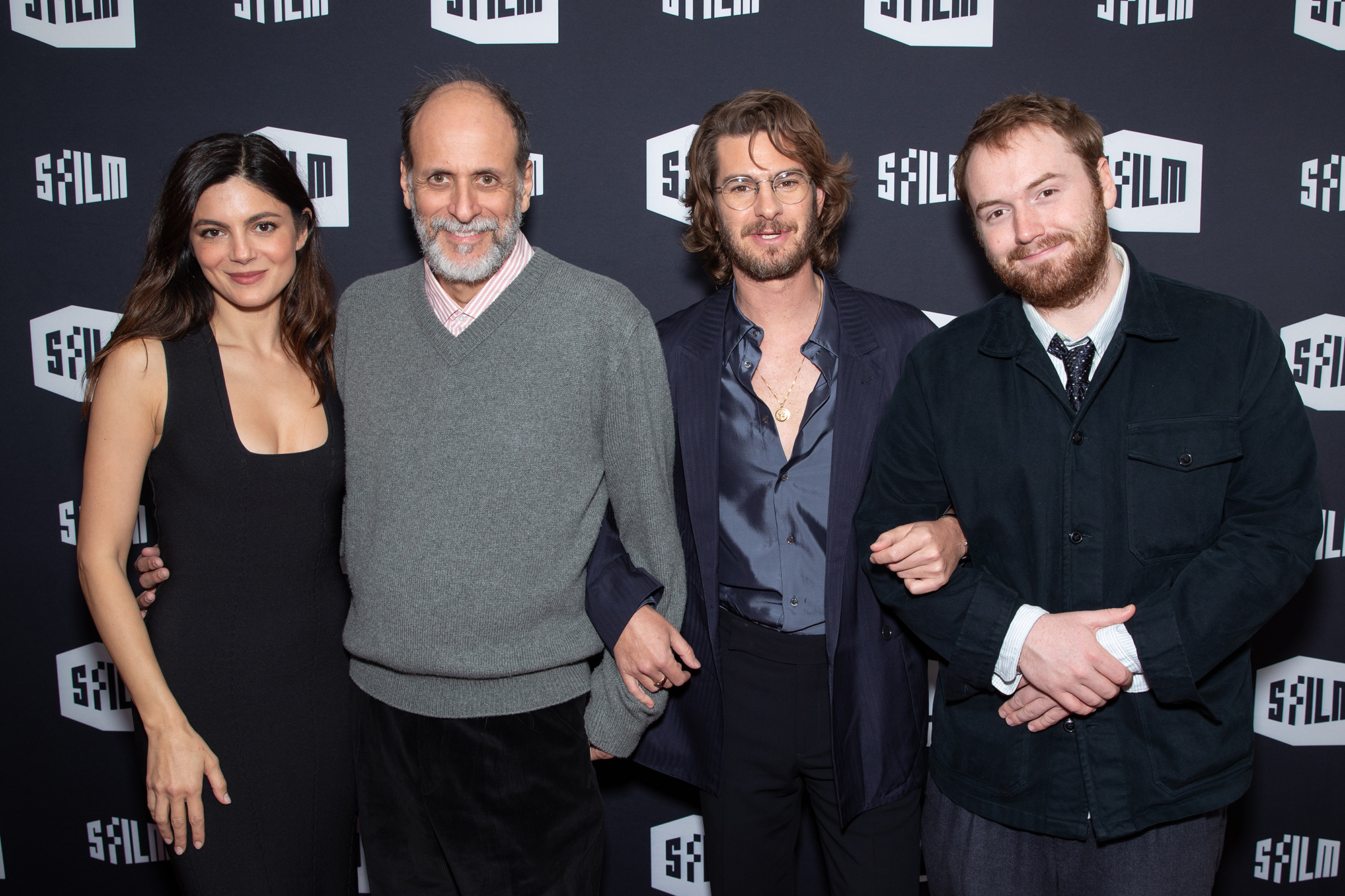
Luca Guadagnino might live in Italy, but after a preview screening here on Tuesday night of his new movie Artificial, about Sam Altman and the rise of OpenAI, he showed that he understands San Francisco better than some of its own residents.
“Your incredible city has been a lighthouse for America, for sure — culturally, and in terms of civil rights, the politics of San Francisco, the beauty of San Francisco,” the director said during an onstage Q&A. “All of that contributes to a propulsion of a utopia that this city has within its DNA. Then Silicon Valley arrives, crashes into the city, and from utopia we get into dystopia. And we get to a place where the future is a sort of no future.”
If that sounds bleak, check his source: the ego clashes of the AI war, fought by men trapped in preadolescence, jockeying to steal all of the world’s art and writing in order to replace human thought, decimate industries and prop up the U.S. stock market while grossly enriching themselves along the way.
That’s the world of Artificial, at least, Guadagnino’s 11th feature film as a director, and clearly an anticipated one. Ninety minutes before the sold-out SFFILM screening at the Jewish Community Center of San Francisco, with in-person appearances by Guadagnino and stars Andrew Garifeld, Monica Barbaro and Cooper Hoffman, the rush line for the mere possibility of scoring a last-minute seat was already 20 people deep. Scheduled for a Christmas release by distributor NEON to maximize Oscar buzz, it’s a timely and cautionary tale.
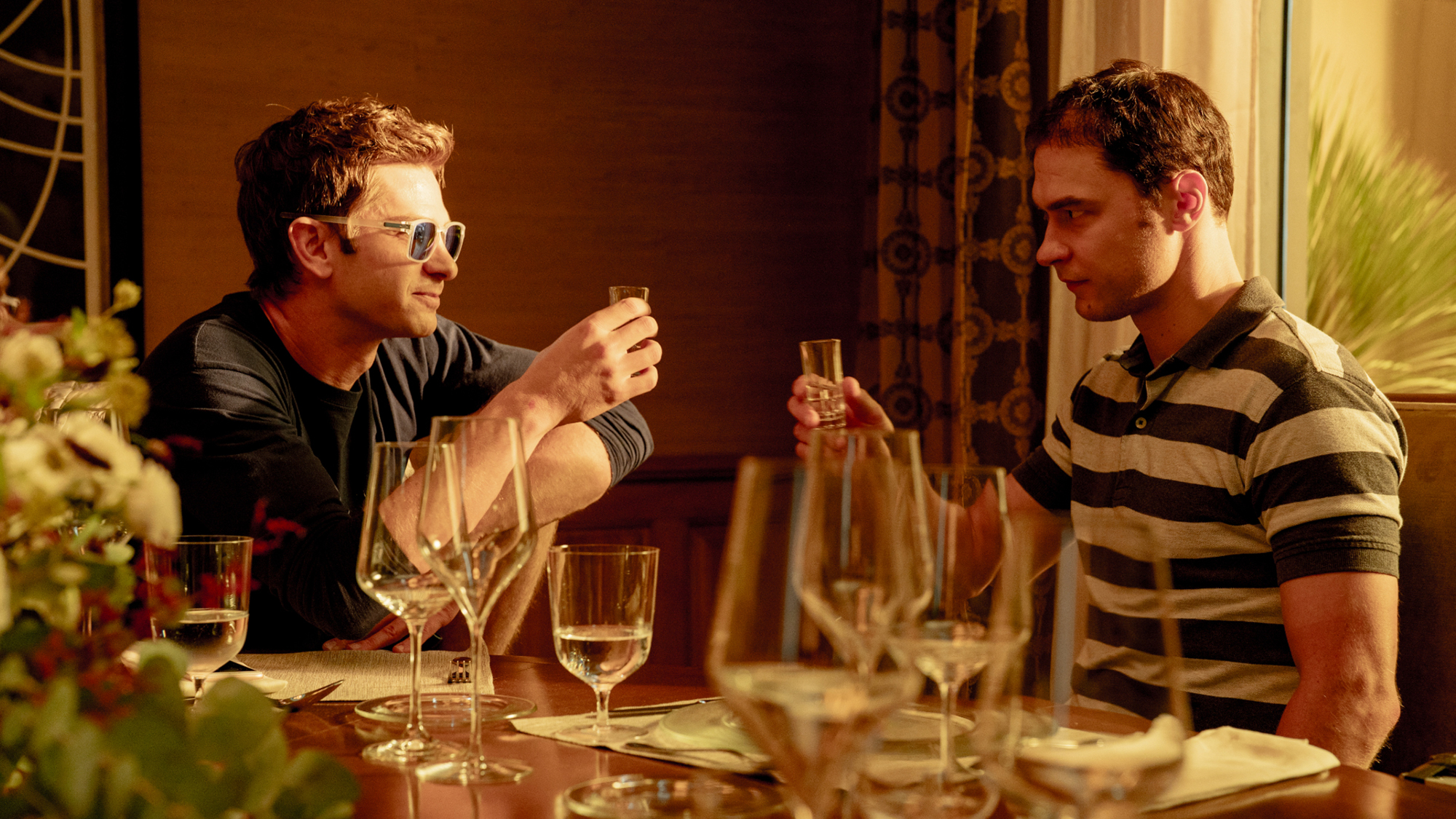
One can think of Artificial as a less-macho Social Network updated for the ChatGPT era, with the same insider power sparring. Lead actor Andrew Garfield — a standout in The Social Network — embodies Altman and his conniving ways, on down to his walk and odd perch. Onstage Tuesday, however, he brushed off a question about overlap between his Social Network character of Eduardo Saverin and Altman.
“They feel like incredibly distinct people from each other,” Garfield said. (For one, Altman wins, Saverin loses.) Garfield instead embraced the challenge in playing someone who rushes out a product that might eventually cure cancer or Alzheimer’s, “but at the same time, knowing that you’re doing real personal damage and collective damage, and having people’s innate gifts — such as mathematicians now, most recently — usurped and replaced so that there’s a sense of meaninglessness in their lives.”
Filming the movie proved difficult, as keeping up with fast-paced news developments was a concurrent, ongoing process, as Barbaro explained. The film wrapped too early to include AI solving the Navier-Stokes problem, alluded to onstage by Garfield, but it did work in a reference to ChatGPT explaining and encouraging suicide after the filing of numerous wrongful death lawsuits.
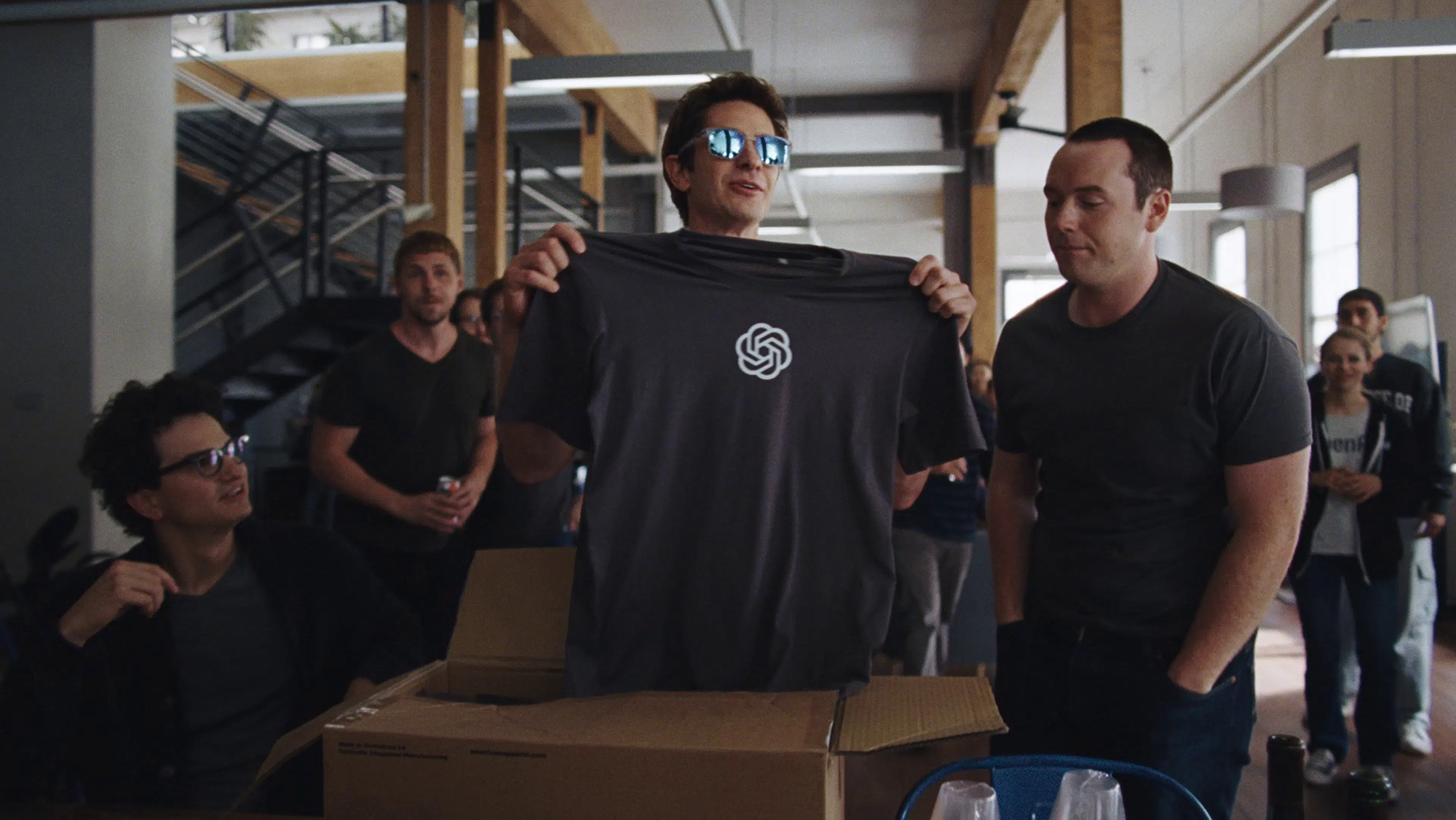
In Artifical, AI is a Pandora’s Box opened by a morally questionable cohort, and the San Francisco of today eggs on its ceaseless churn via city policy, corporate partnerships and billboard ubiquity. But the otherwise beautiful city shines as “one of the protagonists of the movie,” as Guadagnino put it. (For her part, Barbaro, who grew up in Mill Valley enrolled in publicly funded arts programs, said onstage that Silicon Valley “honestly felt very disconnected” from her experience in the Bay Area, where “insatiable capitalism gets in the way.”)
In other words, the film has plenty of San Francisco touches, making it a natural fit for receiving SFFILM’s SF Honors award on Tuesday night.
Tourist sites like Alcatraz, City Hall, Lombard Street and the Presidio make token appearances in Artificial, as do lesser-known landmarks like Dolores Park, a Precita Eyes mural on South Van Ness and the WPA-era murals inside Coit Tower. In one scene, a TV cameraman even sports a T-shirt of the SF queer punk band Pansy Division.
But the truest representation of San Francisco may be Artificial’s final shot, after the closing credits of a film dedicated to several of the world’s richest men: billionaires, along with Altman, like Elon Musk, Dario Amodei and Satya Nadella.
It’s just 10 seconds or so, a flash of someone crouched on the sidewalk, living on the street. But it says uncountable truths about the San Francisco of 2026.