‘Untidy and Completely Naked’: Florence Pugh and Zoe Kazan Talk ‘East of Eden’ in SF
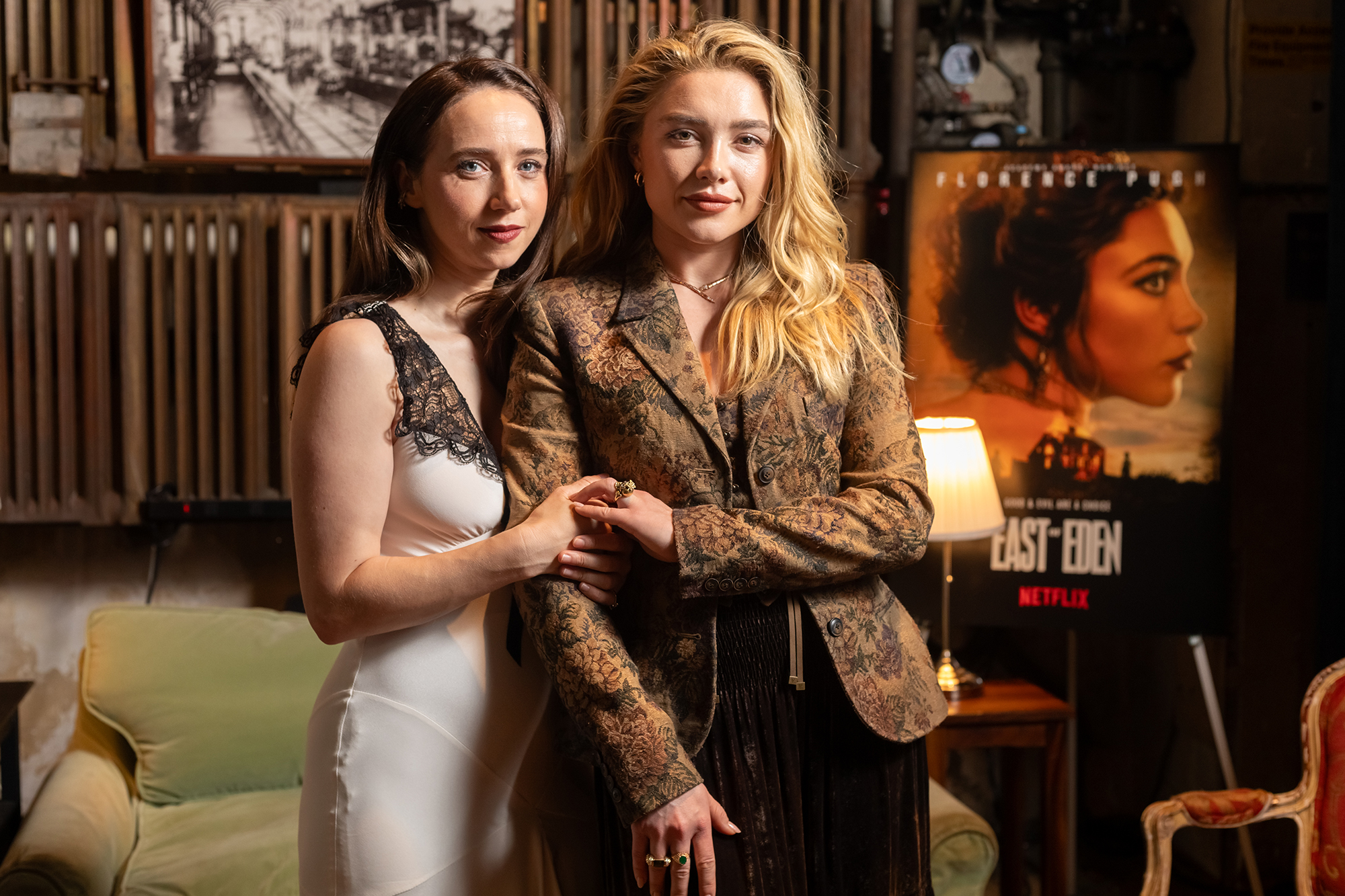
“It’s very good… but it’s very sexy. I was a little shocked.”
This was how an 80-something volunteer at the Steinbeck House in Salinas described Netflix’s East of Eden during my visit last month. I hadn’t yet seen the miniseries, starring Florence Pugh, and written and produced by Zoe Kazan. But as sat in the living room of John Steinbeck’s childhood home, I watched as one, two and then three other visitors arrived, each fresh from binging its seven episodes, eager to learn more about the Nobel-winning author.
If there was ever a case to be made about pop culture’s ability to resurrect classic literature, here it was, happening in person.
At her City Arts & Lectures appearance with Pugh in San Francisco on Thursday night, Kazan told the audience that she once made the same pilgrimage to Salinas. The city’s downtown business district, Steinbeck’s home, the railroad tracks, the now-dilapidated Chinatown and red light district: all became inspiration for her Netflix adaptation that’s propelled East of Eden, Steinbeck’s 600-page novel, back to the bestseller list.
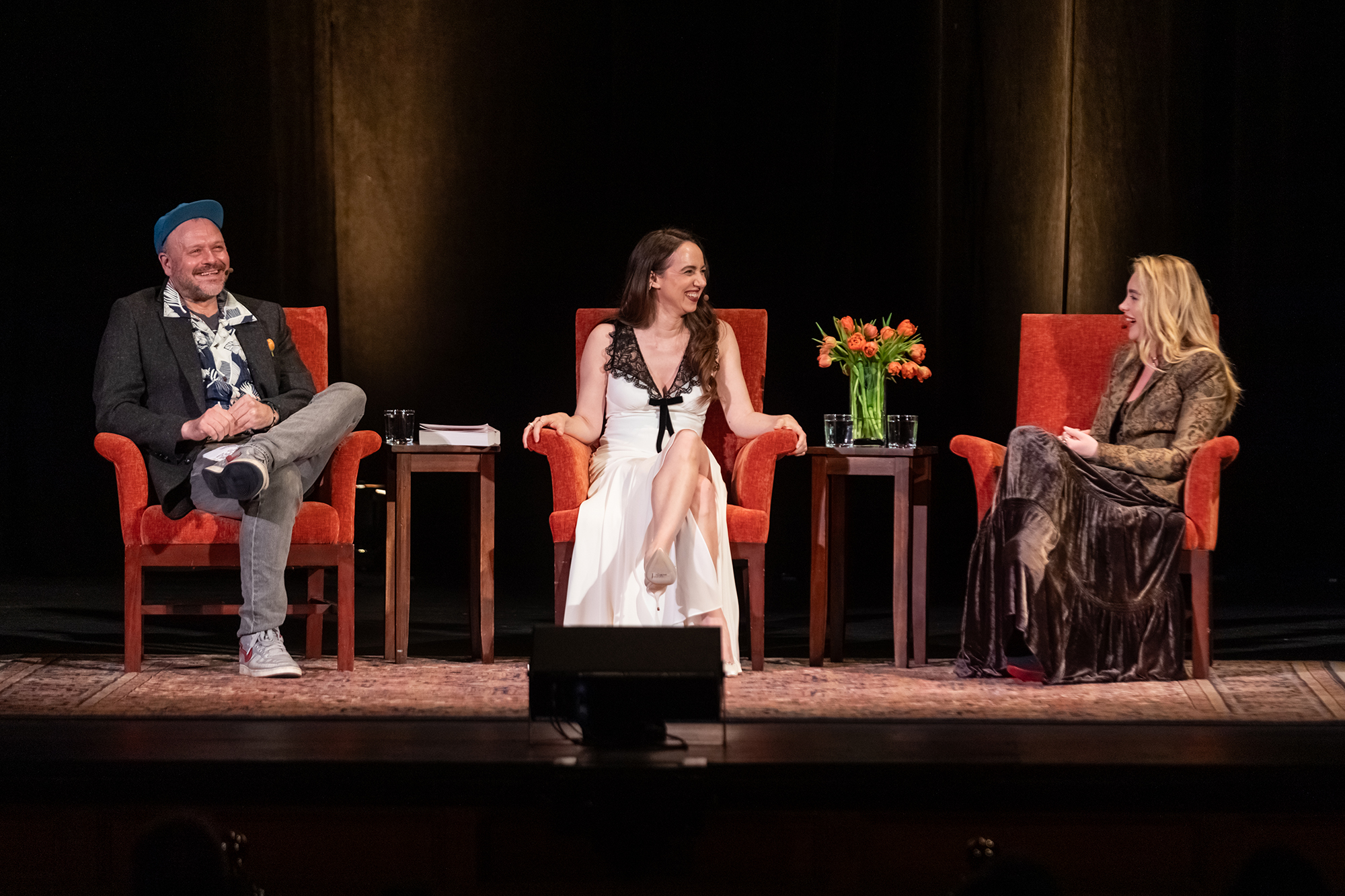
As with any adaptation, one has to wonder what a television audience will make of the book. It is not a breezy, simple read.
Across a 45-minute conversation moderated by Jesse Hawthone Ficks, Pugh spoke about portraying East of Eden‘s brothel madam Cathy, one of the novel’s “hard, complicated and sometimes unliked characters” that called for her to embrace being “untidy and completely naked.” Kazan added that she relished writing for characters so unknowable that, in the book, Steinbeck himself narrated his own reconsideration of them — part of his “endless search for the humanity of others.”
It was perhaps with that in mind that Kazan took the liberty of adding a sequence in San Francisco, where the Trasks’ Chinese housekeeper Lee travels to open a bookstore. There, he is rejected by white loan officers, and furthermore, finds that he doesn’t fit in with Chinatown’s social life. None of this is in the original story; Lee leaves, then returns, and simply says he was homesick.
“But I don’t think I went off-book,” Kazan said onstage, saying that while some of Steinbeck’s descriptions of Lee’s facial features are “extremely racist,” she felt like she was being true to his intention for the character. (It helped that the actor, Hoon Lee, showed up to the set deeply researched about the character of Lee and social context of the era.)
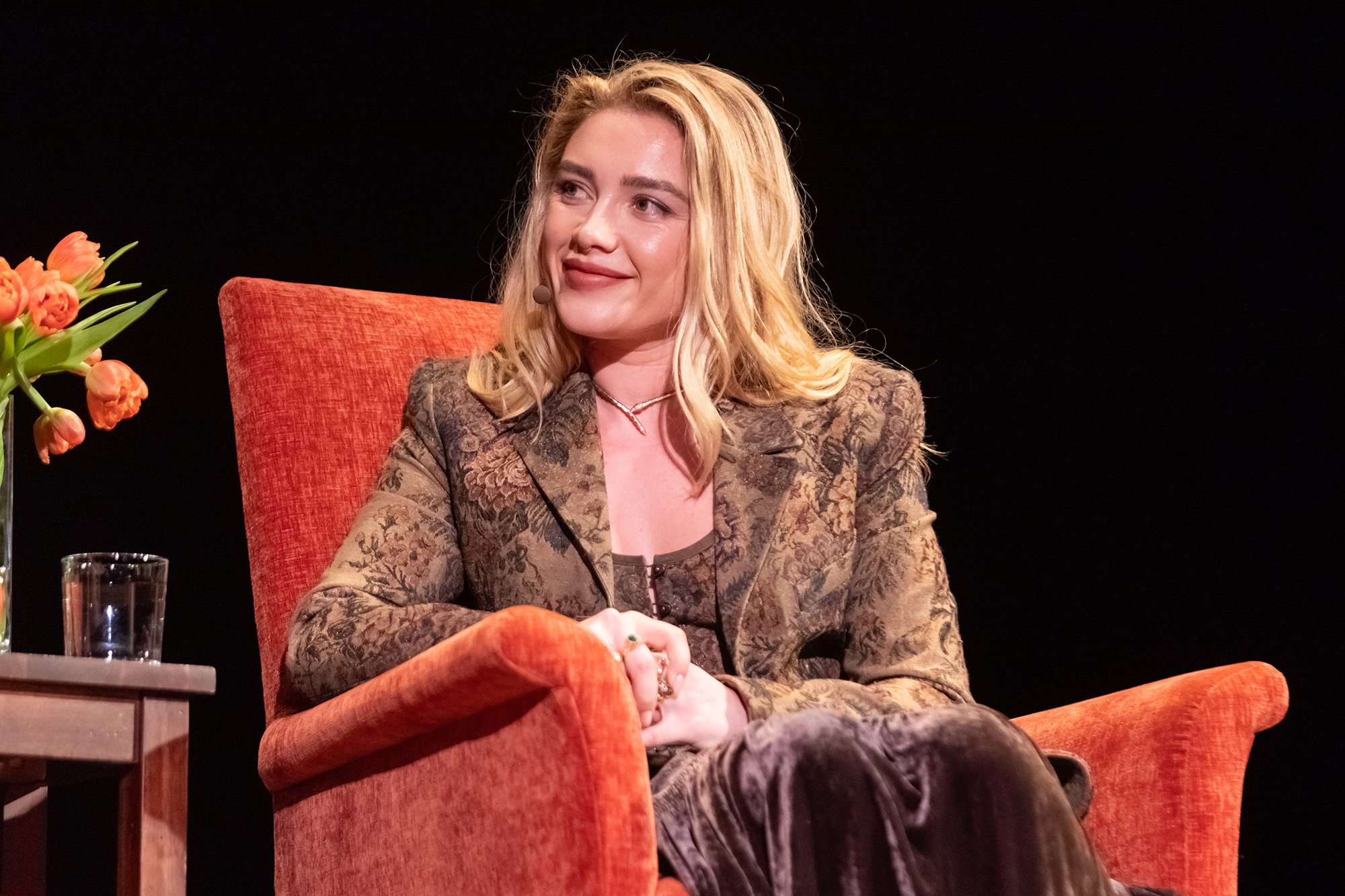
Much of the night was a lovefest between Kazan and Pugh, as the two traded compliments and validation. The conversation came alive when the two shared specifics of the series. Pugh described having to film a harrowing scene of being bloodied and beaten, and of learning to set boundaries that she’d previously ignored on films like Midsommar. Kazan described crying tears of appreciation when she arrived on set one day and saw bird droppings under the rafters of the Trask house, added by the set designers with requisite attention to detail.
Clearly, East of Eden was a labor of love for both women. (Kazan, whose grandfather Elia Kazan was friends with Steinbeck and directed the 1955 James Dean movie adaptation, said plainly: “I walked around thinking about it for 20 years.”) So it was only natural that the evening ended with Pugh and Kazan receiving the Steinbeck Award, presented by the Martha Heasley Cox Center for Steinbeck Studies at San José State University.
If the steady influx of recent visitors to the Steinbeck Home and nearby museum in Salinas is any indication, the two have more than earned it.
A broadcast of Zoe Kazan and Florence Pugh’s appearance at City Arts & Lectures will air on KQED radio on Nov. 22 at 1 p.m., Nov. 24 at 10 p.m. and Nov. 25 at 1 a.m. Listen here.