The Spirit of Hunters Point Lives On at Surfside Liquors
Last Friday, I heard directly from the heartbeat of Hunters Point.
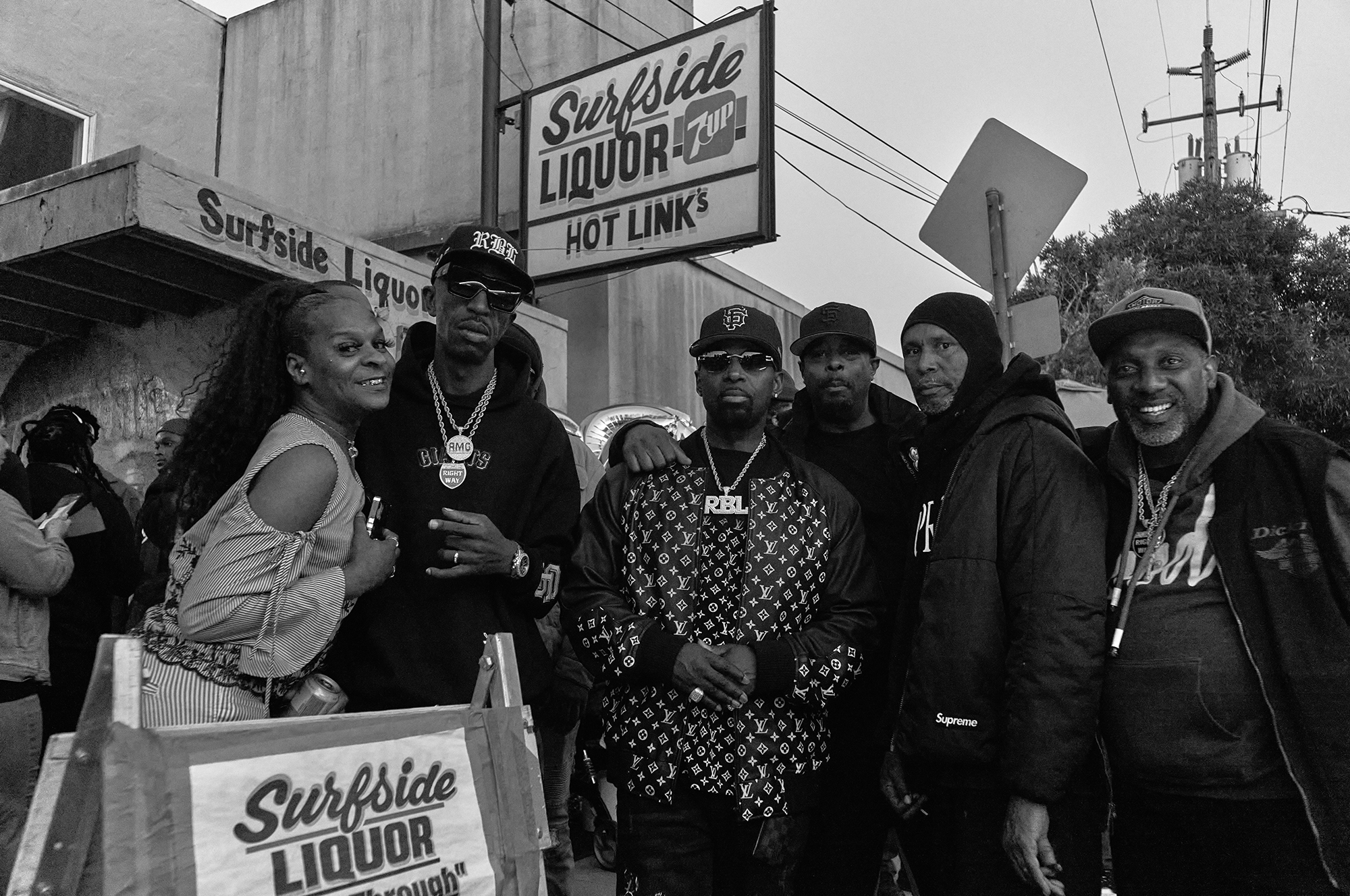
Outside Surfside Liquors, people exchanged handshakes and hugs as they gathered to celebrate Bob Pinkard, the 81 year-old who’s owned and operated the store on Innes Avenue since 1974.
While each paid tribute to Bob Pinkard’s contributions to the neighborhood for the past half-century, collectively they painted a picture of the resilient spirit of Hunters Point’s African-American community.
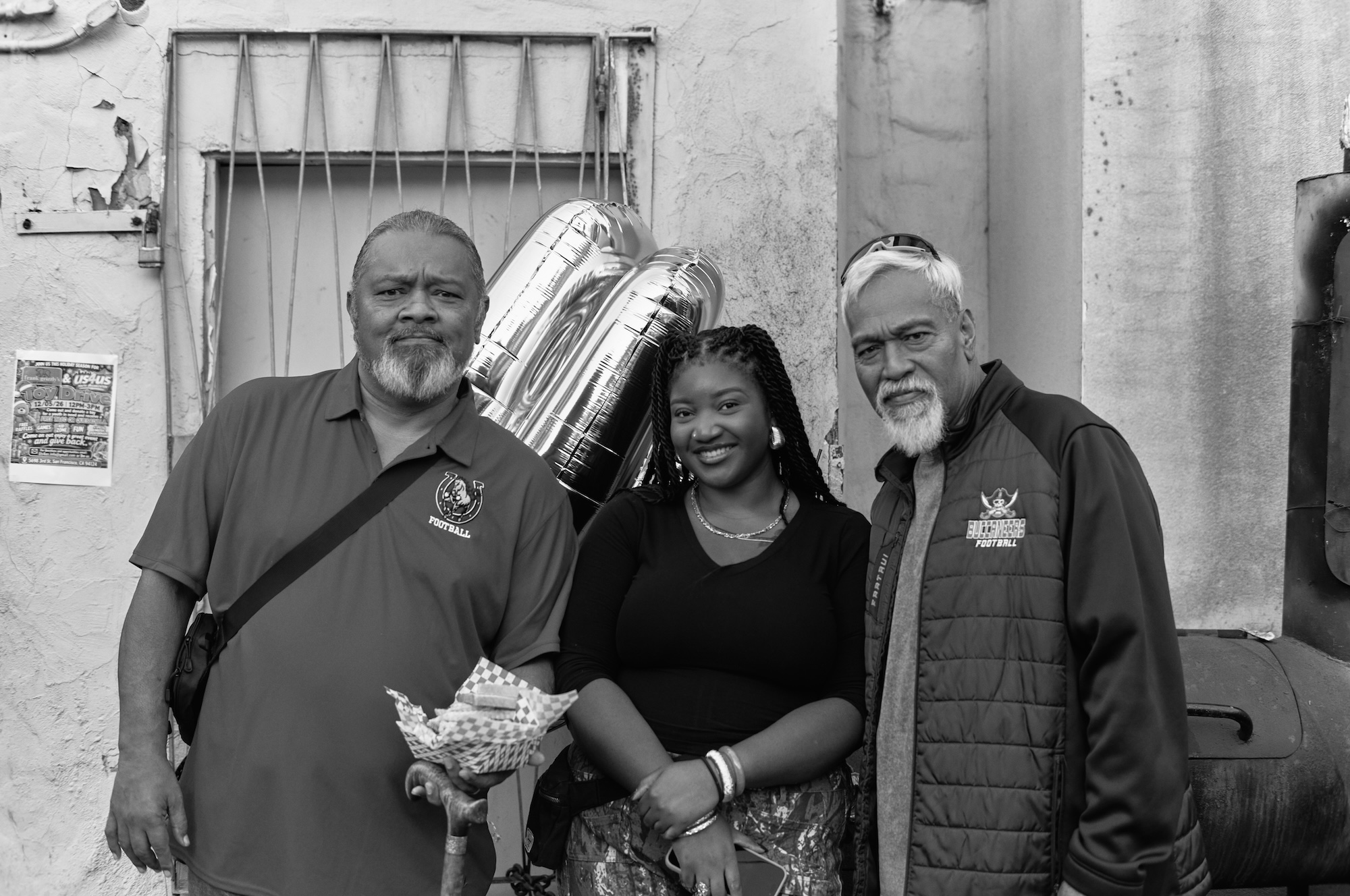
I heard from a young woman holding a baby and an elder woman holding a walker. I chopped it up with rappers wearing local sports paraphernalia, entrepreneurs in custom hoodies and a group of women who’d just finished their shift at a construction site, still in work clothes.
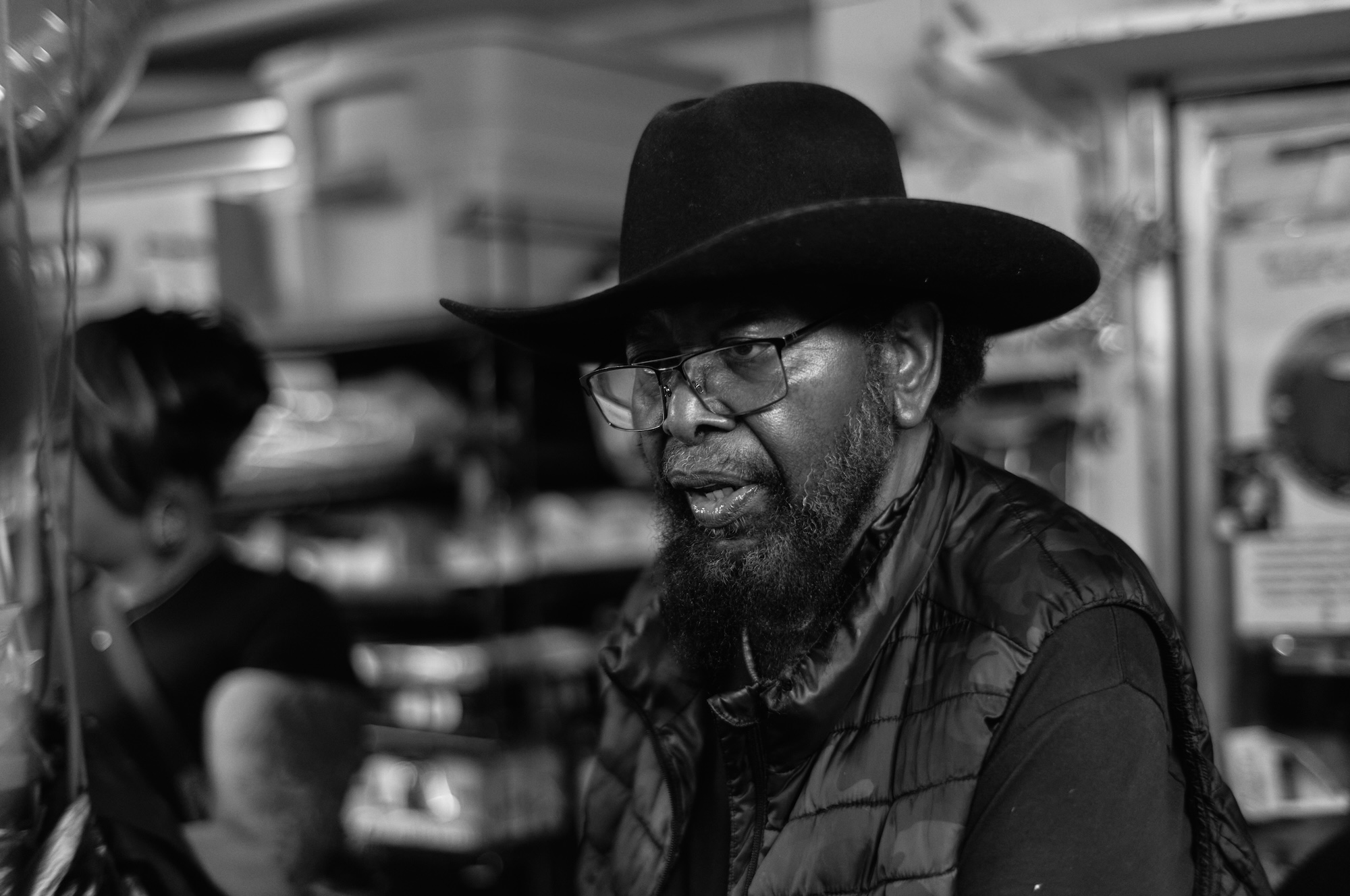
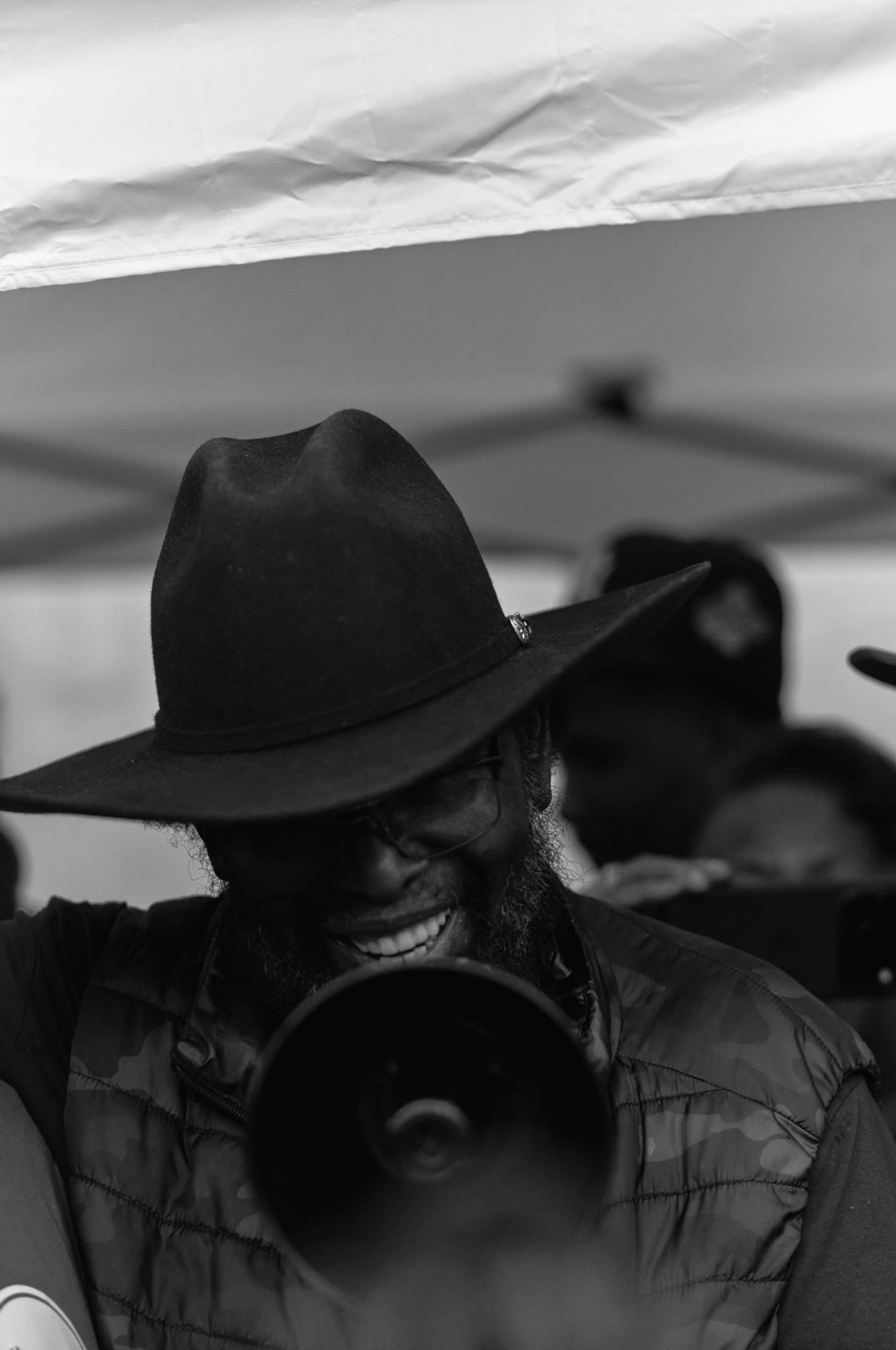
As cars double-parked up and down the block, people barbecued on the sidewalk and music blasted up the avenue, “Uncle Bob,” as Pinkard is known, stayed behind the counter, his eyes peering through his big glasses and beyond the brim of his cowboy hat as he surveyed the gathering.
“These are the babies I watch grow up,” Pinkard told me with a smile. “From Larry June to RBL to Big Block, these are all my babies.”
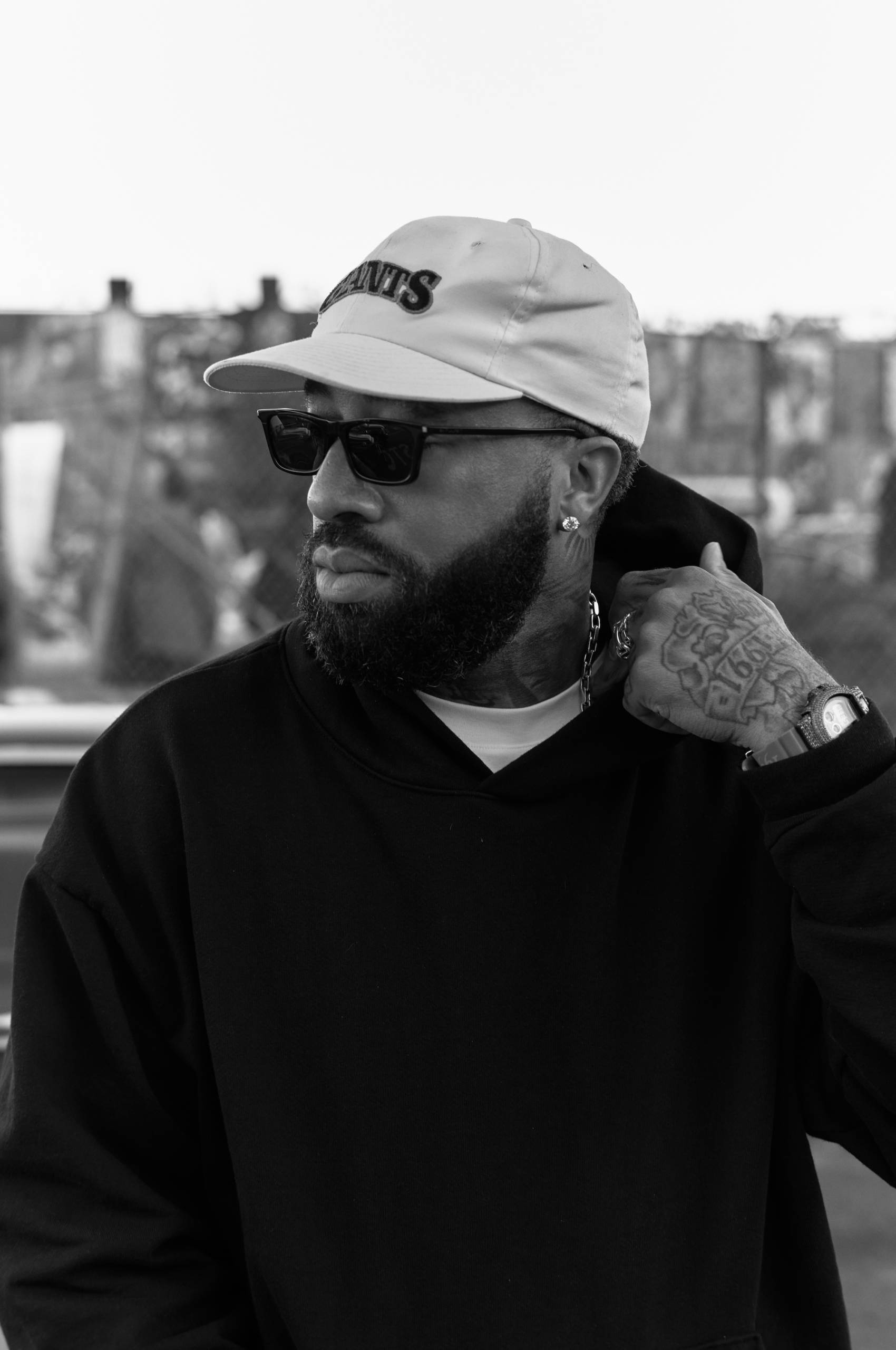
In a 1989 World Series edition Giants hat and trademark dark-tined glasses, one of the most popular rappers from the Bay Area, Larry June, cool-breezed into the same store he’s frequented since he was a youngin’.
“Granny used to send me down the hill with the dollar bill food stamp,” June told me. From 38 Harbor Road, June would walk to the store to “grab some Twizzlers, some milk and all the good shit.”
June, like many I talked with, told me that Uncle Bob has an intangible appeal that makes him so beloved.
“He’s a legend, he’s putting on for the community,” said June while walking out of the store. “He’s only brought positive energy since day one. Man, it’s always love and respect for Bob.”
That sentiment was echoed by Dr. Saidah Leatutufu-Burch, who lovingly described Surfside Liquors as “that OG candy store” where kids get snacks, the grown-ups get libations and folks of all ages get hot links. “That’s real San Francisco-coded,” she told me, “and it is authentically Hunters Point.”
Adding context to Pinkard’s longevity, Leatutufu-Burch mentioned that Pinkard has served the community while many Black folks in San Francisco have been pushed out. When Pinkard took over the business in 1974, the city’s African American population was at its height, constituting more than 13% of the total population. Now Black folks only account for roughly 5%.
“The fact that Bob is able to stay here, and continue to be here without being pushed out,” said Leatutufu-Burch, “it signifies resistance as well as resilience, and a reclamation of our culture.”
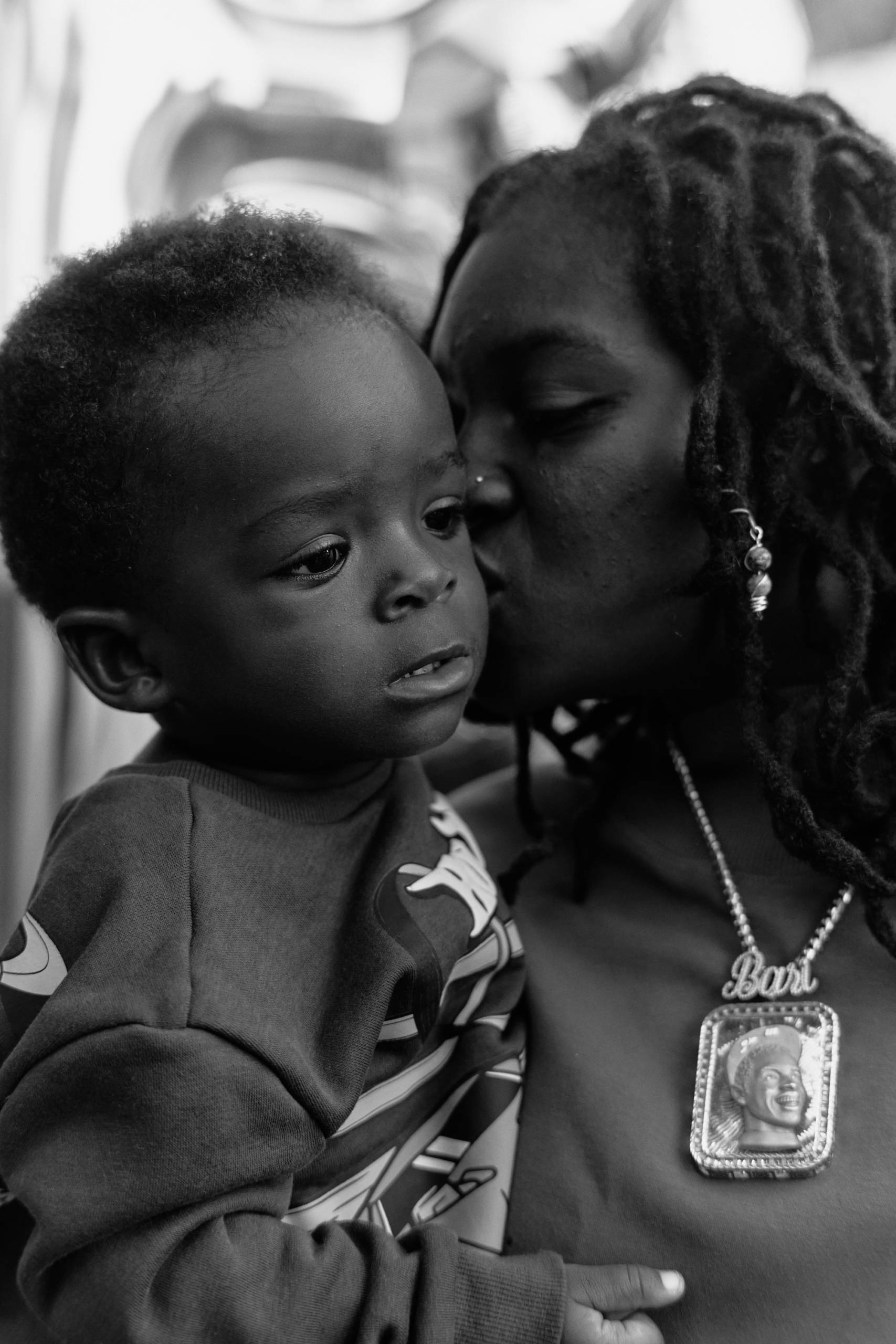
Bob is a beacon of light in the midst of racial profiling from other store owners, according to Shamika Jones. “They think that we’re all on drugs or alcoholics,” lamented Jones, 35, who stood outside Surfside Liquors holding her young son, Kayden. “This is the last store we have here that is us,” Jones explained to me. To have a store where “you’re respected and they remember you,” she told me, “that’s where you want to spend your money.”
And even if you don’t have money, Bob will provide.
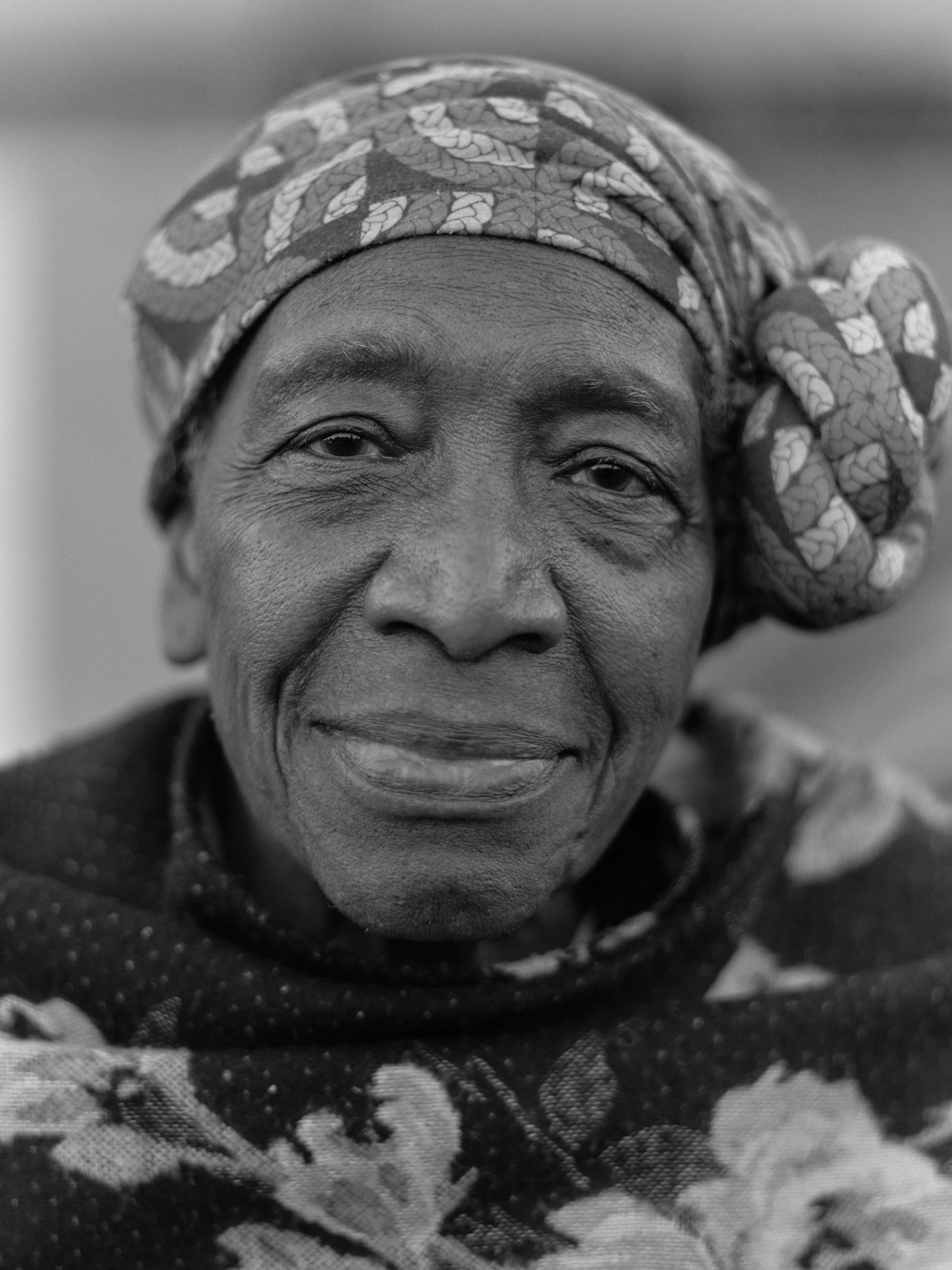
“He helped a lot of people,” said Mary Monk, who leaned on her walker while describing how Pinkard regularly assists people who don’t have or can’t afford food and decent produce. Monk has seen the neighborhood around the store change, from new housing developments to a sprawling greenway.
“It’s good to be part of the community,” she added. “I’ve been around here a long time: 60 years, I’m not kidding.”
Latoya Pitcher, dressed in a lively red and gold sequin-styled 49ers jacket (with boots to match), told me that Bob Pinkard represents legacy, family, love, faith and unity. “But more importantly,” she told me, “Bob means continuity.”
The store’s origin story, Pitcher said, is evidence of that. Pinkard, a former employee of Coca-Cola and Gallo Winery, purchased the establishment from someone who wasn’t Black, but who was intentional about serving the area’s predominantly Black community. “He sold it to Bob with the promise that Bob would continue to serve this community as his priority,” said Pitcher.
Pinkard isn’t officially retiring just yet. But Pitcher asserted that when he does, “we need to keep telling the stories to keep the recognition and acknowledgement alive,” she said. “We don’t wait for others to acknowledge us, we acknowledge us. And we record our own history so they don’t try to record their version of our history for us.”
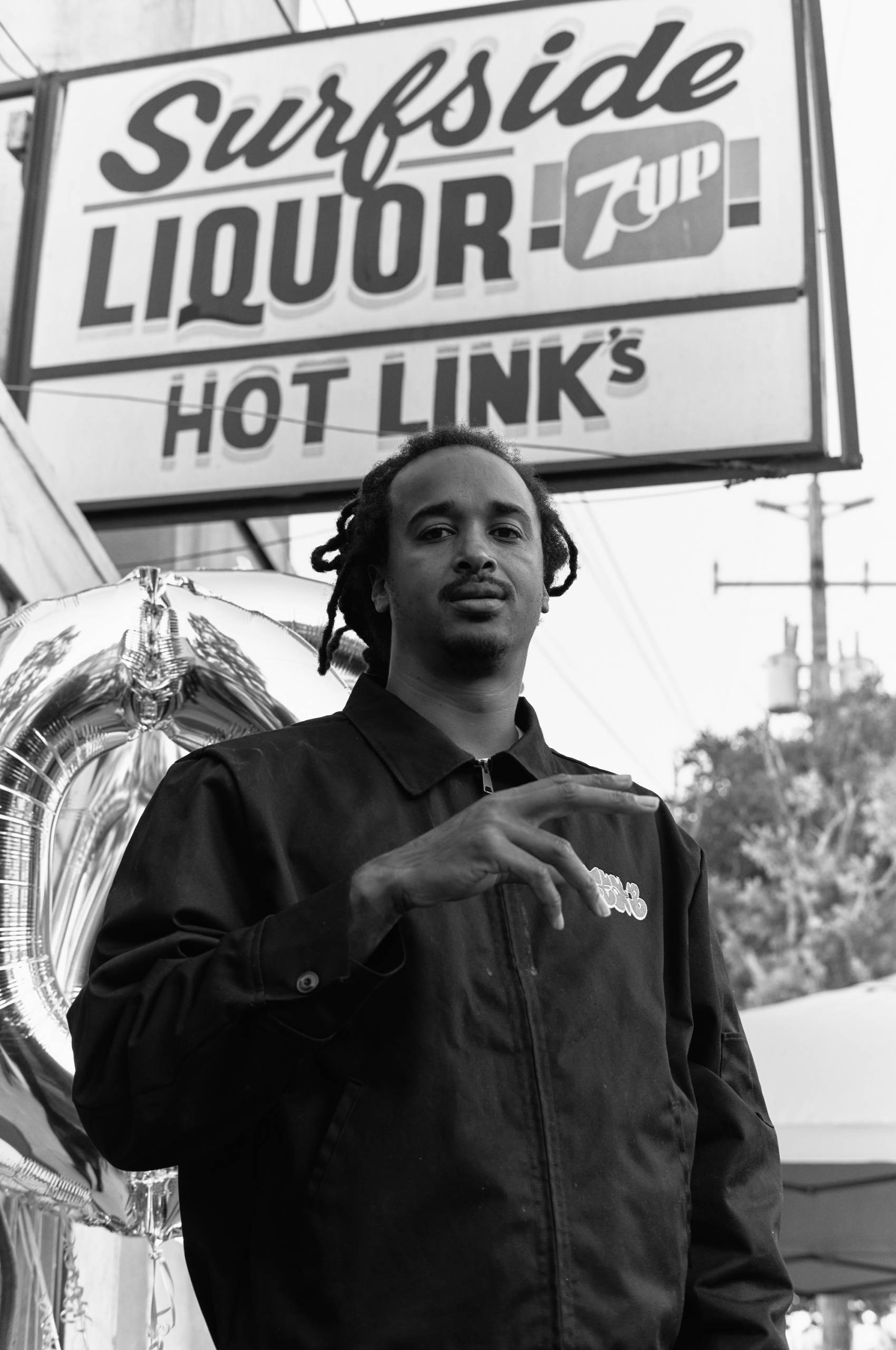
District 10 supervisor Shamann Walton, who presented Pinkard with the city’s Legacy Business award on Friday, told me that his grandparents, mother and aunt all used to go to Pinkard’s store.
In addition to saluting people like Pinkard, said Walton, “We’ve got to do like our grandparents did and support our businesses. If we don’t support our own, survival is hard. We’ve got to keep the money in our community.”
Shaquille Cooper, one of the organizers of Friday’s event, is an entrepreneur who directly credits his craft to Pinkard. Cooper talked to Pinkard for months leading up to the event, and created a series of hoodies that read “I Know Bob,” “Hunters Point Is Not For Sale” and “94124,” Hunters Point’s zip code.
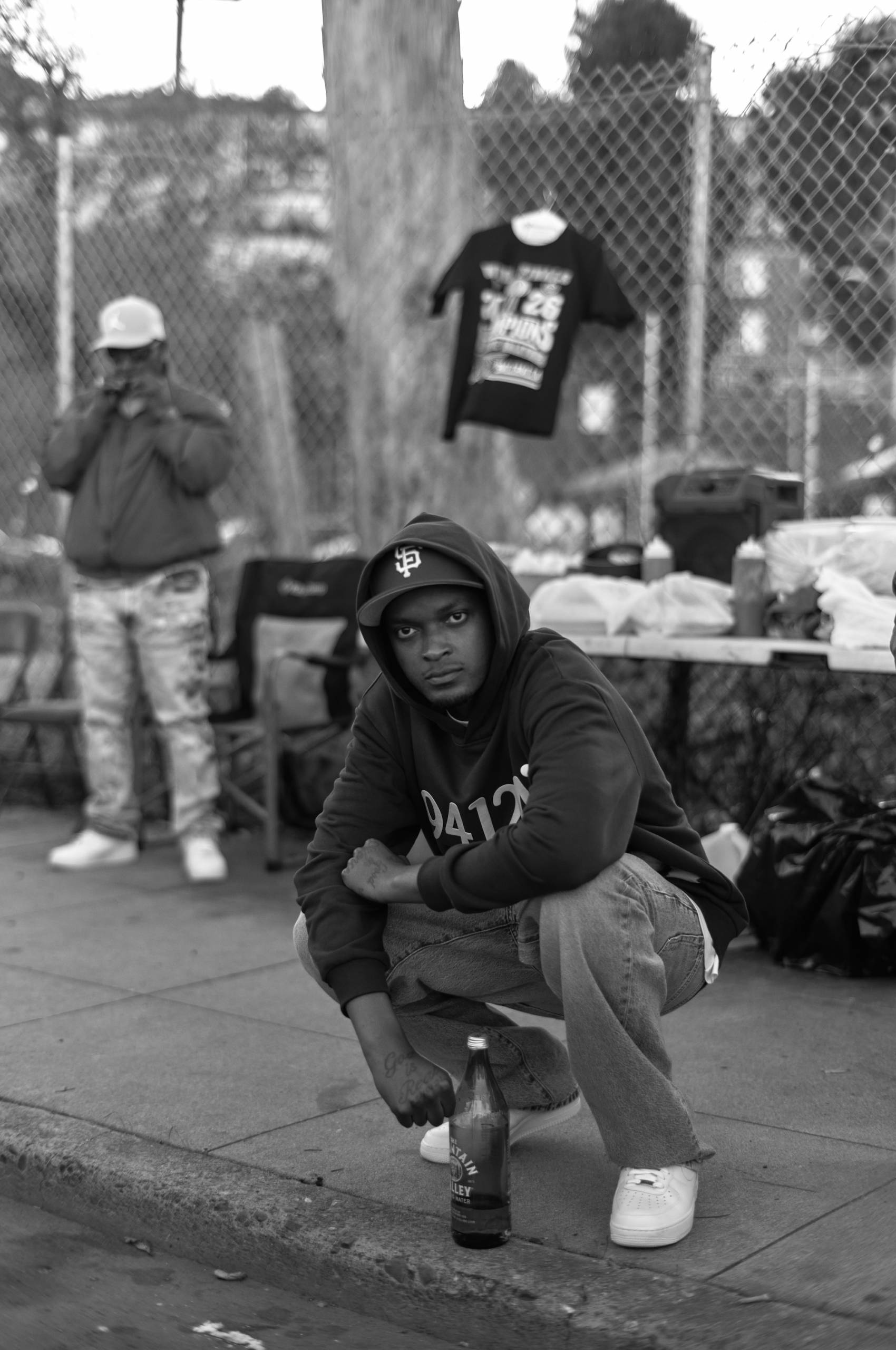
“I could cry right now, my heart is full, bro,” Cooper told me as we walked through the crowd on Innes Avenue. “This is my community. Everybody is enjoying each other, and we’re keeping the dollar circling around all Black businesses; real neighborhood shit. I got the chills talking about it, bro.”
Cooper exhaled and put the event into perspective: in the Black community, these kind of celebrations normally happen after someone has become an ancestor, he said. “But we’re honoring the man’s legacy while he’s alive,” said Cooper, “and we can keep doing this, and building on it.”
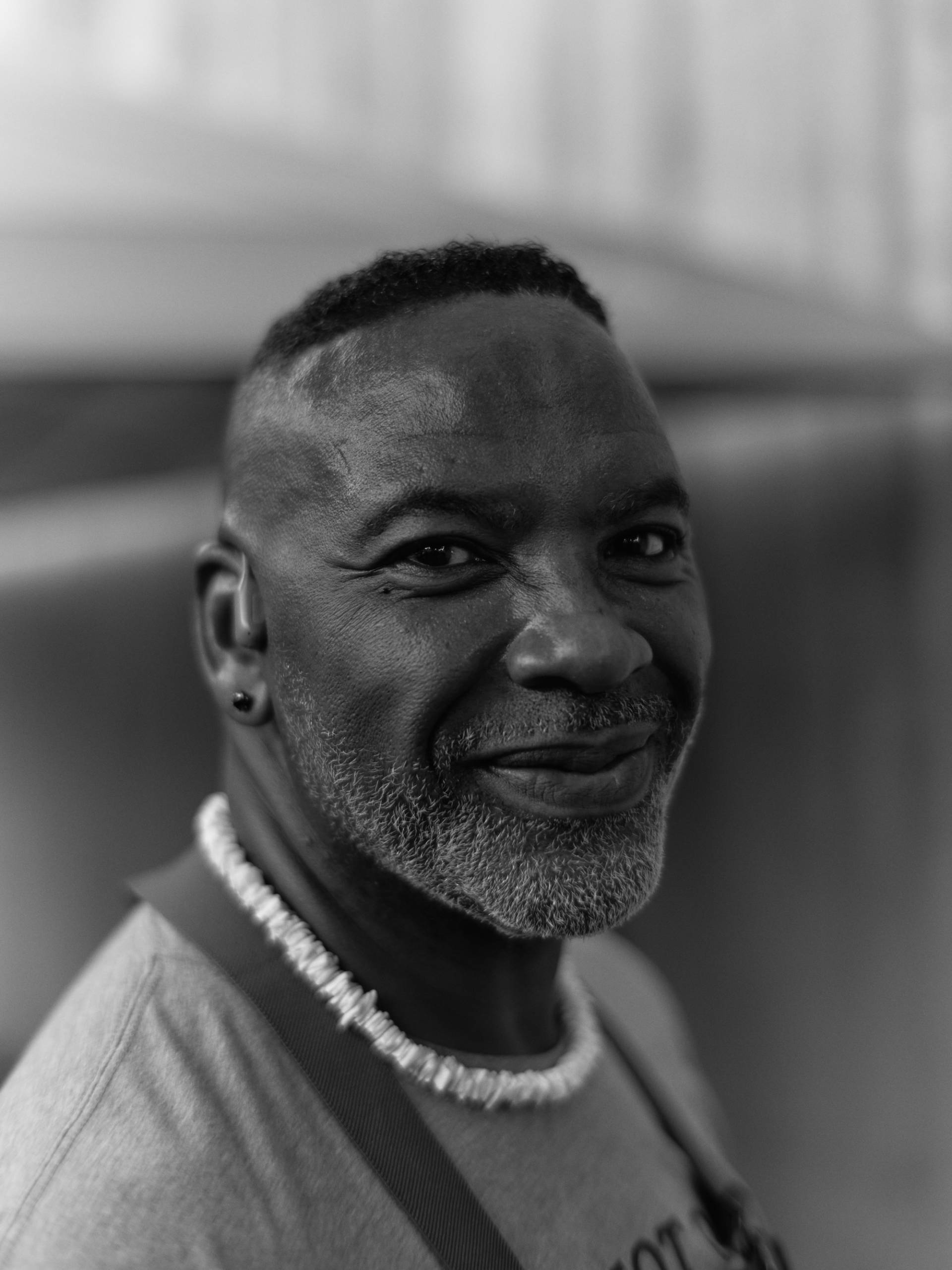
Inside the store, to the left of Bob’s counter, sat a woman who “went on this ride with him back in 1974”: Bob’s wife, Mercedes Pinkard. She thought about their years together and, without hesitation, said, “It’s been a good ride.”
The couple have been married for 58 years. They have three daughters and two grandchildren, but their list of kinfolk is extensive.
Bob considers his customers to be family. He’s even missed time with his actual family because he was passing out Thanksgiving dinners or greeting people on Christmas morning. “He was here on holidays,” Mercedes said, pointing to the store beneath her feet. “He didn’t open those gifts. He came to his ‘family’,” she said, in reference to the patrons.
Even amid a natural disaster, Surfside Liquors remained open. After the 1989 earthquake, the lights in the neighborhood went out, “but Bob was still working,” providing ice and batteries to those in need, said Mercedes.
“He didn’t shut down, he made sure everybody was safe. He gave it his all, you know. And I think the community loves him. They are always here for him.”
All of which has made Surfside Liquors much more than a convenience store. It’s a spot to get hot links and cold drinks, but it’s also a capsule of culture and community hub.
Just up the block from rows of new expensive condos, and down the hill from the old Harbor Road projects, Pinkard’s store is adjacent to a forthcoming Blue Greenway that will connect all of southeast San Francisco, and located in a community the U.S. government once used as a toxic wasteland.
Somehow, in an economic system built on exchanging money for goods, Bob Pinkard proved that “goods” has a double meaning.
During his celebration, as a kid to my left handed Pinkard a folded dollar bill and two coins for a snack, he gave thanks to the people who packed the store and the swarm of people in front of his business.
“That means that I didn’t feed the babies in vain,” he told me. “And they took care of me.”