‘Being Heumann’ Tells a Disability Rights Story Packed With Real-Life Drama

Early on in Being Heumann, a biopic based on disability rights activist Judy Heumann’s 2020 memoir, Heumann interrogates the motives of a KGO-TV reporter. The journalist is covering the 1977 Section 504 Sit-In in San Francisco, which still holds the record for the longest sit-in of a federal building in American history.
“If people would hear this story, they’d be inspired,” the reporter says.
“Inspired to do something?” Heumann counters. “Or just inspired?”
It’s a mic drop of a moment in a film that is full of memorable zingers. But it’s one of the few lines that jumps out of the screen to implicate not just the TV-watching audiences of 1977, but the movie-watching audiences of 2026. How will you consume this story, Heumann asks through the avatar of actor Ruth Madeley, and what will you do with that knowledge?
Directed and co-written by Siân Heder, who helmed the Academy Award-winning film CODA in 2021, Being Heumann tells the story of the 26-day occupation that led to the signing (spoiler alert) of Section 504 of the Rehabilitation Act of 1973. The long-delayed piece of legislation prohibited discrimination against people with disabilities in programs that received federal funding. In short, Section 504 established the civil rights of disabled people — rights that are now being threatened by the Trump administration.
While Heumann is the central focus of the movie, Being Heumann has a lot to say about coalition-building, the pitfalls of leadership and all the different ways people can commit to a movement. Like CODA, it’s a film rooted in the culture it depicts, starring 12 disabled lead actors and screening with open captions.
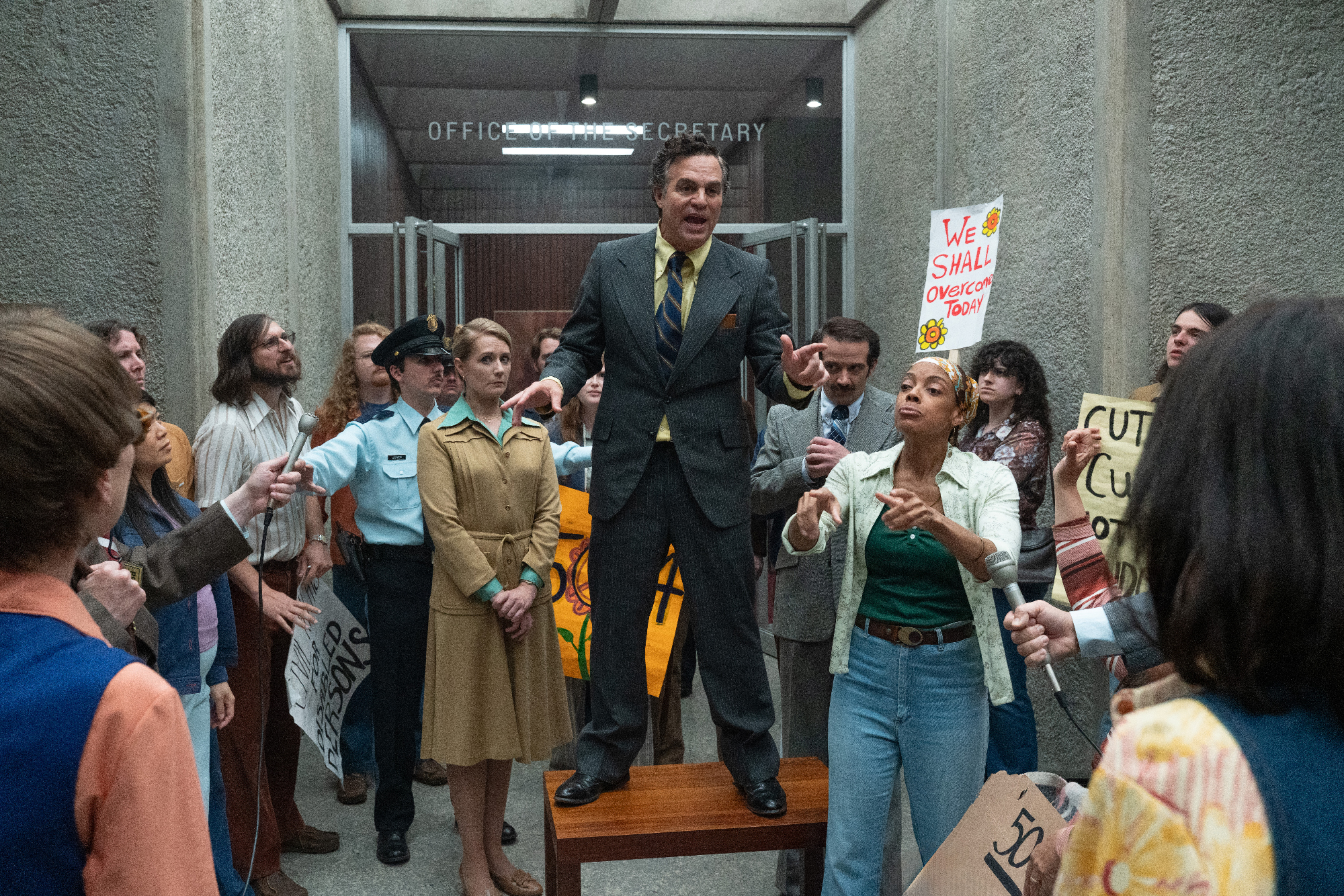
The antagonist in this story is Joseph Califano (a stubborn Mark Ruffalo), the Secretary of Health, Education, and Welfare, who has inherited Section 504 and refuses to meet with or even listen to the disabled community about issuing the regulations. In the movie, a sequence of Heumann repeatedly calling Califano’s office drives home her persistence, and the stunning lack of respect the activists were up against.
By the time we get to April 5, 1977, we’re just as fed up with this treatment as Heumann was. The occupation begins with a group of over 150 activists, including disabled people, their caretakers, interpreters and allies, taking over the fourth floor of San Francisco’s Federal Building (inaccessible at the time), and refusing to leave until Califano signs Section 504.
Some of the most interesting scenes in Being Heumann are the nitty gritty practicalities of sustaining the occupation. People with different disabilities care for each other. The Black Panthers provide food. Committees form, lectures ensue, joints are distributed. The protesters even jury-rig an office air conditioner to refrigerate medication.
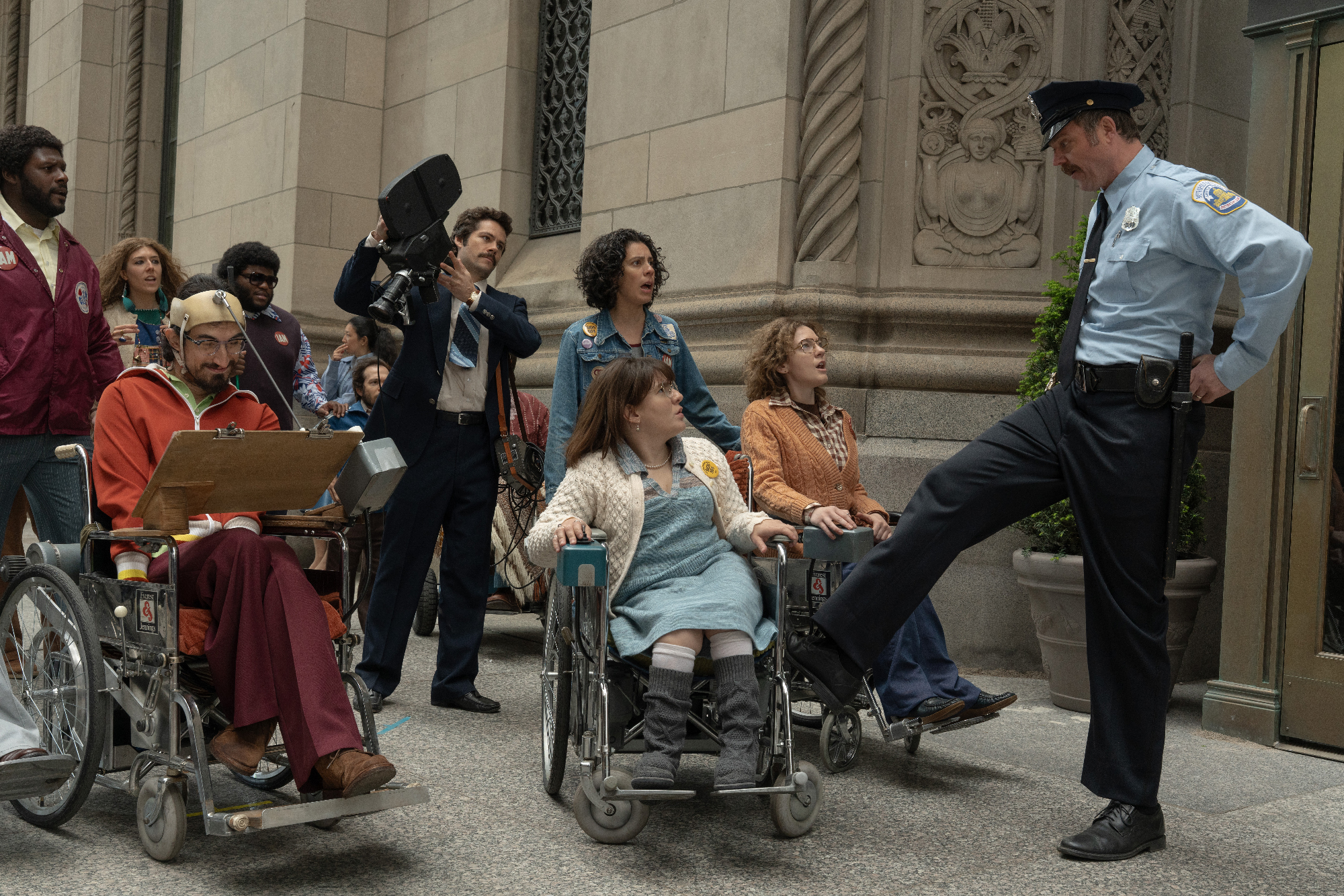
Heder intermingles scenes of wheelchair races and intersectional bonding with the tactical planning that goes into maintaining the protest’s momentum. Early in the film, we learn Heumann is willing to put her own body on the line. But that tactic isn’t for everyone, fellow leader Kitty Cone argues. Madeline Delp plays Cone, an equally formidable disability rights activist, as a source of balance — and an active challenger to Heumann’s leadership style.
There are many scenes in Being Heumann that seem too spectacular to be true. Did deaf protesters really sign messages through the window after the phone lines were cut? Without accessible transportation, did they really ride around Washington, D.C. in a box truck with a cargo lift? Did Cone really give an incredible speech in Civic Center at the end of the occupation? Yes, yes and yes.
Because it’s a movie filled with fun costumes, big set pieces and a 1970s soundtrack, we expect embellishment for the sake of storytelling. But as photographs from the sit-in plainly show during the end credits, Being Heumann’s biggest moments are entirely true. Alternately infuriating, moving, informative and galvanizing, Being Heumann shows how many real-life stories — packed with drama, humor and righteous energy — are just waiting to be told.
‘Being Heumann’ opens in theaters Nov. 6, 2026 and begins streaming on Apple TV Nov. 13.