A Futurist’s Detailed Paintings Get a Futuristic Display
Even at 54, the Transamerica Pyramid manages to look futuristic, probably because no other building in the San Francisco skyline has ever dared to be as weird. With its steep angles, pointy shoulders and graceful, leggy base, it remains wholly singular. What if the skyscrapers that grew up around it had dared to carve out their own silhouettes — or any sort of interesting shape at all?
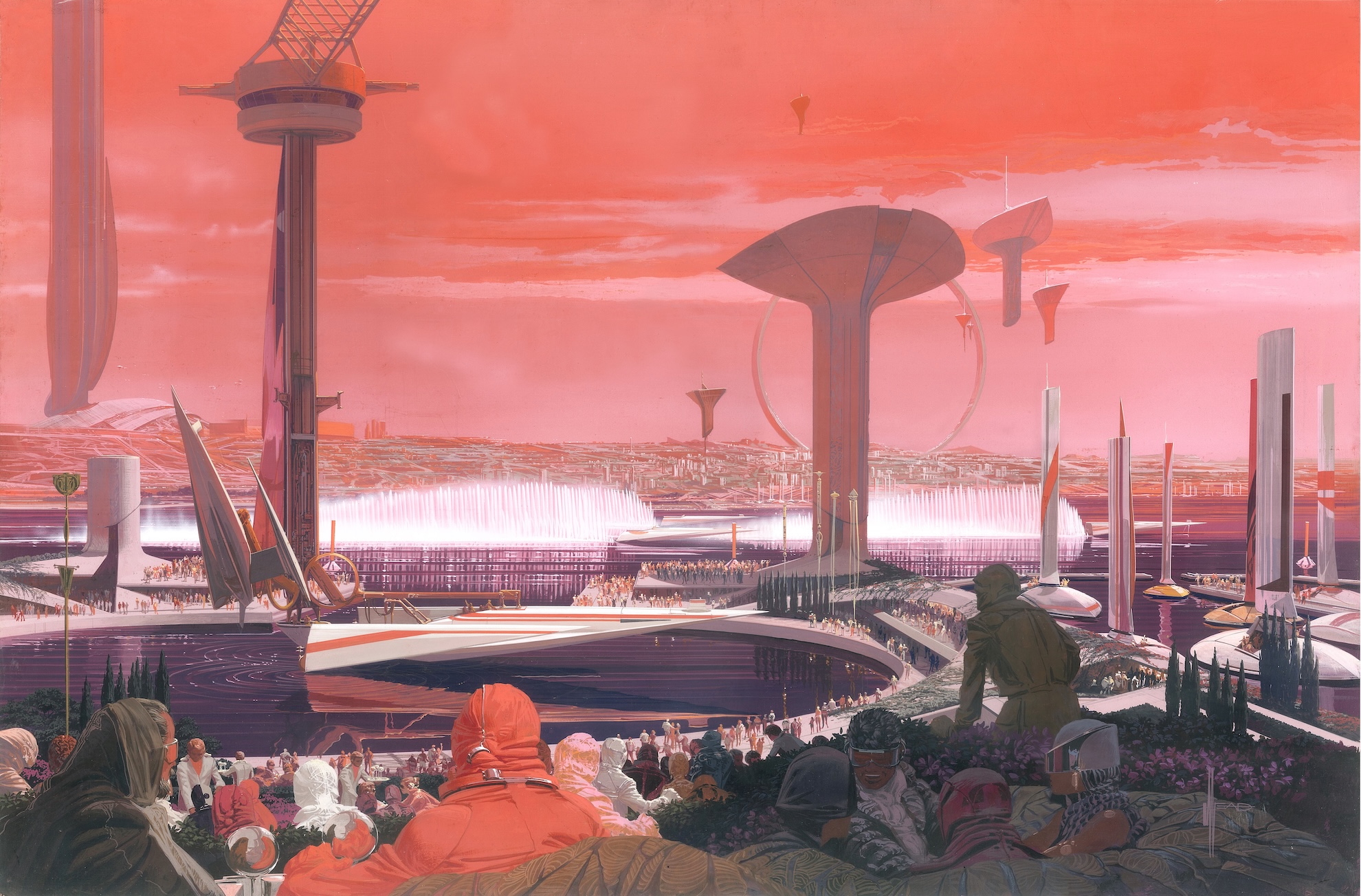
Alas, the present does not, in many ways, live up to past visions of the future. The 21st century was supposed to be sleeker, more harmonious and decidedly spacier. And for much of that expectation, we have one man to thank: designer Syd Mead, who crafted some of the most indelible images of what was to come.
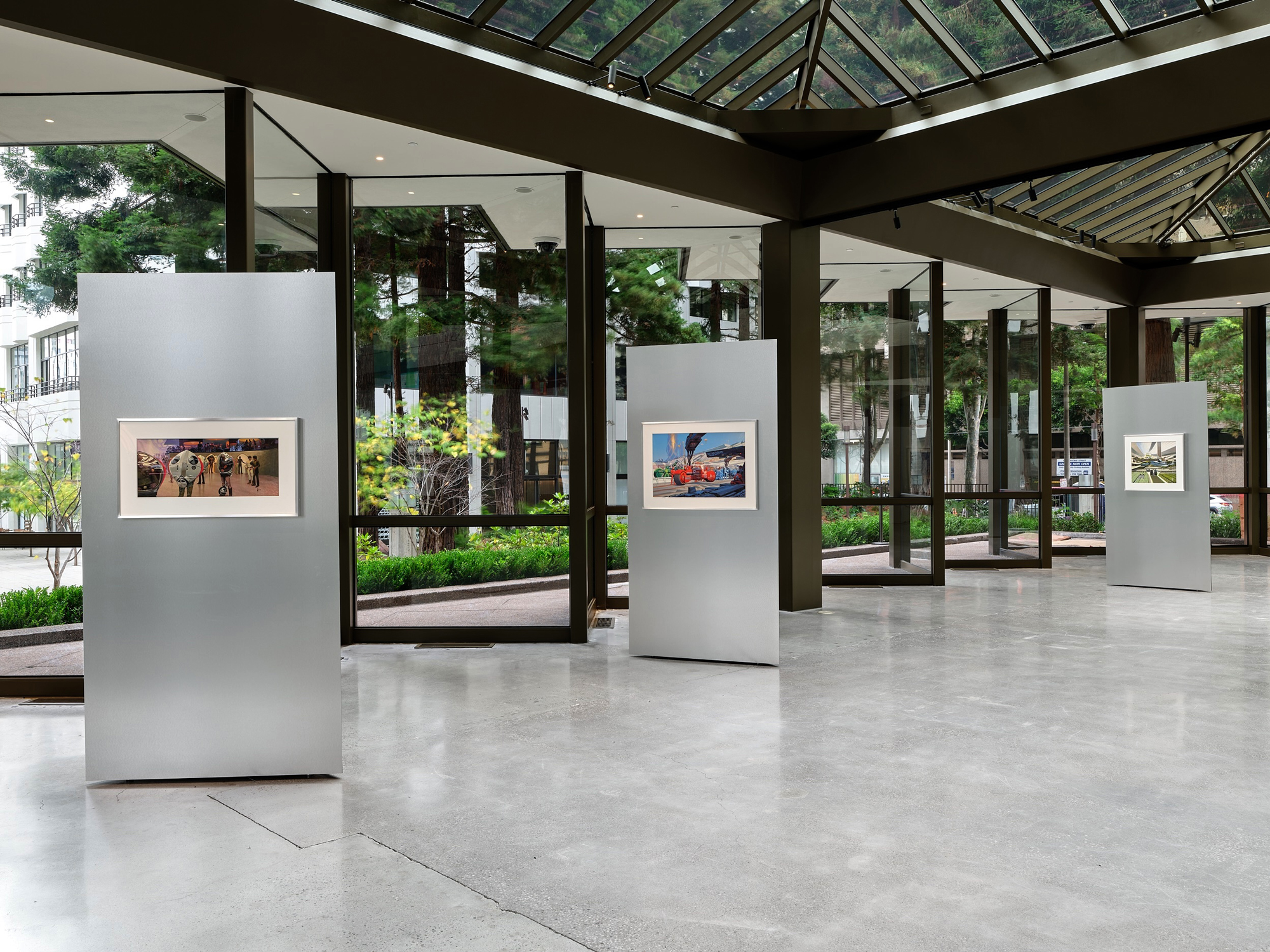
In a perfect merger of art and setting, 16 of Mead’s gouache paintings are now on view in Future Pastime, an exhibition in the glass-walled annex gallery at the base of the Transamerica Pyramid. Mead, who died in 2019, worked across industries, designing cars, catalogs and architectural interiors and exteriors, but he’s best known for the technology and worldbuilding he cooked up for films like the first Star Trek movie, TRON and Blade Runner.
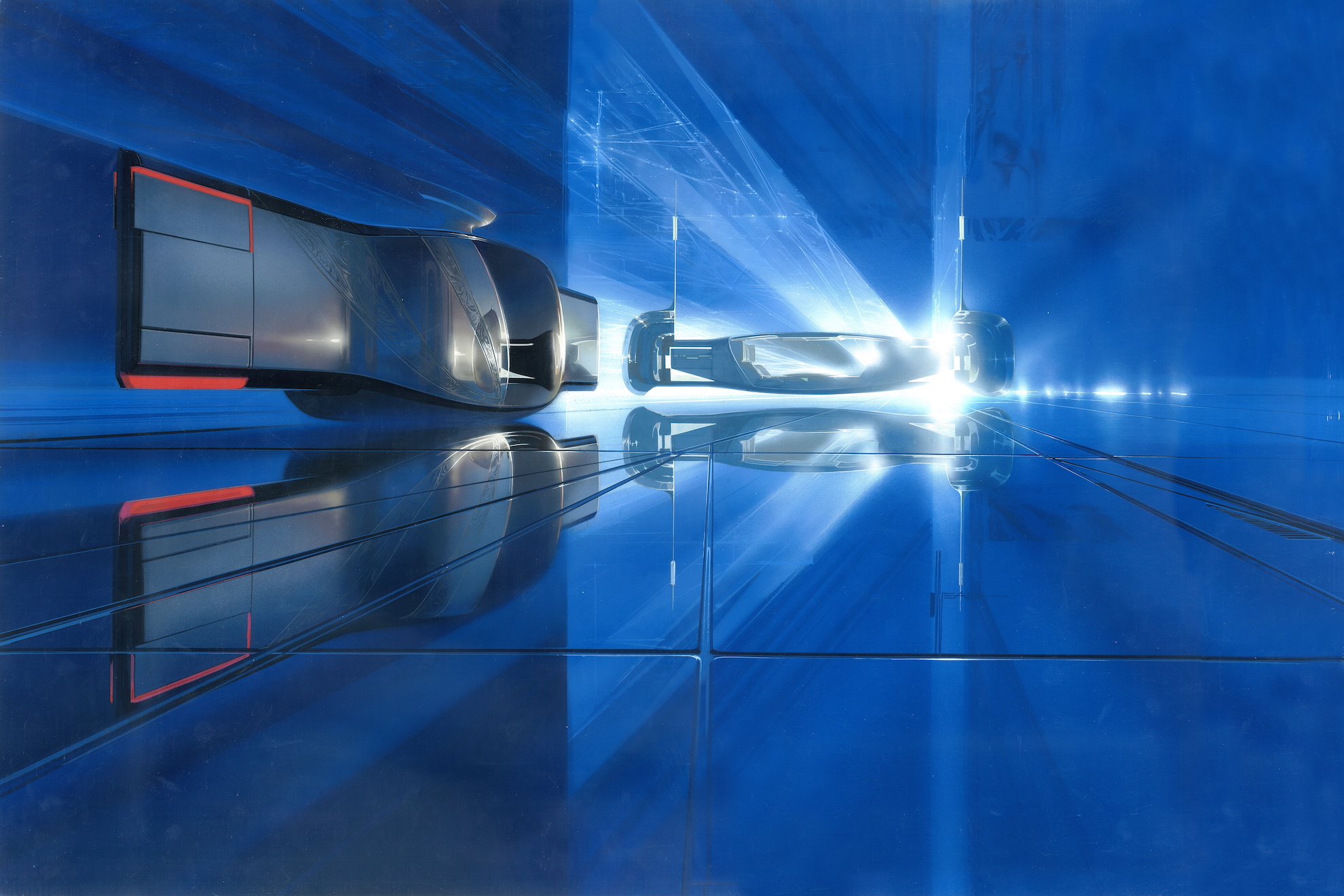
In Future Pastime we see none of Mead’s cinematic concept art, but plenty of ornate pageantry, speeding vehicles and future space settlements. His pieces are humble in scale but epic in conception. Mead didn’t just imagine how a personal gyroscope might look, but what sort of world would exist around it, down to how doorways might change to fit the shape of a beetle-like backpack.
Mead’s future is sexy and optimistic. Most of the pieces in Future Pastime depict a society at leisure: people watch races (of horses, boats, cars and giant greyhound-like robots); they party; they travel through space alongside intergalactic whales. Industry has moved to the moon to give Earth time to recover.
Part of what makes Mead’s images so appealing is their realism; he had an incredible ability to render reflective surfaces. He deployed delicate brushstrokes with the technical precision of an industrial designer, but lit his scenes like Maxfield Parrish paintings, soft oranges matched with purples, or steely gray-blues punctuated by zings of intense crimson. His wispy fabrics, draped across lots of nude bodies, are just as convincing as the shiny cars, vans and motorcycles he dreamed up.
Futuristic machines are nearly always at the center of his paintings — many of the works on view were commissions from companies or events in the automotive industry. But what’s refreshing is just how Syd Mead in style and content the images all are, regardless of who was paying for them.
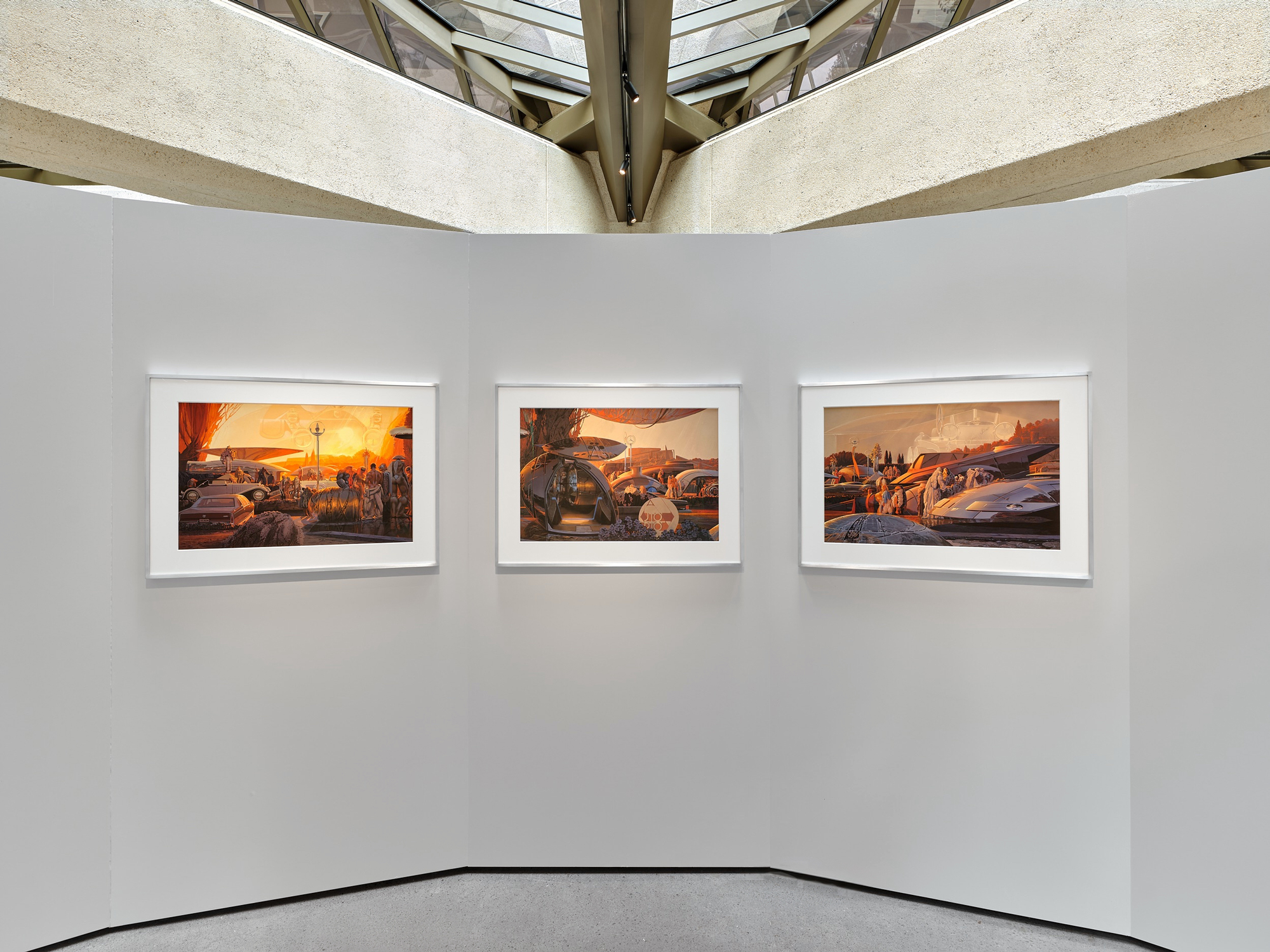
At the annex gallery, curators Elon Solo and William Corman present the show with care, giving plenty of room between Mead’s dense scenes to let ideas spread in the space between frames. Most of the show hangs on temporary walls that echo the zig-zag windows of the annex. The exhibition, designed by architecture firm MAD, is spare and orderly, the walls backed by silvery sheets of what looks like aluminum.
Many of the futuristic objects Mead depicted have come into being in the decades since: handheld computers, self-driving cars, personal unicycles. But to me, the most interesting parts of Mead’s futures are often the backgrounds — the large-scale, super-imaginative infrastructure that we haven’t yet realized. Mead’s work is a reminder that a better future isn’t just flashy gadgets; it’s a radical restructuring of the way we live, eat, work and play.
‘Syd Mead: Future Pastime’ is on view at the Transamerica Pyramid Annex Gallery (535 Washington St., San Francisco) through Dec. 17, 2026.