At Ras Ceylon’s Upcoming Show, Bars Come With a Cup of Tea
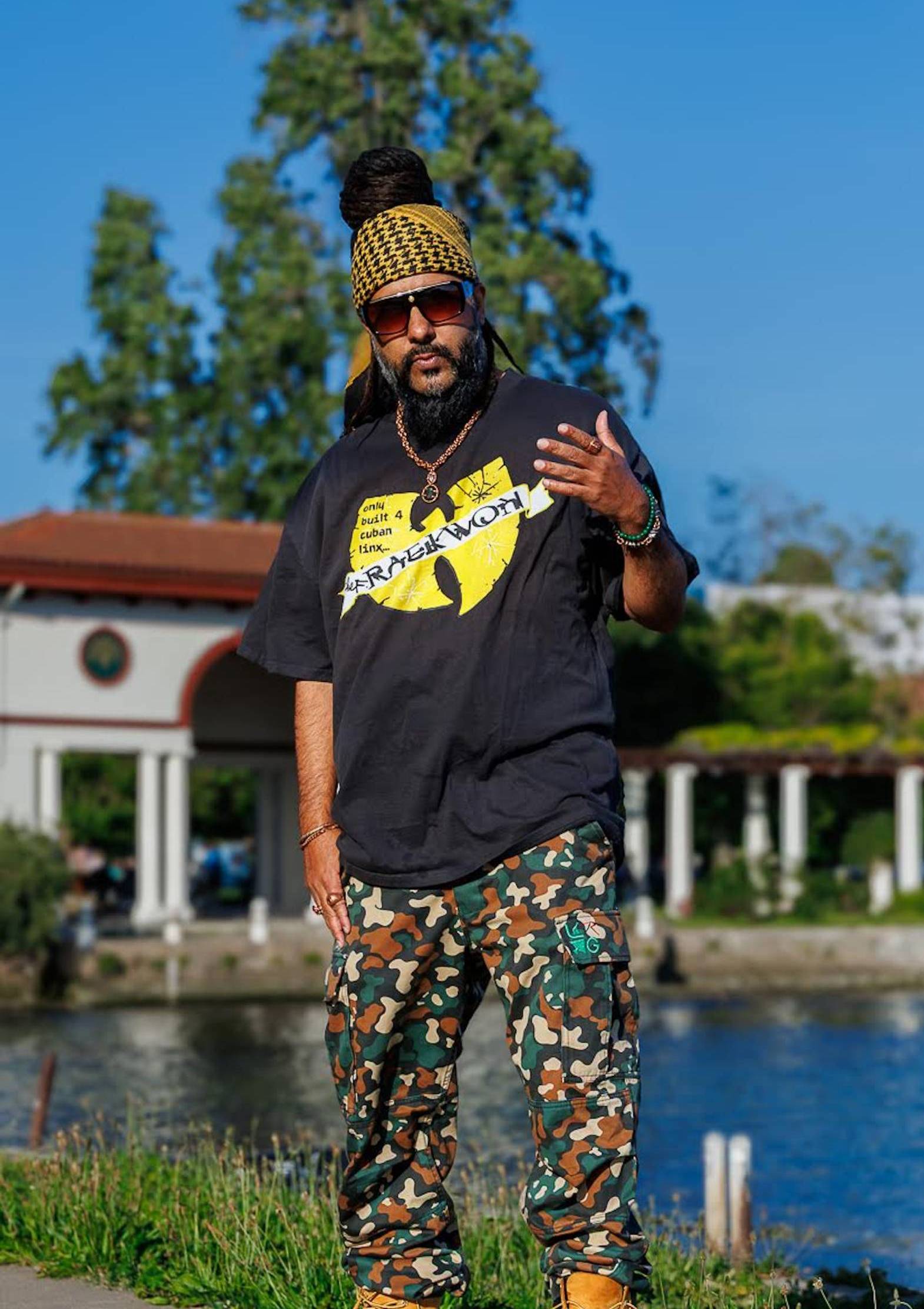
As lyricists spit hot bars and attendees sip warm drinks on Oct. 24 at the LAMA Shack in Oakland, rapper Ras Ceylon wants to move the crowd with what he calls “hip-hop with a purpose.”
“I’ve been trained in the craft of MCing, so I take it very seriously,” Ceylon tells KQED during a recent phone call. “And the stage show is a major part of that.”
This Saturday’s event, the Oasis Tea Party, is part tea ceremony and part cypher. Wu-Tang’s Killah Priest is set to headline, and his touring soirée features a slate of bar spitters, including Ras Ceylon, Fresno’s Planet Asia and Oakland’s Casual (of Hieroglyphics).
“And the sound system is clean,” Ras Ceylon adds, describing the LAMA Shack. “It’s got a little pond with a beautiful stage; it’s a really great way to enjoy music and be together in community.”
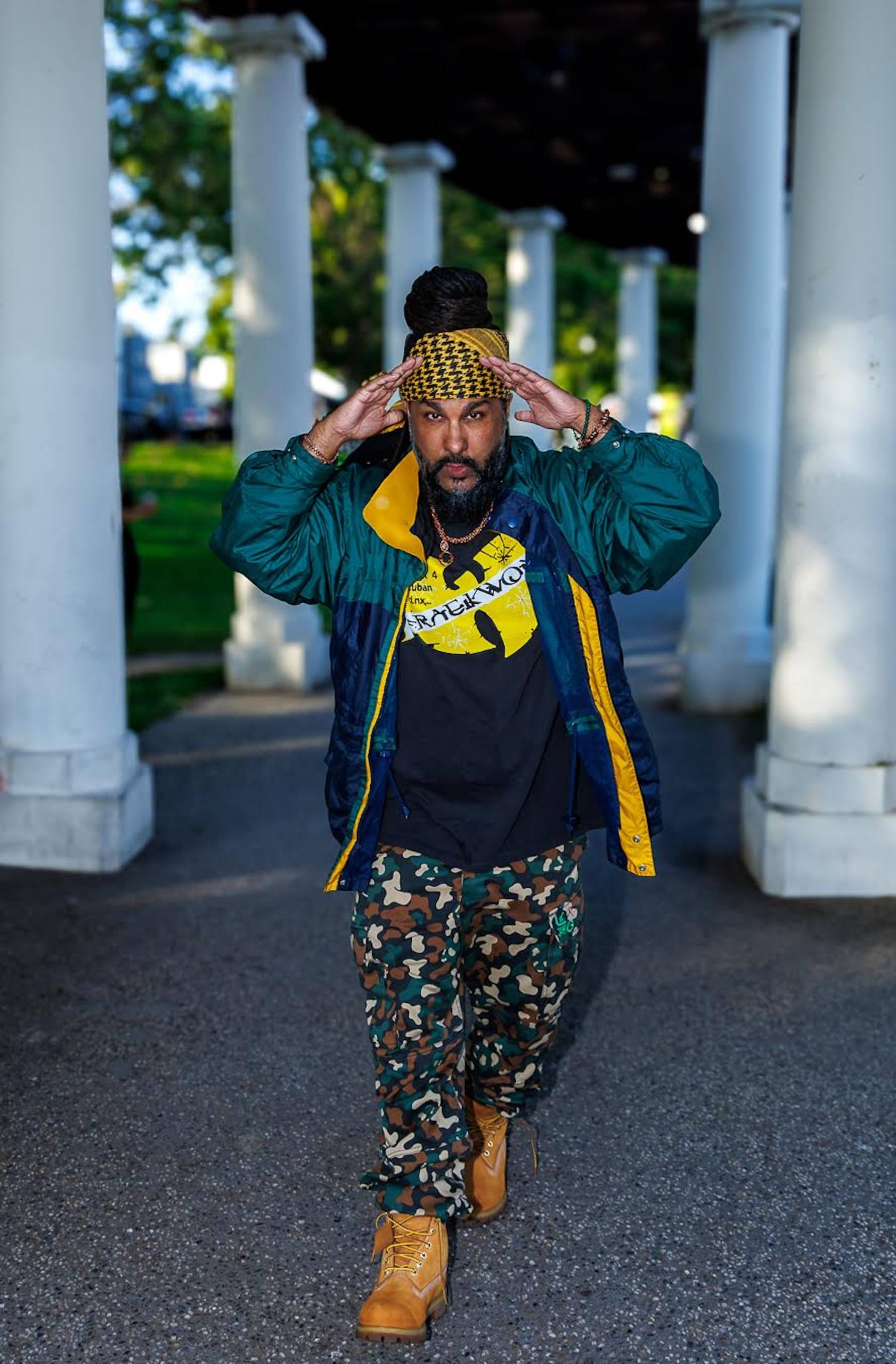
A veteran MC, Ras Ceylon is familiar with all parties involved: he’s performed at the LAMA Shack and rocked shows with Killah Priest. Ceylon’s latest project, Scrollz of Lion Rock, features Wu-Tang Clan member Cappadonna and Planet Asia.
“We’ve been really pushing the physical release,” Ceylon tells me, breaking down his album distribution strategy. He’s printed three different kinds of vinyls, as well as CDs and cassette tapes. And he’s been moving them like it’s the late 1900s.
“While the average person, right now, consumes music primarily through streaming,” he says, “there is an emerging rebirth of supporters of the music investing in the physical product.”
His point is backed by data. In 2023 vinyl outsold CDs for the first time since 1987. Last year the RIAA reported that vinyl sales generated over $1.04 billion dollars. For some artists, printing albums is as lucrative as it was 40 years ago.
“The audience is starting to realize that the artists are not making money off of [streaming],” Ceylon says. “It’s a collector’s item as well,” he adds. “We’re making art, and then we’re preserving it in an actual art form.”
With copies of his music in tow, Ceylon has pounded the pavement since his album dropped. He’s recorded multiple music videos for the project, and he’s hosted listening experience events in Los Angeles, Portland, Oakland, New York and Kingston, Jamaica.
“It’s always a pilgrimage returning to the roots of the culture,” he says, reflecting on his New York trip. A regular in the five boroughs, the artist says teaming up with Queensbridge’s Tragedy Khadafi on the 2018 album Full Medal Jacket solidified his connections to the Big Apple. And becoming affiliated with Wu-Tang has only reinforced that bond.
“That’s super inspirational,” Ceylon says, “being able to not only visit [New York], but also get accepted as a West Coast lyricist.”
California-born with Sri Lankan roots, Ceylon brings his heritage and diverse influences into his latest project. A practitioner of technical rhyming, or what he once called “orthodox hip-hop,” his candid delivery shows through on tracks like “Land Grab,” which explicitly addresses the impact of gentrification. On the track “Heart Muscle,” the MC opens up about his shortcomings in the search for a stable romantic relationship. And on “River 2 Sea,” featuring Solomon Childs, he raps about Israel, Gaza and oppressive systems here and abroad; the song echoes a sentiment he’s been pushing for 20 years.
“I had a song in 2002 called ‘Decolonize,'” he says, explaining that he originally wrote it as an assignment while he was a student at San Francisco State University. “Whether it’s music, education or organizing, a decolonized approach is the only way we could do things. That framework gives us a context for everything we’re seeing.”
In that spirit, Ras Ceylon has created his own label, Still Decolonizing Music. “It helps to unify struggles across the globe in terms of Indigenous, original people and resistance to neocolonialism, which is imperialism,” Ceylon says.
One of the album’s standout tracks is “Ancestorz,” which features East Bay vocalist Ka’ra Kersey and Los Angeles lyrical titan Ras Kass. Produced by San Francisco’s Monk HTS, the song is an anthem for anyone who is both tapping into their history and pushing forward in pursuit of spiritual growth.
“That song was actually charting in Sri Lanka on a commercial radio countdown,” Ceylon says. The track marks a return for the rapper, who visited the island nation last year for the first time in over a decade.
He visited throughout his childhood, and returned as an adult after the end of the Sri Lankan civil war, a conflict between the predominantly Sinhalese government and the Tamil Tigers that lasted from 1983 to 2009. The ethnic conflict was largely brought about by postcolonial instability after the end of British rule.
In 2012, Ceylon went back to do post-civil war reconciliation work with young people by “applying a lot of the same restorative justice and nonviolent communication principles that I’ve worked on here in Oakland,” he says.
The work went well but the problem was his music, namely his song “Heal Lanka.” A post-civil war peace anthem, the track was banned by the government at the time, Ceylon says. Now, a dozen years later, his music can be heard on the airwaves.
With East Coast guests and international influences, Ras Ceylon still makes space for a truly West Coast track or two on the album. The song “Uprising,” produced by Oakland’s akaFrank, the track undeniably echoes the sound of the soil. “That’s almost like a Bay anthem,” Ceylon says; he shouts out cities throughout the region on the track. Sonically, the song is “modern hyphy,” he says. “But always keeping the substance in there, too.”
Ever the lyricist, he packs in a message about the importance of resisting oppression, no matter the beat’s tempo.
Ras Ceylon, Planet Asia, Casual, Killah Priest and more perform at the Oasis Tea Party event on Oct. 24 at the LAMA Shack in Oakland. For more information check here.