How Palestinian Rapper MC Abdul Rose from Gaza’s Refugee Camps to the World Stage
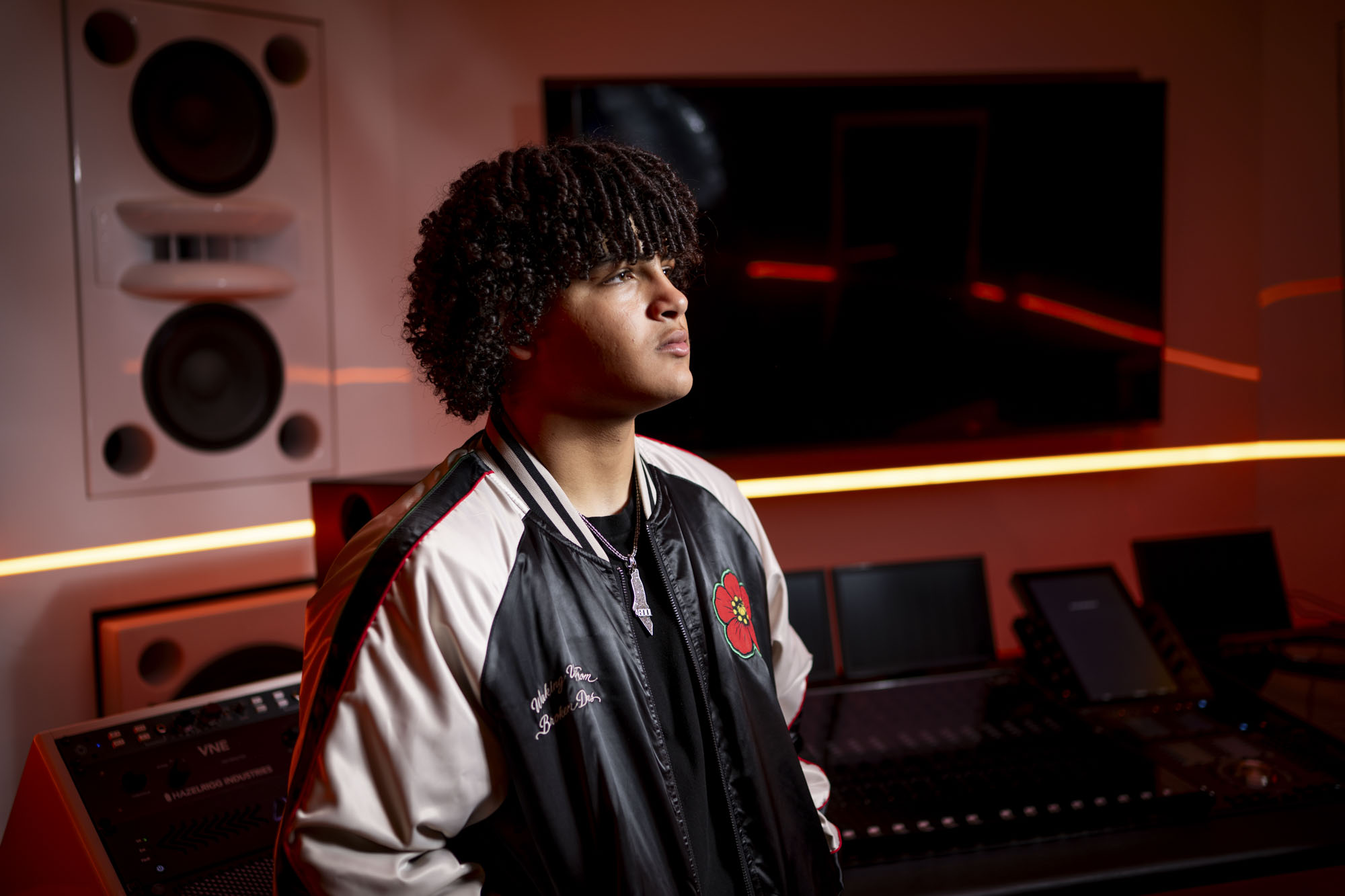
“Is it real?”
That’s the question MC Abdul kept asking himself when he arrived in San Francisco three years ago.
His journey began when he was 11 years old, after he uploaded a video of himself rapping at his school in Gaza. His verse, in self-taught English and full of hope that even the most dangerous environment couldn’t extinguish, went viral.
The baby-faced kid with determination in his eyes soon caught the attention of Ghazi, the Palestinian American founder of powerhouse San Francisco record label EMPIRE. MC Abdul signed a record deal in 2020, and EMPIRE began the process of bringing him to the U.S., where the young prodigy could devote himself to his art — and, more importantly, live somewhere safe.
Now 18, MC Abdul has lived one of the wildest tales imaginable of a hip-hop come-up, and he’s ready to share it with the world. Those three words from his first thoughts on U.S. soil — “Is it real?” — open his debut album, Day by Day, Shway Shway, out Oct. 16.
Abdul spent his childhood in a refugee camp on the Mediterranean coast, where Israeli bombs turned neighborhoods into rubble and military drones hovered constantly overhead. In the three years he’s been in California, he’s performed on some of the world’s biggest stages, and received cosigns from hip-hop royalty. Even as he’s reached goals he once could only dream of, at times he’s felt helpless, separated from his family and watching the destruction of his people from thousands of miles away.
Amid the pain, MC Abdul has steeled himself with a strong sense of purpose: to tell his story for the more than two million people still living in Gaza. With Day by Day, Shway Shway, he continues a Palestinian legacy of using hip-hop to call for peace and build solidarity.
“Since the moment I left Gaza, I was like, ‘This has to be an album,’” MC Abdul tells KQED. “This is an insane story, and I want people to know what happened.”
A journey out of Gaza
These days, it’s difficult to come to the States as an international artist no matter where you’re from. But when you’re from Gaza, there’s an enormous amount of additional hurdles.
Even before Israel’s increased bombardment of Gaza over the past three years, life under occupation was exceedingly difficult. Military checkpoints with hours-long lines made it near-impossible for people in Gaza to complete everyday tasks, like going to school or seeing a doctor. It was even more challenging for Abdul to get the proper permits to board a bus for Jerusalem to apply for his U.S. visa.
During those three years of waiting, Abdul perfected his English by rapping along to songs by Eminem, Tupac and Nas. He kept filming music videos that showed his life as a regular kid, living among war and destruction. “I’ve always shot these videos [in] neighborhoods around me that were getting bombed. And I would just take my speaker — sometimes I would risk my life. I would go outside and just film it and post it,” MC Abdul says.
His clips caught the attention of hip-hop legends like DJ Premier, Fat Joe and Kool G Rap, and eventually he amassed more than a million followers on Instagram. “And a lot of people liked what I posted,” he says. “That’s when it kind of felt more of a responsibility, basically.”
When he was 14, he and his father finally secured the paperwork needed to cross the border into Egypt and board a plane to the Bay Area.
MC Abdul thought he’d be here for a month to work on his album and play his first-ever U.S. show: Palestine Day in Foster City, where he performed in front of tens of thousands of fans from the diaspora.
But on Oct. 7 of that year, Hamas militants broke through the border wall into Israel and killed more than 1,100 Israeli civilians, prompting Israel to unleash a full-scale war on Gaza that has since left an estimated 74,000 Palestinians dead and 175,000 wounded, with 94% of hospitals and clinics destroyed or damaged. An independent United Nations commission, the human rights organization Amnesty International and even some Israeli human rights groups have characterized Israel’s actions as genocide, a charge its government denies.
For five months, MC Abdul was separated from his mother and siblings, not knowing if they were alive. After he located them, it was only because of his talent, and his record deal, that he was able to bring his immediate family to the U.S.
“It was so many sleepless nights that I had during the process of trying to get [my mom and siblings] out, trying to reach out to them to make sure that they’re still alive,” he says. Dozens of his relatives didn’t survive. “During the process, … I lost 81 people all in one day.”
The studios in Gaza where MC Abdul recorded his earliest music, and the friends who filmed his first videos, are also gone.
Turning pain into purpose
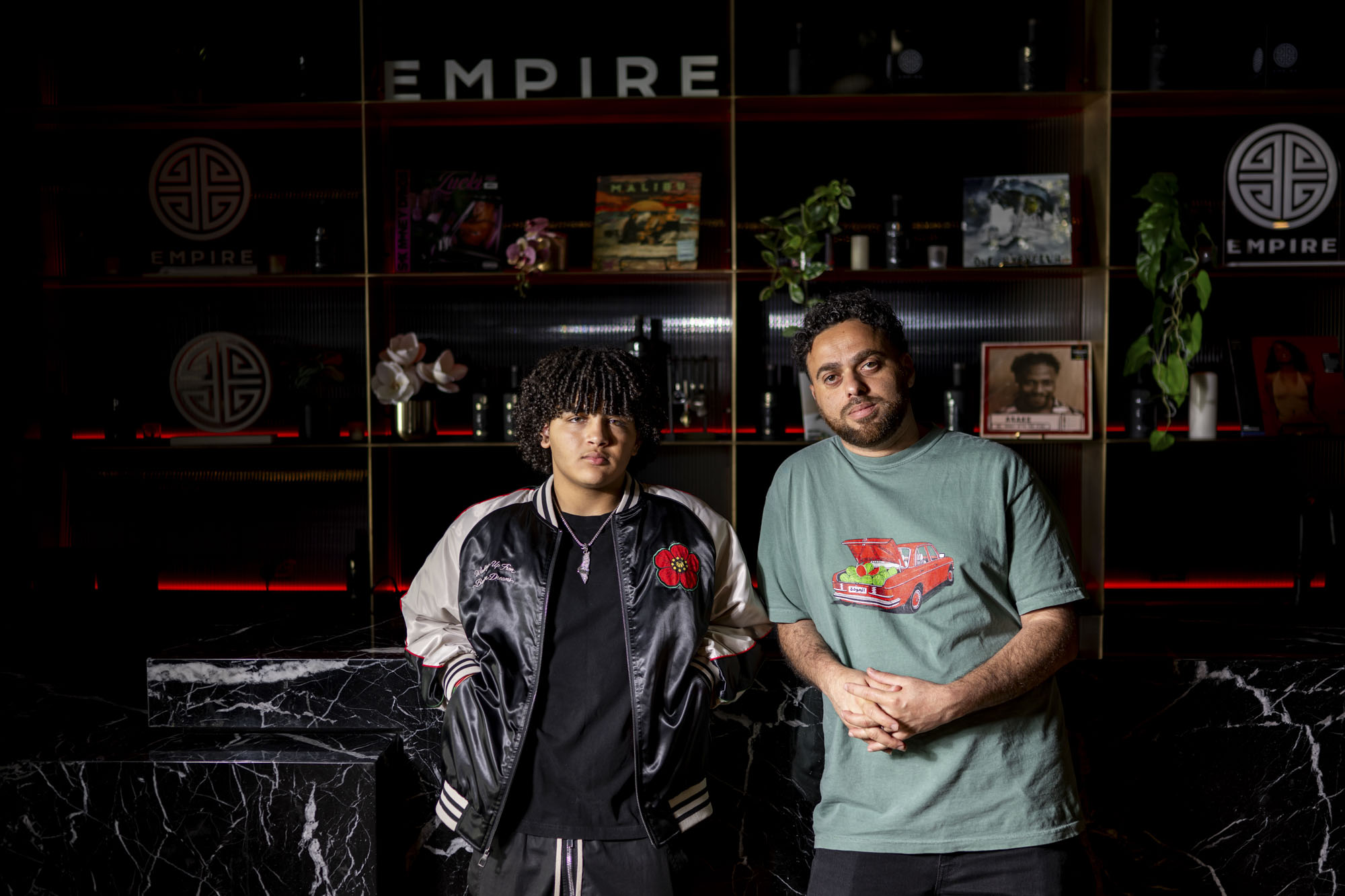
On a recent afternoon at EMPIRE’s sleek San Francisco studio, it’s all eyes on MC Abdul.
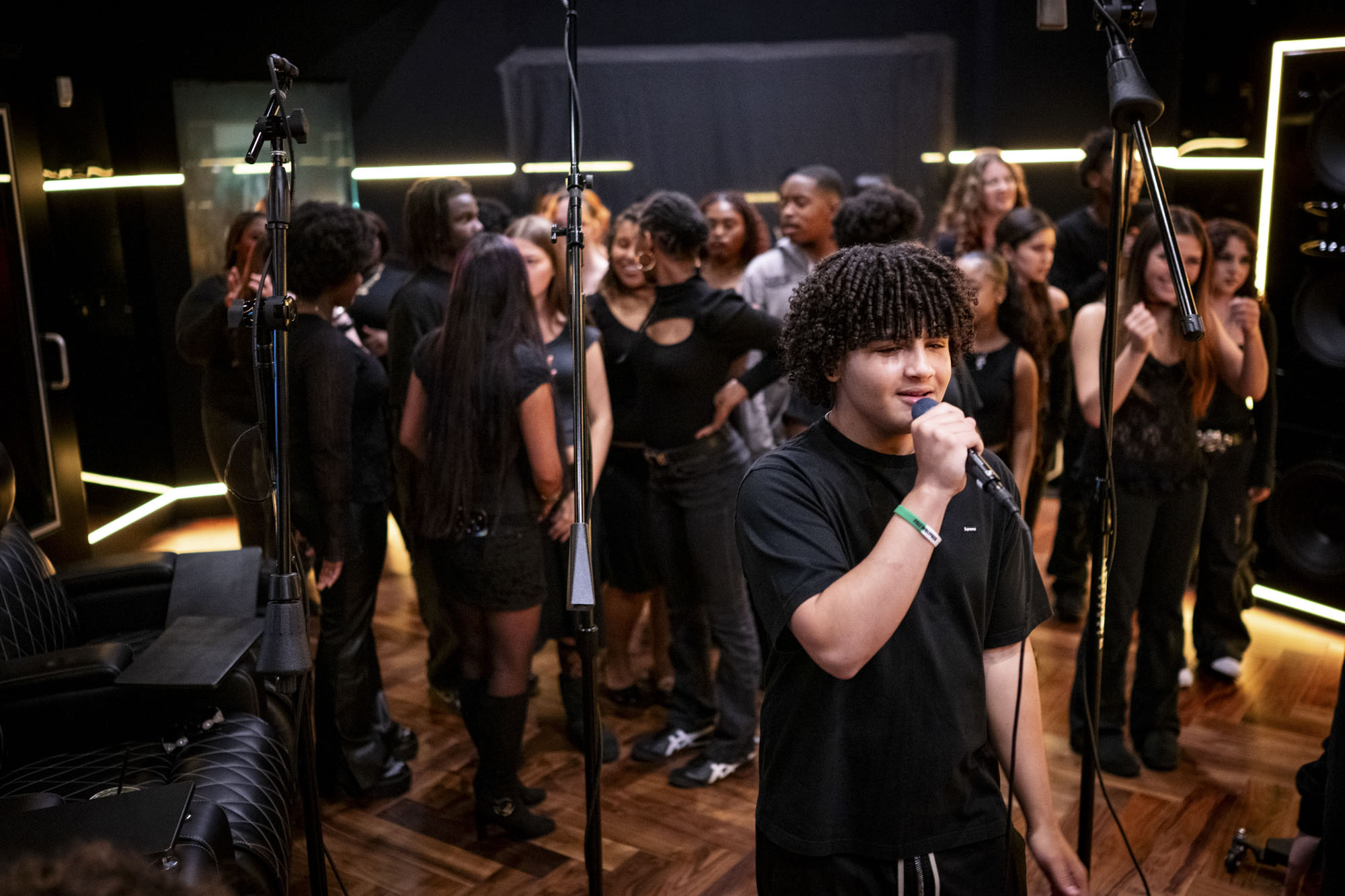
A busload of singers has just arrived from Oakland School for the Arts (OSA) to record choral versions of “Shway Shway,” the optimistic title track from his new album, and the more reflective, melancholy “Missing Home.” Abdul is in a good mood, geeking out about seeing Playboy Carti bring out Ye at ComplexCon — “I was like, ‘I’m fine if I leave this earth now.’ … Nah, not yet, we still gotta drop the album” — and excitedly telling the OSA students about the selection of 2K games in the studio upstairs.
Then it’s time to lock in. OSA teacher Cava Menzies strikes the opening piano chords of “Missing Home,” and the students’ voices swell, buoying MC Abdul as he rides the beat to deliver melodic bars about the pain of being separated from his family: “Moving with some urgency / Like it’s an emergency / It’s cuttin’ deep like surgery / Hurts like burns to the third degree.”
When we sit down in the studio’s control room, MC Abdul opens up about the emotional toll of coming to the U.S. with his dad while his mom and four younger siblings stayed behind.
“My last memory of being there was saying goodbye to my grandma, who gave me a couple prayer beads that I still have to this day,” he says. “I always keep it on me to keep going, and use it as motivation to never stop.”
As he saw report after report of Israeli bombings, he’d sometimes go days without hearing from his family. He’d also lock himself in his hotel room for long periods of time. Survivor’s guilt plagued him. Sometimes he felt like he didn’t deserve to eat, because people back home didn’t have food.
He even wondered if he should go back to Gaza.
“I had people around me telling me, like, ‘Bro, you came out here a month before [Oct. 7] happened, and it took three years for you to get your visa,’” he remembers. “‘Like, that must be like a sign from God that you’re out here to continue to chase your dreams.’”
While he couldn’t focus on writing music, he kept journals that later became the basis for his lyrics on the album. “Shway Shway,” an Arabic saying of patience that means “day by day” or “step by step,” became a mantra.
On the album’s title track, he addresses kids in violent circumstances around the world — whether in Gaza or America’s inner cities — who’ve been forced to skip childhood and grow up too fast.
“I know it’s easier said than done, but I was just trying to give hope to anybody that’s listening to it, to take things day by day,” MC Abdul reflects. “If you’re stressing about something, try to be as calm as possible. Remember that everything happens for a reason.”
There’s a sense of optimism in Abdul’s voice and the Afrobeats-inspired production by Illmind, a legendary beatmaker who’s worked with J. Cole, Drake, KRS-One and other musical greats. He calls Abdul a “rapper’s rapper,” but it’s not just his technical skills Illmind finds impressive.
“I love that he approaches music from an emotional place,” Illmind says. “There aren’t too many rappers that actually do that, or actually care.”
“And it is very important. It’s very heavy, you know? On top of the responsibility that he has, he’s also still a kid,” Illmind adds. “So I think the best is yet to come.”
Continuing a legacy in Palestinian hip-hop
Across Day by Day, Shway Shway’s nine tracks, MC Abdul undertakes a hero’s journey from the rubble of Gaza to the upper echelons of the music industry, including performing with his heroes at Rolling Loud and taking the stage at the United Nations headquarters in New York. (“Roll in Uncle Fred’s Range / He took me to see Uncle Snoop,” he raps on “Is It Real? (Part 2).”)
It’s a story born from some of the most difficult conditions in the world. The track “Zanana” takes its name from the term Gazans use for the buzzing sound of Israeli drones, hovering above at all hours. Over the somber strum of an oud and tension-filled violins, MC Abdul turns that buzz into a metaphor for the flashbacks and nightmares that still haunt him. He turns that pain into defiance.
“This for the ones that never made it / Tunnel vision while we dream chasin’,” he raps.
It’s not the first time Palestinian artists have used hip-hop to convey what it’s like to be a young person living under military siege and occupation, and to portray Palestinian people with dignity amid dehumanizing narratives and stereotypes.
The executive producer of Day by Day, Shway Shway, Suhel Nafar, is in many ways Abdul’s hip-hop predecessor. Before being appointed as the head of the West Asia and North Africa division at EMPIRE, Nafar was a member of DAM, an early Palestinian hip-hop group. In the early 2000s, DAM’s song “Meen Imhabi?” (“Who’s the Terrorist?”) became a rallying cry against the Israeli government’s treatment of his people.
At the dawn of the social media era, DAM and other Palestinian groups used Arabic lyrics to unite Palestinian youth from the occupied territories and the diaspora. Rapping in English, MC Abdul now carries the torch and shares what it’s like to grow up in Gaza with an international audience.
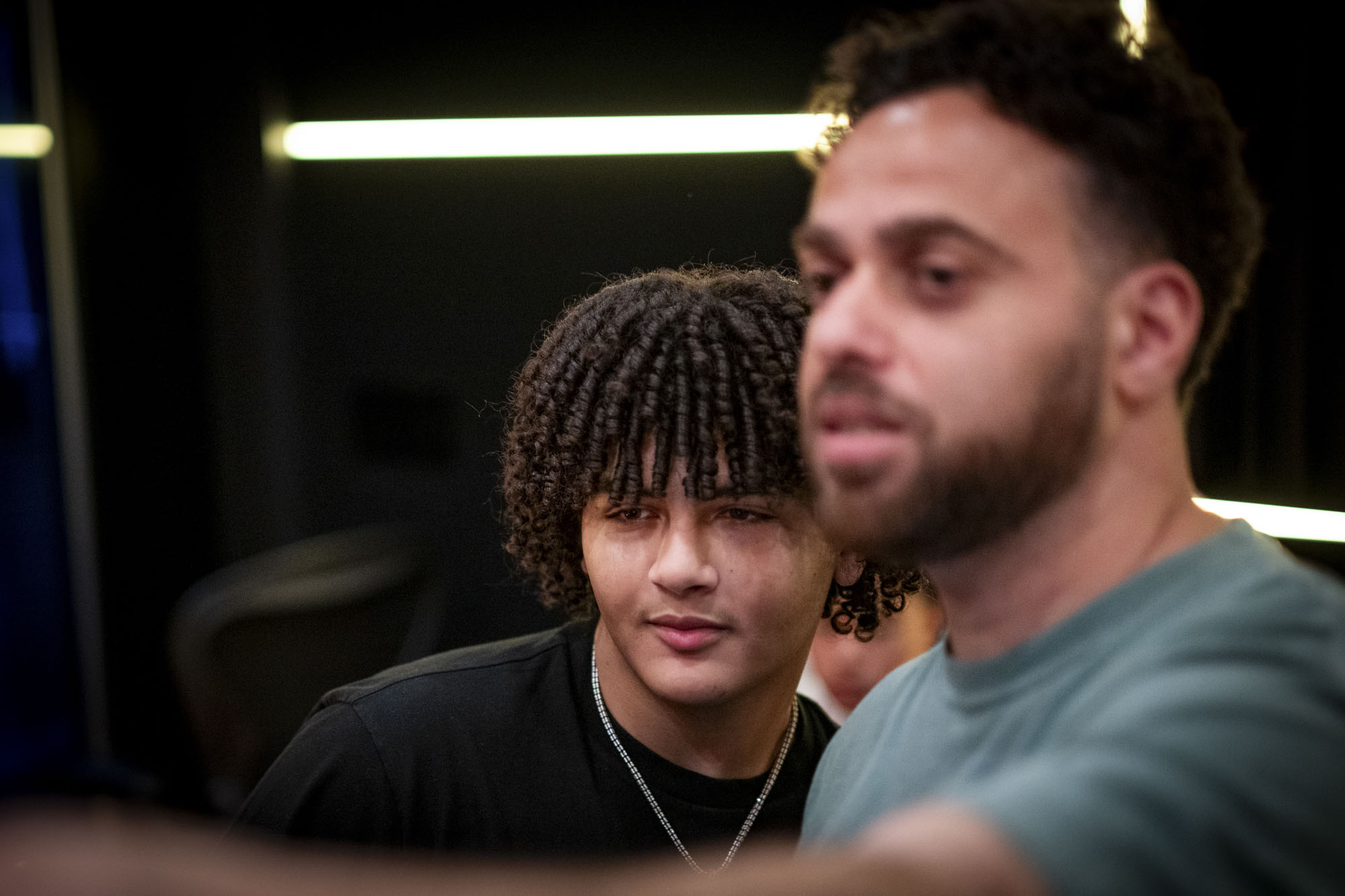
“Naive me, young me, believed my music and art can change the world, but it hasn’t,” Nafar says. “To keep it realistic, music won’t stand in front of apartheid or in front of a weapon, but it will create a new generation that will stand against the oppressor.”
Nafar, who was the music supervisor on the hit Palestinian American Netflix series Mo, overcame enormous challenges himself to get to his position. “When I started, Palestine was only in the news. It wasn’t in the streets like it is right now,” he says. “And we had a lot of shows getting canceled. In my touring days, we had people attacking us. We had Israeli police coming and stopping the sound.”
He’s taken wisdom from those hardships and channeled it into MC Abdul’s flourishment.
As Palestinian artists face barriers to the rest of the world, American artists who’ve expressed solidarity with the people of Gaza have also faced censorship. Just recently, Macklemore — who featured MC Abdul on his song “Hind’s Hall” — was removed from Ed Sheeran’s tour after saying “Free Palestine” on stage because billionaire stadium owner Robert Kraft took issue with his message.
Does this scare MC Abdul? He says no. He doesn’t see what he’s doing as political; he’s a talented young man sharing his experience of a childhood in the shadow of a highly polarizing war, siege and occupation. Day by Day, Shway Shway is his story.
“Music to me is all about staying true to yourself,” MC Abdul says. “I’m all about authenticity. If I’m afraid to speak about something, I shouldn’t be doing this in the first place.”
MC Abdul’s ‘Day by Day, Shway Shway’ is out on all platforms on Oct. 16. MC Abdul performs at Palestine Culture Day in Redwood City on Oct. 17.