At the Asian Art Museum, Paintings You’ll Want to Lick
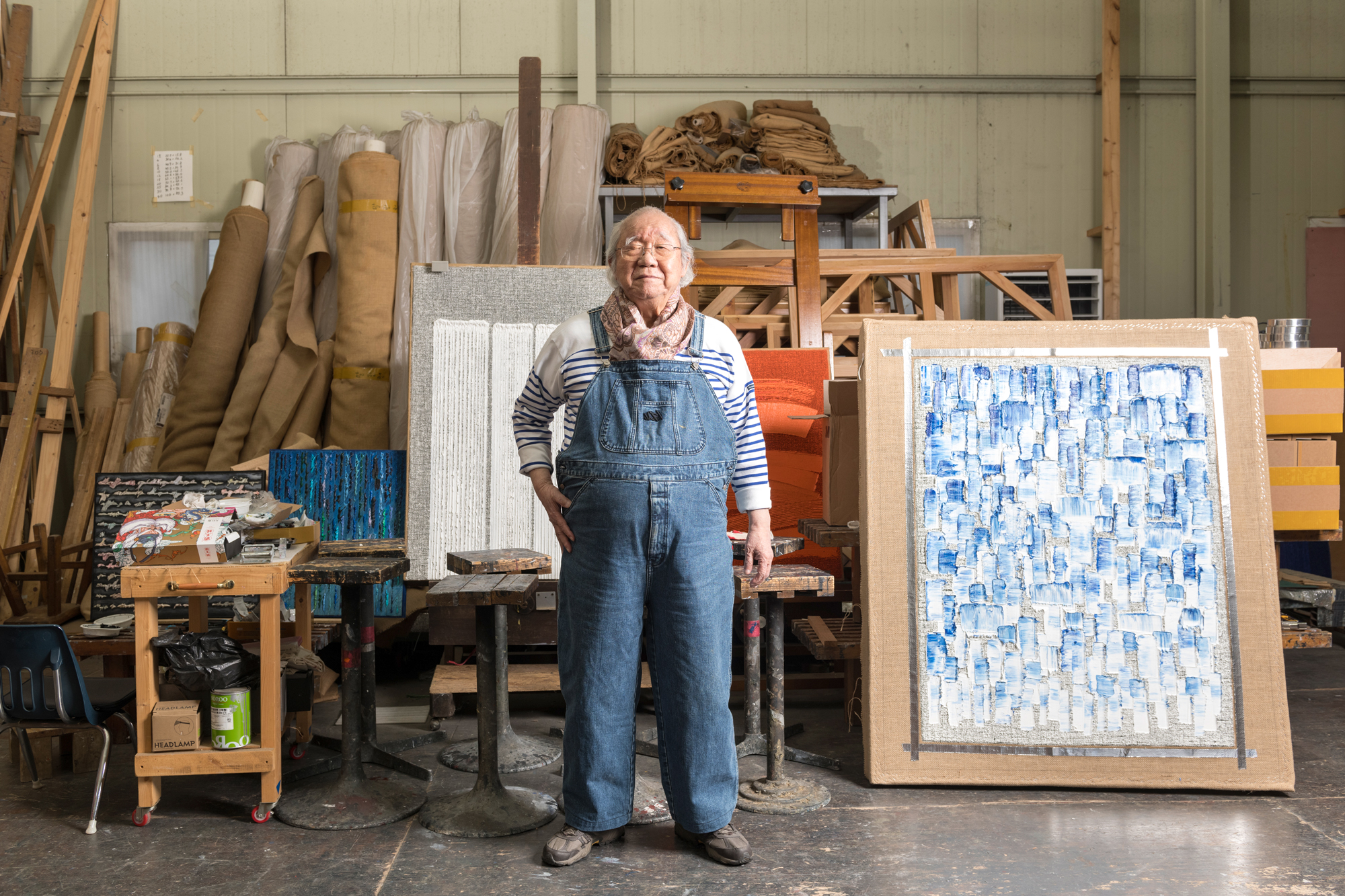
Ha Chong-Hyun: Retrospective doesn’t need a more exciting title because the exhibition is drop dead gorgeous. Though he’s called “the father of Korean modernism,” Ha isn’t yet a household name in the U.S. Nevertheless, the Asian Art Museum clearly trusts the paintings themselves to entice people to visit this show. But there’s a surprise among the stunning aesthetic beauty. While Ha’s work supports an art-for-art’s-sake appreciation, it quickly becomes apparent that Ha’s paintings are witnesses to and documents of the tumultuous, consequential history of Korea over the country’s dizzying changes during the 20th and 21st centuries.
I thought I wasn’t going to make it through Ha Chong-Hyun: A Retrospective without touching the art. Only the prospect of getting kicked out of the museum kept my hands to themselves. The more than 50 paintings in the show, made over six decades, luxuriate in paint. Early experiments in thickly applied impasto texture led to Ha’s invention of what he calls the “back-pressure method,” in which he presses wet paint through a coarsely woven support. The result is a painting surface covered in glistening beads of color suspended in the grid matrix of the fabric. Between these beads, scraped rectangles take the place of brushstrokes to push and smear pigment across the surface. You can’t help but want to join Ha in smudging the paint with your fingers or even other appendages.
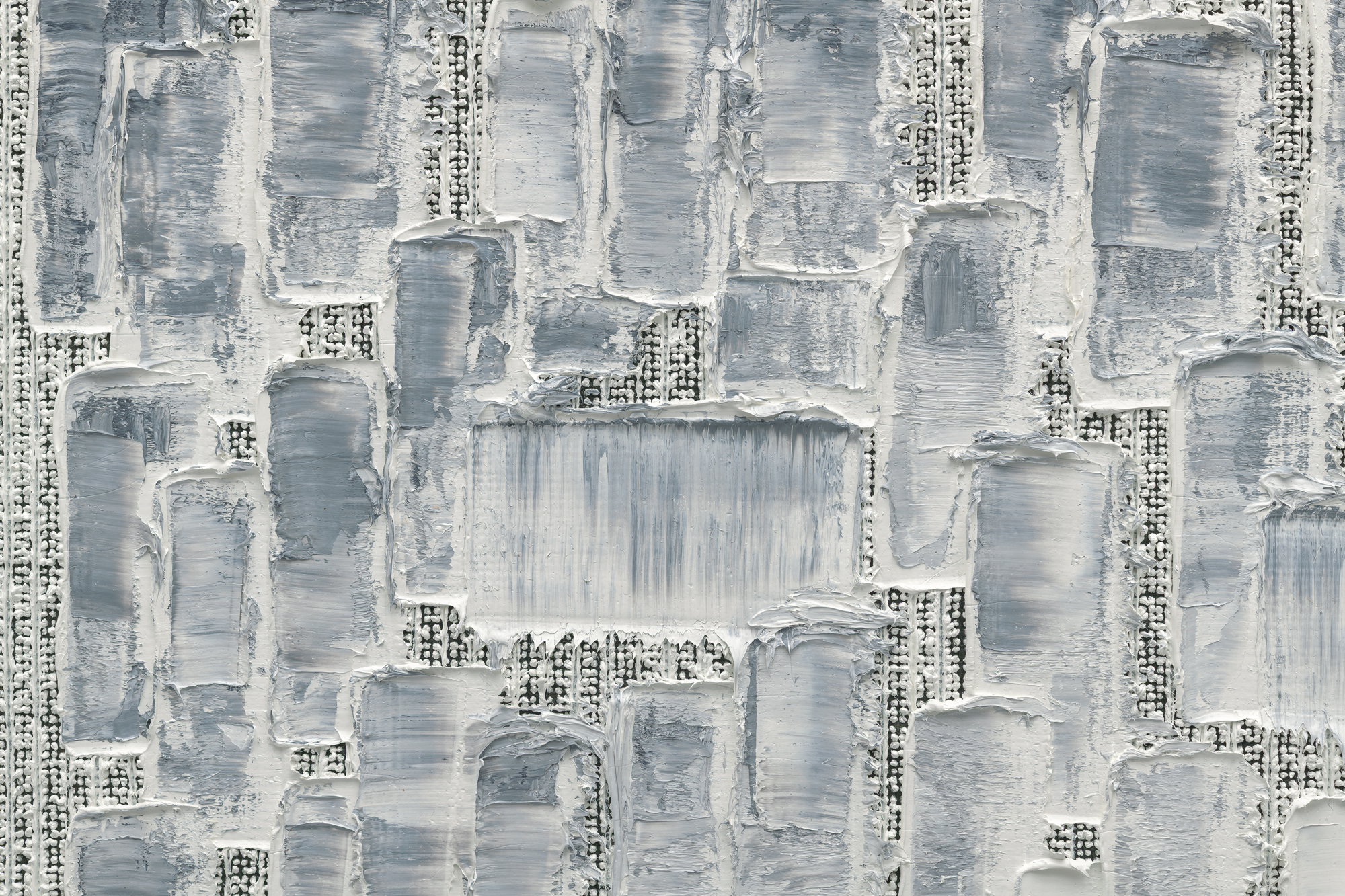
“They’re kind of ice cream,” Asian Art Museum director Soyoung Lee told KQED of the paintings. “I feel like I can almost taste it. I feel like I can smell it. I feel like I want to touch it even though I have to be careful about saying that when I work in a museum!”
Ha’s sensual blobs, blots and gestures instilled longing in me too — the kind of desire a 5 year old has for the entire contents of the ice cream case at the shop. I didn’t only want to touch the paint, I wanted to lick it too.
Ha was born in 1935, in a Korea that was a colony of Japan. By the time Ha reached adulthood in the mid-20th century, Korea had experienced 35 years of Japanese rule, the U.S. and Soviet Union partitioning the country into two occupation zones, the Korean War and a devastated economy. The only material he could find for painting was the burlap of U.S. grain shipments and army sandbags.
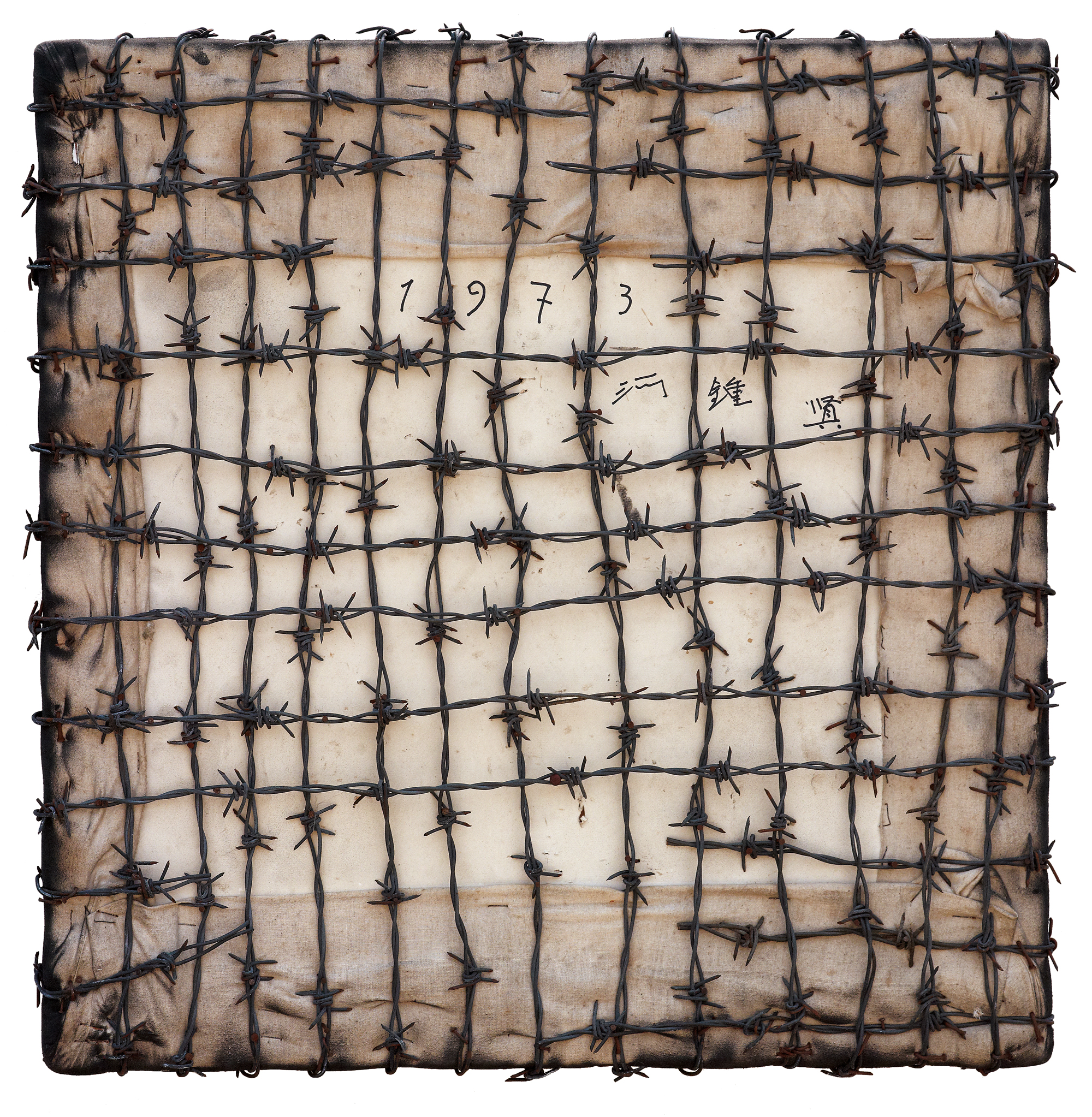
Early works in the galleries show Ha reaching for whatever materials were available: burlap and hemp, metal springs, even barbed wire. Like arte povera, the post-WWII Italian art movement characterized by cheap materials, Ha’s work speaks to the historical reality of pre-urbanized Korea. Though their formal characteristics are interesting on a purely visual level, Lee notes that the materials carry unmissable connotations. Barbed wire, for instance, also marks the demilitarized zone dividing North and South Korea.
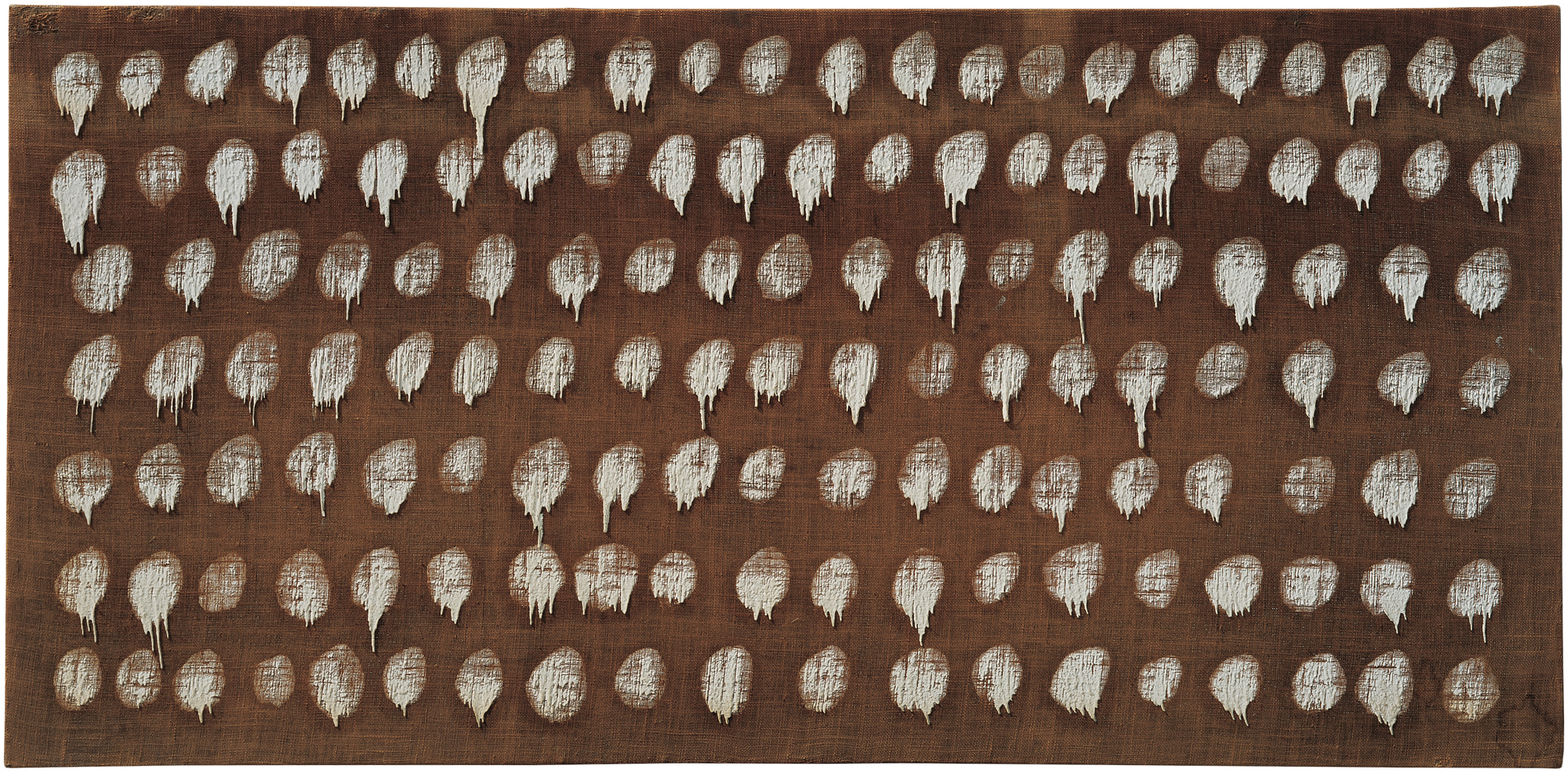
In this retrospective, Ha’s back-pressure method paintings start out relatively quiet in the 1970s quietly. Rows of white paint circles push through the loose burlap weave in Conjunction 74-26. The oil in the paint, absorbed into the burlap around it, creates halo-like stains around the white paint. I started to think about Korea’s push towards modernity; the irrepressible drive towards a developed economy, the uncontrolled drips flowing like the unexpected human consequences of those huge social changes.
Ever experimenting, Ha began filling nearly the whole surface of his large works with paint and working with the pigment both on the back as well as the front sides of the support in the 1980s. In the ’90s, Ha incorporated color with brilliant effects. By the 2010s, Ha started to tamp thin wooden boards onto a bed of paint that then spurted through the slats, as in Post-Conjunction 10–2. There’s even one slat painting that uses mirrors instead of wooden boards, allowing visitors to see their reflection spliced among the paint splatters.
The magnificent 2020s paintings — 91-year-old Ha is still very much active — take one’s breath away. The glistening paint appears still wet, alive on the hemp surfaces. A new freedom with color adds a detailed level of variety within each paint mark.
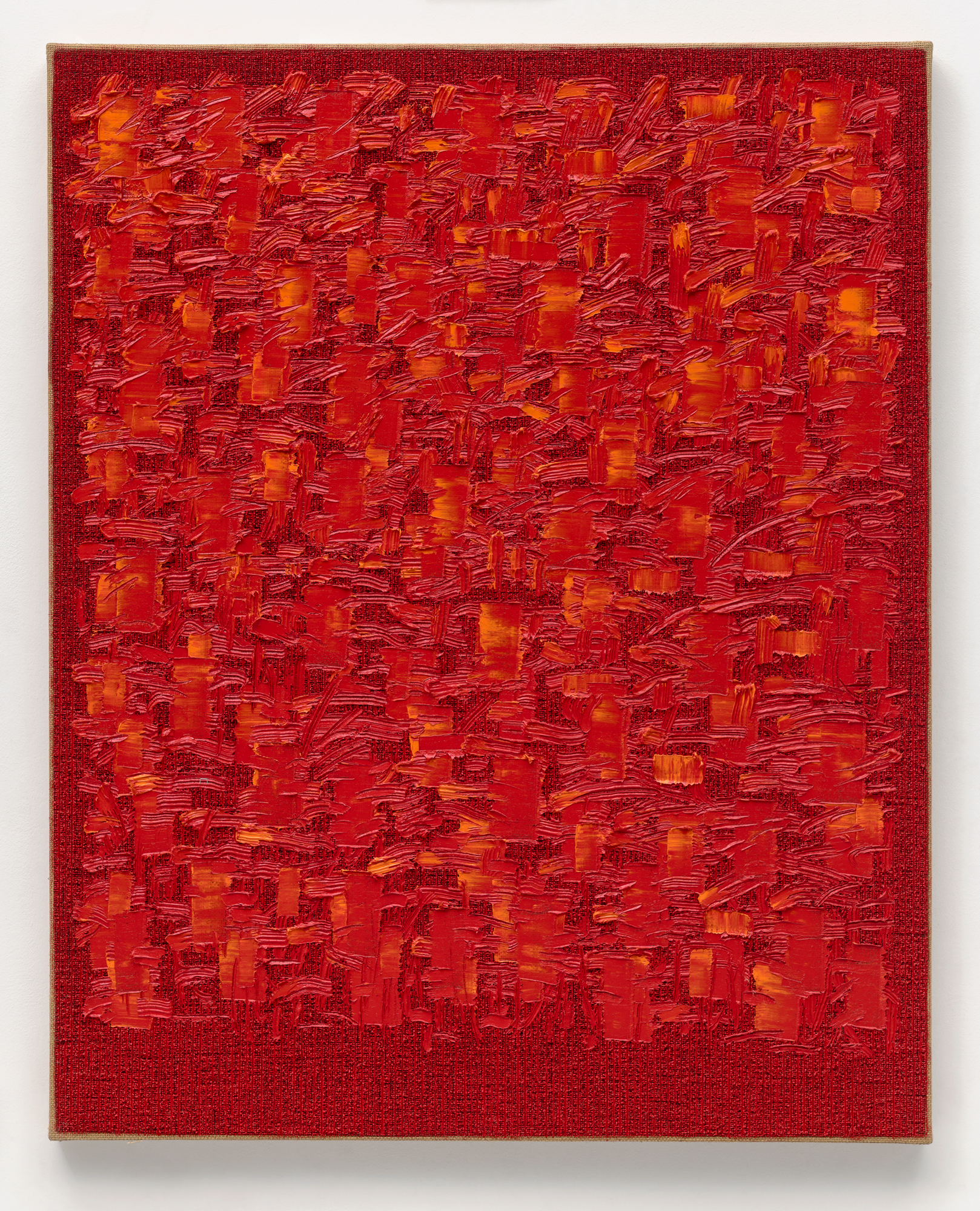
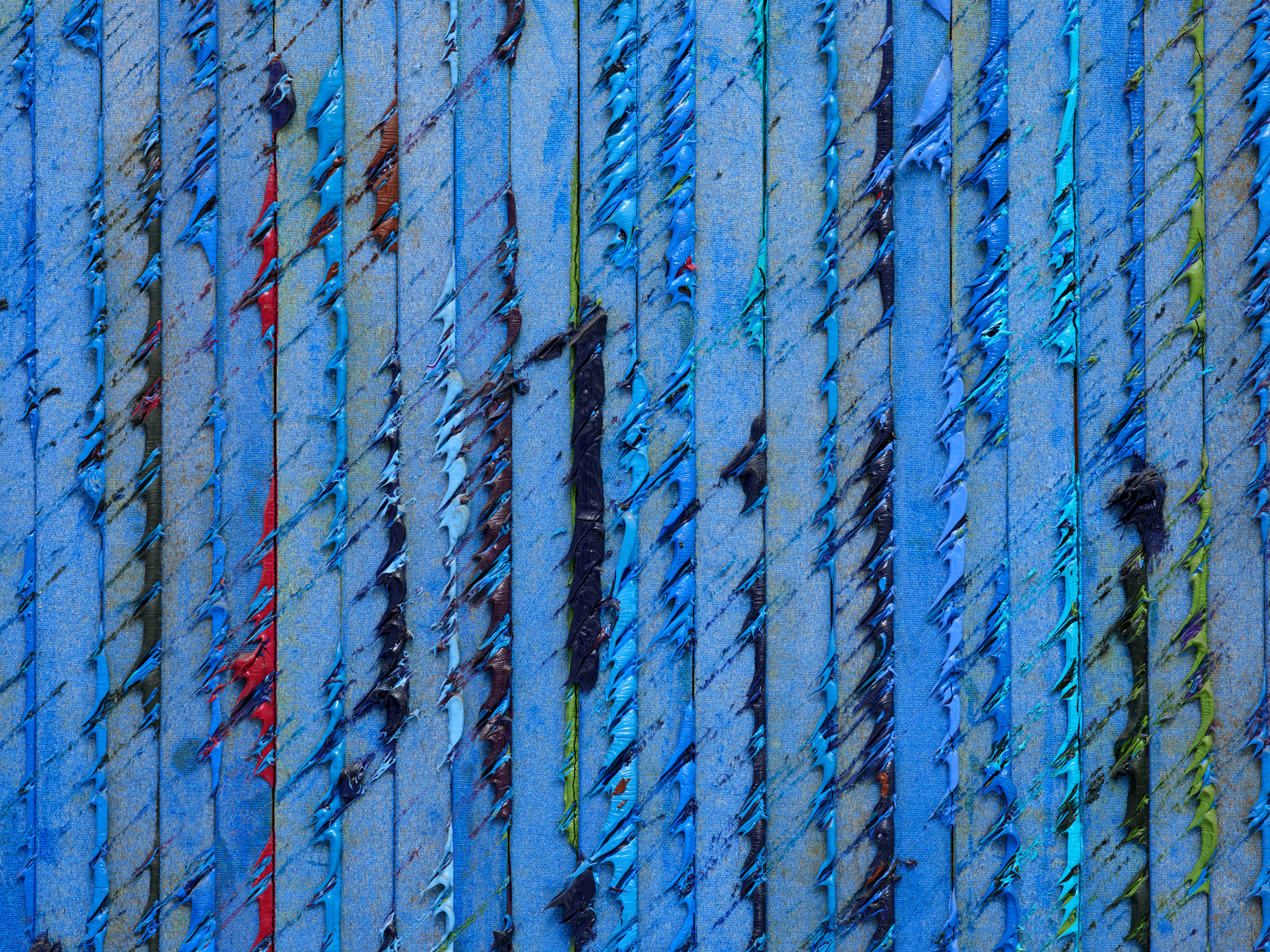
“His art definitely speaks to what it means for things to go through human hands,” said Lee. “It’s something that requires a little commitment from you … to slow down to look and think about what it is to make things with your hands, with your body — and to feel it.”
Ha’s paintings, irrepressibly visceral, do seem like an antidote to the disembodiment of San Francisco’s AI era. A display of Ha’s many paint-encrusted tools near the exhibition entrance and accompanying videos of him at work hammer home how bodily the artist’s practice is. Indeed, Ha has always called himself a “laborer,” which both speaks to the physicality of his art and his origins as the middle child of a large farming family. I left Ha Chong-Hyun with the thought that instead of going to touch grass, I could pick up some paint at the art store and give them a squeeze through my fingers.
‘Ha Chong-Hyun: Retrospective’ is on view at the Asian Art Museum (200 Larkin St., San Francisco) through Jan. 25, 2027.