Dread Scott Imagines a World Without America
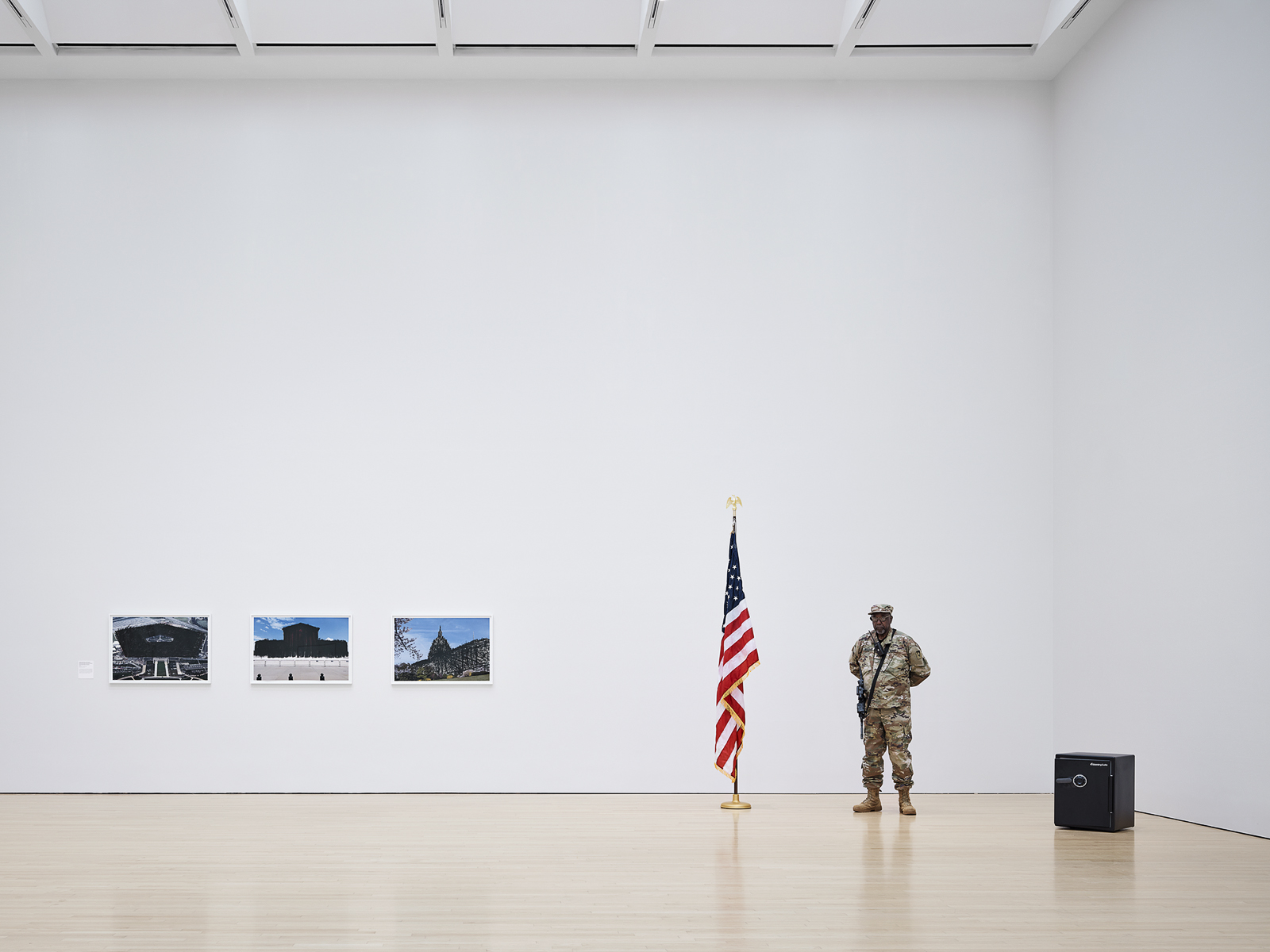
When I stepped inside Brooklyn-based artist Dread Scott’s latest exhibition at Yerba Buena Center for the Arts, I was terrified.
A man in military fatigues armed with an M4 carbine loomed in the corner, guarding an American flag hanging from a short flagpole. When I approached the man, he jerked to life and admonished me, “Halt, stand back from the perimeter. I’m defending the flag. The flag of the U.S. must be respected at all times.” It wasn’t clear when or how I had crossed some invisible boundary, only that he had the power to decide. Artists push back against state power all the time — but it isn’t every day that that role is reversed inside an art gallery.
Defending the Flag is a new commission for the YBCA show The Body Politic, and it’s in direct dialogue with the artwork that put Scott on the map nearly 40 years ago, while he was still a student at the School of the Art Institute of Chicago.
The 1988 installation What Is the Proper Way to Display a US Flag? consisted of a flag that viewers could step on while writing their reflections of the experience in a guestbook, below a photomontage of the flag desecration. Vietnam veterans, calling themselves “defenders of the flag,” called for Scott’s death. President George Bush Sr. called the piece “disgraceful” and Congress outlawed the work. Then, in 1989, Scott was arrested for burning a U.S. flag on the steps of the Capitol for a photography project, which led to a landmark decision, confirming citizens’ rights to desecrate the flag under the First Amendment.
In a 2018 TED Talk detailing the experience, Scott stated that he does not “accept the economic foundation, the social relations or the governing ideas of America.” That holds true today, he tells KQED, but adds that, “Long-term, I look forward to a day when people have gotten beyond America — including the foundation of capitalism America rests on.”
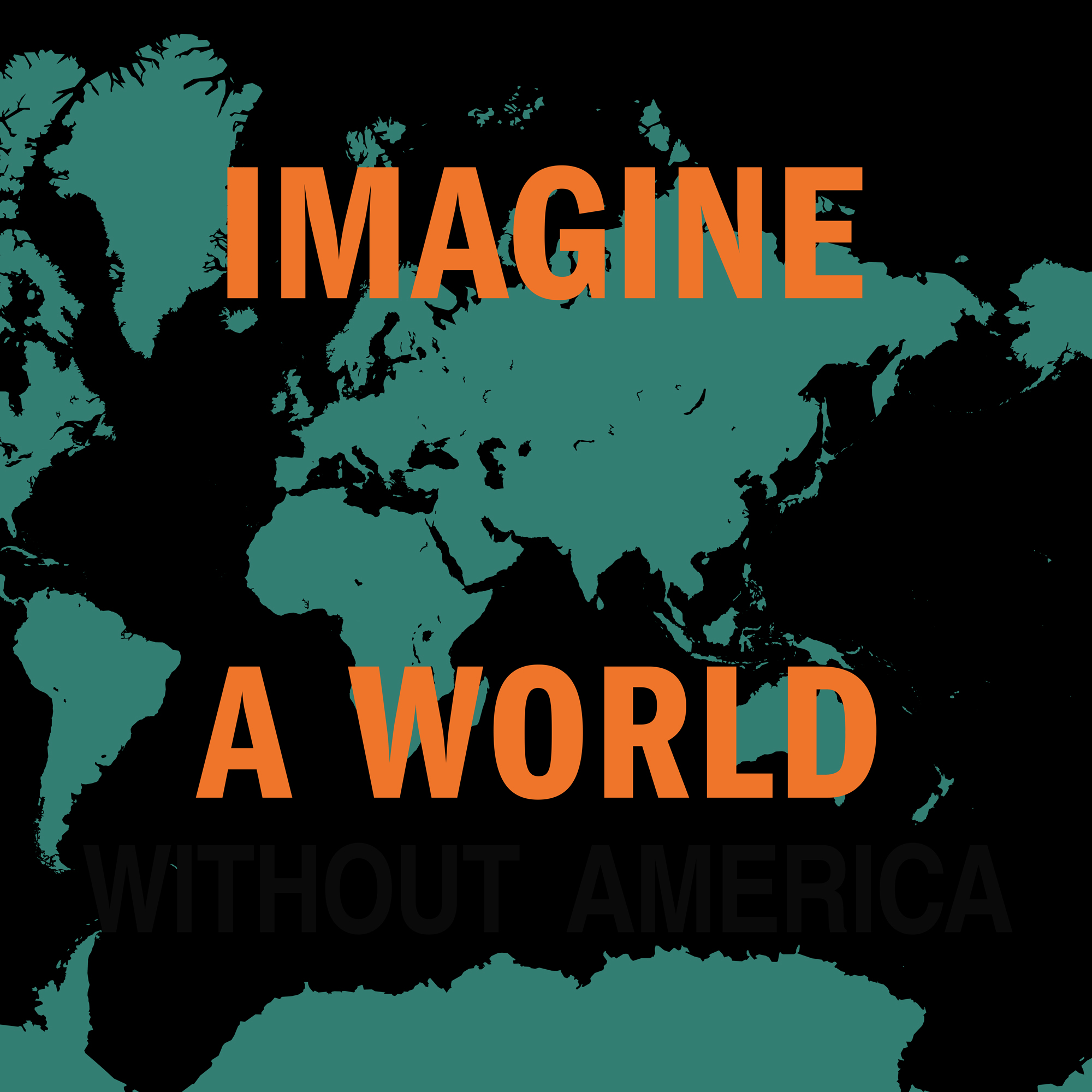
The first piece visitors to The Body Politic encounter hangs both outside YBCA as a vinyl banner and outside the exhibition’s main gallery. It visualizes this fantasy of a decentered United States. The 2025 screen print shows a black and green world map with America moved to the margins, overlaid with the phrase “imagine a world without America,” which also serves as the work’s title.
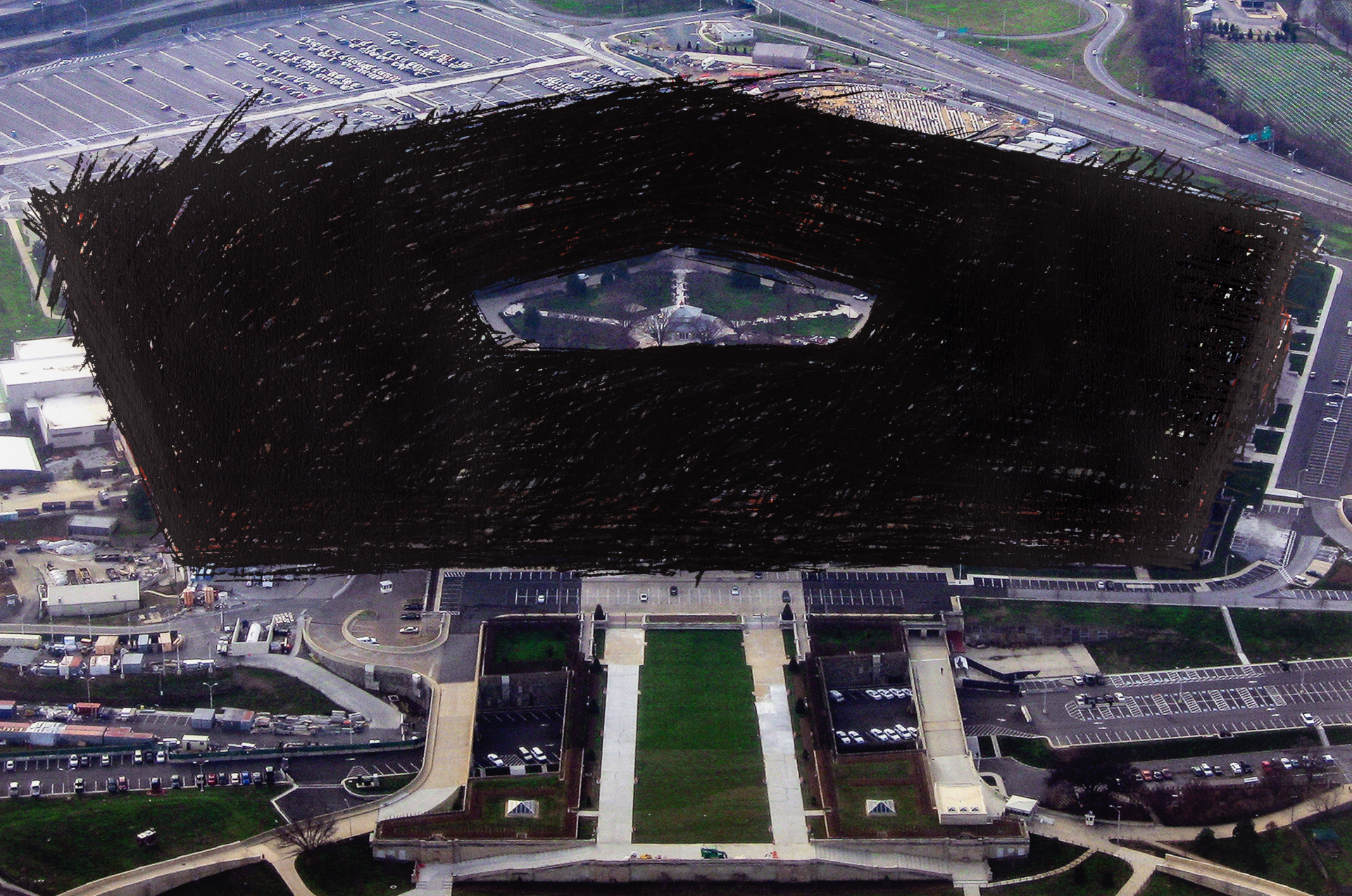
A similarly straightforward 2022 triptych of altered photographs titled Obliterated Power shows the Capitol, Pentagon and Supreme Court buildings — three major sites of governmental power in the United States — erased by black ink, manifesting, on a national level, Scott’s ideal of a vanquished America. For now, we can only imagine such erasure. As long as America persists, the power of the state is enacted on the bodies of its citizens — and non-citizens.
“America is becoming fascist and nationalist,” Scott says, “and who is and who is not an American can determine if you live or die. Those who can’t claim citizenship basically have no rights whatsoever.”
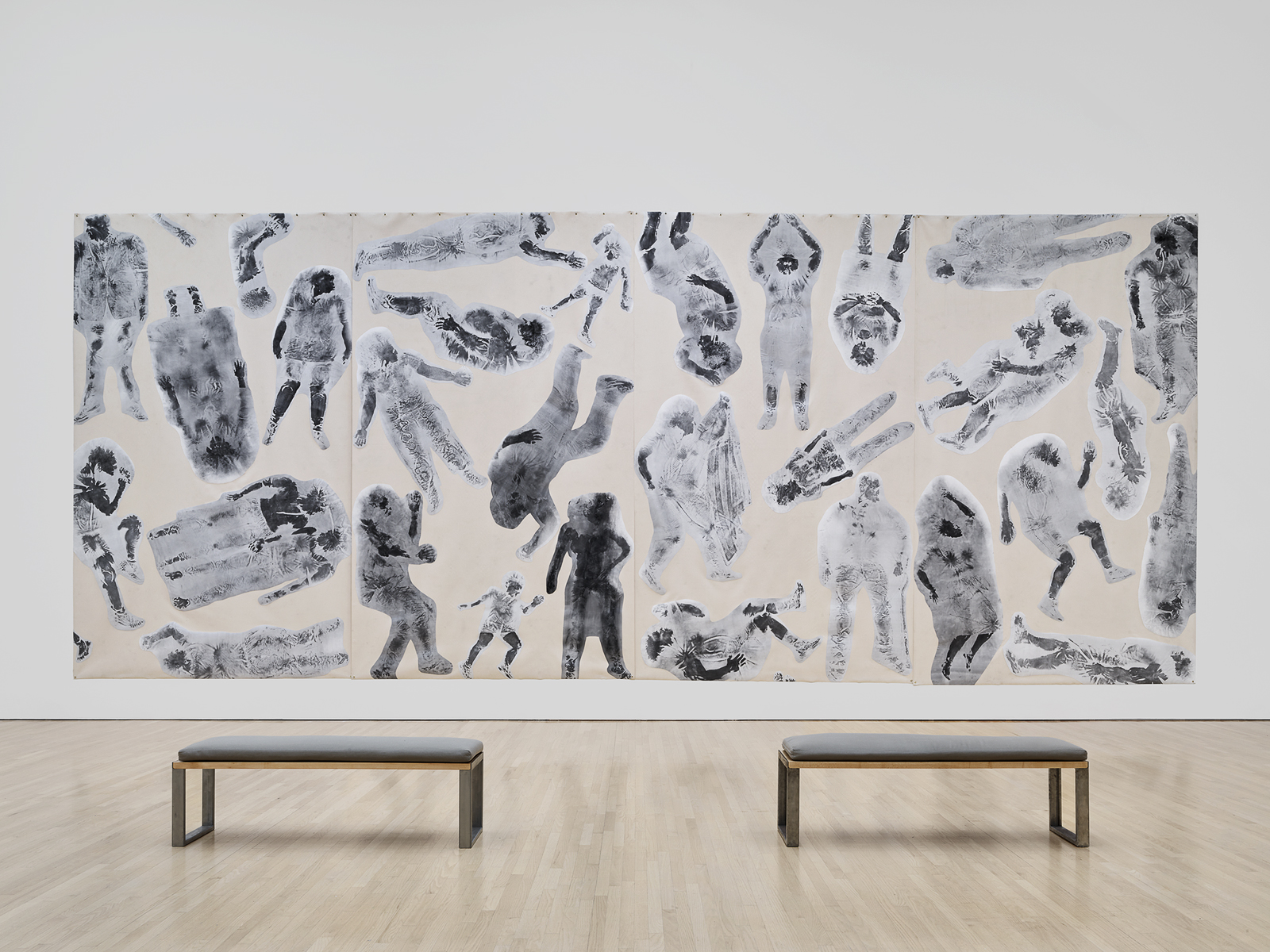
Bodies take center stage in the rest of the show, which consists of several of Scott’s ghostly sepia body prints, at once detailed and abstract, but no less direct in their messaging. In Fight the Power and Hands Up, both 2023, clusters of hands take on different meanings: fists clench in gestures of revolution, fingers spread in pleading. The diptych Mugshot (2023) features Scott posed in profile and face-forward, holding an identification card typical of an arrest photo.
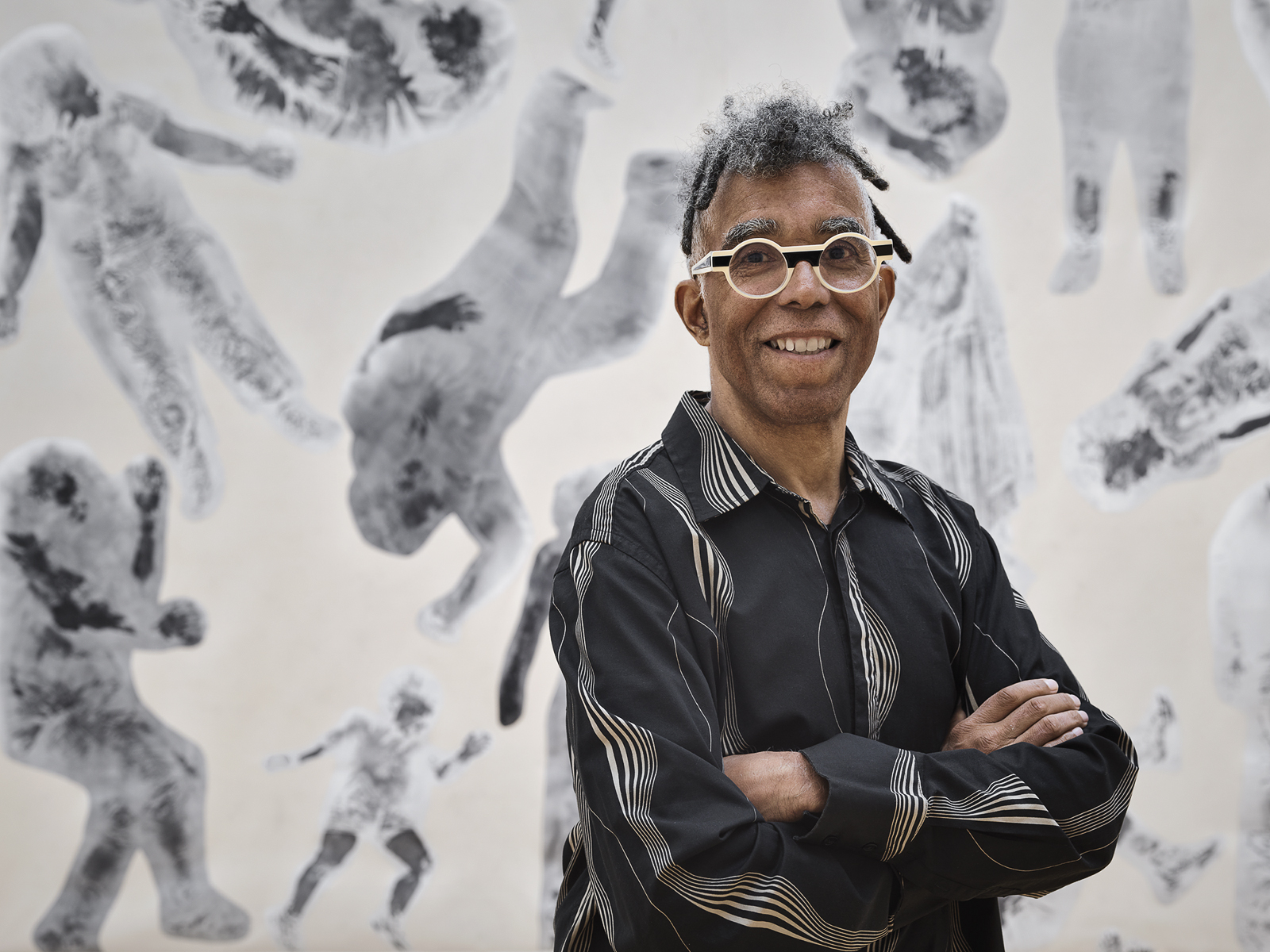
The method of body printing Scott uses was pioneered, along with Yves Klein and Jasper Johns, by David Hammons in the 1960s and 70s, who used it to make similarly politically charged work around issues of the Civil Rights movement. By repeating the motif today, Scott draws a clear parallel between the urgencies of that era and current American political pressures, reminding viewers that the struggle for liberation continues.
The largest work on view, another commission for the show, is Life/Death/America, a roughly 14-by-35-foot piece. In it, 32 body prints scatter across four canvas panels as though in free fall. The individuals, friends and friends of friends of the artist, range in age, race, gender and class, highlighting the social range of a democratic society. The way in which they are depicted varies too, and was determined by each participant, some wearing business suits, others keffiyehs. In emphasizing representation and diversity, the piece reminds us of the freedom of identity and expression Scott and many others are fighting for.
Without direct artistic visualizations of both what we stand to lose and what shedding the current power structures might look like, it can be difficult to maintain a clear picture of the collective future Scott puts forward. Sometimes, in the face of censorship and federal defunding of the arts, it feels like the current administration understands the importance of the arts better its opposition does. Imagination is a powerful weapon in the war against fascism — and one we mustn’t forget. Art like Scott’s reminds us of its potency.
“Art itself doesn’t make political change,” Scott says. “But there hasn’t been a progressive movement I know of that hasn’t had art at the foundation of it in some way. It helps people see the world in a new way and stand strong in the face of their oppressors.”
‘Dread Scott: The Body Politic’ is on view at Yerba Buena Center for the Arts (701 Mission St., San Francisco) through Jan. 31, 2027.