‘I Believe We Can Stop What's Happening Now,’ Says Mahmoud Khalil in Oakland
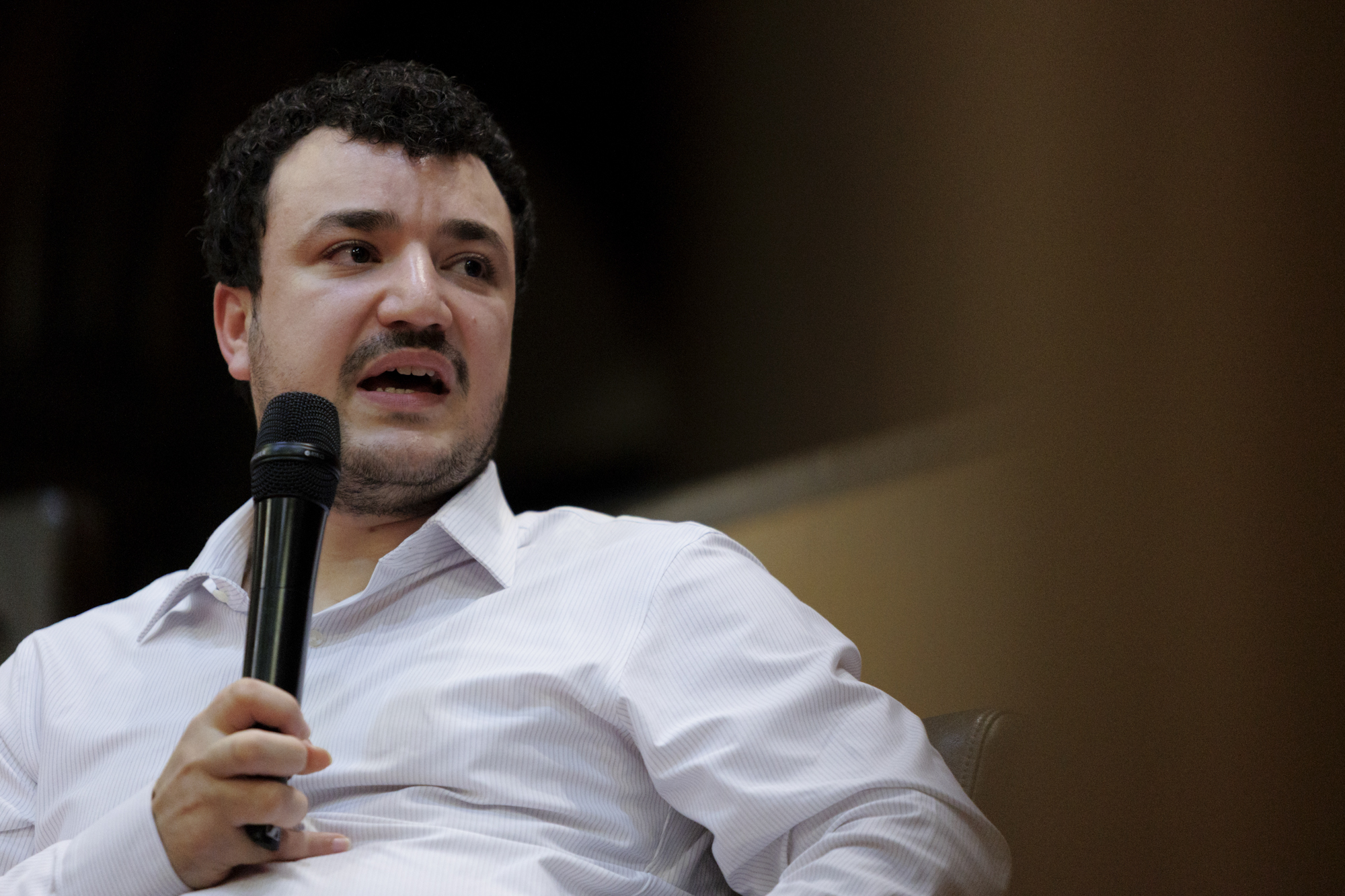
In his new memoir No Land to Stand On: Notes From Detention, Mahmoud Khalil explicitly states that he doesn’t identify as an activist. Still, as his sold-out appearance at the First Congregational Church of Oakland made clear, he’s inspired many people to action.
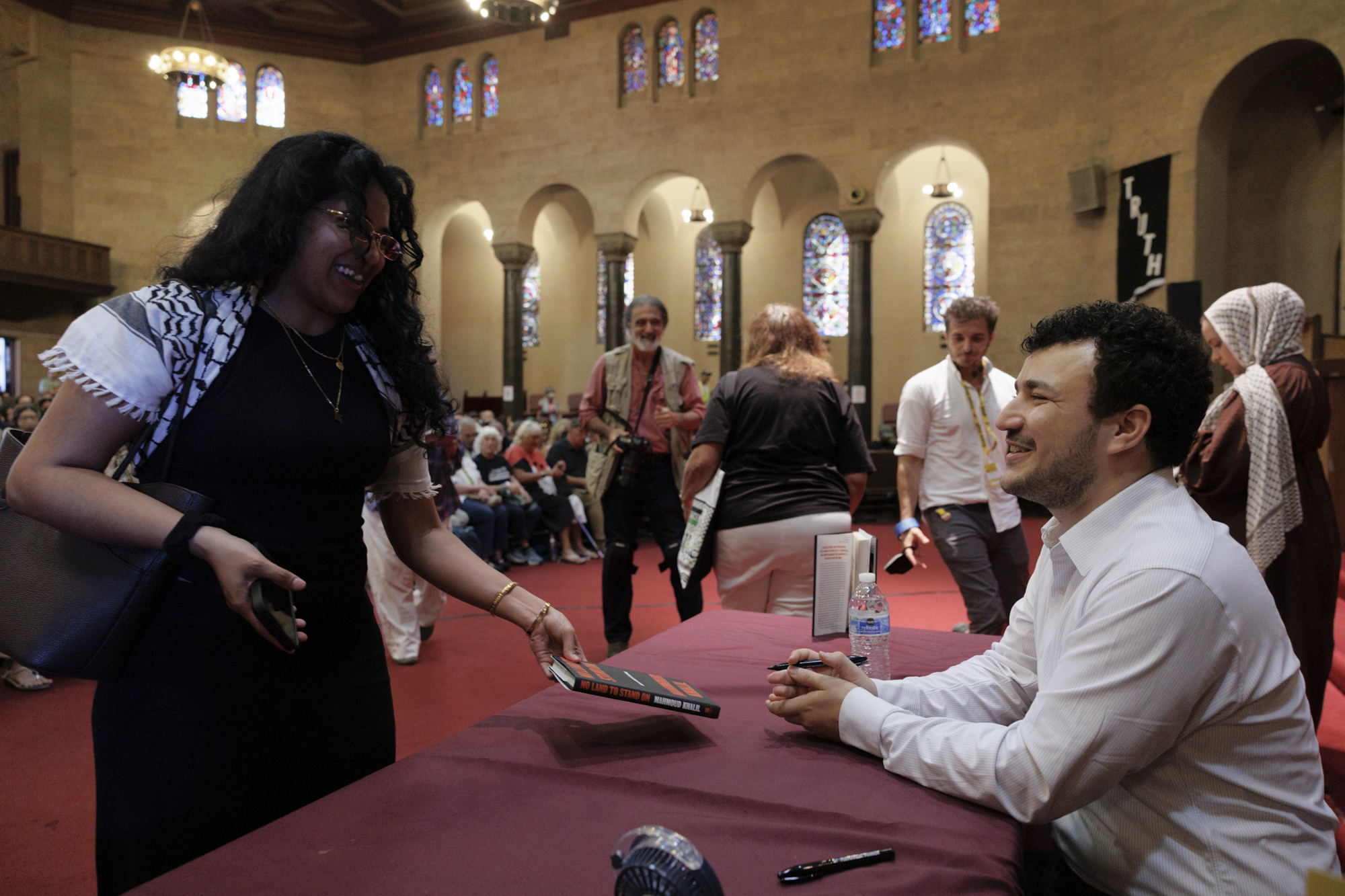
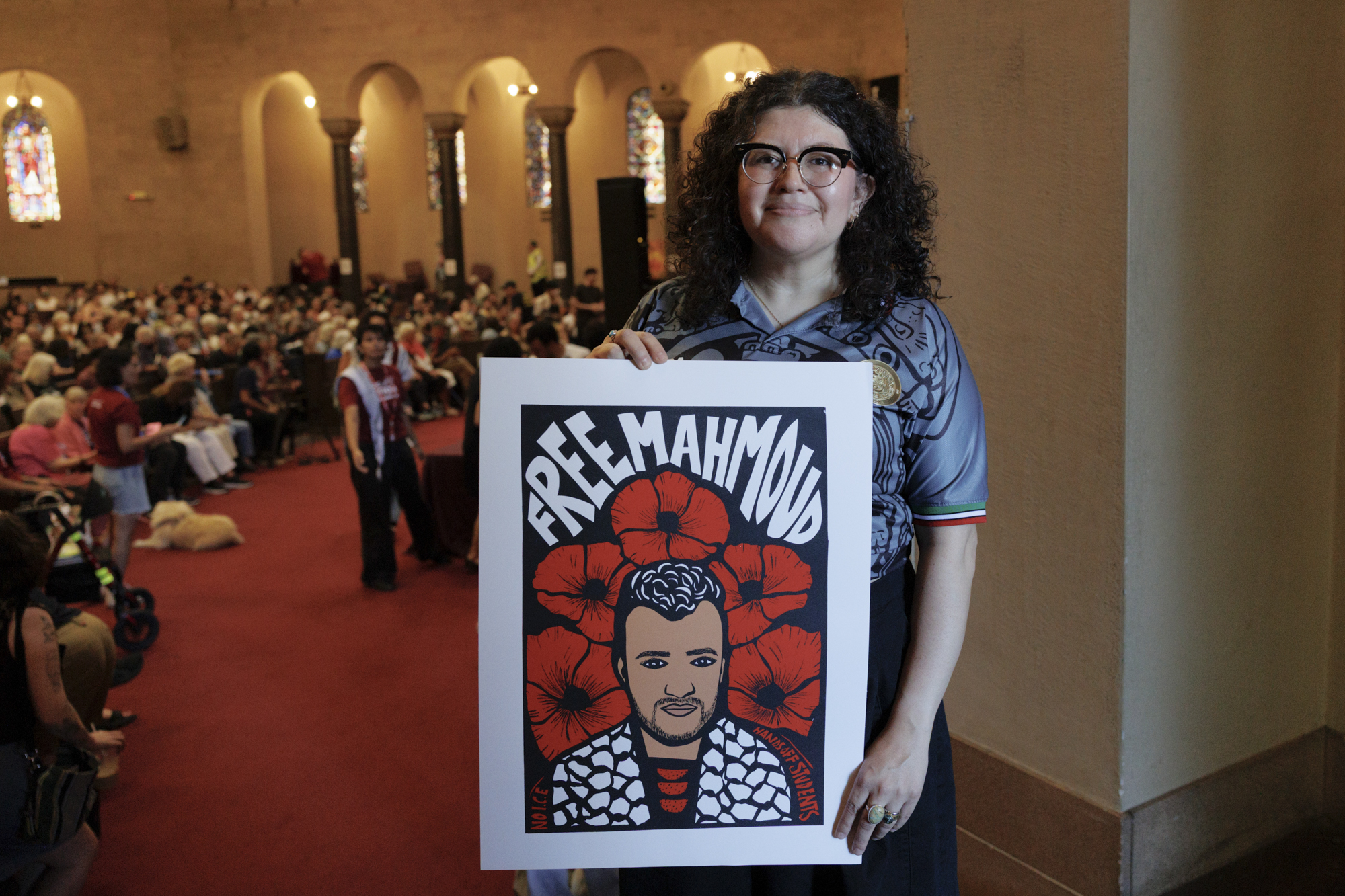
During the book-signing portion of Saturday’s event, Gilda Posada, from Sacramento, presented Khalil with a poster she’d made. Pictured on it was his face surrounded by flowers, with the words “No ICE” and “Hands Off Students.” Posada distributed the posters at protests in the spring of 2025, while Khalil sat in ICE detention for more than three months.
“I’m Chicana, so there’s a lot of similarities between our struggles and Palestinian struggles,” Posada said. “The Bay Area is standing against ICE and everything that they’ve done to terrorize our communities.”
In Oakland, Khalil sounded a note of hope toward that effort. “I believe we can stop what’s happening now,” he said.
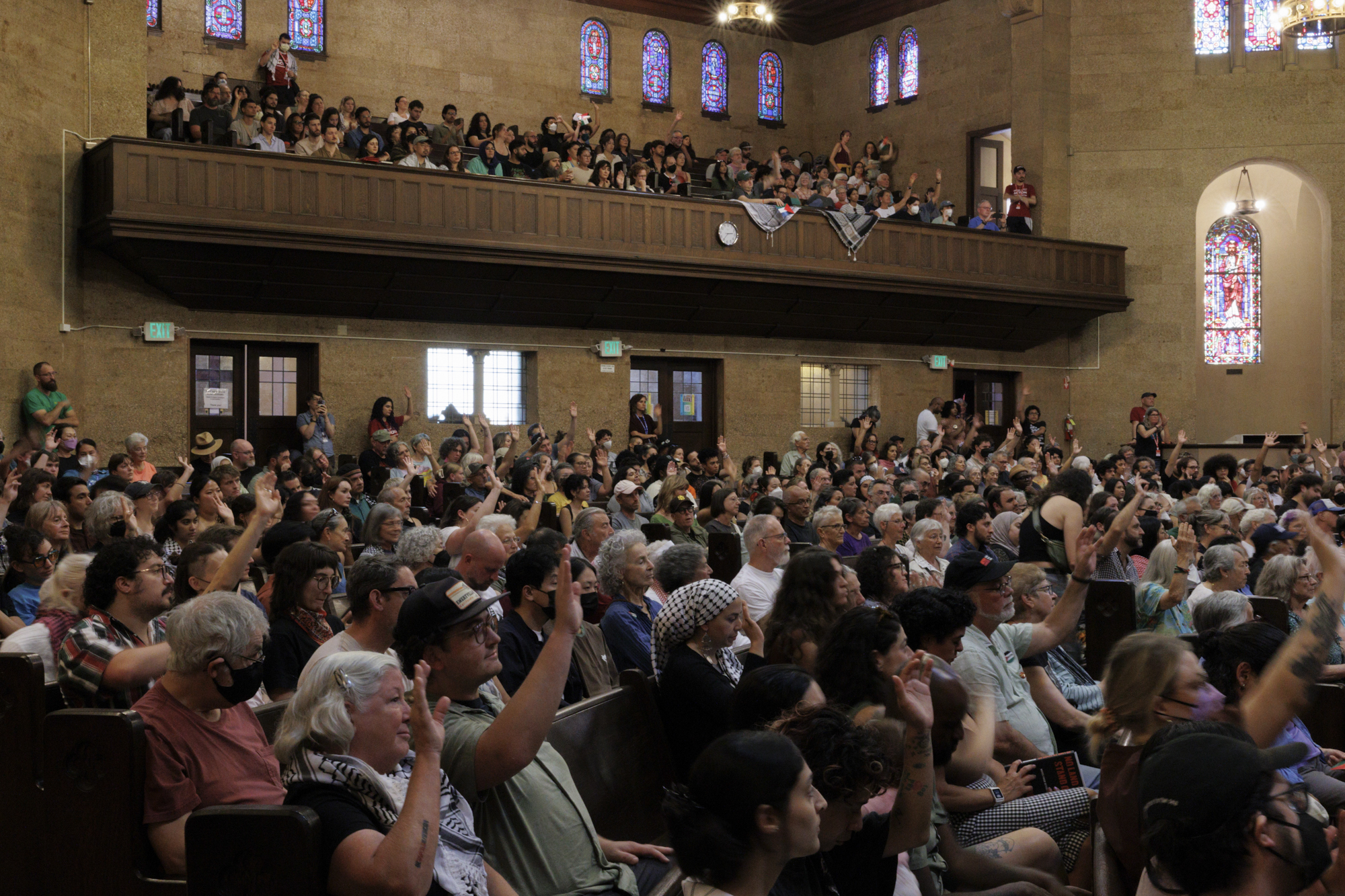
In front of an overflow crowd, Khalil was interviewed by Lara Kiswani, the executive director of the Arab Resource & Organizing Center (AROC) at the First Congregational Church. Kiswani pointed out that when Khalil was first abducted, people held signs in the Bay Area saying, “First, they took Mahmoud.” They understood, she said, that first it was him, and “then it was going to be anyone else.”
Khalil’s detention made national headlines. In 2025, Khalil’s wife Noor Abdalla, then eight months pregnant, captured harrowing footage of federal immigration agents abducting Khalil in the lobby of his apartment building after months of his pro-Palestinian organizing at Columbia University.
Khalil, a lawful permanent resident, was detained for 104 days while the Trump administration sought to deport him. In No Land to Stand On, Khalil recounts his arrest, incarceration and separation from his family — including missing the birth of his son — as well as his continuing legal challenges.
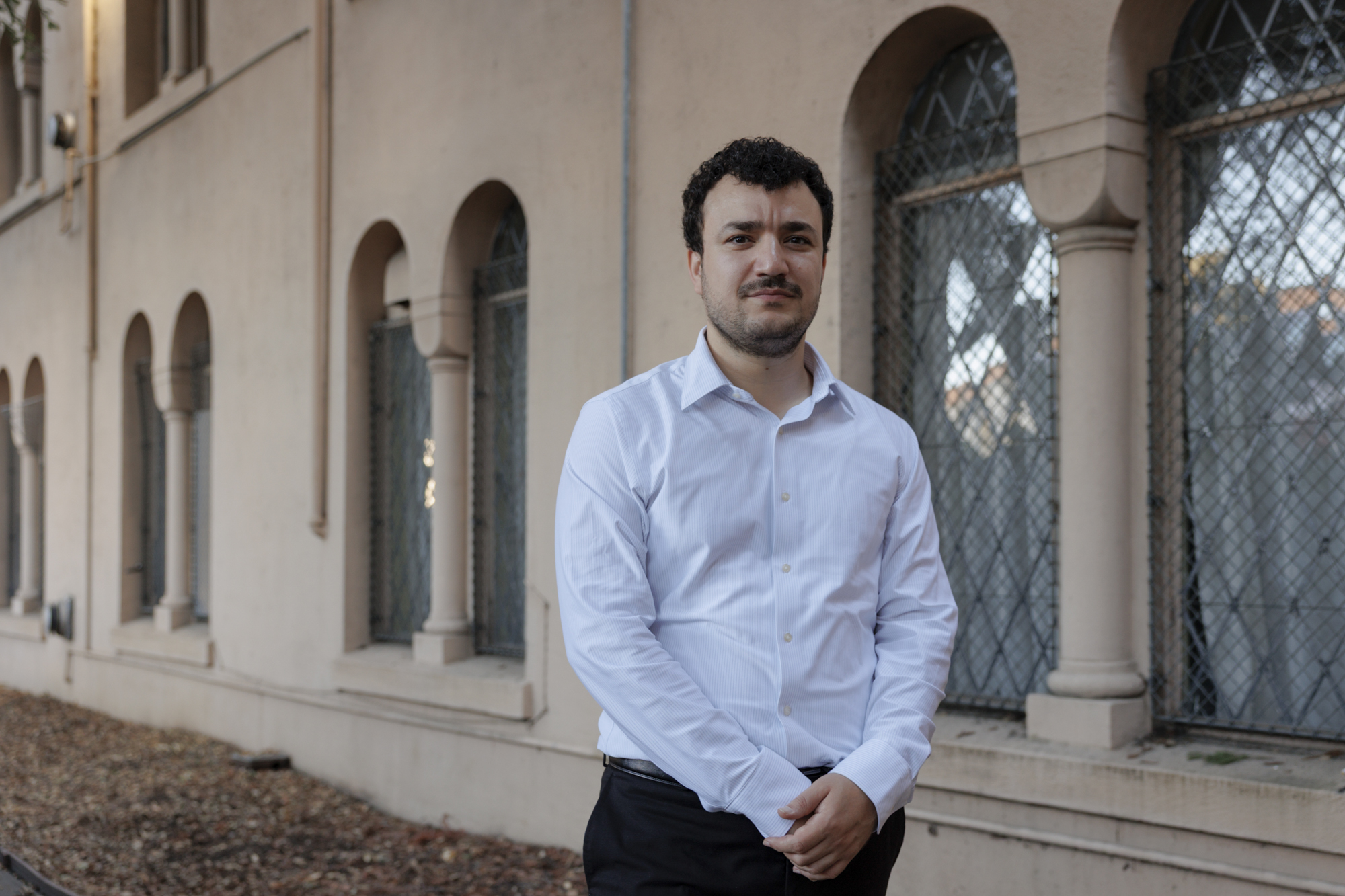
“ I wrote this book mostly to raise the alarm,” Khalil told KQED. “I don’t wanna wait for 20 years for this country to look back at what’s happening behind ICE detention, and what’s happening in Palestine, and say, ‘How could we let this happen?’”
In detention, Khalil formed the genesis of the book by taking notes, unsure if authorities would confiscate them to use against him in court. During the months he was detained, more than 500 people rotated through his dorm, and Khalil “wanted to keep a memory of the tragic stories of all these incredible fathers and workers,” he said.
“The fact that my book is out — people being able to read the things that this administration tried so hard to silence — is a win,” Khalil said.
Over six months, Khalil worked weekends with his editor alongside answering court orders. Perhaps because the book is not overthought or full of jargon, his language brings the reader into the visceral details of what it feels like to be in ICE detention. “In detention, your desires shrink to fit the available space,” he writes.
Baher Azmy, the legal director of the Center for Constitutional Rights and one of his lawyers, read a manuscript before it was published, calling it “astonishing.” Khalil asked him to add comments or corrections, but all Azmy did was highlight various passages saying: “This is incredible,” alongside exuberant curse words.
In an interview after Saturday’s event, Azmy described Khalil’s prose as evocative and clean. “The ideas have so much power, even though the words are almost kind of laconic. There’s something about the style that’s really, really powerful.”
Johnny Sinodis, an attorney and partner at Van Der Hout, part of Mahmoud’s legal team, also read a copy of the manuscript. “Mahmoud has a once-in-a-generation voice,” he said, adding that Khalil speaks for many who’ve been through similar situations.
Khalil continues to face deportation proceedings while pursuing multiple legal challenges. In 2026, the Center for Constitutional Rights filed a lawsuit on his behalf challenging his detention, and alleging a coordinated effort by government officials and pro-Israel groups to punish and intimidate Palestinian rights advocates.
Mohammad Subeh, an emergency room physician from the South Bay who has served on medical missions to Gaza, also picked up a signed book on Saturday.
“What’s important for all of us as Americans is to remember how important freedom of speech is,” Subeh says. “Hearing from Mahmoud Khalil, who was detained and imprisoned for speaking up against a genocide… is one of the few ways we can support really preserving the right to freedom of speech.”
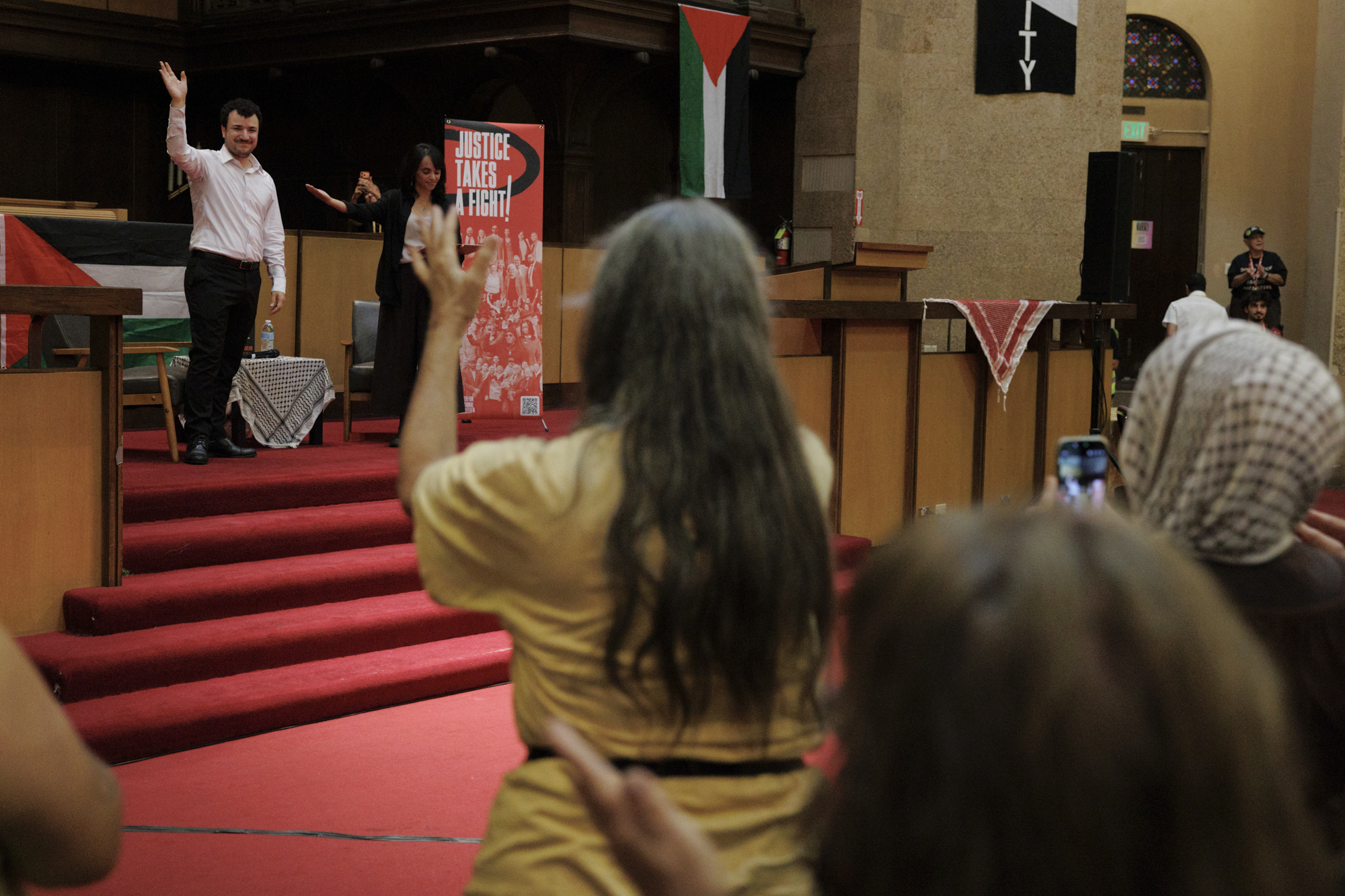
Once he finished signing copies of his book for organizers and volunteers, Khalil talked briefly about the process of writing No Land to Stand On.
“Writing a memoir at the time you are living that story was very difficult,” he told KQED. Memoirs are often written to reflect on things that already happened. But, he said, “everything in the book is still happening … to thousands of others in this country.”