Novelist Natalie Baszile Captures How Racism Can Tear ‘Friends and Family’ Apart
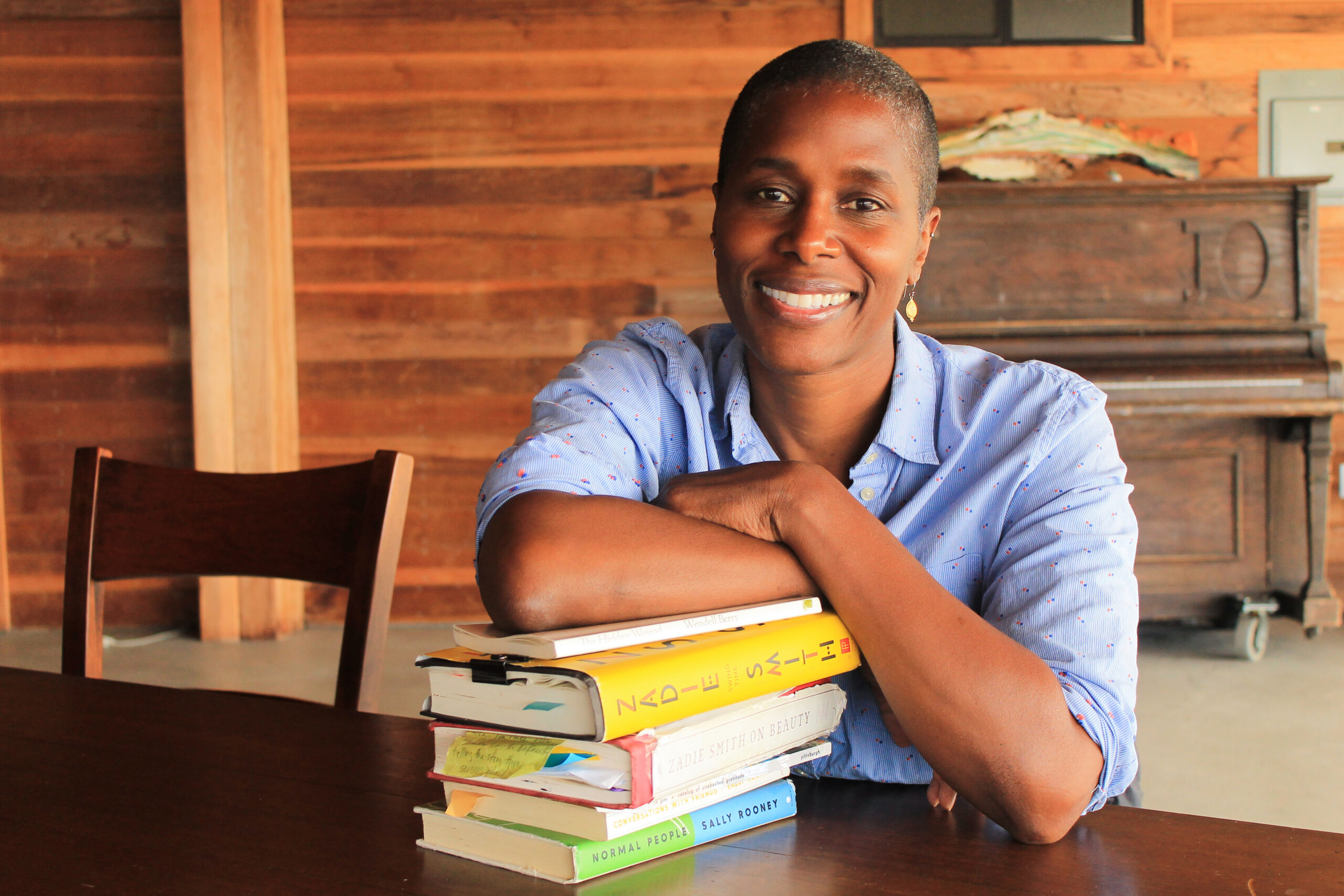
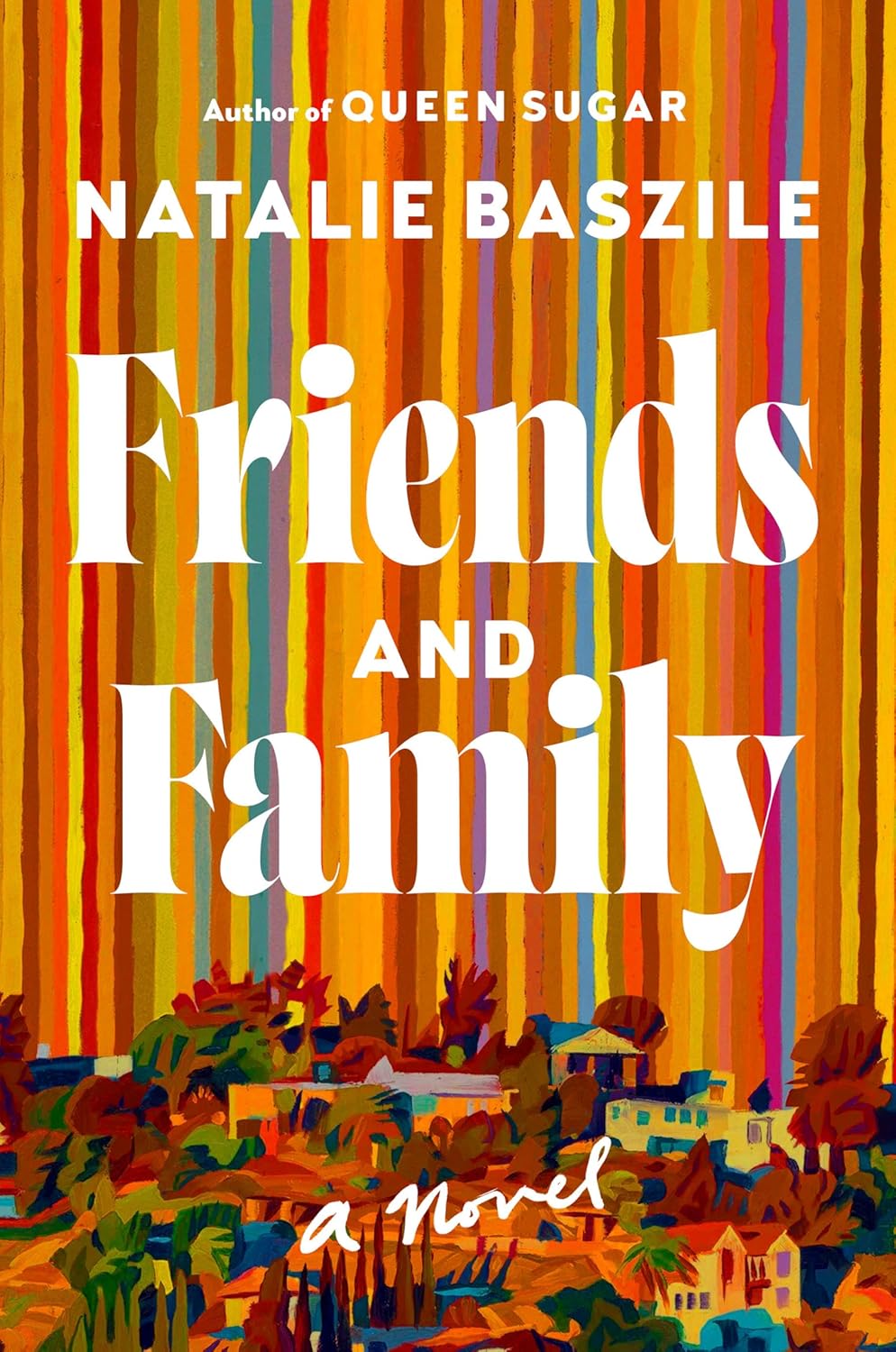
Natalie Baszile’s new novel, Friends and Family, examines America’s deepest fault line: race. Two progressive San Franciscan mothers, one Black and one white, face the end of a twelve-year, seemingly ironclad friendship after their children have a shocking encounter with the police at one of their homes that inflames one family and causes the other to retreat.
The plot was inspired by a real-life incident at the Queen Sugar author and filmmaker’s Bay Area home in 2016. With her permission, her daughter had invited friends over ahead of a volunteering stint at their high school the next day. To the family’s shock, a neighbor they didn’t know well called the police on the young people without warning.
“We went off on a trip for the weekend only to get a call saying that the police were at our house, squad cars out in the street, and they were questioning the only other Black kid who was at our home,” Baszile recalls.
The police, who claimed to be seeking an armed suspect, left after realizing the teenager wasn’t who they were looking for. But the traumatic situation created a connection between Baszile and the boy’s white adoptive parents that mirrors the one the book’s Black protagonist Babbette (Babs) has with her white friend Nora.
“In the wake of that police encounter … the dynamics that unfolded between our family and his family were fascinating,” Baszile shares.
Baszile had been working on a completely different novel idea after Queen Sugar, her 2014 book that filmmaker Ava DuVernay adapted into a television series that ran for seven seasons on Oprah’s OWN network. “Then this incident happened to my family,” she explains, “and it felt so urgent and so timely that I put the other novel idea aside just to focus on this book because it really captured the zeitgeist.”
In 2016 and ’17, when the idea first germinated, “people were talking about police violence,” she says. “We’d had the Tamir Rices and the Philando Castiles. So it’s not like it was new, but I was not sure how they would resonate with the culture.”
Then came 2020. “In the wake of George Floyd, I was still writing the book,” she says, which presented “a whole new opportunity to speak to the moment.”
The incident in the book is a flashpoint for both mothers of Black children because it promptly exposes default settings that people who believe they have “done the work” thought they had overridden.
Baszile, like the book’s protagonist Babs, is part of what she calls the “integration generation,” or the first wave of Black adults who grew up in predominantly white spaces. Her experience is a stark contrast, she explains, to that of her parents in the segregated South.
“I wanted to write from the point of view of a character who was accustomed to moving in and out of these different spaces, some Black, some white, some integrated, some not,” Baszile says. “[She] still confronts her own expectations, and the assumptions that she has made, about what her relative privilege will allow her to be protected from.”
We see the world through Babs’ eyes, her biases, insecurities and pride. She is an artist who has taken on various creative careers — set design, freelance styling, publicity — and is perennially self-conscious about being the only Black family on her well-to-do block. Baszile relays this anxiety in small domestic details, such as Babs worrying about neighbors judging her for not taking the trash bins in quickly enough and validating their beliefs “about how Black folks behaved.”
Babs lives a life of ease that has insulated her for so long that the police incident feels like being struck by lightning, a freak occurrence that forever changes her. Her friendship with Nora is facilely written: solid, companionable, but with a hairline crack. Babs, while expressing gratitude for how much she has, can’t help but think of it in relation to how much more Nora has. Nora lives in a “sprawling Queen Anne Victorian” in the ultra-wealthy Pacific Heights neighborhood, while Babs describes her place in the upper-middle-class Inner Richmond as “modest.” There was always an unbreachable gap that subtly colored their relationship, and the police encounter arrives like a bomb thrown into that crevice.
Nora is the kind of white woman who went to workshops (plural) on transracial adoption before taking in her son. She identifies as an ally, seeks out advice on how to cut his hair properly and shows him movies with “positive” Black characters. She has read W. E. B. Du Bois’ The Souls of Black Folk, and engages in prison reform advocacy. Yet she is also old money, with a great-grandfather who made a fortune in the railroad industry, a housekeeper who prepares her meals and an inherited membership in an elitist white book club made up of women from the city’s “best” families.
Nora’s contradictions feel small and bearable to Babs — who proudly thinks of her not as a “White Girl” but a “Girl Who Is White” — until their disparate responses to the police incident make the friction unbearable.
Babs describes an “invisible suitcase” of emotional baggage and hurt that every Black person compulsorily carries but Nora never sees. It is a metaphor that prods a question the book explores throughout: Can we ever really know each other? It is painful to be forced to reevaluate a friendship you believed would last a lifetime. “Maybe there was a limit,” she remarks to herself about Nora’s earlier championing of Black issues, “and maybe that limit was anger.”
Much of Baszile’s previous work has been set in the South, including Queen Sugar and Harvest, her 2026 documentary about fourth-generation farmers in rural Louisiana. This novel represents a regional shift with personalized meaning.
“I was excited to write about the Bay Area because it’s my backyard,” Baszile shares. “[It] is flush with wealth, and all of the disparities are playing out right here. Especially in this age of technology and AI, it’s only going to get worse. So to have this conversation, not just about race, but about class and privilege and money and wealth, now seems to be even more important than it was back in 2016 or 2020.”
The Bay, she contends, feels “like it’s ground zero.”
Friends and Family is a strong character study that mines the scary realization that deep intimacy can be undone not just by large betrayals but by small ones: a single word choice, a glance down instead of forward. It is enriched by its penetrating examination of the sinuous emotional arcs of long-term relationships of all stripes: Babs and Nora’s twelve-year interracial friendship; Babs and her husband Galen’s 25-year marriage, which is reeling from the fallout of infidelity; and the teenagers Nathan and Reese’s childhood friendship, which must survive their hormones and a shared trauma. The novel also digs into the children’s relationships with their parents as they mature and have their ideals tested by the realities of the world.
Baszile would love for Friends and Family to receive the screen adaptation treatment Queen Sugar did. “There’s a lot of potential here to take this book and the conversation that I’m having and expand on it, and for this to reach an even broader audience, just like Queen Sugar.”
Television offers a different kind of flexibility for storytelling, and, she confesses, it would just be nice to see the Bay Area she knows on screen. “My fingers are crossed,” she says hopefully.