Cloaked in Anonymity, Israeli Soldiers Describe Mass Civilian Killings in ‘NAZA’
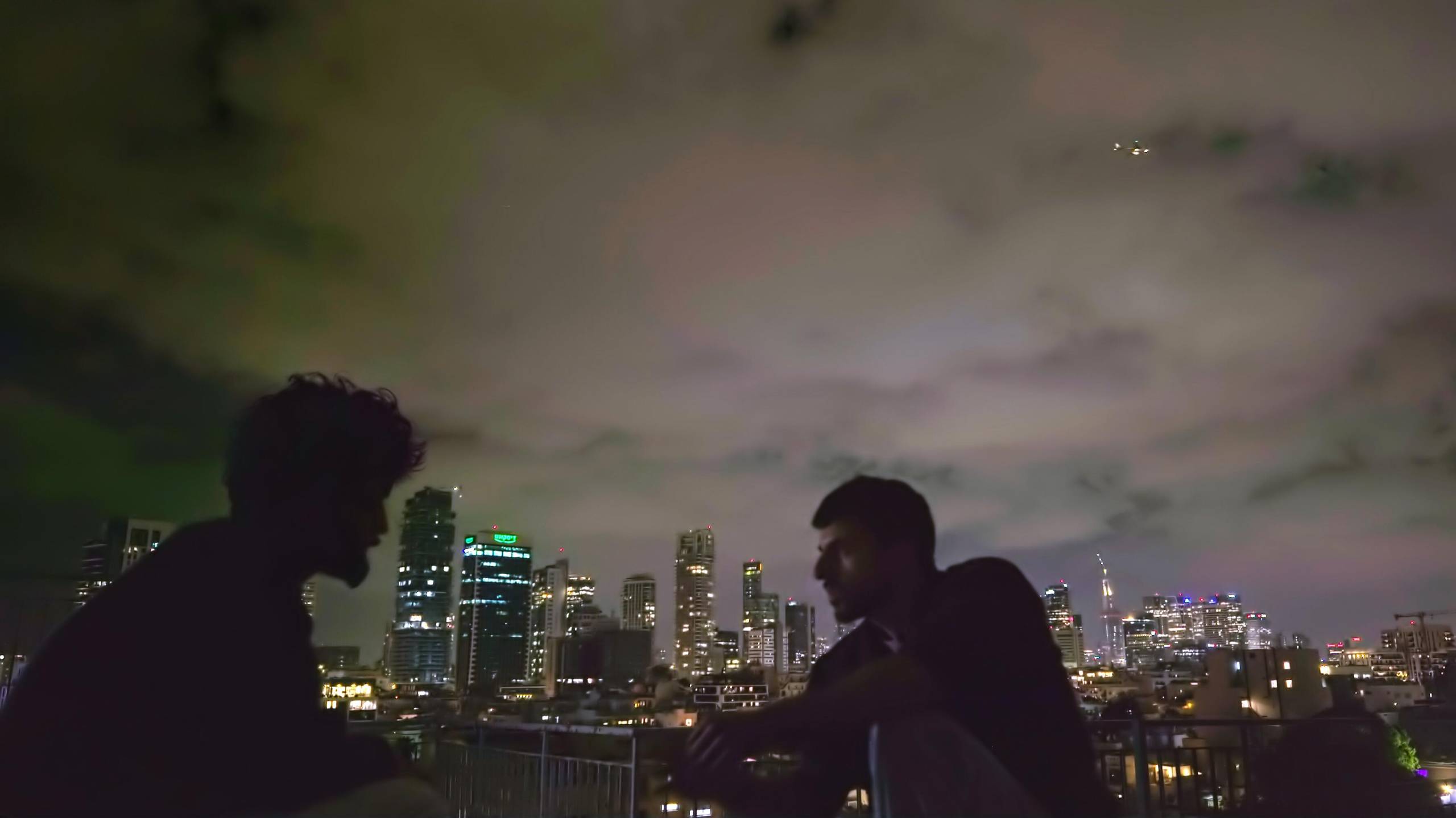
For most of the shattering and damning new documentary NAZA, we are on a series of rooftops in Tel Aviv, watching the Israeli journalist Yuval Abraham conduct one-on-one interviews with Israeli soldiers and intelligence personnel.
The rooftop footage was filmed at night, mostly by Abraham’s co-director, Rachel Szor, and their interview subjects — 24 of them in total — are all cloaked in darkness. We’re told that their appearances and voices have been digitally altered to protect their anonymity. In precise detail, they speak about their role in launching the airstrikes that have killed tens of thousands of Palestinian civilians in Gaza since the Hamas-led attacks in Israel on Oct. 7, 2023, when around 1,200 people were killed and 250 hostages were taken.
Unsurprisingly, NAZA has already stirred considerable outrage — much of it, it should be noted, from people who haven’t seen and maybe never will see it. Abraham and Szor, both Israeli filmmakers, have been denounced as traitors in Israel, and Prime Minister Benjamin Netanyahu himself has threatened to revoke their citizenship. The anonymization of sources has been one of the more contested issues; Israel supporters have said it discredits the soldiers’ testimony, while Palestine supporters have criticized the film for shielding self-confessed war criminals.
Without the promise of anonymity, of course, NAZA as a film wouldn’t exist. But the reporting that it presents would exist. Much of it has already been published in outlets including +972 Magazine, an Israeli-Palestinian publication; Local Call, a Hebrew-language outlet; and The Guardian, which co-produced the film. Abraham wrote many of those investigative pieces himself; he’s also credited the many Palestinian journalists who brought these revelations to light.
The testimony is riveting. Some of the interview subjects speak about how they were motivated to help the Israeli military annihilate Hamas after Oct. 7. Some express guilt and regret for their involvement. Others see themselves as cogs in a necessary war machine. But for the most part, the filmmakers are less interested in the questions of why than in the mechanics of how. They want us to understand how these systems of remote surveillance and mass killing work, and to grasp the horrific scale of the civilian deaths.
NAZA is an acronym for nezek agavi, Hebrew for “collateral damage.” It refers to the estimated number of civilian casualties considered acceptable by the Israeli military. “Twenty NAZA” would mean that up to 20 civilian deaths were approved in the elimination of a single target. For one high-value target, a figure of 500 NAZA was approved — the population of a small Israeli town, Abraham notes.
The logistics of trackings and killings are calmly and methodically laid out. Because the military can hack into any Palestinian’s phone in Gaza, their power of surveillance is near-total. We learn about the military’s practice of bombing the homes of suspected Hamas operatives at night, while their wives and children were with them. We also hear about the widespread use of AI systems to gather intelligence, much of it faulty, about potential targets.
One of the most chilling passages describes a tracking technology referred to as “Where’s Daddy?,” which uses children’s words to confirm whether their targeted fathers are at home. One soldier talks about having used this method on a 12-year-old girl, saying, “You hack her phone and then you kill her.” At one point, Abraham asks a subject if Israel is committing a genocide. Without hesitating, he responds, “Yes. Completely.” As the film notes, more than 73,000 Palestinians have been killed in Gaza since Oct. 7 — and the death toll continues to rise.
I’ve watched NAZA twice now, both times in a state of quiet horror and fury — and with enormous admiration for Abraham and Szor’s courage in holding their government to account. My admiration extends to the unerring precision of their filmmaking. NAZA runs just 77 minutes. It doesn’t linger on the atrocities it describes, mainly because there are so many of them to address. There’s some archival material, including footage from the early days of Israeli intelligence and the building of Tel Aviv in the 1920s.
But most of the imagery we see is of modern-day Tel Aviv at night. Szor’s camera captures the glittering lights of the city and often peers into apartment windows, showing us Israeli citizens working out, eating meals and watching the news. There’s tremendous power — and, I think, a stealthy indictment — in these everyday images. It’s as if the filmmakers are holding up a mirror image to Gaza, turning our thoughts toward the thousands of slain Palestinians who were, once upon a time, also just going about their evenings. The most radical thing about NAZA isn’t that it exposes the machinery of death; it’s the film’s insistence on the value of Palestinian life.
‘NAZA’ begins screening around the Bay Area on Oct. 9, 2026.