The John Henry Sound System Comes to the Berkeley Public Library
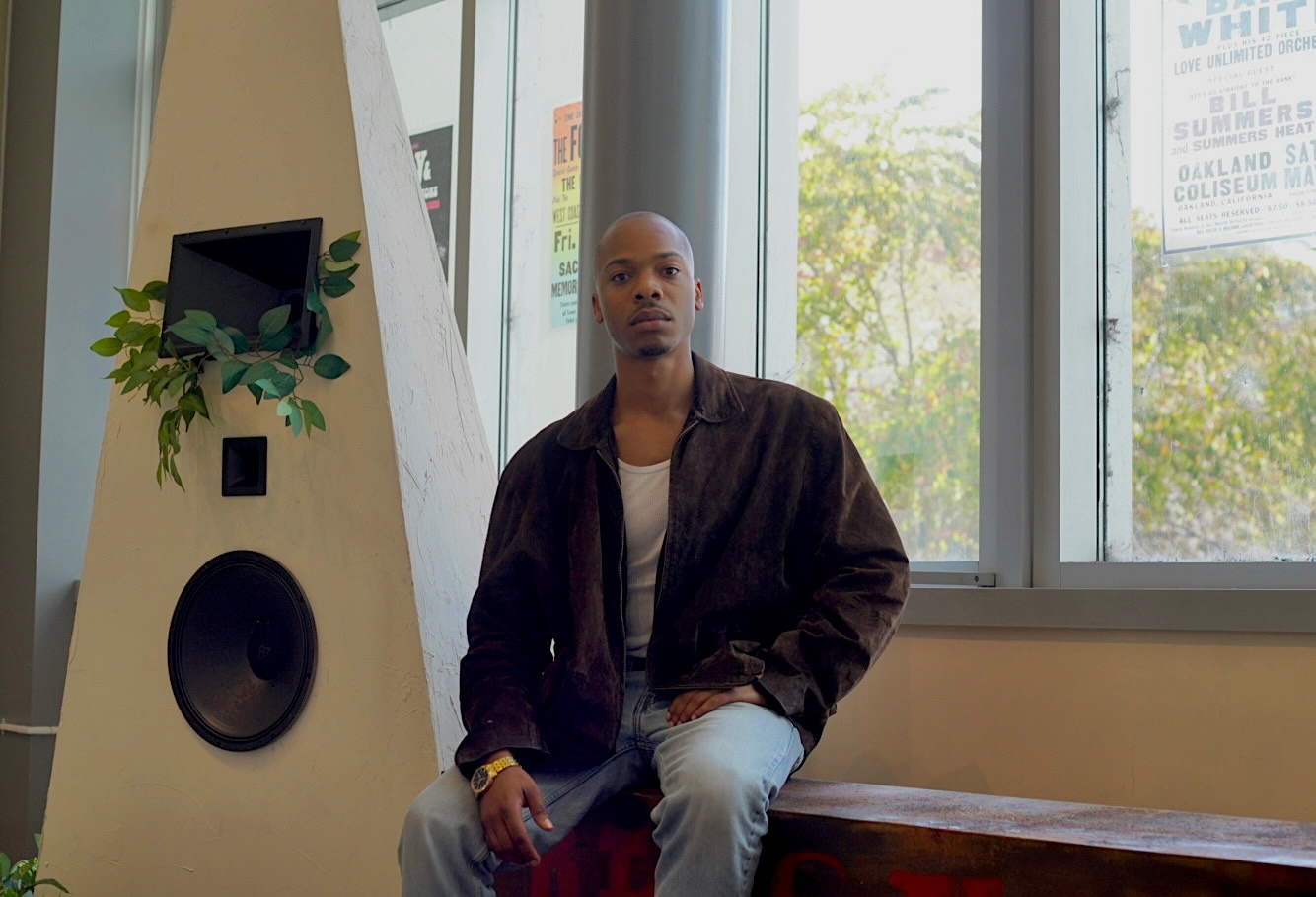
At the main branch of the Berkeley Public Library sits a set of speakers that look like mountains.
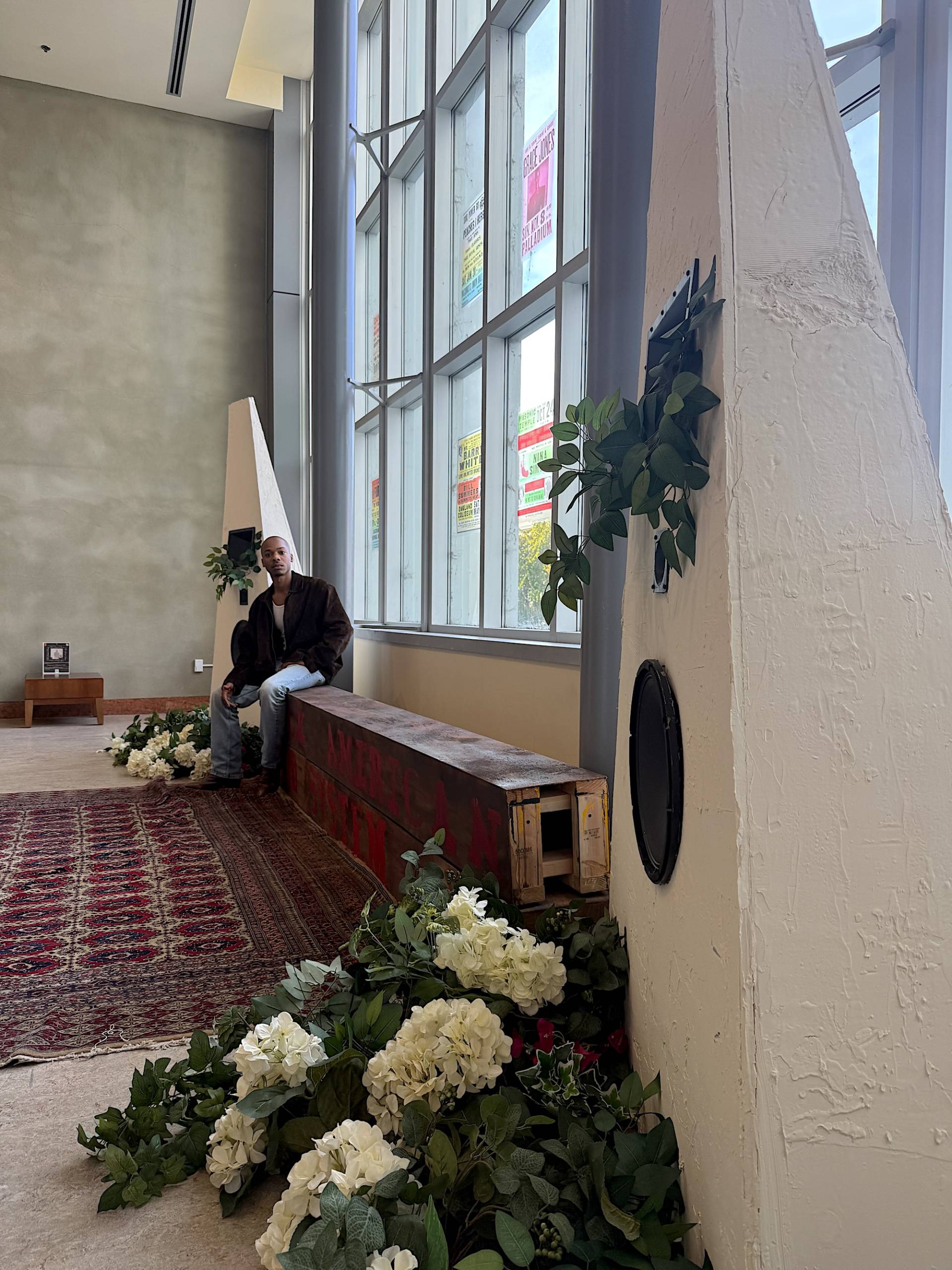
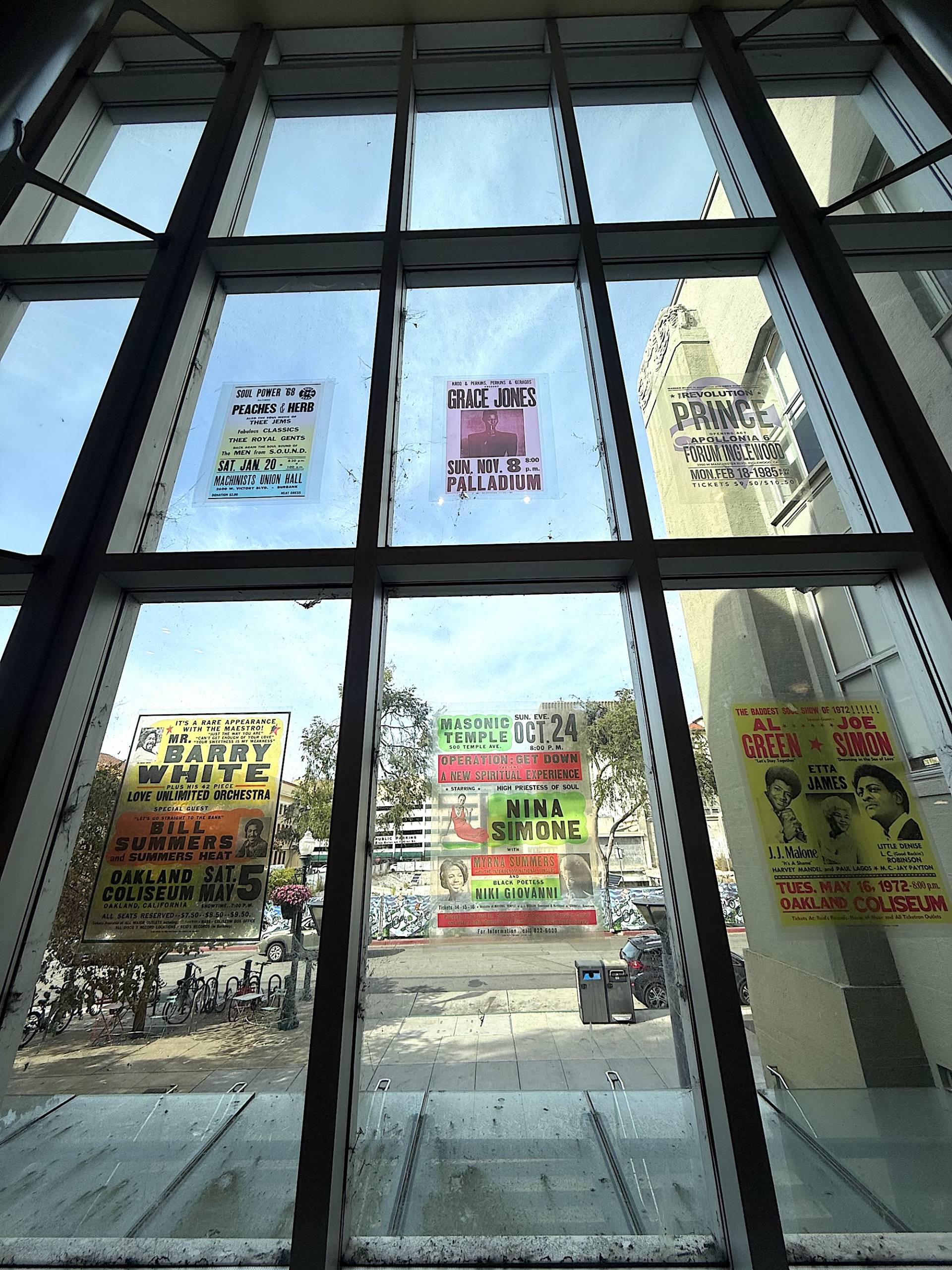
The pair of nearly nine-foot white triangular wooden blocks tower over The Break Room, which is less of a room and more of a nook off of the second floor’s main hallway. At the base of the speakers is a garden of faux plants, and archival posters of star-studded local events hang in the window behind them.
On the floor, separating the two mammoth speakers, a pair of long brown wooden blocks are laid horizontally and stacked on top of one another. Written on them in bold red letters are the words “Black American Sound System.”
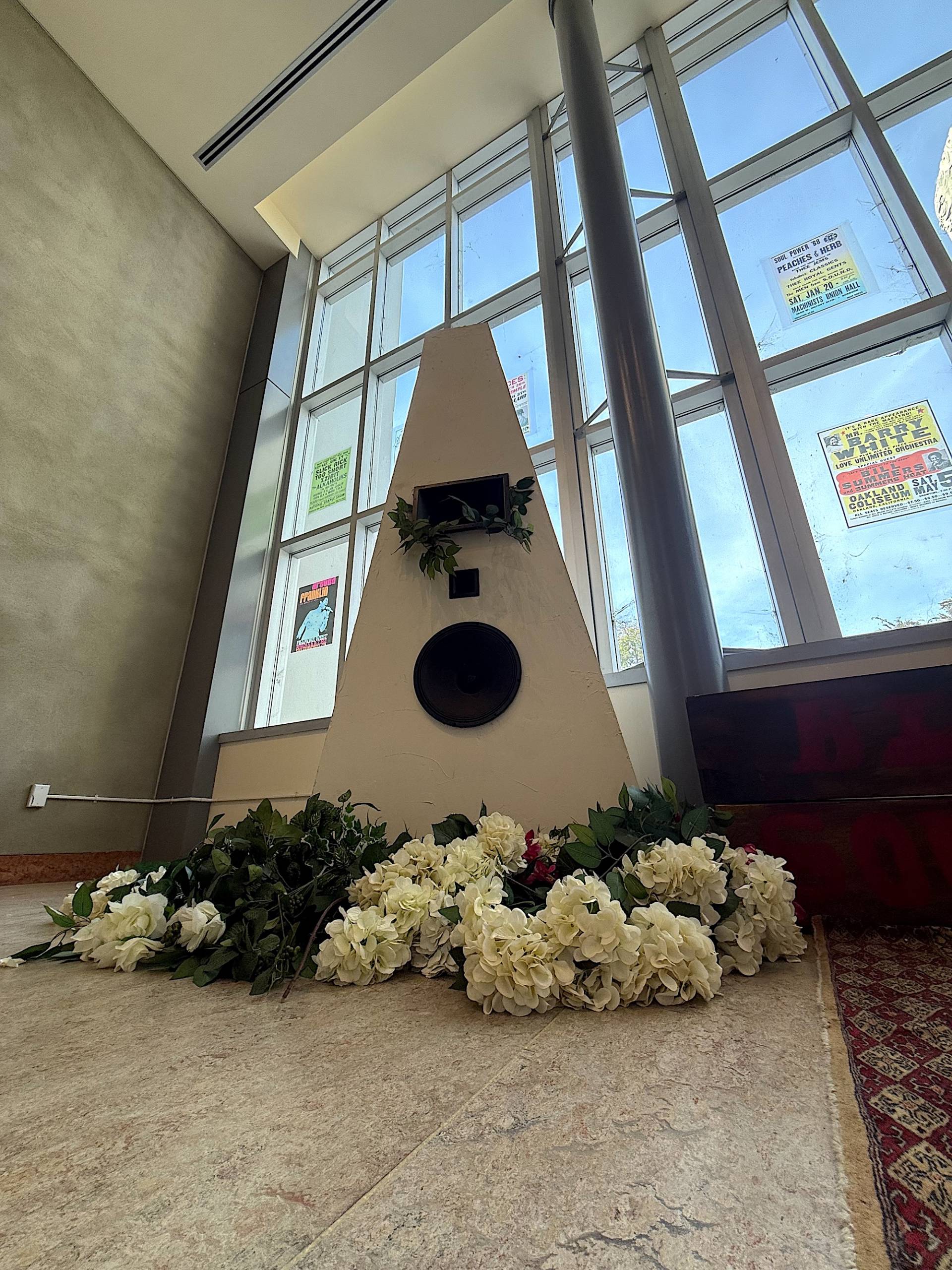
“These are 1984 Cerwin-Vegas,” says singer and sonic designer Derwin Deon Brown II, describing the speakers. Brown calls it the John Henry Sound System, named after the Black American folk hero.
Brown and his towering sound system are the centerpiece of In The Stax, an annual series of music-related programs across the Berkeley Public Library system. The first performance in the series takes place Thursday, Oct. 1 at the Claremont Branch with instrumentalist Connoisseur Rat, and events continue through the second week of December.
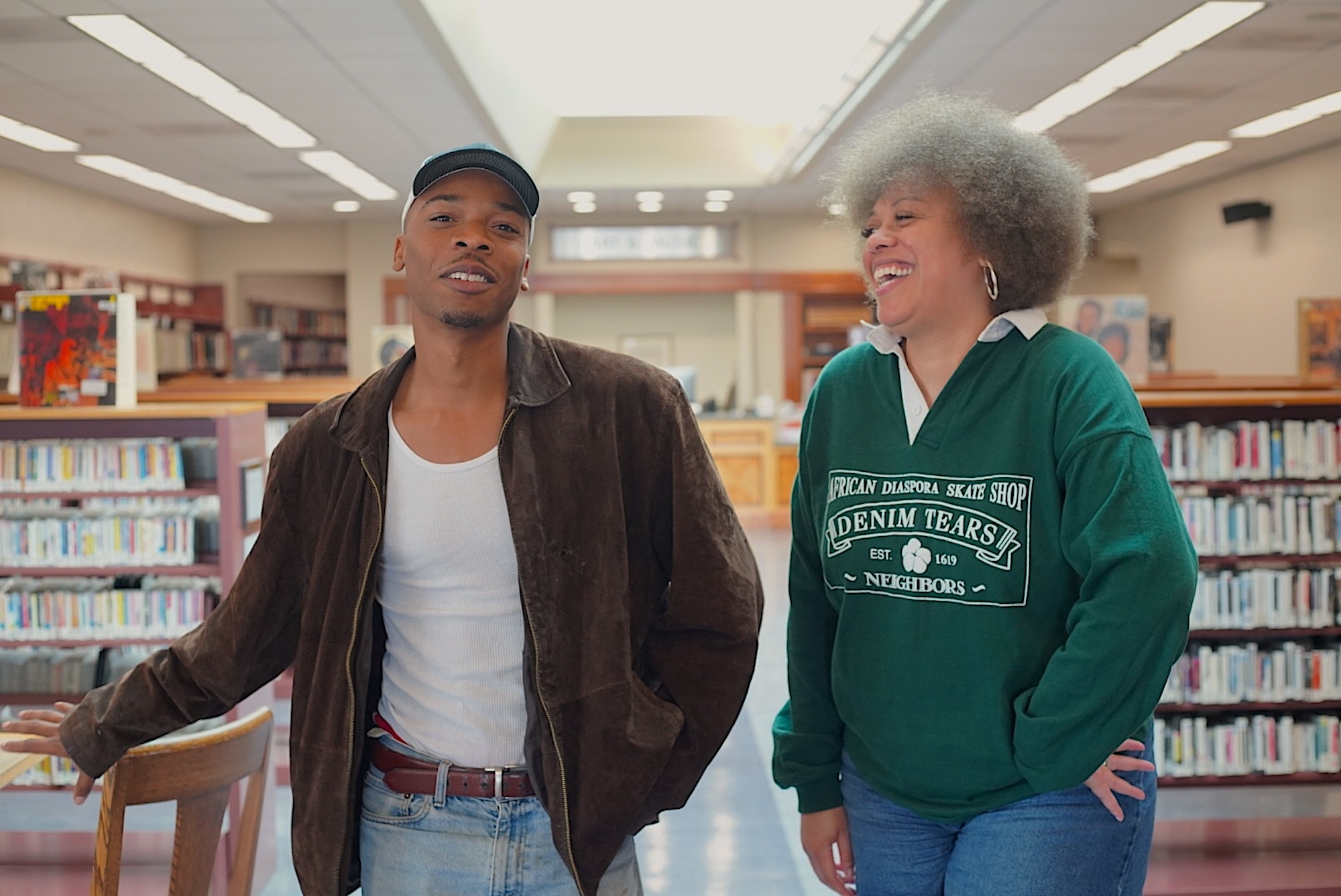
Since launching in 2022, the series has featured artists like Oakland punk band Skip the Needle and soul singer Marisha Ashanti. Berkeley Public Library Specialist Chinyere Keita, who organizes the events, says the goal is to bring Black artists into the space.
Born and raised in Oakland, Keita spent her teenage and young adult years at the Berkeley library, working there for the past 15 years. During that time, she’s noticed that younger folks and people of color will overlook the library as a welcoming third space, and assume that all it offers are books and free wi-fi.
“I just want to always remind people that our culture is here. Our history is here,” she tells me during a recent phone call. “And Derwin Deon Brown II had the exact kind of thing reflected in his artwork.”
Brown is In The Stax’s first artist-in-residence. Along with his John Henry Sound System, he’ll debut his forthcoming album (also titled John Henry) later this fall. In the meantime, he’s been working with Keita to develop the event series. “And all the programming,” says Keita, “is around Black artists.”
The series features performances from the likes of lyricist Kayatta, a panel discussion about the current state of Black radio, a Wild West Femme Cypher and a workshop where people can burn their own playlists to a CD and create collages as cover art. More than just listening to a lecture, Keita tells me, it’s about weaving new ideas into the culture of the library.
“Yoga was actually our most popular program at the Oakland Public Library,” says Brown, referring to a workshop last spring where he collaborated with Black to Yoga and compiled a playlist of songs to center healing. “We’re gonna be doing the same thing at Berkeley Public Library,” he says, “but this time, live.”
Instruments and vocals, sound waves and varying vibrational energies are tools to help people center themselves. And ultimately the goal is to use those tools to get people to relax and recharge.
“And when we talk about ‘the break,’” Brown says, “we really want to embody all the definitions of that.” The “break” can be a rest, a dose of culture or a break from habits. It can even be breakbeats found in hip-hop. Ultimately, says Brown, it’s about convincing people to “integrate breaks into our lives.”
The 27-year-old laments the amount of time that work has taken him away from his family. Originally from Pasadena, he moved to Oakland in his college years, attending San Francisco State University. “Oakland has raised me as a man,” he affirms, now a decade into his East Bay residency. A former legal aid and social worker, Brown admits the corporate ladder is deceiving.
“I’m thinking I’m working my way up and really I’m just on a treadmill, like many people, chasing the next thing,” he tells me with an exhale. “Niggas was tired. You know, we’re working and doing too much shit, man.”
John Henry is an intentional name for Brown’s sound system and forthcoming album. In the folk tale, Henry, a broad-shouldered African-American blue-collar worker with a hammer, bore a hole through a mountain faster a machine, but collapsed and died soon after his victory.
“It’s an allegory for Black labor, and the limits of our labor,” Brown professes.
For Brown, as a Black queer man in America, the “machine” he’s in competition with can take many forms, be it new predatory technology or old-fashioned racism. It can even show up internally, he says, clarifying that poor mental health, habitually people-pleasing or bouts of limerence are “machines” of a different sort.
“How do I temper those machines? How do I study them, observe them and conquer them?” asks the artist. “What would it be like if John Henry survived? That’s what this is about.”
On the fifth floor of Berkeley’s main library is a multimedia station where people can take a break and listen to a CD from Gucci Mane and read an article about John Coltrane, or slap a record by Santana and peruse a magazine with Steve Lacy on the cover.
And just a few floors below, encased in hand-cut wooden triangles, are a set of speakers unlike any other, as four 15-inch drivers, two tweeters and a midrange horn come together to sonically spread culture.
“They’re custom-made for pretty loud bass,” Brown says of his John Henry Sound System. Although they’re in a library, the speakers are on par with the ones you’d hear at concert halls, churches and clubs. “And that’s really the sound that I wanted to bring,” he says.
Events in the ‘In The Stax’ series run now through Dec. 12. More details and information here.