A Hitman Questions Morality and Faith in ‘Your Mother, Your Mother, Your Mother’
In Bassam Tariq’s action thriller Your Mother, Your Mother, Your Mother, a Muslim hitman, Latif, embarks on a quest to obtain breastmilk for his infant daughter Aziza after the sudden passing of his wife Khadijah. The baby will only take breastmilk, not formula. Along the way, Latif encounters both external and personal battles that test his faith and morality.
In an understated, complex turn, Bay Area-born actor Mahershala Ali gives audiences what they might’ve been hoping for in the much publicized, now defunct Blade reboot. But Your Mother, Your Mother, Your Mother is more nuanced: choreographed action sequences fuse with Islamic hadiths to provide a spiritual take on what it means to strive to be the best Muslim you can be in our current world, where violence, Islamophobia and MAGA ideologies surround us.

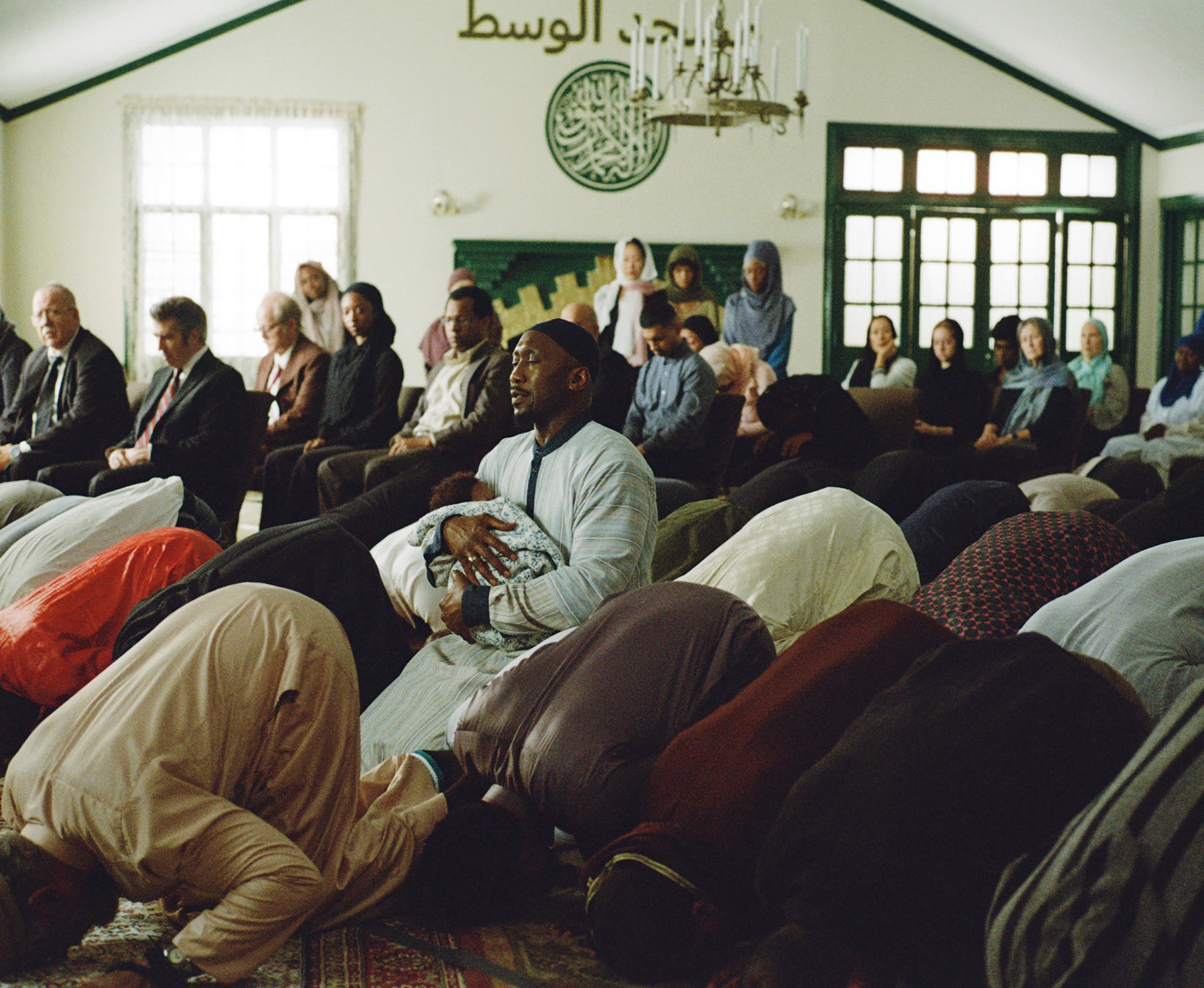
We enter the film in moments of grief and beauty, during preparations for a janazah, or Muslim burial prayer, for Latif’s wife who’s passed away from an unknown cause. We see Latif in the masjid, holding his infant daughter, consumed with sadness and unable to fully prostrate as he fights to remain devout during this unexpected loss. His daughter, Fatiha, and young son Qadir also bear the weight of the loss as they try to move forward as a family. Fatiha, played with a vulnerable tenderness by Adia, is a teenager in transition, struggling to make sense of her changing life and her father’s role as a hitman, Muslim and now-single parent. The scenes between Latif, Fatiha and Qadir are some of the most emotionally resonant in the film.
What this film does well is make palpable the layers of Muslim grief and love, particularly Black Muslim grief, which is something we don’t often see on screen. In the aftermath of the shooting at the Islamic Center of San Diego earlier this year, and so much Islamophobia in this country, this film lets us into the depth of human loss, both on a personal and political level.
After that shooting, I remember going to my beautiful masjid in L.A. and getting my bag checked at the door for the first time. There was a sense of fear around a space that had always felt safe. The film reflects that contradiction: the warmth of the masjid comes through in the scarves, the believers, the wudu, the salat — the deep, rich colors of the world. Yet the tone changes when extremist violence threatens it.
The title of this film is based on a hadith, an account from the recorded collection of sayings, actions and silent approvals of the Prophet Muhammad (peace be upon him), in which a man asked the Prophet: “O Messenger of Allah, who among the people is most deserving of my good companionship and fine treatment?” The prophet then answered: “Your mother, then your mother, then your mother.”
This film rests on that premise, both in its themes and Latif’s journey to obtain one of the purest symbols of motherhood: breastmilk. But as he scours the city on that journey, he finds the provider of that breastmilk in someone we wouldn’t expect. Played with a suspicious warmth by Tiffany Boone, Fugazi is one of the women from an adult entertainment company run by lapsed Muslim Hatty (played with a fiery depth by Abubakr Ali), whose father employs Latif. This made me think of the hadith Sahih al-Bukhari 3321, where God forgave a sex worker because of her compassion. It also made me think of the human, nonjudgemental nature of this film, and of Islam. What this woman gives is so pure, no matter what her lifestyle is. She’s seen as a mother, giving sustenance to a child.
As Fugazi breastfeeds the baby, Latif is overcome with a sense of yearning for his wife. The sounds of the infant latching, the rich reds and golds of the room, which used to be part of a stripclub, and the sensuous energy surrounding them, make for ripe complications. What are we supposed to feel here? The baby is being fed while Latif is also being nourished, though his pain is still present.
I felt mixed emotions during that scene: intrigue, longing and a sense of foreboding. And it also made me miss the physical presence of Latif’s wife Khadijah, who’s shown in lush, nonverbal flashbacks. I wondered who she was, what she was like, what her voice sounded like. In a way, I also yearned for her.
Later, as Latif, his kids and Hatty sit in a halal restaurant eating goat chops for iftar, Hatty questions what it means to be a Muslim and the judgement and expectations he walked away from in his adult entertainment pursuit. Though Latif is more devout and familial, how is he, as a hitman, that different from Hatty? This is a tough question, one that the film explores in its emphasis on flawed, complex characters straddling dark worlds and contradictions. Everyone in the film, even Hatty’s corrupt uncle, Mike Mahmoudi, is given a chance at redemption.
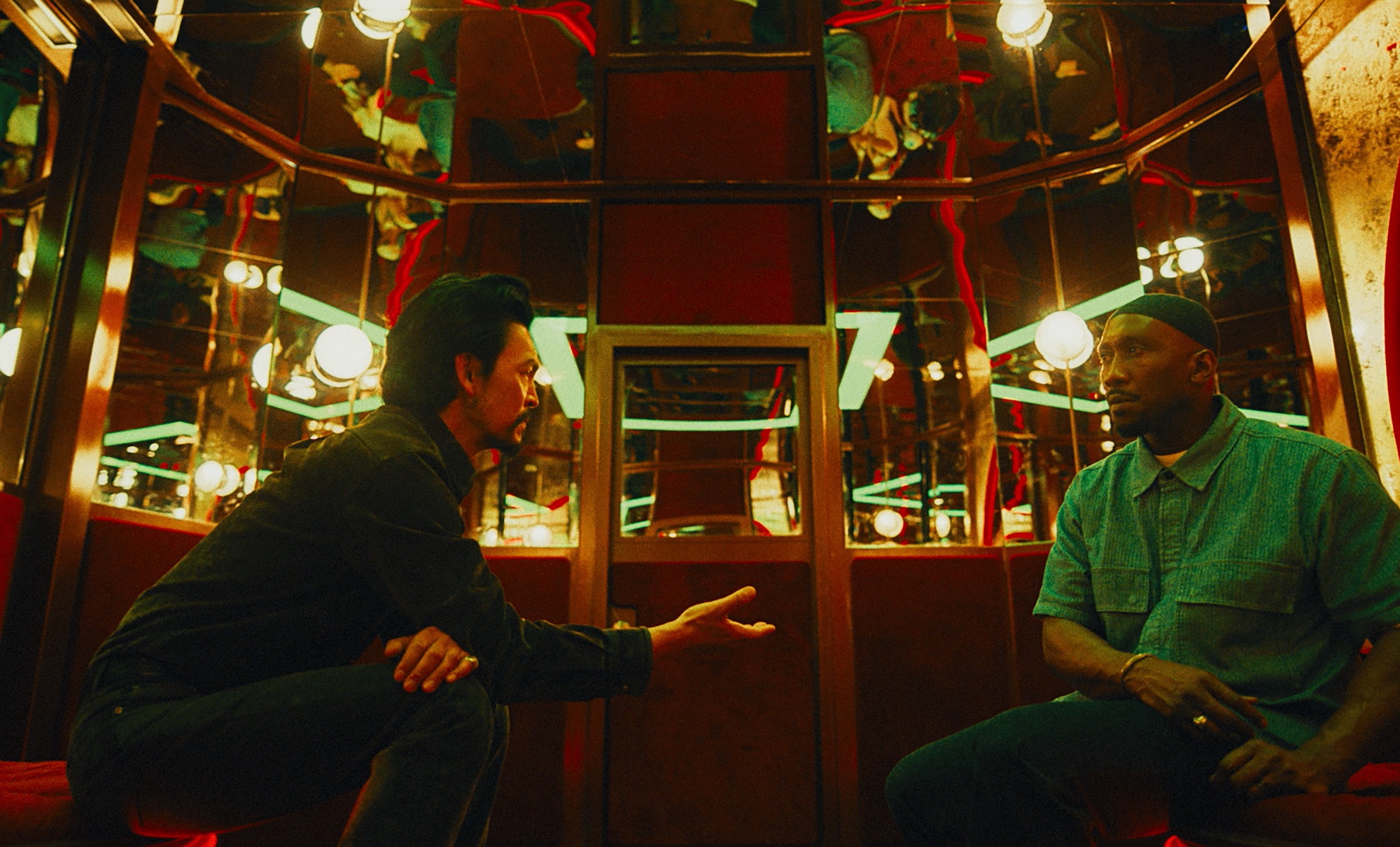
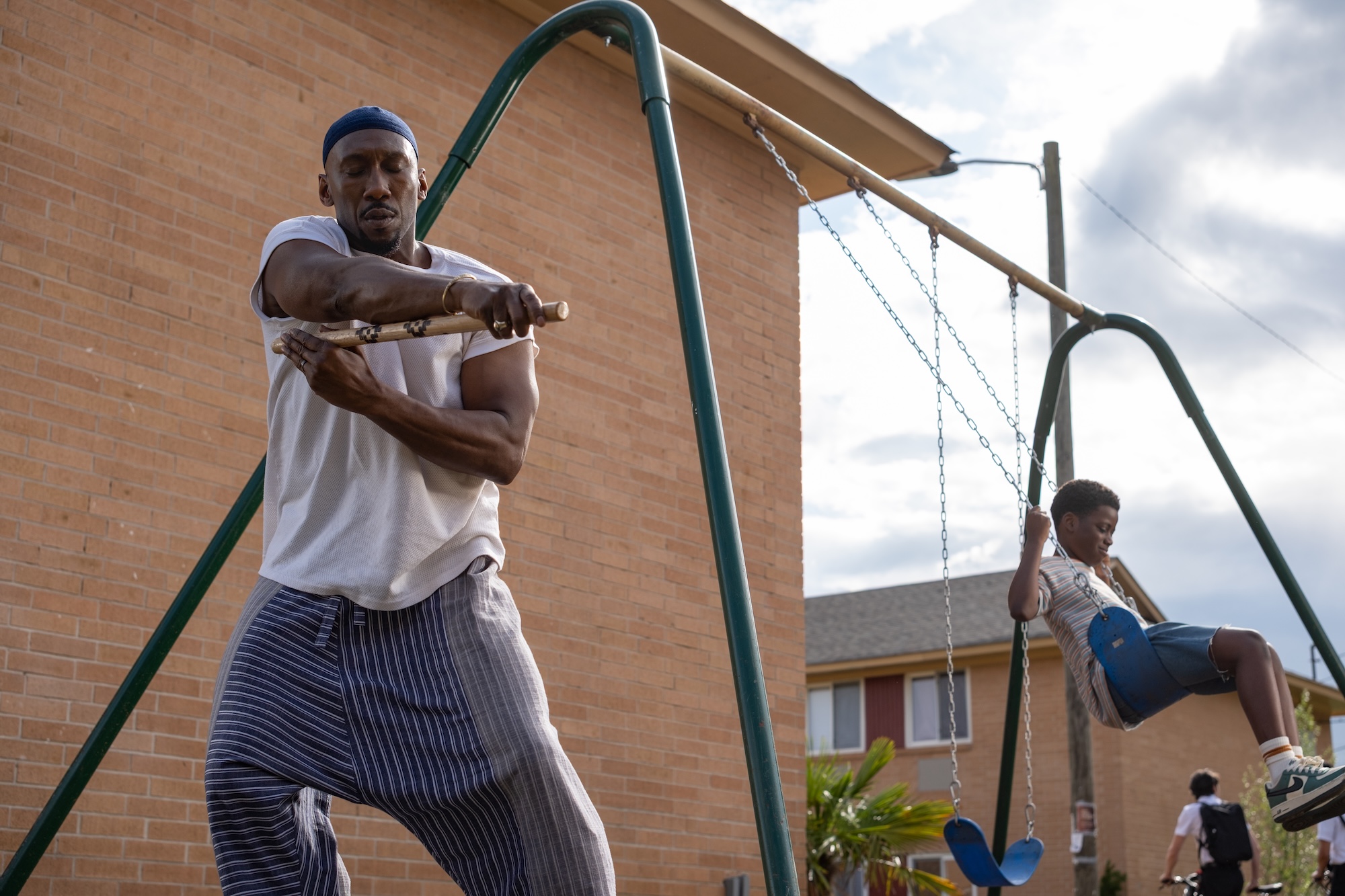
In the end, we’re led into a high stakes battle between morality and extremism as Latif battles Pastor Hwan (John Cho as we’ve never seen him), the leader of a religious cult. Action-thriller fans are in for a treat here. Mahershala’s sword work is impressive as he charges into action.
But through the action that we witness, we’re left with a deeper takeaway. It is Latif’s daughter Fatiha and her prayer that form the foundation of his battle. His life rests in her hands, at her feet and through her words, echoing the spiritual base of the film. One that we really need right now.
‘Your Mother, Your Mother, Your Mother’ hits theaters Sept. 25.