In Hunters Point, Black History Comes Alive in Malik Seneferu’s Paintings
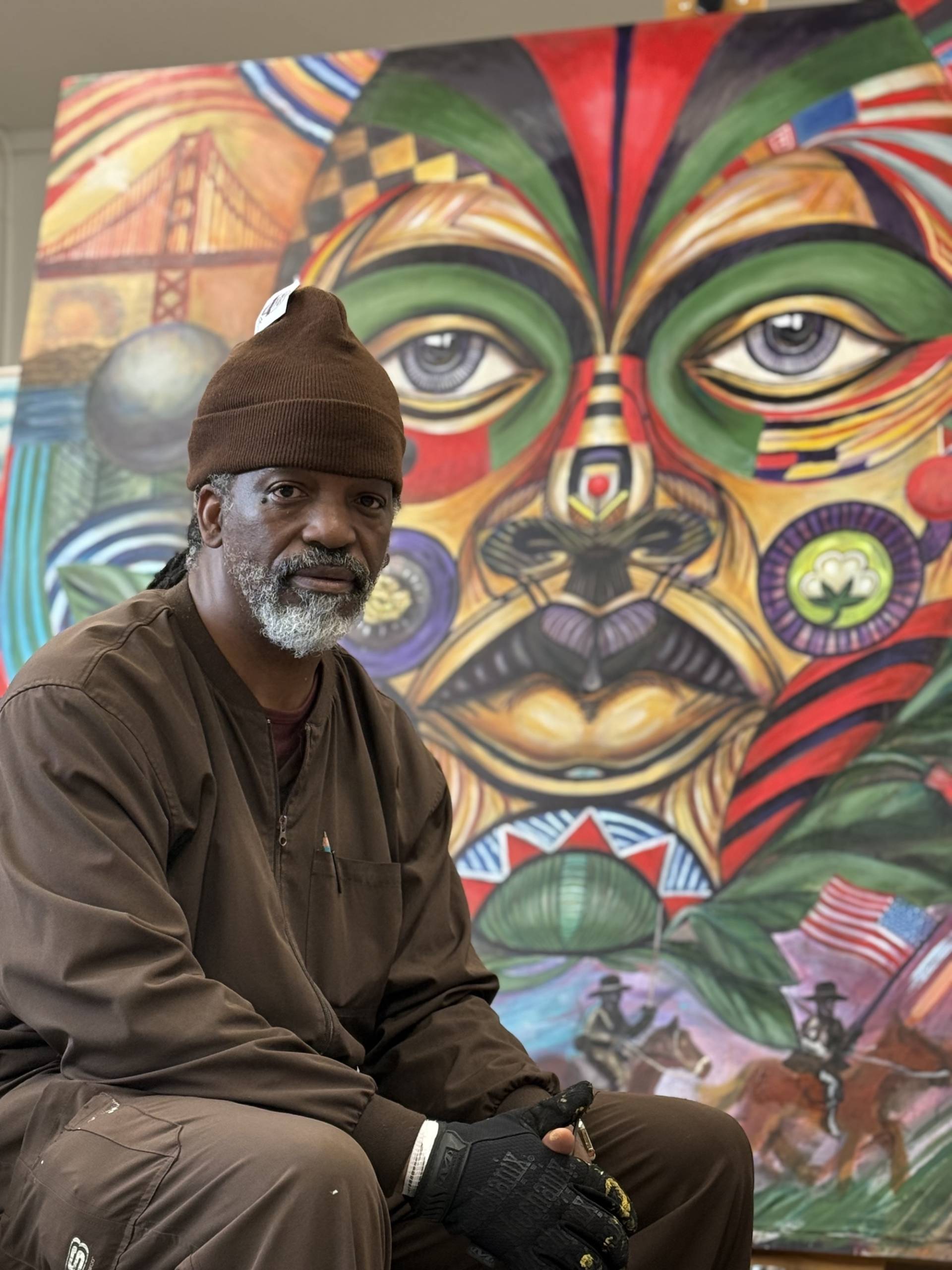
Inside Malik Seneferu’s arts studio, cultural movements take the form of paintings.
Situated on the hallowed grounds of the Hunters Point Shipyard, the eggshell-colored room holds brightly painted canvases that illustrate the artist’s appreciation of history, connection to the soil and love for the people.
Seneferu paints portraits that pair elements of the African Diaspora with Bay Area culture under one common philosophy: “Remain creative.”
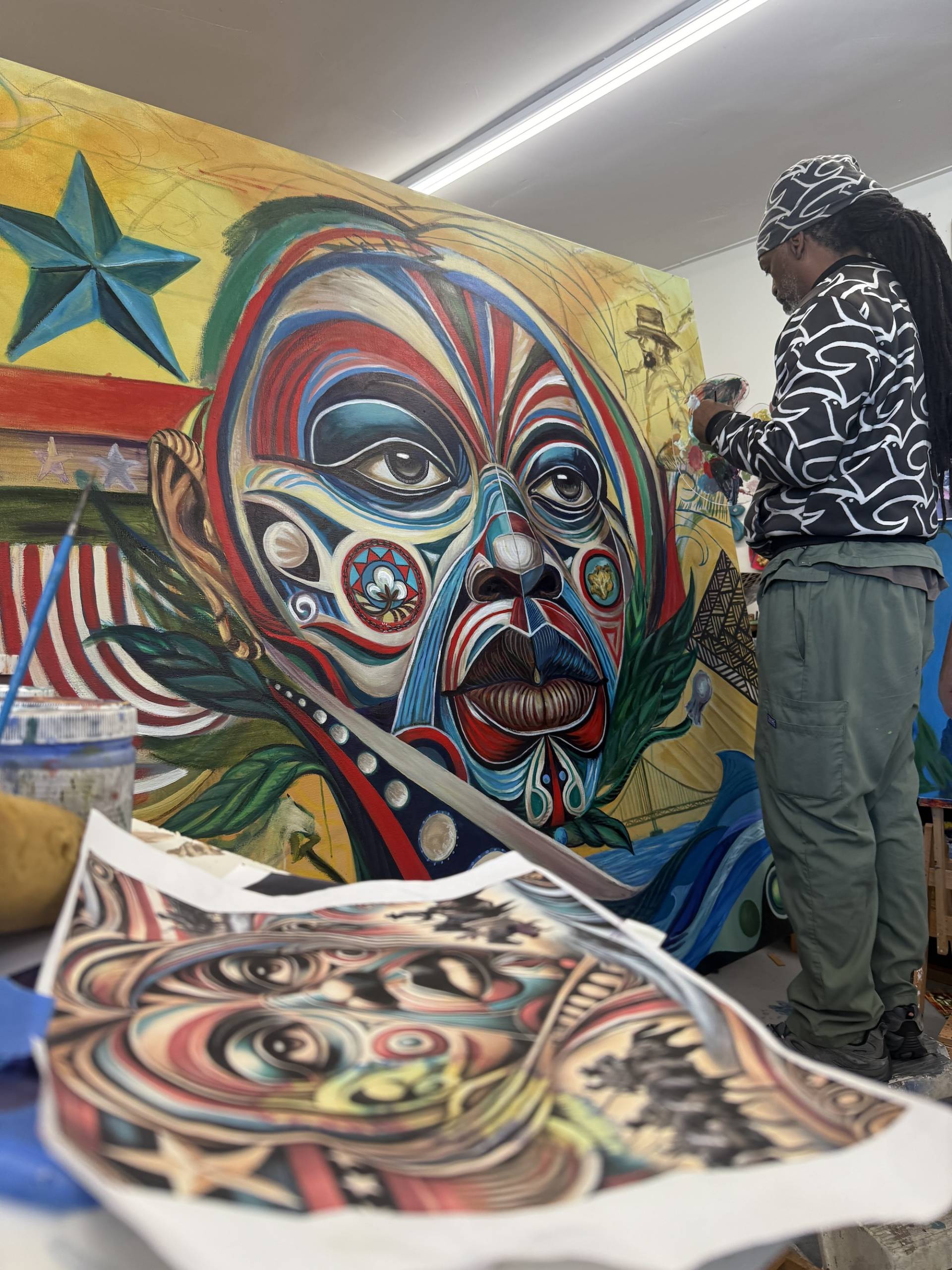
Seneferu’s art has been in galleries and museums, but it’s also been out in the community. He worked with Mark Dukes on Dancing Saints, a piece that adorns the walls of St. Gregory’s Church in San Francisco. In 2020, he partnered with community members to paint the words “HOUSING BLACK” on the streets of the Tenderloin to shed light on the housing crisis. A year later, he worked with young artists to create a series of pieces on Evans Avenue in Hunters Point to amplify calls for environmental justice.
Seneferu is no stranger to working on multiple projects at a time. Currently, that includes a series of paved symbols to be laid as part of the new Buchanan Street Mall’s “memory walk” in the Fillmore District. This week, for Bay Area Black Arts Week, he’ll lead a workshop touring the Third Street area of Bayview-Hunters Point.
But no matter where his work goes, he tells me, it never strays too far from where he started, or why.
“I was the youngest [artist], and first artist from Bayview-Hunters Point, to be given the opportunity to have a studio down here in terms of a residency,” Seneferu tells me as we stand at the Hunters Point Shipyard studios. The building is a remnant of the U.S. Navy shipyard and laboratory that was housed at the southeasternmost point of San Francisco for most of the 20th century. The crane off the coast and constant reports of toxins in the soil are lingering ghosts of that history.
Seneferu first worked in this studio 30 years ago. In 1996, he was awarded a fellowship and commissioned to do a piece for the film The Panther, which he debuted at the film’s premiere. Before that, he was just a kid creating at the crib. “I was still doing my work out of my mother’s house when I lived on Harbor Road,” he recalls.
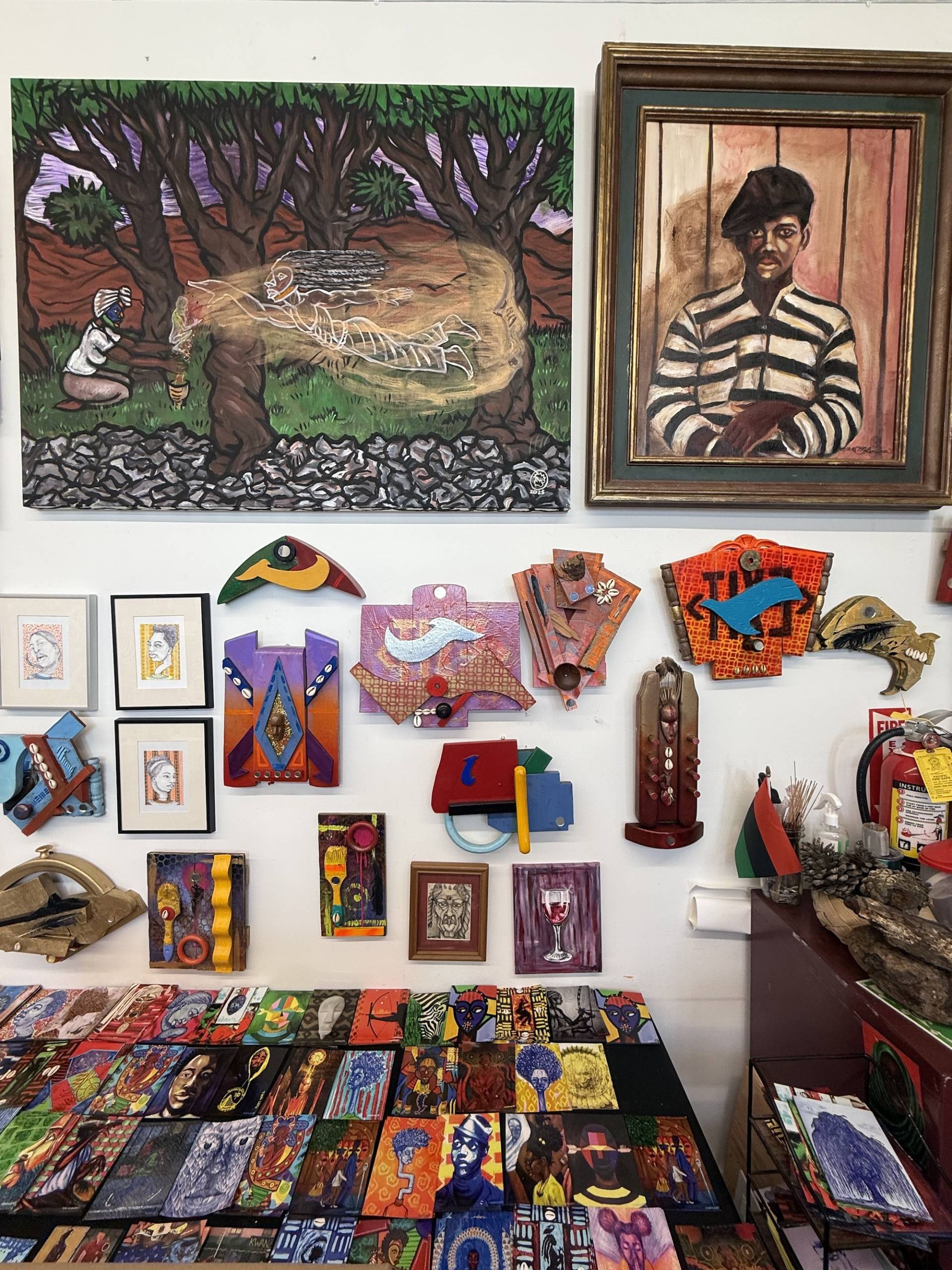
Born and raised in Hunters Point, Seneferu grew up with a mother who was a clandestine artist. But the glimmers of her work that he did see stayed with him. “I saw a doodling on a matchbook,” he recalls, “which inspired a lot of my miniature work that I do.” Similarly, her depictions of the local landscape influence his work to this day, particularly his 2014 From the Hill and Beyond series.
Seneferu pushed his mother to pursue her art, but she was clear: Creating was his thing.
“I really started out on a mission to prove to my mom that [art] could be something valuable to get into,” Seneferu tells me. As his work grew, so did his goals. “I wanted to use my art to show that I can defy gravity,” he says — metaphorically referencing economic disparities, food deserts, traumatic experiences and “white supremacy across the board.”
Self-taught as an artist, the young Seneferu bounced between a dozen elementary schools and a handful of middle schools before graduating high school from McAteer School of the Arts. As a young adult, Seneferu worked with the organizer Ms. Julia “Aunt Bea” Middleton and taught art to kids at tenant association meetings around the city.
Around that time, he saw a mural that changed his artistic trajectory.
“Dewey Crumpler was working on this mural called The Fire Next Time,” recalls Seneferu. It was based on James Baldwin’s book of the same name, as well as Baldwin’s San Francisco-based documentary film Take This Hammer, “When the youngsters were saying ‘Man, you know the issues in San Francisco are even worse than the south,’” says Seneferu.
It opened Seneferu’s eyes to what art could achieve. Crumpler, along with the late painter and community pillar JoeSam, became a mentor to Seneferu. (For this year’s Black Arts Week, Crumpler will open his first major solo museum exhibition in nearly two decades, Sonic Lineages at the Museum of the African Diaspora.)
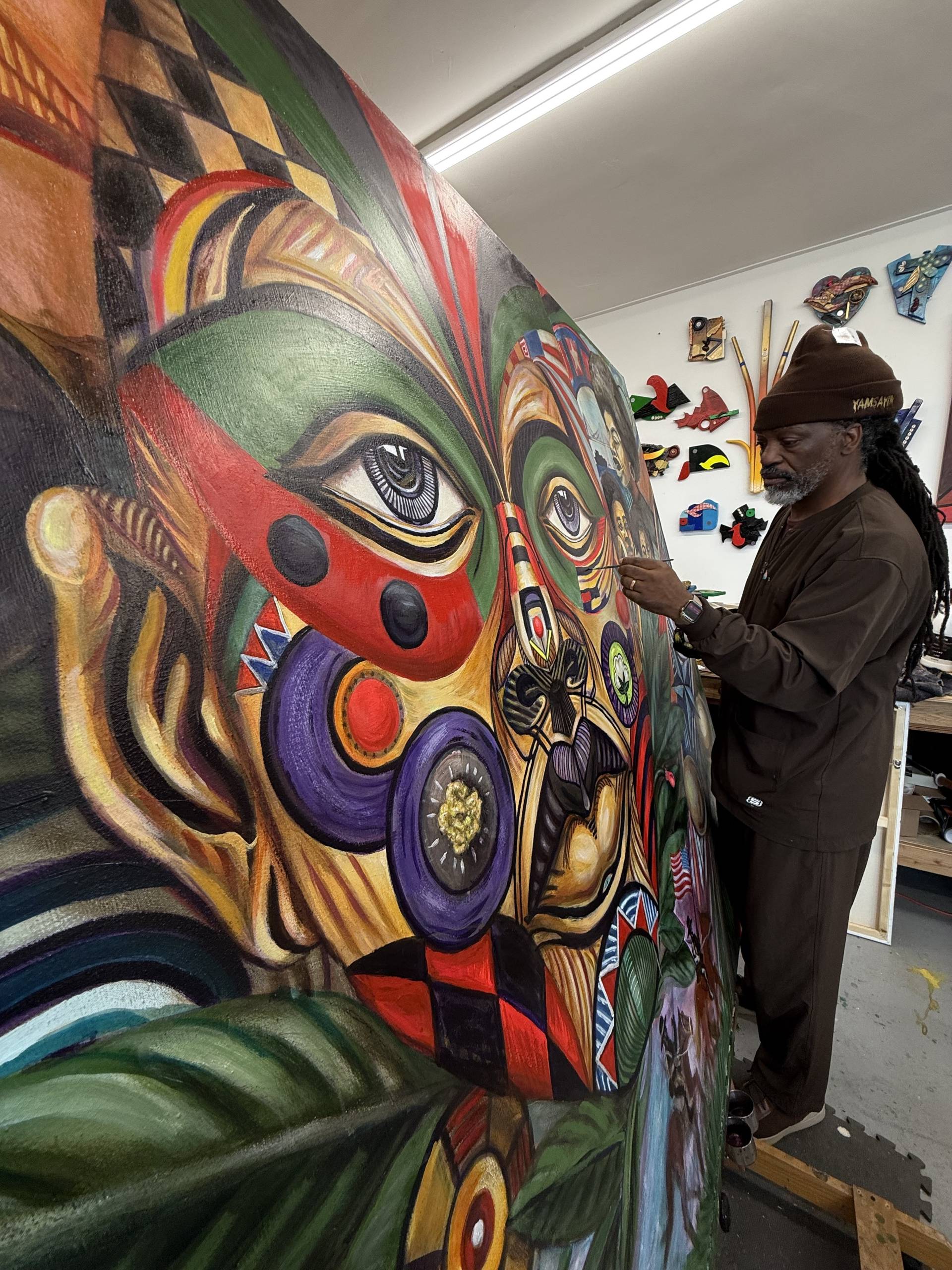
In his studio, Seneferu walks around the many supplies, splotches of paint and canvases to show me a series in progress called Forever Fourteen. In his long locs and brown monotone outfit, he explains that the series traces tragic instances, at 11-year intervals, from African-American history.
He starts with 1933, when Marcus Garvey stopped publishing his newspaper, The Negro World.
“And in 1944, we got George Stinney,” Seneferu tells me, referring to the 14 year-old African American boy who was executed after being wrongfully convicted of killing two white girls in South Carolina. “It was really a big deal,” says Seneferu. “They tried to sweep it under the rug. We didn’t allow it to happen.”
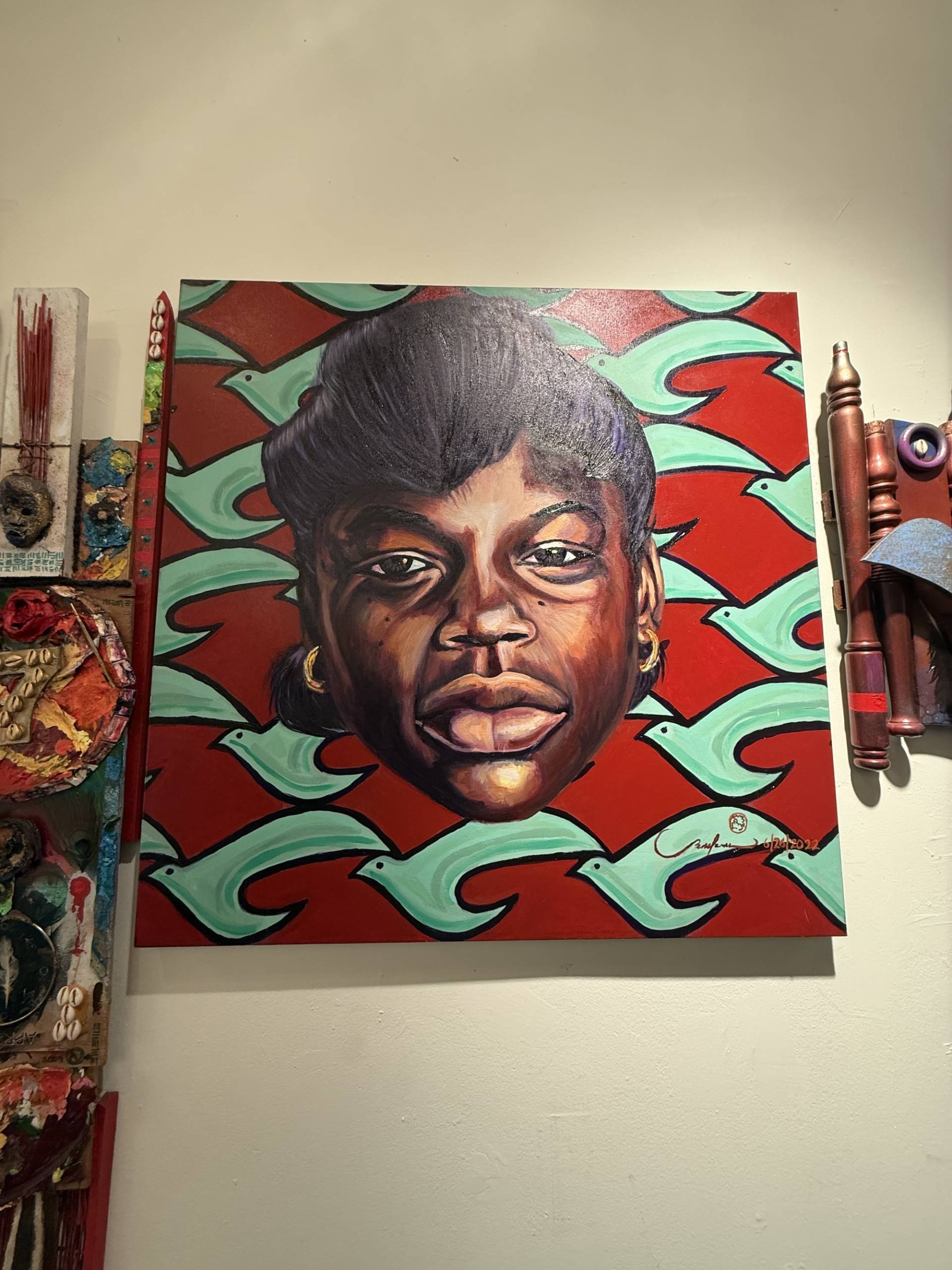
In 1955, the murder of Emmett Till, a 14 year-old African American boy who was killed by two white men after he allegedly whistled at a white girl, shocked the nation. “And that kicked off the civil rights movement,” says Seneferu. Eleven years later, in 1966, teenaged Matthew Johnson, Jr. was killed by San Francisco Police in Hunters Point, inspiring an uprising.
In 1977, hip-hop started growing out of inner-city neighborhoods, and 11 years later the crack cocaine epidemic devastated those same Black communities. The series ends with a piece dedicated to 15 year-old Latasha Harlins, who was shot and killed by a storeowner in 1991.
The series encompasses many Seneferu trademarks; it encapsulates key aspects of 20th century Black history while illustrating instances that’ve informed his worldview.
Having grown up with an artistic mother and a stepfather who was a gunnery sergeant in the Marines during the Vietnam War, he’s learned to speak through painting as a second artistic language. His first artistic language was hip-hop.
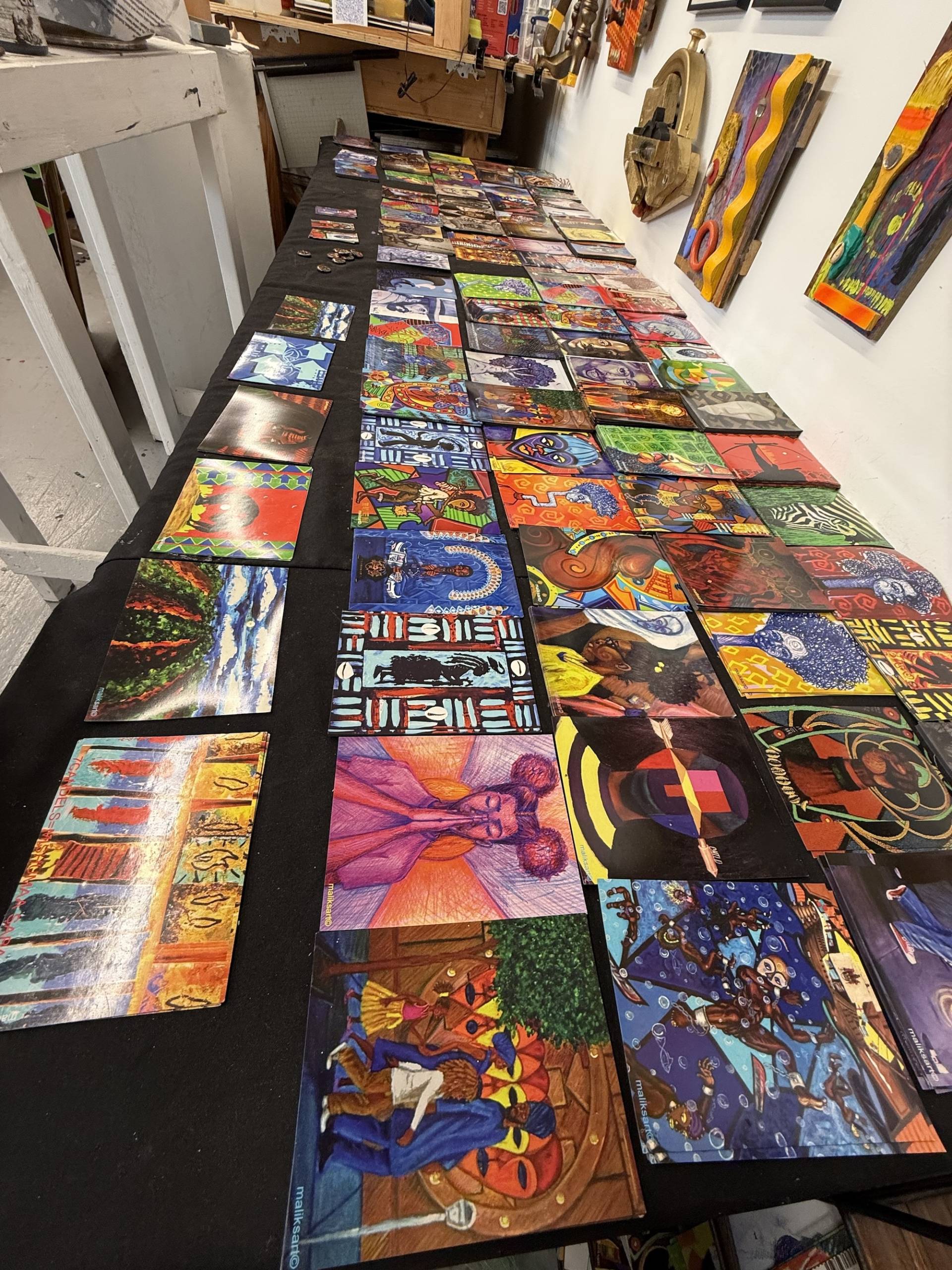
“In 1988,” he says, “I was about a couple of blocks away from here, I was rapping at the time.” He started as a beatboxer, and soon learned to use his deep voice to deliver his lyrics. “I really had something I wanted to say, and I wanted it to be heard,” Seneferu tells me. “I found that the best way I could do that is in my painting,” he says, and in a way, “I’m still rapping.”
The first piece in the Forever Fourteen series, an image dedicated to George Stinney, is on permanent display at the Sunnydale Hub. Seneferu plans on completing the series with a portrait in the spirit of Matthew Johnson, Jr. next year. In the meantime, he’s juggling multiple projects as usual, ranging from environmental advocacy to economic education, all done through the visual arts and an innovative mindset.
“A lot of the things I do are strictly from my imagination, because it’s really defiance,” Seneferu tells me. “To be creative is to defy annihilation. That’s why I’ll always remain creative.”
Malik Seneferu will also participate in the Hunters Point Shipyard & Islais Creek Studios open studios event on Oct. 17 and 18 at the Hunters Point Shipyard (451 Galvez Avenue San Francisco, CA 94124). Check here for tickets and more information.