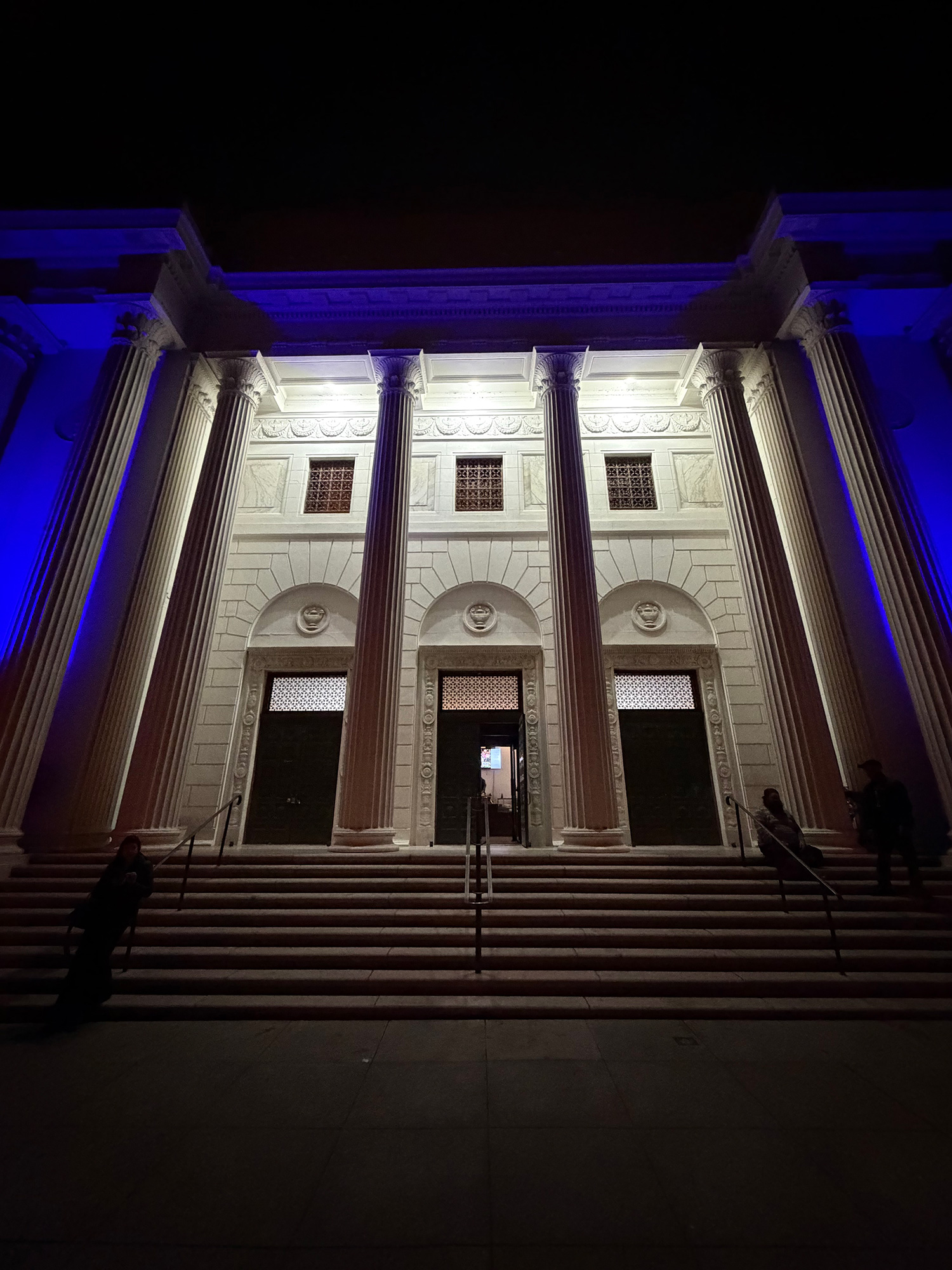
At the Internet Archive, Negativland Reminds the World Why They Matter
The American music industry has a long history of exploitation, but Negativland really got fleeced. With their long, expensive legal fight over fair use, the Contra Costa County collective changed the trajectory of art, culture and mass media in America. Now, the very principles Negativland defended have been commandeered by full-speed-ahead AI companies to invade, steal and poorly regurgitate the world’s body of knowledge and information.
Or, as they put it during their sold-out show Wednesday night at the San Francisco headquarters of the Internet Archive, “The AI people are using the Negativland model to justify their business model. Fuck them.”
The Internet Archive and Negativland make a perfect pair. The Internet Archive is dedicated to preserving knowledge and culture, no matter how mundane or fleeting. Since 1979, Negativland has resurfaced and remixed the world’s culture into entirely new works of art. (In fact, while driving to the show, I stumbled upon an accidental opening act by tuning in to 89.9 KDFC, where a Schumann symphony clashed with broadcast static and snippets of news announcers’ voices — “glass bottles” … “West Marin” … “a Russian envoy” — from a competing radio station.)
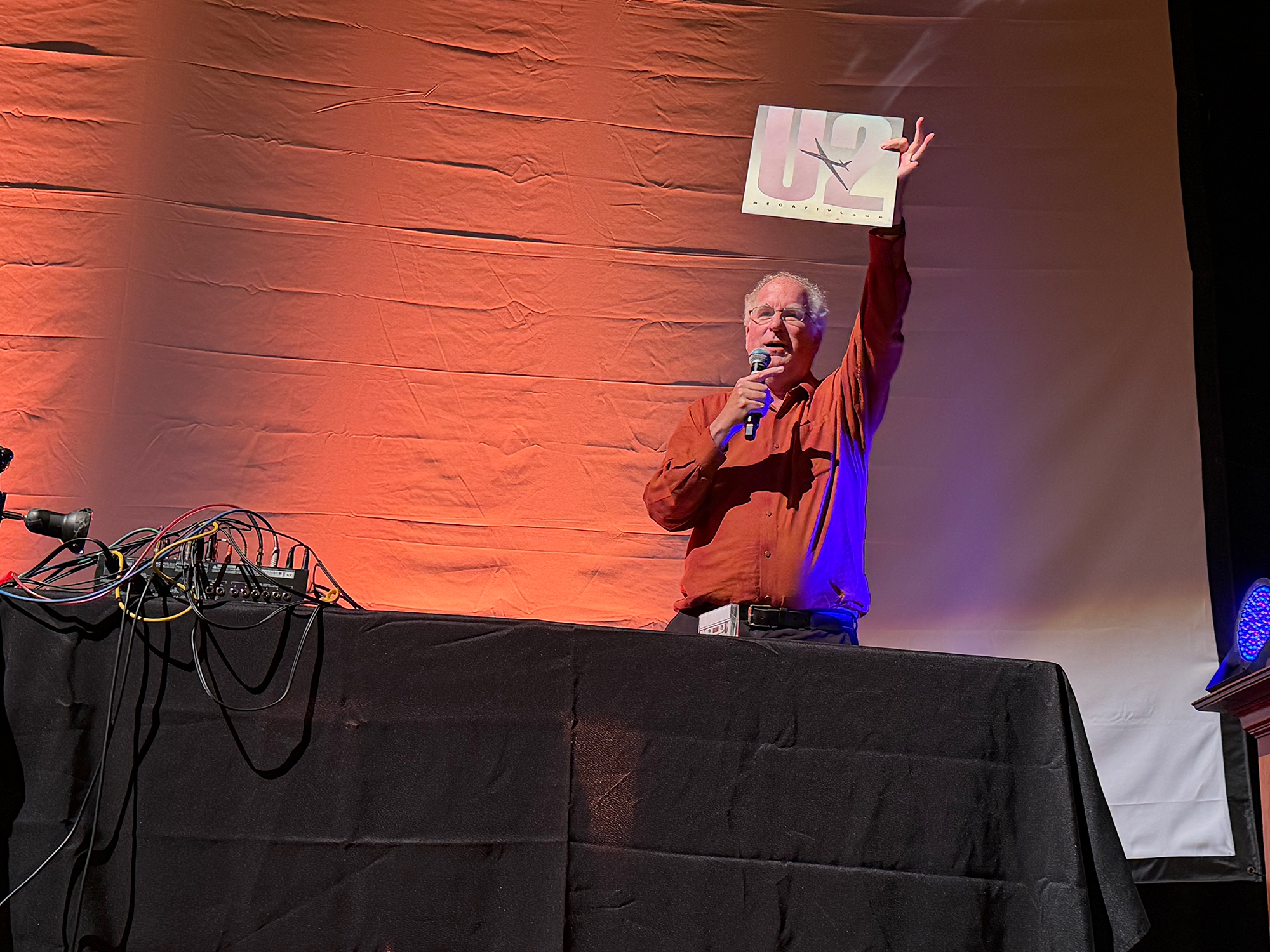
Before the set, Internet Archive founder Brewster Kahle held up a copy of the group’s best-known release, U2, and said that, a decade ago, the Internet Archive began hosting more than 4,000 hours of the Negativland radio show Over the Edge. “I can’t tell you how meaningful it was to us,” Kahle said.
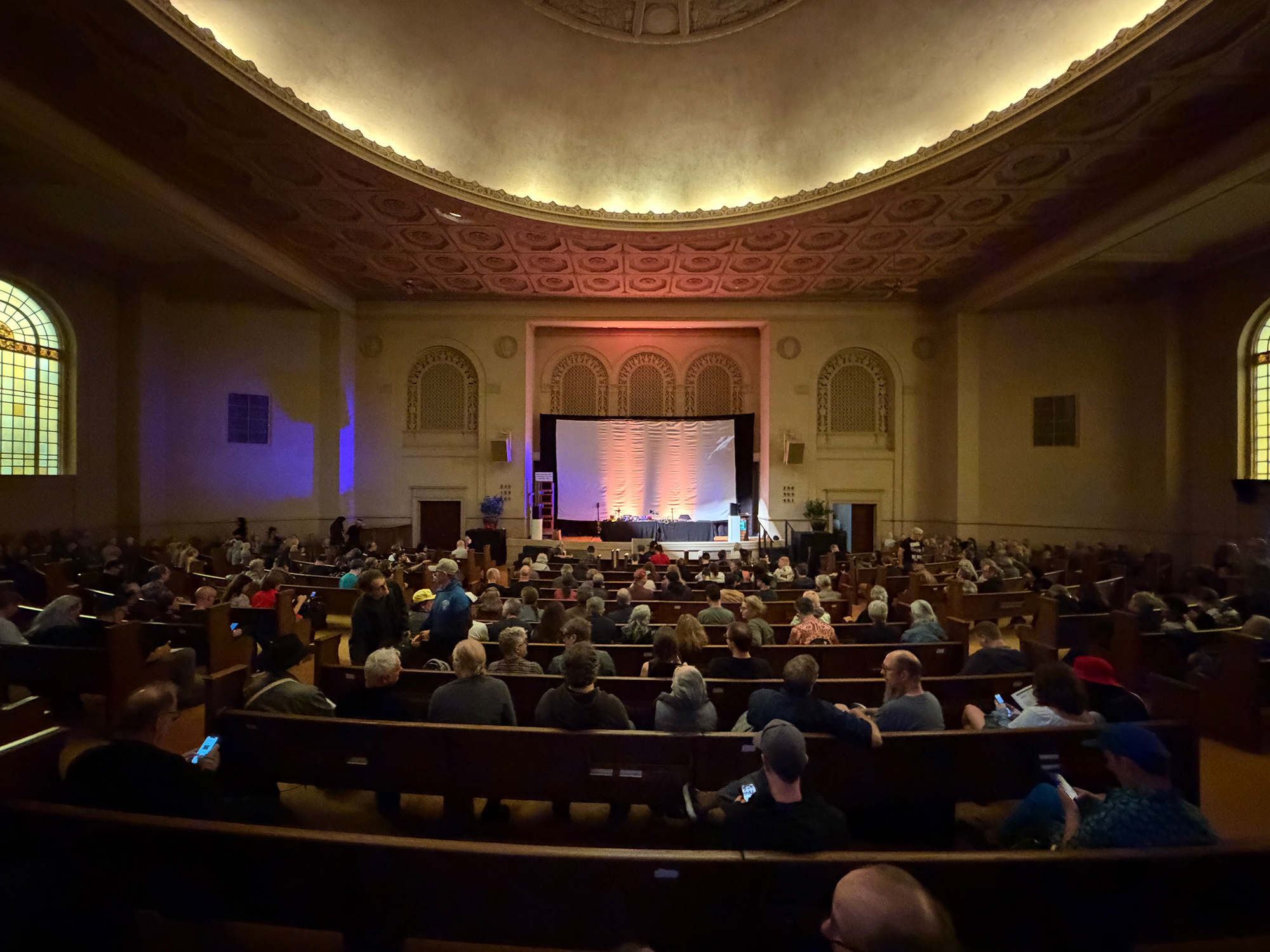
Negativland fans are a lovable bunch. Inside the Internet Archive’s giant hall — a former church, with wooden pews and hymn numbers sharing space with giant servers — strangers struck up conversations that I did not understand. (“We’re big fans of the MX204 and 2100 switch,” for one.) People took photos of the band’s onstage pile of electronic gear. Someone near me reeked of stale weed. Few attendees appeared under the age of 40.
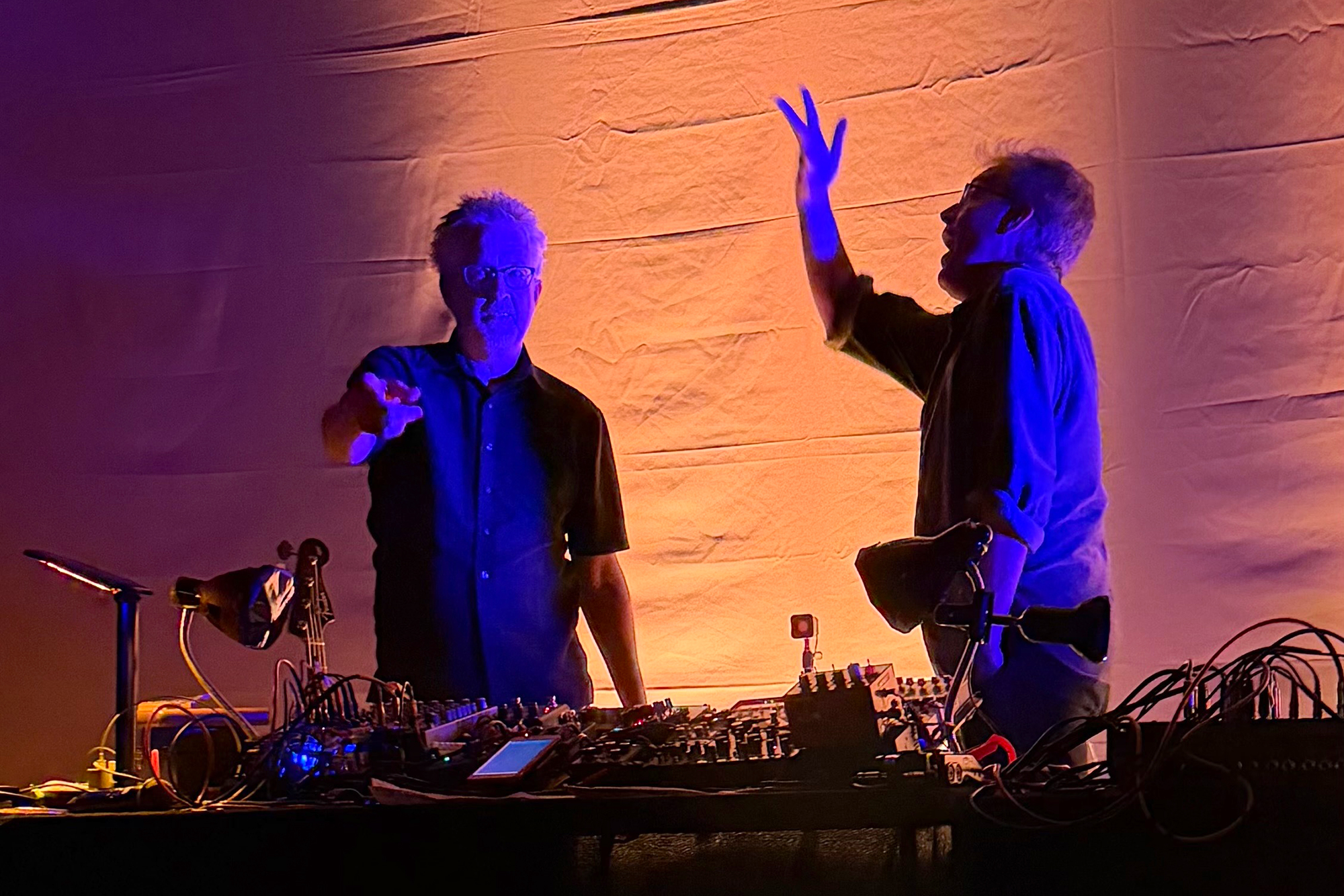
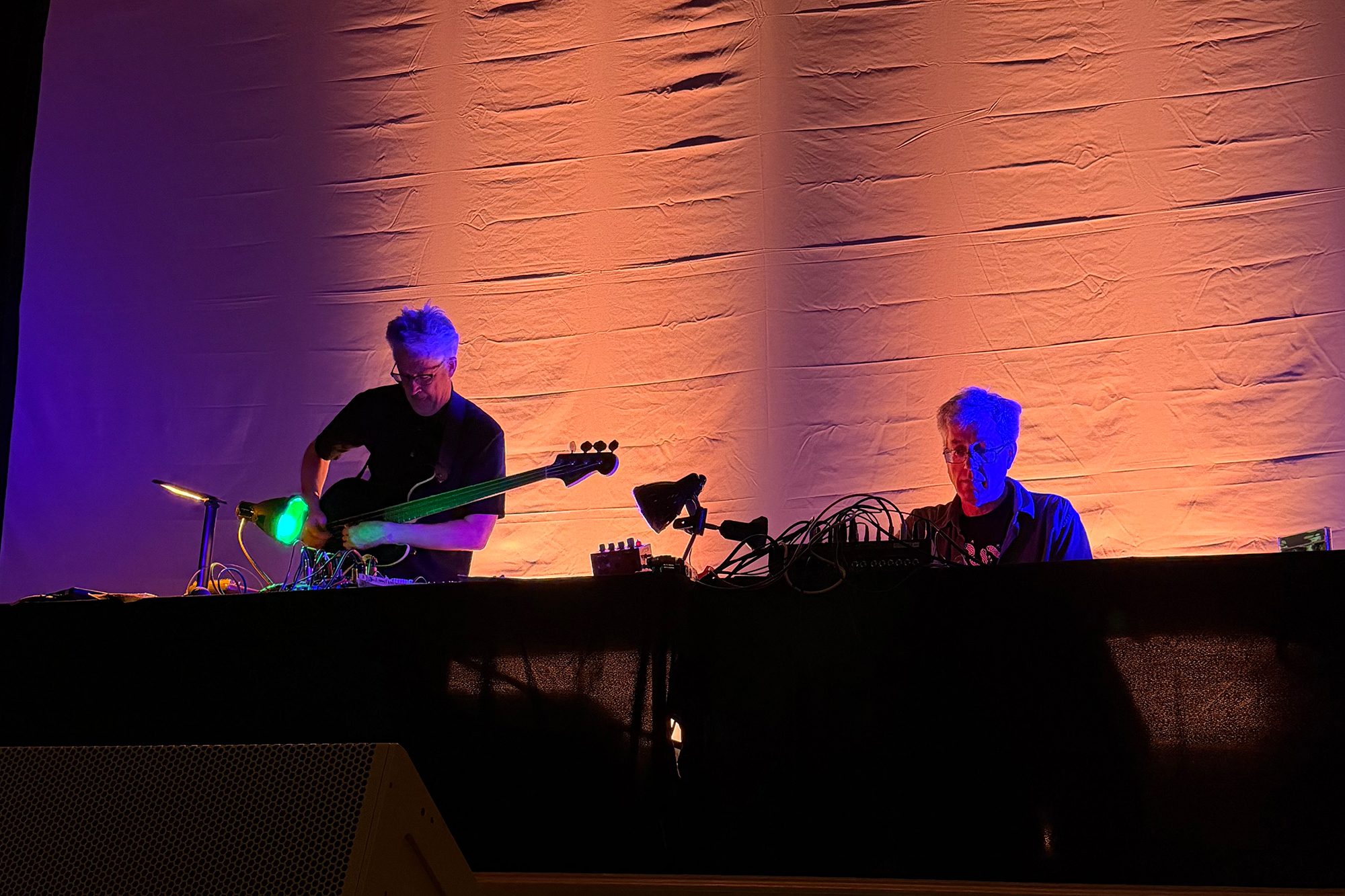
And then, with members Mark Hosler and Jon Leidecker at a long table covered in mixing boards, cables, wires, homemade electronic units and hand-scrawled notes, the show began.
“The point is this … we’re getting a little off-course.”
So repeated an NPR-style voice over new-age synths and oscillations hard-panned across the room’s speakers. For over an hour, gurgling sounds, or the sound of raindrops, or strange tympani, bells or drones programmed by Hosler shared space with Leidecker’s vocal samples: “Is the universe just one big brain?” “Please just tell me what is illegal, and I’ll stop doing it.” “Is this real, and do we care?”
This being Negativland, plenty of subversive humor ran through the set. The audience laughed at the more absurd moments, like a man’s voice suggesting that we melt the North Pole, or another’s declaring that “pretty much everything David Lynch does is right-wing coded.”
But the night’s jest blurred with reality. One man’s voice declared that achieving AI goals, despite its ruinous effects on the planet, is more important than achieving climate goals. How many AI zealots think this way? On a similar note, I was plucked from my sound-collage reverie when I actually recognized a sample, of Suno CEO Mike Shulman, claiming that “It’s not really enjoyable to make music now.” (I wrote in my notebook: “Idiots Talking About Art & Technology” ← Theme of the set??”)
This overlap of humor and doom came to a head when men’s voices discussed the need for technology to be violent, and Leidecker, expressionless, introduced an exasperated, terrified woman’s voice into their dialogue, repeating, “Friend?! Friend?! FRIEND?!”
Throughout, Hosler manned the giant board, sometimes spanning his fingers across something that looked like a flux capacitor, sometimes picking up a Fender bass and playing it with an electric toothbrush, sometimes wincing as if he were playing a heavy metal guitar solo. And just when it was needed most, levity came over the phone lines: David “The Weatherman” Wills, calling in from his home in Seattle, providing a running monologue about refrigerator lights, Kaopectate, short-wave radios and eating Speed Stick deodorant.
Afterward, the band announced that they rarely if ever played songs from their albums live, but for an encore, the beat dropped to their 1987 track (and media hoax material) “Christianity is Stupid.” The crowd audibly whooped.
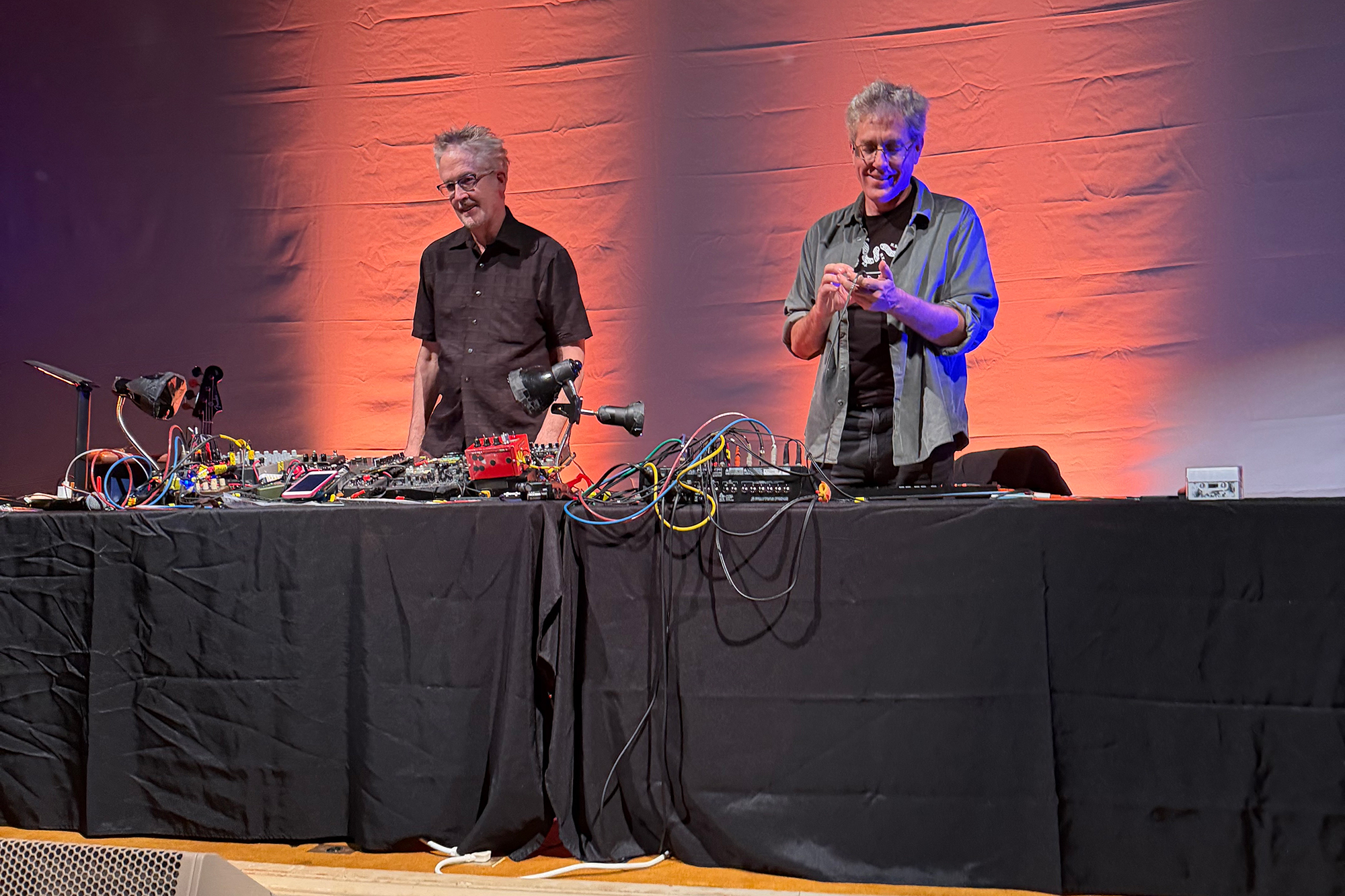
A Q&A followed, during which Trump was declared “the evil culture-jammer.” Leidecker asked out loud, “How do you have a functioning democracy when there’s no reality?” and advised that while the ideals Negativland worked for have spread wider than they could have imagined, it was important to “make sure you’re pranking upwards, instead of deceiving everybody.”
A confession: the main reason I like Negativland isn’t their agitating, or the ways they’ve undeniably made the music industry and creativity at large better. I like them for their sound output. That may seem like a superficial way of interacting with one of the world’s most important experimental groups, and one could surely argue that their aesthetics are inseparable from their advocacy. But what can I say? I fell in love with them because of their records, not their lawsuits.
Or, as a twisted, effects-laden voice said, and burbled, and sung, at the end of their set on Wednesday: If you don’t understand, the least you can do is enjoy the beautiful music.