A River Has Its Day in Court in the New Novel ‘Open the Floodgates’
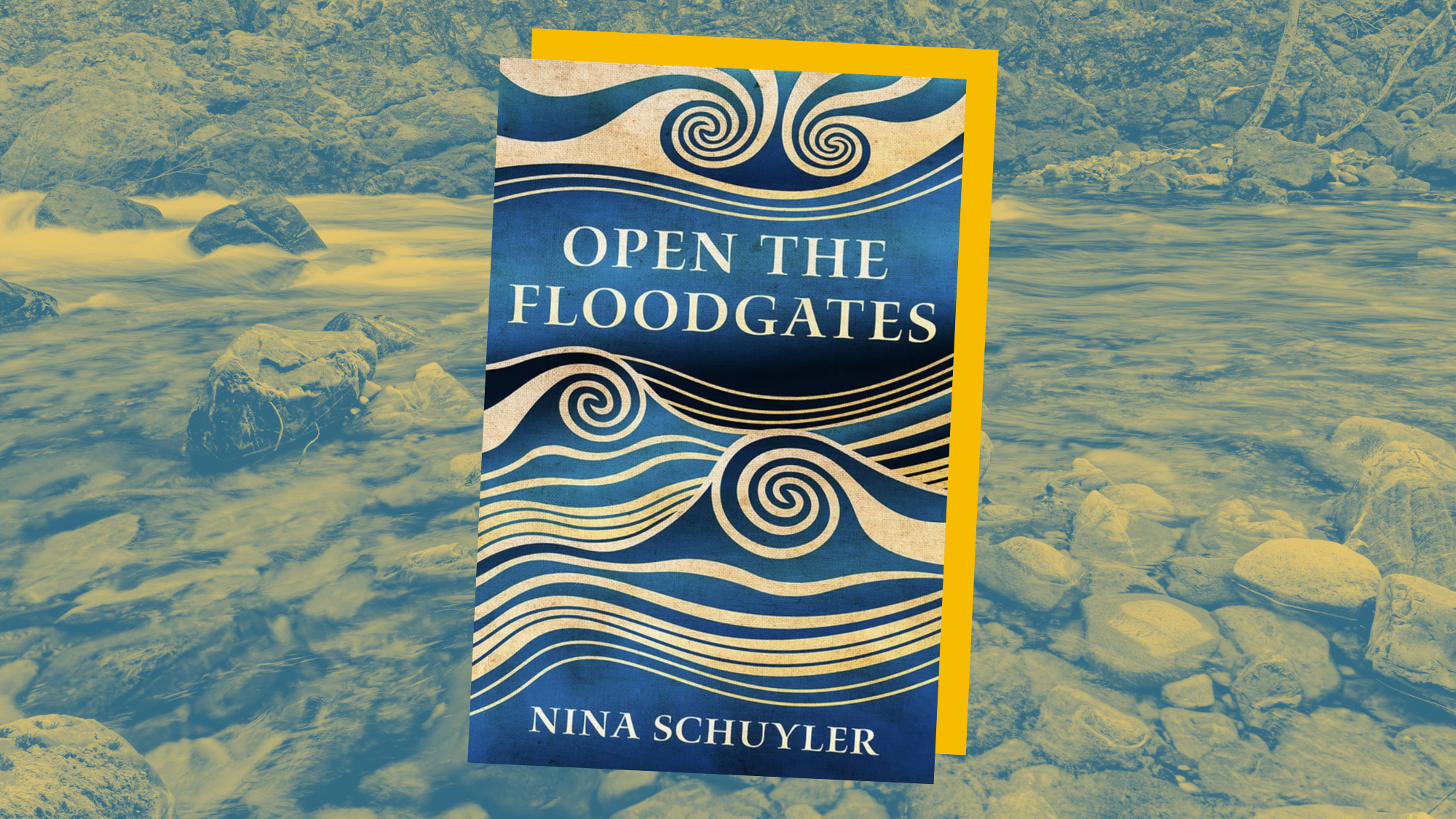
A river is a person. In Indigenous communities around the world, this is an ancient and reverently held belief. But as a legal concept, it’s a novel one, first enshrined into law in New Zealand in 2017. It’s also the central idea behind author Nina Schuyler’s newest novel, Open the Floodgates, in which a river-person known henceforth as River is brought to court to argue its personhood in the trial of the century: The River vs. The Town of Mellen.
In the book, set in a fictional California town, the River is described as “a shimmering wall of water,” who is representing itself in court to advocate against its pollution from human and industrial waste. The outcome will affect local farming and housing; townspeople of all stripes give heated and stirring testimony for both sides. (“Exhibit I: Blood in a body moves at the same velocity as an untouched, un-engineered River,” one man’s stylized poem-testimony reads.)
The case marks a historic first for the United States, an exciting prospect for the ambitious presiding judge and opposing counsel. With hundreds of thousands of rivers in America, the latter thinks, “that’s a lot of litigation.” Inspired by little-known but paradigm-shifting real-world legal events, Schuyler’s book considers every angle of the question: Will viewing a river as a person help us look after it better?
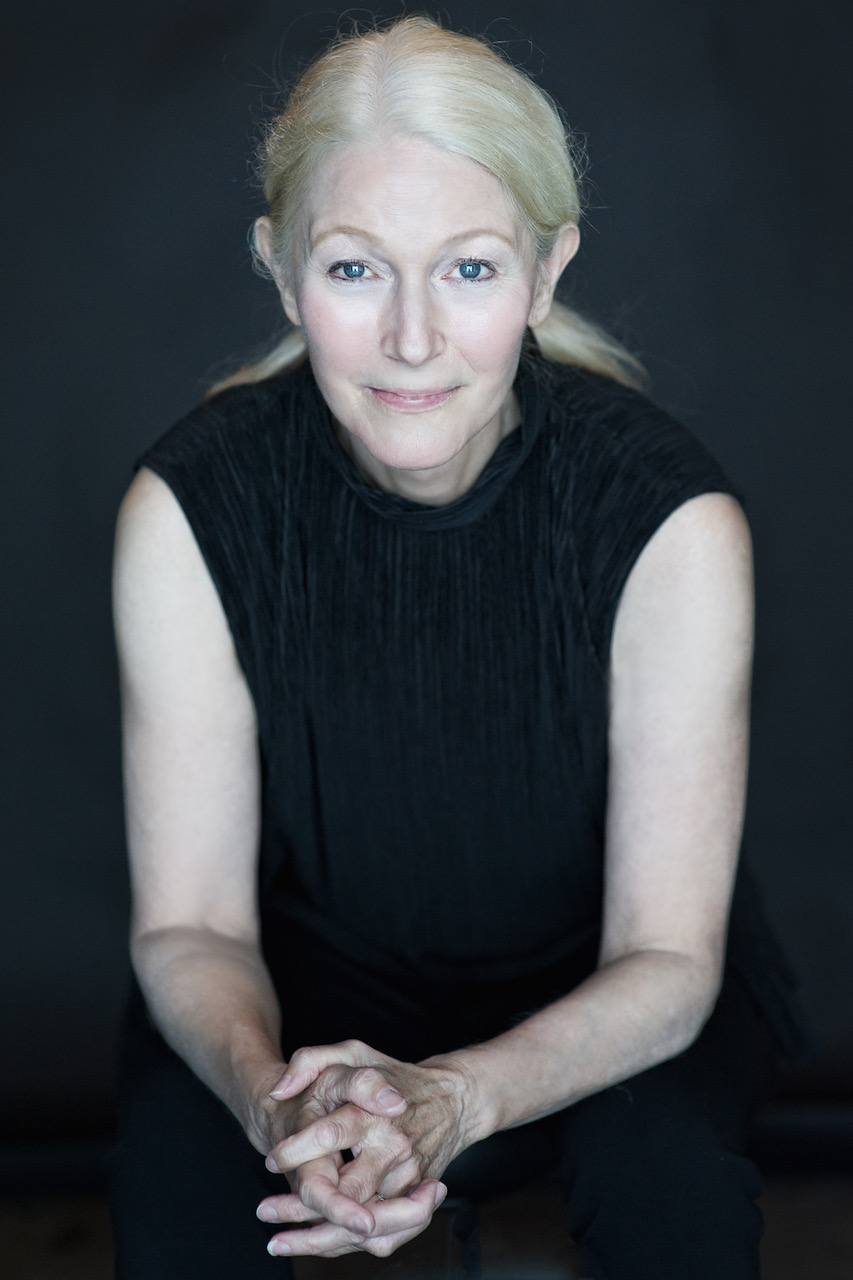
Schuyler, who lives in Northern California, teaches creative writing at Stanford Continuing Studies and is the author of several previous books, including an award-winning collection of short stories. Open the Floodgates is inspired by concepts she was exposed to while getting her law degree at UC Law San Francisco. “My favorite law school class was water law,” she explains, largely because she didn’t know laws around water even existed. “In Western law, you’re either a person or a property, so all of water law is about managing rivers and allocating who gets what from the river — it’s never looking at the river as a live being.”
Schuyler grew up in Washington state, where rainfall was plentiful, but moving to California introduced her to the realities of why “water is such a huge issue in the West,” and in desperate need of protection. “We’re battling over water, the Colorado River is going dry, and there was a five or seven-year drought [where] I remember we did all we could,” she says. “It just got pounded into us how valuable water is to this state.”
Her research into water law showed her cases in Ecuador, where Rights of Nature laws took effect in 2008, spurred by an Indigenous community heavily affected by the deforestation and river contamination caused by extractive industries. She learned about New Zealand’s Whanganui River, granted personhood after years of Whanganui tribe-led activism. Years earlier in Tamaqua Borough, a small Pennsylvania town, the local council used similar methods to try to stop sludge from being dumped into open mine pits in 2006.
“Frankly, I wish we didn’t have to use the legal system,” Schuyler confesses, “that we had the moral values and the insight that the Indigenous tribes have had all along. But in some ways, this is a fusion of the Indigenous way of looking at nature, that it’s a living being, and then using the Western legal system to try to do something to save it.”
In New Zealand, two appointees, one tribal and one representing the Crown, act as the Whanganui’s legal guardians. In Schuyler’s book, through the power of fiction, the River speaks for itself. This meant finding its voice and thinking about how a river would be represented via text. “Just like any character, I tried to think of what are the essential qualities of being a river?” she says. “And the first one that came to mind is that a healthy river, or one that hasn’t died, is always moving.”
The first page of the book introduces the River with words that cascade like running water. “It’s not going to move in a straight line on the page,” Schuyler says. “Humankind has straightened these rivers into channels for its own convenience. A natural river floods out like veins. I wanted to give it back its natural movement, let it wiggle around.”
To keep the free-flowing visual design of the River’s words, the author used ample spacing and periodically dropped definite and indefinite articles, creating fragmented sentences. In the acknowledgments, Schuyler credits Virginia Woolf’s stream-of-consciousness technique with inspiring her “river-of-consciousness” narrative style.
The River’s advanced age — three million years old — and its uninterrupted flow of sentences result in a voice that oscillates between childlike simplicity and magisterial old-world wisdom: “(what! a self is a stream?) and a person is a box for the self.” And, notes Shuyler, “its reference points are expansive compared to human reference points, which made it really fascinating to invent metaphors and similes that would reflect the River’s point of view.”
The River’s age also grants it a unique sense of time. “It became a vessel of memory,” she says. The water source “knows everything about everyone,” Schuyler explains, just like a good neighbor would.
Schuyler encourages potential readers to keep an open mind. “This book does not behave the way you expect it to,” she says. The highly experimental format makes its weighty subject matter more palatable by providing a fun entry point into alternative thinking.
“I’m not someone that wants to write really dark apocalyptic climate literature,” Schuyler says. “I can’t read it. I just start falling into deep despair.” Instead, with Open the Floodgates, she uses playful conjecture to float the hopeful idea that if the law is malleable, then maybe the future is too.
‘Open the Floodgates’ is out from Reverberations Books on Sept. 15, 2026. Check here for Nina Schuyler’s upcoming public appearances around the Bay Area.