ZÂ Brings Ancient Iranian Songs and Stories to Richmond
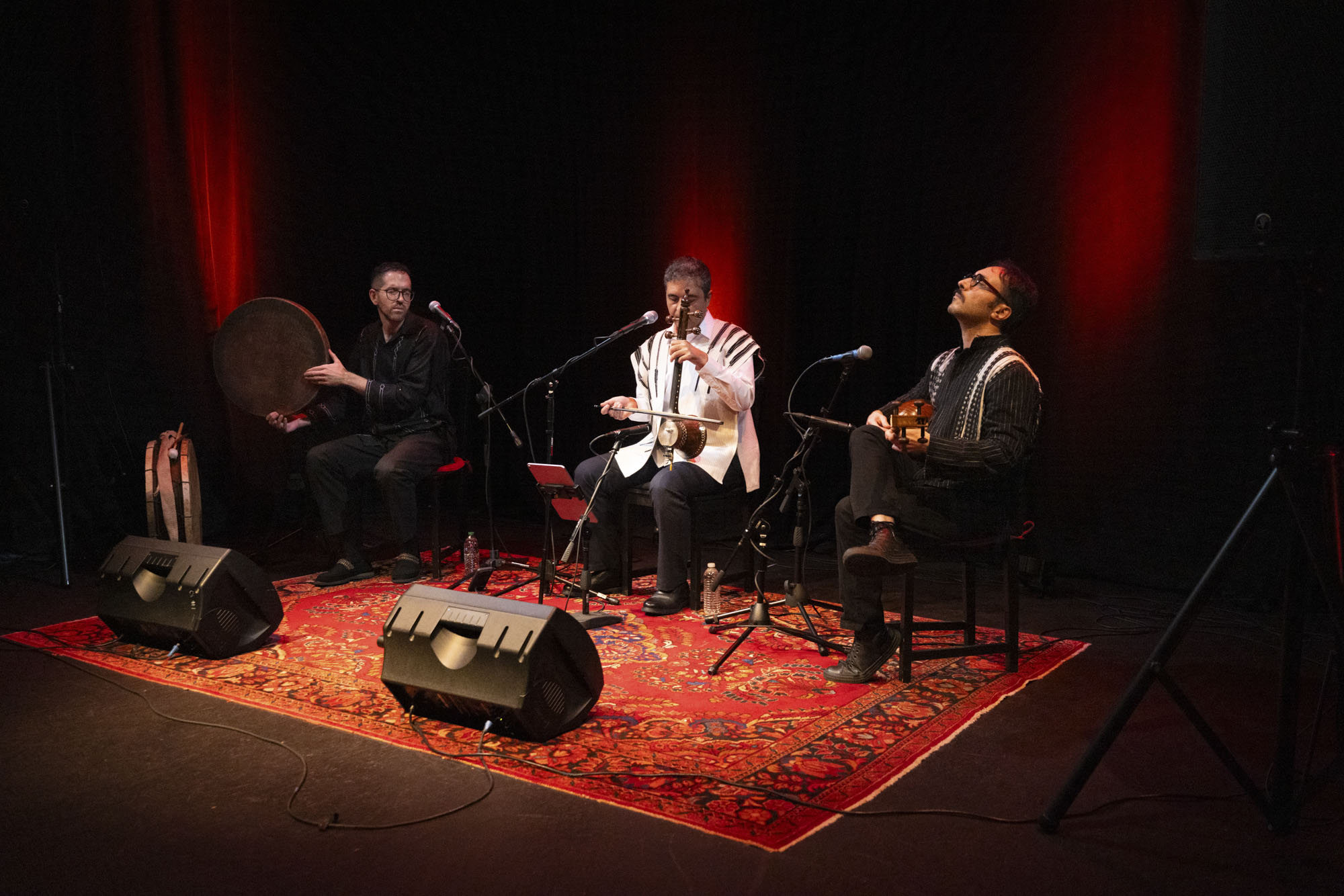
On a Thursday night in late July, members of the Bay Area’s Iranian population filed into Richmond’s Central Stage, filling the venue with quiet conversations and greetings in Farsi. The crowd was there to see ZÂ, a performance of ancient music from the Lorestan province of Iran — an intimate concert thousands of years in the making.
The trio of musicians, made up of percussionist Nariman Assadi, multi-instrumentalist Behfar Bahadoran and kamancheh player Mazdak Alipour, took the name of the project from zâyesh, the Persian word for birth. The Richmond performance of “The Forgotten Maqams of Lorestan” was part of an ongoing national tour.
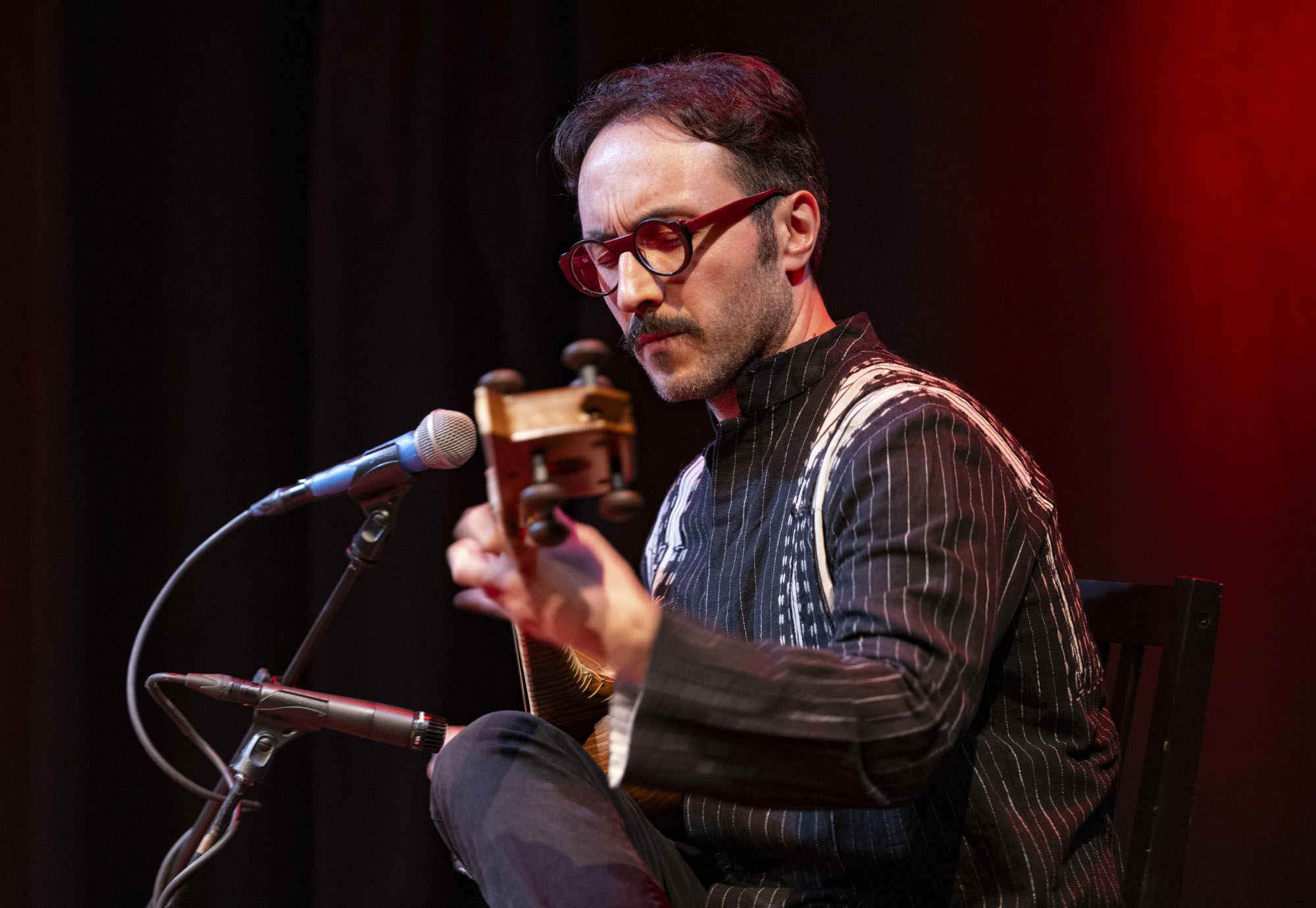
The three men sat on a dramatically lit stage. Assadi played the daf (a kind of hand drum) with both hands, using his fingers to get different notes of percussion in each song. Bahadoran’s tar, a lute-like instrument, beautifully displayed the melodies of the province. Alipour sang in Farsi while playing the kamanchech, a bowed string instrument that is on the UNESCO list of intangible cultural heritage for Iran.
“It’s like a life cycle that we’re showing, like a storytelling performance from birth to death,” Assadi told KQED. “We also call it ‘from lament to ecstasy,’ because part of it is very spiritual music that we’re playing.”
At a time when negotiations between the United States and Iran are in a fragile state, and President Trump has threatened the country with “decapitation,” cultural events like ZÂ’s performance celebrate and preserve a culture under attack.
“During these unfortunate events that are happening in Iran, we wanted to show a different perspective, a different picture of our culture,” said Assadi.
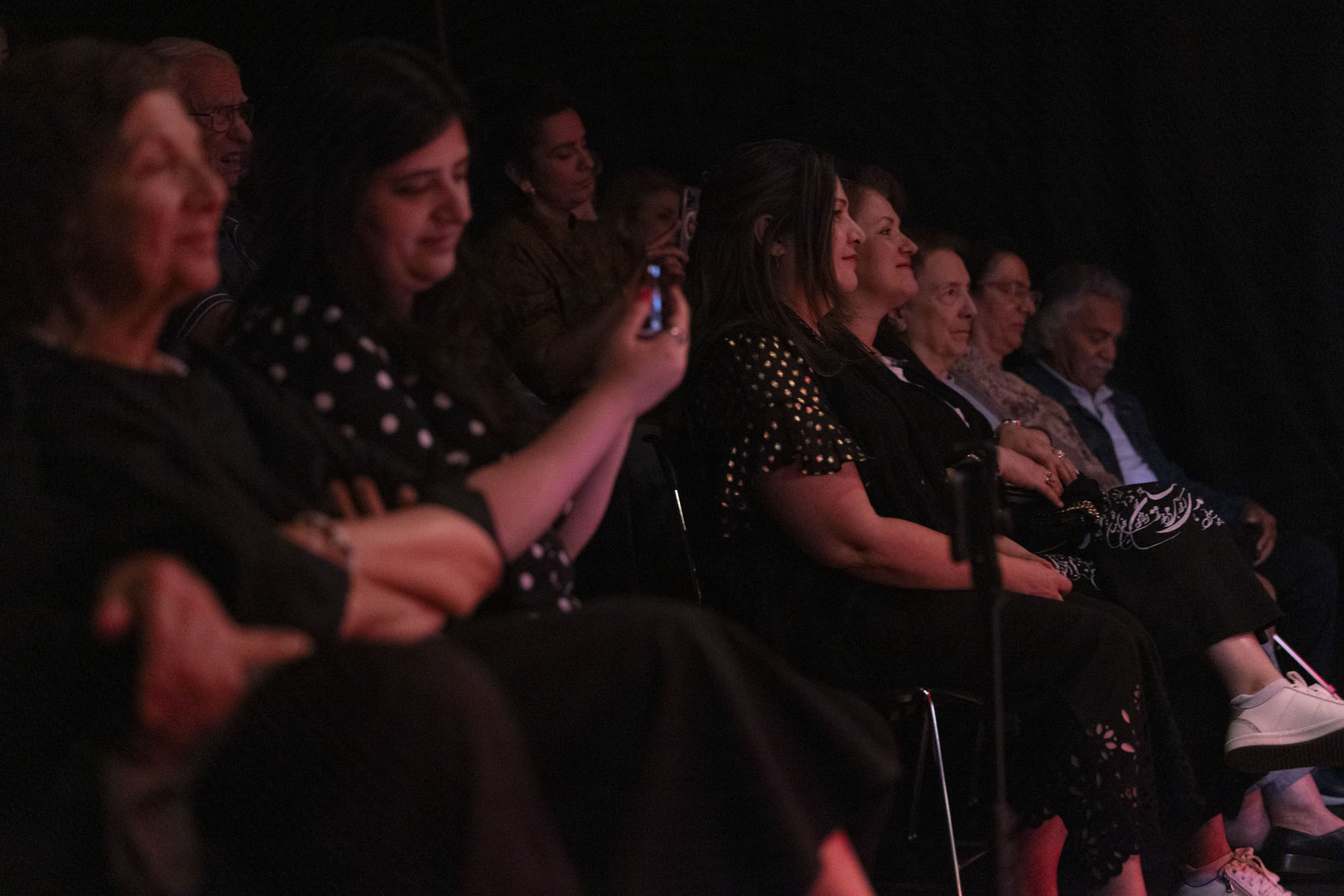
Throughout the night, the people in the crowd clapped, tapped their feet and quietly sang along to familiar songs. Richmond Councilwoman Soheila Bana said it took her back to growing up in Iran.
“I’m from Khorasan, not from Lorestan, but it’s still beautiful,” Bana said. “Some of these melodies are very famous, and we know them.”
Before the show, Bana presented the group with a commendation from the city of Richmond, to celebrate the band’s creativity and the diversity of their art.
The concert began with songs that represent, according to the program, “the first heartbeat of existence.” As the lifecycle progressed, they performed the lullaby “Lalayi,” and “Choopan,” a song about the early feelings of love during adolescence.
Soon after, ZÂ played “Kel Zanon,” a traditional wedding song, and one of the oldest love songs of the people of Lorestan. The audience responded with even more enthusiasm: clapping and singing gave way to dancing.
For Assadi, Bahadoran and Alipour, these are the sounds of their own childhoods. Each immigrated to the United States at different points in their lives, but all have worked to preserve the culture that raised them.
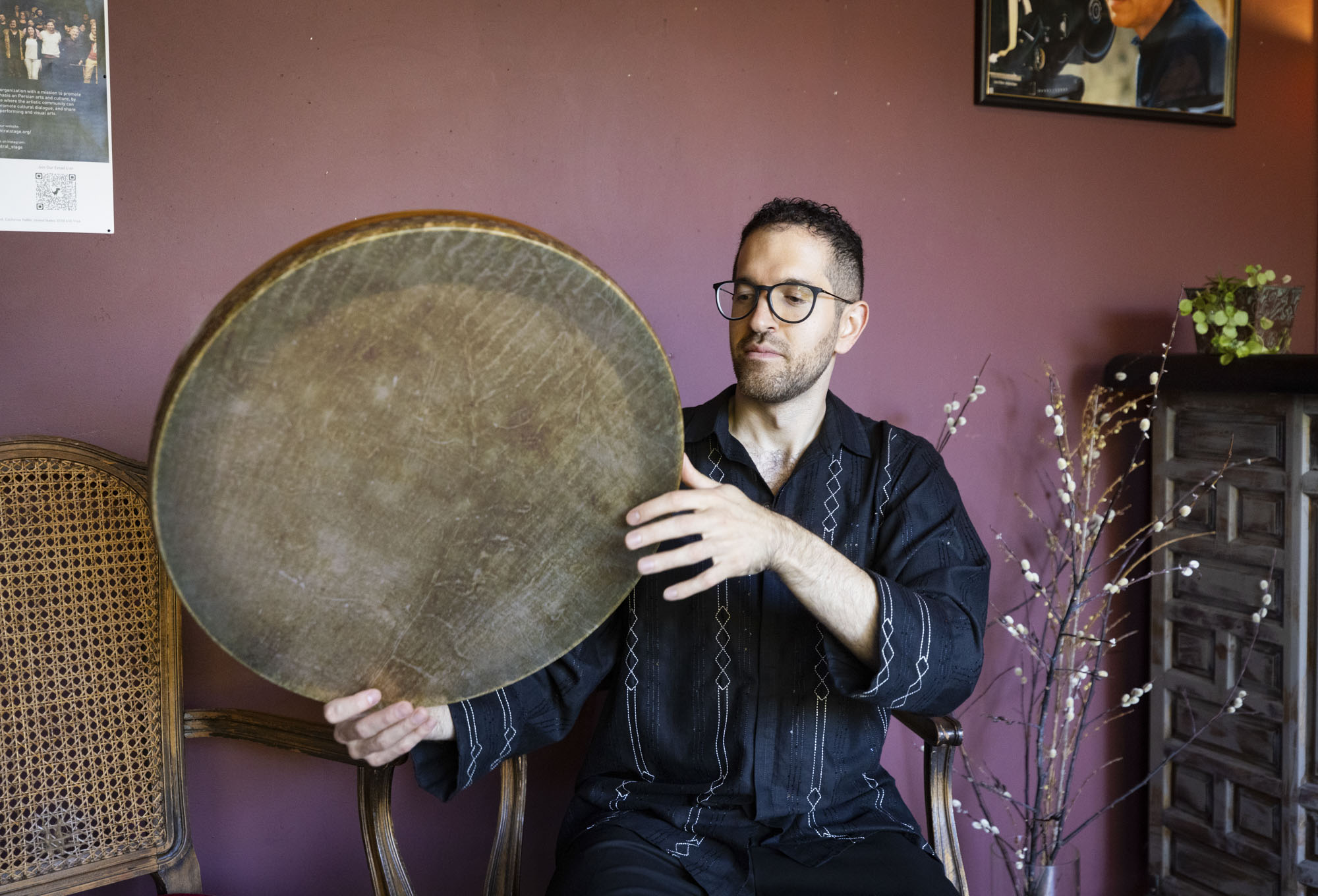
Assadi, the only local member of the trio, teaches Iranian percussion instruments to youth throughout Sacramento, Davis and the broader Bay Area.
“What we’re trying to do,” Assadi said, “is share this culture with the second generation.”
Correction: This story was updated to clarify that ZÂ is the name of the performance and ongoing national tour rather than the group of musicians.